WO2019222880A1 - Configuration method and apparatus of network device, and storage medium - Google Patents
Configuration method and apparatus of network device, and storage medium Download PDFInfo
- Publication number
- WO2019222880A1 WO2019222880A1 PCT/CN2018/087662 CN2018087662W WO2019222880A1 WO 2019222880 A1 WO2019222880 A1 WO 2019222880A1 CN 2018087662 W CN2018087662 W CN 2018087662W WO 2019222880 A1 WO2019222880 A1 WO 2019222880A1
- Authority
- WO
- WIPO (PCT)
- Prior art keywords
- network device
- terminal
- message
- target terminal
- terminal group
- Prior art date
- Legal status (The legal status is an assumption and is not a legal conclusion. Google has not performed a legal analysis and makes no representation as to the accuracy of the status listed.)
- Ceased
Links
Images

Classifications
-
- H—ELECTRICITY
- H04—ELECTRIC COMMUNICATION TECHNIQUE
- H04L—TRANSMISSION OF DIGITAL INFORMATION, e.g. TELEGRAPHIC COMMUNICATION
- H04L41/00—Arrangements for maintenance, administration or management of data switching networks, e.g. of packet switching networks
- H04L41/08—Configuration management of networks or network elements
- H04L41/0803—Configuration setting
- H04L41/0806—Configuration setting for initial configuration or provisioning, e.g. plug-and-play
-
- H—ELECTRICITY
- H04—ELECTRIC COMMUNICATION TECHNIQUE
- H04L—TRANSMISSION OF DIGITAL INFORMATION, e.g. TELEGRAPHIC COMMUNICATION
- H04L41/00—Arrangements for maintenance, administration or management of data switching networks, e.g. of packet switching networks
- H04L41/08—Configuration management of networks or network elements
- H04L41/0893—Assignment of logical groups to network elements
-
- H—ELECTRICITY
- H04—ELECTRIC COMMUNICATION TECHNIQUE
- H04L—TRANSMISSION OF DIGITAL INFORMATION, e.g. TELEGRAPHIC COMMUNICATION
- H04L41/00—Arrangements for maintenance, administration or management of data switching networks, e.g. of packet switching networks
- H04L41/16—Arrangements for maintenance, administration or management of data switching networks, e.g. of packet switching networks using machine learning or artificial intelligence
Definitions
- the present invention relates to the technical field of data transmission, and in particular, to a method and device for configuring network equipment, and a storage medium.
- VLAN virtual local area network
- IP Internet Protocol
- AAA authentication, authorization, accounting
- you can configure the parameters of the device interface connected to different types of terminals these parameters can include transmission rate limit, transmission priority, access control list (English: access control list; ACL ), And the identifier (ID) of the VLAN added to the message through the device interface.
- the present application provides a configuration method and device of a network device, and a storage medium, which can solve the problem of a large workload in the configuration process.
- the technical solutions provided in this application are as follows:
- the present application provides a method for configuring a network device, including: determining a target terminal group in which the target terminal is located among a plurality of terminal groups according to a message sending and receiving feature of the target terminal.
- the message sending and receiving characteristics are determined based on multiple messages sent and received by the target terminal.
- the multiple terminal groups are in one-to-one correspondence with multiple configurations.
- the network device to be configured is configured based on a target configuration corresponding to the target terminal group.
- the network device to be configured is a network device that forwards the multiple packets.
- the method for configuring a network device classifies the target terminal based on the message receiving and sending characteristics reflecting the situation of the target terminal receiving and sending the message, and configures the network device to be configured based on the classification result. Compared with the implementation method of manually configuring the network device, there is no need to manually confirm the target configuration of the network device according to the target terminal, and the target configuration of the target terminal can be confirmed according to the message sending and receiving characteristics of the target terminal, which effectively reduces the configuration process. Workload.
- the message receiving and sending characteristics reflect the correlation between the multiple messages, and are relative to the terminal ’s MAC address and other inherent characteristics. Since the inherent characteristics such as the MAC address are usually used to reflect information such as the terminal manufacturer, the classification criteria for classifying the terminal type according to the inherent characteristics are relatively rough, and the message sending and receiving characteristics can reflect the message sending and receiving situation of the target terminal. According to the message, The classification of terminal types is refined when the receiving and sending characteristics are used to classify the terminal types. When determining the target terminal group to which the target terminal belongs in multiple terminal groups according to the message sending and receiving characteristics, the accuracy of determining the target terminal group can be improved. , Thereby improving the accuracy of network device configuration.
- the message sending and receiving characteristics include: sequencing of the multiple messages.
- the message sending and receiving feature further includes one or more of the following: a message sending time interval between two messages in the multiple messages, and a message type of the multiple messages Sorting, sorting the message sizes of the plurality of messages.
- the message sending and receiving characteristics may further include: ordering of source ports corresponding to multiple messages, ordering of destination ports corresponding to multiple messages, MAC address and IP address of a message sending end, and MAC address of a message receiving end And one or more of the IP address, the source port number and destination port number of the message, and the DSCP value carried in the received and sent messages.
- the method further includes: acquiring message receiving and transmitting characteristics of a plurality of sample terminals; and based on the message transmitting and receiving characteristics of the plurality of sample terminals, using a machine learning method to train a grouping model to obtain a trained grouping. model.
- This process is a process of training a grouping model based on training samples.
- it is not necessary to execute this process every time, that is, when determining the target configuration corresponding to the target terminal, it can be directly completed by training.
- determining the target terminal group in which the target terminal is located among multiple terminal groups according to the message sending and receiving characteristics of the target terminal includes: based on a training-completed grouping model and sending and receiving according to the message. Characteristics, among the plurality of terminal groups, respectively determining a score that the target terminal belongs to each terminal group, and the grouping model is used to separately determine that the target terminal belongs to each terminal based on input message sending and receiving characteristics The score of the group, the score corresponding to each terminal group is used to characterize the possibility that the target terminal belongs to the corresponding terminal group; among the scores of the target terminal belonging to each terminal group, the highest score is determined; the highest score is corresponding Is determined as the target terminal group.
- the present application provides an apparatus for configuring a network device, including: a determining module, configured to determine a target terminal group where the test terminal is located among a plurality of terminal groups according to a message sending and receiving feature of the testing terminal. The message sending and receiving characteristics are determined based on multiple messages sent and received by the test terminal.
- the multiple terminal groups are in one-to-one correspondence with multiple configurations.
- a configuration module is configured to configure a network device to be configured based on a target configuration corresponding to the target terminal group.
- the network device to be configured is a network device that forwards the multiple packets.
- the message receiving and sending characteristics include: an ordering of the multiple messages.
- the message receiving and sending feature further includes one or more of the following: a message sending time interval between two messages in the plurality of messages, an ordering of message types of the plurality of messages, Ordering the message sizes of the plurality of messages.
- the apparatus further includes: an acquiring module for acquiring message receiving and transmitting characteristics of multiple sample terminals; and a training module for grouping the message receiving and transmitting characteristics of the multiple sample terminals by using a machine learning method The model is trained to obtain the trained grouping model.
- the determining module is configured to: based on the training grouping model, determine the score of the test terminal belonging to each terminal group among the multiple terminal groups according to the message sending and receiving characteristics,
- the grouping model is used to separately determine the score of the target terminal belonging to the each terminal group based on the input message sending and receiving characteristics, and the score corresponding to each terminal group is used to characterize that the target terminal belongs to the corresponding terminal group. Possibility; determine the highest score among the scores of the test terminals belonging to each terminal group; determine the terminal group corresponding to the highest score as the target terminal group.
- the present application provides a device for configuring a network device.
- the device for configuring a network device includes: a processor; a memory for storing executable instructions of the processor; wherein the processor is configured To determine the target terminal group where the target terminal is located among multiple terminal groups according to the message sending and receiving characteristics of the target terminal. The message sending and receiving characteristics are determined based on multiple messages sent and received by the target terminal, and the multiple terminal groups are in one-to-one correspondence with multiple configurations.
- the network device to be configured is configured based on a target configuration corresponding to the target terminal group.
- the network device to be configured is a network device that forwards the multiple packets.
- the present application provides a storage medium, and when an instruction in the storage medium is executed by a processor of a terminal, the terminal is capable of executing the method for configuring a network device according to any one of the first aspect.
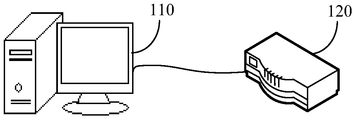
- FIG. 1 is a schematic diagram of a scenario involved in a method for configuring a network device provided in this application;
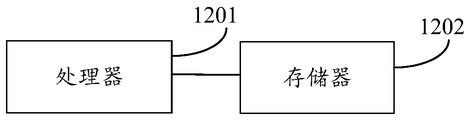
- FIG. 2 is a schematic structural diagram of a network device provided by the present application.
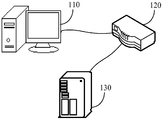
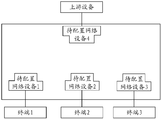
- FIG. 3 is a schematic diagram of a scenario involved in another method for configuring a network device provided in this application;
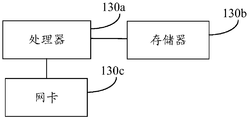
- FIG. 4 is a schematic structural diagram of a server provided by the present application.
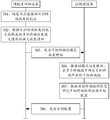
- FIG. 5 is a flowchart of a method for configuring a network device provided by the present application.
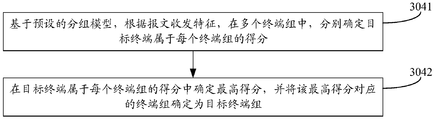
- FIG. 6 is a flowchart of a method for determining a target terminal group where a target terminal is located among multiple terminal groups provided by the present application;
- FIG. 7 is a schematic diagram of a network device 1 to be configured, a network device 2 to be configured, and a network device 3 to be configured, which are connected to a network through the network device 4 to be configured;
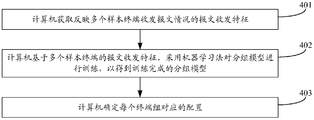
- FIG. 8 is a flowchart of a method for training a grouping model according to training samples and confirming a correspondence between a terminal group and a configuration according to the present application;
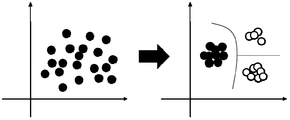
- FIG. 9 is a schematic diagram of a principle for determining a mode baseline for classifying multiple sample terminals provided in the present application.
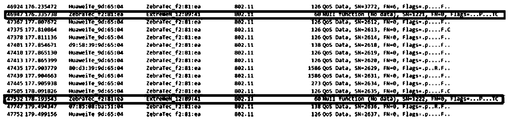
- FIG. 10 is a schematic diagram of a message sending and receiving situation of a terminal A provided in the present application.
- FIG. 11 is a schematic diagram of a message sending and receiving situation of a terminal B provided in the present application.
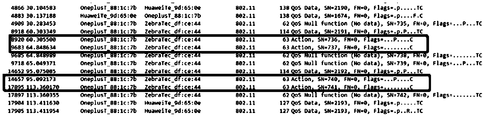
- FIG. 12 is a schematic diagram of a message sending and receiving situation of a terminal C provided in the present application.
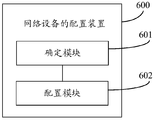
- FIG. 13 is a block diagram of a configuration apparatus for a network device provided by the present application.
- FIG. 14 is a block diagram of another apparatus for configuring a network device provided by the present application.
- FIG. 15 is a schematic structural diagram of a configuration device for a network device provided in the present application.
- An embodiment of the present invention provides a method for configuring a network device.
- the method for configuring the network device may have multiple scenarios.
- the scenario may include a terminal and a network device, or
- the scenario may include a terminal, a network device, and a controller device. The two scenarios are described below:
- FIG. 1 shows a schematic diagram of a first scenario involved in the method for configuring a network device.
- the scenario may include: a terminal 110 and a network device 120, and the network device 120 may perform a configuration operation to be performed Network device 120 (ie, the network device to be configured).
- the terminal 110 can access the network through the network device 120.
- the message sent and received by the terminal 110 is forwarded by the network device 120.
- the terminal 110 may be a printer, a set-top box, a camera, an IP phone, a sensor (such as a temperature sensor, a humidity sensor, and a light sensor, etc.), a smartphone, a computer, a multimedia player, an e-book reader, or a wearable device.
- the network device 120 may be a switch, a router, or a wireless access point (English: wireless access point; WAP).
- the network device 120 may obtain a message sent and received by the terminal 110, determine the type of the terminal 110 according to the message sent and received by the terminal 110, and then configure the network device 120 according to the type of the terminal 110.
- the global settings of the network device may be configured to perform a specified processing operation on all packets forwarded by the network device according to the configured network device, or the local settings of the network device may also be configured. Configure to perform a specified processing operation on a part of the packets forwarded by the network device according to the local settings of the configured network device.
- the device interface of the network device 120 may be configured.
- the network device 120 may obtain a message sent by the terminal 110 within a preset time period of accessing the network, determine the type of the terminal according to the message, and then according to the terminal 110 The type of the device determines the target configuration corresponding to the terminal 110, so as to configure the parameters of the device interface according to the target configuration.
- Network devices can have functions for data processing, data storage, and message forwarding.
- the functions of data processing, data storage, and message forwarding may be implemented by any one of components such as a processor and a forwarding chip, or the data processing, data storage, and message forwarding may be implemented by multiple components, respectively.
- the network device 120 may include: a processor 1201 and a memory 1202.
- the memory 1202 is used to store data and other data required by the processor 1201 for calculation.
- FIG. 3 shows a schematic diagram of a second scenario involved in the method for configuring a network device.
- the scenario may include a terminal 110, a network device 120, and a controller device 130.
- the terminal 110 can access the network through the network device 120, and the network device 120 and the controller device 130 can be connected through a wired or wireless network, and the packets sent and received by the terminal 110 are forwarded by the network device 120.
- the terminal in FIG. 3 has the same function as the terminal in FIG. 1.
- the network device 120 may send a message sending and receiving feature reflecting the status of the message sent and received by the terminal to the controller device 130 according to the message sent and received by the terminal.
- the controller device 130 may determine the type of the terminal 110 according to the message sending and receiving characteristics, and determine the target configuration for configuring the network device 120 according to the type of the terminal 110, and send the target configuration to the network device 120, so that the network device 120 Perform the configuration operation based on the target configuration.
- the functions of the controller device 130 may be implemented by a computer program running in at least one server or switch.
- the server when implemented by a computer program running on a server, the server can have functions for data processing, data storage, and communication with other devices.
- the functions of data processing and data storage may be implemented through any one of a processor and a memory, or the functions of data processing, data storage, and message forwarding may be implemented through multiple components, respectively.
- the server may include a processor 130a, a memory 130b, and a network card 130c.
- the processor 130a is configured to process data.
- the processor 130a is configured to be responsible for protocol calculation and device state maintenance.
- the memory 130b is used to store data and other data required for calculation by the processor 130a.
- the network card 130c is used to communicate with other devices.
- the processor may be a general-purpose processor, for example, a central processing unit (CPU), a forwarding chip, or a combination of a CPU and a forwarding chip.
- the processor may be a hardware chip, and the hardware chip may be an application-specific integrated circuit (ASIC), a programmable logic device (PLD), or a combination thereof.
- the PLD may be a complex programmable logic device (CPLD), a field-programmable gate array (FPGA), a general array logic (GAL), or any combination thereof.
- the forwarding chip may include a network processor (NP), an FPGA, or an ASIC.
- the NP, FPGA or ASIC has a message forwarding function.
- the memory may include a volatile memory, such as a random access memory (RAM); or the memory may also include a non-volatile memory, such as a flash memory, a hard disk (HDD), or a solid state hard disk (SSD). Alternatively, the memory may further include a combination of the aforementioned types of memories.
- RAM random access memory
- non-volatile memory such as a flash memory, a hard disk (HDD), or a solid state hard disk (SSD).
- the memory may further include a combination of the aforementioned types of memories.
- An embodiment of the present invention provides a method for configuring a network device.
- the method for configuring a network device may be applied to the scenario shown in FIG. 1 or FIG. 3.
- the method for configuring a network device may include:
- Step 301 The to-be-configured network device forwards a packet sent and received by a target terminal connected to the network device.
- the target terminal Before determining the target configuration of the network device to be configured, the target terminal can connect to the network device to be configured by default, and the network device to be configured can forward the packets that the target terminal needs to send and receive according to the default configuration.
- Step 302 The to-be-configured network device obtains a message sending and receiving feature reflecting the situation of the message sent and received by the target terminal according to the message sent and received by the target terminal.
- the message sending and receiving characteristics reflecting the situation of the message sent and received by the target terminal can be obtained according to the message sent and received by the target terminal.
- the message sending and receiving characteristics may include: sequencing of multiple messages.
- the message sending and receiving feature may further include one or more of the following: ordering of message sizes of multiple messages, ordering of message types of multiple messages, and two messages of multiple messages Inter-message message sending interval, etc.
- the sorting of the multiple messages may sort the original content of the multiple messages.
- the original content of a message may be data represented by multiple binary values.
- the order of the multiple messages may be data represented by multiple pieces of binary values, and each piece of binary values is used to represent a message.
- Original content may be sorted.
- the sorting of the multiple messages may sort the message digests of the multiple messages.
- the message digest is obtained based on the original content of the message.
- the message digest can be the value of each field in the header and / or payload of the message, for example: the Media Access Control (English: Media Access Control; MAC) address and IP address of the message sender.
- the two messages may be two messages adjacent in time sequence, or the two messages may be Any two of multiple messages.
- the message sending and receiving characteristics may include message sending between message 1 and message 2.
- Time interval, message transmission time interval between message 2 and message 3, and message transmission time interval between message 3 and message 4; or, the message sending and receiving characteristics may include: message 1 and message Message sending interval between 2 messages, message sending interval between message 1 and message 3, and message sending interval between message 1 and message 4.
- Step 303 The to-be-configured network device sends the message receiving and sending characteristics of the target terminal to the controller device.
- the network device to be configured may send the message receiving and sending characteristics to the controller device in the form of a message.
- the message receiving and sending characteristics may be encapsulated in a control protocol message, and then the control protocol message is sent to the control through a forwarding chip in the network device to be configured. Device.
- the network device to be configured will send the message receiving and receiving characteristics obtained according to the original content to the controller device. Reduce the amount of data sent, thereby improving the efficiency of data transmission.
- the network device to be configured may determine the terminal group where the target terminal is located according to the message sending and receiving characteristics, that is, After step 302 is performed, step 304 is performed directly. Accordingly, when the configuration method is applied to the scenario shown in FIG. 1, the operations performed by the controller device in steps 304 to 306 are performed by the network device to be configured, and the network device to be configured is performing specific steps.
- the implementation process of the time can refer to the implementation process of the controller device when executing the corresponding steps.
- the network device that forwards the message to the target terminal in steps 301 to 303 is not limited to the network device to be configured, but may also be another network device that directly or indirectly forwards and receives messages to and from the target terminal, for example, in step 302
- the network device may also be another network device connected to the target terminal connected to the network device to be configured.
- Step 304 The controller device determines a target terminal group in which the target terminal is located among the multiple terminal groups according to the message sending and receiving characteristics.
- an implementation manner of step 304 may include:
- Step 3041 Based on a preset grouping model and according to the characteristics of message transmission and reception, among multiple terminal groups, determine the score of the target terminal belonging to each terminal group.
- the preset grouping model may be a pre-trained grouping model.
- the mapping relationship between the input and output of the trained grouping model can be determined, and it can be determined
- the grouping information obtained after the training grouping model is used to group the training samples.
- the trained grouping model can determine the score of each terminal group among the multiple terminal groups indicated by the grouping information according to the mapping relationship. That is, the possibility that the target terminal belongs to each terminal group is determined.
- Step 3042 Determine the highest score among the scores of the target terminal belonging to each terminal group, and determine the terminal group corresponding to the highest score as the target terminal group.
- the highest score can be determined from the scores of the target terminal belonging to each terminal group, and the highest score corresponding to The terminal group is determined as the target terminal group.
- the grouping information output by the trained grouping model indicates that a plurality of sample terminals are divided into three terminal groups.
- the three terminal groups are terminal group 1, terminal group 2, and terminal group 3 respectively.
- the training group model determines that the target terminal belongs to the three terminal groups.
- the scores are: 190, 56 and 10, then terminal group 1 can be determined as the target terminal group. .
- the message receiving and sending characteristics reflect the correlation between the multiple messages, and are relative to the terminal ’s MAC address and other inherent characteristics. Since the inherent characteristics such as the MAC address are usually used to reflect information such as the terminal manufacturer, the classification criteria for classifying the terminal type according to the inherent characteristics are relatively rough, and the message sending and receiving characteristics can reflect the message sending and receiving situation of the target terminal. According to the message, The classification of terminal types is refined when the receiving and sending characteristics are used to classify the terminal types. When determining the target terminal group to which the target terminal belongs in multiple terminal groups according to the message sending and receiving characteristics, the accuracy of determining the target terminal group can be improved. , Thereby improving the accuracy of network device configuration.
- Step 305 The controller device determines a target configuration corresponding to the target terminal group according to the information of the target terminal group.
- the second controller device may determine a target configuration corresponding to the target terminal group according to a predetermined mapping relationship between the terminal group and the configuration.
- terminal group 1 corresponds to configuration 1
- terminal group 2 corresponds to configuration 2
- terminal group 3 corresponds to configuration 3
- the target terminal group obtained by the controller device is The information indicates that terminal group 1 is the target terminal group, and then configuration 1 may be determined as the target configuration.
- Step 306 The controller device sends the target configuration to the network device to be configured, so that the network device to be configured is configured according to the target configuration.
- the implementation process of step 306 may include: the controller device sends the target configuration to the network device to be configured, Configure the network device to perform configuration operations based on the target configuration.
- the implementation process of step 306 may include: after the network device to be configured determines the target configuration corresponding to the target terminal group, the network device to be configured Configure it with the target configuration.
- the configuration process of the network device may include: configuring a transmission rate limit of the network device, a transmission priority, an access control list, and a VLAN ID added to the packet through the device interface.
- the network device 1 to be configured, the network device 2 to be configured, and the network device 3 to be configured are connected to the network through the network device 4 to be configured, where the terminal 1 is connected through the device interface of the network device 1 to be configured To the network, the terminal 2 is connected to the network through the device interface of the network device 2 to be configured, the terminal 3 is connected to the network through the device interface of the network device 2 to be configured, and the network device 4 to be configured is connected to the upstream device (such as a switch, router, etc.) through the device interface.
- the upstream device such as a switch, router, etc.
- the configuration of the device interface of the network device is as follows: the device interface of the network device 1 to be configured is a VLAN added with a packet ID of 10, the interface type of the device interface is Access, and the network device 1 to be configured performs authentication according to the protocol 802.1X.
- the number of the access control list of the device interface of the network device 1 to be configured is 3000.
- the device interface of the network device 2 to be configured is a VLAN with an ID of 20, and the interface type of the device interface is Access.
- the device interface of network device 3 to be configured is a VLAN with IDs 30 and 10 added to the packet, and the interface type of the device interface is Hybird.
- the device interface of network device 4 to be configured is a VLAN with IDs 10, 20, and 30 added to the packet, and the interface type of the device interface is Trunk. Among them, Access, Hybird and Trunk are all commonly used interface types.
- the method for configuring the network device may further include a process of training the grouping model according to the training samples and confirming the correspondence between the terminal group and the configuration.
- the process may be performed in a computer, where the computer may be a general-purpose computer, a special-purpose computer, a network device, a server, a personal computer, a router, a mobile terminal, or a distribution Equipment with computing functions, such as digital devices. Please refer to FIG. 8, the implementation of this process is as follows:
- Step 401 The computer obtains message transmission and reception characteristics that reflect the situation of message transmission and reception by multiple sample terminals.
- step 401 there may be multiple implementations of step 401.
- a computer is connected to multiple sample terminals, the computer obtains packets sent and received by multiple sample terminals, and The message obtains the characteristics of message transmission and reception.
- multiple sample terminals are connected to the network device, and the network device is connected to the computer. After the network device forwards the message to be sent and received for the sample terminal, the network device forwards the message to the computer, and the computer according to the message Obtain the message transmission and reception characteristics, or after the network device forwards the message to be transmitted and received for the sample terminal, obtain the message transmission and reception characteristics according to the message, and send the message transmission and reception characteristics to the computer.
- the process of obtaining the message receiving and sending characteristics according to the message sent and received by the sample terminal reference may be made to step 302 above.
- Step 402 The computer trains the grouping model by using a machine learning method based on the message sending and receiving characteristics of multiple sample terminals to obtain a trained grouping model.
- the training of the grouping model refers to the process of adjusting the relevant parameters of the grouping model according to the input training samples to obtain a grouping model that has a good classification effect on the input samples. That is, the training process is to establish the input samples and output.
- the process of classifying the input samples by the grouping model can be understood as: according to the mapping relationship between the input samples and the output, it is determined that the terminal corresponding to the message sending and receiving characteristic belongs to each terminal group in the multiple terminal groups.
- the process of dividing a terminal into corresponding terminal groups according to the score is described in the process of the process of dividing a terminal into corresponding terminal groups according to the score.
- the grouping model can determine the score of the target terminal belonging to each terminal group based on the established mapping relationship.
- the score corresponding to each terminal group is used to represent the possibility that the target terminal belongs to the corresponding terminal group.
- the grouping model used in the embodiment of the present invention may be a neural network, a Naive Bayes model, a k-means clustering model, a fuzzy clustering model, or a support vector machine (English: support vector machine (SVM) model.
- the training method of the grouping model may include supervised learning, unsupervised learning, and semi-supervised learning.
- the training samples of the input grouping model include: the message sending and receiving characteristics of multiple sample terminals and the grouping information of multiple sample terminals (used to identify the terminal group to which each sample terminal belongs).
- the grouping model can generate an output according to the input message sending and receiving characteristics, and determine the deviation between the output and the grouping information, and then adjust the relevant parameters in the grouping model based on the deviation, and execute the process cyclically until after adjusting the relevant parameters
- the deviation between the output generated by the grouping model and the grouping information is less than a preset deviation threshold, it is determined to complete the training of the grouping model.
- a plurality of sample terminals may be grouped according to a preset grouping condition to obtain grouping information, so that the types of the plurality of sample terminals included in the grouped terminal group are the same.
- multiple sample terminals may be grouped according to the manufacturer, hardware version number, software version number, and attributes of the end user of the sample terminal to obtain grouping information of the multiple sample terminals.
- the training samples of the input grouping model include: the message receiving and sending characteristics of multiple sample terminals.
- the grouping model can analyze and compare all the input and receiving message receiving characteristics to obtain The similarities and differences reflected by the message sending and receiving characteristics of multiple sample terminals, and a pattern baseline for classifying the multiple sample terminals is determined according to the similarities and differences to divide the multiple sample terminals into multiple terminal groups (that is, output grouping information). Then, the output grouping information is compared with preset grouping information by manual confirmation. When the deviation between the output grouping information and the preset grouping information is less than a preset deviation threshold, it is determined that the grouping model is completed. Training; otherwise, the training process is continued until the deviation between the output group information and the preset group information is less than a preset deviation threshold.
- FIG. 9 a schematic diagram for determining a pattern baseline for classifying multiple sample terminals is shown in FIG. 9.
- the computer can input the characteristics of message transmission and reception into a grouping model.
- the grouping model can use machine learning to perform pattern analysis on the characteristics of message transmission and reception of each sample terminal, and map the characteristics of message transmission and reception of each sample terminal into a multi-dimensional space.
- a pattern point (the dots in FIG.
- the classification algorithm in the machine learning method is used to divide the multiple pattern points corresponding to multiple sample terminals into multiple classes, and each class includes at least one pattern point, That is, a plurality of sample terminals are divided into a plurality of terminal groups.
- the dividing line that distinguishes multiple sample terminals into multiple terminal groups is the mode baseline (dashed lines in FIG. 9).
- This FIG. 9 only shows an example in which the dimensions of each mode point are two-dimensional. In actual applications, according to different grouping models, the dimensions of the corresponding mode points are different.
- the process of training the packet model can be completed in a laboratory, and packet capture software (a software for viewing the contents of data packets transmitted on the network) can be used to obtain the message receiving and sending characteristics of the sample terminal.
- packet capture software a software for viewing the contents of data packets transmitted on the network
- the message receiving and transmitting characteristics are input to the grouping model to be trained, so as to train the grouping model to be trained.
- FIG. 10, FIG. 11 and FIG. 12 are the message receiving and receiving characteristics of the sample terminal A, sample terminal B, and sample terminal C, which are obtained by the packet capture software, respectively.
- the first column is the serial number of the received and sent message
- the second column is the MAC address of the message sending end
- the third column is the MAC address of the message receiving end
- the fourth column is the message type
- the fifth column is the sending and receiving After the value of each field in the packet payload of the .seq. Is input to the packet receiving and sending characteristics of the three sample terminals, the packeting model uses machine learning to analyze the message receiving and receiving characteristics, and sample terminals A
- the message sending and receiving situation of sample terminal B and sample terminal C has the following rules: Sample terminal A and sample terminal B send messages every about 1-2 seconds.
- the MAC address of the receiving end is 74: 67: f7: 12: 89: 41.
- sample terminal A and sample terminal B are divided into the same sample terminal group, and sample terminal C is divided into another sample terminal group to obtain a pattern baseline for dividing the sample terminal. , And then complete the training of the grouping model.
- step 401 if the message receiving and receiving characteristics obtained by the computer is the ordering of the original contents of the received and sent messages, in one implementation of step 402, the grouping model can perform multiple message processing based on the original contents of the received and sent messages. Perform analysis and obtain the similarities and differences reflected by the message sending and receiving characteristics of multiple sample terminals to achieve classification of the multiple sample terminals. If the computer obtains the message sending and receiving characteristics based on the original content, in step 402, In another implementation manner, the grouping model can only analyze multiple messages according to the message receiving and receiving characteristics obtained according to the original content, so as to achieve classification of multiple sample terminals.
- the implementation of classifying multiple sample terminals according to the original content of the received and sent messages provides more information sources for analyzing multiple messages, making the analysis The similarities and differences of the obtained multiple sample terminals are closer to the real situation, and the multiple sample terminals can be classified more accurately.
- the messages involved in steps 401 to 402 may refer to a single message or a combination of multiple messages.
- Step 403 The computer determines the configuration corresponding to each terminal group.
- the computer can be a single device such as a general-purpose computer, special-purpose computer, network device, server, personal computer, router, or mobile terminal, or it can be a distributed device.
- the functions of the computer may be implemented by a network controller and a network analyzer, where the network analyzer may be used to perform steps 401 and 402, and the network controller is used to perform step 403.
- the network analyzer and the network controller may be a separate device, or may be a component integrated in a device such as a network device or a server.
- the implementation of step 403 is different. The following describes the two implementations:
- steps 402 and 403 are performed by the computer.
- the computer may receive a first configuration instruction, where the first configuration instruction is used to indicate a configuration corresponding to each terminal group in the grouping information.
- the first configuration instruction and the grouping information obtained in step 402 may determine a configuration corresponding to each terminal group.
- the functions of the computer device are implemented by a network controller and a network analyzer, and the network analyzer is used to perform step 402, and the network controller is used to perform step 403 as an example to describe the implementation method thereof.
- the network controller may receive group information and a first configuration instruction, where the group information is used to indicate a terminal group to which each sample terminal belongs, and the first configuration instruction is used to indicate each of the group information.
- the network controller can establish a one-to-one correspondence between the terminal group and the configuration under the instruction of the grouping information and the first configuration instruction, that is, determine the configuration corresponding to each terminal group.
- the correspondence relationship between the configuration and the terminal group recorded in the first configuration instruction may be implemented by confirming in advance and confirming afterwards. Two implementation manners are described below:
- a configuration corresponding to all or part of the sample terminals in the plurality of sample terminals is determined separately. After grouping the sample terminals, if the configuration of all the sample terminals in the terminal group is known, the corresponding relationship between the configuration and the terminal group can be obtained directly; after grouping the sample terminals, if only some of the sample terminals in the terminal group have If the configuration is known, the configuration corresponding to the sample terminal with the known configuration may be determined as the configuration corresponding to the terminal group where the sample terminal is located, so as to obtain the correspondence between the configuration and the terminal group.
- ex post confirmation after grouping a plurality of sample terminals (that is, after determining the grouping information), at least one sample terminal is selected in each terminal group, and the configuration corresponding to the selected at least one sample terminal is determined, The determined configuration is then determined as the configuration corresponding to the corresponding terminal group.
- at least one sample terminal may be selected in each terminal group randomly or according to actual needs.
- the action of determining the configuration corresponding to the sample terminal can be performed manually, and the configuration corresponding to the sample terminal with a known configuration is determined as the action corresponding to the configuration of the terminal group where the sample terminal is located.
- the first configuration instruction may only record the correspondence between the selected sample terminal and the configuration.
- the network controller may determine the configuration information corresponding to the selected sample terminal as the terminal group where the sample terminal is located. Corresponding configuration, and then establish a one-to-one correspondence between the terminal group and the configuration.
- the global settings of the network device may be configured to perform a specified processing operation on all messages forwarded by the network device according to the configured network device, or the local settings of the network device may also be configured. Perform a specified processing operation on a part of the packets forwarded by the network device according to the configured network device, for example, configure a device interface of the network device, and add a VLAN ID to the packet forwarded by the device interface through the device interface.
- the multiple packets sent and received in the above steps 301 and 401 may be packets sent and received by one or more terminals.
- the one or more terminals are connected with
- the part that needs to be configured is the part that affects the sending and receiving of packets to one or more terminals.
- the part that needs to be configured can be the network.
- the specified device interface of the device can be the device.
- the above steps 401 to 403 are the processes of obtaining training samples, training a grouping model based on the training samples, and establishing the corresponding relationship between the terminal group and the configuration.
- the method for configuring a network device is not only applicable to training a model based on message sending and receiving characteristics reflecting the sample terminal receiving and sending messages, and determining a target terminal group to which the target terminal belongs according to the trained model, and then according to the target terminal
- the application scenario of the configuration corresponding to the group to the configuration of the network device may also be applicable to other acquisition scenarios, grouping according to characteristics, and determining other scenarios of corresponding information according to the grouping result to improve the flexibility of the configuration method.
- the configuration method of the network device can also be applied to the Internet of Things, for example, a router can be configured according to information sent by a sensor in the Internet of Things.
- the method for configuring a network device classifies the target terminal according to the message sending and receiving characteristics reflecting the situation of the target terminal receiving and sending the message, and configures the network device to be configured based on the classification result.
- the implementation method of manually configuring the network device there is no need to manually confirm the target configuration of the network device according to the target terminal, and the target configuration of the target terminal can be confirmed according to the message sending and receiving characteristics of the target terminal, which effectively reduces the configuration process. Workload.
- the message receiving and sending characteristics reflect the correlation between the multiple messages, and are relative to the terminal ’s MAC address and other inherent characteristics. Since the inherent characteristics such as the MAC address are usually used to reflect information such as the terminal manufacturer, the classification criteria for classifying the terminal type according to the inherent characteristics are relatively rough, and the message sending and receiving characteristics can reflect the message sending and receiving situation of the target terminal. According to the message, The classification of terminal types is refined when the receiving and sending characteristics are used to classify the terminal types. When determining the target terminal group to which the target terminal belongs in multiple terminal groups according to the message sending and receiving characteristics, the accuracy of determining the target terminal group can be improved. , Thereby improving the accuracy of network device configuration.
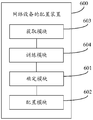
- FIG. 13 shows a block diagram of a configuration device for a network device according to an embodiment of the present invention.
- the configuration device 600 for a network device may include:
- a determining module 601 is configured to determine a target terminal group where the test terminal is located among multiple terminal groups according to the message sending and receiving characteristics of the test terminal. The message sending and receiving characteristics are determined based on multiple messages sent and received by the test terminal. Terminal groups correspond one-to-one with multiple configurations.
- a configuration module 602 is configured to configure a network device to be configured based on a target configuration corresponding to a target terminal group, where the network device to be configured is a network device that forwards multiple packets.
- the message sending and receiving features include: sequencing of multiple messages.
- the message sending and receiving feature further includes one or more of the following: a message sending time interval between two messages in a plurality of messages, an ordering of a message type of the plurality of messages, and a message of a plurality of messages. Sort text size.
- the apparatus 600 may further include:
- the obtaining module 603 is configured to obtain message receiving and sending characteristics of multiple sample terminals.
- a training module 604 is configured to train a grouping model by using a machine learning method based on the message sending and receiving characteristics of multiple sample terminals to obtain a trained grouping model.
- a determining module 601 is configured to: based on the trained grouping model, determine the scores of the test terminals belonging to each terminal group among multiple terminal groups according to the message sending and receiving characteristics, and the grouping model is used for input-based The characteristics of the message receiving and sending determine the score of the target terminal belonging to each terminal group, and the score corresponding to each terminal group is used to characterize the possibility that the target terminal belongs to the corresponding terminal group. Among the scores for which the test terminal belongs to each terminal group, the highest score is determined. The terminal group corresponding to the highest score is determined as the target terminal group.
- the network device configuration device provided by the embodiment of the present invention classifies the target terminal according to the message sending and receiving characteristics reflecting the status of the message sent and received by the target terminal, and the configuration module performs the configuration on the network device to be configured based on the classification result.
- Configuration compared to the implementation of manually configuring network devices, without manually confirming the target configuration of the network device based on the target terminal, it can confirm the target configuration of the target terminal based on the message sending and receiving characteristics of the target terminal, effectively reducing the configuration The workload in the process.
- An embodiment of the present invention further provides a device for configuring a network device.
- the device for configuring the network device may include: a processor; a memory for storing executable instructions of the processor; wherein the processor is configured to: The characteristics of the message sending and receiving, determine the target terminal group where the target terminal is located among multiple terminal groups, wherein the message sending and receiving characteristics are determined based on the multiple messages sent and received by the target terminal, and the multiple terminal groups correspond to the multiple configurations one by one. ; Configure the network device to be configured based on the target configuration corresponding to the target terminal group, where the network device to be configured is a network device that forwards multiple messages.
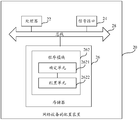
- an embodiment of the present invention further provides a configuration device 20 for a network device.
- the configuration device 20 for the network device may include a processor 22 and a signal interface 24.
- the processor 22 includes one or more processing cores.
- the processor 22 executes various functional applications and data processing by running software programs and modules.
- the processor 22 may include one or more of a central processing unit, a digital signal processor, a microprocessor, a microcontroller, or an artificial intelligence processor, and may further optionally include a hardware accelerator required to perform an operation, such as Various logic operation circuits.
- the signal interface 24 is used to establish a connection with other devices or modules.
- the signal interface 24 may be connected to a transceiver. Therefore, optionally, the device 20 may further include a transceiver (not shown in the figure).
- the transceiver specifically performs signal transmission and reception.
- the processor 22 needs to perform a signal transceiving operation, it can call or drive the transceiver to perform the corresponding transceiving operation. Therefore, when the device 20 performs signal transmission and reception, the processor 22 is used to determine or initiate a transmission and reception operation, which is equivalent to the initiator, and the transceiver is used to perform specific transmission and reception, which is equivalent to the performer.
- the transceiver may also be a transceiver circuit, a radio frequency circuit, or a radio frequency unit, which is not limited in this embodiment.
- the network device configuration device 20 further includes components such as a memory 26 and a bus 28.
- the memory 26 and the signal interface 24 are connected to the processor 22 through a bus 28, respectively.
- the memory 26 may be used to store software programs and modules. Specifically, the memory 26 may store at least one program module 262 required for a function, and the program may be an application program or a driver program.
- the program module 262 may include:
- the determining unit 2621 has the same or similar functions as the determining module 601.
- the configuration unit 2622 has the same or similar functions as the configuration module 602.
- An embodiment of the present invention further provides a storage medium.
- the storage medium may be a non-volatile computer-readable storage medium.
- the terminal can execute the embodiments provided by the embodiment of the present invention. Network device configuration method.
- An embodiment of the present invention also provides a computer program product containing instructions.
- the computer program product runs on a computer, the computer causes the computer to execute the method for configuring a network device provided by the embodiment of the present invention.
- the program may be stored in a computer-readable storage medium.
- the storage medium mentioned may be a read-only memory, a magnetic disk or an optical disk.
Landscapes
- Engineering & Computer Science (AREA)
- Computer Networks & Wireless Communication (AREA)
- Signal Processing (AREA)
- Artificial Intelligence (AREA)
- Computer Vision & Pattern Recognition (AREA)
- Databases & Information Systems (AREA)
- Evolutionary Computation (AREA)
- Medical Informatics (AREA)
- Software Systems (AREA)
- Data Exchanges In Wide-Area Networks (AREA)
- Computer And Data Communications (AREA)
Abstract
Description
本发明涉及数据传输技术领域,尤其涉及一种网络设备的配置方法及装置、存储介质。The present invention relates to the technical field of data transmission, and in particular, to a method and device for configuring network equipment, and a storage medium.
根据网络规划和网络安全的要求,当不同类型的终端与网络设备的设备接口连接时,需要对网络设备的设备接口执行不同的配置,以便于执行相应的网络策略。例如:根据虚拟局域网(英文:virtual local area network;VLAN)规划和网际协议(英文:Internet Protocol;IP)地址规划等网络规划的要求,以及网络认证、授权、计费(英文:authentication,authorization,accounting;AAA)等网络安全的要求,可以对与不同类型的终端所连接的设备接口的参数进行配置,这些参数可以包括传输速率限制、传输优先级、访问控制列表(英文:access control list;ACL)以及通过该设备接口为报文所添加的VLAN的标识(ID)等。According to the requirements of network planning and network security, when different types of terminals are connected to the device interface of a network device, different configurations of the device interface of the network device need to be performed in order to implement the corresponding network policy. For example: according to network planning requirements such as virtual local area network (VLAN) planning and Internet Protocol (IP) address planning, as well as network authentication, authorization, and accounting (English: authentication, authorization, accounting (AAA) and other network security requirements, you can configure the parameters of the device interface connected to different types of terminals, these parameters can include transmission rate limit, transmission priority, access control list (English: access control list; ACL ), And the identifier (ID) of the VLAN added to the message through the device interface.
在对网络设备的设备接口进行配置时,通常需要人工根据与网络设备连接的终端,确定设备接口的目标配置,并根据该目标配置对设备接口进行配置。当待配置网络设备的数量多时,该配置过程的工作量大。When configuring the device interface of a network device, it is usually necessary to manually determine the target configuration of the device interface according to the terminal connected to the network device, and configure the device interface according to the target configuration. When the number of network devices to be configured is large, the workload of the configuration process is large.
发明内容Summary of the Invention
本申请提供了一种网络设备的配置方法及装置、存储介质,可以解决配置过程的工作量较大的问题。本申请提供的技术方案如下:The present application provides a configuration method and device of a network device, and a storage medium, which can solve the problem of a large workload in the configuration process. The technical solutions provided in this application are as follows:
第一方面,本申请提供了一种网络设备的配置方法,包括:根据目标终端的报文收发特征,在多个终端组中确定所述目标终端所在的目标终端组。其中,所述报文收发特征基于所述目标终端收发的多个报文所确定。所述多个终端组与多个配置一一对应。基于所述目标终端组对应的目标配置对待配置网络设备进行配置。其中,所述待配置网络设备为转发所述多个报文的网络设备。In a first aspect, the present application provides a method for configuring a network device, including: determining a target terminal group in which the target terminal is located among a plurality of terminal groups according to a message sending and receiving feature of the target terminal. The message sending and receiving characteristics are determined based on multiple messages sent and received by the target terminal. The multiple terminal groups are in one-to-one correspondence with multiple configurations. The network device to be configured is configured based on a target configuration corresponding to the target terminal group. The network device to be configured is a network device that forwards the multiple packets.
本申请提供的网络设备的配置方法,通过根据反映目标终端收发报文情况的报文收发特征,对目标终端分类,并基于分类结果对待配置网络设备进行配置。相较于采用人工方式对网络设备进行配置的实现方式,无需人工根据目标终端确认网络设备的目标配置,能够根据目标终端的报文收发特征确认目标终端的目标配置,有效地减少了配置过程中的工作量。The method for configuring a network device provided in the present application classifies the target terminal based on the message receiving and sending characteristics reflecting the situation of the target terminal receiving and sending the message, and configures the network device to be configured based on the classification result. Compared with the implementation method of manually configuring the network device, there is no need to manually confirm the target configuration of the network device according to the target terminal, and the target configuration of the target terminal can be confirmed according to the message sending and receiving characteristics of the target terminal, which effectively reduces the configuration process. Workload.
并且,由于报文收发特征是对目标终端收发的多个报文进行分析后得到的特征,该报文收发特征反映了多个报文间的相关关系,相对于终端的MAC地址等固有特征,由于该MAC地址等固有特征通常用于反映终端厂商等信息,导致根据该固有特征划分终端类型的分类标准较粗糙,而该报文收发特征能够反映目标终端的报文收发情况,根据该报文收发特征划分终端的类型时,细化了划分终端类型的分类标准,当根据该报文收发特征在多个终端组中确定目标终端所属的目标终端组时,能够提高确定目标终端组的准确性,进而提高对网络设备进行配置的准确性。In addition, since the message receiving and sending characteristics are obtained after analyzing multiple messages sent and received by the target terminal, the message receiving and sending characteristics reflect the correlation between the multiple messages, and are relative to the terminal ’s MAC address and other inherent characteristics. Since the inherent characteristics such as the MAC address are usually used to reflect information such as the terminal manufacturer, the classification criteria for classifying the terminal type according to the inherent characteristics are relatively rough, and the message sending and receiving characteristics can reflect the message sending and receiving situation of the target terminal. According to the message, The classification of terminal types is refined when the receiving and sending characteristics are used to classify the terminal types. When determining the target terminal group to which the target terminal belongs in multiple terminal groups according to the message sending and receiving characteristics, the accuracy of determining the target terminal group can be improved. , Thereby improving the accuracy of network device configuration.
作为一种可实现方式,所述报文收发特征包括:所述多个报文的排序。As an implementable manner, the message sending and receiving characteristics include: sequencing of the multiple messages.
作为一种可实现方式,所述报文收发特征还包括以下一个或多个:所述多个报文中两个报文间的报文发送时间间隔,所述多个报文的报文类型的排序,所述多个报文的报文大小的排序。As an implementable manner, the message sending and receiving feature further includes one or more of the following: a message sending time interval between two messages in the multiple messages, and a message type of the multiple messages Sorting, sorting the message sizes of the plurality of messages.
进一步地,该报文收发特征还可以包括:多个报文对应的源端口的排序,多个报文对应的目的端口的排序,报文发送端的MAC地址和IP地址,报文接收端的MAC地址和IP地址,报文的源端口号和目的端口号,以及,收发的报文中携带的DSCP值等特征中一个或多个的组合。Further, the message sending and receiving characteristics may further include: ordering of source ports corresponding to multiple messages, ordering of destination ports corresponding to multiple messages, MAC address and IP address of a message sending end, and MAC address of a message receiving end And one or more of the IP address, the source port number and destination port number of the message, and the DSCP value carried in the received and sent messages.
可选地,所述方法还包括:获取多个样本终端的报文收发特征;基于所述多个样本终端的报文收发特征,采用机器学习法对分组模型进行训练,以得到训练完成的分组模型。Optionally, the method further includes: acquiring message receiving and transmitting characteristics of a plurality of sample terminals; and based on the message transmitting and receiving characteristics of the plurality of sample terminals, using a machine learning method to train a grouping model to obtain a trained grouping. model.
该过程为根据训练样本训练分组模型的过程,在确定目标终端对应的目标配置时,无需每次均执行该过程,也即是,在确定目标终端对应的目标配置时,可以直接采用已训练完成的分组模型,确定目标终端对应的目标终端组。This process is a process of training a grouping model based on training samples. When determining the target configuration corresponding to the target terminal, it is not necessary to execute this process every time, that is, when determining the target configuration corresponding to the target terminal, it can be directly completed by training. Grouping model to determine the target terminal group corresponding to the target terminal.
作为一种可实现方式,所述根据目标终端的报文收发特征,在多个终端组中确定所述目标终端所在的目标终端组,包括:基于训练完成的分组模型,根据所述报文收发特征,在所述多个终端组中,分别确定所述目标终端属于每个终端组的得分,所述分组模型用于基于输入的报文收发特征分别确定所述目标终端属于所述每个终端组的得分,每个终端组对应的得分用于表征所述目标终端属于对应终端组的可能性;在所述目标终端属于每个终端组的得分中,确定最高得分;将所述最高得分对应的终端组确定为所述目标终端组。As an implementable manner, determining the target terminal group in which the target terminal is located among multiple terminal groups according to the message sending and receiving characteristics of the target terminal includes: based on a training-completed grouping model and sending and receiving according to the message. Characteristics, among the plurality of terminal groups, respectively determining a score that the target terminal belongs to each terminal group, and the grouping model is used to separately determine that the target terminal belongs to each terminal based on input message sending and receiving characteristics The score of the group, the score corresponding to each terminal group is used to characterize the possibility that the target terminal belongs to the corresponding terminal group; among the scores of the target terminal belonging to each terminal group, the highest score is determined; the highest score is corresponding Is determined as the target terminal group.
目标终端属于终端组的得分越大,表明该目标终端的类型与对应终端组的类型越相似,因此,可以在目标终端属于每个终端组的得分中确定最高得分,并将该最高得分对应的终端组确定为目标终端组。The larger the target terminal belongs to the terminal group, the more similar the type of the target terminal to the type of the corresponding terminal group. Therefore, the highest score can be determined from the scores of the target terminal belonging to each terminal group, and the highest score corresponding to The terminal group is determined as the target terminal group.
第二方面,本申请提供了一种网络设备的配置装置,包括:确定模块,用于根据测试终端的报文收发特征,在多个终端组中确定所述测试终端所在的目标终端组。其中,所述报文收发特征基于所述测试终端收发的多个报文所确定。所述多个终端组与多个配置一一对应。配置模块,用于基于所述目标终端组对应的目标配置对待配置网络设备进行配置。其中,所述待配置网络设备为转发所述多个报文的网络设备。In a second aspect, the present application provides an apparatus for configuring a network device, including: a determining module, configured to determine a target terminal group where the test terminal is located among a plurality of terminal groups according to a message sending and receiving feature of the testing terminal. The message sending and receiving characteristics are determined based on multiple messages sent and received by the test terminal. The multiple terminal groups are in one-to-one correspondence with multiple configurations. A configuration module is configured to configure a network device to be configured based on a target configuration corresponding to the target terminal group. The network device to be configured is a network device that forwards the multiple packets.
可选地,所述报文收发特征包括:所述多个报文的排序。Optionally, the message receiving and sending characteristics include: an ordering of the multiple messages.
可选地,所述报文收发特征还包括以下一个或多个:所述多个报文中两个报文间的报文发送时间间隔,所述多个报文的报文类型的排序,所述多个报文的报文大小的排序。Optionally, the message receiving and sending feature further includes one or more of the following: a message sending time interval between two messages in the plurality of messages, an ordering of message types of the plurality of messages, Ordering the message sizes of the plurality of messages.
可选地,所述装置还包括:获取模块,用于获取多个样本终端的报文收发特征;训练模块,用于基于所述多个样本终端的报文收发特征,采用机器学习法对分组模型进行训练,以得到训练完成的分组模型。Optionally, the apparatus further includes: an acquiring module for acquiring message receiving and transmitting characteristics of multiple sample terminals; and a training module for grouping the message receiving and transmitting characteristics of the multiple sample terminals by using a machine learning method The model is trained to obtain the trained grouping model.
可选地,所述确定模块,用于:基于训练完成的分组模型,根据所述报文收发特征,在所述多个终端组中,分别确定所述测试终端属于每个终端组的得分,所述分组模型用于基于输入的报文收发特征分别确定所述目标终端属于所述每个终端组的得分,所述每个终端组对应的得分用于表征所述目标终端属于对应终端组的可能性;在所述测试终端属于每个终端组的得分中,确定最高得分;将所述最高得分对应的终端组确定为所述目标终端组。Optionally, the determining module is configured to: based on the training grouping model, determine the score of the test terminal belonging to each terminal group among the multiple terminal groups according to the message sending and receiving characteristics, The grouping model is used to separately determine the score of the target terminal belonging to the each terminal group based on the input message sending and receiving characteristics, and the score corresponding to each terminal group is used to characterize that the target terminal belongs to the corresponding terminal group. Possibility; determine the highest score among the scores of the test terminals belonging to each terminal group; determine the terminal group corresponding to the highest score as the target terminal group.
第三方面,本申请提供了一种网络设备的配置装置,所述网络设备的配置装置包括:处理器;用于存储所述处理器的可执行指令的存储器;其中,所述处理器被配置为:根据目标终端的报文收发特征,在多个终端组中确定所述目标终端所在的目标终端组。其中,所述报文收发特征基于所述目标终端收发的多个报文所确定,所述多个终端组与多个配置一一对应。基于所述目标终端组对应的目标配置对待配置网络设备进行配置。其中,所述待配置网络设备为转发所述多个报文的网络设备。In a third aspect, the present application provides a device for configuring a network device. The device for configuring a network device includes: a processor; a memory for storing executable instructions of the processor; wherein the processor is configured To determine the target terminal group where the target terminal is located among multiple terminal groups according to the message sending and receiving characteristics of the target terminal. The message sending and receiving characteristics are determined based on multiple messages sent and received by the target terminal, and the multiple terminal groups are in one-to-one correspondence with multiple configurations. The network device to be configured is configured based on a target configuration corresponding to the target terminal group. The network device to be configured is a network device that forwards the multiple packets.
第四方面,本申请提供了一种存储介质,当所述存储介质中的指令由终端的处理器执行时,使得所述终端能够执行第一方面任一所述的网络设备的配置方法。In a fourth aspect, the present application provides a storage medium, and when an instruction in the storage medium is executed by a processor of a terminal, the terminal is capable of executing the method for configuring a network device according to any one of the first aspect.
图1是本申请提供的一种网络设备的配置方法所涉及的场景的示意图;FIG. 1 is a schematic diagram of a scenario involved in a method for configuring a network device provided in this application;
图2是本申请提供的一种网络设备的结构示意图;FIG. 2 is a schematic structural diagram of a network device provided by the present application; FIG.
图3是本申请提供的另一种网络设备的配置方法所涉及的场景的示意图;3 is a schematic diagram of a scenario involved in another method for configuring a network device provided in this application;
图4是本申请提供的一种服务器的结构示意图;4 is a schematic structural diagram of a server provided by the present application;
图5是本申请提供的一种网络设备的配置方法的流程图;5 is a flowchart of a method for configuring a network device provided by the present application;
图6是本申请提供的一种在多个终端组中确定目标终端所在的目标终端组的方法流程图;FIG. 6 is a flowchart of a method for determining a target terminal group where a target terminal is located among multiple terminal groups provided by the present application; FIG.
图7是本申请提供的一种待配置网络设备1、待配置网络设备2和待配置网络设备3通过待配置网络设备4连接至网络的示意图;FIG. 7 is a schematic diagram of a network device 1 to be configured, a network device 2 to be configured, and a network device 3 to be configured, which are connected to a network through the network device 4 to be configured;
图8是本申请提供的一种根据训练样本对分组模型进行训练,并确认终端组与配置的对应关系的方法流程图;FIG. 8 is a flowchart of a method for training a grouping model according to training samples and confirming a correspondence between a terminal group and a configuration according to the present application; FIG.
图9是本申请提供的一种确定对多个样本终端进行分类的模式基线的原理示意图;FIG. 9 is a schematic diagram of a principle for determining a mode baseline for classifying multiple sample terminals provided in the present application; FIG.
图10是本申请提供的一种终端A的报文收发情况的示意图;FIG. 10 is a schematic diagram of a message sending and receiving situation of a terminal A provided in the present application; FIG.
图11是本申请提供的一种终端B的报文收发情况的示意图;FIG. 11 is a schematic diagram of a message sending and receiving situation of a terminal B provided in the present application; FIG.
图12是本申请提供的一种终端C的报文收发情况的示意图;FIG. 12 is a schematic diagram of a message sending and receiving situation of a terminal C provided in the present application; FIG.
图13是本申请提供的一种网络设备的配置装置的框图;FIG. 13 is a block diagram of a configuration apparatus for a network device provided by the present application; FIG.
图14是本申请提供的另一种网络设备的配置装置的框图;FIG. 14 is a block diagram of another apparatus for configuring a network device provided by the present application; FIG.
图15是本申请提供的一种网络设备的配置装置的结构示意图。FIG. 15 is a schematic structural diagram of a configuration device for a network device provided in the present application.
本发明实施例提供了一种网络设备的配置方法,该网络设备的配置方法所涉及的场景可以有多种,例如:在第一种可实现方式中,该场景可以包括终端和网络设备,或者,在第二种可实现方式中,该场景可以包括终端、网络设备和控制器设备。下面分别对该两种场景进行说明:An embodiment of the present invention provides a method for configuring a network device. The method for configuring the network device may have multiple scenarios. For example, in a first implementation manner, the scenario may include a terminal and a network device, or In a second implementable manner, the scenario may include a terminal, a network device, and a controller device. The two scenarios are described below:
图1示出了该网络设备的配置方法所涉及的第一种场景的示意图,如图1所示,该场景可以包括:终端110和网络设备120,该网络设备120可以为待执行配置操作的网络设备120(即待配置网络设备)。FIG. 1 shows a schematic diagram of a first scenario involved in the method for configuring a network device. As shown in FIG. 1, the scenario may include: a terminal 110 and a
其中,终端110可通过网络设备120接入网络。终端110收发的报文通过网络设备120转发。示例地,终端110可以为打印机、机顶盒、摄像头、IP电话、传感器(例如:温度传感器、湿度传感器和光线传感器等)、智能手机、电脑、多媒体播放器、电子书阅读器或可穿戴式设备等。网络设备120可以为交换机、路由器或无线接入点(英文:wireless access point;WAP)等。The terminal 110 can access the network through the
网络设备120可以获取终端110收发的报文,并根据终端110收发的报文确定终端110的类型,进而根据终端110的类型对该网络设备120进行配置。其中,在对网络设备进行配置时,可以对网络设备的全局设置进行配置,以根据配置后的网络设备对网络设备转发的所有报文执行指定处理操作,或者,也可以对网络设备的局部设置进行配置,以根据配置后的网络设备的局部设置,对网络设备转发的部分报文执行指定处理操作。示例地,可以对网络设备120的设备接口进行配置,网络设备120可以获取终端110在接入网络的预设时长内发送的报文,并根据该报文确定终端的类型,然后根据该终端110的类型确定该终端110对应的目标配置,以便根据该目标配置对设备接口的参数进行配置。The
网络设备可以具备数据处理、数据存储和报文转发的功能。可选地,可以通过处理器和转发芯片等组件中任一个实现该数据处理、数据存储和报文转发的功能,或者,也可以通过多个组件分别实现该数据处理、数据存储和报文转发的功能。示例地,请参考图2,该网络设备120可以包括:处理器1201和存储器1202。其中,该存储器1202用于存储处理器1201计算所需的数据和其他数据等。Network devices can have functions for data processing, data storage, and message forwarding. Optionally, the functions of data processing, data storage, and message forwarding may be implemented by any one of components such as a processor and a forwarding chip, or the data processing, data storage, and message forwarding may be implemented by multiple components, respectively. Functions. For example, referring to FIG. 2, the
图3示出了该网络设备的配置方法所涉及的第二种场景的示意图,如图3所示,该场景可以包括:终端110、网络设备120和控制器设备130。终端110可通过网络设备120接入网络,该网络设备120与控制器设备130之间可以通过有线或无线网络连接,且终端110收发的报文通过网络设备120转发。FIG. 3 shows a schematic diagram of a second scenario involved in the method for configuring a network device. As shown in FIG. 3, the scenario may include a terminal 110, a
其中,该图3中的终端与图1中的终端具有相同的作用。该网络设备120可以根据终端收发的报文,向控制器设备130发送反映终端收发报文情况的报文收发特征。该控制器设备130可以根据该报文收发特征确定终端110的类型,以及根据终端110的类型确定对网络设备120进行配置的目标配置,并将该目标配置发送至网络设备120,使网络设备120根据该目标配置执行配置操作。可选地,控制器设备130的功能可通过运行在至少一个服务器或交换机中的计算机程序实现。The terminal in FIG. 3 has the same function as the terminal in FIG. 1. The
并且,当通过运行在服务器中的计算机程序实现时,该服务器可以具备数据处理、数据存储和与其他设备进行通信的功能。可选地,可以通过处理器和存储器中任一个组件实现该数据处理和数据存储的功能,或者,也可以通过多个组件分别实现该数据处理、数据存储和报文转发的功能。示例地,请参考图4,该服务器可以包括:处理器130a、存储器130b和网卡130c。该处理器130a用于处理数据,例如处理器130a用于负责协议计算和设备状态维护等。该存储器130b用于存储处理器130a计算所需的数据和其他数据。该网卡130c用于与其他设备进行通信。And, when implemented by a computer program running on a server, the server can have functions for data processing, data storage, and communication with other devices. Optionally, the functions of data processing and data storage may be implemented through any one of a processor and a memory, or the functions of data processing, data storage, and message forwarding may be implemented through multiple components, respectively. For example, referring to FIG. 4, the server may include a
其中,上述处理器可以是通用处理器,例如,中央处理器(central processing unit,CPU),转发芯片,或者CPU与转发芯片的组合。或者,上述处理器也可以是硬件芯片,该硬件芯片可以是专用集成电路(application-specific integrated circuit,ASIC),可编程逻辑器件(programmable logic device,PLD)或其组合。上述PLD可以是复杂可编程逻辑器件(complex programmable logic device,CPLD),现场可编程门阵列(field-programmable gate array,FPGA),通用阵列逻辑(generic array logic,GAL)或其任意组合。其中,上述转发芯片可以包括网络处理器(network processor,NP),FPGA或ASIC。该NP,FPGA或ASIC具有报文转发功能。The processor may be a general-purpose processor, for example, a central processing unit (CPU), a forwarding chip, or a combination of a CPU and a forwarding chip. Alternatively, the processor may be a hardware chip, and the hardware chip may be an application-specific integrated circuit (ASIC), a programmable logic device (PLD), or a combination thereof. The PLD may be a complex programmable logic device (CPLD), a field-programmable gate array (FPGA), a general array logic (GAL), or any combination thereof. The forwarding chip may include a network processor (NP), an FPGA, or an ASIC. The NP, FPGA or ASIC has a message forwarding function.
上述存储器可以包括易失性存储器,例如随机存取存储器(RAM);或者,上述存储器也可以包括非易失性存储器,例如快闪存储器,硬盘(HDD)或固态硬盘(SSD)等。或者,上述存储器还可以包括上述种类的存储器的组合。The memory may include a volatile memory, such as a random access memory (RAM); or the memory may also include a non-volatile memory, such as a flash memory, a hard disk (HDD), or a solid state hard disk (SSD). Alternatively, the memory may further include a combination of the aforementioned types of memories.
本发明实施例提供了一种网络设备的配置方法,该网络设备的配置方法可应用于图1或图3所示的场景,如图5所示,该网络设备的配置方法可以包括:An embodiment of the present invention provides a method for configuring a network device. The method for configuring a network device may be applied to the scenario shown in FIG. 1 or FIG. 3. As shown in FIG. 5, the method for configuring a network device may include:
步骤301、待配置网络设备转发与其连接的目标终端收发的报文。Step 301: The to-be-configured network device forwards a packet sent and received by a target terminal connected to the network device.
在确定待配置网络设备的目标配置之前,目标终端可以缺省连接至待配置网络设备,待配置网络设备可以按照默认配置转发该目标终端需要收发的报文,Before determining the target configuration of the network device to be configured, the target terminal can connect to the network device to be configured by default, and the network device to be configured can forward the packets that the target terminal needs to send and receive according to the default configuration.
步骤302、待配置网络设备根据目标终端收发的报文获取反映目标终端收发报文情况的报文收发特征。Step 302: The to-be-configured network device obtains a message sending and receiving feature reflecting the situation of the message sent and received by the target terminal according to the message sent and received by the target terminal.
待配置网络设备为该目标终端转发需要收发的报文后,可根据该目标终端收发的报文获取反映目标终端收发报文情况的报文收发特征。该报文收发特征可以包括:多个报文的排序。可选地,该报文收发特征还可以包括以下一个或多个:多个报文的报文大小的排序,多个报文的报文类型的排序,以及,多个报文中两个报文间的报文发送时间间隔等。After the network device is configured to forward the message that needs to be sent and received for the target terminal, the message sending and receiving characteristics reflecting the situation of the message sent and received by the target terminal can be obtained according to the message sent and received by the target terminal. The message sending and receiving characteristics may include: sequencing of multiple messages. Optionally, the message sending and receiving feature may further include one or more of the following: ordering of message sizes of multiple messages, ordering of message types of multiple messages, and two messages of multiple messages Inter-message message sending interval, etc.
其中,该多个报文的排序可以为多个报文的原始内容排序。示例地,报文的原始内容可以为用多个二进制数值表示的数据,相应的,该多个报文的排序可以为由多段二进制数值表示的数据,且每段二进制数值用于表示一个报文的原始内容。或者,该多个报文的排序可以为多个报文的报文摘要排序。该报文摘要是根据报文的原始内容获取的。该报文摘要可以为报文的头部和/或净荷中各个字段的取值,例如:报文发送端的媒体访问控制(英文:Media Access Control;MAC)地址和IP地址,报文接收端的MAC地址和IP地址,报文的源端口号和目的端口号,收发的报文中所携带的差分服务代码点(英文:differentiated services code point;DSCP)值,域名服务器(英文:domain name server;DNS)请求报文的各个字段的取值,动态主机配置协议(英文:dynamic host configuration protocol;DHCP)请求报文的各个字段的取值。The sorting of the multiple messages may sort the original content of the multiple messages. For example, the original content of a message may be data represented by multiple binary values. Accordingly, the order of the multiple messages may be data represented by multiple pieces of binary values, and each piece of binary values is used to represent a message. Original content. Alternatively, the sorting of the multiple messages may sort the message digests of the multiple messages. The message digest is obtained based on the original content of the message. The message digest can be the value of each field in the header and / or payload of the message, for example: the Media Access Control (English: Media Access Control; MAC) address and IP address of the message sender. The MAC address and IP address, the source port number and destination port number of the message, the differentiated services code point (DSCP) values carried in the received and sent messages, and the domain name server (English: domain name server); The values of each field of the DNS) request message, and the values of each field of the dynamic host configuration protocol (English: dynamic host configuration protocol, DHCP) request message.
当报文收发特征包括多个报文中两个报文间的报文发送时间间隔时,该两个报文可以为时序上相邻的两个报文,或者,该两个报文可以为多个报文中任两个报文。示例地,假设多个报文包括按照时序排列的报文1、报文2、报文3和报文4,则该报文收发特征可以包括:报文1和报文2间的报文发送时间间隔,报文2和报文3间的报文发送时间间隔,以及报文3和报文4间的报文发送时间间隔;或者,该报文收发特征可以包括:报文1和报文2间的报文发送时间间隔,报文1和报文3间的报文发送时间间隔,以及报文1和报文4间的报文发送时间间隔。When the message sending / receiving feature includes a message sending interval between two messages in the multiple messages, the two messages may be two messages adjacent in time sequence, or the two messages may be Any two of multiple messages. For example, assuming that a plurality of messages include message 1, message 2, message 3, and message 4 arranged in sequence, the message sending and receiving characteristics may include message sending between message 1 and message 2. Time interval, message transmission time interval between message 2 and message 3, and message transmission time interval between message 3 and message 4; or, the message sending and receiving characteristics may include: message 1 and message Message sending interval between 2 messages, message sending interval between message 1 and message 3, and message sending interval between message 1 and message 4.
步骤303、待配置网络设备将目标终端的报文收发特征发送至控制器设备。Step 303: The to-be-configured network device sends the message receiving and sending characteristics of the target terminal to the controller device.
在一种可实现方式中,待配置网络设备可以以报文的形式向控制器设备发送该报文收发特征。例如,待配置网络设备在获取该报文收发特征后,可将该报文收发特征封装在控 制协议报文中,然后通过该待配置网络设备中的转发芯片将该控制协议报文发送至控制器设备。In an implementable manner, the network device to be configured may send the message receiving and sending characteristics to the controller device in the form of a message. For example, after the network device to be configured obtains the message receiving and sending characteristics, the message receiving and sending characteristics may be encapsulated in a control protocol message, and then the control protocol message is sent to the control through a forwarding chip in the network device to be configured. Device.
相对于向控制器设备发送收发报文的原始内容的实现方式,待配置网络设备将根据原始内容获取的报文收发特征发送至控制器设备的实现方式,由于无需发送全部的报文内容,可以减少发送的数据量,进而提高数据发送的效率。Compared with the implementation method of sending the original content of the receiving and sending message to the controller device, the network device to be configured will send the message receiving and receiving characteristics obtained according to the original content to the controller device. Reduce the amount of data sent, thereby improving the efficiency of data transmission.
当本发明实施例提供的网络设备的配置方法应用于图1所示的场景时,待配置网络设备在获取报文收发特征后,可根据该报文收发特征确定目标终端所在的终端组,即在执行步骤302后直接执行步骤304。相应的,当该配置方法应用于图1所示的场景时,以下步骤304至步骤306中控制器设备所执行的操作均由该待配置网络设备执行,且该待配置网络设备在执行具体步骤时的实现过程可以参考该控制器设备在执行对应步骤时的实现过程。When the method for configuring a network device according to the embodiment of the present invention is applied to the scenario shown in FIG. 1, after obtaining the message sending and receiving characteristics, the network device to be configured may determine the terminal group where the target terminal is located according to the message sending and receiving characteristics, that is, After step 302 is performed, step 304 is performed directly. Accordingly, when the configuration method is applied to the scenario shown in FIG. 1, the operations performed by the controller device in steps 304 to 306 are performed by the network device to be configured, and the network device to be configured is performing specific steps. The implementation process of the time can refer to the implementation process of the controller device when executing the corresponding steps.
可选地,步骤301至步骤303中为目标终端转发报文的网络设备不局限为待配置网络设备,也可以为直接或间接转发目标终端收发报文的其他网络设备,例如:步骤302中的网络设备也可以为与待配置网络设备连接的目标终端所连接的其他网络设备。Optionally, the network device that forwards the message to the target terminal in steps 301 to 303 is not limited to the network device to be configured, but may also be another network device that directly or indirectly forwards and receives messages to and from the target terminal, for example, in step 302 The network device may also be another network device connected to the target terminal connected to the network device to be configured.
步骤304、控制器设备根据该报文收发特征,在多个终端组中确定目标终端所在的目标终端组。Step 304: The controller device determines a target terminal group in which the target terminal is located among the multiple terminal groups according to the message sending and receiving characteristics.
可选地,请参考图6,该步骤304的实现方式可以包括:Optionally, referring to FIG. 6, an implementation manner of step 304 may include:
步骤3041、基于预设的分组模型,根据报文收发特征,在多个终端组中,分别确定目标终端属于每个终端组的得分。Step 3041: Based on a preset grouping model and according to the characteristics of message transmission and reception, among multiple terminal groups, determine the score of the target terminal belonging to each terminal group.
可选地,预设的分组模型可以为预先训练完成的分组模型,在完成对分组模型的训练过程后,即可确定该训练完成的分组模型的输入与输出之间的映射关系,且可以确定训练完成的分组模型对训练样本进行分组后得到的分组信息。在将目标终端的报文收发特征输入至训练完成的分组模型后,该训练完成的分组模型可以根据该映射关系确定目标终端属于分组信息所指示的多个终端组中每个终端组的得分,也即是,确定目标终端属于每个终端组的可能性。Optionally, the preset grouping model may be a pre-trained grouping model. After the training process of the grouping model is completed, the mapping relationship between the input and output of the trained grouping model can be determined, and it can be determined The grouping information obtained after the training grouping model is used to group the training samples. After the message sending and receiving characteristics of the target terminal are input to the trained grouping model, the trained grouping model can determine the score of each terminal group among the multiple terminal groups indicated by the grouping information according to the mapping relationship. That is, the possibility that the target terminal belongs to each terminal group is determined.
步骤3042、在目标终端属于每个终端组的得分中确定最高得分,并将该最高得分对应的终端组确定为目标终端组。Step 3042: Determine the highest score among the scores of the target terminal belonging to each terminal group, and determine the terminal group corresponding to the highest score as the target terminal group.
目标终端属于终端组的得分越大,表明该目标终端的类型与对应终端组的类型越相似,因此,可以在目标终端属于每个终端组的得分中确定最高得分,并将该最高得分对应的终端组确定为目标终端组。The greater the score of the target terminal belonging to the terminal group, the more similar the type of the target terminal to the type of the corresponding terminal group. Therefore, the highest score can be determined from the scores of the target terminal belonging to each terminal group, and the highest score corresponding to The terminal group is determined as the target terminal group.
示例地,假设训练完成的分组模型输出的分组信息指示将多个样本终端划分为3个终端组,该3个终端组分别为终端组1、终端组2和终端组3,将目标终端的报文收发特征输入至该训练完成的分组模型后,该训练完成的分组模型判定目标终端属于该3个终端组的得分分别为:190、56和10,则可将终端组1确定为目标终端组。For example, suppose that the grouping information output by the trained grouping model indicates that a plurality of sample terminals are divided into three terminal groups. The three terminal groups are terminal group 1, terminal group 2, and terminal group 3 respectively. After the text sending and receiving features are input to the training group model, the training group model determines that the target terminal belongs to the three terminal groups. The scores are: 190, 56 and 10, then terminal group 1 can be determined as the target terminal group. .
并且,由于报文收发特征是对目标终端收发的多个报文进行分析后得到的特征,该报文收发特征反映了多个报文间的相关关系,相对于终端的MAC地址等固有特征,由于该MAC地址等固有特征通常用于反映终端厂商等信息,导致根据该固有特征划分终端类型的分类标准较粗糙,而该报文收发特征能够反映目标终端的报文收发情况,根据该报文收发特征划分终端的类型时,细化了划分终端类型的分类标准,当根据该报文收发特征在多个终端组中确定目标终端所属的目标终端组时,能够提高确定目标终端组的准确性,进而提 高对网络设备进行配置的准确性。In addition, since the message receiving and sending characteristics are obtained after analyzing multiple messages sent and received by the target terminal, the message receiving and sending characteristics reflect the correlation between the multiple messages, and are relative to the terminal ’s MAC address and other inherent characteristics. Since the inherent characteristics such as the MAC address are usually used to reflect information such as the terminal manufacturer, the classification criteria for classifying the terminal type according to the inherent characteristics are relatively rough, and the message sending and receiving characteristics can reflect the message sending and receiving situation of the target terminal. According to the message, The classification of terminal types is refined when the receiving and sending characteristics are used to classify the terminal types. When determining the target terminal group to which the target terminal belongs in multiple terminal groups according to the message sending and receiving characteristics, the accuracy of determining the target terminal group can be improved. , Thereby improving the accuracy of network device configuration.
步骤305、控制器设备根据目标终端组的信息确定目标终端组对应的目标配置。Step 305: The controller device determines a target configuration corresponding to the target terminal group according to the information of the target terminal group.
第二控制器设备在获取目标终端组的信息后,可以根据预先确定的终端组与配置的对应关系确定该目标终端组对应的目标配置。After acquiring the information of the target terminal group, the second controller device may determine a target configuration corresponding to the target terminal group according to a predetermined mapping relationship between the terminal group and the configuration.
示例地,假设预先确定的终端组与配置的对应关系为:终端组1与配置1对应,终端组2与配置2对应,终端组3与配置3对应,且控制器设备获取的目标终端组的信息指示终端组1为目标终端组,则可将配置1确定为目标配置。For example, it is assumed that the predetermined correspondence between the terminal group and the configuration is: terminal group 1 corresponds to configuration 1, terminal group 2 corresponds to configuration 2, terminal group 3 corresponds to configuration 3, and the target terminal group obtained by the controller device is The information indicates that terminal group 1 is the target terminal group, and then configuration 1 may be determined as the target configuration.
步骤306、控制器设备将目标配置发送至待配置网络设备,使待配置网络设备根据目标配置进行配置。Step 306: The controller device sends the target configuration to the network device to be configured, so that the network device to be configured is configured according to the target configuration.
可选地,当本发明实施例提供的网络设备的配置方法应用于图3所示的场景时,该步骤306的实现过程可以包括:控制器设备将目标配置发送至待配置网络设备,使待配置网络设备根据该目标配置执行配置操作。当本发明实施例提供的网络设备的配置方法应用于图1所示的场景时,该步骤306的实现过程可以包括:在待配置网络设备确定目标终端组对应的目标配置后,待配置网络设备采用目标配置对其进行配置。其中,对网络设备的配置过程可以包括:对网络设备的传输速率限制、传输优先级、访问控制列表以及通过该设备接口为报文所添加的VLAN ID等进行配置。Optionally, when the network device configuration method provided by the embodiment of the present invention is applied to the scenario shown in FIG. 3, the implementation process of step 306 may include: the controller device sends the target configuration to the network device to be configured, Configure the network device to perform configuration operations based on the target configuration. When the network device configuration method provided by the embodiment of the present invention is applied to the scenario shown in FIG. 1, the implementation process of step 306 may include: after the network device to be configured determines the target configuration corresponding to the target terminal group, the network device to be configured Configure it with the target configuration. The configuration process of the network device may include: configuring a transmission rate limit of the network device, a transmission priority, an access control list, and a VLAN ID added to the packet through the device interface.
示例地,请参考图7,假设待配置网络设备1、待配置网络设备2和待配置网络设备3通过待配置网络设备4连接至网络,其中,终端1通过待配置网络设备1的设备接口连接至网络,终端2通过待配置网络设备2的设备接口连接至网络,终端3通过待配置网络设备2的设备接口连接至网络,待配置网络设备4通过设备接口与上游设备(例如:交换机、路由器或防火墙等)连接,对该待配置网络设备1、待配置网络设备2、待配置网络设备3和待配置网络设备4的设备接口执行本发明实施例提供的网络设备配置方法后,各个待配置网络设备的设备接口的配置分别为:待配置网络设备1的设备接口为报文所添加的VLAN ID为10,该设备接口的接口类型为Access,待配置网络设备1根据协议802.1X进行认证,且该待配置网络设备1的设备接口的访问控制列表的编号为3000。待配置网络设备2的设备接口为报文所添加的VLAN ID为20,该设备接口的接口类型为Access。待配置网络设备3的设备接口为报文所添加的VLAN ID为30和10,该设备接口的接口类型为Hybird。待配置网络设备4的设备接口为报文所添加的VLAN ID为10、20和30,该设备接口的接口类型为Trunk。其中,Access、Hybird和Trunk均为常用的接口类型。For example, referring to FIG. 7, it is assumed that the network device 1 to be configured, the network device 2 to be configured, and the network device 3 to be configured are connected to the network through the network device 4 to be configured, where the terminal 1 is connected through the device interface of the network device 1 to be configured To the network, the terminal 2 is connected to the network through the device interface of the network device 2 to be configured, the terminal 3 is connected to the network through the device interface of the network device 2 to be configured, and the network device 4 to be configured is connected to the upstream device (such as a switch, router, etc.) through the device interface. Or firewall, etc.), after performing the network device configuration method provided by the embodiment of the present invention on the device interfaces of the network device 1, network device 2, network device 3, and network device 4 to be configured, The configuration of the device interface of the network device is as follows: the device interface of the network device 1 to be configured is a VLAN added with a packet ID of 10, the interface type of the device interface is Access, and the network device 1 to be configured performs authentication according to the protocol 802.1X. The number of the access control list of the device interface of the network device 1 to be configured is 3000. The device interface of the network device 2 to be configured is a VLAN with an ID of 20, and the interface type of the device interface is Access. The device interface of network device 3 to be configured is a VLAN with
可选地,在步骤301至步骤306之前,该网络设备的配置方法还可以包括根据训练样本对分组模型进行训练,并确认终端组与配置的对应关系的过程。可选地,该过程可以在计算机中执行,其中,该计算机可以为通用计算机(general-purpose computer)、专用计算机(special-purpose computer)、网络设备、服务器、个人电脑、路由器、移动终端或分布式设备等具有运算功能的机器。请参考图8,该过程的实现方式如下:Optionally, before step 301 to step 306, the method for configuring the network device may further include a process of training the grouping model according to the training samples and confirming the correspondence between the terminal group and the configuration. Alternatively, the process may be performed in a computer, where the computer may be a general-purpose computer, a special-purpose computer, a network device, a server, a personal computer, a router, a mobile terminal, or a distribution Equipment with computing functions, such as digital devices. Please refer to FIG. 8, the implementation of this process is as follows:
步骤401、计算机获取反映多个样本终端收发报文情况的报文收发特征。Step 401: The computer obtains message transmission and reception characteristics that reflect the situation of message transmission and reception by multiple sample terminals.
可选地,该步骤401的实现方式可以有多种,例如:在第一种可实现方式中,计算机与多个样本终端连接,计算机获取多个样本终端收发的报文,并根据该收发的报文获取报文收发特征。在第二种可实现方式中,多个样本终端与网络设备连接,网络设备与计算机 连接,网络设备在为样本终端转发需要收发的报文后,向计算机转发该报文,计算机根据该报文获取报文收发特征,或者,网络设备在为样本终端转发需要收发的报文后,根据该报文获取报文收发特征,并向计算机发送该报文收发特征。其中,根据样本终端收发的报文获取报文收发特征的过程可相应参考上述步骤302。Optionally, there may be multiple implementations of
步骤402、计算机基于多个样本终端的报文收发特征,采用机器学习法对分组模型进行训练,以得到训练完成的分组模型。Step 402: The computer trains the grouping model by using a machine learning method based on the message sending and receiving characteristics of multiple sample terminals to obtain a trained grouping model.
对分组模型进行训练是指:根据输入的训练样本调节分组模型的相关参数,以得到针对输入样本具有较好分类效果的分组模型的过程,也即是,该训练过程为建立输入样本与输出之间的映射关系的过程。在本发明实施例中,分组模型对输入样本进行分类的过程可以理解为:根据该输入样本与输出之间的映射关系,确定报文收发特征对应的终端属于多个终端组中每个终端组的得分,并根据得分将终端划分至对应终端组的过程。相应的,在完成分组模型的训练后,若向该分组模型输入反映目标终端收发报文情况的报文收发特征,分组模型可以基于建立的映射关系确定目标终端属于每个终端组的得分。其中,每个终端组对应的得分用于表征目标终端属于对应终端组的可能性。可选地,本发明实施例中所采用的分组模型可以为神经网络、朴素贝叶斯模型、k均值(英文:k-means)聚类模型、模糊聚类模型或支持向量机(英文:support vector machine;SVM)模型等。The training of the grouping model refers to the process of adjusting the relevant parameters of the grouping model according to the input training samples to obtain a grouping model that has a good classification effect on the input samples. That is, the training process is to establish the input samples and output. The process of mapping relationships between. In the embodiment of the present invention, the process of classifying the input samples by the grouping model can be understood as: according to the mapping relationship between the input samples and the output, it is determined that the terminal corresponding to the message sending and receiving characteristic belongs to each terminal group in the multiple terminal groups. The process of dividing a terminal into corresponding terminal groups according to the score. Correspondingly, after the training of the grouping model is completed, if the message receiving and transmitting characteristics reflecting the situation of the target terminal receiving and sending messages are input to the grouping model, the grouping model can determine the score of the target terminal belonging to each terminal group based on the established mapping relationship. The score corresponding to each terminal group is used to represent the possibility that the target terminal belongs to the corresponding terminal group. Optionally, the grouping model used in the embodiment of the present invention may be a neural network, a Naive Bayes model, a k-means clustering model, a fuzzy clustering model, or a support vector machine (English: support vector machine (SVM) model.
可选地,对分组模型的训练方式可以包括有监督学习、无监督学习和半监督学习等方式,下面分别对有监督学习和无监督学习的训练方式进行说明:Optionally, the training method of the grouping model may include supervised learning, unsupervised learning, and semi-supervised learning. The following describes the training methods of supervised learning and unsupervised learning, respectively:
在有监督学习的训练方式中,输入分组模型的训练样本包括:多个样本终端的报文收发特征和多个样本终端的分组信息(用于标识每个样本终端所属的终端组),在训练过程中,分组模型可以根据输入的报文收发特征产生输出,并确定该输出与分组信息之间的偏差,进而根据该偏差调节分组模型中的相关参数,循环执行该过程直至根据调节相关参数后的分组模型产生的输出与分组信息之间的偏差小于预设偏差阈值时,确定完成分组模型的训练。其中,可以根据预设分组条件对多个样本终端进行分组得到分组信息,使得分组得到的终端组中包括的多个样本终端的类型相同。例如:可以根据样本终端的生产厂商、硬件版本号、软件版本号和终端用户的属性等对多个样本终端进行分组,以得到多个样本终端的分组信息。In the training method of supervised learning, the training samples of the input grouping model include: the message sending and receiving characteristics of multiple sample terminals and the grouping information of multiple sample terminals (used to identify the terminal group to which each sample terminal belongs). In the process, the grouping model can generate an output according to the input message sending and receiving characteristics, and determine the deviation between the output and the grouping information, and then adjust the relevant parameters in the grouping model based on the deviation, and execute the process cyclically until after adjusting the relevant parameters When the deviation between the output generated by the grouping model and the grouping information is less than a preset deviation threshold, it is determined to complete the training of the grouping model. Wherein, a plurality of sample terminals may be grouped according to a preset grouping condition to obtain grouping information, so that the types of the plurality of sample terminals included in the grouped terminal group are the same. For example, multiple sample terminals may be grouped according to the manufacturer, hardware version number, software version number, and attributes of the end user of the sample terminal to obtain grouping information of the multiple sample terminals.
在无监督学习的训练方式中,输入分组模型的训练样本包括:多个样本终端的报文收发特征,在训练过程中,分组模型可以对输入的所有报文收发特征进行分析和比较,以获取多个样本终端通过报文收发特征所体现出的异同,并根据该异同确定对多个样本终端进行分类的模式基线,以将多个样本终端划分至多个终端组(即输出分组信息)。然后通过人工确认的方式,将该输出的分组信息与预设的分组信息进行比较,当该输出的分组信息与预设的分组信息之间的偏差小于预设偏差阈值时,确定完成分组模型的训练;否则,继续执行训练过程,直至输出的分组信息与预设的分组信息之间的偏差小于预设偏差阈值。In the training method of unsupervised learning, the training samples of the input grouping model include: the message receiving and sending characteristics of multiple sample terminals. During the training process, the grouping model can analyze and compare all the input and receiving message receiving characteristics to obtain The similarities and differences reflected by the message sending and receiving characteristics of multiple sample terminals, and a pattern baseline for classifying the multiple sample terminals is determined according to the similarities and differences to divide the multiple sample terminals into multiple terminal groups (that is, output grouping information). Then, the output grouping information is compared with preset grouping information by manual confirmation. When the deviation between the output grouping information and the preset grouping information is less than a preset deviation threshold, it is determined that the grouping model is completed. Training; otherwise, the training process is continued until the deviation between the output group information and the preset group information is less than a preset deviation threshold.
示例地,在无监督学习的训练方式中,确定对多个样本终端进行分类的模式基线的原理图请参考图9,如图9所示,在获取每个样本终端的报文收发特征后,计算机可以将报文收发特征输入至分组模型,分组模型可采用机器学习法,对每个样本终端的报文收发特征进行模式分析,将每个样本终端的报文收发特征映射为多维空间中的一个模式点(图9中圆点表示模式点),并采用机器学习法中的分类算法,将多个样本终端对应的多个模式点 划分至多个类,且每类中包括至少一个模式点,也即是,将多个样本终端划分至多个终端组。其中,将多个样本终端区分为多个终端组的分界线即为模式基线(图9中虚线)。该图9中仅示出了每个模式点的维度均为二维的示例,实际应用中,根据分组模型的不同,对应的模式点的维度不同。For example, in the training method of unsupervised learning, a schematic diagram for determining a pattern baseline for classifying multiple sample terminals is shown in FIG. 9. As shown in FIG. 9, after obtaining the message receiving and sending characteristics of each sample terminal, The computer can input the characteristics of message transmission and reception into a grouping model. The grouping model can use machine learning to perform pattern analysis on the characteristics of message transmission and reception of each sample terminal, and map the characteristics of message transmission and reception of each sample terminal into a multi-dimensional space. A pattern point (the dots in FIG. 9 represent the pattern points), and the classification algorithm in the machine learning method is used to divide the multiple pattern points corresponding to multiple sample terminals into multiple classes, and each class includes at least one pattern point, That is, a plurality of sample terminals are divided into a plurality of terminal groups. Among them, the dividing line that distinguishes multiple sample terminals into multiple terminal groups is the mode baseline (dashed lines in FIG. 9). This FIG. 9 only shows an example in which the dimensions of each mode point are two-dimensional. In actual applications, according to different grouping models, the dimensions of the corresponding mode points are different.
在一种可实现方式中,该训练分组模型的过程可以在实验室中完成,且可以采用抓包软件(一种查看在网络中传输的数据包内容的软件)获取样本终端的报文收发特征,并在获取该报文收发特征后,将该报文收发特征输入至待训练的分组模型,以便对待训练的分组模型进行训练。示例地,图10、图11和图12分别为抓包软件获取的反映样本终端A、样本终端B和样本终端C收发报文情况的报文收发特征,其中,图10、图11和图12由左至右的第一列为收发报文的序号,第二列为报文发送端的MAC地址,第三列为报文接收端的MAC地址,第四列为报文类型,第五列为收发的报文净荷中各字段的取值,将该三个样本终端的报文收发特征输入至分组模型后,分组模型采用机器学习法对该报文收发特征进行分析,可得到样本终端A、样本终端B和样本终端C的报文收发情况具有以下规律:样本终端A和样本终端B每隔约1~2秒发送报文接收端MAC地址为74:67:f7:12:89:41的60比特(英文:bit)的空报文,且报文发送端MAC地址的前缀均为40:83:de;样本终端C不定期地发送报文接收端MAC地址为84:24:8d:df:ce:44的63bit的报文,且报文发送端MAC地址的前缀均为94:65:2d。分组模型根据该报文收发特征进行分析和比较后,可知该样本终端A和样本终端B的报文收发特征相似度较高,该样本终端C的报文收发特征与样本终端A和样本终端B的报文收发特征的相似度均较低,从而将样本终端A和样本终端B划分至同一样本终端组,将样本终端C划分至另一样本终端组,以得到对样本终端进行划分的模式基线,进而完成对分组模型的训练。In an implementable manner, the process of training the packet model can be completed in a laboratory, and packet capture software (a software for viewing the contents of data packets transmitted on the network) can be used to obtain the message receiving and sending characteristics of the sample terminal. After obtaining the message receiving and transmitting characteristics, the message receiving and transmitting characteristics are input to the grouping model to be trained, so as to train the grouping model to be trained. By way of example, FIG. 10, FIG. 11 and FIG. 12 are the message receiving and receiving characteristics of the sample terminal A, sample terminal B, and sample terminal C, which are obtained by the packet capture software, respectively. Among them, FIG. 10, FIG. 11 and FIG. 12 From left to right, the first column is the serial number of the received and sent message, the second column is the MAC address of the message sending end, the third column is the MAC address of the message receiving end, the fourth column is the message type, and the fifth column is the sending and receiving After the value of each field in the packet payload of the .seq. Is input to the packet receiving and sending characteristics of the three sample terminals, the packeting model uses machine learning to analyze the message receiving and receiving characteristics, and sample terminals A, The message sending and receiving situation of sample terminal B and sample terminal C has the following rules: Sample terminal A and sample terminal B send messages every about 1-2 seconds. The MAC address of the receiving end is 74: 67: f7: 12: 89: 41. A 60-bit (English) empty message, and the prefix of the MAC address of the message sender is 40: 83: de; the sample terminal C sends the message from time to time and the MAC address of the receiver is 84: 24: 8d: df : ce: 44 is a 63-bit packet, and the prefix of the MAC address of the packet sender is 94: 65: 2d. After analyzing and comparing the packet model according to the message receiving and sending characteristics, it can be seen that the message receiving and sending characteristics of the sample terminal A and the sample terminal B are relatively similar. The message receiving and sending characteristics of the sample terminal C are similar to the sample terminal A and the sample terminal B. The similarity of the message sending and receiving characteristics of the two is relatively low, so sample terminal A and sample terminal B are divided into the same sample terminal group, and sample terminal C is divided into another sample terminal group to obtain a pattern baseline for dividing the sample terminal. , And then complete the training of the grouping model.
在步骤401中,若计算机获取的报文收发特征是收发报文的原始内容的排序,在该步骤402的一种实现方式中,分组模型能够根据该收发报文的原始内容对多个报文进行分析,并获取多个样本终端通过报文收发特征所体现出的异同,以实现对多个样本终端的分类;若计算机获取的是根据原始内容获取的报文收发特征,在该步骤402的另一种实现方式中,分组模型仅能根据该根据原始内容获取的报文收发特征对多个报文进行分析,以实现对多个样本终端的分类。相对于该另一种实现方式,根据收发报文的原始内容对多个样本终端进行分类的实现方式,收发报文的原始内容为对多个报文进行分析提供了更多信息来源,使得分析得到的多个样本终端的异同更接近真实情况,进而能够更准确地对多个样本终端进行分类。In
可选地,步骤401至步骤402中所涉及的报文可指单个报文,也可指多个报文的组合。Optionally, the messages involved in
步骤403、计算机确定每个终端组对应的配置。Step 403: The computer determines the configuration corresponding to each terminal group.
如前所述,该计算机可以为通用计算机、专用计算机、网络设备、服务器、个人电脑、路由器或移动终端等单台设备,也可以为分布式设备等,例如:当计算机为分布式设备是,该计算机的功能可以由网络控制器和网络分析器实现,其中,该网络分析器可用于执行步骤401和步骤402,网络控制器用于执行步骤403。并且,网络分析器和网络控制器均可以为一个独立的设备,也可以为集成在网络设备或服务器等设备中的组件。当计算机分别为单台设备和分布式设备时,该步骤403的实现方式不同,下面对两种实现方式进行说明:As mentioned earlier, the computer can be a single device such as a general-purpose computer, special-purpose computer, network device, server, personal computer, router, or mobile terminal, or it can be a distributed device. For example, when the computer is a distributed device, The functions of the computer may be implemented by a network controller and a network analyzer, where the network analyzer may be used to perform
当计算机为单台设备时,步骤402和步骤403均由该计算机执行,计算机可以接收第 一配置指令,该第一配置指令用于指示分组信息中的每个终端组对应的配置,计算机根据该第一配置指令和在步骤402中获得的分组信息,可以确定每个终端组对应的配置。When the computer is a single device, steps 402 and 403 are performed by the computer. The computer may receive a first configuration instruction, where the first configuration instruction is used to indicate a configuration corresponding to each terminal group in the grouping information. The first configuration instruction and the grouping information obtained in
当计算机为分布式设备时,以计算机设备的功能由网络控制器和网络分析器实现,且该网络分析器用于执行步骤402,该网络控制器用于执行步骤403为例,对其实现方式进行说明。在该步骤403的实现方式中,网络控制器可以接收分组信息和第一配置指令,该分组信息用于指示每个样本终端所属的终端组,该第一配置指令用于指示分组信息中的每个终端组对应的配置,网络控制器在该分组信息和第一配置指令的指示下,可以建立终端组与配置的一一对应关系,即确定每个终端组对应的配置。When the computer is a distributed device, the functions of the computer device are implemented by a network controller and a network analyzer, and the network analyzer is used to perform
可选地,第一配置指令中记载的配置与终端组的对应关系可以通过事先确认和事后确认的方式实现,下面对两种实现方式进行说明:Optionally, the correspondence relationship between the configuration and the terminal group recorded in the first configuration instruction may be implemented by confirming in advance and confirming afterwards. Two implementation manners are described below:
在事先确认的实现方式中:在对多个样本终端进行分组之前(即确定分组信息之前),分别确定多个样本终端中全部或部分样本终端对应的配置。在对样本终端进行分组后,若终端组中所有样本终端的配置均已知,则可直接得到配置与终端组的对应关系;在对样本终端进行分组后,若终端组中仅部分样本终端的配置已知,则可将配置已知的样本终端对应的配置确定为该样本终端所在的终端组对应的配置,以得到配置与终端组的对应关系。In a pre-confirmed implementation manner, before grouping a plurality of sample terminals (that is, before determining grouping information), a configuration corresponding to all or part of the sample terminals in the plurality of sample terminals is determined separately. After grouping the sample terminals, if the configuration of all the sample terminals in the terminal group is known, the corresponding relationship between the configuration and the terminal group can be obtained directly; after grouping the sample terminals, if only some of the sample terminals in the terminal group have If the configuration is known, the configuration corresponding to the sample terminal with the known configuration may be determined as the configuration corresponding to the terminal group where the sample terminal is located, so as to obtain the correspondence between the configuration and the terminal group.
在事后确认的实现方式中:在对多个样本终端进行分组之后(即确定分组信息之后),在每个终端组中任选至少一个样本终端,确定该选取的至少一个样本终端对应的配置,然后将该确定的配置确定为对应终端组所对应的配置。其中,可以随机地或根据实际需要在每个终端组中选取至少一个样本终端。In the implementation of ex post confirmation: after grouping a plurality of sample terminals (that is, after determining the grouping information), at least one sample terminal is selected in each terminal group, and the configuration corresponding to the selected at least one sample terminal is determined, The determined configuration is then determined as the configuration corresponding to the corresponding terminal group. Among them, at least one sample terminal may be selected in each terminal group randomly or according to actual needs.
其中,在该两种实现方式中,确定样本终端对应的配置的动作均可以由人工执行,并且,将配置已知的样本终端对应的配置确定为该样本终端所在的终端组对应的配置的动作,可以由人工或网络控制器执行。例如:第一配置指令可以仅记载选取的样本终端与配置的对应关系,网络控制器在接收该第一配置指令后,可将选取的样本终端对应的配置信息确定为该样本终端所在的终端组对应的配置,然后建立终端组与配置的一一对应关系。Wherein, in the two implementation manners, the action of determining the configuration corresponding to the sample terminal can be performed manually, and the configuration corresponding to the sample terminal with a known configuration is determined as the action corresponding to the configuration of the terminal group where the sample terminal is located. Can be performed manually or by a network controller. For example, the first configuration instruction may only record the correspondence between the selected sample terminal and the configuration. After receiving the first configuration instruction, the network controller may determine the configuration information corresponding to the selected sample terminal as the terminal group where the sample terminal is located. Corresponding configuration, and then establish a one-to-one correspondence between the terminal group and the configuration.
在本发明实施例中,可以对网络设备的全局设置进行配置,以根据配置后的网络设备对网络设备转发的所有报文执行指定处理操作,或者,也可以对网络设备的局部设置进行配置,以根据配置后的网络设备对网络设备转发的部分报文执行指定处理操作,例如:对网络设备的设备接口进行配置,通过该设备接口为该设备接口转发的报文添加VLAN ID。并且,上述步骤301和步骤401中的收发的多个报文,可以为一个或多个终端所收发的报文,当对网络设备的全局配置进行设置时,该一个或多个终端均为与该网络设备连接的终端,当对网络设备的局部配置进行设置时,该需要配置的局部为对该一个或多个终端的收发报文产生影响的部分,例如:该需要配置的局部可以为网络设备的指定设备接口。In the embodiment of the present invention, the global settings of the network device may be configured to perform a specified processing operation on all messages forwarded by the network device according to the configured network device, or the local settings of the network device may also be configured. Perform a specified processing operation on a part of the packets forwarded by the network device according to the configured network device, for example, configure a device interface of the network device, and add a VLAN ID to the packet forwarded by the device interface through the device interface. In addition, the multiple packets sent and received in the
上述步骤401至步骤403为获取训练样本、根据训练样本训练分组模型并建立终端组与配置的对应关系的过程,在确定目标终端对应的配置时,无需每次均执行步骤401至步骤403,也即是,在确定目标终端对应的配置时,可以直接使用训练完成的分组模型和已建立的对应关系,以确定目标终端对应的目标终端组。The
本发明实施例提供的网络设备的配置方法不仅可以适用于根据反映样本终端收发报文的报文收发特征训练模型,并根据训练完成的模型确定目标终端所属的目标终端组,再根据该目标终端组对应的配置对网络设备的配置的应用场景,也可以适用于其他获取特征, 根据特征进行分组,并根据分组结果确定对应信息的其他场景,以提高配置方法的灵活性。例如:也可以适用于根据网络使用情境变更网络设备的配置的场景,其中,网络使用情境可以包括:上班时段和下班时段的网络使用情境,终端中病毒后的网络使用情境,或者,锁屏时间内的网络使用情境,以在终端访问网络的过程中灵活地对配置进行变更。或者,该网络设备的配置方法还可应用于物联网中,例如:可以根据物联网中的传感器发送的信息对路由器进行配置。The method for configuring a network device provided by the embodiment of the present invention is not only applicable to training a model based on message sending and receiving characteristics reflecting the sample terminal receiving and sending messages, and determining a target terminal group to which the target terminal belongs according to the trained model, and then according to the target terminal The application scenario of the configuration corresponding to the group to the configuration of the network device may also be applicable to other acquisition scenarios, grouping according to characteristics, and determining other scenarios of corresponding information according to the grouping result to improve the flexibility of the configuration method. For example, it may also be applicable to a scenario where the configuration of a network device is changed according to a network usage scenario, where the network usage scenario may include: network usage scenarios during work hours and off hours, network use scenarios after a virus in a terminal, or lock screen time Network usage scenarios to flexibly make configuration changes while the terminal is accessing the network. Alternatively, the configuration method of the network device can also be applied to the Internet of Things, for example, a router can be configured according to information sent by a sensor in the Internet of Things.
综上所述,本发明实施例提供的网络设备的配置方法,通过根据反映目标终端收发报文情况的报文收发特征,对目标终端分类,并基于分类结果对待配置网络设备进行配置。相较于采用人工方式对网络设备进行配置的实现方式,无需人工根据目标终端确认网络设备的目标配置,能够根据目标终端的报文收发特征确认目标终端的目标配置,有效地减少了配置过程中的工作量。In summary, the method for configuring a network device according to the embodiment of the present invention classifies the target terminal according to the message sending and receiving characteristics reflecting the situation of the target terminal receiving and sending the message, and configures the network device to be configured based on the classification result. Compared with the implementation method of manually configuring the network device, there is no need to manually confirm the target configuration of the network device according to the target terminal, and the target configuration of the target terminal can be confirmed according to the message sending and receiving characteristics of the target terminal, which effectively reduces the configuration process. Workload.
并且,由于报文收发特征是对目标终端收发的多个报文进行分析后得到的特征,该报文收发特征反映了多个报文间的相关关系,相对于终端的MAC地址等固有特征,由于该MAC地址等固有特征通常用于反映终端厂商等信息,导致根据该固有特征划分终端类型的分类标准较粗糙,而该报文收发特征能够反映目标终端的报文收发情况,根据该报文收发特征划分终端的类型时,细化了划分终端类型的分类标准,当根据该报文收发特征在多个终端组中确定目标终端所属的目标终端组时,能够提高确定目标终端组的准确性,进而提高对网络设备进行配置的准确性。In addition, since the message receiving and sending characteristics are obtained after analyzing multiple messages sent and received by the target terminal, the message receiving and sending characteristics reflect the correlation between the multiple messages, and are relative to the terminal ’s MAC address and other inherent characteristics. Since the inherent characteristics such as the MAC address are usually used to reflect information such as the terminal manufacturer, the classification criteria for classifying the terminal type according to the inherent characteristics are relatively rough, and the message sending and receiving characteristics can reflect the message sending and receiving situation of the target terminal. According to the message, The classification of terminal types is refined when the receiving and sending characteristics are used to classify the terminal types. When determining the target terminal group to which the target terminal belongs in multiple terminal groups according to the message sending and receiving characteristics, the accuracy of determining the target terminal group can be improved. , Thereby improving the accuracy of network device configuration.
进一步地,相对于通过终端向服务器发送用户账号和密码,进行认证以获取配置的相关技术,无需在每次对网络设备进行配置时均发送用户账号和密码,提高了获取配置的灵活性。同时,无需提前收集和维护用户账号、密码与终端对应的配置的对应关系,也减少了配置过程中的工作量。Further, compared with the related technology of sending the user account and password to the server through the terminal for authentication to obtain the configuration, there is no need to send the user account and password each time the network device is configured, which improves the flexibility of obtaining the configuration. At the same time, there is no need to collect and maintain the correspondence between user accounts, passwords, and corresponding configurations of the terminal in advance, which also reduces the workload during the configuration process.
本发明实施例提供的网络设备的配置方法步骤的先后顺序可以进行适当调整,步骤也可以根据情况进行相应增减,任何熟悉本技术领域的技术人员在本发明揭露的技术范围内,可轻易想到变化的方法,都应涵盖在本发明的保护范围之内,因此不再赘述。The order of the steps of the network device configuration method provided by the embodiment of the present invention can be appropriately adjusted, and the steps can be increased or decreased accordingly according to the situation. Any person skilled in the art can easily think of it within the technical scope disclosed by the present invention. The methods of change should all be covered by the protection scope of the present invention, so they will not be described again.
下述为本申请的装置实施例,可以用于执行本申请的方法实施例。对于本申请装置实施例中未披露的细节,请参照本申请方法实施例。The following are device embodiments of the present application, which can be used to implement the method embodiments of the present application. For details not disclosed in the device embodiments of the present application, please refer to the method embodiments of the present application.
请参考图13,其示出了本发明实施例提供的一种网络设备的配置装置的框图,如图13所示,该网络设备的配置装置600可以包括:Please refer to FIG. 13, which shows a block diagram of a configuration device for a network device according to an embodiment of the present invention. As shown in FIG. 13, the
确定模块601,用于根据测试终端的报文收发特征,在多个终端组中确定测试终端所在的目标终端组,其中,报文收发特征基于测试终端收发的多个报文所确定,多个终端组与多个配置一一对应。A determining
配置模块602,用于基于目标终端组对应的目标配置对待配置网络设备进行配置,其中,待配置网络设备为转发多个报文的网络设备。A
可选地,报文收发特征包括:多个报文的排序。Optionally, the message sending and receiving features include: sequencing of multiple messages.
可选地,报文收发特征还包括以下一个或多个:多个报文中两个报文间的报文发送时间间隔,多个报文的报文类型的排序,多个报文的报文大小的排序。Optionally, the message sending and receiving feature further includes one or more of the following: a message sending time interval between two messages in a plurality of messages, an ordering of a message type of the plurality of messages, and a message of a plurality of messages. Sort text size.
可选地,如图14所示,装置600还可以包括:Optionally, as shown in FIG. 14, the
获取模块603,用于获取多个样本终端的报文收发特征。The obtaining
训练模块604,用于基于多个样本终端的报文收发特征,采用机器学习法对分组模型进行训练,以得到训练完成的分组模型。A
可选地,确定模块601,用于:基于训练完成的分组模型,根据报文收发特征,在多个终端组中,分别确定测试终端属于每个终端组的得分,该分组模型用于基于输入的报文收发特征分别确定目标终端属于每个终端组的得分,每个终端组对应的得分用于表征目标终端属于对应终端组的可能性。在测试终端属于每个终端组的得分中,确定最高得分。将最高得分对应的终端组确定为目标终端组。Optionally, a determining
综上所述,本发明实施例提供的网络设备的配置装置,通过确定模块根据反映目标终端收发报文情况的报文收发特征,对目标终端分类,配置模块基于基于分类结果对待配置网络设备进行配置,相较于采用人工方式对网络设备进行配置的实现方式,无需人工根据目标终端确认网络设备的目标配置,能够根据目标终端的报文收发特征确认目标终端的目标配置,有效地减少了配置过程中的工作量。In summary, the network device configuration device provided by the embodiment of the present invention classifies the target terminal according to the message sending and receiving characteristics reflecting the status of the message sent and received by the target terminal, and the configuration module performs the configuration on the network device to be configured based on the classification result. Configuration, compared to the implementation of manually configuring network devices, without manually confirming the target configuration of the network device based on the target terminal, it can confirm the target configuration of the target terminal based on the message sending and receiving characteristics of the target terminal, effectively reducing the configuration The workload in the process.
所属领域的技术人员可以清楚地了解到,为描述的方便和简洁,上述描述的装置和模块的具体工作过程,可以参考前述方法实施例中的对应过程,在此不再赘述。Those skilled in the art can clearly understand that, for the convenience and brevity of description, the specific working processes of the devices and modules described above can refer to the corresponding processes in the foregoing method embodiments, and are not repeated here.
本发明实施例还提供了一种网络设备的配置装置,该网络设备的配置装置可以包括:处理器;用于存储处理器的可执行指令的存储器;其中,处理器被配置为:根据目标终端的报文收发特征,在多个终端组中确定目标终端所在的目标终端组,其中,报文收发特征基于目标终端收发的多个报文所确定,多个终端组与多个配置一一对应;基于目标终端组对应的目标配置对待配置网络设备进行配置,其中,待配置网络设备为转发多个报文的网络设备。An embodiment of the present invention further provides a device for configuring a network device. The device for configuring the network device may include: a processor; a memory for storing executable instructions of the processor; wherein the processor is configured to: The characteristics of the message sending and receiving, determine the target terminal group where the target terminal is located among multiple terminal groups, wherein the message sending and receiving characteristics are determined based on the multiple messages sent and received by the target terminal, and the multiple terminal groups correspond to the multiple configurations one by one. ; Configure the network device to be configured based on the target configuration corresponding to the target terminal group, where the network device to be configured is a network device that forwards multiple messages.
具体地,请参考图15,本发明实施例还提供了一种网络设备的配置装置20,如图15所示,该网络设备的配置装置20可以包括:处理器22和信号接口24。Specifically, referring to FIG. 15, an embodiment of the present invention further provides a
处理器22包括一个或者一个以上处理核心。处理器22通过运行软件程序以及模块,从而执行各种功能应用以及数据处理。处理器22可以包括中央处理单元、数字信号处理器、微处理器、微控制器或人工智能处理器中的一种或多种,还可以进一步选择性地包括执行运算所需的硬件加速器,如各种逻辑运算电路。The
信号接口24可以为多个,该信号接口24用于与其它装置或模块建立连接,例如:可以通过该信号接口24与收发机进行连接。因此,可选地,该装置20还可包括收发机(图中未示出)。该收发机具体执行信号收发。当处理器22需要执行信号收发操作的时候可以调用或驱动收发机执行相应收发操作。因此,当装置20进行信号收发的时候,处理器22用于决定或发起收发操作,相当于发起者,而收发机用于具体收发执行,相当于执行者。该收发机也可以是收发电路、射频电路或射频单元,本实施例对此不限定。There may be multiple signal interfaces 24. The
可选的,网络设备的配置装置20还包括存储器26、总线28等部件。其中,存储器26与信号接口24分别通过总线28与处理器22相连。Optionally, the network
存储器26可用于存储软件程序以及模块。具体的,存储器26可存储至少一个功能所需的程序模块262,该程序可以是应用程序或驱动程序。The
其中,该程序模块262可以包括:The
确定单元2621,具有与确定模块601相同或相似的功能。The determining
配置单元2622,具有与配置模块602相同或相似的功能。The
本发明实施例还提供了一种存储介质,该存储介质可以为非易失性计算机可读存储介质,当存储介质中的指令由终端的处理器执行时,使得终端能够执行本发明实施例提供的网络设备的配置方法。An embodiment of the present invention further provides a storage medium. The storage medium may be a non-volatile computer-readable storage medium. When the instructions in the storage medium are executed by the processor of the terminal, the terminal can execute the embodiments provided by the embodiment of the present invention. Network device configuration method.
本发明实施例还提供了一种包含指令的计算机程序产品,当计算机程序产品在计算机上运行时,使得计算机执行本发明实施例提供的网络设备的配置方法。An embodiment of the present invention also provides a computer program product containing instructions. When the computer program product runs on a computer, the computer causes the computer to execute the method for configuring a network device provided by the embodiment of the present invention.
本领域普通技术人员可以理解实现上述实施例的全部或部分步骤可以通过硬件来完成,也可以通过程序来指令相关的硬件完成,所述的程序可以存储于一种计算机可读存储介质中,上述提到的存储介质可以是只读存储器,磁盘或光盘等。A person of ordinary skill in the art may understand that all or part of the steps for implementing the foregoing embodiments may be implemented by hardware, or may be instructed by a program to complete related hardware. The program may be stored in a computer-readable storage medium. The storage medium mentioned may be a read-only memory, a magnetic disk or an optical disk.
以上所述仅为本发明的较佳实施例,并不用以限制本发明,凡在本发明的精神和原则之内,所作的任何修改、等同替换、改进等,均应包含在本发明的保护范围之内。The above are only preferred embodiments of the present invention and are not intended to limit the present invention. Any modification, equivalent replacement, or improvement made within the spirit and principle of the present invention shall be included in the protection of the present invention. Within range.
Claims (12)
Priority Applications (5)
| Application Number | Priority Date | Filing Date | Title |
|---|---|---|---|
| EP18919632.2A EP3790228B1 (en) | 2018-05-21 | 2018-05-21 | Configuration method and apparatus of network device, and storage medium |
| PCT/CN2018/087662 WO2019222880A1 (en) | 2018-05-21 | 2018-05-21 | Configuration method and apparatus of network device, and storage medium |
| JP2020565332A JP7254099B2 (en) | 2018-05-21 | 2018-05-21 | Method and apparatus and storage medium for configuring network devices |
| CN201880093338.2A CN112189322B (en) | 2018-05-21 | 2018-05-21 | Configuration method and device of network equipment and storage medium |
| US17/100,364 US11463305B2 (en) | 2018-05-21 | 2020-11-20 | Method and apparatus for configuring network device, and storage medium |
Applications Claiming Priority (1)
| Application Number | Priority Date | Filing Date | Title |
|---|---|---|---|
| PCT/CN2018/087662 WO2019222880A1 (en) | 2018-05-21 | 2018-05-21 | Configuration method and apparatus of network device, and storage medium |
Related Child Applications (1)
| Application Number | Title | Priority Date | Filing Date |
|---|---|---|---|
| US17/100,364 Continuation US11463305B2 (en) | 2018-05-21 | 2020-11-20 | Method and apparatus for configuring network device, and storage medium |
Publications (1)
| Publication Number | Publication Date |
|---|---|
| WO2019222880A1 true WO2019222880A1 (en) | 2019-11-28 |
Family
ID=68616264
Family Applications (1)
| Application Number | Title | Priority Date | Filing Date |
|---|---|---|---|
| PCT/CN2018/087662 Ceased WO2019222880A1 (en) | 2018-05-21 | 2018-05-21 | Configuration method and apparatus of network device, and storage medium |
Country Status (5)
| Country | Link |
|---|---|
| US (1) | US11463305B2 (en) |
| EP (1) | EP3790228B1 (en) |
| JP (1) | JP7254099B2 (en) |
| CN (1) | CN112189322B (en) |
| WO (1) | WO2019222880A1 (en) |
Families Citing this family (3)
| Publication number | Priority date | Publication date | Assignee | Title |
|---|---|---|---|---|
| KR102476700B1 (en) * | 2021-05-13 | 2022-12-12 | 서울대학교산학협력단 | Wireless distributed learning system including abnormal terminal and method of operation thereof |
| JP7581268B2 (en) | 2022-02-04 | 2024-11-12 | キヤノン株式会社 | Information processing device, method for controlling information processing device, and program |
| TWI894746B (en) * | 2023-12-26 | 2025-08-21 | 神基科技股份有限公司 | Automatic configuration method and automatic configuration system |
Citations (4)
| Publication number | Priority date | Publication date | Assignee | Title |
|---|---|---|---|---|
| CN102170641A (en) * | 2010-02-26 | 2011-08-31 | 中兴通讯股份有限公司 | Method and system for resource allocation and distribution of M2M business group |
| CN103079272A (en) * | 2006-11-17 | 2013-05-01 | 佳能株式会社 | Communication control apparatus and control method thereof, communication apparatus and control method thereof, and wireless communication system |
| US9019121B1 (en) * | 2011-12-22 | 2015-04-28 | Landis+Gyr Technologies, Llc | Configuration over power distribution lines |
| CN105471609A (en) * | 2014-09-05 | 2016-04-06 | 华为技术有限公司 | A method and device for configuring services |
Family Cites Families (18)
| Publication number | Priority date | Publication date | Assignee | Title |
|---|---|---|---|---|
| US6522628B1 (en) * | 1999-03-01 | 2003-02-18 | Cisco Technology, Inc. | Method and system for managing transmission resources in a wireless communication network |
| ATE413744T1 (en) * | 2001-03-30 | 2008-11-15 | Nokia Corp | METHOD OF CONFIGURATION OF A NETWORK BY DEFINING CLUSTERS |
| JP3886432B2 (en) * | 2002-09-17 | 2007-02-28 | 沖電気工業株式会社 | Routing processing device and packet type identification device |
| US7409709B2 (en) * | 2005-02-14 | 2008-08-05 | Etsec, Inc. | Systems and methods for automatically reconfiguring a network device |
| US8775571B2 (en) * | 2005-06-07 | 2014-07-08 | Extreme Networks, Inc. | Methods, systems, and computer program products for dynamic network access device port and user device configuration for implementing device-based and user-based policies |
| CN101540958B (en) * | 2009-04-24 | 2011-08-03 | 华为技术有限公司 | Management method of network element resources and device thereof |
| EP2708057A4 (en) * | 2011-05-09 | 2015-05-06 | Intel Corp | Techniques for machine-to-machine device management |
| US20140025796A1 (en) * | 2012-07-19 | 2014-01-23 | Commvault Systems, Inc. | Automated grouping of computing devices in a networked data storage system |
| JP6063340B2 (en) * | 2013-05-01 | 2017-01-18 | エヌ・ティ・ティ・コミュニケーションズ株式会社 | Command source specifying device, command source specifying method, and command source specifying program |
| CN103533512A (en) * | 2013-09-17 | 2014-01-22 | 英华达(上海)科技有限公司 | Method, device and system for configuring and adding equipment into network group |
| US9432260B2 (en) * | 2014-03-28 | 2016-08-30 | Brocade Communications Systems, Inc. | Automated configuration for network devices |
| CN105337893B (en) * | 2014-05-30 | 2020-12-01 | 索尼公司 | Electronic equipment, central node and network side equipment, transmission method and configuration method |
| WO2015194604A1 (en) * | 2014-06-18 | 2015-12-23 | 日本電信電話株式会社 | Network system, control apparatus, communication apparatus, communication control method, and communication control program |
| CN105744540B (en) * | 2014-12-10 | 2019-09-17 | 电信科学技术研究院 | A kind of service strategy configuration method and the network equipment based on network aware |
| US10419282B1 (en) * | 2015-09-24 | 2019-09-17 | Amazon Technologies, Inc. | Self-configuring network devices |
| US9992120B2 (en) * | 2015-10-21 | 2018-06-05 | Citrix Systems, Inc. | System and method for rate-based packet transmission over a network |
| CN107124312A (en) * | 2017-05-09 | 2017-09-01 | 北京匡恩网络科技有限责任公司 | The method and apparatus of equipment in network configuration |
| US20190044869A1 (en) * | 2018-08-17 | 2019-02-07 | Intel Corporation | Technologies for classifying network flows using adaptive virtual routing |
-
2018
- 2018-05-21 WO PCT/CN2018/087662 patent/WO2019222880A1/en not_active Ceased
- 2018-05-21 JP JP2020565332A patent/JP7254099B2/en active Active
- 2018-05-21 CN CN201880093338.2A patent/CN112189322B/en active Active
- 2018-05-21 EP EP18919632.2A patent/EP3790228B1/en active Active
-
2020
- 2020-11-20 US US17/100,364 patent/US11463305B2/en active Active
Patent Citations (4)
| Publication number | Priority date | Publication date | Assignee | Title |
|---|---|---|---|---|
| CN103079272A (en) * | 2006-11-17 | 2013-05-01 | 佳能株式会社 | Communication control apparatus and control method thereof, communication apparatus and control method thereof, and wireless communication system |
| CN102170641A (en) * | 2010-02-26 | 2011-08-31 | 中兴通讯股份有限公司 | Method and system for resource allocation and distribution of M2M business group |
| US9019121B1 (en) * | 2011-12-22 | 2015-04-28 | Landis+Gyr Technologies, Llc | Configuration over power distribution lines |
| CN105471609A (en) * | 2014-09-05 | 2016-04-06 | 华为技术有限公司 | A method and device for configuring services |
Non-Patent Citations (1)
| Title |
|---|
| See also references of EP3790228A4 * |
Also Published As
| Publication number | Publication date |
|---|---|
| CN112189322B (en) | 2022-07-22 |
| EP3790228B1 (en) | 2023-04-05 |
| CN112189322A (en) | 2021-01-05 |
| JP7254099B2 (en) | 2023-04-07 |
| EP3790228A4 (en) | 2021-05-05 |
| EP3790228A1 (en) | 2021-03-10 |
| JP2021525040A (en) | 2021-09-16 |
| US20210075672A1 (en) | 2021-03-11 |
| US11463305B2 (en) | 2022-10-04 |
Similar Documents
| Publication | Publication Date | Title |
|---|---|---|
| US10917437B2 (en) | Conflict detection and resolution methods and apparatuses | |
| CN110445653B (en) | Network state prediction method, device, equipment and medium | |
| US9923913B2 (en) | System and method for malware detection learning | |
| CN103916294B (en) | The recognition methods of protocol type and device | |
| EP2849384B1 (en) | Approximate matching method and related device, and communication system | |
| US9356844B2 (en) | Efficient application recognition in network traffic | |
| CN110839017B (en) | Proxy IP address identification method, device, electronic equipment and storage medium | |
| US11463305B2 (en) | Method and apparatus for configuring network device, and storage medium | |
| US20250016203A1 (en) | Enhanced learning and determination of security rules for data traffic | |
| CN113595812B (en) | Client identification method and device, storage medium and network equipment | |
| CN103873464B (en) | Message processing method and forwarding equipment | |
| CN116055411A (en) | UPF data flow classification method, system, device and medium based on machine learning | |
| CN104883362A (en) | Method and device for controlling abnormal access behaviors | |
| CN107517121B (en) | Device configuration method and device | |
| JP2023165633A (en) | Systems and methods for machine learning-based malware detection | |
| CN112839051B (en) | Real-time classification method and device for encrypted traffic based on convolutional neural network | |
| CN107483508B (en) | Message filtering method, device, equipment and storage medium | |
| CN114363005A (en) | ICMP detection method, system, device and medium based on machine learning | |
| CN113098852A (en) | Log processing method and device | |
| CN111294856B (en) | A shared traffic terminal identification method, device, equipment and readable storage medium | |
| US11627110B2 (en) | Systems and methods for operating a networking device | |
| CN115499383A (en) | A traffic identification method, device, electronic equipment and storage medium | |
| CN113645054B (en) | Wireless network device configuration method and system | |
| CN109905325B (en) | Traffic guiding method and traffic identification equipment | |
| CN109412898B (en) | Feature database generation method and device and corresponding flow sorting method and device |
Legal Events
| Date | Code | Title | Description |
|---|---|---|---|
| 121 | Ep: the epo has been informed by wipo that ep was designated in this application |
Ref document number: 18919632 Country of ref document: EP Kind code of ref document: A1 |
|
| ENP | Entry into the national phase |
Ref document number: 2020565332 Country of ref document: JP Kind code of ref document: A |
|
| NENP | Non-entry into the national phase |
Ref country code: DE |
|
| ENP | Entry into the national phase |
Ref document number: 2018919632 Country of ref document: EP Effective date: 20201204 |