CN115793239A - Holographic near-to-eye display system and method based on multiple spatial light modulators - Google Patents
Holographic near-to-eye display system and method based on multiple spatial light modulators Download PDFInfo
- Publication number
- CN115793239A CN115793239A CN202111066855.0A CN202111066855A CN115793239A CN 115793239 A CN115793239 A CN 115793239A CN 202111066855 A CN202111066855 A CN 202111066855A CN 115793239 A CN115793239 A CN 115793239A
- Authority
- CN
- China
- Prior art keywords
- spatial light
- lens group
- eye display
- display system
- beam splitter
- Prior art date
- Legal status (The legal status is an assumption and is not a legal conclusion. Google has not performed a legal analysis and makes no representation as to the accuracy of the status listed.)
- Pending
Links
Images


Landscapes
- Holo Graphy (AREA)
Abstract
本发明实施例公开了一种基于多空间光调制器的全息近眼显示系统和方法。该全息近眼显示系统包括控制模块、多个空间光调制子系统、第二分光镜、第二透镜组和第三分光镜,每个空间光调制子系统包括光源、偏振片、第一分光镜、空间光调制器、第一透镜组和光阑;光源出射的发散光经第一透镜组准直为平行光入射到空间光调制器上,由空间光调制器反射衍射形成三维成像光束;三维成像光束经第二分光镜、第二透镜组和第三分光镜进入人眼。本发明实施例能够投射出具备真实景深信息的三维图像,消除人眼视觉疲劳;并且,通过多个空间光调制器的视场角无缝拼接和视场角放大系统的共同作用,可以扩大全息近眼显示系统的视场角,获得大视场角的三维显示效果。

The embodiment of the invention discloses a holographic near-eye display system and method based on a multi-spatial light modulator. The holographic near-eye display system includes a control module, a plurality of spatial light modulation subsystems, a second beam splitter, a second lens group, and a third beam splitter, and each spatial light modulation subsystem includes a light source, a polarizer, a first beam splitter, The spatial light modulator, the first lens group and the aperture; the divergent light emitted by the light source is collimated by the first lens group to be parallel light incident on the spatial light modulator, and is reflected and diffracted by the spatial light modulator to form a three-dimensional imaging beam; the three-dimensional imaging beam It enters the human eye through the second beam splitter, the second lens group and the third beam splitter. The embodiment of the present invention can project a three-dimensional image with real depth of field information, eliminating visual fatigue of the human eye; and, through the joint action of multiple spatial light modulators' field of view seamless splicing and field of view magnification system, the hologram can be enlarged. The field of view of the near-eye display system can obtain a three-dimensional display effect with a large field of view.
Description
技术领域technical field
本发明实施例涉及虚拟显示技术领域,尤其涉及一种基于多空间光调制器的全息近眼显示系统和方法。Embodiments of the present invention relate to the field of virtual display technology, and in particular to a holographic near-eye display system and method based on a multi-spatial light modulator.
背景技术Background technique
目前,近眼增强现实(Augmented Reality,AR)显示技术主要采用有机电致发光(Organic Electroluminescence Display,OLED)和液晶覆硅(Liquid Crystal OnSilicon,LCos)等屏幕,所提供的像源为二维图像,三维图像显示效果需通过双目视差技术来实现,不可避免的造成双目辐辏调节与视觉屈光调节不匹配,从而产生视觉疲劳。At present, near-eye augmented reality (Augmented Reality, AR) display technology mainly uses organic electroluminescence display (OLED) and liquid crystal on silicon (LCos) screens, and the image source provided is a two-dimensional image. The 3D image display effect needs to be realized through binocular parallax technology, which inevitably causes a mismatch between binocular convergence adjustment and visual refraction adjustment, resulting in visual fatigue.
全息三维显示技术作为一种真三维显示技术,能够完整地记录和重建三维物体的光场,提供人眼视觉系统所需的全部信息。由于受半导体工艺所限,当前商用像素化空间光调制器(Spatial Light Modulator,SLM)的像素尺寸难以达到可见光波长量级,且空间带宽积严重不足,致使基于单个空间光调制器得到的全息三维再现像的视场角较小,无法达到理想的三维显示效果。As a true three-dimensional display technology, holographic three-dimensional display technology can completely record and reconstruct the light field of three-dimensional objects, and provide all the information required by the human visual system. Due to the limitations of semiconductor technology, the pixel size of the current commercial pixelated spatial light modulator (Spatial Light Modulator, SLM) is difficult to reach the wavelength level of visible light, and the spatial bandwidth product is seriously insufficient, resulting in the holographic 3D based on a single spatial light modulator. The field of view angle of the reproduced image is small, and the ideal three-dimensional display effect cannot be achieved.
发明内容Contents of the invention
本发明提供一种基于多空间光调制器的全息近眼显示系统和方法,以实现大视场角的全息三维显示。The invention provides a holographic near-eye display system and method based on a multi-spatial light modulator to realize a holographic three-dimensional display with a large viewing angle.
第一方面,本发明实施例提供了一种基于多空间光调制器的全息近眼显示系统,包括控制模块、多个空间光调制子系统、第二分光镜、第二透镜组和第三分光镜,每个空间光调制子系统包括光源、偏振片、第一分光镜、空间光调制器、第一透镜组和光阑;In the first aspect, an embodiment of the present invention provides a holographic near-eye display system based on a multi-spatial light modulator, including a control module, multiple spatial light modulation subsystems, a second beam splitter, a second lens group, and a third beam splitter , each spatial light modulation subsystem includes a light source, a polarizer, a first beam splitter, a spatial light modulator, a first lens group and an aperture;
所述控制模块将需要显示的三维图像信息计算成二维全息图,同步输出加载到多个所述空间光调制子系统中的所述空间光调制器上进行显示,并同步控制多个空所述间光调制子系统中的所述光源发光;The control module calculates the three-dimensional image information to be displayed into a two-dimensional hologram, and loads the synchronous output onto the spatial light modulators in the multiple spatial light modulation subsystems for display, and synchronously controls the multiple spatial light modulation subsystems The light source in the light modulation subsystem emits light;
在同一所述空间光调制子系统中,所述光源出射的发散光透过所述偏振片后,由所述第一分光镜反射后,经所述第一透镜组准直为平行光入射到空间光调制器上,由所述空间光调制器反射衍射形成三维成像光束;In the same spatial light modulation subsystem, the divergent light emitted by the light source passes through the polarizer, is reflected by the first beam splitter, and is collimated by the first lens group as parallel light incident on the On the spatial light modulator, the three-dimensional imaging beam is formed by reflection and diffraction of the spatial light modulator;
不同所述空间光调制子系统中形成的所述三维成像光束分别经所述第一透镜组、所述光阑、所述第二分光镜和所述第二透镜组构成的多空间光调制器视场角拼接系统和视场角放大系统后,经所述第三分光镜反射进入人眼。The three-dimensional imaging light beams formed in different spatial light modulation subsystems respectively pass through the first lens group, the aperture, the second beam splitter and the second lens group to form a multi-spatial light modulator After the field of view splicing system and the field of view magnification system, it is reflected by the third beam splitter and enters the human eye.
可选地,所述控制模块包括:主控制单元、控制程序界面单元、外部通信接口、全息图计算单元、存储单元、SLM驱动单元以及光源驱动单元;Optionally, the control module includes: a main control unit, a control program interface unit, an external communication interface, a hologram calculation unit, a storage unit, an SLM drive unit, and a light source drive unit;
所述主控制单元与存储单元、控制程序界面单元、全息图计算单元、外部通信接口、SLM驱动单元分别电连接。The main control unit is electrically connected to the storage unit, the control program interface unit, the hologram calculation unit, the external communication interface, and the SLM drive unit.
可选地,在任意一个所述空间光调制子系统中,其中的所述第一透镜组的焦距f1大于所述第二透镜组的焦距f2,所述第一透镜组和所述第二透镜组之间的光程为f1+f2,所述第一透镜组和所述第二透镜组视场角的放大倍数为f1/f2。Optionally, in any one of the spatial light modulation subsystems, the focal length f1 of the first lens group is greater than the focal length f2 of the second lens group, and the first lens group and the second lens group The optical distance between the groups is f1+f2, and the magnification of the field angle of the first lens group and the second lens group is f1/f2.
可选地,以全息近眼显示系统的成像光轴为基准,多个所述空间光调制子系统中的所述空间光调制器的倾斜角度依次递增,且倾斜角度相邻的两个所述空间光调制器反射出的零级光束的夹角为α,任意一个所述空间光调制器的视场角为θ,其中α≤θ。Optionally, taking the imaging optical axis of the holographic near-eye display system as a reference, the inclination angles of the spatial light modulators in the plurality of spatial light modulation subsystems are sequentially increased, and the two spatial light modulators with adjacent inclination angles The included angle of the zero-order beam reflected by the light modulator is α, and the viewing angle of any one of the spatial light modulators is θ, where α≤θ.
可选地,所述空间光调制器的数量为N,N为大于或等于2的整数,所述全息近眼显示系统的视场角θt满足:θt=f1/f2·[θ+(N-1)α]。Optionally, the number of the spatial light modulators is N, and N is an integer greater than or equal to 2, and the viewing angle θ t of the holographic near-eye display system satisfies: θ t =f 1 /f 2 ·[θ+ (N-1)α].
可选地,在任意一个所述空间光调制子系统中,所述空间光调制器和所述第一透镜组之间的距离S1小于所述第一透镜组的焦距f1。Optionally, in any one of the spatial light modulation subsystems, the distance S1 between the spatial light modulator and the first lens group is smaller than the focal length f1 of the first lens group.
可选地,在任意一个所述空间光调制子系统中,所述光阑位于所述第一透镜组的傅里叶变换面上。Optionally, in any one of the spatial light modulation subsystems, the diaphragm is located on a Fourier transform plane of the first lens group.
可选地,所述光源采用具有相干性的单色激光光源或彩色激光光源,或者,所述光源采用具有设定相干性的单色LED光源或彩色LED光源。Optionally, the light source is a coherent monochromatic laser light source or a colored laser light source, or the light source is a monochromatic LED light source or a color LED light source with a set coherence.
可选地,所述空间光调制器采用反射式或者透射式空间光调制器,调制方式采用相位调制或者振幅调制方式。Optionally, the spatial light modulator is a reflective or transmissive spatial light modulator, and the modulation mode is phase modulation or amplitude modulation.
第二方面,本发明实施例还提供了一种基于多空间光调制器的全息近眼显示方法,采用第一方面任意一项所述的基于多空间光调制器的全息近眼显示系统,进行基于多空间光调制器的全息近眼显示。In the second aspect, the embodiment of the present invention also provides a holographic near-eye display method based on a multi-spatial light modulator. The holographic near-eye display system based on a multi-spatial light modulator described in any one of the first aspects is used to perform multi-spatial light modulator-based holographic near-eye display system. Holographic near-eye displays with spatial light modulators.
本发明实施例提供的基于多个空间光调制器的大视场角全息近眼显示系统,通过设置多个空间光调制子系统以及构成视场角拼接系统和视场角放大系统,利用全息算法将三维图像的强度信息和深度信息计算到普通的二维全息图中,并加载到液晶空间光调制器上,利用空间光调制器的相位调制能力,能够投射出具备真实景深信息的三维图像,从而消除人眼的视觉疲劳;并且,通过多个空间光调制器的视场角无缝拼接和视场角放大系统的共同作用,可以扩大整个全息近眼显示系统的视场角,获得大视场角的三维显示效果。In the large-field-of-view holographic near-eye display system based on multiple spatial light modulators provided by the embodiment of the present invention, by setting up multiple spatial light modulation subsystems and forming a field-of-view splicing system and a field-of-view amplification system, the holographic algorithm is used to The intensity information and depth information of the three-dimensional image are calculated into the ordinary two-dimensional hologram and loaded on the liquid crystal spatial light modulator. Using the phase modulation capability of the spatial light modulator, a three-dimensional image with real depth information can be projected, thereby Eliminate the visual fatigue of the human eye; and, through the joint action of the seamless splicing of the field of view of multiple spatial light modulators and the field of view amplification system, the field of view of the entire holographic near-eye display system can be expanded to obtain a large field of view 3D display effect.
附图说明Description of drawings
图1是本发明实施例提供的一种基于多空间光调制器的全息近眼显示系统的结构示意图;Fig. 1 is a schematic structural diagram of a holographic near-eye display system based on a multi-spatial light modulator provided by an embodiment of the present invention;
图2是本发明实施例提供的控制模块的结构示意图;Fig. 2 is a schematic structural diagram of a control module provided by an embodiment of the present invention;
图3是图1所示全息近眼显示系统的拼接等效原理图;Fig. 3 is a splicing equivalent schematic diagram of the holographic near-eye display system shown in Fig. 1;
图4是本发明实施例提供的多空间光调制器的排布等效示意图;Fig. 4 is an equivalent schematic diagram of the arrangement of a multi-spatial light modulator provided by an embodiment of the present invention;
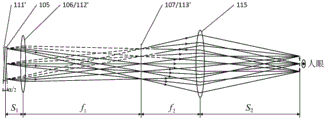
图5是图1所示全息近眼显示系统的放大示意图。FIG. 5 is an enlarged schematic diagram of the holographic near-eye display system shown in FIG. 1 .
具体实施方式Detailed ways
下面结合附图和实施例对本发明作进一步的详细说明。可以理解的是,此处所描述的具体实施例仅仅用于解释本发明,而非对本发明的限定。另外还需要说明的是,为了便于描述,附图中仅示出了与本发明相关的部分而非全部结构。The present invention will be further described in detail below in conjunction with the accompanying drawings and embodiments. It should be understood that the specific embodiments described here are only used to explain the present invention, but not to limit the present invention. In addition, it should be noted that, for the convenience of description, only some structures related to the present invention are shown in the drawings but not all structures.
图1是本发明实施例提供的一种基于多空间光调制器的全息近眼显示系统的结构示意图,参考图1,该全息近眼显示系统包括控制模块101、多个空间光调制子系统、第二分光镜114、第二透镜组115和第三分光镜116,每个空间光调制子系统包括光源、偏振片、第一分光镜、空间光调制器、第一透镜组和光阑。图中以两个空间光调制子系统为例进行示意,其中包括第一空间光调制子系统和第二空间光调制子系统,第一空间光调制子系统包括第一光源102、第一偏振片103、第一子分光镜104、第一空间光调制器105、第一子透镜组106和第一光阑107。第二空间光调制子系统包括第二光源108、第二偏振片109、第二子分光镜110、第二空间光调制器111、第二子透镜组112和第二光阑113。Fig. 1 is a schematic structural diagram of a holographic near-eye display system based on multiple spatial light modulators provided by an embodiment of the present invention. Referring to Fig. 1, the holographic near-eye display system includes a
在第一空间光调制子系统中,第一分光镜即为第一子分光镜104,第一透镜组即为第一子透镜组106。在第二空间光调制子系统中,第一分光镜即为第二子分光镜110,第一透镜组即为第二子透镜组112。In the first spatial light modulation subsystem, the first beam splitter is the
控制模块101将需要显示的三维图像信息计算成二维全息图,同步输出加载到多个空间光调制子系统中的空间光调制器上进行显示,并同步控制多个空间光调制子系统中的光源发光;在同一空间光调制子系统中,光源出射的发散光透过偏振片后,由第一分光镜反射后,经第一透镜组准直为平行光入射到空间光调制器上,由空间光调制器反射衍射形成三维成像光束;不同空间光调制子系统中形成的三维成像光束分别经第一透镜组、光阑、第二分光镜和第二透镜组构成的多空间光调制器视场角拼接系统和视场角放大系统后,经第三分光镜反射进入人眼。The
其中,对于第一空间光调制子系统,控制模块101将需要显示的三维图像信息计算成二维全息图,同步输出加载到第一空间光调制器105上进行显示,并同步控制第一光源102发光;在该空间光调制子系统中,第一光源102出射的发散光透过第一偏振片103后,由第一子分光镜104反射后,经第一子透镜组106准直为平行光入射到第一空间光调制器105上,由第一空间光调制器105反射衍射形成三维成像光束。对于第二空间光调制子系统,控制模块101将需要显示的三维图像信息计算成二维全息图,同步输出加载到第二空间光调制器111上进行显示,并同步控制第二光源108发光;在该空间光调制子系统中,第二光源108出射的发散光透过第二偏振片109后,由第二子分光镜110反射后,经第二子透镜组112准直为平行光入射到第二空间光调制器111上,由第二空间光调制器111反射衍射形成三维成像光束。Wherein, for the first spatial light modulation subsystem, the
本发明实施例提供的基于多个空间光调制器的大视场角全息近眼显示系统,通过设置多个空间光调制子系统以及构成视场角拼接系统和视场角放大系统,利用全息算法将三维图像的强度信息和深度信息计算到普通的二维全息图中,并加载到液晶空间光调制器上,利用空间光调制器的相位调制能力,能够投射出具备真实景深信息的三维图像,从而消除人眼的视觉疲劳;并且,通过多个空间光调制器的视场角无缝拼接和视场角放大系统的共同作用,可以扩大整个全息近眼显示系统的视场角,获得大视场角的三维显示效果。In the large-field-of-view holographic near-eye display system based on multiple spatial light modulators provided by the embodiment of the present invention, by setting up multiple spatial light modulation subsystems and forming a field-of-view splicing system and a field-of-view amplification system, the holographic algorithm is used to The intensity information and depth information of the three-dimensional image are calculated into the ordinary two-dimensional hologram and loaded on the liquid crystal spatial light modulator. Using the phase modulation capability of the spatial light modulator, a three-dimensional image with real depth information can be projected, thereby Eliminate the visual fatigue of the human eye; and, through the joint action of the seamless splicing of the field of view of multiple spatial light modulators and the field of view amplification system, the field of view of the entire holographic near-eye display system can be expanded to obtain a large field of view 3D display effect.
控制模块101主要完成图像信息的全息图计算、加载以及空间光调制和光源的同步控制工作。图2是本发明实施例提供的控制模块的结构示意图,参考图2,具体地,本实施例中的控制模块101可包括:主控制单元201、控制程序界面单元202、外部通信接口203、全息图计算单元204、存储单元205、SLM驱动单元206以及光源驱动单元207;主控制单元201与控制程序界面单元202、外部通信接口203、全息图计算单元204、存储单元205、SLM驱动单元206分别电连接。The
主控制单元201完成整个系统的控制工作;控制程序界面单元202主要提供人机接口界面;外部通信接口203主要包括视频、数据等有线接口,或无线、蓝牙、红外等无线接口接收外部数据;全息图计算单元204将对应的三维图像信息或者数据通过全息图算法生成全息图,并通过主控制单元输出到空间光调制器驱动单元上,从而驱动空间光调制对入射到其上的光束进行调制从而输出对应的三维图像信息;主控制单元201还可以通过内部或者外部的存储单元205事先存储的全息图输出显示到空间光调制器上;主控制单元201可以实现对多个空间光调制器和光源的同步驱动。The
本发明实施例中,光源可采用具有相干性的单色激光光源或彩色激光光源,也可采用具有设定相干性的单色LED光源或彩色LED光源。此外,空间光调制器采用反射式空间光调制器。In the embodiment of the present invention, the light source can be a monochromatic laser light source or a color laser light source with coherence, or a monochromatic LED light source or a color LED light source with predetermined coherence. In addition, the spatial light modulator adopts a reflective spatial light modulator.
图3是图1所示全息近眼显示系统的拼接等效原理图,参考图1和图3,第一空间光调制子系统中的第一子透镜组106和第一光阑107与第二空间光调制子系统中的第二子透镜组112和第二光阑113以及第二分光镜114和第二透镜组115可构成多空间光调制器视场拼接系统。第二空间光调制器111关于第二分光镜114的镜像对称像为第二虚拟空间光调制器111’,第二虚拟空间光调制器111’和第一空间光调制器105的显示视场无缝拼接在一起。Fig. 3 is a mosaic equivalent schematic diagram of the holographic near-eye display system shown in Fig. 1. Referring to Fig. 1 and Fig. 3, the
此外,第一空间光调制子系统中的第一子透镜组106、第一光阑107和第二透镜组115可以形成视场角放大系统,第二空间光调制子系统中的第二子透镜组112、第二光阑113和第二透镜组115也可形成视场角放大系统。第一空间光调制器105和第二空间光调制器111分别形成的三维成像光束,经过上述的多空间光调制器视场拼接系统和视场角放大系统,由第三分光镜116进入人眼,则可形成扩大视角的三维立体像。同时,外部环境的光束也可透过第三分光镜116进入人眼,在人眼端即可呈现AR图像。In addition, the first
需要说明的是,本发明实施例提供的全息近眼显示系统中,任意一个空间光调制子系统中的第一透镜组,即第一子透镜组106和第二子透镜组112,应不仅是成像放大系统的前镜组,同时具备将入射发散光准直为平行光的作用。此外,任意两个空间光调制子系统中的光源、偏振片、第一分光镜、空间光调制器和第一透镜组对应具有相同的光学参数。例如,第一空间光调制器105和第二空间光调制器111呈镜像对称关系放置,具有相同的视场角;第一子透镜组106和第二子透镜组112呈镜像对称关系放置,具有相同的焦距。此外,对于两个子系统中,第一光阑107和第二光阑113尽管相对于第二分光镜114呈镜像对称关系放置,其具有不同的通过孔径位置,分别通过第一空间光调制器105和第二空间光调制器111不同的成像区域。It should be noted that in the holographic near-eye display system provided by the embodiment of the present invention, the first lens group in any one of the spatial light modulation subsystems, that is, the first
在本发明提供的全息近眼显示系统中,以全息近眼显示系统的成像光轴为基准,多个空间光调制子系统中的空间光调制器的倾斜角度依次递增,且倾斜角度相邻的两个空间光调制器反射出的零级光束的夹角为α,任意一个空间光调制器的视场角为θ,其中α≤θ。In the holographic near-eye display system provided by the present invention, with the imaging optical axis of the holographic near-eye display system as the reference, the inclination angles of the spatial light modulators in the multiple spatial light modulation subsystems are successively increased, and the two adjacent inclination angles The included angle of the zero-order light beam reflected by the spatial light modulator is α, and the viewing angle of any spatial light modulator is θ, where α≤θ.
继续以图1所示全息近眼显示系统为例,第二分光镜114与水平方向呈45°夹角,在此基础上,第一空间光调制器105与水平方向的夹角为α/4,第二空间光调制器111与竖直方向的夹角也为α/4。此时,因此,第一空间光调制器105和第二虚拟空间光调制器111’的夹角为α/2,两个空间光调制器反射出的零级光束的夹角为α,参考图3,定义第一空间光调制器105和第二虚拟空间光调制器111’的夹角α为拼接角度。为保证人眼观察时不出现图像串扰,拼接角度需满足α≤θ,可以理解,当两个空间光调制器反射出的零级光束的夹角α大于单个空间光调制器的视场角时,则表示两个空间光调制器的视场相互无交叠,也即无法实现无缝拼接。Continuing to take the holographic near-eye display system shown in FIG. 1 as an example, the angle between the
对于图1所示全息近眼显示,其中第一空间光调制器105和第二空间光调制器111反射出的零级光束的夹角为α,视场拼接后得到的视场则为θ+α。图4是本发明实施例提供的多空间光调制器的排布等效示意图,参考图4,当全息近眼显示系统中设置多个空间光调制器时,需设置多个空间光调制器以整个显示系统的成像光轴为基准依次倾斜,且倾斜角度递增,此时多个空间光调制器反射出的零级光束分别入射在视场的不同位置,即有效扩大视场。可以理解,当倾斜角度相邻的两个空间光调制器反射出的零级光束的夹角为α时,则最外侧的两个空间光调制器反射出的零级光束的夹角应为(N-1)α,N为空间光调制器的个数,N为大于等于2的自然数。基于每个空间光调制器的视场角为θ,则可知所有空间光调制器形成的视场拼接角度则为θ+(N-1)α。For the holographic near-eye display shown in Figure 1, the angle between the zero-order light beams reflected by the first spatial
此外,本发明实施例中,在任意一个空间光调制子系统中,其中的第一透镜组的焦距f1大于第二透镜组的焦距f2,第一透镜组和第二透镜组之间的光程为f1+f2,第一透镜组和第二透镜组视场角的放大倍数为f1/f2。进一步地,空间光调制器的数量为N,N为大于或等于2的整数,全息近眼显示系统的视场角θt满足:θt=f1/f2·[θ+(N-1)α]。进一步可选地,在任意一个空间光调制子系统中,空间光调制器和第一透镜组之间的距离S1小于第一透镜组的焦距f1。In addition, in the embodiment of the present invention, in any spatial light modulation subsystem, the focal length f1 of the first lens group is greater than the focal length f2 of the second lens group, and the optical distance between the first lens group and the second lens group is f1+f2, and the magnification of the field angle of the first lens group and the second lens group is f1/f2. Further, the number of spatial light modulators is N, and N is an integer greater than or equal to 2, and the viewing angle θ t of the holographic near-eye display system satisfies: θ t =f 1 /f 2 ·[θ+(N-1) α]. Further optionally, in any one of the spatial light modulation subsystems, the distance S1 between the spatial light modulator and the first lens group is smaller than the focal length f1 of the first lens group.
图5是图1所示全息近眼显示系统的放大示意图,参考图1和图5,该全息近眼显示的视场角放大系统主要用来进行成像视场放大,如上所述,第一空间光调制子系统中的第一子透镜组106、第一光阑107和第二透镜组115可以形成视场角放大系统,第二空间光调制子系统中的第二子透镜组112、第二光阑113和第二透镜组115也可形成视场角放大系统。Fig. 5 is an enlarged schematic diagram of the holographic near-eye display system shown in Fig. 1. Referring to Fig. 1 and Fig. 5, the magnification system of the holographic near-eye display is mainly used to enlarge the imaging field of view. As mentioned above, the first spatial light modulation The first
第一子透镜组106和第二子透镜组112的焦距均为f1,第二透镜组115的焦距为f2,有f1>f2,第一子透镜组106和第二透镜组115之间的距离为f1+f2,视场角的放大倍数为f1/f2,整个系统的视场角为θt=f1/f2·[θ+(N-1)α]。The focal lengths of the first
视场角放大系统中,为了扩大显示系统的出瞳距离S2,第一空间光调制器105和第一子透镜组106之间的距离以及第二空间光调制器111和第二子透镜组112之间的距离均为S1,有S1<f1,出瞳距离S2可表示为S2=f2+f2·(f2/f1)-(f2/f1)2·S1。In the viewing angle magnification system, in order to expand the exit pupil distance S 2 of the display system, the distance between the first spatial
此外,在任意一个空间光调制子系统中,光阑应设置位于第一透镜组的傅里叶变换面上。如图1所示,第一光阑107位于第一子透镜组106的傅里叶变换面上,第二光阑113位于第二子透镜组112的傅里叶变换面上。通过设计相应的孔径光阑,可以滤除多级衍射像以及零级像对成像的干扰。In addition, in any spatial light modulation subsystem, the diaphragm should be located on the Fourier transform plane of the first lens group. As shown in FIG. 1 , the
基于同一发明构思,本发明实施例还提供了一种基于多空间光调制器的全息近眼显示方法,该全息近眼显示方法采用上述任意一种基于多空间光调制器的全息近眼显示系统,进行基于多空间光调制器的全息近眼显示。可以理解,由于该全息近眼显示方法采用上述实施例提供的全息近眼显示系统执行,因此,具体上述全息近眼显示系统相同或相似的有益效果,此处不再赘述。Based on the same inventive concept, an embodiment of the present invention also provides a holographic near-eye display method based on a multi-spatial light modulator. Holographic near-eye display with multiple spatial light modulators. It can be understood that since the holographic near-eye display method is implemented by the holographic near-eye display system provided in the above embodiment, the same or similar beneficial effects of the above-mentioned holographic near-eye display system will not be repeated here.
注意,上述仅为本发明的较佳实施例及所运用技术原理。本领域技术人员会理解,本发明不限于这里所述的特定实施例,对本领域技术人员来说能够进行各种明显的变化、重新调整、相互结合和替代而不会脱离本发明的保护范围。因此,虽然通过以上实施例对本发明进行了较为详细的说明,但是本发明不仅仅限于以上实施例,在不脱离本发明构思的情况下,还可以包括更多其他等效实施例,而本发明的范围由所附的权利要求范围决定。Note that the above are only preferred embodiments of the present invention and applied technical principles. Those skilled in the art will understand that the present invention is not limited to the specific embodiments described here, and various obvious changes, readjustments, mutual combinations and substitutions can be made by those skilled in the art without departing from the protection scope of the present invention. Therefore, although the present invention has been described in detail through the above embodiments, the present invention is not limited to the above embodiments, and can also include more other equivalent embodiments without departing from the concept of the present invention, and the present invention The scope is determined by the scope of the appended claims.
Claims (10)
Priority Applications (1)
| Application Number | Priority Date | Filing Date | Title |
|---|---|---|---|
| CN202111066855.0A CN115793239A (en) | 2021-09-13 | 2021-09-13 | Holographic near-to-eye display system and method based on multiple spatial light modulators |
Applications Claiming Priority (1)
| Application Number | Priority Date | Filing Date | Title |
|---|---|---|---|
| CN202111066855.0A CN115793239A (en) | 2021-09-13 | 2021-09-13 | Holographic near-to-eye display system and method based on multiple spatial light modulators |
Publications (1)
| Publication Number | Publication Date |
|---|---|
| CN115793239A true CN115793239A (en) | 2023-03-14 |
Family
ID=85417303
Family Applications (1)
| Application Number | Title | Priority Date | Filing Date |
|---|---|---|---|
| CN202111066855.0A Pending CN115793239A (en) | 2021-09-13 | 2021-09-13 | Holographic near-to-eye display system and method based on multiple spatial light modulators |
Country Status (1)
| Country | Link |
|---|---|
| CN (1) | CN115793239A (en) |
Cited By (3)
| Publication number | Priority date | Publication date | Assignee | Title |
|---|---|---|---|---|
| CN116977183A (en) * | 2023-09-22 | 2023-10-31 | 杭州未名信科科技有限公司 | Intelligent construction site holographic image display splicing method and system using same |
| WO2024244907A1 (en) * | 2023-05-30 | 2024-12-05 | 舜宇光学(浙江)研究院有限公司 | Mixed display optical engine, mixed display method and augmented reality display device |
| CN119247630A (en) * | 2024-11-07 | 2025-01-03 | 西安电子科技大学 | A multi-level and multi-dimensional controllable augmented reality near-eye display device |
Citations (5)
| Publication number | Priority date | Publication date | Assignee | Title |
|---|---|---|---|---|
| US20170185037A1 (en) * | 2015-12-29 | 2017-06-29 | Oculus Vr, Llc | Holographic display architecture |
| WO2018209108A2 (en) * | 2017-05-11 | 2018-11-15 | Akonia Holographics Llc | Ducted pupil expansion |
| CN112639588A (en) * | 2018-09-10 | 2021-04-09 | 德克萨斯仪器股份有限公司 | Compact display with extended pixel resolution |
| CN112649962A (en) * | 2020-12-22 | 2021-04-13 | 上海趣立信息科技有限公司 | Large-field-angle holographic display system and method based on single spatial light modulator |
| CN215986725U (en) * | 2021-09-13 | 2022-03-08 | 极瞳科技(北京)有限公司 | Holographic near-to-eye display system based on multiple spatial light modulators |
-
2021
- 2021-09-13 CN CN202111066855.0A patent/CN115793239A/en active Pending
Patent Citations (5)
| Publication number | Priority date | Publication date | Assignee | Title |
|---|---|---|---|---|
| US20170185037A1 (en) * | 2015-12-29 | 2017-06-29 | Oculus Vr, Llc | Holographic display architecture |
| WO2018209108A2 (en) * | 2017-05-11 | 2018-11-15 | Akonia Holographics Llc | Ducted pupil expansion |
| CN112639588A (en) * | 2018-09-10 | 2021-04-09 | 德克萨斯仪器股份有限公司 | Compact display with extended pixel resolution |
| CN112649962A (en) * | 2020-12-22 | 2021-04-13 | 上海趣立信息科技有限公司 | Large-field-angle holographic display system and method based on single spatial light modulator |
| CN215986725U (en) * | 2021-09-13 | 2022-03-08 | 极瞳科技(北京)有限公司 | Holographic near-to-eye display system based on multiple spatial light modulators |
Cited By (5)
| Publication number | Priority date | Publication date | Assignee | Title |
|---|---|---|---|---|
| WO2024244907A1 (en) * | 2023-05-30 | 2024-12-05 | 舜宇光学(浙江)研究院有限公司 | Mixed display optical engine, mixed display method and augmented reality display device |
| CN116977183A (en) * | 2023-09-22 | 2023-10-31 | 杭州未名信科科技有限公司 | Intelligent construction site holographic image display splicing method and system using same |
| CN116977183B (en) * | 2023-09-22 | 2024-02-27 | 杭州未名信科科技有限公司 | Intelligent construction site holographic image display splicing method and system using same |
| CN119247630A (en) * | 2024-11-07 | 2025-01-03 | 西安电子科技大学 | A multi-level and multi-dimensional controllable augmented reality near-eye display device |
| CN119247630B (en) * | 2024-11-07 | 2025-12-05 | 西安电子科技大学 | A multi-level, multi-dimensional controllable augmented reality near-eye display device |
Similar Documents
| Publication | Publication Date | Title |
|---|---|---|
| US12013533B2 (en) | Holographic image projection with holographic correction | |
| US11022799B2 (en) | Projector-combiner display with beam replication | |
| JP6711769B2 (en) | 2D/3D holographic display system | |
| US10191196B2 (en) | Backlight unit for holographic display apparatus and holographic display apparatus including the same | |
| CN105283796B (en) | near eye device | |
| US11874470B2 (en) | Display apparatus having wide viewing window | |
| US10334236B2 (en) | See-through type display apparatus | |
| CN115840290B (en) | Compact head-up display | |
| US11392089B2 (en) | Multi-image display apparatus using holographic projection | |
| CN112596239A (en) | Holographic near-eye display method and system based on spatial light modulator | |
| CN115793239A (en) | Holographic near-to-eye display system and method based on multiple spatial light modulators | |
| CN205450454U (en) | Near -to -eye display system and wear display device | |
| CN113608354A (en) | Holographic near-eye display system based on electric control polarization modulator and eye pupil box expansion method | |
| CN112596242A (en) | Color holographic near-to-eye display method and system based on spatial light modulator time division multiplexing | |
| CN215986725U (en) | Holographic near-to-eye display system based on multiple spatial light modulators | |
| KR20220146169A (en) | Holographic display apparatus including free-formed surface and operating method of the same | |
| US12058305B2 (en) | Image display apparatus and display apparatus | |
| CN110750041A (en) | Light field three-dimensional imaging device and system based on spatial light modulator | |
| CN117111305A (en) | Large-field-angle holographic near-to-eye display device and display method | |
| CN210803998U (en) | Light field three-dimensional imaging device based on spatial light modulator | |
| KR20200119716A (en) | Method and apparatus for displaying binocular hologram image | |
| CN119002064B (en) | Augmented reality display system based on retina projection | |
| KIM et al. | SUPER MULTI-VIEW NEAR-EYE DISPLAY WITH LED ARRAY AND WAVEGUIDE ILLUMINATION MODULE | |
| CN117075347A (en) | A large eye pupil box holographic near-eye display device and display method |
Legal Events
| Date | Code | Title | Description |
|---|---|---|---|
| PB01 | Publication | ||
| PB01 | Publication | ||
| SE01 | Entry into force of request for substantive examination | ||
| SE01 | Entry into force of request for substantive examination |