WO2021057306A1 - Additive for battery, secondary battery, battery module, battery pack, and apparatus - Google Patents
Additive for battery, secondary battery, battery module, battery pack, and apparatus Download PDFInfo
- Publication number
- WO2021057306A1 WO2021057306A1 PCT/CN2020/108840 CN2020108840W WO2021057306A1 WO 2021057306 A1 WO2021057306 A1 WO 2021057306A1 CN 2020108840 W CN2020108840 W CN 2020108840W WO 2021057306 A1 WO2021057306 A1 WO 2021057306A1
- Authority
- WO
- WIPO (PCT)
- Prior art keywords
- battery
- pyrrole
- optionally
- additive
- coating layer
- Prior art date
- Legal status (The legal status is an assumption and is not a legal conclusion. Google has not performed a legal analysis and makes no representation as to the accuracy of the status listed.)
- Ceased
Links
Images


Classifications
-
- H—ELECTRICITY
- H01—ELECTRIC ELEMENTS
- H01M—PROCESSES OR MEANS, e.g. BATTERIES, FOR THE DIRECT CONVERSION OF CHEMICAL ENERGY INTO ELECTRICAL ENERGY
- H01M10/00—Secondary cells; Manufacture thereof
- H01M10/05—Accumulators with non-aqueous electrolyte
- H01M10/056—Accumulators with non-aqueous electrolyte characterised by the materials used as electrolytes, e.g. mixed inorganic/organic electrolytes
- H01M10/0564—Accumulators with non-aqueous electrolyte characterised by the materials used as electrolytes, e.g. mixed inorganic/organic electrolytes the electrolyte being constituted of organic materials only
- H01M10/0566—Liquid materials
- H01M10/0567—Liquid materials characterised by the additives
-
- H—ELECTRICITY
- H01—ELECTRIC ELEMENTS
- H01M—PROCESSES OR MEANS, e.g. BATTERIES, FOR THE DIRECT CONVERSION OF CHEMICAL ENERGY INTO ELECTRICAL ENERGY
- H01M10/00—Secondary cells; Manufacture thereof
- H01M10/05—Accumulators with non-aqueous electrolyte
- H01M10/052—Li-accumulators
- H01M10/0525—Rocking-chair batteries, i.e. batteries with lithium insertion or intercalation in both electrodes; Lithium-ion batteries
-
- H—ELECTRICITY
- H01—ELECTRIC ELEMENTS
- H01M—PROCESSES OR MEANS, e.g. BATTERIES, FOR THE DIRECT CONVERSION OF CHEMICAL ENERGY INTO ELECTRICAL ENERGY
- H01M10/00—Secondary cells; Manufacture thereof
- H01M10/42—Methods or arrangements for servicing or maintenance of secondary cells or secondary half-cells
-
- H—ELECTRICITY
- H01—ELECTRIC ELEMENTS
- H01M—PROCESSES OR MEANS, e.g. BATTERIES, FOR THE DIRECT CONVERSION OF CHEMICAL ENERGY INTO ELECTRICAL ENERGY
- H01M10/00—Secondary cells; Manufacture thereof
- H01M10/42—Methods or arrangements for servicing or maintenance of secondary cells or secondary half-cells
- H01M10/4235—Safety or regulating additives or arrangements in electrodes, separators or electrolyte
-
- H—ELECTRICITY
- H01—ELECTRIC ELEMENTS
- H01M—PROCESSES OR MEANS, e.g. BATTERIES, FOR THE DIRECT CONVERSION OF CHEMICAL ENERGY INTO ELECTRICAL ENERGY
- H01M2200/00—Safety devices for primary or secondary batteries
- H01M2200/10—Temperature sensitive devices
-
- H—ELECTRICITY
- H01—ELECTRIC ELEMENTS
- H01M—PROCESSES OR MEANS, e.g. BATTERIES, FOR THE DIRECT CONVERSION OF CHEMICAL ENERGY INTO ELECTRICAL ENERGY
- H01M2300/00—Electrolytes
- H01M2300/0088—Composites
- H01M2300/0094—Composites in the form of layered products, e.g. coatings
-
- Y—GENERAL TAGGING OF NEW TECHNOLOGICAL DEVELOPMENTS; GENERAL TAGGING OF CROSS-SECTIONAL TECHNOLOGIES SPANNING OVER SEVERAL SECTIONS OF THE IPC; TECHNICAL SUBJECTS COVERED BY FORMER USPC CROSS-REFERENCE ART COLLECTIONS [XRACs] AND DIGESTS
- Y02—TECHNOLOGIES OR APPLICATIONS FOR MITIGATION OR ADAPTATION AGAINST CLIMATE CHANGE
- Y02E—REDUCTION OF GREENHOUSE GAS [GHG] EMISSIONS, RELATED TO ENERGY GENERATION, TRANSMISSION OR DISTRIBUTION
- Y02E60/00—Enabling technologies; Technologies with a potential or indirect contribution to GHG emissions mitigation
- Y02E60/10—Energy storage using batteries
Definitions
- This application relates to the field of energy storage materials, in particular to a battery additive, a secondary battery, a battery module, a battery pack and a device.
- secondary batteries Compared with lead-acid batteries, nickel-metal hydride batteries, and nickel-cadmium batteries, secondary batteries have the advantages of high specific energy density, high discharge rate and long cycle life, and have been widely used in consumer electronics and power energy storage fields. The safety performance of secondary batteries is widely concerned by customers.
- the first aspect of the present application provides an additive for a battery.
- the additive for a battery includes a core structure and a coating layer covering the core structure, wherein the core structure includes one of an aniline compound and a pyrrole compound.
- the melting point of the coating layer is 80°C-150°C.
- the pyrrole compound is selected from one or more of the compounds represented by formula (I),
- R1 to R5 are each independently selected from a hydrogen atom, an amino group, a sulfonic acid group, a halogen atom, a substituted or unsubstituted C 1 -C 20 alkyl group, a substituted or unsubstituted C 2 -C 20 alkenyl group, a substituted or unsubstituted Substituted C 6 -C 26 aryl, substituted or unsubstituted C 1 -C 20 alkylsulfonyl, substituted or unsubstituted C 2 -C 20 alkenyl sulfonyl, substituted or unsubstituted C 6 -C 26 The arylsulfonyl group; and wherein the substituent is selected from a halogen atom, an amino group or a C 1 -C 4 alkyl group.
- the pyrrole compound is selected from the group consisting of pyrrole, 1-phenylpyrrole, 3-acetylpyrrole, 2,4-dimethyl-3-acetylpyrrole, 3- Aminopyrrole, 1-(3-bromopropyl)pyrrole, 1-(4-fluorophenyl)pyrrole, 1-(4-iodophenyl)pyrrole, 3-methylpyrrole, 3-ethylpyrrole, 3- N-propylpyrrole, 3-butylpyrrole, 3-octylpyrrole, 3-decylpyrrole, 3-dodecylpyrrole, 3,4-dimethylpyrrole, 3,4-dibutylpyrrole, 3 -Methoxypyrrole, 3-ethoxypyrrole, 3-butoxypyrrole, 3-hexoxypyrrole, 3-methyl-4-hexoxypyrrole, 3-methyl-4-hexoxypyrrole, 3-methyl-4-hexoxypyr
- the aniline compound is selected from the group consisting of aniline, 2-naphthylamine, 2-hydroxyaniline, p-hydroxyaniline, p-nitroaniline, o-aminoaniline, 1,3-benzene Diamine, diphenylamine, 2,4-dichloroaniline, 3,4-dichloroaniline, 2,4-difluoroaniline, 3,5-dichloroaniline, 3,4-dimethoxyaniline, 3- Hydroxy-N,N-dimethylaniline, 4-bromo-N,N-dimethylaniline, 2-methoxy-5-methylaniline, 3-methoxy-5-methylaniline, p-chloro One or more of aniline, p-bromoaniline, meta-bromoaniline, o-bromoaniline, and o-toluidine; optionally, the aniline compound is selected from one or more of 2-naphthylamine and diphenylamine
- the coating layer includes polyvinyl chloride, polyethylene, ethylene-vinyl acetate, ethylene acrylic acid copolymer, chlorinated polyethylene, polyolefin elastomer POE, natural rubber , Butadiene rubber, polyisoprene, ethylene propylene rubber, styrene butadiene rubber; optionally, the coating layer includes one or more of polyethylene, ethylene-vinyl acetate Kind.
- the weight ratio of the core structure to the coating layer is 30:1-10:1, optionally 25:1-15:1, or 23:1 1 ⁇ 16:1, such as 20:1.
- the average thickness of the coating layer is 10 ⁇ m to 30 ⁇ m, optionally 10 ⁇ m to 20 ⁇ m.
- the second aspect of the present application provides a secondary battery including the battery additive described in the first aspect of the present application.
- the secondary battery according to the second aspect described above includes an outer packaging body and a battery cell and an electrolyte contained in the outer packaging body, the battery cell including a positive pole piece, a negative pole piece, and a separator, wherein the outer packaging body, At least one of the electrolyte, the positive pole piece, the negative pole piece, and the separator includes the battery additive according to the first aspect of the present application.
- At least one of the outer package and the electrolyte includes the battery additive according to the first aspect of the present application.
- the added amount of the battery additive accounts for 1% to 5% of the total weight of the electrolyte, optionally 1.5% to 3.5%.
- the secondary battery can be assembled into a battery module, and the number of secondary batteries contained in the battery module can be multiple, and the specific number can be adjusted according to the application and capacity of the battery module.
- the above-mentioned battery modules can also be assembled into a battery pack, and the number of battery modules contained in the battery pack can be adjusted according to the application and capacity of the battery pack.
- the third aspect of the present application provides a device including at least one of the secondary battery, battery module, or battery pack according to the second aspect of the present application, and the secondary battery, battery module, or battery pack can be used As the power source of the device, it can also be used as the energy storage unit of the device.
- the battery additive of the present application includes a core structure and a coating layer covering the core structure. Both the core material and the coating material meet specific conditions. When the battery is used under normal conditions, the additive will not affect the battery performance. Have an impact; when the battery is used in a high temperature environment, the coating layer on the surface of the additive will melt first, and then the core structure will be released into the electrolyte to form a micro short circuit inside the battery; it can make the battery's remaining power (SOC) in a short time Effectively reduce, so as to ensure that the battery does not have thermal runaway at high temperatures, and ensure the safety performance of the battery.
- SOC battery's remaining power
- compositions are described as including or containing specific components, optional components not covered in this application are not excluded from the composition, and the composition may be composed or composed of the involved components, or in the method Where it is described as including or containing specific process steps, the method does not exclude optional process steps that are not involved in this application, and the method can be constituted or composed of the involved process steps.
- any lower limit can be combined with any upper limit to form an unspecified range; and any lower limit can be combined with other lower limits to form an unspecified range, and any upper limit can be combined with any other upper limit to form an unspecified range.
- each individually disclosed point or single value can be used as a lower limit or upper limit in combination with any other point or single value or with other lower or upper limits to form an unspecified range.
- the “melting point” refers to the measurement by differential scanning calorimetry according to ISO 11357-1/3 (2009)
- the “melting point” refers to the Vicat heat distortion temperature measured according to GB/T 1633-2000.
- SOC State of Charge
- Fig. 1 is a schematic diagram of an embodiment of a secondary battery.
- Fig. 2 is an exploded view of Fig. 1.
- Fig. 3 is a schematic diagram of an embodiment of a battery module.
- Fig. 4 is a schematic diagram of an embodiment of a battery pack.
- Fig. 5 is an exploded view of Fig. 4.
- Fig. 6 is a schematic diagram of an embodiment of a device in which a secondary battery is used as a power source.
- the first aspect of the present application provides an additive for a battery.
- the additive for a battery includes a core structure and a coating layer covering the core structure, wherein the core structure includes an aniline compound and a pyrrole compound.
- the melting point of the coating layer is 80°C-150°C.
- the structure of this additive can be called a core-shell structure or a capsule.
- the coating layer is usually a polymer coating layer (melting point 80°C-150°C), optionally a non-conductive polymer coating layer (melting point 80°C-150°C).
- the coating layer is selected from polyvinyl chloride, polyethylene, ethylene-vinyl acetate, ethylene acrylic acid copolymer, chlorinated polyethylene, polyolefin elastomer POE, natural rubber, One or more of butadiene rubber, polyisoprene, ethylene-propylene rubber, and styrene-butadiene rubber; more optionally, the coating layer is selected from one of polyethylene, ethylene-vinyl acetate, or Several kinds.
- the pyrrole compound is selected from one or more of the compounds represented by formula (I),
- R1 to R5 are each independently selected from a hydrogen atom, an amino group, a sulfonic acid group, a halogen atom, a substituted or unsubstituted C 1 -C 20 alkyl group, a substituted or unsubstituted C 1 -C 20 alkoxy group, a substituted or Unsubstituted C 2 -C 20 alkenyl, substituted or unsubstituted C 6 -C 26 aryl, substituted or unsubstituted C 1 -C 20 alkylsulfonyl, substituted or unsubstituted C 2 -C 20 alkene A sulfonyl group, a substituted or unsubstituted C 6 -C 26 arylsulfonyl group; wherein the substituent is selected from a halogen atom, an amino group or a C 1 -C 4 alkyl group.
- the C 1 -C 20 alkyl group can be a chain alkyl group or a cyclic alkyl group.
- the chain alkyl group can be a straight chain alkyl group or a branched chain alkyl group.
- the hydrogen on the ring of the cyclic alkyl group is reduced It may be further substituted by a substituent.
- the optional lower limit of the number of carbon atoms in the C 1 -C 20 alkyl group is 1, 2, 3, 4, and 5, and the optional upper limit is 3, 4, 5, 6, 8, 10, 12.
- a C 1 -C 12 alkyl group is selected.
- C 1 -C 12 alkyl groups include: methyl, ethyl, n-propyl, isopropyl, n-butyl, isobutyl, sec-butyl, tert-butyl, n-pentyl, Isopentyl, neopentyl, hexyl, octyl, nonyl, decyl, dodecyl.
- R1 to R5 are each independently selected from substituted or unsubstituted C 1 -C 12 alkoxy, optionally, C 1 -C 10 alkoxy is selected; further alternatively, C 1 -C 6 alkane is selected Oxy; further optionally, a C 1 -C 4 alkoxy group is selected.
- C 1 -C 12 alkoxy groups specific examples include: methoxy, ethoxy, n-propoxy, isopropoxy, n-butoxy, sec-butoxy, tert-butoxy, N-pentyloxy, isopentyloxy, cyclopentyloxy, cyclohexyloxy.
- the C 2 -C 20 alkenyl group may be a cyclic alkenyl group or a chain alkenyl group, and the chain alkenyl group may be a straight chain alkenyl group or a branched chain alkenyl group.
- the number of double bonds in the C 2 -C 20 alkenyl group may be one.
- the optional lower limit of the number of carbon atoms in the C 2 -C 20 alkenyl group is 2, 3, 4, and 5, and the optional upper limit is 3, 4, 5, 6, 8, 10, 12.
- a C 2 -C 10 alkenyl group is selected; further alternatively, a C 2 -C 6 alkenyl group is selected; still further optionally, a C 2 -C 5 alkenyl group is selected.
- Specific examples of the C 2 -C 20 alkenyl group include vinyl, allyl, isopropenyl, pentenyl, cyclohexenyl, cycloheptenyl, and cyclooctenyl.
- the C 6 -C 26 aryl group can be a phenyl group, a phenalkyl group, a biphenyl group, a fused ring aromatic hydrocarbon group (such as naphthyl, anthryl, phenanthryl), and the biphenyl group and a fused ring aromatic hydrocarbon group can be further alkylated Or alkenyl substitution.
- the optional lower limit of the number of carbon atoms in the C 6 -C 26 aryl group is 6, 7, and 8, and the optional upper limit is 12, 15, 16, 17, 18, 19, and 20.
- a C 6 -C 16 aryl group is selected; further alternatively, a C 6 -C 14 aryl group is selected; still further optionally, a C 6 -C 9 aryl group is selected.
- Specific examples of C 6 -C 26 aryl groups include phenyl, benzyl, biphenyl, p-tolyl, o-tolyl, m-tolyl, naphthyl, anthryl, and phenanthryl.
- C 1 -C 20 alkylsulfonyl groups include, but are not limited to, methylsulfonyl, ethylsulfonyl, and propylsulfonyl;
- examples of C 6 -C 20 arylsulfonyl groups include, but are not limited to, phenylsulfonyl, Tosyl.
- the halogen atom includes fluorine atom, chlorine atom, bromine atom and iodine atom.
- suitable pyrrole compounds include, but are not limited to, pyrrole, 1-phenylpyrrole, 3-acetylpyrrole, 2,4-dimethyl-3-acetylpyrrole, 3-aminopyrrole, 1-(3 -Bromopropyl)pyrrole, 1-(4-fluorophenyl)pyrrole, 1-(4-iodophenyl)pyrrole, 3-methylpyrrole, 3-ethylpyrrole, 3-n-propylpyrrole, 3- Butylpyrrole, 3-octylpyrrole, 3-decylpyrrole, 3-dodecylpyrrole, 3,4-dimethylpyrrole, 3,4-dibutylpyrrole, 3-methoxypyrrole, 3 -Ethoxypyrrole, 3-butoxypyrrole, 3-hexyloxypyrrole, 3-methyl-4-hexyloxypyrrole, 3-methyl-4-hexyloxypyrrole, 3-
- Suitable aniline compounds include but are not limited to: aniline, 2-naphthylamine, 2-hydroxyaniline, p-hydroxyaniline, p-nitroaniline, o-aminoaniline, 1,3-phenylenediamine, diphenylamine, 2,4- Dichloroaniline, 3,4-dichloroaniline, 2,4-difluoroaniline, 3,5-dichloroaniline, 3,4-dimethoxyaniline, 3-hydroxy-N,N-dimethylaniline , 4-Bromo-N,N-dimethylaniline, 2-methoxy-5-methylaniline, 3-methoxy-5-methylaniline, p-chloroaniline, p-bromoaniline, m-bromoaniline, One or more of o-bromoaniline and o-toluidine; optionally, the aniline compound includes one or more of 2-naphthylamine and diphenylamine.
- the core structure may also contain a small amount of additives or auxiliary agents.
- the core structure consists essentially of the aniline compound and/or pyrrole compound.
- the inventor of the present application found that by selecting a specific core structure and coating layer, and using the coating layer to coat the core structure, the following effect can be achieved:
- the core structure is coated in the coating In the layer, it will not affect the normal use of the battery; as the heat of the battery increases, when the temperature reaches 80-150°C, the coating layer begins to melt gradually, releasing the core structure into the electrolyte of the battery.
- the core structure is electro-oxidized and polymerized in the electrolyte, and a p-type doped conductive polymer bridge is formed between the positive and negative electrodes as the polymerization product deposits and grows, thereby connecting the positive and negative electrodes, resulting in a battery
- the internal micro short circuit can effectively reduce the battery's remaining power (SOC) in a short time, so as to ensure that the battery does not have thermal runaway at high temperatures and ensure the safety performance of the battery.
- aniline compounds or pyrrole compounds are generally used directly without coating, and the role of such additives is often when the charging voltage reaches the oxidation of the additive.
- the additive will undergo in-situ oxidative coupling reaction, thereby forming a conductive polymer network on the positive electrode of the lithium ion secondary battery, and the conductive polymer network formed thereby can effectively improve the conductivity of the battery's positive electrode active material (Usually a conductive polymer network is formed during the first charge or the formation step of battery manufacturing). It can be seen that this is obviously different from the effect of aniline compounds or pyrrole compounds in this application.
- the coating layer for coating the core structure can be formed by any suitable method known in the art.
- the coating layer adopts one or more methods selected from the group consisting of melt extrusion method, melt blending method, phase separation method, spray drying method, electrospinning method, in-situ polymerization method, and interfacial polymerization method. form.
- the weight ratio of the core structure to the coating layer is 30:1-10:1, optionally 25:1-15:1, or 23:1-16:1, such as 20:1 .
- the core structure is covered with a coating layer, and the core structure is released into the electrolyte after the coating layer is gradually melted at a temperature of 80°C-150°C. Therefore, the thickness of the coating layer will affect the release efficiency of the core structure. If the thickness of the coating layer is too large, the release rate of the core structure will be too slow; and if the thickness of the coating layer is too small, the core structure may be released in advance, thereby affecting the normal use of the battery. Therefore, in some embodiments according to the present application, the average thickness of the coating layer may be 10 ⁇ m to 30 ⁇ m, and may be 10 ⁇ m to 20 ⁇ m.
- the secondary battery of the second aspect of the present application includes an outer package and a battery cell and electrolyte contained in the outer package.
- the battery cell includes a positive pole piece, a negative pole piece and a separator. It is understandable that any position that can be in contact with the electrolyte in the battery can include the battery additive of the first aspect of the present application.
- At least one of the outer packaging body, the electrolyte, the positive pole piece, the negative pole piece, and the separator contains the battery additive of the first aspect of the present application; more optionally, the outer packaging body and the electrolyte At least one of them contains the battery additive of the first aspect of the present application.
- the positive electrode sheet includes a positive electrode current collector and a positive electrode film layer disposed on at least one surface of the positive electrode current collector and including a positive electrode active material, and the positive electrode film layer is also
- the battery additive of the first aspect of the present application may be included.
- the present application has no special restrictions on the composition of the positive electrode active material.
- the positive electrode active material can be selected from lithium cobalt oxide, lithium nickel oxide, lithium manganese oxide, lithium nickel manganese oxide, lithium nickel cobalt manganese oxide, lithium Nickel-cobalt-aluminum oxides, olivine-structured lithium-containing phosphates, etc., but the present application is not limited to these materials, and other conventionally known materials that can be used as positive electrode active materials for secondary batteries can also be used. These positive electrode active materials may be used alone or in combination of two or more.
- the positive electrode active material includes one or more of lithium nickel cobalt manganese oxide and lithium nickel cobalt aluminum oxide.
- the battery additives can be used in conjunction with various positive electrode active materials.
- the advantages of the battery additive according to the present application are more prominent when it is applied to positive pole pieces with high safety requirements. Therefore, the battery additive according to the present application is particularly suitable for positive pole pieces with high safety requirements, such as high nickel content.
- the meta material is used as the positive pole piece of the positive active material.
- high nickel ternary material refers to a ternary material whose nickel mole fraction in the material is greater than or equal to 0.5, such as Li 1+x Ni a Co b Me (1-ab) O 2 , where ⁇ 0.1 ⁇ x ⁇ 0.2, 0.5 ⁇ a ⁇ 1 (optionally, 0.8 ⁇ a ⁇ 1), 0 ⁇ b ⁇ 1, Me is selected from Mn, Al, Mg, Zn, Ga, Ba, Fe, Cr, Sn, At least one of V, Sc, Ti, and Zr (optionally Mn or Al).
- the positive electrode active material layer contains Li 1+x Ni a Co b Me (1-ab) O 2 , where -0.1 ⁇ x ⁇ 0.2, 0.5 ⁇ a ⁇ 1 (may Optionally, 0.8 ⁇ a ⁇ 1), 0 ⁇ b ⁇ 1, Me is selected from at least one of Mn, Al, Mg, Zn, Ga, Ba, Fe, Cr, Sn, V, Sc, Ti, Zr ( Optional is Mn or Al).
- Mn Li 1+x Ni a Co b Me (1-ab) O 2 , where -0.1 ⁇ x ⁇ 0.2, 0.5 ⁇ a ⁇ 1 (may Optionally, 0.8 ⁇ a ⁇ 1), 0 ⁇ b ⁇ 1, Me is selected from at least one of Mn, Al, Mg, Zn, Ga, Ba, Fe, Cr, Sn, V, Sc, Ti, Zr ( Optional is Mn or Al).
- the positive electrode film layer may also optionally include a binder and a conductive agent.
- a binder and a conductive agent are not specifically limited, and can be selected according to actual needs.
- the positive electrode current collector can use materials commonly used in the art, such as metal flakes or metal foils such as stainless steel, aluminum, copper, and titanium.
- the positive electrode current collector is aluminum foil.
- the negative electrode sheet includes a negative electrode current collector and a negative electrode film layer disposed on at least one surface of the negative electrode current collector and including a negative electrode active material, and the negative electrode film layer may further include The battery additive of the first aspect of the present application.
- the negative active material can be selected from artificial graphite, natural graphite, soft carbon, hard carbon, silicon-based materials, tin-based materials, and the like. However, this application is not limited to these materials, and other conventionally known materials that can be used as secondary battery negative electrode active materials can also be used. These negative electrode active materials may be used alone or in combination of two or more. Optionally, the negative electrode active material includes one or more of artificial graphite, natural graphite, and silicon-based materials.
- the negative electrode film layer may also optionally include a binder and a conductive agent.
- a binder and a conductive agent are not specifically limited, and can be selected according to actual needs.
- the negative electrode current collector can use materials commonly used in the art, such as metal foil or porous metal plate.
- the negative electrode current collector is copper foil.
- the separation film includes a substrate and a coating.
- the substrate can be selected from polyethylene, polypropylene, polyvinylidene fluoride and their multilayer composite films, but not limited to these; the coating includes one or more of inorganic particles and polymers, and the coating
- the layer may also include the battery additive of the first aspect of the present application.
- the electrolyte includes an electrolyte salt and an organic solvent, and the electrolyte may further include the battery additive of the first aspect of the present application.
- the types of the electrolyte salt and the organic solvent are not specifically limited, and can be selected according to actual needs.
- an electrolyte salt solution dissolved in an organic solvent is generally used as the non-aqueous electrolyte.
- the electrolyte salt is, for example, LiClO 4 , LiPF 6 , LiBF 4 , LiAsF 6 , LiSbF 6, etc., or LiCF 3 SO 3 , LiCF 3 CO 2 , Li 2 C 2 F 4 (SO 3 ) 2 , LiN (CF 3 SO 2 ) 2. LiC(CF 3 SO 2 ) 3 , LiC n F 2n+1 SO 3 (n ⁇ 2), etc.
- the organic solvent used in the non-aqueous electrolyte is, for example, cyclic carbonates such as ethylene carbonate, propylene carbonate, butylene carbonate, and vinylene carbonate, dimethyl carbonate, diethyl carbonate, and methyl ethyl carbonate.
- cyclic carbonates such as ethylene carbonate, propylene carbonate, butylene carbonate, and vinylene carbonate, dimethyl carbonate, diethyl carbonate, and methyl ethyl carbonate.
- chain esters such as methyl propionate, cyclic esters such as ⁇ -butyrolactone, dimethoxyethane, diethyl ether, diglyme, triglyme and other chains
- cyclic ethers such as tetrahydrofuran and 2-methyltetrahydrofuran, nitriles such as acetonitrile and propionitrile, or mixtures of these solvents.
- the electrolyte may also include other additives, such as negative electrode film-forming additives, positive electrode film-forming additives, additives for improving battery overcharge performance, additives for improving battery high temperature performance, and additives for improving battery low temperature performance.
- the outer packaging body may be a soft case or a hard case.
- the battery additive of the first aspect of the present application can be coated on the position where the outer package can contact the electrolyte.
- the added amount of the additive accounts for 1% to 5% of the total weight of the electrolyte, and optionally 1.5% to 3.5%.
- the battery can take into account the advantages of high-temperature safety performance and energy density at the same time.
- Fig. 1 shows a secondary battery 5 with a square structure as an example.
- the secondary battery may include an outer package.
- the outer packaging is used to encapsulate the positive pole piece, the negative pole piece and the electrolyte.
- the outer package may include a housing 51 and a cover 53.
- the housing 51 may include a bottom plate and a side plate connected to the bottom plate, and the bottom plate and the side plate enclose to form an accommodating cavity.
- the housing 51 has an opening communicating with the containing cavity, and a cover plate 53 can cover the opening to close the containing cavity.
- the positive pole piece, the negative pole piece and the separator may be formed into the electrode assembly 52 through a winding process or a lamination process.
- the electrode assembly 52 is packaged in the receiving cavity.
- the electrolyte may be an electrolyte, and the electrolyte is infiltrated in the electrode assembly 52.
- the number of electrode assemblies 52 included in the secondary battery 5 can be one or several, which can be adjusted according to requirements.
- the outer packaging of the secondary battery may be a hard case, such as a hard plastic case, aluminum case, steel case, or the like.
- the outer packaging of the secondary battery may also be a soft bag, such as a pouch type soft bag.
- the material of the soft bag may be plastic, for example, it may include one or more of polypropylene (PP), polybutylene terephthalate (PBT), polybutylene succinate (PBS), and the like.
- the secondary battery can be assembled into a battery module, and the number of secondary batteries contained in the battery module can be multiple, and the specific number can be adjusted according to the application and capacity of the battery module.
- FIG. 3 is a battery module 4 as an example.
- a plurality of secondary batteries 5 may be arranged in sequence along the length direction of the battery module 4. Of course, it can also be arranged in any other manner. Furthermore, the plurality of secondary batteries 5 can be fixed by fasteners.
- the battery module 4 may further include a housing having an accommodation space, and a plurality of secondary batteries 5 are accommodated in the accommodation space.
- the above-mentioned battery modules can also be assembled into a battery pack, and the number of battery modules contained in the battery pack can be adjusted according to the application and capacity of the battery pack.
- FIGS 4 and 5 show the battery pack 1 as an example. 4 and 5, the battery pack 1 may include a battery box and a plurality of battery modules 4 provided in the battery box.
- the battery box includes an upper box body 2 and a lower box body 3.
- the upper box body 2 can be covered on the lower box body 3 and forms a closed space for accommodating the battery module 4.
- a plurality of battery modules 4 can be arranged in the battery box in any manner.
- the device of the third aspect of the present application includes at least one of the secondary battery, battery module, or battery pack described in the present application, and the secondary battery, battery module, or battery pack can be used as the device
- the power supply can also be used as the energy storage unit of the device.
- the device can be, but is not limited to, mobile devices (such as mobile phones, laptop computers, etc.), electric vehicles (such as pure electric vehicles, hybrid electric vehicles, plug-in hybrid electric vehicles, electric bicycles, electric scooters, electric golf Vehicles, electric trucks, etc.), electric trains, ships and satellites, energy storage systems, etc.
- the device can select a secondary battery, a battery module, or a battery pack according to its usage requirements.
- Fig. 6 is a device as an example.
- the device is a pure electric vehicle, a hybrid electric vehicle, or a plug-in hybrid electric vehicle, etc.
- battery packs or battery modules can be used.
- the device may be a mobile phone, a tablet computer, a notebook computer, and the like.
- the device is generally required to be thin and light, and a secondary battery can be used as a power source.
- the positive electrode active material lithium nickel cobalt manganate (LiNi 0.8 Co 0.1 Mn 0.1 O 2 ), the conductive agent Super-P, and the binder polyvinylidene fluoride (PVDF) are dissolved in the solvent N-form at a weight ratio of 96:2:2.
- NMP is mixed uniformly to make a positive electrode slurry, and then the positive electrode slurry is evenly coated on the aluminum foil of the current collector, and then dried at 85°C, then cold pressing, trimming, cutting, and slitting are performed, and then Dry for 4 hours under vacuum at 85°C, weld the tabs, and make the positive pole piece.
- the negative electrode active material, artificial graphite, conductive agent Super-P, thickener CMC, and binder styrene-butadiene rubber (SBR) are dissolved in solvent deionized water at a weight ratio of 96:2:1:1 and mixed uniformly to make negative electrode slurry After that, the negative electrode slurry is evenly coated on the copper foil of the current collector, and then it is dried at 85°C and then cold pressed, trimmed, cut, and slit, and then dried under vacuum at 110°C for 4h, and the tabs are welded , Make the negative pole piece.
- the aqueous phase containing the emulsifier is dispersed in the continuous phase of the polyethylene-xylene solution to form a water-in-oil (W/O) emulsion; then the W/O emulsion is re-dispersed in the additive aqueous solution to produce a W/O/W complex Phase emulsion: Once the W/O/W emulsion is produced, a certain amount of polyethylene-xylene solution solvent is added to make the polyethylene precipitate out of the xylene. After placing the microcapsules in an oven at 45°C for 1 hour, the additive with the coating layer can be obtained.
- W/O water-in-oil
- Lithium hexafluorophosphate is added to the non-aqueous organic solvent, the concentration of the lithium salt is 1.0 mol/L, and then 2% of the additive prepared in the above step (3) is added to the non-aqueous organic solvent, and the electrolyte is formed after uniform mixing.
- a 16 ⁇ m polyethylene film (PE) is used as the separator.
- Example 1-16 and Comparative Examples 1-6 the added amount of each additive used is shown in Table 1, where the added amount of each additive in Table 1 is calculated based on the weight percentage of the total weight of the electrolyte. .
- the results of the hot box test are shown in Table 2.
- the criteria for passing the test are: no smoke, no fire, no explosion from the battery.
- the safety performance of the battery is characterized.
- Table 2 shows the results after the hot box test of the batteries prepared according to the comparative example and the examples.
- Comparative Examples 1-6 It can be seen from Comparative Examples 1-6 that the battery cannot be fully charged when the uncoated aniline and pyrrole additives are used. This is because the aniline and pyrrole additives form a polymer bridge between the positive electrode and the negative electrode, and the internal battery is slightly short-circuited. the reason.
Landscapes
- Chemical & Material Sciences (AREA)
- Engineering & Computer Science (AREA)
- Manufacturing & Machinery (AREA)
- Chemical Kinetics & Catalysis (AREA)
- Electrochemistry (AREA)
- General Chemical & Material Sciences (AREA)
- Materials Engineering (AREA)
- Physics & Mathematics (AREA)
- Condensed Matter Physics & Semiconductors (AREA)
- General Physics & Mathematics (AREA)
- Inorganic Chemistry (AREA)
- Secondary Cells (AREA)
Abstract
Description
相关申请的交叉引用Cross-references to related applications
本申请要求享有于2019年09月26日提交的名称为“一种电池用添加剂、二次电池、电池模块、电池包及装置”的中国专利申请201910917642.0的优先权,该申请的全部内容通过引用并入本文中。This application claims the priority of the Chinese patent application 201910917642.0 filed on September 26, 2019, entitled "Additives for batteries, secondary batteries, battery modules, battery packs and devices", the entire contents of which are incorporated by reference Incorporated into this article.
本申请涉及储能材料领域,具体涉及一种电池用添加剂、二次电池、电池模块、电池包及装置。This application relates to the field of energy storage materials, in particular to a battery additive, a secondary battery, a battery module, a battery pack and a device.
二次电池相比铅酸电池、镍氢电池、镍镉电池具有高比能量密度、放电倍率高以及循环寿命长的优点,已经广泛地应用于消费电子产品和动力储能领域。二次电池的安全性能被客户广泛关注。Compared with lead-acid batteries, nickel-metal hydride batteries, and nickel-cadmium batteries, secondary batteries have the advantages of high specific energy density, high discharge rate and long cycle life, and have been widely used in consumer electronics and power energy storage fields. The safety performance of secondary batteries is widely concerned by customers.
当电池在循环过程中放热量会升高,可能导致电池发生热失控,进而使电池出现燃烧或爆炸的风险。When the battery heats up during the cycle, it may cause thermal runaway of the battery, which may cause the battery to burn or explode.
发明内容Summary of the invention
本申请的第一方面提供一种电池用添加剂,所述电池用添加剂包括核结构和包覆所述核结构的包覆层,其中,所述核结构包括苯胺类化合物和吡咯类化合物中的一种或几种,所述包覆层的熔点为80℃-150℃。The first aspect of the present application provides an additive for a battery. The additive for a battery includes a core structure and a coating layer covering the core structure, wherein the core structure includes one of an aniline compound and a pyrrole compound. One or more kinds, the melting point of the coating layer is 80°C-150°C.
在根据上述第一方面的电池用添加剂中,所述吡咯类化合物选自式(I)所示化合物中的一种或几种,In the battery additive according to the first aspect described above, the pyrrole compound is selected from one or more of the compounds represented by formula (I),

其中R1至R5各自独立地选自氢原子、氨基、磺酸基、卤原子、取代或未取代的C 1-C 20烷基、取代或未取代的C 2-C 20烯基、取代或未取代的C 6-C 26芳基、取代或未取代的C 1-C 20烷基磺酰基、取代或未取代的C 2-C 20烯基磺酰基、取代或未取代的C 6-C 26的芳基磺酰基;并且其中取代基选自卤原子、氨基或C 1-C 4烷基。 Wherein R1 to R5 are each independently selected from a hydrogen atom, an amino group, a sulfonic acid group, a halogen atom, a substituted or unsubstituted C 1 -C 20 alkyl group, a substituted or unsubstituted C 2 -C 20 alkenyl group, a substituted or unsubstituted Substituted C 6 -C 26 aryl, substituted or unsubstituted C 1 -C 20 alkylsulfonyl, substituted or unsubstituted C 2 -C 20 alkenyl sulfonyl, substituted or unsubstituted C 6 -C 26 The arylsulfonyl group; and wherein the substituent is selected from a halogen atom, an amino group or a C 1 -C 4 alkyl group.
在根据上述第一方面的任意电池用添加剂中,所述吡咯类化合物选自吡咯、1-苯基吡咯、3-乙酰基吡咯、2,4-二甲基-3-乙酰基吡咯、3-氨基吡咯、1-(3-溴丙基)吡咯、1-(4-氟苯基)吡咯、1-(4-碘苯基)吡咯、3-甲基吡咯、3-乙基吡咯、3-正丙基吡咯、3-丁基吡咯、3-辛基吡咯、3-癸基吡咯、3-十二烷基吡咯、3,4-二甲基吡咯、3,4-二丁基吡咯、3-甲氧基吡咯、3-乙氧基吡咯、3-丁氧基吡咯、3-己氧基吡咯、3-甲基-4-己氧基吡咯、3-甲基-4-己氧基吡咯、1-(2-氨基苯基)吡咯、甲苯磺酰基吡咯中的一种或几种;可选地,所述吡咯类化合物选自吡咯、3-甲基吡咯中的一种或几种。In any battery additive according to the above-mentioned first aspect, the pyrrole compound is selected from the group consisting of pyrrole, 1-phenylpyrrole, 3-acetylpyrrole, 2,4-dimethyl-3-acetylpyrrole, 3- Aminopyrrole, 1-(3-bromopropyl)pyrrole, 1-(4-fluorophenyl)pyrrole, 1-(4-iodophenyl)pyrrole, 3-methylpyrrole, 3-ethylpyrrole, 3- N-propylpyrrole, 3-butylpyrrole, 3-octylpyrrole, 3-decylpyrrole, 3-dodecylpyrrole, 3,4-dimethylpyrrole, 3,4-dibutylpyrrole, 3 -Methoxypyrrole, 3-ethoxypyrrole, 3-butoxypyrrole, 3-hexoxypyrrole, 3-methyl-4-hexoxypyrrole, 3-methyl-4-hexoxypyrrole One or more of 1-(2-aminophenyl)pyrrole and tosylpyrrole; optionally, the pyrrole compound is selected from one or more of pyrrole and 3-methylpyrrole.
在根据上述第一方面的任意电池用添加剂中,所述苯胺类化合物选自苯胺、2-萘胺、2-羟基苯胺、对羟基苯胺、对硝基苯胺、邻氨基苯胺、1,3-苯二胺、二苯胺、2,4-二氯苯胺、3,4-二氯苯胺、2,4-二氟苯胺、3,5-二氯苯胺、3,4-二甲氧基苯胺、3-羟基-N,N-二甲基苯胺,4-溴-N,N-二甲基苯胺、2-甲氧基-5-甲基苯胺、3-甲氧基-5-甲基苯胺、对氯苯胺、对溴苯胺、间溴苯胺、邻溴苯胺、邻甲苯胺中的一种或几种;可选地,所述苯胺类化合物选自2-萘胺、二苯胺中的一种或几种。In any battery additive according to the above first aspect, the aniline compound is selected from the group consisting of aniline, 2-naphthylamine, 2-hydroxyaniline, p-hydroxyaniline, p-nitroaniline, o-aminoaniline, 1,3-benzene Diamine, diphenylamine, 2,4-dichloroaniline, 3,4-dichloroaniline, 2,4-difluoroaniline, 3,5-dichloroaniline, 3,4-dimethoxyaniline, 3- Hydroxy-N,N-dimethylaniline, 4-bromo-N,N-dimethylaniline, 2-methoxy-5-methylaniline, 3-methoxy-5-methylaniline, p-chloro One or more of aniline, p-bromoaniline, meta-bromoaniline, o-bromoaniline, and o-toluidine; optionally, the aniline compound is selected from one or more of 2-naphthylamine and diphenylamine .
在根据上述第一方面的任意电池用添加剂中,所述包覆层包括聚氯乙烯、聚乙烯、乙烯-醋酸乙烯酯、乙烯丙烯酸共聚物、氯化聚乙烯、聚烯烃弹性体POE、天然橡胶、顺丁橡胶、聚异戊二烯、乙丙橡胶、丁苯橡胶中的一种或几 种;可选地,所述包覆层包括聚乙烯、乙烯-醋酸乙烯酯中的一种或几种。In any battery additive according to the first aspect described above, the coating layer includes polyvinyl chloride, polyethylene, ethylene-vinyl acetate, ethylene acrylic acid copolymer, chlorinated polyethylene, polyolefin elastomer POE, natural rubber , Butadiene rubber, polyisoprene, ethylene propylene rubber, styrene butadiene rubber; optionally, the coating layer includes one or more of polyethylene, ethylene-vinyl acetate Kind.
在根据上述第一方面的任意电池用添加剂中,所述核结构与所述包覆层的重量比为30:1~10:1,可选为25:1~15:1,或者为23:1~16:1,例如20:1。In any battery additive according to the first aspect described above, the weight ratio of the core structure to the coating layer is 30:1-10:1, optionally 25:1-15:1, or 23:1 1~16:1, such as 20:1.
在根据上述第一方面的任意电池用添加剂中,所述包覆层的平均厚度为10μm~30μm,可选为10μm~20μm。In any battery additive according to the first aspect described above, the average thickness of the coating layer is 10 μm to 30 μm, optionally 10 μm to 20 μm.
本申请的第二方面提供一种二次电池,包括本申请第一方面所述的电池用添加剂。The second aspect of the present application provides a secondary battery including the battery additive described in the first aspect of the present application.
根据上述第二方面的二次电池,其包括外包装体以及容纳在外包装体内的电芯和电解液,所述电芯包括正极极片、负极极片及隔离膜,其中所述外包装体、电解液、正极极片、负极极片及隔离膜中至少一个包括根据本申请第一方面所述的电池用添加剂。The secondary battery according to the second aspect described above includes an outer packaging body and a battery cell and an electrolyte contained in the outer packaging body, the battery cell including a positive pole piece, a negative pole piece, and a separator, wherein the outer packaging body, At least one of the electrolyte, the positive pole piece, the negative pole piece, and the separator includes the battery additive according to the first aspect of the present application.
在根据上述第二方面的任意二次电池中,所述外包装体及电解液中至少一个包括根据本申请的第一方面所述的电池用添加剂。In any secondary battery according to the second aspect described above, at least one of the outer package and the electrolyte includes the battery additive according to the first aspect of the present application.
在根据上述第二方面的任意二次电池中,所述电池用添加剂的加入量占电解液总重量的1%-5%,可选为1.5%-3.5%。In any secondary battery according to the above second aspect, the added amount of the battery additive accounts for 1% to 5% of the total weight of the electrolyte, optionally 1.5% to 3.5%.
在本申请第二方面的一些实施方式中,二次电池可以组装成电池模块,电池模块所含二次电池的数量可以为多个,具体数量可根据电池模块的应用和容量来调节。In some embodiments of the second aspect of the present application, the secondary battery can be assembled into a battery module, and the number of secondary batteries contained in the battery module can be multiple, and the specific number can be adjusted according to the application and capacity of the battery module.
在本申请第二方面的一些实施方式中,上述电池模块还可以组装成电池包,电池包所含电池模块的数量可以根据电池包的应用和容量进行调节。In some embodiments of the second aspect of the present application, the above-mentioned battery modules can also be assembled into a battery pack, and the number of battery modules contained in the battery pack can be adjusted according to the application and capacity of the battery pack.
本申请的第三方面提供一种装置,包括本申请第二方面所述的二次电池、电池模块、或电池包中的至少一种,所述二次电池、电池模块、或电池包可以用作所述装置的电源,也可以作为所述装置的能量存储单元。The third aspect of the present application provides a device including at least one of the secondary battery, battery module, or battery pack according to the second aspect of the present application, and the secondary battery, battery module, or battery pack can be used As the power source of the device, it can also be used as the energy storage unit of the device.
本申请至少包括如下有益效果:This application includes at least the following beneficial effects:
本申请的电池用添加剂包括核结构和包覆所述核结构的包覆层,所述核材料和包覆材料均满足特定的条件,当电池在正常条件下使用时,添加剂不会对电池性能产生影响;当电池在高温环境下使用时,添加剂表面的包覆层先发生熔融,然后将核结构释放到电解液中,使电池内部形成微短路;短时间能使电池的剩余电量(SOC)有效降低,从而保证电池在高温下不发生热失控,确保了电池的安全性能。The battery additive of the present application includes a core structure and a coating layer covering the core structure. Both the core material and the coating material meet specific conditions. When the battery is used under normal conditions, the additive will not affect the battery performance. Have an impact; when the battery is used in a high temperature environment, the coating layer on the surface of the additive will melt first, and then the core structure will be released into the electrolyte to form a micro short circuit inside the battery; it can make the battery's remaining power (SOC) in a short time Effectively reduce, so as to ensure that the battery does not have thermal runaway at high temperatures, and ensure the safety performance of the battery.
定义definition
在本文中使用时,除非另有说明,“一种”、“这种”、“至少一种”和“一种或几种”以及不使用数量词的情形可互换使用。除本文中另有说明外,本文中单数形式的使用还意在包括复数形式。When used herein, unless otherwise specified, "a", "this", "at least one", and "one or more" and situations where quantifiers are not used can be used interchangeably. Unless otherwise stated herein, the use of the singular form in this document is also intended to include the plural form.
在本文的描述中,需要说明的是,除非另有说明,“以上”、“以下”为包含本数,“一种或几种”中“几种”的含义是两种及两种以上。In the description herein, it should be noted that, unless otherwise specified, "above" and "below" include the number, and the meaning of "several" in "one or more" means two or more than two.
在组合物被描述为包括或包含特定组分的情况下,该组合物中并不排除本申请未涉及的可选组分,并且该组合物可由所涉及的组分构成或组成,或者在方法被描述为包括或包含特定工艺步骤的情况下,该方法中并不排除本申请未涉及的可选工艺步骤,并且该方法可由所涉及的工艺步骤构成或组成。Where the composition is described as including or containing specific components, optional components not covered in this application are not excluded from the composition, and the composition may be composed or composed of the involved components, or in the method Where it is described as including or containing specific process steps, the method does not exclude optional process steps that are not involved in this application, and the method can be constituted or composed of the involved process steps.
为了简明,本文仅具体地公开了一些数值范围。然而,任意下限可以与任何上限组合形成未明确记载的范围;以及任意下限可以与其它下限组合形成未明确记载的范围,同样任意上限可以与任意其它上限组合形成未明确记载的范围。此外,每个单独公开的点或单个数值自身可以作为下限或上限与任意其它点或单个数值组合或与其它下限或上限组合形成未明确记载的范围。For brevity, only some numerical ranges are specifically disclosed herein. However, any lower limit can be combined with any upper limit to form an unspecified range; and any lower limit can be combined with other lower limits to form an unspecified range, and any upper limit can be combined with any other upper limit to form an unspecified range. In addition, each individually disclosed point or single value can be used as a lower limit or upper limit in combination with any other point or single value or with other lower or upper limits to form an unspecified range.
在本申请的上下文中,当用于形成所述包覆层的材料为结晶性或半结晶性时,“熔点”是指根据ISO 11357-1/3(2009)通过差式扫描量热法测量的放热峰的峰值温度;而当用于形成所述包覆层的材料为无定形时,“熔点”是指根据GB/T 1633-2000测定的维卡热变形温度。In the context of this application, when the material used to form the coating layer is crystalline or semi-crystalline, the "melting point" refers to the measurement by differential scanning calorimetry according to ISO 11357-1/3 (2009) When the material used to form the coating layer is amorphous, the "melting point" refers to the Vicat heat distortion temperature measured according to GB/T 1633-2000.
在本申请的上下文中,术语SOC(State of Charge)表示剩余电量,即电池使用一段时间或长期搁置不用后的剩余容量与其完全充电状态的容量的比值,用百分数表示。剩余电量SOC的其取值范围为0~1,当SOC=0时表示电池放电完全,当SOC=1时表示电池完全充满。In the context of this application, the term SOC (State of Charge) represents the remaining power, that is, the ratio of the remaining capacity of the battery after a period of time or long-term use of the battery to its fully charged state, expressed as a percentage. The value range of the remaining power SOC is 0 to 1. When SOC=0, the battery is fully discharged, and when SOC=1, the battery is fully charged.
术语“可选的”和“可选地”是指在某些情况下可提供某些益处的本申请实施方式。然而,在相同或其他情况下,其他实施方式也可能是可选的。另外,一个或多个可选的实施方式的叙述不意味着其他实施方式是不可用的,并且不旨在将其他实施方式排除在本申请范围外。The terms "optional" and "optionally" refer to embodiments of the present application that can provide certain benefits under certain circumstances. However, under the same or other circumstances, other implementations may also be optional. In addition, the description of one or more optional embodiments does not mean that other embodiments are unavailable, and is not intended to exclude other embodiments from the scope of this application.
图1是二次电池的一实施方式的示意图。Fig. 1 is a schematic diagram of an embodiment of a secondary battery.
图2是图1的分解图。Fig. 2 is an exploded view of Fig. 1.
图3是电池模块的一实施方式的示意图。Fig. 3 is a schematic diagram of an embodiment of a battery module.
图4是电池包的一实施方式的示意图。Fig. 4 is a schematic diagram of an embodiment of a battery pack.
图5是图4的分解图。Fig. 5 is an exploded view of Fig. 4.
图6是二次电池用作电源的装置的一实施方式的示意图。Fig. 6 is a schematic diagram of an embodiment of a device in which a secondary battery is used as a power source.
下面详细说明根据本申请的电解液及电池。The electrolyte and battery according to the present application will be described in detail below.
电解液Electrolyte
本申请的第一方面提供了一种电池用添加剂,所述电池用添加剂包括核结构和包覆所述核结构的包覆层,其中,所述核结构包括苯胺类化合物和吡咯类化合物中的一种或几种,所述包覆层的熔点为80℃-150℃。The first aspect of the present application provides an additive for a battery. The additive for a battery includes a core structure and a coating layer covering the core structure, wherein the core structure includes an aniline compound and a pyrrole compound. One or more, the melting point of the coating layer is 80°C-150°C.
这种添加剂的结构可以称为核壳结构,也可以称之为胶囊。The structure of this additive can be called a core-shell structure or a capsule.
包覆层通常是聚合物包覆层(熔点为80℃-150℃),可选地是非导电的聚合物包覆层(熔点为80℃-150℃)。在根据本申请的可选实施方式中,所述包覆层选自聚氯乙烯、聚乙烯、乙烯-醋酸乙烯酯、乙烯丙烯酸共聚物、氯化聚乙烯、聚烯烃弹性体POE、天然橡胶、顺丁橡胶、聚异戊二烯、乙丙橡胶、丁苯橡胶中的一种或几种;更可选地,所述包覆层选自聚乙烯,乙烯-醋酸乙烯酯中的一种或几种。The coating layer is usually a polymer coating layer (melting point 80°C-150°C), optionally a non-conductive polymer coating layer (melting point 80°C-150°C). In an optional embodiment according to the present application, the coating layer is selected from polyvinyl chloride, polyethylene, ethylene-vinyl acetate, ethylene acrylic acid copolymer, chlorinated polyethylene, polyolefin elastomer POE, natural rubber, One or more of butadiene rubber, polyisoprene, ethylene-propylene rubber, and styrene-butadiene rubber; more optionally, the coating layer is selected from one of polyethylene, ethylene-vinyl acetate, or Several kinds.
在根据本申请的可选实施方式中,所述吡咯类化合物选自式(I)所示的化合物中的一种或几种,

其中R1至R5各自独立地选自氢原子、氨基、磺酸基、卤原子、取代或未取代的C 1-C 20烷基、取代或未取代的C 1-C 20烷氧基、取代或未取代的C 2-C 20烯 基、取代或未取代的C 6-C 26芳基、取代或未取代的C 1-C 20烷基磺酰基、取代或未取代的C 2-C 20烯基磺酰基、取代或未取代的C 6-C 26芳基磺酰基;其中取代基选自卤原子、氨基或C 1-C 4烷基。 Wherein R1 to R5 are each independently selected from a hydrogen atom, an amino group, a sulfonic acid group, a halogen atom, a substituted or unsubstituted C 1 -C 20 alkyl group, a substituted or unsubstituted C 1 -C 20 alkoxy group, a substituted or Unsubstituted C 2 -C 20 alkenyl, substituted or unsubstituted C 6 -C 26 aryl, substituted or unsubstituted C 1 -C 20 alkylsulfonyl, substituted or unsubstituted C 2 -C 20 alkene A sulfonyl group, a substituted or unsubstituted C 6 -C 26 arylsulfonyl group; wherein the substituent is selected from a halogen atom, an amino group or a C 1 -C 4 alkyl group.
C 1-C 20烷基可为链状烷基,也可为环状烷基,链状烷基又可为直链烷基或支链烷基,位于环状烷基的环上的氢还可进一步被取代基取代。C 1-C 20烷基中碳原子数可选的下限值为1、2、3、4、5,可选的上限值为3、4、5、6、8、10、12。可选地,选择C 1-C 12烷基。作为C 1-C 12烷基的实例,具体可以举出:甲基、乙基、正丙基、异丙基、正丁基、异丁基、仲丁基、叔丁基、正戊基、异戊基、新戊基、己基、辛基、壬基、癸基、十二烷基。 The C 1 -C 20 alkyl group can be a chain alkyl group or a cyclic alkyl group. The chain alkyl group can be a straight chain alkyl group or a branched chain alkyl group. The hydrogen on the ring of the cyclic alkyl group is reduced It may be further substituted by a substituent. The optional lower limit of the number of carbon atoms in the C 1 -C 20 alkyl group is 1, 2, 3, 4, and 5, and the optional upper limit is 3, 4, 5, 6, 8, 10, 12. Optionally, a C 1 -C 12 alkyl group is selected. Examples of C 1 -C 12 alkyl groups include: methyl, ethyl, n-propyl, isopropyl, n-butyl, isobutyl, sec-butyl, tert-butyl, n-pentyl, Isopentyl, neopentyl, hexyl, octyl, nonyl, decyl, dodecyl.
当R1至R5各自独立地选自取代或未取代的C 1-C 12烷氧基时,可选地,选择C 1-C 10烷氧基;进一步可选地,选择C 1-C 6烷氧基;更进一步可选地,选择C 1-C 4烷氧基。作为C 1-C 12烷氧基的实例,具体可以举出:甲氧基、乙氧基、正丙氧基、异丙氧基、正丁氧基、仲丁氧基、叔丁氧基、正戊氧基、异戊氧基、环戊氧基、环己氧基。 When R1 to R5 are each independently selected from substituted or unsubstituted C 1 -C 12 alkoxy, optionally, C 1 -C 10 alkoxy is selected; further alternatively, C 1 -C 6 alkane is selected Oxy; further optionally, a C 1 -C 4 alkoxy group is selected. As examples of C 1 -C 12 alkoxy groups, specific examples include: methoxy, ethoxy, n-propoxy, isopropoxy, n-butoxy, sec-butoxy, tert-butoxy, N-pentyloxy, isopentyloxy, cyclopentyloxy, cyclohexyloxy.
C 2-C 20烯基可为环状烯基,也可为链状烯基,链状烯基又可为直链烯基或支链烯基。另外,C 2-C 20烯基中双键的个数可选为1个。C 2-C 20烯基中碳原子数可选的下限值为2、3、4、5,可选的上限值为3、4、5、6、8、10、12。可选地,选择C 2-C 10烯基;进一步可选地,选择C 2-C 6烯基;更进一步可选地,选择C 2-C 5烯基。作为C 2-C 20烯基的实例,具体可以举出:乙烯基、烯丙基、异丙烯基、戊烯基、环己烯基、环庚烯基、环辛烯基。 The C 2 -C 20 alkenyl group may be a cyclic alkenyl group or a chain alkenyl group, and the chain alkenyl group may be a straight chain alkenyl group or a branched chain alkenyl group. In addition, the number of double bonds in the C 2 -C 20 alkenyl group may be one. The optional lower limit of the number of carbon atoms in the C 2 -C 20 alkenyl group is 2, 3, 4, and 5, and the optional upper limit is 3, 4, 5, 6, 8, 10, 12. Optionally, a C 2 -C 10 alkenyl group is selected; further alternatively, a C 2 -C 6 alkenyl group is selected; still further optionally, a C 2 -C 5 alkenyl group is selected. Specific examples of the C 2 -C 20 alkenyl group include vinyl, allyl, isopropenyl, pentenyl, cyclohexenyl, cycloheptenyl, and cyclooctenyl.
C 6-C 26芳基可为苯基、苯烷基、联苯基、稠环芳烃基(例如萘基、蒽基、菲基),联苯基和稠环芳烃基还可进一步被烷基或烯基取代。C 6-C 26芳基中碳原子数可选的下限值为6、7、8,可选的上限值为12、15、16、17、18、19、20。可选地,选择C 6-C 16芳基;进一步可选地,选择C 6-C 14芳基;更进一步可选地,选择C 6-C 9芳基。作为C 6-C 26芳基的实例,具体可以举出:苯基、苄基、联苯基、对甲苯基、邻甲苯基、间甲苯基、萘基、蒽基、菲基。 The C 6 -C 26 aryl group can be a phenyl group, a phenalkyl group, a biphenyl group, a fused ring aromatic hydrocarbon group (such as naphthyl, anthryl, phenanthryl), and the biphenyl group and a fused ring aromatic hydrocarbon group can be further alkylated Or alkenyl substitution. The optional lower limit of the number of carbon atoms in the C 6 -C 26 aryl group is 6, 7, and 8, and the optional upper limit is 12, 15, 16, 17, 18, 19, and 20. Optionally, a C 6 -C 16 aryl group is selected; further alternatively, a C 6 -C 14 aryl group is selected; still further optionally, a C 6 -C 9 aryl group is selected. Specific examples of C 6 -C 26 aryl groups include phenyl, benzyl, biphenyl, p-tolyl, o-tolyl, m-tolyl, naphthyl, anthryl, and phenanthryl.
C 1-C 20烷基磺酰基的例子包括但不限于甲基磺酰基、乙基磺酰基、丙基磺酰基;C 6-C 20芳基磺酰基的例子包括但不限于苯基磺酰基、甲苯磺酰基。 Examples of C 1 -C 20 alkylsulfonyl groups include, but are not limited to, methylsulfonyl, ethylsulfonyl, and propylsulfonyl; examples of C 6 -C 20 arylsulfonyl groups include, but are not limited to, phenylsulfonyl, Tosyl.
卤原子包括氟原子、氯原子、溴原子和碘原子。The halogen atom includes fluorine atom, chlorine atom, bromine atom and iodine atom.
具体地,合适的吡咯类化合物包括但不限于,吡咯、1-苯基吡咯、3-乙酰 基吡咯、2,4-二甲基-3-乙酰基吡咯、3-氨基吡咯、1-(3-溴丙基)吡咯、1-(4-氟苯基)吡咯、1-(4-碘苯基)吡咯、3-甲基吡咯、3-乙基吡咯、3-正丙基吡咯、3-丁基吡咯、3-辛基吡咯、3-癸基吡咯、3-十二烷基吡咯、3,4-二甲基吡咯、3,4-二丁基吡咯、3-甲氧基吡咯、3-乙氧基吡咯、3-丁氧基吡咯、3-己氧基吡咯、3-甲基-4-己氧基吡咯、3-甲基-4-己氧基吡咯、1-(2-氨基苯基)吡咯、甲苯磺酰基吡咯中的一种或几种;可选地,所述吡咯类化合物包括吡咯、3-甲基吡咯中的一种或几种。Specifically, suitable pyrrole compounds include, but are not limited to, pyrrole, 1-phenylpyrrole, 3-acetylpyrrole, 2,4-dimethyl-3-acetylpyrrole, 3-aminopyrrole, 1-(3 -Bromopropyl)pyrrole, 1-(4-fluorophenyl)pyrrole, 1-(4-iodophenyl)pyrrole, 3-methylpyrrole, 3-ethylpyrrole, 3-n-propylpyrrole, 3- Butylpyrrole, 3-octylpyrrole, 3-decylpyrrole, 3-dodecylpyrrole, 3,4-dimethylpyrrole, 3,4-dibutylpyrrole, 3-methoxypyrrole, 3 -Ethoxypyrrole, 3-butoxypyrrole, 3-hexyloxypyrrole, 3-methyl-4-hexyloxypyrrole, 3-methyl-4-hexyloxypyrrole, 1-(2-amino Phenyl) pyrrole and tosylpyrrole; optionally, the pyrrole compound includes one or more of pyrrole and 3-methylpyrrole.
合适的苯胺类化合物包括但不限于:苯胺、2-萘胺、2-羟基苯胺、对羟基苯胺、对硝基苯胺、邻氨基苯胺、1,3-苯二胺、二苯胺、2,4-二氯苯胺、3,4-二氯苯胺、2,4-二氟苯胺、3,5-二氯苯胺、3,4-二甲氧基苯胺、3-羟基-N,N-二甲基苯胺,4-溴-N,N-二甲基苯胺、2-甲氧基-5-甲基苯胺、3-甲氧基-5-甲基苯胺、对氯苯胺、对溴苯胺、间溴苯胺、邻溴苯胺、邻甲苯胺中的一种或几种;可选地,所述苯胺类化合物包括2-萘胺、二苯胺中的一种或几种。Suitable aniline compounds include but are not limited to: aniline, 2-naphthylamine, 2-hydroxyaniline, p-hydroxyaniline, p-nitroaniline, o-aminoaniline, 1,3-phenylenediamine, diphenylamine, 2,4- Dichloroaniline, 3,4-dichloroaniline, 2,4-difluoroaniline, 3,5-dichloroaniline, 3,4-dimethoxyaniline, 3-hydroxy-N,N-dimethylaniline , 4-Bromo-N,N-dimethylaniline, 2-methoxy-5-methylaniline, 3-methoxy-5-methylaniline, p-chloroaniline, p-bromoaniline, m-bromoaniline, One or more of o-bromoaniline and o-toluidine; optionally, the aniline compound includes one or more of 2-naphthylamine and diphenylamine.
本领域技术人员可以理解:在需要的情况下,所述核结构中除了所述苯胺类化合物和/或吡咯类化合物外,也可以含有少量添加剂或辅助剂。在某些实施方式中,所述核结构基本上由所述苯胺类化合物和/或吡咯类化合物组成。Those skilled in the art can understand that, if necessary, in addition to the aniline compound and/or pyrrole compound, the core structure may also contain a small amount of additives or auxiliary agents. In some embodiments, the core structure consists essentially of the aniline compound and/or pyrrole compound.
本申请的发明人发现通过选择特定的核结构和包覆层,利用包覆层将核结构包覆起来,可以实现下面的效果:当电池处于正常温度范围时,核结构被包覆在包覆层中,不会影响到电池正常使用;随着电池放热量的升高,温度达到80-150℃时,包覆层开始逐渐熔融,将核结构释放到电池的电解液中。此时,核结构在电解液中电氧化聚合,并随着聚合产物的沉积生长而在正负极之间形成一种p型掺杂态的导电聚合物桥,从而连接正极和负极,造成电池内部微短路,在短时间能使电池的剩余电量(SOC)有效降低,从而保证电池在高温下不发生热失控,确保了电池的安全性能。The inventor of the present application found that by selecting a specific core structure and coating layer, and using the coating layer to coat the core structure, the following effect can be achieved: When the battery is in the normal temperature range, the core structure is coated in the coating In the layer, it will not affect the normal use of the battery; as the heat of the battery increases, when the temperature reaches 80-150°C, the coating layer begins to melt gradually, releasing the core structure into the electrolyte of the battery. At this time, the core structure is electro-oxidized and polymerized in the electrolyte, and a p-type doped conductive polymer bridge is formed between the positive and negative electrodes as the polymerization product deposits and grows, thereby connecting the positive and negative electrodes, resulting in a battery The internal micro short circuit can effectively reduce the battery's remaining power (SOC) in a short time, so as to ensure that the battery does not have thermal runaway at high temperatures and ensure the safety performance of the battery.
尽管相关技术中有关于使用苯胺类化合物或吡咯类化合物作为电解液的添加剂的报道,但是它们一般是直接使用而不会进行包覆,且这类添加剂的作用往往是在充电电压达到添加剂的氧化电位时,使所述添加剂发生原位氧化偶联反应,进而在锂离子二次电池的正极上形成导电聚合物网络,由此形成的导电聚合物网络能够有效地提高电池正极活性材料的导电性(通常在首次充电或电池制造的化成步骤期间即形成导电聚合物网络)。由此可以看出,这与苯胺类 化合物或吡咯类化合物在本申请中的作用明显不同。Although there are reports in the related art about the use of aniline compounds or pyrrole compounds as electrolyte additives, they are generally used directly without coating, and the role of such additives is often when the charging voltage reaches the oxidation of the additive. At the potential, the additive will undergo in-situ oxidative coupling reaction, thereby forming a conductive polymer network on the positive electrode of the lithium ion secondary battery, and the conductive polymer network formed thereby can effectively improve the conductivity of the battery's positive electrode active material (Usually a conductive polymer network is formed during the first charge or the formation step of battery manufacturing). It can be seen that this is obviously different from the effect of aniline compounds or pyrrole compounds in this application.
用于包覆所述核结构的包覆层可以通过本领域已知的任何合适的方法形成。可选地,该包覆层通过选自熔融挤出法、熔融共混法、相分离法、喷雾干燥法、静电纺丝法、原位聚合法、界面聚合法中的一种或几种方法形成。The coating layer for coating the core structure can be formed by any suitable method known in the art. Optionally, the coating layer adopts one or more methods selected from the group consisting of melt extrusion method, melt blending method, phase separation method, spray drying method, electrospinning method, in-situ polymerization method, and interfacial polymerization method. form.
为了实现有效的包覆,核结构与包覆层的重量比为30:1~10:1,可选为25:1~15:1,或者为23:1~16:1,例如20:1。In order to achieve effective coating, the weight ratio of the core structure to the coating layer is 30:1-10:1, optionally 25:1-15:1, or 23:1-16:1, such as 20:1 .
利用包覆层将核结构包覆起来,在80℃-150℃的温度下,包覆层逐渐熔融之后,会将核结构释放到电解液中。因而包覆层的厚度会影响核结构的释放效率。如果包覆层的厚度过大,会使核结构的释放速率过慢;而如果包覆层的厚度过小,则可能会提前释放核结构从而影响电池的正常使用。因此,在根据本申请的某些实施方式中,所述包覆层的平均厚度可以为10μm~30μm,可选为10μm~20μm。The core structure is covered with a coating layer, and the core structure is released into the electrolyte after the coating layer is gradually melted at a temperature of 80°C-150°C. Therefore, the thickness of the coating layer will affect the release efficiency of the core structure. If the thickness of the coating layer is too large, the release rate of the core structure will be too slow; and if the thickness of the coating layer is too small, the core structure may be released in advance, thereby affecting the normal use of the battery. Therefore, in some embodiments according to the present application, the average thickness of the coating layer may be 10 μm to 30 μm, and may be 10 μm to 20 μm.
二次电池Secondary battery
下面说明根据本申请第二方面的二次电池。The secondary battery according to the second aspect of the present application will be described below.
本申请第二方面的二次电池包括外包装体以及容纳在外包装体内的电芯和电解液,所述电芯包括正极极片、负极极片及隔离膜。可以理解的是,只要能和电池中的电解液有接触的位置,都可以包括本申请第一方面的电池用添加剂。The secondary battery of the second aspect of the present application includes an outer package and a battery cell and electrolyte contained in the outer package. The battery cell includes a positive pole piece, a negative pole piece and a separator. It is understandable that any position that can be in contact with the electrolyte in the battery can include the battery additive of the first aspect of the present application.
可选地,所述外包装体、电解液、正极极片、负极极片及隔离膜中至少一个包含本申请第一方面的电池用添加剂;更可选地,所述外包装体及电解液中至少一个包含本申请第一方面的电池用添加剂。Optionally, at least one of the outer packaging body, the electrolyte, the positive pole piece, the negative pole piece, and the separator contains the battery additive of the first aspect of the present application; more optionally, the outer packaging body and the electrolyte At least one of them contains the battery additive of the first aspect of the present application.
具体地,例如:在本申请的二次电池中,所述正极极片包括正极集流体和设置于正极集流体至少一个表面上且包括正极活性材料的正极膜层,所述正极膜层中还可以包括本申请第一方面的电池用添加剂。Specifically, for example, in the secondary battery of the present application, the positive electrode sheet includes a positive electrode current collector and a positive electrode film layer disposed on at least one surface of the positive electrode current collector and including a positive electrode active material, and the positive electrode film layer is also The battery additive of the first aspect of the present application may be included.
本申请对于正极活性材料的组成并无特殊限制,所述正极活性材料可选自锂钴氧化物、锂镍氧化物、锂锰氧化物、锂镍锰氧化物、锂镍钴锰氧化物、锂镍钴铝氧化物、橄榄石结构的含锂磷酸盐等,但本申请并不限定于这些材料,还可以使用其他可被用作二次电池正极活性材料的传统公知的材料。这些正极活性材料可以仅单独使用一种,也可以将两种以上组合使用。可选地,所述正极活性材料包括锂镍钴锰氧化物、锂镍钴铝氧化物中的一种或几种。The present application has no special restrictions on the composition of the positive electrode active material. The positive electrode active material can be selected from lithium cobalt oxide, lithium nickel oxide, lithium manganese oxide, lithium nickel manganese oxide, lithium nickel cobalt manganese oxide, lithium Nickel-cobalt-aluminum oxides, olivine-structured lithium-containing phosphates, etc., but the present application is not limited to these materials, and other conventionally known materials that can be used as positive electrode active materials for secondary batteries can also be used. These positive electrode active materials may be used alone or in combination of two or more. Optionally, the positive electrode active material includes one or more of lithium nickel cobalt manganese oxide and lithium nickel cobalt aluminum oxide.
本申请对于正极极片的活性材料的组成并无特殊限制,所述电池用添加剂可以与各种正极活性材料配合使用。但是根据本申请的电池用添加剂应用于对于安全性要求高的正极极片时其优势更加突出,所以本申请的电池用添加剂特别适合于对于安全性要求高的正极极片,例如含有高镍三元材料作为正极活性材料的正极极片。在本申请的上下文中,“高镍三元材料”是指材料中镍的摩尔分数大于等于0.5的三元材料,例如Li 1+xNi aCo bMe (1-a-b)O 2,其中-0.1≤x≤0.2,0.5≤a<1(可选地,0.8≤a<1),0<b<1,Me选自Mn、Al、Mg、Zn、Ga、Ba、Fe、Cr、Sn、V、Sc、Ti、Zr中的至少一种(可选是Mn或Al)。因此,在本申请的可选实施方式中,正极活性材料层中包含Li 1+xNi aCo bMe (1-a-b)O 2,其中-0.1≤x≤0.2,0.5≤a<1(可选地,0.8≤a<1),0<b<1,Me选自Mn、Al、Mg、Zn、Ga、Ba、Fe、Cr、Sn、V、Sc、Ti、Zr中的至少一种(可选是Mn或Al)。这些材料是本领域公知的,其构成和制备方法也是本领域公知的。 This application has no special restrictions on the composition of the active material of the positive electrode sheet, and the battery additives can be used in conjunction with various positive electrode active materials. However, the advantages of the battery additive according to the present application are more prominent when it is applied to positive pole pieces with high safety requirements. Therefore, the battery additive according to the present application is particularly suitable for positive pole pieces with high safety requirements, such as high nickel content. The meta material is used as the positive pole piece of the positive active material. In the context of this application, "high nickel ternary material" refers to a ternary material whose nickel mole fraction in the material is greater than or equal to 0.5, such as Li 1+x Ni a Co b Me (1-ab) O 2 , where − 0.1≤x≤0.2, 0.5≤a<1 (optionally, 0.8≤a<1), 0<b<1, Me is selected from Mn, Al, Mg, Zn, Ga, Ba, Fe, Cr, Sn, At least one of V, Sc, Ti, and Zr (optionally Mn or Al). Therefore, in an alternative embodiment of the present application, the positive electrode active material layer contains Li 1+x Ni a Co b Me (1-ab) O 2 , where -0.1≤x≤0.2, 0.5≤a<1 (may Optionally, 0.8≤a<1), 0<b<1, Me is selected from at least one of Mn, Al, Mg, Zn, Ga, Ba, Fe, Cr, Sn, V, Sc, Ti, Zr ( Optional is Mn or Al). These materials are well known in the art, and their composition and preparation methods are also well known in the art.
所述正极膜层中还可选地包括粘结剂、导电剂。其中,粘结剂以及导电剂的种类和含量不受具体的限制,可根据实际需求进行选择。The positive electrode film layer may also optionally include a binder and a conductive agent. Among them, the type and content of the binder and the conductive agent are not specifically limited, and can be selected according to actual needs.
所述正极集流体可以使用本领域常用的材料,例如不锈钢、铝、铜、钛等金属薄片或金属箔。可选地,所述正极集流体为铝箔。The positive electrode current collector can use materials commonly used in the art, such as metal flakes or metal foils such as stainless steel, aluminum, copper, and titanium. Optionally, the positive electrode current collector is aluminum foil.
具体地,在本申请的二次电池中,所述负极极片包括负极集流体和设置于负极集流体至少一个表面上且包括负极活性材料的负极膜层,所述负极膜层中还可以包括本申请第一方面的电池用添加剂。Specifically, in the secondary battery of the present application, the negative electrode sheet includes a negative electrode current collector and a negative electrode film layer disposed on at least one surface of the negative electrode current collector and including a negative electrode active material, and the negative electrode film layer may further include The battery additive of the first aspect of the present application.
所述负极活性材料可选自人造石墨、天然石墨、软碳、硬碳、硅基材料、锡基材料等。但本申请并不限定于这些材料,还可以使用其他可被用作二次电池负极活性材料的传统公知的材料。这些负极活性材料可以仅单独使用一种,也可以将两种以上组合使用。可选地,负极活性材料包括人造石墨、天然石墨、硅基材料中的一种或几种。The negative active material can be selected from artificial graphite, natural graphite, soft carbon, hard carbon, silicon-based materials, tin-based materials, and the like. However, this application is not limited to these materials, and other conventionally known materials that can be used as secondary battery negative electrode active materials can also be used. These negative electrode active materials may be used alone or in combination of two or more. Optionally, the negative electrode active material includes one or more of artificial graphite, natural graphite, and silicon-based materials.
所述负极膜层中还可选地包括粘结剂、导电剂。其中,粘结剂以及导电剂的种类和含量不受具体的限制,可根据实际需求进行选择。The negative electrode film layer may also optionally include a binder and a conductive agent. Among them, the type and content of the binder and the conductive agent are not specifically limited, and can be selected according to actual needs.
所述负极集流体可以使用本领域常用的材料,例如金属箔或多孔金属板等。可选地,所述负极集流体为铜箔。The negative electrode current collector can use materials commonly used in the art, such as metal foil or porous metal plate. Optionally, the negative electrode current collector is copper foil.
具体地,在本申请的二次电池中,所述隔离膜包括基体和涂层。所述基体可选自聚乙烯、聚丙烯、聚偏氟乙烯以及它们的多层复合膜,但不仅限于这些; 所述涂层包括无机颗粒、聚合物中的一种或几种,所述涂层中还可以包括本申请第一方面的电池用添加剂。Specifically, in the secondary battery of the present application, the separation film includes a substrate and a coating. The substrate can be selected from polyethylene, polypropylene, polyvinylidene fluoride and their multilayer composite films, but not limited to these; the coating includes one or more of inorganic particles and polymers, and the coating The layer may also include the battery additive of the first aspect of the present application.
具体地,在本申请的二次电池中,所述电解液包括电解质盐、有机溶剂,所述电解液还可以包括本申请第一方面的电池用添加剂。Specifically, in the secondary battery of the present application, the electrolyte includes an electrolyte salt and an organic solvent, and the electrolyte may further include the battery additive of the first aspect of the present application.
所述电解质盐以及有机溶剂的种类均不受到具体的限制,可根据实际需求进行选择。例如,作为非水电解液,通常使用在有机溶剂中溶解的电解质盐溶液。电解质盐例如是LiClO 4、LiPF 6、LiBF 4、LiAsF 6、LiSbF 6等、或者LiCF 3SO 3、LiCF 3CO 2、Li 2C 2F 4(SO 3) 2、LiN(CF 3SO 2) 2、LiC(CF 3SO 2) 3、LiC nF 2n+1SO 3(n≥2)等。非水电解液中使用的有机溶剂例如是碳酸亚乙酯、碳酸亚丙酯、碳酸亚丁酯、碳酸亚乙烯酯等环状碳酸酯,碳酸二甲酯、碳酸二乙酯、碳酸甲基乙酯等链状碳酸酯,丙酸甲酯等链状酯,γ-丁内酯等环状酯,二甲氧基乙烷、二乙醚、二甘醇二甲醚、三甘醇二甲醚等链状醚,四氢呋喃、2-甲基四氢呋喃等环状醚,乙腈、丙腈等腈类,或者这些溶剂的混合物。所述电解液还可包括其它添加剂,例如负极成膜添加剂、正极成膜添加剂、改善电池过充性能的添加剂、改善电池高温性能的添加剂、改善电池低温性能的添加剂等。 The types of the electrolyte salt and the organic solvent are not specifically limited, and can be selected according to actual needs. For example, as the non-aqueous electrolyte, an electrolyte salt solution dissolved in an organic solvent is generally used. The electrolyte salt is, for example, LiClO 4 , LiPF 6 , LiBF 4 , LiAsF 6 , LiSbF 6, etc., or LiCF 3 SO 3 , LiCF 3 CO 2 , Li 2 C 2 F 4 (SO 3 ) 2 , LiN (CF 3 SO 2 ) 2. LiC(CF 3 SO 2 ) 3 , LiC n F 2n+1 SO 3 (n≥2), etc. The organic solvent used in the non-aqueous electrolyte is, for example, cyclic carbonates such as ethylene carbonate, propylene carbonate, butylene carbonate, and vinylene carbonate, dimethyl carbonate, diethyl carbonate, and methyl ethyl carbonate. And other chain carbonates, chain esters such as methyl propionate, cyclic esters such as γ-butyrolactone, dimethoxyethane, diethyl ether, diglyme, triglyme and other chains Like ethers, cyclic ethers such as tetrahydrofuran and 2-methyltetrahydrofuran, nitriles such as acetonitrile and propionitrile, or mixtures of these solvents. The electrolyte may also include other additives, such as negative electrode film-forming additives, positive electrode film-forming additives, additives for improving battery overcharge performance, additives for improving battery high temperature performance, and additives for improving battery low temperature performance.
具体地,在本申请的二次电池中,所述外包装体可以是软包或硬壳。可以将本申请第一方面的电池用添加剂涂在所述外包装体可以接触到电解液的位置上。Specifically, in the secondary battery of the present application, the outer packaging body may be a soft case or a hard case. The battery additive of the first aspect of the present application can be coated on the position where the outer package can contact the electrolyte.
在本申请的二次电池中,可选地,基于电池中电解液的总重量,所述添加剂的加入量占电解液总重量的1%-5%,可选为1.5%-3.5%。当添加剂的含量在所给范围内时,可以使电池同时兼顾高温安全性能和能量密度的优势。In the secondary battery of the present application, optionally, based on the total weight of the electrolyte in the battery, the added amount of the additive accounts for 1% to 5% of the total weight of the electrolyte, and optionally 1.5% to 3.5%. When the content of the additive is within the given range, the battery can take into account the advantages of high-temperature safety performance and energy density at the same time.
本申请对二次电池的形状没有特别的限制,其可以是圆柱形、方形或其他任意的形状。如图1是作为一个示例的方形结构的二次电池5。The present application has no particular limitation on the shape of the secondary battery, which can be cylindrical, square or other arbitrary shapes. Fig. 1 shows a
在一些实施方式中,二次电池可包括外包装。该外包装用于封装正极极片、负极极片和电解质。In some embodiments, the secondary battery may include an outer package. The outer packaging is used to encapsulate the positive pole piece, the negative pole piece and the electrolyte.
在一些实施方式中,参照图2,外包装可包括壳体51和盖板53。其中,壳体51可包括底板和连接于底板上的侧板,底板和侧板围合形成容纳腔。壳体51具有与容纳腔连通的开口,盖板53能够盖设于所述开口,以封闭所述容纳腔。In some embodiments, referring to FIG. 2, the outer package may include a
正极极片、负极极片和隔离膜可经卷绕工艺或叠片工艺形成电极组件52。电极组件52封装于所述容纳腔。电解质可采用电解液,电解液浸润于电极组件 52中。二次电池5所含电极组件52的数量可以为一个或几个,可根据需求来调节。The positive pole piece, the negative pole piece and the separator may be formed into the
在一些实施方式中,二次电池的外包装可以是硬壳,例如硬塑料壳、铝壳、钢壳等。二次电池的外包装也可以是软包,例如袋式软包。软包的材质可以是塑料,如可包括聚丙烯(PP)、聚对苯二甲酸丁二醇酯(PBT)、聚丁二酸丁二醇酯(PBS)等中的一种或几种。In some embodiments, the outer packaging of the secondary battery may be a hard case, such as a hard plastic case, aluminum case, steel case, or the like. The outer packaging of the secondary battery may also be a soft bag, such as a pouch type soft bag. The material of the soft bag may be plastic, for example, it may include one or more of polypropylene (PP), polybutylene terephthalate (PBT), polybutylene succinate (PBS), and the like.
在一些实施方式中,二次电池可以组装成电池模块,电池模块所含二次电池的数量可以为多个,具体数量可根据电池模块的应用和容量来调节。In some embodiments, the secondary battery can be assembled into a battery module, and the number of secondary batteries contained in the battery module can be multiple, and the specific number can be adjusted according to the application and capacity of the battery module.
图3是作为一个示例的电池模块4。参照图3,在电池模块4中,多个二次电池5可以是沿电池模块4的长度方向依次排列设置。当然,也可以按照其他任意的方式进行排布。进一步可以通过紧固件将该多个二次电池5进行固定。FIG. 3 is a
可选地,电池模块4还可以包括具有容纳空间的外壳,多个二次电池5容纳于该容纳空间。Optionally, the
在一些实施方式中,上述电池模块还可以组装成电池包,电池包所含电池模块的数量可以根据电池包的应用和容量进行调节。In some embodiments, the above-mentioned battery modules can also be assembled into a battery pack, and the number of battery modules contained in the battery pack can be adjusted according to the application and capacity of the battery pack.
图4和图5是作为一个示例的电池包1。参照图4和图5,在电池包1中可以包括电池箱和设置于电池箱中的多个电池模块4。电池箱包括上箱体2和下箱体3,上箱体2能够盖设于下箱体3,并形成用于容纳电池模块4的封闭空间。多个电池模块4可以按照任意的方式排布于电池箱中。Figures 4 and 5 show the
装置Device
本申请第三方面的装置,其包括本申请所述的二次电池、电池模块、或电池包中的至少一种,所述二次电池、电池模块、或电池包可以用作所述装置的电源,也可以作为所述装置的能量存储单元。所述装置可以但不限于是移动设备(例如手机、笔记本电脑等)、电动车辆(例如纯电动车、混合动力电动车、插电式混合动力电动车、电动自行车、电动踏板车、电动高尔夫球车、电动卡车等)、电气列车、船舶及卫星、储能系统等。The device of the third aspect of the present application includes at least one of the secondary battery, battery module, or battery pack described in the present application, and the secondary battery, battery module, or battery pack can be used as the device The power supply can also be used as the energy storage unit of the device. The device can be, but is not limited to, mobile devices (such as mobile phones, laptop computers, etc.), electric vehicles (such as pure electric vehicles, hybrid electric vehicles, plug-in hybrid electric vehicles, electric bicycles, electric scooters, electric golf Vehicles, electric trucks, etc.), electric trains, ships and satellites, energy storage systems, etc.
所述装置可以根据其使用需求来选择二次电池、电池模块或电池包。The device can select a secondary battery, a battery module, or a battery pack according to its usage requirements.
图6是作为一个示例的装置。该装置为纯电动车、混合动力电动车、或插电式混合动力电动车等。为了满足该装置对二次电池的高功率和高能量密度的 需求,可以采用电池包或电池模块。Fig. 6 is a device as an example. The device is a pure electric vehicle, a hybrid electric vehicle, or a plug-in hybrid electric vehicle, etc. In order to meet the requirements of the device for high power and high energy density of secondary batteries, battery packs or battery modules can be used.
作为另一个示例的装置可以是手机、平板电脑、笔记本电脑等。该装置通常要求轻薄化,可以采用二次电池作为电源。As another example, the device may be a mobile phone, a tablet computer, a notebook computer, and the like. The device is generally required to be thin and light, and a secondary battery can be used as a power source.
本申请的上述内容并不意欲描述本申请中的每个公开的实施方式或每种实现方式。如下描述更具体地举例说明示例性实施方式。在整篇申请中的多处,通过一系列实施例提供了指导,这些实施例可以以各种组合形式使用。在各个实例中,列举仅作为代表性组,不应解释为穷举。The above content of this application is not intended to describe each disclosed embodiment or every implementation in this application. The following description more specifically exemplifies exemplary embodiments. In many places throughout the application, guidance is provided through a series of examples, which can be used in various combinations. In each instance, the enumeration serves only as a representative group and should not be interpreted as an exhaustive list.
实施例Example
下述实施例更具体地描述了本申请公开的内容,这些实施例仅仅用于阐述性说明,因为在本申请公开内容的范围内进行各种修改和变化对本领域技术人员来说是明显的。除非另有声明,以下实施例中所报道的所有份、百分比、和比值都是基于重量计,而且实施例中使用的所有试剂都可商购获得或是按照常规方法进行合成获得,并且可直接使用而无需进一步处理,以及实施例中使用的仪器均可商购获得。The following examples more specifically describe the content disclosed in the present application, and these examples are only used for explanatory description, because various modifications and changes within the scope of the present disclosure are obvious to those skilled in the art. Unless otherwise stated, all parts, percentages, and ratios reported in the following examples are based on weight, and all reagents used in the examples are commercially available or synthesized according to conventional methods, and can be directly obtained. Used without further processing, and the instruments used in the examples are all commercially available.
(1)锂离子电池正极极片的制备(1) Preparation of positive pole piece for lithium ion battery
将正极活性材料镍钴锰酸锂(LiNi 0.8Co 0.1Mn 0.1O 2)、导电剂Super-P、粘接剂聚偏氟乙烯(PVDF)按重量比96:2:2溶于溶剂N-甲基吡咯烷酮(NMP)中混合均匀制成正极浆料,之后将正极浆料均匀涂布在集流体铝箔上,随后在85℃下烘干后进行冷压、切边、裁片、分条,之后在85℃真空条件下干燥4h,焊接极耳,制成正极极片。 The positive electrode active material lithium nickel cobalt manganate (LiNi 0.8 Co 0.1 Mn 0.1 O 2 ), the conductive agent Super-P, and the binder polyvinylidene fluoride (PVDF) are dissolved in the solvent N-form at a weight ratio of 96:2:2. NMP is mixed uniformly to make a positive electrode slurry, and then the positive electrode slurry is evenly coated on the aluminum foil of the current collector, and then dried at 85°C, then cold pressing, trimming, cutting, and slitting are performed, and then Dry for 4 hours under vacuum at 85°C, weld the tabs, and make the positive pole piece.
(2)锂离子电池负极极片的制备(2) Preparation of negative pole piece of lithium ion battery
将负极活性材料人造石墨、导电剂Super-P、增稠剂CMC、粘接剂丁苯橡胶(SBR)按重量比96:2:1:1溶于溶剂去离子水中混合均匀制成负极浆料,之后将负极浆料均匀涂布在集流体铜箔上,随后在85℃下烘干后进行冷压、切边、裁片、分条,之后在110℃真空条件下干燥4h,焊接极耳,制成负极极片。The negative electrode active material, artificial graphite, conductive agent Super-P, thickener CMC, and binder styrene-butadiene rubber (SBR) are dissolved in solvent deionized water at a weight ratio of 96:2:1:1 and mixed uniformly to make negative electrode slurry After that, the negative electrode slurry is evenly coated on the copper foil of the current collector, and then it is dried at 85°C and then cold pressed, trimmed, cut, and slit, and then dried under vacuum at 110°C for 4h, and the tabs are welded , Make the negative pole piece.
(3)具有包覆层的添加剂的制备(3) Preparation of additive with coating layer
含乳化剂的水相分散在聚乙烯-二甲苯溶液连续相中,以形成油包水(W/O)乳液;然后将W/O乳液再分散在添加剂水溶液中,产生W/O/W复相乳液;一 旦W/O/W乳液产生,加入一定量的聚乙烯-二甲苯溶液的溶剂,使聚乙烯从二甲苯中沉淀出来。在将微胶囊置于45℃烘箱中1h,即可得到具有包覆层的添加剂。The aqueous phase containing the emulsifier is dispersed in the continuous phase of the polyethylene-xylene solution to form a water-in-oil (W/O) emulsion; then the W/O emulsion is re-dispersed in the additive aqueous solution to produce a W/O/W complex Phase emulsion: Once the W/O/W emulsion is produced, a certain amount of polyethylene-xylene solution solvent is added to make the polyethylene precipitate out of the xylene. After placing the microcapsules in an oven at 45°C for 1 hour, the additive with the coating layer can be obtained.
(4)锂离子电池的电解液的制备(4) Preparation of electrolyte for lithium ion batteries
在充满氩气的手套箱中,将碳酸亚乙酯(EC)和碳酸甲乙酯(EMC)以重量比EC:EMC=30:70混合,作为非水有机溶剂。向非水有机溶剂中加入六氟磷酸锂,锂盐的浓度为1.0mol/L,然后向其中加入2%上述步骤(3)制备的添加剂,混合均匀后,即为所述电解液。In a glove box filled with argon gas, ethylene carbonate (EC) and ethyl methyl carbonate (EMC) were mixed at a weight ratio of EC:EMC=30:70 as a non-aqueous organic solvent. Lithium hexafluorophosphate is added to the non-aqueous organic solvent, the concentration of the lithium salt is 1.0 mol/L, and then 2% of the additive prepared in the above step (3) is added to the non-aqueous organic solvent, and the electrolyte is formed after uniform mixing.
(5)隔离膜(5) Isolation film
以16μm的聚乙烯薄膜(PE)作为隔离膜。A 16μm polyethylene film (PE) is used as the separator.
(6)锂离子电池的制备(6) Preparation of lithium ion battery
将上述的正极极片、隔离膜、负极极片按顺序卷绕,使隔离膜处于正负极极片中间,得到裸电芯,焊接极耳,将裸电芯置于外包装体中,将上述制备的电解液注入到干燥后的电芯中,然后用0.02C恒流充电到3.3V,再以0.1C恒流充电到3.6V、整形、容量测试,完成电池的制备。Wrap the above-mentioned positive pole piece, separator film, and negative pole piece in order so that the separator is in the middle of the positive and negative pole pieces to obtain a bare cell, weld the tabs, and place the bare cell in the outer package. The electrolyte prepared above is injected into the dried cell, then charged to 3.3V with a constant current of 0.02C, then charged to 3.6V with a constant current of 0.1C, shaping, and capacity testing to complete the battery preparation.
实施例1-16以及对比例1-6中,所用到的各个添加剂的添加量如表1所示,其中,在表1中各个添加剂的添加量基于电解液的总重量计算所得到的重量百分数。In Examples 1-16 and Comparative Examples 1-6, the added amount of each additive used is shown in Table 1, where the added amount of each additive in Table 1 is calculated based on the weight percentage of the total weight of the electrolyte. .
表1Table 1


注:“-”表示不添加任何物质Note: "-" means no substance is added
对实施例1-16以及对比例1-6中制备得到的电池均进行下述测试:The following tests were performed on the batteries prepared in Examples 1-16 and Comparative Examples 1-6:
(1)锂离子电池的电池容量测试(1) Battery capacity test of lithium ion battery
在25℃下,将锂离子电池以1C恒定电流第一次放电至2.8V,静置10分钟后,用1C恒定电流充电至4.2V,以4.2V恒定电压充电至电流为0.05C,再静置30分钟,然后用1C恒定电流第二次放电至2.8V,取第二次的放电容量作为锂离子电池的容量。At 25℃, discharge the lithium-ion battery to 2.8V with a constant current of 1C for the first time. After standing for 10 minutes, charge with a constant current of 1C to 4.2V, charge with a constant voltage of 4.2V to a current of 0.05C, and then stand still. Leave it for 30 minutes, and then discharge it to 2.8V with a constant current of 1C for the second time, and take the second discharge capacity as the capacity of the lithium-ion battery.
(2)锂离子电池的热箱测试(2) Hot box test of lithium ion battery
将上述各实施例和对比例制备的电池各取5组样品,在25℃以1C电流恒流充至4.2V,4.2V恒压至电流为0.5C,使其处于4.2V满充状态,然后将电池置于高温箱中,以2℃/min升至120℃保持4h,同时测电池在高温箱中的电压变化以及电池表面温度,并观察测试后电池的状态。Take 5 sets of samples from the batteries prepared in each of the above examples and comparative examples, and charge them to 4.2V at 25°C with a constant current of 1C, and a constant voltage of 4.2V to a current of 0.5C, so that they are in a 4.2V fully charged state, and then Place the battery in a high-temperature box, raise it to 120°C at 2℃/min for 4h, measure the voltage change of the battery in the high-temperature box and the surface temperature of the battery, and observe the state of the battery after the test.
热箱测试的结果如表2所示。通过该测试的标准为:电池无冒烟、无起火、无爆炸。通过上述热箱测试,表征电池的安全性能。The results of the hot box test are shown in Table 2. The criteria for passing the test are: no smoke, no fire, no explosion from the battery. Through the above-mentioned hot box test, the safety performance of the battery is characterized.
表2为根据对比例和实施例制备的电池在热箱测试后的结果。Table 2 shows the results after the hot box test of the batteries prepared according to the comparative example and the examples.
表2Table 2

从实施例1-16可知,使用本申请的具有包覆层的添加剂能有效改善电池的安全性能。It can be seen from Examples 1-16 that the use of the additive with the coating layer of the present application can effectively improve the safety performance of the battery.
从对比例1-6可知,使用未进行包覆的苯胺类和吡咯类添加剂,电池无法充满电,这是由于苯胺类和吡咯类添加剂在正极和负极间形成聚合物桥,电池内部微短路的原因。It can be seen from Comparative Examples 1-6 that the battery cannot be fully charged when the uncoated aniline and pyrrole additives are used. This is because the aniline and pyrrole additives form a polymer bridge between the positive electrode and the negative electrode, and the internal battery is slightly short-circuited. the reason.
以上所述,仅为本申请的具体实施方式,但本申请的保护范围并不局限于此,任何熟悉本技术领域的技术人员在本申请揭露的技术范围内,可轻易想到各种等效的修改或替换,这些修改或替换都应涵盖在本申请的保护范围之内。因此,本申请的保护范围应以权利要求的保护范围为准。The above are only specific implementations of this application, but the protection scope of this application is not limited to this. Anyone familiar with the technical field can easily think of various equivalents within the technical scope disclosed in this application. Modifications or replacements, these modifications or replacements shall be covered within the scope of protection of this application. Therefore, the protection scope of this application should be subject to the protection scope of the claims.
此外,在那些使用类似于“A,B和C等中的至少一个”的约定的情况下,这样的结构通常是在本领域技术人员会理解的约定的意义(例如,“具有A,B和C中至少一个的系统”将包括但不限于单独有A,单独有B,单独由C,有A和B,有A和C,有B和C和/或有A、B和C等的系统)。在那些使用类似于 “A、B或C等中的至少一个”的约定的情况下,这样的结构是在本领域技术人员会理解的约定的意义(例如,“具有A、B或C中至少一个的系统”将包括但不限于单独有A,单独有B,单独有C,有A和B,有A和C,有B和C和/或有A、B和C等)。本领域技术人员将进一步理解,实际上,无论是在说明书、权利要求书还是附图中,呈现两个或更多个替代术语的任何析取词和/或短语应被理解为考虑包括这些术语之一、这些术语中的一个或两个的术语的可能性。例如,短语“A或B”将被理解为包括“A”或“B”或“A和B”的可能性。In addition, in those cases where conventions similar to "at least one of A, B and C, etc." are used, such structures usually have the meaning of conventions that those skilled in the art would understand (for example, "have A, B and "System with at least one of C" shall include but not limited to systems with A alone, B alone, C alone, A and B, A and C, B and C, and/or A, B and C, etc. ). In those cases where conventions similar to "at least one of A, B or C, etc." are used, such structures have the meaning of conventions that will be understood by those skilled in the art (for example, "having at least one of A, B or C" "One system" shall include, but is not limited to, A alone, B alone, C alone, A and B, A and C, B and C, and/or A, B and C, etc.). Those skilled in the art will further understand that, in fact, whether in the specification, claims or drawings, any abstract words and/or phrases that present two or more alternative terms should be understood as considering including these terms One, the possibility of one or both of these terms. For example, the phrase "A or B" will be understood to include the possibilities of "A" or "B" or "A and B."
此外,在根据马库什组描述本公开的特征或方面的情况下,本领域技术人员将认识到,本申请也因此根据马库什组的任何单个成员或成员的子集进行描述。In addition, where features or aspects of the present disclosure are described in terms of the Markush group, those skilled in the art will recognize that the application is therefore also described in terms of any single member or a subset of members of the Markush group.
Claims (14)
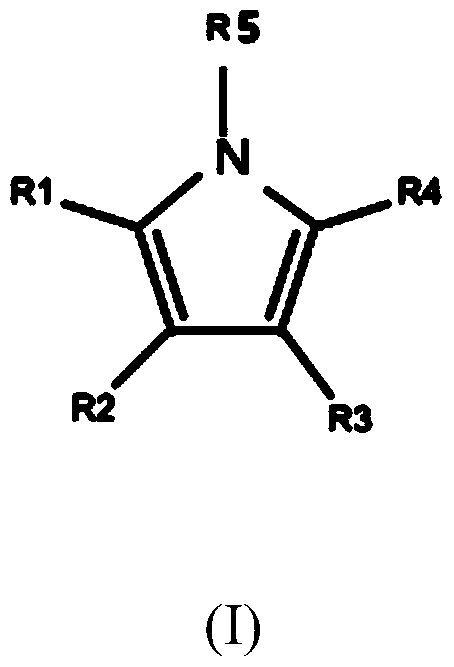
Applications Claiming Priority (2)
| Application Number | Priority Date | Filing Date | Title |
|---|---|---|---|
| CN201910917642.0A CN112563571A (en) | 2019-09-26 | 2019-09-26 | Additive for battery, secondary battery, battery module, battery pack and device |
| CN201910917642.0 | 2019-09-26 |
Publications (1)
| Publication Number | Publication Date |
|---|---|
| WO2021057306A1 true WO2021057306A1 (en) | 2021-04-01 |
Family
ID=75030078
Family Applications (1)
| Application Number | Title | Priority Date | Filing Date |
|---|---|---|---|
| PCT/CN2020/108840 Ceased WO2021057306A1 (en) | 2019-09-26 | 2020-08-13 | Additive for battery, secondary battery, battery module, battery pack, and apparatus |
Country Status (2)
| Country | Link |
|---|---|
| CN (1) | CN112563571A (en) |
| WO (1) | WO2021057306A1 (en) |
Cited By (1)
| Publication number | Priority date | Publication date | Assignee | Title |
|---|---|---|---|---|
| CN115621660A (en) * | 2022-09-08 | 2023-01-17 | 阜阳隆能科技有限公司 | Composite diaphragm for lithium battery core, lithium battery core and lithium battery |
Families Citing this family (4)
| Publication number | Priority date | Publication date | Assignee | Title |
|---|---|---|---|---|
| CN113258037B (en) * | 2021-05-28 | 2023-06-13 | 陕西煤业化工技术研究院有限责任公司 | An anti-overcharge low-temperature rate type negative pole piece and its manufacturing method and lithium-ion battery based thereon |
| CN113178542B (en) * | 2021-05-28 | 2023-03-21 | 陕西煤业化工技术研究院有限责任公司 | Overcharge-resistant rate type positive pole piece, manufacturing method thereof and lithium ion battery based on overcharge-resistant rate type positive pole piece |
| WO2023055144A1 (en) * | 2021-09-30 | 2023-04-06 | 주식회사 엘지에너지솔루션 | Nonaqueous electrolyte comprising additive for nonaqueous electrolyte, and lithium secondary battery containing same |
| CN119241370B (en) * | 2024-09-29 | 2025-06-20 | 武汉理工大学 | A multifunctional additive, solid electrolyte and preparation method and application thereof |
Citations (6)
| Publication number | Priority date | Publication date | Assignee | Title |
|---|---|---|---|---|
| CN101114717A (en) * | 2006-07-24 | 2008-01-30 | 株式会社普利司通 | Non-aqueous electrolyte for battery and non-aqueous electrolyte battery comprising the same |
| CN101145622A (en) * | 2007-09-04 | 2008-03-19 | 武汉大学 | Lithium-ion battery reversible overcharge protection electrolyte additive and preparation method thereof |
| CN102569896A (en) * | 2010-12-10 | 2012-07-11 | 比亚迪股份有限公司 | Lithium ion secondary battery and preparation method thereof |
| CN104124470A (en) * | 2013-04-25 | 2014-10-29 | 中国科学院宁波材料技术与工程研究所 | High safety battery electrolyte solution |
| CN104466186A (en) * | 2014-11-17 | 2015-03-25 | 深圳市振华新材料股份有限公司 | Microcapsules and cathode materials for batteries and their preparation and application |
| CN106785126A (en) * | 2017-02-15 | 2017-05-31 | 青岛大学 | A kind of flame-retardant additive and preparation method thereof, lithium battery |
Family Cites Families (3)
| Publication number | Priority date | Publication date | Assignee | Title |
|---|---|---|---|---|
| US6767671B2 (en) * | 2000-07-14 | 2004-07-27 | Mitsubishi Chemical Corporation | Non-aqueous electrolytic solution and secondary battery containing same |
| CN203536529U (en) * | 2013-09-23 | 2014-04-09 | 宁德新能源科技有限公司 | Lithium ion battery |
| CN110048062B (en) * | 2019-03-25 | 2022-04-15 | 惠州锂威电子科技有限公司 | Overcharge-preventing battery diaphragm and lithium ion battery using same |
-
2019
- 2019-09-26 CN CN201910917642.0A patent/CN112563571A/en active Pending
-
2020
- 2020-08-13 WO PCT/CN2020/108840 patent/WO2021057306A1/en not_active Ceased
Patent Citations (6)
| Publication number | Priority date | Publication date | Assignee | Title |
|---|---|---|---|---|
| CN101114717A (en) * | 2006-07-24 | 2008-01-30 | 株式会社普利司通 | Non-aqueous electrolyte for battery and non-aqueous electrolyte battery comprising the same |
| CN101145622A (en) * | 2007-09-04 | 2008-03-19 | 武汉大学 | Lithium-ion battery reversible overcharge protection electrolyte additive and preparation method thereof |
| CN102569896A (en) * | 2010-12-10 | 2012-07-11 | 比亚迪股份有限公司 | Lithium ion secondary battery and preparation method thereof |
| CN104124470A (en) * | 2013-04-25 | 2014-10-29 | 中国科学院宁波材料技术与工程研究所 | High safety battery electrolyte solution |
| CN104466186A (en) * | 2014-11-17 | 2015-03-25 | 深圳市振华新材料股份有限公司 | Microcapsules and cathode materials for batteries and their preparation and application |
| CN106785126A (en) * | 2017-02-15 | 2017-05-31 | 青岛大学 | A kind of flame-retardant additive and preparation method thereof, lithium battery |
Cited By (1)
| Publication number | Priority date | Publication date | Assignee | Title |
|---|---|---|---|---|
| CN115621660A (en) * | 2022-09-08 | 2023-01-17 | 阜阳隆能科技有限公司 | Composite diaphragm for lithium battery core, lithium battery core and lithium battery |
Also Published As
| Publication number | Publication date |
|---|---|
| CN112563571A (en) | 2021-03-26 |
Similar Documents
| Publication | Publication Date | Title |
|---|---|---|
| WO2021057306A1 (en) | Additive for battery, secondary battery, battery module, battery pack, and apparatus | |
| CN100438198C (en) | Mixed additive and electrolyte and lithium ion secondary battery containing same | |
| TWI482344B (en) | Lithium battery and anode plate structure | |
| CN101494305A (en) | Lithium ion battery electrolyte and battery and battery set containing the same | |
| CN105914399A (en) | Electrolyte and lithium-ion cell containing same | |
| WO2015046469A1 (en) | Lithium ion secondary battery cathode and lithium ion secondary battery using same | |
| CN115810796B (en) | Electrolyte, secondary battery comprising same and preparation method of secondary battery | |
| WO2023082918A1 (en) | Lithium ion battery, battery module, battery pack, and electric apparatus | |
| CN105226256A (en) | For modified cathode material and the lithium titanate battery of lithium titanate battery | |
| WO2023060554A1 (en) | Electrolyte, secondary battery, and power device | |
| CN110854432A (en) | Electrolyte and electrochemical devices and electronic devices using the same | |
| WO2023133798A1 (en) | Positive electrode composite material for lithium-ion secondary battery, positive electrode, and battery | |
| US20240178454A1 (en) | Electrolytic solution, secondary battery and electrical device containing same | |
| WO2023065128A1 (en) | Negative electrode sheet, secondary battery, battery module, battery pack, and electric device | |
| CN101378113B (en) | Battery negative pole, preparation method thereof, and lithium ion battery using the negative pole | |
| WO2023134223A1 (en) | Battery pack and electric device | |
| WO2024021020A1 (en) | Electrolyte solution, secondary battery, battery module, battery pack, and electrical apparatus | |
| WO2024011540A1 (en) | Electrode plate, secondary battery, battery module, battery pack, and electrical device | |
| WO2023142308A1 (en) | Negative electrode sheet, secondary battery, battery module, battery pack, and electrical device | |
| CN106340671B (en) | Lithium ion battery and electrolyte thereof | |
| WO2023015444A1 (en) | Lithium-ion secondary battery, battery module, battery pack, and electrical device | |
| WO2024031519A1 (en) | Separator and preparation method therefor, and related secondary battery, battery module, battery pack and electric device | |
| WO2023193230A1 (en) | Electrolyte solution, secondary battery, battery module, battery pack, and electric device | |
| WO2023168553A1 (en) | Battery module, battery pack and electric device | |
| WO2022188163A1 (en) | Electrolyte, secondary battery, battery module, battery pack, and device |
Legal Events
| Date | Code | Title | Description |
|---|---|---|---|
| 121 | Ep: the epo has been informed by wipo that ep was designated in this application |
Ref document number: 20870244 Country of ref document: EP Kind code of ref document: A1 |
|
| NENP | Non-entry into the national phase |
Ref country code: DE |
|
| 122 | Ep: pct application non-entry in european phase |
Ref document number: 20870244 Country of ref document: EP Kind code of ref document: A1 |