KR20080114749A - Metal complexes, high molecular compounds and devices comprising them - Google Patents
Metal complexes, high molecular compounds and devices comprising them Download PDFInfo
- Publication number
- KR20080114749A KR20080114749A KR1020087022960A KR20087022960A KR20080114749A KR 20080114749 A KR20080114749 A KR 20080114749A KR 1020087022960 A KR1020087022960 A KR 1020087022960A KR 20087022960 A KR20087022960 A KR 20087022960A KR 20080114749 A KR20080114749 A KR 20080114749A
- Authority
- KR
- South Korea
- Prior art keywords
- group
- ring
- metal complex
- represented
- formula
- Prior art date
- Legal status (The legal status is an assumption and is not a legal conclusion. Google has not performed a legal analysis and makes no representation as to the accuracy of the status listed.)
- Ceased
Links
- 0 *c1c(CCCC2)c2cnc1* Chemical compound *c1c(CCCC2)c2cnc1* 0.000 description 16
- GDTZSQNVVLMBMW-UHFFFAOYSA-N CC1=[O][IH]OC(C)=C1 Chemical compound CC1=[O][IH]OC(C)=C1 GDTZSQNVVLMBMW-UHFFFAOYSA-N 0.000 description 1
- PQNQTPPWFOJFSM-UHFFFAOYSA-N C[n]1c(ccc(-c(cc2)cc3c2[n](C=C)c2c3cccc2)c2)c2c2cc(-c(cc3)cc4c3[n](CC=C)c3ccccc43)ccc12 Chemical compound C[n]1c(ccc(-c(cc2)cc3c2[n](C=C)c2c3cccc2)c2)c2c2cc(-c(cc3)cc4c3[n](CC=C)c3ccccc43)ccc12 PQNQTPPWFOJFSM-UHFFFAOYSA-N 0.000 description 1
- BFRMAYFPTVSQNA-UHFFFAOYSA-N C[n]1c(ccc(C2=CCCC=C2)c2)c2c2c1ccc(-c(cc1)cc(c3c4)c1[n](C=C)c3ccc4-c1ccccc1)c2 Chemical compound C[n]1c(ccc(C2=CCCC=C2)c2)c2c2c1ccc(-c(cc1)cc(c3c4)c1[n](C=C)c3ccc4-c1ccccc1)c2 BFRMAYFPTVSQNA-UHFFFAOYSA-N 0.000 description 1
- MZYDBGLUVPLRKR-UHFFFAOYSA-N c(cc1)cc(c2ccccc22)c1[n]2-c1cc(-[n]2c3ccccc3c3c2cccc3)ccc1 Chemical compound c(cc1)cc(c2ccccc22)c1[n]2-c1cc(-[n]2c3ccccc3c3c2cccc3)ccc1 MZYDBGLUVPLRKR-UHFFFAOYSA-N 0.000 description 1
Classifications
-
- C—CHEMISTRY; METALLURGY
- C07—ORGANIC CHEMISTRY
- C07F—ACYCLIC, CARBOCYCLIC OR HETEROCYCLIC COMPOUNDS CONTAINING ELEMENTS OTHER THAN CARBON, HYDROGEN, HALOGEN, OXYGEN, NITROGEN, SULFUR, SELENIUM OR TELLURIUM
- C07F15/00—Compounds containing elements of Groups 8, 9, 10 or 18 of the Periodic Table
-
- C—CHEMISTRY; METALLURGY
- C07—ORGANIC CHEMISTRY
- C07F—ACYCLIC, CARBOCYCLIC OR HETEROCYCLIC COMPOUNDS CONTAINING ELEMENTS OTHER THAN CARBON, HYDROGEN, HALOGEN, OXYGEN, NITROGEN, SULFUR, SELENIUM OR TELLURIUM
- C07F15/00—Compounds containing elements of Groups 8, 9, 10 or 18 of the Periodic Table
- C07F15/0006—Compounds containing elements of Groups 8, 9, 10 or 18 of the Periodic Table compounds of the platinum group
- C07F15/0033—Iridium compounds
-
- C—CHEMISTRY; METALLURGY
- C08—ORGANIC MACROMOLECULAR COMPOUNDS; THEIR PREPARATION OR CHEMICAL WORKING-UP; COMPOSITIONS BASED THEREON
- C08G—MACROMOLECULAR COMPOUNDS OBTAINED OTHERWISE THAN BY REACTIONS ONLY INVOLVING UNSATURATED CARBON-TO-CARBON BONDS
- C08G85/00—General processes for preparing compounds provided for in this subclass
-
- C—CHEMISTRY; METALLURGY
- C08—ORGANIC MACROMOLECULAR COMPOUNDS; THEIR PREPARATION OR CHEMICAL WORKING-UP; COMPOSITIONS BASED THEREON
- C08L—COMPOSITIONS OF MACROMOLECULAR COMPOUNDS
- C08L101/00—Compositions of unspecified macromolecular compounds
-
- C—CHEMISTRY; METALLURGY
- C08—ORGANIC MACROMOLECULAR COMPOUNDS; THEIR PREPARATION OR CHEMICAL WORKING-UP; COMPOSITIONS BASED THEREON
- C08L—COMPOSITIONS OF MACROMOLECULAR COMPOUNDS
- C08L65/00—Compositions of macromolecular compounds obtained by reactions forming a carbon-to-carbon link in the main chain; Compositions of derivatives of such polymers
-
- C—CHEMISTRY; METALLURGY
- C09—DYES; PAINTS; POLISHES; NATURAL RESINS; ADHESIVES; COMPOSITIONS NOT OTHERWISE PROVIDED FOR; APPLICATIONS OF MATERIALS NOT OTHERWISE PROVIDED FOR
- C09B—ORGANIC DYES OR CLOSELY-RELATED COMPOUNDS FOR PRODUCING DYES, e.g. PIGMENTS; MORDANTS; LAKES
- C09B57/00—Other synthetic dyes of known constitution
-
- C—CHEMISTRY; METALLURGY
- C09—DYES; PAINTS; POLISHES; NATURAL RESINS; ADHESIVES; COMPOSITIONS NOT OTHERWISE PROVIDED FOR; APPLICATIONS OF MATERIALS NOT OTHERWISE PROVIDED FOR
- C09B—ORGANIC DYES OR CLOSELY-RELATED COMPOUNDS FOR PRODUCING DYES, e.g. PIGMENTS; MORDANTS; LAKES
- C09B57/00—Other synthetic dyes of known constitution
- C09B57/007—Squaraine dyes
-
- C—CHEMISTRY; METALLURGY
- C09—DYES; PAINTS; POLISHES; NATURAL RESINS; ADHESIVES; COMPOSITIONS NOT OTHERWISE PROVIDED FOR; APPLICATIONS OF MATERIALS NOT OTHERWISE PROVIDED FOR
- C09B—ORGANIC DYES OR CLOSELY-RELATED COMPOUNDS FOR PRODUCING DYES, e.g. PIGMENTS; MORDANTS; LAKES
- C09B57/00—Other synthetic dyes of known constitution
- C09B57/10—Metal complexes of organic compounds not being dyes in uncomplexed form
-
- C—CHEMISTRY; METALLURGY
- C09—DYES; PAINTS; POLISHES; NATURAL RESINS; ADHESIVES; COMPOSITIONS NOT OTHERWISE PROVIDED FOR; APPLICATIONS OF MATERIALS NOT OTHERWISE PROVIDED FOR
- C09B—ORGANIC DYES OR CLOSELY-RELATED COMPOUNDS FOR PRODUCING DYES, e.g. PIGMENTS; MORDANTS; LAKES
- C09B69/00—Dyes not provided for by a single group of this subclass
- C09B69/008—Dyes containing a substituent, which contains a silicium atom
-
- C—CHEMISTRY; METALLURGY
- C09—DYES; PAINTS; POLISHES; NATURAL RESINS; ADHESIVES; COMPOSITIONS NOT OTHERWISE PROVIDED FOR; APPLICATIONS OF MATERIALS NOT OTHERWISE PROVIDED FOR
- C09K—MATERIALS FOR MISCELLANEOUS APPLICATIONS, NOT PROVIDED FOR ELSEWHERE
- C09K11/00—Luminescent materials, e.g. electroluminescent or chemiluminescent
- C09K11/06—Luminescent materials, e.g. electroluminescent or chemiluminescent containing organic luminescent materials
-
- H—ELECTRICITY
- H05—ELECTRIC TECHNIQUES NOT OTHERWISE PROVIDED FOR
- H05B—ELECTRIC HEATING; ELECTRIC LIGHT SOURCES NOT OTHERWISE PROVIDED FOR; CIRCUIT ARRANGEMENTS FOR ELECTRIC LIGHT SOURCES, IN GENERAL
- H05B33/00—Electroluminescent light sources
- H05B33/12—Light sources with substantially two-dimensional [2D] radiating surfaces
- H05B33/14—Light sources with substantially two-dimensional [2D] radiating surfaces characterised by the chemical or physical composition or the arrangement of the electroluminescent material, or by the simultaneous addition of the electroluminescent material in or onto the light source
-
- H—ELECTRICITY
- H10—SEMICONDUCTOR DEVICES; ELECTRIC SOLID-STATE DEVICES NOT OTHERWISE PROVIDED FOR
- H10K—ORGANIC ELECTRIC SOLID-STATE DEVICES
- H10K50/00—Organic light-emitting devices
-
- H—ELECTRICITY
- H10—SEMICONDUCTOR DEVICES; ELECTRIC SOLID-STATE DEVICES NOT OTHERWISE PROVIDED FOR
- H10K—ORGANIC ELECTRIC SOLID-STATE DEVICES
- H10K85/00—Organic materials used in the body or electrodes of devices covered by this subclass
- H10K85/30—Coordination compounds
- H10K85/341—Transition metal complexes, e.g. Ru(II)polypyridine complexes
- H10K85/342—Transition metal complexes, e.g. Ru(II)polypyridine complexes comprising iridium
-
- C—CHEMISTRY; METALLURGY
- C09—DYES; PAINTS; POLISHES; NATURAL RESINS; ADHESIVES; COMPOSITIONS NOT OTHERWISE PROVIDED FOR; APPLICATIONS OF MATERIALS NOT OTHERWISE PROVIDED FOR
- C09K—MATERIALS FOR MISCELLANEOUS APPLICATIONS, NOT PROVIDED FOR ELSEWHERE
- C09K2211/00—Chemical nature of organic luminescent or tenebrescent compounds
- C09K2211/10—Non-macromolecular compounds
- C09K2211/1003—Carbocyclic compounds
- C09K2211/1014—Carbocyclic compounds bridged by heteroatoms, e.g. N, P, Si or B
-
- C—CHEMISTRY; METALLURGY
- C09—DYES; PAINTS; POLISHES; NATURAL RESINS; ADHESIVES; COMPOSITIONS NOT OTHERWISE PROVIDED FOR; APPLICATIONS OF MATERIALS NOT OTHERWISE PROVIDED FOR
- C09K—MATERIALS FOR MISCELLANEOUS APPLICATIONS, NOT PROVIDED FOR ELSEWHERE
- C09K2211/00—Chemical nature of organic luminescent or tenebrescent compounds
- C09K2211/10—Non-macromolecular compounds
- C09K2211/1018—Heterocyclic compounds
- C09K2211/1025—Heterocyclic compounds characterised by ligands
- C09K2211/1029—Heterocyclic compounds characterised by ligands containing one nitrogen atom as the heteroatom
-
- C—CHEMISTRY; METALLURGY
- C09—DYES; PAINTS; POLISHES; NATURAL RESINS; ADHESIVES; COMPOSITIONS NOT OTHERWISE PROVIDED FOR; APPLICATIONS OF MATERIALS NOT OTHERWISE PROVIDED FOR
- C09K—MATERIALS FOR MISCELLANEOUS APPLICATIONS, NOT PROVIDED FOR ELSEWHERE
- C09K2211/00—Chemical nature of organic luminescent or tenebrescent compounds
- C09K2211/10—Non-macromolecular compounds
- C09K2211/1018—Heterocyclic compounds
- C09K2211/1025—Heterocyclic compounds characterised by ligands
- C09K2211/1044—Heterocyclic compounds characterised by ligands containing two nitrogen atoms as heteroatoms
-
- C—CHEMISTRY; METALLURGY
- C09—DYES; PAINTS; POLISHES; NATURAL RESINS; ADHESIVES; COMPOSITIONS NOT OTHERWISE PROVIDED FOR; APPLICATIONS OF MATERIALS NOT OTHERWISE PROVIDED FOR
- C09K—MATERIALS FOR MISCELLANEOUS APPLICATIONS, NOT PROVIDED FOR ELSEWHERE
- C09K2211/00—Chemical nature of organic luminescent or tenebrescent compounds
- C09K2211/10—Non-macromolecular compounds
- C09K2211/1018—Heterocyclic compounds
- C09K2211/1025—Heterocyclic compounds characterised by ligands
- C09K2211/1044—Heterocyclic compounds characterised by ligands containing two nitrogen atoms as heteroatoms
- C09K2211/1048—Heterocyclic compounds characterised by ligands containing two nitrogen atoms as heteroatoms with oxygen
-
- C—CHEMISTRY; METALLURGY
- C09—DYES; PAINTS; POLISHES; NATURAL RESINS; ADHESIVES; COMPOSITIONS NOT OTHERWISE PROVIDED FOR; APPLICATIONS OF MATERIALS NOT OTHERWISE PROVIDED FOR
- C09K—MATERIALS FOR MISCELLANEOUS APPLICATIONS, NOT PROVIDED FOR ELSEWHERE
- C09K2211/00—Chemical nature of organic luminescent or tenebrescent compounds
- C09K2211/10—Non-macromolecular compounds
- C09K2211/1018—Heterocyclic compounds
- C09K2211/1025—Heterocyclic compounds characterised by ligands
- C09K2211/1059—Heterocyclic compounds characterised by ligands containing three nitrogen atoms as heteroatoms
-
- C—CHEMISTRY; METALLURGY
- C09—DYES; PAINTS; POLISHES; NATURAL RESINS; ADHESIVES; COMPOSITIONS NOT OTHERWISE PROVIDED FOR; APPLICATIONS OF MATERIALS NOT OTHERWISE PROVIDED FOR
- C09K—MATERIALS FOR MISCELLANEOUS APPLICATIONS, NOT PROVIDED FOR ELSEWHERE
- C09K2211/00—Chemical nature of organic luminescent or tenebrescent compounds
- C09K2211/10—Non-macromolecular compounds
- C09K2211/1018—Heterocyclic compounds
- C09K2211/1025—Heterocyclic compounds characterised by ligands
- C09K2211/1092—Heterocyclic compounds characterised by ligands containing sulfur as the only heteroatom
-
- C—CHEMISTRY; METALLURGY
- C09—DYES; PAINTS; POLISHES; NATURAL RESINS; ADHESIVES; COMPOSITIONS NOT OTHERWISE PROVIDED FOR; APPLICATIONS OF MATERIALS NOT OTHERWISE PROVIDED FOR
- C09K—MATERIALS FOR MISCELLANEOUS APPLICATIONS, NOT PROVIDED FOR ELSEWHERE
- C09K2211/00—Chemical nature of organic luminescent or tenebrescent compounds
- C09K2211/10—Non-macromolecular compounds
- C09K2211/1018—Heterocyclic compounds
- C09K2211/1025—Heterocyclic compounds characterised by ligands
- C09K2211/1096—Heterocyclic compounds characterised by ligands containing other heteroatoms
-
- C—CHEMISTRY; METALLURGY
- C09—DYES; PAINTS; POLISHES; NATURAL RESINS; ADHESIVES; COMPOSITIONS NOT OTHERWISE PROVIDED FOR; APPLICATIONS OF MATERIALS NOT OTHERWISE PROVIDED FOR
- C09K—MATERIALS FOR MISCELLANEOUS APPLICATIONS, NOT PROVIDED FOR ELSEWHERE
- C09K2211/00—Chemical nature of organic luminescent or tenebrescent compounds
- C09K2211/18—Metal complexes
- C09K2211/185—Metal complexes of the platinum group, i.e. Os, Ir, Pt, Ru, Rh or Pd
-
- H—ELECTRICITY
- H10—SEMICONDUCTOR DEVICES; ELECTRIC SOLID-STATE DEVICES NOT OTHERWISE PROVIDED FOR
- H10K—ORGANIC ELECTRIC SOLID-STATE DEVICES
- H10K2101/00—Properties of the organic materials covered by group H10K85/00
- H10K2101/10—Triplet emission
-
- H—ELECTRICITY
- H10—SEMICONDUCTOR DEVICES; ELECTRIC SOLID-STATE DEVICES NOT OTHERWISE PROVIDED FOR
- H10K—ORGANIC ELECTRIC SOLID-STATE DEVICES
- H10K50/00—Organic light-emitting devices
- H10K50/10—OLEDs or polymer light-emitting diodes [PLED]
- H10K50/11—OLEDs or polymer light-emitting diodes [PLED] characterised by the electroluminescent [EL] layers
-
- Y—GENERAL TAGGING OF NEW TECHNOLOGICAL DEVELOPMENTS; GENERAL TAGGING OF CROSS-SECTIONAL TECHNOLOGIES SPANNING OVER SEVERAL SECTIONS OF THE IPC; TECHNICAL SUBJECTS COVERED BY FORMER USPC CROSS-REFERENCE ART COLLECTIONS [XRACs] AND DIGESTS
- Y02—TECHNOLOGIES OR APPLICATIONS FOR MITIGATION OR ADAPTATION AGAINST CLIMATE CHANGE
- Y02E—REDUCTION OF GREENHOUSE GAS [GHG] EMISSIONS, RELATED TO ENERGY GENERATION, TRANSMISSION OR DISTRIBUTION
- Y02E10/00—Energy generation through renewable energy sources
- Y02E10/50—Photovoltaic [PV] energy
- Y02E10/549—Organic PV cells
Landscapes
- Chemical & Material Sciences (AREA)
- Organic Chemistry (AREA)
- Health & Medical Sciences (AREA)
- Polymers & Plastics (AREA)
- Medicinal Chemistry (AREA)
- Chemical Kinetics & Catalysis (AREA)
- Materials Engineering (AREA)
- Engineering & Computer Science (AREA)
- Inorganic Chemistry (AREA)
- Crystallography & Structural Chemistry (AREA)
- Physics & Mathematics (AREA)
- Optics & Photonics (AREA)
- Electroluminescent Light Sources (AREA)
- Hybrid Cells (AREA)
Abstract
본 발명은 하기 화학식 1로 표시되는 구조를 갖는 금속 착체에 관한 것이다. The present invention relates to a metal complex having a structure represented by the following formula (1).
<화학식 1><Formula 1>

(식 중, X1 및 X2는 독립적으로 탄소 원자 또는 질소 원자를 나타내고, 


Description
본 발명은 금속 착체, 상기 금속 착체의 잔기를 포함하는 고분자 화합물 및 이들을 포함하는 소자에 관한 것이다. The present invention relates to a metal complex, a polymer compound comprising a residue of the metal complex, and a device comprising the same.
전계 발광 소자의 발광층에 이용하는 발광 재료로서 삼중항 여기 상태로부터의 발광을 나타내는 금속 착체는, 일중항 여기 상태로부터의 발광을 나타내는 형광 재료보다도 고발광 효율을 기대할 수 있다. 그 이유는, 캐리어의 재결합에 의해 생성되는 여기자가 이론적으로는 25 %가 일중항 여기 상태이고, 나머지 75 %가 삼중항 여기 상태이기 때문이다. 즉, 일중항 여기 상태로부터의 발광(즉, 형광)을 이용하는 경우 이론적으로는 25 %가 상한이지만, 삼중항 여기 상태로부터의 발광(즉, 인광)을 이용하는 경우 이론적으로는 3배의 효율을 기대할 수 있다. 또한, 에너지의 상대 관계로부터 25 %의 일중항 여기 상태로부터 삼중항 여기 상태로의 계간 교차가 효율적으로 발생하면, 이론적으로는 4배의 효율을 기대할 수 있다.As the light emitting material used for the light emitting layer of the electroluminescent element, the metal complex showing light emission from the triplet excited state can expect higher light emission efficiency than the fluorescent material showing light emission from the singlet excited state. The reason is that 25% of the excitons generated by recombination of carriers are theoretically singlet excited and the remaining 75% are triplet excited. In other words, when using light emission from the singlet excited state (i.e., fluorescence) in theory, the upper limit is 25%, but in the case of using light emission from the triplet excited state (i.e. phosphorescence), theoretically three times the efficiency is expected. Can be. In addition, when the crossover between systems from the singlet excited state of 25% to the triplet excited state occurs efficiently from the relative relationship of energy, theoretically four times the efficiency can be expected.
일반적으로, 삼중항 여기 상태로부터 일중항 기저 상태로의 전이에 따른 삼중항 여기 상태로부터의 발광(즉, 인광)은 스핀 반전을 수반하기 때문에 금지 전이이다. 그러나, 중원자 금속을 포함하는 금속 착체에서는 이 금지가 중원자 효과에 의해 해지되므로, 발광하는 화합물이 있는 것으로 알려져 있다. 예를 들면, 삼중항 여기 상태로부터의 발광을 나타내는 금속 착체로서는, 이리듐을 중심 금속으로 한 오르토메탈화착체(Ir(ppy)3: 2-페닐피리딘을 갖는 트리스-오르토-메탈화 이리듐 (III) 착체)가 고효율의 녹색 발광을 나타내는 것이 알려져 있고, 이것을 저분자 호스트 재료와 조합하여 다층화한 전계 발광 소자도 보고되어 있다(문헌 [APPLIED PHYSICS LETTERS, Vol. 75, No. 1, p4 (1999)]).In general, light emission from the triplet excited state (i.e. phosphorescence) following the transition from the triplet excited state to the singlet ground state is a forbidden transition because it involves spin inversion. However, in the metal complex containing a heavy atom metal, since this prohibition is canceled by the heavy atom effect, it is known that there exists a compound which emits light. For example, as a metal complex which shows light emission from a triplet excited state, an orthometal complex complex having iridium as its center metal (Ir (ppy) 3 : 2-phenylpyridine tris-ortho-metal iridium (III)) It is known that the complex) exhibits high-efficiency green light emission, and an electroluminescent device obtained by multilayering this in combination with a low molecular host material has also been reported (APPLIED PHYSICS LETTERS, Vol. 75, No. 1, p4 (1999)). .
그러나, 금속 착체를 이용한 전계 발광 소자 등으로의 실용화에는 삼원색 전체에 있어서 고발광 효율, 안정성이 우수할 필요가 있다. However, for practical application to an electroluminescent element using a metal complex, it is necessary to be excellent in high luminous efficiency and stability in all three primary colors.
따라서, 특히 적색 발광 영역 또는 청색 발광 영역에 있어서, 발광 효율, 안정성이 우수한 금속 착체의 개발이 요망되고 있다. Therefore, development of the metal complex which is excellent in luminous efficiency and stability especially in a red light emitting area or a blue light emitting area is desired.
<발명의 개시><Start of invention>
본 발명은 발광 효율, 안정성이 우수한 금속 착체를 제공하는 것을 목적으로 한다. An object of this invention is to provide the metal complex excellent in luminous efficiency and stability.
본 발명자들은 예의 검토를 거듭한 결과, 특정한 구조를 갖고, 특정한 양자 화학적 성질을 갖는 금속 착체를 이용하면, 전계 발광 소자의 발광 효율, 안정성이 우수함을 발견하여 본 발명을 완성하기에 이르렀다. As a result of intensive studies, the inventors of the present invention have found that the use of a metal complex having a specific structure and having specific quantum chemical properties results in excellent luminous efficiency and stability of an electroluminescent device, thereby completing the present invention.
즉, 본 발명은 첫째로, That is, the present invention firstly,
하기 화학식 1로 표시되는 구조를 갖는 금속 착체이며, 화학식 


(식 중, X1 및 X2는 각각 독립적으로 탄소 원자 또는 질소 원자를 나타내고, 화학식 


본 발명은 둘째로,Secondly, the present invention
하기 화학식 1로 표시되는 구조를 갖는 금속 착체로서, Z1 환이 하기 화학식 2로 표시되는 구조를 갖거나, 또는 Z2 환이 하기 화학식 3으로 표시되는 구조를 갖 거나, 또는 Z1 환이 하기 화학식 2로 표시되는 구조를 가지면서 Z2 환이 하기 화학식 3으로 표시되는 구조를 갖는 것을 특징으로 하는 금속 착체를 제공한다.As a metal complex having a structure represented by the formula (1), Z 1 The ring has a structure represented by the following formula (2), or Z 2 The ring has a structure represented by Formula 3 below, or Z 1 The ring has a structure represented by the following formula (2) Z 2 It provides a metal complex characterized in that the ring has a structure represented by the following formula (3).
<화학식 1><Formula 1>

(식 중, X1 및 X2는 각각 독립적으로 탄소 원자 또는 질소 원자를 나타내고, 화학식 


(식 중, X1, Y1 및 Y2는 각각 독립적으로 탄소 원자 또는 질소 원자를 나타내고, 화학식 


(식 중, X2, Y3 및 Y4는 각각 독립적으로 탄소 원자 또는 질소 원자를 나타내고, 화학식 


본 발명은 셋째로, Thirdly, the present invention
하기 화학식 5로 표시되는 구조를 갖는 금속 착체를 제공한다.It provides a metal complex having a structure represented by the following formula (5).

(식 중, X1 및 X2는 각각 독립적으로 탄소 원자 또는 질소 원자를 나타내고, 화학식 


A는 Z1 환 중의 1개의 원자와 Z2 환 중의 1개의 원자에 결합한 연결기를 나타내고, 상기 연결기는 -C(R501)(R502)-, -N(R503)-, -P(R504)-, -P(=O)(R507)-, -Si(R505)(R506)- 및 -SO2-로 표시되는 기로부터 선택되는 2 내지 6개의 기를 포함하고,A is Z 1 1 atom in a ring and Z 2 And a linking group bonded to one atom in the ring, wherein the linking group is -C (R 501 ) (R 502 )-, -N (R 503 )-, -P (R 504 )-, -P (= O) (R 507 )-, -Si (R 505 ) (R 506 )-, and 2-6 groups selected from the group represented by -SO 2- ,
R501 내지 R507은 각각 독립적으로 수소 원자, 알킬기, 알콕시기, 알킬티오기, 아릴기, 아릴옥시기, 아릴티오기, 아릴알킬기, 아릴알콕시기, 아릴알킬티오기, 아릴알케닐기, 아릴알키닐기, 아미노기, 치환 아미노기, 실릴기, 치환 실릴기, 실릴옥시기, 치환 실릴옥시기, 1가의 복소환기 또는 할로겐 원자를 나타냄)R 501 R 507 each independently represents a hydrogen atom, an alkyl group, an alkoxy group, an alkylthio group, an aryl group, an aryloxy group, an arylthio group, an arylalkyl group, an arylalkoxy group, an arylalkylthio group, an arylalkenyl group, an arylalkynyl group, Amino group, substituted amino group, silyl group, substituted silyl group, silyloxy group, substituted silyloxy group, monovalent heterocyclic group or halogen atom)
본 발명은 넷째로, 상기 금속 착체의 잔기를 분자 내에 포함하는 고분자 화합물을 제공한다. Fourthly, the present invention provides a polymer compound comprising a residue of the metal complex in a molecule.
<발명을 실시하기 위한 최선의 형태>Best Mode for Carrying Out the Invention
이하, 본 발명을 상세히 설명한다.Hereinafter, the present invention will be described in detail.
<금속 착체><Metal complex>
우선, 본 발명의 금속 착체(하기 제1 내지 제3 금속 착체)에 대해서 설명한다.First, the metal complex (1st thru | or 3rd metal complex below) of this invention is demonstrated.
-제1 금속 착체-First metal complex
본 발명의 제1 금속 착체는 상기 화학식 1로 표시되는 구조를 갖고, The first metal complex of the present invention has a structure represented by the formula (1),
조건 A: 상기 2 면각(이하, 「배위자 내의 2면각」인 경우도 있음)이 9° 내지 16°인 것, 및Condition A: the said dihedral angle (Hereinafter, it may be "diagonal angle in a ligand") is 9 degrees-16 degrees, and
조건 B: 상기 d 궤도 매개 변수가 200 내지 600 %/eV인 것Condition B: the d orbital parameter is from 200 to 600% / eV
을 동시에 만족시키는 것이다.To satisfy at the same time.
상기 2면각은 9° 미만의 경우에는 배위자의 운동의 억제가 불충분해질 수 있고, 16°를 초과하는 경우에는 배위자의 비틀림이 너무 커져 다좌 배위자로서의 안정성을 잃을 수 있다. 이 2면각은 배위자의 운동성과 관련되며, 그런 이유로 금속 착체의 안정성으로의 효과가 고려되기 때문에, 바람직하게는 9° 내지 14°이고, 보다 바람직하게는 9° 내지 12°이고, 특히 바람직하게는 9° 내지 11° 이다.When the dihedral angle is less than 9 °, the suppression of the ligand's movement may be insufficient, and when it exceeds 16 °, the torsion of the ligand may be too large to lose stability as a multidentate ligand. This dihedral angle is related to the mobility of the ligand, and therefore the effect on the stability of the metal complex is considered, and therefore it is preferably 9 ° to 14 °, more preferably 9 ° to 12 °, particularly preferably 9 ° to 11 °.
상기 d 궤도 매개 변수는 200 %/eV 미만의 경우에는 중심 금속의 d 궤도의 기여가 적거나 또는 에너지 차(S1-T1)가 큰 것에 기인하여 발광 효율이 저하될 수 있고, 600 %/eV를 초과하는 경우에는 에너지 차(S1-T1)가 너무 작기 때문에 효율이 저하될 수 있다. 이 d 궤도 매개 변수는 금속 착체의 발광 효율에 관련된 매개 변수라고 여겨지기 때문에, 바람직하게는 200 내지 500 %/eV이고, 보다 바람직하게는 200 내지 400 %/eV이고, 특히 바람직하게는 200 내지 300 %/eV이다.When the d-orbital parameter is less than 200% / eV, the luminous efficiency may decrease due to a small contribution of the d-orbit of the central metal or a large energy difference (S 1 -T 1 ), and 600% / When the eV is exceeded, the efficiency may be lowered because the energy difference S 1 -T 1 is too small. Since this d orbital parameter is considered to be a parameter related to the luminous efficiency of the metal complex, it is preferably 200 to 500% / eV, more preferably 200 to 400% / eV, particularly preferably 200 to 300 % / EV.
본 명세서에서, 「배위자」란, 예를 들면 상기 화학식 1 또는 5로 표시되는 구조(예를 들면, 후술의 화학식 4a 또는 화학식 4b로 표시되는 구조 등의 하위 개념도 포함함)에서, 금속 원자 M을 제외한 부분을 의미한다. 또한, 본 명세서에서, 「2면각」이란, 기저 상태에 있는 금속 착체로부터 산출되는 각도를 의미한다. 본 명세서에서, 2면각은 계산 과학적 수법에 의해 구해지는 금속 착체의 기저 상태에서의 최적화 구조(즉, 상기 금속 착체의 생성 에너지가 최소가 되는 구조)로부터 산출된다. 구체적으로는, M(L)3(여기서, M은 상기와 동일하고, L은 배위자를 나타냄)으로 표시되는 바와 같은 동일한 배위자가 복수 존재하는 금속 착체의 경우, 2면각은 각 배위자에서의 2면각의 평균값으로 정의한다. M(L)2(L2)1(여기서, M은 상기와 동일한 의미를 나타내고, L 및 L2는 상이한 배위자를 나타냄)과 같이, 복수 존재하는 배위자가 상이한 경우, 상이한 배위자 중 어느 것(예를 들면, 상기 화학식에서는, 배위자 L에서의 2면각의 값 및 배위자 L2에서의 2면각의 값 중 어느 하나)이 상기 2면각의 범위를 만족시키는 것이 필요하다. 단, 동일한 배위자가 복수 존재하는 경우(예를 들면, 상기 화학식에서는 배위자 L임)에는, 동일한 배위자(예를 들면, 상기 화학식에서는 배위자 L임)의 2면각에 대해서는 각 배위자에서의 2면각의 평균값으로 한다. 또한, 본 명세서에서, d 궤도 매개 변수는 계산 과학적 수법에 의해 산출된다.In the present specification, the term "ligand" refers to a metal atom M in a structure represented by the formula (1) or (5), for example, also includes sub-concepts such as a structure represented by the formula (4a) or (4b) described later. It means the part excluded. In addition, in this specification, a "diagonal angle" means the angle computed from the metal complex in a ground state. In the present specification, the dihedral angle is calculated from an optimized structure in the ground state of the metal complex (that is, a structure in which the generated energy of the metal complex is minimized) determined by a calculation scientific method. Specifically, in the case of a metal complex having a plurality of identical ligands represented by M (L) 3 (wherein M is the same as above and L represents a ligand), the dihedral angle is the dihedral angle at each ligand. It is defined as the average value of. Any of the different ligands (eg, M (L) 2 (L 2 ) 1 , where M represents the same meaning as above, and L and L 2 represent different ligands), when the plurality of ligands present are different For example, in the above formula, it is necessary that any one of the value of the dihedral angle at the ligand L and the value of the dihedral angle at the ligand L 2 satisfies the range of the dihedral angle. However, when two or more identical ligands exist (e.g., the ligand L in the formula), the average value of the dihedral angles in each ligand for the dihedral angle of the same ligand (e.g., the ligand L in the formula). It is done. In addition, in this specification, the d orbital parameter is calculated by a calculation scientific technique.
상기 2면각 및 d 궤도 매개 변수를 산출하기 위해서 이용되는 계산 과학적 수법으로서는, 반경험적 수법 및 비경험적 수법에 기초한 분자 궤도법, 밀도 범함수법 등이 알려져 있다. 금속 착체를 구조 최적화하기 위해서는, 예를 들면 하트리 폭(Hartree-Fock(HF))법 또는 밀도 범함수법을 이용할 수 있다.As calculation scientific techniques used for calculating the dihedral angle and d orbital parameters, molecular orbitals based on semi-experimental and non-empirical methods, density functional methods and the like are known. In order to structurally optimize the metal complex, for example, the Hartley-Fock (HF) method or the density functional method can be used.
본 명세서에서는 양자 화학 계산 프로그램 가우스(Gaussian)03을 이용하여 B3LYP 레벨의 밀도 범함수법에 의해 금속 착체의 기저 상태를 구조 최적화하여 배위자 내의 2면각을 산출함과 동시에, 상기 최적화 구조에서의 금속 착체의 분자 궤도의 분포 해석을 행하여 금속 착체의 최고 점유 분자 궤도(HOMO)에서의 금속 원자(즉, 중심 금속 원자) M의 최외곽 d 궤도의 궤도 계수의 2승의 합이 전체 원자 궤도 계수의 2승의 합에 대하여 차지하는 비율(%)을 산출한다. 여기서, 기저 함수로서 금속 원자(즉, 중심 금속 원자)에는 LANL2DZ를, 그 밖의 원자에는 6-31G*을 이용한다. 금속 착체에서의 분포 해석은 다음과 같이 행하였다. 즉, 상기한 금속 착체의 HOMO에서의 금속 원자 M의 최외곽 d 궤도의 궤도 계수의 2승의 합이 전체 원자 궤도 계수의 2승의 합에 대하여 차지하는 비율 ρd HOMO(%)는 하기 수학식:In this specification, the quantum chemistry calculation program Gauss03 is used to calculate the dihedral angle in the ligand by structural optimization of the ground state of the metal complex by the density functional method of the B3LYP level. A distribution analysis of molecular orbitals is performed so that the sum of the squares of the orbital coefficients of the outermost d orbits of the metal atoms (ie, the central metal atoms) M in the highest occupied molecular orbital (HOMO) of the metal complex is the square of the total atomic orbital coefficients. The ratio (%) to the sum of is calculated. Here, LANL2DZ is used for the metal atom (that is, the central metal atom) as the basis function, and 6-31G * is used for the other atoms. Distribution analysis in the metal complex was performed as follows. That is, the ratio ρ d HOMO (%) of the sum of the squares of the orbital coefficients of the outermost d orbits of the metal atoms M in the HOMO of the metal complex with respect to the sum of the squares of all the atomic orbital coefficients is expressed by the following equation. :

에 따라서 산출한다. 식 중, id, n은 각각 상기 계산 수법 및 기저 함수로 고려되는 d 궤도의 수, 전체 원자 궤도의 수를 나타낸다. Cid HOMO, Cn HOMO는 각각 HOMO의 id, n으로 표시되는 원자 궤도 계수를 나타낸다. 최저 여기 일중항 에너지 S1(eV), 최저 여기 삼중항 에너지 T1(eV), 및 이들의 에너지 차 S1-T1(eV)은 구조 최적화 후, 상기와 동일한 기저 함수를 이용하여 B3LYP 레벨의 시간 의존 밀도 범함수법을 이용하여 산출한다.Calculate accordingly. In the formula, id and n represent the number of d orbits and the total number of atomic orbitals respectively considered as the calculation method and the basis function. C id HOMO and C n HOMO represent the atomic orbital coefficients represented by id and n of HOMO , respectively. The lowest excitation singlet energy S 1 (eV), the lowest excitation triplet energy T 1 (eV), and their energy difference S 1 -T 1 (eV) are the B3LYP levels using the same basis function after the structure optimization. It is calculated using the time-dependent density functional method of.
일반적으로, 삼중항 여기 상태로부터 일중항 기저 상태로의 전이에 따른 삼중항 여기 상태로부터의 발광(인광)은 금지 전이이므로, 삼중항 여기 상태의 수명은 통상적인 일중항 상태의 수명과 비교하여 수 자릿수 이상 길다. 따라서, 에너지적으로 높은 불안정한 상태인 여기 상태에 의해 장시간 머무르게 된다. 그 때문에, 근방에 존재하는 화합물과의 반응을 통한 실활 과정이나, 삼중항 여기 상태의 금속 착체가 다수 존재하여 포화인 상태가 됨으로써 이른바 삼중항-삼중항 소멸로서 알려지는 현상이 생기기 쉽고, 인광 발광의 효율에도 영향을 줄 수 있다. 즉, 안정적으로 고효율 발광하기 위해서는 금지 전이를 해지하기 쉬운 삼중항 여기 상태의 수명이 짧은 금속 착체가 바람직하다.In general, since the light emission (phosphorescence) from the triplet excited state due to the transition from the triplet excited state to the singlet ground state is a prohibitive transition, the lifetime of the triplet excited state can be compared with that of a normal singlet state. Longer than digits Therefore, it stays for a long time by the excited state which is an energetic high unstable state. Therefore, the deactivation process through reaction with a compound present in the vicinity, or the saturation state due to the presence of a large number of metal complexes in the triplet excited state is likely to occur, which is known as triplet-triplet extinction. It can also affect the efficiency of. In other words, in order to stably emit high efficiency light, a metal complex having a short lifespan in a triplet excited state that is easy to cancel a forbidden transition is preferable.
금속 착체를 구성하는 배위자는 금속 착체의 발광색, 발광 강도, 발광 효율 등에 영향을 준다. 따라서, 금속 착체로서는 배위자 내에서의 에너지 실활 과정을 최소로 하는 구조로 이루어지는 배위자로 구성되는 것이 바람직하다. 에너지 실활 과정을 최소로 하기 위해서는, 배위자를 보다 강직하게 하여 배위자의 운동성을 저하시킴으로써 금속 착체의 내구성을 향상시키는 것이 바람직하다. 이상의 관점에서, 금속 착체로서는 배위자를 구성하는 환상 구조(구체적으로는, Z1 환과 Z2 환)의 운동을 억제하는 구조, 즉 운동에 대한 에너지 장벽이 높은 구조를 갖는 것이 바람직하다. 또한, 발광 효율, 안정성의 관점에서는 금속 원자(즉, 중심금속 원자)를 배위자에 의해서 적어도 일부를 차폐하는 것이 바람직하다.The ligand constituting the metal complex affects the emission color, emission intensity, emission efficiency, and the like of the metal complex. Therefore, the metal complex is preferably composed of a ligand having a structure which minimizes the energy deactivation process in the ligand. In order to minimize the energy deactivation process, it is preferable to improve the durability of the metal complex by making the ligand more rigid and lowering the mobility of the ligand. In view of the above, as the metal complex, a cyclic structure (specifically, a Z 1 ring and Z 2 constituting a ligand) It is desirable to have a structure that suppresses the movement of the circle), that is, a structure having a high energy barrier to the movement. In addition, from the viewpoint of luminous efficiency and stability, it is preferable to shield at least a part of a metal atom (ie, a central metal atom) by a ligand.
금속 착체의 중심 금속이 되는 금속 원자 M은 전이 금속 원자이다. 전이 금속 원자는 금속 착체에 스핀-궤도 상호 작용이 있어서 일중항 상태와 삼중항 상태 사이의 계간 교차를 일으킬 수 있는 것이다. 바람직하게는, 루테늄, 로듐, 팔라듐, 오스뮴, 이리듐 및 백금의 금속 원자, 보다 바람직하게는 오스뮴, 이리듐, 백금, 더욱 바람직하게는 이리듐 및 백금, 특히 바람직하게는 이리듐이다.The metal atom M which becomes the center metal of a metal complex is a transition metal atom. Transition metal atoms have spin-orbit interactions in metal complexes that can cause cross-system crossings between singlet and triplet states. Preferably, metal atoms of ruthenium, rhodium, palladium, osmium, iridium and platinum, more preferably osmium, iridium, platinum, more preferably iridium and platinum, particularly preferably iridium.
상기 화학식 1중의 환 Z1로 표시되는 「환상 구조」는 방향환, 비방향환, 이들 환의 수소 원자의 일부 또는 전부가 치환된 것 등을 의미하고, 단환이거나 축합환일 수 있다. 구체적으로는, 방향족 탄화수소환, 복소방향환, 지환식 탄화수소를 들 수 있고, 이들 환이 복수 축합하여 이루어지는 환, 이들 환의 수소 원자의 일부 또는 전부가 치환된 것 등을 의미하고, 바람직하게는 상기 화학식 2로 표시되는 구조를 포함하는 것이다."Cyclic structure" represented by the ring Z 1 in the formula (1) may mean, and monocyclic or condensed sun dog an aromatic ring, a non-aromatic ring, and these rings will be a part or all of the hydrogen atoms substituted. Specifically, an aromatic hydrocarbon ring, a heteroaromatic ring, and an alicyclic hydrocarbon are mentioned, The ring formed by condensing these rings in multiple numbers, the thing substituted one or all of the hydrogen atoms of these rings, etc. is preferable, Preferably the said chemical formula is mentioned. It includes the structure represented by 2.
단환의 방향족 탄화수소환으로서는, 예를 들면 벤젠을 들 수 있다. 축합환의 방향족 탄화수소환으로서는, 예를 들면 나프탈렌, 안트라센, 페난트렌 등을 들 수 있다. 단환의 복소방향환으로서는, 예를 들면 피리딘, 피리미딘, 피리다진 등을 들 수 있으며, 축합환의 복소방향환으로서는, 예를 들면 퀴녹살린, 페난트롤린, 카르바졸, 디벤조푸란, 디벤조티오펜, 디벤조실롤 등을 들 수 있다. 지환식 탄화수소환으로서는, 예를 들면 시클로부탄, 시클로펜탄, 시클로헥실 등을 들 수 있다. 그 밖의 축합환 구조로서는 테트랄린, 테트라히드로이소퀴놀린 등을 들 수 있다.As a monocyclic aromatic hydrocarbon ring, benzene is mentioned, for example. As an aromatic hydrocarbon ring of a condensed ring, naphthalene, anthracene, phenanthrene, etc. are mentioned, for example. Examples of the monocyclic heteroaromatic ring include pyridine, pyrimidine, pyridazine, and the like. Examples of the heteroaromatic ring of the condensed ring include quinoxaline, phenanthroline, carbazole, dibenzofuran, and dibenzothione. Offen, dibenzosilol and the like. As an alicyclic hydrocarbon ring, cyclobutane, cyclopentane, cyclohexyl, etc. are mentioned, for example. As other condensed ring structure, tetralin, tetrahydroisoquinoline, etc. are mentioned.
상기 화학식 1 중의 환 Z1은 C(탄소 원자)와 X1(탄소 원자 또는 질소 원자)를 포함하는 환상 구조일 수 있고, 상기 환상 구조를 구성하는 원소에 대해서는 특별히 한정되지 않지만, 바람직하게는 탄소 원자, 질소 원자, 산소 원자, 황 원자, 인 원자 및 규소 원자로 이루어지는 군으로부터 선택되는 원소로 구성되어 있는 경우이고, 보다 바람직하게는, 탄소 원자, 질소 원자, 산소 원자 및 황 원자로 이루어지는 군으로부터 선택되는 원소로 구성되어 있는 경우이고, 더욱 바람직하게는, 탄소 원자 및 질소 원자로 구성되어 있는 경우이다. 상기 환상 구조를 구성하는 원소의 수는 상기 환상 구조가 중심 금속 M에 배위 가능하면 특별히 한정되지 않지만, 바람직하게는 5개 이상이고, 보다 바람직하게는 6개 이상이다.Ring Z 1 in the formula 1 may be a cyclic structure containing C (carbon atoms) and X 1 (carbon atom or a nitrogen atom), but it not particularly limited to the elements constituting a cyclic structure, preferably a carbon It is a case comprised with the element chosen from the group which consists of an atom, a nitrogen atom, an oxygen atom, a sulfur atom, a phosphorus atom, and a silicon atom, More preferably, it is selected from the group which consists of a carbon atom, a nitrogen atom, an oxygen atom, and a sulfur atom. It is the case comprised with an element, More preferably, it is a case comprised with a carbon atom and a nitrogen atom. The number of elements constituting the cyclic structure is not particularly limited as long as the cyclic structure can be coordinated with the central metal M, but is preferably five or more, more preferably six or more.
상기 환상 구조의 수소 원자의 일부 또는 전부는, 각각 독립적으로 할로겐 원자, 알킬기, 알콕시기, 알킬티오기, 아릴기, 아릴옥시기, 아릴티오기, 아릴알킬기, 아릴알콕시기, 아릴알킬티오기, 아실기, 아실옥시기, 아미드기, 산이미드기, 이민 잔기, 치환 아미노기, 치환 실릴기, 치환 실릴옥시기, 치환 실릴티오기, 치환 실릴아미노기, 1가의 복소환기, 헤테로아릴옥시기, 헤테로아릴티오기, 아릴알케닐기, 아릴에티닐기, 치환카르복실기 또는 시아노기에 의해 치환될 수 있다.Some or all of the hydrogen atoms of the cyclic structure are each independently a halogen atom, an alkyl group, an alkoxy group, an alkylthio group, an aryl group, an aryloxy group, an arylthio group, an arylalkyl group, an arylalkoxy group, an arylalkylthio group, Acyl group, acyloxy group, amide group, acid imide group, imine residue, substituted amino group, substituted silyl group, substituted silyloxy group, substituted silylthio group, substituted silylamino group, monovalent heterocyclic group, heteroaryloxy group, heteroaryl It may be substituted by a thio group, an aryl alkenyl group, an arylethynyl group, a substituted carboxyl group, or a cyano group.
상기 화학식 1 중의 환 Z2로 표시되는 「환상 구조」는 방향환, 비방향환, 이들 환의 수소 원자의 일부 또는 전부가 치환된 것 등을 의미하고, 단환이거나 축합환일 수 있다. 구체적으로는, 방향족 탄화수소환, 복소방향환, 지환식 탄화수소를 들 수 있고, 이들 환이 복수 축합하여 이루어지는 환, 이들 환의 수소 원자의 일부 또는 전부가 치환된 것 등을 의미하고, 바람직하게는 상기 화학식 3으로 표시되는 구조를 포함하는 것이다. 방향족 탄화수소환, 복소방향환, 지환식 탄화수소 등의 구체예로서는 상기한 구조를 들 수 있다.The "cyclic structure" represented by the ring Z 2 in the formula (1) means an aromatic ring, a non-aromatic ring, a part or all of the hydrogen atoms of these rings are substituted, and may be monocyclic or condensed. Specifically, an aromatic hydrocarbon ring, a heteroaromatic ring, and an alicyclic hydrocarbon are mentioned, The ring formed by condensing these rings in multiple numbers, the thing substituted one or all of the hydrogen atoms of these rings, etc. is preferable, Preferably the said chemical formula is mentioned. It includes the structure represented by 3. Specific examples of the aromatic hydrocarbon ring, the heteroaromatic ring, and the alicyclic hydrocarbon include the structures described above.
상기 화학식 1 중의 환 Z2는 N(질소 원자)와 X2(탄소 원자 또는 질소 원자)를 포함하는 환상 구조일 수 있고, 상기 환상 구조를 구성하는 원소에 대해서는 특별히 한정되지 않지만, 바람직하게는 탄소 원자, 질소 원자, 산소 원자, 황 원자, 인 원자 및 규소 원자로 이루어지는 군으로부터 선택되는 원소로 구성되어 있는 경우이고, 보다 바람직하게는 탄소 원자, 질소 원자, 산소 원자 및 황 원자로 이루어지는 군으로부터 선택되는 원소로 구성되어 있는 경우이고, 더욱 바람직하게는, 탄소 원자 및 질소 원자로 구성되어 있는 경우이다. 상기 환상 구조를 구성하는 원소의 수는 상기 환상 구조가 중심 금속 M에 배위 가능하면 특별히 한정되지 않지만, 바람직하게는 5개 이상이고, 보다 바람직하게는 6개 이상이다.Ring Z 2 in Formula 1 may be a cyclic structure containing N (nitrogen atom) and X 2 (carbon atom or nitrogen atom), and is not particularly limited for the elements constituting the cyclic structure, but preferably carbon It is a case comprised with the element chosen from the group which consists of an atom, a nitrogen atom, an oxygen atom, a sulfur atom, a phosphorus atom, and a silicon atom, More preferably, an element selected from the group which consists of a carbon atom, a nitrogen atom, an oxygen atom, and a sulfur atom It is a case where it is comprised, More preferably, it is a case comprised with a carbon atom and a nitrogen atom. The number of elements constituting the cyclic structure is not particularly limited as long as the cyclic structure can be coordinated with the central metal M, but is preferably five or more, more preferably six or more.
상기 환상 구조의 수소 원자의 일부 또는 전부는, 각각 독립적으로 할로겐 원자, 알킬기, 알콕시기, 알킬티오기, 아릴기, 아릴옥시기, 아릴티오기, 아릴알킬기, 아릴알콕시기, 아릴알킬티오기, 아실기, 아실옥시기, 아미드기, 산이미드기, 이민 잔기, 치환 아미노기, 치환 실릴기, 치환 실릴옥시기, 치환 실릴티오기, 치환 실릴아미노기, 1가의 복소환기, 헤테로아릴옥시기, 헤테로아릴티오기, 아릴알케닐기, 아릴에티닐기, 치환 카르복실기 또는 시아노기에 의해 치환될 수 있다.Some or all of the hydrogen atoms of the cyclic structure are each independently a halogen atom, an alkyl group, an alkoxy group, an alkylthio group, an aryl group, an aryloxy group, an arylthio group, an arylalkyl group, an arylalkoxy group, an arylalkylthio group, Acyl group, acyloxy group, amide group, acid imide group, imine residue, substituted amino group, substituted silyl group, substituted silyloxy group, substituted silylthio group, substituted silylamino group, monovalent heterocyclic group, heteroaryloxy group, heteroaryl It may be substituted by a thio group, an aryl alkenyl group, an arylethynyl group, a substituted carboxyl group, or a cyano group.
본 발명의 바람직한 실시 형태에서는 상기 Z1 환이 상기 화학식 2로 표시되는 구조를 갖거나, 또는 상기 Z2 환이 상기 화학식 3으로 표시되는 구조를 갖거나, 또는 상기 Z1 환이 상기 화학식 2로 표시되는 구조를 가지면서 상기 Z2 환이 상기 화학식 3으로 표시되는 구조를 갖는다.In a preferred embodiment of the present invention, Z 1 The ring has a structure represented by Formula 2, or Z 2 The ring has a structure represented by Formula 3, or Z 1 The ring has a structure represented by Formula 2 and Z 2 The ring has a structure represented by the formula (3).
상기 화학식 2 중의 Z10은 환상 구조이면 특별히 한정되지 않지만, 통상적으로 5 원환 또는 6 원환이다. 상기 화학식 2 중의 Z10으로 표시되는 「환상 구조」란, 비치환 또는 치환된 방향환, 비치환 또는 치환된 비방향환 등을 의미하고, 구체적으로는, 예를 들면 비치환 또는 치환된 벤젠환, 비치환 또는 치환된 복소환, 비치환 또는 치환된 지환식 탄화수소, 이들의 환이 복수 축합하여 이루어지는 환 등을 의미한다.Z 10 in the formula (2) is not particularly limited as long as it is a cyclic structure, and is usually a 5-membered ring or a 6-membered ring. The "cyclic structure" represented by Z 10 in the formula (2) means an unsubstituted or substituted aromatic ring, an unsubstituted or substituted non-aromatic ring, and the like, and specifically, for example, an unsubstituted or substituted benzene ring , An unsubstituted or substituted heterocycle, an unsubstituted or substituted alicyclic hydrocarbon, a ring obtained by condensing a plurality of these rings, and the like.
상기 화학식 2 중의 Z11로 표시되는 「환상 구조」란, 화학식 
Z11로 표시되는 환상 구조는 Y1 및 Y2가 각각 독립적으로 탄소 원자 또는 질소 원자이면서 상기 조건을 만족시키는 한, 상기 환상 구조를 구성하는 원자 종류에는 특별히 제한은 없지만, 바람직하게는 탄소 원자, 질소 원자, 산소 원자, 황 원자, 인 원자 및 규소 원자로 이루어지는 군으로부터 선택되는 원소로 구성되어 있는 경우이고, 보다 바람직하게는, 탄소 원자, 질소 원자, 산소 원자 및 황 원자로 이루어지는 군으로부터 선택되는 원소로 구성되어 있는 경우이고, 더욱 바람직하게는 탄소 원자 및 질소 원자로 구성되어 있는 경우이다.The cyclic structure represented by Z 11 is not particularly limited as long as Y 1 and Y 2 are each independently a carbon atom or a nitrogen atom and satisfy the above conditions, but the carbon atom, It is a case where it consists of an element selected from the group which consists of a nitrogen atom, an oxygen atom, a sulfur atom, a phosphorus atom, and a silicon atom, More preferably, it is an element selected from the group which consists of a carbon atom, a nitrogen atom, an oxygen atom, and a sulfur atom. It is a case where it is comprised, More preferably, it is a case comprised with a carbon atom and a nitrogen atom.
상기 화학식 2로 표시되는 구조로서는, 예를 들면As a structure represented by the said Formula (2), for example

(식 중, *은 전이 금속 원자 M과 결합하는 부위를 나타내고, RE, RF, RG, RH, RI 및 RJ는 각각 독립적으로 수소 원자, 할로겐 원자, 알킬기, 알콕시기, 알킬티오기, 아릴기, 아릴옥시기, 아릴티오기, 아릴알킬기, 아릴알콕시기, 아릴알킬티오기, 아실기, 아실옥시기, 아미드기, 산이미드기, 이민 잔기, 치환 아미노기, 치환 실릴기, 치환 실릴옥시기, 치환 실릴티오기, 치환 실릴아미노기, 1가의 복소환기, 헤테로아릴옥시기, 헤테로아릴티오기, 아릴알케닐기, 아릴에티닐기, 치환 카르복실기 또는 시아노기를 나타내거나, 또는 RE 및 RF, RG 및 RH, RH 및 RI, 또는 RI 및 RJ가 결합하여 방향환을 형성할 수 있고, RE 및 RG는 각각 독립적으로 수소 원자 또는 불소 원자인 것이 바람직하고, RF, RH, RI 및 RJ는 각각 독립적으로 수소 원자 또는 할로겐 원자, 알킬기, 알콕시기, 아릴기 또는 1가의 복소환기인 것이 바람직함)(Wherein * represents a moiety bonded to the transition metal atom M, and R E , R F , R G , R H , R I and R J are each independently a hydrogen atom, a halogen atom, an alkyl group, an alkoxy group, or an alkyl group). Thio group, aryl group, aryloxy group, arylthio group, arylalkyl group, arylalkoxy group, arylalkylthio group, acyl group, acyloxy group, amide group, acid imide group, imine residue, substituted amino group, substituted silyl group, Substituted silyloxy group, substituted silylthio group, substituted silylamino group, monovalent heterocyclic group, heteroaryloxy group, heteroarylthio group, arylalkenyl group, arylethynyl group, substituted carboxyl group or cyano group, or R E And R F , R G and R H , R H and R I , or R I and R J may combine to form an aromatic ring, and R E and R G are each independently a hydrogen atom or a fluorine atom. R F , R H , R I and R J are each independently a hydrogen atom or a halogen atom, al It is preferable that it is a kill group, an alkoxy group, an aryl group, or monovalent heterocyclic group)
등을 들 수 있다.Etc. can be mentioned.
상기 화학식 3 중의 Z20은 환상 구조이면 특별히 한정되지 않지만, 통상적으로 5 원환 또는 6 원환이다. 상기 화학식 3 중의 Z20으로 표시되는 「환상 구조」란, 비치환 또는 치환된 방향환, 비치환 또는 치환된 비방향환 등을 의미하고, 구체적으로는, 예를 들면 비치환 또는 치환된 벤젠환, 비치환 또는 치환된 복소환, 비치환 또는 치환된 지환식 탄화수소, 이들 환이 복수 축합하여 이루어지는 환 등을 의미한다.Z 20 in the general formula (3) is not particularly limited as long as it is a cyclic structure, and is usually a 5- or 6-membered ring. The "cyclic structure" represented by Z 20 in the formula (3) means an unsubstituted or substituted aromatic ring, an unsubstituted or substituted non-aromatic ring, and the like, and specifically, for example, an unsubstituted or substituted benzene ring , An unsubstituted or substituted heterocycle, an unsubstituted or substituted alicyclic hydrocarbon, a ring obtained by condensing a plurality of these rings, and the like.
상기 화학식 3 중의 Z21로 표시되는 「환상 구조」란, 화학식 
Z21로 표시되는 환상 구조는 Y3 및 Y4가 각각 독립적으로 탄소 원자 또는 질소 원자이면서 상기 조건을 만족시키는 한 상기 환상 구조를 구성하는 원자 종류에는 특별히 제한은 없지만, 바람직하게는 탄소 원자, 질소 원자, 산소 원자, 황 원자, 인 원자 및 규소 원자로부터 선택되는 원소로 구성되어 있는 경우이고, 보다 바람직하게는, 탄소 원자, 질소 원자, 산소 원자 및 황 원자로부터 선택되는 원소로 구성되어 있는 경우이고, 더욱 바람직하게는 탄소 원자 및 질소 원자로 구성되어 있는 경우이다.The cyclic structure represented by Z 21 is not particularly limited to the atom type constituting the cyclic structure as long as Y 3 and Y 4 are each independently a carbon atom or a nitrogen atom and satisfy the above conditions, but preferably a carbon atom and nitrogen It is a case comprised with the element chosen from an atom, an oxygen atom, a sulfur atom, a phosphorus atom, and a silicon atom, More preferably, it is a case comprised with the element chosen from a carbon atom, a nitrogen atom, an oxygen atom, and a sulfur atom. And more preferably, a carbon atom and a nitrogen atom.
상기 화학식 3으로 표시되는 구조로서는, 예를 들면 As a structure represented by the said Formula (3), for example

(식 중, *은 전이 금속 원자 M과 결합하는 부위를 나타내고, RE 내지 RJ는 각각 독립적으로 상기와 동일한 의미를 갖고, 또한 RE 및 RF, RG 및 RH, RH 및 RI, 또는 RI 및 RJ가 결합하여 방향환을 형성할 수 있음)(Wherein * represents a moiety bonded to the transition metal atom M, R E to R J each independently have the same meaning as described above, and R E and R F , R G and R H , R H and R I , or R I and R J may combine to form an aromatic ring)
등을 들 수 있다. Etc. can be mentioned.
상기 화학식 1로 표시되는 구조로서는 하기 화학식 4a 및 하기 화학식 4b로 표시되는 것이 바람직하다.As a structure represented by the said Formula (1), what is represented by following formula (4a) and following formula (4b) is preferable.


(식 중, M은 상기와 동일하고, RA, RB, RC, RD, RE 및 RF는 각각 독립적으로 수소 원자, 할로겐 원자, 알킬기, 알콕시기, 알킬티오기, 아릴기, 아릴옥시기, 아릴티오기, 아릴알킬기, 아릴알콕시기, 아릴알킬티오기, 아실기, 아실옥시기, 아미드기, 산이미드기, 이민 잔기, 치환 아미노기, 치환 실릴기, 치환 실릴옥시기, 치환 실릴티오기, 치환 실릴아미노기, 1가의 복소환기, 헤테로아릴옥시기, 헤테로아릴티오기, 아릴알케닐기, 아릴에티닐기, 치환 카르복실기 또는 시아노기를 나타내거나, 또는 RA 및 RB, RB 및 RC, RC 및 RD, 및 RE 및 RF로 이루어지는 군으로부터 선택되는 조합의 1개 이상이 결합하여 방향환을 형성할 수 있고, 또한 RA, RD 및 RE는 각각 독립적으로 수소 원자 또는 불소 원자인 것이 바람직하고, RB 및 RC는 각각 독립적으로 수소 원자 또는 할로겐 원자, 알킬기, 알콕시기, 아릴기 또는 1가의 복소환기인 것이 바람직함)(In formula, M is the same as the above, R A , R B , R C , R D , R E and R F are each independently a hydrogen atom, a halogen atom, an alkyl group, an alkoxy group, an alkylthio group, an aryl group, Aryloxy group, arylthio group, arylalkyl group, arylalkoxy group, arylalkylthio group, acyl group, acyloxy group, amide group, acidimide group, imine residue, substituted amino group, substituted silyl group, substituted silyloxy group, substituted Silylthio group, substituted silylamino group, monovalent heterocyclic group, heteroaryloxy group, heteroarylthio group, aryl alkenyl group, arylethynyl group, substituted carboxyl group or cyano group, or R A and R B , R B And one or more combinations selected from the group consisting of R C , R C and R D , and R E and R F may combine to form an aromatic ring, and R A , R D and R E are each independently with preferably a hydrogen atom or a fluorine atom, R B and R C are each independently a hydrogen atom Or a halogen atom, an alkyl group, an alkoxy group, an aryl group or a monovalent heterocyclic group)
그 외에도, 상기 화학식 1로 표시되는 구조로서는, 예를 들면 하기 화학식으로 표시되는 것 등을 들 수 있다.In addition, examples of the structure represented by the formula (1) include those represented by the following formulas.


(식 중, M은 상기와 동일하고, R은 각각 독립적으로 수소 원자, 할로겐 원자, 알킬기, 알콕시기, 알킬티오기, 아릴기, 아릴옥시기, 아릴티오기, 아릴알킬기, 아릴알콕시기, 아릴알킬티오기, 아실기, 아실옥시기, 아미드기, 산이미드기, 이민 잔기, 치환 아미노기, 치환 실릴기, 치환 실릴옥시기, 치환 실릴티오기, 치환 실릴아미노기, 1가의 복소환기, 헤테로아릴옥시기, 헤테로아릴티오기, 아릴알케닐기, 아릴에티닐기, 치환 카르복실기 또는 시아노기를 나타내거나, 또는 인접하는 R이 결합하여 방향환을 형성할 수 있음)(In formula, M is the same as the above, R is respectively independently a hydrogen atom, a halogen atom, an alkyl group, an alkoxy group, an alkylthio group, an aryl group, an aryloxy group, an arylthio group, an arylalkyl group, an arylalkoxy group, aryl Alkylthio group, acyl group, acyloxy group, amide group, acid imide group, imine residue, substituted amino group, substituted silyl group, substituted silyloxy group, substituted silylthio group, substituted silylamino group, monovalent heterocyclic group, heteroaryl octa Or a heteroarylthio group, an arylalkenyl group, an arylethynyl group, a substituted carboxyl group, or a cyano group, or adjacent R may combine to form an aromatic ring.
이들 중에서도, 상기 화학식 4a 또는 상기 화학식 4b로 표시되는 것이 특히 바람직하다.Among these, what is represented by the said General formula (4a) or the said General formula (4b) is especially preferable.
상기 화학식 1로 표시되는 구조를 갖는 본 발명의 제1 금속 착체의 구체예로서는 하기 화학식으로 표시되는 것 등을 들 수 있다. Specific examples of the first metal complex of the present invention having the structure represented by the formula (1) include those represented by the following formulas.


(식 중, M은 상기와 동일하고, n은 금속 원자 M의 종류에 의해서 정해지는 정수임)(Wherein M is the same as above and n is an integer determined by the type of metal atom M)
이들 중에서도, 상기 화학식 4a 또는 상기 화학식 4b로 표시되는 구조를 갖는 것이 바람직하다.Among these, those having the structure represented by the general formula (4a) or the general formula (4b) are preferred.
상기 화학식 중 금속 착체를 전기적으로 중성으로 하기 위해서는, n은, 예를 들면 M이 로듐 또는 이리듐의 경우에는 3이고, M이 팔라듐 또는 백금의 경우에는 2이다. In order to make the metal complex in the formula electrically neutral, n is 3, for example, when M is rhodium or iridium, and 2 when M is palladium or platinum.
또한, 이들 구체예는 M(L)n(여기서, M은 상기와 동일한 의미를 나타내고, L은 배위자이고, n=2 또는 3임)으로 표시되는 것이지만, 본 발명의 제1 금속 착체는 M(L)m1(L2)m2, M(L)(L2)(L3)(여기서, M 및 L은 상기와 동일한 의미를 나타내고, L, L2 및 L3은 상이한 배위자이고, m1 및 m2는 독립적으로 1 또는 2이고, m1+m2=2 또는 3임)등으로 표시되는 바와 같이 다른 배위자로 구성되는 것일 수 있다.In addition, these specific examples are represented by M (L) n (wherein M represents the same meaning as above and L is a ligand and n = 2 or 3), but the first metal complex of the present invention is M ( L) m1 (L 2 ) m 2 , M (L) (L 2 ) (L 3 ), where M and L have the same meaning as above, L, L 2 and L 3 are different ligands, m 1 and m 2 may be independently 1 or 2, and m 1 + m 2 = 2 or 3).
M(L)이 상기 화학식 1로 표시되는 구조이면, L2 및 L3은 특별히 한정되지 않는다. 본 발명의 금속 착체의 특성을 손상하지 않는 한에서, L2 및 L3은 임의의 배위자일 수 있고, 예를 들면 이하의 단좌 배위자, 2자리 배위자 등이다. 단좌 배위자로서는, 예를 들면 알키닐기, 아릴옥시기, 아미노기, 실릴기, 아실기, 알케닐기, 알킬기, 알콕시기, 알킬티오기, 아릴티오기, 에놀레이트기, 아미드기, 수소 원자, 알킬기, 아릴기, 복소환배위자, 카르복실기, 아미드기, 이미드기, 알콕시기, 알킬머캅토기, 카르보닐배위자, 알켄배위자, 알킨배위자, 아민배위자, 이민배위자, 니트릴배위자, 이소니트릴배위자, 포스핀배위자, 포스핀옥시드배위자, 포스파이트배위자, 에테르배위자, 술폰배위자, 술폭시드배위자, 술피드배위자 등을 들 수 있다. 어느 배위자도 불소 원자, 염소 원자 등의 할로겐 원자로 치환될 수 있다. 2자리 배위자로서는 특별히 한정되지 않지만, 예를 들면 이하와 같은 배위자가 예시된다.If gujo M (L) is represented by the above formula 1, L 2 and L 3 it is not particularly limited. As long as the characteristics of the metal complex of this invention are not impaired, L <2> and L <3> may be arbitrary ligands, for example, the following single-seat ligand, bidentate ligand, etc. As the single ligand, for example, an alkynyl group, an aryloxy group, an amino group, a silyl group, an acyl group, an alkenyl group, an alkyl group, an alkoxy group, an alkylthio group, an arylthio group, an enolate group, an amide group, a hydrogen atom, an alkyl group, Aryl group, heterocyclic ligand, carboxyl group, amide group, imide group, alkoxy group, alkylmercapto group, carbonyl ligand, alkene ligand, alkyne ligand, amine ligand, imine ligand, nitrile ligand, isonitrile ligand, phosphine ligand, Phosphine oxide ligands, phosphite ligands, ether ligands, sulfone ligands, sulfoxide ligands, sulfide ligands and the like. Any ligand can be substituted with a halogen atom such as a fluorine atom or a chlorine atom. Although it does not specifically limit as a double digit ligand, For example, the following ligands are illustrated.

(식 중, *은 전이 금속 원자 M과 결합하는 부위를 나타내고, R은 각각 독립적으로 수소 원자, 할로겐 원자, 알킬기, 알콕시기, 알킬티오기, 아릴기, 아릴옥시기, 아릴티오기, 아릴알킬기, 아릴알콕시기, 아릴알킬티오기, 아실기, 아실옥시기, 아미드기, 산이미드기, 이민 잔기, 치환 아미노기, 치환 실릴기, 치환 실릴옥시기, 치환 실릴티오기, 치환 실릴아미노기, 1가의 복소환기, 헤테로아릴옥시기, 헤테로아릴티오기, 아릴알케닐기, 아릴에티닐기, 치환 카르복실기 또는 시아노기를 나타내거나, 또는 인접하는 R이 결합하여 방향환을 형성할 수 있음)(Wherein * represents a moiety bonded to transition metal atom M, R each independently represents a hydrogen atom, a halogen atom, an alkyl group, an alkoxy group, an alkylthio group, an aryl group, an aryloxy group, an arylthio group, or an arylalkyl group). , Arylalkoxy group, arylalkylthio group, acyl group, acyloxy group, amide group, acid imide group, imine residue, substituted amino group, substituted silyl group, substituted silyloxy group, substituted silylthio group, substituted silylamino group, monovalent Heterocyclic group, heteroaryloxy group, heteroarylthio group, aryl alkenyl group, arylethynyl group, substituted carboxyl group or cyano group, or adjacent R may combine to form an aromatic ring)
본 발명의 금속 착체를 구성하는 배위자가 포함하는 환상 구조(예를 들면, Z1 환, Z2 환 등)은 치환기를 가질 수 있다. 상기 치환기로서는 할로겐 원자, 알킬 기, 알콕시기, 알킬티오기, 아릴기, 아릴옥시기, 아릴티오기, 아릴알킬기, 아릴알콕시기, 아릴알킬티오기, 아실기, 아실옥시기, 아미드기, 산이미드기, 이민 잔기, 치환 아미노기, 치환 실릴기, 치환 실릴옥시기, 치환 실릴티오기, 치환 실릴아미노기, 1가의 복소환기, 헤테로아릴옥시기, 헤테로아릴티오기, 아릴알케닐기, 아릴에테닐기, 치환 카르복실기, 시아노기 등을 들 수 있다. 환상 구조 상에 치환기가 복수개 존재하는 경우, 이들은 동일하거나 상이할 수 있다.Cyclic structure (for example, Z 1 ring, Z 2 containing the ligand which comprises the metal complex of this invention) Ring and the like) may have a substituent. Examples of the substituent include a halogen atom, an alkyl group, an alkoxy group, an alkylthio group, an aryl group, an aryloxy group, an arylthio group, an arylalkyl group, an arylalkoxy group, an arylalkylthio group, an acyl group, an acyloxy group, an amide group, and an acid. Mid group, imine residue, substituted amino group, substituted silyl group, substituted silyloxy group, substituted silylthio group, substituted silylamino group, monovalent heterocyclic group, heteroaryloxy group, heteroarylthio group, aryl alkenyl group, arylethenyl group , Substituted carboxyl group, cyano group and the like. When a plurality of substituents are present on the cyclic structure, they may be the same or different.
할로겐 원자로서는 불소 원자, 염소 원자, 브롬 원자, 요오드 원자 등이 예시된다. As a halogen atom, a fluorine atom, a chlorine atom, a bromine atom, an iodine atom, etc. are illustrated.
알킬기는 직쇄, 분지 또는 환상 중 어느 것일 수 있다. 탄소수는 통상적으로 1 내지 10 정도이고, 바람직하게는 탄소수 3 내지 10이다. 구체적으로는, 메틸기, 에틸기, 프로필기, i-프로필기, 부틸기, i-부틸기, t-부틸기, 펜틸기, 헥실기, 시클로헥실기, 헵틸기, 옥틸기, 2-에틸헥실기, 노닐기, 데실기, 3,7-디메틸옥틸기, 라우릴기, 트리플루오로메틸기, 펜타플루오로에틸기, 퍼플루오로부틸기, 퍼플루오로헥실기, 퍼플루오로옥틸기 등을 들 수 있고, 펜틸기, 헥실기, 옥틸기, 2-에틸헥실기, 데실기, 3,7-디메틸옥틸기가 바람직하다.The alkyl group can be any of straight chain, branched or cyclic. Carbon number is about 1-10 normally, Preferably it is 3-10 carbon atoms. Specifically, methyl group, ethyl group, propyl group, i-propyl group, butyl group, i-butyl group, t-butyl group, pentyl group, hexyl group, cyclohexyl group, heptyl group, octyl group, 2-ethylhexyl group And nonyl group, decyl group, 3,7-dimethyloctyl group, lauryl group, trifluoromethyl group, pentafluoroethyl group, perfluorobutyl group, perfluorohexyl group, perfluorooctyl group, etc. are mentioned. Pentyl group, hexyl group, octyl group, 2-ethylhexyl group, decyl group, and 3,7-dimethyloctyl group are preferable.
알콕시기는 직쇄, 분지 또는 환상 중 어느 것일 수 있다. 탄소수는 통상적으로 1 내지 10 정도이고, 바람직하게는 탄소수 3 내지 10이다. 구체적으로는, 메톡시기, 에톡시기, 프로필옥시기, i-프로필옥시기, 부톡시기, i-부톡시기, t-부톡시기, 펜틸옥시기, 헥실옥시기, 시클로헥실옥시기, 헵틸옥시기, 옥틸옥시기, 2-에틸헥실옥시기, 노닐옥시기, 데실옥시기, 3,7-디메틸옥틸옥시기, 라우릴옥시기, 트 리플루오로메톡시기, 펜타플루오로에톡시기, 퍼플루오로부톡시기, 퍼플루오로헥실기, 퍼플루오로옥틸기, 메톡시메틸옥시기, 2-메톡시에틸옥시기 등을 들 수 있고, 펜틸옥시기, 헥실옥시기, 옥틸옥시기, 2-에틸헥실옥시기, 데실옥시기, 3,7-디메틸옥틸옥시기가 바람직하다.The alkoxy group may be any of straight chain, branched or cyclic. Carbon number is about 1-10 normally, Preferably it is 3-10 carbon atoms. Specifically, methoxy group, ethoxy group, propyloxy group, i-propyloxy group, butoxy group, i-butoxy group, t-butoxy group, pentyloxy group, hexyloxy group, cyclohexyloxy group, heptyloxy group, Octyloxy group, 2-ethylhexyloxy group, nonyloxy group, decyloxy group, 3,7-dimethyloctyloxy group, lauryloxy group, trifluoromethoxy group, pentafluoroethoxy group, perfluoro Butoxy group, perfluorohexyl group, perfluorooctyl group, methoxymethyloxy group, 2-methoxyethyloxy group, etc. are mentioned, A pentyloxy group, a hexyloxy group, an octyloxy group, 2-ethylhex A siloxy group, a decyloxy group, and a 3,7- dimethyl octyloxy group are preferable.
알킬티오기는 직쇄, 분지 또는 환상 중 어느 것일 수 있다. 탄소수는 통상적으로 1 내지 10 정도이고, 바람직하게는 탄소수 3 내지 10이다. 구체적으로는, 메틸티오기, 에틸티오기, 프로필티오기, i-프로필티오기, 부틸티오기, i-부틸티오기, t-부틸티오기, 펜틸티오기, 헥실티오기, 시클로헥실티오기, 헵틸티오기, 옥틸티오기, 2-에틸헥실티오기, 노닐티오기, 데실티오기, 3,7-디메틸옥틸티오기, 라우릴티오기, 트리플루오로메틸티오기 등을 들 수 있고, 펜틸티오기, 헥실티오기, 옥틸티오기, 2-에틸헥실티오기, 데실티오기, 3,7-디메틸옥틸티오기가 바람직하다.The alkylthio group can be any of straight chain, branched or cyclic. Carbon number is about 1-10 normally, Preferably it is 3-10 carbon atoms. Specifically, methylthio group, ethylthio group, propylthio group, i-propylthio group, butylthio group, i-butylthio group, t-butylthio group, pentylthio group, hexylthio group, cyclohexylthio group , Heptylthio group, octylthio group, 2-ethylhexylthio group, nonylthio group, decylthio group, 3,7-dimethyloctylthio group, laurylthio group, trifluoromethylthio group, etc. are mentioned, Pentylthio group, hexylthio group, octylthio group, 2-ethylhexylthio group, decylthio group, and 3,7- dimethyl octylthio group are preferable.
아릴기는, 탄소수는 통상적으로 6 내지 60 정도이고, 바람직하게는 7 내지 48이다. 구체적으로는, 페닐기, C1 내지 C12 알콕시페닐기(「C1 내지 C12 알콕시」는 알콕시 부분의 탄소수가 1 내지 12인 것을 의미하고, 이하, 동일함), C1 내지 C12 알킬페닐기(「C1 내지 C12 알킬」은 알킬 부분의 탄소수가 1 내지 12인 것을 의미하고, 이하, 동일함), 1-나프틸기, 2-나프틸기, 1-안트라세닐기, 2-안트라세닐기, 9-안트라세닐기, 펜타플루오로페닐기 등이 예시되고, C1 내지 C12 알콕시페닐기, C1 내지 C12 알킬페닐기가 바람직하다. 여기서, 아릴기란 방향족 탄화수소로부터 수소 원자 1개를 제외한 원자단이다. 여기서, 방향족 탄화수소로서는 축합환을 갖는 것, 독립한 벤젠환 또는 축합환 2개 이상이 직접 또는 비닐렌 등의 기를 통해 결합한 것이 포함된다. 또한, 상기 아릴기는 치환기를 가질 수 있고, 상기 치환기로서는 C1 내지 C12 알콕시페닐기, C1 내지 C12 알킬페닐기 등을 들 수 있다.The aryl group has usually 6 to 60 carbon atoms, preferably 7 to 48 carbon atoms. Specifically, a phenyl group, C 1 to C 12 Alkoxyphenyl group ("C 1 to C 12 Alkoxy "means that the alkoxy moiety has 1 to 12 carbon atoms, which is the same below), C 1 to C 12 Alkylphenyl group ("C 1 to C 12 Alkyl "means that the alkyl moiety has 1 to 12 carbon atoms, and is the same below), 1-naphthyl group, 2-naphthyl group, 1-anthracenyl group, 2-anthracenyl group, 9-anthracenyl group, the phenyl group and the like are exemplified pentafluoroethyl, C 1 to C 12 Alkoxyphenyl groups and C 1 to C 12 alkylphenyl groups are preferred. Here, an aryl group is an atomic group remove | excluding one hydrogen atom from aromatic hydrocarbon. Here, the aromatic hydrocarbons include those having a condensed ring and those in which two or more independent benzene rings or condensed rings are bonded directly or through a group such as vinylene. In addition, the aryl group may have a substituent, and as the substituent C 1 to C 12 Alkoxyphenyl group, C 1 to C 12 Alkylphenyl group etc. are mentioned.
C1 내지 C12 알콕시로서 구체적으로는, 메톡시, 에톡시, 프로필옥시, i-프로필옥시, 부톡시, i-부톡시, t-부톡시, 펜틸옥시, 헥실옥시, 시클로헥실옥시, 헵틸옥시, 옥틸옥시, 2-에틸헥실옥시, 노닐옥시, 데실옥시, 3,7-디메틸옥틸옥시, 라우릴옥시 등이 예시된다. Specific examples of C 1 to C 12 alkoxy include methoxy, ethoxy, propyloxy, i-propyloxy, butoxy, i-butoxy, t-butoxy, pentyloxy, hexyloxy, cyclohexyloxy, Heptyloxy, octyloxy, 2-ethylhexyloxy, nonyloxy, decyloxy, 3,7-dimethyloctyloxy, lauryloxy and the like.
C1 내지 C12 알킬페닐기로서 구체적으로는, 메틸페닐기, 에틸페닐기, 디메틸페닐기, 프로필페닐기, 메시틸기, 메틸에틸페닐기, i-프로필페닐기, 부틸페닐기, i-부틸페닐기, t-부틸페닐기, 펜틸페닐기, 이소아밀페닐기, 헥실페닐기, 헵틸페닐기, 옥틸페닐기, 노닐페닐기, 데실페닐기, 도데실페닐기 등이 예시된다. C 1 to C 12 Specific examples of the alkylphenyl group include methylphenyl group, ethylphenyl group, dimethylphenyl group, propylphenyl group, mesityl group, methylethylphenyl group, i-propylphenyl group, butylphenyl group, i-butylphenyl group, t-butylphenyl group, pentylphenyl group and isoamylphenyl group. , Hexylphenyl group, heptylphenyl group, octylphenyl group, nonylphenyl group, decylphenyl group, dodecylphenyl group and the like.
아릴옥시기로서는, 탄소수는 통상적으로 6 내지 60 정도이고, 바람직하게는 7 내지 48이다. 구체적으로는, 페녹시기, C1 내지 C12 알콕시페녹시기, C1 내지 C12 알킬페녹시기, 1-나프틸옥시기, 2-나프틸옥시기, 펜타플루오로페닐옥시기 등이 예시되고, C1 내지 C12 알콕시페녹시기, C1 내지 C12 알킬페녹시기가 바람직하다. As an aryloxy group, carbon number is about 6-60 normally, Preferably it is 7-48. Specifically, phenoxy group, C 1 to C 12 Alkoxy phenoxy group, C 1 to C 12 alkylphenoxy group, a 1-naphthyloxy group, 2-naphthyloxy group, and examples include phenyl oxy pentafluoroethyl, C 1 to C 12 Alkoxyphenoxy group, C 1 to C 12 Alkylphenoxy groups are preferred.
C1 내지 C12 알콕시로서 구체적으로는, 메톡시, 에톡시, 프로필옥시, i-프로필옥시, 부톡시, i-부톡시, t-부톡시, 펜틸옥시, 헥실옥시, 시클로헥실옥시, 헵틸 옥시, 옥틸옥시, 2-에틸헥실옥시, 노닐옥시, 데실옥시, 3,7-디메틸옥틸옥시, 라우릴옥시 등이 예시된다.C 1 to C 12 Specific examples of the alkoxy include methoxy, ethoxy, propyloxy, i-propyloxy, butoxy, i-butoxy, t-butoxy, pentyloxy, hexyloxy, cyclohexyloxy, heptyloxy and octyloxy , 2-ethylhexyloxy, nonyloxy, decyloxy, 3,7-dimethyloctyloxy, lauryloxy and the like are exemplified.
C1 내지 C12 알킬페녹시기로서 구체적으로는, 메틸페녹시기, 에틸페녹시기, 디메틸페녹시기, 프로필페녹시기, 1,3,5-트리메틸페녹시기, 메틸에틸페녹시기, i-프로필페녹시기, 부틸페녹시기, i-부틸페녹시기, t-부틸페녹시기, 펜틸페녹시기, 이소아밀페녹시기, 헥실페녹시기, 헵틸페녹시기, 옥틸페녹시기, 노닐페녹시기, 데실페녹시기, 도데실페녹시기 등이 예시된다. C 1 to C 12 Specific examples of the alkylphenoxy group include methylphenoxy group, ethylphenoxy group, dimethylphenoxy group, propylphenoxy group, 1,3,5-trimethylphenoxy group, methylethylphenoxy group, i-propylphenoxy group, butylphenoxy group, i Butylphenoxy, t-butylphenoxy, pentylphenoxy, isoamylphenoxy, hexylphenoxy, heptylphenoxy, octylphenoxy, nonylphenoxy, decylphenoxy, dodecylphenoxy and the like.
아릴티오기로서는, 탄소수는 통상적으로 6 내지 60 정도이고, 바람직하게는 7 내지 48이다. 구체적으로는, 페닐티오기, C1 내지 C12 알콕시페닐티오기, C1 내지 C12 알킬페닐티오기, 1-나프틸티오기, 2-나프틸티오기, 펜타플루오로페닐티오기 등이 예시되고, C1 내지 C12 알콕시페닐티오기, C1 내지 C12 알킬페닐티오기가 바람직하다. As an arylthio group, carbon number is about 6-60 normally, Preferably it is 7-48. Specifically, a phenylthio group, C 1 to C 12 Alkoxy phenylthio, C 1 to C 12 alkylphenyl-coming T, 1-naphthyl come tilti, coming 2-naphthyl tilti, and illustrated a phenylthio such as pentafluoroethyl, C 1 to C 12 Alkoxyphenylthio group, C 1 to C 12 Alkylphenylthio groups are preferred.
아릴알킬기는, 탄소수는 통상적으로 7 내지 60 정도이고, 바람직하게는 7 내지 48이다. 구체적으로는, 페닐-C1 내지 C12 알킬기, C1 내지 C12 알콕시페닐-C1 내지 C12 알킬기, C1 내지 C12 알킬페닐-C1 내지 C12 알킬기, 1-나프틸-C1 내지 C12 알킬기, 2-나프틸-C1 내지 C12 알킬기 등이 예시되고, C1 내지 C12 알콕시페닐-C1 내지 C12 알킬기, C1 내지 C12 알킬페닐-C1 내지 C12 알킬기가 바람직하다.Carbon number of an arylalkyl group is about 7-60 normally, Preferably it is 7-48. Specifically, phenyl-C 1 to C 12 Alkyl group, C 1 to C 12 Alkoxyphenyl-C 1 to C 12 alkyl groups, C 1 to C 12 Alkylphenyl-C 1 to C 12 Alkyl group, 1-naphthyl-C 1 to C 12 Alkyl group, 2-naphthyl-C 1 to C 12 Include alkyl groups are exemplified, C 1 to C 12 Alkoxyphenyl-C 1 to C 12 Alkyl group, C 1 to C 12 Alkylphenyl-C 1 to C 12 Alkyl groups are preferred.
아릴알콕시기는, 탄소수는 통상적으로 7 내지 60 정도이고, 바람직하게는 7 내지 48이다. 구체적으로는, 페닐메톡시기, 페닐에톡시기, 페닐부톡시기, 페닐펜틸옥시기, 페닐헥실옥시기, 페닐헵틸옥시기, 페닐옥틸옥시기 등의 페닐-C1 내지 C12 알콕시기, C1 내지 C12 알콕시페닐-C1 내지 C12 알콕시기, C1 내지 C12 알킬페닐-C1 내지 C12 알콕시기, 1-나프틸-C1 내지 C12 알콕시기, 2-나프틸-C1 내지 C12 알콕시기 등이 예시되고, C1 내지 C12 알콕시페닐-C1 내지 C12 알콕시기, C1 내지 C12 알킬페닐-C1 내지 C12 알콕시기가 바람직하다.Carbon number of an aryl alkoxy group is about 7-60 normally, Preferably it is 7-48. Specifically, phenyl-C 1 to C 12 alkoxy groups such as phenylmethoxy group, phenylethoxy group, phenylbutoxy group, phenylpentyloxy group, phenylhexyloxy group, phenylheptyloxy group and phenyloctyloxy group, C 1 To C 12 Alkoxyphenyl-C 1 to C 12 Alkoxy group, C 1 to C 12 Alkylphenyl-C 1 to C 12 Alkoxy group, 1-naphthyl-C 1 to C 12 Alkoxy group, 2-naphthyl-C 1 to C 12 The alkoxy group and the like are exemplified, C 1 to C 12 Alkoxyphenyl-C 1 to C 12 Alkoxy group, C 1 to C 12 Alkylphenyl-C 1 to C 12 Alkoxy groups are preferred.
아릴알킬티오기는, 탄소수는 통상적으로 7 내지 60 정도이고, 바람직하게는 7 내지 48이다. 구체적으로는, 페닐-C1 내지 C12 알킬티오기, C1 내지 C12 알콕시페닐-C1 내지 C12 알킬티오기, C1 내지 C12 알킬페닐-C1 내지 C12 알킬티오기, 1-나프틸-C1 내지 C12 알킬티오기, 2-나프틸-C1 내지 C12 알킬티오기 등이 예시되고, C1 내지 C12 알콕시페닐-C1 내지 C12 알킬티오기, C1 내지 C12 알킬페닐-C1 내지 C12 알킬티오기가 바람직하다. Carbon number of an arylalkylthio group is about 7-60 normally, Preferably it is 7-48. Specifically, phenyl-C 1 to C 12 Alkylthio group, C 1 to C 12 Alkoxyphenyl-C 1 to C 12 Alkylthio group, C 1 to C 12 Alkylphenyl-C 1 to C 12 Alkylthio group, 1-naphthyl-C 1 to C 12 Alkylthio group, 2-naphthyl-C 1 to C 12 And exemplified are such as alkylthio, C 1 to C 12 alkoxyphenyl--C 1 to C 12 Alkylthio group, C 1 to C 12 Alkylphenyl-C 1 to C 12 Alkylthio groups are preferred.
아실기는, 탄소수는 통상적으로 2 내지 20 정도이고, 바람직하게는 2 내지 18이다. 구체적으로는, 아세틸기, 프로피오닐기, 부티릴기, 이소부티릴기, 피발로일기, 벤조일기, 트리플루오로아세틸기, 펜타플루오로벤조일기 등이 예시된다.The acyl group is usually about 2 to 20 carbon atoms, preferably 2 to 18 carbon atoms. Specifically, an acetyl group, propionyl group, butyryl group, isobutyryl group, pivaloyl group, benzoyl group, trifluoroacetyl group, pentafluorobenzoyl group, etc. are illustrated.
아실옥시기는, 탄소수는 통상적으로 2 내지 20 정도이고, 바람직하게는 2 내지 18이다. 구체적으로는, 아세톡시기, 프로피오닐옥시기, 부티릴옥시기, 이소부 티릴옥시기, 피발로일옥시기, 벤조일옥시기, 트리플루오로아세틸옥시기, 펜타플루오로벤조일옥시기 등이 예시된다. The acyloxy group has usually 2 to 20 carbon atoms, preferably 2 to 18 carbon atoms. Specifically, an acetoxy group, propionyloxy group, butyryloxy group, isobutyrylyl group, pivaloyloxy group, benzoyloxy group, trifluoroacetyloxy group, pentafluorobenzoyloxy group, etc. are illustrated.
아미드기는, 탄소수는 통상적으로 2 내지 20 정도이고, 바람직하게는 2 내지 18이다. 구체적으로는, 포름아미드기, 아세트아미드기, 프로피오아미드기, 부티로아미드기, 벤즈아미드기, 트리플루오로아세트아미드기, 펜타플루오로벤즈아미드기, 디포름아미드기, 디아세트아미드기, 디프로피오아미드기, 디부티로아미드기, 디벤즈아미드기, 디트리플루오로아세트아미드기, 디펜타플루오로벤즈아미드기 등이 예시된다. Carbon number of an amide group is 2-20 normally, Preferably it is 2-18. Specifically, formamide group, acetamide group, propioamide group, butyroamide group, benzamide group, trifluoroacetamide group, pentafluorobenzamide group, diformamide group, diacetamide group, Dipropioamide group, dibutyroamide group, dibenzamide group, ditrifluoroacetamide group, dipentafluorobenzamide group, etc. are illustrated.
산이미드기란, 산이미드로부터 그의 질소 원자에 결합한 수소 원자를 1개 제거하여 얻어지는 1가의 잔기를 의미한다. 이 산이미드기는 통상적으로 탄소수 2 내지 60 정도이고, 바람직하게는 2 내지 48이다. 구체적으로는, 이하의 구조식으로 표시되는 기 등이 예시된다.An acid imide group means the monovalent residue obtained by removing one hydrogen atom couple | bonded with the nitrogen atom from the acid imide. The acid imide group is usually about 2 to 60 carbon atoms, preferably 2 to 48 carbon atoms. Specifically, the group etc. which are represented by the following structural formula are illustrated.

(식 중, -은 결합손을 나타내고, Me는 메틸기, Et는 에틸기, n-Pr은 n-프로 필기를 나타내고, 이하, 동일함)(In formula,-represents a bond, Me represents a methyl group, Et represents an ethyl group, n-Pr represents n-pro writing, and is the same below.)
이민 잔기란, 이민 화합물(즉, 분자 내에 -N=C-를 갖는 유기 화합물이고, 그 예로서는 알디민, 케티민, 및 이들의 분자 중의 질소 원자에 결합한 수소 원자가 알킬기 등으로 치환된 화합물 등을 들 수 있음)로부터 수소 원자 1개를 제거한 1가의 잔기를 의미한다. 이 이민 잔기는 통상적으로 탄소수 2 내지 20 정도이고, 바람직하게는 2 내지 18이다. 구체적으로는, 이하의 구조식으로 표시되는 기 등이 예시된다.An imine residue is an imine compound (that is, an organic compound which has -N = C- in a molecule | numerator, the compound etc. which the hydrogen atom couple | bonded with aldimine, ketamine, and the nitrogen atom in these molecules by alkyl group etc. are mentioned, for example). Means a monovalent residue from which one hydrogen atom is removed. This imine residue is usually about 2 to 20 carbon atoms, preferably 2 to 18 carbon atoms. Specifically, the group etc. which are represented by the following structural formula are illustrated.

(식 중, i-Pr은 i-프로필기, n-Bu는 n-부틸기, t-Bu는 t-부틸기를 나타내고, 파선으로 나타낸 결합은 「쐐기형으로 표시되는 결합」 및/또는 「파선으로 표시되는 결합」인 것을 의미하고, 여기서 「쐐기형으로 표시되는 결합」이란, 지면으로부터 이쪽 편을 향해서 나와 있는 결합을 의미하고, 「파선으로 표시되는 결합」이란, 지면의 저쪽 편으로 나와 있는 결합을 의미함)(Wherein i-Pr is i-propyl group, n-Bu is n-butyl group, t-Bu is t-butyl group, and the bond represented by a broken line is a "bond represented by wedge shape" and / or a "dashed line" "Coupling represented by the wedge shape" means a coupling outward from the ground toward this side, and "coupling represented by a broken line" is shown on the other side of the ground. Means combined)
치환 아미노기는 알킬기, 아릴기, 아릴알킬기 또는 1가의 복소환기로부터 선택되는 1 또는 2개의 기로 치환된 아미노기를 말하며, 상기 알킬기, 아릴기, 아릴 알킬기 또는 1가의 복소환기는 치환기를 가질 수 있다. 탄소수는 상기 치환기의 탄소수를 포함시키지 않고 통상적으로 1 내지 60 정도이고, 바람직하게는 2 내지 48이다. 구체적으로는, 메틸아미노기, 디메틸아미노기, 에틸아미노기, 디에틸아미노기, 프로필아미노기, 디프로필아미노기, i-프로필아미노기, 디이소프로필아미노기, 부틸아미노기, i-부틸아미노기, t-부틸아미노기, 펜틸아미노기, 헥실아미노기, 시클로헥실아미노기, 헵틸아미노기, 옥틸아미노기, 2-에틸헥실아미노기, 노닐아미노기, 데실아미노기, 3,7-디메틸옥틸아미노기, 라우릴아미노기, 시클로펜틸아미노기, 디시클로펜틸아미노기, 시클로헥실아미노기, 디시클로헥실아미노기, 피롤리딜기, 피페리딜기, 디트리플루오로메틸아미노기, 페닐아미노기, 디페닐아미노기, C1 내지 C12 알콕시페닐아미노기, 디(C1 내지 C12 알콕시페닐)아미노기, 디(C1 내지 C12 알킬페닐)아미노기, 1-나프틸아미노기, 2-나프틸아미노기, 펜타플루오로페닐아미노기, 피리딜아미노기, 피리다지닐아미노기, 피리미딜아미노기, 피라질아미노기, 트리아질아미노기, 페닐-C1 내지 C12 알킬아미노기, C1 내지 C12 알콕시페닐-C1 내지 C12 알킬아미노기, C1 내지 C12 알킬페닐-C1 내지 C12 알킬아미노기, 디(C1 내지 C12 알콕시페닐-C1 내지 C12 알킬)아미노기, 디(C1 내지 C12 알킬페닐-C1 내지 C12 알킬)아미노기, 1-나프틸-C1 내지 C12 알킬아미노기, 2-나프틸-C1 내지 C12 알킬아미노기 등이 예시된다.The substituted amino group refers to an amino group substituted with one or two groups selected from an alkyl group, an aryl group, an arylalkyl group or a monovalent heterocyclic group, and the alkyl group, aryl group, aryl alkyl group or monovalent heterocyclic group may have a substituent. The carbon number is usually about 1 to 60, preferably 2 to 48, without including the carbon number of the substituent. Specifically, methylamino group, dimethylamino group, ethylamino group, diethylamino group, propylamino group, dipropylamino group, i-propylamino group, diisopropylamino group, butylamino group, i-butylamino group, t-butylamino group, pentylamino group, Hexylamino group, cyclohexylamino group, heptylamino group, octylamino group, 2-ethylhexylamino group, nonylamino group, decylamino group, 3,7-dimethyloctylamino group, laurylamino group, cyclopentylamino group, dicyclopentylamino group, cyclohexylamino group, Dicyclohexylamino group, pyrrolidyl group, piperidyl group, ditrifluoromethylamino group, phenylamino group, diphenylamino group, C 1 to C 12 alkoxyphenylamino group, di (C 1 to C 12 alkoxyphenyl) amino group, di ( C 1 to C 12 Alkylphenyl) amino group, 1-naphthylamino group, 2-naphthylamino group, pentafluorophenylamino group, pyridylamino group, pyridazinylamino group, pyrimidylamino group, pyrazylamino group, triazylamino group, phenyl-C 1 to C 12 Alkylamino group, C 1 to C 12 Alkoxyphenyl-C 1 to C 12 Alkylamino group, C 1 to C 12 Alkylphenyl-C 1 to C 12 Alkylamino groups, di (C 1 to C 12) Alkoxyphenyl-C 1 to C 12 Alkyl) amino group, di (C 1 to C 12) Alkylphenyl-C 1 to C 12 Alkyl) amino group, 1-naphthyl-C 1 to C 12 Alkylamino group, 2-naphthyl-C 1 to C 12 Alkylamino group etc. are illustrated.
치환 실릴기는 알킬기, 아릴기, 아릴알킬기 또는 1가의 복소환기로부터 선택 되는 1, 2 또는 3개의 기로 치환된 실릴기를 말하며, 탄소수는 통상적으로 1 내지 60 정도이고, 바람직하게는 3 내지 48이다. 또한, 상기 알킬기, 아릴기, 아릴알킬기 또는 1가의 복소환기는 치환기를 가질 수 있다. Substituted silyl group refers to a silyl group substituted with 1, 2 or 3 groups selected from alkyl group, aryl group, arylalkyl group or monovalent heterocyclic group, and the carbon number is usually about 1 to 60, preferably 3 to 48. In addition, the alkyl group, aryl group, arylalkyl group or monovalent heterocyclic group may have a substituent.
구체적으로는, 트리메틸실릴기, 트리에틸실릴기, 트리프로필실릴기, 트리-i-프로필실릴기, 디메틸-i-프로필실릴기, 디에틸-i-프로필실릴기, t-부틸디메틸실릴기, 펜틸디메틸실릴기, 헥실디메틸실릴기, 헵틸디메틸실릴기, 옥틸디메틸실릴기, 2-에틸헥실-디메틸실릴기, 노닐디메틸실릴기, 데실디메틸실릴기, 3,7-디메틸옥틸-디메틸실릴기, 라우릴디메틸실릴기, 페닐-C1 내지 C12 알킬실릴기, C1 내지 C12 알콕시페닐-C1 내지 C12 알킬실릴기, C1 내지 C12 알킬페닐-C1 내지 C12 알킬실릴기, 1-나프틸-C1 내지 C12 알킬실릴기, 2-나프틸-C1 내지 C12 알킬실릴기, 페닐-C1 내지 C12 알킬디메틸실릴기, 트리페닐실릴기, 트리-p-크실릴실릴기, 트리벤질실릴기, 디페닐메틸실릴기, t-부틸디페닐실릴기, 디메틸페닐실릴기 등이 예시된다.Specifically, trimethylsilyl group, triethylsilyl group, tripropylsilyl group, tri-i-propylsilyl group, dimethyl-i-propylsilyl group, diethyl-i-propylsilyl group, t-butyldimethylsilyl group, Pentyldimethylsilyl group, hexyldimethylsilyl group, heptyldimethylsilyl group, octyldimethylsilyl group, 2-ethylhexyl-dimethylsilyl group, nonyldimethylsilyl group, decyldimethylsilyl group, 3,7-dimethyloctyl-dimethylsilyl group, Lauryldimethylsilyl group, phenyl-C 1 to C 12 Alkylsilyl groups, C 1 to C 12 Alkoxyphenyl-C 1 to C 12 Alkylsilyl groups, C 1 to C 12 Alkylphenyl-C 1 to C 12 Alkylsilyl groups, 1-naphthyl-C 1 to C 12 Alkylsilyl groups, 2-naphthyl-C 1 to C 12 Alkylsilyl groups, phenyl-C 1 to C 12 Alkyl dimethyl silyl group, triphenyl silyl group, tri-p- xylyl silyl group, tribenzyl silyl group, diphenylmethyl silyl group, t-butyl diphenyl silyl group, dimethylphenyl silyl group, etc. are illustrated.
치환 실릴옥시기는 알콕시기, 아릴옥시기, 아릴알콕시기 또는 1가의 복소환옥시기로부터 선택되는 1, 2 또는 3개의 기로 치환된 실릴옥시기를 말하며, 탄소수는 통상적으로 1 내지 60 정도이고, 바람직하게는 3 내지 48이다. 또한, 상기 알콕시기, 아릴옥시기, 아릴알콕시기 또는 1가의 복소환 옥시기는 치환기를 가질 수 있다. 구체적으로는, 트리메틸실릴옥시기, 트리에틸실릴옥시기, 트리프로필실릴옥시기, 트리-i-프로필실릴옥시기, 디메틸-i-프로필실릴옥시기, 디에틸-i-프로필실릴옥시기, t-부틸디메틸실릴옥시기, 펜틸디메틸실릴옥시기, 헥실디메틸실릴옥시기, 헵틸디메틸실릴옥시기, 옥틸디메틸실릴옥시기, 2-에틸헥실-디메틸실릴옥시기, 노닐디메틸실릴옥시기, 데실디메틸실릴옥시기, 3,7-디메틸옥틸-디메틸실릴옥시기, 라우릴디메틸실릴옥시기, 페닐-C1 내지 C12 알킬실릴옥시기, C1 내지 C12 알콕시페닐-C1 내지 C12 알킬실릴옥시기, C1 내지 C12 알킬페닐-C1 내지 C12 알킬실릴옥시기, 1-나프틸-C1 내지 C12 알킬실릴옥시기, 2-나프틸-C1 내지 C12 알킬실릴옥시기, 페닐-C1 내지 C12 알킬디메틸실릴옥시기, 트리페닐실릴옥시기, 트리-p-크실릴실릴옥시기, 트리벤질실릴옥시기, 디페닐메틸실릴옥시기, t-부틸디페닐실릴옥시기, 디메틸페닐실릴옥시기 등이 예시된다.The substituted silyloxy group refers to a silyloxy group substituted with 1, 2 or 3 groups selected from an alkoxy group, an aryloxy group, an arylalkoxy group or a monovalent heterocyclic oxy group, and the carbon number is usually about 1 to 60, preferably 3 to 48. In addition, the alkoxy group, aryloxy group, arylalkoxy group or monovalent heterocyclic oxy group may have a substituent. Specifically, trimethylsilyloxy group, triethylsilyloxy group, tripropylsilyloxy group, tri-i-propylsilyloxy group, dimethyl-i-propylsilyloxy group, diethyl-i-propylsilyloxy group, t -Butyldimethylsilyloxy group, pentyldimethylsilyloxy group, hexyldimethylsilyloxy group, heptyldimethylsilyloxy group, octyldimethylsilyloxy group, 2-ethylhexyl-dimethylsilyloxy group, nonyldimethylsilyloxy group, decyldimethylsilyl Oxy group, 3,7-dimethyloctyl-dimethylsilyloxy group, lauryldimethylsilyloxy group, phenyl-C 1 to C 12 Alkylsilyloxy group, C 1 to C 12 Alkoxyphenyl-C 1 to C 12 Alkylsilyloxy group, C 1 to C 12 Alkylphenyl-C 1 to C 12 Alkylsilyloxy group, 1-naphthyl-C 1 to C 12 Alkylsilyloxy group, 2-naphthyl-C 1 to C 12 Alkylsilyloxy group, phenyl-C 1 to C 12 Alkyldimethylsilyloxy group, triphenylsilyloxy group, tri-p-xylylsilyloxy group, tribenzylsilyloxy group, diphenylmethylsilyloxy group, t-butyldiphenylsilyloxy group, dimethylphenylsilyloxy group, etc. This is illustrated.
치환 실릴티오기는 알킬티오기, 아릴티오기, 아릴알킬티오기 또는 1가의 복소환 티오기로부터 선택되는 1, 2 또는 3개의 기로 치환된 실릴티오기를 말하며, 탄소수는 통상적으로 1 내지 60 정도이고, 바람직하게는 3 내지 48이다. 또한, 상기 알콕시기, 아릴티오기, 아릴알킬티오기 또는 1가의 복소환 티오기는 치환기를 가질 수 있다. 구체적으로는, 트리메틸실릴티오기, 트리에틸실릴티오기, 트리프로필실릴티오기, 트리-i-프로필실릴티오기, 디메틸-i-프로필실릴티오기, 디에틸-i-프로필실릴티오기, t-부틸디메틸실릴티오기, 펜틸디메틸실릴티오기, 헥실디메틸실릴티오기, 헵틸디메틸실릴티오기, 옥틸디메틸실릴티오기, 2-에틸헥실-디메틸실릴티오기, 노닐디메틸실릴티오기, 데실디메틸실릴티오기, 3,7-디메틸옥틸-디메틸실릴티오기, 라우릴디메틸실릴티오기, 페닐-C1 내지 C12 알킬실릴티오기, C1 내지 C12 알콕시 페닐-C1 내지 C12 알킬실릴티오기, C1 내지 C12 알킬페닐-C1 내지 C12 알킬실릴티오기, 1-나프틸-C1 내지 C12 알킬실릴티오기, 2-나프틸-C1 내지 C12 알킬실릴티오기, 페닐-C1 내지 C12 알킬디메틸실릴티오기, 트리페닐실릴티오기, 트리-p-크실릴실릴티오기, 트리벤질실릴티오기, 디페닐메틸실릴티오기, t-부틸디페닐실릴티오기, 디메틸페닐실릴티오기 등이 예시된다. Substituted silylthio group refers to a silylthio group substituted with 1, 2 or 3 groups selected from alkylthio group, arylthio group, arylalkylthio group or monovalent heterocyclic thi group, and the carbon number is usually about 1 to 60, Preferably it is 3-48. In addition, the alkoxy group, arylthio group, arylalkylthio group or monovalent heterocyclic thi group may have a substituent. Specifically, trimethylsilylthio group, triethylsilylthio group, tripropylsilylthio group, tri-i-propylsilylthio group, dimethyl-i-propylsilylthio group, diethyl-i-propylsilylthio group, t -Butyl dimethyl silylthio group, pentyl dimethyl silyl thio group, hexyl dimethyl silyl thio group, heptyl dimethyl silyl thio group, octyl dimethyl silyl thio group, 2-ethylhexyl- dimethyl silyl thio group, nonyl dimethyl silyl thio group, decyl dimethyl silyl Thiogi, 3,7-dimethyloctyl-dimethylsilylthio group, lauryldimethylsilylthio group, phenyl-C 1 to C 12 Alkylsilylthio groups, C 1 to C 12 Alkoxy phenyl-C 1 to C 12 Alkylsilylthio groups, C 1 to C 12 Alkylphenyl-C 1 to C 12 Alkylsilylthio groups, 1-naphthyl-C 1 to C 12 Alkylsilylthio groups, 2-naphthyl-C 1 to C 12 Alkylsilylthio groups, phenyl-C 1 to C 12 Alkyldimethylsilylthio group, triphenylsilylthio group, tri-p-xylylsilylthio group, tribenzylsilylthio group, diphenylmethylsilylthio group, t-butyldiphenylsilylthio group, dimethylphenylsilylthio group, etc. This is illustrated.
치환 실릴아미노기는 알킬아미노기, 아릴아미노기, 아릴알킬아미노기 또는 1가의 복소환 아미노기로부터 선택되는 1, 2 또는 3개의 기로 치환된 실릴아미노기를 말하며, 탄소수는 통상적으로 1 내지 60 정도이고, 바람직하게는 3 내지 48이다. 상기 알콕시기, 아릴아미노기, 아릴알킬아미노기 또는 1가의 복소환 아미노기는 치환기를 가질 수 있다. 구체적으로는, 트리메틸실릴아미노기, 트리에틸실릴아미노기, 트리프로필실릴아미노기, 트리-i-프로필실릴아미노기, 디메틸-i-프로필실릴아미노기, 디에틸-i-프로필실릴아미노기, t-부틸디메틸실릴아미노기, 펜틸디메틸실릴아미노기, 헥실디메틸실릴아미노기, 헵틸디메틸실릴아미노기, 옥틸디메틸실릴아미노기, 2-에틸헥실-디메틸실릴아미노기, 노닐디메틸실릴아미노기, 데실디메틸실릴아미노기, 3,7-디메틸옥틸-디메틸실릴아미노기, 라우릴디메틸실릴아미노기, 페닐-C1 내지 C12 알킬실릴옥시기, C1 내지 C12 알콕시페닐-C1 내지 C12 알킬실릴아미노기, C1 내지 C12 알킬페닐-C1 내지 C12 알킬실릴아미노기, 1-나프틸-C1 내지 C12 알킬실릴아미노기, 2-나프틸-C1 내지 C12 알킬실릴아미노기, 페닐-C1 내지 C12 알킬디메틸실릴아 미노기, 트리페닐실릴아미노기, 트리-p-크실릴실릴아미노기, 트리벤질실릴아미노기, 디페닐메틸실릴아미노기, t-부틸디페닐실릴아미노기, 디메틸페닐실릴아미노기 등이 예시된다.The substituted silylamino group refers to a silylamino group substituted with 1, 2 or 3 groups selected from alkylamino group, arylamino group, arylalkylamino group or monovalent heterocyclic amino group, and carbon number is usually about 1 to 60, preferably 3 To 48. The alkoxy group, arylamino group, arylalkylamino group or monovalent heterocyclic amino group may have a substituent. Specifically, trimethylsilylamino group, triethylsilylamino group, tripropylsilylamino group, tri-i-propylsilylamino group, dimethyl-i-propylsilylamino group, diethyl-i-propylsilylamino group, t-butyldimethylsilylamino group, Pentyldimethylsilylamino group, hexyldimethylsilylamino group, heptyldimethylsilylamino group, octyldimethylsilylamino group, 2-ethylhexyl-dimethylsilylamino group, nonyldimethylsilylamino group, decyldimethylsilylamino group, 3,7-dimethyloctyl-dimethylsilylamino group, Lauryldimethylsilylamino group, phenyl-C 1 to C 12 Alkylsilyloxy group, C 1 to C 12 Alkoxyphenyl-C 1 to C 12 Alkylsilylamino group, C 1 to C 12 Alkylphenyl-C 1 to C 12 Alkylsilylamino group, 1-naphthyl-C 1 to C 12 Alkylsilylamino group, 2-naphthyl-C 1 to C 12 Alkylsilylamino group, phenyl-C 1 to C 12 An alkyl dimethyl silyl amino group, a triphenyl silyl amino group, a tri-p- xylyl silyl amino group, a tribenzyl silyl amino group, a diphenyl methyl silyl amino group, a t-butyl diphenyl silyl amino group, a dimethylphenyl silyl amino group, etc. are illustrated.
1가의 복소환기란, 복소환 화합물로부터 수소 원자 1개를 제거한 나머지 원자단을 말하며, 탄소수는 통상적으로 4 내지 60 정도이고, 바람직하게는 4 내지 20이다. 한편, 복소환기의 탄소수에는 치환기의 탄소수는 포함되지 않는다. 여기서, 복소환 화합물이란 환식 구조를 갖는 유기 화합물 중 환을 구성하는 원소가 탄소 원자뿐만 아니라, 산소, 황, 질소, 인, 붕소 등의 헤테로 원자를 환내에 포함하는 것을 말한다. 구체적으로는, 티에닐기, C1 내지 C12 알킬티에닐기, 피롤릴기, 푸릴기, 피리딜기, C1 내지 C12 알킬피리딜기, 피페리딜기, 퀴놀릴기, 이소퀴놀릴기 등이 예시되고, 티에닐기, C1 내지 C12 알킬티에닐기, 피리딜기, C1 내지 C12 알킬피리딜기가 바람직하다.The monovalent heterocyclic group refers to the remaining atomic groups in which one hydrogen atom is removed from the heterocyclic compound, and the carbon number is usually about 4 to 60, preferably 4 to 20. In addition, carbon number of a substituent does not contain carbon number of a heterocyclic group. Here, a heterocyclic compound means that the element which comprises a ring among the organic compounds which have a cyclic structure contains not only a carbon atom but heteroatoms, such as oxygen, sulfur, nitrogen, phosphorus, and boron, in a ring. Specifically, thienyl group, C 1 to C 12 Alkylthienyl group, pyrrolyl group, furyl group, pyridyl group, C 1 to C 12 Alkyl, a pyridyl group, a piperidyl group, and exemplified are such as quinolyl group, an isoquinolyl group, a thienyl group, C 1 to C 12 Alkylthienyl group, pyridyl group, C 1 to C 12 Alkylpyridyl groups are preferred.
헤테로아릴옥시기로서는, 탄소수는 통상적으로 6 내지 60 정도이고, 바람직하게는 7 내지 48이다. 구체적으로는, 티에닐기, C1 내지 C12 알콕시티에닐기, C1 내지 C12 알킬티에닐기, 피리딜옥시기, 피리딜옥시기, 이소퀴놀릴옥시기 등이 예시되고, C1 내지 C12 알콕시피리딜기, C1 내지 C12 알킬피리딜기가 바람직하다. As a heteroaryloxy group, carbon number is about 6-60 normally, Preferably it is 7-48. Specifically, thienyl group, C 1 to C 12 alkoxythienyl group, C 1 to C 12 Alkyl thienyl group, a pyridyloxy group, a pyridyloxy group, an isoquinolyl include oxy group are exemplified, C 1 to C 12 alkoxy-pyridyl group, C 1 to C 12 Alkylpyridyl groups are preferred.
C1 내지 C12 알콕시로서 구체적으로는, 메톡시, 에톡시, 프로필옥시, i-프로필옥시, 부톡시, i-부톡시, t-부톡시, 펜틸옥시, 헥실옥시, 시클로헥실옥시, 헵틸 옥시, 옥틸옥시, 2-에틸헥실옥시, 노닐옥시, 데실옥시, 3,7-디메틸옥틸옥시, 라우릴옥시 등이 예시된다. C1 내지 C12 알킬피리딜옥시기로서 구체적으로는, 메틸피리딜옥시기, 에틸피리딜옥시기, 디메틸피리딜옥시기, 프로필피리딜옥시기, 1,3,5-트리메틸피리딜옥시기, 메틸에틸피리딜옥시기, i-프로필피리딜옥시기, 부틸피리딜옥시기, i-부틸피리딜옥시기, t-부틸피리딜옥시기, 펜틸피리딜옥시기, 이소아밀피리딜옥시기, 헥실피리딜옥시기, 헵틸피리딜옥시기, 옥틸피리딜옥시기, 노닐피리딜옥시기, 데실피리딜옥시기, 도데실피리딜옥시기 등이 예시된다.C 1 to C 12 Specific examples of the alkoxy include methoxy, ethoxy, propyloxy, i-propyloxy, butoxy, i-butoxy, t-butoxy, pentyloxy, hexyloxy, cyclohexyloxy, heptyloxy and octyloxy , 2-ethylhexyloxy, nonyloxy, decyloxy, 3,7-dimethyloctyloxy, lauryloxy and the like are exemplified. C 1 to C 12 Specific examples of the alkylpyridyloxy group include methylpyridyloxy group, ethylpyridyloxy group, dimethylpyridyloxy group, propylpyridyloxy group, 1,3,5-trimethylpyridyloxy group, methylethylpyridyloxy group, and i-propylpyridine. Dyloxy group, butylpyridyloxy group, i-butylpyridyloxy group, t-butylpyridyloxy group, pentylpyridyloxy group, isoamylpyridyloxy group, hexylpyridyloxy group, heptylpyridyloxy group, octylpyridyloxy group, nonylpyrid A diloxy group, a decylpyridyloxy group, a dodecyl pyridyloxy group, etc. are illustrated.
헤테로아릴티오기로서는, 탄소수는 통상적으로 6 내지 60 정도이고, 바람직하게는 7 내지 48이다. 구체적으로는, 피리딜티오기, C1 내지 C12 알콕시피리딜티오기, C1 내지 C12 알킬피리딜티오기, 이소퀴놀릴티오기 등이 예시되고, C1 내지 C12 알콕시피리딜티오기, C1 내지 C12 알킬피리딜티오기가 바람직하다. As a heteroarylthio group, carbon number is about 6-60 normally, Preferably it is 7-48. Specifically, pyridylthio group, C 1 to C 12 Alkoxypyridylthio group, C 1 to C 12 The alkylthio pyrimidin dilti, isoquinolyl thio etc. are exemplified, C 1 to C 12 Alkoxypyridylthio group, C 1 to C 12 Alkylpyridylthio groups are preferred.
아릴알케닐기는, 탄소수는 통상적으로 7 내지 60 정도이고, 바람직하게는 7 내지 48이다. 구체적으로는, 페닐-C2 내지 C12 알케닐기(「C2 내지 C12 알케닐」은 알케닐 부분의 탄소수가 2 내지 12인 것을 의미하고, 이하, 동일함), C1 내지 C12 알콕시페닐-C2 내지 C12 알케닐기, C1 내지 C12 알킬페닐-C2 내지 C12 알케닐기, 1-나프틸-C2 내지 C12 알케닐기, 2-나프틸-C2 내지 C12 알케닐기 등이 예시되고, C1 내지 C12 알콕시페닐-C2 내지 C12 알케닐기, C2 내지 C12 알킬페닐-C1 내지 C12 알케닐기가 바람직 하다.Carbon number of an aryl alkenyl group is about 7-60 normally, Preferably it is 7-48. Specifically, a phenyl-C 2 to C 12 alkenyl group (“C 2 to C 12 Alkenyl "means that the alkenyl moiety has 2 to 12 carbon atoms, and the same is hereinafter), C 1 to C 12 Alkoxyphenyl-C 2 to C 12 Alkenyl group, C 1 to C 12 Alkylphenyl-C 2 to C 12 Alkenyl groups, 1-naphthyl-C 2 to C 12 Alkenyl group, 2-naphthyl-C 2 to C 12 The alkenyl groups are exemplified such as, C 1 to C 12 Alkoxyphenyl-C 2 to C 12 Alkenyl groups, C 2 to C 12 Alkylphenyl-C 1 to C 12 Alkenyl groups are preferred.
아릴알키닐기는, 탄소수는 통상적으로 7 내지 60 정도이고, 바람직하게는 7 내지 48이다. 구체적으로는, 페닐-C2 내지 C12 알키닐기(「C2 내지 C12 알키닐」은 알키닐 부분의 탄소수가 2 내지 12인 것을 의미하고, 이하, 동일함), C1 내지 C12 알콕시페닐-C2 내지 C12 알키닐기, C1 내지 C12 알킬페닐-C2 내지 C12 알키닐기, 1-나프틸-C2 내지 C12 알키닐기, 2-나프틸-C2 내지 C12 알키닐기 등이 예시되고, C1 내지 C12 알콕시페닐-C2 내지 C12 알키닐기, C1 내지 C12 알킬페닐-C2 내지 C12 알키닐기가 바람직하다.Carbon number of an aryl alkynyl group is about 7-60 normally, Preferably it is 7-48. Specifically, phenyl-C 2 to C 12 Alkynyl groups (“C 2 to C 12 Alkynyl "means that the alkynyl moiety has 2 to 12 carbon atoms, and the same is hereinafter), C 1 to C 12 Alkoxyphenyl-C 2 to C 12 Alkynyl group, C 1 to C 12 Alkylphenyl-C 2 to C 12 Alkynyl group, 1-naphthyl-C 2 to C 12 Alkynyl group, 2-naphthyl-C 2 to C 12 The alkynyl group is exemplified such as, C 1 to C 12 Alkoxyphenyl-C 2 to C 12 Alkynyl group, C 1 to C 12 Alkylphenyl-C 2 to C 12 Alkynyl groups are preferred.
치환 카르복실기는 통상적으로 탄소수 2 내지 60 정도이고, 바람직하게는 2 내지 48이다. 알킬기, 아릴기, 아릴알킬기 또는 1가의 복소환기로 치환된 카르복실기를 말하며, 메톡시카르보닐기, 에톡시카르보닐기, 프로폭시카르보닐기, i-프로폭시카르보닐기, 부톡시카르보닐기, i-부톡시카르보닐기, t-부톡시카르보닐기, 펜틸옥시카르보닐기, 헥실옥시카르보닐기, 시클로헥실옥시카르보닐기, 헵틸옥시카르보닐기, 옥틸옥시카르보닐기, 2-에틸헥실옥시카르보닐기, 노닐옥시카르보닐기, 데실옥시카르보닐기, 3,7-디메틸옥틸옥시카르보닐기, 도데실옥시카르보닐기, 트리플루오로메톡시카르보닐기, 펜타플루오로에톡시카르보닐기, 퍼플루오로부톡시카르보닐기, 퍼플루오로헥실옥시카르보닐기, 퍼플루오로옥틸옥시카르보닐기, 피리딜옥시카르보닐기, 나프톡시카르보닐기, 피리딜옥시카르보닐기 등을 들 수 있다. 또한, 상기 알킬기, 아릴기, 아릴알킬기 또는 1가의 복소환기는 치환기를 가질 수 있다. 치환 카르복실기의 탄소수에는 상기 치환기의 탄소수는 포함되지 않는다.The substituted carboxyl group is usually about 2 to 60 carbon atoms, preferably 2 to 48 carbon atoms. It refers to a carboxyl group substituted with an alkyl group, an aryl group, an arylalkyl group or a monovalent heterocyclic group, and refers to a methoxycarbonyl group, ethoxycarbonyl group, propoxycarbonyl group, i-propoxycarbonyl group, butoxycarbonyl group, i-butoxycarbonyl group, t-part Oxycarbonyl, pentyloxycarbonyl, hexyloxycarbonyl, cyclohexyloxycarbonyl, heptyloxycarbonyl, octyloxycarbonyl, 2-ethylhexyloxycarbonyl, nonyloxycarbonyl, decyloxycarbonyl, 3,7-dimethyloctyloxycarbonyl, dodecyl Oxycarbonyl group, trifluoromethoxycarbonyl group, pentafluoroethoxycarbonyl group, perfluorobutoxycarbonyl group, perfluorohexyloxycarbonyl group, perfluorooctyloxycarbonyl group, pyridyloxycarbonyl group, naphthoxycarbonyl group, pyridyloxycarbonyl group Etc. can be mentioned. In addition, the alkyl group, aryl group, arylalkyl group or monovalent heterocyclic group may have a substituent. The carbon number of the substituent does not include the carbon number of the substituted carboxyl group.
-제2 금속 착체-Second metal complex
본 발명의 제2 금속 착체는 상기 화학식 1로 표시되는 구조를 가지면서 상기 Z1 환이 상기 화학식 2로 표시되는 구조를 갖거나, 또는 상기 Z2 환이 상기 화학식 3으로 표시되는 구조를 갖거나, 또는 상기 Z1 환이 상기 화학식 2로 표시되는 구조를 가지면서 상기 Z2 환이 상기 화학식 3으로 표시되는 구조를 갖는 것이다. 한편,본 발명의 제2 금속 착체에서, 금속 원자 M, X1, X2, Z1 환(즉, Z10 환, Z11 환, Y1 및 Y2를 포함함), Z2 환(즉, Z20 환, Z21 환, Y3 및 Y4를 포함함) 및 RA 내지 RF는 상기에서 설명하고 예시한 것과 동일하다. The second metal complex of the present invention has a structure represented by Chemical Formula 1 and the Z 1 ring has a structure represented by Chemical Formula 2, or the Z 2 ring has a structure represented by Chemical Formula 3, or Z 1 The ring has a structure represented by Formula 2 and Z 2 The ring has a structure represented by the formula (3). On the other hand, in the second metal complex of the present invention, the metal atoms M, X 1 , X 2 , Z 1 Rings (ie, including Z 10 rings, Z 11 rings, Y 1 and Y 2 ), Z 2 Ring (i.e. Z 20 Ring, Z 21 Ring, including Y 3 and Y 4 ) and R A to R F are the same as described and exemplified above.
본 발명의 제2 금속 착체는 특별히 한정되는 것은 아니지만, 상기 화학식 4a 또는 상기 화학식 4b로 표시되는 구조를 갖는 것이 바람직하다. 또한, 상기 금속 착체의 최고 점유 분자 궤도에서의 상기 금속 원자 M의 최외곽 d 궤도의 궤도 계수의 2승의 합이, 전체 원자 궤도 계수의 2승의 합에 대해서 차지하는 비율(%)이 33.3 % 이상인 것이 바람직하고, 33.3 % 이상 66.7 % 이하가 보다 바람직하고, 40 % 이상 66.7 % 이하가 더욱 바람직하고, 50 % 이상 66.7 % 이하가 특히 바람직하다.Although the 2nd metal complex of this invention is not specifically limited, It is preferable to have a structure represented by the said General formula (4a) or the said General formula (4b). Moreover, the ratio (%) of the sum of the square of the orbital coefficient of the outermost d orbit of the said metal atom M in the highest occupied molecular orbit of the said metal complex occupies 33.3% of the sum of the square of all the atomic orbital coefficients. It is more preferable, 33.3% or more and 66.7% or less are more preferable, 40% or more and 66.7% or less are more preferable, 50% or more and 66.7% or less are especially preferable.
본 발명의 제2 금속 착체는 상술한 조건 A(2면각) 및 조건 B(d 궤도 매개 변 수)를 만족시키지 않을 수 있지만, 배위자의 안정성이나 금속 착체의 발광 효율의 관점에서, 이들 조건을 만족시키고 있는(이 경우, 상술한 제1 금속 착체에 포함됨)것이 바람직하다. 본 발명의 제2 금속 착체의 구체예로서는, 상기 화학식 1로 표시되는 구조를 갖는 제1 금속 착체의 구체예로서 예를 든 것과 동일한 것(단, 상술한 조건 A 및 조건 B를 반드시 만족시킬 필요는 없음) 등을 들 수 있다. 그 외에도, 상기 금속 착체로서는, 예를 들면The second metal complex of the present invention may not satisfy the conditions A (diagonal angle) and condition B (d orbital parameters) described above, but satisfy these conditions in view of the stability of the ligand and the luminous efficiency of the metal complex. It is preferable to make it (in this case, it is contained in the 1st metal complex mentioned above). As a specific example of the 2nd metal complex of this invention, the thing similar to what was illustrated as a specific example of the 1st metal complex which has a structure represented by the said Formula (1), but it is necessary to satisfy condition A and condition B mentioned above necessarily None) etc. are mentioned. In addition, as said metal complex, for example


등을 들 수 있다.Etc. can be mentioned.
본 발명의 제2 금속 착체는 상술한 제1 금속 착체와 마찬가지로, 동일한 배위자로 이루어지는 M(L)n(여기서, M, L 및 n은 상기와 동일한 의미를 나타냄)으로 표시되는 것이거나, 상이한 배위자로 구성되는 M(L)m1(L2)m2, M(L)(L2)(L3)(여기서, M, L, L2, L3, m1 및 m2는 상기와 동일한 의미를 나타냄) 등으로 표시되는 것일 수 있다.Like the first metal complex described above, the second metal complex of the present invention is represented by M (L) n (wherein M, L, and n have the same meanings) as above, or different ligands. M (L) m 1 (L 2 ) m 2 , M (L) (L 2 ) (L 3 ), where M, L, L 2 , L 3 , m 1 and m 2 are the same as above. It may be represented as a meaning).
-제3 금속 착체-Third metal complex
본 발명의 제3 금속 착체는 상기 화학식 5로 표시되는 구조를 갖는 것이다. 본 발명의 제3 금속 착체는 상술한 조건 A(2면각) 및 조건 B(d 궤도 매개 변수)를 만족시키지 않을 수 있지만, 배위자의 안정성이나 금속 착체의 발광 효율의 관점에서, 이들 조건을 만족시키는 것이 바람직하다. 조건 A 및 조건 B의 바람직한 범위 및 상세는 상술한 바와 같다. The third metal complex of the present invention has a structure represented by Chemical Formula 5. Although the third metal complex of the present invention may not satisfy the conditions A (dihedral angle) and condition B (d orbital parameters) described above, in view of the stability of the ligand or the luminous efficiency of the metal complex, the third metal complex may satisfy these conditions. It is preferable. Preferred ranges and details of condition A and condition B are as described above.
본 발명의 제3 금속 착체에서, 금속 원자 M, X1, X2, Z1 환(즉, Z10 환, Z11 환, Y1 및 Y2를 포함함), Z2 환(즉, Z20 환, Z21 환, Y3 및 Y4를 포함함) 및 RA 내지 RD는 상기에서 설명하고 예시한 것과 동일하다.In the third metal complex of the present invention, the metal atoms M, X 1 , X 2 , Z 1 Ring (i.e. Z 10 Ring, Z 11 Ring, including Y 1 and Y 2 ), Z 2 Ring (i.e. Z 20 Ring, Z 21 Ring, including Y 3 and Y 4 ) and R A to R D are the same as described and exemplified above.
상기 화학식 5 중, In Formula 5,
A는 Z1 환 중의 1개의 원자와 Z2 환 중의 1개의 원자에 결합한 연결기를 나타내고, 상기 연결기는 -C(R501)(R502)-, -N(R503)-, -P(R504)-, -P(=O)(R507)-, -Si(R505)(R506)- 및 -SO2-로 표시되는 기로부터 선택되는 2 내지 6개의 기를 포함한다. A is Z 1 1 atom in a ring and Z 2 And a linking group bonded to one atom in the ring, wherein the linking group is -C (R 501 ) (R 502 )-, -N (R 503 )-, -P (R 504 )-, -P (= O) (R 507 )-, -Si (R 505 ) (R 506 )-, and -SO 2- .
상기 연결기를 구성하는 상기한 기는 통상적으로 2 내지 6개, 바람직하게는 2 내지 4개, 보다 바람직하게는 2개이다. 상기 연결기로서, 구체적으로는 하기 화학식 (5-A1) 내지 (5-A10)으로 표시되는 것이 예시된다.The above-mentioned groups constituting the linking group are usually 2 to 6, preferably 2 to 4, more preferably 2. Specific examples of the linking group include those represented by the following formulas (5-A1) to (5-A10).

상기 연결기 중의 수소 원자의 일부 또는 전부는 불소 원자로 치환될 수 있다. 식 중, R501 내지 R507은 상기와 같다. Some or all of the hydrogen atoms in the linking group may be substituted with fluorine atoms. In the formula, R 501 to R 507 are as described above.
상기 R501 내지 R507로 표시되는 알킬기, 알콕시기, 알킬티오기, 아릴기, 아릴옥시기, 아릴티오기, 아릴알킬기, 아릴알콕시기, 아릴알킬티오기, 아릴알케닐기, 아릴알키닐기, 아미노기, 치환 아미노기, 실릴기, 치환 실릴기, 실릴옥시기, 치환 실릴옥시기, 1가의 복소환기 및 할로겐 원자는, 상술한 본 발명의 금속 착체를 구성하는 배위자가 포함하는 환상 구조(예를 들면, Z1 환, Z2 환 등)가 가질 수 있는 치환기로서 설명하고 예시한 것과 동일하다. R 501 above Alkyl group represented by R 507 , alkoxy group, alkylthio group, aryl group, aryloxy group, arylthio group, arylalkyl group, arylalkoxy group, arylalkylthio group, arylalkenyl group, arylalkynyl group, amino group, substituted amino group , A silyl group, a substituted silyl group, a silyloxy group, a substituted silyloxy group, a monovalent heterocyclic group, and a halogen atom include a cyclic structure containing a ligand constituting the metal complex of the present invention described above (eg, Z 1 Ring, Z 2 It is the same as what was demonstrated and illustrated as a substituent which a ring etc.) may have.
상기 화학식 5로 표시되는 구조로서는, 예를 들면 하기 화학식으로 표시되는 것 등을 들 수 있다.As a structure represented by the said Formula (5), what is represented by the following formula, etc. are mentioned, for example.

(식 중, M은 상기와 동일하고, R*은 각각 독립적으로 수소 원자, 알킬기, 알콕시기, 알킬티오기, 아릴기, 아릴옥시기, 아릴티오기, 아릴알킬기, 아릴알콕시기, 아릴알킬티오기, 아릴알케닐기, 아릴알키닐기, 아미노기, 치환 아미노기, 실릴기, 치환 실릴기, 실릴옥시기, 치환 실릴옥시기, 1가의 복소환기 또는 할로겐 원자를 나타냄)(In formula, M is the same as the above, R * is respectively independently a hydrogen atom, an alkyl group, an alkoxy group, an alkylthio group, an aryl group, an aryloxy group, an arylthio group, an arylalkyl group, an arylalkoxy group, an arylalkyl thi Group, arylalkenyl group, arylalkynyl group, amino group, substituted amino group, silyl group, substituted silyl group, silyloxy group, substituted silyloxy group, monovalent heterocyclic group or halogen atom)
상기 화학식 5로 표시되는 구조를 갖는 본 발명의 제3 금속 착체의 구체예로서는, 하기 화학식으로 표시되는 구조를 포함하는 것 등을 들 수 있다. As a specific example of the 3rd metal complex of this invention which has a structure represented by the said Formula (5), the thing containing the structure represented by a following formula, etc. are mentioned.

(식 중, M, n 및 R은 상기와 동일한 의미를 나타냄) (Wherein M, n and R have the same meaning as above)
상기 R로 표시되는 알킬기, 알콕시기, 알킬티오기, 아릴기, 아릴옥시기, 아릴티오기, 아릴알킬기, 아릴알콕시기, 아릴알킬티오기, 아릴알케닐기, 아릴알키닐기, 아미노기, 치환 아미노기, 실릴기, 치환 실릴기, 실릴옥시기, 치환 실릴옥시기, 1가의 복소환기 및 할로겐 원자는, 상술한 본 발명의 금속 착체를 구성하는 배위자가 포함하는 환상 구조(예를 들면, Z1 환, Z2 환 등)가 가질 수 있는 치환기로서 설명하고 예시한 것과 동일하다.Alkyl group, alkoxy group, alkylthio group, aryl group, aryloxy group, arylthio group, arylalkyl group, arylalkoxy group, arylalkylthio group, arylalkenyl group, arylalkynyl group, amino group, substituted amino group represented by said R, The silyl group, the substituted silyl group, the silyloxy group, the substituted silyloxy group, the monovalent heterocyclic group, and the halogen atom include a cyclic structure containing a ligand constituting the metal complex of the present invention described above (for example, Z 1 Ring, Z 2 It is the same as what was demonstrated and illustrated as a substituent which a ring etc.) may have.
본 발명의 제3 금속 착체는 상술한 제1 금속 착체와 마찬가지로, 동일한 배위자로 이루어지는 M(L)n(여기서, M, L 및 n은 상기와 동일한 의미를 나타냄)으로 표시되는 것이거나, 상이한 배위자로 구성되는 M(L)m1(L2)m2, M(L)(L2)(L3)(여기서, M, L, L2, L3, m1 및 m2는 상기와 동일한 의미를 나타냄) 등으로 표시되는 것일 수 있다. Like the first metal complex described above, the third metal complex of the present invention is represented by M (L) n (wherein M, L and n have the same meaning as above), or different ligands. M (L) m 1 (L 2 ) m 2 , M (L) (L 2 ) (L 3 ), where M, L, L 2 , L 3 , m 1 and m 2 are the same as above. It may be represented as a meaning).
-착체의 제조 방법-Production Method of Complex
다음으로, 본 발명의 금속 착체의 합성법을 설명한다.Next, the synthesis method of the metal complex of this invention is demonstrated.
본 발명의 금속 착체는, 예를 들면 이하의 방법으로 제조할 수 있다. 즉, Z1 환을 포함하는 부분을 갖는 화합물과 Z2 환을 포함하는 부분을 갖는 화합물을, 예를 들면 스즈끼(Suzuki)커플링, 니켈 촉매를 이용한 그리냐르(Grignard) 커플링, 스틸(Stille) 커플링 등에 의해 반응시키고, 배위자가 되는 화합물을 합성하여 이것을 소망하는 금속염과 용액 중에서 반응시킴으로써 착체화하여, 본 발명의 금속 착체를 합성할 수 있다. The metal complex of this invention can be manufactured by the following method, for example. That is, a compound having a portion containing a Z 1 ring and Z 2 A compound having a portion containing a ring is reacted by, for example, Suzuki coupling, Grignard coupling using a nickel catalyst, Steel coupling, or the like to synthesize a compound that becomes a ligand. It can be complexed by reacting this in a solution with a desired metal salt to synthesize the metal complex of the present invention.
상기 배위자가 되는 화합물의 합성은, 구체적으로는 Z1 환을 포함하는 부분을 갖는 화합물과 Z2 환을 포함하는 부분을 갖는 화합물을, 필요에 따라서 유기 용매에 용해시키고, 예를 들면 알칼리, 적당한 촉매 등을 이용하여 유기 용매의 융점 이상 비점 이하의 온도에서 반응시킴으로써 행할 수 있다. 예를 들면, 문헌 ["오르가닉 리액션즈(Organic Reactions)", 제14권, 270-490 페이지, 존 와일리 앤드 선즈 인크.(John Wiley&Sons, Inc.), 1965년]; ["오르가닉 신세시스(Organic Syntheses)", 콜렉티브 제6권(Collective Volume VI), 407-411 페이지, 존 와일리 앤드 선즈 인크.(John Wiley&Sons, Inc.), 1988년]; [케미컬 리뷰(Chem.Rev.), 제95권, 2457 페이지 (1995년)]; [저널 오브 오르가노메탈릭 케미스트리(J. 0rganomet. Chem.), 제576권, 147 페이지 (1999년)]; [저널 오브 프랙티컬 케미스트리(J. Prakt. Chem.), 제336권, 247 페이지 (1994년)]; [매크로몰레큘러 케미스 트리 매크로몰레큘러 심포지움(Makromol. Chem., Macromol. Symp.), 제12권, 229 페이지 (1987년)] 등에 기재된 방법을 사용할 수 있다. Synthesis of the ligand to which the compounds, specifically, Z 1 A compound having a portion containing a ring and Z 2 The compound having a portion containing a ring can be dissolved in an organic solvent, if necessary, and reacted at, for example, an alkali, a suitable catalyst, or the like at a temperature not lower than the melting point of the organic solvent or lower than the boiling point. See, for example, "Organic Reactions", Vol. 14, pages 270-490, John Wiley & Sons, Inc., 1965; ["Organic Syntheses", Collective Volume VI, pages 407-411, John Wiley & Sons, Inc., 1988]; [Chem. Rev., Vol. 95, p. 2457 (1995)]; Journal of Organometallic Chemistry (J. 0rganomet. Chem., Vol. 576, 147 (1999)); [Journal Practical Chemistry, vol. 336, p. 247 (1994)]; The method described in Macromolecular chemistry tree Macromolecular symposium (Makromol. Chem., Macromol. Symp.), Vol. 12, p. 229 (1987) can be used.
상기 배위자가 되는 화합물의 합성에 이용되는 유기 용매로서는, 이용하는 화합물이나 반응에 따라서 다르지만, 일반적으로 부반응을 억제하기 위해서 충분히 탈산소 처리를 실시한 것이 이용된다. 이어서, 불활성 분위기하에서 반응을 진행시키는 것이 바람직하다. 또한, 상기 유기 용매에는 미리 탈수 처리를 행하는 것이 바람직하다. 단, 스즈끼 커플링 반응과 같은 물과의 2상 계에서의 반응의 경우에는 그렇지 않다.As an organic solvent used for the synthesis | combination of the compound which becomes the said ligand, although it changes with the compound and reaction to be used, what performed sufficient deoxygenation process generally is used in order to suppress a side reaction. Next, it is preferable to advance reaction in inert atmosphere. Moreover, it is preferable to perform a dehydration process in advance to the said organic solvent. However, this is not the case in a reaction in a two-phase system with water such as the Suzuki coupling reaction.
상기 배위자가 되는 화합물의 합성에서, 반응을 진행시키기 위해 적절하게 알칼리, 적당한 촉매 등을 첨가한다. 이들 알칼리, 적당한 촉매는 이용하는 반응에 따라서 선택할 수 있지만, 반응에 이용하는 용매에 충분히 용해하는 것이 바람직하다. 알칼리, 적당한 촉매를 기질과 혼합하는 방법으로서는, 반응액(즉, 기질을 유기 용매에 용해 또는 분산시킨 것)을 아르곤, 질소 등의 불활성 분위기하에서 교반하면서 천천히 알칼리, 촉매를 첨가하거나, 반대로 알칼리, 촉매에 상기 반응액을 천천히 첨가하는 방법이 예시된다.In the synthesis of the compound to be the ligand, an alkali, a suitable catalyst, and the like are appropriately added to advance the reaction. Although these alkali and a suitable catalyst can be selected according to the reaction used, it is preferable to melt | dissolve in the solvent used for reaction. As a method of mixing an alkali and a suitable catalyst with a substrate, an alkali, a catalyst is slowly added while stirring the reaction liquid (that is, the substrate is dissolved or dispersed in an organic solvent) under an inert atmosphere such as argon or nitrogen, or conversely, The method of adding the said reaction liquid slowly to a catalyst is illustrated.
상기 배위자가 되는 화합물의 합성에서, 반응 온도는 특별히 한정되지 않지만, 통상적으로 -100 내지 350 ℃ 정도이고, 바람직하게는, 0 ℃ 내지 용매의 비점이다. 반응 시간은 특별히 한정되지 않지만, 통상적으로 30분 내지 30시간 정도이다. Although the reaction temperature is not specifically limited in the synthesis | combination of the compound which becomes the said ligand, Usually, it is about -100-350 degreeC, Preferably it is the boiling point of 0 degreeC-a solvent. Although reaction time is not specifically limited, Usually, it is about 30 minutes-about 30 hours.
상기 배위자가 되는 화합물의 합성에서, 상술한 반응 종료 후 반응 혼합액으 로부터의 목적물(배위자가 되는 화합물)의 취출과 정제의 방법으로서는, 얻어진 배위자가 되는 화합물에 따라 다르고, 예를 들면 재결정, 승화, 크로마토그래피 등, 통상적인 유기 화합물 정제의 수법이 사용된다. In the synthesis of the compound to be the ligand, the method of taking out and purifying the target product (compound to be a ligand) from the reaction mixture after completion of the reaction described above depends on the compound to be the obtained ligand, for example, recrystallization, sublimation, Conventional methods of purification of organic compounds, such as chromatography, are used.
착체화의 방법(즉, 배위자가 되는 화합물을 금속염과 용액 중에서 반응시키는 방법)으로서는, 예를 들면 이리듐 착체의 경우, 문헌 [Inorg. Chem. 1991, 30, 1685]; [Inorg. Chem. 2001, 40, 1704]; [Chem. Lett., 2003, 32, 252] 등에 기재된 방법이 예시되고, 백금 착체의 경우, 문헌 [Inorg. Chem., 1984, 23, 4249]; [Chem. Mater. 1999, 11, 3709]; [0rganometallics, 1999, 18, 1801] 등에 기재된 방법이 예시되고, 팔라듐 착체의 경우, 문헌 [J. 0rg. Chem., 1987, 52, 73] 등에 기재된 방법이 예시된다.As a method of complexing (ie, a method in which a compound that becomes a ligand is reacted with a metal salt in a solution), for example, in the case of an iridium complex, Inorg. Chem. 1991, 30, 1685; Inorg. Chem. 2001, 40, 1704; Chem. Lett., 2003, 32, 252 and the like are exemplified, and in the case of platinum complexes, see Inorg. Chem., 1984, 23, 4249; Chem. Mater. 1999, 11, 3709; The method described in [0rganometallics, 1999, 18, 1801] and the like is exemplified, and in the case of a palladium complex, J. 0rg. Chem., 1987, 52, 73, et al.
착체화의 반응 온도는 특별히 한정되지 않지만, 통상적으로 용매의 융점으로부터 비점의 사이에서 반응시킬 수 있고, -78 ℃ 내지 용매의 비점이 바람직하다. 반응 시간은 특별히 한정되지 않지만, 통상적으로 30분간부터 30시간 정도이다. 단, 착체화 반응에서 마이크로웨이브 반응 장치를 사용하는 경우, 용매의 비점 이상으로 반응시킬 수 있고, 반응 시간도 특별히 한정되지 않지만 수분에서 수시간 정도이다. Although the reaction temperature of complexation is not specifically limited, Usually, it can react between melting | fusing point of a solvent and boiling point, and the boiling point of -78 degreeC-a solvent are preferable. Although reaction time is not specifically limited, Usually, it is about 30 to 30 hours. However, when using a microwave reaction apparatus in a complexation reaction, it can react more than the boiling point of a solvent, and reaction time is although it does not specifically limit, It is about several hours in several minutes.
착체화의 반응에서의 합성 조작은 플라스크 내에 용매를 넣고, 이것을 교반하면서 질소 가스, 아르곤 가스 등의 불활성 가스로 버블링하는 것 등에 의해 탈기한 후, 금속염과 배위자가 되는 화합물을 첨가한다. 이렇게 해서 얻어진 용액을 교반하면서 불활성 가스 분위기하에서 배위자 교환되는 온도까지 승온하여 보온하 면서 교반한다. 반응의 종점은 TLC 모니터나 고속 액체 크로마토그래피에 의해 원료의 감소가 정지하는 것, 또는 어느 한쪽의 원료의 소실로써 결정할 수 있다. In the synthesis operation in the reaction of the complexation, a solvent is placed in the flask, degassed by bubbling with an inert gas such as nitrogen gas, argon gas, etc. with stirring, and then a metal salt and a compound which becomes a ligand are added. The solution thus obtained is stirred while heating and warming up to the temperature at which the ligand is exchanged under an inert gas atmosphere while stirring. The end point of the reaction can be determined by stopping the reduction of the raw material by TLC monitor or high performance liquid chromatography, or by the loss of either raw material.
이상의 반응에 의해 얻어진 반응 혼합액으로부터의 목적물(금속 착체)의 취출과 정제로서는 금속 착체에 따라서 다르지만, 예를 들면 재결정, 승화, 크로마토그래피 등, 통상적인 착체 정제의 수법이 사용된다. 구체적으로는, 예를 들면 반응 혼합액에 대하여 빈용매인 1 규정의 염산 수용액을 첨가함으로써 금속 착체를 석출시키고, 이것을 여과하여 취하고, 이 고체를 디클로로메탄, 클로로포름 등의 유기 용매에 용해시킨다. 이 용액을 여과하여 불용물을 제거하고, 재차 농축하여, 실리카 겔 칼럼 크로마토그래피(디클로로메탄 용출)에 의해 정제하고, 목적물의 분획 용액을 모아서, 예를 들면 메탄올(빈용매)을 적량 가하고 농축하여, 목적물인 금속 착체를 석출시키고, 이것을 여과하고 건조시켜 금속 착체를 얻는다. As the extraction and purification of the target product (metal complex) from the reaction mixture obtained by the above reaction, depending on the metal complex, for example, a conventional complex purification method such as recrystallization, sublimation, chromatography is used. Specifically, for example, a metal complex is precipitated by adding an aqueous solution of hydrochloric acid as defined in the poor solvent to the reaction mixture, which is collected by filtration and dissolved in an organic solvent such as dichloromethane or chloroform. The solution was filtered to remove insoluble matters, concentrated again, and purified by silica gel column chromatography (dichloromethane eluting). Collected fraction solutions of the desired product were added, for example, by adding appropriate amounts of methanol (poor solvent), and concentrated. The metal complex which is a target object is precipitated, this is filtered and dried, and a metal complex is obtained.
화합물의 동정·분석은 CHN 원소 분석, NMR 분석 및 MS 분석에 의해 행할 수 있다.Identification and analysis of a compound can be performed by CHN elemental analysis, NMR analysis, and MS analysis.
예를 들면, 하기 화학식 A로 표시되는 본 발명의 착체는 이하의 합성 경로로 합성할 수 있다. For example, the complex of the present invention represented by the following formula (A) can be synthesized by the following synthetic route.

[반응식][Scheme]

<고분자 화합물><Polymer compound>
본 발명의 금속 착체의 잔기를 분자 내에 조합함으로써 고분자 화합물을 얻을 수 있다. 상기 금속 착체의 잔기를 조합한 분자로서는, 예를 들면 후술하는 전하 수송 재료로서 이용되는 고분자 유기 화합물을 들 수 있고, 공액계 고분자 유기 화합물인 것이, 공액이 확대되어 캐리어(전자 또는 정공) 이동도가 높아지기 때문에 바람직하다.A high molecular compound can be obtained by combining the residue of the metal complex of this invention in a molecule | numerator. As a molecule which combined the residue of the said metal complex, the high molecular organic compound used as a charge transport material mentioned later is mentioned, for example, the conjugated type high molecular organic compound has conjugate | conjugation expanded and carrier (electron or hole) mobility It is preferable because it becomes high.
본 발명의 금속 착체가 고분자 유기 화합물 내에 조합되어 있는 경우, 고분자 유기 화합물의 구조와 금속 착체의 잔기를 동일 분자 내에 갖는 고분자 화합물의 예로서는, When the metal complex of this invention is combined in a high molecular organic compound, as an example of the high molecular compound which has the structure of a high molecular organic compound and the residue of a metal complex in the same molecule,
1. 고분자 유기 화합물의 주쇄에 금속 착체의 잔기를 갖는 고분자 화합물;1. a polymer compound having residues of metal complexes in the main chain of the polymer organic compound;
2. 고분자 유기 화합물의 말단에 금속 착체의 잔기를 갖는 고분자 화합물;2. A polymer compound having a residue of a metal complex at the terminal of the polymer organic compound;
3. 고분자 유기 화합물의 측쇄에 금속 착체의 잔기를 갖는 고분자 화합물;3. A polymer compound having a residue of a metal complex in the side chain of the polymer organic compound;
등을 들 수 있다. 주쇄에 금속 착체의 잔기를 갖는 경우에는, 선형 고분자의 주쇄에 금속 착체가 조합된 것 외에, 금속 착체로부터 3개 이상의 고분자쇄가 결합되어 있는 것도 포함된다. Etc. can be mentioned. When the main chain has a residue of a metal complex, not only the metal complex is combined with the main chain of the linear polymer, but also three or more polymer chains are bonded from the metal complex.
상기 고분자 화합물의 예로서는, 상기 화학식 1, 상기 화학식 5 등으로 표시되는 구조를 갖는 금속 착체의 잔기를 포함하고, 폴리스티렌 환산의 수평균 분자량 이 103 내지 108이고, 그의 측쇄, 주쇄 또는 말단 또는 이들 2개 이상에 상기 화학식 1, 상기 화학식 5 등으로 표시되는 구조를 갖는 금속 착체의 잔기를 갖는 것을 들 수 있다. 본 명세서에서, 「금속 착체의 잔기」란, 상기 금속 착체로부터 k 개의 수소 원자를 제거하여 이루어지는 k 가의 기이다. 여기서, k는 1 내지 6의 정수이다.Examples of the polymer compound include residues of metal complexes having structures represented by the above formulas (1), (5), and the like, and have a number average molecular weight of 10 3 to 10 8 in terms of polystyrene; The thing which has a residue of the metal complex which has a structure represented by the said General formula (1), said General formula (5) etc. in two or more is mentioned. In this specification, a "residue of a metal complex" is a k-valent group formed by removing k hydrogen atoms from the metal complex. Here k is an integer of 1-6.
고분자 유기 화합물의 주쇄에 금속 착체의 잔기를 갖는 고분자 화합물은, 예를 들면 하기 화학식으로 표시된다. The high molecular compound which has a residue of a metal complex in the principal chain of a high molecular organic compound is represented by a following formula, for example.

〔식 중, M1, M2는 금속 착체의 잔기를 나타내고, 그의 결합손은 상기 금속 착체의 배위자가 갖고, 상기 M1, M2는 상기 결합손에 의해 고분자 주쇄를 형성하는 반복 단위와 결합하고 있고, 실선은 금속 착체의 잔기가 결합하고 있는 고분자 유기 화합물을 나타냄〕[Wherein, M 1 , M 2 represent a residue of a metal complex, the bond of which is a ligand of the metal complex, and M 1 , M 2 are bonded to a repeating unit which forms a polymer backbone by the bond Solid line indicates a polymer-organic compound to which residues of metal complexes are bound]
고분자 유기 화합물의 말단에 금속 착체의 잔기를 갖는 고분자 화합물은, 예를 들면 하기 화학식으로 표시된다.The high molecular compound which has a residue of a metal complex in the terminal of a high molecular organic compound is represented by a following formula, for example.

〔식 중, M3은 금속 착체의 1가의 잔기를 나타내고, 그의 결합손은 상기 금 속 착체의 배위자가 갖고, 상기 M3은 상기 결합손에 의해 X와 결합하고 있고, X는 단결합, 치환될 수 있는 알케닐렌기, 치환될 수 있는 알키닐렌기, 치환될 수 있는 아릴렌기, 또는 치환될 수 있는 2가의 복소환기를 나타내고, 실선 및 X로 구성되는 부분은 금속 착체의 잔기가 결합하고 있는 고분자 유기 화합물을 나타내고, 파선은 단결합을 나타냄〕[Wherein, M 3 represents a monovalent moiety of a metal complex, its bond is held by a ligand of the metal complex, and M 3 is bonded to X by the bond, X is a single bond, a substitution It may represent an alkenylene group which may be substituted, an alkynylene group which may be substituted, an arylene group which may be substituted, or a divalent heterocyclic group which may be substituted, and the part which consists of a solid line and X couple | bonds with the residue of the metal complex. High molecular organic compounds, and dashed lines represent single bonds]
고분자 유기 화합물의 측쇄에 금속 착체의 잔기를 갖는 고분자 화합물은, 예를 들면 하기 화학식으로 표시된다.The high molecular compound which has a residue of a metal complex in the side chain of a high molecular organic compound is represented by a following formula, for example.

〔식 중, Ar은 2가의 방향족기, 또는 산소 원자, 규소 원자, 게르마늄 원자, 주석 원자, 인 원자, 붕소 원자, 황 원자, 셀레늄 원자 및 텔루륨 원자로 이루어지는 군으로부터 선택되는 원자를 1개 이상 갖는 2가의 복소환기를 나타내고, 상기 Ar은 -L-M4로 표시되는 기를 1 내지 4개 갖고, M4는 금속 착체의 1가의 잔기를 나타내고, L은 단결합, -O-, -S-, -CO-, -CO2-, -SO-, -SO2-, -SiR68R69-, NR70-, -BR71-, -PR72-, -P(=O)(R73)-, 치환될 수 있는 알킬렌기, 치환될 수 있는 알케닐렌기, 치환될 수 있는 알키닐렌기, 치환될 수 있는 아릴렌기, 또는 치환될 수 있는 2가의 복소환기를 나타내고, 상기 알킬렌기, 상기 알케닐렌기, 상기 알키닐렌기가 -CH2-기를 포함하는 경우 상기 알킬렌기에 포함되는 -CH2-기의 1개 이상, 상기 알케닐렌기에 포함되는 -CH2-기의 1개 이상, 상기 알키닐렌기에 포함되는 -CH2-기의 1개 이상이 각각 -O-, -S-, -CO-, -CO2-, -SO-, -SO2-, -SiR74R75-, NR76-, -BR77-, -PR78-, -P(=O)(R79)-로 이루어지는 군으로부터 선택되는 기와 치환될 수 있고, R68 내지 R79는 각각 독립적으로 수소 원자, 알킬기, 아릴기, 1가의 복소환기 및 시아노기로 이루어지는 군으로부터 선택되는 기를 나타내고, Ar은 -L-M4로 표시되는 기 이외에 추가로 알킬기, 알콕시기, 알킬티오기, 아릴기, 아릴옥시기, 아릴티오기, 아릴알킬기, 아릴알콕시기, 아릴알킬티오기, 아릴알케닐기, 아릴알키닐기, 아미노기, 치환 아미노기, 실릴기, 치환 실릴기, 할로겐 원자, 아실기, 아실옥시기, 이민 잔기, 아미드기, 산이미드기, 1가의 복소환기, 카르복실기, 치환 카르복실기 및 시아노기로 이루어지는 군으로부터 선택되는 치환기를 가질 수 있고, Ar이 복수의 치환기를 갖는 경우 이들은 동일할 수 있고 각각 상이할 수 있고, 실선은 금속 착체의 잔기를 갖는 Ar이 결합하고 있는 고분자 유기 화합물을 나타냄〕[Wherein Ar has at least one atom selected from the group consisting of a divalent aromatic group or an oxygen atom, a silicon atom, a germanium atom, a tin atom, a phosphorus atom, a boron atom, a sulfur atom, a selenium atom and a tellurium atom A divalent heterocyclic group, Ar represents 1 to 4 groups represented by -LM 4 , M 4 represents a monovalent residue of a metal complex, and L represents a single bond, -O-, -S-, -CO -, -CO 2 -, -SO-, -SO 2 -, -SiR 68 R 69 -, NR 70 -, -BR 71 -, -PR 72 -, -P (= O) (R 73) -, substituted An alkylene group which may be substituted, an alkenylene group which may be substituted, an alkynylene group which may be substituted, an arylene group which may be substituted, or a divalent heterocyclic group which may be substituted, and the alkylene group, the alkenylene group, the alkynylene group is -CH 2 - when comprising a -CH 2 groups included in the alkylene-group at least one of, -CH 2 included in the alkenylene groups - one or more of the groups, the Al One or more of the -CH 2 -groups included in the quinylene group are each -O-, -S-, -CO-, -CO 2- , -SO-, -SO 2- , -SiR 74 R 75- , NR 76 -, -BR 77 -, -PR 78 -, -P (= O) (R 79) - can be optionally substituted group selected from the group consisting of, R 68 to R 79 is a hydrogen atom, an alkyl group, each independently, Group selected from the group consisting of an aryl group, a monovalent heterocyclic group and a cyano group, and Ar is an alkyl group, an alkoxy group, an alkylthio group, an aryl group, an aryloxy group or an arylthio group in addition to the group represented by -LM 4 . , Arylalkyl group, arylalkoxy group, arylalkylthio group, arylalkenyl group, arylalkynyl group, amino group, substituted amino group, silyl group, substituted silyl group, halogen atom, acyl group, acyloxy group, imine residue, amide group, acid And a substituent selected from the group consisting of a mid group, a monovalent heterocyclic group, a carboxyl group, a substituted carboxyl group, and a cyano group, and Ar is a plurality of In the case of having a substituent, they may be the same and may be different from each other, and a solid line indicates a polymer organic compound to which Ar having a residue of a metal complex is bonded]
상기 화학식 중 R69 내지 R79로 표시되는 알킬기, 아릴기, 1가의 복소환기 및 시아노기, 및 Ar이 가질 수 있는 치환기인 알킬기, 알콕시기, 알킬티오기, 아릴기, 아릴옥시기, 아릴티오기, 아릴알킬기, 아릴알콕시기, 아릴알킬티오기, 아릴알케닐기, 아릴알키닐기, 아미노기, 치환 아미노기, 실릴기, 치환 실릴기, 할로겐 원자, 아실기, 아실옥시기, 이민 잔기, 아미드기, 산이미드기, 1가의 복소환기, 카르복실기, 치환 카르복실기 및 시아노기는, 상술한 본 발명의 금속 착체를 구성하는 배위 자가 포함하는 환상 구조(예를 들면, Z1 환, Z2 환 등)가 가질 수 있는 치환기로서 설명하고 예시한 것과 동일하다.An alkyl group, an aryl group, a monovalent heterocyclic group and a cyano group represented by R 69 to R 79 in the formula, and an alkyl group, an alkoxy group, an alkylthio group, an aryl group, an aryloxy group, and an aryl which are substituents that Ar may have Group, arylalkyl group, arylalkoxy group, arylalkylthio group, arylalkenyl group, arylalkynyl group, amino group, substituted amino group, silyl group, substituted silyl group, halogen atom, acyl group, acyloxy group, imine residue, amide group, The acid imide group, the monovalent heterocyclic group, the carboxyl group, the substituted carboxyl group and the cyano group have a cyclic structure (for example, a Z 1 ring, a Z 2 ring, etc.) containing a ligand constituting the metal complex of the present invention described above. It is the same as what was demonstrated and illustrated as a substituent which can be used.
상기 화학식 중 2가의 방향족기로서는, 예를 들면 페닐렌, 피리디닐렌, 피리미딜렌, 나프틸렌 또는 하기 화학식 6으로 표시되는 환 등을 들 수 있다. As a bivalent aromatic group in the said general formula, the phenylene, pyridinylene, pyrimidylene, naphthylene, the ring represented by following formula (6), etc. are mentioned, for example.
상기 화학식 중 2가의 복소환기란, 복소환 화합물로부터 수소 원자 2개를 제외한 나머지의 원자단을 말하며, 탄소수는 통상적으로 4 내지 60 정도이고, 바람직하게는 4 내지 20이다. 또한, 복소환기의 탄소수에는, 치환기의 탄소수는 포함되지 않는다. 복소환 화합물이란, 상기 1가의 복소환기에서 설명하고 예시한 것과 동일하다. The divalent heterocyclic group in the above formula refers to the remaining atomic groups excluding two hydrogen atoms from the heterocyclic compound, and the carbon number is usually about 4 to 60, preferably 4 to 20. In addition, carbon number of a substituent does not contain in carbon number of a heterocyclic group. A heterocyclic compound is the same as what was demonstrated and illustrated by the said monovalent heterocyclic group.
상기 고분자 화합물은 분자 내에 상술한 제1 금속 착체의 잔기, 제2 금속 착체의 잔기 또는 제3 금속 착체의 잔기, 또는 이들의 2종 이상의 조합을 갖는 것이면 특별히 한정되지 않지만, 전하 수송성이나 전하 주입성 등을 크게 손상하지 않는 것이 바람직하고, 구체적으로는 캐리어(전자 또는 정공) 수송성이 우수한 공액계 고분자인 것이 바람직하다. 공액계 고분자는 치환기를 가질 수 있는 2가의 방향족기를 포함하는 경우가 바람직하다. 이 2가의 방향족기로서는, 예를 들면 치환기를 가질 수 있는 2가의 복소환기, 치환기를 가질 수 있는 2가의 방향족 아민기, 하기 화학식 6으로 표시되는 기인 것이 바람직하다. 또한, 이들 기는 고분자 화합물(후술의 경우에는, 고분자 유기 화합물) 중에 1개 또는 2개 이상 존재할 수 있으나, 반복 단위로서 존재할 수도 있다.The polymer compound is not particularly limited as long as the polymer compound has a residue of the first metal complex, a residue of the second metal complex or a residue of the third metal complex, or a combination of two or more thereof in the molecule. It is preferable not to damage much etc., and it is preferable that it is a conjugated polymer excellent in carrier (electron or hole) transport property specifically ,. It is preferable that the conjugated polymer contains a divalent aromatic group which may have a substituent. As this bivalent aromatic group, it is preferable that it is the group represented, for example by the bivalent heterocyclic group which may have a substituent, the divalent aromatic amine group which may have a substituent, and the following general formula (6). In addition, although these groups may exist 1 or 2 or more in a high molecular compound (in the case of the following, high molecular organic compound), they may exist as a repeating unit.

(식 중, P 환 및 Q 환은 각각 독립적으로 방향환을 나타내되, P 환은 존재하거나 존재하지 않을 수 있고, 2개의 결합손은 P 환이 존재하는 경우에는 P 환 및/또는 Q 환상에 존재하고, P 환이 존재하지 않는 경우에는 Y를 포함하는 5 원환 또는 6 원환 및/또는 Q 환상에 존재하고, P 환, Q 환 및 Y를 포함하는 5 원환 또는 6 원환은 각각 독립적으로 알킬기, 알콕시기, 알킬티오기, 아릴기, 아릴옥시기, 아릴티오기, 아릴알킬기, 아릴알콕시기, 아릴알킬티오기, 아릴알케닐기, 아릴알키닐기, 아미노기, 치환 아미노기, 실릴기, 치환 실릴기, 할로겐 원자, 아실기, 아실옥시기, 이민 잔기, 아미드기, 산이미드기, 1가의 복소환기, 카르복실기, 치환 카르복실기 및 시아노기로 이루어지는 군으로부터 선택되는 1종 이상의 치환기를 가질 수 있고, Y는 -O-, -S-, -Se-, -B(R6)-, -Si(R7)(R8)-, -P(R9)-, -PR10(=O)-, -C(R11)(R12)-, -N(R13)-, -C(R14)(R15)-C(R16)(R17)-, -O-C(R18)(R19)-, -S-C(R20)(R21)-, -N-C(R22)(R23)-, -Si(R24)(R25)-C(R26)(R27)-, -Si(R28)(R29)-Si(R30)(R31)-, -C(R32)=C(R33)-, -N=C(R34)- 또는 -Si(R35)=C(R36)-을 나타내고, R6 내지 R36은 각각 독립적으로 수소 원자, 알킬기, 알콕시기, 알킬티오기, 아릴기, 아릴옥시기, 아릴티오기, 아릴알킬기, 아릴알콕시기, 아릴알킬티오기, 아릴알케닐기, 아릴알키닐기, 아미노기, 치환 아미노기, 실릴기, 치환 실릴기, 실릴옥시기, 치환 실릴옥시기, 1가의 복소환기 또는 할로겐 원자를 나타냄)(Wherein, the P ring and the Q ring each independently represent an aromatic ring, the P ring may be present or absent, two bonds are present in the P ring and / or Q ring when P ring is present, When no P ring is present, it is present in a 5-membered or 6-membered ring containing Y and / or a Q ring, and the 5-membered or 6-membered ring containing P, Q and Y is independently an alkyl group, an alkoxy group, or an alkyl group. Thio group, aryl group, aryloxy group, arylthio group, arylalkyl group, arylalkoxy group, arylalkylthio group, arylalkenyl group, arylalkynyl group, amino group, substituted amino group, silyl group, substituted silyl group, halogen atom, ah It may have at least one substituent selected from the group consisting of a group, an acyloxy group, an imine residue, an amide group, an acid imide group, a monovalent heterocyclic group, a carboxyl group, a substituted carboxyl group and a cyano group, and Y is -O-,- S-, -Se-, -B (R 6 )-, -Si (R 7 ) (R 8 )-, -P (R 9 )-, -PR 10 (= O)-, -C (R 11 ) (R 12 )-, -N (R 13 )-, -C (R 14 ) (R 15 ) -C (R 16 ) (R 17 )-, -OC (R 18 ) (R 19 )-, -SC (R 20 ) (R 21 )-, -NC (R 22 ) (R 23 ) -, -Si (R 24 ) (R 25 ) -C (R 26 ) (R 27 )-, -Si (R 28 ) (R 29 ) -Si (R 30 ) (R 31 )-, -C (R 32 ) = C (R 33 )-, -N = C (R 34 )-or -Si (R 35 ) = C (R 36 )-, and R 6 to R 36 each independently represent a hydrogen atom, an alkyl group, Alkoxy group, alkylthio group, aryl group, aryloxy group, arylthio group, arylalkyl group, arylalkoxy group, arylalkylthio group, arylalkenyl group, arylalkynyl group, amino group, substituted amino group, silyl group, substituted silyl group, Silyloxy group, substituted silyloxy group, monovalent heterocyclic group or halogen atom)
상기 2가의 방향족기란, 방향족 화합물로부터 수소 원자 2개를 제외한 원자단이고, 축합환을 갖는 것, 독립한 벤젠환 또는 축합환 2개 이상이 직접 또는 비닐렌 등의 기를 통해 결합한 것도 포함된다. 방향족기는 치환기를 가질 수 있다. The divalent aromatic group is an atomic group excluding two hydrogen atoms from an aromatic compound, and includes those having a condensed ring, or two or more independent benzene rings or condensed rings bonded directly or through a group such as vinylene. The aromatic group may have a substituent.
상기 2가의 복소환기란, 복소환 화합물로부터 수소 원자 2개를 제외한 나머지의 원자단을 말하며, 상기 기는 치환기를 가질 수 있다. 복소환 화합물이란, 환식 구조를 갖는 유기 화합물 중 환을 구성하는 원소가 탄소 원자뿐만 아니라, 산소 원자, 질소 원자, 규소 원자, 게르마늄 원자, 주석 원자, 인 원자, 붕소 원자, 황 원자, 셀레늄 원자 및 텔루륨 원자로 이루어지는 군으로부터 선택되는 원자를 1종 이상 갖는 것을 말한다. 2가의 복소환기 중에서는, 방향족 복소환기가 바람직하다. 2가의 복소환기의 치환기를 제외한 부분의 탄소수는, 통상적으로 3 내지 60 정도이다. 2가의 복소환기의 치환기를 포함한 전체 탄소수는, 통상적으로 3 내지 100 정도이다. The divalent heterocyclic group refers to an atomic group remaining after removing two hydrogen atoms from the heterocyclic compound, and the group may have a substituent. In the heterocyclic compound, an organic compound having a cyclic structure includes not only carbon atoms but also oxygen atoms, nitrogen atoms, silicon atoms, germanium atoms, tin atoms, phosphorus atoms, boron atoms, sulfur atoms, selenium atoms, It means having one or more atoms selected from the group consisting of tellurium atoms. In a bivalent heterocyclic group, an aromatic heterocyclic group is preferable. Carbon number of the part except the substituent of a divalent heterocyclic group is about 3-60 normally. The total carbon number including the substituent of the divalent heterocyclic group is usually about 3 to 100.
2가의 방향족 아민기란, 방향족 아민으로부터 수소 원자 2개를 제외한 나머지 원자단을 말한다. 2가의 방향족 아민기의 탄소수는, 통상적으로 5 내지 100 정도이고, 바람직하게는 15 내지 60이다. 또한, 2가의 방향족 아민기의 탄소수에는 치환기의 탄소수는 포함되지 않는다. The divalent aromatic amine group refers to the remaining atomic groups excluding two hydrogen atoms from the aromatic amine. Carbon number of a bivalent aromatic amine group is about 5-100 normally, Preferably it is 15-60. In addition, carbon number of a substituent does not contain carbon number of a bivalent aromatic amine group.
2가의 방향족 아민기로서는 하기 화학식 7로 표시되는 기가 예시된다.As a bivalent aromatic amine group, group represented by following formula (7) is illustrated.

(식 중, Ar6, Ar7, Ar8 및 Ar9는 각각 독립적으로 아릴렌기 또는 2가의 복소환기를 나타내고, Ar10, Ar11 및 Ar12는 각각 독립적으로 아릴기 또는 1가의 복소환기를 나타내고, Ar6 내지 Ar12는 치환기를 가질 수 있고, x 및 y는 각각 독립적으로 0 또는 1이고, 0≤x+y≤1임)(In the formula, Ar 6 , Ar 7 , Ar 8 and Ar 9 each independently represent an arylene group or a divalent heterocyclic group, and Ar 10 , Ar 11 and Ar 12 each independently represent an aryl group or a monovalent heterocyclic group). , Ar 6 to Ar 12 may have a substituent, and x and y are each independently 0 or 1, and 0 ≦ x + y ≦ 1)
상기 화학식 7 중, Ar6 내지 Ar9로 표시되는 아릴렌기는 방향족 탄화수소로부터 수소 원자 2개를 제외한 원자단이고, 축합환을 갖는 것, 독립한 벤젠환 또는 축합환 2개 이상이 직접 또는 비닐렌 등의 기를 통해 결합한 것도 포함된다. 아릴렌기는 치환기를 가질 수 있다. 아릴렌기에서 치환기를 제외한 부분의 탄소수는, 통상적으로 6 내지 60 정도이고, 바람직하게는 6 내지 20이다. 아릴렌기의 치환기를 포함한 전체 탄소수는 통상적으로 6 내지 100 정도이다.In the formula (7), the arylene group represented by Ar 6 to Ar 9 is an atomic group excluding two hydrogen atoms from an aromatic hydrocarbon, having a condensed ring, an independent benzene ring or two or more condensed rings are directly or vinylene, etc. It also includes a combination of groups. The arylene group may have a substituent. Carbon number of the part except an substituent in an arylene group is about 6-60 normally, Preferably it is 6-20. The total carbon number including the substituent of the arylene group is usually about 6 to 100.
상기 화학식 7 중, Ar6 내지 Ar9로 표시되는 2가의 복소환기는 상기 2가의 방향족기의 항에서 2가의 복소환기로서 설명하고 예시한 것과 동일하다. In the formula (7), the divalent heterocyclic group represented by Ar 6 to Ar 9 is the same as explained and exemplified as the divalent heterocyclic group in the term of the divalent aromatic group.
상기 화학식 7 중, Ar10 내지 Ar12로 표시되는 아릴기 및 1가의 복소환기는 상술한 본 발명의 금속 착체를 구성하는 배위자가 포함하는 환상 구조(예를 들면, Z1 환, Z2 환 등)가 가질 수 있는 치환기로서 설명하고 예시한 것과 동일하다. In the formula (7), the aryl group and monovalent heterocyclic group represented by Ar 10 to Ar 12 include a cyclic structure including a ligand constituting the metal complex of the present invention (eg, Z 1 ring, Z 2 It is the same as what was demonstrated and illustrated as a substituent which a ring etc.) may have.
상기 2가의 방향족기, 상기 2가의 복소환기, 상기 2가의 방향족 아민기, 상기 화학식 7 중의 아릴렌기, 2가의 복소환기, 아릴기, 1가의 복소환기가 가질 수 있는 치환기로서는, 알킬기, 알콕시기, 알킬티오기, 아릴기, 아릴옥시기, 아릴티오기, 아릴알킬기, 아릴알콕시기, 아릴알킬티오기, 아릴알케닐기, 아릴알키닐기, 아미노기, 치환 아미노기, 실릴기, 치환 실릴기, 할로겐 원자, 아실기, 아실옥시기, 이민 잔기, 아미드기, 산이미드기, 1가의 복소환기, 카르복실기, 치환 카르복실기, 시아노기 및 니트로기를 들 수 있다. 또한, 이들 치환기는, 구체적으로는 상술한 본 발명의 금속 착체를 구성하는 배위자가 포함하는 환상 구조(예를 들면, Z1 환, Z2 환 등)가 가질 수 있는 치환기로서 설명하고 예시한 것과 동일하다.Examples of the substituent that the divalent aromatic group, the divalent heterocyclic group, the divalent aromatic amine group, the arylene group in the general formula (7), the divalent heterocyclic group, the aryl group, and the monovalent heterocyclic group may have include an alkyl group, an alkoxy group, Alkylthio group, aryl group, aryloxy group, arylthio group, arylalkyl group, arylalkoxy group, arylalkylthio group, arylalkenyl group, arylalkynyl group, amino group, substituted amino group, silyl group, substituted silyl group, halogen atom, Acyl group, acyloxy group, imine residue, amide group, acid imide group, monovalent heterocyclic group, carboxyl group, substituted carboxyl group, cyano group and nitro group. In addition, these substituents specifically have the cyclic structure (for example, Z <1>) in which the ligand which comprises the metal complex of this invention mentioned above contains. Ring, Z 2 ring, etc.) and the same as those described and exemplified as a substituent.
상기 화학식 6 중, R6 내지 R36으로 표시되는 알킬기, 알콕시기, 알킬티오기, 아릴기, 아릴옥시기, 아릴티오기, 아릴알킬기, 아릴알콕시기, 아릴알킬티오기, 아릴알케닐기, 아릴알키닐기, 아미노기, 치환 아미노기, 실릴기, 치환 실릴기, 실릴옥시기, 치환 실릴옥시기, 1가의 복소환기 및 할로겐 원자는, 상술한 본 발명의 금속 착체를 구성하는 배위자가 포함하는 환상 구조(예를 들면, Z1 환, Z2 환 등)가 가질 수 있는 치환기로서 설명하고 예시한 것과 동일하다.In Formula 6, an alkyl group, an alkoxy group, an alkylthio group, an aryl group, an aryloxy group, an arylthio group, an arylalkyl group, an arylalkoxy group, an arylalkylthio group, an arylalkenyl group, or aryl represented by R 6 to R 36 is represented. The alkynyl group, the amino group, the substituted amino group, the silyl group, the substituted silyl group, the silyloxy group, the substituted silyloxy group, the monovalent heterocyclic group, and the halogen atom include a cyclic structure containing a ligand constituting the metal complex of the present invention described above ( For example, Z 1 Ring, Z 2 It is the same as what was demonstrated and illustrated as a substituent which a ring etc.) may have.
상기 화학식 6으로 표시되는 기로서는, 하기 화학식 6a, 하기 화학식 6b 또는 하기 화학식 6c으로 표시되는 기; 하기 화학식 6d 또는 하기 화학식 6e로 표시되는 기를 들 수 있고, 상기 화학식 6d 또는 상기 화학식 6e로 표시되는 기가 바람직하다.Examples of the group represented by Formula 6 include groups represented by the following Formula 6a, the following Formula 6b, or the following Formula 6c; The group represented by the following general formula (6d) or the following general formula (6e) is mentioned, Group represented by the said general formula (6d) or the said general formula (6e) is preferable.

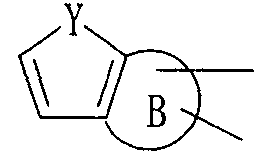

〔식 중, A 환, B 환 및 C 환은 각각 독립적으로 방향환을 나타내고, 화학식 6a, 화학식 6b 및 화학식 6c는 각각 알킬기, 알콕시기, 알킬티오기, 아릴기, 아릴옥시기, 아릴티오기, 아릴알킬기, 아릴알콕시기, 아릴알킬티오기, 아릴알케닐기, 아릴알키닐기, 아미노기, 치환 아미노기, 실릴기, 치환 실릴기, 할로겐 원자, 아실기, 아실옥시기, 이민 잔기, 아미드기, 산이미드기, 1가의 복소환기, 카르복실기, 치환 카르복실기 및 시아노기로 이루어지는 군으로부터 선택되는 1개 이상의 치환기를 가질 수 있고, Y는 상기와 동일한 의미를 나타냄〕[Wherein, A ring, B ring and C ring each independently represent an aromatic ring, and the formulas 6a, 6b and 6c each represent an alkyl group, an alkoxy group, an alkylthio group, an aryl group, an aryloxy group, an arylthio group, Arylalkyl group, arylalkoxy group, arylalkylthio group, arylalkenyl group, arylalkynyl group, amino group, substituted amino group, silyl group, substituted silyl group, halogen atom, acyl group, acyloxy group, imine residue, amide group, acid imide And at least one substituent selected from the group consisting of a group, a monovalent heterocyclic group, a carboxyl group, a substituted carboxyl group and a cyano group, and Y represents the same meaning as described above.]


〔식 중, D 환, E 환, F 환 및 G 환은 각각 독립적으로 알킬기, 알콕시기, 알킬티오기, 아릴기, 아릴옥시기, 아릴티오기, 아릴알킬기, 아릴알콕시기, 아릴알킬티오기, 아릴알케닐기, 아릴알키닐기, 아미노기, 치환 아미노기, 실릴기, 치환 실릴기, 할로겐 원자, 아실기, 아실옥시기, 이민 잔기, 아미드기, 산이미드기, 1가의 복소환기, 카르복실기, 치환 카르복실기 및 시아노기로 이루어지는 군으로부터 선택되는 1개 이상의 치환기를 가질 수 있는 방향환을 나타내고, Y는 상기와 동일한 의미를 나타냄〕[Wherein, D ring, E ring, F ring and G ring are each independently an alkyl group, an alkoxy group, an alkylthio group, an aryl group, an aryloxy group, an arylthio group, an arylalkyl group, an arylalkoxy group, an arylalkylthio group, Aryl alkenyl group, aryl alkynyl group, amino group, substituted amino group, silyl group, substituted silyl group, halogen atom, acyl group, acyloxy group, imine residue, amide group, acid imide group, monovalent heterocyclic group, carboxyl group, substituted carboxyl group and Represents an aromatic ring which may have one or more substituents selected from the group consisting of a cyano group, and Y represents the same meaning as described above]
상기 화학식 중, Y는 -S-, -O-, -C(R11)(R12)-인 것이 고발광 효율을 얻는다는 점에서 바람직하고, 더욱 바람직하게는 -S-, -O-이다. 여기서, R11, R12는 상기와 동일한 의미를 나타낸다. In the above formula, Y is preferably -S-, -O-, or -C (R 11 ) (R 12 )-in terms of obtaining high light emission efficiency, more preferably -S-, -O- . Here, R 11 and R 12 represent the same meaning as described above.
상기 화학식 6a 내지 6e에서의 방향환으로서는, 벤젠환, 나프탈렌환, 안트라센환, 테트라센환, 펜타센환, 피렌환, 페난트렌환 등의 방향족 탄화수소환; 피리딘환, 비피리딘환, 페난트롤린환, 퀴놀린환, 이소퀴놀린환, 티오펜환, 푸란환, 피롤환 등의 복소방향환을 들 수 있다.Examples of the aromatic ring in Chemical Formulas 6a to 6e include aromatic hydrocarbon rings such as benzene ring, naphthalene ring, anthracene ring, tetracene ring, pentacene ring, pyrene ring and phenanthrene ring; And heteroaromatic rings such as pyridine ring, bipyridine ring, phenanthroline ring, quinoline ring, isoquinoline ring, thiophene ring, furan ring and pyrrole ring.
상기 화학식 6a 내지 6e로 표시되는 기가 치환기로서, 알킬기, 알콕시기, 알킬티오기, 아릴기, 아릴옥시기, 아릴티오기, 아릴알킬기, 아릴알콕시기, 아릴알킬티오기, 아릴알케닐기, 아릴알키닐기, 아미노기, 치환 아미노기, 실릴기, 치환 실릴기, 아실옥시기, 이민 잔기, 아미드기, 산이미드기, 1가의 복소환기, 카르복실기 또는 치환 카르복실기로부터 선택되는 기를 갖는 것이 바람직하다. As the substituents represented by the above formulas (6a) to (6e), a substituent is an alkyl group, an alkoxy group, an alkylthio group, an aryl group, an aryloxy group, an arylthio group, an arylalkyl group, an arylalkoxy group, an arylalkylthio group, an arylalkenyl group, or an arylalki It is preferable to have a group selected from a silyl group, an amino group, a substituted amino group, a silyl group, a substituted silyl group, an acyloxy group, an imine residue, an amide group, an acid imide group, a monovalent heterocyclic group, a carboxyl group or a substituted carboxyl group.
<조성물> <Composition>
상기 금속 착체 및/또는 고분자 화합물은 전하 수송 재료 및/또는 발광 재료와 조합시킴으로써 조성물을 제조할 수 있다. 즉, 본 발명의 조성물은 상기 금속 착체 및/또는 고분자 화합물과 전하 수송 재료 및/또는 발광 재료를 포함하는 것이다.The metal complex and / or polymer compound may be prepared by combining the charge transport material and / or the light emitting material. That is, the composition of this invention contains the said metal complex and / or a high molecular compound, a charge transport material, and / or a luminescent material.
상기 전하 수송 재료는 정공 수송 재료와 전자 수송 재료로 분류되고, 구체적으로는 유기 화합물(저분자 유기 화합물 및/또는 고분자 유기 화합물)을 이용할 수 있다. The charge transport material is classified into a hole transport material and an electron transport material, and specifically, an organic compound (a low molecular organic compound and / or a high molecular organic compound) can be used.
정공 수송 재료로서는, 예를 들면 카르바졸 또는 그의 유도체, 폴리실란 또는 그의 유도체, 측쇄 또는 주쇄에 방향족 아민을 갖는 폴리실록산 유도체, 피라졸린 유도체, 트리페닐디아민 유도체 등을 포함하는 아릴아민 유도체, 스틸벤 유도체, 폴리아닐린 또는 그의 유도체, 폴리티오펜 또는 그의 유도체, 폴리피롤 또는 그의 유도체, 폴리(p-페닐렌비닐렌) 또는 그의 유도체, 또는 폴리(2,5-티에닐렌비닐렌) 또는 그의 유도체, 폴리(p-페닐렌) 또는 그의 유도체 등을 들 수 있다. Examples of the hole transporting material include arylamine derivatives and stilbene derivatives including carbazole or derivatives thereof, polysilanes or derivatives thereof, polysiloxane derivatives having aromatic amines in the side chain or main chain, pyrazoline derivatives, triphenyldiamine derivatives and the like. , Polyaniline or derivatives thereof, polythiophene or derivatives thereof, polypyrrole or derivatives thereof, poly (p-phenylenevinylene) or derivatives thereof, or poly (2,5-thienylenevinylene) or derivatives thereof, poly (p -Phenylene) or derivatives thereof, and the like.
전자 수송 재료로서는 옥사디아졸 유도체, 안트라퀴노디메탄 또는 그의 유도체, 벤조퀴논 또는 그의 유도체, 나프토퀴논 또는 그의 유도체, 안트라퀴논 또는 그의 유도체, 테트라시아노안트라퀴노디메탄 또는 그의 유도체, 플루오레논 유도체, 디페닐디시아노에틸렌 또는 그의 유도체, 디페노퀴논 유도체, 또는 8-히드록시퀴놀린 또는 그의 유도체의 금속 착체, 폴리퀴놀린 또는 그의 유도체, 폴리퀴녹살린 또는 그의 유도체, 폴리플루오렌 또는 그의 유도체를 들 수 있다.Examples of the electron transporting material include oxadiazole derivatives, anthraquinodimethane or derivatives thereof, benzoquinone or derivatives thereof, naphthoquinone or derivatives thereof, anthraquinone or derivatives thereof, tetracyanoanthraquinodimethane or derivatives thereof, and fluorenone derivatives. , Diphenyl dicyanoethylene or derivatives thereof, diphenoquinone derivatives, metal complexes of 8-hydroxyquinoline or derivatives thereof, polyquinoline or derivatives thereof, polyquinoxaline or derivatives thereof, polyfluorene or derivatives thereof have.
전하 수송 재료에 이용되는 저분자 유기 화합물로서는 저분자 유기 EL 소자에 이용되는 호스트 화합물(즉, 저분자 호스트 화합물), 전하 주입 수송 화합물 등을 의미하고, 구체적으로는, 예를 들면 문헌 [「유기 EL 디스플레이」(도끼또 시즈오, 아다찌 찌하야, 무라따 히데유끼 공저, 오옴사) 107 페이지], [월간 디스플레이, vol. 9, No. 9, 2003년 26-30 페이지], 일본 특허 공개 제2004-244400호 공보, 일본 특허 공개 제2004-277377호 공보 등에 기재된 화합물을 들 수 있다. As a low molecular organic compound used for a charge transport material, it means a host compound (i.e., a low molecular host compound), a charge injection transport compound, etc. which are used for a low molecular organic EL element, and it specifically mentions, for example, "organic EL display." (Shito Atsuto, Chichi Adachi, Co-author of Hideta Murata, Omsa) p. 107], [Monthly Display, vol. 9, No. 9, p. 26-30 of 2003], the compound of Unexamined-Japanese-Patent No. 2004-244400, Unexamined-Japanese-Patent No. 2004-277377, etc. are mentioned.
저분자 유기 화합물로서는, 구체적으로는 하기 화합물을 들 수 있다. As a low molecular weight organic compound, the following compound is mentioned specifically ,.


전하 수송 재료에 이용되는 고분자 유기 화합물로서는, 예를 들면 비공액계 고분자 유기 화합물, 공액계 고분자 유기 화합물을 들 수 있고, 전하 수송의 관점에서는 공액이 확대되어 캐리어(전자 또는 정공) 이동도가 높아 유리하기 때문에 공액계 고분자 유기 화합물이 바람직하다. 비공액계 고분자 유기 화합물로서는, 예를 들면 폴리비닐카르바졸 등을 들 수 있다. 공액계 고분자 유기 화합물로서는, 예를 들면 주쇄에 방향환을 포함하는 중합체를 들 수 있고, 구체적으로는, 예를 들면 치환기를 가질 수 있는 페닐렌기, 치환기를 가질 수 있는 플루오렌, 치환기를 가질 수 있는 디벤조티오펜, 치환기를 가질 수 있는 디벤조푸란, 치환기를 가질 수 있는 디벤조실롤 등을 반복 단위로서 주쇄에 포함하는 것이나, 이들의 반복 단위와의 공중합체 등이 예시된다. 보다 구체적으로는, 치환기를 가질 수 있는 벤젠환을 갖는 고분자 유기 화합물, 하기 화학식 6으로 표시되는 구조를 갖는 고분자유기 화합물 등을 들 수 있다. 또한, 예를 들면 일본 특허 공개 제2003-231741호 공보, 일본 특허 공개 제2004-059899호 공보, 일본 특허 공개 제2004-002654호 공보, 일본 특허 공개 제2004-292546호 공보, US5708130, WO9954385, WO0046321, WO02077060, 문헌 [「유기 EL 디스플레이」(도끼또 시즈오, 아다찌 찌하야, 무라따 히데유끼 공저, 오옴사) 111 페이지]; [월간 디스플레이, Vol. 9, No. 9, 2002년 47-51 페이지] 등에 기재된 고분자 유기 화합물을 들 수 있다.Examples of the high molecular organic compound used for the charge transport material include nonconjugated high molecular organic compounds and conjugated high molecular organic compounds, and from the viewpoint of charge transport, the conjugate is enlarged and the carrier (electron or hole) mobility is high. Therefore, the conjugated polymer organic compound is preferable. As a non-conjugated polymeric organic compound, polyvinyl carbazole etc. are mentioned, for example. As a conjugated polymeric organic compound, the polymer which contains an aromatic ring in a principal chain is mentioned, for example, Specifically, it can have a phenylene group which may have a substituent, fluorene which may have a substituent, and a substituent, for example. Dibenzothiophene, dibenzofuran which may have a substituent, dibenzosilol which may have a substituent, etc. are included in a main chain as a repeating unit, the copolymer with these repeating units, etc. are illustrated. More specifically, the polymer organic compound which has a benzene ring which may have a substituent, the polymer organic compound which has a structure represented by following formula (6), etc. are mentioned. For example, Japanese Patent Laid-Open No. 2003-231741, Japanese Patent Laid-Open No. 2004-059899, Japanese Patent Laid-Open No. 2004-002654, Japanese Patent Laid-Open No. 2004-292546, US5708130, WO9954385, WO0046321 , WO02077060, "Organic EL Display" (page 111, Shitoo Shitoo, Adachi Chihaya, Co., Ltd. Hideta Hideta, Omsa); [Monthly Display, Vol. 9, No. 9, pp. 47-51, 2002].
「공액계 고분자」란, 예를 들면 문헌 [「유기 EL의 이야기」(요시노 가쯔미 저, 닛깐고교 신문사) 23 페이지]에 기재되어 있는 바와 같이, 다중 결합과 단결합이 반복하여 길게 연결되어 있는 분자이고, 예를 들면 하기 구조의 반복 구조나, 하기 구조를 적절하게 조합한 구조를 포함하는 고분자를 전형적인 예로서 들 수 있다.The term "conjugated polymer" refers to a molecule in which multiple bonds and single bonds are repeatedly connected long, as described in, for example, "The Story of Organic EL" (page 23 of Yoshino Katsumi, Nikkan Kogyo Shimbun). For example, the polymer containing the repeating structure of the following structure and the structure which combined suitably the following structure is mentioned as a typical example.

(식 중, RX1 내지 RX6은 각각 독립적으로 알킬기, 알콕시기, 알킬티오기, 아릴기, 아릴옥시기, 아릴티오기, 아릴알킬기, 아릴알콕시기, 아릴알킬티오기, 아릴알케닐기, 아릴알키닐기, 아미노기, 치환 아미노기, 실릴기, 치환 실릴기, 실릴옥시기, 치환 실릴옥시기를 나타냄)( Wherein , R X1 to R X6 each independently represents an alkyl group, an alkoxy group, an alkylthio group, an aryl group, an aryloxy group, an arylthio group, an arylalkyl group, an arylalkoxy group, an arylalkylthio group, an arylalkenyl group, or aryl Alkynyl group, amino group, substituted amino group, silyl group, substituted silyl group, silyloxy group, substituted silyloxy group)
식 중, RX1 내지 RX6으로 표시되는 기는, 구체적으로는 상술한 본 발명의 금속 착체를 구성하는 배위자가 포함하는 환상 구조(예를 들면, Z1 환, Z2 환 등)이 가질 수 있는 치환기로서 설명하고 예시한 것과 동일하다.In the formula, a group represented by R to R X1 X6, specifically, is, for a cyclic structure (e.g., containing the ligand constituting the metal complex of the present invention described above, Z 1 Ring, Z 2 It is the same as what was demonstrated and illustrated as a substituent which a ring etc.) may have.
고분자 유기 화합물로서는, 구체적으로는, 예를 들면 하기의 기(즉, 하기의 예시에서 괄호를 제외한 것)를 포함하는 것, 하기의 구조를 반복 단위로서 포함하는 것을 들 수 있다.Specifically as a high molecular organic compound, the thing containing the following group (that is, the thing except the parentheses in the following illustration), and the thing containing the following structure as a repeating unit are mentioned, for example.

등을 들 수 있다. Etc. can be mentioned.
저분자 유기 화합물 또는 고분자 유기 화합물의 기저 상태의 에너지 ESH(eV), 저분자 유기 화합물 또는 고분자 유기 화합물의 최저 여기 삼중항 상태의 에너지 ETH(eV), 금속 착체의 기저 상태의 에너지 ESMC(eV), 및 금속 착체의 최저여기 삼중항 상태의 에너지 ETMC(eV)가, Energy ESH (eV) at the ground state of a low molecular organic compound or a high molecular organic compound, energy ETH (eV) at the lowest triplet excited state of a low molecular organic compound or a high molecular organic compound, energy ESMC (eV) at the base state of a metal complex, and The energy ETMC (eV) of the lowest triplet state of the metal complex,
ETH(eV)-ESH(eV)>ETMC(eV)-ESMC(eV)-0.2(eV)ETH (eV) -ESH (eV)> ETMC (eV) -ESMC (eV) -0.2 (eV)
의 관계를 만족시키는 것이 바람직하다.It is desirable to satisfy the relationship.
상기 고분자 유기 화합물은 폴리스티렌 환산의 수평균 분자량이 103 내지 108이고, 바람직하게는 104 내지 106이다. 또한, 이 고분자 유기 화합물은 폴리스 틸렌 환산의 중량평균 분자량이 103 내지 108이고, 바람직하게는 5×10⁴ 내지 5×10⁶이다.The polymeric organic compound has a number average molecular weight of 10 3 to 10 8 in terms of polystyrene, and preferably 10 4 to 10 6 . In addition, the polymer organic compound has a weight average molecular weight in terms of polystyrene of 10 3 to 10 8 , preferably 5 × 10 4 to 5 × 10 6 .
상기 발광 재료로서는 공지된 것을 사용할 수 있다. 발광 재료로서는, 예를 들면 나프탈렌 유도체, 안트라센 또는 그의 유도체, 페릴렌 또는 그의 유도체, 폴리메틴계, 크산텐계, 쿠마린계, 시아닌계 등의 색소류, 8-히드록시퀴놀린 또는 그의 유도체의 금속 착체, 방향족아민, 테트라페닐시클로펜타디엔 또는 그의 유도체, 또는 테트라페닐부타디엔 또는 그의 유도체 등의 저분자 발광 재료 등을 들 수 있다.A well-known thing can be used as said light emitting material. Examples of the light emitting material include naphthalene derivatives, anthracene or derivatives thereof, perylene or derivatives thereof, pigments such as polymethine, xanthene, coumarin and cyanine, metal complexes of 8-hydroxyquinoline or derivatives thereof, Low molecular luminescent materials, such as aromatic amine, tetraphenyl cyclopentadiene, or its derivative (s), or tetraphenyl butadiene or its derivative (s), etc. are mentioned.
본 발명의 조성물 중에서 상기 금속 착체의 배합량은, 조합하는 유기 화합물의 종류나 최적화하려는 특성에 따라 다르기 때문에 특별히 한정되지 않지만, 유기 화합물(즉, 고분자 유기 화합물 및/또는 저분자 유기 화합물)의 양을 100 중량부로 하였을 때, 통상적으로 0.01 내지 80 중량부이고, 바람직하게는 0.1 내지 60 중량부이다. 상기 금속 착체는 1종 단독으로 이용하거나 2종 이상을 배합할 수 있다.The compounding amount of the metal complex in the composition of the present invention is not particularly limited because it depends on the type of the organic compound to be combined or the characteristics to be optimized, but the amount of the organic compound (ie, the high molecular organic compound and / or the low molecular organic compound) is 100. When it is weight parts, it is usually 0.01 to 80 parts by weight, preferably 0.1 to 60 parts by weight. The said metal complex can be used individually by 1 type, or can mix 2 or more types.
<액상 조성물><Liquid Composition>
본 발명의 금속 착체, 고분자 화합물 및 조성물은 모두 광전 소자, 발광 소자 등의 소자의 제조에 유용하고, 특히 상기 금속 착체, 고분자 화합물 및 조성물을 용매 또는 분산매와 혼합함으로써 액상 조성물(예를 들면, 인쇄법 등에서는 용액으로서 이용됨)로서 이용하는 것이 바람직하다. 여기서, 「액상 조성물」이란, 소자 제조시에서 액상인 것을 의미하고, 전형적으로는 상압(즉, 1 기압), 25 ℃ 에 서 액상인 것을 의미한다. 이렇게 하여 액상 조성물로 함으로써, 광전 소자, 발광 소자 등의 소자에 층 구조, 막 등을 용이하게 형성할 수 있다. 즉, 상기 액상 조성물을 도포하고, 그 후 건조함으로써 용매를 제거하는 것만으로 층 구조, 막 등을 형성할 수 있다.The metal complexes, polymer compounds and compositions of the present invention are all useful for the production of devices such as photovoltaic devices, light emitting devices, and the like, and in particular, liquid mixtures (e.g., printing) by mixing the metal complexes, polymer compounds and compositions with a solvent or a dispersion medium. Used as a solution in a method or the like). Here, "liquid composition" means liquid at the time of device manufacture, and typically means liquid at normal pressure (ie, 1 atm) and 25 ° C. By setting it as a liquid composition in this way, a layer structure, a film, etc. can be easily formed in elements, such as a photoelectric element and a light emitting element. That is, a layer structure, a film | membrane, etc. can be formed only by removing the solvent by apply | coating the said liquid composition and drying after that.
액상 조성물로부터의 성막 방법(이하, 「용액으로부터의 성막」이라고 함)으로서는 스핀 코팅법, 캐스팅법, 마이크로 그라비아 코팅법, 그라비아 코팅법, 바 코팅법, 롤 코팅법, 와이어 바 코팅법, 침지 코팅법, 분무 코팅법, 스크린 인쇄법, 플렉소 인쇄법, 오프셋 인쇄법, 잉크젯 인쇄법, 노즐 코팅법, 모세관 코팅법, 디스펜서법 등의 도포법을 들 수 있다.As a film forming method from the liquid composition (hereinafter referred to as "film forming from a solution"), spin coating, casting, micro gravure coating, gravure coating, bar coating, roll coating, wire bar coating, dip coating And coating methods such as spray coating, screen printing, flexographic printing, offset printing, inkjet printing, nozzle coating, capillary coating, and dispenser.
상기 액상 조성물은, 그외에도 전하 수송 재료, 발광 재료, 안정제, 점도 및/또는 표면 장력을 조절하기 위한 첨가제, 산화 방지제 등의 첨가제를 포함할 수 있다.The liquid composition may further include additives such as charge transport materials, light emitting materials, stabilizers, additives for adjusting viscosity and / or surface tension, antioxidants, and the like.
액상 조성물 중에 포함되는 전체 고형 성분 중, 본 발명의 금속 착체 및/또는 본 발명의 고분자 화합물의 비율은, 통상적으로 20 중량% 내지 100 중량%이고, 바람직하게는 40 중량% 내지 100 중량%이다. The ratio of the metal complex of this invention and / or the high molecular compound of this invention is 20 weight%-100 weight% normally, Preferably they are 40 weight%-100 weight% in the total solid component contained in a liquid composition.
상기 액상 조성물 중의 용매 또는 분산매의 비율은, 상기 액상 조성물의 전 중량에 대하여, 통상적으로 1 중량% 내지 99.9 중량%이고, 바람직하게는 60 중량% 내지 99.9 중량%이고, 더욱 바람직하게는 90 중량% 내지 99.8 중량%이다. The proportion of the solvent or dispersion medium in the liquid composition is usually 1% by weight to 99.9% by weight, preferably 60% by weight to 99.9% by weight, and more preferably 90% by weight with respect to the total weight of the liquid composition. To 99.8 weight percent.
상기 액상 조성물의 점도는 인쇄법에 따라서 다르지만, 25 ℃에서 0.5 내지 500 mPa·s의 범위가 바람직하고, 잉크젯 인쇄법 등 액상 조성물이 토출 장치를 경 유하는 것인 경우에는, 토출시의 클로깅이나 비행 굴곡을 방지하기 위해서 점도가 25 ℃에서 0.5 내지 20 mPa·s의 범위인 것이 바람직하다.Although the viscosity of the liquid composition varies depending on the printing method, the range of 0.5 to 500 mPa · s is preferable at 25 ° C., and when the liquid composition such as the inkjet printing method passes through the discharge device, clogging at the time of discharge In order to prevent flight bending, the viscosity is preferably in the range of 0.5 to 20 mPa · s at 25 ° C.
액상 조성물에 이용하는 용매·분산매로서는, 본 발명의 금속 착체 및 고분자 화합물을 용해 또는 균일하게 분산할 수 있는 것이 바람직하다. 이 용매·분산매로서는, 클로로포름, 염화메틸렌, 1,2-디클로로에탄, 1,1,2-트리클로로에탄, 클로로벤젠, o-디클로로벤젠 등의 염소계 용매, 테트라히드로푸란, 디옥산 등의 에테르계 용매, 톨루엔, 크실렌, 트리메틸벤젠, 메시틸렌 등의 방향족 탄화수소계 용매, 시클로헥산, 메틸시클로헥산, n-펜탄, n-헥산, n-헵탄, n-옥탄, n-노난, n-데칸 등의 지방족 탄화수소계 용매, 아세톤, 메틸에틸케톤, 시클로헥사논 등의 케톤계 용매, 아세트산에틸, 아세트산부틸, 메틸벤조에이트, 에틸셀로솔브아세테이트 등의 에스테르계 용매, 에틸렌글리콜, 에틸렌글리콜모노부틸에테르, 에틸렌글리콜모노에틸에테르, 에틸렌글리콜모노메틸에테르, 디메톡시에탄, 프로필렌글리콜, 디에톡시메탄, 트리에틸렌글리콜모노에틸에테르, 글리세린, 1,2-헥산디올 등의 다가 알코올 및 그의 유도체, 메탄올, 에탄올, 프로판올, 이소프로판올, 시클로헥산올 등의 알코올계 용매, 디메틸술폭시드 등의 술폭시드계 용매, N-메틸-2-피롤리돈, N, N-디메틸포름아미드 등의 아미드계 용매 등이 예시된다. 이들 중에서도, 본 발명의 금속 착체 및 고분자 화합물의 용매로의 용해성, 성막시의 균일성, 점도 특성 등의 관점에서, 방향족 탄화수소계 용매, 지방족 탄화수소계 용매, 에스테르계 용매 및 케톤계 용매가 바람직하고, 톨루엔, 크실렌, 에틸벤젠, 디에틸벤젠, 트리메틸벤젠, 메시틸렌, n-프로필벤젠, i-프로필벤젠, n-부틸벤젠, i-부틸벤젠, s-부틸 벤젠, 아니솔, 에톡시벤젠, 1-메틸나프탈렌, 시클로헥산, 시클로헥사논, 시클로헥실벤젠, 비시클로헥실, 시클로헥세닐시클로헥사논, n-헵틸시클로헥산, n-헥실시클로헥산, 메틸벤조에이트, 2-프로필시클로헥사논, 2-헵타논, 3-헵타논, 4-헵타논, 2-옥타논, 2-노나논, 2-데카논, 디시클로헥실케톤이 바람직하고, 크실렌, 아니솔, 메시틸렌, 시클로헥실벤젠, 비시클로헥실메틸벤조에이트가 특히 바람직하다.As a solvent and a dispersion medium used for a liquid composition, what can melt | dissolve or uniformly disperse | distribute the metal complex and high molecular compound of this invention is preferable. Examples of the solvent and the dispersion medium include chlorine solvents such as chloroform, methylene chloride, 1,2-dichloroethane, 1,1,2-trichloroethane, chlorobenzene, and o-dichlorobenzene, and ethers such as tetrahydrofuran and dioxane. Solvents, aromatic hydrocarbon solvents such as toluene, xylene, trimethylbenzene, mesitylene, cyclohexane, methylcyclohexane, n-pentane, n-hexane, n-heptane, n-octane, n-nonane, n-decane Ketone solvents such as aliphatic hydrocarbon solvents, acetone, methyl ethyl ketone and cyclohexanone, ester solvents such as ethyl acetate, butyl acetate, methyl benzoate and ethyl cellosolve acetate, ethylene glycol, ethylene glycol monobutyl ether, Polyhydric alcohols such as ethylene glycol monoethyl ether, ethylene glycol monomethyl ether, dimethoxyethane, propylene glycol, diethoxymethane, triethylene glycol monoethyl ether, glycerin, 1,2-hexanediol and the like Derivatives, alcohol solvents such as methanol, ethanol, propanol, isopropanol, cyclohexanol, sulfoxide solvents such as dimethyl sulfoxide, amides such as N-methyl-2-pyrrolidone, N, and N-dimethylformamide A system solvent etc. are illustrated. Among these, aromatic hydrocarbon solvents, aliphatic hydrocarbon solvents, ester solvents and ketone solvents are preferable from the viewpoints of the solubility of the metal complex and the polymer compound in the present invention as solvents, uniformity during film formation, viscosity characteristics and the like. , Toluene, xylene, ethylbenzene, diethylbenzene, trimethylbenzene, mesitylene, n-propylbenzene, i-propylbenzene, n-butylbenzene, i-butylbenzene, s-butylbenzene, anisole, ethoxybenzene, 1-methylnaphthalene, cyclohexane, cyclohexanone, cyclohexylbenzene, bicyclohexyl, cyclohexenylcyclohexanone, n-heptylcyclohexane, n-hexylcyclohexane, methylbenzoate, 2-propylcyclohexanone , 2-heptanone, 3-heptanone, 4-heptanone, 2-octanone, 2-nonanone, 2-decanone, dicyclohexylketone are preferable, and xylene, anisole, mesitylene, cyclohexylbenzene , Bicyclohexylmethylbenzoate is particularly preferred.
이들 용매·분산매는 1종 단독으로 이용하거나 2종 이상을 병용할 수 있다. 상기 용매·분산매 중에서도, 벤젠환을 적어도 1개 이상 포함하는 구조를 가지면서 융점이 0 ℃ 이하이고, 또한 비점이 100 ℃ 이상인 유기 용매를 1종 이상 포함하는 것이 특히 바람직하다. These solvents and dispersion mediums may be used individually by 1 type, or may use 2 or more types together. It is especially preferable to contain at least 1 type of organic solvent whose melting | fusing point is 0 degrees C or less and a boiling point is 100 degreeC or more, having a structure containing at least 1 or more of benzene rings among the said solvent and dispersion medium.
상기 액상 조성물에 함유되는 용매는 성막성, 소자 특성 등의 관점에서, 2종 이상인 것이 바람직하고, 2종 내지 3종인 것이 보다 바람직하고, 2종인 것이 더욱 바람직하다.It is preferable that it is 2 or more types, as for the solvent contained in the said liquid composition from a viewpoint of film formability, an element characteristic, etc., it is more preferable that they are 2 types-3 types, and it is further more preferable that they are 2 types.
상기 액상 조성물에 2종의 용매가 포함되는 경우, 그 중 1종의 용매는 25 ℃에서 고체 상태일 수 있다. 성막성의 관점에서, 1종의 용매는 비점이 180 ℃ 이상의 용매이고, 다른 1종의 용매는 비점이 180 ℃ 미만의 용매인 것이 바람직하고, 1종의 용매는 비점이 200 ℃ 이상의 용매이고, 다른 1종의 용매는 비점이 180 ℃ 미만의 용매인 것이 보다 바람직하다. 또한, 점도의 관점에서, 2종의 용매와 함께, 60 ℃에서 0.2 중량% 이상의 본 발명의 금속 착체 및 고분자 화합물이 용해되는 것이 바람직하고, 2종의 용매 중의 1종의 용매에는, 25 ℃에서 0.2 중량% 이상의 본 발명의 금속 착체 및 고분자 화합물이 용해되는 것이 바람직하다.When two solvents are included in the liquid composition, one of them may be in a solid state at 25 ° C. From the viewpoint of film forming properties, it is preferable that one solvent is a solvent having a boiling point of 180 ° C. or more, the other solvent is a solvent having a boiling point of less than 180 ° C., and one solvent is a solvent having a boiling point of 200 ° C. or more, and the other As for 1 type of solvent, it is more preferable that a boiling point is a solvent below 180 degreeC. Moreover, from a viewpoint of a viscosity, it is preferable that 0.2 weight% or more of the metal complex of this invention and a high molecular compound are melt | dissolved at 60 degreeC with two solvents, and it is 25 degreeC in one solvent in two solvents. It is preferable that the metal complex and the high molecular compound of this invention of 0.2 weight% or more melt | dissolve.
상기 액상 조성물에 3종의 용매가 포함되는 경우, 그 중 1 내지 2종의 용매는 25 ℃에서 고체 상태일 수 있다. 성막성의 관점에서, 3종의 용매 중 1종 이상의 용매는 비점이 180 ℃ 이상의 용매이고, 1종 이상의 용매는 비점이 180 ℃ 미만의 용매인 것이 바람직하고, 3종의 용매 중의 1종 이상의 용매는 비점이 200 ℃ 내지 300 ℃ 이하의 용매이고, 1종 이상의 용매는 비점이 180 ℃ 미만의 용매인 것이 보다 바람직하다. 또한, 점도의 관점에서, 3종의 용매 중 2종의 용매에는, 60 ℃에서 0.2 중량% 이상의 본 발명의 금속 착체 및 고분자 화합물이 용해되는 것이 바람직하고, 3종의 용매 중 1종의 용매에는, 25 ℃에서 0.2 중량% 이상의 본 발명의 금속 착체 및 고분자 화합물이 용해되는 것이 바람직하다.When three solvents are included in the liquid composition, one or two of them may be in a solid state at 25 ° C. From the viewpoint of film forming properties, it is preferable that at least one solvent of the three solvents is a solvent having a boiling point of 180 ° C. or more, and the at least one solvent is a solvent having a boiling point of less than 180 ° C., and at least one solvent of the three solvents It is more preferable that boiling point is a solvent of 200 degreeC-300 degrees C or less, and a boiling point is a solvent of less than 180 degreeC. From the viewpoint of the viscosity, it is preferable that at least 60% by weight of the metal complex and the polymer compound of the present invention are dissolved in two solvents among three solvents, and one solvent among three solvents. It is preferable to melt | dissolve the metal complex and high molecular compound of this invention of 0.2 weight% or more at 25 degreeC.
상기 액상 조성물에 2종 이상의 용매가 포함되는 경우, 점도 및 성막성의 관점에서, 가장 비점이 높은 용매가 상기 액상 조성물의 전체 용매 중량의 40 내지 90 중량%인 것이 바람직하고, 50 내지 90 중량%인 것이 보다 바람직하고, 65 내지 85 중량%인 것이 특히 바람직하다. When two or more solvents are included in the liquid composition, from the viewpoint of viscosity and film formability, the solvent having the highest boiling point is preferably 40 to 90% by weight of the total solvent weight of the liquid composition, and is 50 to 90% by weight. It is more preferable, and it is especially preferable that it is 65 to 85 weight%.
상기 액상 조성물로서는 점도 및 성막성의 관점에서, 아니솔 및 비시클로헥실을 포함하는 액상 조성물, 아니솔 및 시클로헥실벤젠을 포함하는 액상 조성물, 크실렌 및 비시클로헥실을 포함하는 액상 조성물, 크실렌 및 시클로헥실벤젠을 포함하는 액상 조성물, 및 메시틸렌 및 메틸벤조에이트를 포함하는 액상 조성물이 바람직하다.Examples of the liquid composition include a liquid composition containing anisole and bicyclohexyl, a liquid composition containing anisole and cyclohexylbenzene, a liquid composition containing xylene and bicyclohexyl, xylene and cyclohexyl, from the viewpoint of viscosity and film formability. Preference is given to liquid compositions comprising benzene and liquid compositions comprising mesitylene and methylbenzoate.
상기 액상 조성물에 함유될 수 있는 첨가제 중에서, 정공 수송 재료 및 전자 수송 재료로서는, 상기한 화합물을 그 예로서 들 수 있다. 발광 재료로서는 상기 에서 설명하고 예시한 것과 동일하다. Among the additives that may be contained in the liquid composition, the above-mentioned compounds may be mentioned as examples of the hole transport material and the electron transport material. The light emitting material is the same as described and exemplified above.
안정제로서는 페놀계 산화 방지제, 인계 산화 방지제 등을 들 수 있다. Phenolic antioxidant, phosphorus antioxidant, etc. are mentioned as a stabilizer.
점도 및/또는 표면 장력을 조절하기 위한 첨가제로서는, 점도를 높이기 위한 고분자량의 증점제, 빈용매, 점도를 내리기 위한 저분자량의 화합물, 표면 장력을 내리기 위한 계면활성제 등을 적절하게 조합하여 사용할 수 있다.As an additive for adjusting viscosity and / or surface tension, a high molecular weight thickener for increasing the viscosity, a poor solvent, a low molecular weight compound for lowering the viscosity, a surfactant for lowering the surface tension, and the like can be used in appropriate combination. .
상기 고분자량의 증점제로서는 본 발명의 금속 착체 및 고분자 화합물과 동일한 용매에 가용성으로, 발광이나 전하 수송을 저해하지 않는 것일 수 있다. 예를 들면, 고분자량의 폴리스티렌, 고분자량의 폴리메틸메타크릴레이트, 본 발명의 고분자 화합물 중 분자량이 큰 것 등을 사용할 수 있다. 상기 고분자량의 증점제로서는, 폴리스티렌 환산의 중량평균 분자량이 50만 이상인 것이 바람직하고, 100만 이상인 것이 보다 바람직하다. 빈용매를 증점제로서 이용할 수도 있다. 즉, 액상 조성물 중의 고형분에 대한 빈용매를 소량 첨가함으로써 점도를 높일 수 있다. 보존시의 안정성도 고려하면, 빈용매의 양은 액상 조성물 전체에 대하여 50 중량% 이하인 것이 바람직하고, 30 중량% 이하인 것이 더욱 바람직하다.As said high molecular weight thickener, it may be soluble in the same solvent as the metal complex and high molecular compound of this invention, and may not inhibit light emission and charge transport. For example, a high molecular weight polystyrene, a high molecular weight polymethyl methacrylate, the high molecular weight among the high molecular compound of this invention, etc. can be used. As said high molecular weight thickener, it is preferable that the weight average molecular weight of polystyrene conversion is 500,000 or more, and it is more preferable that it is 1 million or more. A poor solvent can also be used as a thickener. That is, a viscosity can be raised by adding a small amount of the poor solvent with respect to solid content in a liquid composition. In consideration of the stability at the time of storage, it is preferable that it is 50 weight% or less with respect to the whole liquid composition, and, as for the quantity of the poor solvent, it is more preferable that it is 30 weight% or less.
산화 방지제로서는 본 발명의 금속 착체 및 고분자 화합물과 동일한 용매에 가용성으로, 발광이나 전하 수송을 저해하지 않는 것일 수 있고, 페놀계 산화 방지제, 인계 산화 방지제 등이 예시된다. 산화 방지제를 이용함으로써 상기 액상 조성물의 보존 안정성을 개선할 수 있다. As antioxidant, it may be soluble in the same solvent as the metal complex and high molecular compound of this invention, and may not inhibit light emission and charge transport, A phenolic antioxidant, phosphorus antioxidant, etc. are illustrated. By using antioxidant, the storage stability of the said liquid composition can be improved.
액상 조성물의 한 성분으로서 용매를 포함하는 경우, 본 발명의 금속 착체 및 고분자 화합물의 용매로의 용해성의 관점에서, 용매의 용해도 매개 변수와 고분 자 화합물의 용해도 매개 변수와의 차이가 10 이하인 것이 바람직하고, 7 이하인 것이 보다 바람직하다. 용매의 용해도 매개 변수와 본 발명의 고분자 재료의 용해도 매개 변수는 「용제 핸드북(고단샤 간행, 1976년)」에 기재된 방법으로 구할 수 있다. When a solvent is included as a component of the liquid composition, it is preferable that the difference between the solubility parameter of the solvent and the solubility parameter of the polymer compound is 10 or less from the viewpoint of the solubility of the metal complex and the polymer compound of the present invention into the solvent. It is more preferable that it is 7 or less. The solubility parameter of a solvent and the solubility parameter of the polymeric material of this invention can be calculated | required by the method described in the "Solvent Handbook" (Godansha Publication, 1976).
상기 액상 조성물에 포함되는 본 발명의 금속 착체 및/또는 고분자 화합물은 1종이거나 2종 이상일 수 있고, 소자 특성 등을 손상하지 않는 범위에서 본 발명의 금속 착체 및 고분자 화합물 이외의 고분자량의 화합물을 포함하고 있을 수 있다.The metal complex and / or the polymer compound of the present invention contained in the liquid composition may be one kind or two or more kinds, and the compound of the high molecular weight other than the metal complex and the polymer compound of the present invention in a range that does not impair device characteristics. It may be included.
<소자><Element>
다음으로, 본 발명의 소자에 대해서 설명한다. 본 발명의 소자는 양극 및 음극을 포함하는 전극 사이에, 본 발명의 금속 착체 및/또는 본 발명의 고분자 화합물(또한, 금속 착체, 고분자 화합물의 그대로의 상태일 수 있고, 상기 조성물로서 제조한 상태일 수 있으며, 이하, 동일함)을 포함하는 층을 갖는 것을 특징으로 하고, 예를 들면 발광 소자; 스위칭 소자(예를 들면, 표시 장치에 유용함), 광전 변환 소자(예를 들면, 태양 전지에 유용함) 등의 광전 소자 등으로서 사용할 수 있다. 상기 소자가 발광 소자인 경우에는, 본 발명의 금속 착체 및/또는 본 발명의 고분자 화합물을 포함하는 층이 발광층인 것이 바람직하다. -발광 소자-Next, the element of this invention is demonstrated. The device of the present invention may be a metal complex of the present invention and / or a polymer compound of the present invention (also, a metal complex, a polymer compound as it is, between the electrodes including an anode and a cathode, and a state prepared as the composition) And a layer comprising the same), for example, a light emitting device; It can be used as a photoelectric element, such as a switching element (for example, useful for a display device), a photoelectric conversion element (for example, useful for a solar cell). In the case where the device is a light emitting device, the layer containing the metal complex of the present invention and / or the polymer compound of the present invention is preferably a light emitting layer. Light-Emitting Element
본 발명의 발광 소자로서는, 1) 음극과 발광층 사이에 전자 수송층을 설치한 발광 소자, 2) 양극과 발광층 사이에 정공 수송층을 설치한 발광 소자, 3) 음극과 발광층 사이에 전자 수송층을 설치하면서 양극과 발광층 사이에 정공 수송층을 설 치한 발광 소자 등을 들 수 있다. 본 발명의 발광 소자는 추가로 전하 저지층을 가질 수 있고, 예를 들면 발광층과 음극과 사이에 정공 저지층을 가질 수 있다. Examples of the light emitting device of the present invention include 1) a light emitting device having an electron transporting layer between a cathode and a light emitting layer, 2) a light emitting device having a hole transporting layer between an anode and a light emitting layer, and 3) an anode having an electron transporting layer between a cathode and a light emitting layer. And a light emitting device in which a hole transport layer is provided between the light emitting layer and the light emitting layer. The light emitting device of the present invention may further have a charge blocking layer, for example, may have a hole blocking layer between the light emitting layer and the cathode.
발광층이란 발광하는 기능을 갖는 층이고, 정공 수송층이란 정공을 수송하는 기능을 갖는 층이고, 전자 수송층이란 전자를 수송하는 기능을 갖는 층이다. 전자 수송층과 정공 수송층을 총칭하여 전하 수송층이라고 한다. 또한, 전하 저지층이란 정공 또는 전자를 발광층에 가두는 기능을 갖는 층을 의미하고, 전자를 수송하면서 정공을 가두는 층을 정공 저지층, 정공을 수송하면서 전자를 가두는 층을 전자 저지층이라고 한다. The light emitting layer is a layer having a function of emitting light, the hole transporting layer is a layer having a function of transporting holes, and the electron transporting layer is a layer having a function of transporting electrons. The electron transport layer and the hole transport layer are collectively called a charge transport layer. In addition, the charge blocking layer means a layer having a function of confining holes or electrons to the light emitting layer, and a layer which traps holes while transporting electrons is a hole blocking layer and a layer which traps electrons while transporting holes is called an electron blocking layer. do.
또한, 본 발명의 발광 소자로서는, 그 외에도 상기 적어도 한쪽의 전극과 발광층 사이에 상기 전극에 인접하여 도전성 고분자를 포함하는 층을 설치한 발광 소자; 적어도 한쪽의 전극과 발광층 사이에 상기 전극에 인접하여 평균 막 두께 2 nm 이하의 버퍼층을 설치한 발광 소자 등을 들 수 있다.Moreover, as a light emitting element of this invention, In addition, the light emitting element which provided the layer which consists of a conductive polymer adjacent to the said electrode between the said at least one electrode and the light emitting layer; The light emitting element etc. which provided the buffer layer of average film thickness 2 nm or less adjacent the said electrode between at least one electrode and a light emitting layer are mentioned.
구체적으로는, 이하의 a) 내지 e)의 구조가 예시된다.Specifically, the structures of the following a) to e) are illustrated.
a) 양극/발광층/음극a) anode / light emitting layer / cathode
b) 양극/정공 수송층/발광층/음극b) anode / hole transport layer / light emitting layer / cathode
c) 양극/발광층/전자 수송층/음극c) anode / light emitting layer / electron transport layer / cathode
d) 양극/발광층/정공 저지층/음극d) anode / light emitting layer / hole blocking layer / cathode
e) 양극/정공 수송층/발광층/전자 수송층/음극e) anode / hole transport layer / light emitting layer / electron transport layer / cathode
(여기서, /는 각 층이 인접하여 적층되어 있는 것을 나타내고, 이하 동일함.)(Here, / indicates that each layer is stacked adjacent to each other and is the same below.)
발광층, 정공 수송층, 전자 수송층은 각각 독립적으로 2층 이상 이용할 수 있다. The light emitting layer, the hole transporting layer, and the electron transporting layer may each independently use two or more layers.
본 발명의 발광 소자로서는, 본 발명의 금속 착체 및/또는 본 발명의 고분자 화합물이 정공 수송층 및/또는 전자 수송층에 포함되어 있는 것도 포함한다. Examples of the light emitting device of the present invention include those in which the metal complex of the present invention and / or the polymer compound of the present invention are contained in the hole transport layer and / or the electron transport layer.
본 발명의 금속 착체 및/또는 본 발명의 고분자 화합물이 정공 수송층에 이용되는 경우에는, 본 발명의 금속 착체 및/또는 본 발명의 고분자 화합물이 정공 수송성기를 포함하는 것이 바람직하고, 그의 구체예로서는 방향족 아민과의 공중합체, 스틸벤과의 공중합체 등을 들 수 있다. 또한, 본 발명의 금속 착체 및/또는 본 발명의 고분자 화합물이 전자 수송층에 이용되는 경우에는, 본 발명의 금속 착체 및/또는 본 발명의 고분자 화합물이 전자 수송성기를 포함하는 것이 바람직하고, 그의 구체예로서는 옥사디아졸과의 공중합체, 트리아졸과의 공중합체, 퀴놀린과의 공중합체, 퀴녹살린과의 공중합체, 벤조티아디아졸과의 공중합체 등을 들 수 있다.When the metal complex of this invention and / or the high molecular compound of this invention is used for a positive hole transport layer, it is preferable that the metal complex of this invention and / or the high molecular compound of this invention contains a hole transporting group, and the specific example is aromatic The copolymer with an amine, the copolymer with stilbene, etc. are mentioned. In addition, when the metal complex of this invention and / or the high molecular compound of this invention is used for an electron carrying layer, it is preferable that the metal complex of this invention and / or the high molecular compound of this invention contains an electron carrying group, and the specific example thereof Examples thereof include a copolymer with oxadiazole, a copolymer with triazole, a copolymer with quinoline, a copolymer with quinoxaline, a copolymer with benzothiadiazole, and the like.
본 발명의 발광 소자가 정공 수송층을 갖는 경우(통상적으로, 정공 수송층은 정공 수송 재료를 함유함), 사용되는 정공 수송 재료로서는, 폴리비닐카르바졸 또는 그의 유도체, 폴리실란 또는 그의 유도체, 측쇄 또는 주쇄에 방향족아민을 갖는 폴리실록산 유도체, 피라졸린 유도체, 아릴아민 유도체, 스틸벤 유도체, 트리페닐디아민 유도체, 폴리아닐린 또는 그의 유도체, 폴리티오펜 또는 그의 유도체, 폴리피롤 또는 그의 유도체, 폴리(p-페닐렌비닐렌) 또는 그의 유도체, 또는 폴리(2,5-티에닐렌비닐렌) 또는 그의 유도체 등의 고분자 정공 수송 재료가 예시된다. When the light emitting device of the present invention has a hole transporting layer (usually, the hole transporting layer contains a hole transporting material), as the hole transporting material used, polyvinylcarbazole or a derivative thereof, polysilane or a derivative thereof, a side chain or a main chain thereof Polysiloxane derivatives, pyrazoline derivatives, arylamine derivatives, stilbene derivatives, triphenyldiamine derivatives, polyaniline or derivatives thereof, polythiophene or derivatives thereof, polypyrrole or derivatives thereof, poly (p-phenylenevinylene) ) Or derivatives thereof, or polymer hole transport materials such as poly (2,5-thienylenevinylene) or derivatives thereof.
구체적으로는, 상기 정공 수송 재료로서, 일본 특허 공개 (소)63-70257호 공보, 동 63-175860호 공보, 일본 특허 공개 (평)2-135359호 공보, 동 2-135361호 공보, 동 2-209988호 공보, 동 3-37992호 공보, 동 3-152184호 공보에 기재되어 있는 것 등이 예시된다.Specifically, as the hole transporting material, Japanese Patent Laid-Open No. 63-70257, Japanese Patent Laid-Open No. 63-175860, Japanese Patent Laid-Open No. 2-135359, Japanese Patent No. 2-135361, Japanese Patent Application Laid-Open No. Examples described in -209988, 3-37992, and 3-152184 are exemplified.
이들 중에서, 정공 수송층에 이용하는 정공 수송 재료로서, 폴리비닐카르바졸 또는 그의 유도체, 폴리실란 또는 그의 유도체, 측쇄 또는 주쇄에 방향족 아민기를 갖는 폴리실록산 유도체, 폴리아닐린 또는 그의 유도체, 폴리티오펜 또는 그의 유도체, 폴리(p-페닐렌비닐렌) 또는 그의 유도체, 또는 폴리(2,5-티에닐렌비닐렌) 또는 그의 유도체 등의 고분자 정공 수송 재료가 바람직하고, 더욱 바람직하게는 폴리비닐카르바졸 또는 그의 유도체, 폴리실란 또는 그의 유도체, 측쇄 또는 주쇄에 방향족 아민을 갖는 폴리실록산 유도체이다.Among these, as the hole transporting material used in the hole transporting layer, polyvinylcarbazole or a derivative thereof, polysilane or a derivative thereof, a polysiloxane derivative having an aromatic amine group in the side chain or the main chain, polyaniline or a derivative thereof, polythiophene or a derivative thereof, poly Polymer hole transport materials such as (p-phenylenevinylene) or derivatives thereof, or poly (2,5-thienylenevinylene) or derivatives thereof are preferable, and more preferably polyvinylcarbazole or derivatives thereof, poly Silanes or derivatives thereof, polysiloxane derivatives having aromatic amines in the side or main chain.
또한, 저분자 정공 수송 재료로서는 피라졸린 유도체, 아릴아민 유도체, 스틸벤 유도체, 트리페닐디아민 유도체가 예시된다. 저분자 정공 수송 재료의 경우에는, 고분자 결합제에 분산시켜 이용하는 것이 바람직하다. Moreover, as a low molecular hole transport material, a pyrazoline derivative, an arylamine derivative, a stilbene derivative, and a triphenyldiamine derivative are illustrated. In the case of a low molecular hole transport material, it is preferable to disperse | distribute to a polymeric binder and to use.
혼합하는 고분자 결합제로서는 전하 수송을 극도로 저해하지 않는 것이 바람직하고, 또한 가시광에 대한 흡수가 강하지 않은 것이 바람직하게 이용된다. 상기 고분자 결합제로서, 폴리(N-비닐카르바졸), 폴리아닐린 또는 그의 유도체, 폴리티오펜 또는 그의 유도체, 폴리(p-페닐렌비닐렌) 또는 그의 유도체, 폴리(2,5-티에닐렌비닐렌) 또는 그의 유도체, 폴리카보네이트, 폴리아크릴레이트, 폴리메틸아크릴레이트, 폴리메틸메타크릴레이트, 폴리스티렌, 폴리염화비닐, 폴리실록산 등이 예 시된다.As a polymeric binder to mix, it is preferable not to inhibit charge transport extremely, and the thing which does not have strong absorption to visible light is used preferably. As the polymer binder, poly (N-vinylcarbazole), polyaniline or derivatives thereof, polythiophene or derivatives thereof, poly (p-phenylenevinylene) or derivatives thereof, poly (2,5-thienylenevinylene) Or derivatives thereof, polycarbonate, polyacrylate, polymethylacrylate, polymethylmethacrylate, polystyrene, polyvinyl chloride, polysiloxane, and the like.
폴리비닐카르바졸 또는 그의 유도체는, 예를 들면 비닐 단량체로부터 양이온 중합 또는 라디칼 중합에 의해서 얻어진다. Polyvinylcarbazole or derivatives thereof are obtained by, for example, cationic polymerization or radical polymerization from a vinyl monomer.
폴리실란 또는 그의 유도체로서는, 문헌 [케미컬 리뷰(Chem. Rev.) 제89권, 1359페이지(1989년)], 영국 특허 GB2300196호 공개 명세서에 기재된 화합물 등이 예시된다. 합성 방법도 이들에 기재된 방법을 사용할 수 있지만, 특히 킵핑법이 바람직하게 이용된다.Examples of the polysilanes or derivatives thereof include Chemical Compounds (Chem. Rev.), 89, 1359 (1989), compounds described in British Patent GB2300196 publication specification and the like. Although the synthesis | combination method can also use the method as described in these, Especially the kipping method is used preferably.
폴리실록산 또는 그의 유도체는 실록산 골격 구조에는 정공 수송성이 거의 없기 때문에, 측쇄 또는 주쇄에 상기 저분자 정공 수송 재료의 구조를 갖는 것이 바람직하게 이용된다. 특히, 정공 수송성의 방향족 아민을 측쇄 또는 주쇄에 갖는 것이 예시된다.Since polysiloxane or derivatives thereof have little hole transporting property in the siloxane backbone structure, those having the structure of the low molecular hole transporting material in the side chain or the main chain are preferably used. In particular, what has a hole transporting aromatic amine in a side chain or a main chain is illustrated.
정공 수송층의 성막의 방법에 제한은 없지만, 저분자 정공 수송 재료에서는 고분자 결합제와의 혼합 용액으로부터의 성막에 의한 방법이 예시된다. 또한, 고분자 정공 수송 재료에서는 용액으로부터의 성막에 의한 방법이 예시된다. Although there is no restriction | limiting in the method of film-forming of a hole transport layer, The method by film-forming from the mixed solution with a polymeric binder is illustrated by the low molecular-hole hole transport material. In the polymer hole transport material, a method by film formation from a solution is exemplified.
용액으로부터의 성막에 이용하는 용매로서는, 정공 수송 재료 및 고분자 결합제를 용해시키는 것이면 특별히 제한은 없다. 상기 용매로서, 클로로포름, 염화메틸렌, 디클로로에탄 등의 염소계 용매, 테트라히드로푸란 등의 에테르계 용매, 톨루엔, 크실렌 등의 방향족 탄화수소계 용매, 아세톤, 메틸에틸케톤 등의 케톤계 용매, 아세트산에틸, 아세트산부틸, 에틸셀로솔브아세테이트 등의 에스테르계 용매가 예시된다.There is no restriction | limiting in particular as a solvent used for film-forming from a solution as long as it dissolves a positive hole transport material and a polymeric binder. Examples of the solvent include chlorine solvents such as chloroform, methylene chloride and dichloroethane, ether solvents such as tetrahydrofuran, aromatic hydrocarbon solvents such as toluene and xylene, ketone solvents such as acetone and methyl ethyl ketone, ethyl acetate and acetic acid. Ester solvents, such as butyl and ethyl cellosolve acetate, are illustrated.
용액으로부터의 성막 방법으로서는, 용액으로부터의 스핀 코팅법, 캐스팅법, 마이크로 그라비아 코팅법, 그라비아 코팅법, 바 코팅법, 롤 코팅법, 와이어 바 코팅법, 침지 코팅법, 분무 코팅법, 스크린 인쇄법, 플렉소 인쇄법, 오프셋 인쇄법, 잉크젯 인쇄법, 노즐 코팅법, 모세관 코팅법, 디스펜서법 등의 도포법을 사용할 수 있다. As a film formation method from a solution, spin coating from a solution, casting method, micro gravure coating method, gravure coating method, bar coating method, roll coating method, wire bar coating method, dip coating method, spray coating method, screen printing method , Coating methods such as flexographic printing, offset printing, inkjet printing, nozzle coating, capillary coating, and dispenser can be used.
정공 수송층의 막 두께로서는 이용하는 재료에 따라서 최적치가 다르고, 구동 전압과 발광 효율이 적절한 값이 되도록 선택할 수 있지만, 적어도 핀홀이 발생하지 않는 두께가 필요하고, 너무 두꺼우면 소자의 구동 전압이 높아져서 바람직하지 않다. 따라서, 상기 정공 수송층의 막 두께로서는, 예를 들면 1 nm 내지 1 ㎛이고, 바람직하게는 2 nm 내지 500 nm이고, 더욱 바람직하게는 5 nm 내지 200 nm 이다.As the film thickness of the hole transport layer, the optimum value differs depending on the material used, and the driving voltage and the luminous efficiency can be selected to be an appropriate value. However, at least a thickness at which pinholes do not occur is required. not. Therefore, as a film thickness of the said hole transport layer, it is 1 nm-1 micrometer, for example, Preferably it is 2 nm-500 nm, More preferably, it is 5 nm-200 nm.
본 발명의 발광 소자가 전자 수송층을 갖는 경우(통상적으로, 전자 수송층은 전자 수송 재료를 함유함), 사용되는 전자 수송 재료로서는 공지된 것을 사용할 수 있고, 옥사디아졸 유도체, 안트라퀴노디메탄 또는 그의 유도체, 벤조퀴논 또는 그의 유도체, 나프토퀴논 또는 그의 유도체, 안트라퀴논 또는 그의 유도체, 테트라시아노안트라퀴노디메탄 또는 그의 유도체, 플루오레논 유도체, 디페닐디시아노에틸렌 또는 그의 유도체, 디페노퀴논 유도체, 또는 8-히드록시퀴놀린 또는 그의 유도체의 금속 착체, 폴리퀴놀린 또는 그의 유도체, 폴리퀴녹살린 또는 그의 유도체, 폴리플루오렌 또는 그의 유도체 등이 예시된다. When the light emitting device of the present invention has an electron transporting layer (typically, the electron transporting layer contains an electron transporting material), a known one can be used as the electron transporting material, and an oxadiazole derivative, anthraquinodimethane or its Derivatives, benzoquinones or derivatives thereof, naphthoquinones or derivatives thereof, anthraquinones or derivatives thereof, tetracyanoanthraquinomethane or derivatives thereof, fluorenone derivatives, diphenyldicyanoethylene or derivatives thereof, diphenoquinone derivatives, Or metal complexes of 8-hydroxyquinoline or derivatives thereof, polyquinoline or derivatives thereof, polyquinoxaline or derivatives thereof, polyfluorene or derivatives thereof and the like.
구체적으로는, 일본 특허 공개 (소)63-70257호 공보, 동 63-175860호 공보, 일본 특허 공개 (평)2-135359호 공보, 동 2-135361호 공보, 동 2-209988호 공보, 동 3-37992호 공보, 동 3-152184호 공보에 기재되어 있는 것 등이 예시된다. Specifically, Japanese Patent Application Laid-Open No. 63-70257, Japanese Patent Application Laid-Open No. 63-175860, Japanese Patent Application Laid-Open No. 2-135359, Japanese Patent No. 2-135361, Japanese Patent Application No. 2-209988, Examples of those disclosed in 3-37992, 3-152184, and the like are exemplified.
이들 중에서, 옥사디아졸 유도체, 벤조퀴논 또는 그의 유도체, 안트라퀴논 또는 그의 유도체, 또는 8-히드록시퀴놀린 또는 그의 유도체의 금속 착체, 폴리퀴놀린 또는 그의 유도체, 폴리퀴녹살린 또는 그의 유도체, 폴리플루오렌 또는 그의 유도체가 바람직하고, 2-(4-비페닐릴)-5-(4-t-부틸페닐)-1,3,4-옥사디아졸, 벤조퀴논, 안트라퀴논, 트리스(8-퀴놀리놀)알루미늄, 폴리퀴놀린이 더욱 바람직하다. Among them, oxadiazole derivatives, benzoquinone or derivatives thereof, anthraquinone or derivatives thereof, or metal complexes of 8-hydroxyquinoline or derivatives thereof, polyquinoline or derivatives thereof, polyquinoxaline or derivatives thereof, polyfluorene or Derivatives thereof are preferable, and 2- (4-biphenylyl) -5- (4-t-butylphenyl) -1,3,4-oxadiazole, benzoquinone, anthraquinone and tris (8-quinolinol Aluminum and polyquinoline are more preferable.
전자 수송층의 성막법으로서는 특별히 제한은 없지만, 저분자 전자 수송 재료에서는 분말로부터의 진공 증착법, 또는 용액 또는 용융 상태로부터의 성막에 의한 방법이, 고분자 전자 수송 재료에서는 용액 또는 용융 상태로부터의 성막에 의한 방법이 각각 예시된다. 용액 또는 용융 상태로부터의 성막시에는 상기한 고분자 결합제를 병용할 수 있다.Although there is no restriction | limiting in particular as a film-forming method of an electron carrying layer, The method by the vacuum evaporation method from powder or the film-forming from a solution or molten state in the low molecular electron transport material is the method by the film-forming from a solution or molten state in a polymer electron transport material. Each of these is illustrated. At the time of film-forming from a solution or molten state, the above-mentioned polymer binder can be used together.
용액으로부터의 성막에 이용하는 용매로서는, 전자 수송 재료 및 고분자 결합제를 용해시키는 것이면 특별히 제한은 없다. 상기 용매로서, 클로로포름, 염화메틸렌, 디클로로에탄 등의 염소계 용매, 테트라히드로푸란 등의 에테르계 용매, 톨루엔, 크실렌 등의 방향족 탄화수소계 용매, 아세톤, 메틸에틸케톤 등의 케톤계 용매, 아세트산에틸, 아세트산부틸, 에틸셀로솔브아세테이트 등의 에스테르계 용매가 예시된다.There is no restriction | limiting in particular as a solvent used for film-forming from a solution as long as it dissolves an electron carrying material and a polymeric binder. Examples of the solvent include chlorine solvents such as chloroform, methylene chloride and dichloroethane, ether solvents such as tetrahydrofuran, aromatic hydrocarbon solvents such as toluene and xylene, ketone solvents such as acetone and methyl ethyl ketone, ethyl acetate and acetic acid. Ester solvents, such as butyl and ethyl cellosolve acetate, are illustrated.
용액 또는 용융 상태로부터의 성막 방법으로서는, 스핀 코팅법, 캐스팅법, 마이크로 그라비아 코팅법, 그라비아 코팅법, 바 코팅법, 롤 코팅법, 와이어 바 코 팅법, 침지 코팅법, 분무 코팅법, 스크린 인쇄법, 플렉소 인쇄법, 오프셋 인쇄법, 잉크젯 인쇄법, 노즐 코팅법, 모세관 코팅법, 디스펜서법 등의 도포법을 이용할 수 있다. As a film forming method from a solution or molten state, a spin coating method, casting method, micro gravure coating method, gravure coating method, bar coating method, roll coating method, wire bar coating method, dip coating method, spray coating method, screen printing method , Coating methods such as flexographic printing, offset printing, inkjet printing, nozzle coating, capillary coating, and dispenser can be used.
전자 수송층의 막 두께로서는, 이용하는 재료에 따라서 최적치가 다르고, 구동 전압과 발광 효율이 적절한 값이 되도록 선택할 수 있지만, 적어도 핀홀이 발생하지 않는 두께가 필요하고, 너무 두꺼우면 소자의 구동 전압이 높아져서 바람직하지 않다. 따라서, 상기 전자 수송층의 막 두께로서는, 예를 들면 1 nm 내지 1 ㎛이고, 바람직하게는 2 nm 내지 500 nm이고, 더욱 바람직하게는 5 nm 내지 200 nm 이다.As the film thickness of the electron transporting layer, the optimum value differs depending on the material used, and the driving voltage and the luminous efficiency can be selected so as to be an appropriate value. However, at least a thickness at which pinholes do not occur is required. Not. Therefore, as a film thickness of the said electron carrying layer, it is 1 nm-1 micrometer, for example, Preferably it is 2 nm-500 nm, More preferably, it is 5 nm-200 nm.
또한, 전극에 인접하여 설치한 전하 수송층 중, 전극으로부터의 전하 주입 효율을 개선하는 기능을 갖고, 소자의 구동 전압을 내리는 효과를 갖는 것은, 특히 전하 주입층(즉, 정공 주입층, 전자 주입층의 총칭이고, 이하, 동일함)으로 일반적으로 불리는 경우가 있다. In addition, among the charge transport layers provided adjacent to the electrodes, those having the function of improving the charge injection efficiency from the electrodes and having the effect of lowering the driving voltage of the device are, in particular, the charge injection layers (ie, the hole injection layer and the electron injection layer). It is a general term of, and is the same below).
또한, 전극과의 밀착성 향상이나 전극으로부터의 전하 주입의 개선을 위해, 전극에 인접하여 상기 전하 주입층 또는 절연층을 설치할 수 있고, 또한 계면의 밀착성 향상이나 혼합의 방지 등을 위해 전하 수송층이나 발광층의 계면에 얇은 버퍼층을 삽입할 수 있다. In addition, in order to improve adhesion to the electrode and to improve charge injection from the electrode, the charge injection layer or the insulating layer may be provided adjacent to the electrode, and the charge transport layer or the light emitting layer may be used to improve the adhesion of the interface or to prevent mixing. A thin buffer layer can be inserted at the interface of the.
적층하는 층의 순서나 수, 및 각 층의 두께에 대해서는, 발광 효율이나 소자수명을 감안하여 적절하게 사용할 수 있다. The order and number of layers to be laminated and the thickness of each layer can be appropriately used in consideration of light emission efficiency and device life.
본 발명에서, 전하 주입층을 설치한 발광 소자로서는, 음극에 인접하여 전하 주입층을 설치한 발광 소자, 양극에 인접하여 전하 주입층을 설치한 발광 소자 등을 들 수 있다.In the present invention, examples of the light emitting element provided with the charge injection layer include a light emitting element provided with the charge injection layer adjacent to the cathode, and a light emitting element provided with the charge injection layer adjacent to the anode.
예를 들면, 구체적으로는 이하의 f) 내지 q)의 구조를 들 수 있다.For example, the structure of the following f) -q) is mentioned specifically.
f) 양극/전하 주입층/발광층/음극f) anode / charge injection layer / light emitting layer / cathode
g) 양극/발광층/전하 주입층/음극g) anode / light emitting layer / charge injection layer / cathode
h) 양극/전하 주입층/발광층/전하 주입층/음극h) anode / charge injection layer / light emitting layer / charge injection layer / cathode
i) 양극/전하 주입층/정공 수송층/발광층/음극i) anode / charge injection layer / hole transport layer / light emitting layer / cathode
j) 양극/정공 수송층/발광층/전하 주입층/음극j) anode / hole transport layer / light emitting layer / charge injection layer / cathode
k) 양극/전하 주입층/정공 수송층/발광층/전하 주입층/음극k) anode / charge injection layer / hole transport layer / light emitting layer / charge injection layer / cathode
l) 양극/전하 주입층/발광층/전자 수송층/음극l) anode / charge injection layer / light emitting layer / electron transport layer / cathode
m) 양극/발광층/전자 수송층/전하 주입층/음극m) anode / light emitting layer / electron transport layer / charge injection layer / cathode
n) 양극/전하 주입층/발광층/전자 수송층/전하 주입층/음극n) anode / charge injection layer / light emitting layer / electron transport layer / charge injection layer / cathode
o) 양극/전하 주입층/정공 수송층/발광층/전자 수송층/음극o) anode / charge injection layer / hole transport layer / light emitting layer / electron transport layer / cathode
p) 양극/정공 수송층/발광층/전자 수송층/전하 주입층/음극p) anode / hole transport layer / light emitting layer / electron transport layer / charge injection layer / cathode
q) 양극/전하 주입층/정공 수송층/발광층/전자 수송층/전하 주입층/음극q) anode / charge injection layer / hole transport layer / light emitting layer / electron transport layer / charge injection layer / cathode
전하 주입층의 구체적인 예로서는, 도전성 고분자를 포함하는 층, 양극과 정공 수송층 사이에 설치되고, 양극 재료와 정공 수송층에 포함되는 정공 수송 재료와의 중간 값의 이온화 포텐셜을 갖는 재료를 포함하는 층, 음극과 전자 수송층의 사이에 설치되고, 음극 재료와 전자 수송층에 포함되는 전자 수송 재료의 중간 값의 전자 친화력을 갖는 재료를 포함하는 층 등이 예시된다.Specific examples of the charge injection layer include a layer containing a conductive polymer, a layer provided between an anode and a hole transport layer, and a layer containing a material having a median ionization potential between the anode material and the hole transport material included in the hole transport layer, and the cathode. And a layer provided between the electron transport layer and a material containing a material having an electron affinity of an intermediate value between the cathode material and the electron transport material included in the electron transport layer.
상기 전하 주입층이 도전성 고분자를 포함하는 층인 경우, 상기 도전성 고분자의 전기 전도도는 10-5 S/cm 이상 103 S/cm 이하인 것이 바람직하고, 발광 화소간의 누설 전류를 작게 하기 위해서는, 10-5 S/cm 이상 102 S/cm 이하가 보다 바람직하고, 10-5 S/cm 이상 101 S/cm 이하가 더욱 바람직하다.When the charge injection layer is a layer containing a conductive polymer, the electrical conductivity of the conductive polymer is preferably 10 −5 S / cm or more and 10 3 S / cm or less, and in order to reduce the leakage current between the light emitting pixels, it is 10 −5. S / cm or more and 10 2 S / cm or less are more preferable, and 10-5 S / cm or more and 10 1 S / cm or less are more preferable.
통상적으로는, 상기 도전성 고분자의 전기 전도도를 10-5 S/cm 이상 103 S/cm 이하로 하기 위해서 상기 도전성 고분자에 적량의 이온을 도핑한다. Usually, in order to make the electrical conductivity of the said conductive polymer into 10 -5 S / cm or more and 10 3 S / cm or less, an appropriate amount of ions are doped into the said conductive polymer.
도핑하는 이온의 종류는 정공 주입층이면 음이온, 전자 주입층이면 양이온이다. 음이온으로서는 폴리스티렌술폰산 이온, 알킬벤젠술폰산 이온, 캄포술폰산 이온 등이 예시되고, 양이온으로서는 리튬 이온, 나트륨 이온, 칼륨 이온, 테트라부틸암모늄 이온 등이 예시된다. Kinds of ions to be doped are anions if the hole injection layer and cations if the electron injection layer. Examples of the anion include polystyrene sulfonic acid ions, alkylbenzene sulfonic acid ions, camphorsulfonic acid ions, and the like, and lithium ions, sodium ions, potassium ions, tetrabutylammonium ions, and the like.
전하 주입층의 막 두께로서는, 예를 들면 1 nm 내지 100 nm이고, 2 nm 내지 50 nm가 바람직하다.As a film thickness of a charge injection layer, it is 1 nm-100 nm, for example, and 2 nm-50 nm are preferable.
전하 주입층에 이용하는 재료는, 전극이나 인접하는 층의 재료와의 관계로 적절하게 선택할 수 있고, 폴리아닐린 및 그의 유도체, 폴리티오펜 및 그의 유도체, 폴리피롤 및 그의 유도체, 폴리페닐렌비닐렌 및 그의 유도체, 폴리티에닐렌비닐렌 및 그의 유도체, 폴리퀴놀린 및 그의 유도체, 폴리퀴녹살린 및 그의 유도체, 방향족 아민 구조를 주쇄 또는 측쇄에 포함하는 중합체 등의 도전성 고분자, 금속프탈로시아닌(구리 프탈로시아닌 등), 카본 등이 예시된다.The material used for the charge injection layer can be appropriately selected in relation to the material of the electrode or the adjacent layer, and polyaniline and its derivatives, polythiophene and its derivatives, polypyrrole and its derivatives, polyphenylenevinylene and its derivatives , Polythienylenevinylene and derivatives thereof, polyquinoline and derivatives thereof, polyquinoxaline and derivatives thereof, conductive polymers such as polymers containing an aromatic amine structure in the main chain or side chain, metal phthalocyanine (such as copper phthalocyanine), carbon, and the like Is illustrated.
절연층은 전하 주입을 용이하게 하는 기능을 갖는 것이다. 상기 절연체는 평균 막두께가 4 nm 이하인 것이 바람직하고, 평균 막두께가 2 nm 이하인 것이 보다 바람직하다. 또한, 통상적으로 평균 막두께의 하한은 0.5 nm이다. 상기 절연층의 재료로서는, 금속 불화물, 금속 산화물, 유기 절연 재료 등을 들 수 있다. 절연층을 설치한 발광 소자로서는, 음극에 인접하여 절연층을 설치한 발광 소자, 양극에 인접하여 절연층을 설치한 발광 소자를 들 수 있다.The insulating layer has a function of facilitating charge injection. It is preferable that the average film thickness is 4 nm or less, and, as for the said insulator, it is more preferable that average film thickness is 2 nm or less. In addition, the minimum of an average film thickness is 0.5 nm normally. As a material of the said insulating layer, a metal fluoride, a metal oxide, an organic insulating material, etc. are mentioned. As a light emitting element provided with the insulating layer, the light emitting element which provided the insulating layer adjacent to the cathode, and the light emitting element which provided the insulating layer adjacent to the anode are mentioned.
구체적으로는, 예를 들면 이하의 r) 내지 ac)의 구조를 들 수 있다.Specifically, the structures of the following r) to ac) are mentioned.
r) 양극/절연층/발광층/음극r) anode / insulation layer / light emitting layer / cathode
s) 양극/발광층/절연층/음극s) anode / light emitting layer / insulating layer / cathode
t) 양극/절연층/발광층/절연층/음극t) anode / insulation layer / light emitting layer / insulation layer / cathode
u) 양극/절연층/정공 수송층/발광층/음극u) Anode / insulation layer / hole transport layer / light emitting layer / cathode
v) 양극/정공 수송층/발광층/절연층/음극v) anode / hole transport layer / light emitting layer / insulation layer / cathode
w) 양극/절연층/정공 수송층/발광층/절연층/음극w) Anode / insulation layer / hole transport layer / light emitting layer / insulation layer / cathode
x) 양극/절연층/발광층/전자 수송층/음극x) anode / insulation layer / light emitting layer / electron transport layer / cathode
y) 양극/발광층/전자 수송층/절연층/음극y) anode / light emitting layer / electron transporting layer / insulating layer / cathode
z) 양극/절연층/발광층/전자 수송층/절연층/음극z) Anode / insulation layer / light emitting layer / electron transport layer / insulation layer / cathode
aa) 양극/절연층/정공 수송층/발광층/전자 수송층/음극aa) anode / insulation layer / hole transport layer / light emitting layer / electron transport layer / cathode
ab) 양극/정공 수송층/발광층/전자 수송층/절연층/음극ab) anode / hole transport layer / light emitting layer / electron transport layer / insulation layer / cathode
ac) 양극/절연층/정공 수송층/발광층/전자 수송층/절연층/음극ac) anode / insulation layer / hole transport layer / light emitting layer / electron transport layer / insulation layer / cathode
본 발명의 발광 소자를 형성하는 기판은 전극을 형성하여, 유기물의 층을 형 성할 때에 변화하지 않는 것일 수 있고, 예를 들면 유리, 플라스틱, 고분자 필름, 실리콘 기판 등이 예시된다. 불투명한 기판의 경우에는, 반대되는 전극이 투명 또는 반투명한 것이 바람직하다.The board | substrate which forms the light emitting element of this invention may be a thing which does not change when forming an electrode and forms the layer of organic substance, For example, glass, a plastic, a polymer film, a silicon substrate, etc. are illustrated. In the case of an opaque substrate, it is preferable that the opposite electrode is transparent or translucent.
통상적으로, 본 발명의 발광 소자가 갖는 양극 및 음극의 한쪽 이상은 투명하거나 반투명하다. 양극측이 투명하거나 반투명한 것이 바람직하다. Usually, at least one of the anode and the cathode of the light emitting element of the present invention is transparent or translucent. It is preferable that the anode side is transparent or semitransparent.
상기 양극의 재료로서는, 도전성의 금속 산화물막, 반투명의 금속 박막 등이 이용된다. 구체적으로는, 산화인듐, 산화아연, 산화주석, 및 이들의 복합체인 인듐·주석·옥시드(ITO), 인듐·아연·옥시드 등으로 이루어지는 도전성 유리를 이용하여 제조된 막(NESA 등)이나, 금, 백금, 은, 구리 등이 이용되고, ITO, 인듐·아연·옥시드, 산화주석이 바람직하다. 제조 방법으로서는, 진공 증착법, 스퍼터링법, 이온 플레이팅법, 도금법 등을 들 수 있다. 또한, 상기 양극으로서, 폴리아닐린 또는 그의 유도체, 폴리티오펜 또는 그의 유도체 등의 유기의 투명 도전막을 이용할 수 있다. As the material of the anode, a conductive metal oxide film, a semitransparent metal thin film, or the like is used. Specifically, the film (NESA etc.) manufactured using the electroconductive glass which consists of indium tin oxide, zinc oxide, tin oxide, and these composites which are indium tin oxide (ITO), indium zinc oxide, etc., , Gold, platinum, silver, copper and the like are used, and ITO, indium zinc oxide and tin oxide are preferable. As a manufacturing method, a vacuum vapor deposition method, sputtering method, an ion plating method, a plating method, etc. are mentioned. As the anode, an organic transparent conductive film such as polyaniline or derivatives thereof, polythiophene or derivatives thereof can be used.
양극의 막 두께는 광의 투과성과 전기 전도도를 고려하여 적절하게 선택할 수 있지만, 예를 들면 10 nm 내지 10 ㎛이고, 바람직하게는 20 nm 내지 1 ㎛이고, 더욱 바람직하게는 50 nm 내지 500 nm이다. The film thickness of the anode can be appropriately selected in consideration of light transmittance and electrical conductivity, but is, for example, 10 nm to 10 m, preferably 20 nm to 1 m, and more preferably 50 nm to 500 nm.
또한, 양극상에 전하 주입을 용이하게 하기 위해서, 프탈로시아닌 유도체, 도전성 고분자, 카본 등으로 이루어지는 층, 또는 금속 산화물이나 금속 불화물, 유기 절연 재료 등으로 이루어지는 평균 막 두께 2 nm 이하의 층을 설치할 수 있다. In order to facilitate charge injection on the anode, a layer made of a phthalocyanine derivative, a conductive polymer, carbon, or the like, or a layer having an average film thickness of 2 nm or less made of a metal oxide, a metal fluoride, an organic insulating material, or the like can be provided. .
본 발명의 발광 소자로 이용하는 음극의 재료로서는, 일함수가 작은 재료가 바람직하다. 예를 들면, 리튬, 나트륨, 칼륨, 루비듐, 세슘, 베릴륨, 마그네슘, 칼슘, 스트론튬, 바륨, 알루미늄, 스칸듐, 바나듐, 아연, 이트륨, 인듐, 세륨, 사마륨, 유로퓸, 테르븀, 이테르븀 등의 금속, 및 이들 중 2개 이상의 합금, 또는 이들 중 1개 이상과 금, 은, 백금, 구리, 망간, 티탄, 코발트, 니켈, 텅스텐, 주석 중 1개 이상과의 합금, 흑연 또는 흑연 층간 화합물 등이 이용된다. 합금의 예로서는, 마그네슘-은 합금, 마그네슘-인듐 합금, 마그네슘-알루미늄 합금, 인듐-은 합금, 리튬-알루미늄 합금, 리튬-마그네슘 합금, 리튬-인듐 합금, 칼슘-알루미늄 합금 등을 들 수 있다. 음극을 2층 이상의 적층 구조로 할 수 있다. As a material of the cathode used for the light emitting element of this invention, the material with a small work function is preferable. For example, metals such as lithium, sodium, potassium, rubidium, cesium, beryllium, magnesium, calcium, strontium, barium, aluminum, scandium, vanadium, zinc, yttrium, indium, cerium, samarium, europium, terbium and ytterbium, and Alloys of two or more of these, or one or more of them and one or more of gold, silver, platinum, copper, manganese, titanium, cobalt, nickel, tungsten, tin, graphite or graphite intercalation compounds, etc. are used. . Examples of the alloys include magnesium-silver alloys, magnesium-indium alloys, magnesium-aluminum alloys, indium-silver alloys, lithium-aluminum alloys, lithium-magnesium alloys, lithium-indium alloys, calcium-aluminum alloys, and the like. The cathode may have a laminated structure of two or more layers.
음극의 막 두께는 전기 전도도나 내구성을 고려하여 적절하게 선택할 수 있지만, 예를 들면 10 nm 내지 10 ㎛이고, 바람직하게는 20 nm 내지 1 ㎛이고, 더욱 바람직하게는 50 nm 내지 500 nm이다. The film thickness of the cathode can be appropriately selected in consideration of electrical conductivity or durability, but is, for example, 10 nm to 10 m, preferably 20 nm to 1 m, and more preferably 50 nm to 500 nm.
음극의 제조 방법으로서는, 진공 증착법, 스퍼터링법, 또한 금속 박막을 열 압착하는 라미네이트법 등이 이용된다. 또한, 음극과 유기물층 사이에, 도전성 고분자로 이루어지는 층, 또는 금속 산화물이나 금속 불화물, 유기 절연 재료 등으로 이루어지는 평균 막 두께 2 nm 이하의 층을 설치할 수 있고, 음극 제조 후, 상기 발광 소자를 보호하는 보호층을 장착할 수 있다. 상기 발광 소자를 장기간 안정적으로 이용하기 위해서는, 소자를 외부로부터 보호하기 위해서 보호층 및/또는 보호 커버를 장착하는 것이 바람직하다. As the method for producing the cathode, a vacuum deposition method, a sputtering method, a lamination method for thermocompression bonding a metal thin film, or the like is used. Further, a layer made of a conductive polymer or a layer having an average film thickness of 2 nm or less made of a metal oxide, a metal fluoride, an organic insulating material, or the like can be provided between the cathode and the organic material layer, and after the cathode is manufactured, the light emitting element is protected. A protective layer can be attached. In order to use the said light emitting element stably for a long time, it is preferable to attach a protective layer and / or a protective cover in order to protect an element from the exterior.
보호층으로서는, 고분자 화합물, 금속 산화물, 금속 불화물, 금속 붕화물 등 을 사용할 수 있다. 또한, 보호 커버로서는, 유리판, 표면에 저투수율 처리를 실시한 플라스틱판 등을 사용할 수 있고, 상기 커버를 열경화 수지나 광경화 수지로 소자 기판과 접합시켜 밀폐하는 방법이 바람직하게 이용된다. 스페이서를 이용하여 공간을 유지하면, 소자가 손상되는 것을 막는 것이 용이하다. 상기 공간에 질소나 아르곤과 같은 불활성 가스를 봉입하면, 음극의 산화를 방지할 수 있고, 또한 산화바륨 등의 건조제를 상기 공간 내에 설치함으로써 제조 공정에서 흡착된 수분이 소자에 손상을 주는 것을 억제하는 것이 용이해진다. 이들 중에서, 어느 하나 이상의 방책을 취하는 것이 바람직하다. As the protective layer, a high molecular compound, a metal oxide, a metal fluoride, a metal boride and the like can be used. In addition, as a protective cover, a glass plate, a plastic plate which gave the surface a low permeability process, etc. can be used, The method of bonding the said cover with a thermosetting resin or a photocuring resin with an element substrate, and sealing is used preferably. By maintaining the space using the spacer, it is easy to prevent the device from being damaged. When an inert gas such as nitrogen or argon is enclosed in the space, oxidation of the cathode can be prevented, and a desiccant such as barium oxide can be provided in the space to prevent damage to the device from moisture adsorbed in the manufacturing process. It becomes easy. Among these, it is preferable to take any one or more measures.
본 발명의 발광 소자는 면상 광원, 표시 장치(예를 들면, 세그먼트 표시 장치, 도트 매트릭스 표시 장치, 액정 표시 장치 등), 그의 백 라이트 등으로서 사용할 수 있다. The light emitting element of this invention can be used as a planar light source, a display apparatus (for example, a segment display apparatus, a dot matrix display apparatus, a liquid crystal display apparatus, etc.), its backlight, etc.
본 발명의 발광 소자를 이용하여 면상의 발광을 얻기 위해서는, 면상의 양극과 음극이 서로 겹치도록 배치할 수 있다. 또한, 패턴형의 발광을 얻기 위해서는, 상기 면상의 발광 소자의 표면에 패턴 상의 창을 설치한 마스크를 설치하는 방법, 비발광부의 유기물층을 극단적으로 두껍게 형성하여 실질적으로 비발광으로 하는 방법, 양극 또는 음극 중 어느 한쪽, 또는 양쪽 전극을 패턴형으로 형성하는 방법이 있다. 이들 어느 하나의 방법으로 패턴을 형성하여, 몇개의 전극을 독립적으로 On/OFF 할 수 있도록 배치함으로써, 숫자나 문자, 간단한 기호 등을 표시할 수 있는 세그멘트 타입의 표시 소자가 얻어진다. 또한, 도트 매트릭스 소자로 하기 위해서는, 양극과 음극을 함께 스트라이프형으로 형성하여 직교하도록 배치할 수 있 다. 복수의 종류의 발광색이 다른 고분자 형광체를 분별 도포하는 방법이나, 컬러 필터 또는 형광 변환 필터를 이용하는 방법에 의해, 부분 컬러 표시, 멀티 컬러 표시가 가능해진다. 도트 매트릭스 소자는 수동적인 구동도 가능하고, TFT 등과 조합하여 능동적으로 구동할 수 있다. 이들 표시 소자는 컴퓨터, 텔레비젼, 휴대 단말기, 휴대 전화, 차 내비게이션, 비디오 카메라의 뷰 파인더 등의 표시 장치로서 사용할 수 있다. In order to obtain planar light emission using the light emitting element of this invention, it can arrange | position so that planar anode and cathode may overlap with each other. Further, in order to obtain pattern-shaped light emission, a method of providing a mask having a patterned window on the surface of the planar light emitting element, a method of forming an organic layer of the non-light emitting part extremely thick and making it substantially non-emission, an anode or There is a method of forming one or both electrodes of a cathode in a pattern form. By forming a pattern by any of these methods and arranging several electrodes so that they can be turned on and off independently, a segment type display element capable of displaying numbers, letters, simple symbols, and the like is obtained. In addition, in order to form a dot matrix element, the anode and the cathode may be formed in a stripe shape and arranged so as to cross at right angles. Partial color display and multi-color display can be performed by a method of separately applying a polymer fluorescent substance having a plurality of kinds of emission colors or by using a color filter or a fluorescence conversion filter. The dot matrix element can also be passively driven and can be actively driven in combination with a TFT or the like. These display elements can be used as a display device such as a computer, a television, a portable terminal, a cellular phone, a car navigation system, a view finder of a video camera, and the like.
또한, 상기 면상의 발광 소자는 자발광 박형이고, 액정 표시 장치의 백라이트용의 면상 광원, 또는 면상의 조명용 광원으로서 바람직하게 사용할 수 있다. 또한, 가요성 기판을 이용하면, 곡면상의 광원이나 표시 장치로서도 사용할 수 있다.Moreover, the planar light emitting element is a self-luminous thin type and can be suitably used as a planar light source for a backlight of a liquid crystal display device or a planar illumination light source. Moreover, when a flexible substrate is used, it can also be used as a curved light source and a display apparatus.
-광전 소자-Photoelectric element
본 발명의 별도의 형태로서, 광전 소자에 대해서 설명한다. As another form of this invention, a photoelectric element is demonstrated.
광전 소자로서는, 예를 들면 광전 변환 소자가 있고, 적어도 한쪽이 투명하거나 반투명한 2개의 전극 사이에, 본 발명의 금속 착체 및/또는 본 발명의 고분자 화합물을 포함하는 층이 설치된 소자나, 기판 상에 성막한 본 발명의 금속 착체 및/또는 본 발명의 고분자 화합물을 포함하는 층상에 형성한 빗형 전극을 갖는 소자 등이 예시된다. 특성을 향상시키기 위해서, 플러렌이나 카본 나노 튜브 등을 혼합할 수 있다. Examples of the photoelectric element include a photoelectric conversion element, and an element provided with a layer containing a metal complex of the present invention and / or a polymer compound of the present invention between two electrodes at least one of which is transparent or translucent, or on a substrate. The element etc. which have a comb-shaped electrode formed on the layer containing the metal complex of this invention and / or the high molecular compound of this invention formed into the film are illustrated. In order to improve a characteristic, fullerene, a carbon nanotube, etc. can be mixed.
광전 변환 소자의 제조 방법으로서는, 일본 특허 제3146296호 공보에 기재된 방법이 예시된다. 구체적으로는, 제1 전극을 갖는 기판 상에 본 발명의 금속 착체 및/또는 본 발명의 고분자 화합물을 포함하는 층(박막)을 형성하고, 그 위에 제2 전극을 형성하는 방법, 기판 상에 형성한 한 쌍의 빗형 전극 상에 본 발명의 금속 착체 및/또는 본 발명의 고분자 화합물을 포함하는 층(박막)을 형성하는 방법이 예시된다. 제1 또는 제2 전극 중 한쪽이 투명하거나 반투명하다. As a manufacturing method of a photoelectric conversion element, the method of Unexamined-Japanese-Patent No. 3146296 is illustrated. Specifically, the method of forming the layer (thin film) containing the metal complex of this invention and / or the high molecular compound of this invention on the board | substrate which has a 1st electrode, and forming a 2nd electrode on it, and forming on a board | substrate The method of forming the layer (thin film) containing the metal complex of this invention and / or the high molecular compound of this invention on a pair of comb-shaped electrodes is illustrated. One of the first or second electrodes is transparent or translucent.
본 발명의 금속 착체 및/또는 본 발명의 고분자 화합물을 포함하는 층(박막)의 형성 방법이나 플러렌이나 카본 나노 튜브를 혼합하는 방법에 대해서는 특별히 제한은 없지만, 발광 소자에서 예시한 것을 바람직하게 이용할 수 있다. Although there is no restriction | limiting in particular about the formation method of the layer (thin film) containing the metal complex of this invention and / or the high molecular compound of this invention, or the method of mixing a fullerene and a carbon nanotube, Although what was illustrated by the light emitting element can be used preferably. have.
<그 밖의 용도><Other uses>
본 발명의 금속 착체, 본 발명의 고분자 화합물은 상술한 바와 같이, 소자의 제조에 유용할 뿐만이 아니라, 예를 들면 유기 반도체 재료 등의 반도체 재료, 발광 재료, 광학 재료 또는 도전성 재료(예를 들면, 도핑에 의해 적용함)로서 이용할 수도 있다. 따라서, 상기 금속 착체, 상기 고분자 화합물을 이용하여 발광성 막, 도전성 막, 유기 반도체 막 등의 막을 제조할 수 있다. As described above, the metal complex of the present invention and the polymer compound of the present invention are not only useful for the production of devices, but also semiconductor materials such as organic semiconductor materials, light emitting materials, optical materials or conductive materials (for example, Applied by doping). Therefore, a film, such as a luminescent film, an electroconductive film, an organic semiconductor film, can be manufactured using the said metal complex and the said polymeric compound.
본 발명의 금속 착체, 본 발명의 고분자 화합물은, 상기 발광 소자의 발광층에 이용되는 발광성 막의 제조 방법과 동일한 방법으로 도전성 박막 및 반도체 박막을 제막, 소자화할 수 있다. 반도체 박막은 전자 이동도 또는 정공 이동도 중 어느 큰 쪽이 10-5 ㎠/V/초 이상인 것이 바람직하다. 또한, 유기 반도체 막은 유기태양 전지, 유기 트랜지스터 등에 사용할 수 있다. The metal complex of this invention and the high molecular compound of this invention can form and elementize a conductive thin film and a semiconductor thin film by the method similar to the manufacturing method of the luminescent film used for the light emitting layer of the said light emitting element. It is preferable that any one of an electron mobility or a hole mobility has a semiconductor thin film of 10-5 cm <2> / V / sec or more. The organic semiconductor film can also be used for organic solar cells, organic transistors, and the like.
이하, 본 발명을 보다 상세히 설명하기 위해서 실시예를 나타내지만, 본 발명은 이들로 한정되는 것은 아니다. Hereinafter, although an Example is shown in order to demonstrate this invention in detail, this invention is not limited to these.
<실시예 1><Example 1>
-금속 착체(MC1)의 합성-Synthesis of Metal Complex (MC1)

문헌 [J. 0rg. Chem. 1989, 54, 850-857.]에 기재된 방법(상기 구성)에 준하여, 1-브로모-5,6,7,8-테트라히드로나프탈렌(1-3)을 합성하였다. 구체적으로는, 빙욕으로 냉각한 42 중량% 테트라플루오로붕산 수용액에 5,6,7,8-테트라히드로-1-나프틸아민(1-1)을 천천히 가하고, 이어서 아질산나트륨 수용액을 적하하고, 얻어진 반응 혼합물을 5 중량% 테트라플루오로붕산 수용액, 물의 순으로 세정하여 디아조늄염(1-2)을 얻었다. 브롬화 구리(II)의 디메틸술폭시드 용액에 디아조늄염(1-2)을 가하여 30분간 교반한 후에, 반응 용액을 물로 희석하고, 아세트산에틸로 추출하였다. 얻어진 유기층을 농축 후, 잔사를 실리카 겔 크로마토그래피로 정제하고, 용매를 증류 제거하여, 1-브로모-5,6,7,8-테트라히드로나프탈렌(1-3)을 얻었다.J. 0rg. Chem. 1989, 54, 850-857.] 1-bromo-5,6,7,8-tetrahydronaphthalene (1-3) was synthesized in accordance with the method described above. Specifically, 5,6,7,8-tetrahydro-1-naphthylamine (1-1) is slowly added to an aqueous 42 wt% tetrafluoroboric acid solution cooled in an ice bath, and then an aqueous sodium nitrite solution is added dropwise, The obtained reaction mixture was wash | cleaned in the order of 5 weight% tetrafluoroboric acid aqueous solution, and water, and the diazonium salt (1-2) was obtained. The diazonium salt (1-2) was added to the dimethyl sulfoxide solution of copper bromide (II), and stirred for 30 minutes, and then the reaction solution was diluted with water and extracted with ethyl acetate. After the obtained organic layer was concentrated, the residue was purified by silica gel chromatography, and the solvent was distilled off to obtain 1-bromo-5,6,7,8-tetrahydronaphthalene (1-3).

반응 용기에 1-브로모-5,6,7,8-테트라히드로나프탈렌(1-3)(1.48 g, 7.0 mmol), 트리-n-부틸(2-피리딜)주석((3.76 g, 10 mmol)), 비스(트리페닐포스핀)팔라듐(II)디클로라이드(0.337 g, 0.48 mmol), 염화리튬(1.70 g, 40 mmol) 및 톨루엔(35 mL)을 계량해 넣고, 질소 기류하에서 6시간 환류하였다. 공냉 후, 얻어진 반응 용액에 불화칼륨 포화 수용액(20 mL)을 가하여, 실온에서 30분간 교반하였다. 얻어진 반응물을 여과하여, 여액을 5 중량% 탄산수소나트륨 수용액(200 mL)로 세정한 후, 유기층을 황산나트륨으로 건조하였다. 용매를 증류 제거하고, 잔사를 실리카 겔 칼럼 크로마토그래피(헥산/디에틸에테르)로 정제하고, 용매를 증류 제거하여, 담황색의 오일로서 2-(5,6,7,8-테트라히드로나프탈렌-1-일)피리딘(1-4)(1.06 g, 5.1 mmol)을 얻었다. 수율은 73 %였다. In a reaction vessel, 1-bromo-5,6,7,8-tetrahydronaphthalene (1-3) (1.48 g, 7.0 mmol), tri-n-butyl (2-pyridyl) tin ((3.76 g, 10 mmol)), bis (triphenylphosphine) palladium (II) dichloride (0.337 g, 0.48 mmol), lithium chloride (1.70 g, 40 mmol) and toluene (35 mL) were metered in, and under nitrogen stream for 6 hours It was refluxed. After air cooling, saturated aqueous potassium fluoride solution (20 mL) was added to the obtained reaction solution, and the mixture was stirred at room temperature for 30 minutes. The obtained reaction was filtered, the filtrate was washed with 5% by weight aqueous sodium hydrogen carbonate solution (200 mL), and then the organic layer was dried over sodium sulfate. The solvent was distilled off, the residue was purified by silica gel column chromatography (hexane / diethyl ether), the solvent was distilled off, and 2- (5,6,7,8-tetrahydronaphthalene-1 as a pale yellow oil. -Yl) pyridine (1-4) (1.06 g, 5.1 mmol) was obtained. The yield was 73%.

불활성 가스 분위기하에서, 2-(5,6,7,8-테트라히드로나프탈렌-1-일)-피리딘과 이리듐 화합물을 투입하고, 유기 용매 중에서 반응시켰다. 얻어진 반응물을 후처리하여, 조 생성물을 얻었다. 이 조 생성물을 칼럼 크로마토그래피로 정제하여 금속 착체 (MC1)를 얻을 수 있었다.Under an inert gas atmosphere, 2- (5,6,7,8-tetrahydronaphthalen-1-yl) -pyridine and an iridium compound were added and reacted in an organic solvent. The obtained reaction was worked up to obtain a crude product. This crude product was purified by column chromatography to obtain a metal complex (MC1).

-매개 변수의 산출-Calculation of parameters
금속 착체 (MC1)에 대해서, 금속 착체 (MC1)의 배위자 내의 2면각(°) 및 d 궤도 매개 변수 φ(%/eV)를 하기의 방법으로 계산하였다. 즉, 금속 착체 (MC1)에 대하여, B3LYP 레벨의 밀도범함수법에 의해 구조를 최적화하였다. 이 때, 기저함수로서, 중심 금속의 이리듐에는 LANL2DZ를, 그 이외의 원자에는 6-31G*을 이용하였다. 최적화된 구조를 기초로, 배위자 내의 2면각(°)을 산출하고, 그 후 동일한 기저함수를 이용하여 B3LYP 레벨의 시간 의존 밀도범함수법에 의해 최저 일중항 여기 에너지 S1(eV)) 및 최저 삼중항 여기 에너지 T1(eV)를 구하여, 그 에너지 차 S1-T1(eV)을 산출하였다. 그 결과를 하기 표 1에 나타내었다. For the metal complex (MC1), the dihedral angle (°) and the d orbital parameter φ (% / eV) in the ligand of the metal complex (MC1) were calculated by the following method. That is, the structure was optimized for the metal complex (MC1) by the density functional method of the B3LYP level. At this time, LANL2DZ was used for the iridium of the center metal and 6-31G * was used for the other atoms as a basis function. Based on the optimized structure, the dihedral angle (°) in the ligand is calculated and then the lowest singlet excitation energy S 1 (eV) and the lowest triplet by the time dependent density function of the B3LYP level using the same basis function. The anti-excitation energy T 1 (eV) was obtained, and the energy difference S 1 -T 1 (eV) was calculated. The results are shown in Table 1 below.
-EL 소자의 제조·특성 평가-Fabrication and Characterization of EL Devices
금속 착체 (MC1)를 이용한 EL 소자는 하기와 같이 제조할 수 있었다. 우선, 금속 착체 (MC1)과, 4,4'-비스(9-카르바졸릴)비페닐(CBP) 등의 호스트 화합물을 혼합한 혼합물의 톨루엔 용액 A를 제조하였다. 한편, IT0 막을 붙인 유리 기판에 폴리(에틸렌디옥시티오펜)/폴리스티렌술폰산의 용액을 이용하여 성막하고 건조하였 다. 다음으로, 상기 톨루엔 용액 A를 도포하여 박막을 형성하였다. 또한, 이를 건조한 후, 진공 하에서, 음극 버퍼층으로서 LiF, 음극으로서 칼슘, 이어서 알루미늄을 증착하여 EL 소자를 제조하였다. The EL element using the metal complex (MC1) could be manufactured as follows. First, the toluene solution A of the mixture which mixed the metal complex (MC1) and host compounds, such as 4,4'-bis (9-carbazolyl) biphenyl (CBP), was prepared. On the other hand, film formation and drying were carried out using a solution of poly (ethylenedioxythiophene) / polystyrenesulfonic acid on a glass substrate with an IT0 film. Next, the toluene solution A was applied to form a thin film. Further, after drying it, under vacuum, LiF as a cathode buffer layer, calcium as a cathode, and then aluminum were deposited to prepare an EL device.
이 EL 소자에 전압을 인가함으로써 EL 발광을 확인할 수 있었다. 휘도, 발광 효율 등의 특성은 휘도계 및 전류-전압계를 조합시킴으로써 계측할 수 있었다.EL light emission was confirmed by applying a voltage to this EL element. Characteristics such as luminance and luminous efficiency could be measured by combining a luminance meter and a current-voltage meter.
<실시예 2><Example 2>
-금속 착체 (MC2)의 합성-Synthesis of Metal Complexes (MC2)
불활성 가스 분위기하에서, 반응 용기에 1-브로모-5,6,7,8-테트라히드로나프탈렌과 디에틸에테르를 투입하고, 냉각하였다. 여기에 노르말부틸리튬의 헥산 용액을 적하하고, 저온에서 교반하였다. 여기에 트리메톡시보란을 가하여 추가로 교반한 후에, 염산을 가하였다. 반응물을 유기 용매로 추출하고, 칼럼 크로마토그래피로 정제함으로써, 5,6,7,8-테트라히드로나프탈렌-1-붕산을 얻을 수 있었다. Under an inert gas atmosphere, 1-bromo-5,6,7,8-tetrahydronaphthalene and diethyl ether were added to the reaction vessel and cooled. The hexane solution of normal butyllithium was dripped here, and it stirred at low temperature. Trimethoxyborane was added thereto and further stirred, followed by hydrochloric acid. The reaction was extracted with an organic solvent and purified by column chromatography to give 5,6,7,8-tetrahydronaphthalene-1-boric acid.
불활성 가스 분위기하에서, 반응 용기에 3-히드록시이소퀴놀린과 피리딘을 투입하고 냉각하였다. 트리플루오로메탄술폰산 무수물을 적하하고, 서서히 실온까지 승온시키면서 교반하였다. 반응물을 후처리하고, 칼럼 크로마토그래피로 정제함으로써, 3-{(트리플루오로메탄술포닐)옥시}이소퀴놀린을 얻을 수 있었다.Under an inert gas atmosphere, 3-hydroxyisoquinoline and pyridine were added to the reaction vessel and cooled. Trifluoromethanesulfonic anhydride was dripped, and it stirred, heating up gradually to room temperature. The reaction was worked up and purified by column chromatography to afford 3-{(trifluoromethanesulfonyl) oxy} isoquinoline.
불활성 가스 분위기하에서, 5,6,7,8-테트라히드로나프탈렌-1-붕산과 3-{(트리플루오로메탄술포닐)옥시}이소퀴놀린의 커플링 반응을 행하여 반응물을 얻었다. 이 반응물을 후처리하고, 칼럼 크로마토그래피로 정제함으로써, 3-(5,6,7,8-테트라히드로나프탈렌-1-일)이소퀴놀린을 얻을 수 있었다. Under an inert gas atmosphere, a reaction was conducted by coupling reaction of 5,6,7,8-tetrahydronaphthalene-1-boric acid and 3-{(trifluoromethanesulfonyl) oxy} isoquinoline. The reaction was worked up and purified by column chromatography to give 3- (5,6,7,8-tetrahydronaphthalen-1-yl) isoquinoline.
불활성 가스 분위기하에서, 3-(5,6,7,8-테트라히드로나프탈렌-1-일)-이소퀴놀린과 이리듐 화합물을 투입하고, 유기 용매 중에서 반응시켰다. 얻어진 반응물을 후처리하고, 조 생성물을 얻었다. 이 조 생성물을 칼럼 크로마토그래피로 정제하여 금속 착체 (MC2)를 얻을 수 있었다.Under an inert gas atmosphere, 3- (5,6,7,8-tetrahydronaphthalen-1-yl) -isoquinoline and an iridium compound were added and reacted in an organic solvent. The obtained reaction was worked up and a crude product was obtained. This crude product was purified by column chromatography to obtain a metal complex (MC2).

-매개 변수의 산출-Calculation of parameters
실시예 1과 동일하게 하여, 금속 착체 (MC2)의 배위자 내의 2면각(°) 및 d 궤도 매개 변수 φ(%/eV)를 산출하였다. 그 결과를 표 1에 나타내었다. In the same manner as in Example 1, the dihedral angle (°) and the d orbital parameter φ (% / eV) in the ligand of the metal complex (MC2) were calculated. The results are shown in Table 1.
-EL 소자의 제조·특성 평가-Fabrication and Characterization of EL Devices
실시예 1에서, 금속 착체 (MC1) 대신에 금속 착체 (MC2)를 이용한 것 이외에는, 실시예 1과 동일하게 하여 EL 소자를 제조할 수 있었다. 이 EL 소자에 전압을 인가함으로써, EL 발광을 확인할 수 있었다. 휘도, 발광 효율 등의 특성은 휘도계 및 전류-전압계를 조합함으로써 계측할 수 있었다. In Example 1, the EL element could be manufactured in the same manner as in Example 1 except that the metal complex MC2 was used instead of the metal complex MC1. EL light emission was confirmed by applying a voltage to this EL element. Characteristics such as luminance and luminous efficiency could be measured by combining a luminance meter and a current-voltage meter.
<실시예 3><Example 3>
-금속 착체 MC3의 합성-Synthesis of Metal Complex MC3
실시예 2와 동일하게 하여, 5,6,7,8-테트라히드로나프탈렌-1-붕산을 합성하였다.In the same manner as in Example 2, 5,6,7,8-tetrahydronaphthalene-1-boric acid was synthesized.
불활성 가스 분위기하에서, 반응 용기에 2-퀴놀리놀과 피리딘을 투입하고, 냉각하였다. 트리플루오로메탄술폰산 무수물을 적하하고, 서서히 실온까지 승온시키면서 교반하였다. 반응물을 후처리하고, 칼럼 크로마토그래피로 정제함으로써, 2-{(트리플루오로메탄술포닐)옥시}퀴놀린을 얻을 수 있었다.In an inert gas atmosphere, 2-quinolinol and pyridine were added to the reaction vessel and cooled. Trifluoromethanesulfonic anhydride was dripped, and it stirred, heating up gradually to room temperature. The reaction was worked up and purified by column chromatography to give 2-{(trifluoromethanesulfonyl) oxy} quinoline.
불활성 가스 분위기하에서, 5,6,7,8-테트라히드로나프탈렌-1-붕산과 2-{(트리플루오로메탄술포닐)옥시}퀴놀린의 커플링 반응을 행하여 반응물을 얻었다. 이 반응물을 후처리하고, 칼럼 크로마토그래피로 정제함으로써, 2-(5,6,7,8-테트라히드로나프탈렌-1-일)퀴놀린을 얻을 수 있었다.Under the inert gas atmosphere, a reaction was carried out by coupling reaction of 5,6,7,8-tetrahydronaphthalene-1-boric acid and 2-{(trifluoromethanesulfonyl) oxy} quinoline. The reaction was worked up and purified by column chromatography to give 2- (5,6,7,8-tetrahydronaphthalen-1-yl) quinoline.
불활성 가스 분위기하에서, 2-(5,6,7,8-테트라히드로나프탈렌-1-일)퀴놀린과 이리듐 화합물을 투입, 유기 용매 중에서 반응시켰다. 얻어진 반응물을 후처리하고, 조 생성물을 얻었다. 이 조 생성물을 칼럼 크로마토그래피로 정제하여 금속 착체 (MC2)를 얻을 수 있었다.Under an inert gas atmosphere, 2- (5,6,7,8-tetrahydronaphthalen-1-yl) quinoline and an iridium compound were added and reacted in an organic solvent. The obtained reaction was worked up and a crude product was obtained. This crude product was purified by column chromatography to obtain a metal complex (MC2).

-매개 변수의 산출-Calculation of parameters
실시예 1과 동일하게 하여, 금속 착체 (MC3)의 배위자 내의 2면각(°) 및 d 궤도 매개 변수 φ(%/eV)를 산출하였다. 그 결과를 표 1에 나타내었다. In the same manner as in Example 1, the dihedral angle (°) and the d orbital parameter φ (% / eV) in the ligand of the metal complex (MC3) were calculated. The results are shown in Table 1.
-EL 소자의 제조·특성 평가-Fabrication and Characterization of EL Devices
실시예 1에서, 금속 착체 (MC1) 대신에 금속 착체 (MC3)을 이용하는 것 이외에는, 실시예 1과 동일하게 하여 EL 소자를 제조할 수 있었다. 이 EL 소자에 전압을 인가함으로써 EL 발광을 확인할 수 있었다. 휘도, 발광 효율 등의 특성은 휘도계 및 전류-전압계를 조합시킴으로써 계측할 수 있었다.In Example 1, an EL element could be manufactured in the same manner as in Example 1 except that the metal complex MC3 was used instead of the metal complex MC1. EL light emission was confirmed by applying a voltage to this EL element. Characteristics such as luminance and luminous efficiency could be measured by combining a luminance meter and a current-voltage meter.

<비교예 1>Comparative Example 1
-금속 착체 (MC4)의 합성-Synthesis of Metal Complexes (MC4)
금속 착체 (MC4)는 문헌 [J. Am. Chem. Soc., 2003, 125, 12971-12979.]에 기재된 방법으로 합성하였다. Metal complexes (MC4) are described in J. Chem. Am. Chem. Soc., 2003, 125, 12971-12979.].

-매개 변수의 산출-Calculation of parameters
실시예 1과 동일하게 하여, 상기 금속 착체(MC4)의 배위자 내의 2면각(°) 및 d 궤도 매개 변수 φ(%/eV)를 산출하였다. 그 결과를 하기 표 2에 나타내었다.In the same manner as in Example 1, the dihedral angle (°) and the d-orbital parameter φ (% / eV) in the ligand of the metal complex MC4 were calculated. The results are shown in Table 2 below.
상기 금속 착체 (MC4)와 폴리메틸메타크릴레이트 수지(알드리치사 제조 「폴리(메틸 메타크릴레이트)[Poly(methyl methacrylate)], 전형적으로 Mw=120,000」, 이하, 「PMMA」라고 함)을 중량비 2:98로 혼합한 것의 10 중량% 클로로포름 용액을 제조하였다. 이 용액을 석영 기판 상에 적하, 건조하여, 석영 기판 상에 금속 착체 (MC4)로 도핑된 PMMA 막을 성막하였다. 이렇게 해서 얻어진 기판을 이용하여 광발광을 측정한 바, 608 nm, 657 nm에 피크를 갖는 발광이 관측되고, 광발광 양자 수율은 27%였다. 광발광 양자 수율은 유기 EL 발광 특성 평가 장치((주) 옵텔사 제조, 상품명: IES-150)을 이용하여 여기 파장 350 nm에서 측정하였다. The metal complex (MC4) and polymethyl methacrylate resin ("Poly (methyl methacrylate)" manufactured by Aldrich Co., typically Mw = 120,000 ", hereinafter referred to as" PMMA ") are weight ratios. A 10 wt% chloroform solution of the mixture at 2:98 was prepared. This solution was dropped on a quartz substrate and dried to form a PMMA film doped with a metal complex (MC4) on the quartz substrate. Photoluminescence was measured using the substrate thus obtained, and luminescence having peaks at 608 nm and 657 nm was observed, and the photoluminescence quantum yield was 27%. The photoluminescence quantum yield was measured at an excitation wavelength of 350 nm using an organic EL light emission characteristic evaluation apparatus (manufactured by Optel Corporation, trade name: IES-150).
-EL 소자의 제조·특성 평가-Fabrication and Characterization of EL Devices
실시예 1에서, 금속 착체 (MC1) 대신에 금속 착체 (MC4)를 이용하는 것 이외에는, 실시예 1과 동일하게 하여 EL 소자를 제조할 수 있었다. 이 EL 소자에 전압을 인가함으로써 EL 발광을 확인할 수 있었다. 휘도, 발광 효율 등의 특성은 휘도계 및 전류-전압계를 조합시킴으로써 계측할 수 있었다.In Example 1, an EL element could be manufactured in the same manner as in Example 1 except that the metal complex MC4 was used instead of the metal complex MC1. EL light emission was confirmed by applying a voltage to this EL element. Characteristics such as luminance and luminous efficiency could be measured by combining a luminance meter and a current-voltage meter.

<실시예 4><Example 4>
-금속 착체(MC5)의 합성-Synthesis of Metal Complex (MC5)

반응 용기에, 실시예 1에서 얻어진 2-(5,6,7,8-테트라히드로나프탈렌-1-일)피리딘(1-4)(523 mg, 2.50 mmol), 염화이리듐(IrCl3·3H2O)(401 mg, 1.14 mmol), 2-에톡시에탄올(6 mL) 및 물(2 mL)을 계량해 넣고, 질소 기류하에서, 140 ℃에서 7시간 환류시켰다. 공냉 후, 얻어진 반응물을 여과 분별하여, 물 및 메탄올로 세정함으로써, 황색 고체의 Ir-이량체 (A)를 얻었다(646 mg, 5.01 mmol). 수율은 88 %였다.In a reaction vessel, 2- (5,6,7,8-tetrahydronaphthalen-1-yl) pyridine (1-4) (523 mg, 2.50 mmol) obtained in Example 1 and iridium chloride (IrCl 3 · 3H 2 O) (401 mg, 1.14 mmol), 2-ethoxyethanol (6 mL) and water (2 mL) were metered in and refluxed at 140 ° C. for 7 hours under a stream of nitrogen. After air cooling, the obtained reaction was filtered and washed with water and methanol to obtain Ir-dimer (A) as a yellow solid (646 mg, 5.01 mmol). The yield was 88%.

반응 용기에 Ir-이량체 (A)(387 mg, 0.30 mmol), 아세틸아세톤(150 mg, 1.5 mmol), 탄산나트륨(318 mg, 3.0 mmol) 및 2-에톡시에탄올(8 mL)을 계량해 넣고, 질소 기류하 실온에서 22시간 교반하였다. 공냉 후, 반응물을 여과 분별하여, 메탄올 및 헥산으로 세정하였다. 얻어진 오렌지색의 고체를 염화메틸렌에 용해시키고, 황산나트륨으로 건조하였다. 실리카 겔 칼럼 크로마토그래피(염화메틸렌)로 정제하여, 용액량이 약 2 mL가 될 때까지 농축하였다. 농축액으로부터 정출한 오렌지색의 결정을 여과 분별하고, 헥산 및 디에틸에테르로 세정함으로써, 황색 고체의 화합물 (MC5)(252 mg, 0.36 mmol)을 얻었다. 수율은 59%였다.Ir-dimer (A) (387 mg, 0.30 mmol), acetylacetone (150 mg, 1.5 mmol), sodium carbonate (318 mg, 3.0 mmol) and 2-ethoxyethanol (8 mL) were weighed into a reaction vessel. It stirred at room temperature under nitrogen stream for 22 hours. After air cooling, the reaction was filtered off and washed with methanol and hexane. The obtained orange solid was dissolved in methylene chloride and dried over sodium sulfate. Purification by silica gel column chromatography (methylene chloride) was concentrated until the solution amount became about 2 mL. The orange crystals crystallized from the concentrate were separated by filtration and washed with hexane and diethyl ether to give a yellow solid compound (MC5) (252 mg, 0.36 mmol). The yield was 59%.

-광발광 양자 수율 측정-Photoluminescence Quantum Yield Measurement
상기 금속 착체 (MC5)와 폴리메틸메타크릴레이트 수지(알드리치사 제품으로서, 이하, 「PMMA」라고 함)를 중량비 2:98로 혼합한 것의 10 중량% 클로로포름 용액을 제조하였다. 이 용액을 석영 기판 상에 적하, 건조하고, 석영 기판 상에 금속 착체 (MC5)로 도핑된 PMMA 막을 성막하였다. 이렇게 해서 얻어진 기판을 이용하여 광발광을 측정한 바, 562 nm에 피크를 갖는 발광이 관측되고, 광발광 양자 수율은 67 %였다. 광발광 양자 수율은 유기 EL 발광 특성 평가 장치((주)옵텔사 제조, 상품명: IES-150)를 이용하여 여기 파장 350 nm에서 측정하였다. A 10 wt% chloroform solution of a mixture of the metal complex (MC5) and polymethyl methacrylate resin (hereinafter referred to as "PMMA" by Aldrich Corp.) at a weight ratio of 2:98 was prepared. This solution was dropped on a quartz substrate, dried, and a PMMA film doped with a metal complex (MC5) was deposited on the quartz substrate. Photoluminescence was measured using the substrate thus obtained, and light emission having a peak at 562 nm was observed, and the photoluminescence quantum yield was 67%. The photoluminescence quantum yield was measured at an excitation wavelength of 350 nm using an organic EL light emission characteristic evaluation apparatus (Otel Co., Ltd. product, brand name: IES-150).
-EL 소자의 제조·특성 평가-Fabrication and Characterization of EL Devices
화학식Chemical formula

으로 표시되는 화합물(CBP, 도진 가가꾸 겐뀨쇼 제조)과 금속 착체 (MC5)를 중량비 97.5:2.5로 혼합한 혼합물의 0.8 중량% 클로로포름 용액을 제조하였다. A 0.8% by weight chloroform solution of a mixture of a compound represented by CBP (manufactured by Tojin Chemical Co., Ltd.) and a metal complex (MC5) in a weight ratio of 97.5: 2.5 was prepared.
다음으로, 스퍼터링법에 의해 150 nm의 두께로 ITO 막을 부착시킨 유리 기판에, 폴리(에틸렌디옥시티오펜)/폴리스티렌술폰산의 용액(바이엘사, 상품명: BaytronP)을 이용하여 스핀 코팅에 의해 50 nm의 두께로 성막하고, 핫 플레이트 상 200 ℃에서 10분간 건조하였다. 다음으로, 상술한 바와 같이 제조한 클로로포름 용액을 이용하여 스핀 코팅에 의해 3500 rpm의 회전 속도로 성막하였다. 또한, 이것을 질소 가스 분위기하에서, 130 ℃에서 1시간 건조한 후, 음극으로서 바륨을 약 5 nm, 이어서 알루미늄을 약 80 nm 증착하여, EL 소자를 제조하였다. 또한, 진공도가 1×10⁻⁴ Pa 이하에 도달한 후, 금속의 증착을 개시하였다. Next, the glass substrate to which the ITO film was affixed to the thickness of 150 nm by sputtering method was 50 nm of spin-coating using the solution of poly (ethylenedioxythiophene) / polystyrene sulfonic acid (Bayer Corporation, brand name: BaytronP). The film was formed into a thickness and dried at 200 ° C. for 10 minutes on a hot plate. Next, the film was formed at a rotational speed of 3500 rpm by spin coating using the chloroform solution prepared as described above. Further, this was dried at 130 ° C. for 1 hour in a nitrogen gas atmosphere, and then about 5 nm of barium and then about 80 nm of aluminum were deposited as a cathode to prepare an EL device. Further, after the degree of vacuum reached 1 × 10 −4 Pa or less, vapor deposition of the metal was started.
얻어진 EL 소자에 전압을 인가함으로써, 550 nm에 최대 피크를 갖는 EL 발광이 관찰되었다. 이 EL 소자는 약 16 V에서 약 100 cd/㎡의 발광 휘도가 얻어지고, 최대 발광 효율은 15 cd/A였다. By applying a voltage to the obtained EL element, EL light emission having a maximum peak at 550 nm was observed. This EL element had a light emission luminance of about 100 cd / m 2 at about 16 V, with a maximum light emission efficiency of 15 cd / A.
-고분자 화합물 (P-1)의 합성-Synthesis of Polymer Compound (P-1)
불활성 분위기하에서, 하기 화합물 (M-1) [프론티어 사이언티픽(Frontier Scientific)사 제조](0.392 g) 및 하기 화합물 (M-2)(0.530 g)을 미리 아르곤으로 버블링한 탈수 톨루엔 8.5 mL에 용해하였다. 다음으로, 반응 매스를 45 ℃까지 승온하고, 아세트산팔라듐(0.4 mg) 및 인 배위자(7 mg)를 가하여, 5분간 교반하고, 염기를 2.1 ml 가하여, 100 ℃에서 7시간 가열하였다. 얻어진 용액에, 4-tert부틸페닐붕산(0.05 g)을 가하고, 다시 100 ℃에서 2시간 교반하였다. 반응 혼합물을 냉각하여, 메탄올(155 ml)에 부어 넣음으로써, 하기 고분자 화합물 (P-1) 0.47 g을 얻었다. Under an inert atmosphere, the following compound (M-1) (manufactured by Frontier Scientific) (0.392 g) and the following compound (M-2) (0.530 g) were previously placed in 8.5 mL of dehydrated toluene bubbled with argon. Dissolved. Next, the reaction mass was heated up to 45 degreeC, palladium acetate (0.4 mg) and phosphorus ligand (7 mg) were added, it stirred for 5 minutes, 2.1 ml of base was added, and it heated at 100 degreeC for 7 hours. 4-tertbutylphenylboric acid (0.05g) was added to the obtained solution, and it stirred at 100 degreeC again for 2 hours. The reaction mixture was cooled and poured into methanol (155 ml) to obtain 0.47 g of the following polymer compound (P-1).
또한, 폴리스티렌 환산의 수평균 분자량 및 중량평균 분자량은 각각 Mn=1.1x10⁵, Mw=2.5x10⁵였다(하기 화학식 중, n은 반복 단위수이고, 이들 분자량을 만족시키는 수임).In addition, the number average molecular weight and weight average molecular weight of polystyrene conversion were Mn = 1.1x10 <5> , Mw = 2.5x10 <5> (n is a repeating unit number in a following formula, and is a number which satisfy | fills these molecular weights).
고분자 화합물 (P-1)은 일본 특허 공표 2005-506439호 공보에 기재된 방법에 준거하여 제조하였다.The high molecular compound (P-1) was manufactured based on the method of Unexamined-Japanese-Patent No. 2005-506439.

-EL 소자의 제조·특성 평가 2--EL Device Fabrication and Characterization 2-
상기 고분자 화합물 (P-1)과 금속 착체 (MC5)를 중량비 95:5로 혼합한 혼합물의 0.4 중량% 클로로포름 용액을 제조하고, 이를 사용하여 스핀 코팅에 의해 2500 rpm의 회전 속도로 발광층을 성막하고, 상기와 동일하게 하여 EL 소자를 제조하였다. A 0.4 wt% chloroform solution of a mixture of the polymer compound (P-1) and the metal complex (MC5) in a weight ratio of 95: 5 was prepared, and a light emitting layer was formed at a rotational speed of 2500 rpm by spin coating using the same. In the same manner as described above, an EL device was manufactured.
얻어진 EL 소자에 전압을 인가함으로써, 550 nm에 최대 피크를 갖는 EL 발광이 관측되었다. 이 EL 소자는 19 V에서 약 100 cd/㎡의 발광 휘도가 얻어졌고, 최대 발광 효율은 3 cd/A였다. By applying a voltage to the obtained EL element, EL light emission having a maximum peak at 550 nm was observed. This EL element had a light emission luminance of about 100 cd / m 2 at 19 V, and a maximum light emission efficiency of 3 cd / A.
<실시예 5>Example 5
-금속 착체 (MC6)의 합성-Synthesis of Metal Complexes (MC6)

반응 용기에 3-히드록시이소퀴놀린(5.0 g, 34.4 mmol)과 탈수 피리딘(15 mL)을 계량해 넣고, 질소 기류하에서 0 ℃로 냉각하면서 트리플루오로메탄술폰산 무수물을 적하하였다. 0 ℃에서 1시간, 실온에서 6시간 반응시킨 후에, 물(100 mL)과 디에틸에테르(100 mL)를 가하고, 실온에서 1시간 교반하였다. 유기층을 물(50 mL), 5 중량% 염산(50 mL), 물(50 mL), 포화 식염수(50 mL)의 순으로 세정하고, 황산나트륨으로 건조하였다. 용매를 증류 제거하고, 잔사를 실리카 겔 크로마토그래피로 정제하여, 화합물 (1-5)를 얻었다(8.44 g, 30.4 mmol). 수율은 88 %였다.3-hydroxyisoquinoline (5.0 g, 34.4 mmol) and dehydrated pyridine (15 mL) were weighed into the reaction vessel, and trifluoromethanesulfonic anhydride was added dropwise while cooling to 0 ° C under a nitrogen stream. After reacting at 0 degreeC for 1 hour and room temperature for 6 hours, water (100 mL) and diethyl ether (100 mL) were added, and it stirred at room temperature for 1 hour. The organic layer was washed with water (50 mL), 5 wt% hydrochloric acid (50 mL), water (50 mL), saturated brine (50 mL), and dried over sodium sulfate. The solvent was distilled off and the residue was purified by silica gel chromatography to give compound (1-5) (8.44 g, 30.4 mmol). The yield was 88%.


4-브로모-5,6,7,8-테트라히드로-1-나프톨을 문헌 [Can. J. Chem., 1989, 69, 2061.]에 기재된 방법으로 합성하였다. 질소 기류하에서, 반응 용기에 4-브로모-5,6,7,8-테트라히드로-1-나프톨(100.3 g, 442 mmol), 이미다졸(89.4 g, 1313 mmol), N,N-디메틸포름아미드(1028 mL)를 계량해 넣고, t-부틸디메틸클로로실란(91.9 g, 610 mmol)을 첨가하여, 실온에서 89시간 교반하였다. 반응 용액을 물(5 L)에 부어, 아세트산에틸(2 L)로 2회 추출하였다. 유기층을 물(1 L)로 세정하고, 포화 식염수(1 L)로 세정 후, 황산 나트륨으로 건조하고, 감압 농축하였다. 잔사를 실리카 겔 크로마토그래피로 정제하여, 화합물 (1-6)(155.6 g)을 얻었다.4-bromo-5,6,7,8-tetrahydro-1-naphthol is described by Can. J. Chem., 1989, 69, 2061.]. Under nitrogen stream, 4-bromo-5,6,7,8-tetrahydro-1-naphthol (100.3 g, 442 mmol), imidazole (89.4 g, 1313 mmol), N, N-dimethylform in a reaction vessel. Amide (1028 mL) was weighed out, t-butyldimethylchlorosilane (91.9 g, 610 mmol) was added, and the mixture was stirred at room temperature for 89 hours. The reaction solution was poured into water (5 L) and extracted twice with ethyl acetate (2 L). The organic layer was washed with water (1 L), washed with saturated brine (1 L), dried over sodium sulfate and concentrated under reduced pressure. The residue was purified by silica gel chromatography to obtain compound (1-6) (155.6 g).

질소 기류하에서, 반응 용기에 9-보라비시클로[3,3,1]노난(39.2 g, 322 mmol)과 1,4-디옥산(1075 mL)을 계량해 넣고, 1-옥텐(36.1 g, 322 mmol)을 가하여 80 ℃에서 1시간 교반하였다. 불화세슘(146.7 g, 966 mmol), [1,1'-비스(디페닐포스피노)페로센]디클로로팔라듐(II)(7.89 g, 9.66 mmol), 화합물 (1-6)(109.8 g, 322 mmol)을 순차로 가하고, 80 ℃에서 3시간 교반하였다. 반응 혼합물을 물(2.5 L)에 부어, 아세트산에틸(1 L)로 3회 추출하였다. 유기층을 포화 식염수(1 L)로 세정 후, 황산나트륨으로 건조하고, 감압 농축하였다. 잔사를 실리카 겔 크로마토그래피로 정제하여 화합물 (1-7)(49.8 g)을 얻었다. Under nitrogen stream, 9-vorabicyclo [3,3,1] nonane (39.2 g, 322 mmol) and 1,4-dioxane (1075 mL) were metered into the reaction vessel, and 1-octene (36.1 g, 322 mmol) was added and the mixture was stirred at 80 ° C for 1 hour. Cesium fluoride (146.7 g, 966 mmol), [1,1'-bis (diphenylphosphino) ferrocene] dichloropalladium (II) (7.89 g, 9.66 mmol), compound (1-6) (109.8 g, 322 mmol ) Was added sequentially, and it stirred at 80 degreeC for 3 hours. The reaction mixture was poured into water (2.5 L) and extracted three times with ethyl acetate (1 L). The organic layer was washed with saturated brine (1 L), dried over sodium sulfate, and concentrated under reduced pressure. The residue was purified by silica gel chromatography to give compound (1-7) (49.8 g).

질소 기류하에서, 반응 용기에 화합물 (1-7)(49.8 g, 134 mmol)과 N,N-디메틸포름아미드/물 혼합 용매(용적비로 10/1, 150 mL)를 계량해 넣고, 탄산세슘(21.8 g, 67 mmol)을 가하여 100 ℃에서 1.5시간 교반하였다. 반응 용액에 물(450 mL)을 가하여, 메틸-t-부틸에테르(300 mL)로 2회 추출하였다. 유기층을 포화 식염수(200 mL)로 세정 후, 황산나트륨으로 건조하고, 감압 농축하였다. 잔사를 실리카 겔 크로마토그래피로 정제하여, 화합물 (1-8)(30.8 g)을 얻었다. Under nitrogen stream, compound (1-7) (49.8 g, 134 mmol) and a N, N-dimethylformamide / water mixed solvent (10/1, 150 mL by volume ratio) were weighed into a reaction vessel, and cesium carbonate ( 21.8 g, 67 mmol) was added and the mixture was stirred at 100 ° C for 1.5 hours. Water (450 mL) was added to the reaction solution, and the mixture was extracted twice with methyl t-butyl ether (300 mL). The organic layer was washed with saturated brine (200 mL), dried over sodium sulfate, and concentrated under reduced pressure. The residue was purified by silica gel chromatography to obtain compound (1-8) (30.8 g).

질소 기류하에서, 반응 용기에 화합물 (1-8)(61.2 g, 235 mmol), 피리딘(120 mL)을 계량해 넣고, 빙냉하에서 트리플루오로메탄술폰산 무수물(73.6 g, 261 mmo1)을 적하하였다. 적하 후, 실온에서 23시간 교반하였다. 반응 용액을 물(300 mL)에 부어, 메틸-t-부틸에테르(150 mL)로 2회 추출하였다. 유기층을 1N 염산(100 mL)으로 3회, 포화 식염수(200 mL)로 1회 세정 후, 황산나트륨으로 건조하고, 감압 농축하였다. 잔사를 실리카 겔 크로마토그래피로 정제하여, 화합물 (1-9)(80.7 g)을 얻었다. Under nitrogen stream, compound (1-8) (61.2 g, 235 mmol) and pyridine (120 mL) were weighed into a reaction vessel, and trifluoromethanesulfonic anhydride (73.6 g, 261 mmol) was added dropwise under ice cooling. After dripping, it stirred at room temperature for 23 hours. The reaction solution was poured into water (300 mL) and extracted twice with methyl-t-butylether (150 mL). The organic layer was washed three times with 1N hydrochloric acid (100 mL) and once with saturated brine (200 mL), dried over sodium sulfate, and concentrated under reduced pressure. The residue was purified by silica gel chromatography to obtain compound (1-9) (80.7 g).

질소 기류하에서, 반응 용기에 아세트산칼륨(61.5 g, 626 mmol), 비스(피나콜레이트)디붕소(58.3 g, 230 mmol), 1,1'-비스(디페닐포스피노)페로센(3.47 g, 6.26 mmol), [1,1'-비스(디페닐포스피노)페로센]디클로로팔라듐(II)(5.1 g, 6.26 mmol), 화합물 (1-9)(78.2 g, 209 mmol) 및 1,4-디옥산(1260 mL)을 계량해 넣고, 80 ℃에서 24시간 교반하였다. 반응 용액을 톨루엔(2 L)으로 희석하여, 포화 식염수(1 L)로 2회 세정 후, 황산나트륨으로 건조하고, 감압 농축하였다. 잔사를 실리카 겔 크로마토그래피로 정제하여 화합물 (1-10)(37.6 g)을 얻었다.Under nitrogen stream, potassium acetate (61.5 g, 626 mmol), bis (pinacolalate) diboron (58.3 g, 230 mmol), 1,1'-bis (diphenylphosphino) ferrocene (3.47 g, 6.26) were added to the reaction vessel. mmol), [1,1'-bis (diphenylphosphino) ferrocene] dichloropalladium (II) (5.1 g, 6.26 mmol), compound (1-9) (78.2 g, 209 mmol) and 1,4-di Oxane (1260 mL) was weighed out and stirred at 80 ° C for 24 hours. The reaction solution was diluted with toluene (2 L), washed twice with saturated brine (1 L), dried over sodium sulfate, and concentrated under reduced pressure. The residue was purified by silica gel chromatography to give compound (1-10) (37.6 g).


질소 기류하에서, 반응 용기에 화합물 (1-5)(2.77 g, 10 mmol), 화합물 (1-10)(3.94 g, 10 mmol), 탄산나트륨 4.24 g(40 mmol), N,N-디메틸포름아미드(100 mL), 에탄올(10 mL), 테트라키스(트리페닐포스핀)팔라듐(0)(0.58 g, 0.5 mmol)을 가하고, 115 ℃에서 8시간 교반하였다. 반응 용액에 물(400 mL)과 아세트산에틸/헥산 혼합 용매(용적비로 1/1, 400 mL)를 가하여 추출하였다. 유기층을 물(400 mL), 5 중량% 탄산나트륨 수용액(300 mL) 및 포화 식염수(100 mL)로 세정 후, 황산나트륨으로 건조하고, 감압 농축하였다. 잔사를 실리카 겔 크로마토그래피로 정제하여 화합물 (1-11)(1.42 g)을 얻었다.Under nitrogen stream, compound (1-5) (2.77 g, 10 mmol), compound (1-10) (3.94 g, 10 mmol), sodium carbonate 4.24 g (40 mmol), N, N-dimethylformamide were added to the reaction vessel. (100 mL), ethanol (10 mL), tetrakis (triphenylphosphine) palladium (0) (0.58 g, 0.5 mmol) were added, followed by stirring at 115 ° C for 8 hours. Water (400 mL) and an ethyl acetate / hexane mixed solvent (volume ratio 1/1, 400 mL) were added to the reaction solution, and the mixture was extracted. The organic layer was washed with water (400 mL), 5 wt% aqueous sodium carbonate solution (300 mL) and saturated brine (100 mL), dried over sodium sulfate, and concentrated under reduced pressure. The residue was purified by silica gel chromatography to give compound (1-11) (1.42 g).


반응 용기에 화합물(1-11)(592 mg, 1.5 mmo1), 염화이리듐 삼수화물(241 mg, O.68 mmol), 2-에톡시에탄올(3 mL), 물(1 mL)을 계량해 넣고, 질소 기류하에서 140 ℃에서 16시간 가열하였다. 공냉 후, 얻어진 반응물을 여과 분별하고, 물, 메탄올, 헥산의 순으로 세정함으로써, 오렌지 고체의 Ir-이량체 (B)(475 mg, 0.25 mmol)를 얻었다. Compound (1-11) (592 mg, 1.5 mmol), iridium chloride trihydrate (241 mg, O.68 mmol), 2-ethoxyethanol (3 mL) and water (1 mL) were weighed into a reaction vessel. It heated at 140 degreeC under nitrogen stream for 16 hours. After air cooling, the obtained reaction product was filtered and washed in the order of water, methanol, and hexane to give an Ir-dimer (B) (475 mg, 0.25 mmol) as an orange solid.
반응 용기에, Ir-이량체 (B)(388 mg, 0.20 mmol), 아세틸아세톤(100 mg, 1.0 mmol), 탄산나트륨(212 mg, 2.0 mmol) 및 2-에톡시에탄올(6 mL)을 계량해 넣고, 질소 기류하 100 ℃에서 10시간 교반하였다. 용매를 증류 제거하고, 잔사를 실리카 겔 칼럼 크로마토그래피로 정제하여, 오일상 잔사를 헥산 및 메탄올로 세정함으로써, 금속 착체(MC6)를 얻었다(133 mg, 0.13 mmol, 수율 32%). In the reaction vessel, Ir-dimer (B) (388 mg, 0.20 mmol), acetylacetone (100 mg, 1.0 mmol), sodium carbonate (212 mg, 2.0 mmol) and 2-ethoxyethanol (6 mL) were weighed out. It put, and it stirred at 100 degreeC under nitrogen stream for 10 hours. The solvent was distilled off, and the residue was purified by silica gel column chromatography, and the oily residue was washed with hexane and methanol to obtain a metal complex (MC6) (133 mg, 0.13 mmol, 32% yield).


-광발광 양자 수율 측정-Photoluminescence Quantum Yield Measurement
실시예 4에서, 금속 착체(MC5) 대신에 상기 금속 착체(MC6)를 이용한 것 이외에는, 실시예 4와 동일하게 하여 광발광을 측정한 바, 575 nm, 615 nm에 피크를 갖는 발광이 관측되었고, 광발광 양자 수율은 46%였다. In Example 4, photoluminescence was measured in the same manner as in Example 4 except that the metal complex MC6 was used instead of the metal complex MC5, and light emission having peaks at 575 nm and 615 nm was observed. The photoluminescent quantum yield was 46%.
-EL 소자의 제조·특성 평가-Fabrication and Characterization of EL Devices
실시예 4에 기재된 CBP와 금속 착체(MC6)를 중량비 97.5:2.5로 혼합한 혼합물의 0.8 중량% 클로로포름 용액을 제조하였다. A 0.8 wt% chloroform solution of a mixture of the CBP and metal complex (MC6) described in Example 4 in a weight ratio of 97.5: 2.5 was prepared.
다음으로, 스퍼터링법에 의해 150 nm의 두께로 ITO 막을 부착시킨 유리 기판에, 폴리(에틸렌디옥시티오펜)/폴리스티렌술폰산의 용액(바이엘사, 상품명 BaytronP)을 사용하여 스핀 코팅에 의해 50 nm의 두께로 성막하고, 핫 플레이트 상 200 ℃에서 10분간 건조하였다. 다음으로, 상술한 바와 같이 제조한 클로로포름 용액을 사용하여 스핀 코팅에 의해 3500 rpm의 회전 속도로 성막하였다. 또한, 이것을 질소 가스 분위기하 130 ℃에서 1시간 건조한 후, 음극으로서 바륨을 약 5 nm, 이어서 알루미늄을 약 80 nm 증착하여, EL 소자를 제조하였다. 또한, 진공도가 1×10⁻⁴ Pa 이하에 도달한 후, 금속의 증착을 개시하였다. Next, a thickness of 50 nm was obtained by spin coating using a solution of poly (ethylenedioxythiophene) / polystyrenesulfonic acid (Bayer Corporation, trade name BaytronP) on a glass substrate having a thickness of 150 nm by sputtering. It formed into a film and dried for 10 minutes at 200 degreeC on the hotplate. Next, the film was formed at a rotational speed of 3500 rpm by spin coating using a chloroform solution prepared as described above. Furthermore, after drying this at 130 degreeC for 1 hour in nitrogen gas atmosphere, about 5 nm of barium and then about 80 nm of aluminum were deposited as a cathode, and the EL element was manufactured. Further, after the degree of vacuum reached 1 × 10 −4 Pa or less, vapor deposition of the metal was started.
얻어진 EL 소자에 전압을 인가함으로써, 605 nm에 최대 피크를 갖는 EL 발광이 관찰되었다. 이 EL 소자는 약 18 V에서 약 100 cd/㎡의 발광 휘도가 얻어지고, 최대 발광 효율은 6 cd/A였다. By applying a voltage to the obtained EL element, EL light emission having a maximum peak at 605 nm was observed. This EL element had a light emission luminance of about 100 cd / m 2 at about 18 V, and a maximum light emission efficiency of 6 cd / A.
<실시예 6><Example 6>

-매개 변수의 산출-Calculation of parameters
실시예 1과 동일하게 하여, 상기 금속 착체 (MC7)의 배위자 내의 2면각(°) 및 d 궤도 매개 변수 φ(%/eV)를 산출하였다. 그 결과, 배위자 내의 2면각은 12(°), 또한 d 궤도 매개 변수 φ는 228.77(%/eV)였다. In the same manner as in Example 1, the dihedral angle (°) and the d orbital parameter φ (% / eV) in the ligand of the metal complex (MC7) were calculated. As a result, the dihedral angle in the ligand was 12 (°), and the d orbital parameter φ was 228.77 (% / eV).
본 발명의 금속 착체는, 특히 전계 발광 소자의 발광층에 이용하는 발광 재료에 적용하면, 발광 효율, 안정성이 현저히 우수한 것이다. 이 금속 착체는 통상적으로 발광성인 것이다. 이들의 우수한 특성은 적색 발광 영역, 청색 발광 영역 뿐만이 아니라, 녹색 발광 영역에서도 얻어진다. 따라서, 이 금속 착체는 전계 발광 소자 등의 발광 소자, 광전 소자 등의 소자의 제조에 특히 유용하다. Especially when applied to the light emitting material used for the light emitting layer of an electroluminescent element, the metal complex of this invention is remarkably excellent in luminous efficiency and stability. This metal complex is usually luminescent. These excellent characteristics are obtained not only in the red light emitting area and the blue light emitting area but also in the green light emitting area. Therefore, this metal complex is especially useful for manufacture of light emitting elements, such as an electroluminescent element, and elements, such as a photoelectric element.
Claims (24)


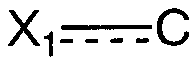


Applications Claiming Priority (4)
| Application Number | Priority Date | Filing Date | Title |
|---|---|---|---|
| JP2006044990 | 2006-02-22 | ||
| JPJP-P-2006-00044990 | 2006-02-22 | ||
| JPJP-P-2006-00336653 | 2006-12-14 | ||
| JP2006336653 | 2006-12-14 |
Publications (1)
| Publication Number | Publication Date |
|---|---|
| KR20080114749A true KR20080114749A (en) | 2008-12-31 |
Family
ID=38474788
Family Applications (1)
| Application Number | Title | Priority Date | Filing Date |
|---|---|---|---|
| KR1020087022960A Ceased KR20080114749A (en) | 2006-02-22 | 2007-02-21 | Metal complexes, high molecular compounds and devices comprising them |
Country Status (6)
| Country | Link |
|---|---|
| US (1) | US20090043064A1 (en) |
| JP (1) | JP2008169192A (en) |
| KR (1) | KR20080114749A (en) |
| DE (1) | DE112007000426T5 (en) |
| GB (3) | GB2478452B (en) |
| WO (1) | WO2007102350A1 (en) |
Families Citing this family (14)
| Publication number | Priority date | Publication date | Assignee | Title |
|---|---|---|---|---|
| JP3812730B2 (en) * | 2001-02-01 | 2006-08-23 | 富士写真フイルム株式会社 | Transition metal complex and light emitting device |
| KR100933229B1 (en) * | 2007-11-12 | 2009-12-22 | 다우어드밴스드디스플레이머티리얼 유한회사 | Novel red phosphorescent compound and organic light emitting device employing it as light emitting material |
| KR100933226B1 (en) * | 2007-11-20 | 2009-12-22 | 다우어드밴스드디스플레이머티리얼 유한회사 | Novel red phosphorescent compound and organic light emitting device employing it as light emitting material |
| KR100933225B1 (en) * | 2007-11-27 | 2009-12-22 | 다우어드밴스드디스플레이머티리얼 유한회사 | Novel Phosphorescent Compound and Organic Light Emitting Device Employing It as Light Emitting Material |
| JP5688930B2 (en) * | 2009-08-27 | 2015-03-25 | 住友化学株式会社 | Metal complex composition and complex polymer |
| JP5501864B2 (en) | 2010-03-10 | 2014-05-28 | 住友化学株式会社 | Thin film and compound used therefor |
| US20110240928A1 (en) * | 2010-03-31 | 2011-10-06 | MALAXIT Co. | Composites with high photoquenching factor of electroconduction based on polymer-metalorganic compounds |
| JP2014012672A (en) * | 2013-07-24 | 2014-01-23 | Mitsubishi Chemicals Corp | Organic metal complex composition, organic metal complex-containing composition, organic electroluminescent element, organic el display and organic el lighting |
| JP2015093938A (en) * | 2013-11-12 | 2015-05-18 | 三菱化学株式会社 | Composition for organic electroluminescent element, organic electroluminescent element, display device, and illumination device |
| KR102219155B1 (en) * | 2016-03-24 | 2021-02-23 | 후지필름 가부시키가이샤 | Active light sensitive or radiation sensitive composition, method for producing active light sensitive or radiation sensitive composition, pattern forming method, and electronic device producing method |
| US11469382B2 (en) * | 2017-07-12 | 2022-10-11 | Universal Display Corporation | Organic electroluminescent materials and devices |
| JP2018166102A (en) * | 2018-05-25 | 2018-10-25 | 三菱ケミカル株式会社 | Organic electroluminescent element composition, organic electroluminescent element, display device, and luminaire |
| JP6984674B2 (en) * | 2018-05-25 | 2021-12-22 | 三菱ケミカル株式会社 | Compositions for organic electroluminescent devices, organic electroluminescent devices, display devices and lighting devices |
| CN116496322A (en) * | 2022-01-27 | 2023-07-28 | 浙江光昊光电科技有限公司 | An organometallic complex containing free radical units, mixtures and compositions comprising the same, and applications thereof in electronic devices |
Family Cites Families (43)
| Publication number | Priority date | Publication date | Assignee | Title |
|---|---|---|---|---|
| JPS6370257A (en) | 1986-09-12 | 1988-03-30 | Fuji Xerox Co Ltd | Electric charge transfer material for electrophotography |
| JPS63175860A (en) | 1987-01-16 | 1988-07-20 | Fuji Xerox Co Ltd | Electrophotographic sensitive body |
| JP2651237B2 (en) | 1989-02-10 | 1997-09-10 | 出光興産株式会社 | Thin-film electroluminescence device |
| JPH02135361A (en) | 1988-11-16 | 1990-05-24 | Fuji Xerox Co Ltd | Electrophotographic sensitive body |
| JPH02135359A (en) | 1988-11-16 | 1990-05-24 | Fuji Xerox Co Ltd | Electrophotographic sensitive body |
| JPH0337992A (en) | 1989-07-04 | 1991-02-19 | Idemitsu Kosan Co Ltd | Manufacture of organic electroluminescence element |
| JPH03146296A (en) | 1989-10-31 | 1991-06-21 | Nippon Steel Corp | Welding wire for high tensile steel |
| JPH03152184A (en) | 1989-11-08 | 1991-06-28 | Nec Corp | El element of organic thin film |
| JPH03152187A (en) | 1989-11-09 | 1991-06-28 | Dainippon Ink & Chem Inc | Ferroelectric liquid crystal composition |
| US5830972A (en) | 1995-04-10 | 1998-11-03 | Sumitomo Chemical Company, Limited | Polysilane, its production process and starting materials therefor |
| US5708130A (en) | 1995-07-28 | 1998-01-13 | The Dow Chemical Company | 2,7-aryl-9-substituted fluorenes and 9-substituted fluorene oligomers and polymers |
| US6309763B1 (en) | 1997-05-21 | 2001-10-30 | The Dow Chemical Company | Fluorene-containing polymers and electroluminescent devices therefrom |
| CA2360644A1 (en) | 1999-02-04 | 2000-08-10 | The Dow Chemical Company | Fluorene copolymers and devices made therefrom |
| JP3929690B2 (en) * | 1999-12-27 | 2007-06-13 | 富士フイルム株式会社 | Light emitting device material, light emitting device and novel iridium complex comprising orthometalated iridium complex |
| JP3929689B2 (en) * | 2000-03-28 | 2007-06-13 | 富士フイルム株式会社 | Highly efficient red light emitting device, light emitting device material comprising iridium complex and novel iridium complex |
| JP4154138B2 (en) * | 2000-09-26 | 2008-09-24 | キヤノン株式会社 | Light emitting element, display device and metal coordination compound |
| JP4307000B2 (en) * | 2001-03-08 | 2009-08-05 | キヤノン株式会社 | Metal coordination compound, electroluminescent element and display device |
| JP4259875B2 (en) | 2001-03-24 | 2009-04-30 | メルク パテント ゲーエムベーハー | Conjugated polymers containing spirobifluorene units and fluorene units and uses thereof |
| JP2002359079A (en) * | 2001-05-31 | 2002-12-13 | Canon Inc | Light emitting element and display device |
| JP2003007469A (en) * | 2001-06-25 | 2003-01-10 | Canon Inc | Light emitting element and display device |
| US6835469B2 (en) * | 2001-10-17 | 2004-12-28 | The University Of Southern California | Phosphorescent compounds and devices comprising the same |
| GB0125622D0 (en) | 2001-10-25 | 2001-12-19 | Cambridge Display Tech Ltd | Method of polymerisation |
| SG124249A1 (en) | 2001-12-07 | 2006-08-30 | Sumitomo Chemical Co | New polymer and polymer light-emitting device using the same |
| JP4168737B2 (en) | 2001-12-19 | 2008-10-22 | 住友化学株式会社 | Copolymer, polymer composition and polymer light emitting device |
| TWI277617B (en) * | 2002-03-26 | 2007-04-01 | Sumitomo Chemical Co | Metal complexes and organic electro luminescence elements |
| JP4321110B2 (en) | 2002-06-05 | 2009-08-26 | 住友化学株式会社 | Polymer compound and polymer light emitting device using the same |
| US7157154B2 (en) * | 2002-06-26 | 2007-01-02 | Sumitomo Chemical Company, Limited | Polymer and polymeric luminescent element comprising the same |
| JP4211433B2 (en) * | 2002-08-14 | 2009-01-21 | 三菱化学株式会社 | Organometallic complex, luminescent dye, organic electroluminescent device material, and organic electroluminescent device |
| TWI280973B (en) * | 2002-08-28 | 2007-05-11 | Sumitomo Chemical Co | Polymer compound and polymer light-emitting device using the same |
| JP4350960B2 (en) | 2002-12-19 | 2009-10-28 | ケミプロ化成株式会社 | 4,4 ″ -di- (aryl) -3 ′, 4 ′, 5 ′, 6′-tetraphenyl-p-terphenyl derivative, host material comprising the same, and electroluminescence device using the same |
| JP2004277377A (en) | 2003-03-18 | 2004-10-07 | Junji Kido | Fluorene compound and organic electroluminescent device using the same |
| JP4396118B2 (en) | 2003-03-26 | 2010-01-13 | 住友化学株式会社 | Complex composition, polymer complex compound, and polymer light emitting device |
| KR20060027323A (en) * | 2003-06-09 | 2006-03-27 | 히다치 가세고교 가부시끼가이샤 | Metal coordination compounds, polymer compositions, and organic electroluminescent devices using them |
| US7955716B2 (en) * | 2003-06-09 | 2011-06-07 | Hitachi Chemical Co., Ltd. | Metal coordination compound, polymer composition, and organic electroluminescent device employing same |
| WO2005003095A1 (en) * | 2003-07-02 | 2005-01-13 | Idemitsu Kosan Co., Ltd. | Metal complex compound and organic electroluminescence device containing the same |
| JP4830272B2 (en) * | 2004-06-30 | 2011-12-07 | 住友化学株式会社 | Organic electroluminescence device |
| US20060008671A1 (en) * | 2004-07-07 | 2006-01-12 | Raymond Kwong | Electroluminescent efficiency |
| JP5009154B2 (en) * | 2004-07-07 | 2012-08-22 | ユニバーサル ディスプレイ コーポレイション | Stable and efficient electroluminescent material |
| US7985492B2 (en) * | 2004-08-07 | 2011-07-26 | Merck Patent Gmbh | Electroluminescent materials and devices |
| GB0419269D0 (en) * | 2004-08-31 | 2004-09-29 | Elam T Ltd | Electroluminescent materials and devices |
| WO2007029461A1 (en) * | 2005-09-02 | 2007-03-15 | Konica Minolta Holdings, Inc. | Organic electroluminescent device, method for manufacturing same, display comprising such organic electroluminescent device, and illuminating device |
| JP5661982B2 (en) * | 2005-09-14 | 2015-01-28 | 住友化学株式会社 | Polymer compound, light emitting material, and light emitting device |
| JP5262104B2 (en) * | 2006-12-27 | 2013-08-14 | 住友化学株式会社 | Metal complexes, polymer compounds, and devices containing them |
-
2007
- 2007-02-21 WO PCT/JP2007/053697 patent/WO2007102350A1/en not_active Ceased
- 2007-02-21 GB GB1108210A patent/GB2478452B/en not_active Expired - Fee Related
- 2007-02-21 JP JP2007040494A patent/JP2008169192A/en active Pending
- 2007-02-21 GB GB1108208A patent/GB2478450B/en not_active Expired - Fee Related
- 2007-02-21 GB GB0815325A patent/GB2449796B/en not_active Expired - Fee Related
- 2007-02-21 US US12/279,739 patent/US20090043064A1/en not_active Abandoned
- 2007-02-21 KR KR1020087022960A patent/KR20080114749A/en not_active Ceased
- 2007-02-21 DE DE112007000426T patent/DE112007000426T5/en not_active Withdrawn
Also Published As
| Publication number | Publication date |
|---|---|
| GB2478450A (en) | 2011-09-07 |
| GB2449796B (en) | 2011-11-16 |
| US20090043064A1 (en) | 2009-02-12 |
| GB2449796A (en) | 2008-12-03 |
| GB201108208D0 (en) | 2011-06-29 |
| GB2478450B (en) | 2011-11-16 |
| GB2478452B (en) | 2011-11-16 |
| GB201108210D0 (en) | 2011-06-29 |
| GB2478452A (en) | 2011-09-07 |
| JP2008169192A (en) | 2008-07-24 |
| GB0815325D0 (en) | 2008-10-01 |
| WO2007102350A1 (en) | 2007-09-13 |
| DE112007000426T5 (en) | 2009-01-02 |
Similar Documents
| Publication | Publication Date | Title |
|---|---|---|
| JP5867489B2 (en) | Polymer material and element using the same | |
| JP5262104B2 (en) | Metal complexes, polymer compounds, and devices containing them | |
| EP2305772B1 (en) | Composition containing a metal complex and organic compound, and light emitting element using said compound | |
| KR20080114749A (en) | Metal complexes, high molecular compounds and devices comprising them | |
| JP2004059899A (en) | Polymer compound and polymer light emitting device using the same | |
| CN101128507B (en) | High molecular compound and components using the high molecular compound | |
| KR101294988B1 (en) | Polymeric material and element employing the same | |
| JP4635528B2 (en) | Luminescent material and light emitting device using the same | |
| EP1932851B1 (en) | Metal complex, light-emitting material, and light-emitting device | |
| JP2005226066A (en) | Polymer complex compound and polymer light emitting device using the same | |
| KR101128164B1 (en) | Composition and polymer light-emitting device | |
| US20100264812A1 (en) | Metal complex, light-emitting material, and light-emitting device | |
| KR20080043841A (en) | Light Emitting Material Containing Metal Complex And Optoelectronic Device Using The Same |
Legal Events
| Date | Code | Title | Description |
|---|---|---|---|
| PA0105 | International application |
Patent event date: 20080919 Patent event code: PA01051R01D Comment text: International Patent Application |
|
| PG1501 | Laying open of application | ||
| N231 | Notification of change of applicant | ||
| PN2301 | Change of applicant |
Patent event date: 20110607 Comment text: Notification of Change of Applicant Patent event code: PN23011R01D |
|
| A201 | Request for examination | ||
| PA0201 | Request for examination |
Patent event code: PA02012R01D Patent event date: 20120221 Comment text: Request for Examination of Application |
|
| E902 | Notification of reason for refusal | ||
| PE0902 | Notice of grounds for rejection |
Comment text: Notification of reason for refusal Patent event date: 20130813 Patent event code: PE09021S01D |
|
| E601 | Decision to refuse application | ||
| PE0601 | Decision on rejection of patent |
Patent event date: 20140213 Comment text: Decision to Refuse Application Patent event code: PE06012S01D Patent event date: 20130813 Comment text: Notification of reason for refusal Patent event code: PE06011S01I |