ES2859700T3 - Compounds and methods for the preparation of diarylpropanes - Google Patents
Compounds and methods for the preparation of diarylpropanes Download PDFInfo
- Publication number
- ES2859700T3 ES2859700T3 ES12712191T ES12712191T ES2859700T3 ES 2859700 T3 ES2859700 T3 ES 2859700T3 ES 12712191 T ES12712191 T ES 12712191T ES 12712191 T ES12712191 T ES 12712191T ES 2859700 T3 ES2859700 T3 ES 2859700T3
- Authority
- ES
- Spain
- Prior art keywords
- compound
- compounds
- hydrogen
- alkyl
- following structures
- Prior art date
- Legal status (The legal status is an assumption and is not a legal conclusion. Google has not performed a legal analysis and makes no representation as to the accuracy of the status listed.)
- Active
Links
- 150000001875 compounds Chemical class 0.000 title claims abstract description 153
- 238000000034 method Methods 0.000 title claims description 66
- 238000002360 preparation method Methods 0.000 title description 25
- 125000000217 alkyl group Chemical group 0.000 claims abstract description 35
- 239000001257 hydrogen Substances 0.000 claims abstract description 35
- 229910052739 hydrogen Inorganic materials 0.000 claims abstract description 35
- 125000004435 hydrogen atom Chemical group [H]* 0.000 claims abstract description 22
- 150000003839 salts Chemical class 0.000 claims abstract description 22
- 125000003710 aryl alkyl group Chemical group 0.000 claims abstract description 21
- 125000003118 aryl group Chemical group 0.000 claims abstract description 20
- KDLHZDBZIXYQEI-UHFFFAOYSA-N Palladium Chemical compound [Pd] KDLHZDBZIXYQEI-UHFFFAOYSA-N 0.000 claims description 33
- 125000002496 methyl group Chemical group [H]C([H])([H])* 0.000 claims description 20
- 150000002431 hydrogen Chemical group 0.000 claims description 17
- 125000001449 isopropyl group Chemical group [H]C([H])([H])C([H])(*)C([H])([H])[H] 0.000 claims description 17
- UFHFLCQGNIYNRP-UHFFFAOYSA-N Hydrogen Chemical compound [H][H] UFHFLCQGNIYNRP-UHFFFAOYSA-N 0.000 claims description 16
- BDAGIHXWWSANSR-UHFFFAOYSA-N methanoic acid Natural products OC=O BDAGIHXWWSANSR-UHFFFAOYSA-N 0.000 claims description 16
- 125000001797 benzyl group Chemical group [H]C1=C([H])C([H])=C(C([H])=C1[H])C([H])([H])* 0.000 claims description 15
- OSWFIVFLDKOXQC-UHFFFAOYSA-N 4-(3-methoxyphenyl)aniline Chemical compound COC1=CC=CC(C=2C=CC(N)=CC=2)=C1 OSWFIVFLDKOXQC-UHFFFAOYSA-N 0.000 claims description 8
- VZTDIZULWFCMLS-UHFFFAOYSA-N ammonium formate Chemical compound [NH4+].[O-]C=O VZTDIZULWFCMLS-UHFFFAOYSA-N 0.000 claims description 8
- 235000019253 formic acid Nutrition 0.000 claims description 8
- 239000007868 Raney catalyst Substances 0.000 claims description 7
- 229910000564 Raney nickel Inorganic materials 0.000 claims description 7
- NPXOKRUENSOPAO-UHFFFAOYSA-N Raney nickel Chemical compound [Al].[Ni] NPXOKRUENSOPAO-UHFFFAOYSA-N 0.000 claims description 7
- 239000011701 zinc Substances 0.000 claims description 6
- HCHKCACWOHOZIP-UHFFFAOYSA-N Zinc Chemical compound [Zn] HCHKCACWOHOZIP-UHFFFAOYSA-N 0.000 claims description 5
- JEDZLBFUGJTJGQ-UHFFFAOYSA-N [Na].COCCO[AlH]OCCOC Chemical compound [Na].COCCO[AlH]OCCOC JEDZLBFUGJTJGQ-UHFFFAOYSA-N 0.000 claims description 5
- 239000012419 sodium bis(2-methoxyethoxy)aluminum hydride Substances 0.000 claims description 5
- 229910052725 zinc Inorganic materials 0.000 claims description 5
- 239000007789 gas Substances 0.000 claims description 4
- XEKOWRVHYACXOJ-UHFFFAOYSA-N Ethyl acetate Chemical compound CCOC(C)=O XEKOWRVHYACXOJ-UHFFFAOYSA-N 0.000 description 54
- OKKJLVBELUTLKV-UHFFFAOYSA-N Methanol Chemical compound OC OKKJLVBELUTLKV-UHFFFAOYSA-N 0.000 description 39
- -1 tere-butyl Chemical group 0.000 description 23
- KWYUFKZDYYNOTN-UHFFFAOYSA-M Potassium hydroxide Chemical compound [OH-].[K+] KWYUFKZDYYNOTN-UHFFFAOYSA-M 0.000 description 18
- 238000003786 synthesis reaction Methods 0.000 description 17
- 230000015572 biosynthetic process Effects 0.000 description 16
- 239000011541 reaction mixture Substances 0.000 description 16
- 125000006239 protecting group Chemical group 0.000 description 15
- 239000000203 mixture Substances 0.000 description 13
- 239000007787 solid Substances 0.000 description 13
- QTBSBXVTEAMEQO-UHFFFAOYSA-N Acetic acid Chemical compound CC(O)=O QTBSBXVTEAMEQO-UHFFFAOYSA-N 0.000 description 12
- CSCPPACGZOOCGX-UHFFFAOYSA-N Acetone Chemical compound CC(C)=O CSCPPACGZOOCGX-UHFFFAOYSA-N 0.000 description 12
- VEXZGXHMUGYJMC-UHFFFAOYSA-N Hydrochloric acid Chemical compound Cl VEXZGXHMUGYJMC-UHFFFAOYSA-N 0.000 description 12
- XUMBMVFBXHLACL-UHFFFAOYSA-N Melanin Chemical compound O=C1C(=O)C(C2=CNC3=C(C(C(=O)C4=C32)=O)C)=C2C4=CNC2=C1C XUMBMVFBXHLACL-UHFFFAOYSA-N 0.000 description 12
- UIIMBOGNXHQVGW-UHFFFAOYSA-M Sodium bicarbonate Chemical compound [Na+].OC([O-])=O UIIMBOGNXHQVGW-UHFFFAOYSA-M 0.000 description 12
- 238000006243 chemical reaction Methods 0.000 description 12
- VLKZOEOYAKHREP-UHFFFAOYSA-N n-Hexane Chemical compound CCCCCC VLKZOEOYAKHREP-UHFFFAOYSA-N 0.000 description 12
- 239000000243 solution Substances 0.000 description 12
- XLYOFNOQVPJJNP-UHFFFAOYSA-N water Substances O XLYOFNOQVPJJNP-UHFFFAOYSA-N 0.000 description 12
- 0 Cc1c(*)ccc(C=CC(c(ccc(OCc2ccccc2)c2)c2OCc2ccccc2)=O)c1* Chemical compound Cc1c(*)ccc(C=CC(c(ccc(OCc2ccccc2)c2)c2OCc2ccccc2)=O)c1* 0.000 description 11
- VYPSYNLAJGMNEJ-UHFFFAOYSA-N Silicium dioxide Chemical compound O=[Si]=O VYPSYNLAJGMNEJ-UHFFFAOYSA-N 0.000 description 10
- HEDRZPFGACZZDS-MICDWDOJSA-N Trichloro(2H)methane Chemical compound [2H]C(Cl)(Cl)Cl HEDRZPFGACZZDS-MICDWDOJSA-N 0.000 description 10
- 239000003153 chemical reaction reagent Substances 0.000 description 10
- 125000000623 heterocyclic group Chemical group 0.000 description 10
- 238000005160 1H NMR spectroscopy Methods 0.000 description 9
- SULYEHHGGXARJS-UHFFFAOYSA-N 2',4'-dihydroxyacetophenone Chemical compound CC(=O)C1=CC=C(O)C=C1O SULYEHHGGXARJS-UHFFFAOYSA-N 0.000 description 8
- PMZURENOXWZQFD-UHFFFAOYSA-L Sodium Sulfate Chemical compound [Na+].[Na+].[O-]S([O-])(=O)=O PMZURENOXWZQFD-UHFFFAOYSA-L 0.000 description 8
- 125000004043 oxo group Chemical group O=* 0.000 description 8
- 239000003054 catalyst Substances 0.000 description 7
- 239000010410 layer Substances 0.000 description 7
- BWHMMNNQKKPAPP-UHFFFAOYSA-L potassium carbonate Substances [K+].[K+].[O-]C([O-])=O BWHMMNNQKKPAPP-UHFFFAOYSA-L 0.000 description 7
- 229920006395 saturated elastomer Polymers 0.000 description 7
- 229910052938 sodium sulfate Inorganic materials 0.000 description 7
- 235000011152 sodium sulphate Nutrition 0.000 description 7
- 125000003903 2-propenyl group Chemical group [H]C([*])([H])C([H])=C([H])[H] 0.000 description 6
- HOCCFHXBGWEJEQ-UHFFFAOYSA-N 4-[3-(2,4-dimethoxy-3-methylphenyl)propyl]benzene-1,3-diol Chemical compound COC1=C(C)C(OC)=CC=C1CCCC1=CC=C(O)C=C1O HOCCFHXBGWEJEQ-UHFFFAOYSA-N 0.000 description 6
- DQFBYFPFKXHELB-UHFFFAOYSA-N Chalcone Natural products C=1C=CC=CC=1C(=O)C=CC1=CC=CC=C1 DQFBYFPFKXHELB-UHFFFAOYSA-N 0.000 description 6
- ISWSIDIOOBJBQZ-UHFFFAOYSA-N Phenol Chemical compound OC1=CC=CC=C1 ISWSIDIOOBJBQZ-UHFFFAOYSA-N 0.000 description 6
- YXFVVABEGXRONW-UHFFFAOYSA-N Toluene Chemical compound CC1=CC=CC=C1 YXFVVABEGXRONW-UHFFFAOYSA-N 0.000 description 6
- 235000005513 chalcones Nutrition 0.000 description 6
- 238000004128 high performance liquid chromatography Methods 0.000 description 6
- 125000001412 tetrahydropyranyl group Chemical group 0.000 description 6
- UOKAZUWUHOBBMD-UHFFFAOYSA-N 2,4-dimethoxy-3-methylbenzaldehyde Chemical compound COC1=CC=C(C=O)C(OC)=C1C UOKAZUWUHOBBMD-UHFFFAOYSA-N 0.000 description 5
- 239000012267 brine Substances 0.000 description 5
- 238000005984 hydrogenation reaction Methods 0.000 description 5
- 125000002887 hydroxy group Chemical group [H]O* 0.000 description 5
- IJGRMHOSHXDMSA-UHFFFAOYSA-N nitrogen Substances N#N IJGRMHOSHXDMSA-UHFFFAOYSA-N 0.000 description 5
- QJGQUHMNIGDVPM-UHFFFAOYSA-N nitrogen group Chemical group [N] QJGQUHMNIGDVPM-UHFFFAOYSA-N 0.000 description 5
- 210000003491 skin Anatomy 0.000 description 5
- 229910000030 sodium bicarbonate Inorganic materials 0.000 description 5
- 235000017557 sodium bicarbonate Nutrition 0.000 description 5
- HPALAKNZSZLMCH-UHFFFAOYSA-M sodium;chloride;hydrate Chemical compound O.[Na+].[Cl-] HPALAKNZSZLMCH-UHFFFAOYSA-M 0.000 description 5
- 238000003756 stirring Methods 0.000 description 5
- 238000001644 13C nuclear magnetic resonance spectroscopy Methods 0.000 description 4
- ZMXDDKWLCZADIW-UHFFFAOYSA-N N,N-Dimethylformamide Chemical compound CN(C)C=O ZMXDDKWLCZADIW-UHFFFAOYSA-N 0.000 description 4
- HEMHJVSKTPXQMS-UHFFFAOYSA-M Sodium hydroxide Chemical compound [OH-].[Na+] HEMHJVSKTPXQMS-UHFFFAOYSA-M 0.000 description 4
- 230000002159 abnormal effect Effects 0.000 description 4
- 239000002253 acid Substances 0.000 description 4
- VSCWAEJMTAWNJL-UHFFFAOYSA-K aluminium trichloride Chemical compound Cl[Al](Cl)Cl VSCWAEJMTAWNJL-UHFFFAOYSA-K 0.000 description 4
- KCXMKQUNVWSEMD-UHFFFAOYSA-N benzyl chloride Chemical compound ClCC1=CC=CC=C1 KCXMKQUNVWSEMD-UHFFFAOYSA-N 0.000 description 4
- 239000012043 crude product Substances 0.000 description 4
- 125000004122 cyclic group Chemical group 0.000 description 4
- 239000000706 filtrate Substances 0.000 description 4
- 210000002752 melanocyte Anatomy 0.000 description 4
- 229910052757 nitrogen Inorganic materials 0.000 description 4
- 229910000027 potassium carbonate Inorganic materials 0.000 description 4
- 239000011734 sodium Substances 0.000 description 4
- 125000001424 substituent group Chemical group 0.000 description 4
- DQFBYFPFKXHELB-VAWYXSNFSA-N trans-chalcone Chemical compound C=1C=CC=CC=1C(=O)\C=C\C1=CC=CC=C1 DQFBYFPFKXHELB-VAWYXSNFSA-N 0.000 description 4
- 238000005481 NMR spectroscopy Methods 0.000 description 3
- NINIDFKCEFEMDL-UHFFFAOYSA-N Sulfur Chemical group [S] NINIDFKCEFEMDL-UHFFFAOYSA-N 0.000 description 3
- 238000005882 aldol condensation reaction Methods 0.000 description 3
- 229940073608 benzyl chloride Drugs 0.000 description 3
- 229910052799 carbon Inorganic materials 0.000 description 3
- 150000001721 carbon Chemical group 0.000 description 3
- 125000004432 carbon atom Chemical group C* 0.000 description 3
- 238000002425 crystallisation Methods 0.000 description 3
- 230000008025 crystallization Effects 0.000 description 3
- 229910052736 halogen Inorganic materials 0.000 description 3
- 150000002367 halogens Chemical class 0.000 description 3
- 125000005842 heteroatom Chemical group 0.000 description 3
- 229930014626 natural product Natural products 0.000 description 3
- 239000001301 oxygen Substances 0.000 description 3
- 229910052760 oxygen Inorganic materials 0.000 description 3
- 125000001997 phenyl group Chemical group [H]C1=C([H])C([H])=C(*)C([H])=C1[H] 0.000 description 3
- 239000000047 product Substances 0.000 description 3
- 238000000746 purification Methods 0.000 description 3
- 238000009901 transfer hydrogenation reaction Methods 0.000 description 3
- FYUABHFDUHJWOZ-UHFFFAOYSA-N 1-[2,4-bis(phenylmethoxy)phenyl]ethanone Chemical compound C1=C(OCC=2C=CC=CC=2)C(C(=O)C)=CC=C1OCC1=CC=CC=C1 FYUABHFDUHJWOZ-UHFFFAOYSA-N 0.000 description 2
- NAMYKGVDVNBCFQ-UHFFFAOYSA-N 2-bromopropane Chemical compound CC(C)Br NAMYKGVDVNBCFQ-UHFFFAOYSA-N 0.000 description 2
- RTZKZFJDLAIYFH-UHFFFAOYSA-N Diethyl ether Chemical compound CCOCC RTZKZFJDLAIYFH-UHFFFAOYSA-N 0.000 description 2
- DGAQECJNVWCQMB-PUAWFVPOSA-M Ilexoside XXIX Chemical compound C[C@@H]1CC[C@@]2(CC[C@@]3(C(=CC[C@H]4[C@]3(CC[C@@H]5[C@@]4(CC[C@@H](C5(C)C)OS(=O)(=O)[O-])C)C)[C@@H]2[C@]1(C)O)C)C(=O)O[C@H]6[C@@H]([C@H]([C@@H]([C@H](O6)CO)O)O)O.[Na+] DGAQECJNVWCQMB-PUAWFVPOSA-M 0.000 description 2
- WMFOQBRAJBCJND-UHFFFAOYSA-M Lithium hydroxide Chemical compound [Li+].[OH-] WMFOQBRAJBCJND-UHFFFAOYSA-M 0.000 description 2
- ZLMJMSJWJFRBEC-UHFFFAOYSA-N Potassium Chemical compound [K] ZLMJMSJWJFRBEC-UHFFFAOYSA-N 0.000 description 2
- CDBYLPFSWZWCQE-UHFFFAOYSA-L Sodium Carbonate Chemical compound [Na+].[Na+].[O-]C([O-])=O CDBYLPFSWZWCQE-UHFFFAOYSA-L 0.000 description 2
- FAPWRFPIFSIZLT-UHFFFAOYSA-M Sodium chloride Chemical compound [Na+].[Cl-] FAPWRFPIFSIZLT-UHFFFAOYSA-M 0.000 description 2
- WQDUMFSSJAZKTM-UHFFFAOYSA-N Sodium methoxide Chemical compound [Na+].[O-]C WQDUMFSSJAZKTM-UHFFFAOYSA-N 0.000 description 2
- 230000002378 acidificating effect Effects 0.000 description 2
- 150000001338 aliphatic hydrocarbons Chemical class 0.000 description 2
- 229910052784 alkaline earth metal Inorganic materials 0.000 description 2
- 125000003342 alkenyl group Chemical group 0.000 description 2
- 125000003545 alkoxy group Chemical group 0.000 description 2
- 125000000304 alkynyl group Chemical group 0.000 description 2
- QVGXLLKOCUKJST-UHFFFAOYSA-N atomic oxygen Chemical group [O] QVGXLLKOCUKJST-UHFFFAOYSA-N 0.000 description 2
- 239000002585 base Substances 0.000 description 2
- HUMNYLRZRPPJDN-UHFFFAOYSA-N benzaldehyde Chemical compound O=CC1=CC=CC=C1 HUMNYLRZRPPJDN-UHFFFAOYSA-N 0.000 description 2
- 125000002619 bicyclic group Chemical group 0.000 description 2
- 125000002915 carbonyl group Chemical group [*:2]C([*:1])=O 0.000 description 2
- 239000003610 charcoal Substances 0.000 description 2
- 239000000460 chlorine Substances 0.000 description 2
- 229940125782 compound 2 Drugs 0.000 description 2
- 239000003814 drug Substances 0.000 description 2
- 210000002615 epidermis Anatomy 0.000 description 2
- 239000002024 ethyl acetate extract Substances 0.000 description 2
- 238000001914 filtration Methods 0.000 description 2
- 125000001072 heteroaryl group Chemical group 0.000 description 2
- 150000004678 hydrides Chemical class 0.000 description 2
- 150000002576 ketones Chemical class 0.000 description 2
- 238000011031 large-scale manufacturing process Methods 0.000 description 2
- 210000002780 melanosome Anatomy 0.000 description 2
- 150000007522 mineralic acids Chemical class 0.000 description 2
- 150000007524 organic acids Chemical class 0.000 description 2
- 239000012044 organic layer Substances 0.000 description 2
- KLAKIAVEMQMVBT-UHFFFAOYSA-N p-hydroxy-phenacyl alcohol Natural products OCC(=O)C1=CC=C(O)C=C1 KLAKIAVEMQMVBT-UHFFFAOYSA-N 0.000 description 2
- 229910052763 palladium Inorganic materials 0.000 description 2
- 239000000049 pigment Substances 0.000 description 2
- 229910052705 radium Inorganic materials 0.000 description 2
- 229910052701 rubidium Inorganic materials 0.000 description 2
- 229910052708 sodium Inorganic materials 0.000 description 2
- 239000002904 solvent Substances 0.000 description 2
- 229910052717 sulfur Chemical group 0.000 description 2
- 239000011593 sulfur Chemical group 0.000 description 2
- 125000002221 trityl group Chemical group [H]C1=C([H])C([H])=C([H])C([H])=C1C([*])(C1=C(C(=C(C(=C1[H])[H])[H])[H])[H])C1=C([H])C([H])=C([H])C([H])=C1[H] 0.000 description 2
- 125000004973 1-butenyl group Chemical group C(=CCC)* 0.000 description 1
- 125000004972 1-butynyl group Chemical group [H]C([H])([H])C([H])([H])C#C* 0.000 description 1
- 125000006023 1-pentenyl group Chemical group 0.000 description 1
- 125000006069 2,3-dimethyl-2-butenyl group Chemical group 0.000 description 1
- HZAXFHJVJLSVMW-UHFFFAOYSA-N 2-Aminoethan-1-ol Chemical compound NCCO HZAXFHJVJLSVMW-UHFFFAOYSA-N 0.000 description 1
- 125000004974 2-butenyl group Chemical group C(C=CC)* 0.000 description 1
- 125000000069 2-butynyl group Chemical group [H]C([H])([H])C#CC([H])([H])* 0.000 description 1
- 125000006029 2-methyl-2-butenyl group Chemical group 0.000 description 1
- 125000006024 2-pentenyl group Chemical group 0.000 description 1
- 125000006027 3-methyl-1-butenyl group Chemical group 0.000 description 1
- XZTZIRDMFLPVJK-UHFFFAOYSA-N 4-[3-(2,4-dihydroxyphenyl)propyl]benzene-1,3-diol Chemical compound OC1=CC(O)=CC=C1CCCC1=CC=C(O)C=C1O XZTZIRDMFLPVJK-UHFFFAOYSA-N 0.000 description 1
- 125000006618 5- to 10-membered aromatic heterocyclic group Chemical group 0.000 description 1
- ZCYVEMRRCGMTRW-UHFFFAOYSA-N 7553-56-2 Chemical compound [I] ZCYVEMRRCGMTRW-UHFFFAOYSA-N 0.000 description 1
- HBAQYPYDRFILMT-UHFFFAOYSA-N 8-[3-(1-cyclopropylpyrazol-4-yl)-1H-pyrazolo[4,3-d]pyrimidin-5-yl]-3-methyl-3,8-diazabicyclo[3.2.1]octan-2-one Chemical class C1(CC1)N1N=CC(=C1)C1=NNC2=C1N=C(N=C2)N1C2C(N(CC1CC2)C)=O HBAQYPYDRFILMT-UHFFFAOYSA-N 0.000 description 1
- IKHGUXGNUITLKF-UHFFFAOYSA-N Acetaldehyde Chemical compound CC=O IKHGUXGNUITLKF-UHFFFAOYSA-N 0.000 description 1
- QGZKDVFQNNGYKY-UHFFFAOYSA-O Ammonium Chemical compound [NH4+] QGZKDVFQNNGYKY-UHFFFAOYSA-O 0.000 description 1
- WKBOTKDWSSQWDR-UHFFFAOYSA-N Bromine atom Chemical compound [Br] WKBOTKDWSSQWDR-UHFFFAOYSA-N 0.000 description 1
- COVZYZSDYWQREU-UHFFFAOYSA-N Busulfan Chemical compound CS(=O)(=O)OCCCCOS(C)(=O)=O COVZYZSDYWQREU-UHFFFAOYSA-N 0.000 description 1
- SLXOPTYFRBCBBF-FMIVXFBMSA-N CC(C)Oc1cc(OC(C)C)c(/C=C/C(c(ccc(OC)c2C)c2OC)=O)cc1 Chemical compound CC(C)Oc1cc(OC(C)C)c(/C=C/C(c(ccc(OC)c2C)c2OC)=O)cc1 SLXOPTYFRBCBBF-FMIVXFBMSA-N 0.000 description 1
- OYPRJOBELJOOCE-UHFFFAOYSA-N Calcium Chemical compound [Ca] OYPRJOBELJOOCE-UHFFFAOYSA-N 0.000 description 1
- 239000004215 Carbon black (E152) Substances 0.000 description 1
- CJLKVUXHHYYFMC-UHFFFAOYSA-N Cc(c(OC)c(CCC(c(ccc(O)c1)c1O)=O)cc1)c1OC Chemical compound Cc(c(OC)c(CCC(c(ccc(O)c1)c1O)=O)cc1)c1OC CJLKVUXHHYYFMC-UHFFFAOYSA-N 0.000 description 1
- ZAMOUSCENKQFHK-UHFFFAOYSA-N Chlorine atom Chemical compound [Cl] ZAMOUSCENKQFHK-UHFFFAOYSA-N 0.000 description 1
- BWLUMTFWVZZZND-UHFFFAOYSA-N Dibenzylamine Chemical compound C=1C=CC=CC=1CNCC1=CC=CC=C1 BWLUMTFWVZZZND-UHFFFAOYSA-N 0.000 description 1
- 206010064503 Excessive skin Diseases 0.000 description 1
- PXGOKWXKJXAPGV-UHFFFAOYSA-N Fluorine Chemical compound FF PXGOKWXKJXAPGV-UHFFFAOYSA-N 0.000 description 1
- 239000002841 Lewis acid Substances 0.000 description 1
- WHXSMMKQMYFTQS-UHFFFAOYSA-N Lithium Chemical compound [Li] WHXSMMKQMYFTQS-UHFFFAOYSA-N 0.000 description 1
- FYYHWMGAXLPEAU-UHFFFAOYSA-N Magnesium Chemical compound [Mg] FYYHWMGAXLPEAU-UHFFFAOYSA-N 0.000 description 1
- 229910003827 NRaRb Inorganic materials 0.000 description 1
- GRYLNZFGIOXLOG-UHFFFAOYSA-N Nitric acid Chemical class O[N+]([O-])=O GRYLNZFGIOXLOG-UHFFFAOYSA-N 0.000 description 1
- 208000012641 Pigmentation disease Diseases 0.000 description 1
- 206010040829 Skin discolouration Diseases 0.000 description 1
- 206010064127 Solar lentigo Diseases 0.000 description 1
- OCBFFGCSTGGPSQ-UHFFFAOYSA-N [CH2]CC Chemical class [CH2]CC OCBFFGCSTGGPSQ-UHFFFAOYSA-N 0.000 description 1
- 230000032683 aging Effects 0.000 description 1
- 150000001298 alcohols Chemical class 0.000 description 1
- 125000001931 aliphatic group Chemical group 0.000 description 1
- 239000003513 alkali Substances 0.000 description 1
- 150000001342 alkaline earth metals Chemical class 0.000 description 1
- 150000001336 alkenes Chemical group 0.000 description 1
- 239000012300 argon atmosphere Substances 0.000 description 1
- 239000012298 atmosphere Substances 0.000 description 1
- 125000005334 azaindolyl group Chemical group N1N=C(C2=CC=CC=C12)* 0.000 description 1
- 229910052788 barium Inorganic materials 0.000 description 1
- DSAJWYNOEDNPEQ-UHFFFAOYSA-N barium atom Chemical compound [Ba] DSAJWYNOEDNPEQ-UHFFFAOYSA-N 0.000 description 1
- 210000002469 basement membrane Anatomy 0.000 description 1
- 125000003785 benzimidazolyl group Chemical group N1=C(NC2=C1C=CC=C2)* 0.000 description 1
- 125000000499 benzofuranyl group Chemical group O1C(=CC2=C1C=CC=C2)* 0.000 description 1
- WPYMKLBDIGXBTP-UHFFFAOYSA-N benzoic acid group Chemical group C(C1=CC=CC=C1)(=O)O WPYMKLBDIGXBTP-UHFFFAOYSA-N 0.000 description 1
- 125000004196 benzothienyl group Chemical group S1C(=CC2=C1C=CC=C2)* 0.000 description 1
- 125000004541 benzoxazolyl group Chemical group O1C(=NC2=C1C=CC=C2)* 0.000 description 1
- WGQKYBSKWIADBV-UHFFFAOYSA-O benzylaminium Chemical compound [NH3+]CC1=CC=CC=C1 WGQKYBSKWIADBV-UHFFFAOYSA-O 0.000 description 1
- UPBWIICFGYMCPC-UHFFFAOYSA-N bis(2-methoxyethoxy)aluminum Chemical compound COCCO[Al]OCCOC UPBWIICFGYMCPC-UHFFFAOYSA-N 0.000 description 1
- GDTBXPJZTBHREO-UHFFFAOYSA-N bromine Substances BrBr GDTBXPJZTBHREO-UHFFFAOYSA-N 0.000 description 1
- 229910052794 bromium Inorganic materials 0.000 description 1
- 229910052791 calcium Inorganic materials 0.000 description 1
- 239000011575 calcium Substances 0.000 description 1
- 150000001728 carbonyl compounds Chemical class 0.000 description 1
- 150000001767 cationic compounds Chemical class 0.000 description 1
- 210000004027 cell Anatomy 0.000 description 1
- 230000001413 cellular effect Effects 0.000 description 1
- 150000001789 chalcones Chemical class 0.000 description 1
- 229910052801 chlorine Inorganic materials 0.000 description 1
- 238000004587 chromatography analysis Methods 0.000 description 1
- 125000000259 cinnolinyl group Chemical group N1=NC(=CC2=CC=CC=C12)* 0.000 description 1
- 238000004440 column chromatography Methods 0.000 description 1
- 230000000052 comparative effect Effects 0.000 description 1
- 238000001816 cooling Methods 0.000 description 1
- WZHCOOQXZCIUNC-UHFFFAOYSA-N cyclandelate Chemical compound C1C(C)(C)CC(C)CC1OC(=O)C(O)C1=CC=CC=C1 WZHCOOQXZCIUNC-UHFFFAOYSA-N 0.000 description 1
- 125000001995 cyclobutyl group Chemical group [H]C1([H])C([H])([H])C([H])(*)C1([H])[H] 0.000 description 1
- UVJHQYIOXKWHFD-UHFFFAOYSA-N cyclohexa-1,4-diene Chemical compound C1C=CCC=C1 UVJHQYIOXKWHFD-UHFFFAOYSA-N 0.000 description 1
- 125000000596 cyclohexenyl group Chemical group C1(=CCCCC1)* 0.000 description 1
- 125000000113 cyclohexyl group Chemical group [H]C1([H])C([H])([H])C([H])([H])C([H])(*)C([H])([H])C1([H])[H] 0.000 description 1
- 125000002433 cyclopentenyl group Chemical group C1(=CCCC1)* 0.000 description 1
- 125000001511 cyclopentyl group Chemical group [H]C1([H])C([H])([H])C([H])([H])C([H])(*)C1([H])[H] 0.000 description 1
- 125000001559 cyclopropyl group Chemical group [H]C1([H])C([H])([H])C1([H])* 0.000 description 1
- 238000010511 deprotection reaction Methods 0.000 description 1
- MHDVGSVTJDSBDK-UHFFFAOYSA-N dibenzyl ether Chemical compound C=1C=CC=CC=1COCC1=CC=CC=C1 MHDVGSVTJDSBDK-UHFFFAOYSA-N 0.000 description 1
- 125000005982 diphenylmethyl group Chemical group [H]C1=C([H])C([H])=C(C([H])=C1[H])C([H])(*)C1=C([H])C([H])=C([H])C([H])=C1[H] 0.000 description 1
- 201000010099 disease Diseases 0.000 description 1
- 208000037265 diseases, disorders, signs and symptoms Diseases 0.000 description 1
- 238000009826 distribution Methods 0.000 description 1
- 229940079593 drug Drugs 0.000 description 1
- 150000002085 enols Chemical group 0.000 description 1
- 230000007613 environmental effect Effects 0.000 description 1
- 125000001495 ethyl group Chemical group [H]C([H])([H])C([H])([H])* 0.000 description 1
- 125000005469 ethylenyl group Chemical group 0.000 description 1
- 239000002360 explosive Substances 0.000 description 1
- 239000000284 extract Substances 0.000 description 1
- 238000000605 extraction Methods 0.000 description 1
- 239000011737 fluorine Substances 0.000 description 1
- 229910052731 fluorine Inorganic materials 0.000 description 1
- 239000012458 free base Substances 0.000 description 1
- 125000002541 furyl group Chemical group 0.000 description 1
- 230000002068 genetic effect Effects 0.000 description 1
- 239000004220 glutamic acid Substances 0.000 description 1
- 235000013922 glutamic acid Nutrition 0.000 description 1
- 150000002307 glutamic acids Chemical class 0.000 description 1
- 230000037308 hair color Effects 0.000 description 1
- 238000010438 heat treatment Methods 0.000 description 1
- 229930195733 hydrocarbon Natural products 0.000 description 1
- 208000000069 hyperpigmentation Diseases 0.000 description 1
- 230000003810 hyperpigmentation Effects 0.000 description 1
- 125000002883 imidazolyl group Chemical group 0.000 description 1
- 125000001041 indolyl group Chemical group 0.000 description 1
- 230000002401 inhibitory effect Effects 0.000 description 1
- 229910001411 inorganic cation Inorganic materials 0.000 description 1
- 239000011630 iodine Substances 0.000 description 1
- 229910052740 iodine Inorganic materials 0.000 description 1
- INQOMBQAUSQDDS-UHFFFAOYSA-N iodomethane Chemical compound IC INQOMBQAUSQDDS-UHFFFAOYSA-N 0.000 description 1
- 125000000959 isobutyl group Chemical group [H]C([H])([H])C([H])(C([H])([H])[H])C([H])([H])* 0.000 description 1
- 125000005468 isobutylenyl group Chemical group 0.000 description 1
- 125000000904 isoindolyl group Chemical group C=1(NC=C2C=CC=CC12)* 0.000 description 1
- 125000001972 isopentyl group Chemical group [H]C([H])([H])C([H])(C([H])([H])[H])C([H])([H])C([H])([H])* 0.000 description 1
- 125000002183 isoquinolinyl group Chemical group C1(=NC=CC2=CC=CC=C12)* 0.000 description 1
- 210000002510 keratinocyte Anatomy 0.000 description 1
- 125000000468 ketone group Chemical group 0.000 description 1
- 150000007517 lewis acids Chemical class 0.000 description 1
- 229910052744 lithium Inorganic materials 0.000 description 1
- 229910052749 magnesium Inorganic materials 0.000 description 1
- 239000011777 magnesium Substances 0.000 description 1
- 230000008099 melanin synthesis Effects 0.000 description 1
- 210000005060 membrane bound organelle Anatomy 0.000 description 1
- UKVIEHSSVKSQBA-UHFFFAOYSA-N methane;palladium Chemical compound C.[Pd] UKVIEHSSVKSQBA-UHFFFAOYSA-N 0.000 description 1
- 230000001035 methylating effect Effects 0.000 description 1
- 125000000325 methylidene group Chemical group [H]C([H])=* 0.000 description 1
- 230000005012 migration Effects 0.000 description 1
- 238000013508 migration Methods 0.000 description 1
- 125000002950 monocyclic group Chemical group 0.000 description 1
- 125000002757 morpholinyl group Chemical group 0.000 description 1
- 125000004108 n-butyl group Chemical group [H]C([H])([H])C([H])([H])C([H])([H])C([H])([H])* 0.000 description 1
- 125000001280 n-hexyl group Chemical group C(CCCCC)* 0.000 description 1
- 125000000740 n-pentyl group Chemical group [H]C([H])([H])C([H])([H])C([H])([H])C([H])([H])C([H])([H])* 0.000 description 1
- 125000004123 n-propyl group Chemical group [H]C([H])([H])C([H])([H])C([H])([H])* 0.000 description 1
- 125000001624 naphthyl group Chemical group 0.000 description 1
- 239000012299 nitrogen atmosphere Substances 0.000 description 1
- 235000005985 organic acids Nutrition 0.000 description 1
- 150000002892 organic cations Chemical class 0.000 description 1
- 239000003960 organic solvent Substances 0.000 description 1
- 238000012261 overproduction Methods 0.000 description 1
- 125000002971 oxazolyl group Chemical group 0.000 description 1
- IPCSVZSSVZVIGE-UHFFFAOYSA-N palmitic acid group Chemical group C(CCCCCCCCCCCCCCC)(=O)O IPCSVZSSVZVIGE-UHFFFAOYSA-N 0.000 description 1
- QNGNSVIICDLXHT-UHFFFAOYSA-N para-ethylbenzaldehyde Natural products CCC1=CC=C(C=O)C=C1 QNGNSVIICDLXHT-UHFFFAOYSA-N 0.000 description 1
- 239000003208 petroleum Substances 0.000 description 1
- 125000004592 phthalazinyl group Chemical group C1(=NN=CC2=CC=CC=C12)* 0.000 description 1
- 230000019612 pigmentation Effects 0.000 description 1
- 125000003386 piperidinyl group Chemical group 0.000 description 1
- 125000003367 polycyclic group Chemical group 0.000 description 1
- 229920000642 polymer Polymers 0.000 description 1
- 235000013824 polyphenols Nutrition 0.000 description 1
- 239000011591 potassium Substances 0.000 description 1
- 229910052700 potassium Inorganic materials 0.000 description 1
- LPNYRYFBWFDTMA-UHFFFAOYSA-N potassium tert-butoxide Chemical compound [K+].CC(C)(C)[O-] LPNYRYFBWFDTMA-UHFFFAOYSA-N 0.000 description 1
- 125000002924 primary amino group Chemical class [H]N([H])* 0.000 description 1
- 125000005470 propylenyl group Chemical group 0.000 description 1
- 125000002568 propynyl group Chemical group [*]C#CC([H])([H])[H] 0.000 description 1
- 125000003373 pyrazinyl group Chemical group 0.000 description 1
- JUJWROOIHBZHMG-UHFFFAOYSA-N pyridine Substances C1=CC=NC=C1 JUJWROOIHBZHMG-UHFFFAOYSA-N 0.000 description 1
- 125000004076 pyridyl group Chemical group 0.000 description 1
- 125000000714 pyrimidinyl group Chemical group 0.000 description 1
- 125000000719 pyrrolidinyl group Chemical group 0.000 description 1
- 125000000168 pyrrolyl group Chemical group 0.000 description 1
- 125000002294 quinazolinyl group Chemical group N1=C(N=CC2=CC=CC=C12)* 0.000 description 1
- 125000002943 quinolinyl group Chemical group N1=C(C=CC2=CC=CC=C12)* 0.000 description 1
- 125000002914 sec-butyl group Chemical group [H]C([H])([H])C([H])([H])C([H])(*)C([H])([H])[H] 0.000 description 1
- 208000017520 skin disease Diseases 0.000 description 1
- 208000031019 skin pigmentation disease Diseases 0.000 description 1
- 230000036555 skin type Effects 0.000 description 1
- 229910000029 sodium carbonate Inorganic materials 0.000 description 1
- 229910000104 sodium hydride Inorganic materials 0.000 description 1
- 239000012453 solvate Substances 0.000 description 1
- 230000000153 supplemental effect Effects 0.000 description 1
- 239000000725 suspension Substances 0.000 description 1
- 125000003718 tetrahydrofuranyl group Chemical group 0.000 description 1
- 125000003507 tetrahydrothiofenyl group Chemical group 0.000 description 1
- 125000004632 tetrahydrothiopyranyl group Chemical group S1C(CCCC1)* 0.000 description 1
- 229940124597 therapeutic agent Drugs 0.000 description 1
- 125000001544 thienyl group Chemical group 0.000 description 1
- 238000004809 thin layer chromatography Methods 0.000 description 1
- 125000004306 triazinyl group Chemical group 0.000 description 1
- RIOQSEWOXXDEQQ-UHFFFAOYSA-N triphenylphosphine Chemical compound C1=CC=CC=C1P(C=1C=CC=CC=1)C1=CC=CC=C1 RIOQSEWOXXDEQQ-UHFFFAOYSA-N 0.000 description 1
- 238000001665 trituration Methods 0.000 description 1
- 125000004417 unsaturated alkyl group Chemical group 0.000 description 1
- 238000010626 work up procedure Methods 0.000 description 1
Classifications
-
- C—CHEMISTRY; METALLURGY
- C07—ORGANIC CHEMISTRY
- C07C—ACYCLIC OR CARBOCYCLIC COMPOUNDS
- C07C49/00—Ketones; Ketenes; Dimeric ketenes; Ketonic chelates
- C07C49/76—Ketones containing a keto group bound to a six-membered aromatic ring
- C07C49/84—Ketones containing a keto group bound to a six-membered aromatic ring containing ether groups, groups, groups, or groups
-
- C—CHEMISTRY; METALLURGY
- C07—ORGANIC CHEMISTRY
- C07C—ACYCLIC OR CARBOCYCLIC COMPOUNDS
- C07C41/00—Preparation of ethers; Preparation of compounds having groups, groups or groups
- C07C41/01—Preparation of ethers
- C07C41/18—Preparation of ethers by reactions not forming ether-oxygen bonds
-
- C—CHEMISTRY; METALLURGY
- C07—ORGANIC CHEMISTRY
- C07C—ACYCLIC OR CARBOCYCLIC COMPOUNDS
- C07C41/00—Preparation of ethers; Preparation of compounds having groups, groups or groups
- C07C41/01—Preparation of ethers
- C07C41/18—Preparation of ethers by reactions not forming ether-oxygen bonds
- C07C41/20—Preparation of ethers by reactions not forming ether-oxygen bonds by hydrogenation of carbon-to-carbon double or triple bonds
-
- C—CHEMISTRY; METALLURGY
- C07—ORGANIC CHEMISTRY
- C07C—ACYCLIC OR CARBOCYCLIC COMPOUNDS
- C07C41/00—Preparation of ethers; Preparation of compounds having groups, groups or groups
- C07C41/01—Preparation of ethers
- C07C41/18—Preparation of ethers by reactions not forming ether-oxygen bonds
- C07C41/26—Preparation of ethers by reactions not forming ether-oxygen bonds by introduction of hydroxy or O-metal groups
-
- C—CHEMISTRY; METALLURGY
- C07—ORGANIC CHEMISTRY
- C07C—ACYCLIC OR CARBOCYCLIC COMPOUNDS
- C07C45/00—Preparation of compounds having >C = O groups bound only to carbon or hydrogen atoms; Preparation of chelates of such compounds
- C07C45/61—Preparation of compounds having >C = O groups bound only to carbon or hydrogen atoms; Preparation of chelates of such compounds by reactions not involving the formation of >C = O groups
- C07C45/62—Preparation of compounds having >C = O groups bound only to carbon or hydrogen atoms; Preparation of chelates of such compounds by reactions not involving the formation of >C = O groups by hydrogenation of carbon-to-carbon double or triple bonds
-
- C—CHEMISTRY; METALLURGY
- C07—ORGANIC CHEMISTRY
- C07C—ACYCLIC OR CARBOCYCLIC COMPOUNDS
- C07C45/00—Preparation of compounds having >C = O groups bound only to carbon or hydrogen atoms; Preparation of chelates of such compounds
- C07C45/61—Preparation of compounds having >C = O groups bound only to carbon or hydrogen atoms; Preparation of chelates of such compounds by reactions not involving the formation of >C = O groups
- C07C45/64—Preparation of compounds having >C = O groups bound only to carbon or hydrogen atoms; Preparation of chelates of such compounds by reactions not involving the formation of >C = O groups by introduction of functional groups containing oxygen only in singly bound form
-
- C—CHEMISTRY; METALLURGY
- C07—ORGANIC CHEMISTRY
- C07C—ACYCLIC OR CARBOCYCLIC COMPOUNDS
- C07C45/00—Preparation of compounds having >C = O groups bound only to carbon or hydrogen atoms; Preparation of chelates of such compounds
- C07C45/61—Preparation of compounds having >C = O groups bound only to carbon or hydrogen atoms; Preparation of chelates of such compounds by reactions not involving the formation of >C = O groups
- C07C45/67—Preparation of compounds having >C = O groups bound only to carbon or hydrogen atoms; Preparation of chelates of such compounds by reactions not involving the formation of >C = O groups by isomerisation; by change of size of the carbon skeleton
- C07C45/68—Preparation of compounds having >C = O groups bound only to carbon or hydrogen atoms; Preparation of chelates of such compounds by reactions not involving the formation of >C = O groups by isomerisation; by change of size of the carbon skeleton by increase in the number of carbon atoms
- C07C45/72—Preparation of compounds having >C = O groups bound only to carbon or hydrogen atoms; Preparation of chelates of such compounds by reactions not involving the formation of >C = O groups by isomerisation; by change of size of the carbon skeleton by increase in the number of carbon atoms by reaction of compounds containing >C = O groups with the same or other compounds containing >C = O groups
- C07C45/74—Preparation of compounds having >C = O groups bound only to carbon or hydrogen atoms; Preparation of chelates of such compounds by reactions not involving the formation of >C = O groups by isomerisation; by change of size of the carbon skeleton by increase in the number of carbon atoms by reaction of compounds containing >C = O groups with the same or other compounds containing >C = O groups combined with dehydration
Landscapes
- Chemical & Material Sciences (AREA)
- Organic Chemistry (AREA)
- Chemical Kinetics & Catalysis (AREA)
- Organic Low-Molecular-Weight Compounds And Preparation Thereof (AREA)
- Low-Molecular Organic Synthesis Reactions Using Catalysts (AREA)
- Preparation Of Compounds By Using Micro-Organisms (AREA)
- Acyclic And Carbocyclic Compounds In Medicinal Compositions (AREA)
Abstract
Un compuesto que tiene la siguiente estructura (I): **(Ver fórmula)** o un estereoisómero, tautómero o sal del mismo, en donde: R1 y R2 son cada uno independientemente hidrógeno, alquilo, arilo o aralquilo; R3 y R4 son cada uno independientemente alquilo; uno de entre R5 y R6 es oxo y el otro de entre R5 y R6 es hidrógeno; y X, Y y Z cada uno independientemente están ausentes o son hidrógeno, o X e Y o Z e Y pueden unirse para formar un enlace, en donde X, Y y Z se eligen cada uno de manera que se satisfagan todas las valencias.A compound having the following structure (I): ** (See formula) ** or a stereoisomer, tautomer or salt thereof, wherein: R1 and R2 are each independently hydrogen, alkyl, aryl or aralkyl; R3 and R4 are each independently alkyl; one of R5 and R6 is oxo and the other of R5 and R6 is hydrogen; and X, Y, and Z are each independently absent or hydrogen, or X and Y or Z and Y may join together to form a bond, where X, Y, and Z are each chosen such that all valences are satisfied.
Description
DESCRIPCIÓNDESCRIPTION
Compuestos y métodos para la preparación de diarilpropanosCompounds and methods for the preparation of diarylpropanes
AntecedentesBackground
Campo técnicoTechnical field
La presente invención se refiere en general a compuestos útiles para la preparación de diarilpropanos y a métodos relacionados con los mismos.The present invention relates generally to compounds useful for the preparation of diarylpropanes and to methods related thereto.
Descripción de la técnica relacionadaDescription of Related Art
Existe una gran demanda de productos capaces de inhibir o prevenir la pigmentación excesiva de la piel. La melanina, el pigmento natural de la piel, es un polímero nitrogenado sintetizado en los melanosomas, que son orgánulos unidos a la membrana presentes dentro de los melanocitos. La melanina se produce en concentraciones variables, dependiendo del tipo de piel (disposición genética) y de las condiciones ambientales. Los melanocitos son células que se encuentran en la membrana basal de la epidermis y representan entre el 5 % y el 10 % del contenido celular (aproximadamente 1200-1500 melanocitos/cm2). Cuando se estimulan, por factores tales como la luz ultravioleta (UV), los melanocitos se dividen más rápidamente y producen mayores cantidades de melanina. Después, la melanina se transporta en melanosomas maduros a queratinocitos dentro de la epidermis, donde se hace visible en forma del color marrón de la piel.There is a great demand for products capable of inhibiting or preventing excessive skin pigmentation. Melanin, the skin's natural pigment, is a nitrogenous polymer synthesized in melanosomes, which are membrane-bound organelles present within melanocytes. Melanin is produced in variable concentrations, depending on skin type (genetic disposition) and environmental conditions. Melanocytes are cells found in the basement membrane of the epidermis and represent between 5% and 10% of the cellular content (approximately 1200-1500 melanocytes / cm2). When stimulated by factors such as ultraviolet (UV) light, melanocytes divide more quickly and produce greater amounts of melanin. The melanin is then transported in mature melanosomes to keratinocytes within the epidermis, where it becomes visible as the brown color of the skin.
La sobreproducción de melanina puede provocar diferentes tipos de coloración anormal de la piel, coloración anormal del cabello y otras enfermedades y afecciones cutáneas. Existen principalmente dos condiciones relacionadas con los trastornos de la pigmentación cutánea. Un oscurecimiento de la piel que incluye una elevación anormal de la melanina provocada por la exposición a los rayos UV y el envejecimiento; y una distribución anormal de los pigmentos de la piel dando como resultado manchas de la edad, manchas hepáticas e hiperpigmentación inducida por fármacos y heridas/enfermedades (Seiberg et al. (2000) J. Invest. Dermatol. 115:162; Paine et al. (2001) J. Invest. Dermatol.Overproduction of melanin can lead to different types of abnormal skin coloring, abnormal hair coloring, and other skin diseases and conditions. There are mainly two conditions related to skin pigmentation disorders. A darkening of the skin that includes an abnormal elevation of melanin caused by UV exposure and aging; and an abnormal distribution of skin pigments resulting in age spots, liver spots, and drug and wound / disease-induced hyperpigmentation (Seiberg et al. (2000) J. Invest. Dermatol. 115: 162; Paine et al. . (2001) J. Invest. Dermatol.
116:587).116: 587).
Los diarilalcanos son una clase rara de productos naturales que han demostrado su potencial para disminuir la producción de melanina y se están investigando para su uso como agentes terapéuticos para aclarar la piel (véase, por ejemplo, la Pub. de los EE.UU. N.° 2005/0267047). Aunque se enumeran más de 179.000 compuestos naturales en el Dictionary of Natural Products (Chapman y Hall/CRC, Versión 12:2 de enero de 2004, disponible en CD-ROM), solo 82 son diarilpropanos. Los diarilpropanos se han aislado de varias fuentes naturales diferentes; sin embargo, la escasa abundancia de diarilpropanos de interés en fuentes naturales hace que con frecuencia sea necesaria su preparación en el laboratorio.Diarylalkanes are a rare class of natural products that have shown their potential to decrease melanin production and are being investigated for use as therapeutic agents to lighten the skin (see, for example, US Pub. No. 2005/0267047). Although more than 179,000 natural compounds are listed in the Dictionary of Natural Products (Chapman and Hall / CRC, Version 12: January 2, 2004, available on CD-ROM), only 82 are diarylpropanes. The diarylpropanes have been isolated from several different natural sources; however, the low abundance of diarylpropanes of interest in natural sources makes their preparation in the laboratory often necessary.
Un enfoque para preparar diarilpropanos ha sido reducir totalmente la chalcona correspondiente al diarilpropano en una sola etapa (véase, por ejemplo, la Patente de los EE.UU. N.° 5.880.314; J. Chem. Soc. Perkin Trans. 1 (1979), (7), 1661-4; Lett. In Org. Chem. 2006, 3, 39-41 y el documento US2010016347. Sin embargo, dichos métodos no son robustos y no son adecuados para la preparación a gran escala de diarilpropanos. Por ejemplo, los métodos publicados en general adolecen de rendimientos bajos, reproducibilidad escasa y dan como resultado mezclas de compuestos que son difíciles de separar. Aún no se han sugerido métodos y/o compuestos para abordar satisfactoriamente estas y otras dificultades asociadas a la preparación de diarilpropanos.One approach to preparing diarylpropanes has been to totally reduce the chalcone corresponding to diarylpropane in a single step (see, for example, US Patent No. 5,880,314; J. Chem. Soc. Perkin Trans. 1 ( 1979), (7), 1661-4; Lett. In Org. Chem. 2006, 3, 39-41 and US2010016347 However, such methods are not robust and are not suitable for large-scale preparation of diarylpropanes For example, generally published methods suffer from low yields, poor reproducibility, and result in mixtures of compounds that are difficult to separate. Methods and / or compounds have not yet been suggested to successfully address these and other difficulties associated with preparation. diarylpropanes.
Aunque se han hecho avances significativos en este campo, sigue siendo necesario mejorar los métodos para la preparación de diarilpropanos, así como los compuestos útiles para los mismos. En particular, se necesitan métodos y compuestos adecuados para la preparación a gran escala de diarilpropanos de gran pureza. La presente invención satisface estas necesidades, y proporciona otras ventajas relacionadas.Although significant advances have been made in this field, there is still a need to improve the methods for the preparation of diarylpropanes, as well as the compounds useful therefor. In particular, suitable methods and compounds are needed for the large-scale preparation of high purity diarylpropanes. The present invention satisfies these needs, and provides other related advantages.
Breve sumarioBrief summary
En resumen, la presente invención se refiere en general a compuestos que tienen la siguiente estructura (I):In summary, the present invention relates generally to compounds having the following structure (I):

o un estereoisómero, tautómero o sal de los mismos, en donde R1, R2, R3, R4, R5, R6, X, Y y Z son como se definen a continuación.or a stereoisomer, tautomer or salt thereof, wherein R1, R2, R3, R4, R5, R6, X, Y and Z are as defined below continuation.
Los compuestos de estructura (I) anteriores tienen utilidad en una amplia gama de aplicaciones. Por ejemplo, los compuestos desvelados pueden usarse en métodos para la preparación de compuestos de diarilpropano. Dichos métodos dan como resultado una mejor pureza y un mayor rendimiento de diarilpropano con respecto a otros métodos conocidos. En consecuencia, en una realización, la presente divulgación se refiere a un método para la preparación de diarilpropanos que tienen la siguiente estructura (II):The compounds of structure (I) above have utility in a wide range of applications. For example, the disclosed compounds can be used in methods for the preparation of diarylpropane compounds. Such methods result in better purity and higher yield of diarylpropane over other known methods. Accordingly, in one embodiment, the present disclosure relates to a method for the preparation of diarylpropanes having the following structure (II):

o un estereoisómero, tautómero o sal de los mismos, en donde R7, R8, R9 y R10 son como se define a continuación. El método para la preparación de compuestos de estructura (II) comprende la reducción de los compuestos de estructura (I). El carácter robusto de los métodos que se desvelan hace que los métodos sean más aptos para la producción a gran escala de diarilpropanos en comparación con métodos anteriores.or a stereoisomer, tautomer or salt thereof, wherein R7, R8, R9 and R10 are as defined below. The method for the preparation of compounds of structure (II) comprises the reduction of compounds of structure (I). The robustness of the disclosed methods makes the methods more suitable for large-scale production of diarylpropanes compared to previous methods.
Estos y otros aspectos de la invención serán evidentes tras la referencia a la siguiente descripción detallada. Para este fin, se exponen diversas referencias en el presente documento que describen con más detalle cierta información de fondo, procedimientos, compuestos y/o composiciones.These and other aspects of the invention will become apparent upon reference to the following detailed description. To this end, various references are set forth herein that describe certain background information, procedures, compounds, and / or compositions in more detail.
Descripción detalladaDetailed description
Como se ha mencionado anteriormente, la presente invención se refiere en general a compuestos útiles para la preparación de diarilpropanos, así como a métodos relacionados con los mismos. En una realización, se desvelan compuestos que tienen la siguiente estructura (I):As mentioned above, the present invention relates generally to compounds useful for the preparation of diarylpropanes, as well as methods related thereto. In one embodiment, compounds having the following structure (I) are disclosed:

o un estereoisómero, tautómero o sal de los mismos, en donde:or a stereoisomer, tautomer or salt thereof, wherein:
R1 y R2 son cada uno independientemente hidrógeno, alquilo, arilo o aralquilo; R3 y R4 son cada uno independientemente alquilo;R1 and R2 are each independently hydrogen, alkyl, aryl, or aralkyl; R3 and R4 are each independently alkyl;
uno de entre R5 y R6 es oxo y el otro de entre R5 y R6 es hidrógeno; yone of R5 and R6 is oxo and the other of R5 and R6 is hydrogen; and
X, Y y Z cada uno independientemente están ausentes o son hidrógeno, o X e Y o Z e Y pueden unirse para formar un enlace, en donde X, Y y Z se eligen cada uno de manera que se satisfagan todas las valencias.X, Y, and Z are each independently absent or hydrogen, or X and Y or Z and Y may join together to form a bond, where X, Y, and Z are each chosen so that all valences are satisfied.
Como se usan en el presente documento, los siguientes términos tienen el significado que se expone a continuación. As used herein, the following terms have the meaning set forth below.
"Alquilo" significa un hidrocarburo alifático insaturado o saturado, no cíclico o cíclico, de cadena lineal o ramificada y opcionalmente sustituido, que contiene de 1 a 10 átomos de carbono. Los alquilos de cadena lineal saturados representativos incluyen metilo, etilo, n-propilo, n-butilo, n-pentilo, n-hexilo y similares; mientras que los alquilos ramificados saturados incluyen isopropilo, sec-butilo, isobutilo, tere-butilo, isopentilo y similares. Los alquilos cíclicos saturados representativos incluyen ciclopropilo, ciclobutilo, ciclopentilo, ciclohexilo y similares; mientras que los alquilos cíclicos insaturados incluyen ciclopentenilo y ciclohexenilo, y similares. Los alquilos cíclicos también se denominan en el presente documento "homociclos" o "anillos homocíclicos". Los alquilos insaturados contienen al menos un enlace doble o triple entre átomos de carbono adyacentes (denominados un "alquenilo" o "alquinilo", respectivamente). Los alquenilos de cadena lineal y ramificados representativos incluyen etilenilo, propilenilo, 1-butenilo, 2-butenilo, isobutilenilo, 1-pentenilo, 2-pentenilo, 3-metil-1 -butenilo, 2-metil-2-butenilo, 2,3-dimetil-2-butenilo y similares; mientras que los alquinilos de cadena lineal y ramificada representativos incluyen acetilenilo, propinilo, 1-butinilo, 2-butinilo, 1 -pentinilo, 2-pentinilo, 3-metil-1 -butinilo y similares."Alkyl" means an optionally substituted straight or branched chain, non-cyclic or cyclic, unsaturated or saturated aliphatic hydrocarbon containing from 1 to 10 carbon atoms. Representative saturated straight chain alkyls include methyl, ethyl, n-propyl, n-butyl, n-pentyl, n-hexyl, and the like; while the saturated branched alkyls include isopropyl, sec-butyl, isobutyl, tere-butyl, isopentyl, and the like. Representative saturated cyclic alkyls include cyclopropyl, cyclobutyl, cyclopentyl, cyclohexyl, and the like; while unsaturated cyclic alkyls include cyclopentenyl and cyclohexenyl, and the like. Cyclic alkyls are also referred to herein as "homocycles" or "homocyclic rings." Unsaturated alkyls contain at least one double or triple bond between adjacent carbon atoms (referred to as an "alkenyl" or "alkynyl", respectively). Representative straight chain and branched alkenyls include ethylenyl, propylenyl, 1-butenyl, 2-butenyl, isobutylenyl, 1-pentenyl, 2-pentenyl, 3-methyl-1-butenyl, 2-methyl-2-butenyl, 2,3 -dimethyl-2-butenyl and the like; while representative straight and branched chain alkynyl include acetylenyl, propynyl, 1-butynyl, 2-butynyl, 1-pentynyl, 2-pentynyl, 3-methyl-1-butynyl, and the like.
"Alilo" significa un grupo alquilo, como se ha definido anteriormente, que comprende un metileno conectado a un alqueno terminal, por ejemplo, -CH2CH=CH2. "Allyl" means an alkyl group, as defined above, comprising a methylene connected to a terminal alkene, eg, -CH 2 CH = CH 2 .
"Alcoxi" significa un resto alquilo como se ha definido anteriormente (es decir, un hidrocarburo alifático insaturado o saturado, no cíclico o cíclico, de cadena lineal o ramificada y opcionalmente sustituido, que contiene de 1 a 10 átomos de carbono) unido a través de un puente de oxígeno (es decir, -O-alquilo) tal como metoxi, etoxi y similares."Alkoxy" means an alkyl moiety as defined above (ie, an optionally substituted straight or branched chain or branched unsaturated or saturated aliphatic hydrocarbon, non-cyclic or cyclic, containing from 1 to 10 carbon atoms) attached through of an oxygen bridge (ie, -O-alkyl) such as methoxy, ethoxy, and the like.
"Arilo" significa un resto carbocíclico aromático opcionalmente sustituido, tal como fenilo, naftilo y similares."Aryl" means an optionally substituted aromatic carbocyclic moiety, such as phenyl, naphthyl, and the like.
"Aralquilo" significa uno o más restos arilo como se han definido anteriormente unidos a través de un puente de alquilo (es decir, -alquil-(arilo)n, en donde n es 1,2 o 3). Los ejemplos no limitantes de restos aralquilo incluyen bencilo (-CH2-fenilo, es decir, Bn), difenil metilo (-CH2-(fenilo)2) y tritil (-C-(fenilo)3)."Aralkyl" means one or more aryl moieties as defined above linked through an alkyl bridge (ie, -alkyl- (aryl) n, where n is 1,2 or 3). Non-limiting examples of aralkyl moieties include benzyl (-CH 2 -phenyl, ie, Bn), diphenyl methyl (-CH 2 - (phenyl) 2 ), and trityl (-C- (phenyl) 3 ).
"Heterociclo" (también denominado en el presente documento un "anillo heterocíclico") significa un anillo heterocíclico monocíclico de 5 a 7 miembros opcionalmente sustituido o un anillo heterocíclico policíclico de 7 a 14 miembros opcionalmente sustituido, que está saturado, insaturado o es aromático, y que contiene de 1 a 4 heteroátomos seleccionados independientemente entre nitrógeno, oxígeno y azufre, y en donde los heteroátomos nitrógeno y azufre pueden estar opcionalmente oxidados, y el heteroátomo nitrógeno puede estar opcionalmente cuaternizado, incluyendo anillos bicíclicos en los que cualesquiera de los heterociclos anteriores se condensan con un anillo de benceno así como anillos heterocíclicos tricíclicos (y superiores). El heterociclo puede estar unido a través de cualquier heteroátomo o átomo de carbono. Los heterociclos incluyen "heteroarilo", que es un anillo heterocíclico aromático opcionalmente sustituido de 5 a 10 miembros y que tiene al menos un heteroátomo seleccionado entre nitrógeno, oxígeno y azufre, y que contiene al menos 1 átomo de carbono, incluyendo sistemas de anillos tanto monocíclicos como bicíclicos. Los heteroarilos representativos incluyen (pero sin limitación) furilo, benzofuranilo, tiofenilo, benzotiofenilo, pirrolilo, indolilo, isoindolilo, azaindolilo, piridilo, quinolinilo, isoquinolinilo, oxazolilo, isooxazolilo, benzoxazolilo, pirazolilo, imidazolilo, bencimidazolilo, tiazolilo, benzotiazolilo, isotiazolilo, piridazinilo, pirimidinilo, pirazinilo, triazinilo, cinolinilo, ftalazinilo y quinazolinilo. Por tanto, además de los heteroarilos aromáticos enumerados anteriormente, los heterociclos también incluyen (pero sin limitación) morfolinilo, pirrolidinonilo, pirrolidinilo, piperizinilo, piperidinilo, hidantoinilo, valerolactamilo, oxiranilo, oxetanilo, tetrahidrofuranilo, tetrahidropiranilo, tetrahidropiridinilo, tetrahidroprimidinilo, tetrahidrotiofenilo, tetrahidrotiopiranilo, tetrahidropirimidinilo, tetrahidrotiofenilo, tetrahidrotiopiranilo y similares."Heterocycle" (also referred to herein as a "heterocyclic ring") means an optionally substituted 5- to 7-membered monocyclic heterocyclic ring or an optionally substituted 7 to 14-membered polycyclic heterocyclic ring, which is saturated, unsaturated or aromatic, and containing 1 to 4 heteroatoms independently selected from nitrogen, oxygen, and sulfur, and wherein the nitrogen and sulfur heteroatoms may be optionally oxidized, and the nitrogen heteroatom may be optionally quaternized, including bicyclic rings in which any of the above heterocycles they are fused with a benzene ring as well as tricyclic (and higher) heterocyclic rings. The heterocycle can be attached through any heteroatom or carbon atom. Heterocycles include "heteroaryl", which is an optionally substituted 5 to 10 membered aromatic heterocyclic ring and which has at least one heteroatom selected from nitrogen, oxygen and sulfur, and which contains at least 1 carbon atom, including both ring systems monocyclic and bicyclic. Representative heteroaryls include (but are not limited to) furyl, benzofuranyl, thiophenyl, benzothiophenyl, pyrrolyl, indolyl, isoindolyl, azaindolyl, pyridyl, quinolinyl, isoquinolinyl, oxazolyl, isooxazolyl, benzoxazolyl, pyrazolothyl, imidazolyl, benzimidazolyl, isbenzyniazolyl, isthio-pyrazolyl, benzymidazolyl , pyrimidinyl, pyrazinyl, triazinyl, cinnolinyl, phthalazinyl, and quinazolinyl. Thus, in addition to the aromatic heteroaryls listed above, heterocycles also include (but are not limited to) morpholinyl, pyrrolidinonyl, pyrrolidinyl, piperizinyl, piperidinyl, hydantoinyl, valerolactamyl, oxyranyl, oxethanyl, tetrahydrofuranyl, tetrahydropyranyl, tetrahydropyranyl, tetrahydropyranyl, tetrahydropyranyl, tetrahydropyranyl, tetrahydropyranyl, tetrahydropyrimidinyl, tetrahydrothiophenyl, tetrahydrothiopyranyl, and the like.
Un alquilo, arilo o aralquilo "opcionalmente sustituido" significa un resto alquilo, arilo o aralquilo como se ha definido anteriormente, en donde de 0 a 4 átomos de hidrógeno del hidrocarburo alifático o heterociclo se reemplazan con un sustituyente. Cuando se reemplazan cero átomos de hidrógeno con un sustituyente, el resto alquilo, arilo o aralquilo está sin sustituir. Cuando se reemplazan de 1 a 4 átomos de hidrógeno con un sustituyente, el resto alquilo, arilo o aralquilo está sustituido. En el caso de un sustituyente oxo ("=O") se reemplazan dos átomos de hidrógeno del mismo átomo de carbono. Cuando están sustituidos, los "sustituyentes" en el contexto de la presente invención incluyen oxo, halógeno, hidroxilo, alcoxi o -NRaRb, en donde Ra y Rb son iguales o diferentes e independientemente hidrógeno o resto alquilo como se ha definido anteriormente, o Ra y Rb se toman junto con el nitrógeno al que están unidos para formar un heterociclo como se ha definido anteriormente.An "optionally substituted" alkyl, aryl, or aralkyl means an alkyl, aryl, or aralkyl moiety as defined above, wherein 0 to 4 hydrogen atoms of the aliphatic or heterocycle hydrocarbon are replaced with a substituent. When zero hydrogen atoms are replaced with one substituent, the alkyl, aryl, or aralkyl moiety is unsubstituted. When 1 to 4 hydrogen atoms are replaced with a substituent, the alkyl, aryl, or aralkyl moiety is substituted. In the case of an oxo substituent ("= O") two hydrogen atoms of the same carbon atom are replaced. When substituted, "substituents" in the context of the present invention include oxo, halogen, hydroxyl, alkoxy or -NRaRb, where Ra and Rb are the same or different and independently hydrogen or alkyl moiety as defined above, or Ra and Rb are taken together with the nitrogen to which they are attached to form a heterocycle as defined above.
"Oxo" significa =O (es decir, carbonilo)."Oxo" means = O (ie, carbonyl).
"Hidroxilo" significa -OH."Hydroxyl" means -OH.
"Halógeno" significa fluoro, cloro, bromo y yodo."Halogen" means fluorine, chlorine, bromine and iodine.
En realizaciones más específicas del compuesto de estructura (I), R5 es oxo, R6 es hidrógeno y el compuesto de estructura (I) tiene una de las siguientes estructuras (IA) o (IB):In more specific embodiments of the compound of structure (I), R5 is oxo, R6 is hydrogen, and the compound of structure (I) has one of the following structures (IA) or (IB):

En otras realizaciones, cada uno de entre R1 y R2 es alquilo. Por ejemplo, en algunos aspectos, cada uno de entre R1 y R2 es metilo y el compuesto de estructura (I) tiene una de las siguientes estructuras (IA-1) o (IB-1): In other embodiments, each of R1 and R2 is alkyl. For example, in some aspects, each of R1 and R2 is methyl and the compound of structure (I) has one of the following structures (IA-1) or (IB-1):

Como se desvela en el presente documento, cada uno de entre R3 y R4 es aralquilo. Por ejemplo, como se desvela en el presente documento, cada uno de entre R3 y R4 es bencilo y el compuesto de estructura (I) tiene una de las siguientes estructuras (IA-2) o (IB-2):As disclosed herein, each of R3 and R4 is aralkyl. For example, as disclosed herein, each of R3 and R4 is benzyl and the compound of structure (I) has one of the following structures (IA-2) or (IB-2):

En otras realizaciones más, cada uno de entre R3 y R4 es alquilo. Por ejemplo, en algunos aspectos, cada uno de entre R3 y R4 es isopropilo y el compuesto de estructura (I) tiene una de las siguientes estructuras (IA-3) o (IB-3):In still other embodiments, each of R3 and R4 is alkyl. For example, in some aspects, each of R3 and R4 is isopropyl and the compound of structure (I) has one of the following structures (IA-3) or (IB-3):

Como se desvela en el presente documento, cada uno de entre R3 y R4 es hidrógeno y el compuesto de estructura (I) tiene una de las siguientes estructuras (IA-4) o (IB-4):As disclosed herein, each of R3 and R4 is hydrogen and the compound of structure (I) has one of the following structures (IA-4) or (IB-4):

En otras determinadas realizaciones, R6 es oxo, R5 es hidrógeno y el compuesto de estructura (I) tiene una de las siguientes estructuras (IC) o (ID):In certain other embodiments, R6 is oxo, R5 is hydrogen, and the compound of structure (I) has one of the following structures (IC) or (ID):

En algunas otras realizaciones, cada uno de entre R1 y R2 es alquilo. Por ejemplo, en algunos aspectos, cada uno de entre R1 y R2 es metilo y el compuesto de estructura (I) tiene una de las siguientes estructuras (IC-1) o (ID-1): In some other embodiments, each of R1 and R2 is alkyl. For example, in some aspects, each of R1 and R2 is methyl and the compound of structure (I) has one of the following structures (IC-1) or (ID-1):

Como se desvela en el presente documento, cada uno de entre R3 y R4 es aralquilo. Por ejemplo, como se desvela en el presente documento, R3 y R4 son bencilo y el compuesto de estructura (I) tiene una de las siguientes estructuras (IC-2) o (ID-2):As disclosed herein, each of R3 and R4 is aralkyl. For example, as disclosed herein, R3 and R4 are benzyl and the compound of structure (I) has one of the following structures (IC-2) or (ID-2):

En algunas otras realizaciones, cada uno de entre R3 y R4 es alquilo. Por ejemplo, en algunos aspectos, cada uno de entre R3 y R4 es isopropilo y el compuesto de estructura (I) tiene una de las siguientes estructuras (IC-3) o (ID-3):In some other embodiments, each of R3 and R4 is alkyl. For example, in some aspects, each of R3 and R4 is isopropyl and the compound of structure (I) has one of the following structures (IC-3) or (ID-3):

Como se desvela en el presente documento, cada uno de entre R3 y R4 es hidrógeno y el compuesto de estructura (I) tiene una de las siguientes estructuras (IC-4) o (ID-4):As disclosed herein, each of R3 and R4 is hydrogen and the compound of structure (I) has one of the following structures (IC-4) or (ID-4):

En algunas otras realizaciones, al menos uno de entre R3 o R4 es alilo. Por ejemplo, en algunas realizaciones, cada uno de entre R3 y R4 es alilo.In some other embodiments, at least one of R3 or R4 is allyl. For example, in some embodiments, each of R3 and R4 is allyl.
En algunas realizaciones, al menos uno de entre R3 o R4 es aquilo. En otras determinadas realizaciones, al menos uno de entre R1 o R2 es metilo. Por ejemplo, en algunas realizaciones, cada uno de entre R1 y R2 es metilo.In some embodiments, at least one of R3 or R4 is alkyl. In certain other embodiments, at least one of R1 or R2 is methyl. For example, in some embodiments, each of R1 and R2 is methyl.
Como se desvela en el presente documento, al menos uno de entre R3 o R4 es aralquilo.As disclosed herein, at least one of R3 or R4 is aralkyl.
En otras realizaciones, el compuesto de estructura (I) tiene una de las siguientes estructuras (IA-6) o (IA-8).In other embodiments, the compound of structure (I) has one of the following structures (IA-6) or (IA-8).
Adicionalmente, como se desvela en el presente documento, el compuesto de estructura (I) tiene una de las siguientes estructuras (IA-5) o (IA-7): Additionally, as disclosed herein, the compound of structure (I) has one of the following structures (IA-5) or (IA-7):

En otras realizaciones más, el compuesto de estructura (I) tiene una de las siguientes estructuras (IB-6) o (IB-8). Adicionalmente, como se desvela en el presente documento, el compuesto de estructura (I) tiene una de las siguientes estructuras (IB-5) o (IB-7):In still other embodiments, the compound of structure (I) has one of the following structures (IB-6) or (IB-8). Additionally, as disclosed herein, the compound of structure (I) has one of the following structures (IB-5) or (IB-7):

En otras realizaciones más, el compuesto de estructura (I) tiene una de las siguientes estructuras (IC-6) o (IC-8). Adicionalmente, como se desvela en el presente documento, el compuesto de estructura (I) tiene una de las siguientes estructuras (IC-5) o (IC-7): In still other embodiments, the compound of structure (I) has one of the following structures (IC-6) or (IC-8). Additionally, as disclosed herein, the compound of structure (I) has one of the following structures (IC-5) or (IC-7):

En otras realizaciones más, el compuesto de estructura (I) tiene una de las siguientes estructuras (ID-6) o (ID-8). Adicionalmente, como se desvela en el presente documento, el compuesto de estructura (I) tiene una de las siguientes estructuras (ID-5) o (ID-7):In still other embodiments, the compound of structure (I) has one of the following structures (ID-6) or (ID-8). Additionally, as disclosed herein, the compound of structure (I) has one of the following structures (ID-5) or (ID-7):

En otras realizaciones más, al menos uno de entre R3 o R4 es alilo. Por ejemplo, en algunos aspectos, cada uno de entre R3 y R4 es alilo. Como se desvela en el presente documento, al menos uno de entre R3 o R4 es bencilo. La página suplementaria 11a se inserta aquí.In still other embodiments, at least one of R3 or R4 is allyl. For example, in some aspects, each of R3 and R4 is allyl. As disclosed herein, at least one of R3 or R4 is benzyl. Supplemental page 11a is inserted here.
La presente divulgación también se refiere a un método para preparar un compuesto de estructura (II):The present disclosure also relates to a method for preparing a compound of structure (II):

o un estereoisómero, tautómero o sal del mismo, en donde:or a stereoisomer, tautomer or salt thereof, wherein:
R7 y R8 son cada uno independientemente hidrógeno, alquilo, arilo o aralquilo, y R9 y R10 son cada uno independientemente alquilo; comprendiendo el método reducir un compuesto de estructura (I):R7 and R8 are each independently hydrogen, alkyl, aryl, or aralkyl, and R9 and R10 are each independently alkyl; the method comprising reducing a compound of structure (I):

o un estereoisómero, tautómero o sal del mismo, en donde:or a stereoisomer, tautomer or salt thereof, wherein:
R1 y R2 son cada uno independientemente hidrógeno, alquilo, arilo o aralquilo; R3 y R4 son cada uno independientemente alquilo;R1 and R2 are each independently hydrogen, alkyl, aryl, or aralkyl; R3 and R4 are each independently alkyl;
uno de entre R5 y R6 es oxo y el otro de entre R5 y R6 es hidrógeno; yone of R5 and R6 is oxo and the other of R5 and R6 is hydrogen; and
X, Y y Z cada uno independientemente están ausentes o son hidrógeno, o X e Y o Z e Y pueden unirse para formar un enlace, en donde X, Y y Z se eligen cada uno de manera que se satisfagan todas las valencias.X, Y, and Z are each independently absent or hydrogen, or X and Y or Z and Y may join together to form a bond, where X, Y, and Z are each chosen so that all valences are satisfied.
La presente divulgación también se refiere a un método para preparar un compuesto de estructura (II):The present disclosure also relates to a method for preparing a compound of structure (II):

o un estereoisómero, tautómero o sal del mismo, en donde:or a stereoisomer, tautomer or salt thereof, wherein:
R7, R8, R9 y R10 son cada uno independientemente hidrógeno, alquilo, arilo o aralquilo, comprendiendo el método una reducción en dos etapas de un compuesto de estructura (IA) o (IC):R7, R8, R9 and R10 are each independently hydrogen, alkyl, aryl or aralkyl, the method comprising a two-step reduction of a compound of structure (IA) or (IC):
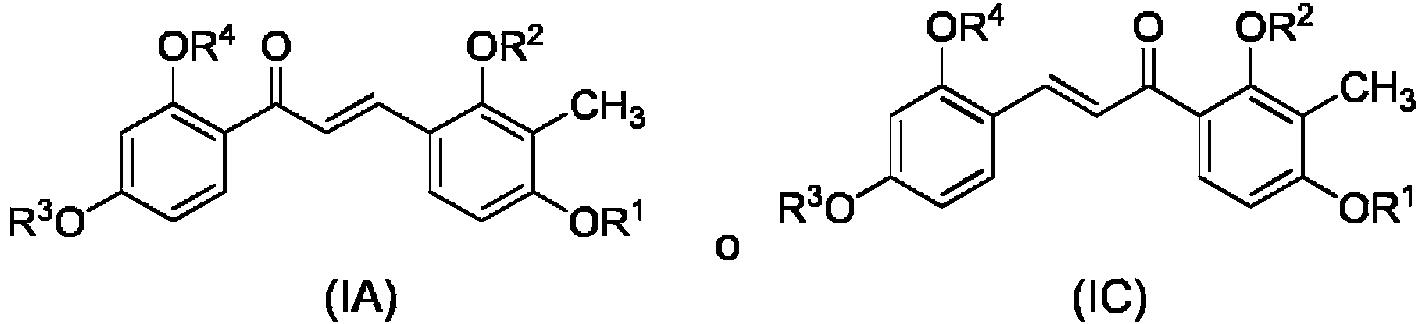
o un estereoisómero, tautómero o sal del mismo, en donde:or a stereoisomer, tautomer or salt thereof, wherein:
R1, R2, R3 y R4 son cada uno independientemente hidrógeno, alquilo, arilo o aralquilo;R1, R2, R3, and R4 are each independently hydrogen, alkyl, aryl, or aralkyl;
en donde la reducción en dos etapas comprende las etapas de:wherein the two-stage reduction comprises the stages of:
(a) tratamiento con paladio sobre carbono y ácido fórmico/H2 (gas) o paladio sobre carbono y formiato de amonio; y(a) treatment with palladium on carbon and formic acid / H 2 (gas) or palladium on carbon and ammonium formate; and
(b) tratamiento con hidruro de bis(2-metoxietoxi)aluminio y sodio, níquel Raney e hidrógeno gaseoso o cinc/HCl. En algunas realizaciones del método que se desvela, el compuesto de estructura (I) tiene una de las siguientes estructuras (IB) o (ID):(b) treatment with sodium bis (2-methoxyethoxy) aluminum hydride, Raney nickel and hydrogen gas or zinc / HCl. In some embodiments of the disclosed method, the compound of structure (I) has one of the following structures (IB) or (ID):

En otras realizaciones del método que se desvela, cada uno de entre R1 y R2 es metilo. Como se desvela en el presente documento, cada uno de entre R3 y R4 es hidrógeno. Por ejemplo, cada uno de entre R1 y R2 es metilo, cada uno de entre R3 y R4 es hidrógeno y el compuesto de estructura (I) tiene una de las siguientes estructuras (IB-7) o (ID-7): En algunas realizaciones del método que se desvela, la reducción comprende tratar un compuesto de estructura (IB) o (ID) con hidruro de bis(2-metoxietoxi)aluminio y sodio, níquel Raney e hidrógeno gaseoso o cinc/HCl.In other embodiments of the disclosed method, each of R1 and R2 is methyl. As disclosed herein, each of R3 and R4 is hydrogen. For example, each of R1 and R2 is methyl, each of R3 and R4 is hydrogen, and the compound of structure (I) has one of the following structures (IB-7) or (ID-7): In some embodiments of the disclosed method, the reduction comprises treating a compound of structure (IB) or (ID) with sodium bis (2-methoxyethoxy) aluminum hydride, Raney nickel and hydrogen gas or zinc / HCl.
En determinadas otras realizaciones del método que se desvela, el compuesto de estructura (IB) o (ID) se ha preparado reduciendo un compuesto de estructura (IA) o (IC), respectivamente:In certain other embodiments of the disclosed method, the compound of structure (IB) or (ID) has been prepared by reducing a compound of structure (IA) or (IC), respectively:

Por ejemplo, en algunas realizaciones del método anterior, cada uno de entre R1 y R2 es metilo o cada uno de entre R3 y R4 es isopropilo.For example, in some embodiments of the above method, each of R1 and R2 is methyl or each of R3 and R4 is isopropyl.
Adicionalmente, como se desvela en el presente documento, cada uno de entre R3 y R4 es bencilo. Por ejemplo, como se desvela en el presente documento, cada uno de entre R1 y R2 es metilo, cada uno de entre R3 y R4 es bencilo y el compuesto de estructura (I) tiene una de las siguientes estructuras (IA-5) o (IC-5):Additionally, as disclosed herein, each of R3 and R4 is benzyl. For example, as disclosed herein, each of R1 and R2 is methyl, each of R3 and R4 is benzyl, and the compound of structure (I) has one of the following structures (IA-5) or (IC-5):

En determinados ejemplos del método anterior, cada uno de entre R1 y R2 es metilo, cada uno de entre R3 y R4 es isopropilo y el compuesto de estructura (I) tiene una de las siguientes estructuras (IA-6) o (IC-6):In certain examples of the above method, each of R1 and R2 is methyl, each of R3 and R4 is isopropyl, and the compound of structure (I) has one of the following structures (IA-6) or (IC-6 ):

En otras realizaciones más, la reducción comprende tratar un compuesto de estructura (IA) o (IC) con paladio sobre carbono y ácido fórmico/H2 (gas) o paladio sobre carbono y formiato de amonio.In still other embodiments, the reduction comprises treating a compound of structure (IA) or (IC) with palladium on carbon and formic acid / H 2 (gas) or palladium on carbon and ammonium formate.
En determinadas otras realizaciones del método que se desvela, el compuesto de estructura (I) se ha preparado por reacción de un compuesto de estructura (III) y un compuesto de estructura (IV):In certain other embodiments of the disclosed method, the compound of structure (I) has been prepared by reacting a compound of structure (III) and a compound of structure (IV):

o un estereoisómero, tautómero o sal del mismo, en donde uno de entre R11 y R12 es hidrógeno y el otro de entre R11 y R12 es metilo. Por ejemplo, en algunas realizaciones, R11 es hidrógeno y R12 es metilo. En algunas otras realizaciones de ejemplo, R11 es metilo y R12 es hidrógeno. En algunas realizaciones, cada uno de entre R1 y R2 es metilo o cada uno de entre R3 y R4 es isopropilo. Adicionalmente, como se desvela en el presente documento, cada uno de entre R3 y R4 es bencilo. or a stereoisomer, tautomer or salt thereof, wherein one of R11 and R12 is hydrogen and the other of R11 and R12 is methyl. For example, in some embodiments, R11 is hydrogen and R12 is methyl. In some other example embodiments, R11 is methyl and R12 is hydrogen. In some embodiments, each of R1 and R2 is methyl or each of R3 and R4 is isopropyl. Additionally, as disclosed herein, each of R3 and R4 is benzyl.
En otras realizaciones más del método que se desvela, el compuesto de estructura (I) tiene una de las siguientes estructuras (IA) o (IC):In still other embodiments of the disclosed method, the compound of structure (I) has one of the following structures (IA) or (IC):

Por ejemplo, en algunas realizaciones del método anterior, cada uno de entre R1 y R2 es metilo, o cada uno de entre R3 y R4 es isopropilo. Adicionalmente, como en el presente documento, cada uno de entre R3 y R4 es bencilo. Por ejemplo, como se desvela en el presente documento, cada uno de entre R1 y R2 es metilo, cada uno de entre R3 y R4 es bencilo y el compuesto de estructura (I) tiene una de las siguientes estructuras (IA-5) o (IC-5):For example, in some embodiments of the above method, each of R1 and R2 is methyl, or each of R3 and R4 is isopropyl. Additionally, as herein, each of R3 and R4 is benzyl. For example, as disclosed herein, each of R1 and R2 is methyl, each of R3 and R4 is benzyl, and the compound of structure (I) has one of the following structures (IA-5) or (IC-5):

En algunas realizaciones del método anterior, la reducción comprende las etapas de:In some embodiments of the above method, the reduction comprises the steps of:
(a) tratamiento con paladio sobre carbono y ácido fórmico/H2 (gas) o paladio sobre carbono y formiato de amonio; y(a) treatment with palladium on carbon and formic acid / H 2 (gas) or palladium on carbon and ammonium formate; and
(b) tratamiento con hidruro de bis(2-metoxietoxi)aluminio y sodio, níquel Raney e hidrógeno gaseoso o cinc/HCl. En otras realizaciones más del método que se desvela, cada uno de entre R1 y R2 es metilo, cada uno de entre R3 y R4 es isopropilo y el compuesto de estructura (I) tiene una de las siguientes estructuras (IA-6) o (IC-6):(b) treatment with sodium bis (2-methoxyethoxy) aluminum hydride, Raney nickel and hydrogen gas or zinc / HCl. In still other embodiments of the disclosed method, each of R1 and R2 is methyl, each of R3 and R4 is isopropyl, and the compound of structure (I) has one of the following structures (IA-6) or ( IC-6):

En algunas realizaciones del método anterior, la reducción comprende tratar un compuesto de estructura (IA-6) o (IC-6) con paladio sobre carbono, hidrógeno gaseoso y ácido acético.In some embodiments of the above method, the reduction comprises treating a compound of structure (IA-6) or (IC-6) with palladium on carbon, hydrogen gas, and acetic acid.
En otras realizaciones más, el compuesto de estructura (II) tiene la siguiente estructura (II-2):In still other embodiments, the compound of structure (II) has the following structure (II-2):

Como se desvela en el presente documento, el compuesto de estructura (II) tiene la siguiente estructura (II-1): As disclosed herein, the compound of structure (II) has the following structure (II-1):

1. Preparación de 1.3-Diarilpropanos1. Preparation of 1,3-Diarylpropanes
A. Preparaciones comparativas de 1,3-diarilpropanosA. Comparative preparations of 1,3-diarylpropanes
Diversas publicaciones han descrito la preparación de 1,3-diarilpropanos; sin embargo, ninguno de los métodos publicados cumple con los criterios necesarios para la preparación segura y rentable de estos compuestos a gran escala. Por ejemplo. la Patente de los EE.UU. N.° 5.880.314 describe la preparación de 1.3-bis(2.4-dihidroxifenil)propano mediante la reducción total de la chalcona correspondiente. Una pequeña cantidad (~6 gramos) de la chalcona se trató con níquel Raney e hidrógeno gaseoso durante un período de tiempo prolongado (~20 horas). y se obtuvo un rendimiento de aproximadamente el 23 % de 1,3-diarilpropano purificado. Aunque la preparación de los 1,3-diarilpropanos era factible a través de este método. el rendimiento bajo y el uso de mezclas explosivas de hidrógeno gaseoso y níquel Raney hacen que este método no sea adecuado para la producción a gran escala. Various publications have described the preparation of 1,3-diarylpropanes; however, none of the published methods meet the necessary criteria for the safe and cost-effective preparation of these compounds on a large scale. For instance. US Patent No. 5,880,314 describes the preparation of 1,3-bis (2,4-dihydroxyphenyl) propane by total reduction of the corresponding chalcone. A small amount (~ 6 grams) of the chalcone was treated with Raney nickel and hydrogen gas for an extended period of time (~ 20 hours). and a yield of about 23% of purified 1,3-diarylpropane was obtained. Although the preparation of 1,3-diarylpropanes was feasible through this method. the low yield and the use of explosive mixtures of hydrogen gas and Raney nickel make this method unsuitable for large-scale production.
También se ha publicado una reducción en una sola etapa de Chalconas a 1,3-diarilpropanos en J Braz. Chem. Soc.A one-step reduction of Chalconas to 1,3-diarylpropanes has also been reported in J Braz. Chem. Soc.
1999. 10. 347-353. Sin embargo. el método desvelado no es adecuado para la preparación de compuestos de estructura (II) porque da como resultado una mezcla de compuestos que son difíciles de separar. Además. los métodos desvelados adolecen de falta de reproducibilidad de un lote a otro.1999. 10. 347-353. Nevertheless. The disclosed method is not suitable for the preparation of compounds of structure (II) because it results in a mixture of compounds that are difficult to separate. What's more. the disclosed methods suffer from a lack of lot-to-lot reproducibility.
También se ha publicado una reducción en una sola etapa de chalconas a alcoholes saturados con formiato de amonio/ Pd-Carbono (Lett. In Org. Chem. 2006. 3. 39-41). Sin embargo. este método no incluye la reducción total a un 1.3-diarilpropano y no aborda las deficiencias de otros métodos de preparación.A one-step reduction of chalcones to saturated alcohols with ammonium formate / Pd-Carbon has also been reported (Lett. In Org. Chem. 2006. 3. 39-41). Nevertheless. this method does not include the total reduction to a 1,3-diarylpropane and does not address the shortcomings of other preparation methods.
B. Preparación mejorada de 1.3-DiarilpropanosB. Improved preparation of 1,3-Diarylpropanes
Como se ha indicado anteriormente. los compuestos y métodos conocidos no son adecuados para la preparación de compuestos de estructura (II). particularmente a gran escala. Los compuestos y métodos que se proporcionan por la presente divulgación abordan los problemas anteriormente asociados a la preparación de compuestos de 1.3-diarilpropano. La reducción de un compuesto de chalcona novedoso (es decir. un compuesto de estructura (I)) a la cetona correspondiente. seguida de una reducción total de la cetona. da como resultado 1.3-diarilpropanos con un rendimiento y una pureza altos. Además. los compuestos y métodos de la presente divulgación permiten una operación más segura y una manipulación de los reactivos más fácil que cuando se emplean otros compuestos y métodos conocidos. En consecuencia. este nuevo enfoque es susceptible de producir de forma segura y rentable 1.3-diarilpropanos a escalas que no pueden obtenerse (por ejemplo. en una planta piloto o más grande) cuando no se usan compuestos de estructura (I).As stated above. known compounds and methods are not suitable for the preparation of compounds of structure (II). particularly on a large scale. The compounds and methods provided by the present disclosure address the problems previously associated with the preparation of 1,3-diarylpropane compounds. The reduction of a novel chalcone compound (ie a compound of structure (I)) to the corresponding ketone. followed by a total reduction of the ketone. results in 1,3-diarylpropanes in high yield and purity. What's more. The compounds and methods of the present disclosure allow safer operation and easier handling of reagents than when other known compounds and methods are employed. Consequently. This new approach is capable of safely and cost-effectively producing 1,3-diarylpropanes on scales that cannot be obtained (eg in a pilot plant or larger) when no compounds of structure (I) are used.
Los métodos de la presente divulgación incluyen la preparación de compuestos de estructura (II) a través de una reducción en dos etapas de compuestos de estructura (I). En determinadas realizaciones. los métodos dan como resultado un rendimiento al menos un 25 % mayor de 1.3-diarilpropano con respecto a otros métodos conocidos. En consecuencia. en algunas realizaciones la reducción total de un compuesto de estructura (I) rinde al menos un 50 %. al menos un 60 %. al menos un 70 %. al menos un 80 %. al menos un 90 %. al menos un 95 % o al menos un 99 % del máximo teórico de un compuesto de estructura (II).The methods of the present disclosure include the preparation of compounds of structure (II) through a two-step reduction of compounds of structure (I). In certain embodiments. The methods result in at least 25% higher yield of 1,3-diarylpropane over other known methods. Consequently. in some embodiments the total reduction of a compound of structure (I) yields at least 50%. at least 60%. at least 70%. at least 80%. at least 90%. at least 95% or at least 99% of the theoretical maximum of a compound of structure (II).
Además del aumento del rendimiento. los métodos de la invención también proporcionan compuestos de 1.3-diarilpropano de mayor pureza con respecto a la pureza posible cuando se emplean otros métodos. Esta pureza alta hace que los compuestos de estructura (II). preparados de acuerdo con la presente divulgación. cristalicen más fácilmente. aumentando de este modo su pureza aún más. En consecuencia. en algunas realizaciones. los compuestos de estructura (II) preparados de acuerdo con el método que se desvela tienen una pureza de al menos un 95 %. al menos un 96 %. al menos un 97 %. al menos un 98 %. al menos un 99 %. al menos un 99.5 %. al menos un 99.9 % o al menos un 99.99 % determinada mediante HPLC.In addition to the increase in performance. The methods of the invention also provide 1,3-diarylpropane compounds of higher purity relative to the purity possible when other methods are employed. This high purity makes the compounds of structure (II). prepared in accordance with the present disclosure. crystallize more easily. thus increasing its purity even more. Consequently. in some embodiments. The compounds of structure (II) prepared according to the disclosed method have a purity of at least 95%. at least 96%. at least 97%. at least 98%. at least 99%. at least 99.5%. at least 99.9% or at least 99.99% determined by HPLC.
Los compuestos de la presente invención pueden prepararse mediante técnicas de síntesis orgánica conocidas. incluyendo los métodos que se describen con más detalle en los Ejemplos. Sin embargo. en general. los compuestos de estructura (I) y (II) pueden prepararse mediante el siguiente Esquema General de Reacción (Esquema 1). en donde L es un grupo saliente adecuado (por ejemplo. halógeno) y los valores para R1-R12. X. Y y Z son como se han definido anteriormente. The compounds of the present invention can be prepared by known organic synthesis techniques. including the methods that are described in more detail in the Examples. Nevertheless. usually. Compounds of structure (I) and (II) can be prepared by the following General Reaction Scheme (Scheme 1). where L is a suitable leaving group (eg halogen) and the values for R1-R12. X. Y and Z are as defined above.
Esquema 1Scheme 1


Con respecto al Esquema 1, los compuestos de estructura (IIIA) pueden adquirirse o prepararse de acuerdo con métodos conocidos en la técnica. La reacción de los hidroxilos fenólicos con R3L en condiciones básicas (por ejemplo, carbonato de potasio o de sodio), seguida de la reacción con R4L en condiciones básicas, produce compuestos de estructura (III). En un ejemplo específico que se desvela en el presente documento, R3 y R4 son cada uno bencilo y R3L y R4L son cada uno cloruro de bencilo. En otro ejemplo específico, R3 y R4 son cada uno isopropilo y R3L y R4L son cada uno 2-bromopropano. Un experto en la materia reconocerá que cuando R3=R4, ambos grupos pueden añadirse en una sola etapa. Además, el orden de la reacción puede invertirse, y o pueden emplearse grupos protectores adecuados para obtener el compuesto de estructura (III) deseado.With respect to Scheme 1, compounds of structure (IIIA) can be purchased or prepared according to methods known in the art. Reaction of phenolic hydroxyls with R3L under basic conditions (eg, potassium or sodium carbonate), followed by reaction with R4L under basic conditions, produces compounds of structure (III). In a specific example disclosed herein, R3 and R4 are each benzyl and R3L and R4L are each benzyl chloride. In another specific example, R3 and R4 are each isopropyl and R3L and R4L are each 2-bromopropane. One skilled in the art will recognize that when R3 = R4, both groups can be added in a single step. Furthermore, the order of the reaction can be reversed, or suitable protecting groups can be employed to obtain the desired compound of structure (III).
De manera similar, los compuestos de estructura (IVA) pueden hacerse reaccionar con R1L seguido de R2L en condiciones básicas para producir compuestos de estructura (IV). En un ejemplo específico, R1 y R2 son cada uno metilo y R1L y R2L son cada uno un reactivo de metilación adecuado (por ejemplo, yoduro de metilo, etc.). De nuevo, en determinadas realizaciones en donde R1=R2 puede ser necesaria una sola etapa y son posibles variaciones en los esquemas de orden de reacción y grupos protectores.Similarly, compounds of structure (IVA) can be reacted with R1L followed by R2L under basic conditions to produce compounds of structure (IV). In a specific example, R1 and R2 are each methyl and R1L and R2L are each a suitable methylating reagent (eg, methyl iodide, etc.). Again, in certain embodiments where R1 = R2 a single step may be required and variations in reaction order schemes and protecting groups are possible.
La condensación aldólica de los compuestos de estructura (III) con compuestos de estructura (IV) en condiciones básicas da como resultado entonces compuestos de estructura (I). En este contexto, pueden emplearse diversas condiciones en la puesta en práctica del método que se desvela. Por ejemplo, pueden emplearse reactivos tales como NaH, KOH, NaOH, LiOH, NaOMe, t-BuOK y similares para realizar la condensación aldólica. En determinadas realizaciones, puede usarse KOH en un disolvente tal como metanol.The aldol condensation of compounds of structure (III) with compounds of structure (IV) under basic conditions then results in compounds of structure (I). In this context, various conditions may be employed in the practice of the disclosed method. For example, reagents such as NaH, KOH, NaOH, LiOH, NaOMe, t-BuOK, and the like can be used to perform the aldol condensation. In certain embodiments, KOH in a solvent such as methanol can be used.
Los compuestos de estructura (I) en donde R5 es oxo e Y y Z forman un enlace pueden reducirse para formar compuestos de estructura (IB). Las condiciones de reducción adecuadas incluyen condiciones conocidas en la técnica para la reducción del enlace alqueno en compuestos carbonílicos alfa-beta insaturados. Dichas condiciones incluyen, pero sin limitación, hidrogenación en presencia de un catalizador adecuado (por ejemplo, paladio sobre carbono) y una fuente de hidrógeno tal como hidrógeno gaseoso, ácido fórmico, formiato de amonio, ciclohexa-1,4-dieno y otros reactivos capaces de donar un átomo de hidrógeno. En determinadas realizaciones, las condiciones de hidrogenación por transferencia (por ejemplo, un catalizador y un donador de átomos de hidrógeno, tal como formiato de amonio o ácido fórmico) son particularmente útiles, ya que dichas condiciones pueden ser más seguras y, en determinados ejemplos, los reactivos pueden ser más fáciles de manipular que el hidrógeno gaseoso, especialmente a gran escala. En un ejemplo específico, las condiciones de reducción comprenden un catalizador de paladio (por ejemplo, Pd/C) y formiato de amonio. En otros ejemplos, las condiciones de reacción comprenden un catalizador de paladio (por ejemplo, Pd/C) y ácido fórmico y/o hidrógeno gaseoso. Otros reactivos de ejemplo para la hidrogenación por transferencia incluyen (Ph3P)RhCl-EtSiH-Bz, NaBH4-piridina, NaBH4-NiCl2-Dioxano-MeOH (véase, por ejemplo, J. Chem. Res. 2006, 584-585). Como alternativa, los compuestos de estructura (ID) pueden prepararse en condiciones similares por reducción de compuestos de estructura (I) en donde R6 es oxo y X e Y forman un enlace.Compounds of structure (I) where R5 is oxo and Y and Z form a bond can be reduced to form compounds of structure (IB). Suitable reducing conditions include conditions known in the art for reducing the alkene bond in alpha-beta unsaturated carbonyl compounds. Such conditions include, but are not limited to, hydrogenation in the presence of a suitable catalyst (eg, palladium on carbon) and a source of hydrogen such as hydrogen gas, formic acid, ammonium formate, cyclohexa-1,4-diene, and other reagents. able to donate a hydrogen atom. In certain embodiments, the transfer hydrogenation conditions (for example, a catalyst and a hydrogen atom donor, such as ammonium formate or formic acid) are particularly useful as such conditions may be safer and, in certain examples, the reagents may be easier to handle than hydrogen gas, especially on a large scale. In a specific example, the reducing conditions comprise a palladium catalyst (eg, Pd / C) and ammonium formate. In other examples, the reaction conditions comprise a palladium catalyst (eg, Pd / C) and formic acid and / or hydrogen gas. Other exemplary reagents for transfer hydrogenation include (Ph3P) RhCl-EtSiH-Bz, NaBH4-pyridine, NaBH4-NiCl2-Dioxane-MeOH (see, eg, J. Chem. Res. 2006, 584-585). Alternatively, compounds of structure (ID) can be prepared under similar conditions by reducing compounds of structure (I) wherein R6 is oxo and X and Y form a bond.
Los compuestos de estructura (II) pueden prepararse por reducción total del grupo carbonilo de compuestos de estructura (IB) o (ID) en condiciones adecuadas. Las condiciones de reducción en este contexto incluyen, pero sin limitación, hidrogenación en presencia de un catalizador adecuado (por ejemplo, Pd/C, níquel Raney y similares) e hidrógeno gaseoso. Otras condiciones de reducción incluyen el tratamiento con cinc/HCl o Vitride® (es decir, hidruro de bis(2-metoxietoxi)aluminio y sodio) u otros reactivos de hidruro. En un ejemplo específico, las condiciones de reducción comprenden tratamiento con Vitride®. En otro ejemplo, la reducción comprende el tratamiento con Ni Raney/H2 y Zn/HCl. Otras condiciones de reducción son bien conocidas por los expertos en la materia.Compounds of structure (II) can be prepared by total reduction of the carbonyl group of compounds of structure (IB) or (ID) under suitable conditions. Reducing conditions in this context include, but are not limited to, hydrogenation in the presence of a suitable catalyst (eg, Pd / C, Raney nickel, and the like) and hydrogen gas. Other reducing conditions include treatment with zinc / HCl or Vitride® (ie, sodium bis (2-methoxyethoxy) aluminum hydride) or other hydride reagents. In a specific example, the reduction conditions comprise Vitride® treatment. In another example, the reduction comprises treatment with Ni Raney / H 2 and Zn / HCl. Other reduction conditions are well known to those of skill in the art.
Como alternativa, los compuestos de estructura (II) pueden prepararse en una reducción de una sola etapa de compuestos de estructura (I). Las condiciones adecuadas en este contexto incluyen el tratamiento de compuestos de estructura (I) con un catalizador adecuado (por ejemplo, paladio sobre carbono) e hidrógeno gaseoso. En algunas realizaciones, también puede usarse un ácido, tal como el ácido acético, además de un catalizador e hidrógeno gaseoso. En otras realizaciones, pueden emplearse condiciones de hidrogenación por transferencia. En algunos ejemplos de reducción en una sola etapa de compuestos de estructura (I) a compuestos de estructura (II), al menos uno de entre R3 o R4 es isopropilo. Por ejemplo, cada uno de entre R3 y R4 puede ser isopropilo.Alternatively, compounds of structure (II) can be prepared in a one-step reduction of compounds of structure (I). Suitable conditions in this context include treating compounds of structure (I) with a suitable catalyst (eg, palladium on carbon) and hydrogen gas. In some embodiments, an acid, such as acetic acid, can also be used in addition to a catalyst and hydrogen gas. In other embodiments, transfer hydrogenation conditions may be employed. In some examples of one-step reduction of compounds of structure (I) to compounds of structure (II), at least one of R3 or R4 is isopropyl. For example, each of R3 and R4 can be isopropyl.
Un experto en la materia reconocerá que son posibles variaciones de las etapas y reactivos exactos esbozados en el Esquema 1. Además, pueden utilizarse grupos protectores en la preparación de los compuestos que se desvelan. Por ejemplo, en determinadas realizaciones, los valores de R1, R2, R3 o R4 se eligen de manera que se obtenga un grupo hidroxilo protegido. En realizaciones particulares, R3 y R4 son grupos protectores de hidroxilo que pueden retirarse para revelar un fenol libre. Los grupos protectores útiles en este contexto incluyen grupos protectores que pueden retirarse por hidrogenación o en condiciones selectivas ácidas, básicas u otras. Por ejemplo, alquilo (por ejemplo, isopropilo, alilo y similares), arilo, aralquilo (por ejemplo, bencilo, tritilo y similares), son todos grupos protectores de hidroxilo útiles que pueden emplearse en el contexto de la presente divulgación.One skilled in the art will recognize that variations of the exact steps and reagents outlined in Scheme 1 are possible. In addition, protecting groups can be used in the preparation of the disclosed compounds. For example, in certain embodiments, the values of R1, R2, R3, or R4 are chosen such that a protected hydroxyl group is obtained. In particular embodiments, R3 and R4 are hydroxyl protecting groups that can be removed to reveal a free phenol. Protecting groups useful in this context include protecting groups that can be removed by hydrogenation or under acidic, basic or other selective conditions. For example, alkyl (eg, isopropyl, allyl, and the like), aryl, aralkyl (eg, benzyl, trityl, and the like) are all useful hydroxyl protecting groups that can be employed in the context of the present disclosure.
Como se desvela en el presente documento, uno o ambos de entre R3 y R4 son grupos protectores que pueden retirarse por hidrogenación, por ejemplo, grupos bencilo. En realizaciones particulares, uno o ambos de entre R3 y R4 son isopropilo. El isopropilo puede retirarse selectivamente por tratamiento con AlCl3 u otros ácidos de Lewis (J. Org. Chem. 1998, 64, 9139). Las ventajas de usar isopropilo como grupo protector en el contexto de la presente divulgación incluyen: 1) peso molecular bajo en comparación con otros grupos protectores, por lo que hay menos pérdida de masa; cuando el grupo protector se retira 2) el compuesto de isopropilo es soluble en metanol; 3) es posible la reducción en una sola etapa a 1,3-diarilpropano, por lo que puede evitarse la cara etapa de reducción de vitride; y 4) la desprotección selectiva del grupo isopropilo transcurre con rendimiento alto. Los grupos protectores pueden retirarse durante una de las etapas de reacción descritas anteriormente (por ejemplo, pueden retirarse grupos bencilo durante la hidrogenación del enlace alqueno) o pueden añadirse etapas adicionales al esquema anterior para retirar los grupos protectores. Dichas etapas adicionales pueden incluir el tratamiento con AlCl3 u otro reactivo adecuado. Otros grupos protectores útiles en el contexto de la presente divulgación son bien conocidos por los expertos en la materia, por ejemplo, los que se encuentran en "Greene's Protective Groups in Organic Synthesis", 4a edición, Peter G. M. Wuts y Theodora W. Greene, Octubre de 2006.As disclosed herein, one or both of R3 and R4 are protecting groups that can be removed by hydrogenation, eg, benzyl groups. In particular embodiments, one or both of R3 and R4 are isopropyl. Isopropyl can be selectively removed by treatment with AlCl3 or other Lewis acids (J. Org. Chem. 1998, 64, 9139). Advantages of using isopropyl as a protecting group in the context of the present disclosure include: 1) low molecular weight compared to other protecting groups, so there is less loss in mass; when the protecting group is removed 2) the isopropyl compound is soluble in methanol; 3) one-step reduction to 1,3-diarylpropane is possible, whereby the expensive vitride reduction step can be avoided; and 4) the selective deprotection of the isopropyl group proceeds in high yield. Protecting groups can be removed during one of the reaction steps described above (eg, benzyl groups can be removed during hydrogenation of the alkene bond) or additional steps can be added to the above scheme to remove the protecting groups. Such additional steps may include treatment with AlCl3 or other suitable reagent. Other protecting groups useful in the context of the present disclosure are well known to those of skill in the art, for example those found in "Greene's Protective Groups in Organic Synthesis", 4th edition, Peter GM Wuts and Theodora W. Greene, October 2006.
Los compuestos de la presente divulgación pueden purificarse usando técnicas de purificación conocidas. Dichas técnicas incluyen, pero sin limitación, cromatografía (por ejemplo, HPLC, cromatografía en columna, CCF, etc.), trituración, extracción, formación de sal, cristalización, etc. En determinadas realizaciones, se emplean técnicas de cristalización para la purificación de compuestos de estructura (I) o (II). Dichas técnicas son especialmente útiles a gran escala cuando no son viables otras técnicas de purificación.The compounds of the present disclosure can be purified using known purification techniques. Such techniques include, but are not limited to, chromatography (eg, HPLC, column chromatography, TLC, etc.), trituration, extraction, salt formation, crystallization, etc. In certain embodiments, crystallization techniques are employed for the purification of compounds of structure (I) or (II). Such techniques are especially useful on a large scale when other purification techniques are not feasible.
Los compuestos de la presente invención pueden utilizarse generalmente como el ácido libre (por ejemplo, fenol) o la base libre. Como alternativa, los compuestos de la presente invención pueden usarse en forma de sales de adición de ácido o base. Pueden prepararse sales de adición de ácido de amino compuestos de la presente invención mediante métodos bien conocidos en la técnica, y pueden formarse a partir de ácidos orgánicos e inorgánicos. Los ácidos orgánicos adecuados incluyen los ácidos maleico, fumárico, benzoico, ascórbico, succínico, metanosulfónico, acético, trifluoroacético, oxálico, propiónico, tartárico, salicílico, cítrico, glucónico, láctico, mandélico, cinámico, aspártico, esteárico, palmítico, glicólico, glutámico y bencenosulfónico. Los ácidos inorgánicos adecuados incluyen los ácidos clorhídrico, bromhídrico, sulfúrico, fosfóricos y nítrico. Las sales de adición de bases incluyen aquellas sales que se forman con un anión de fenol o enol o con otros restos ácidos e incluyen sales formadas con cationes orgánicos e inorgánicos tales como los elegidos entre los metales alcalinos y alcalinotérreos (por ejemplo, litio, sodio, potasio, magnesio, bario y calcio), así como el ion amonio y derivados sustituidos del mismo (por ejemplo, dibencilamonio, bencilamonio, 2-hidroxietilamonio y similares). Por tanto, el término "sal" de estructura (I) o de estructura (II) tiene por objeto abarcar todas y cada una de las formas de sal aceptables.The compounds of the present invention can generally be used as the free acid (eg, phenol) or the free base. Alternatively, the compounds of the present invention can be used in the form of acid or base addition salts. Acid addition salts of amino compounds of the present invention can be prepared by methods well known in the art, and can be formed from organic and inorganic acids. Suitable organic acids include maleic, fumaric, benzoic, ascorbic, succinic, methanesulfonic, acetic, trifluoroacetic, oxalic, propionic, tartaric, salicylic, citric, gluconic, lactic, mandelic, cinnamic, aspartic, stearic, palmitic, glycolic, glutamic acids. and benzenesulfonic. Suitable inorganic acids include hydrochloric, hydrobromic, sulfuric, phosphoric, and nitric acids. Base addition salts include those salts that are formed with a phenol or enol anion or with other acidic moieties and include salts formed with organic and inorganic cations such as those chosen from the alkali and alkaline earth metals (eg, lithium, sodium , potassium, magnesium, barium and calcium), as well as ammonium ion and substituted derivatives thereof (for example, dibenzylammonium, benzylammonium, 2-hydroxyethylammonium and the like). Thus, the term "salt" of structure (I) or structure (II) is intended to encompass any and all acceptable salt forms.
Con respecto a los estereoisómeros, los compuestos de estructura (I) o (II) pueden tener centros quirales y pueden presentarse como racematos, mezclas enriquecidas enantioméricamente y como enantiómeros o diastereómeros individuales. Para facilitar la representación, los compuestos de estructura (I) se representan en una configuración trans; sin embargo, los compuestos de estructura (I) pueden existir como isómeros E o Z (es decir, cis o trans). Todas estas formas isoméricas se incluyen dentro de la presente invención, incluyendo mezclas de las mismas. Los compuestos de estructura (I) o (II) también pueden poseer quiralidad axial que puede dar como resultado atropisómeros. Además, algunas de las formas cristalinas de los compuestos de estructura (I) o (II) pueden existir como polimorfos, que se incluyen en la presente invención. Además, algunos de los compuestos de estructura (I) o (II) también pueden formar solvatos con agua u otros disolventes orgánicos. Dichos disolventes se incluyen igualmente dentro del alcance de la presente invención.With respect to stereoisomers, compounds of structure (I) or (II) may have chiral centers and may occur as racemates, enantiomerically enriched mixtures, and as individual enantiomers or diastereomers. For ease of representation, compounds of structure (I) are represented in a trans configuration; however, compounds of structure (I) may exist as E or Z (ie, cis or trans) isomers. All of these isomeric forms are included within the present invention, including mixtures thereof. Compounds of structure (I) or (II) may also possess axial chirality which can result in atropisomers. Furthermore, some of the crystalline forms of the compounds of structure (I) or (II) may exist as polymorphs, which are included in the present invention. Furthermore, some of the compounds of structure (I) or (II) can also form solvates with water or other organic solvents. Such solvents are also included within the scope of the present invention.
Los compuestos de la presente divulgación también pueden existir en diferentes formas tautoméricas o como mezclas de tautómeros. Los tautómeros son compuestos que son resultado de la migración formal de un átomo de hidrógeno acompañada de un cambio de un enlace simple y un enlace doble adyacente. Por ejemplo, la forma enol y la forma ceto de un compuesto son tautómeros la una de la otra. Los tautómeros dentro del contexto de la presente divulgación incluyen, pero sin limitación, los siguientes pares tautoméricos (IB) y (IB-T) y (ID) y (ID-T):The compounds of the present disclosure can also exist in different tautomeric forms or as mixtures of tautomers. Tautomers are compounds that are the result of the formal migration of a hydrogen atom accompanied by a change of a single bond and an adjacent double bond. For example, the enol form and the keto form of a compound are tautomers of each other. Tautomers within the context of the present disclosure include, but are not limited to, the following tautomeric pairs (IB) and (IB-T) and (ID) and (ID-T):

Los compuestos representativos de la presente invención incluyen (pero sin limitación) los compuestos que se enumeran en la Tabla 1 a continuación.Representative compounds of the present invention include (but are not limited to) the compounds listed in Table 1 below.
T l 1T l 1

(continuación)(continuation)

(continuación)(continuation)

Los siguientes ejemplos se proporcionan con fines ilustrativos, no de limitación.The following examples are provided for illustrative purposes, not limitation.
EjemplosExamples
Determinados compuestos de la presente divulgación pueden prepararse de acuerdo con los siguientes esquemas y los conocimientos de un experto en la materia. Todas las temperaturas son en grados Celsius (°C), a menos que se indique lo contrario. Todos los compuestos sintetizados se caracterizaron mediante al menos RMN de 1H, RMN de 13C y CL/EM. Durante el tratamiento de las reacciones, el extracto orgánico se secó sobre sulfato de sodio (Na2SO4), a menos que se indique lo contrario. Las siguientes abreviaturas se usan para los reactivos empleados habitualmente: Na2SO4 (sulfato de sodio), HCl (ácido clorhídrico), NaOH (hidróxido de sodio), KOH (hidróxido de potasio), NaCl (cloruro de sodio), Pd-C (paladio sobre carbono), K2CO3 (carbonato de potasio), NaHCO3 (bicarbonato de sodio), BnCl (cloruro de bencilo), DMF (dimetilformamida) y TA (temperatura ambiente).Certain compounds of the present disclosure can be prepared according to the following schemes and the knowledge of one of ordinary skill in the art. All temperatures are in degrees Celsius (° C), unless otherwise noted. All synthesized compounds were characterized by at least 1H NMR, 13C NMR and LC / MS. During the reaction work-up, the organic extract was dried over sodium sulfate (Na 2 SO 4 ), unless otherwise indicated. The following abbreviations are used for commonly used reagents: Na 2 SO 4 (sodium sulfate), HCl (hydrochloric acid), NaOH (sodium hydroxide), KOH (potassium hydroxide), NaCl (sodium chloride), Pd- C (palladium on carbon), K 2 CO 3 (potassium carbonate), NaHCO 3 (sodium bicarbonate), BnCl (benzyl chloride), DMF (dimethylformamide) and RT (room temperature).
EJEMPLO ILUSTRATIVO 1ILLUSTRATIVE EXAMPLE 1
SÍNTESIS DE 1-(2,4-BIS(BENCILOXI)FENIL)ETANONASYNTHESIS OF 1- (2,4-BIS (BENZYLOXY) PHENYL) ETHANONE

(COMPUESTO N°. 2)(COMPOUND No. 2)

A una mezcla de 2,4-dihidroxiacetofenona 1 (1,00 equiv. 24 kg) y carbonato de potasio (2,9 equiv. 63,3 kg) en DMF seco (235 l), se le añadió cloruro de bencilo (2,5 equiv., 50 kg) durante 1 h a temperatura ambiente (25 °C). Después, la mezcla de reacción se calentó a aproximadamente 85-90 °C durante ~14 h y se mantuvo a esta temperatura hasta que se comprobó que había finalizado por HPLC. Después de la finalización, la mezcla de reacción se dejó enfriar a temperatura ambiente (25 °C) y se filtró a través de un lecho de Celite®. El lecho de Celite® se lavó con acetona (3 volúmenes) y el filtrado combinado se concentró al vacío hasta obtener un sólido seco. Este sólido se disolvió en acetato de etilo (5 volúmenes) y se lavó con solución de bicarbonato de sodio (2 x 5 volúmenes) seguida de salmuera (3 volúmenes). Después, la capa de acetato de etilo se secó con sulfato de sodio (75 kg), se filtró y se concentró por evaporación hasta sequedad. El residuo se trituró con hexano (100 l) y se filtró. Después, este residuo se lavó con hexano (35 l) y se secó a 35-40 °C hasta un peso constante para obtener compuesto 2 (40 kg) 77 %. PF: 83,1 G; RMN-1H (CDCl3 , 500 MHz): 57,86(d, 1H, J= 9 Hz), 7,55-7,41 (m, 8H), 7,40-7,36 (m, 2H), 6,65-6,63 (m, 1H), 6,62 (s, 1 H), 5,13 (s, 2H), 5,10 (s, 2H), 2,57 (s, 3H); RMN-13C (CDCh, 125 MHz): 5 197,762(C), 169,511 (C), 160,106 (C), 136,190 (C), 136,019 (C), 132,729 (CH), 128,890 (CH), 128,724 (2CH), 128,568(CH), 128,405 (CH), 128,298 (CH), 128,283 (CH), 127,635 (CH), 127,539 (CH), 121,779 (C), 106,325 (CH), 100,369 (CH), 70,753 (CH2), 70,279 (CH2), 32,145 (CH3).To a mixture of 2,4-dihydroxyacetophenone 1 (1.00 equiv. 24 kg) and potassium carbonate (2.9 equiv. 63.3 kg) in dry DMF (235 L), benzyl chloride (2 , 5 equiv., 50 kg) for 1 h at room temperature (25 ° C). The reaction mixture was then heated to about 85-90 ° C for ~ 14 h and held at this temperature until it was found to be complete by HPLC. After completion, the reaction mixture was allowed to cool to room temperature (25 ° C) and was filtered through a pad of Celite®. The Celite® bed was washed with acetone (3 volumes) and the combined filtrate was concentrated in vacuo to a dry solid. This solid was dissolved in ethyl acetate (5 volumes) and washed with sodium bicarbonate solution (2 x 5 volumes) followed by brine (3 volumes). The ethyl acetate layer was then dried over sodium sulfate (75 kg), filtered and evaporated to dryness. The residue was triturated with hexane (100 L) and filtered. Then this residue was washed with hexane (35 L) and dried at 35-40 ° C to constant weight to obtain compound 2 (40 kg) 77%. MP: 83.1 G; 1H-NMR (CDCl3, 500 MHz): 57.86 (d, 1H, J = 9Hz), 7.55 to 7.41 (m, 8H), 7.40-7.36 (m, 2H) , 6.65-6.63 (m, 1H), 6.62 (s, 1H), 5.13 (s, 2H), 5.10 (s, 2H), 2.57 (s, 3H) ; 13 C NMR (CDCh, 125 MHz): 5 197.762 (C), 169.511 (C), 160.106 (C), 136.190 (C), 136.019 (C), 132.729 (CH), 128.890 (CH), 128.724 (2CH) , 128.568 (CH), 128.405 (CH), 128.298 (CH), 128.283 (CH), 127.635 (CH), 127.539 (CH), 121.779 (C), 106.325 (CH), 100.369 (CH), 70.753 (CH 2 ), 70.279 (CH 2 ), 32.145 (CH 3 ).
EJEMPLO ILUSTRATIVO 2ILLUSTRATIVE EXAMPLE 2
SÍNTESIS DE (E-1-(2,4-BIS(BENCILOXI)FENIL)-3-(2,4-DIMETOXI-3-METILFENIL)PROP-2-EN-1-ONASYNTHESIS OF (E-1- (2,4-BIS (BENZYLOXY) PHENYL) -3- (2,4-DIMETOXY-3-METHYLPHENYL) PROP-2-EN-1-ONA

(COMPUESTO N°. (IA-5))(COMPOUND NO. (IA-5))

Una solución de compuesto 2 (1,00 equiv., 40 kg) en MeOH (360 l) se enfrió a 10-15 °C y se trató con hidróxido de potasio (5 equiv., 36 kg) en MeOH (360 l) durante 1,5 h. A continuación, se añadió 2,4-dimetoxi-3-metilbenzaldehído 3 (1,2 equiv., 25 kg) a la mezcla de reacción durante 1,5 h mientras se mantenía la temperatura a 10-15 °C. Después de finalizar la adición, la mezcla de reacción se calentó a 60-65 °C con agitación y se mantuvo a esta temperatura hasta que se comprobó que había finalizado por HPLC (~20 h). Después de la finalización, la mezcla de reacción se volvió a enfriar a 10-15 °C y se inactivó con HCI acuoso 2 N (13,5 l) hasta alcanzar pH 2. El sólido formado en esta etapa se filtró, se lavó con agua y se disolvió en ácido acético (360 l). Después, esta mezcla se enfrió a 22-25 °C y se agitó durante 20 min, tras lo cual se formó un sólido cristalino de color amarillo. El sólido se recogió por filtración, se lavó con agua y se secó al vacío hasta un peso constante a 30 °C para obtener (IA-5) (50 kg, 84 %. PF: 125,1 °C; RMN-1H (CDCl3 , 500 MHz): 57,93(d, 1H, J= 16 Hz), 7,83 (d, 1H, J= 8,5 Hz), 7,54 (d, 1H, J= 16 Hz), 7,46-7,43 (m, 5H), 7,42-7,40 (m, 1H), 7,39-7,37 (m, 1H), 7,32-7,30 (m, 3H), 7,15 (d, 1H, J= 8,5 Hz), 6,69-6,67 (m, 2H), 6,53 (d, 1H, J= 8,5 Hz), 5,13 (s, 2H), 5,12 (s, 2H), 3,87 (s, 3H), 3,69 (s, 3H), 2,15 (s, 3H); RMN-13C (CDCta, 125 MHz): 5190,599 (C), 162,977 (C), 160,380 (C), 159,365 (C), 159,080 (C), 137,633 (CH), 136,312 (C), 136,201 (C), 133,006 (CH), 128,246 (CH), 127,968 (CH), 127,576 (CH), 126,155 (CH), 125,970 (CH), 123,071 (C), 121,583 (C), 120,036 (C), 106,503 (CH), 100,706 (CH), 70,786 (CH2), 70,290 (CH2), 61,602 (CH3), 55,691 (CH3), 8,858 (CH3).A solution of compound 2 (1.00 equiv., 40 kg) in MeOH (360 L) was cooled to 10-15 ° C and treated with potassium hydroxide (5 equiv., 36 kg) in MeOH (360 L) for 1.5 h. Then, 2,4-dimethoxy-3-methylbenzaldehyde 3 (1.2 equiv., 25 kg) was added to the reaction mixture over 1.5 hr while maintaining the temperature at 10-15 ° C. After Upon completion of the addition, the reaction mixture was heated to 60-65 ° C with stirring and kept at this temperature until it was found to be complete by HPLC (~ 20 h). After completion, the reaction mixture was recooled to 10-15 ° C and quenched with 2N aqueous HCl (13.5 L) until reaching pH 2. The solid formed in this step was filtered, washed with water and dissolved in acetic acid (360 L). This mixture was then cooled to 22-25 ° C and stirred for 20 min, after which a yellow crystalline solid formed. The solid was collected by filtration, washed with water and dried under vacuum to constant weight at 30 ° C to obtain (IA-5) (50 kg, 84%. MP: 125.1 ° C; 1H-NMR ( CDCl 3, 500 MHz): 57.93 (d, 1H, J = 16Hz), 7.83 (d, 1H, J = 8.5Hz), 7.54 (d, 1H, J = 16Hz) , 7.46-7.43 (m, 5H), 7.42-7.40 (m, 1H), 7.39-7.37 (m, 1H), 7.32-7.30 (m, 3H), 7.15 (d, 1H, J = 8.5 Hz), 6.69-6.67 (m, 2H), 6.53 (d, 1H, J = 8.5 Hz), 5, 13 (s, 2H), 5.12 (s, 2H), 3.87 (s, 3H), 3.69 (s, 3H), 2.15 (s, 3H); 13C-NMR (CDCta, 125 MHz): 5190.599 (C), 162.977 (C), 160.380 (C), 159.365 (C), 159.080 (C), 137.633 (CH), 136.312 (C), 136.201 (C), 133.006 (CH), 128.246 (CH), 127.968 (CH), 127.576 (CH), 126.155 (CH), 125.970 (CH), 123.071 (C), 121.583 (C), 120.036 (C), 106.503 (CH), 100.706 (CH), 70.786 (CH 2 ), 70.290 (CH 2 ), 61.602 (CH 3 ), 55.691 (CH 3 ), 8.858 (CH3).
Ejemplo 3Example 3
SÍNTESIS DE 1-(2,4-DIHIDROXIFENIL)-3-(2,4-DIMETOXI-3-METILFENIL)PROPAN-1-ONASYNTHESIS OF 1- (2,4-DIHYDROXYPHENYL) -3- (2,4-DIMETOXY-3-METHYLPHENYL) PROPAN-1-ONA

(COMPUESTO N.° (IB-7))(COMPOUND No. (IB-7))

Una solución de (IA-5) (1 equiv. 50 kg) en metanol (250 l) se trató con Pd-C al 10 % (al 10 % en peso) y ácido fórmico (250 l) y se hidrogenó a 23-25 °C durante 10 h. Después se comprobó que la reacción había finalizado por HPLC, la mezcla de reacción se filtró a través de Celite®. El lecho de Celite® se lavó con acetato de etilo (40 l) y el filtrado combinado se concentró al vacío a 35-40 °C hasta sequedad. El residuo se disolvió en acetato de etilo (3 volúmenes), se lavó con solución saturada de bicarbonato de sodio (20 l) hasta que se obtuvo un pH de 7-7,5. Después, la capa de acetato de etilo se lavó adicionalmente con agua (150 l) seguida de salmuera. Después, la capa de acetato de etilo se secó con sulfato de sodio (88 kg), se filtró y se concentró al vacío a 35-45 °C hasta un peso constante para producir el producto (25 kg, 78 %). PF: 171,0 °C; RMN-1H (CDCh, 500 MHz): 5 12,79 (s, 1H), 7,69 (d, 1H, J= 8,5 Hz), 7,02 (d, 1 H, J= 8,5 Hz), 6,61 (d, 1H, J= 8,5 Hz), 6,38-6,34 (m, 2H), 5,63 (s, 1H), 3,82 (s, 3H), 3,76 (s, 3H), 3,20 (t, 2H, J = 8 Hz), 2,99 (t, 2H, J = 8 Hz), 2,18 (s, 3H); RMN-13C (CDCh, 125 MHz): 5204,899 (C), 165,218 (C), 162,323 (C), 157,592 (C), 157,359 (C), 132,425 (CH), 127,047 (CH), 125,688 (C), 119,917 (C), 113,910 (C), 107,561 (CH), 106,255 (CH), 103,508 (CH), 60,658 (CH3), 55,657 (CH3), 39,355 (CH2), 25,423 (CH2), 9,195 (CH3).A solution of (IA-5) (1 equiv. 50 kg) in methanol (250 L) was treated with 10% Pd-C (10% by weight) and formic acid (250 L) and hydrogenated at 23- 25 ° C for 10 h. After the reaction was checked for completion by HPLC, the reaction mixture was filtered through Celite®. The Celite® bed was washed with ethyl acetate (40 L) and the combined filtrate was concentrated in vacuo at 35-40 ° C to dryness. The residue was dissolved in ethyl acetate (3 volumes), washed with saturated sodium bicarbonate solution (20 L) until a pH of 7-7.5 was obtained. The ethyl acetate layer was then washed further with water (150 L) followed by brine. The ethyl acetate layer was then dried over sodium sulfate (88 kg), filtered and concentrated in vacuo at 35-45 ° C to constant weight to yield the product (25 kg, 78%). MP: 171.0 ° C; 1H-NMR (CDCh, 500 MHz): 12.79 (s, 1H), 7.69 (d, 1H, J = 8.5 Hz), 7.02 (d, 1H, J = 8.5 Hz), 6.61 (d, 1H, J = 8.5 Hz), 6.38-6.34 (m, 2H), 5.63 (s, 1H), 3.82 (s, 3H), 3.76 (s, 3H), 3.20 (t, 2H, J = 8Hz), 2.99 (t, 2H, J = 8Hz), 2.18 (s, 3H); 13 C NMR (CDCh, 125 MHz): 5204.899 (C), 165.218 (C), 162.323 (C), 157.592 (C), 157.359 (C), 132.425 (CH), 127.047 (CH), 125.688 (C) ), 119.917 (C), 113.910 (C), 107.561 (CH), 106.255 (CH), 103.508 (CH), 60.658 (CH 3 ), 55.657 (CH 3 ), 39.355 (CH 2 ), 25.423 (CH 2 ) , 9.195 (CH 3 ).
Ejemplo 4Example 4
SÍNTESIS DE 4-(3-(2,4-DIMETOXI-3-METILFENIL)PROPIL)BENCENO-1,3-DIOLSYNTHESIS OF 4- (3- (2,4-DIMETHOXY-3-METHYLPHENYL) PROPYL) BENZENE-1,3-DIOL

(COMPUESTO N.° (II-1))(COMPOUND NO. (II-1))

En una atmósfera de nitrógeno, se añadió (IB-7) (1 equiv., 25 kg) en un recipiente de reacción que contenía THF (250 l) mientras se agitaba. Después, la mezcla de reacción se enfrió a 0-5 °C y se cargó con Vitride® (es decir, hidruro de bis(2-metoxietoxi)aluminio y sodio, 1 equiv., 120 l) durante 2,5 h. Después, la mezcla de reacción se calentó y se mantuvo a reflujo hasta que se comprobó que había finalizado por HPLC (~16 h). A continuación, la reacción se enfrió a 0-5 °C, se interrumpió con 150 l de HCI concentrado (30-36 %) en agua (150 l) y se agitó durante 30 min. Después, la mezcla de reacción se diluyó con agua (150 l) y se extrajo dos veces con acetato de etilo (450 l y 375 l). El extracto de acetato de etilo combinado se lavó con bicarbonato de sodio acuoso (25 kg en 150 l de agua), seguido de cloruro de sodio saturado (150 l). Se añadió carbón vegetal (3,25 kg) a la capa orgánica y la mezcla se sometió a reflujo durante 20 minutos. Esta mezcla se filtró a través de Celite® y se lavó con acetato de etilo (20 l). Después, la capa de acetato de etilo se secó con sulfato de sodio anhidro (25 kg) y se concentró al vacío a 40-45 °C. El producto en bruto obtenido de este modo se trituró durante 4 h con tolueno (5 l) a temperatura ambiente y se filtró. Este residuo se lavó con tolueno (16 l) y el sólido obtenido de este modo se secó al vacío durante 8 h a 55-60 °C para producir 16,9 kg de producto en bruto.Under a nitrogen atmosphere, (IB-7) (1 equiv., 25 kg) was added to a reaction vessel containing THF (250 L) while stirring. The reaction mixture was then cooled to 0-5 ° C and charged with Vitride® (i.e. hydride of bis (2-methoxyethoxy) aluminum and sodium, 1 equiv., 120 L) over 2.5 h. The reaction mixture was then heated and refluxed until found to be complete by HPLC (~ 16 hr). The reaction was then cooled to 0-5 ° C, quenched with 150 L of concentrated HCl (30-36%) in water (150 L) and stirred for 30 min. The reaction mixture was then diluted with water (150 L) and extracted twice with ethyl acetate (450 L and 375 L). The combined ethyl acetate extract was washed with aqueous sodium bicarbonate (25 kg in 150 L of water), followed by saturated sodium chloride (150 L). Charcoal (3.25 kg) was added to the organic layer and the mixture was refluxed for 20 minutes. This mixture was filtered through Celite® and washed with ethyl acetate (20 L). The ethyl acetate layer was then dried over anhydrous sodium sulfate (25 kg) and concentrated in vacuo at 40-45 ° C. The crude product thus obtained was triturated for 4 h with toluene (5 L) at room temperature and filtered. This residue was washed with toluene (16 L) and the solid thus obtained was dried under vacuum for 8 h at 55-60 ° C to yield 16.9 kg of crude product.
El producto en bruto (16,9 kg) de la etapa anterior se disolvió en acetona (4 l) calentando a 55 °C. Después, esta solución se enfrió a temperatura ambiente (24 °C) y se trató con agua (60 l) mientras se agitaba. Se continuó agitando durante 10 h a temperatura ambiente antes de dejar que los sólidos resultantes sedimentaran en el fondo, y se retiró cuidadosamente la capa orgánica superior. Después, la mezcla que quedaba se diluyó con éter de petróleo (13 l), se agitó durante 5 h adicionales a temperatura ambiente, se filtró y se secó al vacío durante 12 h a 60 °C. El producto de dos de dichas cristalizaciones se combinó, se secó, se molió y se tamizó para obtener (II-1) purificado (15,64 kg, 93 %). PF: 108,0 °C; RMN-1H (CDCh, 500 MHz): 56,96 (d, 1H, J= 8,3 Hz), 6,85 (d, 1H, J= 8,3 Hz), 6,62 (d, 1H, J= 8,3 Hz), 6,27 (d, 1H, J= 2,2 Hz), 6,21 (dd, 1H, J= 2,2 Hz), 3,77 (s, 3H), 3,63 (s, 3H), 2,52-2,58 (m, 4H), 2,10 (s, 3H), 1,78-1,82 (m, 2H); RMN-13C (CDCh, 125 MHz): 5158,55 (C), 158,43 (C), 157,38 (C), 157,15 (C), 131,53 (CH), 128,95 (C), 128,28 (CH), 121,45 (C), 120,30 (C), 107,40 (CH), 103,60 (CH), 61,44 (CH3), 56,19 (CH3), 32,90 (CH2), 30,77 (CH2), 30,51 (CH2), 9,195 (CH3).The crude product (16.9 kg) from the previous step was dissolved in acetone (4 L) by heating to 55 ° C. This solution was then cooled to room temperature (24 ° C) and treated with water (60 L) while stirring. Stirring was continued for 10 h at room temperature before the resulting solids were allowed to settle to the bottom, and the upper organic layer was carefully removed. The remaining mixture was then diluted with petroleum ether (13 L), stirred for an additional 5 h at room temperature, filtered and dried under vacuum for 12 h at 60 ° C. The product of two of said crystallizations was combined, dried, ground and sieved to obtain purified (II-1) (15.64 kg, 93%). MP: 108.0 ° C; 1H-NMR (CDCh, 500 MHz): 56.96 (d, 1H, J = 8.3 Hz), 6.85 (d, 1H, J = 8.3 Hz), 6.62 (d, 1H, J = 8.3 Hz), 6.27 (d, 1H, J = 2.2 Hz), 6.21 (dd, 1H, J = 2.2 Hz), 3.77 (s, 3H), 3 , 63 (s, 3H), 2.52-2.58 (m, 4H), 2.10 (s, 3H), 1.78-1.82 (m, 2H); 13C-NMR (CDCh, 125 MHz): 5158.55 (C), 158.43 (C), 157.38 (C), 157.15 (C), 131.53 (CH), 128.95 (C) ), 128.28 (CH), 121.45 (C), 120.30 (C), 107.40 (CH), 103.60 (CH), 61.44 (CH 3 ), 56.19 (CH 3 ), 32.90 (CH 2 ), 30.77 (CH 2 ), 30.51 (CH 2 ), 9.195 (CH 3 ).
EJEMPLO ILUSTRATIVO 5ILLUSTRATIVE EXAMPLE 5
SÍNTESIS DE 2,4-BIS(BENCILOXI)BENZALDEHÍDOSYNTHESIS OF 2,4-BIS (BENZYLLOXY) BENZALDEHYDE

(COMPUESTO N°. 5)(COMPOUND No. 5)

Usando un procedimiento análogo al descrito en el Ejemplo 1, se trata compuesto 4 con cloruro de bencilo para obtener bencil éter 5. Se emplean grupos protectores según sea necesario.Using a procedure analogous to that described in Example 1, compound 4 is treated with benzyl chloride to obtain benzyl ether 5 . Protecting groups are employed as necessary.
EJEMPLO ILUSTRATIVO 6ILLUSTRATIVE EXAMPLE 6
SÍNTESIS DE (E)-3-(2.4-BIS(BENCILOXI)FENIL)-1-(2.4-DIMETOXI-3-METILFENIL)PROP-2-EN-1-ONASYNTHESIS OF (E) -3- (2.4-BIS (BENZYLOXY) PHENYL) -1- (2.4-DIMETOXY-3-METHYLPHENYL) PROP-2-EN-1-ONA


De manera análoga a la descrita en el Ejemplo 2, se tratan compuestos 5 y 6 en condiciones básicas para producir chalcona (IC-5).In a manner analogous to that described in Example 2, compounds 5 and 6 are treated under basic conditions to produce chalcone (IC-5).
Ejemplo 7Example 7
SÍNTESIS DE 3-(2,4-DIHIDROXIFENIL)-1-(2,4-DIMETOXI-3-METILFENIL)PROPAN-1-ONASYNTHESIS OF 3- (2,4-DIHYDROXYPHENYL) -1- (2,4-DIMETOXY-3-METHYLPHENYL) PROPAN-1-ONA

(COMPUESTO N°. (ID-7))(COMPOUND NO. (ID-7))

De manera similar a la descrita en el Ejemplo 3, se reduce compuesto (IC-5) para producir (ID-7).In a manner similar to that described in Example 3, compound (IC-5) is reduced to produce (ID-7).
Ejemplo 8Example 8
SÍNTESIS DE 4-(3-(2,4-DIMETOXI-3-METILFENIL)PROPIL)BENCENO-1,3-DIOLSYNTHESIS OF 4- (3- (2,4-DIMETHOXY-3-METHYLPHENYL) PROPYL) BENZENE-1,3-DIOL

(COMPUESTO N°. (II-1))(COMPOUND No. (II-1))

Se prepara compuesto (II-1) y se purifica de manera análoga a la descrita en el Ejemplo 4.Compound (II-1) is prepared and purified in a manner analogous to that described in Example 4.
Ejemplo 9Example 9
SÍNTESIS DE 1-(2,4-DIISOPROPOXIFENIL)ETANONASYNTHESIS OF 1- (2,4-DIISOPROPOXIFENIL) ETHANONE

(COMPUESTO N°. 7)(COMPOUND No. 7)

A una mezcla de 2,4-dihidroxiacetofenona 1 (60,8 g, 0,4 mol) y carbonato de potasio (160 g, 1,16 mol) en acetona seca (400 ml), se le añadió bromuro de isopropilo (123 g, 1 mol) durante 1 h a temperatura ambiente (25 °C). Después, la mezcla de reacción se sometió a reflujo durante 4 h y se controló mediante CCF. Después de la finalización, la mezcla de reacción se dejó enfriar a temperatura ambiente (25 °C) y se filtró a través de un lecho de celite. El lecho de celite se lavó con acetona (3 X 100 ml) y el filtrado combinado se concentró hasta obtener un sólido seco. Este sólido se disolvió en acetato de etilo (500 ml), y el acetato de etilo se lavó secuencialmente con HCI al 5 % (200 ml), bicarbonato de sodio (2 x 200 ml) y solución de salmuera (200 ml). Después, la capa de acetato de etilo se secó sobre sulfato de sodio, se filtró y se concentró por evaporación hasta sequedad. El residuo se trituró con hexano (500 ml) y se filtró. El residuo resultante se lavó con hexano (2 X 200 ml) y después se secó a 35~40 °C hasta un peso constante para obtener compuesto 7 (90 g, rendimiento del 95 %). RMN-1H (CDCl3 , 500 MHz): 5 7,81(d, 1H, J= 8,5 Hz), 6,48 (dd, 1 H, J =2 y 8,5 Hz), 6,41 (d, 1H, J = 2,0 Hz), 4,66 - 4,59 (m, 2H), 2,59 (s, 3H), 1,42 (d, 6H, J = 6,5 Hz), 1,36 (d, 6H, J = 6,5 Hz).To a mixture of 2,4-dihydroxyacetophenone 1 (60.8 g, 0.4 mol) and potassium carbonate (160 g, 1.16 mol) in dry acetone (400 ml), isopropyl bromide (123 g, 1 mol) for 1 h at room temperature (25 ° C). The reaction mixture was then refluxed for 4 h and monitored by TLC. After completion, the reaction mixture was allowed to cool to room temperature (25 ° C) and was filtered through a pad of celite. The celite bed was washed with acetone (3 X 100 ml) and the combined filtrate was concentrated to a dry solid. This solid was dissolved in ethyl acetate (500 ml), and the ethyl acetate was washed sequentially with 5% HCl (200 ml), sodium bicarbonate (2 x 200 ml) and brine solution (200 ml). The ethyl acetate layer was then dried over sodium sulfate, filtered and evaporated to dryness. The residue was triturated with hexane (500 ml) and filtered. The resulting residue was washed with hexane (2 X 200 ml) and then dried at 35 ~ 40 ° C to constant weight to obtain compound 7 (90 g, 95% yield). 1H-NMR (CDCl3, 500 MHz): 5 7.81 (d, 1H, J = 8.5Hz), 6.48 (dd, 1H, J = 2 and 8.5 Hz), 6.41 (d, 1H, J = 2.0Hz), 4.66-4.59 (m, 2H), 2.59 (s, 3H), 1.42 (d, 6H, J = 6.5Hz) , 1.36 (d, 6H, J = 6.5Hz).
Ejemplo 10Example 10
SÍNTESIS DE (E)-1-(2,4-DIISOPROPOXIFENIL)-3-(2,4-DIMETOXI-3-METILFENIL)PROP-2-EN-1-ONASYNTHESIS OF (E) -1- (2,4-DIISOPROPOxyphenyl) -3- (2,4-DIMETOXY-3-METHYLPHENYL) PROP-2-EN-1-ONA

(COMPUESTO N°. (IA-6))(COMPOUND NO. (IA-6))

Una solución de 2,4-diisopropoxiacetofenona 7 (47,2 g, 0,2 mol) en metanol (200 ml) se enfrió a 10 - 15 °C y se trató con hidróxido de potasio (56 g, 1 mol) en MeOH (200 ml) durante 1,5 h. Después se añadió 2,4-dimetoxi-3-metilbenzaldehído (43,2 g, 0,24 mol) en MeOH (200 ml) a la mezcla de reacción durante 1,5 h a 10~15 °C. Después de finalizar la adición, se retiró el enfriamiento. Después, la mezcla de reacción se calentó a 60 - 65 con agitación durante aproximadamente 20 h y se mantuvo a esta temperatura hasta que se determinó que había finalizado por CCF. Después de la finalización, la mezcla de reacción se enfrió a 10 - 15 °C y se inactivó con HCI acuoso 2 N (150 ml) hasta alcanzar pH 2. El sólido formado en esta etapa se filtró, se lavó con agua y se disolvió en MeOH (500 ml). Después, esta solución de metanol se enfrió a 22 - 25 °C y se agitó durante 20 min, momento en el que se había formado un sólido cristalino de color amarillo. El sólido se recogió por filtración, se lavó con agua y se secó al vacío hasta un peso constante a 30 °C para obtener (IA-6) (70 g, 88 %). RMN-1H (CDCl3, 500 MHz): 57,92 (d, 1H, J= 16 Hz), 7,75 (d, 1H, J = 9 Hz), 7,58 (d, 1H, J = 16 Hz), 7,52 (d, 1H, J = 9 Hz), 7,69 (d, 1H, J = 9 Hz), 6,54 (dd, 1H, J = 2 y 9 Hz), 6,46 (d, 1 H, J = 2 Hz), 4,64-4,59 (m, 2H), 3,87 (s, 3H), 3,66 (s, 3H), 2,17 (s, 3H), 1,38 (d, 16H, J = 6 Hz). A solution of 2,4-diisopropoxyacetophenone 7 (47.2 g, 0.2 mol) in methanol (200 ml) was cooled to 10-15 ° C and treated with potassium hydroxide (56 g, 1 mol) in MeOH (200 ml) for 1.5 h. 2,4-Dimethoxy-3-methylbenzaldehyde (43.2 g, 0.24 mol) in MeOH (200 ml) was then added to the reaction mixture over 1.5 h at 10 ~ 15 ° C. After the addition was complete, the cooling was removed. The reaction mixture was then heated to 60-65 with stirring for about 20 h and held at this temperature until it was determined to be complete by TLC. After completion, the reaction mixture was cooled to 10-15 ° C and quenched with 2N aqueous HCl (150 ml) until reaching pH 2. The solid formed in this step was filtered, washed with water and dissolved. in MeOH (500 ml). This methanol solution was then cooled to 22-25 ° C and stirred for 20 min, at which point a yellow crystalline solid had formed. The solid was collected by filtration, washed with water and dried under vacuum to constant weight at 30 ° C to obtain (IA-6) (70 g, 88%). 1H-NMR (CDCl3, 500 MHz): 57.92 (d, 1H, J = 16Hz), 7.75 (d, 1H, J = 9Hz), 7.58 (d, 1H, J = 16 Hz), 7.52 (d, 1H, J = 9 Hz), 7.69 (d, 1H, J = 9 Hz), 6.54 (dd, 1H, J = 2 and 9 Hz), 6.46 (d, 1H, J = 2Hz), 4.64-4.59 (m, 2H), 3.87 (s, 3H), 3.66 (s, 3H), 2.17 (s, 3H ), 1.38 (d, 16H, J = 6Hz).
SÍNTESIS DE 1-(3-(2,4-DIISOPROPOXIFENIL)PROPIL)-2,4-DIMETOXI-3-METILBENCENOSYNTHESIS OF 1- (3- (2,4-DIISOPROPOxyphenyl) PROPYL) -2,4-DIMETOXY-3-METHYLBENZENE

(COMPUESTO N°. (II-2))(COMPOUND NO. (II-2))

Una solución de (IA-6) (60 g, 0,15 mol) en metanol (600 ml) se trató con Pd-C al 10 % (al 10 % en peso) y ácido acético (60 ml) y se hidrogenó en una atmósfera de hidrógeno a 23~25 °C y 372,31 kPa (54 psi) durante 10 h. Cuando se determinó que la reacción había finalizado por CCF, la mezcla de reacción se filtró a través de celite y el lecho de celite se lavó con acetato de etilo (250 ml). Después, el filtrado combinado se concentró al vacío a 35-40 °C hasta sequedad. El residuo se disolvió en acetato de etilo (750 ml) y se lavó secuencialmente con solución saturada de bicarbonato de sodio (250 ml) hasta alcanzar un pH de 7 - 7,5, agua (250 ml) y salmuera. La capa de acetato de etilo se secó sobre sulfato de sodio, se filtró y después se concentró al vacío a 35-45 °C hasta un peso constante para producir (II-2) (52 g, rendimiento del 90 %). RMN-1H (CDCl3, 500 MHz): 7,03 (d, 1H, J = 8,5 Hz), 7,00 (d, 1H, J = 8,5 Hz), 6,60 (d, 1H, J = 8,5 Hz), 6,43 (d, 1H, J = 2 Hz), 6,40 (dd, 1H, J = 2 y 8,5 Hz), 4,52-4-48 (m, 2H), 3,82 (s, 3H), 3,72 (s, 3H), 2,64-2,59 (m, 4H), 2,17 (s, 3H), 1,33 (d, 6H, J = 6 Hz), 1,32 (d, 6H, J = 6 Hz); RMN-13C (CDCL, 125 MHz): 5 157,304 (C), 156,996 (C), 156,830 (C), 156,582 (C), 130,004 (CH), 127,791 (C), 126,680 (CH), 124,267 (C), 119,466 (C), 106,151 (CH), 106,018 (CH), 102,512 (CH), 69,957 (CH), 69,731 (CH), 60,525 (CH3), 55,631 (CH3), 31,216 (CH2), 29,794 (CH2), 29,271 (CH2), 22,202 (2, CH3), 22,161 (2, CH3), 9,147 (CH3).A solution of (IA-6) (60 g, 0.15 mol) in methanol (600 ml) was treated with 10% Pd-C (10% by weight) and acetic acid (60 ml) and hydrogenated in a hydrogen atmosphere at 23 ~ 25 ° C and 372.31 kPa (54 psi) for 10 h. When the reaction was determined to be complete by TLC, the reaction mixture was filtered through celite and the celite pad was washed with ethyl acetate (250 ml). The combined filtrate was then concentrated in vacuo at 35-40 ° C to dryness. The residue was dissolved in ethyl acetate (750 ml) and washed sequentially with saturated sodium bicarbonate solution (250 ml) until reaching a pH of 7-7.5, water (250 ml) and brine. The ethyl acetate layer was dried over sodium sulfate, filtered, and then concentrated in vacuo at 35-45 ° C to constant weight to yield (II-2) (52 g, 90% yield). 1H-NMR (CDCl3, 500 MHz): 7.03 (d, 1H, J = 8.5Hz), 7.00 (d, 1H, J = 8.5Hz), 6.60 (d, 1H , J = 8.5 Hz), 6.43 (d, 1H, J = 2 Hz), 6.40 (dd, 1H, J = 2 and 8.5 Hz), 4.52-4-48 (m , 2H), 3.82 (s, 3H), 3.72 (s, 3H), 2.64-2.59 (m, 4H), 2.17 (s, 3H), 1.33 (d, 6H, J = 6Hz), 1.32 (d, 6H, J = 6Hz); 13 C NMR (CDCL, 125 MHz): 5 157.304 (C), 156.996 (C), 156.830 (C), 156.582 (C), 130.004 (CH), 127.791 (C), 126.680 (CH), 124.267 (C) , 119.466 (C), 106.151 (CH), 106.018 (CH), 102.512 (CH), 69.957 (CH), 69.731 (CH), 60.525 (CH 3 ), 55.631 (CH 3 ), 31.216 (CH 2 ), 29.794 (CH 2 ), 29.271 (CH 2 ), 22.202 (2, CH 3 ), 22.161 (2, CH 3 ), 9.147 (CH 3 ).
Ejemplo 12Example 12
SÍNTESIS DE 4-(3-(2,4-DIMETOXI-3-METILFENIL)PROPIL)BENCENO-1,3-DIOLSYNTHESIS OF 4- (3- (2,4-DIMETHOXY-3-METHYLPHENYL) PROPYL) BENZENE-1,3-DIOL

(COMPUESTO N°. (II-1))(COMPOUND No. (II-1))

Una solución de (II-2) (38,6 g, 0,1 mol) en CH2CL anhidro (250 ml) se trató con AlCL en una atmósfera de argón a 0 -5 °C. La mezcla de reacción se agitó durante 3 h a temperatura ambiente hasta que se comprobó que había finalizado por CCF. Después, la reacción se enfrió a 0 - 5 °C, se interrumpió con NH4Cl saturado, se diluyó con agua (100 ml) y se extrajo con acetato de etilo (3 X 250 ml). El extracto de acetato de etilo combinado se lavó con bicarbonato de sodio acuoso seguido de salmuera (250 l). Después, la capa de acetato de etilo se secó sobre sulfato de sodio seco y se concentró al vacío a 40-45 qC. El producto en bruto obtenido de este modo se disolvió en MeOH (500 ml) y se sometió a reflujo durante 20 minutos en carbón vegetal (400 g). Esta suspensión se filtró a través de celite y se lavó con acetato de etilo (25 l). La solución filtrada se concentró y cristalizó en MeOH. El sólido obtenido de este modo se secó al vacío durante 8 h a 55 - 60 °C para producir (II-1) (24,2 g, rendimiento del 60 %). PF: 108,0 °C; RMN-1H (CDCL, 500 MHz): 5 6,96 (d, 1H, J = 8,3 Hz), 6,85 (d, 1H, J = 8,3 Hz), 6,62 (d, 1H, J = 8,3 Hz), 6,27 (d, 1H, J = 2,2 Hz), 6,21 (dd, 1H, J = 2,2 Hz), 3,77 (s, 3H), 3,63 (s, 3H), 2,52-2,58 (m, 4H), 2,10 (s, 3H), 1,78-1,82 (m, 2H); RMN-13C (CDCl3 , 125 MHz): 5 158,55 (C), 158,43 (C), 157,38 (C), 157,15 (C), 131,53 (CH), 128,95 (C), 128,28 (CH), 121,45 (C), 120,30 (C), 107,40 (CH), 103,60 (CH), 61,44 (CH3), 56,19 (CH3), 32,90 (CH2), 30,77 (CH2), 30,51 (CH2), 9,195 (CH3). A solution of (II-2) (38.6 g, 0.1 mol) in anhydrous CH 2 CL (250 ml) was treated with AlCL under an argon atmosphere at 0-5 ° C. The reaction mixture was stirred for 3 h at room temperature until it was found to be complete by TLC. The reaction was then cooled to 0-5 ° C, quenched with saturated NH 4 Cl, diluted with water (100 ml) and extracted with ethyl acetate (3 X 250 ml). The combined ethyl acetate extract was washed with aqueous sodium bicarbonate followed by brine (250 L). The ethyl acetate layer was then dried over dry sodium sulfate and concentrated in vacuo at 40-45 ° C. The crude product thus obtained was dissolved in MeOH (500 ml) and refluxed for 20 minutes on charcoal (400 g). This suspension was filtered through celite and washed with ethyl acetate (25 L). The filtered solution was concentrated and crystallized from MeOH. The solid thus obtained was dried under vacuum for 8 h at 55-60 ° C to yield (II-1) (24.2 g, 60% yield). MP: 108.0 ° C; 1H-NMR (CDCL, 500 MHz): 6.96 (d, 1H, J = 8.3 Hz), 6.85 (d, 1H, J = 8.3 Hz), 6.62 (d, 1H , J = 8.3 Hz), 6.27 (d, 1H, J = 2.2 Hz), 6.21 (dd, 1H, J = 2.2 Hz), 3.77 (s, 3H), 3.63 (s, 3H), 2.52-2.58 (m, 4H), 2.10 (s, 3H), 1.78-1.82 (m, 2H); 13C NMR (CDCl3, 125 MHz): 5 158.55 (C), 158.43 (C), 157.38 (C), 157.15 (C), 131.53 (CH), 128.95 (C), 128.28 (CH), 121.45 (C), 120.30 (C), 107.40 (CH), 103.60 (CH), 61.44 (CH 3 ), 56.19 (CH 3 ), 32.90 (CH 2 ), 30.77 (CH 2 ), 30.51 (CH 2 ), 9.195 (CH 3 ).
Ejemplo 13Example 13
SÍNTESIS DE 2.4-DIISOPROPOXIBENZALDEHÍDOSYNTHESIS OF 2.4-DIISOPROPOXIBENZALDEHYDE

(COMPUESTO N°. 8)(COMPOUND No. 8)

El compuesto 8 se prepara de manera análoga a la descrita en el Ejemplo 9. Se emplean grupos protectores según sea necesario.Compound 8 is prepared in a manner analogous to that described in Example 9. Protecting groups are employed as necessary.
Ejemplo 14Example 14
SÍNTESIS DE (E)-3-(2.4-DIISOPROPOXIFENIL)-12.4-DIMETOXI-3-METILFENIL)PROP-2-EN-1-ONASYNTHESIS OF (E) -3- (2.4-DIISOPROPOXIFENIL) -12.4-DIMETOXI-3-METTILPHENIL) PROP-2-EN-1-ONA

(COMPUESTO N°. (IC-6))(COMPOUND NO. (IC-6))

El compuesto (IC-6) se prepara por condensación aldólica de 8 y 3 de manera análoga a la descrita en el Ejemplo 10.Compound (IC-6) is prepared by aldol condensation of 8 and 3 in a manner analogous to that described in Example 10.
Ejemplo 15Example 15
SÍNTESIS DE 1-(3-(2.4-DIISOPROPOXIFENIL)PROPIL)-2.4-DIMETOXI-3-METILBENCENO SYNTHESIS OF 1- (3- (2.4-DIISOPROPOXYPHENIL) PROPYL) -2.4-DIMETOXY-3-METHYLBENZENE
(COMPUESTO N.° (II-2))(COMPOUND No. (II-2))

Ċ Ċ
Claims (12)


Applications Claiming Priority (2)
| Application Number | Priority Date | Filing Date | Title |
|---|---|---|---|
| US201161467286P | 2011-03-24 | 2011-03-24 | |
| PCT/US2012/029875 WO2012129260A1 (en) | 2011-03-24 | 2012-03-21 | Compounds and methods for preparation of diarylpropanes |
Publications (1)
| Publication Number | Publication Date |
|---|---|
| ES2859700T3 true ES2859700T3 (en) | 2021-10-04 |
Family
ID=45929622
Family Applications (1)
| Application Number | Title | Priority Date | Filing Date |
|---|---|---|---|
| ES12712191T Active ES2859700T3 (en) | 2011-03-24 | 2012-03-21 | Compounds and methods for the preparation of diarylpropanes |
Country Status (11)
| Country | Link |
|---|---|
| US (3) | US8586799B2 (en) |
| EP (2) | EP2688860B1 (en) |
| JP (1) | JP6216312B2 (en) |
| KR (3) | KR102257469B1 (en) |
| CN (3) | CN109896935A (en) |
| AU (1) | AU2012231008B2 (en) |
| BR (1) | BR112013024413B1 (en) |
| CA (1) | CA2830993C (en) |
| CY (1) | CY1119370T1 (en) |
| ES (1) | ES2859700T3 (en) |
| WO (1) | WO2012129260A1 (en) |
Families Citing this family (10)
| Publication number | Priority date | Publication date | Assignee | Title |
|---|---|---|---|---|
| JP5128277B2 (en) | 2004-05-28 | 2013-01-23 | ユニジェン・インコーポレーテッド | Diarylalkanes as potent inhibitors of binuclear enzymes |
| KR101661608B1 (en) * | 2008-07-21 | 2016-09-30 | 유니젠, 인크. | Series of skin-whitening (lightening) compounds |
| WO2012129260A1 (en) | 2011-03-24 | 2012-09-27 | Unigen, Inc. | Compounds and methods for preparation of diarylpropanes |
| CA2954746A1 (en) * | 2014-08-05 | 2016-02-11 | Givaudan Sa | Sweetener compositions |
| CN108530273A (en) * | 2018-04-26 | 2018-09-14 | 武汉桀升生物科技有限公司 | A kind of synthetic method of 2,4- dimethoxy-toluenes base -4- propyl diphenol |
| CA3204272A1 (en) * | 2018-10-14 | 2020-04-23 | Unigen, Inc. | A series of compounds for treatment of skin diseases and other conditions |
| CN109665949A (en) * | 2019-01-02 | 2019-04-23 | 上海贤鼎生物科技有限公司 | A kind of preparation method of diarylpropane compound |
| CN114621301A (en) * | 2020-12-14 | 2022-06-14 | 桂林莱茵生物科技股份有限公司 | Preparation method of neohesperidin dihydrochalcone |
| CN117069641B (en) | 2022-05-17 | 2026-03-20 | 帕潘纳(北京)科技有限公司 | A diphenol compound, its preparation method and application |
| CN119798970B (en) * | 2025-03-17 | 2025-07-04 | 赣州祺琳新材料有限公司 | High-temperature-resistant power tube and production process thereof |
Family Cites Families (63)
| Publication number | Priority date | Publication date | Assignee | Title |
|---|---|---|---|---|
| CA238730A (en) | 1924-03-18 | R. Curme Henry | Process of oxidising dibenzyl | |
| US1596613A (en) | 1925-12-15 | 1926-08-17 | Lehn & Fink Inc | 2, 4-dihydroxydiphenylethane and process of making it |
| US3133967A (en) | 1960-02-04 | 1964-05-19 | Boehringer Sohn Ingelheim | 1-(3, 4-dialkoxy-phenol)-1-dialkylamino-3-and-4-piienyl butanes |
| DE2644591A1 (en) | 1976-10-02 | 1978-04-06 | Bayer Ag | PROCESS FOR THE PRODUCTION OF ARYLSULFONIUM SALT |
| US5008294A (en) | 1985-02-11 | 1991-04-16 | Chemex Pharmaceuticals, Inc. | Methods of treating tumors with compositions of catecholic butanes |
| US4678664A (en) | 1982-09-30 | 1987-07-07 | Basf Corporation | Mineral oil gels |
| EP0122523A3 (en) | 1983-04-18 | 1987-05-27 | Andrews Paper and Chemical Co., Inc. | Diazotype compositions and materials |
| US4880637A (en) | 1985-02-11 | 1989-11-14 | Chemex Pharmaceuticals, Inc. | Compositions of catecholic butanes with zinc |
| KR890700023A (en) | 1986-11-19 | 1989-03-02 | 케맥스 파마슈우티칼스 인코포레이티드 | Lipoxygenase inhibitors |
| FR2609711B1 (en) | 1987-01-21 | 1989-06-16 | Rhone Poulenc Chimie | PROCESS FOR THE PREPARATION OF HYDROXYBIPHENYLES |
| CA1327869C (en) | 1989-02-17 | 1994-03-15 | Yvan Guindon | Ribonucleotide reductase inhibitors |
| JPH03242650A (en) | 1990-02-20 | 1991-10-29 | Fuji Photo Film Co Ltd | Positive type photoresist composition |
| JPH05213729A (en) | 1992-01-31 | 1993-08-24 | Kao Corp | Melamine-inhibitor |
| AU4385293A (en) | 1992-05-21 | 1993-12-13 | Research Corporation Technologies, Inc. | Stilbene derivatives as anticancer agents |
| US5430062A (en) | 1992-05-21 | 1995-07-04 | Research Corporation Technologies, Inc. | Stilbene derivatives as anticancer agents |
| IT1256354B (en) | 1992-08-31 | 1995-12-01 | Francesca Pelizzoni | ANTI-TUMORAL ACTIVITIES OF COMBRETASTATINA AND PROCEDURE FOR THEIR PREPARATION |
| GB9322007D0 (en) | 1993-10-26 | 1993-12-15 | Unilever Plc | Cosmetic composition |
| US5585492A (en) | 1994-10-11 | 1996-12-17 | G. D. Searle & Co. | LTA4 Hydrolase inhibitors |
| US7056935B2 (en) | 1995-06-07 | 2006-06-06 | Gpi Nil Holdings, Inc. | Rotamase enzyme activity inhibitors |
| JPH08337510A (en) | 1995-06-15 | 1996-12-24 | Advanced Sukin Res Kenkyusho:Kk | Melanin production inhibitor |
| ES2154844T3 (en) | 1995-11-24 | 2001-04-16 | Mitsui Chemicals Inc | HYDROCALCONE DERIVATIVES, COSMETIC COMPOSITIONS CONTAINING SUCH DERIVATIVES AND PROCEDURES TO PRODUCE THE SAME. |
| RU2156771C2 (en) | 1996-05-30 | 2000-09-27 | Институт нефтехимии и катализа с опытным заводом АН РБ | Method of combined preparation of 1-(dialkylamino)-2- phenylaluma cyclopentane and 1-(dialkylamino)-2,4- diphenylalumacyclopentane |
| PT1015446E (en) | 1997-02-07 | 2003-08-29 | Aventis Pharma Inc | (4-PIPERIDINYL) -1H-2-BENZOPYRANEAN DERIVATIVES AS ANTI-PSYCHOSTIC AGENTS |
| KR100270410B1 (en) | 1997-03-06 | 2000-11-01 | 성재갑 | Novel 1,3-diphenylpropane derivative having inhibitive activity against tyrosinase and process for preparation thereof |
| BR9803596A (en) | 1997-09-23 | 2000-04-25 | Pfizer Prod Inc | Derivatives of resorcinol. |
| US6376546B1 (en) * | 1997-10-14 | 2002-04-23 | Asahi Kasei Kabushiki Kaisha | Biphenyl-5-alkanoic acid derivatives and use thereof |
| JP3636423B2 (en) | 1997-12-16 | 2005-04-06 | 三井化学株式会社 | Cosmetics containing hydrochalcone derivatives as active ingredients |
| JPH11255638A (en) | 1998-03-13 | 1999-09-21 | Kansai Kouso Kk | Tyrosinase activity inhibitor and cosmetic |
| WO2000015214A1 (en) | 1998-09-11 | 2000-03-23 | Ilexus Pty Limited | Fc RECEPTOR MODULATORS AND USES THEREOF |
| US6296857B1 (en) | 1998-09-23 | 2001-10-02 | Beiersdorf Aktiengesellschaft | Cosmetic or dermatological preparations comprising oligopeptides for lightening the skin of age marks and/or for preventing tanning of the skin, in particular tanning of the skin caused by UV radiation |
| JP2000095721A (en) | 1998-09-28 | 2000-04-04 | Mitsui Chemicals Inc | New hydrochalcone derivative, cosmetic containing the derivative and their production |
| WO2000073269A2 (en) | 1999-06-02 | 2000-12-07 | Regents Of The University Of Minnesota | Nicotine receptor ligands |
| US6214874B1 (en) | 1999-10-15 | 2001-04-10 | John Hopkins University | Treatment of HPV induced cancer using in situ application of two nordihydroguiaretic acid derivatives, tetramethyl NDGA M4N and tetraglycinal NDGA G4N |
| US6630510B1 (en) | 1999-10-28 | 2003-10-07 | Merck & Co., Inc. | Substituted succinic acid metallo-β-lactamase inhibitors and their use in treating bacterial infections |
| US6221604B1 (en) | 2000-02-07 | 2001-04-24 | Pe Corporation | Electron-deficient nitrogen heterocycle-substituted fluorescein dyes |
| AU2001243334A1 (en) | 2000-02-29 | 2001-09-12 | Integriderm, Inc. | Inhibitors of melanocyte tyrosinase as topical skin lighteners |
| MXPA03000043A (en) | 2000-06-30 | 2003-10-15 | Procter & Gamble | Promoting whole body health. |
| JP3504594B2 (en) | 2000-07-28 | 2004-03-08 | 株式会社ノエビア | External preparation for skin |
| EP1191030B1 (en) | 2000-09-21 | 2005-05-04 | Solvias AG | Phosphinite-oxazolines and metal complexes |
| BR0114059A (en) | 2000-09-21 | 2003-07-01 | Pfizer Prod Inc | Resorcinol Derivatives |
| DE10051034A1 (en) | 2000-10-14 | 2002-04-18 | Henkel Kgaa | Keratin-dyeing agent with excellent fastness and toxicological properties has combination of 2-chloro-4-amino-phenol, an aminophenol and an m-phenylenediamine derivative and/or naphthalene derivative as dye precursor |
| AU2002227138A1 (en) | 2000-10-24 | 2002-05-06 | Molecular Electronics Corporation | Three-terminal field-controlled molecular devices |
| HU227197B1 (en) | 2000-10-24 | 2010-10-28 | Richter Gedeon Nyrt | Nmda receptor antagonist carboxylic acid amide derivatives and pharmaceutical compositions containing them |
| JP2002193990A (en) | 2000-12-25 | 2002-07-10 | Mitsui Chemicals Inc | Hydrochalcone glycoside and cosmetic formulated with the same as effective component |
| MXPA03008699A (en) | 2001-05-25 | 2003-12-12 | P & G Clairol Inc | 1,3-dihydroxybenzene derivatives and colorants containing said compounds. |
| JP4425628B2 (en) | 2001-07-23 | 2010-03-03 | ジョンソン・アンド・ジョンソン・コンシューマー・カンパニーズ・インコーポレイテッド | Cytoprotective compounds, pharmaceutical and cosmetic formulations and methods |
| GB0126889D0 (en) | 2001-11-08 | 2002-01-02 | Paterson Inst For Cancer Res | Compounds and their uses |
| DE10161253A1 (en) | 2001-12-13 | 2003-06-26 | Dragoco Gerberding Co Ag | Use of dihydropinosylvin and its derivatives as inhibitors |
| US6562791B1 (en) | 2002-03-29 | 2003-05-13 | Council Of Scientific And Industrial Research | Glucopyranoside, process for isolation thereof, pharmaceutical composition containing same and use thereof |
| US6600004B1 (en) | 2002-04-10 | 2003-07-29 | General Electric Company | Method of preparing polyestercarbonates |
| WO2003086414A1 (en) | 2002-04-10 | 2003-10-23 | Arizona Board Of Regents | Structural modification of resveratrol: sodium resverastatin phosphate |
| CN1462739A (en) | 2002-05-30 | 2003-12-24 | 浙江工业大学 | Preparing2,2' diamido bibenzil diphosphate by using method of liquid phase catalysis in low pressure with hydrogen being added |
| SI1611112T1 (en) | 2003-02-11 | 2012-12-31 | Vernalis (R&D) Limited | Isoxazole compounds as inhibitors of heat shock proteins |
| CN1238361C (en) | 2003-02-21 | 2006-01-25 | 南开大学 | Spiro-diphosphine ligand |
| DE10324566A1 (en) | 2003-05-30 | 2004-12-16 | Symrise Gmbh & Co. Kg | Use of diphenylmethane derivatives as tyrosinase inhibitors |
| JP4569211B2 (en) | 2003-07-31 | 2010-10-27 | 住友ベークライト株式会社 | Phenol compound, positive photosensitive resin composition, semiconductor device and display element, and method for manufacturing semiconductor device and display element |
| JP2005097144A (en) | 2003-09-24 | 2005-04-14 | Mitsubishi Chemicals Corp | Method for producing binuclear phenols |
| JP5128277B2 (en) | 2004-05-28 | 2013-01-23 | ユニジェン・インコーポレーテッド | Diarylalkanes as potent inhibitors of binuclear enzymes |
| US7334392B2 (en) | 2004-10-29 | 2008-02-26 | General Electric Company | Counter-rotating gas turbine engine and method of assembling same |
| US20070224301A1 (en) | 2006-03-21 | 2007-09-27 | Ribnicky David M | Compounds from an extract of Artemisia and methods for treating disorders |
| US7781410B2 (en) | 2006-08-04 | 2010-08-24 | Johnson & Johnson Consumer Companies, Inc. | Compositions containing chalcones and use thereof |
| KR101661608B1 (en) * | 2008-07-21 | 2016-09-30 | 유니젠, 인크. | Series of skin-whitening (lightening) compounds |
| WO2012129260A1 (en) * | 2011-03-24 | 2012-09-27 | Unigen, Inc. | Compounds and methods for preparation of diarylpropanes |
-
2012
- 2012-03-21 WO PCT/US2012/029875 patent/WO2012129260A1/en not_active Ceased
- 2012-03-21 US US13/425,959 patent/US8586799B2/en active Active
- 2012-03-21 EP EP12712191.1A patent/EP2688860B1/en active Active
- 2012-03-21 EP EP20212012.7A patent/EP3822246A1/en not_active Withdrawn
- 2012-03-21 CN CN201910204320.1A patent/CN109896935A/en active Pending
- 2012-03-21 KR KR1020207014062A patent/KR102257469B1/en not_active Expired - Fee Related
- 2012-03-21 ES ES12712191T patent/ES2859700T3/en active Active
- 2012-03-21 CA CA2830993A patent/CA2830993C/en active Active
- 2012-03-21 BR BR112013024413-5A patent/BR112013024413B1/en not_active IP Right Cessation
- 2012-03-21 KR KR1020197012750A patent/KR102113823B1/en not_active Expired - Fee Related
- 2012-03-21 KR KR1020137027835A patent/KR101976642B1/en not_active Expired - Fee Related
- 2012-03-21 AU AU2012231008A patent/AU2012231008B2/en active Active
- 2012-03-21 CN CN201811124803.2A patent/CN109180448A/en active Pending
- 2012-03-21 CN CN201280019762.5A patent/CN103492353A/en active Pending
- 2012-03-21 JP JP2014501198A patent/JP6216312B2/en active Active
-
2013
- 2013-10-16 US US14/055,466 patent/US9045405B2/en active Active
-
2015
- 2015-04-29 US US14/699,841 patent/US20160096795A1/en not_active Abandoned
-
2017
- 2017-08-31 CY CY20171100923T patent/CY1119370T1/en unknown
Also Published As
| Publication number | Publication date |
|---|---|
| US9045405B2 (en) | 2015-06-02 |
| CA2830993A1 (en) | 2012-09-27 |
| EP3822246A1 (en) | 2021-05-19 |
| KR101976642B1 (en) | 2019-05-09 |
| AU2012231008B2 (en) | 2017-05-11 |
| US20160096795A1 (en) | 2016-04-07 |
| JP6216312B2 (en) | 2017-10-18 |
| US20120245393A1 (en) | 2012-09-27 |
| US20140235899A1 (en) | 2014-08-21 |
| KR20200056489A (en) | 2020-05-22 |
| CN109896935A (en) | 2019-06-18 |
| KR102257469B1 (en) | 2021-05-27 |
| KR102113823B1 (en) | 2020-05-21 |
| EP2688860B1 (en) | 2020-12-09 |
| US8586799B2 (en) | 2013-11-19 |
| BR112013024413B1 (en) | 2020-02-18 |
| KR20140027169A (en) | 2014-03-06 |
| CA2830993C (en) | 2019-07-02 |
| EP2688860A1 (en) | 2014-01-29 |
| JP2014516346A (en) | 2014-07-10 |
| BR112013024413A2 (en) | 2017-04-25 |
| AU2012231008A1 (en) | 2013-10-17 |
| WO2012129260A1 (en) | 2012-09-27 |
| CY1119370T1 (en) | 2018-02-14 |
| KR20190052153A (en) | 2019-05-15 |
| CN109180448A (en) | 2019-01-11 |
| CN103492353A (en) | 2014-01-01 |
Similar Documents
| Publication | Publication Date | Title |
|---|---|---|
| ES2859700T3 (en) | Compounds and methods for the preparation of diarylpropanes | |
| US5068364A (en) | Chalcone derivatives and process for producing the same | |
| SG187565A1 (en) | Process for preparing benzofuran derivatives substituted at position 5 | |
| EP2305638B1 (en) | Asymmetric azine compound and method for producing the same | |
| CN111630041B (en) | Synthesis of Morin and Morin Derivatives | |
| HK40050603A (en) | Compounds and methods for preparation of diarylpropanes | |
| KR102770302B1 (en) | Composition for preventing or treating inflammatory disease comprising 2-benzylidene-3,4-dihydronaphthalen-1(2H)-ones as an active ingredient | |
| HK40009568A (en) | Compounds and methods for preparation of diarylpropanes | |
| HK1194356B (en) | Compounds and methods for preparation of diarylpropanes | |
| HK40002647A (en) | Compounds and methods for preparation of diarylpropanes | |
| Kurosawa et al. | Reactions of 2'-hydroxyisoflavone and 2'-hydroxy-2-methylisoflavones with metal salts. | |
| HU181929B (en) | Process for producing 3-vinyl-piperidine derivatives with isomerisation | |
| JP2913706B2 (en) | Chalcone derivative and method for producing the same | |
| Badger | 207. Substituted anthracene derivatives. Part VI. 9-n-Prop-1′-enyl-10-n-propylanthracene | |
| Nguyen et al. | Synthesis of some bis (styryl) containing coumarin ring from substituted 3-acetyl-4-methylcoumarin | |
| EP1799632A2 (en) | Process for the preparation of n-(3,5-dichloropyrid-4-yl)-4-difluoromethoxy-8-methanesulfonamido-dibenzo[b,d]furan-1-carboxamide | |
| JP5280187B2 (en) | Process for producing rioniresinol or an analogue thereof | |
| Henry | Preparation and decomposition of 1-benziloylimidazole | |
| WO2010072864A1 (en) | Method for preparing synthesis intermediates that can be used in the preparation of taiwaniaquinoids | |
| HK1203964B (en) | Process for preparation of optically pure and optionally substituted 2- (1 -hydroxy- alkyl) - chromen - 4 - one derivatives and their use in preparing pharmaceuticals | |
| HK1203964A1 (en) | Process for preparation of optically pure and optionally substituted 2- (1 -hydroxy- alkyl) - chromen - 4 - one derivatives and their use in preparing pharmaceuticals |