WO2012129260A1 - Compounds and methods for preparation of diarylpropanes - Google Patents

Compounds and methods for preparation of diarylpropanes Download PDF

Info

Publication number
WO2012129260A1
WO2012129260A1 PCT/US2012/029875 US2012029875W WO2012129260A1 WO 2012129260 A1 WO2012129260 A1 WO 2012129260A1 US 2012029875 W US2012029875 W US 2012029875W WO 2012129260 A1 WO2012129260 A1 WO 2012129260A1
Authority
WO
WIPO (PCT)
Prior art keywords
compound
hydrogen
following structures
methyl
compounds
Prior art date
Legal status (The legal status is an assumption and is not a legal conclusion. Google has not performed a legal analysis and makes no representation as to the accuracy of the status listed.)
Ceased
Application number
PCT/US2012/029875
Other languages
French (fr)
Inventor
Sandip K. Nandy
Abeysinghe Arrachchigae PADMAPRIYA
Current Assignee (The listed assignees may be inaccurate. Google has not performed a legal analysis and makes no representation or warranty as to the accuracy of the list.)
Unigen Inc
Original Assignee
Unigen Inc
Priority date (The priority date is an assumption and is not a legal conclusion. Google has not performed a legal analysis and makes no representation as to the accuracy of the date listed.)
Filing date
Publication date
Priority to CN201280019762.5A priority Critical patent/CN103492353A/en
Priority to KR1020207014062A priority patent/KR102257469B1/en
Priority to JP2014501198A priority patent/JP6216312B2/en
Priority to EP12712191.1A priority patent/EP2688860B1/en
Priority to KR1020197012750A priority patent/KR102113823B1/en
Priority to CA2830993A priority patent/CA2830993C/en
Priority to AU2012231008A priority patent/AU2012231008B2/en
Priority to EP20212012.7A priority patent/EP3822246A1/en
Application filed by Unigen Inc filed Critical Unigen Inc
Priority to KR1020137027835A priority patent/KR101976642B1/en
Priority to BR112013024413-5A priority patent/BR112013024413B1/en
Priority to ES12712191T priority patent/ES2859700T3/en
Publication of WO2012129260A1 publication Critical patent/WO2012129260A1/en
Anticipated expiration legal-status Critical
Priority to CY20171100923T priority patent/CY1119370T1/en
Ceased legal-status Critical Current

Links

Classifications

    • CCHEMISTRY; METALLURGY
    • C07ORGANIC CHEMISTRY
    • C07CACYCLIC OR CARBOCYCLIC COMPOUNDS
    • C07C49/00Ketones; Ketenes; Dimeric ketenes; Ketonic chelates
    • C07C49/76Ketones containing a keto group bound to a six-membered aromatic ring
    • C07C49/84Ketones containing a keto group bound to a six-membered aromatic ring containing ether groups, groups, groups, or groups
    • CCHEMISTRY; METALLURGY
    • C07ORGANIC CHEMISTRY
    • C07CACYCLIC OR CARBOCYCLIC COMPOUNDS
    • C07C41/00Preparation of ethers; Preparation of compounds having groups, groups or groups
    • C07C41/01Preparation of ethers
    • C07C41/18Preparation of ethers by reactions not forming ether-oxygen bonds
    • CCHEMISTRY; METALLURGY
    • C07ORGANIC CHEMISTRY
    • C07CACYCLIC OR CARBOCYCLIC COMPOUNDS
    • C07C41/00Preparation of ethers; Preparation of compounds having groups, groups or groups
    • C07C41/01Preparation of ethers
    • C07C41/18Preparation of ethers by reactions not forming ether-oxygen bonds
    • C07C41/20Preparation of ethers by reactions not forming ether-oxygen bonds by hydrogenation of carbon-to-carbon double or triple bonds
    • CCHEMISTRY; METALLURGY
    • C07ORGANIC CHEMISTRY
    • C07CACYCLIC OR CARBOCYCLIC COMPOUNDS
    • C07C41/00Preparation of ethers; Preparation of compounds having groups, groups or groups
    • C07C41/01Preparation of ethers
    • C07C41/18Preparation of ethers by reactions not forming ether-oxygen bonds
    • C07C41/26Preparation of ethers by reactions not forming ether-oxygen bonds by introduction of hydroxy or O-metal groups
    • CCHEMISTRY; METALLURGY
    • C07ORGANIC CHEMISTRY
    • C07CACYCLIC OR CARBOCYCLIC COMPOUNDS
    • C07C45/00Preparation of compounds having >C = O groups bound only to carbon or hydrogen atoms; Preparation of chelates of such compounds
    • C07C45/61Preparation of compounds having >C = O groups bound only to carbon or hydrogen atoms; Preparation of chelates of such compounds by reactions not involving the formation of >C = O groups
    • C07C45/62Preparation of compounds having >C = O groups bound only to carbon or hydrogen atoms; Preparation of chelates of such compounds by reactions not involving the formation of >C = O groups by hydrogenation of carbon-to-carbon double or triple bonds
    • CCHEMISTRY; METALLURGY
    • C07ORGANIC CHEMISTRY
    • C07CACYCLIC OR CARBOCYCLIC COMPOUNDS
    • C07C45/00Preparation of compounds having >C = O groups bound only to carbon or hydrogen atoms; Preparation of chelates of such compounds
    • C07C45/61Preparation of compounds having >C = O groups bound only to carbon or hydrogen atoms; Preparation of chelates of such compounds by reactions not involving the formation of >C = O groups
    • C07C45/64Preparation of compounds having >C = O groups bound only to carbon or hydrogen atoms; Preparation of chelates of such compounds by reactions not involving the formation of >C = O groups by introduction of functional groups containing oxygen only in singly bound form
    • CCHEMISTRY; METALLURGY
    • C07ORGANIC CHEMISTRY
    • C07CACYCLIC OR CARBOCYCLIC COMPOUNDS
    • C07C45/00Preparation of compounds having >C = O groups bound only to carbon or hydrogen atoms; Preparation of chelates of such compounds
    • C07C45/61Preparation of compounds having >C = O groups bound only to carbon or hydrogen atoms; Preparation of chelates of such compounds by reactions not involving the formation of >C = O groups
    • C07C45/67Preparation of compounds having >C = O groups bound only to carbon or hydrogen atoms; Preparation of chelates of such compounds by reactions not involving the formation of >C = O groups by isomerisation; by change of size of the carbon skeleton
    • C07C45/68Preparation of compounds having >C = O groups bound only to carbon or hydrogen atoms; Preparation of chelates of such compounds by reactions not involving the formation of >C = O groups by isomerisation; by change of size of the carbon skeleton by increase in the number of carbon atoms
    • C07C45/72Preparation of compounds having >C = O groups bound only to carbon or hydrogen atoms; Preparation of chelates of such compounds by reactions not involving the formation of >C = O groups by isomerisation; by change of size of the carbon skeleton by increase in the number of carbon atoms by reaction of compounds containing >C = O groups with the same or other compounds containing >C = O groups
    • C07C45/74Preparation of compounds having >C = O groups bound only to carbon or hydrogen atoms; Preparation of chelates of such compounds by reactions not involving the formation of >C = O groups by isomerisation; by change of size of the carbon skeleton by increase in the number of carbon atoms by reaction of compounds containing >C = O groups with the same or other compounds containing >C = O groups combined with dehydration

Definitions

  • the present invention is generally directed to compounds useful for the preparation of diarylpropanes and methods related to the same. Description of the Related Art
  • Melanin the skin's natural pigment
  • melanosomes which are membrane-bound organelle present within melanocytes.
  • Melanin is produced in varying concentrations, depending on skin type (genetic disposition) and environmental conditions.
  • Melanocytes are cells that occur in the basal membrane of the epidermis, and account for between 5% and 10% of the cellular content (approximately 1200-1500 melanocytes/cm 2 ).
  • UV light ultraviolet
  • the over production of melanin can cause different types of abnormal skin color, hair color and other diseases and conditions of the skin.
  • a darkening of the skin that includes abnormal elevated melanin caused by UV exposure and aging; and abnormal distribution of skin pigments resulting in age spots, liver spots, and drug and wound/disease induced hyperpigmentation (Seiberg et al. (2000) J. Invest. Dermatol. 1 15:162; Paine et al. (2001 ) J. Invest. Dermatol. 1 16:587).
  • Diarylalkanes are a rare class of natural product which have shown potential for decreasing melanin production and are being investigated for use as skin lightening therapeutics (see e.g., U.S. Pub. No. 2005/0267047). Although more than 179,000 natural compounds are listed in the Dictionary of Natural Products (Chapman & Hall/CRC, Version 12:2 January 2004, available on CD-ROM), only 82 are diarylpropanes. Diarylpropanes have been isolated from a number of different natural sources; however, the low abundance of diarylpropanes of interest in natural sources often necessitates their preparation in the laboratory.
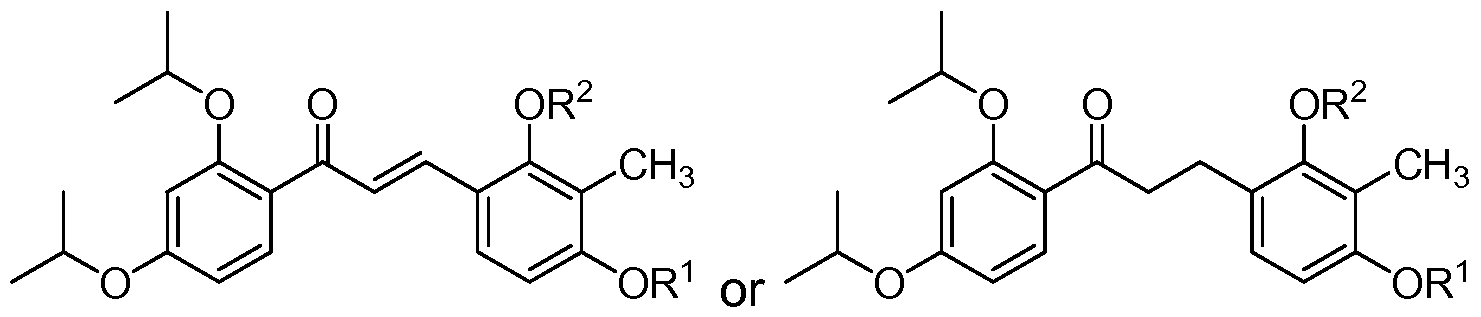
  • this invention is generally directed to compounds having the following structure (I):
  • R 1 , R 2 , R 3 , R 4 , R 5 , R 6 , X, Y and Z are as defined below.
  • the disclosed compounds may be used in methods for the preparation of diarylpropane compounds. Such methods result in better purity and higher yield of diarylpropane than other known methods. Accordingly, in one embodiment the present disclosure is directed to a method for preparation of diarylpropanes having the following structure (II): (II)
  • the method for preparation of compounds of structure (II) comprises reduction of compounds of structure (I).
  • the robust character of the disclosed methods makes the methods more amenable to large-scale production of diarylpropanes compared to previous methods.
  • this invention is generally directed to compounds useful for the preparation of diarylpropanes, as well as to methods related to the same.
  • compounds which have the following structure (I):
  • R 1 , R 2 , R 3 and R 4 are each independently hydrogen, alkyl, aryl or aralkyl
  • R 5 or R 6 is oxo, and the other of R 5 or R 6 is hydrogen; and X, Y and Z are each independently absent or hydrogen, or X and Y or Z and Y may join to form a bond, wherein X, Y and Z are each chosen such that all valences are satisfied.
  • Alkyl means an optionally substituted, straight chain or branched, noncyclic or cyclic, unsaturated or saturated aliphatic hydrocarbon containing from 1 to 10 carbon atoms.
  • Representative saturated straight chain alkyls include methyl, ethyl, n-propyl, n-butyl, n-pentyl, n-hexyl, and the like; while saturated branched alkyls include isopropyl, sec-butyl, isobutyl, fe/t-butyl, isopentyl, and the like.
  • saturated cyclic alkyls include cyclopropyl, cyclobutyl, cyclopentyl, cyclohexyl, and the like; while unsaturated cyclic alkyls include cyclopentenyl and cyclohexenyl, and the like.
  • Cyclic alkyls are also referred to herein as “homocycles” or “homocyclic rings.”
  • Unsaturated alkyls contain at least one double or triple bond between adjacent carbon atoms (referred to as an "alkenyl” or “alkynyl”, respectively).
  • Representative straight chain and branched alkenyls include ethylenyl, propylenyl, 1 -butenyl, 2-butenyl, isobutylenyl, 1 -pentenyl, 2-pentenyl, 3-methyl-1 -butenyl, 2-methyl-2-butenyl, 2,3-dimethyl-2-butenyl, and the like; while representative straight chain and branched alkynyls include acetylenyl, propynyl, 1 -butynyl, 2-butynyl, 1 -pentynyl, 2-pentynyl, 3-methyl-1 -butynyl, and the like.
  • Alkoxy means an alkyl moiety as defined above (i.e., an optionally substituted, straight chain or branched, noncyclic or cyclic, unsaturated or saturated aliphatic hydrocarbon containing from 1 to 10 carbon atoms) attached through an oxygen bridge (i.e., -O-alkyl) such as methoxy, ethoxy, and the like.
  • Aryl means an optionally substituted aromatic carbocyclic moiety such as phenyl, naphthyl and the like.
  • Alkyl means one or more aryl moieties as defined above attached through an alkyl bridge (i.e., -alkyl-(aryl) n , wherein n is 1 , 2 or 3).
  • alkyl bridge i.e., -alkyl-(aryl) n , wherein n is 1 , 2 or 3.
  • Non- limiting examples of aralkyl moieties include benzyl (-CH 2 -phenyl, i.e., Bn), diphenyl methyl (-CH 2 -(phenyl) 2 ) and trityl (-C-(phenyl) 3 ).
  • Heterocycle (also referred to herein as a “heterocycle ring”) means an optionally substituted 5- to 7-membered monocyclic, or an optionally substituted 7- to 14-membered polycyclic, heterocycle ring which is either saturated, unsaturated or aromatic, and which contains from 1 to 4 heteroatoms independently selected from nitrogen, oxygen and sulfur, and wherein the nitrogen and sulfur heteroatoms may be optionally oxidized, and the nitrogen heteroatom may be optionally quaternized, including bicyclic rings in which any of the above heterocycles are fused to a benzene ring as well as tricyclic (and higher) heterocyclic rings.
  • the heterocycle may be attached via any heteroatom or carbon atom.
  • Heterocycles include "heteroaryl” which is an optionally substituted aromatic heterocycle ring of 5- to 10-members and having at least one heteroatom selected from nitrogen, oxygen and sulfur, and containing at least 1 carbon atom, including both mono- and bicyclic ring systems.
  • heteroaryls include (but are not limited to) furyl, benzofuranyl, thiophenyl, benzothiophenyl, pyrrolyl, indolyl, isoindolyl, azaindolyl, pyridyl, quinolinyl, isoquinolinyl, oxazolyl, isooxazolyl, benzoxazolyl, pyrazolyl, imidazolyl, benzimidazolyl, thiazolyl, benzothiazolyl, isothiazolyl, pyridazinyl, pyrimidinyl, pyrazinyl, triazinyl, cinnolinyl, phthalazinyl, and quinazolinyl.
  • heterocycles also include (but are not limited to) morpholinyl, pyrrolidinonyl, pyrrolidinyl, piperizinyl, piperidinyl, hydantoinyl, valerolactamyl, oxiranyl, oxetanyl, tetrahydrofuranyl, tetrahydropyranyl, tetrahydropyridinyl, tetrahydroprimidinyl, tetrahydrothiophenyl, tetrahydrothiopyranyl, tetrahydropyrimidinyl, tetrahydrothiophenyl, tetrahydrothiopyranyl, and the like.
  • substituted when substituted, “substituents" within the context of this invention include oxo, halogen, hydroxyl, alkoxy or -NR a R b , wherein R a and R b are the same or different and independently hydrogen or alkyl moiety as defined above, or R a and R b are taken together with the nitrogen to which they are attached to form a heterocycle as defined above.
  • Halogen means fluoro, chloro, bromo and iodo.
  • R 5 is oxo
  • R 6 is hydrogen
  • the compound of structure (I) has one of the following structures (IA) or (IB):
  • each of R 1 and R 2 are alkyl.
  • each of R 1 and R 2 are methyl and the compound of structure (I) has one of the following structures (IA-1 ) or (IB-1 ):
  • each of R 3 and R 4 are aralkyl.
  • each of R 3 and R 4 are benzyl and the compound of structure (I) has one of the following structures (IA-2) or (IB-2):
  • each of R 3 and R 4 are alkyl.
  • each of R 3 and R 4 are isopropyl and the compound of structure (I) has one of the following structures (IA-3) or (IB-3):
  • each of R 3 and R 4 are hydrogen and the compound of structure (I) has one of the following structures (IA-4) or (IB-4):
  • R 6 is oxo
  • R 5 is hydrogen
  • the compound of structure (I) has one of the following structures (IC) or (ID):
  • each of R 1 and R 2 are alkyl.
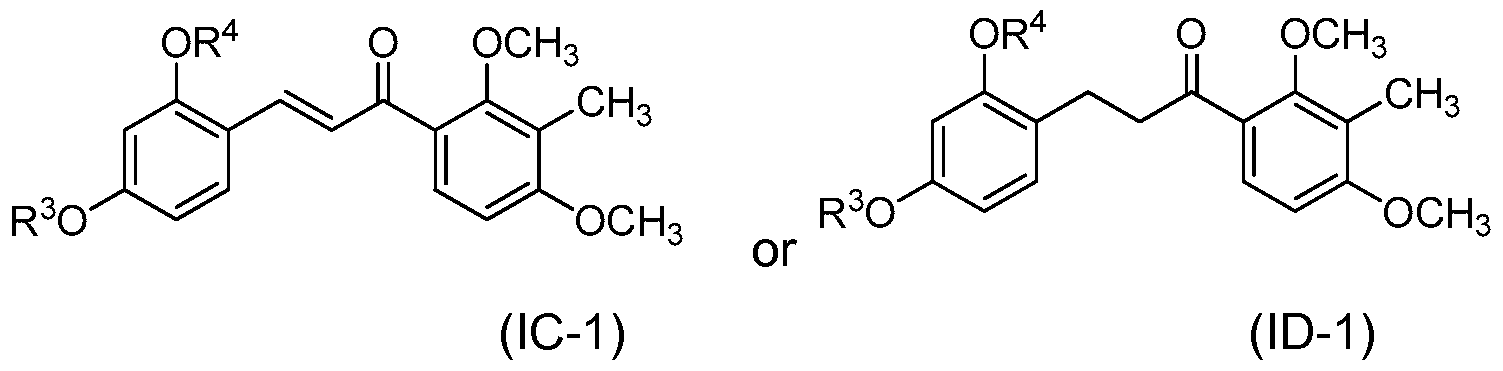
  • each of R 1 and R 2 are methyl and the compound of structure (I) has one of the following structures (IC-1 ) or (ID-1 ):
  • each of R 3 and R 4 are aralkyl.
  • R 3 and R 4 are benzyl and the compound of structure (I) has one of the following structures (IC-2) or (ID-2):
  • each of R 3 and R 4 are alkyl.
  • each of R 3 and R 4 are isopropyl and the compound of structure (I) has one of the following structures (IC-3) or (ID-3):
  • each of R 3 and R 4 are hydrogen and the compound of structure (I) has one of the following structures (IC-4) or (ID- 4):
  • At least one of R 3 or R 4 is allyl.
  • each of R 3 and R 4 are allyl.
  • At least one of R 3 or R 4 is alkyl. In certain other embodiments, at least one of R 1 or R 2 is methyl. For example, in some embodiments each of R 1 and R 2 is methyl.
  • At least one of R 3 or R 4 is aralkyl.
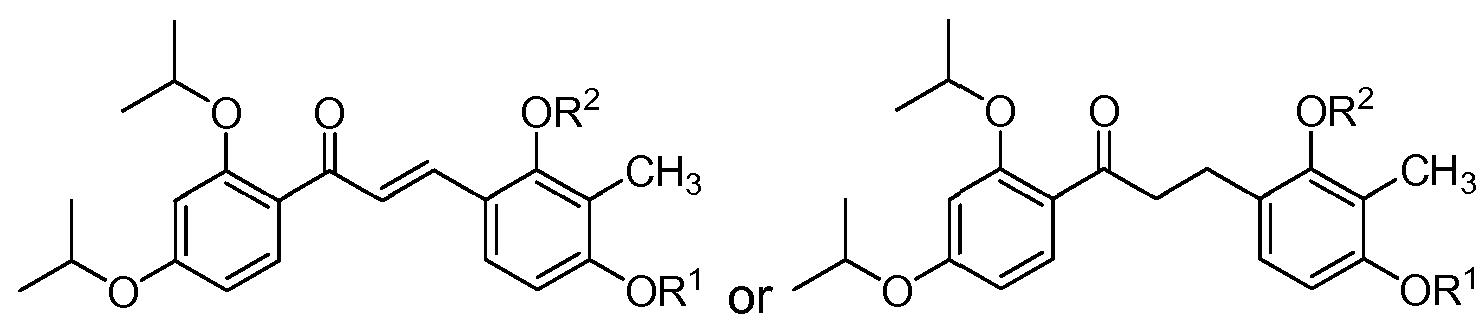
  • the compound of structure (I) has one of the following structures (IA-5), (IA-6), (IA-7) or (IA-8):
  • the compound of Structure (I) has one of the following structures (IB-5), (IB-6), (IB-7) or (IB-8):
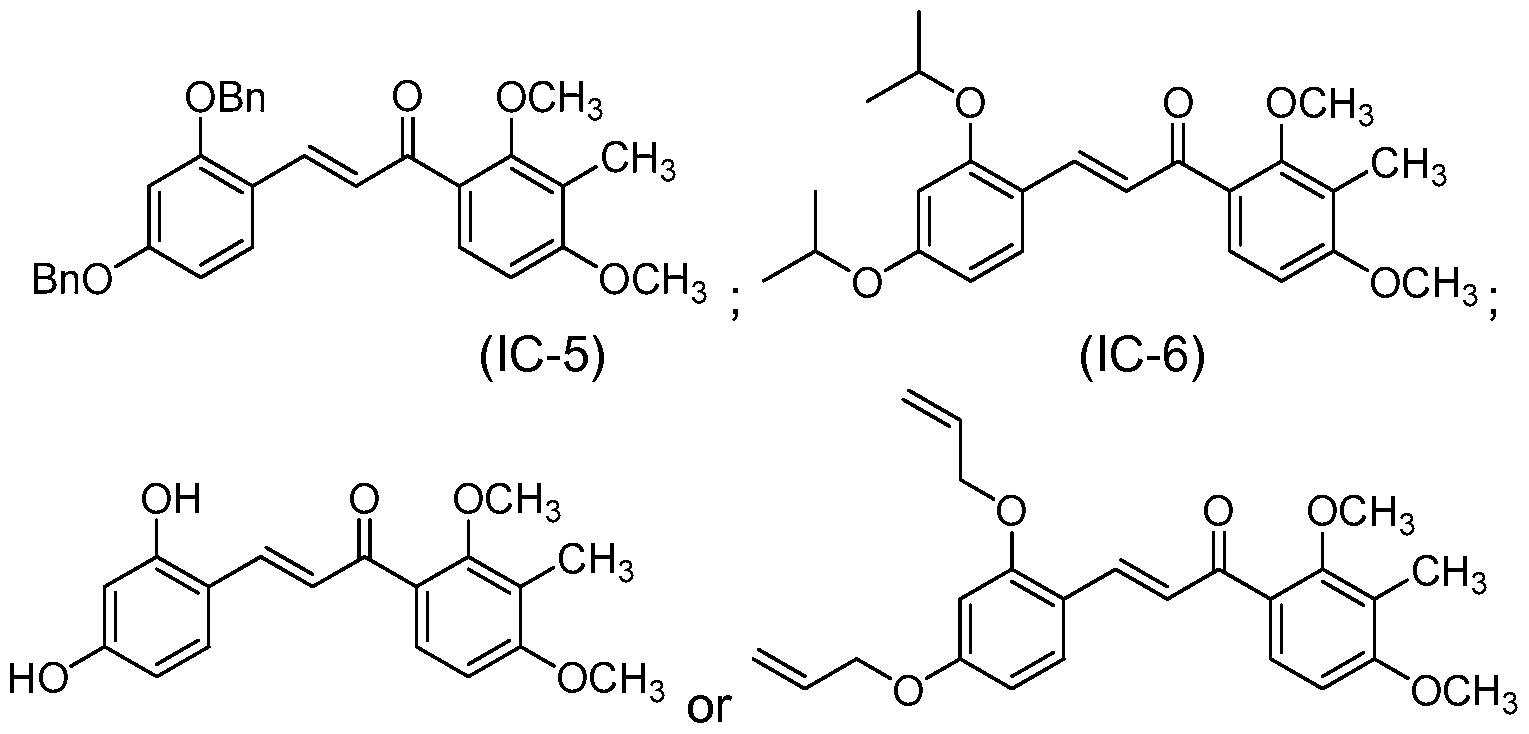
  • the compound of structure (I) has one of the following structures (IC-5), (IC-6), (IC-7) or (IC-8):
  • the compound of structure (I) has of the following structures (ID-5), (ID-6), (ID-7) or (ID-8):
  • At least one of R 3 or R 4 is allyl.
  • each of R 3 and R 4 are allyl.
  • at least one of R 3 or R 4 is benzyl.
  • the present disclosure is also directed to a method for preparing a compound of structure (II):
  • R 7 , R 8 , R 9 and R 10 are each independently hydrogen, alkyl, aryl or aralkyl
  • R 1 , R 2 , R 3 and R 4 are each independently hydrogen, alkyl, aryl or aralkyl
  • R 5 or R 6 is oxo, and the other of R 5 or R 6 is hydrogen; and X, Y and Z are each independently absent or hydrogen, or X and
  • the compound of structure (I) has one of the following structures (IB) or (ID):
  • each of R 1 and R 2 are methyl.
  • each of R 3 and R 4 are hydrogen.
  • each of R 1 and R 2 are methyl, each of R 3 and R 4 are hydrogen and the compound of structure (I) has one of the following structures (IB-7) or (ID-7):
  • reducing comprises treating a compound of structure (IB) or (ID) with sodium bis(2- methoxyethoxy)aluminum hydride, Raney nickel and hydrogen gas or zinc/HCI.
  • the compound of structure (IB) or (ID) has been prepared by reducing a compound of structure (IA) or (IC), respectively:
  • each of R 1 and R 2 are methyl, each of R 3 and R 4 are benzyl or each of R 3 and R 4 are isopropyl.
  • each of R 1 and R 2 are methyl, each of R 3 and R 4 are benzyl and the compound of structure (I) has one of the following structures (IA-5) or (IC-5):
  • each of R 1 and R 2 are methyl, each of R 3 and R 4 are isopropyl and the compound of structure (I) has one of the following structures (IA-6) or (IC-6):
  • reducing comprises treating a compound of structure (IA) or (IC) with palladium on carbon and formic acid/H 2 (gas) or palladium on carbon and ammonium formate.
  • the compound of structure (I) has been prepared by reaction of a compound of structure (III) and a compound of structure (IV):
  • R 11 or R 12 is hydrogen and the other of R 1 1 or R 12 is methyl.
  • R 11 is hydrogen and R 12 is methyl.
  • R 11 is methyl and R 12 is hydrogen.
  • each of R 1 and R 2 are methyl, each of R 3 and R 4 are benzyl or each of R 3 and R 4 are isopropyl.
  • the compound of structure (I) has one of the following structures (IB) or (ID):
  • each of R 1 and R 2 are methyl, each of R 3 and R 4 are benzyl or each of R 3 and R 4 are isopropyl.
  • each of R 1 and R 2 are methyl, each of R 3 and R 4 are benzyl and the compound of structure (I) has one of the following structures (IA-5) or (IC-5):
  • reducing comprises the steps of:
  • R 1 and R 2 are methyl, each of R 3 and R 4 are isopropyl and the compound of structure (I) has one of the following structures (IA-6) or (IC-6):
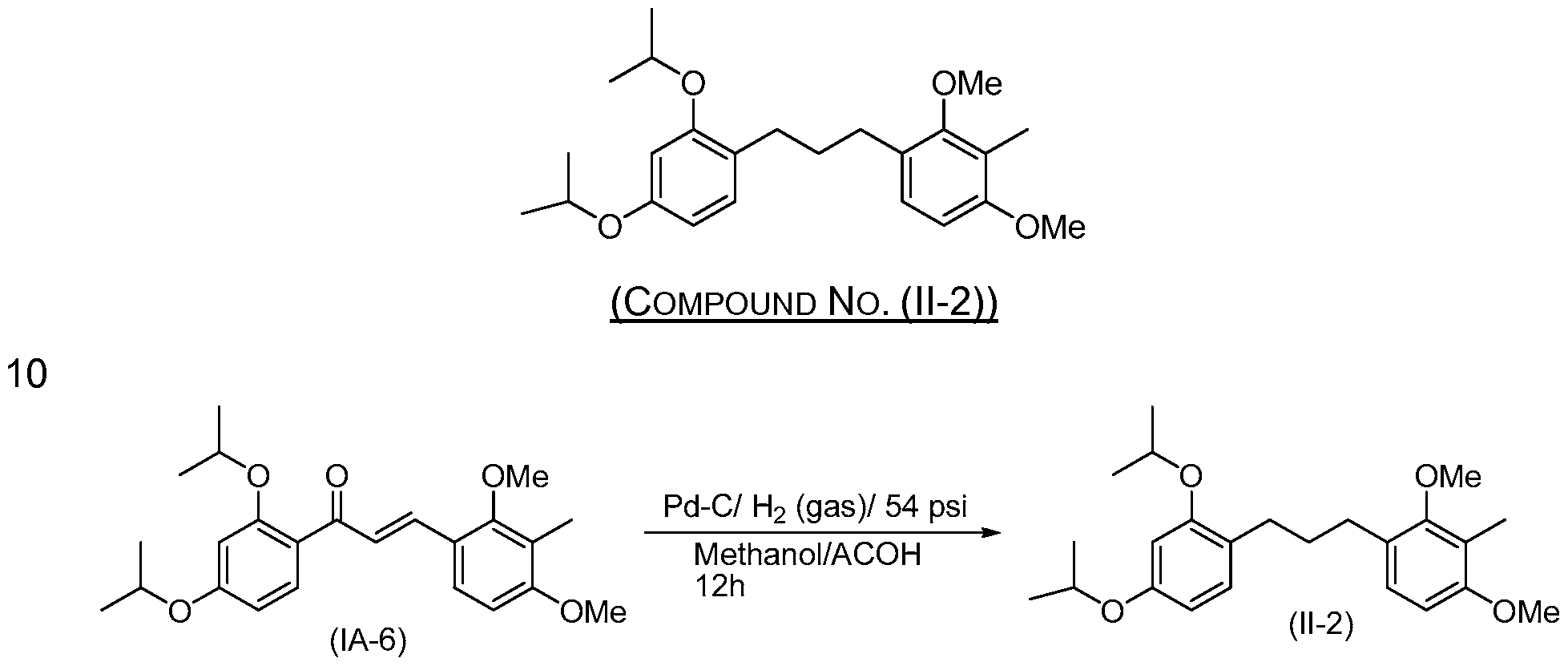
  • reducing comprises treating a compound of structure (IA-6) or (IC-6) with palladium on carbon, hydrogen gas and acetic acid.
  • the compound of structure (II) has the following structure (11-2):
  • the compound of structure (II) has the following structure (11-1 ):
  • Methods of the present disclosure include preparation of compounds of structure (II) via a two-step reduction of compounds of structure (I).
  • the methods result in at least a 25% increased yield of 1 ,3-diarylpropane relative to other known methods.
  • complete reduction of a compound of structure (I) yields at least 50%, at least 60%, at least 70%, at least 80%, at least 90%, at least 95% or at least 99% of the theoretical maximum of a compound of structure (II).
  • the methods of the invention also provide for 1 ,3-diarylpropane compounds of higher purity than possible when other methods are employed.
  • This high purity makes compounds of structure (II), prepared according to the present disclosure, easier to crystallize, thus increasing their purity even higher.
  • compounds of structure (II) prepared according to the disclosed method have a purity of at least 95%, at least 96%, at least 97%, at least 98%, at least 99%, at least 99.5%, at least 99.9% or at least 99.99% as determined by HPLC.
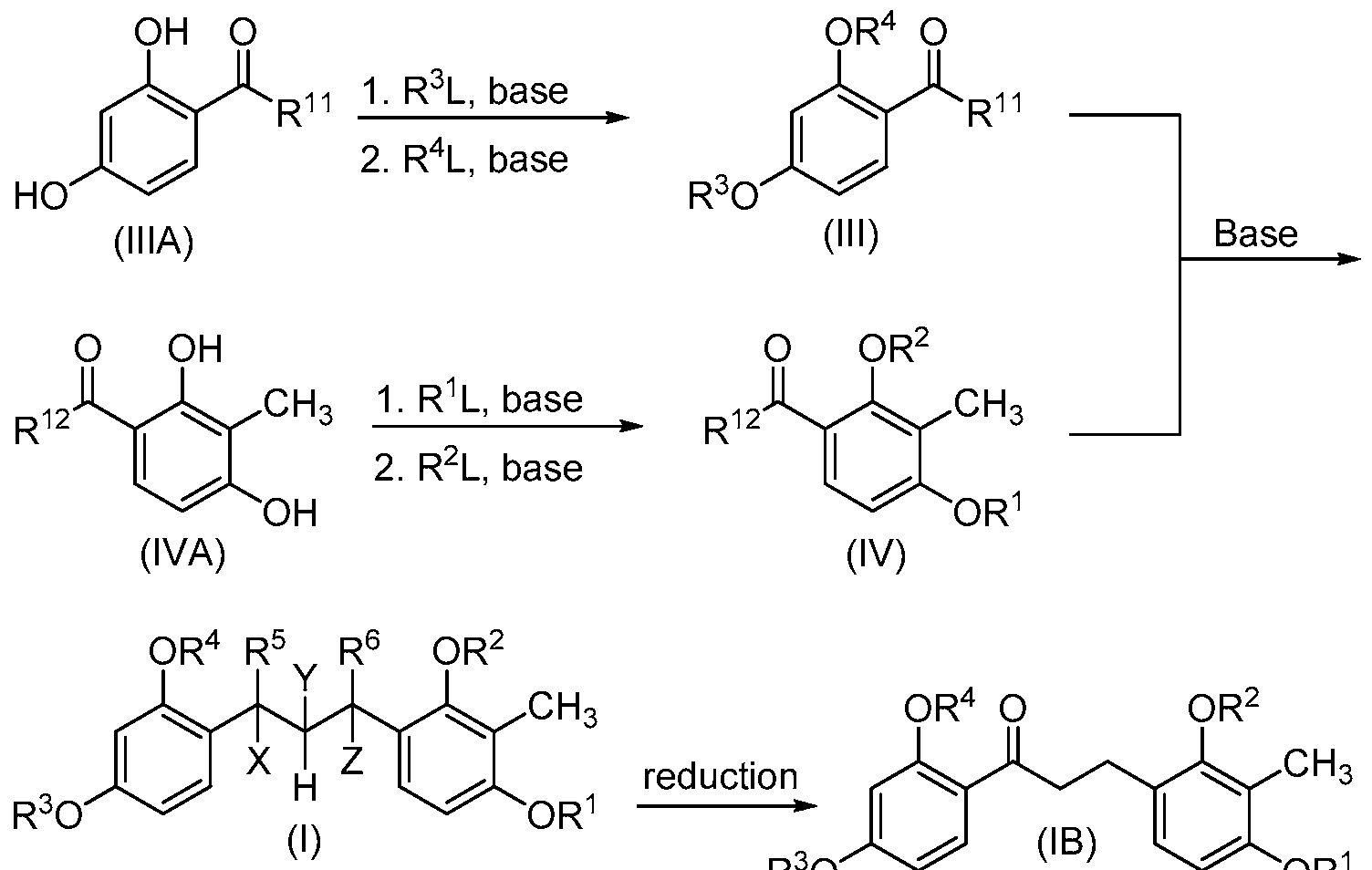
  • the compounds of the present invention may be prepared by known organic synthesis techniques, including the methods described in more detail in the Examples. However in general, the compounds of structure (I) and (II) may be made by the following General Reaction Scheme (Scheme 1 ), wherein L is an appropriate leaving group ⁇ e.g., halogen), and the values for R 1 - R 12 , X, Y and Z are as defined above.
  • Scheme 1 General Reaction Scheme
  • compounds of structure (IMA) can be purchased or prepared according to methods known in the art. Reaction of the phenolic hydroxyls with R 3 L under basic conditions ⁇ e.g., potassium or sodium carbonate) followed by reaction with R 4 L under basic conditions yields compounds of structure (III).
  • R 3 and R 4 are each benzyl and R 3 L and R 4 L are each benzyl chloride.
  • R 3 and R 4 are each isopropyl and R 3 L and R 4 L are each 2-bromopropane.
  • the order of reaction may be reversed, and or appropriate protecting groups employed to obtain the desired compound of structure (III).
  • compounds of structure (IVA) can be reacted with R 1 L followed by R 2 L under basic conditions to yield compounds of structure (IV).
  • R 1 and R 2 are each methyl and R 1 L and R 2 L are each an appropriate methylating reagent (e.g., methyl iodide, etc.).
  • Aldol condensation of compounds of structure (III) with compounds of structure (IV) under basic conditions then yields compounds of structure (I).
  • various conditions may be employed in practicing the disclosed method.
  • reagents such as NaH, KOH, NaOH, LiOH, NaOMe, t-BuOK and the like may be employed to perform the aldol condensation.
  • KOH in a solvent such as methanol may be used.
  • Compounds of structure (I) wherein R 5 is oxo and Y and Z form a bond can be reduced to form compounds of structure (IB).
  • Appropriate reduction conditions include conditions known in the art for reduction of the alkene bond in alpha-beta unsaturated carbonyl compounds. Such conditions include, but are not limited to, hydrogenation in the presence of an appropriate catalyst (e.g., palladium on carbon) and a hydrogen source such as hydrogen gas, formic acid, ammonium formate, cyclohexa-1 ,4-diene and other reagents capable of donating a hydrogen atom.
  • an appropriate catalyst e.g., palladium on carbon
  • a hydrogen source such as hydrogen gas, formic acid, ammonium formate, cyclohexa-1 ,4-diene and other reagents capable of donating a hydrogen atom.
  • transfer hydrogenation conditions ⁇ e.g., a catalyst and a hydrogen atom donor such as ammonium formate or formic acid
  • transfer hydrogenation conditions are particularly useful as such conditions can be safer, and in certain examples the reagents may be easier to handle than hydrogen gas, especially at large scales.
  • the reduction conditions comprise a palladium catalyst ⁇ e.g., Pd/C) and ammonium formate.
  • the reaction conditions comprise a palladium catalyst ⁇ e.g., Pd/C) and formic acid and/or hydrogen gas.
  • exemplary reagents for transfer hydrogenation include (Ph 3 P)RhCI-EtSiH-Bz, NaBH - pyridine, NaBH 4 -NiCI 2 -Dioxane-MeOH (see e.g., J. Chem. Res. 2006, 584- 585).
  • compounds of structure (ID) can be prepared under similar conditions by reduction of compounds of structure (I) wherein R 6 is oxo and X and Y form a bond.
  • Compounds of structure (II) can be prepared by complete reduction of the carbonyl group of compounds of structure (IB) or (ID) under appropriate conditions.
  • Reduction conditions in this context include, but are not limited to, hydrogenation in the presence of an appropriate catalyst (e.g., Pd/C, Raney nickel and the like) and hydrogen gas.
  • Other reduction conditions include treatment with zinc/HCI or Vitride® (i.e., sodium bis(2- methoxyethoxy)aluminum hydride) or other hydride reagents.
  • the reduction conditions comprise treatment with Vitride®.
  • reduction comprises treatment with Raney Ni/H 2 and Zn/HCI.
  • Other reduction conditions are well known to those skilled in the art.
  • compounds of structure (II) can be prepared in a one-step reduction of compounds of structure (I).
  • Appropriate conditions in this context include treatment of compounds of structure (I) with an appropriate catalyst (e.g., palladium on carbon) and hydrogen gas.
  • an acid such as acetic acid may also be used in addition to a catalyst and hydrogen gas.
  • transfer hydrogenation conditions may be employed.
  • at least one of R 3 or R 4 is isopropyl.
  • each of R 3 and R 4 may be isopropyl.
  • protecting groups may be utilized in the preparation of the disclosed compounds.
  • the values of R 1 , R 2 , R 3 or R 4 are chosen such that a protected hydroxyl group results.
  • R 3 and R 4 are hydroxyl protecting groups that can be removed to reveal a free phenol.
  • Protecting groups useful in this context include protecting groups that can be removed by hydrogenation or under acidic, basic or other selective conditions.
  • alkyl e.g., isopropyl, allyl and the like
  • aryl e.g., aralkyl
  • aralkyl e.g., benzyl, trityl and the like
  • R 3 and R 4 are protecting groups which can be removed by hydrogenation, for example, benzyl groups.
  • R 3 and R 4 are isopropyl. Isopropyl can be selectively removed by treatment with AICI3 or other Lewis acids (J. Org. Chem. 1998, 64, 9139).
  • the protecting groups can be removed during one of the above described reaction steps (e.g., benzyl groups may be removed during the hydrogenation of the alkene bond) or additional steps may added to the above scheme to remove the protecting groups. Such additional steps may include treatment with AICI3 or other appropriate reagent.
  • Compounds of the present disclosure can be purified using known purification techniques. Such techniques include, but are not limited to, chromatography [e.g., HPLC, column chromatography, TLC, etc.), trituration, extraction, salt formation, crystallization, etc. In certain embodiments, crystallization techniques are employed for purification of compounds of structure (I) or (II). Such techniques are especially useful at large scale where other purification techniques are not feasible.
  • chromatography e.g., HPLC, column chromatography, TLC, etc.
  • crystallization techniques are employed for purification of compounds of structure (I) or (II). Such techniques are especially useful at large scale where other purification techniques are not feasible.
  • the compounds of the present invention may generally be utilized as the free acid ⁇ e.g., phenol) or free base. Alternatively, the compounds of this invention may be used in the form of acid or base addition salts. Acid addition salts of amino compounds of the present invention may be prepared by methods well known in the art, and may be formed from organic and inorganic acids.
  • Suitable organic acids include maleic, fumaric, benzoic, ascorbic, succinic, methanesulfonic, acetic, trifluoroacetic, oxalic, propionic, tartaric, salicylic, citric, gluconic, lactic, mandelic, cinnamic, aspartic, stearic, palmitic, glycolic, glutamic, and benzenesulfonic acids.
  • Suitable inorganic acids include hydrochloric, hydrobromic, sulfuric, phosphoric, and nitric acids.
  • Base addition salts include those salts that form with a phenol or enol anion or with other acidic moieties and include salts formed with organic and inorganic cations such as those chosen from the alkali and alkaline earth metals (for example, lithium, sodium, potassium, magnesium, barium and calcium), as well as the ammonium ion and substituted derivatives thereof (for example, dibenzylammonium, benzylammonium, 2-hydroxyethylammonium, and the like).
  • the term “salt" of structure (I) or structure (II) is intended to encompass any and all acceptable salt forms.
  • (II) may have chiral centers and may occur as racemates, enantiomerically enriched mixtures and as individual enantiomers or diastereomers.
  • the compounds of structure (I) are depicted in a trans configuration; however, the compounds of structure (I) may exist as E or Z isomers (i.e., cis or trans). All such isomeric forms are included within the present invention, including mixtures thereof.
  • Compounds of structure (I) or (II) may also possess axial chirality which may result in atropisomers.
  • some of the crystalline forms of the compounds of structure (I) or (II) may exist as polymorphs, which are included in the present invention.
  • some of the compounds of structure (I) or (II) may also form solvates with water or other organic solvents. Such solvates are similarly included within the scope of this invention.
  • Tautomers are compounds that result from the formal migration of a hydrogen atom accompanied by a switch of a single bond and adjacent double bond.
  • the enol and keto form of a compound are tautomers of each other.
  • Tautomers within the context of the present disclosure include, but are not limited to, the following tautomeric pairs (IB) and (IB-T) and (ID) and (ID-T):
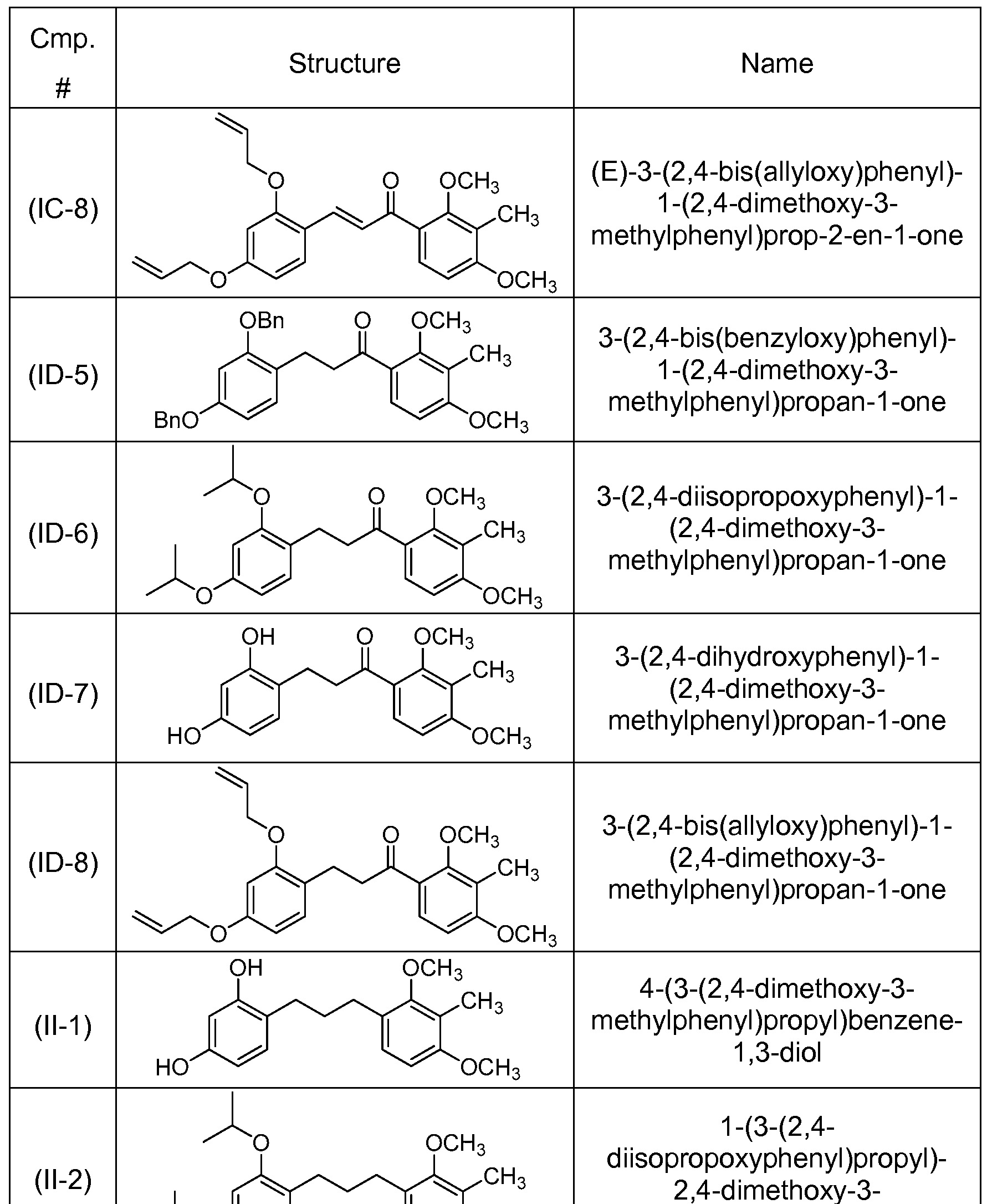
  • Representative compounds of this invention include (but are not limited to) the compounds listed in Table 1 below.
  • Certain compounds of the present disclosure may be prepared according to the following schemes and the knowledge of one skilled in the art. All temperatures are in degrees Celsius (°C) unless otherwise indicated. All of the synthesized compounds were characterized by at least proton 1 H NMR, 13 C NMR and LC/MS. During work up of reactions, the organic extract was dried over sodium sulfate (Na 2 SO ), unless mentioned otherwise.
  • reaction mixture was cooled back down to 10-15 °C and quenched with 2N aqueous HCI (13.5 L) to pH 2.
  • the solid formed at this stage was filtered, washed with water and dissolved in acetic acid (360 L). This mixture was then cooled to 22-25 °C and stirred for 20 min upon which a yellow crystalline solid formed.
  • the solid was collected by filtration, washed with water and dried under vacuum to a constant weight at 30 °C to obtain (IA-5) (50 Kg, 84%.
  • (IB-7) (1 equiv., 25 kg) was added into a reaction vessel containing THF (250 L) while stirring.
  • the reaction mixture was then cooled to 0-5 °C and charged with Vitride® (i.e., sodium bis(2- methoxyethoxy)aluminum hydride, 1 equiv., 120 L) over 2.5 h.
  • Vitride® i.e., sodium bis(2- methoxyethoxy)aluminum hydride, 1 equiv., 120 L
  • the reaction mixture was then heated and maintained at reflux until found complete by HPLC (-16 h).
  • the reaction was cooled to 0-5 °C, quenched with 150 L of concentrated HCI (30-36%) in water (150 L) and stirred for 30 min.
  • the reaction mixture was then diluted with water (150 L) and extracted twice with ethyl acetate (450 L and 375 L).
  • the combined ethyl acetate extract was washed with aqueous sodium bicarbonate (25 kg in 150 L of water) followed by saturated sodium chloride (150 L).
  • Charcoal (3.25 Kg) was added to the organic layer and the mixture was refluxed for 20 minutes.
  • This mixture was filtered through Celite® and washed with ethyl acetate (20 L).
  • the ethyl acetate layer was then dried with anhydrous sodium sulfate (25 kg) and concentrated under vacuum at 40-45 °C.
  • the crude product thus obtained was triturated for 4h with toluene (5 L) at room temperature and filtered. This residue was washed with toluene (16 L), and the solid thus obtained was dried under vacuum for 8h at 55-60 °C to produce 16.9 Kg of crude product.
  • the crude product (16.9 Kg) from the previous stage was dissolved in acetone (4 L) with heating to 55 °C. This solution was then cooled to room temperature (24 °C) and treated with water (60 L) while stirring. Stirring was continued for 10 h at room temperature before the resulting solids were allowed to settle to the bottom, and the top organic layer was carefully removed.
  • reaction mixture was cooled to 10 ⁇ 15 °C and quenched with 2 N aqueous HCI (150 ml) to pH 2.
  • the solid formed at this stage was filtered, washed with water and dissolved in MeOH (500 ml). This methanol solution was then cooled to 22 ⁇ 25 °C and stirred for 20 min by which time a yellow crystalline solid had formed.
  • the solid was collected by filtration, washed with water and dried under vacuum to a constant weight at 30 °C to obtain (IA-6) (70 g, 88%).
  • Compound (IC-6) is prepared by aldol condensation of 8 and 3 in a manner analogous to that described in Example 10.
  • Compound (II-2) is prepared from (IC-6) in a manner analogous to that described in Example 1 1 .

Landscapes

  • Chemical & Material Sciences (AREA)
  • Organic Chemistry (AREA)
  • Chemical Kinetics & Catalysis (AREA)
  • Organic Low-Molecular-Weight Compounds And Preparation Thereof (AREA)
  • Low-Molecular Organic Synthesis Reactions Using Catalysts (AREA)
  • Preparation Of Compounds By Using Micro-Organisms (AREA)
  • Acyclic And Carbocyclic Compounds In Medicinal Compositions (AREA)

Abstract

Compounds of structure (I): (I) including stereoisomers, tautomers and salts thereof, wherein R1, R2, R3, R4, R5, R6, X, Y and Z are as defined herein. Such compounds are useful for the preparation of diarylpropane compounds. Methods for the preparation of compounds of structure (I) are also disclosed, as are methods employing compounds of structure (I) for the preparation of diarylpropanes.

Description

COMPOUNDS AND METHODS FOR PREPARATION OF DIARYLPROPANES
CROSS-REFERENCE TO RELATED APPLICATIONS
This application claims benefit under 35 U.S.C. 1 19(e) to U.S. provisional patent application Serial No. 61/467,286 filed March 24, 201 1 ; which is incorporated by reference herein, in its entirety.
BACKGROUND
Technical Field
The present invention is generally directed to compounds useful for the preparation of diarylpropanes and methods related to the same. Description of the Related Art
There is great demand for products able to inhibit or prevent excessive pigmentation of the skin. Melanin, the skin's natural pigment, is a nitrogenous polymer synthesized in melanosomes, which are membrane-bound organelle present within melanocytes. Melanin is produced in varying concentrations, depending on skin type (genetic disposition) and environmental conditions. Melanocytes are cells that occur in the basal membrane of the epidermis, and account for between 5% and 10% of the cellular content (approximately 1200-1500 melanocytes/cm2). When stimulated, by factors such as ultraviolet (UV) light, melanocytes divide more rapidly and produce greater quantities of melanin. The melanin is then transported in mature melanosomes to keratinocytes within the epidermis where it becomes visible as a brown skin color.
The over production of melanin can cause different types of abnormal skin color, hair color and other diseases and conditions of the skin. There are primarily two conditions related to skin pigmentation disorders. A darkening of the skin that includes abnormal elevated melanin caused by UV exposure and aging; and abnormal distribution of skin pigments resulting in age spots, liver spots, and drug and wound/disease induced hyperpigmentation (Seiberg et al. (2000) J. Invest. Dermatol. 1 15:162; Paine et al. (2001 ) J. Invest. Dermatol. 1 16:587).
Diarylalkanes are a rare class of natural product which have shown potential for decreasing melanin production and are being investigated for use as skin lightening therapeutics (see e.g., U.S. Pub. No. 2005/0267047). Although more than 179,000 natural compounds are listed in the Dictionary of Natural Products (Chapman & Hall/CRC, Version 12:2 January 2004, available on CD-ROM), only 82 are diarylpropanes. Diarylpropanes have been isolated from a number of different natural sources; however, the low abundance of diarylpropanes of interest in natural sources often necessitates their preparation in the laboratory.
One approach for preparing diarylpropanes has been to completely reduce the corresponding chalcone to the diarylpropane in one step (see e.g., U.S. Patent No. 5,880,314; J. Chem. Soc. Perkin Trans. 1 (1979), (7), 1661 -4; and Lett. In Org. Chem. 2006, 3, 39-41 . However, such methods are not robust and are unsuitable for large-scale preparation of diarylpropanes. For example, published methods generally suffer from low yields, poor reproducibility and result in mixtures of compounds which are difficult to separate. Methods and/or compounds to successfully address these, and other, difficulties associated with preparation of diarylpropanes have yet to be suggested.
While significant advances have been made in this field, there remains a need for improved methods for preparation of diarylpropanes as well as compounds useful for the same. In particular, methods and compounds suitable for large-scale preparation of diarylpropanes in high purity are needed. The present invention fulfills these needs, and provides other related advantages. BRIEF SUMMARY
In brief, this invention is generally directed to compounds having the following structure (I):
Figure imgf000004_0001
(I)
or a stereoisomer, tautomer or salt thereof, wherein R1 , R2, R3, R4, R5, R6, X, Y and Z are as defined below.
Compounds of structure (I) above have utility over a wide range of applications. For example, the disclosed compounds may be used in methods for the preparation of diarylpropane compounds. Such methods result in better purity and higher yield of diarylpropane than other known methods. Accordingly, in one embodiment the present disclosure is directed to a method for preparation of diarylpropanes having the following structure (II):
Figure imgf000004_0002
(II)
or a stereoisomer, tautomer or salt thereof, wherein R7, R8, R9 and R10 are as defined below. The method for preparation of compounds of structure (II) comprises reduction of compounds of structure (I). The robust character of the disclosed methods makes the methods more amenable to large-scale production of diarylpropanes compared to previous methods.
These and other aspects of the invention will be apparent upon reference to the following detailed description. To this end, various references are set forth herein which describe in more detail certain background information, procedures, compounds and/or compositions, and are each hereby incorporated by reference in their entirety. DETAILED DESCRIPTION
As mentioned above, this invention is generally directed to compounds useful for the preparation of diarylpropanes, as well as to methods related to the same. In one embodiment, compounds are disclosed which have the following structure (I):
Figure imgf000005_0001
or a stereoisomer, tautomer or salt thereof, wherein:
R1 , R2, R3 and R4 are each independently hydrogen, alkyl, aryl or aralkyl;
one of R5 or R6 is oxo, and the other of R5 or R6 is hydrogen; and X, Y and Z are each independently absent or hydrogen, or X and Y or Z and Y may join to form a bond, wherein X, Y and Z are each chosen such that all valences are satisfied.
As used herein, the following terms have the meanings set forth below.
"Alkyl" means an optionally substituted, straight chain or branched, noncyclic or cyclic, unsaturated or saturated aliphatic hydrocarbon containing from 1 to 10 carbon atoms. Representative saturated straight chain alkyls include methyl, ethyl, n-propyl, n-butyl, n-pentyl, n-hexyl, and the like; while saturated branched alkyls include isopropyl, sec-butyl, isobutyl, fe/t-butyl, isopentyl, and the like. Representative saturated cyclic alkyls include cyclopropyl, cyclobutyl, cyclopentyl, cyclohexyl, and the like; while unsaturated cyclic alkyls include cyclopentenyl and cyclohexenyl, and the like. Cyclic alkyls are also referred to herein as "homocycles" or "homocyclic rings." Unsaturated alkyls contain at least one double or triple bond between adjacent carbon atoms (referred to as an "alkenyl" or "alkynyl", respectively). Representative straight chain and branched alkenyls include ethylenyl, propylenyl, 1 -butenyl, 2-butenyl, isobutylenyl, 1 -pentenyl, 2-pentenyl, 3-methyl-1 -butenyl, 2-methyl-2-butenyl, 2,3-dimethyl-2-butenyl, and the like; while representative straight chain and branched alkynyls include acetylenyl, propynyl, 1 -butynyl, 2-butynyl, 1 -pentynyl, 2-pentynyl, 3-methyl-1 -butynyl, and the like.
"Allyl" means an alkyl group, as defined above, comprising a methylene connected to a terminal alkene, for example -CH2CH=CH2.
"Alkoxy" means an alkyl moiety as defined above (i.e., an optionally substituted, straight chain or branched, noncyclic or cyclic, unsaturated or saturated aliphatic hydrocarbon containing from 1 to 10 carbon atoms) attached through an oxygen bridge (i.e., -O-alkyl) such as methoxy, ethoxy, and the like.
"Aryl" means an optionally substituted aromatic carbocyclic moiety such as phenyl, naphthyl and the like.
"Aralkyl" means one or more aryl moieties as defined above attached through an alkyl bridge (i.e., -alkyl-(aryl)n, wherein n is 1 , 2 or 3). Non- limiting examples of aralkyl moieties include benzyl (-CH2-phenyl, i.e., Bn), diphenyl methyl (-CH2-(phenyl)2) and trityl (-C-(phenyl)3).
"Heterocycle" (also referred to herein as a "heterocycle ring") means an optionally substituted 5- to 7-membered monocyclic, or an optionally substituted 7- to 14-membered polycyclic, heterocycle ring which is either saturated, unsaturated or aromatic, and which contains from 1 to 4 heteroatoms independently selected from nitrogen, oxygen and sulfur, and wherein the nitrogen and sulfur heteroatoms may be optionally oxidized, and the nitrogen heteroatom may be optionally quaternized, including bicyclic rings in which any of the above heterocycles are fused to a benzene ring as well as tricyclic (and higher) heterocyclic rings. The heterocycle may be attached via any heteroatom or carbon atom. Heterocycles include "heteroaryl" which is an optionally substituted aromatic heterocycle ring of 5- to 10-members and having at least one heteroatom selected from nitrogen, oxygen and sulfur, and containing at least 1 carbon atom, including both mono- and bicyclic ring systems. Representative heteroaryls include (but are not limited to) furyl, benzofuranyl, thiophenyl, benzothiophenyl, pyrrolyl, indolyl, isoindolyl, azaindolyl, pyridyl, quinolinyl, isoquinolinyl, oxazolyl, isooxazolyl, benzoxazolyl, pyrazolyl, imidazolyl, benzimidazolyl, thiazolyl, benzothiazolyl, isothiazolyl, pyridazinyl, pyrimidinyl, pyrazinyl, triazinyl, cinnolinyl, phthalazinyl, and quinazolinyl. Thus, in addition to the aromatic heteroaryls listed above, heterocycles also include (but are not limited to) morpholinyl, pyrrolidinonyl, pyrrolidinyl, piperizinyl, piperidinyl, hydantoinyl, valerolactamyl, oxiranyl, oxetanyl, tetrahydrofuranyl, tetrahydropyranyl, tetrahydropyridinyl, tetrahydroprimidinyl, tetrahydrothiophenyl, tetrahydrothiopyranyl, tetrahydropyrimidinyl, tetrahydrothiophenyl, tetrahydrothiopyranyl, and the like.
An "optionally substituted" alkyl, aryl or aralkyi means an alkyl, aryl, or aralkyi moiety as defined above, wherein 0 to 4 hydrogen atoms of the aliphatic hydrocarbon or heterocycle are replaced with a substituent. When zero hydrogen atoms are replaced with a substituent, the alkyl, aryl, or aralkyi moiety is unsubstituted. When 1 to 4 hydrogen atoms are replaced with a substituent, the alkyl, aryl, or aralkyi moiety is substituted. In the case of an oxo substituent ("=O") two hydrogen atoms from the same carbon atom are replaced. When substituted, "substituents" within the context of this invention include oxo, halogen, hydroxyl, alkoxy or -NRaRb, wherein Ra and Rb are the same or different and independently hydrogen or alkyl moiety as defined above, or Ra and Rb are taken together with the nitrogen to which they are attached to form a heterocycle as defined above.
"Oxo" means =O (i.e., carbonyl).
"Hydroxyl" means -OH.
"Halogen" means fluoro, chloro, bromo and iodo.
In more specific embodiments of the compound of structure (I), R5 is oxo, R6 is hydrogen and the compound of structure (I) has one of the following structures (IA) or (IB):
Figure imgf000008_0001
(IA) (IB)
In other embodiments, each of R1 and R2 are alkyl. For example, in some aspects each of R1 and R2 are methyl and the compound of structure (I) has one of the following structures (IA-1 ) or (IB-1 ):
Figure imgf000008_0002
or
(IA-1 ) (IB-1 )
In some other embodiments, each of R3 and R4 are aralkyl. For example, in some embodiments, each of R3 and R4 are benzyl and the compound of structure (I) has one of the following structures (IA-2) or (IB-2):
Figure imgf000008_0003
or
(IA-2) (IB-2)
In yet other embodiments, each of R3 and R4 are alkyl. For example, in some aspects each of R3 and R4 are isopropyl and the compound of structure (I) has one of the following structures (IA-3) or (IB-3):
Figure imgf000008_0004
(IA-3) (IB-3)
In other embodiments, each of R3 and R4 are hydrogen and the compound of structure (I) has one of the following structures (IA-4) or (IB-4):
Figure imgf000009_0001
or
(IA-4) (IB-4)
In certain other embodiments, R6 is oxo, R5 is hydrogen and the compound of structure (I) has one of the following structures (IC) or (ID):
Figure imgf000009_0002
(IC) (ID)
In some other embodiments, each of R1 and R2 are alkyl. For example, in some aspects each of R1 and R2 are methyl and the compound of structure (I) has one of the following structures (IC-1 ) or (ID-1 ):
Figure imgf000009_0003
(IC-1 ) (ID-1 )
In yet other embodiments, each of R3 and R4 are aralkyl. For example, in some embodiments, R3 and R4 are benzyl and the compound of structure (I) has one of the following structures (IC-2) or (ID-2):
Figure imgf000009_0004
(IC-2) (ID-2)
In some other embodiments, each of R3 and R4 are alkyl. For example, in some aspects each of R3 and R4 are isopropyl and the compound of structure (I) has one of the following structures (IC-3) or (ID-3):
Figure imgf000010_0001
(IC-3) (ID-3)
In some other embodiments, each of R3 and R4 are hydrogen and the compound of structure (I) has one of the following structures (IC-4) or (ID- 4):
Figure imgf000010_0002
(IC-4) (ID-4)
In some other embodiments, at least one of R3 or R4 is allyl. For example, in some embodiments, each of R3 and R4 are allyl.
In some embodiments, at least one of R3 or R4 is alkyl. In certain other embodiments, at least one of R1 or R2 is methyl. For example, in some embodiments each of R1 and R2 is methyl.
In other embodiments, at least one of R3 or R4 is aralkyl.
In other embodiments, the compound of structure (I) has one of the following structures (IA-5), (IA-6), (IA-7) or (IA-8):
Figure imgf000010_0003
(IA-7) (IA-8) In still other embodiments, the compound of Structure (I) has one of the following structures (IB-5), (IB-6), (IB-7) or (IB-8):
Figure imgf000011_0001
(IB-7) (IB-8)
In yet other embodiments, the compound of structure (I) has one of the following structures (IC-5), (IC-6), (IC-7) or (IC-8):
Figure imgf000011_0002
(IC-7) (IC-8)
In still other embodiments, the compound of structure (I) has of the following structures (ID-5), (ID-6), (ID-7) or (ID-8):
Figure imgf000011_0003
(ID-5) (ID-6)
Figure imgf000012_0001
(ID-7) (ID-8)
In yet other embodiments, at least one of R3 or R4 is allyl. For example, in some aspects each of R3 and R4 are allyl. In yet other embodiments, at least one of R3 or R4 is benzyl.
The present disclosure is also directed to a method for preparing a compound of structure (II):
Figure imgf000012_0002
(II)
or a stereoisomer, tautomer or salt thereof, wherein:
R7, R8, R9 and R10 are each independently hydrogen, alkyl, aryl or aralkyl,
the method comprising reducing a compound of structure (I):
Figure imgf000012_0003
(I)
or a stereoisomer, tautomer or salt thereof, wherein:
R1 , R2, R3 and R4 are each independently hydrogen, alkyl, aryl or aralkyl;
one of R5 or R6 is oxo, and the other of R5 or R6 is hydrogen; and X, Y and Z are each independently absent or hydrogen, or X and
Y or Z and Y may join to form a bond, wherein X, Y and Z are each chosen such that all valences are satisfied. In some embodiments of the disclosed method, the compound of structure (I) has one of the following structures (IB) or (ID):
Figure imgf000013_0001
(IB) (ID)
In other embodiments of the disclosed method, each of R1 and R2 are methyl. In certain other embodiments, each of R3 and R4 are hydrogen. For example, in some aspects each of R1 and R2 are methyl, each of R3 and R4 are hydrogen and the compound of structure (I) has one of the following structures (IB-7) or (ID-7):
Figure imgf000013_0002
(IB-7) (ID-7)
In some embodiments of the disclosed method, reducing comprises treating a compound of structure (IB) or (ID) with sodium bis(2- methoxyethoxy)aluminum hydride, Raney nickel and hydrogen gas or zinc/HCI.
In certain other embodiments of the disclosed method, the compound of structure (IB) or (ID) has been prepared by reducing a compound of structure (IA) or (IC), respectively:
Figure imgf000013_0003
(IA) (IC)
For example, in some embodiments of the foregoing method, each of R1 and R2 are methyl, each of R3 and R4 are benzyl or each of R3 and R4 are isopropyl. For example, in some aspects, each of R1 and R2 are methyl, each of R3 and R4 are benzyl and the compound of structure (I) has one of the following structures (IA-5) or (IC-5):
Figure imgf000014_0001
(IA-5) (IC-5)
In certain examples of the foregoing method, each of R1 and R2 are methyl, each of R3 and R4 are isopropyl and the compound of structure (I) has one of the following structures (IA-6) or (IC-6):
Figure imgf000014_0002
(IA-6) (IC-6)
In yet other embodiments, reducing comprises treating a compound of structure (IA) or (IC) with palladium on carbon and formic acid/H2 (gas) or palladium on carbon and ammonium formate.
In certain other embodiments of the disclosed method, the compound of structure (I) has been prepared by reaction of a compound of structure (III) and a compound of structure (IV):
Figure imgf000014_0003
or a stereoisomer, tautomer or salt thereof, wherein one of R11 or R12 is hydrogen and the other of R1 1 or R12 is methyl. For example, in some embodiments, R11 is hydrogen and R12 is methyl. In some other exemplary embodiments, R11 is methyl and R12 is hydrogen. In some embodiments, each of R1 and R2 are methyl, each of R3 and R4 are benzyl or each of R3 and R4 are isopropyl. In yet other embodiments of the disclosed method, the compound of structure (I) has one of the following structures (IB) or (ID):
Figure imgf000015_0001
(IA) (IC)
For example, in some embodiments of the foregoing method, each of R1 and R2 are methyl, each of R3 and R4 are benzyl or each of R3 and R4 are isopropyl. In certain other embodiments, each of R1 and R2 are methyl, each of R3 and R4 are benzyl and the compound of structure (I) has one of the following structures (IA-5) or (IC-5):
Figure imgf000015_0002
(IA-5) (IC-5)
In some embodiments of the foregoing method, reducing comprises the steps of:
(a) treatment with palladium on carbon and formic acid/H2 (gas) or palladium on carbon and ammonium formate; and
(b) treatment with sodium bis(2-methoxyethoxy)aluminum hydride, Raney nickel and hydrogen gas or zinc/HCI.
In yet other embodiments of the disclosed method, each of
R1 and R2 are methyl, each of R3 and R4 are isopropyl and the compound of structure (I) has one of the following structures (IA-6) or (IC-6):
Figure imgf000015_0003
(IA-6) (IC-6) In some embodiments of the foregoing method, reducing comprises treating a compound of structure (IA-6) or (IC-6) with palladium on carbon, hydrogen gas and acetic acid.
In yet other embodiments, the compound of structure (II) has the following structure (11-2):
Figure imgf000016_0001
(11-2)
In still other embodiments, the compound of structure (II) has the following structure (11-1 ):
Figure imgf000016_0002
(11-1 )
1 . Preparation of 1 ,3-Diarylpropanes
A. Comparative Preparations of 1 ,3-diarlypropanes Various reports have described the preparation of 1 ,3- diarylpropanes; however, none of the reported methods meet the criteria required for safe and cost-effective preparation of these compounds at large scales. For example, U.S. Patent No. 5,880,314 describes the preparation of 1 ,3-bis(2,4-dihydroxyphenyl)propane by complete reduction of the corresponding chalcone. A small quantity (~6 grams) of the chalcone was treated with Raney nickel and hydrogen gas for an extended period of time (-20 hours), and an approximately 23% yield of purified 1 ,3-diarylpropane was obtained. Although preparation of 1 ,3-diarylpropanes was feasible via this method, the low yield and use of explosive mixtures of hydrogen gas and Raney nickel make this method unsuitable for large-scale production.
A one step reduction of Chalcones to 1 ,3-diarylpropanes has also been reported in J Braz. Chem. Soc, 1999, 10, 347-353. However, the disclosed method is not suitable for preparation of compounds of structure (II) because it results in a mixture of compounds which are difficult to separate. In addition, the disclosed methods suffer from a lack of reproducibility from batch to batch.
A one step reduction of chalcones to saturated alcohols with ammonium formate/ Pd-Carbon has also been reported (Lett. In Org. Chem. 2006, 3, 39-41 ). However, this method does not include complete reduction to a 1 ,3-diarylpropane and does not address the deficiencies of other preparation methods.
B. Improved Preparation of 1 ,3-Diarylpropanes
As noted above, known compounds and methods are unsuitable for preparation of compounds of structure (II), particularly at large scales. The compounds and methods provided by the present disclosure address the problems previously associated with preparation of 1 ,3-diarylpropane compounds. Reduction of a novel chalcone compound (i.e., a compound of structure (I)) to the corresponding ketone, followed by complete reduction of the ketone, results in 1 ,3-diarylpropanes in high yield and purity. In addition, the compounds and methods of the present disclosure allow for safer operation and easier reagent handling than when other known compounds and methods are employed. Accordingly, this new approach is amenable to safe and cost- effective production of 1 ,3-diarylpropanes at scales not obtainable (e.g., pilot plant or larger) when compounds of structure (I) are not used.
Methods of the present disclosure include preparation of compounds of structure (II) via a two-step reduction of compounds of structure (I). In certain embodiments, the methods result in at least a 25% increased yield of 1 ,3-diarylpropane relative to other known methods. Accordingly, in some embodiments complete reduction of a compound of structure (I) yields at least 50%, at least 60%, at least 70%, at least 80%, at least 90%, at least 95% or at least 99% of the theoretical maximum of a compound of structure (II).
In addition to increased yield, the methods of the invention also provide for 1 ,3-diarylpropane compounds of higher purity than possible when other methods are employed. This high purity makes compounds of structure (II), prepared according to the present disclosure, easier to crystallize, thus increasing their purity even higher. Accordingly, in some embodiments compounds of structure (II) prepared according to the disclosed method have a purity of at least 95%, at least 96%, at least 97%, at least 98%, at least 99%, at least 99.5%, at least 99.9% or at least 99.99% as determined by HPLC.
The compounds of the present invention may be prepared by known organic synthesis techniques, including the methods described in more detail in the Examples. However in general, the compounds of structure (I) and (II) may be made by the following General Reaction Scheme (Scheme 1 ), wherein L is an appropriate leaving group {e.g., halogen), and the values for R1- R12, X, Y and Z are as defined above.
Figure imgf000019_0001
Figure imgf000019_0002
Referring to Scheme 1 , compounds of structure (IMA) can be purchased or prepared according to methods known in the art. Reaction of the phenolic hydroxyls with R3L under basic conditions {e.g., potassium or sodium carbonate) followed by reaction with R4L under basic conditions yields compounds of structure (III). In one specific example, R3 and R4 are each benzyl and R3L and R4L are each benzyl chloride. In another specific example, R3 and R4 are each isopropyl and R3L and R4L are each 2-bromopropane. One skilled in the art will recognize that when R3=R4, both groups can be added in a single step. In addition, the order of reaction may be reversed, and or appropriate protecting groups employed to obtain the desired compound of structure (III).
In a similar manner, compounds of structure (IVA) can be reacted with R1L followed by R2L under basic conditions to yield compounds of structure (IV). In one specific example, R1 and R2 are each methyl and R1 L and R2L are each an appropriate methylating reagent (e.g., methyl iodide, etc.). Again, in certain embodiments wherein R1=R2 only one step may be required and variations to the order of reaction and protecting group schemes are possible.
Aldol condensation of compounds of structure (III) with compounds of structure (IV) under basic conditions then yields compounds of structure (I). In this context, various conditions may be employed in practicing the disclosed method. For example, reagents such as NaH, KOH, NaOH, LiOH, NaOMe, t-BuOK and the like may be employed to perform the aldol condensation. In certain embodiments, KOH in a solvent such as methanol may be used.
Compounds of structure (I) wherein R5 is oxo and Y and Z form a bond can be reduced to form compounds of structure (IB). Appropriate reduction conditions include conditions known in the art for reduction of the alkene bond in alpha-beta unsaturated carbonyl compounds. Such conditions include, but are not limited to, hydrogenation in the presence of an appropriate catalyst (e.g., palladium on carbon) and a hydrogen source such as hydrogen gas, formic acid, ammonium formate, cyclohexa-1 ,4-diene and other reagents capable of donating a hydrogen atom. In certain embodiments, transfer hydrogenation conditions {e.g., a catalyst and a hydrogen atom donor such as ammonium formate or formic acid) are particularly useful as such conditions can be safer, and in certain examples the reagents may be easier to handle than hydrogen gas, especially at large scales. In one specific example, the reduction conditions comprise a palladium catalyst {e.g., Pd/C) and ammonium formate. In other examples, the reaction conditions comprise a palladium catalyst {e.g., Pd/C) and formic acid and/or hydrogen gas. Other exemplary reagents for transfer hydrogenation include (Ph3P)RhCI-EtSiH-Bz, NaBH - pyridine, NaBH4-NiCI2-Dioxane-MeOH (see e.g., J. Chem. Res. 2006, 584- 585). Alternatively, compounds of structure (ID) can be prepared under similar conditions by reduction of compounds of structure (I) wherein R6 is oxo and X and Y form a bond. Compounds of structure (II) can be prepared by complete reduction of the carbonyl group of compounds of structure (IB) or (ID) under appropriate conditions. Reduction conditions in this context include, but are not limited to, hydrogenation in the presence of an appropriate catalyst (e.g., Pd/C, Raney nickel and the like) and hydrogen gas. Other reduction conditions include treatment with zinc/HCI or Vitride® (i.e., sodium bis(2- methoxyethoxy)aluminum hydride) or other hydride reagents. In one specific example, the reduction conditions comprise treatment with Vitride®. In another example, reduction comprises treatment with Raney Ni/H2 and Zn/HCI. Other reduction conditions are well known to those skilled in the art.
Alternatively, compounds of structure (II) can be prepared in a one-step reduction of compounds of structure (I). Appropriate conditions in this context include treatment of compounds of structure (I) with an appropriate catalyst (e.g., palladium on carbon) and hydrogen gas. In some embodiments, an acid, such as acetic acid may also be used in addition to a catalyst and hydrogen gas. In other embodiments, transfer hydrogenation conditions may be employed. In some examples of a one-step reduction of compounds of structure (I) to compounds of structure (II), at least one of R3 or R4 is isopropyl. For example, each of R3 and R4 may be isopropyl.
One skilled in the art will recognize that variations to the exact steps and reagents outlined in Scheme 1 are possible. In addition, protecting groups may be utilized in the preparation of the disclosed compounds. For example, in certain embodiments, the values of R1 , R2, R3 or R4 are chosen such that a protected hydroxyl group results. In particular embodiments, R3 and R4 are hydroxyl protecting groups that can be removed to reveal a free phenol. Protecting groups useful in this context include protecting groups that can be removed by hydrogenation or under acidic, basic or other selective conditions. For example, alkyl (e.g., isopropyl, allyl and the like), aryl, aralkyl (e.g., benzyl, trityl and the like), are all useful hydroxyl protecting groups which may be employed in the context of the current disclosure. In one particular embodiment, one or both of R3 and R4 are protecting groups which can be removed by hydrogenation, for example, benzyl groups. In other embodiments, one or both of R3 and R4 are isopropyl. Isopropyl can be selectively removed by treatment with AICI3 or other Lewis acids (J. Org. Chem. 1998, 64, 9139). Advantages of using isopropyl as a protecting group within the context of the present disclosure include: 1 ) low molecular weight compared to other protecting groups so there is less mass loss; when the protecting group is removed 2) the isopropyl compound is soluble in methanol; 3) one step reduction to 1 ,3-diarylpropane is possible so expensive vitride reduction step can be avoided; and 4) selective deprotection of the isopropyl group proceeds in high yield. The protecting groups can be removed during one of the above described reaction steps (e.g., benzyl groups may be removed during the hydrogenation of the alkene bond) or additional steps may added to the above scheme to remove the protecting groups. Such additional steps may include treatment with AICI3 or other appropriate reagent. Other protecting groups useful within the context of the present disclosure are well known to those of skill in the art, for example, those found in "Greene's Protective Groups in Organic Synthesis", 4th Edition, Peter G. M. Wuts and Theodora W. Greene, October 2006 which is hereby incorporated by reference in its entirety.
Compounds of the present disclosure can be purified using known purification techniques. Such techniques include, but are not limited to, chromatography [e.g., HPLC, column chromatography, TLC, etc.), trituration, extraction, salt formation, crystallization, etc. In certain embodiments, crystallization techniques are employed for purification of compounds of structure (I) or (II). Such techniques are especially useful at large scale where other purification techniques are not feasible.
The compounds of the present invention may generally be utilized as the free acid {e.g., phenol) or free base. Alternatively, the compounds of this invention may be used in the form of acid or base addition salts. Acid addition salts of amino compounds of the present invention may be prepared by methods well known in the art, and may be formed from organic and inorganic acids. Suitable organic acids include maleic, fumaric, benzoic, ascorbic, succinic, methanesulfonic, acetic, trifluoroacetic, oxalic, propionic, tartaric, salicylic, citric, gluconic, lactic, mandelic, cinnamic, aspartic, stearic, palmitic, glycolic, glutamic, and benzenesulfonic acids. Suitable inorganic acids include hydrochloric, hydrobromic, sulfuric, phosphoric, and nitric acids. Base addition salts include those salts that form with a phenol or enol anion or with other acidic moieties and include salts formed with organic and inorganic cations such as those chosen from the alkali and alkaline earth metals (for example, lithium, sodium, potassium, magnesium, barium and calcium), as well as the ammonium ion and substituted derivatives thereof (for example, dibenzylammonium, benzylammonium, 2-hydroxyethylammonium, and the like). Thus, the term "salt" of structure (I) or structure (II) is intended to encompass any and all acceptable salt forms.
With regard to stereoisomers, the compounds of structure (I) or
(II) may have chiral centers and may occur as racemates, enantiomerically enriched mixtures and as individual enantiomers or diastereomers. For ease of representation, the compounds of structure (I) are depicted in a trans configuration; however, the compounds of structure (I) may exist as E or Z isomers (i.e., cis or trans). All such isomeric forms are included within the present invention, including mixtures thereof. Compounds of structure (I) or (II) may also possess axial chirality which may result in atropisomers. Furthermore, some of the crystalline forms of the compounds of structure (I) or (II) may exist as polymorphs, which are included in the present invention. In addition, some of the compounds of structure (I) or (II) may also form solvates with water or other organic solvents. Such solvates are similarly included within the scope of this invention.
The compounds of the present disclosure may also exist in different tautomeric forms or as mixtures of tautomers. Tautomers are compounds that result from the formal migration of a hydrogen atom accompanied by a switch of a single bond and adjacent double bond. For example, the enol and keto form of a compound are tautomers of each other. Tautomers within the context of the present disclosure include, but are not limited to, the following tautomeric pairs (IB) and (IB-T) and (ID) and (ID-T):
Figure imgf000024_0001
Representative compounds of this invention include (but are not limited to) the compounds listed in Table 1 below.
Table 1 Representative Compounds
Figure imgf000024_0002
Figure imgf000025_0001
Figure imgf000026_0001
methylbenzene
The following examples are provided for purposes of illustration, t limitation. EXAMPLES
Certain compounds of the present disclosure may be prepared according to the following schemes and the knowledge of one skilled in the art. All temperatures are in degrees Celsius (°C) unless otherwise indicated. All of the synthesized compounds were characterized by at least proton 1H NMR, 13C NMR and LC/MS. During work up of reactions, the organic extract was dried over sodium sulfate (Na2SO ), unless mentioned otherwise. The following abbreviations are used for the commonly employed reagents: Na2SO4 (sodium sulfate), HCI (hydrochloric acid), NaOH (sodium hydroxide), KOH (potassium hydroxide), NaCI (sodium chloride), Pd-C (palladium on carbon), K2CO3 (potassium carbonate), NaHCO3 (sodium bicarbonate), BnCI (Benzylchloride), DMF (Dimethyl Formamide) and RT (room temperature).
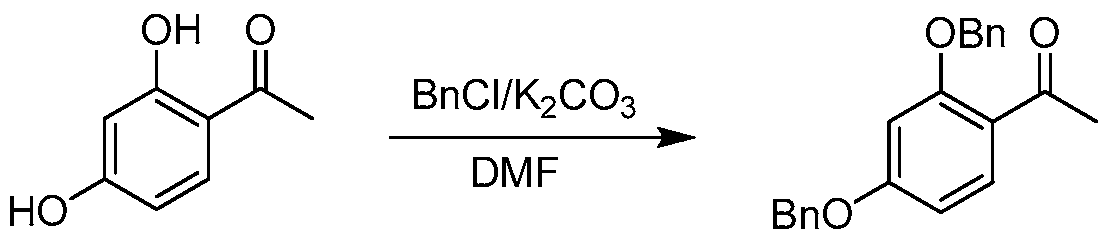
EXAMPLE 1
SYNTHESIS OF 1 -(2,4-BIS(BENZYLOXY)PHENYL)ETHANONE
Figure imgf000027_0001
(COMPOUND NO. 2)
Figure imgf000027_0002
To a mixture of 2,4-dihydroxyacetophenone 1 (1 .00 equiv. 24 kg) and potassium carbonate (2.9 equiv. 63.3 kg) in dry DMF (235 L), benzylchloride (2.5 equiv., 50 kg) was added over 1 h at room temperature (25 °C). The reaction mixture was then heated at about 85-90 °C for -14 h and held at this temperature until found complete by HPLC. After completion, the reaction mixture was allowed to cool to room temperature (25 °C) and filtered through a bed of Celite®. The Celite® bed was washed with acetone (3 volumes), and the combined filtrate was concentrated in vacuo to a dry solid. This solid was dissolved in ethyl acetate (5 volumes) and washed with sodium bicarbonate solution (2 x 5 volumes) followed by brine (3 volumes). The ethyl acetate layer was then dried with sodium sulfate (75 kg), filtered and concentrated by evaporation to dryness. The residue was triturated with hexane (100 L) and filtered. This residue was then washed with hexane (35 L) and dried at 35-40 °C to a constant weight to obtain compound 2 (40 Kg) 77%. MP: 83.1 °C; 1H-NMR (CDCI3, 500MHz): δ 7.86(d, 1 H, J= 9Hz), 7.55-7.41 (m, 8H), 7.40-7.36(m, 2H), 6.65-6.63 (m, 1 H), 6.62 (s, 1 H), 5.13 (s, 2H), 5.10 (s, 2H), 2.57 (s, 3H); 13C-NMR (CDCI3, 125MHz): δ 197.762(C), 169.51 1 (C), 160.106 (C), 136.190 (C), 136.019 (C), 132.729 (CH), 128.890 (CH), 128.724 (2CH), 128.568(CH), 128.405 (CH), 128.298 (CH), 128.283 (CH), 127.635 (CH), 127.539 (CH), 121 .779 (C), 106.325 (CH), 100.369 (CH), 70.753 (CH2), 70.279 (CH2), 32.145 (CH3).
EXAMPLE 2
SYNTHESIS OF (E)-1 -(2,4-BIS(BENZYLOXY)PHENYL)-3-(2,4-DIMETHOXY-3- METHYLPHENYL)PROP-2-EN-1 -ONE
Figure imgf000028_0001
A solution of compound 2 (1 .00 equiv., 40 kg) in MeOH (360 L) was cooled to 10-15 °C and treated with potassium hydroxide (5 equiv., 36 kg) in MeOH (360 L) over a period of 1 .5 h. Next 2,4-dimethoxy-3- methylbenzaldehyde 3 (1 .2 equiv., 25 kg) was added to the reaction mixture over 1 .5 h while maintaining the temperature at 10-15 °C. After the addition was complete, the reaction mixture was heated to 60-65 °C with stirring and held at this temperature until found complete by HPLC (-20 h). After completion, the reaction mixture was cooled back down to 10-15 °C and quenched with 2N aqueous HCI (13.5 L) to pH 2. The solid formed at this stage was filtered, washed with water and dissolved in acetic acid (360 L). This mixture was then cooled to 22-25 °C and stirred for 20 min upon which a yellow crystalline solid formed. The solid was collected by filtration, washed with water and dried under vacuum to a constant weight at 30 °C to obtain (IA-5) (50 Kg, 84%. MP: 125.1 °C; 1 H-NMR (CDCI3, 500MHz): δ 7.93(d, 1 H, J= 16Hz), 7.83(d, 1 H, J= 8.5Hz), 7.54(d, 1 H, J= 16Hz), 7.46-7.43 (m, 5H), 7.42-7.40(m, 1 H), 7.39- 7.37 (m, 1 H), 7.32-7.30 (m, 3H), 7.15 (d, 1 H, J= 8.5Hz), 6.69-6.67 (m, 2H), 6.53 (d, 1 H, J= 8.5Hz), 5.13 (s, 2H), 5.12 (s, 2H), 3.87 (s, 3H), 3.69 (s, 3H), 2.15 (s, 3H); 13C-NMR (CDCI3, 125MHz): δ 190.599 (C), 162.977 (C), 160.380 (C), 159.365 (C), 159.080 (C), 137.633 (CH), 136.312 (C), 136.201 (C), 133.006 (CH), 128.246 (CH), 127.968 (CH), 127.576 (CH), 126.155 (CH), 125.970 (CH), 123.071 (C), 121 .583 (C), 120.036 (C), 106.503 (CH), 100.706 (CH), 70.786 (CH2), 70.290 (CH2), 61 .602 (CH3), 55.691 (CH3), 8.858 (CH3).
EXAMPLE 3
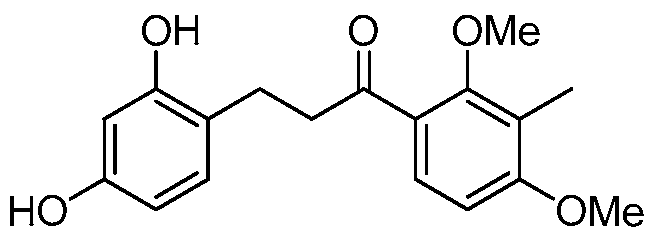
SYNTHESIS OF 1 -(2,4-DIHYDROXYPHENYL)-3-(2,4-DIMETHOXY-3- METHYLPHENYL)PROPAN-1 -ONE
Figure imgf000030_0001
(COMPOUND NO. (IB-7))
Figure imgf000030_0002
A solution of (IA-5) (1 equiv. 50 kg) in methanol (250 L) was treated with 10% Pd-C (10% by weight) and formic acid (250 L) and hydrogenated at 23-25 °C for 10h. After the reaction was found complete by HPLC, the reaction mixture was filtered through Celite®. The Celite® bed was washed with ethyl acetate (40L), and the combined filtrate was concentrated under vacuum at 35-40 °C to dryness. The residue was dissolved in ethyl acetate (3 volumes), washed with saturated sodium bicarbonate solution (20 L) until a pH of 7-7.5 was obtained. The ethyl acetate layer was then further washed with water (150 L) followed by brine. The ethyl acetate layer was then dried with sodium sulfate (88 kg), filtered and concentrated under vacuum at 35-45 °C to a constant weight to yield the product (25 Kg, 78%). MP: 171 .0 °C; 1 H-NMR (CDCI3, 500MHz): δ 12.79 (s, 1 H), 7.69(d, 1 H, J= 8.5Hz), 7.02 (d, 1 H, J= 8.5Hz), 6.61 (d, 1 H, J= 8.5Hz), 6.38-6.34 (m, 2H), 5.63 (s, 1 H), 3.82 (s, 3H), 3.76 (s, 3H), 3.20 (t, 2H, J = 8Hz), 2.99 (t, 2H, J = 8Hz), 2.18 (s, 3H); 13C-NMR (CDCI3, 125MHz): δ 204.899 (C), 165.218 (C), 162.323 (C), 157.592 (C), 157.359 (C), 132.425 (CH), 127.047 (CH), 125.688 (C), 1 19.917 (C), 1 13.910 (C), 107.561 (CH), 106.255 (CH), 103.508 (CH), 60.658 (CH3), 55.657 (CH3), 39.355 (CH2), 25.423 (CH2), 9.195 (CH3). EXAMPLE 4
SYNTHESIS OF 4-(3-(2,4-DIMETHOXY-3-METHYLPHENYL)PROPYL)BENZENE-1 ,3-DIOL
Figure imgf000031_0001
(COMPOUND NO. ( 11-1 ))
Figure imgf000031_0002
Under a nitrogen atmosphere, (IB-7) (1 equiv., 25 kg) was added into a reaction vessel containing THF (250 L) while stirring. The reaction mixture was then cooled to 0-5 °C and charged with Vitride® (i.e., sodium bis(2- methoxyethoxy)aluminum hydride, 1 equiv., 120 L) over 2.5 h. The reaction mixture was then heated and maintained at reflux until found complete by HPLC (-16 h). Next, the reaction was cooled to 0-5 °C, quenched with 150 L of concentrated HCI (30-36%) in water (150 L) and stirred for 30 min. The reaction mixture was then diluted with water (150 L) and extracted twice with ethyl acetate (450 L and 375 L). The combined ethyl acetate extract was washed with aqueous sodium bicarbonate (25 kg in 150 L of water) followed by saturated sodium chloride (150 L). Charcoal (3.25 Kg) was added to the organic layer and the mixture was refluxed for 20 minutes. This mixture was filtered through Celite® and washed with ethyl acetate (20 L). The ethyl acetate layer was then dried with anhydrous sodium sulfate (25 kg) and concentrated under vacuum at 40-45 °C. The crude product thus obtained was triturated for 4h with toluene (5 L) at room temperature and filtered. This residue was washed with toluene (16 L), and the solid thus obtained was dried under vacuum for 8h at 55-60 °C to produce 16.9 Kg of crude product. The crude product (16.9 Kg) from the previous stage was dissolved in acetone (4 L) with heating to 55 °C. This solution was then cooled to room temperature (24 °C) and treated with water (60 L) while stirring. Stirring was continued for 10 h at room temperature before the resulting solids were allowed to settle to the bottom, and the top organic layer was carefully removed. The remaining mixture was then diluted with petroleum ether (13 L), stirred for an additional 5 h at room temperature, filtered and then dried under vacuum for 12 h at 60 °C. Product from two such crystallizations was combined, dried, ground and sieved to obtain purified (11-1 ) (15.64 Kg, 93%). MP: 108.0 °C; 1 H-NMR (CDCI3, 500MHz): δ 6.96 (d, 1 H, J= 8.3Hz), 6.85 (d, 1 H, J= 8.3Hz), 6.62 (d, 1 H, J= 8.3Hz), 6.27 (d, 1 H, J= 2.2 Hz), 6.21 (dd, 1 H, J= 2.2 Hz), 3.77 (s, 3H), 3.63 (s, 3H), 2.52-2.58 (m, 4H) , 2.10 (s, 3H), 1 .78-1 .82 (m, 2H); 13C-NMR (CDCI3, 125MHz): δ 158.55 (C), 158.43 (C), 157.38 (C), 157.15 (C), 131 .53 (CH), 128.95 (C), 128.28 (CH), 121 .45 (C), 120.30 (C), 107.40 (CH), 103.60 (CH), 61 .44 (CH3), 56.19 (CH3), 32.90 (CH2), 30.77 (CH2), 30.51 (CH2), 9.195 (CH3).
EXAMPLE 5
SYNTHESIS OF 2,4-BIS(BENZYLOXY)BENZALDEHYDE
Figure imgf000032_0001
Using a procedure analogous to that described in Example 1 , compound 4 is treated with benzyl chloride to obtain benzyl ether 5. Protecting groups are employed as needed.
EXAMPLE 6
SYNTHESIS OF (E)-3-(2,4-BIS(BENZYLOXY)PHENYL)-1 -(2,4-DIMETHOXY-3- METHYLPHENYL)PROP-2-EN-1 -ONE
Figure imgf000033_0001
In a manner analogous to that described in Example 2, compounds 5 and 6 are treated under basic conditions to yield chalcone (IC-5).
EXAMPLE 7
SYNTHESIS OF 3-(2,4-DIHYDROXYPHENYL)-1 -(2,4-DIMETHOXY-3- METHYLPHENYL)PROPAN-1 -ONE
Figure imgf000034_0001
(COMPOUND NO. (ID-7))
Figure imgf000034_0002
In a manner similar to that described in Example 3, compound (IC-5) is reduced to yield (ID-7).
EXAMPLE 8
SYNTHESIS OF 4-(3-(2,4-DIMETHOXY-3-METHYLPHENYL)PROPYL)BENZENE-1 , 3-DIOL
Figure imgf000034_0003
(COMPOUND NO. ( 11-1 ))
Figure imgf000034_0004
Compound (11-1 ) is prepared and purified in a manner analogous to that described in Example 4. EXAMPLE 9
SYNTHESIS OF 1 -(2,4-DIISOPROPOXYPHENYL)ETHANONE
Figure imgf000035_0001
(COMPOUND NO. 7)
To a mixture of 2,4-dihydroxyacetophenone 1 (60.8 g, 0.4 mol) and potassium carbonate (160 g, 1 .16 mol) in dry acetone (400 ml), isopropyl bromide (123 g, 1 mol) was added over 1 h at room temperature (25 °C). The reaction mixture was then refluxed for 4 h and monitored by TLC. After completion, the reaction mixture was allowed to cool to room temperature (25 °C) and filtered through a bed of celite. The celite bed was washed with acetone (3 X 100 ml) and the combined filtrate was concentrated down to dry solid. This solid was dissolved in ethyl acetate (500 ml), and the ethyl acetate was washed sequentially with 5% HCI (200 ml), sodium bicarbonate(2 x 200 ml) and brine solution (200 ml). The ethyl acetate layer was then dried over sodium sulfate, filtered and concentrated by evaporation to dryness. The residue was triturated with hexane (500 ml) and filtered. The resulting residue was washed with hexane (2 X 200 ml) and then dried at 35-40 °C to a constant weight to obtain compound 7 (90 g, 95% yield). 1 H-NMR (CDCI3, 500MHz): δ 7.81 (d, 1 H, J= 8.5Hz), 6.48 (dd, 1 H, J =2& 8.5 Hz) , 6.41 (d, 1 H, J = 2.0 Hz), 4.66 - 4.59 (m, 2H), 2.59 (s, 3H), 1 .42 (d, 6H, J = 6.5 Hz), 1 .36 (d, 6H, J = 6.5 Hz). EXAMPLE 10
SYNTHESIS OF (E)-1 -(2,4-DIISOPROPOXYPHENYL)-3-(2,4-DIMETHOXY-3-
Figure imgf000036_0001
A solution of 2,4-diisopropoxyacetophenone 7 (47.2 g, 0.2 mol) in methanol (200 ml) was cooled to 10 ~ 15 °C and treated with potassium hydroxide (56 g, 1 mol) in MeOH (200 ml) over a period of 1 .5 h. 2,4- dimethoxy-3-methylbenzaldehyde (43.2 g, 0.24 mol) in MeOH (200 ml) was then added to the reaction mixture over 1 .5 h at 10-15 °C. After the addition was complete, cooling was removed. The reaction mixture was then heated to 60 ~ 65 °C with stirring for approximately 20 h and held at this temperature until determined to be complete by TLC. After completion, the reaction mixture was cooled to 10 ~ 15 °C and quenched with 2 N aqueous HCI (150 ml) to pH 2. The solid formed at this stage was filtered, washed with water and dissolved in MeOH (500 ml). This methanol solution was then cooled to 22 ~ 25 °C and stirred for 20 min by which time a yellow crystalline solid had formed. The solid was collected by filtration, washed with water and dried under vacuum to a constant weight at 30 °C to obtain (IA-6) (70 g, 88%). 1 H-NMR (CDCI3, 500MHz): δ 7.92 (d, 1 H, J= 16Hz), 7.75 (d, 1 H, J = 9Hz), 7.58 (d, 1 H, J = 16Hz), 7.52 (d, 1 H, J = 9Hz), 7.69 (d, 1 H, J = 9Hz), 6.54 (dd, 1 H, J = 2 & 9Hz), 6.46 (d, 1 H, J = 2Hz), 4.64-4.59 (m, 2H), 3.87 (s, 3H), 3.66 (s, 3H), 2.17 (s, 3H) 1 .38 (d, 16H, J = 6Hz).
EXAMPLE 1 1
SYNTHESIS OF 1 -(3-(2,4-DIISOPROPOXYPHENYL)PROPYL)-2,4-DIMETHOXY-3-
METHYLBENZENE
Figure imgf000037_0001
A solution of (IA-6) (60g, 0.15 mol) in methanol (600 ml) was treated with 10% Pd-C (10% by weight) and acetic acid (60 ml) and hydrogenated under a hydrogen atmosphere at 23-25 °C and 54 psi for 10 h. When the reaction was determined complete by TLC, the reaction mixture was filtered through celite, and the celite bed was washed with ethyl acetate (250 ml). The combined filtrate was then concentrated under vacuum at 35-40 °C to dryness. The residue was dissolved in ethyl acetate (750 ml) and washed sequentially with saturated sodium bicarbonate solution (250 ml) to pH 7 - 7.5, water (250 ml) and brine. The ethyl acetate layer was dried over sodium sulfate, filtered and then concentrated under vacuum at 35-45 °C to constant weight to yield (II-2) (52 g, 90% yield). 1 H-NMR (CDCI3, 500MHz): 7.03 (d, 1 H, J = 8.5Hz), 7.00 (d, 1 H, J = 8.5Hz), 6.60 (d, 1 H, J = 8.5Hz), 6.43 (d, 1 H, J = 2Hz), 6.40 (dd, 1 H, J = 2 & 8.5Hz), 4.52-4-48 (m, 2H), 3.82 (s, 3H), 3.72 (s, 3H), 2.64-2.59 (m, 4H), 2.17 (s, 3H), 1 .33 (d, 6H, J = 6 Hz), 1 .32 (d, 6H, J = 6 Hz); 13C-NMR (CDCI3, 125MHz): δ 157.304 (C), 156.996 (C), 156.830 (C), 156.582 (C), 130.004 (CH), 127.791 (C), 126.680 (CH), 124.267 (C), 1 19.466 (C), 106.151 (CH), 106.018 (CH), 102.512 (CH), 69.957 (CH), 69.731 (CH), 60.525 (CH3), 55.631 (CH3), 31 .216 (CH2), 29.794 (CH2), 29.271 (CH2), 22.202 (2, CH3), 22.161 (2, CH3), 9.147 (CH3).
EXAMPLE 12
SYNTHESIS OF 4-(3-(2,4-DIMETHOXY-3-METHYLPHENYL)PROPYL)BENZENE-1 ,3-DIOL
Figure imgf000038_0001
(COMPOUND NO. ( 11-1 ))
Figure imgf000038_0002
A solution of (II-2) (38.6g, 0.1 mol) in anhydrous CH2CI2 (250 ml) was treated with AICI3 under an argon atmosphere at 0 - 5 °C. The reaction mixture was then stirred for 3 h at room temperature until found complete by TLC. The reaction was then cooled to 0 - 5 °C, quenched with saturated NH4CI, diluted with water (100 ml) and extracted with ethyl acetate (3 X 250 ml). The combined ethyl acetate extract was washed with aqueous sodium bicarbonate followed by brine (250 L). The ethyl acetate layer was then dried over dry sodium sulfate and concentrated under vacuum at 40-45 °C. The crude product thus obtained was dissolved in MeOH (500 ml) and refluxed for 20 minutes in charcoal (400g). This suspension was filtered through celite and washed with ethyl acetate (25 L). The filtered solution was concentrated and crystallized in MeOH. The solid thus obtained was dried under vacuum for 8 h at 55 - 60 °C to produce (11-1 ) (24.2 g, 60% yield). MP: 108.0 °C; 1 H-NMR (CDCIs, 500MHz): δ 6.96 (d, 1 H, J = 8.3Hz), 6.85 (d, 1 H, J = 8.3Hz), 6.62 (d, 1 H, J = 8.3Hz), 6.27 (d, 1 H, J = 2.2 Hz), 6.21 (dd, 1 H, J = 2.2 Hz), 3.77 (s, 3H), 3.63 (s, 3H), 2.52-2.58 (m, 4H) , 2.10 (s, 3H), 1 .78-1 .82 (m, 2H); 13C-NMR (CDCIs, 125MHz): δ 158.55 (C), 158.43 (C), 157.38 (C), 157.15 (C), 131 .53 (CH), 128.95 (C), 128.28 (CH), 121 .45 (C), 120.30 (C), 107.40 (CH), 103.60 (CH), 61 .44 (CH3), 56.19 (CH3), 32.90 (CH2), 30.77 (CH2), 30.51 (CH2), 9.195 (CH3).
EXAMPLE 13
SYNTHESIS OF 2,4-DNSOPROPOXYBENZALDEHYDE
Figure imgf000039_0001
Compound 8 is prepared in a manner analogous to that described in Example 9. Protecting groups are employed as needed. EXAMPLE 14
SYNTHESIS OF (E)-3-(2,4-DIISOPROPOXYPHENYL)-1 -(2,4-DIMETHOXY-3-
Figure imgf000040_0001
Compound (IC-6) is prepared by aldol condensation of 8 and 3 in a manner analogous to that described in Example 10.
EXAMPLE 15
SYNTHESIS OF 1 -(3-(2,4-DIISOPROPOXYPHENYL)PROPYL)-2,4-DIMETHOXY-3-
METHYLBENZENE
Figure imgf000041_0001
(COMPOUND NO. (I I-2))
Figure imgf000041_0002
Compound (II-2) is prepared from (IC-6) in a manner analogous to that described in Example 1 1 .
All of the above U.S. patents, U.S. patent application publications, U.S. patent applications, foreign patents, foreign patent applications and non- patent publications referred to in this specification and/or listed in the Application Data Sheet, are incorporated herein by reference, in their entirety.
From the foregoing it will be appreciated that, although specific embodiments of the invention have been described herein for purposes of illustration, various modifications may be made without deviating from the spirit and scope of the invention. Accordingly, the invention is not limited except as by the appended claims.

Claims

1 . A compound having the following structure (I):
Figure imgf000042_0001
(I)
or a stereoisomer, tautomer or salt thereof, wherein:
R1 , R2, R3 and R4 are each independently hydrogen, alkyl, aryl or aralkyl;
one of R5 or R6 is oxo, and the other of R5 or R6 is hydrogen; and X, Y and Z are each independently absent or hydrogen, or X and
Y or Z and Y may join to form a bond, wherein X, Y and Z are each chosen such that all valences are satisfied.
2. The compound of claim 1 , wherein R5 is oxo, R6 is hydrogen and the compound has one of the following structures (IA) or (IB):
Figure imgf000042_0002
(IA) (IB)
3. The compound of claims 1 or 2, wherein each of R1 and R2 are alkyl.
4. The compound of claim 3, wherein each of R1 and R2 are methyl and the compound has one of the following structures (IA-1 ) or (IB-1 ):
Figure imgf000043_0001
5. The compound of claims 1 or 2, wherein each of R3 and R4 are aralkyl.
6. The compound of claim 5, wherein each of R3 and R4 are benzyl and the compound has one of the following structures (IA-2) or (IB-2):
Figure imgf000043_0002
(IA-2) (IB-2) 7. The compound of claims 1 or 2, wherein each of R3 and R4 are alkyl.
8. The compound of claim 7, wherein each of R3 and R4 are isopropyl and the compound has one of the following structures (IA-3) or (IB-3):
Figure imgf000043_0003
(IA-3) (IB-3)
9. The compound of claims 1 or 2, wherein each of R3 and R4 are hydrogen and the compound has one of the following structures (IA-4) or (IB-4):
Figure imgf000044_0001
or
(IA-4) (IB-4)
10. The compound of claim 1 , wherein R6 is oxo, R5 is hydrogen and the compound has one of the following structures (IC) or (ID):
Figure imgf000044_0002
(IC) (ID)
1 1 . The compound of claim 10, wherein each of R1 and R2 are alkyl.
12. The compound of claim 1 1 , wherein each of R1 and R2 are methyl and the compound has one of the following structures (IC-1 ) or (ID-1 ):
Figure imgf000044_0003
The compound of claim 10, wherein each of R and R are aralkyl.
14. The compound of claim 13, wherein each of R3 and R4 are benzyl and the compound has one of the following structures (IC-2) or (ID-2):
Figure imgf000045_0001
(IC-2) (ID-2)
15. The compound of claim 10, wherein each of R and R are alkyl.
16. The compound of claim 15, wherein each of R3 and R4 are isopropyl and the compound has one of the following structures (IC-3) or (ID-3):
Figure imgf000045_0002
(IC-3) (ID-3)
17. The compound of claim 10, wherein each of R3 and R4 are hydrogen and the compound has one of the following structures (IC-4) or (ID-4):
Figure imgf000045_0003
(IC-4) (ID-4)
18. The compound of claims 1 , 2 or 10, wherein at least one of R3 or R4 is allyl.
19. The compound of claim 18, wherein each of R3 and R4 are allyl.
20. The compound of claim 18 or 19, wherein at least one of R1 or R2 is methyl.
21 . The compound of claim 20, wherein each of R1 and R2 is methyl.
22. The compound of claim 1 , wherein at least one of R3 or R4 is aralkyl.
23. The compound of claim 1 , wherein at least one of R3 or R4 is alkyl.
24. The compound of claim 1 , wherein the compound has one of the following structures (IA-5), (IA-6), (IA-7) or (IA-8):
Figure imgf000046_0001
(IA-7) (IA-8)
25. The compound of claim 1 , wherein the compound has one of the following structures (IB-5), (IB-6), (IB-7) or (IB-8):
Figure imgf000047_0001
(IB-7) (IB-8)
26. The compound of claim 1 , wherein the compound has one of the following structures (IC-5), (IC-6), (IC-7) or (IC-8):
Figure imgf000047_0002
(IC-7) (IC-8)
27. The compound of claim 1 , wherein the compound has one of the following structures (ID-5), (ID-6), (ID-7) or (ID-8):
Figure imgf000047_0003
(ID-5) (ID-6)
Figure imgf000048_0001
(ID-7) (ID-8)
A method for preparing a compound of structure (II)
Figure imgf000048_0002
(II)
or a stereoisomer, tautomer or salt thereof, wherein:
R7, R8, R9 and R10 are each independently hydrogen, alkyl, aryl or aralkyl,
the method comprising reducing a compound of structure (I):
Figure imgf000048_0003
(I)
or a stereoisomer, tautomer or salt thereof, wherein:
R1 , R2, R3 and R4 are each independently hydrogen, alkyl, aryl or aralkyl;
one of R5 or R6 is oxo, and the other of R5 or R6 is hydrogen; and X, Y and Z are each independently absent or hydrogen, or X and
Y or Z and Y may join to form a bond, wherein X, Y and Z are each chosen such that all valences are satisfied.
29. The method of claim 28, wherein the compound structure (I) has one of the following structures (IB) or (ID):
Figure imgf000049_0001
The method of claims 28 or 29, wherein each of R1 and are methyl.
31 . The method of claims 28 or 29, wherein each of R3 and R4 are hydrogen.
32. The method of claim 29, wherein each of R1 and R2 are methyl, each of R3 and R4 are hydrogen and the compound of structure (I) has one of the following structures (IB-7) or (ID-7):
Figure imgf000049_0002
(IB-7) (ID-7)
33. The method of any of claims 28-32, wherein reducing comprises treating a compound of structure (IB) or (ID) with sodium bis(2- methoxyethoxy)aluminum hydride, Raney nickel and hydrogen gas or zinc/HCI.
34. The method of any of claims 29-33, wherein the compound of structure (IB) or (ID) has been prepared by reducing a compound of structure (IA) or (IC), respectively:
Figure imgf000049_0003
(IA) (IC) The method of claim 34, wherein each of R1 and R2 are methyl.
The method of claim 34, wherein each of R3 and R4 are benzyl.
The method of claim 34, wherein each of R and R are isopropyl.
38. The method of claim 34, wherein each of R1 and R2 are methyl, each of R3 and R4 are benzyl and the compound of structure (I) has one of the following structures (IA-5) or (IC-5):
Figure imgf000050_0001
(IA-5) (IC-5)
39. The method of claim 34, wherein each of R1 and R2 are methyl, each ooff RR33 aanndd RR44 aarree iissoopprrooppyyll aanndd tthe compound of structure (I) has one of the following structures (IA-6) or (IC-6):
Figure imgf000050_0002
(IA-6) (IC-6)
40. The method of any of claims 34-39, wherein reducing comprises treating a compound of structure (IA) or (IC) with palladium on carbon and formic acid/H2 (gas) or palladium on carbon and ammonium formate.
41 . The method of any of claims 28-40, wherein the compound of structure (I) has been prepared by reaction of a compound of structure (III) and a compound of structure (IV):
Figure imgf000051_0001
(III) (IV)
or a stereoisomer, tautomer or salt thereof, wherein one of R11 or R12 is hydrogen and the other of R11 or R12 is methyl.
42. The method of claim 41 , wherein R11 is hydrogen and R12 is methyl.
43. The method of claim 41 , wherein R11 is methyl and R12 is hydrogen.
44. The method of claim 41 , wherein each of R1 and R2 are methyl.
45. The method of claim 41 , wherein each of R3 and R4 are benzyl.
46. The method of claim 41 , wherein each of R3 and R4 are isopropyl.
47. The method of claim 28, wherein the compound of structure (I) has one of the following structures (IB) or (ID):
Figure imgf000052_0001
48. The method of claim 47, wherein each of R1 and R2 are methyl.
49. The method of claim 47, wherein each of R3 and R4 are benzyl.
The method of claim 47, wherein each of R3 and R4 are isopropyl.
51 . The method of claim 47, wherein each of R1 and R2 are methyl, each of R3 and R4 are benzyl and the compound of structure (I) has one of the following structures (IA-5) or (IC-5):
Figure imgf000052_0002
52. The method of any of claims 47-51 , wherein reducing comprises the steps of:
(a) treatment with palladium on carbon and formic acid/H2 (gas) or palladium on carbon and ammonium formate.; and
(b) treatment with sodium bis(2-methoxyethoxy)aluminum hydride, Raney nickel and hydrogen gas or zinc/HCI.
53. The method of claim 47, wherein each of R1 and R2 are methyl, each of R3 and R4 are isopropyl and the compound of structure (I) has one of the following structures (IA-6) or (IC-6):
Figure imgf000053_0001
(IA-6) (IC-6)
54. The method of claim 53, wherein reducing comprises treating a compound of structure (IA-6) or (IC-6) with palladium on carbon, hydrogen gas and acetic acid.
55. The method of claim 28, wherein the compound of structure (II) has the following structure (II-2):
Figure imgf000053_0002
(II-2)
56. The method of claim 28, wherein the compound structure (II) has the following structure (11-1 ):
Figure imgf000053_0003
(11-1 )
57. The method of claim 28, wherein at least one of R3 or R4 is allyl.
58. The method of claim 57, wherein each of R3 and R4 are allyl.
59. The method of claim 28, wherein at least one of R3 or R4 is benzyl.
PCT/US2012/029875 2011-03-24 2012-03-21 Compounds and methods for preparation of diarylpropanes Ceased WO2012129260A1 (en)

Priority Applications (12)

Application Number Priority Date Filing Date Title
AU2012231008A AU2012231008B2 (en) 2011-03-24 2012-03-21 Compounds and methods for preparation of diarylpropanes
JP2014501198A JP6216312B2 (en) 2011-03-24 2012-03-21 Compounds and methods for preparing diarylpropanes
EP12712191.1A EP2688860B1 (en) 2011-03-24 2012-03-21 Compounds and methods for preparation of diarylpropanes
KR1020197012750A KR102113823B1 (en) 2011-03-24 2012-03-21 Compounds and methods for preparation of diarylpropanes
CA2830993A CA2830993C (en) 2011-03-24 2012-03-21 Compounds and methods for preparation of diarylpropanes
EP20212012.7A EP3822246A1 (en) 2011-03-24 2012-03-21 Compounds and methods for preparation of diarylpropanes
KR1020137027835A KR101976642B1 (en) 2011-03-24 2012-03-21 Compounds and methods for preparation of diarylpropanes
CN201280019762.5A CN103492353A (en) 2011-03-24 2012-03-21 Compounds and methods for preparing diarylpropanes
KR1020207014062A KR102257469B1 (en) 2011-03-24 2012-03-21 Compounds and methods for preparation of diarylpropanes
BR112013024413-5A BR112013024413B1 (en) 2011-03-24 2012-03-21 COMPOUNDS AND METHODS FOR THE PREPARATION OF DIARYLPROPANS
ES12712191T ES2859700T3 (en) 2011-03-24 2012-03-21 Compounds and methods for the preparation of diarylpropanes
CY20171100923T CY1119370T1 (en) 2011-03-24 2017-08-31 METHOD FOR PREPARATION OF TRIPOSTININIL AND ITS PRODUCERS

Applications Claiming Priority (2)

Application Number Priority Date Filing Date Title
US201161467286P 2011-03-24 2011-03-24
US61/467,286 2011-03-24

Publications (1)

Publication Number Publication Date
WO2012129260A1 true WO2012129260A1 (en) 2012-09-27

Family

ID=45929622

Family Applications (1)

Application Number Title Priority Date Filing Date
PCT/US2012/029875 Ceased WO2012129260A1 (en) 2011-03-24 2012-03-21 Compounds and methods for preparation of diarylpropanes

Country Status (11)

Country Link
US (3) US8586799B2 (en)
EP (2) EP2688860B1 (en)
JP (1) JP6216312B2 (en)
KR (3) KR102257469B1 (en)
CN (3) CN109896935A (en)
AU (1) AU2012231008B2 (en)
BR (1) BR112013024413B1 (en)
CA (1) CA2830993C (en)
CY (1) CY1119370T1 (en)
ES (1) ES2859700T3 (en)
WO (1) WO2012129260A1 (en)

Cited By (2)

* Cited by examiner, † Cited by third party
Publication number Priority date Publication date Assignee Title
CN109665949A (en) * 2019-01-02 2019-04-23 上海贤鼎生物科技有限公司 A kind of preparation method of diarylpropane compound
WO2023221665A1 (en) 2022-05-17 2023-11-23 帕潘纳(北京)科技有限公司 Diphenolic compound, and preparation method therefor and use thereof

Families Citing this family (8)

* Cited by examiner, † Cited by third party
Publication number Priority date Publication date Assignee Title
JP5128277B2 (en) 2004-05-28 2013-01-23 ユニジェン・インコーポレーテッド Diarylalkanes as potent inhibitors of binuclear enzymes
KR101661608B1 (en) * 2008-07-21 2016-09-30 유니젠, 인크. Series of skin-whitening (lightening) compounds
WO2012129260A1 (en) 2011-03-24 2012-09-27 Unigen, Inc. Compounds and methods for preparation of diarylpropanes
CA2954746A1 (en) * 2014-08-05 2016-02-11 Givaudan Sa Sweetener compositions
CN108530273A (en) * 2018-04-26 2018-09-14 武汉桀升生物科技有限公司 A kind of synthetic method of 2,4- dimethoxy-toluenes base -4- propyl diphenol
CA3204272A1 (en) * 2018-10-14 2020-04-23 Unigen, Inc. A series of compounds for treatment of skin diseases and other conditions
CN114621301A (en) * 2020-12-14 2022-06-14 桂林莱茵生物科技股份有限公司 Preparation method of neohesperidin dihydrochalcone
CN119798970B (en) * 2025-03-17 2025-07-04 赣州祺琳新材料有限公司 High-temperature-resistant power tube and production process thereof

Citations (3)

* Cited by examiner, † Cited by third party
Publication number Priority date Publication date Assignee Title
US5880314A (en) 1995-11-24 1999-03-09 Mitsui Chemicals, Inc. Hydrochalcone derivatives, cosmetic compositions containing said derivatives and methods of producing the same
US20050267047A1 (en) 2004-05-28 2005-12-01 Unigen Pharmaceuticals, Inc. Diarylalkanes as potent inhibitors of binuclear enzymes
US20100016347A1 (en) * 2008-07-21 2010-01-21 Unigen Pharmaceuticals, Inc. Series of skin whitening (lightening) compounds

Family Cites Families (60)

* Cited by examiner, † Cited by third party
Publication number Priority date Publication date Assignee Title
CA238730A (en) 1924-03-18 R. Curme Henry Process of oxidising dibenzyl
US1596613A (en) 1925-12-15 1926-08-17 Lehn & Fink Inc 2, 4-dihydroxydiphenylethane and process of making it
US3133967A (en) 1960-02-04 1964-05-19 Boehringer Sohn Ingelheim 1-(3, 4-dialkoxy-phenol)-1-dialkylamino-3-and-4-piienyl butanes
DE2644591A1 (en) 1976-10-02 1978-04-06 Bayer Ag PROCESS FOR THE PRODUCTION OF ARYLSULFONIUM SALT
US5008294A (en) 1985-02-11 1991-04-16 Chemex Pharmaceuticals, Inc. Methods of treating tumors with compositions of catecholic butanes
US4678664A (en) 1982-09-30 1987-07-07 Basf Corporation Mineral oil gels
EP0122523A3 (en) 1983-04-18 1987-05-27 Andrews Paper and Chemical Co., Inc. Diazotype compositions and materials
US4880637A (en) 1985-02-11 1989-11-14 Chemex Pharmaceuticals, Inc. Compositions of catecholic butanes with zinc
KR890700023A (en) 1986-11-19 1989-03-02 케맥스 파마슈우티칼스 인코포레이티드 Lipoxygenase inhibitors
FR2609711B1 (en) 1987-01-21 1989-06-16 Rhone Poulenc Chimie PROCESS FOR THE PREPARATION OF HYDROXYBIPHENYLES
CA1327869C (en) 1989-02-17 1994-03-15 Yvan Guindon Ribonucleotide reductase inhibitors
JPH03242650A (en) 1990-02-20 1991-10-29 Fuji Photo Film Co Ltd Positive type photoresist composition
JPH05213729A (en) 1992-01-31 1993-08-24 Kao Corp Melamine-inhibitor
AU4385293A (en) 1992-05-21 1993-12-13 Research Corporation Technologies, Inc. Stilbene derivatives as anticancer agents
US5430062A (en) 1992-05-21 1995-07-04 Research Corporation Technologies, Inc. Stilbene derivatives as anticancer agents
IT1256354B (en) 1992-08-31 1995-12-01 Francesca Pelizzoni ANTI-TUMORAL ACTIVITIES OF COMBRETASTATINA AND PROCEDURE FOR THEIR PREPARATION
GB9322007D0 (en) 1993-10-26 1993-12-15 Unilever Plc Cosmetic composition
US5585492A (en) 1994-10-11 1996-12-17 G. D. Searle & Co. LTA4 Hydrolase inhibitors
US7056935B2 (en) 1995-06-07 2006-06-06 Gpi Nil Holdings, Inc. Rotamase enzyme activity inhibitors
JPH08337510A (en) 1995-06-15 1996-12-24 Advanced Sukin Res Kenkyusho:Kk Melanin production inhibitor
RU2156771C2 (en) 1996-05-30 2000-09-27 Институт нефтехимии и катализа с опытным заводом АН РБ Method of combined preparation of 1-(dialkylamino)-2- phenylaluma cyclopentane and 1-(dialkylamino)-2,4- diphenylalumacyclopentane
PT1015446E (en) 1997-02-07 2003-08-29 Aventis Pharma Inc (4-PIPERIDINYL) -1H-2-BENZOPYRANEAN DERIVATIVES AS ANTI-PSYCHOSTIC AGENTS
KR100270410B1 (en) 1997-03-06 2000-11-01 성재갑 Novel 1,3-diphenylpropane derivative having inhibitive activity against tyrosinase and process for preparation thereof
BR9803596A (en) 1997-09-23 2000-04-25 Pfizer Prod Inc Derivatives of resorcinol.
US6376546B1 (en) * 1997-10-14 2002-04-23 Asahi Kasei Kabushiki Kaisha Biphenyl-5-alkanoic acid derivatives and use thereof
JP3636423B2 (en) 1997-12-16 2005-04-06 三井化学株式会社 Cosmetics containing hydrochalcone derivatives as active ingredients
JPH11255638A (en) 1998-03-13 1999-09-21 Kansai Kouso Kk Tyrosinase activity inhibitor and cosmetic
WO2000015214A1 (en) 1998-09-11 2000-03-23 Ilexus Pty Limited Fc RECEPTOR MODULATORS AND USES THEREOF
US6296857B1 (en) 1998-09-23 2001-10-02 Beiersdorf Aktiengesellschaft Cosmetic or dermatological preparations comprising oligopeptides for lightening the skin of age marks and/or for preventing tanning of the skin, in particular tanning of the skin caused by UV radiation
JP2000095721A (en) 1998-09-28 2000-04-04 Mitsui Chemicals Inc New hydrochalcone derivative, cosmetic containing the derivative and their production
WO2000073269A2 (en) 1999-06-02 2000-12-07 Regents Of The University Of Minnesota Nicotine receptor ligands
US6214874B1 (en) 1999-10-15 2001-04-10 John Hopkins University Treatment of HPV induced cancer using in situ application of two nordihydroguiaretic acid derivatives, tetramethyl NDGA M4N and tetraglycinal NDGA G4N
US6630510B1 (en) 1999-10-28 2003-10-07 Merck & Co., Inc. Substituted succinic acid metallo-β-lactamase inhibitors and their use in treating bacterial infections
US6221604B1 (en) 2000-02-07 2001-04-24 Pe Corporation Electron-deficient nitrogen heterocycle-substituted fluorescein dyes
AU2001243334A1 (en) 2000-02-29 2001-09-12 Integriderm, Inc. Inhibitors of melanocyte tyrosinase as topical skin lighteners
MXPA03000043A (en) 2000-06-30 2003-10-15 Procter & Gamble Promoting whole body health.
JP3504594B2 (en) 2000-07-28 2004-03-08 株式会社ノエビア External preparation for skin
EP1191030B1 (en) 2000-09-21 2005-05-04 Solvias AG Phosphinite-oxazolines and metal complexes
BR0114059A (en) 2000-09-21 2003-07-01 Pfizer Prod Inc Resorcinol Derivatives
DE10051034A1 (en) 2000-10-14 2002-04-18 Henkel Kgaa Keratin-dyeing agent with excellent fastness and toxicological properties has combination of 2-chloro-4-amino-phenol, an aminophenol and an m-phenylenediamine derivative and/or naphthalene derivative as dye precursor
AU2002227138A1 (en) 2000-10-24 2002-05-06 Molecular Electronics Corporation Three-terminal field-controlled molecular devices
HU227197B1 (en) 2000-10-24 2010-10-28 Richter Gedeon Nyrt Nmda receptor antagonist carboxylic acid amide derivatives and pharmaceutical compositions containing them
JP2002193990A (en) 2000-12-25 2002-07-10 Mitsui Chemicals Inc Hydrochalcone glycoside and cosmetic formulated with the same as effective component
MXPA03008699A (en) 2001-05-25 2003-12-12 P & G Clairol Inc 1,3-dihydroxybenzene derivatives and colorants containing said compounds.
JP4425628B2 (en) 2001-07-23 2010-03-03 ジョンソン・アンド・ジョンソン・コンシューマー・カンパニーズ・インコーポレイテッド Cytoprotective compounds, pharmaceutical and cosmetic formulations and methods
GB0126889D0 (en) 2001-11-08 2002-01-02 Paterson Inst For Cancer Res Compounds and their uses
DE10161253A1 (en) 2001-12-13 2003-06-26 Dragoco Gerberding Co Ag Use of dihydropinosylvin and its derivatives as inhibitors
US6562791B1 (en) 2002-03-29 2003-05-13 Council Of Scientific And Industrial Research Glucopyranoside, process for isolation thereof, pharmaceutical composition containing same and use thereof
US6600004B1 (en) 2002-04-10 2003-07-29 General Electric Company Method of preparing polyestercarbonates
WO2003086414A1 (en) 2002-04-10 2003-10-23 Arizona Board Of Regents Structural modification of resveratrol: sodium resverastatin phosphate
CN1462739A (en) 2002-05-30 2003-12-24 浙江工业大学 Preparing2,2' diamido bibenzil diphosphate by using method of liquid phase catalysis in low pressure with hydrogen being added
SI1611112T1 (en) 2003-02-11 2012-12-31 Vernalis (R&D) Limited Isoxazole compounds as inhibitors of heat shock proteins
CN1238361C (en) 2003-02-21 2006-01-25 南开大学 Spiro-diphosphine ligand
DE10324566A1 (en) 2003-05-30 2004-12-16 Symrise Gmbh & Co. Kg Use of diphenylmethane derivatives as tyrosinase inhibitors
JP4569211B2 (en) 2003-07-31 2010-10-27 住友ベークライト株式会社 Phenol compound, positive photosensitive resin composition, semiconductor device and display element, and method for manufacturing semiconductor device and display element
JP2005097144A (en) 2003-09-24 2005-04-14 Mitsubishi Chemicals Corp Method for producing binuclear phenols
US7334392B2 (en) 2004-10-29 2008-02-26 General Electric Company Counter-rotating gas turbine engine and method of assembling same
US20070224301A1 (en) 2006-03-21 2007-09-27 Ribnicky David M Compounds from an extract of Artemisia and methods for treating disorders
US7781410B2 (en) 2006-08-04 2010-08-24 Johnson & Johnson Consumer Companies, Inc. Compositions containing chalcones and use thereof
WO2012129260A1 (en) * 2011-03-24 2012-09-27 Unigen, Inc. Compounds and methods for preparation of diarylpropanes

Patent Citations (3)

* Cited by examiner, † Cited by third party
Publication number Priority date Publication date Assignee Title
US5880314A (en) 1995-11-24 1999-03-09 Mitsui Chemicals, Inc. Hydrochalcone derivatives, cosmetic compositions containing said derivatives and methods of producing the same
US20050267047A1 (en) 2004-05-28 2005-12-01 Unigen Pharmaceuticals, Inc. Diarylalkanes as potent inhibitors of binuclear enzymes
US20100016347A1 (en) * 2008-07-21 2010-01-21 Unigen Pharmaceuticals, Inc. Series of skin whitening (lightening) compounds

Non-Patent Citations (12)

* Cited by examiner, † Cited by third party
Title
"Dictionary of Natural Products", 2 January 2004, CHAPMAN & HALL/CRC
A. T. CARPENTER ET AL: "SYNTHESIS OF MOLECULAR UNITS FOR RATIONAL SYNTHESIS OF PHENOL-FORMALDEHYDE AND ALLIED RESINS. I. SYNTHESIS OF RESOLES, DIHYDROXYDIPHENYLETHANES, AND DIHYDROXYDIPHENYLPROPANES", J. APPL. CHEM., 1 May 1951 (1951-05-01), pages 217 - 226, XP055034864, Retrieved from the Internet <URL:http://onlinelibrary.wiley.com/doi/10.1002/jctb.5010010507/pdf> [retrieved on 20120807] *
ANSELMO A. MORAIS ET AL: "Synthesis of three natural 1,3-diarylpropanes: Two revised structures*", PHYTOCHEMISTRY, vol. 28, no. 1, 1 January 1989 (1989-01-01), pages 239 - 242, XP055034868, ISSN: 0031-9422, DOI: 10.1016/0031-9422(89)85046-0 *
J BRAZ. CHEM. SOC, vol. 10, 1999, pages 347 - 353
J. CHEM. RES., 2006, pages 584 - 585
J. CHEM. SOC. PERKIN TRANS., vol. 1, no. 7, 1979, pages 1661 - 4
J. ORG. CHEM., vol. 64, 1998, pages 9139
LETT. IN ORG. CHEM., no. 3, 2006, pages 39 - 41
LETT. IN ORG. CHEM., vol. 3, 2006, pages 39 - 41
PAINE ET AL., J. INVEST. DERMATOL., vol. 116, 2001, pages 587
PETER G. M. WUTS; THEODORA W. GREENE: "Greene's Protective Groups in Organic Synthesis", October 2006
SEIBERG ET AL., J. INVEST. DERMATOL., vol. 115, 2000, pages 162

Cited By (2)

* Cited by examiner, † Cited by third party
Publication number Priority date Publication date Assignee Title
CN109665949A (en) * 2019-01-02 2019-04-23 上海贤鼎生物科技有限公司 A kind of preparation method of diarylpropane compound
WO2023221665A1 (en) 2022-05-17 2023-11-23 帕潘纳(北京)科技有限公司 Diphenolic compound, and preparation method therefor and use thereof

Also Published As

Publication number Publication date
US9045405B2 (en) 2015-06-02
CA2830993A1 (en) 2012-09-27
EP3822246A1 (en) 2021-05-19
KR101976642B1 (en) 2019-05-09
AU2012231008B2 (en) 2017-05-11
US20160096795A1 (en) 2016-04-07
JP6216312B2 (en) 2017-10-18
US20120245393A1 (en) 2012-09-27
US20140235899A1 (en) 2014-08-21
KR20200056489A (en) 2020-05-22
CN109896935A (en) 2019-06-18
KR102257469B1 (en) 2021-05-27
KR102113823B1 (en) 2020-05-21
EP2688860B1 (en) 2020-12-09
US8586799B2 (en) 2013-11-19
BR112013024413B1 (en) 2020-02-18
KR20140027169A (en) 2014-03-06
CA2830993C (en) 2019-07-02
EP2688860A1 (en) 2014-01-29
ES2859700T3 (en) 2021-10-04
JP2014516346A (en) 2014-07-10
BR112013024413A2 (en) 2017-04-25
AU2012231008A1 (en) 2013-10-17
CY1119370T1 (en) 2018-02-14
KR20190052153A (en) 2019-05-15
CN109180448A (en) 2019-01-11
CN103492353A (en) 2014-01-01

Similar Documents

Publication Publication Date Title
AU2012231008B2 (en) Compounds and methods for preparation of diarylpropanes
EP0370461B1 (en) Chalcone derivatives and process for producing the same
RO111078B1 (en) Preparation process for some derivates of 3-(alpha-methoxi)-methylene-benzofuranones and intermediaries for the process making thereof
Park et al. A convenient synthesis of 3, 6-substituted carbazoles via nickel catalyzed cross-coupling
HK40050603A (en) Compounds and methods for preparation of diarylpropanes
HK40009568A (en) Compounds and methods for preparation of diarylpropanes
HK1194356B (en) Compounds and methods for preparation of diarylpropanes
HK40002647A (en) Compounds and methods for preparation of diarylpropanes
WO2004069774A2 (en) Synthesis of 13c-labelled estrogen analogues
KR102770302B1 (en) Composition for preventing or treating inflammatory disease comprising 2-benzylidene-3,4-dihydronaphthalen-1(2H)-ones as an active ingredient
HIGASHINO et al. Studies on the Reactions of Pyrido [2, 3-d] pyrimidine 3-Oxide with Ketones. The Transformation of Pyrido [2, 3-d] pyrimidine 3-Oxide into 1, 8-Naphthyridines
Chaffee et al. Colouring matters of Australian plants. XXIV. Haemofluorone B: New synthetic models and a revised structure
EP2558433B1 (en) Process for the preparation of hydroquinones
DE2428879A1 (en) PROCESS FOR MANUFACTURING RESORCIN MONOAETHERS
BANERJI et al. STUDIES ON KAWA-PYRONES: SYNTHESIS OF 5, 6-DEHYDROKAWAIN
Quinn et al. Preparation of isobenzofuran-1 (3H)-ones by decarbonylation of 1H-2-benzopyran-1, 3 (4H)-diones
Finan et al. The structure of a by-product obtained during the chloromethylation of methyl 2-furoate

Legal Events

Date Code Title Description
121 Ep: the epo has been informed by wipo that ep was designated in this application

Ref document number: 12712191

Country of ref document: EP

Kind code of ref document: A1

ENP Entry into the national phase

Ref document number: 2830993

Country of ref document: CA

ENP Entry into the national phase

Ref document number: 2014501198

Country of ref document: JP

Kind code of ref document: A

NENP Non-entry into the national phase

Ref country code: DE

ENP Entry into the national phase

Ref document number: 2012231008

Country of ref document: AU

Date of ref document: 20120321

Kind code of ref document: A

ENP Entry into the national phase

Ref document number: 20137027835

Country of ref document: KR

Kind code of ref document: A

WWE Wipo information: entry into national phase

Ref document number: 2012712191

Country of ref document: EP

REG Reference to national code

Ref country code: BR

Ref legal event code: B01A

Ref document number: 112013024413

Country of ref document: BR

ENP Entry into the national phase

Ref document number: 112013024413

Country of ref document: BR

Kind code of ref document: A2

Effective date: 20130923