DE112021003564T5 - Asymmetric hybrid automotive laminate - Google Patents
Asymmetric hybrid automotive laminate Download PDFInfo
- Publication number
- DE112021003564T5 DE112021003564T5 DE112021003564.9T DE112021003564T DE112021003564T5 DE 112021003564 T5 DE112021003564 T5 DE 112021003564T5 DE 112021003564 T DE112021003564 T DE 112021003564T DE 112021003564 T5 DE112021003564 T5 DE 112021003564T5
- Authority
- DE
- Germany
- Prior art keywords
- layer
- glass
- laminated glazing
- laminated
- stiffening
- Prior art date
- Legal status (The legal status is an assumption and is not a legal conclusion. Google has not performed a legal analysis and makes no representation as to the accuracy of the status listed.)
- Pending
Links
- 239000010410 layer Substances 0.000 claims abstract description 228
- 239000011521 glass Substances 0.000 claims abstract description 199
- 239000012790 adhesive layer Substances 0.000 claims abstract description 43
- 229920003023 plastic Polymers 0.000 claims description 38
- 239000004033 plastic Substances 0.000 claims description 38
- 230000014759 maintenance of location Effects 0.000 claims description 14
- 239000000463 material Substances 0.000 claims description 8
- 229910000831 Steel Inorganic materials 0.000 claims description 3
- 239000002131 composite material Substances 0.000 claims description 3
- 229920000139 polyethylene terephthalate Polymers 0.000 claims description 3
- 239000005020 polyethylene terephthalate Substances 0.000 claims description 3
- 229920001721 polyimide Polymers 0.000 claims description 3
- 229920002635 polyurethane Polymers 0.000 claims description 3
- 239000010959 steel Substances 0.000 claims description 3
- 229920000049 Carbon (fiber) Polymers 0.000 claims description 2
- 239000004952 Polyamide Substances 0.000 claims description 2
- 239000004642 Polyimide Substances 0.000 claims description 2
- RTAQQCXQSZGOHL-UHFFFAOYSA-N Titanium Chemical compound [Ti] RTAQQCXQSZGOHL-UHFFFAOYSA-N 0.000 claims description 2
- 239000003522 acrylic cement Substances 0.000 claims description 2
- 229910052782 aluminium Inorganic materials 0.000 claims description 2
- XAGFODPZIPBFFR-UHFFFAOYSA-N aluminium Chemical compound [Al] XAGFODPZIPBFFR-UHFFFAOYSA-N 0.000 claims description 2
- 239000004917 carbon fiber Substances 0.000 claims description 2
- 239000011152 fibreglass Substances 0.000 claims description 2
- VNWKTOKETHGBQD-UHFFFAOYSA-N methane Chemical compound C VNWKTOKETHGBQD-UHFFFAOYSA-N 0.000 claims description 2
- 229920002647 polyamide Polymers 0.000 claims description 2
- 229920000515 polycarbonate Polymers 0.000 claims description 2
- 239000004417 polycarbonate Substances 0.000 claims description 2
- -1 polyethylene terephthalate Polymers 0.000 claims description 2
- 239000004814 polyurethane Substances 0.000 claims description 2
- 229920005989 resin Polymers 0.000 claims description 2
- 239000011347 resin Substances 0.000 claims description 2
- 239000010936 titanium Substances 0.000 claims description 2
- 229910052719 titanium Inorganic materials 0.000 claims description 2
- NIXOWILDQLNWCW-UHFFFAOYSA-N acrylic acid group Chemical group C(C=C)(=O)O NIXOWILDQLNWCW-UHFFFAOYSA-N 0.000 claims 1
- 239000002390 adhesive tape Substances 0.000 claims 1
- 239000004411 aluminium Substances 0.000 claims 1
- 229920001169 thermoplastic Polymers 0.000 claims 1
- 239000004416 thermosoftening plastic Substances 0.000 claims 1
- 239000006059 cover glass Substances 0.000 abstract description 2
- 230000000717 retained effect Effects 0.000 abstract description 2
- 239000005341 toughened glass Substances 0.000 description 21
- 238000000034 method Methods 0.000 description 16
- 239000005340 laminated glass Substances 0.000 description 15
- 239000000853 adhesive Substances 0.000 description 12
- 230000001070 adhesive effect Effects 0.000 description 12
- 238000005452 bending Methods 0.000 description 11
- 230000007547 defect Effects 0.000 description 10
- 230000008569 process Effects 0.000 description 10
- 238000000576 coating method Methods 0.000 description 9
- 230000006835 compression Effects 0.000 description 9
- 238000007906 compression Methods 0.000 description 9
- 239000011229 interlayer Substances 0.000 description 8
- 239000010408 film Substances 0.000 description 6
- 239000000126 substance Substances 0.000 description 5
- VYPSYNLAJGMNEJ-UHFFFAOYSA-N Silicium dioxide Chemical compound O=[Si]=O VYPSYNLAJGMNEJ-UHFFFAOYSA-N 0.000 description 4
- 239000011248 coating agent Substances 0.000 description 4
- 238000004519 manufacturing process Methods 0.000 description 4
- 239000005361 soda-lime glass Substances 0.000 description 4
- CDBYLPFSWZWCQE-UHFFFAOYSA-L Sodium Carbonate Chemical compound [Na+].[Na+].[O-]C([O-])=O CDBYLPFSWZWCQE-UHFFFAOYSA-L 0.000 description 3
- 239000005354 aluminosilicate glass Substances 0.000 description 3
- 230000008901 benefit Effects 0.000 description 3
- 239000005357 flat glass Substances 0.000 description 3
- 238000005342 ion exchange Methods 0.000 description 3
- 239000000203 mixture Substances 0.000 description 3
- HUAUNKAZQWMVFY-UHFFFAOYSA-M sodium;oxocalcium;hydroxide Chemical compound [OH-].[Na+].[Ca]=O HUAUNKAZQWMVFY-UHFFFAOYSA-M 0.000 description 3
- VTYYLEPIZMXCLO-UHFFFAOYSA-L Calcium carbonate Chemical compound [Ca+2].[O-]C([O-])=O VTYYLEPIZMXCLO-UHFFFAOYSA-L 0.000 description 2
- 229910000502 Li-aluminosilicate Inorganic materials 0.000 description 2
- 239000004433 Thermoplastic polyurethane Substances 0.000 description 2
- 239000005388 borosilicate glass Substances 0.000 description 2
- 230000008859 change Effects 0.000 description 2
- 238000010276 construction Methods 0.000 description 2
- 210000003298 dental enamel Anatomy 0.000 description 2
- 229910003460 diamond Inorganic materials 0.000 description 2
- 239000010432 diamond Substances 0.000 description 2
- 238000009826 distribution Methods 0.000 description 2
- 230000009477 glass transition Effects 0.000 description 2
- 239000002241 glass-ceramic Substances 0.000 description 2
- 230000006872 improvement Effects 0.000 description 2
- 150000002500 ions Chemical class 0.000 description 2
- 230000007774 longterm Effects 0.000 description 2
- 230000007246 mechanism Effects 0.000 description 2
- TWNQGVIAIRXVLR-UHFFFAOYSA-N oxo(oxoalumanyloxy)alumane Chemical compound O=[Al]O[Al]=O TWNQGVIAIRXVLR-UHFFFAOYSA-N 0.000 description 2
- 239000002245 particle Substances 0.000 description 2
- 230000001105 regulatory effect Effects 0.000 description 2
- 239000005336 safety glass Substances 0.000 description 2
- 239000000377 silicon dioxide Substances 0.000 description 2
- 238000005728 strengthening Methods 0.000 description 2
- 239000000758 substrate Substances 0.000 description 2
- 229920002803 thermoplastic polyurethane Polymers 0.000 description 2
- 229920006352 transparent thermoplastic Polymers 0.000 description 2
- 235000008733 Citrus aurantifolia Nutrition 0.000 description 1
- 229910018068 Li 2 O Inorganic materials 0.000 description 1
- 238000006124 Pilkington process Methods 0.000 description 1
- 235000011941 Tilia x europaea Nutrition 0.000 description 1
- PNEYBMLMFCGWSK-UHFFFAOYSA-N aluminium oxide Inorganic materials [O-2].[O-2].[O-2].[Al+3].[Al+3] PNEYBMLMFCGWSK-UHFFFAOYSA-N 0.000 description 1
- 229910000323 aluminium silicate Inorganic materials 0.000 description 1
- 230000003321 amplification Effects 0.000 description 1
- 238000013459 approach Methods 0.000 description 1
- 230000005540 biological transmission Effects 0.000 description 1
- 229910052810 boron oxide Inorganic materials 0.000 description 1
- 125000000484 butyl group Chemical group [H]C([*])([H])C([H])([H])C([H])([H])C([H])([H])[H] 0.000 description 1
- 229910000019 calcium carbonate Inorganic materials 0.000 description 1
- 230000015556 catabolic process Effects 0.000 description 1
- 238000003426 chemical strengthening reaction Methods 0.000 description 1
- 238000007495 chemical tempering process Methods 0.000 description 1
- 150000001875 compounds Chemical class 0.000 description 1
- 238000010411 cooking Methods 0.000 description 1
- 238000001816 cooling Methods 0.000 description 1
- 238000005520 cutting process Methods 0.000 description 1
- 230000007423 decrease Effects 0.000 description 1
- 238000006731 degradation reaction Methods 0.000 description 1
- JKWMSGQKBLHBQQ-UHFFFAOYSA-N diboron trioxide Chemical compound O=BOB=O JKWMSGQKBLHBQQ-UHFFFAOYSA-N 0.000 description 1
- HNPSIPDUKPIQMN-UHFFFAOYSA-N dioxosilane;oxo(oxoalumanyloxy)alumane Chemical compound O=[Si]=O.O=[Al]O[Al]=O HNPSIPDUKPIQMN-UHFFFAOYSA-N 0.000 description 1
- 238000007598 dipping method Methods 0.000 description 1
- 239000010459 dolomite Substances 0.000 description 1
- 229910000514 dolomite Inorganic materials 0.000 description 1
- 230000000694 effects Effects 0.000 description 1
- 238000005516 engineering process Methods 0.000 description 1
- 230000007613 environmental effect Effects 0.000 description 1
- 239000005038 ethylene vinyl acetate Substances 0.000 description 1
- 239000005329 float glass Substances 0.000 description 1
- 238000009432 framing Methods 0.000 description 1
- 230000005484 gravity Effects 0.000 description 1
- 238000000227 grinding Methods 0.000 description 1
- 239000005346 heat strengthened glass Substances 0.000 description 1
- 229910003480 inorganic solid Inorganic materials 0.000 description 1
- 239000004571 lime Substances 0.000 description 1
- 238000012886 linear function Methods 0.000 description 1
- 239000007788 liquid Substances 0.000 description 1
- 229910052751 metal Inorganic materials 0.000 description 1
- 239000002184 metal Substances 0.000 description 1
- 230000004048 modification Effects 0.000 description 1
- 238000012986 modification Methods 0.000 description 1
- 238000003199 nucleic acid amplification method Methods 0.000 description 1
- 230000003287 optical effect Effects 0.000 description 1
- 239000012788 optical film Substances 0.000 description 1
- 239000003973 paint Substances 0.000 description 1
- 238000010422 painting Methods 0.000 description 1
- 230000035515 penetration Effects 0.000 description 1
- 239000002985 plastic film Substances 0.000 description 1
- 229920006255 plastic film Polymers 0.000 description 1
- 229920002037 poly(vinyl butyral) polymer Polymers 0.000 description 1
- 229920000642 polymer Polymers 0.000 description 1
- 238000003825 pressing Methods 0.000 description 1
- 238000000197 pyrolysis Methods 0.000 description 1
- 238000010791 quenching Methods 0.000 description 1
- 230000003763 resistance to breakage Effects 0.000 description 1
- 150000003839 salts Chemical class 0.000 description 1
- 238000007493 shaping process Methods 0.000 description 1
- 235000012239 silicon dioxide Nutrition 0.000 description 1
- 239000002356 single layer Substances 0.000 description 1
- 229910000029 sodium carbonate Inorganic materials 0.000 description 1
- 238000005507 spraying Methods 0.000 description 1
- 239000004575 stone Substances 0.000 description 1
- 230000037072 sun protection Effects 0.000 description 1
- 239000005393 tempered soda-lime glass Substances 0.000 description 1
- 239000012780 transparent material Substances 0.000 description 1
- 238000001771 vacuum deposition Methods 0.000 description 1
- 229920002554 vinyl polymer Polymers 0.000 description 1
Images






Classifications
-
- B—PERFORMING OPERATIONS; TRANSPORTING
- B32—LAYERED PRODUCTS
- B32B—LAYERED PRODUCTS, i.e. PRODUCTS BUILT-UP OF STRATA OF FLAT OR NON-FLAT, e.g. CELLULAR OR HONEYCOMB, FORM
- B32B17/00—Layered products essentially comprising sheet glass, or glass, slag, or like fibres
- B32B17/06—Layered products essentially comprising sheet glass, or glass, slag, or like fibres comprising glass as the main or only constituent of a layer, next to another layer of a specific material
- B32B17/10—Layered products essentially comprising sheet glass, or glass, slag, or like fibres comprising glass as the main or only constituent of a layer, next to another layer of a specific material of synthetic resin
- B32B17/10005—Layered products essentially comprising sheet glass, or glass, slag, or like fibres comprising glass as the main or only constituent of a layer, next to another layer of a specific material of synthetic resin laminated safety glass or glazing
- B32B17/10009—Layered products essentially comprising sheet glass, or glass, slag, or like fibres comprising glass as the main or only constituent of a layer, next to another layer of a specific material of synthetic resin laminated safety glass or glazing characterized by the number, the constitution or treatment of glass sheets
- B32B17/10036—Layered products essentially comprising sheet glass, or glass, slag, or like fibres comprising glass as the main or only constituent of a layer, next to another layer of a specific material of synthetic resin laminated safety glass or glazing characterized by the number, the constitution or treatment of glass sheets comprising two outer glass sheets
-
- B—PERFORMING OPERATIONS; TRANSPORTING
- B32—LAYERED PRODUCTS
- B32B—LAYERED PRODUCTS, i.e. PRODUCTS BUILT-UP OF STRATA OF FLAT OR NON-FLAT, e.g. CELLULAR OR HONEYCOMB, FORM
- B32B17/00—Layered products essentially comprising sheet glass, or glass, slag, or like fibres
- B32B17/06—Layered products essentially comprising sheet glass, or glass, slag, or like fibres comprising glass as the main or only constituent of a layer, next to another layer of a specific material
- B32B17/10—Layered products essentially comprising sheet glass, or glass, slag, or like fibres comprising glass as the main or only constituent of a layer, next to another layer of a specific material of synthetic resin
- B32B17/10005—Layered products essentially comprising sheet glass, or glass, slag, or like fibres comprising glass as the main or only constituent of a layer, next to another layer of a specific material of synthetic resin laminated safety glass or glazing
- B32B17/10009—Layered products essentially comprising sheet glass, or glass, slag, or like fibres comprising glass as the main or only constituent of a layer, next to another layer of a specific material of synthetic resin laminated safety glass or glazing characterized by the number, the constitution or treatment of glass sheets
- B32B17/10064—Layered products essentially comprising sheet glass, or glass, slag, or like fibres comprising glass as the main or only constituent of a layer, next to another layer of a specific material of synthetic resin laminated safety glass or glazing characterized by the number, the constitution or treatment of glass sheets comprising at least two glass sheets, only one of which being an outer layer
-
- B—PERFORMING OPERATIONS; TRANSPORTING
- B32—LAYERED PRODUCTS
- B32B—LAYERED PRODUCTS, i.e. PRODUCTS BUILT-UP OF STRATA OF FLAT OR NON-FLAT, e.g. CELLULAR OR HONEYCOMB, FORM
- B32B17/00—Layered products essentially comprising sheet glass, or glass, slag, or like fibres
- B32B17/06—Layered products essentially comprising sheet glass, or glass, slag, or like fibres comprising glass as the main or only constituent of a layer, next to another layer of a specific material
- B32B17/10—Layered products essentially comprising sheet glass, or glass, slag, or like fibres comprising glass as the main or only constituent of a layer, next to another layer of a specific material of synthetic resin
- B32B17/10005—Layered products essentially comprising sheet glass, or glass, slag, or like fibres comprising glass as the main or only constituent of a layer, next to another layer of a specific material of synthetic resin laminated safety glass or glazing
- B32B17/10009—Layered products essentially comprising sheet glass, or glass, slag, or like fibres comprising glass as the main or only constituent of a layer, next to another layer of a specific material of synthetic resin laminated safety glass or glazing characterized by the number, the constitution or treatment of glass sheets
- B32B17/10082—Properties of the bulk of a glass sheet
- B32B17/10091—Properties of the bulk of a glass sheet thermally hardened
-
- B—PERFORMING OPERATIONS; TRANSPORTING
- B32—LAYERED PRODUCTS
- B32B—LAYERED PRODUCTS, i.e. PRODUCTS BUILT-UP OF STRATA OF FLAT OR NON-FLAT, e.g. CELLULAR OR HONEYCOMB, FORM
- B32B17/00—Layered products essentially comprising sheet glass, or glass, slag, or like fibres
- B32B17/06—Layered products essentially comprising sheet glass, or glass, slag, or like fibres comprising glass as the main or only constituent of a layer, next to another layer of a specific material
- B32B17/10—Layered products essentially comprising sheet glass, or glass, slag, or like fibres comprising glass as the main or only constituent of a layer, next to another layer of a specific material of synthetic resin
- B32B17/10005—Layered products essentially comprising sheet glass, or glass, slag, or like fibres comprising glass as the main or only constituent of a layer, next to another layer of a specific material of synthetic resin laminated safety glass or glazing
- B32B17/10009—Layered products essentially comprising sheet glass, or glass, slag, or like fibres comprising glass as the main or only constituent of a layer, next to another layer of a specific material of synthetic resin laminated safety glass or glazing characterized by the number, the constitution or treatment of glass sheets
- B32B17/10082—Properties of the bulk of a glass sheet
- B32B17/1011—Properties of the bulk of a glass sheet having predetermined tint or excitation purity
-
- B—PERFORMING OPERATIONS; TRANSPORTING
- B32—LAYERED PRODUCTS
- B32B—LAYERED PRODUCTS, i.e. PRODUCTS BUILT-UP OF STRATA OF FLAT OR NON-FLAT, e.g. CELLULAR OR HONEYCOMB, FORM
- B32B17/00—Layered products essentially comprising sheet glass, or glass, slag, or like fibres
- B32B17/06—Layered products essentially comprising sheet glass, or glass, slag, or like fibres comprising glass as the main or only constituent of a layer, next to another layer of a specific material
- B32B17/10—Layered products essentially comprising sheet glass, or glass, slag, or like fibres comprising glass as the main or only constituent of a layer, next to another layer of a specific material of synthetic resin
- B32B17/10005—Layered products essentially comprising sheet glass, or glass, slag, or like fibres comprising glass as the main or only constituent of a layer, next to another layer of a specific material of synthetic resin laminated safety glass or glazing
- B32B17/10009—Layered products essentially comprising sheet glass, or glass, slag, or like fibres comprising glass as the main or only constituent of a layer, next to another layer of a specific material of synthetic resin laminated safety glass or glazing characterized by the number, the constitution or treatment of glass sheets
- B32B17/10082—Properties of the bulk of a glass sheet
- B32B17/10119—Properties of the bulk of a glass sheet having a composition deviating from the basic composition of soda-lime glass, e.g. borosilicate
-
- B—PERFORMING OPERATIONS; TRANSPORTING
- B32—LAYERED PRODUCTS
- B32B—LAYERED PRODUCTS, i.e. PRODUCTS BUILT-UP OF STRATA OF FLAT OR NON-FLAT, e.g. CELLULAR OR HONEYCOMB, FORM
- B32B17/00—Layered products essentially comprising sheet glass, or glass, slag, or like fibres
- B32B17/06—Layered products essentially comprising sheet glass, or glass, slag, or like fibres comprising glass as the main or only constituent of a layer, next to another layer of a specific material
- B32B17/10—Layered products essentially comprising sheet glass, or glass, slag, or like fibres comprising glass as the main or only constituent of a layer, next to another layer of a specific material of synthetic resin
- B32B17/10005—Layered products essentially comprising sheet glass, or glass, slag, or like fibres comprising glass as the main or only constituent of a layer, next to another layer of a specific material of synthetic resin laminated safety glass or glazing
- B32B17/10009—Layered products essentially comprising sheet glass, or glass, slag, or like fibres comprising glass as the main or only constituent of a layer, next to another layer of a specific material of synthetic resin laminated safety glass or glazing characterized by the number, the constitution or treatment of glass sheets
- B32B17/10128—Treatment of at least one glass sheet
- B32B17/10137—Chemical strengthening
-
- B—PERFORMING OPERATIONS; TRANSPORTING
- B32—LAYERED PRODUCTS
- B32B—LAYERED PRODUCTS, i.e. PRODUCTS BUILT-UP OF STRATA OF FLAT OR NON-FLAT, e.g. CELLULAR OR HONEYCOMB, FORM
- B32B17/00—Layered products essentially comprising sheet glass, or glass, slag, or like fibres
- B32B17/06—Layered products essentially comprising sheet glass, or glass, slag, or like fibres comprising glass as the main or only constituent of a layer, next to another layer of a specific material
- B32B17/10—Layered products essentially comprising sheet glass, or glass, slag, or like fibres comprising glass as the main or only constituent of a layer, next to another layer of a specific material of synthetic resin
- B32B17/10005—Layered products essentially comprising sheet glass, or glass, slag, or like fibres comprising glass as the main or only constituent of a layer, next to another layer of a specific material of synthetic resin laminated safety glass or glazing
- B32B17/10009—Layered products essentially comprising sheet glass, or glass, slag, or like fibres comprising glass as the main or only constituent of a layer, next to another layer of a specific material of synthetic resin laminated safety glass or glazing characterized by the number, the constitution or treatment of glass sheets
- B32B17/10128—Treatment of at least one glass sheet
- B32B17/10155—Edge treatment or chamfering
-
- B—PERFORMING OPERATIONS; TRANSPORTING
- B32—LAYERED PRODUCTS
- B32B—LAYERED PRODUCTS, i.e. PRODUCTS BUILT-UP OF STRATA OF FLAT OR NON-FLAT, e.g. CELLULAR OR HONEYCOMB, FORM
- B32B17/00—Layered products essentially comprising sheet glass, or glass, slag, or like fibres
- B32B17/06—Layered products essentially comprising sheet glass, or glass, slag, or like fibres comprising glass as the main or only constituent of a layer, next to another layer of a specific material
- B32B17/10—Layered products essentially comprising sheet glass, or glass, slag, or like fibres comprising glass as the main or only constituent of a layer, next to another layer of a specific material of synthetic resin
- B32B17/10005—Layered products essentially comprising sheet glass, or glass, slag, or like fibres comprising glass as the main or only constituent of a layer, next to another layer of a specific material of synthetic resin laminated safety glass or glazing
- B32B17/10165—Functional features of the laminated safety glass or glazing
- B32B17/10293—Edge features, e.g. inserts or holes
-
- B—PERFORMING OPERATIONS; TRANSPORTING
- B32—LAYERED PRODUCTS
- B32B—LAYERED PRODUCTS, i.e. PRODUCTS BUILT-UP OF STRATA OF FLAT OR NON-FLAT, e.g. CELLULAR OR HONEYCOMB, FORM
- B32B17/00—Layered products essentially comprising sheet glass, or glass, slag, or like fibres
- B32B17/06—Layered products essentially comprising sheet glass, or glass, slag, or like fibres comprising glass as the main or only constituent of a layer, next to another layer of a specific material
- B32B17/10—Layered products essentially comprising sheet glass, or glass, slag, or like fibres comprising glass as the main or only constituent of a layer, next to another layer of a specific material of synthetic resin
- B32B17/10005—Layered products essentially comprising sheet glass, or glass, slag, or like fibres comprising glass as the main or only constituent of a layer, next to another layer of a specific material of synthetic resin laminated safety glass or glazing
- B32B17/10165—Functional features of the laminated safety glass or glazing
- B32B17/10366—Reinforcements of the laminated safety glass or glazing against impact or intrusion
-
- B—PERFORMING OPERATIONS; TRANSPORTING
- B32—LAYERED PRODUCTS
- B32B—LAYERED PRODUCTS, i.e. PRODUCTS BUILT-UP OF STRATA OF FLAT OR NON-FLAT, e.g. CELLULAR OR HONEYCOMB, FORM
- B32B17/00—Layered products essentially comprising sheet glass, or glass, slag, or like fibres
- B32B17/06—Layered products essentially comprising sheet glass, or glass, slag, or like fibres comprising glass as the main or only constituent of a layer, next to another layer of a specific material
- B32B17/10—Layered products essentially comprising sheet glass, or glass, slag, or like fibres comprising glass as the main or only constituent of a layer, next to another layer of a specific material of synthetic resin
- B32B17/10005—Layered products essentially comprising sheet glass, or glass, slag, or like fibres comprising glass as the main or only constituent of a layer, next to another layer of a specific material of synthetic resin laminated safety glass or glazing
- B32B17/1055—Layered products essentially comprising sheet glass, or glass, slag, or like fibres comprising glass as the main or only constituent of a layer, next to another layer of a specific material of synthetic resin laminated safety glass or glazing characterized by the resin layer, i.e. interlayer
- B32B17/10761—Layered products essentially comprising sheet glass, or glass, slag, or like fibres comprising glass as the main or only constituent of a layer, next to another layer of a specific material of synthetic resin laminated safety glass or glazing characterized by the resin layer, i.e. interlayer containing vinyl acetal
-
- B—PERFORMING OPERATIONS; TRANSPORTING
- B32—LAYERED PRODUCTS
- B32B—LAYERED PRODUCTS, i.e. PRODUCTS BUILT-UP OF STRATA OF FLAT OR NON-FLAT, e.g. CELLULAR OR HONEYCOMB, FORM
- B32B27/00—Layered products comprising a layer of synthetic resin
- B32B27/18—Layered products comprising a layer of synthetic resin characterised by the use of special additives
-
- B—PERFORMING OPERATIONS; TRANSPORTING
- B32—LAYERED PRODUCTS
- B32B—LAYERED PRODUCTS, i.e. PRODUCTS BUILT-UP OF STRATA OF FLAT OR NON-FLAT, e.g. CELLULAR OR HONEYCOMB, FORM
- B32B27/00—Layered products comprising a layer of synthetic resin
- B32B27/28—Layered products comprising a layer of synthetic resin comprising synthetic resins not wholly covered by any one of the sub-groups B32B27/30 - B32B27/42
- B32B27/281—Layered products comprising a layer of synthetic resin comprising synthetic resins not wholly covered by any one of the sub-groups B32B27/30 - B32B27/42 comprising polyimides
-
- B—PERFORMING OPERATIONS; TRANSPORTING
- B32—LAYERED PRODUCTS
- B32B—LAYERED PRODUCTS, i.e. PRODUCTS BUILT-UP OF STRATA OF FLAT OR NON-FLAT, e.g. CELLULAR OR HONEYCOMB, FORM
- B32B3/00—Layered products comprising a layer with external or internal discontinuities or unevennesses, or a layer of non-planar shape; Layered products comprising a layer having particular features of form
- B32B3/02—Layered products comprising a layer with external or internal discontinuities or unevennesses, or a layer of non-planar shape; Layered products comprising a layer having particular features of form characterised by features of form at particular places, e.g. in edge regions
- B32B3/06—Layered products comprising a layer with external or internal discontinuities or unevennesses, or a layer of non-planar shape; Layered products comprising a layer having particular features of form characterised by features of form at particular places, e.g. in edge regions for securing layers together; for attaching the product to another member, e.g. to a support, or to another product, e.g. groove/tongue, interlocking
-
- B—PERFORMING OPERATIONS; TRANSPORTING
- B32—LAYERED PRODUCTS
- B32B—LAYERED PRODUCTS, i.e. PRODUCTS BUILT-UP OF STRATA OF FLAT OR NON-FLAT, e.g. CELLULAR OR HONEYCOMB, FORM
- B32B3/00—Layered products comprising a layer with external or internal discontinuities or unevennesses, or a layer of non-planar shape; Layered products comprising a layer having particular features of form
- B32B3/02—Layered products comprising a layer with external or internal discontinuities or unevennesses, or a layer of non-planar shape; Layered products comprising a layer having particular features of form characterised by features of form at particular places, e.g. in edge regions
- B32B3/08—Layered products comprising a layer with external or internal discontinuities or unevennesses, or a layer of non-planar shape; Layered products comprising a layer having particular features of form characterised by features of form at particular places, e.g. in edge regions characterised by added members at particular parts
- B32B3/085—Layered products comprising a layer with external or internal discontinuities or unevennesses, or a layer of non-planar shape; Layered products comprising a layer having particular features of form characterised by features of form at particular places, e.g. in edge regions characterised by added members at particular parts spaced apart pieces on the surface of a layer
-
- B—PERFORMING OPERATIONS; TRANSPORTING
- B32—LAYERED PRODUCTS
- B32B—LAYERED PRODUCTS, i.e. PRODUCTS BUILT-UP OF STRATA OF FLAT OR NON-FLAT, e.g. CELLULAR OR HONEYCOMB, FORM
- B32B3/00—Layered products comprising a layer with external or internal discontinuities or unevennesses, or a layer of non-planar shape; Layered products comprising a layer having particular features of form
- B32B3/26—Layered products comprising a layer with external or internal discontinuities or unevennesses, or a layer of non-planar shape; Layered products comprising a layer having particular features of form characterised by a particular shape of the outline of the cross-section of a continuous layer; characterised by a layer with cavities or internal voids ; characterised by an apertured layer
- B32B3/266—Layered products comprising a layer with external or internal discontinuities or unevennesses, or a layer of non-planar shape; Layered products comprising a layer having particular features of form characterised by a particular shape of the outline of the cross-section of a continuous layer; characterised by a layer with cavities or internal voids ; characterised by an apertured layer characterised by an apertured layer, the apertures going through the whole thickness of the layer, e.g. expanded metal, perforated layer, slit layer regular cells B32B3/12
-
- B—PERFORMING OPERATIONS; TRANSPORTING
- B32—LAYERED PRODUCTS
- B32B—LAYERED PRODUCTS, i.e. PRODUCTS BUILT-UP OF STRATA OF FLAT OR NON-FLAT, e.g. CELLULAR OR HONEYCOMB, FORM
- B32B7/00—Layered products characterised by the relation between layers; Layered products characterised by the relative orientation of features between layers, or by the relative values of a measurable parameter between layers, i.e. products comprising layers having different physical, chemical or physicochemical properties; Layered products characterised by the interconnection of layers
- B32B7/04—Interconnection of layers
- B32B7/08—Interconnection of layers by mechanical means
-
- B—PERFORMING OPERATIONS; TRANSPORTING
- B32—LAYERED PRODUCTS
- B32B—LAYERED PRODUCTS, i.e. PRODUCTS BUILT-UP OF STRATA OF FLAT OR NON-FLAT, e.g. CELLULAR OR HONEYCOMB, FORM
- B32B7/00—Layered products characterised by the relation between layers; Layered products characterised by the relative orientation of features between layers, or by the relative values of a measurable parameter between layers, i.e. products comprising layers having different physical, chemical or physicochemical properties; Layered products characterised by the interconnection of layers
- B32B7/04—Interconnection of layers
- B32B7/12—Interconnection of layers using interposed adhesives or interposed materials with bonding properties
-
- B—PERFORMING OPERATIONS; TRANSPORTING
- B32—LAYERED PRODUCTS
- B32B—LAYERED PRODUCTS, i.e. PRODUCTS BUILT-UP OF STRATA OF FLAT OR NON-FLAT, e.g. CELLULAR OR HONEYCOMB, FORM
- B32B2250/00—Layers arrangement
- B32B2250/03—3 layers
-
- B—PERFORMING OPERATIONS; TRANSPORTING
- B32—LAYERED PRODUCTS
- B32B—LAYERED PRODUCTS, i.e. PRODUCTS BUILT-UP OF STRATA OF FLAT OR NON-FLAT, e.g. CELLULAR OR HONEYCOMB, FORM
- B32B2305/00—Condition, form or state of the layers or laminate
- B32B2305/08—Reinforcements
-
- B—PERFORMING OPERATIONS; TRANSPORTING
- B32—LAYERED PRODUCTS
- B32B—LAYERED PRODUCTS, i.e. PRODUCTS BUILT-UP OF STRATA OF FLAT OR NON-FLAT, e.g. CELLULAR OR HONEYCOMB, FORM
- B32B2307/00—Properties of the layers or laminate
- B32B2307/70—Other properties
- B32B2307/732—Dimensional properties
-
- B—PERFORMING OPERATIONS; TRANSPORTING
- B32—LAYERED PRODUCTS
- B32B—LAYERED PRODUCTS, i.e. PRODUCTS BUILT-UP OF STRATA OF FLAT OR NON-FLAT, e.g. CELLULAR OR HONEYCOMB, FORM
- B32B2605/00—Vehicles
Landscapes
- Engineering & Computer Science (AREA)
- Mechanical Engineering (AREA)
- Physics & Mathematics (AREA)
- Thermal Sciences (AREA)
- Chemical & Material Sciences (AREA)
- Chemical Kinetics & Catalysis (AREA)
- General Chemical & Material Sciences (AREA)
- Joining Of Glass To Other Materials (AREA)
- Laminated Bodies (AREA)
Abstract
Die in dieser Erfindung vorgeschlagene laminierte Verglasung enthält eine äußere Glasschicht (201) mit Löchern (20) und eine dünne innere Deckglasschicht (202) mit einer kürzeren Längenabmessung, wobei der untere Rand (30) keine Löcher darauf enthält und nicht mit den Löchern (20) in der äußeren Glasschicht (201) überlappt. Eine oder mehrere Rückhalteschichten (36) umfassend Versteifungs- und Klebeschichten dienen zur Verbindung der Verglasungsbefestigungsmittel (32) mit den beiden Glasschichten (201, 202), wodurch eine dünne laminierte Verglasung mit Löchern (20) bereitgestellt wird, die im Fall eines Versagens von den Befestigungsmitteln (32) zurückgehalten wird.

Description
Kurzfassung der BeschreibungSummary of the description
Laminierte Automobilverglasung, früher nur auf die Windschutzscheibe beschränkt, wird derzeit an immer mehr Stellen eingesetzt. Entwicklung und Herstellung eines Laminats, das als direkter Ersatz für eine gehärtete Automobilglasscheibe dienen kann, kann eine Herausforderung darstellen. Es ist schwierig, eine dünne laminierte Verglasung mit Löchern herzustellen. Die in dieser Erfindung vorgeschlagene laminierte Verglasung hat eine äußere Glasschicht mit Löchern und eine dünne innere Deckglasschicht mit kürzerer Längenabmessung, wobei der untere Rand keine Löcher aufweist und nicht mit den Löchern in der äußeren Glasschicht überlappt. Eine oder mehrere Rückhalteschichten umfassend Versteifungs- und Klebstoffschichten dienen zur Verbindung der Verglasungsbefestigungsmittel mit den beiden Glasschichten, wodurch eine dünne laminierte Verglasung mit Löchern bereitgestellt wird, die im Falle eines Versagens von den Befestigungsmitteln zurückgehalten wird. Die Erfindung bietet einen laminierten, direkten Ersatz für eine gehärtete Verglasung mit all den Vorteilen eines Laminats bei gleichzeitiger Beibehaltung der Zuverlässigkeit und des Nutzens eines gehärteten Teils.Laminated automotive glazing, once limited to windshields, is now being used in a growing number of locations. Designing and manufacturing a laminate that can serve as a direct replacement for toughened automotive glass can be challenging. It is difficult to make thin laminated glazing with holes. The laminated glazing proposed in this invention has an outer glass layer with holes and a thin inner cover glass layer of shorter length dimension, with the lower edge having no holes and not overlapping the holes in the outer glass layer. One or more retention layers, including layers of stiffening and adhesive, serve to bond the glazing fasteners to the two layers of glass, thereby providing a thin, foraminous laminated glazing which is retained by the fasteners in the event of failure. The invention provides a laminated direct replacement for tempered glazing with all the benefits of a laminate while retaining the reliability and utility of a tempered part.
Gebiet der Erfindungfield of invention
Diese Erfindung bezieht sich auf den Bereich der laminierten Automobilverglasung.This invention relates to the field of laminated automotive glazing.
Hintergrund der ErfindungBackground of the Invention
Ein Trend in der Automobilindustrie ist die erweiterte Verwendung von laminierter Verglasung. Die laminierte Verglasung, die einst nur auf die Windschutzscheibenposition des Fahrzeugs beschränkt war, findet immer mehr Anwendung in anderen Positionen im Fahrzeug, wo sie zur Verbesserung des Schutzes, der Sicherheit und des Komforts der Insassen sowie der Energieeffizienz dient.A trend in the automotive industry is the expanded use of laminated glazing. Laminated glazing, once limited to just the windshield position of the vehicle, is finding increasing application in other positions in the vehicle to improve protection, safety, occupant comfort and energy efficiency.
Laminierte Windschutzscheiben werden durch Verbinden von zwei getemperten Glasscheiben unter Verwendung einer dünnen Folie eines transparenten Thermoplasts hergestellt. Getempertes Glas ist Glas, das langsam von der Biegetemperatur bis in den Glasübergangsbereich und darunter abgekühlt wurde. Durch diesen Prozess werden alle im Glas durch den Biegeprozess verbleibenden Spannungen abgebaut. Getempertes Glas zerbricht in große Scherben mit scharfen Rändern. Wenn laminiertes Glas bricht, werden die Scherben des gebrochenen Glases, ähnlich wie die Teile eines Puzzles, durch die Kunststoffschicht zusammengehalten, die dazu beiträgt, die strukturelle Integrität des Glases zu erhalten. Ein Fahrzeug mit einer zerbrochenen Windschutzscheibe kann weiterhin betrieben werden. Beim Aufprall trägt die Kunststoffschicht auch dazu bei, das Durchdringen des Insassen im Falle eines Aufpralls und von Gegenständen, die von außen auf das Laminat aufschlagen, zu verhindern.Laminated windshields are made by bonding two sheets of tempered glass together using a thin sheet of transparent thermoplastic. Tempered glass is glass that has been slowly cooled from the bending temperature to the glass transition range and below. This process relieves any stress left in the glass from the bending process. Tempered glass breaks into large shards with sharp edges. When laminated glass breaks, the shards of broken glass are held together, much like the pieces of a jigsaw puzzle, by the plastic layer, which helps maintain the glass's structural integrity. A vehicle with a broken windshield can still be operated. During impact, the plastic layer also helps prevent penetration of the occupant in the event of an impact and objects striking the laminate from the outside.
Regulatorische Anforderungen schreiben vor, dass wärmeverstärktes (gehärtetes) Glas in allen Fahrzeugpositionen mit Ausnahme der Windschutzscheibe verwendet werden kann. Wärmeverstärktes Glas hat eine Schicht mit hoher Kompression auf den Außenflächen des Glases, die durch Spannungen auf der Innenseite des Glases ausgeglichen wird. Wenn gehärtetes Glas bricht, sind die Spannung und die Kompression nicht mehr im Gleichgewicht, und das Glas zerbricht in kleine Partikel mit stumpfen Rändern. Gehärtetes Glas ist viel stabiler als getempertes laminiertes Glas. Die minimalen Glasdickengrenzen des typischen Automobil-Wärmeverstärkungsprozesses liegen jedoch im Bereich von 2,6 mm bis 3,0 mm. Dünneres Glas kann mit den herkömmlichen Niederdruck-Lufthärtesystemen, die in der Automobilglasindustrie üblich sind, nicht auf das Niveau verstärkt werden, das erforderlich ist, um die behördlichen Anforderungen für Sicherheitsverglasung zu erfüllen.Regulatory requirements dictate that heat strengthened (toughened) glass can be used in all vehicle positions except the windshield. Heat strengthened glass has a layer of high compression on the outer surfaces of the glass that is balanced by stresses on the inside of the glass. When toughened glass breaks, the tension and compression are no longer balanced and the glass breaks into small, blunt-edged particles. Tempered glass is much stronger than tempered laminated glass. However, the minimum glass thickness limits of the typical automotive heat amplification process are in the range of 2.6 mm to 3.0 mm. Thinner glass cannot be strengthened to the level required to meet regulatory requirements for safety glazing with the traditional low pressure air temper systems common in the automotive glass industry.
Das Glas, das in den Türen, Heck- und Seitenscheiben der meisten Fahrzeuge verwendet wird, ist aus gehärtetem Glas hergestellt. Während laminiertes Glas für diese Positionen zulässig ist, kann gehärtetes Glas zu wesentlich geringeren Kosten als laminiertes Glas hergestellt werden. Es gibt einige Nachteile von gehärtetem Glas. Während gehärtetes Glas hohen Belastungen standhalten kann, zerbricht es leicht, wenn es mit einem scharfen und harten Gegenstand getroffen wird. Wenn gehärtetes Glas versagt, bleibt die gesamte Fensteröffnung ungeschützt.The glass used in the doors, rear and side windows of most vehicles is made from toughened glass. While laminated glass is acceptable for these positions, tempered glass can be manufactured at a significantly lower cost than laminated glass. There are some disadvantages of tempered glass. While tempered glass can withstand high loads, it shatters easily when hit with a sharp and hard object. When tempered glass fails, the entire window opening is left unprotected.
Infolgedessen wurde bei einigen Fahrzeugen anstelle von gehärtetem Glas laminiertes Glas für die Türen und einige andere Positionen verwendet. Dies dient zum Teil der Verbesserung des Schutzes und der Sicherheit der Insassen. Fixiertes laminiertes Glas verbessert den Rückhalt der Insassen im Falle eines Überschlagunfalls. Außerdem dauert es viel länger, in ein Fahrzeug mit laminiertem Glas einzubrechen, wodurch das Fahrzeug sicherer vor Angriffen ist. Laminiertes Glas bietet außerdem eine verbesserte Schalldämmung für eine leisere Fahrt. Die weiche Kunststoffzwischenschicht entkoppelt die beiden Glasschichten akustisch, was dazu beiträgt, die Schallübertragung durch das Glas zu verringern. Es wurden Verbesserungen von mehr als 6 dB verzeichnet. Ein Laminat ermöglicht auch die Verwendung von wärmereflektierenden Beschichtungen und Filmen, die zum Schutz der Beschichtung/des Films laminiert werden müssen, um den Sonnenschutz zu verbessern.As a result, some vehicles used laminated glass for the doors and some other positions instead of tempered glass. This is in part to improve occupant protection and safety. Fixed laminated glass improves occupant restraint in the event of a rollover accident. Also, it takes much longer to break into a vehicle with laminated glass, making the vehicle more secure from attack. Laminated glass also offers improved soundproofing for a quieter ride. The soft plastic interlayer acoustically decouples the two layers of glass, which helps reduce sound transmission through the glass. Improvements of more than 6 dB have been recorded. A laminate also allows for the use of heat reflective coatings and films used to protect the coating/ Films need to be laminated to improve solar control.
Bei der Konstruktion einer laminierten Version eines gehärteten Teils treten Probleme auf, wenn das gehärtete Teil Löcher aufweist. Löcher werden häufig in gehärteten Teilen verwendet, um das Glas an den Glasbefestigungsmitteln des Fahrzeugs anzubringen und zu befestigen. Laminiertes Glas wird aus einer Reihe von Gründen normalerweise nicht mit Löchern hergestellt. Der wichtigste Grund ist, dass getempertes Glas nicht so sta bil wie gehärtetes Glas ist. Vollständig gehärtetes Glas ist 4- bis 5-mal stabiler als gehärtetes laminiertes Glas. Wie bereits erwähnt, kann Glas mit einer Dicke von weniger als 2,6 mm nicht vollständig gehärtet werden. Daher hat eine laminierte Version eines gehärteten Teils eine höhere Bruchwahrscheinlichkeit, insbesondere an Stellen in der Nähe der Löcher, und kann in einigen Anwendungen, wie z.B. bei rahmenlosen Türfenstern, nicht verwendet werden.When constructing a laminated version of a cured part, problems arise when the cured part has holes in it. Holes are often used in toughened parts to attach and secure the glass to the vehicle's glass fasteners. Laminated glass is not typically manufactured with holes for a number of reasons. The main reason is that tempered glass is not as strong as tempered glass. Fully tempered glass is 4 to 5 times stronger than tempered laminated glass. As previously mentioned, glass less than 2.6mm thick cannot be fully tempered. Therefore, a laminated version of a hardened part has a higher chance of breaking, especially at locations near the holes, and cannot be used in some applications, such as frameless door windows.
Bei Betrachtung von Glas auf molekularer Ebene würden wir erwarten, dass die Stabilität von Glas im Bereich von 45 GPa liegt. Wir stellen jedoch fest, dass die tatsächliche Stabilität um Größenordnungen niedriger ist als die vorhergesagte potenzielle Festigkeit. Das rohe Flachglas, das durch das Floatverfahren hergestellt wird, scheint mit bloßem Auge nahezu perfekt zu sein. Während der Herstellung wird das Glas maschinell inspiziert und alle sichtbaren Defekte werden erkannt und aussortiert. Das nahezu visuell perfekte Glas wird immer noch Oberflächendefekte auf mikroskopischer Ebene aufweisen. Diese stammen vom Kontakt mit den Walzen der Floatlinie, vom Schneiden, von der Handhabung, vom Zwischenlagenmaterial, vom Kontakt mit anderen Glasplatten und verschiedenen anderen Quellen. Zusätzliche Defekte werden auch während des Glasbiegeprozesses eingebracht. Die Verteilung dieser Defekte auf der Oberfläche und der Schweregrad sind zufällig und folgen einer Normalverteilung.Looking at glass at the molecular level, we would expect the stability of glass to be in the 45GPa range. However, we find that the actual stability is orders of magnitude lower than the predicted potential strength. The raw flat glass produced by the float process appears nearly perfect to the naked eye. During manufacture, the glass is inspected by machine and any visible defects are identified and sorted out. The near-visually perfect glass will still have surface defects at the microscopic level. These come from contact with the float line rollers, cutting, handling, interleaving material, contact with other glass sheets, and various other sources. Additional defects are also introduced during the glass bending process. The distribution of these defects on the surface and the severity are random and follow a normal distribution.
Glas hat eine sehr hohe Kompressionsfestigkeit und versagt fast immer unter Spannung aufgrund dieser Oberflächendefekte. Unter Kompression werden diese Oberflächendefekte in die geschlossene Richtung gezwungen und können sich nicht öffnen. Unter Spannung werden die Oberflächendefekte jedoch in die offene Richtung gezogen. Die Oberflächendefekte oder -risse dienen unter Spannung als schwächstes Glied. Aufgrund des nahezu perfekten elastischen Verhaltens von Glas kann sich das Glas nicht verformen, um die Spannung abzubauen, sondern tut das Gegenteil, wobei die Defekte als Spannungskonzentratoren wirken. Oberflächendefekte, von denen die meisten auf neuem Glas mikroskopisch klein sind, wachsen bei Belastung in offener Richtung, wenn die Belastung über einem bestimmten kritischen Wert liegt. Dies wird als langsames Risswachstum bezeichnet und ist keine lineare Funktion. Das Risswachstum beschleunigt sich mit Spannung und Dauer.Glass has a very high compressive strength and almost always fails in tension due to these surface defects. Under compression, these surface defects are forced in the closed direction and cannot open. However, under stress, the surface defects are pulled in the open direction. The surface defects or cracks serve as the weakest link under tension. Due to the near-perfect elastic behavior of glass, the glass cannot deform to relieve stress, but does the opposite, with the defects acting as stress concentrators. Surface defects, most of which are microscopic on new glass, grow in open direction stress when the stress is above a certain critical value. This is called slow crack growth and is not a linear function. Crack growth accelerates with stress and duration.
Wenn ein Teil, das ein Loch enthält, gehärtet wird, wird die gesamte Oberfläche des Teils, einschließlich der Ränder des Lochs, unter Kompression gesetzt. Damit das Teil bricht, muss das Teil über seine Kompressionsfestigkeit hinaus belastet und unter Spannung gesetzt werden. Aus diesem Grund sind gehärtete Teile so viel stabiler als getemperte Glasteile. Ein getempertes Teil wird, wenn es belastet wird, auf einem viel niedrigeren Niveau auf Spannung gehen.When a part containing a hole is hardened, the entire surface of the part, including the edges of the hole, is placed in compression. In order for the part to fail, the part must be loaded beyond its compressive strength and placed in tension. This is why tempered parts are so much stronger than tempered glass parts. A tempered part, when stressed, will go into stress at a much lower level.
Ein weiteres Problem steht im Zusammenhang mit dem Fertigungstoleranzstapel. Für jedes Loch im Laminat müssen sowohl in die innere Glasschicht 202 als auch in die äußere Glasschicht 201 Löcher gebohrt werden. Jedes Loch hat eine Lage- und Durchmessertoleranz sowie eine Fehlanpassungstoleranz, die auf die beiden Glasschichten relativ zueinander im Laminat angewendet wird. Infolgedessen kann das Loch nicht so genau lokalisiert werden wie in einem gehärteten Teil.Another problem is related to the manufacturing tolerance stack. Holes must be drilled in both the
Laminate nach dem Stand der Technik haben eine Reihe von Ansätzen zur Lösung dieser Probleme mit unterschiedlichem Erfolg versucht.Prior art laminates have attempted a number of approaches to solving these problems, with varying degrees of success.
Viele der derzeit in Produktion befindlichen Fahrzeuge verwenden Kunststoff- oder Metallclips mit Löchern oder Gewindeeinsätzen, die mit dem laminierten Glas verbunden sind. Die Clips werden anschließend an den Befestigungsmitteln in den Fahrzeugen angebracht. Der Hauptnachteil dieser Methode ist, neben den zusätzlichen Kosten und dem zusätzlichen Gewicht, die fehlende direkte Austauschbarkeit mit einem herkömmlichen gehärteten Teil mit gebohrten Löchern. Außerdem ist es schwierig, den Clip so an das Glas zu befestigen, sodass die Verbindung über die gesamte Lebensdauer des Fahrzeugs hält. Die bekannten und im Einsatz befindlichen Klebstoffe unterliegen dem Kriechen und neigen dazu, sich mit der Zeit von der Scheibe zu lösen. Außerdem unterliegt der Klebstoff in der rauen Automobilumgebung einem langfristigen umweltbedingten Abbau. Auf der Innenseite einer Autotür können an einem heißen sonnigen Tag Temperaturen von über 80 °C auftreten.Many of the vehicles currently in production use plastic or metal clips with holes or threaded inserts that bond to the laminated glass. The clips are then attached to the fasteners in the vehicles. The main disadvantage of this method, besides the additional cost and weight, is the lack of direct interchangeability with a traditional hardened part with drilled holes. Also, it is difficult to attach the clip to the glass in a way that will last the life of the vehicle. The adhesives known and in use are subject to creep and tend to detach from the pane over time. In addition, in the harsh automotive environment, the adhesive is subject to long-term environmental degradation. The inside of a car door can experience temperatures in excess of 80°C on a hot sunny day.
Um den Toleranzstapel auszugleichen, wird bei einigen laminierten Teilen mit Löchern der Lochdurchmesser vergrößert. Dies ermöglicht es dem Befestigungselement, durch die Befestigungsmittel hindurchzugehen, trägt aber nicht zur Behebung des Mangels an Stabilität bei. Die Gesamtdicke des Laminats wird oft erhöht, um seine Festigkeit zu verbessern, aber dies erfordert dann eine Konstruktionsänderung an den Öffnungen der Automobilverglasung und an den daran angebrachten beweglichen Mechanismen, um die größere Dicke aufzunehmen. Dies ist eher ein Problem, wenn laminiertes Glas als Option angeboten wird, und kommt nicht bei allen in dieser Modellreihe produzierten Fahrzeugen vor.To compensate for the tolerance stack, some laminated parts with holes will increase the hole diameter. This allows the fastener to pass through the fasteners, but does nothing to remedy the lack of stability. The overall thickness of the laminate is often increased to improve its strength, but this then requires a construct tion change to the apertures of automobile glazing and to the moving mechanisms attached thereto to accommodate the increased thickness. This is more of a problem when laminated glass is offered as an option and is not found on all vehicles produced in this range.
Eine innovative Methode besteht darin, eine oder mehrere der Glasschichten durch chemisches Härten zu verstärken. Dies bietet eine höhere Festigkeit als das, was durch Wärmehärten erreicht werden kann, und ermöglicht die Verwendung dünnerer Glasschichten, aber das Loch bleibt ein Problem. Das Befestigungsmittel drückt das Glas typischerweise zusammen und setzt die Bereiche in der Nähe der Kante des Befestigungsmittels unter Spannung, was die Wahrscheinlichkeit eines Bruchs mit der Zeit erhöht. Dies ist zum Teil auf die weiche Kunststoffbindungsschicht zurückzuführen, die zum Zusammenlaminieren der Glasschichten verwendet wird und die sich beim Zusammendrücken verformt und eine Durchbiegung der Glasschichten ermöglicht. Die Durchbiegung des Glases erzeugt einen Hebel und erzeugt ein Drehmoment, das an bestimmten Stellen auf der Glasoberfläche in Zugkräfte umgesetzt wird, die die Bruchwahrscheinlichkeit erhöhen.An innovative method is to strengthen one or more of the layers of glass by chemical strengthening. This offers greater strength than what can be achieved by heat hardening and allows for the use of thinner layers of glass, but the hole remains a problem. The fastener typically compresses the glass and places stress on the areas near the edge of the fastener, increasing the likelihood of fracture over time. This is partly due to the soft plastic bonding layer used to laminate the glass layers together, which deforms when pressed together, allowing the glass layers to flex. The deflection of the glass creates leverage and creates a torque that translates into tensile forces at specific points on the glass surface, increasing the likelihood of breakage.
Darüber hinaus erfährt das Glas an beweglichen Teilen wie Seitentürfenstern, insbesondere an rahmenlosen Türfenstern, ein Drehmoment und ein Biegemoment, wenn sich das Glas in der Führung auf und ab bewegt, wenn die Tür zugeschlagen wird, unter Windlast und wenn auf ein offenes Fenster durch Greifen, Schieben oder Ziehen an dem freiliegenden Rand Kraft ausgeübt wird.In addition, on moving parts such as side door windows, particularly frameless door windows, the glass experiences torque and bending moment as the glass moves up and down the track, when the door is slammed, under wind load and when gripping onto an open window , pushing or pulling force is applied to the exposed edge.
Eine Reihe von Verfahren, mit denen versucht wird, dieses Problem zu überwinden, schließt ein, die innere Glasschicht kleiner als die äußere Schicht zu machen, so dass die innere Schicht die Löcher in der äußeren Schicht nicht überlappt, sodass das Befestigungsmittel nur in Kontakt mit dem stabileren äußeren Glas ist. Der Nachteil dabei ist, dass der Bereich, in dem sich die beiden Schichten nicht überlappen, schwächer ist im Vergleich zu den überlappenden, voll laminierten Teilen. Im Falle eines Bruchs erleidet der nicht überlappende Bereich ein vollständiges Versagen, wobei der versagende laminierte Abschnitt vom Befestigungsmittel getrennt bleibt. Dies trifft auf gehärtetes und getempertes Glas zu. Dieser nicht überlappende monolithische Bereich erfährt auch ein hohes Drehmoment während des Betriebs, wenn sich das Fenster bei Türfenstern und anderen beweglichen Positionen auf und ab bewegt. Es wäre wünschenswert, diese Einschränkungen zu überwinden, indem eine laminierte Verglasung mit einem oder mehreren Löchern bereitgestellt wird, die ein direkter Ersatz für ein gehärtetes Teil ist, jedoch mit den gesamten Vorteilen in Bezug auf Schutz, Sicherheit und Komfort wie ein Volllaminat.A number of methods attempting to overcome this problem include making the inner glass layer smaller than the outer layer so that the inner layer does not overlap the holes in the outer layer so the fastener is only in contact with the stronger outer glass. The downside to this is that the area where the two layers don't overlap is weaker compared to the overlapping, fully laminated parts. In the event of a rupture, the non-overlapping area will undergo complete failure, leaving the failed laminated section separated from the fastener. This applies to toughened and tempered glass. This non-overlapping monolithic area also experiences high torque during operation as the window moves up and down in door windows and other moving positions. It would be desirable to overcome these limitations by providing a laminated glazing with one or more holes that is a direct replacement for a tempered piece, but with all the safety, security and comfort advantages of a full laminate.
Kurze Zusammenfassung der ErfindungBrief Summary of the Invention
Die Erfindung stellt eine laminierte Verglasung mit mindestens einem Loch bereit. Die äußere, nach außen gerichtete Glasschicht 201 wird auf die nominale Glasgröße mit den erforderlichen gebohrten Löchern hergestellt.The invention provides a laminated glazing having at least one hole. The outer, outward facing
Die innere oder nach innen gerichtete Glasschicht 202 wird auf eine Größe zugeschnitten, dass sich der untere Rand 30 der inneren Glasschicht 202 bis unter die Gürtellinie 24 erstreckt, aber nicht das Loch 20 oder die Löcher im äußeren Glas oder den von der Befestigungseinrichtung 32 erfassten Bereich überlappt. Für mindestens ein Loch wird ein Rückhaltesystem 36 (Haltemittel oder Halteschicht) hinzugefügt. Das Rückhaltesystem 36 dient dazu, die mechanische Verbindung zwischen den Glasschichten und dem Befestigungsmittel 32 im Falle eines Versagens aufrechtzuerhalten. Das Rückhaltesystem 36 umfasst mindestens eine Klebstoffschicht 28 und mindestens eine Versteifungsschicht 38. Die Klebstoffschicht 28 verbindet eine Versteifungsschicht 38 mit der inneren Glasschicht 202 und/oder mit der äußeren Glasschicht 201. Das Rückhaltesystem 36 überlappt den von den Glasbefestigungsmitteln erfassten Bereich. Ein Teil der Versteifungsschicht 38 erstreckt sich bis zum laminierten Teil, d.h. dem Teil, in dem die innere Glasschicht 201 und die äußere Glasschicht 202 miteinander verbunden sind.The inner or inward layer of
Vorteile:Advantages:
- • Ermöglicht die Verwendung von Verbundglas mit Löchern• Allows the use of laminated glass with holes
- • Geringere Verzerrung• Less distortion
- • Widerstandsfähig gegen Bruch.• Resistant to breakage.
- • Direkter Ersatz für gehärtete Teile.• Direct replacement for hardened parts.
- • Gleiche oder bessere Haltbarkeit wie gehärtet.• Equal or better durability than hardened.
- • Gleiche oder geringere Dicke wie gehärtet.• Same or less thickness as hardened.
- • Geringeres Gewicht.• Less weight.
- • Verbesserter Schutz.• Improved protection.
- • Verbesserte Sicherheit.• Improved security.
- • Verbesserter Komfort.• Improved comfort.
- • Überlegene akustische Dämpfung.• Superior acoustic dampening.
- • Überlegener Sonnenschutz.• Superior sun protection.
- • Ermöglicht die Verwendung von ultradünnem Glas.• Allows the use of ultra-thin glass.
- • Hergestellt mit Standard-Autoglasverfahren.• Manufactured using standard automotive glass processes.
Figurenlistecharacter list
-
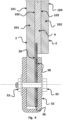
1 zeigt ein laminiertes Türfenster mit Rückhalteschicht, Variante 1.1 shows a laminated door window with retaining layer, variant 1. -
2 zeigt ein laminiertes Türfenster mit Rückhalteschicht, Variante 2.2 shows a laminated door window with retaining layer,variant 2. -
3 zeigt ein laminiertes Türfenster mit Rückhalteschicht, Variante 3.3 shows a laminated door window with retaining layer, variant 3. -
4 zeigt ein laminiertes Türfenster mit Rückhalteschicht, Variante 4.4 shows a laminated door window with retaining layer,variant 4. -
5 zeigt ein laminiertes Türfenster mit Rückhalteschicht, Variante 5.5 shows a laminated door window with retaining layer, variant 5. -
6 zeigt ein laminiertes Türfenster mit Rückhalteschicht, Variante 6.6 shows a laminated door window with retaining layer,variant 6. -
7 zeigt die Querschnittsvariante 1.7 shows cross-section variant 1. -
8 zeigt die Querschnittsvariante 2.8th showscross-section variant 2. -
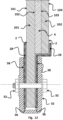
9 zeigt die Querschnittsvariante 3.9 shows cross-section variant 3. -
10 zeigt die Querschnittsvariante 4.10 shows thecross-section variant 4. -
11 zeigt die Querschnittsvariante 5.11 shows the cross-section variant 5. -
12 zeigt die Querschnittsvariante 6.12 shows thecross-section variant 6. -
13 zeigt eine Explosionsdarstellung einer alternativen Ausführungsform eines laminierten Türfensters mit Rückhalteschicht.13 Figure 13 shows an exploded view of an alternative embodiment of a laminated door window with retaining layer. -
14A zeigt den Querschnitt einer typischen laminierten Automobilverglasung.14A shows the cross-section of a typical laminated automotive glazing. -
14B zeigt den Querschnitt einer typischen laminierten Automobilverglasung mit Hochleistungsfolie.14B shows the cross section of a typical laminated automotive glazing with high performance film. -
14C zeigt den Querschnitt einer typischen gehärteten monolithischen Automobilverglasung.14C Figure 1 shows the cross-section of a typical tempered monolithic automotive glazing.
Detaillierte Beschreibung der ErfindungDetailed description of the invention
Die folgende Terminologie wird verwendet, um die laminierte Verglasung der Erfindung zu beschreiben.The following terminology is used to describe the laminated glazing of the invention.
Eine Verglasung ist ein Gegenstand, umfassend mindestens eine Schicht eines transparenten Materials, die dazu dient, Licht durchzulassen und/oder die Sicht auf die dem Betrachter gegenüberliegende Seite zu ermöglichen, und die in einer Öffnung in einem Gebäude, einem Fahrzeug, einer Wand oder einem Dach oder einem anderen rahmenden Element oder einer Einfassung befestigt ist.A glazing is an article comprising at least one layer of a transparent material, which serves to transmit light and/or to allow a view of the side opposite to the viewer, and which is installed in an opening in a building, vehicle, wall or a attached to a roof or other framing element or enclosure.
Laminate sind im Allgemeinen Gegenstände, umfassend mehrere Folien/Scheiben aus im Verhältnis zu ihrer Länge und Breite dünnem Material, wobei jede dünne Folie/Scheibe zwei einander gegenüberliegende Hauptflächen und typischerweise eine relativ gleichmäßige Dicke aufweist, die über mindestens eine Hauptfläche jeder Folie/Scheibe dauerhaft miteinander verbunden sind.Laminates are generally articles comprising multiple sheets/sheets of material thin relative to their length and width, each sheet/sheet having two opposing major surfaces and typically having a relatively uniform thickness that is permanent over at least one major surface of each sheet/sheet are connected to each other.
Laminiertes Sicherheitsglas wird durch Verbinden von zwei Scheiben (201 & 202) aus getempertem Glas 2 unter Verwendung einer Kunststoffbindungsschicht hergestellt, umfassend eine dünne Folie aus transparentem Thermokunststoff 4 (Zwischenschicht), wie in den
Typische Querschnitte von laminierter Automobilverglasung sind in den
Die Kunststoffbindungsschicht 4 hat die primäre Funktion, die Hauptflächen benachbarter Schichten miteinander zu verbinden. Das gewählte Material ist typischerweise ein klarer Kunststoff, wenn mit einer anderen Glasschicht 2 verklebt. Für den Einsatz im Automobilbereich ist die am häufigsten verwendete Kunststoffbindungsschicht 4 oder Zwischenschicht Polyvinylbutyl (PVB). Zusätzlich zu Polyvinylbutyl können auch lonoplast-Polymere, Ethylen-Vinylacetat (EVA), an Ort und Stelle gegossenes Flüssigharz (CIP, Cast in Place) und thermoplastisches Polyurethan (TPU) verwendet werden. Es sind Zwischenschichten mit verbesserten Fähigkeiten erhältlich, die über das Verbinden der Glasschichten hinausgehen. Die Erfindung kann Zwischenschichten zur Schalldämpfung umfassen. Solche Zwischenschichten umfassen ganz oder teilweise eine Kunststoffschicht, die weicher und flexibler ist als die normalerweise verwendete.The primary function of the
Die Glasarten, die verwendet werden können, umfassen unter anderem, ohne darauf beschränkt zu sein: die für die Automobilverglasung typische übliche Natronkalk-Variante sowie Alumosilikat, Lithium-Alumosilikat, Borosilikat, Glaskeramiken und die verschiedenen anderen anorganischen festen amorphen Zusammensetzungen, die einen Glasübergang durchlaufen und als Glas klassifiziert werden, einschließlich der nicht transparenten. Die Glasschichten können sowohl wärmeabsorbierende Glaszusammensetzungen als auch infrarotreflektierende und anderen Arten von Beschichtungen umfassen.The types of glasses that can be used include, but are not limited to, the common soda-lime variety typical of automotive glazing, as well as aluminosilicate, lithium aluminosilicate, borosilicate, glass-ceramics, and the various other inorganic solid amorphous compositions that undergo a glass transition and classified as glass, including those that are not transparent. The glass layers can include heat absorbing glass compositions as well as infrared reflective and other types of coatings.
Der größte Teil des für Behälter und Fenster verwendeten Glases ist Natronkalk-Glas. Natronkalk-Glas wird aus Natriumcarbonat (Soda), Kalk (Calciumcarbonat), Dolomit, Siliziumdioxid (Silica), Aluminiumoxid (Alumina) und kleinen Mengen von Substanzen hergestellt, die zur Veränderung der Farbe und anderer Eigenschaften hinzugefügt werden.Most of the glass used for containers and windows is soda-lime glass. Soda-lime glass is made from sodium carbonate (soda), lime (calcium carbonate), dolomite, silicon dioxide (silica), aluminum oxide (alumina), and small amounts of substances added to change color and other properties.
Borosilikatglas ist eine Glasart, die Boroxid enthält. Es hat einen niedrigen Wärmeausdehnungskoeffizienten und eine hohe Beständigkeit gegen korrosive Chemikalien. Es wird häufig zur Herstellung von Glühbirnen, Laborglas und Kochutensilien verwendet.Borosilicate glass is a type of glass that contains boron oxide. It has a low coefficient of thermal expansion and high resistance to corrosive chemicals. It is commonly used to make lightbulbs, laboratory glassware, and cooking utensils.
Alumosilikatglas wird aus Aluminiumoxid hergestellt. Es ist noch widerstandsfähiger gegen Chemikalien als Borosilikatglas und kann höheren Temperaturen standhalten. Chemisch gehärtetes Alumosilikatglas wird häufig für Displays von Smartphones und anderen elektronischen Geräten verwendet.Aluminosilicate glass is made from aluminum oxide. It is even more resistant to chemicals than borosilicate glass and can withstand higher temperatures. Chemically strengthened aluminosilicate glass is commonly used for the displays of smartphones and other electronic devices.
Lithium-Alumosilikat ist eine Glaskeramik, die eine sehr geringe thermische Ausdehnung und optische Transparenz aufweist. Es enthält typischerweise 3 - 6 % Li2O. Es wird häufig für Kaminfenster, Kochflächen, Linsen und andere Anwendungen verwendet, die eine geringe Wärmeausdehnung erfordern.Lithium aluminosilicate is a glass-ceramic that has very low thermal expansion and optical transparency. It typically contains 3 - 6% Li 2 O. It is commonly used for chimney windows, cooktops, lenses and other applications that require low thermal expansion.
Infrarotreflektierende Beschichtungen umfassen, ohne darauf beschränkt zu sein, die verschiedenen metallischen/dielektrischen Schichten, die durch Magnetron-Sputter-Vakuumabscheidung (MSVD) aufgebracht werden, sowie andere im Stand der Technik bekannte Beschichtungen, die durch Pyrolyse, Sprühen, CVD, Tauchen und andere Methoden aufgebracht werden.Infrared reflective coatings include, but are not limited to, the various metallic/dielectric layers applied by magnetron sputter vacuum deposition (MSVD), as well as other coatings known in the art, applied by pyrolysis, spraying, CVD, dipping, and others methods are applied.
Infrarotreflektierende Filme umfassen sowohl metallisch beschichtete Substrate als auch optische Filme auf organischer Basis, die im Infrarot reflektieren.Infrared reflective films include both metallic coated substrates and organic based optical films that reflect in the infrared.
Es hat sich gezeigt, dass die Verwendung dünner Glasschichten den Widerstand gegen Bruch durch Stöße, z.B. durch Steinschlag, verbessert. Das dünnere Glas ist flexibler und absorbiert die Energie des Aufpralls, indem es sich verbiegt und dann zurückspringt, anstatt zu brechen, wie es bei einer dickeren, steiferen Glasschicht der Fall ist. The use of thin layers of glass has been shown to improve resistance to breakage from impacts such as stone chipping. The thinner glass is more flexible and absorbs the energy of the impact by flexing and then springing back instead of breaking like a thicker, stiffer sheet of glass does.
Außerdem sind Ausführungsformen, umfassend eine Borosilikat-Außenschicht, aufgrund der Art der Zusammensetzung wesentlich stoßfester als Kalk-Natron-Glas. Ausführungsformen, die eine chemisch gehärtete Schicht umfassen, weisen aufgrund der hohen Oberflächenkompression solcher Gläser auch eine bessere Schlagfestigkeit auf als gewöhnliches Kalk-Natron-Glas.Additionally, due to the nature of the composition, embodiments comprising a borosilicate outer layer are significantly more impact resistant than soda-lime glass. Embodiments that include a chemically strengthened layer also exhibit better impact resistance than ordinary soda-lime glass due to the high surface compression of such glasses.
Die Glasschichten können durch jedes geeignete, im Stand der Technik bekannte Mittel gebildet werden, einschließlich, aber nicht beschränkt auf: Schwerkraftbiegen, teilweises und vollflächiges Pressbiegen und Singlet-Biegen.The glass layers can be formed by any suitable means known in the art, including but not limited to: gravity bending, partial and full face press bending, and singlet bending.
Das Kaltbiegen ist eine relativ neue Technologie. Wie der Name vermuten lässt, wird das Glas in kaltem Zustand ohne Wärmezufuhr in seine endgültige Form gebogen. Bei Teilen mit minimaler Krümmung kann eine flache Glasscheibe kalt an die Kontur des Teils gebogen werden. Dies ist möglich, weil die Scheiben mit abnehmender Glasdicke immer flexibler werden und gebogen werden können, ohne dass dabei Spannungen entstehen, die hoch genug sind, um die langfristige Bruchwahrscheinlichkeit deutlich zu erhöhen. Dünne Scheiben aus getempertem Natronkalk-Glas mit einer Dicke von etwa 1 mm können zu zylindrischen Formen mit großen Radien (größer als 6 m) gebogen werden. Wenn das Glas chemisch oder wärmegehärtet ist, kann das Glas viel höheren Spannungen standhalten und kann entlang beider Hauptachsen gebogen werden. Dieses Verfahren wird in erster Linie verwendet, um chemisch gehärtete dünne Glasscheiben (nicht mehr als 1,1 mm dick) in Form zu biegen.Cold bending is a relatively new technology. As the name suggests, the glass is bent into its final shape when cold without the addition of heat. For parts with minimal curvature, a flat sheet of glass can be cold bent to the contour of the part. This is possible because as the glass thickness decreases, the panes become more flexible and can be bent without creating stresses high enough to significantly increase the long-term likelihood of breakage. Thin sheets of tempered soda-lime glass about 1mm thick can be bent into cylindrical shapes with large radii (greater than 6m). If the glass is chemically or heat strengthened, the glass can withstand much higher stresses and can be bent along both major axes. This Process is primarily used to bend chemically strengthened thin sheets of glass (no more than 1.1mm thick) into shape.
Zylindrische Formen können mit einem Radius in einer Richtung von weniger als 4 Metern gebildet werden. Formen mit zusammengesetzter Biegung, d.h. Krümmung in Richtung der beiden Hauptachsen, können mit einem Krümmungsradius in jeder Richtung von nur etwa 8 Metern gebildet werden. Natürlich hängt viel von der Oberfläche der Teile und den Arten und Dicken der Substrate ab.Cylindrical shapes can be formed with a radius of less than 4 meters in one direction. Shapes with compound curvature, i.e. curvature in the direction of the two major axes, can be formed with a radius of curvature in each direction of only about 8 meters. Of course, a lot depends on the surface of the parts and the types and thicknesses of the substrates.
Das kalt gebogene Glas bleibt unter Spannung und neigt dazu, die Form der gebogenen Schicht, mit der es verbunden ist, zu verzerren. Daher muss die gebogene Schicht kompensiert werden, um die Spannung auszugleichen. Bei komplexeren Formen mit einem hohen Grad an Krümmung muss das Flachglas vor dem Kaltbiegen möglicherweise teilweise thermisch gebogen werden.The cold-bent glass remains under tension and tends to distort the shape of the curved sheet to which it is bonded. Therefore, the bent layer must be compensated to balance the stress. For more complex shapes with a high degree of curvature, the flat glass may need to be partially thermally bent prior to cold bending.
Das kalt zu biegende Glas wird mit einer zuvor gebogenen Formschicht und mit einer Verbindungsschicht zwischen dem kalt zu biegenden Glas und der gebogenen Glasschicht platziert. Die Anordnung wird in einen so genannten Vakuumbeutel gelegt. Der Vakuumbeutel ist ein luftdichter Satz von Kunststofffolien, der die Anordnung umschließt und an den Rändern miteinander verbunden ist, wodurch die Luft aus der Anordnung evakuiert werden kann und gleichzeitig Druck auf die Anordnung ausgeübt wird, der die Schichten in Kontakt bringt. Die Anordnung wird dann im evakuierten Vakuumbeutel erhitzt, um die Anordnung zu versiegeln. Als nächstes wird die Anordnung in einen Autoklaven platziert, der die Anordnung erhitzt und mit hohem Druck beaufschlagt. Damit ist der Kaltbiegeprozess abgeschlossen, da sich das Flachglas an diesem Punkt an die Form der gebogenen Schicht angepasst hat und dauerhaft fixiert ist. Der Kaltbiegeprozess ist dem in der Technik bekannten Standard-Vakuumbeutel/Autoklavierungsprozess sehr ähnlich, außer dass dem Glasstapel eine ungebogene Glasschicht hinzugefügt wird.The glass to be cold bent is placed with a previously bent shaping layer and with a bonding layer between the glass to be cold bent and the bent glass layer. The assembly is placed in what is known as a vacuum bag. The vacuum bag is an airtight set of plastic films that encloses the assembly and is bonded together at the edges, allowing the air to be evacuated from the assembly while at the same time applying pressure to the assembly, bringing the layers into contact. The assembly is then heated in the evacuated vacuum bag to seal the assembly. Next, the assembly is placed in an autoclave, which heats and pressurizes the assembly. This completes the cold bending process, as at this point the flat glass has adapted to the shape of the bent layer and is permanently fixed. The cold bending process is very similar to the standard vacuum bagging/autoclaving process known in the art, except that an unbent glass layer is added to the glass stack.
Die Gürtellinie ist die Linie, die von dem unteren sichtbaren Rand der Automobilverglasung gebildet wird. Die Gürtellinie der Vorder- und Hintertüren des Fahrzeugs ist der Bereich, in dem die Türfensterdichtungen mit dem Glas in Berührung kommen. DerTeil derTürverglasung, der sich unterhalb der Gürtellinie befindet, ist nicht sichtbar.The waistline is the line formed by the lower visible edge of the automotive glazing. The waistline of the vehicle's front and rear doors is the area where the door window seals make contact with the glass. The portion of the door glazing that is below the waistline is not visible.
Die Glasschichten können getempert oder verstärkt sein. Es gibt zwei Verfahren, die zur Erhöhung der Festigkeit von Glas eingesetzt werden können. Sie sind das thermische Verstärken, bei dem das heiße Glas schnell abgekühlt (abgeschreckt) wird, und das chemische Härten, bei dem der gleiche Effekt durch eine chemische lonenaustauschbehandlung erreicht wird.The glass layers can be tempered or reinforced. There are two methods that can be used to increase the strength of glass. They are thermal strengthening, in which the hot glass is rapidly cooled (quenched), and chemical toughening, in which the same effect is achieved by a chemical ion exchange treatment.
Wärmeverstärktes, vollgehärtetes Natronkalk-Floatglas mit einer Kompressionsfestigkeit im Bereich von mindestens 70 MPa kann in allen Fahrzeugpositionen außer der Windschutzscheibe verwendet werden. Wärmeverstärktes (gehärtetes) Glas hat eine Schicht hoher Kompressionsfestigkeit auf den Außenflächen des Glases, die durch Spannungen auf der Innenseite des Glases ausgeglichen wird, die durch das schnelle Abkühlen des heiß erweichten Glases erzeugt werden. Wenn gehärtetes Glas bricht, sind die Spannung und die Kompression nicht mehr im Gleichgewicht, und das Glas zerbricht in kleine Partikel mit stumpfen Rändern. Gehärtetes Glas ist viel stärker als getempertes laminiertes Glas. Die Mindestdickengrenzen des typischen Wärmeverstärkungsprozesses im Automobilbereich liegen im Bereich von 3,2 mm bis 3,6 mm. Dies ist auf die erforderliche schnelle Wärmeübertragung zurückzuführen. Es ist nicht möglich, die hohe Oberflächenkompression, die bei dünnerem Glas erforderlich ist, mit den typischen gebläseartigen Niederdruck-Luftabschrecksystemen zu erreichen.Heat strengthened, fully strengthened soda-lime float glass with a compressive strength in the range of at least 70 MPa can be used in all vehicle positions except the windscreen. Heat strengthened (toughened) glass has a layer of high compressive strength on the outer surfaces of the glass, balanced by stresses on the inside of the glass created by the rapid cooling of the hot-softened glass. When toughened glass breaks, the tension and compression are no longer balanced and the glass breaks into small, blunt-edged particles. Tempered glass is much stronger than tempered laminated glass. The minimum thickness limits of the typical automotive heat gain process are in the range of 3.2 mm to 3.6 mm. This is due to the rapid heat transfer required. It is not possible to achieve the high surface compression required with thinner glass with typical low-pressure, fan-type air quench systems.
Beim chemischen Härteprozess werden Ionen in und nahe der Außenfläche des Glases mit Ionen ausgetauscht, die größer sind. Dadurch wird die äußere Schicht des Glases unter Druck gesetzt. Kompressionsfestigkeiten von bis zu 1.000 MPa sind möglich. Die typischen Methoden schließen ein, das Glas in einen Tank mit geschmolzenem Salz zu tauchen, wo der lonenaustausch stattfindet. Die Glasoberfläche darf keine Farbe oder Beschichtungen aufweisen, die den Ionenaustauschprozess stören.In the chemical tempering process, ions in and near the outer surface of the glass are exchanged with ions that are larger. This puts pressure on the outer layer of the glass. Compression strengths of up to 1,000 MPa are possible. Typical methods include immersing the glass in a tank of molten salt where ion exchange takes place. The glass surface must not have any paint or coatings that interfere with the ion exchange process.
Die Erfindung umfasst ein Laminat mit zwei Glasschichten, von denen jede gegenüberliegende Hauptflächen aufweist, die durch mindestens eine Kunststoffbindungsschicht dauerhaft miteinander verbunden sind und mindestens ein Loch aufweisen.The invention comprises a laminate having two layers of glass, each having opposite major surfaces permanently bonded together by at least one plastic bonding layer and having at least one hole.
Die äußere Schicht 201 wird geschnitten und das Loch oder die Löcher werden auf die gleiche Weise gebohrt wie bei einem standardmäßigen, nicht laminierten, monolithischen, gehärteten Teil.The
In die innere Glasschicht 202 werden keine Löcher geschnitten. Die innere Glasschicht wird so geschnitten, dass die innere Glasschicht das Loch oder die Löcher in der äußeren Glasschicht und den von den Verglasungsbefestigungsmitteln 32 erfassten Bereich nicht überlappt. Der Rand der inneren Glasschicht erstreckt sich unterhalb der Gürtellinie 24 und vorzugsweise bis knapp über den Bereich, der von den Verglasungsbefestigungsmitteln 32 erfasst wird. Auf diese Weise erfasst das Befestigungsmittel nur die äußere Glasschicht.No holes are cut in the
Die typische Randbearbeitung, die für laminiertes und gehärtetes Glas verwendet wird, ist ein diamantgeschliffener Rand mit einem C-förmigen Profil. Dies ist gut für die äußere Glasschicht geeignet. Für die innere Glasschicht hat sich herausgestellt, dass die Bruchwahrscheinlichkeit stark reduziert wird, wenn der Rand des inneren Glases nach innen von dem Rand der äußeren Glasschicht versetzt wird, und zwar entlang mindestens eines Teils des Randes einschließlich des freiliegenden Teils des Randes an beweglichen Teilen. Die größere äußere Glasschicht wird deshalb so positioniert, dass sie den dünneren und schwächeren inneren Glasrand schützt. Eine weitere Verbesserung wird durch Diamantschleifen des inneren Glasrandes auf eine geschrägte oder für noch bessere Ergebnisse auf eine gerundete Form erreicht.The typical edge finish used for laminated and tempered glass is a diamond cut edge with a C-shaped profile. This works well for the outer glass layer. For the inner layer of glass, it has been found that the likelihood of breakage is greatly reduced if the edge of the inner glass is offset inwardly from the edge of the outer layer of glass along at least a portion of the edge including the exposed portion of the edge to moving parts. The larger outer lens layer is therefore positioned to protect the thinner and weaker inner lens edge. A further improvement is achieved by diamond grinding the inner edge of the glass to a beveled shape or, for even better results, to a rounded shape.
Ein Rückhaltesystem 36 wird aus mindestens einer Versteifungsschicht und mindestens einer Klebstoffschicht 28 hergestellt. Für die beiden Glasschichten eines typischen Laminates wird mindestens eine Kunststoffbindungszwischenschicht 4 benötigt. Die mindestens eine Klebstoffschicht 28 des Rückhaltesystems 36 wird verwendet, um die Versteifungsschicht 38 mit der Oberfläche Nummer eins 101 und/oder Nummer zwei 102 der äußeren Glasschicht 201 und/oder der Oberfläche Nummer drei 103 und/oder Nummer vier 104 der inneren Glasschicht 202 zu verbinden.A
Bei mehreren Ausführungen, bei denen die Versteifungsschicht 38 bis ins Innere des Laminats ausgedehnt wird, wird, wenn die Versteifungsschicht 38 dünn genug ist, ein Teil der Kunststoffbindungszwischenschicht 4 als Klebstoffschicht 28 verwendet. DerTeil der Versteifungsschicht 38, der mit den beiden Glasschichten im Inneren des Laminats verbunden ist, muss eine Dicke aufweisen, die geringer ist als die Dicke der Kunststoffbindungszwischenschicht 4. Der Teil der Versteifungsschicht 38, der sich nicht im Inneren des Laminats befindet, kann dicker sein. Bei einigen dieser Ausführungen ist zur Aufnahme der Versteifungsschicht 38 der Rand der Kunststoff-Verbundzwischenschicht 4 so geschlitzt, dass die Versteifungsschicht 38 in diesen Schlitz eingefügt ist (in Figuren nicht dargestellt).In several embodiments where the
Bei zusätzlichen Ausführungsformen kann, wenn die Dicke des laminierten Teils der Versteifungsschicht dünn genug ist, keine Änderung der Kunststoffbindungszwischenschicht 4 erforderlich sein. Andernfalls wird eine Aussparung 22 in die Kunststoffbindungszwischenschicht 4 gemacht, wie in der Explosionszeichnung in
Einmal im Fahrzeug befestigt, versetzt das Befestigungsmittel 32 das Glas und das Rückhaltesystem 36 in Kompression, was die Anordnung weiter verstärkt und die Bruchfestigkeit sowie die Gesamtsteifigkeit verbessert.Once secured in the vehicle, the
Die Versteifungsschicht 38 kann aus jedem geeigneten Material hergestellt werden, das die erforderliche Festigkeit bieten kann. Zu den möglichen Materialien gehören unter anderem: Kohlefaserverbundwerkstoff, Stahl, Aluminium, Titan, Glas, Kunststoff, Polyamid, Polyimid, Polycarbonat, Polyethylenterephthalat (PET) und glasfaserverstärkter Kunststoff, die alle je nach genauer Anwendung und Belastung geeignet sein können.The
Die chemisch oder thermisch gehärtete äußere Glasschicht wird sich bei Bruch wahrscheinlich von den Befestigungsmitteln lösen. Bei einem äußeren Stoß wird wahrscheinlich nur die äußere Glasschicht brechen, da die äußere Schicht die Energie der meisten Stöße absorbiert und abführt. Die gebrochene äußere Schicht wird in dem Teil der Verglasung, der laminiert ist, durch die intakte innere Schicht und die Zwischenschicht zusammengehalten. Die Rückhalteschicht, die mit beiden Glasschichten verbunden und an den Befestigungsmitteln angebracht ist, ermöglicht es der Verglasung, in der Öffnung an Ort und Stelle zu bleiben und sich möglicherweise nur begrenzt zu bewegen, bis sie ersetzt werden kann.The chemically or thermally strengthened outer glass layer is likely to detach from the fasteners if broken. In the event of an external impact, only the outer layer of glass is likely to break, as the outer layer absorbs and dissipates the energy of most impacts. The fractured outer layer is held together in the portion of the glazing that is laminated by the intact inner layer and the interlayer. The retention layer bonded to both layers of glass and attached to the fasteners allows the glazing to remain in place in the opening and may have limited movement until it can be replaced.
Dieses Seitenfenster hat mindestens ein Loch 20. Die
Unterhalb dem unteren Rand der inneren Glasschicht 202 kann das Haltesystem 36 die gesamte Höhe des nicht laminierten Glases abdecken, welches Löcher konzentrisch zum Loch der äußeren Glasschicht aufweist.Below the bottom edge of the
Die in
Figurenlistecharacter list
Beschreibung der bevorzugten Ausführungsformen:
- 1. Bewegliches Türfenster (Seitenscheibe), wie in den
1 und7 dargestellt. Die thermisch gehärtete äußere Glasschicht 201 umfasst 3,5 mm Natronkalk-Solar-Grün-Glas 201 mit zwei 20 mm-Löchern 20, die zur Befestigung des Glases an den Führungsschienen-Befestigungsmittel 32 im Fenstermechanismus dienen.Die innere Glasschicht 202 umfasst klares 1,1 mm chemisch gehärtetes Alumosilikatglas. Die Kante der inneren Glasschicht 202 ist nach innen von der Glaskante der äußeren Glasschicht 201 um 1,5 mm entlang der Oberseite und der Seiten um 1,5 mm versetzt. Die Unterkante der inneren Glasschicht 202 erstreckt sich bis unter 20 mm unterhalb der Gürtellinie.Das Befestigungsmittel 32 ist durch dieLöcher 20 am Laminat befestigt und erfasst die äußere Glasschicht 201und ein Rückhaltesystem 36,umfassend Klebstoffschichten 28 und eine Versteifungsschicht 38.Die innere Glasschicht 202 hat kein Loch und wird nichtvon dem Befestigungsmittel 32 erfasst.Bei der Kunststoffbindungsschicht 4 handelt es sich um eine Polyvinylbutyral-Folie (PVB) von 0,76 m, die dazu verwendet wird, die beiden Glasschichten zusammen zu laminieren.Die Klebstoffschicht 28 ist ein Acrylklebefilm mit einer Dicke von 0,13 mm und einer Breite von 60 mm.Die Versteifungsschicht 38 istein Polyimidfilm von 0,2 mm und mit einer hohen Reißfestigkeit von 240 MPa. Unten, im nicht-laminierten Bereich, wird eine erste Klebstoffschicht 28 für hintere und vordere Befestigungsmittel 32 ander Oberfläche zwei 102 der äußeren Glasschicht 201 angebracht. Im laminierten Bereich ist eine zweite Klebstoffschicht 28 ander Oberfläche drei 103 der inneren Glasschicht 202 angebracht und überlapptdas PVB 4 um 10 mm.Die Versteifungsschicht 38 wird, wie in7 dargestellt, anden Klebstoffschichten 28 befestigt. - 2.
Ausführungsform 2 entspricht der Ausführungsform 1 mit der Ausnahme der Versteifungsschicht 38, die den hinteren Löchern entspricht, die eine Breite von 200 mm hat, und der Versteifungsschicht 38, die dem vorderen Loch entspricht, das eine Breite von 100 mm hat. - 3. Ausführungsform 3 entspricht der Ausführungsform 1 mit der Ausnahme der Versteifungsschicht 38, die den gesamten nicht laminierten Bereich bedeckt und sich 20 mm mit dem laminierten Bereich oberhalb des unteren Randes der inneren Glasschicht 202 überlappt.
- 4.
Ausführungsform 4 entspricht der Ausführungsform 1, wobei dieVersteifungsschicht 38ein 0,2 mm Stahlblech mit einer Breite von 100 mm ist. - 5. Ausführungsform 5 entspricht den früheren Ausführungsformen,
wobei die Klebstoffschicht 28 eine 0,1 mm Schicht aus Polyurethan ist. - 6.
Ausführungsform 6 entspricht der Ausführungsform 1, mit der Ausnahme, dass die Anordnung für die Klebstoff- 28 und die Versteifungsschicht 38 sowohl für die hinteren als auch für die vorderen Löcher wie in8 dargestellt konfiguriert ist, wobei die Klebstoffschicht 28 ander Oberfläche vier 104 der inneren Glasschicht 202 im laminierten Abschnitt angebracht ist. - 7. Ausführungsform 7 entspricht der Ausführungsform 1 mit der Ausnahme, dass die Anordnung für die Klebstoff- 28 und die
Versteifungsschicht 38, die dem hinteren Loch entspricht, wie in8 dargestellt konfiguriert ist und die, die den vorderen Löchern entspricht, wie in7 dargestellt ist. - 8. Ausführungsform 8 entspricht der Ausführungsform 1 mit der Ausnahme, dass die Anordnung für die Klebstoff- 28 und die
Versteifungsschicht 38 für beide Löcher wie in9 dargestellt ist, wobei die Klebstoffschicht 28 ander Oberfläche zwei 102 der äußeren Glasschicht 201innerhalb von 20 mm des laminierten Abschnitts angebracht ist. - 9. Ausführungsform 9 entspricht der Ausführungsform 1 mit der Ausnahme, dass die Anordnung für die Klebstoff- 28 und die
Versteifungsschicht 38 für beide Löcher wie in10 dargestellt ist, wobei die Klebstoffschicht 28 an der Oberfläche eins 101 der äußeren Glasschicht 201 angebracht ist, die sich 30 mm über den unteren Rand der inneren Glasschicht 202 nach oben erstreckt. - 10. Ausführungsform 10 entspricht der Ausführungsform 1, mit der Ausnahme, dass eine Kombination von Anordnungen
für das Rückhaltesystem 36 verwendet wird: Das dem hinteren Befestigungsmittel entsprechende Rückhaltesystem 36 wird wie in7 konfiguriert und das dem vorderen Befestigungsmittel entsprechende wird wie in8 konfiguriert. - 11. Ausführungsform 11 entspricht der Ausführungsform 1, mit der Ausnahme, dass die Anordnung für die Klebstoff- 28 und die
Versteifungsschicht 38 für beide Löcher wie in12 dargestellt ist, wobei eine Klebstoffschicht 28 an der Oberfläche eins 101 und eine andere Klebstoffschicht 28 anOberfläche vier 104 innerhalb des laminierten Abschnitts angebracht ist. - 12.
Ausführungsform 12 entspricht der Ausführungsform 1, mit der Ausnahme, dass die Anordnung für die Klebstoff- 28 und dieVersteifungsschicht 38 für beide Löcher wie in11 dargestellt ist,wobei die Klebstoffschicht 28 20 mm oberhalb des unteren Rands des laminierten Abschnitts an beiden Oberflächen der inneren Glasschicht 202 angebracht ist.
- 1. Movable door window (side window), as in the
1 and7 shown. The thermally strengthenedouter glass layer 201 comprises 3.5mm soda lime solargreen glass 201 with two20mm holes 20 used to attach the glass to theguide rail fasteners 32 in the window mechanism. Theinner glass layer 202 comprises clear 1.1mm chemically strengthened aluminosilicate glass. The edge of theinner glass layer 202 is offset inward from the glass edge of theouter glass layer 201 by 1.5mm along the top and 1.5mm along the sides. The lower edge of theinner glass layer 202 extends to less than 20mm below the waistline. Thefastener 32 is attached to the laminate through theholes 20 and engages theouter glass layer 201 and aretention system 36 comprisingadhesive layers 28 and astiffening layer 38. Theinner glass layer 202 has no hole and is not engaged by thefastener 32. Theplastic bonding layer 4 is a 0.76 m polyvinyl butyral (PVB) sheet used to laminate the two glass layers together. Theadhesive layer 28 is an acrylic adhesive film with a thickness of 0.13 mm and a width of 60 mm. Thestiffening layer 38 is a 0.2 mm polyimide film with a high tear strength of 240 MPa. Below, in the non-laminated area, a firstadhesive layer 28 for rear andfront fasteners 32 is attached to surface two 102 of theouter glass layer 201. In the laminated area, a secondadhesive layer 28 is attached to surface three 103 of theinner glass layer 202 and overlaps thePVB 4 by 10 mm. Thestiffening layer 38 is, as in7 shown attached to the adhesive layers 28 . - 2.
Embodiment 2 is the same as embodiment 1 except for thestiffening layer 38 corresponding to the rear holes, which has a width of 200 mm, and thestiffening layer 38 corresponding to the front hole, which has a width of 100 mm. - 3. Embodiment 3 is the same as embodiment 1 except for the
stiffening layer 38 which covers the entire non-laminated area and overlaps the laminated area above the bottom edge of theinner glass layer 202 by 20 mm. - 4.
Embodiment 4 corresponds to embodiment 1, wherein thestiffening layer 38 is a 0.2 mm steel sheet with a width of 100 mm. - 5. Embodiment 5 corresponds to the previous embodiments, with the
adhesive layer 28 being a 0.1 mm layer of polyurethane. - 6.
Embodiment 6 is the same as embodiment 1 except that the arrangement for the adhesive 28 andstiffening layer 38 for both the rear and front holes is as in FIG8th configured with theadhesive layer 28 attached to the surface four 104 of theinner glass layer 202 in the laminated portion. - 7. Embodiment 7 is the same as embodiment 1 except that the arrangement for the adhesive 28 and
stiffening layer 38 corresponding to the rear hole is as in FIG8th configured and the one that corresponds to the front holes, as in7 is shown. - 8. Embodiment 8 is the same as embodiment 1 except that the arrangement for the adhesive 28 and
stiffening layer 38 for both holes is as in FIG9 with theadhesive layer 28 attached to surface two 102 of theouter glass layer 201 within 20mm of the laminated portion. - 9. Embodiment 9 is the same as embodiment 1 except that the arrangement for the adhesive 28 and
stiffening layer 38 for both holes is as in FIG10 with theadhesive layer 28 attached to surface one 101 of theouter glass layer 201 which extends 30 mm above the lower edge of theinner glass layer 202 upwards. - 10. Embodiment 10 is the same as embodiment 1 except that a combination of arrangements for the
restraint system 36 is used: Therestraint system 36 corresponding to the rear fastener is as in FIG7 configured and the one corresponding to the front fastener is as in8th configured. - 11. Embodiment 11 corresponds to embodiment 1, except that the arrangement for the adhesive 28 and the
stiffening layer 38 for both holes is as in FIG12 10 with anadhesive layer 28 attached to surface one 101 and anotheradhesive layer 28 attached to surface four 104 within the laminated section. - 12.
Embodiment 12 corresponds to embodiment 1, except that the arrangement for the adhesive 28 and thestiffening layer 38 for both holes is as in FIG11 with theadhesive layer 28 attached to both surfaces of theinner glass layer 202 20 mm above the lower edge of the laminated portion.
BezugszeichenlisteReference List
- 22
- GlasGlass
- 44
- Kunstoffbindungszwischenschichtplastic bonding interlayer
- 66
- Verdunkelungblackout
- 1212
- FilmMovie
- 1818
- Beschichtungcoating
- 2020
- LochHole
- 2222
- Aussparungrecess
- 2424
- Gürtelliniewaistline
- 2828
- Klebstoffadhesive
- 3030
- Glasrandglass rim
- 3232
- Verglasungsbefestigungsmittelglazing fasteners
- 3636
- Rückhalteschichtretention layer
- 3838
- Versteifungsschichtstiffening layer
- 101101
- Oberfläche einssurface one
- 102102
- Oberfläche zweisurface two
- 103103
- Oberfläche dreisurface three
- 104104
- Oberfläche viersurface four
- 201201
- äußere Schichtouter layer
- 202202
- innere Schichtinner layer
Claims (21)
Applications Claiming Priority (5)
| Application Number | Priority Date | Filing Date | Title |
|---|---|---|---|
| US202063047574P | 2020-07-02 | 2020-07-02 | |
| US63/047,574 | 2020-07-02 | ||
| DE202020106850.4U DE202020106850U1 (en) | 2020-07-02 | 2020-11-27 | Asymmetrical hybrid automotive laminate |
| DE202020106850.4 | 2020-11-27 | ||
| PCT/IB2021/055980 WO2022003650A1 (en) | 2020-07-02 | 2021-07-02 | Hybrid asymmetric automotive laminate |
Publications (1)
| Publication Number | Publication Date |
|---|---|
| DE112021003564T5 true DE112021003564T5 (en) | 2023-04-20 |
Family
ID=74495402
Family Applications (2)
| Application Number | Title | Priority Date | Filing Date |
|---|---|---|---|
| DE202020106850.4U Active DE202020106850U1 (en) | 2020-07-02 | 2020-11-27 | Asymmetrical hybrid automotive laminate |
| DE112021003564.9T Pending DE112021003564T5 (en) | 2020-07-02 | 2021-07-02 | Asymmetric hybrid automotive laminate |
Family Applications Before (1)
| Application Number | Title | Priority Date | Filing Date |
|---|---|---|---|
| DE202020106850.4U Active DE202020106850U1 (en) | 2020-07-02 | 2020-11-27 | Asymmetrical hybrid automotive laminate |
Country Status (4)
| Country | Link |
|---|---|
| US (1) | US12330396B2 (en) |
| CN (1) | CN115734869A (en) |
| DE (2) | DE202020106850U1 (en) |
| WO (1) | WO2022003650A1 (en) |
Families Citing this family (4)
| Publication number | Priority date | Publication date | Assignee | Title |
|---|---|---|---|---|
| FR3112723B1 (en) * | 2020-07-24 | 2023-12-29 | Saint Gobain | THIN-GLASS-DOOR GLAZING AND METHOD FOR MANUFACTURING SAID GLAZING |
| CN114393979B (en) * | 2021-12-28 | 2023-11-07 | 福耀玻璃工业集团股份有限公司 | Automobile window and automobile |
| CN114516259B (en) * | 2022-01-29 | 2024-03-12 | 福耀玻璃工业集团股份有限公司 | Window glass and vehicles |
| CN114905810A (en) * | 2022-05-17 | 2022-08-16 | 上海耀皮康桥汽车玻璃有限公司 | Toughened sandwich vehicle door glass |
Family Cites Families (6)
| Publication number | Priority date | Publication date | Assignee | Title |
|---|---|---|---|---|
| DE102014017388B4 (en) * | 2014-11-22 | 2017-03-02 | Audi Ag | Laminated glass and motor vehicle |
| ITUA20164055A1 (en) * | 2015-06-03 | 2017-12-01 | Prec Glass Bending Corporation | Heat treated safety glass panels, veneered, folded, and manufacturing methods. |
| CO2017007445A1 (en) * | 2017-03-29 | 2018-07-19 | Agp America Sa | Automotive laminate with hole |
| CO2017007600A1 (en) * | 2017-03-31 | 2018-01-31 | Agp America Sa | Automotive laminate with upper window for camera |
| CO2017009260A1 (en) * | 2017-09-13 | 2018-01-31 | Agp America Sa | Glass windows with a laminated dimming band inserted |
| JP7547208B2 (en) * | 2018-03-27 | 2024-09-09 | ピルキントン グループ リミテッド | Laminated Glazing |
-
2020
- 2020-11-27 DE DE202020106850.4U patent/DE202020106850U1/en active Active
-
2021
- 2021-07-02 DE DE112021003564.9T patent/DE112021003564T5/en active Pending
- 2021-07-02 WO PCT/IB2021/055980 patent/WO2022003650A1/en not_active Ceased
- 2021-07-02 US US18/003,901 patent/US12330396B2/en active Active
- 2021-07-02 CN CN202180045977.3A patent/CN115734869A/en active Pending
Also Published As
| Publication number | Publication date |
|---|---|
| US20230264455A1 (en) | 2023-08-24 |
| WO2022003650A1 (en) | 2022-01-06 |
| CN115734869A (en) | 2023-03-03 |
| DE202020106850U1 (en) | 2021-01-14 |
| US12330396B2 (en) | 2025-06-17 |
Similar Documents
| Publication | Publication Date | Title |
|---|---|---|
| DE112021003564T5 (en) | Asymmetric hybrid automotive laminate | |
| DE112018001675T5 (en) | AUTOMOTIVE AMINATE WITH HOLE | |
| DE112020005851T5 (en) | Hybrid asymmetric automotive laminate | |
| EP1046493B1 (en) | Process for making a curved laminated glass | |
| DE69330005T2 (en) | METHOD FOR PRODUCING A CURVED, SPLITTER-SAFE GLASS LAMINATE | |
| DE112018003401T5 (en) | GLAZING WITH LAMINATED OPERATING VISIBILITY TAPE | |
| DE112018006105T5 (en) | INVISIBLE EDGE-FIXED SUBSTRATE COMPENSATION LAYER FOR AUTOMOTIVE GLAZING | |
| DE102013214422A1 (en) | Composite element and its use | |
| DE202012013654U1 (en) | Light hybrid glass laminates | |
| DE29825270U1 (en) | Armored glass, in particular fixed or movable side windows for motor vehicles | |
| WO2015188982A1 (en) | Composite pane, composed of a polymeric pane and a glass pane | |
| WO2015058885A1 (en) | Laminated glass having at least one chemically tempered pane | |
| EP3060393B1 (en) | Compound glazing made of a polymer pane and a glass pane | |
| DE112020002902T5 (en) | Laminated glazing with small radii of complex shape | |
| DE112020007333T5 (en) | Automotive laminate with weight reduction and mechanical strength improvement | |
| DE102012105900A1 (en) | Bullet resistant laminated glass | |
| EP1241144B1 (en) | Laminated safety glass and its process of prodction | |
| DE102010037150B4 (en) | Transparent composite material for safety glazing and a method for its production | |
| EP3484706A1 (en) | Transparent fire protection glazing having burglary-resistant and anti-panic properties | |
| DE112019001719T5 (en) | LAMINATED GLAZING WITH A STEP-SHAPED FUNCTIONAL SECTION | |
| DE102010037966A1 (en) | laminated pane | |
| DE102008031770A1 (en) | Method for the production of permanently bent laminated glass, comprises bending and connecting two panes with a connection plate, and positioning the connection plate before bending between the panes | |
| EP3593994A2 (en) | Laminated glass pane and device for supporting a curved glass sheet in the manufacture of a curved laminated glass pane | |
| EP2439064B1 (en) | Laminated glazing | |
| DE102025105574A1 (en) | WINDOW PANELS FOR VEHICLES AND FRAMELESS DOORS |