DE102022214210A1 - Method for displaying an extended view of the surroundings of a vehicle, computer program, computing device and vehicle - Google Patents
Method for displaying an extended view of the surroundings of a vehicle, computer program, computing device and vehicle Download PDFInfo
- Publication number
- DE102022214210A1 DE102022214210A1 DE102022214210.1A DE102022214210A DE102022214210A1 DE 102022214210 A1 DE102022214210 A1 DE 102022214210A1 DE 102022214210 A DE102022214210 A DE 102022214210A DE 102022214210 A1 DE102022214210 A1 DE 102022214210A1
- Authority
- DE
- Germany
- Prior art keywords
- vehicle
- main camera
- camera image
- captured
- image
- Prior art date
- Legal status (The legal status is an assumption and is not a legal conclusion. Google has not performed a legal analysis and makes no representation as to the accuracy of the status listed.)
- Pending
Links
- 238000000034 method Methods 0.000 title claims abstract description 45
- 238000004590 computer program Methods 0.000 title claims description 4
- 230000008859 change Effects 0.000 claims description 13
- 230000003068 static effect Effects 0.000 claims description 13
- 238000001514 detection method Methods 0.000 claims description 6
- 230000007613 environmental effect Effects 0.000 claims description 3
- 238000010200 validation analysis Methods 0.000 claims description 2
- 230000006978 adaptation Effects 0.000 description 6
- 238000011161 development Methods 0.000 description 5
- 238000013528 artificial neural network Methods 0.000 description 4
- 230000008901 benefit Effects 0.000 description 4
- 230000006870 function Effects 0.000 description 4
- 230000008569 process Effects 0.000 description 3
- 238000010586 diagram Methods 0.000 description 2
- 238000005259 measurement Methods 0.000 description 2
- 230000009466 transformation Effects 0.000 description 2
- BUHVIAUBTBOHAG-FOYDDCNASA-N (2r,3r,4s,5r)-2-[6-[[2-(3,5-dimethoxyphenyl)-2-(2-methylphenyl)ethyl]amino]purin-9-yl]-5-(hydroxymethyl)oxolane-3,4-diol Chemical compound COC1=CC(OC)=CC(C(CNC=2C=3N=CN(C=3N=CN=2)[C@H]2[C@@H]([C@H](O)[C@@H](CO)O2)O)C=2C(=CC=CC=2)C)=C1 BUHVIAUBTBOHAG-FOYDDCNASA-N 0.000 description 1
- 238000012935 Averaging Methods 0.000 description 1
- 240000004050 Pentaglottis sempervirens Species 0.000 description 1
- 235000004522 Pentaglottis sempervirens Nutrition 0.000 description 1
- 230000001944 accentuation Effects 0.000 description 1
- 238000012937 correction Methods 0.000 description 1
- 230000001419 dependent effect Effects 0.000 description 1
- 230000000694 effects Effects 0.000 description 1
- 230000008447 perception Effects 0.000 description 1
- 239000004575 stone Substances 0.000 description 1
- 238000002604 ultrasonography Methods 0.000 description 1
Images


Classifications
-
- B—PERFORMING OPERATIONS; TRANSPORTING
- B60—VEHICLES IN GENERAL
- B60R—VEHICLES, VEHICLE FITTINGS, OR VEHICLE PARTS, NOT OTHERWISE PROVIDED FOR
- B60R1/00—Optical viewing arrangements; Real-time viewing arrangements for drivers or passengers using optical image capturing systems, e.g. cameras or video systems specially adapted for use in or on vehicles
-
- B—PERFORMING OPERATIONS; TRANSPORTING
- B60—VEHICLES IN GENERAL
- B60R—VEHICLES, VEHICLE FITTINGS, OR VEHICLE PARTS, NOT OTHERWISE PROVIDED FOR
- B60R1/00—Optical viewing arrangements; Real-time viewing arrangements for drivers or passengers using optical image capturing systems, e.g. cameras or video systems specially adapted for use in or on vehicles
- B60R1/02—Rear-view mirror arrangements
- B60R1/08—Rear-view mirror arrangements involving special optical features, e.g. avoiding blind spots, e.g. convex mirrors; Side-by-side associations of rear-view and other mirrors
- B60R1/083—Anti-glare mirrors, e.g. "day-night" mirrors
- B60R1/088—Anti-glare mirrors, e.g. "day-night" mirrors using a cell of electrically changeable optical characteristic, e.g. liquid-crystal or electrochromic mirrors
-
- B—PERFORMING OPERATIONS; TRANSPORTING
- B60—VEHICLES IN GENERAL
- B60R—VEHICLES, VEHICLE FITTINGS, OR VEHICLE PARTS, NOT OTHERWISE PROVIDED FOR
- B60R1/00—Optical viewing arrangements; Real-time viewing arrangements for drivers or passengers using optical image capturing systems, e.g. cameras or video systems specially adapted for use in or on vehicles
- B60R1/12—Mirror assemblies combined with other articles, e.g. clocks
-
- B—PERFORMING OPERATIONS; TRANSPORTING
- B60—VEHICLES IN GENERAL
- B60R—VEHICLES, VEHICLE FITTINGS, OR VEHICLE PARTS, NOT OTHERWISE PROVIDED FOR
- B60R11/00—Arrangements for holding or mounting articles, not otherwise provided for
- B60R11/02—Arrangements for holding or mounting articles, not otherwise provided for for radio sets, television sets, telephones, or the like; Arrangement of controls thereof
- B60R11/0229—Arrangements for holding or mounting articles, not otherwise provided for for radio sets, television sets, telephones, or the like; Arrangement of controls thereof for displays, e.g. cathodic tubes
- B60R11/0235—Arrangements for holding or mounting articles, not otherwise provided for for radio sets, television sets, telephones, or the like; Arrangement of controls thereof for displays, e.g. cathodic tubes of flat type, e.g. LCD
-
- B—PERFORMING OPERATIONS; TRANSPORTING
- B60—VEHICLES IN GENERAL
- B60R—VEHICLES, VEHICLE FITTINGS, OR VEHICLE PARTS, NOT OTHERWISE PROVIDED FOR
- B60R11/00—Arrangements for holding or mounting articles, not otherwise provided for
- B60R11/04—Mounting of cameras operative during drive; Arrangement of controls thereof relative to the vehicle
-
- G—PHYSICS
- G08—SIGNALLING
- G08G—TRAFFIC CONTROL SYSTEMS
- G08G1/00—Traffic control systems for road vehicles
- G08G1/16—Anti-collision systems
- G08G1/167—Driving aids for lane monitoring, lane changing, e.g. blind spot detection
-
- H—ELECTRICITY
- H04—ELECTRIC COMMUNICATION TECHNIQUE
- H04N—PICTORIAL COMMUNICATION, e.g. TELEVISION
- H04N23/00—Cameras or camera modules comprising electronic image sensors; Control thereof
- H04N23/60—Control of cameras or camera modules
- H04N23/698—Control of cameras or camera modules for achieving an enlarged field of view, e.g. panoramic image capture
-
- H—ELECTRICITY
- H04—ELECTRIC COMMUNICATION TECHNIQUE
- H04N—PICTORIAL COMMUNICATION, e.g. TELEVISION
- H04N23/00—Cameras or camera modules comprising electronic image sensors; Control thereof
- H04N23/90—Arrangement of cameras or camera modules, e.g. multiple cameras in TV studios or sports stadiums
-
- H—ELECTRICITY
- H04—ELECTRIC COMMUNICATION TECHNIQUE
- H04N—PICTORIAL COMMUNICATION, e.g. TELEVISION
- H04N7/00—Television systems
- H04N7/18—Closed-circuit television [CCTV] systems, i.e. systems in which the video signal is not broadcast
- H04N7/181—Closed-circuit television [CCTV] systems, i.e. systems in which the video signal is not broadcast for receiving images from a plurality of remote sources
-
- B—PERFORMING OPERATIONS; TRANSPORTING
- B60—VEHICLES IN GENERAL
- B60R—VEHICLES, VEHICLE FITTINGS, OR VEHICLE PARTS, NOT OTHERWISE PROVIDED FOR
- B60R1/00—Optical viewing arrangements; Real-time viewing arrangements for drivers or passengers using optical image capturing systems, e.g. cameras or video systems specially adapted for use in or on vehicles
- B60R1/12—Mirror assemblies combined with other articles, e.g. clocks
- B60R2001/1223—Mirror assemblies combined with other articles, e.g. clocks with sensors or transducers
-
- B—PERFORMING OPERATIONS; TRANSPORTING
- B60—VEHICLES IN GENERAL
- B60R—VEHICLES, VEHICLE FITTINGS, OR VEHICLE PARTS, NOT OTHERWISE PROVIDED FOR
- B60R1/00—Optical viewing arrangements; Real-time viewing arrangements for drivers or passengers using optical image capturing systems, e.g. cameras or video systems specially adapted for use in or on vehicles
- B60R1/12—Mirror assemblies combined with other articles, e.g. clocks
- B60R2001/1253—Mirror assemblies combined with other articles, e.g. clocks with cameras, video cameras or video screens
-
- B—PERFORMING OPERATIONS; TRANSPORTING
- B60—VEHICLES IN GENERAL
- B60R—VEHICLES, VEHICLE FITTINGS, OR VEHICLE PARTS, NOT OTHERWISE PROVIDED FOR
- B60R11/00—Arrangements for holding or mounting articles, not otherwise provided for
- B60R2011/0001—Arrangements for holding or mounting articles, not otherwise provided for characterised by position
- B60R2011/0003—Arrangements for holding or mounting articles, not otherwise provided for characterised by position inside the vehicle
- B60R2011/0019—Side or rear panels
- B60R2011/0021—Doors
-
- B—PERFORMING OPERATIONS; TRANSPORTING
- B60—VEHICLES IN GENERAL
- B60R—VEHICLES, VEHICLE FITTINGS, OR VEHICLE PARTS, NOT OTHERWISE PROVIDED FOR
- B60R2300/00—Details of viewing arrangements using cameras and displays, specially adapted for use in a vehicle
- B60R2300/10—Details of viewing arrangements using cameras and displays, specially adapted for use in a vehicle characterised by the type of camera system used
- B60R2300/105—Details of viewing arrangements using cameras and displays, specially adapted for use in a vehicle characterised by the type of camera system used using multiple cameras
-
- B—PERFORMING OPERATIONS; TRANSPORTING
- B60—VEHICLES IN GENERAL
- B60R—VEHICLES, VEHICLE FITTINGS, OR VEHICLE PARTS, NOT OTHERWISE PROVIDED FOR
- B60R2300/00—Details of viewing arrangements using cameras and displays, specially adapted for use in a vehicle
- B60R2300/20—Details of viewing arrangements using cameras and displays, specially adapted for use in a vehicle characterised by the type of display used
- B60R2300/202—Details of viewing arrangements using cameras and displays, specially adapted for use in a vehicle characterised by the type of display used displaying a blind spot scene on the vehicle part responsible for the blind spot
-
- B—PERFORMING OPERATIONS; TRANSPORTING
- B60—VEHICLES IN GENERAL
- B60R—VEHICLES, VEHICLE FITTINGS, OR VEHICLE PARTS, NOT OTHERWISE PROVIDED FOR
- B60R2300/00—Details of viewing arrangements using cameras and displays, specially adapted for use in a vehicle
- B60R2300/20—Details of viewing arrangements using cameras and displays, specially adapted for use in a vehicle characterised by the type of display used
- B60R2300/207—Details of viewing arrangements using cameras and displays, specially adapted for use in a vehicle characterised by the type of display used using multi-purpose displays, e.g. camera image and navigation or video on same display
-
- B—PERFORMING OPERATIONS; TRANSPORTING
- B60—VEHICLES IN GENERAL
- B60R—VEHICLES, VEHICLE FITTINGS, OR VEHICLE PARTS, NOT OTHERWISE PROVIDED FOR
- B60R2300/00—Details of viewing arrangements using cameras and displays, specially adapted for use in a vehicle
- B60R2300/30—Details of viewing arrangements using cameras and displays, specially adapted for use in a vehicle characterised by the type of image processing
-
- B—PERFORMING OPERATIONS; TRANSPORTING
- B60—VEHICLES IN GENERAL
- B60R—VEHICLES, VEHICLE FITTINGS, OR VEHICLE PARTS, NOT OTHERWISE PROVIDED FOR
- B60R2300/00—Details of viewing arrangements using cameras and displays, specially adapted for use in a vehicle
- B60R2300/30—Details of viewing arrangements using cameras and displays, specially adapted for use in a vehicle characterised by the type of image processing
- B60R2300/301—Details of viewing arrangements using cameras and displays, specially adapted for use in a vehicle characterised by the type of image processing combining image information with other obstacle sensor information, e.g. using RADAR/LIDAR/SONAR sensors for estimating risk of collision
-
- B—PERFORMING OPERATIONS; TRANSPORTING
- B60—VEHICLES IN GENERAL
- B60R—VEHICLES, VEHICLE FITTINGS, OR VEHICLE PARTS, NOT OTHERWISE PROVIDED FOR
- B60R2300/00—Details of viewing arrangements using cameras and displays, specially adapted for use in a vehicle
- B60R2300/30—Details of viewing arrangements using cameras and displays, specially adapted for use in a vehicle characterised by the type of image processing
- B60R2300/302—Details of viewing arrangements using cameras and displays, specially adapted for use in a vehicle characterised by the type of image processing combining image information with GPS information or vehicle data, e.g. vehicle speed, gyro, steering angle data
-
- B—PERFORMING OPERATIONS; TRANSPORTING
- B60—VEHICLES IN GENERAL
- B60R—VEHICLES, VEHICLE FITTINGS, OR VEHICLE PARTS, NOT OTHERWISE PROVIDED FOR
- B60R2300/00—Details of viewing arrangements using cameras and displays, specially adapted for use in a vehicle
- B60R2300/30—Details of viewing arrangements using cameras and displays, specially adapted for use in a vehicle characterised by the type of image processing
- B60R2300/303—Details of viewing arrangements using cameras and displays, specially adapted for use in a vehicle characterised by the type of image processing using joined images, e.g. multiple camera images
-
- B—PERFORMING OPERATIONS; TRANSPORTING
- B60—VEHICLES IN GENERAL
- B60R—VEHICLES, VEHICLE FITTINGS, OR VEHICLE PARTS, NOT OTHERWISE PROVIDED FOR
- B60R2300/00—Details of viewing arrangements using cameras and displays, specially adapted for use in a vehicle
- B60R2300/30—Details of viewing arrangements using cameras and displays, specially adapted for use in a vehicle characterised by the type of image processing
- B60R2300/304—Details of viewing arrangements using cameras and displays, specially adapted for use in a vehicle characterised by the type of image processing using merged images, e.g. merging camera image with stored images
-
- B—PERFORMING OPERATIONS; TRANSPORTING
- B60—VEHICLES IN GENERAL
- B60R—VEHICLES, VEHICLE FITTINGS, OR VEHICLE PARTS, NOT OTHERWISE PROVIDED FOR
- B60R2300/00—Details of viewing arrangements using cameras and displays, specially adapted for use in a vehicle
- B60R2300/30—Details of viewing arrangements using cameras and displays, specially adapted for use in a vehicle characterised by the type of image processing
- B60R2300/304—Details of viewing arrangements using cameras and displays, specially adapted for use in a vehicle characterised by the type of image processing using merged images, e.g. merging camera image with stored images
- B60R2300/305—Details of viewing arrangements using cameras and displays, specially adapted for use in a vehicle characterised by the type of image processing using merged images, e.g. merging camera image with stored images merging camera image with lines or icons
-
- B—PERFORMING OPERATIONS; TRANSPORTING
- B60—VEHICLES IN GENERAL
- B60R—VEHICLES, VEHICLE FITTINGS, OR VEHICLE PARTS, NOT OTHERWISE PROVIDED FOR
- B60R2300/00—Details of viewing arrangements using cameras and displays, specially adapted for use in a vehicle
- B60R2300/40—Details of viewing arrangements using cameras and displays, specially adapted for use in a vehicle characterised by the details of the power supply or the coupling to vehicle components
- B60R2300/404—Details of viewing arrangements using cameras and displays, specially adapted for use in a vehicle characterised by the details of the power supply or the coupling to vehicle components triggering from stand-by mode to operation mode
-
- B—PERFORMING OPERATIONS; TRANSPORTING
- B60—VEHICLES IN GENERAL
- B60R—VEHICLES, VEHICLE FITTINGS, OR VEHICLE PARTS, NOT OTHERWISE PROVIDED FOR
- B60R2300/00—Details of viewing arrangements using cameras and displays, specially adapted for use in a vehicle
- B60R2300/50—Details of viewing arrangements using cameras and displays, specially adapted for use in a vehicle characterised by the display information being shared, e.g. external display, data transfer to other traffic participants or centralised traffic controller
-
- B—PERFORMING OPERATIONS; TRANSPORTING
- B60—VEHICLES IN GENERAL
- B60R—VEHICLES, VEHICLE FITTINGS, OR VEHICLE PARTS, NOT OTHERWISE PROVIDED FOR
- B60R2300/00—Details of viewing arrangements using cameras and displays, specially adapted for use in a vehicle
- B60R2300/60—Details of viewing arrangements using cameras and displays, specially adapted for use in a vehicle characterised by monitoring and displaying vehicle exterior scenes from a transformed perspective
- B60R2300/607—Details of viewing arrangements using cameras and displays, specially adapted for use in a vehicle characterised by monitoring and displaying vehicle exterior scenes from a transformed perspective from a bird's eye viewpoint
-
- B—PERFORMING OPERATIONS; TRANSPORTING
- B60—VEHICLES IN GENERAL
- B60R—VEHICLES, VEHICLE FITTINGS, OR VEHICLE PARTS, NOT OTHERWISE PROVIDED FOR
- B60R2300/00—Details of viewing arrangements using cameras and displays, specially adapted for use in a vehicle
- B60R2300/70—Details of viewing arrangements using cameras and displays, specially adapted for use in a vehicle characterised by an event-triggered choice to display a specific image among a selection of captured images
-
- B—PERFORMING OPERATIONS; TRANSPORTING
- B60—VEHICLES IN GENERAL
- B60R—VEHICLES, VEHICLE FITTINGS, OR VEHICLE PARTS, NOT OTHERWISE PROVIDED FOR
- B60R2300/00—Details of viewing arrangements using cameras and displays, specially adapted for use in a vehicle
- B60R2300/80—Details of viewing arrangements using cameras and displays, specially adapted for use in a vehicle characterised by the intended use of the viewing arrangement
- B60R2300/802—Details of viewing arrangements using cameras and displays, specially adapted for use in a vehicle characterised by the intended use of the viewing arrangement for monitoring and displaying vehicle exterior blind spot views
-
- B—PERFORMING OPERATIONS; TRANSPORTING
- B60—VEHICLES IN GENERAL
- B60R—VEHICLES, VEHICLE FITTINGS, OR VEHICLE PARTS, NOT OTHERWISE PROVIDED FOR
- B60R2300/00—Details of viewing arrangements using cameras and displays, specially adapted for use in a vehicle
- B60R2300/80—Details of viewing arrangements using cameras and displays, specially adapted for use in a vehicle characterised by the intended use of the viewing arrangement
- B60R2300/802—Details of viewing arrangements using cameras and displays, specially adapted for use in a vehicle characterised by the intended use of the viewing arrangement for monitoring and displaying vehicle exterior blind spot views
- B60R2300/8026—Details of viewing arrangements using cameras and displays, specially adapted for use in a vehicle characterised by the intended use of the viewing arrangement for monitoring and displaying vehicle exterior blind spot views in addition to a rear-view mirror system
-
- B—PERFORMING OPERATIONS; TRANSPORTING
- B60—VEHICLES IN GENERAL
- B60R—VEHICLES, VEHICLE FITTINGS, OR VEHICLE PARTS, NOT OTHERWISE PROVIDED FOR
- B60R2300/00—Details of viewing arrangements using cameras and displays, specially adapted for use in a vehicle
- B60R2300/80—Details of viewing arrangements using cameras and displays, specially adapted for use in a vehicle characterised by the intended use of the viewing arrangement
- B60R2300/804—Details of viewing arrangements using cameras and displays, specially adapted for use in a vehicle characterised by the intended use of the viewing arrangement for lane monitoring
-
- B—PERFORMING OPERATIONS; TRANSPORTING
- B60—VEHICLES IN GENERAL
- B60R—VEHICLES, VEHICLE FITTINGS, OR VEHICLE PARTS, NOT OTHERWISE PROVIDED FOR
- B60R2300/00—Details of viewing arrangements using cameras and displays, specially adapted for use in a vehicle
- B60R2300/80—Details of viewing arrangements using cameras and displays, specially adapted for use in a vehicle characterised by the intended use of the viewing arrangement
- B60R2300/8066—Details of viewing arrangements using cameras and displays, specially adapted for use in a vehicle characterised by the intended use of the viewing arrangement for monitoring rearward traffic
-
- B—PERFORMING OPERATIONS; TRANSPORTING
- B60—VEHICLES IN GENERAL
- B60R—VEHICLES, VEHICLE FITTINGS, OR VEHICLE PARTS, NOT OTHERWISE PROVIDED FOR
- B60R2300/00—Details of viewing arrangements using cameras and displays, specially adapted for use in a vehicle
- B60R2300/80—Details of viewing arrangements using cameras and displays, specially adapted for use in a vehicle characterised by the intended use of the viewing arrangement
- B60R2300/8086—Details of viewing arrangements using cameras and displays, specially adapted for use in a vehicle characterised by the intended use of the viewing arrangement for vehicle path indication
Landscapes
- Engineering & Computer Science (AREA)
- Multimedia (AREA)
- Mechanical Engineering (AREA)
- Signal Processing (AREA)
- Physics & Mathematics (AREA)
- General Physics & Mathematics (AREA)
- Chemical & Material Sciences (AREA)
- Crystallography & Structural Chemistry (AREA)
- Closed-Circuit Television Systems (AREA)
Abstract
Verfahren zur Darstellung einer erweiterten Ansicht der Umgebung (190) eines Fahrzeugs (100), umfassend die folgenden Schritte: Erfassung (210) wenigstens eines Hauptkamerabildes von einem Umgebungsteilbereich (131, 141, 151) des Fahrzeugs (100) mittels einer Fahrzeugkamera (111 bis 114, 130, 140, 150); Erfassung (220) von zusätzlichen Sensordaten zu dem wenigstens einen erfassten Umgebungsteilbereich (131, 141, 151) mittels eines Fahrzeugsensorsystems (110), umfassend wenigstens eine Weitwinkelkamera (111 bis 114) und/oder mindestens einen Abstandssensor (115); Anpassung (270) des erfassten Hauptkamerabildes basierend auf den erfassten zusätzlichen Sensordaten durch Veränderung (271) wenigstens eines Teilbereichs des erfassten Hauptkamerabildes und/oder Überlagerung (272) des Hauptkamerabildes mit zusätzlichen Bilddaten; und Anzeige (280) des angepassten Hauptkamerabildes auf einer Anzeigevorrichtung (160).Method for displaying an expanded view of the surroundings (190) of a vehicle (100), comprising the following steps: capturing (210) at least one main camera image of a partial area of the surroundings (131, 141, 151) of the vehicle (100) by means of a vehicle camera (111 to 114, 130, 140, 150); capturing (220) additional sensor data for the at least one captured partial area of the surroundings (131, 141, 151) by means of a vehicle sensor system (110) comprising at least one wide-angle camera (111 to 114) and/or at least one distance sensor (115); adapting (270) the captured main camera image based on the captured additional sensor data by changing (271) at least one partial area of the captured main camera image and/or superimposing (272) the main camera image with additional image data; and displaying (280) the adjusted main camera image on a display device (160).
Description
Die vorliegende Erfindung betrifft ein Verfahren zur Darstellung einer erweiterten Ansicht der Umgebung eines Fahrzeugs. Die Erfindung betrifft auch ein Computerprogramm, umfassend Befehle, die bei der Ausführung des Programms durch einen Computer diesen veranlassen, die Schritte des erfindungsgemäßen Verfahrens auszuführen. Die Erfindung betrifft darüber hinaus eine Rechenvorrichtung, umfassend eine Recheneinheit, die so konfiguriert ist, dass sie die Schritte des erfindungsgemäßen Verfahrens ausführt. Des Weiteren betrifft die Erfindung ein Fahrzeug, umfassend die erfindungsgemäße Rechenvorrichtung.The present invention relates to a method for displaying an expanded view of the surroundings of a vehicle. The invention also relates to a computer program comprising instructions which, when the program is executed by a computer, cause the computer to carry out the steps of the method according to the invention. The invention also relates to a computing device comprising a computing unit which is configured to carry out the steps of the method according to the invention. The invention further relates to a vehicle comprising the computing device according to the invention.
Stand der TechnikState of the art
Zur Reduktion des Luftwiderstands eines Fahrzeugs ist es wünschenswert die seitlichen Außenspiegel eines Fahrzeugs durch seitlich am Fahrzeug angeordnete Kameras mit einer Blickrichtung nach hinten zu ersetzten.In order to reduce the air resistance of a vehicle, it is desirable to replace the side mirrors of a vehicle with cameras arranged on the side of the vehicle and looking backwards.
Weitwinkelkameras eines Surround View Systems für ein Fahrzeug weisen typischerweise eine Weitwinkeloptik auf, beispielsweise mit einem Öffnungswinkel der Linse von über 170 Grad (Fischaugenlinse). Erfolgt das Erfassen der Umgebung eines Surround View Systems mittels mehrerer Weitwinkelkameras, so werden die Einzelbilder der mehreren Weitwinkelkameras in der Regel zu einem einzigen Gesamtansicht der Umgebung zusammengefügt, wobei die gleichzeitig erfassten unterschiedlichen Bilder der jeweiligen Kameras insbesondere auf eine dreidimensionale Projektionsfläche projiziert und zusammengefügt werden. Dieser Vorgang wird auch als Stitching bezeichnet. Die virtuelle Perspektive auf die dreidimensionale Projektionsfläche kann frei eingestellt oder an eine Fahrsituation angepasst werden.Wide-angle cameras in a surround view system for a vehicle typically have wide-angle optics, for example with a lens opening angle of over 170 degrees (fisheye lens). If the surroundings of a surround view system are captured using multiple wide-angle cameras, the individual images from multiple wide-angle cameras are usually combined to form a single overall view of the surroundings, with the different images captured simultaneously by the respective cameras being projected onto a three-dimensional projection surface and combined. This process is also known as stitching. The virtual perspective on the three-dimensional projection surface can be freely adjusted or adapted to a driving situation.
Die Schrift
Die Schrift
Die Schrift
Das Dokument
Die Schrift
Die Aufgabe der vorliegenden Erfindung ist es, eine verbesserte Ansicht der rückwärtigen Umgebung eines Fahrzeugs darzustellen.The object of the present invention is to provide an improved view of the rear environment of a vehicle.
Offenbarung der ErfindungDisclosure of the invention
Die vorstehende Aufgabe wird erfindungsgemäß entsprechend der unabhängigen Ansprüche 1 und 12 bis 14 gelöst.The above object is achieved according to the invention according to the
Die vorliegende Erfindung betrifft ein Verfahren zur Darstellung einer erweiterten Ansicht der Umgebung eines Fahrzeugs. In dem Verfahren wird wenigstens ein Hauptkamerabild von einem Umgebungsteilbereich des Fahrzeugs mittels einer Fahrzeugkamera erfasst. Der Umgebungsteilbereich resultiert insbesondere aus dem aktuellen Blickfeld der Fahrzeugkamera. Die Fahrzeugkamera ist insbesondere seitlich am Fahrzeug angeordnet und weist eine Blickrichtung nach hinten auf, so dass das erfasste Hauptkamerabild insbesondere einen Seitenspiegelersatz oder einen Rückspiegelersatz repräsentiert. Des Weiteren ist in dem Verfahren die Erfassung von zusätzlichen Sensordaten zu dem wenigstens einen erfassten Umgebungsteilbereich mittels eines Fahrzeugsensorsystems vorgesehen. Das Fahrzeugsensorsystem umfasst wenigstens eine Weitwinkelkamera und/oder mindestens einen Abstandssensor, insbesondere einen Ultraschallsensor, einen Radarsensor und/oder einen Lidarsensor, und/oder einen Positionssensor zur Positionsbestimmung mittels eines sattelitengestützten Navigationssystems. Die zusätzlichen Sensordaten können demnach Kamerabilder der Weitwinkelkamera und/oder Abstandsdaten und/oder Koordinaten zur Fahrzeugposition umfassen. In einem weiteren Verfahrensschritt wird das erfasste Hauptkamerabild basierend auf den erfassten zusätzlichen Sensordaten durch eine Veränderung wenigstens eines Teilbildbereichs des erfassten Hauptkamerabildes und/oder eine Überlagerung des Hauptkamerabildes mit zusätzlichen Bilddaten angepasst. Der veränderte Teilbildbereich des Hauptkamerabildes repräsentiert vorteilhafterweise ein erkanntes Objekt in der Umgebung des Fahrzeugs und/oder ein erkanntes spezifisches Segment in der Umgebung des Fahrzeugs, beispielsweise einen erkannten freien Parkplatz beziehungsweise eine Parklücke, und/oder eine ermittelte voraussichtlich Fahrtrajektorie für eine automatische Fahrzeugführung, beispielsweise für einen Einparkvorgang. Das erkannte Objekt, das erkannte spezifische Segment oder die ermittelte Fahrtrajektorie werden vorteilhafterweise jeweils basierend auf den erfassten Sensordaten erkannt beziehungsweise ermittelt. Die Veränderung des Teilbildbereichs des Hauptkamerabildes erfolgt insbesondere durch eine Änderung der Helligkeit und/oder der Farbwerte in dem Teilbildbereich. Die zusätzlichen Bilddaten repräsentieren vorteilhafterweise das erkannte Objekt, das spezifische Segment oder einen Hinweis auf das erkannte Objekt oder auf das spezifischen Segment, insbesondere in dem Teilbildbereich. Die zusätzlichen Bilddaten können beispielsweise Rahmen, Pfeile, Symbole oder schematische Abbildungen oder ähnliches darstellen. Anschließend wird das angepasste Hauptkamerabild auf einer Anzeigevorrichtung angezeigt, insbesondere auf einem Display im Innenraum des Fahrzeugs und/oder auf einem mobilen Endgerät des Nutzers. Vorteilhafterweise erfolgt die Anzeige des angepassten Hauptkamerabildes mittels eines Displays, welches an einer seitlichen Verkleidung im Innenraum des Fahrzeugs angeordnet ist, wobei das Display die Verkleidung zumindest teilweise ersetzt, so dass der Nutzer des Fahrzeugs die Anzeige vorzugsweise zumindest als Seitenspiegelersatzansicht empfindet oder die Wahrnehmung einer zumindest partiell transparenten Karosserie erfährt.The present invention relates to a method for displaying an expanded view of the surroundings of a vehicle. In the method, at least one main camera image of a part of the surroundings of the vehicle is recorded by means of a vehicle camera. The part of the surroundings results in particular from the current field of view of the vehicle camera. The vehicle camera is arranged in particular on the side of the vehicle and has a viewing direction to the rear, so that the recorded main camera image represents in particular a side mirror replacement or a rear-view mirror replacement. Furthermore, the method provides for the recording of additional sensor data on the at least one recorded part of the surroundings by means of a vehicle sensor system. The vehicle sensor system comprises at least one wide-angle camera and/or at least one distance sensor, in particular an ultrasonic sensor, a radar sensor and/or a lidar sensor, and/or a position sensor for determining the position by means of a satellite-based navigation system. The additional sensor data can therefore comprise camera images from the wide-angle camera and/or distance data and/or coordinates for the vehicle position. In a further method step, the captured main camera image is modified based on the captured additional sensor data by changing at least one partial image area of the captured main camera image and/or an overlay of the main camera image with additional image data. The changed partial image area of the main camera image advantageously represents a recognized object in the surroundings of the vehicle and/or a recognized specific segment in the surroundings of the vehicle, for example a recognized free parking space or a parking gap, and/or a determined probable driving trajectory for automatic vehicle guidance, for example for a parking process. The recognized object, the recognized specific segment or the determined driving trajectory are advantageously each recognized or determined based on the recorded sensor data. The change in the partial image area of the main camera image occurs in particular by changing the brightness and/or the color values in the partial image area. The additional image data advantageously represents the recognized object, the specific segment or an indication of the recognized object or the specific segment, in particular in the partial image area. The additional image data can, for example, represent frames, arrows, symbols or schematic illustrations or the like. The adjusted main camera image is then displayed on a display device, in particular on a display in the interior of the vehicle and/or on a mobile device of the user. The adjusted main camera image is advantageously displayed using a display that is arranged on a side panel in the interior of the vehicle, the display at least partially replacing the panel, so that the user of the vehicle preferably perceives the display at least as a side mirror replacement view or experiences the perception of an at least partially transparent body.
Durch das Verfahren resultiert der Vorteil, dass der Luftwiderstand des Fahrzeugs deutlich abgesenkt werden kann, da die herkömmlichen Seitenspiegel durch aerodynamischere Fahrzeugkameras ersetzt werden. Außerdem wird vorteilhafterweise die übermittelte Information für den Nutzer durch die Anpassung des Hauptkamerabildes basierend auf den zusätzlich erfassten Sensordaten erheblich erweitert, so dass insbesondere die Kollisionsgefahr mit statischen Objekten reduziert und/oder die Navigation des Fahrzeugs vereinfacht wird. Somit wird der Kundennutzen durch die Erfindung in vielerlei Hinsicht erhöht.The method has the advantage that the vehicle's air resistance can be significantly reduced, as the conventional side mirrors are replaced by more aerodynamic vehicle cameras. In addition, the information transmitted to the user is advantageously significantly expanded by adapting the main camera image based on the additionally recorded sensor data, so that in particular the risk of collision with static objects is reduced and/or the navigation of the vehicle is simplified. The invention thus increases the customer benefit in many ways.
In einer besonders bevorzugten Ausgestaltung der Erfindung wird das Hauptkamerabild mittels einer zum Fahrzeugsensorsystem separaten Fahrzeugkamera erfasst. Diese separate Fahrzeugkamera ist insbesondere seitlich am Fahrzeug angeordnet ist und weist eine Blickrichtung nach hinten auf. Es können mehrere separate Fahrzeugkameras am Fahrzeug angeordnet sein, insbesondere eine rechte und eine linke seitlich am Fahrzeug angeordnete separate Fahrzeugkamera. Durch diese Ausgestaltung resultiert vorteilhafterweise eine Seitenspiegelersatzansicht mit hoher Auflösung und realistischer Darstellung. Es kann vorteilhafterweise der Funktionsumfang eines Surround View - Systems zur Park- und Manöverunterstützung als Fahrzeugsensorsystems, umfassend typischerweise vier Weitwinkelkameras und wenigstens acht Ultraschallsensoren, leicht um eine hochwertige Seitenspiegelersatzansicht erweitert werden. Das Verfahren kann zusätzlich oder alternativ auch mittels anders ausgerichteten separaten Fahrzeugkameras durchgeführt werden, beispielsweise mittels zentral nach vorne und/oder zentral nach hinten ausgerichteten Fahrzeugkameras. Hierdurch resultieren gegenüber virtuellen Ansichten von Umgebungsmodellen realistischere Ansichten von einer Abfolge von Kamerabildern, wobei durch die Anpassung des Hauptkamerabildes bei der Anzeige dem Nutzer erweiterte Informationen zur Verfügung gestellt werden.In a particularly preferred embodiment of the invention, the main camera image is captured by means of a vehicle camera that is separate from the vehicle sensor system. This separate vehicle camera is arranged in particular on the side of the vehicle and has a viewing direction to the rear. Several separate vehicle cameras can be arranged on the vehicle, in particular a separate vehicle camera arranged on the right and a separate vehicle camera on the left side of the vehicle. This embodiment advantageously results in a side mirror replacement view with high resolution and realistic representation. The range of functions of a surround view system for parking and maneuvering support as a vehicle sensor system, typically comprising four wide-angle cameras and at least eight ultrasonic sensors, can advantageously be easily expanded to include a high-quality side mirror replacement view. The method can additionally or alternatively also be carried out using separate vehicle cameras that are aligned differently, for example using vehicle cameras that are aligned centrally to the front and/or centrally to the rear. This results in more realistic views of a sequence of camera images than virtual views of environmental models, with the user being provided with additional information by adapting the main camera image when displaying it.
In einer alternativen Ausführung der Erfindung erfolgt die Erfassung des Hauptkamerabildes mittels einer Weitwinkelkamera des Fahrzeugsensorsystems als Fahrzeugkamera. Die Erfassung beziehungsweise Erzeugung beziehungsweise Ermittlung des Hauptkamerabilds erfolgt in dieser Ausführung vorteilhafterweise durch wenigstens eine Koordinatentransformation des erfassten Rohkamerabildes der Weitwinkelkamera zur Entzerrung und/oder Änderung der Perspektive (entsprechend der Erzeugung einer Abbildung einer birds-eye-Ansicht auf einem Weitwinkelbild).In an alternative embodiment of the invention, the main camera image is captured using a wide-angle camera of the vehicle sensor system as a vehicle camera. In this embodiment, the capture or generation or determination of the main camera image is advantageously carried out by at least one coordinate transformation of the captured raw camera image of the wide-angle camera for distortion correction and/or changing the perspective (corresponding to the generation of an image of a bird's-eye view on a wide-angle image).
In einer Weiterführung des Verfahrens wird die Erfassung des Hauptkamerabildes gleichzeitig mittels der separaten Fahrzeugkamera und mittels der Weitwinkelkamera des Fahrzeugsensorsystems durchgeführt, wobei die erfassten Bilder der separaten Fahrzeugkamera und der Weitwinkelkamera insbesondere zum Hauptkamerabild kombiniert werden. Die Erfassung beziehungsweise Erzeugung des Hauptkamerabildes erfolgt in dieser Weiterführung beispielsweise durch Kombination der erfassten Bilder von separater Fahrzeugkamera und Weitwinkelkamera, wobei vorteilhafterweise eine zumindest teilweise transparente Überlagerung oder eine Mittelung der Farb- und/oder Helligkeitswerte durchgeführt wird. Alternativ kann das Bild der Weitwinkelkamera nur bei einer erkannten Verschmutzung der separaten Fahrzeugkamera als Hauptkamerabild erfasst beziehungsweise erzeugt werden. Es kann alternativ auch vorgesehen sein, dass die Kombination in Falle einer erkannten Verschmutzung einer der Kameras in einem der erfassten Bilder ausgesetzt und bei erkannter Verschmutzung nur das nicht verschmutzte Bild als Hauptkamerabild erfasst wird. In dieser Ausgestaltung resultiert der Vorteil, dass das Verfahren eine Redundanz bei einer ausfallenden beziehungsweise verschmutzten Kamera aufweist. Somit wird die Sicherheit des Fahrzeugs in dieser Weiterführung erhöht. Außerdem kann in dieser Ausgestaltung das Bild der separaten Fahrzeugkamera vorteilhafterweise um Bildinhalte der Weitwinkelkamera erweitert werden.In a continuation of the method, the main camera image is captured simultaneously using the separate vehicle camera and the wide-angle camera of the vehicle sensor system, with the captured images of the separate vehicle camera and the wide-angle camera being combined in particular to form the main camera image. The capture or generation of the main camera image is carried out in this continuation, for example, by combining the captured images of the separate vehicle camera and the wide-angle camera, with an at least partially transparent overlay or an averaging of the color and/or brightness values advantageously being carried out. Alternatively, the image of the wide-angle camera can only be captured or generated as the main camera image if the separate vehicle camera is detected to be dirty. Alternatively, it can also be provided that the combination is suspended in the event of detected dirt on one of the cameras in one of the captured images and, if dirt is detected, only the uncontaminated image is captured as the main camera image. This embodiment has the advantage that the method has redundancy in the event of a camera failure or becoming dirty. This increases the safety of the vehicle in this way. In addition, in this embodiment the image from the separate vehicle camera can advantageously be expanded to include image content from the wide-angle camera.
Vorzugsweise erfolgt des Weiteren als zusätzlicher Verfahrensschritt eine Erkennung von mindestens einem statischen und/oder dynamischen Objekt. Das statische Objekt kann beispielsweise ein anderes parkendes Fahrzeug, eine Wand, ein Stein, ein Poller oder ein Baum sein. Das dynamische Objekt ist beispielsweise eine Person, ein Tier oder ein anderes Fahrzeug, beispielsweise ein Fahrradfahrer. Die Erkennung von Objekten erfolgt bevorzugt durch ein angelerntes maschinelles Erkennungsverfahren, insbesondere durch ein neuronales Netz. Alternativ oder zusätzlich wird in dieser Ausführung wenigstens ein spezifisches Segment in der Umgebung des Fahrzeugs in Abhängigkeit der erfassten zusätzlichen Sensordaten erkannt, wobei das erkannte spezifische Segment insbesondere die Fahrbahn oder einen erkannten freien Parkplatz in der Umgebung des Fahrzeugs repräsentiert. Die Erkennung eines freien Parkplatzes als spezifisches Segment erfolgt bevorzugt durch Ermittlung von Abständen zwischen erfassten Reflexionspunkten an statischen Objekten, insbesondere basierend auf empfangenen Ultraschallsignalen, und/oder durch ein angelerntes maschinelles Erkennungsverfahren, insbesondere durch ein neuronales Netz. Anschließend wird die jeweilige Lage des erkannten Objektes und/oder des erkannten spezifischen Segments relativ zum Fahrzeug in Abhängigkeit der erfassten zusätzlichen Sensordaten ermittelt oder abgeschätzt. Die Veränderung des Teilbildbereichs des erfassten Hauptkamerabildes und/oder die Überlagerung des Hauptkamerabildes mit zusätzlichen Bilddaten werden in dieser Ausführung jeweils basierend auf der ermittelten Lage des erkannten Objektes und/oder der ermittelten Lage des erkannten spezifischen Segments durchgeführt. Außerdem sind vorteilhafterweise die Veränderung des Teilbildbereichs und/oder die zusätzlichen Bilddaten abhängig von dem erkannten Objekt beziehungsweise dem erkannten spezifischen Segment, beispielsweise wird für unterschiedliche Objekte und unterschiedliche Segmente durch die Veränderung jeweils eine voneinander verschiedene farbliche Akzentuierung beziehungsweise Hervorhebung durchgeführt. Durch diese Ausführung des Verfahrens werden für den Nutzer besonders leicht verständlich Objekte und spezifische Segmente, wie die Fahrbahn oder ein Parkplatz, in dem Hauptkamerabild gekennzeichnet, so dass das Risiko einer Kollision des Fahrzeugs reduziert und die Navigation erleichtert werden.Preferably, as an additional method step, at least one static and/or dynamic object is detected. The static object can be, for example, another parked vehicle, a wall, a stone, a bollard or a tree. The dynamic object is, for example, a person, an animal or another vehicle, for example a cyclist. Objects are preferably detected by a trained machine detection method, in particular by a neural network. Alternatively or additionally, in this embodiment, at least one specific segment in the environment of the vehicle is detected depending on the additional sensor data recorded, the specific segment detected representing in particular the roadway or a recognized free parking space in the environment of the vehicle. A free parking space is preferably detected as a specific segment by determining distances between detected reflection points on static objects, in particular based on received ultrasound signals, and/or by a trained machine detection method, in particular by a neural network. The respective position of the detected object and/or the recognized specific segment relative to the vehicle is then determined or estimated depending on the additional sensor data recorded. In this embodiment, the change in the partial image area of the captured main camera image and/or the overlay of the main camera image with additional image data are each carried out based on the determined position of the detected object and/or the determined position of the detected specific segment. In addition, the change in the partial image area and/or the additional image data are advantageously dependent on the detected object or the detected specific segment, for example, for different objects and different segments, a different color accentuation or highlighting is carried out as a result of the change. This embodiment of the method means that objects and specific segments, such as the roadway or a parking lot, are marked in the main camera image in a way that is particularly easy for the user to understand, so that the risk of a vehicle collision is reduced and navigation is made easier.
In einer anderen Weiterführung werden das erkannte Objekt und/oder das erkannte spezifische Segment in der Umgebung des Fahrzeugs in Abhängigkeit des erfassten Hauptkamerabildes validiert. Mit anderen Worten wird vorteilhafterweise mit einem angelernten maschinellen Erkennungsverfahren basierend auf den Sensordaten erkannte statische und/oder dynamische Objekt und/oder das basierend auf den Sensordaten erkannte spezifisches Segment in dem Hauptkamerabild erkannt beziehungsweise gesucht. Die Veränderung des Teilbildbereichs des erfassten Hauptkamerabildes und/oder die Überlagerung des Hauptkamerabildes mit zusätzlichen Bilddaten werden jeweils nur durchgeführt, wenn das erkannte Objekt und/oder das erkannte spezifischen Segment in Abhängigkeit des erfassten Hauptkamerabildes validiert wurden beziehungsweise in anderen Worten, wenn das Objekt und/oder das spezifischen Segment sowohl in Abhängigkeit der erfassten Sensordaten als auch basierend auf dem erfassten Hauptkamerabild erkannt werden. Dadurch werden Fehlerkennungen vermieden und/oder die angelernten maschinellen Erkennungsverfahren können effizienter ausgelegt werden. Zusätzlich oder alternativ kann eine Ermittlung der jeweiligen Lage des erkannten Objektes und/oder des erkannten spezifischen Segments relativ zum Fahrzeug zusätzlich in Abhängigkeit des erfassten Hauptkamerabildes vorgesehen sein, das heißt die jeweilige Lage des erkannten Objektes und/oder des erkannten spezifischen Segments relativ zum Fahrzeug wird vorteilhafterweise in Abhängigkeit der erfassten Sensordaten und des erfassten Hauptkamerabildes ermittelt, vorteilhafterweise durch eine stereoskopische Entfernungs- und Abstandsmessung mit der Fahrzeugkamera und der Weitwinkelkamera beziehungsweise eine Stereo-Vision-Verfahren, oder alternativ durch Ermittlung basierend auf Abstandsdaten wenigstens eines Abstandssensors und dem erfassten Hauptkamerabild oder einer Abfolge von Hauptkamerabildern. Dadurch werden die Genauigkeit und die Zuverlässigkeit der Lagenermittlung zu einem erkannten Objekt und/oder einem erkannten spezifischen Segment verbessert. Alternativ oder zusätzlich wird eine Höheninformation zum erkannten Objekt und/oder dem erkannten spezifischen Segment, wenn es sich bei dem Segment beispielsweise um eine Durchfahrt handelt, basierend auf den erfassten Sensordaten und dem erfassten Hauptkamerabild ermittelt. Die Höheninformation wird vorteilhafterweise durch eine stereoskopische Entfernungs- und Abstandsmessung mit der Fahrzeugkamera und der Weitwinkelkamera beziehungsweise eine Stereo-Vision-Verfahren, oder alternativ durch Ermittlung basierend auf Abstandsdaten wenigstens eines Abstandssensors und dem erfassten Hauptkamerabild oder einer Abfolge von Hauptkamerabildern erfolgen. Dadurch wird die Höheninformation zuverlässig ermittelt beziehungsweise abgeschätzt, wodurch beispielsweise Warnhinweise für den Fahrer oder eine automatische Bremsung in Abhängigkeit einer ermittelten Höheninformation angezeigt beziehungsweise eingeleitet werden können.In another continuation, the detected object and/or the detected specific segment in the surroundings of the vehicle are validated depending on the captured main camera image. In other words, a trained machine recognition method based on the sensor data is advantageously used to detect or search for a static and/or dynamic object detected based on the sensor data and/or the specific segment detected based on the sensor data in the main camera image. The change in the partial image area of the captured main camera image and/or the overlay of the main camera image with additional image data are only carried out if the detected object and/or the detected specific segment have been validated depending on the captured main camera image or, in other words, if the object and/or the specific segment are detected both depending on the captured sensor data and based on the captured main camera image. This avoids false detections and/or the trained machine recognition methods can be designed more efficiently. Additionally or alternatively, a determination of the respective position of the detected object and/or the detected specific segment relative to the vehicle can also be provided as a function of the captured main camera image, i.e. the respective position of the detected object and/or the detected specific segment relative to the vehicle is advantageously determined as a function of the captured sensor data and the captured main camera image, advantageously by a stereoscopic distance and spacing measurement with the vehicle camera and the wide-angle camera or a stereo vision method, or alternatively by determination based on distance data from at least one distance sensor and the captured main camera image or a sequence of main camera images. This improves the accuracy and reliability of the position determination for a detected object and/or a detected specific segment. Alternatively or additionally, height information for the detected object and/or the detected specific segment, if the segment is a passage, for example, is determined based on the captured sensor data and the captured main camera image. The height information is advantageously provided by a stereoscopic distance and spacing measurement with the vehicle camera and the wide-angle camera or a stereo vision method, or alternatively by determination based on distance data from at least one distance sensor and the captured main camera image or a sequence of main camera images. The height information is thereby reliably determined or estimated, which, for example, warnings for the driver or automatic braking can be displayed or initiated depending on the altitude information determined.
In einer anderen Ausgestaltung wird eine Karte der Umgebung des Fahrzeugs in Abhängigkeit der erfassten zusätzlichen Sensordaten erzeugt. Vorzugsweise umfasst die Karte ermittelte Abstände zwischen dem Fahrzeug und statischen Objekten in der Umgebung des Fahrzeugs und/oder die Lage der Reflexionspunkte von Ultraschallsignalen, Radarsignalen und/oder Lidarsignalen an statischen Objekten, wobei die Abstände und/oder Lagen vorteilhafterweise laufend basierend auf dern erfassten Sensordaten ermittelt und entsprechend der Fahrzeugbewegung aktualisiert sowie Signale dynamischer Objekte basierend auf Signaleigenschaften oder erkannten Objekten gefiltert werden. Die erzeugte Karte umfasst des Weiteren vorteilhafterweise basierend auf den ermittelten Abständen und/oder Lagen der Reflexionspunkte bestimmte Außenkanten der Objekte in der Umgebung des Fahrzeugs. Anschließend wird eine Ansicht auf die erzeugte Karte der Umgebung aus einer virtuellen Perspektive bestimmt, wobei diese erzeugte Ansicht die Position und die Blickrichtung der Fahrzeugkamera repräsentiert, welche das Hauptkamerabild erfasst hat. Die Veränderung des Teilbildbereichs des erfassten Hauptkamerabildes und/oder die Überlagerung des Hauptkamerabildes erfolgt in dieser Ausgestaltung in Abhängigkeit der bestimmten Ansicht auf die erzeugte Karte der Umgebung, insbesondere durch nicht transparente oder zumindest teilweise transparente Überlagerung des Hauptkamerabildes mit der bestimmten Ansicht auf die erzeugte Karte. Alternativ oder zusätzlich werden beispielsweise in dieser Ausgestaltung in dem Hauptkamerabild die Pixel zu in der Karte eingetragenen Reflexionspunkte und/oder bestimmten Außenkanten der Objekte in Abhängigkeit ihres Abstandes zum Fahrzeug farblich verändert. Durch diese Ausgestaltung werden vorteilhafterweise basierend auf den erfassten zusätzlichen Sensordaten ermittelte Abstandsdaten und/oder bestimmte Außenkanten von Objekten an die passende Koordinate bzw. Position innerhalb des Hauptkamerabildes übertragen, so dass der Nutzer das Hauptkamerabild besser einschätzen kann. Hierdurch resultiert ein angepasstes Hauptkamerabild, welches in der Anzeige für den Nutzer leicht verständlich ist.In another embodiment, a map of the surroundings of the vehicle is generated depending on the additional sensor data recorded. The map preferably includes determined distances between the vehicle and static objects in the surroundings of the vehicle and/or the position of the reflection points of ultrasonic signals, radar signals and/or lidar signals on static objects, wherein the distances and/or positions are advantageously continuously determined based on the recorded sensor data and updated according to the vehicle movement, and signals of dynamic objects are filtered based on signal properties or detected objects. The generated map further advantageously includes certain outer edges of the objects in the surroundings of the vehicle based on the determined distances and/or positions of the reflection points. A view of the generated map of the surroundings is then determined from a virtual perspective, wherein this generated view represents the position and viewing direction of the vehicle camera that captured the main camera image. In this embodiment, the change in the partial image area of the captured main camera image and/or the overlay of the main camera image takes place depending on the specific view on the generated map of the environment, in particular by non-transparent or at least partially transparent overlay of the main camera image with the specific view on the generated map. Alternatively or additionally, for example in this embodiment, the pixels in the main camera image for reflection points entered in the map and/or certain outer edges of the objects are changed in color depending on their distance from the vehicle. This embodiment advantageously transfers distance data determined based on the captured additional sensor data and/or certain outer edges of objects to the appropriate coordinate or position within the main camera image so that the user can better assess the main camera image. This results in an adapted main camera image that is easy for the user to understand in the display.
In einer weiteren Ausführung kann es vorgesehen sein, dass eine vorgegebene Karte der Umgebung des Fahrzeugs bereitgestellt wird. Anschließend wird eine Position des Fahrzeugs bestimmt. Die Positionsbestimmung erfolgt beispielsweise mittels eines sattelitengestützten Navigationssystems, wie beispielsweise GPS, Galilei, GLONASS oder Beidou. Anschließend wird in dieser Ausführung eine Ansicht auf die vorgegebene Karte der Umgebung aus einer virtuellen Perspektive in Abhängigkeit der bestimmten Position des Fahrzeugs bestimmt, wobei die virtuelle Perspektive die Position und die Blickrichtung der Fahrzeugkamera repräsentiert. Danach erfolgt die Veränderung des Teilbildbereichs des erfassten Hauptkamerabildes und/oder die Überlagerung des Hauptkamerabildes in Abhängigkeit der bestimmten Ansicht auf die vorgegebene Karte der Umgebung. In dieser Ausführung können beispielsweise Straßennamen oder Geschäftsbezeichnungen leicht durch Überlagerung des Hauptkamerabildes mit der bestimmten Ansicht auf die vorgegebene Karte für den Nutzer angezeigt werden. Dadurch werden die Orientierung und das Verständnis des Nutzers gestärkt.In a further embodiment, it can be provided that a predefined map of the surroundings of the vehicle is provided. The position of the vehicle is then determined. The position is determined, for example, using a satellite-based navigation system such as GPS, Galileo, GLONASS or Beidou. In this embodiment, a view of the predefined map of the surroundings is then determined from a virtual perspective depending on the specific position of the vehicle, whereby the virtual perspective represents the position and the direction of view of the vehicle camera. The partial image area of the captured main camera image is then changed and/or the main camera image is superimposed on the predefined map of the surroundings depending on the specific view. In this embodiment, for example, street names or business names can easily be displayed to the user by overlaying the main camera image with the specific view on the predefined map. This improves the user's orientation and understanding.
Darüber hinaus kann es vorgesehen sein, dass die Veränderung des Teilbildbereichs des erfassten Hauptkamerabildes und/oder die Überlagerung des Hauptkamerabildes mit zusätzlichen Bilddaten zusätzlich in Abhängigkeit von aktuellen Navigationsdaten eines Navigationssystems des Fahrzeugs und/oder eines mobilen Endgerätes des Nutzers erfolgt, welche insbesondere eine bevorzugte bevorstehende Fahrtrichtung beziehungsweise Navigationsrichtung repräsentieren. In dieser Ausführung wird bevorzugt ein Hinweis zu der bevorzugten bevorstehenden Fahrtrichtung beziehungsweise Navigationsrichtung in das Hauptkamerabild integriert.Furthermore, it can be provided that the change in the partial image area of the captured main camera image and/or the overlaying of the main camera image with additional image data also takes place depending on current navigation data from a navigation system of the vehicle and/or a mobile device of the user, which in particular represent a preferred upcoming direction of travel or navigation direction. In this embodiment, an indication of the preferred upcoming direction of travel or navigation direction is preferably integrated into the main camera image.
Bei der Überlagerung des Hauptkamerabildes sind die zusätzlichen Bilddaten vorzugsweise zumindest teilweise transparent. Dadurch geht die Bildinformation des Hauptkamerabildes nicht verloren.When overlaying the main camera image, the additional image data is preferably at least partially transparent. This means that the image information of the main camera image is not lost.
Vorteilhafterweise werden in einer weiteren Ausgestaltung mindestens zwei Hauptkamerabilder mittels jeweils unterschiedlicher Fahrzeugkameras erfasst und die Anzeige der zwei angepassten Hauptkamerabilder mittels unterschiedlicher Anzeigevorrichtungen durchgeführt.Advantageously, in a further embodiment, at least two main camera images are captured by means of different vehicle cameras and the display of the two adapted main camera images is carried out by means of different display devices.
In einer Weiterbildung werden mindestens zwei Hauptkamerabilder mittels jeweils unterschiedlicher Fahrzeugkameras erfasst. Die Anzeige der mindestens zwei angepassten Hauptkamerabilder erfolgt vorteilhafterweise durch eine Projektion der angepassten Hauptkamerabilder auf eine gemeinsame dreidimensionale Projektionsfläche mittels einer Anzeigevorrichtung. Dabei kann es vorteilhafterweise vorgesehen sein, dass die Projektionsfläche dreidimensional ist und/oder insbesondere in Abhängigkeit der erfassten Sensordaten angepasst wird. Durch diese Weiterbildung wird vorteilhafterweise ein dreidimensionales Umgebungsmodell geschaffen, wobei auf die Projektionsfläche angepasste Hauptkamerabilder projiziert werden, welche basierend auf den zusätzlichen Sensordaten an der richtigen Position erweiterte Information umfassen.In a further development, at least two main camera images are recorded using different vehicle cameras. The display of the at least two adapted main camera images is advantageously carried out by projecting the adapted main camera images onto a common three-dimensional projection surface using a display device. It can advantageously be provided that the projection surface is three-dimensional and/or is adapted in particular depending on the recorded sensor data. This further development advantageously creates a three-dimensional environment model, with adapted main camera images being projected onto the projection surface, which include extended information based on the additional sensor data at the correct position.
Die Erfindung betrifft auch ein Computerprogramm, umfassend Befehle, die bei der Ausführung des Programms durch einen Computer diesen veranlassen, die Schritte des erfindungsgemäßen Verfahrens nach einem der vorhergehenden Ansprüche auszuführen.The invention also relates to a computer program comprising instructions which, when the program is executed by a computer, cause the computer to carry out the steps of the method according to the invention according to one of the preceding claims.
Die Erfindung betrifft des Weiteren eine Rechenvorrichtung, insbesondere ein Steuergerät, eine dezentrale oder zentrale Rechenvorrichtung. Die Rechenvorrichtung umfasst wenigstens einen ersten Signaleingang zur Bereitstellung eines ersten Eingangssignals, welches mindestens ein mittels einer Fahrzeugkamera erfasstes Hauptkamerabild von einem Umgebungsbereich des Fahrzeugs repräsentiert, wobei die Fahrzeugkamera insbesondere nicht Teil eines Fahrzeugsensorsystems ist. Die Rechenvorrichtung umfasst des Weiteren vorzugsweise einen zweiten Signaleingang zur Bereitstellung eines zweiten Eingangssignals, welches mittels eines Fahrzeugsensorsystems erfasste zusätzlichen Sensordaten zu dem erfassten Umgebungsbereich repräsentiert. Darüber hinaus weist die Rechenvorrichtung einen Signalausgang zur Ausgabe eines Ausgangssignals für eine Anzeigevorrichtung auf, wobei das Ausgangssignal zumindest ein angepasstes Hauptkamerabild repräsentiert, und vorteilhafterweise dazu eingerichtet ist, eine Anzeigevorrichtung zur Anzeige des angepassten Hauptkamerabildes zu steuern.The invention further relates to a computing device, in particular a control device, a decentralized or centralized computing device. The computing device comprises at least one first signal input for providing a first input signal, which represents at least one main camera image of an area surrounding the vehicle captured by a vehicle camera, wherein the vehicle camera is in particular not part of a vehicle sensor system. The computing device further preferably comprises a second signal input for providing a second input signal, which represents additional sensor data on the captured area surrounding the vehicle captured by a vehicle sensor system. In addition, the computing device has a signal output for outputting an output signal for a display device, wherein the output signal represents at least one adapted main camera image, and is advantageously designed to control a display device for displaying the adapted main camera image.
Die Erfindung betrifft auch eine Recheneinheit, insbesondere ein Prozessor, die so konfiguriert ist, dass sie die Schritte des erfindungsgemäßen Verfahrens ausführt.The invention also relates to a computing unit, in particular a processor, which is configured to carry out the steps of the method according to the invention.
Die Erfindung betrifft außerdem ein Fahrzeug, umfassend die erfindungsgemäße RechenvorrichtungThe invention also relates to a vehicle comprising the computing device according to the invention
In einer Weiterbildung umfasst das Fahrzeug wenigstens eine Anzeigevorrichtung mit einem Display, wobei das mindestens eine Display insbesondere eine gewöhnliche Türverkleidung einer seitlichen Fahrer- und/oder Beifahrertür des Fahrzeugs vorteilhafterweise zumindest teilweise ersetzt, insbesondere ersetzt das Display die Türverkleidung mit einem Flächenanteil von größer 33%, insbesondere größer 50%. Dadurch resultiert für den Fahrer vorteilhafterweise der Effekt durch die Tür hindurchschauen zu können, so dass der untere seitlich neben dem Fahrzeug liegende Bereich am Boden einsehbar ist, welcher normalerweise für den Fahrer nicht sichtbar ist. So können vorteilhafterweise Unfälle vermieden werden.In a further development, the vehicle comprises at least one display device with a display, wherein the at least one display advantageously at least partially replaces a conventional door panel of a side driver and/or passenger door of the vehicle, in particular the display replaces the door panel with a surface area of more than 33%, in particular more than 50%. This advantageously results in the effect for the driver of being able to see through the door, so that the lower area on the floor next to the vehicle can be seen, which is normally not visible to the driver. This advantageously helps to avoid accidents.
Weitere Vorteile ergeben sich aus der nachfolgenden Beschreibung von Ausführungsbeispielen mit Bezug zu den Figuren.
-
1 : Fahrzeug -
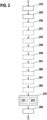
2 : Ablaufdiagramm des Verfahrens als Blockschaltbild -
3 : virtuelle Perspektive auf eine erzeugte Karte -
4 : angezeigtes angepasstes Hauptkamerabildes -
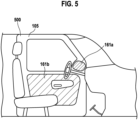
5 : Ansicht eines Innenraums eines Fahrzeugs mit Fahrertür
-
1 : Vehicle -
2 : Flow chart of the process as a block diagram -
3 : virtual perspective on a generated map -
4 : displayed adjusted main camera image -
5 : View of a vehicle interior with driver's door
AusführungsbeispieleExamples of implementation
In
In
In
Analog dem zu
In
In
ZITATE ENTHALTEN IN DER BESCHREIBUNGQUOTES INCLUDED IN THE DESCRIPTION
Diese Liste der vom Anmelder aufgeführten Dokumente wurde automatisiert erzeugt und ist ausschließlich zur besseren Information des Lesers aufgenommen. Die Liste ist nicht Bestandteil der deutschen Patent- bzw. Gebrauchsmusteranmeldung. Das DPMA übernimmt keinerlei Haftung für etwaige Fehler oder Auslassungen.This list of documents listed by the applicant was generated automatically and is included solely for the better information of the reader. The list is not part of the German patent or utility model application. The DPMA accepts no liability for any errors or omissions.
Zitierte PatentliteraturCited patent literature
- US 2004260469 A1 [0004]US 2004260469 A1 [0004]
- US 10059265 B2 [0005]US 10059265 B2 [0005]
- US 10300855 B2 [0006]US 10300855 B2 [0006]
- US 10486599 B2 [0007]US 10486599 B2 [0007]
- US 2014347450 A1 [0008]US 2014347450 A1 [0008]
- EP 3512739 B1 [0009]EP 3512739 B1 [0009]
Claims (16)
Priority Applications (2)
| Application Number | Priority Date | Filing Date | Title |
|---|---|---|---|
| DE102022214210.1A DE102022214210A1 (en) | 2022-12-21 | 2022-12-21 | Method for displaying an extended view of the surroundings of a vehicle, computer program, computing device and vehicle |
| PCT/EP2023/085360 WO2024132701A1 (en) | 2022-12-21 | 2023-12-12 | Method for displaying an extended view of surroundings of a vehicle, computer program, computing device and vehicle |
Applications Claiming Priority (1)
| Application Number | Priority Date | Filing Date | Title |
|---|---|---|---|
| DE102022214210.1A DE102022214210A1 (en) | 2022-12-21 | 2022-12-21 | Method for displaying an extended view of the surroundings of a vehicle, computer program, computing device and vehicle |
Publications (1)
| Publication Number | Publication Date |
|---|---|
| DE102022214210A1 true DE102022214210A1 (en) | 2024-06-27 |
Family
ID=89222147
Family Applications (1)
| Application Number | Title | Priority Date | Filing Date |
|---|---|---|---|
| DE102022214210.1A Pending DE102022214210A1 (en) | 2022-12-21 | 2022-12-21 | Method for displaying an extended view of the surroundings of a vehicle, computer program, computing device and vehicle |
Country Status (2)
| Country | Link |
|---|---|
| DE (1) | DE102022214210A1 (en) |
| WO (1) | WO2024132701A1 (en) |
Cited By (2)
| Publication number | Priority date | Publication date | Assignee | Title |
|---|---|---|---|---|
| WO2026052546A1 (en) * | 2024-09-05 | 2026-03-12 | Aumovio Autonomous Mobility Germany Gmbh | Method and camera system for providing a display of the surroundings of a vehicle |
| DE102024132288A1 (en) | 2024-11-06 | 2026-05-07 | Connaught Electronics Ltd. | Method for generating a display image of the environment of a motor vehicle, computer program product, computer-readable storage medium and electronic computing device |
Citations (9)
| Publication number | Priority date | Publication date | Assignee | Title |
|---|---|---|---|---|
| US20040260469A1 (en) | 2002-06-12 | 2004-12-23 | Kazufumi Mizusawa | Drive assisting system |
| US20140347450A1 (en) | 2011-11-30 | 2014-11-27 | Imagenext Co., Ltd. | Method and apparatus for creating 3d image of vehicle surroundings |
| US10059265B2 (en) | 2000-03-02 | 2018-08-28 | Magna Electronics Inc. | Vision system for a vehicle |
| DE102018117548A1 (en) | 2017-07-21 | 2019-01-24 | Ford Global Technologies, Llc | SAFETY ILLUSTRATION FOR RESETTING A VEHICLE |
| DE102018209192B3 (en) | 2018-05-17 | 2019-05-09 | Continental Automotive Gmbh | Method and device for operating a camera monitor system for a motor vehicle |
| US10300855B2 (en) | 2012-09-26 | 2019-05-28 | Magna Electronics Inc. | Trailer driving assist system |
| US10486599B2 (en) | 2015-07-17 | 2019-11-26 | Magna Mirrors Of America, Inc. | Rearview vision system for vehicle |
| EP3512739B1 (en) | 2016-09-14 | 2020-05-13 | Robert Bosch GmbH | Method for providing a rear-view-mirror view of the surroundings of a vehicle |
| US20210023994A1 (en) | 2019-07-26 | 2021-01-28 | Aisin Seiki Kabushiki Kaisha | Periphery monitoring device |
Family Cites Families (1)
| Publication number | Priority date | Publication date | Assignee | Title |
|---|---|---|---|---|
| US5670935A (en) * | 1993-02-26 | 1997-09-23 | Donnelly Corporation | Rearview vision system for vehicle including panoramic view |
-
2022
- 2022-12-21 DE DE102022214210.1A patent/DE102022214210A1/en active Pending
-
2023
- 2023-12-12 WO PCT/EP2023/085360 patent/WO2024132701A1/en not_active Ceased
Patent Citations (9)
| Publication number | Priority date | Publication date | Assignee | Title |
|---|---|---|---|---|
| US10059265B2 (en) | 2000-03-02 | 2018-08-28 | Magna Electronics Inc. | Vision system for a vehicle |
| US20040260469A1 (en) | 2002-06-12 | 2004-12-23 | Kazufumi Mizusawa | Drive assisting system |
| US20140347450A1 (en) | 2011-11-30 | 2014-11-27 | Imagenext Co., Ltd. | Method and apparatus for creating 3d image of vehicle surroundings |
| US10300855B2 (en) | 2012-09-26 | 2019-05-28 | Magna Electronics Inc. | Trailer driving assist system |
| US10486599B2 (en) | 2015-07-17 | 2019-11-26 | Magna Mirrors Of America, Inc. | Rearview vision system for vehicle |
| EP3512739B1 (en) | 2016-09-14 | 2020-05-13 | Robert Bosch GmbH | Method for providing a rear-view-mirror view of the surroundings of a vehicle |
| DE102018117548A1 (en) | 2017-07-21 | 2019-01-24 | Ford Global Technologies, Llc | SAFETY ILLUSTRATION FOR RESETTING A VEHICLE |
| DE102018209192B3 (en) | 2018-05-17 | 2019-05-09 | Continental Automotive Gmbh | Method and device for operating a camera monitor system for a motor vehicle |
| US20210023994A1 (en) | 2019-07-26 | 2021-01-28 | Aisin Seiki Kabushiki Kaisha | Periphery monitoring device |
Cited By (2)
| Publication number | Priority date | Publication date | Assignee | Title |
|---|---|---|---|---|
| WO2026052546A1 (en) * | 2024-09-05 | 2026-03-12 | Aumovio Autonomous Mobility Germany Gmbh | Method and camera system for providing a display of the surroundings of a vehicle |
| DE102024132288A1 (en) | 2024-11-06 | 2026-05-07 | Connaught Electronics Ltd. | Method for generating a display image of the environment of a motor vehicle, computer program product, computer-readable storage medium and electronic computing device |
Also Published As
| Publication number | Publication date |
|---|---|
| WO2024132701A1 (en) | 2024-06-27 |
Similar Documents
| Publication | Publication Date | Title |
|---|---|---|
| EP2805183B1 (en) | Method and device for visualizing the surroundings of a vehicle | |
| EP2603402B1 (en) | Method for displaying images on a display unit and driver assistance system | |
| DE102009005505B4 (en) | Method and device for generating an image of the surroundings of a motor vehicle | |
| DE102009029439A1 (en) | Method and device for representing obstacles in a parking assistance system of motor vehicles | |
| DE102008046214A1 (en) | Environment monitoring method for vehicle e.g. commercial motor vehicle, utilized for transporting goods, involves determining and displaying relevant surrounding regions based on distance between vehicle and obstacle | |
| DE112017001410T5 (en) | INFORMATION PROCESSING DEVICE | |
| DE102012208288A1 (en) | Method for representing vehicle environment on display, involves detecting camera around vehicle, and determining environmental information from image of camera, where determined environmental information is stored and outputted on display | |
| DE102008046544A1 (en) | Vehicle e.g. passenger car, surrounding monitoring method, utilized for passenger transportation, involves displaying section of complete image for positioning of vehicle, and selecting section as function of vehicle movement direction | |
| WO2020007523A1 (en) | Method for providing assistance during a parking maneuver of a vehicle combination of a towing vehicle and a trailer, system, and combination | |
| WO2024132701A1 (en) | Method for displaying an extended view of surroundings of a vehicle, computer program, computing device and vehicle | |
| DE102019116836A1 (en) | FADE-IN INTERFACES FOR REAR-VIEW MIRROR INDICATORS | |
| DE102016122756A1 (en) | A method for assisting a driver of a motor vehicle when parking the motor vehicle on a parking area, driver assistance system and motor vehicle | |
| DE102011010860A1 (en) | Method and driver assistance system for displaying images in a motor vehicle and motor vehicle | |
| DE102020127278A1 (en) | Around-View Synthesis System and Process | |
| DE112020002353T5 (en) | display device | |
| DE102017215901A1 (en) | Assistance system for a vehicle | |
| DE102013010233B4 (en) | A method of displaying environmental information in a vehicle and a display system for a vehicle | |
| DE102006037600B4 (en) | Method for the resolution-dependent representation of the environment of a motor vehicle | |
| DE102023003828A1 (en) | Method for operating a driver assistance system and vehicle | |
| DE102018207407A1 (en) | Driver assistance system, means of locomotion and method for displaying an image of a surrounding area of a means of locomotion | |
| DE102019102672A1 (en) | INTERSENSORY LEARNING | |
| DE102011005368A1 (en) | Driver assistance system for vehicle, particularly designed as assistance system for shunters or for parking vehicle, has video camera, by which video image of surrounding area of vehicle is recorded with objects | |
| DE102021133199A1 (en) | Method and driver assistance system for considering objects when driving along a trajectory | |
| DE102024002500B3 (en) | Methods for visualizing a vehicle environment and vehicle | |
| DE102025109600B3 (en) | Method for calibrating a head-up display |
Legal Events
| Date | Code | Title | Description |
|---|---|---|---|
| R163 | Identified publications notified |