CN112650229B - A Path Planning Method for Mobile Robots Based on Improved Ant Colony Algorithm - Google Patents
A Path Planning Method for Mobile Robots Based on Improved Ant Colony Algorithm Download PDFInfo
- Publication number
- CN112650229B CN112650229B CN202011477455.4A CN202011477455A CN112650229B CN 112650229 B CN112650229 B CN 112650229B CN 202011477455 A CN202011477455 A CN 202011477455A CN 112650229 B CN112650229 B CN 112650229B
- Authority
- CN
- China
- Prior art keywords
- pheromone
- algorithm
- path
- concentration
- mobile robot
- Prior art date
- Legal status (The legal status is an assumption and is not a legal conclusion. Google has not performed a legal analysis and makes no representation as to the accuracy of the status listed.)
- Active
Links
- 238000000034 method Methods 0.000 title claims abstract description 26
- 239000003016 pheromone Substances 0.000 claims abstract description 70
- 238000009826 distribution Methods 0.000 claims abstract description 9
- 241000282461 Canis lupus Species 0.000 claims abstract description 7
- 241000257303 Hymenoptera Species 0.000 claims description 18
- 230000033001 locomotion Effects 0.000 claims description 13
- 239000011159 matrix material Substances 0.000 claims description 4
- 230000001133 acceleration Effects 0.000 claims description 3
- 230000003313 weakening effect Effects 0.000 claims description 3
- 230000002708 enhancing effect Effects 0.000 claims 1
- 238000011156 evaluation Methods 0.000 abstract description 8
- 238000013473 artificial intelligence Methods 0.000 abstract description 3
- 238000007726 management method Methods 0.000 abstract 1
- 238000010586 diagram Methods 0.000 description 6
- 238000012986 modification Methods 0.000 description 3
- 230000004048 modification Effects 0.000 description 3
- 230000009286 beneficial effect Effects 0.000 description 2
- 230000001186 cumulative effect Effects 0.000 description 2
- 238000002474 experimental method Methods 0.000 description 2
- 238000012804 iterative process Methods 0.000 description 2
- 201000004569 Blindness Diseases 0.000 description 1
- 241000254158 Lampyridae Species 0.000 description 1
- 230000007547 defect Effects 0.000 description 1
- 238000011161 development Methods 0.000 description 1
- 238000005265 energy consumption Methods 0.000 description 1
- 238000005516 engineering process Methods 0.000 description 1
- 238000004519 manufacturing process Methods 0.000 description 1
- 239000011664 nicotinic acid Substances 0.000 description 1
- 238000005457 optimization Methods 0.000 description 1
- 239000002245 particle Substances 0.000 description 1
- 238000011160 research Methods 0.000 description 1
- 238000006467 substitution reaction Methods 0.000 description 1
- 230000007704 transition Effects 0.000 description 1
- 230000000007 visual effect Effects 0.000 description 1
Images




Classifications
-
- G—PHYSICS
- G05—CONTROLLING; REGULATING
- G05D—SYSTEMS FOR CONTROLLING OR REGULATING NON-ELECTRIC VARIABLES
- G05D1/00—Control of position, course, altitude or attitude of land, water, air or space vehicles, e.g. using automatic pilots
- G05D1/02—Control of position or course in two dimensions
- G05D1/021—Control of position or course in two dimensions specially adapted to land vehicles
- G05D1/0212—Control of position or course in two dimensions specially adapted to land vehicles with means for defining a desired trajectory
- G05D1/0223—Control of position or course in two dimensions specially adapted to land vehicles with means for defining a desired trajectory involving speed control of the vehicle
-
- G—PHYSICS
- G05—CONTROLLING; REGULATING
- G05D—SYSTEMS FOR CONTROLLING OR REGULATING NON-ELECTRIC VARIABLES
- G05D1/00—Control of position, course, altitude or attitude of land, water, air or space vehicles, e.g. using automatic pilots
- G05D1/02—Control of position or course in two dimensions
- G05D1/021—Control of position or course in two dimensions specially adapted to land vehicles
- G05D1/0212—Control of position or course in two dimensions specially adapted to land vehicles with means for defining a desired trajectory
- G05D1/0221—Control of position or course in two dimensions specially adapted to land vehicles with means for defining a desired trajectory involving a learning process
-
- G—PHYSICS
- G05—CONTROLLING; REGULATING
- G05D—SYSTEMS FOR CONTROLLING OR REGULATING NON-ELECTRIC VARIABLES
- G05D1/00—Control of position, course, altitude or attitude of land, water, air or space vehicles, e.g. using automatic pilots
- G05D1/02—Control of position or course in two dimensions
- G05D1/021—Control of position or course in two dimensions specially adapted to land vehicles
- G05D1/0276—Control of position or course in two dimensions specially adapted to land vehicles using signals provided by a source external to the vehicle
Landscapes
- Engineering & Computer Science (AREA)
- Aviation & Aerospace Engineering (AREA)
- Radar, Positioning & Navigation (AREA)
- Remote Sensing (AREA)
- Physics & Mathematics (AREA)
- General Physics & Mathematics (AREA)
- Automation & Control Theory (AREA)
- Manipulator (AREA)
- Control Of Position, Course, Altitude, Or Attitude Of Moving Bodies (AREA)
Abstract
本发明公开了一种基于改进蚁群算法的移动机器人路径规划方法,包括重置初始信息素浓度、启发函数的改进以及信息素浓度更新,其中重置初始信息素浓度即为每个栅格设置不同的信息素浓度;在启发函数中加入了A*算法估价函数和转角约束因子,利用A*估价函数寻找全局最优解,同时用转角约束因子进行角度约束;在蚁群算法的信息素更新部分,加入狼群算法的分配原则,利用该原则进行信息素的分配,同时利用MMAS算法中的最大‑最小原则进行信息素浓度的限制;本发明能够增强算法的全局搜索能力、缩短路径长度,为移动机器人规划出一条更为平滑的运行轨迹,不仅仅局限于计算机、人工智能领域,对于交通、物流、管理等领域的类似问题也同样适用。

The invention discloses a path planning method for a mobile robot based on an improved ant colony algorithm, including resetting the initial pheromone concentration, improving the heuristic function and updating the pheromone concentration, wherein the resetting of the initial pheromone concentration is set for each grid Different pheromone concentrations; the A* algorithm evaluation function and the corner constraint factor are added to the heuristic function, the A* evaluation function is used to find the global optimal solution, and the corner constraint factor is used to constrain the angle; in the pheromone update of the ant colony algorithm Part, adding the distribution principle of the wolf group algorithm, using this principle to carry out the distribution of pheromone, and using the maximum-minimum principle in the MMAS algorithm to limit the pheromone concentration; the present invention can enhance the global search ability of the algorithm, shorten the path length, Planning a smoother running trajectory for mobile robots is not only limited to the fields of computers and artificial intelligence, but also applies to similar problems in the fields of transportation, logistics, and management.
Description
技术领域technical field
本发明涉及人工智能领域,特别涉及一种基于改进蚁群算法的移动机器人路径规划方法。The invention relates to the field of artificial intelligence, in particular to a path planning method for a mobile robot based on an improved ant colony algorithm.
背景技术Background technique
随着人工智能技术的高速发展,机器人被广泛应用于仓储物流、制造工厂、智慧医疗等领域。而路径规划是移动机器人研究的一个重要分支。路径规划是指移动机器人从起点寻找一条避开所有障碍物的无碰撞路径,从而顺利抵达目标点。传统的路径规划方法有人工势场法、Dijstra算法、可视图法等。随着障碍物增多,问题规模复杂度不断增加,传统算法存在一定局限性,因此一些仿生智能优化算法应运而生,如蚁群算法、粒子群算法、萤火虫算法等。With the rapid development of artificial intelligence technology, robots are widely used in warehousing and logistics, manufacturing plants, smart medical care and other fields. Path planning is an important branch of mobile robot research. Path planning means that the mobile robot finds a collision-free path from the starting point that avoids all obstacles, so as to reach the target point smoothly. Traditional path planning methods include artificial potential field method, Dijstra algorithm, and visual graph method. With the increase of obstacles, the scale and complexity of the problem continue to increase, and traditional algorithms have certain limitations. Therefore, some bionic intelligent optimization algorithms emerge as the times require, such as ant colony algorithm, particle swarm algorithm, firefly algorithm, etc.
栅格环境建模多被用于此处,蚂蚁的搜索方式有四邻域搜索和八邻域搜索两种,随着环境的复杂化程度提高,八邻域搜索便于寻找到一条长度更短的路径,因此其逐渐代替了传统的四邻域搜索方式。Grid environment modeling is mostly used here. Ant search methods include four-neighborhood search and eight-neighborhood search. With the increasing complexity of the environment, eight-neighborhood search is easier to find a path with a shorter length. , so it gradually replaces the traditional four-neighbor search method.
在移动机器人路径规划方面,多数学者仅考虑到路径的长度,忽略了路径中的转角次数对机器人运动的影响。In the aspect of mobile robot path planning, most scholars only consider the length of the path and ignore the influence of the number of corners in the path on the robot motion.
发明内容SUMMARY OF THE INVENTION
本发明的目的是克服现有技术缺陷,提供一种基于改进蚁群算法的移动机器人路径规划方法,解决基本蚁群算法易陷入局部最优、运行时间过长、难以找到全局最优路径以及累计转弯角度大的问题。The purpose of the present invention is to overcome the defects of the prior art and provide a mobile robot path planning method based on an improved ant colony algorithm, so as to solve the problem that the basic ant colony algorithm is easy to fall into the local optimum, the running time is too long, it is difficult to find the global optimal path and the cumulative Big turning angle problem.
本发明的目的是这样实现的:一种基于改进蚁群算法的移动机器人路径规划方法,包括以下步骤:The purpose of the present invention is to achieve: a mobile robot path planning method based on improved ant colony algorithm, comprising the following steps:
步骤1)使用栅格法对工作环境进行建模,为移动机器人设定好运动的起始点和目标点;Step 1) Use the grid method to model the working environment, and set the starting point and target point of the movement for the mobile robot;
步骤2)初始化参数,蚂蚁数量m,信息素重要程度因子α,启发函数重要程度因子β,信息素挥发系数ρ,信息素强度系数Q、迭代次数N;Step 2) initialization parameters, the number of ants m, the pheromone importance factor α, the heuristic function importance factor β, the pheromone volatilization coefficient ρ, the pheromone intensity coefficient Q, and the number of iterations N;
步骤3)更新禁忌表,将蚂蚁k(k=1、2,…,m)放在当前节点上,将当前节点添加到禁忌表中;Step 3) Update the taboo table, put ants k (k=1, 2, ..., m) on the current node, and add the current node to the taboo table;
步骤4)选择下一步的网格,计算蚁群算法改进之后的启发式函数值,利用轮盘赌法选出下一步将要到达的栅格,若蚂蚁抵达目标位置,则转到步骤5),反之转到步骤3);Step 4) Select the grid of the next step, calculate the heuristic function value after the improvement of the ant colony algorithm, and use the roulette method to select the grid to be reached in the next step. If the ants reach the target position, go to step 5), Otherwise go to step 3);
步骤5)如果蚂蚁到达目标位置,重复步骤3),直到每个蚂蚁在其迭代过程中完成整个搜索过程,之后转到步骤6);Step 5) If the ants reach the target position, repeat step 3) until each ant completes the entire search process in its iterative process, then go to step 6);
步骤6)更新信息素,每次迭代完成,如果此时迭代次数小于最大迭代次数,将按照狼群算法的猎物分配原则计算路径上的信息素浓度,同时要保证其不超过规定的最大-最小浓度,若满足收敛条件,则退出;若不满足,转到步骤3),反之迭代次数大于最大迭代次数时,则停止计数,输出最终结果。Step 6) Update the pheromone, each iteration is completed, if the number of iterations is less than the maximum number of iterations, the pheromone concentration on the path will be calculated according to the prey distribution principle of the wolf pack algorithm, and at the same time, ensure that it does not exceed the specified maximum-minimum Concentration, if the convergence conditions are met, exit; if not, go to step 3). Otherwise, when the number of iterations is greater than the maximum number of iterations, stop counting and output the final result.
作为本发明的进一步改进,所述步骤1)具体包括以下步骤:As a further improvement of the present invention, the step 1) specifically includes the following steps:
步骤1.1)在栅格地图中,将环境中的障碍物用黑色栅格表示,可自由通行区域用白色栅格表示,G表示栅格地图,N表示地图中矩阵的维数和列数,i和j表示移动机器人所处位置的横坐标和纵坐标;给定移动机器人一个任务,任务为其指定运行的起点和终点;Step 1.1) In the grid map, the obstacles in the environment are represented by black grids, the freely passable areas are represented by white grids, G represents the grid map, N represents the dimension and number of columns of the matrix in the map, i and j represent the abscissa and ordinate of the position of the mobile robot; given a task of the mobile robot, the task specifies the starting point and end point of its operation;
步骤1.2)根据应用环境,做如下规定:移动机器人在一项任务未结束前,不得接受其他任务;移动机器人在运行时以同一速度行驶,不存在加速和减速的情况;移动机器人经过节点转弯时的时间与转弯角度呈正相关关系;Step 1.2) According to the application environment, the following regulations are made: the mobile robot shall not accept other tasks before one task is completed; the mobile robot runs at the same speed during operation, and there is no acceleration and deceleration; when the mobile robot turns through a node There is a positive correlation between the time and the turning angle;
作为本发明的进一步改进,所述步骤2)具体包括以下步骤:As a further improvement of the present invention, the step 2) specifically includes the following steps:
步骤2.1)初始阶段为每个栅格设置不同的信息素浓度,首先找到栅格地图的中点,将与起点终点连线在一个方向上的两中点连接起来,将所形成区域中的栅格的初始信息素浓度设置为C,该区域外的栅格初始信息素浓度设置为τ0。Step 2.1) In the initial stage, set different pheromone concentrations for each grid. First, find the midpoint of the grid map, connect the two midpoints in one direction with the starting point and the end point, and connect the grids in the formed area. The initial pheromone concentration of the grid is set to C, and the initial pheromone concentration of the grid outside this area is set to τ 0 .
作为本发明的进一步改进,所述步骤4)具体包括以下步骤:As a further improvement of the present invention, the step 4) specifically includes the following steps:
步骤4.1)设置转角约束因子:R=c*γ,其中γ表示转弯角度的大小,c为转弯角度权重系数;Step 4.1) Set the corner constraint factor: R=c*γ, where γ represents the size of the turning angle, and c is the turning angle weight coefficient;
步骤4.2)引入A*算法中的估价函数:Step 4.2) Introduce the evaluation function in the A* algorithm:
f(n)=g(n)+h(n)f(n)=g(n)+h(n)
h(n)=((nx-gx)2+(ny-gy)2)1/2 h(n)=((n x -g x ) 2 +(n y -g y ) 2 ) 1/2
g(n)=((nx-sx)2+(ny-sy)2)1/2 g(n)=((n x -s x ) 2 +(n y -s y ) 2 ) 1/2
其中g(n)为从起点到当前节点的路径最小成本值;h(n)为从当前节点到终点的路径最小成本估计值,nx和ny是当前节点n的坐标,gx和gy是终点g的坐标,sx和sy是起点s的坐标;where g(n) is the minimum cost value of the path from the starting point to the current node; h(n) is the estimated minimum cost value of the path from the current node to the end point, n x and ny are the coordinates of the current node n, g x and g y is the coordinate of the end point g, s x and s y are the coordinates of the starting point s;
步骤4.3)在基本蚁群算法的启发式函数中引入转角约束因子和A*算法估价函数:
作为本发明的进一步改进,所述步骤6)具体包括以下步骤:As a further improvement of the present invention, the step 6) specifically includes the following steps:
步骤6.1)在蚁群算法的信息素更新中引入狼群算法的分配原则,将到达终点路径最短的蚂蚁所留下的信息素增强,所走路径最长的蚂蚁留下的信息素减弱,信息素更新公式如下:Step 6.1) Introduce the distribution principle of the wolf group algorithm in the pheromone update of the ant colony algorithm, strengthen the pheromone left by the ant with the shortest path to the destination, weaken the pheromone left by the ant with the longest path, and the information The prime update formula is as follows:


式中:Δ*τij和Δ**τij分别代表每次迭代中最优和最差路径经过节点i、j的信息素大小,L*和L**分别代表每次蚂蚁到达终点的最短运动轨迹和最长运动轨迹;δ和ω分别表示每次搜索时找到最短路径和最长路径的蚂蚁数量;Q2为增强因子,此处将其设为2,R1为减弱因子,将其值设为0.5;In the formula: Δ * τ ij and Δ ** τ ij represent the pheromone size of the optimal and worst paths passing through nodes i and j in each iteration, respectively, and L * and L ** represent the shortest time for each ant to reach the end point, respectively. Motion trajectory and longest motion trajectory; δ and ω represent the number of ants that find the shortest and longest path in each search, respectively; Q 2 is the enhancement factor, which is set to 2 here, and R 1 is the weakening factor, which is set to The value is set to 0.5;
步骤6.2)为防止路径上的信息素过大或过小,引入MMAS算法中的最大-最小原则进行信息素浓度的限制:Step 6.2) In order to prevent the pheromone on the path from being too large or too small, the maximum-minimum principle in the MMAS algorithm is introduced to limit the pheromone concentration:

其中,τ表示信息素浓度,τmin表示信息素浓度的最小值,τmax表示信息素浓度的最大值。Among them, τ represents the pheromone concentration, τ min represents the minimum value of the pheromone concentration, and τ max represents the maximum value of the pheromone concentration.
本发明采用以上技术方案,与现有技术相比,有益效果在于:(1)改进的蚁群算法可以寻得移动机器人运行时间最短、长度最短、转角次数最少的路径,提高运行效率,在实际应用中更加便捷;Compared with the prior art, the present invention has the following beneficial effects: (1) the improved ant colony algorithm can find the path with the shortest running time, the shortest length and the least number of corners of the mobile robot, thus improving the running efficiency, and in practice more convenient in the application;
(2)通过改进各栅格的初始信息素浓度分布,避免蚂蚁在初期盲目搜索,缩短算法的运行时间,减少迭代次数;(2) By improving the initial pheromone concentration distribution of each grid, ants can avoid blind search in the initial stage, shorten the running time of the algorithm, and reduce the number of iterations;
(3)通过改进启发函数,提高蚂蚁的全局搜索能力,减少路径中的转弯次数,便于搜索到一条长度更短、更平滑的路径;(3) By improving the heuristic function, the global search ability of ants is improved, the number of turns in the path is reduced, and it is convenient to search for a shorter and smoother path;
(4)通过改进信息素更新方式,避免由于某条路径上的信息素浓度过大而陷入局部最优解,或迭代提前结束的情况。(4) By improving the pheromone update method, it is avoided that the pheromone concentration on a certain path is too large to fall into the local optimal solution, or the iteration ends prematurely.
附图说明Description of drawings
图1为本发明的方法流程图。FIG. 1 is a flow chart of the method of the present invention.
图2为初始信息素增强区域。Figure 2 shows the initial pheromone enhancement area.
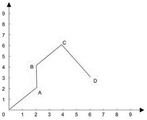
图3为转弯角度示意图。Figure 3 is a schematic diagram of the turning angle.
图4为基本蚁群算法对20×20环境下的路径规划图。Figure 4 shows the path planning diagram of the basic ant colony algorithm for a 20×20 environment.
图5为本发明对20×20环境下的路径规划图。FIG. 5 is a path planning diagram for a 20×20 environment according to the present invention.
图6为基本蚁群算法对30×30环境下的路径规划图。Figure 6 is the path planning diagram of the basic ant colony algorithm for a 30×30 environment.
图7为本发明对30×30环境下的路径规划图。FIG. 7 is a path planning diagram for a 30×30 environment according to the present invention.
具体实施方式Detailed ways
如图1所示的一种基于改进蚁群算法的移动机器人路径规划方法,将A*算法的估价函数加入蚁群算法启发函数中,不仅便于寻得全局最优路径,还能加快寻路速度。另一方面,在蚁群算法中加入转角约束因子,避免寻得的路径转角次数过多、累计转弯角度过大,将其应用于移动机器人的路径规划问题上,使机器人损失的能耗减少、运行时间加快,为移动机器人选择一条综合路径长度和转角次数的最优路径。具体步骤如下:As shown in Figure 1, a mobile robot path planning method based on the improved ant colony algorithm, the evaluation function of the A* algorithm is added to the ant colony algorithm heuristic function, which not only facilitates finding the global optimal path, but also speeds up the path finding. . On the other hand, a corner constraint factor is added to the ant colony algorithm to avoid too many turning angles and too large cumulative turning angles of the found path. It is applied to the path planning problem of mobile robots to reduce the energy consumption lost by the robot, Faster runtime, selecting an optimal path for mobile robots that combines path length and number of turns. Specific steps are as follows:
步骤1)使用栅格法对工作环境进行建模,为移动机器人设定好运动的起始点和目标点;Step 1) Use the grid method to model the working environment, and set the starting point and target point of the movement for the mobile robot;
建立栅格地图,具体模型为:Create a grid map, the specific model is:

其中:x为横轴,y为纵轴,在N*N的网格图中,栅格分别用编号i表示,每个栅格的中心点坐标为(xi,yi)。Among them: x is the horizontal axis, y is the vertical axis, in the N*N grid diagram, the grids are respectively represented by the number i, and the coordinates of the center point of each grid are (x i , y i ).
步骤1.1)在栅格地图中,将环境中的障碍物用黑色栅格表示,可自由通行区域用白色栅格表示,并建立障碍物矩阵,其中0表示可移动空间,1表示障碍物;G表示栅格地图,N表示地图中矩阵的维数和列数,i和j表示移动机器人所处位置的横坐标和纵坐标;给定移动机器人一个任务,任务为其指定运行的起点和终点;Step 1.1) In the grid map, the obstacles in the environment are represented by black grids, the freely passable areas are represented by white grids, and an obstacle matrix is established, where 0 represents movable space and 1 represents obstacles; G Represents a grid map, N represents the dimension and number of columns of the matrix in the map, i and j represent the abscissa and ordinate of the position of the mobile robot; given a task for the mobile robot, the task specifies the starting point and end point of its operation;
步骤1.2)根据应用环境,做如下规定:移动机器人在一项任务未结束前,不得接受其他任务;移动机器人在运行时以同一速度行驶,不存在加速和减速的情况;移动机器人经过节点转弯时的时间与转弯角度呈正相关关系;Step 1.2) According to the application environment, the following regulations are made: the mobile robot shall not accept other tasks before one task is completed; the mobile robot runs at the same speed during operation, and there is no acceleration and deceleration; when the mobile robot turns through a node There is a positive correlation between the time and the turning angle;
步骤2)初始化参数,蚂蚁数量m,信息素重要程度因子α,启发函数重要程度因子β,信息素挥发系数ρ,信息素强度系数Q、迭代次数N等,初始阶段为每个栅格设置不同的信息素浓度,首先设置移动机器人运动的起点和终点,分别用S和T标记,接着找到栅格地图四条边的中点,分别设为A、B、C、D,将A点与B点相连、C点与D点相连,得到与起点终点连线方向一致的两条线段,其围成的区域为六边形SABTDC,如图2所示,将AB、CD区域内的栅格初始信息素浓度设为C,将其他区域的初始信息素浓度设置为τ0;Step 2) Initialization parameters, number of ants m, pheromone importance factor α, heuristic function importance factor β, pheromone volatilization coefficient ρ, pheromone intensity coefficient Q, number of iterations N, etc. In the initial stage, different settings are set for each grid. First, set the starting point and end point of the mobile robot's movement, marked with S and T respectively, then find the midpoint of the four sides of the grid map, set them as A, B, C, D respectively, and set point A and point B Connected, point C and point D are connected, and two line segments in the same direction as the starting point and the end point are obtained. The area enclosed by them is hexagonal SABTDC. As shown in Figure 2, the initial information of the grid in the AB and CD areas is The pheromone concentration is set to C, and the initial pheromone concentration of other regions is set to τ 0 ;

其中:τ0为信息素初始值,C为大于τ0的常数;Among them: τ 0 is the initial value of the pheromone, and C is a constant greater than τ 0 ;
步骤3)更新禁忌表,将蚂蚁k(k=1、2,…,m)放在当前节点上,将当前节点添加到禁忌表中。Step 3) Update the taboo table, put the ant k (k=1, 2, ..., m) on the current node, and add the current node to the taboo table.
步骤4)选择下一步的网格,计算加入A*估价函数和转角约束的启发式函数值,求出状态转移概率值。再借鉴轮盘赌法选出下一步将要到达的栅格,若蚂蚁抵达目标位置,则转到步骤5),反之转到步骤3);Step 4) Select the next grid, calculate the value of the heuristic function adding the A* evaluation function and the corner constraint, and obtain the state transition probability value. Then refer to the roulette method to select the grid to be reached in the next step, if the ants reach the target position, go to step 5), otherwise go to step 3);
步骤4.1)设置转角约束因子:R=c*γ,其中γ表示转弯角度的大小,如图3所示,BC相对于AB的转弯角度为45度,CD相对于BC的转弯角度为90度,c为转弯角度权重系数;Step 4.1) Set the corner constraint factor: R=c*γ, where γ represents the size of the turning angle. As shown in Figure 3, the turning angle of BC relative to AB is 45 degrees, and the turning angle of CD relative to BC is 90 degrees. c is the turning angle weight coefficient;
步骤4.2)引入A*算法中的估价函数:Step 4.2) Introduce the evaluation function in the A* algorithm:
f(n)=g(n)+h(n)f(n)=g(n)+h(n)
h(n)=((nx-gx)2+(ny-gy)2)1/2 h(n)=((n x -g x ) 2 +(n y -g y ) 2 ) 1/2
g(n)=((nx-sx)2+(ny-sy)2)1/2 g(n)=((n x -s x ) 2 +(n y -s y ) 2 ) 1/2
其中g(n)为从起点到当前节点的路径最小成本值;h(n)为从当前节点到终点的路径最小成本估计值,nx和ny是当前节点n的坐标,gx和gy是终点g的坐标,sx和sy是起点s的坐标;where g(n) is the minimum cost value of the path from the starting point to the current node; h(n) is the estimated minimum cost value of the path from the current node to the end point, n x and ny are the coordinates of the current node n, g x and g y is the coordinate of the end point g, s x and s y are the coordinates of the starting point s;
步骤4.3)在基本蚁群算法的启发式函数中引入转角约束因子和A*算法估价函数:
利用轮盘赌法计算当前节点到下一节点的概率:Use the roulette method to calculate the probability of the current node to the next node:

式中:τij是网格i到网格j的信息素值,而ηij是网格i到网格j的启发式信息。α为信息素激励因子,代表信息素值对路径选择的影响程度,α越大则信息素对于路径选择的影响越大,大多数蚂蚁走过的路径将有更大几率被选中;β是期望启发式因子,代表启发信息对蚂蚁选择路径的影响程度,β与影响程度之间是正相关关系。where τ ij is the pheromone value from grid i to grid j, and η ij is the heuristic information from grid i to grid j. α is the pheromone incentive factor, which represents the degree of influence of the pheromone value on the path selection. The larger the α, the greater the influence of the pheromone on the path selection, and the path that most ants traveled will have a greater chance of being selected; β is the expectation The heuristic factor represents the degree of influence of the heuristic information on the ants' path selection, and there is a positive correlation between β and the degree of influence.
步骤5)如果蚂蚁到达目标位置,重复步骤3),直到每个蚂蚁在其迭代过程中完成整个搜索过程,之后转到步骤6)。Step 5) If the ants reach the target position, repeat step 3) until each ant completes the entire search process in its iterative process, then go to step 6).
步骤6)更新信息素,每次迭代完成,如果此时迭代次数小于最大迭代次数,将按照狼群算法的猎物分配原则计算路径上的信息素浓度,同时要保证其不超过规定的最大-最小浓度,若满足收敛条件,则退出;若不满足,转到步骤3);反之迭代次数大于最大迭代次数时,则停止计数,输出最终结果。Step 6) Update the pheromone, each iteration is completed, if the number of iterations is less than the maximum number of iterations, the pheromone concentration on the path will be calculated according to the prey distribution principle of the wolf pack algorithm, and at the same time, ensure that it does not exceed the specified maximum-minimum If the convergence condition is satisfied, exit; if not, go to step 3); otherwise, when the number of iterations is greater than the maximum number of iterations, stop counting and output the final result.
步骤6.1)在蚁群算法的信息素更新中引入狼群算法的分配原则,将到达终点路径最短的蚂蚁所留下的信息素增强,所走路径最长的蚂蚁留下的信息素减弱,信息素更新公式如下:Step 6.1) Introduce the distribution principle of the wolf group algorithm in the pheromone update of the ant colony algorithm, strengthen the pheromone left by the ant with the shortest path to the destination, weaken the pheromone left by the ant with the longest path, and the information The prime update formula is as follows:



式中:Δ*τij和Δ**τij分别代表每次迭代中最优和最差路径经过节点i、j的信息素大小,L*和L**分别代表每次蚂蚁到达终点的最短运动轨迹和最长运动轨迹;δ和ω分别表示每次搜索时找到最短路径和最长路径的蚂蚁数量;Q2为增强因子,此处将其设为2,R1为减弱因子,将其值设为0.5;In the formula: Δ * τ ij and Δ ** τ ij represent the pheromone size of the optimal and worst paths passing through nodes i and j in each iteration, respectively, and L * and L ** represent the shortest time for each ant to reach the end point, respectively. Motion trajectory and longest motion trajectory; δ and ω represent the number of ants that find the shortest and longest path in each search, respectively; Q 2 is the enhancement factor, which is set to 2 here, and R 1 is the weakening factor, which is set to The value is set to 0.5;
步骤6.2)为防止路径上的信息素过大或过小,引入MMAS算法中的最大-最小原则进行信息素浓度的限制:Step 6.2) In order to prevent the pheromone on the path from being too large or too small, the maximum-minimum principle in the MMAS algorithm is introduced to limit the pheromone concentration:

其中,τ表示信息素浓度,τmin表示信息素浓度的最小值,τmax表示信息素浓度的最大值。Among them, τ represents the pheromone concentration, τ min represents the minimum value of the pheromone concentration, and τ max represents the maximum value of the pheromone concentration.
通过上述改进蚁群算法,本发明针对基本蚁群算法易陷入局部最优、收敛速度慢、路径转角次数过多等缺点进行改进,将初始信息素浓度不均匀分布,引入改进启发函数的路径转移概率、改进信息素更新方式同时限制信息素浓度。在本实验环节中对基本蚁群算法和本发明公开的改进蚁群算法分别进行在不同的栅格地图中进行验证分析。Through the above-mentioned improved ant colony algorithm, the present invention improves the basic ant colony algorithm, which is easy to fall into local optimum, slow in convergence speed, and too many times of path turning. Probability, improving the way pheromone is updated while limiting pheromone concentration. In this experimental link, the basic ant colony algorithm and the improved ant colony algorithm disclosed by the present invention are respectively verified and analyzed in different grid maps.
首先在20×20的栅格环境中进行实验,实验结果如图4、图5所示。由图4可知,基本蚁群算法规划出的路径长度较长、转弯次数较多,转弯角度总和也较大,且存在不少的直角转弯,移动机器人在进行直角转弯时会损耗更多的能耗,增加运动时间;在图5中,改进的蚁群算法大大减少了路径中的转弯次数、缩短了路径长度,改进后的蚁群算法在搜索初期就避免了盲目性、有良好的正反馈,提高了算法的收敛速度,获得最优解。First, the experiment is carried out in a 20×20 grid environment, and the experimental results are shown in Figure 4 and Figure 5. It can be seen from Figure 4 that the path length planned by the basic ant colony algorithm is longer, the number of turns is more, the sum of the turning angles is also larger, and there are many right-angle turns, and the mobile robot will lose more energy when making right-angle turns. In Figure 5, the improved ant colony algorithm greatly reduces the number of turns in the path and shortens the path length. The improved ant colony algorithm avoids blindness and has good positive feedback in the early search stage. , which improves the convergence speed of the algorithm and obtains the optimal solution.
为了进一步验证复杂环境中本发明改进蚁群算法的适应性和有效性,采用30×30的栅格地图进行实验,实验结果如图6、图7所示,可以看出,在复杂障碍物环境中,基本蚁群算法的转弯次数大幅度增加,转弯角度总和约是本发明改进蚁群算法的4倍,因此本发明有利于移动机器人的平稳运行、提高了路径的平滑度,减少能耗损失;同时缩短了规划路径的总长度,加强算法的全局搜索能力,提高了算法的运行效率。In order to further verify the adaptability and effectiveness of the improved ant colony algorithm of the present invention in a complex environment, a 30×30 grid map was used to conduct experiments. The number of turns of the basic ant colony algorithm is greatly increased, and the sum of the turning angles is about 4 times that of the improved ant colony algorithm of the present invention. Therefore, the present invention is beneficial to the smooth operation of the mobile robot, improves the smoothness of the path, and reduces energy loss. At the same time, the total length of the planned path is shortened, the global search ability of the algorithm is strengthened, and the operation efficiency of the algorithm is improved.
本发明并不局限于上述实施例,在本发明公开的技术方案的基础上,本领域的技术人员根据所公开的技术内容,不需要创造性的劳动就可以对其中的一些技术特征作出一些替换和变形,这些替换和变形均在本发明的保护范围内。The present invention is not limited to the above-mentioned embodiments. On the basis of the technical solutions disclosed in the present invention, those skilled in the art can make some substitutions and modifications to some of the technical features according to the disclosed technical contents without creative work. Modifications, replacements and modifications are all within the protection scope of the present invention.
Claims (1)


Priority Applications (1)
| Application Number | Priority Date | Filing Date | Title |
|---|---|---|---|
| CN202011477455.4A CN112650229B (en) | 2020-12-15 | 2020-12-15 | A Path Planning Method for Mobile Robots Based on Improved Ant Colony Algorithm |
Applications Claiming Priority (1)
| Application Number | Priority Date | Filing Date | Title |
|---|---|---|---|
| CN202011477455.4A CN112650229B (en) | 2020-12-15 | 2020-12-15 | A Path Planning Method for Mobile Robots Based on Improved Ant Colony Algorithm |
Publications (2)
| Publication Number | Publication Date |
|---|---|
| CN112650229A CN112650229A (en) | 2021-04-13 |
| CN112650229B true CN112650229B (en) | 2022-07-05 |
Family
ID=75355378
Family Applications (1)
| Application Number | Title | Priority Date | Filing Date |
|---|---|---|---|
| CN202011477455.4A Active CN112650229B (en) | 2020-12-15 | 2020-12-15 | A Path Planning Method for Mobile Robots Based on Improved Ant Colony Algorithm |
Country Status (1)
| Country | Link |
|---|---|
| CN (1) | CN112650229B (en) |
Families Citing this family (21)
| Publication number | Priority date | Publication date | Assignee | Title |
|---|---|---|---|---|
| CN113325839B (en) * | 2021-05-08 | 2023-02-03 | 江苏科技大学 | A Path Planning Method for Intelligent Storage Robot Based on Improved Ant Colony Algorithm |
| CN113219981B (en) * | 2021-05-14 | 2022-08-30 | 江南大学 | Mobile robot path planning method based on ant colony algorithm |
| CN113219991B (en) * | 2021-06-02 | 2022-07-15 | 安徽工业大学 | Mobile robot path planning method based on improved ACS algorithm |
| CN113515127B (en) * | 2021-07-23 | 2022-09-13 | 华北电力大学(保定) | Mobile robot path planning method and system |
| CN113703450B (en) * | 2021-08-23 | 2024-03-29 | 皖西学院 | Mobile robot path planning method based on smoothing factor improved ant colony algorithm |
| CN114020045B (en) * | 2021-10-25 | 2023-09-26 | 南京航空航天大学 | A UAV trajectory planning method based on improved ant colony algorithm |
| CN114281104B (en) * | 2021-12-16 | 2024-02-20 | 成都戎星科技有限公司 | Multi-unmanned aerial vehicle cooperative regulation and control method based on improved ant colony algorithm |
| CN114675643A (en) * | 2022-03-21 | 2022-06-28 | 广州杰赛科技股份有限公司 | A wireless sensor network information transmission path planning method and device |
| CN114706397A (en) * | 2022-04-02 | 2022-07-05 | 北京乐智科技有限公司 | Steel logistics route planning method and system based on navigation positioning |
| CN114964261B (en) * | 2022-05-20 | 2024-11-01 | 江南大学 | Mobile robot path planning method based on improved ant colony algorithm |
| CN115129048A (en) * | 2022-06-13 | 2022-09-30 | 重庆邮电大学 | Robot global path planning method based on improved ant colony algorithm |
| CN115128984A (en) * | 2022-07-29 | 2022-09-30 | 南京信息工程大学 | Farmland environment management method and system based on cluster trolley |
| CN115202365B (en) * | 2022-08-10 | 2024-07-26 | 广东工业大学 | Obstacle avoidance and optimal path planning method for robot welding based on constructing three-dimensional discrete points |
| CN115530015A (en) * | 2022-09-19 | 2022-12-30 | 扬州大学江都高端装备工程技术研究所 | Needle type brown mushroom thinning system based on regional ant colony path planning and application method |
| CN116380065B (en) * | 2023-01-13 | 2025-06-17 | 厦门大学 | A robot navigation method and device based on improved A Star-MMAS |
| CN116203965A (en) * | 2023-03-19 | 2023-06-02 | 哈尔滨理工大学 | AGV-based path planning algorithm for improving ant colony algorithm |
| CN116448132A (en) * | 2023-03-23 | 2023-07-18 | 中路高科交通检测检验认证有限公司 | Road tunnel detection route optimization method, system, equipment and storage medium |
| CN116595689B (en) * | 2023-04-28 | 2024-12-27 | 浙江大学 | Multiple wiring technology constraint-oriented branch harness path planning and optimizing method and system |
| CN116627175B (en) * | 2023-06-13 | 2026-01-09 | 桂林电子科技大学 | A UAV Path Planning Method Based on Improved Ant Colony Algorithm |
| CN117091608B (en) * | 2023-10-17 | 2023-12-29 | 山东怀思人工智能科技有限公司 | Path planning method, equipment and medium for educational robot |
| CN119984285B (en) * | 2025-04-10 | 2025-07-18 | 青岛百恒新能源技术有限公司 | A communication optical cable path planning method and system based on the Internet of Things |
Citations (5)
| Publication number | Priority date | Publication date | Assignee | Title |
|---|---|---|---|---|
| CN107917711A (en) * | 2017-11-14 | 2018-04-17 | 重庆邮电大学 | A kind of Robot Path Planning Algorithm based on optimization hybrid ant colony |
| CN109460045A (en) * | 2019-01-14 | 2019-03-12 | 哈尔滨工程大学 | USV is based on the collision-avoidance planning method for improving ant group optimization under dynamic disorder online awareness |
| CN109685286A (en) * | 2019-01-14 | 2019-04-26 | 哈尔滨工程大学 | USV is based on the collision-avoidance planning method for improving ant group optimization under unknown static-obstacle environment |
| CN111323016A (en) * | 2019-11-26 | 2020-06-23 | 广东工业大学 | Mobile robot path planning method based on self-adaptive ant colony algorithm |
| CN111982125A (en) * | 2020-08-31 | 2020-11-24 | 长春工业大学 | A Path Planning Method Based on Improved Ant Colony Algorithm |
-
2020
- 2020-12-15 CN CN202011477455.4A patent/CN112650229B/en active Active
Patent Citations (5)
| Publication number | Priority date | Publication date | Assignee | Title |
|---|---|---|---|---|
| CN107917711A (en) * | 2017-11-14 | 2018-04-17 | 重庆邮电大学 | A kind of Robot Path Planning Algorithm based on optimization hybrid ant colony |
| CN109460045A (en) * | 2019-01-14 | 2019-03-12 | 哈尔滨工程大学 | USV is based on the collision-avoidance planning method for improving ant group optimization under dynamic disorder online awareness |
| CN109685286A (en) * | 2019-01-14 | 2019-04-26 | 哈尔滨工程大学 | USV is based on the collision-avoidance planning method for improving ant group optimization under unknown static-obstacle environment |
| CN111323016A (en) * | 2019-11-26 | 2020-06-23 | 广东工业大学 | Mobile robot path planning method based on self-adaptive ant colony algorithm |
| CN111982125A (en) * | 2020-08-31 | 2020-11-24 | 长春工业大学 | A Path Planning Method Based on Improved Ant Colony Algorithm |
Non-Patent Citations (5)
| Title |
|---|
| Mobile Robot Path Planning Based on Ant Colony Algorithm With A* Heuristic Method;Xiaolin Dai 等;《Frontiers in Neurorobotics》;20190430;第13卷(第15期);第56-60页 * |
| Routing optimization of emergency grain distribution vehicles using the immune ant colony optimization algorithm;Q. Zhang 等;《Applied Soft Computing》;20181231;全文 * |
| 基于改进蚁群算法的移动机器人动态路径规划;梁凯 等;《电子测量技术》;20200430;第43卷(第7期);第56-60页 * |
| 基于改进蚁群算法的移动机器人路径规划研究;江明 等;《仪器仪表学报》;20190228;第40卷(第2期);第113-119页 * |
| 多启发因素改进蚁群算法的路径规划;李理 等;《计算机工程与应》;20191231;第55卷(第5期);全文 * |
Also Published As
| Publication number | Publication date |
|---|---|
| CN112650229A (en) | 2021-04-13 |
Similar Documents
| Publication | Publication Date | Title |
|---|---|---|
| CN112650229B (en) | A Path Planning Method for Mobile Robots Based on Improved Ant Colony Algorithm | |
| CN109945881B (en) | A mobile robot path planning method based on ant colony algorithm | |
| CN108664022B (en) | A robot path planning method and system based on topology map | |
| Wei et al. | Path planning of mobile robot based on improved genetic algorithm | |
| CN106094833B (en) | A kind of method for planning path for mobile robot based on chaos glowworm swarm algorithm | |
| CN111323016A (en) | Mobile robot path planning method based on self-adaptive ant colony algorithm | |
| CN114964261A (en) | Mobile robot path planning method based on improved ant colony algorithm | |
| CN106225788A (en) | The robot path planning method of ant group algorithm is expanded based on path | |
| CN113219981B (en) | Mobile robot path planning method based on ant colony algorithm | |
| CN108413976A (en) | A kind of climbing robot intelligence paths planning method and system towards multi-state | |
| CN108037758A (en) | A kind of method for planning path for mobile robot based on improvement AFSA | |
| CN108180914A (en) | A kind of method for planning path for mobile robot improved based on ant colony with despiking | |
| CN113296520B (en) | Integrating A* and Improved Gray Wolf Algorithm for Inspection Robot Path Planning Method | |
| CN111880561A (en) | Unmanned aerial vehicle three-dimensional path planning method based on improved whale algorithm in urban environment | |
| CN110181508A (en) | Underwater robot three-dimensional Route planner and system | |
| CN116592890B (en) | Picking robot path planning method, picking robot path planning system, electronic equipment and medium | |
| CN118123820A (en) | Robotic arm path planning method based on improved A* ant colony fusion artificial potential field | |
| CN115560772A (en) | Global path planning method based on improved ant colony algorithm | |
| Zghair et al. | Intelligent Hybrid Path Planning Algorithms for Autonomous Mobile Robots. | |
| CN115454067A (en) | A Path Planning Method Based on Fusion Algorithm | |
| CN109540163A (en) | A kind of obstacle-avoiding route planning algorithm combined based on differential evolution and fuzzy control | |
| CN117109574A (en) | A method of covering path planning for agricultural transportation machinery | |
| CN116820094A (en) | Mobile robot three-dimensional path planning method and equipment based on improved ant colony algorithm | |
| CN118243109B (en) | Tractor global path planning method and system based on multi-target hybrid algorithm | |
| CN114564048B (en) | An improved method for trajectory planning of agricultural quadrotor UAV |
Legal Events
| Date | Code | Title | Description |
|---|---|---|---|
| PB01 | Publication | ||
| PB01 | Publication | ||
| SE01 | Entry into force of request for substantive examination | ||
| SE01 | Entry into force of request for substantive examination | ||
| GR01 | Patent grant | ||
| GR01 | Patent grant |