Disclosure of Invention
The invention aims to provide a method and a device for processing driver loading, a storage medium and computer equipment, which are used for solving the problem that the prior art cannot distinguish whether system abnormal crash is caused by a driver of third-party software, so that the third-party software is forbidden incorrectly.
According to a first aspect of the embodiments of the present invention, there is provided a processing method for driver loading, including:
loading the target driver when an operating system is started;
acquiring the current system abnormal collapse accumulated times;
judging whether the current system abnormal collapse accumulated times is larger than a preset threshold value or not;
if the accumulated times of the current system abnormal collapse is larger than the preset threshold value, exiting the target driver;
judging whether the operating system runs abnormally and crashes or not;
if the operating system runs abnormally and crashes, the target driver is reloaded; and if the operating system does not run abnormally and crash, upgrading the target driver.
Further, the method further comprises:
if the current system abnormal collapse accumulated times is less than or equal to the preset threshold, continuing and finishing loading the target driver;
determining the accumulated times of the abnormal collapse of the system to be stored according to the current starting running state of the operating system;
and saving the accumulated times of the abnormal collapse of the system to be saved and the current starting running state of the operating system.
Further, the determining the current accumulated number of system abnormal crashes according to the current startup running state of the operating system includes:
judging whether the operating system runs abnormally and crashes or not;
if the operating system does not run abnormally and crashes, clearing the current system abnormal crash accumulated times to obtain the system abnormal crash accumulated times to be stored;
and if the operation system runs abnormally and crashes, determining the current system abnormal crash accumulation times as the system abnormal crash accumulation times to be saved.
Further, the acquiring the current accumulated number of system crash exceptions includes:
calling the stored system abnormal breakdown accumulated times and the last starting running state of the operating system;
and if the last starting running state of the operating system is the operating system running abnormal crash, adding 1 to the stored system abnormal crash accumulated times to obtain the current system abnormal crash accumulated times, and if the last starting running state of the operating system is the operating system normal starting, determining the stored system abnormal crash accumulated times as the current system abnormal crash accumulated times.
Further, the upgrading the target driver includes:
receiving an upgrade file of the target driver;
and upgrading the target driving program according to the upgrading file.
Further, after the exiting the target driver, the method further comprises:
and alarming according to a preset alarm frequency.
Further, the reloading the target driver comprises, after:
an operational method for manually troubleshooting hardware failures or other driver failures is shown.
According to a second aspect of the embodiments of the present invention, there is provided a processing apparatus for driver loading, including:
the starting loading unit is used for loading the target driver when the operating system is started;
the acquiring unit is used for acquiring the current accumulated times of the system abnormal collapse;
the first judging unit is used for judging whether the current system abnormal collapse accumulated times is larger than a preset threshold value or not;
the forbidding unit is used for quitting the target driving program if the accumulated times of the current system abnormal collapse is greater than the preset threshold value;
the second judgment unit is used for judging whether the operating system is abnormally crashed or not;
the reloading unit is used for reloading the target driver if the operating system abnormally crashes;
and the upgrading unit is used for upgrading the target driver if the operating system is not abnormally crashed.
Further, the apparatus further comprises:
a continuous loading unit, configured to continue and complete loading of the target driver if the current accumulated number of times of system abnormal collapse is less than or equal to the preset threshold;
the determining unit is used for determining the accumulated times of the abnormal collapse of the system to be stored according to the current starting running state of the operating system;
and the storage unit is used for storing the accumulated times of the abnormal collapse of the system to be stored and the current starting running state of the operating system.
Further, the determining unit includes:
the judging module is used for judging whether the operating system runs abnormally and crashes;
the clearing module is used for clearing the current system abnormal collapse accumulated times to obtain the system abnormal collapse accumulated times to be stored if the operating system does not run abnormal collapse;
and the determining module is used for determining the current system abnormal crash accumulated times as the system abnormal crash accumulated times to be stored if the operating system runs abnormally and crashes.
Further, the acquisition unit includes:
the calling module is used for calling the stored accumulated times of the system abnormal collapse and the last starting running state of the operating system;
and the counting module is used for adding 1 to the stored system abnormal crash accumulated times to obtain the current system abnormal crash accumulated times if the last starting running state of the operating system is the operating system running abnormal crash, and determining the stored system abnormal crash accumulated times as the current system abnormal crash accumulated times if the last starting running state of the operating system is the operating system normal starting.
Further, the upgrade unit includes:
the receiving module is used for receiving the upgrading file of the target driving program;
and the upgrading module is used for upgrading the target driving program according to the upgrading file.
Further, the apparatus further comprises:
and the alarm unit is used for alarming according to a preset alarm frequency.
Further, the apparatus further comprises:
and the display unit is used for displaying an operation method for manually eliminating hardware faults or other driver faults.
According to a third aspect of the embodiments of the present invention, there is provided a storage medium, in which at least one executable instruction is stored, and the executable instruction causes a processor to execute operations corresponding to the processing method of the above-mentioned driver loading.
According to a fourth aspect of embodiments of the present invention, a computer apparatus comprises: the system comprises a processor, a memory, a communication interface and a communication bus, wherein the processor, the memory and the communication interface complete mutual communication through the communication bus;
the memory is used for storing at least one executable instruction, and the executable instruction enables the processor to execute the operation corresponding to the processing method of the driver loading.
By means of the above technical solutions, embodiments of the present invention provide a method and an apparatus for processing driver loading, a storage medium, and a computer device, where when the accumulated number of times of system abnormal crash is greater than a preset threshold, a target driver is exited, that is, after the target driver is disabled, whether an operating system runs an abnormal crash is used to determine whether the target driver is a driver triggering the system abnormal crash, that is, if the operating system runs an abnormal crash, it is determined that the target driver is not a driver triggering the system abnormal crash, the target driver is reloaded; if the operating system runs abnormally and crashes, namely the operating system is normally started, the target driver is the driver triggering the system to crash abnormally, and the target driver needs to be upgraded. Therefore, the method and the device can accurately identify whether the system is abnormally crashed or not caused by the target driver, avoid the generation of error forbidding on third-party software, and improve the efficiency of checking the reason for causing the system to be abnormally crashed.
The foregoing description is only an overview of the technical solutions of the present invention, and in order to make the technical means of the present invention more clearly understood, the present invention may be implemented according to the content of the description, and in order to make the above and other objects, features, and advantages of the present invention more obvious, the following detailed description of the present invention is given.
Detailed Description
The technical solutions in the embodiments of the present invention will be described clearly and completely with reference to the accompanying drawings in the embodiments of the present invention, and it is obvious that the described embodiments are only a part of the embodiments of the present invention, and not all of the embodiments. All other embodiments, which can be derived by a person skilled in the art from the embodiments given herein without making any creative effort, shall fall within the protection scope of the present invention.
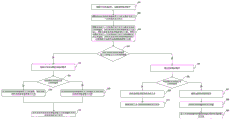
An embodiment of the present invention provides a method for processing driver loading, as shown in fig. 1, including:
step 101: when the operating system is started, the target driver is loaded.
The execution main body of the processing method for driver loading provided by the present embodiment is a processing device for driver loading, the device may be configured in any terminal device, for example, a desktop computer or a notebook, and the operating system may be an operating system such as Windows, Unix, Linux, Nerware, Xenix, and the like. Of course, the terminal device may also be a handheld device, such as a mobile phone. The operating system of the handheld device can be Palm OS, Symbian, Windows mobile and Android, iPhone OS, etc.
The target driver in each embodiment of the present invention refers to a driver of third-party software to be started simultaneously with an operating system, for example, a driver of antivirus software, and generally, when a terminal installed with the third-party software is started, the target driver, that is, the driver of the third-party software, will also be started simultaneously with the operating system. The target driver cannot be manually stopped or exited by the user and runs in the kernel of the operating system.
Step 102: and acquiring the accumulated times of the current system abnormal collapse.
Step 103: judging whether the current system abnormal collapse accumulated times is larger than a preset threshold value or not; if the accumulated number of times of the current system abnormal collapse is greater than the preset threshold, step 104 is executed.
The preset threshold may be set as required, and may be generally set to be a positive integer greater than or equal to 2, or may be set by a user.
Step 104: and exiting the target driver.
When the current accumulated number of times of system abnormal collapse is greater than the preset threshold, it indicates that the loading of the target driver may cause the abnormal collapse of the operating system, and therefore, the target driver is exited. For example, if the preset threshold is 2 and the current accumulated number of system abnormal crashes is 3, the target driver is exited.
Step 105: judging whether the operation system is abnormally crashed or not; if the operating system runs abnormally and crashes, go to step 106; if the operating system does not run the exception crash, then step 107 is performed.
After the target driver is exited, if the operating system runs abnormally and crashes, the target driver does not cause the system to abnormally crash, and the target driver can be reloaded; if the operating system does not run the abnormal crash, the target driver is required to be upgraded to avoid the system abnormal crash caused again.
Step 106: the target driver is reloaded.
Step 107: and upgrading the target driving program.
The embodiment of the invention provides a processing method for driver loading, which comprises the steps of exiting a target driver when the accumulated times of system abnormal collapse is greater than a preset threshold, namely forbidding the target driver, and then determining whether the target driver is a driver for triggering the system abnormal collapse by using whether an operating system runs the abnormal collapse or not, namely reloading the target driver if the operating system is judged to run the abnormal collapse and the target driver is not the driver for triggering the system abnormal collapse; if the operating system runs abnormally and crashes, namely the operating system is normally started, the target driver is the driver triggering the system to crash abnormally, and the target driver needs to be upgraded. Therefore, the method and the device can accurately identify whether the system is abnormally crashed or not caused by the target driver, avoid the generation of error forbidding on third-party software, and improve the efficiency of checking the reason for causing the system to be abnormally crashed.
An embodiment of the present invention provides a method for processing driver loading, as shown in fig. 2, including:
step 201: when the operating system is started, the target driver is loaded.
The execution main body of the processing method for driver loading provided by the present embodiment is a processing device for driver loading, the device may be configured in any terminal device, for example, a desktop computer or a notebook, and the operating system may be an operating system such as Windows, Unix, Linux, Nerware, Xenix, and the like. Of course, the terminal device may also be a handheld device, such as a mobile phone. The operating system of the handheld device can be Palm OS, Symbian, Windows mobile and Android, iPhone OS, etc.
The target driver in each embodiment of the present invention refers to a driver of third-party software to be started simultaneously with an operating system, for example, a driver of antivirus software, and usually, when a terminal or a server installed with the third-party software is started, the target driver, that is, the driver of the third-party software, is also started simultaneously with the operating system. The target driver cannot be manually stopped or exited by the user and runs in the kernel of the operating system.
Step 202: and calling the stored system abnormal breakdown accumulated times and the last starting running state of the operating system.
Before the operating system is closed each time, the accumulated times of system abnormal collapse and the starting running state of the operating system are saved, so that the saved accumulated times of system abnormal collapse and the last starting running state of the operating system are called after the operating system is restarted.
The starting operation state of the operating system can be divided into abnormal crash of system operation and normal start, specifically, the starting operation state of the operating system is determined by judging whether a normal shutdown flag is set, namely before the operating system is closed, if the operating system is normally started and then is shut down, the normal shutdown flag is configured; if the operation system is abnormally crashed to cause shutdown, the normal shutdown mark is not configured.
Step 203: and if the last starting running state of the operating system is the operating system running abnormal crash, adding 1 to the stored system abnormal crash accumulated times to obtain the current system abnormal crash accumulated times, and if the last starting running state of the operating system is the operating system normal starting, determining the stored system abnormal crash accumulated times as the current system abnormal crash accumulated times.
Specifically, for example, if the accumulated number of times of system abnormal crash saved is 1 and the last startup running state of the operating system is abnormal crash, the accumulated number of times of system abnormal crash saved is added by 1 to obtain the current accumulated number of times of system abnormal crash 2.
If the accumulated number of the stored system abnormal collapse is 1 and the last starting running state of the operating system is normal starting, determining the accumulated number of the stored system abnormal collapse as the current accumulated number of the system abnormal collapse, namely the current accumulated number of the system abnormal collapse is 1.
Step 204: judging whether the current system abnormal collapse accumulated times is larger than a preset threshold value or not; if the current system abnormal collapse accumulated number of times is greater than the preset threshold, execute step 205; if the accumulated number of times of the current system abnormal collapse is less than or equal to the preset threshold, step 212 is executed.
There are various reasons causing the abnormal crash of the operation system, which may be caused by a hardware error, for example, when two different memories are mixed and inserted, when the system reads data, the error occurs in the read data due to different clock cycles, so that the abnormal crash of the operation system occurs; for example, if the driver of the third-party software conflicts with other drivers, the underlying control right is seized, so that the operation of the operating system is abnormally crashed. It may also be an abnormal crash caused by the operating system running erratically, which can be repaired by the operating system rebooting. Therefore, the step uses the preset threshold to determine whether the operation of the operating system is an abnormal system crash caused by accidental unstable operation.
For example, specifically, if the preset threshold is 2, if the current accumulated number of times of system abnormal crash is 0, 1 or 2, which indicates that the operating system may be accidentally unstable in operation and cause system abnormal crash, the specific situation may be further determined after the target program is continued and completed; if the current system abnormal crash accumulated number is 3, it indicates that the operating system is not accidentally unstable in operation to cause the system abnormal crash, that is, it may be that a hardware or a target driver (a driver of third-party software) has an error, the target driver needs to be exited, and it is further determined whether the system abnormal crash is caused by the target driver.
Step 205: and exiting the target driver.
When the current accumulated times of the system abnormal crash is greater than a preset threshold, it indicates that the system abnormal crash is not caused by accidental unstable operation of the operating system, that is, a fault may occur in the hardware or the target driver (the driver of the third-party software), the target driver needs to be exited, and it is further determined whether the system abnormal crash is caused by the target driver.
Step 206: judging whether the operation system is abnormally crashed or not; if the operating system is abnormally crashed, go to step 207 and step 209; if the operating system has not run abnormally and crashes, go to step 210 and 211.
Step 207: the target driver is reloaded.
After the target driver is exited, if the operating system crashes abnormally, which means that the operating system is not caused by the target driver, the target driver is loaded again.
Step 208: and alarming according to a preset alarm frequency.
Because the abnormal crash of the operation system is not caused by loading the target driver, the abnormal crash of the system is caused by loading of other drivers or hardware, and an alarm needs to be given to prompt a user to perform troubleshooting of other reasons. The preset alarm frequency is determined by a technician according to the condition of the abnormal collapse display of the system, and can be an alarm once every 3 hours and an alarm once every 5 hours, and the embodiment of the invention is not particularly limited.
Step 209: an operational method for manually troubleshooting hardware failures or other driver failures is shown.
At this time, the operation method and steps may be displayed to the user to guide the user to complete the repair of the system abnormal crash fault. For example, the interface displays that "the situation can be caused by the xx running abnormality, the automatic repair cannot be performed normally, and the computer clinic gives a manual fault removal method according to the information of the hardware equipment, and suggests to try", "repair method: manually exclude "," click 'next step' to start repairing the system crash anomaly problem ". Meanwhile, a more intuitive operation method can be provided for a user in a graphic and text interpretation mode.
Step 210: and receiving an upgrade file of the target driver.
After the target driver is exited, the operating system is not abnormally crashed, i.e. normally started, which means that the abnormal crash of the operating system is caused by loading the target driver, and therefore, the target driver needs to be upgraded to avoid the system abnormal crash again.
Step 211: and upgrading the target driving program according to the upgrading file.
Step 212: and continuing and finishing loading the target driver.
If the current accumulated number of system abnormal crashes is less than or equal to the preset threshold, it indicates that the abnormal crashes may be caused by the unstable operation of the operating system occasionally, and the abnormal crashes can be repaired by restarting the operating system. Therefore, when the current accumulated number of system abnormal crashes is less than or equal to the preset threshold, the target driver is continued and completed.
Step 213: judging whether the operation system is abnormally crashed or not; if the operating system does not run the abnormal crash, go to step 214; if the operating system runs abnormally crashes, step 215 is performed.
Step 214: and clearing the current system abnormal collapse accumulated times to obtain the system abnormal collapse accumulated times to be stored.
If the operating system does not run abnormally and crashes, which indicates that the operating system runs abnormally and is caused abnormally and crashes occasionally, the current system abnormal crash accumulation times are cleared, namely the system abnormal crash accumulation times to be saved are zero. The accumulated times of the system abnormal crashes to be saved are the times of the continuous system abnormal crashes which need to be saved before the operating system is closed.
For example, specifically, for example, if the current system crash count is 1, and the operating system does not run the abnormal crash, the current system crash count is updated to 0, that is, the system crash count to be saved is 0.
Step 215: and determining the current system abnormal collapse accumulated times as the system abnormal collapse accumulated times to be stored.
If the operating system is also crashed abnormally, which means that the operating system may not be crashed abnormally due to occasional instability, the current accumulated number of times of system crash is recorded.
For example, specifically, for example, if the current system crash count is 1, and the operating system runs an abnormal crash, the system crash count to be saved is 1.
Step 216: and saving the accumulated times of the abnormal collapse of the system to be saved and the current starting running state of the operating system.
And saving the accumulated times of the abnormal collapse of the system to be saved, the current starting running state of the operating system and the current starting running state of the operating system so as to call the operating system when the operating system is started next time.
The embodiment of the invention provides a processing method for driver loading, which comprises the steps of exiting a target driver when the accumulated times of system abnormal collapse is greater than a preset threshold, namely forbidding the target driver, and then determining whether the target driver is a driver for triggering the system abnormal collapse by using whether an operating system runs the abnormal collapse or not, namely reloading the target driver if the operating system is judged to run the abnormal collapse and the target driver is not the driver for triggering the system abnormal collapse; if the operating system runs abnormally and crashes, namely the operating system is normally started, the target driver is the driver triggering the system to crash abnormally, and the target driver needs to be upgraded. Therefore, the method and the device can accurately identify whether the system is abnormally crashed or not caused by the target driver, avoid the generation of error forbidding on third-party software, and improve the efficiency of checking the reason for causing the system to be abnormally crashed.
As an implementation of the method shown in fig. 1, an embodiment of the present invention provides a processing apparatus for driver loading, as shown in fig. 3, where the apparatus includes: the system includes a boot loading unit 31, an acquisition unit 32, a first judgment unit 33, a prohibition unit 34, a second judgment unit 35, a reload unit 36, and an upgrade unit 37.
A boot loading unit 31, configured to load a target driver when the operating system is started;
an obtaining unit 32, configured to obtain the current accumulated number of times of system abnormal collapse;
a first determining unit 33, configured to determine whether the current accumulated number of system abnormal crashes is greater than a preset threshold;
the prohibiting unit 34 is configured to exit the target driver if the current accumulated number of system abnormal crashes is greater than a preset threshold;
a second judging unit 35, configured to judge whether the operating system runs abnormally and crashes;
a reload unit 36, configured to reload the target driver if the operating system abnormally crashes;
and the upgrading unit 37 is configured to upgrade the target driver if the operating system does not run abnormally and crash.
As shown in fig. 4, another embodiment of the present invention provides a processing apparatus for driver loading, further including a continue loading unit 41, a determining unit 42, and a storing unit 43.
A continuous loading unit 41, configured to continue and finish loading the target driver if the current accumulated number of times of system abnormal collapse is less than or equal to a preset threshold;
the determining unit 42 is configured to determine, according to the current starting operation state of the operating system, the cumulative number of times of system abnormal collapse to be stored;
and the storage unit 43 is used for storing the accumulated times of the system abnormal crash to be stored and the current starting running state of the operating system.
In a specific application scenario, as shown in fig. 5, the determining unit 42 includes:
the determining module 421 is configured to determine whether the operating system is running abnormally and crashed;
a clearing module 422, configured to clear the current system abnormal crash accumulated times to obtain the system abnormal crash accumulated times to be saved if the operating system does not run abnormal crash;
the determining module 423 is configured to determine the current system abnormal crash accumulated number as the system abnormal crash accumulated number to be saved if the operating system runs abnormally and crashes.
In a specific application scenario, as shown in fig. 6, the obtaining unit 32 includes:
the retrieving module 321 is configured to retrieve the stored accumulated times of system abnormal collapse and the last starting and running state of the operating system;
the counting module 322 is configured to add 1 to the stored system abnormal crash accumulated times to obtain the current system abnormal crash accumulated times if the last startup running state of the operating system is the operating system running abnormal crash; and if the last starting running state of the operating system is the normal starting of the operating system, determining the stored system abnormal collapse accumulated times as the current system abnormal collapse accumulated times.
In a specific application scenario, as shown in fig. 7, the upgrade unit 37 includes:
a receiving module 371, configured to receive an upgrade file of a target driver;
and the upgrading module 372 is used for upgrading the target driver according to the upgrading file.
In a specific application scenario, the processing device for driver loading further includes:
and the alarm unit is used for alarming according to a preset alarm frequency.
In a specific application scenario, the processing device for driver loading further includes:
and the display unit is used for displaying an operation method for manually eliminating hardware faults or other driver faults.
It should be noted that other corresponding descriptions of the functional units related to the processing apparatus for driving loading according to the embodiment of the present invention may refer to the corresponding descriptions in fig. 1 and fig. 2, and are not described herein again.
The embodiment of the invention provides a processing device for driver loading, which is characterized in that when the accumulated times of system abnormal collapse is greater than a preset threshold value, a target driver is exited, namely the target driver is forbidden, and whether an operating system runs abnormal collapse or not is used for determining whether the target driver is a driver for triggering the system abnormal collapse or not, namely if the operating system is judged to run abnormal collapse and the target driver is not the driver for triggering the system abnormal collapse, the target driver is reloaded; if the operating system runs abnormally and crashes, namely the operating system is normally started, the target driver is the driver triggering the system to crash abnormally, and the target driver needs to be upgraded. Therefore, the method and the device can accurately identify whether the system is abnormally crashed or not caused by the target driver, avoid the generation of error forbidding on third-party software, and improve the efficiency of checking the reason for causing the system to be abnormally crashed.
Based on the methods shown in fig. 1 and fig. 2, correspondingly, an embodiment of the present invention further provides a storage medium, where at least one executable instruction is stored in the storage medium, and the executable instruction causes a processor to execute the processing method of driver loading in any of the above method embodiments.
Based on such understanding, the technical solution of the present invention can be embodied in the form of a software product, which can be stored in a non-volatile storage medium (which can be a CD-ROM, a usb disk, a removable hard disk, etc.), and includes several instructions for enabling a computer device (which can be a personal computer, a server, or a network device, etc.) to execute the method according to the implementation scenarios of the present invention.
Based on the above-mentioned methods as shown in fig. 1 and fig. 2, in order to achieve the above-mentioned object, an embodiment of the present invention further provides a computer device, which may specifically be a personal computer, a server, a network device, and the like, where the computer device includes a processor, a memory, a communication interface, and a communication bus, and the processor, the memory, and the communication interface complete mutual communication through the communication bus.
The processor, the communication interface and the memory are communicated with each other through a communication bus.
A communication interface for communicating with a network of other devices, such as clients or other servers.
And the processor is used for executing the program, and specifically can execute relevant steps in the processing method embodiment of the driver loading.
In particular, the program may include program code comprising computer operating instructions.
The processor may be a central processing unit CPU, or an application Specific Integrated circuit asic, or one or more Integrated circuits configured to implement embodiments of the present invention. The computer device includes one or more processors, which may be a unified type of processor, such as one or more CPUs; or may be a different type of processor such as one or more CPUs and one or more ASICs.
The memory is used for storing a program corresponding to a processing method of the drive loading in any method embodiment.
Optionally, the computer device may also include a user interface, radio frequency circuitry, sensors, audio circuitry, and the like. The user interface may comprise a Display screen (Display), an input unit such as a keyboard light, and the optional user interface may further comprise a USB interface, a card reader interface, etc.
It will be appreciated by those skilled in the art that the present embodiment provides a computer device architecture that is not limiting of the computer device, and may include more or fewer components, or some components in combination or a different arrangement of components.
Other embodiments of the invention will be apparent to those skilled in the art from consideration of the specification and practice of the invention disclosed herein. This invention is intended to cover any variations, uses, or adaptations of the invention following, in general, the principles of the invention and including such departures from the present disclosure as come within known or customary practice within the art to which the invention pertains. It is intended that the specification and examples be considered as exemplary only, with a true scope and spirit of the invention being indicated by the following claims.
It will be understood that the invention is not limited to the precise arrangements described above and shown in the drawings and that various modifications and changes may be made without departing from the scope thereof. The scope of the invention is limited only by the appended claims.