CN111727158A - Indoor automated robotic system for object pick-and-place and transport - Google Patents
Indoor automated robotic system for object pick-and-place and transport Download PDFInfo
- Publication number
- CN111727158A CN111727158A CN201880085370.6A CN201880085370A CN111727158A CN 111727158 A CN111727158 A CN 111727158A CN 201880085370 A CN201880085370 A CN 201880085370A CN 111727158 A CN111727158 A CN 111727158A
- Authority
- CN
- China
- Prior art keywords
- pick
- robotic
- article
- place
- platform
- Prior art date
- Legal status (The legal status is an assumption and is not a legal conclusion. Google has not performed a legal analysis and makes no representation as to the accuracy of the status listed.)
- Granted
Links
Images










Classifications
-
- B—PERFORMING OPERATIONS; TRANSPORTING
- B65—CONVEYING; PACKING; STORING; HANDLING THIN OR FILAMENTARY MATERIAL
- B65G—TRANSPORT OR STORAGE DEVICES, e.g. CONVEYORS FOR LOADING OR TIPPING, SHOP CONVEYOR SYSTEMS OR PNEUMATIC TUBE CONVEYORS
- B65G1/00—Storing articles, individually or in orderly arrangement, in warehouses or magazines
- B65G1/02—Storage devices
- B65G1/04—Storage devices mechanical
- B65G1/0492—Storage devices mechanical with cars adapted to travel in storage aisles
-
- B—PERFORMING OPERATIONS; TRANSPORTING
- B65—CONVEYING; PACKING; STORING; HANDLING THIN OR FILAMENTARY MATERIAL
- B65G—TRANSPORT OR STORAGE DEVICES, e.g. CONVEYORS FOR LOADING OR TIPPING, SHOP CONVEYOR SYSTEMS OR PNEUMATIC TUBE CONVEYORS
- B65G1/00—Storing articles, individually or in orderly arrangement, in warehouses or magazines
- B65G1/02—Storage devices
- B65G1/04—Storage devices mechanical
- B65G1/0407—Storage devices mechanical using stacker cranes
- B65G1/0435—Storage devices mechanical using stacker cranes with pulling or pushing means on either stacking crane or stacking area
-
- B—PERFORMING OPERATIONS; TRANSPORTING
- B65—CONVEYING; PACKING; STORING; HANDLING THIN OR FILAMENTARY MATERIAL
- B65G—TRANSPORT OR STORAGE DEVICES, e.g. CONVEYORS FOR LOADING OR TIPPING, SHOP CONVEYOR SYSTEMS OR PNEUMATIC TUBE CONVEYORS
- B65G1/00—Storing articles, individually or in orderly arrangement, in warehouses or magazines
- B65G1/02—Storage devices
- B65G1/04—Storage devices mechanical
- B65G1/137—Storage devices mechanical with arrangements or automatic control means for selecting which articles are to be removed
- B65G1/1373—Storage devices mechanical with arrangements or automatic control means for selecting which articles are to be removed for fulfilling orders in warehouses
-
- B—PERFORMING OPERATIONS; TRANSPORTING
- B65—CONVEYING; PACKING; STORING; HANDLING THIN OR FILAMENTARY MATERIAL
- B65G—TRANSPORT OR STORAGE DEVICES, e.g. CONVEYORS FOR LOADING OR TIPPING, SHOP CONVEYOR SYSTEMS OR PNEUMATIC TUBE CONVEYORS
- B65G65/00—Loading or unloading
-
- B—PERFORMING OPERATIONS; TRANSPORTING
- B65—CONVEYING; PACKING; STORING; HANDLING THIN OR FILAMENTARY MATERIAL
- B65G—TRANSPORT OR STORAGE DEVICES, e.g. CONVEYORS FOR LOADING OR TIPPING, SHOP CONVEYOR SYSTEMS OR PNEUMATIC TUBE CONVEYORS
- B65G65/00—Loading or unloading
- B65G65/005—Control arrangements
-
- B—PERFORMING OPERATIONS; TRANSPORTING
- B65—CONVEYING; PACKING; STORING; HANDLING THIN OR FILAMENTARY MATERIAL
- B65G—TRANSPORT OR STORAGE DEVICES, e.g. CONVEYORS FOR LOADING OR TIPPING, SHOP CONVEYOR SYSTEMS OR PNEUMATIC TUBE CONVEYORS
- B65G65/00—Loading or unloading
- B65G65/02—Loading or unloading machines comprising essentially a conveyor for moving the loads associated with a device for picking-up the loads
-
- B—PERFORMING OPERATIONS; TRANSPORTING
- B66—HOISTING; LIFTING; HAULING
- B66F—HOISTING, LIFTING, HAULING OR PUSHING, NOT OTHERWISE PROVIDED FOR, e.g. DEVICES WHICH APPLY A LIFTING OR PUSHING FORCE DIRECTLY TO THE SURFACE OF A LOAD
- B66F7/00—Lifting frames, e.g. for lifting vehicles; Platform lifts
- B66F7/06—Lifting frames, e.g. for lifting vehicles; Platform lifts with platforms supported by levers for vertical movement
- B66F7/0625—Lifting frames, e.g. for lifting vehicles; Platform lifts with platforms supported by levers for vertical movement with wheels for moving around the floor
-
- B—PERFORMING OPERATIONS; TRANSPORTING
- B66—HOISTING; LIFTING; HAULING
- B66F—HOISTING, LIFTING, HAULING OR PUSHING, NOT OTHERWISE PROVIDED FOR, e.g. DEVICES WHICH APPLY A LIFTING OR PUSHING FORCE DIRECTLY TO THE SURFACE OF A LOAD
- B66F7/00—Lifting frames, e.g. for lifting vehicles; Platform lifts
- B66F7/06—Lifting frames, e.g. for lifting vehicles; Platform lifts with platforms supported by levers for vertical movement
- B66F7/065—Scissor linkages, i.e. X-configuration
- B66F7/0666—Multiple scissor linkages vertically arranged
-
- B—PERFORMING OPERATIONS; TRANSPORTING
- B66—HOISTING; LIFTING; HAULING
- B66F—HOISTING, LIFTING, HAULING OR PUSHING, NOT OTHERWISE PROVIDED FOR, e.g. DEVICES WHICH APPLY A LIFTING OR PUSHING FORCE DIRECTLY TO THE SURFACE OF A LOAD
- B66F9/00—Devices for lifting or lowering bulky or heavy goods for loading or unloading purposes
- B66F9/06—Devices for lifting or lowering bulky or heavy goods for loading or unloading purposes movable, with their loads, on wheels or the like, e.g. fork-lift trucks
- B66F9/063—Automatically guided
Landscapes
- Engineering & Computer Science (AREA)
- Mechanical Engineering (AREA)
- Structural Engineering (AREA)
- Life Sciences & Earth Sciences (AREA)
- Geology (AREA)
- Transportation (AREA)
- Civil Engineering (AREA)
- Manipulator (AREA)
- Warehouses Or Storage Devices (AREA)
- Forklifts And Lifting Vehicles (AREA)
Abstract
Description
相关申请的交叉引用CROSS-REFERENCE TO RELATED APPLICATIONS
本申请要求于2017年11月3日提交的美国临时专利申请号为62/581,564的美国临时专利申请的优先权,其中前述申请的全部内容通过引用并入本文。This application claims priority to US Provisional Patent Application No. 62/581,564, filed on November 3, 2017, the entire contents of which are incorporated herein by reference.
技术领域technical field
本发明总体上涉及移动运送机器人,并且更具体地涉及机器人物件取放和运输系统及设备,以及在辅助机器人物件取放(retrieval)和运输设备的操作中有用的相关附件,其适用于操控在非结构化环境(例如,家居)中的物体,以个人辅助设备的角色出现。The present invention relates generally to mobile transport robots, and more particularly to robotic item retrieval and transport systems and equipment, and related accessories useful in assisting the operation of robotic item retrieval and transport equipment, suitable for handling in Objects in unstructured environments (eg, homes) that appear in the role of personal aids.
背景技术Background technique
几十年来,已经使用各种各样的自动引导载具(AGV)在制造环境和仓库环境中自动运输物件。随着时间的流逝,这些AGV的版本已适于在其他环境(例如医院、实验室和办公室环境)中使用,以搬运和运送物件。For decades, a wide variety of automated guided vehicles (AGVs) have been used to automatically transport objects in manufacturing and warehouse environments. Over time, versions of these AGVs have been adapted for use in other environments, such as hospital, laboratory, and office environments, to handle and transport items.
一些AGV仅充当用于移动物体的移动平台,同时要依靠人工(例如,手动)干预或外部自动化装置来装载和卸载要搬运的物体。其他AGV行驶至带有致动器的外部机器处,其执行某些或全部必要的装载和/或卸载任务。还有其他的AGV配备有集成的机构,用于自动装载和卸载物体,而无需外部帮助。Some AGVs only act as mobile platforms for moving objects, while relying on human (eg, manual) intervention or external automation to load and unload objects to be handled. Other AGVs travel to external machines with actuators that perform some or all of the necessary loading and/or unloading tasks. There are other AGVs equipped with integrated mechanisms for automatically loading and unloading objects without external help.
一些具有集成的装载/卸载机构的AGV通过使用集成的叉式升降机构,以类似于人工操作叉车的方式举起货物托盘,来垂直举升并搬运大型物体。较新开发的AGV(例如,体现在Amazon机器化仓库机器人中的那些)配置为在存储单元下方行驶,将存储单元抬起并脱离地板,然后将存储单元运输至新位置。其他AGV包括机器人臂,这些机器人臂通常提起较小的负载(例如,甚至是单个物体),以在AGV和外部位置之间运送它们。Some AGVs with an integrated loading/unloading mechanism lift and handle large objects vertically by using an integrated fork lift mechanism to lift pallets of goods in a manner similar to a human-operated forklift. More recently developed AGVs, such as those embodied in Amazon's robotic warehouse robots, are configured to travel under storage units, lift them off the floor, and transport them to new locations. Other AGVs include robotic arms that typically lift small loads (eg, even single objects) to transport them between the AGV and an external location.
某些具有自动装载和卸载能力的AGV被配置为在AGV的货物表面和外表面之间横向运送物体。这种类型的示例包括在AGV货物表面上带有电动传送带或辊的AGV,以及具有非移动货物表面的AGV,其使用机动的推拉机构,以将物体滑入或滑离AGV货物表面。在这些示例中,AGV上的横向运送机构暴露在货物区域中,以提供最佳的触及范围和接近被运送物体的通道。某些AGV可能还包括高度调节机构,以赋予第二运动程度,从而使AGV能够将其货物表面与一个或多个外部表面对齐,以取放存储在架子上的物体。Some AGVs with automatic loading and unloading capabilities are configured to transport objects laterally between the cargo surface and the outer surface of the AGV. Examples of this type include AGVs with motorized conveyor belts or rollers on the AGV cargo surface, and AGVs with non-moving cargo surfaces that use a motorized push-pull mechanism to slide objects in and out of the AGV cargo surface. In these examples, the lateral transport mechanism on the AGV is exposed in the cargo area to provide optimal reach and access to the transported objects. Some AGVs may also include a height adjustment mechanism to impart a second degree of motion, allowing the AGV to align its cargo surface with one or more exterior surfaces to access objects stored on shelves.
随着AGV配置的多样性随着时间的推移而扩展,它们在其能够操作的环境的复杂性方面也得到了演进。As the diversity of AGV configurations has expanded over time, they have also evolved in the complexity of the environments in which they can operate.
早期的AGV被设计成在高度结构化的环境中运行,并且需要安装专用的支持基础设施才能操作。例如,通常将磁性带或其他标记物放在地板上,以提供AGV可用的预定义路线和位置信息,以从一个地点导航到另一地点。Early AGVs were designed to operate in a highly structured environment and required the installation of dedicated support infrastructure in order to operate. For example, magnetic tapes or other markers are often placed on the floor to provide predefined routes and location information available to AGVs to navigate from one location to another.
工业传感器、处理器和软件的进步已经使得AGV的更多自主版本成为可能,有时称为自导向载具或SGV。SGV可能执行与AGV相似的任务,但是通常能以较少的外部结构操作,并且在其支持的路线和运送作用上更具适应性。Advances in industrial sensors, processors and software have enabled more autonomous versions of AGVs, sometimes called self-guided vehicles or SGVs. SGVs may perform similar tasks to AGVs, but generally operate with less external structure and are more adaptable in the routes and delivery roles they support.
消费类电子产品的各种技术进步,包括3D摄像机、地图软件、陀螺仪、接近度传感器、锂电池、无线通信、低功率高速处理器、识别软件和人工智能,可能使SGV具有足够的成本效益,从而使得它们适用于更广泛的非结构化环境(例如房屋),以及更广泛的用途(例如个人运送机器人)。但是,AGV和SGV的关键要素,例如装载和卸载物体的机构,以及其他附属要素,仍然主要是针对受过训练的人员进行工业操作而设计的。Various technological advancements in consumer electronics, including 3D cameras, mapping software, gyroscopes, proximity sensors, lithium batteries, wireless communications, low-power high-speed processors, recognition software, and artificial intelligence, may make SGV sufficiently cost-effective , making them suitable for a wider range of unstructured environments (such as houses), as well as for a wider range of uses (such as personal delivery robots). However, key elements of AGVs and SGVs, such as the mechanism for loading and unloading objects, and other ancillary elements, are still primarily designed for industrial operation by trained personnel.
尽管AGV和SGV取得了进步,但本领域仍在寻求适合在非结构化的人类居住空间中使用的物件取放和运输机器人,包括能够可以支持手动和/或自动装卸功能的机器人,以及解决与传统机器人相关挑战的机器人。这些挑战包括确保在非结构化空间中操作,同时确保旁人(可能包括年长的成年人、儿童和宠物)的安全,促进可靠的操作,并提高机器人的实用性和多功能性-与传统的AGV相比,最好具有合理的成本。Despite advances in AGVs and SGVs, the art continues to seek object pick-and-place and transport robots suitable for use in unstructured human-occupied spaces, including those capable of supporting manual and/or automated loading and unloading functions, as well as solutions to problems related to Robots with challenges related to traditional robotics. These challenges include ensuring operation in unstructured spaces while ensuring the safety of bystanders (which may include older adults, children and pets), promoting reliable operation, and increasing the robot's usability and versatility - compared to traditional Compared with AGV, it is better to have a reasonable cost.
发明内容SUMMARY OF THE INVENTION
本公开的多个方面涉及一种机器人物件取放和运输设备,适用于在家居环境和/或其他环境中承载和运送物体,在其中一个或多个未经训练的个体可能存在和/或可能与机器人的表面紧密相互作用。根据至少某些实施例的机器人物件取放和运输设备,用于从第一位置取出物体,将那些物体运送至机器人的表面上,并将物体运送和/或卸载到至少一个第二位置上。Aspects of the present disclosure relate to a robotic object pick, place and transport apparatus suitable for carrying and transporting objects in domestic and/or other environments where one or more untrained individuals may be present and/or may be Interact closely with the surface of the robot. Robotic object pick-and-place and transport apparatus according to at least some embodiments for removing objects from a first location, delivering those objects to a surface of a robot, and delivering and/or unloading objects to at least one second location.
为了以用户友好和用户安全的方式完成物件取放和运输任务,根据至少某些实施例的机器人物件取放和运输装置包括集成至(例如,作为一部分携带的)移动机器人的一个或多个取放机构,该取放机构被存储时,和/或将物体装载至机器人的表面或从机器人的表面卸载时,最小地暴露。在某些实施例中,最小地暴露取放机构包括在机器人物件取放和运输设备的平台(deck)的表面下方设置一个或多个致动器,和至少一个可移动工具至少的主要部分。这样的取放机构可能设置成通过滑动使至少一个可取放物件被装载至平台上或从平台卸下。在某些实施例中,至少一个可移动工具的至少一部分设置成在机器人物件取放和运输设备的平台下方行进。To accomplish object picking and transport tasks in a user-friendly and user-safe manner, robotic object picking and transport devices according to at least some embodiments include one or more pickups integrated into (eg, carried as part of) a mobile robot A pick-and-place mechanism that is minimally exposed when stored, and/or when objects are loaded or unloaded from the surface of the robot. In certain embodiments, minimally exposing the pick-and-place mechanism includes disposing one or more actuators, and at least a substantial portion of at least one movable tool, below a surface of a deck of the robotic object pick-and-place and transport apparatus. Such a pick-and-place mechanism may be arranged to allow at least one accessible item to be loaded onto or unloaded from the platform by sliding. In some embodiments, at least a portion of the at least one movable tool is configured to travel under a platform of the robotic pick-and-place and transport apparatus.
在本公开的一个方面,涉及一种机器人物件取放和/或运输设备包括:移动底座、设置成支撑至少一个可取放物件的平台,以及物件取放机构。物件取放机构包括至少一个可移动工具,并且设置成在平台和外部支撑表面之间横向运输至少一个可取放物件。至少一个可取放物件包括,至少一个第一接收表面、靠近平台设置的近端和远离平台设置的远端。至少一个第一接收表面设置成比近端更靠近远端。至少一个可移动工具设置成在至少一个可取放物件的表面下方行进,以允许至少一个可移动工具与至少一个第一接收表面接合。物件取放机构设置成使至少一个可移动工具与至少一个第一接收表面接合,以(i)当至少一个可取放物件由外部支撑表面或平台中的至少一个支撑时,使至少一个可取放物件滑动,以及(ii)将至少一个可取放物件拉向平台。前述物件取放和/或运输设备允许至少一个可取放物件通过滑动而横向运输,同时至少一个可取放物件的大部分重量由平台或外部支撑表面支撑。这种构造免除了对复杂且昂贵的物件升降机构的需求。In one aspect of the present disclosure, a robotic object pick-and-place and/or transport apparatus includes: a mobile base, a platform configured to support at least one accessible object, and an object pick-and-place mechanism. The item pick-and-place mechanism includes at least one movable tool and is configured to transport the at least one accessible item laterally between the platform and the outer support surface. The at least one accessible item includes at least one first receiving surface, a proximal end disposed proximate the platform, and a distal end disposed remote from the platform. At least one first receiving surface is disposed closer to the distal end than the proximal end. The at least one movable tool is arranged to travel below the surface of the at least one accessible item to allow the at least one movable tool to engage with the at least one first receiving surface. The item pick-and-place mechanism is configured to engage the at least one movable tool with the at least one first receiving surface to (i) enable the at least one accessible item to be supported by at least one of the external support surface or the platform when the at least one accessible item is supported sliding, and (ii) pulling at least one accessible object toward the platform. The aforementioned article access and/or transport apparatus allows at least one accessible article to be transported laterally by sliding while most of the weight of the at least one accessible article is supported by the platform or external support surface. This configuration eliminates the need for a complex and expensive object lift mechanism.
在本公开的另一方面,涉及一种机器人物件取放和/或运输设备,包括:移动底座、设置成支撑至少一个可取放物件的平台,以及物件取放机构。平台包括由至少一个外围边缘界定的周界。物件取放机构,包括至少一个可移动工具,该物件取放机构设置成在平台和外部支撑表面之间横向运输至少一个可取放物件。机器人物件取放和/或运输设备还包括以下特征(i)至(iii)中的至少一个:(i)物件取放机构在存储和操作期间,保持在中央目标区域以外,该中央目标区域被限定为从平台的中央部分的向上投影,并且平台的该中央部分包括连续区域,该区域是该周界以内的面积的至少50%;(ii)平台包括小于1米的最大宽度,外围目标区域被限定为从平台的外围边缘向内延伸的外围部分的向上投影,并且在物件取放机构的存储和/或操作过程中,至少一个可移动工具对外围目标区域的任何侵入均被限制在侵入距离,该侵入距离从平台的至少一个外围边缘测量、在平台的最大长度或最大宽度的0%至25%的范围内;或(iii)机器人物件取放和/或运输设备包括,小于1米的最大宽度,平台占据的顶视平面视图区域,是物件取放机构处于缩回位置的情况下,机器人物件取放和/或运输设备的最大顶视平面视图占地面积的至少约75%,并且,在物件取放机构的存储和操作的过程中,物件取放机构的任何部分若沿平台的顶视图区域暴露,则物件取放机构沿小于平台的20%暴露。特征(i)至(iii)表示用于提供平台的期望的(例如,中央的)部分的替代方案,该部分保持不受物件取放机构的阻碍(即,不受其干扰)。对平台的期望部分的阻碍的消除,允许将该期望部分用于其他目的和/或允许该期望部分被密封,从而使其不受其他污染物(例如,液体,异物等)的影响,否则将妨碍可靠的操作和/或妨碍清洁或卫生条件的维持。In another aspect of the present disclosure, it relates to a robotic object pick-and-place and/or transport device, comprising: a mobile base, a platform configured to support at least one accessible object, and an object pick-and-place mechanism. The platform includes a perimeter bounded by at least one peripheral edge. An article pick-and-place mechanism, including at least one movable tool, is arranged to transport at least one accessible article laterally between the platform and the outer support surface. The robotic object pick-and-place and/or transport apparatus also includes at least one of the following features (i) to (iii): (i) the object pick-and-place mechanism, during storage and operation, remains outside of a central target area, which is Defined as an upward projection from a central portion of the platform, and the central portion of the platform includes a continuous area that is at least 50% of the area within the perimeter; (ii) the platform includes a maximum width of less than 1 meter, a peripheral target area Defined as an upward projection of a peripheral portion extending inwardly from the peripheral edge of the platform, and during storage and/or operation of the object pick-and-place mechanism, any intrusion into the peripheral target area by at least one movable tool is limited to intrusion Distance, the intrusion distance, measured from at least one peripheral edge of the platform, within the range of 0% to 25% of the maximum length or maximum width of the platform; or (iii) robotic object pick-and-place and/or transport equipment including, less than 1 meter The maximum width, the top plan view area occupied by the platform, is at least about 75% of the maximum top plan view footprint of the robotic pick and place and/or transport equipment with the pick and place mechanism in the retracted position, Also, during storage and operation of the object pick and place mechanism, if any part of the object pick and place mechanism is exposed along the top view area of the platform, the object pick and place mechanism is exposed along less than 20% of the platform. Features (i) to (iii) represent alternatives for providing a desired (eg, central) portion of the platform that remains unobstructed (ie, undisturbed) by the article pick-and-place mechanism. Removal of obstruction to the desired portion of the platform, allowing the desired portion to be used for other purposes and/or allowing the desired portion to be sealed from other contaminants (eg, liquids, foreign objects, etc.) that would otherwise be Prevent reliable operation and/or prevent the maintenance of clean or hygienic conditions.
在本公开的另一方面,涉及一种机器人物件取放和/或运输设备,包括:移动底座、设置成支撑至少一个可取放物件的平台,以及物件取放机构。平台包括由平台的至少一个外围边缘界定的周界。物件取放机构,包括至少一个可移动工具,该物件取放机构设置成在平台和外部支撑表面之间横向运输至少一个可取放物件。至少一个致动器被设置在平台的上表面下方。上表面没有任何上表面开口,该上表面开口构造成容纳易于相对于平台移动的物件取放机构的任何部分的通道。至少一个可移动工具设置成,在平台和外部支撑表面之间运输至少一个可取放物件期间,穿过大体上设置在平台的至少一个外围边缘下方的至少一个前表面开口、侧表面开口或后表面开口,在某些实施例中,至少一个可移动工具的至少一部分设置成在平台下方行进。物件取放机构设置成使至少一个可移动工具以(i)当至少一个可取放物件由外部支撑表面或平台中的至少一个支撑时,滑动该至少一个可取放物件,以及(ii)将至少一个可取放物件拉向平台。另外,物件取放机构设置成使得至少一个可移动工具以(i)当至少一个可取放物件被外部支撑表面或平台中的至少一个支撑时,滑动该至少一个可取放物件,及(ii)将至少一个可取放物件推向外部支撑表面。前述特征的组合使得,取放机构被在存储时,和/或在将物体装载至机器人的表面或从机器人的表面卸载物体时,最小化该机构的暴露。In another aspect of the present disclosure, it relates to a robotic object pick-and-place and/or transport device, comprising: a mobile base, a platform configured to support at least one accessible object, and an object pick-and-place mechanism. The platform includes a perimeter bounded by at least one peripheral edge of the platform. An article pick-and-place mechanism, including at least one movable tool, is arranged to transport at least one accessible article laterally between the platform and the outer support surface. At least one actuator is positioned below the upper surface of the platform. The upper surface is free of any upper surface openings configured to accommodate passages of any portion of the article pick-and-place mechanism that is susceptible to movement relative to the platform. at least one movable tool configured to pass through at least one front surface opening, side surface opening or rear surface disposed substantially below at least one peripheral edge of the platform during transport of at least one accessible item between the platform and the outer support surface The opening, in some embodiments, at least a portion of the at least one movable tool is configured to travel under the platform. The item pick-and-place mechanism is configured to enable the at least one movable tool to (i) slide the at least one accessible item when the at least one accessible item is supported by at least one of the external support surface or the platform, and (ii) move the at least one accessible item Accessible objects are pulled towards the platform. Additionally, the item pick-and-place mechanism is configured such that the at least one movable tool (i) slides the at least one accessible item when the at least one accessible item is supported by at least one of the external support surface or the platform, and (ii) moves the at least one accessible item At least one accessible object is pushed toward the outer support surface. The combination of the foregoing features minimizes exposure of the pick-and-place mechanism when it is stored, and/or when objects are loaded to or unloaded from the surface of the robot.
在另一方面,涉及一种机器人物件取放和/或运输设备,包括:移动底座;设置成支撑至少一个可取放物件的平台,其中,该平台包括在由该平台的至少一个外围边缘界定的周界内的上表面;物件取放机构,设置成在平台与外部支撑表面之间横向运输至少一个可取放物件。物件取放机构包括至少一个可移动工具和至少一个第一致动器,该至少一个第一致动器设置成,将至少一个可移动工具横向且向外地,从(a)至少一个可移动工具的主要部分设置在平台下方的位置平移至(b)至少一个可移动工具的至少一部分设置在至少一个可取放物件的至少一部分下方的位置。在物件取放机构的存储和操作期间,至少一个第一致动器定位于平台的下方。物件取放机构设置成使至少一个可移动工具以(i)当至少一个可取放物件由外部支撑表面或平台中的至少一个支撑时,滑动该至少一个可取放物件,以及(ii)将至少一个可取放物件拉向平台。另外,物件取放机构设置成使得至少一个可移动工具以(i)当至少一个可取放物件被外部支撑表面或平台中的至少一个支撑时,滑动该至少一个可取放物件,及(ii)将至少一个可取放物件推向外部支撑表面。In another aspect, it relates to a robotic object picking and/or transporting device, comprising: a mobile base; a platform arranged to support at least one accessible object, wherein the platform comprises a platform defined by at least one peripheral edge of the platform an upper surface within the perimeter; an object pick-and-place mechanism configured to transport at least one accessible object laterally between the platform and the outer support surface. The article pick-and-place mechanism includes at least one movable tool and at least one first actuator configured to move the at least one movable tool laterally and outwardly from (a) the at least one movable tool A position where a major portion of the at least one movable tool is positioned below the platform is translated to (b) a position where at least a portion of the at least one movable tool is positioned below at least a portion of the at least one accessible object. At least one first actuator is positioned below the platform during storage and operation of the article pick-and-place mechanism. The item pick-and-place mechanism is configured to enable the at least one movable tool to (i) slide the at least one accessible item when the at least one accessible item is supported by at least one of the external support surface or the platform, and (ii) move the at least one accessible item Accessible objects are pulled towards the platform. Additionally, the item pick-and-place mechanism is configured such that the at least one movable tool (i) slides the at least one accessible item when the at least one accessible item is supported by at least one of the external support surface or the platform, and (ii) moves the at least one accessible item At least one accessible object is pushed toward the outer support surface.
本公开的另一方面,涉及一种机器人物件取放和/或运输系统,包括机器人物件取放和/或运输设备以及托盘构件。所述托盘构件包括:基底,设置成由至少一个下层支撑表面从下方支撑,该基底部分地由支撑表面横向边缘界定;物件支撑表面,大体上设置在该基底上方;以及向下延伸的壁,其沿该托盘构件的近侧边缘设置,其中,托盘构件的基底能够定位在至少一个下层支撑表面上,其中向下延伸的壁设置成靠近支撑表面横向边缘。机器人物件取放和/或运输设备包括:移动底座;设置成支撑至少一个可取放物件的平台;以及物件取放机构,包括至少一个致动器和至少一个可移动工具,该至少一个可移动工具设置成在平台和物件支撑表面之间横向运输至少一个可取放物件。向下延伸的壁设置成被限制在以下位置之间:(i)支撑表面横向边缘,和(ii)机器人物件取放和/或运输设备,以在至少一个可取放物件在平台和物件支撑表面之间的横向运输期间,阻止托盘构件的运动。托盘构件的使用可能将有限的结构用在另外的基本上非结构化的环境。托盘的向下延伸的壁的设置,允许向下延伸的壁被限制(例如被压紧)在机器人物件取放和支撑设备与下层支撑表面横向边缘之间,从而托盘构件在物件的装载和/或卸载期间可以被固定,而不必需要将托盘构件附接至下层表面,以这种方式,可以根据用户的需要在非结构化的环境中容易地重新放置托盘。Another aspect of the present disclosure relates to a robotic object picking and/or transporting system comprising a robotic object picking and/or transporting device and a pallet member. The tray member includes: a base disposed to be supported from below by at least one underlying support surface, the base being partially bounded by support surface lateral edges; an item support surface disposed generally above the base; and a downwardly extending wall, It is disposed along the proximal edge of the tray member, wherein the base of the tray member can be positioned on at least one lower support surface, wherein the downwardly extending wall is disposed proximate the lateral edge of the support surface. A robotic object pick-and-place and/or transport apparatus includes: a mobile base; a platform configured to support at least one accessible object; and an object pick-and-place mechanism including at least one actuator and at least one movable tool, the at least one movable tool The at least one accessible object is arranged to be transported laterally between the platform and the object support surface. The downwardly extending wall is configured to be constrained between: (i) the lateral edge of the support surface, and (ii) the robotic object pick-and-place and/or transport equipment for at least one accessible object on the platform and the object support surface Movement of the pallet members is prevented during lateral transport between them. The use of tray members may allow limited structural use in otherwise substantially unstructured environments. The provision of the downwardly extending wall of the tray allows the downwardly extending wall to be constrained (eg, pinched) between the robotic object pick and place and support device and the lateral edge of the underlying support surface so that the tray member is used in the loading and/or loading of objects Or it can be fixed during unloading without having to attach the tray member to the underlying surface, in this way the tray can be easily repositioned in an unstructured environment according to the needs of the user.
本公开的另一方面涉及一种设置成与机器人物件取放和/或运输设备(例如,本文公开的机器人物件取放和/或运输设备)一起使用的托盘构件。托盘构件包括:基底,设置成由下层支撑表面从下方支撑,该基底基本上是水平的,并且部分地由支撑表面横向边缘界定;物件支撑表面,大体地设置在该基底上方,并且设置成支撑至少一个可取放物件;物件支撑表面,大体地设置在基底上方,并且设置成支撑至少一个可取放物件;以及向下延伸的壁,其沿该托盘构件的近侧边缘设置。托盘构件的基底能够定位在下层支撑表面上,并且向下延伸的壁设置成抵靠支撑表面横向边缘定位并靠近机器人物件取放和/或运输设备的平台,以在机器人物件取放和/或运输设备在物件支撑表面和平台之间横向运输至少一个可取放物件期间,阻止托盘构件的运动。Another aspect of the present disclosure relates to a tray member configured for use with a robotic pick-and-place and/or transport apparatus, such as the robotic pick-and-place and/or transport apparatus disclosed herein. The tray member includes: a base disposed to be supported from below by an underlying support surface, the base being substantially horizontal and partially bounded by the lateral edges of the support surface; an item support surface disposed generally above the base and disposed to support at least one accessible item; an item support surface disposed generally above the base and configured to support the at least one accessible item; and a downwardly extending wall disposed along a proximal edge of the tray member. The base of the tray member can be positioned on the underlying support surface, and the downwardly extending wall is arranged to be positioned against the lateral edge of the support surface and adjacent to the platform of the robotic pick-and-place and/or transport equipment for use in robotic pick-and-place and/or The transport device prevents movement of the pallet member during lateral transport of the at least one accessible item between the item support surface and the platform.
在某些实施例中,一种机器人取放和/或运输设备可能包括机器人运送车,其具有适于承载物体的至少一个表面,其中用户可以手动地将物体装载至至少一个表面和/或从至少一个表面卸载物体。在至少某些实施例中,当需要时,具有至少一个承载表面的机器人运送车可以用作用户的侧桌,其中,至少一个承载表面作为侧桌的上表面。在至少某些实施例中,机器人运送车可能包括另外的存储表面和位置,用于容纳物件,用户希望将这些物件在需要时保持在可够到或可及的距离内。在至少某些实施例中,机器人运送车可能设置成,基于终端用户的请求、计划表和/或触发事件,在家居内和/或其他环境内从一点航行至另一点。在至少某些实施例中,机器人运送车可能设置成用于服务于本文中确定的一个或多个功能,同时还包括物件取放机构,该机构可以将一个或多个物件装载至机器人运送车的至少一个承载表面上,和/或从机器人运送车的至少一个承载表面卸载一个或多个物件。In certain embodiments, a robotic pick-and-place and/or transport apparatus may include a robotic cart having at least one surface adapted to carry objects to and/or from which a user may manually load objects At least one surface unloads the object. In at least some embodiments, a robotic cart having at least one carrying surface that serves as an upper surface of the side table can be used as a user's side table, when desired. In at least some embodiments, the robotic cart may include additional storage surfaces and locations for holding items that the user wishes to keep within reach or distance when needed. In at least some embodiments, a robotic delivery vehicle may be configured to navigate from one point to another within a home and/or other environment based on end user requests, schedules, and/or trigger events. In at least some embodiments, a robotic cart may be configured to serve one or more of the functions identified herein, while also including an item pick-and-place mechanism that can load one or more items into the robotic cart One or more objects are unloaded on and/or from at least one carrying surface of the robotic delivery vehicle.
在某些实施例中,本文公开的机器人取放和/或运输设备不同于常见的适用于工业环境的AGV和SGV,因为机器人取放和/或运输设备可能消除或至少显著地降低用户(或甚至宠物)与物件取放机构的活动构件之间的可能接触,否则可能会出现危险。In certain embodiments, the robotic pick-and-place and/or transport equipment disclosed herein differs from common AGVs and SGVs suitable for use in industrial environments in that the robotic pick-and-place and/or transport equipment may eliminate or at least significantly degrade the user (or or even pets) and the moving parts of the object pick-and-place mechanism, which could otherwise be dangerous.
在某些实施例中,机器人取放和/或运输设备提供用于保持物体的无障碍或最小阻碍的平台表面,从而为用户提供对任何将要取放、运输和/或运载的物体的增加的存取空间。In certain embodiments, the robotic pick-and-place and/or transport apparatus provides an unobstructed or minimally obstructed platform surface for holding objects, thereby providing the user with increased access to any objects to be picked, transported, and/or carried access space.
在至少某些实施例中的取放和/或运输中,由物件取放机构来承载物体的一个或多个表面(例如,平台的表面)与物件取放机构的构件、和/或机器人取放和/或运输机构的其他内部构件密封或显著地密封。这种分离和密封可能有利地使得用于承载物体的一个或多个表面易于清洗或洗涤。以这种方式,表面(例如,平台表面)可以用作食物或饮料的承载表面和/或可以用作用餐表面,同时将放置在其上的材料和/或流体的撞击风险降至最低,该风险是撞击物件取放机构和/或机器人取放和/或运输设备的其他内部构件的风险。In pick and place and/or transport in at least some embodiments, one or more surfaces of an object (eg, a surface of a platform) are carried by an object pick and place mechanism with components of the object pick and place mechanism, and/or robotic pick and place. Storage and/or other internal components of the transport mechanism are sealed or substantially sealed. Such separation and sealing may advantageously allow easy cleaning or washing of the surface or surfaces used to carry the object. In this way, a surface (eg, a platform surface) can be used as a food or beverage bearing surface and/or can be used as a dining surface while minimizing the risk of impact with materials and/or fluids placed thereon, which The risk is the risk of hitting the pick-and-place mechanism and/or other internal components of the robotic pick-and-place and/or transport equipment.
在另一方面,本文所述的任何一个或多个方面或特征可能与任何一个或多个其他方面或特征组合以获得附加优点。In another aspect, any one or more aspects or features described herein may be combined with any one or more other aspects or features to obtain additional advantages.
通过具体实施方式和附图,其他方面和实施例将变得显而易见。Other aspects and embodiments will become apparent from the detailed description and drawings.
在结合附图阅读以下针对优选实施例的详细描述之后,本领域技术人员将理解本公开的范围并认识到本公开的其他方面。Those skilled in the art will appreciate the scope of the disclosure and realize other aspects of the disclosure after reading the following detailed description of the preferred embodiments in conjunction with the accompanying drawings.
具体实施方式Detailed ways
下面阐述的实施例表示使本领域技术人员能够实践这些实施例的必要信息,并且示出了实践这些实施例的最佳方式。在根据附图阅读以下说明书时,本领域技术人员将理解本公开的概念,并且将认识到本文中未特别说明的这些概念的应用。应当理解,这些概念和应用落入本公开及所附的权利要求的范围内。The embodiments set forth below represent the necessary information to enable those skilled in the art to practice these embodiments, and illustrate the best mode of practicing these embodiments. Upon reading the following specification in light of the accompanying drawings, those skilled in the art will understand the concepts of the present disclosure and will recognize applications of these concepts not specifically described herein. It should be understood that these concepts and applications fall within the scope of this disclosure and the appended claims.
应当理解,尽管术语第一,第二等在本文中可能用于描述多个构件,但是这些构件不应受到这些术语的限制。这些术语仅用于将一个元素和另一个元素区分开。例如,在不脱离本公开的范围的情况下,第一构件可以被称为第二构件,并且类似地,第二构件也可以被称为第一构件。如本文所使用的,术语“和/或”包括一个或多个相关联的所列出的项目的任何组合和所有组合。It should be understood that, although the terms first, second, etc. may be used herein to describe various components, these components should not be limited by these terms. These terms are only used to distinguish one element from another. For example, a first member could be termed a second member, and, similarly, a second member could be termed a first member, without departing from the scope of the present disclosure. As used herein, the term "and/or" includes any and all combinations of one or more of the associated listed items.
在本文中可能使用的诸如“在...下方”、或“在...上方”、或“上”、或“下”、或“水平的”、或“垂直的”这样的相对术语来描述如图所示的一个构件、层或区域与另一构件、层或区域的关系。应当理解,这些术语以及以上讨论的那些术语,除了附图中描绘的装置的方位,还旨在涵盖不同方位。Relative terms such as "below", or "above", or "above", or "below", or "horizontal", or "vertical" may be used herein to refer to Describe the relationship of one element, layer or region to another element, layer or region as shown. It should be understood that these terms, as well as those discussed above, are intended to encompass different orientations in addition to the orientation of the device depicted in the figures.
本文中使用的术语仅是出于描述特定实施例的目的,并不旨在限制本公开。除非上下文另外明确指出,如本文所使用的,单数形式“一(a)”,“一(an)”和“该”也旨在包括复数形式。还应理解的是,当在本文中使用“包括”,“包含”等这些术语时,指定所述特征、整数、步骤、操作、构件和/或组件的存在,但是不排除一个或多个其他特征、整数、步骤、操作、构件、组件和/或由其组成的组的添加或存在。The terminology used herein is for the purpose of describing particular embodiments only and is not intended to limit the present disclosure. As used herein, the singular forms "a (a)," "an (an)," and "the" are intended to include the plural forms as well, unless the context clearly dictates otherwise. It is also to be understood that when the terms "comprising", "comprising" and the like are used herein, the presence of stated features, integers, steps, operations, components and/or components is specified, but not excluding one or more other The addition or presence of features, integers, steps, operations, components, components, and/or groups thereof.
除非另有定义,否则本文中使用的所有术语(包括技术术语和科学术语)具有与本公开所属领域的普通技术人员通常所理解的相同含义。还应当理解的是,除非本文明确定义,否则本文中使用的术语应被解释为具有与本说明书和相关领域的上下文中的含义一致的含义,并且将不以理想化或过度正式的意义来解释。Unless otherwise defined, all terms (including technical and scientific terms) used herein have the same meaning as commonly understood by one of ordinary skill in the art to which this disclosure belongs. It is also to be understood that unless explicitly defined herein, terms used herein should be construed to have meanings consistent with the meanings in the context of this specification and related art, and should not be construed in an idealized or overly formal sense .
本文所述的多个实施例涉及机器人物件取放和/或物件运输设备。为了简洁起见,在具体实施方式中可能将这样的设备不同地称为“移动机器人”或简称为“机器人”。在某些实施例中,移动机器人可能包括用于运输物件的一个或多个支撑表面,和/或一个或多个物件取放机构,用于在位于移动机器人上的支撑表面与外部支撑表面之间转运物件。Various embodiments described herein relate to robotic object pick and place and/or object transport apparatus. For the sake of brevity, such a device may be referred to variously as a "mobile robot" or simply a "robot" in the detailed description. In some embodiments, the mobile robot may include one or more support surfaces for transporting objects, and/or one or more object pick-and-place mechanisms for positioning between the support surfaces on the mobile robot and external support surfaces transfer objects between.
在某些实施例中,移动机器人可能被设计为个人辅助装置备,以帮助那些具有受限的个人活动性、力量、稳定性和/或认知能力的个体,来存储、整理、承载和/或取放一个或多个物件,由于存在这些受限的因素,那些个体自己要存储、整理、承载和/或取放物件有挑战性、不舒适性和/或不安全性。在某些实施例中,可能将移动机器人设计为帮助不一定具有这些个人限制的个体完成类似的任务,但是在执行此类任务的情况下可能帮助个人提高生产力和/或降低其劳动强度和/或执行这些类型的任务所需的时间。In certain embodiments, mobile robots may be designed as personal assistive devices to assist individuals with limited personal mobility, strength, stability and/or cognitive abilities to store, organize, carry and/or Or pick and place one or more items that are challenging, uncomfortable, and/or unsafe for those individuals to store, organize, carry and/or access on their own due to these constraints. In some embodiments, mobile robots may be designed to assist individuals who do not necessarily have these personal limitations to accomplish similar tasks, but may help individuals increase their productivity and/or reduce their labor intensity and/or when performing such tasks. Or the time it takes to perform these types of tasks.
本公开解决的技术问题Technical Problems Solved by the Present Disclosure
在某些实施例中,被设计为帮助存储、承载、整理和/或取放一个或多个物件的个人辅助装置的移动机器人,可能共享与在工业、商业和/或机构环境中使用的现有AGV相似的元素,但也可能还有所不同,以包括其他元素、独特功能和/或变型,以在更非结构化和/或更复杂的环境中,应对支持目标终端用户的需求和/或操作移动机器人的要求的特定挑战。这些环境可能包括但不限于住宅,其他私人生活环境和/或个体聚集的其他社交环境。In certain embodiments, a mobile robot designed as a personal assistive device to help store, carry, organize and/or pick up one or more items may share with existing There are similar elements to AGVs, but may also differ to include additional elements, unique features and/or variants to address the needs of supporting target end users and/or in more unstructured and/or complex environments or specific challenges of the requirements of operating a mobile robot. These environments may include, but are not limited to, residences, other private living environments and/or other social environments where individuals congregate.
这些特定挑战可能包括但不限于,在需要与未经训练的成人、儿童和/或宠物靠近和/或直接物理接触的情况下,安全地和/或有效地操作具有物件运输和/或物件取放功能的移动机器人。These specific challenges may include, but are not limited to, safely and/or efficiently operating an item transport and/or item pickup in situations that require proximity and/or direct physical contact with untrained adults, children, and/or pets A functional mobile robot.
这些特定挑战可能包括但不限于,需要暴露移动机器人的物件支撑表面和/或其他构件,以直接和/或立即及至可能有身体和/或其他障碍的个体,以减少这些个体看到、够到和/或及至移动机器人的物件支撑表面和/或其他构件所需的精力。这些特定挑战可能包括,检测和/或管理个体可能放置在移动机器人的开放物件支撑表面上的物件,其中在移动机器人运动时一个或多个物件可能移动,一个或多个物件可能延伸超过移动机器人的外廓,和/或当移动机器人在运动时,一个或多个物件可能与外部障碍物接触的风险。这些特定挑战还可能包括,需要操作物件取放机构的移动部件而构成的挑战,这些部件在外部支撑表面和移动机器人的物件支撑表面之间转移物件,同时向可能有身体和/或其他障碍的个体,提供对外部支撑表面和/或移动机器人的支撑表面的直接和/或即时使用。These specific challenges may include, but are not limited to, the need to expose object support surfaces and/or other components of the mobile robot for direct and/or immediate access to individuals who may have physical and/or other impairments to reduce the ability for those individuals to see, reach and/or the effort required to move the robot's object support surfaces and/or other components. These particular challenges may include, detecting and/or managing objects that an individual may place on an open object support surface of a mobile robot, where one or more objects may move while the mobile robot is in motion, and one or more objects may extend beyond the mobile robot , and/or the risk that one or more objects may come into contact with external obstacles when the mobile robot is in motion. These specific challenges may also include challenges posed by the need to operate moving parts of the object pick-and-place mechanism that transfer objects between the external support surface and the object support surface of the mobile robot, while moving objects to objects that may have physical and/or other obstacles. An individual, providing direct and/or immediate use of the external support surface and/or the support surface of the mobile robot.
这些特定挑战可能包括但不限于安全地和/或有效地操作移动机器人所引起的挑战,其中个体介入涉及和/或关于移动机器人的活动,这可能会干扰、弄脏和/或损坏移动机器人的一个或多个构件。这些活动可能包括但不限于,使用移动机器人的一个或多个物件支撑表面和/或其他构件来存储、承载、取放和/或帮助食物、液体和/或药品的消费;使用移动机器人的一个或多个物件支撑表面和/或其他构件来存储、承载、取放和/或帮助使用个人护理物件、家用清洁用品、抗菌剂、废物处理产品和/或废物容器;使用移动机器人的一个或多个物件支撑表面和/或其他构件来存储、承载、取放和/或帮助使用常见的家用物件和/或个人物件、书籍和/或其他阅读材料、电子装置、遥控器、个人智能装置、健康监控装置和/或家庭监控装置、眼镜、衣物、床上用品、手杖和/或其他辅助装置。These specific challenges may include, but are not limited to, challenges posed by safely and/or efficiently operating a mobile robot, where an individual intervenes in activities involving and/or in relation to the mobile robot, which may interfere with, soil and/or damage the mobile robot's one or more components. These activities may include, but are not limited to, using one or more object support surfaces and/or other components of the mobile robot to store, carry, pick and place and/or facilitate the consumption of food, liquids and/or medicines; using one of the mobile robots or multiple item support surfaces and/or other structures to store, carry, access and/or facilitate the use of personal care items, household cleaning products, antimicrobials, waste treatment products and/or waste containers; one or more of the use of mobile robots Item support surfaces and/or other components to store, carry, access and/or facilitate the use of common household items and/or personal items, books and/or other reading materials, electronic devices, remote controls, personal smart devices, health Monitoring devices and/or home monitoring devices, glasses, clothing, bedding, walking sticks and/or other auxiliary devices.
这些特定挑战可能包括但不限于,使移动机器人能够安全、有效地在以下位置中运行、在以下位置上运行、在以下位置附近运行、运行越过以下位置或运行穿过以下位置:狭窄的道路、混乱的环境、不同高度的悬垂障碍物,可能会或可能不会停留在某个位置的各种大小的障碍物、不断变化的和/或不平坦的地面和地板过渡、地面上存在的小障碍物以及不熟悉的环境(例如,其中机器人可能事先对该环境的楼层平面图和/或添加到该环境中的外部参照点知之甚少或毫不知情)。额外的挑战可能包括使移动机器人能够由个人设置、操作和/或再培训,而这些个人具有没有使用过移动机器人的经验的限制。These specific challenges may include, but are not limited to, enabling mobile robots to safely and efficiently operate in, on, near, over, or across narrow roads, cluttered environments, overhanging obstacles of varying heights, obstacles of various sizes that may or may not stay in a certain location, changing and/or uneven ground and floor transitions, small obstacles present on the ground objects and unfamiliar environments (eg, where the robot may have little or no prior knowledge of the environment's floor plan and/or external reference points added to the environment). Additional challenges may include the constraints of enabling mobile robots to be set up, operated and/or retrained by individuals with no prior experience with mobile robots.
这些特定挑战可能包括但不限于,使移动机器人能够:安全及/或有效地在可能行动不便的个体周围的受限空间内操作,和/或稳定地操作以避免干扰个体的路径,和/或在活动自由所需的空间内操作;提供稳定的结构,在个体需要在某个位置能够抓住移动机器人以保持自己的稳定性;和/或避免以可能导致它们变得不太稳定的方式与个体接触。These specific challenges may include, but are not limited to, enabling a mobile robot to: safely and/or efficiently operate in confined spaces around individuals who may have limited mobility, and/or operate stably to avoid interfering with the individual's path, and/or operate within the space required for freedom of movement; provide stable structures where individuals need to be able to grip mobile robots in a position to maintain their stability; and/or avoid contact with mobile robots in ways that could cause them to become less stable personal contact.
这些特定挑战可能包括但不限于涉及两个、三个或更多个前述挑战的组合的情况。作为一种说明性情况,移动机器人可能包括用于运输和/或转运可取放物件的支撑表面,其中诸如猫的家庭宠物可能在移动机器人的取放操作和/或运输操作中的任何点跳到该表面上。在某些实施例中,移动机器人可能包括诸如敞开的桌子状物件支撑表面之类的构件,其可能使个人能够消费来自移动机器人的该表面上和/或该表面附近的食物和/或液体。在这样的实施例中,可能遇到的说明性情况包括:移动机器人的物件支撑表面可能需要处理食物和/或液体的可能溢出;支撑表面有时可能需要用液体清洁剂清洁;以及支撑表面可能需要紧靠移动机器人的物件取放机构,以在受限的住宅环境中操作,和/或在暴露于食物和/或液体下,物件取放功能的构件可能会受到损害的情况。These specific challenges may include, but are not limited to, situations involving combinations of two, three, or more of the foregoing challenges. As an illustrative case, a mobile robot may include a support surface for transporting and/or transporting accessible items, where a household pet, such as a cat, may jump to any point in the mobile robot's pick-and-place operation and/or transport operation on the surface. In some embodiments, the mobile robot may include means such as an open table-like object support surface that may enable a person to consume food and/or liquids from on and/or near the surface of the mobile robot. In such an embodiment, illustrative situations that may be encountered include: the object support surface of the mobile robot may need to handle possible spills of food and/or liquids; the support surface may sometimes need to be cleaned with a liquid detergent; and the support surface may need to Proximity to the pick-and-place mechanism of a mobile robot for operation in a confined residential environment and/or where the components of the pick-and-place function may be compromised by exposure to food and/or liquids.
本公开的移动机器人的介绍性构件Introductory components of the mobile robot of the present disclosure
以下实施例描述了本发明的构件,这些构件解决了在居住环境和/或非结构化环境中操作移动机器人,以实现运输功能和/或取放功能的一个或多个挑战,和/或其中移动机器人可能被使用以帮助具有个人活动能力、力量、稳定性和/或认知限制的个人来存储、整理、承载和/或取放一个或多个物件的挑战。The following embodiments describe components of the present invention that address one or more challenges of operating a mobile robot in a residential and/or unstructured environment for transport functions and/or pick-and-place functions, and/or wherein Mobile robots may be used to assist individuals with individual mobility, strength, stability, and/or cognitive limitations with the challenge of storing, organizing, carrying, and/or picking and placing one or more items.
移动机器人的物件支撑表面Object support surface for mobile robots
在某些实施例中,移动机器人包括一个或多个用于承载物件的支撑表面。这些要承载的物件可能包括,手动放置在移动机器人的一个或多个支撑表面上的物件和/或从一个或多个支撑表面上移除的物件。这些物件可能包括可收回物件,这些物件可以在移动机器人的支撑表面和与移动机器人分离的外部支撑表面之间自动转运。在某些实施例中,一些可取放的物件也可能被手动放置在移动机器人的支撑表面和/或外在支撑表面上,和/或从移动机器人的支撑表面和/或外在支撑表面移除。In some embodiments, the mobile robot includes one or more support surfaces for carrying objects. These items to be carried may include items manually placed on and/or removed from one or more support surfaces of the mobile robot. These items may include retractable items that can be automatically transported between the mobile robot's support surface and an external support surface that is separate from the mobile robot. In some embodiments, some accessible objects may also be manually placed on and/or removed from the mobile robot's support surface and/or extrinsic support surface .
在某些实施例中,移动机器人的支撑表面可能包括一个或多个横向边缘,其使移动机器人能够将移动机器人的支撑表面的边缘与外在支撑表面的相应横向边缘对准,其中移动机器人的支撑表面和外部支撑表面基本彼此齐平,以使物件可以从一个表面滑动到另一个表面,而不必在此过程中被升起。在某些实施例中,移动机器人的一个或多个支撑表面可能包括在一个或多个支撑表面上方的一个或多个敞开的侧和/或敞开的空间,以允许手动和/或自动放置物件,和/或手动和/或自动移除物件。In some embodiments, the mobile robot's support surface may include one or more lateral edges that enable the mobile robot to align edges of the mobile robot's support surface with corresponding lateral edges of the extrinsic support surface, wherein the mobile robot's support surface The support surface and the outer support surface are substantially flush with each other so that the article can slide from one surface to the other without having to be lifted in the process. In certain embodiments, one or more support surfaces of the mobile robot may include one or more open sides and/or open spaces above the one or more support surfaces to allow manual and/or automated placement of items , and/or remove objects manually and/or automatically.
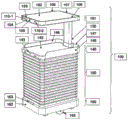
在图1A所示的实施例中,移动机器人100包括被称为上平台101的上台,其包括上表面102,以支撑可以手动放置和/或移除的物件。上平台的上表面的区域也可能用作可取放物件的支撑表面,该可取放物件可以通过集成为移动机器人一部分的物件取放机构,自动地在上平台和外支撑表面之间被转运。In the embodiment shown in FIG. 1A , the
在图1A所示的实施例中,移动机器人100的上平台101可能包括在移动机器人的前侧上的敞开的前边缘103,该前边缘103可能与两个动力轮的轴168大致平行,该两个动力轮包括位于移动机器人底部的差动驱动器。在该实施例中,移动机器人100可以利用移动驱动底座160中的动力轮的转动来接近外部支撑表面,将上平台101的前边缘103与外部支撑表面的敞开侧边缘对齐,并向前驱动直到上平台的上表面102靠近外部支撑表面。尤其是,上平台的上表面102应该足够靠近该外部支撑表面,以使得可以通过跨过移动机器人上平台的前边缘,在这两个表面之间滑动一个或多个物件。在某些实施例中,可能跨前边缘和/或通过使用集成为移动机器人的一部分的物件取放机构,来手动转运物件。一旦一个或多个物件被转运,移动驱动底座160中的动力轮可以反向驱动以背离该外部表面、改变移动机器人的方向,然后航行至新位置。In the embodiment shown in Figure 1A, the
在某些实施例中,代替前边缘或除前边缘之外,物件可能跨过上平台的其他边缘被手动和/或自动转运,其中这些边缘可能相对于移动机器人的主体、行进的主方向和/或驱动底座的方向成多个角度。In some embodiments, instead of or in addition to the front edge, objects may be manually and/or automatically transported across other edges of the upper platform, where these edges may be relative to the body of the mobile robot, the main direction of travel, and / or the direction of the drive base at multiple angles.
在某些实施例中,移动机器人可能包括多个支撑表面,以跨过这些支撑表面的一个或多个边缘,承载可取放物件和/或转运可取放物件。这些表面可能针对个人,来扩展移动机器人可以保持、承载和/或取放的物件的种类、数量和/或体积。In some embodiments, the mobile robot may include multiple support surfaces for carrying and/or transporting accessible items across one or more edges of these support surfaces. These surfaces may be targeted at individuals to expand the type, quantity and/or volume of objects that the mobile robot can hold, carry and/or pick and place.
在图1A所示的实施例中,机器人包括布置在第二中间平台140上方的上平台101,其中平台101、140中的每一个均包括可以承载物件和/或转运物件的支撑表面。中间平台140包括类似的前边缘143,该前边缘可以起到与上平台101的前边缘103相同的功能,能够通过外部支撑表面转运物件,其中,该中间平台处于较低的高度处,而该外部支撑表面可能处于一个不同的高度处。在图1A的实施例中,中间平台的前边缘403与上平台的前边缘103以及移动驱动底座162的前边缘垂直地对齐,使得这两个平台可以相对于一个或多个外部支撑表面,以最小的间隙定位。In the embodiment shown in Figure 1A, the robot comprises an
在某些实施例中,上平台的前边缘、另一平台的前边缘和/或支撑表面的前边缘可能相对于移动驱动底座的的前边缘和/或移动机器人的其他构件的前边缘凹进。在某些实施例中,上平台的前边缘、另一平台的前边缘和/或支撑表面的前边缘可能相对于移动驱动底座的前边缘和/或移动机器人的其他构件的前边缘伸出。In some embodiments, the front edge of the upper platform, the front edge of another platform, and/or the front edge of the support surface may be recessed relative to the front edge of the mobile drive base and/or the front edge of other components of the mobile robot . In some embodiments, the front edge of the upper platform, the front edge of another platform and/or the front edge of the support surface may protrude relative to the front edge of the mobile drive base and/or the front edge of other components of the mobile robot.
在某些实施例中,驱动底座的一个或多个边缘可能伸出超过驱动底座上方的移动机器人的结构的一个或多个边缘。这些实施例可能包括但不限于,围绕驱动底座的全部或一部分设置的保险杠,以在移动机器人的结构的其他部分与障碍物接触之前检测那些障碍物。这些实施例可能包括但不限于,在驱动器底座的一个或多个边缘附近设置的一个或多个传感器,这些传感器可能以向上的角度定向,以检测外部障碍物,当移动机器人移动时,这些障碍物可能会干扰移动机器人,以协助物件转运步骤,和/或检测放置在移动机器人支撑面上的任何物件是否可能延伸超出移动机器人限定的外廓。这些实施例可能包括但不限于,相对于移动机器人上主体的周边更外位置、在驱动底座内设置的一个或多个轮和/或其他支撑结构,以向移动机器人提供更大的稳定性。In some embodiments, one or more edges of the drive base may protrude beyond one or more edges of the structure of the mobile robot above the drive base. These embodiments may include, but are not limited to, bumpers positioned around all or part of the drive base to detect obstacles before other parts of the mobile robot's structure come into contact with those obstacles. These embodiments may include, but are not limited to, one or more sensors positioned near one or more edges of the drive base, which may be oriented at an upward angle to detect external obstacles that may be detected as the mobile robot moves Objects may interfere with the mobile robot to assist in the object transfer step, and/or to detect whether any objects placed on the mobile robot's support surface may extend beyond the mobile robot's defined outline. These embodiments may include, but are not limited to, a more outer position relative to the periphery of the upper body of the mobile robot, one or more wheels and/or other support structures provided within the drive base to provide greater stability to the mobile robot.
在某些实施例中,上平台和/或移动机器人的其他支撑表面可能包括围绕平台和/或其他支撑表面的一部分或全部外边缘的保险杠,以检测与物体接触的障碍物和/或其他障碍物。在某些实施例中,移动机器人的主体的其他构件可能包括保险杠。In some embodiments, the upper platform and/or other support surfaces of the mobile robot may include bumpers around some or all of the outer edges of the platform and/or other support surfaces to detect obstacles and/or other objects in contact obstacle. In some embodiments, other components of the body of the mobile robot may include bumpers.
在某些实施例中,围绕驱动底座、上平台、其他支撑表面和/或移动机器人的主体的其他构件的部分或全部的保险杠,可能被分成不同的部分和/或检测点,其中该保险杠能够区将接触位置中的一个点与另一个点区分开。这样的分段可能包括垂直分段和/或横向分段。In some embodiments, part or all of the bumper surrounding the drive base, upper platform, other support surfaces, and/or other components of the body of the mobile robot may be divided into different parts and/or detection points, where the bumper The lever can distinguish one point from another in the contact position. Such segments may include vertical segments and/or lateral segments.
在某些实施例中,上平台和/或移动机器人的其他支撑表面能够通过(移动机器人的)动力机构,在相对于驱动底座和/或移动机器人的其他构件的至少一个方向上移动。在这样的实施例中,移动机器人可以使上平台和/或其他支撑表面的前边缘向前移动以关闭(i)移动机器人的上平台和/或其他支撑表面的前边缘与(ii)外部支撑表面的边缘之间的全部或部分间隙。在某些实施例中,移动机器人可能将上平台和/或移动机器人的其他支撑表面缩回至相对于驱动底座和/或移动机器人的其他构件的凹进位置处,其中该凹进位置对于移动机器人其他构件的功能来说更为理想。在某些实施例中,移动机器人可能相对于驱动底座、移动机器人的其他构件、外部支撑表面和/或其他外部物体,转动上平台和/或移动机器人的其他支撑表面。In some embodiments, the upper platform and/or other support surfaces of the mobile robot can be moved in at least one direction relative to the drive base and/or other components of the mobile robot by a power mechanism (of the mobile robot). In such an embodiment, the mobile robot may move the front edge of the upper platform and/or other support surface forward to close (i) the front edge of the upper platform and/or other support surface of the mobile robot and (ii) the external support All or part of the gap between the edges of a surface. In some embodiments, the mobile robot may retract the upper platform and/or other support surfaces of the mobile robot to a recessed position relative to the drive base and/or other components of the mobile robot, wherein the recessed position is critical for movement It is more ideal for the function of other components of the robot. In some embodiments, the mobile robot may rotate the upper platform and/or other support surfaces of the mobile robot relative to the drive base, other components of the mobile robot, external support surfaces, and/or other external objects.
在某些实施例中,移动机器人的上平台、其他支撑表面和/或其他部分可能包括围绕可活动的连接部定位的接触件和/或位移传感器,在该处,移动机器人的上平台、其他支撑表面和/或其他部分连接至移动机器人的结构。在这些实施例中,移动机器人可以通过移动机器人的上平台、其他支撑表面和/或其他部分相对于支撑结构的位置偏移,来检测与障碍物的接触。In some embodiments, the upper platform, other support surfaces, and/or other parts of the mobile robot may include contacts and/or displacement sensors positioned around the movable link where the upper platform of the mobile robot, other Support surfaces and/or other parts are attached to the structure of the mobile robot. In these embodiments, the mobile robot may detect contact with the obstacle by shifting the position of the upper platform, other support surfaces, and/or other parts of the mobile robot relative to the support structure.
在图1A所示的实施例中,支撑柱130以固定距离连接上平台101和中间平台140。除了提供结构性支撑之外,支撑柱130还可以容纳布线以在上平台和机器人的其他部件之间提供动力和通讯。In the embodiment shown in FIG. 1A , the
在某些实施例中,一个或多个柱、壁和/或其他支撑结构可以用于以不同的水平设置方式和/或垂直设置方式,来布置一个或多个平台、物件支撑表面和/或物件取放机构。In certain embodiments, one or more columns, walls and/or other support structures may be used to arrange one or more platforms, object support surfaces and/or in various horizontal and/or vertical arrangements Object pick and place mechanism.
在某些实施例中,取决于应用场景以及对物件的存储和/或取放的需要,可以将移动机器人的支撑表面再划分为更多的表面、级和/或隔室。在某些实施例中,支撑表面可能包括专用于不同目的的多个表面或多个表面部分。例如,一个或多个区域可能被指定用于支撑在移动机器人的支撑表面和一个或多个外部支撑表面之间自动转送的物件,同时,其他区域可被指定用于支撑那些可以由一个或多个用户手动地放置、存储和/或从移动机器人移除的物件。在某些实施例中,移动机器人的相同支撑表面可以用于手动放置和/或移除物件,并用于与一个或多个外部支撑表面一起自动转运可取放的物件。In some embodiments, the support surface of the mobile robot may be subdivided into more surfaces, stages and/or compartments depending on the application scenario and the need for storage and/or access to items. In some embodiments, the support surface may include multiple surfaces or multiple surface portions dedicated to different purposes. For example, one or more areas may be designated to support objects that are automatically transferred between the mobile robot's support surface and one or more external support surfaces, while other areas may be designated to support objects that can be transferred by one or more external support surfaces. Items that are manually placed, stored, and/or removed from a mobile robot by a user. In some embodiments, the same support surface of the mobile robot can be used for manual placement and/or removal of items, and for automatic transfer of accessible items in conjunction with one or more external support surfaces.
在某些实施例中,移动机器人的支撑表面的一个或多个边缘可能在侧上基本上是敞开的(或完全敞开),以提供对支撑表面的更大的通道,例如,如图1A所示,沿着上平台101的上表面102的边缘103、106、107、108。在某些实施例中,支撑表面的一个或多个边缘可能在一个侧或多个侧被护栏和/或侧壁包围,以帮助容纳位于支撑表面上的物件,例如,如图1A所示,沿着中间平台140的上表面142的边缘146、147、148。在某些实施例中,护栏和/或侧壁,例如图1A所示的,沿着中间平台140的上表面142的边缘146、147、148,可能是可移动的,以提供不同的收纳和取放方式,其中,移动机器人可以升高和/或降低护栏和/或侧壁。In some embodiments, one or more edges of the support surface of the mobile robot may be substantially open (or fully open) on the sides to provide greater access to the support surface, eg, as shown in Figure 1A shown along the
在某些实施例中,处于升高模式的护栏和/或侧壁,可能是如图7A所示,沿着围绕上平台701的上表面702的边缘703、706、707、708的那些,用于当移动机器人处于运动中时,帮助容纳物件。在某些实施例中,处于降低模式的护栏和/或侧壁,可能是如图7B所示,沿着围绕上平台701的上表面702的边缘703、706、707、708的那些,用于当移动机器人处于静止状态时,提供更大的取物通道。In certain embodiments, the guardrails and/or sidewalls in the raised mode, may be those along the
在某些实施例中,移动机器人的支撑表面可能包括排放通道,该排放通道被构造成收集溢出的流体并将其引导至支撑表面的表面上的容纳区域和/或引导至支撑表面下方的收集容器。在某些实施例中,移动机器人可能包括一个或多个传感器,其检测流体是否在支撑表面上、在排放通道内和/或在收集容器内。In some embodiments, the support surface of the mobile robot may include a drain channel configured to collect spilled fluid and direct it to a containment area on the surface of the support surface and/or to a collection below the support surface container. In certain embodiments, the mobile robot may include one or more sensors that detect whether fluid is on the support surface, within the drain channel, and/or within the collection container.
在某些实施例中,移动机器人的一个侧或多个侧可以由壁包围,和/或由可打开和/或关闭的可移动门和/或舱门包围。在某些实施例中,移动机器人的支撑表面和/或支撑表面内的区域中的一个或多个侧可以由壁包围,和/或由可打开和/或关闭的可移动门和/或舱门包围。In some embodiments, one or more sides of the mobile robot may be surrounded by walls, and/or by movable doors and/or hatches that can be opened and/or closed. In some embodiments, one or more sides of the support surface and/or the area within the support surface of the mobile robot may be surrounded by walls, and/or by movable doors and/or compartments that can be opened and/or closed surrounded by doors.
在某些实施例中,移动机器人可包括一个或多个容器/保持器、篮、袋、可拉伸绳、钩、附接点和/或其他连接件,用于以一种或多种方式固定物件,而不是从下方支撑在基本平坦的表面上。在某些实施例中,容器和/或保持装置可以以使容器和/或保持装置及其内容物保持在移动机器人的转弯半径内的方式,附接至移动机器人的一个或多个侧,该转弯半径由移动机器人的外角转动限定。在某些实施例中,可将容器和/或保持装置附接到包括抬升机构的移动机器人的一个或多个侧,使得容器和/或保持装置及其内容物可以与移动机器人的平台和/或其他支撑表面一起升高和/或降低,而在机器人处于升高和/或降低状态时不与地板和/或移动机器人的其他构件接触。在某些实施例中,保持装置可以保持具有小的水平占地面积的高物件,例如手杖、抓杆和/或辅助装置,这些物件可以从移动机器人的平台、支撑表面和/或其他构件处悬垂。在某些实施例中,保持装置可以保持杯、瓶和/或容器,其装有饮料和/或流体。In certain embodiments, the mobile robot may include one or more containers/holders, baskets, bags, stretchable cords, hooks, attachment points and/or other connections for securing in one or more ways objects, rather than being supported from below on a substantially flat surface. In certain embodiments, the container and/or holding device may be attached to one or more sides of the mobile robot in a manner that keeps the container and/or holding device and its contents within the turning radius of the mobile robot, the The turning radius is defined by the external angular rotation of the mobile robot. In certain embodiments, the container and/or holding device may be attached to one or more sides of a mobile robot that includes a lift mechanism such that the container and/or holding device and its contents may interact with the mobile robot's platform and/or or other support surfaces are raised and/or lowered together without making contact with the floor and/or other components of the mobile robot when the robot is in the raised and/or lowered state. In some embodiments, the holding device may hold tall objects with a small horizontal footprint, such as canes, grab bars, and/or assistive devices, which may be removed from the mobile robot's platform, support surface, and/or other components drape. In certain embodiments, the holding device may hold cups, bottles and/or containers filled with beverages and/or fluids.
在某些实施例中,移动机器人可包括竖直的容器、篮、柔性袋、袋、线框保持器和/或其他类型的容器,如图1所示,其位于位于移动机器人背侧、后支撑柱区域中,以提供额外的存储空间来容纳相对较薄而较高和/或较大的占位空间的物件,例如书籍、文件夹、报纸、其他阅读材料、瓶子、平板电脑、笔记本电脑和/或其他类似物件。In some embodiments, the mobile robot may include vertical containers, baskets, flexible bags, bags, wire frame holders, and/or other types of containers, as shown in FIG. 1 , located on the back, rear of the mobile robot In the support column area to provide additional storage space for relatively thin, tall and/or large footprint items such as books, folders, newspapers, other reading materials, bottles, tablets, laptops and/or other similar items.
在某些实施例中,移动机器人可包括一个或多个抽屉、杯架、旋转转盘、自分配物件支架、带盖的凹进式隔间,带有和/或不带有用于加热和/或冷却包装的空间的隔热隔间、转盘和/或传送带,以提供不同的方式来存储和取放移动机器人上承载的物件。In certain embodiments, the mobile robot may include one or more drawers, cup holders, rotating carousels, self-dispensing item holders, recessed compartments with lids, with and/or without for heating and/or Insulated compartments, carousels and/or conveyor belts that cool the packaged spaces to provide different ways to store and pick up items carried on the mobile robot.
在某些实施例中,移动机器人可包括一个或多个柔性臂和/或可调节臂,其可以在一端安装至移动机器人的一部分,并且在另一端具有保持工具,用于将移动电话、平板电脑、其他智能装置和/或其他物体,保持在易于够到和/或可见的位置,其中该保持工具可包括但不限于:可调节支架、磁性连接表面和/或吸盘。In some embodiments, the mobile robot may include one or more flexible arms and/or adjustable arms that may be mounted at one end to a portion of the mobile robot and have a holding tool at the other end for holding a mobile phone, tablet Computers, other smart devices, and/or other objects, held in an easily accessible and/or visible location, where the holding means may include, but are not limited to, adjustable stands, magnetic attachment surfaces, and/or suction cups.
可变的高度/升降功能Variable height/lift function
在某些实施例中,移动机器人可能包括垂直升降机构,其可以升高和/或降低移动机器人上的一个或多个物件支撑表面的高度,以将一个或多个支撑表面与处于不同高度的一个或多个外部支撑表面对齐。在某些实施例中,垂直升降机构可能在住宅和/或其他环境中提供更多的位置,以将可取放的物件存储在不同的外部支撑表面上,和/或可能为个体提供更大和/或更容易的存取通道,以够到移动机器人的支撑表面。In some embodiments, the mobile robot may include a vertical lift mechanism that can raise and/or lower the height of one or more object support surfaces on the mobile robot to separate the one or more support surfaces from objects at different heights One or more external support surfaces are aligned. In some embodiments, the vertical lift mechanism may provide more locations in residential and/or other environments to store accessible items on different exterior support surfaces, and/or may provide individuals with larger and/or larger Or easier access channels to reach the support surface of the mobile robot.
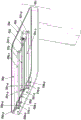
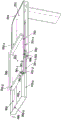
在图1B所示的实施例中,两级剪叉式升降机构150位于移动驱动底座160和移动机器人的中间平台140之间,使得上平台101和中间平台140可相对于移动机器人的移动驱动底座160和/或地板表面一起升高或降低。这允许将中间平台140的上表面142和上平台101的上表面102调节为与处于不同高度处的外部支撑表面对齐,以使物件能够从一个支撑表面滑动至另一个支撑表面,而无需被提升。剪叉式升降机构由线性致动器151驱动,并包括至少一个传感器和/或编码器,以检测剪叉式升降机构的垂直延伸量。图1B中的剪叉式升降机构150被构造成使得升降机构的最小操作高度与升降机构的最大操作高度之间的垂直距离大于中间平台140的上表面142与上平台101的上表面102之间的垂直距离,使得这两个上表面142、102的可调垂直高度的范围可以重叠。In the embodiment shown in FIG. 1B , the two-stage
在某些实施例中,两个支撑表面的垂直行程的这个重叠范围,可用来在共同的外部支撑表面之间转运物件,其处于两个支撑表面的重叠行程范围内的高度处。图1C示出了移动机器人的一个实施例,其中升降机构已被压缩以将上平台101和中间平台140的高度降低至这样的高度,在该高度处,图1C中示出的上平台101与图1A中示出的中间平台140处于相同的高度。在某些实施例中,如果两个平台101、140均包括物件取放机构,则中间平台140可以从处于如图1C所示的中间平台140高度处的外部支撑表面取放物品,然后,中间平台140可以升起并将该物件转运至处于如图1A所示的中间平台140的高度处的第二外部支撑表面,然后上平台101可以降低至图1C所示的位置,并从第二外部支撑面取回该物件。图6A、6B和6C示出了在不同的高度处,不同的外部支撑和不同的平台之间的转运过程的实施例。In certain embodiments, this overlapping range of vertical travel of the two support surfaces may be used to transfer items between a common outer support surface at a height within the overlapping range of travel of the two support surfaces. Figure 1C shows an embodiment of a mobile robot in which the lift mechanism has been compressed to reduce the height of the
在某些实施例中,根据所需的高度范围,剪叉式升降机构可能包括一个或多个分段。在某些实施例中,替代机构可用于调节移动机器人的一个或多个构件的高度和/或位置,包括但不限于一个或多个线性致动器、一个或多个动力导轨(其中一个或多个提升点沿该轨道滑动)、带有一个或多个转动接头的枢转臂和/或带有一个或多个伸缩分段的伸缩式升降柱。在某些实施例中,升降机构的组合可能用作单个移动机器人的一部分。In some embodiments, the scissor lift mechanism may include one or more segments depending on the desired height range. In certain embodiments, alternative mechanisms may be used to adjust the height and/or position of one or more components of the mobile robot, including but not limited to one or more linear actuators, one or more powered rails (one or more Multiple lifting points slide along the track), a pivot arm with one or more swivel joints and/or a telescopic lift column with one or more telescopic segments. In some embodiments, a combination of lift mechanisms may be used as part of a single mobile robot.
在移动机器人的实施例的示例中,竖直升降机构可能作为图1A中的支撑柱130的一部分存在。在某些实施例中,支撑柱的分段可相对于另一分段竖直地移动,以相对于移动机器人的另一部分升高和/或降低上平台和/或其他平台。在某些实施例中,上平台和/或其他平台可沿着线性轨道行进,该线性轨道连接至支撑柱,以升高和/或降低上平台,和/或相对于彼此升高和/或降低其他平台,和/或升高和/或降低移动机器人的其他部分。In an example of an embodiment of a mobile robot, a vertical lift mechanism may exist as part of the
在某些实施例中,移动机器人的升降机构可响应于终端用户的请求、该终端用户相对于机器人的相对位置、附近的家具和/或外部表面的高度、与地图上某个位置相关联的记录高度、一个或多个用于指示位置的标记和/或正在执行的任务。在某些实施例中,移动机器人可包括一个或多个传感器,以基于外部表面和/或其他物体的高度、一个或多个标记和/或与地图上某个位置相关联的记录高度,自动地将上平台的上表面和/或移动机器人的其他支撑表面,与外部表面和/或其他物体垂直对齐。In some embodiments, the lift mechanism of the mobile robot may be responsive to an end user's request, the end user's relative position with respect to the robot, the height of nearby furniture and/or exterior surfaces, a location associated with a location on a map Record the altitude, one or more markers to indicate the location, and/or the task being performed. In certain embodiments, the mobile robot may include one or more sensors to automatically, based on the height of external surfaces and/or other objects, one or more markers, and/or a recorded height associated with a location on a map Align the upper surface of the upper platform and/or other support surfaces of the mobile robot vertically with the exterior surface and/or other objects.
水平和稳定机构Leveling and Stabilizing Mechanisms
在某些实施例中,支持水平运动、转动和/或倾斜的移动机器人的一个或多个机构和/或其他构件,可以单独使用和/或与一个或多个升降机构组合使用,以在三维空间内调整移动机器人上的支撑表面和/或其他构件的位置。在某些实施例中,移动机器人可包括一个或多个传感器以读取其一个或多个支撑表面和/或其他构件的相对位置,其中,传感器可能包括但不限于陀螺仪、加速度计、接近度传感器和/或其他传感器,其测量相对于其他物体和/或先前位置的定向变化和/或位置变化。在某些实施例中,当移动机器人在不平坦的地面表面和/或表面障碍物上行驶时,这些机构和/或传感器中的一个或多个可用于帮助稳定移动机器人的一个或多个支撑表面和/或其他构件和/或使这些表面和构件水平。In certain embodiments, one or more mechanisms and/or other components of a mobile robot that support horizontal motion, rotation, and/or tilt may be used alone and/or in combination with one or more lift mechanisms to provide three-dimensional Adjust the position of support surfaces and/or other components on the mobile robot in space. In certain embodiments, the mobile robot may include one or more sensors to read the relative position of one or more of its support surfaces and/or other components, where the sensors may include, but are not limited to, gyroscopes, accelerometers, proximity Degree sensors and/or other sensors that measure changes in orientation and/or position relative to other objects and/or previous positions. In certain embodiments, one or more of these mechanisms and/or sensors may be used to help stabilize one or more supports of the mobile robot when the mobile robot is driving over uneven ground surfaces and/or surface obstacles Surfaces and/or other components and/or levelling those surfaces and components.
物件取放机构Object pick and place mechanism
在某些实施例中,移动机器人可包括一个或多个物件取放机构,其提供在移动机器人的物件支撑表面与一个或多个外部支撑表面之间横向地转运可取放物件的装置。这些机构可以使移动机器人能够从某些位置中的一个或多个外部表面取放可取放物件,并将这些可取放物件搬运至其他位置。这些机构还可能使移动机器人能够将可取放物件搬运并放置到一个或多个外部表面上。这些机构可能包括集成在移动机器人的一个或多个支撑表面上、下方或内部的一个或多个可移动工具,其中这些可移动工具可以与可取放物件上的一个或多个接收表面接合,用于当可移动工具横向移动时,推动和/或拉动可取放物件。在某些实施例中,在存储期间以及在所有或基本上所有物件取放和/或运输步骤期间,与移动机器人的支撑表面相关联的可移动工具布置在支撑表面下方。在某些实施例中,至少一个可移动工具设置成在机器人物件取放设备和/或运输设备的平台下方行进。In certain embodiments, the mobile robot may include one or more object pick-and-place mechanisms that provide means for laterally transferring accessible objects between an object support surface and one or more outer support surfaces of the mobile robot. These mechanisms may enable mobile robots to pick and place objects from one or more exterior surfaces in certain locations, and to transport those objects to other locations. These mechanisms may also enable mobile robots to carry and place accessible objects onto one or more exterior surfaces. These mechanisms may include one or more movable tools integrated on, under or within one or more support surfaces of the mobile robot, where these movable tools can engage with one or more receiving surfaces on the accessible object, using To push and/or pull the accessible object as the movable tool moves laterally. In certain embodiments, a movable tool associated with the support surface of the mobile robot is disposed below the support surface during storage and during all or substantially all of the object pick-and-place and/or transport steps. In some embodiments, at least one movable tool is configured to travel under a platform of the robotic pick and place device and/or transport device.
在图1A所示的实施例中,移动机器人100的上平台101包括以两个物件取放臂为形式的可移动工具,其收藏在上平台的上表面102下方,并且分别延伸通过两个开口110-1、110-2,开口110-1、110-2靠近上平台的前侧,沿着前边缘103。In the embodiment shown in FIG. 1A , the
图2A提供了移动机器人的上平台组件201内的物件取放机构的实施例的内部视图。在图2A中,两个物件取放臂220-1、220-2布置在上平台的上表面202下方,并且大致垂直于移动机器人的上平台201的前侧向边缘203。这两个物件取放臂220-1、221-1设置成分别从上平台的前侧向边缘203向前延伸穿出开口210-1、210-2,并反向行进以在上表面202下方缩回至上平台201。这两个取放臂220-1、221-1连接至支撑架222,该支撑架222连接至横向传动带223,该横向传动带223由带有编码器的电机224驱动,其中,支撑架、横向传动带、电机和编码器全部位于上平台201的上表面202下方。在该实施例中,横向传动带223被布置成平行于取放臂220-1、221-1的平移方向。在操作中,电机224可以沿一个方向转动以相对于移动机器人的上平台的前边缘203向前驱动横向传动带和支撑架222,并且该电机可以沿相反方向转动以相对于移动机器人的上平台的前边缘向后驱动横向传动带和支撑架。支撑架222相对于上平台的上支撑表面202的前边缘203朝向取放臂220-1、221-1的后端部连接。支撑架222设置成,在横向传动带223将支撑架222朝着机器人的前边缘向前驱动时,向前驱动取放臂220-1、221-1。当横向传动带223相对于机器人的前边缘向后驱动支撑架222时,支撑架222将取放臂220-1、221-1向后拉。FIG. 2A provides an interior view of an embodiment of an object pick and place mechanism within an
在图2A所示的实施例中,平台201的长度,即从上平台的前边缘203向后至后边缘204的长度,超过取放臂220-1、221-1的长度,从而当支撑架222朝着上平台的后边缘204缩回时,取放臂的整个长度可拉入上平台的上表面202下方。In the embodiment shown in FIG. 2A, the length of the
在某些实施例中,物件取放机构可包括一个或多个带有取放尖端的取放臂,这些取放尖端设置在取放臂的前端部处、与靠近取放臂与支撑架连接处的端部相对,其中这些取放尖端垂直于取放臂的主体的方向和/或垂直于取放臂行进的横向方向。在某些实施例中,取放尖端能够以接合位于可取放物件上的一个或多个接收表面的方式定位,以随取放臂的运动横向移动可取放物件,从而使取放机构能够在机器人的支撑表面和/或外部支撑表面之间,推动和/或拉动可取放物件。在某些实施例中,取放尖端能够以不同的方式定位,以不与可取放物件的接收表面接合,从而使取放尖端和/或取放臂能够在不移动可取放物件的情况下,在可取放物件的部分表面的下方和/或周围行进。在某些实施例中,可以在不同阶段利用这两种方式,以使取放尖端和取放臂能够:在可取放物件下方行进至期望的位置、重新定位取放尖端以接合可取放物件的一个或多个接收表面、随取放臂的运动一起移动可取放物件、然后一旦可取放物件已经移动至新的期望位置,则重新定位取放尖端以与可取放物件的接收表面脱离接合。In some embodiments, the article pick-and-place mechanism may include one or more pick-and-place arms with pick-and-place tips disposed at the front end of the pick-and-place arms, connected proximate the pick-and-place arms to the support frame The ends at are opposite, wherein the pick-and-place tips are perpendicular to the direction of the body of the pick-and-place arm and/or perpendicular to the transverse direction of travel of the pick-and-place arm. In certain embodiments, the pick-and-place tip can be positioned to engage one or more receiving surfaces on the pick-and-place item to laterally move the pick-and-place item with movement of the pick-and-place arm, thereby enabling the pick-and-place mechanism to operate within the robot Push and/or pull accessible objects between the support surface and/or the outer support surface. In certain embodiments, the pick-and-place tip can be positioned differently from engagement with the receiving surface of the accessible item, thereby enabling the pick-and-place tip and/or the pick-and-place arm to, without moving the accessible item, Travel under and/or around a portion of the surface where an item is accessible. In some embodiments, these two approaches may be utilized at different stages to enable the pick-and-place tip and pick-and-place arm to: travel under the pick-and-place item to a desired location, reposition the pick-and-place tip to engage the pick-and-place item's One or more receiving surfaces, move the accessible item with movement of the pick and place arm, and then reposition the pick and place tip out of engagement with the access item receiving surface once the accessible item has been moved to the new desired position.
在图2A所示的实施例中,取放臂220-1、221-1具有取放尖端220-2、221-2,取放尖端220-2、221-2呈现为小延伸件,其在取放臂的与支撑架222相对的端部上,垂直于穿过取放臂主体的纵向轴线。在图2A所示的实施例中,每个取放尖端220-2、221-2分别牢固地连接到其相应的取放臂220-1、221-1。当取放臂220-1、221-1完全缩回至上平台201内时,取放尖端220-2、221-2水平地定位,位于上平台的上表面202下方并且平行于上平台的上表面202。当取放尖端220-2、221-2向外延伸出上平台201的前边缘203时,每个取放臂220-1、221-1可以转动大约90度至竖直位置,使得取放尖端的端部位于取放臂的其他部分的上方。在图2B所示的实施例中,当取放尖端220-2、221-2一旦伸出上平台201的前边缘203并转动至垂直位置时,它们就延伸至上平台201的上表面202的水平面的上方。取放尖端220-2、221-2的该升高的位置可以用于接合可取放物件的表面,这些可取放物件放置在上平台201的上表面202上和/或与上平台的上表面的高度接近的外部支撑表面上。在图2B所示的实施例中,这些取放尖端延伸至垂直位置,其中,取放尖端220-2、221-2的最上部分嵌套在可取放盘350的边缘355-3附近的底切槽内,该可取放盘350位于上平台201的支撑表面202上。In the embodiment shown in Figure 2A, the pick-and-place arms 220-1, 221-1 have pick-and-place tips 220-2, 221-2 that appear as small extensions that are The end of the pick and place arm opposite the
具有图2A所示编码器的第二电机228靠近上平台201的前边缘203,使得取放尖端220-221-2能够转动。齿轮组将第二电机228连接至两个传动带225-1、225-2,其中,每个传动带与直通转动齿轮226-1、226-2连接,直通转动齿轮226-1、226-2分别定为在取放臂220-1、221-1周围。编码器、齿轮组和传动带225-1、225-2,每个直通转动齿轮226-1、226-2,与第二电机228一起,控制与其连接的取放臂220-1、221-1的转动角度,同时允许每个取放臂穿过其各自的直通转动齿轮的中心前后行进。每个取放臂220-1、221-1分别在相对端部上连接至支撑架222上的套筒227-1、227-2,该套筒227-1、227-2允许取放臂转动,而不能相对于支撑架横向行进。The
在图1所示的实施例中,移动机器人的上平台101的上表面102是实心的和/或封闭物件取放机构,该物件取放机构包含在上平台的上表面下方。用于取放臂的开口110-1、110-2布置在上平面101的上表面102下方,沿着上平台的前侧壁104,在前边缘103下方。In the embodiment shown in Figure 1, the
在某些实施例中,开口110-1、110-2可能相对于前边缘103凹进和/或相对于上平台101的上表面102以向内的角度倾斜,使得从上层板掉落或向下流动的流体、碎屑和/或其他物质不容易进入取放臂所使用的开口,并不容易进入上平台内物件取放机构的其他移动部件所占据的空间。In certain embodiments, the openings 110-1, 110-2 may be recessed relative to the
在某些实施例中,上平台101的上表面102可以使用清洁工具(例如海绵、喷雾器、毛巾和/或擦拭物)用水和/或清洁溶液洗涤。在某些实施例中,上平台101的上表面102可能被构造成托盘或其他部件,其可以从上平台组件的其余部分上移除以进行清洁,然后一旦上表面102被清洁完毕,被重新附接至上平台组件的其余部分。In certain embodiments, the
在某些实施例中,用于取放臂的开口可包括挡板和/或门,当取放臂和/或取放尖端被缩回至上平台和/或移动机器人的其他支撑表面内时,挡板和/或门关闭,以提供额外的保护,防止流体和/或碎屑进入物件取放机构的内部区域。在某些实施例中,当取放臂伸出并缩回到上平台和/或其他支撑表面中时,可以通过取放臂的运动来打开和关闭挡板和/或门。In some embodiments, the opening for the pick-and-place arm may include a baffle and/or door that, when the pick-and-place arm and/or the pick-and-place tip are retracted into the upper platform and/or other support surface of the mobile robot, Baffles and/or doors are closed to provide additional protection from fluid and/or debris entering the interior area of the item pick-and-place mechanism. In certain embodiments, the shutters and/or doors may be opened and closed by movement of the pick and place arm as it extends and retracts into the upper platform and/or other support surface.
在某些实施例中,沿着上平台的前边缘的区域和/或移动机器人的另一个支撑表面的区域可能从上平台和/或其他支撑表面的前边缘的最外点凹进一设定距离。该凹进的边缘可布置在一个或多个区域周围,其中,一个或多个取放臂从移动机器人的上平台的上表面下方向外行进和/或从移动机器人的其他支撑表面的下方向外行进。凹进的边缘可能使取放臂的取放尖端能够缩回超过上平台的前边缘的最外点和/或其他支撑表面的最外点,并将可取放物件的后边缘拉到移动机器人的上平台的前边缘的最外点以内和/或其他支撑表面的前边缘的最外点以内。这种布置可能使可取放物件的全部占用空间能够被定位在移动机器人的占用空间内和/或上平台的侧形成的最外点内和/或移动机器人的其他支撑表面内。In some embodiments, the area along the front edge of the upper platform and/or the other support surface of the mobile robot may be recessed from the outermost point of the front edge of the upper platform and/or other support surface by a set amount distance. The recessed edge may be arranged around one or more areas where one or more pick and place arms travel outward from below the upper surface of the upper platform of the mobile robot and/or from below other support surfaces of the mobile robot travel outside. The recessed edge may enable the pick-and-place arm's pick-and-place tip to retract beyond the outermost point of the front edge of the upper platform and/or the outermost point of other support surfaces and pull the rear edge of the accessible item to the mobile robot's outermost point. Within the outermost point of the front edge of the upper platform and/or within the outermost point of the front edge of the other support surface. Such an arrangement may enable the entire footprint of the accessible object to be positioned within the footprint of the mobile robot and/or within the outermost points formed by the sides of the upper platform and/or within other support surfaces of the mobile robot.
图2C示出了移动机器人的上平台的实施例,其中围绕用于取放臂的开口的区域281、282相对于上平台的前侧的其他区域凹进。图2D示出了基于取放臂和取放尖端在上平台的凹进区域281、282内的可用行进范围,而缩回位置的可取放盘,其中可取放盘350位于上平台201的上表面202上,并且可取放盘的前侧355-3相对于上平台的前侧203向内凹进。在图2C中,虚拟框290定位于上平台201的上表面202上,其中该虚拟框290表示任意的体积空间,该任意的体积的空间被设计成不受移动机器人的物件取放系统的任何构件侵扰和/或不接触移动机器人的物件取放系统的任何构件,该空间表示为受保护的空间或体积。在某些实施例中,移动机器人的上表面的一部分和/或上平台上方的区域和/或移动机器人的其他支撑表面上方的区域,可以被限定为受保护空间,以将成人、儿童和宠物与移动机器人的物件取放机构和/或其他运动构件隔离开。在某些实施例中,该受保护的空间或体积可能重叠或包括上平台的上表面的全部区域和/或包括移动机器人的其他支撑表面的全部区域。在图2A和2B所示的实施例中,在进行物件取放和/或保持可取放物件时,物件取放机构要么保持在上平台201的上表面202下方、处于存储位置,要么伸出至上平台的前边缘203外。Figure 2C shows an embodiment of the upper platform of the mobile robot in which the
在某些实施例中,可将上平台和/或移动机器人的其他支撑表面上的一部分上表面和/或一部分区域设计成允许及至物件取放机构的一个或多个构件和/或移动机器人的其他构件,同时仍保持对成人、儿童和/或宠物的最小暴露。在某些实施例中,该受保护区域可由源自上平台和/或移动机器人的其他支撑表面的中央目标区域的中央空间体积来限定,例如图2C中所示的虚拟框290。在某些实施例中,该受保护的空间或体积可由不受侵扰的区域限定,该不受侵扰的区域距上平台和/或移动机器人的其他支撑表面的一个或多个外围边缘的外侧以一定的距离,其中,不受侵扰的距离相对于上平台和/或移动机器人的其他支撑表面的最大长度和/或最大宽度限定。图2C示出了虚拟线291-1,其标出的是受到物件取放机构的构件和/或移动机器人的其他构件侵扰的距离291-2的任意界线,其从移动机器人的上平台201的前边缘203量起。在某些实施例中,受保护区域可被定义为上平台和/或移动机器人的其他支撑表面的占地面积的最小百分比。In certain embodiments, a portion of the upper surface and/or a portion of the area on the upper platform and/or other support surfaces of the mobile robot may be designed to allow access to one or more components of the object pick-and-place mechanism and/or the mobile robot's other components while still maintaining minimal exposure to adults, children and/or pets. In some embodiments, the protected area may be defined by a central spatial volume derived from a central target area of the upper platform and/or other support surfaces of the mobile robot, such as
外部支撑表面external support surface
在某些实施例中,可取放物件和外部支撑表面所组成的系统可被设计成,与移动机器人的物件取放机构和支撑表面一起工作。In some embodiments, the system of accessible objects and external support surfaces can be designed to work with the object pick and place mechanisms and support surfaces of the mobile robot.
在某些实施例中,外部支撑表面可以是(或包括)托盘,该托盘以这样的方式保持可取放物件,以使得一个或多个可取放物件可以在该托盘和移动机器人的支撑表面之间转运。在某些实施例中,托盘可包括一个或多个支撑表面,可取放物件放置其上。在某些实施例中,托盘可包括一个或多个凹进通道,该凹进通道在可取放物件下方为移动机器人的取放臂提供行进的空间。In some embodiments, the outer support surface may be (or include) a tray that holds accessible items in such a way that one or more accessible items may be between the tray and the support surface of the mobile robot transport. In certain embodiments, the tray may include one or more support surfaces upon which objects may be placed. In certain embodiments, the tray may include one or more recessed channels that provide space for the pick-and-place arm of the mobile robot to travel below the accessible item.
在某些实施例中,可取放物件可以是或包括可取放的盘、箱、盒子或篮子,其设置成承载一个或多个物体,并且设置成在一个或多个托盘与移动机器人上的一个或多个支撑表面之间转运。In certain embodiments, the accessible object may be or include a accessible tray, box, box, or basket configured to carry one or more objects and configured to be on one of one or more trays and a mobile robot or transport between multiple support surfaces.
在某些实施例中,可取放的物件可以存储在托盘的表面上、另一外部支撑表面上和/或移动机器人的支撑表面上。在某些实施例中,取放物件可能包括在可取放物件的一个或多个端部处的接收表面,当可取放物件放置在托盘上时和/或在与移动机器人的物件取放机构相容的移动机器人的支撑表面上时,该接收表面可以被移动机器人的一个或多个取放臂的一个或多个取放尖端接合。In some embodiments, the accessible items may be stored on the surface of the tray, on another external support surface, and/or on the support surface of the mobile robot. In certain embodiments, the pick-and-place item may include receiving surfaces at one or more ends of the pick-and-place item when the pick-and-place item is placed on the tray and/or in conjunction with the item pick and place mechanism of the mobile robot The receiving surface may be engaged by one or more pick-and-place tips of one or more pick-and-place arms of the mobile robot when placed on a support surface of the mobile robot.
图3A示出了托盘300的实施例,该托盘为可取放盘350提供了外部支撑表面,该可取放盘350可以由移动机器人通过物件取放机构进行取放。Figure 3A shows an embodiment of a
图3B示出了不存在可取放盘或任何可取放物件的托盘300的实施例。在图3A所示的实施例中,托盘300包括上水平表面,该上水平面包括三个分开的部分302-1、302-2、302-3,它们共享一个公共平面并且位于凹进通道310-1、310-2的上方。这三个部分302-1、302-2、302-3的上水平表面提供了外部支撑表面,以使可取放盘能够放置其上。两个凹进的通道310-1、310-2被定向成垂直于托盘300的前边缘303,并分别且与从移动机器人的前边缘延伸的两个取放臂的横向间隔对齐。图3A中的托盘300内的凹进通道的高度326大于取放尖端和取放臂的最小高度,以允许取放尖端和取放臂在由该凹进通道的垂直壁限定的垂直空间内行进。托盘的两侧由两个竖直壁305-1、305-2界定,两个竖直壁305-1、305-2高出上水平表面302-1、302-2、302-3,以将可取放盘容纳在托盘的侧内。与托盘的前边缘303相对的托盘的后侧,由竖直壁305-3界定,竖直壁305-3高出上水平表面302-1、302-2、302-3,以将可取放盘容纳在托盘的后侧内。Figure 3B shows an embodiment of the
在图3B所示的实施例中,沿着托盘300的前边缘303的区域在凹进通道310-1、310-2上方的区域中是敞开的,以使得在可取放物件转运的过程中,移动机器人的取放臂能够在凹进通道内的横向进出。沿着托盘300的前边缘303的区域在上水平表面302-1、302-2、302-3上方的区域中是敞开的,以使得可取放物件能够横向进出,该可取放物件在其转运期间在托盘的上水平表面上行进。In the embodiment shown in FIG. 3B, the area along the
在图3C所示的实施例中,示出了托盘300,其中取放臂220-1、221-1在托盘的凹进通道310-1、310-2内行进。当取放尖端和取放臂在托盘300的凹进通道310-1、310-2内行进时,转动取放臂220-1、221-1,以使取放尖端220-2、221-2处于水平位置,以保持最下高度。在某些实施例中,托盘的水平支撑表面和凹陷通道能够以不同的方式设置,只要它们提供足够的支撑表面来保持可取放盘,并提供用于一个或多个可取放臂在可取放盘下方行进的足够的空间。在某些实施例中,图3B中所示出的托盘300的中央水平支撑表面302-2可移除,并且那连个凹进通道310-1、310-2可替代为一个凹进通道。In the embodiment shown in Figure 3C, the
在图3B所示的实施例中,托盘300的前侧还包括前边部306,该前边部306在凹进通道310-1、310-2下方、托盘的表面下方向下延伸。前边部306提供表面,用于使托盘与托盘放置在其上下支撑表面对齐,并提供物理屏障以帮助阻止托盘被推出超过该下支撑表面的相应前边缘。In the embodiment shown in Figure 3B, the front side of the
在某些实施例中,在可取放物件转运过程中,上平台的前表面和/或移动机器人的其他支撑表面可以压靠该前边部和/或托盘的其他前表面。当取放臂将可取放物件从托盘的表面缩回并拉到上平台的上表面和/或其他支撑表面上时,这样的布置可以防止托盘被拉到移动机器人的方向上。In certain embodiments, the front surface of the upper platform and/or other support surfaces of the mobile robot may be pressed against the front edge and/or other front surfaces of the tray during transfer of the pick-and-place item. Such an arrangement may prevent the tray from being pulled in the direction of the mobile robot as the pick and place arm retracts and pulls the accessible item from the surface of the tray onto the upper surface of the upper platform and/or other support surface.
在某些实施例中,当移动机器人与托盘对齐时,上平台的前表面和/或移动机器人的其他支撑表面可以压靠在托盘的前边部和/或其他前表面,以当托盘错位和/或延伸离开其所放置的表面的前边缘时,以将托盘推到其所放置的表面上的正确位置。在某些实施例中,上平台的前表面和/或移动机器人的其他支撑表面可包括一个或多个突出构件,该一个或多个突出构件可以与托盘的前边部和/或其他前表面接触以将托盘推到对齐位置。在某些实施例中,这些突出构件可以被机械地操作以在需要时延伸到位。在某些实施例中,取放臂的取放尖端可以从上平台和/或移动机器人的其他支撑表面延伸,以与前边部和/或托盘的其他前表面接触,以将托盘推到对齐位置。在图8A所示的实施例中,取放尖端220-2、221-2在移动机器人的前侧203的前方以相同的距离伸出,并转动至垂直位置,以当机器人向前行进时,取放尖端220-2会首先沿着接触托盘300的前侧303的点,并使托盘的右侧向后推,并与移动机器人的上平面201的前侧203更好地对齐。In certain embodiments, when the mobile robot is aligned with the tray, the front surface of the upper platform and/or other support surfaces of the mobile robot may be pressed against the front edge and/or other front surface of the tray to prevent the tray from being misaligned and/or or when extending away from the front edge of the surface on which it is placed to push the tray into the correct position on the surface on which it is placed. In certain embodiments, the front surface of the upper platform and/or other support surfaces of the mobile robot may include one or more protruding members that may contact the front edge and/or other front surfaces of the tray to push the tray into alignment. In certain embodiments, these protruding members can be mechanically manipulated to extend into place when desired. In some embodiments, the pick-and-place tip of the pick-and-place arm may extend from the upper platform and/or other support surface of the mobile robot to contact the front edge and/or other front surface of the tray to push the tray into alignment . In the embodiment shown in Figure 8A, the pick and place tips 220-2, 221-2 extend the same distance in front of the
可取放物件Removable Objects
图3D示出了不存在托盘或任何外部支撑表面的可取放盘350的实施例。在图3D所示的实施例中,可取放盘350包括中央水平部分,该中央水平部分包括适合于容纳一个或多个物体的上表面352和下侧表面353,该下侧表面353可以放置在托盘的上水平表面上、另外的外部支撑表面上和/或移动机器人的支撑表面上。可取放盘350还包括四个侧壁355-1、355-2、355-3、355-4,其可以帮助容纳放置在可取放盘中的物体。FIG. 3D shows an embodiment of the
图3A示出了托盘300的实施例,其用作可取放盘350的外部支撑表面,其中可取放盘的侧壁355-4位于最靠近托盘的前边缘303的位置,并且可取放盘标记为355-3的侧位于最靠近托盘的后垂直壁305-3的位置。如图3A所示,如果可取放盘350被完全推入托盘300,如图3A所示,可取放盘的侧壁355-3的外部将与托盘的后垂直壁305-3的内部接触,其中托盘的后垂直壁将防止可取放盘进一步移动。放入托盘和/或帮助将可取放的物件相对于托盘的后垂直壁对齐。在图所示的位置,如图3A所示,可取放盘350的侧壁355-2、355-1位于托盘300的侧垂直壁305-1、305-2的内,其中托盘300的侧垂直壁305-1、305-2可以在人手动放置和/或移动机器人自动取放或放置期间,帮助容纳和/或对齐可取放盘。Figure 3A shows an embodiment of a
图3E示出了可取放盘350的一个实施例的底视图,其中表面353表示可取放盘的下侧表面,该表面放置在托盘的上水平表面上、另一外部支撑表面上和/或移动机器人的支撑表面上。沿着四个侧壁355-1、355-2、355-3、355-4的那些边缘布置成使得侧壁355-4、355-3形成可取放盘350的端部,并且其中,当取放盘在托盘300和移动机器人的支撑表面之间转运时,这些端部垂直于运动的横向方向。Figure 3E shows a bottom view of one embodiment of the
在图3E所示的实施例中,侧壁355-4、355-3包括容纳槽360-1、361-1,其由可取放盘350的端部附近的底切通道形成。这些容纳槽平行于可取放盘350的端部侧壁355-4、355-3延伸,并且当可取放盘在托盘300和移动机器人的支撑表面之间转运时,垂直于移动的横向方向延伸。容纳槽360-1、361-1提供了空间,取放臂的取放尖端可以在其中转动,并且取放尖端可以从中转动出来。容纳槽360-1、361-1还提供接收表面360-2、360-3、361-2、361-3,以允许取放臂的取放尖端的表面接合,以在可取放盘于托盘和移动机器人的支撑表面之间转运期间,推动和/或拉动可取放盘。In the embodiment shown in FIG. 3E , the side walls 355 - 4 , 355 - 3 include receiving slots 360 - 1 , 361 - 1 , which are formed by undercut channels near the ends of the
图3F示出了位于托盘300上的可取放盘350的实施例的横截面图,其中横截面的界限边缘在托盘的凹进通道310-2内延伸。容纳槽360-1、361-1示出为垂直的底切口,其从可取放盘的下侧表面353向上延伸,并包括内接收表面360-2、360-3、361-2、361-3,这些表面由容纳槽的最里面和最外面的壁形成。接收表面360-2、360-3、361-2、361-3垂直于取放臂的行进方向,并且平行于取放尖端的转动平面布置。在图3F所示的实施例中,容纳槽360-1、361-1是对称的,并且被分别放置在可取放盘350的两端上,使得该盘可以在任一方向上放置在托盘上。Figure 3F shows a cross-sectional view of an embodiment of an
物件取放机构的操作The operation of the object pick and place mechanism
图3G至图3N中所示的设置演示了根据一个实施例使用移动机器人运输可取放物件的步骤,同时提供物件取放机构的最小暴露。图3G至图3N示出了一个取放臂221-1,出于描述目的,示出可取放盘350、托盘300和上平台201的横截面图。在该实施例中存在另一个取放臂220-1,但是在图3G至图3N的视图中基本上没有示出该取放臂,因为通过设计使取放臂在操作期间基本上被上平台和取放盘的表面覆盖,以最小化它们的暴露。出于说明的目的,可取放盘在托盘和移动机器人的上平台的上表面之间的转运期间,取放臂220-1可以平行于回收臂221-1操作。在某些实施例中,可以利用具有不同附接特征的一个或多个取放臂来转运可取放物件,这些附接特征被用来接合在可取放物件上的接收表面和/或承受特征。The setups shown in Figures 3G-3N demonstrate the steps of using a mobile robot to transport accessible items, while providing minimal exposure of the item pick-and-place mechanism, according to one embodiment. Figures 3G-3N illustrate a pick and place arm 221-1, showing a cross-sectional view of the pick and
图3G示出了可取放盘350的实施例,其位于托盘300上,伴随着移动机器人的上平台201的前边缘203正在向托盘的前边缘303靠近该托盘,并且上平台201的高度与托盘的高度相同。上平台的上表面202是空的,取放臂220-1、221-1与上平台一起缩进,并且取放尖端220-2、221-2被存储在水平位置。Figure 3G shows an embodiment of a pick-and-
图3H示出了位于托盘300上的可取放盘350的实施例的横截面图,以及移动机器人的上平台的横截面图,其中横截面的界限边缘在托盘的凹进通道310-2内延伸,并沿着移动机器人的上平台的取放臂221-1的区域。在图3H所示的实施例中,上平台201相对于托盘300处于“对接”位置,并准备开始物件转运过程。在这种状态下,移动机器人的上平台201的上表面202与托盘300的上水平表面302-1、302-2、302-3处于大致相同的高度,从而可取放物品可以从一个表面滑到另一个表面,并始终由一个表面或两个表面支撑。同样,移动机器人的上平台201的前边缘203与托盘300的前边缘303接触(或至少接近)。在某些实施例中,移动机器人可能将其自身定位在上平台的横向前边缘与托盘之间可能存在间隙的位置,包括(但不限于)移动机器人可能被其他障碍物阻止进一步向前行驶的位置。图3H中的移动机器人的取放臂221-1和取放臂220-1(不可见)缩回在上平台内的存储位置中,其中,取放尖端221-2和取放尖端220-2(不可见)处于水平位置。在图3H中,取放臂与托盘的凹进通道对齐,从而允许取放臂在物件转运过程中沿着托盘的凹进通道的长度向前和向后移动。在图3H中,取放尖端221-2和取放尖端220-2(不可见)被转动成水平方向,以便能够适配在可取放盘下侧表面下方。Figure 3H shows a cross-sectional view of an embodiment of an
图3I示出与图3H相同的横截面,而其中,移动机器人的取放臂221-1在托盘300的凹进通道310-2的空间内,部分地在可取放盘的下表面353下方延伸。(尽管未示出,取放臂220-1类似地定位。)取放尖端221-2、220-2(不可见)仍处于水平位置,使得取放尖端也适配在托盘300的凹进通道310-2的纵向空间内。Figure 3I shows the same cross-section as Figure 3H, but with the pick-and-place arm 221-1 of the mobile robot extending partially below the
图3J示出与图3I相同的横截面,而其中,移动机器人的取放臂221-1、220-1(不可见)已经在取放盘350下方进一步延伸,其中,取放尖端221-2、220-2定位于容纳槽361-1下方,该容纳槽361-1相对于移动机器人,位于最接近可取放盘的远端的位置。Figure 3J shows the same cross section as Figure 3I, but wherein the pick and place arms 221-1, 220-1 (not visible) of the mobile robot have extended further below the pick and
图3K示出了与3J相同的横截面,而其中,取放尖端221-2、220-2(不可见)已经转动到垂直位置。另外,每个取放尖端的上部分位于可取放盘的下表面353的上方,并且嵌入于容纳槽361-1中,该容纳槽361-1相对于移动机器人,位于最接近可取放盘350的远端的位置。在该实施例中,取放尖端221-2的相对于移动机器人的近侧221-3邻近于容纳槽361-1的接收表面361-3,并定位成若取放臂横向地缩进回到上平台内,则取放尖端的近侧可以接合容纳槽的接收表面361-3,并开始将盘拉到移动机器人上平台的上表面上。取放尖端220-2的相对于移动机器人的近侧220-3也邻近于容纳槽361-1的接收表面361-3,而在图3K中不可见。Figure 3K shows the same cross section as 3J, but where the pick and place tips 221-2, 220-2 (not visible) have been rotated to a vertical position. Additionally, the upper portion of each pick-and-place tip is positioned above the
在某些实施例中,容纳槽可被分成多个槽或由多个槽代替。在某些实施例中,可取放物件的容纳槽可被构造成除底切通道以外的其他形式,只要该替代形式仍然具有至少一个接触表面,用于接合一个或多个取放尖端的远侧或近侧。替代性接收结构的实施例可包括但不限于:可取放物件中的竖直开口,其在底部和顶部均敞开;侧栏杆、把手和/或其他结构,其在可取放物件的不同点处连接以形成接收表面;分布在可取放物件上的多种接收表面,其中取放尖端和/或取放臂的其他结构需要行进到可取放物件的不同位置,以推动或拉动该可接收物件,和/或分布在可取放物件上的多种接收表面,其中某些取放尖端和/或取放臂的其他结构只能被用来推动可取放物件,和/或只有某些取放尖端和/或取放臂的其他结构能够被用来推动可取放物件。In certain embodiments, the receiving slot may be divided into or replaced by multiple slots. In certain embodiments, the item-receiving groove may be configured with other forms than undercut channels, so long as the alternate form still has at least one contact surface for engaging the distal side of one or more access tips or near side. Examples of alternative receiving structures may include, but are not limited to: vertical openings in the accessible item that are open at both the bottom and top; side rails, handles, and/or other structures that connect at various points in the accessible item to form a receiving surface; a variety of receiving surfaces distributed over a pick-and-place item where other structures of the pick-and-place tip and/or pick-and-place arm need to travel to different locations on the pick-and-place item to push or pull the pick-and-place item, and /or a variety of receiving surfaces distributed over the pick-and-place item, where certain pick-and-place tips and/or other structures of the pick-and-place arm can only be used to push the pick-and-place item, and/or only some pick-and-place tips and/or Or other structures of the pick-and-place arm can be used to push the pick-and-place item.
在某些实施例中,在容纳槽的开口处的接收表面的底边缘可能包括倒角、斜面和/或倒圆的边缘,以当取放尖端被升高至取放位置时,帮助取放尖端对齐在容纳槽中。In some embodiments, the bottom edge of the receiving surface at the opening of the receiving slot may include a chamfered, beveled, and/or rounded edge to aid in picking when the pick-and-place tip is raised to the pick-and-place position The tips are aligned in the receiving grooves.
在某些实施例中,当取放臂和取放尖端朝着预期的容纳槽横向延伸时,移动机器人可以向控制可转动取放臂的第二电机施加一定程度的动力,以使得取放尖端的端部受压紧靠可取放盘和/或可取放物件的下侧表面。在该实施例中,移动机器人可以使用编码器位置和/或来自第二电机的控制取放臂的转动的电机电流反馈,以确定取放尖端是否已开始转动进入容纳槽中,并控制正在驱动取放臂的延伸部分的主电机,和/或控制负责控制取放臂的转动的副电机,以帮助将取放尖端正确地定位在取放槽中。In certain embodiments, when the pick and place arm and the pick and place tip extend laterally toward the intended receiving slot, the mobile robot may apply a degree of power to the second motor controlling the rotatable pick and place arm such that the pick and place tip The end is pressed against the underside surface of the access tray and/or the access item. In this embodiment, the mobile robot can use the encoder position and/or motor current feedback from the second motor that controls the rotation of the pick and place arm to determine whether the pick and place tip has begun to rotate into the receiving slot, and to control whether the drive is being driven The primary motor for the extension of the pick and place arm, and/or the control of the secondary motor responsible for controlling the rotation of the pick and place arm, to assist in properly positioning the pick and place tip in the pick and place slot.
图3L示出与图3K相同的横截面,而其中取放臂221-1、220-1(不可见)已经部分地缩回至移动机器人的上平台201内,并且其中,取放盘350已经被取放尖端221-2、220-2(不可见)拉回,从而盘的远端已朝向移动机器人的上平台横向地移动,并且可取放盘的近端已移动至移动机器人的上平台的上表面202上。Figure 3L shows the same cross-section as Figure 3K, but where the pick-and-place arms 221-1, 220-1 (not visible) have been partially retracted into the
图3M示出了与图3L相同的横截面,而其中检索臂221-1、220-1(不可见)已几乎完全收回至移动机器人的上平台内,并且取放尖端221-2、220-2(不可见)和取放槽361-1已经被拉到靠近移动机器人的上平台201的前边缘203的位置,其中,可取放盘350的大部分放置在移动机器人的上平台的上表面202上。Figure 3M shows the same cross-section as Figure 3L, but with retrieval arms 221-1, 220-1 (not visible) almost fully retracted into the upper platform of the mobile robot, and pick and place tips 221-2, 220- 2 (not visible) and the pick-and-place slot 361-1 has been pulled to a position close to the
图3N示出了与图3G类似的视图,其中,移动机器人已经从托盘300处被驱动回来,并与托盘300相隔一小段距离,而可取放盘350现在放置在移动机器人的上平台的上表面202上,并且托盘300是空的。现在,取放尖端221-2、220-2的一部分在取放槽361-1(不可见)的区域下方可见。Figure 3N shows a view similar to Figure 3G, where the mobile robot has been driven back from the
在某些实施例中,处于图3N所示阶段的移动机器人可以继续行进至新的位置,例如:将可取放盘递送至个体、将可取放盘转运至另一个托盘,和/或将盘转移至具有适合于容纳该盘的支撑特征的另一个外部表面。在某些实施例中,取放尖端和取放臂可能保持在其当前位置,如图3N所示。在某些实施例中,可取放盘可在移动机器人上平台的上表面上保持原位,而取放尖端可能从容纳槽中转动出来,至水平位置,然后取放臂可进一步缩进,从而取放尖端被拉至上平台的上表面下方、它们的存放位置中。In some embodiments, the mobile robot at the stage shown in FIG. 3N may continue to travel to a new location, such as: delivering a pick-and-place tray to an individual, transferring a pick-and-place tray to another tray, and/or transferring a tray to a Another outer surface of the support feature adapted to receive the disk. In some embodiments, the pick-and-place tip and pick-and-place arm may remain in their current positions, as shown in Figure 3N. In some embodiments, the pick-and-place tray may remain in place on the upper surface of the upper platform of the mobile robot, and the pick-and-place tip may be rotated out of the receiving slot to a horizontal position, and the pick-and-place arm may be further retracted to take The drop tips are pulled below the upper surface of the upper platform, into their storage position.
在某些实施例中,为了将可取放盘从移动机器人的上平台的上表面转运至托盘上,则反着执行如图3G至图3N所示的步骤。如图3N所示,可取放盘350将从移动机器人的上表面202开始,机器人将执行最后的接近操作,并与托盘300对齐,如图3M所示。取放臂将伸出,并且取放尖端221-2、221-2(未示出)相对于移动机器人的远侧221-4、220-4(未示出)将推向容纳槽361-1的接收表面361-2,结果,将可取放盘350推至托盘300上,如图3L所示。可取放盘350将被移动机器人的取放机构进一步推至托盘上,而可取放盘终止于图3K所示的位置,其中,其完全放置在托盘300的表面上。为了使移动机器人开始从托盘上脱离,移动机器人将使取放尖端向下转动至水平位置,从而取放尖端221-2、220-2(不可见)位于可取放盘的下表面353下方,如图3J所示。然后,移动机器人将经过图3I所示的点,开始将取放臂221-1、220-1(不可见)缩回上平台。在下一个位置,取放臂221-1、220-1(不可见)将完全缩回,并且取放尖端221-2、220-2(不可见)将位于上平台的上表面下方,如图3H所示。如图3G所示,在最终位置中,移动机器人将后退,将可取放盘350留在托盘300上,并使上平台201的上表面202空着。In some embodiments, in order to transfer the pick-and-place tray from the upper surface of the upper platform of the mobile robot to the tray, the steps shown in FIGS. 3G-3N are performed in reverse. As shown in FIG. 3N, the pick-and-
变型:支撑面、取放机构、托盘和可取放物件Variations: Support surfaces, pick-and-place mechanisms, trays and accessible objects
在某些实施例中,物件取放机构可执行与图2A所示的机构的相似功能,但是对于该机构的一个或多个构件来说具有不同的构造。图2E示出了物件取放机构的替代实施例,其主要区别在于取放尖端的构造以及用于使取放尖端与可取放物体的接收表面接合的系统。In certain embodiments, the article pick-and-place mechanism may perform similar functions as the mechanism shown in Figure 2A, but with a different configuration for one or more components of the mechanism. Figure 2E shows an alternate embodiment of an object pick and place mechanism, which differs primarily in the construction of the pick and place tip and the system for engaging the pick and place tip with the receiving surface of the pick and place object.
具有固定垂直取放尖端的替代取放臂Alternative pick and place arm with fixed vertical pick and place tip
在图2E所示的实施例中,物件取放机构保留两个取放臂,这些取放臂从移动机器人的上平台下方横向移出,并缩回,类似于图2A所示的理念。在某些实施例中,可使用一个或多个取放臂,但是出于对比目的,每个附图仅示出两个取放臂。In the embodiment shown in Figure 2E, the object pick and place mechanism retains two pick and place arms that move laterally out from below the upper platform of the mobile robot and retract, similar to the concept shown in Figure 2A. In some embodiments, one or more pick-and-place arms may be used, but for comparison purposes only two pick-and-place arms are shown in each figure.
在图2E所示的实施例中,具有编码器的主电机224和横向传动带223与图2A所示机构的相应构件基本相似,并执行相同的功能,即,将取放臂从上平台伸出并缩回至上平台。但是,取放臂250-1、251-1和取放尖端250-2、251-2的构造与图2A中的对应的构件的构造不同。其中一个区别,图2E中的取放臂250-1、251-1被安装在固定的水平位置,并且不像图2A的取放臂220-1、221-1那样被设计成可转动。In the embodiment shown in Figure 2E, the
在图2E所示的实施例中,取放尖端250-2、251-2仍以大约90度的角度牢固地安装在取放臂250-1、251-1上,但是由于取放臂并不转动,因此取放尖端始终指向垂直方向。如图2E所示,取放尖端250-2、251-2仍可以存储在上平台201的上表面202下方,但250-2、251-2的最大高度(沿取放尖端的垂直尺寸测量)受到限制,因为取放尖端需要适配在上平台内部区域的垂直空间内,同时这些取放尖端要保持在垂直位置。与图2B所示的可转动的尖端220-2、221-2相比,图2E中的取放尖端250-2、251-2,由于在竖直高度上受限并且具有尖端的可能较小的部分,以能够够到可取放物件的接收表面,因此取放尖端250-2、251-2要设计得更宽,以便具有更大的可用于与可取放物件的接收表面接触的表面积。In the embodiment shown in Figure 2E, the pick-and-place tips 250-2, 251-2 are still securely mounted on the pick-and-place arms 250-1, 251-1 at an angle of about 90 degrees, but because the pick-and-place arms are not Rotate so the pick-and-place tip always points vertically. As shown in Figure 2E, the pick and place tips 250-2, 251-2 can still be stored below the
在图2F所示的实施例中,取放臂250-1、251-1的前端部和取放尖端250-2、251-2,当它们延伸出上平台时,可以一起垂直地升高,其中取放尖端的顶部可以延伸至上平台201的上表面202的上方。在该位置,取放尖端250-2、251-2处于适当位置以接合取放物件的接收表面,该取放物件可以位于上平台201的上表面202的顶部,类似于图2B所示的可转动的取放尖端的实施例那样。In the embodiment shown in Figure 2F, the front ends of the pick and place arms 250-1, 251-1 and the pick and place tips 250-2, 251-2, as they extend out of the upper platform, can be raised vertically together, The top of the pick-and-place tip may extend above the
在图2F所示的位置,取放臂250-1、251-1和取放尖端250-2、251-2在取放物件的下方行进时,还可延伸至托盘的凹进通道槽中,类似于根据图3I的具有可转动取放尖端的取放机构的操作。然而,托盘300的凹进通道310-1、310-2将需要在竖直方向上更高,以向固定的竖直取放尖端的高度提供足够的空间。In the position shown in Figure 2F, the pick-and-place arms 250-1, 251-1 and pick-and-place tips 250-2, 251-2 can also extend into the recessed channel grooves of the tray as they travel under the pick-and-place item, The operation of the pick-and-place mechanism with a rotatable pick-and-place tip according to FIG. 3I is similar. However, the recessed channels 310-1, 310-2 of the
一旦取放臂250-1、251-1延伸并且取放尖端250-2、251-2被布置在可取放盘350的容纳槽361-1下方,则移动装置的升降机构可以将上平台201连同取放机构一起升高和提升,以将取放尖端250-2、251-2升高至取放物件的容纳槽中。这种方法意味着图2E和2F所示的取放机构不需要第二电机来调整取放尖端250-2、251-2的高度,相比之下,图2A中的第二电机228用于控制可转动的取放尖端220-2、221-2的方向。Once the pick-and-place arms 250-1, 251-1 are extended and the pick-and-place tips 250-2, 251-2 are disposed below the receiving slots 361-1 of the pick-and-
在某些实施例中,升高的取放臂250-1、251-1和取放尖端250-2、251-2可以缩回并将可取放物件带至上平台201的上表面202上,如图2G所示。In certain embodiments, the raised pick and place arms 250-1, 251-1 and pick and place tips 250-2, 251-2 can be retracted to bring the pick-and-place item onto the
当取放臂250-1、251-1的前端部和取放尖端250-2、251-2缩回至上平台中时,它们还可以被降低至上平台的上表面的下方,但它们采用与图2A中所示的可转动取放尖端不同的机构。在图2E所示的实施例中,当压力通过取放尖端从取放臂的顶部、靠近端部处施加时,取放臂250-1、251-1的靠近取放尖端250-2、251-2的端部可以向下弯曲。在某些实施例中,该弯曲可以是用在取放臂250-1、251-1中的材料的自然属性,和/或可以通过在取放臂下方的安装弹簧的支撑件以及铰接件来完成,该铰接件将位于机构的后端部处的支撑架252与取放臂连接起来。When the front ends of the pick and place arms 250-1, 251-1 and the pick and place tips 250-2, 251-2 are retracted into the upper platform, they can also be lowered below the upper surface of the upper platform, but they are A different mechanism for the rotatable pick and place tip shown in 2A. In the embodiment shown in FIG. 2E, the pick and place arms 250-1, 251-1 proximate the pick and place tips 250-2, 251 when pressure is applied from the top of the pick and place arm near the end by the pick and place tips The ends of -2 can be bent down. In certain embodiments, this bending may be a natural property of the materials used in the pick-and-place arms 250-1, 251-1, and/or may be caused by spring-mounted supports and hinges below the pick-and-place arms Complete, the hinge connects the support bracket 252 at the rear end of the mechanism with the pick and place arm.
在图2F所示的实施例中,取放臂250-1、251-1的前端部包括位于取放尖端250-2、251-2的底部的肩部250-3、251-3,该肩部250-3、251-3比取放臂的其余部分要宽。当取放尖端接近于缩回至上平台201中时,每个肩部250-3、251-3将在上平台201的表面202下方接触倒置的斜坡件229-1、229-2,从而当每个肩部沿着斜坡件的倒置坡道骑行时,降低取放臂的端部。在图2F中,在每个取放臂中在肩部250-3、251-3的后方分别紧紧设置有凹口250-4、251-4,其中这些凹口被放置在臂下方的支撑点上方,当臂延伸时该支撑点将该臂保持为水平,而当肩部接合斜坡件时,该凹口在支撑点上方打开,以允许取放臂通过斜坡件被向下推。In the embodiment shown in Figure 2F, the front ends of the pick and place arms 250-1, 251-1 include shoulders 250-3, 251-3 at the bottom of the pick and place tips 250-2, 251-2, the shoulders 250-3, 251-3 Sections 250-3, 251-3 are wider than the rest of the pick and place arm. When the pick-and-place tip is nearly retracted into the
支撑表面的变型Variation of the support surface
在某些实施例中,移动机器人的一个或多个支撑表面可能包括凹进区域,可取放物件可以通过取放机构被拉入至该凹进区域中,其中该凹进区域的覆盖区域至少为可取放物件的覆盖区域的大小,并且其中,可取放物件的下表面相对于支撑表面周围区域的水平面压入支撑表面的凹进区域。In some embodiments, one or more of the support surfaces of the mobile robot may include a recessed area into which an accessible object may be drawn by a pick-and-place mechanism, wherein the recessed area covers an area of at least The size of the coverage area of the accessible item and wherein the lower surface of the accessible item is pressed into the recessed area of the support surface relative to the level of the area surrounding the support surface.
在某些实施例中,移动机器人的一个或多个支撑表面的上表面可能包括凹陷、凹口和/或其他特征,其提供对齐表面,用于与一个或多个可取放物件的下侧上的特征向匹配。In some embodiments, the upper surface of one or more support surfaces of the mobile robot may include depressions, notches, and/or other features that provide alignment surfaces for aligning with the underside of one or more accessible items eigendirectional matching.
在某些实施例中,移动机器人的一个或多个支撑表面的上表面可以是弯曲的和/或具有一些其他非平面形状,其中可取放物件的下表面具有形状,该形状与移动机器人的非平面支撑表面的上表面的表面匹配。在某些实施例中,托盘可能包括类似的弯曲支撑表面和/或非平面的支撑表面,以匹配可取放物件的下表面。In some embodiments, the upper surface of the one or more support surfaces of the mobile robot may be curved and/or have some other non-planar shape, wherein the lower surface of the accessible object has a shape that is different from the non-planar shape of the mobile robot. The surface of the upper surface of the planar support surface is matched. In some embodiments, the tray may include similarly curved support surfaces and/or non-planar support surfaces to match the lower surface of the accessible item.
取放机构的变型(处理倾斜构件)Variation of pick and place mechanism (handling tilting members)
在某些实施例中,移动机器人的物件取放机构和/或其他构件可能包括可调节特征,以适应托盘的平面与物件支撑表面的平面不齐平和/或与移动机器人的取放机构的取放臂的平面不齐平的情况。这种情况的发生可能由于居住环境和/或其他非结构化环境中的环境因素导致的,其中,移动机器人所在的地板表面和/或托盘所在的下层支撑表面不平整。在某些实施例中,与图3I所示的这三个元件的并行配置相比,物件取放臂221-1可能相对于可取放物件350的下侧表面353和/或相对于托盘300的凹进通道的底部处的表面310-2成向上或向下的角度延伸。这种情况的示例可能包括但不限于以下情况:沿着移动机器人驱动底座的前边缘的轮放置在升高的表面(例如地毯)上,而沿着移动机器人相对端部的轮放置在地板的较低的、未覆盖的部分上,导致移动机器人的主体以向上的角度倾斜,并将上平台的前边缘置于比移动机器人的后侧向边缘更高的高度。In some embodiments, the mobile robot's object pick-and-place mechanism and/or other components may include adjustable features to accommodate misalignment of the plane of the tray with the plane of the object support surface and/or the pick-and-place mechanism of the mobile robot When the plane of the arm is not flush. This can occur due to environmental factors in living environments and/or other unstructured environments, where the floor surface on which the mobile robot is located and/or the underlying support surface on which the pallet is located is uneven. In certain embodiments, object pick-and-place arm 221 - 1 may be relative to
在某些实施例中,移动机器人的取放机构的取放臂可能包括沿着取放臂的长度的一部分的柔性部分,其中,该柔性部分允许取放臂在在可取放盘或物件的下方进入的托盘的凹进通道,并相对于移动机器人的支撑表面的平面向上或向下弯曲,以适应托盘和/或可取放物件的平面角度的变化。In some embodiments, the pick-and-place arm of the mobile robot's pick-and-place mechanism may include a flexible portion along a portion of the length of the pick-and-place arm, wherein the flexible portion allows the pick-and-place arm to enter under the accessible tray or item The recessed channel of the tray is curved upwards or downwards relative to the plane of the support surface of the mobile robot to accommodate changes in the plane angle of the tray and/or accessible objects.
在某些实施例中,移动机器人可包括附加的动力机构,以相对于托盘的平面,调节移动机器人的平台、其他支撑表面、取放机构和/或上主体的角度。In some embodiments, the mobile robot may include additional power mechanisms to adjust the angle of the mobile robot's platform, other support surfaces, pick-and-place mechanism, and/or upper body relative to the plane of the tray.
在某些实施方式中,当移动机器人确定托盘相对于移动机器人的上平台或其他支撑表面的水平面向下倾斜时,托盘和移动机器人的上平台(和/或其他支撑表面)可以包括连接特征,其使得上平台能够与托盘的前边部对接,并且一旦对接上,就使得升降机构提升上平台和托盘的前端,直到托盘的支撑表面和上平台的支撑表面互相对齐。In certain embodiments, the pallet and the upper platform (and/or other support surface) of the mobile robot may include connecting features when the mobile robot determines that the pallet is tilted downward relative to the horizontal surface of the upper platform or other support surface of the mobile robot, It enables the upper platform to interface with the front edge of the tray and, once docked, causes the lift mechanism to lift the upper platform and the front of the tray until the support surfaces of the tray and the upper platform are aligned with each other.
伸缩的取放臂Telescopic pick and place arm
在某些实施例中,诸如图2A和/或图2E所示的取放臂可以被设计成包括伸缩机构,以使每个取放臂能够压缩到与取放臂的完全伸展位置相比较短的长度。在某些实施例中,取放臂被存储在压缩位置,以减少取放臂所在的平台和/或移动机器人的其他支撑表面的内部空间和/或外部长度。在某些实施例中,伸缩机构可以是唯一机构,用于将取放臂伸出并将其缩回到移动机器人的平台和/或支撑表面中。在某些实施例中,伸缩机构可以与诸如图2A和/或图2E所示的其他机构组合,用于将取放臂伸出并将其缩回到移动机器人的平台和/或支撑表面中。在某些实施例中,伸缩机构可以用于进一步延伸取放臂,以够到可取放物件,该物件与移动机器人可以自身定位的最近位置相距较远。In certain embodiments, pick-and-place arms such as those shown in Figures 2A and/or 2E may be designed to include a telescoping mechanism to enable each pick-and-place arm to compress to a shorter distance than the fully extended position of the pick-and-place arm length. In some embodiments, the pick-and-place arm is stored in a compressed position to reduce the interior space and/or exterior length of the platform and/or other support surface of the mobile robot on which the pick-and-place arm is located. In some embodiments, the telescoping mechanism may be the only mechanism for extending and retracting the pick-and-place arm into the platform and/or support surface of the mobile robot. In some embodiments, the telescoping mechanism may be combined with other mechanisms such as those shown in Figures 2A and/or 2E for extending and retracting the pick-and-place arm into the platform and/or support surface of the mobile robot . In some embodiments, a telescoping mechanism can be used to further extend the pick-and-place arm to reach a pick-and-place item that is further away from the closest location where the mobile robot can position itself.
独立的取放臂Independent pick and place arm
在某些实施例中,取放臂的延伸可以由单独的驱动机构独立地控制,以允许一个或多个取放臂延伸至与至少一个其他取放臂不同的位置。在某些实施例中,取放尖端的位置,包括但不限于取放尖端的转动,可以由单独的驱动机构控制,以允许不同取放臂上的一个或多个取放尖端,与其他至少一个取放臂上的取放尖端相比,处于不同的位置和/或方向。In some embodiments, the extension of the pick-and-place arms may be independently controlled by separate drive mechanisms to allow one or more pick-and-place arms to extend to a different position than at least one other pick-and-place arm. In certain embodiments, the position of the pick-and-place tip, including but not limited to rotation of the pick-and-place tip, can be controlled by a separate drive mechanism to allow one or more pick-and-place tips on different pick-and-place arms to be at least The pick-and-place tips on one pick-and-place arm are in different positions and/or orientations.
可取放物件的接口的变型Variation of the interface for picking up and placing objects
在某些实施例中,移动机器人的取放尖端和/或取放臂可以用于附加功能,代替和/或除了推动和/或拉动容纳槽内的接收表面以外,还包括但不限于,抵靠可取放物件和/或另一个物件的表面的表面并将其推动、拉动、滑动和/或提起。In some embodiments, the pick-and-place tip and/or pick-and-place arm of the mobile robot may be used for additional functions, instead of and/or in addition to pushing and/or pulling the receiving surface within the receiving slot, including, but not limited to, resisting A surface against which an item and/or the surface of another item can be taken and pushed, pulled, slid and/or lifted.
在某些实施例中,如果可取放盘和/或其他可取放物件变得未对准和/或从其所放置的托盘和/或其他外部支撑表面的前边缘延伸脱离,则移动机器人可以将推抵可取放盘和/或其他可取放物件的前边部和/或其他前表面,以将该可取放盘和/或其他可取放物件推回至托盘上的正确位置。在某些实施例中,移动机器人可以使用上平台的前表面和/或移动机器人的其他支撑表面、上平台的一个或多个突出构件和/或移动机器人的其他支撑表面、和/或处于延伸位置的取放臂的取放尖端,以与可取放盘和/或可取放物件的前边部和/或其他前表面接触,以将该可取放盘和/或可取放物件推回至托盘上的正确位置。在某些实施例中,取放尖端和/或取放臂可用于通过与可取放物件的一个或多个表面接触并对其施力,以校正可取放物件的对准和/或位置,其中,该一个或多个表面在可取放物件的容纳槽中的接收表面外。In some embodiments, the mobile robot may push the Abut the front edge and/or other front surface of the accessible tray and/or other accessible item to push the accessible tray and/or other accessible item back into place on the tray. In certain embodiments, the mobile robot may use the front surface of the upper platform and/or other support surfaces of the mobile robot, one or more protruding members of the upper platform and/or other support surfaces of the mobile robot, and/or be in extension the pick-and-place tip of the pick-and-place arm in position to contact the front edge and/or other front surface of the pick-and-place tray and/or pick-and-place item to push the pick-and-place tray and/or pick-and-place item back into place on the tray . In certain embodiments, the pick-and-place tip and/or pick-and-place arm may be used to correct the alignment and/or position of the pick-and-place item by contacting and applying force to one or more surfaces of the pick-and-place item, wherein , the one or more surfaces are outside the receiving surface in the receiving groove of the accessible object.
在某些实施例中,如果移动机器人检测到可取放物件没有正确地对准和/或定位在托盘和/或外部表面的外边缘上,以至于可取放臂无法够到可取放物件的预期的接收表面,或无法接合可取放物件的预期的接收表面的程度时,则移动机器人可以将取放臂升高至高于托盘和/或外部表面的高度,并延伸这些臂,以接触处于不同表面上的可取放物件。这样定位,取放臂可能在该表面上推和/或拉,以帮助将可取放物件带入正确的位置以进行取放。在某些实施例中,取放臂的一个或多个取放尖端可在可取放物件的一个或多个面向前的表面上推动,以改变可取放物件相对于取放臂的角度。In some embodiments, if the mobile robot detects that the access item is not properly aligned and/or positioned on the outer edge of the tray and/or exterior surface, such that the access arm cannot reach the intended access item When the receiving surface, or the extent to which it fails to engage the intended receiving surface of the accessible item, the mobile robot can raise the pick and place arms to a height above the tray and/or exterior surface and extend these arms to contact the different surfaces accessible objects. So positioned, the pick-and-place arm may push and/or pull on the surface to help bring the pick-and-place item into the correct position for pick and place. In certain embodiments, one or more pick-and-place tips of the pick-and-place arm can push on one or more forward-facing surfaces of the pick-and-place item to change the angle of the pick-and-place item relative to the pick-and-place arm.
在图8B所示的实施例中,上平台201的前侧203与托盘300的前侧303对齐,而位于托盘300上的可取放盘350与托盘300和移动机器人的上平台201均不对齐。如图8B所示,取放尖端220-2、221-2以相同的距离延伸至移动机器人的前侧203的前方,并且在垂直位置转动,使得当移动机器人向前行进时,取放尖端220-2将首先接触沿着可取放盘350的前侧355-4的右半边的点,并使可取放盘的右侧向后推并与移动机器人的上平台201的前侧203更好地对准。In the embodiment shown in FIG. 8B , the
在某些实施例中,移动机器人可以将取放臂伸出并向下转动取放臂以抓住取放物件的垂直接收表面并拉动,其中如果可取放物件未正确对准和/或就位以备移动机器人取放,则两个取放臂的拉动动作会使得一个取放尖端首先与可取放物件的接收表面接合,并向前拉出一侧,直到可取放物件的两侧对齐为止。在某些实施例中,可取放物件对齐但可能太远以至于无法进行标准的物件取放步骤时,移动机器人可以使用取放臂的拉动动作将可取放物件拉至一定范围内,然后切换到执行标准的物件取放步骤。在图8C所示的实施例中,上平台201的前侧203与托盘300的前侧303对齐,而位于托盘300上的可取放盘350与托盘300及移动机器人的上平台201均不对齐。如图8C所示,取放尖端220-2、221-2在移动机器人的前侧203的前方以相同的距离伸出,并转动至垂直且向下的位置。上平台201的高度升高,以使取放臂可以越过可取放盘350的前侧355-4的顶部前边缘上方。为了到达该位置,移动机器人将首先接近可取放盘350,并且其中可取放臂位于可取放盘的前侧355-4的顶部的上方,而取放尖端220-2、221-2从水平位置至垂直位置,以越过可取放盘的前侧。一旦每个取放尖端处于延伸超过可取放盘的前侧的内壁的位置,则取放尖端将转动至向下的垂直位置。机器人可以检查可取放盘350的前侧355-4与上平台201的前侧203之间的距离,并决定将驶近可取放盘,以关闭与可取放盘之间的部分间隙或全部间隙。当准备就绪时,移动机器人可以缩回取放臂,并且取放尖端221-2将首先接触沿着可取放盘350的前侧355-4的内壁的左半部分的点,并使得可取放盘的左侧向后拉,并与移动机器人的上平台201的前侧203更好地对齐。In some embodiments, the mobile robot can extend the pick-and-place arm and rotate the pick-and-place arm downward to grasp the vertical receiving surface of the pick-and-place item and pull, where if the pick-and-place item is not properly aligned and/or seated For mobile robotic pick-and-place, the pulling action of the two pick-and-place arms causes one pick-and-place tip to first engage the receiving surface of the pick-and-place item and pull forward on one side until the two sides of the pick-and-place item are aligned. In some embodiments, when the accessible object is aligned but may be too far away for standard object picking procedures, the mobile robot can use the pull motion of the pick and place arm to pull the accessible object within a certain range, then switch to Perform standard object pick and place procedures. In the embodiment shown in FIG. 8C , the
取放的替代方法Alternatives to Pick and Place
在某些实施例中,移动机器人可包括安装特征,其可以容纳一个或多个可移除容器和/或其他可移除物件。在某些实施例中,这些安装特征可以沿着或靠近移动机器人的一个或多个外侧设置,并且可以在升降机构上方的点处附接至移动机器人。在某些实施例中,可移除容器和/或其他可移除物件可包括一个或多个连接特征,这些连接特征可从上向下垂直向下进入安装特征,以将可移除容器和/或其他可移除物体附接至移动机器人。可移除的容器和/或其他可移除的物件可能在另一侧上包括附加的连接特征,以使其也可以连接至外部结构的一个或多个安装特征。这样的构造可以允许移动机器人沿移动机器人的一侧承载可移除容器和/或其他可移除物件、驶至连接特征沿着可移除容器和/或其他可移除物件的另一侧的点、在外部结构的安装特征上方对齐,并降低升降机构以使可移除容器和/或其他可移除物件的连接特征与外部结构的安装特征接合,然后继续降低以使可移除容器和/或可移除物件从移动机器人脱离结合。可以反向执行相同的步骤,以启动位于可移除容器和/或其他物件的连接特征下方的移动机器人,并向上抬起带有安装特征的移动机器人的一部分,以使一个或多个安装特征抓住可移除容器和/或可移除物件的一个或多个连接件,并将可移除容器和/或其他可移除物件从外部结构处提起。In certain embodiments, the mobile robot may include mounting features that may accommodate one or more removable containers and/or other removable items. In certain embodiments, these mounting features may be positioned along or near one or more outside sides of the mobile robot, and may be attached to the mobile robot at a point above the lift mechanism. In certain embodiments, the removable container and/or other removable items may include one or more attachment features that can be vertically descended into the mounting features from top to bottom to attach the removable container to the /or other removable objects are attached to the mobile robot. The removable container and/or other removable item may include additional attachment features on the other side so that it can also be attached to one or more mounting features of the outer structure. Such a configuration may allow the mobile robot to carry removable containers and/or other removable items along one side of the mobile robot, drive to the connection feature along the other side of the removable container and/or other removable items point, align over the mounting features of the outer structure, and lower the lift mechanism to engage the attachment features of the removable container and/or other removable items with the mounting features of the outer structure, then continue to lower to allow the removable container and/or other removable item to engage the mounting features of the outer structure. /or the removable object is disengaged from the mobile robot. The same steps can be reversed to activate the mobile robot under the attachment features of removable containers and/or other items and lift up a portion of the mobile robot with the mounting features to allow one or more of the mounting features Grasp one or more connectors of the removable container and/or the removable item and lift the removable container and/or other removable item from the outer structure.
在某些实施例中,移动机器人上的安装特征可以设置在移动机器人的后侧,以避免与移动机器人前的物件取放系统和/或该区域中的传感器互相干扰,和/或更好地保持移动机器人的重心。在某些实施例中,移动机器人的一个或多个后部分可包括附加传感器,以支持沿移动机器人后侧的装载和卸载功能。在某些实施例中,这些传感器可以在外部表面上的安装托架或连接件的位置附近,与视觉图样和/或其他组件进行交互,并遵循标记系统来控制移动机器人的系统以进行物件检测、对准和取放,类似于图4A中的用于托盘和可取放盘的系统。In some embodiments, mounting features on the mobile robot may be located on the rear side of the mobile robot to avoid interfering with the pick-and-place system in front of the mobile robot and/or sensors in the area, and/or better Maintain the center of gravity of the mobile robot. In some embodiments, one or more rear portions of the mobile robot may include additional sensors to support loading and unloading functions along the rear side of the mobile robot. In some embodiments, these sensors may interact with visual patterns and/or other components near the location of mounting brackets or connectors on the exterior surface, and follow the marking system to control the system of the mobile robot for object detection , alignment and pick-and-place, similar to the system for trays and pick-and-place trays in Figure 4A.
在某些实施例中,取放臂的可转动取放尖端可以从上平台和/或其他支撑表面的前方伸出一小段距离,并垂直地定位以用作可移除容器和/或可移除物件的安装特征,如上文所描述的那样。In certain embodiments, the rotatable pick-and-place tip of the pick-and-place arm may extend a short distance from the front of the upper platform and/or other support surface and be positioned vertically for use as a removable container and/or removable Remove the mounting features of the object, as described above.
在某些实施例中,如上所述,取放臂的可转动取放尖端和/或固定的安装特征可用于取放其他物体,包括但不限于:挂在钩状外部连接特征上的衣服、毛巾和/或其他织物材料;带键的环和/或其他物件;可能挂在带上和/或带钩的把手上的物品,例如拐杖和/或手动抓臂。In certain embodiments, as described above, the rotatable pick-and-place tip and/or fixed mounting feature of the pick-and-place arm may be used to pick and place other objects, including but not limited to: clothing hanging from hook-like external attachment features, Towels and/or other fabric materials; keyed loops and/or other items; items that may hang from straps and/or hooked handles, such as crutches and/or hand gripping arms.
托盘和外部支撑表面的变型Variants for trays and external support surfaces
在某些实施例中,由外部支撑表面、可取放物件、取放机构、移动机器人上的支撑表面和/或移动机器人的其他构件所组成的系统,可以执行相同的核心功能,即在最小限度暴露物件取放机构的情况下运输可取放物件,如图3G至图3N所示,而系统的构件实施成不同的构造。In some embodiments, a system of external support surfaces, accessible objects, pick-and-place mechanisms, support surfaces on a mobile robot, and/or other components of a mobile robot may perform the same core functions, i.e., at a minimum The accessible objects are transported with the object access mechanism exposed, as shown in Figures 3G-3N, while the components of the system are implemented in different configurations.
在某些实施例中,可能在单个环境内设置多个具有托盘和/或具有托盘特征的物件,并且被一个或多个移动机器人利用以用于存储和/或取放可取放物件。在某些实施例中,一个或多个机器人可能在移动机器人上的一个或多个支撑表面与一个或多个托盘和/或具有托盘特征的物件之间转运多种类型的多个可取放物件。在某些实施例中,多种不同形式的可取放物件可以与单一类型的托盘一起使用。在某些实施例中,某些可取放物件或其类型可能被匹配,以与某些托盘配合使用。In some embodiments, multiple items with trays and/or features of trays may be provided within a single environment and utilized by one or more mobile robots for storing and/or picking up accessible items. In some embodiments, one or more robots may transfer multiple accessible items of various types between one or more support surfaces on the mobile robot and one or more trays and/or items featuring tray features . In some embodiments, multiple different forms of accessible items may be used with a single type of tray. In some embodiments, certain accessible items or types may be matched for use with certain trays.
在某些实施例中,一个或多个托盘可以放置在环境中的一个或多个表面上,该环境可能包括但不限于桌面、工作台面、单个架子、一组架子内的架子、在中间部分敞开但具有连接至该机架侧的支撑面的机架,电器(例如冰箱、微波炉、餐具和/或其他家用电器)中的用于将物件放置其中和/或其上的表面,和/或另一个移动机器人上或内的表面。在该实施例中,当可取放物件不位于移动机器人上时,托盘可提供可取放物件的存储位置,并且当可取放物件在移动机器人和托盘之间转运时,该托盘可用于支撑可取放物件。In certain embodiments, one or more trays may be placed on one or more surfaces in an environment that may include, but is not limited to, a table top, a work surface, a single shelf, a shelf within a group of shelves, in a middle section A rack that is open but has a support surface attached to the side of the rack, a surface in an appliance such as a refrigerator, microwave, cutlery, and/or other household appliances for placing objects in and/or on, and/or Another surface on or within the mobile robot. In this embodiment, the tray may provide a storage location for the accessible item when it is not on the mobile robot, and the tray may be used to support the accessible item as it is transferred between the mobile robot and the tray .
在某些实施例中,托盘的可取放物件支撑特征可能被集成至另一结构中,例如架子或表面,其作为家具、存储系统电器和/或固定装置的一部分,其中,该架子或其他表面用作托盘,而无需单独的托盘。在某些实施例中,可取放物件支撑表面由另一种结构提供,可以通过在特定位置提供支撑表面并使可取放物件存储区域的其他区域在下面敞开,来替换托盘的某些构件,例如凹进通道。在某些实施例中,这些结构可包括但不限于敞开式存储架,其具有在该架的侧上的支撑表面,以及在中间的常开空间,用于一个或多个取放臂行进;具有用于一个或多个取放臂行进的敞开区域的架子;从背部延伸的架子,从其中央支撑可取放物件,并在侧留出敞开空间,以便一个或多个取放臂行进;两个或多个支撑杆或支架,其从背部延伸,并提供用于一个或多个取放臂行进的开口;和/或其他结构,其向可取放物件提供支撑表面并提供允许一个或多个取放臂行进的开放空间。In certain embodiments, the tray's accessible item support features may be integrated into another structure, such as a shelf or surface, as part of furniture, storage system appliances, and/or fixtures, wherein the shelf or other surface Use as a tray without the need for a separate tray. In some embodiments, the accessible item support surface is provided by another structure, and certain components of the tray may be replaced by providing the support surface at specific locations and leaving other areas of the accessible item storage area open underneath, such as Recessed channel. In certain embodiments, these structures may include, but are not limited to, open storage racks having support surfaces on the sides of the rack, and a normally open space in the middle for one or more pick-and-place arms to travel; A shelf with an open area for the travel of one or more pick-and-place arms; a shelf extending from the back, supporting accessible items from its center, and leaving open space on the sides for the travel of one or more pick-and-place arms; two one or more support bars or brackets that extend from the back and provide openings for one or more pick-and-place arms to travel; and/or other structures that provide a support surface for the pick-and-place item and allow one or more The open space where the pick and place arm travels.
可取放物件的变型Variations of Removable Objects
在某些实施例中,可取放的物件可构造成多种尺寸和形状因子,例如但不限于:带低侧的开顶服务托盘,用于运送和供应饭菜;带有升高壁的敞开式顶部的盘、箱、盒和/或篮,以帮助将物体容纳在壁内,其中物体的部分高度可能仍会延伸超过壁的高度,以便于观察和/或取得;具有更高侧壁的盘、箱、盒和/或篮,其侧壁延伸高于放置在该盘、箱、盒和/或篮中的物体;和/或具有可移除盖体和/或可移动盖体的盘、箱、盒和/或篮,这些盖体覆盖该盘、箱、盒和/或篮的顶部。在某些实施例中,可取放物件可能是单个对象,例如日常家用物件,其已经被设计和/或适配成包括移动机器人的物件取放机构所需的接收表面,以将该物体从移动机器人的支撑表面和/或外部支撑表面推离和/或拉离,和/或将该物体推至和/或拉至移动机器人的支撑表面和/或外部支撑表面上。In certain embodiments, the accessible items can be configured in a variety of sizes and form factors, such as, but not limited to: open top serving trays with low sides for transporting and serving meals; open top with raised walls Trays, bins, boxes and/or baskets on top to help contain objects within walls, where part of the height of the objects may still extend beyond the height of the wall for easy viewing and/or access; trays with higher side walls , bins, boxes and/or baskets whose side walls extend above the objects placed in the trays, bins, boxes and/or baskets; and/or trays with removable lids and/or removable lids, Cases, boxes and/or baskets, the lids cover the tops of the trays, cases, boxes and/or baskets. In some embodiments, the accessible item may be a single object, such as an everyday household item, that has been designed and/or adapted to include a receiving surface required by a mobile robot's item-picking mechanism to move the object from The support surface and/or the outer support surface of the robot is pushed and/or pulled away, and/or the object is pushed and/or pulled onto the support surface and/or the outer support surface of the mobile robot.
接收表面的变型Variation of the receiving surface
在某些实施例中,可取放物件可包括一个或多个接收表面,其中取放臂的取放尖端和/或其他特征可以与这些接收表面接合,以推动和/或拉动可取放物件。在某些实施例中,一个或多个接收表面可位于可取放物件的一个或多个侧中或一个或多个侧上,以允许可取放物件相对于托盘的不同定向,其中,取放尖端和/或取放臂的其他特征均能接合任意一个定位成用于转运可取放物件的接收表面。In certain embodiments, the accessible item can include one or more receiving surfaces with which the pick-and-place tip and/or other features of the pick-and-place arm can engage to push and/or pull the accessible item. In certain embodiments, one or more receiving surfaces may be located in or on one or more sides of the accessible item to allow for different orientations of the accessible item relative to the tray, wherein the access tip and/or other features of the pick-and-place arm can engage any of the receiving surfaces positioned for transporting the pick-and-place item.
在某些实施例中,移动机器人的物件取放机构可以接合可取放物件的接收表面,该接收表面相对于移动机器人定位在可取放物件的远端部处,如图3H至图3M所示,以在外部物件支撑表面和移动机器人的物件支撑表面之间转运可取放物件。In certain embodiments, the mobile robot's object pick-and-place mechanism may engage a pick-and-place object receiving surface positioned relative to the mobile robot at the distal end of the pick-and-place object, as shown in Figures 3H-3M, To transfer accessible objects between the external object support surface and the object support surface of the mobile robot.
在某些实施例中,除了可取放物件的相对于移动机器人的远端部外,物件取放机构可以接合设置在可取放物件的其他位置上的接收表面,和/或除了可取放物件的相对于移动机器人的远端部,物件取放机构还可以接合设置在可取放物件的其他位置上的接收表面中,接收表面的位置可能包括但不限于,可取放物件的近端部、可取放物件的垂直于近端部和远端部的那些侧、和/或在可取放物件的周边边界内的那些位置。作为一个实施例的示例,一个或多个接收表面可沿着可取放物件的侧,其中该侧垂直于可取放物件的相对于移动机器人的远端部和近端部,其中,可沿着可取放物件的侧的敞开通道和/或其他敞开空间,允许可取放臂的横向移动,并且其中垂直接收壁沿这些侧放置在一个或多个位置处,使得垂直接收壁垂直于可取放物件的侧,从而取放臂的取放尖端可以转动到位并与垂直接收壁接合,以推和/或拉可取放物件。In some embodiments, the object pick-and-place mechanism may engage a receiving surface provided at other locations of the accessible object in addition to the distal portion of the accessible object relative to the mobile robot, and/or in addition to the relative distal portion of the accessible object At the distal end of the mobile robot, the object pick-and-place mechanism can also engage in a receiving surface provided at other locations where the object can be picked and placed. The location of the receiving surface may include, but is not limited to, the proximal end of the accessible object, those sides that are perpendicular to the proximal and distal portions, and/or those locations within the perimeter boundaries of the accessible object. As an example of an embodiment, the one or more receiving surfaces may be along a side of the accessible item, wherein the side is perpendicular to the distal and proximal ends of the accessible item relative to the mobile robot, wherein the accessible item may be along the accessible Open passages and/or other open spaces on the sides of the item to allow lateral movement of the accessible arm, and wherein vertical receiving walls are placed at one or more locations along these sides such that the vertical receiving walls are perpendicular to the sides of the accessible items , so that the pick-and-place tip of the pick-and-place arm can be rotated into place and engaged with the vertical receiving wall to push and/or pull the pick-and-place item.
在某些实施例中,物件取放机构可能在步骤的组合中接合一个或多个接收表面,以在外部物件支撑表面和移动机器人的物件支撑表面之间转运可取放的物件。在这种情况下,物件取放机构可能使用一个或多个接收表面来推和/或拉可取放物件以一定距离,然后接合不同的接收表面的组,以推和/或拉可取放的物件以附加距离。在某些实施例中,可以使用多步的转运过渡过程,来减小物件取放机构从移动机器人的物件支撑表面的前边缘移出,以到达可取放物件上的接收表面的行进距离,从而使物件取放机构能够转运距离移动机器人的物件支撑表面的前边缘更远距离的可取放物件,和/或使物件取放机构能够转运长度大于物件取放臂和/或物件取放机构在一个步骤内能够跨越的距离,和/或减小取放臂的长度和/或将物件取放机构容纳在移动机器人内所需的内部空间。在某些实施例中,物件取放机构可能延伸至移动机器人的物件支撑表面的前边缘相对于可取放物件的远端部的距离的50%的点处,接合可取放物件的一个或多个接收表面,缩回以将该物件部分地拉到移动机器人的物件支撑表面上,然后脱离接合并伸出以到达该可取放物件的远端部,接合该可取放物件的远端部上的一个或多个接收表面,然后第二次缩回并将该可取放物件的其余部分拉至移动机器人的物件支撑表面上。在某些实施例中,可取放物件的接收表面和/或取放臂的接合表面可能采取多种形状因子,只要这两个构件可以接合以实现可取放臂的推和/或拉功能、并且可以脱离接合以使取放臂独立于可取放物件移动即可。在某些实施例中,可取放物件与取放臂之间的连接可能包括但不限于:集成至可取放臂设计中的孔或其他类型的开口,其允许将钩子或类似柱子的特征进入并连接该孔或其他类型的开口,来连接至可取放物件;在取放臂上的上弹簧的闩锁机构,其基于取放臂的运动,与可取放物品接合和脱离接合;和/或连接器,该连接器在首次放置到位时会固定在连接点上,并根据取放臂的运动和/或功率水平脱离接合。在某些实施例中,接合可以利用磁性系统、抽吸系统、由一个或多个附加致动器驱动的启用线缆的系统、摩擦系统、钩环附接系统、粘合表面、可转动的螺钉和螺纹组件、液压系统、气动系统和/或充气/放气系统。In some embodiments, the item pick and place mechanism may engage one or more receiving surfaces in a combination of steps to transfer accessible items between the external item support surface and the item support surface of the mobile robot. In this case, the item pick-and-place mechanism may use one or more receiving surfaces to push and/or pull the accessible item a distance and then engage different sets of receiving surfaces to push and/or pull the accessible item with additional distance. In some embodiments, a multi-step transfer transition process may be used to reduce the distance traveled by the object pick-and-place mechanism from the leading edge of the object support surface of the mobile robot to reach the receiving surface on the accessible object, thereby allowing The object pick and place mechanism is capable of transporting accessible objects that are further away from the front edge of the object support surface of the mobile robot, and/or enables the object pick and place mechanism to transfer objects longer than the object pick and place arm and/or the object pick and place mechanism in one step the distance that can be spanned within the mobile robot, and/or reduce the length of the pick-and-place arm and/or the interior space required to accommodate the object pick-and-place mechanism within the mobile robot. In some embodiments, the object pick and place mechanism may extend to a point that is 50% of the distance of the front edge of the object support surface of the mobile robot relative to the distal end of the accessible object, engaging one or more of the accessible objects a receiving surface, retracted to partially pull the item onto an item support surface of the mobile robot, then disengaged and extended to reach the distal end of the accessible item, engaging one of the distal ends of the accessible item or receiving surfaces, and then retracts a second time and pulls the remainder of the accessible object onto the object support surface of the mobile robot. In certain embodiments, the receiving surface of the access item and/or the engagement surface of the access arm may take on a variety of form factors, so long as the two members can be engaged to achieve the push and/or pull function of the access arm, and It can be disengaged to allow the pick-and-place arm to move independently of the accessible item. In some embodiments, the connection between the accessible item and the access arm may include, but is not limited to, holes or other types of openings integrated into the design of the access arm that allow hooks or post-like features to enter and Connect the hole or other type of opening to connect to the accessible item; a spring-loaded latch mechanism on the access arm that engages and disengages the accessible item based on movement of the access arm; and/or attaches The connector is fixed at the connection point when first placed in place and disengaged depending on the movement and/or power level of the pick-and-place arm. In certain embodiments, engagement may utilize magnetic systems, suction systems, cable-enabled systems driven by one or more additional actuators, friction systems, hook and loop attachment systems, adhesive surfaces, rotatable Screw and threaded assemblies, hydraulic systems, pneumatic systems and/or inflation/deflation systems.
可取放物件的其他构件Other components of the accessible object
在某些实施例中,图3E所示的可取放盘的下表面353和/或不同的可取放物件的底表面,可能具有附加的特征,用于与托盘、物件取放臂和/或移动机器人的支撑表面连接。In certain embodiments, the
在某些实施例中,可取放盘的底表面或另一可取放物件的底表面可能具有一个或多个下结构,这些下结构位于可取放盘或可取放物件的主底表面下方。这些下结构可能包括但不限于,导轨、壁、滑板、腿和/或轮,在表面之间转运期间,这些结构沿可取放盘的横向移动方向定向。这些下结构可能具有集成至移动机器人的支撑表面中的匹配特征,以使得当可取放物件被拉至移动机器人的支撑表面上时,这些下结构的所有或其中一部分位于支撑表面的凹陷特征内。该构造可以为多种功能提供物理引导,包括但不限于:在转运至移动机器人的支撑表面上和/或从移动机器人的支撑表面转运走期间,帮助可取放物件与移动机器人的支撑表面和/或取放机构对齐;当移动机器人运动时,帮助将可取放物件保持在移动机器人支撑表面上的合适位置;帮助个人将可取放物件放置在移动机器人支撑表面上、与取放机构接合所需的位置;和/或使托盘的上水平支撑表面相对于托盘的凹进通道较低。在最后一个示例的实施例中,可取放物件下方的下结构可以将托盘的上水平支撑表面的高度减小,减少的量为这些下结构位于平台的上表面和/或移动机器人的其他支撑表面下方的垂直距离,其中,当这些下结构通过托盘的上水平支撑表面放置时,移动机器人可以对齐平台或移动机器人的支撑表面的凹陷特征。在某些实施例中,托盘的上水平支撑表面可能包括与可取放物件的下结构匹配的凹陷特征,以提供与上文描述的有关平台的表面的和/或移动机器人的其他支撑表面的凹陷特征相类似的好处。In some embodiments, the bottom surface of the access tray or the bottom surface of another access item may have one or more substructures below the major bottom surface of the access tray or access item. These substructures may include, but are not limited to, rails, walls, slides, legs, and/or wheels, which are oriented in the direction of lateral movement of the pick-and-place tray during transport between surfaces. These substructures may have matching features integrated into the support surface of the mobile robot such that when the accessible object is pulled onto the support surface of the mobile robot, all or a portion of the substructures are located within the recessed features of the support surface. This configuration can provide physical guidance for a variety of functions, including but not limited to: assisting accessible objects to and/or from the mobile robot's support surface during transfer to and/or from the mobile robot's support surface or pick-and-place mechanism alignment; assists in holding accessible items in place on the mobile robot support surface as the mobile robot moves; assists individuals in placing accessible objects on the mobile robot support surface and required for engagement with the pick-and-place mechanism position; and/or lower the upper horizontal support surface of the tray relative to the recessed channel of the tray. In the last example embodiment, the substructures below the accessible items may reduce the height of the upper horizontal support surface of the tray by the amount that these substructures are located on the upper surface of the platform and/or other support surfaces of the mobile robot The vertical distance below where the mobile robot can align the platform or recessed features of the mobile robot's support surface when these substructures are placed through the upper horizontal support surface of the tray. In some embodiments, the upper horizontal support surface of the tray may include recessed features that mate with the lower structure of the accessible item to provide recesses as described above with respect to the surface of the platform and/or other support surfaces of the mobile robot Features similar benefits.
在某些实施例中,可取放盘的底部和/或其他可取放物件的底部可能包括,向上凹陷的通道和/或倒置的凹陷,其允许可取放盘和/或其他可取放物件与相匹配的凸起脊和/或导轨对齐,和/或允许可取放盘和/或其他可取放物件沿着这些相匹配的凸起脊和/或导轨被推动和/或拉动,这些相匹配的凸起脊和/或导轨位于移动机器人的上平台的上表面上、移动机器人的另一支撑表面上和/或托盘的上水平支撑表面上。In some embodiments, the bottom of the access tray and/or other accessible items may include upwardly recessed channels and/or inverted recesses that allow the access tray and/or other accessible items to be fitted with matching protrusions The ridges and/or rails are aligned, and/or allow accessible trays and/or other accessible objects to be pushed and/or pulled along these matching raised ridges and/or rails, the matching raised ridges and/or Or the guide rails are located on the upper surface of the upper platform of the mobile robot, on another support surface of the mobile robot and/or on the upper horizontal support surface of the tray.
托盘和可取放物件的检测Inspection of pallets and removable objects
在某些实施例中,托盘可包括一个或多个构件,其使得移动机器人上的一个或多个传感器能够检测托盘的存在、确定托盘的标识和/或确定托盘相对于移动机器人的位置和/或相对于移动机器人的一个或多个支撑表面的位置。In certain embodiments, the tray may include one or more members that enable one or more sensors on the mobile robot to detect the presence of the tray, determine the identification of the tray, and/or determine the position of the tray relative to the mobile robot and/or Or the position relative to one or more support surfaces of the mobile robot.
在图1A所示的移动机器人的实施例中,视觉传感器109被放置在移动机器人100的上平台101的前侧104附近,其中该视觉传感器109被定位在上平台101的前边缘103附近并且在机器人101的上平台101的上表面102下方。In the embodiment of the mobile robot shown in FIG. 1A, a
图4A示出了托盘300的实施例,其包括显示在托盘的不同表面上的多个视觉元素。在图4A所示的托盘的一个实施例中,视觉图案420-1沿着托盘的前边缘303放置在托盘300的前侧304上,使得当移动机器人在一定角度内面向托盘300的前侧304时,以及当移动机器人处于距托盘的某个最小距离内时,图案420-1对于位于图1中的移动机器人100的上平台101的前侧104上的视觉传感器109可见。在该实施例中,图1中移动机器人100上的视觉传感器109可以基于对位于托盘300的前侧304上的视觉图案420-1的检测,来确定图4A中托盘300的相对位置,其中,位置信息可能包括,从移动机器人到托盘的距离、移动机器人100的上平台101的前边缘103相对于托盘300的前边缘303的水平角度和/或水平位移、移动机器人100的上平台101的上表面102相对于托盘300的上水平面302-1、302-2、302-3的垂直角度和/或垂直位移,和/或移动机器人的上平台101的上表面102的平面的定向相对于托盘的上水平面302-1、302-2、302-3的平面的定向。使用该位置信息,移动机器人可以朝着托盘航行至某个位置,在该位置处,移动机器人100的前边缘103与托盘300的前边缘303对齐、两个横向边缘之间处于最小距离,和/或移动机器人的上平台101的上表面102与托盘的水平面302-1、302-2、302-3齐平并平行,以使移动机器人的取放臂可用于在托盘和移动机器人的上平台之间转运可取放物件。Figure 4A shows an embodiment of a
在某些实施例中,其他平台和/或支撑表面可包括一个或多个传感器,用于检测托盘、其他外部支撑表面和/或可取放物件,和/或与托盘、其他外部支撑表面和/或可取放物件对齐。在某些实施例中,除了或代替支撑表面,还可以在移动机器人的不同构件上放置一个或多个传感器,用于检测托盘、其他外部支撑表面和/或可取放物件,和/或与托盘、其他外部支撑表面和/或可取放物件对齐。In certain embodiments, other platforms and/or support surfaces may include one or more sensors for detecting trays, other external support surfaces, and/or accessible items, and/or for interaction with trays, other external support surfaces, and/or Or pick-and-place object alignment. In some embodiments, in addition to or in place of the support surface, one or more sensors may be placed on various components of the mobile robot to detect pallets, other external support surfaces and/or accessible objects, and/or to interact with pallets , other external support surfaces and/or accessible objects.
在某些实施例中,多个元素和/或图案可能被设置在托盘300的前侧304上和/或托盘的其他表面上,这些元素和/或图案可以被位于移动机器人上的一个或多个传感器检测到。In some embodiments, multiple elements and/or patterns may be provided on the front side 304 of the
在图4A所示的实施例中,视觉图案420-1、420-2、420-3分别位于托盘300的前侧304的中央、右侧和左侧区域中,以在移动机器人上的传感器的视场范围内提供更多可能的检测点。在某些实施例中,视觉图案放置在除了托盘的前侧之外的其他表面上,或除了放置在托盘的前侧上还放置在其他表面上,用于检测和/或对准。在初步检测到移动机器人的一个或多个视觉图案之后,可以在机器人的进近和对准过程的不同阶段,使用某些位置的某些图案来辅助。在某些实施例中,位于托盘300的前侧304的中央下区域中的视觉图案420-1被放置成使得,当移动机器人闭合上平台和托盘之间的最终距离时,视觉图案420-1停留图1A中的移动机器人100的上平台101的前侧104的中央的视觉传感器109的视场范围内。In the embodiment shown in FIG. 4A, visual patterns 420-1, 420-2, 420-3 are located in the central, right, and left regions of the front side 304 of the
托盘还可包括一个或多个构件,这些构件使移动机器人上的一个或多个传感器能够检测托盘表面上是否存在物体。The tray may also include one or more features that enable one or more sensors on the mobile robot to detect the presence of objects on the surface of the tray.
在图4A所示的实施例中,托盘包括第二组视觉图案421-1、421-2、421-3,这些图案分别位于托盘300的后内壁305-3的中央、右侧和左侧、与托盘的前侧304相对。图4A中的托盘300的视觉元素421-1、421-2、421-3可使图1A中的移动机器人100上的视觉传感器109确定托盘300内的区域是否是空的,和/或确定托盘上是否可能放置有可取放盘、另一个可取放物品和/或外来物体,其挡住视觉传感器109对托盘300后壁305-3内部的一个或多个视觉图案的视场。在其他实施例中,第二组视觉元素可能沿着托盘的一个或多个内侧放置、沿着一个或多个内部水平表面放置、和/或沿后内壁、一个或多个内部侧壁和/或一个或多个内部水平支撑表面的组合放置。In the embodiment shown in FIG. 4A, the tray includes a second set of visual patterns 421-1, 421-2, 421-3, which are located on the center, right and left sides of the rear inner wall 305-3 of the
在某些实施例中,视觉传感器可能被定位在与上平台的前侧的中央不同的位置,只要该传感器仍然能够托盘的视觉图案,用于托盘检测、对准和/或移动机器人的接近功能。在某些实施例中,移动机器人的每个平台和/或其他支撑表面可包括视觉传感器,以使移动机器人的相应平台和/或其他支撑表面与托盘对齐。In some embodiments, the vision sensor may be positioned at a different location than the center of the front side of the upper platform, as long as the sensor is still capable of the visual pattern of the pallet for pallet detection, alignment, and/or proximity functions of the mobile robot . In some embodiments, each platform and/or other support surface of the mobile robot may include a vision sensor to align the corresponding platform and/or other support surface of the mobile robot with the tray.
在某些实施例中,在具有和/或不具有视觉图案的情况下,移动机器人上的一个或多个传感器可以确定托盘上物体的存在和/或不存在。在某些实施例中,这些传感器可能包括但不限于,一个或多个深度摄像机和/或接近度传感器,其定位成检测托盘的、相对于移动机器人的一个或多个已知表面,以确认是否有物体阻挡了该表面。In some embodiments, one or more sensors on the mobile robot can determine the presence and/or absence of objects on the tray with and/or without the visual pattern. In certain embodiments, these sensors may include, but are not limited to, one or more depth cameras and/or proximity sensors positioned to detect one or more known surfaces of the pallet relative to the mobile robot to confirm Whether an object is blocking the surface.
在某些实施例中,可取放盘和/或可取放物件可能包括在可取放盘和/或可取放物件的多种外表面和内表面上的特征,并且这些特征可由移动机器人的一个或多个传感器检测到。在图4B所示的实施例中,可取放盘包括在可取放盘的前外侧上的外部视觉图案422和在后内侧上的内部视觉图案423,其中图案422、423均可以通过移动机器人的上平台上的光学传感器和/或视觉传感器检测到。在某些实施例中,具有视觉传感器的移动机器人可以使用位于可取放物件上的一个或多个视觉图案,来执行一个或多个功能,该功能可能包括但不限于:确认特定托盘上的可取放物件的存在;确定可取放物件的标识;确认可取放物件相对于托盘的位置,例如可取放物件是否在托盘内对齐和/或完全安置在托盘中;和/或在将可取放物件装载到机器人上之前,确定可取放物件相对于移动机器人的上平台和/或支撑表面的位置。在某些实施例中,可取放物件上的一个或多个视觉图案可以向移动机器人提供可回收物品上接收表面的相对位置上的尺寸信息,以控制物件取放机构,例如但不限于,移动机器人的取放机构的取放臂需要行进超出前边缘的距离量,和/或可取放物件的其他标志,以将取放臂的取放尖端置在正确的位置,用于接合可取放物件的接收表面。In some embodiments, the accessible tray and/or the accessible object may include features on various exterior and interior surfaces of the accessible tray and/or the accessible item, and these features may be accessible by one or more sensors of the mobile robot detected. In the embodiment shown in FIG. 4B, the accessible tray includes an external
在其他实施例中,可取放盘和/或可取放物件可包括设置在可取放盘和/或可取放物件的内表面内的特征,这些特征可由移动机器人上的一个或多个传感器检测,以确定可取放盘和/或可取放物件中是否存在物体。在某些实施例中,移动机器人可以使用可视摄像机和/或其他传感器来在两个或更多个时间点获取可取放盘和/或可取放物件的内部区域的信息,以比较这些信息以确定可取放盘和/或其他可取放物件中的物件和/或其他物体可能发生的变化。在某些实施例中,移动机器人可包括视觉摄像机和/或其他传感器,以直接检测可取放盘和/或其他可取放物件内部中的一个或多个物件和/或物体。In other embodiments, the accessible tray and/or accessible item may include features disposed within the interior surface of the accessible tray and/or accessible item that may be detected by one or more sensors on the mobile robot to determine accessibility The presence or absence of objects in the tray and/or accessible objects. In some embodiments, the mobile robot may use visual cameras and/or other sensors to obtain information about the interior area of the accessible tray and/or accessible item at two or more points in time to compare this information to determine Possible changes to items and/or other items in the accessible tray and/or other accessible items. In some embodiments, the mobile robot may include vision cameras and/or other sensors to directly detect one or more items and/or objects within the interior of the accessible tray and/or other accessible items.
在某些实施例中,移动机器人可以组合来自多个系统的信息,以估计可取放盘和/或其他可取放物件内的一个或多个物件和/或物体随时间的使用和/或消耗。这些系统可以包括:视觉摄像机和/或其他传感器,以检测其中可取放的托盘和/或可取放物件的内部特征已经变得可见和/或直接可检测的变化;视觉摄像机和/或其他传感器,以检测其中可取放盘内的物体和/或可取放物件的是可见的和/或直接可检测的变化;一个或多个传感器,可以检测可取放盘和/或可取放物件的重量变化;和/或一个或多个传感器,检测人和/或其他物体的一部分,其横穿由一个或多个传感器监测的支撑表面的边缘周围的一个或多个平面,以指示一个或多个物件可能已从可取放盘和/或其他可取放物件移除,或移动至可取放盘和/或其他可取放物件上。In some embodiments, the mobile robot may combine information from multiple systems to estimate the usage and/or consumption of one or more items and/or objects within the accessible tray and/or other accessible items over time. These systems may include: vision cameras and/or other sensors to detect changes in which internal features of accessible trays and/or accessible items have become visible and/or directly detectable; vision cameras and/or other sensors, to detect visible and/or directly detectable changes in objects and/or accessible items within the accessible tray; one or more sensors that may detect changes in the weight of the accessible tray and/or accessible items; and/or One or more sensors that detect parts of people and/or other objects that traverse one or more planes around the edge of the support surface monitored by the one or more sensors to indicate that one or more objects may have been removed from the The tray and/or other accessible items are removed, or moved onto the accessible tray and/or other accessible items.
在某些实施例中,可以将在托盘、可取放盘和/或可取放物件上所使用的视觉图案系统,放置在其他物体上,以帮助移动机器人进行检测、对准和/或可能地取放该物体,或者至少向个体指示物体所在的位置和/或移动机器人最近一次观察到该物体的位置。In some embodiments, vision patterning systems used on trays, pick-and-place trays, and/or pick-and-place items may be placed on other objects to assist mobile robots in detection, alignment, and/or possible pick-and-place The object, or at least indicate to the individual where the object is located and/or where the mobile robot last observed the object.
在某些实施例中,托盘和/或可取放物件可能具有可用于移动机器人的检测、对准和/或接近功能的其他构件。这些实施例可以包括但不限于:集成至托盘和/或可取放物件的结构中的视觉特征;托盘和/或可取放物件上的视觉特征,具有对主动照明作出反应的反射构件;托盘和/或可取放物件上的红外光谱中可见的视觉特征;托盘和/或可取放物件(如信标构件)上的一个或多个供电LED发出的视觉信号;和/或集成至托盘和/或可取放物件中的非视觉特征,例如电子组件(例如RFID标签、WiFi模块、蓝牙模块和/或发出无线电信号、磁场、声波和/或其他可检测信号的其他组件)。在某些实施例中,这些检测构件中的一个或多个可能在除了托盘和/或可取放物件之外的环境的其他位置中使用,和/或在除了在托盘和/或可取放物件中使用,还在环境的其他位置中使用,以帮助移动机器人的检测、对准和/或接近功能。In some embodiments, the tray and/or the accessible object may have other components that may be used for detection, alignment and/or proximity functions of the mobile robot. These embodiments may include, but are not limited to: visual features integrated into the structure of the tray and/or accessible items; visual features on the tray and/or accessible items with reflective members responsive to active lighting; trays and/or accessible items or visual signatures visible in the infrared spectrum on accessible items; visual signals from one or more powered LEDs on the tray and/or accessible items (eg, beacon members); and/or integrated into the tray and/or accessible Place non-visual features in the object, such as electronic components (eg, RFID tags, WiFi modules, Bluetooth modules, and/or other components that emit radio signals, magnetic fields, sound waves, and/or other detectable signals). In certain embodiments, one or more of these detection members may be used in other locations in the environment than trays and/or accessible items, and/or in locations other than trays and/or accessible items used, and also in other locations in the environment, to aid in the detection, alignment and/or proximity functions of mobile robots.
在某些实施例中,如上所述的检测构件可能集成至和/或放置在架子、台面、家具、墙壁、门、门口,电子装置和/或地板上,以使移动机器人能够使用航行至托盘和/或可取放物件的区域。在某些实施例中,移动机器人可以首先利用和/或接近与托盘或可取放物件分开定位的一个或多个检测构件,以更接近地行进至托盘和/或可取放物件,并一旦移动机器人处于某个位置,就搜索托盘和/或可取放物件的检测构件。In some embodiments, detection means as described above may be integrated into and/or placed on shelves, countertops, furniture, walls, doors, doorways, electronics, and/or floors to enable mobile robots to navigate to pallets using and/or areas where objects can be accessed. In some embodiments, the mobile robot may first utilize and/or access one or more detection members located separately from the tray or accessible item to travel closer to the tray and/or accessible item, and once the mobile robot At a certain position, the tray and/or the detection member of the accessible object is searched.
在某些实施例中,这些检测构件可能集成至和/或放置在其他物体上以供移动机器人定位,包括但不限于,用于移动机器人的充电座、个体可能想要跟踪的家用物体和/或个人物体、可以与移动机器人交互的其他移动机器人和/或其他装置,和/或可以通过物件取放机构(如图2A与图2E所示)和/或其他取放机构取放的其他容器和/或物体。In certain embodiments, these detection members may be integrated into and/or placed on other objects for positioning of the mobile robot, including, but not limited to, charging cradles for the mobile robot, household objects that an individual may want to track, and/or Or personal objects, other mobile robots and/or other devices that can interact with the mobile robot, and/or other containers that can be picked up by an object pick-and-place mechanism (as shown in Figures 2A and 2E) and/or other pick-and-place mechanisms and/or objects.
在某些实施例中,至少一个可取放物件可能包括,至少一个检测特征和/或识别特征,并且机械物件取放设备和/或运输设备包括至少一个传感器,该传感器被配置成检测至少一个检测特征和/或识别特征,以允许机器人物件取放设备和/或运输设备执行以下功能(a)或(b)中的至少一项:(a)检测至少一个可取放物件的存在,或(b)相对于至少一个可取放物件定位机器人物件取放设备的至少一部分和/或运输设备的至少一部分。In certain embodiments, the at least one accessible item may include, at least one detection feature and/or an identification feature, and the mechanical item access device and/or transport device may include at least one sensor configured to detect the at least one detection feature Features and/or identification features to allow robotic item pick-and-place equipment and/or transport equipment to perform at least one of the following functions (a) or (b): (a) detect the presence of at least one pick-and-place item, or (b) ) positioning at least a portion of the robotic object pick and place device and/or at least a portion of the transport device relative to at least one accessible object.
物件取放过程的系统级概述System-level overview of the object pick-and-place process
图5示出了用于移动机器人取放的步骤的实施例的概述,其中,移动机器人从托盘取放可取放物件并将该可取放物件装载至移动机器人的支撑表面上。对于初始位置,可取放物件放在托盘上,托盘放在架子上,而移动机器人则在另一个位置处。终端用户通过请求某个可取放物件来启动取放步骤。Figure 5 shows an overview of an embodiment of the steps for a mobile robot to pick and place an item from a pallet and load the accessible item onto a support surface of the mobile robot. For the initial position, the pick-and-place item is placed on the tray, the tray is placed on the shelf, and the mobile robot is in another position. The end user initiates the pick and place procedure by requesting a pick and place item.
在某些实施例中,终端用户的请求可以通过多种方法和/或装置输入,例如但不限于:向移动机器人提供语音命令和/或向启用语音识别的装置提供语音命令,该装置与移动机器人通信联网;使用在智能装置上运行的应用,该智能装置与移动机器人接口;使用移动机器人上的用户界面,该用户界面将命令转发至与移动机器人接口的应用;和/或,按压与移动机器人接口的一个或多个按钮和/或在与移动机器人接口的远程装置上进行控制。In some embodiments, the end user's request may be input through a variety of methods and/or devices, such as, but not limited to, providing voice commands to a mobile robot and/or providing voice commands to a voice recognition enabled device that interacts with mobile Robotic communication networking; using an application running on a smart device that interfaces with the mobile robot; using a user interface on the mobile robot that forwards commands to applications that interface with the mobile robot; and/or, press and move One or more buttons of the robot interface and/or control on a remote device that interfaces with the mobile robot.
继续图5所示的物件取放步骤,基于对本地环境地图中托板的先前位置的了解,并在软件程序的指引下,移动机器人航行至托盘的大概位置,其中,该软件程序运行在移动机器人上的计算机模块上,和/或运行在与移动机器人进行通信的计算机模块上。一旦处于与托盘相关联的大概位置处,移动机器人便使用视觉传感器扫描该区域以寻找托盘,并通过检测托盘上的一个或多个视觉特征来确认托盘的存在及其位置。如果无法检测到托盘,则移动机器人可以进入搜索模式以寻找期望的托盘,和/或如果软件程序在搜索过程中达到指定的时限,则通知终端用户该托盘不存在。一旦检测到托盘,移动机器人则自对齐以接近托盘,并在需要时移近以获得该托盘、可能设置在该托盘上的视觉特征和/或可能存在于该托盘上的任何物件的更好的视角。然后,移动机器人通过使用视觉传感器检查托盘中是否存在视觉特征,并确认其中一个或多个特征不可见,来确认该托盘不是空的。然后,移动机器人使用视觉传感器通过可取放物件上的视觉特征,来检查可取放物件的存在及其标识。如果无法确认可取放物件的存在,则移动机器人可以切换至其他搜索模式以寻找期望的可取放物件,和/或如果软件程序达到搜索步骤的指定时限,则通知终端用户该可取放物件不存在。Continuing with the object pick-and-place step shown in Figure 5, based on the knowledge of the previous position of the pallet in the local environment map, and under the guidance of a software program, the mobile robot navigates to the approximate location of the pallet, wherein the software program runs in the mobile robot. On a computer module on the robot, and/or running on a computer module in communication with the mobile robot. Once at an approximate location associated with the pallet, the mobile robot scans the area for the pallet using vision sensors and confirms the presence and location of the pallet by detecting one or more visual features on the pallet. If the pallet cannot be detected, the mobile robot may enter a search mode to find the desired pallet, and/or notify the end user that the pallet does not exist if the software program reaches a specified time limit during the search. Once a pallet is detected, the mobile robot self-aligns to approach the pallet, and moves closer as needed to obtain a better view of the pallet, visual features that may be provided on the pallet, and/or any items that may be present on the pallet perspective. The mobile robot then confirms that the tray is not empty by checking the tray for the presence of visual features using vision sensors and confirming that one or more of the features are not visible. The mobile robot then uses vision sensors to check for the presence of the accessible object and its identification through visual features on the accessible object. If the presence of the accessible object cannot be confirmed, the mobile robot can switch to other search modes to find the desired accessible object, and/or notify the end user that the accessible object is not present if the software program reaches a specified time limit for the search step.
继续图5所示的物件取放步骤,一旦视觉传感器确认托盘和可取放物件存在并处于移动机器人的范围内,则移动机器人进行对接步骤并朝着托盘行驶、调整其方向和/或位置,以使移动机器人的支撑表面的前侧与托盘的上水平支撑表面的前边缘对齐。使用相同或相似的传感器和视觉特征,移动机器人还可能启用电动剪叉式升降机,以相对于托盘的上水平表面的高度来调整移动机器人的支撑表面的高度。Continuing with the object pick and place step shown in Figure 5, once the vision sensor confirms that the tray and the accessible object are present and within range of the mobile robot, the mobile robot proceeds to the docking step and drives towards the tray, adjusting its orientation and/or position to Align the front side of the mobile robot's support surface with the front edge of the tray's upper horizontal support surface. Using the same or similar sensors and vision features, the mobile robot may also enable an electric scissor lift to adjust the height of the mobile robot's support surface relative to the height of the upper horizontal surface of the pallet.
在某些实施例中,一旦视觉传感器检测到托盘和/或可取放物件上的一组视觉特征处于相对于机器人上的视觉传感器的正确位置和距离内,则移动机器人停止行驶和/或停止调节支撑表面的高度。在另一个实施例中,移动机器人可能到达相对于托盘的位置的目标参考位置,如由移动机器人上的视觉传感器所确定的那样,然后基于托盘位置到目标参考位置的投影,行驶和/或调整移动机器人的上平台的高度,以当移动机器人的视觉传感器可能无法将位于托盘上的视觉构件维持在传感器的视场范围内时起作用。In some embodiments, the mobile robot stops traveling and/or stops adjusting once the vision sensor detects that a set of visual features on the pallet and/or accessible object is within the correct position and distance relative to the vision sensor on the robot The height of the support surface. In another embodiment, the mobile robot may reach a target reference position relative to the position of the pallet, as determined by vision sensors on the mobile robot, and then travel and/or adjust based on the projection of the tray position to the target reference position The height of the mobile robot's upper platform to function when the mobile robot's vision sensor may not be able to maintain vision components located on the pallet within the sensor's field of view.
继续图5所示的物件取放步骤,在某些实施例中,如果移动机器人在试图对接时不能到达与托盘对接的位置,则对接软件例程可能重置,使移动机器人退后返回并重新尝试对接步骤以一定次数和/或在移动机器人退出该步骤之前的一定的时间内,重新尝试对接步骤。Continuing with the object pick and place steps shown in Figure 5, in some embodiments, if the mobile robot cannot reach the position to dock with the tray when attempting to dock, the docking software routine may reset, causing the mobile robot to back off and restart. The docking step is attempted a certain number of times and/or for a certain amount of time before the mobile robot exits the step, re-attempting the docking step.
在某些实施例中,附加传感器可能帮助确定上平台和/或移动机器人的其他支撑表面正确地与托盘对接。在一个实施例中,一个或多个接触传感器可以连接至面板和/或保险杠,其沿着上平台的前侧的区域和/或移动机器人的其他支撑表面定位。In some embodiments, additional sensors may help determine that the upper platform and/or other support surface of the mobile robot is properly docked with the tray. In one embodiment, one or more contact sensors may be attached to panels and/or bumpers positioned along areas of the front side of the upper platform and/or other support surfaces of the mobile robot.
在某些实施例中,上平台的前侧和/或移动机器人的其他支撑表面可包括保险杠和/或接触传感器组,其可以检测与障碍物的接触和/或与上平台前方的物体和/或移动机器人的其他表面前方的物体的接触。在某些实施例中,保险杠和/或接触传感器组可包括,在上平台和/或其他支撑表面的前侧的左半部分和右半部分的每个上的至少一个检测点。在某些实施例中,当移动机器人接近托盘的前边缘和/或其他外部表面的前边缘时,移动机器人可以使用来自保险杠的至少一半的接触检测,和/或上平台的前侧上的和/或其他支撑表面的前侧上的至少一个接触传感器的接触检测,以确定和/或确认上平台和/或其他支撑表面抵靠托盘定位。如果需要,移动机器人可以调整其定位,直至保险杠的左半部分和右半部分均被检测为接触,和/或上平台和/或移动机器人的支撑表面的前侧左半部分和右半部分上的接触传感器均被检测为接触,以确定和/或确认上平台的前侧和/或移动机器人的其他支撑表面的前侧与托盘的前边缘对齐。In certain embodiments, the front side of the upper platform and/or other support surfaces of the mobile robot may include bumpers and/or sets of contact sensors that can detect contact with obstacles and/or contact with objects and/or objects in front of the upper platform. or contact with objects in front of other surfaces of the mobile robot. In some embodiments, the bumper and/or contact sensor set may include at least one detection point on each of the left and right halves of the front side of the upper platform and/or other support surface. In some embodiments, the mobile robot may use contact detection from at least half of the bumper, and/or on the front side of the upper platform when the mobile robot approaches the front edge of the tray and/or the front edge of other exterior surfaces. and/or contact detection of at least one contact sensor on the front side of the other support surface to determine and/or confirm the positioning of the upper platform and/or other support surface against the tray. If desired, the mobile robot can adjust its positioning until both the left and right halves of the bumper are detected as contact, and/or the front left and right halves of the upper platform and/or the support surface of the mobile robot Contact sensors on the upper are all detected as contacts to determine and/or confirm that the front side of the upper platform and/or the front side of the mobile robot's other support surface is aligned with the front edge of the tray.
在某些实施例中,如果移动机器人在上平台和/或移动机器人的其他支撑表面内至少地具有一个左取放臂和一个右取放臂,则取放臂和/或取放尖端可包括接触传感器和/或其他运动反馈传感器,以使用取放臂的取放尖端,来检测和/或确认:与托盘的前边缘接触和/或其他外部支撑表面的前边缘接触,和/或与托盘的前边缘对齐和/或与其他外部支撑表面的前边缘对齐。In some embodiments, if the mobile robot has at least one left and one right pick and place arm within the upper platform and/or other support surface of the mobile robot, the pick and place arm and/or the pick and place tip may include Contact sensors and/or other motion feedback sensors to use the pick-and-place tip of the pick-and-place arm to detect and/or confirm: contact with the front edge of the tray and/or the front edge of other external support surfaces, and/or contact with the tray and/or with the front edge of other external support surfaces.
继续图5所示的物件取放步骤。一旦移动机器人以及上平台和/或移动机器人的支撑表面处于正确的位置以进行转运,则取放臂从上平台的前侧伸出和/或从移动机器人的支撑表面的前侧伸出,并且在托盘的凹进通道内、可取放物件下方行进,其中取放臂的取放尖端在水平位置保持被转动的状态。基于视觉传感器和/或机器人存储器中存储的数据,对托盘和/或可取放物件的识别,取放臂伸出一设定的距离并停在取放臂的取放尖端所在的位置、可取放物件的接收表面下方。然后,取放臂的取放尖端向上转动至垂直位置,其中取放尖端位于可取放物件的一个或多个接收表面附近。取放臂然后开始反向移动,导致取放尖端的向内表面按压在可取放物件的向内接收表面上,并开始将可取放物件从托盘拉至的上平台和/或移动机器人的支撑表面上。一旦取放臂缩回至这样的位置,在该位置处取放尖端距机器人上平台的前侧处于最小距离之内,则取放臂停止,从而只有取放物件的一小部分放置脱离上平台的边缘上和/或移动机器人的支撑面的边缘上。然后,移动机器人从托盘后退,使可取放物件仅由平台的上表面支撑。移动机器人可以使用视觉传感器检查可取放物件是否不再在托盘上和/或托盘是否空了,如果机器人仍然可以检测到托盘上的可取放物件,则可以重新启动对齐和取放步骤。如果移动机器人确认可取放物件不再在托盘上,则移动机器人可以转向并航行至其下一个目的地,该目的地可能是基于终端用户的请求的终端用户的位置。Continue with the object picking and placing steps shown in Figure 5. Once the mobile robot and the upper platform and/or the support surface of the mobile robot are in the correct position for transfer, the pick and place arm extends from the front side of the upper platform and/or from the front side of the support surface of the mobile robot, and Travels within the recessed channel of the tray, under the pick-and-place item, with the pick-and-place tip of the pick-and-place arm remaining rotated in a horizontal position. Based on the recognition of the tray and/or the pick-and-place item based on the data stored in the vision sensor and/or the robot memory, the pick-and-place arm extends a set distance and stops at the position where the pick-and-place tip of the pick-and-place arm is located, accessible for pick and place. Below the receiving surface of the object. The pick-and-place tip of the pick-and-place arm is then rotated upward to a vertical position, wherein the pick-and-place tip is located adjacent the one or more receiving surfaces of the accessible item. The pick-and-place arm then begins to reverse movement, causing the inward facing surface of the pick and place tip to press against the inward receiving surface of the pick-and-place item and begin pulling the pick-and-place item from the tray to the upper platform and/or the support surface of the mobile robot superior. Once the pick-and-place arm is retracted to a position where the pick-and-place tip is within a minimum distance from the front side of the robot upper platform, the pick-and-place arm stops so that only a small portion of the pick-and-place item is placed off the upper platform on the edge and/or on the edge of the support surface of the mobile robot. Then, the mobile robot backs off from the tray so that the accessible object is supported only by the upper surface of the platform. The mobile robot can use vision sensors to check that the pick-and-place item is no longer on the tray and/or the tray is empty, and if the robot can still detect the pick-and-place item on the tray, it can restart the alignment and pick-and-place steps. If the mobile robot confirms that the pick-and-place item is no longer on the pallet, the mobile robot can turn and sail to its next destination, which may be the end user's location based on the end user's request.
用于物件取放的外部机构External mechanism for object pick and place
在某些实施例中,用于可取放物件的取放机构的其中一部分可以被结合至托盘、其他外部表面和/或其他装置中。在某些实施例中,相对于移动机器人的外部机构,可以帮助对准和/或定位可取放物件,用于由移动机器人的取放机构进行取放。在某些实施例中,相对于移动机器人的外部机构可以在外部支撑表面和移动机器人的支撑表面之间的部分距离或整个距离之间转运可取放物件。In some embodiments, a portion of the pick-and-place mechanism for the accessible item may be incorporated into a tray, other exterior surfaces, and/or other devices. In certain embodiments, the aligning and/or positioning of the accessible items may be facilitated relative to external mechanisms of the mobile robot for picking and placement by the mobile robot's pick and place mechanism. In some embodiments, an external mechanism relative to the mobile robot may transfer the accessible object between a partial distance or the entire distance between the external support surface and the support surface of the mobile robot.
在某些实施例中,相对于如图1A所示的主移动机器人的一个或多个副移动机器人,可以提供用于物件取放的支持功能和/或扩展功能。在某些实施例中,较小的外部移动机器人可以在外在表面和主移动机器人的支撑表面之间行使,以将物件从一个表面转运至另一个表面。在某些实施例中,较小的外部移动机器人可以以多种方式配置,包括但不限于:移动货物支座,其运载在移动机器人中的物件和/或移动机器人主体上物件;移动推拉机器人,在外部表面和主移动机器人的支撑表面之间推动和/或拉动可取物;具有抓握机构和/或升降机构的移动机器人,可以提升并定位物件,以在外部表面和主移动机器人的支撑表面之间转运物件;和/或电子装置、服务机器人、电器和/或其他包含驱动系统的物体,其可以在外部表面和主移动机器人的支撑表面之间移动。In some embodiments, support functions and/or extension functions for object pick and place may be provided relative to one or more secondary mobile robots of the primary mobile robot as shown in FIG. 1A . In some embodiments, a smaller external mobile robot may travel between the external surface and the support surface of the main mobile robot to transfer objects from one surface to another. In some embodiments, the smaller external mobile robot can be configured in a variety of ways, including but not limited to: mobile cargo supports that carry items in the mobile robot and/or items on the mobile robot body; mobile push-pull robots , which pushes and/or pulls accessible objects between the external surface and the support surface of the main mobile robot; a mobile robot with a gripping mechanism and/or a lift mechanism that lifts and positions objects for support on the external surface and the main mobile robot Transfer items between surfaces; and/or electronics, service robots, appliances, and/or other objects that incorporate drive systems that can move between external surfaces and the support surface of the main mobile robot.
传感器的设置Sensor settings
在某些实施例中,移动机器人可包括一个或多个传感器,其监测移动机器人周围的一个或多个区域和/或移动机器人的体积内的一个或多个区域。这些传感器可执行许多功能,包括但不限于帮助移动机器人进行以下操作:识别位置和/或在环境中航行;检测可能阻档移动机器人路线和/或干扰其操作的障碍物;检测悬崖、落差和/或其他危险;在移动机器人的一个或多个表面、托盘和/或其他外部支撑表面上检测可取放物件和/或其他物体;检测延伸超过移动机器人、托盘和/或其他外部支撑表面的一个或多个边缘的可取放物件和/或其他物体;检测和/或识别移动机器人可能遇到的和/或可能与移动机器人进行交互的个体、动物、物体和/或装置;检测运动;测和/或识别姿势;捕捉图像;形成视频流和/或录制视频;和/或在可取放物件转运步骤中进行协助。在某些实施例中,这些传感器可以包括但不限于:一个或多个深度摄像机;一个或多个单光束传感器、多光束传感器和/或扫描光束接近传感器;一个或多个图像照相机、视像摄像机和/或视觉传感器;一个或多个声纳传感器;一个或多个雷达传感器、激光器、扫描激光器和/或激光测距仪;一个或多个结构化光传感器和/或投射光传感器;一个或多个基于红外的传感器和/或红外增强的传感器;一个或多个物理接触传感器;和/或一个或多个其他反射信号检测传感器。在某些实施例中,可以将这些传感器定位以监测移动机器人周围的全部或部分区域,包括但不限于:移动机器人的路线中的区域;移动机器人周围的地面和/或其下方的地面;移动机器人路线的侧旁边的区域和/或移动机器人路线附近的区域;沿着移动机器人的主体的侧的区域和/或沿着移动机器人的支撑表面、托盘和/或外部支撑表面的侧的区域;移动机器人的主体上方和/或下方的区域;移动机器人的支撑表面的上方和/或下方的区域、托盘的上方和/或下方的区域,和/或外部支撑表面的上方和/或下方的区域。In certain embodiments, the mobile robot may include one or more sensors that monitor one or more areas around the mobile robot and/or one or more areas within the volume of the mobile robot. These sensors perform a number of functions including, but not limited to, helping the mobile robot to: identify location and/or navigate the environment; detect obstacles that may block the mobile robot's path and/or interfere with its operation; detect cliffs, drops, and /or other hazards; detect accessible objects and/or other objects on one or more surfaces, trays and/or other external support surfaces of the mobile robot; detect a or multiple edges of accessible objects and/or other objects; detect and/or identify individuals, animals, objects and/or devices that the mobile robot may encounter and/or interact with; detect motion; and/or recognize gestures; capture images; stream and/or record video; and/or assist in pick-and-place item transfer steps. In some embodiments, these sensors may include, but are not limited to: one or more depth cameras; one or more single-beam sensors, multi-beam sensors, and/or scanning beam proximity sensors; one or more image cameras, video cameras one or more sonar sensors; one or more radar sensors, lasers, scanning lasers and/or laser rangefinders; one or more structured light sensors and/or projected light sensors; a or more infrared based sensors and/or infrared enhanced sensors; one or more physical contact sensors; and/or one or more other reflected signal detection sensors. In some embodiments, these sensors may be positioned to monitor all or part of the area around the mobile robot, including but not limited to: areas in the mobile robot's route; the ground around and/or below the mobile robot; movement the area beside the side of the robot's route and/or the area near the mobile robot's route; the area along the side of the main body of the mobile robot and/or the area along the side of the support surface, tray and/or external support surface of the mobile robot; The area above and/or below the body of the mobile robot; the area above and/or below the support surface of the mobile robot, the area above and/or below the tray, and/or the area above and/or below the external support surface .
在某些实施例中,可在移动机器人的前表面附近放置一个或多个深度摄像机,以监测移动机器人的行进路线中的障碍物、物体、人、动物、表面和/或危险。在某些实施例中,一个或多个深度摄像机可能定位在移动机器人的顶部附近、向下指向地板以监测移动机器人在其底座的前方区域,在移动机器人的底座处延伸跨过移动机器人的宽度,并向前且向上延伸。在某些实施例中,一个或多个深度摄像机可能定位于移动机器人的底座附近,并向上指向移动机器人的上部分,以监测移动机器人前方的区域、在移动机器人的整个宽度上延伸的区域、跨过中间平台和/或沿移动机器人的前方的其他支撑表面的区域,以及向前和向上的区域,包括移动机器人的上表面和/或移动机器人的支撑表面上的物件。In some embodiments, one or more depth cameras may be placed near the front surface of the mobile robot to monitor obstacles, objects, people, animals, surfaces, and/or hazards in the mobile robot's path of travel. In some embodiments, one or more depth cameras may be positioned near the top of the mobile robot, pointing down to the floor to monitor the area in front of the mobile robot at its base, where it extends across the width of the mobile robot , and extend forward and upward. In some embodiments, one or more depth cameras may be positioned near the base of the mobile robot and directed upwards on the upper portion of the mobile robot to monitor the area in front of the mobile robot, the area extending across the width of the mobile robot, Areas across intermediate platforms and/or other support surfaces along the front of the mobile robot, as well as forward and upward areas, include the upper surface of the mobile robot and/or items on the support surface of the mobile robot.
在某些实施例中,移动机器人可以包括两个或更多个深度摄像机以提供覆盖的重叠区域,其可包括但不限于靠近移动机器人顶部向下看的一个或多个深度摄像机、和在移动机器人的底座处向上看的一个或多个深度摄像机。In some embodiments, the mobile robot may include two or more depth cameras to provide overlapping areas of coverage, which may include, but are not limited to, one or more depth cameras looking down near the top of the mobile robot, and One or more depth cameras looking up at the base of the robot.
在图1A所示的实施例中,深度摄像机169被示出在移动机器人的底座处、前边缘162附近,其中该深度摄像机具有向上且向前的取向。在图1D所示的实施例中,示出了另一个深度摄像机119,其沿着上平台102的下侧、靠近前边缘113,其中,该深度摄像机具有向下且向前的取向。在某些实施例中,深度摄像机可以放置在其他位置或替代位置,以沿移动机器人的前方区域提供覆盖。In the embodiment shown in FIG. 1A, a depth camera 169 is shown at the base of the mobile robot, near the
在某些实施例中,除了深度摄像机外的其他传感器,可以用在图1A中标记为169的位置和/或图1D的标记为119的位置的中的至少一处。In some embodiments, sensors other than the depth camera may be used at least in one of the locations labeled 169 in FIG. 1A and/or the locations labeled 119 in FIG. 1D .
在某些实施例中,移动机器人可能包括一个或多个面向前的深度摄像机和/或其他传感器,以支持上述的一个或多个感测功能。In some embodiments, the mobile robot may include one or more forward-facing depth cameras and/or other sensors to support one or more of the sensing functions described above.
在某些实施例中,一个或多个深度摄像机和/或上述其他传感器可放置在移动机器人的左侧、右侧和/或后侧附近,和/或放置在移动机器人的支撑表面的附近、移动机器人的支撑表面上或其下方。这样的摄像机和/或传感器可能提供额外的覆盖区域,用于前向传感器所提供的相同功能、相似功能或功能子集。In some embodiments, one or more depth cameras and/or other sensors described above may be placed near the left, right and/or rear side of the mobile robot, and/or near the support surface of the mobile robot, On or below the support surface of the mobile robot. Such cameras and/or sensors may provide additional coverage areas for the same functionality, similar functionality, or a subset of functionality provided by the forward facing sensor.
在某些实施例中,移动机器人可能包括一个或多个传感器,该传感器可以改变它们的方位角以扩展一个或多个传感器的视场,并且在相对于移动机器人的一个或多个向上平面、向下平面、水平平面和/或垂直平面处覆盖移动机器人的一个或多个侧。In some embodiments, the mobile robot may include one or more sensors that can change their azimuth to extend the field of view of the one or more sensors, and that are in one or more upward planes relative to the mobile robot, One or more sides of the mobile robot are covered at the downward plane, the horizontal plane and/or the vertical plane.
在某些实施例中,一个或多个深度摄像机和/或一个或多个其他传感器可能位于:围绕移动机器人的一部分或整个周边延伸的可移动环和/或横向轨道上、沿移动机器人的一个或多个侧布置的垂直轨道,和/或布置在移动机器人的支撑表面上方和/或下方的水平轨道,以将深度摄像机和/或其他传感器定位成具有扩大的视场。In some embodiments, one or more depth cameras and/or one or more other sensors may be located: on a movable ring and/or lateral track extending around a portion or the entire perimeter of the mobile robot, along one of the or multiple laterally arranged vertical rails, and/or horizontal rails arranged above and/or below the support surface of the mobile robot to position the depth camera and/or other sensors with an enlarged field of view.
在某些实施例中,移动机器人可包括深度摄像机、视觉摄像机和/或其他传感器,其安装在可伸缩支柱或其他可移动支柱上,该支柱可以相对于移动机器人的一个或多个支撑表面的位置升高和/或降低。这样的布置可能用于定位深度摄像机、视觉摄像机和/或其他传感器的视场,从而能够确定:这些支撑表面是否为空,或者是否被可取放物件和/或其他物体占据。在某些实施例中,该深度摄像机、视觉摄像机和/或其他传感器可以安装在的固定柱和/或结构上,该固定柱和/或结构定位在移动机器人的一个或多个支撑表面上方。在某些实施例中,深度摄像机、视觉摄像机和/或其他传感器可用于扫描托盘的表面、外部支撑表面和/或可容纳一个或多个物体的可取放物件的表面。在某些实施例中,深度摄像机、视觉摄像机和/或其他传感器可以确认可取放物件上的物体不超处最大高度和/或其他尺寸,该最大高度和/或其他尺寸是支撑表面、托盘和/或外部支撑表面所能接受的。In certain embodiments, the mobile robot may include depth cameras, vision cameras, and/or other sensors mounted on telescoping or other movable struts that may be relative to one or more support surfaces of the mobile robot. The position is raised and/or lowered. Such an arrangement may be used to position the field of view of depth cameras, vision cameras and/or other sensors so that it can be determined whether these support surfaces are empty or occupied by accessible and/or other objects. In certain embodiments, the depth camera, vision camera, and/or other sensors may be mounted on fixed posts and/or structures positioned above one or more support surfaces of the mobile robot. In certain embodiments, depth cameras, vision cameras, and/or other sensors may be used to scan surfaces of trays, exterior support surfaces, and/or surfaces of accessible objects that may hold one or more objects. In some embodiments, depth cameras, vision cameras, and/or other sensors can confirm that objects on the accessible item do not exceed a maximum height and/or other dimensions that are the support surface, tray, and /or acceptable to the external support surface.
在某些实施例中,在移动机器人的主体外部的深度摄像机、视觉摄像机和/或其他传感器可以安装至外表面并定位成,使得传感器可以测量可取放物件和/或由移动机器人承载的其他物体的一个或多个尺寸,以确认该可取放物件和/或其他物体没有超过一个或多个最大尺寸,这些最大尺寸是移动机器人的支撑表面、托盘的支撑表面和/或外部支撑物体所能够接受的。这些外部传感器可能通过直接连接和/或通过网络无线地连接至移动机器人,以向移动机器人提供读数或其他信号。In some embodiments, depth cameras, vision cameras, and/or other sensors external to the body of the mobile robot may be mounted to the outer surface and positioned so that the sensors can measure accessible objects and/or other objects carried by the mobile robot one or more dimensions to confirm that the accessible object and/or other object does not exceed one or more maximum dimensions that are acceptable for the support surface of the mobile robot, the support surface of the pallet and/or the external support object of. These external sensors may be connected to the mobile robot via direct connections and/or wirelessly through a network to provide readings or other signals to the mobile robot.
在某些实施例中,移动机器人可能包括传感器,以帮助监测、管理和/或保护一个或多个敞开区域,这些敞开区域沿移动机器人的平台的侧或物件支撑表面的侧。这些传感器可能支持多个功能,这些功能可能包括但不限于:检测移动机器人平台上、另一支撑面上、托盘上和/或其他外部支撑表面上是否有足够的空间和/或无障碍物在其上,和/或检测移动机器人平台的侧、另一支撑面的侧、托盘的侧和/或其他外部支撑表面的侧附近是否有足够的空间和/或无障碍物在该处,从而在该空间中有无阻碍的路径供取放臂和/或可取放物件来回移动;确认一个或多个取放臂和/或可取放物件的存在和/或其位置;确认一个或多个托盘、其他外部支撑表面和/或可取放物件的存在和/或其位置;检测可取放物件和/或其他外来物体是否正在延伸超过移动机器人的平台和/或其他物件支撑表面的外边界;检测可取放物件和/或其他外来物体是否延伸超过托盘的外边界、其他外部物件支撑表面的外边界和/或承载其他物体的可取放物件的侧的外边界;和/或检测移动机器人外部是否有任何障碍物和/或外来物体正在接近机器人的一部分/或有与机器人的一部分接触的风险,和/或测移动机器人外部是否有任何障碍物和/或外来物体正在越过移动机器人的一个或多个开放侧上方。In some embodiments, the mobile robot may include sensors to help monitor, manage, and/or protect one or more open areas along the sides of the mobile robot's platform or sides of the object support surface. These sensors may support multiple functions, which may include, but are not limited to, detecting whether there is sufficient space and/or no obstructions on the mobile robot platform, on another support surface, on a pallet, and/or on other external support surfaces thereon, and/or detect if there is enough space and/or no obstructions there near the side of the mobile robot platform, the side of another support surface, the side of the tray, and/or the side of the other external support surface, so that the There is an unobstructed path in the space for the pick-and-place arm and/or pick-and-place item to move back and forth; confirm the presence and/or location of one or more pick-and-place arms and/or pick-and-place item; confirm one or more trays, the presence and/or location of other external support surfaces and/or accessible objects; detect if accessible objects and/or other foreign objects are extending beyond the outer boundaries of the mobile robot's platform and/or other object support surfaces; detect accessible objects Whether objects and/or other foreign objects extend beyond the outer boundaries of the tray, the outer boundaries of other external object support surfaces, and/or the outer boundaries of the sides of the accessible objects that carry other objects; and/or detect if there are any obstacles outside the mobile robot objects and/or foreign objects are approaching/or are at risk of contact with parts of the robot, and/or detect if there are any obstacles and/or foreign objects outside the mobile robot that are crossing one or more open sides of the mobile robot above.
在某些实施例中,用于障碍物检测、物体检测、其他检测和/或识别的一个或多个传感器也可以用于支持移动机器人的物件转运功能和/或物件运输功能。In some embodiments, one or more sensors for obstacle detection, object detection, other detection, and/or identification may also be used to support the mobile robot's item transfer function and/or item transport function.
在某些实施例中,一个或多个传感器可以检测在其中一个移动机器人的一个或多个支撑表面上的可取放物件或其他物件,是否延伸超过那些支撑表面的一个或多个侧和/或在用于要放置的物件的限定边界以外。如果物件的延展对移动机器人的操作造成了风险,则移动机器人可以以一种或多种方式做出响应,包括但不限于:向用户和/或另一个体发出该问题及物件可能的位置的警示;暂停操作或移动移动机器人和/或将移动机器人置于功能受限的安全模式下,直到清除物件为止;沿着扩展物件的侧扩大避开外部障碍物所需的距离;减慢移动机器人的运动;降低或升高移动机器人和/或支撑表面的高度,以帮助避免与外部障碍物接触,和/或其中物件正在沿一侧越过边界的情况下,沿着该侧主动升高和/或降低防护壁,尝试将物品推回至限定的边界内,以便移动机器人操作。In certain embodiments, one or more sensors may detect whether accessible objects or other objects on one or more support surfaces of one of the mobile robots extend beyond one or more sides of those support surfaces and/or Outside the bounds of the bounds for the object to be placed. If the extension of the object poses a risk to the operation of the mobile robot, the mobile robot may respond in one or more ways, including but not limited to: signaling to the user and/or another entity of the problem and the likely location of the object Warning; suspend operation or move the mobile robot and/or place the mobile robot in a functionally restricted safe mode until the object is cleared; extend the distance required to avoid external obstacles along the side of the extended object; slow the mobile robot movement; lowering or raising the height of the mobile robot and/or support surface to help avoid contact with external obstacles, and/or actively raising and/or along a side where the object is crossing the boundary Or lower the protective wall and try to push the item back within the defined boundaries for the mobile robot to operate.
在某些实施例中,移动机器人可以基于该移动机器人正在执行的功能,或者基于距障碍物的距离,和/或基于物件延伸超过平台和/或其他支撑表面的侧的空间量,动态调整虚拟边界和/或阈值,以监测延伸超过支撑表面边界的外部障碍物和/或物件。In some embodiments, the mobile robot can dynamically adjust the virtual reality based on the function the mobile robot is performing, or based on the distance from obstacles, and/or based on the amount of space the object extends beyond the sides of the platform and/or other support surface Boundaries and/or thresholds to monitor external obstacles and/or objects extending beyond the boundaries of the support surface.
在某些实施例中,可以将更高精确度传感器(例如,更高分辨率、更高速度和/或更高复杂度的传感器)放置在移动机器人的前侧,其中,移动机器人可能花费其时间的更大百分比,用于向前行驶、扫描前方障碍物和/或执行物件取放功能。In certain embodiments, higher accuracy sensors (eg, higher resolution, higher speed, and/or higher complexity sensors) may be placed on the front side of the mobile robot, which may cost its A larger percentage of time spent driving forward, scanning for obstacles ahead, and/or performing pick-and-place functions.
在某些实施例中,可以在移动机器人的移动机器人左侧、右侧和/或背侧上和/或在移动机器人的表面上方和/或下方,使用较不复杂、分辨率较低和/或速度较慢的传感器,以提供与前方一个或多个深度摄像机所提供的类型的类似的、且以较低能力水平和/或较低性能水平的监测。In some embodiments, the less complex, lower resolution and/or the mobile robot may be used on the left, right and/or back side of the mobile robot and/or above and/or below the surface of the mobile robot. Or slower sensors to provide monitoring similar to the type provided by the depth camera(s) ahead, but at a lower level of capability and/or lower level of performance.
在某些实施例中,移动机器人可以采取与扫描传感器组件或类似的传感器模块的较低性能水平相匹配的不同行为,包括但不限于:当移动机器人转弯和/或后退时以较慢速度行驶;设置不同的距离和/或较大的距离,以避开沿着侧的障碍物;和/或当内部物件延伸超过移动机器人的支撑表面的侧时,更保守地做出反应。In some embodiments, the mobile robot may take different behaviors that match the lower performance levels of the scanning sensor assembly or similar sensor module, including, but not limited to, traveling at slower speeds when the mobile robot turns and/or backs up ; set different and/or larger distances to avoid obstacles along the sides; and/or react more conservatively when interior objects extend beyond the sides of the mobile robot's support surface.
驱动底座drive base
在某些实施例中,移动机器人的构件可包括具有一个或多个动力轮的底座,这些轮使机器人在多种地板表面上运动。该底座可能包括一个或多个被动轮,当移动机器人运动时和/或在移动机器人静止时,该被动轮向移动机器人的稳定性提供额外的支撑。In some embodiments, the components of the mobile robot may include a base having one or more powered wheels that move the robot over a variety of floor surfaces. The base may include one or more passive wheels that provide additional support for the stability of the mobile robot when the mobile robot is in motion and/or when the mobile robot is stationary.
在图1D所示的实施例中,移动机器人160的底座可能包括两个动力轮163-1、163-2,其沿着靠近机器人主体的中心轴线的区域、分别位于移动机器人的右侧和左侧附近。这两个动力轮可以独立操作,每个轮均有自己的、连接至驱动控制单元的电机、编码器和导线组。两个动力轮可以组合使用,以提供差分驱动器,其能够向前驱动移动机器人、反向驱动移动机器人、向右或向左转动移动机器人、向前弧形地驱动移动机器人至右边或左边,和/或反向弧形地驱动移动移动机器人至右边或左边。In the embodiment shown in FIG. 1D, the base of the
在图1D所示的实施例中,移动机器人的底座可能包括四个脚轮164-1、164-2、164-3、164-4,以朝向移动机器人的外角,向其提供额外的支撑。In the embodiment shown in Figure ID, the base of the mobile robot may include four casters 164-1, 164-2, 164-3, 164-4 to provide additional support to the mobile robot towards its outer corners.
在某些实施例中,这些脚轮可能被安装成随着移动机器人的运动而自由滚动,其中,其航向和/或横向取向也可以随着移动机器人的运动而自由地变化。两个动力轮和四个脚轮可以连接至悬架,以使移动机器人能够在较小的障碍物上方行驶过和/或在不平坦的地面上与地面保持接合。In some embodiments, the casters may be mounted to roll freely with the movement of the mobile robot, wherein their heading and/or lateral orientation may also freely change with the movement of the mobile robot. Two powered wheels and four casters can be attached to the suspension to enable the mobile robot to drive over small obstacles and/or maintain ground engagement on uneven ground.
替代驱动系统Alternative drive system
在某些实施例中,移动机器人可包括替代驱动系统,包括但不限于利用以下一种或多种机构的驱动系统:动力轮和/或无动力轮,其可以横向转动以改变其相对于移动机器人主体的定向;动力完整轮或无动力完整轮;动力踏板;动力悬挂装置和/或动力升降机构,其调整驱动系统不同构件之间的重量分布;和/或动力支撑柱和/或动力支腿,用于稳定移动机器人。In certain embodiments, mobile robots may include alternative drive systems, including, but not limited to, drive systems utilizing one or more of the following mechanisms: powered wheels and/or unpowered wheels that can be turned laterally to change their relative movement Orientation of the robot body; powered or unpowered complete wheels; powered pedals; powered suspensions and/or powered lifts that adjust the weight distribution between the different components of the drive system; and/or powered support columns and/or powered support Legs, used to stabilize the mobile robot.
动力辅助脚轮Power Assist Casters
在某些实施例中,驱动系统可能包括附加组件,以帮助应对通常在住宅环境和/或其他非结构化环境的地板上和/或地板中出现的更大范围的挑战,例如地板和/或房间之间的地板过渡、安装在地板表面的过渡条、长毛绒地毯、厚垫地毯、区域地毯、地板表面的凹陷和/或凹槽、HVAC地板寄存器和/或地板格栅、电源线和/或其他常见的在地上的家庭障碍物。被动轮要在上述障碍中的一些或全部中滚过可能特别困难。这些挑战的示例可以包括但不限于:脚轮在地板的坚硬表面区域行驶时可能遇到区域地毯的边缘、电源线和/或类似障碍物,其中仅通过主驱动轮的转动,移动机器人可能无法将脚轮向上拉并越过区域地毯的边缘或类似障碍物。In certain embodiments, the drive system may include additional components to help address a wider range of challenges typically found on and/or in floors in residential environments and/or other unstructured environments, such as floors and/or Floor transitions between rooms, transition strips installed on floor surfaces, plush carpets, underlay carpets, area carpets, depressions and/or grooves in floor surfaces, HVAC floor registers and/or floor grilles, power cords and/or Other common household obstacles on the ground. It can be particularly difficult for a passive wheel to roll over some or all of the above obstacles. Examples of these challenges may include, but are not limited to, the edges of area carpets, power lines, and/or similar obstacles that the casters may encounter when driving on hard surface areas of the floor, where the mobile robot may not be able to move the Pull the casters up and over the edge of the area rug or similar obstacle.
在某些实施例中,为了使移动机器人能够越过更多的地板表面和/或障碍物来回移动,一个或多个脚轮可以由一个或多个电机提供动力,这些电机为脚轮提供转动辅助功能以帮助脚轮越过地板表面和/或障碍物来回移动。这些转动辅助功能可能无法提供足够的动力和/或控制来仅通过脚轮的活动来按照预期使移动机器人活动,但是其可以与主驱动轮配合使用,以在脚轮可能阻碍整个驱动系统和/或移动机器人的移动性的受限情况下提供帮助。In some embodiments, to enable the mobile robot to move back and forth over more floor surfaces and/or obstacles, one or more casters may be powered by one or more motors that provide a turn assist function for the casters to Help the casters move back and forth over floor surfaces and/or obstacles. These turn assist functions may not provide enough power and/or control to move the mobile robot as intended by the movement of the casters alone, but can be used in conjunction with the main drive wheels to prevent the entire drive system and/or movement when the casters may hinder the movement Helps in situations where the mobility of the robot is limited.
在某些实施例中,一个或多个电机可能被配置为每当主驱动轮能动并且机器人正在移动和/或试图移动时,就向一个或多个脚轮施加动力。In some embodiments, the one or more motors may be configured to apply power to the one or more casters whenever the main drive wheels are active and the robot is moving and/or attempting to move.
在某些实施例中,每当主驱动轮移动和/或尝试移动时,附接至(或以其他方式可操作地联接)一个或多个脚轮的一个或多个电机就可以向这些脚轮施加动力。在这种情况下,连接至脚轮的电机可能始终在相同的转动方向上向脚轮施加动力,其中受动力驱动的转动方向与脚轮被动地被机器人拉动时的正常转动方向相匹配。In certain embodiments, one or more motors attached to (or otherwise operably coupled to) one or more casters may apply power to the casters whenever the primary drive wheel moves and/or attempts to move. . In this case, the motor attached to the caster may always apply power to the caster in the same rotational direction, where the powered rotational direction matches the normal rotational direction of the caster when it is passively pulled by the robot.
在某些实施例中,当一个或多个动力脚轮未与移动机器人的预期运动方向对齐时(例如,在机器人从停止位置开始和/或机器人在其运行过程中明显改变方向的情况下),主驱动轮可能会施加更多动力,以迫使动力脚轮与新的行进方向对齐。In certain embodiments, when one or more powered casters are not aligned with the intended direction of motion of the mobile robot (eg, where the robot starts from a stopped position and/or the robot changes direction significantly during its operation), The main drive wheels may apply more power to force the power casters to align with the new direction of travel.
在某些实施例中,响应于来自一个或多个主驱动轮和/或动力脚轮的电机电流反馈、响应其他传感器输入,和/或在不同的时间,连接至脚轮的电机可以在轮转动的一个或多个方向上以不同的功率水平施加动力。In certain embodiments, in response to motor current feedback from one or more main drive wheels and/or powered casters, in response to other sensor inputs, and/or at different times, the motors connected to the casters can be used while the wheels are turning. Power is applied at different power levels in one or more directions.
在某些实施例中,如果在尝试在主方向转动脚轮时,连接至脚轮的电机检测到阻力,特别是在某些情况下,当机器人最初开始移动时和/或移动机器人明显改变方向时,则移动机器人可以沿与脚轮的主转动方向相反的转动方向,向脚轮暂时施加动力。In some embodiments, if the motor attached to the caster detects resistance when attempting to turn the caster in the primary direction, especially in some cases when the robot initially starts to move and/or when the mobile robot significantly changes direction, Then the mobile robot can temporarily apply power to the caster in the direction of rotation opposite to the main rotation direction of the caster.
在某些实施例中,如果连接至脚轮的电机检测到升高的电流,其指示脚轮可能在地板表面遇到较小的障碍物和/或较高的阻力区域并且可能需要更多的动力才能通过地板的该位置,则移动机器人可以在脚轮的主转动方向上向连接至脚轮的电机临时施加更高的功率。在某些实施例中,移动机器人可能基于移动机器人的运动阻力减小的程度,来中断和/或减小流向附接至脚轮的一个或多个电机的电流。In some embodiments, if the motor connected to the caster detects an elevated current, it indicates that the caster may encounter a smaller obstacle and/or higher resistance area on the floor surface and may require more power to With this position of the floor, the mobile robot can temporarily apply higher power to the motors connected to the casters in the main direction of rotation of the casters. In some embodiments, the mobile robot may interrupt and/or reduce current flow to one or more motors attached to the casters based on the degree to which the resistance to motion of the mobile robot is reduced.
在某些实施例中,移动机器人可以在一个或多个方向上周期性地向连接至脚轮的电机施加动力,以测量电机的反馈电流,并确定脚轮的当前运动近似状态,和/或确定脚轮是否可能需要在一个或多个方向上施加附加动力。In some embodiments, the mobile robot may periodically apply power in one or more directions to a motor connected to the caster to measure the feedback current of the motor and determine the approximate current state of motion of the caster, and/or determine the caster's current state of motion Whether additional power may be required in one or more directions.
某些实施例可能包括一个或多个电机,这些电机可以控制和/或调节一个或多个脚轮的前进方向,以优化脚轮在地板表面的特定区域上通过的能力。Certain embodiments may include one or more motors that can control and/or adjust the direction of advancement of one or more casters to optimize the ability of the casters to pass over specific areas of the floor surface.
在某些实施例中,用于控制连接至脚轮的电机的系统可能集成来自移动机器人其他传感器的反馈,包括但不限于:来自附接至主驱动轮的电机的反馈;来自附接至移动机器人上其他脚轮的电机的反馈;附接至脚轮的转动编码器;编码器和/或提供方向和/或导向脚轮的传感器;面向地面的传感器,其可以检测地板表面的变化,并且在脚轮将与地板表面的变化处接触时,可能使移动机器人的控制系统作出计划并相应于该变化处改变对脚轮的控制;监测移动机器人整体运动的传感器,例如加速度计、跟踪传感器,其相对于地面、墙壁和/或环境中的其他物体,跟踪移动机器人的运动;连接至可移动连接部的传感器,该连接部允许脚轮相对于移动机器人的另一部分横向移动;监测物体的传感器,这些物体可能阻碍移动机器人运动,并且该传感器可能使移动机器人的控制系统能够协调一个或多个主驱动轮和动力脚轮的运动,以帮助移动机器人脱离障碍物和/或在障碍物周围移动,和/或从先前的传感器读数中记录的已映射信息,其可能使移动机器人的控制系统能够协调一个或多个主驱动轮和动力脚轮中的运动,以在后续行程中更有效地围绕区域航行和/或穿过区域航行。In some embodiments, the system for controlling the motors attached to the casters may integrate feedback from other sensors of the mobile robot, including but not limited to: feedback from the motors attached to the main drive wheels; from the motors attached to the mobile robot Feedback from motors on other casters; rotary encoders attached to casters; encoders and/or sensors that provide direction and/or guide the casters; Contact at a change in the floor surface may cause the control system of the mobile robot to plan and change the control of the casters corresponding to the change; sensors that monitor the overall movement of the mobile robot, such as accelerometers, tracking sensors, relative to the ground, walls and/or other objects in the environment that track the movement of the mobile robot; sensors attached to a movable link that allows the casters to move laterally relative to another part of the mobile robot; sensors that monitor objects that may obstruct the mobile robot movement, and this sensor may enable the mobile robot's control system to coordinate the movement of one or more main drive wheels and powered casters to help the mobile robot escape and/or move around obstacles, and/or learn from previous sensors Mapped information recorded in readings that may enable the mobile robot's control system to coordinate motion in one or more of the main drive wheels and powered casters to more efficiently navigate around and/or through an area on subsequent trips .
在某些实施例中,移动机器人可能包括位于移动机器人的一个端部处的至少两个主驱动轮,从而为机器人的一个端部的两个拐角提供运动和支撑,并且移动机器人可能包括至少两个脚轮,具有与其连接的辅助电机,其中,这两个脚轮位于移动机器人的相对端部的拐角处。在某些实施例中,轮的总数可能减少到四个,包括在移动机器人的四个拐角处的每个角落处各一个轮,从而简化移动机器人的驱动底座和悬架系统,并且因为驱动轮可放置在靠近移动机器人一个端部的位置,因而可能增加移动机器人的稳定性。In some embodiments, the mobile robot may include at least two main drive wheels at one end of the mobile robot to provide motion and support for two corners of one end of the robot, and the mobile robot may include at least two casters with auxiliary motors connected to them, wherein the casters are located at the corners of opposite ends of the mobile robot. In some embodiments, the total number of wheels may be reduced to four, including one at each of the four corners of the mobile robot, thereby simplifying the mobile robot's drive base and suspension system, and because the drive wheels It can be placed close to one end of the mobile robot, thus possibly increasing the stability of the mobile robot.
悬架锁定系统Suspension Locking System
在某些实施例中,移动机器人的驱动底座可能包括机构,这些机构通过减小悬架系统的运动范围而提供移动机器人更大和/或更稳固稳定性,特别是当移动机器人静止和/或由个体手动移动时。这些机构可能包括但不限于:将驱动轮和/或脚轮中的一个或多个牢固地锁定至移动机器人的核心框架的机构,其绕过通常位于驱动轮和/或脚轮与移动机器人的核心框架之间的悬架系统;和/或可伸缩支柱,该支柱从移动机器人的核心框架延伸以直接与地板接触,并绕过一个或多个驱动轮和/或脚轮,其作为移动机器人的支撑点。锁定系统的示例可能包括,一个或多个电机,其连接至一个或多个转动的带凹口的轮和/或带凹口的杆,其中,凹口提供空挡位置,该空挡位置具有用于悬架系统的构件移动的空间,而其中,当轮和/或杆的整个直径部分转动到位并将悬架系统的构件锁定至移动机器人的核心框架时,活动位置关闭该空间。后一种锁定系统的示例可能包括连接至一个或多个下降支柱的一个或多个电机,这些下降支柱在移动机器人的四个最外拐角附近的位置处于驱动平台的下方,以在地板和移动机器人的核心框架之间提供承重支柱。In some embodiments, the drive base of the mobile robot may include mechanisms that provide greater and/or greater stability of the mobile robot by reducing the range of motion of the suspension system, especially when the mobile robot is stationary and/or driven by When the individual moves manually. These mechanisms may include, but are not limited to: a mechanism that securely locks one or more of the drive wheels and/or casters to the core frame of the mobile robot, bypassing the core frame normally located between the drive wheels and/or casters and the mobile robot A suspension system in between; and/or retractable struts that extend from the mobile robot's core frame to make direct contact with the floor and bypass one or more drive wheels and/or casters that serve as support points for the mobile robot . Examples of locking systems may include one or more motors connected to one or more rotating notched wheels and/or notched rods, wherein the notches provide a neutral position with The space in which the components of the suspension system move, and wherein the active position closes the space when the entire diameter portion of the wheel and/or rod is turned into place and locks the components of the suspension system to the core frame of the mobile robot. An example of the latter locking system might include one or more motors connected to one or more descending struts below the drive platform at locations near the four outermost corners of the mobile robot to move on the floor and move. Load-bearing struts are provided between the core frames of the robot.
支撑表面检测传感器Support surface detection sensor
在某些实施例中,移动机器人的一个或多个支撑表面可包括传感器,这些传感器设置成检测可取放物件和/或其他物体是否放置在支撑表面上和/或是否与支撑表面接触。在某些实施例中,一个或多个压力传感器或压力响应传感器可能连接至移动机器人的一个或多个支撑表面和/或结构,该结构连接至一个或多个支撑表面。在某些实施例中,压力传感器或压力响应传感器可能提供:放置在支撑表面上的可取放物件和/或其他物体的重量,和/或一个或多个其他物体的、正在施加在支撑表面上的压力,例如悬垂的障碍物,或使用移动机器人作为支撑的个体的手。在某些实施例中,这些传感器可以检测一个或多个支撑表面的一个或多个特定区域中的重量和/或压力。在某些实施例中,这些传感器可以用于多种功能,包括但不限于:确定来自可取放物件和/或其他物体的负载;如果支撑表面上的负载超过指定的操作极限,则使机器人停止运行,向用户提供反馈和/或进入安全模式;提供输入以使移动机器人的控制系统检查其他传感器,以确认是否有越位障碍物和/或其他物体干扰支撑表面的操作;提供有关可取放物件和/或其他物体在支撑表面上重量变化的信息,以估算位于支撑表面上的可取放物件和/或其他物体上存储的物件的使用量和/或消耗量;和/或等待从支撑表面读取的重量和/或压力发生变化,以指示终端用户的操作和/或事件。在某些实施例中,移动机器人的其他表面可能包括重量传感器、压力传感器和/或其他占用传感器,这些表面包括平台的下侧表面和/或移动机器人的其他支撑表面,在移动机器人的表面相对于移动机器人的其他内部表面和/或外部表面升起、降下和/或其他运动的过程中,这些表面可能与其他障碍物接触。In certain embodiments, one or more support surfaces of the mobile robot may include sensors configured to detect whether accessible objects and/or other objects are placed on and/or in contact with the support surface. In some embodiments, one or more pressure sensors or pressure responsive sensors may be attached to one or more support surfaces and/or structures of the mobile robot that are attached to the one or more support surfaces. In some embodiments, the pressure sensor or pressure responsive sensor may provide: the weight of the accessible object and/or other object placed on the support surface, and/or the weight of one or more other objects that are being exerted on the support surface pressure, such as overhanging obstacles, or an individual's hand using a mobile robot as support. In certain embodiments, these sensors may detect weight and/or pressure in one or more specific areas of one or more support surfaces. In some embodiments, these sensors can be used for a variety of functions, including but not limited to: determining loads from accessible objects and/or other objects; stopping the robot if the load on the support surface exceeds specified operating limits run, provide feedback to the user and/or enter a safe mode; provide input to cause the mobile robot's control system to check other sensors for offside obstacles and/or other objects interfering with the operation of the support surface; provide information about accessible objects and Information on changes in the weight of other objects on the support surface to estimate usage and/or consumption of accessible items located on the support surface and/or items stored on the other object; and/or pending reading from the support surface changes in weight and/or pressure to indicate end-user actions and/or events. In some embodiments, other surfaces of the mobile robot may include weight sensors, pressure sensors, and/or other occupancy sensors, including the underside surface of the platform and/or other support surfaces of the mobile robot, opposite the surface of the mobile robot. During the raising, lowering and/or other movement of other interior and/or exterior surfaces of the mobile robot, these surfaces may come into contact with other obstacles.
在某些实施例中,这些重量传感器、压力传感器和/或其他占用传感器可以单独使用和/或与其他传感器组合使用,以确定个体在移动机器人上的重量的施加或该施加的重量的改变。例如,可能确定个体正在将该个体重量的很大一部分施加在移动机器人上,或者施加至移动机器人上的个体的重量在大小或方向上突然改变(减小或增加)。在这种情况下,移动机器人可能进入一个或多个安全模式,这些模式可能包括锁定和/或改变移动机器人的悬架系统、轮和/或支撑表面的稳定功能,以在个体使用移动机器人的支撑表面或其他部分作为该个体的支撑时,支撑移动机器人。在这些情况下,移动机器人可能对个体予以反馈和/或提问,可能使用其他传感器扫描移动机器人周围的个体的位置和定向,和/或发出其他警报消息。In certain embodiments, these weight sensors, pressure sensors, and/or other occupancy sensors may be used alone and/or in combination with other sensors to determine the application of, or changes in, an individual's weight on a mobile robot. For example, it may be determined that the individual is applying a substantial portion of the individual's weight to the mobile robot, or that the weight of the individual being applied to the mobile robot has suddenly changed (decreased or increased) in magnitude or direction. In this case, the mobile robot may enter one or more safety modes, which may include locking and/or changing the stabilizing function of the mobile robot's suspension system, wheels, and/or support surfaces to allow the individual to use the mobile robot during its The mobile robot is supported when a support surface or other part acts as a support for the individual. In these cases, the mobile robot may give feedback and/or questions to the individual, may use other sensors to scan the location and orientation of the individual around the mobile robot, and/or issue other alert messages.
照明和用户界面Lighting and User Interface
在某些实施例中,移动机器人可包括照明构件以照亮移动机器人上的一个或多个支撑表面,和/或移动机器人周围和/或内部的其他区域。在某些实施例中,可能在移动机器人的平台和/或支撑表面的上方和/或侧设置照明构件,以照亮支撑表面和/或放置在支撑表面上的可取放物件和/或其他物体。在某些实施例中,移动机器人可包括在伸缩柱上的照明构件,其上升至移动机器人的上表面上方并且可以充当个体的阅读灯。In certain embodiments, the mobile robot may include lighting means to illuminate one or more support surfaces on the mobile robot, and/or other areas around and/or within the mobile robot. In some embodiments, lighting means may be provided above and/or to the side of the platform and/or support surface of the mobile robot to illuminate the support surface and/or accessible and/or other objects placed on the support surface . In some embodiments, the mobile robot may include lighting members on telescoping columns that rise above the upper surface of the mobile robot and may act as a reading light for the individual.
在某些实施例中,照明可以响应于运动、响应于由监测移动机器人周围的区域和/或支撑表面的侧的传感器所检测到的姿势,和/或响应于监测施加至移动机器人的支撑表面和/或其他构件上的压力的传感器。In some embodiments, the illumination may be responsive to motion, in response to gestures detected by sensors monitoring the area around the mobile robot and/or sides of the support surface, and/or in response to monitoring the support surface applied to the mobile robot and/or pressure sensors on other components.
在某些实施例中,监测移动机器人的一个或多个侧和/或移动机器人的支撑表面的传感器可以检测手势,其中,移动机器人可以将检测到的姿势作为输入,以控制移动机器人的一个或多个支撑表面的高度,和/或移动机器人的位置。In certain embodiments, sensors monitoring one or more sides of the mobile robot and/or a support surface of the mobile robot may detect gestures, wherein the mobile robot may use the detected gestures as input to control one or more of the mobile robot The height of multiple support surfaces, and/or the location of the mobile robot.
在某些实施例中,移动机器人可包括屏幕或其他用户可感知的构件(例如,可见指示器构件、听觉指示器构件,和/或振动或触觉指示器构件)以在移动机器人的操作期间,指示移动机器人的信息和/或状态。In certain embodiments, the mobile robot may include a screen or other user-perceptible means (eg, visible indicator means, audible indicator means, and/or vibratory or tactile indicator means) to, during operation of the mobile robot, Indicates information and/or status of the mobile robot.
在某些实施例中,移动机器人可包括一个或多个按钮以提供对移动机器人的某些功能的控制,包括但不限于:升高和/或降低移动机器人和/或其一个或多个支撑表面的高度;立即停止移动机器人的操作;向另一个体和/或监测服务发送用于帮助和/或协助的消息;将移动机器人送到一个或多个位置;请求移动机器人取放一个或多个可取放物件;和/或命令移动机器人在一个或多个方向上移动。In some embodiments, the mobile robot may include one or more buttons to provide control of certain functions of the mobile robot, including but not limited to raising and/or lowering the mobile robot and/or one or more supports thereof the height of the surface; immediately stop the operation of the mobile robot; send a message for assistance and/or assistance to another body and/or monitoring services; send the mobile robot to one or more locations; request the mobile robot to pick and place one or more and/or command the mobile robot to move in one or more directions.
在某些实施例中,移动机器人可包括一个或多个麦克风和/或扬声器,以响应语音命令和/或提供听觉反馈。在某些实施例中,移动机器人可以与连接至网络的外部装置对接,其中,这些外部装置可选地包括一个或多个麦克风和/或扬声器,以响应语音命令和/或提供听觉反馈。In some embodiments, the mobile robot may include one or more microphones and/or speakers to respond to voice commands and/or provide auditory feedback. In some embodiments, the mobile robot may interface with external devices connected to a network, wherein the external devices optionally include one or more microphones and/or speakers to respond to voice commands and/or provide audible feedback.
其他形状因子Other form factors
在某些实施例中,移动机器人的整体形态可以是不同的形状,包括但不限于具有圆形脚印、椭圆形脚印、正方形脚印和/或矩形脚印的的机器人本体,其侧具有不同的尺寸。In some embodiments, the overall morphology of the mobile robot may be of different shapes, including but not limited to robot bodies with circular footprints, oval footprints, square footprints, and/or rectangular footprints, with sides of different sizes.
在某些实施例中,用于可取放物件的取放机构的其中一部分可以被结合至托盘、其他外部表面和/或其他装置中。在某些实施例中,移动机器人外部的机构可以帮助对齐和/或定位可取放物件,以通过移动机器人上的取放机构进行取放。在某些实施例中,相对于移动机器人的外部机构可以在外部支撑表面和移动机器人的支撑表面之间的路径一部分转运可取放物件。In some embodiments, a portion of the pick-and-place mechanism for the accessible item may be incorporated into a tray, other exterior surface, and/or other device. In some embodiments, mechanisms external to the mobile robot may assist in aligning and/or positioning accessible items for pick and place by a pick and place mechanism on the mobile robot. In some embodiments, an external mechanism relative to the mobile robot may transfer the accessible object over a portion of the path between the external support surface and the support surface of the mobile robot.
在某些实施例中,不同的移动机器人可以在彼此之间转运可取放物件,以跨行程的不同阶段运输物件。在某些实施例中,具有至少两个移动机器人的系统在相邻区域操作,而对于处在不同的地板高度的相邻区域的情况,至少一个移动机器人需要具有可变高度调节系统,并且可以升高和/或降低其一个或多个平台和/或物件支撑表面,以与另一个移动机器人的平台和/或物件支撑表面的高度对齐,其中一个地板高度与另一个地板高度之间的变化对于任何一个移动机器人来说都太大而不能进行转运的情况除外。In some embodiments, different mobile robots may transfer accessible items between each other to transport items across different stages of a trip. In some embodiments, systems with at least two mobile robots operate in adjacent areas, while for the case of adjacent areas at different floor heights, at least one mobile robot needs to have a variable height adjustment system and can Raising and/or lowering one or more of its platforms and/or object support surfaces to align with the height of another mobile robot's platform and/or object support surfaces, with variations between one floor height and the other Except when it is too large for any mobile robot to transfer.
本领域技术人员将认识对本公开的优选实施例的改进和变型。所有这些改进和变型都被视为在本文公开的概念和以下的权利要求的范围内。Those skilled in the art will recognize modifications and variations to the preferred embodiments of the present disclosure. All such modifications and variations are considered to be within the scope of the concepts disclosed herein and the claims that follow.
Claims (116)
Priority Applications (1)
| Application Number | Priority Date | Filing Date | Title |
|---|---|---|---|
| CN202210479291.1A CN114873116B (en) | 2017-11-03 | 2018-11-01 | Indoor automatic robot system for object picking, placing and transporting |
Applications Claiming Priority (3)
| Application Number | Priority Date | Filing Date | Title |
|---|---|---|---|
| US201762581564P | 2017-11-03 | 2017-11-03 | |
| US62/581,564 | 2017-11-03 | ||
| PCT/US2018/058706 WO2019089923A1 (en) | 2017-11-03 | 2018-11-01 | Autonomous domestic robotic systems for item retrieval and transport |
Related Child Applications (1)
| Application Number | Title | Priority Date | Filing Date |
|---|---|---|---|
| CN202210479291.1A Division CN114873116B (en) | 2017-11-03 | 2018-11-01 | Indoor automatic robot system for object picking, placing and transporting |
Publications (2)
| Publication Number | Publication Date |
|---|---|
| CN111727158A true CN111727158A (en) | 2020-09-29 |
| CN111727158B CN111727158B (en) | 2022-05-06 |
Family
ID=66332365
Family Applications (2)
| Application Number | Title | Priority Date | Filing Date |
|---|---|---|---|
| CN202210479291.1A Active CN114873116B (en) | 2017-11-03 | 2018-11-01 | Indoor automatic robot system for object picking, placing and transporting |
| CN201880085370.6A Active CN111727158B (en) | 2017-11-03 | 2018-11-01 | Indoor automatic robot system for object picking, placing and transporting |
Family Applications Before (1)
| Application Number | Title | Priority Date | Filing Date |
|---|---|---|---|
| CN202210479291.1A Active CN114873116B (en) | 2017-11-03 | 2018-11-01 | Indoor automatic robot system for object picking, placing and transporting |
Country Status (5)
| Country | Link |
|---|---|
| US (2) | US11485575B2 (en) |
| EP (1) | EP3704037A4 (en) |
| JP (2) | JP7229563B2 (en) |
| CN (2) | CN114873116B (en) |
| WO (1) | WO2019089923A1 (en) |
Cited By (5)
| Publication number | Priority date | Publication date | Assignee | Title |
|---|---|---|---|---|
| CN114227680A (en) * | 2021-12-20 | 2022-03-25 | 上海擎朗智能科技有限公司 | Robot and control method |
| CN114379971A (en) * | 2020-10-02 | 2022-04-22 | 丰田自动车株式会社 | Conveying system and conveying method |
| CN115384382A (en) * | 2022-09-09 | 2022-11-25 | 智己汽车科技有限公司 | Lifting system of intelligent driving vehicle and control method thereof |
| CN115419248A (en) * | 2022-08-25 | 2022-12-02 | 广州德峰机电工程有限公司 | Seat frame for air conditioner outdoor unit and construction method thereof |
| CN116928963A (en) * | 2023-08-02 | 2023-10-24 | 珠海格力电器股份有限公司 | Lifting storage box, control method and refrigerator |
Families Citing this family (61)
| Publication number | Priority date | Publication date | Assignee | Title |
|---|---|---|---|---|
| CN114873116B (en) | 2017-11-03 | 2024-09-24 | 拉布拉多系统公司 | Indoor automatic robot system for object picking, placing and transporting |
| JP7065287B2 (en) * | 2018-06-22 | 2022-05-12 | パナソニックIpマネジメント株式会社 | Mobile devices, transport devices, mobile systems, and methods of movement |
| CN112714858B (en) | 2018-07-13 | 2024-07-09 | 拉布拉多系统公司 | Visual navigation of mobile devices capable of operating in different ambient lighting conditions |
| FI3908502T3 (en) | 2019-01-11 | 2025-07-22 | Duerr Systems Ag | Conveying device, processing installation, method for conveying and/or processing objects |
| CA3130792A1 (en) | 2019-03-07 | 2020-09-10 | Gen-Probe Incorporated | System and method for transporting and holding consumables in a processing instrument |
| US11660758B2 (en) * | 2019-03-12 | 2023-05-30 | Bear Robotics, Inc. | Robots for serving food and/or drinks |
| ES2917251T3 (en) * | 2019-03-26 | 2022-07-07 | Rakuten Group Inc | Shipment Sorting Device and Shipment Sorting Method |
| EP3953282A4 (en) * | 2019-04-08 | 2022-11-30 | Lineage Logistics, LLC | AUTOMATIC TRANSPORT OF PALLETS OF GOODS |
| GB2586005B (en) * | 2019-06-24 | 2022-01-05 | Arrival Ltd | Automatic guided vehicles with integrated lifting apparatus |
| NO346306B1 (en) * | 2019-08-22 | 2022-05-30 | Autostore Tech As | A delivery system, an automated storage and retrieval system and a method of transporting a container |
| SE544486C2 (en) * | 2019-08-29 | 2022-06-14 | Pritec Vaculyft Ab | A vacuum lifting device |
| JP7255446B2 (en) * | 2019-10-11 | 2023-04-11 | トヨタ自動車株式会社 | Goods transport system |
| KR102244615B1 (en) * | 2019-10-24 | 2021-04-26 | 네이버랩스 주식회사 | Delivery robot |
| US11345577B2 (en) * | 2019-11-01 | 2022-05-31 | Teradyne, Inc. | Mobile automated guided vehicle pallet stacker and destacker system and method therefor |
| JP7243605B2 (en) * | 2019-12-09 | 2023-03-22 | トヨタ自動車株式会社 | Transfer robot system |
| JP7243604B2 (en) * | 2019-12-09 | 2023-03-22 | トヨタ自動車株式会社 | Transfer robot system and transfer robot control method |
| DE102020202309B4 (en) | 2020-02-24 | 2022-06-09 | Robert Bosch Gesellschaft mit beschränkter Haftung | Track guidance system for a driverless transport system |
| US11772833B1 (en) * | 2020-03-30 | 2023-10-03 | Amazon Technologies, Inc. | Systems and methods for automated custom shipping containers |
| GB2594516A (en) * | 2020-05-01 | 2021-11-03 | Edwards Vacuum Llc | Transport device and method of moving vacuum system components in a confined space |
| USD958214S1 (en) | 2020-09-04 | 2022-07-19 | Labrador Systems, Inc. | Assistive robot for item retrieval and transport |
| JP7608094B2 (en) * | 2020-09-11 | 2025-01-06 | 株式会社東芝 | MOBILE BODY, CONTROL DEVICE, MONITORING DEVICE, CONTROL METHOD, AND PROGRAM |
| JP2022100650A (en) * | 2020-12-24 | 2022-07-06 | トヨタ自動車株式会社 | Cargo conveyance system, cargo conveyance method, and cargo conveyance program |
| EP4229483B1 (en) * | 2020-12-30 | 2024-09-04 | Esko-Graphics Imaging GmbH | Process and apparatus for feeding a flexographic printing plate processor |
| JP7517187B2 (en) * | 2021-02-03 | 2024-07-17 | トヨタ自動車株式会社 | TRANSPORTATION SYSTEM, CONTROL METHOD, AND PROGRAM |
| JP7563212B2 (en) | 2021-02-05 | 2024-10-08 | トヨタ自動車株式会社 | TRANSPORT SYSTEM AND TRANSPORT METHOD |
| JP7563219B2 (en) * | 2021-02-15 | 2024-10-08 | トヨタ自動車株式会社 | Conveying System |
| JP7512923B2 (en) * | 2021-02-15 | 2024-07-09 | トヨタ自動車株式会社 | Conveying System |
| JP7552414B2 (en) * | 2021-02-16 | 2024-09-18 | トヨタ自動車株式会社 | TRANSPORT SYSTEM AND TRANSPORT METHOD |
| JP7310854B2 (en) * | 2021-05-13 | 2023-07-19 | 株式会社ダイフク | Conveyor |
| US12539715B2 (en) | 2021-05-26 | 2026-02-03 | Symbotic Llc | Autonomous transport vehicle with steering |
| EP4347447A4 (en) * | 2021-05-26 | 2024-12-04 | Symbotic, Llc | AUTONOMOUS TRANSPORT VEHICLE |
| CN117715841A (en) * | 2021-05-26 | 2024-03-15 | 西姆伯蒂克有限责任公司 | Autonomous transport vehicle |
| US12312223B2 (en) | 2021-06-21 | 2025-05-27 | BendPak, Inc. | Agile mobile scissor lift apparatus |
| EP4123407A1 (en) * | 2021-07-20 | 2023-01-25 | Mobile Industrial Robots A/S | Reducing resistance to movement of devices that include casters |
| CN115676236A (en) * | 2021-07-23 | 2023-02-03 | 青岛海尔智能技术研发有限公司 | AGV sends clothing dolly |
| KR20230020843A (en) | 2021-08-04 | 2023-02-13 | 현대자동차주식회사 | Apparatus for controlling delivery robot and method thereof |
| DE102021121218A1 (en) | 2021-08-16 | 2023-02-16 | Jungheinrich Aktiengesellschaft | Autonomously guided industrial truck with three structure levels |
| JP7711487B2 (en) * | 2021-08-23 | 2025-07-23 | 富士フイルムビジネスイノベーション株式会社 | Caster protection structure and case structure and article using the same |
| CN113880000B (en) * | 2021-09-02 | 2022-06-24 | 合肥中盛水务发展有限公司 | Hoisting device based on inspection robot |
| DE112021008220T5 (en) * | 2021-09-10 | 2024-07-18 | Fuji Corporation | Cart and transport device |
| US12330871B2 (en) * | 2021-09-14 | 2025-06-17 | Intelligrated Headquarters, Llc | Adaptive automated guided vehicles and methodologies of operation |
| EP4151572A1 (en) * | 2021-09-16 | 2023-03-22 | Deutsche Post AG | Unloading device |
| JP7656389B2 (en) * | 2021-10-04 | 2025-04-03 | 三機工業株式会社 | Transport robot and side cover for transport robot |
| JP7468503B2 (en) * | 2021-12-28 | 2024-04-16 | トヨタ自動車株式会社 | Transport robot |
| WO2023133419A2 (en) * | 2022-01-04 | 2023-07-13 | Labrador Systems, Inc. | Tip-resistant caster assembly and mobile apparatus, and method facilitating autonomous navigation |
| JP7697384B2 (en) * | 2022-02-02 | 2025-06-24 | トヨタ自動車株式会社 | Transport device |
| WO2023154261A1 (en) * | 2022-02-11 | 2023-08-17 | Georgia Tech Research Corporation | Pallet manipulation and product transport using multi-robot teams |
| US12358412B2 (en) * | 2022-04-15 | 2025-07-15 | Invia Robotics, Inc. | Robots for three-dimensional sortation |
| US12387315B1 (en) * | 2022-06-30 | 2025-08-12 | Amazon Technologies, Inc. | Identifying defect(s) within item(s) being manipulated by a robotic arm |
| US12280815B2 (en) * | 2022-08-01 | 2025-04-22 | Toyota Motor Engineering & Manufacturing North America, Inc. | Systems for pod movers |
| GB2624722A (en) | 2022-11-23 | 2024-05-29 | Shoalter Automation Ltd | A modular automated retail store and system |
| KR102612190B1 (en) * | 2022-11-28 | 2023-12-11 | 주식회사 나우로보틱스 | Loading unit for robot and logistic robot system compatible with jacking type and picking type |
| US12552011B2 (en) * | 2022-12-01 | 2026-02-17 | Northwestern University | Method and system for multirobot collaborative mobile manipulation |
| CN115892900B (en) * | 2023-01-09 | 2025-01-24 | 合肥哈工机器人有限公司 | An indoor medical logistics handling robot |
| US12440980B1 (en) * | 2023-02-28 | 2025-10-14 | Agility Robotics, Inc. | Robotic manipulation with bimanual and nonprehensile aspects and related technology |
| US20250011084A1 (en) * | 2023-07-06 | 2025-01-09 | Intelligrated Headquarters, Llc | Load handling systems and methods of use |
| KR102625241B1 (en) * | 2023-07-14 | 2024-01-17 | (주)단디메카 | Docking device control room for loading and unloading of ingots |
| US12221329B1 (en) * | 2023-08-09 | 2025-02-11 | Gritt Robotics Inc. | System and method for mounting objects across a non-uniform outdoor terrain |
| TW202532680A (en) * | 2023-09-28 | 2025-08-16 | 美商維克儀器公司 | Chemical vapor deposition system with hot-wall hybrid flow reactor and removable reactor floor |
| US12552039B1 (en) * | 2023-09-29 | 2026-02-17 | Amazon Technologies, Inc. | Automated calibration of a machine vision system |
| US20250326615A1 (en) * | 2024-04-23 | 2025-10-23 | Fox Robotics, Inc. | Systems and methods for flush placement of pallets by an autonomous forklift |
Citations (11)
| Publication number | Priority date | Publication date | Assignee | Title |
|---|---|---|---|---|
| JPH0364923U (en) * | 1989-10-26 | 1991-06-25 | ||
| JPH05338708A (en) * | 1992-06-12 | 1993-12-21 | Fuji Electric Co Ltd | Logistics system |
| JPH0781712A (en) * | 1993-09-14 | 1995-03-28 | Nippon Steel Corp | Transfer device for stacker crane |
| CN1377321A (en) * | 1999-09-29 | 2002-10-30 | 思维斯洛格(德国)有限公司 | Shelf storage facility |
| JP2010247933A (en) * | 2009-04-14 | 2010-11-04 | Ikarashi Shokai:Kk | Automatic storage shelf device |
| US20120321423A1 (en) * | 2011-05-19 | 2012-12-20 | Crossing Automation, Inc. | Dynamic Storage and Transfer System Integrated with Autonomous Guided/Roving Vehicle |
| CN103950672A (en) * | 2014-04-04 | 2014-07-30 | 无锡普智联科高新技术有限公司 | Automatic cargo loading and unloading robot |
| US20150071743A1 (en) * | 2003-08-29 | 2015-03-12 | Symbotic, LLC | Materials-handling system using autonomous transfer and transport vehicles |
| CN105705441A (en) * | 2013-09-13 | 2016-06-22 | 西姆伯蒂克有限责任公司 | Automated storage and retrieval system |
| US20160304280A1 (en) * | 2015-04-16 | 2016-10-20 | inVia Robotics, LLC | Autonomous Order Fulfillment and Inventory Control Robots |
| WO2016172793A1 (en) * | 2015-04-27 | 2016-11-03 | Attabotics Inc. | Storage and retrieval system |
Family Cites Families (21)
| Publication number | Priority date | Publication date | Assignee | Title |
|---|---|---|---|---|
| JPS5153382A (en) | 1974-11-02 | 1976-05-11 | Itoki Kosakusho | Butsupinshunoyokino jidohanshutsu kakunosochi |
| JPS6132104U (en) * | 1984-07-31 | 1986-02-26 | 株式会社日立製作所 | Transfer device using cylinder |
| JPS63258303A (en) | 1987-04-16 | 1988-10-25 | Central Conveyor Kk | Material containing system |
| JPH0190708U (en) * | 1987-12-07 | 1989-06-14 | ||
| JP2935328B2 (en) * | 1993-06-30 | 1999-08-16 | 株式会社ダイフク | Goods carrier |
| WO1995030239A2 (en) * | 1994-04-28 | 1995-11-09 | Semitool, Incorporated | Semiconductor processing system with wafer container docking and loading station |
| DE19537995A1 (en) * | 1995-10-12 | 1997-04-17 | Winkel Gmbh | Transfer appliance for heavy loads, with conveyor table |
| JP4007204B2 (en) | 2003-01-30 | 2007-11-14 | 松下電器産業株式会社 | Robot system |
| WO2007011871A2 (en) | 2005-07-15 | 2007-01-25 | Knapp Logistics & Automation, Inc. | Shuttles for transporting goods |
| EP2351698B1 (en) | 2008-10-27 | 2014-08-20 | Dematic Accounting Services GmbH | Transfer shuttle for automated warehouse |
| JP5835556B2 (en) | 2011-07-20 | 2015-12-24 | 株式会社Ihi | Transfer device and transfer method |
| US8734079B1 (en) * | 2012-11-13 | 2014-05-27 | Sergey N. Razumov | Self-lifting robotic device with load handling mechanism |
| US9139363B2 (en) * | 2013-03-15 | 2015-09-22 | John Lert | Automated system for transporting payloads |
| US9650215B2 (en) * | 2013-05-17 | 2017-05-16 | Intelligrated Headquarters Llc | Robotic carton unloader |
| US10336562B2 (en) * | 2013-05-17 | 2019-07-02 | Intelligrated Headquarters, Llc | Robotic carton unloader |
| ES2547898T3 (en) | 2013-10-15 | 2015-10-09 | PHARMATHEK S.r.L. | Unit and procedure for automated transfer of cashier items |
| US9278840B2 (en) * | 2014-06-23 | 2016-03-08 | Amazon Technologies, Inc. | Palletizing mobile drive units |
| CN110626701A (en) | 2014-10-14 | 2019-12-31 | 新生代机器人公司 | Storage Material Handling Systems |
| EP3192616B1 (en) | 2016-01-14 | 2024-09-25 | Jungheinrich AG | Robot to pick up and transport objects and method using such a robot |
| JP2018154448A (en) | 2017-03-17 | 2018-10-04 | 株式会社東芝 | Article handling apparatus |
| CN114873116B (en) | 2017-11-03 | 2024-09-24 | 拉布拉多系统公司 | Indoor automatic robot system for object picking, placing and transporting |
-
2018
- 2018-11-01 CN CN202210479291.1A patent/CN114873116B/en active Active
- 2018-11-01 US US16/761,147 patent/US11485575B2/en active Active
- 2018-11-01 CN CN201880085370.6A patent/CN111727158B/en active Active
- 2018-11-01 WO PCT/US2018/058706 patent/WO2019089923A1/en not_active Ceased
- 2018-11-01 JP JP2020544559A patent/JP7229563B2/en active Active
- 2018-11-01 EP EP18872748.1A patent/EP3704037A4/en active Pending
-
2022
- 2022-10-28 US US17/976,188 patent/US12049359B2/en active Active
-
2023
- 2023-02-08 JP JP2023017788A patent/JP7477218B2/en active Active
Patent Citations (11)
| Publication number | Priority date | Publication date | Assignee | Title |
|---|---|---|---|---|
| JPH0364923U (en) * | 1989-10-26 | 1991-06-25 | ||
| JPH05338708A (en) * | 1992-06-12 | 1993-12-21 | Fuji Electric Co Ltd | Logistics system |
| JPH0781712A (en) * | 1993-09-14 | 1995-03-28 | Nippon Steel Corp | Transfer device for stacker crane |
| CN1377321A (en) * | 1999-09-29 | 2002-10-30 | 思维斯洛格(德国)有限公司 | Shelf storage facility |
| US20150071743A1 (en) * | 2003-08-29 | 2015-03-12 | Symbotic, LLC | Materials-handling system using autonomous transfer and transport vehicles |
| JP2010247933A (en) * | 2009-04-14 | 2010-11-04 | Ikarashi Shokai:Kk | Automatic storage shelf device |
| US20120321423A1 (en) * | 2011-05-19 | 2012-12-20 | Crossing Automation, Inc. | Dynamic Storage and Transfer System Integrated with Autonomous Guided/Roving Vehicle |
| CN105705441A (en) * | 2013-09-13 | 2016-06-22 | 西姆伯蒂克有限责任公司 | Automated storage and retrieval system |
| CN103950672A (en) * | 2014-04-04 | 2014-07-30 | 无锡普智联科高新技术有限公司 | Automatic cargo loading and unloading robot |
| US20160304280A1 (en) * | 2015-04-16 | 2016-10-20 | inVia Robotics, LLC | Autonomous Order Fulfillment and Inventory Control Robots |
| WO2016172793A1 (en) * | 2015-04-27 | 2016-11-03 | Attabotics Inc. | Storage and retrieval system |
Cited By (6)
| Publication number | Priority date | Publication date | Assignee | Title |
|---|---|---|---|---|
| CN114379971A (en) * | 2020-10-02 | 2022-04-22 | 丰田自动车株式会社 | Conveying system and conveying method |
| CN114379971B (en) * | 2020-10-02 | 2024-03-15 | 丰田自动车株式会社 | Conveying system and conveying method |
| CN114227680A (en) * | 2021-12-20 | 2022-03-25 | 上海擎朗智能科技有限公司 | Robot and control method |
| CN115419248A (en) * | 2022-08-25 | 2022-12-02 | 广州德峰机电工程有限公司 | Seat frame for air conditioner outdoor unit and construction method thereof |
| CN115384382A (en) * | 2022-09-09 | 2022-11-25 | 智己汽车科技有限公司 | Lifting system of intelligent driving vehicle and control method thereof |
| CN116928963A (en) * | 2023-08-02 | 2023-10-24 | 珠海格力电器股份有限公司 | Lifting storage box, control method and refrigerator |
Also Published As
| Publication number | Publication date |
|---|---|
| US20200339350A1 (en) | 2020-10-29 |
| JP2021501731A (en) | 2021-01-21 |
| US12049359B2 (en) | 2024-07-30 |
| CN111727158B (en) | 2022-05-06 |
| JP7477218B2 (en) | 2024-05-01 |
| CN114873116B (en) | 2024-09-24 |
| JP2023062019A (en) | 2023-05-02 |
| WO2019089923A1 (en) | 2019-05-09 |
| EP3704037A1 (en) | 2020-09-09 |
| EP3704037A4 (en) | 2020-12-09 |
| CN114873116A (en) | 2022-08-09 |
| US11485575B2 (en) | 2022-11-01 |
| US20230063018A1 (en) | 2023-03-02 |
| JP7229563B2 (en) | 2023-02-28 |
Similar Documents
| Publication | Publication Date | Title |
|---|---|---|
| CN111727158B (en) | Indoor automatic robot system for object picking, placing and transporting | |
| US11926045B2 (en) | Battery pack for a mobile robot | |
| US9527710B1 (en) | Enhanced inventory holder | |
| US9957107B2 (en) | Automated storage and retrieval | |
| EP3192616B1 (en) | Robot to pick up and transport objects and method using such a robot | |
| US20250028320A1 (en) | Systems And Methods For A Robotic Cart | |
| US20170183157A9 (en) | Robotic manipulator for warehouses | |
| US20170312913A1 (en) | Robotic bin management system and method | |
| EP3193807B1 (en) | A wheeled transportation device | |
| US20060045679A1 (en) | Robotic retrieval apparatus | |
| CN119768749A (en) | Autonomous utility car and robotic car platform | |
| JP2015193430A (en) | storage facility | |
| US20240140710A1 (en) | Transportation assemblies providing a puzzle based storage system | |
| JP2024510722A (en) | Mobile storage system handling storage equipment on the floor area | |
| CN220545988U (en) | ROS-based indoor unmanned epidemic prevention car |
Legal Events
| Date | Code | Title | Description |
|---|---|---|---|
| PB01 | Publication | ||
| PB01 | Publication | ||
| SE01 | Entry into force of request for substantive examination | ||
| SE01 | Entry into force of request for substantive examination | ||
| GR01 | Patent grant | ||
| GR01 | Patent grant |