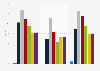
In June 2024, the European Central Bank (ECB) began reducing its fixed interest rate for the first time since 2016, implementing a series of cuts. The rate decreased from 4.5 percent to 3.15 percent by year-end: a 0.25 percentage point cut in June, followed by additional reductions in September, October, and December. The central bank implemented other cuts in the first half of 2025, setting the rate at 2.15 percent in June 2025. This marked a considerable shift from the previous rate hike cycle, which began in July 2022 when the ECB raised rates to 0.5 percent and subsequently increased them almost monthly, reaching 4.5 percent by December 2023 — the highest level since the 2007-2008 global financial crisis.
How does this ensure liquidity?
Banks typically hold only a fraction of their capital in cash, measured by metrics like the Tier 1 capital ratio. Since this ratio is low, banks prefer to allocate most of their capital to revenue-generating loans. When their cash reserves fall too low, banks borrow from the ECB to cover short-term liquidity needs. On the other hand, commercial banks can also deposit excess funds with the ECB at a lower interest rate.
Reasons for fluctuations
The ECB’s primary mandate is to maintain price stability. The Euro area inflation rate is, in theory, the key indicator guiding the ECB's actions. When the fixed interest rate is lower, commercial banks are more likely to borrow from the ECB, increasing the money supply and, in turn, driving inflation higher. When inflation rises, the ECB increases the fixed interest rate, which slows borrowing and helps to reduce inflation.
Profit from the additional features of your individual account
Currently, you are using a shared account. To use individual functions (e.g., mark statistics as favourites, set
statistic alerts) please log in with your personal account.
If you are an admin, please authenticate by logging in again.
Learn more about how Statista can support your business.
ECB. (March 6, 2026). Fluctuation of the European Central Bank fixed interest rate from 2008 to 2025 [Graph]. In Statista. Retrieved May 07, 2026, from https://www.statista.com/statistics/621489/fluctuation-of-fixed-rate-interest-rates-ecb/
ECB. "Fluctuation of the European Central Bank fixed interest rate from 2008 to 2025." Chart. March 6, 2026. Statista. Accessed May 07, 2026. https://www.statista.com/statistics/621489/fluctuation-of-fixed-rate-interest-rates-ecb/
ECB. (2026). Fluctuation of the European Central Bank fixed interest rate from 2008 to 2025. Statista. Statista Inc.. Accessed: May 07, 2026. https://www.statista.com/statistics/621489/fluctuation-of-fixed-rate-interest-rates-ecb/
ECB. "Fluctuation of The European Central Bank Fixed Interest Rate from 2008 to 2025." Statista, Statista Inc., 6 Mar 2026, https://www.statista.com/statistics/621489/fluctuation-of-fixed-rate-interest-rates-ecb/
ECB, Fluctuation of the European Central Bank fixed interest rate from 2008 to 2025 Statista, https://www.statista.com/statistics/621489/fluctuation-of-fixed-rate-interest-rates-ecb/ (last visited May 07, 2026)
Fluctuation of the European Central Bank fixed interest rate from 2008 to 2025 [Graph], ECB, March 6, 2026. [Online]. Available: https://www.statista.com/statistics/621489/fluctuation-of-fixed-rate-interest-rates-ecb/