
Robert Hooke's Discovery: The Microscopic World of Cells
Robert Hooke's Discovery: The Microscopic World of Cells
This was a game-changer.
Encyclopædia Britannica, Inc.
-
Encyclopædia Britannica, Inc.This was a game-changer.
-
Encyclopædia Britannica, Inc.Animal and plant cells house various types of internal membrane-bound compartments, or organelles. Each type of organelle carries out a specific function.
-
Encyclopædia Britannica, Inc.Time-lapse photography of a live plant cell nucleus undergoing mitosis.
-
Encyclopædia Britannica, Inc.The location, importance, and mechanisms of photosynthesis. Study the roles of chloroplasts, chlorophyll, grana, thylakoid membranes, and stroma in photosynthesis.
-
Encyclopædia Britannica, Inc.The nucleus, ribosomes, and mitochondria are all examples of organelles.
-
© Open University (A Britannica Publishing Partner)Basic similarities between cells and ways cells may vary depending on their function.
-
Encyclopædia Britannica, Inc.The cycle of infection results in the death of the host cell and the release of many virus particles, called virions.
-
Nicholas Davenport/University of Wisconsin-MadisonThis false-color movie, acquired by means of confocal microscopy, illustrates long-range calcium signaling in an embryo of the African clawed frog (Xenopus laevis). In the movie, cells are wounded with a laser (bottom-left), causing them to release signaling molecules that are sensed by adjacent cells. The signals, in addition to changes in tension across the embryo, cause a wave of calcium signaling to spread outward from the wound site. Calcium signaling helps coordinate cellular and tissue responses needed for wound repair in the frog embryo.
-
Encyclopædia Britannica, Inc.Cells are the basic units of life.


Transcript
Prior to 1665, most humans were unaware that the microscopic world existed.
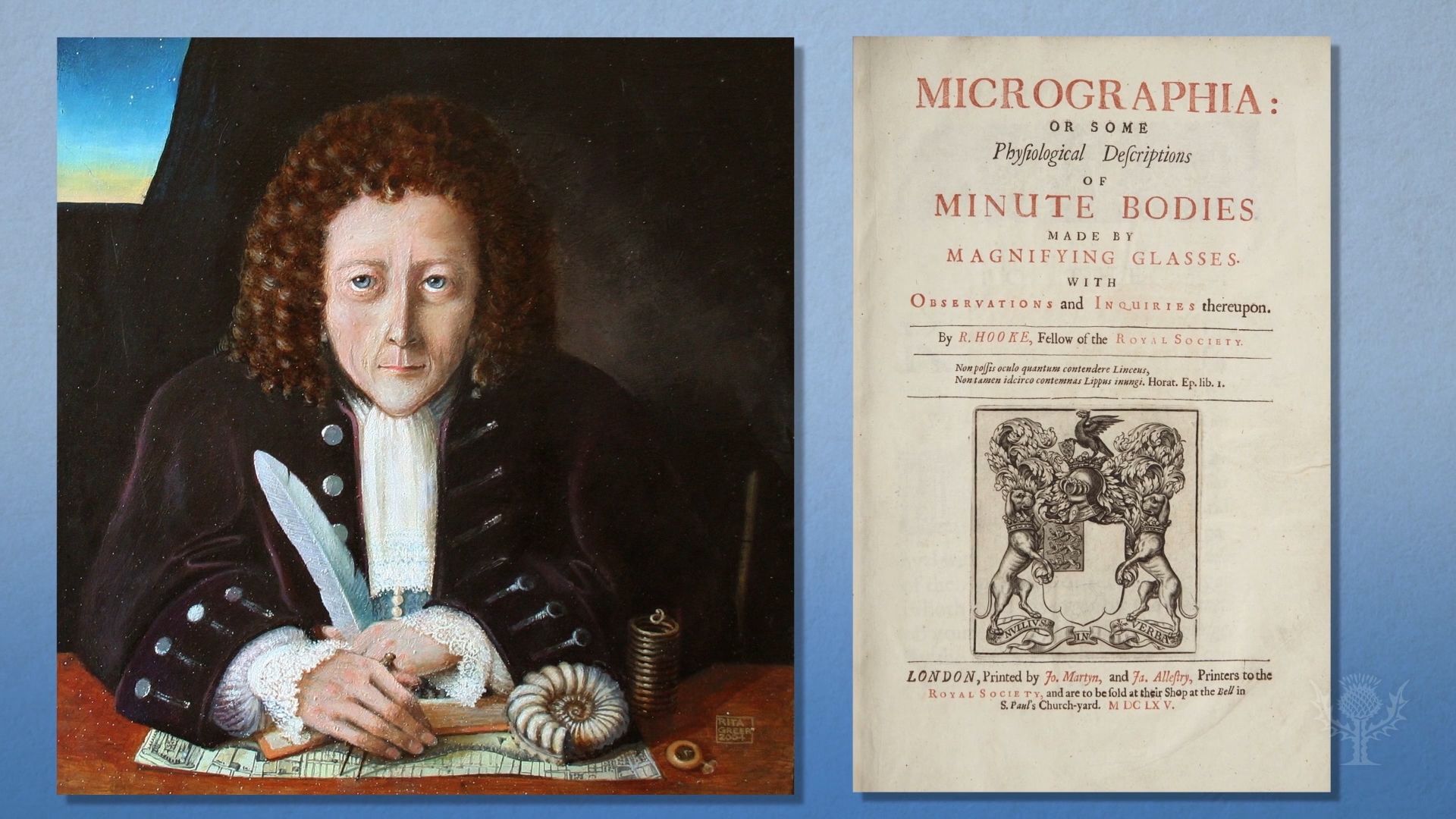
But that year, Robert Hooke published his groundbreaking Micrographia—a book that revealed this previously unseen and unknown world. Hooke was one of a small handful of scientists to embrace the first microscopes, improve them, and use them to discover nature’s hidden details. He designed his own light microscope, which used multiple glass lenses to light and magnify specimens. Under his microscope, Hooke examined a diverse collection of organisms.
A gifted illustrator, he drew and explained what he saw. This record of his observations became Micrographia.
Some of Hooke’s images were so curious and extraordinary that people refused to believe they were real! While observing cork through his microscope, Hooke saw tiny boxlike cavities, which he illustrated and described as cells. He had discovered plant cells!
Hooke’s discovery led to the understanding of cells as the smallest units of life—the foundation of cell theory.
But that year, Robert Hooke published his groundbreaking Micrographia—a book that revealed this previously unseen and unknown world. Hooke was one of a small handful of scientists to embrace the first microscopes, improve them, and use them to discover nature’s hidden details. He designed his own light microscope, which used multiple glass lenses to light and magnify specimens. Under his microscope, Hooke examined a diverse collection of organisms.
A gifted illustrator, he drew and explained what he saw. This record of his observations became Micrographia.
Some of Hooke’s images were so curious and extraordinary that people refused to believe they were real! While observing cork through his microscope, Hooke saw tiny boxlike cavities, which he illustrated and described as cells. He had discovered plant cells!
Hooke’s discovery led to the understanding of cells as the smallest units of life—the foundation of cell theory.