

afferent nerve
Learn about this topic in these articles:

 painPhysiology of pain
…by two types of primary afferent nerve fibres that transmit electrical impulses from the tissues to the spinal cord via the ascending nerve tracts. The A delta fibres are the larger and the most rapidly conducting of the two types, because of their thin myelin covering, and, therefore, they are…
…by two types of primary afferent nerve fibres that transmit electrical impulses from the tissues to the spinal cord via the ascending nerve tracts. The A delta fibres are the larger and the most rapidly conducting of the two types, because of their thin myelin covering, and, therefore, they are…
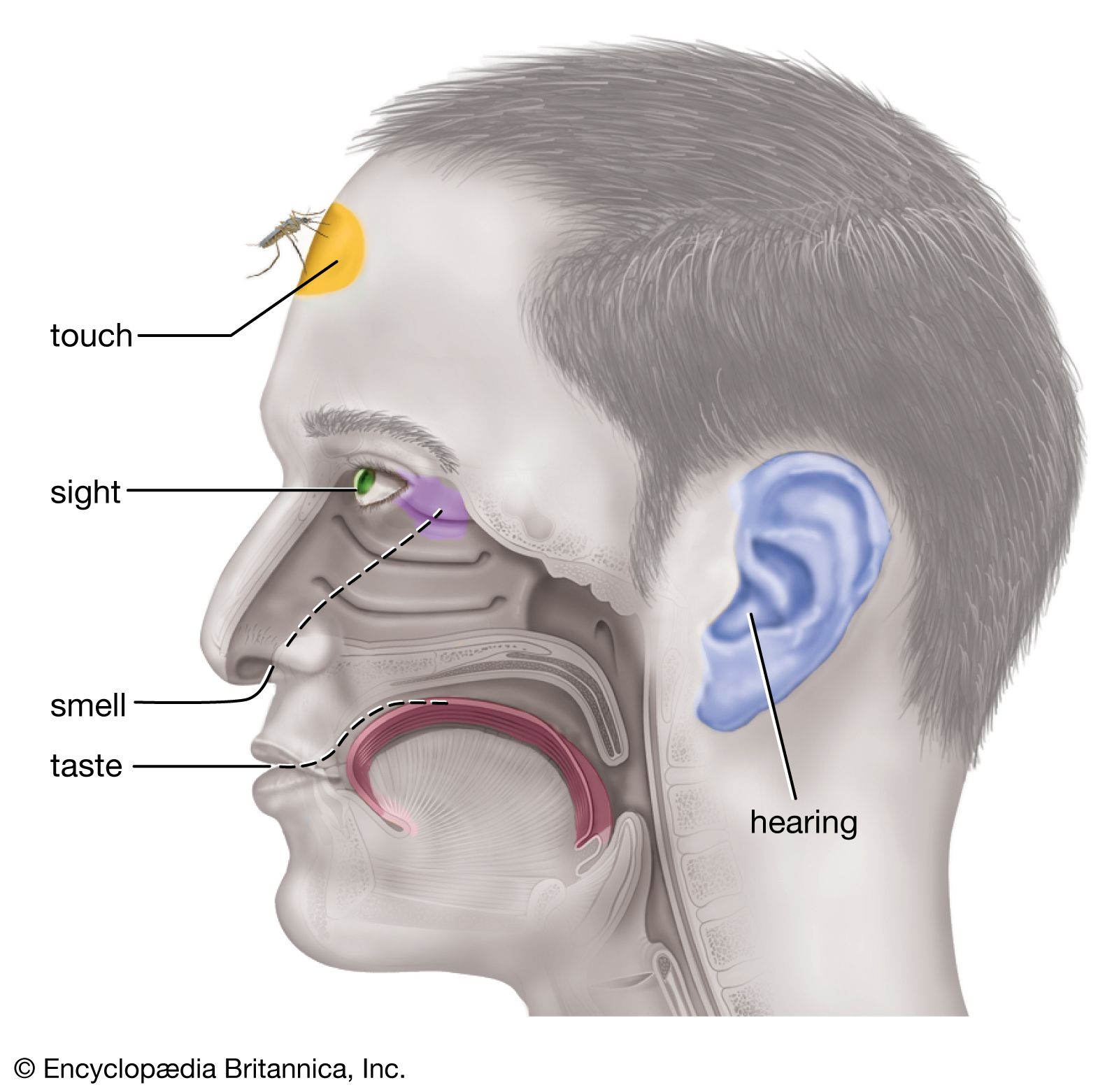 human sensory receptionBasic features of sensory structures
…(synapse) with secondary, ingoing (afferent) nerve cells that carry the nerve impulse. In some receptors, such as the skin, the individual primary cells possess threadlike structures (axons) that may be yards long, winding from just beneath the skin surface through subcutaneous tissues until they reach the spinal cord. Here,…
…(synapse) with secondary, ingoing (afferent) nerve cells that carry the nerve impulse. In some receptors, such as the skin, the individual primary cells possess threadlike structures (axons) that may be yards long, winding from just beneath the skin surface through subcutaneous tissues until they reach the spinal cord. Here,…
- human sensory receptionNerve function
Sensory (afferent) impulses from stretching the receptors (e.g., in the muscles) relay to the spinal cord and activate a path to the motor (efferent) nerves leading back to the same muscle. The knee jerk is a purely spinal reflex response (the brain is not required) which…
Sensory (afferent) impulses from stretching the receptors (e.g., in the muscles) relay to the spinal cord and activate a path to the motor (efferent) nerves leading back to the same muscle. The knee jerk is a purely spinal reflex response (the brain is not required) which…