WO2021252837A1 - Coating composition for beverage containers - Google Patents
Coating composition for beverage containers Download PDFInfo
- Publication number
- WO2021252837A1 WO2021252837A1 PCT/US2021/036926 US2021036926W WO2021252837A1 WO 2021252837 A1 WO2021252837 A1 WO 2021252837A1 US 2021036926 W US2021036926 W US 2021036926W WO 2021252837 A1 WO2021252837 A1 WO 2021252837A1
- Authority
- WO
- WIPO (PCT)
- Prior art keywords
- coating composition
- aqueous coating
- aqueous
- beverage
- cured
- Prior art date
- Legal status (The legal status is an assumption and is not a legal conclusion. Google has not performed a legal analysis and makes no representation as to the accuracy of the status listed.)
- Ceased
Links
Classifications
-
- C—CHEMISTRY; METALLURGY
- C09—DYES; PAINTS; POLISHES; NATURAL RESINS; ADHESIVES; COMPOSITIONS NOT OTHERWISE PROVIDED FOR; APPLICATIONS OF MATERIALS NOT OTHERWISE PROVIDED FOR
- C09D—COATING COMPOSITIONS, e.g. PAINTS, VARNISHES OR LACQUERS; FILLING PASTES; CHEMICAL PAINT OR INK REMOVERS; INKS; CORRECTING FLUIDS; WOODSTAINS; PASTES OR SOLIDS FOR COLOURING OR PRINTING; USE OF MATERIALS THEREFOR
- C09D151/00—Coating compositions based on graft polymers in which the grafted component is obtained by reactions only involving carbon-to-carbon unsaturated bonds; Coating compositions based on derivatives of such polymers
- C09D151/06—Coating compositions based on graft polymers in which the grafted component is obtained by reactions only involving carbon-to-carbon unsaturated bonds; Coating compositions based on derivatives of such polymers grafted on to homopolymers or copolymers of aliphatic hydrocarbons containing only one carbon-to-carbon double bond
-
- C—CHEMISTRY; METALLURGY
- C09—DYES; PAINTS; POLISHES; NATURAL RESINS; ADHESIVES; COMPOSITIONS NOT OTHERWISE PROVIDED FOR; APPLICATIONS OF MATERIALS NOT OTHERWISE PROVIDED FOR
- C09D—COATING COMPOSITIONS, e.g. PAINTS, VARNISHES OR LACQUERS; FILLING PASTES; CHEMICAL PAINT OR INK REMOVERS; INKS; CORRECTING FLUIDS; WOODSTAINS; PASTES OR SOLIDS FOR COLOURING OR PRINTING; USE OF MATERIALS THEREFOR
- C09D133/00—Coating compositions based on homopolymers or copolymers of compounds having one or more unsaturated aliphatic radicals, each having only one carbon-to-carbon double bond, and at least one being terminated by only one carboxyl radical, or of salts, anhydrides, esters, amides, imides, or nitriles thereof; Coating compositions based on derivatives of such polymers
- C09D133/02—Homopolymers or copolymers of acids; Metal or ammonium salts thereof
-
- B—PERFORMING OPERATIONS; TRANSPORTING
- B05—SPRAYING OR ATOMISING IN GENERAL; APPLYING FLUENT MATERIALS TO SURFACES, IN GENERAL
- B05D—PROCESSES FOR APPLYING FLUENT MATERIALS TO SURFACES, IN GENERAL
- B05D7/00—Processes, other than flocking, specially adapted for applying liquids or other fluent materials to particular surfaces or for applying particular liquids or other fluent materials
- B05D7/14—Processes, other than flocking, specially adapted for applying liquids or other fluent materials to particular surfaces or for applying particular liquids or other fluent materials to metal, e.g. car bodies
-
- C—CHEMISTRY; METALLURGY
- C09—DYES; PAINTS; POLISHES; NATURAL RESINS; ADHESIVES; COMPOSITIONS NOT OTHERWISE PROVIDED FOR; APPLICATIONS OF MATERIALS NOT OTHERWISE PROVIDED FOR
- C09D—COATING COMPOSITIONS, e.g. PAINTS, VARNISHES OR LACQUERS; FILLING PASTES; CHEMICAL PAINT OR INK REMOVERS; INKS; CORRECTING FLUIDS; WOODSTAINS; PASTES OR SOLIDS FOR COLOURING OR PRINTING; USE OF MATERIALS THEREFOR
- C09D7/00—Features of coating compositions, not provided for in group C09D5/00; Processes for incorporating ingredients in coating compositions
- C09D7/40—Additives
- C09D7/60—Additives non-macromolecular
- C09D7/61—Additives non-macromolecular inorganic
-
- C—CHEMISTRY; METALLURGY
- C09—DYES; PAINTS; POLISHES; NATURAL RESINS; ADHESIVES; COMPOSITIONS NOT OTHERWISE PROVIDED FOR; APPLICATIONS OF MATERIALS NOT OTHERWISE PROVIDED FOR
- C09D—COATING COMPOSITIONS, e.g. PAINTS, VARNISHES OR LACQUERS; FILLING PASTES; CHEMICAL PAINT OR INK REMOVERS; INKS; CORRECTING FLUIDS; WOODSTAINS; PASTES OR SOLIDS FOR COLOURING OR PRINTING; USE OF MATERIALS THEREFOR
- C09D7/00—Features of coating compositions, not provided for in group C09D5/00; Processes for incorporating ingredients in coating compositions
- C09D7/40—Additives
- C09D7/60—Additives non-macromolecular
- C09D7/63—Additives non-macromolecular organic
-
- C—CHEMISTRY; METALLURGY
- C09—DYES; PAINTS; POLISHES; NATURAL RESINS; ADHESIVES; COMPOSITIONS NOT OTHERWISE PROVIDED FOR; APPLICATIONS OF MATERIALS NOT OTHERWISE PROVIDED FOR
- C09D—COATING COMPOSITIONS, e.g. PAINTS, VARNISHES OR LACQUERS; FILLING PASTES; CHEMICAL PAINT OR INK REMOVERS; INKS; CORRECTING FLUIDS; WOODSTAINS; PASTES OR SOLIDS FOR COLOURING OR PRINTING; USE OF MATERIALS THEREFOR
- C09D7/00—Features of coating compositions, not provided for in group C09D5/00; Processes for incorporating ingredients in coating compositions
- C09D7/40—Additives
- C09D7/65—Additives macromolecular
-
- C—CHEMISTRY; METALLURGY
- C09—DYES; PAINTS; POLISHES; NATURAL RESINS; ADHESIVES; COMPOSITIONS NOT OTHERWISE PROVIDED FOR; APPLICATIONS OF MATERIALS NOT OTHERWISE PROVIDED FOR
- C09D—COATING COMPOSITIONS, e.g. PAINTS, VARNISHES OR LACQUERS; FILLING PASTES; CHEMICAL PAINT OR INK REMOVERS; INKS; CORRECTING FLUIDS; WOODSTAINS; PASTES OR SOLIDS FOR COLOURING OR PRINTING; USE OF MATERIALS THEREFOR
- C09D7/00—Features of coating compositions, not provided for in group C09D5/00; Processes for incorporating ingredients in coating compositions
- C09D7/40—Additives
- C09D7/66—Additives characterised by particle size
- C09D7/68—Particle size between 100-1000 nm
-
- B—PERFORMING OPERATIONS; TRANSPORTING
- B05—SPRAYING OR ATOMISING IN GENERAL; APPLYING FLUENT MATERIALS TO SURFACES, IN GENERAL
- B05D—PROCESSES FOR APPLYING FLUENT MATERIALS TO SURFACES, IN GENERAL
- B05D2202/00—Metallic substrate
- B05D2202/10—Metallic substrate based on Fe
-
- B—PERFORMING OPERATIONS; TRANSPORTING
- B05—SPRAYING OR ATOMISING IN GENERAL; APPLYING FLUENT MATERIALS TO SURFACES, IN GENERAL
- B05D—PROCESSES FOR APPLYING FLUENT MATERIALS TO SURFACES, IN GENERAL
- B05D2202/00—Metallic substrate
- B05D2202/20—Metallic substrate based on light metals
- B05D2202/25—Metallic substrate based on light metals based on Al
-
- B—PERFORMING OPERATIONS; TRANSPORTING
- B05—SPRAYING OR ATOMISING IN GENERAL; APPLYING FLUENT MATERIALS TO SURFACES, IN GENERAL
- B05D—PROCESSES FOR APPLYING FLUENT MATERIALS TO SURFACES, IN GENERAL
- B05D2401/00—Form of the coating product, e.g. solution, water dispersion, powders or the like
- B05D2401/20—Aqueous dispersion or solution
-
- B—PERFORMING OPERATIONS; TRANSPORTING
- B05—SPRAYING OR ATOMISING IN GENERAL; APPLYING FLUENT MATERIALS TO SURFACES, IN GENERAL
- B05D—PROCESSES FOR APPLYING FLUENT MATERIALS TO SURFACES, IN GENERAL
- B05D2501/00—Varnish or unspecified clear coat
- B05D2501/10—Wax
-
- B—PERFORMING OPERATIONS; TRANSPORTING
- B05—SPRAYING OR ATOMISING IN GENERAL; APPLYING FLUENT MATERIALS TO SURFACES, IN GENERAL
- B05D—PROCESSES FOR APPLYING FLUENT MATERIALS TO SURFACES, IN GENERAL
- B05D2507/00—Polyolefins
- B05D2507/005—Polyolefins modified
-
- B—PERFORMING OPERATIONS; TRANSPORTING
- B05—SPRAYING OR ATOMISING IN GENERAL; APPLYING FLUENT MATERIALS TO SURFACES, IN GENERAL
- B05D—PROCESSES FOR APPLYING FLUENT MATERIALS TO SURFACES, IN GENERAL
- B05D3/00—Pretreatment of surfaces to which liquids or other fluent materials are to be applied; After-treatment of applied coatings, e.g. intermediate treating of an applied coating preparatory to subsequent applications of liquids or other fluent materials
- B05D3/02—Pretreatment of surfaces to which liquids or other fluent materials are to be applied; After-treatment of applied coatings, e.g. intermediate treating of an applied coating preparatory to subsequent applications of liquids or other fluent materials by baking
- B05D3/0254—After-treatment
- B05D3/0272—After-treatment with ovens
Definitions
- the present disclosure relates to coating compositions for beverage containers, and aqueous coating compositions for interior surfaces of beverage containers.
- compositions have been used to coat the surfaces of packaging articles, such as beverage containers.
- metal cans are sometimes coated using coil coating or sheet coating operations where a planar coil or sheet of a suitable substrate, such as steel or aluminum metal, is coated with a suitable composition and hardened by curing in an oven. The coated substrate may then be formed into a can end or body.
- liquid coating compositions may be applied by spraying, dipping, rolling, or other suitable application methods to the formed article and then cured.
- Packaging coatings should preferably be capable of high-speed application to the substrate and provide the necessary properties when hardened to perform in this demanding end use.
- the composition and coating should be safe for food contact, have good adhesion to the substrate, and resist degradation over long periods of time, even when exposed to harsh environments.
- Many current packaging coatings suffer from one or more performance defects and/or contain extractable quantities of one or more undesirable compounds particularly when the coatings are exposed to short cure cycles.
- Beverage container ends such as easy open container ends, are often the most challenging coating application in the beverage container coating industry. In some instances, this challenge is due the severe level of fabrication a coating and substrate must endure in formation of the beverage container end.
- beverage container ends are formed by first applying the coating composition to a flat metal coil (typically aluminum or steel coil). The beverage container end is then stamped from the coated metal coil. If an easy open container is desired, a rivet to which a pull tab is attached is also formed from the substrate and such rivet has a very severe contour.
- Polyolefin dispersions have been used as spray coatings for the interior body of food or beverage containers; however, but when prior polyolefin-based compositions are used in the harsh and challenging fabrication of beverage can ends subjected to short cure times, the curing process and prior polyolefin chemistry tends to fall short of performance expectations.
- FIGS. 1 to 4 are exemplary plan and perspective views of a metal sheet having simulated tabs formed thereon for feathering evaluation as described in the Examples;
- FIG. 5 is a plot of EIS resistance data
- FIG. 6 is a plot of AC-DC-AC challenge data
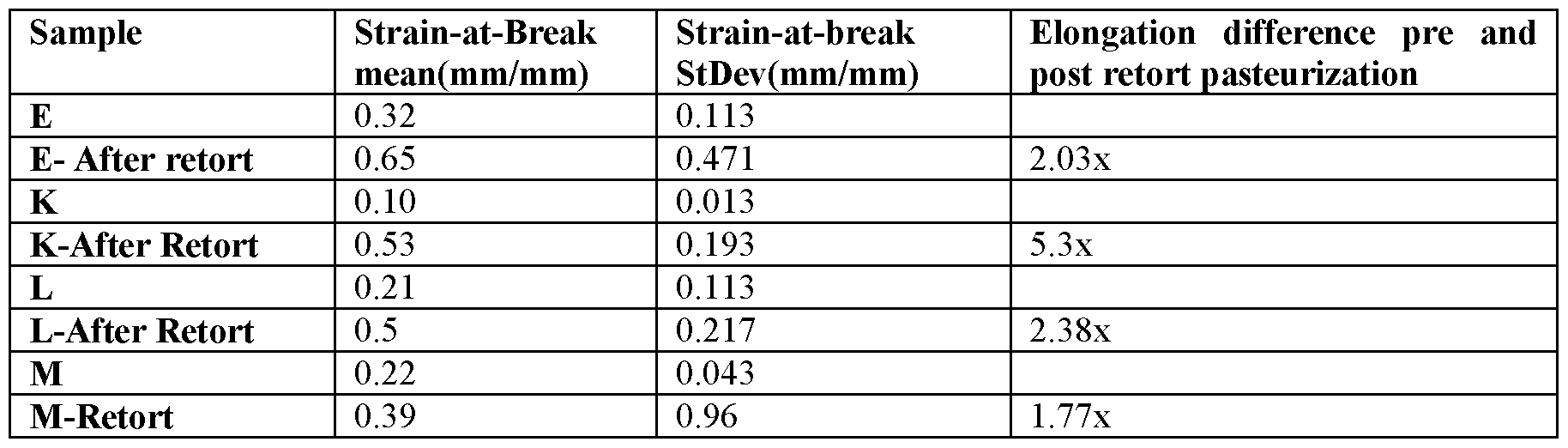
- FIG. 7 is a plot of strain-of-break.
- the present disclosure provides an aqueous coating composition suitable for a beverage container that includes an aqueous beverage can end coating composition, the aqueous coating composition comprising: a polyolefin binder system; optionally a cross linker; an aqueous carrier fluid; the aqueous coating composition, when applied to a cleaned and chrome-free pretreated flat aluminum panel and cured for 12 seconds to a peak metal temperature of 249°C to achieve a dried film thickness of approximately 12 grams per square meter, exhibits a log (resistance) of at least 6 ohms (preferably at least 7 ohms) after one cycle including lOmV of AC current from 1,000,000 to 0.1 Hz followed by -2 volts of DC current for 20 minutes and with a surface of the cured coating exposed to an electrolyte solution; and the aqueous coating composition, when applied to a smooth release surface and cured for 12 seconds to a peak metal surface temperature of 249°C to achieve a dried film thickness of approximately 12
- the aqueous coating composition of the previous paragraph may be combined with optional features in any combination.
- optional features include one or more of the following: wherein the aqueous coating composition, when applied to a cleaned and chrome-free pretreated flat aluminum panel and cured for 12 seconds to a peak metal temperature of 249°C to achieve a dried film thickness of approximately 12 grams per square meter and immersed for 45 minutes in 85°C deionized water, exhibits 0.5 mm or less of feathering, if any; and/or wherein the log (resistance) is at least 6 ohms after 4 cycles and wherein each cycle is lOmV of AC current from 1,000,000 to 0.1 Hz followed by -2 volts of DC current for 20 minutes and with a surface of the cured coating exposed to the electrolyte solution followed by a 3 hour delay; and/or wherein the log (resistance) after the first cycle is between 6 and 12 ohms; and/or wherein the cured and
- the aqueous coating composition of any preceding paragraph may also be combined with or include other optional features in any combination with the features of the previous paragraphs.
- Such features include: wherein the aqueous coating composition is suitable for forming a beverage contact coating of an easy open end of a beverage container; and/or wherein the coating composition is an interior beverage can end coating composition; and/or further including a cure catalyst, an adhesion promoter, food-grade reinforcing filler particles, or combinations thereof (e.g., as combination of separate ingredients or one ingredient that fulfill two or more functions simultaneously); and/or wherein the adhesion promotor is a transition metal functional material, an acid functional material, a silane functional material, or combinations thereof; and/or wherein the adhesion promoter also functions as a cure catalyst for the coating composition, a crosslinker for the coating composition, or both; and/or wherein the adhesion promoter is the acid functional material and selected from a (meth)acrylated acidic ester; a (meth)acrylated acidic este
- the aqueous coating composition embodiments of any previous paragraph in this summary may further be combined with yet other optional features in any combination for further embodiments of this disclsoure.
- These further optional features may include: wherein the polyolefin binder system includes a polyolefin copolymer with structural units derived from reactants including two or more C2 to CIO alpha-olefins; and/or wherein the alpha-olefins are selected from C2 to C6 alpha- olefins; and/or wherein the alpha-olefins are selected from C2 to C4 alpha-olefins; and/or wherein the polyolefin binder system includes a polyolefin copolymer with structural units derived from reactants including ethylene and one or more C3 to CIO alpha-olefins; and/or wherein the polyolefin binder system includes a polyolefin copolymer with structural units
- the present disclosure relates to an article comprising a metal substrate having a riveted beverage can end with a coating disposed on at least a portion of the riveted beverage can end and wherein the coating is formed from the aqueous coating composition of any of the preceding paragraphs.
- the article of the preceding paragraph may be combined with other optional features or embodiments in any combination.
- These features or embodiments include: wherein the coating is present as an interior food-contact coating wherein the coating passes less than 5 milliamps of current when tested as described herein; and/or wherein the aqueous coating composition, when applied to a cleaned and chrome-free pretreated flat aluminum panel and cured for 12 seconds to a peak metal temperature of 249°C to achieve a dried film thickness of approximately 12 grams per square meter and immersed for 45 minutes in 85°C deionized water, exhibits 0.5 mm or less of feathering, if any; and/or wherein after the beverage can end has been immersed for 45 minutes in 85°C deionized water, the coating exhibits 0.5 mm or less of feathering, if any; and/or wherein the coating has an average dry coating thickness of about 7 micrometers to about 15 micrometers; and/or wherein the metal substrate of the beverage can end has an average thickness of
- methods comprising causing the aqueous coating composition of any of prior paragraph(s) to be used as a beverage can end coating composition.
- the method comprising causing the aqueous coating composition to be used as an internal beverage can end coating composition on aluminum substrate that has been pretreated with a non-chromium-based (e.g., zirconium and acrylic- based) treatment prior to coating with the aqueous coating composition and/or comprising causing the aqueous coating composition to be used as an internal beverage can end coating composition with a cure time of less than 12 seconds.
- a non-chromium-based e.g., zirconium and acrylic- based
- organo or “organic group” means a hydrocarbon group (with optional elements other than carbon and hydrogen, such as oxygen, nitrogen, sulfur, and silicon) that is classified as an aliphatic group, cyclic group, or combination of aliphatic and cyclic groups (e.g., alkaryl and aralkyl groups).
- aliphatic group means a saturated or unsaturated linear or branched hydrocarbon group. This term is used to encompass alkyl, alkenyl, and alkynyl groups, for example.
- acrylate resin means a resin that includes acrylate and/or methacrylate monomers, oligomers, and/or polymerizable polymers.
- (meth)acrylate is a shorthand reference to acrylate, methacrylate, or combinations thereof
- (meth)acrylic is a shorthand reference to acrylic, methacrylic, or combinations thereof.
- the term “acrylic component” includes any compound, polymer, or organic group formed from, or containing, an acrylate or methacrylate compound (e.g., acrylic or methacrylic acid and esters thereof). As discussed in further detail below, the acrylic component may also additionally be formed from, or contain, one or more other vinyl monomers.
- polymer and “copolymer” refer to molecule that includes a large number of similar units banded together with covalent bonds.
- the terms “polymer” and “copolymer” are interchangeable and may refer to a homopolymer that is formed from repeating units of one structural unit or monomer as well as a copolymer that may be formed from different types of structural units or monomers.
- the term "substantially free" when used with respect to a composition that may contain a particular compound means that the composition contains less than 1,000 parts per million (ppm) of the recited compound regardless of the context of the compound in the composition (e.g., regardless of whether the compound is present in unreacted form, in reacted form as a structural unit of another material, or a combination thereof).
- a vinyl polymer formed from vinyl monomers or oligomers that include a pendant epoxy moiety would be considered epoxy-free because the vinyl polymer would be free of epoxy backbone segments.
- Coating compositions that are referred to as “epoxy-free” are not made using any polymers or other material having epoxy backbone segments.
- Adhesion Test refers, respectively, to the adhesion, blush resistance, stain resistance, and porosity test methodologies described in the Test Methods section below.
- the Adhesion Test, Blush Resistance Test, Stain Resistance Test, and Porosity Test are collectively referred to as the “Coating Property Tests.”
- Each of these respective tests is by definition performed after a coating composition of the present invention is suitably cured and retorted or pasteurized pursuant to the retort method or pasteurization method included in the Test Methods section below.
- retort generally refers to conditions associated with food or beverage preservation or sterilization that include a temperature of 100° C or higher. To achieve temperatures higher than 100° C, conditions associated with retort also frequently include pressures in excess of atmospheric pressure.
- retortable generally refers to the ability of a coating to withstand exposure to one or more such conditions and still exhibit one or more suitable film or coating properties.
- Feathering is a term used to describe the adhesion loss of a coating on the tab of a food or beverage can or container end.
- a portion of free film may be present across the opening of the container or can if the coating loses adhesion on the tab. Such portion of free film is considered feathering.
- the methods may include forming the aqueous coil coating composition as described herein and applying the composition to a metal substrate using coil coating methods.
- the compositions herein may also be applied to metal substrates either before or after forming the metal substrate into a beverage container or portion thereof using other suitable beverage can end application techniques.
- the binder system may be a polyolefin binder system such as a polyolefin dispersion or aqueous polyolefin dispersion.
- the polyolefin binder system may include structural or monomer units derived from two or more C2 to C12 alpha olefins and may include other optional structural units and/or other optional binder resins as needed for a particular application.
- the binder system of the present invention can include one or more optional structural units or optional binding resins including acid functional groups (e.g., carboxylic groups), hydroxyl groups, amine, aldehyde, ester, ethoxylate, oxirane groups, or combinations thereof.
- the binder systems herein are water-dispersible binder systems.
- the compositions herein may include an optional cross linker.
- the cross linker is a nitrogen-containing carboxyl -reactive cross linker.
- the cross linker may be a hydroxyalkylamide cross linker.
- Such cross linkers allow for production of a formaldehyde-free and epoxy-free coil coating composition having sufficient flexibility and corrosion resistance at the same time for use as an interior or exterior coating of a beverage can and, in particular, container ends including rivets.
- the cross linker can have any suitable combination of one or more carboxyl - reactive functional groups, and more preferably includes two or more such groups. Hydroxyl groups are preferred carboxyl -reactive groups. Other suitable carboxyl -reactive groups may include thiol groups.
- the cross linker includes two or more, three or more, or four or more hydroxyl groups.
- compositions herein may also include a catalyst or other adhesion promotor.
- the catalyst in preferred approaches, is a water-dispersible (and preferably water-soluble) transition metal catalyst, and more preferably an organometallic transition metal catalyst.
- the organometallic catalyst includes at least one metal selected from aluminum (Al), cobalt (Co), iron (Fe), titanium (Ti), zinc (Zn), zirconium (Zr), or mixtures thereof.
- the catalyst may be an organometallic catalyst having organic ligands such that the catalyst is water soluble, and/or water-dispersible.
- the metal substrate is a metal typically used in the beverage packaging industry.
- the metal substrate includes steel, aluminum, or a combination thereof.
- the metal substrate is aluminum, and more preferably a chromium-free, pre-treated aluminum.
- the metal substrate may be formed into a beverage can end and may include a riveted beverage can end.
- the aqueous beverage can end coating composition is a cured coating having certain adhesion, material properties, and/or mechanical characteristics when applied to a substrate and cured to achieve good feathering.
- the aqueous coating composition when applied to a cleaned and chrome-free pretreated flat aluminum panel and cured for 12 seconds to a peak metal temperature of 249°C to achieve a dried film thickness of approximately 12 grams per square meter, exhibits a log (resistance) of at least 6 ohms (preferably at least 7 ohms) after one cycle including lOmV of AC current from 1,000,000 to 0.1 Hz followed by -2 volts of DC current for 20 minutes and with a surface of the cured coating exposed to an electrolyte solution; and the aqueous coating composition, when applied to a smooth release surface and cured for 12 seconds to a peak metal surface temperature of 249°C to achieve a dried film thickness of approximately 12 grams per square meter and when removed therefrom and cut into
- the aqueous coating composition when applied to a cleaned and chrome-free pretreated flat aluminum panel and cured for 12 seconds to a peak metal temperature of 249°C to achieve a dried film thickness of approximately 12 grams per square meter and immersed for 45 minutes in 85°C deionized water, exhibits 0.5 mm or less of feathering, if any.
- the aqueous coating composition when cured may also exhibit a log (resistance) of at least about 6 ohms after 4 cycles and wherein each cycle is lOmV of AC current from 1,000,000 to 0.1 Hz followed by -2 volts of DC current for 20 minutes and with a surface of the cured coating exposed to the electrolyte solution followed by a 3 hour delay.
- log resistance
- Such characteristics are not results of any particular composition, but mechanical or material characteristics of the cured coating that achieve good adhesion, flexibility, and corrosion resistance all at the same time.
- the aqueous coating compositions herein may include a polyolefin dispersion compatible cure catalyst, an adhesion promoter, food-grade reinforcing filler particles, and/or combinations thereof. These components may be a combination of separate ingredients or one or more ingredients that fulfill two or more functions simultaneously.
- the unique combination of the binder system, optional cross linker, and cure catalyst herein enables non-formaldehyde and non epoxy binder systems to achieve the robust performance needed for beverage container end applications even when using short cure cycles.
- unique combinations of adhesion promotors and filler particles may also achieve such robust performance.
- This unique combination of components unexpectedly decreases the energy required for cross linking and achieves a high level of product resistance and flexibility at the same time generally required for the internal coating (and in particular the easy open end) of beverage metal packaging.
- the performance can be obtained without the need for melamine and/or formaldehyde cross linkers.
- the resulting coating is capable of exhibiting such beneficial coating properties, while also exhibiting excellent feathering properties.
- the curing process of the coil coating application is often very short (such as, flash peak metal temperatures of about 200°C to about 260°C (in other approaches, about 230 to about 260°C) achieved in about 8 to 20 seconds oven cure time, preferably, about 8 to about 15 seconds oven cure time, more preferably, about 8 to about 14 seconds oven cure time, and even more preferably, about 10 to about 12 seconds oven cure time.
- flash peak metal temperatures of about 200°C to about 260°C (in other approaches, about 230 to about 260°C) achieved in about 8 to 20 seconds oven cure time, preferably, about 8 to about 15 seconds oven cure time, more preferably, about 8 to about 14 seconds oven cure time, and even more preferably, about 10 to about 12 seconds oven cure time.
- the coil coating compositions herein do not include any intentionally added bisphenol components (such as bisphenol A or bisphenol F), are formaldehyde-free, and suitable for a water-based formation including the polyolefin- based binder systems herein. In some such approaches, the coil coating compositions are further styrene-free and/or epoxy-free. Further details of the compositions and methods are provided below.
- the polyolefin binder system of the aqueous coil coating compositions herein preferably includes a base polymer including at least one polyolefin polymer with monomer units or structural units derived at least from reactants including two or more C2-C12 alpha-olefins and, in some approaches, an aqueous dispersion of the two or more alpha-olefins.
- the polyolefin polymer of the binder system is derived from ethylene and one or more C3-C12 alpha-olefins and, in one example, includes ethylene structural units (or ethylene monomer moieties) as well as C3 to C12 structural units (or C3 to C12 monomer moieties).
- the polyolefin polymer of the binder system is derived from ethylene and one or more C3-C6 alpha-olefins or C3-C4 alpha- olefins.
- the polyolefin binder system includes a polyolefin polymer with structural units derived from ethylene and propylene.
- an ethylene structural unit (or monomer moiety) generally refers to a -H2C-CH2- unit within a copolymer chain, which is derived from an ethylene molecule or reactant during copolymerization, with a similar definition applying to C3-C12 alpha-olefin structural units (or monomer moieties).
- an olefin may also generally refer to a family of organic compounds that are alkenes with a chemical formula C x Fh x , where x is the carbon number and having a double bond within its structure.
- the coating compositions herein include about 90% to about 40% weight percent of the polyolefin binder system, preferably about 80% to about 50% weight percent of the polyolefin binder system, and even more preferably about 70% to about 60% weight percent of the polyolefin binder system based on the total weight of the composition.
- the coating compositions herein include about 40% to about 20% weight percent of the polyolefin binder system, preferably about 36% to about 23% weight percent of the polyolefin binder system, and even more preferably about 32% to about 28% weight percent of the polyolefin binder system based on the total weight of resin solids in the composition
- the polyolefin polymer may have a number average molecular weight suitable for can coating applications and may be greater than about 1,000; greater than about 5,000; greater than about 10,000; greater than about 15,000; or even greater than about 50,000
- the polyolefin polymer may include from about 1 to about 40 percent by weight of structural units derived from one or more alpha-olefin comonomers.
- the weight percent of structural units derived from the one or more alpha-olefin comonomers is from about 1 to about 35 percent, from about 1 to 30 percent by weight, from about 3 to about 27 percent by weight, from about 3 to about 20 percent by weight, or from about 3 to about 15 percent by weight of units derived from one or more alpha-olefin comonomers.
- alpha-olefin refers to olefins having a double bond within its structure at the primary or alpha position.
- the C2-C12 alpha-olefin monomer moieties or structural units have a carbon number from two to twelve.
- the carbon number of the C2-C12 alpha- olefin monomer moieties may be 2, 4, 5, 6, 7, 8, 9, 10, 11, or 12.
- the C3-C12 alpha-olefin monomer moieties or structural units may be derived from a propylene reactant.
- the C2-C10 alpha-olefin monomer moieties may be derived from reactants including but are not limited to, homopolymers and copolymers (including elastomers) of one or more alpha-olefins such as ethylene, propylene, 1-butene, 3-methyl-l- butene, 4-methyl- 1-pentene, 3 -methyl- 1-pentene, 1-heptene, 1 -hexene, 1-octene, 1-decene, and/or 1-dodecene.
- reactants including but are not limited to, homopolymers and copolymers (including elastomers) of one or more alpha-olefins such as ethylene, propylene, 1-butene, 3-methyl-l- butene, 4-methyl- 1-pentene, 3 -methyl- 1-pentene, 1-heptene, 1 -hexene, 1-octene, 1-decene, and/or 1-dodecen
- the resultant polymers may be polyethylene, polypropylene, poly-1- butene, poly-3 -methyl -1 -butene, poly-3 -methyl- 1-pentene, poly-4-methyl- 1-pentene, ethylene-propylene copolymer, ethyl ene-1 -butene copolymer, and propylene- 1 -butene copolymer; copolymers (including elastomers) of an alpha-olefin with a conjugated or non- conjugated diene, as can be represented by ethylene-butadiene copolymer and ethylene- ethylidene norbornene copolymer; and polyolefins (including elastomers) such as copolymers of two or more alpha-olefins with a conjugated or non-conjugated diene, as can be represented by ethylene-propylene-butadiene copolymer, ethylene-propylene-dicyclo pen
- the polyolefin binder system includes a base polyolefin polymer that is not readily dispersible in water by itself.
- base polyolefin polymers include higher molecular weight polyolefin polymers that do not include polar functional groups and may be thermoplastic polymers.
- examples include non-functionalized ethylene polymers, non-functionalized propylene polymers, non-functionalized propyl ene/ethylene copolymers, and copolymers and combinations thereof.
- Such base polyolefin polymers typically have number average molecular weights in excess of 10,000, 15,000, 20,000, or even 50,000.
- the polyolefin binder system includes either one or more base polyolefin polymers in combination with a polymeric stabilizing agent, and optionally, a compatibilizer (more preferably a polymeric coupling agent).
- the polymeric stabilizing agent is typically a hydrophilic material that is water- dispersible on its own.
- Preferred polymeric stabilizing agents are acid-functional or anhydride-functional. Suitable such polymeric stabilizing agents may include, e.g., ethylene (meth)acrylic acid copolymers such as those sold by The Dow Chemical Company under the PRIMACOR line of products, as well as any other water-dispersible polymers disclosed herein.
- the one or more base polyolefin polymers can be melt blended in a suitable process (e.g., an extrusion process such as Dow’s BLUEWAVE process) to yield an aqueous dispersion including both the base polyolefin polymer stably dispersed therein and the polymeric stabilizing agent.
- a suitable process e.g., an extrusion process such as Dow’s BLUEWAVE process
- the polyolefin binder system may also include other structural units, such as acid-functionalized structural units or, alternatively, may include acid-functionalized polyolefin polymers, which may be an interpolymer of an olefin structural unit as described above and one or more olefmically-unsaturated organic co monomers.
- the other functional polymers may be the stabilizing agent or a stabilizing and/or surfactant agent.
- the co-monomers or separate polymers may be (meth)acrylates, vinyl esters, and/or olefmically unsaturated carboxylic acids.
- Ri and/or R2 is -OH, -O-hydrocarbyl, -NH2, and taken together Ri and R2 can be -O- so as to form an anhydride.
- Ri and R2 are such that both carboxylic functions can enter into acylation reactions.
- polymeric stabilizing agents include, but are not limited to, ethylene ethyl acrylate copolymers, ethylene methyl methacrylate copolymers, ethylene butyl acrylate copolymers, and combinations thereof as functionalized per the discussions herein.
- ethylene-carboxylic acid copolymers may also be used.
- Those having ordinary skill in the art will recognize that a number of other useful polymers may also be used.
- the coating compositions herein may also include the optional compatibilizer.
- the compatibilizer can help in formation of the aqueous dispersion, such as, help provide a more uniform dispersion, and/or improve properties of a cured coating composition.
- Compatibilizers may also be referred to as coupling agents or polymeric coupling agents.
- the compatibilizer in some approaches, can include a modified or functionalized polymer and optionally a low molecular weight compound having reactive polar groups.
- the compatibilizer include, but are not limited to modified olefin polymers.
- the modified olefin polymers can include graft copolymers and/or block copolymers, such as propylene-maleic anhydride graft copolymer.
- groups that can modify the polymer include, but are not limited to, acid anhydrides, carboxylic acids, carboxylic acid derivatives, primary and secondary amines, hydroxyl compounds, oxazoline and epoxides, and ionic compounds, and combinations thereof.
- compatibilizers include, but are not limited to, polymers available, under the trade names LICOCENE® from Clariant Corporation, such as LICOCENE® 6452, which is a propylene-maleic anhydride graft copolymer; EXXELORTM from ExxonMobil Chemical Company; and Epolene from Westlake Chemical Company.
- the polyolefin binder system may further include an emulsion polymerized ethylenically unsaturated monomer component.
- some or all of the ethylenically unsaturated monomer component is polymerized in the presence of an aqueous dispersion of the polyolefin binder system.
- materials and methods relating to the emulsion polymerized ethylenically unsaturated monomer component see, for example, U.S. 9,404,006 (Li) and U.S. Publ. No. 2019/0292398 (Gao et. ah).
- the polyolefin binder system is not prepared using halogenated monomers such as chlorinated vinyl monomers.
- the coating composition is substantially free of, completely free of, or does not contain halogenated monomers (whether free or polymerized).
- the binder system includes thermoplastic polyesters.
- the aqueous dispersion of the binder system may include a melt blend of one or more polyester resins (such as polyethylene terephthalate polyester resins obtained from suitable dicarboxylic acid components and diol components), one or more stabilizing agents (such as at least one second polyester or other water- dispersible polymer), one or more neutralizing agents; and water.
- polyester resins such as polyethylene terephthalate polyester resins obtained from suitable dicarboxylic acid components and diol components
- stabilizing agents such as at least one second polyester or other water- dispersible polymer
- neutralizing agents such as at least one second polyester or other water- dispersible polymer
- the one or more stabilizing agents suitable for the thermoplastic polyester dispersions may include one or more second polyesters to promote the formation of a stable dispersion.
- the second polyester has a carboxylic acid group and an acid number of about 15 or more based on the solid content of the second polyester or may be a self-dispersing sulfopolyester.
- the neutralizing agent may be a base, such as ammonium hydroxide, sodium hydroxide, or potassium hydroxide.
- Other neutralizing agents can include lithium hydroxide or sodium hydroxide, a carbonate, or an amine such as monoethanolamine, or 2-amino-2-methyl-l -propanol (AMP).
- Amines useful in embodiments disclosed herein may include diethanolamine, triethanolamine, and TRIS AMINOTM (each available from Angus), NEUTROLTM TE (available from BASF), as well as triisopropanolamine, diisopropanolamine, and N,N-dimethylethanolamine (each available from The Dow Chemical Company, Midland, Mich.).
- TRIS AMINOTM each available from Angus
- NEUTROLTM TE available from BASF
- triisopropanolamine diisopropanolamine
- N,N-dimethylethanolamine each available from The Dow Chemical Company, Midland, Mich.
- non-melt blend polyester dispersions may be prepared as described in WO 2018/118802.
- cross linker In certain embodiments, the aqueous coating compositions (typically coil coating compositions) may be formulated using one or more optional curing agents or cross linking resins, sometimes referred to as cross linkers.
- the choice of particular cross linker typically depends on the particular product being formulated. In some instances, the use of certain nitrogen-containing carboxyl -reactive cross linkers are preferred for the aqueous coating compositions.
- Suitable nitrogen-containing carboxyl -reactive cross linkers include hydroxyalkylamide cross linkers and allow for production of a formaldehyde-free aqueous coating composition including the polyolefin binder system above having sufficient flexibility for use as an interior or exterior coating of a food or beverage can, and particularly an as interior or exterior coating of an easy open beverage can end.
- the coating compositions herein include about 30% to about 0.5% weight percent of the cross linker, preferably about 20% to about 2% weight percent of the cross linker, and even more preferably about 15% to about 3% weight percent of the cross linker based on the total weight of the composition.
- the nitrogen-containing carboxyl -reactive cross linker can have any suitable combination of one or more carboxyl-reactive functional groups, and more preferably includes two or more such groups. Hydroxyl groups are preferred carboxyl -reactive groups. Other suitable carboxyl -reactive groups may include thiol groups. In some embodiments, the nitrogen containing carboxyl -reactive cross linker includes two or more, three or more, or four or more hydroxyl groups.
- the nitrogen-containing carboxyl -reactive cross linker can include any suitable number of nitrogen atoms, although it will typically include two or more nitrogen atoms, and, in some embodiments, two total nitrogen atoms. In other embodiments, one or more (and more preferably two or more) nitrogen atoms are present in an amide group, an aziridine group, an imide group, a diimide group, an oxazoline group, a urethane group, or a combination thereof. In some approaches, the nitrogen-containing carboxyl -reactive cross linker includes two or more amide groups.
- the nitrogen containing carboxyl-reactive cross linker includes one or more, and more preferably two or more, groups having the structure of the below Formula II:
- each R 3 is independently an organic group
- each R 4 is independently hydrogen or an organic group.
- the depicted hydroxyl group can be a primary hydroxyl group, secondary hydroxyl group, or tertiary hydroxyl group depending on the structure of R 3.
- the hydroxyl group is a primary hydroxyl group.
- R 3 can include any suitable number of carbon atoms, but will typically include from 2 to 10 carbons atoms, more typically from 2 to 8 carbon atoms, more typically from 2 to 6 carbons atoms, and even more typically from 2 to 4 carbon atoms.
- R 3 will typically include at least two carbon atoms in a chain connected on one end to the depicted nitrogen atom and on the other end to the depicted hydroxyl group.
- the depicted hydroxyl group is attached directly to a first carbon atom, which is attached directly to a second carbon, which is in-turn attached directly to the depicted nitrogen atom.
- R 3, is a -(Clh)2- moiety.
- R 3 is an alkylene group preferably containing from 1 to 5 carbon atoms (e.g., methylene, ethylene, n-propylene, sec-propylene, n-butyl, sec-butylene, tert-butylene, pentylene, etc.).
- R4 is an organic group that includes a hydroxyl group. In some such embodiments, R4 has the structure HO-R3-, wherein R3 is as described above.
- the nitrogen containing carboxyl-reactive cross linker is a compound having the structure of the below Formula IV
- the nitrogen containing carboxyl -reactive cross linker is a compound having the structure of Formula V
- X is a bivalent organic group, and wherein the hydroxyl groups are independently primary or secondary hydroxyl groups.
- X is an alkylene group.
- X is a -(CFh - group wherein (i) m is an integer of 1 or more, 2 or more, 3 or more, 4 or more, and more typically from 2 to 10 and (ii) one or more hydrogens may be replaced with substituent groups (e.g., organic substituent groups).
- X is -(CFh ⁇ - [071]
- the hydroxyl group attached to the R3 moiety or of the R4 moiety of Formula IV or V is a secondary hydroxyl group or located in a beta position relative to a nitrogen atom, more preferably a nitrogen atom of an amide bond.
- the nitrogen-containing carboxyl -reactive cross linker is a beta-hydroxyalkylamide compound.
- Such compounds include: bis[N,N- di(P-hydroxy-ethyl)]adipamide, bis[N,N-di(P-hydroxy-propyl)]succinamide, bis[N,N-di(P- hydroxy-ethyl )]azelamide, bis[N,N-di(P-hydroxy-propyl)]adipamide, bis[N-metil-N-(P- hydroxy-ethyl)]oxamide, and mixtures thereof.
- the PRIMID QM-1260 product commercially available from EMS is an example of a beta-hydroxyalkylamide cross linker. The structure believed to correspond to the PRIMID QM-1260 product is provided by Formula VI below:
- beta-hydroxyalkylamides such as those of Formula IV, V, or VI
- the nitrogen containing carboxyl -reactive cross linker is preferably capable of forming an oxazolinium intermediate or other carbon-nitrogen heterocyclic intermediate having enhanced reactivity with carboxyl groups.
- such reactive intermediates are formed under the short cure time of typical beverage can ends coating thermal cure conditions.
- such reactive intermediates may be formed in come embodiments even at oven bake conditions having a peak metal temperature from about 200 to about 260 °C (in some approaches, about 230 to about 260°C) and during a relative short oven residence time of only about 8 to about 20 seconds, 8 to 15 seconds, 8 to 12 second, or even 10 to 12 seconds.
- carboxyl -reactive crosslinkers are preferred for reasons already discussed, other crosslinkers known for use in can coatings may additionally, or alternatively, be used.
- any of the well-known, hydroxyl -reactive curing resins can be used.
- phenoplast, blocked isocyanates, and aminoplast curing agents may be used, as well as combinations thereof.
- the aqueous coating compositions of this disclosure preferably further include a cure catalyst, which in some approaches, is a transition metal catalyst.
- the transition metal catalyst is preferably an organometallic transition metal catalyst that is water- dispersible (and preferably water-soluble).
- the transition metal catalyst preferably includes at least one metal selected from aluminum (Al), cobalt (Co), iron (Fe), titanium (Ti), zinc (Zn), zirconium (Zr), or mixtures thereof, and in other approaches, titanium and/or zirconium.
- the cure catalysts herein may also function as a crosslinker, and an adhesion promotor.
- the organometallic transition metal catalyst includes one or more alkoxy ligands bound to a transition metal core or base.
- the one or more ligands are one or more alkoxycarbonyl ligands wherein the alkoxy or the alkoxycarbonyl ligands include a Cl to C6 alkyl group.
- Suitable commercially available titanium-containing catalysts may include, for example, those available under the trade names VERTEC IA10, PI2, TAA, TET, and XL900 (all from Johnson Matthey, Chicago Ill.); and TYZOR 131, LA, TE, IAM, and TPT (all from Du Pont de Nemours, Wilmington Del.).
- the zirconium-containing catalyst is selected from the group consisting of zirconium propionate, zirconium acetate, ammonium zirconyl carbonate, zirconate (2)-bis[carbonato(2)-0]dihydroxy-diammonium, zirconium chelated salts (such as tetrakis [[2,2',2''-nitrilotris(ethanolato)](l)-N,0]zirconium), sodium zirconium lactate, sodium zirconium glycolate, and combinations thereof.
- Preferred coating compositions contain at least about 0.1, more preferably at least about 1, and more preferably at least about 3 wt-% of silane coupling agent, based on the total nonvolatile weight of the coating composition.
- Preferred coating compositions contain less than about 15, more preferably less than about 12, and even more preferably less than about 9 wt-% of silane coupling agent, based on the total nonvolatile weight of the coating compositions.
- the compositions herein may also include high aspect ratio, food-grade (approved for food contact) filler particles optionally in combination with adhesion promotors.
- the food-grade reinforcing filler particles may have an aspect ratio of at least 5:1 and less than 200:1 with a maximum particle size of 1 microns or 0.5 microns. In other approaches, the particles may be greater than 100 nanometers.
- the food-grade reinforcing filler particle may be a talc, mica, silica, calcium carbonate, or combinations thereof.
- the filler particle may also be food-grade glass beads, polymer fibers such as polyolefin fibers, polyester fibers, or acid functional polymer fibers, or combinations thereof.
- the coating compositions of the present disclosure may include a carrier fluid in a range of at least about 30% weight percent, at least about 25% weight percent, or at least about 20% weight percent to about 10% weight percent or less, about 6% weight percent or less, or about 3% weight percent or less.
- the carrier fluid may be water and such percentages herein may reflect amounts of water in the compositions.
- the aqueous coating compositions herein are substantially free of all bisphenol compounds, as well as structural units derived therefrom. In certain embodiments, the aqueous coating compositions are essentially free of all bisphenol compounds, as well as structural units derived therefrom. In certain embodiments, the aqueous coating compositions are essentially completely free of all bisphenol compounds, as well as structural units derived therefrom. In certain embodiments, the aqueous coating compositions are completely free of all bisphenol compounds, as well as structural units derived therefrom. By way of example, hydroquinone, resorcinol, catechol, and the like are not bisphenols because these phenol compounds only include one phenylene ring.
- any suitable cure mechanism may be employed.
- the coating composition can be subjected to thermal convection, ultraviolet radiation, electromagnetic magnetic radiation or combinations thereof in a curing cycle that provides sufficient drying and curing of the coating composition to form a desired final coating.
- the composition can be cured using a variety of processes, including, for example, oven baking conventional methods, or any other method that provides an elevated temperature suitable for curing the coating.
- the curing process may be performed in either discrete or combined steps.
- substrates can be dried at ambient temperature to leave the coating compositions in a largely un-crosslinked state.
- the coated substrates can then be heated to fully cure the compositions.
- coating compositions of the present invention can be dried and cured in one step.
- Feathering refers to the adhesion loss of a coating adjacent to the drinking spout of a beverage can or container end and, when present, indicates that a portion of free film may remain across the opening of a container or can when opened.
- Exemplary coatings of the present invention display one or more of the properties described in the Examples Section.
- Blush resistance measures the ability of a coating to resist attack by various solutions after pasteurization or retort. Typically, blush is measured by the amount of water absorbed into a coated film. When the film absorbs water, it generally becomes cloudy or looks white. Blush is generally measured visually using a scale of 0 to 10 where a rating of “10” indicates no blush and a rating of “0” indicates complete whitening of the film. Blush ratings after pasteurization or retort (as described herein) of at least 6 are preferred and 7 or above are more preferred, and 9 or above are most preferred.
- Retort Testing is accomplished by subjecting the coating substrate to heat ranging from 105 to 130°C and pressure ranging from 0.7 kg/cm 2 to 1.05 kg/cm 2 for a period of 15 minutes to 90 minutes.
- a coated substrate was immersed in deionized water and subjected to heat of 121°C (250°F) and pressure of 1.05 kg/cm 2 for a period of 30 minutes.
- Coatings for easy-open beverage can ends preferably show feathering below 0.5 mm, more preferably below 0.4 mm, most preferably below 0.3 mm, and optimally 0.2 mm or even less feathering. Certain preferred films of the this disclosure, when suitably cured, exhibited a feathering of 0.1 mm or less when tested as described above and when subjected to the short cure cycles noted herein.
- the test articles may consist of 0.0082 inch thick 5182 aluminum alloy panels, pretreated with Permatreat® 1903 (supplied by Chemetall GmbH, Frankfurt am Main, Germany). These panels are coated with the test coating (completely covering at least the 6 inch by 6 inch area required to fit the test cell) to yield a final, dry film thickness of 11 grams per square meter (gsm) following a 10 second curative bake resulting in a 242°C peak metal temperature (PMT). Two test articles are used per cell for a total surface area of 72 in 2 per cell. The test articles are extracted in quadruplicate using 10% aqueous ethanol as the food- simulating solvent.
- test articles are processed at 121 °C for two hours, and then stored at 40 °C for 238 hours.
- the test solutions are sampled after 2, 24, 96 and 240 hours.
- the test article is extracted in quadruplicate using the 10% aqueous ethanol under the conditions listed above.
- Each test solution was evaporated to dryness in a pre-weighed 50 mL beaker by heating on a hot plate. Each beaker was dried in a 250 °F (121 °C) oven for a minimum of 30 minutes. The beakers are then placed into a desiccator to cool and then weighed to a constant weight. Constant weight is defined as three successive weighings that differ by no more than 0.00005 g. Solvent blanks using Teflon sheet in extraction cells are similarly exposed to simulant and evaporated to constant weight to correct the test article extractive residue weights for extractive residue added by the solvent itself. Two solvent blanks are extracted at each time point and the average weight is used for correction.
- Preferred coatings give global extraction results at all of the above-tested time periods of less than 50 ppm, more preferred results of less than 10 ppm, even more preferred results of less than 1 ppm. Most preferably, the global extraction results are optimally non-detectable.
- Strain-at-Break Test DMA or Dynamic Mechanical Analysis using tensile testing to measure strain-at-break were conducted on free-films of the present disclosure.
- the free standing films were prepared on Teflon release sheets (such as Isoflon 6 or equivalent sheets) and then carefully removed from the release sheets for the tensile testing.
- the free-standing films were prepared by applying a coating of the composition to be tested to the Teflon sheet using an appropriate drawdown bar designed to achieve a dry film weight of about 12 gsm on the Teflon sheet.
- the coated Teflon substrate was then placed on a bare aluminum substrate and fixed with paper clamps on both sides.
- the Teflon/aluminum substrate was then run through a coil oven set to achieve a 249°C PMT of the aluminum using a speed conveyor of 12 seconds residence time in the oven. After cure, the film was removed from the Teflon substrate for DMA testing.
- bone-shaped samples were first prepared from the coated and cured films. Each cured free-standing film, generally of a size from about 233 mm x 177 mm, was peeled off carefully from the Teflon release sheet and laid flat on a sheet of A4 paper. Then, dog-bone shaped samples were cut out from the film with A4 paper backing using a die cutter fabricated according to the sample geometry described in the ASTMD638 Specimen Type V.
- a gap zero calibration is conducted on the tensile clamp using the built-in function of the instrument. Then, the gap was adjusted to 25.4 mm, and the sample was loaded to ensure symmetry and centering of the sample with respect to the upper and lower clamp positions as well as the two tightening screws on each clamp. Before tightening the screws on the clamps, the film was flattened without wrinkling or sagging, the sample was subsequently tightened by a hex key adjustable torque driver with the torque set at 30 cN*m followed by the taring of the solid analyzer instrument’s transducer.
- the instrument procedure was set under the axial test mode with a constant linear rate at 0.42 mm/s, a sampling rate of 10 pts/s, and a timeout limit at 900 seconds. The test was stopped when the stress value decreased into a plateau with a magnitude of three orders smaller. The strain-at-break was determined as the strain at the first value of the stress in the decreased plateau. For each sample, the minimum sample size for average and standard deviation determination was five.
- New dog bone samples from the same composition to be tested were prepared using the same method as described above.
- the dog-bone samples were then fixed onto an aluminum substrate sheet with a dimension of 59 mm x 105 mm by Kapton tapes on both ends of the samples with tape covering about 2 mm into the end of the sample.
- a pint-sized paint can filled with DI water was pre-heated in a Kruss® Polyscience digital temperature controller water bath with 3 quarters full of water at 88 °C without the lid applied. At equilibrium, the temperature of the water inside the paint can was measured to be 85 °C by an alcohol thermometer.
- the aluminum substrate with the samples was carefully submersed into the paint can.
- the samples were submersed at 85 °C for 45 minutes.
- the substrate with the samples was taken out of the water bath and quickly submersed in a room temperature DI water bath for five minutes to allow for sufficient cooling to room temperature.
- the samples were cut from the panel to leave out the Kapton covered areas, dried by Kimwipes, and allow aeration for five minutes before testing.
- one corner of the panel to be evaluated was sanded down, on both sides, at least 1 ⁇ 4 inch in from the edge to expose bare metal.
- the panel to be tested was then placed on the plastic sample stage with the coated side facing up, and the glass paint test cell with rubber O-ring was placed onto the panel.
- the glass paint test cell was secured to the panel using a metal cell clamp.
- the glass paint test cell was filled a little more than halfway with the appropriate electrolyte solution (such as 1 % sodium chloride in deionized water), which was approximately 45 mL.
- the electrolyte solution was allowed to penetrate the paint film for at least 30 minutes before testing (other tests can be conducted after 24 hours or 1 week of immersion).
- Polyolefin dispersions were prepared according to the compositions of Table 1 below providing the weight percent of each component in the evaluated composition.
- the polyolefin was the Canvera 1350 product (46% solids) commercially available from Dow Chemical
- the catalyst was the Tyzor TE product from DuPont
- the cross linker was Primid QM 1260 available from EMS-Chemie AG.
- the samples included 2-dimethyl amino ethanol (DMEA) (16.5 weight percent in water), and the lubricant was a camauba T3 type. The DMEA was either blended with the cross linker and/or with the catalyst.
- DMEA 2-dimethyl amino ethanol
- the cross linker if used, was first dissolved in DI water with 0.3 weight percent of the DMEA solution using moderate stirring for about 30 minutes to obtain a colorless aqueous resin solution to form a 30 weight percent solution of the cross linker in water with the DMEA. Then, the monoethylene glycol was added followed by the polyolefin dispersion and any remaining DMEA solution under vortex agitation to minimize solvent shock. Finally, the wax dispersion was added in a post addition using moderate stirring and the solids content and viscosity of the formula were adjusted with water.
- Table 1 [0148] Each composition of Comparative Samples A to C and Inventive Sample D were separately applied to an aluminum substrate (0.0082-inch-thick 5182 aluminum alloy with chromium-free pretreatment (Permatreat® 1903 supplied by Chemetall GmbH, Frankfurt am Main, Germany)) formed into a 202 beverage can end. A sufficient amount of the sample was applied using a bardown hand coater application method to achieve a 12 grams per square meter dry coating weight. The coated panels were cured in a lab-sized oven including 5 zones to achieve a peak metal temperature of 249° C after a 12 second oven residence time. Cured panels were pressed into an easy open scored beverage can end with a rivet. Test results for feathering, cure, porosity, pasteurization, and retort as described above are provided in Table 2.
- Comparative Sample A and Inventive Sample D were retested after of a month of aging at 40°C. After aging, samples A and D were recoated with the aged compositions and cured with the same initial baking conditions described above. Sample D again out performed Sample A in the context of feathering, porosity, pasteurization, and retort as shown in Table 4 below.
- Example 1 Polyolefin dispersions consistent to those of Example 1 were further evaluated with different catalysts and amounts of catalyst for feathering performance.
- the samples tested for this Example included consistent amounts of Canvera 1350 polyolefin and Primid QC 1260 crosslinker along with different catalyst types and amounts as shown in Table 5 below, which also includes the feathering performance after DI water pasteurization (45 minutes at 85°C). Samples were prepared as described above in the test method summary using chromium free aluminum panels and cured to a 249°C PMT using 12 seconds of oven cure time. Samples H and J represent inventive samples in this Example. Acceptable feathering after DI water pasteurization is about 0.5 mm or less.
- Example 2 Samples from Example 2 were further evaluated for viscoelastic behavior of the coated samples using DMA or dynamic mechanical analysis.
- This Example evaluated the strain-at-break property to compare elongation characteristics before and after pasteurization of Comparative Samples E and K as well as inventive samples H and J from Example 2. Results are provided below in Table 6 below and FIG. 7 showing the averages of 6 tests for each sample. While Comparative Sample K demonstrated a more plastic behavior with significantly higher elongation (about a 5.38 fold increase after pasteurization), this sample had poor feathering performance as shown in Example 2. Inventive Samples L and M demonstrated the most consistent strain-at-break performance after pasteurization and also demonstrated excellent feathering performance seen in Example 2. Comparative Sample E demonstrated similar consistent elongation performance as the inventive Samples, but had much worse feathering performance as shown in Example 2. Thus, consistent elongation performance was not the only material property relevant to improved feathering performance. [0157] Table 6
- EIS flat panel resistance and AC-DC-AC performance were further evaluated for Comparative Samples E and K as well as Inventive Samples H and J of Example 2.
- the EIS resistance and AC-DC-AC Data is provided below in Tables 7 and 8 and the plots of FIGS. 5 and 6.
- Cycle 1 is an initial EIS measurement, while cycles 2 through 4 include the DC current challenge.
- the DC current applied in each cycle tends to impact adhesion as evidenced by a decrease of resistance.
- Acceptable adhesion is evidenced by a log (resistance) after 1 cycle including DC current of at least 6 ohms.
- Inventive Samples L and M evidenced good adhesion (and as shown by the prior Examples, consistent elongation and desired feathering) indicating a robust cured coating material. Comparative Example E did not evidence good adhesion.
- Comparative sample K may have evidenced good adhesion, but demonstrated inconsistent elongation and poor feathering in prior Examples.
- each range disclosed herein is to be interpreted as a disclosure of each specific value within the disclosed range that has the same number of significant digits.
- a range from 1 to 4 is to be interpreted as an express disclosure of the values 1, 2, 3 and 4 as well as any range of such values.
- each lower limit of each range disclosed herein is to be interpreted as disclosed in combination with each upper limit of each range and each specific value within each range disclosed herein for the same component, compounds, substituent or parameter.
- this disclosure to be interpreted as a disclosure of all ranges derived by combining each lower limit of each range with each upper limit of each range or with each specific value within each range, or by combining each upper limit of each range with each specific value within each range. That is, it is also further understood that any range between the endpoint values within the broad range is also discussed herein.
- a range from 1 to 4 also means a range from 1 to 3, 1 to 2, 2 to 4, 2 to 3, and so forth.
Landscapes
- Chemical & Material Sciences (AREA)
- Engineering & Computer Science (AREA)
- Life Sciences & Earth Sciences (AREA)
- Wood Science & Technology (AREA)
- Materials Engineering (AREA)
- Organic Chemistry (AREA)
- Nanotechnology (AREA)
- Inorganic Chemistry (AREA)
- Chemical Kinetics & Catalysis (AREA)
- Paints Or Removers (AREA)
- Laminated Bodies (AREA)
- Application Of Or Painting With Fluid Materials (AREA)
Abstract
Description




Claims

Priority Applications (5)
| Application Number | Priority Date | Filing Date | Title |
|---|---|---|---|
| EP21821713.1A EP4164810A4 (en) | 2020-06-12 | 2021-06-11 | COATING COMPOSITION FOR BEVERAGE CONTAINERS |
| BR112022025143A BR112022025143A2 (en) | 2020-06-12 | 2021-06-11 | AQUEOUS COMPOSITION OF COATING CAN LIDS FOR BEVERAGES, ARTICLE, AND, METHOD |
| MX2022015653A MX2022015653A (en) | 2020-06-12 | 2021-06-11 | Coating composition for beverage containers. |
| CN202180041633.5A CN115812090B (en) | 2020-06-12 | 2021-06-11 | Coating compositions for beverage containers |
| US18/063,760 US20230124273A1 (en) | 2020-06-12 | 2022-12-09 | Coating composition for beverage containers |
Applications Claiming Priority (2)
| Application Number | Priority Date | Filing Date | Title |
|---|---|---|---|
| US202063038320P | 2020-06-12 | 2020-06-12 | |
| US63/038,320 | 2020-06-12 |
Related Child Applications (1)
| Application Number | Title | Priority Date | Filing Date |
|---|---|---|---|
| US18/063,760 Continuation US20230124273A1 (en) | 2020-06-12 | 2022-12-09 | Coating composition for beverage containers |
Publications (1)
| Publication Number | Publication Date |
|---|---|
| WO2021252837A1 true WO2021252837A1 (en) | 2021-12-16 |
Family
ID=78846603
Family Applications (1)
| Application Number | Title | Priority Date | Filing Date |
|---|---|---|---|
| PCT/US2021/036926 Ceased WO2021252837A1 (en) | 2020-06-12 | 2021-06-11 | Coating composition for beverage containers |
Country Status (6)
| Country | Link |
|---|---|
| US (1) | US20230124273A1 (en) |
| EP (1) | EP4164810A4 (en) |
| CN (1) | CN115812090B (en) |
| BR (1) | BR112022025143A2 (en) |
| MX (1) | MX2022015653A (en) |
| WO (1) | WO2021252837A1 (en) |
Citations (10)
| Publication number | Priority date | Publication date | Assignee | Title |
|---|---|---|---|---|
| JP2001341749A (en) * | 2000-06-01 | 2001-12-11 | Mitsubishi Alum Co Ltd | Aluminum foil container with excellent content resistance, and manufacturing method of the container |
| WO2008036629A2 (en) * | 2006-09-19 | 2008-03-27 | Valspar Sourcing, Inc. | Food and beverage containers and methods of coating |
| WO2012130563A1 (en) * | 2011-03-31 | 2012-10-04 | Henkel Ag & Co. Kgaa | Coating formulation for the interior surfaces of cans |
| US20150275019A1 (en) * | 2012-12-17 | 2015-10-01 | Henkel Ag & Co. Kgaa | Highly curable coating formulation for the inner surfaces of cans |
| US20160038973A1 (en) * | 2012-12-17 | 2016-02-11 | Ard De Zeeuw | Method for manufacturing coated can lids |
| WO2018085052A1 (en) * | 2016-10-19 | 2018-05-11 | Swimc Llc | Acrylic polymers and compositions containing such polymers |
| US20190210962A1 (en) * | 2018-01-09 | 2019-07-11 | Ppg Industries Ohio, Inc. | Hydroxy functional alkyl carbamate crosslinkers |
| CN110922815A (en) * | 2019-12-10 | 2020-03-27 | 江苏扬瑞新材料有限公司 | Water-based paint coated in metal packaging tin and preparation method thereof |
| US20200148908A1 (en) * | 2017-06-30 | 2020-05-14 | Swimc Llc | Crosslinked coating compositions for packaging articles such as food and beverage containers |
| WO2020145171A1 (en) * | 2019-01-08 | 2020-07-16 | 関西ペイント株式会社 | Aqueous coating material composition |
Family Cites Families (4)
| Publication number | Priority date | Publication date | Assignee | Title |
|---|---|---|---|---|
| US7803865B2 (en) * | 2003-08-25 | 2010-09-28 | Dow Global Technologies Inc. | Aqueous dispersion, its production method, and its use |
| US9169406B2 (en) * | 2003-08-25 | 2015-10-27 | Dow Global Technologies Llc | Coating compositions |
| FR2866029B1 (en) * | 2004-02-11 | 2006-05-26 | Dacral | AQUEOUS DISPERSION ANTI-CORROSION COATING COMPOSITION COMPRISING TITANATE AND / OR ORGANIC ZIRCONATE |
| KR102134496B1 (en) * | 2012-11-21 | 2020-07-15 | 다우 글로벌 테크놀로지스 엘엘씨 | Coating compositions |
-
2021
- 2021-06-11 WO PCT/US2021/036926 patent/WO2021252837A1/en not_active Ceased
- 2021-06-11 CN CN202180041633.5A patent/CN115812090B/en active Active
- 2021-06-11 EP EP21821713.1A patent/EP4164810A4/en active Pending
- 2021-06-11 BR BR112022025143A patent/BR112022025143A2/en unknown
- 2021-06-11 MX MX2022015653A patent/MX2022015653A/en unknown
-
2022
- 2022-12-09 US US18/063,760 patent/US20230124273A1/en not_active Abandoned
Patent Citations (10)
| Publication number | Priority date | Publication date | Assignee | Title |
|---|---|---|---|---|
| JP2001341749A (en) * | 2000-06-01 | 2001-12-11 | Mitsubishi Alum Co Ltd | Aluminum foil container with excellent content resistance, and manufacturing method of the container |
| WO2008036629A2 (en) * | 2006-09-19 | 2008-03-27 | Valspar Sourcing, Inc. | Food and beverage containers and methods of coating |
| WO2012130563A1 (en) * | 2011-03-31 | 2012-10-04 | Henkel Ag & Co. Kgaa | Coating formulation for the interior surfaces of cans |
| US20150275019A1 (en) * | 2012-12-17 | 2015-10-01 | Henkel Ag & Co. Kgaa | Highly curable coating formulation for the inner surfaces of cans |
| US20160038973A1 (en) * | 2012-12-17 | 2016-02-11 | Ard De Zeeuw | Method for manufacturing coated can lids |
| WO2018085052A1 (en) * | 2016-10-19 | 2018-05-11 | Swimc Llc | Acrylic polymers and compositions containing such polymers |
| US20200148908A1 (en) * | 2017-06-30 | 2020-05-14 | Swimc Llc | Crosslinked coating compositions for packaging articles such as food and beverage containers |
| US20190210962A1 (en) * | 2018-01-09 | 2019-07-11 | Ppg Industries Ohio, Inc. | Hydroxy functional alkyl carbamate crosslinkers |
| WO2020145171A1 (en) * | 2019-01-08 | 2020-07-16 | 関西ペイント株式会社 | Aqueous coating material composition |
| CN110922815A (en) * | 2019-12-10 | 2020-03-27 | 江苏扬瑞新材料有限公司 | Water-based paint coated in metal packaging tin and preparation method thereof |
Non-Patent Citations (1)
| Title |
|---|
| See also references of EP4164810A4 * |
Also Published As
| Publication number | Publication date |
|---|---|
| CN115812090B (en) | 2024-11-26 |
| US20230124273A1 (en) | 2023-04-20 |
| EP4164810A4 (en) | 2024-07-24 |
| CN115812090A (en) | 2023-03-17 |
| MX2022015653A (en) | 2023-01-16 |
| BR112022025143A2 (en) | 2022-12-27 |
| EP4164810A1 (en) | 2023-04-19 |
Similar Documents
| Publication | Publication Date | Title |
|---|---|---|
| US10752400B2 (en) | Food and beverage containers and methods of coating | |
| JP6571720B2 (en) | Polyertel-based coating composition for metal substrate | |
| JP7232022B2 (en) | Aqueous paint composition, can member, and can | |
| WO2019078925A1 (en) | Acrylic polymers and compositions containing such polymers | |
| US5840384A (en) | Aqueous coating composition for exterior surface of can | |
| US12305066B2 (en) | Coating composition for beverage containers | |
| US20230124273A1 (en) | Coating composition for beverage containers | |
| KR20200097752A (en) | Polyoxazoline curing for packaging coating composition | |
| EP3724275B1 (en) | Method for making water-dispersible and water-dispersed polymers | |
| JP2000265108A (en) | Aqueous coating material composition | |
| JPH06136317A (en) | Water-based coating composition | |
| US20240141196A1 (en) | Acrylic coating compositions for beverage can ends, beverage cans, and methods | |
| EP1432770B1 (en) | Coating compositions having epoxy functional stabilizer | |
| JPH07145345A (en) | Epoxy coating material | |
| JPH06256710A (en) | Aqueous coating composition | |
| KR20020080034A (en) | Water Borne coating composition made from acryl modifide epoxy polymeric for Beverage containers | |
| JPH08208803A (en) | Aqueous resin composition |
Legal Events
| Date | Code | Title | Description |
|---|---|---|---|
| 121 | Ep: the epo has been informed by wipo that ep was designated in this application |
Ref document number: 21821713 Country of ref document: EP Kind code of ref document: A1 |
|
| REG | Reference to national code |
Ref country code: BR Ref legal event code: B01A Ref document number: 112022025143 Country of ref document: BR |
|
| ENP | Entry into the national phase |
Ref document number: 112022025143 Country of ref document: BR Kind code of ref document: A2 Effective date: 20221208 |
|
| ENP | Entry into the national phase |
Ref document number: 2021821713 Country of ref document: EP Effective date: 20230112 |
|
| NENP | Non-entry into the national phase |
Ref country code: DE |