WO2021153159A1 - Information processing device, method, computer program, and communication system - Google Patents
Information processing device, method, computer program, and communication system Download PDFInfo
- Publication number
- WO2021153159A1 WO2021153159A1 PCT/JP2021/000004 JP2021000004W WO2021153159A1 WO 2021153159 A1 WO2021153159 A1 WO 2021153159A1 JP 2021000004 W JP2021000004 W JP 2021000004W WO 2021153159 A1 WO2021153159 A1 WO 2021153159A1
- Authority
- WO
- WIPO (PCT)
- Prior art keywords
- drone
- moving body
- priority
- information
- control unit
- Prior art date
- Legal status (The legal status is an assumption and is not a legal conclusion. Google has not performed a legal analysis and makes no representation as to the accuracy of the status listed.)
- Ceased
Links
Images



Classifications
-
- G—PHYSICS
- G05—CONTROLLING; REGULATING
- G05D—SYSTEMS FOR CONTROLLING OR REGULATING NON-ELECTRIC VARIABLES
- G05D1/00—Control of position, course, altitude or attitude of land, water, air or space vehicles, e.g. using automatic pilots
- G05D1/10—Simultaneous control of position or course in three dimensions
- G05D1/101—Simultaneous control of position or course in three dimensions specially adapted for aircraft
-
- G—PHYSICS
- G06—COMPUTING OR CALCULATING; COUNTING
- G06V—IMAGE OR VIDEO RECOGNITION OR UNDERSTANDING
- G06V20/00—Scenes; Scene-specific elements
- G06V20/10—Terrestrial scenes
- G06V20/17—Terrestrial scenes taken from planes or by drones
-
- B—PERFORMING OPERATIONS; TRANSPORTING
- B64—AIRCRAFT; AVIATION; COSMONAUTICS
- B64D—EQUIPMENT FOR FITTING IN OR TO AIRCRAFT; FLIGHT SUITS; PARACHUTES; ARRANGEMENT OR MOUNTING OF POWER PLANTS OR PROPULSION TRANSMISSIONS IN AIRCRAFT
- B64D45/00—Aircraft indicators or protectors not otherwise provided for
-
- B—PERFORMING OPERATIONS; TRANSPORTING
- B64—AIRCRAFT; AVIATION; COSMONAUTICS
- B64U—UNMANNED AERIAL VEHICLES [UAV]; EQUIPMENT THEREFOR
- B64U20/00—Constructional aspects of UAVs
- B64U20/80—Arrangement of on-board electronics, e.g. avionics systems or wiring
- B64U20/87—Mounting of imaging devices, e.g. mounting of gimbals
-
- G—PHYSICS
- G05—CONTROLLING; REGULATING
- G05D—SYSTEMS FOR CONTROLLING OR REGULATING NON-ELECTRIC VARIABLES
- G05D1/00—Control of position, course, altitude or attitude of land, water, air or space vehicles, e.g. using automatic pilots
- G05D1/10—Simultaneous control of position or course in three dimensions
- G05D1/101—Simultaneous control of position or course in three dimensions specially adapted for aircraft
- G05D1/106—Change initiated in response to external conditions, e.g. avoidance of elevated terrain or of no-fly zones
- G05D1/1064—Change initiated in response to external conditions, e.g. avoidance of elevated terrain or of no-fly zones specially adapted for avoiding collisions with other aircraft
-
- G—PHYSICS
- G05—CONTROLLING; REGULATING
- G05D—SYSTEMS FOR CONTROLLING OR REGULATING NON-ELECTRIC VARIABLES
- G05D1/00—Control of position, course, altitude or attitude of land, water, air or space vehicles, e.g. using automatic pilots
- G05D1/60—Intended control result
- G05D1/617—Safety or protection, e.g. defining protection zones around obstacles or avoiding hazards
-
- G—PHYSICS
- G06—COMPUTING OR CALCULATING; COUNTING
- G06V—IMAGE OR VIDEO RECOGNITION OR UNDERSTANDING
- G06V20/00—Scenes; Scene-specific elements
- G06V20/50—Context or environment of the image
- G06V20/56—Context or environment of the image exterior to a vehicle by using sensors mounted on the vehicle
- G06V20/58—Recognition of moving objects or obstacles, e.g. vehicles or pedestrians; Recognition of traffic objects, e.g. traffic signs, traffic lights or roads
-
- G—PHYSICS
- G08—SIGNALLING
- G08G—TRAFFIC CONTROL SYSTEMS
- G08G1/00—Traffic control systems for road vehicles
- G08G1/16—Anti-collision systems
-
- G—PHYSICS
- G08—SIGNALLING
- G08G—TRAFFIC CONTROL SYSTEMS
- G08G5/00—Traffic control systems for aircraft
- G08G5/80—Anti-collision systems
-
- B—PERFORMING OPERATIONS; TRANSPORTING
- B64—AIRCRAFT; AVIATION; COSMONAUTICS
- B64U—UNMANNED AERIAL VEHICLES [UAV]; EQUIPMENT THEREFOR
- B64U2101/00—UAVs specially adapted for particular uses or applications
- B64U2101/30—UAVs specially adapted for particular uses or applications for imaging, photography or videography
Definitions
- This disclosure relates to information processing devices, methods, computer programs and communication systems.
- Patent Document 1 discloses a method in which the priority of a drone is determined from the flight speed, weight, etc., and each drone takes an action for collision avoidance in the priority order according to the determined priority. In this method, when the distance between drones becomes a certain value or less, the priorities of the drones are compared and the priority of the drones is determined.
- the present disclosure provides information processing devices, methods, computer programs and communication systems that prevent collisions with other mobile objects.
- the information processing device is By imaging the environment including the traveling direction of the moving body, an imaging unit that acquires image data and other moving bodies existing in the traveling direction of the moving body are detected based on the image data. It is provided with a control unit that performs an action of preventing a collision with the other moving body based on the information about the other moving body.
- the control unit determines the action to prevent a collision with the other moving body, and performs the action.
- the control unit as the action, Whether to proceed while performing the avoidance action against the other moving body Whether to perform the standby operation or proceed without performing the avoidance operation for the other moving body Either change the route.
- the control unit Determining which of the moving body and the other moving body has priority, When the other moving body has priority, the other moving body is subjected to either an avoidance operation with respect to the other moving body, a standby operation, or a change of the route. When the moving body has priority, the process proceeds without performing an avoidance operation on the other moving body.
- the control unit The priority of the moving body and the priority of the other moving body are determined, and the priority is determined. Based on the priority of the moving body and the priority of the other moving body, it is determined whether the moving body or the other moving body has priority.
- the information about the other mobile includes the recognition performance of the imaging unit of the other mobile.
- the control unit determines which of the moving body and the other moving body has priority based on the recognition performance of the imaging unit and the recognition performance of the imaging unit of the other moving body.
- the imaging unit and the imaging unit of the other mobile body include at least one camera.
- the recognition performance of the image pickup unit and the recognition performance of the image pickup unit of the other moving body are The number of cameras The angle of view of the camera, The installation position of the camera, The resolution of the camera, It is determined based on at least one of.
- the recognition performance of the imaging unit is determined based on the number of other moving objects detected by the control unit.
- the recognition performance of the imaging unit of the other moving body is determined based on the number of moving bodies recognized by the other moving body in the traveling direction of the other moving body.
- the control unit Determining if the other moving body recognizes the moving body, If it is determined that the other moving body does not recognize the moving body, the other moving body is given priority.
- the information about the other mobile includes the purpose of movement of the other mobile.
- the control unit determines which of the moving body and the other moving body has priority based on the moving purpose of the moving body and the moving purpose of the other moving body.
- the information about the other mobile includes the movement performance of the other mobile.
- the control unit determines which of the moving body and the other moving body has priority based on the moving performance of the moving body and the moving performance of the other moving body.
- the information about the other mobile includes the speed of the other mobile.
- the control unit determines which of the moving body and the other moving body has priority based on the speed of the moving body and the speed of the other moving body.
- the control unit calculates the time until the moving body collides with the other moving body, and calculates the time until the moving body collides with the other moving body. Depending on the time, the control unit or the base station determines whether the mobile body or the other mobile body has priority. If the base station decides to make the decision, it sends a request to make the decision to the base station.
- the control unit The time until the moving body collides with the other moving body is calculated. Based on the time, the type of information to be acquired is determined. The information acquisition unit acquires the determined type of information.
- the information about the other moving body includes at least one of the position of the other moving body and the distance to the other moving body.
- the moving body is a flying body.
- the computer program according to this disclosure is It is a computer program to be executed by a computer mounted on a mobile body.
- the method according to the present disclosure is a method performed by a mobile body.
- Image data is acquired by imaging the environment including the traveling direction of the moving body. Based on the image data, another moving body existing in the traveling direction of the moving body is detected. Based on the information about the other moving body, the action of preventing the collision with the other moving body is performed.
- the communication system is a communication system including a plurality of mobile bodies and a base station.
- the plurality of moving bodies include an imaging unit that acquires image data by imaging an environment including the traveling direction of the moving body. Based on the image data, a control unit that detects another moving body existing in the traveling direction of the moving body, and a control unit. It is equipped with a communication unit that communicates with the base station.
- the base station A communication unit that communicates with the mobile body, An information acquisition unit that acquires information on the moving body and the image data from the moving body, and A control that generates information for determining an action for the moving body to prevent a collision with the other moving body based on the information about the moving body and the image data, and transmits the generated information to the moving body. It has a part and.
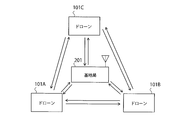
- the block diagram of the communication system including the information processing apparatus which concerns on 1st Embodiment. Drone block diagram.
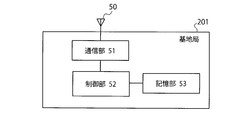
- Block diagram of the base station The schematic diagram which showed the state of the drone A and the drone B in flight in a plane.
- a flowchart of an example of collision avoidance control performed in the control unit of the drone The flowchart of an example of the priority determination process performed in the control unit of the drone.
- the flowchart of the first example of collision avoidance control The figure for demonstrating the 2nd example of a collision avoidance control.
- the flowchart of the second example of the collision avoidance control The figure for demonstrating the specific example of the 3rd example of a collision avoidance control.
- the figure for demonstrating the specific example of the 3rd example of a collision avoidance control The figure for demonstrating the specific example of the 3rd example of a collision avoidance control.
- the flowchart of the third example of the collision avoidance control The figure which shows an example of the hardware composition of the information processing apparatus of a drone or a base station.
- FIG. 1 is a block diagram of a communication system according to the first embodiment.
- the communication system of FIG. 1 includes a plurality of mobile bodies 101A, 101B, 101C and a base station 201.
- the mobile body of the present embodiment is a drone (unmanned aerial vehicle), and the mobile bodies 101A to 101C are referred to as drones 101A to 101C.
- the drone is an example of a moving body, and the moving body may be a robot, an automatic guided vehicle, or the like.
- the figure shows three drones, but the number of drones may be two or four or more.
- any one drone will be referred to as a drone 101.
- the arrows in the figure indicate the direction of communication.
- the drone 101A and the drone 101B can communicate in both directions, the drone 101A and the drone 101C can communicate in both directions, and the drone 101B and the drone 101C can communicate in both directions. Further, the base station 201 can communicate bidirectionally with any of the drone 101A, the drone 101B, and the drone 101C.
- Drone 101 is a mobile body that can fly by driving a plurality of rotors.
- the drone 101 can wirelessly communicate with the base station 201.
- the drone 101 flies along the route under the control of the base station 201.
- the drone 101 may generate a route from the starting point and the destination by itself and fly (autonomous flight), or the route may be designated by the base station 201 and fly on the designated route.
- FIG. 2 is a block diagram of the drone 101.
- the drone 101 includes an information processing device 1, rotors 14A to 14D, and motors 15A to 15D.
- the information processing device 1 includes an antenna 10, an imaging unit 11, a control unit 13, a communication unit 12, a sensor unit 16, a position detection unit 17, a battery 18, a storage unit 19, and an information acquisition unit 20.
- the imaging unit 11 images the environment including the traveling direction of the drone 101 and acquires image data.
- the image capturing unit 11 stores the captured image data in the storage unit 19 in association with the time. Alternatively, the imaging unit 11 may provide the captured image data to the control unit 13.
- the captured image is a still image or a moving image.
- the image pickup device 101 includes one or more cameras including a lens, an image pickup device, and the like.
- the camera may be a stereo camera.
- the image sensor is, for example, a CCD (Charge Coupled Device) image sensor, a CMOS (Complementary Metal Oxide Semiconductor) image sensor, or the like.
- the rotors 14A to 14D fly the drone 101 by generating lift by rotation.
- the rotors 14A to 14D are rotated by the motors 15A to 15D.
- Motors 15A to 15D rotate rotors 14A to 14D.
- the rotation of the motors 15A to 15D is controlled by the control unit 13.
- the control unit 13 controls the operation of the drone 101.
- the control unit 13 controls the image pickup unit 11, the communication unit 12, the motors 15A to 15D, the sensor unit 16, the position detection unit 17, the battery 18, the information acquisition unit 20, and the storage unit 19.
- the control unit 13 adjusts the rotation speeds of the rotors 14A to 14D by adjusting the rotation speeds of the motors 15A to 15D. By adjusting the rotation speeds of the rotors 14A to 14D, the drone 101 can be moved in any direction and at any speed.
- the control unit 13 controls the image pickup by the image pickup unit 11 during the flight. For example, control is performed so that imaging is performed at regular sampling intervals. Further, the control unit 13 controls the transmission / reception processing of information or data with another device (for example, the base station 101 and another mobile body) via the communication unit 12.
- another device for example, the base station 101 and another mobile body
- the control unit 13 generates a flight route based on the departure point and the destination of the flight given as instruction data from the base station 201, and flies along the generated route. That is, the control unit 13 performs autonomous flight.
- the control unit 13 has a function of avoiding other drones (hereinafter, other drones) and other obstacles.
- the control unit 13 may regenerate the route when it wants to change the route for preventing the collision with the obstacle.
- the control unit 13 may receive the flight route data from the base station 201 and fly along the route of the received data.
- the control unit 13 may transmit information such as the position of the drone 101 to the base station 201 and transmit a request for regenerating the route.
- the control unit 13 performs a process of detecting another drone existing in the traveling direction of the drone 101 based on the image data captured by the imaging unit 11.
- Other drones that exist in the direction of travel are called interference drones as drones that may interfere with their own drone.
- the process of detecting the interference drone is called the interference drone detection process.
- the control unit 13 performs an interference drone detection process every time image data is acquired by the image pickup unit 11. By detecting the interference drone, the control unit 13 can recognize another drone existing in the traveling direction.
- the direction of travel of the drone is, for example, the forward direction of the drone, but it is not necessarily limited to the forward direction. For example, when the drone goes up or down, the direction of travel may be upward or downward.
- An example of the interference drone detection process is performed by detecting a drone object from image data using segmentation technology. For example, semantic segmentation that detects objects at the pixel level can be used. The drone indicated by the detected object is determined as an interfering drone.
- the method of detecting the interference drone from the image data is not limited to the method using the segmentation technique, and any method may be used.
- a medium for example, a sticker to which the aircraft ID of the drone 101 is added may be added to the drone 101.
- the aircraft ID is an ID that uniquely identifies the drone. If the aircraft ID can be read from the image data, the aircraft ID of the interfering drone may be specified from the read information.
- the drone existing in the traveling direction of the drone 101 is, for example, a drone shown in an image captured by a camera installed at a location corresponding to the traveling direction of the drone 101 (for example, in front of the aircraft).
- the entire image captured by the camera is targeted for object detection, and the detected object is determined as an interference drone.
- a part of the captured image may be the target of object detection.
- a specific part (partial image) of the captured image may be targeted for object detection.
- the specific location may be a certain range from the center of the captured image.
- the specific portion may be a portion through which the own drone passes (a portion of the space occupied by the own drone) or a portion in which a margin area is added to the portion of the space occupied by the own drone.
- Other drones existing in the direction of travel may be detected by other methods.
- the control unit 13 may perform a process of detecting a drone in a peripheral direction other than the traveling direction (for example, a rear direction, a left side direction, a right side direction, a lower side direction, an upper side direction, etc.).
- image data captured by a camera installed at a location other than the location corresponding to the traveling direction may be used.
- detecting a drone in a direction other than the traveling direction it is possible to prevent a collision with another drone, for example, when avoiding an interfering drone in the traveling direction.
- the control unit 13 When the control unit 13 detects an interference drone from the image data, the control unit 13 generates interference detection information including the position and time of the interference drone.
- the control unit 13 stores the interference detection information in the storage unit 19.
- the set of interference detection information corresponds to the detection history of the interference drone.
- the distance to the interfering drone may be calculated.
- the position or distance of the interference drone can be calculated using, for example, image data captured by a stereo camera.
- the communication unit 12 performs information or data transmission / reception processing by performing wireless communication with the base station 101 and other drones (including the case of an interference drone).
- the wireless communication method may be arbitrary.
- the standard may be based on the IEEE802.11 standard, the IEEE802.5.1 standard, or other standards.
- the frequency band used for wireless communication is, for example, a 2.4 GHz band, a 5 GHz band, or another frequency band.
- the communication unit 12 receives flight instruction data from the base station 201.
- the communication unit 12 provides the instruction data to the control unit 13.
- the control unit 13 controls to fly according to the instruction data.
- the instruction data includes the starting point and the destination.
- the control unit 13 generates a route to the destination and controls to fly according to the generated route.
- the communication unit 12 also receives information about the other drone (details will be described later) from the other drone.
- the communication unit 12 provides the information acquisition unit 20 with information on the acquired other drone.
- the communication unit 12 may acquire information on the other drone via the base station 101. Further, the communication unit 12 may transmit information about the drone 101 (own drone) to the interference drone or the base station 101.
- the position detection unit 17 detects the position of the drone 101.
- the position of the drone 101 is, for example, the current position (real-time position) of the drone 101.
- the position detection unit 17 detects the position using, for example, GPS (Global Positioning System) or the like.
- the position detection unit 17 stores the detected position information in the storage unit 19 in association with the time.
- the position detection unit 17 may provide the position information to the control unit 13.
- the position of the drone is, for example, a position in a predetermined coordinate system.
- the predetermined coordinate system may be a three-axis coordinate system (XYZ coordinate system) in which the position of the base station 101 is the origin or a predetermined position.
- XYZ coordinate system three-axis coordinate system
- the coordinate system may have a point other than the position of the base station 101 as the origin.
- the position of the drone may be a position based on the latitude and longitude acquired by GPS. The latitude and longitude positions may be converted to positions in a predetermined coordinate system.
- the sensor unit 16 includes one or a plurality of sensors for acquiring the state of the drone 101.
- sensors include accelerometers, orientation sensors (gyro sensors, GPS compasses or electronic compasses, etc.), ultrasonic sensors, and barometric pressure sensors.
- the sensor unit 16 stores the acquired information representing the state of the drone 101 in the storage unit 19 in association with the time.
- the sensor unit 16 may provide the control unit 13 with information indicating the acquired state of the drone 101.
- the traveling direction is represented by a predetermined coordinate system as an example.
- the traveling direction may be represented by, for example, an absolute direction represented by a range of up to 359.99 in the eastward direction, with the true north direction being 0 degrees.
- the absolute orientation may be converted to a direction in a predetermined coordinate system.
- the image pickup unit 11, the sensor unit 16, and the position detection unit 17 operate (imaging, sensing, and position detection) at a constant sampling interval and the same time under the control of the control unit 13.
- the sampling interval and the operation time of the operations of the image pickup unit 11, the sensor unit 16, and the position detection unit 17 may be different.
- the battery 18 stores electric power energy for operating each element in the drone 101.
- the battery 18 may be a primary battery that can only be discharged or a secondary battery that can be charged and discharged.
- the storage unit 19 has information acquired by the sensor unit 16 (speed, traveling direction, etc.), position information acquired by the position detection unit 17, image data acquired by the imaging unit 11, and acquired by the control unit 13. Stores interference detection information (position and time of interference drone, etc.).
- the control unit 13 may acquire information on the amount of remaining energy of the battery 18 and store the acquired information in the storage unit 19.
- the storage unit 19 stores information regarding the attributes and performance of the drone 101.
- Examples of information on the attributes and performance of the drone 101 include: ⁇ Aircraft ID ⁇ Flight purpose (movement purpose) ⁇ Flight performance (movement performance) ⁇ Departure point and destination ⁇ Recognition performance
- the aircraft ID is an ID that uniquely identifies the drone. For example, "ABC123" and the like.
- the aircraft ID may include an address for communication according to the protocol used.
- Examples of flight purposes include photography, lifesaving (including rescue), logistics, fire extinguishing, and surveillance.
- Examples of photography include photography of a vehicle traveling on a road surface on the ground, photography of a transport vehicle autonomously traveling in a facility, photography of a ship, and the like.
- An example of lifesaving is the transportation of medical supplies or daily necessities to a disaster area or an accident site.
- An example of digestion is the dropping of a digestive agent on a fire scene.
- An example of logistics is the transportation of luggage.
- Examples of monitoring include detection of suspicious persons and detection of abnormalities in facilities.
- Examples of flight performance include braking performance or small turning performance.
- braking performance for example, there is a distance (braking distance) from when the control unit issues a stop command (command to stop in the air) until the drone actually stops.
- the braking distance depends on the speed of the drone or the strength of the brake (braking force).
- small turning performance for example, there is a minimum turning radius.
- the destination or departure point is determined in a predetermined coordinate system as an example.
- the destination or departure point may be a position based on latitude and longitude acquired by GPS. When flying cyclically on the same route for surveillance purposes, the destination may not exist.
- Recognition performance is the performance of the ability to detect drones from image data. Examples of recognition performance are at least one of the position, number, angle of view, and resolution of cameras installed in the drone. The recognition performance may include the number of other drones recognized by the drone in the direction of travel.
- only one camera may be installed in front of the drone, or multiple (for example, eight) cameras may be installed around the drone. If only one camera is installed in front of the drone, only the front of the drone can be photographed, so only the drone in front can be detected. That is, only the drone in front can be recognized.
- the drone can be detected over a wide range because it is possible to shoot not only the front but also the entire surroundings such as the rear, the left, and the right. That is, the drone can be recognized over a wide range.
- the narrower the angle of view the farther you can shoot. That is, it can recognize a drone that is far away.
- the shooting range is narrowed, it is necessary to increase the number of cameras installed in order to recognize the drone in a wide range as compared with the case of using a camera with a wide angle of view.
- the drone included in the captured image can be identified with higher accuracy. For example, even if the drone appears small in the captured image, the drone can be detected and recognized as an interference drone.
- the information acquisition unit 20 acquires information about the other drone from the other drone via the communication unit 12.
- the information acquisition unit 20 may acquire information about another drone from the base station 101.
- the information about the other drone acquired from the information acquisition unit 20 includes, for example, the same items as the information in the storage unit 19 of the drone 101. For example, it includes the following items. ⁇ Aircraft ID ⁇ Flight purpose (movement purpose) ⁇ Flight performance (movement performance) ⁇ Departure point and destination ⁇ Recognition performance ⁇ Position ⁇ Speed ⁇ Direction of travel ⁇ Battery remaining energy ⁇ Interference detection information (interference drone position and detection time, etc.)
- the control unit 13 detects one or more interfering drones from the image data in the traveling direction of the own drone, the control unit 13 communicates with the interfering drone and acquires information about the interfering drone.
- the information about the interfering drone to be acquired is all or part of the above items. There may be a configuration in which part or all of the information regarding the interfering drone is acquired from the base station 201. Further, the control unit 13 may transmit information about the drone 101 to the interference drone or the base station 201 via the communication unit 12.
- Communication with the interfering drone is performed based on the aircraft ID if the aircraft ID of the interfering drone can be identified from the image data. For example, communication is performed using a packet including an aircraft ID. If the aircraft ID cannot be specified, a directional beam may be formed with respect to the position of the interfering drone to perform communication. Alternatively, the interfering drone may be transmitted by broadcasting and the interfering drone may be identified based on the response packet transmitted from the direction or position of the interfering drone.
- the control unit 13 determines the action necessary to prevent the collision with the interfering drone based on the acquired information about the interfering drone.
- the control unit 13 controls the flight of the drone 101 based on the determined action.
- Examples of actions required to prevent a collision include avoiding a collision with an interfering drone (ie, performing an evasive action), proceeding without an evasive action, performing a standby action, and changing the route. I have something to do.
- the standby operation includes a pause on the route or a save operation to save to a position off the route.
- the action of determining the action to prevent the collision and executing the decided action in this way is called collision avoidance control.
- the standby operation the flight is resumed after the interference is eliminated, that is, after the interference drone no longer exists in the direction of travel. If the flight is paused as a standby operation, the flight will resume from the paused location.
- the evasion operation is performed as the standby operation, the flight returns to the original route and continues the flight, or a new route is regenerated from the evacuated position and the flight is performed along the regenerated route. The details of the collision avoidance control will be described later.
- FIG. 3 is a block diagram of the base station 201.
- the base station 201 includes an antenna 50, a communication unit 51, a control unit 52, and a storage unit 53.
- the communication unit 51 performs information or data transmission / reception processing by performing wireless communication with the drone 101 (101A to 101C).
- the wireless communication method may be arbitrary.
- the IEEE802.11 standard, the IEEE802.5.1 standard, and other standards may be used.
- the frequency band used for wireless communication is, for example, a 2.4 GHz band, a 5 GHz band, or another frequency band.
- the communication unit 51 acquires flight instruction data from the control unit 52 to the drone 101, and transmits the instruction data to the drone 101.
- Information on the attributes and performance of the drone 101 is stored in the storage unit 53.
- information on the aircraft ID of the drone 101 spec information (model, weight, size, etc.), flight purpose (movement purpose), flight performance (movement performance), departure place and destination, and recognition performance are stored.
- the control unit 52 controls the operation of the base station 201. In addition, the drone 101 is instructed regarding flight.
- the control unit 52 generates instruction data regarding the flight of the drone 101 based on the information regarding the drone 101 in the storage unit 53.
- the instruction data includes the starting point and the destination as an example.
- the instruction data may include a flight path.
- the control unit 52 transmits the generated instruction data to the drone 101 via the communication unit 51.
- control unit 52 When the control unit 52 receives the request for route regeneration from the drone 101, the control unit 52 regenerates the route.
- the control unit 52 transmits instruction data including the regenerated route to the drone 101.
- the control unit 52 controls the transmission and reception of information or data with the drone 101.
- the control unit 52 acquires the information or data acquired by the sensor unit 16, the control unit 13 and the position detection unit 17 of the drone 101 from the drone 101, and stores the acquired information or data in the storage unit 53. Store.
- control unit 52 When the control unit 52 receives a request for transmitting information about another drone from the drone 101, the control unit 52 reads the requested drone information from the storage unit 53 and transmits it to the drone 101.
- FIG. 4 is a schematic view showing the state of drone A and drone B in flight in a plane. Drone A is flying in the direction of travel indicated by the arrow, and Drone B is flying in the direction of travel indicated by the arrow.
- FIG. 5 shows an example of image data 31 taken by a camera installed in front of the drone A. This camera acquires image data in the traveling direction.
- the drone A detects the object B on the left side of the center of the image data 31. From the shape of the object B, it is determined that the object B is a drone. That is, in the drone A, the object B is determined to be an interference drone.
- Drone B may also detect drone A as an interfering drone by analyzing image data in the same manner as drone A.
- the control unit 13 of the drone 101 determines which of the drone 101 and the interfering drone preferentially advances.
- the drone 101 will be referred to as a drone A
- the drone B will be referred to as an interfering drone.
- the drone 101 When the interfering drone has priority, the drone 101 performs, for example, a standby operation (pause or evacuate to a position off the route) as an operation for preventing a collision with the interfering drone. Alternatively, change the route.
- the drone 101 makes an avoidance operation (flying while avoiding an interfering drone). Which of the drone 101 and the interfering drone has priority is determined by negotiation between the drone 101 and the interfering drone as an example. Alternatively, one of the drones serves as the master, and it is determined whether the drone 101 or the interfering drone has priority. Alternatively, as will be described later, there is also a configuration in which the base station 201 determines which of the drone 101 and the interfering drone has priority.
- the drone 101 proceeds without performing the avoidance operation. That is, it flies as it is along the current route.
- the interfering drone performs a standby operation or an avoidance operation.
- FIG. 6 is a diagram showing an example of avoidance operation from the side.
- drone A and drone B are flying in opposite directions (FIG. 6 (A)).
- drone B takes precedence over drone A.
- Drone B goes straight along the route.
- Drone A rises while advancing and avoids drone B (Fig. 6 (B)).
- Drone A returns to the original route after avoiding drone B (FIG. 6 (C)).
- the drone A has risen to avoid the drone B, but it may fall, and the drone B may be avoided to the left or right.
- the drone A may regenerate the route without returning to the original route. Interfering drone B may be avoided by other methods.
- FIG. 7 is a diagram showing an example of the evasion operation from the side. Similar to FIG. 6, drone A and drone B are flying in opposite directions. Suppose drone B takes precedence over drone A. Drone B goes straight along the route. Drone A pauses and then rises, for example, 10 m (FIG. 7 (A)). Drone A waits until interference with drone B is avoided. For example, evacuate to a position raised by 10 m. After the interference with the interfering drone B is avoided (after the interfering drone disappears in the traveling direction of the drone A), the drone A descends and returns to the original route (FIG. 7 (B)). Drone A resumes flight (Fig. 7 (C)). The drone A may regenerate a new route at the ascended position and switch the route to the regenerated route. Here, the drone A has risen to avoid the drone B, but may fall, move to the left or to the right.
- FIG. 8 is a plan showing an example of pausing. Drone A and Drone B are going straight along the route (Fig. 8 (A)). Suppose drone B takes precedence over drone A. Drone A pauses and Drone B goes straight on (Fig. 8 (B)). After the interference with the interfering drone B is avoided (after the interfering drone disappears in the traveling direction of the drone A), the drone A resumes the flight from the paused position (FIG. 8C).
- the control unit 13 of the drone 101 determines the priority of the drone 101 and the priority of the interfering drone based on the information about the drone 101 and the interfering drone.
- the control unit 13 determines that the drone 101 and the interfering drone are prioritized in descending order of priority. For example, if the drone 101 has priority 2 and the two interfering drones (referred to as interfering drones X and Y) have priority 1 and priority 3, respectively, the interfering drone X, the drone 101, and the interfering drone Y have priority in this order. do. In this case, as an example, the highest priority interfering drone X proceeds as it is along the path.
- the drone 101 and the drone Y perform a standby operation. Once the interference with the interfering drone X is avoided, the next highest priority drone 101 resumes flight. The lowest priority drone Y resumes flight once interference with the interfering drone X is avoided.
- the drone 101 and the drone Y performed a standby operation as an action to prevent the collision, but at least one of the drone 101 and the drone Y may perform an avoidance operation. Alternatively, at least one of the drone 101 and the drone Y may change the route.
- an example of determining the priority will be described as a first to fifth example.
- the priority is determined based on the recognition performance of the drone 101 and the recognition performance of the interference drone. For example, when the recognition performance of the interfering drone is lower than that of the drone 101, the priority of the interfering drone is set higher than that of the drone 101. As an example of low recognition performance of the interference drone, the number of cameras installed may be less than that of the drone 101. A camera is installed in the drone 101 other than in front of the drone, but in the interference drone, when the camera is not installed in other than the front of the drone, the recognition performance of the interference drone can be said to be lower than that of the drone 101. Further, the recognition performances of the drone 101 and the interfering drone may be compared according to the number of drones recognized in the traveling direction.
- the recognition performance may be compared between the drone 101 and the interfering drone by other methods. If the avoidance operation or the evasion operation is performed when the recognition performance is low, there is a possibility of collision with an unrecognized drone (undetected drone). Can be made to proceed in a targeted manner.
- the recognition performance may be classified into two classes of high and low, or three classes of high, medium and low. For example, if the number of installed cameras is less than the threshold value, the class is low, and if the number of cameras is more than the threshold value, the class is high. In addition, classification may be performed according to the number of drones recognized in the direction of travel. If the recognition performance is the same or the class is the same, the drone 101 and the interfering drone may negotiate to determine the priority. At this time, the priority may be randomly determined.
- the priority is determined based on the flight purpose of the drone 101 and the flight purpose of the interfering drone. For example, if the flight purposes of the three drones are lifesaving purpose, photography purpose, and distribution purpose, respectively, the priority may be increased in this order. As another example, the emergency drone may have the highest priority. Examples of urgent purposes include lifesaving purposes or fire extinguishing purposes. If the flight objectives are the same or in the same category, the drone 101 and the interfering drone may negotiate to determine the priority.
- the priority is determined based on whether the drone 101 is recognized by the interfering drone (detected by the analysis of the image data). Whether or not the drone 101 is recognized by the interference drone can be determined, for example, based on the interference detection information of the interference drone. For example, if the position of the other drone included in the interference detection information of the interfering drone matches the position of the drone 101 or falls within a certain margin, the drone 101 can determine that the interfering drone recognizes the drone 101. Alternatively, if the interference detection information includes the aircraft ID of the drone 101 as the aircraft ID of the drone detected by the interference drone, the drone 101 can determine that the interference drone recognizes the drone 101.
- FIG. 9 is a diagram for specifically explaining a third example of priority determination.
- three drones A, B, and C are flying.
- the figure shows the positions of drones A to C (own drone) and the positions of other drones (interference drones) discovered by drones A to C in the direction of travel.
- the information in FIG. 9 is based on the positions of the drones A to C and the interference detection information at the same time (for example, the latest time) as an example.
- Drone B also detects the position of its own drone and the relative position of two other drones from its own drone.
- Drone C also detects the position of its own drone and the relative position of one other drone from its own drone. Drone C recognizes only one of drones A and B, and does not recognize (overlooks) the other.
- the relative position (2m, 5m, -2m) of the other drone detected by the drone A corresponds to the relative position (-2m, -5m, 2m) of the other drone detected by the drone B. Therefore, the drone at the relative position (2m, 5m, -2m) detected by the drone A can be determined as the drone B.
- the aircraft ID of the drone B may be specified by communicating with the drone B, or may be specified by inquiring the base station 201 about the aircraft ID of the drone existing at the position of the drone B.
- the drone at the relative position (5 m, -1 m, 4 m) detected by the drone A can be determined as the drone C.
- the drone at the relative position (-2m, -5m, 2m) detected by drone B can be determined to be drone A.
- the drone (drone C) existing at the relative position (3 m, -6 m, 6 m) detected by the drone B does not detect another drone at the position of the drone B. Therefore, it can be determined that the drone B is not recognized by the drone (drone C) existing at the relative position (3 m, -6 m, 6 m).
- the drone at the relative position (-5m, 1m, -4m) detected by the drone C can be determined to be the drone A.
- the drone C does not recognize the drone at the position of the drone B.
- Drones A to C communicate with each other and determine priorities. Even if the drone C cannot recognize the drone B (even if the drone B is not shown in the camera of the drone C), it may be possible to communicate with the drone B by the communication triggered by the drone B. However, even if the drone C can communicate with the drone B, the drone C cannot recognize the drone B with the camera, so the drone C treats it as not recognizing the drone B. Drone C does not recognize drone B and determines that it has the lowest recognition performance and has the highest priority of 1.
- the drone C cannot recognize the drone B (the angle of view is narrow and cannot be captured by the camera, etc.), and there is a possibility of collision with the drone B. Since the drone A and the drone B can recognize each other, the priority may be determined using the first or second example of the priority determination described above, or the fourth or fifth example described later. Alternatively, the priority may be randomly determined.
- the priority is determined based on the flight performance of the drone 101 and the flight performance of the interfering drone.
- the priority is determined based on the maximum flight altitude of the drone 101 and the maximum flight altitude of the interfering drone. As an example, give priority to drones with the lowest altitude. This is because the drone with the higher maximum altitude can avoid other drones by ascending to a higher altitude position, and there are more options for action to avoid it. If the flight performance is the same or equivalent, the drone 101 and the interfering drone may negotiate to determine the priority. Alternatively, the priority may be randomly determined.
- the priority may be determined based on whether there is a shuntable space above the drone 101 and the interfering drone. As a premise, it is assumed that both the drone 101 and the interfering drone have the performance of further rising from the current position. If there is yet another drone or other obstacle above the drone 101 and the interfering drone, it is determined that there is no shuntable space above the drone 101 and the interfering drone. Lower the priority of drones with shunting space than that of drones without shunting space.
- the priority is determined based on the braking performance of the drone 101 and the braking performance of the interfering drone. This is because it takes a long time for a drone with low braking performance to stop after the stop order is issued. In this case, a high priority is determined for a drone with low braking performance, and a low priority is determined for a drone with high braking ability. High-priority drones can proceed without changing speed, and low-priority drones can be stopped by waiting for the drone to pass in front of them.
- the priority is determined based on the small turning performance of the drone 101 and the small turning performance of the interfering drone.
- the higher the small turning performance the smaller the minimum turning radius. Therefore, when performing a evasion operation or an avoidance operation by changing the direction, there is less unnecessary movement when changing the direction, and the possibility of collision with another drone can be reduced.
- the flight performance used to determine the priority is not limited to the above example, and other performance may be used.
- the priority is determined based on the speed of the drone 101 and the speed of the interfering drone. For example, if the speed of the drone 101 is faster than the interfering drone, the priority of the drone 101 is higher than that of the interfering drone. This is because a drone with a higher speed usually takes a longer time to stop. However, the time required from the issuance of the stop command to the stop may be calculated based on the braking performance of both drones, and the priority of the drone having a long time may be higher than that of the drone having a short time.
- the first to fifth examples of priority determination are only examples, and two or more examples of the first to fifth may be combined. Also, priorities may be determined in other ways as long as the information about the drone 101 and the interfering drone is used.
- FIG. 10 is a flowchart of an example of collision avoidance control performed by the control unit 13 of the drone 101.
- step S101 Based on the image data acquired by the imaging unit 11, it is determined whether another drone (interference drone) has been found in the traveling direction of the drone 101 (S101). If no other drone is found (NO), the process proceeds to step S105.
- the control unit 13 receives information about the other drone from the other drone via the communication unit 12 (S102).
- S103 Determine the priority between your own drone and other drones (S103). As an example, prioritize all drones (own drone and other drones) while negotiating between own drone and other drones. Alternatively, each drone may prioritize all drones (own drone and other drones). If the own drone and other drones have the same information and the priority is determined by the same algorithm, the priority of all drones determined by each drone will be the same.
- one of the own drone and the other drone may decide the priority of all the drones as the master.
- the master sends the determined priority information to other drones.
- the master drone is, for example, a drone that recognizes the most other drones, or a drone equipped with an arithmetic unit having the highest arithmetic performance.
- Drone 101 (own drone) becomes the master, the own drone determines the priority of all drones.
- the drone 101 may transmit priority information to the other drone via the base station 201 or another drone when there is another drone that cannot communicate.
- one of the other drones is recognized by the own drone and another other drone, but the other drone does not recognize the own drone and another other drone, and communication is not possible.
- the highest priority is determined for the one other drone between the own drone and another drone. Priority information is not sent to the other drone.
- the other drone as the highest priority drone for example, proceeds as it is in the direction of travel.
- the drone 101 flies according to the priority determined in step S103 (S104). More specifically, the action to prevent the collision (for example, straight ahead, avoidance action, or standby action) is determined based on the priority of each drone, and the determined action is executed. The details of this step S104 will be described later.
- step S105 it is determined whether or not to end this operation. For example, when the drone 101 lands, it is decided to end this operation. When it is decided to end this operation (YES), the operation is terminated. In other cases, the process returns to step S101. If the flight is restarted after the operation is completed, the processing of the flowchart of FIG. 10 is resumed.
- FIG. 11 is a flowchart of an example of the priority determination process performed in step S103 of FIG. 10 in the control unit 13 of the drone 101.
- the priority of drone X is set to the highest (S201). For example, set the priority to 1. If the drone X does not recognize the other drone but can communicate with the other drone, the drone X may have the highest priority in negotiations between the drones including the drone X. If the drone X cannot communicate with other drones, the priority of the drone X is determined to be the highest priority in negotiations between drones other than the drone X. When the only drone other than the drone X is the drone 101, the drone 101 may determine the priority of the drone X to be the highest priority. If Drone X cannot communicate with other drones, it will not send any information to Drone X. Drone X will proceed as it is along the direction of travel.
- Drone X cannot communicate with other drones, it will not send any information to Drone X. Drone X will proceed as it is along the direction of travel.
- the flight purpose of the drone 101 and the flight purpose of other drones are compared, and it is determined whether or not there is an emergency drone (S202).
- the urgent purpose is, for example, a lifesaving purpose or a fire extinguishing purpose.
- the priority of the drone is raised next to the drone specified in step S201 (S202). If the drone is not specified in step S201, the drone specified in step 202 has the highest priority. If there are multiple drones for emergency purposes, the priority will be decided by negotiation between the drones. Alternatively, the priority may be determined by a finer classification such as a lifesaving purpose or a fire extinguishing purpose. In the present embodiment, different priorities are set for each drone, but it is not excluded that the same priority is set for a plurality of drones.
- step S104 the action of each drone is determined according to the priority determined in step S103, and the determined action is executed (collision avoidance control).
- the second and subsequent priority drones will resume flight along the direction of travel when the drone with the next higher priority no longer exists in the direction of travel. Specifically, when the drone is temporarily on standby, it starts flying from that position along the direction of travel (see FIG. 8). If the evacuation operation has been performed, the drone returns to the original route and starts flying (see FIG. 7). Alternatively, a new route may be created and the flight resumed.
- the determination as to whether or not the drone with the higher priority does not exist in the traveling direction is performed based on the image data acquired by the imaging unit 11.
- the determination may be made by receiving information notifying that interference has been avoided (that is, no other drone exists in the direction of travel) from the drone of the next higher priority.
- the notification may be received from the base station 201.
- each drone can fly without colliding with each other.
- FIG. 12 is a flowchart of a first example of collision avoidance control performed by the control unit 13 of the drone 101. It is determined whether or not there is a drone having a priority higher than that of the drone 101 (S301). If it does not exist (NO), the drone 101 advances in the direction of travel (S302).
- the drone 101 performs a standby operation (S303). For example, when the drone 101 is on the route, if a drone having a higher priority than the drone 101 may collide with the drone 101, it will be evacuated to an airspace such as the sky. If there is no such possibility, pause on the current route. Even if the drone 101 cannot evacuate to an airspace such as the sky due to flight performance, it will pause on the current route. In this case, if there is a possibility that the drone with high priority collides with the own drone 101, it is expected that the drone avoids the own drone 101 (see FIG. 6).
- the drone 101 may transmit information notifying that the interference has been avoided or the like to the drone having a lower priority.
- FIG. 13 is a diagram for explaining a second example of collision avoidance control.
- the top three drones are grouped in descending order of priority.
- the three drones A to C in the group proceed in parallel along the direction of travel.
- the drone having the highest priority among the drones A to C proceeds without performing an avoidance action against other drones (drones B and C), and the drones B and C have the highest priority. Fly while performing avoidance actions against the high drone A and one of the drones (C or B).
- the top three drones are grouped in descending order of priority.
- the drones D to F of the second group continue the standby operation (temporary standby or evasion operation) until the drones A to C belonging to the first group no longer exist in the traveling direction.
- the second group of drones D to F resume (progress) flight along their respective directions of travel.
- the drone with the highest priority among the three for example, drone D
- the drones E and F have the highest priority. Fly while performing avoidance actions against the high drone D and one of the drones (F or E).
- three drones will be flown at the same time as one group.
- the drone G proceeds as it is along the traveling direction.
- three drones are grouped together, but the number of drones included in the group may be less than three depending on the flight performance and interference recognition performance of the drones.
- multiple drones included in the group were flown at the same time.
- the drone may be made to perform a standby operation until another drone avoids interference.
- each drone can fly without colliding with each other.
- FIG. 14 is a flowchart of a second example of collision avoidance control performed by the control unit 13 of the drone 101. The same description as in FIG. 12 will be omitted as appropriate.
- the adjustment of priorities and the behavior of each drone may be decided by negotiation between the drones, or one drone may be decided as the master.
- each drone is classified into a drone with high recognition performance (high recognition performance drone) and a drone with low recognition performance (low recognition performance drone) based on the recognition performance of each drone.
- a high recognition performance drone is a drone that has the ability to recognize other drones while avoiding other drones.
- Low-recognition performance drones are those that are incapable of recognizing other drones while avoiding them or have low recognition (ie, drones that may lose sight of the other drone during the action of avoiding it). Suppose there is.
- a high recognition performance drone or a low recognition performance drone may be classified according to the number of installed cameras and the installation location.
- a drone with only one camera in front may lose sight of the drone being evaded during the evasion action.
- Such a drone corresponds to a low recognition performance drone.
- the drone in which the cameras are installed around and above and below can recognize the drone to be avoided even during the avoidance operation.
- Such a drone corresponds to a high recognition performance drone.
- the drone may be determined whether the drone has high recognition performance or low recognition performance based on the angle of view or resolution. In addition to the recognition performance, it may be determined whether the drone has a high recognition performance or a low recognition performance by using interference detection information or flight performance. For example, a drone with low turning performance is more likely to collide because it cannot be avoided in time, so it may be classified as a low recognition performance drone. Further, when there are seven drones including a certain drone and the number of interfering drones recognized by the certain drone is less than six, the certain drone may be regarded as a low recognition performance drone.
- the drones are classified into two classes, high recognition performance and low recognition performance, but they may be classified into three classes, high recognition performance, low recognition performance, and medium recognition performance. Alternatively, it may be classified into four or more classes.
- the drone may fly as it is along the direction of travel without performing the avoidance action for other drones, or may be made to perform the standby action.
- action options fly while performing evasive action against other drones, fly as it is along the direction of travel without performing evasive action against other drones, or standby action.
- you have something to do Based on this premise, the priority will be adjusted by negotiation between each drone.
- FIGS 15, 16 and 17 are diagrams for explaining a specific example of the third example of collision avoidance control.
- there are seven drones (A, B, C, D, E, F, G).
- In the direction of travel of the seven drones there is a space where the three drones can pass each other.
- FIG. 15 shows the priority of the seven drones before adjustment and the recognition performance (high or low).
- group 3 drones into a group in descending order of priority If you select a group in descending order of priority, the drone with the highest priority among the three in the group will not perform the avoidance action, but will proceed as it is in the direction of travel, and the remaining two will perform the avoidance action. do. Drones that do not belong to the selected group are supposed to perform a standby operation.
- the first group Under this premise, under the current priority (priority before adjustment), the first group will be drones A, B, C.
- the first group is called group 1. Since the drone A has the highest priority in the group 1, it is necessary to proceed in the direction of travel as it is without performing the avoidance operation. It is necessary for the second and third priority drones B and C to perform the avoidance operation, but since the drone C has low recognition performance, it is not possible to cause the drone C to perform the avoidance operation. Therefore, the priority of the drone C is set so that it has the highest priority in any of the groups, in other words, the priority can be set so that the drone C can proceed as it is in the traveling direction without performing the avoidance operation. Need to be adjusted.
- the second group (called group 2) is drones D, E, F. Since the drone D has the highest priority in the group 2, it is necessary to proceed in the direction of travel as it is without performing the avoidance operation.
- the second and third priority drones E and F need to perform the avoidance operation, but since the drone E has low recognition performance, the drone E cannot perform the avoidance operation. Therefore, the priority of the drone E is set so that it has the highest priority in any of the groups, in other words, the priority can be set so that the drone E can proceed as it is in the traveling direction without performing the avoidance operation. Need to be adjusted.
- Drone G remains as the third group (Group 3). Since the drone G has the highest priority, it can proceed as it is in the traveling direction without performing the avoidance operation.
- FIG. 16 shows an example of an operation procedure for adjusting the priority so that the priority of the drone C and the drone E, which need to be adjusted, is the highest in any of the groups.
- the operation O1 replaces the priority 3 of the drone C and the priority 4 of the drone D. Further, the operation O2 sets the priority of the drone E to the highest priority 7 in the group 3. Operation O3 raises the priority 6 of the drone F to 5. The operation O4 raises the priority 7 of the drone G to the priority 6.
- FIG. 17 shows the result of adjusting the priority. Drone C with low recognition performance is the highest priority in Group 2. The priority of drone E with low recognition performance is the highest priority in Group 3.
- FIG. 18 shows an example in which each drone is made to act according to the adjusted priority shown in FIG.
- group 1 including drones A, B, and D is targeted in descending order of priority.
- Drone A which has the highest priority in Group 1, proceeds without evasive action, and drones B and D proceed while performing evasive action.
- the drones A, B, and D are in progress, the drones C, F, G, and E are in standby operation.
- group 2 including drones C, F, and G is targeted in descending order of priority.
- Drone C which has the highest priority in Group 2
- Drone E is on standby during the progress of groups C, F, and G.
- group 3 including drone E is targeted in descending order of priority.
- Drone E, which has the highest priority in Group 3 proceeds without taking evasive action.
- FIG. 19 is a flowchart of a third example of collision avoidance control performed by the control unit 13 of the drone 101. The same description as in FIGS. 12 and 14 will be omitted as appropriate.
- step S501 of the process of adjusting the priority is added first.
- the other steps are the same as in FIG.
- step S501 the priority of each drone is adjusted so that the drone with low recognition performance has the highest priority in the group. Priority adjustments are made while negotiating between drones. Alternatively, one drone may be the master and the priority of each drone may be adjusted.
- other drones that have entered the course of the own drone are detected based on the image data taken by the drone.
- Determine the priority of the own drone and the detected drone according to at least one of recognition performance, flight performance, flight purpose, etc. determine the action to prevent collision according to the priority, and execute the determined action.
- Examples of actions include a plurality of types such as progressing along a route without performing an avoidance action, progressing along a path while performing an avoidance action, and a standby action (pause or evacuate to the sky, etc.). Therefore, it is possible to determine an appropriate action to prevent a collision in consideration of the recognition performance, flight performance, flight purpose, etc. of the own drone and other drones.
- the collision can be prevented by determining the priority of the other drone to a high priority and flying the other drone preferentially.
- FIG. 20 shows an example of the hardware configuration of the drone 101 of FIG. 2 or the base station 201 of FIG.
- the information processing device 1 of the drone 101 of FIG. 2 or the base station 201 of FIG. 3 is composed of a computer device 200.
- the computer device 200 includes a CPU 201, an input interface 202, a display device 203, a communication device 204, a main storage device 205, and an external storage device 206, which are connected to each other by a bus 207.
- the information processing apparatus 1 or the base station 201 may not include at least one of these elements.
- the CPU (Central Processing Unit) 201 executes a computer program on the main storage device 205.
- the computer program is a program that realizes each of the above-mentioned functional configurations of the information processing device 1 or the base station 201.
- the computer program may be realized by a combination of a plurality of programs and scripts instead of one program.
- Each functional configuration is realized by the CPU 201 executing a computer program.
- the input interface 202 is a circuit for inputting operation signals from input devices such as a keyboard, a mouse, and a touch panel to the information processing device 1 or the base station 201.
- the display device 203 displays the data stored in the information processing device 1 or the base station 201 or the data calculated by the information processing device 1 or the base station 201.
- the display device 203 is, for example, an LCD (liquid crystal display), an organic electroluminescence display, a CRT (cathode ray tube), or a PDP (plasma display), but is not limited thereto.
- the communication device 204 is a circuit for the information processing device 1 or the base station 201 to communicate with the external device wirelessly or by wire.
- the data used by the information processing device 1 or the base station 201 can be input from an external device via the communication device 204.
- Communication device 204 includes an antenna.
- the data input from the external device can be stored in the main storage device 205 or the external storage device 206.
- the main storage device 205 stores a computer program, data necessary for executing the computer program, data generated by executing the computer program, and the like.
- the computer program is expanded and executed on the main storage 205.
- the main storage device 205 is, for example, a RAM, a DRAM, or an SRAM, but is not limited thereto.
- the storage unit of FIG. 2 or FIG. 3 may be constructed on the main storage device 205.
- the external storage device 206 stores a computer program, data necessary for executing the computer program, data generated by executing the computer program, and the like. These computer programs and data are read out to the main storage device 205 when the computer program is executed.
- the external storage device 206 is, for example, a hard disk, an optical disk, a flash memory, and a magnetic tape, but is not limited thereto.
- the storage unit of FIG. 2 or FIG. 3 may be constructed on the external storage device 206.
- the computer program may be pre-installed in the computer device 200, or may be stored in a storage medium such as a CD-ROM.
- the computer program may also be uploaded on the Internet.
- the computer device 200 may be configured by a single device, or may be configured as a system composed of a plurality of computer devices connected to each other.
- the priority is adjusted by using the recognition performance (step S501 in FIG. 19), but in addition to the recognition performance or instead of the recognition performance.
- Other information may be used to adjust the priority.
- the priority may be adjusted for flight purposes.
- the priority may be adjusted when the flight objectives are hindered between drones.
- the flight purpose of the drone A is to photograph the surface of the earth
- the flight purpose of the drone B is to photograph a vehicle traveling on a road.
- the drone A flies while avoiding the drone B, and as a result, the drone B comes to the lower side of the drone A or the aircraft of the drone A tilts, the shooting by the drone A will be hindered.
- the priority is adjusted so that the drone A and the drone B can proceed without performing the avoidance operation.
- drone A and drone B are grouped separately so that they have the highest priority within the group.
- the flight purpose of drone A is to photograph the surface of the earth
- the flight purpose of drone B is to transport luggage.
- the drone A has the highest priority in the group
- the drone B has a lower priority than the drone A when it is in the same group as the drone A.
- the drone A proceeds without performing the avoidance operation, so that there is no problem in shooting. Since the drone B transports luggage, there is no problem even if the avoidance operation is performed.
- the priority can be adjusted by using information other than the recognition performance.
- control unit 13 of the drone 101 determines the time until it collides with the interfering drone based on the speed of the own drone, the speed of the interfering drone, the distance from the own drone to the interfering drone, and the braking performance of the own drone. calculate.
- the speed of the own drone is 20 m / s
- the position of the interfering drone is 20 m ahead of the direction of travel of the own drone.
- the braking performance of the own drone is the performance that can stop 20 m / s in 1 second.
- the interfering drone is paused for filming. In this case, the time until the collision is 1 second. This time is even shorter if the interfering drone is flying in the direction of its own drone.
- the order of priority is [1] position, speed, recognition performance, [2] flight purpose, [3] flight performance, [4] and others. Limit the types of information to be acquired according to the time.
- [1] when the time is ⁇ or less [1] to [2] when ⁇ or more and less than ⁇ , [1] to [3] when ⁇ or more and less than ⁇ , and ⁇ or more.
- the examples described are merely examples, and other examples may be used.
- the above-mentioned priority is an example, and other examples may be used.
- the time until they collide with each of all interfering drones is calculated, and the time allowed for communication with each interfering drone is calculated based on the shortest time. Only obtain the type of information according to the calculated time from each interfering drone.
- the third embodiment by limiting the information acquired according to the time until the collision with the interfering drone, it is possible to determine the action until the collision is stopped before the collision with the interfering drone.
- the priority is determined mainly by negotiation between the drones, but in the fourth embodiment, the base station 201 determines the priority.
- the control unit 52 (see FIG. 3) of the base station 201 receives a notification of interference drone detection from the drone (referred to as drone A) that has detected the interference drone via the communication unit 51.
- the control unit 52 communicates with the drone A to acquire information about the drone A (position, speed, traveling direction, recognition performance, flight purpose, flight performance, interference detection information, etc.).
- the control unit 52 communicates with an interference drone (referred to as drone B) existing at the position indicated in the interference detection information, and information about the drone B (position, speed, traveling direction, recognition performance, flight purpose, flight performance, interference detection). Information etc.) is acquired.
- the control unit 52 determines the priorities of the drones A and B in the same manner as in the first to third embodiments, and transmits the determined priority information to the drones A and the drone B.
- the priority information is information for the drones A and B to determine the action to prevent the collision with each other.
- Each of drone A and drone B decides an action based on the received priority and executes the decided action. For example, when the first example of the collision avoidance control of the first embodiment is followed, one drone having a higher priority advances in the traveling direction first. The other drone waits until the progress of one drone is completed (until one drone no longer exists in the direction of progress of the other drone). When the progress of one drone is completed, the other drone starts progressing.
- the base station 201 acquires the information about each drone and determines the priority. Then, the determined priority information is transmitted to each drone. Further, as the example of collision avoidance control, not only the first example but also the second example or the third example is possible.
- the calculation load of the drone can be reduced by the base station 201 determining the priority. Further, since the base station 201 usually has higher computing performance than the drone, the priority can be determined at high speed even if many kinds of information are used. In addition, when the priority is decided by negotiating between the drones, the amount of communication between the drones increases and the control becomes complicated, but the drone can be collectively determined by the base station 201. The amount of communication between them is reduced, and complicated control is not required.
- the action of each drone is further determined based on the determined priority.
- Base station 201 transmits data including information on the determined action to each drone.
- the information on the action is information for the drones A and B to determine the action to prevent the collision with each other.
- each drone may be determined in the same manner as in the first to third examples of collision avoidance control in the first embodiment.
- the control unit 52 of the base station 201 may regenerate a route that allows each drone to avoid collisions with each other. At this time, the drone having the highest priority in the group may use the original route as it is without regenerating the route.
- the base station 201 transmits the route information generated for each drone to each drone. Each drone flies along a route designated by base station 201. Such a method is effective not only when each drone is not capable of autonomous flight, but also when it is capable of autonomous flight.
- the calculation load of each drone can be reduced by the base station 201 determining the behavior of each drone.
- the base station 201 determines the priority, but in the fifth embodiment, the base station 201 determines the priority or the drone determines the priority according to the situation of each drone. To decide whether to decide.
- the drone when the drone acquires information about another drone (interference drone) detected based on the image data, if it takes time to acquire the information, it may collide with the other drone. There is sex. Therefore, the time until the detected collision with the other drone is calculated, and it is determined whether the priority is determined by the own drone or the base station 201 according to the calculated time. If there is time to spare, the base station 201 determines the priority. In this case, a more appropriate priority can be determined by using a lot of information (for example, all of the above-mentioned [1] to [4]). If you don't have the time, use your drone to prioritize. In this case, the priority is simply determined using limited information (for example, only predetermined information among the above-mentioned [1] to [4]).
- the control unit 13 of the drone 101 has the speed of the own drone, the speed of the interfering drone, the distance from the own drone to the interfering drone, and the braking performance of the own drone. Based on, the time to collide with the interfering drone is calculated. If the time is less than a predetermined value, information about the drone 101 is transmitted to the base station 201, and the base station 201 is made to determine the priority. If the time is equal to or greater than a predetermined value, the drone 101 determines the priority.
- the description thereof will be omitted. Since the operation when the base station 201 determines the priority is the same as that of the fourth embodiment, the description thereof will be omitted. Since the operation when the drone determines the priority is the same as that of the first to third embodiments, the description thereof will be omitted.
- FIG. 21 is a flowchart of an example of collision avoidance control performed by the drone control unit 13 in the fifth embodiment. Steps S701 to S703 are added to FIG. 10 used in the first embodiment.
- control unit 13 finds another drone in the direction of travel, the control unit 13 calculates the time until it collides with the other drone. If the calculated time is equal to or greater than a predetermined value, it is determined that there is a time margin until the collision (YES in S701), and the process proceeds to step S102.
- the steps S102 and subsequent steps are the same as those in the first embodiment.
- step S701 If the calculated time is less than the predetermined value, it is judged that there is no time margin until the collision (NO in S701).
- the control unit 13 transmits information about the own drone to the base station 201 via the communication unit 12 (S702).
- the control unit 13 receives information on the priority of the own drone and other drones determined by the base station 201 via the communication unit 12 (S703). After that, the process proceeds to step S104.
- the steps after step S104 are the same as those in the first embodiment.
- the base station 201 when there is time to collide with the interfering drone, the base station 201 can use a lot of information to determine an appropriate priority. If there is not enough time, the priority can be easily determined based on the limited information between the drones.
- the present disclosure may also have the following structure.
- An imaging unit that acquires image data by imaging the environment of a moving object
- a control unit that detects another moving body existing in the traveling direction of the moving body based on the image data and performs an action to prevent a collision with the other moving body based on the information about the other moving body.
- Information processing device equipped with [Item 2] The information processing device according to item 1, wherein the control unit determines the action of preventing a collision with the other moving body, and performs the action.
- the control unit as the action, Whether to proceed while performing the avoidance action against the other moving body Whether to perform the standby operation or proceed without performing the avoidance operation for the other moving body
- the information processing apparatus according to item 1, which either changes the route.
- the control unit Determining which of the moving body and the other moving body has priority, When the other moving body has priority, the other moving body is subjected to either an avoidance operation with respect to the other moving body, a standby operation, or a change of the route. When the moving body has priority, the process proceeds without performing an avoidance operation on the other moving body.
- the information processing device according to item 3.
- the control unit The priority of the moving body and the priority of the other moving body are determined, and the priority is determined.
- the information processing apparatus according to item 4, wherein it is determined which of the moving body and the other moving body has priority based on the priority of the moving body and the priority of the other moving body.
- the information about the other mobile includes the recognition performance of the imaging unit of the other mobile.
- Item 5 in which the control unit determines which of the moving body and the other moving body has priority based on the recognition performance of the imaging unit and the recognition performance of the imaging unit of the other moving body.
- the imaging unit and the imaging unit of the other mobile body include at least one camera.
- the recognition performance of the image pickup unit and the recognition performance of the image pickup unit of the other moving body are The number of cameras The angle of view of the camera, The installation position of the camera, The resolution of the camera, Item 6.
- the information processing apparatus according to item 6, which is determined based on at least one of the above.
- the recognition performance of the imaging unit is determined based on the number of other moving objects detected by the control unit.
- Item 6. The information processing apparatus according to item 6, wherein the recognition performance of the imaging unit of the other mobile body is determined based on the number of mobile bodies recognized by the other mobile body in the traveling direction of the other mobile body.
- the control unit Determining if the other moving body recognizes the moving body, The information processing device according to item 4, which gives priority to the other mobile body when it is determined that the other mobile body does not recognize the mobile body.
- the information about the other mobile includes the purpose of movement of the other mobile.
- Device. [Item 12] The information about the other mobile includes the speed of the other mobile.
- the control unit calculates the time until the moving body collides with the other moving body, and calculates the time until the moving body collides with the other moving body. Depending on the time, the control unit or the base station determines whether the mobile body or the other mobile body has priority.
- the information processing apparatus according to item 4, wherein when the base station decides to make a decision, a request for making the decision is transmitted to the base station.
- the control unit The time until the moving body collides with the other moving body is calculated. Based on the time, the type of information to be acquired is determined.
- the information processing device according to item 1, wherein the information acquisition unit acquires the determined type of information.
- the information processing apparatus according to item 13, wherein the information about the other mobile body includes at least one of the position of the other mobile body and the distance to the other mobile body.
- the information processing device according to item 1, wherein the moving body is a flying body.
- Image data is acquired by imaging the environment including the traveling direction of the moving body. Based on the image data, another moving body existing in the traveling direction of the moving body is detected. A method of performing an action to prevent a collision with the other moving body based on the information about the other moving body.
- the plurality of moving bodies include an imaging unit that acquires image data by imaging an environment including the traveling direction of the moving body.
- a control unit that detects another moving body existing in the traveling direction of the moving body, and a control unit. It is equipped with a communication unit that communicates with the base station.
- the base station A communication unit that communicates with the mobile body, An information acquisition unit that acquires information on the moving body and the image data from the moving body, and A control that generates information for determining an action in which the moving body prevents a collision with the other moving body based on the information about the moving body and the image data, and transmits the generated information to the moving body.
Landscapes
- Engineering & Computer Science (AREA)
- General Physics & Mathematics (AREA)
- Physics & Mathematics (AREA)
- Remote Sensing (AREA)
- Aviation & Aerospace Engineering (AREA)
- Multimedia (AREA)
- Theoretical Computer Science (AREA)
- Automation & Control Theory (AREA)
- Radar, Positioning & Navigation (AREA)
- Microelectronics & Electronic Packaging (AREA)
- Mechanical Engineering (AREA)
- Control Of Position, Course, Altitude, Or Attitude Of Moving Bodies (AREA)
- Traffic Control Systems (AREA)
Abstract
Description
本開示は、情報処理装置、方法、コンピュータプログラム及び通信システムに関する。 This disclosure relates to information processing devices, methods, computer programs and communication systems.
従来、ドローンの障害物回避の方法が提案されている。しかしながら、従来の方法は、主に、静止物体に対する衝突回避であり、空間中を行きかうドローン同士の回避に関する方法の提案は少ない。 Conventionally, a method of avoiding obstacles in drones has been proposed. However, the conventional method is mainly to avoid a collision with a stationary object, and there are few proposals for a method for avoiding drones moving in space.
特許文献1は、飛行速度又は重量などからドローンの優先度を決定し、決定した優先度に応じた優先順位で、各ドローンが衝突回避のための行動を行う方法を開示している。この方法では、ドローン間の距離が一定値以下になった場合に、ドローン同士の優先度を比較し、ドローンの優先順位を決定する。 Patent Document 1 discloses a method in which the priority of a drone is determined from the flight speed, weight, etc., and each drone takes an action for collision avoidance in the priority order according to the determined priority. In this method, when the distance between drones becomes a certain value or less, the priorities of the drones are compared and the priority of the drones is determined.
しかしながら、優先順位を決定するために、自ドローン及び相手ドローンがお互いを認識して、通信できなければならない。また、自ドローン及び相手ドローンのいずれも、特許文献1の技術に対応した機能を有している必要がある。 However, in order to determine the priority, the own drone and the other drone must be able to recognize each other and communicate with each other. Further, both the own drone and the partner drone need to have a function corresponding to the technique of Patent Document 1.
本開示は、他の移動体との衝突を阻止する情報処理装置、方法、コンピュータプログラム及び通信システムを提供する。 The present disclosure provides information processing devices, methods, computer programs and communication systems that prevent collisions with other mobile objects.
本開示による情報処理装置は、
移動体の進行方向を含む環境を撮像することにより、画像データを取得する撮像部と、 前記画像データに基づいて、前記移動体の前記進行方向に存在する他の移動体を検出し、
前記他の移動体に関する情報に基づき、前記他の移動体との衝突を阻止する行動を行う制御部と
を備える。
The information processing device according to the present disclosure is
By imaging the environment including the traveling direction of the moving body, an imaging unit that acquires image data and other moving bodies existing in the traveling direction of the moving body are detected based on the image data.
It is provided with a control unit that performs an action of preventing a collision with the other moving body based on the information about the other moving body.
前記制御部は、前記他の移動体との衝突を阻止する前記行動を決定し、前記行動を行う。 The control unit determines the action to prevent a collision with the other moving body, and performs the action.
前記制御部は、前記行動として、
前記他の移動体に対する回避動作を行いながら進行するか、
待機動作を行うか
前記他の移動体に対する回避動作を行わずに進むか、
経路を変更するか
のいずれかを行う。
The control unit, as the action,
Whether to proceed while performing the avoidance action against the other moving body
Whether to perform the standby operation or proceed without performing the avoidance operation for the other moving body
Either change the route.
前記制御部は、
前記移動体と前記他の移動体のいずれが優先するかを決定し、
前記他の移動体が優先的する場合、前記他の移動体に対する回避動作を行いながら進むか、前記待機動作を行うか、前記経路を変更するかのいずれかを行い、
前記移動体が優先する場合、前記他の移動体に対する回避動作を行うことなく進む。
The control unit
Determining which of the moving body and the other moving body has priority,
When the other moving body has priority, the other moving body is subjected to either an avoidance operation with respect to the other moving body, a standby operation, or a change of the route.
When the moving body has priority, the process proceeds without performing an avoidance operation on the other moving body.
前記制御部は、
前記移動体の優先度と、前記他の移動体の優先度とを決定し、
前記移動体の優先度と前記他の移動体の優先度とに基づいて、前記移動体と前記他の移動体のいずれが優先的するかを決定する。
The control unit
The priority of the moving body and the priority of the other moving body are determined, and the priority is determined.
Based on the priority of the moving body and the priority of the other moving body, it is determined whether the moving body or the other moving body has priority.
前記他の移動体に関する情報は、前記他の移動体の撮像部の認識性能を含み、
前記制御部は、前記撮像部の認識性能と、前記他の移動体の撮像部の認識性能とに基づいて、前記移動体と前記他の移動体のいずれが優先するかを決定する。
The information about the other mobile includes the recognition performance of the imaging unit of the other mobile.
The control unit determines which of the moving body and the other moving body has priority based on the recognition performance of the imaging unit and the recognition performance of the imaging unit of the other moving body.
前記撮像部及び前記他の移動体の撮像部は、少なくとも1つのカメラを含み、
前記撮像部の認識性能と、前記他の移動体の撮像部の認識性能は、
前記カメラの個数、
前記カメラの画角、
前記カメラの設置位置、
前記カメラの解像度、
の少なくとも1つに基づき決定される。
The imaging unit and the imaging unit of the other mobile body include at least one camera.
The recognition performance of the image pickup unit and the recognition performance of the image pickup unit of the other moving body are
The number of cameras
The angle of view of the camera,
The installation position of the camera,
The resolution of the camera,
It is determined based on at least one of.
前記撮像部の認識性能は、前記制御部により検出された前記他の移動体の台数に基づいて決定され、
前記他の移動体の撮像部の認識性能は、前記他の移動体が前記他の移動体の進行方向に認識している移動体の台数に基づき決定される。
The recognition performance of the imaging unit is determined based on the number of other moving objects detected by the control unit.
The recognition performance of the imaging unit of the other moving body is determined based on the number of moving bodies recognized by the other moving body in the traveling direction of the other moving body.
前記制御部は、
前記他の移動体が前記移動体を認識しているかを判断し、
前記他の移動体が前記移動体を認識していないと判断した場合は、前記他の移動体を優先的させる。
The control unit
Determining if the other moving body recognizes the moving body,
If it is determined that the other moving body does not recognize the moving body, the other moving body is given priority.
前記他の移動体に関する情報は、前記他の移動体の移動目的を含み、
前記制御部は、前記移動体の移動目的と、前記他の移動体の移動目的とに基づき、前記移動体と前記他の移動体のいずれが優先するかを決定する。
The information about the other mobile includes the purpose of movement of the other mobile.
The control unit determines which of the moving body and the other moving body has priority based on the moving purpose of the moving body and the moving purpose of the other moving body.
前記他の移動体に関する情報は、前記他の移動体の移動性能を含み、
前記制御部は、前記移動体の移動性能と、前記他の移動体の移動性能とに基づき、前記移動体と前記他の移動体のいずれが優先するかを決定する。
The information about the other mobile includes the movement performance of the other mobile.
The control unit determines which of the moving body and the other moving body has priority based on the moving performance of the moving body and the moving performance of the other moving body.
前記他の移動体に関する情報は、前記他の移動体の速度を含み、
前記制御部は、前記移動体の速度と、前記他の移動体の速度とに基づいて、前記移動体と前記他の移動体のいずれが優先するかを決定する。
The information about the other mobile includes the speed of the other mobile.
The control unit determines which of the moving body and the other moving body has priority based on the speed of the moving body and the speed of the other moving body.
前記制御部は、前記移動体が前記他の移動体と衝突するまでの時間を計算し、
前記時間に応じて、前記移動体と前記他の移動体のいずれが優先するかの決定を前記制御部が行うか、基地局が行うかを決定し、
前記基地局が行うことを決定した場合、前記決定を行うことの要求を前記基地局に送信する。
The control unit calculates the time until the moving body collides with the other moving body, and calculates the time until the moving body collides with the other moving body.
Depending on the time, the control unit or the base station determines whether the mobile body or the other mobile body has priority.
If the base station decides to make the decision, it sends a request to make the decision to the base station.
前記制御部は、
前記移動体が前記他の移動体と衝突するまでの時間を計算し、
前記時間に基づいて、取得する前記情報の種類を決定し、
前記情報取得部は、決定した種類の前記情報を取得する。
The control unit
The time until the moving body collides with the other moving body is calculated.
Based on the time, the type of information to be acquired is determined.
The information acquisition unit acquires the determined type of information.
前記他の移動体に関する情報は、前記他の移動体の位置、及び前記他の移動体までの距離の少なくとも1つを含む。 The information about the other moving body includes at least one of the position of the other moving body and the distance to the other moving body.
前記移動体は飛行体である。 The moving body is a flying body.
本開示によるコンピュータプログラムは、
移動体に搭載されるコンピュータに実行させるためのコンピュータプログラムであって、
移動体の進行方向を含む環境を撮像することにより、画像データを取得する撮像ステップと、
前記画像データに基づいて、前記移動体の前記進行方向に存在する他の移動体を検出する検出ステップと、
前記他の移動体に関する情報に基づき、前記他の移動体との衝突を阻止する行動を行う制御ステップと。
を備える。
The computer program according to this disclosure is
It is a computer program to be executed by a computer mounted on a mobile body.
An imaging step for acquiring image data by imaging the environment including the traveling direction of the moving body,
A detection step of detecting another moving body existing in the traveling direction of the moving body based on the image data, and a detection step.
A control step that takes an action to prevent a collision with the other moving body based on the information about the other moving body.
To be equipped.
本開示による方法は、移動体によって実行される方法であって、
移動体によって実行される方法であって、
前記移動体の進行方向を含む環境を撮像することにより、画像データを取得し、
前記画像データに基づいて、前記移動体の前記進行方向に存在する他の移動体を検出し、
前記他の移動体に関する情報に基づき、前記他の移動体との衝突を阻止する行動を行う。
The method according to the present disclosure is a method performed by a mobile body.
The method performed by the mobile,
Image data is acquired by imaging the environment including the traveling direction of the moving body.
Based on the image data, another moving body existing in the traveling direction of the moving body is detected.
Based on the information about the other moving body, the action of preventing the collision with the other moving body is performed.
本開示による通信システムは、複数の移動体と基地局とを備えた通信システムであって、
前記複数の移動体は
前記移動体の進行方向を含む環境を撮像することにより、画像データを取得する撮像部と、
前記画像データに基づいて、前記移動体の前記進行方向に存在する他の移動体を検出する制御部と、
前記基地局と通信する通信部とを備え、
前記基地局は、
前記移動体と通信する通信部と、
前記移動体から前記移動体の情報と前記画像データとを取得する情報取得部と、
前記移動体に関する情報と前記画像データとに基づき、前記移動体が前記他の移動体と衝突を阻止する行動を決定するための情報を生成し、生成した前記情報を前記移動体に送信する制御部と、を備える。
The communication system according to the present disclosure is a communication system including a plurality of mobile bodies and a base station.
The plurality of moving bodies include an imaging unit that acquires image data by imaging an environment including the traveling direction of the moving body.
Based on the image data, a control unit that detects another moving body existing in the traveling direction of the moving body, and a control unit.
It is equipped with a communication unit that communicates with the base station.
The base station
A communication unit that communicates with the mobile body,
An information acquisition unit that acquires information on the moving body and the image data from the moving body, and
A control that generates information for determining an action for the moving body to prevent a collision with the other moving body based on the information about the moving body and the image data, and transmits the generated information to the moving body. It has a part and.
以下、図面を参照して、本開示の実施形態について説明する。本開示において示される1以上の実施形態において、各実施形態が含む要素を互いに組み合わせることができ、かつ、当該組み合わせられた結果物も本開示が示す実施形態の一部をなす。 Hereinafter, embodiments of the present disclosure will be described with reference to the drawings. In one or more embodiments set forth in the present disclosure, the elements included in each embodiment can be combined with each other, and the combined deliverables also form part of the embodiments set forth in the present disclosure.
図1は、第1の実施形態に係る通信システムのブロック図である。図1の通信システムは、複数の移動体101A、101B、101Cと、基地局201とを備えている。本実施形態の移動体はドローン(無人航空機)であり、移動体101A~101Cをドローン101A~101Cと表記する。ドローンは移動体の一例であり、移動体は、ロボット又は無人搬送車などでもよい。図では3台のドローンが示されるが、ドローンの台数は2台でも、4台以上でもよい。以下、任意の1台のドローンを、ドローン101と表記する。
図中の矢印は通信の方向を示している。ドローン101Aとドローン101Bは双方向に通信可能であり、ドローン101Aとドローン101Cは双方向に通信可能であり、ドローン101Bとドローン101Cは双方向に通信可能である。また基地局201は、ドローン101A、ドローン101B及びドローン101Cのいずれとも双方向に通信可能である。
FIG. 1 is a block diagram of a communication system according to the first embodiment. The communication system of FIG. 1 includes a plurality of
The arrows in the figure indicate the direction of communication. The
ドローン101は、複数のロータを駆動することにより飛行可能な移動体である。ドローン101は、基地局201と無線通信可能である。ドローン101は、基地局201の制御の下、経路に沿って飛行を行う。ドローン101は出発地と目的地とから自ら経路を生成して飛行(自律飛行)してもよいし、基地局201から経路を指定され、指定された経路を飛行してもよい。
図2は、ドローン101のブロック図である。ドローン101は、情報処理装置1と、ロータ14A~14D、及びモータ15A~15Dを備えている。情報処理装置1は、アンテナ10、撮像部11、制御部13、通信部12、センサ部16、位置検出部17、バッテリ18、記憶部19、及び情報取得部20を備えている。
FIG. 2 is a block diagram of the
撮像部11は、ドローン101の進行方向を含む環境を撮像し、画像データを取得する。撮像部11は、撮像した画像データを時刻に関連づけて記憶部19に格納する。あるいは、撮像部11は、撮像した画像データを、制御部13に提供してもよい。撮像した画像は、静止画像または動画像である。撮像装置101は、レンズ及び撮像素子等を含むカメラを1つ以上備える。カメラはステレオカメラでもよい。撮像素子は、例えば、CCD(Charge Coupled Device)イメージセンサ又はCMOS(Complementary Metal Oxide Semiconductor)イメージセンサ等である。
The imaging unit 11 images the environment including the traveling direction of the
ロータ14A~14Dは、回転により揚力を生じさせることでドローン101を飛行させる。ロータ14A~14Dはモータ15A~15Dにより回転させられる。モータ15A~15Dは、ロータ14A~14Dを回転させる。モータ15A~15Dの回転は制御部13によって制御される。
The rotors 14A to 14D fly the
制御部13は、ドローン101の動作を制御する。制御部13は、撮像部11、通信部12、モータ15A~15D、センサ部16、位置検出部17、バッテリ18及び情報取得部20、及び記憶部19を制御する。
The control unit 13 controls the operation of the
制御部13は、モータ15A~15Dの回転速度の調整によりロータ14A~14Dの回転速度を調整する。ロータ14A~14Dの回転速度を調整することで、ドローン101を任意の方向及び任意の速度で移動させることができる。
The control unit 13 adjusts the rotation speeds of the rotors 14A to 14D by adjusting the rotation speeds of the motors 15A to 15D. By adjusting the rotation speeds of the rotors 14A to 14D, the
制御部13は、飛行中の間、撮像部11による撮像を制御する。例えば一定のサンプリング間隔ごとに撮像を行うよう、制御する。また、制御部13は、通信部12を介して、他の装置(例えば基地局101及び他の移動体)との間の情報又はデータの送受信処理を制御する。
The control unit 13 controls the image pickup by the image pickup unit 11 during the flight. For example, control is performed so that imaging is performed at regular sampling intervals. Further, the control unit 13 controls the transmission / reception processing of information or data with another device (for example, the
制御部13は、基地局201から指示データとして与えられる飛行の出発地及び目的地に基づき、飛行の経路を生成し、生成した経路に沿って飛行を行う。すなわち、制御部13は、自律飛行を行う。制御部13は、他のドローン(以下、他ドローン)やその他の障害物を回避する機能を有する。制御部13は、障害物との衝突を阻止するための経路を変更したい場合に、経路を再生成してもよい。制御部13は自ら経路を生成する以外に、制御部13は、飛行の経路のデータを基地局201から受信し、受信したデータの経路に沿って飛行してもよい。制御部13は、経路を変更したい場合は、例えば、ドローン101の位置の情報等を基地局201に送信し、経路の再生成の要求を送信してもよい。
The control unit 13 generates a flight route based on the departure point and the destination of the flight given as instruction data from the
制御部13は、撮像部11により撮像された画像データに基づき、ドローン101の進行方向に存在する他ドローンを検出する処理を行う。進行方向に存在する他ドローンを、自ドローンと干渉する可能性のあるドローンとして、干渉ドローンと呼ぶ。また、干渉ドローンを検出する処理を干渉ドローン検出処理と呼ぶ。制御部13は、一例として干渉ドローン検出処理を、撮像部11で画像データが取得されるごとに行う。制御部13は干渉ドローンを検出することで、進行方向に存在する他ドローンを認識できる。
The control unit 13 performs a process of detecting another drone existing in the traveling direction of the
ドローンの進行方向は一例としてドローンの前方方向であるが、必ずしも前方方向に限定されない。例えば、ドローンが上昇又は下降する場合は、上方向又は下方向を進行方向としてもよい。 The direction of travel of the drone is, for example, the forward direction of the drone, but it is not necessarily limited to the forward direction. For example, when the drone goes up or down, the direction of travel may be upward or downward.
干渉ドローン検出処理の一例は、セグメンテーション技術を用いて、画像データから、ドローンのオブジェクトを検出することで行う。例えば、画素レベルでオブジェクト検出を行うセマンティックセグメンテーションを用いることができる。検出したオブジェクトが示すドローンを、干渉ドローンとして決定する。画像データから干渉ドローンを検出する方法は、セグメンテーション技術を用いた方法に限られず、任意の方法でよい。 An example of the interference drone detection process is performed by detecting a drone object from image data using segmentation technology. For example, semantic segmentation that detects objects at the pixel level can be used. The drone indicated by the detected object is determined as an interfering drone. The method of detecting the interference drone from the image data is not limited to the method using the segmentation technique, and any method may be used.
ドローン101の機体IDが付加された媒体(例えばシール)がドローン101に付加されていてもよい。機体IDは、ドローンをユニークに識別するIDである。画像データから機体IDを読み取り可能な場合は、読み取った情報から干渉ドローンの機体IDを特定してもよい。
A medium (for example, a sticker) to which the aircraft ID of the
ドローン101の進行方向に存在するドローンは、一例として、ドローン101の進行方向に対応する箇所(例えば機体の前方)に設置したカメラの撮像画像に写っているドローンである。一例として、当該カメラによる撮像画像の全体をオブジェクト検出の対象とし、検出したオブジェクトを干渉ドローンとして決定する。
The drone existing in the traveling direction of the
あるいは、撮像画像の全体でなく、撮像画像の一部をオブジェクト検出の対象としてもよい。例えば撮像画像の特定箇所(部分画像)をオブジェクト検出の対象としてもよい。特定箇所は、撮像画像の中心から一定範囲でもよい。また、特定箇所は、自ドローンが通過する部分(自ドローンが占有する空間部分)、もしくは自ドローンが占有する空間部分にマージン領域を追加した部分でもよい。他の方法で進行方向に存在する他ドローンを検出してもよい。 Alternatively, not the entire captured image but a part of the captured image may be the target of object detection. For example, a specific part (partial image) of the captured image may be targeted for object detection. The specific location may be a certain range from the center of the captured image. Further, the specific portion may be a portion through which the own drone passes (a portion of the space occupied by the own drone) or a portion in which a margin area is added to the portion of the space occupied by the own drone. Other drones existing in the direction of travel may be detected by other methods.
制御部13は、進行方向以外の周囲方向(例えば、後方方向、左側方向、右側方向、下側方向、上側方向など)のドローンを検出する処理を行ってもよい。この場合、進行方向に対応する箇所以外に設置されたカメラで撮像された画像データを用いてもよい。進行方向以外の方向のドローンを検出することで、例えば進行方向の干渉ドローンを回避する際に、他のドローンと衝突することを防止できる。 The control unit 13 may perform a process of detecting a drone in a peripheral direction other than the traveling direction (for example, a rear direction, a left side direction, a right side direction, a lower side direction, an upper side direction, etc.). In this case, image data captured by a camera installed at a location other than the location corresponding to the traveling direction may be used. By detecting a drone in a direction other than the traveling direction, it is possible to prevent a collision with another drone, for example, when avoiding an interfering drone in the traveling direction.
制御部13は、画像データから干渉ドローンを検出した場合、干渉ドローンの位置と時刻とを含む干渉検出情報を生成する。制御部13は、干渉検出情報を記憶部19に格納する。干渉検出情報の集合は、干渉ドローンの検出履歴に相当する。干渉ドローンの位置に加え、又は干渉ドローンの位置の代わりに、干渉ドローンとの距離を算出してもよい。干渉ドローンの位置又は距離は、例えばステレオカメラで撮像した画像データを用いて算出することができる。 When the control unit 13 detects an interference drone from the image data, the control unit 13 generates interference detection information including the position and time of the interference drone. The control unit 13 stores the interference detection information in the storage unit 19. The set of interference detection information corresponds to the detection history of the interference drone. In addition to the position of the interfering drone, or instead of the position of the interfering drone, the distance to the interfering drone may be calculated. The position or distance of the interference drone can be calculated using, for example, image data captured by a stereo camera.
通信部12は、基地局101及び他ドローン(干渉ドローンの場合を含む)と無線通信を行うことにより、情報又はデータの送受信処理を行う。無線通信の方式は任意でよい。一例として、IEEE802.11規格、IEEE802.15.1規格、その他の規格によるものでもよい。無線通信に使用する周波数帯域は、一例として、2.4GHz帯、5GHz帯、その他の周波数帯域である。
The communication unit 12 performs information or data transmission / reception processing by performing wireless communication with the
通信部12は、一例として、飛行に関する指示データを、基地局201から受信する。通信部12は、指示データを制御部13に提供する。制御部13は、指示データに従って飛行を行うよう制御する。一例として指示データは出発地及び目的地を含む。制御部13は、目的地までの経路を生成し、生成した経路に従って飛行を行うよう制御する。
As an example, the communication unit 12 receives flight instruction data from the
また通信部12は、他ドローンから、他ドローンに関する情報(詳細は後述)を受信する。通信部12は、取得した他ドローンに関する情報を情報取得部20に提供する。通信部12は、他ドローンに関する情報を、基地局101を介して取得してもよい。また、通信部12はドローン101(自ドローン)に関する情報を、干渉ドローン又は基地局101に送信してもよい。
The communication unit 12 also receives information about the other drone (details will be described later) from the other drone. The communication unit 12 provides the information acquisition unit 20 with information on the acquired other drone. The communication unit 12 may acquire information on the other drone via the
位置検出部17は、ドローン101の位置を検出する。ドローン101の位置は、一例として、ドローン101の現在位置(リアルタイムの位置)である。位置検出部17は、例えばGPS(GlobalPositioningSystem)等を用いて位置を検出する。位置検出部17は、検出した位置の情報を時刻に関連づけて記憶部19に格納する。位置検出部17は、当該位置の情報を制御部13に提供してもよい。
The position detection unit 17 detects the position of the
ドローンの位置は、一例として予め定めた座標系における位置である。予め定めた座標系は、基地局101の位置を原点又は所定の位置とした3軸の座標系(XYZの座標系)でもよい。例えば、(X,Y,Z)=(7.3m、4.1m、15.8m)である。座標系は、基地局101の位置以外の点を原点としてもよい。あるいは、ドローンの位置は、GPSにより取得した緯度と経度による位置でもよい。緯度と経度による位置を、予め定めた座標系の位置に変換してもよい。
The position of the drone is, for example, a position in a predetermined coordinate system. The predetermined coordinate system may be a three-axis coordinate system (XYZ coordinate system) in which the position of the
センサ部16は、ドローン101の状態を取得する1つ又は複数のセンサを備える。センサの例は、加速度センサ、方位センサ(ジャイロセンサ、GPSコンパス又は電子コンパスなど)、超音波センサ、及び気圧センサを含む。センサ部16は、取得したドローン101の状態を表す情報を時刻に関連づけて、記憶部19に格納する。センサ部16は、取得したドローン101の状態を表す情報を制御部13に提供してもよい。
The sensor unit 16 includes one or a plurality of sensors for acquiring the state of the
センサ部16により取得する情報の一例として、ドローンの速度及び進行方向等がある。進行方向は、一例として、予め定めた座標系で表される。あるいは、進行方向は、例えば、真北方向を0度とし、東回りに359.99までの範囲で表した絶対方位で表してもよい。絶対方位を、予め定めた座標系における方向に変換してもよい。 An example of the information acquired by the sensor unit 16 is the speed and traveling direction of the drone. The traveling direction is represented by a predetermined coordinate system as an example. Alternatively, the traveling direction may be represented by, for example, an absolute direction represented by a range of up to 359.99 in the eastward direction, with the true north direction being 0 degrees. The absolute orientation may be converted to a direction in a predetermined coordinate system.
撮像部11とセンサ部16と位置検出部17は、一例として、制御部13の制御により、一定のサンプリング間隔及び同じ時刻で動作(撮像、センシング及び位置検出)する。但し、撮像部11とセンサ部16と位置検出部17の動作のサンプリング間隔及び動作時刻が異なってもよい。 As an example, the image pickup unit 11, the sensor unit 16, and the position detection unit 17 operate (imaging, sensing, and position detection) at a constant sampling interval and the same time under the control of the control unit 13. However, the sampling interval and the operation time of the operations of the image pickup unit 11, the sensor unit 16, and the position detection unit 17 may be different.
バッテリ18は、ドローン101内の各要素を動作させるための電力エネルギーを蓄える。バッテリ18は、放電のみが可能な一次電池でも、充放電可能な二次電池であってもよい。
The battery 18 stores electric power energy for operating each element in the
記憶部19は、センサ部16により取得された情報(速度、進行方向等)、位置検出部17により取得された位置の情報、撮像部11により取得された画像データ、制御部13により取得された干渉検出情報(干渉ドローンの位置及び時刻等)を格納する。制御部13がバッテリ18の残存エネルギー量の情報を取得し、取得した情報を記憶部19に格納してもよい。 The storage unit 19 has information acquired by the sensor unit 16 (speed, traveling direction, etc.), position information acquired by the position detection unit 17, image data acquired by the imaging unit 11, and acquired by the control unit 13. Stores interference detection information (position and time of interference drone, etc.). The control unit 13 may acquire information on the amount of remaining energy of the battery 18 and store the acquired information in the storage unit 19.
また、記憶部19は、ドローン101の属性及び性能に関する情報を記憶している。ドローン101の属性及び性能に関する情報の例として、以下のものがある。
・機体ID
・飛行目的(移動目的)
・飛行性能(移動性能)
・出発地及び目的地
・認識性能
In addition, the storage unit 19 stores information regarding the attributes and performance of the
・ Aircraft ID
・ Flight purpose (movement purpose)
・ Flight performance (movement performance)
・ Departure point and destination ・ Recognition performance
機体IDは、ドローンをユニークに識別するIDである。例えば、“ABC123”などである。機体IDは、使用プロトコルに応じた通信用のアドレスを含んでもよい。 The aircraft ID is an ID that uniquely identifies the drone. For example, "ABC123" and the like. The aircraft ID may include an address for communication according to the protocol used.
飛行目的の例として、撮影、救命(救助を含む)、物流、消火、監視などがある。撮影の例として、地上の路面を走行する車両の撮影、施設内を自律走行する搬送車の撮影、又は船舶の撮影などがある。救命の例として、被災地又は事故現場等への医療物資又は生活物資の搬送がある。消化の例として、火事現場への消化剤の投下がある。物流の例として、荷物の輸送等がある。監視の例として、不審者の検出、施設の異常検出等がある。 Examples of flight purposes include photography, lifesaving (including rescue), logistics, fire extinguishing, and surveillance. Examples of photography include photography of a vehicle traveling on a road surface on the ground, photography of a transport vehicle autonomously traveling in a facility, photography of a ship, and the like. An example of lifesaving is the transportation of medical supplies or daily necessities to a disaster area or an accident site. An example of digestion is the dropping of a digestive agent on a fire scene. An example of logistics is the transportation of luggage. Examples of monitoring include detection of suspicious persons and detection of abnormalities in facilities.
飛行性能の例として、制動性能又は小回り性能等がある。制動性能の指標として、例えば制御部が停止命令(空中で停止する命令)を発行してから実際にドローンが停止するまでの距離(制動距離)がある。制動距離は、ドローンの速度又はブレーキの強さ(制動力)に依存する。小回り性能の指標として、例えば、最小回転半径がある。 Examples of flight performance include braking performance or small turning performance. As an index of braking performance, for example, there is a distance (braking distance) from when the control unit issues a stop command (command to stop in the air) until the drone actually stops. The braking distance depends on the speed of the drone or the strength of the brake (braking force). As an index of small turning performance, for example, there is a minimum turning radius.
目的地又は出発地は、一例として予め定めた座標系において定められる。例えば、目的地は、(X,Y,Z)=(180m、210m、1.0m)である。目的地又は出発地は、GPSにより取得した緯度と経度による位置でもよい。監視目的などで同じ経路を循環的に飛行する場合、目的地が存在しない場合もある。 The destination or departure point is determined in a predetermined coordinate system as an example. For example, the destination is (X, Y, Z) = (180 m, 210 m, 1.0 m). The destination or departure point may be a position based on latitude and longitude acquired by GPS. When flying cyclically on the same route for surveillance purposes, the destination may not exist.
認識性能は、画像データからドローンを検出する能力の性能である。認識性能の例として、ドローンに設置されているカメラの位置、個数、画角、及び解像度の少なくとも1つがある。認識性能は、ドローンが進行方向に認識している他ドローンの台数を含んでもよい。 Recognition performance is the performance of the ability to detect drones from image data. Examples of recognition performance are at least one of the position, number, angle of view, and resolution of cameras installed in the drone. The recognition performance may include the number of other drones recognized by the drone in the direction of travel.
カメラの位置及び個数の例として、ドローンの前方に1つのみカメラを設置、又はドローンの周囲に複数(例えば8個)のカメラを設置することがある。ドローンの前方に1つのみカメラを設置した場合、ドローンの前方のみしか撮影できないため、前方にいるドローンしか検出できない。すなわち前方にいるドローンしか認識できない。ドローンの周囲に沿って複数のカメラを設置する場合、前方のみならず、後方、左方向、右方向など周囲全体を撮影できるため、広範囲にわたりドローンを検出できる。すなわち、広範囲にわたりドローンの認識が可能となる。 As an example of the position and number of cameras, only one camera may be installed in front of the drone, or multiple (for example, eight) cameras may be installed around the drone. If only one camera is installed in front of the drone, only the front of the drone can be photographed, so only the drone in front can be detected. That is, only the drone in front can be recognized. When a plurality of cameras are installed along the circumference of the drone, the drone can be detected over a wide range because it is possible to shoot not only the front but also the entire surroundings such as the rear, the left, and the right. That is, the drone can be recognized over a wide range.
また、画角が狭いほど、遠くまで撮影できる。すなわち、遠くにいるドローンを認識できる。但し、撮影範囲が狭くなるため、画角が広いカメラを用いた場合に比べて、広範囲にドローンを認識するためには、カメラの設置数を増やす必要がある。 Also, the narrower the angle of view, the farther you can shoot. That is, it can recognize a drone that is far away. However, since the shooting range is narrowed, it is necessary to increase the number of cameras installed in order to recognize the drone in a wide range as compared with the case of using a camera with a wide angle of view.
解像度が高いと、撮像画像に含まれるドローンをより高精度に識別できる。例えば、撮像画像にドローンが小さく写っていても、当該ドローンを検出し、干渉ドローンとして認識できる。 If the resolution is high, the drone included in the captured image can be identified with higher accuracy. For example, even if the drone appears small in the captured image, the drone can be detected and recognized as an interference drone.
情報取得部20は、通信部12を介して、他ドローンから、当該他ドローンに関する情報を取得する。情報取得部20が、他ドローンに関する情報を、基地局101から取得する構成もあり得る。
The information acquisition unit 20 acquires information about the other drone from the other drone via the communication unit 12. The information acquisition unit 20 may acquire information about another drone from the
情報取得部20から取得する他ドローンに関する情報は、一例として、ドローン101の記憶部19内の情報と同じ項目を含む。例えば、以下の項目を含む。
・機体ID
・飛行目的(移動目的)
・飛行性能(移動性能)
・出発地及び目的地
・認識性能
・位置
・速度
・進行方向
・バッテリの残存エネルギー量
・干渉検出情報(干渉ドローンの位置及び検出時刻等)
The information about the other drone acquired from the information acquisition unit 20 includes, for example, the same items as the information in the storage unit 19 of the
・ Aircraft ID
・ Flight purpose (movement purpose)
・ Flight performance (movement performance)
・ Departure point and destination ・ Recognition performance ・ Position ・ Speed ・ Direction of travel ・ Battery remaining energy ・ Interference detection information (interference drone position and detection time, etc.)
[衝突回避制御]
以下、本実施形態に係る衝突回避制御について説明する。
制御部13は、自ドローンの進行方向において1台以上の干渉ドローンを画像データから検出した場合に、干渉ドローンと通信して、干渉ドローンに関する情報を取得する。取得する干渉ドローンに関する情報は、上述した項目の全部又は一部である。干渉ドローンに関する情報の一部又は全部を、基地局201から取得する構成もあり得る。また制御部13は、通信部12を介して、干渉ドローン又は基地局201にドローン101に関する情報を送信してもよい。
[Collision avoidance control]
Hereinafter, the collision avoidance control according to the present embodiment will be described.
When the control unit 13 detects one or more interfering drones from the image data in the traveling direction of the own drone, the control unit 13 communicates with the interfering drone and acquires information about the interfering drone. The information about the interfering drone to be acquired is all or part of the above items. There may be a configuration in which part or all of the information regarding the interfering drone is acquired from the
干渉ドローンとの通信は、干渉ドローンの機体IDを画像データから特定できている場合は、機体IDに基づいて行う。例えば機体IDを含むパケットを用いて通信する。機体IDを特定できていない場合は、干渉ドローンの位置に対する指向性ビームを形成し、通信を行ってもよい。あるいは、ブロードキャストでパケットを送信し、干渉ドローンの方向又は位置から送信された応答パケットに基づき、干渉ドローンを識別してもよい。 Communication with the interfering drone is performed based on the aircraft ID if the aircraft ID of the interfering drone can be identified from the image data. For example, communication is performed using a packet including an aircraft ID. If the aircraft ID cannot be specified, a directional beam may be formed with respect to the position of the interfering drone to perform communication. Alternatively, the interfering drone may be transmitted by broadcasting and the interfering drone may be identified based on the response packet transmitted from the direction or position of the interfering drone.
制御部13は、取得した干渉ドローンに関する情報に基づき、干渉ドローンとの衝突を阻止するために必要な行動を決定する。制御部13は、決定した行動に基づきドローン101の飛行を制御する。
The control unit 13 determines the action necessary to prevent the collision with the interfering drone based on the acquired information about the interfering drone. The control unit 13 controls the flight of the
衝突を阻止するために必要な行動の例として、干渉ドローンとの衝突を避けながら(すなわち回避動作を行いながら)進むこと、回避動作を行わずに進むこと、待機動作を行うこと、経路を変更することある。待機動作は、経路上での一時停止、又は経路から外れた位置に待避する待避動作がある。 Examples of actions required to prevent a collision include avoiding a collision with an interfering drone (ie, performing an evasive action), proceeding without an evasive action, performing a standby action, and changing the route. I have something to do. The standby operation includes a pause on the route or a save operation to save to a position off the route.
このように衝突を阻止する行動を決定し、決定した行動を実行する動作を衝突回避制御と呼ぶ。待機動作を行った場合に、干渉が解消された後、すなわち、干渉ドローンが進行方向に存在しなくなった後、飛行を再開する。待機動作として一時停止をした場合は、一時停止した箇所から飛行を再開する。待機動作として待避動作を行った場合は、元の経路に戻って飛行を継続、又は、待避した位置から新たな経路を再生成し、再生成した経路に沿って飛行する。衝突回避制御の詳細は後述する。 The action of determining the action to prevent the collision and executing the decided action in this way is called collision avoidance control. When the standby operation is performed, the flight is resumed after the interference is eliminated, that is, after the interference drone no longer exists in the direction of travel. If the flight is paused as a standby operation, the flight will resume from the paused location. When the evasion operation is performed as the standby operation, the flight returns to the original route and continues the flight, or a new route is regenerated from the evacuated position and the flight is performed along the regenerated route. The details of the collision avoidance control will be described later.
図3は、基地局201のブロック図である。基地局201は、アンテナ50、通信部51、制御部52、及び記憶部53を備えている。
FIG. 3 is a block diagram of the
通信部51は、ドローン101(101A~101C)と無線通信を行うことにより、情報又はデータの送受信処理を行う。無線通信の方式は任意でよい。一例として、IEEE802.11規格、IEEE802.15.1規格、その他の規格によるでもよい。無線通信に使用する周波数帯域は、一例として、2.4GHz帯、5GHz帯、その他の周波数帯域である。 The communication unit 51 performs information or data transmission / reception processing by performing wireless communication with the drone 101 (101A to 101C). The wireless communication method may be arbitrary. As an example, the IEEE802.11 standard, the IEEE802.5.1 standard, and other standards may be used. The frequency band used for wireless communication is, for example, a 2.4 GHz band, a 5 GHz band, or another frequency band.
通信部51は、制御部52からドローン101に飛行に関する指示データを取得し、指示データをドローン101に送信する。
The communication unit 51 acquires flight instruction data from the control unit 52 to the
記憶部53には、ドローン101の属性及び性能に関する情報が格納されている。例えば、ドローン101の機体ID、スペック情報(機種、重量、サイズなど)、飛行目的(移動目的)、飛行性能(移動性能)、出発地及び目的地、認識性能に関する情報が格納されている。
Information on the attributes and performance of the
制御部52は、基地局201の動作を制御する。また、ドローン101に飛行に関する指示を行う。
The control unit 52 controls the operation of the
制御部52は、記憶部53におけるドローン101に関する情報に基づき、ドローン101の飛行に関する指示データを生成する。指示データは、一例として出発地及び目的地を含む。別の例として、指示データは、飛行の経路を含んでもよい。制御部52は、生成した指示データを、通信部51を介して、ドローン101に送信する。
The control unit 52 generates instruction data regarding the flight of the
制御部52は、ドローン101から経路の再生成の要求を受信した場合は、経路の再生成を行う。制御部52は、再生成した経路を含む指示データを、ドローン101に送信する。
When the control unit 52 receives the request for route regeneration from the
制御部52は、ドローン101との情報又はデータの送受信を制御する。一例として、制御部52は、ドローン101から、ドローン101のセンサ部16、制御部13及び位置検出部17で取得された情報又はデータを取得し、取得した情報又はデ-タを記憶部53に格納する。
The control unit 52 controls the transmission and reception of information or data with the
制御部52は、ドローン101から他ドローンに関する情報の送信要求を受信した場合は、要求されたドローンの情報を記憶部53から読み出して、ドローン101に送信する。
When the control unit 52 receives a request for transmitting information about another drone from the
以下、ドローン101の制御部13が行う衝突回避制御について具体的に説明する。
Hereinafter, the collision avoidance control performed by the control unit 13 of the
図4は、ドローンAとドローンBの飛行中の様子を平面的に示した模式図である。ドローンAが矢印で示す進行方向に飛行し、ドローンBが矢印で示す進行方向に飛行している。 FIG. 4 is a schematic view showing the state of drone A and drone B in flight in a plane. Drone A is flying in the direction of travel indicated by the arrow, and Drone B is flying in the direction of travel indicated by the arrow.
図5は、ドローンAの前方に設置されたカメラでされた画像データ31の例を示す。このカメラは進行方向の画像データを取得する。ドローンAでは画像データ31の中央左側にオブジェクトBを検出する。オブジェクトBの形状からオブジェクトBはドローンであると判定する。すなわち、ドローンAではオブジェクトBを干渉ドローンと決定する。 FIG. 5 shows an example of image data 31 taken by a camera installed in front of the drone A. This camera acquires image data in the traveling direction. The drone A detects the object B on the left side of the center of the image data 31. From the shape of the object B, it is determined that the object B is a drone. That is, in the drone A, the object B is determined to be an interference drone.
ドローンBでもドローンAと同様にして、画像データの解析により、ドローンAを干渉ドローンとして検出してもよい。 Drone B may also detect drone A as an interfering drone by analyzing image data in the same manner as drone A.
ドローン101の制御部13は、ドローン101と干渉ドローンのいずれが優先的に進むかを決定する。ここでは説明のため、ドローン101をドローンA、ドローンBを干渉ドローンとする。
The control unit 13 of the
干渉ドローンが優先する場合、ドローン101が干渉ドローンと衝突を阻止するための動作として、例えば、待機動作(一時停止又は経路から外れた位置に待避)を行う。あるいは、経路を変更する。ドローン101は回避動作(干渉ドローンを回避しながら飛行)する。ドローン101と干渉ドローンのいずれが優先するかは、一例としてドローン101と干渉ドローン間の交渉により決定する。あるいは、いずれか一方のドローンがマスタとして、ドローン101と干渉ドローンのいずれが優先するかを決定する。あるいは、後述するようにドローン101と干渉ドローンのいずれが優先するかを、基地局201が決定する構成もある。
When the interfering drone has priority, the
一方、ドローン101が優先する場合は、ドローン101は回避動作を行わず進む。すなわち、現在の経路に沿ってそのまま飛行する。一方、干渉ドローンは、待機動作又は回避動作を行う。
On the other hand, if the
図6は、回避動作の例を側面から示す図である。この例ではドローンAとドローンBが互いに反対方向に飛行している(図6(A))。ドローンBがドローンAに優先するとする。ドローンBは経路に沿って直進する。ドローンAは前進しながら上昇し、ドローンBを回避する(図6(B))。ドローンAは、ドローンBを回避後、元の経路に戻る(図6(C))。ここではドローンAはドローンBを回避するために上昇したが、下降してもよいし、左方向又は右方向にドローンBを避けてもよい。ドローンAは、干渉を回避した後、元の経路に戻らずに、経路を再生成してもよい。その他の方法で、干渉ドローンBを回避してもよい。 FIG. 6 is a diagram showing an example of avoidance operation from the side. In this example, drone A and drone B are flying in opposite directions (FIG. 6 (A)). Suppose drone B takes precedence over drone A. Drone B goes straight along the route. Drone A rises while advancing and avoids drone B (Fig. 6 (B)). Drone A returns to the original route after avoiding drone B (FIG. 6 (C)). Here, the drone A has risen to avoid the drone B, but it may fall, and the drone B may be avoided to the left or right. After avoiding the interference, the drone A may regenerate the route without returning to the original route. Interfering drone B may be avoided by other methods.
図7は待避動作の例を側面から示す図である。図6と同様、ドローンAとドローンBが互いに反対方向に飛行している。ドローンBがドローンAに優先するとする。ドローンBは経路に沿って直進する。ドローンAが一時停止し、さらに例えば10m上昇する(図7(A))。ドローンAは、ドローンBとの干渉が回避されるまで待機する。例えば、10m上昇した位置に待避する。ドローンAは、干渉ドローンBとの干渉が回避された後(ドローンAの進行方向に干渉ドローンがいなくなった後)、下降して、元の経路に戻る(図7(B))。ドローンAは、飛行を再開する(図7(C))。ドローンAは、上昇した位置で新たな経路を再生成し、再生した経路に経路を切り替えてもよい。ここではドローンAはドローンBを回避するために上昇したが、下降してもよいし、左方向又は右方向に移動してもよい。 FIG. 7 is a diagram showing an example of the evasion operation from the side. Similar to FIG. 6, drone A and drone B are flying in opposite directions. Suppose drone B takes precedence over drone A. Drone B goes straight along the route. Drone A pauses and then rises, for example, 10 m (FIG. 7 (A)). Drone A waits until interference with drone B is avoided. For example, evacuate to a position raised by 10 m. After the interference with the interfering drone B is avoided (after the interfering drone disappears in the traveling direction of the drone A), the drone A descends and returns to the original route (FIG. 7 (B)). Drone A resumes flight (Fig. 7 (C)). The drone A may regenerate a new route at the ascended position and switch the route to the regenerated route. Here, the drone A has risen to avoid the drone B, but may fall, move to the left or to the right.
図8は一時停止の例を平面的に示す図である。ドローンAとドローンBがそれぞれ経路に沿って直進している(図8(A))。ドローンBがドローンAに優先するとする。ドローンAが一時停止し、ドローンBはそのまま直進する(図8(B))。ドローンAは、干渉ドローンBとの干渉が回避された後(ドローンAの進行方向に干渉ドローンがいなくなった後)、一時停止した位置から飛行を再開する(図8(C))。 FIG. 8 is a plan showing an example of pausing. Drone A and Drone B are going straight along the route (Fig. 8 (A)). Suppose drone B takes precedence over drone A. Drone A pauses and Drone B goes straight on (Fig. 8 (B)). After the interference with the interfering drone B is avoided (after the interfering drone disappears in the traveling direction of the drone A), the drone A resumes the flight from the paused position (FIG. 8C).
ドローン101と干渉ドローンのいずれが優先的するかを決定するために優先度を用いる方法がある。ドローン101の制御部13は、ドローン101及び干渉ドローンに関する情報に基づき、ドローン101の優先度と、干渉ドローンの優先度とを決定する。制御部13は、ドローン101及び干渉ドローンについて、優先度の高い順に優先することを決定する。例えばドローン101が優先度2であり、2台の干渉ドローン(干渉ドローンX,Yとする)がそれぞれ優先度1及び優先度3であれば、干渉ドローンX、ドローン101、干渉ドローンYの順に優先する。この場合、一例として、最も優先する干渉ドローンXが経路に沿ってそのまま進む。ドローン101及びドローンYは、待機動作を行う。干渉ドローンXとの干渉が回避されたら、次に優先順位の高いドローン101が飛行を再開する。最も優先順位の低いドローンYは、干渉ドローンXとの干渉が回避されたら、飛行を再開する。ここでは衝突を阻止する行動としてドローン101及びドローンYは待機動作を行ったが、ドローン101及びドローンYの少なくともいずれか一方が回避動作を行ってもよい。あるいは、ドローン101及びドローンYの少なくともいずれか一方が経路変更を行ってもよい。本説明では、値が小さいほど優先度が高いとしたが、値が大きいほど優先度が高いとしてもよい。以下、優先度を決定する例を、第1~第5の例として説明する。
There is a method of using priority to determine which of the
[優先度決定の第1の例]
ドローン101の認識性能と干渉ドローンの認識性能に基づいて優先度を決定する。例えば干渉ドローンの認識性能がドローン101よりも低い場合は、干渉ドローンの優先度を、ドローン101よりも高くする。干渉ドローンの認識性能が低い例として、カメラの設置数がドローン101より少ないことがある。ドローン101には前方以外にもカメラが設置されているが、干渉ドローンではカメラがドローンの前方以外に設置されていない場合、干渉ドローンの認識性能は、ドローン101より低いといえる。また、それぞれ進行方向に認識しているドローンの台数に応じて、ドローン101及び干渉ドローンの認識性能を比較してもよい。認識しているドローンの台数が多い方が、認識性能が高い。他の方法で認識性能をドローン101及び干渉ドローン間で比較してもよい。認識性能が低い場合に回避動作又は待避動作を行うと、認識できていないドローン(未検出のドローン)との衝突の可能性があるため、認識性能が低いドローンの優先度を高くして、優先的に進行させるようにできる。認識性能は、高低の2クラス、又は高中低の3クラスなどのクラスに分類してもよい。例えば、カメラの設置数が閾値未満の場合は低クラス、閾値以上の場合は高クラスとする。また、進行方向に認識しているドローンの台数に応じてクラス分類を行ってもよい。認識性能が同じ場合又は同じクラスの場合は、ドローン101と干渉ドローンとで交渉して優先度を決定してもよい。この際、優先度をランダムに決定してもよい。
[First example of priority determination]
The priority is determined based on the recognition performance of the
[優先度決定の第2の例]
ドローン101の飛行目的と、干渉ドローンの飛行目的とに基づいて、優先度を決定する。例えば3台のドローンの飛行目的がそれぞれ救命目的、撮影目的、物流目的の場合に、この順に優先度を高くしてもよい。別の例として、緊急目的のドローンの優先度を最も高くしてもよい。緊急目的の例として、救命目的又は消火目的などがある。飛行目的が同じ場合又は同じカテゴリの場合は、ドローン101と干渉ドローンとで交渉して優先度を決定してもよい。
[Second example of priority determination]
The priority is determined based on the flight purpose of the
[優先度決定の第3の例]
ドローン101が干渉ドローンにより認識されているか(画像データの解析で検出されているか)否かに基づいて、優先度を決定する。ドローン101が干渉ドローンにより認識されているか否かは、一例として、干渉ドローンの干渉検出情報に基づいて判断できる。例えば、干渉ドローンの干渉検出情報に含まれる他ドローンの位置が、ドローン101の位置に一致もしくは一定のマージンに収まっていれば、干渉ドローンはドローン101を認識しているとドローン101は判断できる。別の方法として、干渉ドローンが検出したドローンの機体IDとしてドローン101の機体IDが干渉検出情報に含まれる場合は、干渉ドローンはドローン101を認識しているとドローン101は判断できる。
[Third example of priority determination]
The priority is determined based on whether the
図9は、優先度決定の第3の例を具体的に説明するための図である。3台のドローンA、B、Cが飛行しているとする。図には、ドローンA~C(自ドローン)の位置と、ドローンA~Cがそれぞれ進行方向に発見した他ドローン(干渉ドローン)の位置とが示されている。図9の情報は、一例として同じ時刻(例えば最新時刻)におけるドローンA~Cの位置及び干渉検出情報に基づいている。 FIG. 9 is a diagram for specifically explaining a third example of priority determination. Suppose three drones A, B, and C are flying. The figure shows the positions of drones A to C (own drone) and the positions of other drones (interference drones) discovered by drones A to C in the direction of travel. The information in FIG. 9 is based on the positions of the drones A to C and the interference detection information at the same time (for example, the latest time) as an example.
ドローンAは、自ドローンの位置を(x、y、z)=(1m、2m、3m)として検出しており、2台の他ドローンの自ドローンからの相対位置を、(x、y、z)=(2m、5m、-2m)、(5m、-1m、4m)として検出している。つまり、ドローンAは他ドローンを2台認識している。なお、この時点で2台のドローンの機体IDは分からなくてよい。 Drone A detects the position of its own drone as (x, y, z) = (1m, 2m, 3m), and determines the relative position of the two other drones from its own drone (x, y, z). ) = (2m, 5m, -2m), (5m, -1m, 4m). In other words, Drone A recognizes two other drones. At this point, it is not necessary to know the aircraft IDs of the two drones.
ドローンBも同様に自ドローンの位置と、2台の他ドローンの自ドローンからの相対位置を検出している。ドローンCも、自ドローンの位置と、1台の他ドローンの自ドローンからの相対位置を検出している。ドローンCはドローンA、Bのうちの一方のみ認識しており、他方を認識していない(見落としている)。 Drone B also detects the position of its own drone and the relative position of two other drones from its own drone. Drone C also detects the position of its own drone and the relative position of one other drone from its own drone. Drone C recognizes only one of drones A and B, and does not recognize (overlooks) the other.
ドローンAが検出した他ドローンの相対位置(2m、5m、-2m)は、ドローンBが検出した他ドローンの相対位置(-2m、-5m、2m)と対応している。したがって、ドローンAが検出した相対位置(2m、5m、-2m)のドローンをドローンBと決定できる。ドローンBの機体IDは、ドローンBと通信することで特定してもよいし、基地局201にドローンBの位置に存在するドローンの機体IDを問い合わせることで特定してもよい。同様にして、ドローンAが検出した相対位置(5m、-1m、4m)のドローンをドローンCと決定できる。
The relative position (2m, 5m, -2m) of the other drone detected by the drone A corresponds to the relative position (-2m, -5m, 2m) of the other drone detected by the drone B. Therefore, the drone at the relative position (2m, 5m, -2m) detected by the drone A can be determined as the drone B. The aircraft ID of the drone B may be specified by communicating with the drone B, or may be specified by inquiring the
ドローンBの場合も同様に、ドローンBが検出した相対位置(-2m、-5m、2m)のドローンはドローンAと決定できる。一方、ドローンBが検出した相対位置(3m、-6m、6m)に存在するドローン(ドローンC)は、ドローンBの位置に他ドローンを検出していていない。したがって、相対位置(3m、-6m、6m)に存在するドローン(ドローンC)によってドローンBが認識されていないと判断できる。 Similarly, in the case of drone B, the drone at the relative position (-2m, -5m, 2m) detected by drone B can be determined to be drone A. On the other hand, the drone (drone C) existing at the relative position (3 m, -6 m, 6 m) detected by the drone B does not detect another drone at the position of the drone B. Therefore, it can be determined that the drone B is not recognized by the drone (drone C) existing at the relative position (3 m, -6 m, 6 m).
同様に、ドローンCが検出した相対位置(-5m、1m、-4m)のドローンはドローンAと決定できる。但し、ドローンCは、ドローンBの位置にドローンを認識していない。 Similarly, the drone at the relative position (-5m, 1m, -4m) detected by the drone C can be determined to be the drone A. However, the drone C does not recognize the drone at the position of the drone B.
ドローンA~Cは、互いに通信し、優先度を決定する。ドローンCはドローンBを認識できなくとも(ドローンCのカメラにドローンBが写っていなくても)、ドローンBからのトリガーとなる通信により、ドローンBと通信することが可能な場合もあり得る。但し、ドローンCがドローンBと通信できるとしてもドローンCがドローンBをカメラで認識できないため、ドローンCはドローンBを認識していないとして扱う。ドローンCはドローンBを認識しておらず、最も認識性能が低いとして、最も高い優先度1に決定する。つまり、ドローンCに待避動作又は回避動作等を行わせると、ドローンCがドローンBを認識できず(画角が狭くカメラに写らないなど)、ドローンBと衝突する可能性があるためである。ドローンAとドローンBは互いに認識できているため、前述した優先度決定の第1又は第2の例、もしくは、後述する第4又は第5の例を用いて優先度を決定してもよい。あるいは、ランダムに優先度を決定してもよい。 Drones A to C communicate with each other and determine priorities. Even if the drone C cannot recognize the drone B (even if the drone B is not shown in the camera of the drone C), it may be possible to communicate with the drone B by the communication triggered by the drone B. However, even if the drone C can communicate with the drone B, the drone C cannot recognize the drone B with the camera, so the drone C treats it as not recognizing the drone B. Drone C does not recognize drone B and determines that it has the lowest recognition performance and has the highest priority of 1. That is, if the drone C is made to perform a evasion operation, an avoidance operation, or the like, the drone C cannot recognize the drone B (the angle of view is narrow and cannot be captured by the camera, etc.), and there is a possibility of collision with the drone B. Since the drone A and the drone B can recognize each other, the priority may be determined using the first or second example of the priority determination described above, or the fourth or fifth example described later. Alternatively, the priority may be randomly determined.
[優先度決定の第4の例]
ドローン101の飛行性能と、干渉ドローンの飛行性能とに基づいて、優先度を決定する。
[Fourth example of priority determination]
The priority is determined based on the flight performance of the
例えばドローン101の飛行可能な最高高度と、干渉ドローンとの飛行可能な最高高度とに基づいて、優先度を決定する。一例として、最高高度が低いドローンの方の優先度を高くする。最高高度が高い方のドローンは、より高度の位置に上昇することで、他ドローンを回避可能でき、より回避にための行動の選択肢が多くなるためである。飛行性能が同じ場合又は同等の場合は、ドローン101と干渉ドローンとで交渉して優先度を決定してもよい。あるいは、ランダムに優先度を決定してもよい。
For example, the priority is determined based on the maximum flight altitude of the
この際、ドローン101及び干渉ドローンの上空に待避可能な空間があるかに基づいて、優先度を決定してもよい。前提として、ドローン101及び干渉ドローンとも現在位置よりさらに上昇する性能を有しているとする。ドローン101及び干渉ドローンの上空にさらに別のドローンあるいはその他の障害物が存在する場合は、ドローン101及び干渉ドローンの上空に待避可能な空間はないと判断する。待避可能な空間のあるドローンの優先度を、待避空間のないドローンの優先度より低くする。
At this time, the priority may be determined based on whether there is a shuntable space above the
他の例として、ドローン101の制動性能と、干渉ドローンとの制動性能とに基づいて優先度を決定する。制動性能が低いドローンの方は、停止命令が発行されてから停止までに長い時間を要するためである。この場合、制動性能が低いドローンには高い優先度を決定し、制動能力の高いドローンには低い優先度を決定する。優先度の高いドローンは速度を変えずに進行し、優先度の低いドローンは一時待機して、前方でドローンが通過するのを待機することで、衝突を阻止することができる。
As another example, the priority is determined based on the braking performance of the
他の例として、ドローン101の小回り性能と、干渉ドローンとの小回り性能とに基づいて、優先度を決定する。小回り性能が高いほど、最小回転半径が小さいため、方向転換により待避動作又は回避動作を行う場合、方向転換の際の無駄な移動が少なく、他ドローンとの衝突の可能性を低減できる。
As another example, the priority is determined based on the small turning performance of the
優先度を決定するために用いる飛行性能は、上述の例に限定されず、他の性能を用いてもよい。 The flight performance used to determine the priority is not limited to the above example, and other performance may be used.
[優先度決定の第5の例]
ドローン101の速度と、干渉ドローンの速度とに基づいて、優先度を決定する。例えばドローン101の速度が干渉ドローンよりも速い場合は、ドローン101の優先度を干渉ドローンよりも高くする。通常、速度が高いドローンの方が停止するまでに長い時間を要するためである。但し、両ドローンの制動性能に基づき、停止命令の発行から停止までに要する時間を計算し、時間が長いドローンの優先度を、時間が短いドローンより高くしてもよい。
[Fifth example of priority determination]
The priority is determined based on the speed of the
優先度決定の第1~第5の例は一例に過ぎず、第1~5の例を2つ以上組み合わせてもよい。また、ドローン101及び干渉ドローンに関する情報を用いる限り、他の方法で優先度を決定してもよい。
The first to fifth examples of priority determination are only examples, and two or more examples of the first to fifth may be combined. Also, priorities may be determined in other ways as long as the information about the
図10は、ドローン101の制御部13において行う衝突回避制御の一例のフローチャートである。
FIG. 10 is a flowchart of an example of collision avoidance control performed by the control unit 13 of the
撮像部11が取得した画像データに基づき、ドローン101の進行方向に他ドローン(干渉ドローン)を発見したかを判断する(S101)。他ドローンを発見しない場合は(NO)、ステップS105に進む。 Based on the image data acquired by the imaging unit 11, it is determined whether another drone (interference drone) has been found in the traveling direction of the drone 101 (S101). If no other drone is found (NO), the process proceeds to step S105.
1台以上の他ドローンを発見した場合は、通信部12を介して他ドローンと通信し、ドローン101(自ドローン)に関する情報を他ドローンに送信する(S102)。他ドローンと通信する方法は、上述した通りである。また、制御部13は、通信部12を介して、他ドローンから他ドローンに関する情報を受信する(同S102)。 When one or more other drones are found, it communicates with the other drone via the communication unit 12 and transmits information about the drone 101 (own drone) to the other drone (S102). The method of communicating with other drones is as described above. Further, the control unit 13 receives information about the other drone from the other drone via the communication unit 12 (S102).
自ドローンと他ドローン間で、優先度を決定する(S103)。一例として、自ドローン及び他ドローン間で交渉しながら、全ドローン(自ドローン及び他ドローン)の優先度を決定する。他の方法として、各ドローンでそれぞれ全ドローン(自ドローン及び他ドローン)の優先度を決定してもよい。自ドローン及び他ドローンとも同じ情報を有しており、同じアルゴリズムで優先度を決定するのであれば、各ドローンで決定する全ドローンの優先度は同じになる。 Determine the priority between your own drone and other drones (S103). As an example, prioritize all drones (own drone and other drones) while negotiating between own drone and other drones. Alternatively, each drone may prioritize all drones (own drone and other drones). If the own drone and other drones have the same information and the priority is determined by the same algorithm, the priority of all drones determined by each drone will be the same.
さらに、他の方法として、自ドローン及び他ドローンのうち1台がマスタとして全ドローンの優先度を決定してもよい。マスタは、決定した優先度の情報を、他ドローンに送信する。マスタとなるドローンは、一例として、最も多くの他ドローンを認識しているドローン、又は最も演算性能が高い演算装置を搭載しているドローンである。ドローン101(自ドローン)がマスタになった場合は、自ドローンが全てのドローンの優先度を決定する。この場合、ドローン101は、通信できない他ドローンが存在する場合、基地局201又は別のドローンを介して、優先度の情報を他ドローンに送信してもよい。
Furthermore, as another method, one of the own drone and the other drone may decide the priority of all the drones as the master. The master sends the determined priority information to other drones. The master drone is, for example, a drone that recognizes the most other drones, or a drone equipped with an arithmetic unit having the highest arithmetic performance. When Drone 101 (own drone) becomes the master, the own drone determines the priority of all drones. In this case, the
なお、他ドローンのうちの1台が自ドローン及び別の他ドローンにより認識されているが、当該1台の他ドローンは自ドローン及び別の他ドローンを認識しておらず、通信もできない状況があるとする。この場合、自ドローン及び別の他ドローン間で、当該1台の他ドローンに対して最も高い優先度を決定する。当該1台の他ドローンに、優先度の情報を送信しない。当該1台の他ドローンは、最も優先度の高いドローンとして、例えば、そのまま進行方向に沿って進む。 In addition, one of the other drones is recognized by the own drone and another other drone, but the other drone does not recognize the own drone and another other drone, and communication is not possible. Suppose there is. In this case, the highest priority is determined for the one other drone between the own drone and another drone. Priority information is not sent to the other drone. The other drone as the highest priority drone, for example, proceeds as it is in the direction of travel.
ドローン101は、ステップS103で決定された優先度に従って飛行する(S104)。より詳細には、各ドローンの優先度に基づき衝突を阻止する行動(例えばそのまま直進、回避動作、又は待機動作)を決定し、決定した行動を実行する。本ステップS104の詳細は後述する。
The
続くステップS105では、本動作を終了するかを判断する。例えばドローン101が着陸した場合、本動作を終了することを決定する。本動作を終了することを決定した場合(YES)、動作を終了する。それ以外の場合は、ステップS101に戻る。動作を終了した後で、再び飛行を開始した場合は、図10のフローチャートの処理を再開する。
In the following step S105, it is determined whether or not to end this operation. For example, when the
図11は、ドローン101の制御部13において図10のステップS103で行う優先度の決定処理の一例のフローチャートである。
FIG. 11 is a flowchart of an example of the priority determination process performed in step S103 of FIG. 10 in the control unit 13 of the
ドローン101が発見した1台以上のドローンの中に、他ドローンを認識できていないドローン(ドローンXとする)が存在する場合は、ドローンXの優先度を最も高くする(S201)。例えば優先度1にする。ドローンXが他ドローンを認識できていないが、他ドローンと通信できる場合は、ドローンXを含めたドローン間の交渉で、ドローンXの優先度を最も高くしてもよい。ドローンXが他ドローンと通信できない場合は、ドローンX以外のドローン間の交渉で、ドローンXの優先度を最も高い優先度に決定する。ドローンX以外のドローンがドローン101のみの場合は、ドローン101がドローンXの優先度を最も高い優先度に決定すればよい。ドローンXが他ドローンと通信できない場合、ドローンXには何ら情報を送信しない。ドローンXは進行方向に沿ってそのまま進むことになる。
If there is a drone (referred to as drone X) that cannot recognize other drones among one or more drones discovered by
次に、ドローン101の飛行目的及び他ドローンの飛行目的を比較し、緊急目的のドローンが存在するかを判断する(S202)。緊急目的は、例えば救命目的又は消火目的などである。緊急目的のドローンが存在する場合は、そのドローンの優先度を、ステップS201で特定したドローンの次に高くする(同S202)。ステップS201でドローンが特定されない場合は、ステップ202で特定したドローンの優先度が最も高くなる。緊急目的のドローンが複数存在する場合は、ドローン間の交渉により優先度を決定する。または、救命目的又は消火目的など、より細かい分類で優先度を決定してもよい。なお、本実施形態では、各ドローンに異なる優先度を設定するが、同じ優先度が複数のドローンに設定されることも排除されない。
Next, the flight purpose of the
次に、ドローン101の飛行性能及び他ドローンの飛行性能に基づき、各々待避可能な空域(例えば自ドローンの位置から3m上方に障害物の存在しない空域)が存在し、かつ当該空域に移動可能なドローンが存在するかを判断する(S203)。当該ドローンが存在する場合、当該ドローンに、ステップS201及びS202で特定されたドローンの優先度の次に高い優先度を決定する(同S203)。
Next, based on the flight performance of the
図11のフローチャートでは、他ドローンに対する認識の有無、飛行目的、及び飛行性能に基づき優先度を決定する例を示した。この例は一例に過ぎず、前述した優先度決定の第1~第5の例で示したように、他の情報を追加で又は代わりに用いて、優先度を決定することも可能である。 In the flowchart of FIG. 11, an example of determining the priority based on the presence / absence of recognition of other drones, flight purpose, and flight performance is shown. This example is only an example, and as shown in the first to fifth examples of priority determination described above, it is possible to determine the priority by using other information additionally or instead.
図10のステップS104の詳細について説明する。ステップS104では、ステップS103で決定された優先度に従って、各ドローンの行動を決定し、決定した行動を実行する(衝突回避制御)。 The details of step S104 of FIG. 10 will be described. In step S104, the action of each drone is determined according to the priority determined in step S103, and the determined action is executed (collision avoidance control).
(衝突回避制御の第1の例)
各ドローンの進行方向に2台以上のドローンがすれ違いできる空間が存在しない場合を想定する。この場合、1台ずつドローンを飛行させる。まず、優先度が最も高いドローンが、進行方向に沿ってそのまま飛行する。2番目以降の優先度のドローンは、1つ上位の優先度のドローンが進行方向に存在しなくなるまで、待機動作を継続する。待機動作として、一時待機(図8参照)及び待避動作(図7参照)のいずれを行うかは、上位の優先度のドローンの進行方向に基づき、自ドローンに衝突するかを判断して決定してもよい。例えば、衝突しない場合は、一時待機し、衝突する可能性がある場合は、上空等の空域へ待避する。
(First example of collision avoidance control)
It is assumed that there is no space in which two or more drones can pass each other in the direction of travel of each drone. In this case, the drones are flown one by one. First, the drone with the highest priority flies as it is along the direction of travel. The second and subsequent priority drones continue the standby operation until the drone with the next higher priority no longer exists in the direction of travel. Whether to perform the temporary standby operation (see FIG. 8) or the evasion operation (see FIG. 7) as the standby operation is determined by determining whether or not the drone collides with the own drone based on the traveling direction of the drone having a higher priority. You may. For example, if there is no collision, it will temporarily stand by, and if there is a possibility of collision, it will be evacuated to an airspace such as the sky.
2番目以降の優先度のドローンは、1つ上位の優先度のドローンが進行方向に存在しなくなったら、進行方向に沿って飛行を再開する。具体的には、ドローンが一時待機していた場合は、その位置から進行方向に沿って飛行を開始する(図8参照)。待避動作を行っていた場合は、ドローンは元の経路に戻って、飛行を開始する(図7参照)。あるいは、新たな経路を生成して、飛行を再開してもよい。 The second and subsequent priority drones will resume flight along the direction of travel when the drone with the next higher priority no longer exists in the direction of travel. Specifically, when the drone is temporarily on standby, it starts flying from that position along the direction of travel (see FIG. 8). If the evacuation operation has been performed, the drone returns to the original route and starts flying (see FIG. 7). Alternatively, a new route may be created and the flight resumed.
1つ上位の優先度のドローンが進行方向に存在しなくなったか否かの判断は、一例として、撮像部11で取得される画像データに基づき行う。または、1つ上位の優先度のドローンから干渉を回避したこと(すなわち進行方向に他のドローンが存在しなくなったこと)を通知する情報を受信することで、当該判断を行ってもよい。当該通知を基地局201から受信してもよい。
As an example, the determination as to whether or not the drone with the higher priority does not exist in the traveling direction is performed based on the image data acquired by the imaging unit 11. Alternatively, the determination may be made by receiving information notifying that interference has been avoided (that is, no other drone exists in the direction of travel) from the drone of the next higher priority. The notification may be received from the
以上により、各ドローンが互いに衝突することなく、飛行を行うことができる。 From the above, each drone can fly without colliding with each other.
図12は、ドローン101の制御部13において行う衝突回避制御の第1の例のフローチャートである。ドローン101の優先度より高い優先度のドローンが存在するかを判断する(S301)。存在しない場合は(NO)、ドローン101は進行方向に沿って進む(S302)。
FIG. 12 is a flowchart of a first example of collision avoidance control performed by the control unit 13 of the
存在する場合(YES)、ドローン101は待機動作を行う(S303)。例えば、ドローン101が経路にいると、ドローン101より高い優先度のドローンが、ドローン101に衝突する可能性がある場合は、上空等の空域へ待避する。そのような可能性がない場合は、現在の経路で一時停止する。ドローン101が飛行性能により上空等の空域へ待避できない場合も、現在の経路で一時停止する。この場合、優先度の高いドローンが自ドローン101に衝突する可能性がある場合は、当該ドローンが自ドローン101を回避することが期待される(図6参照)。
If it exists (YES), the
ドローン101より高い優先度のドローンが進行方向に存在しなくなるまで待機する(S303)。当該ドローンが存在しなくなった場合は(S301のNO)、ドローン101は進行方向に沿って飛行を再開する(S302)。ドローン101は、飛行を再開したら、干渉を回避したこと等を通知する情報を、1つ下位の優先度のドローンに送信してもよい。
Wait until there are no more drones with a higher priority than
(衝突回避制御の第2の例)
各ドローンの進行方向に複数台のドローンがすれ違いできる空間が存在する場合を想定する。ここでは3台のドローンがすれ違いできる空間が存在するとする。この場合、3台までのドローンであれば、同時に方向に沿って飛行させても、自律的に衝突を回避しながら飛行できる。何台のドローンがすれ違いできるか否かは、予め地図データに関連づけて設定されていてもよいし、基地局201が各ドローンにすれ違いできる台数の情報を送信してもよい。
(Second example of collision avoidance control)
It is assumed that there is a space where multiple drones can pass each other in the direction of travel of each drone. Here, it is assumed that there is a space where three drones can pass each other. In this case, up to three drones can fly autonomously while avoiding collisions even if they fly along the direction at the same time. The number of drones that can pass each other may be set in advance in association with the map data, or the
図13は、衝突回避制御の第2の例を説明するための図である。7台のドローンA~Gが存在する。ドローンA~Gの進行方向では3台のドローンであれば、交差可能な空間41が存在する。
FIG. 13 is a diagram for explaining a second example of collision avoidance control. There are seven drones A to G. In the traveling direction of the drones A to G, if there are three drones, there is a
まず、優先度が高い順に、上位3台のドローン(例えばドローンA~C)が1つのグループとされる。グループ内の3台のドローンA~Cは、進行方向に沿って並行して進む。この際、ドローンA~Cのうち最も優先度の高いドローン(例えばドローンA)は他のドローン(ドローンB,C)に対する回避動作を行うことなく進行し、ドローンB、Cは、当該最も優先度の高いドローンAと、互いの一方のドローン(C又はB)に対する回避動作を行いながら飛行する。 First, the top three drones (for example, drones A to C) are grouped in descending order of priority. The three drones A to C in the group proceed in parallel along the direction of travel. At this time, the drone having the highest priority among the drones A to C (for example, drone A) proceeds without performing an avoidance action against other drones (drones B and C), and the drones B and C have the highest priority. Fly while performing avoidance actions against the high drone A and one of the drones (C or B).
次に、4番目以降の優先度の高い順に、上位3台のドローン(例えばドローンD~F)が1つのグループとされる。2番目のグループのドローンD~Fは、1番目のグループに属するドローンA~Cが進行方向に存在しなくなるまで、待機動作(一時待機又は待避動作)を継続する。1番目のグループのドローンA~Cが進行方向に存在しなくなったら、2番目のグループのドローンD~Fが、それぞれの進行方向に沿って飛行を再開(進行)する。この際、3台のうち最も優先度の高いドローン(例えばドローンD)は、他のドローン(ドローンE、F)に対する回避動作を行うことなく進行し、ドローンE、Fは、当該最も優先度の高いドローンDと、互いの一方のドローン(F又はE)に対する回避動作を行いながら飛行する。 Next, the top three drones (for example, drones D to F) are grouped in descending order of priority. The drones D to F of the second group continue the standby operation (temporary standby or evasion operation) until the drones A to C belonging to the first group no longer exist in the traveling direction. When the first group of drones A to C no longer exist in the direction of travel, the second group of drones D to F resume (progress) flight along their respective directions of travel. At this time, the drone with the highest priority among the three (for example, drone D) proceeds without performing an evasive action against the other drones (drones E and F), and the drones E and F have the highest priority. Fly while performing avoidance actions against the high drone D and one of the drones (F or E).
以降同様にして、3台ずつドローンを1つのグループとして同時に飛行させる。図13の例では、最後のドローンの台数は1台(ドローンG)であるため、ドローンGは進行方向に沿ってそのまま進む。本例では、3台ずつドローンを1グループとしたが、ドローンの飛行性能及び干渉認識性能等に応じて、グループに含めるドローンの台数を3台未満にしてもよい。 In the same way thereafter, three drones will be flown at the same time as one group. In the example of FIG. 13, since the last number of drones is one (drone G), the drone G proceeds as it is along the traveling direction. In this example, three drones are grouped together, but the number of drones included in the group may be less than three depending on the flight performance and interference recognition performance of the drones.
図13の例ではグループに含まれる複数のドローンを同時に飛行させた。小回り性能が低いドローン又は認識性能が低いドローンなどがグループ内で2番目以降のドローンとして存在する場合、ドローンに、他ドローンが干渉を回避するまで、待機動作を行わせてもよい。 In the example of FIG. 13, multiple drones included in the group were flown at the same time. When a drone with low turning performance or a drone with low recognition performance exists as the second and subsequent drones in the group, the drone may be made to perform a standby operation until another drone avoids interference.
以上により、各ドローンが互いに衝突することなく、飛行を行うことができる。 From the above, each drone can fly without colliding with each other.
図14は、ドローン101の制御部13において行う衝突回避制御の第2の例のフローチャートである。図12と同じ説明は適宜省略する。
FIG. 14 is a flowchart of a second example of collision avoidance control performed by the control unit 13 of the
ドローン101が属するグループより上位のグループ内のドローンが進行方向に存在するかを判断する(S401)。存在する場合(YES)、ドローン101は待機動作を行う(S402)。存在しない場合は(NO)、グループ内におけるドローン101の優先度の順位を判断する(S403)。自ドローンの優先度が最も高い場合は(YES)、回避動作を行うことなく進行方向に沿って進む(S404)。それ以外の場合は、回避動作を行いながら、進行方向に沿って進む(S405)。回避動作の対象は、同じグループ内の他のドローン、及び待機中の他のグループ内のドローンである。
Determine whether there is a drone in the group higher than the group to which the
(衝突回避制御の第3の例)
各ドローンの認識性能に基づいて、各ドローンの優先度を調整する。調整後の優先度に基づき、各ドローンの行動を決定する。優先度の調整及び各ドローンの行動は、ドローン間で交渉により決定してもよいし、1台のドローンがマスタとして決定してもよい。
(Third example of collision avoidance control)
Adjust the priority of each drone based on the recognition performance of each drone. Determine the behavior of each drone based on the adjusted priority. The adjustment of priorities and the behavior of each drone may be decided by negotiation between the drones, or one drone may be decided as the master.
上述の第2の例と同様、ドローンA~Gが存在し、ドローンの進行方向に3台のドローンがすれ違いできる空間が存在する場合を想定する(図13参照)。 Similar to the second example above, it is assumed that there are drones A to G and there is a space where three drones can pass each other in the direction of travel of the drones (see FIG. 13).
より詳細には、各ドローンの認識性能に基づいて、各ドローンを認識性能の高いドローン(高認識性能ドローン)、認識性能の低いドローン(低認識性能ドローン)に分類する。高認識性能ドローンは、他のドローンを回避しながら他のドローンを認識できる能力のあるドローンであるとする。低認識性能ドローンは、他のドローンを回避しながら他のドローンを認識する能力がない又は低いドローン(つまり他のドローンを回避する動作の間、当該他のドローンを見失う可能性があるドローン)であるとする。 More specifically, each drone is classified into a drone with high recognition performance (high recognition performance drone) and a drone with low recognition performance (low recognition performance drone) based on the recognition performance of each drone. A high recognition performance drone is a drone that has the ability to recognize other drones while avoiding other drones. Low-recognition performance drones are those that are incapable of recognizing other drones while avoiding them or have low recognition (ie, drones that may lose sight of the other drone during the action of avoiding it). Suppose there is.
一例として、カメラの設置台数及び設置箇所に応じて、高認識性能ドローンか低認識性能ドローンかを分類してもよい。一例として、カメラが前方に1つのみのドローンは回避動作の間に回避対象のドローンを見失う可能性がある。このようなドローンは低認識性能ドローンに該当する。一方、カメラが周囲及び上下等に設置されているドローンは、回避動作の間も回避対象のドローンを認識できる。このようなドローンは高認識性能ドローンに該当する。 As an example, a high recognition performance drone or a low recognition performance drone may be classified according to the number of installed cameras and the installation location. As an example, a drone with only one camera in front may lose sight of the drone being evaded during the evasion action. Such a drone corresponds to a low recognition performance drone. On the other hand, the drone in which the cameras are installed around and above and below can recognize the drone to be avoided even during the avoidance operation. Such a drone corresponds to a high recognition performance drone.
カメラの設置台数及び設置箇所以外にも、画角又は解像度などに基づいて高認識性能ドローンか低認識性能ドローンかを決定してもよい。認識性能の他、干渉検出情報又は飛行性能などを用いて、高認識性能ドローンか低認識性能ドローンかを判断してもよい。例えば小回り性能が低いドローンは回避が間に合わずに衝突する可能性が高くなるため、低認識性能ドローンに分類してもよい。また、あるドローンを含めて7台のドローンが存在する中、あるドローンが認識している干渉ドローンの台数が6台未満の場合に、当該あるドローンを低認識性能ドローンとしてもよい。 In addition to the number of cameras installed and the installation location, it may be determined whether the drone has high recognition performance or low recognition performance based on the angle of view or resolution. In addition to the recognition performance, it may be determined whether the drone has a high recognition performance or a low recognition performance by using interference detection information or flight performance. For example, a drone with low turning performance is more likely to collide because it cannot be avoided in time, so it may be classified as a low recognition performance drone. Further, when there are seven drones including a certain drone and the number of interfering drones recognized by the certain drone is less than six, the certain drone may be regarded as a low recognition performance drone.
ここでは高認識性能と低認識性能の2つのクラスにドローンを分類したが、高認識性能と低認識性能と中認識性能の3つのクラスに分類してもよい。あるいは4つ以上のクラスに分類してもよい。 Here, the drones are classified into two classes, high recognition performance and low recognition performance, but they may be classified into three classes, high recognition performance, low recognition performance, and medium recognition performance. Alternatively, it may be classified into four or more classes.
低認識性能ドローンには、行動の選択肢として、他のドローンに対する回避動作を行わせずに進行方向に沿ってそのまま飛行させるか、待機動作を行わせることがあるとする。高認識性能ドローンには、行動の選択肢として、他のドローンに対する回避動作を行わせながら飛行させるか、他のドローンに対する回避動作を行わせずに進行方向に沿ってそのまま飛行させるか、待機動作を行わせることがあるとする。このような前提に基づき、各ドローン間の交渉により優先度を調整する。 For low-recognition performance drones, as an action option, it is assumed that the drone may fly as it is along the direction of travel without performing the avoidance action for other drones, or may be made to perform the standby action. For high-recognition performance drones, as action options, fly while performing evasive action against other drones, fly as it is along the direction of travel without performing evasive action against other drones, or standby action. Suppose you have something to do. Based on this premise, the priority will be adjusted by negotiation between each drone.
図15、図16及び図17は、衝突回避制御の第3の例の具体例を説明するための図である。本例では、7台のドローン(A、B、C、D、E、F、G)が存在する。7台のドローンの進行方向には、3台のドローンがすれ違いできる空間が存在する。 15, 16 and 17 are diagrams for explaining a specific example of the third example of collision avoidance control. In this example, there are seven drones (A, B, C, D, E, F, G). In the direction of travel of the seven drones, there is a space where the three drones can pass each other.
図15は、7台のドローンの調整前の優先度と、認識性能(高又は低)とが示される。 FIG. 15 shows the priority of the seven drones before adjustment and the recognition performance (high or low).
前提として、優先度の高い順に、3台のドローンずつ1グループとしてまとめる。優先度の高い順にグループを選択し、グループ内の3台のうち最も優先度の高いドローンは、回避動作を行わせず、進行方向にそのまま進行させ、残りの2台は回避動作を行わせるとする。選択されたグループに属さないドローンは、待機動作を行わせるとする。 As a premise, group 3 drones into a group in descending order of priority. If you select a group in descending order of priority, the drone with the highest priority among the three in the group will not perform the avoidance action, but will proceed as it is in the direction of travel, and the remaining two will perform the avoidance action. do. Drones that do not belong to the selected group are supposed to perform a standby operation.
この前提の下、現状の優先度(調整前の優先度)の元では、最初のグループはドローンA、B、Cとなる。最初のグループをグループ1と呼ぶ。ドローンAはグループ1内で最も優先度が高いため、回避動作を行わせず、進行方向にそのまま進行させる必要がある。2番目、3番目の優先度のドローンB、Cには回避動作を行わせる必要があるが、ドローンCは、低認識性能であるため、ドローンCに回避動作を行わせることはできない。このため、ドローンCの優先度を、いずれかのグループ内で最も高い優先度になるように、換言すれば、回避動作を行わせず進行方向にそのまま進行させることができるように、優先度を調整する必要がある。 Under this premise, under the current priority (priority before adjustment), the first group will be drones A, B, C. The first group is called group 1. Since the drone A has the highest priority in the group 1, it is necessary to proceed in the direction of travel as it is without performing the avoidance operation. It is necessary for the second and third priority drones B and C to perform the avoidance operation, but since the drone C has low recognition performance, it is not possible to cause the drone C to perform the avoidance operation. Therefore, the priority of the drone C is set so that it has the highest priority in any of the groups, in other words, the priority can be set so that the drone C can proceed as it is in the traveling direction without performing the avoidance operation. Need to be adjusted.
同様に、2番目のグループ(グループ2と呼ぶ)はドローンD、E、Fである。ドローンDはグループ2内で最も優先度が高いため、回避動作を行わせず、進行方向にそのまま進行させる必要がある。2番目、3番目の優先度のドローンE、Fには回避動作を行わせる必要があるが、ドローンEは、低認識性能であるため、ドローンEに回避動作を行わせることはできない。このため、ドローンEの優先度を、いずれかのグループ内で最も高い優先度になるように、換言すれば、回避動作を行わせず進行方向にそのまま進行させることができるように、優先度を調整する必要がある。 Similarly, the second group (called group 2) is drones D, E, F. Since the drone D has the highest priority in the group 2, it is necessary to proceed in the direction of travel as it is without performing the avoidance operation. The second and third priority drones E and F need to perform the avoidance operation, but since the drone E has low recognition performance, the drone E cannot perform the avoidance operation. Therefore, the priority of the drone E is set so that it has the highest priority in any of the groups, in other words, the priority can be set so that the drone E can proceed as it is in the traveling direction without performing the avoidance operation. Need to be adjusted.
最後に、3番目のグループ(グループ3)としてドローンGが残る。ドローンGは最も優先度が高いため、回避動作を行わせず、進行方向にそのまま進行させることができる。 Finally, Drone G remains as the third group (Group 3). Since the drone G has the highest priority, it can proceed as it is in the traveling direction without performing the avoidance operation.
図16は、優先度の調整が必要なドローンCとドローンEとの優先度が、それぞれいずれかのグループ内で最大になるように、優先度の調整を行う操作の手順の例を示す。操作O1は、ドローンCの優先度3と、ドローンDの優先度4を入れ替える。また、操作O2は、ドローンEの優先度をグループ3内の最大の優先度7にする。操作O3はドローンFの優先度6を5へ繰り上げる。操作O4は、ドローンGの優先度7を優先度6に繰り上げる。 FIG. 16 shows an example of an operation procedure for adjusting the priority so that the priority of the drone C and the drone E, which need to be adjusted, is the highest in any of the groups. The operation O1 replaces the priority 3 of the drone C and the priority 4 of the drone D. Further, the operation O2 sets the priority of the drone E to the highest priority 7 in the group 3. Operation O3 raises the priority 6 of the drone F to 5. The operation O4 raises the priority 7 of the drone G to the priority 6.
図17は、優先度の調整を行った結果を示す。低認識性能のドローンCがグループ2内の最大の優先度になっている。低認識性能のドローンEの優先度がグループ3内で最大の優先度になっている。 FIG. 17 shows the result of adjusting the priority. Drone C with low recognition performance is the highest priority in Group 2. The priority of drone E with low recognition performance is the highest priority in Group 3.
図18は、図17に示した調整後の優先度で各ドローンを行動させる例を示す。まず優先度の高い順にドローンA、B、Dを含むグループ1が対象となる。グループ1内で最も優先度の高いドローンAは回避行動を行わずに進行し、ドローンB、Dは回避行動を行いながら進む。ドローンA、B、Dの進行の間、ドローンC、F、G、Eは待機動作する。ドローンA、B、Dの進行が完了すると、次に優先度の高い順にドローンC、F、Gを含むグループ2が対象となる。グループ2内で最も優先度の高いドローンCは回避行動を行わずに進行し、ドローンF、Gは回避行動を行いながら進む。グループC、F、Gの進行の間、ドローンEは待機動作する。グループC、F、Gの進行が完了すると、次の優先度の高い順にドローンEを含むグループ3が対象となる。グループ3内で最も優先度の高いドローンEは回避行動を行わずに進む。 FIG. 18 shows an example in which each drone is made to act according to the adjusted priority shown in FIG. First, group 1 including drones A, B, and D is targeted in descending order of priority. Drone A, which has the highest priority in Group 1, proceeds without evasive action, and drones B and D proceed while performing evasive action. While the drones A, B, and D are in progress, the drones C, F, G, and E are in standby operation. When the progress of drones A, B, and D is completed, group 2 including drones C, F, and G is targeted in descending order of priority. Drone C, which has the highest priority in Group 2, proceeds without evasive action, and drones F and G proceed while performing evasive action. Drone E is on standby during the progress of groups C, F, and G. When the progress of groups C, F, and G is completed, group 3 including drone E is targeted in descending order of priority. Drone E, which has the highest priority in Group 3, proceeds without taking evasive action.
図19は、ドローン101の制御部13において行う衝突回避制御の第3の例のフローチャートである。図12及び図14と同じ説明は適宜省略する。
FIG. 19 is a flowchart of a third example of collision avoidance control performed by the control unit 13 of the
図14と異なる点は、優先度を調整する処理のステップS501が最初に追加されている点である。それ以外のステップは図14と同じである。 The difference from FIG. 14 is that step S501 of the process of adjusting the priority is added first. The other steps are the same as in FIG.
ステップS501では、低認識性能のドローンがグループ内で最も高い優先度になるように各ドローンの優先度の調整を行う。優先度の調整はドローン間で交渉しながら行う。または、1台のドローンがマスタとなり、各ドローンの優先度の調整を行ってもよい。 In step S501, the priority of each drone is adjusted so that the drone with low recognition performance has the highest priority in the group. Priority adjustments are made while negotiating between drones. Alternatively, one drone may be the master and the priority of each drone may be adjusted.
以上、本実施形態によれば、ドローンで撮影した画像データに基づき自ドローンの進路に進入した他ドローンを検出する。認識性能、飛行性能及び飛行目的等の少なくとも1つに応じて、自ドローン及び検出したドローンの優先度を決定し、優先度に応じて、衝突を阻止する行動を決定し、決定した行動を実行する。行動の例は、回避動作を行うことなく経路に沿って進行、回避動作を行いつつ経路に沿って進行、待機動作(一時停止若しくは上空等に待避)など、複数の種類を含む。したがって、自ドローン及び他ドローンの認識性能、飛行性能及び飛行目的等を考慮して、衝突を阻止するための適切な行動を決定できる。また、他ドローンが自ドローンを認識せずかつ自ドローンと通信できない場合でも、他ドローンの優先度を高い優先度に決定し、他ドローンを優先的に飛行させることで、衝突を阻止できる。 As described above, according to the present embodiment, other drones that have entered the course of the own drone are detected based on the image data taken by the drone. Determine the priority of the own drone and the detected drone according to at least one of recognition performance, flight performance, flight purpose, etc., determine the action to prevent collision according to the priority, and execute the determined action. do. Examples of actions include a plurality of types such as progressing along a route without performing an avoidance action, progressing along a path while performing an avoidance action, and a standby action (pause or evacuate to the sky, etc.). Therefore, it is possible to determine an appropriate action to prevent a collision in consideration of the recognition performance, flight performance, flight purpose, etc. of the own drone and other drones. In addition, even if the other drone does not recognize the own drone and cannot communicate with the own drone, the collision can be prevented by determining the priority of the other drone to a high priority and flying the other drone preferentially.
(ハードウェア構成)
図20に、図2のドローン101又は図3の基地局201のハードウェア構成の一例を示す。図2のドローン101の情報処理装置1又は図3の基地局201は、コンピュータ装置200により構成される。コンピュータ装置200は、CPU201と、入力インタフェース202と、表示装置203と、通信装置204と、主記憶装置205と、外部記憶装置206とを備え、これらはバス207により相互に接続されている。これらの要素のうちの少なくとも1つを、の情報処理装置1又は基地局201が備えていなくてもよい。
(Hardware configuration)
FIG. 20 shows an example of the hardware configuration of the
CPU(中央演算装置)201は、主記憶装置205上で、コンピュータプログラムを実行する。コンピュータプログラムは、情報処理装置1又は基地局201の上述の各機能構成を実現するプログラムのことである。コンピュータプログラムは、1つのプログラムではなく、複数のプログラムやスクリプトの組み合わせにより実現されていてもよい。CPU201が、コンピュータプログラムを実行することにより、各機能構成は実現される。
The CPU (Central Processing Unit) 201 executes a computer program on the
入力インタフェース202は、キーボード、マウス、およびタッチパネルなどの入力装置からの操作信号を、情報処理装置1又は基地局201に入力するための回路である。
The
表示装置203は、情報処理装置1又は基地局201に記憶されているデータ又は情報処理装置1又は基地局201で算出されたデータを表示する。表示装置203は、例えば、LCD(液晶ディスプレイ)、有機エレクトロルミネッセンスディスプレイ、CRT(ブラウン管)、またはPDP(プラズマディスプレイ)であるが、これに限られない。
The
通信装置204は、情報処理装置1又は基地局201が外部装置と無線または有線で通信するための回路である。情報処理装置1又は基地局201で用いるデータを、通信装置204を介して外部装置から入力することができる。通信装置204はアンテナを含む。外部装置から入力したデータを、主記憶装置205や外部記憶装置206に格納することができる。
The
主記憶装置205は、コンピュータプログラム、コンピュータプログラムの実行に必要なデータ、およびコンピュータプログラムの実行により生成されたデータなどを記憶する。コンピュータプログラムは、主記憶装置205上で展開され、実行される。主記憶装置205は、例えば、RAM、DRAM、SRAMであるが、これに限られない。図2又は図3の記憶部は、主記憶装置205上に構築されてもよい。
The
外部記憶装置206は、コンピュータプログラム、コンピュータプログラムの実行に必要なデータ、およびコンピュータプログラムの実行により生成されたデータなどを記憶する。これらのコンピュータプログラムやデータは、コンピュータプログラムの実行の際に、主記憶装置205に読み出される。外部記憶装置206は、例えば、ハードディスク、光ディスク、フラッシュメモリ、及び磁気テープであるが、これに限られない。図2又は図3の記憶部は、外部記憶装置206上に構築されてもよい。
The
なお、コンピュータプログラムは、コンピュータ装置200に予めインストールされていてもよいし、CD-ROMなどの記憶媒体に記憶されていてもよい。また、コンピュータプログラムは、インターネット上にアップロードされていてもよい。
The computer program may be pre-installed in the
また、コンピュータ装置200は単一の装置により構成されてもよいし、相互に接続された複数のコンピュータ装置からなるシステムとして構成されてもよい。
Further, the
(第2の実施形態)
第1の実施形態における衝突回避制御の第3の例では、認識性能を用いて優先度の調整(図19のステップS501)を行ったが、認識性能に加えて、あるいは、認識性能の代わりに、他の情報を用いて優先度の調整を行ってもよい。例えば、飛行目的を用いて、優先度の調整を行ってもよい。
(Second Embodiment)
In the third example of the collision avoidance control in the first embodiment, the priority is adjusted by using the recognition performance (step S501 in FIG. 19), but in addition to the recognition performance or instead of the recognition performance. , Other information may be used to adjust the priority. For example, the priority may be adjusted for flight purposes.
例えば、ドローン間で飛行目的を阻害し合う場合に、優先度を調整してもよい。具体例として、ドローンAの飛行目的が地表を撮影することであり、ドローンBの飛行目的が道路を走行する車両を撮影することであるとする。この場合、ドローンAがドローンBを回避しながら飛行し、この結果、ドローンBがドローンAの下側にきたり、ドローンAの機体が傾いたりすると、ドローンAによる撮影に支障をきたすことになる。ドローンBがドローンAを回避する場合も同様の問題が生じる。このような場合、ドローンA及びドローンBがそれぞれ回避動作を行わないで進行できるように優先度を調整する。例えば、ドローンA及びドローンBをそれぞれ別々のグループとし、グループ内で最も高い優先度となるようにする。 For example, the priority may be adjusted when the flight objectives are hindered between drones. As a specific example, it is assumed that the flight purpose of the drone A is to photograph the surface of the earth, and the flight purpose of the drone B is to photograph a vehicle traveling on a road. In this case, if the drone A flies while avoiding the drone B, and as a result, the drone B comes to the lower side of the drone A or the aircraft of the drone A tilts, the shooting by the drone A will be hindered. A similar problem arises when drone B avoids drone A. In such a case, the priority is adjusted so that the drone A and the drone B can proceed without performing the avoidance operation. For example, drone A and drone B are grouped separately so that they have the highest priority within the group.
別の具体例として、ドローンAの飛行目的が地表を撮影することであり、ドローンBの飛行目的が荷物の輸送であるとする。この場合、ドローンAをグループ内で最も高い優先度となるようにし、ドローンBはドローンAと同じグループにする場合は、ドローンAよりも低い優先度にする。これにより、ドローンAは回避動作を行わずに進むため撮影に支障は生じない。ドローンBは荷物の搬送であるため、回避動作を行っても支障は生じない。 As another specific example, it is assumed that the flight purpose of drone A is to photograph the surface of the earth, and the flight purpose of drone B is to transport luggage. In this case, the drone A has the highest priority in the group, and the drone B has a lower priority than the drone A when it is in the same group as the drone A. As a result, the drone A proceeds without performing the avoidance operation, so that there is no problem in shooting. Since the drone B transports luggage, there is no problem even if the avoidance operation is performed.
第2の実施形態によれば、認識性能以外の情報を用いて、優先度の調整を行うことができる。 According to the second embodiment, the priority can be adjusted by using information other than the recognition performance.
(第3の実施形態)
ドローンが、画像データに基づき検出した他ドローン(干渉ドローン)と通信して、他ドローンに関する情報を取得する際、取得に時間を要すると、衝突阻止のための行動が間に合わずに、他ドローンに衝突する可能性がある。そこで、検出した他ドローンと衝突するまでの時間を計算し、計算した時間に応じて、他ドローンから取得する情報の種類を限定してもよい。
(Third Embodiment)
When a drone communicates with another drone (interference drone) detected based on image data and acquires information about the other drone, if it takes time to acquire it, the action to prevent collision will not be in time and the other drone will There is a possibility of collision. Therefore, the time until the detected collision with the other drone may be calculated, and the type of information acquired from the other drone may be limited according to the calculated time.
例えば、ドローン101の制御部13は、自ドローンの速度と、干渉ドローンの速度と、自ドローンから干渉ドローンまでの距離と、自ドローンの制動性能とに基づき、干渉ドローンと衝突するまでの時間を計算する。
For example, the control unit 13 of the
具体例として、自ドローンの速度が20m/s、干渉ドローンの位置が自ドローンの進行方向の20m先である。自ドローンの制動性能が20m/sを1秒で止められる性能である。干渉ドローンは撮影のために一時停止している。この場合、衝突するまでの時間では1秒である。干渉ドローンが自ドローンの方向に飛行している場合は、この時間はさらに短くなる。 As a specific example, the speed of the own drone is 20 m / s, and the position of the interfering drone is 20 m ahead of the direction of travel of the own drone. The braking performance of the own drone is the performance that can stop 20 m / s in 1 second. The interfering drone is paused for filming. In this case, the time until the collision is 1 second. This time is even shorter if the interfering drone is flying in the direction of its own drone.
干渉ドローンから取得する情報の種類に予め優先順位を設定しておく。例えば、[1]位置、速度、認識性能、[2]飛行目的、[3]飛行性能、[4]その他、の順番の優先順位とする。時間に応じて取得する情報の種類を限定する。 Prioritize the types of information acquired from the interference drone in advance. For example, the order of priority is [1] position, speed, recognition performance, [2] flight purpose, [3] flight performance, [4] and others. Limit the types of information to be acquired according to the time.
一例として、時間がα以下の場合は[1]、α以上β未満の場合は[1]~[2]、β以上γ未満の場合は、[1]~[3]、γ以上の場合は[1]~[4]の情報を取得する。説明した例は例示に過ぎず、他の例でもかまわない。取得する情報の種類が多ければ、より適正な優先度決定が可能になる。なお、上述の優先順位は一例であり、他の例でもよい。 As an example, [1] when the time is α or less, [1] to [2] when α or more and less than β, [1] to [3] when β or more and less than γ, and γ or more. Acquire the information of [1] to [4]. The examples described are merely examples, and other examples may be used. The more types of information to be acquired, the more appropriate priority can be determined. The above-mentioned priority is an example, and other examples may be used.
干渉ドローンが2台以上の場合には、全ての干渉ドローンのそれぞれと衝突するまでの時間を計算し、最も短い時間に基づいて、各干渉ドローンとの通信に許容される時間を計算する。計算した時間に応じた種類の情報のみを各干渉ドローンから取得するようにする。 When there are two or more interfering drones, the time until they collide with each of all interfering drones is calculated, and the time allowed for communication with each interfering drone is calculated based on the shortest time. Only obtain the type of information according to the calculated time from each interfering drone.
第3の実施形態によれば、干渉ドローンと衝突するまでに時間に応じて取得する情報を限定したことにより、干渉ドローンとの衝突までに、衝突を阻止するまでの行動を決定できる。 According to the third embodiment, by limiting the information acquired according to the time until the collision with the interfering drone, it is possible to determine the action until the collision is stopped before the collision with the interfering drone.
(第4の実施形態)
上述した第1~3の実施形態では、主に各ドローン間の交渉で優先度を決定したが、第4の実施形態では、基地局201が優先度を決定する。
(Fourth Embodiment)
In the first to third embodiments described above, the priority is determined mainly by negotiation between the drones, but in the fourth embodiment, the
基地局201の制御部52(図3参照)は、通信部51を介して、干渉ドローンを検出したドローン(ドローンAとする)から、干渉ドローン検出の通知を受信する。制御部52は、ドローンAと通信して、ドローンAに関する情報(位置、速度、進行方向、認識性能、飛行目的、飛行性能、干渉検出情報等)を取得する。制御部52は、干渉検出情報に示される位置に存在する干渉ドローン(ドローンBとする)と通信し、ドローンBに関する情報(位置、速度、進行方向、認識性能、飛行目的、飛行性能、干渉検出情報等)を取得する。
The control unit 52 (see FIG. 3) of the
制御部52は、第1~第3の実施形態と同様にして、ドローンA、Bの優先度を決定し、決定した優先度の情報を、ドローンA及びドローンBに送信する。優先度の情報は、ドローンA、Bが互いの衝突を阻止する行動を決定するための情報である。 The control unit 52 determines the priorities of the drones A and B in the same manner as in the first to third embodiments, and transmits the determined priority information to the drones A and the drone B. The priority information is information for the drones A and B to determine the action to prevent the collision with each other.
ドローンA及びドローンBのそれぞれは、受信した優先度に基づいて行動を決定し、決定した行動を実行する。例えば第1の実施形態の衝突回避制御の第1の例に従う場合、優先度の高い一方のドローンが先に進行方向に進む。他方のドローンは、一方のドローンの進行が完了するまで(他方のドローンの進行方向に一方のドローンが存在しなくなるまで)待機する。一方のドローンの進行が完了したら、他方のドローンが進行を開始する。 Each of drone A and drone B decides an action based on the received priority and executes the decided action. For example, when the first example of the collision avoidance control of the first embodiment is followed, one drone having a higher priority advances in the traveling direction first. The other drone waits until the progress of one drone is completed (until one drone no longer exists in the direction of progress of the other drone). When the progress of one drone is completed, the other drone starts progressing.
ここではドローンが2台の例を示したが、3台以上の場合も同様である。2台以上のドローンから干渉ドローン検出の通知を受けた場合も、同様に、基地局201は、各ドローンに関する情報を取得して優先度を決定する。そして、決定した優先度の情報を各ドローンに送信する。また衝突回避制御の例も第1の例のみならず、第2の例又は第3の例も可能である。
Here, an example of two drones is shown, but the same applies when there are three or more drones. Similarly, when the notification of the interference drone detection is received from two or more drones, the
第4の実施形態によれば、基地局201が優先度の決定を行うことによりドローンの演算負荷を低減できる。また、基地局201は通常、ドローンに比べて高い演算性能を有するため、多くの種類の情報を用いても高速に優先度を決定できる。またドローン間で交渉して優先度を決定する場合、ドローン間の通信量が多くなり、また制御が複雑になるが、基地局201で一括して優先度の決定の処理を行うことで、ドローン間の通信量を低減し、複雑な制御も不要になる。
According to the fourth embodiment, the calculation load of the drone can be reduced by the
(第4の実施形態の変形例1)
基地局201の制御部52が各ドローンの優先度を決定した後、さらに、決定した優先度に基づき、各ドローンの行動を決定する。基地局201は、決定した行動の情報を含むデータを各ドローンに送信する。当該行動の情報は、ドローンA、Bが互いの衝突を阻止する行動を決定するための情報である。
(Modification 1 of the fourth embodiment)
After the control unit 52 of the
各ドローンの行動は、第1の実施形態における衝突回避制御の第1~第3の例と同様に決定すればよい。あるいは、別の例として、基地局201の制御部52は、各ドローンが互いの衝突を回避できるような経路を再生成してもよい。この際、グループ内で優先度の最も高いドローンは、経路の再生成を行わず、元の経路をそのまま使用させてもよい。基地局201は、各ドローンについて生成した経路の情報を、各ドローンに送信する。各ドローンは、基地局201から指定された経路に沿って飛行する。各ドローンが自律飛行可能でない場合の他、自律飛行可能な場合にもこのような方法は有効である。
The behavior of each drone may be determined in the same manner as in the first to third examples of collision avoidance control in the first embodiment. Alternatively, as another example, the control unit 52 of the
変形例1によれば、基地局201が各ドローンの行動を決定することにより、各ドローンの演算負荷を低減できる。
According to the first modification, the calculation load of each drone can be reduced by the
(第5の実施形態)
上述した第4の実施形態では、基地局201が優先度を決定したが、第5の実施形態では、各ドローンの状況に応じて、基地局201が優先度を決定するか、ドローンが優先度を決定するかを切り替える。
(Fifth Embodiment)
In the fourth embodiment described above, the
上述した第3の実施形態の説明で記載したように、ドローンが、画像データに基づき検出した他ドローン(干渉ドローン)に関する情報を取得する際、取得に時間を要すると、他ドローンに衝突する可能性がある。そこで、検出した他ドローンと衝突するまでの時間を計算し、計算した時間に応じて、自ドローンで優先度を決定するか、基地局201で優先度を決定するかを判断する。時間に余裕がある場合、基地局201で優先度を決定する。この場合、多くの情報(例えば前述した[1]~[4]の全部)を用いて、より適正な優先度決定が可能である。時間に余裕がない場合、自ドローンで優先度を決定する。この場合、限られた情報(例えば前述した[1]~[4]のうち所定の情報のみ)を用いて簡易的に優先度決定を行う。
As described in the description of the third embodiment described above, when the drone acquires information about another drone (interference drone) detected based on the image data, if it takes time to acquire the information, it may collide with the other drone. There is sex. Therefore, the time until the detected collision with the other drone is calculated, and it is determined whether the priority is determined by the own drone or the
例えば、第3の実施形態の説明で記載したように、ドローン101の制御部13は、自ドローンの速度と、干渉ドローンの速度と、自ドローンから干渉ドローンまでの距離と、自ドローンの制動性能とに基づき、干渉ドローンと衝突するまでの時間を計算する。時間が所定値未満の場合は、基地局201にドローン101に関する情報を送信し、基地局201に優先度を決定させる。時間が所定値以上の場合は、ドローン101で優先度を決定する。
For example, as described in the description of the third embodiment, the control unit 13 of the
基地局201が優先度を決定する場合の動作は、第4の実施形態と同様であるため説明を省略する。ドローンが優先度を決定する場合の動作は、第1~第3の実施形態と同様であるため説明を省略する。
Since the operation when the
図21は、第5の実施形態におけるドローンの制御部13が行う衝突回避制御の例のフローチャートである。第1の実施形態で用いた図10に対してステップS701~S703が追加されている。 FIG. 21 is a flowchart of an example of collision avoidance control performed by the drone control unit 13 in the fifth embodiment. Steps S701 to S703 are added to FIG. 10 used in the first embodiment.
制御部13は、進行方向に他ドローンを発見した場合、他ドローンに衝突するまでの時間を計算する。計算した時間が所定値以上であれば、衝突まで時間的な余裕があると判断し(S701のYES)、ステップS102に進む。ステップS102以降は、第1の実施形態と同じである。 When the control unit 13 finds another drone in the direction of travel, the control unit 13 calculates the time until it collides with the other drone. If the calculated time is equal to or greater than a predetermined value, it is determined that there is a time margin until the collision (YES in S701), and the process proceeds to step S102. The steps S102 and subsequent steps are the same as those in the first embodiment.
計算した時間が所定値未満であれば、衝突まで時間的な余裕がないと判断する(S701のNO)。制御部13は、通信部12を介して、自ドローンに関する情報を基地局201に送信する(S702)。制御部13は、通信部12を介して、基地局201で決定された自ドローン及び他ドローンの優先度の情報を受信する(S703)。この後、ステップS104に進む。ステップS104以降は、第1の実施形態と同じである。
If the calculated time is less than the predetermined value, it is judged that there is no time margin until the collision (NO in S701). The control unit 13 transmits information about the own drone to the
第5の実施形態によれば、干渉ドローンと衝突するまでに時間に余裕がある場合に、基地局201で多くの情報を用いて適正な優先度の決定を行うことができる。時間に余裕がない場合は、ドローン間で限られた情報に基づき優先度の決定を簡易的に行うことができる。
According to the fifth embodiment, when there is time to collide with the interfering drone, the
なお、上述の実施形態は本開示を具現化するための一例を示したものであり、その他の様々な形態で本開示を実施することが可能である。例えば、本開示の要旨を逸脱しない範囲で、種々の変形、置換、省略又はこれらの組み合わせが可能である。そのような変形、置換、省略等を行った形態も、本開示の範囲に含まれると同様に、特許請求の範囲に記載された発明とその均等の範囲に含まれるものである。 Note that the above-described embodiment shows an example for embodying the present disclosure, and the present disclosure can be implemented in various other forms. For example, various modifications, substitutions, omissions, or combinations thereof are possible without departing from the gist of the present disclosure. The forms in which such modifications, substitutions, omissions, etc. are made are also included in the scope of the invention described in the claims and the equivalent scope thereof, as are included in the scope of the present disclosure.
また、本明細書に記載された本開示の効果は例示に過ぎず、その他の効果があってもよい。 Further, the effects of the present disclosure described in the present specification are merely examples, and other effects may be obtained.
なお、本開示は以下のような構成を取ることもできる。
[項目1]
移動体の環境を撮像することにより、画像データを取得する撮像部と、
前記画像データに基づいて、前記移動体の進行方向に存在する他の移動体を検出し、前記他の移動体に関する情報に基づき、前記他の移動体との衝突を阻止する行動を行う制御部と
を備えた情報処理装置。
[項目2]
前記制御部は、前記他の移動体との衝突を阻止する前記行動を決定し、前記行動を行う 項目1に記載の情報処理装置。
[項目3]
前記制御部は、前記行動として、
前記他の移動体に対する回避動作を行いながら進行するか、
待機動作を行うか
前記他の移動体に対する回避動作を行わずに進むか、
経路を変更するか
のいずれかを行う
項目1に記載の情報処理装置。
[項目4]
前記制御部は、
前記移動体と前記他の移動体のいずれが優先するかを決定し、
前記他の移動体が優先的する場合、前記他の移動体に対する回避動作を行いながら進むか、前記待機動作を行うか、前記経路を変更するかのいずれかを行い、
前記移動体が優先する場合、前記他の移動体に対する回避動作を行うことなく進む、
項目3に記載の情報処理装置。
[項目5]
前記制御部は、
前記移動体の優先度と、前記他の移動体の優先度とを決定し、
前記移動体の優先度と前記他の移動体の優先度とに基づいて、前記移動体と前記他の移動体のいずれが優先的するかを決定する
項目4に記載の情報処理装置。
[項目6]
前記他の移動体に関する情報は、前記他の移動体の撮像部の認識性能を含み、
前記制御部は、前記撮像部の認識性能と、前記他の移動体の撮像部の認識性能とに基づいて、前記移動体と前記他の移動体のいずれが優先するかを決定する
項目5に記載の情報処理装置。
[項目7]
前記撮像部及び前記他の移動体の撮像部は、少なくとも1つのカメラを含み、
前記撮像部の認識性能と、前記他の移動体の撮像部の認識性能は、
前記カメラの個数、
前記カメラの画角、
前記カメラの設置位置、
前記カメラの解像度、
の少なくとも1つに基づき決定される
項目6に記載の情報処理装置。
[項目8]
前記撮像部の認識性能は、前記制御部により検出された前記他の移動体の台数に基づいて決定され、
前記他の移動体の撮像部の認識性能は、前記他の移動体が前記他の移動体の進行方向に認識している移動体の台数に基づき決定される
項目6に記載の情報処理装置。
[項目9]
前記制御部は、
前記他の移動体が前記移動体を認識しているかを判断し、
前記他の移動体が前記移動体を認識していないと判断した場合は、前記他の移動体を優先的させる
項目4に記載の情報処理装置。
[項目10]
前記他の移動体に関する情報は、前記他の移動体の移動目的を含み、
前記制御部は、前記移動体の移動目的と、前記他の移動体の移動目的とに基づき、前記移動体と前記他の移動体のいずれが優先するかを決定する
項目4に記載の情報処理装置。
[項目11]
前記他の移動体に関する情報は、前記他の移動体の移動性能を含み、
前記制御部は、前記移動体の移動性能と、前記他の移動体の移動性能とに基づき、前記移動体と前記他の移動体のいずれが優先するかを決定する
項目4に記載の情報処理装置。
[項目12]
前記他の移動体に関する情報は、前記他の移動体の速度を含み、
前記制御部は、前記移動体の速度と、前記他の移動体の速度とに基づいて、前記移動体と前記他の移動体のいずれが優先するかを決定する
項目4に記載の情報処理装置。
[項目13]
前記制御部は、前記移動体が前記他の移動体と衝突するまでの時間を計算し、
前記時間に応じて、前記移動体と前記他の移動体のいずれが優先するかの決定を前記制御部が行うか、基地局が行うかを決定し、
前記基地局が行うことを決定した場合、前記決定を行うことの要求を前記基地局に送信する
項目4に記載の情報処理装置。
[項目14]
前記制御部は、
前記移動体が前記他の移動体と衝突するまでの時間を計算し、
前記時間に基づいて、取得する前記情報の種類を決定し、
前記情報取得部は、決定した種類の前記情報を取得する
項目1に記載の情報処理装置。
[項目15]
前記他の移動体に関する情報は、前記他の移動体の位置、及び前記他の移動体までの距離の少なくとも1つを含む
項目13に記載の情報処理装置。
[項目16]
前記移動体は飛行体である
項目1に記載の情報処理装置。
[項目17]
移動体に搭載されるコンピュータに実行させるためのコンピュータプログラムであって、
移動体の進行方向を含む環境を撮像することにより、画像データを取得する撮像ステップと、
前記画像データに基づいて、前記移動体の前記進行方向に存在する他の移動体を検出する検出ステップと、
前記他の移動体に関する情報に基づき、前記他の移動体との衝突を阻止する行動を行う制御ステップと
を備えたコンピュータプログラム。
[項目18]
移動体によって実行される方法であって、
前記移動体の進行方向を含む環境を撮像することにより、画像データを取得し、
前記画像データに基づいて、前記移動体の前記進行方向に存在する他の移動体を検出し、
前記他の移動体に関する情報に基づき、前記他の移動体との衝突を阻止する行動を行う 方法。
[項目19]
複数の移動体と基地局とを備えた通信システムであって、
前記複数の移動体は
前記移動体の進行方向を含む環境を撮像することにより、画像データを取得する撮像部と、
前記画像データに基づいて、前記移動体の前記進行方向に存在する他の移動体を検出する制御部と、
前記基地局と通信する通信部とを備え、
前記基地局は、
前記移動体と通信する通信部と、
前記移動体から前記移動体の情報と前記画像データとを取得する情報取得部と、
前記移動体に関する情報と前記画像データとに基づき、前記移動体が前記他の移動体と衝突を阻止する行動を決定するための情報を生成し、生成した前記情報を前記移動体に送信する制御部と、を備えた
通信システム。
The present disclosure may also have the following structure.
[Item 1]
An imaging unit that acquires image data by imaging the environment of a moving object,
A control unit that detects another moving body existing in the traveling direction of the moving body based on the image data and performs an action to prevent a collision with the other moving body based on the information about the other moving body. Information processing device equipped with.
[Item 2]
The information processing device according to item 1, wherein the control unit determines the action of preventing a collision with the other moving body, and performs the action.
[Item 3]
The control unit, as the action,
Whether to proceed while performing the avoidance action against the other moving body
Whether to perform the standby operation or proceed without performing the avoidance operation for the other moving body
The information processing apparatus according to item 1, which either changes the route.
[Item 4]
The control unit
Determining which of the moving body and the other moving body has priority,
When the other moving body has priority, the other moving body is subjected to either an avoidance operation with respect to the other moving body, a standby operation, or a change of the route.
When the moving body has priority, the process proceeds without performing an avoidance operation on the other moving body.
The information processing device according to item 3.
[Item 5]
The control unit
The priority of the moving body and the priority of the other moving body are determined, and the priority is determined.
The information processing apparatus according to item 4, wherein it is determined which of the moving body and the other moving body has priority based on the priority of the moving body and the priority of the other moving body.
[Item 6]
The information about the other mobile includes the recognition performance of the imaging unit of the other mobile.
Item 5 in which the control unit determines which of the moving body and the other moving body has priority based on the recognition performance of the imaging unit and the recognition performance of the imaging unit of the other moving body. The information processing device described.
[Item 7]
The imaging unit and the imaging unit of the other mobile body include at least one camera.
The recognition performance of the image pickup unit and the recognition performance of the image pickup unit of the other moving body are
The number of cameras
The angle of view of the camera,
The installation position of the camera,
The resolution of the camera,
Item 6. The information processing apparatus according to item 6, which is determined based on at least one of the above.
[Item 8]
The recognition performance of the imaging unit is determined based on the number of other moving objects detected by the control unit.
Item 6. The information processing apparatus according to item 6, wherein the recognition performance of the imaging unit of the other mobile body is determined based on the number of mobile bodies recognized by the other mobile body in the traveling direction of the other mobile body.
[Item 9]
The control unit
Determining if the other moving body recognizes the moving body,
The information processing device according to item 4, which gives priority to the other mobile body when it is determined that the other mobile body does not recognize the mobile body.
[Item 10]
The information about the other mobile includes the purpose of movement of the other mobile.
The information processing according to item 4, wherein the control unit determines which of the moving body and the other moving body has priority based on the moving purpose of the moving body and the moving purpose of the other moving body. Device.
[Item 11]
The information about the other mobile includes the movement performance of the other mobile.
The information processing according to item 4, wherein the control unit determines which of the moving body and the other moving body has priority based on the moving performance of the moving body and the moving performance of the other moving body. Device.
[Item 12]
The information about the other mobile includes the speed of the other mobile.
The information processing device according to item 4, wherein the control unit determines which of the moving body and the other moving body has priority based on the speed of the moving body and the speed of the other moving body. ..
[Item 13]
The control unit calculates the time until the moving body collides with the other moving body, and calculates the time until the moving body collides with the other moving body.
Depending on the time, the control unit or the base station determines whether the mobile body or the other mobile body has priority.
The information processing apparatus according to item 4, wherein when the base station decides to make a decision, a request for making the decision is transmitted to the base station.
[Item 14]
The control unit
The time until the moving body collides with the other moving body is calculated.
Based on the time, the type of information to be acquired is determined.
The information processing device according to item 1, wherein the information acquisition unit acquires the determined type of information.
[Item 15]
The information processing apparatus according to item 13, wherein the information about the other mobile body includes at least one of the position of the other mobile body and the distance to the other mobile body.
[Item 16]
The information processing device according to item 1, wherein the moving body is a flying body.
[Item 17]
It is a computer program to be executed by a computer mounted on a mobile body.
An imaging step for acquiring image data by imaging the environment including the traveling direction of the moving body,
A detection step of detecting another moving body existing in the traveling direction of the moving body based on the image data, and a detection step.
A computer program including a control step that takes an action to prevent a collision with the other mobile based on information about the other mobile.
[Item 18]
The method performed by the mobile,
Image data is acquired by imaging the environment including the traveling direction of the moving body.
Based on the image data, another moving body existing in the traveling direction of the moving body is detected.
A method of performing an action to prevent a collision with the other moving body based on the information about the other moving body.
[Item 19]
A communication system equipped with a plurality of mobile units and a base station.
The plurality of moving bodies include an imaging unit that acquires image data by imaging an environment including the traveling direction of the moving body.
Based on the image data, a control unit that detects another moving body existing in the traveling direction of the moving body, and a control unit.
It is equipped with a communication unit that communicates with the base station.
The base station
A communication unit that communicates with the mobile body,
An information acquisition unit that acquires information on the moving body and the image data from the moving body, and
A control that generates information for determining an action in which the moving body prevents a collision with the other moving body based on the information about the moving body and the image data, and transmits the generated information to the moving body. A communication system equipped with a unit.
1:情報処理装置
101、101A~101C、A~G:ドローン、201:基地局、
10:アンテナ、11:撮像部、14A~14D:ロータ、15A~15D:モータ、13:制御部、12:通信部、16:センサ部、17:位置検出部、18:バッテリ、19:記憶部、20:情報取得部、
31:画像データ、
41:空間、
50:アンテナ、51:通信部、52:制御部、53:記憶部
O1~O4:操作
200:コンピュータ装置、201:CPU、202:入力インタフェース、203:表示装置、204:通信装置、205:主記憶装置、206:外部記憶装置、207:バス、
1:
10: Antenna, 11: Imaging unit, 14A-14D: Rotor, 15A-15D: Motor, 13: Control unit, 12: Communication unit, 16: Sensor unit, 17: Position detection unit, 18: Battery, 19: Storage unit , 20: Information acquisition department,
31: Image data,
41: Space,
50: Antenna, 51: Communication unit, 52: Control unit, 53: Storage units O1 to O4: Operation 200: Computer device, 201: CPU, 202: Input interface, 203: Display device, 204: Communication device, 205: Main Storage device, 206: External storage device, 207: Bus,
Claims (19)
前記画像データに基づいて、前記移動体の前記進行方向に存在する他の移動体を検出し、前記他の移動体に関する情報に基づき、前記他の移動体との衝突を阻止する行動を行う制御部と
を備えた情報処理装置。 An imaging unit that acquires image data by imaging the environment including the traveling direction of the moving object,
Control that detects another moving body existing in the traveling direction of the moving body based on the image data, and performs an action to prevent a collision with the other moving body based on the information about the other moving body. An information processing device equipped with a unit.
請求項1に記載の情報処理装置。 The information processing device according to claim 1, wherein the control unit determines the action of preventing a collision with the other moving body, and performs the action.
前記他の移動体に対する回避動作を行いながら進行するか、
待機動作を行うか
前記他の移動体に対する回避動作を行わずに進むか、
経路を変更するか
のいずれかを行う
請求項1に記載の情報処理装置。 The control unit, as the action,
Whether to proceed while performing the avoidance action against the other moving body
Whether to perform the standby operation or proceed without performing the avoidance operation for the other moving body
The information processing apparatus according to claim 1, wherein the route is changed.
前記移動体と前記他の移動体のいずれが優先するかを決定し、
前記他の移動体が優先的する場合、前記他の移動体に対する回避動作を行いながら進むか、前記待機動作を行うか、前記経路を変更するかのいずれかを行い、
前記移動体が優先する場合、前記他の移動体に対する回避動作を行うことなく進む、
請求項3に記載の情報処理装置。 The control unit
Determining which of the moving body and the other moving body has priority,
When the other moving body has priority, the other moving body is subjected to either an avoidance operation with respect to the other moving body, a standby operation, or a change of the route.
When the moving body has priority, the process proceeds without performing an avoidance operation on the other moving body.
The information processing device according to claim 3.
前記移動体の優先度と、前記他の移動体の優先度とを決定し、
前記移動体の優先度と前記他の移動体の優先度とに基づいて、前記移動体と前記他の移動体のいずれが優先的するかを決定する
請求項4に記載の情報処理装置。 The control unit
The priority of the moving body and the priority of the other moving body are determined, and the priority is determined.
The information processing apparatus according to claim 4, wherein it is determined which of the moving body and the other moving body has priority based on the priority of the moving body and the priority of the other moving body.
前記制御部は、前記撮像部の認識性能と、前記他の移動体の撮像部の認識性能とに基づいて、前記移動体と前記他の移動体のいずれが優先するかを決定する
請求項5に記載の情報処理装置。 The information about the other mobile includes the recognition performance of the imaging unit of the other mobile.
5. The control unit determines which of the moving body and the other moving body has priority based on the recognition performance of the imaging unit and the recognition performance of the imaging unit of the other moving body. The information processing device described in.
前記撮像部の認識性能と、前記他の移動体の撮像部の認識性能は、
前記カメラの個数、
前記カメラの画角、
前記カメラの設置位置、
前記カメラの解像度、
の少なくとも1つに基づき決定される
請求項6に記載の情報処理装置。 The imaging unit and the imaging unit of the other mobile body include at least one camera.
The recognition performance of the image pickup unit and the recognition performance of the image pickup unit of the other moving body are
The number of cameras
The angle of view of the camera,
The installation position of the camera,
The resolution of the camera,
The information processing apparatus according to claim 6, which is determined based on at least one of the above.
前記他の移動体の撮像部の認識性能は、前記他の移動体が前記他の移動体の進行方向に認識している移動体の台数に基づき決定される
請求項6に記載の情報処理装置。 The recognition performance of the imaging unit is determined based on the number of other moving objects detected by the control unit.
The information processing apparatus according to claim 6, wherein the recognition performance of the imaging unit of the other mobile body is determined based on the number of mobile bodies recognized by the other mobile body in the traveling direction of the other mobile body. ..
前記他の移動体が前記移動体を認識しているかを判断し、
前記他の移動体が前記移動体を認識していないと判断した場合は、前記他の移動体を優先的させる
請求項4に記載の情報処理装置。 The control unit
Determining if the other moving body recognizes the moving body,
The information processing device according to claim 4, wherein when it is determined that the other moving body does not recognize the moving body, the other moving body is given priority.
前記制御部は、前記移動体の移動目的と、前記他の移動体の移動目的とに基づき、前記移動体と前記他の移動体のいずれが優先するかを決定する
請求項4に記載の情報処理装置。 The information about the other mobile includes the purpose of movement of the other mobile.
The information according to claim 4, wherein the control unit determines which of the moving body and the other moving body has priority based on the moving purpose of the moving body and the moving purpose of the other moving body. Processing equipment.
前記制御部は、前記移動体の移動性能と、前記他の移動体の移動性能とに基づき、前記移動体と前記他の移動体のいずれが優先するかを決定する
請求項4に記載の情報処理装置。 The information about the other mobile includes the movement performance of the other mobile.
The information according to claim 4, wherein the control unit determines which of the moving body and the other moving body has priority based on the moving performance of the moving body and the moving performance of the other moving body. Processing equipment.
前記制御部は、前記移動体の速度と、前記他の移動体の速度とに基づいて、前記移動体と前記他の移動体のいずれが優先するかを決定する
請求項4に記載の情報処理装置。 The information about the other mobile includes the speed of the other mobile.
The information processing according to claim 4, wherein the control unit determines which of the moving body and the other moving body has priority based on the speed of the moving body and the speed of the other moving body. Device.
前記時間に応じて、前記移動体と前記他の移動体のいずれが優先するかの決定を前記制御部が行うか、基地局が行うかを決定し、
前記基地局が行うことを決定した場合、前記決定を行うことの要求を前記基地局に送信する
請求項4に記載の情報処理装置。 The control unit calculates the time until the moving body collides with the other moving body, and calculates the time until the moving body collides with the other moving body.
Depending on the time, the control unit or the base station determines whether the mobile body or the other mobile body has priority.
The information processing apparatus according to claim 4, wherein when the base station decides to make a decision, a request for making the decision is transmitted to the base station.
前記移動体が前記他の移動体と衝突するまでの時間を計算し、
前記時間に基づいて、取得する前記情報の種類を決定し、
前記情報取得部は、決定した種類の前記情報を取得する
請求項1に記載の情報処理装置。 The control unit
The time until the moving body collides with the other moving body is calculated.
Based on the time, the type of information to be acquired is determined.
The information processing device according to claim 1, wherein the information acquisition unit acquires the determined type of information.
請求項13に記載の情報処理装置。 The information processing apparatus according to claim 13, wherein the information about the other moving body includes at least one of the position of the other moving body and the distance to the other moving body.
請求項1に記載の情報処理装置。 The information processing device according to claim 1, wherein the moving body is a flying body.
移動体の進行方向を含む環境を撮像することにより、画像データを取得する撮像ステップと、
前記画像データに基づいて、前記移動体の前記進行方向に存在する他の移動体を検出する検出ステップと、
前記他の移動体に関する情報に基づき、前記他の移動体との衝突を阻止する行動を行う制御ステップと
を備えたコンピュータプログラム。 It is a computer program to be executed by a computer mounted on a mobile body.
An imaging step for acquiring image data by imaging the environment including the traveling direction of the moving body,
A detection step of detecting another moving body existing in the traveling direction of the moving body based on the image data, and a detection step.
A computer program including a control step that takes an action to prevent a collision with the other mobile based on information about the other mobile.
前記移動体の進行方向を含む環境を撮像することにより、画像データを取得し、
前記画像データに基づいて、前記移動体の前記進行方向に存在する他の移動体を検出し、
前記他の移動体に関する情報に基づき、前記他の移動体との衝突を阻止する行動を行う 方法。 The method performed by the mobile,
Image data is acquired by imaging the environment including the traveling direction of the moving body.
Based on the image data, another moving body existing in the traveling direction of the moving body is detected.
A method of performing an action to prevent a collision with the other moving body based on the information about the other moving body.
前記複数の移動体は
前記移動体の進行方向を含む環境を撮像することにより、画像データを取得する撮像部と、
前記画像データに基づいて、前記移動体の前記進行方向に存在する他の移動体を検出する制御部と、
前記基地局と通信する通信部とを備え、
前記基地局は、
前記移動体と通信する通信部と、
前記移動体から前記移動体の情報と前記画像データとを取得する情報取得部と、
前記移動体に関する情報と前記画像データとに基づき、前記移動体が前記他の移動体と衝突を阻止する行動を決定するための情報を生成し、生成した前記情報を前記移動体に送信する制御部と、を備えた
通信システム。 A communication system equipped with a plurality of mobile units and a base station.
The plurality of moving bodies include an imaging unit that acquires image data by imaging an environment including the traveling direction of the moving body.
Based on the image data, a control unit that detects another moving body existing in the traveling direction of the moving body, and a control unit.
It is equipped with a communication unit that communicates with the base station.
The base station
A communication unit that communicates with the mobile body,
An information acquisition unit that acquires information on the moving body and the image data from the moving body, and
A control that generates information for determining an action in which the moving body prevents a collision with the other moving body based on the information about the moving body and the image data, and transmits the generated information to the moving body. A communication system equipped with a unit.
Priority Applications (3)
| Application Number | Priority Date | Filing Date | Title |
|---|---|---|---|
| US17/794,636 US12307762B2 (en) | 2020-01-31 | 2021-01-04 | Information processing device, method, computer program, and communication system |
| JP2021574567A JP7622653B2 (en) | 2020-01-31 | 2021-01-04 | Information processing device, method, computer program, and communication system |
| CN202180010488.4A CN114981855A (en) | 2020-01-31 | 2021-01-04 | Information processing apparatus, method, computer program, and communication system |
Applications Claiming Priority (2)
| Application Number | Priority Date | Filing Date | Title |
|---|---|---|---|
| JP2020014462 | 2020-01-31 | ||
| JP2020-014462 | 2020-01-31 |
Publications (1)
| Publication Number | Publication Date |
|---|---|
| WO2021153159A1 true WO2021153159A1 (en) | 2021-08-05 |
Family
ID=77079288
Family Applications (1)
| Application Number | Title | Priority Date | Filing Date |
|---|---|---|---|
| PCT/JP2021/000004 Ceased WO2021153159A1 (en) | 2020-01-31 | 2021-01-04 | Information processing device, method, computer program, and communication system |
Country Status (4)
| Country | Link |
|---|---|
| US (1) | US12307762B2 (en) |
| JP (1) | JP7622653B2 (en) |
| CN (1) | CN114981855A (en) |
| WO (1) | WO2021153159A1 (en) |
Cited By (1)
| Publication number | Priority date | Publication date | Assignee | Title |
|---|---|---|---|---|
| JP7261334B1 (en) | 2022-03-15 | 2023-04-19 | Kddi株式会社 | Flight management device, flight management method and program |
Families Citing this family (2)
| Publication number | Priority date | Publication date | Assignee | Title |
|---|---|---|---|---|
| JP7501495B2 (en) * | 2021-11-05 | 2024-06-18 | 株式会社デンソー | Flight control device and flight control program |
| CN118922792A (en) * | 2022-03-31 | 2024-11-08 | 索尼集团公司 | Unmanned moving body, information processing method, and computer program |
Citations (5)
| Publication number | Priority date | Publication date | Assignee | Title |
|---|---|---|---|---|
| JP2017045385A (en) * | 2015-08-28 | 2017-03-02 | 株式会社デンソー | Drive assist apparatus and program |
| JP2019011971A (en) * | 2017-06-29 | 2019-01-24 | 株式会社東芝 | Estimation system and automobile |
| JP2019028712A (en) * | 2017-07-31 | 2019-02-21 | 株式会社Aerial Lab Industries | Aircraft guidance method, guidance device, and guidance system |
| JP2019046272A (en) * | 2017-09-05 | 2019-03-22 | キヤノンマーケティングジャパン株式会社 | Unmanned aerial vehicle, radio station, unmanned aerial vehicle control system, control method thereof, and program |
| JP2019164003A (en) * | 2018-03-19 | 2019-09-26 | 本田技研工業株式会社 | Management system for mobile body, method for controlling the same, and management server |
Family Cites Families (13)
| Publication number | Priority date | Publication date | Assignee | Title |
|---|---|---|---|---|
| JP4329442B2 (en) * | 2003-07-30 | 2009-09-09 | 日産自動車株式会社 | Surrounding vehicle detection device |
| JP4658155B2 (en) * | 2008-03-17 | 2011-03-23 | 株式会社日立製作所 | Autonomous mobile robot apparatus and avoidance method of autonomous mobile robot apparatus |
| JP5590684B2 (en) * | 2009-12-10 | 2014-09-17 | パナソニック株式会社 | Information display device and information display method |
| JP5929870B2 (en) * | 2013-10-17 | 2016-06-08 | 株式会社デンソー | Target detection device |
| CN107531324B (en) * | 2015-03-31 | 2021-02-05 | 深圳市大疆创新科技有限公司 | System and method for mobile geofencing |
| US11341858B2 (en) * | 2016-06-10 | 2022-05-24 | Metal Raptor, Llc | Managing dynamic obstructions in air traffic control systems for passenger drones and unmanned aerial vehicles |
| JP2018077754A (en) | 2016-11-11 | 2018-05-17 | 株式会社リコー | Autonomous mobile device, program, and control method |
| US11501651B2 (en) * | 2017-11-09 | 2022-11-15 | Ntt Docomo, Inc. | Flight control apparatus and flight control system |
| EP3770884B1 (en) * | 2018-03-19 | 2025-06-11 | Honda Motor Co., Ltd. | Management system, control method therefor, and management server |
| JP2021166316A (en) * | 2018-06-18 | 2021-10-14 | ソニーグループ株式会社 | Mobile object and control method |
| WO2020027142A1 (en) * | 2018-08-03 | 2020-02-06 | 株式会社デンソー | Movement space information processing system, movement space information processing method, and communication device |
| US11565807B1 (en) * | 2019-06-05 | 2023-01-31 | Gal Zuckerman | Systems and methods facilitating street-level interactions between flying drones and on-road vehicles |
| KR102292364B1 (en) * | 2020-04-20 | 2021-08-24 | 임영덕 | System for preventing collision between drones through intersection 3d virtual node setting |
-
2021
- 2021-01-04 WO PCT/JP2021/000004 patent/WO2021153159A1/en not_active Ceased
- 2021-01-04 JP JP2021574567A patent/JP7622653B2/en active Active
- 2021-01-04 CN CN202180010488.4A patent/CN114981855A/en active Pending
- 2021-01-04 US US17/794,636 patent/US12307762B2/en active Active
Patent Citations (5)
| Publication number | Priority date | Publication date | Assignee | Title |
|---|---|---|---|---|
| JP2017045385A (en) * | 2015-08-28 | 2017-03-02 | 株式会社デンソー | Drive assist apparatus and program |
| JP2019011971A (en) * | 2017-06-29 | 2019-01-24 | 株式会社東芝 | Estimation system and automobile |
| JP2019028712A (en) * | 2017-07-31 | 2019-02-21 | 株式会社Aerial Lab Industries | Aircraft guidance method, guidance device, and guidance system |
| JP2019046272A (en) * | 2017-09-05 | 2019-03-22 | キヤノンマーケティングジャパン株式会社 | Unmanned aerial vehicle, radio station, unmanned aerial vehicle control system, control method thereof, and program |
| JP2019164003A (en) * | 2018-03-19 | 2019-09-26 | 本田技研工業株式会社 | Management system for mobile body, method for controlling the same, and management server |
Cited By (2)
| Publication number | Priority date | Publication date | Assignee | Title |
|---|---|---|---|---|
| JP7261334B1 (en) | 2022-03-15 | 2023-04-19 | Kddi株式会社 | Flight management device, flight management method and program |
| JP2023135255A (en) * | 2022-03-15 | 2023-09-28 | Kddi株式会社 | Flight management device, flight management method and program |
Also Published As
| Publication number | Publication date |
|---|---|
| JPWO2021153159A1 (en) | 2021-08-05 |
| CN114981855A (en) | 2022-08-30 |
| US20230109408A1 (en) | 2023-04-06 |
| US12307762B2 (en) | 2025-05-20 |
| JP7622653B2 (en) | 2025-01-28 |
Similar Documents
| Publication | Publication Date | Title |
|---|---|---|
| EP3491474B1 (en) | System and method of dynamically controlling parameters for processing sensor output data for collision avoidance and path planning | |
| US11592829B2 (en) | Control device and control method, program, and mobile object | |
| US11294398B2 (en) | Personal security robotic vehicle | |
| JP2024053085A (en) | Aircraft control device, aircraft control method, and program | |
| US12431030B2 (en) | Unmanned aerial vehicle dispatching method, server, base station, system, and readable storage medium | |
| CN111566713B (en) | Identifying landing zones for a robotic vehicle to land | |
| CN111801717A (en) | Automatic exploration control of robotic vehicles | |
| JP7622653B2 (en) | Information processing device, method, computer program, and communication system | |
| JP7257737B2 (en) | Information processing device, self-position estimation method, and program | |
| KR101701397B1 (en) | vehicle control method using unmanned vehicle and system | |
| US11982758B2 (en) | Relay point generation method and apparatus, and unmanned aerial vehicle | |
| US12436541B2 (en) | Unmanned autonomous vehicle and information processing method to calculate wind information acting on the unmanned autonomous vehicle | |
| US12400169B2 (en) | Control apparatus for aircraft and control method therefor | |
| CN119096279A (en) | Route generation device, route generation method, computer program, and mobile body management system | |
| CN112639651A (en) | Information processing method, information processing apparatus, and portable device | |
| CN110998235B (en) | Image output adjustments in robotic vehicles | |
| CN110997488A (en) | System and method for dynamically controlling parameters for processing sensor output data | |
| JP7351280B2 (en) | Information processing device and method | |
| CN119675770B (en) | Avoidance method and device based on automatic broadcast of optical communication UAV identification information | |
| CN112567308A (en) | Airspace detection method, movable platform, equipment and storage medium | |
| JP7112714B2 (en) | Monitoring system using monitoring device, monitoring program and flying object | |
| WO2025069621A1 (en) | Information processing device, information processing method, and program | |
| WO2025211022A1 (en) | Information processing method, information processing device, and program | |
| KR20250159798A (en) | Operation and Management Methods for Drones at Coverage hole | |
| WO2021140916A1 (en) | Moving body, information processing device, information processing method, and program |
Legal Events
| Date | Code | Title | Description |
|---|---|---|---|
| 121 | Ep: the epo has been informed by wipo that ep was designated in this application |
Ref document number: 21747609 Country of ref document: EP Kind code of ref document: A1 |
|
| ENP | Entry into the national phase |
Ref document number: 2021574567 Country of ref document: JP Kind code of ref document: A |
|
| NENP | Non-entry into the national phase |
Ref country code: DE |
|
| 122 | Ep: pct application non-entry in european phase |
Ref document number: 21747609 Country of ref document: EP Kind code of ref document: A1 |
|
| WWG | Wipo information: grant in national office |
Ref document number: 17794636 Country of ref document: US |