WO2021121146A1 - Crystal form a of aminopyrimidine mesylate compound, preparation method therefor, and application thereof - Google Patents
Crystal form a of aminopyrimidine mesylate compound, preparation method therefor, and application thereof Download PDFInfo
- Publication number
- WO2021121146A1 WO2021121146A1 PCT/CN2020/135661 CN2020135661W WO2021121146A1 WO 2021121146 A1 WO2021121146 A1 WO 2021121146A1 CN 2020135661 W CN2020135661 W CN 2020135661W WO 2021121146 A1 WO2021121146 A1 WO 2021121146A1
- Authority
- WO
- WIPO (PCT)
- Prior art keywords
- crystal form
- compound
- methanesulfonate
- formula
- aminopyrimidine
- Prior art date
- Legal status (The legal status is an assumption and is not a legal conclusion. Google has not performed a legal analysis and makes no representation as to the accuracy of the status listed.)
- Ceased
Links
- 0 II(*1)C2C1CC*2 Chemical compound II(*1)C2C1CC*2 0.000 description 4
Images




Classifications
-
- C—CHEMISTRY; METALLURGY
- C07—ORGANIC CHEMISTRY
- C07D—HETEROCYCLIC COMPOUNDS
- C07D403/00—Heterocyclic compounds containing two or more hetero rings, having nitrogen atoms as the only ring hetero atoms, not provided for by group C07D401/00
- C07D403/02—Heterocyclic compounds containing two or more hetero rings, having nitrogen atoms as the only ring hetero atoms, not provided for by group C07D401/00 containing two hetero rings
- C07D403/04—Heterocyclic compounds containing two or more hetero rings, having nitrogen atoms as the only ring hetero atoms, not provided for by group C07D401/00 containing two hetero rings directly linked by a ring-member-to-ring-member bond
-
- A—HUMAN NECESSITIES
- A61—MEDICAL OR VETERINARY SCIENCE; HYGIENE
- A61P—SPECIFIC THERAPEUTIC ACTIVITY OF CHEMICAL COMPOUNDS OR MEDICINAL PREPARATIONS
- A61P35/00—Antineoplastic agents
-
- C—CHEMISTRY; METALLURGY
- C07—ORGANIC CHEMISTRY
- C07B—GENERAL METHODS OF ORGANIC CHEMISTRY; APPARATUS THEREFOR
- C07B2200/00—Indexing scheme relating to specific properties of organic compounds
- C07B2200/13—Crystalline forms, e.g. polymorphs
Definitions
- the invention belongs to the field of drug synthesis, and specifically relates to the crystal form A of aminopyrimidine compound methanesulfonate and its preparation method and application.
- Epidermal growth factor receptor is a type of transmembrane receptor tyrosine kinase in the human body.
- the activation (ie phosphorylation) of this kinase is of great significance to the inhibition of tumor cell proliferation, angiogenesis, tumor invasion, metastasis and apoptosis.
- EGFR kinase is involved in the disease process of most cancers, and these receptors are overexpressed in many major human tumors. Overexpression, mutations, or high expression of ligands associated with these family members can lead to some tumor diseases, such as non-small cell lung cancer, colorectal cancer, breast cancer, head and neck cancer, cervical cancer, bladder cancer, and thyroid. Cancer, stomach cancer, kidney cancer, etc.
- epidermal growth factor receptor tyrosine kinase has become one of the most attractive targets in current anti-tumor drug research.
- the US FDA approved the first epidermal growth receptor tyrosine kinase inhibitor (EGFR-TKI) drug (Gefitinib) for the treatment of advanced non-small cell lung cancer (NSCLC), opening the development of the first generation of EGFR inhibitors.
- EGFR-TKI epidermal growth receptor tyrosine kinase inhibitor
- NSCLC advanced non-small cell lung cancer
- Numerous clinical trials have confirmed that, for patients with EGFR-positive non-small cell lung cancer, the therapeutic effect of molecular targeted drugs is significantly better than traditional chemotherapy.
- the first-generation EGFR inhibitor targeted drugs responded well to the initial treatment of many non-small cell lung cancer (NSCLC) patients, most patients will eventually develop disease progression due to drug resistance (such as EGFR secondary T790M mutation).
- drug resistance such as EGFR secondary T790M mutation.
- the emergence of drug resistance is caused by various mechanisms based on the original EGFR pathway activity mutations.
- the research frontier is the irreversible third generation of EFGR inhibitors.
- Chinese Patent Application No. CN201580067776.8 discloses a compound with the following formula I, which also belongs to the third-generation EGFR-TKI class of small molecule targeted drugs.
- the compound has a high inhibitory effect on non-small cell lung cancer (NSCLC) cells with single active mutations and T790M double mutant EGFR, and its effective inhibitory concentration is significantly lower than the concentration required to inhibit the activity of wild-type EGFR tyrosine kinase. It has the characteristics of good sex, low side effects and good safety.
- NSCLC non-small cell lung cancer
- Chinese Patent Application No. CN201780050034.3 also discloses various salts and corresponding crystal forms of the compound of the above formula I structure.
- Example 2 thereof discloses two crystal forms of the methanesulfonate of the compound of formula I, 2A and 2B, respectively.
- the purpose of the present invention is to provide a new crystal form of aminopyrimidine compound methanesulfonate and its preparation method and application.
- the present invention therefore relates to a substantially pure new crystalline form of the mesylate salt of the compound of formula I.
- the crystal form of this application is different from the number, position and intensity of XPRD characteristic peaks, and the melting point and melting range are also significantly different.
- the crystal form A obtained under the preparation process has higher purity and more stable properties, which is more conducive to its application in the field of medicine.
- the present invention provides the crystal form A of the methanesulfonate salt of an aminopyrimidine compound.
- the aminopyrimidine compound is a compound of formula I.
- the XRPD pattern of this crystal form is 11.06, 12.57, 13.74, 14.65 in 2 ⁇ ( ⁇ 0.2°), There are diffraction peaks at 15.48, 16.58, 17.83, 19.20, 19.79, 20.88, 22.05, 23.06, 24.23, 25.10, 25.71, 26.15, 27.37, 27.42 (relative intensity greater than 10%),
- the XRPD pattern of the crystal form A is shown in FIG. 3.
- the infrared spectrum of the crystal form A is shown in FIG. 6.
- the crystal form A has a melting point of 242-244°C.
- the crystalline form A has a thermal weight loss of -0.035% in the range of 33.4-120°C in a thermogravimetric analysis (TGA) measurement.
- TGA thermogravimetric analysis
- the present invention also provides a method for preparing the crystal form A of the aminopyrimidine compound methanesulfonate, which comprises: dissolving the methanesulfonate of the compound of formula I with an organic solvent, stirring and crystallization, filtering, and drying to obtain the target crystal form A,
- the organic solvent includes dimethyl sulfoxide, tetrahydrofuran, N-methylpyrrolidone, N,N-dimethylformamide and N,N-dimethylacetamide.
- it further comprises: preparing the methanesulfonate of the compound of formula I and methanesulfonic acid in a molar ratio of 1.05-0.97, preferably equimolar ratio.
- an anti-solvent is added for stirring and crystallization, and the anti-solvent includes methyl tert-butyl ether, isopropyl acetate, ethyl acetate, methyl isobutyl ketone, acetonitrile, toluene, acetone and water.
- normal pressure or vacuum drying is performed at 30-70°C (more preferably 40-50°C) after filtration.
- the present invention also provides a pharmaceutical composition
- a pharmaceutical composition comprising the crystal form A of the aminopyrimidine compound methanesulfonate and a pharmaceutically acceptable carrier.
- the present invention also provides the crystal form A of the aminopyrimidine compound methanesulfonate, and the application of the above-mentioned pharmaceutical composition or combination drug in the preparation of antineoplastic drugs.
- the present invention additionally provides a method for treating or preventing diseases or medical conditions, preferably tumors, mediated by EGFR mutations in mammals, especially humans, comprising administering a therapeutically effective amount of an aminopyrimidine compound to an individual in need thereof
- a method for treating or preventing diseases or medical conditions preferably tumors, mediated by EGFR mutations in mammals, especially humans, comprising administering a therapeutically effective amount of an aminopyrimidine compound to an individual in need thereof
- the crystalline form A of a sulfonate or a pharmaceutical composition comprising the crystalline form A of an aminopyrimidine compound methanesulfonate and a pharmaceutically acceptable carrier.
- the tumor is lung cancer.
- the crystal form A of the aminopyrimidine compound methanesulfonate salt of the present invention has high purity, stable properties, good solubility, and high bioavailability in animals. It can be used to treat or prevent diseases or medical conditions mediated by epidermal growth factor (EGFR) mutations (activation or drug resistance) in mammals, especially humans, especially tumors or cancers, especially non-small cell lung cancer; and can be made Pharmaceutical composition, and application in combination medicine. It can be confirmed by the experiments in this application that the crystalline form A of the aminopyrimidine compound mesylate salt of the present invention has the characteristics of the mesylate salt forms 2A and 2B disclosed in Example 2 of Chinese Patent Application No. CN201780050034.3. More favorable physical and chemical properties.
- EGFR epidermal growth factor
- the crystal form A of the present invention has a higher disease control rate and disease remission rate for patients with non-small cell lung cancer, and the incidence of adverse reactions (proportion and type) Significantly lower.
- Figure 1 is a 1 H NMR spectrum of the compound of formula I.
- Figure 2 is the 1 H NMR spectrum of the crystal form A.
- Figure 3 is the XRPD spectrum of Form A and a table recording the data of each peak.
- Figure 4 is a differential scanning calorimetry (DSC) spectrum of Form A.
- FIG. 5 is a thermogravimetric analysis (TGA) spectrum of Form A.
- Fig. 6 is the infrared spectrum (IR) spectrum of crystal form A.
- Fig. 7 is a comparison chart of powder X-ray diffraction patterns (XPRD) of crystal form A obtained by different preparation methods.
- Figure 8 is a graph showing the blood concentration-time curve of SD rats after a single administration.
- Fig. 9 is a graph showing the tumor volume change-time curve of human lung cancer H1975 subcutaneous xenografted tumor in nude mice under single and combined administration of the methanesulfonate salt of the compound of formula (I) prepared in Example 2 (ie crystal form A) .
- Fig. 10 is a graph showing the body weight change-time curve of human lung cancer H1975 nude mice under single and combined administration of the methanesulfonate salt of the compound of formula (I) prepared in Example 2 (ie, crystal form A).
- the "room temperature” can be 15-25°C.
- N-(2-(2-(dimethylamino)ethoxy)-4-methoxy-5-((4-(1-methyl-1H- Indol-3-yl)pyrimidin-2-yl)amino)phenyl)acrylamide (compound of formula I) can be prepared by the following synthetic route:
- the compound of formula I (3 g, 6.1 mmol) was dissolved in 24 ml of dimethyl sulfoxide DMSO solvent, the temperature was raised to 65° C., and the mixture was stirred to clear. Add an equivalent amount of methanesulfonic acid (0.59 g, 6.1 mmol) to the system. The temperature was lowered to 50°C, and 12ml of isopropyl acetate IPAc was slowly added. Stir at 50°C for 1 hour, then lower the temperature to 15°C. Add 21ml IPAc in 4 hours.
- the powder X-ray diffraction pattern of crystal form A obtained in this example has diffraction angle 2 ⁇ values of 11.06 ⁇ 0.2°, 12.57 ⁇ 0.2°, 13.74 ⁇ 0.2°, 14.65 ⁇ 0.2°, 15.48 ⁇ 0.2°, 16.58 ⁇ 0.2°, 17.83 ⁇ 0.2°, 19.20 ⁇ 0.2°, 19.79 ⁇ 0.2°, 20.88 ⁇ 0.2°, 22.05 ⁇ 0.2°, 23.06 ⁇ 0.2°, 24.23 ⁇ 0.2°, 25.10 ⁇ 0.2°, 25.71 ⁇ 0.2°, 26.15 ⁇ 0.2°, 27.37 ⁇ 0.2°, 27.42 ⁇ 0.2° has a characteristic peak; its XRPD spectrum is shown in Figure 3 and the attached table, DSC diagram is shown in Figure 4, TGA diagram is shown in Figure 5, and infrared spectrum IR diagram is shown in Figure 6. Show.
- the compound of formula I (28.25 g, 58.1 mmol) was dissolved in 224 ml of dimethyl sulfoxide DMSO solvent, the temperature was raised to 15-35° C., and the mixture was stirred to clear. 0.97 equivalents of methanesulfonic acid (5.4 g, 0.97 mmol) were added to the system in batches. Slowly add 448 ml of methyl isobutyl ketone (MIBK). Stir for 1 hour, then lower the temperature to 10-15°C. The solution was reacted with salt formation at 10-15°C, samples were taken, and the residue of the compound of formula I in the mother liquor was detected by HPLC ( ⁇ 0.4%). After the reaction was completed, vacuum filtration was performed to obtain 32 g of the crude methanesulfonate of the compound of formula I.
- MIBK methyl isobutyl ketone
- the crystal form A (purity greater than 99.80%) prepared by the method of Example 2 was used for the structure determination test of the crystal form A using the following example method.
- the elemental analysis method was used to test the percentages of C, H, N, and S elements contained in the crystal form A, and the test was performed twice in parallel, and the average value was taken.
- CHN test equipment Elementar Vario EL III element analyzer (C, H, N determination);
- CHN test method the sample is decomposed by combustion, quantitatively converted, tested, and then processed by data to obtain the percentages of C, H, and N;
- S titration method accurately weigh the crystal form A samples, respectively wrap them tightly with ash-free filter paper, decompose them by combustion method, and absorb them with pure water and 30% H 2 O 2 as the absorption liquid. After the absorption is complete, transfer to a 250mL volumetric flask, rinse the combustion flask with ethanol, and transfer the rinsing fluid to the 250mL volumetric flask. Then add a certain amount of known concentration of HNO 3 and chlorophosphonazo III indicator, and then titrate with a known concentration of Ba(ClO 4 ) 2 ⁇ 3H 2 O until the color of the solution changes from purple to blue. Record the consumption volume of Ba(ClO 4 ) 2 ⁇ 3H 2 O and calculate the percentage of S.
- Purpose Use the differential thermal analysis DSC method to test the melting point of crystal form A.
- heating range 30 ⁇ 300°C
- heating rate 10°C/min
- heating range 30 ⁇ 300°C
- heating rate 10°C/min
- the crystalline form A of the compound of formula I methanesulfonate has a better solubility in bio-related media than that of the compound of formula I, especially in the simulated gastric juice SGF medium. It is suggested that the crystal form A is suitable for the development of oral gastric-dissolved fast-release solid preparations.
- C max the highest concentration of the drug in the plasma
- T max the peak time of the highest concentration of the drug
- T 1/2 elimination half-life
- AUC the area under the plasma concentration-time curve
- MRT the average residence time of the drug
- Fluorescence cell proliferation technology and cell microscopic visualization detection technology were used to detect the deletion of crystal form A on human epidermal cancer cells (A431, wild-type EGFR) and human lung cancer cells (HCC827, EGFR exon 19) Type activating mutation), whether human lung cancer cells (H1975, EGFR L858R/T790M drug-resistant mutation) have anti-proliferative activity.
- Resazurin (resazurin) is reduced by cells to resorufin and becomes a fluorescent substance (excitation at 544nm, color development at 612nm), and the fluorescence intensity is proportional to the number of cells.
- the resazurin reagent was dissolved in PBS solution to prepare a stock solution with a concentration of 440 ⁇ M. Add 40 ⁇ l of 440 ⁇ M resazurin stock solution to the cell culture plate, incubate for 5 hours, restore the cell culture plate to normal culture conditions, and use Cytation3 multi-mode microplate reader (Biotek) to read the fluorescence measurement after 72 hours .
- the crystal form A compound showed excellent activity to inhibit the proliferation and growth of cancer cells for H1975 and HCC827, but did not significantly inhibit the growth of wild-type cells, which was equivalent to the foreign marketed product (osimertinib); but the crystal form A showed Shows a superior inhibitory selectivity for H1975 and HCC827 cells (compared to wild-type A431 cancer cells).
- kinase inhibitors are used as drugs for clinical treatment. In addition to targeted kinases, it is necessary to avoid that inhibitors also inhibit other non-targeted kinases, and may cause some cytotoxic reactions (the so-called "off-target effects"). In this experiment, high-throughput screening (kinase profiling) of 97 kinases (mutation site kinase zymograms related to human diseases) was carried out by KINOMEscan's in vitro competitive binding analysis method *1.
- OBJECTIVE To simulate the clinical route of administration, to observe the effects on the central nervous system of SD rats, the respiratory system of SD rats and the cardiovascular system of Beagle dogs after a single oral administration of crystal form A preparations. The purpose is to study the potential undesirable potential adverse effects on physiology (central nervous system, respiratory system and cardiovascular system) when the crystalline form A compound is in the therapeutic range or above the therapeutic range.
- FOB Functional Observation Combination
- the respiratory data (respiratory rate, tidal volume, and minute ventilation) are collected immediately.
- the collection time is Before administration, about 2 hours ( ⁇ 10min), 4 hours ( ⁇ 10min) and 24 hours after administration, the duration of each collection is about 15 minutes continuously. Record the changes in tidal volume, respiratory volume and respiratory frequency before and after administration. Set 0h, 2h, 4h and 24h time points. The indexes after administration were compared with their own controls, and statistical analysis was performed.
- Oral crystal form A has low toxicity.
- the test results of the central nervous system, respiratory system and cardiovascular system of experimental animals are all negative, indicating that the adverse reactions are small and have high safety.
- Genotoxicity test can be used to detect somatic cell mutagens, germ cell mutagens and potential carcinogens. Using a combination of in vitro and in vivo genetic toxicity tests, selected bacteria (including Salmonella typhimurium and Escherichia coli) reverse mutation in vitro test (Ames test), Chinese hamster ovary cell chromosomal aberration test in vitro, and intragastric administration of bone marrow to rats The micronucleus in vivo test is a three-part test to comprehensively evaluate the potential genotoxicity of crystal form A formulations.
- Salmonella typhimurium and Escherichia coli reverse mutation in vitro test
- Chinese hamster ovary cell chromosomal aberration test in vitro
- intragastric administration of bone marrow to rats The micronucleus in vivo test is a three-part test to comprehensively evaluate the potential genotoxicity of crystal form A formulations.
- the experimental dosage is set as: 10, 25, 50, 100, 250 and 1000 ⁇ g/dish for the addition and not adding S9 series for TA98, TA100, TA1535 and TA1537; 100, 250, 500 for the addition and not adding S9 series for WP2uvrA , 1000, 2500 and 5000 ⁇ g/dish.
- OBJECTIVE To evaluate the safety and efficacy of oral preparations prepared by crystal form A in Chinese patients with locally advanced or metastatic non-small cell lung cancer who have previously received EGFR-TKI treatment.
- Capsules prepared with crystal form A excipients are microcrystalline cellulose, lactose, croscarmellose sodium, colloidal silicon dioxide, magnesium stearate; after mixing according to the required drug dosage Directly filling and filling No. 3 gelatin hollow capsules), a total of 128 patients with non-small cell lung cancer were evaluated for safety and efficacy.
- Results The clinical safety studies after single and multiple oral administrations in 6 dose groups of 30, 60, 120, 180, 240, 300 mg have been completed, and the results show that the dose of 30 mg-300 mg is safe.
- CR complete remission
- PR partial remission
- SD stable disease
- PD disease progression
- ORR objective response rate
- DCR disease control rate
- Example 2 of the present invention To observe the crystal form A prepared in Example 2 of the present invention and the compound BPI-7722 (N-(5-((4-ethylpiperazin-1-yl)methyl)pyridin-2-yl)-5- Fluoro-4-(3-isopropyl-2-methyl-2H-indazol-5-yl)pyrimidin-2-amine hydrochloride) as a single agent or combination therapy on human lung cancer H1975 subcutaneously transplanted tumors in nude mice Inhibition.
- BPI-7722 N-(5-((4-ethylpiperazin-1-yl)methyl)pyridin-2-yl)-5- Fluoro-4-(3-isopropyl-2-methyl-2H-indazol-5-yl)pyrimidin-2-amine hydrochloride
- the free base form of compound BPI-7722 can be synthesized from Example 1 of Chinese Patent Application No. CN201580047916.5 (Publication No. CN106687454A) and has the following structure:
- H1975 human lung adenocarcinoma
- the cell culture medium is modified RPMI; 10% fetal bovine serum; 100U/ml penicillin and 100 ⁇ g/ml streptomycin.
- the cells were digested with 0.25% trypsin and passaged every other day. After the cells are expanded to the required number of cells and the cells are in the logarithmic growth phase, the cell count is collected for inoculation.
- mice BALB/c nude male nude mice, 24, 6-7 weeks, 16-18g, 6 in each group, purchased from Shanghai Lingchang Biological Technology Co., Ltd. Twenty-one days after the nude mice were inoculated with H1975 cells, 24 mice with a tumor volume of 80-254 mm 3 were selected and randomly divided into 4 groups according to the tumor volume and body weight, with 6 animals in each group. Respectively: Group 1: 0.5% sodium carboxymethyl cellulose solvent control group; Group 2: Example 2 crystal form A (5mg/kg) single-drug group; Group 3: BPI-7722 (100mg/kg) single-drug group ; Group 4: Crystal Form A (5mg/kg)/BPI-7722 (25mg/kg) combination medication group.
- Table 20 Summary table of the relationship between average body weight and time in each dose group
- Example 2 of the present invention has a good inhibitory effect on the growth of human lung cancer H1975 nude mice subcutaneously transplanted tumors; the inhibitory effect after combined with BPI-7722 is significantly better than that of the single drug in inhibiting tumor growth ; And show good safety.
Landscapes
- Chemical & Material Sciences (AREA)
- Organic Chemistry (AREA)
- Health & Medical Sciences (AREA)
- General Chemical & Material Sciences (AREA)
- Medicinal Chemistry (AREA)
- Nuclear Medicine, Radiotherapy & Molecular Imaging (AREA)
- Chemical Kinetics & Catalysis (AREA)
- Pharmacology & Pharmacy (AREA)
- Life Sciences & Earth Sciences (AREA)
- Animal Behavior & Ethology (AREA)
- General Health & Medical Sciences (AREA)
- Public Health (AREA)
- Veterinary Medicine (AREA)
- Pharmaceuticals Containing Other Organic And Inorganic Compounds (AREA)
Abstract
Description
本发明属于药物合成领域,具体涉及氨基嘧啶类化合物甲磺酸盐的晶型A及其制备方法和应用。The invention belongs to the field of drug synthesis, and specifically relates to the crystal form A of aminopyrimidine compound methanesulfonate and its preparation method and application.
表皮生长因子受体(EGFR)是人体内的一类跨膜受体酪氨酸激酶。该激酶的激活(即磷酸化)对肿瘤细胞的增殖、血管生成、肿瘤侵袭、转移及细胞凋亡的抑制有重要意义。EGFR激酶与大部分的癌症的疾病进程有关,这些受体会在许多主要的人体肿瘤中过度表达。这些家族成员的过度表达、突变或者与之结合的配体的高度表达,都会导致一些肿瘤疾病的产生,如非小细胞肺癌、结直肠癌、乳腺癌、头颈癌、宫颈癌、膀胱癌、甲状腺癌、胃癌和肾癌等。Epidermal growth factor receptor (EGFR) is a type of transmembrane receptor tyrosine kinase in the human body. The activation (ie phosphorylation) of this kinase is of great significance to the inhibition of tumor cell proliferation, angiogenesis, tumor invasion, metastasis and apoptosis. EGFR kinase is involved in the disease process of most cancers, and these receptors are overexpressed in many major human tumors. Overexpression, mutations, or high expression of ligands associated with these family members can lead to some tumor diseases, such as non-small cell lung cancer, colorectal cancer, breast cancer, head and neck cancer, cervical cancer, bladder cancer, and thyroid. Cancer, stomach cancer, kidney cancer, etc.
近年来表皮生长因子受体酪氨酸激酶已成为当今抗肿瘤药物研究中最引人注目的靶点之一。2003年,美国FDA批准了第一个表皮生长受体酪氨酸激酶抑制剂(EGFR-TKI)类药物

虽然第一代EGFR抑制类靶向药物对众多非小细胞肺癌(NSCLC)患者的初期治疗响应良好,但大多数患者最终会由于产生抗药性(如EGFR二级T790M突变)而发生疾病进展。抗药性的产生是在原有EGFR通路活性突变的基础上通过各种不同的机制所致。针对第一代EGFR抑制剂进行的耐药研究中,研究前沿的已经是不可逆的第三代EFGR抑制剂。Although the first-generation EGFR inhibitor targeted drugs responded well to the initial treatment of many non-small cell lung cancer (NSCLC) patients, most patients will eventually develop disease progression due to drug resistance (such as EGFR secondary T790M mutation). The emergence of drug resistance is caused by various mechanisms based on the original EGFR pathway activity mutations. In the research on resistance of the first generation of EGFR inhibitors, the research frontier is the irreversible third generation of EFGR inhibitors.
但截至目前为止,在全球范围内的第三代EGFR抑制剂中,除了阿斯利康公司的奥希替尼

中国专利申请号CN201580067776.8公开如下式I结构化合物,该化合物亦属于第三代EGFR-TKI类小分子靶向药物。该化合物对于具有单活性突变及T790M双突变EGFR的非小细胞肺癌(NSCLC)细胞均有高度抑制作用,其有效抑制浓度显著低于抑制野生型EGFR酪氨酸激酶活性所需的浓度,具有选择性好,毒副作用较低,安全性好的特点。Chinese Patent Application No. CN201580067776.8 discloses a compound with the following formula I, which also belongs to the third-generation EGFR-TKI class of small molecule targeted drugs. The compound has a high inhibitory effect on non-small cell lung cancer (NSCLC) cells with single active mutations and T790M double mutant EGFR, and its effective inhibitory concentration is significantly lower than the concentration required to inhibit the activity of wild-type EGFR tyrosine kinase. It has the characteristics of good sex, low side effects and good safety.

中国专利申请号CN201780050034.3亦公开如上式I结构的化合物的各种盐及对应晶型,其实施例2披露了式I化合物甲磺酸盐的两种晶体形式,分别为2A和2B。Chinese Patent Application No. CN201780050034.3 also discloses various salts and corresponding crystal forms of the compound of the above formula I structure. Example 2 thereof discloses two crystal forms of the methanesulfonate of the compound of formula I, 2A and 2B, respectively.
发明内容Summary of the invention
本发明的目的在于提供氨基嘧啶类化合物甲磺酸盐的新的晶型及其制备方法和应用。因此本发明涉及式I化合物的甲磺酸盐的基本上纯的新晶型。The purpose of the present invention is to provide a new crystal form of aminopyrimidine compound methanesulfonate and its preparation method and application. The present invention therefore relates to a substantially pure new crystalline form of the mesylate salt of the compound of formula I.
与中国专利申请号CN201780050034.3(CN109937043A)实施例2披露的晶体2A和2B对比,本申请晶型从XPRD特征峰数目、位置及强度均有不同,熔点和熔程亦具有显著差异,本申请的制备工艺下得到的晶型A具有纯度更高、更稳定的性质,更有利于其在医药领域的应用。Compared with the crystals 2A and 2B disclosed in Example 2 of Chinese Patent Application No. CN201780050034.3 (CN109937043A), the crystal form of this application is different from the number, position and intensity of XPRD characteristic peaks, and the melting point and melting range are also significantly different. This application The crystal form A obtained under the preparation process has higher purity and more stable properties, which is more conducive to its application in the field of medicine.
为了实现上述目的,本发明采用以下技术方案:In order to achieve the above objectives, the present invention adopts the following technical solutions:
本发明提供了氨基嘧啶类化合物甲磺酸盐的晶型A,所述氨基嘧啶类化合物为式I化合物,该晶型的XRPD图谱在2θ(±0.2°)为11.06,12.57,13.74,14.65,15.48,16.58,17.83,19.20,19.79,20.88,22.05,23.06,24.23,25.10,25.71,26.15,27.37,27.42(相对强度大于10%)处有衍射峰,The present invention provides the crystal form A of the methanesulfonate salt of an aminopyrimidine compound. The aminopyrimidine compound is a compound of formula I. The XRPD pattern of this crystal form is 11.06, 12.57, 13.74, 14.65 in 2θ (±0.2°), There are diffraction peaks at 15.48, 16.58, 17.83, 19.20, 19.79, 20.88, 22.05, 23.06, 24.23, 25.10, 25.71, 26.15, 27.37, 27.42 (relative intensity greater than 10%),

优选地,所述晶型A的XRPD图谱如图3所示。Preferably, the XRPD pattern of the crystal form A is shown in FIG. 3.
优选地,所述晶型A的红外光谱图如图6所示。Preferably, the infrared spectrum of the crystal form A is shown in FIG. 6.
优选地,所述晶型A具有242-244℃的熔点。Preferably, the crystal form A has a melting point of 242-244°C.
优选地,所述晶型A在热重分析法(TGA)测量中在33.4-120℃范围内具有-0.035%的热失重。Preferably, the crystalline form A has a thermal weight loss of -0.035% in the range of 33.4-120°C in a thermogravimetric analysis (TGA) measurement.
本发明还提供了氨基嘧啶类化合物甲磺酸盐的晶型A的制备方法,包括:用有机溶剂溶解式Ⅰ化合物的甲磺酸盐,搅拌析晶、过滤、干燥后得目标晶型A,所述有机溶剂包括二甲基亚砜、四氢呋喃、N-甲基吡咯烷酮、N,N-二甲基甲酰胺和N,N-二甲基乙酰胺。The present invention also provides a method for preparing the crystal form A of the aminopyrimidine compound methanesulfonate, which comprises: dissolving the methanesulfonate of the compound of formula I with an organic solvent, stirring and crystallization, filtering, and drying to obtain the target crystal form A, The organic solvent includes dimethyl sulfoxide, tetrahydrofuran, N-methylpyrrolidone, N,N-dimethylformamide and N,N-dimethylacetamide.
优选地,还包括:将式I化合物和甲磺酸按照投料摩尔比1.05-0.97,优选等摩尔比制得式Ⅰ化合物的甲磺酸盐。Preferably, it further comprises: preparing the methanesulfonate of the compound of formula I and methanesulfonic acid in a molar ratio of 1.05-0.97, preferably equimolar ratio.
优选地,加入反溶剂进行搅拌析晶,所述反溶剂包括甲基叔丁基醚、乙酸异丙酯、乙酸乙酯、甲基异丁基酮、乙腈、甲苯、丙酮和水。Preferably, an anti-solvent is added for stirring and crystallization, and the anti-solvent includes methyl tert-butyl ether, isopropyl acetate, ethyl acetate, methyl isobutyl ketone, acetonitrile, toluene, acetone and water.
优选地,过滤后在30-70℃(更优选40-50℃)下进行常压或真空干燥。Preferably, normal pressure or vacuum drying is performed at 30-70°C (more preferably 40-50°C) after filtration.
本发明还提供了一种药物组合物,包含氨基嘧啶类化合物甲磺酸盐的晶型A和药学上可接受的载体。The present invention also provides a pharmaceutical composition comprising the crystal form A of the aminopyrimidine compound methanesulfonate and a pharmaceutically acceptable carrier.
本发明又提供了氨基嘧啶类化合物甲磺酸盐的晶型A,上述药物组合物或联合用药在制备抗肿瘤药物中的应用。The present invention also provides the crystal form A of the aminopyrimidine compound methanesulfonate, and the application of the above-mentioned pharmaceutical composition or combination drug in the preparation of antineoplastic drugs.
本发明另外还提供了治疗或预防哺乳动物,尤其是人类中由EGFR突变介导的疾病或医学病症,优选肿瘤的方法,包括向对有此需要的个体给予治疗有效量的氨基嘧啶类化合物甲磺酸盐的晶型A或包含氨基嘧啶类化合物甲磺酸盐的晶型A和药学上可接受的载体的药物组合物。The present invention additionally provides a method for treating or preventing diseases or medical conditions, preferably tumors, mediated by EGFR mutations in mammals, especially humans, comprising administering a therapeutically effective amount of an aminopyrimidine compound to an individual in need thereof The crystalline form A of a sulfonate or a pharmaceutical composition comprising the crystalline form A of an aminopyrimidine compound methanesulfonate and a pharmaceutically acceptable carrier.
优选地,所述肿瘤为肺癌。Preferably, the tumor is lung cancer.
本发明的有益效果如下:The beneficial effects of the present invention are as follows:
经实验发现,本发明的氨基嘧啶类化合物甲磺酸盐的晶型A纯度高,且性质稳定,具有良好的溶解度,在动物体内的生物利用度高。其可用于治疗或预防哺乳动物尤其人类由表皮生长因子(EGFR)的突变(激活或耐药型)介导的疾病或医学病症,特别是肿瘤或癌症,尤其是非小细胞肺癌;并且可以制成药物组合物,以及应用于联合用药中。通过本申请中的试验可以证实,本发明的氨基嘧啶类化合物甲磺酸盐的晶型A相对于中国专利申请号CN201780050034.3实施例2所公开的甲磺酸盐形式2A和2B而言具有更有利的理化性质。经临床试验证实,与已上市药物奥希替尼相比,本发明的晶型A针对非小细胞肺癌患者在疾病控制率和疾病缓解率方面更高,而不良反应发生率(比例和种类)明显更低。It is found through experiments that the crystal form A of the aminopyrimidine compound methanesulfonate salt of the present invention has high purity, stable properties, good solubility, and high bioavailability in animals. It can be used to treat or prevent diseases or medical conditions mediated by epidermal growth factor (EGFR) mutations (activation or drug resistance) in mammals, especially humans, especially tumors or cancers, especially non-small cell lung cancer; and can be made Pharmaceutical composition, and application in combination medicine. It can be confirmed by the experiments in this application that the crystalline form A of the aminopyrimidine compound mesylate salt of the present invention has the characteristics of the mesylate salt forms 2A and 2B disclosed in Example 2 of Chinese Patent Application No. CN201780050034.3. More favorable physical and chemical properties. Clinical trials have confirmed that compared with the marketed drug osimertinib, the crystal form A of the present invention has a higher disease control rate and disease remission rate for patients with non-small cell lung cancer, and the incidence of adverse reactions (proportion and type) Significantly lower.
图1是式I化合物的核磁氢谱 1H NMR图谱。 Figure 1 is a 1 H NMR spectrum of the compound of formula I.
图2是晶型A的核磁氢谱 1H NMR图谱。 Figure 2 is the 1 H NMR spectrum of the crystal form A.
图3是晶型A的XRPD图谱及记载各个峰的数据的表格。Figure 3 is the XRPD spectrum of Form A and a table recording the data of each peak.
图4是晶型A的差示扫描量热法(DSC)图谱。Figure 4 is a differential scanning calorimetry (DSC) spectrum of Form A.
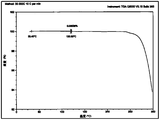
图5是晶型A热重分析法(TGA)图谱。Figure 5 is a thermogravimetric analysis (TGA) spectrum of Form A.
图6是晶型A的红外光谱图(IR)图谱。Fig. 6 is the infrared spectrum (IR) spectrum of crystal form A.
图7是通过不同制备方法得到晶型A的粉末X-射线衍射图(XPRD)对比图。Fig. 7 is a comparison chart of powder X-ray diffraction patterns (XPRD) of crystal form A obtained by different preparation methods.
图8是SD大鼠单次给药后血药浓度-时间曲线图。Figure 8 is a graph showing the blood concentration-time curve of SD rats after a single administration.
图9是实施例2制备得到式(I)化合物的甲磺酸盐(即晶型A)在单次和联合给药下的人肺癌H1975裸小鼠皮下移植瘤的肿瘤体积变化-时间曲线图。Fig. 9 is a graph showing the tumor volume change-time curve of human lung cancer H1975 subcutaneous xenografted tumor in nude mice under single and combined administration of the methanesulfonate salt of the compound of formula (I) prepared in Example 2 (ie crystal form A) .
图10是实施例2制备得到式(I)化合物的甲磺酸盐(即晶型A)在单次和联合给药下的下的人肺癌H1975裸小鼠的体重变化-时间曲线图。Fig. 10 is a graph showing the body weight change-time curve of human lung cancer H1975 nude mice under single and combined administration of the methanesulfonate salt of the compound of formula (I) prepared in Example 2 (ie, crystal form A).
现通过以下实施例来进一步描述本发明的有益效果,实施例仅用于例证的目的,不限制本发明的范围,同时本领域普通技术人员根据本发明所做的显而易见的改变和修饰,也包含在本发明范围之类。The following examples are used to further describe the beneficial effects of the present invention. The examples are only for illustrative purposes and do not limit the scope of the present invention. At the same time, obvious changes and modifications made by those skilled in the art according to the present invention also include Within the scope of the present invention.
以下各实施例中“室温”在15-25℃均可。In the following examples, the "room temperature" can be 15-25°C.
(一)N-(2-(2-(二甲基氨基)乙氧基)-4-甲氧基-5-((4-(1-甲基-1H-吲哚-3-基)嘧啶-2-基)氨基)苯基)丙烯酰胺(式I化合物)的制备(1) N-(2-(2-(Dimethylamino)ethoxy)-4-methoxy-5-((4-(1-methyl-1H-indol-3-yl)pyrimidine -2-yl)amino)phenyl)acrylamide (compound of formula I)

已知的(例如可参见CN201580067776.8)N-(2-(2-(二甲基氨基)乙氧基)-4-甲氧基-5-((4-(1-甲基-1H-吲哚-3-基)嘧啶-2-基)氨基)苯基)丙烯酰胺(式I化合物)可通过下述合成路线制备得到:Known (for example, see CN201580067776.8) N-(2-(2-(dimethylamino)ethoxy)-4-methoxy-5-((4-(1-methyl-1H- Indol-3-yl)pyrimidin-2-yl)amino)phenyl)acrylamide (compound of formula I) can be prepared by the following synthetic route:

步骤1-中间体J的制备:Step 1-Preparation of Intermediate J:

制备:10L反应瓶中,加入6L无水四氢呋喃溶剂,氮气保护,冷却至0℃。搅拌状态下,缓慢加入101g氢化钠(101g,2.52mol),内温不超过10℃,加入 234g二甲氨基乙醇(234g,2.62mol)。加毕,温度调整至室温,制备得到醇钠溶液。Preparation: In a 10L reaction flask, add 6L of anhydrous tetrahydrofuran solvent, protected by nitrogen, and cool to 0°C. While stirring, slowly add 101 g of sodium hydride (101 g, 2.52 mol), and the internal temperature does not exceed 10°C, and add 234 g of dimethylaminoethanol (234 g, 2.62 mol). After the addition, the temperature is adjusted to room temperature to prepare a sodium alkoxide solution.
30L反应瓶中,加入N-(4-氟-2-甲氧基-5-硝基苯基)-4-(1-甲基-1H-吲哚-3-基)-2-嘧啶胺(起始物料B)(430g,1.10mol),然后加入9L的四氢呋喃,开启搅拌下,溶清,控制温度在10±10℃,缓慢滴加制备好的醇钠溶液。控制温度在10±10℃,保温5.0h。当原料含量≤0.5%,反应结束。控制温度在10±10℃,缓慢滴加3%盐酸溶液,调整溶液PH至6-7,搅拌1.5h后静置分层,分出有机相,浓缩至15~20L。降温至20±5℃后,缓慢滴加4.3kg的水,过滤,烘干,得497g黄色粉末中间体J,收率为98.0%,HPLC纯度为99.3%。MS m/z:463.2[M+1]。In a 30L reaction flask, add N-(4-fluoro-2-methoxy-5-nitrophenyl)-4-(1-methyl-1H-indol-3-yl)-2-pyrimidinamine ( Starting material B) (430g, 1.10mol), then add 9L of tetrahydrofuran, turn on the stirring, dissolve it, control the temperature at 10±10°C, and slowly add the prepared sodium alkoxide solution dropwise. Control the temperature at 10±10℃ and keep it for 5.0h. When the raw material content is ≤0.5%, the reaction ends. Control the temperature at 10±10°C, slowly add 3% hydrochloric acid solution dropwise, adjust the pH of the solution to 6-7, stir for 1.5h and then stand to separate the layers, separate the organic phase, and concentrate to 15-20L. After cooling to 20±5°C, 4.3 kg of water was slowly added dropwise, filtered, and dried to obtain 497 g of yellow powder intermediate J with a yield of 98.0% and an HPLC purity of 99.3%. MS m/z: 463.2[M+1].
核磁数据: 1HNMR(d 6-DMSO):δppm:8.78(s,1H);8.42-8.28(m,3H);8.16(s,1H);7.53(d,1H,J=8.28);7.29-7.20(m,2H);7.13-7.07(m,1H);7.01(s,1H);4.33(t,2H,J=5.65);4.02(s,3H);3.88(s,3H);2.71(t,2H,J=5.77);2.27(s,6H)。 Nuclear magnetic data: 1 HNMR (d 6 -DMSO): δ ppm: 8.78 (s, 1H); 8.42-8.28 (m, 3H); 8.16 (s, 1H); 7.53 (d, 1H, J = 8.28); 7.29- 7.20 (m, 2H); 7.13-7.07 (m, 1H); 7.01 (s, 1H); 4.33 (t, 2H, J = 5.65); 4.02 (s, 3H); 3.88 (s, 3H); 2.71 ( t, 2H, J = 5.77); 2.27 (s, 6H).
步骤2-中间体K的制备:Step 2-Preparation of Intermediate K:

制备:10L氢化反应釜中,加入5L四氢呋喃和中间体J(350g,108mmol),加入湿钯炭17.5g,对氢化反应釜进行氢气置换,调整压力值0.2MPa,控制温度在25℃,保温反应9h,HPLC监控反应进度,在底物≤0.5%时,停止反应。过滤,滤液减压浓缩,至溶剂体积剩余约2L,调整内温至室温,在4-7小时内缓慢滴加4L正庚烷,过滤并将固体减压干燥,得285g类白色粉末中间体K,收率为86%,HPLC纯度为99.60%。MS m/z:433.3[M+1]。Preparation: Add 5L of tetrahydrofuran and intermediate J (350g, 108mmol) to a 10L hydrogenation reactor, add 17.5g of wet palladium charcoal, replace the hydrogenation reactor with hydrogen, adjust the pressure value to 0.2MPa, control the temperature at 25°C, and keep the reaction warm. At 9h, HPLC monitors the progress of the reaction, and stops the reaction when the substrate is ≤0.5%. Filter, concentrate the filtrate under reduced pressure until the solvent volume is about 2L, adjust the internal temperature to room temperature, slowly add 4L n-heptane dropwise within 4-7 hours, filter and dry the solid under reduced pressure to obtain 285g of white powder intermediate K The yield was 86%, and the HPLC purity was 99.60%. MS m/z: 433.3 [M+1].
核磁数据: 1HNMR(CDCl 3):δppm:8.42(d,1H,J=7.78),8.28(s,1H),8.26-8.23(m,1H),7.78(s,1H),7.51(d,1H,J=8.28),7.41(s,1H),7.26-7.23(m,1H),7.19- 7.11(m,2H),6.72(s,1H),4.38(br,2H),4.06(t,2H,J=5.77),3.88(s,3H),3.75(s,3H),2.63(t,2H,J=5.77),2.26(s,6H). Nuclear magnetic data: 1 HNMR (CDCl 3 ): δ ppm: 8.42 (d, 1H, J = 7.78), 8.28 (s, 1H), 8.26 to 8.23 (m, 1H), 7.78 (s, 1H), 7.51 (d, 1H,J=8.28),7.41(s,1H),7.26-7.23(m,1H),7.19- 7.11(m,2H),6.72(s,1H), 4.38(br,2H),4.06(t, 2H,J=5.77), 3.88(s,3H), 3.75(s,3H), 2.63(t,2H,J=5.77), 2.26(s,6H).
步骤3-式I化合物的制备:Step 3-Preparation of compound of formula I:

向反应瓶中加入250mL无水四氢呋喃溶剂和中间体K(14g,32mmol)搅拌,冷却至0-5℃,加入10%盐酸(12ml),搅拌20分钟。0-5℃下,缓慢滴加3-氯丙酰氯(5.6g,45mmol)到反应瓶中。搅拌3小时,取样测试(K/(U+K)≤0.5%)合格后,加入36%氢氧化钾水溶液(75ml,480mmol),升温至23-25℃,搅拌12小时。升温至50-60℃,搅拌4小时。取样测试(U/(U+L)≤0.1%)合格后,静置分液。分出有机相,10%食盐水洗涤三次后,干燥,过滤,浓缩有机相至150ml。升温至40℃,缓慢滴加正庚烷150ml,降至室温,析出晶体。过滤,干燥,得到浅棕色固体(式I化合物)10.71g,产率68%,HPLC纯度:99.8%(所有单杂不超过0.15%)。MS m/z:487.3[M+1]。Add 250 mL of anhydrous tetrahydrofuran solvent and Intermediate K (14 g, 32 mmol) to the reaction flask and stir, cool to 0-5° C., add 10% hydrochloric acid (12 ml), and stir for 20 minutes. At 0-5°C, slowly drop 3-chloropropionyl chloride (5.6 g, 45 mmol) into the reaction flask. Stir for 3 hours, after sampling test (K/(U+K)≤0.5%) is qualified, add 36% potassium hydroxide aqueous solution (75ml, 480mmol), heat to 23-25°C, and stir for 12 hours. Raise the temperature to 50-60°C and stir for 4 hours. After the sampling test (U/(U+L)≤0.1%) is qualified, stand still for liquid separation. Separate the organic phase, wash with 10% brine three times, dry, filter, and concentrate the organic phase to 150 ml. The temperature was raised to 40° C., 150 ml of n-heptane was slowly added dropwise, and the temperature was lowered to room temperature to precipitate crystals. Filtered and dried to obtain 10.71 g of light brown solid (compound of formula I), yield 68%, HPLC purity: 99.8% (all single impurities do not exceed 0.15%). MS m/z: 487.3[M+1].
核磁数据(附图1): 1HNMR(d 6-DMSO):δppm:9.84(s,1H),8.90~8.82(m,1H),8.32-8.25(m,2H),7.89(s,1H),7.51(d,1H,J=8.25),7.27~7.10(m,1H),6.94(s,1H),6.49(dd,1H,J=16.88,10.13),6.25(dd,1H,J=16.95,1.81),5.80~5.75(m,1H),4.19(t,2H,J=5.57),3.88(d,6H,J=14.63,6H),3.34(s,3H),2.58(d,2H,J=5.5),2.28(s,6H)。 Nuclear magnetic data (Figure 1): 1 HNMR (d 6 -DMSO): δppm: 9.84 (s, 1H), 8.90 ~ 8.82 (m, 1H), 8.32-8.25 (m, 2H), 7.89 (s, 1H) ,7.51(d,1H,J=8.25), 7.27~7.10(m,1H), 6.94(s,1H), 6.49(dd,1H,J=16.88,10.13), 6.25(dd,1H,J=16.95 ,1.81),5.80~5.75(m,1H),4.19(t,2H,J=5.57),3.88(d,6H,J=14.63,6H),3.34(s,3H),2.58(d,2H, J=5.5), 2.28 (s, 6H).
(二)N-(2-(2-(二甲基氨基)乙氧基)-4-甲氧基-5-((4-(1-甲基-1H-吲哚-3-基)嘧啶-2-基)氨基)苯基)丙烯酰胺甲磺酸盐(晶型A)的制备(2) N-(2-(2-(Dimethylamino)ethoxy)-4-methoxy-5-((4-(1-methyl-1H-indol-3-yl)pyrimidine -2-yl)amino)phenyl)acrylamide methanesulfonate (Form A) preparation
实施例1Example 1

式I化合物(3g,6.1mmol)溶解在24ml二甲基亚砜DMSO溶剂中,升温至65℃,搅拌溶清。向体系中加入等当量甲磺酸(0.59g,6.1mmol)。降温至50℃,缓慢加入12ml醋酸异丙酯IPAc。50℃下搅拌1小时,然后降温至15℃。在4小时加入21ml IPAc。溶液在15℃下搅拌析晶,减压抽滤,醋酸异丙酯洗涤滤饼,丙酮打浆洗涤,降低DMSO溶剂残留。50℃下鼓风干燥(或50℃真空减压干燥),得到淡黄色固体(晶型A)3.16g。HPLC纯度100%,收率88%,DMSO:<100ppm;IPAc:<100ppm。MS m/z:487.2[M+1-MsOH]。熔点:242-244℃。The compound of formula I (3 g, 6.1 mmol) was dissolved in 24 ml of dimethyl sulfoxide DMSO solvent, the temperature was raised to 65° C., and the mixture was stirred to clear. Add an equivalent amount of methanesulfonic acid (0.59 g, 6.1 mmol) to the system. The temperature was lowered to 50°C, and 12ml of isopropyl acetate IPAc was slowly added. Stir at 50°C for 1 hour, then lower the temperature to 15°C. Add 21ml IPAc in 4 hours. The solution was stirred and crystallized at 15°C, filtered under reduced pressure, the filter cake was washed with isopropyl acetate, and washed with acetone to reduce the residual DMSO solvent. Blow drying at 50°C (or vacuum drying at 50°C) to obtain 3.16 g of light yellow solid (crystal form A). HPLC purity is 100%, yield is 88%, DMSO: <100ppm; IPAc: <100ppm. MS m/z: 487.2 [M+1-MsOH]. Melting point: 242-244°C.
核磁数据(附图2): 1HNMR(d 6-DMSO):δppm:9.57(brs,1H),9.40(s,1H),8.71(s,1H),8.48(s,1H),8.32(d,1H,J=7.9),8.29(d,1H,J=5.3),7.96(s,1H),7.51(d,1H,J=8.2),7.23(ddd,1H,J=7.9,7.1,0.8),7.19(d,1H,J=5.4),7.15(ddd,1H,J=7.8,7.3,0.5),6.94(s,1H),6.67(dd,1H,J=16.9,10.2),6.27(dd,1H,J=16.9,1.8),5.57(dd,1H,J=16.9,1.7),4.44(t,2H,J=4.6),3.89(s,3H),3.88(s,3H),3.58(t,2H,J=4.6),2.93(s,6H),2.39(s,3H)。 Nuclear magnetic data (figure 2): 1 HNMR(d 6 -DMSO): δppm: 9.57(brs,1H), 9.40(s,1H), 8.71(s,1H), 8.48(s,1H), 8.32(d , 1H, J = 7.9), 8.29 (d, 1H, J = 5.3), 7.96 (s, 1H), 7.51 (d, 1H, J = 8.2), 7.23 (ddd, 1H, J = 7.9, 7.1, 0.8 ), 7.19 (d, 1H, J = 5.4), 7.15 (ddd, 1H, J = 7.8, 7.3, 0.5), 6.94 (s, 1H), 6.67 (dd, 1H, J = 16.9, 10.2), 6.27 ( dd, 1H, J = 16.9, 1.8), 5.57 (dd, 1H, J = 16.9, 1.7), 4.44 (t, 2H, J = 4.6), 3.89 (s, 3H), 3.88 (s, 3H), 3.58 (t, 2H, J=4.6), 2.93 (s, 6H), 2.39 (s, 3H).
经检测,本实施例得到晶型A粉末X衍射图在衍射角2θ值为11.06±0.2°,12.57±0.2°,13.74±0.2°,14.65±0.2°,15.48±0.2°,16.58±0.2°,17.83±0.2°,19.20±0.2°,19.79±0.2°,20.88±0.2°,22.05±0.2°,23.06±0.2°,24.23±0.2°,25.10±0.2°,25.71±0.2°,26.15±0.2°,27.37±0.2°,27.42±0.2°处具有特征峰;其XRPD图谱如图3及附表所示,DSC图如图4所示,TGA图如图5所示,红外光谱IR图如图6所示。After testing, the powder X-ray diffraction pattern of crystal form A obtained in this example has diffraction angle 2θ values of 11.06±0.2°, 12.57±0.2°, 13.74±0.2°, 14.65±0.2°, 15.48±0.2°, 16.58±0.2°, 17.83±0.2°, 19.20±0.2°, 19.79±0.2°, 20.88±0.2°, 22.05±0.2°, 23.06±0.2°, 24.23±0.2°, 25.10±0.2°, 25.71±0.2°, 26.15±0.2°, 27.37±0.2°, 27.42±0.2° has a characteristic peak; its XRPD spectrum is shown in Figure 3 and the attached table, DSC diagram is shown in Figure 4, TGA diagram is shown in Figure 5, and infrared spectrum IR diagram is shown in Figure 6. Show.
实施例2Example 2

式I化合物(28.25g,58.1mmol)溶解在224ml二甲基亚砜DMSO溶剂中,升温至15-35℃,搅拌溶清。向体系中分批加入0.97当量的甲磺酸(5.4g,0.97mmol)。缓慢加入448ml甲基异丁基酮(MIBK)。搅拌1小时,然后降温至10-15℃。溶液在10-15℃下成盐反应,取样,HPLC检测母液中式I化合物残留(≤0.4%)。反应结束,减压抽滤,得到式I化合物甲磺酸盐粗品32g。The compound of formula I (28.25 g, 58.1 mmol) was dissolved in 224 ml of dimethyl sulfoxide DMSO solvent, the temperature was raised to 15-35° C., and the mixture was stirred to clear. 0.97 equivalents of methanesulfonic acid (5.4 g, 0.97 mmol) were added to the system in batches. Slowly add 448 ml of methyl isobutyl ketone (MIBK). Stir for 1 hour, then lower the temperature to 10-15°C. The solution was reacted with salt formation at 10-15°C, samples were taken, and the residue of the compound of formula I in the mother liquor was detected by HPLC (≤0.4%). After the reaction was completed, vacuum filtration was performed to obtain 32 g of the crude methanesulfonate of the compound of formula I.
将式I化合物甲磺酸盐粗品3g加入24ml二甲基亚砜DMSO溶剂中,65℃搅拌溶清后,降温,缓慢滴加48ml甲基异丁基酮(MIBK),搅拌析晶6-8小时,减压抽滤,60℃下鼓风干燥(或60℃真空减压干燥)得到目标晶型A。熔点:242-244℃。其晶型XRPD图谱与图3吻合(附图7),所有特征峰均在误差范围内。Add 3g of the crude methanesulfonate of the compound of formula I into 24ml of dimethyl sulfoxide DMSO solvent, stir to clear at 65°C, cool down, slowly add 48ml of methyl isobutyl ketone (MIBK) dropwise, stir and crystallize 6-8 After hours, vacuum filtration, drying at 60° C. (or 60° C. vacuum and reduced pressure drying) to obtain the target crystal form A. Melting point: 242-244°C. The XRPD pattern of the crystal form is consistent with Figure 3 (Figure 7), and all characteristic peaks are within the error range.
实施例3Example 3
将式I化合物甲磺酸盐粗品(参考实施例2制得)3g加入24ml二甲基亚砜DMSO溶剂中,65℃搅拌溶清后,降温,缓慢滴加48ml乙酸乙酯,搅拌析晶6-8小时,减压抽滤,乙酸乙酯洗涤滤饼,70℃下鼓风干燥(或60℃真空减压干燥)得到目标2.8g晶型A。熔点:242-244℃。其晶型XRPD图谱与图3吻合,所有特征峰均在误差范围内。Add 3 g of the crude methanesulfonate salt of formula I (prepared in Reference Example 2) into 24 ml of dimethyl sulfoxide DMSO solvent, stir to clear at 65°C, cool down, slowly add 48 ml of ethyl acetate dropwise, and stir to crystallize 6 -8 hours, vacuum filtration, washing the filter cake with ethyl acetate, and air drying at 70°C (or 60°C vacuum drying under reduced pressure) to obtain the target 2.8g crystal form A. Melting point: 242-244°C. The XRPD pattern of the crystal form is consistent with Figure 3, and all the characteristic peaks are within the error range.
实施例4Example 4
将式I化合物甲磺酸盐粗品3g加入24ml二甲基亚砜DMSO溶剂中,65℃搅拌溶清后,降温,缓慢滴加12ml甲基叔丁基醚(MTBK),搅拌析晶6-8小时,减压抽滤,50℃下鼓风干燥(或30℃真空减压干燥)得到目标晶型A。 熔点:242-244℃。其晶型XRPD图谱与图3吻合,所有特征峰均在误差范围内。Add 3g of the crude methanesulfonate of the compound of formula I into 24ml of dimethyl sulfoxide DMSO solvent, stir to clear at 65°C, cool down, slowly add 12ml of methyl tert-butyl ether (MTBK) dropwise, and stir to crystallize 6-8 After hours, vacuum suction filtration, and blowing drying at 50°C (or 30°C vacuum drying under reduced pressure) to obtain the target crystal form A. Melting point: 242-244°C. The XRPD pattern of the crystal form is consistent with Figure 3, and all the characteristic peaks are within the error range.
实施例5Example 5
将式I化合物甲磺酸盐粗品3g加入24ml二甲基亚砜DMSO溶剂中,65℃搅拌溶清后,降温,缓慢滴加48ml乙腈(ACN),搅拌析晶6-8小时,减压抽滤,50℃下鼓风干燥(或60℃真空减压干燥)得到目标晶型A。熔点:242-244℃。其晶型XRPD图谱与图3吻合,所有特征峰均在误差范围内。Add 3 g of the crude methanesulfonate salt of the compound of formula I into 24 ml of dimethyl sulfoxide DMSO solvent, stir and dissolve at 65° C., cool down, slowly add 48 ml of acetonitrile (ACN) dropwise, stir and crystallize for 6-8 hours, and pump under reduced pressure. Filter and dry by blowing at 50°C (or 60°C under reduced pressure under vacuum) to obtain the target crystal form A. Melting point: 242-244°C. The XRPD pattern of the crystal form is consistent with Figure 3, and all the characteristic peaks are within the error range.
实施例6Example 6
将式I化合物甲磺酸盐粗品3g加入24ml二甲基亚砜DMSO溶剂中,65℃搅拌溶清后,降温,缓慢滴加48ml甲苯(PhMe),搅拌析晶6-8小时,减压抽滤,50℃下鼓风干燥(或50℃真空减压干燥)得到目标晶型A。熔点:242-244℃。其晶型XRPD图谱与图3吻合,所有特征峰均在误差范围内。Add 3 g of the crude methanesulfonate salt of the compound of formula I into 24 ml of dimethyl sulfoxide DMSO solvent, stir and dissolve at 65°C, then cool down, slowly add 48 ml of toluene (PhMe) dropwise, stir and crystallize for 6-8 hours, and pump under reduced pressure. Filter and dry by blowing at 50°C (or drying under vacuum at 50°C) to obtain the target crystal form A. Melting point: 242-244°C. The XRPD pattern of the crystal form is consistent with Figure 3, and all the characteristic peaks are within the error range.
实施例7Example 7
将式I化合物甲磺酸盐粗品10g加入100ml四氢呋喃THF溶剂中,65℃搅拌溶清后,降温至室温,搅拌析晶6-8小时,过滤,50℃干燥得到8.8g目标晶型A。熔点:242-244℃。其晶型XRPD图谱与图3吻合,所有特征峰均在误差范围内。Add 10 g of the crude mesylate salt of the compound of formula I to 100 ml of tetrahydrofuran THF solvent, stir to clear at 65°C, cool to room temperature, stir and crystallize for 6-8 hours, filter, and dry at 50°C to obtain 8.8 g of target crystal form A. Melting point: 242-244°C. The XRPD pattern of the crystal form is consistent with Figure 3, and all the characteristic peaks are within the error range.
实施例8Example 8
将式I化合物甲磺酸盐粗品2g加入20ml N-甲基吡咯烷酮NMP溶剂中,65℃搅拌溶清后,降温至室温,搅拌析晶6-8小时,减压抽滤,50℃下鼓风干燥(或50℃真空减压干燥)得到目标晶型A。熔点:242-244℃。其晶型XRPD图谱与图3吻合,所有特征峰均在误差范围内。Add 2g of the crude methanesulfonate salt of the compound of formula I to 20ml of N-methylpyrrolidone NMP solvent, stir and dissolve at 65°C, cool to room temperature, stir and crystallize for 6-8 hours, filter under reduced pressure, and blow at 50°C. Drying (or vacuum drying at 50°C) to obtain the target crystal form A. Melting point: 242-244°C. The XRPD pattern of the crystal form is consistent with Figure 3, and all the characteristic peaks are within the error range.
实施例9Example 9
将式I化合物甲磺酸盐粗品2g加入30ml N,N-二甲基甲酰胺DMF溶剂中,65℃搅拌溶清后,降温至室温,搅拌析晶6-8小时,减压抽滤,65℃下鼓风干燥(或60℃真空减压干燥)得到目标晶型A。熔点:242-244℃。其晶型XRPD图谱与图3吻合,所有特征峰均在误差范围内。Add 2g of the crude methanesulfonate salt of the compound of formula I into 30ml N,N-dimethylformamide DMF solvent, stir and dissolve at 65°C, cool to room temperature, stir and crystallize for 6-8 hours, and filter under reduced pressure. Blow drying at °C (or 60 °C vacuum drying under reduced pressure) to obtain the target crystal form A. Melting point: 242-244°C. The XRPD pattern of the crystal form is consistent with Figure 3, and all the characteristic peaks are within the error range.
实施例10Example 10
将式I化合物甲磺酸盐粗品2g加入50ml N,N-二甲基乙酰胺DMAc溶剂中,65℃搅拌溶清后,降温至室温,搅拌析晶6-8小时,减压抽滤,60℃下鼓风干燥(或60℃真空减压干燥)得到目标晶型A。熔点:242-244℃。其晶型XRPD图谱与图3吻合,所有特征峰均在误差范围内。Add 2g of the crude methanesulfonate salt of the compound of formula I into 50ml N,N-dimethylacetamide DMAc solvent, stir and dissolve at 65°C, cool to room temperature, stir and crystallize for 6-8 hours, filter under reduced pressure, 60 Blow drying at °C (or 60 °C vacuum drying under reduced pressure) to obtain the target crystal form A. Melting point: 242-244°C. The XRPD pattern of the crystal form is consistent with Figure 3, and all the characteristic peaks are within the error range.
实施例11Example 11
将式I化合物甲磺酸盐粗品2g加入50ml丙酮/水混合溶剂(丙酮/水=1/1v/v)中,升温至50℃搅拌打浆,降温至室温,搅拌析晶6-8小时,减压抽滤,50℃下鼓风干燥(或50℃真空减压干燥)得到目标晶型A。熔点:242-244℃。其晶型XRPD图谱与图3吻合,所有特征峰均在误差范围内。Add 2g of the crude methanesulfonate salt of the compound of formula I into 50ml of acetone/water mixed solvent (acetone/water=1/1v/v), raise the temperature to 50°C and stir to make slurry, cool to room temperature, and stir and crystallize for 6-8 hours. Pressure suction filtration, and blowing drying at 50°C (or 50°C vacuum drying under reduced pressure) to obtain the target crystal form A. Melting point: 242-244°C. The XRPD pattern of the crystal form is consistent with Figure 3, and all the characteristic peaks are within the error range.
(三)N-(2-(2-(二甲基氨基)乙氧基)-4-甲氧基-5-((4-(1-甲基-1H-吲哚-3-基)嘧啶-2-基)氨基)苯基)丙烯酰胺甲磺酸盐(晶型A)的结构确认研究(3) N-(2-(2-(Dimethylamino)ethoxy)-4-methoxy-5-((4-(1-methyl-1H-indol-3-yl)pyrimidine -2-yl)amino)phenyl)acrylamide methanesulfonate (Form A) structure confirmation
采用实施例2方法制备的晶型A(纯度大于99.80%),采用以下实例方法,进行晶型A的结构确定测试。The crystal form A (purity greater than 99.80%) prepared by the method of Example 2 was used for the structure determination test of the crystal form A using the following example method.
测试例1
采用元素分析法,分别测试晶型A中含有的C、H、N、S元素的百分含量,平行测试两次,取其平均值。The elemental analysis method was used to test the percentages of C, H, N, and S elements contained in the crystal form A, and the test was performed twice in parallel, and the average value was taken.
CHN测试仪器:Elementar Vario EL III型元素分析仪(C、H、N测定);CHN test equipment: Elementar Vario EL III element analyzer (C, H, N determination);
CHN测试方法:样品经燃烧分解,定量转换,检测,再经数据处理得到C、H、N的百分含量;CHN test method: the sample is decomposed by combustion, quantitatively converted, tested, and then processed by data to obtain the percentages of C, H, and N;
S滴定方法:精密称取晶型A样品,分别用无灰滤纸包紧,经燃烧法进行分解,用纯水和30%H 2O 2作为吸收液吸收。吸收完全后转移至250mL容量瓶中,用乙醇冲洗燃烧瓶,冲洗液也转移至250mL容量瓶中。然后加入一定量的已知浓度的HNO 3和偶氮氯膦III指示剂,然后用已知浓度的Ba(ClO 4) 2·3H 2O滴定,直到溶液颜色由紫红色变为蓝色。记录Ba(ClO 4) 2·3H 2O消耗体积,计算S的百分含量。 S titration method: accurately weigh the crystal form A samples, respectively wrap them tightly with ash-free filter paper, decompose them by combustion method, and absorb them with pure water and 30% H 2 O 2 as the absorption liquid. After the absorption is complete, transfer to a 250mL volumetric flask, rinse the combustion flask with ethanol, and transfer the rinsing fluid to the 250mL volumetric flask. Then add a certain amount of known concentration of HNO 3 and chlorophosphonazo III indicator, and then titrate with a known concentration of Ba(ClO 4 ) 2 ·3H 2 O until the color of the solution changes from purple to blue. Record the consumption volume of Ba(ClO 4 ) 2 ·3H 2 O and calculate the percentage of S.
表1.晶型A的元素分析测试结果Table 1. Elemental analysis test results of crystal form A

测定结果表明,晶型A(C 27H 30N 6O 3·CH 4O 3S)样品的C、H、N和S含量的实测值与理论值之差均小于0.3%,表明实测值与理论值一致,是带有1分子甲磺酸的盐。与中国专利申请号CN201780050034.3实施例2报道值数据吻合。 The measurement results show that the difference between the actual and theoretical values of C, H, N, and S content of the crystal form A (C 27 H 30 N 6 O 3 ·CH 4 O 3 S) sample is less than 0.3%, indicating that the actual measured value is different from the theoretical value. The theoretical value is consistent, it is a salt with 1 molecule of methanesulfonic acid. It is consistent with the data reported in Example 2 of Chinese Patent Application No. CN201780050034.3.
测试例2
目的:采用粉末X-射线衍射分析法,测试晶型A的特定晶体结构。Purpose: To test the specific crystal structure of Form A by powder X-ray diffraction analysis.
仪器:Bruker D8 Advance粉末X-射线衍射仪Instrument: Bruker D8 Advance powder X-ray diffractometer
表2.测试条件参数表Table 2. Test condition parameter table

测定结果和解析:由晶型A的粉末X-射线衍射图(附图3及附表)可知: 本化合物具有特定的晶体结构。其2θ角(°)在11.06,12.57,13.74,14.65,15.48,16.58,17.83,19.20,19.79,20.88,22.05,23.06,24.23,25.10,25.71,26.15,27.37,27.42有较强峰(相对强度大于10%)。Measurement results and analysis: From the powder X-ray diffraction pattern of crystal form A (Figure 3 and the attached table), it can be seen that this compound has a specific crystal structure. Its 2θ angle (°) has strong peaks at 11.06, 12.57, 13.74, 14.65, 15.48, 16.58, 17.83, 19.20, 19.79, 20.88, 22.05, 23.06, 24.23, 25.10, 25.71, 26.15, 27.37, 27.42 (relative intensity is greater than 10%).
表3.与中国专利申请号CN201780050034.3实施例2的比较表Table 3. Comparison table with Example 2 of Chinese patent application number CN201780050034.3

测试例3
目的:采用差热分析DSC法,测试晶型A的熔点。Purpose: Use the differential thermal analysis DSC method to test the melting point of crystal form A.
仪器:TA Q2000差示量热扫描仪Instrument: TA Q2000 Differential Calorimetry Scanner
参数:升温范围:30~300℃;升温速率:10℃/minParameters: heating range: 30~300℃; heating rate: 10℃/min
测定结果和解析:由DSC曲线图(附图4)可知,晶型A的熔点为242-244℃。Measurement results and analysis: It can be seen from the DSC graph (Figure 4) that the melting point of the crystal form A is 242-244°C.
表4.与中国专利申请号CN201780050034.3实施例2甲磺酸盐的比较Table 4. Comparison with Chinese Patent Application No. CN201780050034.3 Example 2 Methanesulfonate
测试例4
目的:采用热重分析法,测试晶型A是否含水或溶剂化合物。Purpose: Use thermogravimetric analysis to test whether crystal form A contains water or solvent compounds.
仪器:TA Q5000型热重分析仪Instrument: TA Q5000 Thermogravimetric Analyzer
参数:升温范围:30~300℃;升温速率:10℃/minParameters: heating range: 30~300℃; heating rate: 10℃/min
测定结果和解析:由TSA曲线图(附图5)可知,晶型A在33.40℃~120.00℃失重很小,结合DSC和元素分析表明,晶型A不含水或溶剂。Measurement results and analysis: It can be seen from the TSA graph (Figure 5) that the weight loss of crystal form A is very small at 33.40°C to 120.00°C. Combined with DSC and elemental analysis, it is shown that crystal form A does not contain water or solvent.
表5.与中国专利申请号CN201780050034.3实施例2甲磺酸盐的比较Table 5. Comparison with Chinese Patent Application No. CN201780050034.3 Example 2 Methanesulfonate
测试例5
目的:采用红外吸收光谱法,测试晶型A的红外谱图。Purpose: To test the infrared spectrum of crystal form A by infrared absorption spectroscopy.
仪器:Nicolet 380 FT-IR型红外光谱仪,YP-2压片机Instrument: Nicolet 380 FT-IR infrared spectrometer, YP-2 tablet press
方法:KBr压片法Method: KBr tablet method
测定结果和解析:由红外吸收光谱图(附图6)可知,本品结构中含芳环、芳杂环、烯基、-CH3、-CH2-、胺基、胺盐、酰胺、醚基和磺酸盐结构等。上述红外IR光谱结果与晶型A结构相符。Measurement results and analysis: It can be seen from the infrared absorption spectrum (Figure 6) that the structure of this product contains aromatic rings, aromatic heterocycles, alkenyl groups, -CH3, -CH2-, amine groups, amine salts, amides, ether groups, and Sulfonate structure, etc. The above infrared IR spectrum results are consistent with the structure of crystal form A.
测试例6
目的:考察本专利方法实施例2制备得到的晶型A化合物的物质稳定性。Purpose: To investigate the material stability of the crystal form A compound prepared in Example 2 of the method of this patent.
方法:参考中国药典(2015版)对原料药稳定性试验的要求,采用影响因素和加速/长期稳定性考察方法,测试晶型A的物质稳定性数据(试验设计如下表6)。Method: Refer to the requirements of the Chinese Pharmacopoeia (2015 Edition) for the stability test of APIs, using influencing factors and accelerated/long-term stability inspection methods to test the material stability data of crystal form A (the test design is shown in Table 6 below).
仪器:气候条件箱;光照箱Instrument: climatic condition box; light box
表6.稳定性试验设计Table 6. Stability test design

*备注:影响因素实验只有当60℃的检测结果不符合接受标准才检测40℃的样品。只有当25℃/90%RH的检测结果不符合接受标准才检测25℃/75%RH的样品。*Remarks: In the experiment of influencing factors, samples at 40°C are tested only when the 60°C test result does not meet the acceptance criteria. Only when the 25°C/90%RH test result does not meet the acceptance criteria, the 25°C/75%RH sample is tested.
表7.影响因素实验结果--高温试验Table 7. Experimental results of influencing factors-high temperature test

表8.影响因素实验结果—高湿试验Table 8. Experimental results of influencing factors-high humidity test

表9.影响因素实验结果--光照试验Table 9. Experimental results of influencing factors-light test

表10.影响因素实验结果--光照试验Table 10. Experimental results of influencing factors-light test

表11.影响因素实验结果—长期试验Table 11. Experimental results of influencing factors—long-term test

测定结果和解析:影响因素、长期和加速稳定性研究数据表明,晶型A长期放置36个月,各项检测指标与0天比较均无显著变化,所有检测指标符合既定标准且没有出现明显不良趋势。说明本工艺制备得到晶型A在现有包装条件下稳定性良好,各项检测指标能符合质量标准的要求。Measurement results and analysis: Influencing factors, long-term and accelerated stability research data show that after long-term storage of crystal form A for 36 months, there is no significant change in the detection indicators compared with 0 days. All the detection indicators meet the established standards and there is no obvious defect. trend. It shows that the crystal form A prepared by this process has good stability under the existing packaging conditions, and various test indexes can meet the requirements of quality standards.
(四)晶型A的成药性研究(4) Study on the druggability of crystal form A
试验例1Test example 1
目的:评价晶型A在不同生物媒介中的溶解度比较试验Purpose: To evaluate the solubility of crystal form A in different biological media.
实验设计:分别称取约2.5mg式I化合物、晶型A(式I化合物甲磺酸盐)到3个玻璃瓶中,向瓶中分别加入200μL的SGF,FaSSIF和FeSSIF。搅拌混悬 液约30min,37℃。(1)如果变成澄清溶液,继续加入化合物直至成为混悬液;(2)如果不是,继续搅拌混悬液24h。在24h,需要测量pH值及目测其外观。如果24h后还是混悬液,离心分离其中的固体,上清液用50%的乙腈水溶液进行稀释,然后稀释液用HPLC测定浓度,进行含量检测。结果见下表。Experimental design: Weigh approximately 2.5 mg of the compound of formula I and crystal form A (methanesulfonate of the compound of formula I) into three glass bottles, and add 200 μL of SGF, FaSSIF and FeSSIF to the bottles respectively. Stir the suspension for about 30 minutes at 37°C. (1) If it becomes a clear solution, continue to add the compound until it becomes a suspension; (2) If it is not, continue to stir the suspension for 24 hours. In 24h, it is necessary to measure the pH value and visually inspect its appearance. If it is still a suspension after 24 hours, centrifuge the solids, and dilute the supernatant with 50% acetonitrile aqueous solution, and then use HPLC to determine the concentration of the diluted solution for content detection. The results are shown in the table below.
表12.式I化合物和晶型A在不同生物媒介中的溶解度比较结果Table 12. Comparison results of the solubility of the compound of formula I and crystal form A in different biological media

结论:式I化合物甲磺酸盐的晶型A显示在生物相关介质中的溶解度优于式I化合物,尤其在模拟胃液SGF介质中有显著改善。提示,该晶型A适合于开发口服胃溶速释固体制剂。Conclusion: The crystalline form A of the compound of formula I methanesulfonate has a better solubility in bio-related media than that of the compound of formula I, especially in the simulated gastric juice SGF medium. It is suggested that the crystal form A is suitable for the development of oral gastric-dissolved fast-release solid preparations.
试验例2Test example 2
目的:评价SD大鼠单次口服晶型A和式I化合物后药代动力学参数的比较Objective: To evaluate the comparison of the pharmacokinetic parameters of SD rats after a single oral administration of crystal form A and formula I compound
实验设计:健康SD大鼠,随机分为式I化合物组(游离碱)和式I化合物甲磺酸盐晶型A组,两组均为雄性,每组21只,体重190-210g。禁食状态下分别单次口服给予60mg/kg的各受试化合物,给药后的0.5、1、2、4、8、12和24小时不同时间点静脉采集全血并分离血浆,采用液相色谱/串联质谱法(LC-MS/MS)检测血浆中的晶型A或式I化合物的药物浓度,并使用非房室模型计算相关药代动力学参数。其主要的药物动力学参数如下表所示:Experimental design: Healthy SD rats were randomly divided into formula I compound group (free base) and formula I compound methanesulfonate crystal form A group. Both groups were male, with 21 rats in each group, weighing 190-210g. Each test compound was administered orally at a single dose of 60 mg/kg under fasting conditions. Whole blood was collected intravenously and plasma was separated at different time points 0.5, 1, 2, 4, 8, 12 and 24 hours after administration. The liquid phase was used. Chromatography/tandem mass spectrometry (LC-MS/MS) detects the drug concentration of the crystal form A or formula I compound in the plasma, and uses a non-compartmental model to calculate the relevant pharmacokinetic parameters. The main pharmacokinetic parameters are shown in the following table:
表13.式I化合物组和式I化合物甲磺酸盐晶型A组主要的药物动力学参数表Table 13. The main pharmacokinetic parameters of the compound group of formula I and the mesylate crystal form group A of the compound of formula I
C max血浆中药物的最高浓度;T max:药物最高浓度达峰时间;T 1/2:消除半衰期;AUC:血药浓度-时间曲线下面积;MRT:药物平均滞留时间 C max : the highest concentration of the drug in the plasma; T max : the peak time of the highest concentration of the drug; T 1/2 : elimination half-life; AUC: the area under the plasma concentration-time curve; MRT: the average residence time of the drug
由上表和图8可以得到结论:晶型A的生物利用度明显优于游离碱的生物利用度。It can be concluded from the above table and Figure 8 that the bioavailability of crystal form A is significantly better than that of free alkali.
试验例3Test example 3
目的:评价晶型A作为肺癌药物的药物活性测试试验Objective: To evaluate the drug activity test of crystal form A as a lung cancer drug
1)对于特定细胞生长的抑制和选择特异性实验1) Inhibition of specific cell growth and selection specific experiments
方法:采用荧光细胞增殖技术以及细胞的显微镜可视化检测技术(阿尔玛蓝法),检测晶型A对人表皮癌细胞(A431,野生型EGFR)、人肺癌细胞(HCC827,EGFR 19号外显子缺失型激活突变)、人肺癌细胞(H1975,EGFR L858R/T790M耐药型突变)是否具有抗增殖活性。Methods: Fluorescence cell proliferation technology and cell microscopic visualization detection technology (Alma blue method) were used to detect the deletion of crystal form A on human epidermal cancer cells (A431, wild-type EGFR) and human lung cancer cells (HCC827, EGFR exon 19) Type activating mutation), whether human lung cancer cells (H1975, EGFR L858R/T790M drug-resistant mutation) have anti-proliferative activity.
实验设计:取处于对数生长期的细胞接种在96孔板中(细胞浓度为2000个/孔;细胞悬液200μl/孔),30℃、5%CO 2培养24小时使细胞贴壁。将受试化合物的DMSO溶液用细胞培养基溶液从高到低稀释到不同浓度,每次稀释3倍,共得到9个不同浓度。将不同浓度的受试药物溶液加入到有上述癌细胞的96孔细胞板中,每个浓度设3个复孔。同时设一个仅含DMSO的细胞培养基溶液的细胞对照孔。继续在37℃、5%CO 2中继续培养72小时后,终止培养。 Experimental design: Cells in the logarithmic growth phase were seeded in a 96-well plate (the cell concentration was 2000 cells/well; cell suspension was 200 μl/well), and cultured at 30°C and 5% CO 2 for 24 hours to make the cells adherent. The DMSO solution of the test compound was diluted with the cell culture medium solution from high to low to different concentrations, and each dilution was 3 times to obtain a total of 9 different concentrations. The test drug solutions of different concentrations were added to the 96-well cell plate containing the above-mentioned cancer cells, with 3 replicate wells for each concentration. At the same time, set up a cell control well containing only DMSO cell culture medium solution. After continuing the culture at 37°C and 5% CO 2 for 72 hours, the culture was terminated.
细胞增殖采用Alamar Blue阿尔玛蓝试剂(刃天青)染色后检测。刃天青(resazurin)会被细胞还原为试卤灵试剂(resorufin)而成为荧光物质(544nm激发,612nm显色),且荧光强度与细胞数成正比。刃天青试剂溶解在PBS溶液中,配制成浓度为440μM的储备溶液。细胞培养板中加入40μl的440μM刃天青储备液,共孵育5小时后,将细胞培养板恢复到正常培养条件,并使用Cytation3多模式酶标仪(Biotek)在72小时后读取荧光测量值。Cell proliferation was detected after staining with Alamar Blue reagent (resazurin). Resazurin (resazurin) is reduced by cells to resorufin and becomes a fluorescent substance (excitation at 544nm, color development at 612nm), and the fluorescence intensity is proportional to the number of cells. The resazurin reagent was dissolved in PBS solution to prepare a stock solution with a concentration of 440 μM. Add 40μl of 440μM resazurin stock solution to the cell culture plate, incubate for 5 hours, restore the cell culture plate to normal culture conditions, and use Cytation3 multi-mode microplate reader (Biotek) to read the fluorescence measurement after 72 hours .
荧光检测以无细胞(背景)孔读数进行标准化(normalization),确定72小时内的总生长与溶媒对照孔的平均值(n=3)。结果见下表所示:Fluorescence detection was normalized with cell-free (background) well readings, and the average of total growth in 72 hours and vehicle control wells (n=3) was determined. The results are shown in the table below:
表14.晶型A和奥希替尼对于特定细胞生长的抑制和选择特异性实验结果Table 14. Experimental results of specific cell growth inhibition and selection of crystal form A and osimertinib

*数据来源:Table 4,P21,PHARMACOLOGY REVIEW(S),APPLICATION NUMBER:208065Orig1s000,CDER of FDA; https://www.accessdata.fda.gov/drugsatfda_docs/nda/2015/208065Orig1s000PharmR. pdf *Data source: Table 4, P21, PHARMACOLOGY REVIEW(S), APPLICATION NUMBER:208065Orig1s000, CDER of FDA; https://www.accessdata.fda.gov/drugsatfda_docs/nda/2015/208065Orig1s000PharmR. pdf
结果显示,晶型A化合物对于H1975,HCC827均显示出了优异的抑制癌细胞增殖生长活性,对野生型细胞抑制生长不明显,和国外上市产品(奥希替尼)相当;但晶型A显示出对于H1975和HCC827细胞的更优越的抑制选择性(相对于野生型A431癌细胞)。The results showed that the crystal form A compound showed excellent activity to inhibit the proliferation and growth of cancer cells for H1975 and HCC827, but did not significantly inhibit the growth of wild-type cells, which was equivalent to the foreign marketed product (osimertinib); but the crystal form A showed Shows a superior inhibitory selectivity for H1975 and HCC827 cells (compared to wild-type A431 cancer cells).
2)对于不同激酶靶点的抑制选择性2) Inhibition selectivity for different kinase targets
激酶抑制剂作为药物进行临床治疗,需要避免抑制剂除了靶向激酶以外,还会同时抑制其他一些非靶向激酶,并有可能引起一些细胞毒性反应(即所谓的“脱靶效应”)。本实验通过KINOMEscan's体外竞争结合分析法 *1对97种激酶(与人类疾病相关的突变位点激酶酶谱)进行了高通量筛选(kinase profiling)。 Kinase inhibitors are used as drugs for clinical treatment. In addition to targeted kinases, it is necessary to avoid that inhibitors also inhibit other non-targeted kinases, and may cause some cytotoxic reactions (the so-called "off-target effects"). In this experiment, high-throughput screening (kinase profiling) of 97 kinases (mutation site kinase zymograms related to human diseases) was carried out by KINOMEscan's in vitro competitive binding analysis method *1.
表15.晶型A和奥希替尼对97种激酶酶谱进行高通量筛选的结果Table 15. Results of high-throughput screening of 97 kinase zymograms by crystal form A and osimertinib

*1体外结合分析法详细介绍参考:Fabian,M.A.et al.A small molecule-kinase interaction map for clinical kinase inhibitors.Nat.Biotechnol.23,329-336(2005). *1 Refer to Fabian, MA et al. A small molecule-kinase interaction map for clinical kinase inhibitors. Nat. Biotechnol. 23, 329-336 (2005) for detailed introduction of in vitro binding analysis method.
*2数据来源:P15,P43,PHARMACOLOGY REVIEW(S),APPLICATION NUMBER:208065Orig1s000,CDER of FDA; *2 Data source: P15, P43, PHARMACOLOGY REVIEW(S), APPLICATION NUMBER:208065Orig1s000, CDER of FDA;
https://www.accessdata.fda.gov/drugsatfda_docs/nda/2015/208065Orig1s000PharmR.https://www.accessdata.fda.gov/drugsatfda_docs/nda/2015/208065Orig1s000PharmR. pdfpdf
结果显示,晶型A化合物非靶标激酶的抑制活性的选择性要优于已上市药物奥希替尼。The results show that the selectivity of the inhibitory activity of the non-target kinase of the crystal form A compound is better than that of the marketed drug osimertinib.
试验例4晶型A的药物安全性评价Drug Safety Evaluation of Test Example 4 Crystal Form A
1)安全药理学试验1) Safety pharmacology test
目的:模拟临床用药途径,经单次口服晶型A配制的口服给药制剂后,观察对SD大鼠中枢神经系统、SD大鼠呼吸系统和比格犬心血管系统的影响。旨在研究晶型A化合物在治疗范围内或治疗范围以上剂量时,潜在的不期望出现的对生理(中枢神经系统、呼吸系统和心血管系统)的潜在不良影响。OBJECTIVE: To simulate the clinical route of administration, to observe the effects on the central nervous system of SD rats, the respiratory system of SD rats and the cardiovascular system of Beagle dogs after a single oral administration of crystal form A preparations. The purpose is to study the potential undesirable potential adverse effects on physiology (central nervous system, respiratory system and cardiovascular system) when the crystalline form A compound is in the therapeutic range or above the therapeutic range.
方法:method:
【中枢神经实验设计】取7周龄SD大鼠,雌雄各半,体重170-235g之间,共40只SD大鼠(雌雄各20只),随机分成4组,每组雌雄各5只。动物单次口服给予溶媒(0.5%(w/v)甲基纤维素),10,40或160mg/kg的溶解于1%(w/v)甲基纤维素(溶媒)的晶型A化合物混悬液,对照组动物仅给予溶媒。所有动物给药体积为10mL/kg。使用功能性观察组合(FOB),包括对动物的运动功能,行为改变,协调功能,感觉/运动反射和体温的测试,评估不同剂量供试品对动物中枢神经系统功能的影响。实验前、给药后约2小时,4小时及24小时各进行了一次FOB观察。[Central Nervous System Experiment Design] Take 7-week-old SD rats, half male and half male, weighing between 170-235g, a total of 40 SD rats (20 male and female), randomly divided into 4 groups, 5 male and female in each group. Animals are given a single oral dose of vehicle (0.5% (w/v) methyl cellulose), 10, 40 or 160 mg/kg of crystalline form A compound dissolved in 1% (w/v) methyl cellulose (vehicle) For the suspension, control animals were given vehicle only. The administration volume for all animals was 10 mL/kg. Use the Functional Observation Combination (FOB), which includes tests on the animal's motor function, behavioral changes, coordination function, sensory/motor reflex and body temperature, to evaluate the effects of different doses of test products on the function of the animal's central nervous system. FOB observations were performed at about 2 hours, 4 hours and 24 hours before the experiment and after the administration.
【呼吸系统实验设计】取7-8周龄SD大鼠,雌雄各半,体重168-287g之间,共40只大鼠(雌雄各20只)大鼠随机分成4组,每组雌雄各5只。动物单次口服给予溶媒(0.5%(w/v)甲基纤维素),10,40或160mg/kg的溶解于0.5%(w/v)甲基纤维素(溶媒)的晶型A化合物混悬液,对照组动物仅给予溶媒。所有动物给药体积为10mL/kg。给药当天,动物先在数据采集前放置“露头式”的体积描记器中适应至少5分钟,适应后,立刻进行呼吸数据(呼吸频率、潮气量、每分通气量)采集,采集时间点为给药前,给药后约2小时(±10min),4小时(±10min)和24小时,每次采集持续时间为连续约15分钟。记录给药前后潮气量、呼吸量和呼吸频率的变化。设0h、2h、4h和24h时间点。给药后的各指标与自身对照比较,并进行统计分析。[Respiratory system experiment design] Take 7-8 weeks old SD rats, half male and half female, weighing between 168-287g, a total of 40 rats (20 male and female) rats are randomly divided into 4 groups, each group has 5 males and 5 males only. Animals are given a single oral dose of vehicle (0.5% (w/v) methyl cellulose), 10, 40 or 160 mg/kg of crystalline form A compound dissolved in 0.5% (w/v) methyl cellulose (vehicle) For the suspension, control animals were given vehicle only. The administration volume for all animals was 10 mL/kg. On the day of dosing, the animals should be placed in the "outcrops" plethysmograph for at least 5 minutes before the data collection. After the adaptation, the respiratory data (respiratory rate, tidal volume, and minute ventilation) are collected immediately. The collection time is Before administration, about 2 hours (±10min), 4 hours (±10min) and 24 hours after administration, the duration of each collection is about 15 minutes continuously. Record the changes in tidal volume, respiratory volume and respiratory frequency before and after administration. Set 0h, 2h, 4h and 24h time points. The indexes after administration were compared with their own controls, and statistical analysis was performed.
【心血管系统实验设计】取22-24月龄比格犬,雌雄各半,体重9.3-10.5kg之间,共计6只比格犬,预先植入遥感子设备。按照剂量递增方式设计,每只犬给予1次溶媒及10、30、100mg/kg的溶解于0.5%(w/v)甲基纤维素(溶媒)的晶型A化合物混悬液,对照组动物仅给予溶媒。两个剂量之间的间隔为3天(对照除外,对照之间的间隔为2天)。给药体积为5ml/kg,实际给药剂量基于动物最近称量的体重。使用遥测方法,采集给药前、给药后2小时,4小时,6小时,8小时和24小时的心电图数据,其获得心电图数据交由心电图专家兽医评价。[Experimental Design of Cardiovascular System] Take 22-24 months old beagle dogs, half male and half female, weighing between 9.3-10.5kg, a total of 6 beagle dogs, and implant remote sensing sub-devices in advance. According to the design of dose escalation, each dog was given 1 vehicle and 10, 30, 100 mg/kg of crystalline form A compound suspension dissolved in 0.5% (w/v) methylcellulose (vehicle), control animals Give only the vehicle. The interval between the two doses is 3 days (except for controls, which are 2 days apart). The dosage volume is 5ml/kg, and the actual dosage is based on the animal's weight recently weighed. Using the telemetry method, the ECG data before the administration, 2 hours, 4 hours, 6 hours, 8 hours and 24 hours after the administration were collected, and the obtained electrocardiogram data were submitted to the ECG expert veterinarian for evaluation.
结果:口服晶型A,毒性低,对实验动物的中枢神经系统、呼吸系统及心血管系统试验结果均为阴性,提示不良反应较小,有较高的安全性。Results: Oral crystal form A has low toxicity. The test results of the central nervous system, respiratory system and cardiovascular system of experimental animals are all negative, indicating that the adverse reactions are small and have high safety.
2)遗传毒性试验2) Genotoxicity test
目的:遗传毒性试验可用于检测体细胞诱变剂、生殖细胞诱变剂和潜在的致癌物。采用体外和体内遗传毒性试验组合的方法,选择了细菌(包括鼠伤寒沙门氏杆菌和大肠杆菌)回复突变体外试验(Ames试验)、中国仓鼠卵巢细胞染色体畸变体外试验和大鼠灌胃给药骨髓微核体内试验三部分试验对晶型A给药制剂潜在的遗传毒性进行全面的评价。Purpose: Genotoxicity test can be used to detect somatic cell mutagens, germ cell mutagens and potential carcinogens. Using a combination of in vitro and in vivo genetic toxicity tests, selected bacteria (including Salmonella typhimurium and Escherichia coli) reverse mutation in vitro test (Ames test), Chinese hamster ovary cell chromosomal aberration test in vitro, and intragastric administration of bone marrow to rats The micronucleus in vivo test is a three-part test to comprehensively evaluate the potential genotoxicity of crystal form A formulations.
方法:method:
【Ames实验设计】通过检测不同剂量晶型A化合物在加和不加外源性代谢活化系统(Aroclor1254诱导的大鼠肝脏S9)的条件下诱导选择的四种组氨酸缺陷型的鼠伤寒沙门氏菌(TA98,TA100,TA1535和TA1537)和色氨酸缺陷型的大肠杆菌Escherichia Coli WP2 uvrA产生回复突变的能力,以评价其潜在的致突变能力。同时还设置了阴性/溶剂对照组及阳性对照组。实验剂量设置为:对于TA98、TA100、TA1535和TA1537的加和不加S9系列为10、25、50、100、250和1000μg/皿;对于WP2uvrA的加和不加S9系列为100、250、500、1000、2500和5000μg/皿。[Ames experimental design] Four kinds of histidine-deficient Salmonella typhimurium were induced by detecting different doses of crystalline form A compounds with and without exogenous metabolic activation system (rat liver S9 induced by Aroclor1254) (TA98, TA100, TA1535 and TA1537) and tryptophan-deficient Escherichia coli Escherichia Coli WP2 uvrA to produce back mutations in order to evaluate its potential mutagenicity. A negative/solvent control group and a positive control group are also set up at the same time. The experimental dosage is set as: 10, 25, 50, 100, 250 and 1000μg/dish for the addition and not adding S9 series for TA98, TA100, TA1535 and TA1537; 100, 250, 500 for the addition and not adding S9 series for WP2uvrA , 1000, 2500 and 5000μg/dish.
【染色体畸变实验设计】通过检测不同剂量晶型A化合物在加和不加外源性代谢活化系统(Aroclor1254诱导的大鼠肝脏S9)的条件下,诱导中国仓鼠卵巢细胞(CHO-WBL)产生染色体畸变的能力。加S9活化实验系统中,细胞给 药处理3小时;不加S9实验系统,细胞给药处理3小时和22小时。在给药后培养22小时后,收获所有细胞。同时还设置了阴性/溶剂对照组及阳性对照组。实验剂量设置为:加S9活化系统为:2、5、12和14μg/ml;不加S9非活化系列为1、3和6μg/ml。[Chromosome aberration experiment design] By detecting different doses of crystal form A compounds with and without exogenous metabolic activation system (rat liver S9 induced by Aroclor1254), Chinese hamster ovary cells (CHO-WBL) were induced to produce chromosomes Ability to distort. In the S9 activation experimental system, the cells were treated for 3 hours; without the S9 experimental system, the cells were treated for 3 hours and 22 hours. After culturing for 22 hours after administration, all cells were harvested. A negative/solvent control group and a positive control group are also set up at the same time. The experimental dosage is set as follows: the activation system with S9 is 2, 5, 12 and 14μg/ml; the non-activated series without S9 is 1, 3 and 6μg/ml.
【骨髓微核实验设计】取7-8周龄大鼠,体重241-306g之间,共46只大鼠雄性大鼠随机分成7组,每组6只动物(其中5和6组为8只)。分别单次口服给予溶媒(0.5%(w/v)甲基纤维素)(1、2组),500、1000、2000或2000mg/kg的溶解于0.5%(w/v)甲基纤维素(溶媒)的晶型A化合物混悬液(3-6组),和20mg/kg的阳性对照药(环磷酰胺一水合物的生理盐水溶液,经腹腔单次注射给药)(7组)。所有动物给药体积为10mL/kg。1、3、4、5和7组动物在给药后约24小时剖杀,2和6组动物在给药后约48小时剖杀后,检测其骨髓中含微核的嗜多染红细胞(MN-PCE)的形成率。[Design of bone marrow micronucleus experiment] Take 7-8 week old rats, weighing between 241-206g, a total of 46 male rats were randomly divided into 7 groups, each group of 6 animals (of which 5 and 6 groups are 8 ). The vehicle (0.5% (w/v) methyl cellulose) (
结果:晶型A化合物在所有遗传毒性研究中均未发现遗传毒性(Ames试验,小鼠微核试验及染色体畸变试验)结果均为阴性。可以推断晶型A不具有致突变性和明显的遗传危害。表明晶型A无明显的遗传毒性和致突变性作用。Results: No genotoxicity (Ames test, mouse micronucleus test and chromosome aberration test) was found in all genotoxicity studies of the crystal form A compound. The results were all negative. It can be inferred that the crystal form A does not have mutagenicity and obvious genetic harm. It shows that the crystal form A has no obvious genotoxicity and mutagenic effects.
临床应用例1晶型A的人体临床试验Clinical Application Example 1 Human clinical trial of crystal form A
目的:评估晶型A制备的口服制剂对既往接受过EGFR-TKI治疗后疾病进展的局部晚期或转移性非小细胞肺癌中国患者体内的服药安全性和疗效。OBJECTIVE: To evaluate the safety and efficacy of oral preparations prepared by crystal form A in Chinese patients with locally advanced or metastatic non-small cell lung cancer who have previously received EGFR-TKI treatment.
材料和方法:采用晶型A制备的胶囊剂(辅料为微晶纤维素、乳糖、交联羧甲基纤维素钠、胶态二氧化硅、硬脂酸镁;混匀后按照所需药物剂量直接充填灌装3号明胶空心胶囊),对共计128例入组非小细胞肺癌患者进行了安全性和疗效评估。Materials and methods: Capsules prepared with crystal form A (excipients are microcrystalline cellulose, lactose, croscarmellose sodium, colloidal silicon dioxide, magnesium stearate; after mixing according to the required drug dosage Directly filling and filling No. 3 gelatin hollow capsules), a total of 128 patients with non-small cell lung cancer were evaluated for safety and efficacy.
结果:已经完成了30,60,120,180,240,300mg等6个剂量组的单次和多次口服给药后的临床安全性研究,结果显示30mg-300mg的剂量是安全的。Results: The clinical safety studies after single and multiple oral administrations in 6 dose groups of 30, 60, 120, 180, 240, 300 mg have been completed, and the results show that the dose of 30 mg-300 mg is safe.
临床试验中期疗效分析显示从30-300mg每天一次QD,最低开始剂量30mg就显示出疗效(疾病控制率DCR80.0%),推荐II期剂量180mg的疾病缓解率ORR=73.1%,高于已上市药物奥希替尼(66.1%);疾病缓解率DCR为96.2%,亦高于已上市药物奥希替尼(91%)。具体疗效评价如下表:The mid-term efficacy analysis of the clinical trial showed that QD from 30-300mg once a day, the lowest starting dose of 30mg showed efficacy (disease control rate DCR80.0%), the recommended phase II dose of 180mg disease remission rate ORR=73.1%, higher than the marketed The drug osimertinib (66.1%); the disease remission rate DCR is 96.2%, which is also higher than the listed drug osimertinib (91%). The specific efficacy evaluation is as follows:
表16.不同剂量组的疗效评价结果Table 16. Efficacy evaluation results of different dose groups

以上涉及的术语,其精确解释为:CR:完全缓解,PR:部分缓解,SD:疾病稳定,PD:疾病进展,ORR:客观缓解率,DCR:疾病控制率。The precise interpretation of the terms involved above is: CR: complete remission, PR: partial remission, SD: stable disease, PD: disease progression, ORR: objective response rate, DCR: disease control rate.
临床试验中期疗效分析显示从30-300mg每天一次QD,不良反应发生率(比例和种类)明显低于已上市药物奥希替尼。具体安全性评价如下表:The mid-term efficacy analysis of the clinical trial showed that from 30-300mg QD once a day, the incidence of adverse reactions (proportion and type) was significantly lower than that of the marketed drug Osimertinib. The specific safety evaluation is as follows:
表17.晶型A和奥希替尼不良反应AE发生率对比表Table 17. Comparison table of adverse reaction AE incidence between crystal form A and osimertinib

表18.晶型A和奥希替尼大于10%的不良事件TEAE种类对比列表Table 18. Comparison list of TEAE types of adverse events greater than 10% of crystal form A and osimertinib
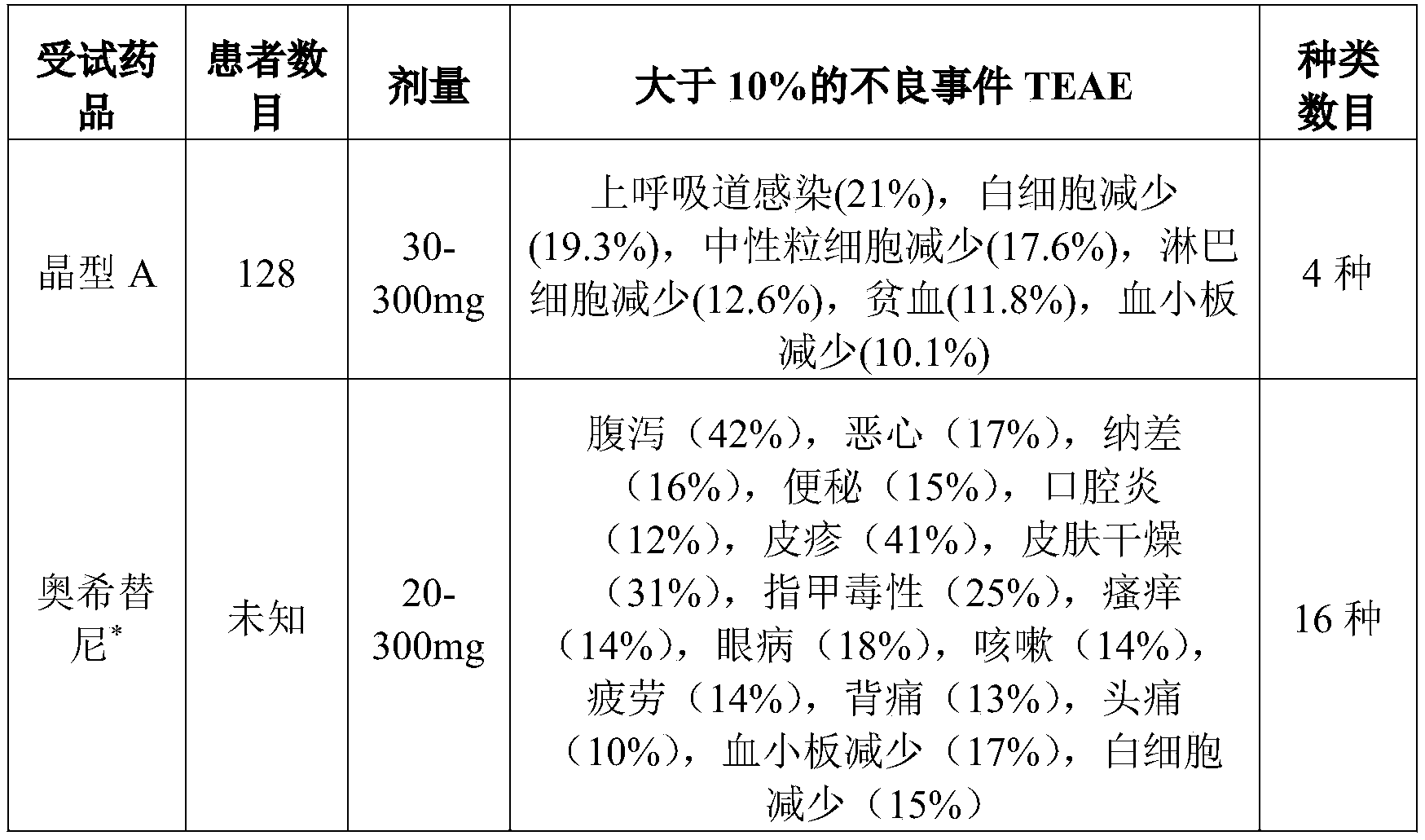
*数据来源:Page 4,甲磺酸奥希替尼片药品使用说明书及Page 89,MEDICAL&STATISTICAL REVIEW(S),APPLICATION NUMBER:208065Orig1s000,CDER of FDA;*Data source:
https://www.accessdata.fda.gov/drugsatfda_docs/nda/2015/208065Orig1s000MedR.phttps://www.accessdata.fda.gov/drugsatfda_docs/nda/2015/208065Orig1s000MedR.p dfdf
临床应用例2晶型A的联合用药研究的应用Clinical Application Example 2 Application of Combination Study of Crystal Form A
目的:观察本发明实施例2制备得到的晶型A和化合物BPI-7722(N-(5-((4-乙基哌嗪-1-基)甲基)吡啶-2-基)-5-氟-4-(3-异丙基-2-甲基-2H-吲唑-5-基)嘧啶-2-胺盐酸盐)单药或联合用药对人肺癌H1975裸小鼠皮下移植瘤的抑制作用。Purpose: To observe the crystal form A prepared in Example 2 of the present invention and the compound BPI-7722 (N-(5-((4-ethylpiperazin-1-yl)methyl)pyridin-2-yl)-5- Fluoro-4-(3-isopropyl-2-methyl-2H-indazol-5-yl)pyrimidin-2-amine hydrochloride) as a single agent or combination therapy on human lung cancer H1975 subcutaneously transplanted tumors in nude mice Inhibition.
材料和方法:Materials and Method:
化合物BPI-7722的游离碱形式可以由中国专利申请号CN201580047916.5(公开号CN106687454A)实例1合成并且具有下式结构:The free base form of compound BPI-7722 can be synthesized from Example 1 of Chinese Patent Application No. CN201580047916.5 (Publication No. CN106687454A) and has the following structure:

细胞培养:H1975(人肺腺癌)购自中国科学院细胞库,细胞培养于CO 2恒温培养箱中。细胞培养基为改良型RPMI;10%胎牛血清;100U/ml青霉素和100μg/ml链霉素。细胞使用0.25%胰酶进行消化处理,隔天传代。待细胞扩增至所需细胞数且细胞处于对数生长期,收集细胞计数,以供接种。 Cell culture: H1975 (human lung adenocarcinoma) was purchased from the Cell Bank of the Chinese Academy of Sciences, and the cells were cultured in a CO 2 constant temperature incubator. The cell culture medium is modified RPMI; 10% fetal bovine serum; 100U/ml penicillin and 100μg/ml streptomycin. The cells were digested with 0.25% trypsin and passaged every other day. After the cells are expanded to the required number of cells and the cells are in the logarithmic growth phase, the cell count is collected for inoculation.
实验动物:BALB/c nude雄性裸鼠,24只,6-7周,16-18g,每组6只,购自上海灵畅生物科技有限公司。裸鼠接种H1975细胞后21天,选择肿瘤体积在80-254mm 3的24只小鼠,根据肿瘤体积和体重随机分成4组,每组6只动物。分别为:组1:0.5%羧甲基纤维素钠溶剂对照组;组2:实施例2晶型A(5mg/kg)单药组;组3:BPI-7722(100mg/kg)单药组;组4:晶型A(5mg/kg)/BPI-7722(25mg/kg)联合用药组。 Experimental animals: BALB/c nude male nude mice, 24, 6-7 weeks, 16-18g, 6 in each group, purchased from Shanghai Lingchang Biological Technology Co., Ltd. Twenty-one days after the nude mice were inoculated with H1975 cells, 24 mice with a tumor volume of 80-254 mm 3 were selected and randomly divided into 4 groups according to the tumor volume and body weight, with 6 animals in each group. Respectively: Group 1: 0.5% sodium carboxymethyl cellulose solvent control group; Group 2: Example 2 crystal form A (5mg/kg) single-drug group; Group 3: BPI-7722 (100mg/kg) single-drug group ; Group 4: Crystal Form A (5mg/kg)/BPI-7722 (25mg/kg) combination medication group.
实验方法:人肺癌H1975细胞株(5×10 6个/只)接种于实验小鼠于右侧背部皮下,定期观察肿瘤生长情况,用游标卡尺测量移植瘤直径,接种21天后,待肿瘤生长至平均(80~254mm 3)时根据肿瘤大小和小鼠体重随机分组。各组按上述剂量灌胃给药,根据小鼠最新体重计算给药量,给药体积10ml/kg。每天给药一次,连续21天。整个实验过程中,每周测量三次小鼠的体重和肿瘤的大小,观察是否出现毒性反应。肿瘤体积计算公式:肿瘤体积TV(mm 3)=0.5×(肿瘤长径×肿瘤短径 2)。各实验组肿瘤增长生长曲线见下表及附图9,体重曲线见下表及附图10。 Experimental method: Human lung cancer H1975 cell line (5×10 6 cells/mouse) was inoculated into experimental mice under the skin of the right back. The tumor growth was regularly observed, and the diameter of the transplanted tumor was measured with a vernier caliper. (80~254mm 3 ) according to tumor size and mouse body weight. Each group was administered intragastrically at the above dose, and the dose was calculated according to the latest body weight of the mice, and the dose was 10ml/kg. It is administered once a day for 21 consecutive days. Throughout the experiment, the body weight and tumor size of the mice were measured three times a week to observe whether there was a toxic reaction. Tumor volume calculation formula: tumor volume TV (mm 3 )=0.5×(tumor long diameter×tumor short diameter 2 ). The tumor growth curve of each experimental group is shown in the table below and Figure 9, and the body weight curve is shown in the table below and Figure 10.
表19.各剂量组平均体肿瘤体积-时间关系汇总表Table 19. Summary of the relationship between average tumor volume and time in each dose group

*空白组由于肿瘤负荷过大,动物已经进行了安乐死,故第21天未进行数据采集。*The animals in the blank group have been euthanized due to excessive tumor burden, so no data collection was performed on the 21st day.
表20.各剂量组平均体重-时间关系汇总表Table 20. Summary table of the relationship between average body weight and time in each dose group

*空白组由于肿瘤负荷过大,动物已经进行了安乐死,故第21天未进行数据采集。*The animals in the blank group have been euthanized due to excessive tumor burden, so no data collection was performed on the 21st day.
结论:本发明实施例2的晶型A化合物单药对人肺癌H1975裸小鼠皮下移植瘤的生长具有良好的抑制作用;联合BPI-7722用药后抑制效果明显优于单药抑制肿瘤的生长作用;并且显示良好的安全性。Conclusion: The crystalline form A compound of Example 2 of the present invention has a good inhibitory effect on the growth of human lung cancer H1975 nude mice subcutaneously transplanted tumors; the inhibitory effect after combined with BPI-7722 is significantly better than that of the single drug in inhibiting tumor growth ; And show good safety.
尽管本发明已通过其实施方式连同参考附图进行了一定程度的描述,但是值得注意的是,在阅读了本申请的上述公开内容之后,本领域技术人员可以无需背离本发明的精神和范围,对本发明作出各种修饰、改动或修改,这样的变化和修改都应该包括在本发明所附权利要求的范围内。Although the present invention has been described to a certain extent through its implementation and with reference to the accompanying drawings, it is worth noting that after reading the above disclosure of this application, those skilled in the art may not need to deviate from the spirit and scope of the present invention. Various modifications, changes or modifications are made to the present invention, and such changes and modifications should be included in the scope of the appended claims of the present invention.
Claims (11)

Applications Claiming Priority (2)
| Application Number | Priority Date | Filing Date | Title |
|---|---|---|---|
| CN201911311034.1 | 2019-12-18 | ||
| CN201911311034.1A CN111100117B (en) | 2019-12-18 | 2019-12-18 | Crystal form A of aminopyrimidine compound mesylate and preparation method and application thereof |
Publications (1)
| Publication Number | Publication Date |
|---|---|
| WO2021121146A1 true WO2021121146A1 (en) | 2021-06-24 |
Family
ID=70422824
Family Applications (1)
| Application Number | Title | Priority Date | Filing Date |
|---|---|---|---|
| PCT/CN2020/135661 Ceased WO2021121146A1 (en) | 2019-12-18 | 2020-12-11 | Crystal form a of aminopyrimidine mesylate compound, preparation method therefor, and application thereof |
Country Status (4)
| Country | Link |
|---|---|
| CN (1) | CN111100117B (en) |
| AR (1) | AR120821A1 (en) |
| TW (1) | TW202128666A (en) |
| WO (1) | WO2021121146A1 (en) |
Cited By (1)
| Publication number | Priority date | Publication date | Assignee | Title |
|---|---|---|---|---|
| WO2023287783A1 (en) * | 2021-07-13 | 2023-01-19 | ACEA Therapeutics, Inc. | Heterocyclic compounds and uses thereof |
Families Citing this family (1)
| Publication number | Priority date | Publication date | Assignee | Title |
|---|---|---|---|---|
| CN111100117B (en) * | 2019-12-18 | 2021-02-19 | 上海倍而达药业有限公司 | Crystal form A of aminopyrimidine compound mesylate and preparation method and application thereof |
Citations (6)
| Publication number | Priority date | Publication date | Assignee | Title |
|---|---|---|---|---|
| CN105085489A (en) * | 2014-11-05 | 2015-11-25 | 上海页岩科技有限公司 | Pyrimidine or pyridine compound, its preparation method and medical use |
| CN106687454A (en) * | 2014-07-24 | 2017-05-17 | 贝达医药公司 | 2H-indazole derivatives as cyclin-dependent kinase (CDK) inhibitors and their medical use |
| WO2018232235A1 (en) * | 2017-06-16 | 2018-12-20 | Beta Pharma, Inc. | Pharmaceutical formulations of n-(2-(2-(dimethylamino)ethoxy)-4-methoxy-5-((4-(1-methyl-1h-indol-3-yl)pyrimidin-2-yl)amino)phenyl)acrylamide and salts thereof |
| CN109715164A (en) * | 2016-05-11 | 2019-05-03 | 贝达医药公司 | 2-anilinopyrimidine derivatives as therapeutic agents for the treatment of brain cancer |
| CN109937043A (en) * | 2016-06-17 | 2019-06-25 | 贝达医药公司 | The drug salts and its crystal form of N- (2- (2- (dimethylamino) ethyoxyl) -4- methoxyl group -5- ((4- (1- Methyl-1H-indole -3- base) pyrimidine -2-base) amino) phenyl) acrylamide |
| CN111100117A (en) * | 2019-12-18 | 2020-05-05 | 倍而达药业(苏州)有限公司 | Crystal form A of aminopyrimidine compound mesylate and preparation method and application thereof |
-
2019
- 2019-12-18 CN CN201911311034.1A patent/CN111100117B/en active Active
-
2020
- 2020-12-11 WO PCT/CN2020/135661 patent/WO2021121146A1/en not_active Ceased
- 2020-12-18 TW TW109145163A patent/TW202128666A/en unknown
- 2020-12-18 AR ARP200103555A patent/AR120821A1/en unknown
Patent Citations (6)
| Publication number | Priority date | Publication date | Assignee | Title |
|---|---|---|---|---|
| CN106687454A (en) * | 2014-07-24 | 2017-05-17 | 贝达医药公司 | 2H-indazole derivatives as cyclin-dependent kinase (CDK) inhibitors and their medical use |
| CN105085489A (en) * | 2014-11-05 | 2015-11-25 | 上海页岩科技有限公司 | Pyrimidine or pyridine compound, its preparation method and medical use |
| CN109715164A (en) * | 2016-05-11 | 2019-05-03 | 贝达医药公司 | 2-anilinopyrimidine derivatives as therapeutic agents for the treatment of brain cancer |
| CN109937043A (en) * | 2016-06-17 | 2019-06-25 | 贝达医药公司 | The drug salts and its crystal form of N- (2- (2- (dimethylamino) ethyoxyl) -4- methoxyl group -5- ((4- (1- Methyl-1H-indole -3- base) pyrimidine -2-base) amino) phenyl) acrylamide |
| WO2018232235A1 (en) * | 2017-06-16 | 2018-12-20 | Beta Pharma, Inc. | Pharmaceutical formulations of n-(2-(2-(dimethylamino)ethoxy)-4-methoxy-5-((4-(1-methyl-1h-indol-3-yl)pyrimidin-2-yl)amino)phenyl)acrylamide and salts thereof |
| CN111100117A (en) * | 2019-12-18 | 2020-05-05 | 倍而达药业(苏州)有限公司 | Crystal form A of aminopyrimidine compound mesylate and preparation method and application thereof |
Cited By (1)
| Publication number | Priority date | Publication date | Assignee | Title |
|---|---|---|---|---|
| WO2023287783A1 (en) * | 2021-07-13 | 2023-01-19 | ACEA Therapeutics, Inc. | Heterocyclic compounds and uses thereof |
Also Published As
| Publication number | Publication date |
|---|---|
| AR120821A1 (en) | 2022-03-23 |
| CN111100117A (en) | 2020-05-05 |
| CN111100117B (en) | 2021-02-19 |
| TW202128666A (en) | 2021-08-01 |
Similar Documents
| Publication | Publication Date | Title |
|---|---|---|
| JP7383652B2 (en) | B-RAF Kinase Maleate Salt, Crystal Form, Preparation Method, and Use thereof | |
| JP2022517396A (en) | EGFR inhibitor salt, crystalline form and method for producing it | |
| KR101829595B1 (en) | Novel polymorphic forms of 3-(1-{3-[5-(1-methyl-piperidin-4ylmethoxy)-pyrimidin-2-yl]-benzyl}-6-oxo-1,6-dihydro-pyridazin-3-yl)-benzonitrile hydrochloride salt and processes of manufacturing thereof | |
| US10882845B2 (en) | Crystal form of deuterated AZD9291, preparation method therefor, and use thereof | |
| CN102643268B (en) | Quinolines and cinnolines and their applications | |
| US7166722B2 (en) | N-{2-chloro-4-[(6,7-dimethoxy-4-quinolyl)oxy]phenyl}-n′-(5-methyl-3-isoxazolyl)urea salt in crystalline form | |
| KR20180021743A (en) | Application of inhibitor of epidermal growth factor receptor, which is a derivative of pteridinone | |
| JPWO2004039782A1 (en) | Quinoline derivatives and quinazoline derivatives that inhibit Flt3 autophosphorylation and pharmaceutical compositions containing them | |
| EA036453B1 (en) | Substituted 2-anilinopyrimidine derivatives as egfr modulators | |
| CN114437077B (en) | Compounds useful as kinase inhibitors and their uses | |
| JP2026041889A (en) | Salts and crystalline forms of 4-amino-5-(6-(4-methylpiperazin-1-yl)-1H-benzo[D]imidazol-2-yl)thieno[2,3-B]pyridin-6(7H)-one | |
| WO2023088385A1 (en) | Compound for degrading egfr protein and use thereof | |
| WO2016090257A1 (en) | Salts and crystalline forms of 6-acetyl-8-cyclopentyl-5-methyl-2((5-(piperazin-1-yl)pyridin-2-yl)amino)pyrido[2,3-d] pyrimidin-7(8h)-one (palbociclib) | |
| JP2008519049A (en) | Combination medicine of SRC kinase inhibitor and BCR-ABL inhibitor for the treatment of proliferative disease | |
| CN112010839B (en) | Crystalline forms of a targeted silk/threonine kinase inhibitor | |
| US20070244110A1 (en) | Treatment of prostate cancer, melanoma or hepatic cancer | |
| WO2021121146A1 (en) | Crystal form a of aminopyrimidine mesylate compound, preparation method therefor, and application thereof | |
| KR20250097933A (en) | Fumarate, tartrate, malate, and citrate salts of EGFR inhibitors | |
| CN120569380A (en) | Malonates and glycolates of EGFR inhibitors | |
| CN101265275B (en) | Diethyl 4-{6-[5-(2-chloro-6-methylanilinoformacyl)-thiazolyl-2-amino]-2-methylpyrimidin-4}-piperazin-1-phosphate | |
| CN110753691B (en) | Compounds for therapeutic and/or preventive treatment of cancer | |
| JP2021529175A (en) | Crystal form of CDK4 / 6 activity inhibitor compound and its use | |
| EP3471730B1 (en) | Pharmaceutical salts of n-(2-(2-(dimethylamino)ethoxy)-4-methoxy-5-((4-(1-methyl-1h-indol-3-yl)pyrimidin-2-yl)amino)phenyl)acrylamide and crystalline forms thereof | |
| WO2024235289A1 (en) | Compound used for egfr protein degradation, and use thereof | |
| KR101663335B1 (en) | Yl) -2-methyl-1H-pyrazol-4-yl) -2- {3- [5- (2-morpholin- Novel polymorphs of 2H-pyridazin-3-one dihydrogenphosphate and methods for their preparation |
Legal Events
| Date | Code | Title | Description |
|---|---|---|---|
| 121 | Ep: the epo has been informed by wipo that ep was designated in this application |
Ref document number: 20901337 Country of ref document: EP Kind code of ref document: A1 |
|
| NENP | Non-entry into the national phase |
Ref country code: DE |
|
| 122 | Ep: pct application non-entry in european phase |
Ref document number: 20901337 Country of ref document: EP Kind code of ref document: A1 |