WO2021073518A1 - Use of inhibitor of plasmin inhibitory factor for preventing or treating pre-eclampsia or eclampsia - Google Patents
Use of inhibitor of plasmin inhibitory factor for preventing or treating pre-eclampsia or eclampsia Download PDFInfo
- Publication number
- WO2021073518A1 WO2021073518A1 PCT/CN2020/120781 CN2020120781W WO2021073518A1 WO 2021073518 A1 WO2021073518 A1 WO 2021073518A1 CN 2020120781 W CN2020120781 W CN 2020120781W WO 2021073518 A1 WO2021073518 A1 WO 2021073518A1
- Authority
- WO
- WIPO (PCT)
- Prior art keywords
- inhibitor
- plasmin
- eclampsia
- antibody
- inhibitors
- Prior art date
- Legal status (The legal status is an assumption and is not a legal conclusion. Google has not performed a legal analysis and makes no representation as to the accuracy of the status listed.)
- Ceased
Links
Images





Classifications
-
- A—HUMAN NECESSITIES
- A61—MEDICAL OR VETERINARY SCIENCE; HYGIENE
- A61K—PREPARATIONS FOR MEDICAL, DENTAL OR TOILETRY PURPOSES
- A61K31/00—Medicinal preparations containing organic active ingredients
- A61K31/70—Carbohydrates; Sugars; Derivatives thereof
- A61K31/7088—Compounds having three or more nucleosides or nucleotides
-
- A—HUMAN NECESSITIES
- A61—MEDICAL OR VETERINARY SCIENCE; HYGIENE
- A61K—PREPARATIONS FOR MEDICAL, DENTAL OR TOILETRY PURPOSES
- A61K39/00—Medicinal preparations containing antigens or antibodies
- A61K39/395—Antibodies; Immunoglobulins; Immune serum, e.g. antilymphocytic serum
-
- A—HUMAN NECESSITIES
- A61—MEDICAL OR VETERINARY SCIENCE; HYGIENE
- A61K—PREPARATIONS FOR MEDICAL, DENTAL OR TOILETRY PURPOSES
- A61K45/00—Medicinal preparations containing active ingredients not provided for in groups A61K31/00 - A61K41/00
-
- A—HUMAN NECESSITIES
- A61—MEDICAL OR VETERINARY SCIENCE; HYGIENE
- A61P—SPECIFIC THERAPEUTIC ACTIVITY OF CHEMICAL COMPOUNDS OR MEDICINAL PREPARATIONS
- A61P15/00—Drugs for genital or sexual disorders; Contraceptives
-
- A—HUMAN NECESSITIES
- A61—MEDICAL OR VETERINARY SCIENCE; HYGIENE
- A61P—SPECIFIC THERAPEUTIC ACTIVITY OF CHEMICAL COMPOUNDS OR MEDICINAL PREPARATIONS
- A61P9/00—Drugs for disorders of the cardiovascular system
- A61P9/12—Antihypertensives
-
- C—CHEMISTRY; METALLURGY
- C12—BIOCHEMISTRY; BEER; SPIRITS; WINE; VINEGAR; MICROBIOLOGY; ENZYMOLOGY; MUTATION OR GENETIC ENGINEERING
- C12Q—MEASURING OR TESTING PROCESSES INVOLVING ENZYMES, NUCLEIC ACIDS OR MICROORGANISMS; COMPOSITIONS OR TEST PAPERS THEREFOR; PROCESSES OF PREPARING SUCH COMPOSITIONS; CONDITION-RESPONSIVE CONTROL IN MICROBIOLOGICAL OR ENZYMOLOGICAL PROCESSES
- C12Q1/00—Measuring or testing processes involving enzymes, nucleic acids or microorganisms; Compositions therefor; Processes of preparing such compositions
- C12Q1/34—Measuring or testing processes involving enzymes, nucleic acids or microorganisms; Compositions therefor; Processes of preparing such compositions involving hydrolase
- C12Q1/37—Measuring or testing processes involving enzymes, nucleic acids or microorganisms; Compositions therefor; Processes of preparing such compositions involving hydrolase involving peptidase or proteinase
Definitions
- the present invention relates to the field of disease treatment. Specifically, the present invention relates to the use of inhibitors of plasmin inhibitors for the prevention and/or treatment of preeclampsia or eclampsia, or in the preparation of medicaments for the prevention and/or treatment of preeclampsia or eclampsia use.
- Hypertension in pregnancy refers to the occurrence of hypertension in pregnant women, and its average incidence is 5-10% of pregnant women. According to the classification of the National High Blood Pressure Education Program (NHBPEP) of the United States in 2000, hypertension in pregnancy can be divided into five types, including: (1) preeclampsia; (2) ) Eclampsia; (3) gestational hypertension; (4) chronic hypertension; (5) preeclampsia superimposed on chronic hypertension based on chronic hypertension.
- NHBPEP National High Blood Pressure Education Program
- preeclampsia and eclampsia are the most clinically harmful to mothers and children, especially when hypertension occurs after 20 weeks of pregnancy with proteinuria or abnormal function of multiple organs (such as liver and kidney damage, edema, dizziness, secondary cranial dysfunction). Internal lesions, convulsions and even coma). This disease is the second leading cause of maternal death in obstetrics worldwide (the first is postpartum hemorrhage). According to statistics, whether in developing or developed countries, 10-20% of pregnant women Death is related to it, especially early onset preeclampsia that occurred before 34 weeks of gestation.
- Pre-eclampsia and eclampsia lack effective clinical early predictors, and termination of pregnancy as soon as possible after the onset is still the current preferred treatment option. Therefore, most patients are born prematurely at the time of termination of pregnancy, resulting in high perinatal morbidity and mortality. It is reported in the literature that the perinatal mortality rate of early-onset preeclampsia before 34 weeks of gestation is 24%, and the perinatal mortality rate of early-onset severe preeclampsia at 18-27 weeks of gestation is as high as 87%. On the other hand, for patients with milder conditions, obstetrics usually adopt measures such as reducing blood pressure and antispasmodic.
- the inventor of the present application unexpectedly discovered that by inhibiting the activity or expression of plasmin inhibitor, the clinical signs of preeclampsia and eclampsia can be reversed or reduced, thus completing the present invention.
- the present invention relates to the use of an inhibitor of plasmin inhibitor in the preparation of a medicament for the prevention and/or treatment of preeclampsia and/or eclampsia.
- the present invention relates to a method for preventing and/or treating preeclampsia and/or eclampsia, which comprises the step of administering an inhibitor of plasmin inhibitor to a subject in need thereof.
- the subject is a mammal, such as a human.
- the prevention and/or treatment of preeclampsia and/or eclampsia includes, alleviating, alleviating, ameliorating or inhibiting one or more of the characteristics of preeclampsia or eclampsia and/or The condition caused by one or more characteristics.
- the characterization may include, for example, a hyperandrogen state or an excessive inflammatory state.
- inhibitor of plasmin inhibitor refers to an active agent capable of reducing or removing the biological function of plasmin inhibitor and/or inhibiting the expression of plasmin inhibitor.
- the inhibitor of plasmin inhibitor can exert its inhibitory effect through any mechanism, for example, by inhibiting the expression of plasmin inhibitor at the RNA or protein level (for example, reducing or inhibiting the transcription of the gene encoding plasmin inhibitor, And/or, reduce or inhibit the translation of plasmin inhibitor encoding mRNA); or, for example, by inhibiting or blocking plasmin inhibitor and one or more of its interacting proteins (for example, plasmin and/or Fibrin) to restore the biological activity of plasmin (such as degradation of fibrin), and/or inhibit fibrin deposition; or by reducing the stability of plasmin inhibitor.
- the inhibitor specifically inhibits plasmin inhibitor, that is, it only inhibits the biological function or expression of plasmin inhibitor, and does not affect the biological function or activity of other proteins.
- the inhibitor is capable of inhibiting the expression of plasmin inhibitor, reducing the concentration of plasmin inhibitor (for example, reducing the concentration of circulating plasmin inhibitor), and/or reducing fibrinolysis The activity of enzyme inhibitors.
- Methods for determining the activity of plasmin inhibitor inhibitors or screening plasmin inhibitor inhibitors are within the abilities of those skilled in the art.
- the specific assay or screening method may depend on the mechanism of action of the inhibitor used.
- the inhibitor inhibits its biological function by directly binding to plasmin inhibitor.
- the inhibitory activity of the test agent can be evaluated by detecting the influence of the test agent on the biological function of the plasmin inhibitor (e.g., inhibiting the activity of plasmin).
- a biophysical binding test can be used to identify the binding of the test agent to the plasmin inhibitor.
- the detection system usually contains a specific substrate (for example, a chromogenic substrate) of the enzyme to be tested (for example, plasmin).
- a specific substrate for example, a chromogenic substrate
- the enzyme to be tested for example, plasmin
- plasmin plasmin
- Spectrophotometry measures the degree of color development (ie, the rate of color change) of the color product, thereby detecting the activity of the enzyme to be tested.
- Inhibition of enzyme activity is manifested as a measurable decrease in the rate of color change in the same period of time in the presence of an enzyme inhibitor (eg, plasmin inhibitor).
- the plasmin inhibitor, plasmin, and chromogenic substrate are added to the test sample containing the test agent and the control sample not containing the test agent, and the reaction is performed. After time, colorimetry is performed at a specified wavelength (for example, 405 nm), and the plasmin activity in the test sample and the control sample is obtained from the standard curve. When the plasmin activity of the test sample is higher than that of the control sample, it indicates that the The sample to be tested has the activity of inhibiting plasmin inhibitor (see, for example, Burnouf T et al. Biologicals. 2007 Oct; 35(4):349-53.).
- Suitable biophysical binding tests include, but are not limited to, fluorescence polarization (FP) tests, fluorescence resonance energy transfer (FRET) tests, surface plasmon resonance (SPR) tests, and the like.
- the inhibitor inhibits the biological function of plasmin inhibitor by reducing the expression level of plasmin inhibitor.
- the determination of the expression level can be performed at the nucleic acid level or the protein level.
- Methods for determining expression at the nucleic acid level include, but are not limited to, Northern blot, PCR, RT-PCR, or real RT-PCR.
- Methods for determining expression at the protein level include but are not limited to Western blotting or polyacrylamide gel electrophoresis combined with protein staining techniques such as Coomassie brilliant blue or silver staining, mass spectrometry, ELISA, and the like. These methods of determining the expression level of plasmin inhibitor at the nucleic acid level as well as the protein level are well known in the art.
- the inhibitor of plasmin inhibitor is an antibody or antigen-binding fragment thereof that specifically binds to plasmin inhibitor.
- the antibody is a blocking antibody or a neutralizing antibody.
- the antibody can bind to plasmin inhibitor and directly interfere with its biological function (for example, blocking the interaction of plasmin inhibitor with the protein (such as plasmin and/or fibrin) ) Combination).
- the antibody specifically binds to human plasmin inhibitor.
- the antibody is a chimeric antibody or a humanized antibody.
- the antigen-binding fragment is selected from ScFv, Fab, Fab', (Fab') 2 , Fv fragments, and disulfide-linked Fv (dsFv).
- Antibodies that specifically bind to plasmin inhibitors can be prepared by a variety of conventional techniques, such as hybridoma technology (see, for example, Kohler et al. Nature, 256:495,1975), recombinant DNA technology (see, for example, U.S. Patent Application 4,816,567), or phage antibody library technology (see, for example, Clackson et al. Nature352: 624-628, 1991, or Marks et al. J. Mol. Biol. 222: 581-597, 1991).
- monoclonal antibodies can be prepared as follows. First immunize mice or other suitable host animals with immunogen (add adjuvant when necessary).
- the injection method of immunogen or adjuvant is usually subcutaneous multi-point injection or intraperitoneal injection.
- the immunogen can be pre-conjugated to certain known proteins, such as serum albumin or soybean trypsin inhibitor, to enhance the immunogenicity of the antigen in the host.
- the adjuvant may be Freund's adjuvant or MPL-TDM or the like. After the animal is immunized, the body will produce lymphocytes that secrete antibodies that specifically bind to the immunogen. In addition, lymphocytes can also be obtained by in vitro immunization.
- hybridoma cells prepared above can be inoculated into a suitable culture medium for growth, and the culture medium preferably contains one or more substances capable of inhibiting the growth of unfused, parental myeloma cells.
- HGPRT hypoxanthine guanine phosphotransferase
- HAT medium hypoxanthine, aminopterin, and thymine
- the preferred myeloma cells should have the characteristics of high fusion rate, stable antibody secretion ability, and sensitivity to HAT medium.
- murine myeloma such as MOP-21 or MC-11 mouse tumor-derived strains (THE Salk Institute Cell Distribution Center, San Diego, Calif.
- Methods for determining the binding specificity of monoclonal antibodies produced by hybridoma cells include, for example, immunoprecipitation or in vitro binding assays such as radioimmunoassay (RIA) and enzyme-linked immunosorbent assay (ELISA). After the specificity, affinity and reactivity of the antibodies produced by the hybridomas are determined, the target cell line can pass the standards described in (Goding, Monoclonal Antibodies: Principles and Practice, pp. 59-103, Academic Press, 1996). Dilution method for subcloning. Suitable culture medium can be DMEM or RPMI-1640. In addition, hybridoma cells can also grow in animals in the form of ascites tumors.
- RIA radioimmunoassay
- ELISA enzyme-linked immunosorbent assay
- the monoclonal antibodies secreted by subclonal cells can be removed from the cell culture medium, Separated from ascites or serum.
- Monoclonal antibodies can also be obtained through genetic engineering recombination technology. Using nucleic acid primers that specifically bind to the heavy and light chain genes of the monoclonal antibody for PCR amplification, DNA molecules encoding the heavy and light chain genes of the monoclonal antibody can be isolated from hybridoma cells. Insert the resulting DNA molecule into an expression vector, then transfect host cells (such as E.coli cells, COS cells, CHO cells, or other myeloma cells that do not produce immunoglobulin), and culture them under appropriate conditions. Recombinantly expressed target antibodies can be obtained.
- host cells such as E.coli cells, COS cells, CHO cells, or other myeloma cells that do not produce immunoglobulin
- Antibodies can be purified by known techniques, such as affinity chromatography using protein A or protein G. Subsequently or as an alternative, the specific antigen (the target molecule recognized by the antibody) or its epitope can be immobilized on a column, and the immunospecific antibody can be purified by immunoaffinity chromatography.
- the purification of immunoglobulin can refer to, for example, D. Wilkinson (The Engineer, published by The Engineer, Inc., Philadelphia Pa., Vol. 14, No. 8 (Apr. 17, 2000), pp. 25-28).
- the method described above can be used to further determine the inhibitory activity of the monoclonal antibody on plasmin inhibitor.
- the murine monoclonal antibody is prepared as described above, its chimeric antibody or humanized antibody can be further prepared.
- DNA encoding heavy and light chains is obtained from target murine hybridomas and engineered using standard molecular biology techniques to contain non-mouse (e.g., human) immunoglobulin sequences.
- the murine immunoglobulin variable region can be linked to the human immunoglobulin constant region using methods known in the art (see, for example, U.S. Patent No. 4,816,567 to Cabilly et al.).
- DNA encoding VH is operably linked to another DNA molecule encoding a heavy chain constant region to obtain a full-length heavy chain gene.
- the sequence of the human heavy chain constant region gene is known in the art (see, for example, Kabat, EA et al. (1991) Sequences of Proteins of Immunological Interest, Fifth Edition, USDepartment of Health and Human Services, NIH Publication No. 91-3242 ), DNA fragments containing these regions can be obtained by standard PCR amplification.
- the heavy chain constant region may be an IgG1, IgG2, IgG3, IgG4, IgA, IgE, IgM, or IgD constant region, but is generally preferably an IgG1 or IgG4 constant region.
- the DNA encoding VL is operably linked to another DNA molecule encoding the light chain constant region CL to obtain the full-length light chain gene (and the Fab light chain gene).
- the sequence of the human light chain constant region gene is known in the art (see, for example, Kabat, EA et al. (1991) Sequences of Proteins of Immunological Interest, Fifth Edition, USDepartment of Health and Human Services, NIH Publication No. 91-3242 ), DNA fragments containing these regions can be obtained by standard PCR amplification.
- the light chain constant region may be a kappa or lambda constant region, but is generally preferably a kappa constant region.
- transgenic animals can also be used, which can produce no endogenous immunoglobulin after immunization and can produce a complete human antibody library.
- JH antibody heavy chain joining region
- Non-limiting examples of the above-mentioned transgenic animals include HuMAb mice (Medarex, Inc.), which contain human immunoglobulin genes encoding unrearranged human heavy chain ( ⁇ and ⁇ ) and ⁇ light chain immunoglobulin sequences. Locus (miniloci), plus targeted mutations that inactivate endogenous mu and ⁇ chain loci (see, for example, Lonberg et al. (1994) Nature 368(6474):856-859); or carrying human heavy chain transgenes and humans The light chain transchromosome "KM MouseTM” (see patent application WO02/43478). Other methods of antibody humanization also include phage display technology (Hoogenboom et al., 1991, J. Mol. Biol. 227: 381; Marks et al., J. Mol. Biol. 1991, 222: 581-597; Vaughan et al., 1996 , Nature Biotech 14:309).
- the antibody may be selected from the following commercially available antibodies: monoclonal antibody 4H9 (Molecular Innovations), 27C9 (Molecular Innovations), 14AP (Diapharma), and other antibodies available from Genetex and Thermo Scientific. Human plasmin inhibitor antibody.
- the antibodies include chimeric or humanized antibodies of the aforementioned commercially available antibodies that can be obtained by standard molecular biology techniques.
- the antibody is selected from monoclonal antibody 4H9 (Molecular Innovations) or its chimeric antibody or humanized antibody.
- the inhibitor of plasmin inhibitor includes an RNA interference agent or an antisense oligonucleotide.
- the RNA interfering agent inhibits the expression of plasmin inhibitor.
- the antisense oligonucleotide specifically binds to DNA or mRNA encoding plasmin inhibitor to inhibit the expression of plasmin inhibitor.
- RNA interfering agent refers to any agent that inhibits the expression of a target gene through the mechanism of RNA interference (RNAi).
- RNA interference RNA interference
- RNAi is an evolutionarily conserved process in which the expression or introduction of RNA with the same or highly similar sequence to a target gene results in the sequence-specific degradation or sequence-specific degradation of messenger RNA (mRNA) transcribed from the target gene.
- mRNA messenger RNA
- PTGS post-transcriptional gene silencing
- the target sequence can be selected to design small interfering RNA (siRNA) or small RNA (microRNA, miRNA) molecules according to the sequence of the gene encoding plasmin inhibitor or the mRNA generated by transcription thereof.
- siRNA small interfering RNA
- miRNA small RNA
- the siRNA or miRNA molecule can interfere with gene transcription, translation or transcription, and post-translational modification, thereby affecting protein expression.
- a pair of specific oligonucleotide sequences can be designed and annealed and cloned into the vector.
- the transcription product of the recombinant vector is short hairpin RNA (shRNA). It can fold and pair itself into a stem-loop structure with a stem length of 19-21 bases.
- the 19-21 bases are derived from a specific sequence of target gene mRNA. This stem-loop structure
- the precursors are quickly cleaved in the cell to form functional siRNA.
- the siRNA formed by shearing shRNA expressed by this vector has the characteristics of stable expression and long duration, which can cause long-term inhibition of target gene expression.
- the shRNA refers to short hairpin RNA (short hairpin RNA).
- the shRNA includes two short inverted repeats, separated by a loop sequence in the middle, forming a hairpin structure, consisting of a polIII promoter control. Then connect 5-6 T as the transcription terminator of RNA polymerase III.
- siRNA small interfering RNA
- the hairpin sequence is expressed to form a stem-loop structure, which is cleaved into functional siRNA to play a gene silencing effect.
- siRNA refers to Small interfering RNA, which is a small RNA molecule consisting of approximately 21-25 nucleotides and processed by Dicer (an enzyme specific to double-stranded RNA in the RNAase III family)
- SiRNA is the main member of siRISC, which stimulates the silencing of complementary target mRNA.
- the microRNA refers to a class of naturally occurring non-coding RNA molecules with a length of about 21-25 nucleotides. They are based on the sequence complementarity with the target mRNA and can pass through the specificity of the target mRNA. Complementary pairing of the bases of the target mRNA causes degradation of the target mRNA or inhibits its translation, thereby regulating the expression of the gene after transcription.
- miRNA please refer to the miRBase database (http://microrna.sanger.ac.uk/).
- the RNA interfering agent is selected from small interfering RNA (siRNA), small hairpin RNA (shRNA), or micro RNA (miRNA).
- the expression "antisense oligonucleotide” refers to a molecule complementary to a sense nucleic acid, for example, complementary to the coding strand of a double-stranded DNA corresponding to plasmin inhibitor or to The mRNA sequence is complementary. Therefore, the antisense oligonucleotide can form a hydrogen bond with the sense nucleic acid (ie, anneal to it).
- the antisense oligonucleotide may be complementary to the entire coding strand of the nucleic acid sequence encoding plasmin inhibitor, or only a part thereof, such as all or part of the protein coding region (or open reading frame).
- the antisense oligonucleotide may also be antisense to all or part of the non-coding region of the coding strand of the nucleic acid sequence encoding plasmin inhibitor.
- Non-coding regions (“5' and 3'untranslated regions") are 5'and 3'sequences that flank the coding region and are not translated into amino acids.
- the length of the antisense oligonucleotide can be, for example, about 5, 10, 15, 20, 25, 30, 35, 40, 45, or 50 or more nucleotides.
- antisense nucleic acid can be constructed using chemical synthesis and enzymatic ligation reactions using procedures known in the art.
- antisense nucleic acids eg, antisense oligonucleotides
- an expression vector can be used to biologically produce an antisense nucleic acid that contains a target nucleic acid subcloned into it, and the RNA transcribed from the inserted nucleic acid will have an antisense orientation to the target nucleic acid.
- the antisense oligonucleotide is antisense RNA or antisense DNA.
- the method described above can be used to further determine the inhibition of the RNA interfering agent or antisense oligonucleotide on the expression level of plasmin inhibitor mRNA or protein active.
- the inhibitor of plasmin inhibitor includes a small molecule compound.
- small molecule compound refers to an organic non-protein compound.
- the molecular weight of the small molecule compound is no greater than 1500 Da.
- the small molecule compound of the present invention can bind to and inhibit the function of plasmin inhibitor, including but not limited to the interaction of plasmin inhibitor and plasmin.
- the small molecule compound is hydroxyethyl starch.
- Hydroxyethyl starch can inhibit the binding between plasmin inhibitor and plasmin, see Nielsen VG. Blood Coagul Fibrinolysis. 2007 Oct; 18(7): 647-56.
- the plasmin inhibitor inhibitor of the present invention may be in any form known in the medical field, for example, it may be tablets, pills, suspensions, emulsions, solutions, gels, capsules, powders, granules, elixirs. Forms such as tablets, lozenges, suppositories, injections (including injections, freeze-dried powders), inhalants, sprays, etc.
- the preferred dosage form depends on the intended mode of administration and therapeutic use.
- the plasmin inhibitor inhibitor of the present invention can be administered by any suitable method known in the art, including but not limited to oral, rectal, parenteral or topical administration.
- Liquid dosage forms for oral administration include pharmaceutically acceptable emulsions, microemulsions, solutions, suspensions, syrups, elixirs and the like.
- Solid dosage forms for oral administration include capsules, tablets, pills, lozenges, powders, granules and the like.
- the plasmin inhibitor inhibitor of the present invention can also be administered by non-oral route.
- parenteral administration for example, subcutaneous injection, intravenous injection, intraperitoneal injection, intramuscular injection, intrasternal injection, and injection.
- the dosage form for parenteral administration may be an injection preparation, including injection, sterile powder for injection, or concentrated solution for injection.
- the injection dosage form may contain pharmaceutically acceptable carriers such as sterile water, Ringer's solution and isotonic sodium chloride solution. Appropriate additives such as antioxidants, buffers and Bacteriostatic agent.
- transdermal administration such as administration via a transdermal patch or iontophoresis device
- intraocular administration or intranasal or inhalation administration.
- the dosage forms for transdermal administration can be topical gels, sprays, ointments and creams.
- topical dosage forms may contain ingredients that enhance the absorption or penetration of the active compound through the skin or other areas of action.
- the dosage form for rectal administration may be a suppository.
- the plasmin inhibitor inhibitor of the present invention can be prepared by any known pharmaceutical process, such as effective formulation and administration method.
- the medicament optionally includes a pharmaceutically acceptable carrier and/or excipient.
- the present invention relates to a method for screening drug candidates for the prevention and/or treatment of preeclampsia and/or eclampsia, which includes the step of screening inhibitors of plasmin inhibitors.
- the step of screening for inhibitors of plasmin inhibitor is performed in vitro.
- the step of screening inhibitors of plasmin inhibitors includes:
- step (2) Compare the determination result of step (1) with the plasmin inhibitory activity of the plasmin inhibitor determined in the absence of the test agent;
- step (1) if the measurement result of step (1) is lower than the measurement result in the absence of the test agent, it indicates that the test agent is an inhibitor of plasmin inhibitor and is used for prevention and/or Drug candidates for the treatment of preeclampsia and/or eclampsia.
- the step of screening inhibitors of plasmin inhibitors includes:
- step (3) comparing the determination result of step (2) with the inhibitory activity of plasmin inhibitor on plasmin measured in the absence of the test agent;
- the selected test agent can be used to prevent and/or treat preeclampsia and/or eclampsia.
- the step of screening inhibitors of plasmin inhibitors includes:
- test agent determines the expression level of the gene encoding plasmin inhibitor in cells capable of expressing the encoding gene
- step (2) comparing the determination result of step (1) with the expression level of the coding gene determined in the absence of the test agent;
- step (1) if the measurement result of step (1) is lower than the measurement result in the absence of the test agent, it indicates that the test agent is an inhibitor of plasmin inhibitor and is used for prevention and/or Drug candidates for the treatment of preeclampsia and/or eclampsia.
- the step of screening inhibitors of plasmin inhibitors includes:
- step (3) comparing the determination result of step (2) with the expression level of the coding gene determined in the absence of the test agent;
- the selected test agent can be used to prevent and/or treat preeclampsia and/or eclampsia.
- the present invention relates to a method of screening drug candidates for the prevention and/or treatment of preeclampsia and/or eclampsia, the method comprising the following steps:
- the activity or expression of plasmin inhibitor measured in the presence of the test agent is reduced compared to the activity or expression of plasmin inhibitor measured in the absence of the test agent, It indicates that the test agent can be used to prevent and/or treat preeclampsia and/or eclampsia.
- Plasmin inhibitor also known as ⁇ 2-antiplasmin, is a serine protease inhibitor that can inactivate plasmin.
- the biological functions of plasmin inhibitors include, but are not limited to, (1) by binding to plasmin to hinder the degradation of fibrin by plasmin; and/or, (2) by binding to fibrin to promote fibrin Deposition.
- the sequence of plasmin inhibitor is known to those skilled in the art and can be found in the public database (NM_000934.3).
- antibody refers to an immunoglobulin molecule usually composed of two pairs of polypeptide chains (each pair has a light chain (LC) and a heavy chain (HC)).
- Antibody light chains can be classified into kappa (kappa) and lambda (lambda) light chains.
- Heavy chains can be classified as mu, delta, gamma, alpha, or epsilon, and the isotype of the antibody is defined as IgM, IgD, IgG, IgA, and IgE, respectively.
- the variable and constant regions are connected by a "J" region of about 12 or more amino acids, and the heavy chain also includes a "D" region of about 3 or more amino acids.
- Each heavy chain is composed of a heavy chain variable region (VH) and a heavy chain constant region (CH).
- the heavy chain constant region is composed of 3 domains (CH1, CH2, and CH3).
- Each light chain is composed of a light chain variable region (VL) and a light chain constant region (CL).
- the light chain constant region consists of a domain CL. Constant domains are not directly involved in the binding of antibodies and antigens, but exhibit a variety of effector functions, such as mediating immunoglobulins and host tissues or factors, including various cells of the immune system (for example, effector cells) and classical complement The combination of the first component (C1q) of the system.
- VH and VL regions can also be subdivided into regions with hyperdenaturation (called complementarity determining regions (CDR)), interspersed with more conservative regions called framework regions (FR).
- CDR complementarity determining regions
- FR framework regions
- Each VH and VL is composed of 3 CDRs and 4 FRs arranged in the following order: FR1, CDR1, FR2, CDR2, FR3, CDR3, FR4 from the amino terminus to the carboxy terminus.
- the variable regions (VH and VL) of each heavy chain/light chain pair respectively form an antigen binding site.
- the allocation of amino acids in each region or domain can follow Kabat, Sequences of Proteins of Immunological Interest (National Institutes of Health, Bethesda, Md. (1987 and 1991)), or Chothia & Lesk (1987) J. Mol. Biol. 196:901- 917; Chothia et al. (1989) Nature 342: 878-883 definition.
- antibody is not limited by any specific method of producing antibodies. For example, it includes recombinant antibodies, monoclonal antibodies, and polyclonal antibodies.
- the antibodies may be antibodies of different isotypes, for example, IgG (e.g., IgG1, IgG2, IgG3 or IgG4 subtype), IgA1, IgA2, IgD, IgE or IgM antibodies.
- antibody includes not only intact antibodies, but also antigen-binding fragments of antibodies.
- the term "antigen-binding fragment" of an antibody refers to a polypeptide that is a full-length or partial fragment of an antibody, such as a polypeptide that is a fragment of a full-length antibody, which retains the ability to specifically bind to the same antigen that the full-length antibody binds , And/or compete with the full-length antibody for specific binding to the antigen, which is also referred to as the "antigen-binding portion". See generally, Fundamental Immunology, Ch. 7 (Paul, W., ed., 2nd edition, Raven Press, NY (1989), which is incorporated herein by reference in its entirety for all purposes.
- Antigen-binding fragments of antibodies are produced by enzymatic or chemical cleavage of intact antibodies.
- Non-limiting examples of antigen-binding fragments include Fab, Fab', F(ab') 2 , Fd, Fv, dAb and complementarity determining region (CDR) fragments , Single-chain antibodies (e.g., scFv), and such polypeptides, which comprise at least a portion of an antibody sufficient to confer specific antigen-binding ability to the polypeptide.
- Fab fragment means an antibody fragment composed of VL, VH, CL, and CH1 domains
- F(ab') 2 fragment means a disulfide bridge that passes through the hinge region.
- Fab'fragment means the fragment obtained by reducing the disulfide bond of the two heavy chain fragments in the F(ab') 2 fragment, consisting of a complete light chain and a heavy chain.
- the Fd segment of the chain (consisting of the VH and CH1 domains) is composed.
- Fv fragment means an antibody fragment composed of the VL and VH domains of a single arm of an antibody. Fv fragments are generally considered to be the smallest antibody fragments that can form a complete antigen binding site. It is generally believed that the six CDRs confer antigen-binding specificity to an antibody. However, even a variable region (such as an Fd fragment, which contains only three antigen-specific CDRs) can recognize and bind antigen, although its affinity may be lower than the complete binding site.
- scFv refers to a single polypeptide chain comprising VL and VH domains, wherein the VL and VH are connected by a linker (see, for example, Bird et al., Science 242:423 -426 (1988); Huston et al., Proc. Natl. Acad. Sci. USA 85: 5879-5883 (1988); and Pluckthun, The Pharmacology of Monoclonal Antibodies, Vol. 113, edited by Roseburg and Moore, Springer-Verlag, New York, pp. 269-315 (1994)).
- Such scFv molecules may have the general structure: NH2-VL-linker-VH-COOH or NH2-VH-linker-VL-COOH. In some cases, there may also be disulfide bonds between the VH and VL of the scFv.
- chimeric antibody refers to an antibody whose light chain or/and part of its heavy chain is derived from an antibody (which may be derived from a specific species or belong to a certain species).
- a specific antibody class or subclass), and another part of the light chain or/and heavy chain is derived from another antibody (which may be derived from the same or different species or belong to the same or different antibody class or subclass), but no matter However, it still retains the binding activity to the target antigen (USP 4,816,567 to Capability et al.; Morrison et al., Proc. Natl. Acad. Sci. USA, 81: 68516855 (1984)).
- chimeric antibody may include antibodies (e.g., human-mouse chimeric antibodies) in which the heavy and light chain variable regions of the antibody are derived from the first antibody (e.g., murine antibody), and the heavy chain and The light chain constant region is derived from a second antibody (e.g., a human antibody).
- first antibody e.g., murine antibody
- second antibody e.g., a human antibody
- humanized antibody refers to a genetically engineered non-human antibody whose amino acid sequence has been modified to increase homology with the sequence of a human antibody.
- CDR region of a humanized antibody is derived from a non-human antibody (donor antibody), and all or part of the non-CDR region (for example, variable region FR and/or constant region) is derived from human source.
- Humanized antibodies usually retain the expected properties of the donor antibody, including, but not limited to, antigen specificity, affinity, reactivity, etc.
- the donor antibody may be a mouse, rat, rabbit, or non-human primate (e.g., cynomolgus monkey) antibody with desired properties (e.g., antigen specificity, affinity, and/or reactivity).
- the term "specific binding” refers to a non-random binding reaction between two molecules, such as the reaction between an antibody and its target antigen.
- the strength or affinity of a specific binding interaction can be expressed by the equilibrium dissociation constant (KD) or half-maximum effect concentration (EC50) of the interaction.
- the specific binding properties between two molecules can be determined using methods known in the art.
- One method involves measuring the rate of antigen binding site/antigen complex formation and dissociation.
- Both the "binding rate constant” (ka or kon) and the “dissociation rate constant” (kdis or koff) can be calculated from the concentration and the actual rate of association and dissociation (see Malmqvist M, Nature, 1993, 361 :186-187).
- the ratio of kdis/kon is equal to the dissociation constant KD (see Davies et al., Annual Rev Biochem, 1990; 59:439-473). Any effective method can be used to measure KD, kon and kdis values.
- bioluminescence interferometry e.g., ForteBio's Octet method
- surface plasmon resonance technology such as Biacore
- Kinexa can also be used to measure the dissociation constant.
- the term "pharmaceutically acceptable carrier and/or excipient” refers to a carrier and/or excipient that is pharmacologically and/or physiologically compatible with the subject and the active ingredient, It is well-known in the art (see, for example, Remington's Pharmaceutical Sciences. Edited by Gennaro AR, 19th ed. Pennsylvania: Mack Publishing Company, 1995), and includes but not limited to: pH regulators, surfactants, adjuvants, ionic strength enhancement Agents, diluents, agents for maintaining osmotic pressure, agents for delaying absorption, preservatives.
- pH adjusting agents include, but are not limited to, phosphate buffer.
- Surfactants include but are not limited to cationic, anionic or nonionic surfactants, such as Tween-80.
- Ionic strength enhancers include, but are not limited to, sodium chloride.
- Preservatives include, but are not limited to, various antibacterial and antifungal agents, such as parabens, chlorobutanol, phenol, sorbic acid and the like.
- Agents for maintaining osmotic pressure include, but are not limited to, sugar, NaCl and the like.
- Agents that delay absorption include, but are not limited to, monostearate and gelatin.
- Diluents include, but are not limited to, water, aqueous buffers (such as buffered saline), alcohols and polyols (such as glycerol) and the like.
- Preservatives include, but are not limited to, various antibacterial and antifungal agents, such as thimerosal, 2-phenoxyethanol, paraben, chlorobutanol, phenol, sorbic acid and the like.
- Stabilizers have the meaning commonly understood by those skilled in the art, which can stabilize the desired activity of the active ingredients in the drug, including but not limited to sodium glutamate, gelatin, SPGA, sugars (such as sorbitol, mannitol, starch, sucrose) , Lactose, dextran, or glucose), amino acids (such as glutamic acid, glycine), proteins (such as dried whey, albumin or casein) or their degradation products (such as lactalbumin hydrolysate).
- prevention refers to a method performed to prevent or delay the occurrence of a disease or condition or symptom (for example, eclampsia or preeclampsia) in a subject.
- treatment refers to a method performed in order to obtain beneficial or desired clinical results.
- beneficial or desired clinical results include, but are not limited to, alleviating symptoms, narrowing the scope of the disease, stabilizing (ie, not getting worse), delaying or slowing the development of the disease, improving or alleviating the disease State, relief of symptoms (regardless of part or all), relief or improvement of prognosis, reduction or inhibition of disease recurrence, etc., whether detectable or undetectable.
- treatment can also refer to prolonging survival compared to expected survival (if not receiving treatment).
- the term "subject” refers to a mammal, such as a primate mammal, such as a human.
- the subject e.g., human
- the subject is a pregnant woman.
- the subject e.g., human
- preeclampsia and eclampsia are the second leading cause of maternal death in obstetrics clinically, second only to postpartum hemorrhage.
- inhibitors of plasmin inhibitors can be used as drugs to prevent and/or treat eclampsia and/or preeclampsia, and have great clinical value.
- Figure 1 shows the modeling and treatment flow chart of the Kaohsiung mouse model during the middle pregnancy in Example 1.
- FIG. 2 shows the detection result of the T0 level in the peripheral blood of the mouse in Example 1, *p ⁇ 0.05.
- Figure 3 shows the detection results of mouse systolic blood pressure in Example 1, *p ⁇ 0.05, **p ⁇ 0.01, TP vs. CTRL. ⁇ p ⁇ 0.05, ⁇ p ⁇ 0.01, TP+A compared with TP. #p ⁇ 0.05, ##p ⁇ 0.01, TP+A vs. TP+G.
- FIG 4 shows the test results of proteinuria content in mice in Example 1, *p ⁇ 0.05.
- Figure 5 shows the test results of the weight of the mouse fetus in Example 1, *p ⁇ 0.05.
- Figure 6 shows the detection results of fibrin deposition in various tissues of the mice in Example 1.
- Figure 7 shows the detection results of maternal blood sinus and fetal blood vessels in the mouse placenta in Example 1.
- Figure 8 shows the statistical results of the maternal blood sinusoid area of the mouse placenta in Example 1, *p ⁇ 0.05, **p ⁇ 0.01.
- Figure 9 shows the statistical results of the vascular area of the mouse placenta and fetus in Example 1, *p ⁇ 0.05.
- Fig. 10 shows the results of ultrasound detection of blood flow in the uterus and umbilical cord of mice in Example 1.
- Figure 11 shows the pulsatility index statistical results of the mouse uterine blood flow ultrasound in Example 1, *p ⁇ 0.05.
- Figure 12 shows the statistic results of the resistance index of the mouse uterine blood flow ultrasound in Example 1, *p ⁇ 0.05.
- Figure 13 shows the modeling and treatment flow chart of the mouse model of chronic inflammation during pregnancy in Example 2.
- Figure 14 shows the detection results of peripheral blood TNF ⁇ levels in mice in Example 2, *p ⁇ 0.05.
- Figure 15 shows the detection results of mouse systolic blood pressure in Example 2 **p ⁇ 0.01, LPS vs. CTRL. ⁇ p ⁇ 0.01, LPS+A vs. LPS. ##p ⁇ 0.01, LPS+A vs. LPS+G.
- Figure 16 shows the detection results of proteinuria content in mice in Example 2, *p ⁇ 0.05.
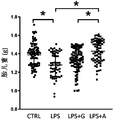
- Figure 17 shows the test results of the weight of the mouse fetus in Example 2, *p ⁇ 0.05.
- Figure 18 shows the detection results of fibrin deposition in various tissues of mice in Example 2.
- Figure 19 shows the detection results of maternal blood sinus and fetal blood vessels in the mouse placenta in Example 2.
- Figure 20 shows the statistical results of the maternal blood sinusoid area of the mouse placenta in Example 2, *p ⁇ 0.05.
- Figure 21 shows the statistical results of the blood vessel area of the mouse placenta and fetus in Example 2, *p ⁇ 0.05.
- Figure 22 shows the results of ultrasound detection of blood flow in the uterus and umbilical cord of mice in Example 2.
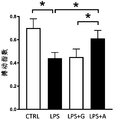
- Figure 23 shows the pulsatility index statistics of mouse uterine blood flow ultrasound in Example 2, *p ⁇ 0.05.
- Figure 24 shows the statistic results of the resistance index of the mouse uterine blood flow ultrasound in Example 2, *p ⁇ 0.05.
- Example 1 Evaluation of the curative effect of plasmin inhibitor inhibitors in the Kaohsiung mouse model during pregnancy
- mice Monitor the blood pressure of mice every day, take blood at E7.5, E13.5, and E18.5 to detect the level of testosterone (T0) (Mouse serum testosterone ELISA kit, CEA458Ge, Wuhan Unisun Technology Co., Ltd.), at E18 .5 Collect urine to test proteinuria level (albumin ELISA kit, E90-134, Bethyl Laboratories; urine creatinine colorimetric test kit, 500701, Cayman Chemical.
- Urine protein content urine albumin concentration/urine The concentration of creatinine), the mice were sacrificed at E18.5, tissue samples were taken, and the fetuses were weighed.
- the tissue sections were analyzed for fibrin staining.
- the Fibrinogen antibody (ab34269, abcam, Cambridge, UK) was used for immunohistochemical staining.
- the results are shown in Fig. 6, compared with the control group (CTRL), the kidney, liver, placenta and other tissues of the Kaohsiung group mice (TP) showed obvious fibrin deposition.
- the placental structure was analyzed on the placental tissue. According to the results of HE staining, the maternal blood sinusoids and fetal blood vessels were marked with red and blue respectively. The results are shown in Figure 7. Furthermore, the area of maternal blood sinus and fetal blood vessel was statistically analyzed by Impage-ProPlus software, and the results are shown in Figure 8-9.
- the average area of maternal blood sinusoids ( Figure 8) and the average area of fetal blood vessels ( Figure 9) of mice in the Kaohsiung group (TP) were significantly lower than those of the control group.
- the uterine blood flow and umbilical cord blood flow of pregnant mice were detected by ultrasound ( Figure 10), and the pulsation index (Figure 11) and resistance index ( Figure 12) were counted. The results showed that the pulsation index of the mice in the Kaohsiung group (TP) decreased, indicating The blood perfusion at the maternal-fetal interface is reduced.
- Example 2 Evaluation of the efficacy of plasmin inhibitors in a mouse model of chronic inflammation during pregnancy
- mice The blood pressure of the mice was monitored every day, and the peripheral blood was collected 2 hours after the E7.5LPS injection to detect the TNF ⁇ level (TNF ⁇ ELISA kit, 88-7324-22, eBioscience), and the urine was collected at E18.5 to detect the proteinuria level (see Example 1.1) ), the mice were sacrificed at E18.5, tissue samples were taken to prepare tissue sections, and the fetuses were weighed.
- Example 1.1 the tissue sections were stained for fibrin analysis.
- the kidney, liver, placenta and other tissues of the LPS group mice (LPS) showed obvious fibrin deposition.
- the placental structure of the placenta tissue was analyzed.
- the results are shown in Figures 19-21.
- the average area of maternal blood sinusoids, total area, and total area of fetal blood vessels in the LPS-treated mice were significantly lower than those in the control group.
- Ultrasound detection of uterine blood flow and umbilical cord blood flow of pregnant mice ( Figure 22) found that the pulsatility index and resistance index of the LPS treatment group were reduced, indicating that the blood perfusion at the maternal-fetal interface was reduced ( Figure 23-24).
Landscapes
- Health & Medical Sciences (AREA)
- Life Sciences & Earth Sciences (AREA)
- Chemical & Material Sciences (AREA)
- General Health & Medical Sciences (AREA)
- Medicinal Chemistry (AREA)
- Organic Chemistry (AREA)
- Animal Behavior & Ethology (AREA)
- Pharmacology & Pharmacy (AREA)
- Public Health (AREA)
- Veterinary Medicine (AREA)
- Engineering & Computer Science (AREA)
- Bioinformatics & Cheminformatics (AREA)
- Epidemiology (AREA)
- Wood Science & Technology (AREA)
- Proteomics, Peptides & Aminoacids (AREA)
- Chemical Kinetics & Catalysis (AREA)
- General Chemical & Material Sciences (AREA)
- Nuclear Medicine, Radiotherapy & Molecular Imaging (AREA)
- Molecular Biology (AREA)
- Immunology (AREA)
- Microbiology (AREA)
- Zoology (AREA)
- Biophysics (AREA)
- Biochemistry (AREA)
- Heart & Thoracic Surgery (AREA)
- Physics & Mathematics (AREA)
- Biotechnology (AREA)
- Cardiology (AREA)
- Mycology (AREA)
- Analytical Chemistry (AREA)
- General Engineering & Computer Science (AREA)
- Genetics & Genomics (AREA)
- Endocrinology (AREA)
- Reproductive Health (AREA)
- Medicines That Contain Protein Lipid Enzymes And Other Medicines (AREA)
- Medicines Containing Antibodies Or Antigens For Use As Internal Diagnostic Agents (AREA)
Abstract
Description
本发明涉及疾病治疗领域。具体地,本发明涉及纤溶酶抑制因子的抑制剂用于预防和/或治疗子痫前期或子痫的用途,或者在制备用于预防和/或治疗子痫前期或子痫的药物中的用途。The present invention relates to the field of disease treatment. Specifically, the present invention relates to the use of inhibitors of plasmin inhibitors for the prevention and/or treatment of preeclampsia or eclampsia, or in the preparation of medicaments for the prevention and/or treatment of preeclampsia or eclampsia use.
妊娠期高血压疾病指妊娠期妇女发生高血压,其平均发病率为孕妇的5-10%。按照美国国家高血压教育工作组(national high blood pressure education program,NHBPEP)2000年的分类,妊娠期高血压疾病可被分为五种类型,包括:(1)子痫前期(preeclampsia);(2)子痫(eclampsia);(3)妊娠期高血压(gestational hypertension);(4)慢性高血压(chronic hypertension);(5)慢性高血压基础上的子痫前期(preeclampsia superimposed on chronic hypertension)。其中临床上对母儿危害最大的是子痫前期和子痫,特指妊娠20周以后出现高血压并伴随蛋白尿或多个器官的功能异常(如肝肾功能损伤、水肿、头晕、继发颅内病变、抽搐甚至昏迷)。这一疾病在世界范围内都是产科临床上导致孕产妇死亡的第二位主要原因(第一位为产后出血),据统计,无论在发展中国家还是发达国家,10-20%的孕产妇死亡都与其有关,尤其是孕34周前发生的早发型子痫前期(early onset preeclampsia)。子痫前期和子痫缺乏有效的临床早期预测指标,发病后尽快终止妊娠仍是目前首选治疗方案,因而多数患者在终止妊娠时是早产,造成很高的围产儿病率和死亡率。文献报道孕34周前的早发子痫前期造成的围产儿死亡率为24%,孕18-27周的早发重度子痫前期围产儿死亡率高达87%。另一方面,对于病情较轻的患者,产科多采用降压、解痉等措施,保胎至妊娠36周后引产或剖腹产,但由于子宫血管痉挛引起的胎盘供血不足等因素,易造成胎儿宫内发育迟缓,分娩后胎儿需要特殊的护理,这又给患者家庭以及社会带来许多直接和间接的经济负担。Hypertension in pregnancy refers to the occurrence of hypertension in pregnant women, and its average incidence is 5-10% of pregnant women. According to the classification of the National High Blood Pressure Education Program (NHBPEP) of the United States in 2000, hypertension in pregnancy can be divided into five types, including: (1) preeclampsia; (2) ) Eclampsia; (3) gestational hypertension; (4) chronic hypertension; (5) preeclampsia superimposed on chronic hypertension based on chronic hypertension. Among them, preeclampsia and eclampsia are the most clinically harmful to mothers and children, especially when hypertension occurs after 20 weeks of pregnancy with proteinuria or abnormal function of multiple organs (such as liver and kidney damage, edema, dizziness, secondary cranial dysfunction). Internal lesions, convulsions and even coma). This disease is the second leading cause of maternal death in obstetrics worldwide (the first is postpartum hemorrhage). According to statistics, whether in developing or developed countries, 10-20% of pregnant women Death is related to it, especially early onset preeclampsia that occurred before 34 weeks of gestation. Pre-eclampsia and eclampsia lack effective clinical early predictors, and termination of pregnancy as soon as possible after the onset is still the current preferred treatment option. Therefore, most patients are born prematurely at the time of termination of pregnancy, resulting in high perinatal morbidity and mortality. It is reported in the literature that the perinatal mortality rate of early-onset preeclampsia before 34 weeks of gestation is 24%, and the perinatal mortality rate of early-onset severe preeclampsia at 18-27 weeks of gestation is as high as 87%. On the other hand, for patients with milder conditions, obstetrics usually adopt measures such as reducing blood pressure and antispasmodic. The pregnancy will be aborted until 36 weeks of gestation to induce labor or caesarean section. However, due to factors such as insufficient blood supply to the placenta due to uterine vasospasm, it is easy to cause fetal uterus. Internal growth retardation, the fetus needs special care after delivery, which brings many direct and indirect economic burdens to the patient’s family and society.
妊娠期高血压疾病尤其是子痫前期从上个世纪初就开始受到国际生殖医学界的重视,目前该领域所面临的最大挑战之一是开发能够治疗或者减轻子痫前期征状的干预措施,以最大限度降低对患者生命的威胁,获得最低可能性的围产儿病死率。因此,寻找能够预防和/或治疗子痫前期和子痫的药物迫在眉睫。Hypertension in pregnancy, especially preeclampsia, has received attention from the international reproductive medicine community since the beginning of the last century. One of the biggest challenges facing this field is the development of interventions that can treat or reduce the symptoms of preeclampsia. In order to minimize the threat to patients' lives, obtain the lowest possible mortality rate of perinatal infants. Therefore, it is urgent to find drugs that can prevent and/or treat pre-eclampsia and eclampsia.
发明内容Summary of the invention
本申请的发明人经过大量实验和反复摸索,出人意料地发现,通过抑制纤溶酶抑制因子的活性或表达可以逆转或减轻子痫前期及子痫的临床表征,由此完成了本发明。After a lot of experiments and repeated explorations, the inventor of the present application unexpectedly discovered that by inhibiting the activity or expression of plasmin inhibitor, the clinical signs of preeclampsia and eclampsia can be reversed or reduced, thus completing the present invention.
医药用途Medical use
在一个方面,本发明涉及纤溶酶抑制因子的抑制剂在制备用于预防和/或治疗子痫前期(preeclampsia)和/或子痫(eclampsia)的药物中的用途。In one aspect, the present invention relates to the use of an inhibitor of plasmin inhibitor in the preparation of a medicament for the prevention and/or treatment of preeclampsia and/or eclampsia.
在另一方面,本发明涉及用于预防和/或治疗子痫前期和/或子痫的方法,其包括向有此需要的受试者施用纤溶酶抑制因子的抑制剂的步骤。在某些实施方案中,所述受试者是哺乳动物,例如人。In another aspect, the present invention relates to a method for preventing and/or treating preeclampsia and/or eclampsia, which comprises the step of administering an inhibitor of plasmin inhibitor to a subject in need thereof. In certain embodiments, the subject is a mammal, such as a human.
在某些实施方案中,所述预防和/或治疗子痫前期和/或子痫包括,缓解、减轻、改善或抑制子痫前期或子痫的一种或多种表征和/或由所述一种或多种表征所导致的不良状态(condition)。在某些实施方案中,所述表征可以包括例如高雄激素状态或过度炎性状态。In certain embodiments, the prevention and/or treatment of preeclampsia and/or eclampsia includes, alleviating, alleviating, ameliorating or inhibiting one or more of the characteristics of preeclampsia or eclampsia and/or The condition caused by one or more characteristics. In certain embodiments, the characterization may include, for example, a hyperandrogen state or an excessive inflammatory state.
在本文中,表述“纤溶酶抑制因子的抑制剂”是指能够降低或去除纤溶酶抑制因子的生物学功能和/或抑制纤溶酶抑制因子的表达的活性剂。As used herein, the expression "inhibitor of plasmin inhibitor" refers to an active agent capable of reducing or removing the biological function of plasmin inhibitor and/or inhibiting the expression of plasmin inhibitor.
纤溶酶抑制因子的抑制剂可以通过任何机制发挥其抑制作用,例如通过在RNA或蛋白质水平上抑制纤溶酶抑制因子的表达(例如,降低或抑制纤溶酶抑制因子的编码基因的转录,和/或,降低或抑制纤溶酶抑制因子的编码mRNA的翻译);或者例如通过抑制或阻断纤溶酶抑制因子与一种或多种其相互作用蛋白(例如,纤溶酶和/或纤维蛋白)的相互作用,以恢复纤溶酶的生物活性(例如对纤维蛋白的降解),和/或抑制纤维蛋白沉积;或者通过降低纤溶酶抑制因子的稳定性。优选地,所述抑制剂特异性抑制纤溶酶抑制因子,即其仅抑制纤溶酶抑制因子的生物学功能或表达,而不影响其它蛋白的生物学功能或活性。The inhibitor of plasmin inhibitor can exert its inhibitory effect through any mechanism, for example, by inhibiting the expression of plasmin inhibitor at the RNA or protein level (for example, reducing or inhibiting the transcription of the gene encoding plasmin inhibitor, And/or, reduce or inhibit the translation of plasmin inhibitor encoding mRNA); or, for example, by inhibiting or blocking plasmin inhibitor and one or more of its interacting proteins (for example, plasmin and/or Fibrin) to restore the biological activity of plasmin (such as degradation of fibrin), and/or inhibit fibrin deposition; or by reducing the stability of plasmin inhibitor. Preferably, the inhibitor specifically inhibits plasmin inhibitor, that is, it only inhibits the biological function or expression of plasmin inhibitor, and does not affect the biological function or activity of other proteins.
在某些实施方案中,所述抑制剂能够抑制纤溶酶抑制因子的表达、降低纤溶酶抑制因子的浓度(例如,降低循环的纤溶酶抑制因子的浓度),和/或降低纤溶酶抑制因子的活性。In certain embodiments, the inhibitor is capable of inhibiting the expression of plasmin inhibitor, reducing the concentration of plasmin inhibitor (for example, reducing the concentration of circulating plasmin inhibitor), and/or reducing fibrinolysis The activity of enzyme inhibitors.
测定纤溶酶抑制因子抑制剂的活性或筛选纤溶酶抑制因子抑制剂的方法在本领域技术人员的能力之内。特定的测定或筛选方法可以取决于使用的抑制剂的作用机制。Methods for determining the activity of plasmin inhibitor inhibitors or screening plasmin inhibitor inhibitors are within the abilities of those skilled in the art. The specific assay or screening method may depend on the mechanism of action of the inhibitor used.
在一些实施方案中,所述抑制剂通过直接结合纤溶酶抑制因子来抑制其生物学功能。在此类实施方案中,可以通过检测待测试剂对纤溶酶抑制因子的生物学功能(例 如抑制纤溶酶的活性)的影响来评价该待测试剂的抑制活性。可选地,在该检测之前可以首先通过生物物理结合试验来鉴定待测试剂对纤溶酶抑制因子的结合。In some embodiments, the inhibitor inhibits its biological function by directly binding to plasmin inhibitor. In such embodiments, the inhibitory activity of the test agent can be evaluated by detecting the influence of the test agent on the biological function of the plasmin inhibitor (e.g., inhibiting the activity of plasmin). Optionally, before the detection, a biophysical binding test can be used to identify the binding of the test agent to the plasmin inhibitor.
合适的测定酶活性和酶活性抑制的试验是本领域公知的,并且用于进行该试验的试剂通常可从市场上买到。例如,检测体系通常包含待测酶(例如纤溶酶)的特异性底物(例如,发色底物),所述底物被酶水解时,产生有颜色的产物;在预定的时间段用分光光度法测定该颜色产物的显色程度(即,颜色变化的速率),从而检测待测酶的活性。酶活性的抑制表现为在酶抑制剂(例如,纤溶酶抑制因子)的存在下在相同的时间段内颜色变化的速率可测量的降低。因此,在某些实例性实施方案中,在包含待测试剂的待测样品和不包含待测试剂的对照样品中加入纤溶酶抑制因子、纤溶酶和发色底物并进行反应,一定时间后在规定波长(例如405nm)比色,通过标准曲线求得待测样品和对照样品中纤溶酶的活性,当待测样品的纤溶酶活性相比于对照样品升高时,表明该待测样品具备抑制纤溶酶抑制因子的活性(参见,例如,Burnouf T等.Biologicals.2007Oct;35(4):349-53.)。Appropriate tests for measuring enzyme activity and inhibition of enzyme activity are well known in the art, and reagents used to perform this test are generally commercially available. For example, the detection system usually contains a specific substrate (for example, a chromogenic substrate) of the enzyme to be tested (for example, plasmin). When the substrate is hydrolyzed by the enzyme, a colored product is produced; Spectrophotometry measures the degree of color development (ie, the rate of color change) of the color product, thereby detecting the activity of the enzyme to be tested. Inhibition of enzyme activity is manifested as a measurable decrease in the rate of color change in the same period of time in the presence of an enzyme inhibitor (eg, plasmin inhibitor). Therefore, in certain exemplary embodiments, the plasmin inhibitor, plasmin, and chromogenic substrate are added to the test sample containing the test agent and the control sample not containing the test agent, and the reaction is performed. After time, colorimetry is performed at a specified wavelength (for example, 405 nm), and the plasmin activity in the test sample and the control sample is obtained from the standard curve. When the plasmin activity of the test sample is higher than that of the control sample, it indicates that the The sample to be tested has the activity of inhibiting plasmin inhibitor (see, for example, Burnouf T et al. Biologicals. 2007 Oct; 35(4):349-53.).
合适的生物物理结合试验是本领域已知的,包括但不限于,荧光偏振(FP)试验、荧光共振能量转移(FRET)试验、表面等离子体共振(SPR)试验等。Suitable biophysical binding tests are known in the art and include, but are not limited to, fluorescence polarization (FP) tests, fluorescence resonance energy transfer (FRET) tests, surface plasmon resonance (SPR) tests, and the like.
在另一些实施方案中,所述抑制剂通过降低纤溶酶抑制因子表达水平来抑制其生物学功能。在此类实施方案中,表达水平的测定可以在核酸水平或蛋白水平实施。在核酸水平测定表达的方法包括但不限于Northern印迹、PCR、RT-PCR或实时(real)RT-PCR。在蛋白水平测定表达的方法包括但不限于Western印迹或聚丙烯酰胺凝胶电泳联合蛋白染色技术如考马斯亮蓝或银染、质谱、ELISA等。在核酸水平以及蛋白水平测定纤溶酶抑制因子表达水平的这些方法为本领域熟知。In other embodiments, the inhibitor inhibits the biological function of plasmin inhibitor by reducing the expression level of plasmin inhibitor. In such embodiments, the determination of the expression level can be performed at the nucleic acid level or the protein level. Methods for determining expression at the nucleic acid level include, but are not limited to, Northern blot, PCR, RT-PCR, or real RT-PCR. Methods for determining expression at the protein level include but are not limited to Western blotting or polyacrylamide gel electrophoresis combined with protein staining techniques such as Coomassie brilliant blue or silver staining, mass spectrometry, ELISA, and the like. These methods of determining the expression level of plasmin inhibitor at the nucleic acid level as well as the protein level are well known in the art.
I.抗体或其抗原结合片段抑制剂I. Antibody or antigen-binding fragment inhibitor
在一些实施方案中,所述纤溶酶抑制因子的抑制剂是特异性结合纤溶酶抑制因子的抗体或其抗原结合片段。In some embodiments, the inhibitor of plasmin inhibitor is an antibody or antigen-binding fragment thereof that specifically binds to plasmin inhibitor.
在某些实施方案中,所述抗体是阻断抗体(blocking antibody)或中和抗体(neutralizing antibody)。在某些实施方案中,所述抗体能够结合纤溶酶抑制因子,并直接干扰其生物学功能(例如,阻断纤溶酶抑制因子与其相互作用的蛋白(如纤溶酶和/或纤维蛋白)的结合)。In certain embodiments, the antibody is a blocking antibody or a neutralizing antibody. In certain embodiments, the antibody can bind to plasmin inhibitor and directly interfere with its biological function (for example, blocking the interaction of plasmin inhibitor with the protein (such as plasmin and/or fibrin) ) Combination).
在某些实施方案中,所述抗体特异性结合人纤溶酶抑制因子。In certain embodiments, the antibody specifically binds to human plasmin inhibitor.
在某些实施方案中,所述抗体是嵌合抗体或人源化抗体。In certain embodiments, the antibody is a chimeric antibody or a humanized antibody.
在某些实施方案中,所述抗原结合片段选自ScFv、Fab、Fab’、(Fab’) 2、Fv片段、二硫键连接的Fv(dsFv)。 In certain embodiments, the antigen-binding fragment is selected from ScFv, Fab, Fab', (Fab') 2 , Fv fragments, and disulfide-linked Fv (dsFv).
可以通过多种常规技术进行制备特异性结合纤溶酶抑制因子的抗体,例如杂交瘤技术(参见,例如Kohler等人.Nature,256:495,1975),重组DNA技术(参见,例如美国专利申请4,816,567),或噬菌体抗体库技术(参见,例如Clackson等.Nature352:624-628,1991,或Marks等.J.Mol.Biol.222:581-597,1991)。Antibodies that specifically bind to plasmin inhibitors can be prepared by a variety of conventional techniques, such as hybridoma technology (see, for example, Kohler et al. Nature, 256:495,1975), recombinant DNA technology (see, for example, U.S. Patent Application 4,816,567), or phage antibody library technology (see, for example, Clackson et al. Nature352: 624-628, 1991, or Marks et al. J. Mol. Biol. 222: 581-597, 1991).
例如,可以如下来制备单克隆抗体。首先用免疫原(必要时候添加佐剂)免疫注射小鼠或其它合适的宿主动物。免疫原或佐剂的注射方式通常为皮下多点注射或腹腔注射。可将免疫原预先偶联到某些已知蛋白,如血清白蛋白或大豆胰酶抑制剂上,以增强抗原在宿主内的免疫原性。佐剂可以是弗氏佐剂或MPL-TDM等。动物在接受免疫后,体内将产生分泌特异性结合免疫原的抗体的淋巴细胞。另外,淋巴细胞也可以利用体外免疫获得。收集目的淋巴细胞,并用合适的融合剂,如PEG,使其与骨髓瘤细胞融合以获得杂交瘤细胞(Goding,Monoclonal Antibodies:Principles and Practice,pp.59-103,Academic Press,1996)。上述制备的杂交瘤细胞可以接种到合适的培养液中生长,培养液中优选含有一种或多种能够抑制未融合的、母体骨髓瘤细胞生长的物质。例如,对于缺乏次黄嘌呤鸟嘌呤磷酸转移酶(HGPRT或HPRT)的母体骨髓瘤细胞,在培养液中添加次黄嘌呤、氨基喋呤和胸腺嘧啶(HAT培养基)等物质将可以抑制HGPRT-缺陷细胞的生长。优选的骨髓瘤细胞应该具有融合率高,抗体分泌能力稳定,对HAT培养液敏感等特征。其中,骨髓瘤细胞首选鼠源骨髓瘤,如MOP-21或MC-11小鼠肿瘤衍生株(THE Salk Institute Cell Distribution Center,San Diego,Calif.USA),和SP-2/0或X63-Ag8-653细胞株(American Type Culture Collection,Rockville,Md.USA)。另外也有研究报道,利用人骨髓瘤和人鼠异源骨髓瘤细胞株制备人单抗(Kozbor,J.Immunol.,133:3001(1984);Brodeur et al.,Monoclonal Antibody Production Techniques and Applications,pp.51-63,Marcel Dekker,Inc.,New York,1987)。生长杂交瘤细胞的培养液用于检测针对特异抗原的单抗的产生。测定杂交瘤细胞产生的单抗的结合特异性的方法包括例如,免疫沉淀或体外结合试验,如放射免疫试验(RIA)、酶联免疫吸附试验(ELISA)。当确定了杂交瘤产生的抗体的特异性、亲和力和反应性之后,目的细胞株可以通过(Goding,Monoclonal Antibodies:Principles and Practice,pp.59-103,Academic Press,1996)所描述的标准的有限稀释法进行亚克 隆化。合适的培养液可以是DMEM或RPMI-1640等。另外,杂交瘤细胞还可以腹水瘤的形式在动物体内生长。利用传统的免疫球蛋白纯化方法,如蛋白A琼脂糖凝胶、羟基磷灰石层析、凝胶电泳、透析或亲和层析等,可以将亚克隆细胞分泌的单抗从细胞培养液、腹水或血清中分离出来。For example, monoclonal antibodies can be prepared as follows. First immunize mice or other suitable host animals with immunogen (add adjuvant when necessary). The injection method of immunogen or adjuvant is usually subcutaneous multi-point injection or intraperitoneal injection. The immunogen can be pre-conjugated to certain known proteins, such as serum albumin or soybean trypsin inhibitor, to enhance the immunogenicity of the antigen in the host. The adjuvant may be Freund's adjuvant or MPL-TDM or the like. After the animal is immunized, the body will produce lymphocytes that secrete antibodies that specifically bind to the immunogen. In addition, lymphocytes can also be obtained by in vitro immunization. Collect the target lymphocytes, and use a suitable fusion agent, such as PEG, to fuse with myeloma cells to obtain hybridoma cells (Goding, Monoclonal Antibodies: Principles and Practice, pp. 59-103, Academic Press, 1996). The hybridoma cells prepared above can be inoculated into a suitable culture medium for growth, and the culture medium preferably contains one or more substances capable of inhibiting the growth of unfused, parental myeloma cells. For example, for maternal myeloma cells lacking hypoxanthine guanine phosphotransferase (HGPRT or HPRT), adding hypoxanthine, aminopterin, and thymine (HAT medium) to the culture medium will inhibit HGPRT- Defective cell growth. The preferred myeloma cells should have the characteristics of high fusion rate, stable antibody secretion ability, and sensitivity to HAT medium. Among them, the first choice for myeloma cells is murine myeloma, such as MOP-21 or MC-11 mouse tumor-derived strains (THE Salk Institute Cell Distribution Center, San Diego, Calif. USA), and SP-2/0 or X63-Ag8 -653 cell line (American Type Culture Collection, Rockville, Md. USA). In addition, there are research reports on the use of human myeloma and human mouse heterologous myeloma cell lines to prepare human monoclonal antibodies (Kozbor, J. Immunol., 133:3001 (1984); Brodeur et al., Monoclonal Antibody Production Techniques and Applications, pp) .51-63, Marcel Dekker, Inc., New York, 1987). The culture medium of growing hybridoma cells is used to detect the production of monoclonal antibodies against specific antigens. Methods for determining the binding specificity of monoclonal antibodies produced by hybridoma cells include, for example, immunoprecipitation or in vitro binding assays such as radioimmunoassay (RIA) and enzyme-linked immunosorbent assay (ELISA). After the specificity, affinity and reactivity of the antibodies produced by the hybridomas are determined, the target cell line can pass the standards described in (Goding, Monoclonal Antibodies: Principles and Practice, pp. 59-103, Academic Press, 1996). Dilution method for subcloning. Suitable culture medium can be DMEM or RPMI-1640. In addition, hybridoma cells can also grow in animals in the form of ascites tumors. Using traditional immunoglobulin purification methods, such as protein A agarose gel, hydroxyapatite chromatography, gel electrophoresis, dialysis or affinity chromatography, etc., the monoclonal antibodies secreted by subclonal cells can be removed from the cell culture medium, Separated from ascites or serum.
还可以通过基因工程重组技术获得单克隆抗体。利用特异性结合单抗重链和轻链基因的核酸引物进行PCR扩增,可以从杂交瘤细胞中分离得到编码单抗重链和轻链基因的DNA分子。将所得的DNA分子插入表达载体内,然后转染宿主细胞(如E.coli细胞、COS细胞、CHO细胞、或其它不产生免疫球蛋白的骨髓瘤细胞),并在合适的条件下进行培养,可以获得重组表达的目标抗体。Monoclonal antibodies can also be obtained through genetic engineering recombination technology. Using nucleic acid primers that specifically bind to the heavy and light chain genes of the monoclonal antibody for PCR amplification, DNA molecules encoding the heavy and light chain genes of the monoclonal antibody can be isolated from hybridoma cells. Insert the resulting DNA molecule into an expression vector, then transfect host cells (such as E.coli cells, COS cells, CHO cells, or other myeloma cells that do not produce immunoglobulin), and culture them under appropriate conditions. Recombinantly expressed target antibodies can be obtained.
抗体可通过公知的技术,例如使用蛋白A或蛋白G的亲和层析进行纯化。随后或作为替代,可将特异性抗原(该抗体识别的靶分子)或其抗原表位固定在柱上,并通过免疫亲合层析法来纯化免疫特异性抗体。免疫球蛋白的纯化可参考例如D.Wilkinson(The Scientist,published by The Scientist,Inc.,Philadelphia Pa.,Vol.14,No.8(Apr.17,2000),pp.25-28)。Antibodies can be purified by known techniques, such as affinity chromatography using protein A or protein G. Subsequently or as an alternative, the specific antigen (the target molecule recognized by the antibody) or its epitope can be immobilized on a column, and the immunospecific antibody can be purified by immunoaffinity chromatography. The purification of immunoglobulin can refer to, for example, D. Wilkinson (The Scientist, published by The Scientist, Inc., Philadelphia Pa., Vol. 14, No. 8 (Apr. 17, 2000), pp. 25-28).
在获得特异性结合纤溶酶抑制因子的单克隆抗体后,可以使用如上所述的方法进一步测定该单克隆抗体对纤溶酶抑制因子的抑制活性。After obtaining a monoclonal antibody that specifically binds to plasmin inhibitor, the method described above can be used to further determine the inhibitory activity of the monoclonal antibody on plasmin inhibitor.
如上制备获得鼠单克隆抗体之后,可进一步制备其嵌合抗体或人源化抗体。例如,从目标鼠杂交瘤中获得编码重链和轻链的DNA,并且使用标准分子生物学技术进行工程改造以包含非鼠(例如人)免疫球蛋白序列。After the murine monoclonal antibody is prepared as described above, its chimeric antibody or humanized antibody can be further prepared. For example, DNA encoding heavy and light chains is obtained from target murine hybridomas and engineered using standard molecular biology techniques to contain non-mouse (e.g., human) immunoglobulin sequences.
为制备嵌合抗体,可使用本领域已知的方法将鼠免疫球蛋白可变区连接至人免疫球蛋白恒定区(参见例如Cabilly等人的美国专利No.4,816,567)。例如,将编码VH的DNA可操作的连接至编码重链恒定区的另一DNA分子以获得全长重链基因。人重链恒定区基因的序列是本领域已知的(参见例如Kabat,E.A.等人(1991)Sequences of Proteins of Immunological Interest,Fifth Edition,U.S.Department of Health and Human Services,NIH Publication No.91-3242),包含这些区的DNA片段可以通过标准PCR扩增获得。重链恒定区可以是IgG1、IgG2、IgG3、IgG4、IgA、IgE、IgM或IgD恒定区,但是通常优选为IgG1或IgG4恒定区。例如,将编码VL的DNA可操作的连接至编码轻链恒定区CL的另一DNA分子以获得全长轻链基因(以及Fab轻链基因)。人轻链恒定区基因的序列是本领域已知的(参见例如Kabat,E.A.等人(1991)Sequences of Proteins of Immunological Interest,Fifth Edition, U.S.Department of Health and Human Services,NIH Publication No.91-3242),包含这些区的DNA片段可以通过标准PCR扩增获得。轻链恒定区可以是κ或λ恒定区,但通常优选为κ恒定区。To prepare chimeric antibodies, the murine immunoglobulin variable region can be linked to the human immunoglobulin constant region using methods known in the art (see, for example, U.S. Patent No. 4,816,567 to Cabilly et al.). For example, DNA encoding VH is operably linked to another DNA molecule encoding a heavy chain constant region to obtain a full-length heavy chain gene. The sequence of the human heavy chain constant region gene is known in the art (see, for example, Kabat, EA et al. (1991) Sequences of Proteins of Immunological Interest, Fifth Edition, USDepartment of Health and Human Services, NIH Publication No. 91-3242 ), DNA fragments containing these regions can be obtained by standard PCR amplification. The heavy chain constant region may be an IgG1, IgG2, IgG3, IgG4, IgA, IgE, IgM, or IgD constant region, but is generally preferably an IgG1 or IgG4 constant region. For example, the DNA encoding VL is operably linked to another DNA molecule encoding the light chain constant region CL to obtain the full-length light chain gene (and the Fab light chain gene). The sequence of the human light chain constant region gene is known in the art (see, for example, Kabat, EA et al. (1991) Sequences of Proteins of Immunological Interest, Fifth Edition, USDepartment of Health and Human Services, NIH Publication No. 91-3242 ), DNA fragments containing these regions can be obtained by standard PCR amplification. The light chain constant region may be a kappa or lambda constant region, but is generally preferably a kappa constant region.
为制备人源化抗体,可以使用本领域已知的方法将鼠CDR区插入人源框架序列(参见Winter的美国专利No.5,225,539;Queen等人的美国专利Nos.5,530,101;5,585,089;5,693,762和6,180,370;以及Lo,Benny,K.C.,editor,in Antibody Engineering:Methods and Protocols,volume 248,Humana Press,New Jersey,2004)。或者,还可以利用转基因动物,其能够在免疫后不产生内源性免疫球蛋白、并且能够产生完整人抗体库。例如,已有报道在嵌合和种系突变小鼠中抗体重链连接区(JH)基因的纯合缺失可以完全抑制了内源性抗体产生,然后将人种系免疫球蛋白基因阵列转移到所述种系突变小鼠中将导致该小鼠在遇到抗原刺激时产生人抗体(参见例如,Jakobovits等,1993,Proc.Natl.Acad.Sci.USA 90:2551;Jakobovits等,1993,Nature362:255-258;Bruggermann等,1993,Year in Immunology 7:33;和Duchosal等,1992,Nature 355:258)。上述转基因动物的非限制性实例包括,HuMAb小鼠(Medarex,Inc.),其含有编码未重排的人重链(μ和γ)和κ轻链免疫球蛋白序列的人免疫球蛋白基因微型基因座(miniloci),加之使内源μ和κ链基因座失活的靶向突变(参见例如Lonberg等人(1994)Nature 368(6474):856-859);或携带人重链转基因和人轻链转染色体的“KM小鼠TM”(参见专利申请WO02/43478)。其他抗体人源化改造的方法还包括噬菌体展示技术(Hoogenboom等,1991,J.Mol.Biol.227:381;Marks等,J.Mol.Biol.1991,222:581-597;Vaughan等,1996,Nature Biotech 14:309)。To prepare humanized antibodies, methods known in the art can be used to insert murine CDR regions into human framework sequences (see U.S. Patent Nos. 5,225,539 to Winter; U.S. Patent Nos. 5,530,101 to Queen et al.; 5,585,089; 5,693,762 and 6,180,370; And Lo, Benny, KC, editor, in Antibody Engineering: Methods and Protocols, volume 248, Humana Press, New Jersey, 2004). Alternatively, transgenic animals can also be used, which can produce no endogenous immunoglobulin after immunization and can produce a complete human antibody library. For example, it has been reported that the homozygous deletion of the antibody heavy chain joining region (JH) gene in chimeric and germline mutant mice can completely inhibit the production of endogenous antibodies, and then transfer the human germline immunoglobulin gene array to The germline mutant mice will cause the mice to produce human antibodies when they encounter antigenic stimulation (see, for example, Jakobovits et al., 1993, Proc. Natl. Acad. Sci. USA 90: 2551; Jakobovits et al., 1993, Nature 362 : 255-258; Bruggermann et al., 1993, Year in Immunology 7:33; and Duchosal et al., 1992, Nature 355:258). Non-limiting examples of the above-mentioned transgenic animals include HuMAb mice (Medarex, Inc.), which contain human immunoglobulin genes encoding unrearranged human heavy chain (μ and γ) and κ light chain immunoglobulin sequences. Locus (miniloci), plus targeted mutations that inactivate endogenous mu and κ chain loci (see, for example, Lonberg et al. (1994) Nature 368(6474):856-859); or carrying human heavy chain transgenes and humans The light chain transchromosome "KM MouseTM" (see patent application WO02/43478). Other methods of antibody humanization also include phage display technology (Hoogenboom et al., 1991, J. Mol. Biol. 227: 381; Marks et al., J. Mol. Biol. 1991, 222: 581-597; Vaughan et al., 1996 , Nature Biotech 14:309).
在某些实施方案中,所述抗体可以选自下述市售抗体:单克隆抗体4H9(Molecular Innovations)、27C9(Molecular Innovations)、14AP(Diapharma)、以及可以从Genetex、Thermo Scientific获得的其他抗人纤溶酶抑制因子的抗体。在某些实施方案中,所述抗体包括可以通过标准分子生物学技术获得的上述市售抗体的嵌合或人源化抗体。In some embodiments, the antibody may be selected from the following commercially available antibodies: monoclonal antibody 4H9 (Molecular Innovations), 27C9 (Molecular Innovations), 14AP (Diapharma), and other antibodies available from Genetex and Thermo Scientific. Human plasmin inhibitor antibody. In certain embodiments, the antibodies include chimeric or humanized antibodies of the aforementioned commercially available antibodies that can be obtained by standard molecular biology techniques.
在某些示例性实施方案中,所述抗体选自单克隆抗体4H9(Molecular Innovations)或其嵌合抗体或人源化抗体。In certain exemplary embodiments, the antibody is selected from monoclonal antibody 4H9 (Molecular Innovations) or its chimeric antibody or humanized antibody.
II.核酸抑制剂II. Nucleic Acid Inhibitors
在另一些实施方案中,所述纤溶酶抑制因子的抑制剂包括RNA干扰剂或反义寡核苷酸。所述RNA干扰剂抑制纤溶酶抑制因子的表达。所述反义寡核苷酸特异地与编码纤溶酶抑制因子的DNA或mRNA结合而抑制纤溶酶抑制因子的表达。In other embodiments, the inhibitor of plasmin inhibitor includes an RNA interference agent or an antisense oligonucleotide. The RNA interfering agent inhibits the expression of plasmin inhibitor. The antisense oligonucleotide specifically binds to DNA or mRNA encoding plasmin inhibitor to inhibit the expression of plasmin inhibitor.
在本文中,表述“RNA干扰剂”是指,通过RNA干扰(RNAi)机制来抑制靶基因表达的任何试剂。“RNA干扰(RNAi)”是一种进化上保守的过程,其中与靶基因相同或高度相似的序列的RNA的表达或引入导致从该靶基因转录的信使RNA(mRNA)的序列特异性降解或特异性转录后基因沉默(PTGS)(参见Coburn和Cullen(2002)J.Virol.76:9225),从而抑制靶基因的表达。As used herein, the expression "RNA interfering agent" refers to any agent that inhibits the expression of a target gene through the mechanism of RNA interference (RNAi). "RNA interference (RNAi)" is an evolutionarily conserved process in which the expression or introduction of RNA with the same or highly similar sequence to a target gene results in the sequence-specific degradation or sequence-specific degradation of messenger RNA (mRNA) transcribed from the target gene. Specific post-transcriptional gene silencing (PTGS) (see Coburn and Cullen (2002) J. Virol. 76: 9225), thereby inhibiting the expression of target genes.
因此,本领域技术人员知晓,可以根据纤溶酶抑制因子编码基因或其转录生成的mRNA的序列选取靶序列设计小干扰RNA(siRNA)或者小RNA(microRNA、miRNA)分子。该siRNA或者miRNA分子可以干扰基因的转录、翻译或转录、翻译后的修饰,进而影响蛋白的表达。Therefore, those skilled in the art know that the target sequence can be selected to design small interfering RNA (siRNA) or small RNA (microRNA, miRNA) molecules according to the sequence of the gene encoding plasmin inhibitor or the mRNA generated by transcription thereof. The siRNA or miRNA molecule can interfere with gene transcription, translation or transcription, and post-translational modification, thereby affecting protein expression.
此外,为了延长siRNA对靶基因表达的抑制作用,可以设计一对特定的寡核苷酸序列,退火后克隆至载体中,该重组载体的转录产物即短发夹RNA(short hairpin RNA,shRNA),其可以自身折叠配对成茎长为19-21个碱基的茎环(stem-loop)结构,其中该19-21个碱基即来源于靶基因mRNA的一段特定序列,这种茎环结构的前体在细胞内很快被切割形成有功能的siRNA。这种载体表达的shRNA经剪切形成的siRNA具有表达量稳定、待续时间长的特点,从而可引起目标基因表达的长效抑制。In addition, in order to prolong the inhibitory effect of siRNA on the expression of target genes, a pair of specific oligonucleotide sequences can be designed and annealed and cloned into the vector. The transcription product of the recombinant vector is short hairpin RNA (shRNA). It can fold and pair itself into a stem-loop structure with a stem length of 19-21 bases. The 19-21 bases are derived from a specific sequence of target gene mRNA. This stem-loop structure The precursors are quickly cleaved in the cell to form functional siRNA. The siRNA formed by shearing shRNA expressed by this vector has the characteristics of stable expression and long duration, which can cause long-term inhibition of target gene expression.
在本文中,所述shRNA是指短发夹RNA(short hairpin RNA),shRNA包括两个短反向重复序列,中间由一茎环(loop)序列分隔的,组成发夹结构,由polⅢ启动子控制。随后再连上5-6个T作为RNA聚合酶Ⅲ的转录终止子。将siRNA序列克隆进质粒载体中,可以在活体中输送“小干扰RNA”(siRNA)。当送入动物体内时,该发夹序列被表达出来,形成茎环结构,该茎环结构被切割成有功能的siRNA,发挥基因沉默作用。In this article, the shRNA refers to short hairpin RNA (short hairpin RNA). The shRNA includes two short inverted repeats, separated by a loop sequence in the middle, forming a hairpin structure, consisting of a polⅢ promoter control. Then connect 5-6 T as the transcription terminator of RNA polymerase III. By cloning the siRNA sequence into a plasmid vector, "small interfering RNA" (siRNA) can be delivered in vivo. When delivered into the animal body, the hairpin sequence is expressed to form a stem-loop structure, which is cleaved into functional siRNA to play a gene silencing effect.
在本文中,所述siRNA是指Small interfering RNA,是一种小RNA分子,由大约21-25个核苷酸组成,由Dicer(RNAaseⅢ家族中对双链RNA具有特异性的酶)加工而成,siRNA是siRISC的主要成员,激发与之互补的目标mRNA的沉默。In this article, the siRNA refers to Small interfering RNA, which is a small RNA molecule consisting of approximately 21-25 nucleotides and processed by Dicer (an enzyme specific to double-stranded RNA in the RNAase III family) SiRNA is the main member of siRISC, which stimulates the silencing of complementary target mRNA.
在本文中,所述微小RNA(miRNA)是指天然存在的一类非编码RNA分子,长度约为21-25个核苷酸,它们基于与靶mRNA的序列互补,能够通过与靶mRNA特异性的碱基互补配对,引起靶mRNA降解或者抑制其翻译,从而对基因进行转录后的表达调控。 miRNA可参考miRBase数据库(http://microrna.sanger.ac.uk/)。In this article, the microRNA (miRNA) refers to a class of naturally occurring non-coding RNA molecules with a length of about 21-25 nucleotides. They are based on the sequence complementarity with the target mRNA and can pass through the specificity of the target mRNA. Complementary pairing of the bases of the target mRNA causes degradation of the target mRNA or inhibits its translation, thereby regulating the expression of the gene after transcription. For miRNA, please refer to the miRBase database (http://microrna.sanger.ac.uk/).
在某些实施方案中,所述RNA干扰剂选自小干扰RNA(siRNA)、小发夹RNA(shRNA)或微小RNA(miRNA)。In certain embodiments, the RNA interfering agent is selected from small interfering RNA (siRNA), small hairpin RNA (shRNA), or micro RNA (miRNA).
在本文中,表述“反义寡核苷酸”是指,与有义核酸互补的分子,例如与对应于纤溶酶抑制因子的双链DNA的编码链互补或与对应于纤溶酶抑制因子的mRNA序列互补。因此,所述反义寡核苷酸可以与有义核酸形成氢键(即与其退火)。在本发明中,反义寡核苷酸可以与编码纤溶酶抑制因子的核酸序列的整个编码链互补,或仅与其一部分互补,例如全部或部分蛋白质编码区(或开放阅读框)。反义寡核苷酸也可以与编码纤溶酶抑制因子的核酸序列的编码链的全部或部分非编码区反义。非编码区(“5'和3'非翻译区”)是5'和3'序列,其位于编码区的侧翼并且不翻译成氨基酸。反义寡核苷酸的长度可以是例如约5、10、15、20、25、30、35、40、45或50或更多个核苷酸。As used herein, the expression "antisense oligonucleotide" refers to a molecule complementary to a sense nucleic acid, for example, complementary to the coding strand of a double-stranded DNA corresponding to plasmin inhibitor or to The mRNA sequence is complementary. Therefore, the antisense oligonucleotide can form a hydrogen bond with the sense nucleic acid (ie, anneal to it). In the present invention, the antisense oligonucleotide may be complementary to the entire coding strand of the nucleic acid sequence encoding plasmin inhibitor, or only a part thereof, such as all or part of the protein coding region (or open reading frame). The antisense oligonucleotide may also be antisense to all or part of the non-coding region of the coding strand of the nucleic acid sequence encoding plasmin inhibitor. Non-coding regions ("5' and 3'untranslated regions") are 5'and 3'sequences that flank the coding region and are not translated into amino acids. The length of the antisense oligonucleotide can be, for example, about 5, 10, 15, 20, 25, 30, 35, 40, 45, or 50 or more nucleotides.
可以使用本领域已知的程序使用化学合成和酶促连接反应构建反义核酸。例如,反义核酸(例如,反义寡核苷酸)可以使用天然存在的核苷酸或各种修饰的核苷酸化学合成,所述修饰的核苷酸被设计成增加分子的生物稳定性或增加反义和有义核酸之间形成的双链体的物理稳定性,例如可以使用硫代磷酸酯衍生物和吖啶取代的核苷酸。或者,可以使用表达载体以生物学方式产生反义核酸,该表达载体包含亚克隆至其中的靶核酸,从插入的核酸转录的RNA将具有与靶核酸的反义方向。The antisense nucleic acid can be constructed using chemical synthesis and enzymatic ligation reactions using procedures known in the art. For example, antisense nucleic acids (eg, antisense oligonucleotides) can be chemically synthesized using naturally occurring nucleotides or various modified nucleotides that are designed to increase the biological stability of the molecule Or to increase the physical stability of the duplex formed between antisense and sense nucleic acids, for example, phosphorothioate derivatives and acridine substituted nucleotides can be used. Alternatively, an expression vector can be used to biologically produce an antisense nucleic acid that contains a target nucleic acid subcloned into it, and the RNA transcribed from the inserted nucleic acid will have an antisense orientation to the target nucleic acid.
在某些实施方案中,所述反义寡核苷酸是反义RNA或反义DNA。In certain embodiments, the antisense oligonucleotide is antisense RNA or antisense DNA.
在获得所述RNA干扰剂或反义寡核苷酸后,可以使用如上所述的方法进一步测定该RNA干扰剂或反义寡核苷酸对纤溶酶抑制因子的mRNA或蛋白表达水平的抑制活性。After the RNA interfering agent or antisense oligonucleotide is obtained, the method described above can be used to further determine the inhibition of the RNA interfering agent or antisense oligonucleotide on the expression level of plasmin inhibitor mRNA or protein active.
III.小分子化合物抑制剂III. Small molecule compound inhibitor
在另一些实施方案中,所述纤溶酶抑制因子的抑制剂包括小分子化合物。In other embodiments, the inhibitor of plasmin inhibitor includes a small molecule compound.
在本文中,表述“小分子化合物”是指有机的非蛋白质化合物。在某些实施方案中,所述小分子化合物的分子量不大于1500Da。本发明的小分子化合物能够结合并抑制纤溶酶抑制因子的功能,包括但不限于纤溶酶抑制因子与纤溶酶的相互作用。In this article, the expression "small molecule compound" refers to an organic non-protein compound. In some embodiments, the molecular weight of the small molecule compound is no greater than 1500 Da. The small molecule compound of the present invention can bind to and inhibit the function of plasmin inhibitor, including but not limited to the interaction of plasmin inhibitor and plasmin.
可以通过筛选现有的小分子化合物库(例如,Chem Bridge、Chem Div、Inter Bio Screen、Life Chemicals、Specs或Vitas-m),并使用如上所述的方法测定化合物对纤溶 酶抑制因子的结合活性及抑制活性,来获得所述小分子化合物。You can screen existing small molecule compound libraries (for example, Chem Bridge, Chem Div, Inter Bio Screen, Life Chemicals, Specs, or Vitas-m), and use the methods described above to determine the binding of compounds to plasmin inhibitors Activity and inhibitory activity to obtain the small molecule compound.
在某些示例性实施方案中,所述小分子化合物是羟乙基淀粉。羟乙基淀粉能够抑制纤溶酶抑制因子和纤溶酶之间的结合,参见Nielsen VG.Blood Coagul Fibrinolysis.2007Oct;18(7):647-56.。In certain exemplary embodiments, the small molecule compound is hydroxyethyl starch. Hydroxyethyl starch can inhibit the binding between plasmin inhibitor and plasmin, see Nielsen VG. Blood Coagul Fibrinolysis. 2007 Oct; 18(7): 647-56.
本发明的纤溶酶抑制因子抑制剂可以为医学领域已知的任何形式,例如,可以是片剂、丸剂、混悬剂、乳剂、溶液、凝胶剂、胶囊剂、粉剂、颗粒剂、酏剂、锭剂、栓剂、注射剂(包括注射液、冻干粉剂)、吸入剂、喷雾剂等形式。优选剂型取决于预期的给药方式和治疗用途。The plasmin inhibitor inhibitor of the present invention may be in any form known in the medical field, for example, it may be tablets, pills, suspensions, emulsions, solutions, gels, capsules, powders, granules, elixirs. Forms such as tablets, lozenges, suppositories, injections (including injections, freeze-dried powders), inhalants, sprays, etc. The preferred dosage form depends on the intended mode of administration and therapeutic use.
本发明的纤溶酶抑制因子抑制剂可以通过本领域已知的任何合适的方法来施用,包括但不限于,口服、直肠、肠胃外或局部给药。The plasmin inhibitor inhibitor of the present invention can be administered by any suitable method known in the art, including but not limited to oral, rectal, parenteral or topical administration.
一种示例性施用途径是口服给药。用于口服给药的液体剂型包括药学上可接受的乳剂、微乳剂、溶液剂、悬浮剂、糖浆剂、酏剂等。用于口服给药的固体剂型包括胶囊剂、片剂、丸剂、锭剂、粉剂、颗粒剂等。An exemplary route of administration is oral administration. Liquid dosage forms for oral administration include pharmaceutically acceptable emulsions, microemulsions, solutions, suspensions, syrups, elixirs and the like. Solid dosage forms for oral administration include capsules, tablets, pills, lozenges, powders, granules and the like.
本发明的纤溶酶抑制因子抑制剂也可通过非口服途径给药。The plasmin inhibitor inhibitor of the present invention can also be administered by non-oral route.
因此,另一种示例性的施用途径是肠胃外给药,例如,皮下注射、静脉注射、腹膜内注射、肌肉注射、胸骨内注射和注入。用于肠道外给药的剂型可以为注射制剂,包括注射液、注射用无菌粉末或注射用浓溶液。除活性化合物以外,注射剂型可含有药学上可接受的载体例如无菌水、林格氏液和等渗氯化钠溶液,也可根据药物的性质加入适宜的附加剂例如抗氧化剂、缓冲剂和抑菌剂。Therefore, another exemplary route of administration is parenteral administration, for example, subcutaneous injection, intravenous injection, intraperitoneal injection, intramuscular injection, intrasternal injection, and injection. The dosage form for parenteral administration may be an injection preparation, including injection, sterile powder for injection, or concentrated solution for injection. In addition to the active compound, the injection dosage form may contain pharmaceutically acceptable carriers such as sterile water, Ringer's solution and isotonic sodium chloride solution. Appropriate additives such as antioxidants, buffers and Bacteriostatic agent.
另一种示例性的施用途径是局部给药,例如经皮给药(如通过经皮贴剂或离子电渗装置给药)、眼内给药或者鼻内或吸入给药。用于经皮给药的剂型可以为局部凝胶剂、喷雾剂、软膏剂和霜剂。除活性化合物以外,局部剂型可含有能够提高该活性化合物通过皮肤或其它作用区域的吸收或渗透的成分。Another exemplary route of administration is topical administration, such as transdermal administration (such as administration via a transdermal patch or iontophoresis device), intraocular administration, or intranasal or inhalation administration. The dosage forms for transdermal administration can be topical gels, sprays, ointments and creams. In addition to the active compound, topical dosage forms may contain ingredients that enhance the absorption or penetration of the active compound through the skin or other areas of action.
另一种示例性的施用途径是直肠给药。用于直肠给药的剂型可以为栓剂。Another exemplary route of administration is rectal administration. The dosage form for rectal administration may be a suppository.
此外,还可以使用药学领域已知的其它载体材料和给药方式。本发明的纤溶酶抑制因子抑制剂可以通过任何公知的制药工艺制备,例如有效的制剂和给药方法。In addition, other carrier materials and administration methods known in the pharmaceutical field can also be used. The plasmin inhibitor inhibitor of the present invention can be prepared by any known pharmaceutical process, such as effective formulation and administration method.
在某些实施方案中,所述药物任选地包含药学上可接受的载体和/或赋形剂。In certain embodiments, the medicament optionally includes a pharmaceutically acceptable carrier and/or excipient.
筛选方法Screening method
在另一个方面,本发明涉及筛选用于预防和/或治疗子痫前期和/或子痫的候选药物的方法,其包括筛选纤溶酶抑制因子的抑制剂的步骤。在某些实施方案中,所述筛选纤溶酶抑制因子的抑制剂的步骤在体外进行。In another aspect, the present invention relates to a method for screening drug candidates for the prevention and/or treatment of preeclampsia and/or eclampsia, which includes the step of screening inhibitors of plasmin inhibitors. In certain embodiments, the step of screening for inhibitors of plasmin inhibitor is performed in vitro.
在一些实施方案中,所述筛选纤溶酶抑制因子的抑制剂的步骤包括:In some embodiments, the step of screening inhibitors of plasmin inhibitors includes:
(1)在受试试剂存在的情况下,测定纤溶酶抑制因子对纤溶酶的抑制活性;(1) In the presence of the test agent, determine the inhibitory activity of plasmin inhibitor on plasmin;
(2)将步骤(1)的测定结果与不存在所述受试试剂时测定的纤溶酶抑制因子对纤溶酶的抑制活性进行比较;(2) Compare the determination result of step (1) with the plasmin inhibitory activity of the plasmin inhibitor determined in the absence of the test agent;
其中,如果步骤(1)的测定结果与不存在所述受试试剂时的测定结果相比降低,表明所述受试试剂是纤溶酶抑制因子的抑制剂,并且是用于预防和/或治疗子痫前期和/或子痫的候选药物。Wherein, if the measurement result of step (1) is lower than the measurement result in the absence of the test agent, it indicates that the test agent is an inhibitor of plasmin inhibitor and is used for prevention and/or Drug candidates for the treatment of preeclampsia and/or eclampsia.
在某些实施方案中,所述筛选纤溶酶抑制因子的抑制剂的步骤包括:In certain embodiments, the step of screening inhibitors of plasmin inhibitors includes:
(1)使受试试剂与纤溶酶抑制因子接触;(1) Contact the test agent with plasmin inhibitor;
(2)测定纤溶酶抑制因子对纤溶酶的抑制活性;(2) Determine the inhibitory activity of plasmin inhibitor on plasmin;
(3)将步骤(2)的测定结果与不存在所述受试试剂时测定的纤溶酶抑制因子对纤溶酶的抑制活性进行比较;(3) comparing the determination result of step (2) with the inhibitory activity of plasmin inhibitor on plasmin measured in the absence of the test agent;
(4)选择在所述接触之后降低或消除所述纤溶酶抑制因子对纤溶酶的抑制活性的受试试剂;(4) Select a test agent that reduces or eliminates the inhibitory activity of the plasmin inhibitor on plasmin after the contact;
其中,所筛选获得的受试试剂可用于预防和/或治疗子痫前期和/或子痫。Among them, the selected test agent can be used to prevent and/or treat preeclampsia and/or eclampsia.
在另一些实施方案中,所述筛选纤溶酶抑制因子的抑制剂的步骤包括:In other embodiments, the step of screening inhibitors of plasmin inhibitors includes:
(1)在受试试剂存在的情况下,测定纤溶酶抑制因子编码基因在能够表达该编码基因的细胞中的表达水平;(1) In the presence of the test agent, determine the expression level of the gene encoding plasmin inhibitor in cells capable of expressing the encoding gene;
(2)将步骤(1)的测定结果与不存在所述受试试剂时测定的所述编码基因的表达水平进行比较;(2) comparing the determination result of step (1) with the expression level of the coding gene determined in the absence of the test agent;
其中,如果步骤(1)的测定结果与不存在所述受试试剂时的测定结果相比降低,表明所述受试试剂是纤溶酶抑制因子的抑制剂,并且是用于预防和/或治疗子痫前期和/或子痫的候选药物。Wherein, if the measurement result of step (1) is lower than the measurement result in the absence of the test agent, it indicates that the test agent is an inhibitor of plasmin inhibitor and is used for prevention and/or Drug candidates for the treatment of preeclampsia and/or eclampsia.
在某些实施方案中,所述筛选纤溶酶抑制因子的抑制剂的步骤包括:In certain embodiments, the step of screening inhibitors of plasmin inhibitors includes:
(1)使受试试剂与能够表达纤溶酶抑制因子编码基因的细胞接触;(1) Bring the test agent into contact with cells capable of expressing the gene encoding plasmin inhibitor;
(2)测定所述编码基因的表达水平;(2) Measure the expression level of the coding gene;
(3)将步骤(2)的测定结果与不存在所述受试试剂时测定的所述编码基因的表达水平进行比较;(3) comparing the determination result of step (2) with the expression level of the coding gene determined in the absence of the test agent;
(4)选择具有降低或抑制所述编码基因表达的能力的受试试剂;(4) Select a test agent that has the ability to reduce or inhibit the expression of the coding gene;
其中,所筛选获得的受试试剂可用于预防和/或治疗子痫前期和/或子痫。Among them, the selected test agent can be used to prevent and/or treat preeclampsia and/or eclampsia.
在另一个方面,本发明涉及筛选用于预防和/或治疗子痫前期和/或子痫的候选药物的方法,所述方法包括下述步骤:In another aspect, the present invention relates to a method of screening drug candidates for the prevention and/or treatment of preeclampsia and/or eclampsia, the method comprising the following steps:
a)提供包含纤溶酶抑制因子的编码核酸序列或纤溶酶抑制因子的基因表达产物的样品;a) Provide a sample containing the coding nucleic acid sequence of plasmin inhibitor or gene expression product of plasmin inhibitor;
b)将所述样品与受试试剂接触;b) Contact the sample with the test agent;
c)检测所述受试试剂与所述纤溶酶抑制因子的编码核酸序列或纤溶酶抑制因子的基因表达产物之间的结合;c) detecting the binding between the test agent and the coding nucleic acid sequence of the plasmin inhibitor or the gene expression product of the plasmin inhibitor;
d)鉴定能够结合所述纤溶酶抑制因子的编码核酸序列或纤溶酶抑制因子的基因表达产物的受试试剂;以及,d) Identify a test agent capable of binding to the coding nucleic acid sequence of the plasmin inhibitor or the gene expression product of the plasmin inhibitor; and,
e)在所述受试试剂存在或不存在的情况下,评估纤溶酶抑制因子的活性或表达中的至少一项;e) Evaluate at least one of the activity or expression of plasmin inhibitor in the presence or absence of the test agent;
其中,在所述受试试剂存在的情况下测量的纤溶酶抑制因子的活性或表达与在所述受试试剂不存在的情况下测量的纤溶酶抑制因子的活性或表达相比降低,表明所述受试试剂可用于预防和/或治疗子痫前期和/或子痫。Wherein, the activity or expression of plasmin inhibitor measured in the presence of the test agent is reduced compared to the activity or expression of plasmin inhibitor measured in the absence of the test agent, It indicates that the test agent can be used to prevent and/or treat preeclampsia and/or eclampsia.
术语定义Definition of Terms
在本发明中,除非另有说明,否则本文中使用的科学和技术名词具有本领域技术人员所通常理解的含义。并且,本文中所用的肿瘤学、分子遗传学、核酸化学、细胞培养、生物化学、细胞生物学等操作步骤均为相应领域内广泛使用的常规步骤。同时,为了更好地理解本发明,下面提供相关术语的定义和解释。In the present invention, unless otherwise specified, the scientific and technical terms used herein have the meanings commonly understood by those skilled in the art. In addition, the oncology, molecular genetics, nucleic acid chemistry, cell culture, biochemistry, cell biology and other operating procedures used herein are all routine procedures widely used in the corresponding fields. At the same time, in order to better understand the present invention, definitions and explanations of related terms are provided below.
如本文中所使用的,术语“纤溶酶抑制因子(Plasmin inhibitor)”,也称为α2-抗纤溶酶(α2-antiplasmin),是一种丝氨酸蛋白酶抑制剂,能够灭活纤溶酶。纤溶酶抑制因子的生物学功能包括但不限于,(1)通过与纤溶酶结合,阻碍纤溶酶对纤维蛋白的降解;和/或,(2)通过与纤维蛋白结合,促使纤维蛋白沉积。纤溶酶抑制因子的序列是本领域技术人员已知的,并可参见公共数据库(NM_000934.3)。As used herein, the term "Plasmin inhibitor", also known as α2-antiplasmin, is a serine protease inhibitor that can inactivate plasmin. The biological functions of plasmin inhibitors include, but are not limited to, (1) by binding to plasmin to hinder the degradation of fibrin by plasmin; and/or, (2) by binding to fibrin to promote fibrin Deposition. The sequence of plasmin inhibitor is known to those skilled in the art and can be found in the public database (NM_000934.3).
如本文中所使用的,术语“抗体”是指,通常由两对多肽链(每对具有一条轻链(LC) 和一条重链(HC))组成的免疫球蛋白分子。抗体轻链可分类为κ(kappa)和λ(lambda)轻链。重链可分类为μ、δ、γ、α或ε,并且分别将抗体的同种型定义为IgM、IgD、IgG、IgA和IgE。在轻链和重链内,可变区和恒定区通过大约12或更多个氨基酸的“J”区连接,重链还包含大约3个或更多个氨基酸的“D”区。各重链由重链可变区(VH)和重链恒定区(CH)组成。重链恒定区由3个结构域(CH1、CH2和CH3)组成。各轻链由轻链可变区(VL)和轻链恒定区(CL)组成。轻链恒定区由一个结构域CL组成。恒定结构域不直接参与抗体与抗原的结合,但展现出多种效应子功能,如可介导免疫球蛋白与宿主组织或因子,包括免疫系统的各种细胞(例如,效应细胞)和经典补体系统的第一组分(C1q)的结合。VH和VL区还可被细分为具有高变性的区域(称为互补决定区(CDR)),其间散布有较保守的称为构架区(FR)的区域。各VH和VL由按下列顺序:FR1、CDR1、FR2、CDR2、FR3、CDR3、FR4从氨基末端至羧基末端排列的3个CDR和4个FR组成。各重链/轻链对的可变区(VH和VL)分别形成抗原结合部位。氨基酸在各区域或结构域的分配可遵循Kabat,Sequences of Proteins of Immunological Interest(National Institutes of Health,Bethesda,Md.(1987and 1991)),或Chothia&Lesk(1987)J.Mol.Biol.196:901-917;Chothia等人(1989)Nature 342:878-883的定义。As used herein, the term "antibody" refers to an immunoglobulin molecule usually composed of two pairs of polypeptide chains (each pair has a light chain (LC) and a heavy chain (HC)). Antibody light chains can be classified into kappa (kappa) and lambda (lambda) light chains. Heavy chains can be classified as mu, delta, gamma, alpha, or epsilon, and the isotype of the antibody is defined as IgM, IgD, IgG, IgA, and IgE, respectively. Within the light and heavy chains, the variable and constant regions are connected by a "J" region of about 12 or more amino acids, and the heavy chain also includes a "D" region of about 3 or more amino acids. Each heavy chain is composed of a heavy chain variable region (VH) and a heavy chain constant region (CH). The heavy chain constant region is composed of 3 domains (CH1, CH2, and CH3). Each light chain is composed of a light chain variable region (VL) and a light chain constant region (CL). The light chain constant region consists of a domain CL. Constant domains are not directly involved in the binding of antibodies and antigens, but exhibit a variety of effector functions, such as mediating immunoglobulins and host tissues or factors, including various cells of the immune system (for example, effector cells) and classical complement The combination of the first component (C1q) of the system. The VH and VL regions can also be subdivided into regions with hyperdenaturation (called complementarity determining regions (CDR)), interspersed with more conservative regions called framework regions (FR). Each VH and VL is composed of 3 CDRs and 4 FRs arranged in the following order: FR1, CDR1, FR2, CDR2, FR3, CDR3, FR4 from the amino terminus to the carboxy terminus. The variable regions (VH and VL) of each heavy chain/light chain pair respectively form an antigen binding site. The allocation of amino acids in each region or domain can follow Kabat, Sequences of Proteins of Immunological Interest (National Institutes of Health, Bethesda, Md. (1987 and 1991)), or Chothia & Lesk (1987) J. Mol. Biol. 196:901- 917; Chothia et al. (1989) Nature 342: 878-883 definition.
术语“抗体”不受任何特定的产生抗体的方法限制。例如,其包括,重组抗体、单克隆抗体和多克隆抗体。抗体可以是不同同种型的抗体,例如,IgG(例如,IgG1,IgG2,IgG3或IgG4亚型),IgA1,IgA2,IgD,IgE或IgM抗体。The term "antibody" is not limited by any specific method of producing antibodies. For example, it includes recombinant antibodies, monoclonal antibodies, and polyclonal antibodies. The antibodies may be antibodies of different isotypes, for example, IgG (e.g., IgG1, IgG2, IgG3 or IgG4 subtype), IgA1, IgA2, IgD, IgE or IgM antibodies.
在本文中,除非上下文明确指出,否则当提及术语“抗体”时,其不仅包括完整抗体,而且包括抗体的抗原结合片段。Herein, unless the context clearly dictates otherwise, when the term "antibody" is referred to, it includes not only intact antibodies, but also antigen-binding fragments of antibodies.
如本文中所使用的,术语抗体的“抗原结合片段”是指抗体全长或部分片段的多肽,例如全长抗体的片段的多肽,其保持特异性结合全长抗体所结合的相同抗原的能力,和/或与全长抗体竞争对抗原的特异性结合,其也被称为“抗原结合部分”。通常参见,Fundamental Immunology,Ch.7(Paul,W.,ed.,第2版,Raven Press,N.Y.(1989),以其全文通过引用合并入本文,用于所有目的。可通过重组DNA技术或通过完整抗体的酶促或化学断裂产生抗体的抗原结合片段。抗原结合片段的非限制性实例包括Fab、Fab’、F(ab’) 2、Fd、Fv、dAb和互补决定区(CDR)片段、单链抗体(例如,scFv)、和这样的多肽,其包含足以赋予多肽特异性抗原结合能力的抗体的至少一部分。 As used herein, the term "antigen-binding fragment" of an antibody refers to a polypeptide that is a full-length or partial fragment of an antibody, such as a polypeptide that is a fragment of a full-length antibody, which retains the ability to specifically bind to the same antigen that the full-length antibody binds , And/or compete with the full-length antibody for specific binding to the antigen, which is also referred to as the "antigen-binding portion". See generally, Fundamental Immunology, Ch. 7 (Paul, W., ed., 2nd edition, Raven Press, NY (1989), which is incorporated herein by reference in its entirety for all purposes. It can be used by recombinant DNA technology or Antigen-binding fragments of antibodies are produced by enzymatic or chemical cleavage of intact antibodies. Non-limiting examples of antigen-binding fragments include Fab, Fab', F(ab') 2 , Fd, Fv, dAb and complementarity determining region (CDR) fragments , Single-chain antibodies (e.g., scFv), and such polypeptides, which comprise at least a portion of an antibody sufficient to confer specific antigen-binding ability to the polypeptide.
如本文中所使用的,术语“Fab片段”意指由VL、VH、CL和CH1结构域组成的抗体片段;术语“F(ab’) 2片段”意指包含通过铰链区上的二硫桥连接的两个Fab片段的抗体 片段;术语“Fab’片段”意指还原连接F(ab’) 2片段中两个重链片段的二硫键后所获片段,由一条完整的轻链和重链的Fd片段(由VH和CH1结构域组成)组成。 As used herein, the term "Fab fragment" means an antibody fragment composed of VL, VH, CL, and CH1 domains; the term "F(ab') 2 fragment" means a disulfide bridge that passes through the hinge region. The antibody fragment of two Fab fragments connected; the term "Fab'fragment" means the fragment obtained by reducing the disulfide bond of the two heavy chain fragments in the F(ab') 2 fragment, consisting of a complete light chain and a heavy chain. The Fd segment of the chain (consisting of the VH and CH1 domains) is composed.
如本文中所使用的,术语“Fv片段”意指由抗体的单臂的VL和VH结构域组成的抗体片段。Fv片段通常被认为是,能形成完整的抗原结合位点的最小抗体片段。一般认为,六个CDR赋予抗体的抗原结合特异性。然而,即便是一个可变区(例如Fd片段,其仅仅含有三个对抗原特异的CDR)也能够识别并结合抗原,尽管其亲和力可能低于完整的结合位点。As used herein, the term "Fv fragment" means an antibody fragment composed of the VL and VH domains of a single arm of an antibody. Fv fragments are generally considered to be the smallest antibody fragments that can form a complete antigen binding site. It is generally believed that the six CDRs confer antigen-binding specificity to an antibody. However, even a variable region (such as an Fd fragment, which contains only three antigen-specific CDRs) can recognize and bind antigen, although its affinity may be lower than the complete binding site.
如本文中所使用的,术语“scFv”是指,包含VL和VH结构域的单个多肽链,其中所述VL和VH通过接头(linker)相连(参见,例如,Bird等人,Science 242:423-426(1988);Huston等人,Proc.Natl.Acad.Sci.USA 85:5879-5883(1988);和Pluckthun,The Pharmacology of Monoclonal Antibodies,第113卷,Roseburg和Moore编,Springer-Verlag,纽约,第269-315页(1994))。此类scFv分子可具有一般结构:NH2-VL-接头-VH-COOH或NH2-VH-接头-VL-COOH。在一些情况下,scFv的VH与VL之间还可以存在二硫键。As used herein, the term "scFv" refers to a single polypeptide chain comprising VL and VH domains, wherein the VL and VH are connected by a linker (see, for example, Bird et al., Science 242:423 -426 (1988); Huston et al., Proc. Natl. Acad. Sci. USA 85: 5879-5883 (1988); and Pluckthun, The Pharmacology of Monoclonal Antibodies, Vol. 113, edited by Roseburg and Moore, Springer-Verlag, New York, pp. 269-315 (1994)). Such scFv molecules may have the general structure: NH2-VL-linker-VH-COOH or NH2-VH-linker-VL-COOH. In some cases, there may also be disulfide bonds between the VH and VL of the scFv.
如本文中所使用的,术语“嵌合抗体(Chimeric antibody)”是指,这样的抗体,其轻链或/和重链的一部分源自一个抗体(其可以源自某一特定物种或属于某一特定抗体类或亚类),且轻链或/和重链的另一部分源自另一个抗体(其可以源自相同或不同的物种或属于相同或不同的抗体类或亚类),但无论如何,其仍保留对目标抗原的结合活性(U.S.P 4,816,567 to Cabilly et al.;Morrison et al.,Proc.Natl.Acad.Sci.USA,81:68516855(1984))。例如,术语“嵌合抗体”可包括这样的抗体(例如人鼠嵌合抗体),其中抗体的重链和轻链可变区来自第一抗体(例如鼠源抗体),而抗体的重链和轻链恒定区来自第二抗体(例如人抗体)。As used herein, the term "chimeric antibody" refers to an antibody whose light chain or/and part of its heavy chain is derived from an antibody (which may be derived from a specific species or belong to a certain species). A specific antibody class or subclass), and another part of the light chain or/and heavy chain is derived from another antibody (which may be derived from the same or different species or belong to the same or different antibody class or subclass), but no matter However, it still retains the binding activity to the target antigen (USP 4,816,567 to Capability et al.; Morrison et al., Proc. Natl. Acad. Sci. USA, 81: 68516855 (1984)). For example, the term "chimeric antibody" may include antibodies (e.g., human-mouse chimeric antibodies) in which the heavy and light chain variable regions of the antibody are derived from the first antibody (e.g., murine antibody), and the heavy chain and The light chain constant region is derived from a second antibody (e.g., a human antibody).
如本文中所使用的,术语“人源化抗体”是指,经基因工程改造的非人源抗体,其氨基酸序列经修饰以提高与人源抗体的序列的同源性。通常而言,人源化抗体的全部或部分CDR区来自于非人源抗体(供体抗体),全部或部分的非CDR区(例如,可变区FR和/或恒定区)来自于人源免疫球蛋白(受体抗体)。人源化抗体通常保留了供体抗体的预期性质,包括但不限于,抗原特异性、亲和性、反应性等。供体抗体可以是有预期性质(例如,抗原特异性、亲和性和/或反应性)的小鼠、大鼠、兔或非人灵长类动物(例如,食蟹猴)抗体。As used herein, the term "humanized antibody" refers to a genetically engineered non-human antibody whose amino acid sequence has been modified to increase homology with the sequence of a human antibody. Generally speaking, all or part of the CDR region of a humanized antibody is derived from a non-human antibody (donor antibody), and all or part of the non-CDR region (for example, variable region FR and/or constant region) is derived from human source. Immunoglobulin (receptor antibody). Humanized antibodies usually retain the expected properties of the donor antibody, including, but not limited to, antigen specificity, affinity, reactivity, etc. The donor antibody may be a mouse, rat, rabbit, or non-human primate (e.g., cynomolgus monkey) antibody with desired properties (e.g., antigen specificity, affinity, and/or reactivity).
如本文中所使用的,术语“特异性结合”是指,两分子间的非随机的结合反应,如抗 体和其所针对的抗原之间的反应。特异性结合相互作用的强度或亲和力可以该相互作用的平衡解离常数(KD)或半最大效应浓度(EC50)表示。As used herein, the term "specific binding" refers to a non-random binding reaction between two molecules, such as the reaction between an antibody and its target antigen. The strength or affinity of a specific binding interaction can be expressed by the equilibrium dissociation constant (KD) or half-maximum effect concentration (EC50) of the interaction.
两分子间的特异性结合性质可使用本领域公知的方法进行测定。一种方法涉及测量抗原结合位点/抗原复合物形成和解离的速度。“结合速率常数”(ka或kon)和“解离速率常数”(kdis或koff)两者都可通过浓度及缔合和解离的实际速率而计算得出(参见Malmqvist M,Nature,1993,361:186-187)。kdis/kon的比率等于解离常数KD(参见Davies等人,Annual Rev Biochem,1990;59:439-473)。可用任何有效的方法测量KD、kon和kdis值。在某些实施方案中,可以使用生物发光干涉测量法(例如ForteBio Octet法)来测量解离常数。除此以外还可用表面等离子共振技术(例如Biacore)或Kinexa来测量解离常数。The specific binding properties between two molecules can be determined using methods known in the art. One method involves measuring the rate of antigen binding site/antigen complex formation and dissociation. Both the "binding rate constant" (ka or kon) and the "dissociation rate constant" (kdis or koff) can be calculated from the concentration and the actual rate of association and dissociation (see Malmqvist M, Nature, 1993, 361 :186-187). The ratio of kdis/kon is equal to the dissociation constant KD (see Davies et al., Annual Rev Biochem, 1990; 59:439-473). Any effective method can be used to measure KD, kon and kdis values. In some embodiments, bioluminescence interferometry (e.g., ForteBio's Octet method) can be used to measure the dissociation constant. In addition, surface plasmon resonance technology (such as Biacore) or Kinexa can also be used to measure the dissociation constant.
如本文中所使用的,术语“药学上可接受的载体和/或赋形剂”是指在药理学和/或生理学上与受试者和活性成分相容的载体和/或赋形剂,其是本领域公知的(参见例如Remington's Pharmaceutical Sciences.Edited by Gennaro AR,19th ed.Pennsylvania:Mack Publishing Company,1995),并且包括但不限于:pH调节剂,表面活性剂,佐剂,离子强度增强剂,稀释剂,维持渗透压的试剂,延迟吸收的试剂,防腐剂。例如,pH调节剂包括但不限于磷酸盐缓冲液。表面活性剂包括但不限于阳离子,阴离子或者非离子型表面活性剂,例如Tween-80。离子强度增强剂包括但不限于氯化钠。防腐剂包括但不限于各种抗细菌试剂和抗真菌试剂,例如对羟苯甲酸酯,三氯叔丁醇,苯酚,山梨酸等。维持渗透压的试剂包括但不限于糖、NaCl及其类似物。延迟吸收的试剂包括但不限于单硬脂酸盐和明胶。稀释剂包括但不限于水,水性缓冲液(如缓冲盐水),醇和多元醇(如甘油)等。防腐剂包括但不限于各种抗细菌试剂和抗真菌试剂,例如硫柳汞,2-苯氧乙醇,对羟苯甲酸酯,三氯叔丁醇,苯酚,山梨酸等。稳定剂具有本领域技术人员通常理解的含义,其能够稳定药物中的活性成分的期望活性,包括但不限于谷氨酸钠,明胶,SPGA,糖类(如山梨醇,甘露醇,淀粉,蔗糖,乳糖,葡聚糖,或葡萄糖),氨基酸(如谷氨酸,甘氨酸),蛋白质(如干燥乳清,白蛋白或酪蛋白)或其降解产物(如乳白蛋白水解物)等。As used herein, the term "pharmaceutically acceptable carrier and/or excipient" refers to a carrier and/or excipient that is pharmacologically and/or physiologically compatible with the subject and the active ingredient, It is well-known in the art (see, for example, Remington's Pharmaceutical Sciences. Edited by Gennaro AR, 19th ed. Pennsylvania: Mack Publishing Company, 1995), and includes but not limited to: pH regulators, surfactants, adjuvants, ionic strength enhancement Agents, diluents, agents for maintaining osmotic pressure, agents for delaying absorption, preservatives. For example, pH adjusting agents include, but are not limited to, phosphate buffer. Surfactants include but are not limited to cationic, anionic or nonionic surfactants, such as Tween-80. Ionic strength enhancers include, but are not limited to, sodium chloride. Preservatives include, but are not limited to, various antibacterial and antifungal agents, such as parabens, chlorobutanol, phenol, sorbic acid and the like. Agents for maintaining osmotic pressure include, but are not limited to, sugar, NaCl and the like. Agents that delay absorption include, but are not limited to, monostearate and gelatin. Diluents include, but are not limited to, water, aqueous buffers (such as buffered saline), alcohols and polyols (such as glycerol) and the like. Preservatives include, but are not limited to, various antibacterial and antifungal agents, such as thimerosal, 2-phenoxyethanol, paraben, chlorobutanol, phenol, sorbic acid and the like. Stabilizers have the meaning commonly understood by those skilled in the art, which can stabilize the desired activity of the active ingredients in the drug, including but not limited to sodium glutamate, gelatin, SPGA, sugars (such as sorbitol, mannitol, starch, sucrose) , Lactose, dextran, or glucose), amino acids (such as glutamic acid, glycine), proteins (such as dried whey, albumin or casein) or their degradation products (such as lactalbumin hydrolysate).
如本文中所使用的,术语“预防”是指,为了阻止或延迟疾病或病症或症状(例如,子痫或子痫前期)在受试者体内的发生而实施的方法。如本文中所使用的,术语“治疗”是指,为了获得有益或所需临床结果而实施的方法。为了本发明的目的,有益或所需的临床结果包括但不限于,减轻症状、缩小疾病的范围、稳定(即,不再恶化)疾病的状 态,延迟或减缓疾病的发展、改善或减轻疾病的状态、缓解症状(无论部分或全部)、缓解或改善预后、降低或抑制疾病复发等,无论是可检测或是不可检测的。此外,“治疗”还可以指,与期望的存活期相比(如果未接受治疗),延长存活期。As used herein, the term "prevention" refers to a method performed to prevent or delay the occurrence of a disease or condition or symptom (for example, eclampsia or preeclampsia) in a subject. As used herein, the term "treatment" refers to a method performed in order to obtain beneficial or desired clinical results. For the purpose of the present invention, beneficial or desired clinical results include, but are not limited to, alleviating symptoms, narrowing the scope of the disease, stabilizing (ie, not getting worse), delaying or slowing the development of the disease, improving or alleviating the disease State, relief of symptoms (regardless of part or all), relief or improvement of prognosis, reduction or inhibition of disease recurrence, etc., whether detectable or undetectable. In addition, "treatment" can also refer to prolonging survival compared to expected survival (if not receiving treatment).
如本文中所使用的,术语“受试者”是指哺乳动物,例如灵长类哺乳动物,例如人。在某些实施方案中,所述受试者(例如人)为孕妇。在某些实施方案中,所述受试者(例如人)患有子痫或子痫前期,或者,具有患有上述疾病的风险。As used herein, the term "subject" refers to a mammal, such as a primate mammal, such as a human. In certain embodiments, the subject (e.g., human) is a pregnant woman. In certain embodiments, the subject (e.g., human) suffers from eclampsia or preeclampsia, or is at risk of suffering from the aforementioned diseases.
发明的有益效果The beneficial effects of the invention
目前由于缺乏针对子痫前期和子痫的早期预测指标及有效干预措施,子痫前期和子痫是产科临床上导致孕产妇死亡的第二位主要原因,仅次于产后出血。本申请的发明人经过大量实验和反复摸索,出人意料地发现通过抑制纤溶酶抑制因子可以显著改善子痫前期症状,挽救不良妊娠结局。因此,纤溶酶抑制因子的抑制剂可以作为药物用于预防和/或治疗子痫和/或子痫前期,具有重大的临床价值。At present, due to the lack of early predictive indicators and effective interventions for preeclampsia and eclampsia, preeclampsia and eclampsia are the second leading cause of maternal death in obstetrics clinically, second only to postpartum hemorrhage. After a lot of experiments and repeated explorations, the inventor of the present application unexpectedly found that inhibiting plasmin inhibitor can significantly improve the symptoms of preeclampsia and save the adverse pregnancy outcome. Therefore, inhibitors of plasmin inhibitors can be used as drugs to prevent and/or treat eclampsia and/or preeclampsia, and have great clinical value.
下面将结合附图和实施例对本发明的实施方案进行详细描述,但是本领域技术人员将理解,下列附图和实施例仅用于说明本发明,而不是对本发明的范围的限定。根据附图和优选实施方案的下列详细描述,本发明的各种目的和有利方面对于本领域技术人员来说将变得显然。The embodiments of the present invention will be described in detail below with reference to the drawings and examples, but those skilled in the art will understand that the following drawings and examples are only used to illustrate the present invention, but not to limit the scope of the present invention. Various objects and advantageous aspects of the present invention will become apparent to those skilled in the art based on the accompanying drawings and the following detailed description of the preferred embodiments.
图1显示了实施例1中孕期高雄小鼠模型的建模及治疗流程图。Figure 1 shows the modeling and treatment flow chart of the Kaohsiung mouse model during the middle pregnancy in Example 1.
图2显示了实施例1中小鼠外周血T0水平的检测结果,*p<0.05。Figure 2 shows the detection result of the T0 level in the peripheral blood of the mouse in Example 1, *p<0.05.
图3显示了实施例1中小鼠收缩压的检测结果,*p<0.05,**p<0.01,TP对比CTRL。δp<0.05,δδp<0.01,TP+A对比TP。#p<0.05,##p<0.01,TP+A对比TP+G。Figure 3 shows the detection results of mouse systolic blood pressure in Example 1, *p<0.05, **p<0.01, TP vs. CTRL. δp<0.05, δδp<0.01, TP+A compared with TP. #p<0.05, ##p<0.01, TP+A vs. TP+G.
图4显示了实施例1中小鼠蛋白尿含量的检测结果,*p<0.05。Figure 4 shows the test results of proteinuria content in mice in Example 1, *p<0.05.
图5显示了实施例1中小鼠胎儿重量的检测结果,*p<0.05。Figure 5 shows the test results of the weight of the mouse fetus in Example 1, *p<0.05.
图6显示了实施例1中小鼠各组织中纤维蛋白沉积情况的检测结果。Figure 6 shows the detection results of fibrin deposition in various tissues of the mice in Example 1.
图7显示了实施例1中小鼠胎盘母体血窦和胎儿血管的检测结果。Figure 7 shows the detection results of maternal blood sinus and fetal blood vessels in the mouse placenta in Example 1.
图8显示了实施例1中小鼠胎盘母体血窦面积的统计结果,*p<0.05,**p<0.01。Figure 8 shows the statistical results of the maternal blood sinusoid area of the mouse placenta in Example 1, *p<0.05, **p<0.01.
图9显示了实施例1中小鼠胎盘胎儿血管面积的统计结果,*p<0.05。Figure 9 shows the statistical results of the vascular area of the mouse placenta and fetus in Example 1, *p<0.05.
图10显示了实施例1中小鼠子宫血流和脐带血流的超声检测结果。Fig. 10 shows the results of ultrasound detection of blood flow in the uterus and umbilical cord of mice in Example 1.
图11显示了实施例1中小鼠子宫血流超声的搏动指数统计结果,*p<0.05。Figure 11 shows the pulsatility index statistical results of the mouse uterine blood flow ultrasound in Example 1, *p<0.05.
图12显示了实施例1中小鼠子宫血流超声的阻力指数统计结果,*p<0.05。Figure 12 shows the statistic results of the resistance index of the mouse uterine blood flow ultrasound in Example 1, *p<0.05.
图13显示了实施例2中孕期慢性炎症小鼠模型的建模及治疗流程图。Figure 13 shows the modeling and treatment flow chart of the mouse model of chronic inflammation during pregnancy in Example 2.
图14显示了实施例2中小鼠外周血TNFα水平的检测结果,*p<0.05。Figure 14 shows the detection results of peripheral blood TNFα levels in mice in Example 2, *p<0.05.
图15显示了实施例2中小鼠收缩压的检测结果**p<0.01,LPS对比CTRL。δδp<0.01,LPS+A对比LPS。##p<0.01,LPS+A对比LPS+G。Figure 15 shows the detection results of mouse systolic blood pressure in Example 2 **p<0.01, LPS vs. CTRL. δδp<0.01, LPS+A vs. LPS. ##p<0.01, LPS+A vs. LPS+G.
图16显示了实施例2中小鼠蛋白尿含量的检测结果,*p<0.05。Figure 16 shows the detection results of proteinuria content in mice in Example 2, *p<0.05.
图17显示了实施例2中小鼠胎儿重量的检测结果,*p<0.05。Figure 17 shows the test results of the weight of the mouse fetus in Example 2, *p<0.05.
图18显示了实施例2中小鼠各组织中纤维蛋白沉积情况的检测结果。Figure 18 shows the detection results of fibrin deposition in various tissues of mice in Example 2.
图19显示了实施例2中小鼠胎盘母体血窦和胎儿血管的检测结果。Figure 19 shows the detection results of maternal blood sinus and fetal blood vessels in the mouse placenta in Example 2.
图20显示了实施例2中小鼠胎盘母体血窦面积的统计结果,*p<0.05。Figure 20 shows the statistical results of the maternal blood sinusoid area of the mouse placenta in Example 2, *p<0.05.
图21显示了实施例2中小鼠胎盘胎儿血管面积的统计结果,*p<0.05。Figure 21 shows the statistical results of the blood vessel area of the mouse placenta and fetus in Example 2, *p<0.05.
图22显示了实施例2中小鼠子宫血流和脐带血流的超声检测结果。Figure 22 shows the results of ultrasound detection of blood flow in the uterus and umbilical cord of mice in Example 2.
图23显示了实施例2中小鼠子宫血流超声的搏动指数统计结果,*p<0.05。Figure 23 shows the pulsatility index statistics of mouse uterine blood flow ultrasound in Example 2, *p<0.05.
图24显示了实施例2中小鼠子宫血流超声的阻力指数统计结果,*p<0.05。Figure 24 shows the statistic results of the resistance index of the mouse uterine blood flow ultrasound in Example 2, *p<0.05.
现参照下列意在举例说明本发明(而非限定本发明)的实施例来描述本发明。The invention will now be described with reference to the following examples which are intended to illustrate the invention rather than limit the invention.
除非特别指明,否则基本上按照本领域内熟知的以及在各种参考文献中描述的常规方法进行实施例中描述的实验和方法。实施例中未注明具体条件者,按照常规条件或制造商建议的条件进行。所用试剂或仪器未注明生产厂商者,均为可以通过市购获得的常规产品。本领域技术人员知晓,实施例以举例方式描述本发明,且不意欲限制本发明所要求保护的范围。本文中提及的全部公开案和其他参考资料以其全文通过引用合并入本文。Unless otherwise specified, the experiments and methods described in the examples are basically performed according to conventional methods well-known in the art and described in various references. If no specific conditions are indicated in the examples, it shall be carried out in accordance with the conventional conditions or the conditions recommended by the manufacturer. The reagents or instruments used without the manufacturer's indication are all conventional products that can be purchased on the market. Those skilled in the art know that the embodiments describe the present invention by way of example, and are not intended to limit the scope of protection claimed by the present invention. All publications and other references mentioned in this article are incorporated into this article by reference in their entirety.
实施例1.纤溶酶抑制因子抑制剂在孕期高雄小鼠模型中的疗效评价Example 1. Evaluation of the curative effect of plasmin inhibitor inhibitors in the Kaohsiung mouse model during pregnancy
1.1孕期高雄小鼠模型的建立1.1 Establishment of Kaohsiung mouse model during pregnancy
为了模拟人类子痫前期患者的高雄激素表征,采用注射雄激素类似物的策略构建孕 期高雄模型(图1)。在胎龄7.5天(E7.5)-胎龄18.5天(E18.5)给予CD-1孕鼠(购自维通利华)皮下注射2-4mg/kg/天的丙酸睾酮(上海通用药业,国药准字H31020524),作为高雄组(TP);同时,对照组小鼠皮下注射同等剂量的溶剂(蓖麻油),作为CTRL组。每天监测小鼠血压,在E7.5、E13.5、E18.5分别取血检测睾酮(T0)水平(小鼠血清睾酮ELISA试剂盒,CEA458Ge,武汉优尔生科技股份有限公司),在E18.5收集尿液检测蛋白尿水平(白蛋白ELISA试剂盒,E90-134,Bethyl Laboratories;尿肌酐比色法检测试剂盒,500701,Cayman Chemical。尿蛋白含量=尿液中白蛋白浓度/尿液中肌酐的浓度),在E18.5处死小鼠、取组织标本并对胎儿进行称重。结果显示,与对照组(CTRL)相比,高雄组小鼠(TP)外周血T0水平稳定增高1.5倍(图2),与人类子痫前期患者的情况类似;从E15.5开始,高雄组小鼠(TP)收缩压显著升高(图3),并伴随严重的蛋白尿(图4);E18.5时显示胎儿重量减低(图5),表现为与人类子痫前期类似的症状。In order to simulate the hyperandrogen characterization of human preeclampsia patients, the strategy of injecting androgen analogs was used to construct a pregnancy hyperandrogen model (Figure 1). At 7.5 days of gestational age (E7.5) to 18.5 days of gestational age (E18.5), CD-1 pregnant mice (purchased from Vitonlihua) were given subcutaneous injection of 2-4 mg/kg/day of testosterone propionate (Shanghai General Motors). Pharmaceutical, National Medicine Standard H31020524), as the Kaohsiung group (TP); at the same time, mice in the control group were subcutaneously injected with the same dose of solvent (castor oil) as the CTRL group. Monitor the blood pressure of mice every day, take blood at E7.5, E13.5, and E18.5 to detect the level of testosterone (T0) (Mouse serum testosterone ELISA kit, CEA458Ge, Wuhan Unisun Technology Co., Ltd.), at E18 .5 Collect urine to test proteinuria level (albumin ELISA kit, E90-134, Bethyl Laboratories; urine creatinine colorimetric test kit, 500701, Cayman Chemical. Urine protein content = urine albumin concentration/urine The concentration of creatinine), the mice were sacrificed at E18.5, tissue samples were taken, and the fetuses were weighed. The results showed that compared with the control group (CTRL), the peripheral blood T0 level of the mice in the Kaohsiung group (TP) was steadily increased by 1.5 times (Figure 2), similar to the situation in human preeclampsia patients; starting from E15.5, the Kaohsiung group Mice (TP) significantly increased systolic blood pressure (Figure 3), accompanied by severe proteinuria (Figure 4); E18.5 showed a decrease in fetal weight (Figure 5), showing similar symptoms to human preeclampsia.
对组织切片进行纤维蛋白染色分析,为了定位组织中的Fibrin,使用Fibrinogen抗体(ab34269,abcam,Cambridge,UK)进行免疫组化染色。结果如图6所示,相比于对照组(CTRL),高雄组小鼠(TP)的肾脏、肝脏、胎盘等组织中呈现明显的纤维蛋白沉积。The tissue sections were analyzed for fibrin staining. In order to locate Fibrin in the tissue, the Fibrinogen antibody (ab34269, abcam, Cambridge, UK) was used for immunohistochemical staining. The results are shown in Fig. 6, compared with the control group (CTRL), the kidney, liver, placenta and other tissues of the Kaohsiung group mice (TP) showed obvious fibrin deposition.
对胎盘组织进行胎盘结构分析,根据HE染色结果,用红色和蓝色分别对母体血窦和胎儿血管进行标识,结果如图7所示。进一步,用Impage-Pro Plus软件对母体血窦和胎儿血管的面积进行统计分析,结果如图8-9所示。高雄组小鼠(TP)的母体血窦平均面积(图8)、和胎儿血管平均面积(图9)显著低于对照组。对孕鼠子宫血流和脐带血流进行超声检测(图10),并统计搏动指数(图11)和阻力指数(图12),结果显示,高雄组小鼠(TP)的搏动指数降低,表明母胎界面血流灌注减少。The placental structure was analyzed on the placental tissue. According to the results of HE staining, the maternal blood sinusoids and fetal blood vessels were marked with red and blue respectively. The results are shown in Figure 7. Furthermore, the area of maternal blood sinus and fetal blood vessel was statistically analyzed by Impage-ProPlus software, and the results are shown in Figure 8-9. The average area of maternal blood sinusoids (Figure 8) and the average area of fetal blood vessels (Figure 9) of mice in the Kaohsiung group (TP) were significantly lower than those of the control group. The uterine blood flow and umbilical cord blood flow of pregnant mice were detected by ultrasound (Figure 10), and the pulsation index (Figure 11) and resistance index (Figure 12) were counted. The results showed that the pulsation index of the mice in the Kaohsiung group (TP) decreased, indicating The blood perfusion at the maternal-fetal interface is reduced.
1.2纤溶酶抑制因子特异性抗体在孕期高雄小鼠模型中的治疗活性评价1.2 Evaluation of the therapeutic activity of plasmin inhibitor specific antibodies in the Kaohsiung mouse model during pregnancy
在1.1中所述的孕期高雄小鼠模型中,于E6.5一次注射13mg/Kg的纤溶酶抑制因子特异性抗体4H9(Molecular Innovations,Novi,MI),作为治疗组TP+A;另一组施用4H9的对照抗体IgG(B30010M,Abmart,China),作为对照组TP+G;随后与1.1中对照组(CTRL)及高雄组小鼠(TP)进行相同的指标监测。结果显示,高雄激素所致的妊娠高血压(图3)、蛋白尿(图4)、胎儿发育迟缓(图5)等表型可被该抗体有效逆转。纤维蛋白染色结果显示,肝脏、肾脏和胎盘中纤维沉积得以减轻(图6)。胎盘结构 分析结果显示,母胎界面上母体血窦面积得到有效增加(图7-9)。超声结果显示,母血灌注增强(图10-12)。由此可见,通过抑制纤溶酶抑制因子能够挽救子痫及子痫前期母儿损伤。In the Kaohsiung mouse model during pregnancy described in 1.1, 13mg/Kg of plasmin inhibitor specific antibody 4H9 (Molecular Innovations, Novi, MI) was injected once at E6.5 as the treatment group TP+A; the other The group was administered 4H9 control antibody IgG (B30010M, Abmart, China) as the control group TP+G; subsequently, the same index monitoring was carried out with the control group (CTRL) and the Kaohsiung group of mice (TP) in 1.1. The results showed that the phenotypes of hyperandrogen-induced hypertension in pregnancy (Figure 3), proteinuria (Figure 4), and fetal growth retardation (Figure 5) can be effectively reversed by the antibody. The results of fibrin staining showed that fibrous deposition in the liver, kidney and placenta was reduced (Figure 6). The analysis of placenta structure showed that the area of maternal blood sinusoid at the maternal-fetal interface was effectively increased (Figure 7-9). Ultrasound results showed enhanced maternal blood perfusion (Figure 10-12). It can be seen that by inhibiting plasmin inhibitors, maternal and child damage in eclampsia and preeclampsia can be saved.
实施例2.纤溶酶抑制因子抑制剂在孕期慢性炎症小鼠模型中的疗效评价Example 2. Evaluation of the efficacy of plasmin inhibitors in a mouse model of chronic inflammation during pregnancy
2.1孕期慢性炎症小鼠模型的建立2.1 Establishment of a mouse model of chronic inflammation during pregnancy
子痫前期患者表现为过度炎性状态,外周血中TNFα水平异常增高。基于此,为了模拟人类子痫前期患者的过度炎性表征,采用注射LPS的策略构建孕鼠模型(图13)。在E7.5-E13.5给予CD-1孕鼠10μg/Kg/天LPS(L2630,Sigma-Aldrich);同时,对照组小鼠注射同等剂量的溶剂(生理盐水)。每天监测小鼠血压,在E7.5LPS注射2小时后采集外周血检测TNFα水平(TNFαELISA试剂盒,88-7324-22,eBioscience),在E18.5收集尿液检测蛋白尿水平(参见实施例1.1),在E18.5处死小鼠、取组织标本制备组织切片并对胎儿进行称重。结果显示,与对照组(CTRL)相比,LPS组小鼠(LPS)外周血TNFα水平较对照组显著增高(图14);从E8.5开始,收缩压显著升高(图15),并伴随严重的蛋白尿(图16);E18.5时显示胎儿重量减低(图17),表现出与人类子痫前期类似的症状。Patients with preeclampsia have an excessive inflammatory state, and the level of TNFα in peripheral blood is abnormally increased. Based on this, in order to simulate the over-inflammatory manifestations of human preeclampsia patients, the strategy of injecting LPS was used to construct a pregnant mouse model (Figure 13). In E7.5-E13.5, pregnant CD-1 mice were given 10μg/Kg/day LPS (L2630, Sigma-Aldrich); at the same time, mice in the control group were injected with the same dose of solvent (normal saline). The blood pressure of the mice was monitored every day, and the peripheral blood was collected 2 hours after the E7.5LPS injection to detect the TNFα level (TNFαELISA kit, 88-7324-22, eBioscience), and the urine was collected at E18.5 to detect the proteinuria level (see Example 1.1) ), the mice were sacrificed at E18.5, tissue samples were taken to prepare tissue sections, and the fetuses were weighed. The results showed that compared with the control group (CTRL), the peripheral blood TNFα level of the LPS group mice (LPS) was significantly higher than that of the control group (Figure 14); starting from E8.5, the systolic blood pressure increased significantly (Figure 15), and Accompanied by severe proteinuria (Figure 16); E18.5 showed a decrease in fetal weight (Figure 17), showing similar symptoms to human preeclampsia.
根据实施例1.1中所述的方法,对组织切片进行纤维蛋白染色分析,结果如图18所示,LPS组小鼠(LPS)的肾脏、肝脏、胎盘等组织中呈现明显的纤维蛋白沉积。对胎盘组织进行胎盘结构分析,结果如图19-21所示,LPS处理组小鼠的母体血窦平均面积、总面积、和胎儿血管总面积显著低于对照组。对孕鼠子宫血流和脐带血流进行超声检测(图22)后发现,LPS处理组的搏动指数和阻力指数均降低,表明母胎界面血流灌注减少(图23-24)。According to the method described in Example 1.1, the tissue sections were stained for fibrin analysis. As shown in Figure 18, the kidney, liver, placenta and other tissues of the LPS group mice (LPS) showed obvious fibrin deposition. The placental structure of the placenta tissue was analyzed. The results are shown in Figures 19-21. The average area of maternal blood sinusoids, total area, and total area of fetal blood vessels in the LPS-treated mice were significantly lower than those in the control group. Ultrasound detection of uterine blood flow and umbilical cord blood flow of pregnant mice (Figure 22) found that the pulsatility index and resistance index of the LPS treatment group were reduced, indicating that the blood perfusion at the maternal-fetal interface was reduced (Figure 23-24).
2.2纤溶酶抑制因子特异性抗体在孕期慢性炎症小鼠模型中的治疗活性评价2.2 Evaluation of the therapeutic activity of plasmin inhibitor specific antibodies in a mouse model of chronic inflammation during pregnancy
在2.1中所述的孕期慢性炎症小鼠模型中,于E6.5一次注射13mg/Kg的纤溶酶抑制因子特异性抗体4H9,作为治疗组LPS+A;另一组施用4H9的对照抗体IgG,作为对照组LPS+G;随后与2.1中对照组(CTRL)及LPS组小鼠(LPS)进行相同的指标监测。结果显示,LPS所致的妊娠高血压(图15)、蛋白尿(图16)、胎儿发育迟缓(图17)等表型均可被该抗体有效逆转。纤维蛋白染色结果显示,肝脏、肾脏和胎盘中纤维沉积得以减轻(图18)。胎盘结构分析及超声结果显示,母胎界面母血灌注增强(图19- 24)。以上结果再次证明通过抑制纤溶酶抑制因子能够挽救子痫及子痫前期母儿损伤。In the mouse model of chronic inflammation during pregnancy described in 2.1, 13 mg/Kg of plasmin inhibitor specific antibody 4H9 was injected at E6.5 once as the treatment group LPS+A; the other group was administered 4H9 control antibody IgG , As the control group LPS+G; subsequently the same index monitoring as the control group (CTRL) and LPS group mice (LPS) in 2.1. The results showed that the phenotypes of pregnancy-induced hypertension (Figure 15), proteinuria (Figure 16), and fetal growth retardation (Figure 17) caused by LPS can be effectively reversed by the antibody. Fibrin staining results showed that fibrous deposition in the liver, kidney and placenta was reduced (Figure 18). Analysis of placenta structure and ultrasound results showed that the maternal blood perfusion at the maternal-fetal interface was enhanced (Figure 19-24). The above results once again prove that the inhibition of plasmin inhibitor can save the mother and child damage of eclampsia and preeclampsia.
尽管本发明的具体实施方式已经得到详细的描述,但本领域技术人员将理解:根据已经公布的所有教导,可以对细节进行各种修改和变动,并且这些改变均在本发明的保护范围之内。本发明的全部分为由所附权利要求及其任何等同物给出。Although the specific embodiments of the present invention have been described in detail, those skilled in the art will understand that various modifications and changes can be made to the details according to all the teachings that have been published, and these changes are within the protection scope of the present invention. . All of the present invention is given by the appended claims and any equivalents thereof.
Claims (10)
Applications Claiming Priority (2)
| Application Number | Priority Date | Filing Date | Title |
|---|---|---|---|
| CN201910987566.0 | 2019-10-17 | ||
| CN201910987566 | 2019-10-17 |
Publications (1)
| Publication Number | Publication Date |
|---|---|
| WO2021073518A1 true WO2021073518A1 (en) | 2021-04-22 |
Family
ID=75445690
Family Applications (1)
| Application Number | Title | Priority Date | Filing Date |
|---|---|---|---|
| PCT/CN2020/120781 Ceased WO2021073518A1 (en) | 2019-10-17 | 2020-10-14 | Use of inhibitor of plasmin inhibitory factor for preventing or treating pre-eclampsia or eclampsia |
Country Status (2)
| Country | Link |
|---|---|
| CN (1) | CN112675307A (en) |
| WO (1) | WO2021073518A1 (en) |
Citations (3)
| Publication number | Priority date | Publication date | Assignee | Title |
|---|---|---|---|---|
| WO2009108073A1 (en) * | 2008-02-28 | 2009-09-03 | Auckland Uniservices Limited | Biomarkers for prediction of preeclampsia and/or cardiovascular disease |
| CN103513042A (en) * | 2013-09-23 | 2014-01-15 | 中国科学院动物研究所 | Test kit for prediction or early diagnosis of hypertension of pregnancy |
| CN104321076A (en) * | 2012-03-12 | 2015-01-28 | Lfb美国股份有限公司 | Application of antithrombin in the treatment of preeclampsia |
-
2020
- 2020-10-14 CN CN202011097995.XA patent/CN112675307A/en active Pending
- 2020-10-14 WO PCT/CN2020/120781 patent/WO2021073518A1/en not_active Ceased
Patent Citations (3)
| Publication number | Priority date | Publication date | Assignee | Title |
|---|---|---|---|---|
| WO2009108073A1 (en) * | 2008-02-28 | 2009-09-03 | Auckland Uniservices Limited | Biomarkers for prediction of preeclampsia and/or cardiovascular disease |
| CN104321076A (en) * | 2012-03-12 | 2015-01-28 | Lfb美国股份有限公司 | Application of antithrombin in the treatment of preeclampsia |
| CN103513042A (en) * | 2013-09-23 | 2014-01-15 | 中国科学院动物研究所 | Test kit for prediction or early diagnosis of hypertension of pregnancy |
Non-Patent Citations (2)
| Title |
|---|
| LU, HUIFEN ET AL.: "Study on the Effect of Pregnancy Hyperandrogen on Pregnancy Outcome by Mouse Model", THE SECOND JOINT ACADEMIC ANNUAL MEETING OF THE REPRODUCTIVE SCIENCE COMMITTEE OF CHINESE ASSOCIATION FOR PHYSIOLOGICAL SCIENCES AND THE REPRODUCTIVE BIOLOGY BRANCH OF CHINESE ZOOLOGICAL SOCIETY & "THE SECOND ACADEMIC EXCHANGE MEETING OF THE REPRODUC, 25 August 2017 (2017-08-25), XP009527481 * |
| XUAN SHAO, YONGQING WANG, YANLEI LIU, XUEJIANG GUO, DONG LI, RAN HUO, WENTONG JIA, GUANGMING CAO, YU-XIA LI, MING LIU, JIAHAO SHA,: "Association of Imbalanced Sex Hormone Production with Excessive Procoagulation Factor SerpinF2 in Preeclampsia.", JOURNAL OF HYPERTENSION, vol. 37, no. 1, 31 January 2019 (2019-01-31), pages 197 - 205, XP009527386, DOI: 10.1097/HJH.0000000000001862 * |
Also Published As
| Publication number | Publication date |
|---|---|
| CN112675307A (en) | 2021-04-20 |
Similar Documents
| Publication | Publication Date | Title |
|---|---|---|
| US12516115B2 (en) | Composition for prophylaxis or treatment of IL-8 related diseases | |
| US10322174B2 (en) | Neutralizing anti-TL1A monoclonal antibodies | |
| CN109154611B (en) | Humanized anti-CD73 antibody | |
| AU2009202176B2 (en) | Methods of diagnosing and treating pre-eclampsia or eclampsia | |
| KR102207672B1 (en) | Il-18 binding molecules | |
| AU2019226270B2 (en) | Methods and compositions for prognosis, diagnosis and treatment of ADAM8-expressing cancer | |
| JP2022046656A (en) | Anti-coagulation factor xi antibodies | |
| UA128752C2 (en) | Il-18 binding protein (il-18bp) and antibodies in inflammatory diseases | |
| JP7022081B2 (en) | Anticoagulation factor XI antibody | |
| JP6705785B2 (en) | Thrombin-binding antibody molecule and use thereof | |
| ES2861449T3 (en) | Antibodies and Molecules that Immunospecifically Bind to BTN1A1 and Their Therapeutic Uses | |
| JP7650807B2 (en) | Anti-FXI/FXIa Antibodies and Uses Thereof | |
| US20150376294A1 (en) | Anti-pad2 antibodies and treatment of autoimmune diseases | |
| US20110008789A1 (en) | Methods and materials for treating inflammatory conditions | |
| WO2021073518A1 (en) | Use of inhibitor of plasmin inhibitory factor for preventing or treating pre-eclampsia or eclampsia | |
| EP4375296A1 (en) | An a-fabp neutralizing monoclonal antibody and preparation method and use thereof | |
| US20250206838A1 (en) | Therapeutic inhibition of cd38 to treat hidradenitis suppurativa | |
| CA3026050C (en) | Composition for prophylaxis or treatment of il-8 related diseases | |
| WO2025043244A1 (en) | Tandem antigen capture assays for measuring qsox1 isoforms | |
| WO2025160400A1 (en) | Therapeutic antibody targeting wisp1 protein | |
| KR20240084586A (en) | A composition for diagnosing endometriosis | |
| HK1142535B (en) | Methods of diagnosing and treating pre-eclampsia or eclampsia |
Legal Events
| Date | Code | Title | Description |
|---|---|---|---|
| 121 | Ep: the epo has been informed by wipo that ep was designated in this application |
Ref document number: 20876488 Country of ref document: EP Kind code of ref document: A1 |
|
| NENP | Non-entry into the national phase |
Ref country code: DE |
|
| 122 | Ep: pct application non-entry in european phase |
Ref document number: 20876488 Country of ref document: EP Kind code of ref document: A1 |