WO2021064671A1 - Methods for producing biotherapeutics with increased stability by sequence optimization - Google Patents
Methods for producing biotherapeutics with increased stability by sequence optimization Download PDFInfo
- Publication number
- WO2021064671A1 WO2021064671A1 PCT/IB2020/059265 IB2020059265W WO2021064671A1 WO 2021064671 A1 WO2021064671 A1 WO 2021064671A1 IB 2020059265 W IB2020059265 W IB 2020059265W WO 2021064671 A1 WO2021064671 A1 WO 2021064671A1
- Authority
- WO
- WIPO (PCT)
- Prior art keywords
- antibody
- variants
- stability
- variant
- germline
- Prior art date
- Legal status (The legal status is an assumption and is not a legal conclusion. Google has not performed a legal analysis and makes no representation as to the accuracy of the status listed.)
- Ceased
Links
Classifications
-
- C—CHEMISTRY; METALLURGY
- C07—ORGANIC CHEMISTRY
- C07K—PEPTIDES
- C07K16/00—Immunoglobulins [IG], e.g. monoclonal or polyclonal antibodies
-
- G—PHYSICS
- G16—INFORMATION AND COMMUNICATION TECHNOLOGY [ICT] SPECIALLY ADAPTED FOR SPECIFIC APPLICATION FIELDS
- G16B—BIOINFORMATICS, i.e. INFORMATION AND COMMUNICATION TECHNOLOGY [ICT] SPECIALLY ADAPTED FOR GENETIC OR PROTEIN-RELATED DATA PROCESSING IN COMPUTATIONAL MOLECULAR BIOLOGY
- G16B15/00—ICT specially adapted for analysing two-dimensional [2D] or three-dimensional [3D] molecular structures, e.g. structural or functional relations or structure alignment
- G16B15/20—Protein or domain folding
-
- G—PHYSICS
- G16—INFORMATION AND COMMUNICATION TECHNOLOGY [ICT] SPECIALLY ADAPTED FOR SPECIFIC APPLICATION FIELDS
- G16B—BIOINFORMATICS, i.e. INFORMATION AND COMMUNICATION TECHNOLOGY [ICT] SPECIALLY ADAPTED FOR GENETIC OR PROTEIN-RELATED DATA PROCESSING IN COMPUTATIONAL MOLECULAR BIOLOGY
- G16B20/00—ICT specially adapted for functional genomics or proteomics, e.g. genotype-phenotype associations
- G16B20/20—Allele or variant detection, e.g. single nucleotide polymorphism [SNP] detection
-
- G—PHYSICS
- G16—INFORMATION AND COMMUNICATION TECHNOLOGY [ICT] SPECIALLY ADAPTED FOR SPECIFIC APPLICATION FIELDS
- G16B—BIOINFORMATICS, i.e. INFORMATION AND COMMUNICATION TECHNOLOGY [ICT] SPECIALLY ADAPTED FOR GENETIC OR PROTEIN-RELATED DATA PROCESSING IN COMPUTATIONAL MOLECULAR BIOLOGY
- G16B30/00—ICT specially adapted for sequence analysis involving nucleotides or amino acids
- G16B30/10—Sequence alignment; Homology search
-
- A—HUMAN NECESSITIES
- A61—MEDICAL OR VETERINARY SCIENCE; HYGIENE
- A61K—PREPARATIONS FOR MEDICAL, DENTAL OR TOILETRY PURPOSES
- A61K39/00—Medicinal preparations containing antigens or antibodies
- A61K2039/505—Medicinal preparations containing antigens or antibodies comprising antibodies
-
- C—CHEMISTRY; METALLURGY
- C07—ORGANIC CHEMISTRY
- C07K—PEPTIDES
- C07K2317/00—Immunoglobulins specific features
- C07K2317/50—Immunoglobulins specific features characterized by immunoglobulin fragments
- C07K2317/56—Immunoglobulins specific features characterized by immunoglobulin fragments variable (Fv) region, i.e. VH and/or VL
-
- C—CHEMISTRY; METALLURGY
- C07—ORGANIC CHEMISTRY
- C07K—PEPTIDES
- C07K2317/00—Immunoglobulins specific features
- C07K2317/50—Immunoglobulins specific features characterized by immunoglobulin fragments
- C07K2317/56—Immunoglobulins specific features characterized by immunoglobulin fragments variable (Fv) region, i.e. VH and/or VL
- C07K2317/565—Complementarity determining region [CDR]
-
- C—CHEMISTRY; METALLURGY
- C07—ORGANIC CHEMISTRY
- C07K—PEPTIDES
- C07K2317/00—Immunoglobulins specific features
- C07K2317/50—Immunoglobulins specific features characterized by immunoglobulin fragments
- C07K2317/56—Immunoglobulins specific features characterized by immunoglobulin fragments variable (Fv) region, i.e. VH and/or VL
- C07K2317/567—Framework region [FR]
-
- C—CHEMISTRY; METALLURGY
- C07—ORGANIC CHEMISTRY
- C07K—PEPTIDES
- C07K2317/00—Immunoglobulins specific features
- C07K2317/90—Immunoglobulins specific features characterized by (pharmaco)kinetic aspects or by stability of the immunoglobulin
-
- C—CHEMISTRY; METALLURGY
- C07—ORGANIC CHEMISTRY
- C07K—PEPTIDES
- C07K2317/00—Immunoglobulins specific features
- C07K2317/90—Immunoglobulins specific features characterized by (pharmaco)kinetic aspects or by stability of the immunoglobulin
- C07K2317/92—Affinity (KD), association rate (Ka), dissociation rate (Kd) or EC50 value
-
- C—CHEMISTRY; METALLURGY
- C07—ORGANIC CHEMISTRY
- C07K—PEPTIDES
- C07K2317/00—Immunoglobulins specific features
- C07K2317/90—Immunoglobulins specific features characterized by (pharmaco)kinetic aspects or by stability of the immunoglobulin
- C07K2317/94—Stability, e.g. half-life, pH, temperature or enzyme-resistance
-
- C—CHEMISTRY; METALLURGY
- C12—BIOCHEMISTRY; BEER; SPIRITS; WINE; VINEGAR; MICROBIOLOGY; ENZYMOLOGY; MUTATION OR GENETIC ENGINEERING
- C12N—MICROORGANISMS OR ENZYMES; COMPOSITIONS THEREOF; PROPAGATING, PRESERVING, OR MAINTAINING MICROORGANISMS; MUTATION OR GENETIC ENGINEERING; CULTURE MEDIA
- C12N15/00—Mutation or genetic engineering; DNA or RNA concerning genetic engineering, vectors, e.g. plasmids, or their isolation, preparation or purification; Use of hosts therefor
- C12N15/09—Recombinant DNA-technology
- C12N15/10—Processes for the isolation, preparation or purification of DNA or RNA
- C12N15/1034—Isolating an individual clone by screening libraries
- C12N15/1089—Design, preparation, screening or analysis of libraries using computer algorithms
-
- G—PHYSICS
- G16—INFORMATION AND COMMUNICATION TECHNOLOGY [ICT] SPECIALLY ADAPTED FOR SPECIFIC APPLICATION FIELDS
- G16C—COMPUTATIONAL CHEMISTRY; CHEMOINFORMATICS; COMPUTATIONAL MATERIALS SCIENCE
- G16C20/00—Chemoinformatics, i.e. ICT specially adapted for the handling of physicochemical or structural data of chemical particles, elements, compounds or mixtures
- G16C20/30—Prediction of properties of chemical compounds, compositions or mixtures
-
- G—PHYSICS
- G16—INFORMATION AND COMMUNICATION TECHNOLOGY [ICT] SPECIALLY ADAPTED FOR SPECIFIC APPLICATION FIELDS
- G16C—COMPUTATIONAL CHEMISTRY; CHEMOINFORMATICS; COMPUTATIONAL MATERIALS SCIENCE
- G16C20/00—Chemoinformatics, i.e. ICT specially adapted for the handling of physicochemical or structural data of chemical particles, elements, compounds or mixtures
- G16C20/40—Searching chemical structures or physicochemical data
-
- G—PHYSICS
- G16—INFORMATION AND COMMUNICATION TECHNOLOGY [ICT] SPECIALLY ADAPTED FOR SPECIFIC APPLICATION FIELDS
- G16C—COMPUTATIONAL CHEMISTRY; CHEMOINFORMATICS; COMPUTATIONAL MATERIALS SCIENCE
- G16C20/00—Chemoinformatics, i.e. ICT specially adapted for the handling of physicochemical or structural data of chemical particles, elements, compounds or mixtures
- G16C20/60—In silico combinatorial chemistry
- G16C20/64—Screening of libraries
Definitions
- This invention relates to a method of optimizing the sequence of a monoclonal antibody to enhance its biophysical properties, including thermodynamic stability for optimized manufacturing, in vivo behavior and longer shelf-life.
- Antibodies are generated as a protective response by the immune system generally triggered after exposure to an antigen.
- the antibodies made in the primary response following exposure of antigen are of lower affinity, the affinities are known to be improved by a process called somatic immunoglobulin (Ig) hypermutation (Neuberger, M.S. & Milstein, C. Somatic hypermutation. Current opinion in immunology 7, 248-254 (1995).
- the process involves several rounds of recombination of immunoglobulin gene segments; variable (V), diversity (D), and joining (J) along with the accumulation of set of mutations in the complementarity determining regions (CDR’s) of the antibody that result in antibodies with very strong affinities and high selectivity to the antigen (Sun, S.B.
- Antibodies and related products are the fastest growing class of therapeutic agents.
- Therapeutic antibodies must exhibit favorable pharmaceutical properties, including high thermostability and low aggregation propensity, in order to facilitate manufacturing and storage, as well as to promote long serum half-life.
- Functionally active molecules can become drugs only if they possess favorable biophysical properties which include conformational and colloidal stability. (Jain, T. et al. Biophysical properties of the clinical-stage antibody landscape. Proceedings of the National Academy of Sciences of the United States of America 114, 944-949 (2017)). Conformational stability of antibodies is dictated, for example, by higher thermal stability and lower propensity to aggregate.
- Thermal stability plays a key role in drug discovery starting from antibody expression, purification, formulation and shelf-life (Goswami, S., Wang, W., Arakawa, T. & Ohtake, S. Developments and Challenges for mAb-Based Therapeutics. Antibodies 2, 452-500 (2013)).
- High throughput automated screening assays are critical to determine the conformational stability and to rank order hundreds of hits early in development.
- Enhanced thermal stability is key for optimal pharmacokinetic and pharmacodynamic properties, and longer shelf-life and storage (Thiagarajan, G., Semple, A., James, J.K., Cheung, J.K. & Shameem, M. A comparison of biophysical characterization techniques in predicting monoclonal antibody stability. MAbs 8, 1088-1097 (2016)). It has been consistently observed that in vitro affinity matured antibodies are less thermostable than their parental antibody.
- the invention provides a method of designing optimized antibodies, the method comprising: a) Identifying an antibody for optimizing; b) Identifying one or more unusual or low frequency residues in said antibody VH and/or VL; c) Aligning said antibody VH and/or VL sequences with the closest human and non human germline sequences; d) Identifying one or more somatic hypermutation sites in said antibody VH, VL, or both; e) Identifying one or more germline residues typically observed at the site of said somatic hypermutation sites; f) Designing and engineering variants or a library of variants containing said germline residues at the site of said somatic hypermutation sites; g) Assessing properties of said variants or library of variants; and h) Selecting one or more optimized variants, wherein said one or more optimized variants has improved biophysical properties, decreased risk of immunogenicity, or both.
- the invention provides a method of designing optimized antibodies, the method comprising: a) Identifying an antibody for optimizing; b) Identifying one or more unusual or low frequency residues in said antibody VH and/or VL; c) Aligning said antibody VH and/or VH sequences with the closest human and non human germline sequences; d) Identifying one or more somatic hypermutation sites in said antibody VH, VH, or both; e) Identifying one or more germline residues typically observed at the site of said somatic hypermutation sites; f) Designing and engineering variants or a library of variants containing said germline residues at the site of said somatic hypermutation sites; g) Cloning and producing said variants or library of variants; h) Assessing biophysical properties of said variants or library of variants; i) Assessing immunogenicity risks of said variants or library of variants; and j) Selecting one or more optimized variants, wherein said one or more optimal optimized variants, wherein said one
- the identification of unusual or low frequency residues is done, for example, by a computer-based software, such as but not limited to abYsis.
- the biophysical assessment is done by, for example, analytical ultracentrifugation, thermal stability, free energy of unfolding, or analytical size exclusion.
- the immunogenicity risk assessment is done, for example, in- silico, such as by Epivax® score.
- the invention is not limited to an isolated antigen-binding agent comprising an antibody heavy chain polypeptide or light chain polypeptide.
- any amino acid residue of the framework resulting from somatic hypermutation can be replaced, in any combination, with a germline amino acid residue, as long as the stability of the antigen-binding agent is enhanced or improved as a result of the amino acid replacement without concomitant loss of biological activity.
- FIG. 1A shows the sequence alignment of TMEB675 with human germline sequences for VH and the identification of unusual or low frequency residues.
- Three somatic hypermutations (SHM) in VH were observed within the framework region.
- FIG. 2A shows the assessment of the relative frequency of the SHM Arginine (R) at position 14 of TMEB675 VH using the abYsis portal.
- FIG. 2B shows the assessment of the relative frequency of the SHM Proline (P) at position 20 of TMEB675 VH using the abYsis portal.
- FIG. 2C shows the assessment of the relative frequency of the SHM Histidine (H) at position 81 of TMEB675 VH using the abYsis portal.
- FIG. 2D shows the assessment of the relative frequency of the SHM Alanine (A) at position 1 of TMEB675 VL using the abYsis portal.
- FIG. 2E shows the assessment of the relative frequency of the SHM Alanine (A) at position 91 of TMEB675 VL using the abYsis portal.
- FIG. 3 shows a molecular homology model of TMEB675. SHM residues found in the framework regions are labeled and highlighted in the stick representation.
- FIG. 4 shows normalized g(s*) sedimentation velocity runs by analytical ultra- centrifugation for both TMEB675 and TMEB762.
- Global fitting analysis was done by SEDANAL v697 and the data was fitted globally to two species, non-interacting model.
- FIG. 5 shows Intrinsic Properties characterization of TMEB675 and TMEB762 using Differential Scanning Fluorimetry (DSF). First derivative intensity of the 350/330 nm ratio is plotted against the temperature (°C).
- FIG. 9 shows storage (4 °C) and accelerated (40 °C) stability of TMEB762 and TMEB675 over a month. Change in aggregate level between time zero and 1 month is plotted against days.
- FIG. 11 shows the optimization algorithm workflow.
- FIG. 12 shows sequence alignment of heavy chain (VH) of PSMW56, human germline IGHV4-39*01 and PSMW57.
- the rare somatic hypermutation at position 68 (Threonine to Isoleucine) is highlighted in bold.
- PSMW57 is an engineered variant of PSMW56.
- Ile68 was germlined to Threonine.
- FIG. 13 shows the unusual or low frequency framework residue (lie) at position 68. This residue was re-engineered into a Thr residue. The choice of Thr was based on the germline residue (IGHV4-39*01).
- FIG. 14 shows Intrinsic Properties Characterization of PSMW56 and PSMW57 using Differential Scanning Fluorimetry (DSF).
- DSF Differential Scanning Fluorimetry
- FIG. 15B shows sequence alignment of the DL3B355 light chain, with the human germlines (IGKVl-5*03) and the engineered variants: DL3B355-1, DL3B355-2 and DL3B355- 3. LCDR1, LCDR2 and LCDR3 sequences are underlined. The rare somatic hypermutation at position 84 (Glu) is highlighted in bold.
- FIG. 16B shows the unusual or low frequency framework residue at light chain at position 84 of DL3B355. This residue was re-engineered to match with the corresponding germline residue (Glycine).
- any numerical values, such as a concentration or a concentration range described herein, are to be understood as being modified in all instances by the term “about.” “About” means within an acceptable error range for the particular value as determined by one of ordinary skill in the art, which will depend in part on how the value is measured or determined, i.e., the limitations of the measurement system. Unless explicitly stated otherwise within the Examples or elsewhere in the Specification in the context of a particular assay, result or embodiment, “about” means within one standard deviation per the practice in the art, or a range of up to 10%, whichever is greater. Thus, a numerical value typically includes ⁇ 10% of the recited value.
- a concentration of 1 mg/mL includes 0.9 mg/mL to 1.1 mg/mL.
- a concentration range of 1% to 10% (w/v) includes 0.9% (w/v) to 11% (w/v).
- the use of a numerical range expressly includes all possible subranges, all individual numerical values within that range, including integers within such ranges and fractions of the values unless the context clearly indicates otherwise.
- Antigen refers to any molecule (e.g protein, peptide, polysaccharide, glycoprotein, glycolipid, nucleic acid, portions thereof, or combinations thereof) that is capable of mediating an immune response.
- exemplary immune responses include antibody production and activation of immune cells, such as T cells, B cells or NK cells.
- Immunoglobulins may be assigned to five major classes, IgA, IgD, IgE, IgG and IgM, depending on the heavy chain constant domain amino acid sequence.
- IgA and IgG are further sub-classified as the isotypes IgAl, IgA2, IgGl, IgG2, IgG3 and IgG4.
- Antibody light chains of any vertebrate species may be assigned to one of two clearly distinct types, namely kappa (K) and lambda (l), based on the amino acid sequences of their constant domains.
- Bioactivity refers to, for example, binding affinity, neutralization or inhibition of antigen.
- CDR complementarity determining regions
- VH VH
- LCDR1, LCDR2, LCDR3 VL
- CDRs may be defined using various delineations such as Rabat (Wu et al, (1970) J Exp Med 132(2): 211-250 ), (Rabat et al. (1991, J Immunol 147(5): 1709- 19), Chothia (Chothia et al, (1987) J. Mol. Biol. 196(4):901-17, IMGT (Lefranc et al., (2003)
- CDR CDR
- HCDR1 CDR1
- HCDR2 CDR3
- LCDR1 CDR2
- LCDR3 CDR3
- the framework region is responsible for supporting the binding of the antigen to the antibody.
- Framework residues comprise residues that come in contact with the antigen are a part of the antibody's binding site and are located either close in sequence to the CDRs or in close proximity to the CDR when in the folded three-dimensional structure. Framework residues also comprise residues that do not come in contact with the antigen but affect the binding indirectly by aiding in structural support for the CDR.
- FRs may be defined using various delineations such as Rabat, Chothia, IMGT and AbM (Martin and Thornton (1996) J Mol Biol 263: 800-815). Available programs such as abYsis by UCL Business PLC may be used to delineate FRs.
- Immunoglobulins may be assigned to five major classes, IgA, IgD, IgE, IgG and IgM, depending on the heavy chain constant domain amino acid sequence. IgA and IgG are further sub-classified as the isotypes IgAl, IgA2, IgGl, IgG2, IgG3 and IgG4. Antibody light chains of any vertebrate species may be assigned to one of two clearly distinct types, namely kappa (K) and lambda (l), based on the amino acid sequences of their constant domains.
- K kappa
- l lambda
- Human antibody refers to an antibody that is optimized to have minimal immune response when administered to a human subject. Variable regions of human antibody are derived from human immunoglobulin sequences. If human antibody contains a constant region or a portion of the constant region, the constant region is also derived from human immunoglobulin sequences. Human antibody comprises heavy and light chain variable regions that are “derived from” sequences of human origin if the variable regions of the human antibody are obtained from a system that uses human germline immunoglobulin or rearranged immunoglobulin genes. Such exemplary systems are human immunoglobulin gene libraries displayed on phage, and transgenic non-human animals such as mice or rats carrying human immunoglobulin loci.
- human antibody may contain consensus framework sequences derived from human framework sequence analyses, for example as described in Knappik et al., (2000) J Mol Biol 296:57-86, or a synthetic HCDR3 incorporated into human immunoglobulin gene libraries displayed on phage, for example as described in Shi et al., (2010) J Mol Biol 397:385-96, and in Int. Patent Publ. No. W02009/085462. Antibodies in which at least one CDR is derived from a non-human species are not included in the definition of “human antibody”.
- Humanized antibody refers to an antibody in which at least one CDR is derived from non-human species and at least one framework is derived from human immunoglobulin sequences. Humanized antibody may include substitutions in the frameworks so that the frameworks may not be exact copies of expressed human immunoglobulin or human immunoglobulin germline gene sequences.
- Isolated refers to a homogenous population of molecules (such as scFv of the disclosure or heterologous proteins comprising the scFv of the disclosure) which have been substantially separated and/or purified away from other components of the system the molecules are produced in, such as a recombinant cell, as well as a protein that has been subjected to at least one purification or isolation step.
- molecules such as scFv of the disclosure or heterologous proteins comprising the scFv of the disclosure
- isolated refers to a molecule that is substantially free of other cellular material and/or chemicals and encompasses molecules that are isolated to a higher purity, such as to 80%, 81%, 82%, 83%, 84%, 85%, 86%, 87%, 88%, 89%, 90%, 91%, 92%, 93%, 94%, 95%, 96%, 97%, 98%, 99% or 100% purity.
- Variant refers to a polypeptide or a polynucleotide that differs from a reference polypeptide or a reference polynucleotide by one or more modifications, for example one or more substitutions, insertions or deletions. More concretely, the invention relates to a variant polypeptide, wherein the variant has an amino acid sequence which, when aligned with the germline immunoglobulin sequence comprises at least one substitution of an amino acid residue corresponding to any amino acids in FR1, FR2, FR3, FR4, CDR1, CDR2 or CDR3 and wherein the substitution site is a SMH site identified in the lead antibody.
- a variant polypeptide may have an improved property as compared to a reference polypeptide, in particular with respect to a property relevant to stability. Improved stability may be demonstrated by a variant that shows improved thermal stability, increased energy of unfolding, lower aggregation, improved storage stability or improved non-specific binding properties. The improved property will typically be a property with relevance to the use of the variant antibody in manufacturing.
- the modification site is identified through sequence alignment with germline antibodies. In a particular embodiment, the sequence alignment was done with the software abYsis (Swindells, M.B. et al. abYsis: Integrated Antibody Sequence and Structure-Management, Analysis, and Prediction. J Mol Biol 429, 356-364 (2017)). In some embodiment, the modification substitutions, insertions or deletions is done by antibody engineering techniques.
- Tm or ’’mid-point temperature
- Tm is the temperature midpoint of a thermal unfolding curve. It refers to the temperature where 50% of the amino acid sequence is in its native conformation and the other 50% is denatured. A thermal unfolding curve is typically plotted as a function of temperature. Tm is used to measure protein stability. In general, a higher Tm is an indication of a more stable protein. The Tm can be readily determined using methods well known to those skilled in the art such as Circular Dichroism Spectroscopy, Differential Scanning Calorimetry, Differential Scanning Fluorimetry (both intrinsic and extrinsic dye based), UV spectroscopy, FT-IR and Isothermal Calorimetry (ITC).
- Tagg refers to the temperature at which the protein starts to aggregate either through dimerization or oligomerization.
- the aggregation temperature detects the onset of aggregation, the temperature at which a protein will show a tendency to aggregate.
- Tagg can be determined by differential scanning calorimetry (DSC), Differential Scanning Fluorimetry (DSF) or by circular dichroism (CD). These techniques can detect small changes in the conformation of the protein and therefore detect the starting point of aggregation.
- Tagg values can be lower or higher than Tm. In cases where Tagg is lower than Tm, the protein either dimerizes and/or oligomerizes first and then starts unfolding later at higher temperatures than the Tagg. In cases where Tagg is higher than Tm, the protein starts to unfold first and then aggregates at a higher temperature than the Tm. Both events are commonly observed and depend on amino acid composition and protein conformation.
- Chemical denaturation is a perfect complementary method to thermal denaturation for measuring intrinsic stability of proteins even at lower temperatures (4°C to 40°C, storage and physiological temperatures) eliminating the need of extrapolating stability values from higher temperatures. Temperature extrapolations are highly prone to error since the temperature dependent stability of a protein is a function of three important parameters such as DH, the enthalpy of unfolding, AS, the entropy of unfolding and ACp and the heat capacity change of unfolding.
- AGu which refers to the “Gibbs free energy of unfolding” plays a critical role in determining the intrinsic stability of proteins at lower temperatures. AGu is measured by chemical denaturation. Determination of D G u is used for stability optimization and aggregation minimization. Proteins with higher D G u , are more stable in their native conformation. The presence of even a small amount of denatured protein at lower temperatures can trigger aggregation, chemical degradation and hence loss of binding and function. It is therefore critical to determine the free energy of unfolding for therapeutic candidates to understand the stability of their native conformation.
- Chemical denaturation can be measured in the presence of denaturants such as guanidium chloride and/or urea by techniques such as ultraviolet, fluorescence and Circular Dichroism Spectroscopic methods.
- Three parameters (AG U , Cso and m) are determined by nonlinear least-squares fitting of the data collected from chemical denaturation where m is the rate of change in D Gu as a function of denaturant concentration and Cso is the denaturant concentration at which 50% of protein molecules are in the native folded state and 50% in unfolded denatured state.
- Increase in both AG U and Cso denotes the increase in intrinsic stability of proteins.
- AGul and AGu2 will refer to the first unfolding transition and the second unfolding transition, respectively
- “Improved stability” refers to an antibody variant with increase tolerance to high or low temperature, immunoglobulin aggregation, and other stresses tested during antibody manufacturing.
- the antibody of the disclosure having improved stability is an antibody with an increase in monomer content, an elevated melting point (Tm), an elevated Tagg, an elevated free-energy of unfolding (AGul, AGul, Cso), or a reduced level of aggregation when compared to the same antibody differing only in one or more somatic hypermutation sites.
- the elevation in monomer content may be by 2% or more.
- the elevated Tm may be an elevation of 1°C or more, such as 1°C, 2°C, 3°C, 4°C, 5°C, 6°C, 7°C, 8°C, 9°C, 10°C, 11°C, 12°C, 13°C, 14°C, 15°C, 16°C, 17°C, 18°C, 19°C, 20°C, 21°C, 22°C, 23°C, 24°C, or 25°C.
- the elevated Tagg may be an elevation of 1°C or more, such as 1°C, 2°C, 3°C, 4°C, 5°C, 6°C, 7°C, 8°C, 9°C, 10°C, 11°C, 12°C, 13°C, 14°C, 15°C, 16°C, 17°C, 18°C, 19°C, 20°C, 21°C, 22°C, 23°C, 24°C, or 25°C.
- the elevated AGul (first unfolding transition) or AGu2 (second unfolding transition) may be an increase of 4 kJ/mol or more.
- the increase in Cso may be by 0.1 M or more.
- the decrease in aggregation may be 1% or more.
- “Surface exposed” refers to an amino acid residue that is at least partially exposed to a surface of a protein and accessible to solvent, such as accessible to deuteriation. Algorithms are well-known in the art for predicting surface accessibility of residues based on primary sequence or a protein. Alternatively, surface exposed residues may be identified from a crystal structure of the protein.
- Somatic hypermutation refers to the mutation of a polynucleotide sequence which can be initiated by, or associated with, the action of a cellular mechanism by which the immune system adapts to the new foreign elements, as seen during class switching.
- a major component of the process of affinity maturation, SHM diversifies B cell receptors used to recognize foreign elements such as antigens and allows the immune system to adapt its response to new threats during the lifetime of an organism.
- Somatic hypermutation affects the variable region of immunoglobulin genes.
- the present invention provides a method of increasing the stability of an antibody, the method comprises the step of identifying somatic hypermutation in the framework or CDR regions of an antibody through sequence alignment with a germline antibody. The method further comprises the step of assessing the frequency of the amino acid residue present at the SHM site and mutating it to a corresponding germline amino acid.
- “Germline antibodies” are antibody sequences encoded by non-lymphoid cells that have not undergone the maturation process that leads to genetic rearrangement and mutation for expression of a particular antibody.
- One of the advantages provided by various embodiments of the present invention stems from the recognition that germline antibody genes are more likely than mature antibody genes to conserve essential amino acid sequence structures characteristic of individuals in the animal species, hence more likely to have enhance stability.
- a library of human antibody genes is used to identify somatic hypermutation in a given antibody resulting from an immunization campaign.
- germline DNA and the encoded protein sequences for human heavy and light chain variable domain genes may be found at IMGT®, the international ImMunoGeneTics information system®, Web Resources, http : // www_imgt_org .
- each antibody molecule comprises a VH domain consisting of a set of VH complementarity determining regions HCDR1, HCDR2 and HCDR3, and framework regions FR1, FR2, FR3 and FR4, and a VL domain consisting of a set of VL complementarity determining regions LCDR1, LCDR2 and LCDR3, and framework regions FR1, FR2, FR3 and FR4, and a wherein one or more residues of the framework which had undergone SHM has been mutated to a germline residue.
- the VH and VH framework regions of the antibody comprise one or more amino acid substitutions, deletions, and/or insertions relative to the germline amino acid sequence of the human gene.
- the VH and VH framework regions of the antibody comprises 1, 2, 3, 4, 5, 6, 7, 8, 9, or 10 amino acid substitutions relative to the germline amino acid sequence.
- one or more of those substitutions, deletions, and/or insertions is in a framework region of the heavy chain and light chain.
- one or more of those substitutions, deletions, and/or insertions is in a CDR of the heavy chain and light chain.
- substitution may represent conservative or non-conservative amino acid substitutions at such position(s) relative to the amino acid in the reference antibody.
- variable domain of the heavy chain comprises 1, 2, 3, 4, 5, 6, 7, 8, 9, or 10 substitutions, deletions and/or insertions from the germline amino acid sequence.
- the substitution is a non-conservative substitution compared to the germline amino acid sequence.
- the substitution, deletion and/or insertion are in a framework region of the heavy chain.
- the amino acid substitution, deletion and/or are in the CDR regions of the heavy chain.
- variable domain of the light chain comprises 1, 2, 3, 4, 5, 6, 7, 8, 9, or 10 substitutions, deletions and/or insertions from the germline amino acid sequence.
- the substitution is a non-conservative substitution compared to the germline amino acid sequence.
- the substitution, deletion and/or insertion are in a framework region of the light chain.
- the amino acid substitution, deletion and/or insertion are in the CDR regions of the light chain.
- the framework region is mutated so that the resulting framework region(s) have the amino acid sequence of the corresponding germline gene.
- a mutation may be made in a framework region or CDR region to increase the thermal stability of the antibody and improve shelf-life.
- a mutation in a framework region can also be made to alter or reduce the immunogenicity of the antibody,
- a single antibody may have mutations in any one or more of the CDRs or framework regions of the variable domain or in the constant domain.
- germlining is the process of reversing one or more amino acid found in an antibody VH or VL sequence to the corresponding amino acid of a germline sequence.
- germlining involves replacing an unusual or low frequency residue with an equivalent residue from the closest matching germline sequence.
- the germlining of a VH or VH domain having an amino acid sequence homologous to a member of the human VH3 family will often involve replacement/substitution of a residue which was found to be an unusual or low frequency residue or rare residue at that position.
- the unusual or low frequency residue may be the result of a somatic hypermutation.
- germlining may involve replacement of somatic hypermutation residues with an equivalent residue from the closest matching human germline this is not essential, and residues from other human germlines could also be used.
- the overall aim of the germlining process is to produce a molecule in which the VH and VH domains exhibit minimal immunogenicity when introduced into a human subject and improved stability, whilst retaining the specificity and affinity of the antigen binding site formed by the parental VH and VH domains
- “Unusual residues” refers to amino acid residues found in the variable regions of an antibody whose frequency is less than 1% compared to the frequency of the amino acid residue found in the germline antibody.
- Low frequency residues refers to amino acid residues found in the variable regions of an antibody whose frequency is low compared to the frequency of the amino acid residue found in the germline antibody.
- the frequency may be a frequency of 1%, 2%, 3%, 4%, 5%, 6%, 7%, 8%, 9%, or 10%.
- KD refers to the "equilibrium dissociation constant” and refers to the value obtained in a titration measurement at equilibrium, or by dividing the dissociation rate constant (Koff) by the association rate constant (K on ).
- K a refers to the affinity constant.
- the association rate constant, the dissociation rate constant and the equilibrium dissociation constant are used to represent the binding affinity of an antibody to an antigen. Methods for determining association and dissociation rate constants are well known in the art. Using fluorescence-based techniques offers high sensitivity and the ability to examine samples in physiological buffers at equilibrium. Other experimental approaches and instruments such as a BIAcore® (biomolecular interaction analysis) assay can be used.
- the invention provides a method of improving an antibody, which comprises one or more or all of the steps of identifying an antibody for optimization, identifying one or more unusual or low frequency residues in the antibody VH or VL or VH and VL; aligning the antibody VH and VL sequences with the closest human or non-human germline sequences; identifying somatic hypermutation sites in the framework of the VH and VH; identifying one or more germline residue typically observed at the site of the somatic hypermutation; designing and engineering variants or library of variants containing one or more germline mutations at the site of the somatic hypermutation; cloning and producing engineered variants; and assessing biophysical properties of the engineered variants, assessing immunogenicity risks of the engineered variants and selecting one or more optimal variants.
- identification of unusual or low frequency residues is done by a computer-based software.
- the computer-based software is the software abYsis.
- the framework sequences that may be used to identify unusual or low frequency residues may be obtained from public databases or published references that include germline antibody gene sequences. For example, germline DNA and the encoded protein sequences for human heavy and light chain variable domain genes may be found at IMGT®.
- An antibody containing framework regions derived from a germline sequence refers to an antibody obtained from a system that uses human germline immunoglobulin genes, such as from transgenic mice, rats or chicken or from phage display libraries. Such antibody may contain amino acid differences as compared to the sequence it was derived from, due to, for example, naturally-occurring somatic mutations or intentional substitutions. In certain embodiment, unusual or low frequency residues of the lead antibody are somatic hypermutations in the framework regions, CDR1, CDR2 or CDR3.
- Unusual or low frequency residues that may be replaced to improve stability may be those with the lowest frequency as calculated by the software abYsis (Swindells, M.B. et al. abYsis: Integrated Antibody Sequence and Structure-Management, Analysis, and Prediction. J Mol Biol 429, 356-364 (2017)).
- the frequency of the unusual residues that will be replaced by a germline residue is less than 1%.
- the frequency of low frequency residue that will be replaced by a germline residue is 1%, 2%, 3%, 4%, 5%, 6%, 7%, 8%, 9%, or 10%.
- the invention provides a method of designing variant antibodies, wherein the VH, the VL or both the VH and the VL optionally comprise one, two, three, four, five, six, seven, eight, nine, ten, eleven, twelve, thirteen, fourteen or fifteen amino acid substitutions in the framework region of the antibody.
- substitutions may be within the CDR1, CDR2 or CDR3 but should not affect binding of the antibody.
- the substitutions are germline substitutions at sites unusual or low frequency residues were observed. Possible sites of substitution are within the framework regions of the antibody. Exemplary substitutions may be germline substitutions.
- the method also comprises a step of assessing the stability of the original lead antibody and the engineered variants.
- stability of the antibody can be measured using any of the suitable assay known in the art, such as, for example, but not limited to, measuring the free energy of unfolding, thermal stability, quantitative size distribution of monomers and other higher order aggregates, storage, and non-specific binding.
- Methods of measuring protein stability include but are not limited to, analytical ultracentrifugation, differential scanning calorimetry, analytical size exclusion, differential scanning fluorimetry. Methods of predicting stability may include molecular modeling. Other methods of measuring protein stability in vivo and in vitro can also be used in the context of the invention.
- the stability of the antibody can be measured in terms of the transition mid-point value Tm, temperature of aggregation Tagg, free energy of unfolding AGu and Cso, change in the state of aggregation, or binding to non-specific surfaces.
- the term “stability” as used herein refers to the ability of an antibody to retain its structural conformation and /or its activity and/ or affinity when subjected to high or low temperature, immunoglobulin aggregation, and other stresses tested in antibody manufacturing.
- An antibody variant with improved stability refers to an antibody variant with increase tolerance to high or low temperature, immunoglobulin aggregation, and other stresses tested during antibody manufacturing.
- the analytical ultracentrifugation assessment further comprises comparing the Analytical Ultracentrifugation Sedimentation Velocity (AUC-SV) of the engineered variants, to the AUC-SV of said lead antibody.
- AUC-SV Analytical Ultracentrifugation Sedimentation Velocity
- the method of the invention identifying unusual or low frequency residues in the framework region of an antibody and substituting the unusual or low frequency residues with germline residues, provides antibody variants with improved AUC-SV values.
- the variant antibodies will exhibit >95% monomer (e.g. 95%, 96%, 97%, 98%, 99% or 100% monomer).
- An antibody with improved AUC-SV values will show an increase in monomer content by 2% or higher.
- the thermal stability assessment further comprises comparing the Tm of the thermal unfolding curve of each said engineered variant, to the Tm of the thermal unfolding curve of said lead antibody.
- the method of the invention identifying unusual or low frequency residues in the framework region of an antibody and substituting the unusual or low frequency residues with germline residues, provides antibody variants with increased Tm values.
- the effect of one or more mutations on the thermal stability of variant antibodies as described in the invention is determined by measuring changes in Tm values extrapolated from a thermal unfolding curve. A favorable mutation increasing the stability of the variant antibodies is expected to increase the Tm.
- the variant antibodies will exhibit ATm increase of 1° C or more (such as ATm of 1°C, 2°C, 3°C, 4°C, 5°C, 6°C, 7°C, 8°C, 9°C, 10°C, 11°C, 12°C, 13°C, 14°C, 15°C, 16°C, 17°C, 18°C, 19°C, 20°C, 21°C, 22°C, 23°C, 24°C, or 25°C) when compared to the original lead antibody Tm.
- ATm increase of 1° C or more such as ATm of 1°C, 2°C, 3°C, 4°C, 5°C, 6°C, 7°C, 8°C, 9°C, 10°C, 11°C, 12°C, 13°C, 14°C, 15°C, 16°C, 17°C, 18°C, 19°C, 20°C, 21°C, 22°C, 23°C, 24°C, or 25°C
- thermal stability assessment further comprises comparing the Tagg value of each said engineered variant, to the Tagg value of said lead antibody.
- the method of the invention identifying unusual or low frequency residues in the framework region of an antibody and substituting the unusual or low frequency residues with germline residues, provides antibody variants with increased Tagg values.
- a favorable mutation increasing the stability of the variant antibodies is expected to increase the Tagg.
- the variant antibodies will exhibit a ATagg of 1-25 °C. (e.g.
- the free energy of unfolding further comprises comparing the AGul, AGu2, C50 of each engineered variant, to the AGul, AGu2, C50 of the lead antibody.
- the method of the invention identifying unusual or low frequency residues in the framework region of an antibody and substituting the unusual or low frequency residues with germline residues, provides antibody variants with increased AGul, AGu2, C50 values.
- a favorable mutation increasing the stability of the variant antibodies may increase the AGul, AGu2, or C50 values of the variant antibodies.
- the variant antibodies will exhibit a AGul or AGu2 increase of at 4 kJ/mol or more when compared to the original lead antibody AGul or AGu2.
- the variant antibody may also exhibit a C50 increase of 0.1 M or more when compared to the lead antibody.
- the storage stability of said engineered variant is measured at 4°C, or 40°C at 2 weeks and 4 weeks and compared to the storage stability of said lead antibody.
- the storage stability is measured by looking at the change in aggregation level between time zero and 1 month.
- the method of the invention identifying unusual or low frequency residues in the framework region of an antibody and substituting the unusual or low frequency residues with germline residues, provides antibody variants with reduced aggregation.
- the variant antibodies will exhibit a decrease in A% aggregation of 1- 5 %. (e.g. A% Aggregation of 1, 2, 3, 4 or 5%) when compared to the original lead antibody aggregation level.
- the method of producing stable antibodies comprises assessing the immunogenicity risk of the engineered variant.
- the immunogenicity risk assessment is measured in silico.
- the immunogenicity risk assessment in silico is measured by Epivax score.
- the immunogenicity risk of the variant antibody is equal or lower than the immunogenicity risk of the original lead antibody.
- the engineered variants are made in the human framework regions, CDR1, CDR2 or CDR3 of the antibody. The amino acid replacements can occur by any suitable method known in the art.
- the method of the claimed invention comprises measuring the affinity of the lead antibody and the antibody variants and comparing the affinity of the antibody variant to the affinity of the lead antibody.
- the affinity of the lead antibody and antibody variants may be determined experimentally using any suitable method.
- An exemplary method utilizes ProteOn XPR36, BIAcore 3000, Octet, KinExA instrumentation, ELISA or competitive binding assays known to those skilled in the art.
- the measured affinity of an antibody may vary if measured under different conditions (e.g., osmolarity, pH).
- affinity and other binding parameters e.g., KD, K on , and K 0ff
- KD, K on , and K 0ff are typically made with standardized conditions and a standardized buffer, such as the buffer described herein.
- the method of the invention also comprises selecting variant antibodies which exhibit enhanced stability but retained affinities similar to the lead molecule.
- the affinity of the variant antibodies is functionally the same or similar, as would be understood by one having ordinary skill in the art.
- the affinity of the variant antibody may be tighter than the affinity of the original lead antibody.
- references that include a numerical parameter would include variations that, using mathematical and industrial principles accepted in the art (e.g., rounding, measurement or other systematic errors, manufacturing tolerances, etc.), would not vary the least significant digit.
- TMEB675 an anti-prostate target antibody, TMEB675
- SHM sites identified in the framework of the antibody. While the antibody met the functional criteria characteristic of a high affinity antibody, it showed poor intrinsic properties. Re-engineering of TMEB675 generated a panel of variants from which TMEB762 was selected based both on its function and favorable biophysical properties.
- the monoclonal antibody (TMEB675) was discovered by immunizing OmniRats with the recombinant human TMEFF2 in the OmniRat® transgenic platform.
- OmniRat® is a therapeutic human antibody platform producing highly diversified, fully human antibody repertoires.
- the OmniRat® contains a chimeric human/rat IgH locus (comprising 22 human VHS, all human D and JH segments in natural configuration linked to the rat CH locus) together with fully human IgL loci (12 VKS linked to JK-CK and 16 V s linked to Il-Ol) (Osborn, M.J. et al.
- High-affinity IgG antibodies develop naturally in Ig-knockout rats carrying germline human IgH/Igkappa/Iglambda loci bearing the rat CH region. J Immunol 190, 1481-1490 (2013)). Accordingly, the rats exhibit reduced expression of rat immunoglobulin, and in response to immunization, the introduced human heavy and light chain transgenes undergo class switching and somatic mutation to generate high affinity chimeric human/rat IgG monoclonal antibodies with fully human variable regions. The preparation and use of OmniRat®, and the genomic modifications carried by such rats, is described in W014/093908. Following a 89-day immunization regimen, lymph nodes from the rats were harvested and used to generate hybridomas. Hybridoma supernatants were screened for binding to recombinant human TMEFF2 by ELISA.
- TMEB675 showed desirable recombinant protein affinity and cell binding attributes (Table 2) and was selected for further studies.
- Table 2 Parameters from Affinity measurement done by SPR are provided in this table. Association constant k a (M 1 s 1 ), dissociation constant kd ((s 1 ) and equilibrium constant KD (M) are included.
- the abYsis tool allows searching for “unusual residues” within the antibody heavy and light chain sequence (Swindells, M.B. et al. abYsis: Integrated Antibody Sequence and Structure-Management, Analysis, and Prediction. J Mol Biol 429, 356-364 (2017)).
- Unusual residues defined by a threshold of less than 1% in the database of antibody sequences offers hints about the critical functions of certain positions.
- Low frequency unusual residues defined by a 1- 10% threshold in the database of antibody sequences offers hints about the critical functions of certain positions.
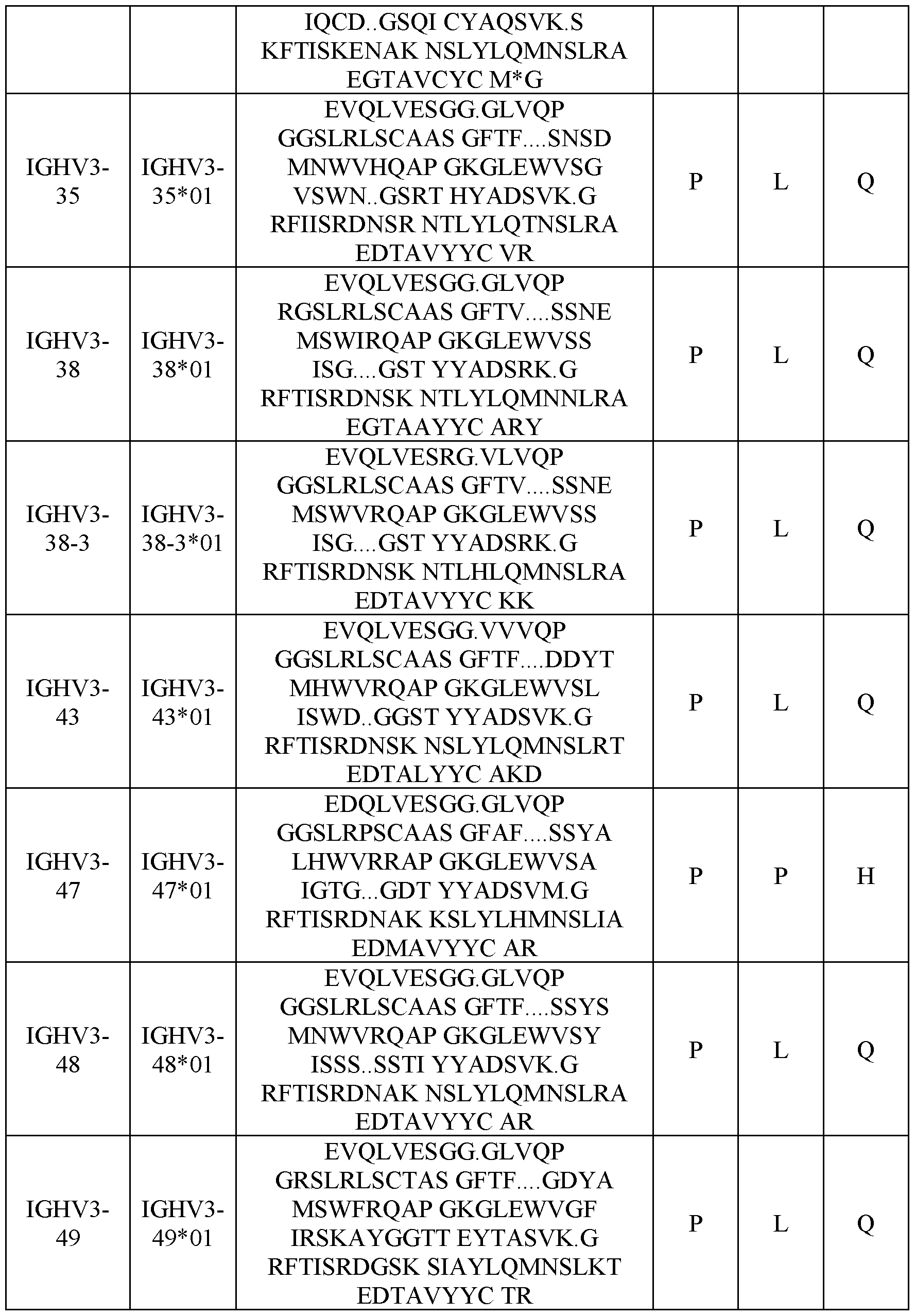
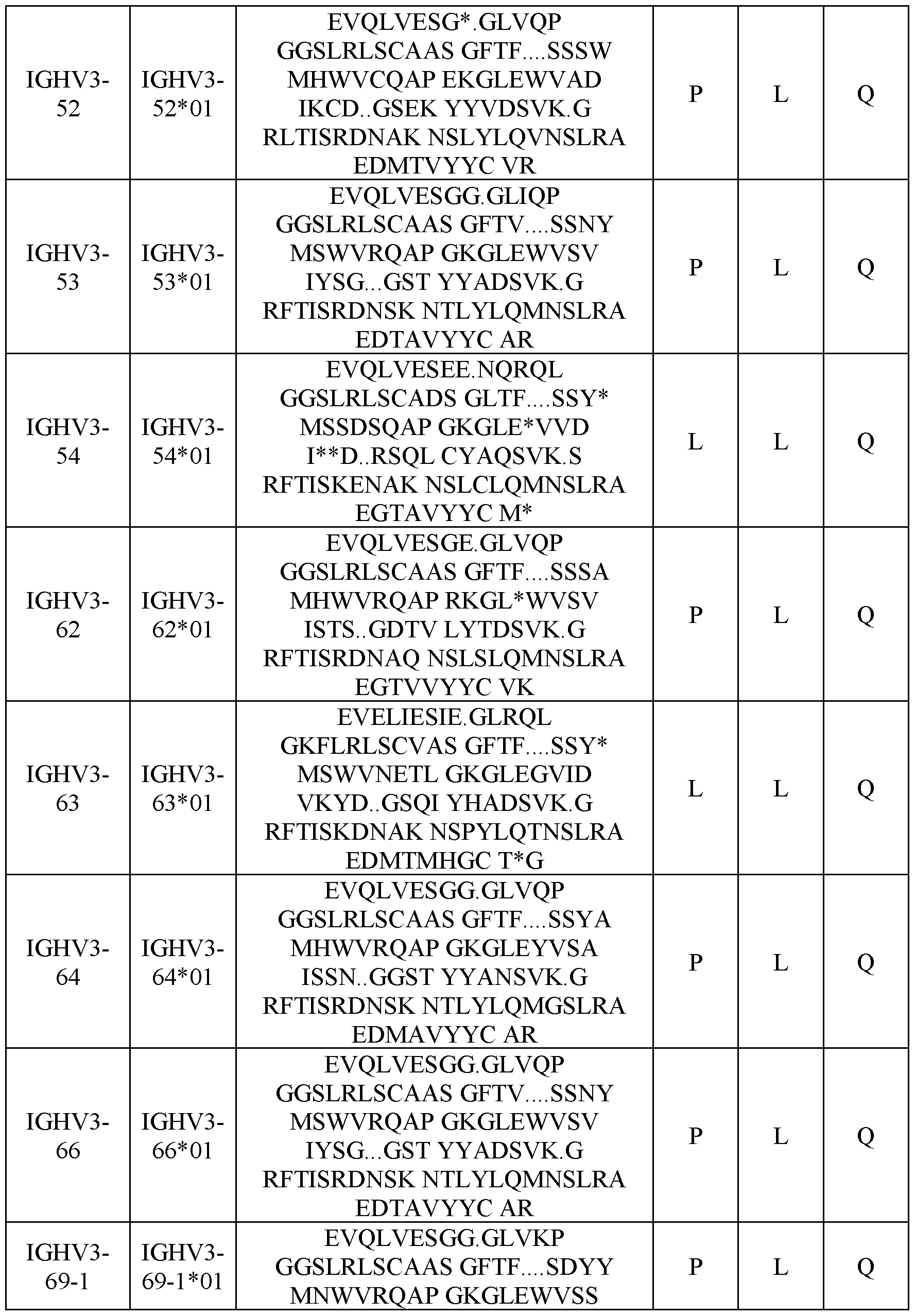
- Arginine at position 14 and Proline at position 20 of HCFR of TMEB675 are low frequency residues ( ⁇ 1%, Table 3, 4 and 5).
- the SHM Arginine found at position 14 is rare (frequency 0.151%) compared to the most frequently found Proline residue at this position (Proline residue frequency 95.029 %).
- the frequency of the SHM, Proline, found at position 20 of the heavy chain is also low (frequency 0.088 %) compared to most frequently found Leucine residue (frequency 73.024%).
- the frequency of finding the third SHM, Histidine at position 81 is relatively rare too (frequency 1.604%) compared to the most frequently found Glutamine residue typically found at that position (frequency 57.576 %) (Table 3 and 6, FIG. 2C).
- Table 3 shows human heavy chain germline sequences and typical compositions at position 14, 20 and 81.
- Table 4, 5 and 6 show abYsis database heavy chain sequences and composition of residue at position 14, 20 and 81, respectively.
- Table 7 and 8 show abYsis database light chain sequences and composition of residue at position 1 and 91, respectively.
- Table 3 Human heavy chain (IGHV) germline sequences and composition of residues at position 14, 20 and 81.
- Table 4 abYsis database heavy chain sequences and composition of residue at position 14.
- Table 5 abYsis database heavy chain sequences and composition of residue at position 20.
- Table 6 abYsis database heavy chain sequences and composition of residue at position 81.
- Table 8 abYsis database light chain sequences and composition of residue at position 91.
- binding epitopes were determined by HXMS.
- Four regions were identified as paratope defined regions by HDX-MS. The regions are distributed in three location in the heavy chain and one region in the light chain of the antibody outside of the framework where the somatic hyper mutations were observed (data not shown). Germlining these sites is therefore not expected to affect binding affinity and function.
- Germline variants with mutations either in the heavy chain SHM sites or the light chain SHM sites or in the heavy and light chain SHM sites combined were expressed and tested for both functional activity and intrinsic properties.
- a workflow as outlined in FIG. 11 was adopted to identify the SHM and engineer antibodies with improved molecular attributes.
- the library of binary variants constructed is described in Table 9. Functional and biophysical properties of each variants were tested as described below. Table 9: Library of binary variants.
- Thermal stability of antibody variants was determined by NanoDSF using an automated Prometheus instrument. Measurements were made by loading sample into 24 well capillary from a 384 well sample plate. Duplicate runs were performed for each sample. The thermal scans for a typical IgG sample span from 20°C to 95°C at a rate of 1.0°C/minute. Intrinsic tryptophan and tyrosine fluorescence at 330 nm and 350 nm emission wavelength, as well as the ratio F350 nm/F330 nm ratio were plotted against temperature to generate an unfolding curve.
- the back-reflection optics of the nanoDSF instrument emit near-UV light at a wavelength not absorbed by proteins. Aggregated proteins will scatter the light and non-scattered light will reach the detector. The reduction in back reflected light is a direct measurement of aggregation and is plotted as mAU (Attenuation Units) against temperature.
- Tm and Tagg Thermal unfolding parameters
- Thermal stability was characterized by capillary VP-DSC microcalorimeter (Microcal Inc. Northampton, MA). Temperature scans were performed from 25 to 120 °C at a protein concentration of 1.0 mg/mL and a scan rate of l°C/min. A buffer reference scan was subtracted from the protein scan and the concentration of protein was normalized prior to thermodynamic analysis. The DSC curve was fitted using non-two-state model to obtain the enthalpy and apparent transition temperature (T m ) values.
- T m apparent transition temperature
- Nonspecific binding of the lead molecule to unrelated surfaces was determined by biosensor technology (BIAcore 8K).
- Antibody variants at a concentration of 1 mM were passed over SPR surfaces coated with unrelated proteins.
- An antibody displaying significant binding to irrelevant surfaces is predicted to have poor in-vivo properties and manufacturing challenges.
- Irrelevant surfaces include negatively and positively charged proteins, hydrophobic proteins, and human IgG.
- a Beckman Optima AUC instrument was used to measure quantitative size distribution of monomers and other higher order aggregates of proteins in solution by analytical ultra centrifugation. Samples were loaded into centrifuge cells equipped with 1.2 cm Beckman centerpieces (rated to 50K rpm) and quartz windows. The cells were assembled and torqued to 130 lbs. The centrifuge cells were placed into an An-50 (8 hole) or An-60 (4 hole) rotor and placed within the AUC chamber. The temperature of the AUC instrument was set to 20.5 ° C for at least one hour before initiating the run. Runs were performed at 40K rpm 250 scan counts (250 scans), 90 seconds frequency of scan collection, 10 mM data resolution and at a wavelength of 280nm. The data were analyzed using the direct boundary fitting software SEDANAL.
- mAbs were tested by analytical size exclusion chromatography (SEC-HPLC) to measure the percentage of monomer. MAbs were then incubated at 4 ° C and 40 ° C for 4 weeks. Aliquots were drawn at regular intervals and integrity was checked by SEC-HPLC.
- SEC-HPLC analytical size exclusion chromatography
- TMEB762 containing the three heavy chain reengineered germline mutations, R14P, P20L and H81Q, and two light chain germline mutations, AID and A91P, had the most optimal biophysical properties. Residue numbering is according to Kabat.
- the five germline mutations were mapped onto the molecular models for both Fv’s, (MOE, CCG, Montreal) (FIG. 3). Of the five germline mutations, AID and H82H are surfaced exposed and have therefore likely little contribution to domain stability.
- VH R14P may have impact on the structure and may therefore have a slight effect on domain stability.
- VH P20L and VL A95P mutations are likely two major structural determinants.
- P20L in located in the middle of a b-strand with its side chain buried in the VH core.
- Proline is not a favorable residue in a typical b-strand structure.
- a Leu at this position would restore a favorable residue and a Leucine sidechain would pack well in the core.
- Amino acid residues at position 95 in this class of VL are typically in the cis conformation which maximizes stability.
- the effects of non-Pro mutations at this position upon stability and structure was previously reported (Luo, J. et al.
- AUC is a powerful technique to measure the quantitative size distribution of monomers and other higher order aggregates of proteins in solution (Berko witz, S.A. Role of analytical ultracentrifugation in assessing the aggregation of protein biopharmaceuticals. AAPS J 8, E590-605 (2006)). Particularly, Sedimentation Velocity (SV) based analysis uniquely measures hydrodynamic size and shape of proteins in any buffer in an unbiased way.
- SV Sedimentation Velocity
- FIG. 5 provides the thermal unfolding profile of TMEB675 and TMEB762 as determined by Nano DSF. The data shows that TMEB762 is more stable. Unfolding of TMEB762 starts at a higher temperature than for TMEB675, around 59 C with Fab unfolding occurring close to 75 ° C (Table 10). The antibody is very stable and shows no sign of aggregation (Tagg) below that temperature.
- FIG. 6 shows the thermal unfolding profile of TMEB675 and TMEB762 as determined by DSC. Table 10: Thermal Stability Parameters determined from DSC (on-set of unfolding and Fab domain unfolding Tm) and DSF (Tagg).
- I CD Isothermal Chemical Denaturation
- FIG. 7 and FIG. 8 provide the ICD unfolding curves of TMEB675 and TMEB762 measured at 25 °C. It is interesting to note that TMEB675 exhibits a single transition with a AGu of 24.3 kJ/mol while TMEB762 shows three state of unfolding, typical of a well behaved mAb, with a first transition CGu of 63.5 kJ/mol and a second transition of CGu of 37.3 kJ/mol. The approximate threefold increase in the free energy of unfolding of the first transition of TMEB762 clearly demonstrates that TMEB762 is intrinsically more stable than TMEB675 likely because of its germline optimized FAB domain (Table 11).
- Accelerated thermal stress is an industry wide used forced degradation assay to generate enough degradation product and understand the degradation mechanism of an antibody in a shortened timeline. It is used as a direct prediction for long-term shelf stability. Both long term storage (4 °C) and accelerated storage (40 °C) were studied for TMEB675 and TMEB762 for a month in PBS by monitoring their degradation by analytical size exclusion chromatography (aSEC). aSEC chromatograms (data not shown), showed that the antibodies degraded overtime through aggregation and not fragmentation. Change in aggregate levels between time zero, 2 weeks and 4 weeks were plotted for both mAbs (FIG. 9).
- TMEB762 had ⁇ 0.3% aggregates at 4°C and ⁇ 1% aggregates at accelerated storage at 40° C for a month. TMEB675, however showed 0.5% and 3% aggregation increase after a month at 4°C and 40°C respectively.
- higher thermal stability correlates with lower propensity for aggregation (Brader, M.L. et al. Examination of thermal unfolding and aggregation profiles of a series of developable therapeutic monoclonal antibodies. Mol Pharm 12, 1005-1017 (2015).; He, F. et al. Detection of IgG aggregation by a high throughput method based on extrinsic fluorescence. J Pharm Sci 99, 2598-2608 (2010)).
- Non-Specific Binding Sequence optimization of lead candidates may sometimes lead to unexpected modifications of their physical properties such as hydrophobicity, charge heterogeneity, folding, solubility, and solvent accessibility. Modification of these intrinsic properties will have major impact on developability and pharmacokinetic behavior. Faster clearance of mAbs can be attributed to nonspecific interactions with other irrelevant proteins in vivo. These simple physical properties can be measured by nonspecific binding assays (Dostalek, M., Prueksaritanont, T. & Kelley, R.F. Pharmacokinetic de-risking tools for selection of monoclonal antibody lead candidates. MAbs 9, 756-766 (2017)).
- SPR Surface Plasmon Resonance
- TMEB762 and TMEB675 show no non-specific binding to any of the charged surfaces tested even at 1 mM concentration (FIG. 10). Non-specific binding to any irrelevant surfaces could have been a significant challenge for developing these mAbs with a potential concern about in-vivo behavior.
- TMEB762 showed reduced risk of immunogenicity compared to TMEB675 as indicated by the improvement in %Human germline sequence identity. In addition, the insilico immunogenicity risk assessment scores drastically improved as well (Table 12). EpiVax screens for immunogenicity and relies on a set of immunoinformatic tools to predict the immunogenicity of peptides and proteins.
- Table 12 Immunogenicity risk assessment of TMEB675 and engineered variant TMEB762. Binding Affinity
- TMEB762 The binding affinity of TMEB762 was measured and compared to TMEB675 and is summarized in Table 13.
- TMEB762 had the most desirable functional and biophysical properties. Germlining of TMEB675 led to a more conformationally stable TMEB762 that has a very low propensity to aggregate ( ⁇ 1%) and aligns with the quality attributes for FDA/EMA approved and clinical stage mAh candidates.
- Example 2 describes the optimization of an anti-prostate target antibody, PSMW56, through germlining of SHM sites identified in the framework of the antibody.
- PSMW56 The monoclonal antibodies
- the monoclonal antibodies were discovered by immunizing OmniRat with the recombinant human PSMA proteins in the OmniRat® transgenic platform. Following a 89- day immunization regimen, lymph nodes from the rats were harvested and used to generate hybridomas. Hybridoma supernatants were screened for binding to recombinant antigens by ELISA. Based on the screening results, several hybridoma clones were sequenced, expressed and characterized for functionality. Variant PSMW56 showed desirable recombinant protein affinity (Table 14) and was selected for further studies. While the antibody met the functional criteria characteristics of a high affinity antibody, it showed poor thermal stability.
- Table 15 abYsis database heavy chain sequences and composition of residue at position 68 for anti-PSMA.
- a germline variant (PSMW57) with the heavy chain I68T mutation was expressed and tested for thermal stability.
- the engineered anti-PSMA variant (PSMW57) showed significant increase in thermal stability (both Tm and Tagg) when compared to PSMW56 as shown in FIG. 14 demonstrating that the workflow described in FIG. 11 is applicable to other antibodies.
- Anti-DLL3 monoclonal antibodies were discovered by immunizing AlivamAb mice, a transgenic fully human antibody platforms that produces a diverse repertoire of antibodies with
- Hybridoma supernatants were screened for binding to recombinant antigens by ELISA.
- the AbYsis tool was used to search for “unusual residues” within the antibody heavy and light chain sequence.
- Unusual residues defined by a 1% threshold in the database of antibody sequences offers hints about the critical functions of certain positions.
- the SHM of Glu found at position 84 is rare frequency ( ⁇ 1%) compared to the most frequently found Gly residue at this position (Gly residue frequency 93%, Table 18).
- Three engineered variants of DL3B355 were generated as depicted in Table 19.
- Table 17 abYsis database heavy chain sequences and composition of residue at position 85 for anti-DLL3.
- Table 18 abYsis database light chain sequences and composition of residue at position 84 for anti-DLL3.
- Table 19 Library of engineered variants for anti-DLL3. Biophysical assessment of the DLL3 antibody variants -Thermal stability
- Thermal Stability Parameters were measured for each engineered anti-DLL3 variant to determine whether the germline mutations had a positive effect on biophysical attributes. On-set of unfolding and Fab domain unfolding Tm were measured by DSF and DSC. The engineered anti-DLL3 variants showed significant increase in thermal stability (both Tm and Tagg) as shown in FIG. 17. All publications, including but not limited to patents and patent applications, cited in this specification are herein incorporated by reference as though fully set forth.
Landscapes
- Chemical & Material Sciences (AREA)
- Health & Medical Sciences (AREA)
- Life Sciences & Earth Sciences (AREA)
- Physics & Mathematics (AREA)
- General Health & Medical Sciences (AREA)
- Biophysics (AREA)
- Bioinformatics & Cheminformatics (AREA)
- Proteomics, Peptides & Aminoacids (AREA)
- Organic Chemistry (AREA)
- Engineering & Computer Science (AREA)
- Spectroscopy & Molecular Physics (AREA)
- Bioinformatics & Computational Biology (AREA)
- Theoretical Computer Science (AREA)
- Molecular Biology (AREA)
- Evolutionary Biology (AREA)
- Medical Informatics (AREA)
- Genetics & Genomics (AREA)
- Biotechnology (AREA)
- Immunology (AREA)
- Biochemistry (AREA)
- Analytical Chemistry (AREA)
- Medicinal Chemistry (AREA)
- Crystallography & Structural Chemistry (AREA)
- Peptides Or Proteins (AREA)
- Micro-Organisms Or Cultivation Processes Thereof (AREA)
- Preparation Of Compounds By Using Micro-Organisms (AREA)
- Apparatus Associated With Microorganisms And Enzymes (AREA)
Abstract
Description




Claims
Priority Applications (9)
| Application Number | Priority Date | Filing Date | Title |
|---|---|---|---|
| IL291896A IL291896A (en) | 2019-10-03 | 2020-10-02 | Methods for the production of biopharmaceuticals with increased stability through sequence optimization |
| EP20799818.8A EP4038099A1 (en) | 2019-10-03 | 2020-10-02 | Methods for producing biotherapeutics with increased stability by sequence optimization |
| CA3156818A CA3156818A1 (en) | 2019-10-03 | 2020-10-02 | Methods for producing biotherapeutics with increased stability by sequence optimization |
| BR112022006439A BR112022006439A2 (en) | 2019-10-03 | 2020-10-02 | METHODS FOR PRODUCTION OF BIOTHERAPEUTICS WITH INCREASED STABILITY BY SEQUENCE OPTIMIZATION |
| AU2020359070A AU2020359070A1 (en) | 2019-10-03 | 2020-10-02 | Methods for producing biotherapeutics with increased stability by sequence optimization |
| JP2022520801A JP2022551119A (en) | 2019-10-03 | 2020-10-02 | Methods for producing biotherapeutic agents with increased stability by sequence optimization |
| CN202080083875.6A CN114761426A (en) | 2019-10-03 | 2020-10-02 | Method for producing a biotherapeutic drug with increased stability by sequence optimization |
| MX2022004098A MX2022004098A (en) | 2019-10-03 | 2020-10-02 | Methods for producing biotherapeutics with increased stability by sequence optimization. |
| KR1020227014972A KR20220091497A (en) | 2019-10-03 | 2020-10-02 | Manufacturing method of biopharmaceuticals with increased stability by sequence optimization |
Applications Claiming Priority (2)
| Application Number | Priority Date | Filing Date | Title |
|---|---|---|---|
| US201962909841P | 2019-10-03 | 2019-10-03 | |
| US62/909,841 | 2019-10-03 |
Publications (1)
| Publication Number | Publication Date |
|---|---|
| WO2021064671A1 true WO2021064671A1 (en) | 2021-04-08 |
Family
ID=73038267
Family Applications (1)
| Application Number | Title | Priority Date | Filing Date |
|---|---|---|---|
| PCT/IB2020/059265 Ceased WO2021064671A1 (en) | 2019-10-03 | 2020-10-02 | Methods for producing biotherapeutics with increased stability by sequence optimization |
Country Status (11)
| Country | Link |
|---|---|
| US (1) | US20210130440A1 (en) |
| EP (1) | EP4038099A1 (en) |
| JP (1) | JP2022551119A (en) |
| KR (1) | KR20220091497A (en) |
| CN (1) | CN114761426A (en) |
| AU (1) | AU2020359070A1 (en) |
| BR (1) | BR112022006439A2 (en) |
| CA (1) | CA3156818A1 (en) |
| IL (1) | IL291896A (en) |
| MX (1) | MX2022004098A (en) |
| WO (1) | WO2021064671A1 (en) |
Cited By (4)
| Publication number | Priority date | Publication date | Assignee | Title |
|---|---|---|---|---|
| US20220089737A1 (en) * | 2020-09-11 | 2022-03-24 | Janssen Biotech, Inc. | Multi-specific immune targeting molecules and uses thereof |
| US11965024B2 (en) | 2020-09-11 | 2024-04-23 | Janssen Biotech, Inc. | Methods and compositions for modulating beta chain mediated immunity |
| US12264197B2 (en) | 2019-03-11 | 2025-04-01 | Janssen Biotech, Inc. | Anti-Vβ17/anti-CD123 bispecific antibodies |
| US12448449B2 (en) | 2020-09-11 | 2025-10-21 | Janssen Biotech, Inc. | Immune targeting molecules and uses thereof |
Families Citing this family (1)
| Publication number | Priority date | Publication date | Assignee | Title |
|---|---|---|---|---|
| KR20240031723A (en) | 2022-09-01 | 2024-03-08 | 주식회사 스탠다임 | Method for generating antibody sequence using machine learning |
Citations (4)
| Publication number | Priority date | Publication date | Assignee | Title |
|---|---|---|---|---|
| WO2003074679A2 (en) * | 2002-03-01 | 2003-09-12 | Xencor | Antibody optimization |
| WO2009085462A1 (en) | 2007-12-19 | 2009-07-09 | Centocor, Inc. | Design and generation of human de novo pix phage display libraries via fusion to pix or pvii, vectors, antibodies and methods |
| WO2010136598A1 (en) * | 2009-05-29 | 2010-12-02 | Morphosys Ag | A collection and methods for its use |
| WO2014093908A2 (en) | 2012-12-14 | 2014-06-19 | Omt, Inc. | Polynucleotides encoding rodent antibodies with human idiotypes and animals comprising same |
Family Cites Families (2)
| Publication number | Priority date | Publication date | Assignee | Title |
|---|---|---|---|---|
| AU2012347453B2 (en) * | 2011-12-08 | 2017-11-23 | The United States Of America, As Represented By The Secretary Department Of Health And Human Services | Neutralizing antibodies to HIV-1 and their use |
| TWI853985B (en) * | 2013-12-04 | 2024-09-01 | 日商中外製藥股份有限公司 | Antigen-binding molecules and databases thereof whose antigen-binding ability varies in response to compound concentration |
-
2020
- 2020-10-02 US US17/061,590 patent/US20210130440A1/en not_active Abandoned
- 2020-10-02 EP EP20799818.8A patent/EP4038099A1/en active Pending
- 2020-10-02 WO PCT/IB2020/059265 patent/WO2021064671A1/en not_active Ceased
- 2020-10-02 AU AU2020359070A patent/AU2020359070A1/en active Pending
- 2020-10-02 JP JP2022520801A patent/JP2022551119A/en active Pending
- 2020-10-02 CN CN202080083875.6A patent/CN114761426A/en active Pending
- 2020-10-02 BR BR112022006439A patent/BR112022006439A2/en unknown
- 2020-10-02 MX MX2022004098A patent/MX2022004098A/en unknown
- 2020-10-02 KR KR1020227014972A patent/KR20220091497A/en active Pending
- 2020-10-02 CA CA3156818A patent/CA3156818A1/en active Pending
- 2020-10-02 IL IL291896A patent/IL291896A/en unknown
Patent Citations (4)
| Publication number | Priority date | Publication date | Assignee | Title |
|---|---|---|---|---|
| WO2003074679A2 (en) * | 2002-03-01 | 2003-09-12 | Xencor | Antibody optimization |
| WO2009085462A1 (en) | 2007-12-19 | 2009-07-09 | Centocor, Inc. | Design and generation of human de novo pix phage display libraries via fusion to pix or pvii, vectors, antibodies and methods |
| WO2010136598A1 (en) * | 2009-05-29 | 2010-12-02 | Morphosys Ag | A collection and methods for its use |
| WO2014093908A2 (en) | 2012-12-14 | 2014-06-19 | Omt, Inc. | Polynucleotides encoding rodent antibodies with human idiotypes and animals comprising same |
Non-Patent Citations (28)
| Title |
|---|
| BRADER, M.L. ET AL.: "Examination of thermal unfolding and aggregation profiles of a series of developable therapeutic monoclonal antibodies", MOL PHARM, vol. 12, 2015, pages 1005 - 1017 |
| CHOTHIA ET AL., J. MOL. BIOL., vol. 196, no. 4, 1987, pages 901 - 17 |
| FREIRE, E.SCHON, A.HUTCHINS, B.M.BROWN, R.K.: "Chemical denaturation as a tool in the formulation optimization of biologies", DRUG DISCOV TODAY, vol. 18, 2013, pages 1007 - 1013 |
| GOSWAMI, S.WANG, W.ARAKAWA, T.OHTAKE, S.: "Developments and Challenges for mAb-Based Therapeutics", ANTIBODIES, vol. 2, 2013, pages 452 - 500, XP055128980, DOI: 10.3390/antib2030452 |
| HE, F. ET AL.: "Detection of IgG aggregation by a high throughput method based on extrinsic fluorescence", J PHARM SCI, vol. 99, 2010, pages 2598 - 2608, XP002751302, DOI: 10.1002/jps.22036 |
| HONEGGERPLUCKTHUN, J MOL BIOL, vol. 309, no. 3, 2001, pages 657 - 670 |
| HOULIHAN, G.GATTI-LAFRANCONI, P.LOWE, D.HOLLFELDER, F.: "Directed evolution of anti-HER2 DARPins by SNAP display reveals stability/function trade-offs in the selection process", PROTEIN ENGINEERING, DESIGN & SELECTION : PEDS, vol. 28, 2015, pages 269 - 279 |
| JAIN, T. ET AL.: "Biophysical properties of the clinical-stage antibody landscape", PROCEEDINGS OF THE NATIONAL ACADEMY OF SCIENCES OF THE UNITED STATES OF AMERICA, vol. 114, 2017, pages 944 - 949 |
| JULIAN, M. C. ET AL.: "Co-evolution of affinity and stability of grafted amyloid-motif domain antibodies", PROTEIN ENGINEERING, DESIGN & SELECTION : PEDS28, 2015, pages 339 - 350 |
| KABAT ET AL., J IMMUNOL, vol. 147, no. 5, 1991, pages 1709 - 19 |
| KNAPPIK ET AL., J MOL BIOL, vol. 296, 2000, pages 57 - 86 |
| LEFRANC ET AL., DEV COMP IMMUNOL, vol. 27, no. 1, 2003, pages 55 - 77 |
| LUO, J. ET AL.: "Coevolution of antibody stability and Vkappa CDR-L3 canonical structure", J MOL BIOL, vol. 402, 2010, pages 708 - 719, XP027326935, DOI: 10.1016/j.jmb.2010.08.009 |
| MABS, vol. 9, 2017, pages 756 - 766 |
| MARTINTHORNTON, J MOL BIOL, vol. 263, no. 5, 1996, pages 800 - 815 |
| MARTINTHORNTON, JMOLBIOL, vol. 263, 1996, pages 800 - 815 |
| MCCONNELL, A.D. ET AL.: "A general approach to antibody thermostabilization", MABS, vol. 6, 2014, pages 1274 - 1282, XP055414613, DOI: 10.4161/mabs.29680 |
| NEUBERGER, M.S.MILSTEIN, C.: "Current opinion in immunology", SOMATIC HYPERMUTATION, vol. 7, 1995, pages 248 - 254 |
| OSBORN, M.J. ET AL.: "High-affinity IgG antibodies develop naturally in Ig-knockout rats carrying germline human IgH/Igkappa/Iglambda loci bearing the rat CH region", J IMMUNOL, vol. 190, 2013, pages 1481 - 1490 |
| SELA-CULANG, I. ET AL.: "The Structural Basis of Antibody-Antigen Recognition", FRONTIERS IN IMMUNOLOGY, vol. 4, 2013, XP055557261, DOI: 10.3389/fimmu.2013.00302 |
| SUN, S.B. ET AL.: "Mutational analysis of 48G7 reveals that somatic hypermutation affects both antibody stability and binding affinity", JOURNAL OF THE AMERICAN CHEMICAL SOCIETY, vol. 135, 2013, pages 9980 - 9983 |
| SVILENOV, H.MARKOJA, U.WINTER, G.: "Isothermal chemical denaturation as a complementary tool to overcome limitations of thermal differential scanning fluorimetry in predicting physical stability of protein formulations", EUR J PHARM BIOPHARM, vol. 125, 2018, pages 106 - 113 |
| SWINDELLS MARK B ET AL: "abYsis: Integrated Antibody Sequence and Structure-Management, Analysis, and Prediction", JOURNAL OF MOLECULAR BIOLOGY, ACADEMIC PRESS, UNITED KINGDOM, vol. 429, no. 3, 22 August 2016 (2016-08-22), pages 356 - 364, XP029894173, ISSN: 0022-2836, DOI: 10.1016/J.JMB.2016.08.019 * |
| SWINDELLS, M.B. ET AL.: "abYsis: Integrated Antibody Sequence and Structure-Management, Analysis, and Prediction", J MOL BIOL, vol. 429, 2017, pages 356 - 364, XP029894173, DOI: 10.1016/j.jmb.2016.08.019 |
| SWINDELLS, M.B. ET AL.: "abYsis: Integrated Antibody Sequence and Structure-Management, Analysis, and Prediction.", J MOL BIOL, vol. 429, 2017, pages 356 - 364, XP029894173, DOI: 10.1016/j.jmb.2016.08.019 |
| THIAGARAJAN, G.SEMPLE, A.JAMES, J.K.CHEUNG, J.K.SHAMEEM, M.: "A comparison of biophysical characterization techniques in predicting monoclonal antibody stability", MABS, vol. 8, 2016, pages 1088 - 1097, XP055616733, DOI: 10.1080/19420862.2016.1189048 |
| WANG, F. ET AL.: "Somatic hypermutation maintains antibody thermodynamic stability during affinity maturation", PROCEEDINGS OF THE NATIONAL ACADEMY OF SCIENCES OF THE UNITED STATES OF AMERICA, vol. 110, 2013, pages 4261 - 4266, XP055119293, DOI: 10.1073/pnas.1301810110 |
| WU ET AL., J EXP MED, vol. 132, no. 2, 1970, pages 211 - 250 |
Cited By (5)
| Publication number | Priority date | Publication date | Assignee | Title |
|---|---|---|---|---|
| US12264197B2 (en) | 2019-03-11 | 2025-04-01 | Janssen Biotech, Inc. | Anti-Vβ17/anti-CD123 bispecific antibodies |
| US20220089737A1 (en) * | 2020-09-11 | 2022-03-24 | Janssen Biotech, Inc. | Multi-specific immune targeting molecules and uses thereof |
| US11965024B2 (en) | 2020-09-11 | 2024-04-23 | Janssen Biotech, Inc. | Methods and compositions for modulating beta chain mediated immunity |
| US12448449B2 (en) | 2020-09-11 | 2025-10-21 | Janssen Biotech, Inc. | Immune targeting molecules and uses thereof |
| US12492256B2 (en) | 2020-09-11 | 2025-12-09 | Janssen Biotech, Inc. | Methods and compositions for modulating beta chain mediated immunity |
Also Published As
| Publication number | Publication date |
|---|---|
| AU2020359070A1 (en) | 2022-04-21 |
| KR20220091497A (en) | 2022-06-30 |
| CN114761426A (en) | 2022-07-15 |
| US20210130440A1 (en) | 2021-05-06 |
| IL291896A (en) | 2022-06-01 |
| JP2022551119A (en) | 2022-12-07 |
| BR112022006439A2 (en) | 2022-07-05 |
| MX2022004098A (en) | 2022-07-19 |
| EP4038099A1 (en) | 2022-08-10 |
| CA3156818A1 (en) | 2021-04-08 |
Similar Documents
| Publication | Publication Date | Title |
|---|---|---|
| US20210130440A1 (en) | Methods for producing biotherapeutics with increased stability by sequence optimization | |
| CN107810198B (en) | anti-CD 40 antibodies and uses thereof | |
| JP6199935B2 (en) | Antibodies to troponin I and methods of use thereof | |
| KR101607783B1 (en) | Antibodies to pcsk9 and uses thereof | |
| US12269894B2 (en) | Antibodies which bind human fibrin or fibrinogen γC domain and methods of use | |
| JP2023514952A (en) | Anti-D-dimer recombinant antibodies, methods and uses thereof | |
| AU2014315081A1 (en) | Nav1.7 antibodies and methods of using the same | |
| JP2022540859A (en) | Novel BSSL antibody | |
| HK40078825A (en) | Methods for producing biotherapeutics with increased stability by sequence optimization | |
| WO2022218277A1 (en) | Antibody against carboxyl terminal of fgf21, and use thereof | |
| KR20230018478A (en) | Rabbit antibody to human immunoglobulin G | |
| TWI842088B (en) | Human monocarboxylate transporter 1 antibodies and uses thereof | |
| US20220002397A1 (en) | Method for improving inhibition of vegf-binding to vegf-r1 of an anti-vegf antibody | |
| BR112017025693B1 (en) | FULL-LENGTH ANTI-CD40 ANTAGONIST ANTIBODY AND PHARMACEUTICAL COMPOSITION COMPRISING SAID ANTIBODY |
Legal Events
| Date | Code | Title | Description |
|---|---|---|---|
| 121 | Ep: the epo has been informed by wipo that ep was designated in this application |
Ref document number: 20799818 Country of ref document: EP Kind code of ref document: A1 |
|
| ENP | Entry into the national phase |
Ref document number: 2022520801 Country of ref document: JP Kind code of ref document: A Ref document number: 3156818 Country of ref document: CA |
|
| NENP | Non-entry into the national phase |
Ref country code: DE |
|
| REG | Reference to national code |
Ref country code: BR Ref legal event code: B01A Ref document number: 112022006439 Country of ref document: BR |
|
| ENP | Entry into the national phase |
Ref document number: 2020359070 Country of ref document: AU Date of ref document: 20201002 Kind code of ref document: A |
|
| ENP | Entry into the national phase |
Ref document number: 20227014972 Country of ref document: KR Kind code of ref document: A |
|
| ENP | Entry into the national phase |
Ref document number: 2020799818 Country of ref document: EP Effective date: 20220503 |
|
| ENP | Entry into the national phase |
Ref document number: 112022006439 Country of ref document: BR Kind code of ref document: A2 Effective date: 20220404 |
|
| WWW | Wipo information: withdrawn in national office |
Ref document number: 786919 Country of ref document: NZ |
|
| WWW | Wipo information: withdrawn in national office |
Ref document number: 2022111496 Country of ref document: RU |