WO2020241457A1 - Parking lot system, management device, and parking lot facility - Google Patents
Parking lot system, management device, and parking lot facility Download PDFInfo
- Publication number
- WO2020241457A1 WO2020241457A1 PCT/JP2020/020178 JP2020020178W WO2020241457A1 WO 2020241457 A1 WO2020241457 A1 WO 2020241457A1 JP 2020020178 W JP2020020178 W JP 2020020178W WO 2020241457 A1 WO2020241457 A1 WO 2020241457A1
- Authority
- WO
- WIPO (PCT)
- Prior art keywords
- parking lot
- passage
- vehicle
- automatic guided
- warehousing
- Prior art date
- Legal status (The legal status is an assumption and is not a legal conclusion. Google has not performed a legal analysis and makes no representation as to the accuracy of the status listed.)
- Ceased
Links
Images






Classifications
-
- B—PERFORMING OPERATIONS; TRANSPORTING
- B62—LAND VEHICLES FOR TRAVELLING OTHERWISE THAN ON RAILS
- B62D—MOTOR VEHICLES; TRAILERS
- B62D15/00—Steering not otherwise provided for
- B62D15/02—Steering position indicators ; Steering position determination; Steering aids
- B62D15/027—Parking aids, e.g. instruction means
- B62D15/0285—Parking performed automatically
-
- B—PERFORMING OPERATIONS; TRANSPORTING
- B60—VEHICLES IN GENERAL
- B60W—CONJOINT CONTROL OF VEHICLE SUB-UNITS OF DIFFERENT TYPE OR DIFFERENT FUNCTION; CONTROL SYSTEMS SPECIALLY ADAPTED FOR HYBRID VEHICLES; ROAD VEHICLE DRIVE CONTROL SYSTEMS FOR PURPOSES NOT RELATED TO THE CONTROL OF A PARTICULAR SUB-UNIT
- B60W30/00—Purposes of road vehicle drive control systems not related to the control of a particular sub-unit, e.g. of systems using conjoint control of vehicle sub-units
- B60W30/06—Automatic manoeuvring for parking
-
- G—PHYSICS
- G08—SIGNALLING
- G08G—TRAFFIC CONTROL SYSTEMS
- G08G1/00—Traffic control systems for road vehicles
- G08G1/14—Traffic control systems for road vehicles indicating individual free spaces in parking areas
-
- E—FIXED CONSTRUCTIONS
- E04—BUILDING
- E04H—BUILDINGS OR LIKE STRUCTURES FOR PARTICULAR PURPOSES; SWIMMING OR SPLASH BATHS OR POOLS; MASTS; FENCING; TENTS OR CANOPIES, IN GENERAL
- E04H6/00—Buildings for parking cars, rolling-stock, aircraft, vessels or like vehicles, e.g. garages
- E04H6/42—Devices or arrangements peculiar to garages, not covered elsewhere, e.g. securing devices, safety devices, monitoring and operating schemes; centering devices
- E04H6/422—Automatically operated car-parks
-
- G—PHYSICS
- G06—COMPUTING OR CALCULATING; COUNTING
- G06Q—INFORMATION AND COMMUNICATION TECHNOLOGY [ICT] SPECIALLY ADAPTED FOR ADMINISTRATIVE, COMMERCIAL, FINANCIAL, MANAGERIAL OR SUPERVISORY PURPOSES; SYSTEMS OR METHODS SPECIALLY ADAPTED FOR ADMINISTRATIVE, COMMERCIAL, FINANCIAL, MANAGERIAL OR SUPERVISORY PURPOSES, NOT OTHERWISE PROVIDED FOR
- G06Q50/00—Information and communication technology [ICT] specially adapted for implementation of business processes of specific business sectors, e.g. utilities or tourism
- G06Q50/10—Services
-
- G—PHYSICS
- G08—SIGNALLING
- G08G—TRAFFIC CONTROL SYSTEMS
- G08G1/00—Traffic control systems for road vehicles
- G08G1/01—Detecting movement of traffic to be counted or controlled
- G08G1/0104—Measuring and analyzing of parameters relative to traffic conditions
- G08G1/0108—Measuring and analyzing of parameters relative to traffic conditions based on the source of data
- G08G1/0112—Measuring and analyzing of parameters relative to traffic conditions based on the source of data from the vehicle, e.g. floating car data [FCD]
-
- G—PHYSICS
- G08—SIGNALLING
- G08G—TRAFFIC CONTROL SYSTEMS
- G08G1/00—Traffic control systems for road vehicles
- G08G1/01—Detecting movement of traffic to be counted or controlled
- G08G1/0104—Measuring and analyzing of parameters relative to traffic conditions
- G08G1/0125—Traffic data processing
- G08G1/0129—Traffic data processing for creating historical data or processing based on historical data
-
- G—PHYSICS
- G08—SIGNALLING
- G08G—TRAFFIC CONTROL SYSTEMS
- G08G1/00—Traffic control systems for road vehicles
- G08G1/14—Traffic control systems for road vehicles indicating individual free spaces in parking areas
- G08G1/145—Traffic control systems for road vehicles indicating individual free spaces in parking areas where the indication depends on the parking areas
- G08G1/146—Traffic control systems for road vehicles indicating individual free spaces in parking areas where the indication depends on the parking areas where the parking area is a limited parking space, e.g. parking garage, restricted space
-
- G—PHYSICS
- G08—SIGNALLING
- G08G—TRAFFIC CONTROL SYSTEMS
- G08G1/00—Traffic control systems for road vehicles
- G08G1/14—Traffic control systems for road vehicles indicating individual free spaces in parking areas
- G08G1/145—Traffic control systems for road vehicles indicating individual free spaces in parking areas where the indication depends on the parking areas
- G08G1/148—Management of a network of parking areas
-
- B—PERFORMING OPERATIONS; TRANSPORTING
- B60—VEHICLES IN GENERAL
- B60W—CONJOINT CONTROL OF VEHICLE SUB-UNITS OF DIFFERENT TYPE OR DIFFERENT FUNCTION; CONTROL SYSTEMS SPECIALLY ADAPTED FOR HYBRID VEHICLES; ROAD VEHICLE DRIVE CONTROL SYSTEMS FOR PURPOSES NOT RELATED TO THE CONTROL OF A PARTICULAR SUB-UNIT
- B60W2556/00—Input parameters relating to data
- B60W2556/10—Historical data
-
- B—PERFORMING OPERATIONS; TRANSPORTING
- B60—VEHICLES IN GENERAL
- B60W—CONJOINT CONTROL OF VEHICLE SUB-UNITS OF DIFFERENT TYPE OR DIFFERENT FUNCTION; CONTROL SYSTEMS SPECIALLY ADAPTED FOR HYBRID VEHICLES; ROAD VEHICLE DRIVE CONTROL SYSTEMS FOR PURPOSES NOT RELATED TO THE CONTROL OF A PARTICULAR SUB-UNIT
- B60W2556/00—Input parameters relating to data
- B60W2556/45—External transmission of data to or from the vehicle
- B60W2556/50—External transmission of data to or from the vehicle of positioning data, e.g. GPS [Global Positioning System] data
-
- G—PHYSICS
- G08—SIGNALLING
- G08G—TRAFFIC CONTROL SYSTEMS
- G08G1/00—Traffic control systems for road vehicles
- G08G1/14—Traffic control systems for road vehicles indicating individual free spaces in parking areas
- G08G1/141—Traffic control systems for road vehicles indicating individual free spaces in parking areas with means giving the indication of available parking spaces
- G08G1/142—Traffic control systems for road vehicles indicating individual free spaces in parking areas with means giving the indication of available parking spaces external to the vehicles
-
- G—PHYSICS
- G08—SIGNALLING
- G08G—TRAFFIC CONTROL SYSTEMS
- G08G1/00—Traffic control systems for road vehicles
- G08G1/14—Traffic control systems for road vehicles indicating individual free spaces in parking areas
- G08G1/141—Traffic control systems for road vehicles indicating individual free spaces in parking areas with means giving the indication of available parking spaces
- G08G1/143—Traffic control systems for road vehicles indicating individual free spaces in parking areas with means giving the indication of available parking spaces inside the vehicles
Definitions
- This disclosure relates to parking lot systems, management devices, and parking lot facilities.
- the automatic parking management system described in Patent Document 1 uses an automatic guided vehicle to transport the vehicle to the parking lot.
- the following parking lot system can be considered. Vehicles are transported from the warehousing location to the parking lot using automatic guided vehicles. In addition, an automatic guided vehicle is used to transport the vehicle from the parking lot to the delivery location.
- the automatic guided vehicle separated from the vehicle moves to the storage location.
- a parking lot system a management device, and a parking lot facility capable of efficiently parking and leaving the parking lot.
- One aspect of the present disclosure is a parking lot system, which is a warehousing place, a warehousing place, a parking lot, a first passage from the warehousing place to the warehousing place through the parking lot, and the warehousing place.
- a space capable of setting a second passage from a place to the warehousing place, an unmanned transport vehicle capable of transporting a vehicle, and a management device for controlling the unmanned transport vehicle are provided, and the management device is provided in the space.
- the vehicle can be moved from the warehousing place to at least the first passage.
- a transport control unit configured to transport the vehicle to the parking lot through a part of the vehicle and to transport the vehicle from the parking lot to the delivery location via at least a part of the first passage.
- the unmanned transport vehicle is provided with a movement control unit configured to move from the warehousing place to the warehousing place via the second passage, and the first passage and the second passage are separated. It is a parking lot system.
- the automatic guided vehicle that is transporting the vehicle to the parking lot travels on the first passage.
- an automatic guided vehicle that is transporting the vehicle to the delivery location also travels on the first passage.
- the automatic guided vehicle which is separated from the vehicle and is moving from the warehousing place to the warehousing place, travels on the second passage.
- the first passage and the second passage are separated.
- the parking lot system which is one aspect of the present disclosure, the automatic guided vehicle that is transporting the vehicle and the automatic guided vehicle that is separated from the vehicle are less likely to travel in the same passage.
- the parking lot system which is one aspect of the present disclosure, can suppress congestion in the first passage and the second passage, and can efficiently park and leave the parking lot.
- Another aspect of the present disclosure is a warehousing place, a warehousing place, a parking lot, a first passage from the warehousing place to the warehousing place through the parking lot, and from the warehousing place to the warehousing place. It is a management device that manages automatic volleyball parking using an automatic guided vehicle capable of transporting a vehicle in a parking lot facility provided with a space serving as a second passage.
- the management device uses the setting unit configured to set the parking lot, the first passage, and the second passage in the space, and the unmanned transport vehicle, to store the vehicle in the warehousing place. Therefore, the vehicle is transported from the parking lot to the parking lot via at least a part of the first passage, and is transported from the parking lot to the delivery place via at least a part of the first passage.
- the transport control unit is provided, and a movement control unit configured to move the unmanned transport vehicle from the delivery location to the warehousing location via the second passage.
- the first passage and the second passage are separated.
- the management device which is another aspect of the present disclosure, can set the first passage and the second passage.
- the automatic guided vehicle which is transporting the vehicle to the parking lot, travels on the first passage.
- an automatic guided vehicle that is transporting the vehicle to the delivery location also travels on the first passage.
- the automatic guided vehicle which is separated from the vehicle and is moving from the warehousing place to the warehousing place, travels on the second passage.
- the first passage and the second passage are separated.
- the management device which is another aspect of the present disclosure, the automatic guided vehicle that is transporting the vehicle and the automatic guided vehicle that is separated from the vehicle are less likely to travel in the same passage.
- the management device which is another aspect of the present disclosure, can suppress congestion in the first passage and the second passage, and can efficiently park and leave the garage.
- Another aspect of the present disclosure is a parking lot facility in which automatic valley parking using an automatic guided vehicle capable of transporting a vehicle is managed by a management device.
- the parking lot facility is a warehousing place, a warehousing place, a parking lot, and a passage from the warehousing place to the warehousing place via the parking lot, and the unmanned transport vehicle parks the vehicle from the warehousing place.
- the first passage which is a passage that travels when the vehicle is transported to the parking lot and the unmanned transport vehicle travels when the vehicle is transported from the parking lot to the delivery location, and the delivery location to the storage location.
- the first passage is a passage that is divided, and includes a second passage that is a passage that the unmanned transport vehicle travels when moving from the delivery place to the storage place.
- the parking lot facility which is another aspect of the present disclosure, can have a first passage and a second passage.
- the automatic guided vehicle which is transporting the vehicle to the parking lot, travels on the first passage.
- an automatic guided vehicle that is transporting the vehicle to the delivery location also travels on the first passage.
- the automatic guided vehicle which is separated from the vehicle and is moving from the warehousing place to the warehousing place, travels on the second passage.
- the first passage and the second passage are separated.
- the parking lot facility which is another aspect of the present disclosure, the automatic guided vehicle that is transporting the vehicle and the automatic guided vehicle that is separated from the vehicle are less likely to travel in the same passage.
- the parking lot facility which is another aspect of the present disclosure, can suppress congestion in the first passage and the second passage, and can efficiently park and leave the parking lot.
- the parking lot system 1 includes a warehousing place 3, a warehousing place 5, and a space 6.
- the warehousing place 3, the warehousing place 5, and the space 6 correspond to the parking lot facilities.
- the space 6 is adjacent to the warehousing place 3 and the warehousing place 5.
- a store 22 exists in a part of the space 6.
- the store 22 corresponds to the facility.
- a first parking lot 7, a second parking lot 9, a first passage 11, and a second passage 13 are virtually set. That is, in FIG. 1, for convenience, the first parking lot 7, the second parking lot 9, the first passage 11, and the second passage 13 are shown by being separated by a solid line, but the actual road surface is shown by a white line or the like. There is no need to separate.
- the warehousing place 3 is connected to the public road 17 via the entrance 15.
- the vehicle 18 can enter the warehousing place 3 from the public road 17 through the entrance 15.
- the automatic valet function is a function of traveling from the warehousing place 3 to the first parking lot 7 or the second parking lot 9 and parking by automatic operation, and the function of parking from the first parking lot 7 or the second parking lot 9 to the warehousing place 5. Including the function of running.
- a gate 19 is provided at the entrance 15.
- the gate 19 can be in an open state and in a closed state. When the gate 19 is open, the vehicle 18 can pass through the entrance 15. When the gate 19 is closed, the vehicle 18 cannot pass through the entrance 15.
- a plurality of automatic guided vehicles 21 are arranged at the warehousing place 3.
- the configuration of the automatic guided vehicle 21 will be described later.
- the warehousing place 3 and the entrance 23 of the store 22 are connected by a pedestrian-only area 20.
- the occupant 25 of the vehicle that has entered the warehousing place 3 can get off from the vehicle 18, pass through the pedestrian-only area 20, and proceed to the entrance 23 on foot.
- the delivery place 5 is connected to the public road 29 via the exit 27.
- the vehicle 18 can proceed from the delivery place 5 to the public road 29 through the exit 27.
- the delivery place 5 and the entrance 23 are connected by a pedestrian-only area 20. From the entrance 23, the occupant 25 can walk through the pedestrian-only area 20 to the exit location 5.
- the parking lot system 1 includes a management device 39, an infrastructure 41, a first terminal 43, and a second terminal 45.
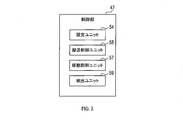
- the management device 39 includes a control unit 47 and a communication unit 49.
- the control unit 47 includes a microcomputer having a CPU 51 and, for example, a semiconductor memory such as a RAM or a ROM (hereinafter referred to as a memory 53).
- Each function of the control unit 47 is realized by the CPU 51 executing a program stored in a non-transitional substantive recording medium.
- the memory 53 corresponds to a non-transitional substantive recording medium in which a program is stored.
- the method corresponding to the program is executed.
- the control unit 47 may include one microcomputer or a plurality of microcomputers.
- control unit 47 includes a setting unit 54, a transfer control unit 55, a movement control unit 57, and a detection unit 59.
- the setting unit 54 virtually sets the first parking lot 7, the second parking lot 9, the first passage 11, and the second passage 13 in the space 6.
- the transport control unit 55 uses an automatic guided vehicle 21 to transport the vehicle 18 from the warehousing location 3 to the first parking lot 7 or the second parking lot 9 via at least a part of the first passage 11.
- the vehicle 18 is transported from the first parking lot 7 or the second parking lot 9 to the delivery place 5 via at least a part of the first passage 11.
- the movement control unit 57 moves the automatic guided vehicle 21 from the warehousing place 5 to the warehousing place 3 via the second passage 13.
- the memory 53 stores the map information inside the parking lot system 1.
- the map information includes information indicating the position of an obstacle. Further, the map information includes information indicating the state of the sections in the first parking lot 7 and the second parking lot 9. As the state of the section, there are a vacant state (hereinafter referred to as an vacant state) and a state occupied by the vehicle 18 (hereinafter referred to as an occupied state).
- the communication unit 49 can communicate with the automatic guided vehicle 21 and the vehicle 18B.
- the communication interface between the communication unit 49 and the automatic guided vehicle 21 and the communication interface between the communication unit 49 and the vehicle 18B are the same.
- the management device 39 can control the gate 19. When there are few vacant sections in the first parking lot 7 and the second parking lot 9, the management device 39 closes the gate 19. When there are enough vacant sections in the first parking lot 7 and the second parking lot 9, the management device 39 sets the gate 19 in the open state.
- the infrastructure 41 acquires information representing the internal situation of the parking lot system 1 (hereinafter referred to as parking lot information), and supplies the parking lot information to the management device 39.
- the infrastructure 41 includes a camera or the like that photographs the inside of the parking lot system 1. Examples of the information in the parking lot include information indicating the position of an obstacle, information indicating the state of a section in the first parking lot 7 and the second parking lot 9, and the like.
- the first terminal 43 is installed at the warehousing place 3.
- the first terminal 43 receives an input operation by the occupant 25.
- the first terminal 43 outputs a signal corresponding to the input operation to the management device 39.
- the first terminal 43 outputs a parking request signal, for example, in response to an input operation.
- the parking request signal is a signal for transporting the vehicle 18 at the warehousing place 3 to the first parking lot 7 or the second parking lot 9 and requesting parking. Further, the first terminal 43 outputs identification information of the automatic guided vehicle 21 or the vehicle 18 in response to an input operation, for example.
- the second terminal 45 is installed at the delivery place 5.
- the second terminal 45 receives an input operation by the occupant 25.
- the second terminal 45 outputs a signal corresponding to the input operation to the management device 39.
- the second terminal 45 outputs, for example, a warehousing request signal, a re-parking request signal, and the like in response to an input operation.
- the exit request signal is a signal requesting that the vehicle 18 parked in the first parking lot 7 or the second parking lot 9 be transported to the exit location 5.
- the re-parking request signal is a signal requesting that the vehicle 18 transported to the delivery location 5 be returned to the first parking lot 7 or the second parking lot 9 and parked again.
- the second terminal 45 outputs identification information of the automatic guided vehicle 21 or the vehicle 18 in response to an input operation, for example.
- the automatic guided vehicle 21 can run, for example, with the vehicle 18 mounted on it (hereinafter referred to as the mounted state).
- the automatic guided vehicle 21 has a function of automatically driving to a target position along a traveling route.
- the automatic guided vehicle 21 can transport the vehicle 18 to the target position by automatically driving to the target position along the traveling route in the mounted state.
- the automatic guided vehicle 21 includes a control unit 61, a sensor group 63, a position information acquisition unit 65, and a communication unit 67.
- the control unit 61 controls each unit of the automatic guided vehicle 21.
- the function of automatic operation is realized by the control performed by the control unit 61.
- the control unit 61 holds the map information inside the parking lot system 1.
- the automatic guided vehicle 21 uses map information, for example, when performing automatic driving.
- the automatic guided vehicle 21 does not have to use map information.
- two-dimensional barcodes are drawn on the floor of the parking lot system 1 at predetermined intervals.
- the automatic guided vehicle 21 is provided with a camera on the lower surface thereof.
- the automatic guided vehicle 21 recognizes the position of the automatic guided vehicle 21 while reading the two-dimensional bar code using a camera, and receives a route instruction from the management device 39.
- Examples of the two-dimensional barcode include a QR code (registered trademark) and the like.
- the sensor group 63 acquires peripheral information indicating the situation around the automatic guided vehicle 21. Examples of the contents of the peripheral information include the positions of obstacles existing around the automatic guided vehicle 21.
- the sensor group 63 includes, for example, a camera, a rider, and the like.
- the automatic guided vehicle 21 uses peripheral information when performing automatic driving.
- the position information acquisition unit 65 acquires the position information of the automatic guided vehicle 21.
- the position information acquisition unit 65 is, for example, a GPS system.
- the automatic guided vehicle 21 uses the position information when performing automatic driving.
- the communication unit 67 can communicate with the management device 39.
- Vehicle 18B has an automatic valley function as described above. As shown in FIG. 2, the vehicle 18B includes a control unit 69, a sensor group 71, a position information acquisition unit 73, and a communication unit 75.
- the control unit 69 controls each part of the vehicle 18B.
- the function of automatic operation is realized by the control performed by the control unit 69.
- the vehicle 18B acquires the map information inside the parking lot system 1 from the management device 39.
- the vehicle 18B uses the map information acquired from the management device 39 when performing automatic driving.
- the sensor group 71 acquires peripheral information indicating the situation around the vehicle 18B. Examples of the contents of the peripheral information include the positions of obstacles existing around the vehicle 18B.
- the sensor group 71 includes, for example, a camera, a rider, and the like.
- the vehicle 18B uses peripheral information when performing automatic driving.
- the position information acquisition unit 73 acquires the position information of the vehicle 18B.
- the position information acquisition unit 73 is, for example, a GPS system.
- the vehicle 18B uses the position information when performing automatic driving.
- the communication unit 75 can communicate with the management device 39.
- the setting unit 54 of the setting processing management device 39 of the first parking lot 7, the second parking lot 9, the first passage 11, and the second passage 13 uses the map information stored in the memory 53 in the space 6.
- the first parking lot 7, the second parking lot 9, the first passage 11, and the second passage 13 are virtually set. That is, the setting unit 54 can arbitrarily set which area is used for what purpose by using the map information of the space 6.
- the first parking lot 7 and the second parking lot 9 are places where a plurality of vehicles 18 can be parked, respectively.
- the first parking lot 7 and the second parking lot 9 are adjacent to the store 22.
- the setting unit 54 sets the coordinates of a plurality of sections inside the first parking lot 7 on the map. As a result, the setting unit 54 virtually provides a plurality of sections inside the first parking lot 7. Each section is an area where one vehicle 18 can be parked. Similar to the first parking lot 7, the setting unit 54 virtually provides a plurality of sections inside the second parking lot 9.
- the setting unit 54 sets the entrance 31 and the exit 33 of the first parking lot 7 on the map, and sets the entrance 35 and the exit 37 of the second parking lot 9.
- the setting unit 54 sets a passage as the first passage 11 from the warehousing place 3 to the warehousing place 5 via the first parking lot 7 and the second parking lot 9.
- the setting unit 54 sets the inlet 31, the outlet 33, the inlet 35, and the outlet 37 at positions facing the first passage 11.
- the vehicle 18 and the automatic guided vehicle 21 having the automatic driving function can travel in the first passage 11.
- the setting unit 54 sets the width of the first passage 11 to be larger than the width of the vehicle 18 and not more than twice the width of the vehicle 18.
- the width of the first passage 11 may be larger than the width of the automatic guided vehicle 21 and not more than twice the width of the automatic guided vehicle 21.
- the setting unit 54 sets the first aisle 11 so as to go around the first parking lot 7, the second parking lot 9, and the store 22.
- the setting unit 54 sets a passage from the delivery place 5 to the warehousing place 3 as the second passage 13.
- the vehicle 18 and the automatic guided vehicle 21 can travel in the second passage 13.
- the setting unit 54 sets the width of the second passage 13 to be larger than the width of the vehicle 18 and not more than twice the width of the vehicle 18.
- the width of the second passage 13 may be larger than the width of the automatic guided vehicle 21 and less than twice the width of the automatic guided vehicle 21.
- the setting unit 54 sets the second passage 13 so as to go around the first passage 11 while being adjacent to the first passage 11.
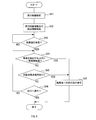
- the first parking control process executed by the management device 39 will be described with reference to FIG.
- the automatic guided vehicle 21 is used to transport the vehicle 18 from the warehousing place 3 to the first parking lot 7 or the second parking lot 9 via a part of the first passage 11. , It is a process to park.
- the first parking control process is started when the first terminal 43 outputs a parking request signal and identification information of the automatic guided vehicle 21 used for transporting the vehicle 18 to the management device 39.
- the situation when the first terminal 43 outputs the parking request signal and the identification information of the automatic guided vehicle 21 to the management device 39 is as follows, for example.
- the vehicle 18 to be parked enters the warehousing place 3 and is placed on the automatic guided vehicle 21.
- the automatic guided vehicle 21 inserts a plate-shaped member below the vehicle 18, and then lifts the plate-shaped member. As a result, the vehicle 18 is placed on the automatic guided vehicle 21. Also, for example, the vehicle 18 moves on a table. The automatic guided vehicle 21 sneaks under the table. Next, the automatic guided vehicle 21 lifts the platform and the vehicle 18. As a result, the vehicle 18 is placed on the automatic guided vehicle 21.
- the occupant 25 gets off the vehicle 18 and performs an input operation corresponding to the parking request signal to the first terminal 43, and inputs the identification information of the automatic guided vehicle 21 used for transporting the vehicle 18.
- the automatic guided vehicle 21 corresponds to the input identification information unless otherwise specified. Is.
- the transport control unit 55 and the detection unit 59 select the parking position by using the map information of the space 6 stored in the memory 53.
- the detection unit 59 manages identification information, position coordinates on a map, and whether or not each section in the first parking lot 7 or the second parking lot 9 is vacant.
- the parking position to be selected is a section in the first parking lot 7 or the second parking lot 9 that is in an empty state.
- the detection unit 59 determines the state of each section as follows, for example. The state of each section corresponds to the state of the parking lot.
- the vehicle 18 parks in a certain section, the vehicle 18 sends the identification information of the section and the parking start information to the management device 39. Further, when the vehicle 18 leaves the previously parked section, the vehicle 18 sends the identification information of the section and the parking end information to the management device 39.
- the end of parking is, for example, the completion of exit of the vehicle 18 from the section.
- the detection unit 59 determines the state of each section based on the history of information sent from the vehicle 18. Further, the detection unit 59 may determine the state of each section based on the information supplied by the infrastructure 41.
- the transport control unit 55 sets that section as the parking position.
- the transport control unit 55 selects one section as the parking position from the plurality of vacant sections based on a predetermined criterion. As criteria, for example, the criteria for selecting the section closest to the warehousing place 3, the criteria for selecting the section closest to the warehousing place 5, and the criteria for selecting the section in the area where the vacant sections are gathered. And so on.
- the transport control unit 55 sets the area on the first passage 11 or the second passage 13 as the parking position.
- step 3 the transport control unit 55 transmits information representing the travel route set in step 2 (hereinafter referred to as travel route information) using the communication unit 49. As will be described later, the automatic guided vehicle 21 receives the travel route information.
- step 4 the transport control unit 55 determines whether or not the communication unit 49 has received the parking completion notification.
- the parking completion notification is a notification transmitted by the automatic guided vehicle 21 when the automatic guided vehicle 21 is parked at the parking position. When the parking completion notification is received, this process ends. If the parking completion notification is not received, this process returns to the previous step 4.
- the first parking execution process executed by the automatic guided vehicle 21 The first parking execution process executed by the automatic guided vehicle 21 will be described with reference to FIG.
- the first parking execution process is a process of transporting the vehicle 18 from the warehousing place 3 to the parking position in response to the first parking control process.
- step 11 the control unit 61 determines whether or not the communication unit 67 has received the travel route information.
- the travel route information is transmitted by the management device 39 in step 3. When the travel route information is received, this process proceeds to step 12. If the travel route information has not been received, this process returns to the previous step 11.
- step 12 the control unit 61 starts automatic operation using the travel route information and the map information held in advance.
- the automatic guided vehicle 21 travels in the first passage 11.
- the direction in which the automatic guided vehicle 21 travels is always the first direction D1 shown in FIG.
- the automatic guided vehicle 21 is in a mounted state.
- step 13 the control unit 61 determines whether or not parking is completed. When parking is completed, the automatic guided vehicle 21 and the vehicle 18 are parked at the parking position. When parking is completed, this process proceeds to step 14. If parking is not completed, this process returns to the previous step 13.
- step 14 the control unit 61 uses the communication unit 67 to transmit a parking completion notification.
- the management device 39 receives the transmitted parking completion notification.
- the automatic guided vehicle 21 heads for, for example, the vehicle 18 to be transported next, or charges the vehicle.
- the first warehousing control process executed by the management device 39 will be described with reference to FIG.
- the first delivery control process is a process of transporting the vehicle 18 from the parking position to the delivery location 5 via at least a part of the first passage 11 by using the automatic guided vehicle 21.
- the first issue control process is started when the management device 39 determines that a trigger for issue has occurred.
- the management device 39 determines that the trigger of the goods issue has occurred, for example, there are the following first situation and second situation.
- the occupant 25 inputs the identification information of the vehicle 18 to be delivered to the second terminal 45, performs an input operation corresponding to the delivery request signal, and inputs the identification information of the automatic guided vehicle 21 used for transporting the vehicle 18. To do.
- the second terminal 45 outputs the delivery request signal and the identification information of the automatic guided vehicle 21 to the management device 39.
- the management device 39 determines that there was a trigger for delivery.
- the occupant 25 inputs the identification information of the vehicle 18 to be delivered to the management device 39 using a mobile terminal or the like, and makes a reservation for delivery.
- the reservation for delivery is made by designating the reservation time for delivery and the identification information of the automatic guided vehicle 21.
- the management device 39 determines that there was a trigger for leaving the warehouse.
- the automatic guided vehicle 21 corresponds to the input identification information unless otherwise specified.
- the vehicle 18 is a vehicle 18 corresponding to the input identification information.
- the transport control unit 55 sets a travel route for moving from the current position of the automatic guided vehicle 21 to the delivery location 5 via the parking position of the vehicle 18 using map information. For example, when the current position of the automatic guided vehicle 21 is near the delivery location 5, the transport control unit 55 enters the second parking lot 9 through the second passage 13 and heads for the parking position of the vehicle 18. A traveling route and a second traveling route from the parking position of the vehicle 18 to the delivery place 5 through the first passage 11 are set. The transport control unit 55 sets a route traveling through the center of the first passage 11 and the center of the second passage 13 as traveling routes.
- the transport control unit 55 From the current position of the unmanned transport vehicle 21, the first traveling route that enters the first parking lot 7 or the second parking lot 9 through the first passage 11 or the second passage 13 and heads for the parking position of the vehicle 18 and It is possible to set a second traveling route from the parking position of the vehicle 18 to the delivery place 5 through the first passage 11.
- the transport control unit 55 enters the first parking lot 7 or the second parking lot 9 from the current position of the automatic guided vehicle 21 through the first passage 11. Then, a first travel route toward the parking position of the vehicle 18 is set.
- step 22 the transport control unit 55 transmits the travel route information representing the travel route set in step 21 to the automatic guided vehicle 21 using the communication unit 49. As will be described later, the automatic guided vehicle 21 receives the travel route information.
- step 23 the mobile control unit 57 determines whether or not the communication unit 49 has received the arrival notification.
- the arrival notification is a notification transmitted by the automatic guided vehicle 21 when the automatic guided vehicle 21 arrives at the delivery location 5. When the arrival notification is received, this process proceeds to step 24. If the arrival notification is not received, this process returns to the previous step 23.
- step 24 the movement control unit 57 determines whether or not a predetermined time has elapsed from the time when the arrival notification is received without detecting the occupant 25 at the delivery location 5.
- the movement control unit 57 can detect the occupant 25 by using the infrastructure 41. If a predetermined time has elapsed from the time when the arrival notification was received without detecting the occupant 25 at the delivery place 5, this process proceeds to step 28. If the occupant 25 is detected or the predetermined time has not yet elapsed, this process proceeds to step 25.
- step 25 the movement control unit 57 determines whether or not a re-parking request signal or the like has been received from the second terminal 45. When the re-parking request signal or the like is received, this process proceeds to step 28. If the re-parking request signal or the like is not received, this process proceeds to step 26.
- the re-parking request signal is a signal output by the second terminal 45 to the management device 39 in response to a user input operation.
- step 26 whether or not the vehicle 18 previously mounted on the automatic guided vehicle 21 has left the delivery location 5, or the vehicle 18 previously mounted on the automatic guided vehicle 21 is the automatic guided vehicle 21.
- the movement control unit 57 determines whether or not the vehicle has separated from the vehicle.
- the movement control unit 57 can detect that the vehicle 18 has left the delivery location 5 by using the infrastructure 41. When the vehicle 18 leaves the warehousing place 5, this process proceeds to step 27. If the vehicle 18 has not yet left the delivery location 5, this process proceeds to step 24.
- the movement control unit 57 transmits an instruction to move to the warehousing place 3 to the automatic guided vehicle 21 that has left the vehicle 18 by using the communication unit 49.
- the movement control unit 57 transmits to the automatic guided vehicle 21 the travel route information indicating the travel route from the delivery location 5 which is the current position of the automatic guided vehicle 21 to the warehousing location 3 through the second passage 13.
- the moving instruction to the warehousing place 3 is transmitted with the waiting place of the automatic guided vehicle 21 as the vicinity of the warehousing place 3, but for example, the movement control unit 57 is the first parking lot 7 or the first parking lot 7. You may send a move instruction to a waiting place near.
- the waiting place can be, for example, the vicinity of the delivery place 5.
- the automated guided vehicle 21 that has been waiting can go to the parking position through the second passage 13 when there is a warehousing request signal.
- the standby place is a position where the automatic guided vehicle 21 exists when the automatic guided vehicle 21 is not in use.
- the instruction for warehousing or warehousing is not sent to the automatic guided vehicle 21.
- step 28 the movement control unit 57 transmits an instruction to transport the vehicle 18 to the first parking lot 7 or the second parking lot 9 to the automatic guided vehicle 21 using the communication unit 49.
- the first delivery execution process executed by the automatic guided vehicle 21 The first delivery execution process executed by the automatic guided vehicle 21 will be described with reference to FIG. 7.
- the first warehousing execution process is a process of transporting the vehicle 18 from the parking position to the warehousing place 5 in response to the first warehousing control process.
- a case will be described in which the vehicle 18 parked in the first parking lot 7 is discharged from the automatic guided vehicle 21 waiting in the vicinity of the first parking lot 7.
- step 31 the control unit 61 determines whether or not the communication unit 67 has received the travel route information.
- the travel route information is transmitted by the management device 39 in the step 22.
- the communication unit 67 receives, for example, travel route information representing a first travel route from the current position to the parking position and a second travel route from the parking position to the warehousing location 5 through the first passage 11. To do.
- this process proceeds to step 32. If the travel route information has not been received, this process returns to the previous step 31.
- step 32 the control unit 61 starts automatic operation using the travel route information and the map information held in advance. Based on the received travel route information, the automatic guided vehicle 21 travels on the first passage 11.
- the direction in which the automatic guided vehicle 21 on which the vehicle 18 to be delivered is placed always travels is the first direction D1 shown in FIG.
- step 33 the control unit 61 determines whether or not the automatic guided vehicle 21 has arrived at the delivery location 5. When arriving at the delivery place 5, this process proceeds to step 34. If the delivery location 5 has not yet arrived, this process returns to the previous step 33.
- step 34 the control unit 61 transmits an arrival notification using the communication unit 67.
- the management device 39 receives the transmitted arrival notification.
- step 35 the control unit 61 determines whether or not the communication unit 67 has received the transportation instruction to the first parking lot 7.
- the transportation instruction to the first parking lot 7 is transmitted by the management device 39 in the step 28.
- the communication unit 67 receives, for example, travel route information indicating a travel route from the delivery location 5 to the parking position of the first parking lot 7 through the second passage 13.
- this process proceeds to step 36. If the transportation instruction to the first parking lot 7 has not been received, this process proceeds to step 37.
- step 36 the control unit 61 causes the automatic guided vehicle 21 to travel to the first parking lot 7 based on the received travel route information in the mounted state. As a result, the automatic guided vehicle 21 transports the vehicle 18 from the delivery location 5 to the first parking lot 7.
- step 37 the control unit 61 determines whether or not the communication unit 67 has received the instruction to move to the storage location 3.
- the instruction to move to the warehousing place 3 is transmitted by the management device 39 in the step 27.
- the communication unit 67 receives, for example, travel route information indicating a travel route from the delivery location 5 to the warehousing location 3 through the second passage 13.
- step 38 the control unit 61 moves the automatic guided vehicle 21 that has left the vehicle 18 from the delivery location 5 to the warehousing location 3 via the second passage 13.
- the traveling direction of the unmanned carrier 21 in the second passage 13 is always the second direction D2 shown in FIG.
- the second parking control process executed by the management device 39 The second parking control process executed by the management device 39 will be described.
- the second parking control process is a process of transporting the vehicle 18B from the warehousing place 3 to the first parking lot 7 or the second parking lot 9 via at least a part of the first passage 11 and parking the vehicle.
- the second parking control process is started when the first terminal 43 outputs the parking request signal and the identification information of the vehicle 18B to the management device 39.
- the situation when the first terminal 43 outputs the parking request signal and the identification information of the vehicle 18B to the management device 39 is as follows, for example.
- the vehicle 18B scheduled to be parked enters the warehousing place 3 and stops.
- the occupant 25 gets off the vehicle 18B, performs an input operation corresponding to the parking request signal to the first terminal 43, and inputs the identification information of the vehicle 18B.
- the second parking control process is basically the same as the first parking control process.
- the vehicle 18B is controlled instead of the automatic guided vehicle 21. That is, the vehicle 18B is a vehicle having the same automatic driving function as the automatic guided vehicle 21.
- the map information inside the parking lot system 1 is also supplied in the step 3. The vehicle 18B uses the supplied map information when performing automatic driving.
- the second parking execution process executed by the vehicle 18B The second parking execution process executed by the vehicle 18B will be described.
- the second parking execution process is a process in which the vehicle 18B travels from the warehousing place 3 to the parking position in response to the second parking control process.
- the vehicle 18B receives from the management device 39 travel route information indicating a travel route from the storage location 3 to the parking position of the first parking lot 7 through the first passage 11.
- the vehicle 18B travels in the first passage 11 based on the received travel route information.
- the direction in which the vehicle 18B travels in the second parking execution process is always the first direction D1 shown in FIG.
- the second parking execution process is basically the same as the first parking execution process.
- the control unit 69 performs the same processing as the control unit 61.
- the sensor group 71 performs the same processing as the sensor group 63.
- the position information acquisition unit 73 performs the same processing as the position information acquisition unit 65.
- the communication unit 75 performs the same processing as the communication unit 67.
- the vehicle 18B receives the map information inside the parking lot system 1 from the management device 39 in addition to the travel route information.
- the vehicle 18B uses the received map information when performing automatic driving.
- Second warehousing control process executed by the management device 39 The second warehousing control process executed by the management device 39 will be described with reference to FIG.
- the second warehousing control process is a process of driving the vehicle 18B from the parking position to the warehousing place 5 via at least a part of the first passage 11.
- the second delivery control process is started when the management device 39 determines that a trigger for delivery has occurred. It should be noted that there are, for example, the following third and fourth situations as the case where the management device 39 determines that the trigger for delivery has occurred.
- the occupant 25 performs an input operation corresponding to the delivery request signal to the second terminal 45, and inputs the identification information of the vehicle 18B.
- the second terminal 45 outputs the delivery request signal and the identification information of the vehicle 18B to the management device 39.
- the management device 39 determines that there was a trigger for delivery.
- the occupant 25 makes a reservation for delivery to the management device 39 using a mobile terminal or the like. The reservation for delivery is made by designating the reservation time for delivery and the identification information of the vehicle 18B. When the reserved time comes, the management device 39 determines that there was a trigger for leaving the warehouse.
- the vehicle 18B is a vehicle 18B corresponding to the input identification information unless otherwise specified.
- step 41 the transport control unit 55 sets the travel route from the parking position of the vehicle 18B to the delivery location 5 using the map information.
- step 42 the transport control unit 55 transmits the travel route information representing the travel route set in step 41 and the map information by using the communication unit 49.
- the vehicle 18B receives the travel route information and the map information.
- step 43 the mobile control unit 57 determines whether or not the communication unit 49 has received the arrival notification.
- the arrival notification is a notification transmitted by the vehicle 18B when the vehicle 18B arrives at the delivery place 5. When the arrival notification is received, this process proceeds to step 44. If the arrival notification is not received, this process returns to the previous step 43.
- step 44 the movement control unit 57 determines whether or not a predetermined time has elapsed from the time when the arrival notification is received without detecting the occupant 25 at the delivery location 5.
- the movement control unit 57 can detect the occupant 25 by using the infrastructure 41. If a predetermined time has elapsed from the time when the arrival notification was received without detecting the occupant 25 at the delivery place 5, this process proceeds to step 47. If the occupant 25 is detected or the predetermined time has not yet elapsed, this process proceeds to step 45.
- step 45 the movement control unit 57 determines whether or not a re-parking request signal or the like has been received from the second terminal 45. When the re-parking request signal or the like is received, this process proceeds to step 46. If the re-parking request signal or the like is not received, this process proceeds to step 47.
- step 46 the movement control unit 57 determines whether or not the vehicle 18B has traveled in the direction of the exit 27.
- the movement control unit 57 can determine whether or not the vehicle 18B has traveled in the direction of the exit 27 based on the information supplied by the infrastructure 41. When the vehicle 18B travels in the direction of the exit 27, this process ends. If the vehicle 18B is not traveling in the direction of the exit 27, this process proceeds to step 44.
- step 47 the movement control unit 57 transmits an instruction to travel to the first parking lot 7 or the second parking lot 9 to the vehicle 18B using the communication unit 49.
- the second warehousing execution process executed by the vehicle 18B The second warehousing execution process executed by the vehicle 18B will be described with reference to FIG.
- the second warehousing execution process is a process of causing the vehicle 18B to travel from the parking position to the warehousing place 5 in response to the second warehousing control process.
- step 51 the control unit 69 determines whether or not the communication unit 75 has received the travel route information and the map information.
- the travel route information and the map information are transmitted by the management device 39 in the step 42. When the travel route information and the map information are received, this process proceeds to step 52. If the travel route information and the map information have not been received, this process returns to the previous step 51.
- step 52 the control unit 69 starts automatic operation using the travel route information and the map information.
- the vehicle 18B travels in the first passage 11.
- the direction in which the vehicle 18B travels is always the first direction D1 shown in FIG.
- step 53 the control unit 69 determines whether or not the vehicle 18B has arrived at the delivery location 5. When arriving at the delivery place 5, this process proceeds to step 54. If the delivery location 5 has not yet arrived, this process returns to the previous step 53.
- step 54 the control unit 69 transmits an arrival notification using the communication unit 75.
- the management device 39 receives the transmitted arrival notification.
- step 55 the control unit 69 determines whether or not the communication unit 75 has received the transportation instruction to the parking lot.
- the driving instruction to the parking lot is transmitted by the management device 39 in the step 47.
- this process proceeds to step 56. If the driving instruction to the parking lot has not been received, this process returns to before step 55.
- step 56 the control unit 69 drives the vehicle 18B to the first parking lot 7 or the second parking lot 9.
- the unmanned transport vehicle 21 transporting the vehicle 18 to the first parking lot 7 or the second parking lot 9 and the first parking lot 7 or the second parking lot
- the vehicle 18B traveling to 9 travels on the first passage 11.
- the automatic guided vehicle 21 that is transporting the vehicle 18 to the delivery location 5 and the vehicle 18B that is traveling to the delivery location 5 travel in the first passage 11.
- the automatic guided vehicle 21 separated from the vehicle 18 and moving from the warehousing place 5 to the warehousing place 3 travels on the second passage 13.
- the first passage 11 and the second passage 13 are separated.
- the parking lot system 1 it is unlikely that the automatic guided vehicle 21 and the vehicle 18B carrying the vehicle 18 and the automatic guided vehicle 21 separated from the vehicle 18 travel in the same passage. As a result, the parking lot system 1 can suppress congestion in the first passage 11 and the second passage 13, and can efficiently park and leave the parking lot.
- the parking lot system 1 limits the traveling direction of the automatic guided vehicle 21 and the vehicle 18B in the first passage 11 to the first direction D1. Further, the parking lot system 1 limits the traveling direction of the automatic guided vehicle 21 in the second passage 13 to the second direction D2. Therefore, the parking lot system 1 can further suppress congestion in the first passage 11 and the second passage 13.
- the width of the first passage 11 and the width of the second passage 13 are each less than twice the width of the automatic guided vehicle 21. Therefore, the area occupied by the parking lot system 1 can be suppressed.
- the parking lot system 1 can detect the states of the first parking lot 7 and the second parking lot 9. When the first parking lot 7 and the second parking lot 9 are full, the parking lot system 1 sets the area on the first passage 11 or the second passage 13 as the parking position. Therefore, when the first parking lot 7 and the second parking lot 9 are full, the parking lot system 1 transports the vehicle 18 to the area on the first passage 11 or the second passage 13 and parks the vehicle 18. As a result, the parking system 1 can park more vehicles 18. "Full" means that all the sections in the first parking lot 7 and the second parking lot 9 are occupied. ⁇ Second Embodiment> 1. 1.
- the second embodiment differs from the first embodiment in the following points.
- the parking lot system 1 of the second embodiment is directly connected to the station 75 and the station building 77.
- the warehousing place 3 exists on the station 75 side
- the warehousing place 5 exists on the opposite side of the station 75.
- the parking lot system 1 of the second embodiment is a three-dimensional parking lot system, and includes a floor where the warehousing place 3 and the warehousing place 5 exist (hereinafter referred to as the A floor), and the first parking lot 7 and the second. It is different from the floor where the parking lot 9 is located (hereinafter referred to as the B floor).
- the A floor may be a floor above the B floor or a floor below the B floor.
- the A floor is, for example, the first floor.
- the B floor is, for example, the 2nd to 5th floors.
- the setting unit 54 sets the first passage 11a on the A floor and the B floor, respectively.
- the position of the first passage 11a on the A floor and the B floor is the upper left position in FIG. 10 of the parking lot system 1 and is the position on the outer peripheral side.
- the setting unit 54 sets the first passage 11b on the A floor and the B floor, respectively.
- the position of the first passage 11b on the A floor and the B floor is the lower right position in FIG. 10 of the parking lot system 1 and is the position on the outer peripheral side.
- the position of the first passage 11a on the A and B floors and the position of the first passage 11b on the A and B floors are on the diagonal line of the parking lot system 1.
- the first passage 11a on the A floor and the first passage 11a on the B floor are connected by a slope or an elevator.
- the first passage 11b on the A floor and the first passage 11b on the B floor are connected by a slope or an elevator.
- the setting unit 54 sets the second passage 13a on the A floor and the B floor, respectively.
- the position of the second passage 13a on the A floor and the B floor is the upper right position in FIG. 10 of the parking lot system 1, and is the position on the outer peripheral side.
- the setting unit 54 sets the second passage 13b on the A floor and the B floor, respectively.
- the position of the second passage 13b on the A floor and the B floor is the lower left position in FIG. 10 of the parking lot system 1 and is the position on the outer peripheral side.
- the position of the second passage 13a on the A and B floors and the position of the second passage 13b on the A and B floors are on the diagonal line of the parking lot system 1.
- the second passage 13a on the A floor and the second passage 13a on the B floor are connected by a slope or an elevator.
- the second passage 13b on the A floor and the second passage 13b on the B floor are connected by a slope or an elevator.
- the first passage 11a and the second passage 13a are one-way streets that can pass only in the downward direction.
- the first passage 11b and the second passage 13b are one-way streets that can pass only in the upward direction.
- the setting unit 54 has first passages 11a, 11b and first passages 11a and 11b according to the relationship between the A floor where the warehousing place 3 and the warehousing place 5 are located and the B floor where the first parking lot 7 and the second parking lot 9 are located. 2 Set the positions and moving directions of the passages 13a and 13b.
- the pedestrian-only area 20 connects the warehousing place 3 and the warehousing place 5 with the station 75.
- the transport control unit 55 passes through, for example, the warehousing place 3 to the first passage 11b.
- the travel route information indicating the travel route to the parking position is transmitted to the automatic guided vehicle 21.
- the automatic guided vehicle 21 leaves the vehicle 18, for example, the automatic guided vehicle 21 provides the automatic guided vehicle 21 with travel route information indicating a travel route from the parking position through the first passage 11a and toward the delivery location 5.
- the parking position is, for example, the parking position of the first parking lot 7 or the second parking lot 9 on the third floor.
- the movement control unit 57 goes up from the warehousing place 5 through the second passage 13b and passes through the second aisle 13a.
- the travel route information indicating the travel route for the descent and the warehousing location 3 is transmitted to the automatic guided vehicle 21.
- both the warehousing place 3 and the warehousing place 5 may be temporarily set as the warehousing place or the warehousing place.
- both the warehousing place 3 and the warehousing place 5 can be used as the warehousing place.
- both the storage location 3 and the delivery location 5 may be set as the storage location. it can.
- the first parking lot 7 and the second parking lot 9 may be on different floors from the warehousing place 3 and the warehousing place 5. In that case, slopes or elevators can be provided in the first passage 11 and the second passage 13.
- the first terminal 43 and the second terminal 45 may be terminals that the occupant 25 can carry.
- the control unit 61 may realize a part or all of the functions of the management device 39.
- the first passage 11 and the second passage 13 may pass through the first parking lot 7 and the second parking lot 9.
- the parking lot system 1 does not have to include one of the first parking lot 7 and the second parking lot 9.
- the control unit 47 and its method described in the present disclosure are dedicated provided by configuring a processor and memory programmed to perform one or more functions embodied by a computer program. It may be realized by a computer. Alternatively, the control unit 47 and its method described in the present disclosure may be realized by a dedicated computer provided by configuring the processor with one or more dedicated hardware logic circuits. Alternatively, the control unit 47 and its method described in the present disclosure are a combination of a processor and memory programmed to perform one or more functions and a processor composed of one or more hardware logic circuits. It may be realized by one or more dedicated computers configured by. The computer program may also be stored on a computer-readable non-transitional tangible recording medium as an instruction executed by the computer. The method for realizing the functions of each unit included in the control unit 47 does not necessarily include software, and all the functions may be realized by using one or a plurality of hardware.
- a plurality of functions possessed by one component in the above embodiment may be realized by a plurality of components, or one function possessed by one component may be realized by a plurality of components. .. Further, a plurality of functions possessed by the plurality of components may be realized by one component, or one function realized by the plurality of components may be realized by one component. Further, a part of the configuration of the above embodiment may be omitted. Further, at least a part of the configuration of the above embodiment may be added or replaced with the configuration of the other above embodiment.
- a higher-level system having the parking lot system 1 as a component, a program for operating a computer as control units 47, 61, 69, and a semiconductor memory recording this program.
- the present disclosure can also be realized in various forms such as a non-transitional actual recording medium such as, a parking support method, and the like.
Landscapes
- Engineering & Computer Science (AREA)
- General Physics & Mathematics (AREA)
- Physics & Mathematics (AREA)
- Business, Economics & Management (AREA)
- Tourism & Hospitality (AREA)
- Chemical & Material Sciences (AREA)
- Architecture (AREA)
- Analytical Chemistry (AREA)
- Mechanical Engineering (AREA)
- Transportation (AREA)
- Strategic Management (AREA)
- Theoretical Computer Science (AREA)
- Human Resources & Organizations (AREA)
- Marketing (AREA)
- Primary Health Care (AREA)
- Economics (AREA)
- General Business, Economics & Management (AREA)
- General Health & Medical Sciences (AREA)
- Health & Medical Sciences (AREA)
- Automation & Control Theory (AREA)
- Civil Engineering (AREA)
- Structural Engineering (AREA)
- Combustion & Propulsion (AREA)
- Traffic Control Systems (AREA)
- Navigation (AREA)
Abstract
Description
本国際出願は、2019年5月24日に日本国特許庁に出願された日本国特許出願第2019-97815号に基づく優先権を主張するものであり、日本国特許出願第2019-97815号の全内容を本国際出願に参照により援用する。 This international application claims priority based on Japanese Patent Application No. 2019-97815 filed with the Japan Patent Office on May 24, 2019, and Japanese Patent Application No. 2019-97815. The entire contents are incorporated in this international application by reference.
本開示は駐車場システム、管理装置、及び駐車場設備に関する。 This disclosure relates to parking lot systems, management devices, and parking lot facilities.
特許文献1に記載の自動駐車管理システムは、無人搬送車を用いて、車両を駐車場に搬送する。
The automatic parking management system described in
以下のような駐車場システムが考えられる。無人搬送車を用いて、入庫場所から駐車場に車両を搬送する。また、無人搬送車を用いて、駐車場から出庫場所に車両を搬送する。 The following parking lot system can be considered. Vehicles are transported from the warehousing location to the parking lot using automatic guided vehicles. In addition, an automatic guided vehicle is used to transport the vehicle from the parking lot to the delivery location.
駐車場から出庫場所に車両を搬送した後、車両と分離した無人搬送車は入庫場所に移動する。 After transporting the vehicle from the parking lot to the delivery location, the automatic guided vehicle separated from the vehicle moves to the storage location.
しかしながら、発明者の詳細な検討の結果、以下の課題が見出された。上記の駐車場システムの場合、車両を搬送中の無人搬送車と、出庫場所から入庫場所に移動している無人搬送車とが1つの通路に混在すると、混雑が生じる。その結果、駐車場システムは、駐車及び出庫を効率よく行うことが困難になる。 However, as a result of detailed examination by the inventor, the following issues were found. In the case of the above parking lot system, if an automatic guided vehicle that is transporting a vehicle and an automatic guided vehicle that is moving from a delivery location to a storage location are mixed in one aisle, congestion occurs. As a result, it becomes difficult for the parking lot system to efficiently park and leave the parking lot.
本開示の1つの局面では、駐車及び出庫を効率的に行うことができる駐車場システム、管理装置、及び駐車場設備を提供することが好ましい。 In one aspect of the present disclosure, it is preferable to provide a parking lot system, a management device, and a parking lot facility capable of efficiently parking and leaving the parking lot.
(1)本開示の1つの局面は、駐車場システムであって、入庫場所と、出庫場所と、駐車場、前記入庫場所から前記駐車場を経て前記出庫場所に至る第1通路、及び前記出庫場所から前記入庫場所に至る第2通路を設定可能な空間と、車両を搬送可能な無人搬送車と、前記無人搬送車を制御する管理装置と、を備え、前記管理装置は、前記空間に、前記駐車場、前記第1通路、及び前記第2通路を設定するように構成された設定ユニットと、前記無人搬送車を使用して、前記車両を、前記入庫場所から、前記第1通路の少なくとも一部を経て、前記駐車場に搬送するとともに、前記車両を、前記駐車場から、前記第1通路の少なくとも一部を経て、前記出庫場所に搬送するように構成された搬送制御ユニットと、前記無人搬送車を、前記出庫場所から、前記第2通路を経て、前記入庫場所に移動するように構成された移動制御ユニットと、を備え、前記第1通路と前記第2通路とは、区分されている駐車場システムである。 (1) One aspect of the present disclosure is a parking lot system, which is a warehousing place, a warehousing place, a parking lot, a first passage from the warehousing place to the warehousing place through the parking lot, and the warehousing place. A space capable of setting a second passage from a place to the warehousing place, an unmanned transport vehicle capable of transporting a vehicle, and a management device for controlling the unmanned transport vehicle are provided, and the management device is provided in the space. Using the parking lot, the first passage, and the setting unit configured to set the second passage, and the unmanned transport vehicle, the vehicle can be moved from the warehousing place to at least the first passage. A transport control unit configured to transport the vehicle to the parking lot through a part of the vehicle and to transport the vehicle from the parking lot to the delivery location via at least a part of the first passage. The unmanned transport vehicle is provided with a movement control unit configured to move from the warehousing place to the warehousing place via the second passage, and the first passage and the second passage are separated. It is a parking lot system.
本開示の1つの局面である駐車場システムにおいて、車両を駐車場へ搬送中の無人搬送車は、第1通路を走行する。また、車両を出庫場所へ搬送中の無人搬送車も、第1通路を走行する。 In the parking lot system, which is one aspect of the present disclosure, the automatic guided vehicle that is transporting the vehicle to the parking lot travels on the first passage. In addition, an automatic guided vehicle that is transporting the vehicle to the delivery location also travels on the first passage.
本開示の1つの局面である駐車場システムにおいて、車両から分離し、出庫場所から入庫場所へ移動している無人搬送車は、第2通路を走行する。第1通路と第2通路とは区分されている。 In the parking lot system, which is one aspect of the present disclosure, the automatic guided vehicle, which is separated from the vehicle and is moving from the warehousing place to the warehousing place, travels on the second passage. The first passage and the second passage are separated.
そのため、本開示の1つの局面である駐車場システムによれば、車両を搬送中の無人搬送車と、車両から分離した無人搬送車とが、同じ通路を走行することを減少させる。その結果、本開示の1つの局面である駐車場システムは、第1通路及び第2通路における混雑を抑制でき、駐車及び出庫を効率的に行うことができる。 Therefore, according to the parking lot system, which is one aspect of the present disclosure, the automatic guided vehicle that is transporting the vehicle and the automatic guided vehicle that is separated from the vehicle are less likely to travel in the same passage. As a result, the parking lot system, which is one aspect of the present disclosure, can suppress congestion in the first passage and the second passage, and can efficiently park and leave the parking lot.
(2)本開示の別の局面は、入庫場所と、出庫場所と、駐車場、前記入庫場所から前記駐車場を経て前記出庫場所に至る第1通路、及び前記出庫場所から前記入庫場所に至る第2通路となる空間と、を備える駐車場設備において、車両を搬送可能な無人搬送車を用いて自動バレー駐車を管理する管理装置である。 (2) Another aspect of the present disclosure is a warehousing place, a warehousing place, a parking lot, a first passage from the warehousing place to the warehousing place through the parking lot, and from the warehousing place to the warehousing place. It is a management device that manages automatic volleyball parking using an automatic guided vehicle capable of transporting a vehicle in a parking lot facility provided with a space serving as a second passage.
管理装置は、前記空間に、前記駐車場、前記第1通路、及び前記第2通路を設定するように構成された設定ユニットと、前記無人搬送車を使用して、前記車両を、前記入庫場所から、前記第1通路の少なくとも一部を経て、前記駐車場に搬送するとともに、前記車両を、前記駐車場から、前記第1通路の少なくとも一部を経て、前記出庫場所に搬送するように構成された搬送制御ユニットと、前記無人搬送車を、前記出庫場所から、前記第2通路を経て、前記入庫場所に移動するように構成された移動制御ユニットと、を備える。前記第1通路と前記第2通路とは、区分されている。 The management device uses the setting unit configured to set the parking lot, the first passage, and the second passage in the space, and the unmanned transport vehicle, to store the vehicle in the warehousing place. Therefore, the vehicle is transported from the parking lot to the parking lot via at least a part of the first passage, and is transported from the parking lot to the delivery place via at least a part of the first passage. The transport control unit is provided, and a movement control unit configured to move the unmanned transport vehicle from the delivery location to the warehousing location via the second passage. The first passage and the second passage are separated.
本開示の別の局面である管理装置は、第1通路と第2通路とを設定することができる。車両を駐車場へ搬送中の無人搬送車は、第1通路を走行する。また、車両を出庫場所へ搬送中の無人搬送車も、第1通路を走行する。車両から分離し、出庫場所から入庫場所へ移動している無人搬送車は、第2通路を走行する。第1通路と第2通路とは区分されている。 The management device, which is another aspect of the present disclosure, can set the first passage and the second passage. The automatic guided vehicle, which is transporting the vehicle to the parking lot, travels on the first passage. In addition, an automatic guided vehicle that is transporting the vehicle to the delivery location also travels on the first passage. The automatic guided vehicle, which is separated from the vehicle and is moving from the warehousing place to the warehousing place, travels on the second passage. The first passage and the second passage are separated.
そのため、本開示の別の局面である管理装置によれば、車両を搬送中の無人搬送車と、車両から分離した無人搬送車とが、同じ通路を走行することを減少させる。その結果、本開示の別の局面である管理装置は、第1通路及び第2通路における混雑を抑制でき、駐車及び出庫を効率的に行うことができる。 Therefore, according to the management device, which is another aspect of the present disclosure, the automatic guided vehicle that is transporting the vehicle and the automatic guided vehicle that is separated from the vehicle are less likely to travel in the same passage. As a result, the management device, which is another aspect of the present disclosure, can suppress congestion in the first passage and the second passage, and can efficiently park and leave the garage.
(3)本開示の別の局面は、管理装置により、車両を搬送可能な無人搬送車を用いた自動バレー駐車が管理される駐車場設備である。 (3) Another aspect of the present disclosure is a parking lot facility in which automatic valley parking using an automatic guided vehicle capable of transporting a vehicle is managed by a management device.
駐車場設備は、入庫場所と、出庫場所と、駐車場と、前記入庫場所から前記駐車場を経て前記出庫場所に至る通路であって、前記無人搬送車が前記車両を前記入庫場所から前記駐車場へ搬送する際に走行するとともに、前記無人搬送車が前記車両を前記駐車場から前記出庫場所へ搬送する際に走行する通路である第1通路と、前記出庫場所から前記入庫場所に至り、前記第1通路とは区分されている通路であって、前記無人搬送車が前記出庫場所から前記入庫場所へ移動する際に走行する通路である第2通路と、を備える。 The parking lot facility is a warehousing place, a warehousing place, a parking lot, and a passage from the warehousing place to the warehousing place via the parking lot, and the unmanned transport vehicle parks the vehicle from the warehousing place. The first passage, which is a passage that travels when the vehicle is transported to the parking lot and the unmanned transport vehicle travels when the vehicle is transported from the parking lot to the delivery location, and the delivery location to the storage location. The first passage is a passage that is divided, and includes a second passage that is a passage that the unmanned transport vehicle travels when moving from the delivery place to the storage place.
本開示の別の局面である駐車場設備は、第1通路と第2通路とを設定することができる。車両を駐車場へ搬送中の無人搬送車は、第1通路を走行する。また、車両を出庫場所へ搬送中の無人搬送車も、第1通路を走行する。車両から分離し、出庫場所から入庫場所へ移動している無人搬送車は、第2通路を走行する。第1通路と第2通路とは区分されている。 The parking lot facility, which is another aspect of the present disclosure, can have a first passage and a second passage. The automatic guided vehicle, which is transporting the vehicle to the parking lot, travels on the first passage. In addition, an automatic guided vehicle that is transporting the vehicle to the delivery location also travels on the first passage. The automatic guided vehicle, which is separated from the vehicle and is moving from the warehousing place to the warehousing place, travels on the second passage. The first passage and the second passage are separated.
そのため、本開示の別の局面である駐車場設備によれば、車両を搬送中の無人搬送車と、車両から分離した無人搬送車とが、同じ通路を走行することを減少させる。その結果、本開示の別の局面である駐車場設備は、第1通路及び第2通路における混雑を抑制でき、駐車及び出庫を効率的に行うことができる。 Therefore, according to the parking lot facility, which is another aspect of the present disclosure, the automatic guided vehicle that is transporting the vehicle and the automatic guided vehicle that is separated from the vehicle are less likely to travel in the same passage. As a result, the parking lot facility, which is another aspect of the present disclosure, can suppress congestion in the first passage and the second passage, and can efficiently park and leave the parking lot.
本開示の例示的な実施形態について図面を参照しながら説明する。
<第1実施形態>
1.駐車場システム1の構成
駐車場システム1の構成を、図1~図3に基づき説明する。図1に示すように、駐車場システム1は、入庫場所3と、出庫場所5と、空間6と、を備える。入庫場所3、出庫場所5、及び空間6は、駐車場設備に対応する。空間6は、入庫場所3及び出庫場所5に隣接している。例えば、空間6の一部に店舗22が存在する。店舗22は施設に対応する。空間6には、後述するように、第1駐車場7と、第2駐車場9と、第1通路11と、第2通路13とが仮想的に設定される。つまり、図1では、便宜上、第1駐車場7、第2駐車場9、第1通路11、及び第2通路13を実線で区切って図示しているが、実際の路面上には白線等での区切りは無くても良い。
An exemplary embodiment of the present disclosure will be described with reference to the drawings.
<First Embodiment>
1. 1. Configuration of
入庫場所3は、入口15を介して公道17と接続している。車両18は、公道17から、入口15を通り、入庫場所3に入ることができる。車両18として、自動バレー機能を備えない車両18Aと、自動バレー機能を備える車両18Bとがある。自動バレー機能とは、自動運転により、入庫場所3から第1駐車場7又は第2駐車場9に走行し、駐車する機能と、第1駐車場7又は第2駐車場9から出庫場所5に走行する機能とを含む。
The
入口15にゲート19が設けられている。ゲート19は、開の状態と、閉の状態とになることができる。ゲート19が開の状態のとき、車両18は入口15を通過できる。ゲート19が閉の状態のとき、車両18は入口15を通過できない。
A
入庫場所3には、複数の無人搬送車21が配置されている。無人搬送車21の構成は後述する。入庫場所3と、店舗22の入口23とは、歩行者専用エリア20により結ばれている。入庫場所3に入庫した車両の乗員25は、車両18から降り、歩行者専用エリア20を通り、徒歩で入口23に進むことができる。
A plurality of automatic guided
出庫場所5は、出口27を介して公道29と接続している。車両18は、出庫場所5から、出口27を通り、公道29に進むことができる。出庫場所5と、入口23とは、歩行者専用エリア20により結ばれている。乗員25は、入口23から、歩行者専用エリア20を通り、徒歩で出庫場所5に進むことができる。
The
図2に示すように、駐車場システム1は、管理装置39と、インフラ41と、第1端末43と、第2端末45と、を備える。
As shown in FIG. 2, the
管理装置39は、制御部47と、通信部49と、を備える。制御部47は、CPU51と、例えば、RAM又はROM等の半導体メモリ(以下、メモリ53とする)と、を有するマイクロコンピュータを備える。
The
制御部47の各機能は、CPU51が非遷移的実体的記録媒体に格納されたプログラムを実行することにより実現される。この例では、メモリ53が、プログラムを格納した非遷移的実体的記録媒体に該当する。また、このプログラムが実行されることで、プログラムに対応する方法が実行される。なお、制御部47は、1つのマイクロコンピュータを備えてもよいし、複数のマイクロコンピュータを備えてもよい。
Each function of the
制御部47は、図3に示すように、設定ユニット54と、搬送制御ユニット55と、移動制御ユニット57と、検出ユニット59と、を備える。
As shown in FIG. 3, the
設定ユニット54は、空間6において、第1駐車場7、第2駐車場9、第1通路11、及び第2通路13を、仮想的に設定する。搬送制御ユニット55は、無人搬送車21を使用して、車両18を、入庫場所3から、第1通路11の少なくとも一部を経て、第1駐車場7又は第2駐車場9に搬送するとともに、車両18を、第1駐車場7又は第2駐車場9から、第1通路11の少なくとも一部を経て、出庫場所5に搬送する。移動制御ユニット57は、無人搬送車21を、出庫場所5から、第2通路13を経て、入庫場所3に移動させる。
The setting
メモリ53には、駐車場システム1の内部の地図情報が記憶されている。地図情報は、障害物の位置を表す情報を含む。また、地図情報は、第1駐車場7及び第2駐車場9における区画の状態を表す情報を含む。区画の状態として、空いている状態(以下では空き状態とする)と、車両18によって占められている状態(以下では占有状態とする)とがある。
The
通信部49は、無人搬送車21及び車両18Bと通信を行うことができる。通信部49と無人搬送車21との通信インターフェースと、通信部49と車両18Bとの通信インターフェースとは同じである。
The
管理装置39は、ゲート19を制御することができる。第1駐車場7及び第2駐車場9において空き状態の区画が少ない場合、管理装置39はゲート19を閉の状態とする。第1駐車場7及び第2駐車場9において、空き状態の区画が十分ある場合、管理装置39はゲート19を開の状態とする。
The
インフラ41は、駐車場システム1の内部の状況を表す情報(以下では駐車場内情報とする)を取得し、駐車場内情報を管理装置39に供給する。インフラ41は、駐車場システム1の内部を撮影するカメラ等を含む。駐車場内情報として、例えば、障害物の位置を表す情報、第1駐車場7及び第2駐車場9における区画の状態を表す情報等が挙げられる。
The
第1端末43は、図1に示すように、入庫場所3に設置されている。第1端末43は、乗員25による入力操作を受け付ける。第1端末43は、入力操作に応じた信号を管理装置39に出力する。
As shown in FIG. 1, the
第1端末43は、例えば、入力操作に応じて、駐車要求信号を出力する。駐車要求信号とは、入庫場所3にある車両18を、第1駐車場7又は第2駐車場9に搬送し、駐車することを要求する信号である。また、第1端末43は、例えば、入力操作に応じて、無人搬送車21又は車両18の識別情報を出力する。
The
第2端末45は、図1に示すように、出庫場所5に設置されている。第2端末45は、乗員25による入力操作を受け付ける。第2端末45は、入力操作に応じた信号を管理装置39に出力する。
As shown in FIG. 1, the
第2端末45は、例えば、入力操作に応じて、出庫要求信号、及び再駐車要求信号等を出力する。出庫要求信号とは、第1駐車場7又は第2駐車場9に駐車されている車両18を、出庫場所5に搬送することを要求する信号である。再駐車要求信号とは、出庫場所5に搬送された車両18を、第1駐車場7又は第2駐車場9に戻し、再び駐車することを要求する信号である。また、第2端末45は、例えば、入力操作に応じて、無人搬送車21又は車両18の識別情報を出力する。
The
無人搬送車21は、例えば、その上に車両18が載置された状態(以下では載置状態とする)で走行することができる。また、無人搬送車21は、走行経路に沿って目標位置まで自動運転する機能を有する。無人搬送車21は、載置状態で、走行経路に沿って目標位置まで自動運転することにより、車両18を目標位置まで搬送することができる。
The automatic guided
図2に示すように、無人搬送車21は、制御部61と、センサ群63と、位置情報取得部65と、通信部67と、を備える。
As shown in FIG. 2, the automatic guided
制御部61は、無人搬送車21の各部を制御する。自動運転の機能は、制御部61が行う制御により実現される。制御部61は、駐車場システム1の内部の地図情報を保持している。無人搬送車21は、自動運転を行うとき、例えば、地図情報を使用する。
The
また、無人搬送車21は、地図情報を使用しなくてもよい。例えば、駐車場システム1の床面に所定間隔で2次元バーコードが描かれている。無人搬送車21は、その下面にカメラを備える。無人搬送車21は、カメラを用いて2次元バーコードを読みながら無人搬送車21の位置を認識し、管理装置39から経路指示を受ける。2次元バーコードとして、例えば、QRコード(登録商標)等が挙げられる。
Also, the automatic guided
センサ群63は、無人搬送車21の周辺の状況を表す周辺情報を取得する。周辺情報の内容として、例えば、無人搬送車21の周辺に存在する障害物の位置等が挙げられる。センサ群63は、例えば、カメラ、ライダー等を含む。無人搬送車21は、自動運転を行うとき、周辺情報を使用する。
The
位置情報取得部65は、無人搬送車21の位置情報を取得する。位置情報取得部65は、例えば、GPSシステムである。無人搬送車21は、自動運転を行うとき、位置情報を使用する。通信部67は、管理装置39と通信を行うことができる。
The position
車両18Bは、上述したように、自動バレー機能を備える。図2に示すように、車両18Bは、制御部69と、センサ群71と、位置情報取得部73と、通信部75と、を備える。
制御部69は、車両18Bの各部を制御する。自動運転の機能は、制御部69が行う制御により実現される。車両18Bは、管理装置39から、駐車場システム1の内部の地図情報を取得する。車両18Bは、自動運転を行うとき、管理装置39から取得した地図情報を使用する。
The
センサ群71は、車両18Bの周辺の状況を表す周辺情報を取得する。周辺情報の内容として、例えば、車両18Bの周辺に存在する障害物の位置等が挙げられる。センサ群71は、例えば、カメラ、ライダー等を含む。車両18Bは、自動運転を行うとき、周辺情報を使用する。
The
位置情報取得部73は、車両18Bの位置情報を取得する。位置情報取得部73は、例えば、GPSシステムである。車両18Bは、自動運転を行うとき、位置情報を使用する。通信部75は、管理装置39と通信を行うことができる。
The position
2.第1駐車場7、第2駐車場9、第1通路11、及び第2通路13の設定処理
管理装置39の設定ユニット54は、メモリ53に記憶された地図情報を用いて、空間6において、第1駐車場7、第2駐車場9、第1通路11、及び第2通路13を、仮想的に設定する。つまり、設定ユニット54は、空間6の地図情報を用いて、どのエリアをどの用途として用いるか、任意に設定可能である。
2. 2. The setting
第1駐車場7及び第2駐車場9は、それぞれ、複数の車両18を駐車可能な場所である。第1駐車場7及び第2駐車場9は店舗22に隣接している。
The
設定ユニット54は、地図上において、第1駐車場7の内部に複数の区画の座標を設定する。その結果、設定ユニット54は、第1駐車場7の内部に、複数の区画を仮想的に設ける。それぞれの区画は、1台の車両18を駐車可能な領域である。設定ユニット54は、第2駐車場9の内部にも、第1駐車場7と同様に、複数の区画を仮想的に設ける。設定ユニット54は、地図上において、第1駐車場7の入口31と出口33とを設定し、また、第2駐車場9の入口35と出口37とを設定する。
The setting
設定ユニット54は、第1通路11として、入庫場所3から、第1駐車場7及び第2駐車場9を経て、出庫場所5に至る通路を設定する。設定ユニット54は、入口31、出口33、入口35、及び出口37を、第1通路11に臨む位置に設定する。自動運転機能を有する車両18及び無人搬送車21は第1通路11を走行可能である。設定ユニット54は、第1通路11の幅を、車両18の幅より大きく、車両18の幅の2倍以下となるよう設定する。または、第1通路11の幅は、無人搬送車21の幅より大きく、無人搬送車21の幅の2倍以下としてもよい。設定ユニット54は、例えば、図1に示すように、第1通路11を、第1駐車場7、第2駐車場9、及び店舗22の周囲を巡るように設定する。
The setting
設定ユニット54は、第2通路13として、出庫場所5から入庫場所3に至る通路を設定する。車両18及び無人搬送車21は第2通路13を走行可能である。設定ユニット54は、第2通路13の幅を、車両18の幅より大きく、車両18の幅の2倍以下となるよう設定する。または、第2通路13の幅は、無人搬送車21の幅より大きく、無人搬送車21の幅の2倍以下であってもよい。設定ユニット54は、例えば、図1に示すように、第2通路13を、第1通路11と隣接しつつ、第1通路11の周囲を巡るように設定する。
The setting
3.管理装置39が実行する第1の駐車制御処理
管理装置39が実行する第1の駐車制御処理を、図4に基づき説明する。第1の駐車制御処理は、無人搬送車21を使用して、車両18を、入庫場所3から、第1通路11の一部を経て、第1駐車場7又は第2駐車場9に搬送し、駐車させる処理である。
3. 3. First parking control process executed by the
第1の駐車制御処理は、第1端末43が、管理装置39に対し、駐車要求信号、及び、車両18の搬送に使用する無人搬送車21の識別情報を出力したときに開始される。
The first parking control process is started when the
なお、第1端末43が、管理装置39に対し、駐車要求信号、及び無人搬送車21の識別情報を出力するときの状況は、例えば、以下のとおりである。駐車予定の車両18は入庫場所3に入り、無人搬送車21の上に載置された状態となる。
The situation when the
無人搬送車21は、例えば、車両18の下方に板状部材を差し込み、次に、板状部材を持ち上げる。その結果、車両18は無人搬送車21の上に載置された状態となる。また、例えば、車両18は、台の上に移動する。無人搬送車21は、その台の下に潜りこむ。次に、無人搬送車21は、台及び車両18を持ち上げる。その結果、車両18は無人搬送車21の上に載置された状態となる。
The automatic guided
次に、乗員25は、車両18から降り、第1端末43に対し、駐車要求信号に対応する入力操作を行うとともに、車両18の搬送に使用する無人搬送車21の識別情報を入力する。
Next, the
なお、第1の駐車制御処理における以下の説明と、後述する第1の駐車実行処理の説明とでは、特に断らない限り、無人搬送車21は、入力された識別情報に対応する無人搬送車21である。
In the following description of the first parking control process and the description of the first parking execution process described later, the automatic guided
図4のステップ1では、搬送制御ユニット55及び検出ユニット59が、メモリ53に記憶された空間6の地図情報を用いて、駐車位置を選定する。検出ユニット59は、第1駐車場7又は第2駐車場9における個々の区画に対し、識別情報、地図上の位置座標、及び空きの状態であるか否かを管理している。選定する駐車位置は、第1駐車場7又は第2駐車場9における、空きの状態である区画である。検出ユニット59は、例えば、以下のようにして、それぞれの区画の状態を判断する。それぞれの区画の状態は駐車場の状態に対応する。車両18は、ある区画に駐車するとき、その区画の識別情報と、駐車開始の情報とを管理装置39に送る。また、車両18は、それまで駐車していた区画から出るとき、その区画の識別情報と、駐車終了の情報とを管理装置39に送る。駐車終了とは、例えば、その区画からの車両18の退出完了である。
In
検出ユニット59は、車両18から送られた情報の履歴に基づき、それぞれの区画の状態を判断する。また、検出ユニット59は、インフラ41が供給する情報に基づき、それぞれの区画の状態を判断してもよい。
The
空きの状態である区画が1のみである場合、搬送制御ユニット55は、その区画を駐車位置とする。空きの状態である区画が複数である場合、搬送制御ユニット55は、所定の基準に基づき、空きの状態である複数の区画の中から、1つの区画を駐車位置として選定する。基準として、例えば、入庫場所3に最も近い区画を選定するという基準、出庫場所5に最も近い区画を選定するという基準、空きの状態である区画が集まっているエリアにある区画を選定するという基準等がある。
If there is only one vacant section, the
全ての区画が占有状態である場合、搬送制御ユニット55は、第1通路11又は第2通路13上の領域を駐車位置とする。
When all the sections are occupied, the
ステップ3では、搬送制御ユニット55が、前記ステップ2で設定した走行経路を表す情報(以下では走行経路情報とする)を、通信部49を用いて送信する。後述するように、無人搬送車21は、走行経路情報を受信する。
In
ステップ4では、通信部49が駐車完了通知を受信したか否かを搬送制御ユニット55が判断する。駐車完了通知は、無人搬送車21が駐車位置に駐車したとき、無人搬送車21が送信する通知である。駐車完了通知を受信した場合、本処理を終了する。駐車完了通知を受信しなかった場合、本処理はステップ4の前に戻る。
In step 4, the
4.無人搬送車21が実行する第1の駐車実行処理
無人搬送車21が実行する第1の駐車実行処理を、図5に基づき説明する。第1の駐車実行処理は、第1の駐車制御処理に応じて、車両18を、入庫場所3から駐車位置まで搬送する処理である。
4. The first parking execution process executed by the automatic guided
ステップ11では、走行経路情報を通信部67が受信したか否かを制御部61が判断する。走行経路情報は、前記ステップ3において管理装置39が送信するものである。走行経路情報を受信した場合、本処理はステップ12に進む。走行経路情報を受信していない場合、本処理はステップ11の前に戻る。
In
ステップ12では、制御部61が、走行経路情報と、予め保持している地図情報とを用いて、自動運転を開始する。自動運転により、無人搬送車21は、第1通路11を走行する。無人搬送車21が走行する方向は、常に、図1に示す第1方向D1である。無人搬送車21は載置状態である。
In step 12, the
ステップ13では、駐車が完了したか否かを制御部61が判断する。駐車が完了するとは、駐車位置に無人搬送車21及び車両18が駐車することである。駐車が完了した場合、本処理はステップ14に進む。駐車が完了していない場合、本処理はステップ13の前に戻る。
In
ステップ14では、制御部61は、通信部67を用いて、駐車完了通知を送信する。なお、管理装置39は、送信された駐車完了通知を受信する。駐車が完了した後、無人搬送車21は、例えば、次に搬送するべき車両18に向かうか、充電を行う。
In step 14, the
5.管理装置39が実行する第1の出庫制御処理
管理装置39が実行する第1の出庫制御処理を、図6に基づき説明する。第1の出庫制御処理は、無人搬送車21を使用して、車両18を、駐車位置から、第1通路11の少なくとも一部を経て、出庫場所5に搬送する処理である。
5. First warehousing control process executed by the
第1の出庫制御処理は、出庫のきっかけが発生したと管理装置39が判断した場合に開始される。なお、出庫のきっかけが発生したと管理装置39が判断する場合として、例えば、以下の第1の状況、第2の状況がある。
(第1の状況)
乗員25は、第2端末45に対し、出庫したい車両18の識別情報を入力し、出庫要求信号に対応する入力操作を行うとともに、車両18の搬送に使用する無人搬送車21の識別情報を入力する。第2端末45は、出庫要求信号、及び無人搬送車21の識別情報を管理装置39に出力する。管理装置39は、出庫のきっかけがあったと判断する。
(第2の状況)
乗員25は、携帯端末等を用いて、管理装置39に対し、出庫したい車両18の識別情報を入力し、出庫の予約を行う。出庫の予約は、出庫の予約時刻と、無人搬送車21の識別情報とを指定して行う。予約時刻になったとき、管理装置39は、出庫のきっかけがあったと判断する。
The first issue control process is started when the
(First situation)
The
(Second situation)
The
なお、第1の出庫制御処理における以下の説明と、後述する第1の出庫実行処理の説明とでは、特に断らない限り、無人搬送車21は、入力された識別情報に対応する無人搬送車21であり、車両18は、入力された識別情報に対応する車両18である。
In addition, in the following description in the first warehousing control process and the description of the first warehousing execution process described later, the automatic guided
ステップ21では、搬送制御ユニット55が、無人搬送車21の現在位置から車両18の駐車位置を経由し、出庫場所5まで移動するための走行経路を、地図情報を用いて設定する。例えば、無人搬送車21の現在位置が出庫場所5付近である場合、搬送制御ユニット55は、第2通路13を通って第2駐車場9へ進入し、車両18の駐車位置へ向かう第1の走行経路と、車両18の駐車位置から、第1通路11を通って出庫場所5へ向かう第2の走行経路とを設定する。搬送制御ユニット55は、走行経路として、第1通路11の中央及び第2通路13の中央を走行する経路を設定する。
In
無人搬送車21の現在位置が、例えば、第1通路11、第2通路13、入庫場所3、第1駐車場7、又は第2駐車場9である場合も同様に、搬送制御ユニット55は、無人搬送車21の現在位置から、第1通路11又は第2通路13を通って第1駐車場7又は第2駐車場9へ進入し、車両18の駐車位置へ向かう第1の走行経路と、車両18の駐車位置から、第1通路11を通って出庫場所5へ向かう第2の走行経路とを設定することができる。
Similarly, when the current position of the
無人搬送車21の現在位置が入庫場所3である場合、搬送制御ユニット55は、無人搬送車21の現在位置から、第1通路11を通って第1駐車場7又は第2駐車場9へ進入し、車両18の駐車位置へ向かう第1の走行経路を設定する。
When the current position of the automatic guided
ステップ22では、搬送制御ユニット55が、前記ステップ21で設定した走行経路を表す走行経路情報を、通信部49を用いて、無人搬送車21へ送信する。後述するように、無人搬送車21は、走行経路情報を受信する。
In
ステップ23では、通信部49が到着通知を受信したか否かを移動制御ユニット57が判断する。到着通知は、無人搬送車21が出庫場所5に到着したとき、無人搬送車21が送信する通知である。到着通知を受信した場合、本処理はステップ24に進む。到着通知を受信しなかった場合、本処理はステップ23の前に戻る。
In
ステップ24では、出庫場所5にて乗員25を検出することなく、到着通知を受信した時刻から所定の時間が経過したか否かを移動制御ユニット57が判断する。なお、移動制御ユニット57はインフラ41を用いて乗員25を検出することができる。出庫場所5にて乗員25を検出することなく、到着通知を受信した時刻から所定の時間が経過した場合、本処理はステップ28に進む。乗員25を検出したか、所定の時間が未だ経過していない場合、本処理はステップ25に進む。
In step 24, the
ステップ25では、第2端末45から再駐車要求信号等を受信したか否かを移動制御ユニット57が判断する。再駐車要求信号等を受信した場合、本処理はステップ28に進む。再駐車要求信号等を受信しなかった場合、本処理はステップ26に進む。再駐車要求信号は、ユーザの入力操作に応じて第2端末45が管理装置39に出力する信号である。
In
ステップ26では、それまで無人搬送車21に載置されていた車両18が出庫場所5から退出したか否か、あるいは、それまで無人搬送車21に載置されていた車両18が無人搬送車21から離脱したか否かを移動制御ユニット57が判断する。なお、移動制御ユニット57は、インフラ41を用いて、車両18が出庫場所5から退出したことを検出できる。車両18が出庫場所5から退出した場合、本処理はステップ27に進む。車両18が出庫場所5から未だ退出していない場合、本処理はステップ24に進む。
In step 26, whether or not the
ステップ27では、移動制御ユニット57が、車両18から離脱した無人搬送車21に対し、入庫場所3への移動の指示を、通信部49を用いて送信する。例えば、移動制御ユニット57は、無人搬送車21の現在位置である出庫場所5から第2通路13を通って入庫場所3へ向かう走行経路を表す走行経路情報を、無人搬送車21へ送信する。なお、ここでは、無人搬送車21の待機場所を入庫場所3付近として入庫場所3への移動指示を送信したが、例えば、移動制御ユニット57は、第1駐車場7、又は第1駐車場7の付近の待機場所への移動指示を送信してもよい。
In
また、待機場所を、例えば、出庫場所5の付近とすることができる。待機場所が出庫場所5の付近である場合、待機していた無人搬送車21は、出庫要求信号があった場合、第2通路13を通り、駐車位置に向かうことができる。待機場所とは、無人搬送車21を使用していないときに無人搬送車21が存在する位置である。無人搬送車21を使用していないときとは、無人搬送車21に対し、入庫や出庫の指示が送られていないときである。
Further, the waiting place can be, for example, the vicinity of the
ステップ28では、移動制御ユニット57が、無人搬送車21に対し、第1駐車場7又は第2駐車場9へ車両18を搬送する指示を、通信部49を用いて送信する。
In step 28, the
6.無人搬送車21が実行する第1の出庫実行処理
無人搬送車21が実行する第1の出庫実行処理を、図7に基づき説明する。第1の出庫実行処理は、第1の出庫制御処理に応じて、車両18を、駐車位置から出庫場所5まで搬送する処理である。ここでは、第1駐車場7付近で待機していた無人搬送車21に対し、第1駐車場7に駐車された車両18を出庫させる場合について説明する。
6. The first delivery execution process executed by the automatic guided
ステップ31では、走行経路情報を通信部67が受信したか否かを制御部61が判断する。走行経路情報は、前記ステップ22において管理装置39が送信するものである。通信部67は、例えば、現在位置から駐車位置への第1の走行経路と、駐車位置から第1通路11を通って出庫場所5へ到達する第2の走行経路とを表す走行経路情報を受信する。走行経路情報を受信した場合、本処理はステップ32に進む。走行経路情報を受信していない場合、本処理はステップ31の前に戻る。
In
ステップ32では、制御部61が、走行経路情報と、予め保持している地図情報とを用いて、自動運転を開始する。受信した走行経路情報に基づき、無人搬送車21は、第1通路11を走行する。出庫する車両18を載置した無人搬送車21が走行する方向は、常に、図1に示す第1方向D1である。
In step 32, the
ステップ33では、無人搬送車21が出庫場所5に到着したか否かを制御部61が判断する。出庫場所5に到着した場合、本処理はステップ34に進む。未だ出庫場所5に到着していない場合、本処理はステップ33の前に戻る。
In
ステップ34では、制御部61は、通信部67を用いて、到着通知を送信する。なお、管理装置39は、送信された到着通知を受信する。
In step 34, the
ステップ35では、通信部67が第1駐車場7への搬送指示を受信したか否かを制御部61が判断する。なお、第1駐車場7への搬送指示は、前記ステップ28において管理装置39が送信するものである。通信部67は、搬送指示として、例えば、出庫場所5から第2通路13を通って第1駐車場7の駐車位置へ向かう走行経路を表す走行経路情報を受信する。第1駐車場7への搬送指示を受信した場合、本処理はステップ36に進む。第1駐車場7への搬送指示を受信していない場合、本処理はステップ37に進む。
In
ステップ36では、制御部61は、無人搬送車21を、載置状態のまま、受信した走行経路情報に基づき、第1駐車場7へ走行させる。その結果、無人搬送車21は、車両18を、出庫場所5から、第1駐車場7へ搬送する。
In step 36, the
ステップ37では、通信部67が入庫場所3への移動の指示を受信したか否かを制御部61が判断する。なお、入庫場所3への移動の指示は、前記ステップ27において管理装置39が送信するものである。通信部67は、移動の指示として、例えば、出庫場所5から第2通路13を通って入庫場所3へ向かう走行経路を表す走行経路情報を受信する。
In
ステップ38では、制御部61は、車両18から離脱した無人搬送車21を、出庫場所5から、第2通路13を経て、入庫場所3に移動させる。第2通路13における無人搬送車21の走行方向は、常に、図1に示す第2方向D2である。
In step 38, the
7.管理装置39が実行する第2の駐車制御処理
管理装置39が実行する第2の駐車制御処理について説明する。第2の駐車制御処理は、車両18Bを、入庫場所3から、第1通路11の少なくとも一部を経て、第1駐車場7又は第2駐車場9に搬送し、駐車させる処理である。
7. The second parking control process executed by the
第2の駐車制御処理は、第1端末43が、管理装置39に対し、駐車要求信号、及び車両18Bの識別情報を出力したときに開始される。
The second parking control process is started when the
なお、第1端末43が、管理装置39に対し、駐車要求信号、及び車両18Bの識別情報を出力するときの状況は、例えば、以下のとおりである。駐車予定の車両18Bは入庫場所3に入り停車する。次に、乗員25は、車両18Bから降り、第1端末43に対し、駐車要求信号に対応する入力操作を行うとともに、車両18Bの識別情報を入力する。
The situation when the
第2の駐車制御処理は、基本的には、第1の駐車制御処理と同様である。ただし、第2の駐車制御処理では、無人搬送車21ではなく、車両18Bを制御する。つまり、車両18Bは、無人搬送車21と同様の自動運転機能を備えている車両である。また、第2の駐車制御処理では、前記ステップ3において、走行経路情報に加えて、駐車場システム1の内部の地図情報も供給する。車両18Bは、自動運転を行うとき、供給された地図情報を使用する。
The second parking control process is basically the same as the first parking control process. However, in the second parking control process, the
8.車両18Bが実行する第2の駐車実行処理
車両18Bが実行する第2の駐車実行処理を説明する。第2の駐車実行処理は、第2の駐車制御処理に応じて、車両18Bが、入庫場所3から駐車位置まで走行する処理である。車両18Bは、管理装置39から、入庫場所3から第1通路11を通って第1駐車場7の駐車位置へ向かう走行経路を表す走行経路情報を受信する。第2の駐車実行処理において、車両18Bは、受信した走行経路情報に基づき、第1通路11を走行する。第2の駐車実行処理において車両18Bが走行する方向は、常に、図1に示す第1方向D1である。
8. The second parking execution process executed by the
第2の駐車実行処理は、基本的には第1の駐車実行処理と同様である。制御部69は制御部61と同様の処理を行う。センサ群71はセンサ群63と同様の処理を行う。位置情報取得部73は、位置情報取得部65と同様の処理を行う。通信部75は通信部67と同様の処理を行う。
The second parking execution process is basically the same as the first parking execution process. The
ただし、車両18Bは、走行経路情報に加えて、駐車場システム1の内部の地図情報も、管理装置39から受信する。車両18Bは、自動運転を行うとき、受信した地図情報を使用する。
However, the
9.管理装置39が実行する第2の出庫制御処理
管理装置39が実行する第2の出庫制御処理を、図8に基づき説明する。第2の出庫制御処理は、車両18Bを、駐車位置から、第1通路11の少なくとも一部を経て、出庫場所5に走行させる処理である。
9. Second warehousing control process executed by the
第2の出庫制御処理は、出庫のきっかけが発生したと管理装置39が判断した場合に開始される。なお、出庫のきっかけが発生したと管理装置39が判断する場合として、例えば、以下の第3の状況、第4の状況がある。
(第3の状況)
乗員25は、第2端末45に対し、出庫要求信号に対応する入力操作を行うとともに、車両18Bの識別情報を入力する。第2端末45は、出庫要求信号、及び車両18Bの識別情報を管理装置39に出力する。管理装置39は、出庫のきっかけがあったと判断する。
(第4の状況)
乗員25は、携帯端末等を用いて、管理装置39に対し、出庫の予約を行う。出庫の予約は、出庫の予約時刻と、車両18Bの識別情報とを指定して行う。予約時刻になったとき、管理装置39は、出庫のきっかけがあったと判断する。
The second delivery control process is started when the
(Third situation)
The
(Fourth situation)
The
なお、第2の出庫制御処理における以下の説明と、後述する第2の出庫実行処理の説明とでは、特に断らない限り、車両18Bは、入力された識別情報に対応する車両18Bである。
In the following description of the second issue control process and the description of the second issue execution process described later, the
ステップ41では、搬送制御ユニット55が、車両18Bの駐車位置から出庫場所5までの走行経路を、地図情報を用いて設定する。
In
ステップ42では、搬送制御ユニット55が、前記ステップ41で設定した走行経路を表す走行経路情報と、地図情報とを、通信部49を用いて送信する。後述するように、車両18Bは、走行経路情報及び地図情報を受信する。
In step 42, the
ステップ43では、通信部49が到着通知を受信したか否かを移動制御ユニット57が判断する。到着通知は、車両18Bが出庫場所5に到着したとき、車両18Bが送信する通知である。到着通知を受信した場合、本処理はステップ44に進む。到着通知を受信しなかった場合、本処理はステップ43の前に戻る。
In
ステップ44では、出庫場所5にて乗員25を検出することなく、到着通知を受信した時刻から所定の時間が経過したか否かを移動制御ユニット57が判断する。なお、移動制御ユニット57はインフラ41を用いて乗員25を検出することができる。出庫場所5にて乗員25を検出することなく、到着通知を受信した時刻から所定の時間が経過した場合、本処理はステップ47に進む。乗員25を検出したか、所定の時間が未だ経過していない場合、本処理はステップ45に進む。
In step 44, the
ステップ45では、第2端末45から再駐車要求信号等を受信したか否かを移動制御ユニット57が判断する。再駐車要求信号等を受信した場合、本処理はステップ46に進む。再駐車要求信号等を受信しなかった場合、本処理はステップ47に進む。
In
ステップ46では、車両18Bが出口27の方向に走行したか否かを移動制御ユニット57が判断する。移動制御ユニット57は、インフラ41が供給する情報に基づき、車両18Bが出口27の方向に走行したか否かを判断することができる。車両18Bが出口27の方向に走行した場合、本処理は終了する。車両18Bが出口27の方向に走行していない場合、本処理はステップ44に進む。
In step 46, the
ステップ47では、移動制御ユニット57が、車両18Bに対し、第1駐車場7又は第2駐車場9へ走行する指示を、通信部49を用いて送信する。
In
10.車両18Bが実行する第2の出庫実行処理
車両18Bが実行する第2の出庫実行処理を、図9に基づき説明する。第2の出庫実行処理は、第2の出庫制御処理に応じて、車両18Bを、駐車位置から出庫場所5まで走行させる処理である。
10. The second warehousing execution process executed by the
ステップ51では、走行経路情報及び地図情報を通信部75が受信したか否かを制御部69が判断する。走行経路情報及び地図情報は、前記ステップ42において管理装置39が送信するものである。走行経路情報及び地図情報を受信した場合、本処理はステップ52に進む。走行経路情報及び地図情報を受信していない場合、本処理はステップ51の前に戻る。
In
ステップ52では、制御部69が、走行経路情報及び地図情報を用いて、自動運転を開始する。自動運転により、車両18Bは、第1通路11を走行する。車両18Bが走行する方向は、常に、図1に示す第1方向D1である。
In step 52, the
ステップ53では、車両18Bが出庫場所5に到着したか否かを制御部69が判断する。出庫場所5に到着した場合、本処理はステップ54に進む。未だ出庫場所5に到着していない場合、本処理はステップ53の前に戻る。
In
ステップ54では、制御部69は、通信部75を用いて、到着通知を送信する。なお、管理装置39は、送信された到着通知を受信する。
In
ステップ55では、通信部75が駐車場への搬送指示を受信したか否かを制御部69が判断する。なお、駐車場への走行指示は、前記ステップ47において管理装置39が送信するものである。駐車場への走行指示を受信した場合、本処理はステップ56に進む。駐車場への走行指示を受信していない場合、本処理はステップ55の前に戻る。
In
ステップ56では、制御部69は、車両18Bを、第1駐車場7又は第2駐車場9へ走行させる。
In step 56, the
11.駐車場システム1が奏する効果
(1A)駐車場システム1において、車両18を第1駐車場7又は第2駐車場9へ搬送中の無人搬送車21と、第1駐車場7又は第2駐車場9へ走行中の車両18Bとは、第1通路11を走行する。また、車両18を出庫場所5へ搬送中の無人搬送車21と、出庫場所5へ走行中の車両18Bとは、第1通路11を走行する。
11. Effects of the parking lot system 1 (1A) In the
駐車場システム1において、車両18から分離し、出庫場所5から入庫場所3へ移動する無人搬送車21は、第2通路13を走行する。駐車場システム1では、第1通路11と第2通路13とは区分されている。
In the
そのため、駐車場システム1によれば、車両18を搬送中の無人搬送車21、及び車両18Bと、車両18から分離した無人搬送車21とが、同じ通路を走行することが生じ難い。その結果、駐車場システム1は、第1通路11及び第2通路13における混雑を抑制でき、駐車及び出庫を効率的に行うことができる。
Therefore, according to the
(1B)駐車場システム1は、第1通路11における無人搬送車21及び車両18Bの走行方向を第1方向D1に限定する。また、駐車場システム1は、第2通路13における無人搬送車21の走行方向を第2方向D2に限定する。そのため、駐車場システム1は、第1通路11及び第2通路13における混雑を一層抑制できる。
(1B) The
(1C)第1通路11の幅及び第2通路13の幅は、それぞれ、無人搬送車21の幅の2倍以下である。そのため、駐車場システム1が占める面積を抑制できる。
(1C) The width of the
(1D)駐車場システム1は、第1駐車場7及び第2駐車場9の状態を検出することができる。第1駐車場7及び第2駐車場9が満杯である場合、駐車場システム1は、第1通路11又は第2通路13上の領域を駐車位置とする。そのため、第1駐車場7及び第2駐車場9が満杯である場合、駐車場システム1は、車両18を、第1通路11又は第2通路13上の領域に搬送し、駐車する。その結果、駐車場システム1は、一層多くの車両18を駐車させることができる。満杯とは、第1駐車場7及び第2駐車場9における全ての区画が占有状態であることを意味する。
<第2実施形態>
1.第1実施形態との相違点
第2実施形態は、基本的な構成は第1実施形態と同様であるため、相違点について以下に説明する。なお、第1実施形態と同じ符号は、同一の構成を示すものであって、先行する説明を参照する。
(1D) The
<Second Embodiment>
1. 1. Differences from the First Embodiment Since the basic configuration of the second embodiment is the same as that of the first embodiment, the differences will be described below. It should be noted that the same reference numerals as those in the first embodiment indicate the same configuration, and the preceding description will be referred to.
第2実施形態は、第1実施形態と比較して、以下の点で相違する。図10に示すように、第2実施形態の駐車場システム1は、駅75及び駅ビル77に直結する。駅75側に入庫場所3が存在し、駅75と反対側に出庫場所5が存在する。また、第2実施形態の駐車場システム1は立体的な駐車場システムであり、入庫場所3及び出庫場所5が存在する階(以下ではA階とする)と、第1駐車場7及び第2駐車場9が存在する階(以下ではB階とする)とが異なる。A階は、B階よりも上の階であってもよいし、B階よりも下の階であってもよい。A階は、例えば、1階である。B階は、例えば、2~5階である。
The second embodiment differs from the first embodiment in the following points. As shown in FIG. 10, the
設定ユニット54は、第1通路11aを、A階及びB階にそれぞれ設定する。A階及びB階における第1通路11aの位置は、駐車場システム1のうち、図10における左上の位置であって、外周側の位置である。
The setting
設定ユニット54は、第1通路11bを、A階及びB階にそれぞれ設定する。A階及びB階における第1通路11bの位置は、駐車場システム1のうち、図10における右下の位置であって、外周側の位置である。
The setting
A階及びB階における第1通路11aの位置と、A階及びB階における第1通路11bの位置とは、駐車場システム1の対角線上にある。
The position of the
A階の第1通路11aとB階の第1通路11aとは、スロープ又は昇降機により接続されている。A階の第1通路11bとB階の第1通路11bとは、スロープ又は昇降機により接続されている。
The
設定ユニット54は、第2通路13aを、A階及びB階にそれぞれ設定する。A階及びB階における第2通路13aの位置は、駐車場システム1のうち、図10における右上の位置であって、外周側の位置である。
The setting
設定ユニット54は、第2通路13bを、A階及びB階にそれぞれ設定する。A階及びB階における第2通路13bの位置は、駐車場システム1のうち、図10における左下の位置であって、外周側の位置である。
The setting
A階及びB階における第2通路13aの位置と、A階及びB階における第2通路13bの位置とは、駐車場システム1の対角線上にある。
The position of the
A階の第2通路13aとB階の第2通路13aとは、スロープ又は昇降機により接続されている。A階の第2通路13bとB階の第2通路13bとは、スロープ又は昇降機により接続されている。
The
本実施形態において、第1通路11a及び第2通路13aは下りの方向にのみ通行可能な一方通行である。第1通路11b及び第2通路13bは上りの方向にのみ通行可能な一方通行である。設定ユニット54は、入庫場所3及び出庫場所5が存在するA階と、第1駐車場7及び第2駐車場9が存在するB階との関係に応じて、第1通路11a、11b及び第2通路13a、13bの位置及び移動方向を設定する。歩行者専用エリア20は、入庫場所3及び出庫場所5と、駅75とを結んでいる。
In the present embodiment, the
無人搬送車21が車両18を載せて入庫場所3から第1駐車場7又は第2駐車場9の駐車位置へ向かう場合、搬送制御ユニット55は、例えば、入庫場所3から第1通路11bを通って上り、駐車位置へ向かう走行経路を表す走行経路情報を無人搬送車21に送信する。無人搬送車21が車両18を出庫させる場合、搬送制御ユニット55は、例えば、駐車位置から第1通路11aを通って下り、出庫場所5へ向かう走行経路を表す走行経路情報を無人搬送車21に送信する。駐車位置は、例えば、3階の第1駐車場7又は第2駐車場9の駐車位置である。
When the automatic guided
出庫場所5にて車両18を降ろした無人搬送車21が次の車両18を入庫させる場合、移動制御ユニット57は、出庫場所5から第2通路13bを通って上り、第2通路13aを通って下り、入庫場所3へ向かう走行経路を表す走行経路情報を無人搬送車21に送信する。
When the automatic guided
2.駐車場システム1が奏する効果
以上詳述した第2実施形態によれば、前述した第1実施形態の効果を奏し、さらに、以下の効果を奏する。
2. 2. Effects of
(2A)第2実施形態の駐車場システム1では、入庫場所3及び出庫場所5が存在するA階と、第1駐車場7及び第2駐車場9が存在するB階とが異なる。そのため、敷地が狭い場合でも、駐車場システム1を建設することができる。
<他の実施形態>
以上、本開示の実施形態について説明したが、本開示は上述の実施形態に限定されることなく、種々変形して実施することができる。
(2A) In the
<Other embodiments>
Although the embodiments of the present disclosure have been described above, the present disclosure is not limited to the above-described embodiments, and can be implemented in various modifications.
(1)時間帯と混雑の状況に応じて、一時的に、入庫場所3及び出庫場所5の両方を、入庫場所、又は出庫場所にしてもよい。例えば、駐車場システム1に隣接する店舗の開店直後等、入庫する車両18が出庫する車両18に比べて多い場合は、入庫場所3及び出庫場所5の両方を、入庫場所とすることができる。また、例えば、駐車場システム1に隣接する店舗の閉店間際等、出庫する車両18が入庫する車両18に比べて多い場合は、入庫場所3及び出庫場所5の両方を、入庫場所とすることができる。
(1) Depending on the time zone and the congestion situation, both the
(2)第1駐車場7及び第2駐車場9は、入庫場所3及び出庫場所5とは異なる階にあってもよい。その場合、第1通路11及び第2通路13に、スロープ又は昇降機を設けることができる。
(2) The
(3)第1端末43及び第2端末45は、乗員25が携帯可能な端末であってもよい。
(3) The
(4)管理装置39の機能の一部又は全部を、制御部61が実現してもよい。
(4) The
(5)第1通路11及び第2通路13は、第1駐車場7及び第2駐車場9の中を通っていてもよい。
(5) The
(6)駐車場システム1は、第1駐車場7及び第2駐車場9のうちの1方を備えていなくてもよい。
(6) The
(7)本開示に記載の制御部47及びその手法は、コンピュータプログラムにより具体化された一つ乃至は複数の機能を実行するようにプログラムされたプロセッサ及びメモリを構成することによって提供された専用コンピュータにより、実現されてもよい。あるいは、本開示に記載の制御部47及びその手法は、一つ以上の専用ハードウェア論理回路によってプロセッサを構成することによって提供された専用コンピュータにより、実現されてもよい。もしくは、本開示に記載の制御部47及びその手法は、一つ乃至は複数の機能を実行するようにプログラムされたプロセッサ及びメモリと一つ以上のハードウェア論理回路によって構成されたプロセッサとの組み合わせにより構成された一つ以上の専用コンピュータにより、実現されてもよい。また、コンピュータプログラムは、コンピュータにより実行されるインストラクションとして、コンピュータ読み取り可能な非遷移有形記録媒体に記憶されてもよい。制御部47に含まれる各部の機能を実現する手法には、必ずしもソフトウェアが含まれている必要はなく、その全部の機能が、一つあるいは複数のハードウェアを用いて実現されてもよい。
(7) The
(8)上記実施形態における1つの構成要素が有する複数の機能を、複数の構成要素によって実現したり、1つの構成要素が有する1つの機能を、複数の構成要素によって実現したりしてもよい。また、複数の構成要素が有する複数の機能を、1つの構成要素によって実現したり、複数の構成要素によって実現される1つの機能を、1つの構成要素によって実現したりしてもよい。また、上記実施形態の構成の一部を省略してもよい。また、上記実施形態の構成の少なくとも一部を、他の上記実施形態の構成に対して付加又は置換してもよい。 (8) A plurality of functions possessed by one component in the above embodiment may be realized by a plurality of components, or one function possessed by one component may be realized by a plurality of components. .. Further, a plurality of functions possessed by the plurality of components may be realized by one component, or one function realized by the plurality of components may be realized by one component. Further, a part of the configuration of the above embodiment may be omitted. Further, at least a part of the configuration of the above embodiment may be added or replaced with the configuration of the other above embodiment.
(9)上述した駐車場システム1の他、当該駐車場システム1を構成要素とするさらに上位のシステム、制御部47、61、69としてコンピュータを機能させるためのプログラム、このプログラムを記録した半導体メモリ等の非遷移的実態的記録媒体、駐車支援方法等、種々の形態で本開示を実現することもできる。
(9) In addition to the
Claims (8)
入庫場所(3)と、
出庫場所(5)と、
駐車場(7、9)、前記入庫場所から前記駐車場を経て前記出庫場所に至る第1通路(11)、及び前記出庫場所から前記入庫場所に至る第2通路(13)を設定可能な空間(6)と、
車両(18、18A、18B)を搬送可能な無人搬送車(21)と、
前記無人搬送車を制御する管理装置(39)と、
を備え、
前記管理装置は、
前記空間に、前記駐車場、前記第1通路、及び前記第2通路を設定するように構成された設定ユニット(54)と、
前記無人搬送車を使用して、前記車両を、前記入庫場所から、前記第1通路の少なくとも一部を経て、前記駐車場に搬送するとともに、前記車両を、前記駐車場から、前記第1通路の少なくとも一部を経て、前記出庫場所に搬送するように構成された搬送制御ユニット(55)と、
前記無人搬送車を、前記出庫場所から、前記第2通路を経て、前記入庫場所に移動するように構成された移動制御ユニット(57)と、
を備え、
前記第1通路と前記第2通路とは、区分されている駐車場システム。 The parking lot system (1)
Storage location (3) and
Delivery place (5) and
A space in which a parking lot (7, 9), a first passage (11) from the warehousing place to the warehousing place via the parking lot, and a second aisle (13) from the warehousing place to the warehousing place can be set. (6) and
An automatic guided vehicle (21) capable of transporting vehicles (18, 18A, 18B) and
The management device (39) that controls the automatic guided vehicle and
With
The management device
A setting unit (54) configured to set the parking lot, the first passage, and the second passage in the space.
Using the automatic guided vehicle, the vehicle is transported from the warehousing place to the parking lot via at least a part of the first passage, and the vehicle is transported from the parking lot to the first passage. A transport control unit (55) configured to transport the vehicle to the delivery location after at least a part of the above.
A movement control unit (57) configured to move the automatic guided vehicle from the delivery location to the warehousing location via the second passage.
With
A parking lot system in which the first passage and the second passage are separated.
前記搬送制御ユニットは、前記第1通路における前記無人搬送車の走行方向を第1方向に限定するように構成され、
前記移動制御ユニットは、前記第2通路における前記無人搬送車の走行方向を第2方向に限定するように構成された駐車場システム。 The parking lot system according to claim 1.
The transport control unit is configured to limit the traveling direction of the automatic guided vehicle in the first passage to the first direction.
The movement control unit is a parking lot system configured to limit the traveling direction of the automatic guided vehicle in the second passage to the second direction.
前記第1通路の幅及び前記第2通路の幅は、それぞれ、前記無人搬送車の幅の2倍以下である駐車場システム。 The parking lot system according to claim 1 or 2.
A parking lot system in which the width of the first passage and the width of the second passage are each less than twice the width of the automatic guided vehicle.
前記管理装置は、前記駐車場の状態を検出するように構成された検出ユニット(59)をさらに備え、
前記駐車場が満杯であることを前記検出ユニットが検出した場合、前記搬送制御ユニットは、前記車両を、前記第1通路又は前記第2通路に搬送する駐車場システム。 The parking lot system according to any one of claims 1 to 3.
The management device further comprises a detection unit (59) configured to detect the condition of the parking lot.
When the detection unit detects that the parking lot is full, the transport control unit is a parking lot system that transports the vehicle to the first passage or the second passage.
前記入庫場所又は前記出庫場所と、施設(22)との間を結ぶ歩行者専用エリア(20)をさらに備える駐車場システム。 The parking lot system according to any one of claims 1 to 4.
A parking lot system further including a pedestrian-only area (20) connecting the warehousing place or the warehousing place and the facility (22).
前記移動制御ユニットは、前記無人搬送車を使用しないとき、前記無人搬送車を、前記出庫場所の付近に待機させるように構成された駐車場システム。 The parking lot system according to any one of claims 1 to 5.
The movement control unit is a parking lot system configured to make the automatic guided vehicle stand by in the vicinity of the delivery location when the automatic guided vehicle is not used.
出庫場所(5)と、
駐車場(7、9)、前記入庫場所から前記駐車場を経て前記出庫場所に至る第1通路(11)、及び前記出庫場所から前記入庫場所に至る第2通路(13)となる空間(6)と、
を備える駐車場設備において、車両(18、18A、18B)を搬送可能な無人搬送車(21)を用いて自動バレー駐車を管理する管理装置(39)であって、
前記空間に、前記駐車場、前記第1通路、及び前記第2通路を設定するように構成された設定ユニット(54)と、
前記無人搬送車を使用して、前記車両を、前記入庫場所から、前記第1通路の少なくとも一部を経て、前記駐車場に搬送するとともに、前記車両を、前記駐車場から、前記第1通路の少なくとも一部を経て、前記出庫場所に搬送するように構成された搬送制御ユニット(55)と、
前記無人搬送車を、前記出庫場所から、前記第2通路を経て、前記入庫場所に移動するように構成された移動制御ユニット(57)と、
を備え、
前記第1通路と前記第2通路とは、区分されている管理装置。 Storage location (3) and
Delivery place (5) and
A space (6) that serves as a parking lot (7, 9), a first passage (11) from the warehousing place to the warehousing place via the parking lot, and a second aisle (13) from the warehousing place to the warehousing place. )When,
A management device (39) for managing automatic valet parking using an automatic guided vehicle (21) capable of transporting vehicles (18, 18A, 18B) in a parking lot facility provided with the above.
A setting unit (54) configured to set the parking lot, the first passage, and the second passage in the space.
Using the automatic guided vehicle, the vehicle is transported from the warehousing place to the parking lot via at least a part of the first passage, and the vehicle is transported from the parking lot to the first passage. A transport control unit (55) configured to transport the vehicle to the delivery location after at least a part of the above.
A movement control unit (57) configured to move the automatic guided vehicle from the delivery location to the warehousing location via the second passage.
With
The management device in which the first passage and the second passage are separated.
入庫場所(3)と、
出庫場所(5)と、
駐車場(7、9)と、
前記入庫場所から前記駐車場を経て前記出庫場所に至る通路であって、前記無人搬送車が前記車両を前記入庫場所から前記駐車場へ搬送する際に走行するとともに、前記無人搬送車が前記車両を前記駐車場から前記出庫場所へ搬送する際に走行する通路である第1通路(11)と、
前記出庫場所から前記入庫場所に至り、前記第1通路とは区分されている通路であって、前記無人搬送車が前記出庫場所から前記入庫場所へ移動する際に走行する通路である第2通路(13)と、
を備える駐車場設備。 A parking lot facility in which automatic valet parking using an automatic guided vehicle (21) capable of transporting vehicles (18, 18A, 18B) is managed by a management device (39).
Storage location (3) and
Delivery place (5) and
Parking lots (7, 9) and
It is a passage from the warehousing place to the warehousing place via the parking lot, and the automatic guided vehicle travels when transporting the vehicle from the warehousing place to the parking lot, and the automatic guided vehicle is the vehicle. The first passage (11), which is a passage that travels when transporting the vehicle from the parking lot to the delivery location, and
A second passage that reaches the warehousing place from the warehousing place and is separated from the first passage, and is a passage that the automatic guided vehicle travels when moving from the warehousing place to the warehousing place. (13) and
Parking facilities equipped with.
Priority Applications (3)
| Application Number | Priority Date | Filing Date | Title |
|---|---|---|---|
| CN202080038036.2A CN113874928A (en) | 2019-05-24 | 2020-05-21 | Parking systems, management devices, and parking facilities |
| JP2021522294A JP7180770B2 (en) | 2019-05-24 | 2020-05-21 | Parking lot system and management device |
| US17/531,390 US20220073059A1 (en) | 2019-05-24 | 2021-11-19 | Parking lot system, management device, and parking lot facility |
Applications Claiming Priority (2)
| Application Number | Priority Date | Filing Date | Title |
|---|---|---|---|
| JP2019097815 | 2019-05-24 | ||
| JP2019-097815 | 2019-05-24 |
Related Child Applications (1)
| Application Number | Title | Priority Date | Filing Date |
|---|---|---|---|
| US17/531,390 Continuation US20220073059A1 (en) | 2019-05-24 | 2021-11-19 | Parking lot system, management device, and parking lot facility |
Publications (1)
| Publication Number | Publication Date |
|---|---|
| WO2020241457A1 true WO2020241457A1 (en) | 2020-12-03 |
Family
ID=73552728
Family Applications (1)
| Application Number | Title | Priority Date | Filing Date |
|---|---|---|---|
| PCT/JP2020/020178 Ceased WO2020241457A1 (en) | 2019-05-24 | 2020-05-21 | Parking lot system, management device, and parking lot facility |
Country Status (4)
| Country | Link |
|---|---|
| US (1) | US20220073059A1 (en) |
| JP (1) | JP7180770B2 (en) |
| CN (1) | CN113874928A (en) |
| WO (1) | WO2020241457A1 (en) |
Cited By (1)
| Publication number | Priority date | Publication date | Assignee | Title |
|---|---|---|---|---|
| KR102942017B1 (en) * | 2022-11-04 | 2026-04-01 | 주식회사 프로젝트피 | System for controlling automatic parking robots for rapid entry and exit |
Families Citing this family (3)
| Publication number | Priority date | Publication date | Assignee | Title |
|---|---|---|---|---|
| JP7666338B2 (en) * | 2022-01-12 | 2025-04-22 | トヨタ自動車株式会社 | Vehicle information distribution device, vehicle information distribution method, and computer program for vehicle information distribution |
| US12172633B2 (en) | 2022-04-20 | 2024-12-24 | Volley Automation, Inc. | Parking systems and methods for arranging vehicles within a parking garage |
| US12071784B2 (en) | 2022-04-20 | 2024-08-27 | Volley Automation, Inc. | Parking systems and methods for pre-configuring bays to reduce vehicle retrieval time |
Citations (4)
| Publication number | Priority date | Publication date | Assignee | Title |
|---|---|---|---|---|
| JPH06167135A (en) * | 1992-11-30 | 1994-06-14 | Shin Meiwa Ind Co Ltd | Pallet type parking device |
| JP2013249600A (en) * | 2012-05-30 | 2013-12-12 | Ohbayashi Corp | Multistory parking facility |
| JP2019061418A (en) * | 2017-09-26 | 2019-04-18 | Ihi運搬機械株式会社 | Parking lot operation method and parking system |
| JP2019067200A (en) * | 2017-10-02 | 2019-04-25 | トヨタ自動車株式会社 | Management device |
Family Cites Families (5)
| Publication number | Priority date | Publication date | Assignee | Title |
|---|---|---|---|---|
| JP2606633Y2 (en) * | 1993-10-14 | 2000-12-18 | 相鉄建設株式会社 | Multi-level parking space with primary layout space |
| KR100981274B1 (en) * | 2010-03-11 | 2010-09-10 | 주식회사 베스트디지탈 | Automatic lighting control system |
| JP5618952B2 (en) * | 2011-08-31 | 2014-11-05 | 株式会社日立製作所 | Renewable energy storage system |
| CN104143267A (en) * | 2014-07-16 | 2014-11-12 | 中国科学院半导体研究所 | An intelligent parking management system and method |
| CN108538080A (en) * | 2018-04-27 | 2018-09-14 | 济南浪潮高新科技投资发展有限公司 | A kind of wisdom parking lot and a kind of wisdom parking method |
-
2020
- 2020-05-21 WO PCT/JP2020/020178 patent/WO2020241457A1/en not_active Ceased
- 2020-05-21 CN CN202080038036.2A patent/CN113874928A/en active Pending
- 2020-05-21 JP JP2021522294A patent/JP7180770B2/en active Active
-
2021
- 2021-11-19 US US17/531,390 patent/US20220073059A1/en not_active Abandoned
Patent Citations (4)
| Publication number | Priority date | Publication date | Assignee | Title |
|---|---|---|---|---|
| JPH06167135A (en) * | 1992-11-30 | 1994-06-14 | Shin Meiwa Ind Co Ltd | Pallet type parking device |
| JP2013249600A (en) * | 2012-05-30 | 2013-12-12 | Ohbayashi Corp | Multistory parking facility |
| JP2019061418A (en) * | 2017-09-26 | 2019-04-18 | Ihi運搬機械株式会社 | Parking lot operation method and parking system |
| JP2019067200A (en) * | 2017-10-02 | 2019-04-25 | トヨタ自動車株式会社 | Management device |
Cited By (1)
| Publication number | Priority date | Publication date | Assignee | Title |
|---|---|---|---|---|
| KR102942017B1 (en) * | 2022-11-04 | 2026-04-01 | 주식회사 프로젝트피 | System for controlling automatic parking robots for rapid entry and exit |
Also Published As
| Publication number | Publication date |
|---|---|
| CN113874928A (en) | 2021-12-31 |
| JPWO2020241457A1 (en) | 2021-12-02 |
| JP7180770B2 (en) | 2022-11-30 |
| US20220073059A1 (en) | 2022-03-10 |
Similar Documents
| Publication | Publication Date | Title |
|---|---|---|
| JP7180770B2 (en) | Parking lot system and management device | |
| JP7168041B2 (en) | Management device | |
| WO2018168412A1 (en) | Vehicle operation management system and vehicle operation management method | |
| CN102160007B (en) | Guided vehicle system | |
| US20170329342A1 (en) | Parking Management System and Its Control Method | |
| US20190228664A1 (en) | Vehicle calling system | |
| CN114207690B (en) | Parking support device and parking support method | |
| US20210158280A1 (en) | Information processing apparatus, information processing method and program medium | |
| CN101506770A (en) | System and method for automated storage and retrieval of goods | |
| TW202014818A (en) | Traveling vehicle system | |
| WO2021075499A1 (en) | Parking assist apparatus, parking system, and parking assist method | |
| CN115783915B (en) | A control method, system, device and storage medium for building equipment | |
| TWI225840B (en) | Control device for transfer system | |
| WO2022196136A1 (en) | Parking lot management device, parking lot management method, and non-transitory computer-readable medium | |
| WO2022014190A1 (en) | Control device, control method, and program | |
| JP6791309B1 (en) | Mobile terminals and programs | |
| CN119495206B (en) | A high-density parking lot scheduling method based on multi-directional mobile RGV | |
| JP2022520674A (en) | Automatic shipping methods and equipment using autonomous vehicles | |
| WO2021095690A1 (en) | Control device and control method | |
| CN115516542A (en) | Control device, system, control method, and program | |
| CN113187284A (en) | Vehicle management method, device, equipment and system | |
| KR20210133362A (en) | Parking system which contains autonomous parking robot | |
| JP7192981B2 (en) | parking assist device | |
| WO2021095713A1 (en) | Control device, automatic valet parking lot, and control method | |
| CN119911588B (en) | Scheduling method, device, equipment and storage medium for vehicle body inspection and transfer AGV system |
Legal Events
| Date | Code | Title | Description |
|---|---|---|---|
| 121 | Ep: the epo has been informed by wipo that ep was designated in this application |
Ref document number: 20815058 Country of ref document: EP Kind code of ref document: A1 |
|
| ENP | Entry into the national phase |
Ref document number: 2021522294 Country of ref document: JP Kind code of ref document: A |
|
| NENP | Non-entry into the national phase |
Ref country code: DE |
|
| 122 | Ep: pct application non-entry in european phase |
Ref document number: 20815058 Country of ref document: EP Kind code of ref document: A1 |