WO2012054317A1 - Waterborne coating compositions containing low-voc coalescents that are hydroxypivalyl hydroxypivalate esters - Google Patents
Waterborne coating compositions containing low-voc coalescents that are hydroxypivalyl hydroxypivalate esters Download PDFInfo
- Publication number
- WO2012054317A1 WO2012054317A1 PCT/US2011/056247 US2011056247W WO2012054317A1 WO 2012054317 A1 WO2012054317 A1 WO 2012054317A1 US 2011056247 W US2011056247 W US 2011056247W WO 2012054317 A1 WO2012054317 A1 WO 2012054317A1
- Authority
- WO
- WIPO (PCT)
- Prior art keywords
- acid
- diester
- waterborne coating
- hydroxypivalyl hydroxypivalate
- coating composition
- Prior art date
- Legal status (The legal status is an assumption and is not a legal conclusion. Google has not performed a legal analysis and makes no representation as to the accuracy of the status listed.)
- Ceased
Links
Classifications
-
- C—CHEMISTRY; METALLURGY
- C09—DYES; PAINTS; POLISHES; NATURAL RESINS; ADHESIVES; COMPOSITIONS NOT OTHERWISE PROVIDED FOR; APPLICATIONS OF MATERIALS NOT OTHERWISE PROVIDED FOR
- C09D—COATING COMPOSITIONS, e.g. PAINTS, VARNISHES OR LACQUERS; FILLING PASTES; CHEMICAL PAINT OR INK REMOVERS; INKS; CORRECTING FLUIDS; WOODSTAINS; PASTES OR SOLIDS FOR COLOURING OR PRINTING; USE OF MATERIALS THEREFOR
- C09D5/00—Coating compositions, e.g. paints, varnishes or lacquers, characterised by their physical nature or the effects produced; Filling pastes
- C09D5/02—Emulsion paints including aerosols
-
- C—CHEMISTRY; METALLURGY
- C09—DYES; PAINTS; POLISHES; NATURAL RESINS; ADHESIVES; COMPOSITIONS NOT OTHERWISE PROVIDED FOR; APPLICATIONS OF MATERIALS NOT OTHERWISE PROVIDED FOR
- C09D—COATING COMPOSITIONS, e.g. PAINTS, VARNISHES OR LACQUERS; FILLING PASTES; CHEMICAL PAINT OR INK REMOVERS; INKS; CORRECTING FLUIDS; WOODSTAINS; PASTES OR SOLIDS FOR COLOURING OR PRINTING; USE OF MATERIALS THEREFOR
- C09D7/00—Features of coating compositions, not provided for in group C09D5/00; Processes for incorporating ingredients in coating compositions
- C09D7/40—Additives
- C09D7/47—Levelling agents
-
- C—CHEMISTRY; METALLURGY
- C07—ORGANIC CHEMISTRY
- C07C—ACYCLIC OR CARBOCYCLIC COMPOUNDS
- C07C69/00—Esters of carboxylic acids; Esters of carbonic or haloformic acids
- C07C69/66—Esters of carboxylic acids having esterified carboxylic groups bound to acyclic carbon atoms and having any of the groups OH, O—metal, —CHO, keto, ether, acyloxy, groups, groups, or in the acid moiety
- C07C69/67—Esters of carboxylic acids having esterified carboxylic groups bound to acyclic carbon atoms and having any of the groups OH, O—metal, —CHO, keto, ether, acyloxy, groups, groups, or in the acid moiety of saturated acids
-
- C—CHEMISTRY; METALLURGY
- C09—DYES; PAINTS; POLISHES; NATURAL RESINS; ADHESIVES; COMPOSITIONS NOT OTHERWISE PROVIDED FOR; APPLICATIONS OF MATERIALS NOT OTHERWISE PROVIDED FOR
- C09D—COATING COMPOSITIONS, e.g. PAINTS, VARNISHES OR LACQUERS; FILLING PASTES; CHEMICAL PAINT OR INK REMOVERS; INKS; CORRECTING FLUIDS; WOODSTAINS; PASTES OR SOLIDS FOR COLOURING OR PRINTING; USE OF MATERIALS THEREFOR
- C09D133/00—Coating compositions based on homopolymers or copolymers of compounds having one or more unsaturated aliphatic radicals, each having only one carbon-to-carbon double bond, and at least one being terminated by only one carboxyl radical, or of salts, anhydrides, esters, amides, imides, or nitriles thereof; Coating compositions based on derivatives of such polymers
- C09D133/04—Homopolymers or copolymers of esters
- C09D133/06—Homopolymers or copolymers of esters of esters containing only carbon, hydrogen and oxygen, the oxygen atom being present only as part of the carboxyl radical
- C09D133/08—Homopolymers or copolymers of acrylic acid esters
-
- C—CHEMISTRY; METALLURGY
- C09—DYES; PAINTS; POLISHES; NATURAL RESINS; ADHESIVES; COMPOSITIONS NOT OTHERWISE PROVIDED FOR; APPLICATIONS OF MATERIALS NOT OTHERWISE PROVIDED FOR
- C09D—COATING COMPOSITIONS, e.g. PAINTS, VARNISHES OR LACQUERS; FILLING PASTES; CHEMICAL PAINT OR INK REMOVERS; INKS; CORRECTING FLUIDS; WOODSTAINS; PASTES OR SOLIDS FOR COLOURING OR PRINTING; USE OF MATERIALS THEREFOR
- C09D5/00—Coating compositions, e.g. paints, varnishes or lacquers, characterised by their physical nature or the effects produced; Filling pastes
- C09D5/02—Emulsion paints including aerosols
- C09D5/024—Emulsion paints including aerosols characterised by the additives
-
- C—CHEMISTRY; METALLURGY
- C08—ORGANIC MACROMOLECULAR COMPOUNDS; THEIR PREPARATION OR CHEMICAL WORKING-UP; COMPOSITIONS BASED THEREON
- C08K—Use of inorganic or non-macromolecular organic substances as compounding ingredients
- C08K5/00—Use of organic ingredients
- C08K5/04—Oxygen-containing compounds
- C08K5/10—Esters; Ether-esters
Definitions
- This invention relates to waterborne coating compositions, and in particular, to coating compositions that include latex emulsion polymers and low-VOC coalescents that are hydroxypivalyl hydroxypivalate esters.
- coalescents are described as fugitive coalescents since they tend to escape from the coating film over time. As a result, in some jurisdictions, such coalescents are regulated as VOCs, or volatile organic compounds. A need therefore exists for a non-fugitive coalescent that is capable of meeting the VOC regulations imposed on the paint industry.
- coalescents that may be used in coating compositions that are low in VOC emissions, and that can be made from bio-based materials.
- U.S. Pat. No. 7,524,896 discloses a plasticizer composition that includes a
- the plasticizer composition is said to provide a polyvinyl chloride resin having excellent properties of heat loss, migration resistance and plasticization efficiency, and tensile strength and elongation.
- the invention relates to waterborne coating compositions that include: (a) a latex emulsion polymer; and (b) a coalescent that is an ester of hydroxypivalyl hydroxypivalate, hereinafter HPHP.
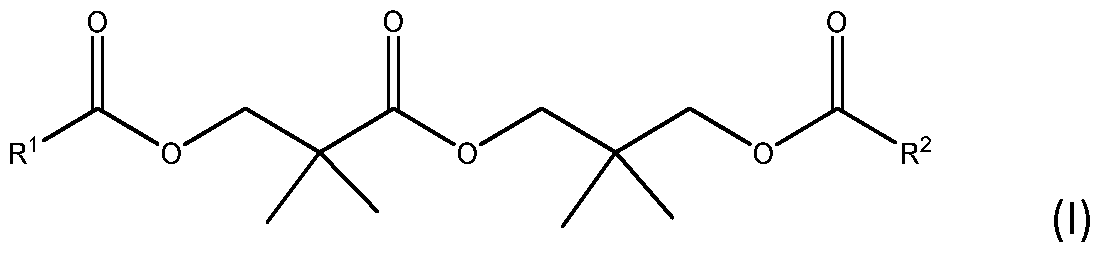
- the invention relates to waterborne coating compositions that include a latex emulsion polymer; and a hydroxypivalyl hydroxypivalate diester as a coalescent, represented by the formula (I):
- R x and R 2 are each independently Cl-Cll alkyl groups.
- the invention relates to waterborne coating compositions in which the diester is a reaction product of hydroxypivalyl hydroxypivalate with one or more C2-C12 monofunctional carboxylic acids or their derivatives.
- the diesters may, for example, be made from one or more C2-C12 monofunctional carboxylic acids, for example one or more of acetic acid, propionic acid, butyric acid, isobutyric acid, pentanoic acid, hexanoic acid, levulinic acid, heptanoic acid, octanoic acid, 2- ethylhexanoic acid, 4-acetylbutyric acid, 4-oxohexanoic acid, 6-oxoheptanoic acid, 7- oxooctanoic acid, benzoic acid, nonanoic acid, decanoic acid, or dodecanoic acid.
- the diester may be a reaction product of hydroxypivalyl
- the one or more C4-C8 monofunctional carboxylic acids comprise one or more of: butyric acid, isobutyric acid, pentanoic acid, hexanoic acid, levulinic acid, heptanoic acid, octanoic acid, 2-ethylhexanoic acid, 4-acetylbutyric acid, 4-oxohexanoic acid, 6-oxoheptanoic acid, 7-oxooctanoic acid, or benzoic acid.
- the diester is a reaction product of hydroxypivalyl
- the diester may be a reaction product of
- hydroxypivalyl hydroxypivalate with levulinic acid, hexanoic acid, or a mixture thereof.
- the hydroxypivalyl hydroxypivalate diester may be present in an amount from about 1% to about 20% by weight, based on the solids of the latex polymer (a), or from 1% to 15% by weight, or from 1% to 10% by weight, in each case based on the solids of the latex polymer in (a).
- the diester may be a reaction product of hydroxypivalyl hydroxypivalate with levulinic acid, hexanoic acid, or a mixture thereof, and the diester may be present, for example, in an amount from about 1% to about 15% by weight, based on the solids of the latex polymer in (a).
- the waterborne coating compositions of the invention may further comprise one or more hydroxypivalyl hydroxypivalate monoesters.
- the invention relates to waterborne coating compositions that include one or more hydroxypivalyl hydroxypivalate (HPHP) esters as a coalescent, and especially HPHP diesters, or mixtures of monoesters and diesters. More specifically, the invention relates to a coalescent that comprises the reaction product of hydroxypivalyl hydroxypivalate and one or more monofunctional carboxylic acids or their derivatives.
- HPHP hydroxypivalyl hydroxypivalate
- the coalescents of the invention are only slightly volatile, as further described below, and are therefore capable of providing an environmentally friendly waterborne coating composition.
- a waterborne coating composition comprising (a) a latex emulsion polymer, and (b) a
- hydroxypivalyl hydroxypivalate diester as a coalescent.
- the diester is capable of reducing the minimum film forming temperature of the latex polymer, and the resulting aqueous coating compositions are substantially free of solid particulate substances resulting from the mixing of (a) and (b).
- Examples of the latex emulsion polymers, component (a), include aqueous vinyl polymers, which are the reaction products of one or more ethylenically unsaturated monomers.
- examples of the ethylenically unsaturated monomers include, but are not limited to, styrene, methyl acrylate, methyl methacrylate, ethyl acrylate, ethyl methacrylate, butyl acrylate, butyl methacrylate, isobutyl acrylate, isobutyl methacrylate, ethylhexyl acrylate, 2-ethylhexyl methacrylate, 2-ethylhexyl acrylate, isoprene, octyl acrylate, octyl methacrylate, iso-octyl acrylate, iso-octyl acrylate, iso-octyl acrylate, iso-oct
- methacrylate acrylic acid, methacrylic acid, itaconic acid, crotonic acid, a-methyl styrene, vinyl naphthalene, vinyl toluene, chloromethyl styrene, hydroxyethyl (meth)acrylate, hydroxypropyl (meth)acrylate, acrylonitrile, glycidyl methacrylate, acetoacetoxy ethyl methacrylate, acetoacetoxy ethyl acrylate, vinyl chloride, vinylidene chloride, vinyl acetate, butyl acrylamide, ethyl acrylamide, and the like.
- Latex emulsion polymers are well known in the art of coating compositions, and we do not intend the term to be especially limiting, although some latex emulsion polymers may be better suited as coating compositions, either inherently or in combination with the coalescents of the invention.
- Examples of commercial latex emulsion polymers useful according to the invention include Rhoplex SG-30, Rhoplex HG-74P, Rhoplex SG-10M, Rhoplex AC2508, Ucar 626, and Ucar 379G (all available from The Dow Chemical Company), Acronal 296D (BASF Corp.), Aquamac 705 and Aquamac 588 (Hexion Specialty Chemicals), and the like.
- the coalescent (b) comprises a diester of hydroxy pi valyl hydroxypivalate (lUPAC: 3-Hydroxy-2,2- Dimethylpropyl 3-Hydroxy-2,2-Dimethylpropanoate) represented by the following formula I :
- R x and R 2 are each independently Cl-Cll alkyl groups.
- the diesters of the invention may be prepared by reacting hydroxypivalyl hydroxypivalate (HPHP) with one or more monofunctional carboxylic acids (R 1 COOH and/or R 2 COOH) or derivatives such as anhydrides, halides, or esters, at a molar ratio of about 1:2 (HPHP: carboxylic acids).
- esters may be synthesized by reacting an alcohol such as HPHP with a carboxylic acid or its derivative such as, for example, acid anhydride, acid halide, or acid ester; thus, it is to be understood that the term, carboxylic acid, described in this invention is meant to include derivatives that can be utilized as a reactant to produce an ester.
- the monofunctional carboxylic acids used to prepare the diesters of the invention are organic compounds having a single carboxyl group.
- the present inventors have discovered that certain monofunctional carboxylic acids are particularly suitable for this invention.
- the hydroxypivalyl hydroxypivalate diesters (HPHP diesters) of such monofunctional carboxylic acids not only are capable of reducing the MFFT of the latex polymers with which they are blended, but also have good compatibility with the latex emulsions.
- HPHP diesters have good compatibility with the latex emulsion with which they are blended, we mean that when the HPHP diesters are mixed thoroughly with the latex emulsion, the resulting formulation is substantially free of solid particulate substances.
- HPHP diesters have good compatibility with the latex emulsion with which they are blended
- the monofunctional carboxylic acids suitable for this invention may be either aliphatic or aromatic, straight chain or branched, substituted or unsubstituted.
- HPHP diesters based on carboxylic acids having straight chain carbons longer than eight may be less compatible with latex emulsions.
- the compatibility may be improved by using branched carboxylic acids or by using mixed carboxylic acids with different chain lengths.
- Examples of the monofunctional carboxylic acids useful according to the invention to form the HPHP diesters include acetic acid, propionic acid, butyric acid, isobutyric acid, pentanoic acid, hexanoic acid, levulinic acid, heptanoic acid, octanoic acid, 2- ethylhexanoic acid, neopentanoic acid, neoheptanoic acid, 3,5,5-trimethylhexanoic acid, neodecanoic acid, 4-acetylbutyric acid, 4-oxohexanoic acid, 6-oxoheptanoic acid, 7-oxooctanoic acid, benzoic acid, nonanoic acid, decanoic acid, dodecanoic acid, and mixtures thereof.
- Monofunctional carboxylic acids that can be produced from renewable resources are of particular interest.
- bio-based carboxylic acids include n-hexanoic acid, levulinic acid, n-octanoic acid, n-decanoic acid, and n-dodecanoic acid.
- Preferred monofunctional carboxylic acids include C4-C8 carboxylic acids, examples of which include, but are not limited to, butyric acid, isobutyric acid, pentanoic acid, hexanoic acid, levulinic acid, heptanoic acid, octanoic acid, 2-ethylhexanoic acid, neopentanoic acid, neoheptanoic acid, 4-acetylbutyric acid, 4-oxohexanoic acid, 6- oxoheptanoic acid, 7-oxooctanoic acid, benzoic acid, and mixtures thereof.
- Preferred monofunctional carboxylic acids further include C5-C7 carboxylic acids, examples of which include, but are not limited to, levulinic acid, hexanoic acid, neopentanoic acid, neoheptanoic acid, and mixtures thereof.
- the HPHP diesters based on these C5-C7 carboxylic acids have been found to have low VOC and good coalescent efficiency, while still retaining excellent compatibility with the latex emulsions.
- the efficiency of a coalescent can be determined by judging from the amount of the coalescent required to reduce the MFFT of a latex polymer to 40°F (4.4°C), which is the lowest desirable application temperature of a paint. It is generally considered unacceptable if the amount of the coalescent present in a paint formulation exceeds 20% by weight based on the solids of the latex polymer. This is particularly important for a non-volatile coalescent since the coalescent will remain in the dried film and thus cause a detrimental effect on the coating properties such as, for example, hardness, scrub resistance, and block resistance.
- this invention provides a waterborne coating composition
- a waterborne coating composition comprising from about 1 to about 20 percent, based on the solids of the latex polymer in the composition, of a hydroxy pi valyl hydroxypivalate diester as a coalescent, or from 1 to 15 percent, or from 1 to 10 percent, in each instance based on the solids of the latex polymer in the composition.
- the hydroxypivalyl hydroxypivalate diesters of the invention can be prepared by reacting HPHP with one or more monofunctional carboxylic acids to effect the formation of the ester linkage.
- the reaction may be carried out in the presence of an acid or base catalyst or in the presence of an enzyme catalyst with or without an organic solvent.
- acid catalysts include sulfuric acid, hydrochloric acid, p- toluenesulfonic acid, butylstannoic acid, borontrifluoride etherate, and the like.
- base catalysts include potassium hydroxide, sodium hydroxide, triethylamine, and the like.
- enzyme catalysts examples include lipase M (Mucor javanicus), Candida cylindracea lipase, lipase D (Rhizopus delemar), Lipozyme (Mucor miehei) (Novo Nordisk A/S Corp.), and the like.
- the reaction can be carried out at room temperature or at an elevated temperature.
- a derivative of the carboxylic acid such as acid anhydride, acid halide, or acid ester, may be used as the reactant to react with HPHP to obtain the corresponding diester using a method known in the art.
- the hydroxypivalyl hydroxypivalate diesters useful according to the invention may include significant amounts of monoesters of HPHP either as a result of incomplete reaction or as a means to increase the content of hydroxyl functionality in the product.
- the hydroxyl content can be increased by increasing the ratio of the monoester of HPHP in the coalescent composition.
- the higher hydroxyl content may be advantageous, for example, in improving the coalescent's compatibility with a latex or enhancing the coating's properties.
- the waterborne coating composition of the present invention further comprises a hydroxypivalyl hydroxypivalate monoester.
- the presence of the monoester can be obtained by reacting an excess of HPHP with a monofunctional carboxylic acid, such as, for example, at a molar ratio of 1:1.9 or 1:1.8 (HPHP: carboxylic acid).
- the molar percent of monoester present, with respect to the total amount of monoester and diester present may thus be up to 20 mole percent, or up to 10 mole percent, or up to 5 mole percent, or from 0.5 mole percent to 20 mole percent, or from 1 mole percent to 15 mole percent, or from 1 mole percent to 10 mole percent, for example.
- the hydroxypivalyl hydroxypivalate diester of this invention may be blended with other coalescents for ease of handling, storage, or application.
- a solid HPHP diester may be blended with a liquid coalescent such as Optifilm Enhancer 400 (Eastman Chemical Co.) at various ratios to yield a coalescent in liquid form.
- the hydroxypivalyl hydroxypivalate diester of the present invention may also be blended with other HPHP diesters or other coalescents to improve the compatibility with latex emulsions.
- the coating compositions of the present invention may further comprise other components commonly used in a paint formulation such as, for example, pigments, filler, rheology modifiers, thickeners, wetting and dispersing agents, deformers, freeze-thaw additives, colorants, open-time additives, driers, catalysts, crosslinkers, biocides, light stabilizers, and the like.
- a paint formulation such as, for example, pigments, filler, rheology modifiers, thickeners, wetting and dispersing agents, deformers, freeze-thaw additives, colorants, open-time additives, driers, catalysts, crosslinkers, biocides, light stabilizers, and the like.
- HPHP esters and diesters useful according to the invention are found to be effective in reducing the MFFT of coating compositions to which they are added, as well as providing specimen coatings having a weight percent volatile content of less than 10%, as measured according to the heating schedule specified by ASTM Method D2369.
- This test may be conducted generally by heating the sample in a forced air oven at 110 °C for 60 minutes. The weight loss after the test is deemed to result from a loss of volatiles originally present in the sample; the percent volatile present in the original sample may then be calculated.
- the cited test can be conducted on coating compositions containing other components such as latex polymers, the values cited herein were obtained from a sample of the coalescent itself.
- the weight percent volatile of a coalescent is used herein as a yardstick to measure the amount of VOC the coalescent would contribute to the VOC of a coating composition.
- the invention provides waterborne coating compositions comprising (a) a latex emulsion polymer and (b) one or more HPHP diesters as the coalescent, wherein the ester provides a volatile content, for example, of less than 10% by weight.
- esters (b) include HPHP diesters of levulinic acid, hexanoic acid, octanoic acid, and mixtures thereof, and the like.
- diesters according to the invention based on HPHP are found to be effective in reducing MFFT as well as having a volatile content less than 10% as determined by ASTM Method D2369.
- the efficiency of a coalescent can be determined by determining the amount of the coalescent required to reduce the MFFT of a latex polymer to 40°F (4.4°C), which is the lowest desirable application temperature of a paint. It is generally considered unacceptable if the amount of the coalescent present in a paint formulation exceeds 20% by weight based on the solids of the latex polymer. This is particularly important for a non-volatile coalescent since the coalescent will remain in the dried film and thus cause a detrimental effect on the coating properties such as, for example, hardness, scrub resistance, and block resistance.
- the coalescents of the examples are capable of reducing the MFFT of Rhoplex SG-30 from 12.9°C to 0.8-5.2°C when an amount of 5 phr (or 5 part per hundred of resin solids) is used, while the MFFT of Rhoplex HG-74P is reduced from 30°C to 0-7.2°C when an amount of 10 phr of the coalescent is used.
- the invention provides a waterborne coating composition
- a waterborne coating composition comprising from about 1 to about 20 percent by weight, based on the solids of the latex polymer in the composition, of an HPHP diester as the coalescent, as already described.
- a preferred ratio of from 1 to 15 percent may be desired, or alternatively, from 1 to 10 percent.
- driers may be particularly advantageous to add driers to the coating formulations when the ester of the present invention is based on an unsaturated fatty acid.
- the added driers are capable of promoting oxidative crosslinking of the unsaturated moieties and thus providing enhanced coating properties.
- Examples of commercial driers include Zirconium HEX-CEM, Cobalt TEN-CEM, Calcium CEM-ALL, Zirconium HYDRO- CEM, and Cobalt HYDRO-CURE II sold by OMG Americas of Westlake, Ohio.
- the latex emulsion polymers useful according to the invention may be homopolymers, or copolymers of an ethylenically unsaturated monomer and one or more additional copolymerizable monomers.
- the polymers according to the invention are addition polymers that may be formed via a free-radical addition polymerization.
- the propagating species may be a free radical, and the polymer is formed in a chain- growth fashion polymerization as understood in the art.
- these polymers are latex emulsion polymers in which a monomer solution may be emulsified in an aqueous solution, and under agitation reacted via a free-radical polymerization process as described herein, to form latex particles.
- the water-based latexes useful according to the invention may generally be prepared by polymerizing acrylic (ethylenically unsaturated) monomers. Before conducting polymerization, these ethylenically unsaturated monomers are either pre-emulsified in water/surfactant mixture or used as such.
- the polymerization process of making these 'acrylic' latexes may also require an initiator (oxidant), a reducing agent, or a catalyst.
- Suitable initiators include conventional initiators such as ammonium persulfate, sodium persulfate, hydrogen peroxide, t-butyl hydroperoxide, ammonium or alkali sulfate, di-benzoyl peroxide, lauryl peroxide, di-tertiarybutylperoxide, 2,2-azobisisobutyronitrile, benzoyl peroxide, and the like.
- Suitable reducing agents are those which increase the rate of polymerization and include, for example, sodium bisulfite, sodium hydrosulfite, sodium formaldehyde sulfoxylate, ascorbic acid, isoascorbic acid, and mixtures thereof.
- Suitable catalysts are those compounds which promote decomposition of the polymerization initiator under the polymerization reaction conditions thereby increasing the rate of polymerization.
- Suitable catalysts include transition metal compounds and driers. Examples of such catalysts include, but are not limited to, AQ.UACATO, ferrous sulfate heptahydrate, ferrous chloride, cupric sulfate, cupric chloride, cobalt acetate, cobaltous sulfate, and mixtures thereof.
- a conventional surfactant or a combination of surfactants is used as a stabilizer, such as an anionic or non-ionic emulsifier, in the suspension or emulsion polymerization preparation of a latex emulsion polymer of the invention.
- a stabilizer such as an anionic or non-ionic emulsifier
- preferred surfactants include, but are not limited to, alkali or ammonium alkylsulfate, alkylsulfonic acid, or fatty acid, oxyethylated alkyphenol, sulfosuccinates and derivatives, or any combination of anionic or non-ionic surfactants.
- surfactant will provide droplet/particle stability, but result in minimal aqueous phase nucleation (micellar or homogeneous).
- the latex emulsion polymers of the invention are thus prepared from monomers characterized as being ethylenically unsaturated monomers that can participate in addition polymerization reactions.
- ethylenically unsaturated monomers may also be described as vinyl monomers.
- the polymers made from such monomers are thus addition polymers, and may be formed as emulsion polymers, also known as latexes or latex emulsions.
- the latex emulsion polymers useful according to the invention may have pendant moieties, meaning that the ethylenically unsaturated monomers used to prepare the latex polymers of the invention have been reacted into an addition polymer, and that a portion of the monomers remains as a pendant moiety.
- the polymers according to the invention have residues from the
- ethylenically unsaturated monomers of the invention in which case we mean that the monomers have been reacted into an addition polymer via their ethylenic unsaturation, and that a portion of the monomers remains as a residue. Both these descriptions are well-known in the art of addition polymers, and the descriptions are not otherwise intended to be especially limiting.
- the invention thus relates to the use of emulsion polymers which are also known as latexes, or as used herein, latex emulsions.
- the polymers formed may have a particle size ranging, for example, from about 80 to about 300 nm, or from 100 nm to 250nm, or from 125nm to 200nm.
- the T g of such latexes may range, for example, from about 0°C to about 80°C, or from 15°C to 60°C, or from 20°C to 40°C.
- the latex emulsion polymers useful according to the invention may be prepared by an emulsion free-radical polymerization of ethylenically unsaturated monomers. These latex polymers may be homopolymers, or may be copolymers formed from more than one ethylenically unsaturated monomer.
- ethylenically unsaturated monomers include, but are not limited to, acrylic and methacrylic acid esters such as methyl (meth)acrylate, ethyl
- (meth)acrylate phenoxyethyl (meth)acrylate, methoxyethyl (meth)acrylate, benzyl (meth)acrylate, ethoxyethyl (meth)acrylate, 2-ethylhexyl (meth)acrylate, cyclopentyl (meth)acrylate and isobutyl (meth)acrylate, as well as combinations of these monomers.
- a combination of these monomers may be used in order to achieve an appropriate Tg or other properties for the latex emulsion polymer.
- acrylic and methacrylic acid esters having a CI -C20 alcohol moiety are commercially available or can be prepared by known esterification processes.
- the acrylic and methacrylic acid ester may contain additional functional groups, such as, hydroxyl, amine, halogen, ether, carboxylic acid, amide, nitrile, and alkyl group.
- Such esters include carbodiimide (meth)acrylate, methyl (meth)acrylate, ethyl
- Styrenic monomers include styrene, as well as substituted styrenes such as CI -C6 alkyl ring-substituted styrene, CI -C3 alkyl alpha-substituted styrene or a combination of ring and an alpha-alkyl substituted styrene.
- Such styrenic polymerizable monomers include styrene, p-methyl styrene, o-methyl styrene, p-butyl styrene, alpha-methyl styrene, and combinations thereof.
- vinyl esters may be used as copolymerizable monoethylenically unsaturated monomers, including vinyl esters of vinyl alcohol such as the VEOVA series available from Shell Chemical Company as VEOVA 5, VEOVA 9, VEOVA 10, and VEOVA 11 products. See 0. W. Smith, M. J. Collins, P. S. Martin, and D. R. Bassett, Prog. Org. Coatings 22, 19 (1993).
- the vinyl monomers may be polymerized by a conventional emulsion free-radical initiated polymerization technique.
- the polymerization can be initiated by a water-soluble or water-dispersible free-radical initiator, optionally in combination with a reducing agent, at an appropriate temperature, for example from 55 to 90°C.
- the polymerization of the monomers may be conducted batch wise, semi-batch, or in a continuous mode.
- a conventional surfactant or a combination of surfactants may be used such as anionic or non-ionic emulsifier in the suspension or emulsion polymerization to prepare a polymer of the invention.
- surfactants include, but are not limited to, alkali or ammonium alkylsulfate, alkylsulfonic acid, or fatty acid, oxyethylated alkylphenol, or any combination of anionic or non-ionic surfactant.
- a surfactant monomer may be used such as HITENOL HS-20 (which is a
- the amount of the surfactant used is usually between 0.1 to 6 wt %, based on the total weight of the monomers.
- any conventional free-radical initiator may be used such as hydrogen peroxide, t-butylhydroperoxide, ammonium or alkali sulfate, di-benzoyl peroxide, lauryl peroxide, di-tertiarybutylperoxide, 2, 2'-azobisisobuteronitrile, benzoyl peroxide, and the like.
- the amount of the initiator is typically between 0.05 to 6.0 wt %, based on the total weight of the total monomers.
- a free-radical initiator may be combined with a reducing agent to form a redox initiating system.
- Suitable reducing agents are those which increase the rate of polymerization and include, for example, sodium bisulfide, sodium hydrosulfide, sodium, ascorbic acid, isoascorbic acid and mixtures thereof.
- the redox initiating system can be used at similar levels as the free-radical initiators.
- polymerization catalysts are those compounds which increase the rate of polymerization by promoting decomposition of the free radical initiator in combination with the reducing agent at the reaction conditions.
- Suitable catalysts include transition metal compounds such as, for example, ferrous sulfate heptahydrate, ferrous chloride, cupric sulfate, cupric chloride, cobalt acetate, cobaltous sulfate, and mixtures thereof.
- a low level of a chain transfer agent may also be used to prepare a latex polymer useful in accordance with the invention.
- Suitable chain transfer agents include, but are not limited to, butyl mercaptan, n-octylmercaptan, n-dodecyl mercaptan, butyl or methyl mercaptopropionate, mercaptopropionic acid, 2- ethylhexyl-3-mercaptopropionate, n-butyl-3-mercaptopropionate,
- mercaptopropionate, allyl mercaptopropionate, allyl mercaptoacetate, crotyl mercaptopropionate and crotyl mercaptoacetate, and mixtures thereof represent preferred chain transfer agents.
- a copolymerizable monomer known to promote wet adhesion may also be incorporated into the polymer.
- wet adhesion promoting monomers include, but are not limited to, nitrogen-containing monomers such as t- butylaminoethyl methacrylate, dimethylaminoethyl methacrylate, diethylaminoethyl methacrylate, ⁇ , ⁇ -dimethylaminopropyl methacrylamide, 2-t-butylaminoethyl methacrylate, ⁇ , ⁇ -dimethylaminoethyl acrylate and N-(2-methacryloyloxy-ethyl) ethylene urea.
- Water-dispersible and water-soluble polymers may also be employed as surfactants or stabilizers in accordance with the present invention. Examples of such polymeric stabilizers include water-dispersible polyesters as described in U.S. Pat. Nos.
- At least one ethylenically unsaturated copolymerizable surfactant may be employed, for example those possessing isopropenyl phenyl or allyl groups.
- Copolymerizable surfactants may be anionic, such as containing a sulfate or sulfonate group, or nonionic surfactants.
- Other copolymerizable surfactants include those containing polyoxyethylene alkyl phenyl ether moieties.
- Additional copolymerizable surfactants include sodium alkyl allyl sulfosuccinate.
- the latex polymers in accordance with the invention may have a weight average molecular weight (Mw), for example, of from 1,000 to 1,000,000, as determined by gel permeation chromatography (GPC), or from 5,000 to 250,000.
- the particle size for the aqueous dispersions in accordance with the invention may be, for example, from about 0.01 to about 25 ⁇ , or from 0.05 to 1 ⁇ , or from 0.075 to 500 ⁇ .
- the particle size of the latex may range, for example, from 0.01 to 5 ⁇ .
- the latex particles generally have a spherical shape, and the spherical polymeric particles may have a core portion and a shell portion or a gradient structure.
- the core/shell polymer particles may also be prepared in a multi-lobe form, a peanut shell, an acorn form, a raspberry form, or any other form. If the particles have a core/shell structure, the core portion may comprise from about 20 to about 80 wt % of the total weight of the particle, and the shell portion may comprise about 80 to about 20 wt % of the total weight of the particle.
- the glass transition temperature (Tg) of the latex polymers in accordance with the present invention may be up to about 100°C.
- the glass transition temperature of the polymer itself may be under 60°C, or under 40°C.
- the latex polymers of the invention may comprise enamine functional polymers, with the enamine functionality serving to improve the hydrolytic stability of the acetoacetoxy group.
- Enamine functional polymers have been described in Polymer Bulletin 32,419-426 (1994). Additionally, enamine functional polymers are described in European Patent Application No. 0492847 A2; U.S. Pat. No. 5,296,530; and U.S. Pat. No. 5,484,849, all of which are incorporated herein by reference.
- HPHP diesters synthesized in the above examples were formulated, respectively, with the latexes Rhoplex SG-30 (an acrylic polymer emulsion) (50 % solids; MFFT 12.9°C) and Rhoplex HG-74P (a styrene-acrylic polymer emulsion) (42.5 % solids; MFFT 30°C) (both available from The Dow Chemical Company) at various ratios for MFFT determination.
- Rhoplex SG-30 an acrylic polymer emulsion
- MFFT 12.9°C Rhoplex HG-74P
- Rhoplex HG-74P a styrene-acrylic polymer emulsion
- MFFT Minimum film forming temperatures
- samples were drawn down from the low- to the high-temperature of the bar by using a 6-mil, multi-sample draw-down bar; the resulting coating strips were covered and allowed to dry under nitrogen purge at temperatures ranging from 0°C to 18 °C.
- MFFT Minimum film forming temperatures
- the coalescents of the examples are capable of reducing the MFFT of Rhoplex SG-30 from 12.9°C to 0.8-5.2°C when an amount of 5 phr (or 5 part per hundred of resin solids) is used, while the MFFT of Rhoplex HG-74P is reduced from 30°C to 0-7.2°C when an amount of 10 phr of the coalescent is used.
- VOCs volatile organic compounds
Landscapes
- Chemical & Material Sciences (AREA)
- Organic Chemistry (AREA)
- Life Sciences & Earth Sciences (AREA)
- Engineering & Computer Science (AREA)
- Materials Engineering (AREA)
- Wood Science & Technology (AREA)
- Dispersion Chemistry (AREA)
- Health & Medical Sciences (AREA)
- Chemical Kinetics & Catalysis (AREA)
- Medicinal Chemistry (AREA)
- Polymers & Plastics (AREA)
- Paints Or Removers (AREA)
Abstract
Description


Claims

Priority Applications (7)
| Application Number | Priority Date | Filing Date | Title |
|---|---|---|---|
| JP2013534963A JP2013543904A (en) | 2010-10-21 | 2011-10-14 | Water-based coating composition containing a low VOC fusing agent which is a hydroxypivalyl hydroxypivalate ester |
| KR1020137012830A KR20140000248A (en) | 2010-10-21 | 2011-10-14 | Waterborne coating compositions containing low-voc coalescents that are hydroxypivalyl hydroxypivalate esters |
| EP11776965.3A EP2630202A1 (en) | 2010-10-21 | 2011-10-14 | Waterborne coating compositions containing low-voc coalescents that are hydroxypivalyl hydroxypivalate esters |
| CN201180050647XA CN103154155A (en) | 2010-10-21 | 2011-10-14 | Waterborne coating compositions containing low-voc coalescents as diester of hydroxypivalyl hydroxypivalate |
| CA2815010A CA2815010A1 (en) | 2010-10-21 | 2011-10-14 | Waterborne coating compositions containing low-voc coalescents that are hydroxypivalyl hydroxypivalate esters |
| MX2013003363A MX2013003363A (en) | 2010-10-21 | 2011-10-14 | Waterborne coating compositions containing low-voc coalescents that are hydroxypivalyl hydroxypivalate esters. |
| BR112013009514A BR112013009514A2 (en) | 2010-10-21 | 2011-10-14 | water based coating composition |
Applications Claiming Priority (2)
| Application Number | Priority Date | Filing Date | Title |
|---|---|---|---|
| US12/909,179 US9034964B2 (en) | 2010-10-21 | 2010-10-21 | Waterborne coating compositions containing low-VOC coalescents that are hydroxypivalyl hydroxypivalate esters |
| US12/909,179 | 2010-10-21 |
Publications (1)
| Publication Number | Publication Date |
|---|---|
| WO2012054317A1 true WO2012054317A1 (en) | 2012-04-26 |
Family
ID=44903385
Family Applications (1)
| Application Number | Title | Priority Date | Filing Date |
|---|---|---|---|
| PCT/US2011/056247 Ceased WO2012054317A1 (en) | 2010-10-21 | 2011-10-14 | Waterborne coating compositions containing low-voc coalescents that are hydroxypivalyl hydroxypivalate esters |
Country Status (9)
| Country | Link |
|---|---|
| US (1) | US9034964B2 (en) |
| EP (1) | EP2630202A1 (en) |
| JP (1) | JP2013543904A (en) |
| KR (1) | KR20140000248A (en) |
| CN (1) | CN103154155A (en) |
| BR (1) | BR112013009514A2 (en) |
| CA (1) | CA2815010A1 (en) |
| MX (1) | MX2013003363A (en) |
| WO (1) | WO2012054317A1 (en) |
Cited By (4)
| Publication number | Priority date | Publication date | Assignee | Title |
|---|---|---|---|---|
| WO2014158661A1 (en) * | 2013-03-14 | 2014-10-02 | Dow Global Technologies Llc | Coalescents for aqueous based coating compositions |
| EP2721100A4 (en) * | 2011-06-15 | 2015-01-28 | Myriant Corp | Environmentally friendly coalescing agents |
| WO2015038012A1 (en) * | 2013-09-12 | 2015-03-19 | Victoria Link Limited | Waterborne compositions |
| US11390762B2 (en) | 2016-04-07 | 2022-07-19 | Ascend Performance Materials Operation LLC | Tri-carboxylic compounds as low-VOC coalescing agents and plasticizing agents |
Families Citing this family (6)
| Publication number | Priority date | Publication date | Assignee | Title |
|---|---|---|---|---|
| US10077352B2 (en) | 2014-09-16 | 2018-09-18 | Eastman Chemical Company | Polymeric compositions with improved noise suppression |
| US20160340471A1 (en) | 2015-05-19 | 2016-11-24 | Eastman Chemical Company | Aliphatic polyester coating compositions containing tetramethyl cyclobutanediol |
| US20170088665A1 (en) | 2015-09-25 | 2017-03-30 | Eastman Chemical Company | POLYMERS CONTAINING CYCLOBUTANEDIOL AND 2,2 BIS(HYDROXYMETHYL) AlKYLCARBOXYLIC ACID |
| US9988553B2 (en) | 2016-02-22 | 2018-06-05 | Eastman Chemical Company | Thermosetting coating compositions |
| US10011737B2 (en) | 2016-03-23 | 2018-07-03 | Eastman Chemical Company | Curable polyester polyols and their use in thermosetting soft feel coating formulations |
| IT201700088554A1 (en) * | 2017-08-02 | 2019-02-02 | Novamont Spa | HERBICIDE COMPOSITIONS BASED ON PELARGONIC ACID AND OTHER ACIDS |
Citations (11)
| Publication number | Priority date | Publication date | Assignee | Title |
|---|---|---|---|---|
| US4839413A (en) | 1986-08-22 | 1989-06-13 | S.C. Johnson & Son, Inc. | Resin-fortified emulsion polymers and methods of preparing the same |
| US4927876A (en) | 1987-09-14 | 1990-05-22 | Ici Americas Inc. | Aqueous dispersions |
| US4939233A (en) | 1988-12-05 | 1990-07-03 | Eastman Kodak Company | Aqueous polymer compositions and methods for their preparation |
| US4946932A (en) | 1988-12-05 | 1990-08-07 | Eastman Kodak Company | Water-dispersible polyester blends |
| EP0492847A2 (en) | 1990-12-21 | 1992-07-01 | Rohm And Haas Company | Air curing polymer composition |
| US5137961A (en) | 1987-09-14 | 1992-08-11 | Imperial Chemical Industries Plc | Aqueous dispersions |
| US5247040A (en) | 1991-06-27 | 1993-09-21 | Rohm And Haas Company | Graft copolymers prepared by two staged aqueous emulsion polymerization |
| US5296530A (en) | 1992-07-28 | 1994-03-22 | Rohm And Haas Company | Method for light-assisted curing of coatings |
| US20070015933A1 (en) * | 2005-07-15 | 2007-01-18 | Hyunkyu Kim | Hydroxypivalyl hydroxypivalate ester plasticizer composition and method of preparing the same |
| WO2007094922A2 (en) * | 2006-01-20 | 2007-08-23 | Archer-Daniels-Midland Company | Levulinic acid ester derivatives as reactive plasticizers and coalescent solvents |
| WO2009097142A1 (en) * | 2008-01-31 | 2009-08-06 | Rhodia Inc. | Low voc coalescing agents |
Family Cites Families (15)
| Publication number | Priority date | Publication date | Assignee | Title |
|---|---|---|---|---|
| US2008720A (en) | 1932-05-03 | 1935-07-23 | Du Pont | Levulinic acid ester |
| US2004115A (en) | 1932-05-07 | 1935-06-11 | Du Pont | Levulinic acid esters and their preparation |
| US4634730A (en) * | 1984-05-31 | 1987-01-06 | Gencorp Inc. | Carpet tiles |
| GB9103649D0 (en) | 1991-02-21 | 1991-04-10 | Bp Chem Int Ltd | Coalescing aids |
| EP0755946A3 (en) * | 1995-07-24 | 1997-10-01 | Basf Corp | Method for preparing hydrophobically modified emulsion polymers, polymers obtained thereby, and waterborne coating compositions containing the polymers |
| US6051314A (en) * | 1996-08-29 | 2000-04-18 | Ppg Industries Ohio, Inc. | Coatings for fiber strands, coated fiber strands, reinforced composites, assemblies and method of reinforcing the same |
| US7501062B2 (en) * | 2005-02-22 | 2009-03-10 | Shell Oil Company | Process for permeation enhanced reactive extraction of levulinic acid |
| FR2885619B1 (en) * | 2005-05-13 | 2011-02-11 | Imaje Sa | LIQUID, FOOD, INGERABLE INK COMPOSITION FOR INKJET PRINTING |
| KR100690351B1 (en) * | 2005-07-15 | 2007-03-12 | 주식회사 엘지화학 | Hydroxy pivalyl hydroxy pivalate ester plasticizer composition and preparation method thereof |
| US8053468B2 (en) | 2005-11-22 | 2011-11-08 | Segetis, Inc. | Glycerol levulinate ketals and their use |
| DE102005056591A1 (en) * | 2005-11-25 | 2007-05-31 | Basf Ag | Aqueous coating material, especially latex paint for various substrates, contains acrylate-based binder with hydroxyl-functional comonomer, plus pigments, other additives and little or no frost-protection agent |
| US20080103340A1 (en) | 2006-10-27 | 2008-05-01 | Archer-Daniels-Midland Company | Applications of biobased glycol compositions |
| US20090118397A1 (en) * | 2007-10-30 | 2009-05-07 | Archer-Daniels-Midland Company | Waterborne Film-Forming Compositions Containing Reactive Surfactants and/or Humectants |
| US20100113664A1 (en) * | 2008-06-11 | 2010-05-06 | Ferro Corporation | Asymmetric Cyclic Diester Compounds |
| US8383710B2 (en) | 2010-10-21 | 2013-02-26 | Eastman Chemical Company | Waterborne coating compositions containing low-VOC coalescents |
-
2010
- 2010-10-21 US US12/909,179 patent/US9034964B2/en active Active
-
2011
- 2011-10-14 JP JP2013534963A patent/JP2013543904A/en not_active Withdrawn
- 2011-10-14 EP EP11776965.3A patent/EP2630202A1/en not_active Withdrawn
- 2011-10-14 BR BR112013009514A patent/BR112013009514A2/en not_active IP Right Cessation
- 2011-10-14 CA CA2815010A patent/CA2815010A1/en not_active Abandoned
- 2011-10-14 WO PCT/US2011/056247 patent/WO2012054317A1/en not_active Ceased
- 2011-10-14 KR KR1020137012830A patent/KR20140000248A/en not_active Withdrawn
- 2011-10-14 MX MX2013003363A patent/MX2013003363A/en not_active Application Discontinuation
- 2011-10-14 CN CN201180050647XA patent/CN103154155A/en active Pending
Patent Citations (13)
| Publication number | Priority date | Publication date | Assignee | Title |
|---|---|---|---|---|
| US4839413A (en) | 1986-08-22 | 1989-06-13 | S.C. Johnson & Son, Inc. | Resin-fortified emulsion polymers and methods of preparing the same |
| US4927876A (en) | 1987-09-14 | 1990-05-22 | Ici Americas Inc. | Aqueous dispersions |
| US5137961A (en) | 1987-09-14 | 1992-08-11 | Imperial Chemical Industries Plc | Aqueous dispersions |
| US4939233A (en) | 1988-12-05 | 1990-07-03 | Eastman Kodak Company | Aqueous polymer compositions and methods for their preparation |
| US4946932A (en) | 1988-12-05 | 1990-08-07 | Eastman Kodak Company | Water-dispersible polyester blends |
| US5484849A (en) | 1990-12-21 | 1996-01-16 | Rohm And Haas Company | Air curing polymer composition |
| EP0492847A2 (en) | 1990-12-21 | 1992-07-01 | Rohm And Haas Company | Air curing polymer composition |
| US5247040A (en) | 1991-06-27 | 1993-09-21 | Rohm And Haas Company | Graft copolymers prepared by two staged aqueous emulsion polymerization |
| US5296530A (en) | 1992-07-28 | 1994-03-22 | Rohm And Haas Company | Method for light-assisted curing of coatings |
| US20070015933A1 (en) * | 2005-07-15 | 2007-01-18 | Hyunkyu Kim | Hydroxypivalyl hydroxypivalate ester plasticizer composition and method of preparing the same |
| US7524896B2 (en) | 2005-07-15 | 2009-04-28 | Lg Chem, Ltd. | Hydroxypivalyl hydroxypivalate ester plasticizer composition and method of preparing the same |
| WO2007094922A2 (en) * | 2006-01-20 | 2007-08-23 | Archer-Daniels-Midland Company | Levulinic acid ester derivatives as reactive plasticizers and coalescent solvents |
| WO2009097142A1 (en) * | 2008-01-31 | 2009-08-06 | Rhodia Inc. | Low voc coalescing agents |
Non-Patent Citations (4)
| Title |
|---|
| "McCutcheon's Emulsifiers & Detergents", 1993, MC PUBLISHING CO. |
| "McCutcheon's Emulsifiers & Detergents", 1997, MC PUBLISHING CO. |
| O. W. SMITH, M. J. COLLINS, P. S. MARTIN, D. R. BASSETT, PROG. ORG. COATINGS, vol. 22, 1993, pages 19 |
| POLYMER BULLETIN, vol. 32, 1994, pages 419 - 426 |
Cited By (5)
| Publication number | Priority date | Publication date | Assignee | Title |
|---|---|---|---|---|
| EP2721100A4 (en) * | 2011-06-15 | 2015-01-28 | Myriant Corp | Environmentally friendly coalescing agents |
| US9951233B2 (en) | 2011-06-15 | 2018-04-24 | Myriant Corporation | Environmentally friendly coalescing agents |
| WO2014158661A1 (en) * | 2013-03-14 | 2014-10-02 | Dow Global Technologies Llc | Coalescents for aqueous based coating compositions |
| WO2015038012A1 (en) * | 2013-09-12 | 2015-03-19 | Victoria Link Limited | Waterborne compositions |
| US11390762B2 (en) | 2016-04-07 | 2022-07-19 | Ascend Performance Materials Operation LLC | Tri-carboxylic compounds as low-VOC coalescing agents and plasticizing agents |
Also Published As
| Publication number | Publication date |
|---|---|
| MX2013003363A (en) | 2013-06-05 |
| BR112013009514A2 (en) | 2016-07-26 |
| KR20140000248A (en) | 2014-01-02 |
| US20120101225A1 (en) | 2012-04-26 |
| CN103154155A (en) | 2013-06-12 |
| US9034964B2 (en) | 2015-05-19 |
| JP2013543904A (en) | 2013-12-09 |
| EP2630202A1 (en) | 2013-08-28 |
| CA2815010A1 (en) | 2012-04-26 |
Similar Documents
| Publication | Publication Date | Title |
|---|---|---|
| US9034964B2 (en) | Waterborne coating compositions containing low-VOC coalescents that are hydroxypivalyl hydroxypivalate esters | |
| US8383710B2 (en) | Waterborne coating compositions containing low-VOC coalescents | |
| AU2012234476B2 (en) | Aqueous multistage polymer dispersion, process for its preparation and use thereof as binder for coating substrates | |
| EP2009072B1 (en) | Aqueous polymeric composition | |
| CA2175736C (en) | Latex binders and paints which are free of volatile coalescents and freeze-thaw additives | |
| JP3251044B2 (en) | Latex for paints with improved flexibility | |
| US20120252972A1 (en) | Aqueous multistage polymer dispersion, process for its preparation, and use thereof as binder for coating substrates | |
| US8809446B2 (en) | Substituted 3-oxopentanoates and their uses in coating compositions | |
| CN109312187B (en) | Coating compositions with improved liquid stain resistance | |
| CN117511286A (en) | Water-dispersible copolymers for formaldehyde scavenging | |
| EP2652050B1 (en) | Waterborne coating compositions that include 2,2,4-trimethyl-3-oxopentanoate esters as reactive coalescents | |
| US11518899B2 (en) | Aromatic enol ether paint additives | |
| CN1243533A (en) | Stabilized non-polymeric acetoacetate esters that promote adhesion to metallic and oxidized substrates | |
| JPH10195368A (en) | Self-crosslinking paint formulations |
Legal Events
| Date | Code | Title | Description |
|---|---|---|---|
| WWE | Wipo information: entry into national phase |
Ref document number: 201180050647.X Country of ref document: CN |
|
| 121 | Ep: the epo has been informed by wipo that ep was designated in this application |
Ref document number: 11776965 Country of ref document: EP Kind code of ref document: A1 |
|
| WWE | Wipo information: entry into national phase |
Ref document number: MX/A/2013/003363 Country of ref document: MX |
|
| WWE | Wipo information: entry into national phase |
Ref document number: 2011776965 Country of ref document: EP |
|
| ENP | Entry into the national phase |
Ref document number: 2815010 Country of ref document: CA |
|
| ENP | Entry into the national phase |
Ref document number: 2013534963 Country of ref document: JP Kind code of ref document: A |
|
| NENP | Non-entry into the national phase |
Ref country code: DE |
|
| ENP | Entry into the national phase |
Ref document number: 20137012830 Country of ref document: KR Kind code of ref document: A |
|
| REG | Reference to national code |
Ref country code: BR Ref legal event code: B01A Ref document number: 112013009514 Country of ref document: BR |
|
| ENP | Entry into the national phase |
Ref document number: 112013009514 Country of ref document: BR Kind code of ref document: A2 Effective date: 20130418 |