WO2000006543A1 - Novel diamino compounds, polyamic acid, polyimide, liquid-crystal alignment film made from film of the polyimide, and liquid-crystal display element containing the alignment film - Google Patents
Novel diamino compounds, polyamic acid, polyimide, liquid-crystal alignment film made from film of the polyimide, and liquid-crystal display element containing the alignment film Download PDFInfo
- Publication number
- WO2000006543A1 WO2000006543A1 PCT/JP1999/003948 JP9903948W WO0006543A1 WO 2000006543 A1 WO2000006543 A1 WO 2000006543A1 JP 9903948 W JP9903948 W JP 9903948W WO 0006543 A1 WO0006543 A1 WO 0006543A1
- Authority
- WO
- WIPO (PCT)
- Prior art keywords
- group
- liquid crystal
- crystal display
- compound
- display device
- Prior art date
- Legal status (The legal status is an assumption and is not a legal conclusion. Google has not performed a legal analysis and makes no representation as to the accuracy of the status listed.)
- Ceased
Links
Classifications
-
- C—CHEMISTRY; METALLURGY
- C07—ORGANIC CHEMISTRY
- C07D—HETEROCYCLIC COMPOUNDS
- C07D207/00—Heterocyclic compounds containing five-membered rings not condensed with other rings, with one nitrogen atom as the only ring hetero atom
- C07D207/02—Heterocyclic compounds containing five-membered rings not condensed with other rings, with one nitrogen atom as the only ring hetero atom with only hydrogen or carbon atoms directly attached to the ring nitrogen atom
- C07D207/44—Heterocyclic compounds containing five-membered rings not condensed with other rings, with one nitrogen atom as the only ring hetero atom with only hydrogen or carbon atoms directly attached to the ring nitrogen atom having three double bonds between ring members or between ring members and non-ring members
- C07D207/444—Heterocyclic compounds containing five-membered rings not condensed with other rings, with one nitrogen atom as the only ring hetero atom with only hydrogen or carbon atoms directly attached to the ring nitrogen atom having three double bonds between ring members or between ring members and non-ring members having two doubly-bound oxygen atoms directly attached in positions 2 and 5
- C07D207/448—Heterocyclic compounds containing five-membered rings not condensed with other rings, with one nitrogen atom as the only ring hetero atom with only hydrogen or carbon atoms directly attached to the ring nitrogen atom having three double bonds between ring members or between ring members and non-ring members having two doubly-bound oxygen atoms directly attached in positions 2 and 5 with only hydrogen atoms or radicals containing only hydrogen and carbon atoms directly attached to other ring carbon atoms, e.g. maleimide
- C07D207/452—Heterocyclic compounds containing five-membered rings not condensed with other rings, with one nitrogen atom as the only ring hetero atom with only hydrogen or carbon atoms directly attached to the ring nitrogen atom having three double bonds between ring members or between ring members and non-ring members having two doubly-bound oxygen atoms directly attached in positions 2 and 5 with only hydrogen atoms or radicals containing only hydrogen and carbon atoms directly attached to other ring carbon atoms, e.g. maleimide with hydrocarbon radicals, substituted by hetero atoms, directly attached to the ring nitrogen atom
-
- C—CHEMISTRY; METALLURGY
- C09—DYES; PAINTS; POLISHES; NATURAL RESINS; ADHESIVES; COMPOSITIONS NOT OTHERWISE PROVIDED FOR; APPLICATIONS OF MATERIALS NOT OTHERWISE PROVIDED FOR
- C09K—MATERIALS FOR MISCELLANEOUS APPLICATIONS, NOT PROVIDED FOR ELSEWHERE
- C09K19/00—Liquid crystal materials
- C09K19/04—Liquid crystal materials characterised by the chemical structure of the liquid crystal components, e.g. by a specific unit
- C09K19/42—Mixtures of liquid crystal compounds covered by two or more of the preceding groups C09K19/06 - C09K19/40
-
- C—CHEMISTRY; METALLURGY
- C09—DYES; PAINTS; POLISHES; NATURAL RESINS; ADHESIVES; COMPOSITIONS NOT OTHERWISE PROVIDED FOR; APPLICATIONS OF MATERIALS NOT OTHERWISE PROVIDED FOR
- C09K—MATERIALS FOR MISCELLANEOUS APPLICATIONS, NOT PROVIDED FOR ELSEWHERE
- C09K19/00—Liquid crystal materials
- C09K19/04—Liquid crystal materials characterised by the chemical structure of the liquid crystal components, e.g. by a specific unit
- C09K19/42—Mixtures of liquid crystal compounds covered by two or more of the preceding groups C09K19/06 - C09K19/40
- C09K19/46—Mixtures of liquid crystal compounds covered by two or more of the preceding groups C09K19/06 - C09K19/40 containing esters
-
- C—CHEMISTRY; METALLURGY
- C09—DYES; PAINTS; POLISHES; NATURAL RESINS; ADHESIVES; COMPOSITIONS NOT OTHERWISE PROVIDED FOR; APPLICATIONS OF MATERIALS NOT OTHERWISE PROVIDED FOR
- C09K—MATERIALS FOR MISCELLANEOUS APPLICATIONS, NOT PROVIDED FOR ELSEWHERE
- C09K2323/00—Functional layers of liquid crystal optical display excluding electroactive liquid crystal layer characterised by chemical composition
- C09K2323/02—Alignment layer characterised by chemical composition
- C09K2323/023—Organic silicon compound, e.g. organosilicon
-
- C—CHEMISTRY; METALLURGY
- C09—DYES; PAINTS; POLISHES; NATURAL RESINS; ADHESIVES; COMPOSITIONS NOT OTHERWISE PROVIDED FOR; APPLICATIONS OF MATERIALS NOT OTHERWISE PROVIDED FOR
- C09K—MATERIALS FOR MISCELLANEOUS APPLICATIONS, NOT PROVIDED FOR ELSEWHERE
- C09K2323/00—Functional layers of liquid crystal optical display excluding electroactive liquid crystal layer characterised by chemical composition
- C09K2323/02—Alignment layer characterised by chemical composition
- C09K2323/027—Polyimide
-
- C—CHEMISTRY; METALLURGY
- C09—DYES; PAINTS; POLISHES; NATURAL RESINS; ADHESIVES; COMPOSITIONS NOT OTHERWISE PROVIDED FOR; APPLICATIONS OF MATERIALS NOT OTHERWISE PROVIDED FOR
- C09K—MATERIALS FOR MISCELLANEOUS APPLICATIONS, NOT PROVIDED FOR ELSEWHERE
- C09K2323/00—Functional layers of liquid crystal optical display excluding electroactive liquid crystal layer characterised by chemical composition
- C09K2323/02—Alignment layer characterised by chemical composition
- C09K2323/027—Polyimide
- C09K2323/0271—Polyimidfluoride
-
- G—PHYSICS
- G02—OPTICS
- G02F—OPTICAL DEVICES OR ARRANGEMENTS FOR THE CONTROL OF LIGHT BY MODIFICATION OF THE OPTICAL PROPERTIES OF THE MEDIA OF THE ELEMENTS INVOLVED THEREIN; NON-LINEAR OPTICS; FREQUENCY-CHANGING OF LIGHT; OPTICAL LOGIC ELEMENTS; OPTICAL ANALOGUE/DIGITAL CONVERTERS
- G02F1/00—Devices or arrangements for the control of the intensity, colour, phase, polarisation or direction of light arriving from an independent light source, e.g. switching, gating or modulating; Non-linear optics
- G02F1/01—Devices or arrangements for the control of the intensity, colour, phase, polarisation or direction of light arriving from an independent light source, e.g. switching, gating or modulating; Non-linear optics for the control of the intensity, phase, polarisation or colour
- G02F1/13—Devices or arrangements for the control of the intensity, colour, phase, polarisation or direction of light arriving from an independent light source, e.g. switching, gating or modulating; Non-linear optics for the control of the intensity, phase, polarisation or colour based on liquid crystals, e.g. single liquid crystal display cells
- G02F1/133—Constructional arrangements; Operation of liquid crystal cells; Circuit arrangements
- G02F1/1333—Constructional arrangements; Manufacturing methods
- G02F1/1337—Surface-induced orientation of the liquid crystal molecules, e.g. by alignment layers
- G02F1/133711—Surface-induced orientation of the liquid crystal molecules, e.g. by alignment layers by organic films, e.g. polymeric films
- G02F1/133723—Polyimide, polyamide-imide
-
- Y—GENERAL TAGGING OF NEW TECHNOLOGICAL DEVELOPMENTS; GENERAL TAGGING OF CROSS-SECTIONAL TECHNOLOGIES SPANNING OVER SEVERAL SECTIONS OF THE IPC; TECHNICAL SUBJECTS COVERED BY FORMER USPC CROSS-REFERENCE ART COLLECTIONS [XRACs] AND DIGESTS
- Y10—TECHNICAL SUBJECTS COVERED BY FORMER USPC
- Y10T—TECHNICAL SUBJECTS COVERED BY FORMER US CLASSIFICATION
- Y10T428/00—Stock material or miscellaneous articles
- Y10T428/31504—Composite [nonstructural laminate]
- Y10T428/31721—Of polyimide
Definitions
- the present invention relates to a diamino compound having a photosensitive group in a side chain, a polyamic acid, and an optically crosslinkable polyimide, a liquid crystal alignment film using the same, and a liquid crystal display device using the alignment film.
- the liquid crystal display element is provided with a liquid crystal alignment film having a predetermined pretilt angle for aligning liquid crystal molecules in a certain direction.
- a polymer compound thin film such as polyimide formed on a substrate is rubbed in one direction with a cloth such as rayon, or a method of obliquely depositing silicon dioxide. It has been known. However, rubbing is widely used industrially because of its simple and inexpensive method, but it has problems such as generation of dust and generation of static electricity.
- the production cost is high and it is difficult to increase the size.
- Bull polymers having an arylmaleimide residue in the side chain as a photosensitive group having higher sensitivity are disclosed in Japanese Patent Publication No. 51-13198, etc., but are not suitable for alignment films for liquid crystal display devices. There is no example of using.
- the configuration of the present invention is as follows.
- G 2 is independently a single bond, one C ⁇ , one OCO—, one NHCO—, one CONH—, one O —,
- G 3 represents a single bond or an alkylene group having 1 to 20 carbon atoms
- X and Y each independently represent a hydrogen atom, a fluorine atom, a chlorine atom, a cyano group, a nitro group
- G or G or X and Y are the same as described above, and G 5 is independently a single bond, —CH 2 —, — ⁇ —, —CO—, —S ⁇ 2 — , One C (CH 3 ) 2 —, one C (CF 3 ) 2 — bond, and each of rings A and B independently represents a benzene ring or a cyclohexane ring.
- G 6 is independently a single bond, —CH 2 —, —0—, one CO—, —S0 2 —, -C (CH 3 ) 2 —, -C (CF 3 ) Is a 2-bond, and rings A and B each independently represent a benzene ring or a cyclic hexane ring, and G 4 is a divalent organic group having 2 to 36 carbon atoms, or a general formula (4) [Four ⁇ In the general formula [4], R 99 is an alkylene group having 1 to 6 carbon atoms or a phenylene group; .
- a, b, and c are 0 or a positive number, and have a value of l ⁇ a + b + c ⁇ 100).
- a directing film for a liquid crystal display element comprising the thin film comprising the polyimide according to the item (4).
- a liquid crystal display device comprising the alignment film for a liquid crystal display device according to any one of (4) to (6).
- liquid crystal display device wherein the liquid crystal composition comprises at least one compound selected from the group consisting of compounds represented by general formulas (5), (6) and (7). Liquid crystal display element.
- R 2 is a fluorine atom, a chlorine atom, - ⁇ _CF 3, - OCF 2 H, one CF physician - CF 2 H, - CFH 2 , -OC F 2 CF 2 H or one OCF 2 CFHCF 3 ;
- L 2 each independently represent a hydrogen atom or a fluorinated atom;
- ring C is trans-1,4-cyclohexylene, 1,3-dioxane 2,5-diyl or 1,4-phenylene in which a hydrogen
- liquid crystal display device (9) The liquid crystal display device according to the above (7), wherein the liquid crystal composition contains at least one compound selected from the group consisting of compounds represented by the general formulas (8) and (9). Liquid crystal display element.
- any hydrogen atom in this group may be replaced by a fluorine atom
- R 4 represents one CN group or one C ⁇ C—CN
- ring E represents trans-1,4-cyclo Hexylene, 1,4-phenylene, 1,3-dioxane-1,2,5-diyl or pyrimidine 2,5-diyl
- ring F is trans-1,4-cyclohexylene, hydrogen atom is fluorine 1, 4-phenylene, which may be substituted by an atom, Or pyrimidine 2,5-diyl
- ring G represents trans-1,4-cyclohexylene or 1,4-phenylene
- Z 3 represents 1,2-ethylene, one COO— or a single bond.
- the liquid crystal composition contains at least at least one compound selected from the group consisting of compounds represented by the general formulas [10], [11] and [12].
- a liquid crystal display device characterized in that:
- any hydrogen atom in this group may be replaced by a fluorine atom
- ring I and ring J are each independently trans-1,4-cyclohexylene or 1,4- L 6 and L 7 each independently represent a hydrogen atom or a fluorine atom, but not simultaneously a hydrogen atom
- Z 4 and Z 5 each independently represent 1,2-ethylene, —C represents a single bond or a single bond.
- the liquid crystal composition contains at least one compound selected from the compound group consisting of the general formulas [5], [6], and [7].
- a liquid crystal display device comprising, as a second component, at least one compound selected from the group consisting of the general formulas [13], [14] and [15].
- any hydrogen atom in this group may be replaced by a fluorine atom;
- the liquid crystal composition contains at least one compound selected from the group consisting of compounds represented by the general formulas [8] and [9], and as a second component, A liquid crystal display device comprising at least one compound selected from the group consisting of the general formulas [13], [14] and [15].
- the liquid crystal composition comprises at least one compound selected from the compound group consisting of the general formulas (10), (11) and (12).
- a liquid crystal display device comprising: as a second component, at least one compound selected from the compound group consisting of the general formulas [13], [14] and [15].
- the liquid crystal composition contains at least one compound selected from the compound group consisting of the general formulas (5), (6), and (7). As two components, it contains at least one compound selected from the compound group consisting of the general formulas (8) and (9), and as the third component, the general formulas (13), (14) and (15) ]
- a liquid crystal display device comprising at least one compound selected from the group consisting of compounds.
- the liquid crystal display device according to any one of (8) to (14), wherein the liquid crystal composition further contains one or more optically active compounds.
- the diamine of the present invention is represented by the general formula [1].
- the structure of the G i moiety in the general formula (1) is not particularly limited as long as it is a trivalent organic group having 2 to 20 carbon atoms.
- a dinitroalkylene- ⁇ -arylmaleimid obtained by a dehydration reaction such as a Mitsunobu reaction between a dinitrate-containing alcohol and arylmaleimide is used.
- a dehydration reaction such as a Mitsunobu reaction between a dinitrate-containing alcohol and arylmaleimide.
- G 3 is an ether bond
- a reaction of ⁇ Li one Rumarein anhydride with ⁇ amino alcohols, hydroxycarboxylic alkyl - synthesizing ⁇ - Arirumareimi de.
- the hydroxyl group of this compound is halogenated with thionyl chloride, phosphorus trichloride or the like, to give haloalkyl- ⁇ -aryl maleimide.
- It can be produced by reducing dinitroether obtained by reacting with dinitroalcohol or phenol in the presence of a base such as potassium carbonate or sodium hydride.
- the reaction formula is as follows.
- linking groups G 2 are preferred among linking groups G 2 described above, a single bond, an ester bond, an E one Te le bond, especially preferred is a single bond.
- a polyamic acid solution comprising a structural unit represented by the general formula [2] and having an ⁇ , / 3-substituted maleimide residue in a side chain can be obtained.
- the polyimide of the present invention can be obtained by irradiating with polarized ultraviolet light after imidization by a known method such as chemical dehydration. Due to the irradiation of the polarized ultraviolet rays, the maleimide residues in the portions irradiated with the ultraviolet rays are polymerized and can be used as an alignment film without rubbing.
- the alignment film for a liquid crystal display element of the present invention is obtained by coating a substrate with a solution of the polyamic acid of the present invention having an ⁇ -substituted maleimide residue in a side chain, immobilizing the solution by heating or the like, and then applying polarized ultraviolet light. It is manufactured by irradiating the film surface to give anisotropy.
- Another embodiment of the present invention is a polyamic acid composed of structural units [2] and [3]. These compounds are obtained by adding a diamine compound represented by the general formula [1] to the diamine compound represented by the general formula [1] to form a diamine component, and adding the diamine component to a tetracarboxylic acid represented by the general formula [17]. By reacting the dianhydride as described above, a polyamic acid and further a polyimide can be obtained.
- G 6 , ring A and ring B are as described above.
- the Jiamin as a divalent organic group having 2-3 6 carbon atoms which gives G 4 may be mentioned the following of compound is not particularly limited to these Jiamin.
- aliphatic diamines such as trimethylene diamine, tetramethylene diamine, hexamethylene diamine, 4,4-dimethylheptamethylene diamine, and 2,11-dodecane diamine, bis (4-aminophenyl) ether, bis (4-aminophenyl) methane, bis (4-amino-3-methylphenyl) methane, bis (4-amino-1,3,5-dimethylphenyl) methane, bis (4-aminophenyl) sulfone, bis (4-aminophenyl) ) Sulfide, bis (4- (4-aminophenyl) phenyl) sulfone, 2,2-bis (4 (4-aminophenyl) phenyl) propane, bis (4- (4-aminophenyl) phenyl) sulfo 1,2-diaminobenzene, 1,3-diaminobenzene, 1,4-diaminobenz
- the following compounds can be exemplified as specific examples of the diamine having a polysiloxane skeleton.
- the tetracarboxylic dianhydride used in the present invention is represented by the general formula [16] or [17].
- these compounds include 3,3 ', 4,4'-biphenyltetracarboxylic dianhydride, 2,2', 3,3'-biphenyltetracarboxylic dianhydride, 2 , 3,3 ', 4'-Biphenyltetracarboxylic dianhydride, 3,3', 4,4'_Benzophenonetetracarboxylic dianhydride, 2,3,3 ', 4'-Benzo Phenonetetracarboxylic dianhydride,
- the polyimide, liquid crystal alignment film, and liquid crystal display device of the present invention may use an aminosilicon compound represented by the general formula [18] as necessary.
- H 2 NG 7 - Si- (G 7 in OR ⁇ ] Equation [18] is an alkylene group or phenylene group having a carbon number of 2 to 1
- R 4 5 is an alkyl group of from 1 to 1 0 carbon atoms , an alkenyl group, or a phenyl group having a carbon number of 2-1
- R 4 6 is an alkyl group having 1 to 1 0 carbon number 2 to 1 2 of Anorekeniru group carbon, phenyl group or a carbon number from 2 to 1 0
- n represents an integer of 1 to 3.
- Specific examples include 3-aminopropyl trimethoxysilane, 3-aminobutyryltriethoxysilane, 3-aminopropylmethyldimethoxysilane, 3-aminopropylmethylethoxysilane, and 3-aminopropyl tris.
- (2-Methoxyethoxy) silane 2-aminoethyltrimethoxysilane, 2-aminoethyltriethoxysilane, 2-aminoethylmethyldimethoxysilane, 2-aminoethylmethylethoxysilane, 4-aminobutyltrimethoxysilane, 4 -Aminophenyltrimethoxysilane, 4-Aminophenyltriethoxysilane, 4-Aminophenylmethyldimethoxysilane, 4-Aminophenylmethylethoxysilane, 4-Aminophenyltris (2-Methoxyethoxy) silane, 3- (4-Aminophenyl) Provir trimethoxysilane, 3- (4-aminophenyl) propyltriethoxysilane, 3-aminophenyltrimethoxysilane, 3-aminophenyltriethoxysilane, 3- (4-aminopheny
- the Jiamino compound represented by the general formula (1) preferably at 1 0 mole 0/0 or more of the total Amin, more preferably 5 0 mole 0/0 above.
- Aminoshirikon compound 3 0 mol% or less are preferred in the total feed, yo Ri preferably 1 0 mole 0/0 or less.
- tetracarboxylic dianhydride having an asymmetric structure When tetracarboxylic dianhydride having an asymmetric structure is used, the bond between it and diamine in the polyimide molecule does not necessarily have to be in a fixed direction, and even if head-to-tail structure and head-to-head structure coexist. Good. Further, it may be a polyimide comprising a plurality of tetracarboxylic dianhydrides or a plurality of diamines.
- the number m of the benzene ring substituted at the ⁇ -position of the side chain imido ring is preferably 12. If the number of rings is more than this, the substituents are too rigid, and the resulting polyamic acid may have extremely low solubility and applicability, or may have a risk of hindering the photoreaction by steric hindrance.
- the substituent XY specifically includes the following atoms and functional groups.
- the substituent is not necessarily limited thereto. Hydrogen, fluorine, chlorine, cyano, nitro, cyclopropyl, cyclobutyl, cyclopentyl, methylcyclopropyl, ethylcyclopropyl, propionolecyclopropyl, n-butylcyclopropyl, methylcyclobutyl Group, ethylcyclobutyl group, propylcyclobutyl group, n-butylcyclobutyl group, Examples include atoms or cyclic substituents such as a tylcyclopentyl group, an ethylcyclopentyl group, a propylcyclopentyl group, and an n-butylcyclopentyl group.
- alkyl group a methyl group, Echiru group, n- propyl group, i so - Puropinore group, n- butyl group, iso- butyl group, sec- butyl group, t - butyl group, n- Penchinore group, iso- pentyl , Neo-pentynole, t-pentynole, n-hexyl, iso-hexyl, heptyl, octyl, nonyl, decyl, pendecyl, dodecyl and the like.
- Noloalkyl groups include trifluoromethyl group, trichloromethyl group, trifluoromethyl group, trimethyl group, pentafluoroethyl group, pentachloroethyl group, pentabromoethyl group, pentanoethyl group, 1,1,1- Trichloromethyl group, 1,1,1-trifluoroethyl group, 1,1,1-tributylmethyl group, 1,1,1-triiodoethyl group, heptafluoropropyl group, heptachloropropyl group, hepta Bromopropyl, heptanopropyl, 1, 1,
- alkoxy group and the alkoxy group examples include methoxy, ethoxy, n-propoxy, iso-propoxy, n-butoxy, iso-butoxy, sec-butoxy, t-butoxy, and n-pentyloxy.
- 1,1,1-Trifluoroethoxy group 1,1,1-Tribromoethoxy group, 1.1,1-Triiodoethoxy group, Heptafluoropropoxy group, Heptachloropropoxyoxy group, Heptabromopropoxy group , Heptad propoxy, 1,1,1-trifluoropropoxy, 1,1,1-trichlorobutoxy, 1,1,1-tribromopropoxy, 1,1,1 L-propoxy group, nonaphnolebutoxy group, nonachlorobutoxy group, nonabromobutoxy group, nonaodobutoxy group, perfluoropentyloxy group, perclopentyl pentyloxy group, perbromopentinoleoxy group, hexenoleoxy hexinoleoxy Group, phenolic hexyloxy group, perbromohexyloxy group, berudohexyloxy group, perfluoro Heptyloxy group, perchloro mouth
- substituents preferably hydrogen, fluorine, cyano, methyl, ethyl, n-propyl, n-butyl, n-pentyl, n-hexyl, heptyl, octyl, nonyl , Decyl, pendecyl, dodecyl, heptafluoropropyl, nonafluorobutyl, perfluoropentyl, perfluorohexyl, perfluoroheptyl, perfluorooctyl, perfluorononyl , Perfluorodecyl, methoxy, ethoxy, n-propoxy, n-butoxy, n-pentyloxy, n-hexyloxy, heptyloxy, octyloxy, nonyloxy, decyloxy, Pendecyloxy, dodecyloxy, heptafluoropropoxy,
- a solution of a polyamic acid having a structural unit represented by the general formula [2] or [3] is applied on a substrate.
- the solvent used for the polyamic acid represented by the general formulas (2) and (3) used for the alignment film for a liquid crystal display element of the present invention is a solvent used for a normal alignment film for a liquid crystal display element.
- solvent systems with low surface tension such as alkyl lactate, 3-methyl, 3-methoxybutanol, tetralin, isophorone, and ethylene glycolone
- Etc. diethylene glycol monoalkyl ether (such as diethylene glycol monoethyl ether), ethylene glycol monoalkyl or phenylacetate , Triethylene glycol monoalkyl ether, propylene glycol mono anolyalkyl ether (such as propylene glycol monobutyl ether), and dialkyl malonate (such as getyl malonate).
- diethylene glycol monoalkyl ether such as diethylene glycol monoethyl ether
- Triethylene glycol monoalkyl ether such as propylene glycol mono anolyalkyl ether (such as propylene glycol monobutyl ether), and dialkyl malonate (such as getyl malonate).
- Many of these solvents are
- a method of applying a solution dissolved in these solvents to a substrate on which a liquid crystal display element is formed a commonly used method can be used. For example, it can be applied by a spinner method, a printing method, a dive method, a dropping method, or the like.
- the heat treatment required for drying the solvent after applying these solutions can be carried out in the same manner as the method used for the ordinary alignment film for a liquid crystal display element.
- heat treatment can be performed in an oven, a hot plate, an infrared furnace, or the like.
- the polyamic acid solution of the present invention may contain a surfactant used for the purpose of improving coating properties and an antistatic agent used for the purpose of antistatic.
- a silane coupling agent or a titanium-based coupling agent can be added to further improve the adhesion to the substrate.
- the polyimide thin film is irradiated with polarized ultraviolet light to impart anisotropy to the film surface.
- the photosensitive group used in the alignment film for a liquid crystal display element of the present invention i.e., 3-substituted maleimide
- the wavelength of the light applied to the group is preferably from 200 to 410 nm, more preferably from 310 to 380 nm. Exposure of these polarized ultraviolet is 0. 05 ⁇ 1 5. 0 J / cm 2 , preferably 0. 1 ⁇ 1 0. 0 J / cm 2 , more preferably 0. 1 ⁇ 5. 0 jZcm 2
- the substrate used as a liquid crystal display element usually has an electrode, specifically, a transparent electrode of ITO (indium tin oxide) or tin oxide formed on the substrate.
- An insulating film for preventing alkali elution from the substrate, a protective film such as a color filter, a color filter overcoat, etc. may be provided, and an overcoat such as an insulating film, a color filter film, etc. may be provided on the electrode.
- a film may be provided.
- a TFT (Thin-Film-Transistor) element, MI Active elements such as M (Metal—Insulator-Meta1) elements may be formed.
- the configuration of the conventional liquid crystal display element can be used for these electrodes, undercoat, and other configurations in the liquid crystal cell.
- liquid crystal is injected, and the injection port is sealed to produce a liquid crystal display element.
- various liquid crystals such as a liquid crystal to which a dichroic dye is added can be used in addition to a normal nematic liquid crystal.
- liquid crystal composition containing at least one compound selected from the group consisting of compounds represented by the following general formulas [8] and [9] can be given.
- liquid crystal composition containing at least one compound selected from the group consisting of the following general formulas [10], [11] and [12] can be mentioned. Further, it contains at least one compound selected from the compound group consisting of the general formulas (5), (6) and (7), and as a second component, the following general formulas (13), (14) and Examples of the liquid crystal composition include at least one compound selected from the compound group consisting of [15].
- a liquid crystal composition containing at least one compound selected from the group consisting of compounds.
- a liquid crystal composition containing at least one compound can be mentioned. Further, the liquid crystal composition may contain at least one optically active compound for use.
- Preferred examples of the compounds of the general formulas [5] to [7] include compounds represented by the formulas (5-1) to (7-53).
- the compounds of the general formulas [5] to [7] are compounds having a positive dielectric anisotropy value, having excellent thermal and chemical stability, especially when the voltage holding ratio is high or the specific resistance value is large. It is an indispensable compound for preparing liquid crystal compositions for TFTs that require high reliability.
- Preferred examples of the compounds of the general formulas [8] and [9] include compounds of the formulas (8-1) to (9-3).
- the compounds of general formulas [8] and [9] have a positive and large dielectric anisotropy value, and are used particularly for the purpose of reducing the threshold voltage. It is also used to extend the nematic range, such as adjusting viscosity, adjusting refractive index anisotropy, and increasing the clearing point. Further, it is used for the purpose of improving the sharpness of the threshold voltage.
- the compounds represented by the general formulas [10] to [12] are compounds having a negative dielectric anisotropy value. Since the compound represented by the general formula [10] is a bicyclic compound, it is mainly used for adjusting the threshold voltage, adjusting the viscosity, or adjusting the refractive index anisotropy value.
- the compound represented by the general formula [11] is used for the purpose of widening the nematic range such as increasing the clearing point or adjusting the refractive index anisotropy value.
- the compound represented by the general formula [12] is used for the purpose of adjusting the refractive index anisotropy value.
- the compounds represented by the general formulas [10] to [12] are mainly used for liquid crystals and compounds having a negative dielectric anisotropy.
- the threshold voltage of the liquid crystal composition decreases and the viscosity increases. Therefore, it is desirable to use a small amount as long as the required value of the threshold voltage is satisfied.
- the absolute value of the dielectric anisotropy of the general formula [10] - represented by reduction compounds in [12] is because it is 5 or less, it may be impossible to be driven at a low voltage and is less than 40 weight 0/0 .
- the compounds represented by the general formulas [10] to [12] are required to have a weight of 40% ⁇ 1 ⁇ 2 or more based on the total weight of the liquid crystal composition. It is preferably used in the range of 50 to 95% by weight.
- the compounds represented by the general formulas [10] to [12] are used in a composition having a positive dielectric anisotropy value. May be mixed.
- the content of the compounds represented by the general formulas [10] to [12] is preferably 30% by weight or less in the liquid crystal composition.
- the compounds of the general formulas [13] to [15] are compounds having a negative or weakly positive dielectric anisotropy value.
- the compound represented by the general formula [13] is used mainly for the purpose of decreasing the viscosity or adjusting the refractive index anisotropy value.
- the compound of the general formula [15] is used for the purpose of expanding the nematic range such as increasing the clearing point or for adjusting the refractive index anisotropy value.
- optically active compound used in the present invention are shown below.
- optically active compounds include:
- the liquid crystal display element of the present invention is usually composed of a substrate, a voltage applying means, a liquid crystal alignment film, a liquid crystal layer, and the like.
- the features thereof are high sensitivity, rapid photodimerization, and heat of the alignment film after crosslinking.
- An optical alignment film having excellent stability and shape retention and having good liquid crystal alignment that is, an optical alignment film for a liquid crystal display device according to the present invention is provided.
- Rotational viscosity Measured at 25 ° C. using an E-type viscometer.
- Logarithmic viscosity number Measured in N-methyl-2-pyrrolidone using a Ubbelohde viscometer at a polymer concentration of 0.5 g / dl and a temperature of 30 ⁇ 0.01 ° C.
- the substrate obtained in 3) is bonded so that the polarization direction of the ultraviolet light becomes parallel, to form a liquid crystal cell having a liquid crystal layer thickness of 20 m, and a liquid crystal JC-5006 manufactured by Chisso Corporation is injected.
- Heat treatment was performed at 110 ° C. for 30 minutes. After the heat treatment, it was allowed to cool, and the orientation of the liquid crystal was confirmed to be good.
- Example 1 the tetracarboxylic dianhydride was changed to 3,3,4,4'-biphenyltetracarboxylic dianhydride while maintaining the molar ratio of tetracarboxylic dianhydride to diamine at 1
- a polyamic acid was synthesized in exactly the same manner as in Example 1 except for the above, and the logarithmic viscosity number of this polymer was 0.82 dl / g.
- This polymer was treated in the same manner as in Example 1, an alignment film was formed, and the alignment of the liquid crystal was examined. As a result, it was confirmed that the liquid crystal was aligned well.
- Example 1 Except that —- (2-hydroxyphenyl) - ⁇ - (4-fluorophenyl) maleimide was used instead of N- (2-hydroxylethyl) - ⁇ -phenylmaleimide used in 1) of Example 1) was synthesized in the same manner as in Example 1 to obtain ⁇ — (2— (3,5-diaminobenzoinole) oxishechnole) - ⁇ - (4-funoroleolopheninole) maleimide.
- the melting point and NMR spectrum of this compound are as follows.
- N-hydroxymethyl- ⁇ -phenylmaleimide 20.3 g was suspended in 200 ml of acetone, and 4.6 ml of phosphorus trichloride was added thereto at room temperature. After stirring for 30 minutes, 5.Oml of phosphorus trichloride was added again, and the mixture was further stirred for 1 hour. The reaction solution was poured into ice water, and the precipitated crystals were collected by filtration. After the crude crystals were dried under reduced pressure, they were recrystallized from n-heptanoethyl acetate to obtain 12.1 g of N-chloromethyl-1- ⁇ -phenylmaleimide.
- N-chloromethyl-1- ⁇ -phenylmaleide (10.0 g) and DMF (20 Om1) were placed in a 50-Om1 three-neck flask equipped with a stirrer and a condenser, and dissolved at room temperature with stirring. Further, 10.3 g of 2,4-dinitrophenol sodium salt was added and reacted at 80 ° C. for 12 hours. After completion of the reaction, the reaction solution was poured into a large amount of water and extracted three times with ethyl acetate. The organic layer was washed with water three times, dried over anhydrous magnesium sulfate, filtered to remove the desiccant, and concentrated under reduced pressure. The obtained yellow crystals are collected by filtration with n-heptane,
- N- (2- (3,5-dinitrobenzoyl) oxyshethyl) - ⁇ -phenylmaleimide used in 1) of Example 1 ⁇ - (3,5-dinitrophenyl) methyl- ⁇ -phenylmaleimide was replaced with ⁇ -phenylmaleimide.
- the NMR spectrum of this compound is as follows.
- Example 2 Same as Example 2 except that the molar ratio of tetracarboxylic dianhydride to diamine was kept at 1, and the diamine component was changed to 2.933 g of N- (3,5-diaminophenyl) methyl-1-phenylmaleimide Then, a solution of polyamic acid having a logarithmic viscosity number of 0.68 dl / g was obtained.
- Example 2 The same procedure as in Example 1 was carried out except that the irradiation amount of the ultraviolet light was changed to 0.1 J cm 2 , and the orientation of the liquid crystal was confirmed.
- Example 2 Using the same polyamic acid as in Example 2, except that the liquid crystal composition used for TFT was changed from (LA) to (LE), a liquid crystal cell was prepared in accordance with Example 2. It was confirmed.
- the respective compositions of the liquid crystal compositions (LA) to (LE) used here are shown below.
- LA Liquid crystal composition
- Example 2 Using the same polyamic acid as in Example 2, except that the liquid crystal composition used for STN was changed from (LF) to (LK), a liquid crystal cell was prepared in accordance with Example 2. It was confirmed.
- the composition of each of the liquid crystal compositions (LF) and (LK) used here is shown below.
- Liquid crystal composition (LK) Liquid crystal composition (LK)
- the polyimide obtained from the polyamide acid having an ⁇ -substituted maleimide residue in the side chain obtained according to the present invention is highly sensitive to polarized ultraviolet light, and the side chain is rapidly photoreacted by the irradiation. .
- the film after the photoreaction has excellent thermal stability and shape retention, and is particularly useful as a photo-alignment film exhibiting good liquid crystal alignment.
Landscapes
- Chemical & Material Sciences (AREA)
- Organic Chemistry (AREA)
- Crystallography & Structural Chemistry (AREA)
- Engineering & Computer Science (AREA)
- Materials Engineering (AREA)
- Macromolecular Compounds Obtained By Forming Nitrogen-Containing Linkages In General (AREA)
- Liquid Crystal (AREA)
- Heterocyclic Compounds That Contain Two Or More Ring Oxygen Atoms (AREA)
- Pyrrole Compounds (AREA)
- Liquid Crystal Substances (AREA)
Abstract
Description
明 細 書 新規なジァミノ化合物、 ポリアミ ド酸、 ポリイミ ド、 該ポリイミ ド膜を用いた液 晶配向膜、 および該配向膜を用いた液晶表示素子 技術分野 Description Novel diamino compound, polyamic acid, polyimide, liquid crystal alignment film using the polyimide film, and liquid crystal display device using the alignment film
本発明は、 感光基を側鎖に有するジァミノ化合物、 ポリアミ ド酸、 および光架 橋性ポリイミ ド、 それを用いた液晶配向膜、 該配向膜を用いた液晶表示素子に関 する。 背景技術 The present invention relates to a diamino compound having a photosensitive group in a side chain, a polyamic acid, and an optically crosslinkable polyimide, a liquid crystal alignment film using the same, and a liquid crystal display device using the alignment film. Background art
近年、 ワープロやノートパソコン等に用いられるディスプレイにおいては、 よ り軽量で、 薄く、 低消費電力であることが求められているが、 これらの要件を満 たすフラットディスプレイとして、優れた液晶表示素子の出現が期待されている。 液晶表示素子には、 液晶分子を一定方向に配向させるため、 所定のプレチルト角 が設定された液晶配向膜が設けられている。 これらの配向膜を製造するには、 基 板上に成膜されたポリイミ ド等の高分子化合物薄膜を、 レーヨン等の布で一方向 に擦るラビング処理や、 二酸化ケイ素を斜方蒸着する方法等が知られている。 しかし、 ラビング処理は簡便で安価な方法のため工業的に広く用いられるもの の、 発塵や静電気の発生といった問題を抱えている。 In recent years, displays used in word processors and notebook computers have been required to be lighter, thinner, and have lower power consumption. The emergence of is expected. The liquid crystal display element is provided with a liquid crystal alignment film having a predetermined pretilt angle for aligning liquid crystal molecules in a certain direction. In order to manufacture these alignment films, a polymer compound thin film such as polyimide formed on a substrate is rubbed in one direction with a cloth such as rayon, or a method of obliquely depositing silicon dioxide. It has been known. However, rubbing is widely used industrially because of its simple and inexpensive method, but it has problems such as generation of dust and generation of static electricity.
また、 斜方蒸着を用いる方法にあっては、 製造費用が高く、 大型化するのは困 難であった。 Also, in the method using oblique deposition, the production cost is high and it is difficult to increase the size.
そこで、 近年このような問題を解決すべく、 光を用いて配向処理を行う方法が 注目を集めている。 この光配向法による配向膜の製造方法は、 感光性高分子化合 物の薄膜を基板上に形成し、 偏光した紫外線やレーザー光を照射すると、 照射す る偏光と方向が一致する感光基のみが光化学反応し、 配向膜上に異方性が生じて 液晶分子が配向するものである。 この方法によれば、 基板上に塗布した薄膜に他 の部材が接触しないので、 静電気の発生や不純物の混入がない等の利点がある。 例えば、 M. S c h a d t等 J pn. J. Ap p 1. Ph y s . , 31 , 21 55 (1 992) や登録特許第 2608661号を始めとして、 ポリビニルシン ナメートおよびその誘導体への偏光照射による光二量化を用いた光配向膜がレ、く つか開示されている。 しかしこれらの配向膜は熱安定性、 形状保持力が低く液晶 の配向が乱れやすい欠点があった。 In recent years, attention has been paid to a method of performing alignment treatment using light in order to solve such a problem. In this method of producing an alignment film by the photo-alignment method, a thin film of a photosensitive polymer compound is formed on a substrate, and when irradiated with polarized ultraviolet light or laser light, only a photosensitive group having the same direction as the irradiated polarized light is emitted. Photochemical reaction causes anisotropy on the alignment film, and the liquid crystal molecules are aligned. According to this method, since other members do not come into contact with the thin film applied on the substrate, there is an advantage that static electricity is not generated and impurities are not mixed. For example, M. Schadt et al., Jpn. J. Ap p 1. Phys., 31, 2155 (1992), and registered patent No. 2608661, such as polyvinyl cinnamate and derivatives thereof, are obtained by irradiation of polarized light. Photo-alignment films using quantification have been disclosed. However, these alignment films had the disadvantage that the thermal stability and shape retention were low and the alignment of the liquid crystal was easily disturbed.
—方高い感度を有する感光性基として、 ァリールマレイミ ド残基を側鎖に有す るビュルポリマー類が特公昭 51 - 1 3198号公報等に開示されているが、 液 晶表示素子用配向膜への利用例はない。 Bull polymers having an arylmaleimide residue in the side chain as a photosensitive group having higher sensitivity are disclosed in Japanese Patent Publication No. 51-13198, etc., but are not suitable for alignment films for liquid crystal display devices. There is no example of using.
本発明者らは鋭意検討を重ねた結果、 《、 /3置換マレイミ ド残基を側鎖に有す るポリイミ ドは、 高感度で速やかに側鎖が光二量化し、 かつ架橋後の膜は熱安定 性、 形状保持力に優れており、 良好な液晶配向性を示す事を見いだし本発明を完 成した。 発明の開示 As a result of intensive studies, the present inventors have found that, << Polyimides having a / 3-substituted maleimide residue in the side chain have high sensitivity and rapid photodimerization of the side chain, and the membrane after cross-linking has The present inventors have found that they have excellent thermal stability and shape retention, and exhibit good liquid crystal alignment properties, and have completed the present invention. Disclosure of the invention
すなわち本発明の構成は下記の通りである。 That is, the configuration of the present invention is as follows.
(1) 下記一般式 〔1〕 で示されるジァミノ化合物。 (1) A diamino compound represented by the following general formula [1].

(但し、 一般式 〔1〕 において は炭素数 2〜20の 3価の有機基、 G2は独立 に単結合、 一 C〇〇一、 一 OCO—、 一 NHCO—、 一 CONH―、 一 O—、 一 S—、 一 CO—を示し、 G3は単結合または炭素数 1〜20のアルキレン基を示 す。 Xおよび Yはそれぞれ独立に水素原子、 フッ素原子、 塩素原子、 シァノ基、 ニトロ基または炭素数 1〜 1 2のアルキル基、 ハロアルキル基、 アルコキシ基若 しくはハロアルコキシ基、 または炭素数 3〜 8のシクロアルキル基、 または炭素 数 9〜14のトランス一 4—アルキルシクロへキシル基を示し、 mは 0〜3の整 数を表す。 ) (However, in the general formula [1], a trivalent organic group having 2 to 20 carbon atoms, G 2 is independently a single bond, one C〇〇, one OCO—, one NHCO—, one CONH—, one O —, One S—, one CO—, G 3 represents a single bond or an alkylene group having 1 to 20 carbon atoms X and Y each independently represent a hydrogen atom, a fluorine atom, a chlorine atom, a cyano group, a nitro group Group or alkyl group having 1 to 12 carbon atoms, haloalkyl group, alkoxy group or haloalkoxy group, or cycloalkyl group having 3 to 8 carbon atoms, or trans-14-alkylcyclohexyl having 9 to 14 carbon atoms Represents a group, and m is an integer of 0 to 3. Represents a number. )
(2) 下記一般式 〔2〕 で示される構造単位からなり、 N—メチルー 2—ピロ リ ドン中、 濃度 0. 5 g/d l、 温度 30±0. 01°Cで測定された対数粘度数 が 0. 1〜5. 0 d 1 Zgであるポリアミ ド酸。 (2) A logarithmic viscosity number measured in N-methyl-2-pyrrolidone at a concentration of 0.5 g / dl, at a temperature of 30 ± 0.01 ° C, consisting of a structural unit represented by the following general formula [2] Wherein the polyamide acid is 0.1 to 5.0 d 1 Zg.

(但し、 一般式 〔2〕 において Gい Gい Gい Xおよび Yは前述と同様、 G5 は独立に、 単結合、 ― CH2—、 ―〇—、 —CO—、 ― S〇2—、 一 C (CH3) 2 —、 一 C (CF3) 2—結合である。 各環 Aおよび Bはそれぞれ独立にベンゼン環 またはシクロへキサン環を示す。 ) (However, in the general formula [2], G or G or X and Y are the same as described above, and G 5 is independently a single bond, —CH 2 —, —〇—, —CO—, —S〇 2 — , One C (CH 3 ) 2 —, one C (CF 3 ) 2 — bond, and each of rings A and B independently represents a benzene ring or a cyclohexane ring.
(3) 前記一般式 〔2〕 で示される構造単位、 および一般式 〔3〕 で示される 構造単位からなり、 N—メチルー 2—ピロリ ドン中、 濃度 0. 5 g/d 1、 温度 30±0. 01°Cで測定された対数粘度数が 0. 1〜5, O d l Zgであるポリ ァミ ド酸。 (3) Consisting of a structural unit represented by the general formula [2] and a structural unit represented by the general formula [3], in N-methyl-2-pyrrolidone, a concentration of 0.5 g / d 1 and a temperature of 30 ± A polyamide acid having a logarithmic viscosity number measured at 0.01 ° C of 0.1 to 5, O dl Zg.

(但し、 一般式 〔3〕 において G6は独立に、 単結合、 ― CH2—、 —0—、 一 C O—、 —S02—、 -C (CH3) 2—、 -C (CF3) 2—結合であり、 環 Aおよ び Bはそれぞれ独立にベンゼン環またはシク口へキサン環を示し、 G4は炭素数 2〜36の 2価の有機基、 または一般式 〔4〕
[4】
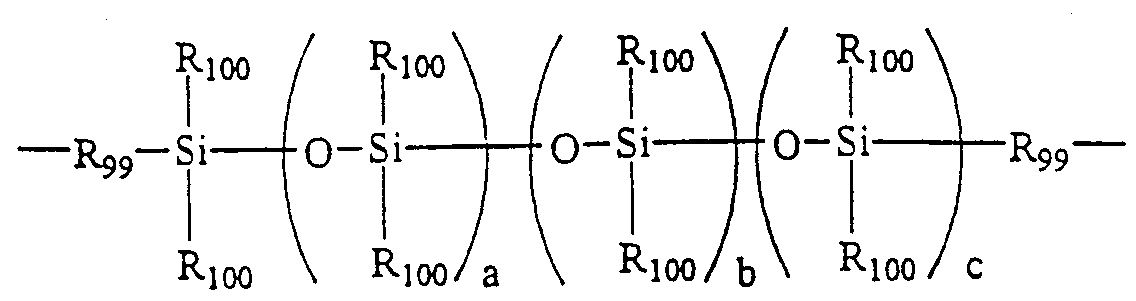
(4) (2) 若しくは (3) 項に記載されたポリアミ ド酸をイミ ド化した後、 偏光紫外線を照射することにより得られるポリイミ ド。 (4) A polyimide obtained by imidizing the polyamic acid described in (2) or (3) and then irradiating it with polarized ultraviolet light.
(5) (4) 項に記載のポリイミ ドからなる薄膜を用いた、 液晶表示素子用配 向膜。 (5) A directing film for a liquid crystal display element, comprising the thin film comprising the polyimide according to the item (4).
(6) (2) 若しくは (3) 項に記載のポリアミ ド酸をイミ ド化した後、 偏光 紫外線を照射し、 ポリイミ ド側鎖の一部を光反応させることで得られる液晶表示 素子用配向膜。 (6) Alignment for liquid crystal display devices obtained by imidizing the polyamide acid described in (2) or (3), and then irradiating polarized ultraviolet rays to cause a photoreaction of a part of the polyimide side chain. film.
(7) (4) 乃至 (6) 項に記載の液晶表示素子用配向膜を備えることを特徴 とする液晶表示素子。 (7) A liquid crystal display device comprising the alignment film for a liquid crystal display device according to any one of (4) to (6).
(8) (7) 項に記載の液晶表示素子において、 液晶組成物が一般式 〔5〕 、 〔6〕 および 〔7〕 力 なる化合物群から選択される化合物を少なくとも 1種含 有することを特徴とする液晶表示素子。 (8) The liquid crystal display device according to (7), wherein the liquid crystal composition comprises at least one compound selected from the group consisting of compounds represented by general formulas (5), (6) and (7). Liquid crystal display element.

(9) (7) 項に記載の液晶表示素子において、 液晶組成物が一般式 〔8〕 お よび 〔9〕 からなる化合物群から選択される化合物を少なくとも 1種含有するこ とを特徴とする液晶表示素子。 (9) The liquid crystal display device according to the above (7), wherein the liquid crystal composition contains at least one compound selected from the group consisting of compounds represented by the general formulas (8) and (9). Liquid crystal display element.

(式中、 R3および R5はそれぞれ独立して炭素数 1〜 10のアルキル基を示し、 この基中の相隣接しない任意のメチレン基は一 O—または— CH=CH—で置換 されていてもよく、 また、 この基中の任意の水素原子はフッ素原子で置換されて もよく ; R4は一 CN基または一 C≡C— CNを示し;環 Eはトランス一 1, 4 —シクロへキシレン、 1, 4—フエ二レン、 1, 3—ジォキサン一 2, 5—ジィ ルまたはピリミジン 2, 5—ジィルを示し;環 Fはトランス一 1 , 4—シクロへ キシレン、 水素原子がフッ素原子に置換されていてもよい 1 , 4—フエ二レン、 またはピリミジン 2, 5—ジィルを示し;環 Gはトランス一 1 , 4—シクロへキ シレンまたは 1, 4—フエ二レンを示し ; Z3は 1 , 2—エチレン、 一 COO— または単結合を示し; L3、 L4および L5はそれぞれ独立して水素原子またはフ ッ素原子を示し; e、 f および gはそれぞれ独立して 0または 1を示す。 ) (10) (7) 項に記載の液晶表示素子において、液晶組成物が一般式 〔10〕 〔1 1〕 および 〔1 2〕— 力 らなる化合物群から選択される化合物を少なくとも Ί 種含有することを特徴とする液晶表示素子。 (Wherein, R 3 and R 5 each independently represent an alkyl group having 1 to 10 carbon atoms, and any non-adjacent methylene group in this group is substituted with 1 O— or —CH = CH—. And any hydrogen atom in this group may be replaced by a fluorine atom; R 4 represents one CN group or one C≡C—CN; ring E represents trans-1,4-cyclo Hexylene, 1,4-phenylene, 1,3-dioxane-1,2,5-diyl or pyrimidine 2,5-diyl; ring F is trans-1,4-cyclohexylene, hydrogen atom is fluorine 1, 4-phenylene, which may be substituted by an atom, Or pyrimidine 2,5-diyl; ring G represents trans-1,4-cyclohexylene or 1,4-phenylene; Z 3 represents 1,2-ethylene, one COO— or a single bond. L 3 , L 4 and L 5 each independently represent a hydrogen atom or a fluorine atom; e, f and g each independently represent 0 or 1. (10) In the liquid crystal display device according to the above mode (7), the liquid crystal composition contains at least at least one compound selected from the group consisting of compounds represented by the general formulas [10], [11] and [12]. A liquid crystal display device characterized in that:

(1 1) (7)項に記載の液晶表示素子において、液晶組成物が前記一般式〔 5〕 . 〔6〕 および 〔7〕 からなる化合物群から選択される化合物を少なくとも 1種含 有し、 第二成分として、 一般式 〔1 3〕 、 〔14〕 および 〔1 5〕 からなる化合 物群から選択される化合物を少なくとも 1種含有することを特徴とする液晶表示 素子。

(式中、 R8および R9はそれぞれ独立して炭素数 1〜10のアルキル基を示し、 この基中の相隣接しない任意のメチレン基は一 O—または一 CH=CH—で置換 されていてもよく、 また、 この基中の任意の水素原子はフッ素原子で置換されて もよく ;環 K、 環 Lおよぴ環 Μはそれぞれ独立して、 トランス一 1, 4—シクロ へキシレン、 ピリミジン 2, 5—ジィルまたは水素原子がフッ素原子に置換され ていてもよい 1, 4—フエ二レンを示し; Ζ6および Ζ7はそれぞれ独立して 1, 2—エチレン、 — C≡C一、 一 COO—、 一 CH=CH—または単結合を示す。 )(Wherein, R 8 and R 9 each independently represent an alkyl group having 1 to 10 carbon atoms, and any non-adjacent methylene group in the group is substituted with 1 O— or 1 CH = CH—. And any hydrogen atom in this group may be replaced by a fluorine atom; ring K, ring L and ring そ れ ぞ れ are each independently trans-1,4-cyclohexylene, pyrimidine 2, 5-Jiiru or 1 hydrogen atoms may be substituted by a fluorine atom, 4-Hue shows a two alkylene; Zeta 6 and Zeta 7 are each independently 1, 2-ethylene, - C [identical to] C one , One COO—, one CH = CH— or a single bond.)
(12) (7)項に記載の液晶表示素子において、液晶組成物が前記一般式〔 8 ] および 〔9〕 力 なる化合物群から選択される化合物を少なくとも 1種含有し、 第二成分として、 前記一般式 〔13〕 、 〔14〕 および 〔1 5〕 カ らなる化合物 群から選択される化合物を少なくとも 1種含有することを特徴とする液晶表示素 子。 (12) In the liquid crystal display device according to item (7), the liquid crystal composition contains at least one compound selected from the group consisting of compounds represented by the general formulas [8] and [9], and as a second component, A liquid crystal display device comprising at least one compound selected from the group consisting of the general formulas [13], [14] and [15].
(1 3) (7)項に記載の液晶表示素子において、液晶組成物が前記一般式〔 1 0〕 、 〔1 1〕 および 〔12〕 からなる化合物群から選択される化合物を少なく とも 1種含有し、 第二成分として、 前記一般式 〔13〕 、 〔14〕 および 〔15〕 からなる化合物群から選択される化合物を少なくとも 1種含有することを特徴と する液晶表示素子。 (13) In the liquid crystal display device according to (7), the liquid crystal composition comprises at least one compound selected from the compound group consisting of the general formulas (10), (11) and (12). A liquid crystal display device comprising: as a second component, at least one compound selected from the compound group consisting of the general formulas [13], [14] and [15].
(14) (7)項に記載の液晶表示素子において、液晶組成物が前記一般式〔 5〕 〔6〕 および 〔7〕 からなる化合物群から選択される化合物を少なくとも 1種含 有し、 第二成分として、 前記一般式 〔8〕 および 〔9〕 からなる化合物群から選 択される化合物を少なくとも 1種含有し、 第三成分として、 前記一般式 〔1 3〕 、 〔14〕 および 〔15〕 力 なる化合物群から選択される化合物を少なくとも 1 種含有することを特徴とする液晶表示素子。
(1 5) (8) 〜 (14) 項に記載の液晶表示素子において、 液晶組成物に、 さらに 1種以上の光学活性化合物を含有することを特徴とする液晶表示素子。 本発明のジァミンは前記一般式 〔1〕 で表わされる。 一般式 (1) における G i部分の構造としては、 炭素数 2〜20の 3価の有機基であれば特に限定されな いが、 具体的に例示すると、

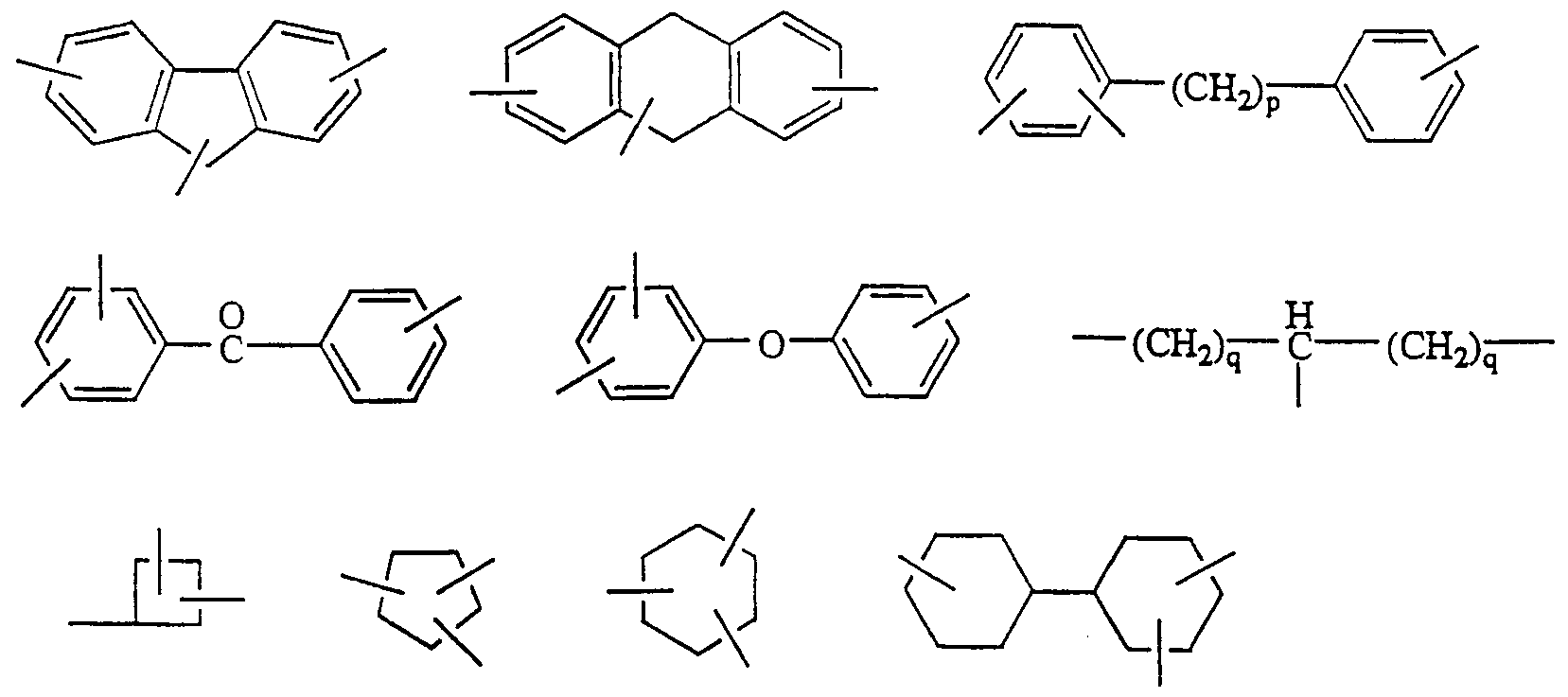

であり、 最も好ましくは、

ジァミノ化合物の製造法の具体例としては、 G 2が単結合の場合は、 ジニト口 アルコール類とァリールマレイミ ドを、 例えば光延反応のような脱水反応によつ て得られる、 ジニトロアルキレン一 α—ァリールマレイミ ドのニトロ基を、 スズ や鉄等の金属と濃塩酸で還元し、 ジァミノ体とする方法で製造できる。 これは以 下の反応式で示される。 As a specific example of a method for producing a diamino compound, when G2 is a single bond, a dinitroalkylene-α-arylmaleimid obtained by a dehydration reaction such as a Mitsunobu reaction between a dinitrate-containing alcohol and arylmaleimide is used. Can be produced by reducing the nitro group of a metal with a metal such as tin or iron with concentrated hydrochloric acid to obtain a diamino form. This is shown by the following reaction formula.

[ H ] [H]
[ 1 ] また、 G 2がエステル結合の場合は、 ジニトロカルボン酸を塩化チォニルゃ五 塩化リンで酸クロリ ドを合成する。 一方、 ァリールマレイン酸無水物とアミノア ルコール類の反応で、 ヒ ドロキシアルキル一 ァリールマレイミ ドを合成する。 そして、 両者をトリエチルァミンやピリジン等の塩基存在下縮合し、 ジニトロェ ステル体とした後、 同様にニトロ基を還元して製造できる。反応式を以下に示す

G 3がエーテル結合の場合は、 ァリ一ルマレイン酸無水物とァミノアルコール 類の反応で、 ヒ ドロキシアルキル— α—ァリールマレイミ ドを合成する。 この化 合物の水酸基を塩化チォニル、 三塩化リン等でハロゲン化し、 ハロアルキル— α ーァリールマレイミ ドとする。 これを、 炭酸カリウム、 水素化ナトリウム等の塩 基存在下、 ジニトロアルコールまたはフエノールと反応して得られた、 ジニトロ エーテルを還元して製造できる。 反応式で示すと以下の通りである。 If G 3 is an ether bond, a reaction of § Li one Rumarein anhydride with § amino alcohols, hydroxycarboxylic alkyl - synthesizing α- Arirumareimi de. The hydroxyl group of this compound is halogenated with thionyl chloride, phosphorus trichloride or the like, to give haloalkyl-α-aryl maleimide. It can be produced by reducing dinitroether obtained by reacting with dinitroalcohol or phenol in the presence of a base such as potassium carbonate or sodium hydride. The reaction formula is as follows.

上述した連結基 G 2の中でより好ましいのは、 単結合、 エステル結合、 ェ一テ ル結合であり、 特に好ましいのは単結合である。 The more preferred among linking groups G 2 described above, a single bond, an ester bond, an E one Te le bond, especially preferred is a single bond.
この様にして合成した側鎖に α、 置換マレイミ ド残基を持つジァミノ化合物 を、 マレイミ ド残基を保持したまま、 一般式 〔1 6〕 で示されるテトラカルボン 酸二無水物との重合反応を行うことにより一般式 〔2〕 で示される構造単位から なる、 側鎖に α、 /3置換マレイミ ド残基を有するポリアミ ド酸溶液を得ることが できる。

G5 環 A及び環 Bは既述の通りである。 このポリアミ ド酸を加熱または 化学的に脱水する等の公知の方法でィミ ド化した後偏光紫外線照射することによ り本発明のポリイミ ドを得ることができる。 偏光紫外線照射によって紫外線の照 射された部分のマレイミ ド残基が重合し、 ラビング処理をすることなく配向膜と して使用することができるのである。 本発明の液晶表示素子用配向膜は、 側鎖 に α、 置換マレイミ ド残基を有する本発明のポリアミ ド酸の溶液を基板に塗布 し、 加熱等によりイミ _ド化した後、 偏光紫外線を照射して膜表面に異方性を付与 することで製造される。 G 5 ring A and ring B are as described above. Heat or heat the polyamide acid The polyimide of the present invention can be obtained by irradiating with polarized ultraviolet light after imidization by a known method such as chemical dehydration. Due to the irradiation of the polarized ultraviolet rays, the maleimide residues in the portions irradiated with the ultraviolet rays are polymerized and can be used as an alignment film without rubbing. The alignment film for a liquid crystal display element of the present invention is obtained by coating a substrate with a solution of the polyamic acid of the present invention having an α-substituted maleimide residue in a side chain, immobilizing the solution by heating or the like, and then applying polarized ultraviolet light. It is manufactured by irradiating the film surface to give anisotropy.
また本発明の別の態様として、 構造単位 [ 2 ] と [ 3 ] からなるポリアミ ド酸 を挙げることができる。 これらの化合物は一般式 [ 1 ] で示されるジァミノ化合 物に、 更に、 後述するような他のジァミンを加えてジァミン成分とし、 これらの ジァミン成分と一般式 [ 1 7 ] で示されるテトラカルボン酸二無水物を、 上述し たように反応させることにより、 ポリアミ ド酸、 更にポリイミ ドを得ることがで さる。 Another embodiment of the present invention is a polyamic acid composed of structural units [2] and [3]. These compounds are obtained by adding a diamine compound represented by the general formula [1] to the diamine compound represented by the general formula [1] to form a diamine component, and adding the diamine component to a tetracarboxylic acid represented by the general formula [17]. By reacting the dianhydride as described above, a polyamic acid and further a polyimide can be obtained.

G 4 を与える炭素数 2〜 3 6の 2価の有機基となるジァミンとしては以下の化 合物を挙げることができるがこれらのジァミンには特に限定されない。 The Jiamin as a divalent organic group having 2-3 6 carbon atoms which gives G 4 may be mentioned the following of compound is not particularly limited to these Jiamin.
即ち、 トリメチレンジァミン、 テトラメチレンジァミン、 へキサメチレンジァ ミン、 4, 4ージメチルヘプタメチレンジァミン、 2, 1 1—ドデカンジァミン 等の脂肪族ジァミン、 ビス (4—ァミノフエニル) エーテル、 ビス (4—ァミノ フエニル) メタン、 ビス (4ーァミノ一 3—メチルフエニル) メタン、 ビス (4 —ァミノ一 3, 5 -ジメチルフエニル) メタン、 ビス (4—ァミノフエ二ル) ス ルフォン、 ビス (4ーァミノフエニル) サルフイ ド、 ビス (4一 (3—アミノフ エノキシ) フエニル) スルフォン、 2, 2—ビス (4 ( 4—アミノフニノキシ) フエニル) プロパン、 ビス (4— ( 4一アミノフエノキシ) フエニル) スルフォ ン、 1, 2—ジァミノベンゼン、 1, 3—ジァミノベンゼン、 1, 4ージァミノ ベンゼン、 1, 4—ジァミノ一 2—ブチルベンゼン、 1 , 4—ジァミノ一 2—ド デシロキシベンゼン、 ベンジジン、 2, 2—ジァミノべンゾフエノン、 4, 4— ジァミノべンゾフエノン、 2, 2—ビス (4—ァミノフエ二ル) プロパン、 1 , 5—ジァミノナフタリン、 1, 5—ジァミノナフタリン、 4 , 4—ジァミノー 3 —ォクチルジフエニルメタン、 2, 2—ビス (4一 (4—アミノフエノキシ) フ ェニノレ) 一 1, 1, 1, 3, 3, 3—へキサフノレオ口プロパン、 4, 4一ビス (4 一アミノフエノキシ) ビフエニル、 1, 2—ビス (4—ァミノフエ二ノレ) ェタン、 1 , 2—ビス (4—ァミノ一 2—メチルフエニル) ェタン、 1, 1—ビス (4一 ( 4—アミノフエノキシ) フエニル) シクロへキサン、 1, 1—ビス (4一 (4 —アミノフエノキシ) フエニル) 一 4一プロビルシクロへキサン、 1, 1一ビス ( 4— ( 4ーァミノベンジル) フエ二ノレ) シクロへキサン、 1, 3—ビス (4一 ( 4ーァミノベンジル) フエニル) プロパン、 1, 4一ビス (4—アミノフエノ キシ) ベンゼン、 ビス一 p—ァミノフエ二ルァニリン等の芳香族ジァミン、 1, 4ージアミノシクロへキサン、 4, 4ージアミノジシクロへキシルメタン、 4, 4—ジァミノ一 3 , 3—ジメチルジシクロへキシノレメタン、 4 , 4—ジァミノー 3, 3—ジメチルジシクロへキシル、 等の脂環式ジァミン、 等を挙げることがで きる。 これらの化合物には異性体を含むものもあるが、 これらの異性体混合物で あってもかまわない。 また、 2種以上の化合物を併用しても良い。 That is, aliphatic diamines such as trimethylene diamine, tetramethylene diamine, hexamethylene diamine, 4,4-dimethylheptamethylene diamine, and 2,11-dodecane diamine, bis (4-aminophenyl) ether, bis (4-aminophenyl) methane, bis (4-amino-3-methylphenyl) methane, bis (4-amino-1,3,5-dimethylphenyl) methane, bis (4-aminophenyl) sulfone, bis (4-aminophenyl) ) Sulfide, bis (4- (4-aminophenyl) phenyl) sulfone, 2,2-bis (4 (4-aminophenyl) phenyl) propane, bis (4- (4-aminophenyl) phenyl) sulfo 1,2-diaminobenzene, 1,3-diaminobenzene, 1,4-diaminobenzene, 1,4-diamino-12-butylbenzene, 1,4-diamino-12-dodecyloxybenzene, benzidine, 2,2- Diaminobenzophenone, 4,4-diaminobenzophenone, 2,2-bis (4-aminophenyl) propane, 1,5-diaminonaphthalene, 1,5-diaminonaphthalene, 4,4-diamino3 —Octyldiphenylmethane, 2,2-bis (4- (4-aminophenoxy) pheninole) 1,1,1,1,3,3,3-hexaphenolic propane, 4,4-bis (4-aminophenoxy) ) Biphenyl, 1,2-bis (4-aminophenyl) ethane, 1,2-bis (4-amino-12-methylphenyl) ethane, 1,1-bis (4-1 (4-aminophenyl) phenyl) Rohexane, 1,1-bis (4- (4-aminophenoxy) phenyl) 1-41-propylcyclohexane, 1,1-bis (4- (4-aminobenzyl) pheninole) cyclohexane, 3-bis (4- (4-aminobenzyl) phenyl) propane, 1,4-bis (4-aminophenoxy) benzene, aromatic diamine such as bis-p-aminophenylaniline, 1,4-diaminocyclohexane, 4,4 Alicyclic diamines such as diaminodicyclohexylmethane, 4,4-diamino-13,3-dimethyldicyclohexynolemethane, 4,4-diamino-3,3-dimethyldicyclohexyl, and the like; it can. Some of these compounds contain isomers, but may be a mixture of these isomers. Further, two or more compounds may be used in combination.
ポリシロキサンを骨格とするジァミンの具体例として、 以下の化合物を例示す ることができる。 The following compounds can be exemplified as specific examples of the diamine having a polysiloxane skeleton.

Η,Ν

(式中 a、 b、 cは 1以上の整数である。 ) (Where a, b, and c are integers of 1 or more.)
本発明で用いられるテトラカルボン酸二無水物は、 一般式 〔1 6〕 または [1 7] で示される。 The tetracarboxylic dianhydride used in the present invention is represented by the general formula [16] or [17].
これらの化合物の具体名を例示すると、 3, 3' , 4, 4'ービフエニルテトラカルボ ン酸ニ無水物、 2, 2', 3, 3'—ビフエニルテトラカルボン酸二無水物、 2,3, 3' , 4'— ビフエニルテトラカルボン酸二無水物、 3, 3', 4, 4' _ベンゾフエノンテトラカル ボン酸二無水物、 2, 3,3' ,4'—ベンゾフエノンテトラカルボン酸二無水物、 Specific examples of these compounds include 3,3 ', 4,4'-biphenyltetracarboxylic dianhydride, 2,2', 3,3'-biphenyltetracarboxylic dianhydride, 2 , 3,3 ', 4'-Biphenyltetracarboxylic dianhydride, 3,3', 4,4'_Benzophenonetetracarboxylic dianhydride, 2,3,3 ', 4'-Benzo Phenonetetracarboxylic dianhydride,
2, 2',3, 3'—べンゾフエノンテトラカルボン酸二無水物、 ビス (3,4—ジカルボキ シフエニル) エーテル二無水物、 ビス (3, 4—ジカルボキシフエニル) スルホン 二無水物、 ビス (3, 4—ジカルボキシフエニル) メタン二無水物、 3, 3' , 4, 4'—へ キサフルォロイソプロピリデンジフタル酸ニ^水物、 3, 3', 4, 4,-ビシク口へキサ ンテトラカルボン酸二無水物、 ビス (3, 4-ジカルボキシシクロへキシル) エーテ ルニ無水物、 ビス (3,4-ジカルボキシシクロへキシル) スルフォン二無水物、 ビ ス (3, 3-ジカルボキシシクロへキシル) メタン二無水物等をあげることができる。 これらの化合物には異性体を含むものもある力 これらの異性体混合物であつて もかまわない。 また、 2種以上の化合物を併用しても良い。 また、 本発明に使用 するテトラカルボン酸二無水物は上記の例示化合物に限定されるものではない。 本発明のポリイミ ド、 液晶配向膜及び液晶表示素子には、 必要に応じて一般式 〔1 8〕 で示されるアミノシリコン化合物を用いても良い。 2,2 ', 3,3'-benzophenonetetracarboxylic dianhydride, bis (3,4-dicarboxyphenyl) ether dianhydride, bis (3,4-dicarboxyphenyl) sulfone dianhydride , Bis (3,4-dicarboxyphenyl) methane dianhydride, 3, 3 ', 4, 4'-hexafluoroisopropylidene diphthalic acid dihydrate, 3, 3', 4, 4 , -Bisic-hexahexanetetracarboxylic dianhydride, bis (3,4-dicarboxycyclohexyl) ether anhydride, bis (3,4-dicarboxycyclohexyl) sulfone dianhydride, bis (3,3-dicarboxycyclohexyl) Methane dianhydride and the like. Some of these compounds contain isomers. It doesn't matter. Further, two or more compounds may be used in combination. Further, the tetracarboxylic dianhydride used in the present invention is not limited to the above exemplified compounds. The polyimide, liquid crystal alignment film, and liquid crystal display device of the present invention may use an aminosilicon compound represented by the general formula [18] as necessary.
H2N-G7- Si— (OR^ ] 式 [ 1 8 ] において G7は炭素数 2〜1 0のアルキレン基若しくはフエ二レン基 であり、 R4 5は炭素数 1〜 1 0のアルキル基、 炭素数 2〜 1 0のアルケニル基、 若しくはフエニル基であり、 R4 6は炭素数 1〜1 0のアルキル基、 炭素数 2〜1 2のァノレケニル基、 フエニル基若しくは炭素数 2〜 1 0のアルコキシアルキル基 であり、 nは 1〜3の整数を示す。 H 2 NG 7 - Si- (G 7 in OR ^] Equation [18] is an alkylene group or phenylene group having a carbon number of 2 to 1 0, R 4 5 is an alkyl group of from 1 to 1 0 carbon atoms , an alkenyl group, or a phenyl group having a carbon number of 2-1 0, R 4 6 is an alkyl group having 1 to 1 0 carbon number 2 to 1 2 of Anorekeniru group carbon, phenyl group or a carbon number from 2 to 1 0 And n represents an integer of 1 to 3.
具体名を例示すると、 3—ァミノプロビルトリメ トキシシラン、 3—アミノブ 口ピルトリエトキシシラン、 3—ァミノプロピルメチルジメ トキシシラン、 3— ァミノプロピルメチルジェトキシシラン、 3—ァミノプロビルトリス (2—メ ト キシエトキシ) シラン、 2—アミノエチルトリメ トキシシラン、 2—アミノエチ ノレトリエトキシシラン、 2—アミノエチルメチルジメ トキシシラン、 2—ァミノ ェチルメチルジェトキシシラン、 4一アミノブチルトリメ トキシシラン、 4ーァ ミノフエニルトリメ トキシシラン、 4ーァミノフエニルトリエトキシシラン、 4 ーァミノフエ二ルメチルジメ トキシシラン、 4—ァミノフエ二ルメチルジェトキ シシラン、 4—ァミノフエニルトリス (2—メ トキシエトキシ) シラン、 3— ( 4 ーァミノフエニル) プロビルトリメ トキシシラン、 3— ( 4—ァミノフエ二ル) プロピ トリエトキシシラン、 3—ァミノフエニルトリメ トキシシラン、 3—ァ ミノフエニルトリエトキシシラン、 3— ( 4—ァミノフエニル) プロピルメチル ジメ トキシシラン、 3— (4—ァミノフエ二ル) プロピルメチルジェトキシシラ ン、 3—ァミノフエ二ルメチルジメ トキシシラン、 3—ァミノフエニルメチルジ エトキシシランなどをあげることができる。 Specific examples include 3-aminopropyl trimethoxysilane, 3-aminobutyryltriethoxysilane, 3-aminopropylmethyldimethoxysilane, 3-aminopropylmethylethoxysilane, and 3-aminopropyl tris. (2-Methoxyethoxy) silane, 2-aminoethyltrimethoxysilane, 2-aminoethyltriethoxysilane, 2-aminoethylmethyldimethoxysilane, 2-aminoethylmethylethoxysilane, 4-aminobutyltrimethoxysilane, 4 -Aminophenyltrimethoxysilane, 4-Aminophenyltriethoxysilane, 4-Aminophenylmethyldimethoxysilane, 4-Aminophenylmethylethoxysilane, 4-Aminophenyltris (2-Methoxyethoxy) silane, 3- (4-Aminophenyl) Provir trimethoxysilane, 3- (4-aminophenyl) propyltriethoxysilane, 3-aminophenyltrimethoxysilane, 3-aminophenyltriethoxysilane, 3- (4-aminophenyl) propylmethyl dimethoxysilane, 3- (4 —Aminophenyl) Propylmethylethoxyethoxysilane, 3-aminophenylmethyldimethoxysilane, 3-aminophenylmethyldiethoxysilane, and the like.
上述したァミノ化合物、 ジァミン、 テトラカルボン酸及びジァミノシリコン化 合物を N—メチルー 2—ピロリ ドン (NM P ) 等の公知の溶媒の存在下、 公知の 方法で酸無水物基とアミノ基とを反応させることにより本発明のポリイミ ド前駆 体であるポリアミ ド酸を得ることができる。 Amino compounds, diamines, tetracarboxylic acids and diaminosilicones described above The compound is reacted with an acid anhydride group and an amino group in a known manner in the presence of a known solvent such as N-methyl-2-pyrrolidone (NMP) to obtain a polyimide, which is a polyimide precursor of the present invention. Doic acid can be obtained.
この反応において、 一般式 〔1〕 で示されるジァミノ化合物は、 好ましくは全 ァミンのうちの 1 0モル0 /0以上であり、 より好ましくは 5 0モル0 /0以上である。 この量が減少すると感光性が低下し、 偏光による異方性が発生し難くなる傾向に 有る。 また、 ァミノシリコン化合物は全原料中の 3 0モル%以下が好ましく、 よ り好ましくは 1 0モル0 /0以下である。 尚、 これらの原料は、 ランダム共重合を行 つてもよく、 ブロック共重合を行ってもよく、 異なる組成で (共) 重合したポリ を混合してもよい。 非対称構造のテトラカルボン酸二無水物を用いた場合に は、 ポリイミ ド分子中におけるそれとジァミンとの結合形態は必ずしも一定方向 である必要はなく、 頭一尾構造と頭一頭構造が混在してもよい。 又、 複数のテト ラカルボン酸二無水物若しくは複数の各ジァミンからなるポリイミ ドであっても 構わない。 In this reaction, the Jiamino compound represented by the general formula (1), preferably at 1 0 mole 0/0 or more of the total Amin, more preferably 5 0 mole 0/0 above. When this amount is reduced, the photosensitivity is reduced and the anisotropy due to polarized light tends to be less likely to occur. Further, Aminoshirikon compound 3 0 mol% or less are preferred in the total feed, yo Ri preferably 1 0 mole 0/0 or less. These raw materials may be subjected to random copolymerization, block copolymerization, or a mixture of (co) polymerized polymers having different compositions. When tetracarboxylic dianhydride having an asymmetric structure is used, the bond between it and diamine in the polyimide molecule does not necessarily have to be in a fixed direction, and even if head-to-tail structure and head-to-head structure coexist. Good. Further, it may be a polyimide comprising a plurality of tetracarboxylic dianhydrides or a plurality of diamines.
前記一般式 〔1〕 で示される化合物、 及び一般式 〔2〕 で示される構造単位に おいて、 スぺーサ一の長さ G3は炭素数 0 1 2が好ましく、 さらに好ましくは 0 6である。 炭素数が 1 2以上では耐熱性に劣る構造になるため、 光架橋後の 膜の熱安定性に悪影響をおよぼす可能性がある。 The compound represented by the general formula [1], and Oite the structural unit represented by the general formula (2), the length G 3 of the spacer one preferably several 0 1 2 carbon atoms, more preferably at 0 6 is there. If the number of carbon atoms is 12 or more, the structure will be inferior in heat resistance, and may adversely affect the thermal stability of the film after photocrosslinking.
一般式 〔1〕 〔2〕 において、 側鎖イミ ド環の α位に置換されるベンゼン環 の数 mは 1 2が好ましい。 環数がこれ以上になると置換基が剛直すぎて、 得ら れたポリアミ ド酸の溶解性、 塗布性が極端に低下したり、 立体障害で光反応を阻 害する危険性が生じる。 In the general formulas [1] and [2], the number m of the benzene ring substituted at the α-position of the side chain imido ring is preferably 12. If the number of rings is more than this, the substituents are too rigid, and the resulting polyamic acid may have extremely low solubility and applicability, or may have a risk of hindering the photoreaction by steric hindrance.
一般式 〔1〕 〔2〕 において置換基 X Yとして、 具体的に次の原子、 官能 基を挙げることができる力 必ずしもこれに限定されるものではない。 すなわち 水素、 フッ素、 塩素、 シァノ基、 ニトロ基、 シクロプロピル基、 シクロブチル基、 シクロペンチル基、 メチルシクロプロピル基、 ェチルシクロプロピル基、 プロピ ノレシクロプロピル基、 n—ブチルシクロプロピル基、 メチルシクロブチル基、 ェ チルシクロブチル基、 プロピルシクロブチル基、 n—ブチルシクロブチル基、 メ チルシクロペンチル基、 ェチルシクロペンチル基、 プロビルシクロペンチル基、 n—ブチルシク口ペンチル基等の原子または環状置換基が挙げられる。 In the general formulas [1] and [2], the substituent XY specifically includes the following atoms and functional groups. The substituent is not necessarily limited thereto. Hydrogen, fluorine, chlorine, cyano, nitro, cyclopropyl, cyclobutyl, cyclopentyl, methylcyclopropyl, ethylcyclopropyl, propionolecyclopropyl, n-butylcyclopropyl, methylcyclobutyl Group, ethylcyclobutyl group, propylcyclobutyl group, n-butylcyclobutyl group, Examples include atoms or cyclic substituents such as a tylcyclopentyl group, an ethylcyclopentyl group, a propylcyclopentyl group, and an n-butylcyclopentyl group.
アルキル基としてはメチル基、 ェチル基、 n—プロピル基、 i s o—プロピノレ 基、 n—ブチル基、 i s o—ブチル基、 s e c—ブチル基、 t—ブチル基、 n— ペンチノレ基、 i s o—ペンチル基、 n e o—ペンチノレ基、 t一ペンチノレ基、 n— へキシル基、 i s o—へキシル基、 ヘプチル基、 ォクチル基、 ノニル基、 デシル 基、 ゥンデシル基、 ドデシル基等が挙げられる。 Examples of the alkyl group a methyl group, Echiru group, n- propyl group, i so - Puropinore group, n- butyl group, iso- butyl group, sec- butyl group, t - butyl group, n- Penchinore group, iso- pentyl , Neo-pentynole, t-pentynole, n-hexyl, iso-hexyl, heptyl, octyl, nonyl, decyl, pendecyl, dodecyl and the like.
ノヽロアルキル基としてはトリフルォロメチル基、 トリクロロメチル基、 トリブ ロモメチル基、 トリョードメチル基、 ペンタフルォロェチル基、 ペンタクロロェ チル基、 ペンタブロモェチル基、 ペンタョ一ドエチル基、 1, 1, 1—トリクロ 口ェチル基、 1, 1 , 1—トリフルォロェチル基、 1 , 1, 1ートリブ口モェチ ル基、 1, 1, 1ートリヨ一ドエチル基、 ヘプタフルォロプロピル基、 ヘプタク ロロプロピル基、 ヘプタブロモプロピル基、 ヘプタョ一ドプロピル基、 1, 1, Noloalkyl groups include trifluoromethyl group, trichloromethyl group, trifluoromethyl group, trimethyl group, pentafluoroethyl group, pentachloroethyl group, pentabromoethyl group, pentanoethyl group, 1,1,1- Trichloromethyl group, 1,1,1-trifluoroethyl group, 1,1,1-tributylmethyl group, 1,1,1-triiodoethyl group, heptafluoropropyl group, heptachloropropyl group, hepta Bromopropyl, heptanopropyl, 1, 1,
1一トリフルォロプロピル基、 1, 1, 1—トリクロ口プロピル基、 1, 1, 1 一トリブロモプロピル基、 1, 1 , 1一トリョードプロピル基、 ノナフルォロブ チル基、 ノナクロロブチル基、 ノナブロモブチル基、 ノナョードブチル基、 ペル フノレオ口ペンチノレ基、 ぺノレクロ口ペンチノレ基、 ぺノレブロモペンチノレ基、 ぺノレフノレ ォ口へキシノレ基、 ぺノレクロ口へキシノレ基、 ぺノレブロモへキシノレ基、 ぺノレョードへ キシル基、 ペルフルォ口へプチル基、 ペルクロ口へプチノレ基、 ペルブロモへプチ ノレ基、 ペルフルォロォクチル基、 ペルクロロォクチル基、 ペルブロモォクチル基、 ペルフノレオロノ二ノレ基、 ぺノレクロロノニル基、 ペルブロモノ二ノレ基、 ぺノレフノレオ 口デシル基、 ペルクロ口デシル基、 ペルブロモデシル基等が挙げられる。 1-Trifluoropropyl group, 1,1,1-trichloropropyl group, 1,1,1-Tribromopropyl group, 1,1,1-Tridopropyl group, Nonafluorobutyl group, Nonachlorobutyl group , Nonabromobutyl group, Nonanod butyl group, Perfenole pentinole group, Penolecro pentinole group, Penolebromopentinole group, Penolenohexole group, Hexenole hexolene group, Penebromohexolene group, Penolele Xyl group, Perfluoro heptyl group, Perclo heptinol group, Perbromoheptinol group, Perfluorooctyl group, Perchlorooctyl group, Perbromooctyl group, Perphnolerononinole group, Penolechlorononyl group, Perbromono Dinole group, ぺ norefnoleo mouth decyl group, perchlore mouth decyl group, Ruburomodeshiru group, and the like.
アルコキシ基、 ノヽロアルコキシ基としてはメ トキシ基、 エトキシ基、 n—プロ ポキシ基、 i s o—プロポキシ基、 n—ブトキシ基、 i s o—ブトキシ基、 s e c—ブトキシ基、 t—ブトキシ基、 n—ペンチルォキシ基、 i s o—ペンチルォ キシ基、 n e o—ペンチルォキシ基、 t—ペンチルォキシ基、 n—へキシルォキ シ基、 i s o —へキシルォキシ基、 ヘプチルォキシ基、 ォクチルォキシ基、 ノニ ルォキシ基、 デシルォキシ基、 ゥンデシルォキシ基、 ドデシルォキシ基、 トリフ ルォロメ トキシ基、 トリクロロメ トキシ基、 トリブロモメ トキシ基、 トリョ一ド メ トキシ基、 ペンタフノレォロエトキシ基、 ベンタクロロエトキシ基、 ペンタブ口 モェトキシ基、 ペンタョ一ドエトキシ基、 1, 1 , 1一トリクロ口エトキシ基、Examples of the alkoxy group and the alkoxy group include methoxy, ethoxy, n-propoxy, iso-propoxy, n-butoxy, iso-butoxy, sec-butoxy, t-butoxy, and n-pentyloxy. Group, iso-pentyloxy group, neo-pentyloxy group, t-pentyloxy group, n-hexyloxy group, iso-hexyloxy group, heptyloxy group, octyloxy group, nonyloxy group, decyloxy group, pendecyloxy group, dodecyloxy group, Trif Fluoromethoxy group, trichloromethoxy group, tribromomethoxy group, tolodomethoxy group, pentaphenylenoethoxy group, pentachloroethoxy group, pentabokumoethoxy group, pentanoethoxyethoxy group, 1,1,11-trichloroguchi Ethoxy groups,
1, 1 , 1一トリフルォロエトキシ基、 1, 1 , 1 _トリブロモエトキシ基、 1 . 1, 1—トリヨ一ドエトキシ基、 ヘプタフルォロプロポキシ基、 ヘプタクロロプ 口ポキシ基、 ヘプタブロモプロポキシ基、 ヘプタョードプロポキシ基、 1, 1, 1—トリフルォロプロポキシ基、 1 , 1 , 1—トリクロロブ口ポキシ基、 1, 1, 1—トリブロモプロポキシ基、 1, 1, 1一トリョードプロポキシ基、 ノナフノレ ォロブトキシ基、 ノナクロロブトキシ基、 ノナブロモブトキシ基、 ノナョードブ トキシ基、 ペルフルォロペンチルォキシ基、 ペルクロ口ペンチルォキシ基、 ペル ブロモペンチノレォキシ基、 ぺノレフノレオ口へキシノレォキシ基、 ぺノレクロ口へキシノレ ォキシ基、 ペルブロモへキシルォキシ基、 ベルョードへキシルォキシ基、 ペルフ ルォ口へプチルォキシ基、 ペルクロ口へプチルォキシ基、 ペルブロモヘプチルォ キシ基、 ペルフルォロォクチルォキシ基、 ペルクロロォクチルォキシ基、 ペルブ ロモォクチルォキシ基、 ペルフルォロノ二ルォキシ基、 ペルクロロノニルォキシ 基、 ペルブロモノニルォキシ基、 ペルフルォロデシルォキシ基、 ペルクロ口デシ ルォキシ基、 ペルブ口モデシルォキシ基等が挙げられる。 1,1,1-Trifluoroethoxy group, 1,1,1-Tribromoethoxy group, 1.1,1-Triiodoethoxy group, Heptafluoropropoxy group, Heptachloropropoxyoxy group, Heptabromopropoxy group , Heptad propoxy, 1,1,1-trifluoropropoxy, 1,1,1-trichlorobutoxy, 1,1,1-tribromopropoxy, 1,1,1 L-propoxy group, nonaphnolebutoxy group, nonachlorobutoxy group, nonabromobutoxy group, nonaodobutoxy group, perfluoropentyloxy group, perclopentyl pentyloxy group, perbromopentinoleoxy group, hexenoleoxy hexinoleoxy Group, phenolic hexyloxy group, perbromohexyloxy group, berudohexyloxy group, perfluoro Heptyloxy group, perchloro mouth heptyloxy group, perbromoheptyloxy group, perfluorooctyloxy group, perchlorooctyloxy group, perbromooctyloxy group, perfluorononyloxy group, perchlorononyl Oxy, perbromononyloxy, perfluorodecyloxy, perchlorodecyloxy, peruvodidecyloxy, and the like.
前記置換基の中で好ましくは水素、 フッ素、 シァノ基、 メチル基、 ェチル基、 n—プロピル基、 n—ブチル基、 n—ペンチル基、 n—へキシル基、 ヘプチル基、 ォクチル基、 ノニル基、 デシル基、 ゥンデシル基、 ドデシル基、 ヘプタフルォロ プロピル基、 ノナフルォロブチル基、 ペルフルォロペンチル基、 ペルフルォ口へ キシル基、 ペルフルォ口へプチル基、 ペルフルォロォクチル基、 ペルフルォロノ ニル基、 ペルフルォロデシル基、 メ トキシ基、 エトキシ基、 n—プロポキシ基、 n—ブトキシ基、 n—ペンチルォキシ基、 n—へキシルォキシ基、 へプチルォキ シ基、 ォクチルォキシ基、 ノニルォキシ基、 デシルォキシ基、 ゥンデシルォキシ 基、 ドデシルォキシ基、 ヘプタフルォロプロポキシ基、 ノナフルォロブトキシ基、 ペルフノレオ口ペンチノレォキシ基、 ペルフルォ口へキシルォキシ基、 ペルフルォロ ヘプチルォキシ基、 ベルフルォロォクチルォキシ基、 ペルフルォロノニルォキシ 基、 ペルフルォロデシルォキシ基が挙げられる。 さらに好ましくは水素、 フッ素、 シァノ基、 n—プロピル基、 n—ブチル基、 n—ペンチル基、 n キシル基、 ヘプチル基、 ォクチル基、 ノニル基、 デシル基、 ゥンデシル基、 ドデシル基、 ぺ ノレフノレオ口へキシノレ基、 ぺノレフノレォ口へプチノレ基、 ぺノレフノレォロォクチノレ基、 ぺ ルフルォロノ二ル基、 ペルフルォロデシル基、 n—へキシルォキシ基、 へプチノレ ォキシ基、 ォクチルォキシ基、 ノニルォキシ基、 デシルォキシ基、 ゥンデシルォ キシ基、 ドデシルォキシ基、 ペルフルォ口へキシルォキシ基、 ペルフルォロヘプ チルォキシ基、 ペルフルォロォクチルォキシ基、 ペルフルォロノニルォキシ基、 ペルフルォロデシルォキシ基である。 Of the above substituents, preferably hydrogen, fluorine, cyano, methyl, ethyl, n-propyl, n-butyl, n-pentyl, n-hexyl, heptyl, octyl, nonyl , Decyl, pendecyl, dodecyl, heptafluoropropyl, nonafluorobutyl, perfluoropentyl, perfluorohexyl, perfluoroheptyl, perfluorooctyl, perfluorononyl , Perfluorodecyl, methoxy, ethoxy, n-propoxy, n-butoxy, n-pentyloxy, n-hexyloxy, heptyloxy, octyloxy, nonyloxy, decyloxy, Pendecyloxy, dodecyloxy, heptafluoropropoxy, nonafluorobutoxy Perufunoreo port Penchinoreokishi group, Kishiruokishi group to Perufuruo port, Perufuruoro Hepuchiruokishi group, Bell full O Roo lipped Ruo alkoxy group, per full O b nonyl O carboxymethyl And perfluorodecyloxy groups. More preferably, hydrogen, fluorine, cyano group, n-propyl group, n-butyl group, n-pentyl group, n-xyl group, heptyl group, octyl group, nonyl group, decyl group, pendecyl group, dodecyl group, and Hexinole group, ぺ / レ / レ / フ / へ / チ / ぺ / レ / チ / チ / チ / チ / チ / チ / チ / チ / チ / チ / チ / チ / チ / チ / チ / チ /, Decyloxy group, decyloxy group, dodecyloxy group, perfluorohexyloxy group, perfluoroheptyloxy group, perfluorooctyloxy group, perfluorononyloxy group, and perfluorodecyloxy group.
本発明の液晶表示素子用配向膜に用いるポリイミ ドを製造するには、 一般式 〔 2〕 〔 3〕 で示される構造単位を有するポリアミ ド酸の溶液を基板上に塗布 し、 1 5 0 3 0 0 °Cの温度で加熱処理して脱水反応させることにより、 ポリイ ミ ド薄膜を基板上に形成する方法、 またはポリアミ ド酸を無水酢酸等を用いて化 学的に脱水反応させポリイミ ドとした後に、 その溶液を基板上に塗布、 乾燥して 薄膜を形成する方法が好ましい。 In order to produce a polyimide used for an alignment film for a liquid crystal display element of the present invention, a solution of a polyamic acid having a structural unit represented by the general formula [2] or [3] is applied on a substrate. A method of forming a polyimide thin film on a substrate by heating at a temperature of 00 ° C to cause a dehydration reaction, or a method of chemically dehydrating a polyamic acid with acetic anhydride or the like to form a polyimide. After that, a method of applying the solution on a substrate and drying to form a thin film is preferable.
本発明の液晶表示素子用配向膜に用いられる、 一般式 〔2〕 〔 3〕 で示され るポリアミ ド酸に使用される溶剤は、 通常の液晶表示素子用配向膜で使用されて いる溶剤を使用することができる。 すなわちこれらの高分子化合物に対して、 親 溶剤である非プロ トン性極性有機溶剤 ( N—メチルー 2—ピロリ ドン、 ジメチル イミ ドゾリジノン、 N—メチルカプロラクタム、 N—メチルプロピオンァミ ド、 N , N—ジメチルァセトアミ ド、 ジメチルスルホキシド、 N , Nジメチルホルム アミ ド、 N N—ジェチルホルムアミ ド、 ジェチルァセトアミ ド、 および γ—ブ チルラク トン等) を例示できる。 The solvent used for the polyamic acid represented by the general formulas (2) and (3) used for the alignment film for a liquid crystal display element of the present invention is a solvent used for a normal alignment film for a liquid crystal display element. Can be used. That is, non-protonic polar organic solvents (N-methyl-2-pyrrolidone, dimethylimidozolidinone, N-methylcaprolactam, N-methylpropionamide, N, N —Dimethylacetamide, dimethylsulfoxide, N, N-dimethylformamide, NN-getylformamide, getylacetamide, γ-butyrolactone, etc.).
さらに必要により塗布性改善などの目的で表面張力の低い他の溶剤系 (乳酸ァ ルキル、 3—メチル, 3—メ トキシブタノール、 テトラリン、 イソホロン、 ェチ レングリコーノレモノァノレキノレエ一テノレ (エチレングリコ一ノレモノブチノレエ一テノレ 等) 、 ジエチレングリコールモノアルキルエーテル (ジエチレングリコールモノ ェチルエーテル等) エチレングリコールモノアルキルまたはフエニルァセテ— ト、 トリエチレングリコールモノアルキルエーテル、 プロピレングリコールモノ ァノレキルエーテノレ (プロピレングリコールモノブチルエーテル等) 、 マロン酸ジ アルキル (マロン酸ジェチル等) 等) の例を挙げることができる。 これらの溶剤 は、 先の親溶剤に対して貧溶剤的なものが多い。 Furthermore, if necessary, other solvent systems with low surface tension (such as alkyl lactate, 3-methyl, 3-methoxybutanol, tetralin, isophorone, and ethylene glycolone) can be used to improve coating properties. Etc.), diethylene glycol monoalkyl ether (such as diethylene glycol monoethyl ether), ethylene glycol monoalkyl or phenylacetate , Triethylene glycol monoalkyl ether, propylene glycol mono anolyalkyl ether (such as propylene glycol monobutyl ether), and dialkyl malonate (such as getyl malonate). Many of these solvents are poor solvents relative to the previous lyophilic solvents.
これらの溶剤で溶解された溶液を液晶表示素子を形成する基板へ塗布する方法 として、 通常使用されている方法が使用可能である。 例えば、 スピンナ一法、 印 刷法、 デイツビング法、 滴下法等によって塗布することが可能である。 As a method of applying a solution dissolved in these solvents to a substrate on which a liquid crystal display element is formed, a commonly used method can be used. For example, it can be applied by a spinner method, a printing method, a dive method, a dropping method, or the like.
また、これらの溶液を塗布した後の溶剤の乾燥に要する加熱処理等においても、 通常の液晶表示素子用配向膜で使用している手法と同様な方法で実施することが 可能である。 例えば、 オーブン、 ホットプレート、 赤外炉中等で加熱処理するこ とが可能である。 溶液を塗布した後は、 比較的低温で溶剤を蒸発させた後、 1 5 0-300 °C程度の温度で、 好ましくは 180〜 250 °Cで加熱処理することが 好ましい。 本発明のポリアミ ド酸溶液には、 塗布性を改良する等の目的で用いら れる界面活性剤や帯電防止の目的等で用いられる帯電防止剤を添加することも可 能である。 あるいは、 さらに基板との密着性を向上させる為にシランカップリン グ剤、 チタン系のカツプリング剤を配合することも可能である。 Also, the heat treatment required for drying the solvent after applying these solutions can be carried out in the same manner as the method used for the ordinary alignment film for a liquid crystal display element. For example, heat treatment can be performed in an oven, a hot plate, an infrared furnace, or the like. After applying the solution, it is preferable to evaporate the solvent at a relatively low temperature and then heat-treat it at a temperature of about 150 to 300 ° C, preferably 180 to 250 ° C. The polyamic acid solution of the present invention may contain a surfactant used for the purpose of improving coating properties and an antistatic agent used for the purpose of antistatic. Alternatively, a silane coupling agent or a titanium-based coupling agent can be added to further improve the adhesion to the substrate.
続いて、 このポリイミ ド薄膜に偏光紫外線を照射して膜表面に異方性を付与す るが、 本発明の液晶表示素子用配向膜に用いる感光性基である、 ひ、 3置換マレ イミ ド基に照射する光の波長は、 200〜410 nmが好ましく、 更に好ましく は 3 1 0〜 380 nmである。 これらの偏光紫外線の露光量は 0. 05〜1 5. 0 J /cm2で、 好ましくは 0. 1〜1 0. 0 J/cm2であり、 更に好ましくは 0. 1〜5. 0 jZcm2である。 Subsequently, the polyimide thin film is irradiated with polarized ultraviolet light to impart anisotropy to the film surface. The photosensitive group used in the alignment film for a liquid crystal display element of the present invention, i.e., 3-substituted maleimide The wavelength of the light applied to the group is preferably from 200 to 410 nm, more preferably from 310 to 380 nm. Exposure of these polarized ultraviolet is 0. 05~1 5. 0 J / cm 2 , preferably 0. 1~1 0. 0 J / cm 2 , more preferably 0. 1~5. 0 jZcm 2
液晶表示素子として用いる基板は通常基板上に電極、 具体的には I TO (酸化 インジウム一酸化スズ) や酸化スズの透明電極が形成されたものであるが、 さら にこの電極と基板の間に、 基板からのアルカリ溶出を防止するための絶縁膜、 力 ラ一フィルター、 カラーフィルターオーバーコ一ト等の保護膜を設けてもよく、 電極上に絶縁膜、 カラーフィルタ一膜などのォ一バーコ一ト膜を設けてもよい。 また電極上に T FT (Th i n— F i l m— T r a n s i s t o r ) 素子、 M I M (Me t a l— I n s u l a t o r -Me t a 1 ) 素子などの能動素子を形成 していてもよレ、。 これらの電極、 アンダーコート、 その他の液晶セル内の構成は、 従来の液晶表示素子の構成が使用可能である。 The substrate used as a liquid crystal display element usually has an electrode, specifically, a transparent electrode of ITO (indium tin oxide) or tin oxide formed on the substrate. An insulating film for preventing alkali elution from the substrate, a protective film such as a color filter, a color filter overcoat, etc. may be provided, and an overcoat such as an insulating film, a color filter film, etc. may be provided on the electrode. A film may be provided. A TFT (Thin-Film-Transistor) element, MI Active elements such as M (Metal—Insulator-Meta1) elements may be formed. The configuration of the conventional liquid crystal display element can be used for these electrodes, undercoat, and other configurations in the liquid crystal cell.
このように形成された基板を使用してセル化し、 液晶を注入し、 注入口を封止 して液晶表示素子を作る。 この封入される液晶としては、 通常のネマチック液晶 の他、 二色性色素を添加した液晶等種々の液晶が使用できる。 Using the substrate thus formed, cells are formed, liquid crystal is injected, and the injection port is sealed to produce a liquid crystal display element. As the liquid crystal to be enclosed, various liquid crystals such as a liquid crystal to which a dichroic dye is added can be used in addition to a normal nematic liquid crystal.
本発明において、 本配向膜と組み合わせて好ましく用いることのできる液晶組 成物を具体的に例示すると、 下記一般式 〔5〕 、 〔6〕 および 〔7〕 からなる化 合物群から選択される化合物を少なくとも 1種含有するものを挙げることができ る。 Specific examples of the liquid crystal composition that can be preferably used in combination with the present alignment film in the present invention include those selected from the group consisting of the following general formulas (5), (6) and (7) Those containing at least one compound can be mentioned.
また、 下記一般式 〔8〕 および 〔9〕 からなる化合物群から選択される化合物 を少なくとも 1種含有する液晶組成物を挙げることができる。 In addition, a liquid crystal composition containing at least one compound selected from the group consisting of compounds represented by the following general formulas [8] and [9] can be given.
また、 下記一般式 〔10〕 、 〔1 1〕 および 〔12〕 からなる化合物群から選 択される化合物を少なくとも 1種含有する液晶組成物を挙げることができる。 さらに、 前記一般式 〔5〕 、 〔6〕 および 〔7〕 からなる化合物群から選択さ れる化合物を少なくとも 1種含有し、 第二成分として、 下記一般式〔1 3〕 、 〔1 4〕 および 〔1 5〕 からなる化合物群から選択される化合物を少なくとも 1種含 有する液晶組成物を挙げることができる。 Further, a liquid crystal composition containing at least one compound selected from the group consisting of the following general formulas [10], [11] and [12] can be mentioned. Further, it contains at least one compound selected from the compound group consisting of the general formulas (5), (6) and (7), and as a second component, the following general formulas (13), (14) and Examples of the liquid crystal composition include at least one compound selected from the compound group consisting of [15].
さらに、 前記一般式 〔8〕 および 〔9〕 からなる化合物群から選択される化合 物を少なくとも 1種含有し、 第二成分として、 前記一般式 〔1 3〕 、 〔14〕 お よび 〔1 5〕 力^なる化合物群から選択される化合物を少なくとも 1種含有する 液晶組成物を挙げることができる。 Furthermore, it contains at least one compound selected from the compound group consisting of the general formulas [8] and [9], and as the second component, the general formulas [13], [14] and [15] And a liquid crystal composition containing at least one compound selected from the group consisting of compounds.
さらに、 前記一般式 〔10〕 、 〔1 1〕 および 〔1 2〕 からなる化合物群から 選択される化合物を少なくとも 1種含有し、第二成分として、前記一般式〔1 3〕 . 〔14〕 および 〔1 5〕 からなる化合物群から選択される化合物を少なくとも 1 種含有する液晶組成物を挙げることができる。 Further, it contains at least one compound selected from the compound group consisting of the general formulas (10), (11) and (12), and as a second component, the general formula (13). And a liquid crystal composition containing at least one compound selected from the compound group consisting of [15].
さらに、 前記一般式 〔5〕 、 〔6〕 および 〔7〕 からなる化合物群から選択さ れる化合物を少なくとも 1種含有し、 第二成分として、 前記一般式 〔8〕 および 〔9〕 からなる化合物群から選択される化合物を少なくとも 1種含有し、 第三成 分として、 前記一般式 〔1 3〕 、 〔1 4〕 および 〔1 5〕 からなる化合物群から 選択される化合物を少なくとも 1種含有する液晶組成物を挙げることができる。 また、 前記液晶組成物に 1種以上の光学活性化合物を含有して使用することも 何ら差し支えない。 Furthermore, it contains at least one compound selected from the compound group consisting of the general formulas (5), (6) and (7), and as a second component, the general formula (8) and It contains at least one compound selected from the compound group consisting of (9), and is selected from the compound group consisting of the general formulas (13), (14) and (15) as a third component. A liquid crystal composition containing at least one compound can be mentioned. Further, the liquid crystal composition may contain at least one optically active compound for use.
一般式 〔5〕 〜 〔7〕 の化合物として、 好ましくは式 (5 — 1 ) から式 (7— 5 3 ) で表される化合物を挙げることができる。 Preferred examples of the compounds of the general formulas [5] to [7] include compounds represented by the formulas (5-1) to (7-53).

(6-c) (6-c)
(8-i) (8-i)
(i- ) (i-)


(6-4)

(6-7)

-0CF3 (6-10)


^6£0/66<ΙΓ/Χ3<Ι S90/00 O/W


ε 90/00 O/W ε 90/00 O / W

4 Four
一般式 〔5〕 〜 〔7〕 の化合物は誘電異方性値が正の化合物で、 熱的、 化学的 安定性に優れており、 特に電圧保持率の高い、 あるいは比抵抗値が大きいといつ た高信頼性が要求される T FT用の液晶組成物を調製する際に不可欠な化合物で ある。 The compounds of the general formulas [5] to [7] are compounds having a positive dielectric anisotropy value, having excellent thermal and chemical stability, especially when the voltage holding ratio is high or the specific resistance value is large. It is an indispensable compound for preparing liquid crystal compositions for TFTs that require high reliability.
一般式 〔8〕 、 〔9〕 の化合物として、 好ましくは式 (8— 1) 〜 (9— 3) の化合物を挙げることができる。 Preferred examples of the compounds of the general formulas [8] and [9] include compounds of the formulas (8-1) to (9-3).
(iI-8) NO (iI-8) NO
(91-s) - Q~^}~Qr (91 - s) -Q ~ ^} ~ Qr
(n-s) Mn- _V- W (ns) M n- _ V- W
(Ρΐ-8) NO (Ρΐ-8) NO

SP6€0/66dT/lDd zz SP6 € 0 / 66dT / lDd zz
€^90/00 OM ioυ ,〇€ ^ 90/00 OM ioυ, 〇
S) (O S) (O
s) z-

() ()
()s () s
—般式 〔8〕 、 〔9〕 の化合物は誘電異方性値が正でその値が大きく、 特にし きい値電圧を小さくする目的で使用される。 また、 粘度調整、 屈折率異方性の調 整、透明点を高くする等のネマチックレンジを広げるのにも使用される。 さらに、 しきい値電圧の急峻性を改良する目的にも使用される。 —The compounds of general formulas [8] and [9] have a positive and large dielectric anisotropy value, and are used particularly for the purpose of reducing the threshold voltage. It is also used to extend the nematic range, such as adjusting viscosity, adjusting refractive index anisotropy, and increasing the clearing point. Further, it is used for the purpose of improving the sharpness of the threshold voltage.
—般式 〔10〕 〜 〔1 2〕 の化合物として、 好ましくは式 (10— 1) 〜 (1 2-3) の化合物を挙げることができる。 —As the compounds of the general formulas [10] to [12], preferably, compounds of the formulas (10-1) to (1 2-3) can be mentioned.
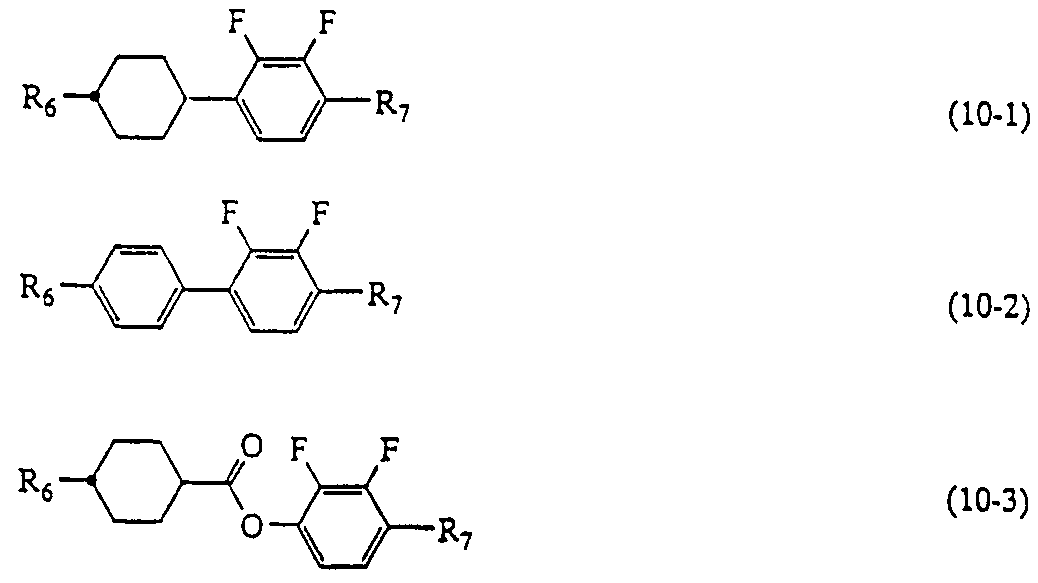


一般式 [10] 〜 [12] で表わされる化合物は、 主として誘電率異方性が負 である液晶,袓成物に使用される。 液晶組成物中に [10] 〜 [12] で表わされ る化合物の量が增加すると、 液晶組成物のしきい値電圧が小さくなり、 粘度が大 きくなる。 したがって、 しきい値電圧の要求値を満足している限り、 少なく使用 することが望ましい。 しかしながら、 一般式 [10] 〜 [12] で表わされる化 合物の誘電率異方性の絶対値が 5以下であるので、 40重量0 /0より少なくなると 低電圧駆動ができなくなる場合がある。 The compounds represented by the general formulas [10] to [12] are mainly used for liquid crystals and compounds having a negative dielectric anisotropy. When the amount of the compound represented by [10] to [12] increases in the liquid crystal composition, the threshold voltage of the liquid crystal composition decreases and the viscosity increases. Therefore, it is desirable to use a small amount as long as the required value of the threshold voltage is satisfied. However, the absolute value of the dielectric anisotropy of the general formula [10] - represented by reduction compounds in [12] is because it is 5 or less, it may be impossible to be driven at a low voltage and is less than 40 weight 0/0 .
誘電率異方性が負である T FT用の組成物を調製する場合に、 一般式 [10] 〜 [12] で表わされる化合物は、 液晶組成物の全重量に対して 40重量 <½以上 の範囲で使用することが好ましく、 50〜95重量%が好適である。 When preparing a composition for TFT having a negative dielectric anisotropy, the compounds represented by the general formulas [10] to [12] are required to have a weight of 40% <½ or more based on the total weight of the liquid crystal composition. It is preferably used in the range of 50 to 95% by weight.
また弾性定数をコントロールすることにより電圧一透過率曲線の急峻性を改善 ずる目的で、 誘電率異方性値が正である組成物に一般式 [10] 〜 [12] で表 わされる化合物を混合する場合もある。 この場合、 一般式 [10] 〜 [12] で 表わされる化合物は液晶組成物中に 30重量%以下であることが好ましい。 In addition, in order to improve the steepness of the voltage-transmittance curve by controlling the elastic constant, the compounds represented by the general formulas [10] to [12] are used in a composition having a positive dielectric anisotropy value. May be mixed. In this case, the content of the compounds represented by the general formulas [10] to [12] is preferably 30% by weight or less in the liquid crystal composition.
—殺式 〔13〕 〜 〔15〕 の化合物として、 好ましくは式 (1 3— 1) 〜 (1 5- 1 3) の化合物を挙げることができる' — As the compounds of the formulas [13] to [15], preferably the compounds of the formulas (13-1) to (1 5-13)

(

-o、 -o,
(9-n) I, (9-n) I,
〇 〇

LZLZ
t^6eO/66df/XDd t ^ 6eO / 66df / XDd
一

:s- 、 : s-,
, ,
一般式 〔1 3〕 〜 〔1 5〕 の化合物は誘電異方性値が負かまたは弱い正である 化合物である。 一般式 〔1 3〕 の化合物は主として粘度低下または屈折率異方性 値調整の目的で使用される。 また、 一般式 〔1 5〕 の化合物は透明点を高くする 等のネマチックレンジを広げる目的または屈折率異方性値調整の目的で使用され る。 The compounds of the general formulas [13] to [15] are compounds having a negative or weakly positive dielectric anisotropy value. The compound represented by the general formula [13] is used mainly for the purpose of decreasing the viscosity or adjusting the refractive index anisotropy value. Further, the compound of the general formula [15] is used for the purpose of expanding the nematic range such as increasing the clearing point or for adjusting the refractive index anisotropy value.
本発明で用いられる光学活性化合物の具体例を以下に示す。 Specific examples of the optically active compound used in the present invention are shown below.
光学活性化合物の具体例

C2I¾-CH-0- ^_ coo^ ^-c,i-iu CH


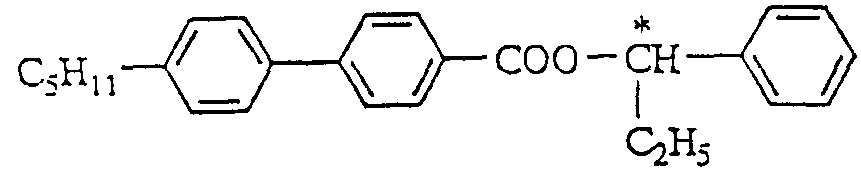


以下、 実施例により本発明を更に詳しく説明するが、 本発明はこれら実施例に よって何ら限定されるものではない。 Hereinafter, the present invention will be described in more detail with reference to examples, but the present invention is not limited to these examples.
次に実施例で得られた化合物の物性は以下の方法で測定した。 Next, the physical properties of the compounds obtained in the examples were measured by the following methods.
融点:偏光顕微鏡にホットステージ (メ トラー社製 FP— 82) を装着して、 毎分 5 °Cの昇温速度で測定した。 Melting point: A hot stage (FP-82 manufactured by Mettler) was attached to a polarizing microscope, and the measurement was performed at a heating rate of 5 ° C per minute.
核磁気共鳴スペク トル (MNR) : 日本電子株式会社製 EX— 90 A、 内部標 準物質にテトラメチルシランを用いて測定した。 Nuclear magnetic resonance spectrum (MNR): EX-90A manufactured by JEOL Ltd. Measured using tetramethylsilane as an internal standard substance.
回転粘度: E型粘度計を用い、 25°Cで測定した。 Rotational viscosity: Measured at 25 ° C. using an E-type viscometer.
対数粘度数: ウベローデ粘度計を用いて N—メチルー 2—ピロリ ドン中、 ポリ マー濃度 0. 5 g/d l、 温度 30±0. 01°Cで測定した。 Logarithmic viscosity number: Measured in N-methyl-2-pyrrolidone using a Ubbelohde viscometer at a polymer concentration of 0.5 g / dl and a temperature of 30 ± 0.01 ° C.
実施例 1 Example 1
1) 1)

滴下ロート、攪拌装置を付けた 3 0 Om lの三つ口フラスコに、 N— (2— (3, 5—ジニトロべンゾィル) ォキシェチル) 一 α—フエニルマレイミ ド 8. 2 2 g とジォキサン 1 5 Om 1を取り、 室温攪拌下、 塩化第 1スズ (2水和物) 3 0. 2 gを加えた。 ここに濃塩酸 3 0. 2 gを 1 0°Cで滴下し、 滴下後室温で 3時間 攪拌した。 反応終了後、 2 N水酸化ナトリウム水溶液を中性になるまで滴下し、 反応液をセライ トでろ過した。 ろ液を酢酸ェチルで 2回抽出し、 有機相を水で 3 回洗浄後、 無水硫酸マグネシウムで乾燥した。 乾燥剤をろ別後、 減圧濃縮して黄 色固体を得た。 これを酢酸ェチルで 2回再結晶して、 N— (2— (3, 5—ジァ ミノべンゾィル) ォキシェチル) 一 α—フエニルマレイミ ドを 6. 4 2 g得た。 この化合物の融点と NMRは下記の通り。 In a 30 Oml three-necked flask equipped with a dropping funnel and a stirrer, add 8.22 g of N- (2- (3,5-dinitrobenzoyl) oxhetyl) -α-phenylmaleimide and 15 Om of dioxane. 1 was taken and 30.2 g of stannous chloride (dihydrate) was added thereto while stirring at room temperature. 30.2 g of concentrated hydrochloric acid was added dropwise at 10 ° C, and the mixture was stirred at room temperature for 3 hours after the dropwise addition. After completion of the reaction, a 2 N aqueous sodium hydroxide solution was added dropwise until neutral, and the reaction solution was filtered through celite. The filtrate was extracted twice with ethyl acetate, and the organic phase was washed three times with water and dried over anhydrous magnesium sulfate. After filtering off the drying agent, the filtrate was concentrated under reduced pressure to obtain a yellow solid. This was recrystallized twice with ethyl acetate to obtain 6.42 g of N- (2- (3,5-diaminobenzyl) oxyshethyl) -α-phenylmaleimide. The melting point and NMR of this compound are as follows.
融点: 1 8 2〜 1 84。C Melting point: 182-184. C
1 H-NMR (9 0MH z、 DMS O— d 6、 : 6 3. 8 2 ( t、 2 H) 、 4. 3 9 ( t、 2H) 、 4. 9 0 (b s、 4H) 、 6. 04 ( t、 1 H) 、 6. 4 0 (d 2H) 、 7. 2 7 ( s、 1 H) 、 7. 5 0〜8. 0 9 (m、 5 H) 1 H-NMR (9 0MH z , DMS O- d 6,: 6 3. 8 2 (t, 2 H), 4. 3 9 (t, 2H), 4. 9 0 (bs, 4H), 6. 04 (t, 1H), 6.40 (d2H), 7.27 (s, 1H), 7.50 to 8.09 (m, 5H)
2) 重合反応 2) Polymerization reaction
1 0 Om 1の三ッロフラスコに、 N— (2— (3, 5—ジァミノべンゾィル) ォキシェチル) 一 α—フエニルマレイミ ド 3. 5 1 4 g、 NMP 1 9. l gを入 れて、 窒素気流下室温で攪拌溶解した。 次いで反応液を 1 0°Cに保ち、 3, 3', 4, 4' 一ベンゾフヱノンテトラカルボン酸二無水物 1. 6 1 1 g投入し、 室温で 6時間 反応を行い、 1 5. 0 w t %のポリマ一溶液を得た。 このポリマ一の対数粘度数 は 0. 8 5 d 1 Zgであった。 N- (2- (3,5-diaminobenzoyl) oxochetyl) -α -phenylmaleimide 3.5 14 g, NMP 19 lg is placed in a 10 Om 1 three-neck flask under a nitrogen stream. The mixture was stirred and dissolved at room temperature. Then, the reaction solution was kept at 10 ° C, 1.61 g of 3,3 ', 4,4'-benzobenzonetetracarboxylic dianhydride was added, and the reaction was carried out at room temperature for 6 hours. A polymer solution of 0 wt% was obtained. The logarithmic viscosity number of this polymer was 0.85 d1 Zg.
3) 偏光照射による液晶表示素子用配向膜の形成; 3) formation of an alignment film for a liquid crystal display element by irradiation of polarized light;
2) で得られたポリアミ ド酸溶液を、 NMPZプチルセ口ソルブ = 1 Z 1溶媒 で 5. Ow t%に希釈し、 これを 0. 1 のフィルターでろ過し、 液晶配向剤 溶液とした。 続いて I TOガラス基板上に回転塗布法 (スピンナ一法) で塗布し た。 塗布後 230 °Cで 60分間焼成し、 膜厚約 74 ϋオングストロームの薄膜を 形成した。 薄膜表面に超高圧水銀ランプより、 365 nm付近の波長の、 直線偏 光紫外線を 2. 0 J /cm2照射した。 2) Transfer the polyamic acid solution obtained in 2) with NMPZ The solution was diluted to 5. Owt% with, and the solution was filtered with a 0.1 filter to obtain a liquid crystal aligning agent solution. Subsequently, spin-coating (spinner method) was applied on the ITO glass substrate. After coating, the film was baked at 230 ° C for 60 minutes to form a thin film having a thickness of about 74 Å. The thin film surface was irradiated with 2.0 J / cm 2 of linearly polarized ultraviolet light having a wavelength near 365 nm from an ultra-high pressure mercury lamp.
4) 液晶セル作成、 配向性評価 4) Preparation of liquid crystal cell, evaluation of orientation
3) で得た基板を、 紫外線の偏光方向が平行になるように貼り合わせ、 液晶層 の厚さが 20 ; mである液晶セルを作成し、 チッソ (株) 製液晶 J C— 5006 を注入し、 1 10°Cで 30分間加熱処理を行った。 加熱処理後放冷し、 液晶の配 向を確認したところ良好であった。 The substrate obtained in 3) is bonded so that the polarization direction of the ultraviolet light becomes parallel, to form a liquid crystal cell having a liquid crystal layer thickness of 20 m, and a liquid crystal JC-5006 manufactured by Chisso Corporation is injected. Heat treatment was performed at 110 ° C. for 30 minutes. After the heat treatment, it was allowed to cool, and the orientation of the liquid crystal was confirmed to be good.
実施例 2 Example 2
下記構造単位で示されるポリイミ ドの合成: Synthesis of polyimides represented by the following structural units:

実施例 3 Example 3
1 ) 下記構造単位で示されるポリイミ ドの合成:

融点: 106. 8〜108. 9°C Melting point: 106.8-108.9 ° C
Ή-NMR (9 OMH z、 CDC ") : δ 1. 26〜1. 84 (m、 8H) 、 3. 51〜3. 76 (m、 6 H) 、 4. 24 (t、 2 H) 、 6. 16 (t、 1 H) 、 6. 71 (s、 1 H) 、 6. 78 (d、 2H) 、 7. 41〜7. 97 (m、 5 H) 2) 重合反応 Ή-NMR (9 OMH z, CDC "): δ 1.26 to 1.84 (m, 8H), 3.51 to 3.76 (m, 6H), 4.24 (t, 2H), 6.16 (t, 1H), 6.71 (s, 1H), 6.78 (d, 2H), 7.41 to 7.97 (m, 5H) 2) Polymerization reaction
テトラカルボン酸二無水物とジァミンのモル比を 1に保ちつつ、 ジァミン成分 を N— (6— (3, 5—ジァミノべンゾィル) ォキシへキシル) 一α—フエ二ノレ マレイミ ド 4. 076 gに換える以外は、 実施例 2と同様に行い、 対数粘度数が While maintaining the molar ratio of tetracarboxylic dianhydride to diamine at 1, the diamine component was converted to N- (6- (3,5-diaminobenzyl) oxyhexyl) -α-pheninole maleimide 4.076 g The procedure was the same as in Example 2, except that the logarithmic viscosity number was
0. esd iZgのポリアミ ド酸の溶液を得た。 0. A solution of esd iZg in polyamic acid was obtained.
3) 偏光照射、 セル作成、 配向性評価 3) Irradiation of polarized light, cell creation, orientation evaluation
実施例 1と同様に行い、 液晶の配向を確認したところ良好であった。 The operation was performed in the same manner as in Example 1, and the orientation of the liquid crystal was confirmed.
実施例 4 Example 4
下記構造単位で示されるポリイミ ドの合成: Synthesis of polyimides represented by the following structural units:

実施例 5 Example 5
1 ) 下記構造単位で示されるポリイミ ドの合成: 1) Synthesis of polyimide represented by the following structural unit:

実施例 1の 1 ) で用いた N— (2—ヒ ドロキシェチル) — α—フエニルマレイ ミ ドに換えて、 Ν— (2—ヒドロキシェチル) — a— (4一へキシルォキシ) フ ェニルマレイミ ドを用いた以外は実施例 1と同様に合成し、 Ν— (2— (3, 5 —ジァミノべンゾィル) ォキシェチル) 一 α— (4—へキシルォキシ) フエニル マレイミ ドを得た。 この化合物の融点と NMRスペク トルは下記の通り。 In place of N- (2-hydroxyshethyl) -α-phenylmaleide used in 1) of Example 1, Ν- (2-hydroxyethyl) -a— (4-hexyloxy) phenylmaleide was used. Other than the above, synthesis was carried out in the same manner as in Example 1 to obtain Ν- (2- (3,5-diaminobenzoyl) oxyshethyl) -α- (4-hexyloxy) phenyl maleimide. The melting point and NMR spectrum of this compound are as follows.
融点: 1 3 4. 4〜: 1 3 5. 9°C Melting point: 1 34.4 ~: 1 35.9 ° C
1 H-NMR (9 0MH z、 CDC ") : δ 0. 9 0 6 ( t、 3 H) 、 1. 23 〜1. 8 7 (m、 8H) 、 3. 6 2 (b s、 4H) 、 3. 9 3〜4. 0 8 (m、 4H) 、 4. 3 8 ( t、 2H) , 6. 1 7 ( t、 1 H) 、 6. 6 2 (d、 2 H) 、 6. 6 9 ( s、 1 H) 、 7. 4 3 (AB q、 4H) 1 H-NMR (90 MHz, CDC "): δ 0.96 (t, 3H), 1.23 to 1.87 (m, 8H), 3.62 (bs, 4H), 3.93 to 4.08 (m, 4H), 4.38 (t, 2H), 6.17 (t, 1H), 6.62 (d, 2H), 6.6 9 (s, 1H), 7.43 (AB q, 4H)
2) 重合反応 2) Polymerization reaction
テトラカルボン酸二無水物とジァミンのモル比を 1に保ちつつ、 ジアミン成分 を N— (6— (3, 5—ジァミノべンゾィノレ) 才キシへキシノレ) - - (4—へ キシルォキシ) フエニルマレイミ ド 4. 5 1 5 gに換える以外は、 実施例 2と同 様に行い、 対数粘度数が 0. 5 9 d l /gのポリアミ ド酸の溶液を得た。 3) 偏光照射、 セル作成、 配向性評価 While maintaining the molar ratio of tetracarboxylic dianhydride to diamine at 1, the diamine component is changed to N— (6— (3,5-diaminobenzinole), hexhexylene)--(4—hexyloxy) phenylmaleimide 4 The same procedure as in Example 2 was carried out except that the amount was changed to 0.15 g , to obtain a solution of a polyamic acid having a logarithmic viscosity number of 0.59 dl / g . 3) Irradiation of polarized light, cell creation, orientation evaluation
実施例 1と同様に行い、 液晶の配向を確認したところ良好であった。 The operation was performed in the same manner as in Example 1, and the orientation of the liquid crystal was confirmed.
実施例 6 Example 6
1) 下記構造単位で示されるポリイミ ドの合成: 1) Synthesis of polyimide represented by the following structural unit:

実施例 1の 1) で用いた N— (2—ヒ ドロキシェチル) —α—フエニルマレイ ミ ドに換えて、 Ν— (2—ヒ ドロキシェチル) 一 α— (4—フルオロフェニル) マレイミ ドを用いた以外は実施例 1と同様に合成し、 Ν— (2— (3, 5—ジァ ミノべンゾィノレ) ォキシェチノレ) - α - (4ーフノレオロフェニノレ) マレイミ ドを 得た。 この化合物の融点と NMRスぺク トルは下記の通り。 Except that —- (2-hydroxyphenyl) -α- (4-fluorophenyl) maleimide was used instead of N- (2-hydroxylethyl) -α-phenylmaleimide used in 1) of Example 1) Was synthesized in the same manner as in Example 1 to obtain Ν— (2— (3,5-diaminobenzoinole) oxishechnole) -α- (4-funoroleolopheninole) maleimide. The melting point and NMR spectrum of this compound are as follows.
融点: 1 54. 4〜156. 1 °C Melting point: 15.4-156.1 ° C
'Η— NMR (90MHz、 DMSO— d6 ) : δ 3. 99 ( t、 2 H) 、 4. 37 (t、 2H) 、 4. 91 (b s、 4H) 、 6. 07 (t、 1 H) 、 6. 40 (d、 2H) 、 7. 24 (s、 1 H) 、 7. 32〜8. 25 (m、 4 H)'Η—NMR (90 MHz, DMSO-d 6 ): δ 3.99 (t, 2H), 4.37 (t, 2H), 4.91 (bs, 4H), 6.07 (t, 1H) ), 6.40 (d, 2H), 7.24 (s, 1H), 7.32-8.25 (m, 4H)
2) 重合反応 2) Polymerization reaction
テトラカルボン酸二無水物とジァミンのモル比を 1に保ちつつ、 ジァミン成分 を N— (6 - (3, 5—ジァミノべンゾィル) ォキシへキシル) 一 α— (4ーフ ルオロフェニル) マレイミ ド 3. 694 gに換える以外は、 実施例 2と同様に行 レ、、 対数粘度数が 0. 85 d 1 /gのポリアミ ド酸の溶液を得た。 While maintaining the molar ratio of tetracarboxylic dianhydride to diamine at 1, the diamine component is converted to N- (6- (3,5-diaminobenzoyl) oxyhexyl) -α- (4-fluorophenyl) maleimide 3 The procedure was the same as in Example 2 except that the amount was changed to 694 g. A solution of a polyamic acid having a logarithmic viscosity number of 0.85 d 1 / g was obtained.
3) 偏光照射、 セル作成、 配向性評価 3) Irradiation of polarized light, cell creation, orientation evaluation
実施例 1と同様に行い、 液晶の配向を確認したところ良好であった。 The operation was performed in the same manner as in Example 1, and the orientation of the liquid crystal was confirmed.
実施例 7 Example 7
1) 下記構造単位で示されるポリイミ ドの合成: 1) Synthesis of polyimide represented by the following structural unit:

N—ヒ ドロキシメチル一 α—フエニルマレイミ ド 20. 3 gをァセトン 200 m 1に懸濁し、 室温で三塩化リン 4. 6mlを一度に加えた。 30分撹拌後再度 三塩化リン 5. Omlを加え、 更に 1時間撹拌した。 反応液を氷水中に注ぎ、 析 出した結晶をろ集した。 粗結晶を減圧乾燥後、 n—ヘプタンノ酢酸ェチルで再結 晶して、 N—クロロメチル一 α—フエニルマレイミ ドを 12. 1 g得た。 20.3 g of N-hydroxymethyl-α-phenylmaleimide was suspended in 200 ml of acetone, and 4.6 ml of phosphorus trichloride was added thereto at room temperature. After stirring for 30 minutes, 5.Oml of phosphorus trichloride was added again, and the mixture was further stirred for 1 hour. The reaction solution was poured into ice water, and the precipitated crystals were collected by filtration. After the crude crystals were dried under reduced pressure, they were recrystallized from n-heptanoethyl acetate to obtain 12.1 g of N-chloromethyl-1-α-phenylmaleimide.
撹拌装置、 冷却管を取り付けた 50 Om 1の三ッロフラスコに、 N—クロロメ チル一 α—フエニルマレイミ ド 10. 0 g、 DMF 20 Om 1を取り室温で撹拌 溶解した。 さらに、 2, 4—ジニトロフエノールナトリウム塩を 10. 3 g加え て、 80°Cで 12時間反応した。 反応終了後反応液を多量の水中に注ぎ、 酢酸ェ チルで 3回抽出した。 有機層を 3回水洗し、 無水硫酸マグネシウムで乾燥後、 乾 燥剤をろ別して減圧濃縮した。 得られた黄色結晶を n—ヘプタンでろ集し、 N— N-chloromethyl-1-α-phenylmaleide (10.0 g) and DMF (20 Om1) were placed in a 50-Om1 three-neck flask equipped with a stirrer and a condenser, and dissolved at room temperature with stirring. Further, 10.3 g of 2,4-dinitrophenol sodium salt was added and reacted at 80 ° C. for 12 hours. After completion of the reaction, the reaction solution was poured into a large amount of water and extracted three times with ethyl acetate. The organic layer was washed with water three times, dried over anhydrous magnesium sulfate, filtered to remove the desiccant, and concentrated under reduced pressure. The obtained yellow crystals are collected by filtration with n-heptane,
(2, 4—ジニトロフエニル) ォキシメチルー α—フエニルマレイミ ドを得た。 この化合物はこのまま次の反応に用いた。 (2,4-Dinitrophenyl) oxymethyl-α-phenylmaleimide was obtained. This compound was used as is in the next reaction.
実施例 1の 1) で用いた Ν— (2— (3, 5—ジニトロべンゾィル) ォキシェ チル) 一 α—フエニルマレイミ ドに換えて、 Ν— (2, 4—ジニトロフエニル) ォキシメチル一α—フエニルマレイミ ドを用いた以外は実施例 1と同様に還元反 応を行い、 Ν— (2, 4—ジァミノフエニル) ォキシメチル一 α—フエニルマレ イミ ドを 6. 40 g得た。 この化合物の融点と NMRスペク トルは下記の通り。 融点: 183. 7〜 185. 6 °C In place of Ν- (2- (3,5-dinitrobenzoyl) oxyshethyl) -α-phenylmaleimide used in 1) of Example 1, Ν- (2,4-dinitrophenyl) oxymethyl-1-α-phenylmaleimide A reduction reaction was carried out in the same manner as in Example 1 except for using, to obtain 6.40 g of Ν- (2,4-diaminophenyl) oxymethyl-1-α-phenylmaleimide. The melting point and NMR spectrum of this compound are as follows. Melting point: 183.7-185.6 ° C
Ή-NMR (90MHz, DMSO-d6 ) : 63. 37 (b s、 4H) 、 5. 19 (s、 2H) 、 7. 14 (s、 1 H) 、 7. 25〜8. 00 (m、 8 H) 2) 重合反応 Ή-NMR (90 MHz, DMSO-d 6 ): 63.37 (bs, 4H), 5.19 (s, 2H), 7.14 (s, 1H), 7.25 to 8.00 (m, 8 H) 2) Polymerization reaction
テトラカルボン酸二燕水物とジァミンのモル比を 1に保ちつつ、 ジァミン成分 を N— (2, 4—ジァミノフエニル) ォキシメチノレ一 α—フエニルマレイミ ド 3 093 gに換える以外は、 実施例 2と同様に行い、 対数粘度数が 0. 44 d l/ gのポリアミ ド酸の溶液を得た。 While maintaining the molar ratio of tetracarboxylic dianhydride to diamine at 1, the diamine component Was replaced with N- (2,4-diaminophenyl) oxymethinol-α-phenylmaleimide 3093 g in the same manner as in Example 2 to obtain a polyamic acid solution having a logarithmic viscosity number of 0.44 dl / g. Was.
3) 偏光照射、 セル作成、 配向性評価 3) Irradiation of polarized light, cell creation, orientation evaluation
実施例 1と同様に行い、 液晶の配向を確認したところ良好であった。 The operation was performed in the same manner as in Example 1, and the orientation of the liquid crystal was confirmed.
実施例 8 Example 8
1) 下記構造単位で示されるポリイミ ドの合成: 1) Synthesis of polyimide represented by the following structural unit:

撹拌装置、 滴下ロートを付けた 50 Om 1の三ッロフラスコに、 3, 5—ジニ トロペンジノレアノレコ一ノレ 7. 92 g、 α—フエ二ノレマレイミ ド 6. 90 g、 トリ フエニルホスフィン 1 1. 5 gを取り、 THF 20 Om 1に溶解させ撹拌した。 ここにァゾジカルボン酸ジェチル (40%トルエン溶液) 20. 9 gを、 0 ^以 下で滴下し、 滴下後室温に戻して 24時間撹拌した。 反応液を水中に注ぎ、 酢酸 ェチルで 3回抽出した。 有機層を 3回水洗し、 無水硫酸マグネシウムで乾燥後、 乾燥剤をろ別して減圧濃縮した。 得られた微黄色結晶を η—ヘプタンでろ集し、 酢酸ェチルで 2回再結晶して、 N— (3, 5—ジニトロフエニル) メチル— α— フエ二ノレマレイミ ドを 10. 41 g得た。 In a 50 Om 1 three-necked flask equipped with a stirrer and a dropping funnel, 3.92 g of 3,5-dinitrotropeninoleanolonecolate 7.92 g, α-phenylenolemaleimide 6.90 g, triphenylphosphine 1 1.5 g was taken, dissolved in THF20Om1, and stirred. To this, 20.9 g of getyl azodicarboxylate (40% toluene solution) was added dropwise under 0 ^ or less. After the addition, the mixture was returned to room temperature and stirred for 24 hours. The reaction solution was poured into water and extracted three times with ethyl acetate. The organic layer was washed three times with water, dried over anhydrous magnesium sulfate, filtered to remove the desiccant, and concentrated under reduced pressure. The obtained pale yellow crystals were collected by filtration with η-heptane, and recrystallized twice with ethyl acetate to obtain 10.41 g of N- (3,5-dinitrophenyl) methyl-α-pheninolemaleimide.
実施例 1の 1) で用いた N— (2— (3, 5—ジニトロべンゾィル) ォキシェ チル) 一 α—フエニルマレイミ ドに換えて、 Ν— (3, 5—ジニトロフエニル) メチルー α—フエニルマレイミ ドを用いた以外は実施例 1と同様にニトロ基を還 元後、 シリカゲルカラム (η—へブタンノ酢酸ェチル = 1Z1) で精製して、 黄 色油状物の N— (2, 4ージァミノフエニル) メチル一α—フエニルマレイミ ド を 3. 1 4 g得た。 この化合物の NMRスぺクトルは下記の通り。 Instead of N- (2- (3,5-dinitrobenzoyl) oxyshethyl) -α-phenylmaleimide used in 1) of Example 1, Ν- (3,5-dinitrophenyl) methyl- α -phenylmaleimide was replaced with α -phenylmaleimide. After reducing the nitro group in the same manner as in Example 1 except that it was used, the residue was purified using a silica gel column (η-ethylbutanoacetate = 1Z1) to give N- (2,4-diaminophenyl) as a yellow oil. 3.14 g of methyl-α-phenylmaleimide was obtained. The NMR spectrum of this compound is as follows.
1 H- R (9 OMH τ、 CDC 13) : 53. 56 (b s、 4H) 、 5. 01 (s、 2H) 、 5. 96 (d、 1H) 、 6. 09 (d、 2H) 、 6. 35 (s、 1H) 、 7. 42 (s、 5 H) 1 H- R (9 OMH τ, CDC 1 3): 53. 56 (bs, 4H), 5. 01 (s, 2H), 5.96 (d, 1H), 6.09 (d, 2H), 6.35 (s, 1H), 7.42 (s, 5H)
2) 重合反応 2) Polymerization reaction
テトラカルボン酸二無水物とジァミンのモル比を 1に保ちつつ、 ジァミン成分 を N— (3, 5—ジァミノフエニル) メチル一ひ一フエニルマレイミ ド 2. 93 3 gに換える以外は、 実施例 2と同様に行い、 対数粘度数が 0. 68 d l/gの ポリアミ ド酸の溶液を得た。 Same as Example 2 except that the molar ratio of tetracarboxylic dianhydride to diamine was kept at 1, and the diamine component was changed to 2.933 g of N- (3,5-diaminophenyl) methyl-1-phenylmaleimide Then, a solution of polyamic acid having a logarithmic viscosity number of 0.68 dl / g was obtained.
3) 偏光照射、 セル作成、 配向性評価 3) Irradiation of polarized light, cell creation, orientation evaluation
紫外線照射量を 0. 1 J c m 2に変えた以外は実施例 1と同様に行い、 液晶 の配向を確認したところ良好であった。 The same procedure as in Example 1 was carried out except that the irradiation amount of the ultraviolet light was changed to 0.1 J cm 2 , and the orientation of the liquid crystal was confirmed.
実施例 9 Example 9
実施例 2と同様のポリアミ ド酸を用い、 TFT用として用いられる液晶組成物 を (LA) から (LE) まで変えた以外は実施例 2に準じて液晶セルを作成した ところ、 良好な液晶配向を確認した。 ここで用いた液晶組成物 (LA) から (L E) のそれぞれの組成を以下に示す。 Using the same polyamic acid as in Example 2, except that the liquid crystal composition used for TFT was changed from (LA) to (LE), a liquid crystal cell was prepared in accordance with Example 2. It was confirmed. The respective compositions of the liquid crystal compositions (LA) to (LE) used here are shown below.
50 50
液晶組成物 (LA) Liquid crystal composition (LA)
51 51
; 物(LB) ; Thing (LB)
52 52
液晶組成物 (LC) Liquid crystal composition (LC)

(。Ί)呦爾 (.Ί) 呦
C2C2

; 誠物(LE) ; Eslite (LE)
実施例 1 〇 Example 1
実施例 2と同様のポリアミ ド酸を用い、 STN用として用いられる液晶組成物 を (LF) から (LK) まで変えた以外は実施例 2に準じて液晶セルを作成した ところ、 良好な液晶配向を確認した。 ここで用いた液晶組成物 (LF) 力 ら (L K) のそれぞれの組成を以下に示す。 Using the same polyamic acid as in Example 2, except that the liquid crystal composition used for STN was changed from (LF) to (LK), a liquid crystal cell was prepared in accordance with Example 2. It was confirmed. The composition of each of the liquid crystal compositions (LF) and (LK) used here is shown below.
; '観繊物(LF) ; 'Fine Textiles (LF)
-0 -0
C,H7 > -CN 10%C, H 7 > -CN 10%
-o -o
-o -o
C4Hg- -CN 10%C 4 Hg- -CN 10%
-o -o
2n5 -coo- ■CN 12% 2 n 5 -coo-CN 12%
C3H7 -c〇o- -CN 4% C 3 H 7 -c〇o- -CN 4%


4%

C;C- -C 2Hπ5 5% C; C- -C 2H π 5 5%
6Η"Ο- -〇 6 Η "Ο- -〇

8989
^6εθ/66ΛΓ/13<Ι ひ S90/00 OAV ; 廳勿(LI ) ^ 6εθ / 66ΛΓ / 13 <Ι hi S90 / 00 OAV ; Cafe of course (LI)

;' 物(LJ) ; 'Thing (LJ)

液晶組成物 (LK) Liquid crystal composition (LK)

ポリイミ ドを下記の構造単位からなるものに変更した以外は、 実施例 2と同様 に行なったところ、 液晶の配向は全く見られなかった。

産業上の利用可能性 Industrial applicability
本発明により得られた α、 置換マレイミ ド残基を側鎖に有するポリアミ ド酸 から得られたポリイミ ドは、 偏光紫外線に対して高感度であり、 その照射により 速やかに側鎖が光反応する。 かつ光反応後の膜は熱安定性、 形状保持力に優れて おり、 良好な液晶配向性を示す光配向膜として特に有用である。 The polyimide obtained from the polyamide acid having an α-substituted maleimide residue in the side chain obtained according to the present invention is highly sensitive to polarized ultraviolet light, and the side chain is rapidly photoreacted by the irradiation. . Moreover, the film after the photoreaction has excellent thermal stability and shape retention, and is particularly useful as a photo-alignment film exhibiting good liquid crystal alignment.
Claims


Priority Applications (4)
| Application Number | Priority Date | Filing Date | Title |
|---|---|---|---|
| JP2000562350A JP4168593B2 (en) | 1998-07-29 | 1999-07-23 | Novel diamino compound, polyamic acid, polyimide, liquid crystal alignment film using the polyimide film, and liquid crystal display element using the alignment film |
| EP99931505A EP1020442A1 (en) | 1998-07-29 | 1999-07-23 | Novel diamino compounds, polyamic acid, polyimide, liquid-crystal alignment film made from film of the polyimide, and liquid-crystal display element containing the alignment film |
| US09/403,597 US6238752B1 (en) | 1998-07-29 | 1999-07-23 | Diamino compounds, polyamic acids, polyimides, liquid crystal aligning films using said polyimide films and liquid crystal display devices using said aligning films |
| KR1020007003304A KR20010024326A (en) | 1998-07-29 | 1999-07-23 | Novel diamino compounds, polyamic acid, polyimide, liquid-crystal alignment film made from film of the polyimide, and liquid-crystal display element containing the alignment film |
Applications Claiming Priority (2)
| Application Number | Priority Date | Filing Date | Title |
|---|---|---|---|
| JP22871098 | 1998-07-29 | ||
| JP10/228710 | 1998-07-29 |
Publications (1)
| Publication Number | Publication Date |
|---|---|
| WO2000006543A1 true WO2000006543A1 (en) | 2000-02-10 |
Family
ID=16880605
Family Applications (1)
| Application Number | Title | Priority Date | Filing Date |
|---|---|---|---|
| PCT/JP1999/003948 Ceased WO2000006543A1 (en) | 1998-07-29 | 1999-07-23 | Novel diamino compounds, polyamic acid, polyimide, liquid-crystal alignment film made from film of the polyimide, and liquid-crystal display element containing the alignment film |
Country Status (6)
| Country | Link |
|---|---|
| US (1) | US6238752B1 (en) |
| EP (1) | EP1020442A1 (en) |
| JP (1) | JP4168593B2 (en) |
| KR (1) | KR20010024326A (en) |
| CN (1) | CN1274345A (en) |
| WO (1) | WO2000006543A1 (en) |
Cited By (10)
| Publication number | Priority date | Publication date | Assignee | Title |
|---|---|---|---|---|
| US6238752B1 (en) | 1998-07-29 | 2001-05-29 | Chisso Corporation | Diamino compounds, polyamic acids, polyimides, liquid crystal aligning films using said polyimide films and liquid crystal display devices using said aligning films |
| WO2004086146A1 (en) * | 2003-03-24 | 2004-10-07 | Lg Chem Ltd | Transparent, highly heat-resistant polyimide precursor and photosensitive polyimide composition thereof |
| KR100521070B1 (en) * | 2000-11-29 | 2005-10-14 | 칫소가부시키가이샤 | Diamino compound, polymer using the compound, liquid crystal aligning film using the polymer and liquid crystal display element |
| JP2006350347A (en) * | 2005-06-14 | 2006-12-28 | Lg Phillips Lcd Co Ltd | Liquid crystal display element and manufacturing method thereof |
| JP2008250301A (en) * | 2007-03-06 | 2008-10-16 | Jsr Corp | Liquid crystal aligning agent and liquid crystal display element |
| JP2008287082A (en) * | 2007-05-18 | 2008-11-27 | Jsr Corp | Liquid crystal aligning agent and liquid crystal display element |
| WO2009093704A1 (en) * | 2008-01-25 | 2009-07-30 | Nissan Chemical Industries, Ltd. | Diamine compound, liquid crystal aligning agent, and liquid crystal display device using the same |
| JP2010102014A (en) * | 2008-10-22 | 2010-05-06 | Jsr Corp | Liquid crystal aligning agent, liquid crystal alignment layer and method for forming the same, and liquid crystal display element |
| WO2018190426A1 (en) * | 2017-04-14 | 2018-10-18 | 日産化学株式会社 | Liquid crystal aligning agent, liquid crystal alignment film and liquid crystal display element |
| JP2020073680A (en) * | 2015-03-04 | 2020-05-14 | 日産化学株式会社 | Liquid crystal alignment agent, liquid crystal alignment film, and liquid crystal display element |
Families Citing this family (22)
| Publication number | Priority date | Publication date | Assignee | Title |
|---|---|---|---|---|
| JP4600637B2 (en) * | 2002-04-30 | 2010-12-15 | Jsr株式会社 | Liquid crystal alignment agent |
| KR100491944B1 (en) * | 2002-12-09 | 2005-05-30 | 한국화학연구원 | Polyimide derivatives with pendant imide group and method for preparing them |
| KR100491930B1 (en) * | 2002-12-09 | 2005-05-27 | 한국화학연구원 | Polyamic acid derivatives containing pendant alkenylated imide group and method for preparing them |
| KR100552989B1 (en) | 2004-02-12 | 2006-02-17 | 한국화학연구원 | Photosensitive polyamic acid derivatives and polyimides for insulator of organic thin film transistor |
| KR100552134B1 (en) | 2004-06-14 | 2006-02-14 | 한국화학연구원 | Aliphatic Ring-Soluble Polyimide Resin with Alkyl Succinimide Side Chain |
| KR20070035683A (en) * | 2005-09-28 | 2007-04-02 | 삼성전자주식회사 | Liquid Crystal Display and Manufacturing Method Thereof |
| JP4900571B2 (en) * | 2006-03-20 | 2012-03-21 | Jsr株式会社 | Vertical liquid crystal aligning agent and vertical liquid crystal display element |
| KR100774616B1 (en) | 2006-06-15 | 2007-11-12 | 한국화학연구원 | Polyamic acid composition for liquid crystal alignment film having low pretilt angle and soluble polyimide resin prepared therefrom |
| KR100792037B1 (en) * | 2006-06-17 | 2008-01-04 | 한국화학연구원 | Novel Polyamic Acid Photoalignment Film Using Polarized Ultraviolet and Its Manufacturing Method |
| KR101108228B1 (en) * | 2007-10-10 | 2012-01-31 | 주식회사 엘지화학 | Novel polyamic acid, polyimide, liquid crystal alignment film comprising the same and liquid crystal display comprising the same |
| WO2010050523A1 (en) * | 2008-10-29 | 2010-05-06 | 日産化学工業株式会社 | Diamine, polyimide, liquid crystal aligning agent, and liquid crystal alignment film |
| KR101490488B1 (en) * | 2008-11-27 | 2015-02-06 | 삼성디스플레이 주식회사 | Liquid crystal display device and manufacturing method thereof |
| US9052549B2 (en) | 2008-11-27 | 2015-06-09 | Samsung Display Co., Ltd. | Liquid crystal display and manufacturing method thereof |
| JP5582295B2 (en) * | 2009-06-11 | 2014-09-03 | Jsr株式会社 | Liquid crystal aligning agent and liquid crystal display element |
| KR101565393B1 (en) * | 2009-08-10 | 2015-11-03 | 제이에스알 가부시끼가이샤 | Liquid crystal alignment and related compounds thereof, liquid crystal alignment layer, and liquid crystal display device |
| KR20130038243A (en) * | 2010-03-15 | 2013-04-17 | 닛산 가가쿠 고교 가부시키 가이샤 | Liquid crystal alignment agent for use in photo-alignment process, and liquid crystal alignment film using same |
| WO2011129414A1 (en) * | 2010-04-16 | 2011-10-20 | 日産化学工業株式会社 | Liquid crystal aligning agent, liquid crystal alignment film produced using same, and liquid crystal display element |
| CN102707496B (en) * | 2011-09-08 | 2014-12-03 | 北京京东方光电科技有限公司 | Liquid crystal orientation film and preparation method thereof, and liquid crystal display device comprising orientation film |
| TWI596157B (en) * | 2011-11-29 | 2017-08-21 | Nissan Chemical Ind Ltd | A liquid crystal aligning agent, a liquid crystal aligning film, and a liquid crystal aligning film, and a liquid crystal aligning film, |
| CN102819144B (en) | 2012-07-30 | 2014-11-12 | 北京京东方光电科技有限公司 | Preparation method and orienting realizing method of orienting membrane, and liquid crystal display device |
| WO2014092170A1 (en) * | 2012-12-13 | 2014-06-19 | 日産化学工業株式会社 | Liquid crystal alignment agent, liquid crystal alignment film, and liquid crystal display element |
| WO2016052714A1 (en) * | 2014-10-03 | 2016-04-07 | 日産化学工業株式会社 | Liquid crystal aligning agent, liquid crystal alignment film and liquid crystal display element using same |
Citations (1)
| Publication number | Priority date | Publication date | Assignee | Title |
|---|---|---|---|---|
| WO1997023243A1 (en) * | 1995-12-22 | 1997-07-03 | Bristol-Myers Squibb Company | Branched hydrazone linkers |
Family Cites Families (3)
| Publication number | Priority date | Publication date | Assignee | Title |
|---|---|---|---|---|
| JPS5113198A (en) | 1974-07-21 | 1976-02-02 | Tamihito Takahashi | KUDOIRISE KIITA |
| JPS63137923A (en) * | 1986-11-28 | 1988-06-09 | Matsushita Electric Works Ltd | Photosensitive and heat-resistant resin composition |
| CN1274345A (en) | 1998-07-29 | 2000-11-22 | 智索股份有限公司 | Novel diamino compounds, polyamic acid, polyimide, liquid-crystal alignment film made from film of polyimide, and liquid-crystal display element containing same |
-
1999
- 1999-07-23 CN CN99801233A patent/CN1274345A/en active Pending
- 1999-07-23 US US09/403,597 patent/US6238752B1/en not_active Expired - Lifetime
- 1999-07-23 JP JP2000562350A patent/JP4168593B2/en not_active Expired - Fee Related
- 1999-07-23 WO PCT/JP1999/003948 patent/WO2000006543A1/en not_active Ceased
- 1999-07-23 EP EP99931505A patent/EP1020442A1/en not_active Withdrawn
- 1999-07-23 KR KR1020007003304A patent/KR20010024326A/en not_active Withdrawn
Patent Citations (2)
| Publication number | Priority date | Publication date | Assignee | Title |
|---|---|---|---|---|
| WO1997023243A1 (en) * | 1995-12-22 | 1997-07-03 | Bristol-Myers Squibb Company | Branched hydrazone linkers |
| US5824805A (en) * | 1995-12-22 | 1998-10-20 | King; Dalton | Branched hydrazone linkers |
Non-Patent Citations (1)
| Title |
|---|
| LEANZA W.J. ET AL: "Acidic Derivatives of Homocysteine Thio Lactone: Utility as Anionic Linkers", BIOCONJUGATE CHEM.,, vol. 3, no. 6, 1992, pages 514 - 518, XP002926623 * |
Cited By (21)
| Publication number | Priority date | Publication date | Assignee | Title |
|---|---|---|---|---|
| US6238752B1 (en) | 1998-07-29 | 2001-05-29 | Chisso Corporation | Diamino compounds, polyamic acids, polyimides, liquid crystal aligning films using said polyimide films and liquid crystal display devices using said aligning films |
| KR100521070B1 (en) * | 2000-11-29 | 2005-10-14 | 칫소가부시키가이샤 | Diamino compound, polymer using the compound, liquid crystal aligning film using the polymer and liquid crystal display element |
| WO2004086146A1 (en) * | 2003-03-24 | 2004-10-07 | Lg Chem Ltd | Transparent, highly heat-resistant polyimide precursor and photosensitive polyimide composition thereof |
| US8232366B2 (en) | 2003-03-24 | 2012-07-31 | Lg Chem, Ltd. | Transparent, highly heat-resistant polyimide precursor and photosensitive polyimide composition thereof |
| US8703901B2 (en) | 2003-03-24 | 2014-04-22 | Lg Chem, Ltd. | Transparent, highly heat-resistant polyimide precursor and photosensitive polyimide composition thereof |
| JP2006350347A (en) * | 2005-06-14 | 2006-12-28 | Lg Phillips Lcd Co Ltd | Liquid crystal display element and manufacturing method thereof |
| JP2008250301A (en) * | 2007-03-06 | 2008-10-16 | Jsr Corp | Liquid crystal aligning agent and liquid crystal display element |
| JP2008287082A (en) * | 2007-05-18 | 2008-11-27 | Jsr Corp | Liquid crystal aligning agent and liquid crystal display element |
| WO2009093704A1 (en) * | 2008-01-25 | 2009-07-30 | Nissan Chemical Industries, Ltd. | Diamine compound, liquid crystal aligning agent, and liquid crystal display device using the same |
| JP2010102014A (en) * | 2008-10-22 | 2010-05-06 | Jsr Corp | Liquid crystal aligning agent, liquid crystal alignment layer and method for forming the same, and liquid crystal display element |
| JP2020073680A (en) * | 2015-03-04 | 2020-05-14 | 日産化学株式会社 | Liquid crystal alignment agent, liquid crystal alignment film, and liquid crystal display element |
| WO2018190426A1 (en) * | 2017-04-14 | 2018-10-18 | 日産化学株式会社 | Liquid crystal aligning agent, liquid crystal alignment film and liquid crystal display element |
| CN110573951A (en) * | 2017-04-14 | 2019-12-13 | 日产化学株式会社 | Liquid crystal aligning agent, liquid crystal aligning film, and liquid crystal display element |
| JPWO2018190426A1 (en) * | 2017-04-14 | 2020-02-27 | 日産化学株式会社 | Liquid crystal alignment agent, liquid crystal alignment film and liquid crystal display device |
| KR20190131567A (en) * | 2017-04-14 | 2019-11-26 | 닛산 가가쿠 가부시키가이샤 | Liquid crystal aligning agent, liquid crystal aligning film, and liquid crystal display element |
| TWI754739B (en) | 2017-04-14 | 2022-02-11 | 日商日產化學工業股份有限公司 | Liquid crystal alignment agent, liquid crystal alignment film and liquid crystal display element |
| CN110573951B (en) * | 2017-04-14 | 2022-03-22 | 日产化学株式会社 | Liquid crystal aligning agent, liquid crystal alignment film, and liquid crystal display element |
| JP2022084599A (en) * | 2017-04-14 | 2022-06-07 | 日産化学株式会社 | Diamine and polymers using it |
| JP7108241B2 (en) | 2017-04-14 | 2022-07-28 | 日産化学株式会社 | Liquid crystal alignment agent, liquid crystal alignment film and liquid crystal display element |
| KR102489696B1 (en) | 2017-04-14 | 2023-01-17 | 닛산 가가쿠 가부시키가이샤 | Liquid crystal aligning agent, liquid crystal aligning film, and liquid crystal display element |
| JP7315907B2 (en) | 2017-04-14 | 2023-07-27 | 日産化学株式会社 | Diamine and polymer using same |
Also Published As
| Publication number | Publication date |
|---|---|
| EP1020442A1 (en) | 2000-07-19 |
| CN1274345A (en) | 2000-11-22 |
| JP4168593B2 (en) | 2008-10-22 |
| KR20010024326A (en) | 2001-03-26 |
| US6238752B1 (en) | 2001-05-29 |
Similar Documents
| Publication | Publication Date | Title |
|---|---|---|
| WO2000006543A1 (en) | Novel diamino compounds, polyamic acid, polyimide, liquid-crystal alignment film made from film of the polyimide, and liquid-crystal display element containing the alignment film | |
| JPWO2000006543A1 (en) | Novel diamino compound, polyamic acid, polyimide, liquid crystal alignment film using said polyimide film, and liquid crystal display element using said alignment film | |
| CN102604653B (en) | Liquid crystal aligning agent, liquid crystal alignment film and liquid crystal display device, and compound and polymer used for producing the same | |
| JP5190109B2 (en) | Liquid crystal aligning agent comprising 3,4-dicarboxy-1,2,3,4-tetrahydro-6-tert-butyl-1-naphthalene succinic dianhydride and a polyimide resin prepared from the dianhydride | |
| TW552282B (en) | Photoactive polymers | |
| KR100583903B1 (en) | X-ray dimerization polymer compound, liquid crystal aligning film using the same, and liquid crystal display using the aligning film | |
| JP4513191B2 (en) | Polyamide acid, polyimide, liquid crystal alignment film using the polyimide film, and liquid crystal display element using the alignment film | |
| WO2009133803A1 (en) | Liquid crystal aligning agent and method for forming liquid crystal alignment films | |
| KR101756244B1 (en) | Liquid crystal aligning agent, liquid crystal alignment layer and liquid crystal display | |
| CN102382661B (en) | Liquid crystal orientation agent, liquid crystal orientation film, liquid crystal orientation display element, polyamic acid and polyimide | |
| KR20150108742A (en) | Liquid crystal aligning agent, liquid crystal alignment film, liquid crystal display device, compound and polymer | |
| US7635746B2 (en) | Diamine compound containing triazine group, polyamic acid synthesized from the diamine compound and LC alignment film prepared from the polyamic acid | |
| CN102559208B (en) | Liquid crystal aligning agent, liquid crystal alignment film and liquid crystal display device, and compound and polymer used for producing the same | |
| WO2008153286A2 (en) | Aromatic diamines with a photoreactive aromatic side group, polyamic acid photo-alignment layers with them and method for preparing liquid crystal cells | |
| WO2002051908A1 (en) | Diaminobenzene derivatives, polyimide precursors and polyimides prepared by using tha same, and liquid crystal aligning agents | |
| KR101828101B1 (en) | Liquid crystal aligning agent, liquid crystal alignment film, and liquid crystal display element | |
| WO2004067623A2 (en) | Polymide resin for non-rubbing vertical alignment materials and preparation method thereof | |
| JP4306317B2 (en) | Liquid crystal alignment film forming varnish, liquid crystal alignment film, and liquid crystal display element | |
| JP2006516157A (en) | Diamine compound having dendron side chain and liquid crystal alignment material produced using the same | |
| TWI659981B (en) | Liquid crystal alignment agent, liquid crystal alignment film, and liquid crystal display device | |
| WO2013094646A1 (en) | Bis(hydroxyamide)-based acid dianhydride, method for producing same, and polyimide | |
| JP7102536B2 (en) | Liquid crystal alignment agent composition, manufacturing method of liquid crystal alignment film using this, liquid crystal alignment film and liquid crystal display element using this | |
| JP4228459B2 (en) | Liquid crystal alignment film and liquid crystal display device using the alignment film | |
| KR100622215B1 (en) | Composition for liquid crystal aligning film using diamine which has side chain of dendron structure | |
| KR20060078792A (en) | Diamine compound having side chain of dendron structure and liquid crystal aligning material using the same |
Legal Events
| Date | Code | Title | Description |
|---|---|---|---|
| WWE | Wipo information: entry into national phase |
Ref document number: 99801233.5 Country of ref document: CN |
|
| WWE | Wipo information: entry into national phase |
Ref document number: 09403597 Country of ref document: US |
|
| AK | Designated states |
Kind code of ref document: A1 Designated state(s): CN JP KR US |
|
| AL | Designated countries for regional patents |
Kind code of ref document: A1 Designated state(s): AT BE CH CY DE DK ES FI FR GB GR IE IT LU MC NL PT SE |
|
| WWE | Wipo information: entry into national phase |
Ref document number: 1020007003304 Country of ref document: KR |
|
| 121 | Ep: the epo has been informed by wipo that ep was designated in this application | ||
| WWE | Wipo information: entry into national phase |
Ref document number: 1999931505 Country of ref document: EP |
|
| WWP | Wipo information: published in national office |
Ref document number: 1999931505 Country of ref document: EP |
|
| WWP | Wipo information: published in national office |
Ref document number: 1020007003304 Country of ref document: KR |
|
| WWW | Wipo information: withdrawn in national office |
Ref document number: 1999931505 Country of ref document: EP |
|
| WWW | Wipo information: withdrawn in national office |
Ref document number: 1020007003304 Country of ref document: KR |