WO1996023909A1 - High-strength line-pipe steel having low yield ratio and excellent low-temperature toughness - Google Patents
High-strength line-pipe steel having low yield ratio and excellent low-temperature toughness Download PDFInfo
- Publication number
- WO1996023909A1 WO1996023909A1 PCT/JP1996/000157 JP9600157W WO9623909A1 WO 1996023909 A1 WO1996023909 A1 WO 1996023909A1 JP 9600157 W JP9600157 W JP 9600157W WO 9623909 A1 WO9623909 A1 WO 9623909A1
- Authority
- WO
- WIPO (PCT)
- Prior art keywords
- less
- steel
- low
- strength
- temperature toughness
- Prior art date
- Legal status (The legal status is an assumption and is not a legal conclusion. Google has not performed a legal analysis and makes no representation as to the accuracy of the status listed.)
- Ceased
Links
Classifications
-
- C—CHEMISTRY; METALLURGY
- C22—METALLURGY; FERROUS OR NON-FERROUS ALLOYS; TREATMENT OF ALLOYS OR NON-FERROUS METALS
- C22C—ALLOYS
- C22C38/00—Ferrous alloys, e.g. steel alloys
- C22C38/14—Ferrous alloys, e.g. steel alloys containing titanium or zirconium
-
- C—CHEMISTRY; METALLURGY
- C22—METALLURGY; FERROUS OR NON-FERROUS ALLOYS; TREATMENT OF ALLOYS OR NON-FERROUS METALS
- C22C—ALLOYS
- C22C38/00—Ferrous alloys, e.g. steel alloys
- C22C38/04—Ferrous alloys, e.g. steel alloys containing manganese
-
- C—CHEMISTRY; METALLURGY
- C22—METALLURGY; FERROUS OR NON-FERROUS ALLOYS; TREATMENT OF ALLOYS OR NON-FERROUS METALS
- C22C—ALLOYS
- C22C38/00—Ferrous alloys, e.g. steel alloys
- C22C38/18—Ferrous alloys, e.g. steel alloys containing chromium
- C22C38/32—Ferrous alloys, e.g. steel alloys containing chromium with boron
-
- C—CHEMISTRY; METALLURGY
- C22—METALLURGY; FERROUS OR NON-FERROUS ALLOYS; TREATMENT OF ALLOYS OR NON-FERROUS METALS
- C22C—ALLOYS
- C22C38/00—Ferrous alloys, e.g. steel alloys
- C22C38/18—Ferrous alloys, e.g. steel alloys containing chromium
- C22C38/40—Ferrous alloys, e.g. steel alloys containing chromium with nickel
- C22C38/58—Ferrous alloys, e.g. steel alloys containing chromium with nickel with more than 1.5% by weight of manganese
-
- Y—GENERAL TAGGING OF NEW TECHNOLOGICAL DEVELOPMENTS; GENERAL TAGGING OF CROSS-SECTIONAL TECHNOLOGIES SPANNING OVER SEVERAL SECTIONS OF THE IPC; TECHNICAL SUBJECTS COVERED BY FORMER USPC CROSS-REFERENCE ART COLLECTIONS [XRACs] AND DIGESTS
- Y10—TECHNICAL SUBJECTS COVERED BY FORMER USPC
- Y10S—TECHNICAL SUBJECTS COVERED BY FORMER USPC CROSS-REFERENCE ART COLLECTIONS [XRACs] AND DIGESTS
- Y10S148/00—Metal treatment
- Y10S148/902—Metal treatment having portions of differing metallurgical properties or characteristics
- Y10S148/909—Tube
Definitions
- the present invention relates to an ultra-high-strength steel with a low-temperature toughness and weldability having a tensile strength (TS) of 950 MPa or more, including line pipes for transporting natural gas and crude oil, various pressure vessels, and industrial machines. Can be widely used as welding steel.
- TS tensile strength
- line pipes used for long-distance transportation of crude oil and natural gas have been increasingly used to (1) improve transport efficiency by increasing pressure and (2) improve the efficiency of on-site construction by reducing the outside diameter and weight of line pipes.
- the strength tends to be higher.
- line pipes up to X80 yield strength of 551MPa or more, tensile strength of 620MPa or more
- API American Petroleum Institute
- the ultra-high strength of pipeline has many problems such as balance of strength and low-temperature toughness, as well as toughness of welded heat affected zone (HAZ), on-site weldability, and softening of joints.
- HZ welded heat affected zone
- Super high strength linepipe Early development of X100 is required. Disclosure of the invention
- the first object of the present invention is to satisfy the above demands, to achieve an excellent balance between strength and low-temperature toughness, and to achieve an ultra-high strength of at least 950 MPa (API standard) (over 100), which facilitates field welding.
- API standard ultra-high strength of at least 950 MPa (API standard) (over 100), which facilitates field welding.
- a further object of the present invention is to be a low-carbon, high-Mn system (1.7% or more) to which Ni-Nb-Mo-trace Ti is added in a complex manner.
- a hardening index for a high-strength linepipe steel is expressed, and when a high value is taken, an equation for estimating the strength of the steel, which indicates a value that easily transforms to a martensite or bainite structure.
- the P-value was specified as an index that can be used as an index, and can be expressed by the following general formula.
- the average ferrite grain size is defined as the average grain boundary spacing of the finalite measured in the thickness direction of the steel material.
- Ni—Mo—Nb—trace Ti—trace B is added in combination with low carbon and high Mn and Ni—Cu—Mo—Nb—trace carbon is added in combination with low carbon and high Mn-based, (2) a fine-grained microfluid (average particle size of 5 / m or less, a certain amount of machining ferrite And high-strength linepipe steels consisting of a two-phase mixed structure of martensite-painite.
- low carbon and high Mn-Nb-Mo steels are well-known as linepipe steels with a fine-grained graphite structure, but the upper limit of their tensile strength is at most 750MP. Met.
- this basic component system there is no steel for high-strength line pipes having a hard / soft mixed microstructure of fine filaments containing efferite and martensite-bainite. This is because it was thought that not only tensile strength of 950MPa or more could not be achieved at all with the Nb-Mo steel and martensite 'bainite hard-soft mixed structure, but also low-temperature toughness and on-site weldability were insufficient.
- the present inventors have found that even in Nb-Mo steel, by strictly controlling the chemical composition and microstructure, it is possible to achieve ultra-high strength and excellent low-temperature toughness.
- the features of the steel of the present invention are: (1) excellent ultra-high strength and low-temperature toughness without tempering; and (2) lower yield ratio than quenched and tempered steel, formability of steel pipe, and low-temperature toughness. (In the steel of the present invention, even if the yield strength is low in the steel sheet state, the yield strength is increased by forming the steel pipe, and the desired yield strength is obtained. Is possible.
- the present invention is an intensive study on the chemical composition (composition) and the microstructure of a steel material for obtaining an ultra-high strength steel having a tensile strength of 950 MPa or more, and excellent low-temperature toughness and on-site weldability.
- This is a high-strength linep steel with a new low yield ratio and excellent low-temperature toughness, which is based on the technology described below.
- the balance consists of Fe and unavoidable impurities, and the P value defined by the following general formula is in the range of 1.9 or more and 4.0 or less, and the microstructure thereof is martensite, veneite or phytolith.
- the low yield ratio is characterized in that the fiber fraction is 20 to 90%, the ferrite contains 50 to 100% of an apherite, and the average particle diameter of the fiber is 5 / zm or less.
- a high-strength linepipe steel having a low yield ratio and excellent low-temperature toughness characterized by further containing: (3) The low-temperature toughness having a low yield ratio characterized in that in (1) and (2), Ca: 0.001 to 0.006%, REM: 0.011 to 0.02%, and Mg: 0.001 to 0.006% Excellent high-strength linepipe steel.
- the balance consists of Fe and unavoidable impurities, and the P value defined by the following general formula is in the range of 2.5 or more and 4.0 or less, and further, the microstructure is from martensite, payinite and fly Therefore, the ferrite fraction must be between 20% and 90%, the ferrite must contain 50-100% of processed ferrite, and the average particle size of the fine particles should be 5 / im or less.
- the high-strength line having a low yield ratio and excellent low-temperature toughness characterized by further comprising: V: 0.01 to 0.10%, Cr: 0.1 to 0.6%, Cu: 0.1 to 1.0%. Pipe steel.
- the balance consists of Fe and unavoidable impurities, and the P value defined by the following general formula is in the range of 2.5 or more and 3.5 or less, and further, the microstructure thereof is martensite, payinite and brightka, Characterized in that the fiber fraction is 20 to 90%, and that the fiber contains 50 to 100% of keratite, and the average particle diameter of the fine particles is 5 ⁇ m or less.
- the microstructure of the steel material In order to achieve an ultra-high tensile strength of 950MPa or more, the microstructure of the steel material must be a certain amount of martensite'painite. (Martensite-bainite fraction should be 10-80%). If the light fraction exceeds 90%, the desired strength cannot be achieved because the martensite-bainite fraction is too small (the light fraction also depends on the C content, and the C content is 0%). Above .05%, it is practically difficult to achieve more than 90% of full light.)
- the most desirable ferrite fraction is 30 to 80% in view of strength and low-temperature toughness.
- the filaments are soft by nature, and even if the ferrite fraction is 20-90%, if the proportion of the processed ferrite is too small, the desired strength (particularly the yield strength) is obtained. ⁇ Low temperature toughness cannot be achieved. For this reason, the ratio of processed ferrite was set to 50 to 100%.
- the processing (rolling) of the filler is not only effective in increasing the yield strength of the filler by strengthening dislocations and sub-grains, but also extremely effective in improving the Charpy transition temperature, as described later.
- the martensite-painite structure other than the ferrite can be miniaturized at the same time, and the transition temperature and the yield strength can be significantly improved. I was able to get it.
- C content is limited to 0.05 to 0.10%. Carbon is an extremely effective element for improving the strength of steel, and at least 0.05% is required to obtain the desired strength in the hardened soft and soft martensite'painite microstructure.
- this salt is the minimum amount for precipitation hardening due to the addition of Nb and V, the manifestation of crystal grain refinement, and the securing of weld strength.
- the upper limit was set to 0.10%.
- Si is an element added for deoxidation and strength improvement. However, if added too much, HAZ toughness and on-site weldability will be significantly deteriorated, so the upper limit was set to 0.6%. Deoxidation of steel is possible with Ti or A1, and Si need not always be added.
- Mn can be used to reduce the microstructure of the steel of the present invention to fine filaments and martensite. • It is an element that is essential for securing a balance between excellent strength and low-temperature toughness as a hardened mixed structure of bainite. Its lower limit is 1.7%. However, if the amount of Mn is too large, the hardenability of the steel will increase and the HAZ toughness and on-site weldability will deteriorate, as well as promote the center segregation of the continuous forged steel slab and the low temperature toughness of the base metal Therefore, the upper limit was set to 2.5%. Desirable Mn content is 1.9 to 2.1%.
- Ni addition is to improve the strength of the low-carbon steel of the present invention without deteriorating the low-temperature toughness and the on-site weldability.
- Ni addition not only causes less formation of a hardened structure that is detrimental to low temperature toughness in the rolled structure (especially the central segregation zone of the slab). It was found that it was also effective in improving toughness.
- Particularly effective for HAZ toughness is the Ni addition amount of 0.3% or more. However, if the addition amount is too large, not only the economic efficiency but also the HAZ toughness ⁇ on-site weldability is deteriorated, so the upper limit was set to 1.0%.
- the addition of Ni is also effective in preventing Cu cracks during continuous forming and hot rolling. In this case, Ni needs to be added in an amount of 1 Z 3 or more of the Cu amount.
- Mo coexists with Nb and strongly suppresses austenite recrystallization during controlled rolling, and is also effective in refining the austenite structure. Mo must be at least 0.15% to achieve this effect. However, excessive Mo addition degrades HAZ toughness and on-site weldability, so the upper limit was set to 0.6%.
- Nb 0.01 to 0.10% and Ti:
- Nb coexists with Mo and suppresses the recrystallization of austenite during controlled rolling to not only refine crystal grains, but also contributes to precipitation hardening and hardenability, and has the effect of toughening steel.
- the upper limit was set to 0.10%.
- the addition of Ti forms fine TiN, suppresses coarsening of austenite grains in the reheated slab and in the welded HAZ, refines the microstructure, and improves the low-temperature toughness of the base metal and the HAZ.
- the amount of A1 is small (for example, 0.005% or less)
- Ti forms an oxide, acts as a nucleus for generating intragranular frit in HAZ, and has an effect of refining the HAZ structure.
- at least 0.005% Ti addition is required.
- the upper limit was set to 0.03%.
- A1 is an element usually contained in steel as a deoxidizing agent and also has an effect on microstructural refinement. However, if the amount of A1 exceeds 0.06%, A1 non-metallic inclusions increase and impair the cleanliness of the steel, so the upper limit was set to 0.06%. Deoxidation is possible with Ti or Si, and A1 need not always be added.
- N forms TiN and improves the low-temperature toughness of the base material and HAZ by suppressing the coarsening of the austenite grains during reheating of the slab and in the HAZ.
- the minimum required for this is 0.001%.
- the N content is too large, the HAZ toughness will be degraded due to slab surface flaws and solid solution N, so the upper limit must be suppressed to 0.006%.
- the amounts of P and S as impurity elements are set to 0.015% or less and 0.003% or less, respectively.
- the main reason for this is to further improve the low-temperature toughness of the base metal and HAZ. Reducing the amount of P reduces the segregation of the center of the continuous structure slab, prevents grain boundary fracture, and improves low-temperature toughness.
- To reduce the amount of S it is necessary to improve the ductility and toughness by reducing the MnS stretched by controlled rolling.
- V One or more of 0.01 to 0.10% is added.
- ⁇ suppresses the formation of coarse frit from grain boundaries during rolling and contributes to the formation of fine ferrite from within grains. Furthermore, in adult heat-welded HAZs such as SAW used for seam welding of welded steel pipes, the formation of grain boundary furite is suppressed to improve HAZ toughness. There is no effect at 0.0003% or less, and if added over 0.0020%, the B compound precipitates and lowers the low-temperature toughness, so the addition range was made 0.0003 to 0.0020%.
- Cu significantly increases the strength of hardened martensite-bainite phase and precipitation strengthening in the mixed structure of the fritite and martensite-bainite phases. It is also effective in improving corrosion resistance and hydrogen-induced cracking resistance. Since the effect does not appear below 0.1%, the lower limit was set to 0.1%. If added in excess, the toughness of the base metal and HAZ decreases due to precipitation hardening, and Cu cracks occur during hot working, so the upper limit was set to 1.2%.
- the upper limit of Cr content is 0.8%.
- the lower limit is set to 0.1%.
- V has almost the same effect as Nb, but its effect is weaker than Nb.
- the effect of V addition on ultra-high-strength steel is significant, and the combined addition of Nb and V makes the excellent features of the steel of the present invention even more remarkable.
- V was found to precipitate in a strain-induced manner due to the processing of the plate (hot rolling), thereby significantly enhancing the ferrite.
- the effect is less than 0.01% Since it does not appear, the lower limit was set to 0.01%.
- the upper limit can be up to 0.10% from the viewpoint of HAZ toughness and on-site weldability, but it is particularly desirable to add 0.03 to 0.08%.
- One or two of these can be contained.
- Ca and REM control the morphology of sulfides (MnS) and improve low-temperature toughness (eg, increase the energy absorbed in Charpy test).
- the amount of Ca or REM is 0.001% or less, there is no practical effect, and if the amount of Ca exceeds 0.006% or REM exceeds 0.02%, CaO-CaS or REM-CaS is generated in large amounts. They become large clusters and large inclusions, which not only impair the cleanliness of steel, but also adversely affect on-site weldability. For this reason, the upper limit of Ca addition was limited to 0.006% or the upper limit of REM addition was limited to 0.02%.
- ESSP (Ca) [1-124 (0)] Z1.25S should be 0.5 ⁇ ESSP ⁇ 10.0 Is particularly effective.
- ESSP is an abbreviation of effective sulfide form control parameter.o
- Mg and Y form fine oxides, respectively, and have the effect of suppressing the growth of seven grains when the steel is rolled and reheated to make the structure after rolling fine. In addition, it has the effect of suppressing grain growth in the heat affected zone by welding and improving the low temperature toughness of HAZ. If the addition amount is too small, the effect is not obtained. On the other hand, if it is too large, the oxide becomes coarse and the low-temperature toughness is deteriorated. Therefore, the addition amounts are set to 0.001 to 0.006% for Mg and 0.001 to 0.010% for Y. Add Mg, Y In this case, it is desirable that the A1 content be 0.005% or less from the viewpoint of fine dispersion and yield.
- P 2.7C + 0.4Si + Mn + 0.8Cr + 0.45 (Ni + Cu) + (1+) Mo + V—1 +
- the lower limit of the P value is set to 1.9 in order to obtain a strength of 950 MPa or more and excellent low-temperature toughness.
- the upper limit of the P value was set to 4.0 in order to maintain excellent HAZ toughness and on-site weldability.
- low C—high Mn—Nb—V—Mo—Ti system steel, Ni—Mo—Nb—trace Ti—trace B system steel and Ni—Cu—Mo—Nb—trace Ti system steel are After heating to the low temperature region of austenite, strictly controlled rolling in the two-phase region of austenitic toelite, and then air-cooling or accelerated cooling, a fine structure of finely-processed fluoride + martensite / painite is obtained.
- the ferrite / austenite two-phase region where the cumulative rolling reduction at 950 ° C or less is 50% or more, and Ar 3 to Ar points.
- Rolling is performed so that the rolling reduction temperature is 650-800 ° C with the cumulative rolling reduction of 10-70%, preferably 15-50%, and then 500 ° C with air cooling or a cooling rate of 10 ° C or more. Cool to any of the following temperatures. This is to keep the initial austenite grains small when the slab is reheated and to refine the rolling structure. Further, the smaller the initial austenite grains, the more likely it is that the two-phase organization of the fine fly-to-martensite occurs.
- 1300 ° C is the upper limit temperature at which the austenite grains during reheating do not become coarse.
- the heating temperature is too low, the alloy elements will not be fully solutionized, and the desired material cannot be obtained.
- long heating is required to heat the slab uniformly, and the deformation resistance during rolling is increased, which increases energy cost, which is not preferable.
- the lower limit of the reheating temperature is 950 ° C.
- the reheated slab has a cumulative rolling reduction of 950 ° C or less of 50% or more, and a cumulative reduction of 10% to 70% in the three- phase area between the Ar point and the Ar 'point.
- the reason why the cumulative rolling reduction at 950 ° C or less is set to 50% or more is to strengthen the rolling in the austenite unrecrystallized area, to refine the austenite structure before transformation, and to change the structure after transformation to The purpose is to create a mixed organization of G and Paynight.
- the cumulative reduction in the two-phase region of the fly's austenite is set to 10 to 70%, and the rolling end temperature is set to 650 to 800 ° C. This is to further refine the austenite structure refined in the austenite unrecrystallized region, and to process the fly to strengthen the fly and to facilitate separation during the impact test. is there.
- the cumulative rolling reduction in the two-phase region is 50% or less, the generation of separation is insufficient, and the improvement of brittle crack propagation arrestability cannot be obtained.
- the accumulated pressure Even if the lower amount is appropriate, excellent low-temperature toughness cannot be achieved if the rolling temperature is inappropriate. If the rolling end temperature is 650 ° C or lower, the embrittlement of ferrite due to processing becomes remarkable, so the lower limit of the rolling end temperature was set to 650 ° C. However, if the rolling end temperature is 800 ° C or higher, the austenite tissue is not sufficiently refined and separation is not sufficient, so the upper limit of the rolling end temperature is limited to 800 ° C.
- the steel sheet After rolling, the steel sheet must be air-cooled or cooled to any temperature below 500 ° C at a cooling rate of 10 ° C Z seconds or more.
- a mixed structure of martensite-bainite and X-lite can be obtained even if air-cooled after rolling, but in order to achieve higher strength, a cooling rate of more than 10 seconds and 500 ° C It can be cooled to any temperature below C.
- the reason for cooling at a cooling rate of 10 ° C or more for Z seconds is to strengthen transformation and refine the structure by forming martensite. If the cooling rate is less than 10 seconds or the water cooling stop temperature is 500 ° C or more, it is not possible to sufficiently improve the balance between strength and low-temperature toughness due to strengthening of transformation.
- One of the features of the steel of the present invention is that tempering is not necessary, but it is possible to perform tempering for the purpose of residual stress cooling or the like.
- Pieces of various steel components were produced by laboratory melting (50 kg, 120 min thick steel ingot) or converter-continuous production method (240 mm thick). These pieces were rolled under various conditions into steel sheets with a thickness of 15 to 32 min, and their mechanical properties and microstructure were investigated (tempering treatment was added to some steel sheets).
- the HAZ toughness (absorbed energy at 20 ° C in the Charby test: vE— 20 ) was evaluated using HAZ reproduced with a reproducible heat cycler (maximum heating temperature: 1400 ° C, cooling time at 800 to 500 ° C [ ⁇ t 8 ..- 5 ..]: 25 seconds).
- the on-site weldability was evaluated in the Y-slit welding crack test (JIS G3158) at the minimum preheating temperature required to prevent low-temperature cracking of HAZ (welding method: gas metal arc welding, welding rod: tensile strength 100 MPa, input Heat: 0.5k J mm, hydrogen content of deposited metal: 3cc / 100g).
- the steel sheet manufactured according to the method of the present invention has excellent strength-low temperature toughness balance, HAZ toughness and on-site weldability. On the other hand, the properties of the comparative steel are remarkably inferior due to inappropriate chemical composition or microstructure.
- Steel 9 has too much C content, so the base metal and HAZ have low Charpy absorption energy and high preheating temperature during welding.
- Steel 13 does not contain Nb, and therefore has insufficient strength, has a large X-lite grain size, and has poor toughness of the base metal.
- Steel 14 has too low an amount of S, so the low-temperature toughness of the base metal and HAZ is inferior. Since steel 18 has a large grain size, its low-temperature toughness is remarkably inferior.
- Steel 19 has a low yield strength and inferior Charpy transition temperature because both the fractions of frit and added ephrite are too small.
- Pieces of various steel components were produced by laboratory melting (100 kg; 150 mm thick ingot) or converter-continuous fabrication (240 mm thick). These pieces were rolled into steel plates with a thickness of 16 to 24 mm under various conditions, and their properties and microstructure were investigated.
- Mechanical properties of steel sheet Yield strength: YS, Tensile strength: TS, Charpy test absorbed energy at 40 ° C: vE- 4 . And 50% fracture transition temperature: vT rs
- the separation index S at the Charpy fracture surface at 100 ° C (The total length of the separation on the fracture surface is the area of the fracture surface 8 ⁇ 10 (mm 2 ).
- the HAZ toughness (absorbed energy at 20 ° C in the Charbie test: vE- 2 ) was evaluated using HAZ reproduced with a reproducible heat cycler (maximum heating temperature: 1400 ° C, cooling time from 800 to 500 [ ⁇ t]: 25 seconds).
- the on-site weldability was evaluated in the Y-slit welding crack test (JIS G3158) at the minimum preheating temperature required to prevent low-temperature cracking of HAZ (welding method: gas metal arc welding, welding rod: tensile strength 100 MPa, heat input) : 0.3kJZ marauder, welded metal clogging volume: 3cc / 100g metal).
- Tables 3 and 4 show the sample parts and the measurement results of each characteristic.
- Pieces of various steel compositions were produced by laboratory melting (50 kg, 100 ingots) or converter-continuous production (240 mm thickness). These pieces were rolled under various conditions into steel sheets with a thickness of 15 to 25 mni, and in some cases, tempered to investigate various properties and microstructure.
- the HAZ toughness (absorbed energy at 40 ° C in the Charby test: vE- 40 ) was evaluated using HAZ reproduced with a reproducible heat cycler (maximum heating temperature: 1400 ° C, cooling time at 800 to 500 ° C [ Mm t 8 ...— 5 ...]: 25 seconds).
- the on-site weldability was evaluated in the Y-slit welding crack test (JIS G3158) at the minimum preheating temperature required to prevent low-temperature cracking of HAZ (welding method: gas metal arc welding, welding rod: tensile strength 100 MPa, heat input) : 0.3kJ / mm, hydrogen content of deposited metal: 3cc / 100g metal).
- the steel sheet manufactured according to the method of the present invention exhibits excellent balance of strength and low-temperature toughness, HAZ toughness and on-site weldability. On the other hand, it is clear that the comparative steel is remarkably inferior in either property due to the inappropriate chemical composition or microstructure.
- steel for ultra-high-strength linepipe (tensile strength of 950MPa or more, API standard X100 or more) with low yield ratio and excellent low-temperature toughness and on-site weldability can be manufactured stably in large quantities. became. As a result, the safety of the pipeline has been significantly improved, and the pipeline and transport efficiency of the pipeline have been dramatically improved.
Landscapes
- Chemical & Material Sciences (AREA)
- Engineering & Computer Science (AREA)
- Materials Engineering (AREA)
- Mechanical Engineering (AREA)
- Metallurgy (AREA)
- Organic Chemistry (AREA)
- Heat Treatment Of Steel (AREA)
Abstract
Description
明 細 害 低降伏比を有する低温靱性に優れた高強度ライ ンパイプ鋼 技術分野 High-strength linepipe steel with low yield ratio and excellent low-temperature toughness
本発明は 950MPa以上の引張強さ (TS) を有する低温靱性 · 溶接性 の優れた超高強度鋼に関するもので、 天然ガス · 原油輸送用ライ ン パイプをはじめ、 各種圧力容器、 産業機械などの溶接用鋼材と して 広く使用できる。 背景技術 The present invention relates to an ultra-high-strength steel with a low-temperature toughness and weldability having a tensile strength (TS) of 950 MPa or more, including line pipes for transporting natural gas and crude oil, various pressure vessels, and industrial machines. Can be widely used as welding steel. Background art
近年、 原油 · 天然ガスを長距離輸送するパイブライ ンに使用する ライ ンパイブは、 ①高圧化による輸送効率の向上ゃ②ライ ンパイプ の外径 · 重量の低減による現地施工能率の向上のため、 ますます高 強度化する傾向にある。 これまでに米国石油協会(API) 規格で X80 (降伏強さ 551MPa以上、 引張強さ 620MPa以上) までのライ ンパイプ の実用化がされているが、 さ らに高強度のライ ンパイプに対する二 ーズが強く なってきた。 In recent years, line pipes used for long-distance transportation of crude oil and natural gas have been increasingly used to (1) improve transport efficiency by increasing pressure and (2) improve the efficiency of on-site construction by reducing the outside diameter and weight of line pipes. The strength tends to be higher. Up to now, line pipes up to X80 (yield strength of 551MPa or more, tensile strength of 620MPa or more) have been put to practical use according to the American Petroleum Institute (API) standard. Is getting stronger.
現在、 超高強度ライ ンパイブ製造法の研究は、 従来の X80ライ ン パイプの製造技術 (たとえば NKK技報 No.138 (1992), pp24-31、 お よび The 7th Offshore Mechanics and Arctic Engineer ing(1988), Volume V, ppl79-185)を基本に検討されているが、 これではせい ぜぃ、 X100 (降伏強さ 689MPa以上、 引張強さ 760MPa以上) ライ ンパ イブの製造が限界と考えられる。 At present, research on ultra-high-strength line pipe manufacturing methods is based on the conventional X80 line pipe manufacturing technology (for example, NKK Technical Report No. 138 (1992), pp24-31, and The 7th Offshore Mechanics and Arctic Engineering (1988) ), Volume V, ppl79-185), but at the most, the production of X100 (yield strength of 689MPa or more, tensile strength of 760MPa or more) line pipe is considered to be the limit.
パイプライ ンの超高強度化は強度 · 低温靱性バラ ンスを始めと し て溶接熱影響部(HAZ) 靱性、 現地溶接性、 継手軟化など多く の問題 を抱えており、 これらを克服した画期的な超高強度ライ ンパイプ ( X100超) の早期開発が要望されている。 発明の開示 The ultra-high strength of pipeline has many problems such as balance of strength and low-temperature toughness, as well as toughness of welded heat affected zone (HAZ), on-site weldability, and softening of joints. Super high strength linepipe ( Early development of X100) is required. Disclosure of the invention
本発明の第一の目的は前記要望を充足すべく、 強度と低温靱性の バラ ンスが優れ、 かつ現地溶接が容易な引張強さ 950MPa以上(API規 格) (100超) の超高強度 · 低降伏比ライ ンパイプ用鋼を提供するもの ある。 The first object of the present invention is to satisfy the above demands, to achieve an excellent balance between strength and low-temperature toughness, and to achieve an ultra-high strength of at least 950 MPa (API standard) (over 100), which facilitates field welding. Some offer steels for line pipes with low yield ratios.
本発明の更なる目的は、 Ni— Nb— Mo—微量 Tiを複合添加した低炭 素 · 高 Mn系(1.7%以上). であること、 ②そのミ クロ組織が微細なフ エライ ト (平均粒径が 5 ^ m以下で、 ある一定量以上の加工フ ェラ ィ トを含む) とマルテンサイ ト · ペイナイ 卜の硬軟混合組織からな る高強度ライ ンパイプ用鋼を提供することにある。 A further object of the present invention is to be a low-carbon, high-Mn system (1.7% or more) to which Ni-Nb-Mo-trace Ti is added in a complex manner. (2) The microstructure of fine ferrite (average) It is an object of the present invention to provide a high-strength linepipe steel having a hard and soft mixed structure of martensite / painite having a grain size of 5 m or less and including a certain amount or more of processed ferrite.
本発明において、 高強度ライ ンパイプ用鋼のための焼入性指標を 表し、 かつ高い値をとつた時に、 よりマルテンサイ トないしはべィ ナイ ト組織に変態し易い値をいう鋼の強度推定式と して使用可能な 指標と して P値(Hardenabi 1 i ty index) を特定したことにあり、 以 下の一般式で表すことができる。 In the present invention, a hardening index for a high-strength linepipe steel is expressed, and when a high value is taken, an equation for estimating the strength of the steel, which indicates a value that easily transforms to a martensite or bainite structure. The P-value (Hardenity index) was specified as an index that can be used as an index, and can be expressed by the following general formula.
P = 2.7C + 0.4Si + Mn+ 0.8Cr+ 0.45 (Ni + Cu) + (1 + β ) Mo + V - 1 + ^ P = 2.7C + 0.4Si + Mn + 0.8Cr + 0.45 (Ni + Cu) + (1 + β) Mo + V-1 + ^
S→ B < 3 ppm の時→ 0の値をとり、 また、 S→ B≥ 3 ppm の 時→ 1 の値をとる。 When S → B <3 ppm → Takes a value of 0, and when S → B ≥ 3 ppm → Takes a value of 1.
更に、 フ ェライ ト平均粒径は鋼材の厚み方向に測定したフ ニライ トの平均粒界間隔と定義する。 Furthermore, the average ferrite grain size is defined as the average grain boundary spacing of the finalite measured in the thickness direction of the steel material.
また、 本発明においては、 ( 1 ) Ni— Mo— Nb—微量 Ti—微量 Bを 複合添加した低炭素 ' 高 Mn系および Ni— Cu— Mo— Nb—微量 Tiを複合 添加した低炭素 · 高 Mn系であること、 ( 2 ) そのミ ク口組織が微細 なフ ライ ト (平均粒径が 5 / m以下で、 一定量以上の加工フェラ ィ トを含む) とマルテンサイ ト · ペイナイ トの 2相混合組織からな る高強度ライ ンパイブ用鋼を提供するものである。 In the present invention, (1) Ni—Mo—Nb—trace Ti—trace B is added in combination with low carbon and high Mn and Ni—Cu—Mo—Nb—trace carbon is added in combination with low carbon and high Mn-based, (2) a fine-grained microfluid (average particle size of 5 / m or less, a certain amount of machining ferrite And high-strength linepipe steels consisting of a two-phase mixed structure of martensite-painite.
従来より、 低炭素一高 Mn— Nb— Mo鋼は微細なァシキユラ—フヱラ ィ ト組織を有するライ ンパイプ用鋼と してよく知られているが、 そ の引張強さの上限はせいぜい 750MPが限界であった。 本基本成分系 で加エフ ヱライ トを含む微細フ ヱライ 卜とマルテンサイ ト · ベイナ ィ トの硬軟混合微細組織を有する高強度ライ ンパイプ用鋼はまった く存在しない。 これは Nb— Mo鋼のフヱライ トとマルテンサイ 卜 ' ベ ィナイ ト硬軟混合組織では 950MPa以上の引張強さは到底不可能であ るばかりか、 低温靱性ゃ現地溶接性も不十分と考えられていたため め 。 Conventionally, low carbon and high Mn-Nb-Mo steels are well-known as linepipe steels with a fine-grained graphite structure, but the upper limit of their tensile strength is at most 750MP. Met. In this basic component system, there is no steel for high-strength line pipes having a hard / soft mixed microstructure of fine filaments containing efferite and martensite-bainite. This is because it was thought that not only tensile strength of 950MPa or more could not be achieved at all with the Nb-Mo steel and martensite 'bainite hard-soft mixed structure, but also low-temperature toughness and on-site weldability were insufficient. M
しかしながら本発明者らは Nb— Mo鋼においても化学成分、 ミ クロ 組織を厳密に制御することにより、 超高強度と優れた低温靱性が達 成できることを見いだした。 本発明鋼の特徴は、 ①焼戻し処理なし でも優れた超高強度、 低温靱性が得られるこ と、 ②焼入れ , 焼戻し 処理鋼に比較して降伏比が低く、 鋼管成形性、 低温靱性 (シャルビ 一遷移温度) に著しく優れること、 などが挙げられる (本発明鋼で は、 鋼板の状態で降伏強さが低くても、 鋼管成形によって降伏強さ が上昇し、 目的とする降伏強さを得ることが可能である。 However, the present inventors have found that even in Nb-Mo steel, by strictly controlling the chemical composition and microstructure, it is possible to achieve ultra-high strength and excellent low-temperature toughness. The features of the steel of the present invention are: (1) excellent ultra-high strength and low-temperature toughness without tempering; and (2) lower yield ratio than quenched and tempered steel, formability of steel pipe, and low-temperature toughness. (In the steel of the present invention, even if the yield strength is low in the steel sheet state, the yield strength is increased by forming the steel pipe, and the desired yield strength is obtained. Is possible.
本発明は、 引張強さが 950MPa以上で、 かつ低温靱性 · 現地溶接性 、 の優れた超高強度鋼を得るための鋼材の化学成分 (組成) とその ミ ク口組織について鋭意研究を行い、 以下に述べるような技術を要 旨とする新しい低降伏比を有する低温靱性に優れた高強度ライ ンパ ィプ鋼である。 The present invention is an intensive study on the chemical composition (composition) and the microstructure of a steel material for obtaining an ultra-high strength steel having a tensile strength of 950 MPa or more, and excellent low-temperature toughness and on-site weldability. This is a high-strength linep steel with a new low yield ratio and excellent low-temperature toughness, which is based on the technology described below.
( 1 ) 重量%で、 C 0. 05〜 1 0 % (1) In weight%, C 0.05 ~ 10%
S i 0. 6 %以下、 S i 0.6% or less,
Mn 1. 7〜2. 5 % P 0.015%以下、 Mn 1.7 to 2.5% P 0.015% or less,
s 0.003%以下、 s 0.003% or less,
Ni 0.卜 1· 0 %、 Ni 0. 1.0%,
Mo 0.15〜0.60%、 Mo 0.15-0.60%,
Nb 0.01〜0.10%、 Nb 0.01-0.10%,
Ti 0.005〜0.030 % Ti 0.005-0.030%
Al 0.06%以下、 Al 0.06% or less,
N 0.00卜 0.006 % N 0.00% 0.006%
を含有し、 残部が Feおよび不可避的不純物からなり 下記一般式で 定義される P値が 1.9以上、 4.0以下の範囲にあり 更にその、 ミ クロ組織がマルテンサイ ト、 べィナイ 卜およびフ ヱ ィ 卜カヽらなりAnd the balance consists of Fe and unavoidable impurities, and the P value defined by the following general formula is in the range of 1.9 or more and 4.0 or less, and the microstructure thereof is martensite, veneite or phytolith. Karanari
、 フヱライ ト分率が 20〜90%で、 かつフエライ ト中に加エフェライ 卜を 50〜100 %含有し、 更にフヱライ ト平均粒径が 5 /z m以下であ ることを特徵とする低降伏比を有する低温靱性に優れた高強度ライ ンパイプ鋼。 The low yield ratio is characterized in that the fiber fraction is 20 to 90%, the ferrite contains 50 to 100% of an apherite, and the average particle diameter of the fiber is 5 / zm or less. High strength linepipe steel with excellent low temperature toughness.
?値= 2.7C + 0.4Si + Mn+ 0.8Cr- 0.45 (Ni + Cu) + (1+ ) Mo ? Value = 2.7C + 0.4Si + Mn + 0.8Cr- 0.45 (Ni + Cu) + (1+) Mo
+ y - i + β + y-i + β
ただし、 However,
→ Β < 3 ppm の時→ 0の値をとり、 また /3→B≥ 3 ppm の時→ 1 の値をとる。 → Β <3 ppm → Takes a value of 0. / 3 → B≥3 ppm → Takes a value of 1.
( 2 ) 上記 ( 1 ) において、 (2) In (1) above,
B : 0.0003〜0.0020% B: 0.0003-0.0020%
Cu: 0.卜 1.2 % Cu: 0.1% 1.2%
Cr : 0.1〜0.8 % Cr: 0.1-0.8%
V : 0.0卜 0.10% V: 0.0 to 0.10%
を更に含有することを特徴とする低降伏比を有する低温靱性に優れ た高強度ライ ンパイプ鋼。 ( 3 ) ( 1 ), (2 ) において、 Ca: 0.001〜0.006 %、 REM: 0.0 01〜0.02%、 Mg: 0.001〜0.006 %を更に含有することを特徴とす る低降伏比を有する低温靱性に優れた高強度ライ ンパイプ鋼。 A high-strength linepipe steel having a low yield ratio and excellent low-temperature toughness, characterized by further containing: (3) The low-temperature toughness having a low yield ratio characterized in that in (1) and (2), Ca: 0.001 to 0.006%, REM: 0.011 to 0.02%, and Mg: 0.001 to 0.006% Excellent high-strength linepipe steel.
( 4 ) 重量%で、 C 0.05〜0.10%、 (4) In weight%, C 0.05 ~ 0.10%,
Si 0.6%以下、 Si 0.6% or less,
Mn 1.7〜2· 2 %、 Mn 1.7-2.2%,
P 0.015%以下、 P 0.015% or less,
s 0.003%以下、 s 0.003% or less,
Ni 0.1〜1.0 %、 Ni 0.1-1.0%,
Mo 0.15〜0.50%、 Mo 0.15-0.50%,
Nb 0.01〜0.10%、 Nb 0.01-0.10%,
Ti 0.005〜0.030 %、 Ti 0.005-0.030%,
Al 0.06%以下、 Al 0.06% or less,
B 0.0003〜0.0020%、 B 0.0003-0.0020%,
N 0.00卜 0.006 % N 0.00% 0.006%
を含有し、 残部が Feおよび不可避的不純物からなり、 下記一般式で 定義される P値が 2.5以上、 4.0以下の範囲にあり、 更にその、 ミ クロ組織がマルテンサイ ト、 ペイナイ トおよびフヱライ トからなり 、 フ ェ ライ ト分率が 20〜90%で、 かつフヱライ ト中に加工フ ェ ラ イ トを 50〜100 %含有し、 更にフヱライ ト平均粒径が 5 /i m以下であ ることを特徴とする低降伏比を有する低温靱性に優れた高強度ライ ンパイプ鋼。 And the balance consists of Fe and unavoidable impurities, and the P value defined by the following general formula is in the range of 2.5 or more and 4.0 or less, and further, the microstructure is from martensite, payinite and fly Therefore, the ferrite fraction must be between 20% and 90%, the ferrite must contain 50-100% of processed ferrite, and the average particle size of the fine particles should be 5 / im or less. High-strength linepipe steel with a low yield ratio and excellent low-temperature toughness.
?値= 2.7C + 0.4Si + Mn+ 0.45Ni + 2 Mo ? Value = 2.7C + 0.4Si + Mn + 0.45Ni + 2 Mo
( 5 ) ( 4 ) において、 V : 0.01〜0.10%、 Cr: 0.1〜0.6 %、 Cu : 0.1〜1.0 %を更に含有することを特徴とする低降伏比を有する 低温靱性に優れた高強度ライ ンパイプ鋼。 (5) The high-strength line having a low yield ratio and excellent low-temperature toughness, characterized by further comprising: V: 0.01 to 0.10%, Cr: 0.1 to 0.6%, Cu: 0.1 to 1.0%. Pipe steel.
( 6 ) 重量%で、 C : 0.05〜0.10%、 Si 0, 6%以下、 (6) In weight%, C: 0.05 ~ 0.10%, Si 0,6% or less,
Mn 1.7〜2.5 % Mn 1.7-2.5%
P 0.015%以下 P 0.015% or less
S 0.003%以下 S 0.003% or less
Ni : 0.卜 1.0 %、 Ni: 0.1%, 0.1%
Mo: 0.35〜0.50%、 Mo: 0.35-0.50%,
Nb: 0.0卜 0.10%、 Nb: 0.0% 0.10%,
Ti : 0.005〜0.030 %、 Ti: 0.005 to 0.030%,
Al : 0.06%以下、 Al: 0.06% or less,
Cu: 0.8〜1· 2 %、 Cu: 0.8 to 1.2%,
Ν 0.001〜0.006 % Ν 0.001 to 0.006%
を含有し、 残部が Feおよび不可避的不純物からなり、 下記一般式で 定義される P値が 2.5以上、 3.5以下の範囲にあり、 更にその、 ミ クロ組織がマルテンサイ ト、 ペイナイ トおよびフヱライ トカ、らなり 、 フヱライ 卜分率が 20〜90%で、 かつフヱライ 卜中に加エフヱライ トを 50〜100 %含有し、 更にフユライ ト平均粒径が 5 〃 m以下であ ることを特徴とする低降伏比を有する低温靱性に優れた高強度ラィ ンパイプ鋼。 And the balance consists of Fe and unavoidable impurities, and the P value defined by the following general formula is in the range of 2.5 or more and 3.5 or less, and further, the microstructure thereof is martensite, payinite and brightka, Characterized in that the fiber fraction is 20 to 90%, and that the fiber contains 50 to 100% of keratite, and the average particle diameter of the fine particles is 5 μm or less. High-strength linepipe steel with excellent yield strength and low temperature toughness.
?値= 2.7C + 0.4Si + Mn+ 0.8Cr+ 0.45 (Ni + Cu) + Mo+ V - 1 ( 7 ) ( 6 ) において、 Cr: 0.1〜0.6 %、 V : 0.01〜0.10%を更 に含むことを特徴とする低降伏比を有する低温籾性に優れた高強度 ライ ンパイプ鋼。 ? Value = 2.7C + 0.4Si + Mn + 0.8Cr + 0.45 (Ni + Cu) + Mo + V-1 (7) (6) Cr: 0.1 to 0.6%, V: 0.01 to 0.10% A high-strength linepipe steel with a characteristic low yield ratio and excellent low-temperature paddy properties.
( 8 ) ( 4 ), ( 5 ), (6 ), ( 7 ) において、 (8) In (4), (5), (6) and (7),
Ca 0.001〜0.006 % Ca 0.001 to 0.006%
REM 0.00卜 0.02% REM 0.00 to 0.02%
Mg 0.001〜0.006 % Mg 0.001-0.006%
を更に含むことを特徴とする低降伏比を有する低温靱性に優れた高 強度ライ ンパイプ鋼。 発明を実施するための最良の形態 Characterized by having a low yield ratio and a high low temperature toughness, further comprising: Strength linepipe steel. BEST MODE FOR CARRYING OUT THE INVENTION
以下に本発明を詳細に説明する。 Hereinafter, the present invention will be described in detail.
まず本発明鋼のミ ク口組織について説明する。 First, the microstructure of the steel of the present invention will be described.
引張強さ 950MPa以上の超高強度を達成るためには、 鋼材のミ ク口 組織を一定量以上のマルテンサイ 卜 ' ペイナイ トとする必要があり 、 そのためにはフヱライ ト分率を 20〜90 % (マルテンサイ ト · べィ ナイ ト分率が 1 0〜80 % ) とする必要がある。 フヱライ ト分率が 90 % を超えると、 マルテンサイ ト · ベイナィ ト分率が小さ く なりすぎて 、 目的とする強度は達成出来ない (フユライ ト分率は C量にも依存 し、 C量が 0. 05 %以上では、 実質上フユライ トを 90 %超とすること は困難である) 。 In order to achieve an ultra-high tensile strength of 950MPa or more, the microstructure of the steel material must be a certain amount of martensite'painite. (Martensite-bainite fraction should be 10-80%). If the light fraction exceeds 90%, the desired strength cannot be achieved because the martensite-bainite fraction is too small (the light fraction also depends on the C content, and the C content is 0%). Above .05%, it is practically difficult to achieve more than 90% of full light.)
本発明鋼において強度、 低温靱性上、 もっとも望ま しいフ ェライ ト分率は 30〜80 %である。 しかし、 本来フ ヱライ トは軟らかいもの であり、 たとえフェライ ト分率が 20〜90 %であっても、 加工フェラ イ トの割合が少なすぎると、 目的とする強度 (と く に降伏強さ) · 低温靱性は達成できない。 このため、 加工フェライ 卜の割合を 50〜 100 %と した。 フヱライ 卜の加工 (圧延) は転位強化やサブグレイ ン強化によってフヱライ トの降伏強さを高めると同時に、 後で述べ るようにシャルピー遷移温度の改善にも極めて有効である。 In the steel of the present invention, the most desirable ferrite fraction is 30 to 80% in view of strength and low-temperature toughness. However, the filaments are soft by nature, and even if the ferrite fraction is 20-90%, if the proportion of the processed ferrite is too small, the desired strength (particularly the yield strength) is obtained. · Low temperature toughness cannot be achieved. For this reason, the ratio of processed ferrite was set to 50 to 100%. The processing (rolling) of the filler is not only effective in increasing the yield strength of the filler by strengthening dislocations and sub-grains, but also extremely effective in improving the Charpy transition temperature, as described later.
上述のようにミ クロ組織の種類を限定しても、 優れた低温靱性を 達成するには不十分である。 このためには、 加エフヱライ 卜の導入 によるセパレーシヨ ンを利用するとともに、 フェライ ト平均粒径を 5 /z m以下に微細化する必要がある。 超高強度鋼においても、 加工 フ ユライ ト (集合組織) の導入により、 シャルピー衝撃試験などの 破面にセパレーシヨ ンが発生し、 破面遷移温度は飛躍的に低下する ことがわかった (セパレーシヨ ンはシャルピー衝撃試験などの破面 に発生する板面に平行な層状剝離現象で、 脆性亀裂先端での 3軸応 力度を低下させ、 脆性亀裂伝播停止特性を改善すると考えられてい る) 。 As mentioned above, limiting the type of microstructure is not enough to achieve excellent low-temperature toughness. For this purpose, it is necessary to use a separation by introducing a hot air and to reduce the average particle size of ferrite to 5 / zm or less. Even in ultra-high-strength steels, the introduction of machined fluoride (texture) causes separation on the fracture surface, such as in the Charpy impact test, and the fracture surface transition temperature drops dramatically. (Separation is thought to be a layered separation phenomenon parallel to the plate surface that occurs on the fracture surface, such as in a Charpy impact test, which reduces the triaxial stress at the brittle crack tip and improves brittle crack propagation arrest characteristics. Has been done).
さ らにフ ライ 卜平均粒径を 5 m以下とすることによってフ エ ライ ト以外のマルテンサイ ト · ペイナイ ト組織も同時に微細化する ことができ、 遷移温度の著しい改善や降伏強さの増加が得られるこ とがわかつた。 In addition, by setting the average particle size of the fine particles to 5 m or less, the martensite-painite structure other than the ferrite can be miniaturized at the same time, and the transition temperature and the yield strength can be significantly improved. I was able to get it.
以上により、 従来低温靱性が悪いと考えられていた N b— Mo鋼のフ エラィ 卜とマルテンサイ ト · ペイナイ ト硬軟混合組織の強度 · 低温 靱性バラ ンスの大幅な向上に成功した。 As described above, the balance of strength and low-temperature toughness of Nb—Mo steel, which had been considered to be poor in low-temperature toughness, and the strength of the martensite-painite hard-soft mixed structure were successfully improved.
しかしながら、 上述のように鋼のミ ク口組織を厳密に制御しても 目的とする特性を有する鋼材は得られない。 このためにはミ クロ組 織と同時に化学成分を限定する必要がある。 However, even if the microstructure of the steel is strictly controlled as described above, a steel material having desired characteristics cannot be obtained. For this purpose, it is necessary to limit the chemical composition at the same time as the microstructure.
以下に成分元素の限定理由について説明する。 The reasons for limiting the component elements will be described below.
C量は 0. 05〜0. 10 %に限定する。 炭素は鋼の強度向上に極めて有 効な元素であり、 フ ヱライ 卜とマルテンサイ ト ' ペイナイ ト硬軟混 合組織において目的とする強度を得るためには、 最低 0. 05 %は必要 である。 また、 この塩は N b, V添加による析出硬化、 結晶粒の微細 化効果の発現や溶接部強度の確保のための最小量でもある。 しかし C量が多すぎると母材、 HAZの低温籾性や現地溶接性の著しい劣化 を招く ので、 その上限を 0. 1 0 %と した。 C content is limited to 0.05 to 0.10%. Carbon is an extremely effective element for improving the strength of steel, and at least 0.05% is required to obtain the desired strength in the hardened soft and soft martensite'painite microstructure. In addition, this salt is the minimum amount for precipitation hardening due to the addition of Nb and V, the manifestation of crystal grain refinement, and the securing of weld strength. However, if the C content is too large, the low-temperature paddy properties of the base material and HAZ and the on-site weldability are significantly deteriorated, so the upper limit was set to 0.10%.
S iは脱酸や強度向上のため添加する元素であるが、 多く添加する と HAZ靱性、 現地溶接性を著しく劣化させるので、 上限を 0. 6 %と した。 鋼の脱酸は T iあるいは A 1でも十分可能であり、 S iは必ずしも 添加する必要はない。 Si is an element added for deoxidation and strength improvement. However, if added too much, HAZ toughness and on-site weldability will be significantly deteriorated, so the upper limit was set to 0.6%. Deoxidation of steel is possible with Ti or A1, and Si need not always be added.
Mnは本発明鋼のミ クロ組織を微細なフ ヱライ 卜とマルテンサイ 卜 • ベイナイ トの硬钦混合組織と し、 優れた強度 · 低温靱性のバラ ン スを確保する上で不可欠な元素であり、 その下限は 1.7%である。 しかし、 Mn量が多すぎると鋼の焼入性が増加して HAZ靱性、 現地溶 接性を劣化させるだけでなく、 連続铸造鋼片の中心偏析を助長し、 母材の低温靱性をも劣化させるので上限を 2.5%と した。 望ま しい Mn量は 1.9〜2. 1 %である。 Mn can be used to reduce the microstructure of the steel of the present invention to fine filaments and martensite. • It is an element that is essential for securing a balance between excellent strength and low-temperature toughness as a hardened mixed structure of bainite. Its lower limit is 1.7%. However, if the amount of Mn is too large, the hardenability of the steel will increase and the HAZ toughness and on-site weldability will deteriorate, as well as promote the center segregation of the continuous forged steel slab and the low temperature toughness of the base metal Therefore, the upper limit was set to 2.5%. Desirable Mn content is 1.9 to 2.1%.
Niを添加する目的は低炭素の本発明鋼の強度を低温靱性ゃ現地溶 接性を劣化させることなく 向上させるためである。 Ni添加は Mnや Cr , Mo添加に比較して圧延組織 (と く にスラブの中心偏析帯) 中に低 温靱性に有害な硬化組織を形成することが少ないばかりか、 微量の Ni添加が HAZ靱性の改善にも有効であることが判明した。 HAZ靱性 上、 と く に有効な Ni添加量は 0.3%以上である。 しかし、 添加量が 多すぎると、 経済性だけでなく、 HAZ靱性ゃ現地溶接性を劣化させ るので、 その上限を 1.0%と した。 また、 Ni添加は連続铸造時、 熱 間圧延時における Cuクラ ッ クの防止にも有効である。 この場合、 Ni は Cu量の 1 Z 3以上添加する必要がある。 The purpose of adding Ni is to improve the strength of the low-carbon steel of the present invention without deteriorating the low-temperature toughness and the on-site weldability. Compared with the addition of Mn, Cr, and Mo, Ni addition not only causes less formation of a hardened structure that is detrimental to low temperature toughness in the rolled structure (especially the central segregation zone of the slab). It was found that it was also effective in improving toughness. Particularly effective for HAZ toughness is the Ni addition amount of 0.3% or more. However, if the addition amount is too large, not only the economic efficiency but also the HAZ toughness ゃ on-site weldability is deteriorated, so the upper limit was set to 1.0%. The addition of Ni is also effective in preventing Cu cracks during continuous forming and hot rolling. In this case, Ni needs to be added in an amount of 1 Z 3 or more of the Cu amount.
Moを添加する理由は鋼の焼入性を向上させ、 目的とする硬軟混合 組織を得るためである。 また、 Moは Nbと共存して制御圧延時にォー ステナイ 卜の再桔晶を強力に抑制し、 オーステナイ ト組織の微細化 にも効果がある。 このような効果を得るために、 Moは最低 0. 15%必 要である。 しかし過剰な Mo添加は HAZ靱性、 現地溶接性を劣化させ るので、 その上限を 0.6%と した。 The reason for adding Mo is to improve the hardenability of the steel and obtain the desired hard / soft mixed structure. In addition, Mo coexists with Nb and strongly suppresses austenite recrystallization during controlled rolling, and is also effective in refining the austenite structure. Mo must be at least 0.15% to achieve this effect. However, excessive Mo addition degrades HAZ toughness and on-site weldability, so the upper limit was set to 0.6%.
また、 本発明鋼では、 必須の元素と して Nb: 0.01〜0. 10%、 Ti : In the steel of the present invention, Nb: 0.01 to 0.10% and Ti:
0.005〜0.030 %を含有する。 Contains 0.005 to 0.030%.
Nbは Moと共存して制御圧延時にオーステナイ 卜の再結晶を抑制し て結晶粒を微細化するだけでなく、 析出硬化や焼入性増大にも寄与 し、 鋼を強靱化する作用を有する。 しかし Nb添加量が多すぎると、 HAZ靱性ゃ現地溶接性に悪影響をもたらすので、 その上限を 0.10% と した。 Nb coexists with Mo and suppresses the recrystallization of austenite during controlled rolling to not only refine crystal grains, but also contributes to precipitation hardening and hardenability, and has the effect of toughening steel. However, if the amount of Nb added is too large, HAZ toughness ゃ Since it has an adverse effect on on-site weldability, the upper limit was set to 0.10%.
—方、 Ti添加は微細な TiNを形成し、 スラブ再加熱時および溶接 HAZのオーステナイ ト粒の粗大化を抑制してミ ク口組織を微細化し 、 母材および HAZの低温靱性を改善する。 また A1量が少ない時 (た とえば 0.005%以下) 、 Tiは酸化物を形成し、 HAZにおいて粒内フ ュライ ト生成核と して作用し、 HAZ組織を微細化する効果も有する 。 このような Ti添加効果を発現させるには、 最低 0.005%の Ti添加 が必要である。 しかし Ti量が多すぎると、 TiNの粗大化や TiCによ る析出硬化が生じ、 低温靱性を劣化させるので、 その上限を 0.03% に限定した。 On the other hand, the addition of Ti forms fine TiN, suppresses coarsening of austenite grains in the reheated slab and in the welded HAZ, refines the microstructure, and improves the low-temperature toughness of the base metal and the HAZ. When the amount of A1 is small (for example, 0.005% or less), Ti forms an oxide, acts as a nucleus for generating intragranular frit in HAZ, and has an effect of refining the HAZ structure. In order to achieve such Ti addition effect, at least 0.005% Ti addition is required. However, if the amount of Ti is too large, coarsening of TiN and precipitation hardening due to TiC occur, deteriorating low-temperature toughness. Therefore, the upper limit was set to 0.03%.
A1は通常脱酸剤と して鋼に含まれる元素で組織の微細化にも効果 を有する。 しかし A1量が 0.06%を超えると A1系非金属介在物が増加 して鋼の清浄度を害するので、 上限を 0.06%と した。 脱酸は Tiある いは Siでも可能であり、 A1は必ずしも添加する必要はない。 A1 is an element usually contained in steel as a deoxidizing agent and also has an effect on microstructural refinement. However, if the amount of A1 exceeds 0.06%, A1 non-metallic inclusions increase and impair the cleanliness of the steel, so the upper limit was set to 0.06%. Deoxidation is possible with Ti or Si, and A1 need not always be added.
Nは TiNを形成し、 スラブ再加熱時および HAZのオーステナイ 卜 粒の粗大化を抑制して母材、 HAZの低温靱性を向上させる。 このた めに必要な最小量は 0.001%である。 しかし N量が多すぎるとスラ ブ表面疵ゃ固溶 Nによる HAZ靱性の劣化の原因となるので、 その上 限は 0.006%に抑える必要がある。 N forms TiN and improves the low-temperature toughness of the base material and HAZ by suppressing the coarsening of the austenite grains during reheating of the slab and in the HAZ. The minimum required for this is 0.001%. However, if the N content is too large, the HAZ toughness will be degraded due to slab surface flaws and solid solution N, so the upper limit must be suppressed to 0.006%.
さ らに本発明では、 不純物元素である P, S量をそれぞれ 0.015 %以下、 0.003%以下とする。 この主たる理由は母材および HAZの 低温靱性をより一層向上させるためである。 P量の低減は連続鋅造 スラブの中心偏析を軽減するとともに、 粒界破壊を防止して低温靭 性を向上させる。 また、 S量の低減は制御圧延で延伸化した MnSを 低減して延性、 靱性を向上させる必要がある。 Further, in the present invention, the amounts of P and S as impurity elements are set to 0.015% or less and 0.003% or less, respectively. The main reason for this is to further improve the low-temperature toughness of the base metal and HAZ. Reducing the amount of P reduces the segregation of the center of the continuous structure slab, prevents grain boundary fracture, and improves low-temperature toughness. To reduce the amount of S, it is necessary to improve the ductility and toughness by reducing the MnS stretched by controlled rolling.
さ らに、 必要に応じて、 選択的に、 B : 0.0003〜0.0020%、 In addition, if necessary, B: 0.0003-0.0020%,
Cu : 0.卜 1.0 %、 Cu: 0.1%, 0.1%
Cr : 0.1〜0.8 %、 Cr: 0.1-0.8%,
V : 0.01〜0.10%の 1種または 2種以上を添加する。 V: One or more of 0.01 to 0.10% is added.
B , Cu, Cr, V, Ca, Mg, Yを添加する目的について説明する。 The purpose of adding B, Cu, Cr, V, Ca, Mg, and Y will be described.
Βは圧延中、 粒界からの粗大なフ ライ 卜の生成を抑制し、 粒内 からの微細なフ ェライ ト生成に寄与する。 さ らに、 溶接鋼管のシー ム溶接に使用される SAWのような大人熱溶接の HAZにおいて粒界フ ュライ トの生成を抑制して HAZ靱性を改善する。 0.0003%以下では 効果がなく、 0.0020%を超えて添加すると B化合物が析出して低温 靱性の低下を招くので、 添加範囲を 0.0003〜0.0020%と した。 Β suppresses the formation of coarse frit from grain boundaries during rolling and contributes to the formation of fine ferrite from within grains. Furthermore, in adult heat-welded HAZs such as SAW used for seam welding of welded steel pipes, the formation of grain boundary furite is suppressed to improve HAZ toughness. There is no effect at 0.0003% or less, and if added over 0.0020%, the B compound precipitates and lowers the low-temperature toughness, so the addition range was made 0.0003 to 0.0020%.
Cuは、 フヱライ トとマルテンサイ ト · ベイナィ ト 2相混合組織に おいて、 マルテンサイ ト · ベイナィ ト相の硬化および析出強化によ り強度を大幅に増加させる。 さ らに、 耐食性、 耐水素誘起割れ特性 の向上にも効果がある。 0. 1%未満では効果が現われないので 0. 1 %を下限と した。 過剰に添加すると、 析出硬化により母材、 HAZの 靱性が低下し、 また熱間加工時に Cu割れが生じるので、 その上限を 1.2%と した。 Cu significantly increases the strength of hardened martensite-bainite phase and precipitation strengthening in the mixed structure of the fritite and martensite-bainite phases. It is also effective in improving corrosion resistance and hydrogen-induced cracking resistance. Since the effect does not appear below 0.1%, the lower limit was set to 0.1%. If added in excess, the toughness of the base metal and HAZ decreases due to precipitation hardening, and Cu cracks occur during hot working, so the upper limit was set to 1.2%.
Crは母材、 溶接部の強度を増加させるが、 多すぎると HAZ靱性ゃ 現地溶接性を著しく劣化させる。 このため Cr量の上限は 0.8%であ る。 また、 0. 1%未満では効果が現われないので 0. 1%を下限と し た。 Cr increases the strength of the base metal and welds, but if too much, it significantly deteriorates HAZ toughness and on-site weldability. Therefore, the upper limit of Cr content is 0.8%. In addition, since the effect is not exhibited below 0.1%, the lower limit is set to 0.1%.
Vは Nbとほぼ同様の効果を有するが、 その効果は Nbに比較して弱 い。 しかし、 超高強度鋼における V添加の効果は大き く、 Nbと Vの 複合添加は本発明鋼の優れた特徴をさ らに顕著なものとする。 また 、 Vは、 フ ライ 卜の加工 (熱間圧延) によって歪誘起析出し、 フ ェライ トを著しく強化することがわかった。 0.01%未満では効果が 現われないので 0.01%を下限と した。 上限は HAZ靱性、 現地溶接性 の点から 0.10%までが許容できるが、 特に 0.03〜0.08%の添加が望 ま しい範囲である。 V has almost the same effect as Nb, but its effect is weaker than Nb. However, the effect of V addition on ultra-high-strength steel is significant, and the combined addition of Nb and V makes the excellent features of the steel of the present invention even more remarkable. In addition, V was found to precipitate in a strain-induced manner due to the processing of the plate (hot rolling), thereby significantly enhancing the ferrite. The effect is less than 0.01% Since it does not appear, the lower limit was set to 0.01%. The upper limit can be up to 0.10% from the viewpoint of HAZ toughness and on-site weldability, but it is particularly desirable to add 0.03 to 0.08%.
さ らに、 必要に応じて In addition, as needed
Ca: 0.001— 0.006 %、 REM: 0.001〜0.02% Ca: 0.001-0.006%, REM: 0.001-0.02%
あるいは、 さ らに必要に応じて Or, if necessary,
Mg: 0.001〜0.006 %、 Y : 0.001〜0.010 % Mg: 0.001 to 0.006%, Y: 0.001 to 0.010%
の 1種または 2種を含有することができる。 One or two of these can be contained.
以下に Ca, REM, Mg, Yを添加する目的をそれぞれ説明する。 The purpose of adding Ca, REM, Mg, and Y will be described below.
Caおよび REMは硫化物(MnS) の形態を制御し、 低温靱性を向上 ( シャルピー試験の吸収エネルギーの増加など) させる。 しかし、 Ca 量あるいは REM量が 0.001%以下では実用上効果なく、 また Ca量が 0.006%あるいは REMが 0.02%を超えて添加されると CaO— CaS あ るいは REM— CaS が大量に生成して大型クラスター、 大型介在物と なり、 鋼の清浄度を害するだけでなく、 現地溶接性にも悪影響をお よぼす。 このため Ca添加量の上限を 0.006%あるいは REM添加量の 上限を 0.02%に制限した。 なお超高強度ライ ンパイプでは、 S, 0 量をそれぞれ 0.001%、 0.002%以下に低減し、 かつ ESSP= (Ca) 〔 1 - 124(0 ) 〕 Z1.25Sを 0.5≤ ESSP≤ 10.0とすることが特に有効 である。 なお、 ESSPとは有効硫化物形態制御パラメータの略である o Ca and REM control the morphology of sulfides (MnS) and improve low-temperature toughness (eg, increase the energy absorbed in Charpy test). However, if the amount of Ca or REM is 0.001% or less, there is no practical effect, and if the amount of Ca exceeds 0.006% or REM exceeds 0.02%, CaO-CaS or REM-CaS is generated in large amounts. They become large clusters and large inclusions, which not only impair the cleanliness of steel, but also adversely affect on-site weldability. For this reason, the upper limit of Ca addition was limited to 0.006% or the upper limit of REM addition was limited to 0.02%. For ultra-high-strength linepipe, the amount of S and 0 should be reduced to 0.001% and 0.002% respectively, and ESSP = (Ca) [1-124 (0)] Z1.25S should be 0.5≤ ESSP≤ 10.0 Is particularly effective. ESSP is an abbreviation of effective sulfide form control parameter.o
Mgと Yは各々微細な酸化物を形成し、 鋼が圧延再加熱された時の 7粒の成長を抑制して圧延後の組織を微細にする作用がある。 さ ら に、 溶接熱影響部の粒成長を抑制して HAZの低温靱性を改善する効 果を有する。 添加量が少なすぎるとその効果がなく、 一方多すぎる と粗大な酸化物となり、 低温靱性を劣化させるため、 添加量を、 Mg : 0.001〜0.006 %、 Y : 0.001〜0.010 %と した。 Mg, Yを添加 する場合は、 微細分散および歩留りの点から A1含有量を 0.005%以 下とするのが望ま しい。 Mg and Y form fine oxides, respectively, and have the effect of suppressing the growth of seven grains when the steel is rolled and reheated to make the structure after rolling fine. In addition, it has the effect of suppressing grain growth in the heat affected zone by welding and improving the low temperature toughness of HAZ. If the addition amount is too small, the effect is not obtained. On the other hand, if it is too large, the oxide becomes coarse and the low-temperature toughness is deteriorated. Therefore, the addition amounts are set to 0.001 to 0.006% for Mg and 0.001 to 0.010% for Y. Add Mg, Y In this case, it is desirable that the A1 content be 0.005% or less from the viewpoint of fine dispersion and yield.
以上の個々の添加元素の限定に加えて本発明において Mo担体を含 有する場合には、 P = 2.7C + 0.4Si + Mn+ 0.8Cr+ 0.45 (Ni + Cu ) + (1+ ) Mo + V— 1 + を 1. P≤4.0 に制限し、 更に、 B が更に添加された鋼においては、 P値を 、 Cuが更に 添加された鋼においては P値を 2.5≤ P≤3.5 と限定することが好 ま しい。 これは HAZ靱性、 現地溶接性を損なう ことなく、 目的とす る強度 · 低温靱性バラ ンスを達成するためである。 P値の下限を 1 .9と したのは 950MPa以上の強度と優れた低温靱性を得るためである 。 また、 P値の上限を 4.0と したのは優れた HAZ靱性、 現地溶接性 を維持するためである。 In the present invention, in addition to the above limitation of the individual additive elements, when a Mo carrier is included, P = 2.7C + 0.4Si + Mn + 0.8Cr + 0.45 (Ni + Cu) + (1+) Mo + V—1 + Should be limited to 1.P≤4.0, and the P value should be limited to steel with additional B, and the P value should be 2.5≤P≤3.5 for steel with additional Cu. Good. This is to achieve the desired balance of strength and low-temperature toughness without impairing HAZ toughness and on-site weldability. The lower limit of the P value is set to 1.9 in order to obtain a strength of 950 MPa or more and excellent low-temperature toughness. The upper limit of the P value was set to 4.0 in order to maintain excellent HAZ toughness and on-site weldability.
本発明においては、 低 C—高 Mn—Nb— V— Mo— Ti系鋼、 Ni— Mo— Nb—微量 Ti一微量 B系鋼および Ni - Cu— Mo— Nb—微量 Ti系鋼を、 ォ ーステナイ 卜の低温域に加熱後、 オーステナイ トーフヱライ ト 2相 域で厳格に制御圧延した後、 空冷または加速冷却することにより、 微細な加工フユライ ト +マルテンサイ ト · ペイナイ 卜の混合組織と することにより、 超高強度と優れた低温靱性、 現地溶接性を同時に 達成して加エフヱライ ト +マルテンサイ ト · ベイナィ トの混合組織 と して溶接部の軟化を図るための製造条件を限定理由について説明 する。 In the present invention, low C—high Mn—Nb—V—Mo—Ti system steel, Ni—Mo—Nb—trace Ti—trace B system steel and Ni—Cu—Mo—Nb—trace Ti system steel are After heating to the low temperature region of austenite, strictly controlled rolling in the two-phase region of austenitic toelite, and then air-cooling or accelerated cooling, a fine structure of finely-processed fluoride + martensite / painite is obtained. The reasons for limiting the manufacturing conditions for achieving ultra-high strength, excellent low-temperature toughness, and on-site weldability at the same time to achieve a softened weld zone as a mixed structure of effluent + martensite-bainite will be explained.
本発明では、 鋼片を 950〜 1300°Cの温度範囲に再加熱後、 950°C 以下の累積圧下量が 50%以上、 かつ Ar3点〜 Ar,点のフェライ 卜 · オーステナイ ト 2相域の累積圧下量が 10〜 70%望ま しく は 15〜50% で圧延終了温度が 650〜800 °Cとなるように圧延を行い、 その後空 冷または 10°CZ秒以上の冷却速度で 500°C以下の任意の温度まで冷 却する。 これは鋼片の再加熱時の初期オーステナイ ト粒を小さ く保ち、 圧 延組織を微細化するためである。 さ らに初期オーステナイ ト粒が小 さいほど微細フヱライ トーマルテ ンサイ 卜の 2相組織化が起こりや すいからである。 1300 °Cは再加熱時のオーステナイ ト粒が粗大化し ない上限の温度である。 一方、 加熱温度が低過ぎると合金元素が十 分に溶体化されず、 所定の材質が得られない。 また鋼片を均一に加 熱するために長時間の加熱が必要となること、 さ らに圧延時の変形 抵抗が大き く なることから、 エネルギーコス トが増大して、 好ま し く ない。 このために再加熱温度の下限を 950 °Cとする。 In the present invention, after reheating the steel slab to a temperature range of 950 to 1300 ° C, the ferrite / austenite two-phase region where the cumulative rolling reduction at 950 ° C or less is 50% or more, and Ar 3 to Ar, points. Rolling is performed so that the rolling reduction temperature is 650-800 ° C with the cumulative rolling reduction of 10-70%, preferably 15-50%, and then 500 ° C with air cooling or a cooling rate of 10 ° C or more. Cool to any of the following temperatures. This is to keep the initial austenite grains small when the slab is reheated and to refine the rolling structure. Further, the smaller the initial austenite grains, the more likely it is that the two-phase organization of the fine fly-to-martensite occurs. 1300 ° C is the upper limit temperature at which the austenite grains during reheating do not become coarse. On the other hand, if the heating temperature is too low, the alloy elements will not be fully solutionized, and the desired material cannot be obtained. In addition, long heating is required to heat the slab uniformly, and the deformation resistance during rolling is increased, which increases energy cost, which is not preferable. For this reason, the lower limit of the reheating temperature is 950 ° C.
再加熱した鋼片は 950 °C以下の累積圧下量が 50 %以上、 かつ A r 3 点〜 A r ,点のフヱライ ト ' オーステナイ ト 2相域の累積圧下量が 1 0 〜70 %望ま しく は 1 5〜50 %で圧延終了温度が 650〜800 °Cとなるよ うに圧延しなければならない。 950°C以下の累積圧下量を 50 %以上 とする理由はオーステナイ ト未再結晶域での圧延を強化し、 変態前 のオーステナイ ト組織の微細化を図り、 変態後の組織をフユライ ト 一マルテンサイ ト · ペイナイ トの混合組織とするためである。 引張 強さが 950MPa以上となる超高強度ライ ンパイプではと く に安全上、 従来にも增して高籾性を必要とするので、 その累積圧下量は 50 %と しなければならない (累積圧下量は大きいほど望ま しく、 その上限 については限定しない) 。 The reheated slab has a cumulative rolling reduction of 950 ° C or less of 50% or more, and a cumulative reduction of 10% to 70% in the three- phase area between the Ar point and the Ar 'point. Must be rolled so that the rolling end temperature is 15 to 50% and 650 to 800 ° C. The reason why the cumulative rolling reduction at 950 ° C or less is set to 50% or more is to strengthen the rolling in the austenite unrecrystallized area, to refine the austenite structure before transformation, and to change the structure after transformation to The purpose is to create a mixed organization of G and Paynight. An ultra-high-strength linepipe with a tensile strength of 950MPa or more requires high paddy properties, especially for safety, so the cumulative reduction must be 50% (cumulative reduction). The larger the amount, the better, the upper limit is not limited).
さ らに本発明では、 フヱライ ト ' オーステナイ ト 2相域の累積圧 下量を 10〜70 %と し、 圧延終了温度を 650〜800 °Cとする。 これは オーステナイ ト未再結晶域で細粒化したオーステナイ ト組織を一層 微細化し、 かつフ ラ イ トを加工してフ ラ イ 卜の強化と衝撃試験 時にセパレーショ ンの発生を容易にするためである。 Further, in the present invention, the cumulative reduction in the two-phase region of the fly's austenite is set to 10 to 70%, and the rolling end temperature is set to 650 to 800 ° C. This is to further refine the austenite structure refined in the austenite unrecrystallized region, and to process the fly to strengthen the fly and to facilitate separation during the impact test. is there.
2相域の累積圧下量が 50 %以下では、 セパレーシヨ ンの発生が十分 でなく脆性き裂の伝播停止特性の向上は得られない。 一方、 累積圧 下量が適切であっても、 その圧延温度が不適切であると優れた低温 靱性は達成できない。 圧延終了温度が 650°C以下では、 加工による フェライ 卜の脆化も顕著となるので、 圧延終了温度の下限を 650 °C と した。 しかし圧延終了温度が 800°C以上では、 オーステナイ ト組 織の微細化ゃセパレーショ ン発生が十分でないため、 圧延終了温度 の上限を 800°Cに限定した。 If the cumulative rolling reduction in the two-phase region is 50% or less, the generation of separation is insufficient, and the improvement of brittle crack propagation arrestability cannot be obtained. On the other hand, the accumulated pressure Even if the lower amount is appropriate, excellent low-temperature toughness cannot be achieved if the rolling temperature is inappropriate. If the rolling end temperature is 650 ° C or lower, the embrittlement of ferrite due to processing becomes remarkable, so the lower limit of the rolling end temperature was set to 650 ° C. However, if the rolling end temperature is 800 ° C or higher, the austenite tissue is not sufficiently refined and separation is not sufficient, so the upper limit of the rolling end temperature is limited to 800 ° C.
圧延終了後、 鋼板は空冷するかまたは 10°C Z秒以上の冷却速度で 500 °C以下の任意の温度まで冷却する必要がある。 本発明鋼では圧 延後に空冷してもマルテンサイ ト · ベイナィ トとフ Xライ 卜の混合 組織が得られるが、 さ らなる高強度化を図るために 1 0て 秒以上の 冷却速度で 500°C以下の任意の温度まで冷却しても差し支えない。 10°C Z秒以上の冷却速度で冷却する理由はマルテンサイ 卜の形成な どによる変態強化、 組織の微細化を図るためである。 冷却速度が 10 て 秒以下であったり、 水冷停止温度が 500°C以上であると、 変態 強化による強度 · 低温靱性バラ ンスの向上が十分に期待できない。 本発明鋼は、 焼戻しが不要であることが特徴の一つであるが、 残 留応力冷却等の目的で焼戻しを施すことは可能である。 実施例 After rolling, the steel sheet must be air-cooled or cooled to any temperature below 500 ° C at a cooling rate of 10 ° C Z seconds or more. In the steel of the present invention, a mixed structure of martensite-bainite and X-lite can be obtained even if air-cooled after rolling, but in order to achieve higher strength, a cooling rate of more than 10 seconds and 500 ° C It can be cooled to any temperature below C. The reason for cooling at a cooling rate of 10 ° C or more for Z seconds is to strengthen transformation and refine the structure by forming martensite. If the cooling rate is less than 10 seconds or the water cooling stop temperature is 500 ° C or more, it is not possible to sufficiently improve the balance between strength and low-temperature toughness due to strengthening of transformation. One of the features of the steel of the present invention is that tempering is not necessary, but it is possible to perform tempering for the purpose of residual stress cooling or the like. Example
次に本発明の実施例について述べる。 Next, examples of the present invention will be described.
<実施例 1 > <Example 1>
実験室溶解 (50kg、 1 20min厚鋼塊) または転炉-連铳铸造法(240 mm厚) で種々の鋼成分の铸片を製造した。 これらの铸片を種々の条 件で厚みが 1 5〜32minの鋼板に圧延し、 諸機械的性質、 ミ クロ組織を 調査した (一部の鋼板については焼戻し処理を付加) 。 Pieces of various steel components were produced by laboratory melting (50 kg, 120 min thick steel ingot) or converter-continuous production method (240 mm thick). These pieces were rolled under various conditions into steel sheets with a thickness of 15 to 32 min, and their mechanical properties and microstructure were investigated (tempering treatment was added to some steel sheets).
鋼板の機械的性質 (降伏強さ : YS、 引張強さ : TS、 シャルピー衝 撃試験の— 40°Cでの吸収エネルギー : v E—*。 と 50 %破面遷移温度 : vTrs) は圧延と直角方向で調査した。 Mechanical properties of steel sheet (Yield strength: YS, Tensile strength: TS, Absorbed energy at 40 ° C in Charpy impact test: v E— *. And 50% fracture transition temperature: vTrs) was investigated in the direction perpendicular to the rolling.
HAZ靱性 (シャルビー試験の一 20°Cでの吸収エネルギー : vE— 2 0) は再現熱サイクル装置で再現した HAZで評価した (最高加熱温度 : 1400°C、 800〜500 °Cの冷却時間 〔Δ t 8。。-5。。 〕 : 25秒) 。 The HAZ toughness (absorbed energy at 20 ° C in the Charby test: vE— 20 ) was evaluated using HAZ reproduced with a reproducible heat cycler (maximum heating temperature: 1400 ° C, cooling time at 800 to 500 ° C [ Δ t 8 ..- 5 ..]: 25 seconds).
また現地溶接性は Y—スリ ッ ト溶接割れ試験(JIS G3158) におい て HAZの低温割れ防止に必要な最低予熱温度で評価した (溶接方法 : ガスメ タルアーク溶接、 溶接棒 : 引張強さ 100MPa、 入熱 : 0.5k J mm, 溶着金属の水素量 : 3 cc/ 100g ) 。 The on-site weldability was evaluated in the Y-slit welding crack test (JIS G3158) at the minimum preheating temperature required to prevent low-temperature cracking of HAZ (welding method: gas metal arc welding, welding rod: tensile strength 100 MPa, input Heat: 0.5k J mm, hydrogen content of deposited metal: 3cc / 100g).
実施例を表 1 および 2 に示す。 本発明法に従って製造した鋼板は 優れた強度 · 低温靱性バランス、 HAZ靱性および現地溶接性を有す る。 これに対して比較鋼は化学成分またはミ ク口組織が不適切なた め、 いずれかの特性が著しく劣る。 Examples are shown in Tables 1 and 2. The steel sheet manufactured according to the method of the present invention has excellent strength-low temperature toughness balance, HAZ toughness and on-site weldability. On the other hand, the properties of the comparative steel are remarkably inferior due to inappropriate chemical composition or microstructure.
鋼 9 は C量が多すぎるため、 母材および HAZのシャルピー吸収ェ ネルギ一が低く、 かつ溶接時の予熱温度も高い。 鋼 13は Nbが添加さ れていないため、 強度不足で、 かつフ Xライ ト粒径が大き く母材の 靱性が悪い。 鋼 14は S量が多すぎるため、 母材および HAZの低温靱 性が劣る。 鋼 18はフユライ ト粒径が大きいため、 低温靱性が著しく 劣る。 鋼 19はフヱライ ト分率、 加エフヱライ ト分率がともに小さす ぎるため、 降伏強さが低く、 かつシャルピー遷移温度が劣る。 Steel 9 has too much C content, so the base metal and HAZ have low Charpy absorption energy and high preheating temperature during welding. Steel 13 does not contain Nb, and therefore has insufficient strength, has a large X-lite grain size, and has poor toughness of the base metal. Steel 14 has too low an amount of S, so the low-temperature toughness of the base metal and HAZ is inferior. Since steel 18 has a large grain size, its low-temperature toughness is remarkably inferior. Steel 19 has a low yield strength and inferior Charpy transition temperature because both the fractions of frit and added ephrite are too small.
60696 QIA 60696 QIA
02 20 'Ζ SO'0:A Ζ2 ΖΖΟ'Ο ΖΪΟΌ SCO'O 8Γ0 88 Ό 9 ΖΟ'Ζ ' 0 S丄 Ο'Ο 61 νϊ 02 20 'Ζ SO'0: A Ζ2 ΖΖΟ'Ο ΖΪΟΌ SCO'O 8Γ0 88 Ό 9 ΖΟ'Ζ' 0 S 丄 Ο'Ο 61 νϊ
02 20 'Ζ SO ·0:Λ Ζ2 ΖΖ Ό ΖΙΟ'Ο 9£0 Ό 8 0 Ό 9 0 ζο'ζ η Ό sio Ό 8ΐ 02 20 'Ζ SO · 0: Λ Ζ2 ΖΖ Ό ΖΙΟ'Ο 9 £ 0 Ό 8 0 Ό 9 0 ζο'ζ η Ό sio Ό 8ΐ
02 'Ζ se i8o*o ΐοΌ 5εο*ο ·ο ·ο ε 08 Zl 'Ζ 88 Ό 080 Ό Η ¾02 'Ζ se i8o * o ΐοΌ 5εο * ο · ο · ο ε 08 Zl' Ζ 88 Ό 080 Ό Η ¾
02 ΐθ 'Ζ 62 S20 Ό 810 '0 00 'Ο 9 0 L2 Ό S 01 80 '2 LZ'O ZL 'O CI02 ΐθ 'Ζ 62 S20 Ό 810' 0 00 'Ο 9 0 L2 Ό S 01 80' 2 LZ'O ZL 'O CI
9ΐ 86 ·ΐ 62 120 Ό 9Ϊ0Ό 280*0 88*0 丄 ε'Ο SI 08 10 'Ζ 92 'Ο LU'O 6 9ΐ 86 · ΐ 62 120 Ό 9Ϊ0Ό 280 * 0 88 * 0 丄 ε'Ο SI 08 10 'Ζ 92' Ο LU'O 6
1200'0:¾0 1200'0: 0
Ζ η 'Ζ SS'0:n3 Ά0·0:Λ SC 820 Ό ΙΙΟΌ 8S0'0 εΓΟ ZS'O S 01 80 "Ζ Ζ\Ό Ζί Ό 8 ζζ η 'ζ 18 '0:1>0 '丄 0·0:Λ 8£ Ζ ΟΌ 910 Ό 880 Ό S O SCO Οϊ 09 10 '2 LZ'O S丄 Ο'Ο 丄 Ζ η 'Ζ SS'0: n3 Ά0 · 0: Λ SC 820 ΙΙΟΌ S 8S0'0 εΓΟ ZS'O S 01 80 "Ζ Ζ \ Ό Ζί Ό 8 ζζ η' ζ 18 '0: 1> 0' 丄 0・ 0: Λ 8 £ Ζ ΟΌ 910 Ό 880 Ό SO SCO Οϊ 09 10 '2 LZ'O S 丄 Ο'Ο 丄
02 02 'Ζ Ό:η。 '90Ό:Λ 18 6ΐο Ό STO'O ζεο'ο 丄 ΓΟ 98 Ό 9 08 εΓΖ ΖΟ'Ο 190 Ό 902 02 'Ζ Ό: η. '90 Ό: Λ 18 6ΐο Ό STO'O ζεο'ο 丄 ΓΟ 98 Ό 9 08 εΓΖ ΖΟ'Ο 190 Ό 9
02 ΖΙ 'Ζ εοο'ο:3Ν 0'0:Λ LZ m Ό 9Ϊ0Ό Ο'Ο 9 0 81 Ό 8ΐ ΟΖΙ VZ'Z SZ'O £L0 Ό 9 οζ η 'ζ 6ε·0:η3 8S 丄 ΖΟ'Ο 910 Ό 880 Ό TSO ^'Ο ί 09 ΟΙ'Ζ LZ'O OiO'O 02 ΖΙ 'Ζ εοο'ο: 3Ν 0'0: Λ LZ m Ό 9Ϊ0Ό Ο'Ο 9 0 81 Ό 8ΐ ΟΖΙ VZ'Z SZ'O £ L0 Ό 9 οζ η' ζ 6ε0: η3 8S 丄 ΖΟ ' Ο 910 Ό 880 Ό TSO ^ 'Ο ί 09 ΟΙ'Ζ LZ'O OiO'O
ΟΖ 91 'Ζ 99 ^ΟΌ Τ20Ό 110 Ό 88 Ό Ό S 0L 9Ϊ 'Ζ 8Γ0 ^90 Ό 8 ΟΖ 91 'Ζ 99 ^ ΟΌ Τ20Ό 110 Ό 88 Ό Ό S 0L 9Ϊ' Ζ 8Γ0 ^ 90 Ό 8
本 Book
02 96 ·Ι 8ΐ0'0 ΖΐΟ'Ο VZO'O 19 "0 8 0 8 09 68 'I 28 Ό 860 Ό Ζ si ^ 'τ 82 2,20 Ό 600 Ό Ο'Ο ΟΓΟ 91 001 丄 ε'Ζ 92 'Ο 890 Ό ΐ02 96 Ι 8ΐ0'0 ΖΐΟ'Ο VZO'O 19 "0 8 0 8 09 68 'I 28 Ό 860 Ό Ζ si ^' τ 82 2,20 Ό 600 Ό Ο'Ο ΟΓΟ 91 001 丄 ε'Ζ 92 'Ο 890 Ό ΐ
(咖) Md IV !1 ON !S (咖) Md IV! 1 ON! S
I 拏 I Halla
表 2 ミ ク ロ 組 概 機 械 的 性 質 麵性 Table 2 Micro assembly Overview Mechanical properties Properties
区 鋼 フェライ卜 ¾ フェライ卜 平均フェライ卜 YS TS vE-40 vTrs VE-20 Ku Steel Ferrite フ ェ Ferrite Average Ferrite YS TS vE- 40 vTrs VE-20
ττ \/ο) の Κ/ο) fc i又 ( it (N/nm2) しリ mJ し ττ \ / ο) Κ / ο) fc i also (it (N / nm 2 )
QC ο ο QC ο ο
1 άί 00 ο. L 762 1031 ο Δπ)πΌ -14U 卞^ H、要 1 άί 00 ο.L 762 1031 ο Δπ) πΌ -14U
0 ro r 0 ro r
4 00 4· 0 881 1012 10/ 予^ iwfく要 本 4 00 4 ・ 0 881 1012 10 / preliminary ^ iwf
0 51 DO 3.7 746 991 159 0 51 DO 3.7 746 991 159
発 οο Departure οο
4 9b 4.6 758 1006 - 140 、要 4 9b 4.6 758 1006-140 required
5 οΐ 00 ό. L 753 1021 on 5 οΐ 00 ό. L 753 1021 on
157 予^(く要 明 p 157
b 0/ 1 1UU ί.1 738 984 -lbU 、要 掘 7 36 78 3.0 875 991 251 -135 307 予 要 b 0/1 1UU ί.1 738 984 -lbU, drilling required 7 36 78 3.0 875 991 251 -135 307
8 83 100 2.3 721 989 231 -150 243 予^^8 83 100 2.3 721 989 231 -150 243 Forecast ^^
9 28 87 3.5 898 1034 127 -85 56 100 比 13 32 78 678 933 15 z35 256 予^要 較 14 30 86 3.7 720 1004 31 ζ60 78 予^ ¾9 28 87 3.5 898 1034 127 -85 56 100 ratio 13 32 78 678 933 15 z35 256 Reserved comparison 14 30 86 3.7 720 1004 31 ζ60 78 Reserved ¾
18 28 67 L8 725 1039 14 ζ30 281 予- 要18 28 67 L8 725 1039 14 ζ30 281
19 _8 _0 4.2 683 1017 221 - 75 276 予 、要 19 _8 _0 4.2 683 1017 221-75 276
<実施例 2 > <Example 2>
実験室溶解(100kg;、 150mm厚鋼塊) または転炉—連続铸造法(240 mm厚) で種々の鋼成分の铸片を製造した。 これらの铸片を種々の条 件で厚みが 16〜24mmの鋼板に圧延し、 諸性質、 ミ クロ組織を調査し た。 鋼板の機械的性質 (降伏強さ : YS、 引張強さ : TS、 シャルピー 試験の— 40°Cでの吸収エネルギー : vE-4。 と 50%破面遷移温度 : vT rs) は圧延と直角方向で調査した。 また、 亀裂伝播停止特性と して ― 100 °Cでのシャルピー破面でのセパレーシ ョ ン指数 S , (破面上の セパレーショ ン長さの総計を破面の面積 8 X 10(mm2) で除した値、 大きい方が亀裂伝播停止特性に優れている) を測定した。 HAZ靱性 (シャルビー試験の一 20°Cでの吸収エネルギー : vE— 2。)は再現熱サ ィクル装置で再現した HAZで評価した (最高加熱温度 : 1400°C、 8 00〜500 の冷却時間 〔Δ t 〕 : 25秒) 。 また現地溶接性 は Yスリ ッ ト溶接割れ試験(JIS G3158) において HAZの低温割れ防 止に必要な最低予熱温度で評価した (溶接方法 : ガスメ タルアーク 溶接、 溶接棒 : 引張強さ 100MPa、 入熱 : 0.3kJZ匪、 溶着金属の水 索量 : 3 cc/ 100g金属) 。 Pieces of various steel components were produced by laboratory melting (100 kg; 150 mm thick ingot) or converter-continuous fabrication (240 mm thick). These pieces were rolled into steel plates with a thickness of 16 to 24 mm under various conditions, and their properties and microstructure were investigated. Mechanical properties of steel sheet (Yield strength: YS, Tensile strength: TS, Charpy test absorbed energy at 40 ° C: vE- 4 . And 50% fracture transition temperature: vT rs) Investigated. Also, as the crack propagation arresting property, the separation index S at the Charpy fracture surface at 100 ° C, (The total length of the separation on the fracture surface is the area of the fracture surface 8 × 10 (mm 2 ). The larger the divided value, the larger the better the crack propagation arresting property). The HAZ toughness (absorbed energy at 20 ° C in the Charbie test: vE- 2 ) was evaluated using HAZ reproduced with a reproducible heat cycler (maximum heating temperature: 1400 ° C, cooling time from 800 to 500 [ Δt]: 25 seconds). The on-site weldability was evaluated in the Y-slit welding crack test (JIS G3158) at the minimum preheating temperature required to prevent low-temperature cracking of HAZ (welding method: gas metal arc welding, welding rod: tensile strength 100 MPa, heat input) : 0.3kJZ marauder, welded metal clogging volume: 3cc / 100g metal).
試料の部分および各特性の測定結果を表 3および 4 に示す。 Tables 3 and 4 show the sample parts and the measurement results of each characteristic.
本発明法に従って製造した鋼板は優れた強度 , 低温靱性バラ ンス 、 HAZ靱性および現地溶接性を示す。 これに対して比較鋼は化学成 分またはミ ク口組織が不適切なため、 いずれかの特性が著しく 劣る ことが明らかである。 Steel sheets produced according to the method of the present invention exhibit excellent strength, low temperature toughness balance, HAZ toughness and field weldability. On the other hand, it is clear that the properties of the comparative steel are significantly inferior due to the inappropriate chemical composition or microstructure.
s卜ixudl in ΟΑλ/96 sixudl in ΟΑλ / 96

(%!*) ^ ^ (%! *) ^ ^
表 4 Table 4
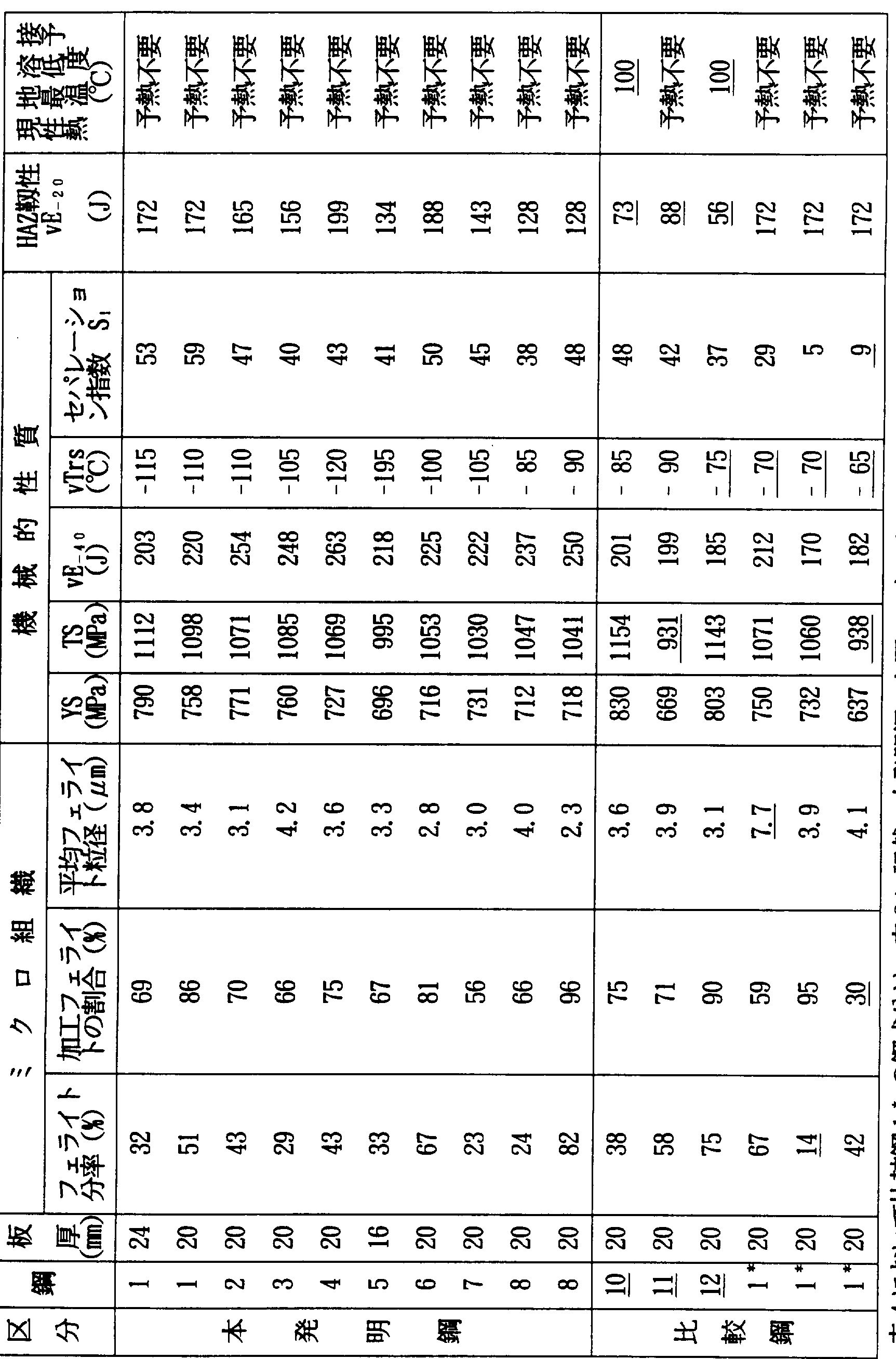
表 4にお 、て 1 *の は、 表 3に言 の本発明鋼 1と同一であるが、 ミクロ糸誦く異なるものである In Table 4, 1 * is the same as steel 1 of the present invention described in Table 3, but is different from that described in the micro thread.
<実施例 3 > <Example 3>
実験室溶解 (50kg、 100画厚鋼塊) または転炉—連続铸造法(240 mm厚) で種々の鋼成分の铸片を製造した。 これらの铸片を種々の条 件で厚みが 15〜25mniの鋼板に圧延し、 場合によっては焼戻し処理を 行い諸性質、 ミ クロ組織を調査した。 Pieces of various steel compositions were produced by laboratory melting (50 kg, 100 ingots) or converter-continuous production (240 mm thickness). These pieces were rolled under various conditions into steel sheets with a thickness of 15 to 25 mni, and in some cases, tempered to investigate various properties and microstructure.
鋼板の機械的性質 (降伏強さ : YS、 引張強さ : TS、 シャルピー試 験の— 40°Cでの吸収エネルギー : vE 。 と 50%破面遷移温度 : vTrs ) は圧延と直角方向で調査した。 The mechanical properties of the steel sheet (yield strength: YS, tensile strength: TS, absorbed energy at 40 ° C of Charpy test: vE. And 50% fracture transition temperature: vTrs) are investigated in the direction perpendicular to rolling. did.
HAZ靱性 (シャルビー試験の— 40°Cでの吸収エネルギー : vE— 4 0) は再現熱サイクル装置で再現した HAZで評価した (最高加熱温度 : 1400°C、 800〜500 °Cの冷却時間 〔厶 t 8。。— 5。。 〕 : 25秒) 。 The HAZ toughness (absorbed energy at 40 ° C in the Charby test: vE- 40 ) was evaluated using HAZ reproduced with a reproducible heat cycler (maximum heating temperature: 1400 ° C, cooling time at 800 to 500 ° C [ Mm t 8 ...— 5 ...]: 25 seconds).
また現地溶接性は Yスリ ッ ト溶接割れ試験(J IS G3158) において HAZの低温割れ防止に必要な最低予熱温度で評価した (溶接方法 : ガスメ タルアーク溶接、 溶接棒 : 引張強さ 100MPa、 入熱 : 0.3kJ/ mm、 溶着金属の水素量 : 3 cc/ 100g金属) 。 The on-site weldability was evaluated in the Y-slit welding crack test (JIS G3158) at the minimum preheating temperature required to prevent low-temperature cracking of HAZ (welding method: gas metal arc welding, welding rod: tensile strength 100 MPa, heat input) : 0.3kJ / mm, hydrogen content of deposited metal: 3cc / 100g metal).
実施例を表 5および 6 に示す。 本発明法に従って製造した鋼板は 優れた強度 · 低温靱性バラ ンス、 HAZ靱性および現地溶接性を示す 。 これに対して比較鋼は化学成分またはミ ク口組織が不適切なため 、 いずれかの特性が著しく劣ることが明らかである。 Examples are shown in Tables 5 and 6. The steel sheet manufactured according to the method of the present invention exhibits excellent balance of strength and low-temperature toughness, HAZ toughness and on-site weldability. On the other hand, it is clear that the comparative steel is remarkably inferior in either property due to the inappropriate chemical composition or microstructure.
表 5 Table 5
化学成分(Wt%) Chemical composition (Wt%)
鐧 C Si Mn P S Ni Cu Mo Nb Ti Al N 他 P値鐧 C Si Mn P S Ni Cu Mo Nb Ti Al N Other P value
1 0.07 0.30 2.02 0.008 0.001 0.50 1.00 0.46 0.042 0.012 0.029 0.0028 2.461 0.07 0.30 2.02 0.008 0.001 0.50 1.00 0.46 0.042 0.012 0.029 0.0028 2.46
2 0.06 0.08 1.98 0.006 0.002 0.60 1.12 0.43 0.031 0.015 0.036 0.0035 V:0.06 2.442 0.06 0.08 1.98 0.006 0.002 0.60 1.12 0.43 0.031 0.015 0.036 0.0035 V: 0.06 2.44
3 0.08 0.12 2.12 0.012 0.001 0.80 0.83 0.40 0.028 0.014 0.048 0.0042 2.523 0.08 0.12 2.12 0.012 0.001 0.80 0.83 0.40 0.028 0.014 0.048 0.0042 2.52
4 0.07 0.25 1.83 0.004 0.001 0.60 1.01 0.38 0.025 0.018 0.008 0.0026 Cr:0.55 2.664 0.07 0.25 1.83 0.004 0.001 0.60 1.01 0.38 0.025 0.018 0.008 0.0026 Cr: 0.55 2.66
5 0.09 0.14 2.07 0.007 0.002 0.90 0.98 0.45 0.018 0.016 0.036 0.0034 Ca: 0.005 2.675 0.09 0.14 2.07 0.007 0.002 0.90 0.98 0.45 0.018 0.016 0.036 0.0034 Ca: 0.005 2.67
6 0.05 0.16 1.79 0.014 0.001 0.92 1.16 0.47 0.029 0.018 0.032 0.0037 Cr:0.30, V:0.05 2.696 0.05 0.16 1.79 0.014 0.001 0.92 1.16 0.47 0.029 0.018 0.032 0.0037 Cr: 0.30, V: 0.05 2.69
7 0.08 0.06 2.16 0.008 0.001 0.95 1.15 0.48 0.031 0.014 0.031 0.0031 2.837 0.08 0.06 2.16 0.008 0.001 0.95 1.15 0.48 0.031 0.014 0.031 0.0031 2.83
8 0.09 0.35 2.18 0.007 0.001 0.96 1.12 0.47 0.019 0.018 0.036 0.0035 Cr:0.50 3.378 0.09 0.35 2.18 0.007 0.001 0.96 1.12 0.47 0.019 0.018 0.036 0.0035 Cr: 0.50 3.37
9 0.12 0.31 2.01 0.009 0.001 0.56 0.99 0.45 0.038 0.013 0.030 0.0029 2.619 0.12 0.31 2.01 0.009 0.001 0.56 0.99 0.45 0.038 0.013 0.030 0.0029 2.61
10 0.07 0.09 2.80 0.006 0.002 0.60 1.02 0.42 0.030 0.016 0.037 0.0031 3.1710 0.07 0.09 2.80 0.006 0.002 0.60 1.02 0.42 0.030 0.016 0.037 0.0031 3.17
12 0.05 0.07 1.72 0.006 0.001 0.36 0.82 0.36 0.018 0.013 0.036 0.0029 1.77 12 0.05 0.07 1.72 0.006 0.001 0.36 0.82 0.36 0.018 0.013 0.036 0.0029 1.77
表 6 Table 6

表 6にお ^xm l * の!^は、 表 5に言 の本 ¾B月鋼 ιと同一であるが、 ミクロ耒藤く異なるものである c Contact ^ xm l * Roh! ^ Is shown in Table 6, is the same as the word of this ¾B month steel ι in Table 5, it is different from Ku micro耒藤c
発明の効果 The invention's effect
本発明により、 低温靱性、 現地溶接性に優れた低降伏比の超高強 度ラ イ ンパイプ (引張強さ 950MPa以上、 AP I規格 X 100超) 用鋼が安 定して大量に製造できるようになった。 その結果、 パイプライ ンの 安全性が著しく 向上するとともに、 パイ プラ イ ンの輸送効率、 施工 能率の飛躍的な向上が可能となつた。 According to the present invention, steel for ultra-high-strength linepipe (tensile strength of 950MPa or more, API standard X100 or more) with low yield ratio and excellent low-temperature toughness and on-site weldability can be manufactured stably in large quantities. became. As a result, the safety of the pipeline has been significantly improved, and the pipeline and transport efficiency of the pipeline have been dramatically improved.
Claims
Priority Applications (8)
| Application Number | Priority Date | Filing Date | Title |
|---|---|---|---|
| KR1019960705573A KR100222302B1 (en) | 1995-02-03 | 1996-01-26 | High strength line pipe steel with excellent low temperature toughness |
| AU44966/96A AU677540B2 (en) | 1995-02-03 | 1996-01-26 | High-strength line-pipe steel having low yield ratio and excellent low-temperature toughness |
| DE69607702T DE69607702T2 (en) | 1995-02-03 | 1996-01-26 | High-strength conduit steel with a low yield strength-tensile strength ratio and excellent low-temperature toughness |
| US08/718,567 US5755895A (en) | 1995-02-03 | 1996-01-26 | High strength line pipe steel having low yield ratio and excellent in low temperature toughness |
| RU96121789A RU2136776C1 (en) | 1995-02-03 | 1996-01-26 | High-strength steel for main pipelines with low yield factor and high low-temperature ductility |
| CA002187028A CA2187028C (en) | 1995-02-03 | 1996-01-26 | High strength line pipe steel having low yield ratio and excellent low temperature toughness |
| EP96901131A EP0757113B1 (en) | 1995-02-03 | 1996-01-26 | High-strength line-pipe steel having low yield ratio and excellent low-temperature toughness |
| NO964182A NO964182L (en) | 1995-02-03 | 1996-10-02 | Pipeline steel with high strength, low flow ratio and excellent toughness at low temperatures |
Applications Claiming Priority (12)
| Application Number | Priority Date | Filing Date | Title |
|---|---|---|---|
| JP7/17302 | 1995-02-03 | ||
| JP01730295A JP3244984B2 (en) | 1995-02-03 | 1995-02-03 | High strength linepipe steel with low yield ratio and excellent low temperature toughness |
| JP01830895A JP3244987B2 (en) | 1995-02-06 | 1995-02-06 | High strength linepipe steel with low yield ratio |
| JP7/18308 | 1995-02-06 | ||
| JP7/72725 | 1995-03-30 | ||
| JP7072725A JPH08269545A (en) | 1995-03-30 | 1995-03-30 | Method for producing steel sheet for Mo-added ultra-high-strength steel pipe with excellent weld toughness |
| JP7/72726 | 1995-03-30 | ||
| JP7072726A JPH08269546A (en) | 1995-03-30 | 1995-03-30 | Method for producing ultra-high strength steel sheet with outstanding low temperature toughness |
| JP7072724A JPH08269544A (en) | 1995-03-30 | 1995-03-30 | Method for producing B-added ultra-high-strength steel pipe steel sheet with excellent weld toughness |
| JP7/72724 | 1995-03-30 | ||
| JP19535895A JP3262972B2 (en) | 1995-07-31 | 1995-07-31 | Weldable high strength steel with low yield ratio and excellent low temperature toughness |
| JP7/195358 | 1995-07-31 |
Publications (1)
| Publication Number | Publication Date |
|---|---|
| WO1996023909A1 true WO1996023909A1 (en) | 1996-08-08 |
Family
ID=27548718
Family Applications (1)
| Application Number | Title | Priority Date | Filing Date |
|---|---|---|---|
| PCT/JP1996/000157 Ceased WO1996023909A1 (en) | 1995-02-03 | 1996-01-26 | High-strength line-pipe steel having low yield ratio and excellent low-temperature toughness |
Country Status (9)
| Country | Link |
|---|---|
| US (1) | US5755895A (en) |
| EP (1) | EP0757113B1 (en) |
| KR (1) | KR100222302B1 (en) |
| CN (1) | CN1148416A (en) |
| AU (1) | AU677540B2 (en) |
| CA (1) | CA2187028C (en) |
| DE (1) | DE69607702T2 (en) |
| NO (1) | NO964182L (en) |
| WO (1) | WO1996023909A1 (en) |
Cited By (9)
| Publication number | Priority date | Publication date | Assignee | Title |
|---|---|---|---|---|
| WO1998059084A1 (en) * | 1997-06-20 | 1998-12-30 | Exxon Production Research Company | Pipeline distribution network systems for transportation of liquefied natural gas |
| WO1998059085A1 (en) * | 1997-06-20 | 1998-12-30 | Exxon Production Research Company | Improved system for processing, storing, and transporting liquefied natural gas |
| WO1998059164A2 (en) | 1997-06-20 | 1998-12-30 | Exxon Production Research Company | Lng fuel storage and delivery systems for natural gas powered vehicles |
| WO1998059195A3 (en) * | 1997-06-20 | 1999-03-18 | Exxon Production Research Co | Systems for vehicular, land-based distribution of liquefied natural gas |
| EP0839921A4 (en) * | 1996-04-17 | 1999-06-02 | Nippon Steel Corp | STEEL WITH IMPROVED Toughness IN ZONES THROUGH SWISS |
| GB2350121B (en) * | 1997-12-19 | 2003-04-16 | Exxonmobil Upstream Res Co | Process components, containers, and pipes suitable for containing and transporting cryogenic temperature fluids |
| RU2205246C2 (en) * | 1997-06-20 | 2003-05-27 | Эксонмобил Апстрим Рисерч Компани | Improved system for processing, storage and transportation of natural gas |
| DE19882488B4 (en) * | 1997-06-20 | 2004-08-12 | ExxonMobil Upstream Research Co., (n.d.Ges.d.Staates Delaware), Houston | High-strength cryo welded constructions |
| CN107541681A (en) * | 2016-06-23 | 2018-01-05 | Posco公司 | The ferrite-group stainless steel of the excellent in low temperature toughness of welding point |
Families Citing this family (110)
| Publication number | Priority date | Publication date | Assignee | Title |
|---|---|---|---|---|
| JPH10237583A (en) | 1997-02-27 | 1998-09-08 | Sumitomo Metal Ind Ltd | High tensile steel and method for producing the same |
| CN1088117C (en) * | 1997-04-30 | 2002-07-24 | 川崎制铁株式会社 | Steel material having high ductility and high strength and process for producing same |
| ATE260348T1 (en) * | 1997-07-28 | 2004-03-15 | Exxonmobil Upstream Res Co | ULTRA HIGH-STRENGTH, WELDABLE, BORON-CONTAINING STEELS WITH EXCELLENT TOUGHNESS |
| DE69834932T2 (en) * | 1997-07-28 | 2007-01-25 | Exxonmobil Upstream Research Co., Houston | ULTRA-HIGH-RESISTANT, WELDABLE STEEL WITH EXCELLENT ULTRATED TEMPERATURE TOOLNESS |
| WO1999005334A1 (en) * | 1997-07-28 | 1999-02-04 | Exxonmobil Upstream Research Company | Ultra-high strength, weldable, essentially boron-free steels wit h superior toughness |
| WO1999005328A1 (en) * | 1997-07-28 | 1999-02-04 | Exxonmobil Upstream Research Company | Method for producing ultra-high strength, weldable steels with superior toughness |
| KR100498214B1 (en) * | 1997-09-11 | 2005-07-01 | 제이에프이 스틸 가부시키가이샤 | Hot rolled steel plate to be processed having hyper fine particles, method of manufacturing the same, and method of manufacturing cold rolled steel plate |
| US6159312A (en) * | 1997-12-19 | 2000-12-12 | Exxonmobil Upstream Research Company | Ultra-high strength triple phase steels with excellent cryogenic temperature toughness |
| DZ2531A1 (en) * | 1997-12-19 | 2003-02-08 | Exxon Production Research Co | Process for the preparation of a double phase steel sheet, this sheet and process for strengthening the resistance to crack propagation. |
| US6254698B1 (en) | 1997-12-19 | 2001-07-03 | Exxonmobile Upstream Research Company | Ultra-high strength ausaged steels with excellent cryogenic temperature toughness and method of making thereof |
| DZ2530A1 (en) | 1997-12-19 | 2003-02-01 | Exxon Production Research Co | Process for the preparation of a steel sheet, this steel sheet and process for strengthening the resistance to the propagation of cracks in a steel sheet. |
| AU6981001A (en) | 1998-11-16 | 2002-01-02 | Shell Oil Co | Radial expansion of tubular members |
| US7231985B2 (en) | 1998-11-16 | 2007-06-19 | Shell Oil Company | Radial expansion of tubular members |
| US7603758B2 (en) | 1998-12-07 | 2009-10-20 | Shell Oil Company | Method of coupling a tubular member |
| US7357188B1 (en) | 1998-12-07 | 2008-04-15 | Shell Oil Company | Mono-diameter wellbore casing |
| US7185710B2 (en) | 1998-12-07 | 2007-03-06 | Enventure Global Technology | Mono-diameter wellbore casing |
| GB2344606B (en) | 1998-12-07 | 2003-08-13 | Shell Int Research | Forming a wellbore casing by expansion of a tubular member |
| US7552776B2 (en) | 1998-12-07 | 2009-06-30 | Enventure Global Technology, Llc | Anchor hangers |
| US6739392B2 (en) | 1998-12-07 | 2004-05-25 | Shell Oil Company | Forming a wellbore casing while simultaneously drilling a wellbore |
| US7363984B2 (en) | 1998-12-07 | 2008-04-29 | Enventure Global Technology, Llc | System for radially expanding a tubular member |
| TNSN99233A1 (en) * | 1998-12-19 | 2001-12-31 | Exxon Production Research Co | HIGH STRENGTH STEELS WITH EXCELLENT CRYOGENIC TEMPERATURE TENACITY |
| JP3519966B2 (en) * | 1999-01-07 | 2004-04-19 | 新日本製鐵株式会社 | Ultra-high-strength linepipe excellent in low-temperature toughness and its manufacturing method |
| AU770359B2 (en) | 1999-02-26 | 2004-02-19 | Shell Internationale Research Maatschappij B.V. | Liner hanger |
| US7350563B2 (en) | 1999-07-09 | 2008-04-01 | Enventure Global Technology, L.L.C. | System for lining a wellbore casing |
| US7516790B2 (en) | 1999-12-03 | 2009-04-14 | Enventure Global Technology, Llc | Mono-diameter wellbore casing |
| US7234531B2 (en) | 1999-12-03 | 2007-06-26 | Enventure Global Technology, Llc | Mono-diameter wellbore casing |
| CN1144895C (en) * | 2000-03-24 | 2004-04-07 | 川崎制铁株式会社 | Non-refined steel being reduced in anisotropy of material and excellent in strength, toughness and machinability, and its making method |
| US6676774B2 (en) * | 2000-04-07 | 2004-01-13 | Jfe Steel Corporation | Hot rolled steel plate and cold rolled steel plate being excellent in strain aging hardening characteristics |
| JP4608739B2 (en) * | 2000-06-14 | 2011-01-12 | Jfeスチール株式会社 | Manufacturing method of steel pipe for automobile door reinforcement |
| WO2002000956A1 (en) * | 2000-06-26 | 2002-01-03 | Aceralia Corporacion Siderurgica, S.A. | Composition and method for the production of multiphase steels |
| WO2002023007A1 (en) | 2000-09-18 | 2002-03-21 | Shell Oil Company | Liner hanger with sliding sleeve valve |
| US7100685B2 (en) * | 2000-10-02 | 2006-09-05 | Enventure Global Technology | Mono-diameter wellbore casing |
| CA2428819A1 (en) | 2001-01-03 | 2002-07-11 | Enventure Global Technology | Mono-diameter wellbore casing |
| US7410000B2 (en) | 2001-01-17 | 2008-08-12 | Enventure Global Technology, Llc. | Mono-diameter wellbore casing |
| EP1325967A4 (en) * | 2001-07-13 | 2005-02-23 | Jfe Steel Corp | STEEL TUBE WITH HIGH RESISTANCE, HIGHER THAN THAT OF API X6 STANDARD |
| AU2002360373A1 (en) | 2001-11-12 | 2003-05-26 | Enventure Global Technlogy | Mono diameter wellbore casing |
| US6852175B2 (en) * | 2001-11-27 | 2005-02-08 | Exxonmobil Upstream Research Company | High strength marine structures |
| JP2005525509A (en) | 2001-11-27 | 2005-08-25 | エクソンモービル アップストリーム リサーチ カンパニー | CNG storage and delivery system for natural gas vehicles |
| US7424918B2 (en) | 2002-08-23 | 2008-09-16 | Enventure Global Technology, L.L.C. | Interposed joint sealing layer method of forming a wellbore casing |
| US7377326B2 (en) | 2002-08-23 | 2008-05-27 | Enventure Global Technology, L.L.C. | Magnetic impulse applied sleeve method of forming a wellbore casing |
| KR20040075971A (en) * | 2002-02-07 | 2004-08-30 | 제이에프이 스틸 가부시키가이샤 | High Strength Steel Plate and Method for Production Thereof |
| EP1985796B1 (en) | 2002-04-12 | 2012-05-16 | Enventure Global Technology | Protective sleeve for threated connections for expandable liner hanger |
| EP1501645A4 (en) | 2002-04-15 | 2006-04-26 | Enventure Global Technology | Protective sleeve for threaded connections for expandable liner hanger |
| JP3968011B2 (en) * | 2002-05-27 | 2007-08-29 | 新日本製鐵株式会社 | High strength steel excellent in low temperature toughness and weld heat affected zone toughness, method for producing the same and method for producing high strength steel pipe |
| GB2426993B (en) | 2002-05-29 | 2007-05-02 | Enventure Global Technology | System for radially expanding a tubular member |
| WO2003104601A2 (en) | 2002-06-10 | 2003-12-18 | Enventure Global Technology | Mono-diameter wellbore casing |
| JP4267367B2 (en) | 2002-06-19 | 2009-05-27 | 新日本製鐵株式会社 | Crude oil tank steel and its manufacturing method, crude oil tank and its anticorrosion method |
| JP3863818B2 (en) * | 2002-07-10 | 2006-12-27 | 新日本製鐵株式会社 | Low yield ratio steel pipe |
| GB2417971B (en) * | 2002-07-19 | 2007-02-14 | Enventure Global Technology | Protective sleeve for threaded connections for expandable liner hanger |
| AU2003261451A1 (en) * | 2002-08-30 | 2004-03-19 | Enventure Global Technology | Method of manufacturing an insulated pipeline |
| AU2003270774A1 (en) | 2002-09-20 | 2004-04-08 | Enventure Global Technlogy | Bottom plug for forming a mono diameter wellbore casing |
| WO2004027392A1 (en) | 2002-09-20 | 2004-04-01 | Enventure Global Technology | Pipe formability evaluation for expandable tubulars |
| GB2410280B (en) * | 2002-09-20 | 2007-04-04 | Enventure Global Technology | Self-lubricating expansion mandrel for expandable tubular |
| US7886831B2 (en) | 2003-01-22 | 2011-02-15 | Enventure Global Technology, L.L.C. | Apparatus for radially expanding and plastically deforming a tubular member |
| GB2433281B (en) | 2003-01-27 | 2007-08-01 | Enventure Global Technology | Lubrication system for radially expanding tubular members |
| GB2415983B (en) | 2003-02-26 | 2007-09-05 | Enventure Global Technology | Apparatus for radially expanding and plastically deforming a tubular member |
| GB2415454B (en) | 2003-03-11 | 2007-08-01 | Enventure Global Technology | Apparatus for radially expanding and plastically deforming a tubular member |
| US20050115649A1 (en) * | 2003-03-27 | 2005-06-02 | Tokarz Christopher A. | Thermomechanical processing routes in compact strip production of high-strength low-alloy steel |
| GB2415988B (en) | 2003-04-17 | 2007-10-17 | Enventure Global Technology | Apparatus for radially expanding and plastically deforming a tubular member |
| EP2853615B1 (en) * | 2003-06-12 | 2017-12-27 | JFE Steel Corporation | Low yield ratio, high strength, high toughness, thick steel plate and welded steel pipe, and method for manufacturing the same |
| JP4564245B2 (en) * | 2003-07-25 | 2010-10-20 | 新日本製鐵株式会社 | Super high strength welded joint with excellent low temperature cracking property of weld metal and method for producing high strength welded steel pipe |
| GB2421262B (en) * | 2003-09-05 | 2008-04-09 | Enventure Global Technology | Expandable tubular |
| US7712522B2 (en) | 2003-09-05 | 2010-05-11 | Enventure Global Technology, Llc | Expansion cone and system |
| KR101165166B1 (en) | 2003-09-30 | 2012-07-11 | 신닛뽄세이테쯔 카부시키카이샤 | High-yield-ratio high-strength hot rolled steel sheet and high-yield-ratio high-strength hot-dip galvanized steel sheet excelling in weldability and ductility as well as high-yield-ratio high-strength alloyed hot-dip galvanized steel sheet |
| CN100564567C (en) * | 2003-10-20 | 2009-12-02 | 杰富意钢铁株式会社 | Seamless oil well steel pipe for pipe expansion and method for producing same |
| US7736447B2 (en) | 2003-12-19 | 2010-06-15 | Nippon Steel Corporation | Steel plates for ultra-high-strength linepipes and ultra-high-strength linepipes having excellent low-temperature toughness and manufacturing methods thereof |
| RU2241780C1 (en) * | 2003-12-30 | 2004-12-10 | Закрытое акционерное общество Научно-производственное объединение "ПОЛИМЕТАЛЛ" | Steel |
| JP4259347B2 (en) * | 2004-02-19 | 2009-04-30 | 住友金属工業株式会社 | Manufacturing method of high strength non-tempered seamless steel pipe |
| CN100352962C (en) * | 2004-06-30 | 2007-12-05 | 宝山钢铁股份有限公司 | Method for producing X80 pipeline steel having anti-HIC property and its hot-rolled plate |
| CA2577083A1 (en) | 2004-08-13 | 2006-02-23 | Mark Shuster | Tubular member expansion apparatus |
| CN100350065C (en) * | 2004-12-08 | 2007-11-21 | 鞍钢股份有限公司 | High tensile strength low carbon bainite thick steel plate and production method thereof |
| JP4997805B2 (en) * | 2005-03-31 | 2012-08-08 | Jfeスチール株式会社 | High-strength thick steel plate, method for producing the same, and high-strength steel pipe |
| JP5068645B2 (en) | 2005-04-04 | 2012-11-07 | 新日本製鐵株式会社 | High-strength steel plate and high-strength welded steel pipe excellent in ductile fracture characteristics, and methods for producing them |
| CN1330789C (en) * | 2005-07-19 | 2007-08-08 | 武汉钢铁(集团)公司 | 600MPa grade low temperature high toughness weather corrosion resistant steel and its production method |
| CA2627171A1 (en) * | 2005-10-24 | 2007-05-03 | Narasimha-Rao V. Bangaru | High strength dual phase steel with low yield ratio, high toughness and superior weldability |
| CN100434562C (en) * | 2005-11-30 | 2008-11-19 | 鞍钢股份有限公司 | Cr-containing high-strength pipeline steel hot-rolled flat plate and production method thereof |
| KR100723166B1 (en) * | 2005-12-24 | 2007-05-30 | 주식회사 포스코 | Line pipe steel with excellent toughness, high strength and resistance to hydrogen organic cracking and its manufacturing method |
| JP5098235B2 (en) | 2006-07-04 | 2012-12-12 | 新日鐵住金株式会社 | High-strength steel pipe for line pipe excellent in low-temperature toughness, high-strength steel sheet for line pipe, and production method thereof |
| CN100584983C (en) * | 2006-09-27 | 2010-01-27 | 宝山钢铁股份有限公司 | Cold-rolled high-strength dual-phase strip steel and its manufacturing process |
| KR20090078807A (en) * | 2006-10-06 | 2009-07-20 | 엑손모빌 업스트림 리서치 캄파니 | Low yield ratio composite tissue steel line pipe with excellent strain aging resistance |
| CN101165203B (en) * | 2006-10-18 | 2010-09-08 | 宝山钢铁股份有限公司 | Ultra-high-strength and high-toughness X120 pipeline steel and its manufacturing method |
| KR100851189B1 (en) * | 2006-11-02 | 2008-08-08 | 주식회사 포스코 | Steel plate for ultra high strength line pipe with excellent low temperature toughness and manufacturing method |
| JP5251089B2 (en) * | 2006-12-04 | 2013-07-31 | 新日鐵住金株式会社 | Welded steel pipe for high-strength thick-walled line pipe excellent in low-temperature toughness and manufacturing method |
| US9040865B2 (en) * | 2007-02-27 | 2015-05-26 | Exxonmobil Upstream Research Company | Corrosion resistant alloy weldments in carbon steel structures and pipelines to accommodate high axial plastic strains |
| KR100925608B1 (en) | 2007-08-13 | 2009-11-06 | 주식회사 포스코 | Ultra high strength welded joint of 950MPa or more with excellent low temperature toughness |
| JP4853575B2 (en) * | 2009-02-06 | 2012-01-11 | Jfeスチール株式会社 | High strength steel pipe for low temperature excellent in buckling resistance and weld heat affected zone toughness and method for producing the same |
| JP5411560B2 (en) * | 2009-04-16 | 2014-02-12 | 株式会社神戸製鋼所 | Acid-resistant steel and low-temperature components related to exhaust gas from combustion and incineration facilities |
| JP4924730B2 (en) * | 2009-04-28 | 2012-04-25 | Jfeスチール株式会社 | High-strength hot-dip galvanized steel sheet excellent in workability, weldability and fatigue characteristics and method for producing the same |
| CN101545079B (en) * | 2009-05-15 | 2011-09-21 | 首钢总公司 | High-strength and low-yield ratio X80 hot-rolled steel plate with excellent toughness and production method thereof |
| JP4949541B2 (en) * | 2010-07-13 | 2012-06-13 | 新日本製鐵株式会社 | Duplex oil well steel pipe and method for producing the same |
| CN102021483B (en) * | 2010-12-06 | 2012-10-10 | 北京科技大学 | Cold-rolled dual-phase steel plate with 1,200 MPa-level tensile strength and preparation method thereof |
| CN102080194B (en) * | 2011-03-08 | 2012-06-06 | 南京钢铁股份有限公司 | Large-deformation-preventing pipeline steel with excellent aging resistance and production method thereof |
| JP5370503B2 (en) * | 2012-01-12 | 2013-12-18 | 新日鐵住金株式会社 | Low alloy steel |
| CN102534141A (en) * | 2012-01-31 | 2012-07-04 | 首钢总公司 | On-line induction heat treatment process capable of strengthening precipitation of high-strength steel |
| CN103215527A (en) * | 2013-04-24 | 2013-07-24 | 马钢(集团)控股有限公司 | High-strength and high-toughness X100 pipeline hot rolled steel sheet and production method thereof |
| EP3042976B1 (en) * | 2013-08-30 | 2020-05-13 | Nippon Steel Corporation | Steel sheet for thick-walled high-strength line pipe having exceptional corrosion resistance, crush resistance properties, and low-temperature ductility, and line pipe |
| CN103643170A (en) * | 2013-12-06 | 2014-03-19 | 马钢(集团)控股有限公司 | High-strength high-toughness X100 pipeline steel hot-rolled coiled plate and production method thereof |
| CN103667963B (en) * | 2013-12-06 | 2015-12-09 | 武汉钢铁(集团)公司 | The low-carbon bainite construction(al)steel of a kind of yield tensile ratio < 0.8 and production method |
| CN103667911B (en) * | 2013-12-13 | 2015-12-02 | 莱芜钢铁集团有限公司 | Low yield strength ratio X100 Hi-grade steel pipeline steel hot rolled steel plate and manufacture method thereof |
| CN103952638B (en) * | 2014-04-04 | 2016-05-04 | 日照钢铁控股集团有限公司 | There is pipe line steel and the manufacturing process thereof of excellent low-temperature flexibility |
| KR101963705B1 (en) | 2015-01-16 | 2019-03-29 | 제이에프이 스틸 가부시키가이샤 | High-strength steel sheet and method for manufacturing the same |
| BR102015018600A2 (en) * | 2015-08-03 | 2017-02-07 | Inst Alberto Luiz Coimbra De Pós Graduação E Pesquisa De Engenharia - Coppe/Ufrj | 9% modified nickel steel alloy, 9% modified nickel steel alloy composition and its uses |
| CN105463311B (en) * | 2015-12-14 | 2017-11-07 | 徐州徐工液压件有限公司 | A kind of preparation method of cold-drawn high-precision |
| CA3009905C (en) * | 2016-01-29 | 2020-11-17 | Jfe Steel Corporation | Steel plate for high-strength and high-toughness steel pipes and method for producing steel plate |
| RU2658515C1 (en) * | 2017-05-10 | 2018-06-21 | Публичное акционерное общество "Трубная металлургическая компания" (ПАО "ТМК") | High-strength pipe made of low-carbon pre-peritectic molybdenum-containing steel for oil and gas pipelines and method of its manufacture |
| CN107419195A (en) * | 2017-08-04 | 2017-12-01 | 杰森能源技术有限公司 | A kind of deep well high pressure well high intensity high fatigue life coiled tubing and its manufacture method |
| CN108486473B (en) * | 2018-05-14 | 2020-01-14 | 武汉钢铁有限公司 | Low-yield-ratio sulfide stress corrosion resistant 345 MPa-grade steel plate for low-temperature pressure container and preparation method thereof |
| CN108546885B (en) * | 2018-07-03 | 2019-09-20 | 鞍钢股份有限公司 | A kind of L555M pipeline steel with excellent low temperature toughness and its manufacturing method |
| CN109182917A (en) * | 2018-11-08 | 2019-01-11 | 宝钢湛江钢铁有限公司 | A kind of manufacturing method of thick-specification high-tenacity pipe line steel |
| PL239419B1 (en) * | 2020-01-17 | 2021-11-29 | Cmc Poland Spolka Z Ograniczona Odpowiedzialnoscia | The method of manufacturing a steel bar with a non-circular cross-section and a steel bar with a non-circular cross-section |
Citations (5)
| Publication number | Priority date | Publication date | Assignee | Title |
|---|---|---|---|---|
| JPS5983722A (en) * | 1982-11-05 | 1984-05-15 | Kawasaki Steel Corp | Preparation of low carbon equivalent unnormalized high tensile steel plate |
| JPS63118012A (en) * | 1986-11-07 | 1988-05-23 | Sumitomo Metal Ind Ltd | Production of low yield ratio high tensile thick steel plate |
| JPH02125843A (en) * | 1988-11-02 | 1990-05-14 | Kawasaki Steel Corp | Thick steel plate for uoe steel pipe |
| JPH02217417A (en) * | 1989-02-17 | 1990-08-30 | Kawasaki Steel Corp | Production of non-heattreated high tensile steel sheet excellent in dwtt characteristic |
| JPH05195057A (en) * | 1991-07-31 | 1993-08-03 | Kawasaki Steel Corp | Production of high cr steel type uoe steel sheet and high cr type atmosphere corrosion resisting steel sheet both excellent in ys characteristic in l direction |
Family Cites Families (8)
| Publication number | Priority date | Publication date | Assignee | Title |
|---|---|---|---|---|
| JPS5412882B2 (en) * | 1973-02-28 | 1979-05-26 | ||
| JPS57114638A (en) * | 1980-12-30 | 1982-07-16 | Nippon Steel Corp | Bar steel for reinforcing rod with superior toughness at low temperature and seawater resistance, and its manufacture |
| JPS5834131A (en) * | 1981-08-25 | 1983-02-28 | Kawasaki Steel Corp | Production of nonrefined high tensile steel plate having excellent toughness and weldability |
| JPS5877528A (en) * | 1981-10-31 | 1983-05-10 | Nippon Steel Corp | Manufacture of high tensile steel with superior toughness at low temperature |
| JPS58151425A (en) * | 1982-02-27 | 1983-09-08 | Nippon Kokan Kk <Nkk> | Method for producing highly corrosion-resistant clad steel pipes with excellent low-temperature toughness |
| JPS59190323A (en) * | 1983-04-12 | 1984-10-29 | Nippon Steel Corp | Production of low temperature steel |
| US4578124A (en) * | 1984-01-20 | 1986-03-25 | Kabushiki Kaisha Kobe Seiko Sho | High strength low carbon steels, steel articles thereof and method for manufacturing the steels |
| JPS60181229A (en) * | 1984-02-25 | 1985-09-14 | Sumitomo Metal Ind Ltd | Production of low-yield ratio high-tension thick steel plate |
-
1996
- 1996-01-26 DE DE69607702T patent/DE69607702T2/en not_active Expired - Lifetime
- 1996-01-26 EP EP96901131A patent/EP0757113B1/en not_active Expired - Lifetime
- 1996-01-26 AU AU44966/96A patent/AU677540B2/en not_active Ceased
- 1996-01-26 CA CA002187028A patent/CA2187028C/en not_active Expired - Lifetime
- 1996-01-26 US US08/718,567 patent/US5755895A/en not_active Expired - Lifetime
- 1996-01-26 CN CN96190145A patent/CN1148416A/en active Pending
- 1996-01-26 WO PCT/JP1996/000157 patent/WO1996023909A1/en not_active Ceased
- 1996-01-26 KR KR1019960705573A patent/KR100222302B1/en not_active Expired - Lifetime
- 1996-10-02 NO NO964182A patent/NO964182L/en unknown
Patent Citations (5)
| Publication number | Priority date | Publication date | Assignee | Title |
|---|---|---|---|---|
| JPS5983722A (en) * | 1982-11-05 | 1984-05-15 | Kawasaki Steel Corp | Preparation of low carbon equivalent unnormalized high tensile steel plate |
| JPS63118012A (en) * | 1986-11-07 | 1988-05-23 | Sumitomo Metal Ind Ltd | Production of low yield ratio high tensile thick steel plate |
| JPH02125843A (en) * | 1988-11-02 | 1990-05-14 | Kawasaki Steel Corp | Thick steel plate for uoe steel pipe |
| JPH02217417A (en) * | 1989-02-17 | 1990-08-30 | Kawasaki Steel Corp | Production of non-heattreated high tensile steel sheet excellent in dwtt characteristic |
| JPH05195057A (en) * | 1991-07-31 | 1993-08-03 | Kawasaki Steel Corp | Production of high cr steel type uoe steel sheet and high cr type atmosphere corrosion resisting steel sheet both excellent in ys characteristic in l direction |
Non-Patent Citations (1)
| Title |
|---|
| See also references of EP0757113A4 * |
Cited By (21)
| Publication number | Priority date | Publication date | Assignee | Title |
|---|---|---|---|---|
| EP0839921A4 (en) * | 1996-04-17 | 1999-06-02 | Nippon Steel Corp | STEEL WITH IMPROVED Toughness IN ZONES THROUGH SWISS |
| US6203631B1 (en) | 1997-06-20 | 2001-03-20 | Exxonmobil Upstream Research Company | Pipeline distribution network systems for transportation of liquefied natural gas |
| WO1998059164A2 (en) | 1997-06-20 | 1998-12-30 | Exxon Production Research Company | Lng fuel storage and delivery systems for natural gas powered vehicles |
| WO1998059195A3 (en) * | 1997-06-20 | 1999-03-18 | Exxon Production Research Co | Systems for vehicular, land-based distribution of liquefied natural gas |
| WO1998059085A1 (en) * | 1997-06-20 | 1998-12-30 | Exxon Production Research Company | Improved system for processing, storing, and transporting liquefied natural gas |
| GB2341614A (en) * | 1997-06-20 | 2000-03-22 | Exxon Production Research Co | Improved system for processing storing and transporting liquefied natural gas |
| US6047747A (en) * | 1997-06-20 | 2000-04-11 | Exxonmobil Upstream Research Company | System for vehicular, land-based distribution of liquefied natural gas |
| GB2344415A (en) * | 1997-06-20 | 2000-06-07 | Exxon Production Research Co | Systems for vehicular land-based distribution of liquefied natural gas |
| US6085528A (en) * | 1997-06-20 | 2000-07-11 | Exxonmobil Upstream Research Company | System for processing, storing, and transporting liquefied natural gas |
| WO1998059084A1 (en) * | 1997-06-20 | 1998-12-30 | Exxon Production Research Company | Pipeline distribution network systems for transportation of liquefied natural gas |
| GB2346382A (en) * | 1997-06-20 | 2000-08-09 | Exxon Production Research Co | Pipeline distribution network systems for transportation of liquefied natural gas |
| GB2346382B (en) * | 1997-06-20 | 2001-08-01 | Exxon Production Research Co | Pipeline distribution network systems for transportation of liquefied natural gas |
| AU734121B2 (en) * | 1997-06-20 | 2001-06-07 | Exxonmobil Upstream Research Company | Improved system for processing, storing, and transporting liquefied natural gas |
| GB2344415B (en) * | 1997-06-20 | 2001-04-04 | Exxon Production Research Co | Systems for vehicular land-based distribution of liquefied natural gas |
| GB2341614B (en) * | 1997-06-20 | 2001-09-26 | Exxon Production Research Co | Improved system for processing storing and transporting liquefied natural gas |
| AT413588B (en) * | 1997-06-20 | 2006-04-15 | Exxonmobil Upstream Res Co | SYSTEMS FOR LAND BASED DISTRIBUTION BY VEHICLES OF LIQUEFIED GAS |
| RU2205246C2 (en) * | 1997-06-20 | 2003-05-27 | Эксонмобил Апстрим Рисерч Компани | Improved system for processing, storage and transportation of natural gas |
| RU2211876C2 (en) * | 1997-06-20 | 2003-09-10 | Эксонмобил Апстрим Рисерч Компани | Systems of ground transportation of liquefied natural gas |
| DE19882488B4 (en) * | 1997-06-20 | 2004-08-12 | ExxonMobil Upstream Research Co., (n.d.Ges.d.Staates Delaware), Houston | High-strength cryo welded constructions |
| GB2350121B (en) * | 1997-12-19 | 2003-04-16 | Exxonmobil Upstream Res Co | Process components, containers, and pipes suitable for containing and transporting cryogenic temperature fluids |
| CN107541681A (en) * | 2016-06-23 | 2018-01-05 | Posco公司 | The ferrite-group stainless steel of the excellent in low temperature toughness of welding point |
Also Published As
| Publication number | Publication date |
|---|---|
| NO964182D0 (en) | 1996-10-02 |
| NO964182L (en) | 1996-12-02 |
| EP0757113B1 (en) | 2000-04-12 |
| US5755895A (en) | 1998-05-26 |
| KR970702385A (en) | 1997-05-13 |
| CN1148416A (en) | 1997-04-23 |
| CA2187028C (en) | 2001-07-31 |
| AU4496696A (en) | 1996-08-21 |
| CA2187028A1 (en) | 1996-08-08 |
| AU677540B2 (en) | 1997-04-24 |
| DE69607702D1 (en) | 2000-05-18 |
| KR100222302B1 (en) | 1999-10-01 |
| EP0757113A1 (en) | 1997-02-05 |
| EP0757113A4 (en) | 1998-05-20 |
| DE69607702T2 (en) | 2000-11-23 |
Similar Documents
| Publication | Publication Date | Title |
|---|---|---|
| WO1996023909A1 (en) | High-strength line-pipe steel having low yield ratio and excellent low-temperature toughness | |
| KR100206151B1 (en) | Weldability high tensile strength steel with excellent low temperature toughness | |
| JP5439184B2 (en) | Steel sheet for ultra-high-strength line pipe excellent in low-temperature toughness and method for producing the same | |
| KR100558429B1 (en) | High-strength steel sheet and high-strength steel pipe excellent in deformability and method for producing the same | |
| US10023946B2 (en) | Thick steel sheet having excellent CTOD properties in multilayer welded joints, and manufacturing method for thick steel sheet | |
| JP3898814B2 (en) | Continuous cast slab for high strength steel with excellent low temperature toughness and its manufacturing method, and high strength steel with excellent low temperature toughness | |
| JP4484123B2 (en) | High strength and excellent base material for clad steel plate with excellent weld heat affected zone toughness | |
| RU2136776C1 (en) | High-strength steel for main pipelines with low yield factor and high low-temperature ductility | |
| JP3258207B2 (en) | Ultra high strength steel with excellent low temperature toughness | |
| JP3244984B2 (en) | High strength linepipe steel with low yield ratio and excellent low temperature toughness | |
| JP3812108B2 (en) | High-strength steel with excellent center characteristics and method for producing the same | |
| JP3612115B2 (en) | Manufacturing method of ultra high strength steel sheet with excellent low temperature toughness | |
| JPH0860292A (en) | High-strength steel with excellent toughness | |
| JP2023110068A (en) | High-strength steel material with excellent resistance to sulfide stress corrosion cracking and method for producing the same | |
| JP3262972B2 (en) | Weldable high strength steel with low yield ratio and excellent low temperature toughness | |
| JP3344305B2 (en) | High-strength steel sheet for line pipe excellent in resistance to hydrogen-induced cracking and method for producing the same | |
| JPH0873983A (en) | Steel plate for welded structure excellent in fatigue strength of welded joint and manufacturing method thereof | |
| JPH03211230A (en) | Production of low alloy steel for line pipe with high corrosion resistance | |
| JP3244981B2 (en) | Weldable high-strength steel with excellent low-temperature toughness | |
| JP3244986B2 (en) | Weldable high strength steel with excellent low temperature toughness | |
| JP3244987B2 (en) | High strength linepipe steel with low yield ratio | |
| KR20230078073A (en) | Steel plate having excellent heat affected zone toughness and method for manufacturing the same | |
| JP3854412B2 (en) | Sour-resistant steel plate with excellent weld heat-affected zone toughness and its manufacturing method | |
| JP3244985B2 (en) | Weldable high strength steel with excellent low temperature toughness | |
| JP4964480B2 (en) | High strength steel pipe excellent in toughness of welded portion and method for producing the same |
Legal Events
| Date | Code | Title | Description |
|---|---|---|---|
| WWE | Wipo information: entry into national phase |
Ref document number: 96190145.4 Country of ref document: CN |
|
| AK | Designated states |
Kind code of ref document: A1 Designated state(s): AU CA CN KR NO RU US |
|
| AL | Designated countries for regional patents |
Kind code of ref document: A1 Designated state(s): AT BE CH DE DK ES FR GB GR IE IT LU MC NL PT SE |
|
| WWE | Wipo information: entry into national phase |
Ref document number: 2187028 Country of ref document: CA Ref document number: 1019960705573 Country of ref document: KR |
|
| WWE | Wipo information: entry into national phase |
Ref document number: 08718567 Country of ref document: US |
|
| 121 | Ep: the epo has been informed by wipo that ep was designated in this application | ||
| WWE | Wipo information: entry into national phase |
Ref document number: 1996901131 Country of ref document: EP |
|
| WWP | Wipo information: published in national office |
Ref document number: 1996901131 Country of ref document: EP |
|
| WWG | Wipo information: grant in national office |
Ref document number: 1996901131 Country of ref document: EP |