US8341417B1 - Data storage using encoded hash message authentication code - Google Patents
Data storage using encoded hash message authentication code Download PDFInfo
- Publication number
- US8341417B1 US8341417B1 US11/638,092 US63809206A US8341417B1 US 8341417 B1 US8341417 B1 US 8341417B1 US 63809206 A US63809206 A US 63809206A US 8341417 B1 US8341417 B1 US 8341417B1
- Authority
- US
- United States
- Prior art keywords
- authentication code
- data set
- hash
- encoded authentication
- encoded
- Prior art date
- Legal status (The legal status is an assumption and is not a legal conclusion. Google has not performed a legal analysis and makes no representation as to the accuracy of the status listed.)
- Active, expires
Links
Images



Classifications
-
- G—PHYSICS
- G06—COMPUTING OR CALCULATING; COUNTING
- G06F—ELECTRIC DIGITAL DATA PROCESSING
- G06F21/00—Security arrangements for protecting computers, components thereof, programs or data against unauthorised activity
- G06F21/60—Protecting data
- G06F21/64—Protecting data integrity, e.g. using checksums, certificates or signatures
Definitions
- the present disclosure generally relates to secure data storage systems and the use of cryptographic authentication of messages that are stored on, and communicated between, computers and other devices.
- MAC message authentication code
- a file server is accessible to a wide group of users, one or more of those users can apply a MAC with a shared secret key to a particular file, and store the MAC tag with the file.
- the users that also have that same shared secret key then can detect any unauthorized alteration of that file by re-computing the MAC and comparing the re-computed value to a copy of the previously stored MAC tag.
- changing secret keys is sometimes necessary. For example, when multiple users share a secret key, it may be necessary to change a key because one of the users becomes untrusted. If a device containing the key has been stolen or compromised, then a user may no longer be trusted. When a MAC key is changed, the MAC tags for each authenticated data element must be recomputed using the new key. This operation is potentially very costly, because with conventional MAC operations the entire set of authenticated data must be run through a cryptographic function. Using this operation with large data storage systems might require processing gigabytes or terabytes of data using the cryptographic function, which consumes considerable time and processing resources.
- Lazy revocation is only useful when it is acceptable to make the assumption that all adversaries seeking to break into the system have limited access to the stored data and MAC tags.
- a lazy revocation technique is described in “Lazy Revocation in Cryptographic File Systems,” http://www.zurich.ibm.com/4cca/papers/lazyfs.pdf.
- FIG. 1A illustrates a data processing system using encoded hash message authentication codes
- FIG. 1B illustrates logic for generating encoded hash message authentication codes and performing re-keying
- FIG. 2 illustrates generating hash message authentication codes
- FIG. 3 illustrates re-keying a hash message authentication code
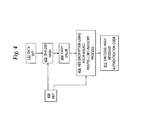
- FIG. 4 illustrates generating an encoded hash message authentication code using particular logical operations for one embodiment
- FIG. 5 illustrates a computer system on which an embodiment can be implemented.
- a data processing apparatus comprises one or more processors; logic coupled to the one or more processors for execution and which, when executed by the one or more processors, causes receiving a data set at the one or more processors; creating and storing a hash output value by applying the data set to a collision-resistant hash operation that provides the hash output value as output; encoding the hash output value using a uniquely invertible keyed pseudo-random permutation operation based on a first shared key, to result in creating an encoded authentication code; and associating the encoded authentication code with the data set.
- the logic comprises further sequences of instructions which, when executed by the one or more processors, cause the apparatus to perform receiving a second shared key; retrieving and decoding the encoded authentication code using the first key to result in recovering the hash output value; re-encoding the hash output value using the permutation operation based on the second shared key, to result in creating a second encoded authentication code without re-applying the data set to the hash operation; storing the second encoded authentication code in association with the data set.
- the hash operation is a one-way hash function having a fixed-length output.
- the hash operation is SHA-1.
- the permutation operation is AES in a four-round Luby-Rackoff function.
- the encryption operation is a 256-bit width Rijndael cipher.
- the Extended Codebook (XCB) or the Encrypt-Mask-Encrypt (EME) block cipher modes of operation may be used as alternatives.
- the data set is a message
- the apparatus is any of a router and a switch in a packet-switched network.
- Associating may comprise storing the encoded authentication code with the data set, storing information derived from the data set with the encoded authentication code, storing the data set and the encoded authentication code in separate locations, generating and sending a message containing the data set and the encoded authentication code to a networking device or endpoint, or other association operations.
- a data storage system In other embodiments, a data storage system, a method, and a computer-readable medium are provided.
- MACs message authentication codes
- the re-computation operation can require an unreasonably long time.
- a set of files is authenticated using a symmetric MAC and the authentication tags are stored along with the files.
- the key used to authenticate the files is given to all the users who have permission to read and/or write the files. If write permission is removed from one user, then the authentication key must be changed. A new key must be chosen and securely communicated to the users with read and/or write permission, the authentication tags for all of the files must be recomputed with the new key, and the old authentication tags must be replaced with the new ones. In modern data storage systems that store very large amounts of data, the problem of computing the new tags becomes acute.
- an encoded hash MAC can be re-keyed with minimal work.
- the encoded hash MAC is secure even when an adversary can affect the inputs to the re-keying operation.
- the data set is a file stored in a file system.
- the data set is stored in a database that an application program manages.
- the data set is a message
- the apparatus is any of a router and a switch in a packet-switched network.
- a message authentication code is constructed by applying a reversible encryption function to the hash of the message, where the hash is collision-resistant.
- the secret key of the encryption function is the secret key of the MAC.
- a key updating technique is provided that does not require re-computing the MAC over all the data.
- the MAC can be re-generated hop by hop without re-computing the MAC over all of a large message payload.
- the approach herein can be used in a networked data storage system.
- the approach herein also could be used in security software products that need to secure their own data stores.
- the approach can be used by a vendor of data storage devices, networked storage, etc.
- FIG. 1A illustrates a data storage system using encoded hash message authentication codes.
- a computer 102 is coupled directly or indirectly through one or more networks 104 to a second computer 106 .
- second computer 106 is a storage controller that manages a storage system 110 .
- second computer 106 is a networking device such as a router or switch.
- the computer 102 may comprise any general purpose data processing system such as a personal computer, workstation, server, or other processing system.
- the computer 102 comprises a data set 112 to be stored in the storage system 110 .
- the data set 112 may comprise one or more messages, data files, records, objects, or other form of information or data.
- network 104 comprises one or more local area networks, storage area networks, wide area networks, internetworks, or any combination thereof.
- Computer 106 may comprise a storage controller that arbitrates requests to read and write data from or to storage system 110 .
- Storage system 110 may comprise electronic memory, non-volatile storage such as magnetic or optical disk storage, tape storage, or other computer storage, structured as a single drive, multiple drives, and/or one or more shared memory systems.
- computer 106 is a SCSI controller and storage system 110 is one or more SCSI drives.
- storage system 110 is a RAID disk array.
- computer 106 and storage system 110 may be integrated or may comprise a server or storage area network.
- the storage controller and/or the storage system may be physically or logically in the computer 102 .
- FIG. 1A broadly represents many different arrangements of a computer that is coupled to storage.
- computer 106 comprises message authentication logic 108 .
- the message authentication logic 108 can receive data set 112 from computer 102 , and generate a hash message authentication code 114 .
- a property of the hash message authentication code 114 is that re-keying operations and re-computing a new message authentication code do not require applying a hash function to the data set 112 another time.
- the data set 112 is stored in association with hash message authentication code 114 in storage system 110 under control of computer 106 .
- message authentication code logic 108 is implemented in a network infrastructure device, such as a router or switch.
- computer 106 receives the data set 112 in the form of a data frame, segment, packet, or message
- the message authentication code logic 108 generates the hash message authentication code
- the message authentication code logic stores or packages the hash message authentication code with the data set in a message 130
- the router forwards the message with the data set and the hash message authentication code to a next hop or to an endpoint.
- FIG. 1B illustrates logic for generating encoded hash message authentication codes and performing re-keying.
- message authentication logic 108 comprises a collision-resistant hash function 120 , a uniquely invertible pseudo-random permutation 122 , and re-key logic 124 .
- the message authentication logic 108 and its elements may comprise one or more computer programs, methods, or other software elements that implement the processing logic that is described further herein. In other embodiments, message authentication logic 108 may be implemented in firmware or hardware.
- FIG. 2 illustrates storing data in a data storage system.
- a data set is received, and at step 204 a hash output value is created and stored by applying the data set to a collision-resistant hash operation or hash function.
- the hash output value is encoded using a uniquely invertible keyed pseudo-random permutation operation based on a shared key.
- shared means that the same key is initially used for the hash operation or hash function and the pseudo-random permutation operation.
- the result of step 206 is an encoded authentication code, as shown in step 208 .
- the encoded authentication code is associated with the data set that was received at step 202 .
- Step 210 may comprise storing authenticated data in a data storage system or forwarding a message containing the data set and encoded authentication code to a networking device or to an endpoint.
- Step 210 may comprise storing the encoded authentication code separately from the data, though it is often convenient to store the data and encoded authentication code together. Thereafter, the encoded authentication code may be re-generated and compared to the stored encoded authentication code for purposes of determining whether the data set was altered after storage. In such a verification operation, the message authentication logic 108 may retrieve a previously used key from a secure key management system that is coupled or accessible to the message authentication logic.
- Step 210 may comprise performing a storage operation in computer storage in a storage system.
- step 210 comprises forwarding a message with an authentication code to a networking device or to an endpoint.
- Step 210 may include transiently storing the message and code in main memory, forwarding memory, buffers, and other elements of a router, switch, or other networking device.
- a need may arise to change the shared key, and if the shared key is generated, then the stored encoded authentication code may become unintelligible in future verification operations. Therefore, a new encoded authentication code may be created using a new shared key, and stored with the data set to replace the original encoded authentication code. In an embodiment, a re-keying operation may be performed without re-applying the data set to the hash operation of step 204 , which is relatively computationally intensive.
- FIG. 3 illustrates re-keying a code in a data storage system.
- a second shared key is received.
- the second shared key is a new key or replacement key.
- step 304 the existing encoded authentication code is retrieved from storage and decoded, resulting in recovering the hash output value of step 204 .
- Techniques for decoding are described further herein.
- step 306 the hash output value is re-encoded using the same pseudo-random permutation operation that was used at step 206 , but using the second shared key.
- step 312 it is not necessary to re-generate the hash output value, for example, by re-applying the stored data set to the hash function.
- the property of step 312 has several benefits. For example, using the techniques herein, a large number of MAC values for a large number of stored files, each occupying a large amount of storage, may be re-computed rapidly without hashing the large files. Further, when the data set is a message and the logic is implemented in a network infrastructure device such as a router or switch, a new MAC value may be re-computed “on the fly” without excessive delay during message transmission.
- step 310 a new encoded authentication value is produced.
- the new encoded authentication code is associated with the previously stored data set.
- Step 310 may comprise performing a storage operation in computer storage in a storage system.
- step 310 may comprise forwarding a message with an authentication code to a networking device or to an endpoint.
- Step 310 may include transiently storing the message and code in main memory, forwarding memory, buffers, and other elements of a router, switch, or other networking device.
- the Encoded Hash MAC (EHM) disclosed herein is a message authentication code that supports an efficient re-keying operation.
- the function E: ⁇ 0,1 ⁇ k ⁇ 0,1 ⁇ w ⁇ 0,1 ⁇ w maps a k-bit key and a w-bit string to a w-bit string.
- E is selected as indistinguishable from a random permutation to a computationally limited adversary.
- E may comprise an implementation of a block cipher such as the Advanced Encryption Standard, or a block cipher mode of operation that implements a permutation.
- a function h ⁇ 0,1 ⁇ * ⁇ 0,1 ⁇ w maps arbitrary length bit strings onto strings of w bits.
- a re-keying process is provided.
- an adversary who surreptitiously alters the old tag value T still cannot trick the re-keying operation into creating a tag that corresponds to a message that the adversary has selected, as further described herein.
- FIG. 4 illustrates generating an encoded hash message authentication code using particular logical operations for one embodiment.
- a data set is received.
- an EHM MAC value is computed by hashing the data set with a collision-resistant hash function, then encoding the result using a keyed pseudo-random permutation (PRP).
- PRP pseudo-random permutation
- the SHA-256 hash operation is used to hash the data set 112 , based on a shared key 408 , resulting in creating a hash value 404 .
- the hash operation comprises SHA-1, SHA-256, MD5, or MD2.
- SHA-1, SHA-256, MD5, and MD2 are intended only as examples and not as limitations to this disclosure, and other hash operations may be used.
- SHA-1 produces a 160-bit output, providing 2 160 permutations.
- SHA-256 produces a 256-bit output for 2 256 collision-free permutations.
- hash operations can be used, and to ensure that the MAC provides security against an adversary who can perform 2 c computation, the hash operations are implemented using w ⁇ 2c.
- w 256
- h may be SHA-256.
- the Advanced Encryption Standard is not directly usable because it does not support 256-bit widths; its block size is 128 bits.
- a pseudo-random permutation with a 256-bit input can be implemented using other cryptographic elements.
- a suitable pseudo-random permutation can be constructed using AES in a four-round Luby-Rackoff function.
- the MAC key is used as the pseudo-random permutation key.
- AES encryption using a four-round Fesitel-Luby-Rackoff process is applied to the hash value 404 using shared key 408 , resulting in generating an encoded hash MAC 410 .
- the encryption operation is a 256-bit width Rijndael cipher.
- the XCB or EME block cipher modes of operation also may be used as alternatives.
- an encrypted hash MAC is defined as follows, based on the SHA-256 hash function and AES.
- the EHM authentication tag computed on the message M with the key K is denoted as EHM(K,M).
- the functions MSB n (X) and LSB n (X) return the leftmost n bits of X and the rightmost n bits of X, respectively.
- the values 0 and 1 denote a single zero or one bit, and 0 n denotes a string of n successive zero bits.
- the concatenation of two bit strings X and Y is written as X ⁇ Y.
- E(K,X) is defined as follows: R 1 ⁇ AES( K, 0 128 ) R 2 ⁇ AES( K, 0 127 ⁇ 1) R 3 ⁇ AES( K, 0 126 ⁇ 1 ⁇ 0) R 4 ⁇ AES( K, 0 126 ⁇ 1 ⁇ 1) S 0 ⁇ MSB 128 ( X ) S 1 ⁇ LSB 128 ( X ) S 2 ⁇ S 2 ⁇ AES( R 1 ⁇ S 1 ) S 3 ⁇ S 3 ⁇ AES( R 2 ⁇ S 2 ) S 4 ⁇ S 4 ⁇ AES( R 3 ⁇ S 3 ) S 5 ⁇ S 5 ⁇ AES( R 4 ⁇ S 4 ) E ( K,X ) ⁇ S 4 ⁇ S 5
- variables A, B, C, and D are identical for each invocation of EHM with the same key, and can be cached between invocations.
- the function E may be based upon Fesitel-Luby-Rackoff design with four rounds, using round keys that are generated from the block cipher key.
- E is a pseudo-random permutation such that an adversary's advantage at distinguishing the output of E from a truly random permutation is low.
- the advantage A is defined by an experiment in which the adversary is presented with oracle access to a permutation, is allowed to query the oracle with inputs, and is challenged to distinguish whether the oracle is either E with a randomly chosen key K (and this event is denoted B) or is a random permutation (and this event is denoted B c ).
- the adversary is allowed q queries to the oracle, and then must indicate its guess as to the nature of the oracle.
- the event that it guesses that the oracle interfaces to E is denoted as D.
- the security of a MAC is measured by the probability that an adversary can forge a message-tag pair.
- An adversary is allowed to choose a set of n messages that are authenticated under a random key K that is unknown to the adversary. Then another secret key K′ is chosen at random, and the re-key operation is performed on each message in the set. The adversary controls each tag T that is entered into the re-key operation.
- the re-key operation is secure even if the adversary can manipulate both the stored messages and the stored tags.
- the computation of each tag is assumed to include information identifying each message. For example, if each message is a file, then the identifying information could comprise a full pathname of the file in a file system. The identifying information can be included in the tag computation by prepending it to the message prior to authentication.
- the security of EHM during a re-key operation derives from whether an attacker, who can compute the tag for a new key, for any message, can distinguish E from a random permutation (and thus cannot break AES), or can find a collision in SHA-256.
- the likelihood that an attacker can do either is exceedingly low, or computationally infeasible, and therefore EHM is secure within the foregoing constraints.
- FIG. 5 is a block diagram that illustrates a computer system 500 upon which an embodiment of the invention may be implemented.
- Computer system 500 includes a bus 502 or other communication mechanism for communicating information, and a processor 504 coupled with bus 502 for processing information.
- Computer system 500 also includes a main memory 506 , such as a random access memory (“RAM”) or other dynamic storage device, coupled to bus 502 for storing information and instructions to be executed by processor 504 .
- Main memory 506 also may be used for storing temporary variables or other intermediate information during execution of instructions to be executed by processor 504 .
- Computer system 500 further includes a read only memory (“ROM”) 508 or other static storage device coupled to bus 502 for storing static information and instructions for processor 504 .
- ROM read only memory
- a storage device 510 such as a magnetic disk or optical disk, is provided and coupled to bus 502 for storing information and instructions.
- Computer system 500 may be coupled via bus 502 to a display 512 , such as a cathode ray tube (“CRT”), for displaying information to a computer user.
- a display 512 such as a cathode ray tube (“CRT”)
- An input device 514 is coupled to bus 502 for communicating information and command selections to processor 504 .
- cursor control 516 is Another type of user input device
- cursor control 516 such as a mouse, trackball, stylus, or cursor direction keys for communicating direction information and command selections to processor 504 and for controlling cursor movement on display 512 .
- This input device typically has two degrees of freedom in two axes, a first axis (e.g., x) and a second axis (e.g., y), that allows the device to specify positions in a plane.
- the invention is related to the use of computer system 500 for data storage using an encoded hash message authentication code.
- data storage using an encoded hash message authentication code is provided by computer system 500 in response to processor 504 executing one or more sequences of one or more instructions contained in main memory 506 .
- Such instructions may be read into main memory 506 from another computer-readable medium, such as storage device 510 .
- Execution of the sequences of instructions contained in main memory 506 causes processor 504 to perform the process steps described herein.
- hard-wired circuitry may be used in place of or in combination with software instructions to implement the invention.
- embodiments of the invention are not limited to any specific combination of hardware circuitry and software.
- Non-volatile media includes, for example, optical or magnetic disks, such as storage device 510 .
- Volatile media includes dynamic memory, such as main memory 506 .
- Transmission media includes coaxial cables, copper wire and fiber optics, including the wires that comprise bus 502 . Transmission media can also take the form of acoustic or light waves, such as those generated during radio wave and infrared data communications.
- Computer-readable media include, for example, a floppy disk, a flexible disk, hard disk, magnetic tape, or any other magnetic medium, a CD-ROM, any other optical medium, punch cards, paper tape, any other physical medium with patterns of holes, a RAM, a PROM, and EPROM, a FLASH-EPROM, any other memory chip or cartridge, a carrier wave as described hereinafter, or any other medium from which a computer can read.
- Various forms of computer readable media may be involved in carrying one or more sequences of one or more instructions to processor 504 for execution.
- the instructions may initially be carried on a magnetic disk of a remote computer.
- the remote computer can load the instructions into its dynamic memory and send the instructions over a telephone line using a modem.
- a modem local to computer system 500 can receive the data on the telephone line and use an infrared transmitter to convert the data to an infrared signal.
- An infrared detector can receive the data carried in the infrared signal and appropriate circuitry can place the data on bus 502 .
- Bus 502 carries the data to main memory 506 , from which processor 504 retrieves and executes the instructions.
- the instructions received by main memory 506 may optionally be stored on storage device 510 either before or after execution by processor 504 .
- Computer system 500 also includes a communication interface 518 coupled to bus 502 .
- Communication interface 518 provides a two-way data communication coupling to a network link 520 that is connected to a local network 522 .
- communication interface 518 may be an integrated services digital network (“ISDN”) card or a modem to provide a data communication connection to a corresponding type of telephone line.
- ISDN integrated services digital network
- communication interface 518 may be a local area network (“LAN”) card to provide a data communication connection to a compatible LAN.
- LAN local area network
- Wireless links may also be implemented.
- communication interface 518 sends and receives electrical, electromagnetic or optical signals that carry digital data streams representing various types of information.
- Network link 520 typically provides data communication through one or more networks to other data devices.
- network link 520 may provide a connection through local network 522 to a host computer 524 or to data equipment operated by an Internet Service Provider (“ISP”) 526 .
- ISP 526 in turn provides data communication services through the world wide packet data communication network now commonly referred to as the “Internet” 528 .
- Internet 528 uses electrical, electromagnetic or optical signals that carry digital data streams.
- the signals through the various networks and the signals on network link 520 and through communication interface 518 which carry the digital data to and from computer system 500 , are exemplary forms of carrier waves transporting the information.
- Computer system 500 can send messages and receive data, including program code, through the network(s), network link 520 and communication interface 518 .
- a server 530 might transmit a requested code for an application program through Internet 528 , ISP 526 , local network 522 and communication interface 518 .
- one such downloaded application provides for data storage using an encoded hash message authentication code as described herein.
- the received code may be executed by processor 504 as it is received, and/or stored in storage device 510 , or other non-volatile storage for later execution. In this manner, computer system 500 may obtain application code in the form of a carrier wave.
Landscapes
- Engineering & Computer Science (AREA)
- Computer Security & Cryptography (AREA)
- Theoretical Computer Science (AREA)
- Health & Medical Sciences (AREA)
- Bioethics (AREA)
- General Health & Medical Sciences (AREA)
- Computer Hardware Design (AREA)
- Software Systems (AREA)
- Physics & Mathematics (AREA)
- General Engineering & Computer Science (AREA)
- General Physics & Mathematics (AREA)
- Storage Device Security (AREA)
Abstract
Description
-
- 1.0 General Overview
- 2.0 Structural and Functional Overview
- 3.0 Data Storage Using Encoded Hash MAC
- 3.1 Overview
- 3.2 Collision-Resistant Hash Function
- 3.3 Pseudo-random Permutation
- 3.4 Complete Formal Specification of Example Embodiment
- 3.5 Security Considerations
- 4.0 Implementation Mechanisms—Hardware Overview
- 5.0 Extensions and Alternatives
EHM(K,T)=E(K,SHA-256(M)),
R 1←AES(K,0128)
R 2←AES(K,0127∥1)
R 3←AES(K,0126∥1∥0)
R 4←AES(K,0126∥1∥1)
S 0 ←MSB 128(X)
S 1 ←LSB 128(X)
S 2 ←S 2⊕AES(R 1 ·S 1)
S 3 ←S 3⊕AES(R 2 ·S 2)
S 4 ←S 4⊕AES(R 3 ·S 3)
S 5 ←S 5⊕AES(R 4 ·S 4)
E(K,X)←S 4 ∥S 5
A=P[D|B]−P[D|B c]
Claims (31)
Priority Applications (1)
| Application Number | Priority Date | Filing Date | Title |
|---|---|---|---|
| US11/638,092 US8341417B1 (en) | 2006-12-12 | 2006-12-12 | Data storage using encoded hash message authentication code |
Applications Claiming Priority (1)
| Application Number | Priority Date | Filing Date | Title |
|---|---|---|---|
| US11/638,092 US8341417B1 (en) | 2006-12-12 | 2006-12-12 | Data storage using encoded hash message authentication code |
Publications (1)
| Publication Number | Publication Date |
|---|---|
| US8341417B1 true US8341417B1 (en) | 2012-12-25 |
Family
ID=47359825
Family Applications (1)
| Application Number | Title | Priority Date | Filing Date |
|---|---|---|---|
| US11/638,092 Active 2029-11-23 US8341417B1 (en) | 2006-12-12 | 2006-12-12 | Data storage using encoded hash message authentication code |
Country Status (1)
| Country | Link |
|---|---|
| US (1) | US8341417B1 (en) |
Cited By (11)
| Publication number | Priority date | Publication date | Assignee | Title |
|---|---|---|---|---|
| US20110051927A1 (en) * | 2009-08-27 | 2011-03-03 | Nxp B.V. | Device for generating a message authentication code for authenticating a message |
| US20160050073A1 (en) * | 2014-08-15 | 2016-02-18 | Alcatel-Lucent Usa Inc. | Robust mac aggregation with short mac tags |
| US10158487B2 (en) | 2015-07-16 | 2018-12-18 | Cisco Technology, Inc. | Dynamic second factor authentication for cookie-based authentication |
| US10511581B2 (en) | 2015-11-17 | 2019-12-17 | International Business Machines Corporation | Parallelizable encryption using keyless random permutations and authentication using same |
| CN111104566A (en) * | 2019-12-26 | 2020-05-05 | 腾讯科技(深圳)有限公司 | Feature index encoding method and device, electronic equipment and storage medium |
| US20210281414A1 (en) * | 2020-03-09 | 2021-09-09 | SK Hynix Inc. | Computing system and operating method thereof |
| EP3944559A1 (en) * | 2019-02-05 | 2022-01-26 | Step Technica Co., Ltd. | Packet communication system, infrastructure system using the same, building automation system, and factory automation system |
| CN114785484A (en) * | 2022-04-06 | 2022-07-22 | 河南省怡之发电子科技有限公司 | Big data secure transmission method and system |
| US11455102B2 (en) | 2020-03-09 | 2022-09-27 | SK Hynix Inc. | Computing system and operating method thereof |
| US11461021B2 (en) | 2020-03-09 | 2022-10-04 | SK Hynix Inc. | Computing system and operating method thereof |
| US12184770B2 (en) * | 2012-01-26 | 2024-12-31 | Infineon Technologies Ag | Apparatus and method for producing a message authentication code |
Citations (12)
| Publication number | Priority date | Publication date | Assignee | Title |
|---|---|---|---|---|
| US5748736A (en) * | 1996-06-14 | 1998-05-05 | Mittra; Suvo | System and method for secure group communications via multicast or broadcast |
| US20030221109A1 (en) * | 2002-05-24 | 2003-11-27 | Pure Edge Solutions, Inc. | Method of and apparatus for digital signatures |
| US20040005061A1 (en) * | 2002-07-08 | 2004-01-08 | Buer Mark L. | Key management system and method |
| US6728378B2 (en) * | 2000-10-13 | 2004-04-27 | Eversystems Information Comircio Representagco, Importageo E Exportagco Ltda. | Secret key messaging |
| US20040185842A1 (en) * | 2003-01-28 | 2004-09-23 | Spaur Charles W. | Secure telematics |
| US20040250071A1 (en) * | 2003-02-03 | 2004-12-09 | Yasuyuki Higashiura | Electronic data storage system and method thereof |
| US20050086504A1 (en) * | 2003-10-17 | 2005-04-21 | Samsung Electronics Co., Ltd. | Method of authenticating device using certificate, and digital content processing device for performing device authentication using the same |
| US20050097348A1 (en) * | 2003-11-03 | 2005-05-05 | Jakubowski Mariusz H. | Password-based key management |
| US20050154899A1 (en) * | 2004-01-09 | 2005-07-14 | The United States Of America As Represented By The Secretary Of The Army | Mobile software authentication and validation |
| US20050265349A1 (en) * | 2004-05-27 | 2005-12-01 | Sachin Garg | Method for real-time transport protocol (RTP) packet authentication |
| US20060174129A1 (en) * | 2005-01-31 | 2006-08-03 | Cyril Brignone | Authentication method and system for tagged items |
| US7752449B1 (en) * | 2006-02-22 | 2010-07-06 | Avaya, Inc. | System and method for generating a non-repudiatable record of a data stream |
-
2006
- 2006-12-12 US US11/638,092 patent/US8341417B1/en active Active
Patent Citations (12)
| Publication number | Priority date | Publication date | Assignee | Title |
|---|---|---|---|---|
| US5748736A (en) * | 1996-06-14 | 1998-05-05 | Mittra; Suvo | System and method for secure group communications via multicast or broadcast |
| US6728378B2 (en) * | 2000-10-13 | 2004-04-27 | Eversystems Information Comircio Representagco, Importageo E Exportagco Ltda. | Secret key messaging |
| US20030221109A1 (en) * | 2002-05-24 | 2003-11-27 | Pure Edge Solutions, Inc. | Method of and apparatus for digital signatures |
| US20040005061A1 (en) * | 2002-07-08 | 2004-01-08 | Buer Mark L. | Key management system and method |
| US20040185842A1 (en) * | 2003-01-28 | 2004-09-23 | Spaur Charles W. | Secure telematics |
| US20040250071A1 (en) * | 2003-02-03 | 2004-12-09 | Yasuyuki Higashiura | Electronic data storage system and method thereof |
| US20050086504A1 (en) * | 2003-10-17 | 2005-04-21 | Samsung Electronics Co., Ltd. | Method of authenticating device using certificate, and digital content processing device for performing device authentication using the same |
| US20050097348A1 (en) * | 2003-11-03 | 2005-05-05 | Jakubowski Mariusz H. | Password-based key management |
| US20050154899A1 (en) * | 2004-01-09 | 2005-07-14 | The United States Of America As Represented By The Secretary Of The Army | Mobile software authentication and validation |
| US20050265349A1 (en) * | 2004-05-27 | 2005-12-01 | Sachin Garg | Method for real-time transport protocol (RTP) packet authentication |
| US20060174129A1 (en) * | 2005-01-31 | 2006-08-03 | Cyril Brignone | Authentication method and system for tagged items |
| US7752449B1 (en) * | 2006-02-22 | 2010-07-06 | Avaya, Inc. | System and method for generating a non-repudiatable record of a data stream |
Non-Patent Citations (1)
| Title |
|---|
| Backes et al., "Lazy Revocation in Cryptographic File Systems," Sep. 2, 2005, pp. 1-16, published by IBM Corporation IBM Zurich Research Laboratory, Rüschlikon, Switzerland. |
Cited By (19)
| Publication number | Priority date | Publication date | Assignee | Title |
|---|---|---|---|---|
| US9497021B2 (en) * | 2009-08-27 | 2016-11-15 | Nxp B.V. | Device for generating a message authentication code for authenticating a message |
| US20110051927A1 (en) * | 2009-08-27 | 2011-03-03 | Nxp B.V. | Device for generating a message authentication code for authenticating a message |
| US12184770B2 (en) * | 2012-01-26 | 2024-12-31 | Infineon Technologies Ag | Apparatus and method for producing a message authentication code |
| US20160050073A1 (en) * | 2014-08-15 | 2016-02-18 | Alcatel-Lucent Usa Inc. | Robust mac aggregation with short mac tags |
| US9438425B2 (en) * | 2014-08-15 | 2016-09-06 | Alcatel Lucent | Robust MAC aggregation with short MAC tags |
| US10158487B2 (en) | 2015-07-16 | 2018-12-18 | Cisco Technology, Inc. | Dynamic second factor authentication for cookie-based authentication |
| US11018866B2 (en) | 2015-07-16 | 2021-05-25 | Cisco Technology, Inc. | Dynamic second factor authentication for cookie-based authentication |
| US10511581B2 (en) | 2015-11-17 | 2019-12-17 | International Business Machines Corporation | Parallelizable encryption using keyless random permutations and authentication using same |
| EP3944559A1 (en) * | 2019-02-05 | 2022-01-26 | Step Technica Co., Ltd. | Packet communication system, infrastructure system using the same, building automation system, and factory automation system |
| US20220123954A1 (en) * | 2019-02-05 | 2022-04-21 | Step Technica Co., Ltd. | Packet communication system, and infrastructure system, building automation system and factory automation system using packet communication system |
| CN111104566B (en) * | 2019-12-26 | 2023-07-21 | 腾讯科技(深圳)有限公司 | Feature index encoding method, device, electronic equipment and storage medium |
| CN111104566A (en) * | 2019-12-26 | 2020-05-05 | 腾讯科技(深圳)有限公司 | Feature index encoding method and device, electronic equipment and storage medium |
| US20210281414A1 (en) * | 2020-03-09 | 2021-09-09 | SK Hynix Inc. | Computing system and operating method thereof |
| US11461021B2 (en) | 2020-03-09 | 2022-10-04 | SK Hynix Inc. | Computing system and operating method thereof |
| US11455102B2 (en) | 2020-03-09 | 2022-09-27 | SK Hynix Inc. | Computing system and operating method thereof |
| US11868624B2 (en) | 2020-03-09 | 2024-01-09 | SK Hynix Inc. | Computing system and operating method thereof |
| US12212678B2 (en) * | 2020-03-09 | 2025-01-28 | SK Hynix Inc. | Computing system and operating method thereof |
| CN114785484B (en) * | 2022-04-06 | 2023-05-09 | 重庆葵林信息科技有限公司 | Big data safety transmission method and system |
| CN114785484A (en) * | 2022-04-06 | 2022-07-22 | 河南省怡之发电子科技有限公司 | Big data secure transmission method and system |
Similar Documents
| Publication | Publication Date | Title |
|---|---|---|
| US12212666B2 (en) | Cryptographic key generation for logically sharded data stores | |
| US8744076B2 (en) | Method and apparatus for encrypting data to facilitate resource savings and tamper detection | |
| Sriramya et al. | Providing password security by salted password hashing using bcrypt algorithm | |
| US9977918B2 (en) | Method and system for verifiable searchable symmetric encryption | |
| CN103329184B (en) | Data processing equipment and data storing device | |
| US8891768B2 (en) | Increasing data security in enterprise applications by obfuscating encryption keys | |
| US20110246433A1 (en) | Random number based data integrity verification method and system for distributed cloud storage | |
| US20180287789A1 (en) | Encryption using multi-level encryption key derivation | |
| JP2004534333A (en) | Integrated protection method and system for distributed data processing in computer networks | |
| CN103748827A (en) | System and method for wireless data protection | |
| CN114417073B (en) | Neighbor node query method and device of encryption graph and electronic equipment | |
| Rong et al. | Semi-quantum secure direct communication using entanglement | |
| CN112989375A (en) | Hierarchical optimization encryption lossless privacy protection method | |
| CA3065767C (en) | Cryptographic key generation for logically sharded data stores | |
| US7913089B2 (en) | Identification information creating apparatus, identification information resolving apparatus, information system utilizing the apparatuses, controlling method and program thereof | |
| US8341417B1 (en) | Data storage using encoded hash message authentication code | |
| JP6289768B2 (en) | ENCRYPTION DEVICE, ENCRYPTION PROGRAM, AND ENCRYPTION METHOD | |
| CN114553557A (en) | Key calling method, key calling device, computer equipment and storage medium | |
| CN116127498A (en) | Multi-keyword searchable encryption method capable of verifying ciphertext search result | |
| CN120675710B (en) | Forward security policy hidden attribute-based keyword searching method | |
| CN120296714A (en) | A user identity verification method and system based on blockchain | |
| JP2007258852A (en) | Data management device, terminal device, key generation method, decryption method, and program | |
| CN120408699B (en) | LabeledPSI-based multi-user dynamic searchable encryption method | |
| Chen | Two-Dimensional Code Information Security Design Based on Hash Function and Encryption Algorithm | |
| CN121098500A (en) | Quantum-resistant fuzzy keyword processing method, system and electronic equipment |
Legal Events
| Date | Code | Title | Description |
|---|---|---|---|
| AS | Assignment |
Owner name: CISCO TECHNOLOGY, INC., CALIFORNIA Free format text: ASSIGNMENT OF ASSIGNORS INTEREST;ASSIGNOR:MCGREW, DAVID;REEL/FRAME:019005/0174 Effective date: 20070131 |
|
| STCF | Information on status: patent grant |
Free format text: PATENTED CASE |
|
| FPAY | Fee payment |
Year of fee payment: 4 |
|
| MAFP | Maintenance fee payment |
Free format text: PAYMENT OF MAINTENANCE FEE, 8TH YEAR, LARGE ENTITY (ORIGINAL EVENT CODE: M1552); ENTITY STATUS OF PATENT OWNER: LARGE ENTITY Year of fee payment: 8 |
|
| MAFP | Maintenance fee payment |
Free format text: PAYMENT OF MAINTENANCE FEE, 12TH YEAR, LARGE ENTITY (ORIGINAL EVENT CODE: M1553); ENTITY STATUS OF PATENT OWNER: LARGE ENTITY Year of fee payment: 12 |