US20030232859A1 - Cannabinoid receptor ligands - Google Patents
Cannabinoid receptor ligands Download PDFInfo
- Publication number
- US20030232859A1 US20030232859A1 US10/214,897 US21489702A US2003232859A1 US 20030232859 A1 US20030232859 A1 US 20030232859A1 US 21489702 A US21489702 A US 21489702A US 2003232859 A1 US2003232859 A1 US 2003232859A1
- Authority
- US
- United States
- Prior art keywords
- compound
- compounds
- mmol
- pharmaceutically acceptable
- added
- Prior art date
- Legal status (The legal status is an assumption and is not a legal conclusion. Google has not performed a legal analysis and makes no representation as to the accuracy of the status listed.)
- Granted
Links
- MMZYCBHLNZVROM-UHFFFAOYSA-N CC1=C(F)C=CC=C1 Chemical compound CC1=C(F)C=CC=C1 MMZYCBHLNZVROM-UHFFFAOYSA-N 0.000 description 127
- 0 *C.[1*][Y]N(C[2*])C([5*])([6*])C1=CC=C(CC2=CC=CC=C2)C=C1.[3*]C.[4*]CC Chemical compound *C.[1*][Y]N(C[2*])C([5*])([6*])C1=CC=C(CC2=CC=CC=C2)C=C1.[3*]C.[4*]CC 0.000 description 41
- CHLICZRVGGXEOD-UHFFFAOYSA-N COC1=CC=C(C)C=C1 Chemical compound COC1=CC=C(C)C=C1 CHLICZRVGGXEOD-UHFFFAOYSA-N 0.000 description 33
- BSKHPKMHTQYZBB-UHFFFAOYSA-N CC1=CC=CC=N1 Chemical compound CC1=CC=CC=N1 BSKHPKMHTQYZBB-UHFFFAOYSA-N 0.000 description 31
- NPDACUSDTOMAMK-UHFFFAOYSA-N CC1=CC=C(Cl)C=C1 Chemical compound CC1=CC=C(Cl)C=C1 NPDACUSDTOMAMK-UHFFFAOYSA-N 0.000 description 24
- MZLSNIREOQCDED-UHFFFAOYSA-N CC1=C(F)C=CC=C1F Chemical compound CC1=C(F)C=CC=C1F MZLSNIREOQCDED-UHFFFAOYSA-N 0.000 description 23
- VNXBKJFUJUWOCW-UHFFFAOYSA-N CC1CC1 Chemical compound CC1CC1 VNXBKJFUJUWOCW-UHFFFAOYSA-N 0.000 description 14
- YSNVKDGEALPJGC-UHFFFAOYSA-N CC1=CC(F)=CC=C1F Chemical compound CC1=CC(F)=CC=C1F YSNVKDGEALPJGC-UHFFFAOYSA-N 0.000 description 10
- WSFSSNUMVMOOMR-UHFFFAOYSA-N C=O Chemical compound C=O WSFSSNUMVMOOMR-UHFFFAOYSA-N 0.000 description 9
- UAEPNZWRGJTJPN-UHFFFAOYSA-N CC1CCCCC1 Chemical compound CC1CCCCC1 UAEPNZWRGJTJPN-UHFFFAOYSA-N 0.000 description 7
- BZLVMXJERCGZMT-UHFFFAOYSA-N COC(C)(C)C Chemical compound COC(C)(C)C BZLVMXJERCGZMT-UHFFFAOYSA-N 0.000 description 7
- XQQBUAPQHNYYRS-UHFFFAOYSA-N CC1=CC=CS1 Chemical compound CC1=CC=CS1 XQQBUAPQHNYYRS-UHFFFAOYSA-N 0.000 description 6
- GWESVXSMPKAFAS-UHFFFAOYSA-N CC(C)C1CCCCC1 Chemical compound CC(C)C1CCCCC1 GWESVXSMPKAFAS-UHFFFAOYSA-N 0.000 description 5
- NVLHGZIXTRYOKT-UHFFFAOYSA-N CC1=C(C)C(Cl)=CC=C1 Chemical compound CC1=C(C)C(Cl)=CC=C1 NVLHGZIXTRYOKT-UHFFFAOYSA-N 0.000 description 5
- URLKBWYHVLBVBO-UHFFFAOYSA-N CC1=CC=C(C)C=C1 Chemical compound CC1=CC=C(C)C=C1 URLKBWYHVLBVBO-UHFFFAOYSA-N 0.000 description 5
- JUXFXYQUXNXVAA-UHFFFAOYSA-N CC1=CC=C(OC(F)(F)F)C=C1 Chemical compound CC1=CC=C(OC(F)(F)F)C=C1 JUXFXYQUXNXVAA-UHFFFAOYSA-N 0.000 description 5
- BTQZKHUEUDPRST-UHFFFAOYSA-N CC1=CC=CC(F)=C1 Chemical compound CC1=CC=CC(F)=C1 BTQZKHUEUDPRST-UHFFFAOYSA-N 0.000 description 5
- KQSWGZFPFQUQJF-UHFFFAOYSA-N Fc1scccc1 Chemical compound Fc1scccc1 KQSWGZFPFQUQJF-UHFFFAOYSA-N 0.000 description 5
- VQTUBCCKSQIDNK-UHFFFAOYSA-N C=C(C)C Chemical compound C=C(C)C VQTUBCCKSQIDNK-UHFFFAOYSA-N 0.000 description 4
- ZAFNJMIOTHYJRJ-UHFFFAOYSA-N CC(C)OC(C)C Chemical compound CC(C)OC(C)C ZAFNJMIOTHYJRJ-UHFFFAOYSA-N 0.000 description 4
- FUNUTBJJKQIVSY-UHFFFAOYSA-N CC1=C(Cl)C=C(Cl)C=C1 Chemical compound CC1=C(Cl)C=C(Cl)C=C1 FUNUTBJJKQIVSY-UHFFFAOYSA-N 0.000 description 4
- IBSQPLPBRSHTTG-UHFFFAOYSA-N CC1=CC=CC=C1Cl Chemical compound CC1=CC=CC=C1Cl IBSQPLPBRSHTTG-UHFFFAOYSA-N 0.000 description 4
- CFZKDDTWZYUZKS-UHFFFAOYSA-N CC1=CC=CC=[N+]1[O-] Chemical compound CC1=CC=CC=[N+]1[O-] CFZKDDTWZYUZKS-UHFFFAOYSA-N 0.000 description 4
- DKGAVHZHDRPRBM-UHFFFAOYSA-N CC(C)(C)O Chemical compound CC(C)(C)O DKGAVHZHDRPRBM-UHFFFAOYSA-N 0.000 description 3
- FJSKXQVRKZTKSI-UHFFFAOYSA-N CC1=C(C)OC=C1 Chemical compound CC1=C(C)OC=C1 FJSKXQVRKZTKSI-UHFFFAOYSA-N 0.000 description 3
- YNQLUTRBYVCPMQ-UHFFFAOYSA-N CCC1=CC=CC=C1 Chemical compound CCC1=CC=CC=C1 YNQLUTRBYVCPMQ-UHFFFAOYSA-N 0.000 description 3
- WQOHEWKWIJOAHQ-UHFFFAOYSA-N COC1=CC=C(C)C(F)=C1 Chemical compound COC1=CC=C(C)C(F)=C1 WQOHEWKWIJOAHQ-UHFFFAOYSA-N 0.000 description 3
- XZUHEKNCBBQEBT-UHFFFAOYSA-N COCC1CC1 Chemical compound COCC1CC1 XZUHEKNCBBQEBT-UHFFFAOYSA-N 0.000 description 3
- NNPPMTNAJDCUHE-UHFFFAOYSA-N CC(C)C Chemical compound CC(C)C NNPPMTNAJDCUHE-UHFFFAOYSA-N 0.000 description 2
- YFKPBFKOUVIQTN-UHFFFAOYSA-N CC1=C(OC(F)(F)F)C=CC=C1 Chemical compound CC1=C(OC(F)(F)F)C=CC=C1 YFKPBFKOUVIQTN-UHFFFAOYSA-N 0.000 description 2
- VJYXZJGDFJJDGF-UHFFFAOYSA-N CC1=CC(C(F)(F)F)=CC=C1 Chemical compound CC1=CC(C(F)(F)F)=CC=C1 VJYXZJGDFJJDGF-UHFFFAOYSA-N 0.000 description 2
- LRLRAYMYEXQKID-UHFFFAOYSA-N CC1=CC=C(C(F)(F)F)C=C1 Chemical compound CC1=CC=C(C(F)(F)F)C=C1 LRLRAYMYEXQKID-UHFFFAOYSA-N 0.000 description 2
- JRLTTZUODKEYDH-UHFFFAOYSA-N CC1=CC=CC2=CC=CN=C12 Chemical compound CC1=CC=CC2=CC=CN=C12 JRLTTZUODKEYDH-UHFFFAOYSA-N 0.000 description 2
- GNYSCXATUGEYET-UHFFFAOYSA-N CC1=NC(C)=C(C)C=N1 Chemical compound CC1=NC(C)=C(C)C=N1 GNYSCXATUGEYET-UHFFFAOYSA-N 0.000 description 2
- XOBKSJJDNFUZPF-UHFFFAOYSA-N CCOC Chemical compound CCOC XOBKSJJDNFUZPF-UHFFFAOYSA-N 0.000 description 2
- VEBLEROFGPOMPB-UHFFFAOYSA-N CNC1CC1 Chemical compound CNC1CC1 VEBLEROFGPOMPB-UHFFFAOYSA-N 0.000 description 2
- FOVXANGOLMXKES-UHFFFAOYSA-N COC1=C(F)C=C(C)C=C1 Chemical compound COC1=C(F)C=C(C)C=C1 FOVXANGOLMXKES-UHFFFAOYSA-N 0.000 description 2
- FQQCOVFQRUGVHO-HNNXBMFYSA-N COC1=CC(S(=O)(=O)C2=CC=C(Cl)C=C2)=C(S(=O)(=O)C2=CC=C([C@H](C)NC(C)=O)C=C2)C=C1 Chemical compound COC1=CC(S(=O)(=O)C2=CC=C(Cl)C=C2)=C(S(=O)(=O)C2=CC=C([C@H](C)NC(C)=O)C=C2)C=C1 FQQCOVFQRUGVHO-HNNXBMFYSA-N 0.000 description 2
- LUENAAHKMKBTOL-FQEVSTJZSA-N COC1=CC=C(S(=O)(=O)C2=CC(OC)=CC=C2S(=O)(=O)C2=CC=C([C@H](C)NC(=O)NC3=CC=CC=C3)C=C2)C=C1 Chemical compound COC1=CC=C(S(=O)(=O)C2=CC(OC)=CC=C2S(=O)(=O)C2=CC=C([C@H](C)NC(=O)NC3=CC=CC=C3)C=C2)C=C1 LUENAAHKMKBTOL-FQEVSTJZSA-N 0.000 description 2
- XTHFKEDIFFGKHM-UHFFFAOYSA-N COCCOC Chemical compound COCCOC XTHFKEDIFFGKHM-UHFFFAOYSA-N 0.000 description 2
- PMIRIEIFLULQEW-ZDUSSCGKSA-N C[C@H](NS(=O)(=O)C(F)(F)F)C1=CC=C(S(=O)(=O)C2=C(S(=O)(=O)C3=CC=CC=C3F)C=C(N)C=C2)C=C1 Chemical compound C[C@H](NS(=O)(=O)C(F)(F)F)C1=CC=C(S(=O)(=O)C2=C(S(=O)(=O)C3=CC=CC=C3F)C=C(N)C=C2)C=C1 PMIRIEIFLULQEW-ZDUSSCGKSA-N 0.000 description 2
- UAKZXBVPMNWLOJ-UHFFFAOYSA-N O=S(=O)(C1=CC=C(CN2CCOCC2)C=C1)C1=C(S(=O)(=O)C2=CC=CC=C2F)C=C(Cl)C=C1 Chemical compound O=S(=O)(C1=CC=C(CN2CCOCC2)C=C1)C1=C(S(=O)(=O)C2=CC=CC=C2F)C=C(Cl)C=C1 UAKZXBVPMNWLOJ-UHFFFAOYSA-N 0.000 description 2
- ZFZRENUEJCOCRE-UHFFFAOYSA-N O=S(=O)(Cl)C1=CC=C(Cl)C=C1F Chemical compound O=S(=O)(Cl)C1=CC=C(Cl)C=C1F ZFZRENUEJCOCRE-UHFFFAOYSA-N 0.000 description 2
- JRDNBWVMEFUNCQ-UHFFFAOYSA-N BrC1=CC=C(C2CC2)C=C1 Chemical compound BrC1=CC=C(C2CC2)C=C1 JRDNBWVMEFUNCQ-UHFFFAOYSA-N 0.000 description 1
- CKJRQPWAXMFUCK-UHFFFAOYSA-N C.CC(C)=O Chemical compound C.CC(C)=O CKJRQPWAXMFUCK-UHFFFAOYSA-N 0.000 description 1
- GLEIJGMLEMXIOV-HNNXBMFYSA-N C=C(C1=CC=C([C@H](C)NC(=O)C(F)(F)F)C=C1)C1=C(S(=O)(=O)C2=CC=CC=C2F)C=C(OC(F)(F)F)C=C1 Chemical compound C=C(C1=CC=C([C@H](C)NC(=O)C(F)(F)F)C=C1)C1=C(S(=O)(=O)C2=CC=CC=C2F)C=C(OC(F)(F)F)C=C1 GLEIJGMLEMXIOV-HNNXBMFYSA-N 0.000 description 1
- KHFRCJAFQCAYBI-INIZCTEOSA-N C=C(C1=CC=C([C@H](C)NS(C)(=O)=O)C=C1)C1=C(S(=O)(=O)C2=CC=CC=C2F)C=C(OC(F)(F)F)C=C1 Chemical compound C=C(C1=CC=C([C@H](C)NS(C)(=O)=O)C=C1)C1=C(S(=O)(=O)C2=CC=CC=C2F)C=C(OC(F)(F)F)C=C1 KHFRCJAFQCAYBI-INIZCTEOSA-N 0.000 description 1
- QXORDHBSZUNICS-HNNXBMFYSA-N C=C(C1=CC=CC=C1F)C1=C(S(=O)(=O)C2=CC=C([C@H](C)NC(=O)C(F)(F)F)C=C2)C=CC(Cl)=C1 Chemical compound C=C(C1=CC=CC=C1F)C1=C(S(=O)(=O)C2=CC=C([C@H](C)NC(=O)C(F)(F)F)C=C2)C=CC(Cl)=C1 QXORDHBSZUNICS-HNNXBMFYSA-N 0.000 description 1
- JAGPXDUARLLHON-INIZCTEOSA-N C=C(C1=CC=CC=C1F)C1=C(S(=O)(=O)C2=CC=C([C@H](C)NS(C)(=O)=O)C=C2)C=CC(Cl)=C1 Chemical compound C=C(C1=CC=CC=C1F)C1=C(S(=O)(=O)C2=CC=C([C@H](C)NS(C)(=O)=O)C=C2)C=CC(Cl)=C1 JAGPXDUARLLHON-INIZCTEOSA-N 0.000 description 1
- OTMSDBZUPAUEDD-UHFFFAOYSA-N CC Chemical compound CC OTMSDBZUPAUEDD-UHFFFAOYSA-N 0.000 description 1
- MPPXYFPGFYFDKA-OAHLLOKOSA-N CC(=O)[C@@H](C)C1=CC=C(CC2=C(S(=O)(=O)C3=CC=CC=C3F)C=C(OC(F)(F)F)C=C2)C=C1 Chemical compound CC(=O)[C@@H](C)C1=CC=C(CC2=C(S(=O)(=O)C3=CC=CC=C3F)C=C(OC(F)(F)F)C=C2)C=C1 MPPXYFPGFYFDKA-OAHLLOKOSA-N 0.000 description 1
- CRSOQBOWXPBRES-UHFFFAOYSA-N CC(C)(C)C Chemical compound CC(C)(C)C CRSOQBOWXPBRES-UHFFFAOYSA-N 0.000 description 1
- CSCPPACGZOOCGX-UHFFFAOYSA-N CC(C)=O Chemical compound CC(C)=O CSCPPACGZOOCGX-UHFFFAOYSA-N 0.000 description 1
- WHGRQPIUWMLUAE-SFHVURJKSA-N CC(C)N[C@@H](C)C1=CC=C(S(=O)(=O)C2=C(S(=O)(=O)C3=CC=CC=N3)C=C(C3CC3)C=C2)C=C1 Chemical compound CC(C)N[C@@H](C)C1=CC=C(S(=O)(=O)C2=C(S(=O)(=O)C3=CC=CC=N3)C=C(C3CC3)C=C2)C=C1 WHGRQPIUWMLUAE-SFHVURJKSA-N 0.000 description 1
- XDDNDDCHHICAHR-INIZCTEOSA-N CC(C)OC1=CC(S(=O)(=O)C2=CC=CC=C2F)=C(S(=O)(=O)C2=CC=C([C@H](C)NS(=O)(=O)C(F)(F)F)C=C2)C=C1 Chemical compound CC(C)OC1=CC(S(=O)(=O)C2=CC=CC=C2F)=C(S(=O)(=O)C2=CC=C([C@H](C)NS(=O)(=O)C(F)(F)F)C=C2)C=C1 XDDNDDCHHICAHR-INIZCTEOSA-N 0.000 description 1
- ZJTJKZOZLODTBC-INIZCTEOSA-N CC(C)OC1=CC(S(=O)(=O)C2=CC=CC=N2)=C(S(=O)(=O)C2=CC=C([C@H](C)NS(=O)(=O)C(F)(F)F)C=C2)C=C1 Chemical compound CC(C)OC1=CC(S(=O)(=O)C2=CC=CC=N2)=C(S(=O)(=O)C2=CC=C([C@H](C)NS(=O)(=O)C(F)(F)F)C=C2)C=C1 ZJTJKZOZLODTBC-INIZCTEOSA-N 0.000 description 1
- QPUYECUOLPXSFR-UHFFFAOYSA-N CC1=C2=CC=CC=C2=CC=C1 Chemical compound CC1=C2=CC=CC=C2=CC=C1 QPUYECUOLPXSFR-UHFFFAOYSA-N 0.000 description 1
- IKNQPNLSEBWZKX-UHFFFAOYSA-N CC1=CC(Cl)=C(F)C=C1 Chemical compound CC1=CC(Cl)=C(F)C=C1 IKNQPNLSEBWZKX-UHFFFAOYSA-N 0.000 description 1
- ABVHBOMAOCWBLY-HNNXBMFYSA-N CC1=CC(S(=O)(=O)C2=CC=CC=C2F)=C(S(=O)(=O)C2=CC=C([C@H](C)NC(=O)C(F)(F)F)C=C2)C=C1 Chemical compound CC1=CC(S(=O)(=O)C2=CC=CC=C2F)=C(S(=O)(=O)C2=CC=C([C@H](C)NC(=O)C(F)(F)F)C=C2)C=C1 ABVHBOMAOCWBLY-HNNXBMFYSA-N 0.000 description 1
- LVSUJQTXHIJZSG-INIZCTEOSA-N CC1=CC(S(=O)(=O)C2=CC=CC=C2F)=C(S(=O)(=O)C2=CC=C([C@H](C)NS(C)(=O)=O)C=C2)C=C1 Chemical compound CC1=CC(S(=O)(=O)C2=CC=CC=C2F)=C(S(=O)(=O)C2=CC=C([C@H](C)NS(C)(=O)=O)C=C2)C=C1 LVSUJQTXHIJZSG-INIZCTEOSA-N 0.000 description 1
- QIMMUPPBPVKWKM-UHFFFAOYSA-N CC1=CC2=CC=CC=C2C=C1 Chemical compound CC1=CC2=CC=CC=C2C=C1 QIMMUPPBPVKWKM-UHFFFAOYSA-N 0.000 description 1
- GDOPTJXRTPNYNR-UHFFFAOYSA-N CC1CCCC1 Chemical compound CC1CCCC1 GDOPTJXRTPNYNR-UHFFFAOYSA-N 0.000 description 1
- FXCBZFWKYXJOSC-KRWDZBQOSA-N CCC(=O)N[C@@H](C)C1=CC=C(S(=O)(=O)C2=CC=C(OC)C=C2S(=O)(=O)C2=CC=C(OC)C=C2)C=C1 Chemical compound CCC(=O)N[C@@H](C)C1=CC=C(S(=O)(=O)C2=CC=C(OC)C=C2S(=O)(=O)C2=CC=C(OC)C=C2)C=C1 FXCBZFWKYXJOSC-KRWDZBQOSA-N 0.000 description 1
- VVSCPYCHXFEKLF-UHFFFAOYSA-N CCC1=C(C)C=CS1 Chemical compound CCC1=C(C)C=CS1 VVSCPYCHXFEKLF-UHFFFAOYSA-N 0.000 description 1
- FOTXAJDDGPYIFU-UHFFFAOYSA-N CCC1CC1 Chemical compound CCC1CC1 FOTXAJDDGPYIFU-UHFFFAOYSA-N 0.000 description 1
- YQYUUNRAPYPAPC-UHFFFAOYSA-N CCN(CC)C1=C(C)C=CC=C1 Chemical compound CCN(CC)C1=C(C)C=CC=C1 YQYUUNRAPYPAPC-UHFFFAOYSA-N 0.000 description 1
- OBCSDSHYTFJHSC-HNNXBMFYSA-N CCOC1=CC(S(=O)(=O)C2=CC=CC=C2F)=C(S(=O)(=O)C2=CC=C([C@H](C)NS(=O)(=O)C(F)(F)F)C=C2)C=C1 Chemical compound CCOC1=CC(S(=O)(=O)C2=CC=CC=C2F)=C(S(=O)(=O)C2=CC=C([C@H](C)NS(=O)(=O)C(F)(F)F)C=C2)C=C1 OBCSDSHYTFJHSC-HNNXBMFYSA-N 0.000 description 1
- AFBPFSWMIHJQDM-UHFFFAOYSA-N CNC1=CC=CC=C1 Chemical compound CNC1=CC=CC=C1 AFBPFSWMIHJQDM-UHFFFAOYSA-N 0.000 description 1
- SVEUVITYHIHZQE-UHFFFAOYSA-N CNC1=CC=CC=N1 Chemical compound CNC1=CC=CC=N1 SVEUVITYHIHZQE-UHFFFAOYSA-N 0.000 description 1
- LWBJNEUGPDWTQA-UHFFFAOYSA-N COC(C)(C)C(F)(F)F Chemical compound COC(C)(C)C(F)(F)F LWBJNEUGPDWTQA-UHFFFAOYSA-N 0.000 description 1
- RFYFUWZABBLZOO-ZDUSSCGKSA-N COC1=CC(C(=O)OC(C)(C)C)=C(S(=O)(=O)C2=CC=C([C@H](C)NC(=O)C(F)(F)F)C=C2)C=C1 Chemical compound COC1=CC(C(=O)OC(C)(C)C)=C(S(=O)(=O)C2=CC=C([C@H](C)NC(=O)C(F)(F)F)C=C2)C=C1 RFYFUWZABBLZOO-ZDUSSCGKSA-N 0.000 description 1
- XFBPVDMUUBGJEP-AWEZNQCLSA-N COC1=CC(C(=O)OC(C)(C)C)=C(S(=O)(=O)C2=CC=C([C@H](C)NS(C)(=O)=O)C=C2)C=C1 Chemical compound COC1=CC(C(=O)OC(C)(C)C)=C(S(=O)(=O)C2=CC=C([C@H](C)NS(C)(=O)=O)C=C2)C=C1 XFBPVDMUUBGJEP-AWEZNQCLSA-N 0.000 description 1
- SFYUMCCBHDGHIX-AWEZNQCLSA-N COC1=CC(S(=O)(=O)C2=CC=C(Cl)C=C2)=C(S(=O)(=O)C2=CC=C([C@H](C)N)C=C2)C=C1 Chemical compound COC1=CC(S(=O)(=O)C2=CC=C(Cl)C=C2)=C(S(=O)(=O)C2=CC=C([C@H](C)N)C=C2)C=C1 SFYUMCCBHDGHIX-AWEZNQCLSA-N 0.000 description 1
- NZGUYLYBTUHTMP-AWEZNQCLSA-N COC1=CC(S(=O)(=O)C2=CC=C(Cl)C=C2)=C(S(=O)(=O)C2=CC=C([C@H](C)NS(N)(=O)=O)C=C2)C=C1 Chemical compound COC1=CC(S(=O)(=O)C2=CC=C(Cl)C=C2)=C(S(=O)(=O)C2=CC=C([C@H](C)NS(N)(=O)=O)C=C2)C=C1 NZGUYLYBTUHTMP-AWEZNQCLSA-N 0.000 description 1
- CYONULMSSHFKLD-HNNXBMFYSA-N COC1=CC(S(=O)(=O)C2=CC=CC=C2)=C(S(=O)(=O)C2=CC=C([C@H](C)N)C=C2)C=C1 Chemical compound COC1=CC(S(=O)(=O)C2=CC=CC=C2)=C(S(=O)(=O)C2=CC=C([C@H](C)N)C=C2)C=C1 CYONULMSSHFKLD-HNNXBMFYSA-N 0.000 description 1
- SNESHJPZAFWWJX-IBGZPJMESA-N COC1=CC(S(=O)(=O)C2=CC=CC=C2)=C(S(=O)(=O)C2=CC=C([C@H](C)NC3=NC=CC=C3)C=C2)C=C1 Chemical compound COC1=CC(S(=O)(=O)C2=CC=CC=C2)=C(S(=O)(=O)C2=CC=C([C@H](C)NC3=NC=CC=C3)C=C2)C=C1 SNESHJPZAFWWJX-IBGZPJMESA-N 0.000 description 1
- ICYQBYBYBKZOET-AWEZNQCLSA-N COC1=CC(S(=O)(=O)C2=CC=CC=C2F)=C(S(=O)(=O)C2=CC=C([C@H](C)N)C=C2)C=C1 Chemical compound COC1=CC(S(=O)(=O)C2=CC=CC=C2F)=C(S(=O)(=O)C2=CC=C([C@H](C)N)C=C2)C=C1 ICYQBYBYBKZOET-AWEZNQCLSA-N 0.000 description 1
- DVYHAZONGBDHSW-KRWDZBQOSA-N COC1=CC(S(=O)(=O)C2=CC=CC=C2F)=C(S(=O)(=O)C2=CC=C([C@H](C)NC(C)C)C=C2)C=C1 Chemical compound COC1=CC(S(=O)(=O)C2=CC=CC=C2F)=C(S(=O)(=O)C2=CC=C([C@H](C)NC(C)C)C=C2)C=C1 DVYHAZONGBDHSW-KRWDZBQOSA-N 0.000 description 1
- GOJIJCZSITYUQJ-IBGZPJMESA-N COC1=CC(S(=O)(=O)C2=CC=CC=C2F)=C(S(=O)(=O)C2=CC=C([C@H](C)NCC3=C(C)C=CS3)C=C2)C=C1 Chemical compound COC1=CC(S(=O)(=O)C2=CC=CC=C2F)=C(S(=O)(=O)C2=CC=C([C@H](C)NCC3=C(C)C=CS3)C=C2)C=C1 GOJIJCZSITYUQJ-IBGZPJMESA-N 0.000 description 1
- CWPKJDIFROQHGU-FQEVSTJZSA-N COC1=CC(S(=O)(=O)C2=CC=CC=C2F)=C(S(=O)(=O)C2=CC=C([C@H](C)NCC3=CC=CC=C3)C=C2)C=C1 Chemical compound COC1=CC(S(=O)(=O)C2=CC=CC=C2F)=C(S(=O)(=O)C2=CC=C([C@H](C)NCC3=CC=CC=C3)C=C2)C=C1 CWPKJDIFROQHGU-FQEVSTJZSA-N 0.000 description 1
- JHLXDMKSLIKHFU-AWEZNQCLSA-N COC1=CC(S(=O)(=O)C2=CC=CC=C2F)=C(S(=O)(=O)C2=CC=C([C@H](C)NS(=O)(=O)C(F)(F)F)C=C2)C=C1 Chemical compound COC1=CC(S(=O)(=O)C2=CC=CC=C2F)=C(S(=O)(=O)C2=CC=C([C@H](C)NS(=O)(=O)C(F)(F)F)C=C2)C=C1 JHLXDMKSLIKHFU-AWEZNQCLSA-N 0.000 description 1
- ZTNBAOSBBXCQKX-AWEZNQCLSA-N COC1=CC(S(=O)(=O)C2=CC=CC=N2)=C(S(=O)(=O)C2=CC=C([C@H](C)NS(=O)(=O)C(F)(F)F)C=C2)C=C1 Chemical compound COC1=CC(S(=O)(=O)C2=CC=CC=N2)=C(S(=O)(=O)C2=CC=C([C@H](C)NS(=O)(=O)C(F)(F)F)C=C2)C=C1 ZTNBAOSBBXCQKX-AWEZNQCLSA-N 0.000 description 1
- XMYHCDBRLAIEEV-HNNXBMFYSA-N COC1=CC=C(S(=O)(=O)C2=CC(OC)=CC=C2S(=O)(=O)C2=CC=C([C@H](C)N)C=C2)C=C1 Chemical compound COC1=CC=C(S(=O)(=O)C2=CC(OC)=CC=C2S(=O)(=O)C2=CC=C([C@H](C)N)C=C2)C=C1 XMYHCDBRLAIEEV-HNNXBMFYSA-N 0.000 description 1
- MFYYUKISGBGOGR-HNNXBMFYSA-N COC1=CC=C(S(=O)(=O)C2=CC(OC)=CC=C2S(=O)(=O)C2=CC=C([C@H](C)NC(=O)C(F)(F)F)C=C2)C=C1 Chemical compound COC1=CC=C(S(=O)(=O)C2=CC(OC)=CC=C2S(=O)(=O)C2=CC=C([C@H](C)NC(=O)C(F)(F)F)C=C2)C=C1 MFYYUKISGBGOGR-HNNXBMFYSA-N 0.000 description 1
- NXODIUKWAVUFGF-INIZCTEOSA-N COC1=CC=C(S(=O)(=O)C2=CC(OC)=CC=C2S(=O)(=O)C2=CC=C([C@H](C)NS(C)(=O)=O)C=C2)C=C1 Chemical compound COC1=CC=C(S(=O)(=O)C2=CC(OC)=CC=C2S(=O)(=O)C2=CC=C([C@H](C)NS(C)(=O)=O)C=C2)C=C1 NXODIUKWAVUFGF-INIZCTEOSA-N 0.000 description 1
- SQYIOMVVUUXDFL-NSHDSACASA-N COC1=CC=C(S(=O)(=O)C2=CC=C([C@H](C)NC(=O)C(F)(F)F)C=C2)C=C1 Chemical compound COC1=CC=C(S(=O)(=O)C2=CC=C([C@H](C)NC(=O)C(F)(F)F)C=C2)C=C1 SQYIOMVVUUXDFL-NSHDSACASA-N 0.000 description 1
- DSEHSTJUDXRTMH-INIZCTEOSA-N COCCOC1=CC(S(=O)(=O)C2=CC=CC=C2F)=C(S(=O)(=O)C2=CC=C([C@H](C)NS(=O)(=O)C(F)(F)F)C=C2)C=C1 Chemical compound COCCOC1=CC(S(=O)(=O)C2=CC=CC=C2F)=C(S(=O)(=O)C2=CC=C([C@H](C)NS(=O)(=O)C(F)(F)F)C=C2)C=C1 DSEHSTJUDXRTMH-INIZCTEOSA-N 0.000 description 1
- IETJBNIFGNROMM-UHFFFAOYSA-N CON1=C(C)C=CC=C1 Chemical compound CON1=C(C)C=CC=C1 IETJBNIFGNROMM-UHFFFAOYSA-N 0.000 description 1
- QHUCUCDXJRFAIO-UHFFFAOYSA-N CS(=O)(=O)NCC1=CC=C(OC2=C(S(=O)(=O)C3=C(F)C=CC=C3F)C=C(Cl)C=C2)C=C1 Chemical compound CS(=O)(=O)NCC1=CC=C(OC2=C(S(=O)(=O)C3=C(F)C=CC=C3F)C=C(Cl)C=C2)C=C1 QHUCUCDXJRFAIO-UHFFFAOYSA-N 0.000 description 1
- FAXNZZAZBKCRKK-NWKCHQMOSA-N C[C@@H](c(cc1)ccc1S(c(c(S(c1ncc[nH]1)(=O)=O)c1)ccc1Cl)=O)NS(C(F)(F)F)(=O)=O Chemical compound C[C@@H](c(cc1)ccc1S(c(c(S(c1ncc[nH]1)(=O)=O)c1)ccc1Cl)=O)NS(C(F)(F)F)(=O)=O FAXNZZAZBKCRKK-NWKCHQMOSA-N 0.000 description 1
- YHWTVJZRFYWLHD-JRTLGTJJSA-N C[C@H](N)C1=CC=C(C(O)C2=C(S(=O)(=O)C3=CC=CC=C3F)C=C(OC(F)(F)F)C=C2)C=C1 Chemical compound C[C@H](N)C1=CC=C(C(O)C2=C(S(=O)(=O)C3=CC=CC=C3F)C=C(OC(F)(F)F)C=C2)C=C1 YHWTVJZRFYWLHD-JRTLGTJJSA-N 0.000 description 1
- VXWGRDWOBWBMHB-LBPRGKRZSA-N C[C@H](N)C1=CC=C(S(=O)(=O)C2=C(S(=O)(=O)C3=C(F)C=CC=C3F)C=C(Cl)C=C2)C=C1 Chemical compound C[C@H](N)C1=CC=C(S(=O)(=O)C2=C(S(=O)(=O)C3=C(F)C=CC=C3F)C=C(Cl)C=C2)C=C1 VXWGRDWOBWBMHB-LBPRGKRZSA-N 0.000 description 1
- BDJKPIJIQAZEMV-ZDUSSCGKSA-N C[C@H](N)C1=CC=C(S(=O)(=O)C2=C(S(=O)(=O)C3=CC=CC=C3F)C=C(C(F)(F)F)C=C2)C=C1 Chemical compound C[C@H](N)C1=CC=C(S(=O)(=O)C2=C(S(=O)(=O)C3=CC=CC=C3F)C=C(C(F)(F)F)C=C2)C=C1 BDJKPIJIQAZEMV-ZDUSSCGKSA-N 0.000 description 1
- BNYQCLBSRNFGPY-ZDUSSCGKSA-N C[C@H](N)C1=CC=C(S(=O)(=O)C2=C(S(=O)(=O)C3=CC=CC=C3F)C=C(Cl)C=C2)C=C1 Chemical compound C[C@H](N)C1=CC=C(S(=O)(=O)C2=C(S(=O)(=O)C3=CC=CC=C3F)C=C(Cl)C=C2)C=C1 BNYQCLBSRNFGPY-ZDUSSCGKSA-N 0.000 description 1
- RKAJHHCRAOCTLC-HNNXBMFYSA-N C[C@H](N)C1=CC=C(S(=O)(=O)C2=C(S(=O)(=O)C3=CC=CC=N3)C=C(C3CC3)C=C2)C=C1 Chemical compound C[C@H](N)C1=CC=C(S(=O)(=O)C2=C(S(=O)(=O)C3=CC=CC=N3)C=C(C3CC3)C=C2)C=C1 RKAJHHCRAOCTLC-HNNXBMFYSA-N 0.000 description 1
- SHSKNAGOEXFZER-LURJTMIESA-N C[C@H](NC(=O)C(F)(F)F)C1=CC=C(Br)C=C1 Chemical compound C[C@H](NC(=O)C(F)(F)F)C1=CC=C(Br)C=C1 SHSKNAGOEXFZER-LURJTMIESA-N 0.000 description 1
- WVKLTGUEVHEINJ-ZDUSSCGKSA-N C[C@H](NC(=O)C(F)(F)F)C1=CC=C(C(=O)C2=C(S(=O)(=O)C3=CC=CC=C3F)C=C(OC(F)(F)F)C=C2)C=C1 Chemical compound C[C@H](NC(=O)C(F)(F)F)C1=CC=C(C(=O)C2=C(S(=O)(=O)C3=CC=CC=C3F)C=C(OC(F)(F)F)C=C2)C=C1 WVKLTGUEVHEINJ-ZDUSSCGKSA-N 0.000 description 1
- KDNLDTVXEZMUQG-ZDUSSCGKSA-N C[C@H](NC(=O)C(F)(F)F)C1=CC=C(C(=O)C2=C(SC3=CC=CC=C3F)C=C(OC(F)(F)F)C=C2)C=C1 Chemical compound C[C@H](NC(=O)C(F)(F)F)C1=CC=C(C(=O)C2=C(SC3=CC=CC=C3F)C=C(OC(F)(F)F)C=C2)C=C1 KDNLDTVXEZMUQG-ZDUSSCGKSA-N 0.000 description 1
- VLAPFBVUQDOACW-JRTLGTJJSA-N C[C@H](NC(=O)C(F)(F)F)C1=CC=C(C(O)C2=C(S(=O)(=O)C3=CC=CC=C3F)C=C(OC(F)(F)F)C=C2)C=C1 Chemical compound C[C@H](NC(=O)C(F)(F)F)C1=CC=C(C(O)C2=C(S(=O)(=O)C3=CC=CC=C3F)C=C(OC(F)(F)F)C=C2)C=C1 VLAPFBVUQDOACW-JRTLGTJJSA-N 0.000 description 1
- JCDFKKLWFCRNRI-JRTLGTJJSA-N C[C@H](NC(=O)C(F)(F)F)C1=CC=C(C(O)C2=C(SC3=CC=CC=C3F)C=C(OC(F)(F)F)C=C2)C=C1 Chemical compound C[C@H](NC(=O)C(F)(F)F)C1=CC=C(C(O)C2=C(SC3=CC=CC=C3F)C=C(OC(F)(F)F)C=C2)C=C1 JCDFKKLWFCRNRI-JRTLGTJJSA-N 0.000 description 1
- ZYVYVPFJNAVYSR-AWEZNQCLSA-N C[C@H](NC(=O)C(F)(F)F)C1=CC=C(CC2=C(SC3=CC=CC=C3F)C=C(OC(F)(F)F)C=C2)C=C1 Chemical compound C[C@H](NC(=O)C(F)(F)F)C1=CC=C(CC2=C(SC3=CC=CC=C3F)C=C(OC(F)(F)F)C=C2)C=C1 ZYVYVPFJNAVYSR-AWEZNQCLSA-N 0.000 description 1
- HFPLOJKMTNAYBB-LURJTMIESA-N C[C@H](NC(=O)C(F)(F)F)C1=CC=C(I)C=C1 Chemical compound C[C@H](NC(=O)C(F)(F)F)C1=CC=C(I)C=C1 HFPLOJKMTNAYBB-LURJTMIESA-N 0.000 description 1
- PRYUACXVEUKHCU-ZDUSSCGKSA-N C[C@H](NC(=O)C(F)(F)F)C1=CC=C(S(=O)(=O)C2=C(C(=O)C3=CC=CC=C3F)C=C(Cl)C=C2)C=C1 Chemical compound C[C@H](NC(=O)C(F)(F)F)C1=CC=C(S(=O)(=O)C2=C(C(=O)C3=CC=CC=C3F)C=C(Cl)C=C2)C=C1 PRYUACXVEUKHCU-ZDUSSCGKSA-N 0.000 description 1
- YYHBFQOSTNISFF-JRTLGTJJSA-N C[C@H](NC(=O)C(F)(F)F)C1=CC=C(S(=O)(=O)C2=C(C(O)C3=CC=CC=C3F)C=C(Cl)C=C2)C=C1 Chemical compound C[C@H](NC(=O)C(F)(F)F)C1=CC=C(S(=O)(=O)C2=C(C(O)C3=CC=CC=C3F)C=C(Cl)C=C2)C=C1 YYHBFQOSTNISFF-JRTLGTJJSA-N 0.000 description 1
- AMCOBCXELJJXSL-AWEZNQCLSA-N C[C@H](NC(=O)C(F)(F)F)C1=CC=C(S(=O)(=O)C2=C(CC3=CC=CC=C3F)C=C(Cl)C=C2)C=C1 Chemical compound C[C@H](NC(=O)C(F)(F)F)C1=CC=C(S(=O)(=O)C2=C(CC3=CC=CC=C3F)C=C(Cl)C=C2)C=C1 AMCOBCXELJJXSL-AWEZNQCLSA-N 0.000 description 1
- QIQFXCMJMVSZLL-INIZCTEOSA-N C[C@H](NC(=O)C(F)(F)F)C1=CC=C(S(=O)(=O)C2=C(CC3=CC=CC=N3)C=C(C3CC3)C=C2)C=C1 Chemical compound C[C@H](NC(=O)C(F)(F)F)C1=CC=C(S(=O)(=O)C2=C(CC3=CC=CC=N3)C=C(C3CC3)C=C2)C=C1 QIQFXCMJMVSZLL-INIZCTEOSA-N 0.000 description 1
- BQZUTMONQSSSPT-ZDUSSCGKSA-N C[C@H](NC(=O)C(F)(F)F)C1=CC=C(S(=O)(=O)C2=C(NC3=CC=C(Cl)C=C3)C=C(Cl)C=C2)C=C1 Chemical compound C[C@H](NC(=O)C(F)(F)F)C1=CC=C(S(=O)(=O)C2=C(NC3=CC=C(Cl)C=C3)C=C(Cl)C=C2)C=C1 BQZUTMONQSSSPT-ZDUSSCGKSA-N 0.000 description 1
- JDHBYTAJENDTFT-ZDUSSCGKSA-N C[C@H](NC(=O)C(F)(F)F)C1=CC=C(S(=O)(=O)C2=C(OC3=CC=C(Cl)C=C3)C=C(Cl)C=C2)C=C1 Chemical compound C[C@H](NC(=O)C(F)(F)F)C1=CC=C(S(=O)(=O)C2=C(OC3=CC=C(Cl)C=C3)C=C(Cl)C=C2)C=C1 JDHBYTAJENDTFT-ZDUSSCGKSA-N 0.000 description 1
- AHWSTQZTCGYUBG-LBPRGKRZSA-N C[C@H](NC(=O)C(F)(F)F)C1=CC=C(S(=O)(=O)C2=C(S(=O)(=O)C3=C(F)C=CC=C3F)C=C(Cl)C=C2)C=C1 Chemical compound C[C@H](NC(=O)C(F)(F)F)C1=CC=C(S(=O)(=O)C2=C(S(=O)(=O)C3=C(F)C=CC=C3F)C=C(Cl)C=C2)C=C1 AHWSTQZTCGYUBG-LBPRGKRZSA-N 0.000 description 1
- ADWOMPSJCQCFAJ-ZDUSSCGKSA-N C[C@H](NC(=O)C(F)(F)F)C1=CC=C(S(=O)(=O)C2=C(S(=O)(=O)C3=CC=CC=C3F)C=C(C(F)(F)F)C=C2)C=C1 Chemical compound C[C@H](NC(=O)C(F)(F)F)C1=CC=C(S(=O)(=O)C2=C(S(=O)(=O)C3=CC=CC=C3F)C=C(C(F)(F)F)C=C2)C=C1 ADWOMPSJCQCFAJ-ZDUSSCGKSA-N 0.000 description 1
- HCDXKFVDVPDYPB-ZDUSSCGKSA-N C[C@H](NC(=O)C(F)(F)F)C1=CC=C(S(=O)(=O)C2=C(S(=O)(=O)C3=CC=CC=C3F)C=C(Cl)C=C2)C=C1 Chemical compound C[C@H](NC(=O)C(F)(F)F)C1=CC=C(S(=O)(=O)C2=C(S(=O)(=O)C3=CC=CC=C3F)C=C(Cl)C=C2)C=C1 HCDXKFVDVPDYPB-ZDUSSCGKSA-N 0.000 description 1
- AHVRRRVHLZDLGV-CHNGVTQJSA-N C[C@H](NC(=O)C(F)(F)F)C1=CC=C(S(=O)(=O)C2=C(S(=O)(=O)C3=CC=CC=C3F)C=C(O)C=C2)C=C1.C[C@H](NC(=O)C(F)(F)F)C1=CC=C(S(=O)(=O)C2=C(S(=O)(=O)C3=CC=CC=C3F)C=C(OC(F)F)C=C2)C=C1 Chemical compound C[C@H](NC(=O)C(F)(F)F)C1=CC=C(S(=O)(=O)C2=C(S(=O)(=O)C3=CC=CC=C3F)C=C(O)C=C2)C=C1.C[C@H](NC(=O)C(F)(F)F)C1=CC=C(S(=O)(=O)C2=C(S(=O)(=O)C3=CC=CC=C3F)C=C(OC(F)F)C=C2)C=C1 AHVRRRVHLZDLGV-CHNGVTQJSA-N 0.000 description 1
- QWXWKILMZVFFNW-HNNXBMFYSA-N C[C@H](NC(=O)C(F)(F)F)C1=CC=C(S(=O)(=O)C2=C(S(=O)(=O)C3=CC=CC=N3)C=C(C3CC3)C=C2)C=C1 Chemical compound C[C@H](NC(=O)C(F)(F)F)C1=CC=C(S(=O)(=O)C2=C(S(=O)(=O)C3=CC=CC=N3)C=C(C3CC3)C=C2)C=C1 QWXWKILMZVFFNW-HNNXBMFYSA-N 0.000 description 1
- LBPMBCOUQLOZJL-LBPRGKRZSA-N C[C@H](NC(=O)C(F)(F)F)C1=CC=C(S(=O)(=O)C2=CC=C(C3CC3)C=C2)C=C1 Chemical compound C[C@H](NC(=O)C(F)(F)F)C1=CC=C(S(=O)(=O)C2=CC=C(C3CC3)C=C2)C=C1 LBPMBCOUQLOZJL-LBPRGKRZSA-N 0.000 description 1
- NKLBLTRASRTFKC-JTQLQIEISA-N C[C@H](NC(=O)C(F)(F)F)C1=CC=C(S(=O)(=O)C2=CC=C(Cl)C=C2)C=C1 Chemical compound C[C@H](NC(=O)C(F)(F)F)C1=CC=C(S(=O)(=O)C2=CC=C(Cl)C=C2)C=C1 NKLBLTRASRTFKC-JTQLQIEISA-N 0.000 description 1
- SHYYIVVXNSPPAJ-VIFPVBQESA-N C[C@H](NC(=O)C(F)(F)F)C1=CC=C(S(=O)(=O)C2=CC=C(Cl)C=C2F)C=C1 Chemical compound C[C@H](NC(=O)C(F)(F)F)C1=CC=C(S(=O)(=O)C2=CC=C(Cl)C=C2F)C=C1 SHYYIVVXNSPPAJ-VIFPVBQESA-N 0.000 description 1
- UDJBCNRPDDEKGK-SFHVURJKSA-N C[C@H](NC(=O)NC1CCCC1)C1=CC=C(CC2=C(S(=O)(=O)C3=CC=CC=C3F)C=C(OC(F)(F)F)C=C2)C=C1 Chemical compound C[C@H](NC(=O)NC1CCCC1)C1=CC=C(CC2=C(S(=O)(=O)C3=CC=CC=C3F)C=C(OC(F)(F)F)C=C2)C=C1 UDJBCNRPDDEKGK-SFHVURJKSA-N 0.000 description 1
- NYJQSBKNRSPYED-IBGZPJMESA-N C[C@H](NC1CCCC1)C1=CC=C(S(=O)(=O)C2=C(S(=O)(=O)C3=CC=CC=N3)C=C(C3CC3)C=C2)C=C1 Chemical compound C[C@H](NC1CCCC1)C1=CC=C(S(=O)(=O)C2=C(S(=O)(=O)C3=CC=CC=N3)C=C(C3CC3)C=C2)C=C1 NYJQSBKNRSPYED-IBGZPJMESA-N 0.000 description 1
- PPVAFAAFAOHYJO-FQEVSTJZSA-N C[C@H](NC1CCCCC1)C1=CC=C(S(=O)(=O)C2=C(S(=O)(=O)C3=CC=CC=N3)C=C(C3CC3)C=C2)C=C1 Chemical compound C[C@H](NC1CCCCC1)C1=CC=C(S(=O)(=O)C2=C(S(=O)(=O)C3=CC=CC=N3)C=C(C3CC3)C=C2)C=C1 PPVAFAAFAOHYJO-FQEVSTJZSA-N 0.000 description 1
- SIKASVCZGBKAGY-SFHVURJKSA-N C[C@H](NCC1CC1)C1=CC=C(S(=O)(=O)C2=C(S(=O)(=O)C3=CC=CC=N3)C=C(C3CC3)C=C2)C=C1 Chemical compound C[C@H](NCC1CC1)C1=CC=C(S(=O)(=O)C2=C(S(=O)(=O)C3=CC=CC=N3)C=C(C3CC3)C=C2)C=C1 SIKASVCZGBKAGY-SFHVURJKSA-N 0.000 description 1
- SLNXJJSXSLJRSA-AWEZNQCLSA-N C[C@H](NS(=O)(=O)C(F)(F)F)C1=CC=C(CC2=C(S(=O)(=O)C3=CC=CC=C3F)C=C(OC(F)(F)F)C=C2)C=C1 Chemical compound C[C@H](NS(=O)(=O)C(F)(F)F)C1=CC=C(CC2=C(S(=O)(=O)C3=CC=CC=C3F)C=C(OC(F)(F)F)C=C2)C=C1 SLNXJJSXSLJRSA-AWEZNQCLSA-N 0.000 description 1
- YYGRQYNUIRHHQL-NRFANRHFSA-N C[C@H](NS(=O)(=O)C(F)(F)F)C1=CC=C(CC2=C(S(=O)(=O)C3=CC=CC=C3N3CCN(C(=O)OC(C)(C)C)CC3)C=C(OC(F)(F)F)C=C2)C=C1 Chemical compound C[C@H](NS(=O)(=O)C(F)(F)F)C1=CC=C(CC2=C(S(=O)(=O)C3=CC=CC=C3N3CCN(C(=O)OC(C)(C)C)CC3)C=C(OC(F)(F)F)C=C2)C=C1 YYGRQYNUIRHHQL-NRFANRHFSA-N 0.000 description 1
- ZWRBQWNIYZAUOH-LBPRGKRZSA-N C[C@H](NS(=O)(=O)C(F)(F)F)C1=CC=C(S(=O)(=O)C2=C(S(=O)(=O)C3=C(F)C=CC=C3F)C=C(Cl)C=C2)C=C1 Chemical compound C[C@H](NS(=O)(=O)C(F)(F)F)C1=CC=C(S(=O)(=O)C2=C(S(=O)(=O)C3=C(F)C=CC=C3F)C=C(Cl)C=C2)C=C1 ZWRBQWNIYZAUOH-LBPRGKRZSA-N 0.000 description 1
- VQOWMIYJNKMYKK-ZDUSSCGKSA-N C[C@H](NS(=O)(=O)C(F)(F)F)C1=CC=C(S(=O)(=O)C2=C(S(=O)(=O)C3=CC=CC=C3F)C=C(C(F)(F)F)C=C2)C=C1 Chemical compound C[C@H](NS(=O)(=O)C(F)(F)F)C1=CC=C(S(=O)(=O)C2=C(S(=O)(=O)C3=CC=CC=C3F)C=C(C(F)(F)F)C=C2)C=C1 VQOWMIYJNKMYKK-ZDUSSCGKSA-N 0.000 description 1
- VIXVVALOTIQEES-ZDUSSCGKSA-N C[C@H](NS(=O)(=O)C(F)(F)F)C1=CC=C(S(=O)(=O)C2=C(S(=O)(=O)C3=CC=CC=C3F)C=C(C(N)=O)C=C2)C=C1 Chemical compound C[C@H](NS(=O)(=O)C(F)(F)F)C1=CC=C(S(=O)(=O)C2=C(S(=O)(=O)C3=CC=CC=C3F)C=C(C(N)=O)C=C2)C=C1 VIXVVALOTIQEES-ZDUSSCGKSA-N 0.000 description 1
- MIYHSWOLOIVKNM-HNNXBMFYSA-N C[C@H](NS(=O)(=O)C(F)(F)F)C1=CC=C(S(=O)(=O)C2=C(S(=O)(=O)C3=CC=CC=C3F)C=C(C3CC3)C=C2)C=C1 Chemical compound C[C@H](NS(=O)(=O)C(F)(F)F)C1=CC=C(S(=O)(=O)C2=C(S(=O)(=O)C3=CC=CC=C3F)C=C(C3CC3)C=C2)C=C1 MIYHSWOLOIVKNM-HNNXBMFYSA-N 0.000 description 1
- YVXGRBGGZCGCQZ-ZDUSSCGKSA-N C[C@H](NS(=O)(=O)C(F)(F)F)C1=CC=C(S(=O)(=O)C2=C(S(=O)(=O)C3=CC=CC=C3F)C=C(Cl)C=C2)C=C1 Chemical compound C[C@H](NS(=O)(=O)C(F)(F)F)C1=CC=C(S(=O)(=O)C2=C(S(=O)(=O)C3=CC=CC=C3F)C=C(Cl)C=C2)C=C1 YVXGRBGGZCGCQZ-ZDUSSCGKSA-N 0.000 description 1
- VTJMJXFRSYOKKK-HNNXBMFYSA-N C[C@H](NS(=O)(=O)C(F)(F)F)C1=CC=C(S(=O)(=O)C2=C(S(=O)(=O)C3=CC=CC=C3F)C=C(NC3CC3)C=C2)C=C1 Chemical compound C[C@H](NS(=O)(=O)C(F)(F)F)C1=CC=C(S(=O)(=O)C2=C(S(=O)(=O)C3=CC=CC=C3F)C=C(NC3CC3)C=C2)C=C1 VTJMJXFRSYOKKK-HNNXBMFYSA-N 0.000 description 1
- CERWNYNSYAOQPJ-ZDUSSCGKSA-N C[C@H](NS(=O)(=O)C(F)(F)F)C1=CC=C(S(=O)(=O)C2=C(S(=O)(=O)C3=CC=CC=C3F)C=C(O)C=C2)C=C1 Chemical compound C[C@H](NS(=O)(=O)C(F)(F)F)C1=CC=C(S(=O)(=O)C2=C(S(=O)(=O)C3=CC=CC=C3F)C=C(O)C=C2)C=C1 CERWNYNSYAOQPJ-ZDUSSCGKSA-N 0.000 description 1
- LYPKMYBLFIBSAL-INIZCTEOSA-N C[C@H](NS(=O)(=O)C(F)(F)F)C1=CC=C(S(=O)(=O)C2=C(S(=O)(=O)C3=CC=CC=C3F)C=C(OCC3CC3)C=C2)C=C1 Chemical compound C[C@H](NS(=O)(=O)C(F)(F)F)C1=CC=C(S(=O)(=O)C2=C(S(=O)(=O)C3=CC=CC=C3F)C=C(OCC3CC3)C=C2)C=C1 LYPKMYBLFIBSAL-INIZCTEOSA-N 0.000 description 1
- DKEWQHMCEHMKEU-AWEZNQCLSA-N C[C@H](NS(=O)(=O)C(F)(F)F)C1=CC=C(S(=O)(=O)C2=C(S(=O)(=O)C3=CC=CC=C3F)C=CC=C2)C=C1 Chemical compound C[C@H](NS(=O)(=O)C(F)(F)F)C1=CC=C(S(=O)(=O)C2=C(S(=O)(=O)C3=CC=CC=C3F)C=CC=C2)C=C1 DKEWQHMCEHMKEU-AWEZNQCLSA-N 0.000 description 1
- VCPSRMGOODZDFN-HNNXBMFYSA-N C[C@H](NS(=O)(=O)C(F)(F)F)C1=CC=C(S(=O)(=O)C2=C(S(=O)(=O)C3=CC=CC=N3)C=C(C3CC3)C=C2)C=C1 Chemical compound C[C@H](NS(=O)(=O)C(F)(F)F)C1=CC=C(S(=O)(=O)C2=C(S(=O)(=O)C3=CC=CC=N3)C=C(C3CC3)C=C2)C=C1 VCPSRMGOODZDFN-HNNXBMFYSA-N 0.000 description 1
- DAUPFGNJNALKJX-ZDUSSCGKSA-N C[C@H](NS(=O)(=O)C(F)(F)F)C1=CC=C(S(=O)(=O)C2=C(S(=O)(=O)C3=CC=CC=N3)C=C(Cl)C=C2)C=C1 Chemical compound C[C@H](NS(=O)(=O)C(F)(F)F)C1=CC=C(S(=O)(=O)C2=C(S(=O)(=O)C3=CC=CC=N3)C=C(Cl)C=C2)C=C1 DAUPFGNJNALKJX-ZDUSSCGKSA-N 0.000 description 1
- GGLPDJRTGWLYRS-HNNXBMFYSA-N C[C@H](NS(=O)(=O)C(F)(F)F)C1=CC=C(S(=O)(=O)C2=C(S(=O)(=O)C3=CC=CC=N3O)C=C(C3CC3)C=C2)C=C1 Chemical compound C[C@H](NS(=O)(=O)C(F)(F)F)C1=CC=C(S(=O)(=O)C2=C(S(=O)(=O)C3=CC=CC=N3O)C=C(C3CC3)C=C2)C=C1 GGLPDJRTGWLYRS-HNNXBMFYSA-N 0.000 description 1
- ZTOXERLHMDMLHT-ZDUSSCGKSA-N C[C@H](NS(=O)(=O)C(F)(F)F)C1=CC=C(S(=O)(=O)C2=C(S(=O)(=O)C3=CC=CC=N3O)C=C(Cl)C=C2)C=C1 Chemical compound C[C@H](NS(=O)(=O)C(F)(F)F)C1=CC=C(S(=O)(=O)C2=C(S(=O)(=O)C3=CC=CC=N3O)C=C(Cl)C=C2)C=C1 ZTOXERLHMDMLHT-ZDUSSCGKSA-N 0.000 description 1
- MWUJVRSRCLIVRI-VIFPVBQESA-N C[C@H](NS(=O)(=O)C(F)(F)F)C1=CC=C(S(=O)(=O)C2=CC=C(Cl)C=C2F)C=C1 Chemical compound C[C@H](NS(=O)(=O)C(F)(F)F)C1=CC=C(S(=O)(=O)C2=CC=C(Cl)C=C2F)C=C1 MWUJVRSRCLIVRI-VIFPVBQESA-N 0.000 description 1
- ATOQGMAQASMXBI-NSHDSACASA-N C[C@H](NS(=O)(=O)C(F)(F)F)C1=CC=C(S(=O)(=O)C2=CC=C(Cl)C=C2S(=O)(=O)C2=NC=CN2)C=C1 Chemical compound C[C@H](NS(=O)(=O)C(F)(F)F)C1=CC=C(S(=O)(=O)C2=CC=C(Cl)C=C2S(=O)(=O)C2=NC=CN2)C=C1 ATOQGMAQASMXBI-NSHDSACASA-N 0.000 description 1
- CRXOZDZMBIBNNU-NSHDSACASA-N C[C@H](NS(=O)(=O)C(F)(F)F)C1=CC=C(S(=O)(=O)C2=CC=C(Cl)C=C2SC2=NC=CN2)C=C1 Chemical compound C[C@H](NS(=O)(=O)C(F)(F)F)C1=CC=C(S(=O)(=O)C2=CC=C(Cl)C=C2SC2=NC=CN2)C=C1 CRXOZDZMBIBNNU-NSHDSACASA-N 0.000 description 1
- QOWVGMKEEMQFDO-SFHVURJKSA-N C[C@H](NS(=O)(=O)C1=CC=C(OC(F)(F)F)C=C1)C1=CC=C(CC2=C(S(=O)(=O)C3=CC=CC=C3F)C=C(OC(F)(F)F)C=C2)C=C1 Chemical compound C[C@H](NS(=O)(=O)C1=CC=C(OC(F)(F)F)C=C1)C1=CC=C(CC2=C(S(=O)(=O)C3=CC=CC=C3F)C=C(OC(F)(F)F)C=C2)C=C1 QOWVGMKEEMQFDO-SFHVURJKSA-N 0.000 description 1
- HBELFTXOKFFAMV-MOUZGGBRSA-N C[C@H](NS(C)(=O)=O)C1=CC=C(/C(=N\O)C2=C(S(=O)(=O)C3=CC=CC=C3F)C=C(OC(F)(F)F)C=C2)C=C1 Chemical compound C[C@H](NS(C)(=O)=O)C1=CC=C(/C(=N\O)C2=C(S(=O)(=O)C3=CC=CC=C3F)C=C(OC(F)(F)F)C=C2)C=C1 HBELFTXOKFFAMV-MOUZGGBRSA-N 0.000 description 1
- RJVNZYLTPFEHFP-AWEZNQCLSA-N C[C@H](NS(C)(=O)=O)C1=CC=C(C(=O)C2=C(S(=O)(=O)C3=CC=CC=C3F)C=C(OC(F)(F)F)C=C2)C=C1 Chemical compound C[C@H](NS(C)(=O)=O)C1=CC=C(C(=O)C2=C(S(=O)(=O)C3=CC=CC=C3F)C=C(OC(F)(F)F)C=C2)C=C1 RJVNZYLTPFEHFP-AWEZNQCLSA-N 0.000 description 1
- KBJSJOIMBDWJON-HNNXBMFYSA-N C[C@H](NS(C)(=O)=O)C1=CC=C(CC2=C(S(=O)(=O)C3=CC=CC=C3F)C=C(OC(F)(F)F)C=C2)C=C1 Chemical compound C[C@H](NS(C)(=O)=O)C1=CC=C(CC2=C(S(=O)(=O)C3=CC=CC=C3F)C=C(OC(F)(F)F)C=C2)C=C1 KBJSJOIMBDWJON-HNNXBMFYSA-N 0.000 description 1
- BGDYSUVRKKEJBE-AWEZNQCLSA-N C[C@H](NS(C)(=O)=O)C1=CC=C(S(=O)(=O)C2=C(C(=O)C3=CC=CC=C3F)C=C(Cl)C=C2)C=C1 Chemical compound C[C@H](NS(C)(=O)=O)C1=CC=C(S(=O)(=O)C2=C(C(=O)C3=CC=CC=C3F)C=C(Cl)C=C2)C=C1 BGDYSUVRKKEJBE-AWEZNQCLSA-N 0.000 description 1
- PDDHVTVCCIAKEE-BTVKBFDZSA-N C[C@H](NS(C)(=O)=O)C1=CC=C(S(=O)(=O)C2=C(C(=O)NC34CC5CC(CC(C5)C3)C4)C=C(Cl)C=C2)C=C1 Chemical compound C[C@H](NS(C)(=O)=O)C1=CC=C(S(=O)(=O)C2=C(C(=O)NC34CC5CC(CC(C5)C3)C4)C=C(Cl)C=C2)C=C1 PDDHVTVCCIAKEE-BTVKBFDZSA-N 0.000 description 1
- NRIWRBPSBMZZJE-PNYRDRCRSA-N C[C@H](NS(C)(=O)=O)C1=CC=C(S(=O)(=O)C2=C(C(=O)OC(C)(C)C)C=C(Cl)C=C2)C=C1.C[C@H](NS(C)(=O)=O)C1=CC=C(S(=O)(=O)C2=C(C(=O)OC3=C(F)C(F)=C(F)C(F)=C3F)C=C(Cl)C=C2)C=C1 Chemical compound C[C@H](NS(C)(=O)=O)C1=CC=C(S(=O)(=O)C2=C(C(=O)OC(C)(C)C)C=C(Cl)C=C2)C=C1.C[C@H](NS(C)(=O)=O)C1=CC=C(S(=O)(=O)C2=C(C(=O)OC3=C(F)C(F)=C(F)C(F)=C3F)C=C(Cl)C=C2)C=C1 NRIWRBPSBMZZJE-PNYRDRCRSA-N 0.000 description 1
- SWMCGRDKUGPLBO-HNNXBMFYSA-N C[C@H](NS(C)(=O)=O)C1=CC=C(S(=O)(=O)C2=C(CC3=CC=CC=C3F)C=C(Cl)C=C2)C=C1 Chemical compound C[C@H](NS(C)(=O)=O)C1=CC=C(S(=O)(=O)C2=C(CC3=CC=CC=C3F)C=C(Cl)C=C2)C=C1 SWMCGRDKUGPLBO-HNNXBMFYSA-N 0.000 description 1
- YUHSVLMCHPFREM-AWEZNQCLSA-N C[C@H](NS(C)(=O)=O)C1=CC=C(S(=O)(=O)C2=C(NC3=CC=C(Cl)C=C3)C=C(Cl)C=C2)C=C1 Chemical compound C[C@H](NS(C)(=O)=O)C1=CC=C(S(=O)(=O)C2=C(NC3=CC=C(Cl)C=C3)C=C(Cl)C=C2)C=C1 YUHSVLMCHPFREM-AWEZNQCLSA-N 0.000 description 1
- AWMODIUYXMQQKP-AWEZNQCLSA-N C[C@H](NS(C)(=O)=O)C1=CC=C(S(=O)(=O)C2=C(OC3=CC=C(Cl)C=C3)C=C(Cl)C=C2)C=C1 Chemical compound C[C@H](NS(C)(=O)=O)C1=CC=C(S(=O)(=O)C2=C(OC3=CC=C(Cl)C=C3)C=C(Cl)C=C2)C=C1 AWMODIUYXMQQKP-AWEZNQCLSA-N 0.000 description 1
- BQYPKXDCTROOHB-AWEZNQCLSA-N C[C@H](NS(C)(=O)=O)C1=CC=C(S(=O)(=O)C2=C(S(=O)(=O)C3=CC=CC=C3F)C=C(Cl)C=C2)C=C1 Chemical compound C[C@H](NS(C)(=O)=O)C1=CC=C(S(=O)(=O)C2=C(S(=O)(=O)C3=CC=CC=C3F)C=C(Cl)C=C2)C=C1 BQYPKXDCTROOHB-AWEZNQCLSA-N 0.000 description 1
- OGBCLUBTBGRLFG-AWEZNQCLSA-N C[C@H](NS(C)(=O)=O)C1=CC=C(S(=O)(=O)C2=C(S(=O)(=O)C3=CC=CC=C3F)C=C(O)C=C2)C=C1 Chemical compound C[C@H](NS(C)(=O)=O)C1=CC=C(S(=O)(=O)C2=C(S(=O)(=O)C3=CC=CC=C3F)C=C(O)C=C2)C=C1 OGBCLUBTBGRLFG-AWEZNQCLSA-N 0.000 description 1
- GKGKEXYHVLYXPJ-AWEZNQCLSA-N C[C@H](NS(C)(=O)=O)C1=CC=C(S(=O)(=O)C2=C(S(=O)(=O)C3=CC=CC=C3F)C=C(OC(F)F)C=C2)C=C1 Chemical compound C[C@H](NS(C)(=O)=O)C1=CC=C(S(=O)(=O)C2=C(S(=O)(=O)C3=CC=CC=C3F)C=C(OC(F)F)C=C2)C=C1 GKGKEXYHVLYXPJ-AWEZNQCLSA-N 0.000 description 1
- PCGUMGGGUPBNND-INIZCTEOSA-N C[C@H](NS(C)(=O)=O)C1=CC=C(S(=O)(=O)C2=C(S(=O)(=O)C3=CC=CC=N3)C=C(C3CC3)C=C2)C=C1 Chemical compound C[C@H](NS(C)(=O)=O)C1=CC=C(S(=O)(=O)C2=C(S(=O)(=O)C3=CC=CC=N3)C=C(C3CC3)C=C2)C=C1 PCGUMGGGUPBNND-INIZCTEOSA-N 0.000 description 1
- PCEYBBHEHHQBSB-UHFFFAOYSA-N FC(c1cccsc1)(F)F Chemical compound FC(c1cccsc1)(F)F PCEYBBHEHHQBSB-UHFFFAOYSA-N 0.000 description 1
- SNHMUERNLJLMHN-UHFFFAOYSA-N Ic1ccccc1 Chemical compound Ic1ccccc1 SNHMUERNLJLMHN-UHFFFAOYSA-N 0.000 description 1
- YFQFCEYJXQNJGJ-UHFFFAOYSA-N N#CC1=CC=C(OC2=C(Br)C=C(Cl)C=C2)C=C1 Chemical compound N#CC1=CC=C(OC2=C(Br)C=C(Cl)C=C2)C=C1 YFQFCEYJXQNJGJ-UHFFFAOYSA-N 0.000 description 1
- FBKXKVKPGGZEMO-UHFFFAOYSA-N NCC1=CC=C(OC2=C(Br)C=C(Cl)C=C2)C=C1 Chemical compound NCC1=CC=C(OC2=C(Br)C=C(Cl)C=C2)C=C1 FBKXKVKPGGZEMO-UHFFFAOYSA-N 0.000 description 1
- GZPKKSPXVRKPKO-UHFFFAOYSA-N NCC1=CC=C(OC2=C(S(=O)(=O)C3=C(F)C=CC=C3F)C=C(Cl)C=C2)C=C1 Chemical compound NCC1=CC=C(OC2=C(S(=O)(=O)C3=C(F)C=CC=C3F)C=C(Cl)C=C2)C=C1 GZPKKSPXVRKPKO-UHFFFAOYSA-N 0.000 description 1
- LAFRSMGZEYKWFS-UHFFFAOYSA-N O=C(C1=CC=C(S(=O)(=O)C2=C(S(=O)(=O)C3=CC=CC=C3F)C=C(Cl)C=C2)C=C1)N1CCOCC1 Chemical compound O=C(C1=CC=C(S(=O)(=O)C2=C(S(=O)(=O)C3=CC=CC=C3F)C=C(Cl)C=C2)C=C1)N1CCOCC1 LAFRSMGZEYKWFS-UHFFFAOYSA-N 0.000 description 1
- MDPZJJDPAZHART-UHFFFAOYSA-N O=C(C1=CC=C(SC2=C(S(=O)(=O)C3=CC=CC=C3F)C=C(Cl)C=C2)C=C1)N1CCOCC1 Chemical compound O=C(C1=CC=C(SC2=C(S(=O)(=O)C3=CC=CC=C3F)C=C(Cl)C=C2)C=C1)N1CCOCC1 MDPZJJDPAZHART-UHFFFAOYSA-N 0.000 description 1
- IOUTXTNMUUOHEK-UHFFFAOYSA-N O=C(NCC1=CC=C(OC2=C(Br)C=C(Cl)C=C2)C=C1)C(F)(F)F Chemical compound O=C(NCC1=CC=C(OC2=C(Br)C=C(Cl)C=C2)C=C1)C(F)(F)F IOUTXTNMUUOHEK-UHFFFAOYSA-N 0.000 description 1
- XEFDSGMDPRHDII-UHFFFAOYSA-N O=C(NCC1=CC=C(OC2=C(S(=O)(=O)C3=C(F)C=CC=C3F)C=C(Cl)C=C2)C=C1)C(F)(F)F Chemical compound O=C(NCC1=CC=C(OC2=C(S(=O)(=O)C3=C(F)C=CC=C3F)C=C(Cl)C=C2)C=C1)C(F)(F)F XEFDSGMDPRHDII-UHFFFAOYSA-N 0.000 description 1
- ATXDYGLORDYQLB-UHFFFAOYSA-N O=C(O)C1=CC=C(SC2=C(S(=O)(=O)C3=CC=CC=C3F)C=C(Cl)C=C2)C=C1 Chemical compound O=C(O)C1=CC=C(SC2=C(S(=O)(=O)C3=CC=CC=C3F)C=C(Cl)C=C2)C=C1 ATXDYGLORDYQLB-UHFFFAOYSA-N 0.000 description 1
- OXAWWBKQUDXTSJ-UHFFFAOYSA-N O=C(OC1=C(F)C(F)=C(F)C(F)=C1F)C1=CC=C(SC2=C(S(=O)(=O)C3=CC=CC=C3F)C=C(Cl)C=C2)C=C1 Chemical compound O=C(OC1=C(F)C(F)=C(F)C(F)=C1F)C1=CC=C(SC2=C(S(=O)(=O)C3=CC=CC=C3F)C=C(Cl)C=C2)C=C1 OXAWWBKQUDXTSJ-UHFFFAOYSA-N 0.000 description 1
- LFQSKGWWSAJJGK-UHFFFAOYSA-N O=CC1=C(SC2=CC=CC=C2F)C=C(OC(F)(F)F)C=C1 Chemical compound O=CC1=C(SC2=CC=CC=C2F)C=C(OC(F)(F)F)C=C1 LFQSKGWWSAJJGK-UHFFFAOYSA-N 0.000 description 1
- VXBJBGDIUNUILF-UHFFFAOYSA-N O=Nc1ccc(C2CC2)cc1 Chemical compound O=Nc1ccc(C2CC2)cc1 VXBJBGDIUNUILF-UHFFFAOYSA-N 0.000 description 1
- WZNSWRXYOJAYHT-UHFFFAOYSA-N O=S(=O)(C1=CC=CC=C1F)C1=C(F)C=CC(Cl)=C1 Chemical compound O=S(=O)(C1=CC=CC=C1F)C1=C(F)C=CC(Cl)=C1 WZNSWRXYOJAYHT-UHFFFAOYSA-N 0.000 description 1
- QCHUBTJEGZWBFJ-UHFFFAOYSA-N O=S(=O)(Cl)C1=CC=C(C2CC2)C=C1 Chemical compound O=S(=O)(Cl)C1=CC=C(C2CC2)C=C1 QCHUBTJEGZWBFJ-UHFFFAOYSA-N 0.000 description 1
- BQVZISKHMJALSE-UHFFFAOYSA-N O=S(=O)(F)C1=CC=C(C2CC2)C=C1 Chemical compound O=S(=O)(F)C1=CC=C(C2CC2)C=C1 BQVZISKHMJALSE-UHFFFAOYSA-N 0.000 description 1
- LWAIUOCPJVOAMO-UHFFFAOYSA-N O=S(=O)(F)C1=CC=C(Cl)C=C1F Chemical compound O=S(=O)(F)C1=CC=C(Cl)C=C1F LWAIUOCPJVOAMO-UHFFFAOYSA-N 0.000 description 1
- YAERWFCNVPJLPT-AWEZNQCLSA-N [C-]#[N+]C1=CC(S(=O)(=O)C2=CC=CC=C2F)=C(S(=O)(=O)C2=CC=C([C@H](C)NS(=O)(=O)C(F)(F)F)C=C2)C=C1 Chemical compound [C-]#[N+]C1=CC(S(=O)(=O)C2=CC=CC=C2F)=C(S(=O)(=O)C2=CC=C([C@H](C)NS(=O)(=O)C(F)(F)F)C=C2)C=C1 YAERWFCNVPJLPT-AWEZNQCLSA-N 0.000 description 1
- RKOJDYIXLCIWRU-AWEZNQCLSA-N [C-]#[N+]C1=CC(S(=O)(=O)C2=CC=CC=N2)=C(S(=O)(=O)C2=CC=C([C@H](C)NS(=O)(=O)C(F)(F)F)C=C2)C=C1 Chemical compound [C-]#[N+]C1=CC(S(=O)(=O)C2=CC=CC=N2)=C(S(=O)(=O)C2=CC=C([C@H](C)NS(=O)(=O)C(F)(F)F)C=C2)C=C1 RKOJDYIXLCIWRU-AWEZNQCLSA-N 0.000 description 1
Classifications
-
- C—CHEMISTRY; METALLURGY
- C07—ORGANIC CHEMISTRY
- C07D—HETEROCYCLIC COMPOUNDS
- C07D213/00—Heterocyclic compounds containing six-membered rings, not condensed with other rings, with one nitrogen atom as the only ring hetero atom and three or more double bonds between ring members or between ring members and non-ring members
- C07D213/02—Heterocyclic compounds containing six-membered rings, not condensed with other rings, with one nitrogen atom as the only ring hetero atom and three or more double bonds between ring members or between ring members and non-ring members having three double bonds between ring members or between ring members and non-ring members
- C07D213/04—Heterocyclic compounds containing six-membered rings, not condensed with other rings, with one nitrogen atom as the only ring hetero atom and three or more double bonds between ring members or between ring members and non-ring members having three double bonds between ring members or between ring members and non-ring members having no bond between the ring nitrogen atom and a non-ring member or having only hydrogen or carbon atoms directly attached to the ring nitrogen atom
- C07D213/60—Heterocyclic compounds containing six-membered rings, not condensed with other rings, with one nitrogen atom as the only ring hetero atom and three or more double bonds between ring members or between ring members and non-ring members having three double bonds between ring members or between ring members and non-ring members having no bond between the ring nitrogen atom and a non-ring member or having only hydrogen or carbon atoms directly attached to the ring nitrogen atom with hetero atoms or with carbon atoms having three bonds to hetero atoms with at the most one bond to halogen, e.g. ester or nitrile radicals, directly attached to ring carbon atoms
- C07D213/62—Oxygen or sulfur atoms
- C07D213/70—Sulfur atoms
-
- A—HUMAN NECESSITIES
- A61—MEDICAL OR VETERINARY SCIENCE; HYGIENE
- A61P—SPECIFIC THERAPEUTIC ACTIVITY OF CHEMICAL COMPOUNDS OR MEDICINAL PREPARATIONS
- A61P1/00—Drugs for disorders of the alimentary tract or the digestive system
- A61P1/04—Drugs for disorders of the alimentary tract or the digestive system for ulcers, gastritis or reflux esophagitis, e.g. antacids, inhibitors of acid secretion, mucosal protectants
-
- A—HUMAN NECESSITIES
- A61—MEDICAL OR VETERINARY SCIENCE; HYGIENE
- A61P—SPECIFIC THERAPEUTIC ACTIVITY OF CHEMICAL COMPOUNDS OR MEDICINAL PREPARATIONS
- A61P1/00—Drugs for disorders of the alimentary tract or the digestive system
- A61P1/16—Drugs for disorders of the alimentary tract or the digestive system for liver or gallbladder disorders, e.g. hepatoprotective agents, cholagogues, litholytics
-
- A—HUMAN NECESSITIES
- A61—MEDICAL OR VETERINARY SCIENCE; HYGIENE
- A61P—SPECIFIC THERAPEUTIC ACTIVITY OF CHEMICAL COMPOUNDS OR MEDICINAL PREPARATIONS
- A61P11/00—Drugs for disorders of the respiratory system
-
- A—HUMAN NECESSITIES
- A61—MEDICAL OR VETERINARY SCIENCE; HYGIENE
- A61P—SPECIFIC THERAPEUTIC ACTIVITY OF CHEMICAL COMPOUNDS OR MEDICINAL PREPARATIONS
- A61P11/00—Drugs for disorders of the respiratory system
- A61P11/02—Nasal agents, e.g. decongestants
-
- A—HUMAN NECESSITIES
- A61—MEDICAL OR VETERINARY SCIENCE; HYGIENE
- A61P—SPECIFIC THERAPEUTIC ACTIVITY OF CHEMICAL COMPOUNDS OR MEDICINAL PREPARATIONS
- A61P11/00—Drugs for disorders of the respiratory system
- A61P11/06—Antiasthmatics
-
- A—HUMAN NECESSITIES
- A61—MEDICAL OR VETERINARY SCIENCE; HYGIENE
- A61P—SPECIFIC THERAPEUTIC ACTIVITY OF CHEMICAL COMPOUNDS OR MEDICINAL PREPARATIONS
- A61P11/00—Drugs for disorders of the respiratory system
- A61P11/08—Bronchodilators
-
- A—HUMAN NECESSITIES
- A61—MEDICAL OR VETERINARY SCIENCE; HYGIENE
- A61P—SPECIFIC THERAPEUTIC ACTIVITY OF CHEMICAL COMPOUNDS OR MEDICINAL PREPARATIONS
- A61P13/00—Drugs for disorders of the urinary system
- A61P13/12—Drugs for disorders of the urinary system of the kidneys
-
- A—HUMAN NECESSITIES
- A61—MEDICAL OR VETERINARY SCIENCE; HYGIENE
- A61P—SPECIFIC THERAPEUTIC ACTIVITY OF CHEMICAL COMPOUNDS OR MEDICINAL PREPARATIONS
- A61P17/00—Drugs for dermatological disorders
-
- A—HUMAN NECESSITIES
- A61—MEDICAL OR VETERINARY SCIENCE; HYGIENE
- A61P—SPECIFIC THERAPEUTIC ACTIVITY OF CHEMICAL COMPOUNDS OR MEDICINAL PREPARATIONS
- A61P17/00—Drugs for dermatological disorders
- A61P17/06—Antipsoriatics
-
- A—HUMAN NECESSITIES
- A61—MEDICAL OR VETERINARY SCIENCE; HYGIENE
- A61P—SPECIFIC THERAPEUTIC ACTIVITY OF CHEMICAL COMPOUNDS OR MEDICINAL PREPARATIONS
- A61P19/00—Drugs for skeletal disorders
- A61P19/02—Drugs for skeletal disorders for joint disorders, e.g. arthritis, arthrosis
-
- A—HUMAN NECESSITIES
- A61—MEDICAL OR VETERINARY SCIENCE; HYGIENE
- A61P—SPECIFIC THERAPEUTIC ACTIVITY OF CHEMICAL COMPOUNDS OR MEDICINAL PREPARATIONS
- A61P19/00—Drugs for skeletal disorders
- A61P19/08—Drugs for skeletal disorders for bone diseases, e.g. rachitism, Paget's disease
- A61P19/10—Drugs for skeletal disorders for bone diseases, e.g. rachitism, Paget's disease for osteoporosis
-
- A—HUMAN NECESSITIES
- A61—MEDICAL OR VETERINARY SCIENCE; HYGIENE
- A61P—SPECIFIC THERAPEUTIC ACTIVITY OF CHEMICAL COMPOUNDS OR MEDICINAL PREPARATIONS
- A61P21/00—Drugs for disorders of the muscular or neuromuscular system
- A61P21/04—Drugs for disorders of the muscular or neuromuscular system for myasthenia gravis
-
- A—HUMAN NECESSITIES
- A61—MEDICAL OR VETERINARY SCIENCE; HYGIENE
- A61P—SPECIFIC THERAPEUTIC ACTIVITY OF CHEMICAL COMPOUNDS OR MEDICINAL PREPARATIONS
- A61P25/00—Drugs for disorders of the nervous system
-
- A—HUMAN NECESSITIES
- A61—MEDICAL OR VETERINARY SCIENCE; HYGIENE
- A61P—SPECIFIC THERAPEUTIC ACTIVITY OF CHEMICAL COMPOUNDS OR MEDICINAL PREPARATIONS
- A61P27/00—Drugs for disorders of the senses
- A61P27/02—Ophthalmic agents
-
- A—HUMAN NECESSITIES
- A61—MEDICAL OR VETERINARY SCIENCE; HYGIENE
- A61P—SPECIFIC THERAPEUTIC ACTIVITY OF CHEMICAL COMPOUNDS OR MEDICINAL PREPARATIONS
- A61P27/00—Drugs for disorders of the senses
- A61P27/02—Ophthalmic agents
- A61P27/06—Antiglaucoma agents or miotics
-
- A—HUMAN NECESSITIES
- A61—MEDICAL OR VETERINARY SCIENCE; HYGIENE
- A61P—SPECIFIC THERAPEUTIC ACTIVITY OF CHEMICAL COMPOUNDS OR MEDICINAL PREPARATIONS
- A61P27/00—Drugs for disorders of the senses
- A61P27/16—Otologicals
-
- A—HUMAN NECESSITIES
- A61—MEDICAL OR VETERINARY SCIENCE; HYGIENE
- A61P—SPECIFIC THERAPEUTIC ACTIVITY OF CHEMICAL COMPOUNDS OR MEDICINAL PREPARATIONS
- A61P29/00—Non-central analgesic, antipyretic or antiinflammatory agents, e.g. antirheumatic agents; Non-steroidal antiinflammatory drugs [NSAID]
-
- A—HUMAN NECESSITIES
- A61—MEDICAL OR VETERINARY SCIENCE; HYGIENE
- A61P—SPECIFIC THERAPEUTIC ACTIVITY OF CHEMICAL COMPOUNDS OR MEDICINAL PREPARATIONS
- A61P3/00—Drugs for disorders of the metabolism
- A61P3/08—Drugs for disorders of the metabolism for glucose homeostasis
- A61P3/10—Drugs for disorders of the metabolism for glucose homeostasis for hyperglycaemia, e.g. antidiabetics
-
- A—HUMAN NECESSITIES
- A61—MEDICAL OR VETERINARY SCIENCE; HYGIENE
- A61P—SPECIFIC THERAPEUTIC ACTIVITY OF CHEMICAL COMPOUNDS OR MEDICINAL PREPARATIONS
- A61P31/00—Antiinfectives, i.e. antibiotics, antiseptics, chemotherapeutics
- A61P31/04—Antibacterial agents
-
- A—HUMAN NECESSITIES
- A61—MEDICAL OR VETERINARY SCIENCE; HYGIENE
- A61P—SPECIFIC THERAPEUTIC ACTIVITY OF CHEMICAL COMPOUNDS OR MEDICINAL PREPARATIONS
- A61P35/00—Antineoplastic agents
-
- A—HUMAN NECESSITIES
- A61—MEDICAL OR VETERINARY SCIENCE; HYGIENE
- A61P—SPECIFIC THERAPEUTIC ACTIVITY OF CHEMICAL COMPOUNDS OR MEDICINAL PREPARATIONS
- A61P35/00—Antineoplastic agents
- A61P35/02—Antineoplastic agents specific for leukemia
-
- A—HUMAN NECESSITIES
- A61—MEDICAL OR VETERINARY SCIENCE; HYGIENE
- A61P—SPECIFIC THERAPEUTIC ACTIVITY OF CHEMICAL COMPOUNDS OR MEDICINAL PREPARATIONS
- A61P37/00—Drugs for immunological or allergic disorders
- A61P37/02—Immunomodulators
-
- A—HUMAN NECESSITIES
- A61—MEDICAL OR VETERINARY SCIENCE; HYGIENE
- A61P—SPECIFIC THERAPEUTIC ACTIVITY OF CHEMICAL COMPOUNDS OR MEDICINAL PREPARATIONS
- A61P37/00—Drugs for immunological or allergic disorders
- A61P37/02—Immunomodulators
- A61P37/06—Immunosuppressants, e.g. drugs for graft rejection
-
- A—HUMAN NECESSITIES
- A61—MEDICAL OR VETERINARY SCIENCE; HYGIENE
- A61P—SPECIFIC THERAPEUTIC ACTIVITY OF CHEMICAL COMPOUNDS OR MEDICINAL PREPARATIONS
- A61P37/00—Drugs for immunological or allergic disorders
- A61P37/08—Antiallergic agents
-
- A—HUMAN NECESSITIES
- A61—MEDICAL OR VETERINARY SCIENCE; HYGIENE
- A61P—SPECIFIC THERAPEUTIC ACTIVITY OF CHEMICAL COMPOUNDS OR MEDICINAL PREPARATIONS
- A61P43/00—Drugs for specific purposes, not provided for in groups A61P1/00-A61P41/00
-
- A—HUMAN NECESSITIES
- A61—MEDICAL OR VETERINARY SCIENCE; HYGIENE
- A61P—SPECIFIC THERAPEUTIC ACTIVITY OF CHEMICAL COMPOUNDS OR MEDICINAL PREPARATIONS
- A61P5/00—Drugs for disorders of the endocrine system
- A61P5/14—Drugs for disorders of the endocrine system of the thyroid hormones, e.g. T3, T4
-
- A—HUMAN NECESSITIES
- A61—MEDICAL OR VETERINARY SCIENCE; HYGIENE
- A61P—SPECIFIC THERAPEUTIC ACTIVITY OF CHEMICAL COMPOUNDS OR MEDICINAL PREPARATIONS
- A61P9/00—Drugs for disorders of the cardiovascular system
-
- A—HUMAN NECESSITIES
- A61—MEDICAL OR VETERINARY SCIENCE; HYGIENE
- A61P—SPECIFIC THERAPEUTIC ACTIVITY OF CHEMICAL COMPOUNDS OR MEDICINAL PREPARATIONS
- A61P9/00—Drugs for disorders of the cardiovascular system
- A61P9/10—Drugs for disorders of the cardiovascular system for treating ischaemic or atherosclerotic diseases, e.g. antianginal drugs, coronary vasodilators, drugs for myocardial infarction, retinopathy, cerebrovascula insufficiency, renal arteriosclerosis
-
- C—CHEMISTRY; METALLURGY
- C07—ORGANIC CHEMISTRY
- C07C—ACYCLIC OR CARBOCYCLIC COMPOUNDS
- C07C31/00—Saturated compounds having hydroxy or O-metal groups bound to acyclic carbon atoms
- C07C31/18—Polyhydroxylic acyclic alcohols
- C07C31/24—Tetrahydroxylic alcohols, e.g. pentaerythritol
-
- C—CHEMISTRY; METALLURGY
- C07—ORGANIC CHEMISTRY
- C07C—ACYCLIC OR CARBOCYCLIC COMPOUNDS
- C07C317/00—Sulfones; Sulfoxides
- C07C317/16—Sulfones; Sulfoxides having sulfone or sulfoxide groups and singly-bound oxygen atoms bound to the same carbon skeleton
- C07C317/22—Sulfones; Sulfoxides having sulfone or sulfoxide groups and singly-bound oxygen atoms bound to the same carbon skeleton with sulfone or sulfoxide groups bound to carbon atoms of six-membered aromatic rings of the carbon skeleton
-
- C—CHEMISTRY; METALLURGY
- C07—ORGANIC CHEMISTRY
- C07C—ACYCLIC OR CARBOCYCLIC COMPOUNDS
- C07C317/00—Sulfones; Sulfoxides
- C07C317/26—Sulfones; Sulfoxides having sulfone or sulfoxide groups and nitrogen atoms, not being part of nitro or nitroso groups, bound to the same carbon skeleton
- C07C317/32—Sulfones; Sulfoxides having sulfone or sulfoxide groups and nitrogen atoms, not being part of nitro or nitroso groups, bound to the same carbon skeleton with sulfone or sulfoxide groups bound to carbon atoms of six-membered aromatic rings of the carbon skeleton
-
- C—CHEMISTRY; METALLURGY
- C07—ORGANIC CHEMISTRY
- C07C—ACYCLIC OR CARBOCYCLIC COMPOUNDS
- C07C317/00—Sulfones; Sulfoxides
- C07C317/26—Sulfones; Sulfoxides having sulfone or sulfoxide groups and nitrogen atoms, not being part of nitro or nitroso groups, bound to the same carbon skeleton
- C07C317/32—Sulfones; Sulfoxides having sulfone or sulfoxide groups and nitrogen atoms, not being part of nitro or nitroso groups, bound to the same carbon skeleton with sulfone or sulfoxide groups bound to carbon atoms of six-membered aromatic rings of the carbon skeleton
- C07C317/34—Sulfones; Sulfoxides having sulfone or sulfoxide groups and nitrogen atoms, not being part of nitro or nitroso groups, bound to the same carbon skeleton with sulfone or sulfoxide groups bound to carbon atoms of six-membered aromatic rings of the carbon skeleton having sulfone or sulfoxide groups and amino groups bound to carbon atoms of six-membered aromatic rings being part of the same non-condensed ring or of a condensed ring system containing that ring
- C07C317/36—Sulfones; Sulfoxides having sulfone or sulfoxide groups and nitrogen atoms, not being part of nitro or nitroso groups, bound to the same carbon skeleton with sulfone or sulfoxide groups bound to carbon atoms of six-membered aromatic rings of the carbon skeleton having sulfone or sulfoxide groups and amino groups bound to carbon atoms of six-membered aromatic rings being part of the same non-condensed ring or of a condensed ring system containing that ring with the nitrogen atoms of the amino groups bound to hydrogen atoms or to carbon atoms
-
- C—CHEMISTRY; METALLURGY
- C07—ORGANIC CHEMISTRY
- C07C—ACYCLIC OR CARBOCYCLIC COMPOUNDS
- C07C317/00—Sulfones; Sulfoxides
- C07C317/44—Sulfones; Sulfoxides having sulfone or sulfoxide groups and carboxyl groups bound to the same carbon skeleton
-
- C—CHEMISTRY; METALLURGY
- C07—ORGANIC CHEMISTRY
- C07C—ACYCLIC OR CARBOCYCLIC COMPOUNDS
- C07C323/00—Thiols, sulfides, hydropolysulfides or polysulfides substituted by halogen, oxygen or nitrogen atoms, or by sulfur atoms not being part of thio groups
- C07C323/23—Thiols, sulfides, hydropolysulfides or polysulfides substituted by halogen, oxygen or nitrogen atoms, or by sulfur atoms not being part of thio groups containing thio groups and nitrogen atoms, not being part of nitro or nitroso groups, bound to the same carbon skeleton
- C07C323/39—Thiols, sulfides, hydropolysulfides or polysulfides substituted by halogen, oxygen or nitrogen atoms, or by sulfur atoms not being part of thio groups containing thio groups and nitrogen atoms, not being part of nitro or nitroso groups, bound to the same carbon skeleton at least one of the nitrogen atoms being part of any of the groups, X being a hetero atom, Y being any atom
- C07C323/40—Y being a hydrogen or a carbon atom
- C07C323/41—Y being a hydrogen or an acyclic carbon atom
-
- C—CHEMISTRY; METALLURGY
- C07—ORGANIC CHEMISTRY
- C07C—ACYCLIC OR CARBOCYCLIC COMPOUNDS
- C07C323/00—Thiols, sulfides, hydropolysulfides or polysulfides substituted by halogen, oxygen or nitrogen atoms, or by sulfur atoms not being part of thio groups
- C07C323/64—Thiols, sulfides, hydropolysulfides or polysulfides substituted by halogen, oxygen or nitrogen atoms, or by sulfur atoms not being part of thio groups containing thio groups and sulfur atoms, not being part of thio groups, bound to the same carbon skeleton
- C07C323/65—Thiols, sulfides, hydropolysulfides or polysulfides substituted by halogen, oxygen or nitrogen atoms, or by sulfur atoms not being part of thio groups containing thio groups and sulfur atoms, not being part of thio groups, bound to the same carbon skeleton containing sulfur atoms of sulfone or sulfoxide groups bound to the carbon skeleton
-
- C—CHEMISTRY; METALLURGY
- C07—ORGANIC CHEMISTRY
- C07D—HETEROCYCLIC COMPOUNDS
- C07D213/00—Heterocyclic compounds containing six-membered rings, not condensed with other rings, with one nitrogen atom as the only ring hetero atom and three or more double bonds between ring members or between ring members and non-ring members
- C07D213/02—Heterocyclic compounds containing six-membered rings, not condensed with other rings, with one nitrogen atom as the only ring hetero atom and three or more double bonds between ring members or between ring members and non-ring members having three double bonds between ring members or between ring members and non-ring members
- C07D213/04—Heterocyclic compounds containing six-membered rings, not condensed with other rings, with one nitrogen atom as the only ring hetero atom and three or more double bonds between ring members or between ring members and non-ring members having three double bonds between ring members or between ring members and non-ring members having no bond between the ring nitrogen atom and a non-ring member or having only hydrogen or carbon atoms directly attached to the ring nitrogen atom
- C07D213/60—Heterocyclic compounds containing six-membered rings, not condensed with other rings, with one nitrogen atom as the only ring hetero atom and three or more double bonds between ring members or between ring members and non-ring members having three double bonds between ring members or between ring members and non-ring members having no bond between the ring nitrogen atom and a non-ring member or having only hydrogen or carbon atoms directly attached to the ring nitrogen atom with hetero atoms or with carbon atoms having three bonds to hetero atoms with at the most one bond to halogen, e.g. ester or nitrile radicals, directly attached to ring carbon atoms
- C07D213/62—Oxygen or sulfur atoms
- C07D213/70—Sulfur atoms
- C07D213/71—Sulfur atoms to which a second hetero atom is attached
-
- C—CHEMISTRY; METALLURGY
- C07—ORGANIC CHEMISTRY
- C07D—HETEROCYCLIC COMPOUNDS
- C07D213/00—Heterocyclic compounds containing six-membered rings, not condensed with other rings, with one nitrogen atom as the only ring hetero atom and three or more double bonds between ring members or between ring members and non-ring members
- C07D213/02—Heterocyclic compounds containing six-membered rings, not condensed with other rings, with one nitrogen atom as the only ring hetero atom and three or more double bonds between ring members or between ring members and non-ring members having three double bonds between ring members or between ring members and non-ring members
- C07D213/04—Heterocyclic compounds containing six-membered rings, not condensed with other rings, with one nitrogen atom as the only ring hetero atom and three or more double bonds between ring members or between ring members and non-ring members having three double bonds between ring members or between ring members and non-ring members having no bond between the ring nitrogen atom and a non-ring member or having only hydrogen or carbon atoms directly attached to the ring nitrogen atom
- C07D213/60—Heterocyclic compounds containing six-membered rings, not condensed with other rings, with one nitrogen atom as the only ring hetero atom and three or more double bonds between ring members or between ring members and non-ring members having three double bonds between ring members or between ring members and non-ring members having no bond between the ring nitrogen atom and a non-ring member or having only hydrogen or carbon atoms directly attached to the ring nitrogen atom with hetero atoms or with carbon atoms having three bonds to hetero atoms with at the most one bond to halogen, e.g. ester or nitrile radicals, directly attached to ring carbon atoms
- C07D213/72—Nitrogen atoms
- C07D213/74—Amino or imino radicals substituted by hydrocarbon or substituted hydrocarbon radicals
-
- C—CHEMISTRY; METALLURGY
- C07—ORGANIC CHEMISTRY
- C07D—HETEROCYCLIC COMPOUNDS
- C07D213/00—Heterocyclic compounds containing six-membered rings, not condensed with other rings, with one nitrogen atom as the only ring hetero atom and three or more double bonds between ring members or between ring members and non-ring members
- C07D213/02—Heterocyclic compounds containing six-membered rings, not condensed with other rings, with one nitrogen atom as the only ring hetero atom and three or more double bonds between ring members or between ring members and non-ring members having three double bonds between ring members or between ring members and non-ring members
- C07D213/89—Heterocyclic compounds containing six-membered rings, not condensed with other rings, with one nitrogen atom as the only ring hetero atom and three or more double bonds between ring members or between ring members and non-ring members having three double bonds between ring members or between ring members and non-ring members with hetero atoms directly attached to the ring nitrogen atom
-
- C—CHEMISTRY; METALLURGY
- C07—ORGANIC CHEMISTRY
- C07D—HETEROCYCLIC COMPOUNDS
- C07D215/00—Heterocyclic compounds containing quinoline or hydrogenated quinoline ring systems
- C07D215/02—Heterocyclic compounds containing quinoline or hydrogenated quinoline ring systems having no bond between the ring nitrogen atom and a non-ring member or having only hydrogen atoms or carbon atoms directly attached to the ring nitrogen atom
- C07D215/16—Heterocyclic compounds containing quinoline or hydrogenated quinoline ring systems having no bond between the ring nitrogen atom and a non-ring member or having only hydrogen atoms or carbon atoms directly attached to the ring nitrogen atom with hetero atoms or with carbon atoms having three bonds to hetero atoms with at the most one bond to halogen, e.g. ester or nitrile radicals, directly attached to ring carbon atoms
- C07D215/36—Sulfur atoms
-
- C—CHEMISTRY; METALLURGY
- C07—ORGANIC CHEMISTRY
- C07D—HETEROCYCLIC COMPOUNDS
- C07D233/00—Heterocyclic compounds containing 1,3-diazole or hydrogenated 1,3-diazole rings, not condensed with other rings
- C07D233/04—Heterocyclic compounds containing 1,3-diazole or hydrogenated 1,3-diazole rings, not condensed with other rings having one double bond between ring members or between a ring member and a non-ring member
- C07D233/28—Heterocyclic compounds containing 1,3-diazole or hydrogenated 1,3-diazole rings, not condensed with other rings having one double bond between ring members or between a ring member and a non-ring member with hetero atoms or with carbon atoms having three bonds to hetero atoms with at the most one bond to halogen, e.g. ester or nitrile radicals, directly attached to ring carbon atoms
- C07D233/30—Oxygen or sulfur atoms
- C07D233/42—Sulfur atoms
-
- C—CHEMISTRY; METALLURGY
- C07—ORGANIC CHEMISTRY
- C07D—HETEROCYCLIC COMPOUNDS
- C07D233/00—Heterocyclic compounds containing 1,3-diazole or hydrogenated 1,3-diazole rings, not condensed with other rings
- C07D233/54—Heterocyclic compounds containing 1,3-diazole or hydrogenated 1,3-diazole rings, not condensed with other rings having two double bonds between ring members or between ring members and non-ring members
- C07D233/66—Heterocyclic compounds containing 1,3-diazole or hydrogenated 1,3-diazole rings, not condensed with other rings having two double bonds between ring members or between ring members and non-ring members with hetero atoms or with carbon atoms having three bonds to hetero atoms with at the most one bond to halogen, e.g. ester or nitrile radicals, directly attached to ring carbon atoms
- C07D233/84—Sulfur atoms
-
- C—CHEMISTRY; METALLURGY
- C07—ORGANIC CHEMISTRY
- C07D—HETEROCYCLIC COMPOUNDS
- C07D239/00—Heterocyclic compounds containing 1,3-diazine or hydrogenated 1,3-diazine rings
- C07D239/02—Heterocyclic compounds containing 1,3-diazine or hydrogenated 1,3-diazine rings not condensed with other rings
- C07D239/24—Heterocyclic compounds containing 1,3-diazine or hydrogenated 1,3-diazine rings not condensed with other rings having three or more double bonds between ring members or between ring members and non-ring members
- C07D239/28—Heterocyclic compounds containing 1,3-diazine or hydrogenated 1,3-diazine rings not condensed with other rings having three or more double bonds between ring members or between ring members and non-ring members with hetero atoms or with carbon atoms having three bonds to hetero atoms with at the most one bond to halogen, directly attached to ring carbon atoms
- C07D239/32—One oxygen, sulfur or nitrogen atom
- C07D239/38—One sulfur atom
-
- C—CHEMISTRY; METALLURGY
- C07—ORGANIC CHEMISTRY
- C07D—HETEROCYCLIC COMPOUNDS
- C07D307/00—Heterocyclic compounds containing five-membered rings having one oxygen atom as the only ring hetero atom
- C07D307/02—Heterocyclic compounds containing five-membered rings having one oxygen atom as the only ring hetero atom not condensed with other rings
- C07D307/34—Heterocyclic compounds containing five-membered rings having one oxygen atom as the only ring hetero atom not condensed with other rings having two or three double bonds between ring members or between ring members and non-ring members
- C07D307/56—Heterocyclic compounds containing five-membered rings having one oxygen atom as the only ring hetero atom not condensed with other rings having two or three double bonds between ring members or between ring members and non-ring members with hetero atoms or with carbon atoms having three bonds to hetero atoms with at the most one bond to halogen, e.g. ester or nitrile radicals, directly attached to ring carbon atoms
- C07D307/64—Sulfur atoms
-
- C—CHEMISTRY; METALLURGY
- C07—ORGANIC CHEMISTRY
- C07D—HETEROCYCLIC COMPOUNDS
- C07D333/00—Heterocyclic compounds containing five-membered rings having one sulfur atom as the only ring hetero atom
- C07D333/02—Heterocyclic compounds containing five-membered rings having one sulfur atom as the only ring hetero atom not condensed with other rings
- C07D333/04—Heterocyclic compounds containing five-membered rings having one sulfur atom as the only ring hetero atom not condensed with other rings not substituted on the ring sulphur atom
- C07D333/06—Heterocyclic compounds containing five-membered rings having one sulfur atom as the only ring hetero atom not condensed with other rings not substituted on the ring sulphur atom with only hydrogen atoms, hydrocarbon or substituted hydrocarbon radicals, directly attached to the ring carbon atoms
- C07D333/14—Radicals substituted by singly bound hetero atoms other than halogen
- C07D333/20—Radicals substituted by singly bound hetero atoms other than halogen by nitrogen atoms
-
- C—CHEMISTRY; METALLURGY
- C07—ORGANIC CHEMISTRY
- C07D—HETEROCYCLIC COMPOUNDS
- C07D333/00—Heterocyclic compounds containing five-membered rings having one sulfur atom as the only ring hetero atom
- C07D333/02—Heterocyclic compounds containing five-membered rings having one sulfur atom as the only ring hetero atom not condensed with other rings
- C07D333/04—Heterocyclic compounds containing five-membered rings having one sulfur atom as the only ring hetero atom not condensed with other rings not substituted on the ring sulphur atom
- C07D333/26—Heterocyclic compounds containing five-membered rings having one sulfur atom as the only ring hetero atom not condensed with other rings not substituted on the ring sulphur atom with hetero atoms or with carbon atoms having three bonds to hetero atoms with at the most one bond to halogen, e.g. ester or nitrile radicals, directly attached to ring carbon atoms
- C07D333/30—Hetero atoms other than halogen
- C07D333/34—Sulfur atoms
-
- C—CHEMISTRY; METALLURGY
- C07—ORGANIC CHEMISTRY
- C07D—HETEROCYCLIC COMPOUNDS
- C07D333/00—Heterocyclic compounds containing five-membered rings having one sulfur atom as the only ring hetero atom
- C07D333/02—Heterocyclic compounds containing five-membered rings having one sulfur atom as the only ring hetero atom not condensed with other rings
- C07D333/04—Heterocyclic compounds containing five-membered rings having one sulfur atom as the only ring hetero atom not condensed with other rings not substituted on the ring sulphur atom
- C07D333/26—Heterocyclic compounds containing five-membered rings having one sulfur atom as the only ring hetero atom not condensed with other rings not substituted on the ring sulphur atom with hetero atoms or with carbon atoms having three bonds to hetero atoms with at the most one bond to halogen, e.g. ester or nitrile radicals, directly attached to ring carbon atoms
- C07D333/38—Carbon atoms having three bonds to hetero atoms with at the most one bond to halogen, e.g. ester or nitrile radicals
-
- C—CHEMISTRY; METALLURGY
- C07—ORGANIC CHEMISTRY
- C07C—ACYCLIC OR CARBOCYCLIC COMPOUNDS
- C07C2601/00—Systems containing only non-condensed rings
- C07C2601/02—Systems containing only non-condensed rings with a three-membered ring
-
- C—CHEMISTRY; METALLURGY
- C07—ORGANIC CHEMISTRY
- C07C—ACYCLIC OR CARBOCYCLIC COMPOUNDS
- C07C2601/00—Systems containing only non-condensed rings
- C07C2601/06—Systems containing only non-condensed rings with a five-membered ring
- C07C2601/08—Systems containing only non-condensed rings with a five-membered ring the ring being saturated
-
- C—CHEMISTRY; METALLURGY
- C07—ORGANIC CHEMISTRY
- C07C—ACYCLIC OR CARBOCYCLIC COMPOUNDS
- C07C2601/00—Systems containing only non-condensed rings
- C07C2601/12—Systems containing only non-condensed rings with a six-membered ring
- C07C2601/14—The ring being saturated
-
- C—CHEMISTRY; METALLURGY
- C07—ORGANIC CHEMISTRY
- C07C—ACYCLIC OR CARBOCYCLIC COMPOUNDS
- C07C2603/00—Systems containing at least three condensed rings
- C07C2603/56—Ring systems containing bridged rings
- C07C2603/58—Ring systems containing bridged rings containing three rings
- C07C2603/70—Ring systems containing bridged rings containing three rings containing only six-membered rings
- C07C2603/74—Adamantanes
Definitions
- R 6 is H or C 1 -C 6 alkyl
- Y, R 1 , Z and R 2 can be taken together with the nitrogen atom to which they are attached to form a heterocycloalkyl; with the following provisos:
- L 2 and R 4 when taken together, cannot have two heteroatoms covalenty bonded together;
- R 1 when Y is a covalent bond, R 1 cannot form a N—N bond with the nitrogen atom.
- One or more compounds of the invention can also be co-administered with or used in combination with one or more NSAIDS such as piroxicam, naproxen, indomethacin, ibuprofen and the like; one or more COX-2 selective inhibitors such as Vioxx® and Celebrex®; one or more COX-1 inhibitors such as Feldene; immunosuppressives such as steroids, cyclosporine, Tacrolimus, rapamycin, muromonab-CD3 (OKT3), Basiliximab and the like; biological response modifiers (BRMs) such as Enbrel, Remicade, IL-1 antagonists, anti-CD40, anti-CD28, IL-10, anti-adhesion molecules and the like; and other anti-inflammatory agents such as p38 kinase inhibitors, PDE4 inhibitors, TACE inhibitors, chemokine receptor antagonists, Thalidomide and/or other small molecule inhibitors of pro-inflammatory cytokine production.
- NSAIDS
- R 1 is H, —CH 3 NH 2 , —CH 2 CF 3 , —NHC 3 H 7 , —NHC 2 H 6 , —NHC 4 H 9 , C 1 -C 6 alkyl, —CF 3 , —CH(CH 2 ) 2 , thiophenyl, morpholinyl, cyclopropyl, benzyl, naphthyl, —C(CH 3 ) 3 , NHphenyl, 3,5-difluorophenyl, phenyl, N-cyclopentyl or N(CH 3 ) 2 ;
- Z is —SO 2 — or —C(O)—
- the phenyl is substituted with OCH 3 or halogen selected from fluorine and chlorine.
- step 3 the product of step 2 is dissolved in THF treated with n-BuLi at ⁇ 78° C. to form a dianion which is trapped with iodine to provide the iodo substituted product.
- the product may be purified via sgc or crystallization.
- the iodo product can be converted to a similar product by nucleophilic aromatic substitution with a variety of nucleophiles, including amines, alcohols, and thiols.
- the aldehyde (i) used in step 2 was prepared by one of the following two procedures; 1) Regioselective ortho lithiation of a 4-substituted benzaldehyde, and quenching with a substituted phenyl disulfide followed by oxidation with metachloroperoxybenzoic acid to the sulfone. 2) Base promoted displacement of fluoride from an ortho-fluorobenzaldehyde by a thiophenol, phenol, or aniline.
- step 1 the secondary alcohol, the product of Step 2 in Scheme II is oxidized with PCC, in a suitable inert solvent such as CH 2 Cl 2 , to the carbonyl by stirring at rt for 18 h.
- step 2 the ketone is treated with the ylide obtained by base treatment of dried methyltriphenylphosphonium bromide, providing the exo methylene product.
- step 3 the trifluoroacetamide group can be hydrolyzed with base and reacted with a variety of acylating, sulfonylating, alkylating and other electrophilic reagents.
- step 2 CuCl is dissolved in glacial acetic acid.
- the flask is cooled to 0° C. and SO 2 gas is bubbled in with stirring for 40 min.
- 2-fluoro-4-chloroaniline is dissolved in glacial acetic acid and concentrated HCl.
- the resulting solution is cooled to 0° C. and treated with an aqueous solution of NaNO 2 .
- the reaction mixture is stirred for 30 min at 0° C. and the contents are added to the flask containing the SO 2 solution causing vigorous gas evolution.
- the reaction is then allowed to warm to rt.
- the product is isolated by pouring the reaction mixture onto chipped ice, then filtering the resulting solid.
- Test compounds were serially diluted in Diluent Buffer (50 mM Tris pH 7.1, 1 mM EDTA, 3 mM MgCl 2 , 0.1% BSA, 10% DMSO, 0.36% methyl cellulose (Sigma M-6385)) from stocks prepared in 100% DMSO. Aliquots (10 ul) were transferred into 96-well microtiter plates.
- Diluent Buffer 50 mM Tris pH 7.1, 1 mM EDTA, 3 mM MgCl 2 , 0.1% BSA, 10% DMSO, 0.36% methyl cellulose (Sigma M-6385)
- one or more compounds of the present invention can be co-administered or used in combination with one or more disease-modifying antirheumatic drugs (DMARDS) such as methotrexate, azathioptrine leflunomide, pencillinamine, gold salts, mycophenolate mofetil, cyclophosphamide and other similar drugs.
- DARDS disease-modifying antirheumatic drugs
- drugs that the compounds of the invention can be co-administered or used in combination with include Anaprox, Arava, Arthrotec, Azulfidine, Aspirin, Cataflam, Celestone Soluspan, Clinoril, Cortone Acetate, Cuprimine, Daypro, Decadron, Depen, Depo-Medrol, Disalcid, Dolobid, Naprosyn, Gengraf, Hydrocortone, Imuran, Indocin, Lodine, Motrin, Myochrysine, Nalfon, Naprelan, Neoral, Orudis, Oruvail, Pediapred, Plaquenil, Prelone, Relafen, Solu-Medrol, Tolectin, Trilisate and/or Volataren. These include any formulation of the above named drugs.
- Topical administration can be provided by using, e.g., creams, ointments or gels.
- Transdermal administration can be provided by using patches in the form of a multilaminate, or with a reservoir, containing the active principle and an appropriate solvent.
- Compound 54 Compound 53 (4.0 g, 17.5 mmol) was dissolved in acetone (80 mL) and a solution of potassium fluoride (2.03 g, 35 mmol) in water (40 mL) was added. The reaction mixture was stirred at rt overnight. It was partially concentrated on the rotovap, then partitioned between CH 2 Cl 2 and water. Evaporation of the solvent afforded Compound 54 (2.60 g, 70%) as an oil.
Landscapes
- Chemical & Material Sciences (AREA)
- Organic Chemistry (AREA)
- Health & Medical Sciences (AREA)
- Life Sciences & Earth Sciences (AREA)
- Public Health (AREA)
- General Chemical & Material Sciences (AREA)
- Medicinal Chemistry (AREA)
- Nuclear Medicine, Radiotherapy & Molecular Imaging (AREA)
- Chemical Kinetics & Catalysis (AREA)
- Pharmacology & Pharmacy (AREA)
- Veterinary Medicine (AREA)
- Animal Behavior & Ethology (AREA)
- General Health & Medical Sciences (AREA)
- Engineering & Computer Science (AREA)
- Bioinformatics & Cheminformatics (AREA)
- Immunology (AREA)
- Pulmonology (AREA)
- Physical Education & Sports Medicine (AREA)
- Orthopedic Medicine & Surgery (AREA)
- Rheumatology (AREA)
- Diabetes (AREA)
- Ophthalmology & Optometry (AREA)
- Urology & Nephrology (AREA)
- Neurology (AREA)
- Cardiology (AREA)
- Heart & Thoracic Surgery (AREA)
- Dermatology (AREA)
- Oncology (AREA)
- Hematology (AREA)
- Endocrinology (AREA)
- Pain & Pain Management (AREA)
- Transplantation (AREA)
- Biomedical Technology (AREA)
- Vascular Medicine (AREA)
- Emergency Medicine (AREA)
- Gastroenterology & Hepatology (AREA)
- Otolaryngology (AREA)
- Neurosurgery (AREA)
- Communicable Diseases (AREA)
- Obesity (AREA)
Abstract

Description
- This is a continuation-in-part of U.S. Ser. No. 10/072,354, filed Feb. 6, 2002, which claims priority to U.S. Provisional Application No. 60/267,375, filed Feb. 8, 2001.
- This invention relates to cannabinoid receptor ligands and, more particularly, to compounds that bind to cannabinoid (CB 2) receptors. Compounds according to the present invention generally exhibit anti-inflammatory and immunomodulatory activity and are useful in treating conditions characterized by inflammation and immunomodulatory irregularities. Examples of conditions which may be treated include, but are not limited to, rheumatoid arthritis, asthma, allergy, psoriasis, Crohn's disease, systemic lupus erythematosus, multiple sclerosis, diabetes, cancer, glaucoma, osteoporosis, renal ischemia, cerebral stroke, cerebral ischemia, and nephritis. The invention also relates to pharmaceutical compositions containing said compounds.
- Cannabinoid receptors belong to the superfamily of G-protein coupled receptors. They are classified into the predominantly neuronal CB1 receptors and the predominantly peripheral CB2 receptors. While the effects of CB1 receptors are principally associated with the central nervous system, CB2 receptors are believed to have peripheral effects related to bronchial constriction, immunomodulation and inflammation. As such, a selective CB2 receptor binding agent is expected to have therapeutic utility in the control of diseases associated with inflammation, immunomodulation and bronchial constriction such as rheumatoid arthritis, systemic lupus erythematosus, multiple sclerosis, diabetes, osteoporosis, renal ischemia, cerebral stroke, cerebral ischemia, nephritis, inflammatory disorders of the lungs and gastrointestinal tract, and respiratory tract disorders such as reversible airway obstruction, chronic asthma and bronchitis (see, e.g., R. G. Pertwee, Curr. Med. Chem. 6(8), (1999), 635).
- Various compounds have reportedly been developed which interact with CB 2 receptors and/or which have, inter alia, anti-inflammatory activity associated with cannabinoid receptors. See, e.g., U.S. Pat. Nos. 5,338,753, 5,462,960, 5,532,237, 5,925,768, 5,948,777, 5,990,170, 6,013,648 and 6,017,919.
- This invention relates to compounds of formula I:

- or a pharmaceutically acceptable salt or solvate thereof; wherein:
- R 1 is selected from the group consisting of H, alkyl, haloC1-C6 alkyl, cycloalkyl, cycloalkylNH—, arylalkyl, heterocycloalkyl, heteroaryl, —N(R2)2, —N(R2)aryl, unsubstituted aryl and aryl substituted with one to three X, wherein each R2 can be the same or different and is independently selected when there are more than one R2 present;
- R 2 is selected from the group consisting of H and C1-C6 alkyl;
- R 3 is 1-3 substituents selected from the group consisting of H, C1-C6 alkyl, Cl, F, CF3, OCF2H, OCF3, OH and C1-C6 alkoxy, wherein R3 can be the same or different and is independently selected when there are more than one R3 present;
- R 4 is selected from the group consisting of H, C1-C6 alkyl, C1-C6 alkoxy, cycloalkyl, alkenyl, aryl, benzyl, heteroaryl, heterocycloalkyl, arylNH—, heteroarylNH—, cycloalkylNH—, N(R2)2, or N(R2)aryl, said alkyl, alkoxy, cycloalkyl, alkenyl, phenyl, pyridine-N-oxide and heteroaryl optionally substituted with one to three X, wherein X can be the same or different and is independently selected when there are more than one X present;
- R 5 is H or C1-C6 alkyl;
- R 6 is H or C1-C6 alkyl; or
- R 5 and R6 taken together with the carbon atom to which they are attached form a carbonyl group;

- —C(R 2)2—, —C(O)—, —CHOR2—, —C═NOR5—, —SO2—, —SO—, —S—, —O—, —N(R2)—, —C(O)NR2—, —N(R2)C(O)—, —CHCF2— or —CF2—;
- L 2 is a covalent bond, C1-C6 alkylene, —C(R2)2—,

- —CHOR 2—, —C(R2)OH, —C═NOR5—, —SO2—, —N(R2)SO2—, —SO—, —S—, —O—, —SO2N(R2)—, —N(R2)2—, —C(O)N(R2)— or —N(R2)C(O)—;
- X is selected from the group consisting of H, halogen, CF 3, CN, OCF2H, OCF2CF3, OCF3, OR2, C1-C6 alkyl, cycloalkyl, cycloalkoxy, C1-C6 alkoxy, alkoxyC1-C6 alkoxy, O-cycloalkyl, cycloalkylamino, cycloalkylalkoxy, heteroalkyl, —OSO2R2, —COOR2, —CON(R2)2, N(R2)2, and NR2aryl, wherein X can be the same or different, and is independently selected when there are more than one X present;
- Y is a covalent bond, —CH 2—, —SO2—, or —C(O)—;
- Z is a covalent bond, —CH 2—, —SO2— or —C(O)—; or
- Y, R 1, Z and R2 can be taken together with the nitrogen atom to which they are attached to form a heterocycloalkyl; with the following provisos:
- L 2 and R4, when taken together, cannot have two heteroatoms covalenty bonded together;
- when R 2 is H, Z cannot be —S(O)—, —SO2—, or —C(O)—; and
- when Y is a covalent bond, R 1 cannot form a N—N bond with the nitrogen atom.
- Cannabinoid receptor ligands according to the present invention have anti-inflammatory activity and/or immunomodulatory activity and are useful in the treatment of various medical conditions including, e.g., cutaneous T cell lymphoma, rheumatoid arthritis, systemic lupus erythematosus, multiple sclerosis, glaucoma, diabetes, osteoporosis, renal ischemia, myocardial infarction, cerebral stroke, cerebral ischemia, nephritis, hepatitis, glomerulonephritis, cryptogenic fibrosing aveolitis, psoriasis, atopic dermatitis, vasculitis, allergy, seasonal allergic rhinitis, Crohn's disease, inflammatory bowel disease, reversible airway obstruction, adult respiratory distress syndrome, asthma, chronic obstructive pulmonary disease (COPD) or bronchitis. It is contemplated that one or more compounds of this invention can be useful in treating more than one of the diseases listed.
- Additionally, one or more compounds of the present invention can be co-administered or used in combination with one or more disease-modifying antirheumatic drugs (DMARDS) such as methotrexate, azathioprine leflunomide, penicillamine, gold salts, mycophenolate mofetil, cyclophosphamide and other similar drugs. One or more compounds of the invention can also be co-administered with or used in combination with one or more NSAIDS such as piroxicam, naproxen, indomethacin, ibuprofen and the like; one or more COX-2 selective inhibitors such as Vioxx® and Celebrex®; one or more COX-1 inhibitors such as Feldene; immunosuppressives such as steroids, cyclosporine, Tacrolimus, rapamycin, muromonab-CD3 (OKT3), Basiliximab and the like; biological response modifiers (BRMs) such as Enbrel, Remicade, IL-1 antagonists, anti-CD40, anti-CD28, IL-10, anti-adhesion molecules and the like; and other anti-inflammatory agents such as p38 kinase inhibitors, PDE4 inhibitors, TACE inhibitors, chemokine receptor antagonists, Thalidomide and/or other small molecule inhibitors of pro-inflammatory cytokine production. One or more compounds of this invention can also be co-administered with or used in combination with one or more H1 antagonists such as Claritin, Clarinex, Zyrtec, Allegra, Benadryl, and other H1 antagonists. Other drugs that the compounds of the invention can be co-administered or used in combination with include Anaprox, Arava, Arthrotec, Azulfidine, Aspirin, Cataflam, Celestone Soluspan, Clinoril, Cortone Acetate, Cuprimine, Daypro, Decadron, Depen, Depo-Medrol, Disalcid, Dolobid, Naprosyn, Gengraf, Hydrocortone, Imuran, Indocin, Lodine, Motrin, Myochrysine, Nalfon, Naprelan, Neoral, Orudis, Oruvail, Pediapred, Plaquenil, Prelone, Relafen, Solu-Medrol, Tolectin, Trilisate and/or Volataren. These include any formulations of the above-named drugs.
- For the treatment of multiple sclerosis, one or more compounds of the invention can be co-administered or used in combination with Avonex, Betaseron, Rebif and/or Copaxone. These include any formulations of the above-named drugs.
- For the treatment of psoriasis, one or more compounds of the invention can be co-administered or used in combination with steroids, methotrexate, cyclosporin, Xanelin, Amivere, Vitamin D analogs, topical retinoids, anti-TNF-α compounds and/or other drugs indicated for this condition. These include any formulations of the above-named drugs.
- For the treatment of asthma, one or more compounds of the invention can be co-administered or used in combination with Singulair, Accolate, Albuterol, and/or other drugs indicated for this disease. These include any formulations of the above-named drugs.
- For the treatment of inflammatory bowel disease or Crohn's disease, one or more compounds of the invention can be co-administered or used in combination with sulfasalazine, budesonide, mesalamine and/or other drugs indicated for these diseases. These include any formulations of the above-named drugs.
- In another aspect, the invention relates to a pharmaceutical composition comprising a therapeutically effective amount of one or more compounds of formula I in one or more pharmaceutically acceptable carriers.
- Unless otherwise defined, the following definitions shall apply throughout the specification and claims.
- When any variable (e.g., R 2) occurs more than one time in any constituent, its definition in each occurrence is independent of its definition at every other occurrence. Also, combinations of substituents and/or variables are permissible only if such combinations result in stable compounds.
- “Alkyl” means an aliphatic hydrocarbon group which may be straight or branched and comprising 1 to about 20 carbon atoms in the chain. Preferred alkyl groups contain 1 to about 12 carbon atoms in the chain. More preferred alkyl groups contain 1 to about 6 carbon atoms in the chain. Branched alkyl means that one or more lower alkyl groups such as methyl, ethyl or propyl, are attached to a linear alkyl chain. “Lower alkyl” means a group having about 1 to about 6 carbon atoms in the chain which may be straight or branched. Preferred alkyl groups in the present invention are lower alkyl groups. Non-limiting examples of suitable alkyl groups include methyl, ethyl, n-propyl, isopropyl, n-butyl, t-butyl, n-pentyl, heptyl, nonyl, decyl, trifluoromethyl and cyclopropylmethyl.
- “Alkenyl” means an aliphatic hydrocarbon group containing at least one carbon-carbon double bond and which may be straight or branched and comprising 2 to 15 carbon atoms in the chain. Preferred alkenyl groups have 2 to 2 carbon atoms in the chain; and more preferably 2 to 6 carbon atoms in the chain. Branched means that one or more lower alkyl groups such as methyl, ethyl or propyl, are attached to a linear alkenyl chain. “Lower alkenyl” means 2 to 6 carbon atoms in the chain which may be straight or branched. Non-limiting examples of suitable alkenyl groups include ethenyl, propenyl, n-butenyl, 3-methylbut-2-enyl, and n-pentenyl.
- “Halo” means fluoro, chloro, bromo, or iodo groups. Preferred are fluoro, chloro or bromo, and more preferred are fluoro and chloro.
- “Halogen” means fluorine, chlorine, bromine, or iodine. Preferred are fluorine, chlorine or bromine, and more preferred are fluorine and chlorine.
- “Haloalkyl” or “halogenated alkyl” means alkyl having one or more halo atom substituents. Non-limiting examples include —CH 2Cl, —CHCl2, —CCl3, —CH2F, —CHF2, —CF3, —CH2—CH2Cl, —CH2—CHCl2, and —CHCl—CH2Cl.
- “Heteroalkyl” means straight or branched alkyl chain as defined above comprising 1 or more heteroatoms, which can be the same or different, and are independently selected from the group consisting of N, O and S.
- “Aralkyl” or “arylalkyl” means an aryl-alkyl- group in which the aryl and alkyl are as previously described. Preferred aralkyls comprise a lower alkyl group. Non-limiting examples of suitable aralkyl groups include benzyl, phenylethyl and naphthalenylmethyl. The aralkyl is linked to an adjacent moiety through the alkyl.
- “Ring system substituent” means a substituent attached to an aromatic or non-aromatic ring system which, for example, replaces an available hydrogen on the ring system. Ring system substituents may be the same or different, each being independently selected from the group consisting of aryl, heteroaryl, aralkyl, alkylamino, arylamino, alkylaryl, heteroaralkyl, alkylheteroaryl, hydroxy, hydroxyalkyl, alkoxy, aryloxy, aralkoxy, aralkyloxy, acyl, aroyl, halo, nitro, cyano, carboxy, alkoxycarbonyl, aryloxycarbonyl, aralkoxycarbonyl, alkylsulfonyl, arylsulfonyl, heteroarylsulfonyl, alkylsulfinyl, arylsulfinyl, heteroarylsulfinyl, alkylthio, arylthio, heteroarylthio, aralkylthio, heteroaralkylthio and cycloalkyl.
- “Cycloalkyl” means a non-aromatic mono- or multicyclic fused ring system comprising 3 to 10 ring carbon atoms, preferably 3 to 7 ring carbon atoms, more preferably 3 to 6 ring carbon atoms. The cycloalkyl can be optionally substituted with one or more “ring system substituents” which may be the same or different, and are as defined above. Non-limiting examples of suitable monocyclic cycloalkyls include cyclopropyl, cyclobutyl, cyclopentyl, cyclohexyl and the like. Non-limiting examples of suitable multicyclic cycloalkyls include 1-decalinyl, norbornenyl, adamantyl and the like.
- “Cycloheteroalkyl” means a non-aromatic mono- or multicyclic fused ring system comprising 3 to 10 ring carbon atoms, preferably 3 to 7 ring carbon atoms, more preferably 3 to 6 ring carbon atoms, wherein the cycloheteroaryl has 1 or 2 heteroatoms independently selected from O, S or N, said heteroatom(s) interrupting a carbocyclic ring structure provided that the rings do not contain adjacent oxygen and/or sulfur atoms. The cycloheteroalkyl can be optionally substituted with one or more “ring system substituents” which may be the same or different, and are as defined above.
- The term “optionally substituted” means optional substitution with the specified groups, radicals or moieties.
- The term “solvate” as used herein means an aggregate that consists of a solute ion or molecule with one or more solvent molecules, for example, a hydrate containing such ions.
- As used herein, the terms “composition” and “formulation are intended to encompass a product comprising the specified ingredients, as well as any product which results, directly or indirectly, from combination of the specified ingredients. “Heterocycloalkyl” means cycloalkyl containing one or more heteroatoms.
- “Aryl” means an aromatic monocyclic or multicyclic ring system comprising from 6 to 14 carbon atoms. Non-limiting examples include phenyl, naphthyl, indenyl, tetrahydronaphthyl and indanyl. The aryl can be optionally substituted with one or more “ring system substituents” which may be the same or different, and are as defined above.
- “Heteroaryl” means a single ring or benzofused heteroaromatic group of 5 to 10 atoms comprised of 1 to 9 carbon atoms and 1 or more heteroatoms independently selected from the group consisting of N, O and S. N-oxides of the ring nitrogens are also included, as well as compounds wherein a ring nitrogen is substituted by a C 1-C6 alkyl group to form a quaternary amine. Examples of single-ring heteroaryl groups are pyridyl, oxazolyl, isoxazolyl, oxadiazolyl, furanyl, pyrrolyl, thienyl, imidazolyl, pyrazolyl, tetrazolyl, thiazolyl, isothiazolyl, thiadiazolyl, pyrazinyl, pyrimidyl, pyridazinyl and triazolyl. Examples of benzofused heteroaryl groups are indolyl, quinolyl, isoquinolyl, phthalazinyl, benzothienyl (i.e., thionaphthenyl), benzimidazolyl, benzofuranyl, benzoxazolyl and benzofurazanyl. All positional isomers are contemplated, e.g., 2-pyridyl, 3-pyridyl and 4-pyridyl.
- “Alkoxy” means an alkyl radical attached by an oxygen, i.e., alkoxy groups having 1 to 9 carbon atoms.
- “Oxime” means a CH(:NOH) radical containing moiety.
- The term “prodrug,” as used herein, represents compounds which are rapidly transformed in vivo to the parent compound of the above formula, for example, by hydrolysis in blood. A thorough discussion is provided in T. Higuchi and V. Stella, Prodrugs as Novel Delivery Systems, Vol. 14 of the A.C.S. Symposium Series, and in Edward B. Roche, ed., Bioreversible Carriers in Drug Design, American Pharmaceutical Association and Pergamon Press, 1987, both of which are incorporated herein by reference.
- “Patient” includes both human and animals.
- “Mammal” means humans and other mammalian animals.
- Linker groups such as L 1, L2, Y and Z are divalent.
- In a preferred group of compounds of formula I
- L 1 is —SO2—, —CH2—, —CHCH3—, —C(O)—, —C═NOR5—, —C(CH3)2—, —CHOH—, —O—, —S— or —S(O)—;
- L 2 is —SO2—, —C(O)—, —CH2—, —CH(CH3)—, —C(CH3)2—,

- —NH—, —O—, —NHSO 2—, —NHC(O)—, or

- R 1 is H, —CH3NH2, —CH2CF3, —NHC3H7, —NHC2H6, —NHC4H9, C1-C6 alkyl, —CF3, —CH(CH2)2, thiophenyl, morpholinyl, cyclopropyl, benzyl, naphthyl, —C(CH3)3, NHphenyl, 3,5-difluorophenyl, phenyl, N-cyclopentyl or N(CH3)2;
- R 2 is H or CH3;
- R 3 is OH;
- R 4 is furanyl, pyridyl, pyrimidyl, thiophenyl, quinolyl, t-butoxy, alkoxyl, cyclohexyl, phenyl, tolyl, C3H7, pyrimdyl, methoxyphenyl, morpholinylphenyl or CH3; with the proviso that when R4 is t-butoxy, L2 must be —C(O)—, —CH2—, —CHCH3—, —C(CH3)2— or

- all of the above optionally substituted with one to three X, wherein X can be the same or different and are independently selected when the are more than one X present;
- R 5 and R6 are independently H or CH3;
- Y is a covalent bond, —SO 2— or —C(O)—;
- Z is a covalent bond; or
- R 1, Y, R2 and Z taken together with the nitrogen atom form a morpholinyl group.
- In a more preferred embodiment of the invention,
- X is halogen, OH, or cyclopropyl;
- R 3 is OH;
- R 5 and R6 are independently H or CH3;
- X is H, halogen, CF 3, OCH3, OH, OCF3, OCF2H, CH3 or C1-C6 cycloalkyl;
- Y is a covalent bond;
- Z is —SO 2— or —C(O)—;
- L 1 is —SO2— or —CH2—;
- L 2 is —SO2—;
- R 1 is CH3 or CF3; and
- R 4 is phenyl, pyrimidyl or pyridyl, said phenyl, pyrimidyl or pyridyl groups optionally substituted with one to three substituents selected from the group consisting of C1-C6 alkyl, C1-C6 alkoxy, OH, CF3 and halogen, wherein said substituents can be the same or different and are independently selected when there are more than one subsituent.
- More preferably, the phenyl is substituted with OCH 3 or halogen selected from fluorine and chlorine.
- Compounds of the invention may have at least one asymmetrical carbon atom and therefore all isomers, including diastereomers and rotational isomers are contemplated as being part of this invention. The invention includes (+)- and (−)-isomers in both pure form and in admixture, including racemic mixtures. Isomers can be prepared using conventional techniques, either by reacting optionally pure or optically enriched starting materials or by separating isomers of a compound of formula I. Those skilled in the art will appreciate that for some compounds of formula I, one isomer may show greater pharmacological activity that other isomers.
- Compounds of formula I can exist in unsolvated and solvated forms, including hydrated forms. In general, the solvated forms, with pharmaceutically acceptable solvents such as water, ethanol and the like, are equivalent to the unsolvated forms for purposes of this invention.
- Compounds of the invention with a basic group can form pharmaceutically acceptable salts with organic and inorganic acids. Examples of suitable acids for salt formation are hydrochloric, sulfuric, phosphoric, acetic, citric, oxalic, malonic, salicylic, malic, fumaric, succinic, ascorbic, maleic, methanesulfonic and other mineral and carboxylic acids well known to those in the art. The salt is prepared by contacting the free base form with a sufficient amount of the desired acid to produce a salt. The free base form may be regenerated by treating the salt with a suitable dilute aqueous base solution such as dilute aqueous sodium bicarbonate. The free base form differs from its respective salt form somewhat in certain physical properties, such as solubility in polar solvents, but the salt is otherwise equivalent to its respective free base forms for purposes of the invention.
- Certain compounds of the invention are acidic (e.g., compounds where R 2 is a hydrogen covalently bonded to N). Acidic compounds according to the present invention can form pharmaceutically acceptable salts with inorganic and organic bases. Examples of such salts are the sodium, potassium, calcium, aluminum, magnesium, zinc, lithium, gold and silver salts. Also included are salts formed with pharmaceutically acceptable amines such as ammonia, alkyl amines, hydroxyalkylamines, N-methylglucamine, piperazines and other amines.
- Compounds of the present invention are generally prepared by processes known in the art, for example by the processes described below.
- The following abbreviations are used in the procedures and schemes: aqueous (aq), anhydrous (anhyd), n-butyllithium (n-BuLi), dibromodimethylhydantoin (DBDMH), diisopropylethylamine (DIPEA), diethyl ether (Et 2O), dimethylacetamide (DMA), dimethyl sulfoxide (DMSO), 1-(3-dimethylaminopropyl)-3-ethylcarbodiimide hydrochloride (EDCl), ethanol (EtOH), ethyl acetate (EtOAc), 2-propanol (IPA), leaving group (LG), lithium hexamethyldisilazide (LHMDS), meta-chloroperoxybenzoic acid (MCPBA), methanesulfonic acid (MsOH), methanesulfonyl chloride (MsCl), N-iodosuccinamide (NIS), preparative thin layer chromatography on Merck-silica plates (PTLC), phenyl (Ph), pyridinium chlorochromate (PCC), pyridine (Py), trifluoroacetic anhydride (TFAA), triflic anhydride (Tf2O), tetrahydrofuran (THF), silica gel chromatography (sgc), thin layer chromatography (TLC), room temperature (rt), hours (h), minutes (min), molar (M), pounds per square inch (psi), and saturated aqueous sodium chloride solution (brine).


- Description of Reactions—General Scheme I
- In step 1, trifluoroacetic anhydride is dissolved in a suitable inert solvent such as methylene chloride and reacted with a benzyl amine at room temperature for 1-5 hr. MsOH (2 eq) is added followed by DBDMH and the reaction mixture is stirred overnight at room temperature and subjected to aqueous work up. The crude product is recrystallized from a mixture of Et 2O and hexanes or purified via chromatography.
- In step 2, the product of step 1 is dissolved in THF, cooled in a dry ice/IPA bath and treated with methyllithium then n-BuLi. The resulting dianion may be trapped with a sulfonyl fluoride or a disulfide. If a disulfide is the trapping agent, the resulting product is oxidized with MCPBA in CH 2Cl2 at room temperature for 1-6 h. The product may be purified via chromatography or crystallization.
- In step 3, the product of step 2 is dissolved in THF and treated with n-BuLi at −78° C. to form a dianion that is trapped with a suitable electrophile.
- Alternatively, in step 3 the product of step 2 is dissolved in THF treated with n-BuLi at −78° C. to form a dianion which is trapped with iodine to provide the iodo substituted product. The product may be purified via sgc or crystallization. The iodo product can be converted to a similar product by nucleophilic aromatic substitution with a variety of nucleophiles, including amines, alcohols, and thiols.
- In step 4, the product of step 3 is dissolved in a suitable solvent such as dioxane, ethanol, methanol or THF and an alkali metal hydroxide or carbonate such as lithium hydroxide or potassium carbonate is added either as an aqueous solution or as a solid. The reaction mixture is stirred at room temperature for 0.5-24 h. The product may be purified via sgc or crystallization.
- In step 5, a combination of the product of step 4 and a tertiary amine base was dissolved in a suitable solvent such as CH 2Cl2 or dioxane, at room temperature, cooled, and a suitable electrophile is added. The reaction mixture is stirred between −78° C. and 100° C. for 0.5 to 48 h. The product may be purified via sgc or crystallization.
- In step 6, the product of step 5 is dissolved in a suitable inert solvent such as THF or CH 2Cl2 and treated with a suitable base such as NaH or triethylamine. An electrophile is added and the reaction mixture is stirred between 0° C. and 100° C. for 0.5 to 48 h. The product may be purified via sgc or crystallization.

- Description of Reactions—General Scheme II
- In step 1, trifluoroacetic anhydride is dissolved in a suitable inert solvent such as methylene chloride and treated with a benzyl amine at ambient temperature, then stirred for 1-5 h. Methanesulfonic acid (2 eq) is added followed by dibromodimethylhydantoin and the reaction mixture is stirred overnight at rt and subjected to aqueous work up. The product may be purified by chromatography or crystallization.
- In step 2, the product of step 1 is dissolved in THF, cooled in a dry ice/acetone bath (−78° C.) and treated with methyllithium, then n-BuLi. The dianion is then treated with a THF solution containing the aldehyde (i). The resulting mixture is warmed to rt and stirred for 10 h. The product is purified by chromatography.
- In step 3, the alcohol product from step 2 is dissolved in methylene chloride and treated with ten fold excess of triethylsilane followed by a slight excess of boron trifluoride etherate. The resulting mixture is stirred at room temperature for 4 h, and purified by chromatography.
- In step 4, the product of step 3 is dissolved in a suitable solvent such as dioxane, ethanol, or THF and an alkali metal hydroxide such as lithium hydroxide is added either as an aqueous solution or as a solid. The reaction mixture is stirred at rt for 0.5-24 h.
- In step 5, the product of step 4 is dissolved in a mixture of a suitable inert solvent such as CH 2Cl2 or dioxane and a tertiary amine base, and a suitable electrophile is added. The reaction mixture is stirred between −78° C. and 100° C. for 0.5 to 48 h.
- In step 6, the product of step 5 is dissolved in a suitable inert solvent such as THF or CH 2Cl2 and treated with a suitable base such as NaH or triethylamine. An electrophile is added and the reaction mixture is stirred between 0° C. and 100° C. for 0.5 to48 h.
- The aldehyde (i) used in step 2 was prepared by one of the following two procedures; 1) Regioselective ortho lithiation of a 4-substituted benzaldehyde, and quenching with a substituted phenyl disulfide followed by oxidation with metachloroperoxybenzoic acid to the sulfone. 2) Base promoted displacement of fluoride from an ortho-fluorobenzaldehyde by a thiophenol, phenol, or aniline.

- Description of Reactions—General Scheme III
- In step 1 the secondary alcohol, the product of Step 2 in Scheme II is oxidized with PCC, in a suitable inert solvent such as CH2Cl2, to the carbonyl by stirring at rt for 18 h. In step 2, the ketone is treated with the ylide obtained by base treatment of dried methyltriphenylphosphonium bromide, providing the exo methylene product. In step 3 the trifluoroacetamide group can be hydrolyzed with base and reacted with a variety of acylating, sulfonylating, alkylating and other electrophilic reagents.
- The ketone product can be treated with hydroxylamine hydrochloride in pyridine and heated at 80° C. for 24 h. The mixture was cooled to room temperature and the solvent removed under reduced pressure. Upon workup and purification, the oxime is obtained.

- Description of Reactions—General Scheme IV
- In step 1, 2-bromo-4-chlorophenol and a 4-fluorobenzonitrile are dissolved in a polar aprotic solvent such as DMA in the presence of a suitable base such as potassium hydroxide. The reaction mixture is heated for 0.5-7 days. Preferred temperatures are greater than 60° C. The reaction mixture is diluted with a suitable extraction solvent such as diethyl ether and washed with water. The solvents are removed and the product is purified via sgc.
- In step 2, the product of step 1 is dissolved in a solution of diborane in THF. The reaction is stirred at reflux for 1-24 h then quenched with water and partitioned between EtOAc and aq NaOH. The solvents are evaporated and the product is purified by formation of the HCl salt in diethyl ether.
- In step 3, the product of step 2 is suspended in CH 2Cl2 and a suitable base such as triethylamine is added. The reaction mixture is cooled, and TFAA is added. The reaction mixture is stirred from 0.5 to 8 h, then subjected to aqueous workup. The crude product is purified by sgc.
- In step 4, the product of step 3 is dissolved in THF and treated with methyl lithium, then n-BuLi at −78° C. to form a dianion that is trapped with a suitable electrophile. The reaction mixture is quenched with a suitable proton source such as aq NH 4Cl or phosphate buffer then extracted with EtOAc. The product may be purified via sgc or crystallization.
- In step 5, the product of step 4 is dissolved in a suitable solvent such as dioxane, ethanol, or THF and an alkali metal hydroxide such as lithium hydroxide is added either as an aqueous solution or as a solid. The reaction mixture is stirred at rt for 0.5-24 h.
- In step 6, the product of step 5 is dissolved in a mixture of a suitable inert solvent such as CH 2Cl2 or dioxane and a tertiary amine base, and a suitable electrophile is added. The reaction mixture is stirred between −78° C. and 100° C. for 0.5to48 h.
- In step 7, the product of step 6 is dissolved in a suitable inert solvent such as THF or CH 2Cl2 and treated with a suitable base such as NaH or triethylamine. An electrophile is added and the reaction mixture is stirred between 0° C. and 100° C. for 0.5to48 h.

- Description of Reactions—General Scheme V
- In step 1, 1-chloro-4-fluorobenzene is dissolved in anhyd THF and treated with n-BuLi at −78° C. to form an anion that is trapped with a suitable electrophile. The product may be purified via sgc or crystallization.
- In step 2, the product of step 1 is dissolved in a suitable polar solvent such as acetonitrile or DMA. A benzoic acid containing a nucleophilic moiety such as an OH, NHR, or SH is added, and two or more equivalents of a suitable base such as potassium hydroxide or sodium hydride is added. The reaction mixture may be stirred for 1-24 h at temperatures ranging between 0° C. and 150° C. The reaction mixture is partitioned between water and a suitable solvent such as EtOAc. The product may be purified via sgc or crystallization.
- In step 3, the product of step 2 is dissolved in CH 2Cl2. Pentafluorophenol and EDCl are added. The reaction mixture is stirred at rt for 0.5-24 h then partitioned between water and CH2Cl2. The solvents are evaporated. The product may be purified via sgc or crystallization.
- In step 4, the product of step 3 is dissolved in a suitable solvent such as CH 2Cl2. An amine base such as DIPEA or triethylamine is added, followed by a primary or secondary amine. The reaction mixture may be stirred for 1-24 h at rt. The reaction mixture is then subjected to aqueous workup and isolation and the product is purified via sgc.
- In step 5, if the nucleophilic moiety in step 2 contains oxidizable functionality, the product of step 4 is dissolved in a suitable solvent such as CH 2Cl2 and MCPBA is added. The reaction mixture may be stirred for 0.5-48 h then partitioned between a suitable solvent such as CH2Cl2 or EtOAc and an aqueous base such as Na2CO3. The solvent is evaporated and the product is purified via sgc.

- Description of Reactions—General Scheme VI
- In step 1, trifluoroacetic anhydride is dissolved in a suitable inert solvent such as methylene chloride and reacted with a benzyl amine at rt for 1-5 h. Methanesulfonic acid (2 eq) is added followed by N-iodosuccinamide. The reaction mixture is stirred overnight at rt, then subjected to aqueous work up. The crude product is recrystallized from isopropanol and water.
- In step 2, CuCl is dissolved in glacial acetic acid. The flask is cooled to 0° C. and SO 2 gas is bubbled in with stirring for 40 min. In a separate flask 2-fluoro-4-chloroaniline is dissolved in glacial acetic acid and concentrated HCl. The resulting solution is cooled to 0° C. and treated with an aqueous solution of NaNO2. The reaction mixture is stirred for 30 min at 0° C. and the contents are added to the flask containing the SO2 solution causing vigorous gas evolution. The reaction is then allowed to warm to rt. The product is isolated by pouring the reaction mixture onto chipped ice, then filtering the resulting solid.
- In step 3, the product of step 2 is dissolved in acetone. An aqueous solution of KF (2 eq) is added and the reaction mixture is stirred for 12-24 h at rt. The reaction mixture is extracted with a suitable solvent such as CH 2Cl2 or Et2O and the solvent is evaporated to afford the product.
- In step 4, the product of step 1 is dissolved in THF and TMEDA is added. The flask is placed under N 2 blanket, and cooled to 0° C. A solution of isopropyl magnesium chloride in THF is added and the reaction mixture is stirred for 1-4 h. The resulting solution is added to a flask containing the product of step 3 that was cooled with an ice-water bath. The reaction mixture is stirred for 1-3 h. The reaction is quenched with aqueous NH4Cl and extracted with EtOAc. After evaporation of the solvent, the crude product is purified via sgc.
- In step 5, the product of step 4 is dissolved in a suitable solvent such as dioxane, ethanol, or THF and an alkali metal hydroxide such as lithium hydroxide is added either as an aqueous solution or as a solid. The reaction mixture is stirred at rt for 0.5-24 h. The product may be purified via sgc or crystallization.
- In step 6, the product of step 5 is dissolved in a suitable inert solvent such as CH 2Cl2 or acetonitrile and a tertiary amine base, and a triflic anhydride is added. The reaction mixture is stirred between −78° C. and rt for 0.5 to 48 h. The product may be purified via sgc or crystallization.
- In step 7, the product of step 6 is dissolved in a suitable inert solvent such as dioxane and a thiol is added. A base such as sodium hydride, sodium hydroxide, or NaHMDS is added and the reaction mixture is stirred at a suitable temperature between 50° C. and 100° C. for 4-24 h. The reaction mixture is quenched with water and extracted with a suitable solvent. The solvents are evaporated and the crude product is purified via sgc.
- In step 8, the product of step 7 is dissolved in a suitable inert solvent such as CH 2Cl2. Na2HPO4 and urea hydrogen peroxide complex is added, followed by TFM. The reaction mixture is refluxed for 4-16 h, then partitioned between water and CH2Cl2. The solvents are evaporated and the crude product is purified via sgc.
- Those skilled in the art will appreciate that similar reactions to those described in the above schemes may be carried out on other compounds of formula I as long as substituents present would not be susceptible to the reaction conditions described. Starting materials for the above processes are either commercially available, known in the art, or prepared by procedures well known in the art. Exemplary compounds of formula 1 are set forth below in Table 1. CB means covalent bond.
TABLE I R1 R2 R3 R4 R5 R6 L1 L2 X Y Z A 412 702 CH3 H H 
H CH3 SO2 SO2 OCH3 SO2 CB B 225 336 CH3 H H 
H CH3 SO2 SO2 OCH3 SO2 CB C 414 093 CH3 H H 
H CH3 SO2 SO2 OCF2H SO2 CB D CH3 H H t-butoxy H CH3 SO2 CO OCH3 SO2 CB 416 580 E 425 084 CH3 H H 
H CH3 CH2 SO2 OCF3 SO2 CB F 406 921 CH3 H H 
H CH3 SO2 SO2 OCH3 SO2 CB F 406 921 CH3 H H 
H CH3 CSO2 SO2 OCH3 SO2 CB G 425 800 CH3 H H 
H CH3 SO2 SO2 CH3 SO2 CB H 457 497 CF3 H H 
H CH3 CH2 SO2 CF3 SO2 CB I 405 560 CH3 H H 
H CH3 SO2 SO2 OCH3 SO2 CB J 377 315 CH3 H H 
H CH3 SO2 SO2 OCF3 SO2 CB K CH3 H H t-butoxy H CH3 SO2 C═O OCF2H SO2 CB 420 752 L 356 036 CH3 H H 
H CH3 SO2 SO2 Cl SO2 CB M 351 036 CH3 H H 
H H SO2 SO2 OCH3 SO2 CB N 364 967 CH3 H H 
H H CH2SO2OCH3 SO2 CB O 414 513 CH3 H H 
H CH3 SO2 SO2 Cl SO2 CB P 356 963 CH3 H H 
H CH3 SO2 SO2 OCH3 SO2 CB Q 425 159 CH3 H H 
H CH3 SO2 SO2 CH3 SO2 CB R 425 742 CF3 H H 
H CH3 SO2 SO2 CF3 SO2 CB S 414 319 CF3 H H 
H SO2 SO2 Cl SO2 CB T 397 385 CH3 H H 
H CH3 SO2 SO2 Cl SO2 CB U 406 786 CH3 H H 
H CH3 SO2 SO2 OCH3 SO2 CB V 466 042 CF3 H H 
H CH3 CH2 SO2 CF3 SO2 CB W 414 428 CF3 H H 
H CH3 SO2 SO2 Cl SO2 CB X 443 902 CF3 H H 
CH3 CH3 CH2 SO2 OCF3 SO2 CB Y 226 592 C4H9 H H 
H CH3 SO2 SO2 OCH3 C═O CB Z 406 919 CH3 H H 
H CH3 SO2 SO2 OCH3 SO2 CB AA 362 059 CH3 H H C3H7 H CH3 SO2 SO2 OCH3 SO2 CB AB 425 741 CH3 H H 
H CH3 SO2 SO2 CF3 SO2 CB AC 428 016 CH3 H H 
H CH3 SO2 SO2 CF3 SO2 CB AE 428 017 CF3 H H 
H CH3 SO2 SO2 CF3 SO2 CB AF 361 884 CH3 H H 
H CH3 SO2 SO2 CF3 SO2 CB AG 466 724 CF3 H H 
H CH3 SO2 SO2 CF3 SO2 CB AH 468 221 CF3 H H 
H CH3 SO2 SO2 CF3 SO2 CB AI 354 270 CH3 H H 
H CH3 SO2 SO2 CF3 SO2 CB AK 383 624 CH3 H H 
H CH3 SO2 SO2 Cl SO2 CB AM 414 513 CH3 H H 
H CH3 SO2 SO2 Cl SO2 CB AO 397 385 CH3 H H 
H CH3 SO2 SO2 Cl SO2 CB AQ 406 920 CH3 H H 
H CH3 SO2 SO2 Cl SO2 CB AR 479 748 CF3 H H 
H CH3 SO2 SO2 Cl SO2 CB AS 390 364 CF3 H H 
H CH3 SO2 SO2 Cl SO2 CB AT 442 333 N(CH3)2 H H 
H CH3 SO2 SO2 Cl SO2 CB AU 356 674 CH3 H H 
H CH3 SO2 SO2 Cl SO2 CB AV 356 035 CH3 H H 
H CH3 SO2 SO2 Cl SO2 CB AW 382 716 CF3 H H 
H CH3 SO2 SO2 Cl SO2 CB AX 387 876 CH3 H H C3H7H CH3 SO2 SO2 Cl SO2 CB AY 418 169 CF3 H H 
CH3 CH3 SO2 SO2 Cl 
CB AZ 425 054 CF3 H H 
CH3 CH3 SO2 SO2 Cl SO2 CB BA 414 568 CH3 H H 
H CH3 SO2 SO2 OCF3 SO2 CB BB 414 386 CH3 H H 
H CH3 SO2 SO2 OCF3 SO2 CB BC 414 555 CH3 H H 
H CH3 SO2 SO2 OCF3 SO2 CB BD 483 018 CF3 H H 
H CH3 SO2 SO2 OCF3 SO2 CB BG 406 921 CH3 H H 
H CH3 SO2 SO2 OCH3 SO2 CB BH 412 473 CF3 H H 
H CH3 SO2 SO2 OCH3 C═O CB BJ 442 465 CF3 H H 
H CH3 SO2 SO2 OCH3 SO2 CB BN 354 990 CF3 H H C3H7 H CH3 SO2 SO2 OCH3 C═O CB BO 354 288 CF3 H H 
H CH3 SO2 SO2 OCH3 C═O CB BP 354 332 NHC3H7 H H 
H CH3 SO2 SO2 OCH3 C═O CB BR 351 121 CF3 H H 
CH3 CH3 SO2 SO2 OCH3 C═O CB BS 351 674 CH3 H H 
CH3 CH3 SO2 SO2 OCH3 SO2 CB BT 352 468 CH3 CH3 H 
CH3 CH3 SO2 SO2 OCH3 SO2 CB BU 351 036 CH3 H H 
H H SO2 SO2 OCH3 SO2 CB BV 351 073 CH3 CH3 H 
H H SO2 SO2 OCH3 SO2 CB BW 226 387 CF3 H H 
H CH3 SO2 SO2 OCH3 C═O CB BX 351 034 CH3 H H 
H CH3 SO2 SO2 OCH3 SO2 CB BY 351 056 CH3 CH3 H 
H CH3 SO2 SO2 OCH3 SO2 CB BZ 425 801 CF3 H H 
H CH3 SO2 SO2 CH3 SO2 CB CA 425 160 CF3 H H 
H CH3 SO2 SO2 CH3 SO2 CB CB 442 107 CH3 H H 
H CH3 SO2 SO2 CH3 SO2 CB CC CF3 H H C3H7 H CH3 SO2 SO2 Cl C═O CB 356 091 CD 357 520 CH3 H H 
H CH3 SO2 SO2 Cl SO2 CB CE 425 199 CH3 H H 
H CH3 SO2 SO2 Cl SO2 CB CF 405 616 —CH(CH3)2 H H 
H CH3 SO2 SO2 OCH3 SO2 CB CG 355 365 NH2 H H 
H CH3 SO2 SO2 OCH3 SO2 CB CH 351 995 C4H9 H H 
H CH3 SO2 SO2 OCH3 SO2 CB CI 354 330 —CHCF3 H H 
H CH3 SO2 SO2 OCH3 SO2 CB CJ 352 005 
H H 
H CH3 SO2 SO2 OCH3 SO2 CB CK 352 001 
H H 
H CH3 SO2 SO2 OCH3 SO2 CB CL 352 006 
H H 
H CH3 SO2 SO2 OCH3 SO2 CB CM 352 004 
H H 
H CH3 SO2 SO2 OCH3 SO2 CB CN 225 335 CH3 H H 
H CH3 SO2 SO2 OCH3 C═O CB CO 226 590 
H H 
H CH3 SO2 SO2 OCH3 C═O CB CP 353 873 C3H7 H H 
H CH3 SO2 SO2 OCH3 C═O CB CQ 226 591 
H H 
H CH3 SO2 SO2 OCH3 C═O CB CR 226 599 
H H 
H CH3 SO2 SO2 OCH3 C═O CB CS 414 517 CH3 H H 
H CH3 SO2 SO2 Cl C═O CB CT 354 332 NH—(CH2)2- CH3 H H 
H CH3 SO2 SO2 OCH3 C═O CB CU 352 638 
H H 
H CH3 SO2 SO2 OCH3 C═O CB CV 416 699 CF3 H H 
H CH3 SO2 C═O OH C═O CB CW 356 923 CH3 H H 
H CH3 SO2 SO2 OH SO2 CB CX 412 851 CH3 H H 
H CH3 SO2 SO2 OH SO2 CB CZ 355 842 CF3 H H 
H CH3 SO2 SO2 OCF2H C═O CB DA 356 924 CH3 H H 
H CH3 SO2 SO2 OCF2H SO2 CB DC 425 179 CF3 H H 
H CH3 SO2 C═O OCH3 SO2 CB DD 416 579 CF3 H H 
H CH3 SO2 C═O OCH3 C═O CB DE 425 174 
H H 
H CH3 SO2 C═O OCH3 C═O CB DF 413 958 CH3 H H 
H CH3 SO2 C═O Cl SO2 CB DG 446 123 CF3 H H 
H CH3 SO2 C═O Cl SO2 CB DH 412 854 CH3 H H 
H CH3 SO2 CH2 Cl SO2 CB DI 413 395 CH3 H H 
H CH3 SO2 C═O Cl SO2 CB DJ 414 379 CH3 H H 
H CH3 SO2 CH2 Cl SO2 CB DK 414 389 CH3 H H 
H CH3 SO2 C═O Cl SO2 CB DL 415 209 CH3 H H 
H CH3 SO2 C═CH2 Cl SO2 CB DM 416 498 CF3 H H 
H CH3 SO2 
Cl C═O CB DN 405 613 CF3 H H 
H CH3 SO2 C═O Cl C═O CB DP 418 083 CF3 CH3 H 
H CH3 SO2 C═CH2 Cl C═O CB DQ 419 092 CH3 H H 
CH3 CH3 SO2 C═O Cl SO2 CB DR 413 578 CH3 H H 
H CH3 SO2 NH Cl SO2 CB DS 414 703 CF3 H H 
H CH3 SO2 O Cl C═O CB DU 353 361 CH3 H H 
H CH3 CH2 SO2 OCH3 SO2 CB DV 414 324 CH3 H H 
H CH3 CH2 SO2 Cl SO2 CB DW 457 497 CF3 H H 
H CH3 CH2 SO2 CF3 SO2 CB DX 457 663 CH3 H H 
H CH3 CH2 SO2 CF3 SO2 CB DY 477 128 CF3 H H 
H CH3 CH2 SO2 CF3 SO2 CB DZ 477 129 CH3 H H 
H CH3 CH2 SO2 CF3 SO2 CB EA 470 588 CF3 H H 
H CH3 CH2 SO2 CF3 SO2 CB EC 466 325 CH3 H H 
H CH3 CH2 SO2 CF3 SO2 CB ED 416 721 CF3 H H 
H CH3 CH2 SO2 OCF3 C═O CB EE 416 834 CH3 H H 
H CH3 CH2 SO2 OCF3 SO2 CB EG 466 752 CH3 H H 
H CH3 CH2 SO2 OCF3 SO2 CB EH 442 994 CF3 H H 
H CH3 CH2 SO2 OCF3 SO2 CB EI 468 252 CF3 H H 
H CH3 CH2 SO2 OCF3 SO2 CB EJ 468 880 CH3 H H 
H CH3 CH2 SO2 OCF3 SO2 CB EK 447 774 CF3 H H 
H CH3 CH2 SO2 OCF3 SO2 CB EL 364 967 CH3 H H 
H H CH2 SO2 OCH3 SO2 CB EN 442 993 CF3 H H 
CH3 CH3 CH2 SO2 OCF3 C═O CB EP 428 781 CH3 H H 
H CH3 CH2 SO2 OCF3 SO2 CB EU 417 265 CH3 H H 
H CH3 C═O SO2 OCF3 SO2 CB EV 353 393 CF3 H H 
H CH3 C═H SO2 OCH3 SO2 CB EW 425 736 CF3 H H 
H CH3 C═H O H C═O CB EX 226 359 CF3 H H 
H CH3 C═H O H C═O CB EY 434 537 CF3 H H 
H CH3 C═H O Cl C═O CB EZ 417 265 CH3 H H 
H CH3 C═H SO2 OCF3 C═O CB FA 351 597 CF3 H H 
H CH3 C═H NHSO2 H C═O CB FB 351 600 CF3 H H 
H CH3 C═H NHCO H C═O CB FC 417 266 CF3 H H 
H CH3 C═CH2 SO2 OCF3 C═O CB FD 418 027 CH3 H H 
H CH3 C═CH2 SO2 OCF3 SO2 CB FE 421 309 CF3 H H 
H CH3 C═O SO2 OCF3 SO2 CB FF 441 847 CH3 H H 
H CH3 C═NOH SO2 OCF3 SO2 CB FG 415 462 CH3 H H 
H CH3 C(CH3)2 SO2 Cl SO2 CB FH 360 186 CF3 H H 
H H C═O SO2 OCH3 C═O CB FI 443 908 CH3 H H 
H H O SO2 Cl SO2 CB FJ 483 359 *R1, Y, Z and R2 combine to form morpholinyl * H 
— 
S SO2 Cl * * FK 483 774 H CH3 H 
— 
S═O SO2 Cl CB CB FL 483 776 H CH3 H 
— 
SO2 SO2 Cl CB CB FM 483 778 *R1, Y, Z and R2 combine to form morpholinyl * H 
— 
SO2 SO2 Cl * * FN 484 873 CH3 CH3 H 
— 
S SO2 Cl CB CB FO 484 874 H H H 
— 
S SO2 Cl CB CB FP 484 875 CH3 CH3 H 
— 
SO2 SO2 Cl CB CB FQ 484 878 H H H 
— 
SO2 SO2 Cl CB CB FR 413 596 CH3 H H 
H CH3 SO2 SO2 H SO2 CB FS 412 570 CH3 H H 
H CH3 SO2 SO2 H SO2 CB FT 414 048 CH3 H H 
H CH3 SO2 SO2 H SO2 CB FU 412 850 CF3 H H 
H CH3 SO2 SO2 H C═O CB FV 416 711 CH3 H H 
H CH3 SO2 SO2 H SO2 CB FW 417 314 CH3 H H 
H CH3 SO2 SO2 H SO2 CB FX 355 185 CF3H H 
H CH3 SO2 SO2 H C═O CB FY 442 680 CF3 H H 
H CH3 SO2 SO2 H SO2 CB FZ 413 597 CF3 H H 
H CH3 SO2 SO2 H SO2 CB GA 446 122 CH3 H H 
H CH3 CH2 SO2 OCF3 C═O CB GD 445 579 
H H 
H CH3 CH2 SO2 OCF3 SO2 CB GF 468 098 NHC2H6 H H 
H CH3 CH2 SO2 OCF3 SO2 CB GG 486 885 CF3 H H 
H CH3 SO2 SO2 Cl SO2 CB GH 487 886 CF3 H H 
H CH3 SO2 SO2 CF3 SO2 CB GI 487 185 CF3 H H 
H CH3 SO2 SO2 Cl SO2 CB GJ 484 872 CF3 H H 
H CH3 SO2 SO2 OCH3 SO2 CB GK 491 471 CF3 H H 
H CH3 SO2 C═O OCH3 SO2 CB GL 491 673 CF3 H H 
H CH3 SO2 SO2 OH SO2 CB GM 495 923 CF3 H H 
H CH3 SO2 SO2 OCH (CH3)2 SO2 CB GN 494 867 CF3 H H 
H CH3 SO2 SO2 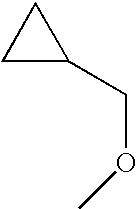
SO2 CB GO 355 145 CF3 H H 
H CH3 SO2 SO2 OCH3 C═O CB - In a preferred embodiment, there are disclosed compounds of the formula

- or a prodrug thereof, or a pharmaceutically acceptable salt or solvate of said compound or of said prod rug; wherein X, R 1 and R4are as shown in the table below:
Example X R1 R4 A OCH3 CH3 
C OCF2H CH3 
G CH3 CH3 
L Cl CH3 
R CF3 CF3 
S Cl CF3 
AB CF3 CH3 
AT Cl N(CH3)2 
BA OCF3 CH3 
BD OCF3 CF3 
BZ CH3 CF3 
CD Cl CH3 
FS H CH3 
FY H CF3 
GG Cl CF3 
GH CF3 CF3 
XXIX 
CF3 
XXX 
CF3 
XXXI 
CF3 
XXXII CN CF3 
XXXIII NH2 CF3 
XXXIV 
CF3 
XXXVI Cl CF3 
XXXVII 
CF3 
XXXVIII CN CF3 
XXXIX CONH2 CF3 
XXXX OCH3 CF3 
XXXXI OH CF3 
XXXXII 
CF3 
XXXXIII 
CF3 
XXXXIV 
CF3 
XXXXV 
CF3 
LV OCH3 CF3 
LVI 
CH3 
- In another preferred embodiment, there are disclosed compounds of the formula

- or a prodrug thereof, or a pharmaceutically acceptable salt or solvate of said compound or of said prodrug; wherein X, Y—R 1 and R4 are as shown in the table below:
Example X Y—R1 R4 XXXXVI 


XXXXVII 


XXXXVIII 


XXXXIX 


VI OCH3 

VII OCH3 

VIII OCH3 

- Compound A SCH 412702: 1H NMR (300 MHz, CDCl3) 1.54 (d, J=6.9 Hz 3H), 2.67 (s, 3H), 4.72 (q, J=5 Hz 1H), 4.86 (br. d, J=5 Hz, 1H, NH), 7.08-8.42 (m, 11H).
- Compound C SCH 414093: 1H NMR (400 MHz, CDCl3) 1.51 (d, J=7.2 Hz 3H), 2.67 (s, 3H), 4.702 (q, J=6.8 Hz 1H), 5.05 (br. d, J=6.4 Hz, 1H, NH), 6.71 (t, J=71.6 Hz, CF2H) 7.07-8.47 (m, 11H).
- Compound G Sch 425800: 1H NMR (300 MHz, CDCl3) 8.43−8.41 (m, 1H), 8.36 (d, 8 Hz, 1H), 8.28−8.22 (m, 1H), 7.96−7.92 (m, 2H), 7.69−7.60 (m, 2H), 7.52−7.46 (m, 2H), 7.43−7.37 (m, 1H), 7.13−7.06 (m, 1H), 4.76−4.70 (m, 2H), 2.68 (s, 3H), 2.59 (s, 3H), 1.41 (d, 7 Hz, 3H).
- Compound L Sch 356036: 1H NMR (300 MHz, CDCl3) 8.61−5.97 (m, 2H), 8.40 (d, 8 Hz, 1H), 8.24−8.21 (m, 1H), 7.96 (d, 8 Hz, 2H), 7.86−7.83 (m, 1H), 7.70−7.63 (m, 1H), 7.52 (d, 8 Hz, 2H), 7.46−7.40 (m, 1H), 7.18−7.12 (m, 1H), 4.80−4.70 (m, 1H), 2.71 (s, 3H), 1.56 (d, 7 Hz, 3H).
- Compound R Sch 425742: 1H NMR (300 MHz, CDCl3) 8.89−8.87 (m, 1H), 8.58 (d, 8 Hz, 1H), 8.32−8.25 (m, 1H), 8.15−8.11 (m, 1H), 8.03−7.98 (m, 2H), 7.71−7.63 (m, 1H), 7.52−7.48 (m, 2H), 7.47−7.41 (m, 1H), 7.16−7.09 (m, 1H), 5.62 (d, 8 Hz, 1H), 4.90−4.80 (m, 1H), 1.63 (d, 7 Hz, 3H).
- Compound S Sch 414319: 1H NMR (300 MHz, CDCl3) 8.61−8.59 (m, 1H), 8.39 (d, 8 Hz, 1H), 8.29−8.24 (m, 1H), 7.99 (d, 8 Hz, 2H), 7.86−7.82 (m, 1H), 7.67−7.62 (m, 1H), 7.49 (d, 8 Hz, 1H), 7.46−7.40 (m, 1H), 7.16−7.10 (m, 1H), 4.89−4.84 (m, 1H), 1.65 (d, 6 Hz, 1H).
- Compound AB Sch 425741: 1H NMR (300 MHz, CDCl3) 8.88−8.86 (m, 1H), 8.62−8.59 (m, 1H), 8.30−8.29 (m, 1H), 8.15−8.11 (m, 1H), 8.00−7.96 (m, 2H), 7.71−7.63 (m, 1H), 7.56−7.52 (m, 2H), 7.47−7.41 (m, 1H), 7.16−7.09 (m, 1H), 4.99−4.84 (m, 1H), 4.80−4.70 (m, 1H), 2.71 (s, 3H), 1.54 (d, 7 Hz, 3H).
- Compound AT Sch 442333: 1H NMR (300 MHz, CDCl3) 8.51 (br s 1H), 8.39 (d, 8 Hz, 2H), 7.99 (d, 8 Hz, 2H), 7.86−7.83 (m, 1H), 7.61−7.50 (m, 1H), 7.49 (d, 8 Hz), 7.05−6.99 (m, 1H), 4.70−4.50 (m, 2H), 2.83 (s, 3H), 2.57 (s, 3H), 1.50 (d, 7 Hz, 3H).
- Compound BA SCH 414568: 1H NMR (300 MHz, CDCl3) 1.54 (d, J=6.9 Hz 3H), 2.7 (s, 3H), 4.72 (q, J=5.5 Hz 1H), 5.05 (br. d, J=5 Hz, 1H, NH), 7.1-8.55 (m, 11H).
- Compound BD Sch 483018: 1H NMR (300 MHz, CDCl3) 8.51 (d, 9 Hz, 1H), 8.47−8.45 (m, 1H), 8.01−7.97 (m, 2H), 7.71−7.63 (m, 2H), 7.52−7.41 (m, 3H), 7.17−7.10 (m, 1H), 5.51 (d, 8 Hz, 1H), 4.90−4.80 (m, 1H), 1.64 (d, 7 Hz, 3H).
- Compound BZ Sch 425801: 1H NMR (300 MHz, CDCl3) 8.43 (br s, 1H), 8.32 (d, 8 Hz, 1H), 8.28−8.22 (m, 1H), 7.94 (d, 8 Hz, 2H), 7.68−7.58 (m, 2H), 7.47−7.37 (m, 1H), 7.12−7.06 (m, 1H), 5.72 (d, 8 Hz, 1H), 4.86−4.70 (m, 1H), 2.59 (s, 3H), 1.60 (d 7 Hz, 3H).
- Compound CD Sch 357520: 1H NMR (300 MHz, CDCl3): 8.82−8.78 (m, 1H), 8.23 (d, 7 Hz, 2H), 8.21−8.07 (m, 1H), 7.81−7.77 (m, 2H), 7.63−7.57 (m, 1H), 7.55 (d, 7 Hz, 2H), 7.40−7.32 (m, 1H), 7.20−7.16 (m, 1H), 4.8−4.7 (m, 2H), 2.67 (s, 3H), 1.55 (d, 7 Hz, 2H).
- Compound FS Sch 412570: 1H NMR (300 MHz, CDCl3) 8.66−8.62 (m, 1H), 8.51−8.47 (m, 1H), 8.29−8.24 (m, 1H), 7.99−7.95 (m, 2H), 7.93−7.89 (m, 2H), 7.67−7.53 (m, 1H), 7.50−7.44 (m, 2H), 7.42−7.39 (m, 1H), 7.13−7.07 (m, 1H), 4.78−4.73 (m, 1H), 4.61−4.59 (m, 1H), 2.70 (s, 3H), 1.56 (d, 7 Hz, 3H).
- Compound FY Sch 442680: 1H NMR (300 MHz, CDCl3) 8.66−8.63 (m, 1H), 8.49−8.46 (m, 1H), 8.28−8.25 (m, 1H), 8.01 (d, 8 Hz, 2H), 7.93−7.89 (m, 2H), 7.65−7.58 (m, 1H), 7.56 (d, 8 Hz, 2H), 7.47−7.41 (m, 1H), 7.13−7.07 (m, 1H), 5.18 (d, 6 Hz, 1H), 490−4.80 (m, 1H), 1.66 (d, 7 Hz, 3H).
- Compound GG Sch 487885: 1H NMR (300 MHz, CDCl3): 8.88 (d, 1.2 Hz, 1H), 8.51-8.56 (m, 2H), 8.31 (dd, 8 Hz, 1 Hz, 1H), 8.18 (dd, 8 Hz, 1 Hz, 1H), 8.08−7.96 (m, 3H), 7.62−7.48 (m, 3H), 5.51 (d, 9 Hz, 1H), 4.90−4.70 (m, 1H), 1.62 (d, 7 Hz, 3H).
- Compound GH Sch 487886: 1H NMR (300 MHz, CDCl3): 8.63 (d, 2 Hz), 8.58−8.55 (m, 1H), 8.34−8.28 (m, 2H), 8.07−7.98 (m, 3H), 8.35 (dd, 8 Hz, 2 Hz, 1H), 7.55−7.46 (m, 3H), 5.34 (d, 8 Hz, 1H), 4.9−4.8 (m, 1H), 1.64 (d, 6 Hz, 3H).
- Compound GQ/XXIX, Sch 508195: 1H NMR (300 MHz, CDCl3): δ8.56−8.52 (m, 1H), 8.32−8.21 (m, 3H), 8.02−7.92 (m, 4H), 5.42 (d, 9 Hz, 1H), 8.02−7.92 (m, 4H), 5.42 (d, 1H, 9 Hz), 4.84−4.78 (m, 1H), 2.16−2.06 (m, 1H), 1.60 (d, 7 Hz, 3H), 1.20−1.17 (m, 2H), 0.97−0.89 (m, 1H).
- Compound GR/XXX, Sch 507686: 1H NMR (300 MHz, CDCl3): δ8.33−8.22 (m, 3H), 8.00−7.94 (m, 2H), 7.66−7.58 (m, 1H), 7.53−7.37 (m, 4H), 7.16−7.05 (m, 1H), 5.160 (d, 9 Hz, 1H), 4.88−4.83 (m, 1H), 2.17−2.06 (m, 1H), 1.65 (d, 7 Hz, 3H), 1.28−1.20 (m, 2H), 0.97−0.90 (m, 2H).
- Compound GS/XXXI, Sch 543473: 1H NMR (300 MHz, CDCl3): δ8.38−8.29 (m, 2H), 8.17 (d, 8 Hz, 1H), 8.07−8.02 (m, 1H), 7.91−7.85 (m, 2H), 7.56−7.36 (m, 5H), 6.11 (d, 8 Hz, 1H), 4.84−4.78 (m, 1H), 2.12−2.01 (m, 1H), 1.57 (d, 7 Hz, 3H), 1.21−1.12 (m, 2H), 0.92−0.86 (m, 2H).
- Compound GW/XXXVI, Sch 525814: 1H NMR (300 MHz, CDCl3): δ10.19 (d, 7.8 Hz, 1H), 8.27-8.42 (m, 4H), 8.13 (dd, 7.8 Hz, 2.1 Hz, 1H), 7.93 (d, 8.4 Hz, 2H), 7.78−6.63 (m, 2H), 7.59 (d, 8.4 Hz, 2H), 4.80 (m, 1 H), 1.44 (d, 6.9 Hz, 3H).
- Compound HO/XXXXXV, Sch 515552: 1H NMR (300 MHz, CDCl3): δ8.56 (d, 3.9 Hz, 1H), 8.31−8.22 (m, 2H), 8.124 (d, 2.7 Hz, 1H), 8.05−7.95 (m, 1H), 7.92 (d, 8.4 Hz, 2H), 0.750-7.45 (m, 1H), 7.92 (d, 8.4 Hz, 2H), 7.27−7.23 (m, 2H), 5.8 (d, NH,1H), 4.85−4.75 (m, 1H), 3.99 (s, 3H), 1.58 (d, 7.2 Hz, 3H).
- Compound HP/XXXXXVI, Sch 541887: 1H NMR (300 MHz, CDCl3): δ8.56−8.52 (m, 1H), 8.31−8.23 (m, 3H), 8.02−7.90 (M, 4H), 4.87−4.78 (d, 7 Hz, 1H), 4.69 (m, 1 H), 2.66 (s, 3H), 2.16−2.06 (m, 1H), 1.51 (d, 7 Hz, 3H), 1.27−1.17 (m, 2H), 0.96−0.90 (m, 2H).
- The compounds of the present invention exhibit anti-inflammatory and/or immunomodulatory activity and are useful in the treatment of various medical conditions including, e.g., rheumatoid arthritis, systemic lupus erythematosus, multiple sclerosis, glaucoma, diabetes, osteoporosis, renal ischemia, cerebral stroke, cerebral ischemia, nephritis, psoriasis, allergy, inflammatory disorders of the lungs and gastrointestinal tract such as Crohn's disease, and respiratory tract disorders such as reversible airway obstruction, asthma, chronic obstructive pulmonary disease (COPD) and bronchitis. This utility is manifested as demonstrated by activity in the following assay.
- Potential cannabinoid receptor ligands were screened for the ability to compete with [ 3H] CP-55,940 for binding to recombinant cannabinoid receptors. Test compounds were serially diluted in Diluent Buffer (50 mM Tris pH 7.1, 1 mM EDTA, 3 mM MgCl2, 0.1% BSA, 10% DMSO, 0.36% methyl cellulose (Sigma M-6385)) from stocks prepared in 100% DMSO. Aliquots (10 ul) were transferred into 96-well microtiter plates. Membrane preparations of recombinant human cannabinoid CB2 receptor (Receptor Biology #RB-HCB2) or recombinant human cannabinoid CB1 receptor (Receptor Biology #RB-HCB1) were diluted to 0.3 mg/ml in Binding Buffer (50 mM Tris pH 7.2, 1 mM EDTA, 3 mM MgCl2, 0.1% BSA). Aliquots (50 ul) were added to each well of the microtiter plate. The binding reactions were initiated by addition of [3H] CP-55,940 (New England Nuclear# NET 1051; specific activity=180 Ci/mmol) to each well of the microtiter plate. Each 100 ul reaction mixture contained 0.48 nM [3H] CP-55,940, 15 ug membrane protein in binding buffer containing 1% DMSO and 0.036% methyl cellulose. Following incubation for 2 hours at room temperature, the reactions were filtered through 0.5% polyethylenimine-coated GF/C filter plates (UniFilter-96, Packard) with a TomTec Mark 3U Harvester (Hamden, Conn.). The filter plate was washed 5 times with binding buffer, rotated 180°, then re-washed 5 times with binding buffer. Bound radioactivity was quantitated following addition of 30 ul of Packard Microscint 20 scintillant in a Packard TopCount NXT microplate scintillation counter. Non-linear regression analysis of the resulting data was performed using Prism 2.0 b (GraphPad, San Diego, Calif.).
- Cannabinoid receptor ligands according to the present invention have anti-inflammatory activity and/or immunomodulatory activity and are useful in the treatment of various medical conditions including, e.g., cutaneous T cell lymphoma, rheumatoid arthritis, systemic lupus erythematosus, multiple sclerosis, glaucoma, diabetes, osteoporosis, renal ischemia, myocardial infarction, cerebral stroke, cerebral ischemia, nephritis, hepatitis, glomerulonephritis, cryptogenic fibrosing aveolitis, psoriasis, atopic dermatitis, vasculitis, allergy, seasonal allergic rhinitis, Crohn's disease, inflammatory bowel disease, reversible airway obstruction, adult respiratory distress syndrome, asthma, chronic obstructive pulmonary disease (COPD) or bronchitis. It is contemplated that a compound of this invention may be useful in treating more than one of the diseases listed.
- Additionally, one or more compounds of the present invention can be co-administered or used in combination with one or more disease-modifying antirheumatic drugs (DMARDS) such as methotrexate, azathioptrine leflunomide, pencillinamine, gold salts, mycophenolate mofetil, cyclophosphamide and other similar drugs. One or more compounds of the invention can also be co-administered with or used in combination with one or more NSAIDS such as piroxicam, naproxen, indomethacin, ibuprofen and the like; one or more COX-2 selective inhibitors such as Vioxx® and Celebrex®; one or more COX-1 inhibitors such as Feldene; immunosuppressives such as steroids, cyclosporine, Tacrolimus, rapamycin and the like; biological response modifiers (BRMs) such as Enbrel, Remicade, IL-1 antagonists, anti-CD40, anti-CD28, IL-10, anti-adhesion molecules and the like; and other anti-inflammatory agents such as p38 kinase inhibitors, PDE4 inhibitors, TACE inhibitors, chemokine receptor antagonists, Thalidomide and other small molecule inhibitors of pro-inflammatory cytokine production. Other drugs that the compounds of the invention can be co-administered or used in combination with include Anaprox, Arava, Arthrotec, Azulfidine, Aspirin, Cataflam, Celestone Soluspan, Clinoril, Cortone Acetate, Cuprimine, Daypro, Decadron, Depen, Depo-Medrol, Disalcid, Dolobid, Naprosyn, Gengraf, Hydrocortone, Imuran, Indocin, Lodine, Motrin, Myochrysine, Nalfon, Naprelan, Neoral, Orudis, Oruvail, Pediapred, Plaquenil, Prelone, Relafen, Solu-Medrol, Tolectin, Trilisate and/or Volataren. These include any formulation of the above named drugs.
- For the treatment of multiple sclerosis, one or more compounds of the invention can be co-administered or used in combination with Avonex, Betaseron and/or Copaxone.
- For combination treatment with more than one active agent, where the active agents are in separate dosage formulations, the active agents can be administered separately or in conjunction. In addition, the administration of one element may be prior to, concurrent to, or subsequent to the administration of the other agents.
- The present invention also relates to a pharmaceutical composition comprising one or more compounds of formula I and one or more pharmaceutically acceptable carriers. The compounds of formula I can be administered in any conventional dosage form known to those skilled in the art. Pharmaceutical compositions containing the compounds of formula I can be prepared using conventional pharmaceutically acceptable excipients and additives and conventional techniques. Such pharmaceutically acceptable excipients and additives include non-toxic compatible fillers, binders, disintegrants, buffers, preservatives, anti-oxidants, lubricants, flavorings, thickeners, coloring agents, emulsifiers and the like. All routes of administration are contemplated including, but not limited to, parenteral, transdermal, subcutaneous, intramuscular, sublingual, inhalation, rectal and topical.
- Thus, appropriate unit forms of administration include oral forms such as tablets, capsules, powders, cachets, granules and solutions or suspensions, sublingual and buccal forms of administration, aerosols, implants, subcutaneous, intramuscular, intravenous, intranasal, intraoccular or rectal forms of administration.
- When a solid composition is prepared in the form of tablets, e.g., a wetting agent such as sodium lauryl sulfate can be added to micronized or non-micronized compounds of formula I and mixed with a pharmaceutical vehicle such as silica, gelatin starch, lactose, magnesium stearate, talc, gum arabic or the like. The tablets can be coated with sucrose, various polymers, or other appropriate substances. Tablets can be treated so as to have a prolonged or delayed activity and so as to release a predetermined amount of active principle continuously or at predetermined intervals, e.g., by using ionic resins and the like.
- A preparation in the form of gelatin capsules may be obtained, e.g., by mixing the active principle with a diluent, such as a glycol or a glycerol ester, and incorporating the resulting mixture into soft or hard gelatin capsules.
- A preparation in the form of a syrup or elixir can contain the active principle together, e.g., with a sweetener, methylparaben and propylparaben as antiseptics, flavoring agents and an appropriate color.
- Water-dispersible powders or granules can contain the active principle mixed, e.g., with dispersants, wetting agents or suspending agents, such as polyvinylpyrrolidone, as well as with sweeteners and/or other flavoring agents.
- Rectal administration may be provided by using suppositories which may be prepared, e.g., with binders melting at the rectal temperature, for example cocoa butter or polyethylene glycols.
- Parenteral, intranasal or intraocular administration may be provided by using, e.g., aqueous suspensions, isotonic saline solutions or sterile and injectable solutions containing pharmacologically compatible dispersants and/or solubilizers, for example, propylene glycol or polyethylene glycol.
- Thus, to prepare an aqueous solution for intravenous injection, it is possible to use a co-solvent, e.g., an alcohol such as ethanol or a glycol such as polyethylene glycol or propylene glycol, and a hydrophilic surfactant such as Tween® 80. An oily solution injectable intramuscularly can be prepared, e.g., by solubilizing the active principle with a triglyceride or a glycerol ester.
- Topical administration can be provided by using, e.g., creams, ointments or gels.
- Transdermal administration can be provided by using patches in the form of a multilaminate, or with a reservoir, containing the active principle and an appropriate solvent.
- Administration by inhalation can be provided by using, e.g., an aerosol containing sorbitan trioleate or oleic acid, for example, together with trichlorofluoromethane, dichlorofluoromethane, dichlorotetrafluoroethane or any other biologically compatible propellant gas; it is also possible to use a system containing the active principle, by itself or associated with an excipient, in powder form.
- The active principle can also be formulated as microcapsules or microspheres, e.g., liposomes, optionally with one or more carriers or additives.
- Implants are among the prolonged release forms which can be used in the case of chronic treatments. They can be prepared in the form of an oily suspension or in the form of a suspension of microspheres in an isotonic medium.
- The daily dose of a compound of formula I for treatment of a disease or condition cited above is about 0.001 to about 100 mg/kg of body weight per day, preferably about 0.001 to about 10 mg/kg. For an average body weight of 70 kg, the dosage level is therefore from about 0.1 to about 700 mg of drug per day, given in a single dose or 2-4 divided doses. The exact dose, however, is determined by the attending clinician and is dependent on the potency of the compound administered, the age, weight, condition and response of the patient.
-

- Compound 1. TFAA (67 mL, 0.474 mol) was dissolved in CH 2Cl2 (300 mL) and cooled in an ice water bath. A solution of (S)-α-methylbenzylamine (56.4 g, 0.465 mol) dissolved in CH2Cl2 (100 mL) was added and the ice bath was removed. The reaction mixture was stirred at rt for 3 h. The reaction mixture was cooled in an ice bath and MsOH (80 mL, 1.23 mol) was added followed by DBDMH (65 g, 0.227 mol). The reaction mixture was left stirring overnight at rt then quenched with 1M aq NaHSO3. The organic layer was washed with water and brine, dried with MgSO4, and concentrated to give 130 g of white solid. The crude product was recrystallized from Et2O and hexanes giving 46 g (32%) of intermediate Compound 1 as a solid.

- Compound 2. In a flame dried flask under N 2 blanket, Compound 1 (12.35 g, 41.2 mmol) was dissolved in dry THF (165 mL) and cooled to −78° C. Methyllithium (1.4 M in Et2O, 30 mL, 42 mmol) was added and the reaction mixture was stirred for 5 min. n-BuLi (1.6 M in hexanes, 26 mL, 42 mmol) was added followed after 10 min by p-methoxybenzenesulfonyl fluoride (8.64 g, 45.4 mmol) which was prepared by standard methods. The cold bath was removed after 10 min and the reaction mixture was allowed to warm to rt over 45 min then quenched with pH 7 sodium phosphate buffer (1 M, 100 mL, 100 mmol). The reaction mixture was extracted with EtOAc and the resulting organic layer was washed with brine and dried with MgSO4. After evaporation of the solvent, the crude product was purified by sgc (20%-50% EtOAc/hexanes gradient) to give 10.39 g (65%) of Compound 2 as a solid.

- Compound 3. In a flame dried flask under N 2 blanket, Compound 2 (11.09 g, 28.6 mmol) was dissolved in anhyd THF (100 mL) and cooled to −78° C. A solution of n-BuLi (2.5 M in hexanes, 24 mL, 60 mmol) was added and the reaction mixture was stirred for 40 min. Bis-4-methoxyphenyl disulfide (8.76 g/31.5 mmol) was added and the reaction mixture was stirred at −78° C. for 40 min then between −15° C. and −30° C. for 5 h then quenched with pH 7.0 sodium phosphate buffer (1.0 M, 120 mL). The reaction mixture was partitioned between EtOAc and water. The aqueous layer was extracted with additional EtOAc. The combined organic layer was washed with aq Na2CO3 and brine, then dried with MgSO4 and concentrated to dryness. The crude product (13.8 g yellow foam) was dissolved in CH2Cl2 (120 mL) and cooled to 0° C. MCPBA (18.5 g, ca 107 mmol) was added, followed by additional CH2Cl2 (40 mL). The ice bath was removed and the reaction mixture was stirred at rt for overnight. Aqueous NaHCO3 (200 mL) and CH2Cl2 were added and the layers were separated. The organic layer was washed with aq NaHSO3, NaHCO3, H2O, and brine then dried with MgSO4. The crude product was purified by sgc (30% to 50% EtOAc/hexanes gradient) to give 7.21 g (45%) of Compound 3.

- Compound 4. Compound 3 (4.47 g, 8.02 mmol) was dissolved in p-dioxane (16 mL) and cooled to 0° C. LiOH (1.0 M aq, 10 mL, 10 mmol) was added and the ice bath was removed. The reaction mixture was stirred at rt for 6 h then concentrated. CH 2Cl2 (100 mL) and NaOH (1.0 M aq, 10 mL) were added and the layers were separated. The aqueous layer was extracted with additional CH2Cl2 and the combined organic layer was dried with MgSO4 and concentrated. The crude product was purified by sgc (2%-10% MeOH (NH3)/CH2Cl2 gradient mobile phase) to give 3.23 g (87%) of Compound 4.

- Compound I. Compound 4 (3.08 g, 6.67 mmol) was dissolved in CH 2Cl2 (33 mL) and triethylamine (1.40 mL, 10.0 mmol) then cooled to 0° C. MsCl (569 μL, 7.34 mmol) was added and the reaction mixture was stirred at 0° C. for 1 h and 15 min. Citric acid (0.5 M, 40 mL) and additional CH2Cl2 were added and the layers were separated. The organic layer was washed with citric acid, NaHCO3, and brine then dried with MgSO4. The solvent was evaporated and the crude product was purified by sgc (40%-70% EtOAc/hexanes gradient) to give 3.44 g (96%) of Compound I as a solid.

- Compound II. Compound 4 (27.5 mg, 0.0595 mmol) was dissolved in methylene chloride (226 μL) and DIPEA (12 μL). A solution of propionyl chloride dissolved in 1,2-dichloroethane (1 M, 75 μL, 0.075 mmol) was added and the reaction mixture was shaken at room temperature overnight. Tris(2-aminoethyl)amine polystyrene (4.1 mmol N/g, ca 60 mg) was added to the reaction mixture. The reaction mixture was shaken for an additional hour at rt. The crude product was concentrated, then dissolved in EtOAc and filtered through a silica-gel SepPak (Waters Corp.). The resulting filtrate was concentrated to give 9 mg (29%) of Compound II.

- Compound III. Compound 4 (25 mg, 0.054 mmol) was dissolved in CH 2Cl2 (270 μL). A solution of phenyl isocyanate dissolved in toluene (1.0 M, 65 mL, 0.065 mmol) was added and the reaction mixture was shaken at rt overnight. Tris (2-aminoethyl) amine polystyrene (4.1 mmol N/g, ca 60 mg) was added to the reaction mixture and the reaction mixture was shaken for an additional 40 min at rt. EtOAc was added and the reaction mixture was filtered through a silica gel SepPak (Waters Corp.). The resulting filtrate was concentrated to give 18 mg (57%) of Compound III.
- Preparation of Sch 356036, Sch 414319, and Sch 442680

- Compound 5. In a 3-necked flame-dried flask under N 2 blanket Compound 1 (40.0 g, 134 mmol) was dissolved in anhyd THF (535 mL) and cooled to −75° C. (internal temperature). A solution of methyllithium (1.4 M in diethyl ether, 105 mL, 147 mmol) was added at a rate that kept the internal temperature below −60° C. The reaction was stirred for 15 min and a solution of n-BuLi (2.5 M in hexanes, 62 mL, 155 mmol) was added at a rate that maintained the internal temperature of the reaction below −65° C. The reaction mixture was stirred for 40 min. and a solution of bis(4-chlorophenyl) disulfide (42 g, 146 mmol) dissolved in anhyd THF (90 mL) was added via addition funnel over 1 h. The reaction mixture was stirred for 3 h then quenched with HCl (1 M aqueous, 200 mL, 200 mmol). EtOAc (500 mL) was added and the layers were separated. The aqueous layer was extracted with 500 mL EtOAc, and the combined organic layer was washed with 1 M aq KOH, water, and brine. After drying with MgSO4, the solvent was evaporated to give 54.1 g of a solid. The crude product (52.3 g) was dissolved in CH2Cl2 (750 mL) and cooled to 2° C. (internal temp). MCPBA (60%, 184 g) was added in portions over 1 hr and 20 min keeping the internal temperature below 15° C. The reaction mixture was stirred an additional 2 h. NaOH (1 M aq, 500 mL) and CH2Cl2 were added and the layers were separated. The aqueous layer was extracted with an additional 300 mL of CH2Cl2. The combined organic layer was washed with 1M aqueous NaOH, water, and brine, then dried with MgSO4. After evaporation of the solvent, a solid (65 g) was obtained. The crude product was partially purified by trituration from Et2O/hexanes to give 33.3 g of a solid which was subsequently purified via sgc (20%-25% EtOAc/hexanes) to give 30 g (57%) of Compound 5 as a solid.

- Compound 6. In a flame dried 3-necked flask under N 2 blanket Compound 5 (44 g, 112 mmol) was dissolved in anhyd THF (450 mL) and cooled in a dry ice/IPA bath. A solution of n-butyl lithium (2.5 M in hexanes, 92 mL, 230 mmol) was added at a rate that maintained the internal reaction temperature below −60° C., and the reaction mixture was stirred for 1 h. A solution of 2-fluorobenzenesulfonyl fluoride (22.3 g, 125 mmol) dissolved in anhyd THF (20 mL) was added and the reaction mixture was left stirring overnight and allowed to warm to rt. The reaction mixture was cooled to 0° C. and quenched with saturated aq ammonium chloride (300 mL). EtOAc (600 mL) and brine (25 mL) were added and the layers were separated. The organic layer was washed with water and brine, then dried with MgSO4. The solvents were evaporated giving a foam (62 g). The product was purified by sgc (20%-25% EtOAc/hexanes mobile phase) giving 9.1 g (15%) of Compound 6.

- Compound 7. Compound 6 (6.77 g, 12.3 mmol) was dissolved in dioxane (15 mL) and cooled in an ice bath. Aqueous lithium hydroxide (1 M, 15 mL, 15 mmol) was added and the reaction mixture was left stirring overnight. The reaction mixture was concentrated, then partitioned between CH 2Cl2 and water. The aqueous layer was extracted with additional CH2Cl2 and the combined organic layer was dried with MgSO4. Evaporation of the solvent afforded 5.66 g of a foam which was purified by sgc (10% MeOH (NH3)/CH2Cl2) to give 4.27 g of Compound 7 (77%).

- Compound IV. Compound 7 (2.66 g, 5.86 mmol) was dissolved in CH 2Cl2 (28 mL) and triethylamine (0.98 mL) and cooled to 0° C. MsCl (0.499 mL, 6.45 mmol) was added and the reaction mixture was stirred at 0° C. for 6 h. The reaction mixture was partitioned between water and CH2Cl2. The aqueous layer was extracted with additional CH2Cl2 and the combined organic layer was dried with MgSO4. Evaporation of the solvent afforded 3.0 g of a foam which was purified by sgc (40%-50% EtOAc/hexanes gradient) to give 2.77 g (89%) of Compound IV.
- Compound IV Sch 356036: 1H NMR (300 MHz, CDCl3) 8.61−5.97 (m, 2H), 8.40 (d, 8 Hz, 1H), 8.24−8.21 (m, 1H), 7.96 (d, 8 Hz, 2H), 7.86−7.83 (m, 1H), 7.70−7.63 (m, 1H), 7.52 (d, 8 Hz, 2H), 7.46−7.40 (m, 1H), 7.18−7.12 (m, 1H), 4.80−4.70 (m, 1H), 2.71 (s, 3H), 1.56 (d, 7 Hz, 3H).

- Compound VSch 414319. Compound 7 (26.1 g, 57.4 mmol) was dissolved in CH 2Cl2 (200 mL) and triethylamine (20 mL) and cooled to −78° C. Triflic anhydride (10.45 mL, 62.1 mmol) was added and the reaction mixture was stirred for 3 h. The reaction was quenched with water and the layers were separated. The organic layer was washed with water and brine, then dried with MgSO4. The solvent was evaporated to give 42 g of a foam. The crude product was purified via sgc (33%-50% EtOAc/hexanes gradient) to give 29.7 g (88%) of Compound V.
- Compound V Sch 414319: 1H NMR (300 MHz, CDCl3) 8.61−8.59 (m, 1H), 8.39 (d, 8 Hz, 1H), 8.29−8.24 (m, 1H), 7.99 (d, 8 Hz, 2H), 7.86−7.82 (m, 1H), 7.67−7.62 (m, 1H), 7.49 (d, 8 Hz, 1H), 7.46−7.40 (m, 1H), 7.16−7.10 (m, 1H), 4.89−4.84 (m, 1H), 1.65 (d, 6 Hz, 1H).

- Compound VI. Compound V (300 mg, 0.512 mmol) was dissolved in methanol (60 mL). Sodium bicarbonate (720 mg, 8.57 mmol) and 5% palladium on carbon (480 mg) were added. The reaction mixture was shaken on a Parr apparatus under 52 psi of hydrogen gas overnight. The reaction mixture was filtered and the solvent was evaporated. The resulting material was partitioned between EtOAc and aq NaHCO 3. The organic layer was dried with MgSO4 and the solvents were evaporated. The crude product was purified via sgc (33% EtOAc/hexanes) to give 257 mg (91%) of Compound VI.
- Preparation of Sch 414428

- Compound 8. In a flame dried 3-necked flask under N 2 blanket Compound 5 (35.7 g, 91 mmol) was dissolved in anhyd THF (360 mL) and cooled in a dry ice/IPA bath. A solution of n-BuLi (2.5 M in hexanes, 76 mL, 190 mmol) was added at a rate that maintained the internal temperature below −60° C. The reaction mixture was stirred for 1 h. A solution of 2,6-difluorobenzenesulfonyl fluoride (19.47 g, 99.28 mmol) dissolved in anhyd THF (60 mL) was added. The reaction mixture was stirred for 2.5 h, then quenched with saturated aq NH4Cl (400 mL). EtOAc (500 mL) was added and the layers were separated. The aq layer was extracted with EtOAc and the combined organic layer was washed with brine and dried with MgSO4. The solvent was evaporated to give 60.7 g of an oil which was purified by sgc (15%-40% EtOAc/hexanes gradient) giving 14.4 g (28%) of Compound 8.

- Compound 9. Compound 8 (21.1 g, 37.2 mmol) was dissolved in dioxane (47 mL) and aq lithium hydroxide (1.0 M, 41 mL, 41 mmol) was added. After 5.5 h, additional LiOH (20 mL) was added and the reaction mixture was stirred overnight. The reaction mixture was extracted with CH 2Cl2, and partitioned between CH2Cl2 and water. The aq layer was extracted with additional CH2Cl2 and the combined organic layer was dried with MgSO4. The solvents were evaporated to give 17.6 g of a foam and the crude product was purified by sgc (1%-3% MeOH (NH3)/CH2Cl2 gradient) to give 12.2 g (69%) of Compound 9.

- Compound VII. Compound 9 (10.7 g, 22.6 mmol) was dissolved in a mixture of CH 2Cl2 (90 mL) and triethylamine (8 mL) and cooled to −78° C. Triflic anhydride (3.80 mL, 22.6 mmol) was added and the reaction mixture was stirred for 2 h. The reaction was quenched with saturated aq NaHCO3 and the layers were separated. The aqueous layer was extracted with CH2Cl2. The combined organic layer was washed with brine and dried with MgSO4. The solvents were evaporated and the crude product was purified by sgc to give 9.88 g (73%) of Compound VII.
- Preparation of Sch 425742
- Compound 5. In a flame dried flask under N 2 blanket Compound 1 (39.2 g, 132 mmol) was dissolved in anhyd THF (1 L) and cooled in a dry ice/acetone bath. A solution of methyllithium (1.6 M in Et2O, 82.7 mL, 132 mmol) was added followed by a solution of n-BuLi (2.5 M in hexanes, 53 mL, 133 mmol). The reaction mixture was stirred for 25 min and a solution of bis(4-trifluoromethylphenyl) disulfide (46.9 g, 132 mmol) dissolved in THF (200 mL) was added. The reaction mixture was stirred for 2 h then allowed to warm to rt overnight. The reaction was quenched with water and concentrated. The resulting mixture was diluted with EtOAc, washed with water, and dried with Na2SO4. The solvent was evaporated and the crude product was purified via sgc (20% EtOAc/hexanes) to give 49.2 g (95%) of a solid. This material (49.2 g) was dissolved in CH2Cl2 (1.2 L) and cooled in an ice bath. MCPBA (60%, 90 g) was added in small portions. After 1 h, the ice bath was removed and the reaction mixture was stirred overnight at rt. The reaction mixture was partitioned between CH2Cl2 and 10% aqueous NaHCO3. The combined organic layer was washed with water and dried with Na2SO4. The solvent was evaporated and the crude product was purified by sgc (25% EtOAc/hexanes) to give 46.3 g (85%) of Compound 5.

- Compound 10. In a flame dried flask under N 2 blanket, Compound 5 (21.55 g, 50.7 mmol) was dissolved in anhyd THF (300 mL) and cooled in a dry ice/IPA bath. A solution of methyllithium (1.6 M in Et2O, 32 mL, 51 mmol) was added, followed by n-BuLi (2.5 M in hexanes, 20.3 mL, 50.7 mmol) and the reaction mixture was stirred for 10 min. A solution of bis-(2-fluorophenyl) disulfide (14.2 g, 55.7 mmol) dissolved in THF was added and the reaction mixture was stirred for 2 h at −78° C. The ice bath was removed and the reaction mixture was allowed to warm to rt and left stirring overnight. The reaction mixture was quenched with saturated aqueous NH4Cl and extracted with EtOAc. The organic layer was dried with Na2SO4 and the solvents were evaporated. The crude product was purified via sgc (25% EtOAc/hexanes) to give 23.2 g of a solid. This material was dissolved in CH2Cl2 (400 mL) and cooled in an ice bath. MCPBA (60%, 30.3 g) was added in several portions and the reaction mixture was stirred for 1 h. The ice bath was removed and the reaction mixture was left stirring overnight. The reaction mixture was partitioned between CH2Cl2 and 5% aq Na2CO3. The organic layer was washed with water and dried with Na2SO4. The solvents were evaporated and the crude product was purified via sgc (25%EtOAc/hexanes) to give 10.84 g (44%) of Compound 10.

- Compound 11. Compound 10 (11.88 g, 20.36 mmol) was dissolved in dioxane (200 mL) and aq lithium hydroxide (1.0 M, 400 mL) was added. The reaction mixture was stirred for 3 h then and partitioned between CH 2Cl2 and water. The organic layer was dried with Na2SO4 and concentrated to give 9.34 g (99%) of Compound 11.

- Compound VIII. Compound 11 (0.63 g, 1.29 mmol) was dissolved in a mixture of CH 2Cl2 (60 mL) and triethylamine (0.27 mL) and cooled in an ice bath. Triflic, anhydride (0.55 g, 1.95 mmol) was added and the reaction mixture was stirred for 1 h. The ice bath was removed, and the reaction mixture was stirred an additional 3 h. The reaction was partitioned between water and CH2Cl2. The organic layer was washed with water and dried with Na2SO4. The solvent was evaporated and the crude product was purified by sgc (20% EtOAc/hexanes) to give 0.53 g (66%) of Compound VIII.
- Compound VIII Sch 425742: 1H NMR (300 MHz, CDCl3) 8.89−8.87 (m, 1H), 8.58 (d, 8 Hz, 1H), 8.32−8.25 (m, 1H), 8.15−8.11 (m, 1H), 8.03−7.98 (m, 2H), 7.71−7.63 (m, 1H), 7.52−7.48 (m, 2H), 7.47−7.41 (m, 1H), 7.16−7.09 (m, 1H), 5.62 (d, 8 Hz, 1H), 4.90−4.80 (m, 1H), 1.63 (d, 7 Hz, 3H).
- Preparation of Sch 443908

- Potassium hydroxide (3.1 g, 55.2 mmol), 2-bromo-4-chlorophenol (9.52 g, 45.9 mmol), and 4-fluorobenzonitrile (5.73 g, 47.3 mmol) were added to DMA (25 mL) and the reaction mixture was stirred between 100° C. and 110° C. for one week. The reaction mixture was stirred at rt an additional two days. The solvents were partially removed on the rotary evaporator and the resulting mixture was partitioned between water and a 3:1 Et 2O/hexanes solution. The organic layer was washed with water and brine, then dried with MgSO4. The solvents were evaporated and the crude product was purified by sgc (20%-30% CH2Cl2/hexanes) to give 11.96 g (81%) of an oil.

- Compound 12. The product of the above step (5.90 g, 19.1 mmol) was placed under N 2 atmosphere and a solution of borane in THF (1.0 M, 21 mL, 21 mmol) was added causing an exotherm. Once the reaction mixture had returned to rt, it was heated to reflux and stirred at reflux overnight. Additional borane in THF (1.0 M, 20 mL, 20 mmol) was added and the reaction mixture was stirred at reflux for an additional 26 h then allowed to cool to rt. Water (55 mL) was added and the reaction mixture was partially concentrated. The resulting mixture was partitioned between EtOAc and aq NaOH (1.0 M). The organic layer was dried with MgSO4 and concentrated to give 6.2 g of an oil. This material was dissolved in Et2O and a solution of HCl in Et2O was added causing Compound 12 (5.2 g, 78%) to precipitate as a solid.

- Compound 13. Compound 12 (5.13 g, 16.6 mmol) was suspended in a mixture of CH 2Cl2 (40 mL) and triethylamine (7.5 mL). The mixture was cooled in an ice-water bath and TFAA (2.35 mL, 16.6 mmol) was added. The reaction mixture was stirred for 1 h and 20 min and the ice bath was removed. The reaction mixture was stirred for an additional 1 h and 20 min at rt. The reaction mixture was diluted with CH2Cl2 (100 mL) and washed with aq citric acid (0.5 M), saturated aq NaHCO3, water, and brine, then dried with MgSO4. The solvents were evaporated and the crude product (5.22 g) was purified via sgc (10%-20% EtOAc/hexanes gradient) to give Compound 13.

- Compound 14. In a flame dried flask under N 2 blanket, Compound 13 (1.00 g, 2.47 mmol) was dissolved in anhyd THF (13 mL) and cooled in a dry ice/IPA bath. Methyllithium (1.4 M in Et2O, 2.3 mL, 3.22 mmol) was added, followed by n-BuLi (2.5 M in hexanes, 1.3 mL, 3.25 mmol). The reaction mixture was stirred for 1 h at −78° C. A solution of 2,6-difluorobenzenesulfonyl fluoride (1.10 g, 5.60 mmol) dissolved in THF was added and the reaction mixture was stirred for 4 h. The reaction mixture was quenched with pH 7 sodium phosphate buffer (1.0 M) and EtOAc was added. The layers were separated and the aqueous layer was extracted with additional EtOAc. The combined organic layer was washed with brine and dried with MgSO4. The solvents were evaporated and the crude product was purified via sgc (20%-33% EtOAc/hexanes) gradient to give 76 mg of Compound 14.

- Compound 15. Compound 14 (59 mg, 0.12 mmol) was dissolved in 700 μL of dioxane and LiOH (1.0 M, 300 μL, 0.3 mmol) was added. The reaction mixture was stirred at rt for 24 h then partitioned between CH 2Cl2 and 1.0 M aq NaOH. The organic layer was dried with MgSO4 and concentrated. The crude product was purified via PTLC (Merck-silica plates, 3% (MeOH/NH3)/CH2Cl2) to give the desired Compound 15. (21 mg, 45%).

- Compound IX. Compound 15 (17 mg, 0.042 mmol) was dissolved in CH 2Cl2 (166 μL) and DIPEA (20 μL). The flask was cooled in an ice/water bath and MsCl (12 μL, 0.15 mmol) was added. The reaction mixture was stirred at 0° C. for 1 h and 30 min. The resulting mixture was partitioned between water and CH2Cl2. The organic layer was washed with water and brine, then dried with MgSO4. The crude product was purified via PTLC (50% EtOAc/hexanes) to give 10 mg (50%) Compound IX.
- Preparation of Sch 412851


- Compound 16 (0.116 g, 0.22 mmoles) was dissolved in CH 2Cl2 (4 mL) and cooled to 0° C. BBr3 solution (1.0 M in CH2Cl2, 0.66 mL) was added and the ice bath was removed. The reaction mixture was stirred at rt for 48 h and then quenched with water at −78° C. The reaction mixture was diluted with CH2Cl2 and the resulting organic layer was washed with aqueous NaHCO3, H2O (3×5 mL), and brine. The organics were dried over Na2SO4 and the solvent was removed under vacuum to give 0.09 g of crude product. The product was isolated by PTLC (5% CH3OH/CH2Cl2) to provide Compound X (0.1 g, 8.8%).
- Compound 16 SCH 412702: 1H NMR (300 MHz, CDCl3) 1.54 (d, J=6.9 Hz 3H), 2.67 (s, 3H), 4.72 (q, J=5 Hz 1H), 4.86 (br. d, J=5 Hz, 1H, NH), 7.08-8.42 (m, 11H).
- Preparation of Sch 414093

- Compound 17 was converted to Compound 18 using the procedure in example VI.

- Compound 18 (0.34 g, 0.64 mmoles) was dissolved in DMF (11 mL), cesium carbonate (0.84 g, 2.58 mmol) was added and the reaction mixture was cooled to 15° C. Dry bromodifluoromethane gas was introduced into the solution and bubbled for 15-20 min. Progress of the reaction was monitored by TLC and upon completion the reaction mixture was diluted with EtOAc (20 mL), washed with water (4×10 mL), and brine. The organics were dried over Na 2SO4 and concentrated under reduced pressure to give 0.36 g of an oil. The crude product was purified by PTLC (50% EtOAc/hexanes) to provide 0.31 g (83%) of Compound 19.

- Compound 19 was converted to Compound XI using the procedure in example II.
- Compound XI SCH 414093: 1H NMR (400 MHz, CDCl3) 1.51 (d, J=7.2 Hz 3H), 2.67 (s, 3H), 4.702 (q, J=6.8 Hz 1H), 5.05 (br. d, J=6.4 Hz, 1H, NH), 6.71 (t, J=71.6 Hz, CF2H) 7.07-8.47 (m, 11H).
- Preparation of Sch 416580

- Compound 20. To a solution of Compound 2 (5.00 g, 12.9 mmol) in anhyd THF (75 mL) at −78° C. was added n-BuLi (13 mL, 2.5 M in hexanes, 32 mmol) dropwise over 10 min. The reaction mixture was stirred for 30 min. A solution of di-t-butyl dicarbonate (3.10 g, 14.2 mmol) in anhyd THF (25 mL) was added in one portion via cannula. The reaction was allowed to proceed for 4 h at −78° C. The reaction mixture was then diluted with EtOAc (˜250 mL) and washed successively with saturated aq NaHSO 4 (˜100 mL), water (˜100 mL), and brine (˜100 mL). The organic layer was dried over anhyd MgSO4, filtered, and concentrated under reduced pressure to yield a solid. Further purification of the solid by sgc (25% EtOAc/hexanes) gave 5.32 g (84%) of Compound 20 as a solid.

- Compound XII. Compound 20 (2.06 g, 4.23 mmol) was dissolved in methanol (40 mL) and a solution of potassium carbonate (2.92 g, 21.1 mmol) in water (10 mL) was added. The reaction was allowed to proceed for 18 h. The solvent was then removed by evaporation under reduced pressure. The resulting white solid was partitioned between water (˜100 mL) and EtOAc (˜400 mL). The aqueous layer was extracted further with EtOAc (˜100 mL). The combined organic layers were washed with brine (˜500 mL), then dried over anhyd MgSO 4 and filtered. Evaporation of the solvent gave 1.22 g (74%) of t-butyl 2-[(4-(1(S)-aminoethyl)phenyl]sulfonyl-5-methoxybenzoate, an oil, which was used in the next step without further purification. MsCl (242 μL, 357 mg, 3.12 mmol) was added dropwise to a solution of crude t-butyl 2-[(4-(1(S)-aminoethyl)phenyl]sulfonyl-5-methoxybenzoate (1.22 g, 3.12 mmol) and triethylamine (522 μL, 379 mg, 3.75 mmol) in anhyd CH2Cl2 (3.0 mL) at 0° C. The reaction mixture was stirred at 0° C. for 5 min, then allowed to warm to rt, and subsequently stirred for 3 h. The reaction mixture was diluted with CH2Cl2 (˜50 mL) and washed successively with 1 M HCl (˜50 mL), water (3×50 mL) and brine (˜50 mL). The organic solution was dried over anhyd MgSO4, filtered, and concentrated to yield a solid. Subsequent purification of the crude product by sgc (25% EtOAc/hexanes) gave 1.41 g (96%) of Compound XII as a solid.
- Preparation of Sch 414379

- Compound 21. In a flame dried flask under N 2 blanket, Compound 5 (400 mg, 1.0 mmol) was dissolved in dry THF (5 mL) and cooled to −78° C. A solution of n-BuLi (1.0 M in hexanes, 1.9 mL, 1.9 mmol) was added and the reaction mixture was stirred for 30 min. 2-Fluorobenzaldehyde (200 mg, 1.6 mmol) was added and the reaction mixture was stirred at −78° C. for 3 h. The reaction mixture was then quenched with saturated aq NH4Cl (20 mL). Methylene chloride (30 mL) was added and the layers were separated. The organic layer was washed with brine, then dried over Na2SO4, and concentrated to dryness. The crude product was purified via sgc (25% EtOAc/hexanes) to give 330 mg (62%) of Compound 21 as a powder.

- Compound 22. Compound 21 (10 mg) was dissolved in CH 2Cl2 (10 mL). Triethylsilane (40 μL, 0.25 mmol) was added followed by BF3.Et2O (20 μL, 0.16 mmol). The reaction mixture was stirred at rt overnight. After removing the solvent, the crude product was purified via PTLC (25% EtOAc/hexanes) to give 6.0 mg (62%) Compound 22 as an oil.

- Compound XIII. Compound 22 (12 mg) was dissolved in methanol (2 mL) at rt. NaOH (1.0 M, 2 mL, 2.0 mmol) was added and the mixture was stirred at rt for 2 h. The solvent was removed, CH 2Cl2 (15 mL) and brine (15 mL) were added, and the layers were separated. The aqueous layer was extracted with additional CH2Cl2 (15 mL) and the combined organic layers were dried over Na2SO4 and concentrated to dryness. The crude product was then dissolved in CH2Cl2 (10 mL) and cooled to 0° C. MsCl (14 μL, 0.18 mmol) was added followed by addition of pyridine (30 μL, 0.37 mmol). The reaction mixture was slowly warmed to rt and stirred overnight. Brine (15 mL) was added and extracted. The organic layer was dried over Na2SO4 and concentrated to dryness. The crude product was purified via PTLC (25% EtOAc/hexanes) to give 10 mg (86%) of Compound XIII as an oil.
- Preparation of Sch 414389, and Sch 415209

- Compound 23. Compound 21 (330 mg, 0.64 mmol) was dissolved in CH 2Cl2 (20 mL) at rt. Celite (450 mg) was added followed by addition of PCC (450 mg, 2.1 mmol). The mixture was stirred at rt overnight. The solid was removed by filtration and the organic layer was washed with aq. NaHCO3 and brine. The organic layer was dried over Na2SO4 and concentrated to dryness. The crude product was purified via sgc (33% EtOAc/hexanes) to give 310 mg (94%) of Compound 23 as a powder.

- Compound XIV. Compound 23 (15 mg) was dissolved in methanol (2 mL) at rt. NaOH (1.0 M, 2 mL, 2.0 mmol) was added and the mixture was stirred at rt for 2 h. The solvent was removed and CH 2Cl2 (15 mL) and brine (15 mL) were added and the layers separated. The aq layer was extracted with additional CH2Cl2 (15 mL) and the combined organic layer was dried over Na2SO4 and concentrated to dryness. The crude product was then dissolved in CH2Cl2 (10 mL) and cooled to 0° C. MsCl (15 μL, 0.19 mmol) was added followed by addition of pyridine (30 μL, 0.37 mmol). The reaction mixture was slowly warmed to rt and stirred overnight. Brine (15 mL) was added and extracted. The organic layer was dried over Na2SO4 and concentrated to dryness. The crude product was purified via PTLC (33% EtOAc/hexanes) to give 9 mg (62%) of Compound XIV as an oil.

- Compound 24. Oven dried methyltriphenylphosphonium bromide (430 mg, 1.2 mmol) and LHDMS (1.0 M in hexanes, 1.8 mL, 1.8 mmol) were stirred in dry THF (5 ml) at 0° C. for 20 min., then warmed to rt and stirred for 10 min. A solution of Compound 23 (300 mg, 0.58 mmol) in THF (1 mL) was added dropwise. The mixture was stirred at rt overnight. EtOAc (20 ml) was added and the organic solution was washed with brine. The organic layer was dried over Na 2SO4 and concentrated to dryness. The crude product was purified via PTLC (25% EtOAc/hexanes) to give 260 mg (87%) of Compound 24 as an oil.

- Compound XV. Compound 24 (200 mg, 0.39 mmol) was dissolved in methanol (3 mL) at rt. NaOH (1.0 M, 3 mL, 3.0 mmol) was added and the mixture was stirred at 50° C. for 2 h. The solvent was removed, CH 2Cl2 (20 mL) and brine (20 mL) were added, and the layers were separated. The aqueous layer was extracted with additional CH2Cl2 (15 mL) and the combined organic layers were dried over Na2SO4 and concentrated to dryness. The crude product was then dissolved in CH2Cl2 (15 mL) and cooled to 0° C. MsCl (200 μL, 2.5 mmol) was added followed by addition of pyridine (400 μL, 4.9 mmol). The reaction mixture was slowly warmed to rt and stirred overnight. Brine (15 mL) was added and the organic layer separated, dried over Na2SO4 and concentrated to dryness. The crude product was purified via PTLC (50% EtOAc/hexanes) to give 160 mg (82%) of Compound XV as an oil.
- Preparation of Sch 420411

- Compound 26. Compound 25 (1.3 g, 2.7 mmol) was stirred at rt with a mixture of CH 2Cl2/TFA (2:1, 30 mL) for 3 h. The reaction mixture was then poured into brine (40 mL). The layers were separated. The aq layer was extracted with CH2Cl2 (3×30 mL) and the combined organic layers were dried over Na2SO4 and concentrated to dryness. The crude product was dissolved in CH2Cl2 (30 mL). EDCl (0.75 g, 3.9 mmol) and pentafluorophenol (0.73 g, 4.0 mmol) were added and the mixture was stirred at rt overnight. The reaction mixture was extracted with diluted aq NaOH and washed with brine. The organic layer was then dried over Na2SO4 and concentrated to dryness. The crude product was purified via sgc (33% EtOAc/hexanes) to give 1.15 g (72%) of Compound 26 as a foam.

- Compound XVI. Compound 26 (50 mg) was dissolved in CH 2Cl2 (2 mL). 1-Adamantanamine (21 mg, 0.14 mmol) was added followed by addition of DIPEA (0.05 mL, 0.29 mmol). The reaction mixture was shaken overnight. The reaction mixture was then subjected to Amberlyst 15 resin (300 mg, loading 4.1 mmol/g), and was again shaken overnight. The resin was removed by filtration. The filtrate was subjected to MP carbonate resin (Argonaut Technologies) (100 mg, loading 2.64 mmol/g) for 4 h. The resin was removed by filtration and the filtrate concentrated to give 33 mg (70%) of Compound XVI as a powder.
- Preparation of Sch 413578, and Sch 414706

- Compound 27. Compound 5 (500 mg, 1.3 mmol) was dissolved in dry THF (6 mL) at rt. NaH (53 mg, 60%, 1.3 mmol) was added, and the reaction mixture was stirred at rt for 1 h. The reaction mixture was then cooled to −78° C., and n-BuLi (1.0 M in hexanes, 1.5 mL, 1.5 mmol) was added dropwise under N 2 atmosphere. The reaction was stirred at −78° C. for 40 min. A solution of I2 (390 mg, 1.5 mmol) in THF (2 mL) was added dropwise. The reaction mixture was stirred at −78° C. for 3 h, then quenched with saturated aq NH4Cl (20 mL). EtOAc (30 mL) was added and the layers were separated. The organic layer was washed with brine, then dried over Na2SO4, and concentrated to dryness. The crude product (640 mg) was used without further purification. The crude product (60 mg) was dissolved in toluene (2 mL) and Pd(OAc)2 (2 mg), PtBu3 (1 drop), NaOtBu (14 mg, 0.15 mmol) and p-Chloroaniline (13 mg, 0.11 mmol) were added. The mixture was kept in a sealed tube and heated to 120° C. for 20 h. After cooling, methylene chloride (30 mL) and brine (20 mL) were added and the layers were separated. The organic layer was washed with brine, then dried over Na2SO4, and concentrated to dryness. The crude product was purified with via PTLC (20% EtOAc/hexanes) to give 18 mg (30%) of Compound 27 as a powder.

- Compound XVII. Compound 27 (12 mg) was dissolved in methanol (2 mL) at rt. NaOH (1.0 M, 2 mL, 2.0 mmol) was added and the mixture was stirred at rt for 3 h. The solvent was removed, CH 2Cl2 (20 mL) and brine (20 mL) were added, and the layers were separated. The aq layer was extracted with additional CH2Cl2 (15 mL) and the combined organic layers were dried over Na2SO4 and concentrated to dryness. The crude product was then dissolved in CH2Cl2 (15mL) and cooled to 0° C. MsCl (15 μL, 0.19 mmol) and pyridine (30 μL, 0.37 mmol) were added. The reaction mixture was slowly warmed up to rt and stirred overnight. Brine (15 mL) was added and the reaction mixture was extracted with CH2Cl2. The organic layer was dried over Na2SO4 and concentrated to dryness. The crude product was purified via PTLC (33% EtOAc/hexanes) to give 6.0 mg (52%) of Compound XVII as an oil.

- Compound 28. Compound 5 (500 mg, 1.3 mmol) was dissolved in dry THF (6 mL) at rt. NaH (53 mg, 60%, 1.3 mmol) was added, and the mixture was stirred at rt for 1 h. The reaction mixture was cooled to −78° C., and n-BuLi (1.0 M, 1.5 mL, 1.5 mmol) was added dropwise under N 2 atmosphere, and the temperature was maintained at −78° C. for 40 min. A solution of 12 (390 mg, 1.5 mmol) in THF (2 mL) was added dropwise. The reaction was stirred at −78° C. for 3 h. The reaction mixture was quenched with saturated aq NH4Cl (20 mL). EtOAc (30 mL) was added and the layers were separated. The organic layer was washed with brine, then dried over Na2SO4, and concentrated to dryness. The crude product (640 mg) was used without further purification. The crude product (60 mg) was dissolved in toluene (2 mL) and NaH (5 mg, 60%, 0.12 mmol), CuBr.Me2S (34 mg, 0.17 mmol) and p-chlorophenol (15 mg, 0.12 mmol) were added. The reaction mixture was kept in a sealed tube and heated to 120° C. overnight. After cooling, CH2Cl2 (30 mL) and brine (20 mL) were added and the layers were separated. The organic layer was washed with brine, then dried over Na2SO4, and concentrated to dryness. The crude product was purified via PTLC (20% EtOAc/hexanes) to give 19 mg (31%) of Compound 28 as a powder.

- Compound XVIII. Compound 28 (15 mg, 29 μmol) was dissolved in methanol (2 mL) at rt. NaOH (1.0 M, 2 mL, 2.0 mmol) was added and the mixture was stirred at rt for 2 h. The solvent was removed and CH 2Cl2 (20 mL) and brine (20 mL) was added and the layers were separated. The aq layer was extracted with additional CH2Cl2 (15 mL) and the combined organic layer was dried over Na2SO4 and concentrated to dryness. The crude product was then dissolved in CH2Cl2 (15 mL) and cooled to 0° C. MsCl (20 μL, 0.25 mmol) was added followed by addition of pyridine (20 μL, 0.25 mmol). The reaction mixture was slowly warmed up to rt and stirred overnight. Brine (15 mL) was added and extracted with CH2Cl2. The organic layer was dried over Na2SO4 and concentrated to dryness. The crude product was purified via PTLC (50% EtOAc/hexanes) to give 7.0 mg (48%) of Compound XVII as an oil.
- Preparation of Sch 425084

- Compound 29. To a solution of N,N,N-Trimethylethylenediamine (1.2 mL, 8.6 mmol) in THF (8 mL) at −20° C. was added n-BuLi (1.6 M, 5.4 mL, 8.6 mmol) dropwise. After 15 min 4-trifluoromethoxybenzaldehyde (1.5 g, 7.8 mmol) in THF (8 mL) was added. The mixture was stirred for 15 minutes and additional n-BuLi (1.6M, 14.6 mL, 23 mmol) was added. The reaction mixture was stirred at −20° C. for 1 h, then placed in the freezer at −20° C. for 20 h. The mixture was cooled to −40° C, and a solution of bis(2-fluorophenyl)disulfide (4.0 g, 15.7 mmoles) in 30 mL THF was added. The reaction mixture was stirred at −35° C. for 3 h. The reaction mixture was poured into 0.5 N HCl and extracted with EtOAc. The organic layer was washed with water and brine, dried over Na 2SO4, filtered and concentrated to an oil. Purification by sgc (3% EtOAc/hexanes) gave 1.55 g (62%) of Compound 29 as a solid.

- Compound 30. Methyllithium (3.25 mL, 5 mmol, 1.4 M ether) was added to a solution of Compound 1 (1.22 g, 4 mmol) at −70° C. After 10 min n-BuLi (1.6 M in hexanes, 2.83 mL, 5 mmol) was added and stirred for 30 min. A solution of Compound 29 (1.44 g, 4.55 mmoles), dissolved in THF (15 mL) was added. The resulting mixture was stirred at −70° C. for 2.5 h, quenched with water, warmed to 0° C. and then extracted with 2×50 mL EtOAc. The organic layer was washed with water, dried (Na 2SO4), filtered and concentrated to an oil. Purification by sgc (EtOAc: hexanes) gave Compound 30 (1.4 g, 58%) as a gum.

- Compound 31. Triethylsilane (3.5 mL, 22.5 mmol) was added to a solution of Compound 30 (0.6 g, 1.125 mmol) in CH 2Cl2 (30 mL), followed by addition of boron trifluoride etherate (0.32 mL, 1.94 mmol). After stirring at rt for 15 min the reaction mixture was diluted with 50 mL CH2Cl2, washed with water, dried over Na2SO4, filtered, and concentrated to give a solid. Purification via PTLC (25%EtOAc/hexanes (1:3) gave Compound 31 (0.47 g, 89%) as a solid.

- Compound 32. MCPBA (1.56 g (56%), 5.09 mmol) was added to a solution of Compound 31 (0.47 g, 0.9 mmol) in CH 2Cl2 (30 mL) at rt. After stirring for 16 h the reaction was washed with 5% aq NaHSO3, aq NaHCO3, and water. The organics were dried over Na2SO4, filtered, and concentrated to give Compound 31 (0.4 g, 82%) as a solid.

- Compound 33. 1 M aq LiOH (9.7 mL, 9.7 mmol) was added to a solution of Compound 32 (1.78 g, 3.2 mmol) in 1,4-dioxane (15 mL). The resulting mixture was stirred overnight. The solvent was removed under reduced pressure and the residue was dissolved in 50 mL CH 2Cl2 and washed with 10 mL brine. The organics were dried over Na2SO4, filtered and concentrated to an oil, which was used in the next step without additional purification.

- Compound 34. Triethylamine (0.28 mL, 2 mmol) was added to a solution of Compound 33 (0.18 g, 0.4 mmol) in CH 2Cl2 at rt, followed by addition of MsCl (0.061 mL, 7.9 mmol ) in 0.2 mL CH2Cl2. The mixture was stirred overnight, then washed with 2×10 mL water, dried over Na2SO4, filtered, and concentrated to give an oil. The oil was purified via PTLC using EtOAc: hexanes (1:1) as the solvent to give Compound 34 (0.137g, 65%) as a solid.

- Compound XIX. Triethylamine (0.296 mL, 2.1 mmol) was added to a solution of Compound 33 (0.4 g, 0.9 mmol) in 8 mL of CH 2Cl2, cooled to 0° C., followed by addition of a solution of trifluoromethanesulfonic anhydride (0.54 g, 1.9 mmol) in CH2Cl2 (5 mL). The mixture was stirred at 0° C. for 3 h, washed with water, dried over Na2SO4, filtered, concentrated under reduced pressure to give crude Compound XIX. The crude product was purified via PTLC using 33% EtOAc:hexanes to give Compound XIX as a solid (0.32 g, 62%).
- Preparation of Sch 445578, Sch 445579, and Sch 446122

- Compound XX. Triethylamine (0.018 mL, 0.129 mmol) was added to a solution of Compound 33 (0.05 g, 0.11 mmol) in CH 2Cl2 (1.5 mL) followed by addition of 4-(trifluoromethoxy)benzenesulfonyl chloride (0.02 mL, 0.118 mmol) in CH2Cl2 at rt. The stirring was continued for 10 h. The reaction mixture was diluted with 50 mL CH2Cl2, washed with water, dried over Na2SO4, filtered and concentrated under reduced pressure. The crude product was purified by PTLC (33% EtOAc: hexanes to give Compound XX as a solid (0.048 g, 65%).

- Compound XXI. Triethylamine (0.012 mL, 0.086 mmol) was added to a solution of Compound 33 (0.033 g, 0.073 mmol) in CH 2Cl2 (1 mL) at −5° C. A solution of acetyl chloride (0.0057 mL, 0.08 mmol) in 0.5 mL CH2Cl2 was added. The mixture was stirred overnight at rt. The organics were washed with water, and then dried over Na2SO4, filtered, and then concentrated under reduced pressure. The resulting crude was purified by PTLC (EtOAc) to provide Compound XXI as a solid (0.009 g, 25%).

- Compound XXII. Cyclopentyl isocyanate (0.0135 g, 0.12 mmol) was added as a CH 2Cl2 solution (0.5 mL) to a solution of Compound 33 (0.05 g, 0.11 mmol) in CH2Cl2 (1 mL). The reaction mixture was stirred at rt overnight. The solvent was removed under reduced pressure and the crude product was subjected to PTLC (EtOAc/hexanes 1:2) to provide Compound XXII (0.04 g, 65%).
- Preparation of Sch 479395

- Compound XXIII. N-Boc-piperazine (0.5 g, 2.68 mmol) was added to a solution of Compound XIX (0.2 g, 0.34 mmol) in CH 3CN (10 mL). The reaction was heated at 80° C. for 72 h. Additional N-Boc-piperazine (0.25 g, 1.34 mmol) was added and heated at 80° C. for another 16 h. The solvent was removed under reduced pressure and the crude product was purified via PTLC (50% EtOAc:hexanes) to provide Compound XXIII as a solid, (0.096 g, 37%).
- Preparation of Sch 418027 and Sch 441847

- Compound 35. Pyridinium chlorochromate (0.194 g, 0.899 mmol) was added to a mixture of Compound 30 (0.4 g, 0.75 mmol) and Celite (0.4 g) in CH 2Cl2 (10 mL) at rt. The mixture was stirred for 18 h, filtered through Celite and concentrated. The crude material was purified via PTLC using 33% EtOAc:hexanes to obtain Compound 35 (0.4 g, 100%).

- Compound 36. MCPBA (1.29 g (56%), 4.18 mmol) was added to a solution of Compound 35 (0.4 g, 0.75 mmol) in CH 2Cl2 (20 mL) and stirred at rt for 18 h. The reaction was washed with 5% aq NaHSO3, 5% NaHCO3, and water. The organics were dried over Na2SO4, filtered and concentrated. The crude product was purified via PTLC using EtOAc:hexanes (1:1) to provide Compound 36 (0.34 g, 80%).

- Compound 37. Compound 36 was converted to Compound 37 using a procedure similar to that described in example II.

- Compound 38. LHMDS (0.9 mL, 1M solution THF, 0.896 mmol) was added to a suspension of methyltriphenylphosphonium bromide (0.215 g, 0.6 mmol) in anhydrous THF (10 mL) at 0° C. The mixture was stirred at 0° C. for 20 min, then for 10 minutes at rt. A solution of Compound 36 (0.17 g, 0.3 mmol) in THF (8 mL) was added and stirring continued for 10 h at rt. The mixture was diluted with EtOAc and washed with water. The organics were dried over anhydrous Na 2SO4, filtered and concentrated. The crude product was purified via PTLC using EtOAc:hexanes (1:3) to provide Compound 38 as a solid. (0.09 g, 54%).

- Compound XXIV. Compound 38 was converted to Compound XXIV using a procedure similar to that described in example II.

- Compound XXV. Hydroxylamine hydrochloride (0.076 g, 1.09 mmol) was added to a solution of Compound 37 (0.03 g, 0.055 mmol) in pyridine (0.5 mL). The mixture was heated at 80° C. for 24 h. The mixture was cooled to rt and the solvent was removed under reduced pressure. The residue was dissolved in 50 mL CH 2Cl2 and washed with water and brine. The organics were dried over Na2SO4, filtered and concentrated to provide crude Compound XXV, which was purified via PTLC (EtOAc/hexanes, 1:3) to afford Compound XXV as a solid (0.01 g, 33%).
-

- Compound 39. In a flame dried flask under N 2 blanket, Compound 2 (4.00 g, 10.32 mmol) was dissolved in anhyd THF (41 mL) and cooled to −78° C. A solution of n-BuLi (2.5 M in hexanes, 8.25 mL, 20.6 mmol) was added and the reaction mixture was stirred for 25 min. Bis-4-chlorophenyl disulfide (3.10 g/10.8 mmol) was added and the reaction mixture was stirred at −78° C. for 3 h then between −78° C. and −10° C. for 3 h. The reaction mixture was quenched with pH 7.0 sodium phosphate buffer (1.0 M, 50 mL). The reaction mixture was partitioned between EtOAc and water. The organic layer was washed with brine, then dried with Na2SO4 and concentrated to dryness. The crude product (5.44 g foam) was dissolved in CH2Cl2 (120 mL) and cooled to 0° C. MCPBA (7.24 g) was added. The ice bath was removed and the reaction mixture was stirred at rt overnight. Aqueous NaHCO3 and CH2Cl2 were added and the layers were separated. The organic layer was washed with aq NaHSO3, NaHCO3, H2O, and brine then dried with MgSO4. The crude product was purified by sgc (35%-40% EtOAc/hexanes gradient) to give 1.86 g (32%) of Compound 39.

- Compound 40. Compound 39 (1.52 g, 2.70 mmol) was dissolved in dioxane (9 mL) and cooled to 0° C. LiOH (1.0 M aq, 3 mL, 3 mmol) was added and the reaction mixture was left stirring overnight, during which time it warmed to rt. The solvents were evaporated. CH 2Cl2 and aq NaOH were added and the layers were separated. The aqueous layer was extracted with additional CH2Cl2 and the combined organic layer was dried with Na2SO4 and concentrated to give 0.85 g (68%) of Compound 40.

- Compound XXVI. Compound 40 (143 mg, 0.307 mmol) was dissolved in dioxane and sulfamide (0.128, 1.33 mmol) was added. The reaction mixture was stirred at reflux for 24 h then allowed to cool to rt and concentrated. The reaction mixture was purified via PTLC (5% MeOH/CH 2Cl2) giving 54 mg (32%) of Compound XXVI.
-

- Compound 41. In a flame dried flask under N 2 blanket, 1-chloro-4-fluorobenzene (7.36 g, 56.4 mmol) was dissolved in anhyd THF and cooled in a dry ice/acetone bath. n-BuLi (2.5 M in hexanes, 22.5 mL, 56.3 mmol) was added and the reaction was stirred for 50 min. 2-Fluorobenzene sulfonyl fluoride (10.3 g, 57.8 mmol) was added and the reaction mixture was left stirring overnight, during which time it warmed to rt. Saturated aq NH4Cl (100 mL) was added, followed by EtOAc (100 mL) and the layers were separated. The organic layer was washed with water and brine, then dried with MgSO4. The solvents were evaporated and the crude product was purified via sgc (10% EtOAc/hexanes) to afford Compound 41 (2.55 g, 16%) as a solid.

- Compound 42. 4-Mercaptobenzoic acid (0.54 g, 3.50 mmol) was dissolved in DMA (10 mL) and cooled in an ice bath. Sodium hydride (60% suspension in oil, 0.30 g, 7.5 mmol) was added and the reaction mixture was stirred for 20 min. The ice bath was removed and the reaction mixture was stirred for 1 h. The flask was cooled to 0° C. again and compound 41 (1.0 g, 3.46 mmol) dissolved in DMA (5 mL) was added. The reaction mixture was stirred at 0° C. for 30 min, then allowed to warm to rt and stirred overnight. The reaction mixture was diluted with CH 2Cl2 and washed with 5% aq HCl, water, and brine. The organic layer was dried with Na2SO4 and the solvents were evaporated. The crude product was purified via sgc (5% MeOH/CH2Cl2) to give Coompound 42 as a solid (1.04 g, 71%).

- Compound 43. Pentafluorophenol (0.91 g, 4.94 mmol) and Compound 42 (1.04 g, 2.46 mmol) were dissolved in 30 mL of CH 2Cl2 and EDCl was added. The reaction was stirred overnight and diluted with water and CH2Cl2. The layers were separated and the organic layer was washed with water and dried with Na2SO4. The crude product was purified via sgc (5% EtOAc/hexanes) to give 0.9 g (62%) of Compound 43 as a solid.

- Compound XXVII. Compound 43 (0.15 g, 0.25 mmol) was dissolved in CH 2Cl2 (5 mL). Morpholine (44 mg, 0.51 mmol) and DIPEA (49 mg, 0.38 mmol) were added and the reaction mixture was stirred at rt for 2 h. The reaction mixture was diluted with EtOAc and washed with 5% aq NaHCO3, water and brine. The organic layer was dried with Na2SO4 and the solvents were evaporated. The crude product was purified via sgc (50% EtOAc/hexanes) to give 98 mg (77%) of Compound XXVII.

- Compound XXVIII. Compound XXXVII (72 mg, 0.146 mmol) was dissolved in CH 2Cl2 (3 mL) and MCPBA (ca 50%, 0.11 g, ca 0.36 mmol) was added. The reaction mixture was stirred overnight then diluted with CH2Cl2. The reaction mixture was washed with aq Na2CO3 and water then dried with Na2SO4. The solvents were evaporated and the crude product was purified via sgc (60% EtOAc/hexanes) to give 61 mg (79%) of Compound XXXVIII as a solid.
-

- Compound 44. Cyclopropyl benzene (48.5 g, 410 mmol), glacial acetic acid (510 mL), and sodium acetate (38.9 g, 474 mmol) were added to a roundbottomed flask. The flask was cooled in an ice-water bath. A solution of bromine (66.3 g, 414 mmol) dissolved in 105 mL of acetic acid was added dropwise over 90 min. The reaction mixture was stirred at temperatures between 0° C. and 10 ° C. for 5 h. The reaction was then allowed to warm to rt overnight. Hexanes (1300 mL) and water (250 mL) were added. Aqueous NaHSO 3 (1M) was added until the reaction mixture changed from yellow to clear. The layers were separated. The organic layer was washed with water, 1M aq Na2CO3, and brine, then dried with Na2SO4. The solvent was evaporated and the crude product was purified via sgc using hexanes as the mobile phase to give 17 g of p-cyclopropylbromobenzene (21%) (Compound 44).

- Compound 45. A flask was flame dried under N 2 blanket. Compound 44 (10.0 g, 50.7 mmol) was added, followed by dry THF (100 mL). The resulting solution was cooled to −78° C. A solution of n-butyl lithium in hexanes (2.27 M, 22.35 mL, 50.7 mmol) was added dropwise via syringe. The reaction mixture was stirred for 10 min. SO2 gas was bubbled into the reaction mixture until the pH of a reaction mixture sample was <1 when mixed with water. The reaction mixture was stirred for 30 min at −78° C. The ice bath was removed and the reaction mixture was allowed to warm to rt. The reaction mixture was stirred for an additional 30 min at rt. The reaction mixture was concentrated to afford a solid. CH2Cl2 (500 mL) and N-chlorosuccinamide (10.2 g, 76 mmol) were added and the reaction mixture was stirred for 4 hrs at rt. Water and CH2Cl2 were added and the layers were separated. The organic layer was washed with water and brine, then dried with MgSO4. The solution was filtered and the solvents were evaporated to give 13.3 g of crude p-cyclopropyl-benzenesulfonyl chloride (Compound 45).

- Compound 46. Crude compound 45 (13.3 g) was dissolved in 200 mL of acetone and 60 mL of water. Potassium fluoride (7.12 g, 122 mmol) was added and the reaction mixture was stirred overnight at rt. The reaction mixture was diluted with EtOAc and washed with water. The organic layer was dried with Na 2SO4, filtered, and concentrated to dryness to give 9.80 g (97%) of crude p-cyclopropyl benzenesulfonyl fluoride (Compound 46).

- Compound 47. A flask was flame dried under N 2 blanket. Compound 1 (44.29 g, 150 mmol) was added, followed by 500 mL of anhydrous THF. The flask was cooled to −78° C. and a solution of n-butyl lithium in hexanes (1.77 M, 154 mL, 272 mmol) was added over 40 min. The reaction mixture was stirred for 1.5 h at −78° C., then transferred via cannula into a solution of crude p-cyclopropylbenzenesulfonyl fluoride (27.2 g, 135 mmol) dissolved in 200 mL of anhydrous THF over 1.5 h. The reaction mixture was stirred for 1 h. Water was added, followed by EtOAc. The layers were separated and the organic layer was washed with aq NH4Cl, water, and brine, then dried with Na2SO4. The solvents were evaporated, and the crude product was purified by sgc (25%-33% EtOAc/Hexanes gradient mobile phase) to give 24.5 g (45%) of compound 47.

- Compound 48. A flask was flame dried under N 2 blanket. Compound 47 (16.33 g, 41.1 mmol) was dissolved in 400 mL of anhydrous THF and cooled to −78° C. A solution of n-butyl lithium in hexanes (2.3 M, 35.7 mL, 82.1 mmol) was added dropwise via syringe. The reaction mixture was stirred for 1.5 h at −78° C. A solution of 2,2′-dithiodipyridine (8.89 g, 41.1 mmol) dissolved in 40 mL of THF was added and the reaction mixture was stirred for 2 h. The cold bath was removed, and the reaction mixture was allowed to warm to rt overnight. The reaction mixture was cooled with an ice-water bath and the reaction was quenched with 10 mL of water. The reaction mixture was diluted with EtOAc and washed with saturated aq NH4Cl, water, and brine. The organic layer was dried with Na2SO4 and concentrated. The crude product was purified via sgc using 1:2 EtOAc/Hexanes as the mobile phase giving 15.49 g (74%) of Compound 48.

- Compound 49. Compound 48 (15.49 g, 30.6 mmol) was dissolved in 1 L of CH 2Cl2 and the flask was placed in a rt water bath. MCPBA (22.0 g, ca 74 mmol) was added in portions and the reaction mixture was left stirring overnight at rt. The reaction mixture was diluted with CH2Cl2 and washed with 10% aq NaHCO3, water, and brine, then dried with Na2SO4. The solvent was evaporated and the crude product was purified via sgc using a 20%-50% EtOAc/Hexanes gradient as the mobile phase. Compound 49 (9.4 g, 57%) was isolated as a solid.

- Compound 50. Compound 49 (10.16 g, 18.87 mmol) was dissolved in 300 mL of p-dioxane and 300 mL of 1.0 M aq LiOH was added. The reaction mixture was stirred at rt for 3 h. The reaction mixture was diluted with CH 2Cl2. The layers were separated, and the organic layer was washed with water and brine, then dried with Na2SO4. The solvents were evaporated to give 9.0 g of crude Compound 50.

- Compound XXIX. Crude compound 50 (7.74 g, 17.5 mmol) was dissolved in CH 2Cl2 (250 mL). Diisopropylethylamine (2.71 g, 21 mmol) was added and the flask was cooled to −78° C. A solution of triflic anhydride (5.97 g, 21.1 mmol) dissolved in CH2Cl2 (50 mL) was added dropwise over 1 h. The reaction mixture was stirred for 2 h at −78° C. The cold bath was removed, and the reaction mixture was allowed to warm to rt overnight. The reaction mixture was diluted with CH2Cl2 and washed with water and brine. The organic layer was dried with Na2SO4 and the solvents were evaporated. The crude product was purified via sgc using 1:2 EtOAc/Hexanes as the mobile phase to give 8.61 g (85%) of Compound XXIX.
- Compound XXIX: 1H NMR (300 MHz, CDCl3): δ8.56−8.52 (m, 1H), 8.32−8.21 (m, 3H), 8.02−7.92 (m, 4H), 5.42 (d, 9 Hz, 1H), 8.02−7.92 (m, 4H), 5.42 (d, 1H, 9 Hz), 4.84−4.78 (m, 1H), 2.16−2.06 (m, 1H), 1.60 (d, 7 Hz, 3H), 1.20−1.17 (m, 2H), 0.97−0.89 (m, 1H).

- Compound XXX. Compound XXX was prepared from compound 47 using the procedures in example II.
- Compound XXX: 1H NMR (300 MHz, CDCl3): δ8.33−8.22 (m, 3H), 8.00−7.94 (m, 2H), 7.66−7.58 (m, 1H), 7.53−7.37 (m, 4H), 7.16−7.05 (m, 1H), 5.160 (d, 9 Hz, 1H), 4.88−4.83 (m, 1H), 2.17−2.06 (m, 1H), 1.65 (d, 7 Hz, 3H), 1.28−1.20 (m, 2H), 0.97−0.90 (m, 2H).

- Compound XXXI. The potassium salt of compound XXIX (56 mg, 0.09 mmol) was dissolved in CH 2Cl2 (5 mL) and Na2HPO4 (0.13 g, 0.91 mmol), and urea-hydrogen peroxide complex (85 mg, 0.90 mmol) were added. Trifluoroacetic acid was added (47 mg, 0.22 mmol) and the reaction mixture was refluxed for 4 h then left stirring overnight at rt. Additional urea-hydrogen peroxide complex (85 mg, 0.9 mmol) and TFAA (0.56 mmol) were added and the reaction mixture was refluxed for 6 h. The reaction mixture was allowed to cool to rt and diluted with CH2Cl2 and water. The layers were separated and the organic layer was washed with water, dried with Na2SO4, and concentrated. The crude product was purified via PTLC on silica using EtOAc as the mobile phase to give 34 mg (64%) of compound XXXI.
- Compound XXXI: 1H NMR (300 MHz, CDCl3): δ8.38−8.29 (m, 2H), 8.17 (d, 8 Hz, 1H), 8.07−8.02 (m, 1H), 7.91−7.85 (m, 2H), 7.56−7.36 (m, 5H), 6.11 (d, 8 Hz, 1H), 4.84−4.78 (m, 1H), 2.12−2.01 (m, 1H), 1.57 (d, 7 Hz, 3H), 1.21−1.12 (m, 2H), 0.92−0.86 (m, 2H).

- Compound XXXII. Compound V (0.50 g, 0.85 mmol), zinc (II) cyanide (65 mg, 0.55 mmol), zinc dust (11 mg, 0.17 mmol), 1,1′-Bis(diphenylphosphino)ferrocene (21 mg, 0.04 mmol), and tris(dibenzylidineacetone) dipalladium (17 mg, 0.129 mmol) were added to a 25 mL flask. Dimethylacetamide was added and the reaction mixture was placed under N 2 blanket and heated to 110 ° C. The reaction mixture was stirred at 110° C. for 4 h, then partitioned between EtOAc and water. The organic layer was washed with 2M ammonium hydroxide, water, and brine, then dried with MgSO4. Evaporation of the solvent afforded 0.49 g of an oil that was purified via sgc using a 20%-25% EtOAc/Hexanes gradient mobile phase to afford compound XXXII (0.20 g).

- Compound XXXIII. Compound V (0.51 g, 0.87 mmol), tris(dibenzylidineacetone) dipalladium (40 mg, 0.04 mmol), 2-(dicyclohexylphosphino)-biphenyl (36 mg, 0.103 mmol), and sodium tert-butoxide (204 mg, 2.12 mmol) were added to a Schlenck flask under N 2 blanket. Toluene (2.5 mL) was added, followed by benzophenone imine (210 mg, 1.15 mmol). The reaction mixture was stirred overnight at 70° C. under N2. The reaction mixture was allowed to cool to rt and 1 M aq HCl was added. The reaction mixture was diluted with EtOAc and the layers were separated. The organic layer was washed with water and brine, then dried with MgSO4. The resulting material was filtered and concentrated to give 0.37 g of an oil. The crude product was purified via sgc using a 25%-50% EtOAc/Hexanes gradient mobile phase, followed by a 5% MeOH/45% EtOAc/50% Hexanes mobile phase to give 0.11 g of an oil as product.

- Compound XXXIV. Compound V (264 mg, 0.45 mmol), sodium tert-butoxide (103 mg, 1.07 mmol), tris(dibenzylideneacetone) dipalladium (107 mg, 0.116 mmol), and 2-(di-tert-butyl-phosphino)biphenyl (61 mg, 0.20 mmol) were added to a Schlenck flask under N 2. THF (1.5 mL) and cyclopropylamine (0.6 g, 10.5 mmol) were added and the reaction mixture was stirred for 24 h at rt. EtOAc and 1 M aq HCl were added and the layers were separated. The organic layer was washed with 1 M aq HCl, water, and brine, then dried with MgSO4. Filtration and evaporation of the solvents gave an oil which was purified via sgc using 25% EtOAc/Hexanes as the mobile phase. Compound XXIV (109 mg) was obtained as a foam.

- Compound XXXV. Compound XXXV was prepared from compound 5 according to the procedures in Example XIX.
- Compound XXXV: 1H NMR (300 MHz, CDCl3): δ8.88 (d, 1.2 Hz, 1H), 8.51-8.56 (m, 2H), 8.31 (dd, 8 Hz, 1 Hz, 1H), 8.18 (dd, 8 Hz, 1 Hz, 1H), 8.08−7.96 (m, 3H), 7.62−7.48 (m, 3H), 5.51 (d, 9 Hz, 1H), 4.90−4.70 (m, 1H),1.62 (d, 7 Hz, 3H).

- Compound XXXVI. Compound XXXVI was prepared from compound XXXV according to the procedure in Example XIX.
- Compound XXXVI: 1H NMR (300 MHz, CDCl3): δ10.19 (d, 7.8 Hz, 1H), 8.27-8.42 (m, 4H), 8.13 (dd, 7.8 Hz, 2.1 Hz, 1H), 7.93 (d, 8.4 Hz, 2H), 7.78−7.63 (m, 2H), 7.59 (d, 8.4 Hz, 2H), 4.80 (m, 1H), 1.44 (d, 6.9 Hz, 3H).

- Compound XXXVII. Compound XXXV (0.312 g, 0.548 mmol) was dissolved in 2 propanol (20 mL) and 1.0 M aq NaOH was added (10 mL). The reaction mixture was stirred at temperatures between 80° C. to 84° C. for six days. The reaction mixture was allowed to cool to rt and partially concentrated. EtOAc was added and the layers were separated. The aqueous layer was acidified with 1 M aq H 2SO4 and extracted with EtOAc. The combined organic layer was dried with MgSO4 and concentrated to give 0.29 g of an oil. The crude product was purified via sgc using a 25%-33% EtOAc/Hexanes gradient as the mobile phase. The fraction containing Compound XXVII was repurified via sgc using 3% MeOH/CH2Cl2 as the mobile phase to give 0.05 g (15%) of Compound XXXVII as a solid.

- Compound XXXVIII. Compound XXXVIII was prepared from compound XXXV according to the procedure used to prepare compound XXXII.

- Compound XXXIX. Compound XXXII (0.10 g, 0.17 mmol) was dissolved in acetone (1.5 mL) and water (1 mL). Potassium carbonate (3 mg, 0.022 mmol) and urea-hydrogen peroxide complex (0.16 g, 1.70 mmol) were added and the reaction mixture was stirred overnight at rt. The reaction mixture was diluted with EtOAc and washed with water. The solvents were evaporated and the crude product was purified via PTLC on SiO 2 using 50% EtOAc/Hexanes as the mobile phase to afford Compound XXXIX (75 mg, 73%) as a solid.

- Compound XXXX. Compound XXXX was prepared from compound 2 according to the procedures in Example II.

- Compound XXXXI. Compound XXXXI was prepared from compound XXXX according to the procedure used to convert compound 16 to compound X.

- Compound XXXXII. Compound XXXXI (0.15 g, 0.264 mmol) was dissolved in DMA (5 mL). Potassium iodide (0.22 g, 1.30 mmol), cesium carbonate (0.19 g, 0.58 mmol), and 2-bromopropane (49 mg, 0.398 mmol) were added and the reaction mixture was left stirring at rt over the weekend. EtOAc was added and the reaction mixture was washed with satd. aq NH 4Cl and water. The organic layer was dried with Na2SO4 and concentrated. The crude product was purified via sgc using 3% Et2O/CH2Cl2 as the mobile phase to give 83 mg (51%) of Compound XXXXII.

- Compound XXXXIII. Compound XXXXI (0.10 g, 0.176 mmol) was dissolved in DMF (2 mL). Sodium hydride (7 mg, ca 1.2 eq) and bromomethylcyclopropane (26 mg, 0.19 mmol) were added and the reaction was stirred at 50° C. for 4 hr then allowed to cool to rt. EtOAc and water were added, and the layers were separated. The organic layer was washed with water and dried with Na 2SO4. The solvent was evaporated and the crude product was purified via sgc using 33% EtOAc/Hexanes as the mobile phase to give 15 mg (14%) of Compound XXXXIII.

- Compound XXXXIV. Compound XXXXIV was prepared according to the procedure used for Compound XXXXIII using ethyl iodide as the electrophile and stirring the reaction at rt overnight before workup.

- Compound XXXXV. Compound XXXXI (0.40 g, 0.70 mmol) was dissolved in DMF (8 mL) and NaH (62 mg, ca 2.2 eq) was added. The reaction mixture was stirred for 30 min. Sodium iodide (0.52 g, 3.46 mmol) and 2-chloroethyl methyl ether (80 mg, 0.85 mmol) were added. The reaction mixture was stirred for 1 h at rt then 5 h at 110° C. The reaction mixture was allowed to cool to rt. EtOAc and satd aq NH 4Cl were added and the layers were separated. The organic layer was washed with water and dried with Na2SO4. Evaporation of the solvent, followed by sgc using 50% EtOAc/Hexanes as the mobile phase, afforded 0.21 g (48%) of Compound XXXXV.

- Compound XXXXVI. Compound 50 (50 mg, 0.11 mmol) was dissolved in CH 2Cl2 (3 mL) and acetic acid (7 mg). Acetone (6 mg, 0.13 mmol), and NaBH(OAc)3 (36 mg, 0.169) were added, and the reaction mixture was left stirring at rt overnight. EtOAc was added and the reaction mixture was washed with 10% Na2CO3 and water. The solvents were evaporated and the crude product was purified via PTLC on SiO2 using EtOAc as the mobile phase. The resulting product was dissolved in EtOAc and HCl in Et2O was added causing a white precipitate to form. The solvent was removed and the precipitate was washed with Et2O and dried in vacuo to give 32 mg (49%) of compound XXXXVI as a solid.

- Compound XXXXVII. Compound XXXXVII was prepared according to the procedure used for compound XXXXVI using cyclopentanone as the carbonyl source.

- Compound XXXXVIII. Compound XXXXVIII was prepared according to the procedure used for compound XXXXVI using cyclohexanone as the carbonyl source.

- Compound XXXXIX. Compound XXXXIX was prepared according to the procedure used for compound XXXXVI using cyclopropanecarboxaldehyde as the carbonyl source.

- Compound L. Compound XXVIII (0.10 g, 0.197 mmol) was dissolved in a solution of borane in THF (1.0 M, 1.0 mL, 1.0 mmol). The reaction mixture was refluxed for 4 h then allowed to cool to rt. The solution was concentrated. Methanol (5 mL) and 1 M aq HCl (5 mL) were added and the resulting solution was stirred for 5 h at rt. The reaction mixture was concentrated and EtOAc was added. The resulting solution was washed with aq NaOH and water, then dried with Na 2SO4. The solvent was evaporated and the crude product was purified via PTLC using 40% EtOAc/Hexanes as the mobile phase. The product isolated from this step was dissolved in EtOAC, and HCl in Et2O was added causing a precipitate to form. The solvent was removed and the precipitate was washed with Et2O and dried in vacuo to give 22 mg (21%) of Compound L as a solid.

- Compound 51 was prepared from Compound 2 according to the procedures in Example 11.

- Compound LI. Compound LI was prepared from compound 51 according to the procedure used to prepare compound XXXXVI.

- Compound LII. Compound LII was prepared from compound 51 according to the procedure used to prepare compound XXXXVI using 3-methyl-2-thiophenecarboxaldehyde as the carbonyl source.

- Compound LIII. Compound LIII was prepared from compound 51 according to the procedure used to prepare compound XXXXVI using benzaldehyde as the carbonyl source.

- Compound 52. Compound 52 was prepared from compound 2 using the procedures in Example II with benzenesulfonyl fluoride as the initial electrophile.

- Compound LIV. Compound 52 (0.29 g, 0.67 mmol), cesium carbonate (0.44 g, 1.35 mmol), tris(dibenzylideneacetone) dipalladium (31 mg, 0.034 mmol), dppp (28 mg, 0.068 mmol), and 2-bromopyridine (0.16 g, 1.01 mmol) were dissolved in 11 mL of toluene under N 2 blanket. The reaction mixture was stirred at 80° C. overnight under N2, then allowed to cool to rt. CH2Cl2 was added and the reaction mixture was washed with 2M aq NaHCO3, water, and brine. The organic layer was dried with Na2SO4 and the solvent was evaporated. The crude product was purified via sgc using EtOAc as the mobile phase. The resulting material was dissolved in EtOAc and a solution of HCl/Et2O was added. The solvents were evaporated to give 145 mg (42%) of Compound LIV as a solid.

- Compound LV. Compound XXXV (0.92 g, 1.67 mmol), was dissolved in methanol (40 mL) and 1.0 M aq NaOH was added (20 mL). The reaction mixture was stirred at 70° C. for 21 h. The reaction mixture was concentrated and extracted with EtOAc. The organic layer was washed with 1 M aq HCl, water, and brine, then dried with MgSO 4. The solvent was evaporated and the crude product was purified via sgc using 25%-33% EtOAc/Hexanes as the mobile phase. Compound LV (0.82 g, 90%) was isolated as an oil.
- Compound XXXXV: 1H NMR (300 MHz, CDCl3): δ8.56 (d, 3.9 Hz, 1H), 8.31−8.22 (m, 2H), 8.124 (d, 2.7 Hz, 1H), 8.05−7.95 (m, 1H), 7.92 (d, 8.4 Hz, 2H), 0.750-7.45 (m, 1H), 7.92 (d, 8.4 Hz, 2H), 7.27−7.23 (m, 2H), 5.8 (d, NH, 1H), 4.85−4.75 (m, 1H), 3.99 (s, 3H), 1.58 (d, 7.2 Hz, 3H).

- Compound LVI. Compound 50 was converted to compound LVI according to the procedure in Example II.
- Compound LVI: 1H NMR (300 MHz, CDCl3): δ8.56−8.52 (m, 1H), 8.31−8.23 (m, 3H), 8.02−7.90 (M, 4H), 4.87−4.78 (d, 7 Hz, 1H), 4.69 (m, 1H), 2.66 (s, 3H), 2.16−2.06 (m, 1H), 1.51 (d, 7 Hz, 3H), 1.27−1.17 (m, 2H), 0.96−0.90 (m, 2H).

- Compound 53. 2-fluoro-4-chloroaniline (22.90 g, 151 mmol) was dissolved in 120 mL of AcOH and 80 mL of concentrated HCl was added with stirring. The reaction mixture was cooled to 0° C. and a solution of NaNO 2 (27.2 g, 0.4 mol) dissolved in 40 mL of H2O was added over 10 min. The reaction mixture was stirred for 30 min at 0° C. In a separate flask, 500 mg of CuCl was dissolved in 200 mL of AcOH. The flask was cooled to 0° C. and SO2 gas was bubbled into the solution for 40 minutes. The contents of the “aniline” flask were added to the contents of the second flask over 20 minutes causing a vigorous evolution of gas. After the addition was complete, the ice bath was removed, and the reaction mixture was allowed to warm to rt. The reaction mixture was poured into 500 g of chipped ice and the resulting solids were collected, washed and dried to give 26.1 g (73%) of compound 53.

- Compound 54. Compound 53 (4.0 g, 17.5 mmol) was dissolved in acetone (80 mL) and a solution of potassium fluoride (2.03 g, 35 mmol) in water (40 mL) was added. The reaction mixture was stirred at rt overnight. It was partially concentrated on the rotovap, then partitioned between CH 2Cl2 and water. Evaporation of the solvent afforded Compound 54 (2.60 g, 70%) as an oil.

- Compound 55. Compound 55 was prepared from a-methyl benzylamine using a procedure similar to that used to prepare compound 1. N-lodosuccinamide was substituted for DBDMH and the product was recrystallized from isopropanol/water.

- Compound 56. Compound 55 (4.33g, 12.5 mmol) was dissolved in THF (50 mL) and TMEDA (5.6 mL, 37 mmol) was added. The flask was placed under N 2 blanket and cooled to 0° C. A solution of isopropyl magnesium chloride (2.0 M in THF, 15 mL, 30 mmol) was added via syringe over 6 min. The reaction mixture was stirred at 0° C. for 1 h. The resulting solution was transferred via cannula into a flask containing compound 53 (15 mmol) in an ice-water bath over 15 min. The reaction mixture was left stirring at 0° C. for 1.5 h. Aq NH4Cl was added and the reaction mixture was extracted with EtOAc. The combined organic layer was washed with brine and dried with MgSO4. The solvents were evaporated and the crude product was purified via sgc using 1:4 EtOAc/Hexanes as the mobile phase. Solid compound 56 (3.5 g, 68%) was obtained.

- Compound 57. Compound 56 was converted to compound 57 using hydrolysis and sulfonylation procedures similar to those described in Example II.

- Compound 58. Compound 57 (0.10 g, 0.22 mmol) was dissolved in 1 mL of dioxane and 2-mercaptoimidazole was added (28 mg, 0.28 mmol). Sodium hydride (60% dispersion in mineral oil, 18 mg) was added and the reaction mixture was stirred at 100 ° C. for 8 h. The reaction mixture was quenched with ice and extracted with EtOAc. The organic layer was dried with MgSO 4 and the solvents were evaporated. The crude product was purified via sgc using a 5:95 MeOH/CH2Cl2 mobile phase to give 18 mg (15%) of compound 58 as product.

- Compound LVII. Compound 57 was oxidized to compound LVII using a procedure similar to that used to oxidize Compound XIX to compound XXI.
- It will be understood that various modifications may be made to the embodiments and examples disclosed herein. Therefore, the above description should not be construed as limiting, but merely as exemplifications of preferred embodiments. Those skilled in the art will envision various modifications within the pe and spirit of the claims appended hereto.
Claims (57)


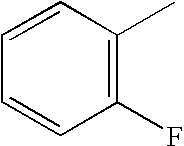


Priority Applications (11)
| Application Number | Priority Date | Filing Date | Title |
|---|---|---|---|
| US10/214,897 US7067539B2 (en) | 2001-02-08 | 2002-08-07 | Cannabinoid receptor ligands |
| EP03784905A EP1539662A1 (en) | 2002-08-07 | 2003-08-05 | Cannabinoid receptor ligands |
| CA002494827A CA2494827A1 (en) | 2002-08-07 | 2003-08-05 | Cannabinoid receptor ligands |
| JP2004527741A JP2005534715A (en) | 2002-08-07 | 2003-08-05 | Cannabinoid receptor ligands |
| PCT/US2003/024398 WO2004014825A1 (en) | 2002-08-07 | 2003-08-05 | Cannabinoid receptor ligands |
| MXPA05001433A MXPA05001433A (en) | 2002-08-07 | 2003-08-05 | Cannabinoid receptor ligands. |
| PE2003000774A PE20040754A1 (en) | 2002-08-07 | 2003-08-05 | CANABINOID RECEPTOR LEAGUES |
| AU2003257172A AU2003257172A1 (en) | 2002-08-07 | 2003-08-05 | Cannabinoid receptor ligands |
| AR20030102821A AR040803A1 (en) | 2002-08-07 | 2003-08-06 | CANABINOID RECEIVERS, PHARMACEUTICAL COMPOSITIONS, A PROCESS FOR THEIR DEVELOPMENT AND THE USE OF SUCH COMPOUNDS, ONLY OR COMBINED, FOR THE PREPARATION OF MEDICINES |
| TW092121502A TW200413298A (en) | 2002-08-07 | 2003-08-06 | Cannabinoid receptor ligands |
| JP2009253551A JP2010024251A (en) | 2002-08-07 | 2009-11-04 | Cannabinoid receptor ligand |
Applications Claiming Priority (4)
| Application Number | Priority Date | Filing Date | Title |
|---|---|---|---|
| US26737501P | 2001-02-08 | 2001-02-08 | |
| US29260001P | 2001-05-22 | 2001-05-22 | |
| US10/072,354 US7507767B2 (en) | 2001-02-08 | 2002-02-06 | Cannabinoid receptor ligands |
| US10/214,897 US7067539B2 (en) | 2001-02-08 | 2002-08-07 | Cannabinoid receptor ligands |
Related Parent Applications (1)
| Application Number | Title | Priority Date | Filing Date |
|---|---|---|---|
| US10/072,354 Continuation-In-Part US7507767B2 (en) | 2001-02-08 | 2002-02-06 | Cannabinoid receptor ligands |
Publications (2)
| Publication Number | Publication Date |
|---|---|
| US20030232859A1 true US20030232859A1 (en) | 2003-12-18 |
| US7067539B2 US7067539B2 (en) | 2006-06-27 |
Family
ID=31714260
Family Applications (1)
| Application Number | Title | Priority Date | Filing Date |
|---|---|---|---|
| US10/214,897 Expired - Fee Related US7067539B2 (en) | 2001-02-08 | 2002-08-07 | Cannabinoid receptor ligands |
Country Status (10)
| Country | Link |
|---|---|
| US (1) | US7067539B2 (en) |
| EP (1) | EP1539662A1 (en) |
| JP (2) | JP2005534715A (en) |
| AR (1) | AR040803A1 (en) |
| AU (1) | AU2003257172A1 (en) |
| CA (1) | CA2494827A1 (en) |
| MX (1) | MXPA05001433A (en) |
| PE (1) | PE20040754A1 (en) |
| TW (1) | TW200413298A (en) |
| WO (1) | WO2004014825A1 (en) |
Cited By (16)
| Publication number | Priority date | Publication date | Assignee | Title |
|---|---|---|---|---|
| US20040242593A1 (en) * | 2003-05-20 | 2004-12-02 | Moore Bob M. | Cannabinoid derivatives, methods of making, and use thereof |
| US20070088058A1 (en) * | 2003-10-30 | 2007-04-19 | Shah Shrenik K | Aralkyl amines as cannabinoid receptor modulators |
| US7253189B2 (en) | 2002-11-25 | 2007-08-07 | Schering Corporation | Cannabinoid receptor ligands |
| US7253204B2 (en) | 2004-03-26 | 2007-08-07 | Methylgene Inc. | Inhibitors of histone deacetylase |
| USRE39850E1 (en) | 1999-11-23 | 2007-09-18 | Methylgene, Inc. | Inhibitors of histone deacetylase |
| US20080132503A1 (en) * | 2006-04-07 | 2008-06-05 | Methylgene Inc. | Inhibitors of Histone Deacetylase |
| US20080132459A1 (en) * | 2003-09-24 | 2008-06-05 | Methylgene, Inc. | Inhibitors of Histone Deacetylase |
| US20090069288A1 (en) * | 2007-07-16 | 2009-03-12 | Breinlinger Eric C | Novel therapeutic compounds |
| US7595343B2 (en) | 2001-09-14 | 2009-09-29 | Methylgene, Inc. | Inhibitors of histone deacetylase |
| US7838520B2 (en) | 2001-09-14 | 2010-11-23 | Methylgene, Inc. | Inhibitors of histone deacetylase |
| US7868204B2 (en) | 2001-09-14 | 2011-01-11 | Methylgene Inc. | Inhibitors of histone deacetylase |
| WO2012014127A1 (en) | 2010-07-30 | 2012-02-02 | Ranbaxy Laboratories Limited | 5-lipoxygenase inhibitors |
| US9078902B2 (en) | 2009-06-09 | 2015-07-14 | Nantbioscience, Inc. | Triazine derivatives and their therapeutical applications |
| US9145354B2 (en) | 2011-11-01 | 2015-09-29 | Astex Therapeutics Limited | Pharmaceutical compounds |
| US9636298B2 (en) | 2014-01-17 | 2017-05-02 | Methylgene Inc. | Prodrugs of compounds that enhance antifungal activity and compositions of said prodrugs |
| CN112552200A (en) * | 2019-09-10 | 2021-03-26 | 烟台药物研究所 | Preparation method of optically pure 4- (1-amino) ethyl benzoate and salt thereof |
Families Citing this family (23)
| Publication number | Priority date | Publication date | Assignee | Title |
|---|---|---|---|---|
| US7507767B2 (en) * | 2001-02-08 | 2009-03-24 | Schering Corporation | Cannabinoid receptor ligands |
| CN100567266C (en) * | 2001-11-14 | 2009-12-09 | 先灵公司 | Cannabinoid receptor ligands |
| DE60319714T2 (en) * | 2002-06-19 | 2009-04-02 | Schering Corp. | AGONISTS OF CANNABINOID RECEPTOR |
| GB2431105A (en) * | 2005-10-12 | 2007-04-18 | Gw Pharma Ltd | Cannabinoids for the treatment of pulmonary disorders |
| CA2657247A1 (en) | 2006-07-28 | 2008-01-31 | Boehringer Ingelheim International Gmbh | Compounds which modulate the cb2 receptor |
| US7928123B2 (en) | 2006-09-25 | 2011-04-19 | Boehringer Ingelheim International Gmbh | Compounds which modulate the CB2 receptor |
| CA2679185A1 (en) | 2007-02-28 | 2008-09-04 | Advinus Therapeutics Private Limited | 2,2,2-tri-substituted acetamide derivatives as glucokinase activators, their process and pharmaceutical application |
| CN101668425A (en) * | 2007-03-02 | 2010-03-10 | 田纳西州立大学研究基金会 | Tri-aryl/heteroaroaromatic cannabinoids and use thereof |
| CA2704684A1 (en) | 2007-11-07 | 2009-05-14 | Boehringer Ingelheim International Gmbh | Compounds which modulate the cb2 receptor |
| US8178568B2 (en) | 2008-07-10 | 2012-05-15 | Boehringer Ingelheim International Gmbh | Sulfone compounds which modulate the CB2 receptor |
| CA2737639A1 (en) | 2008-09-25 | 2010-04-01 | Boehringer Ingelheim International Gmbh | Compounds which selectively modulate the cb2 receptor |
| EP2440053A4 (en) | 2009-06-09 | 2012-10-31 | California Capital Equity Llc | Benzyl substituted triazine derivatives and their therapeutical applications |
| CA2765053C (en) | 2009-06-09 | 2015-08-18 | California Capital Equity, Llc | Isoquinoline, quinoline, and quinazoline derivatives as inhibitors of hedgehog signaling |
| US8299103B2 (en) | 2009-06-15 | 2012-10-30 | Boehringer Ingelheim International Gmbh | Compounds which selectively modulate the CB2 receptor |
| JP5756800B2 (en) | 2009-06-16 | 2015-07-29 | ベーリンガー インゲルハイム インターナショナル ゲゼルシャフト ミット ベシュレンクテル ハフツング | Azetidine 2-carboxamide derivative that modulates CB2 receptor |
| WO2011037795A1 (en) | 2009-09-22 | 2011-03-31 | Boehringer Ingelheim International Gmbh | Compounds which selectively modulate the cb2 receptor |
| WO2011088015A1 (en) | 2010-01-15 | 2011-07-21 | Boehringer Ingelheim International Gmbh | Compounds which modulate the cb2 receptor |
| US8329735B2 (en) | 2010-03-05 | 2012-12-11 | Boehringer Ingelheim International Gmbh | Tetrazole compounds which selectively modulate the CB2 receptor |
| WO2012012307A1 (en) | 2010-07-22 | 2012-01-26 | Boehringer Ingelheim International Gmbh | Sulfonyl compounds which modulate the cb2 rece |
| CA2859842C (en) | 2012-03-14 | 2016-11-08 | Sinochem Corporation | Substitute diphenylamine compounds use thereof as antitumor agents |
| TW201512171A (en) | 2013-04-19 | 2015-04-01 | Pfizer Ltd | Chemical compounds |
| EP2803668A1 (en) | 2013-05-17 | 2014-11-19 | Boehringer Ingelheim International Gmbh | Novel (cyano-dimethyl-methyl)-isoxazoles and -[1,3,4]thiadiazoles |
| KR102431436B1 (en) | 2014-08-29 | 2022-08-10 | 테스 파마 에스.알.엘. | INHIBITORS OF α-AMINO-β-CARBOXYMUCONIC ACID SEMIALDEHYDE DECARBOXYLASE |
Citations (14)
| Publication number | Priority date | Publication date | Assignee | Title |
|---|---|---|---|---|
| US3715375A (en) * | 1970-09-17 | 1973-02-06 | Merck & Co Inc | New diphenyl sulfones |
| US4466965A (en) * | 1982-07-26 | 1984-08-21 | American Hospital Supply Corporation | Phthalazine compounds, compositions and use |
| US4567184A (en) * | 1982-12-01 | 1986-01-28 | Usv Pharmaceutical Corporation | Certain aryl or hetero-aryl derivatives of 1-hydroxy-pentane or 1-hydroxy-hexane which are useful for treating inflammation and allergies |
| US5332820A (en) * | 1991-05-20 | 1994-07-26 | E. I. Du Pont De Nemours And Company | Dibenzobicyclo(2.2.2) octane angiotensin II antagonists |
| US5338753A (en) * | 1992-07-14 | 1994-08-16 | Sumner H. Burstein | (3R,4R)-Δ6 -tetrahydrocannabinol-7-oic acids useful as antiinflammatory agents and analgesics |
| US5462960A (en) * | 1993-12-17 | 1995-10-31 | Sanofi | Pyrazole-3-carboxamide derivatives, process for their preparation and pharmaceutical compositions in which they are present |
| US5486525A (en) * | 1993-12-16 | 1996-01-23 | Abbott Laboratories | Platelet activating factor antagonists: imidazopyridine indoles |
| US5532237A (en) * | 1995-02-15 | 1996-07-02 | Merck Frosst Canada, Inc. | Indole derivatives with affinity for the cannabinoid receptor |
| US5747524A (en) * | 1994-07-15 | 1998-05-05 | Eli Lilly And Company | Cannabinoid receptor antagonists |
| US5925768A (en) * | 1995-12-08 | 1999-07-20 | Sanofi | 3-pyrazolecarboxamide derivatives having cannabinoid receptor affinity |
| US5948777A (en) * | 1997-03-18 | 1999-09-07 | Smithkline Beecham Corporation | Cannabinoid receptor agonists |
| US5990170A (en) * | 1994-12-14 | 1999-11-23 | Lifegroup S.P.A. | Therapeutic use of mono and bicarboxylic acid amides active at the peripheral cannabinoid receptor |
| US6013648A (en) * | 1995-06-21 | 2000-01-11 | Sanofi | CB2 Receptor agonist compounds |
| US6017919A (en) * | 1996-02-06 | 2000-01-25 | Japan Tobacco Inc. | Compounds and pharmaceutical use thereof |
Family Cites Families (56)
| Publication number | Priority date | Publication date | Assignee | Title |
|---|---|---|---|---|
| US4170648A (en) | 1972-05-26 | 1979-10-09 | Rohm And Haas Company | Phosphonothioureide anthelmintics |
| DE3039208A1 (en) | 1980-10-17 | 1982-05-13 | Basf Ag, 6700 Ludwigshafen | NEW SULPHONES, THEIR PRODUCTION AND USE |
| DE3118126A1 (en) | 1981-05-07 | 1982-12-02 | Bayer Ag, 5090 Leverkusen | SULFEN AMIDES FOR USE IN MEDICINAL PRODUCTS |
| US4618363A (en) | 1982-01-25 | 1986-10-21 | Ciba-Geigy Corporation | N-phenylsulfonyl-N'-triazinylureas |
| US4468389A (en) | 1982-05-21 | 1984-08-28 | Rohm And Haas Company | Pesticidal N-sulfonyl phosphorodiamido(di)thioates |
| NZ213986A (en) | 1984-10-30 | 1989-07-27 | Usv Pharma Corp | Heterocyclic or aromatic compounds, and pharmaceutical compositions containing such |
| US4781866A (en) | 1985-03-15 | 1988-11-01 | Mcneilab, Inc. | Process for producing amidine sulfonic acid intermediates for guanidines |
| US4678855A (en) | 1985-10-09 | 1987-07-07 | Merck & Co., Inc. | Substituted benzenesulfonamides |
| CN1029958C (en) | 1986-03-31 | 1995-10-11 | 联合碳化农产化学品公司 | Malonic acid derivative applied to hold back plant growth |
| JP2749578B2 (en) | 1986-03-31 | 1998-05-13 | ローヌープーラン・ネーデルランド・ベー・ベー | Synergistic plant growth regulator composition |
| DE3634926A1 (en) | 1986-10-14 | 1988-04-21 | Bayer Ag | METHOD FOR THE PRODUCTION OF O-ARYL-N'-PYRIMIDIN-2-YL-ISO-UREAS |
| DE3634927A1 (en) | 1986-10-14 | 1988-04-21 | Bayer Ag | METHOD FOR THE PRODUCTION OF SULFONYLISOTHIO UREAS |
| US4851423A (en) | 1986-12-10 | 1989-07-25 | Schering Corporation | Pharmaceutically active compounds |
| NZ232493A (en) | 1989-02-14 | 1992-06-25 | Toyama Chemical Co Ltd | Aryl- or heterocyclyl-substituted 1,2-ethanediol derivatives and pharmaceutical compositions |
| US5064825A (en) | 1989-06-01 | 1991-11-12 | Merck & Co., Inc. | Angiotensin ii antagonists |
| WO1991000858A1 (en) | 1989-07-07 | 1991-01-24 | Schering Corporation | Pharmaceutically active compounds |
| IT1240676B (en) | 1990-04-24 | 1993-12-17 | Agrimont Spa | COMPOSITIONS WITH HERBICIDE ACTIVITY |
| NZ239846A (en) | 1990-09-27 | 1994-11-25 | Merck & Co Inc | Sulphonamide derivatives and pharmaceutical compositions thereof |
| AU676993B2 (en) | 1991-06-27 | 1997-04-10 | Virginia Commonwealth University | Sigma receptor ligands and the use thereof |
| US5506227A (en) | 1992-04-13 | 1996-04-09 | Merck Frosst Canada, Inc. | Pyridine-substituted benzyl alcohols as leukotriene antagonists |
| JPH0672979A (en) | 1992-06-08 | 1994-03-15 | Hiroyoshi Hidaka | Aminobenzyl derivative |
| FR2692575B1 (en) * | 1992-06-23 | 1995-06-30 | Sanofi Elf | NOVEL PYRAZOLE DERIVATIVES, PROCESS FOR THEIR PREPARATION AND PHARMACEUTICAL COMPOSITIONS CONTAINING THEM. |
| GB9218834D0 (en) | 1992-09-05 | 1992-10-21 | Procter & Gamble | Nasal spray products |
| AU7100394A (en) | 1993-06-17 | 1995-01-17 | Dunlena Pty. Limited | Arthropodicidal sulfonates |
| JP3875263B2 (en) | 1994-04-06 | 2007-01-31 | 塩野義製薬株式会社 | α-Substituted phenylacetic acid derivative, process for producing the same, and agricultural fungicide containing the same |
| DK0808312T3 (en) | 1995-02-02 | 2001-02-12 | Smithkline Beecham Plc | Indole derivatives as a 5-HT receptor antagonist |
| US5700816A (en) | 1995-06-12 | 1997-12-23 | Isakson; Peter C. | Treatment of inflammation and inflammation-related disorders with a combination of a cyclooxygenase-2 inhibitor and a leukotriene A4 hydrolase inhibitor |
| DK0848703T3 (en) | 1995-07-21 | 2001-01-02 | Nycomed Austria Gmbh | Derivatives of benzosulfonamides as inhibitors of the enzyme cyclooxygenase II |
| DE19533644A1 (en) | 1995-09-12 | 1997-03-13 | Nycomed Arzneimittel Gmbh | New sulphonyl-amino-benzene -sulphonamide and e.g. -thio-amine derivs. |
| ATE224884T1 (en) * | 1996-07-01 | 2002-10-15 | Schering Corp | MUSCARINE ANTAGONISTS |
| SE9602646D0 (en) | 1996-07-04 | 1996-07-04 | Astra Ab | Pharmaceutically useful compounds |
| WO1998010763A1 (en) | 1996-09-13 | 1998-03-19 | Merck & Co., Inc. | Thrombin inhibitors |
| DE69822449T2 (en) * | 1997-01-21 | 2005-01-27 | Smithkline Beecham Corp. | NEW CANNABINOID RECEPTOR MODULATORS |
| ATA16597A (en) | 1997-02-03 | 1998-04-15 | Nycomed Austria Gmbh | NEW SUBSTITUTED P-SULFONYLAMINOBENZOL SULFONIC ACID |
| DE19740785A1 (en) | 1997-02-21 | 1998-08-27 | Bayer Ag | Arylsulfonamides and analogs |
| ATE499365T1 (en) | 1997-10-24 | 2011-03-15 | Nissan Chemical Ind Ltd | SULFAMOYL COMPOUNDS AND BACTERICIDES FOR AGRICULTURE OR HORTICULTURE |
| WO1999026612A1 (en) | 1997-11-21 | 1999-06-03 | Smithkline Beecham Corporation | Novel cannabinoid receptor modulators |
| MY153569A (en) | 1998-01-20 | 2015-02-27 | Mitsubishi Tanabe Pharma Corp | Inhibitors of ?4 mediated cell adhesion |
| BR9909146A (en) | 1998-03-26 | 2000-12-05 | Shionogi & Co | Indole derivatives showing antiviral activity |
| JP2002521436A (en) | 1998-07-28 | 2002-07-16 | スミスクライン・ビーチャム・コーポレイション | Substituted anilide compounds and methods |
| WO2000056707A1 (en) | 1999-03-24 | 2000-09-28 | Sepracor, Inc. | Diaryl thioethers, compositions and uses thereof |
| CN1247553C (en) | 1999-09-14 | 2006-03-29 | 盐野义制药株式会社 | 2-imino-1,3-thiazine derivs. |
| CA2387138A1 (en) * | 1999-10-18 | 2001-04-26 | University Of Connecticut | Cannabimimetic indole derivatives |
| SI1249233T1 (en) | 1999-11-26 | 2009-02-28 | Shionogi & Co | Npyy5 antagonists |
| US20020052343A1 (en) | 1999-12-15 | 2002-05-02 | Allen Darin Arthur | Salicylamides as serine protease inhibitors |
| ATE339417T1 (en) | 1999-12-15 | 2006-10-15 | Bristol Myers Squibb Co | BIPHENYL - SULFONAMIDE AS DUAL ANGIOTENSIN - ENDOTHELIN - RECEPTOR - ANTAGONISTS |
| WO2001064642A2 (en) | 2000-02-29 | 2001-09-07 | Cor Therapeutics, Inc. | Benzamides and related inhibitors of factor xa |
| US6498151B2 (en) | 2000-03-22 | 2002-12-24 | Merck Frosst Canada & Co. | Aryldifluoromethylphosphonic acids with sulfur-containing substituents as PTP-1B inhibitors |
| WO2001074762A2 (en) | 2000-04-03 | 2001-10-11 | Phycogen, Inc. | Arylsulfates and their use as enhancers or inhibitors of bioadhesion to surfaces |
| CN1657523A (en) | 2000-04-28 | 2005-08-24 | 田边制药株式会社 | Cyclic compounds |
| CA2407088A1 (en) | 2000-05-19 | 2001-11-22 | Takeda Chemical Industries, Ltd. | Beta-secretase inhibitors |
| GB0028702D0 (en) | 2000-11-24 | 2001-01-10 | Novartis Ag | Organic compounds |
| US7507767B2 (en) | 2001-02-08 | 2009-03-24 | Schering Corporation | Cannabinoid receptor ligands |
| CN100567266C (en) | 2001-11-14 | 2009-12-09 | 先灵公司 | Cannabinoid receptor ligands |
| FR2839718B1 (en) * | 2002-05-17 | 2004-06-25 | Sanofi Synthelabo | INDOLE DERIVATIVES, THEIR PREPARATION PROCESS AND THE PHARMACEUTICAL COMPOSITIONS CONTAINING THE SAME |
| DE60319714T2 (en) * | 2002-06-19 | 2009-04-02 | Schering Corp. | AGONISTS OF CANNABINOID RECEPTOR |
-
2002
- 2002-08-07 US US10/214,897 patent/US7067539B2/en not_active Expired - Fee Related
-
2003
- 2003-08-05 CA CA002494827A patent/CA2494827A1/en not_active Abandoned
- 2003-08-05 MX MXPA05001433A patent/MXPA05001433A/en active IP Right Grant
- 2003-08-05 JP JP2004527741A patent/JP2005534715A/en active Pending
- 2003-08-05 PE PE2003000774A patent/PE20040754A1/en not_active Application Discontinuation
- 2003-08-05 AU AU2003257172A patent/AU2003257172A1/en not_active Abandoned
- 2003-08-05 EP EP03784905A patent/EP1539662A1/en not_active Withdrawn
- 2003-08-05 WO PCT/US2003/024398 patent/WO2004014825A1/en not_active Ceased
- 2003-08-06 TW TW092121502A patent/TW200413298A/en unknown
- 2003-08-06 AR AR20030102821A patent/AR040803A1/en unknown
-
2009
- 2009-11-04 JP JP2009253551A patent/JP2010024251A/en not_active Withdrawn
Patent Citations (14)
| Publication number | Priority date | Publication date | Assignee | Title |
|---|---|---|---|---|
| US3715375A (en) * | 1970-09-17 | 1973-02-06 | Merck & Co Inc | New diphenyl sulfones |
| US4466965A (en) * | 1982-07-26 | 1984-08-21 | American Hospital Supply Corporation | Phthalazine compounds, compositions and use |
| US4567184A (en) * | 1982-12-01 | 1986-01-28 | Usv Pharmaceutical Corporation | Certain aryl or hetero-aryl derivatives of 1-hydroxy-pentane or 1-hydroxy-hexane which are useful for treating inflammation and allergies |
| US5332820A (en) * | 1991-05-20 | 1994-07-26 | E. I. Du Pont De Nemours And Company | Dibenzobicyclo(2.2.2) octane angiotensin II antagonists |
| US5338753A (en) * | 1992-07-14 | 1994-08-16 | Sumner H. Burstein | (3R,4R)-Δ6 -tetrahydrocannabinol-7-oic acids useful as antiinflammatory agents and analgesics |
| US5486525A (en) * | 1993-12-16 | 1996-01-23 | Abbott Laboratories | Platelet activating factor antagonists: imidazopyridine indoles |
| US5462960A (en) * | 1993-12-17 | 1995-10-31 | Sanofi | Pyrazole-3-carboxamide derivatives, process for their preparation and pharmaceutical compositions in which they are present |
| US5747524A (en) * | 1994-07-15 | 1998-05-05 | Eli Lilly And Company | Cannabinoid receptor antagonists |
| US5990170A (en) * | 1994-12-14 | 1999-11-23 | Lifegroup S.P.A. | Therapeutic use of mono and bicarboxylic acid amides active at the peripheral cannabinoid receptor |
| US5532237A (en) * | 1995-02-15 | 1996-07-02 | Merck Frosst Canada, Inc. | Indole derivatives with affinity for the cannabinoid receptor |
| US6013648A (en) * | 1995-06-21 | 2000-01-11 | Sanofi | CB2 Receptor agonist compounds |
| US5925768A (en) * | 1995-12-08 | 1999-07-20 | Sanofi | 3-pyrazolecarboxamide derivatives having cannabinoid receptor affinity |
| US6017919A (en) * | 1996-02-06 | 2000-01-25 | Japan Tobacco Inc. | Compounds and pharmaceutical use thereof |
| US5948777A (en) * | 1997-03-18 | 1999-09-07 | Smithkline Beecham Corporation | Cannabinoid receptor agonists |
Cited By (23)
| Publication number | Priority date | Publication date | Assignee | Title |
|---|---|---|---|---|
| USRE43343E1 (en) | 1999-11-23 | 2012-05-01 | Methylgene Inc. | Inhibitors of histone deacetylase |
| USRE39850E1 (en) | 1999-11-23 | 2007-09-18 | Methylgene, Inc. | Inhibitors of histone deacetylase |
| US7838520B2 (en) | 2001-09-14 | 2010-11-23 | Methylgene, Inc. | Inhibitors of histone deacetylase |
| US7868204B2 (en) | 2001-09-14 | 2011-01-11 | Methylgene Inc. | Inhibitors of histone deacetylase |
| US7595343B2 (en) | 2001-09-14 | 2009-09-29 | Methylgene, Inc. | Inhibitors of histone deacetylase |
| US7253189B2 (en) | 2002-11-25 | 2007-08-07 | Schering Corporation | Cannabinoid receptor ligands |
| US7169942B2 (en) | 2003-05-20 | 2007-01-30 | University Of Tennessee Research Foundation | Cannabinoid derivatives, methods of making, and use thereof |
| US20040242593A1 (en) * | 2003-05-20 | 2004-12-02 | Moore Bob M. | Cannabinoid derivatives, methods of making, and use thereof |
| US20080132459A1 (en) * | 2003-09-24 | 2008-06-05 | Methylgene, Inc. | Inhibitors of Histone Deacetylase |
| US7868205B2 (en) | 2003-09-24 | 2011-01-11 | Methylgene Inc. | Inhibitors of histone deacetylase |
| US20070088058A1 (en) * | 2003-10-30 | 2007-04-19 | Shah Shrenik K | Aralkyl amines as cannabinoid receptor modulators |
| US7390835B2 (en) | 2003-10-30 | 2008-06-24 | Merck & Co., Inc. | Aralkyl amines as cannabinoid receptor modulators |
| US8088805B2 (en) | 2004-03-26 | 2012-01-03 | Methylgene Inc. | Inhibitors of histone deacetylase |
| US20070213330A1 (en) * | 2004-03-26 | 2007-09-13 | Methylgene Inc. | Inhibitors of Histone Deacetylase |
| US7253204B2 (en) | 2004-03-26 | 2007-08-07 | Methylgene Inc. | Inhibitors of histone deacetylase |
| US20080132503A1 (en) * | 2006-04-07 | 2008-06-05 | Methylgene Inc. | Inhibitors of Histone Deacetylase |
| US8598168B2 (en) | 2006-04-07 | 2013-12-03 | Methylgene Inc. | Inhibitors of histone deacetylase |
| US20090069288A1 (en) * | 2007-07-16 | 2009-03-12 | Breinlinger Eric C | Novel therapeutic compounds |
| US9078902B2 (en) | 2009-06-09 | 2015-07-14 | Nantbioscience, Inc. | Triazine derivatives and their therapeutical applications |
| WO2012014127A1 (en) | 2010-07-30 | 2012-02-02 | Ranbaxy Laboratories Limited | 5-lipoxygenase inhibitors |
| US9145354B2 (en) | 2011-11-01 | 2015-09-29 | Astex Therapeutics Limited | Pharmaceutical compounds |
| US9636298B2 (en) | 2014-01-17 | 2017-05-02 | Methylgene Inc. | Prodrugs of compounds that enhance antifungal activity and compositions of said prodrugs |
| CN112552200A (en) * | 2019-09-10 | 2021-03-26 | 烟台药物研究所 | Preparation method of optically pure 4- (1-amino) ethyl benzoate and salt thereof |
Also Published As
| Publication number | Publication date |
|---|---|
| CA2494827A1 (en) | 2004-02-19 |
| JP2005534715A (en) | 2005-11-17 |
| AR040803A1 (en) | 2005-04-20 |
| PE20040754A1 (en) | 2004-11-20 |
| WO2004014825A1 (en) | 2004-02-19 |
| EP1539662A1 (en) | 2005-06-15 |
| US7067539B2 (en) | 2006-06-27 |
| MXPA05001433A (en) | 2005-06-06 |
| AU2003257172A1 (en) | 2004-02-25 |
| TW200413298A (en) | 2004-08-01 |
| JP2010024251A (en) | 2010-02-04 |
Similar Documents
| Publication | Publication Date | Title |
|---|---|---|
| US20030232859A1 (en) | Cannabinoid receptor ligands | |
| US7718702B2 (en) | Cannabinoid receptor ligands | |
| AU2002306450A1 (en) | Cannabinoid receptor ligands | |
| US7217732B2 (en) | Cannabinoid receptor agonists | |
| US8492437B2 (en) | 4-substituted phenoxyphenylacetic acid derivatives | |
| JP2002501945A (en) | PPAR-gamma modulator | |
| EP1565431B1 (en) | Cannabinoid receptor ligands | |
| HK1074040B (en) | Cannabinoid receptor ligands |
Legal Events
| Date | Code | Title | Description |
|---|---|---|---|
| AS | Assignment |
Owner name: SCHERING CORPORATION, NEW JERSEY Free format text: ASSIGNMENT OF ASSIGNORS INTEREST;ASSIGNOR:WOLIN, RONALD L.;REEL/FRAME:014717/0647 Effective date: 20021028 Owner name: SCHERING CORPORATION, NEW JERSEY Free format text: ASSIGNMENT OF ASSIGNORS INTEREST;ASSIGNORS:KOZLOWSKI, JOSEPH A.;SHIH, NENG-YANG;LAVEY, BRIAN L.;AND OTHERS;REEL/FRAME:014717/0611;SIGNING DATES FROM 20021107 TO 20021112 |
|
| FPAY | Fee payment |
Year of fee payment: 4 |
|
| AS | Assignment |
Owner name: MERCK SHARP & DOHME CORP., NEW JERSEY Free format text: CHANGE OF NAME;ASSIGNOR:SCHERING CORPORATION;REEL/FRAME:028884/0151 Effective date: 20120502 |
|
| FPAY | Fee payment |
Year of fee payment: 8 |
|
| FEPP | Fee payment procedure |
Free format text: MAINTENANCE FEE REMINDER MAILED (ORIGINAL EVENT CODE: REM.) |
|
| LAPS | Lapse for failure to pay maintenance fees |
Free format text: PATENT EXPIRED FOR FAILURE TO PAY MAINTENANCE FEES (ORIGINAL EVENT CODE: EXP.) |
|
| STCH | Information on status: patent discontinuation |
Free format text: PATENT EXPIRED DUE TO NONPAYMENT OF MAINTENANCE FEES UNDER 37 CFR 1.362 |
|
| FP | Lapsed due to failure to pay maintenance fee |
Effective date: 20180627 |