US11236359B2 - RNA-guided human genome engineering - Google Patents
RNA-guided human genome engineering Download PDFInfo
- Publication number
- US11236359B2 US11236359B2 US15/042,573 US201615042573A US11236359B2 US 11236359 B2 US11236359 B2 US 11236359B2 US 201615042573 A US201615042573 A US 201615042573A US 11236359 B2 US11236359 B2 US 11236359B2
- Authority
- US
- United States
- Prior art keywords
- cell
- nucleic acid
- guide rna
- sequence
- enzyme
- Prior art date
- Legal status (The legal status is an assumption and is not a legal conclusion. Google has not performed a legal analysis and makes no representation as to the accuracy of the status listed.)
- Active
Links
Images




Classifications
-
- C—CHEMISTRY; METALLURGY
- C12—BIOCHEMISTRY; BEER; SPIRITS; WINE; VINEGAR; MICROBIOLOGY; ENZYMOLOGY; MUTATION OR GENETIC ENGINEERING
- C12N—MICROORGANISMS OR ENZYMES; COMPOSITIONS THEREOF; PROPAGATING, PRESERVING, OR MAINTAINING MICROORGANISMS; MUTATION OR GENETIC ENGINEERING; CULTURE MEDIA
- C12N9/00—Enzymes; Proenzymes; Compositions thereof; Processes for preparing, activating, inhibiting, separating or purifying enzymes
- C12N9/14—Hydrolases (3)
- C12N9/16—Hydrolases (3) acting on ester bonds (3.1)
- C12N9/22—Ribonucleases [RNase]; Deoxyribonucleases [DNase]
-
- A—HUMAN NECESSITIES
- A61—MEDICAL OR VETERINARY SCIENCE; HYGIENE
- A61K—PREPARATIONS FOR MEDICAL, DENTAL OR TOILETRY PURPOSES
- A61K48/00—Medicinal preparations containing genetic material which is inserted into cells of the living body to treat genetic diseases; Gene therapy
-
- C—CHEMISTRY; METALLURGY
- C12—BIOCHEMISTRY; BEER; SPIRITS; WINE; VINEGAR; MICROBIOLOGY; ENZYMOLOGY; MUTATION OR GENETIC ENGINEERING
- C12N—MICROORGANISMS OR ENZYMES; COMPOSITIONS THEREOF; PROPAGATING, PRESERVING, OR MAINTAINING MICROORGANISMS; MUTATION OR GENETIC ENGINEERING; CULTURE MEDIA
- C12N15/00—Mutation or genetic engineering; DNA or RNA concerning genetic engineering, vectors, e.g. plasmids, or their isolation, preparation or purification; Use of hosts therefor
- C12N15/09—Recombinant DNA-technology
- C12N15/63—Introduction of foreign genetic material using vectors; Vectors; Use of hosts therefor; Regulation of expression
- C12N15/79—Vectors or expression systems specially adapted for eukaryotic hosts
-
- C—CHEMISTRY; METALLURGY
- C12—BIOCHEMISTRY; BEER; SPIRITS; WINE; VINEGAR; MICROBIOLOGY; ENZYMOLOGY; MUTATION OR GENETIC ENGINEERING
- C12N—MICROORGANISMS OR ENZYMES; COMPOSITIONS THEREOF; PROPAGATING, PRESERVING, OR MAINTAINING MICROORGANISMS; MUTATION OR GENETIC ENGINEERING; CULTURE MEDIA
- C12N15/00—Mutation or genetic engineering; DNA or RNA concerning genetic engineering, vectors, e.g. plasmids, or their isolation, preparation or purification; Use of hosts therefor
- C12N15/01—Preparation of mutants without inserting foreign genetic material therein; Screening processes therefor
-
- C—CHEMISTRY; METALLURGY
- C12—BIOCHEMISTRY; BEER; SPIRITS; WINE; VINEGAR; MICROBIOLOGY; ENZYMOLOGY; MUTATION OR GENETIC ENGINEERING
- C12N—MICROORGANISMS OR ENZYMES; COMPOSITIONS THEREOF; PROPAGATING, PRESERVING, OR MAINTAINING MICROORGANISMS; MUTATION OR GENETIC ENGINEERING; CULTURE MEDIA
- C12N15/00—Mutation or genetic engineering; DNA or RNA concerning genetic engineering, vectors, e.g. plasmids, or their isolation, preparation or purification; Use of hosts therefor
- C12N15/09—Recombinant DNA-technology
- C12N15/10—Processes for the isolation, preparation or purification of DNA or RNA
-
- C—CHEMISTRY; METALLURGY
- C12—BIOCHEMISTRY; BEER; SPIRITS; WINE; VINEGAR; MICROBIOLOGY; ENZYMOLOGY; MUTATION OR GENETIC ENGINEERING
- C12N—MICROORGANISMS OR ENZYMES; COMPOSITIONS THEREOF; PROPAGATING, PRESERVING, OR MAINTAINING MICROORGANISMS; MUTATION OR GENETIC ENGINEERING; CULTURE MEDIA
- C12N15/00—Mutation or genetic engineering; DNA or RNA concerning genetic engineering, vectors, e.g. plasmids, or their isolation, preparation or purification; Use of hosts therefor
- C12N15/09—Recombinant DNA-technology
- C12N15/10—Processes for the isolation, preparation or purification of DNA or RNA
- C12N15/102—Mutagenizing nucleic acids
-
- C—CHEMISTRY; METALLURGY
- C12—BIOCHEMISTRY; BEER; SPIRITS; WINE; VINEGAR; MICROBIOLOGY; ENZYMOLOGY; MUTATION OR GENETIC ENGINEERING
- C12N—MICROORGANISMS OR ENZYMES; COMPOSITIONS THEREOF; PROPAGATING, PRESERVING, OR MAINTAINING MICROORGANISMS; MUTATION OR GENETIC ENGINEERING; CULTURE MEDIA
- C12N15/00—Mutation or genetic engineering; DNA or RNA concerning genetic engineering, vectors, e.g. plasmids, or their isolation, preparation or purification; Use of hosts therefor
- C12N15/09—Recombinant DNA-technology
- C12N15/10—Processes for the isolation, preparation or purification of DNA or RNA
- C12N15/102—Mutagenizing nucleic acids
- C12N15/1024—In vivo mutagenesis using high mutation rate "mutator" host strains by inserting genetic material, e.g. encoding an error prone polymerase, disrupting a gene for mismatch repair
-
- C—CHEMISTRY; METALLURGY
- C12—BIOCHEMISTRY; BEER; SPIRITS; WINE; VINEGAR; MICROBIOLOGY; ENZYMOLOGY; MUTATION OR GENETIC ENGINEERING
- C12N—MICROORGANISMS OR ENZYMES; COMPOSITIONS THEREOF; PROPAGATING, PRESERVING, OR MAINTAINING MICROORGANISMS; MUTATION OR GENETIC ENGINEERING; CULTURE MEDIA
- C12N15/00—Mutation or genetic engineering; DNA or RNA concerning genetic engineering, vectors, e.g. plasmids, or their isolation, preparation or purification; Use of hosts therefor
- C12N15/09—Recombinant DNA-technology
- C12N15/11—DNA or RNA fragments; Modified forms thereof; Non-coding nucleic acids having a biological activity
-
- C—CHEMISTRY; METALLURGY
- C12—BIOCHEMISTRY; BEER; SPIRITS; WINE; VINEGAR; MICROBIOLOGY; ENZYMOLOGY; MUTATION OR GENETIC ENGINEERING
- C12N—MICROORGANISMS OR ENZYMES; COMPOSITIONS THEREOF; PROPAGATING, PRESERVING, OR MAINTAINING MICROORGANISMS; MUTATION OR GENETIC ENGINEERING; CULTURE MEDIA
- C12N15/00—Mutation or genetic engineering; DNA or RNA concerning genetic engineering, vectors, e.g. plasmids, or their isolation, preparation or purification; Use of hosts therefor
- C12N15/09—Recombinant DNA-technology
- C12N15/11—DNA or RNA fragments; Modified forms thereof; Non-coding nucleic acids having a biological activity
- C12N15/113—Non-coding nucleic acids modulating the expression of genes, e.g. antisense oligonucleotides; Antisense DNA or RNA; Triplex- forming oligonucleotides; Catalytic nucleic acids, e.g. ribozymes; Nucleic acids used in co-suppression or gene silencing
-
- C—CHEMISTRY; METALLURGY
- C12—BIOCHEMISTRY; BEER; SPIRITS; WINE; VINEGAR; MICROBIOLOGY; ENZYMOLOGY; MUTATION OR GENETIC ENGINEERING
- C12N—MICROORGANISMS OR ENZYMES; COMPOSITIONS THEREOF; PROPAGATING, PRESERVING, OR MAINTAINING MICROORGANISMS; MUTATION OR GENETIC ENGINEERING; CULTURE MEDIA
- C12N15/00—Mutation or genetic engineering; DNA or RNA concerning genetic engineering, vectors, e.g. plasmids, or their isolation, preparation or purification; Use of hosts therefor
- C12N15/09—Recombinant DNA-technology
- C12N15/63—Introduction of foreign genetic material using vectors; Vectors; Use of hosts therefor; Regulation of expression
-
- C—CHEMISTRY; METALLURGY
- C12—BIOCHEMISTRY; BEER; SPIRITS; WINE; VINEGAR; MICROBIOLOGY; ENZYMOLOGY; MUTATION OR GENETIC ENGINEERING
- C12N—MICROORGANISMS OR ENZYMES; COMPOSITIONS THEREOF; PROPAGATING, PRESERVING, OR MAINTAINING MICROORGANISMS; MUTATION OR GENETIC ENGINEERING; CULTURE MEDIA
- C12N15/00—Mutation or genetic engineering; DNA or RNA concerning genetic engineering, vectors, e.g. plasmids, or their isolation, preparation or purification; Use of hosts therefor
- C12N15/09—Recombinant DNA-technology
- C12N15/63—Introduction of foreign genetic material using vectors; Vectors; Use of hosts therefor; Regulation of expression
- C12N15/79—Vectors or expression systems specially adapted for eukaryotic hosts
- C12N15/80—Vectors or expression systems specially adapted for eukaryotic hosts for fungi
- C12N15/81—Vectors or expression systems specially adapted for eukaryotic hosts for fungi for yeasts
-
- C—CHEMISTRY; METALLURGY
- C12—BIOCHEMISTRY; BEER; SPIRITS; WINE; VINEGAR; MICROBIOLOGY; ENZYMOLOGY; MUTATION OR GENETIC ENGINEERING
- C12N—MICROORGANISMS OR ENZYMES; COMPOSITIONS THEREOF; PROPAGATING, PRESERVING, OR MAINTAINING MICROORGANISMS; MUTATION OR GENETIC ENGINEERING; CULTURE MEDIA
- C12N15/00—Mutation or genetic engineering; DNA or RNA concerning genetic engineering, vectors, e.g. plasmids, or their isolation, preparation or purification; Use of hosts therefor
- C12N15/09—Recombinant DNA-technology
- C12N15/63—Introduction of foreign genetic material using vectors; Vectors; Use of hosts therefor; Regulation of expression
- C12N15/79—Vectors or expression systems specially adapted for eukaryotic hosts
- C12N15/82—Vectors or expression systems specially adapted for eukaryotic hosts for plant cells, e.g. plant artificial chromosomes (PACs)
- C12N15/8201—Methods for introducing genetic material into plant cells, e.g. DNA, RNA, stable or transient incorporation, tissue culture methods adapted for transformation
-
- C—CHEMISTRY; METALLURGY
- C12—BIOCHEMISTRY; BEER; SPIRITS; WINE; VINEGAR; MICROBIOLOGY; ENZYMOLOGY; MUTATION OR GENETIC ENGINEERING
- C12N—MICROORGANISMS OR ENZYMES; COMPOSITIONS THEREOF; PROPAGATING, PRESERVING, OR MAINTAINING MICROORGANISMS; MUTATION OR GENETIC ENGINEERING; CULTURE MEDIA
- C12N15/00—Mutation or genetic engineering; DNA or RNA concerning genetic engineering, vectors, e.g. plasmids, or their isolation, preparation or purification; Use of hosts therefor
- C12N15/09—Recombinant DNA-technology
- C12N15/63—Introduction of foreign genetic material using vectors; Vectors; Use of hosts therefor; Regulation of expression
- C12N15/79—Vectors or expression systems specially adapted for eukaryotic hosts
- C12N15/85—Vectors or expression systems specially adapted for eukaryotic hosts for animal cells
-
- C—CHEMISTRY; METALLURGY
- C12—BIOCHEMISTRY; BEER; SPIRITS; WINE; VINEGAR; MICROBIOLOGY; ENZYMOLOGY; MUTATION OR GENETIC ENGINEERING
- C12N—MICROORGANISMS OR ENZYMES; COMPOSITIONS THEREOF; PROPAGATING, PRESERVING, OR MAINTAINING MICROORGANISMS; MUTATION OR GENETIC ENGINEERING; CULTURE MEDIA
- C12N15/00—Mutation or genetic engineering; DNA or RNA concerning genetic engineering, vectors, e.g. plasmids, or their isolation, preparation or purification; Use of hosts therefor
- C12N15/09—Recombinant DNA-technology
- C12N15/87—Introduction of foreign genetic material using processes not otherwise provided for, e.g. co-transformation
-
- C—CHEMISTRY; METALLURGY
- C12—BIOCHEMISTRY; BEER; SPIRITS; WINE; VINEGAR; MICROBIOLOGY; ENZYMOLOGY; MUTATION OR GENETIC ENGINEERING
- C12N—MICROORGANISMS OR ENZYMES; COMPOSITIONS THEREOF; PROPAGATING, PRESERVING, OR MAINTAINING MICROORGANISMS; MUTATION OR GENETIC ENGINEERING; CULTURE MEDIA
- C12N15/00—Mutation or genetic engineering; DNA or RNA concerning genetic engineering, vectors, e.g. plasmids, or their isolation, preparation or purification; Use of hosts therefor
- C12N15/09—Recombinant DNA-technology
- C12N15/87—Introduction of foreign genetic material using processes not otherwise provided for, e.g. co-transformation
- C12N15/90—Stable introduction of foreign DNA into chromosome
-
- C—CHEMISTRY; METALLURGY
- C12—BIOCHEMISTRY; BEER; SPIRITS; WINE; VINEGAR; MICROBIOLOGY; ENZYMOLOGY; MUTATION OR GENETIC ENGINEERING
- C12N—MICROORGANISMS OR ENZYMES; COMPOSITIONS THEREOF; PROPAGATING, PRESERVING, OR MAINTAINING MICROORGANISMS; MUTATION OR GENETIC ENGINEERING; CULTURE MEDIA
- C12N15/00—Mutation or genetic engineering; DNA or RNA concerning genetic engineering, vectors, e.g. plasmids, or their isolation, preparation or purification; Use of hosts therefor
- C12N15/09—Recombinant DNA-technology
- C12N15/87—Introduction of foreign genetic material using processes not otherwise provided for, e.g. co-transformation
- C12N15/90—Stable introduction of foreign DNA into chromosome
- C12N15/902—Stable introduction of foreign DNA into chromosome using homologous recombination
- C12N15/907—Stable introduction of foreign DNA into chromosome using homologous recombination in mammalian cells
-
- C—CHEMISTRY; METALLURGY
- C12—BIOCHEMISTRY; BEER; SPIRITS; WINE; VINEGAR; MICROBIOLOGY; ENZYMOLOGY; MUTATION OR GENETIC ENGINEERING
- C12N—MICROORGANISMS OR ENZYMES; COMPOSITIONS THEREOF; PROPAGATING, PRESERVING, OR MAINTAINING MICROORGANISMS; MUTATION OR GENETIC ENGINEERING; CULTURE MEDIA
- C12N5/00—Undifferentiated human, animal or plant cells, e.g. cell lines; Tissues; Cultivation or maintenance thereof; Culture media therefor
- C12N5/10—Cells modified by introduction of foreign genetic material
-
- C—CHEMISTRY; METALLURGY
- C12—BIOCHEMISTRY; BEER; SPIRITS; WINE; VINEGAR; MICROBIOLOGY; ENZYMOLOGY; MUTATION OR GENETIC ENGINEERING
- C12N—MICROORGANISMS OR ENZYMES; COMPOSITIONS THEREOF; PROPAGATING, PRESERVING, OR MAINTAINING MICROORGANISMS; MUTATION OR GENETIC ENGINEERING; CULTURE MEDIA
- C12N2310/00—Structure or type of the nucleic acid
- C12N2310/10—Type of nucleic acid
- C12N2310/20—Type of nucleic acid involving clustered regularly interspaced short palindromic repeats [CRISPR]
-
- C—CHEMISTRY; METALLURGY
- C12—BIOCHEMISTRY; BEER; SPIRITS; WINE; VINEGAR; MICROBIOLOGY; ENZYMOLOGY; MUTATION OR GENETIC ENGINEERING
- C12N—MICROORGANISMS OR ENZYMES; COMPOSITIONS THEREOF; PROPAGATING, PRESERVING, OR MAINTAINING MICROORGANISMS; MUTATION OR GENETIC ENGINEERING; CULTURE MEDIA
- C12N2800/00—Nucleic acids vectors
- C12N2800/80—Vectors containing sites for inducing double-stranded breaks, e.g. meganuclease restriction sites
-
- C—CHEMISTRY; METALLURGY
- C12—BIOCHEMISTRY; BEER; SPIRITS; WINE; VINEGAR; MICROBIOLOGY; ENZYMOLOGY; MUTATION OR GENETIC ENGINEERING
- C12N—MICROORGANISMS OR ENZYMES; COMPOSITIONS THEREOF; PROPAGATING, PRESERVING, OR MAINTAINING MICROORGANISMS; MUTATION OR GENETIC ENGINEERING; CULTURE MEDIA
- C12N2810/00—Vectors comprising a targeting moiety
- C12N2810/50—Vectors comprising as targeting moiety peptide derived from defined protein
- C12N2810/55—Vectors comprising as targeting moiety peptide derived from defined protein from bacteria
-
- C—CHEMISTRY; METALLURGY
- C12—BIOCHEMISTRY; BEER; SPIRITS; WINE; VINEGAR; MICROBIOLOGY; ENZYMOLOGY; MUTATION OR GENETIC ENGINEERING
- C12Y—ENZYMES
- C12Y301/00—Hydrolases acting on ester bonds (3.1)
Definitions
- a eukaryotic cell is transfected with a two component system including RNA complementary to genomic DNA and an enzyme that interacts with the RNA.
- the RNA and the enzyme are expressed by the cell.
- the RNA of the RNA/enzyme complex then binds to complementary genomic DNA.
- the enzyme then performs a function, such as cleavage of the genomic DNA.
- the RNA includes between about 10 nucleotides to about 250 nucleotides.
- the RNA includes between about 20 nucleotides to about 100 nucleotides.
- the enzyme may perform any desired function in a site specific manner for which the enzyme has been engineered.
- the eukaryotic cell is a yeast cell, plant cell or mammalian cell.
- the enzyme cleaves genomic sequences targeted by RNA sequences (see references (4-6)), thereby creating a genomically altered eukaryotic cell.
- the present disclosure provides a method of genetically altering a human cell by including a nucleic acid encoding an RNA complementary to genomic DNA into the genome of the cell and a nucleic acid encoding an enzyme that performs a desired function on genomic DNA into the genome of the cell.
- the RNA and the enzyme are expressed,
- the RNA hybridizes with complementary genomic DNA.
- the enzyme is activated to perform a desired function, such as cleavage, in a site specific manner when the RNA is hybridized to the complementary genomic DNA.
- the RNA and the enzyme are components of a bacterial Type II CRISPR system.
- a method of altering a eukaryotic cell including transfecting the eukaryotic cell with a nucleic acid encoding RNA complementary to genomic DNA of the eukaryotic cell, transfecting the eukaryotic cell with a nucleic acid encoding an enzyme that interacts with the RNA and cleaves the genomic DNA in a site specific manner, wherein the cell expresses the RNA and the enzyme, the RNA binds to complementary genomic DNA and the enzyme cleaves the genomic DNA in a site specific manner.
- the enzyme is Cas9 or modified Cas9 or a homolog of Cas9.
- the eukaryotic cell is a yeast cell, a plant cell or a mammalian cell.
- the RNA includes between about 10 to about 250 nucleotides.
- the RNA includes between about 20 to about 100 nucleotides.
- a method of altering a human cell including transfecting the human cell with a nucleic acid encoding RNA complementary to genomic DNA of the eukaryotic cell, transfecting the human cell with a nucleic acid encoding an enzyme that interacts with the RNA and cleaves the genomic DNA in a site specific manner, wherein the human cell expresses the RNA and the enzyme, the RNA binds to complementary genomic DNA and the enzyme cleaves the genomic DNA in a site specific manner.
- the enzyme is Cas9 or modified Cas9 or a homolog of Cas9.
- the RNA includes between about 10 to about 250 nucleotides.
- the RNA includes between about 20 to about 100 nucleotides.
- a method of altering a eukaryotic cell at a plurality of genomic DNA sites including transfecting the eukaryotic cell with a plurality of nucleic acids encoding RNAs complementary to different sites on genomic DNA of the eukaryotic cell, transfecting the eukaryotic cell with a nucleic acid encoding an enzyme that interacts with the RNA and cleaves the genomic DNA in a site specific manner, wherein the cell expresses the RNAs and the enzyme, the RNAs bind to complementary genomic DNA and the enzyme cleaves the genomic DNA in a site specific manner.
- the enzyme is Cas9.
- the eukaryotic cell is a yeast cell, a plant cell or a mammalian cell.
- the RNA includes between about 10 to about 250 nucleotides.
- the RNA includes between about 20 to about 100 nucleotides.
- FIGS. 1A, 1B, 1C-1, and 1C-2 depict genome editing in human cells using an engineered type II CRISPR system.
- (A) sets forth SEQ ID NO:17;
- (B) sets forth SEQ ID NO:18.
- FIGS. 2A, 2B-1, 2B-2, 2B-3, 2C, 2D, 2E, and 2F depict RNA-guided genome editing of the native AAVS1 locus in multiple cell types.
- FIGS. 3A-1, 3A-2, 3B, and 3C depict a process mediated by two catalytic domains in the Cas9 protein.
- A sets forth SEQ ID NO:22;
- B sets forth SEQ ID NO:23;
- C sets forth SEQ ID NOs:24-31.
- FIG. 4 depicts that all possible combinations of the repair DNA donor, Cas9 protein, and gRNA were tested for their ability to effect successful HR in 293 Ts.
- FIGS. 5A-5B depict the analysis of gRNA and Cas9 mediated genome editing.
- (B) sets forth SEQ ID NO:19.
- FIGS. 6A-6B depict 293T stable lines each bearing a distinct GFP reporter construct.
- A depicts sequences set forth as SEQ ID NOs; 32-34.
- FIG. 7 depicts gRNAs targeting the flanking GFP sequences of the reporter described in FIG. 1B (in 293 Ts).
- FIGS. 8A-8B depict 293T stable lines each bearing a distinct GFP reporter construct.
- (A) depicts sequences set forth as SEQ ID NOs; 35-36.
- FIGS. 9A-9C depict human iPS cells (PGP1) that were nucleofected with constructs.
- PGP1 human iPS cells
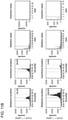
- FIGS. 10A-10B depict RNA-guided NHEJ in K562 cells.
- (A) sets forth SEQ ID NO:19.
- FIGS. 11A-11B depict RNA-guided NHEJ in 293T cells.
- (A) sets forth SEQ ID NO:19.
- FIGS. 12A-12C depict HR at the endogenous AAVS1 locus using either a dsDNA donor or a short oligonucleotide donor.
- C sets forth SEQ ID NOs:37-38.
- FIGS. 13A-1, 13A-2, and 13B depict the methodology for multiplex synthesis, retrieval and U6 expression vector cloning of guide RNAs targeting genes in the human genome.
- (A) sets forth SEQ ID NOs:39-41.
- FIGS. 14A-14D depict CRISPR mediated RNA-guided transcriptional activation.
- A sets forth SEQ ID NOs:42-43.
- FIGS. 15A-15B depict gRNA sequence flexibility and applications thereof (A) sets forth SEQ ID NO:44.
- a human codon-optimized version of the Cas9 protein bearing a C-terminus SV40 nuclear localization signal is synthetized and cloned into a mammalian expression system ( FIG. 1A and FIG. 3A ).
- FIG. 1 is directed to genome editing in human cells using an engineered type II CRISPR system.
- RNA-guided gene targeting in human cells involves co-expression of the Cas9 protein bearing a C-terminus SV40 nuclear localization signal with one or more guide RNAs (gRNAs) expressed from the human U6 polymerase III promoter.
- gRNAs guide RNAs
- Cas9 unwinds the DNA duplex and cleaves both strands upon recognition of a target sequence by the gRNA, but only if the correct protospacer-adjacent motif (PAM) is present at the 3′ end.
- Any genomic sequence of the form GN 20 GG can in principle be targeted.
- FIG. 1B a genomically integrated GFP coding sequence is disrupted by the insertion of a stop codon and a 68 bp genomic fragment from the AAVS1 locus.
- Restoration of the GFP sequence by homologous recombination (HR) with an appropriate donor sequence results in GFP + cells that can be quantitated by FACS.
- T1 and T2 gRNAs target sequences within the AAVS1 fragment.
- Binding sites for the two halves of the TAL effector nuclease heterodimer are underlined.
- crRNA-tracrRNA fusion transcripts are expressed, hereafter referred to as guide RNAs (gRNAs), from the human U6 polymerase III promoter.
- gRNAs are directly transcribed by the cell. This aspect advantageously avoids reconstituting the RNA processing machinery employed by bacterial CRISPR systems ( FIG. 1A and FIG. 3B ) (see references (4, 7-9)).
- a method is provided for altering genomic DNA using a U6 transcription initiating with G and a PAM (protospacer-adjacent motif) sequence -NGG following the 20 bp crRNA target.
- the target genomic site is in the form of GN 20 GG (See FIG. 3C ).
- a GFP reporter assay ( FIG. 1B ) in 293T cells was developed similar to one previously described (see reference (10)) to test the functionality of the genome engineering methods described herein.
- a stable cell line was established bearing a genomically integrated GFP coding sequence disrupted by the insertion of a stop codon and a 68 bp genomic fragment from the AAVS1 locus that renders the expressed protein fragment non-fluorescent.
- Homologous recombination (HR) using an appropriate repair donor can restore the normal GFP sequence, which allows one to quantify the resulting GFP + cells by flow activated cell sorting (FACS).
- FACS flow activated cell sorting
- a method is provided of homologous recombination (HR).
- Two gRNAs are constructed, T1 and T2, that target the intervening AAVS1 fragment ( FIG. 1 b ).
- Their activity to that of a previously described TAL effector nuclease heterodimer (TALEN) targeting the same region (see reference (11)) was compared.
- Successful HR events were observed using all three targeting reagents, with gene correction rates using the T1 and T2 gRNAs approaching 3% and 8% respectively ( FIG. 1C ).
- This RNA-mediated editing process was notably rapid, with the first detectable GFP + cells appearing ⁇ 20 hours post transfection compared to ⁇ 40 hours for the AAVS1 TALENs.
- a native locus was modified.
- gRNAs were used to target the AAVS1 locus located in the PPP1R12C gene on chromosome 19, which is ubiquitously expressed across most tissues ( FIG. 2A ) in 293 Ts, K562s, and PGP1 human iPS cells (see reference (12)) and analyzed the results by next-generation sequencing of the targeted locus.
- FIG. 2 is directed to RNA-guided genome editing of the native AAVS1 locus in multiple cell types.
- T1 (red) and T2 (green) gRNAs target sequences in an intron of the PPP1R12C gene within the chromosome 19 AAVS1 locus.
- FIG. 1 red
- T2 green
- PCR assay three days post transfection demonstrates that only cells expressing the donor, Cas9 and T2 gRNA exhibit successful HR events.
- successful HR was confirmed by Sanger sequencing of the PCR amplicon showing that the expected DNA bases at both the genome-donor and donor-insert boundaries are present.
- successful HR was confirmed by Sanger sequencing of the PCR amplicon showing that the expected DNA bases at both the genome-donor and donor-insert boundaries are present.
- FIG. 2F successfully targeted clones of 293T cells were selected with puromycin for 2 weeks. Microscope images of two representative GFP+ clones is shown (scale bar is 100 microns).
- HR is used to integrate either a dsDNA donor construct (see reference (13)) or an oligo donor into the native AAVS1 locus ( FIG. 2C , FIG. 12 ).
- HR-mediated integration was confirmed using both approaches by PCR ( FIG. 2D , FIG. 12 ) and Sanger sequencing ( FIG. 2E ).
- 293T or iPS clones were readily derived from the pool of modified cells using puromycin selection over two weeks ( FIG. 2F , FIG. 12 ).
- an RNA-guided genome editing system which can readily be adapted to modify other genomic sites by simply modifying the sequence of the gRNA expression vector to match a compatible sequence in the locus of interest.
- 190,000 specifically gRNA-targetable sequences targeting about 40.5% exons of genes in the human genome were generated. These target sequences were incorporated into a 200 bp format compatible with multiplex synthesis on DNA arrays (see reference (14)) ( FIG. 13 ).
- a ready genome-wide reference of potential target sites in the human genome and a methodology for multiplex gRNA synthesis is provided.
- methods are provided for multiplexing genomic alterations in a cell by using one or more or a plurality of RNA/enzyme systems described herein to alter the genome of a cell at a plurality of locations.
- target sites perfectly match the PAM sequence NGG and the 8-12 base “seed sequence” at the 3′ end of the gRNA.
- perfect match is not required of the remaining 8-12 bases.
- Cas9 will function with single mismatches at the 5′ end.
- the target locus's underlying chromatin structure and epigenetic state may affect efficiency of Cas9 function.
- Cas9 homologs having higher specificity are included as useful enzymes.
- CRISPR-targetable sequences include those having different PAM requirements (see reference (9)), or directed evolution.
- inactivating one of the Cas9 nuclease domains increases the ratio of HR to NHEJ and may reduce toxicity ( FIG. 3A , FIG. 5 ) (4, 5), while inactivating both domains may enable Cas9 to function as a retargetable DNA binding protein.
- Embodiments of the present disclosure have broad utility in synthetic biology (see references (21, 22)), the direct and multiplexed perturbation of gene networks (see references (13, 23)), and targeted ex vivo (see references (24-26)) and in vivo gene therapy (see reference (27)).
- a “re-engineerable organism” is provided as a model system for biological discovery and in vivo screening.
- a “re-engineerable mouse” bearing an inducible Cas9 transgene is provided, and localized delivery (using adeno-associated viruses, for example) of libraries of gRNAs targeting multiple genes or regulatory elements allow one to screen for mutations that result in the onset of tumors in the target tissue type.
- Use of Cas9 homologs or nuclease-null variants bearing effector domains (such as activators) allow one to multiplex activate or repress genes in vivo.
- one could screen for factors that enable phenotypes such as: tissue-regeneration, trans-differentiation etc.
- gRNAs being small in size are packaged and delivered using a multitude of non-viral or viral delivery methods.
- the lower toxicities observed with “nickases” for genome engineering applications is achieved by inactivating one of the Cas9 nuclease domains, either the nicking of the DNA strand base-paired with the RNA or nicking its complement. Inactivating both domains allows Cas9 to function as a retargetable DNA binding protein.
- the Cas9 retargetable DNA binding protein is attached
- nuclease domains such as FokI to enable ‘highly specific’ genome editing contingent upon dimerization of adjacent gRNA-Cas9 complexes
- fluorescent molecules such as protein or nucleic acid bound organic fluorophores, quantum dots, molecular beacons and echo probes or molecular beacon replacements;
- the transcriptional activation and repression components can employ CRISPR systems naturally or synthetically orthogonal, such that the gRNAs only bind to the activator or repressor class of Cas. This allows a large set of gRNAs to tune multiple targets.
- the use of gRNAs provide the ability to multiplex than mRNAs in part due to the smaller size—100 vs. 2000 nucleotide lengths respectively. This is particularly valuable when nucleic acid delivery is size limited, as in viral packaging. This enables multiple instances of cleavage, nicking, activation, or repression—or combinations thereof.
- the ability to easily target multiple regulatory targets allows the coarse-or-fine-tuning or regulatory networks without being constrained to the natural regulatory circuits downstream of specific regulatory factors (e.g. the 4 mRNAs used in reprogramming fibroblasts into IPSCs). Examples of multiplexing applications include:
- the CREs are (or can be made) somewhat orthogonal (i.e. low cross talk) so that many can be tested in one setting—e.g. in an expensive animal embryo time series.
- One exemplary application is with RNA fluorescent in situ sequencing (FISSeq).
- Multiplex combinations of CRE mutations and/or epigenetic activation or repression of CREs can be used to alter or reprogram iPSCs or ESCs or other stem cells or non-stem cells to any cell type or combination of cell types for use in organs-on-chips or other cell and organ cultures for purposes of testing pharmaceuticals (small molecules, proteins, RNAs, cells, animal, plant or microbial cells, aerosols and other delivery methods), transplantation strategies, personalization strategies, etc. 4.
- multiplex mutant human cells for use in diagnostic testing (and/or DNA sequencing) for medical genetics.
- diagnostic testing and/or DNA sequencing
- DNA sequencing DNA sequencing
- One embodiment is a series of independent cell lines one per each diagnostic human SNP, or structural variant.
- one embodiment includes multiplex sets of alleles in the same cell. In some cases multiplex changes in one gene (or multiple genes) will be desirable under the assumption of independent testing.
- haplotype combinations of alleles allows testing of sequencing (genotyping) methods which accurately establish haplotype phase (i.e. whether one or both copies of a gene are affected in an individual person or somatic cell type. 5.
- Repetitive elements or endogenous viral elements can be targeted with engineered Cas+gRNA systems in microbes, plants, animals, or human cells to reduce deleterious transposition or to aid in sequencing or other analytic genomic/transcriptomic/proteomic/diagnostic tools (in which nearly identical copies can be problematic).
- embodiments of the present disclosure utilize short RNA to identify foreign nucleic acids for activity by a nuclease in a eukaryotic cell.
- a eukaryotic cell is altered to include within its genome nucleic acids encoding one or more short RNA and one or more nucleases which are activated by the binding of a short RNA to a target DNA sequence.
- exemplary short RNA/enzyme systems may be identified within bacteria or archaea, such as (CRISPR)/CRISPR-associated (Cas) systems that use short RNA to direct degradation of foreign nucleic acids.
- CRISPR (“clustered regularly interspaced short palindromic repeats”) defense involves acquisition and integration of new targeting “spacers” from invading virus or plasmid DNA into the CRISPR locus, expression and processing of short guiding CRISPR RNAs (crRNAs) consisting of spacer-repeat units, and cleavage of nucleic acids (most commonly DNA) complementary to the spacer.
- spacers new targeting “spacers” from invading virus or plasmid DNA into the CRISPR locus
- crRNAs short guiding CRISPR RNAs
- Type II Three classes of CRISPR systems are generally known and are referred to as Type I, Type II or Type III).
- a particular useful enzyme according to the present disclosure to cleave dsDNA is the single effector enzyme, Cas9, common to Type II. (See reference (1)).
- the Type II effector system consists of a long pre-crRNA transcribed from the spacer-containing CRISPR locus, the multifunctional Cas9 protein, and a tracrRNA important for gRNA processing.
- tracrRNAs hybridize to the repeat regions separating the spacers of the pre-crRNA, initiating dsRNA cleavage by endogenous RNase III, which is followed by a second cleavage event within each spacer by Cas9, producing mature crRNAs that remain associated with the tracrRNA and Cas9.
- eukaryotic cells of the present disclosure are engineered to avoid use of RNase III and the crRNA processing in general. See reference (2).
- the enzyme of the present disclosure such as Cas9 unwinds the DNA duplex and searches for sequences matching the crRNA to cleave.
- Target recognition occurs upon detection of complementarity between a “protospacer” sequence in the target DNA and the remaining spacer sequence in the crRNA.
- Cas9 cuts the DNA only if a correct protospacer-adjacent motif (PAM) is also present at the 3′ end.
- PAM protospacer-adjacent motif
- different protospacer-adjacent motif can be utilized.
- the S. pyogenes system requires an NGG sequence, where N can be any nucleotide.
- thermophilus Type II systems require NGGNG (see reference (3)) and NNAGAAW (see reference (4)), respectively, while different S. mutans systems tolerate NGG or NAAR (see reference (5)).
- Bioinformatic analyses have generated extensive databases of CRISPR loci in a variety of bacteria that may serve to identify additional useful PAMs and expand the set of CRISPR-targetable sequences (see references (6, 7)). In S.
- thermophilus Cas9 generates a blunt-ended double-stranded break 3 bp prior to the 3′ end of the protospacer (see reference (8)), a process mediated by two catalytic domains in the Cas9 protein: an HNH domain that cleaves the complementary strand of the DNA and a RuvC-like domain that cleaves the non-complementary strand (See FIG. 1A and FIG. 3 ). While the S. pyogenes system has not been characterized to the same level of precision, DSB formation also occurs towards the 3′ end of the protospacer. If one of the two nuclease domains is inactivated, Cas9 will function as a nickase in vitro (see reference (2)) and in human cells (see FIG. 5 ).
- the specificity of gRNA-directed Cas9 cleavage is used as a mechanism for genome engineering in a eukaryotic cell.
- hybridization of the gRNA need not be 100 percent in order for the enzyme to recognize the gRNA/DNA hybrid and affect cleavage.
- Some off-target activity could occur.
- the S. pyogenes system tolerates mismatches in the first 6 bases out of the 20 bp mature spacer sequence in vitro.
- greater stringency may be beneficial in vivo when potential off-target sites matching (last 14 bp) NGG exist within the human reference genome for the gRNAs.
- the effect of mismatches and enzyme activity in general are described in references (9), (2), (10), and (4).
- specificity may be improved.
- AT-rich target sequences may have fewer off-target sites. Carefully choosing target sites to avoid pseudo-sites with at least 14 bp matching sequences elsewhere in the genome may improve specificity.
- the use of a Cas9 variant requiring a longer PAM sequence may reduce the frequency of off-target sites.
- Directed evolution may improve Cas9 specificity to a level sufficient to completely preclude off-target activity, ideally requiring a perfect 20 bp gRNA match with a minimal PAM. Accordingly, modification to the Cas9 protein is a representative embodiment of the present disclosure. As such, novel methods permitting many rounds of evolution in a short timeframe (see reference (11) and envisioned. CRISPR systems useful in the present disclosure are described in references (12, 13).
- the Cas9 gene sequence was human codon optimized and assembled by hierarchical fusion PCR assembly of 9 500 bp gBlocks ordered from IDT.
- FIG. 3A for the engineered type II CRISPR system for human cells shows the expression format and full sequence of the cas9 gene insert.
- the RuvC-like and HNH motifs, and the C-terminus SV40 NLS are respectively highlighted by blue, brown and orange colors.
- Cas9_D10A was similarly constructed. The resulting full-length products were cloned into the pcDNA3.3-TOPO vector (Invitrogen).
- FIG. 3B shows the U6 promoter based expression scheme for the guide RNAs and predicted RNA transcript secondary structure.
- the use of the U6 promoter constrains the 1 st position in the RNA transcript to be a ‘G’ and thus all genomic sites of the form GN 20 GG can be targeted using this approach.
- FIG. 3C shows the 7 gRNAs used.
- the vectors for the HR reporter assay involving a broken GFP were constructed by fusion PCR assembly of the GFP sequence bearing the stop codon and 68 bp AAVS1 fragment (or mutants thereof; see FIG. 6 ), or 58 bp fragments from the DNMT3a and DNMT3b genomic loci (see FIG. 8 ) assembled into the EGIP lentivector from Addgene (plasmid #26777). These lentivectors were then used to establish the GFP reporter stable lines. TALENs used in this study were constructed using the protocols described in (14). All DNA reagents developed in this study are available at Addgene.
- PGP1 iPS cells were maintained on Matrigel (BD Biosciences)-coated plates in mTeSR1 (Stemcell Technologies). Cultures were passaged every 5-7 d with TrypLE Express (Invitrogen). K562 cells were grown and maintained in RPMI (Invitrogen) containing 15% FBS. HEK 293T cells were cultured in Dulbecco's modified Eagle's medium (DMEM, Invitrogen) high glucose supplemented with 10% fetal bovine serum (FBS, Invitrogen), penicillin/streptomycin (pen/strep, Invitrogen), and non-essential amino acids (NEAA, Invitrogen). All cells were maintained at 37° C. and 5% CO 2 in a humidified incubator.
- DMEM Dulbecco's modified Eagle's medium
- FBS fetal bovine serum
- pen/strep penicillin/streptomycin
- NEAA non-essential amino acids
- PGP1 iPS cells were cultured in Rho kinase (ROCK) inhibitor (Calbiochem) 2 h before nucleofection.
- ROCK Rho kinase
- Cells were harvest using TrypLE Express (Invitrogen) and 2 ⁇ 10 6 cells were resuspended in P3 reagent (Lonza) with 1 ⁇ g Cas9 plasmid, 1 ⁇ g gRNA and/or 1 ⁇ g DNA donor plasmid, and nucleofected according to manufacturer's instruction (Lonza).
- Cells were subsequently plated on an mTeSR1-coated plate in mTeSR1 medium supplemented with ROCK inhibitor for the first 24 h.
- the targeting efficiency was assessed as follows. Cells were harvested 3 days after nucleofection and the genomic DNA of ⁇ 1 ⁇ 10 6 cells was extracted using prepGEM (ZyGEM). PCR was conducted to amplify the targeting region with genomic DNA derived from the cells and amplicons were deep sequenced by MiSeq Personal Sequencer (Illumina) with coverage>200,000 reads. The sequencing data was analyzed to estimate NHEJ efficiencies.
- the reference AAVS1 sequence analyzed is:
- the primers used were:
- a set of gRNA gene sequences that maximally target specific locations in human exons but minimally target other locations in the genome were determined as follows. According to one aspect, maximally efficient targeting by a gRNA is achieved by 23nt sequences, the 5′-most 20nt of which exactly complement a desired location, while the three 3′-most bases must be of the form NGG. Additionally, the 5′-most nt must be a G to establish a pol-III transcription start site.
- mispairing of the six 5′-most nt of a 20 bp gRNA against its genomic target does not abrogate Cas9-mediated cleavage so long as the last 14nt pairs properly, but mispairing of the eight 5′-most nt along with pairing of the last 12 nt does, while the case of the seven 5-most nt mispairs and 13 3′ pairs was not tested.
- one condition was that the case of the seven 5′-most mispairs is, like the case of six, permissive of cleavage, so that pairing of the 3′-most 13nt is sufficient for cleavage.
- Coding exon locations in this BED file comprised a set of 346089 mappings of RefSeq mRNA accessions to the hg19 genome. However, some RefSeq mRNA accessions mapped to multiple genomic locations (probable gene duplications), and many accessions mapped to subsets of the same set of exon locations (multiple isoforms of the same genes).
- any specific 13 bp core sequence followed by the sequence NGG confers only 15 bp of specificity, there should be on average ⁇ 5.6 matches to an extended core sequence in a random ⁇ 3 Gb sequence (both strands). Therefore, most of the 1657793 initially identified targets were rejected; however 189864 sequences passed this filter. These comprise the set of CRISPR-targetable exonic locations in the human genome. The 189864 sequences target locations in 78028 merged exonic regions ( ⁇ 40.5% of the total of 192783 merged human exon regions) at a multiplicity of ⁇ 2.4 sites per targeted exonic region.
- RefSeq mRNA mappings were clustered so that any two RefSeq accessions (including the gene duplicates distinguished in (ii)) that overlap a merged exon region are counted as a single gene cluster, the 189864 exonic specific CRISPR sites target 17104 out of 18872 gene clusters ( ⁇ 90.6% of all gene clusters) at a multiplicity of ⁇ 11.1 per targeted gene cluster.
- the database can be refined by correlating performance with factors, such as base composition and secondary structure of both gRNAs and genomic targets (20, 21), and the epigenetic state of these targets in human cell lines for which this information is available (22).
- factors such as base composition and secondary structure of both gRNAs and genomic targets (20, 21), and the epigenetic state of these targets in human cell lines for which this information is available (22).
- the target sequences were incorporated into a 200 bp format that is compatible for multiplex synthesis on DNA arrays (23, 24).
- the method allows for targeted retrieval of a specific or pools of gRNA sequences from the DNA array based oligonucleotide pool and its rapid cloning into a common expression vector ( FIG. 13A ).
- a 12 k oligonucleotide pool from CustomArray Inc. was synthesized.
- gRNAs of choice from this library FIG. 13B
- the CRISPR mediated genome editing process was examined using either (A) a GFP reporter assay as described earlier results of which are shown in FIG. 5A , and (B) deep sequencing of the targeted loci (in 293 Ts), results of which are shown in FIG. 5B .
- A a GFP reporter assay as described earlier results of which are shown in FIG. 5A
- B deep sequencing of the targeted loci (in 293 Ts), results of which are shown in FIG. 5B .
- a D10A mutant for Cas9 was tested that has been shown in earlier reports to function as a nickase in in vitro assays.
- both Cas9 and Cas9D10A can effect successful HR at nearly similar rates. Deep sequencing however confirms that while Cas9 shows robust NHEJ at the targeted loci, the D10A mutant has significantly diminished NHEJ rates (as would be expected from its putative ability to only nick DNA).
- RNA-Guided Genome Editing is Target Sequence Specific
- Each of the lines was then targeted by one of the following 4 reagents: a GFP-ZFN pair that can target all cell types since its targeted sequence was in the flanking GFP fragments and hence present in along cell lines; a AAVS1 TALEN that could potentially target only the wt-AAVS1 fragment since the mutations in the other two lines should render the left TALEN unable to bind their sites; the T1 gRNA which can also potentially target only the wt-AAVS1 fragment, since its target site is also disrupted in the two mutant lines; and finally the T2 gRNA which should be able to target all 3 cell lines since, unlike the T1 gRNA, its target site is unaltered among the 3 lines.
- RNA-Guided Genome Editing is Target Sequence Specific, and Demonstrates Similar Targeting Efficiencies as ZFNs or TALENs
- Each of the lines was then targeted by one of the following 6 reagents: a GFP-ZFN pair that can target all cell types since its targeted sequence was in the flanking GFP fragments and hence present in along cell lines; a pair of TALENs that potentially target either DNMT3a or DNMT3b fragments; a pair of gRNAs that can potentially target only the DNMT3a fragment; and finally a gRNA that should potentially only target the DNMT3b fragment.
- the ZFN modified all 3 cell types, and the TALENs and gRNAs only their respective targets.
- the efficiencies of targeting were comparable across the 6 targeting reagents.
- PGP1 Human iPS cells
- DPBs double-strand breaks
- Panel 1 Deletion rate detected at targeting region. Red dash lines: boundary of T1 RNA targeting site; green dash lines: boundary of T2 RNA targeting site. The deletion incidence at each nucleotide position was plotted in black lines and the deletion rate as the percentage of reads carrying deletions was calculated.
- Panel 2 Insertion rate detected at targeting region. Red dash lines: boundary of T1 RNA targeting site; green dash lines: boundary of T2 RNA targeting site.
- K562 cells were nucleated with constructs indicated in the left panel of FIG. 10 . 4 days after nucleofection, NHEJ rate was measured by assessing genomic deletion and insertion rate at DSBs by deep sequencing.
- Panel 1 Deletion rate detected at targeting region. Red dash lines: boundary of T1 RNA targeting site; green dash lines: boundary of T2 RNA targeting site. The deletion incidence at each nucleotide position was plotted in black lines and the deletion rate as the percentage of reads carrying deletions was calculated.
- Panel 2 Insertion rate detected at targeting region. Red dash lines: boundary of T1 RNA targeting site; green dash lines: boundary of T2 RNA targeting site.
- 293T cells were transfected with constructs indicated in the left panel of FIG. 11 . 4 days after nucleofection, NHEJ rate was measured by assessing genomic deletion and insertion rate at DSBs by deep sequencing.
- Panel 1 Deletion rate detected at targeting region. Red dash lines: boundary of T1 RNA targeting site; green dash lines: boundary of T2 RNA targeting site. The deletion incidence at each nucleotide position was plotted in black lines and the deletion rate as the percentage of reads carrying deletions was calculated.
- Panel 2 Insertion rate detected at targeting region. Red dash lines: boundary of T1 RNA targeting site; green dash lines: boundary of T2 RNA targeting site.
- the incidence of insertion at the genomic location where the first insertion junction was detected was plotted in black lines and the insertion rate as the percentage of reads carrying insertions was calculated.
- Panel 3 Deletion size distribution. The frequencies of different size deletions among the whole NHEJ population was plotted.
- Panel 4 insertion size distribution. The frequencies of different sizes insertions among the whole NHEJ population was plotted. 293T targeting by both gRNAs is efficient (10-24%) and sequence specific (as shown by the shift in position of the NHEJ deletion distributions).
- PCR screen (with reference to FIG. 2C ) confirmed that 21/24 randomly picked 293T clones were successfully targeted.
- FIG. 12B similar PCR screen confirmed 3/7 randomly picked PGP1-iPS clones were also successfully targeted.
- short 90mer oligos could also effect robust targeting at the endogenous AAVS1 locus (shown here for K562 cells).
- a resource of about 190 k bioinformatically computed unique gRNA sites targeting ⁇ 40.5% of all exons of genes in the human genome was generated.
- the gRNA target sites were incorporated into a 200 bp format that is compatible for multiplex synthesis on DNA arrays.
- the design allows for (i) targeted retrieval of a specific or pools of gRNA targets from the DNA array oligonucleotide pool (through 3 sequential rounds of nested PCR as indicated in the figure schematic); and (ii) rapid cloning into a common expression vector which upon linearization using an AflII site serves as a recipient for Gibson assembly mediated incorporation of the gRNA insert fragment.
- the method was used to accomplish targeted retrieval of 10 unique gRNAs from a 12 k oligonucleotide pool synthesized by CustomArray Inc.
- the CRISPR-Cas system has an adaptive immune defense system in bacteria and functions to ‘cleave’ invading nucleic acids.
- the CRISPR-CAS system is engineered to function in human cells, and to ‘cleave’ genomic DNA. This is achieved by a short guide RNA directing a Cas9 protein (which has nuclease function) to a target sequence complementary to the spacer in the guide RNA.
- the ability to ‘cleave’ DNA enables a host of applications related to genome editing, and also targeted genome regulation.
- the Cas9 protein was mutated to make it nuclease-null by introducing mutations that are predicted to abrogate coupling to Mg2+ (known to be important for the nuclease functions of the RuvC-like and HNH-like domains): specifically, combinations of D10A, D839A, H840A and N863A mutations were introduced.
- the thus generated Cas9 nuclease-null protein (as confirmed by its ability to not cut DNA by sequencing analysis) and hereafter referred to as Cas9R-H-, was then coupled to a transcriptional activation domain, here VP64, enabling the CRISPR-cas system to function as a RNA guided transcription factor (see FIG. 14 ).
- the Cas9R-H-+VP64 fusion enables RNA-guided transcriptional activation at the two reporters shown. Specifically, both FACS analysis and immunofluorescence imaging demonstrates that the protein enables gRNA sequence specific targeting of the corresponding reporters, and furthermore, the resulting transcription activation as assayed by expression of a dTomato fluorescent protein was at levels similar to those induced by a convention TALE-VP64 fusion protein.
- Flexibility of the gRNA scaffold sequence to designer sequence insertions was determined by systematically assaying for a range of the random sequence insertions on the 5′, middle and 3′ portions of the gRNA: specifically, 1 bp, 5 bp, 10 bp, 20 bp, and 40 bp inserts were made in the gRNA sequence at the 5′, middle, and 3′ ends of the gRNA (the exact positions of the insertion are highlighted in ‘red’ in FIG. 15 ).
- This gRNA was then tested for functionality by its ability to induce HR in a GFP reporter assay (as described herein). It is evident that gRNAs are flexible to sequence insertions on the 5′ and 3′ ends (as measured by retained HR inducing activity).
- aspects of the present disclosure are directed to tagging of small-molecule responsive RNA aptamers that may trigger onset of gRNA activity, or gRNA visualization. Additionally, aspects of the present disclosure are directed to tethering of ssDNA donors to gRNAs via hybridization, thus enabling coupling of genomic target cutting and immediate physical localization of repair template which can promote homologous recombination rates over error-prone non-homologous end-joining
Landscapes
- Health & Medical Sciences (AREA)
- Genetics & Genomics (AREA)
- Life Sciences & Earth Sciences (AREA)
- Engineering & Computer Science (AREA)
- Chemical & Material Sciences (AREA)
- Organic Chemistry (AREA)
- Biomedical Technology (AREA)
- Wood Science & Technology (AREA)
- Zoology (AREA)
- Bioinformatics & Cheminformatics (AREA)
- Biotechnology (AREA)
- General Engineering & Computer Science (AREA)
- Molecular Biology (AREA)
- General Health & Medical Sciences (AREA)
- Biochemistry (AREA)
- Microbiology (AREA)
- Plant Pathology (AREA)
- Physics & Mathematics (AREA)
- Biophysics (AREA)
- Mycology (AREA)
- Crystallography & Structural Chemistry (AREA)
- Cell Biology (AREA)
- Medicinal Chemistry (AREA)
- Animal Behavior & Ethology (AREA)
- Epidemiology (AREA)
- Pharmacology & Pharmacy (AREA)
- Public Health (AREA)
- Veterinary Medicine (AREA)
- Micro-Organisms Or Cultivation Processes Thereof (AREA)
- Medicines That Contain Protein Lipid Enzymes And Other Medicines (AREA)
- Enzymes And Modification Thereof (AREA)
- Peptides Or Proteins (AREA)
- Breeding Of Plants And Reproduction By Means Of Culturing (AREA)
- Measuring Or Testing Involving Enzymes Or Micro-Organisms (AREA)
Abstract
Description
2. Multiplex cis-regulatory element (CRE=signals for transcription, splicing, translation, RNA and protein folding, degradation, etc.) mutations in a single cell (or a collection of cells) can be used for efficiently studying the complex sets of regulatory interaction that can occur in normal development or pathological, synthetic or pharmaceutical scenarios. According to one aspect, the CREs are (or can be made) somewhat orthogonal (i.e. low cross talk) so that many can be tested in one setting—e.g. in an expensive animal embryo time series. One exemplary application is with RNA fluorescent in situ sequencing (FISSeq).
3. Multiplex combinations of CRE mutations and/or epigenetic activation or repression of CREs can be used to alter or reprogram iPSCs or ESCs or other stem cells or non-stem cells to any cell type or combination of cell types for use in organs-on-chips or other cell and organ cultures for purposes of testing pharmaceuticals (small molecules, proteins, RNAs, cells, animal, plant or microbial cells, aerosols and other delivery methods), transplantation strategies, personalization strategies, etc.
4. Making multiplex mutant human cells for use in diagnostic testing (and/or DNA sequencing) for medical genetics. To the extent that the chromosomal location and context of a human genome allele (or epigenetic mark) can influence the accuracy of a clinical genetic diagnosis, it is important to have alleles present in the correct location in a reference genome—rather than in an ectopic (aka transgenic) location or in a separate piece of synthetic DNA. One embodiment is a series of independent cell lines one per each diagnostic human SNP, or structural variant. Alternatively, one embodiment includes multiplex sets of alleles in the same cell. In some cases multiplex changes in one gene (or multiple genes) will be desirable under the assumption of independent testing. In other cases, particular haplotype combinations of alleles allows testing of sequencing (genotyping) methods which accurately establish haplotype phase (i.e. whether one or both copies of a gene are affected in an individual person or somatic cell type.
5. Repetitive elements or endogenous viral elements can be targeted with engineered Cas+gRNA systems in microbes, plants, animals, or human cells to reduce deleterious transposition or to aid in sequencing or other analytic genomic/transcriptomic/proteomic/diagnostic tools (in which nearly identical copies can be problematic).
- 1. B. Wiedenheft, S. H. Sternberg, J. A. Doudna, Nature 482, 331 (Feb. 16, 2012).
- 2. D. Bhaya, M. Davison, R. Barrangou, Annual review of
genetics 45, 273 (2011). - 3. M. P. Terns, R. M. Terns, Current opinion in
microbiology 14, 321 (June, 2011). - 4. M. Jinek et al., Science 337, 816 (Aug. 17, 2012).
- 5. G. Gasiunas, R. Barrangou, P. Horvath, V. Siksnys, Proceedings of the National Academy of Sciences of the United States of
America 109, E2579 (Sep. 25, 2012). - 6. R. Sapranauskas et al., Nucleic acids research 39, 9275 (November, 2011).
- 7. T. R. Brummelkamp, R. Bernards, R. Agami, Science 296, 550 (Apr. 19, 2002).
- 8. M. Miyagishi, K. Taira,
Nature biotechnology 20, 497 (May, 2002). - 9. E. Deltcheva et al., Nature 471, 602 (Mar. 31, 2011).
- 10. J. Zou, P. Mali, X. Huang, S. N. Dowey, L. Cheng,
Blood 118, 4599 (Oct. 27, 2011). - 11. N. E. Sanjana et al.,
Nature protocols 7, 171 (January, 2012). - 12. J. H. Lee et al.,
PLoS Genet 5, e1000718 (November, 2009). - 13. D. Hockemeyer et al., Nature biotechnology 27, 851 (September, 2009).
- 14. S. Kosuri et al.,
Nature biotechnology 28, 1295 (December, 2010). - 15. V. Pattanayak, C. L. Ramirez, J. K. Joung, D. R. Liu,
Nature methods 8, 765 (September, 2011). - 16. N. M. King, O. Cohen-Haguenauer, Molecular therapy: the journal of the American Society of
Gene Therapy 16, 432 (March, 2008). - 17. Y. G. Kim, J. Cha, S Chandrasegaran, Proceedings of the National Academy of Sciences of the United States of
America 93, 1156 (Feb. 6, 1996). - 18. E. J. Rebar, C. O. Pabo, Science 263, 671 (Feb. 4, 1994).
- 19. J. Boch et al., Science 326, 1509 (Dec. 11, 2009).
- 20. M. J. Moscou, A. J. Bogdanove, Science 326, 1501 (Dec. 11, 2009).
- 21. A. S. Khalil, J. J. Collins, Nature reviews.
Genetics 11, 367 (May, 2010). - 22. P. E. Purnick, R. Weiss, Nature reviews.
Molecular cell biology 10, 410 (June, 2009). - 23. J. Zou et al.,
Cell stem cell 5, 97 (Jul. 2, 2009). - 24. N. Holt et al.,
Nature biotechnology 28, 839 (August, 2010). - 25. F. D. Urnov et al., Nature 435, 646 (Jun. 2, 2005).
- 26. A. Lombardo et al.,
Nature biotechnology 25, 1298 (November, 2007). - 27. H. Li et al., Nature 475, 217 (Jul. 14, 2011).
| (SEQ ID NO: 1) |
| CACTTCAGGACAGCATGTTTGCTGCCTCCAGGGATCCTGTGTCCCCGAGC |
| TGGGACCACCTTATATTCCCAGGGCCGGTTAATGTGGCTCTGGTTCTGGG |
| TACTTTTATCTGTCCCCTCCACCCCACAGTGGGGCCACTAGGGACAGGAT |
| TGGTGACAGAAAAGCCCCATCCTTAGGCCTCCTCCTTCCTAGTCTCCTGA |
| TATTGGGTCTAACCCCCACCTCCTGTTAGGCAGATTCCTTATCTGGTGAC |
| ACACCCCCATTTCCTGGA |
The PCR primers for amplifying the targeting regions in the human genome are:
| AAVS1-R |
| (SEQ ID NO: 2) |
| CTCGGCATTCCTGCTGAACCGCTCTTCCGATCTacaggaggtgggggtta |
| gac |
| AAVS1-F.1 |
| (SEQ ID NO: 3) |
| ACACTCTTTCCCTACACGACGCTCTTCCGATCTCGTGATtatattcccag |
| ggccggtta |
| AAVS1-F.2 |
| (SEQ ID NO: 4) |
| ACACTCTTTCCCTACACGACGCTCTTCCGATCTACATCGtatattcccag |
| ggccggtta |
| AAVS1-F.3 |
| (SEQ ID NO: 5) |
| ACACTCTTTCCCTACACGACGCTCTTCCGATCTGCCTAAtatattcccag |
| ggccggtta |
| AAVS1-F.4 |
| (SEQ ID NO: 6) |
| ACACTCTTTCCCTACACGACGCTCTTCCGATCTTGGTCAtatattcccag |
| ggccggtta |
| AAVS1-F.5 |
| (SEQ ID NO: 7) |
| ACACTCTTTCCCTACACGACGCTCTTCCGATCTCACTGTtatattcccag |
| ggccggtta |
| AAVS1-F.6 |
| (SEQ ID NO: 8) |
| ACACTCTTTCCCTACACGACGCTCTTCCGATCTATTGGCtatattcccag |
| ggccggtta |
| AAVS1-F.7 |
| (SEQ ID NO: 9) |
| ACACTCTTTCCCTACACGACGCTCTTCCGATCTGATCTGtatattcccag |
| ggccggtta |
| AAVS1-F.8 |
| (SEQ ID NO: 10) |
| ACACTCTTTCCCTACACGACGCTCTTCCGATCTTCAAGTtatattcccag |
| ggccggtta |
| AAVS1-F.9 |
| (SEQ ID NO: 11) |
| ACACTCTTTCCCTACACGACGCTCTTCCGATCTCTGATCtatattcccag |
| ggccggtta |
| AAVS1-F.10 |
| (SEQ ID NO: 12) |
| ACACTCTTTCCCTACACGACGCTCTTCCGATCTAAGCTAtatattcccag |
| ggccggtta |
| AAVS1-F.11 |
| (SEQ ID NO: 13) |
| ACACTCTTTCCCTACACGACGCTCTTCCGATCTGTAGCCtatattcccag |
| ggccggtta |
| AAVS1-F.12 |
| (SEQ ID NO: 14) |
| ACACTCTTTCCCTACACGACGCTCTTCCGATCTTACAAGtatattcccag |
| ggccggtta |
| HR_AAVS1-F | |
| (SEQ ID NO: 15) | |
| CTGCCGTCTCTCTCCTGAGT | |
| HR_Puro-R | |
| (SEQ ID NO: 16) | |
| GTGGGCTTGTACTCGGTCAT |
- 1. K. S. Makarova et al., Evolution and classification of the CRISPR-Cas systems. Nature reviews.
Microbiology 9, 467 (June, 2011). - 2. M. Jinek et al., A programmable dual-RNA-guided DNA endonuclease in adaptive bacterial immunity. Science 337, 816 (Aug. 17, 2012).
- 3. P. Horvath, R. Barrangou, CRISPR/Cas, the immune system of bacteria and archaea. Science 327, 167 (Jan. 8, 2010).
- 4. H. Deveau et al., Phage response to CRISPR-encoded resistance in Streptococcus thermophilus. Journal of bacteriology 190, 1390 (February, 2008).
- 5. J. R. van der Ploeg, Analysis of CRISPR in Streptococcus mutans suggests frequent occurrence of acquired immunity against infection by M102-like bacteriophages.
Microbiology 155, 1966 (June, 2009). - 6. M. Rho, Y. W. Wu, H. Tang, T. G. Doak, Y. Ye, Diverse CRISPRs evolving in human microbiomes.
PLoS genetics 8, e1002441 (2012). - 7. D. T. Pride et al., Analysis of streptococcal CRISPRs from human saliva reveals substantial sequence diversity within and between subjects overtime.
Genome research 21, 126 (January, 2011). - 8. G. Gasiunas, R. Barrangou, P. Horvath, V. Siksnys, Cas9-crRNA ribonucleoprotein complex mediates specific DNA cleavage for adaptive immunity in bacteria. Proceedings of the National Academy of Sciences of the United States of
America 109, E2579 (Sep. 25, 2012). - 9. R. Sapranauskas et al., The Streptococcus thermophilus CRISPR/Cas system provides immunity in Escherichia coli. Nucleic acids research 39, 9275 (November, 2011).
- 10. J. E. Garneau et al., The CRISPR/Cas bacterial immune system cleaves bacteriophage and plasmid DNA. Nature 468, 67 (Nov. 4, 2010).
- 11. K. M. Esvelt, J. C. Carlson, D. R. Liu, A system for the continuous directed evolution of biomolecules. Nature 472, 499 (Apr. 28, 2011).
- 12. R. Barrangou, P. Horvath, CRISPR: new horizons in phage resistance and strain identification. Annual review of food science and
technology 3, 143 (2012). - 13. B. Wiedenheft, S. H. Sternberg, J. A. Doudna, RNA-guided genetic silencing systems in bacteria and archaea. Nature 482, 331 (Feb. 16, 2012).
- 14. N. E. Sanjana et al., A transcription activator-like effector toolbox for genome engineering.
Nature protocols 7, 171 (January, 2012). - 15. W. J. Kent et al., The human genome browser at UCSC.
Genome Res 12, 996 (June, 2002). - 16. T. R. Dreszer et al., The UCSC Genome Browser database: extensions and updates 2011.
Nucleic Acids Res 40, D918 (January, 2012). - 17. D. Karolchik et al., The UCSC Table Browser data retrieval tool.
Nucleic Acids Res 32, D493 (Jan. 1, 2004). - 18. A. R. Quinlan, I M. Hall, BEDTools: a flexible suite of utilities for comparing genomic features.
Bioinformatics 26, 841 (Mar. 15, 2010). - 19. B. Langmead, C. Trapnell, M. Pop, S. L. Salzberg, Ultrafast and memory-efficient alignment of short DNA sequences to the human genome.
Genome Biol 10, R25 (2009). - 20. R. Lorenz et al., ViennaRNA Package 2.0. Algorithms for molecular biology:
AMB 6, 26 (2011). - 21. D. H. Mathews, J. Sabina, M. Zuker, D. H. Turner, Expanded sequence dependence of thermodynamic parameters improves prediction of RNA secondary structure. Journal of molecular biology 288, 911 (May 21, 1999).
- 22. R. E. Thurman et al., The accessible chromatin landscape of the human genome. Nature 489, 75 (Sep. 6, 2012).
- 23. S. Kosuri et al., Scalable gene synthesis by selective amplification of DNA pools from high-fidelity microchips.
Nature biotechnology 28, 1295 (December, 2010). - 24. Q. Xu, M. R. Schlabach, G. J. Hannon, S. J. Elledge, Design of 240,000 orthogonal 25mer DNA barcode probes. Proceedings of the National Academy of Sciences of the United States of
America 106, 2289 (Feb. 17, 2009).
Claims (33)
Priority Applications (1)
| Application Number | Priority Date | Filing Date | Title |
|---|---|---|---|
| US15/042,573 US11236359B2 (en) | 2012-12-17 | 2016-02-12 | RNA-guided human genome engineering |
Applications Claiming Priority (5)
| Application Number | Priority Date | Filing Date | Title |
|---|---|---|---|
| US201261738355P | 2012-12-17 | 2012-12-17 | |
| US201361779169P | 2013-03-13 | 2013-03-13 | |
| PCT/US2013/075317 WO2014099744A1 (en) | 2012-12-17 | 2013-12-16 | Rna-guided human genome engineering |
| US14/319,255 US9260723B2 (en) | 2012-12-17 | 2014-06-30 | RNA-guided human genome engineering |
| US15/042,573 US11236359B2 (en) | 2012-12-17 | 2016-02-12 | RNA-guided human genome engineering |
Related Parent Applications (1)
| Application Number | Title | Priority Date | Filing Date |
|---|---|---|---|
| US14/319,255 Continuation US9260723B2 (en) | 2012-12-17 | 2014-06-30 | RNA-guided human genome engineering |
Publications (2)
| Publication Number | Publication Date |
|---|---|
| US20160304907A1 US20160304907A1 (en) | 2016-10-20 |
| US11236359B2 true US11236359B2 (en) | 2022-02-01 |
Family
ID=50979072
Family Applications (18)
| Application Number | Title | Priority Date | Filing Date |
|---|---|---|---|
| US14/653,144 Active US9970024B2 (en) | 2012-12-17 | 2013-12-16 | RNA-guided human genome engineering |
| US14/319,100 Active US9023649B2 (en) | 2012-12-17 | 2014-06-30 | RNA-guided human genome engineering |
| US14/319,171 Active US10717990B2 (en) | 2012-12-17 | 2014-06-30 | RNA-guided human genome engineering |
| US14/318,933 Pending US20140342456A1 (en) | 2012-12-17 | 2014-06-30 | RNA-Guided Human Genome Engineering |
| US14/319,255 Active US9260723B2 (en) | 2012-12-17 | 2014-06-30 | RNA-guided human genome engineering |
| US14/681,510 Pending US20170044569A9 (en) | 2012-12-17 | 2015-04-08 | RNA-Guided Human Genome Engineering |
| US14/701,912 Pending US20150232833A1 (en) | 2012-12-17 | 2015-05-01 | RNA-Guided Human Genome Engineering |
| US14/790,147 Active US10273501B2 (en) | 2012-12-17 | 2015-07-02 | RNA-guided human genome engineering |
| US15/042,573 Active US11236359B2 (en) | 2012-12-17 | 2016-02-12 | RNA-guided human genome engineering |
| US15/042,515 Active US10435708B2 (en) | 2012-12-17 | 2016-02-12 | RNA-guided human genome engineering |
| US16/397,423 Active US11359211B2 (en) | 2012-12-17 | 2019-04-29 | RNA-guided human genome engineering |
| US16/397,213 Active US11365429B2 (en) | 2012-12-17 | 2019-04-29 | RNA-guided human genome engineering |
| US16/439,840 Active 2035-02-12 US11535863B2 (en) | 2012-12-17 | 2019-06-13 | RNA-guided human genome engineering |
| US16/884,327 Pending US20200308599A1 (en) | 2012-12-17 | 2020-05-27 | RNA-Guided Human Genome Engineering |
| US17/672,744 Active US11512325B2 (en) | 2012-12-17 | 2022-02-16 | RNA-guided human genome engineering |
| US18/296,579 Active US12018272B2 (en) | 2012-12-17 | 2023-04-06 | RNA-guided human genome engineering |
| US18/619,354 Pending US20240279677A1 (en) | 2012-12-17 | 2024-03-28 | RNA-Guided Human Genome Engineering |
| US18/663,233 Abandoned US20240294939A1 (en) | 2012-12-17 | 2024-05-14 | RNA-Guided Human Genome Engineering |
Family Applications Before (8)
| Application Number | Title | Priority Date | Filing Date |
|---|---|---|---|
| US14/653,144 Active US9970024B2 (en) | 2012-12-17 | 2013-12-16 | RNA-guided human genome engineering |
| US14/319,100 Active US9023649B2 (en) | 2012-12-17 | 2014-06-30 | RNA-guided human genome engineering |
| US14/319,171 Active US10717990B2 (en) | 2012-12-17 | 2014-06-30 | RNA-guided human genome engineering |
| US14/318,933 Pending US20140342456A1 (en) | 2012-12-17 | 2014-06-30 | RNA-Guided Human Genome Engineering |
| US14/319,255 Active US9260723B2 (en) | 2012-12-17 | 2014-06-30 | RNA-guided human genome engineering |
| US14/681,510 Pending US20170044569A9 (en) | 2012-12-17 | 2015-04-08 | RNA-Guided Human Genome Engineering |
| US14/701,912 Pending US20150232833A1 (en) | 2012-12-17 | 2015-05-01 | RNA-Guided Human Genome Engineering |
| US14/790,147 Active US10273501B2 (en) | 2012-12-17 | 2015-07-02 | RNA-guided human genome engineering |
Family Applications After (9)
| Application Number | Title | Priority Date | Filing Date |
|---|---|---|---|
| US15/042,515 Active US10435708B2 (en) | 2012-12-17 | 2016-02-12 | RNA-guided human genome engineering |
| US16/397,423 Active US11359211B2 (en) | 2012-12-17 | 2019-04-29 | RNA-guided human genome engineering |
| US16/397,213 Active US11365429B2 (en) | 2012-12-17 | 2019-04-29 | RNA-guided human genome engineering |
| US16/439,840 Active 2035-02-12 US11535863B2 (en) | 2012-12-17 | 2019-06-13 | RNA-guided human genome engineering |
| US16/884,327 Pending US20200308599A1 (en) | 2012-12-17 | 2020-05-27 | RNA-Guided Human Genome Engineering |
| US17/672,744 Active US11512325B2 (en) | 2012-12-17 | 2022-02-16 | RNA-guided human genome engineering |
| US18/296,579 Active US12018272B2 (en) | 2012-12-17 | 2023-04-06 | RNA-guided human genome engineering |
| US18/619,354 Pending US20240279677A1 (en) | 2012-12-17 | 2024-03-28 | RNA-Guided Human Genome Engineering |
| US18/663,233 Abandoned US20240294939A1 (en) | 2012-12-17 | 2024-05-14 | RNA-Guided Human Genome Engineering |
Country Status (16)
| Country | Link |
|---|---|
| US (18) | US9970024B2 (en) |
| EP (4) | EP3553174B1 (en) |
| JP (5) | JP6700788B2 (en) |
| KR (2) | KR20150095861A (en) |
| CN (3) | CN105121641B (en) |
| AU (5) | AU2013363194B2 (en) |
| CA (2) | CA2895155C (en) |
| DK (2) | DK3553174T3 (en) |
| ES (2) | ES3036759T3 (en) |
| IL (2) | IL308158A (en) |
| MX (3) | MX383326B (en) |
| MY (1) | MY170059A (en) |
| RU (2) | RU2699523C2 (en) |
| SG (3) | SG10201704932UA (en) |
| WO (2) | WO2014099744A1 (en) |
| ZA (2) | ZA201504739B (en) |
Cited By (7)
| Publication number | Priority date | Publication date | Assignee | Title |
|---|---|---|---|---|
| US11401532B2 (en) | 2012-05-25 | 2022-08-02 | The Regents Of The University Of California | Methods and compositions for RNA-directed target DNA modification and for RNA-directed modulation of transcription |
| US20230295653A1 (en) * | 2012-12-17 | 2023-09-21 | President And Fellows Of Harvard College | RNA-Guided Human Genome Engineering |
| US12058986B2 (en) | 2017-04-20 | 2024-08-13 | Egenesis, Inc. | Method for generating a genetically modified pig with inactivated porcine endogenous retrovirus (PERV) elements |
| US12201699B2 (en) | 2014-10-10 | 2025-01-21 | Editas Medicine, Inc. | Compositions and methods for promoting homology directed repair |
| US12251429B2 (en) | 2015-06-01 | 2025-03-18 | Temple University—Of the Commonwealth System of Higher Education | Methods and compositions for RNA-guided treatment of HIV infection |
| US12390538B2 (en) | 2023-05-15 | 2025-08-19 | Nchroma Bio, Inc. | Compositions and methods for epigenetic regulation of HBV gene expression |
| US12612643B2 (en) | 2021-02-26 | 2026-04-28 | President And Fellows Of Harvard College | RNA-guided human genome engineering |
Families Citing this family (442)
| Publication number | Priority date | Publication date | Assignee | Title |
|---|---|---|---|---|
| WO2008027558A2 (en) | 2006-08-31 | 2008-03-06 | Codon Devices, Inc. | Iterative nucleic acid assembly using activation of vector-encoded traits |
| CN103502448B (en) | 2010-11-12 | 2017-03-29 | Gen9股份有限公司 | Methods and devices for nucleic acid synthesis |
| EP2637780B1 (en) | 2010-11-12 | 2022-02-09 | Gen9, Inc. | Protein arrays and methods of using and making the same |
| US11560585B2 (en) | 2011-01-31 | 2023-01-24 | Roche Sequencing Solutions, Inc. | Methods of identifying multiple epitopes in cells |
| JP6069224B2 (en) | 2011-01-31 | 2017-02-01 | アプライズ バイオ, インコーポレイテッド | Methods for identifying multiple epitopes in a cell |
| MX2013010911A (en) | 2011-03-23 | 2015-03-03 | Pioneer Hi Bred Int | Methods for producing a complex transgenic trait locus. |
| JP6261500B2 (en) | 2011-07-22 | 2018-01-17 | プレジデント アンド フェローズ オブ ハーバード カレッジ | Evaluation and improvement of nuclease cleavage specificity |
| LT2944693T (en) | 2011-08-26 | 2019-08-26 | Gen9, Inc. | Compositions and methods for high fidelity assembly of nucleic acids |
| WO2013055995A2 (en) | 2011-10-14 | 2013-04-18 | President And Fellows Of Harvard College | Sequencing by structure assembly |
| ES2991004T3 (en) | 2011-12-22 | 2024-12-02 | Harvard College | Methods for the detection of analytes |
| GB201122458D0 (en) | 2011-12-30 | 2012-02-08 | Univ Wageningen | Modified cascade ribonucleoproteins and uses thereof |
| US9637739B2 (en) * | 2012-03-20 | 2017-05-02 | Vilnius University | RNA-directed DNA cleavage by the Cas9-crRNA complex |
| US9150853B2 (en) | 2012-03-21 | 2015-10-06 | Gen9, Inc. | Methods for screening proteins using DNA encoded chemical libraries as templates for enzyme catalysis |
| CN111876409A (en) | 2012-04-24 | 2020-11-03 | Gen9股份有限公司 | Method for sorting nucleic acids and multiplex preparations in vitro cloning |
| IN2014DN09261A (en) | 2012-04-25 | 2015-07-10 | Regeneron Pharma | |
| EP2861737B1 (en) | 2012-06-19 | 2019-04-17 | Regents Of The University Of Minnesota | Gene targeting in plants using dna viruses |
| AU2013280661A1 (en) | 2012-06-25 | 2015-01-22 | Gen9, Inc. | Methods for nucleic acid assembly and high throughput sequencing |
| EP4357457B1 (en) | 2012-10-23 | 2024-10-16 | Toolgen Incorporated | Composition for cleaving a target dna comprising a guide rna specific for the target dna and cas protein-encoding nucleic acid or cas protein, and use thereof |
| EP3363902B1 (en) * | 2012-12-06 | 2019-11-27 | Sigma Aldrich Co. LLC | Crispr-based genome modification and regulation |
| DK2931898T3 (en) | 2012-12-12 | 2016-06-20 | Massachusetts Inst Technology | CONSTRUCTION AND OPTIMIZATION OF SYSTEMS, PROCEDURES AND COMPOSITIONS FOR SEQUENCE MANIPULATION WITH FUNCTIONAL DOMAINS |
| WO2014093694A1 (en) | 2012-12-12 | 2014-06-19 | The Broad Institute, Inc. | Crispr-cas nickase systems, methods and compositions for sequence manipulation in eukaryotes |
| US8697359B1 (en) | 2012-12-12 | 2014-04-15 | The Broad Institute, Inc. | CRISPR-Cas systems and methods for altering expression of gene products |
| AU2013359262C1 (en) | 2012-12-12 | 2021-05-13 | Massachusetts Institute Of Technology | CRISPR-Cas component systems, methods and compositions for sequence manipulation |
| WO2014093718A1 (en) * | 2012-12-12 | 2014-06-19 | The Broad Institute, Inc. | Methods, systems, and apparatus for identifying target sequences for cas enzymes or crispr-cas systems for target sequences and conveying results thereof |
| DK2931897T3 (en) | 2012-12-12 | 2018-02-05 | Broad Inst Inc | CONSTRUCTION, MODIFICATION AND OPTIMIZATION OF SYSTEMS, PROCEDURES AND COMPOSITIONS FOR SEQUENCE MANIPULATION AND THERAPEUTICAL APPLICATIONS |
| EP2931899A1 (en) | 2012-12-12 | 2015-10-21 | The Broad Institute, Inc. | Functional genomics using crispr-cas systems, compositions, methods, knock out libraries and applications thereof |
| WO2014093709A1 (en) | 2012-12-12 | 2014-06-19 | The Broad Institute, Inc. | Methods, models, systems, and apparatus for identifying target sequences for cas enzymes or crispr-cas systems for target sequences and conveying results thereof |
| CA2894684A1 (en) | 2012-12-12 | 2014-06-19 | The Broad Institute, Inc. | Engineering and optimization of improved crispr-cas systems, methods and enzyme compositions for sequence manipulation in eukaryotes |
| CN105121648B (en) | 2012-12-12 | 2021-05-07 | 布罗德研究所有限公司 | Systems, methods and engineering of guide compositions for sequence manipulation |
| EP3919505B1 (en) | 2013-01-16 | 2023-08-30 | Emory University | Uses of cas9-nucleic acid complexes |
| MX2015010841A (en) | 2013-02-20 | 2016-05-09 | Regeneron Pharma | Genetic modification of rats. |
| EP3578666A1 (en) | 2013-03-12 | 2019-12-11 | President and Fellows of Harvard College | Method of generating a three-dimensional nucleic acid containing matrix |
| MX374090B (en) | 2013-03-14 | 2025-03-05 | Caribou Biosciences Inc | COMPOSITIONS AND METHODS OF NUCLEIC ACIDS DIRECTED TO NUCLEIC ACID. |
| WO2014204578A1 (en) | 2013-06-21 | 2014-12-24 | The General Hospital Corporation | Using rna-guided foki nucleases (rfns) to increase specificity for rna-guided genome editing |
| US10760064B2 (en) | 2013-03-15 | 2020-09-01 | The General Hospital Corporation | RNA-guided targeting of genetic and epigenomic regulatory proteins to specific genomic loci |
| AU2014227653B2 (en) | 2013-03-15 | 2017-04-20 | The General Hospital Corporation | Using RNA-guided foki nucleases (RFNs) to increase specificity for RNA-guided genome editing |
| US20140273235A1 (en) * | 2013-03-15 | 2014-09-18 | Regents Of The University Of Minnesota | ENGINEERING PLANT GENOMES USING CRISPR/Cas SYSTEMS |
| US20140273230A1 (en) * | 2013-03-15 | 2014-09-18 | Sigma-Aldrich Co., Llc | Crispr-based genome modification and regulation |
| US9234213B2 (en) | 2013-03-15 | 2016-01-12 | System Biosciences, Llc | Compositions and methods directed to CRISPR/Cas genomic engineering systems |
| US9828582B2 (en) | 2013-03-19 | 2017-11-28 | Duke University | Compositions and methods for the induction and tuning of gene expression |
| JP2016522679A (en) | 2013-04-04 | 2016-08-04 | プレジデント アンド フェローズ オブ ハーバード カレッジ | Therapeutic use of genome editing with the CRISPR / Cas system |
| SI2986729T1 (en) | 2013-04-16 | 2019-02-28 | Regeneron Pharmaceuticals, Inc. | Targeted modification of rat genome |
| CN105683376A (en) * | 2013-05-15 | 2016-06-15 | 桑格摩生物科学股份有限公司 | Methods and compositions for treating genetic conditions |
| US11414695B2 (en) | 2013-05-29 | 2022-08-16 | Agilent Technologies, Inc. | Nucleic acid enrichment using Cas9 |
| US20140356956A1 (en) | 2013-06-04 | 2014-12-04 | President And Fellows Of Harvard College | RNA-Guided Transcriptional Regulation |
| EP4596565A3 (en) | 2013-06-04 | 2025-11-05 | President And Fellows Of Harvard College | Rna-guided transcriptional regulation |
| EP3725885A1 (en) | 2013-06-17 | 2020-10-21 | The Broad Institute, Inc. | Functional genomics using crispr-cas systems, compositions methods, screens and applications thereof |
| WO2014204724A1 (en) | 2013-06-17 | 2014-12-24 | The Broad Institute Inc. | Delivery, engineering and optimization of tandem guide systems, methods and compositions for sequence manipulation |
| MX2015017312A (en) | 2013-06-17 | 2017-04-10 | Broad Inst Inc | SUPPLY AND USE OF CRISPR-CAS COMPOSITIONS, VECTORS AND SYSTEMS FOR DIRECTED MODIFICATION AND HEPATIC THERAPY. |
| EP3011030B1 (en) | 2013-06-17 | 2023-11-08 | The Broad Institute, Inc. | Optimized crispr-cas double nickase systems, methods and compositions for sequence manipulation |
| KR20250012194A (en) | 2013-06-17 | 2025-01-23 | 더 브로드 인스티튜트, 인코퍼레이티드 | Delivery, use and therapeutic applications of the crispr-cas systems and compositions for targeting disorders and diseases using viral components |
| JP2016528890A (en) | 2013-07-09 | 2016-09-23 | プレジデント アンド フェローズ オブ ハーバード カレッジ | Therapeutic use of genome editing using the CRISPR / Cas system |
| WO2015006294A2 (en) * | 2013-07-10 | 2015-01-15 | President And Fellows Of Harvard College | Orthogonal cas9 proteins for rna-guided gene regulation and editing |
| US20150044192A1 (en) | 2013-08-09 | 2015-02-12 | President And Fellows Of Harvard College | Methods for identifying a target site of a cas9 nuclease |
| WO2015021426A1 (en) * | 2013-08-09 | 2015-02-12 | Sage Labs, Inc. | A crispr/cas system-based novel fusion protein and its application in genome editing |
| US9359599B2 (en) | 2013-08-22 | 2016-06-07 | President And Fellows Of Harvard College | Engineered transcription activator-like effector (TALE) domains and uses thereof |
| CA3109801C (en) | 2013-08-22 | 2024-01-09 | Andrew Cigan | Plant genome modification using guide rna/cas endonuclease systems and methods of use |
| US9925248B2 (en) | 2013-08-29 | 2018-03-27 | Temple University Of The Commonwealth System Of Higher Education | Methods and compositions for RNA-guided treatment of HIV infection |
| US9526784B2 (en) | 2013-09-06 | 2016-12-27 | President And Fellows Of Harvard College | Delivery system for functional nucleases |
| US9340799B2 (en) | 2013-09-06 | 2016-05-17 | President And Fellows Of Harvard College | MRNA-sensing switchable gRNAs |
| US9388430B2 (en) | 2013-09-06 | 2016-07-12 | President And Fellows Of Harvard College | Cas9-recombinase fusion proteins and uses thereof |
| EP3418379B1 (en) | 2013-09-18 | 2020-12-09 | Kymab Limited | Methods, cells & organisms |
| CN105899665B (en) * | 2013-10-17 | 2019-10-22 | 桑格摩生物科学股份有限公司 | Delivery methods and compositions for nuclease-mediated genome engineering |
| WO2015065964A1 (en) | 2013-10-28 | 2015-05-07 | The Broad Institute Inc. | Functional genomics using crispr-cas systems, compositions, methods, screens and applications thereof |
| WO2015066119A1 (en) | 2013-10-30 | 2015-05-07 | North Carolina State University | Compositions and methods related to a type-ii crispr-cas system in lactobacillus buchneri |
| AU2014346559B2 (en) | 2013-11-07 | 2020-07-09 | Editas Medicine,Inc. | CRISPR-related methods and compositions with governing gRNAs |
| US10787684B2 (en) * | 2013-11-19 | 2020-09-29 | President And Fellows Of Harvard College | Large gene excision and insertion |
| US9546384B2 (en) | 2013-12-11 | 2017-01-17 | Regeneron Pharmaceuticals, Inc. | Methods and compositions for the targeted modification of a mouse genome |
| SMT201800653T1 (en) | 2013-12-11 | 2019-01-11 | Regeneron Pharma | Methods and compositions for the targeted modification of a genome |
| EP3080259B1 (en) | 2013-12-12 | 2023-02-01 | The Broad Institute, Inc. | Engineering of systems, methods and optimized guide compositions with new architectures for sequence manipulation |
| BR112016013207A2 (en) | 2013-12-12 | 2017-09-26 | Massachusetts Inst Technology | administration, use and therapeutic applications of crisp systems and compositions for hbv and viral disorders and diseases |
| WO2015089364A1 (en) | 2013-12-12 | 2015-06-18 | The Broad Institute Inc. | Crystal structure of a crispr-cas system, and uses thereof |
| JP6793547B2 (en) | 2013-12-12 | 2020-12-02 | ザ・ブロード・インスティテュート・インコーポレイテッド | Optimization Function Systems, methods and compositions for sequence manipulation with the CRISPR-Cas system |
| AU2014361781B2 (en) | 2013-12-12 | 2021-04-01 | Massachusetts Institute Of Technology | Delivery, use and therapeutic applications of the CRISPR -Cas systems and compositions for genome editing |
| US20150165054A1 (en) | 2013-12-12 | 2015-06-18 | President And Fellows Of Harvard College | Methods for correcting caspase-9 point mutations |
| MX2016007325A (en) | 2013-12-12 | 2017-07-19 | Broad Inst Inc | Compositions and methods of use of crispr-cas systems in nucleotide repeat disorders. |
| AU2014361834B2 (en) | 2013-12-12 | 2020-10-22 | Massachusetts Institute Of Technology | CRISPR-Cas systems and methods for altering expression of gene products, structural information and inducible modular Cas enzymes |
| US10787654B2 (en) | 2014-01-24 | 2020-09-29 | North Carolina State University | Methods and compositions for sequence guiding Cas9 targeting |
| EP4063503A1 (en) | 2014-02-11 | 2022-09-28 | The Regents of the University of Colorado, a body corporate | Crispr enabled multiplexed genome engineering |
| WO2015134812A1 (en) | 2014-03-05 | 2015-09-11 | Editas Medicine, Inc. | Crispr/cas-related methods and compositions for treating usher syndrome and retinitis pigmentosa |
| US11141493B2 (en) | 2014-03-10 | 2021-10-12 | Editas Medicine, Inc. | Compositions and methods for treating CEP290-associated disease |
| WO2015138510A1 (en) | 2014-03-10 | 2015-09-17 | Editas Medicine., Inc. | Crispr/cas-related methods and compositions for treating leber's congenital amaurosis 10 (lca10) |
| US11339437B2 (en) | 2014-03-10 | 2022-05-24 | Editas Medicine, Inc. | Compositions and methods for treating CEP290-associated disease |
| US11242525B2 (en) | 2014-03-26 | 2022-02-08 | Editas Medicine, Inc. | CRISPR/CAS-related methods and compositions for treating sickle cell disease |
| US12460231B2 (en) | 2014-04-02 | 2025-11-04 | Editas Medicine, Inc. | Crispr/CAS-related methods and compositions for treating primary open angle glaucoma |
| US11439712B2 (en) | 2014-04-08 | 2022-09-13 | North Carolina State University | Methods and compositions for RNA-directed repression of transcription using CRISPR-associated genes |
| WO2015168125A1 (en) | 2014-04-28 | 2015-11-05 | Recombinetics, Inc. | Multiplex gene editing in swine |
| EP3149171A1 (en) | 2014-05-30 | 2017-04-05 | The Board of Trustees of The Leland Stanford Junior University | Compositions and methods of delivering treatments for latent viral infections |
| RS60359B1 (en) | 2014-06-06 | 2020-07-31 | Regeneron Pharma | Methods and compositions for modifying a targeted locus |
| HUE049405T2 (en) | 2014-06-23 | 2020-09-28 | Regeneron Pharma | Nuclease-mediated DNA assembly |
| KR102386101B1 (en) | 2014-06-26 | 2022-04-14 | 리제너론 파마슈티칼스 인코포레이티드 | Methods and compositions for targeted genetic modifications and methods of use |
| WO2016007839A1 (en) | 2014-07-11 | 2016-01-14 | President And Fellows Of Harvard College | Methods for high-throughput labelling and detection of biological features in situ using microscopy |
| AU2015288157A1 (en) | 2014-07-11 | 2017-01-19 | E. I. Du Pont De Nemours And Company | Compositions and methods for producing plants resistant to glyphosate herbicide |
| ES3047792T3 (en) | 2014-07-14 | 2025-12-04 | Univ California | Crispr/cas transcriptional modulation |
| WO2016022363A2 (en) | 2014-07-30 | 2016-02-11 | President And Fellows Of Harvard College | Cas9 proteins including ligand-dependent inteins |
| EP3183358B1 (en) | 2014-08-19 | 2020-10-07 | President and Fellows of Harvard College | Rna-guided systems for probing and mapping of nucleic acids |
| ES2730378T3 (en) * | 2014-08-27 | 2019-11-11 | Caribou Biosciences Inc | Procedures to increase the efficiency of the modification mediated by Cas9 |
| EP3633032A3 (en) | 2014-08-28 | 2020-07-29 | North Carolina State University | Novel cas9 proteins and guiding features for dna targeting and genome editing |
| WO2016036754A1 (en) | 2014-09-02 | 2016-03-10 | The Regents Of The University Of California | Methods and compositions for rna-directed target dna modification |
| WO2016040594A1 (en) * | 2014-09-10 | 2016-03-17 | The Regents Of The University Of California | Reconstruction of ancestral cells by enzymatic recording |
| CN108064129A (en) | 2014-09-12 | 2018-05-22 | 纳幕尔杜邦公司 | Methods for the generation and use of site-specific integration sites for complex trait loci in maize and soybean |
| WO2016057951A2 (en) * | 2014-10-09 | 2016-04-14 | Life Technologies Corporation | Crispr oligonucleotides and gene editing |
| DK3207124T3 (en) | 2014-10-15 | 2019-08-12 | Regeneron Pharma | METHODS AND COMPOSITIONS FOR GENERATION OR STORAGE OF PLURIPOTENT CELLS |
| US10612042B2 (en) | 2014-10-24 | 2020-04-07 | Avectas Limited | Delivery across cell plasma membranes |
| GB201418965D0 (en) | 2014-10-24 | 2014-12-10 | Ospedale San Raffaele And Fond Telethon | |
| US20170306306A1 (en) * | 2014-10-24 | 2017-10-26 | Life Technologies Corporation | Compositions and Methods for Enhancing Homologous Recombination |
| WO2016073955A2 (en) | 2014-11-06 | 2016-05-12 | President And Fellows Of Harvard College | Cells lacking b2m surface expression and methods for allogeneic administration of such cells |
| CA2963820A1 (en) | 2014-11-07 | 2016-05-12 | Editas Medicine, Inc. | Methods for improving crispr/cas-mediated genome-editing |
| ES2731437T3 (en) | 2014-11-21 | 2019-11-15 | Regeneron Pharma | Methods and compositions for directed genetic modification through the use of guide RNA pairs |
| CN105695485B (en) * | 2014-11-27 | 2020-02-21 | 中国科学院上海生命科学研究院 | A Cas9-encoding gene for filamentous fungal Crispr-Cas system and its application |
| GB201421096D0 (en) | 2014-11-27 | 2015-01-14 | Imp Innovations Ltd | Genome editing methods |
| US10900034B2 (en) | 2014-12-03 | 2021-01-26 | Agilent Technologies, Inc. | Guide RNA with chemical modifications |
| AU2015360502A1 (en) | 2014-12-10 | 2017-06-29 | Regents Of The University Of Minnesota | Genetically modified cells, tissues, and organs for treating disease |
| EP3889260A1 (en) | 2014-12-12 | 2021-10-06 | The Broad Institute, Inc. | Protected guide rnas (pgrnas) |
| WO2016100857A1 (en) | 2014-12-19 | 2016-06-23 | Regeneron Pharmaceuticals, Inc. | Stem cells for modeling type 2 diabetes |
| JP2017537645A (en) * | 2014-12-19 | 2017-12-21 | アプライズ バイオ, インコーポレイテッド | Method for identifying multiple epitopes in a selected subpopulation of cells |
| KR102530821B1 (en) | 2014-12-19 | 2023-05-10 | 리제너론 파마슈티칼스 인코포레이티드 | Methods and compositions for targeted genetic modification through single-step multiple targeting |
| WO2016106244A1 (en) | 2014-12-24 | 2016-06-30 | The Broad Institute Inc. | Crispr having or associated with destabilization domains |
| WO2016114972A1 (en) | 2015-01-12 | 2016-07-21 | The Regents Of The University Of California | Heterodimeric cas9 and methods of use thereof |
| WO2016123243A1 (en) | 2015-01-28 | 2016-08-04 | The Regents Of The University Of California | Methods and compositions for labeling a single-stranded target nucleic acid |
| US11248240B2 (en) * | 2015-01-29 | 2022-02-15 | Meiogenix | Method for inducing targeted meiotic recombinations |
| US10676726B2 (en) | 2015-02-09 | 2020-06-09 | Duke University | Compositions and methods for epigenome editing |
| US11046952B2 (en) * | 2015-03-16 | 2021-06-29 | The Broad Institute, Inc. | Encoding of DNA vector identity via iterative hybridization detection of a barcode transcript |
| BR112017017260A2 (en) | 2015-03-27 | 2018-04-17 | Du Pont | dna constructs, vector, cell, plants, seed, rna expression method, and target site modification method |
| EP3280803B1 (en) | 2015-04-06 | 2021-05-26 | The Board of Trustees of the Leland Stanford Junior University | Chemically modified guide rnas for crispr/cas-mediated gene regulation |
| CA2982966C (en) | 2015-04-24 | 2024-02-20 | Editas Medicine, Inc. | Evaluation of cas9 molecule/guide rna molecule complexes |
| EP3294342A4 (en) | 2015-05-08 | 2018-11-07 | President and Fellows of Harvard College | Universal donor stem cells and related methods |
| AU2016261358B2 (en) | 2015-05-11 | 2021-09-16 | Editas Medicine, Inc. | Optimized CRISPR/Cas9 systems and methods for gene editing in stem cells |
| EP3294879A4 (en) * | 2015-05-14 | 2019-02-20 | University of Southern California | OPTIMIZED GENOMIC EDITION USING A RECOMBINANT ENDONUCLEASE SYSTEM |
| US10117911B2 (en) | 2015-05-29 | 2018-11-06 | Agenovir Corporation | Compositions and methods to treat herpes simplex virus infections |
| KR20220139447A (en) | 2015-05-29 | 2022-10-14 | 노쓰 캐롤라이나 스테이트 유니버시티 | Methods for screening bacteria, archaea, algae, and yeast using crispr nucleic acids |
| US20160346360A1 (en) | 2015-05-29 | 2016-12-01 | Agenovir Corporation | Compositions and methods for cell targeted hpv treatment |
| EP3303634B1 (en) | 2015-06-03 | 2023-08-30 | The Regents of The University of California | Cas9 variants and methods of use thereof |
| EP3302525A2 (en) | 2015-06-05 | 2018-04-11 | Novartis AG | Methods and compositions for diagnosing, treating, and monitoring treatment of shank3 deficiency associated disorders |
| EP3307887A1 (en) | 2015-06-09 | 2018-04-18 | Editas Medicine, Inc. | Crispr/cas-related methods and compositions for improving transplantation |
| KR102468240B1 (en) | 2015-06-15 | 2022-11-17 | 노쓰 캐롤라이나 스테이트 유니버시티 | Methods and compositions for the efficient delivery of nucleic acid and RNA-based antimicrobial agents |
| US9790490B2 (en) | 2015-06-18 | 2017-10-17 | The Broad Institute Inc. | CRISPR enzymes and systems |
| CA3012607A1 (en) | 2015-06-18 | 2016-12-22 | The Broad Institute Inc. | Crispr enzymes and systems |
| TWI813532B (en) | 2015-06-18 | 2023-09-01 | 美商博得學院股份有限公司 | Crispr enzyme mutations reducing off-target effects |
| WO2016205759A1 (en) | 2015-06-18 | 2016-12-22 | The Broad Institute Inc. | Engineering and optimization of systems, methods, enzymes and guide scaffolds of cas9 orthologs and variants for sequence manipulation |
| EP4545544A3 (en) | 2015-06-29 | 2025-10-08 | Ionis Pharmaceuticals, Inc. | Modified crispr rna and modified single crispr rna and uses thereof |
| US11479793B2 (en) | 2015-07-15 | 2022-10-25 | Rutgers, The State University Of New Jersey | Nuclease-independent targeted gene editing platform and uses thereof |
| GB2592821B (en) | 2015-07-31 | 2022-01-12 | Univ Minnesota | Modified cells and methods of therapy |
| WO2017024318A1 (en) | 2015-08-06 | 2017-02-09 | Dana-Farber Cancer Institute, Inc. | Targeted protein degradation to attenuate adoptive t-cell therapy associated adverse inflammatory responses |
| US9926546B2 (en) | 2015-08-28 | 2018-03-27 | The General Hospital Corporation | Engineered CRISPR-Cas9 nucleases |
| US9512446B1 (en) | 2015-08-28 | 2016-12-06 | The General Hospital Corporation | Engineered CRISPR-Cas9 nucleases |
| AU2016316845B2 (en) | 2015-08-28 | 2022-03-10 | The General Hospital Corporation | Engineered CRISPR-Cas9 nucleases |
| WO2017040511A1 (en) | 2015-08-31 | 2017-03-09 | Agilent Technologies, Inc. | Compounds and methods for crispr/cas-based genome editing by homologous recombination |
| WO2017040786A1 (en) * | 2015-09-04 | 2017-03-09 | Massachusetts Institute Of Technology | Multilayer genetic safety kill circuits based on single cas9 protein and multiple engineered grna in mammalian cells |
| WO2017049129A2 (en) * | 2015-09-18 | 2017-03-23 | President And Fellows Of Harvard College | Methods of making guide rna |
| US20180237800A1 (en) * | 2015-09-21 | 2018-08-23 | The Regents Of The University Of California | Compositions and methods for target nucleic acid modification |
| AU2016326711B2 (en) | 2015-09-24 | 2022-11-03 | Editas Medicine, Inc. | Use of exonucleases to improve CRISPR/Cas-mediated genome editing |
| WO2017058751A1 (en) | 2015-09-28 | 2017-04-06 | North Carolina State University | Methods and compositions for sequence specific antimicrobials |
| EP4491732A3 (en) * | 2015-10-08 | 2025-03-26 | President and Fellows of Harvard College | Multiplexed genome editing |
| JP7109784B2 (en) | 2015-10-23 | 2022-08-01 | プレジデント アンド フェローズ オブ ハーバード カレッジ | Evolved Cas9 protein for gene editing |
| US11111508B2 (en) | 2015-10-30 | 2021-09-07 | Brandeis University | Modified CAS9 compositions and methods of use |
| JP6882282B2 (en) | 2015-11-03 | 2021-06-02 | プレジデント アンド フェローズ オブ ハーバード カレッジ | Methods and equipment for stereoscopic imaging of three-dimensional nucleic acid-containing matrices |
| BR112018009515A2 (en) | 2015-11-11 | 2018-11-06 | Univ Minnesota | biocontainment / biocontrol system and methods |
| CN106893739A (en) | 2015-11-17 | 2017-06-27 | 香港中文大学 | New methods and systems for targeted genetic manipulation |
| AU2016355178B9 (en) | 2015-11-19 | 2019-05-30 | Massachusetts Institute Of Technology | Lymphocyte antigen CD5-like (CD5L)-interleukin 12B (p40) heterodimers in immunity |
| EA201891317A3 (en) | 2015-11-30 | 2019-04-30 | Дьюк Юниверсити | THERAPEUTIC TARGETS FOR CORRECTION OF HUMAN DISTROPHIN GENE BY EDITING GENES AND METHODS OF THEIR APPLICATION |
| US11542466B2 (en) | 2015-12-22 | 2023-01-03 | North Carolina State University | Methods and compositions for delivery of CRISPR based antimicrobials |
| WO2017115128A2 (en) | 2015-12-30 | 2017-07-06 | Avectas Limited | Vector-free delivery of gene editing proteins and compositions to cells and tissues |
| WO2017123559A2 (en) | 2016-01-11 | 2017-07-20 | The Board Of Trustees Of The Leland Stanford Junior University | Chimeric proteins and methods of regulating gene expression |
| ES2875747T3 (en) | 2016-01-11 | 2021-11-11 | Univ Leland Stanford Junior | Chimeric proteins and immunotherapy methods |
| CN105624187A (en) * | 2016-02-17 | 2016-06-01 | 天津大学 | Site-directed mutation method for genomes of saccharomyces cerevisiae |
| US20190249172A1 (en) | 2016-02-18 | 2019-08-15 | The Regents Of The University Of California | Methods and compositions for gene editing in stem cells |
| WO2017151444A1 (en) | 2016-02-29 | 2017-09-08 | Agilent Technologies, Inc. | Methods and compositions for blocking off-target nucleic acids from cleavage by crispr proteins |
| WO2017161043A1 (en) | 2016-03-16 | 2017-09-21 | The J. David Gladstone Institutes | Methods and compositions for treating obesity and/or diabetes and for identifying candidate treatment agents |
| EP3433362B1 (en) * | 2016-03-23 | 2021-05-05 | Dana-Farber Cancer Institute, Inc. | Methods for enhancing the efficiency of gene editing |
| EP3433363A1 (en) | 2016-03-25 | 2019-01-30 | Editas Medicine, Inc. | Genome editing systems comprising repair-modulating enzyme molecules and methods of their use |
| WO2017165862A1 (en) | 2016-03-25 | 2017-09-28 | Editas Medicine, Inc. | Systems and methods for treating alpha 1-antitrypsin (a1at) deficiency |
| WO2017180694A1 (en) | 2016-04-13 | 2017-10-19 | Editas Medicine, Inc. | Cas9 fusion molecules gene editing systems, and methods of use thereof |
| US20190127713A1 (en) | 2016-04-13 | 2019-05-02 | Duke University | Crispr/cas9-based repressors for silencing gene targets in vivo and methods of use |
| CN110382692A (en) | 2016-04-19 | 2019-10-25 | 博德研究所 | Novel C RISPR enzyme and system |
| EP3445853A1 (en) | 2016-04-19 | 2019-02-27 | The Broad Institute, Inc. | Cpf1 complexes with reduced indel activity |
| CN109415761B (en) | 2016-04-25 | 2022-09-20 | 哈佛学院董事及会员团体 | Hybrid chain reaction method for in situ molecular detection |
| WO2017188797A1 (en) * | 2016-04-28 | 2017-11-02 | 연세대학교 산학협력단 | Method for evaluating, in vivo, activity of rna-guided nuclease in high-throughput manner |
| IL323024A (en) | 2016-05-20 | 2025-10-01 | Regeneron Pharma | Methods for breaking immunological tolerance using multiple guide rnas |
| US12043856B2 (en) * | 2016-05-24 | 2024-07-23 | The Translational Genomics Research Institute | Molecular tagging methods and sequencing libraries |
| LT3604527T (en) | 2016-06-02 | 2021-06-25 | Sigma-Aldrich Co., Llc | USE OF PROGRAMMABLE DNA-BINDING PROTEINS TO IMPROVE TARGETED GENOME MODIFICATION |
| US10767175B2 (en) | 2016-06-08 | 2020-09-08 | Agilent Technologies, Inc. | High specificity genome editing using chemically modified guide RNAs |
| US10017760B2 (en) | 2016-06-24 | 2018-07-10 | Inscripta, Inc. | Methods for generating barcoded combinatorial libraries |
| WO2018017754A1 (en) | 2016-07-19 | 2018-01-25 | Duke University | Therapeutic applications of cpf1-based genome editing |
| CN115252807A (en) * | 2016-07-27 | 2022-11-01 | 利兰斯坦福初级大学董事会 | Disintegrated cell-penetrating complexes for nucleic acid delivery |
| CN109563505A (en) | 2016-07-28 | 2019-04-02 | 帝斯曼知识产权资产管理有限公司 | Assembly systems for eukaryotic cells |
| JP2019523009A (en) | 2016-07-29 | 2019-08-22 | リジェネロン・ファーマシューティカルズ・インコーポレイテッドRegeneron Pharmaceuticals, Inc. | Mice having mutations leading to expression of C-terminal truncated fibrillin-1 |
| WO2018026976A1 (en) | 2016-08-02 | 2018-02-08 | Editas Medicine, Inc. | Compositions and methods for treating cep290 associated disease |
| KR102547316B1 (en) | 2016-08-03 | 2023-06-23 | 프레지던트 앤드 펠로우즈 오브 하바드 칼리지 | Adenosine nucleobase editing agents and uses thereof |
| US11661590B2 (en) | 2016-08-09 | 2023-05-30 | President And Fellows Of Harvard College | Programmable CAS9-recombinase fusion proteins and uses thereof |
| US11542509B2 (en) | 2016-08-24 | 2023-01-03 | President And Fellows Of Harvard College | Incorporation of unnatural amino acids into proteins using base editing |
| CN109923216B (en) | 2016-08-31 | 2024-08-02 | 哈佛学院董事及会员团体 | Method of combining detection of biomolecules into a single assay using fluorescence in situ sequencing |
| WO2018049009A2 (en) * | 2016-09-07 | 2018-03-15 | Sangamo Therapeutics, Inc. | Modulation of liver genes |
| US20190225974A1 (en) | 2016-09-23 | 2019-07-25 | BASF Agricultural Solutions Seed US LLC | Targeted genome optimization in plants |
| WO2018064208A1 (en) | 2016-09-28 | 2018-04-05 | The Broad Institute, Inc. | Systematic screening and mapping of regulatory elements in non-coding genomic regions, methods, compositions, and applications thereof |
| CA3038960A1 (en) | 2016-09-30 | 2018-04-05 | The Regents Of The University Of California | Rna-guided nucleic acid modifying enzymes and methods of use thereof |
| US10669539B2 (en) | 2016-10-06 | 2020-06-02 | Pioneer Biolabs, Llc | Methods and compositions for generating CRISPR guide RNA libraries |
| AU2017341926B2 (en) | 2016-10-14 | 2022-06-30 | The General Hospital Corporation | Epigenetically regulated site-specific nucleases |
| EP3526320A1 (en) | 2016-10-14 | 2019-08-21 | President and Fellows of Harvard College | Aav delivery of nucleobase editors |
| JP7181862B2 (en) | 2016-10-18 | 2022-12-01 | リージェンツ オブ ザ ユニバーシティ オブ ミネソタ | Tumor-infiltrating lymphocytes and methods of treatment |
| WO2018089386A1 (en) | 2016-11-11 | 2018-05-17 | The Broad Institute, Inc. | Modulation of intestinal epithelial cell differentiation, maintenance and/or function through t cell action |
| WO2018093797A1 (en) | 2016-11-15 | 2018-05-24 | The Schepens Eye Research Institute, Inc. | Compositions and methods for the treatment of aberrant angiogenesis |
| CN110582301A (en) | 2016-12-14 | 2019-12-17 | 利甘达尔股份有限公司 | Methods and compositions for nucleic acid and protein payload delivery |
| WO2018119010A1 (en) | 2016-12-19 | 2018-06-28 | Editas Medicine, Inc. | Assessing nuclease cleavage |
| CA3047904A1 (en) | 2016-12-22 | 2018-06-28 | Avectas Limited | Vector-free intracellular delivery to non-adherent cells by reversible permeabilization |
| WO2018119359A1 (en) | 2016-12-23 | 2018-06-28 | President And Fellows Of Harvard College | Editing of ccr5 receptor gene to protect against hiv infection |
| WO2018129129A1 (en) | 2017-01-05 | 2018-07-12 | Rutgers, The State University Of New Jersey | Targeted gene editing platform independent of dna double strand break and uses thereof |
| EP3565907B1 (en) | 2017-01-06 | 2022-05-04 | Editas Medicine, Inc. | Methods of assessing nuclease cleavage |
| IL314915B1 (en) | 2017-01-23 | 2026-02-01 | Regeneron Pharma | Hydroxysteroid 17-beta dehydrogenase 13 (hsd17b13) variants and uses thereof |
| TW201839136A (en) | 2017-02-06 | 2018-11-01 | 瑞士商諾華公司 | Composition and method for treating hemochromatosis |
| EP3580212A4 (en) | 2017-02-08 | 2021-03-17 | Dana Farber Cancer Institute, Inc. | REGULATION OF CHIMERIC ANTIGEN RECEPTORS |
| EP3592853A1 (en) | 2017-03-09 | 2020-01-15 | President and Fellows of Harvard College | Suppression of pain by gene editing |
| JP2020510038A (en) | 2017-03-09 | 2020-04-02 | プレジデント アンド フェローズ オブ ハーバード カレッジ | Cancer vaccine |
| JP2020510439A (en) | 2017-03-10 | 2020-04-09 | プレジデント アンド フェローズ オブ ハーバード カレッジ | Base-editing factor from cytosine to guanine |
| EP3596217A1 (en) | 2017-03-14 | 2020-01-22 | Editas Medicine, Inc. | Systems and methods for the treatment of hemoglobinopathies |
| CA3057192A1 (en) | 2017-03-23 | 2018-09-27 | President And Fellows Of Harvard College | Nucleobase editors comprising nucleic acid programmable dna binding proteins |
| US12331319B2 (en) | 2017-04-12 | 2025-06-17 | The Broad Institute, Inc. | Respiratory and sweat gland ionocytes |
| US11913015B2 (en) | 2017-04-17 | 2024-02-27 | University Of Maryland, College Park | Embryonic cell cultures and methods of using the same |
| WO2018195545A2 (en) | 2017-04-21 | 2018-10-25 | The General Hospital Corporation | Variants of cpf1 (cas12a) with altered pam specificity |
| WO2018195486A1 (en) | 2017-04-21 | 2018-10-25 | The Broad Institute, Inc. | Targeted delivery to beta cells |
| US11499151B2 (en) | 2017-04-28 | 2022-11-15 | Editas Medicine, Inc. | Methods and systems for analyzing guide RNA molecules |
| US11591601B2 (en) | 2017-05-05 | 2023-02-28 | The Broad Institute, Inc. | Methods for identification and modification of lncRNA associated with target genotypes and phenotypes |
| EP3622070A2 (en) | 2017-05-10 | 2020-03-18 | Editas Medicine, Inc. | Crispr/rna-guided nuclease systems and methods |
| US11834665B2 (en) | 2017-05-10 | 2023-12-05 | Regents Of The University Of Minnesota | Programmable transcription factors and methods |
| WO2018209320A1 (en) | 2017-05-12 | 2018-11-15 | President And Fellows Of Harvard College | Aptazyme-embedded guide rnas for use with crispr-cas9 in genome editing and transcriptional activation |
| US20200172895A1 (en) | 2017-05-25 | 2020-06-04 | The General Hospital Corporation | Using split deaminases to limit unwanted off-target base editor deamination |
| KR20200026878A (en) | 2017-06-06 | 2020-03-11 | 지머젠 인코포레이티드 | HTP Genome Engineering Platform to Improve Fungal Strains |
| KR20200026874A (en) | 2017-06-06 | 2020-03-11 | 지머젠 인코포레이티드 | HTP Genome Engineering Platform for E. Coli Improvement |
| CN111065736A (en) * | 2017-06-07 | 2020-04-24 | 国立大学法人东京大学 | Gene therapy medicine for granular corneal degeneration disease |
| WO2018227114A1 (en) | 2017-06-09 | 2018-12-13 | Editas Medicine, Inc. | Engineered cas9 nucleases |
| CA3067382A1 (en) | 2017-06-15 | 2018-12-20 | The Regents Of The University Of California | Targeted non-viral dna insertions |
| BR112019027086A2 (en) | 2017-06-21 | 2020-07-07 | Timothy A. Bertram | immunoprivileged bioactive renal cells for the treatment of kidney disease |
| US10011849B1 (en) | 2017-06-23 | 2018-07-03 | Inscripta, Inc. | Nucleic acid-guided nucleases |
| US9982279B1 (en) | 2017-06-23 | 2018-05-29 | Inscripta, Inc. | Nucleic acid-guided nucleases |
| WO2019006418A2 (en) | 2017-06-30 | 2019-01-03 | Intima Bioscience, Inc. | Adeno-associated viral vectors for gene therapy |
| US11866726B2 (en) | 2017-07-14 | 2024-01-09 | Editas Medicine, Inc. | Systems and methods for targeted integration and genome editing and detection thereof using integrated priming sites |
| WO2019023680A1 (en) | 2017-07-28 | 2019-01-31 | President And Fellows Of Harvard College | Methods and compositions for evolving base editors using phage-assisted continuous evolution (pace) |
| CN111182790A (en) | 2017-07-31 | 2020-05-19 | 瑞泽恩制药公司 | CRISPR reporter non-human animals and uses thereof |
| CN110891419A (en) | 2017-07-31 | 2020-03-17 | 瑞泽恩制药公司 | Evaluation of CRISPR/CAS-induced in vivo recombination with exogenous donor nucleic acids |
| WO2019028032A1 (en) | 2017-07-31 | 2019-02-07 | Regeneron Pharmaceuticals, Inc. | Cas-transgenic mouse embryonic stem cells and mice and uses thereof |
| EP3676376B1 (en) | 2017-08-30 | 2025-01-15 | President and Fellows of Harvard College | High efficiency base editors comprising gam |
| AR113154A1 (en) | 2017-09-29 | 2020-01-29 | Intellia Therapeutics Inc | POLYNUCLEOTIDES, COMPOSITIONS AND METHODS FOR EDITING THE GENOME |
| MX394999B (en) | 2017-09-29 | 2025-03-24 | Regeneron Pharma | Non-human animals comprising a humanized |
| EP3688161A1 (en) | 2017-09-29 | 2020-08-05 | Intellia Therapeutics, Inc. | Compositions and methods for ttr gene editing and treating attr amyloidosis |
| PT3688162T (en) | 2017-09-29 | 2024-04-23 | Intellia Therapeutics Inc | Formulations |
| BR112020006256A2 (en) | 2017-09-29 | 2020-10-20 | Intellia Therapeutics, Inc. | in vitro method of administering mrna using lipid nanoparticles |
| KR20250107288A (en) | 2017-10-16 | 2025-07-11 | 더 브로드 인스티튜트, 인코퍼레이티드 | Uses of adenosine base editors |
| KR102503130B1 (en) | 2017-10-27 | 2023-02-24 | 더 리전트 오브 더 유니버시티 오브 캘리포니아 | Targeted replacement of endogenous T cell receptors |
| WO2019099560A1 (en) | 2017-11-14 | 2019-05-23 | The Schepens Eye Research Institute, Inc. | Runx1 inhibition for treatment of proliferative vitreoretinopathy and conditions associated with epithelial to mesenchymal transition |
| WO2019118949A1 (en) | 2017-12-15 | 2019-06-20 | The Broad Institute, Inc. | Systems and methods for predicting repair outcomes in genetic engineering |
| CA3086620A1 (en) | 2018-01-12 | 2019-07-18 | Basf Se | Gene underlying the number of spikelets per spike qtl in wheat on chromosome 7a |
| WO2019144061A1 (en) | 2018-01-19 | 2019-07-25 | Duke University | Genome engineering with crispr-cas systems in eukaryotes |
| WO2019147743A1 (en) | 2018-01-26 | 2019-08-01 | Massachusetts Institute Of Technology | Structure-guided chemical modification of guide rna and its applications |
| KR20200124702A (en) | 2018-02-23 | 2020-11-03 | 파이어니어 하이 부렛드 인터내쇼날 인코포레이팃드 | The novel CAS9 ortholog |
| WO2019178426A1 (en) | 2018-03-14 | 2019-09-19 | Editas Medicine, Inc. | Systems and methods for the treatment of hemoglobinopathies |
| CN111885915B (en) | 2018-03-19 | 2023-04-28 | 瑞泽恩制药公司 | Transcriptional modulation in animals using the CRISPR/Cas system |
| JP7555822B2 (en) | 2018-04-19 | 2024-09-25 | ザ・リージエンツ・オブ・ザ・ユニバーシテイー・オブ・カリフオルニア | Compositions and methods for genome editing |
| CN121555430A (en) | 2018-05-11 | 2026-02-24 | 比姆医疗股份有限公司 | Method for substituting pathogenic amino acids using programmable base editor system |
| KR20210045360A (en) | 2018-05-16 | 2021-04-26 | 신테고 코포레이션 | Methods and systems for guide RNA design and use |
| EP3797160A1 (en) | 2018-05-23 | 2021-03-31 | The Broad Institute Inc. | Base editors and uses thereof |
| WO2019229722A1 (en) | 2018-06-01 | 2019-12-05 | Avectas Limited | Cell engineering platform |
| EP3823633A4 (en) | 2018-06-29 | 2023-05-03 | Editas Medicine, Inc. | Synthetic guide molecules, compositions and methods relating thereto |
| US12522807B2 (en) | 2018-07-09 | 2026-01-13 | The Broad Institute, Inc. | RNA programmable epigenetic RNA modifiers and uses thereof |
| JP2021530212A (en) | 2018-07-13 | 2021-11-11 | ザ リージェンツ オブ ザ ユニバーシティ オブ カリフォルニアThe Regents Of The University Of California | Retrotransposon-based delivery medium and how to use it |
| CN113348245A (en) | 2018-07-31 | 2021-09-03 | 博德研究所 | Novel CRISPR enzymes and systems |
| BR112021001546A2 (en) | 2018-07-31 | 2021-05-04 | Intellia Therapeutics, Inc. | compositions and methods for hydroxy acid oxidase 1 (hao1) gene editing for the treatment of primary hyperoxaluria type 1 (ph1) |
| WO2020037490A1 (en) * | 2018-08-21 | 2020-02-27 | Institute Of Hematology And Blood Diseases Hospital, Cams & Pumc | Method of genome editing in mammalian stem cell |
| US12275964B2 (en) | 2018-08-22 | 2025-04-15 | The Regents Of The University Of California | Variant type V CRISPR/Cas effector polypeptides and methods of use thereof |
| BR112021005718A2 (en) | 2018-09-28 | 2021-06-22 | Intellia Therapeutics, Inc. | compositions and methods for editing lactate dehydrogenase (ldha) genes |
| WO2020072250A1 (en) | 2018-10-01 | 2020-04-09 | North Carolina State University | Recombinant type i crispr-cas system and uses thereof for genome modification and alteration of expression |
| WO2020072248A1 (en) | 2018-10-01 | 2020-04-09 | North Carolina State University | Recombinant type i crispr-cas system |
| WO2020072253A1 (en) | 2018-10-01 | 2020-04-09 | North Carolina State University | Recombinant type i crispr-cas system and uses thereof for screening for variant cells |
| US12264330B2 (en) | 2018-10-01 | 2025-04-01 | North Carolina State University | Recombinant type I CRISPR-Cas system and uses thereof for killing target cells |
| WO2020076976A1 (en) | 2018-10-10 | 2020-04-16 | Readcoor, Inc. | Three-dimensional spatial molecular indexing |
| JP2022512703A (en) | 2018-10-16 | 2022-02-07 | インテリア セラピューティクス,インコーポレイテッド | Compositions and Methods for Immunotherapy |
| US11407995B1 (en) | 2018-10-26 | 2022-08-09 | Inari Agriculture Technology, Inc. | RNA-guided nucleases and DNA binding proteins |
| WO2020092453A1 (en) | 2018-10-29 | 2020-05-07 | The Broad Institute, Inc. | Nucleobase editors comprising geocas9 and uses thereof |
| EP3874037A4 (en) | 2018-10-31 | 2021-12-15 | Zymergen, Inc. | DETERMINISTIC MULTIPLEX ARRANGEMENT OF DNA LIBRARIES |
| EP3874048A1 (en) * | 2018-11-01 | 2021-09-08 | Keygene N.V. | Dual guide rna for crispr/cas genome editing in plants cells |
| US11434477B1 (en) | 2018-11-02 | 2022-09-06 | Inari Agriculture Technology, Inc. | RNA-guided nucleases and DNA binding proteins |
| CA3117730A1 (en) | 2018-11-09 | 2020-05-14 | Inari Agriculture, Inc. | Rna-guided nucleases and dna binding proteins |
| KR20200071198A (en) | 2018-12-10 | 2020-06-19 | 네오이뮨텍, 인코퍼레이티드 | Development of new adoptive T cell immunotherapy by modification of Nrf2 expression |
| US12365888B2 (en) | 2018-12-14 | 2025-07-22 | Pioneer Hi-Bred International, Inc. | CRISPR-Cas systems for genome editing |
| CA3120799A1 (en) | 2018-12-20 | 2020-06-25 | Regeneron Pharmaceuticals, Inc. | Nuclease-mediated repeat expansion |
| WO2020148206A1 (en) | 2019-01-14 | 2020-07-23 | INSERM (Institut National de la Santé et de la Recherche Médicale) | Methods and kits for generating and selecting a variant of a binding protein with increased binding affinity and/or specificity |
| US12351837B2 (en) | 2019-01-23 | 2025-07-08 | The Broad Institute, Inc. | Supernegatively charged proteins and uses thereof |
| US11946040B2 (en) | 2019-02-04 | 2024-04-02 | The General Hospital Corporation | Adenine DNA base editor variants with reduced off-target RNA editing |
| US12460230B2 (en) | 2019-02-10 | 2025-11-04 | The J. David Gladstone Institutes | Modified mitochondrion and methods of use thereof |
| CA3130789A1 (en) | 2019-03-07 | 2020-09-10 | The Regents Of The University Of California | Crispr-cas effector polypeptides and methods of use thereof |
| CN113728106A (en) | 2019-03-08 | 2021-11-30 | 齐默尔根公司 | Iterative genome editing in microorganisms |
| US11053515B2 (en) | 2019-03-08 | 2021-07-06 | Zymergen Inc. | Pooled genome editing in microbes |
| EP3768826B1 (en) | 2019-03-18 | 2023-12-13 | Regeneron Pharmaceuticals, Inc. | Crispr/cas screening platform to identify genetic modifiers of tau seeding or aggregation |
| CA3127814C (en) | 2019-03-18 | 2024-05-14 | Regeneron Pharmaceuticals, Inc. | Crispr/cas dropout screening platform to reveal genetic vulnerabilities associated with tau aggregation |
| JP7657726B2 (en) | 2019-03-19 | 2025-04-07 | ザ ブロード インスティテュート,インコーポレーテッド | Editing Methods and compositions for editing nucleotide sequences |
| BR112021019224A2 (en) | 2019-03-28 | 2021-11-30 | Intellia Therapeutics Inc | Polynucleotides, compositions and methods for polypeptide expression |
| AU2020248337A1 (en) | 2019-03-28 | 2021-11-04 | Intellia Therapeutics, Inc. | Compositions and methods for ttr gene editing and treating ATTR amyloidosis comprising a corticosteroid or use thereof |
| EP3946598A1 (en) | 2019-03-28 | 2022-02-09 | Intellia Therapeutics, Inc. | Compositions and methods comprising a ttr guide rna and a polynucleotide encoding an rna-guided dna binding agent |
| WO2020206162A1 (en) | 2019-04-03 | 2020-10-08 | Regeneron Pharmaceuticals, Inc. | Methods and compositions for insertion of antibody coding sequences into a safe harbor locus |
| ES2966625T3 (en) | 2019-04-04 | 2024-04-23 | Regeneron Pharma | Rodents comprising a humanized coagulation factor 12 locus |
| WO2020206134A1 (en) | 2019-04-04 | 2020-10-08 | Regeneron Pharmaceuticals, Inc. | Methods for scarless introduction of targeted modifications into targeting vectors |
| US12473543B2 (en) | 2019-04-17 | 2025-11-18 | The Broad Institute, Inc. | Adenine base editors with reduced off-target effects |
| US11891618B2 (en) | 2019-06-04 | 2024-02-06 | Regeneron Pharmaceuticals, Inc. | Mouse comprising a humanized TTR locus with a beta-slip mutation and methods of use |
| US11622547B2 (en) | 2019-06-07 | 2023-04-11 | Regeneran Pharmaceuticals, Inc. | Genetically modified mouse that expresses human albumin |
| US11845957B2 (en) | 2019-06-14 | 2023-12-19 | Regeneron Pharmaceuticals, Inc. | Models of tauopathy |
| BR112022003505A2 (en) | 2019-08-27 | 2022-05-24 | Vertex Pharma | Compositions and methods for treating repetitive DNA-associated disorders |
| CN114616002A (en) | 2019-09-13 | 2022-06-10 | 瑞泽恩制药公司 | Transcriptional regulation in animals using CRISPR/CAS systems delivered by lipid nanoparticles |
| CN115175996A (en) | 2019-09-20 | 2022-10-11 | 博德研究所 | Novel type VI CRISPR enzymes and systems |
| US12435330B2 (en) | 2019-10-10 | 2025-10-07 | The Broad Institute, Inc. | Methods and compositions for prime editing RNA |
| CN114945671A (en) * | 2019-11-01 | 2022-08-26 | 上海蓝十字医学科学研究所 | Method for targeted modification of plant genome sequence |
| US12521451B2 (en) | 2019-11-08 | 2026-01-13 | Regeneron Pharmaceuticals, Inc. | CRISPR and AAV strategies for x-linked juvenile retinoschisis therapy |
| WO2021108363A1 (en) | 2019-11-25 | 2021-06-03 | Regeneron Pharmaceuticals, Inc. | Crispr/cas-mediated upregulation of humanized ttr allele |
| EP4064830A1 (en) | 2019-11-29 | 2022-10-05 | Basf Se | Increasing resistance against fungal infections in plants |
| JP7793519B2 (en) | 2019-12-19 | 2026-01-05 | ビーエーエスエフ ソシエタス・ヨーロピア | Increased space-time yield, carbon conversion efficiency, and carbon substrate adaptability in producing fine chemicals |
| KR20220119408A (en) | 2019-12-20 | 2022-08-29 | 바스프 에스이 | Reduced toxicity of terpenes and increased production potential in microorganisms |
| US11060141B1 (en) | 2019-12-23 | 2021-07-13 | Stilla Technologies | Multiplex drop-off digital polymerase chain reaction methods |
| WO2021155063A1 (en) | 2020-01-29 | 2021-08-05 | Readcoor, Llc | Compositions and methods for analyte detection |
| JP2023512758A (en) * | 2020-02-07 | 2023-03-29 | インテリア セラピューティクス,インコーポレイテッド | Compositions and methods for kallikrein (KLKB1) gene editing |
| CN115485385A (en) | 2020-03-04 | 2022-12-16 | 瑞泽恩制药公司 | Methods and compositions for sensitizing tumor cells to immunotherapy |
| WO2021195079A1 (en) | 2020-03-23 | 2021-09-30 | Regeneron Pharmaceuticals, Inc. | Non-human animals comprising a humanized ttr locus comprising a v30m mutation and methods of use |
| US20210290757A1 (en) | 2020-03-23 | 2021-09-23 | Avectas Limited | Engineering of dendritic cells for generation of vaccines against sars-cov-2 |
| WO2021202938A1 (en) | 2020-04-03 | 2021-10-07 | Creyon Bio, Inc. | Oligonucleotide-based machine learning |
| CN115427566A (en) | 2020-04-08 | 2022-12-02 | 阿斯利康(瑞典)有限公司 | Compositions and methods for improved site-specific modification |
| KR20230017783A (en) | 2020-04-28 | 2023-02-06 | 인텔리아 테라퓨틱스, 인크. | In vitro cell delivery methods |
| DE112021002672T5 (en) | 2020-05-08 | 2023-04-13 | President And Fellows Of Harvard College | METHODS AND COMPOSITIONS FOR EDIT BOTH STRANDS SIMULTANEOUSLY OF A DOUBLE STRANDED NUCLEOTIDE TARGET SEQUENCE |
| EP4179079A1 (en) | 2020-07-10 | 2023-05-17 | Horizon Discovery Limited | Method for producing genetically modified cells |
| US20220049303A1 (en) | 2020-08-17 | 2022-02-17 | Readcoor, Llc | Methods and systems for spatial mapping of genetic variants |
| US20220096606A1 (en) | 2020-09-09 | 2022-03-31 | Vertex Pharmaceuticals Incorporated | Compositions and Methods for Treatment of Duchenne Muscular Dystrophy |
| US10894812B1 (en) | 2020-09-30 | 2021-01-19 | Alpine Roads, Inc. | Recombinant milk proteins |
| CA3191387A1 (en) | 2020-09-30 | 2022-04-07 | Nobell Foods, Inc. | Recombinant milk proteins and food compositions comprising the same |
| US10947552B1 (en) | 2020-09-30 | 2021-03-16 | Alpine Roads, Inc. | Recombinant fusion proteins for producing milk proteins in plants |
| EP4232583A1 (en) | 2020-10-21 | 2023-08-30 | Massachusetts Institute of Technology | Systems, methods, and compositions for site-specific genetic engineering using programmable addition via site-specific targeting elements (paste) |
| EP4240854A1 (en) | 2020-11-06 | 2023-09-13 | Vertex Pharmaceuticals Incorporated | Compositions and methods for treatment of dm1 with slucas9 and sacas9 |
| US20240002839A1 (en) | 2020-12-02 | 2024-01-04 | Decibel Therapeutics, Inc. | Crispr sam biosensor cell lines and methods of use thereof |
| CA3204997A1 (en) | 2020-12-11 | 2022-06-16 | Intellia Therapeutics, Inc. | Compositions and methods for reducing mhc class ii in a cell |
| TW202242101A (en) | 2020-12-23 | 2022-11-01 | 美商英特利亞醫療公司 | Compositions and methods for genetically modifying ciita in a cell |
| AU2021409732A1 (en) | 2020-12-23 | 2023-07-20 | Intellia Therapeutics, Inc. | Compositions and methods for reducing hla-a in a cell |
| CA3207144A1 (en) | 2021-01-05 | 2022-07-14 | Horizon Discovery Limited | Method for producing genetically modified cells |
| CN117203319A (en) | 2021-02-01 | 2023-12-08 | 阿维塔斯有限公司 | Delivery platform |
| EP4288548A4 (en) * | 2021-02-05 | 2025-01-15 | Dharmacon, Inc. | Fusion proteins for crispr-based transcriptional repression |
| JP2024505672A (en) | 2021-02-08 | 2024-02-07 | インテリア セラピューティクス,インコーポレイテッド | Natural killer cell receptor 2B4 compositions and methods for immunotherapy |
| WO2022170194A2 (en) | 2021-02-08 | 2022-08-11 | Intellia Therapeutics, Inc. | Lymphocyte activation gene 3 (lag3) compositions and methods for immunotherapy |
| JP2024506016A (en) | 2021-02-08 | 2024-02-08 | インテリア セラピューティクス,インコーポレイテッド | T cell immunoglobulin and mucin domain 3 (TIM3) compositions and methods for immunotherapy |
| EP4298221A1 (en) | 2021-02-26 | 2024-01-03 | Vertex Pharmaceuticals Incorporated | Compositions and methods for treatment of myotonic dystrophy type 1 with crispr/slucas9 |
| TW202302848A (en) | 2021-02-26 | 2023-01-16 | 美商維泰克斯製藥公司 | Compositions and methods for treatment of myotonic dystrophy type 1 with crispr/sacas9 |
| JP7695687B2 (en) * | 2021-03-23 | 2025-06-19 | 国立研究開発法人農業・食品産業技術総合研究機構 | Jasmonic acid-based anti-transpiration agents |
| CA3210702A1 (en) * | 2021-04-07 | 2022-10-13 | Century Therapeutics, Inc. | Gene transfer vectors and methods of engineering cells |
| JP2024513087A (en) | 2021-04-07 | 2024-03-21 | アストラゼネカ・アクチエボラーグ | Compositions and methods for site-specific modification |
| BR112023021477A2 (en) | 2021-04-17 | 2024-01-30 | Intellia Therapeutics Inc | LIPID NANOPARTICLE COMPOSITIONS |
| US20240200106A1 (en) | 2021-04-17 | 2024-06-20 | Intellia Thrapeutics, Inc. | Lipid nanoparticles compositions |
| CR20230535A (en) | 2021-04-17 | 2024-02-16 | Intellia Therapeutics Inc | DNA-DEPENDENT PROTEIN KINASE INHIBITORS AND COMPOSITIONS AND USES OF THESE |
| WO2022229851A1 (en) | 2021-04-26 | 2022-11-03 | Crispr Therapeutics Ag | Compositions and methods for using slucas9 scaffold sequences |
| WO2022234519A1 (en) | 2021-05-05 | 2022-11-10 | Crispr Therapeutics Ag | Compositions and methods for using sacas9 scaffold sequences |
| WO2022240846A1 (en) | 2021-05-10 | 2022-11-17 | Sqz Biotechnologies Company | Methods for delivering genome editing molecules to the nucleus or cytosol of a cell and uses thereof |
| WO2022251644A1 (en) | 2021-05-28 | 2022-12-01 | Lyell Immunopharma, Inc. | Nr4a3-deficient immune cells and uses thereof |
| KR20240027676A (en) | 2021-06-02 | 2024-03-04 | 라이엘 이뮤노파마, 인크. | NR4A3-deficient immune cells and uses thereof |
| WO2023018637A1 (en) | 2021-08-09 | 2023-02-16 | Vertex Pharmaceuticals Incorporated | Gene editing of regulatory elements |
| EP4392060A1 (en) | 2021-08-24 | 2024-07-03 | Intellia Therapeutics, Inc. | Programmed cell death protein 1 (pd1) compositions and methods for cell-based therapy |
| EP4399302A2 (en) | 2021-09-08 | 2024-07-17 | Vertex Pharmaceuticals Incorporated | Precise excisions of portions of exon 51 for treatment of duchenne muscular dystrophy |
| JP2024534945A (en) | 2021-09-10 | 2024-09-26 | アジレント・テクノロジーズ・インク | Guide RNA for Prime Editing with Chemical Modifications |
| WO2023052508A2 (en) | 2021-09-30 | 2023-04-06 | Astrazeneca Ab | Use of inhibitors to increase efficiency of crispr/cas insertions |
| US20240336896A1 (en) | 2021-10-14 | 2024-10-10 | Lonza Sales Ag | Modified producer cells for extracellular vesicle production |
| AU2022366987A1 (en) | 2021-10-14 | 2024-05-16 | Arsenal Biosciences, Inc. | Immune cells having co-expressed shrnas and logic gate systems |
| EP4423271A2 (en) | 2021-10-28 | 2024-09-04 | Regeneron Pharmaceuticals, Inc. | Crispr/cas-related methods and compositions for knocking out c5 |
| KR20240099393A (en) | 2021-11-01 | 2024-06-28 | 톰 바이오사이언시스, 인코포레이티드 | Single-construct platform for simultaneous delivery of gene editing machinery and nucleic acid cargo |
| EP4426832A1 (en) | 2021-11-03 | 2024-09-11 | The J. David Gladstone Institutes, A Testamentary Trust Established under The Will of J. David Gladstone | Precise genome editing using retrons |
| EP4426822A2 (en) | 2021-11-03 | 2024-09-11 | Intellia Therapeutics, Inc. | Polynucleotides, compositions, and methods for genome editing |
| EP4426338A2 (en) | 2021-11-03 | 2024-09-11 | Intellia Therapeutics, Inc. | Cd38 compositions and methods for immunotherapy |
| CN118632622A (en) | 2021-12-08 | 2024-09-10 | 瑞泽恩制药公司 | Mutant myocilin disease model and its use |
| US20230279442A1 (en) | 2021-12-15 | 2023-09-07 | Versitech Limited | Engineered cas9-nucleases and method of use thereof |
| WO2023122764A1 (en) | 2021-12-22 | 2023-06-29 | Tome Biosciences, Inc. | Co-delivery of a gene editor construct and a donor template |
| KR20240128067A (en) | 2021-12-29 | 2024-08-23 | 브리스톨-마이어스 스큅 컴퍼니 | Generation of landing pad cell lines |
| WO2023141602A2 (en) | 2022-01-21 | 2023-07-27 | Renagade Therapeutics Management Inc. | Engineered retrons and methods of use |
| WO2023150181A1 (en) | 2022-02-01 | 2023-08-10 | President And Fellows Of Harvard College | Methods and compositions for treating cancer |
| EP4473103A2 (en) | 2022-02-02 | 2024-12-11 | Regeneron Pharmaceuticals, Inc. | Anti-tfr:gaa and anti-cd63:gaa insertions for treatment of pompe disease |
| TW202345911A (en) | 2022-03-08 | 2023-12-01 | 美商維泰克斯製藥公司 | Precise excisions of portions of exon 44, 50, and 53 for treatment of duchenne muscular dystrophy |
| EP4490291A1 (en) | 2022-03-08 | 2025-01-15 | Vertex Pharmaceuticals Incorporated | Precise excisions of portions of exons for treatment of duchenne muscular dystrophy |
| WO2023205744A1 (en) | 2022-04-20 | 2023-10-26 | Tome Biosciences, Inc. | Programmable gene insertion compositions |
| WO2023212677A2 (en) | 2022-04-29 | 2023-11-02 | Regeneron Pharmaceuticals, Inc. | Identification of tissue-specific extragenic safe harbors for gene therapy approaches |
| US20250302998A1 (en) | 2022-05-09 | 2025-10-02 | Regeneron Pharmaceuticals, Inc. | Vectors and methods for in vivo antibody production |
| KR20250027283A (en) | 2022-05-19 | 2025-02-25 | 라이엘 이뮤노파마, 인크. | Polynucleotide targeting nr4a3 and uses thereof |
| WO2023225670A2 (en) | 2022-05-20 | 2023-11-23 | Tome Biosciences, Inc. | Ex vivo programmable gene insertion |
| WO2023235725A2 (en) | 2022-05-31 | 2023-12-07 | Regeneron Pharmaceuticals, Inc. | Crispr-based therapeutics for c9orf72 repeat expansion disease |
| CN119421951A (en) | 2022-05-31 | 2025-02-11 | 瑞泽恩制药公司 | CRISPR Interference Therapy for C9ORF72 Repeat Expansion Disease |
| EP4558634A1 (en) | 2022-07-18 | 2025-05-28 | Vertex Pharmaceuticals Incorporated | Tandem guide rnas (tg-rnas) and their use in genome editing |
| JP2025525569A (en) | 2022-07-18 | 2025-08-05 | レナゲード セラピューティクス マネージメント インコーポレイテッド | Gene editing components, systems, and methods of use |
| WO2024020587A2 (en) | 2022-07-22 | 2024-01-25 | Tome Biosciences, Inc. | Pleiopluripotent stem cell programmable gene insertion |
| IL318625A (en) | 2022-07-29 | 2025-03-01 | Regeneron Pharma | Compositions and methods for transferrin receptor (tfr)-mediated delivery to the brain and muscle |
| IL318553A (en) | 2022-08-05 | 2025-03-01 | Regeneron Pharma | Aggregation-resistant variants of tdp-43 |
| WO2024044723A1 (en) | 2022-08-25 | 2024-02-29 | Renagade Therapeutics Management Inc. | Engineered retrons and methods of use |
| WO2024064958A1 (en) | 2022-09-23 | 2024-03-28 | Lyell Immunopharma, Inc. | Methods for culturing nr4a-deficient cells |
| WO2024064952A1 (en) | 2022-09-23 | 2024-03-28 | Lyell Immunopharma, Inc. | Methods for culturing nr4a-deficient cells overexpressing c-jun |
| CN120265314A (en) | 2022-09-28 | 2025-07-04 | 瑞泽恩制药公司 | Antibody-resistant modified receptors to enhance cell-based therapies |
| WO2024077174A1 (en) | 2022-10-05 | 2024-04-11 | Lyell Immunopharma, Inc. | Methods for culturing nr4a-deficient cells |
| IL320016A (en) | 2022-11-04 | 2025-06-01 | Regeneron Pharma | Voltage-gated calcium channel auxiliary subunit gamma 1 (CACNG1) binding proteins and CACNG1-assisted skeletal muscle delivery |
| EP4615424A1 (en) | 2022-11-10 | 2025-09-17 | Sail Biomedicines, Inc. | Rna compositions comprising lipid nanoparticles or lipid reconstructed natural messenger packs |
| AU2023379457A1 (en) | 2022-11-14 | 2025-05-15 | Regeneron Pharmaceuticals, Inc. | Compositions and methods for fibroblast growth factor receptor 3-mediated delivery to astrocytes |
| WO2024137766A2 (en) | 2022-12-21 | 2024-06-27 | Intellia Therapeutics, Inc. | Compositions and methods for proprotein convertase subtilisin kexin 9 (pcsk9) editing |
| WO2024138194A1 (en) | 2022-12-22 | 2024-06-27 | Tome Biosciences, Inc. | Platforms, compositions, and methods for in vivo programmable gene insertion |
| EP4654982A1 (en) | 2023-01-27 | 2025-12-03 | Regeneron Pharmaceuticals, Inc. | Modified rhabdovirus glycoproteins and uses thereof |
| WO2024186890A1 (en) | 2023-03-06 | 2024-09-12 | Intellia Therapeutics, Inc. | Compositions and methods for hepatitis b virus (hbv) genome editing |
| EP4677067A1 (en) | 2023-03-07 | 2026-01-14 | Intellia Therapeutics, Inc. | Cish compositions and methods for immunotherapy |
| CN121127605A (en) | 2023-03-29 | 2025-12-12 | 阿斯利康(瑞典)有限公司 | Using inhibitors to improve the efficiency of CRISPR/Cas insertion. |
| WO2024234006A1 (en) | 2023-05-11 | 2024-11-14 | Tome Biosciences, Inc. | Systems, compositions, and methods for targeting liver sinusodial endothelial cells (lsecs) |
| TW202502729A (en) | 2023-05-19 | 2025-01-16 | 美商英特利亞醫療公司 | Ionizable amine lipids |
| CN121568725A (en) | 2023-06-15 | 2026-02-24 | 里珍纳龙药品有限公司 | Gene therapy for hearing disorders |
| AU2024309884A1 (en) | 2023-06-30 | 2025-12-18 | Regeneron Pharmaceuticals, Inc. | Methods and compositions for increasing homology-directed repair |
| AU2024315073A1 (en) | 2023-07-28 | 2026-01-22 | Regeneron Pharmaceuticals, Inc. | Use of bgh-sv40l tandem polya to enhance transgene expression during unidirectional gene insertion |
| US20250049896A1 (en) | 2023-07-28 | 2025-02-13 | Regeneron Pharmaceuticals, Inc. | Anti-tfr:acid sphingomyelinase for treatment of acid sphingomyelinase deficiency |
| AU2024317483A1 (en) | 2023-07-28 | 2026-01-29 | Regeneron Pharmaceuticals, Inc. | Anti-tfr:gaa and anti-cd63:gaa insertion for treatment of pompe disease |
| CN121605117A (en) | 2023-08-01 | 2026-03-03 | 巴斯夫植物科学有限公司 | Increasing resistance by expression of MSBP protein |
| WO2025027165A1 (en) | 2023-08-01 | 2025-02-06 | Basf Plant Science Company Gmbh | Increased resistance by expression of an ics protein |
| AU2024324870A1 (en) | 2023-08-14 | 2026-02-12 | Intellia Therapeutics, Inc. | Compositions and methods for genetically modifying transforming growth factor beta receptor type 2 (tgfβr2) |
| TW202515994A (en) | 2023-08-14 | 2025-04-16 | 美商英特利亞醫療公司 | Compositions and methods for genetically modifying cd70 |
| TW202521564A (en) | 2023-08-14 | 2025-06-01 | 美商英特利亞醫療公司 | Cd70 car-t compositions and methods for cell-based therapy |
| WO2025038637A1 (en) | 2023-08-14 | 2025-02-20 | Intellia Therapeutics, Inc. | Compositions and methods for genetically modifying transforming growth factor beta receptor type 2 (tgfβr2) |
| WO2025038750A2 (en) | 2023-08-14 | 2025-02-20 | President And Fellows Of Harvard College | Methods and compositions for treating cancer |
| WO2025049524A1 (en) | 2023-08-28 | 2025-03-06 | Regeneron Pharmaceuticals, Inc. | Cxcr4 antibody-resistant modified receptors |
| WO2025049481A1 (en) | 2023-08-28 | 2025-03-06 | Intellia Therapeutics, Inc. | Methods of editing an hla-a gene in vitro |
| AU2024335327A1 (en) | 2023-09-01 | 2026-03-26 | Renagade Therapeutics Management Inc. | Gene editing systems, compositions, and methods for treatment of vexas syndrome |
| WO2025050069A1 (en) | 2023-09-01 | 2025-03-06 | Tome Biosciences, Inc. | Programmable gene insertion using engineered integration enzymes |
| WO2025078978A1 (en) | 2023-10-09 | 2025-04-17 | Avectas Limited | Transfection of cells via reversible permeabilization |
| WO2025081042A1 (en) | 2023-10-12 | 2025-04-17 | Renagade Therapeutics Management Inc. | Nickase-retron template-based precision editing system and methods of use |
| WO2025111340A1 (en) * | 2023-11-20 | 2025-05-30 | William Marsh Rice University | Engineered extrachromosomal nucleic acids and methods of use thereof |
| WO2025149983A2 (en) | 2024-01-12 | 2025-07-17 | Avectas Limited | Delivery platform with integrated non-viral transfection and cell processing |
| WO2025149984A2 (en) | 2024-01-12 | 2025-07-17 | Avectas Limited | Delivery platform with flow-through system (fts) |
| WO2025155753A2 (en) | 2024-01-17 | 2025-07-24 | Renagade Therapeutics Management Inc. | Improved gene editing system, guides, and methods |
| WO2025162985A1 (en) | 2024-01-30 | 2025-08-07 | Basf Plant Science Company Gmbh | Increased plant disease resistance by expression of a glycine-rich protein |
| WO2025174765A1 (en) | 2024-02-12 | 2025-08-21 | Renagade Therapeutics Management Inc. | Lipid nanoparticles comprising coding rna molecules for use in gene editing and as vaccines and therapeutic agents |
| WO2025184567A1 (en) | 2024-03-01 | 2025-09-04 | Regeneron Pharmaceuticals, Inc. | Methods and compositions for re-dosing aav using anti-cd40 antagonistic antibody to suppress host anti-aav antibody response |
| WO2025202473A1 (en) | 2024-03-28 | 2025-10-02 | Revvity Discovery Limited | A nucleic acid deaminase, a base editor and uses thereof |
| WO2025217398A1 (en) | 2024-04-10 | 2025-10-16 | Lyell Immunopharma, Inc. | Methods for culturing cells with improved culture medium |
| EP4677108A1 (en) | 2024-04-22 | 2026-01-14 | Basecamp Research Ltd | Method and compositions for detecting off-target editing |
| WO2025224182A2 (en) | 2024-04-23 | 2025-10-30 | Basecamp Research Ltd | Single construct platform for simultaneous delivery of gene editing machinery and nucleic acid cargo |
| WO2025235388A1 (en) | 2024-05-06 | 2025-11-13 | Regeneron Pharmaceuticals, Inc. | Transgene genomic identification by nuclease-mediated long read sequencing |
| WO2025240946A1 (en) | 2024-05-17 | 2025-11-20 | Intellia Therapeutics, Inc. | Lipid nanoparticles and lipid nanoparticle compositions |
| WO2025255308A1 (en) | 2024-06-07 | 2025-12-11 | Intellia Therapeutics, Inc. | Cd8 co-receptor chimeric polypeptides in tcr cell therapy |
| WO2025259669A1 (en) | 2024-06-10 | 2025-12-18 | Regeneron Pharmaceuticals, Inc. | Methods and systems for characterizing modified oligonucleotides |
| WO2025265017A1 (en) | 2024-06-20 | 2025-12-26 | Regeneron Pharmaceuticals, Inc. | Ass1 gene insertion for the treatment of citrullinemia type i |
| WO2026006542A2 (en) | 2024-06-26 | 2026-01-02 | Yale University | Compositions and methods for crispr/cas9 based reactivation of human angelman syndrome |
| WO2026064425A2 (en) | 2024-09-17 | 2026-03-26 | Dxome Co., Ltd. | Mirror image crispr-cas compositions |
| WO2026072529A1 (en) | 2024-09-24 | 2026-04-02 | University Of Florida Research Foundation, Incorporated | Mettl7a for improved embryo competence |
| WO2026080515A2 (en) | 2024-10-08 | 2026-04-16 | Regeneron Pharmaceuticals, Inc. | Crispr sam biosensor cells and cell lines and methods of use thereof |
Citations (42)
| Publication number | Priority date | Publication date | Assignee | Title |
|---|---|---|---|---|
| US6039784A (en) | 1997-03-12 | 2000-03-21 | Hoeganaes Corporation | Iron-based powder compositions containing green strength enhancing lubricants |
| US6534261B1 (en) | 1999-01-12 | 2003-03-18 | Sangamo Biosciences, Inc. | Regulation of endogenous gene expression in cells using zinc finger proteins |
| US6586240B1 (en) | 1998-10-22 | 2003-07-01 | Albert Einstein College Of Medicine Of Yeshiva University | Visualization of RNA in living cells |
| US20030149254A1 (en) | 1999-11-10 | 2003-08-07 | Rigel Pharmaceuticals, Inc. | Methods and compositions comprising Renilla GFP |
| US20050220796A1 (en) | 2004-03-31 | 2005-10-06 | Dynan William S | Compositions and methods for modulating DNA repair |
| JP2007501626A (en) | 2003-08-08 | 2007-02-01 | サンガモ バイオサイエンシズ インコーポレイテッド | Targeted cleavage and recombination methods and compositions |
| WO2008108989A2 (en) | 2007-03-02 | 2008-09-12 | Danisco A/S | Cultures with improved phage resistance |
| JP2009136298A (en) | 1998-03-02 | 2009-06-25 | Massachusetts Inst Of Technol <Mit> | Polyzinc finger protein with improved linker |
| US20100076057A1 (en) | 2008-09-23 | 2010-03-25 | Northwestern University | TARGET DNA INTERFERENCE WITH crRNA |
| US20100093617A1 (en) | 2005-08-26 | 2010-04-15 | Rodolphe Barrangou | Use |
| WO2010054108A2 (en) | 2008-11-06 | 2010-05-14 | University Of Georgia Research Foundation, Inc. | Cas6 polypeptides and methods of use |
| US20110059502A1 (en) | 2009-09-07 | 2011-03-10 | Chalasani Sreekanth H | Multiple domain proteins |
| US20110189776A1 (en) | 2008-07-25 | 2011-08-04 | University Of Georgia Research Foundation, Inc. | PROKARYOTIC RNAi-LIKE SYSTEM AND METHODS OF USE |
| US20110223638A1 (en) | 2010-03-10 | 2011-09-15 | Blake Wiedenheft | Methods of Generating Nucleic Acid Fragments |
| WO2011143124A2 (en) | 2010-05-10 | 2011-11-17 | The Regents Of The University Of California | Endoribonuclease compositions and methods of use thereof |
| WO2011146121A1 (en) | 2010-05-17 | 2011-11-24 | Sangamo Biosciences, Inc. | Novel dna-binding proteins and uses thereof |
| US20120025518A1 (en) | 2009-03-31 | 2012-02-02 | Vallourec Mannesmann Oil & Gas France | Threaded joint for pipes |
| US20120060230A1 (en) * | 2010-07-21 | 2012-03-08 | Trevor Collingwood | Methods and compositions for modification of a hla locus |
| WO2012164565A1 (en) | 2011-06-01 | 2012-12-06 | Yeda Research And Development Co. Ltd. | Compositions and methods for downregulating prokaryotic genes |
| WO2013098244A1 (en) | 2011-12-30 | 2013-07-04 | Wageningen Universiteit | Modified cascade ribonucleoproteins and uses thereof |
| WO2013126794A1 (en) | 2012-02-24 | 2013-08-29 | Fred Hutchinson Cancer Research Center | Compositions and methods for the treatment of hemoglobinopathies |
| US20130253040A1 (en) | 2012-02-29 | 2013-09-26 | c/o Sangamo BioSciences, Inc. | Methods and compositions for treating huntington's disease |
| WO2013141680A1 (en) | 2012-03-20 | 2013-09-26 | Vilnius University | RNA-DIRECTED DNA CLEAVAGE BY THE Cas9-crRNA COMPLEX |
| WO2013142578A1 (en) | 2012-03-20 | 2013-09-26 | Vilnius University | RNA-DIRECTED DNA CLEAVAGE BY THE Cas9-crRNA COMPLEX |
| WO2013176772A1 (en) | 2012-05-25 | 2013-11-28 | The Regents Of The University Of California | Methods and compositions for rna-directed target dna modification and for rna-directed modulation of transcription |
| WO2014022702A2 (en) | 2012-08-03 | 2014-02-06 | The Regents Of The University Of California | Methods and compositions for controlling gene expression by rna processing |
| US8697359B1 (en) | 2012-12-12 | 2014-04-15 | The Broad Institute, Inc. | CRISPR-Cas systems and methods for altering expression of gene products |
| WO2014065596A1 (en) | 2012-10-23 | 2014-05-01 | Toolgen Incorporated | Composition for cleaving a target dna comprising a guide rna specific for the target dna and cas protein-encoding nucleic acid or cas protein, and use thereof |
| WO2014089290A1 (en) | 2012-12-06 | 2014-06-12 | Sigma-Aldrich Co. Llc | Crispr-based genome modification and regulation |
| WO2014093622A2 (en) | 2012-12-12 | 2014-06-19 | The Broad Institute, Inc. | Delivery, engineering and optimization of systems, methods and compositions for sequence manipulation and therapeutic applications |
| WO2014093655A2 (en) | 2012-12-12 | 2014-06-19 | The Broad Institute, Inc. | Engineering and optimization of systems, methods and compositions for sequence manipulation with functional domains |
| WO2014093712A1 (en) | 2012-12-12 | 2014-06-19 | The Broad Institute, Inc. | Engineering of systems, methods and optimized guide compositions for sequence manipulation |
| WO2014093595A1 (en) | 2012-12-12 | 2014-06-19 | The Broad Institute, Inc. | Crispr-cas component systems, methods and compositions for sequence manipulation |
| WO2014099744A1 (en) | 2012-12-17 | 2014-06-26 | President And Fellows Of Harvard College | Rna-guided human genome engineering |
| US20140310830A1 (en) | 2012-12-12 | 2014-10-16 | Feng Zhang | CRISPR-Cas Nickase Systems, Methods And Compositions For Sequence Manipulation in Eukaryotes |
| US20140315985A1 (en) | 2013-03-14 | 2014-10-23 | Caribou Biosciences, Inc. | Compositions and methods of nucleic acid-targeting nucleic acids |
| US20140335620A1 (en) | 2012-12-12 | 2014-11-13 | The Broad Institute, Inc. | Engineering and optimization of improved systems, methods and enzyme compositions for sequence manipulation |
| US20150031133A1 (en) | 2013-07-26 | 2015-01-29 | President And Fellows Of Harvard College | Genome Engineering |
| US9267135B2 (en) | 2013-06-04 | 2016-02-23 | President And Fellows Of Harvard College | RNA-guided transcriptional regulation |
| US20160153006A1 (en) | 2013-06-17 | 2016-06-02 | The Broad Institute Inc. | Optimized crispr-cas double nickase systems, methods and compositions for sequence manipulation |
| US20160355795A1 (en) | 2013-12-12 | 2016-12-08 | The Broad Institute Inc. | Engineering of systems, methods and optimized guide compositions with new architectures for sequence manipulation |
| US10526618B2 (en) * | 2014-01-08 | 2020-01-07 | President And Fellows Of Harvard College | RNA-guided gene drives |
Family Cites Families (14)
| Publication number | Priority date | Publication date | Assignee | Title |
|---|---|---|---|---|
| WO2002067996A2 (en) | 2001-02-24 | 2002-09-06 | Mologen Forschungs-, Entwicklungs- Und Vertriebs Gmbh | Beta-endorphin/crf gene therapy for locally combating pain |
| US20050233994A1 (en) * | 2004-04-16 | 2005-10-20 | Ajamete Kaykas | Methods and vectors for expressing siRNA |
| WO2007024029A1 (en) | 2005-08-26 | 2007-03-01 | Kyoto University | Antiviral agent and viral replication inhibitor |
| WO2010001189A1 (en) | 2008-07-03 | 2010-01-07 | Cellectis | The crystal structure of i-dmoi in complex with its dna target, improved chimeric meganucleases and uses thereof |
| WO2011007193A1 (en) | 2009-07-17 | 2011-01-20 | Cellectis | Viral vectors encoding a dna repair matrix and containing a virion-associated site specific meganuclease for gene targeting |
| US9315825B2 (en) | 2010-03-29 | 2016-04-19 | The Trustees Of The University Of Pennsylvania | Pharmacologically induced transgene ablation system |
| US20120214241A1 (en) | 2010-12-22 | 2012-08-23 | Josee Laganiere | Zinc finger nuclease modification of leucine rich repeat kinase 2 (lrrk2) mutant fibroblasts and ipscs |
| EP2694089B1 (en) | 2011-04-05 | 2024-06-05 | Cellectis | New tale-protein scaffolds and uses thereof |
| WO2014093718A1 (en) | 2012-12-12 | 2014-06-19 | The Broad Institute, Inc. | Methods, systems, and apparatus for identifying target sequences for cas enzymes or crispr-cas systems for target sequences and conveying results thereof |
| EP4596565A3 (en) * | 2013-06-04 | 2025-11-05 | President And Fellows Of Harvard College | Rna-guided transcriptional regulation |
| JP7120717B2 (en) * | 2013-07-09 | 2022-08-17 | プレジデント アンド フェローズ オブ ハーバード カレッジ | Multiple RNA-guided genome editing |
| WO2015006294A2 (en) * | 2013-07-10 | 2015-01-15 | President And Fellows Of Harvard College | Orthogonal cas9 proteins for rna-guided gene regulation and editing |
| US10787684B2 (en) * | 2013-11-19 | 2020-09-29 | President And Fellows Of Harvard College | Large gene excision and insertion |
| EP4491732A3 (en) * | 2015-10-08 | 2025-03-26 | President and Fellows of Harvard College | Multiplexed genome editing |
-
2013
- 2013-12-16 CA CA2895155A patent/CA2895155C/en active Active
- 2013-12-16 EP EP19173061.3A patent/EP3553174B1/en active Active
- 2013-12-16 DK DK19173061.3T patent/DK3553174T3/en active
- 2013-12-16 SG SG10201704932UA patent/SG10201704932UA/en unknown
- 2013-12-16 EP EP13863815.0A patent/EP2931891B1/en active Active
- 2013-12-16 JP JP2015549528A patent/JP6700788B2/en active Active
- 2013-12-16 ES ES19173061T patent/ES3036759T3/en active Active
- 2013-12-16 SG SG11201504621RA patent/SG11201504621RA/en unknown
- 2013-12-16 CN CN201380073208.XA patent/CN105121641B/en active Active
- 2013-12-16 DK DK13863815.0T patent/DK2931891T3/en active
- 2013-12-16 CA CA3081054A patent/CA3081054A1/en active Pending
- 2013-12-16 CN CN202510930975.2A patent/CN121022900A/en active Pending
- 2013-12-16 MX MX2015007743A patent/MX383326B/en unknown
- 2013-12-16 IL IL308158A patent/IL308158A/en unknown
- 2013-12-16 EP EP23197923.8A patent/EP4282970A3/en active Pending
- 2013-12-16 KR KR1020157018831A patent/KR20150095861A/en not_active Ceased
- 2013-12-16 SG SG10201912991WA patent/SG10201912991WA/en unknown
- 2013-12-16 ES ES13863815T patent/ES2741951T3/en active Active
- 2013-12-16 CN CN202511507688.7A patent/CN121737181A/en active Pending
- 2013-12-16 AU AU2013363194A patent/AU2013363194B2/en active Active
- 2013-12-16 EP EP24193191.4A patent/EP4481048A3/en active Pending
- 2013-12-16 RU RU2015129018A patent/RU2699523C2/en active
- 2013-12-16 IL IL239326A patent/IL239326B2/en unknown
- 2013-12-16 WO PCT/US2013/075317 patent/WO2014099744A1/en not_active Ceased
- 2013-12-16 WO PCT/US2013/075326 patent/WO2014099750A2/en not_active Ceased
- 2013-12-16 MY MYPI2015001545A patent/MY170059A/en unknown
- 2013-12-16 RU RU2019127316A patent/RU2766685C2/en active
- 2013-12-16 KR KR1020227034121A patent/KR20220139433A/en active Pending
- 2013-12-16 US US14/653,144 patent/US9970024B2/en active Active
-
2014
- 2014-06-30 US US14/319,100 patent/US9023649B2/en active Active
- 2014-06-30 US US14/319,171 patent/US10717990B2/en active Active
- 2014-06-30 US US14/318,933 patent/US20140342456A1/en active Pending
- 2014-06-30 US US14/319,255 patent/US9260723B2/en active Active
-
2015
- 2015-04-08 US US14/681,510 patent/US20170044569A9/en active Pending
- 2015-05-01 US US14/701,912 patent/US20150232833A1/en active Pending
- 2015-06-16 MX MX2021006741A patent/MX2021006741A/en unknown
- 2015-06-16 MX MX2021006742A patent/MX2021006742A/en unknown
- 2015-07-01 ZA ZA2015/04739A patent/ZA201504739B/en unknown
- 2015-07-02 US US14/790,147 patent/US10273501B2/en active Active
-
2016
- 2016-02-12 US US15/042,573 patent/US11236359B2/en active Active
- 2016-02-12 US US15/042,515 patent/US10435708B2/en active Active
-
2018
- 2018-12-07 JP JP2018230081A patent/JP2019076097A/en active Pending
-
2019
- 2019-04-29 US US16/397,423 patent/US11359211B2/en active Active
- 2019-04-29 US US16/397,213 patent/US11365429B2/en active Active
- 2019-06-13 US US16/439,840 patent/US11535863B2/en active Active
- 2019-08-15 AU AU2019216665A patent/AU2019216665B2/en active Active
-
2020
- 2020-05-27 US US16/884,327 patent/US20200308599A1/en active Pending
-
2021
- 2021-01-04 JP JP2021000280A patent/JP2021048882A/en active Pending
- 2021-06-17 AU AU2021204024A patent/AU2021204024B2/en active Active
- 2021-06-17 AU AU2021204023A patent/AU2021204023B2/en active Active
-
2022
- 2022-02-16 US US17/672,744 patent/US11512325B2/en active Active
-
2023
- 2023-04-06 US US18/296,579 patent/US12018272B2/en active Active
- 2023-06-20 ZA ZA2023/06380A patent/ZA202306380B/en unknown
- 2023-10-04 JP JP2023173277A patent/JP7749631B2/en active Active
-
2024
- 2024-03-05 AU AU2024201441A patent/AU2024201441A1/en active Pending
- 2024-03-28 US US18/619,354 patent/US20240279677A1/en active Pending
- 2024-05-14 US US18/663,233 patent/US20240294939A1/en not_active Abandoned
-
2025
- 2025-09-24 JP JP2025158193A patent/JP2025175149A/en active Pending
Patent Citations (81)
| Publication number | Priority date | Publication date | Assignee | Title |
|---|---|---|---|---|
| US6039784A (en) | 1997-03-12 | 2000-03-21 | Hoeganaes Corporation | Iron-based powder compositions containing green strength enhancing lubricants |
| JP2009136298A (en) | 1998-03-02 | 2009-06-25 | Massachusetts Inst Of Technol <Mit> | Polyzinc finger protein with improved linker |
| US6586240B1 (en) | 1998-10-22 | 2003-07-01 | Albert Einstein College Of Medicine Of Yeshiva University | Visualization of RNA in living cells |
| JP2011207893A (en) | 1999-01-12 | 2011-10-20 | Sanagamo Biosciences Inc | Regulation of endogenous gene expression in cell using zinc finger protein |
| US6534261B1 (en) | 1999-01-12 | 2003-03-18 | Sangamo Biosciences, Inc. | Regulation of endogenous gene expression in cells using zinc finger proteins |
| US20030149254A1 (en) | 1999-11-10 | 2003-08-07 | Rigel Pharmaceuticals, Inc. | Methods and compositions comprising Renilla GFP |
| JP2007501626A (en) | 2003-08-08 | 2007-02-01 | サンガモ バイオサイエンシズ インコーポレイテッド | Targeted cleavage and recombination methods and compositions |
| CA2534296C (en) | 2003-08-08 | 2013-03-26 | Sangamo Biosciences, Inc. | Methods and compositions for targeted cleavage and recombination |
| US20050220796A1 (en) | 2004-03-31 | 2005-10-06 | Dynan William S | Compositions and methods for modulating DNA repair |
| US20100093617A1 (en) | 2005-08-26 | 2010-04-15 | Rodolphe Barrangou | Use |
| WO2008108989A2 (en) | 2007-03-02 | 2008-09-12 | Danisco A/S | Cultures with improved phage resistance |
| US20110189776A1 (en) | 2008-07-25 | 2011-08-04 | University Of Georgia Research Foundation, Inc. | PROKARYOTIC RNAi-LIKE SYSTEM AND METHODS OF USE |
| US20100076057A1 (en) | 2008-09-23 | 2010-03-25 | Northwestern University | TARGET DNA INTERFERENCE WITH crRNA |
| WO2010054108A2 (en) | 2008-11-06 | 2010-05-14 | University Of Georgia Research Foundation, Inc. | Cas6 polypeptides and methods of use |
| US20120025518A1 (en) | 2009-03-31 | 2012-02-02 | Vallourec Mannesmann Oil & Gas France | Threaded joint for pipes |
| US8889394B2 (en) | 2009-09-07 | 2014-11-18 | Empire Technology Development Llc | Multiple domain proteins |
| US20110059502A1 (en) | 2009-09-07 | 2011-03-10 | Chalasani Sreekanth H | Multiple domain proteins |
| US20110223638A1 (en) | 2010-03-10 | 2011-09-15 | Blake Wiedenheft | Methods of Generating Nucleic Acid Fragments |
| WO2011143124A2 (en) | 2010-05-10 | 2011-11-17 | The Regents Of The University Of California | Endoribonuclease compositions and methods of use thereof |
| US20130130248A1 (en) | 2010-05-10 | 2013-05-23 | The Regents Of The University Of California | Endoribonuclease compositions and methods of use thereof |
| WO2011146121A1 (en) | 2010-05-17 | 2011-11-24 | Sangamo Biosciences, Inc. | Novel dna-binding proteins and uses thereof |
| US20110301073A1 (en) | 2010-05-17 | 2011-12-08 | Sangamo Biosciences, Inc. | Novel DNA-binding proteins and uses thereof |
| US20120060230A1 (en) * | 2010-07-21 | 2012-03-08 | Trevor Collingwood | Methods and compositions for modification of a hla locus |
| WO2012164565A1 (en) | 2011-06-01 | 2012-12-06 | Yeda Research And Development Co. Ltd. | Compositions and methods for downregulating prokaryotic genes |
| WO2013098244A1 (en) | 2011-12-30 | 2013-07-04 | Wageningen Universiteit | Modified cascade ribonucleoproteins and uses thereof |
| WO2013126794A1 (en) | 2012-02-24 | 2013-08-29 | Fred Hutchinson Cancer Research Center | Compositions and methods for the treatment of hemoglobinopathies |
| US20130253040A1 (en) | 2012-02-29 | 2013-09-26 | c/o Sangamo BioSciences, Inc. | Methods and compositions for treating huntington's disease |
| WO2013141680A1 (en) | 2012-03-20 | 2013-09-26 | Vilnius University | RNA-DIRECTED DNA CLEAVAGE BY THE Cas9-crRNA COMPLEX |
| WO2013142578A1 (en) | 2012-03-20 | 2013-09-26 | Vilnius University | RNA-DIRECTED DNA CLEAVAGE BY THE Cas9-crRNA COMPLEX |
| US20200277631A1 (en) | 2012-05-25 | 2020-09-03 | The Regents Of The University Of California | Methods and compositions for rna-directed target dna modification and for rna-directed modulation of transcription |
| WO2013176772A1 (en) | 2012-05-25 | 2013-11-28 | The Regents Of The University Of California | Methods and compositions for rna-directed target dna modification and for rna-directed modulation of transcription |
| US20140068797A1 (en) * | 2012-05-25 | 2014-03-06 | University Of Vienna | Methods and compositions for rna-directed target dna modification and for rna-directed modulation of transcription |
| WO2014022702A2 (en) | 2012-08-03 | 2014-02-06 | The Regents Of The University Of California | Methods and compositions for controlling gene expression by rna processing |
| WO2014065596A1 (en) | 2012-10-23 | 2014-05-01 | Toolgen Incorporated | Composition for cleaving a target dna comprising a guide rna specific for the target dna and cas protein-encoding nucleic acid or cas protein, and use thereof |
| JP2016500003A (en) | 2012-10-23 | 2016-01-07 | ツールゲン インコーポレイテッド | Composition for cleaving target DNA comprising guide RNA specific for target DNA and CAS protein-encoding nucleic acid or CAS protein, and use thereof |
| US20150322457A1 (en) | 2012-10-23 | 2015-11-12 | Toolgen Incorporated | Composition for cleaving a target dna comprising a guide rna specific for the target dna and cas protein-encoding nucleic acid or cas protein, and use thereof |
| US10851380B2 (en) * | 2012-10-23 | 2020-12-01 | Toolgen Incorporated | Methods for cleaving a target DNA using a guide RNA specific for the target DNA and Cas protein-encoding nucleic acid or Cas protein |
| US20150284727A1 (en) | 2012-10-23 | 2015-10-08 | Toolgen Incorporated | Composition for cleaving a target dna comprising a guide rna specific for the target dna and cas protein-encoding nucleic acid or cas protein, and use thereof |
| WO2014089290A1 (en) | 2012-12-06 | 2014-06-12 | Sigma-Aldrich Co. Llc | Crispr-based genome modification and regulation |
| US20170191082A1 (en) | 2012-12-06 | 2017-07-06 | Sigma-Aldrich Co. Llc | Crispr-based genome modification and regulation |
| US20160298134A1 (en) * | 2012-12-06 | 2016-10-13 | Sigma-Aldrich Co. Llc | Crispr-based genome modification and regulation |
| JP2016502840A (en) | 2012-12-06 | 2016-02-01 | シグマ−アルドリッチ・カンパニー・リミテッド・ライアビリティ・カンパニーSigma−Aldrich Co., LLC | Genomic modification and control based on CRISPR |
| US20160017366A1 (en) | 2012-12-06 | 2016-01-21 | Sigma-Aldrich Co. Llc | Crispr-based genome modification and regulation |
| US8795965B2 (en) | 2012-12-12 | 2014-08-05 | The Broad Institute, Inc. | CRISPR-Cas component systems, methods and compositions for sequence manipulation |
| US20150247150A1 (en) | 2012-12-12 | 2015-09-03 | The Broad Institute Inc. | Engineering of systems, methods and optimized guide compositions for sequence manipulation |
| US20160340662A1 (en) | 2012-12-12 | 2016-11-24 | The Broad Institute, Inc. | Engineering of systems, methods and optimized guide compositions for sequence manipulation |
| US8871445B2 (en) | 2012-12-12 | 2014-10-28 | The Broad Institute Inc. | CRISPR-Cas component systems, methods and compositions for sequence manipulation |
| US20140335620A1 (en) | 2012-12-12 | 2014-11-13 | The Broad Institute, Inc. | Engineering and optimization of improved systems, methods and enzyme compositions for sequence manipulation |
| US20140256046A1 (en) | 2012-12-12 | 2014-09-11 | Massachusetts Institute Of Technology | Engineering and optimization of systems, methods and compositions for sequence manipulation with functional domains |
| WO2014093712A1 (en) | 2012-12-12 | 2014-06-19 | The Broad Institute, Inc. | Engineering of systems, methods and optimized guide compositions for sequence manipulation |
| US8906616B2 (en) * | 2012-12-12 | 2014-12-09 | The Broad Institute Inc. | Engineering of systems, methods and optimized guide compositions for sequence manipulation |
| US8932814B2 (en) | 2012-12-12 | 2015-01-13 | The Broad Institute Inc. | CRISPR-Cas nickase systems, methods and compositions for sequence manipulation in eukaryotes |
| US8697359B1 (en) | 2012-12-12 | 2014-04-15 | The Broad Institute, Inc. | CRISPR-Cas systems and methods for altering expression of gene products |
| WO2014093622A2 (en) | 2012-12-12 | 2014-06-19 | The Broad Institute, Inc. | Delivery, engineering and optimization of systems, methods and compositions for sequence manipulation and therapeutic applications |
| US8993233B2 (en) | 2012-12-12 | 2015-03-31 | The Broad Institute Inc. | Engineering and optimization of systems, methods and compositions for sequence manipulation with functional domains |
| US8999641B2 (en) | 2012-12-12 | 2015-04-07 | The Broad Institute Inc. | Engineering and optimization of systems, methods and compositions for sequence manipulation with functional domains |
| US20140310830A1 (en) | 2012-12-12 | 2014-10-16 | Feng Zhang | CRISPR-Cas Nickase Systems, Methods And Compositions For Sequence Manipulation in Eukaryotes |
| US20170191078A1 (en) | 2012-12-12 | 2017-07-06 | The Broad Institute Inc. | CRISPR-Cas Nickase Systems, Methods And Compositions For Sequence Manipulation in Eukaryotes |
| WO2014093655A2 (en) | 2012-12-12 | 2014-06-19 | The Broad Institute, Inc. | Engineering and optimization of systems, methods and compositions for sequence manipulation with functional domains |
| JP2016504026A (en) | 2012-12-12 | 2016-02-12 | ザ・ブロード・インスティテュート・インコーポレイテッド | Engineering systems, methods and optimization guide compositions for sequence manipulation |
| US20140242699A1 (en) | 2012-12-12 | 2014-08-28 | Massachusetts Institute Of Technology | Delivery, engineering and optimization of systems, methods and compositions for sequence manipulation and therapeutic applications |
| US20150291965A1 (en) | 2012-12-12 | 2015-10-15 | The Broad Institute, Inc. | Engineering and optimization of systems, methods and compositions for sequence manipulation with functional domains |
| WO2014093595A1 (en) | 2012-12-12 | 2014-06-19 | The Broad Institute, Inc. | Crispr-cas component systems, methods and compositions for sequence manipulation |
| US20140179770A1 (en) * | 2012-12-12 | 2014-06-26 | Massachusetts Institute Of Technology | Delivery, engineering and optimization of systems, methods and compositions for sequence manipulation and therapeutic applications |
| US20140179006A1 (en) | 2012-12-12 | 2014-06-26 | Massachusetts Institute Of Technology | Crispr-cas component systems, methods and compositions for sequence manipulation |
| US20160002670A1 (en) | 2012-12-17 | 2016-01-07 | President And Fellows Of Harvard College | RNA-Guided Human Genome Engineering |
| WO2014099744A1 (en) | 2012-12-17 | 2014-06-26 | President And Fellows Of Harvard College | Rna-guided human genome engineering |
| US20150259704A1 (en) | 2012-12-17 | 2015-09-17 | President And Fellows Of Harvard College | RNA-Guided Human Genome Engineering |
| US10435708B2 (en) * | 2012-12-17 | 2019-10-08 | President And Fellows Of Harvard College | RNA-guided human genome engineering |
| US20150232833A1 (en) | 2012-12-17 | 2015-08-20 | President And Fellows Of Harvard College | RNA-Guided Human Genome Engineering |
| US20160160210A1 (en) | 2012-12-17 | 2016-06-09 | President And Fellows Of Harvard College | RNA-Guided Human Genome Engineering |
| US9023649B2 (en) | 2012-12-17 | 2015-05-05 | President And Fellows Of Harvard College | RNA-guided human genome engineering |
| US20140342456A1 (en) | 2012-12-17 | 2014-11-20 | President And Fellows Of Harvard College | RNA-Guided Human Genome Engineering |
| US20140315985A1 (en) | 2013-03-14 | 2014-10-23 | Caribou Biosciences, Inc. | Compositions and methods of nucleic acid-targeting nucleic acids |
| US20160237456A1 (en) | 2013-06-04 | 2016-08-18 | President And Fellows Of Harvard College | RNA-Guided Transcriptional Regulation |
| US9267135B2 (en) | 2013-06-04 | 2016-02-23 | President And Fellows Of Harvard College | RNA-guided transcriptional regulation |
| US20160153006A1 (en) | 2013-06-17 | 2016-06-02 | The Broad Institute Inc. | Optimized crispr-cas double nickase systems, methods and compositions for sequence manipulation |
| US20150031132A1 (en) * | 2013-07-26 | 2015-01-29 | President And Fellows Of Harvard College | Genome Engineering |
| US20150031133A1 (en) | 2013-07-26 | 2015-01-29 | President And Fellows Of Harvard College | Genome Engineering |
| US20160355795A1 (en) | 2013-12-12 | 2016-12-08 | The Broad Institute Inc. | Engineering of systems, methods and optimized guide compositions with new architectures for sequence manipulation |
| US10526618B2 (en) * | 2014-01-08 | 2020-01-07 | President And Fellows Of Harvard College | RNA-guided gene drives |
Non-Patent Citations (126)
| Title |
|---|
| "Lipofectamine 2000 Transfection Reagent" (ThermoFisher Scientific website). |
| "Transcription activator-like effector nuclease," Wikipedia, Nov. 16, 2012. |
| Al-Attar et al., Clustered Regularly Interspaced Short Palindromic Repeats (CRISPRs): The Hallmark of an Ingenious Antiviral Defense Mechanism in Prokaryotes, Bioi Chern. (20 11) vol. 392, Issue 4, pp. 277-289. |
| Baker, M., "Gene editing at CRISPR speed," Nature Biotechnology, 2014, vol. 32(4), pp. 309-312. |
| Barrangou, R. "RNA-mediated programmable DNA cleavage." Nat. Biotechnol., vol. 30(9), pp. 836-838 (2012). |
| Bassett, A.R. and Liu, J.-L., "CRISPR/Cas9 and Genome Editing in Drosophila," Journal of Genetics and Genomics, 2014, vol. 41, pp. 7-19 (including supplementary materials). |
| Brouns, S. "A Swiss Army Knife of Immunity." Science, vol. 337, 808-809 (2012). |
| Brunet, E. et al., "Chromosomal translocations induced at specified loci in human stem cells." PNAS, vol. 106(26), pp. 10620-10625 (2009). |
| Campeau, E. et al. "A versatile viral system for expression and depletion of proteins in mammalian cells." PLoS ONE 4, e6529 (2009). |
| Carlson, D. et al., "Targeting DNA With Fingers and TALENs." Molecular Therapy-Nucleic Acids, vol. 1(e3), pp. 1-4 (2012). |
| Carney, J. et al., "Induction of DNA Double-Strand Breaks by Electrocorporation of Restriction Enzymes into Mammalian Cells." Methods in Mol. Biol., vol. 113, pp. 465-471 (1999). |
| Caroll, Dana, "Zinc-finger Nucleases as Gene Therapy Agents", Gene Ther., 2008, vol. 15, No. 22, pp. 1463-1468. |
| Carroll, "A CRISPR Approach to Gene Targeting" 20(9) Molecular Therapy 1658-1660 (Sep. 2012). |
| Carroll, D. et al., "Design, construction and in vitro testing of zinc finger nucleases." Nature Protocols, vol. 1(3), pp. 1329-1341 (2006). |
| Cermak, T. et al. "Efficient design and assemly of custom TALEN and other TAL effector-based constructs for DNA targeting " Nucleic Acids Research. Vol. 39, No. 12 e82 (2011). |
| Chang, N. et al, "Genome editing with RNA-guided Cas9 nuclease in Zebrafish embryos." Call Research, vol. 23, pp. 465-472 (2013). |
| Chapdelaine, P. et al., "Meganucleases can restore the reading frame of a mutated dystrophin." Gene Therapy, vol. 17, pp. 846-858 (2010). |
| Chen, C. et al., "Transfection and expression of plasmid DNA in plant cells by an arginine-rich intracellular delivery peptide without protoplast preparation," FEBS Letters, vol. 581, pp. 1891-1897 (2007). |
| Cho, S. et al., "Targeted genome engineering in human cells with the Cas9 RNA-guided endonuclease," Nature Biotechnol., vol. 31(3), pp. 230-232 (2013), plus Supplementary Materials. |
| Christian, M. et al. "Targeting DNA Double-Strand Breaks with TAL Effector Nucleases," Genetics, vol. 186, pp. 757-761 (2010). |
| CNLS Mapper Report for S. pyogenes Cas9. |
| Cong, L. et al. "Comprehensive Interrogation of Natural TALE DNA Binding Modules and Transcriptional Repressor Domains." Nature Commun. 3:968 (2012). |
| Cong, Le et al., Multiplex Genome Engineering Using CRISPR/Cas Systems, SCIENCE vol. 339, Issue 6121, pp. 819-823, Feb. 15, 2013. |
| Declaration and Curriculum Vitae of Dr. Gang Bao. |
| Deltcheva, E. et al., "CRISPR RNA maturation by trans-encoded small RNA and host factor RNase III," Nature, vol. 471(7340), pp. 602-607 (doi:10.1038/nature09886), plus Supplementary Material (2011). |
| Dominguez, A. et al. "Beyond editing: repurposing CRISPR-Cas9 for precision genome regulation and interrogation." Nat. Rev. Mol. Cell Biol. 17(1): 5-15 (2016). |
| Fieck, A. et al., "Modifications of the E.coli Lac repressor for expression in eukaryotic cells: effects of nuclear signal squences on protein activity and nuclear accumulation." Nucleic Acids Res., vol. 20(7), pp. 1785-1791 (1992). |
| Fischer-Fantuzzi, L. et al., "Cell-Dependent Efficiency of Reiterated Nuclear Signals in a Mutant Simian Virus 40 Oncoprotein Targeted to the Nucleus," Molecular and Cellular Biology, vol. 8(12), pp. 5495-5503 (1988). |
| Formal observations under Art. 115 EPC for European Patent Application No. 13863815.0 issued Feb. 26, 2019. |
| Formal observations under Art. 115 EPC for European Patent Application No. 13863815.0 issued Sep. 4, 2018. |
| Gaj, Thomas et al., "Targeted gene knockout by direct delivery of zinc-finger nuclease proteins", Nature Methods, Aug. 2012, vol. 9, pp. 805-809. |
| Gantz, J. et al. "Targeted Genomic Integration of a Selectable Floxed Dual Fluorescence Reporter in Human Embryonic Stem Cells." PLOS One, vol. 7(10):e46971 (2012). |
| Gao, Z. et al., "Delineation of the Exact Transcription Termination Signal for Type 3 Polymerase III," Molecular Therapy-Nucleic Acids, vol. 10, pp. 36-44, plus Supplementary Material (2018). |
| Gasiunas et al., "Cas9-crRNA ribonucleoprotein complex mediates specific DNA cleavage for adaptive immunity in bacteria" PNAS, Sep. 25, 2012, 109(39) E2579-E2586. |
| Gasiunas, G et aL Cas9-crRNA Ribonucleoprotein Complex Mediates Specific DNA Cleavage For Adaptive Immunity In Bacteria. PNAS. Sep. 4, 2012. vol. 109, No. 39; pp. E2579-E2586; p. E2583, first column, first paragraph. DOI: 1 0.1073/pnas.1208507109. |
| Gene Transfer and Expression in Mammalian Cells, Table 1 (2003). |
| Gilbert, et al. "CRISPR-Mediated Modular RNA-Guided Regulation of Transcription in Eukaryotes", Cell, Jul. 18, 2013. vol 154 No. 2, pp. 442-451, Elsevier, Inc. |
| Gopalan, V. et al., "RNase P: Variations and Uses*." The Journal of Biological Chemistry, vol. 277(9), pp. 6759-6762 (2002). |
| Gratz, S. et al., "Genome engineering of Drosophila with the CRISPR RNA-guided Cas9 nuclease," Genetics, vol. 194, pp. 1029-1035, plus Supplementary Material (2013). |
| Groth, A. et al., "A phage integrase directs efficient site-specific integration in human cells," Proc. Natl. Acad. Sci. USA, vol. 97(11), pp. 5995-6000 (2000). |
| Gustafsson, C. et al., "Codon bias and heterologous protein expression." Trends Biotech., vol. 22(7), pp. 346-353 (2004). |
| Hale et al., Essential Features and Rational Design of CRISPR RNAs That Function With the Cas RAMP Module Complex to Cleave RNAs, Molecular Cell, (20 12) vol. 45, Issue 3, 292-302. |
| Handel, E. et al. Versatile and efficient genome editing in human cells by combining zinc-finger nucleases with adeno-associated viral vectors. Human Gene Ther. 23:321-329 (2012). |
| Handel, E. et al., "Versatile and Efficient Genome Editing in Human Cells by Combining Zinc-Finger Nucleases With Adeno-Associated Viral Vectors," Human Gene Ther., vol. 23(2), pp. 321-329 (2012). |
| Hatoum-Aslan, et al. ‘Mature clustered, regularly interspaced, short palindromic repeats RNA 5,9, 14 (crRNA) length is measured by a ruler mechanism anchored at the precursor processing site.’ Proceedings of the National Academy of Sciences. vol. 108, No. 52. pp. 21218-21222. Dec. 2011. entire document. |
| Hockemeyer, D. et al. "Gene Targeting in Human Pluripotent Cells." Cold Spring Harbor Symposia for Quantitative Biology, vol. 75, pp. 201-209 (2010). |
| Hu, P. et al, "Comparison of Various Nuclear Localization Signal-Fused Cas9 Proteins and Cas9 mRNA for Genome Editing in Zebrafish." G3, vol. 8, pp. 823-831 (2018). |
| Hwang, W. et al. "Efficient genome editing in zebrafish using a CRISPR-Cas system." Nature Biotechnology 31, 227-229 (2013), and Supplementary Materials. |
| International Search Report issued in corresponding PCT/US2013/075317, dated Apr. 15, 2014. |
| International Search Report issued in corresponding PCT/US2013/075326, dated Aug. 22, 2014. |
| Interview_Presentation_Dec._2017. |
| Jinek, et al. ‘RNA-programmed genome editing in human cells.’ eLite 2013;2:e00471 . [retrieved 1-3, 6, 7,10-12 on Jun. 3, 2014). Retrieved from the Internet. <URL: http://elife .elifesciences.org/content/2/e00471 >. entire document. |
| Jinek, M. et al. "A Programmable Dual-RNA-Guided DNA Endonuclease In Adaptive Bacterial Immunity," Science. Aug. 17, 2012. vol. 337; pp. 816-821. |
| Joung, J. et al., "TALENs: a widely applicable technology for targeted genome editing." Nat. Rev. Mol. Cell Biol., vol. 14, pp. 49-55 (2013). |
| Kalderon, D. et al., "A Short Amino Acid Sequence Able to Specify Nuclear Location," Cell, vol. 39, pp. 499-509 (1984). |
| Kim, E. et al., "Precision genome engineering with programmable DNA-nicking enzymes," Genome Res., vol. 22, pp. 1327-1333 (2012). |
| Kuspa, A. et al., "Tagging developmental genes in Dictyostelium by restriction enzyme-mediated integration of plasmid DNA." Proc. Natl. Acad. Sci. USA, vol. 89(18), pp. 8803-8807 (1992). |
| Kuzmine, I. et al. "Binding of the priming nucleotide in the initiation of transcription by T7 RNA polymerase." J. Biol. Chem. 278(5): 2819-2823 (2003). |
| Lange, A. et al., "Classical Nuclear Localization Signals: Definition, Function, and Interaction with Importin a*s." J. Biol. Chem, vol. 282(8), pp. 5101-5105 (2007). |
| Le Provost, F. et al, "Zinc finger nuclease technology heralds a new era in mammalian transgenesis," Trends in Biotechnology, vol. 28(3), pp. 134-141 (2009). |
| Le Rhun, Anais et al., "Small RNAs in streptococci," RNA Biology, Apr. 2012, vol. 9, pp. 414-426. |
| Lee, Ciaran M., et al., "Correction of the DF508 Mutation in the Cystic Fibrosis Transmembrance Conductance Regulator Gene by Zinc-Finger Nuclease Homology-Directed Repair", BioResearch Open Access?Jun. 2012, vol. 1, pp. 99-108. |
| Lee, H. et al., "Targeted chromosomal deletions in human cells using zinc finger nucleases." Genome Res., vol. 20, pp. 81-89 (2010). |
| Lee, H. et al., "Targeted chromosomal duplications and inversions in the human genome using zinc finger nucleases." Genome Res., vol. 22, pp. 539-548 (2012). |
| Letter of Payam Moradian dated Apr. 6, 2015. |
| Lewin, B. et al., Cells, p. 224 (2007). |
| Li, T. et al., "Modularly Assembled Designer TAL Effector Nucleases for Targeted Gene Knockout and Gene Replacement in Eukaryotes," Nucleic Acids Research, 2011, vol. 39(14), pp. 6315-6325. |
| Li, T. et al., "TAL nucleases (TALNs): hybrid proteins composed of TAL effectors and Fokl DNA-cleavage domain." Nucleic Adic Res , vol. 39(12), pp. 359-372 (2010). |
| Link, K. et al., "Engineering ligand-responsive gene-control elements: lessons learned from natural riboswitches." Gene Therapy, vol. 16(10), pp. 1189-1201 (2009). |
| Liu et al., "Combinatorial RNAi Against HIV-1 Using Extended Short Hairpin RNAs," Molecular Therapy, vol. 17, No. 10, pp. 1712-1723 (2009). |
| Liu, P. et al., "Generation of a Triple-Gene Knockout Mammalian Cell Line Using Engineered Zinc-Finger Nucleases." Biotechnol Bioeng., vol. 106(1), pp. 97-105 (2010). |
| Lyssenko, N. et al., "Cognate putative nuclear localization signal effects strong nuclear localization of a GFP reported and facilitates gene expression studies in Caenhoghabditis elegans," Biotechniques, vol. 43, pp. 596-600 (2007). |
| Ma, S. et al., "Highly Efficient and Specific Genome Editing in Silkworm Using Costom TALENs." PLoS ONE, vol. 7(9), e45035 (2012). |
| Makarova et al., "Evolution and classification of the CRISPR-Cas systems" 9(6) Nature Reviews Microbiology 467-477 (1-23) (Jun. 2011). |
| Mali, P. et al., "Cas9 as a Versatile Tool for Engineering Biology," Nature Methods, 2013, vol. 10 (1 0), pp. 957-963. |
| Mali, Prashant et al., "RNA-Guided Human Genome Engineering via Cas9", Science, Feb. 15, 2013, vol. 339, pp. 823-826. |
| Maraia, R et al., "3' processing of eukaryotic precursor tRNAs," Wiley Interdiscip Rev RNA, vol. 2 (3), pp. 362-375 (2010). |
| Mastroianni, M. et al., "Group II Intron-Based Gene Targeting Reactions in Eukaryotes." PLoS ONE, vol. 3(9), e3121 (2008). |
| Miller, Jeffrey C. et al., "A TALE nuclease architecture for efficient genome editing", Nature Biotechnology, 2011, vol. 29, No. 2, pp. 143-148. |
| Molecular Biology of the Cell, Fifth Ed., 699-707 (2008). |
| Morgan, W. et al., "Inducible Expression and Cytogenetic Effects of the EcoRI Restriction Endonuclease in Chinese Hanster Ovary Cells." Molecular and Cellular Biology, vol. 8(10), pp. 4204-4211 (1988). |
| Notice of Opposition filed Oct. 24, 2019 against EP 2825654, and Preliminary Opinion of the Opposition Division. |
| Notice of Opposition—George Schlich, filed Feb. 17, 2020. |
| Notice of Opposition—James Poole Ltd., filed Nov. 4, 2019. |
| Notice of Opposition—Mathys & Squire LLP, filed Feb. 14, 2020. |
| Notice of Opposition—Patent Boutique LLP, filed Feb. 14, 2020. |
| Observations under Art.115 EPC issued for EP 13863815.0, issued Feb. 21, 2019. |
| Office Action issued for Japanese Application No. 2018-230081 dated Oct. 29, 2019. |
| Office Action issued in U.S. Appl. No. 14/319,380 dated Jan. 28, 2015. |
| Office Action issued in U.S. Appl. No. 14/319,530, dated Apr. 1, 2015. |
| Perez-Pinera, P. "Advances in Targeted Genome Editing." Current Opinion in Chemical Biology, 16 (3-4), 268-277 (2012). |
| PHcRed1 Vector Information Sheet, Clontech Laboratories, Inc. (2003). |
| Planey, S. et al., "Mechanisms of Signal Transduction: Inhibition of Glucocorticoid-induced Apoptosis in 697 Pre-B Lymphocytes by the Mineralocorticoid Receptor N-terminal Domain." J. Biol. Chem, vol. 277(44), pp. 42188-42196 (2002). |
| Porteus, Matthew H. et al., "Chimeric Nucleases Stimulate Gene Targeting in Human Cells", Science, 2003, vol. 300, p. 763. |
| Pougach et al., "CRISPR Adaptive Immunity Systems of Prokaryotes," Molecular Biology, vol. 46, No. 2, pp. 175-182 (2012). |
| PShooter Vector User Guide, Invitrogen (2012). |
| Qi, L. et al., "RNA Processing Enables Predictable Programming of Gene Expression," Nature Biotechnology, 2012, vol. 30(1 0), pp. 1002-1007 (including Supplementary Information). |
| Radulovich, N. et al. "Modified gateway system for double shRNA expression and Cre/lox based gene expression." BMC Biotech. 11, 1-9 (2011). |
| Ramirez, C. et al., "Engineered zinc finger nickases induce homology-directed repair with reduced mutagenic effects." Nucleic Acid Res., vol. 40(12), pp. 5560-5568 (2012). |
| Raymond, C. et al., "High-Efficiency FLP and phiC31 Site-Specific Recombination in Mammalian Cells," PLoS ONE, vol. 1 (e162), pp. 1-4 (2007). |
| Raymond, C.S. and Soriano, P., "High-Efficiency FLP and PhiC31 Site-Specific Recombination in Mammalian Cells," PLoS One, 2007, vol. 2(1), p. e162. |
| Rebar, E.J. et al. "Induction of angiogenesis in a mouse model using engineered transcription factors." Nature Medicine. 8: 1427-1432 (2002). |
| Regalado, A., "Who Owns the Biggest Biotech Discovery of the Century?," MIT Technology 2 Review, Dec. 4, 2014, http://www.technologyreview.com/featuredstory/532796/who-owns-the-biggest-biotech-di scovery-of-the-century. |
| Reiss, B. et al., "RecA protein stimulates homologous recombination in plants." PNAS, vol. 93, pp. 3094-3098 (1996). |
| Rho, Mina et al. ‘Diverse CRISPRs Evolving in Human Microbiomes.’ PLoS Genetics. vol. 8, No. 6. 1-14 pp. 1-12. Jun. 2012. entire document. |
| Sanjana, N. et al. "A Transcription Activator-Like Effector (TALE) Toolbox for Genome Engineering." Nat. Proto. vol. 7 (1):171-192 (2011). |
| Sauer, B. et al., "Site-specific DNA recombination in mammalian cells by the Cre recombinase of bacteriophage P1." Proc. Natl. Acad. Sci. USA, vol. 85(14), pp. 5166-5170 (1988). |
| Schiestl, R. et al., "Integration of DNA fragments by illegitimate recombination in Saccharomyces cerevisiae." Proc. Natl. Acad. Sci. USA, vol. 88(17), pp. 7585-7589 (1991). |
| Schultz, J. et al, "Development of a CRISPR/Cas9 system for high efficiency multiplexed gene deletion in Rhodosporidium toruloides " Biotechnology and Bioengineering, vol. 116, pp. 2103-2109 (2019). |
| Shanks, P., "CRISPR Opportunities . . . For What? And For Whom?," Biopolitical Times, Dec. 4, 2014, http://www.biopoliticaltimes.org/article.php?id=8235. |
| Singer, O. et al., "Applications of Lentiviral Vectors for shRNA Delivery and Transgenesis," Curr. Gene Ther., vol. 8(6), pp. 483-488 (2008). |
| Sontheimer Erik, Project 7: Establishing RNA-Directed DNA Targeting in Eukaryotic Cells; Project dates: Nov. 16, 2011 to Dec. 31, 2012 (Feb. 4, 2012). |
| Sylwia Bobis-Wozowicz, Anna Osiak et al., "Targeted genome editing in pluripotent stem cells using zinc-finger nucleases". Methods, 2011, vol. 53, pp. 339-346. |
| The ABCs of Gene Cloning, 93-124 (2005). |
| Transmittal of third party observations & third party observations issued for European Patent Application No. 13863815.0 on Feb. 21, 2019. |
| Transmittal of third party observations and third party observations issued for European Patent Application No. 13863815.0 on Feb. 26, 2019. |
| Transmittal of third party observations issued for European Patent Application No. 13863815.0 on Sep. 4, 2018. |
| Tuschl, T., "Expanding small RNA interference," Nature Biotechnology, vol. 20, pp. 446-448 (2002). |
| U.S. Appl. No. 61/652,086, filed May 25, 2012—Jinek et al. |
| U.S. Appl. No. 61/734,256, filed Dec. 6, 2012—Chen, F. et al. |
| U.S. Appl. No. 61/736,527, filed Dec. 12, 2012—Zhang et al. |
| U.S. Appl. No. 61/835,931, filed Jun. 17, 2013—Zhang et al. |
| Urnov, F. et al. "Genome editing with engineered zinc finer nucleases." Nat. Rev. Gene. 11, 636-646 (2010). |
| Wiedenheft eta!., "RNA—guided genetic silencing systems in bacteria and archaea" 482 Nature 331-338 (Feb. 16, 2012). |
| Wieland, M. et al., "Engineering of ribozyme-based riboswitches for mammalian cells." Methods, vol. 56., pp. 351-357 (2012). |
| Zhang, F. et al. "Programmable Sequence-Specific Transcriptional Regulation of Mammalian Genome Using Designer TAL Effectors." Nature Biotechnol. vol. 29(2): 149-153 (2011). |
Cited By (19)
| Publication number | Priority date | Publication date | Assignee | Title |
|---|---|---|---|---|
| US11970711B2 (en) | 2012-05-25 | 2024-04-30 | The Regents Of The University Of California | Methods and compositions for RNA-directed target DNA modification and for RNA-directed modulation of transcription |
| US12180504B2 (en) | 2012-05-25 | 2024-12-31 | The Regents Of The University Of California | Methods and compositions for RNA-directed target DNA modification and for RNA-directed modulation of transcription |
| US11479794B2 (en) | 2012-05-25 | 2022-10-25 | The Regents Of The University Of California | Methods and compositions for RNA-directed target DNA modification and for RNA-directed modulation of transcription |
| US12215343B2 (en) | 2012-05-25 | 2025-02-04 | The Regents Of The University Of California | Methods and compositions for RNA-directed target DNA modification and for RNA-directed modulation of transcription |
| US11634730B2 (en) | 2012-05-25 | 2023-04-25 | The Regents Of The University Of California | Methods and compositions for RNA-directed target DNA modification and for RNA-directed modulation of transcription |
| US11674159B2 (en) | 2012-05-25 | 2023-06-13 | The Regents Of The University Of California | Methods and compositions for RNA-directed target DNA modification and for RNA-directed modulation of transcription |
| US11401532B2 (en) | 2012-05-25 | 2022-08-02 | The Regents Of The University Of California | Methods and compositions for RNA-directed target DNA modification and for RNA-directed modulation of transcription |
| US11814645B2 (en) | 2012-05-25 | 2023-11-14 | The Regents Of The University Of California | Methods and compositions for RNA-directed target DNA modification and for RNA-directed modulation of transcription |
| US11473108B2 (en) | 2012-05-25 | 2022-10-18 | The Regents Of The University Of California | Methods and compositions for RNA-directed target DNA modification and for RNA-directed modulation of transcription |
| US12180503B2 (en) | 2012-05-25 | 2024-12-31 | The Regents Of The University Of California | Methods and compositions for RNA-directed target DNA modification and for RNA-directed modulation of transcription |
| US11549127B2 (en) | 2012-05-25 | 2023-01-10 | The Regents Of The University Of California | Methods and compositions for RNA-directed target DNA modification and for RNA-directed modulation of transcription |
| US12123015B2 (en) | 2012-05-25 | 2024-10-22 | The Regents Of The University Of California | Methods and compositions for RNA-directed target DNA modification and for RNA-directed modulation of transcription |
| US20230295653A1 (en) * | 2012-12-17 | 2023-09-21 | President And Fellows Of Harvard College | RNA-Guided Human Genome Engineering |
| US12018272B2 (en) * | 2012-12-17 | 2024-06-25 | President And Fellows Of Harvard College | RNA-guided human genome engineering |
| US12201699B2 (en) | 2014-10-10 | 2025-01-21 | Editas Medicine, Inc. | Compositions and methods for promoting homology directed repair |
| US12251429B2 (en) | 2015-06-01 | 2025-03-18 | Temple University—Of the Commonwealth System of Higher Education | Methods and compositions for RNA-guided treatment of HIV infection |
| US12058986B2 (en) | 2017-04-20 | 2024-08-13 | Egenesis, Inc. | Method for generating a genetically modified pig with inactivated porcine endogenous retrovirus (PERV) elements |
| US12612643B2 (en) | 2021-02-26 | 2026-04-28 | President And Fellows Of Harvard College | RNA-guided human genome engineering |
| US12390538B2 (en) | 2023-05-15 | 2025-08-19 | Nchroma Bio, Inc. | Compositions and methods for epigenetic regulation of HBV gene expression |
Also Published As
Similar Documents
| Publication | Publication Date | Title |
|---|---|---|
| US11512325B2 (en) | RNA-guided human genome engineering | |
| US12612643B2 (en) | RNA-guided human genome engineering | |
| HK40116830A (en) | Rna-guided human genome engineering | |
| HK40014881B (en) | Rna-guided human genome engineering |
Legal Events
| Date | Code | Title | Description |
|---|---|---|---|
| AS | Assignment |
Owner name: PRESIDENT AND FELLOWS OF HARVARD COLLEGE, MASSACHUSETTS Free format text: ASSIGNMENT OF ASSIGNORS INTEREST;ASSIGNORS:CHURCH, GEORGE M.;MALI, PRASHANT;YANG, LUHAN;SIGNING DATES FROM 20140924 TO 20141001;REEL/FRAME:039427/0400 Owner name: PRESIDENT AND FELLOWS OF HARVARD COLLEGE, MASSACHU Free format text: ASSIGNMENT OF ASSIGNORS INTEREST;ASSIGNORS:CHURCH, GEORGE M.;MALI, PRASHANT;YANG, LUHAN;SIGNING DATES FROM 20140924 TO 20141001;REEL/FRAME:039427/0400 |
|
| STPP | Information on status: patent application and granting procedure in general |
Free format text: NON FINAL ACTION MAILED |
|
| STPP | Information on status: patent application and granting procedure in general |
Free format text: RESPONSE TO NON-FINAL OFFICE ACTION ENTERED AND FORWARDED TO EXAMINER |
|
| STPP | Information on status: patent application and granting procedure in general |
Free format text: FINAL REJECTION MAILED |
|
| STPP | Information on status: patent application and granting procedure in general |
Free format text: DOCKETED NEW CASE - READY FOR EXAMINATION |
|
| STPP | Information on status: patent application and granting procedure in general |
Free format text: NON FINAL ACTION MAILED |
|
| STPP | Information on status: patent application and granting procedure in general |
Free format text: RESPONSE TO NON-FINAL OFFICE ACTION ENTERED AND FORWARDED TO EXAMINER |
|
| STPP | Information on status: patent application and granting procedure in general |
Free format text: NON FINAL ACTION MAILED |
|
| STPP | Information on status: patent application and granting procedure in general |
Free format text: RESPONSE TO NON-FINAL OFFICE ACTION ENTERED AND FORWARDED TO EXAMINER |
|
| STPP | Information on status: patent application and granting procedure in general |
Free format text: NON FINAL ACTION MAILED |
|
| STPP | Information on status: patent application and granting procedure in general |
Free format text: RESPONSE TO NON-FINAL OFFICE ACTION ENTERED AND FORWARDED TO EXAMINER |
|
| STPP | Information on status: patent application and granting procedure in general |
Free format text: EX PARTE QUAYLE ACTION MAILED |
|
| STPP | Information on status: patent application and granting procedure in general |
Free format text: RESPONSE TO EX PARTE QUAYLE ACTION ENTERED AND FORWARDED TO EXAMINER |
|
| STPP | Information on status: patent application and granting procedure in general |
Free format text: PUBLICATIONS -- ISSUE FEE PAYMENT RECEIVED |
|
| STPP | Information on status: patent application and granting procedure in general |
Free format text: PUBLICATIONS -- ISSUE FEE PAYMENT VERIFIED |
|
| STCF | Information on status: patent grant |
Free format text: PATENTED CASE |
|
| MAFP | Maintenance fee payment |
Free format text: PAYMENT OF MAINTENANCE FEE, 4TH YEAR, LARGE ENTITY (ORIGINAL EVENT CODE: M1551); ENTITY STATUS OF PATENT OWNER: LARGE ENTITY Year of fee payment: 4 |