TWI818807B - Control apparatus and control method for inverter pumps connected in parallel - Google Patents
Control apparatus and control method for inverter pumps connected in parallel Download PDFInfo
- Publication number
- TWI818807B TWI818807B TW111144157A TW111144157A TWI818807B TW I818807 B TWI818807 B TW I818807B TW 111144157 A TW111144157 A TW 111144157A TW 111144157 A TW111144157 A TW 111144157A TW I818807 B TWI818807 B TW I818807B
- Authority
- TW
- Taiwan
- Prior art keywords
- genome
- combination
- water pumps
- water pump
- fitness value
- Prior art date
Links
Images




Classifications
-
- G—PHYSICS
- G06—COMPUTING OR CALCULATING; COUNTING
- G06N—COMPUTING ARRANGEMENTS BASED ON SPECIFIC COMPUTATIONAL MODELS
- G06N3/00—Computing arrangements based on biological models
- G06N3/12—Computing arrangements based on biological models using genetic models
- G06N3/126—Evolutionary algorithms, e.g. genetic algorithms or genetic programming
-
- F—MECHANICAL ENGINEERING; LIGHTING; HEATING; WEAPONS; BLASTING
- F04—POSITIVE - DISPLACEMENT MACHINES FOR LIQUIDS; PUMPS FOR LIQUIDS OR ELASTIC FLUIDS
- F04B—POSITIVE-DISPLACEMENT MACHINES FOR LIQUIDS; PUMPS
- F04B49/00—Control, e.g. of pump delivery, or pump pressure of, or safety measures for, machines, pumps, or pumping installations, not otherwise provided for, or of interest apart from, groups F04B1/00 - F04B47/00
- F04B49/06—Control using electricity
- F04B49/065—Control using electricity and making use of computers
Landscapes
- Engineering & Computer Science (AREA)
- Physics & Mathematics (AREA)
- Health & Medical Sciences (AREA)
- Life Sciences & Earth Sciences (AREA)
- Biophysics (AREA)
- Evolutionary Biology (AREA)
- Theoretical Computer Science (AREA)
- General Engineering & Computer Science (AREA)
- Bioinformatics & Cheminformatics (AREA)
- Bioinformatics & Computational Biology (AREA)
- Biomedical Technology (AREA)
- Molecular Biology (AREA)
- Genetics & Genomics (AREA)
- Artificial Intelligence (AREA)
- Mechanical Engineering (AREA)
- Computational Linguistics (AREA)
- Data Mining & Analysis (AREA)
- Evolutionary Computation (AREA)
- General Health & Medical Sciences (AREA)
- Physiology (AREA)
- Computing Systems (AREA)
- General Physics & Mathematics (AREA)
- Mathematical Physics (AREA)
- Software Systems (AREA)
- Computer Hardware Design (AREA)
- Control Of Non-Positive-Displacement Pumps (AREA)
- Control Of Positive-Displacement Pumps (AREA)
- Inverter Devices (AREA)
Abstract
Description
本發明是有關於一種泵控制裝置與泵控制方法,且特別是有關於一種並聯變頻泵控制裝置與並聯變頻泵控制方法。 The present invention relates to a pump control device and a pump control method, and in particular to a parallel variable frequency pump control device and a parallel variable frequency pump control method.
進流抽水站為汙水處理廠中最重要的環節之一,其負責匯聚汙水,並儲存於地面下數公尺之溼井中。濕井中會裝置多台可調整轉速之水泵,再以水泵並聯系統的模式進行抽水,將汙水抽至曝氣池中進行氧化反應。 The inflow pumping station is one of the most important links in a sewage treatment plant. It is responsible for collecting sewage and storing it in wet wells several meters below the ground. Multiple water pumps with adjustable speeds will be installed in the wet well, and the water pumps will be pumped in parallel system mode to pump the sewage into the aeration tank for oxidation reaction.
一般而言,一座汙水處理廠會有多個區域,每個區域包含複數個水泵,以維持汙水處理廠的運作。然而,當汙水處理廠所需管理區域過大,水泵機台數目過多,或是不同種類的水泵一同運作,管理者難以即時獲得資訊,使整場控制最佳化。若想使用雲端技術做分配管理,龐大雲端數據執行不夠快就難以提供即時判斷結果,接近本地端的裝置則會有運算能力不夠的問題。 Generally speaking, a sewage treatment plant will have multiple areas, and each area contains a plurality of water pumps to maintain the operation of the sewage treatment plant. However, when the required management area of a sewage treatment plant is too large, there are too many water pumps, or different types of water pumps operate together, it is difficult for managers to obtain information in real time to optimize the entire site control. If you want to use cloud technology for distribution management, the huge cloud data cannot be executed quickly enough to provide instant judgment results, and devices close to the local end will have insufficient computing power.
因此,在遠端監控的系統之下,如何依照水泵的組成與使用者需求選擇適當的水泵組合,以使耗能最小,維持高效能, 是本領域所欲解決之問題。 Therefore, under the remote monitoring system, how to select an appropriate combination of water pumps according to the composition of the water pump and the user's needs to minimize energy consumption and maintain high efficiency? This is a problem that this field wants to solve.
本揭露提供一種並聯變頻泵控制裝置與並聯變頻泵控制方法,可有效達到節能控制與提升運轉效率。 The present disclosure provides a parallel variable frequency pump control device and a parallel variable frequency pump control method, which can effectively achieve energy-saving control and improve operating efficiency.
本揭露的並聯變頻泵控制裝置包括資料存取裝置、連接裝置以及處理器。資料存取裝置取得配置於同一場域中的多個水泵的出廠資料。連接裝置連接各水泵。處理器耦接資料存取裝置及連接裝置,經配置以:依照出廠資料計算各水泵的性能曲線;列舉水泵的多個組合以建立初始的多個基因組,並合併各基因組中的水泵的性能曲線以建構合併性能曲線;執行基因演算法,將對於場域的需求流量轉換為需求壓力代入各基因組中的水泵的合併性能曲線以計算各基因組的適應值,並根據適應值進行基因組的迭代,以求得各組合的最佳解;以及比較各組合的最佳解下的水泵的總耗電量,以決定耗能最佳的組合,並通過連接裝置調控組合中的水泵的運轉。 The disclosed parallel variable frequency pump control device includes a data access device, a connection device and a processor. The data access device obtains factory data of multiple water pumps configured in the same field. The connecting device connects each water pump. The processor is coupled to the data access device and the connection device, and is configured to: calculate the performance curve of each water pump according to factory data; enumerate multiple combinations of water pumps to establish an initial plurality of genomes, and merge the performance curves of the water pumps in each genome To construct a combined performance curve; execute a genetic algorithm to convert the demand flow for the field into demand pressure and substitute it into the combined performance curve of the water pumps in each genome to calculate the fitness value of each genome, and iterate the genome based on the fitness value to Obtain the best solution of each combination; and compare the total power consumption of the water pump under the best solution of each combination to determine the best combination of energy consumption, and control the operation of the water pumps in the combination through the connecting device.
本揭露的並聯變頻泵控制方法,適於由具有處理器的並聯變頻泵控制裝置控制配置於同一場域中的多個水泵。此方法包括下列步驟:取得各水泵的出廠資料,據以計算各水泵的性能曲線;列舉水泵的多個組合以建立初始的多個基因組,並合併各基因組中的水泵的性能曲線以建構合併性能曲線;執行基因演算法,將對於場域的需求流量轉換為需求壓力代入各基因組中的水泵的合 併性能曲線以計算各基因組的適應值,並根據適應值進行基因組的迭代,以求得各組合的最佳解;以及比較各組合的最佳解下的水泵的總耗電量,以決定耗能最佳的組合,並調控組合中的水泵的運轉。 The disclosed parallel variable frequency pump control method is suitable for controlling multiple water pumps arranged in the same field by a parallel variable frequency pump control device with a processor. This method includes the following steps: obtaining the factory data of each water pump to calculate the performance curve of each water pump; enumerating multiple combinations of water pumps to establish multiple initial genomes, and merging the performance curves of the water pumps in each genome to construct a combined performance Curve; execute the genetic algorithm to convert the demand flow for the field into the demand pressure and substitute it into the sum of the water pumps in each genome. And the performance curve is calculated to calculate the fitness value of each genome, and the genome is iterated according to the fitness value to obtain the best solution of each combination; and the total power consumption of the water pump under the best solution of each combination is compared to determine the power consumption It can optimally combine and regulate the operation of the water pumps in the combination.
基於上述,本揭露的並聯變頻泵控制裝置與並聯變頻泵控制方法通過計算同一場域中不同水泵的性能曲線,並列舉不同的水泵組合作為基因組以計算其中水泵的合併性能曲線,從而透過基因演算法計算各基因組的適應值,以求得運轉效率最好、目標流量最佳、耗電功率最小的最佳解,用以對水泵進行調控。藉此,可有效達到節能控制與提升運轉效率。 Based on the above, the parallel variable frequency pump control device and the parallel variable frequency pump control method of the present disclosure calculate the performance curves of different water pumps in the same field, and enumerate different water pump combinations as genomes to calculate the combined performance curves of the water pumps, thereby through genetic calculation The method calculates the fitness value of each genome to find the best solution with the best operating efficiency, the best target flow rate, and the smallest power consumption, which is used to regulate the water pump. This can effectively achieve energy-saving control and improve operating efficiency.
為讓本揭露的上述特徵和優點能更明顯易懂,下文特舉實施例,並配合所附圖式作詳細說明如下。 In order to make the above features and advantages of the present disclosure more obvious and understandable, embodiments are given below and described in detail with reference to the attached drawings.
10、80:並聯變頻泵控制裝置 10. 80: Parallel variable frequency pump control device
12、82:資料存取裝置 12. 82: Data access device
14、84:連接裝置 14, 84: Connection device
16、86:處理器 16, 86: Processor
20A、20B、A、B:水泵 20A, 20B, A, B: water pump
30:電表 30: Electric meter
40:液位計 40: Liquid level gauge
42:水泵的設計操作範圍 42: Design operating range of water pump
44:水泵的安全操作範圍 44:Safe operating range of water pump
50:流量計 50:Flowmeter
60:網路 60:Internet
70:雲端伺服器 70:Cloud server
402、406、P1~P5:性能曲線 402, 406, P1~P5: performance curve
404、S1、S2、S3:系統阻抗曲線 404, S1, S2, S3: system impedance curve
H:調勻池的液位高度 H: Liquid level height of the mixing tank
h:調勻池的緊急液位高度 h: Emergency liquid level of the mixing tank
OP1、OP2、OP3、OP4:交點 OP1, OP2, OP3, OP4: intersection point
Pal:揚程 Pal: Lift
Q1、Q2、Q3、Q_A、Q_B、Q_IN、Q_OUT:流量 Q1, Q2, Q3, Q_A, Q_B, Q_IN, Q_OUT: flow rate
S302~S308、S602~S612、S902~S916:步驟 S302~S308, S602~S612, S902~S916: steps
圖1是依照本揭露一實施例所繪示之並聯變頻泵控制系統的示意圖。 FIG. 1 is a schematic diagram of a parallel variable frequency pump control system according to an embodiment of the present disclosure.
圖2是依照本揭露一實施例所繪示之並聯變頻泵控制裝置的方塊圖。 FIG. 2 is a block diagram of a parallel variable frequency pump control device according to an embodiment of the present disclosure.
圖3是依照本揭露一實施例所繪示之並聯變頻泵控制方法的流程圖。 FIG. 3 is a flow chart of a parallel variable frequency pump control method according to an embodiment of the present disclosure.
圖4A及圖4B是依照本發明一實施例所繪示的水泵的性能 曲線,圖4C則是依照本發明一實施例所繪示的水泵的安全操作範圍的示意圖。 Figure 4A and Figure 4B illustrate the performance of a water pump according to an embodiment of the present invention. Curve, Figure 4C is a schematic diagram of the safe operating range of the water pump according to an embodiment of the present invention.
圖5是依照本發明一實施例所繪示的水泵並聯的性能曲線的示意圖。 FIG. 5 is a schematic diagram of performance curves of water pumps connected in parallel according to an embodiment of the present invention.
圖6是依照本發明一實施例所繪示的並聯變頻泵控制方法的流程圖。 FIG. 6 is a flow chart of a parallel variable frequency pump control method according to an embodiment of the present invention.
圖7A~7F是依照本揭露一實施例所繪示之基因演算法的範例。 7A to 7F are examples of genetic algorithms according to an embodiment of the present disclosure.
圖8是依照本揭露另一實施例所繪示之並聯變頻泵控制裝置的方塊圖。 8 is a block diagram of a parallel variable frequency pump control device according to another embodiment of the present disclosure.
圖9是依照本揭露另一實施例所繪示之並聯變頻泵控制方法的流程圖。 FIG. 9 is a flow chart of a parallel variable frequency pump control method according to another embodiment of the present disclosure.
本揭露實施例係針對並聯變頻泵系統進行節能優化控制,藉由調控水泵的開啟台數及頻率,據以搭配出不同的水泵操作組合,並取得運轉效率最好、目標流量最佳、耗電功率最小的最佳解。此外,本發明實施例還將水泵運轉數據儲存在雲端的資料倉儲以進行大數據分析,並將分析所得的水泵效率提供給邊緣運算裝置,以擇優進行水泵調控,從而優化排程。 The embodiment disclosed in this disclosure performs energy-saving optimization control for a parallel variable frequency pump system. By regulating the number and frequency of water pumps, different water pump operation combinations can be matched to achieve the best operating efficiency, best target flow rate, and lowest power consumption. The best solution with minimum power. In addition, embodiments of the present invention also store water pump operation data in a cloud data warehouse for big data analysis, and provide the analyzed water pump efficiency to the edge computing device to perform optimal water pump control and optimize scheduling.
圖1是依照本揭露一實施例所繪示之並聯變頻泵控制系統的示意圖。請參照圖1,本實施例的並聯變頻泵控制系統包括並
聯變頻泵控制裝置10、配置於調勻池中的水泵20A與20B、電表30、液位計40及流量計50。並聯變頻泵控制裝置10與電表30、液位計40、流量計50相連接。H是調勻池的液位高度,h則是調勻池的緊急液位高度。流入調勻池的汙水流量為Q_IN,水泵20A與20B分別具有流量Q_A與流量Q_B,調勻池的流出量Q_OUT為流量Q_A加上流量Q_B。揚程P為液體實際被提升的高度,也就是液體高低兩表面垂直高度的差值,單位是公尺(m),其計算公式如下:揚程(P)=壓力(kgw/m2)/液體重量密度(kgw/m3)。
FIG. 1 is a schematic diagram of a parallel variable frequency pump control system according to an embodiment of the present disclosure. Please refer to Figure 1. The parallel variable frequency pump control system of this embodiment includes a parallel variable frequency
揚程實際上表示的是可以維持靜止液柱的高度的液體壓力,由於重力可以視為常數,揚程與壓力之間只會受到液體密度的影響。 The head actually represents the liquid pressure that can maintain the height of the stationary liquid column. Since gravity can be regarded as a constant, the relationship between head and pressure will only be affected by the density of the liquid.
圖2是依照本揭露一實施例所繪示之並聯變頻泵控制裝置10的方塊圖。請參照圖2,並聯變頻泵控制裝置10例如是桌上型電腦、筆記型電腦、伺服器、工作站等具備運算能力的電子裝置或物聯網(Internet of Things,IoT)裝置,其中包括資料存取裝置12、連接裝置14以及處理器16。
FIG. 2 is a block diagram of a parallel variable frequency
資料存取裝置12例如是支援乙太網路(Ethernet)等有線網路連結的網路卡或是支援電機和電子工程師協會(Institute of Electrical and Electronics Engineers,IEEE)802.11n/b/g等無線通訊標準的無線網路卡,其可連結網路使得並聯變頻泵控制裝置10可通過網路存取外部裝置的資料。在一實施例中,資料存取裝置12
可通過網路連結水泵的製造者或提供者以取得水泵的出廠資料,例如圖1中水泵20A與水泵20B的出廠資料。
The
連接裝置14例如是通用序列匯流排(universal serial bus,USB)、RS232、通用非同步連接裝置/傳送器(universal asynchronous receiver/transmitter,UART)、內部整合電路(I2C)、序列周邊介面(serial peripheral interface,SPI)、顯示埠(display port)或雷電埠(thunderbolt)等有線的連接介面或裝置,其可用以連接位於同一場域中的水泵及感測器,例如圖1中的水泵20A與水泵20B、電表30、液位計40、流量計50等。
The
處理器16耦接資料存取裝置12及連接裝置14,以控制並聯變頻泵控制裝置的運作。在一些實施例中,處理器16例如是中央處理單元(Central Processing Unit,CPU),或是其他可程式化之一般用途或特殊用途的微處理器(microprocessor)、數位訊號處理器(Digital Signal Processor,DSP)、可程式化控制器、特殊應用積體電路(Application Specific Integrated Circuit,ASIC)、場域可程式閘陣列(Field Programmable Gate Array,FPGA)、可程式化邏輯控制器(Programmable Logic Controller,PLC)或其他類似裝置或這些裝置的組合,而可載入並執行軟體程式,以執行本揭露實施例的並聯變頻泵控制方法。
The
圖3是依照本揭露一實施例所繪示之並聯變頻泵控制方法的流程圖。請同時參照圖2及圖3,本實施例的方法適用於圖2的並聯變頻泵控制裝置10,以下即搭配並聯變頻泵控制裝置10的
各項元件說明本揭露之並聯變頻泵控制方法的詳細步驟。
FIG. 3 is a flow chart of a parallel variable frequency pump control method according to an embodiment of the present disclosure. Please refer to Figure 2 and Figure 3 at the same time. The method of this embodiment is applicable to the parallel variable frequency
在步驟S302中,由處理器16通過資料存取裝置12取得配置於同一場域中的多個水泵的出廠資料,並依照出廠資料計算各水泵的性能曲線。
In step S302, the
在步驟S304中,由處理器16列舉水泵的多個組合以建立初始的多個基因組,並合併各基因組中的水泵的性能曲線以建構合併性能曲線。
In step S304, the
在步驟S306中,由處理器16執行基因演算法,將對於場域的需求流量轉換為需求壓力代入各基因組中的水泵的合併性能曲線以計算各基因組的適應值,並根據適應值進行基因組的迭代,以求得各組合的最佳解。在一些實施例中,處理器16例如通過連接裝置14收集各個水泵的運轉數據,用以建立各組合的水泵運轉時的系統阻抗曲線,並使用各組合的合併性能曲線及系統阻抗曲線求出安全運轉範圍,從而在此安全運轉範圍內,根據適應值進行基因組的迭代,求得各組合的最佳解。
In step S306, the
在步驟S308中,由處理器16比較各組合的最佳解下的水泵的總耗電量,以決定耗能最佳的組合,並通過連接裝置14調控組合中的水泵的運轉。
In step S308, the
詳細而言,本揭露實施例是由設備原廠提供水泵的性能曲線,並由場域提供系統阻抗曲線,其中性能曲線為水泵出廠的最佳運轉狀態,而系統曲線則是場域運轉的實際情形。 In detail, in the embodiment of the present disclosure, the performance curve of the water pump is provided by the original equipment manufacturer, and the system impedance curve is provided by the field. The performance curve is the optimal operating state of the water pump when it leaves the factory, and the system curve is the actual operation of the field. situation.
水泵性能曲線的計算公式如下:

其中,P為水泵的揚程,Q為水泵的流量,C1、C2與C3為曲線係數,f為操作頻率,f max 為最大操作頻率,單位為赫茲(Hz)。在一實施例中,水泵的最大操作頻率f max 例如為60Hz。 Among them, P is the head of the water pump, Q is the flow rate of the water pump, C 1 , C 2 and C 3 are the curve coefficients, f is the operating frequency, f max is the maximum operating frequency, the unit is Hertz (Hz). In one embodiment, the maximum operating frequency f max of the water pump is, for example, 60 Hz.
系統阻抗曲線的計算公式如下:P=C4 Q 2+h The calculation formula of the system impedance curve is as follows: P=C 4 Q 2 + h
其中,P為需求壓力,Q為全系統流量,C4曲線係數。 Among them, P is the demand pressure, Q is the whole system flow rate, and C 4 curve coefficient.
通過求出上述性能曲線和系統阻抗曲線的交點,可解出設備在該廠域的操作範圍。 By finding the intersection point of the above performance curve and the system impedance curve, the operating range of the equipment in the factory area can be solved.
舉例來說,圖4A及圖4B是依照本發明一實施例所繪示的水泵的性能曲線,圖4C則是依照本發明一實施例所繪示的水泵的安全操作範圍的示意圖。請參照圖4A,通過上述公式可求得水泵的性能曲線402與場域的系統阻抗曲線404,而通過計算其交點OP1,可解出水泵的操作範圍為交點OP1所對應的流量。
For example, FIG. 4A and FIG. 4B are performance curves of a water pump according to an embodiment of the present invention, and FIG. 4C is a schematic diagram of a safe operating range of a water pump according to an embodiment of the present invention. Referring to Figure 4A, the
請參照圖4B,通過改變水泵的轉速及頻率,可得到性能曲線406,而通過計算該性能曲線406與系統阻抗曲線404交點OP2,可解出水泵於該轉速及頻率下的操作範圍為交點OP2所對應的流量。
Please refer to Figure 4B. By changing the speed and frequency of the water pump, a
請參照圖4C,P1和P2分別為水泵運作在60Hz和30Hz的性能曲線,S1和S2則為場域於低液位和高液位時的系統阻抗曲線。其中,性能曲線P1和P2與系統阻抗曲線S1和S2所圍成
的區域為水泵的設計操作範圍42。而通過計算性能曲線P1與系統阻抗曲線S1的交點OP3,以及性能曲線P1與系統阻抗曲線S1的交點OP4,並將設計操作範圍限制在交點OP3、OP4所對應的流量區間,則可得到水泵的安全操作範圍44。
Please refer to Figure 4C. P1 and P2 are the performance curves of the water pump operating at 60Hz and 30Hz respectively. S1 and S2 are the system impedance curves when the field is at low liquid level and high liquid level. Among them, the performance curves P1 and P2 and the system impedance curves S1 and S2 are surrounded by
The area is the design operating range of the
在一些實施例中,為了能提供龐大流量的使用需求,水泵會以並聯方式操作。理想上,因系統阻抗相同,若是使用同型式水泵可獲得倍數成長的效果。然而,在本發明實施例中則是探討異種水泵並聯,因此並聯區段為各自性能曲線中壓力相同部分的流量總和,而將水泵並聯後所得的合併性能曲線與系統阻抗曲線的交點,即為機台操作點。 In some embodiments, in order to provide huge flow requirements, the water pumps are operated in parallel. Ideally, since the system impedance is the same, if the same type of water pump is used, the effect of multiple growth can be obtained. However, in the embodiment of the present invention, the parallel connection of dissimilar water pumps is discussed. Therefore, the parallel section is the sum of the flow rates of the parts with the same pressure in the respective performance curves. The intersection point of the combined performance curve obtained by connecting the water pumps in parallel and the system impedance curve is Machine operating point.
舉例來說,圖5是依照本發明一實施例所繪示的水泵並聯的性能曲線的示意圖。請參照圖5,P3和P4分別是第1個水泵和第2個水泵的性能曲線,而P5則是將第1個水泵和第2個水泵並聯後所得的合併性能曲線。其中,Pal為合併性能曲線P5和系統阻抗曲線S3的交點的對應揚程,Q1為揚程Pal與性能曲線P3的交點的對應流量,Q2為揚程Pal與性能曲線P4的交點的對應流量,Q3則為合併性能曲線P5和系統阻抗曲線S3的交點的對應流量,其大小為流量Q1和Q2的總和。 For example, FIG. 5 is a schematic diagram of a performance curve of a parallel connection of water pumps according to an embodiment of the present invention. Please refer to Figure 5. P3 and P4 are the performance curves of the first and second water pumps respectively, while P5 is the combined performance curve obtained by connecting the first and second water pumps in parallel. Among them, Pal is the corresponding head at the intersection of the combined performance curve P5 and the system impedance curve S3, Q1 is the corresponding flow rate at the intersection point of the head Pal and the performance curve P3, Q2 is the corresponding flow rate at the intersection point of the head Pal and the performance curve P4, and Q3 is The corresponding flow rate at the intersection of the combined performance curve P5 and the system impedance curve S3 is the sum of the flow rates Q1 and Q2.
本揭露藉由研究上述性能曲線和系統阻抗曲線,以揚程(P)為交集點解出設備與場域的操作範圍Q,再帶入基因演算法求出符合目標流量下的組合(開啟台數、操作頻率),再進一步的求解所有符合需求的組合下耗電量最小的一組解作為最佳解。 This disclosure uses the head (P) as the intersection point to solve the operating range Q of the equipment and the field by studying the above performance curve and system impedance curve, and then uses the genetic algorithm to find the combination that meets the target flow rate (number of units turned on) , operating frequency), and then further solve for a set of solutions with the smallest power consumption under all combinations that meet the requirements as the best solution.
詳細而言,圖6是依照本發明一實施例所繪示的並聯變頻泵控制方法的流程圖。請參照圖6,本實施例說明基於基因演算法求解多台並聯水泵耗能最佳化的流程,其適用於圖2的並聯變頻泵控制裝置10。
Specifically, FIG. 6 is a flow chart of a parallel variable frequency pump control method according to an embodiment of the present invention. Please refer to Figure 6. This embodiment illustrates a process for optimizing the energy consumption of multiple parallel water pumps based on a genetic algorithm, which is applicable to the parallel variable frequency
在步驟S602中,由處理器16依照現有操作範圍內的水泵機台組合,建立水泵組合之初始基因組,其中各基因組的染色體長度可決定水泵頻率精度,染色體的數量則代表演算法中變數的數量。在一些實施例中,基因演算法可先列舉水泵的所有排列組合,並根據水泵之最大、最小流量,去除無法達成目標流量之組合,再對每種組合進行基因演算法計算。
In step S602, the
在步驟S604中,由處理器16將對於場域的需求流量轉換為需求壓力代入不同機台組合的水泵性能曲線中,以計算各組基因組合之適應函數,並與原始的需求水量比較,以計算基因組合的適應值。其中,適應函數可包括總水流量及耗電量,但不限於此。
In step S604, the
適應值即所有水泵之功率總和,其計算公式如下:

其中,k為係數,W i 為水泵功率,n為水泵數目。 Among them, k is the coefficient, W i is the water pump power, and n is the number of water pumps.
各水泵功率計算由效率曲線與功率定義得知,其計算公式如下:


其中,P代表揚程,Q i 代表流量,ηi代表效率,C n 代表曲線係數,ρ代表流體密度,g代表重力加速度,f為操作頻率,f max 為最大操作頻率,單位為赫茲(Hz)。 Among them, P represents the head, Q i represents the flow rate, ηi represents the efficiency, C n represents the curve coefficient, ρ represents the fluid density, g represents the gravity acceleration, f represents the operating frequency, and f max represents the maximum operating frequency in Hertz (Hz).
在步驟S606中,由處理器16判斷所計算的適應值是否已達停止條件。所述的停止條件例如是預設的目標值。
In step S606, the
若未達到停止條件,在步驟S608中,由處理器16針對基因組結果進行擇優、交配與突變等步驟,並在步驟S610中,產生新族群的基因組,然後再回到步驟S604,依照新產生的基因組重新進行適應值計算。若達到停止條件,則在步驟S612中,由處理器16篩選出最佳解。
If the stop condition is not reached, in step S608, the
詳細而言,在本實施例中,擇優、交配與突變的定義分別為:交配(Crossover):將兩基因序列交換以產生新基因序列,有機率性地留下母代的優良基因。 Specifically, in this embodiment, the definitions of selection, mating, and mutation are respectively: Crossover: exchanging two gene sequences to generate a new gene sequence, leaving the superior genes of the parent generation with probability.
突變(Mutation):在基因序列中產生與母代無關的基因序列以避免陷入局部最佳解。 Mutation: Generate a gene sequence that is unrelated to the parent in the gene sequence to avoid falling into the local optimal solution.
擇優(Selection):計算函數的適應值,刻意選擇優勢個體,以獲得更多機會繁衍後代。 Selection: Calculate the fitness value of the function and deliberately select advantageous individuals to gain more opportunities to reproduce.
在本揭露實施例的基因演算法中,處理器16會將各基因組中的水泵的運轉頻率轉換為二進位以作為染色體,並隨機交換被選擇基因組中的染色體的至少一個二進位值以進行交配。其中,處理器16還會以預設比率隨機改變被選擇基因組中的染色體的至少一個二進位值以進行突變。
In the genetic algorithm of the embodiment of the present disclosure, the
舉例來說,基因演算法中的參數和本揭露實施例之並聯水泵優化技術有以下對應關係:染色體:水泵之頻率;基因組:各種類水泵染色體的序列組合;適應函數:水泵總流量、水泵耗電量;輸入參數:水泵種類及性能、水泵最大數量、系統阻抗、需求流量。 For example, the parameters in the genetic algorithm have the following correspondence with the parallel water pump optimization technology of the embodiment of the present disclosure: chromosome: frequency of the water pump; genome: sequence combination of various water pump-like chromosomes; adaptation function: total water pump flow, water pump consumption Electricity; input parameters: water pump type and performance, maximum number of water pumps, system impedance, demand flow.
基因演算法擇優的實作方法主要為「輪盤法」,其是假設一個可轉動的輪盤,在輪盤上劃分許多扇形區塊,區塊的面積大小正比於個體被複製的機率。因此,個體的適應值越高,適應值佔有族群適應值總和的比例也越高,在輪盤上所佔的面積也越大,而被選上的機率也越高。 The main implementation method of genetic algorithm selection is the "roulette method", which assumes a rotatable roulette wheel and divides many sector-shaped blocks on the roulette wheel. The area of the block is proportional to the probability of an individual being copied. Therefore, the higher the fitness value of an individual, the higher the proportion of fitness value in the total fitness value of the population, the larger the area occupied by the individual on the roulette wheel, and the higher the probability of being selected.
圖7A~7F是依照本揭露一實施例所繪示之基因演算法的範例,其是以兩種水泵A、B(每種各4台,運作的頻率範圍為35Hz至60Hz)為例,說明基因演算法應用於並聯變頻泵控制的過程。 Figures 7A to 7F are examples of genetic algorithms according to an embodiment of the present disclosure. They take two types of water pumps A and B (4 units of each type, operating in the frequency range of 35Hz to 60Hz) as an example. Genetic algorithm is applied to the process of parallel variable frequency pump control.
請參照圖7A,本實施例係列舉水泵A、B的所有排列組合(包括不同的水泵A台數和水泵B台數),並用於建立初始的多 個基因組。其中,本揭露實施例例如會根據水泵A、B的最大、最小流量,去除無法達成目標流量的組合,再對每種組合進行基因演算法的運算。 Please refer to Figure 7A. In this embodiment series, all arrangements and combinations of water pumps A and B (including different numbers of water pumps A and B) are used to establish the initial multiple genome. Among them, the embodiment of the present disclosure will, for example, remove combinations that cannot achieve the target flow rate based on the maximum and minimum flow rates of water pumps A and B, and then perform genetic algorithm calculations on each combination.
請參照圖7B,本實施例係隨機輸入初始族群基因組,其中是以1台水泵A及1台水泵B的組合,染色體長度為4、族群數目6為例,將各基因組中的水泵A的運轉頻率轉換為二進位以作為染色體A,將水泵B的運轉頻率轉換為二進位以作為染色體B。其中,本實施例例如是由水泵的需求流量Q和系統阻抗曲線方程式,計算需求壓力P。計算系統阻抗的方程式如下所示,其中H代表液位高度(例如為4.9公尺、2.9公尺):P=0.1714Q 2+H Please refer to Figure 7B. This embodiment randomly inputs the initial population genome. Taking the combination of 1 water pump A and 1 water pump B, the chromosome length is 4, and the number of populations is 6 as an example, the operation of water pump A in each genome is The frequency is converted into binary bits and becomes chromosome A, and the operating frequency of water pump B is converted into binary bits and becomes chromosome B. In this embodiment, for example, the demand pressure P is calculated based on the demand flow rate Q of the water pump and the system impedance curve equation. The equation to calculate the system impedance is as follows, where H represents the liquid level height (for example, 4.9 meters, 2.9 meters): P=0.1714 Q 2 + H
然後,以計算出的需求壓力P,代入上述的水泵性能曲線方程式,以計算個別水泵流量(Q1、Q2)。其中,所計算出的性能曲線為水泵出廠的最佳運轉狀態。 Then, the calculated demand pressure P is substituted into the above-mentioned water pump performance curve equation to calculate the individual water pump flow rates (Q1, Q2). Among them, the calculated performance curve is the optimal operating state of the water pump when it leaves the factory.
本實施例係計算並比較6組基因組的需求流量(Q)及流量總合(Q1+Q2),同時計算流量適應值,再計算耗電量適應值,即為此組距離最佳解的比例。 This example calculates and compares the demand flow (Q) and the total flow (Q1+Q2) of 6 groups of genomes, simultaneously calculates the flow adaptation value, and then calculates the power consumption adaptation value, which is the ratio of the group to the optimal solution. .
請參照圖7C,所計算的適應值經排序後編號為基因組1至6,並在將適應值正規化後,計算適應值的累計。
Referring to Figure 7C, the calculated fitness values are sorted and numbered as
請同時參照圖7C和7D,本實施例在擇優步驟中係以輪盤法做隨機選擇,其中適應值越高,被選擇的機率越大。 Please refer to FIGS. 7C and 7D at the same time. In this embodiment, the roulette method is used for random selection in the selection step. The higher the fitness value, the greater the probability of being selected.
請參照圖7E,經過擇優後的基因組開始進行交配,其中
包括隨機交換被選擇基因組中的染色體的至少一個二進位值。例如,在圖7E中,被選擇基因組3和基因組1的染色體B被交換。交配後的新世代可進行突變,其中,所有基因組的染色體例如是以預設的百分比(例如3%)隨機進行突變(例如由1突變為0,或是由0突變為1),突變後即為下一世代,再進行適應值計算。若適應值未收斂至需求,則進行基因演算法的迭代(擇優、交配、突變),產生新一代族群繼續求解。
Please refer to Figure 7E. After selection, the genomes begin to mate, in which
Including randomly exchanging at least one binary value of chromosomes in the selected genome. For example, in Figure 7E, chromosome B of selected
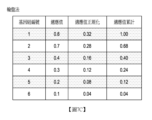
待每種組合都達到最佳適應值後,即為每種組合都找到該組合的最佳解時,比較各組耗電量,並取最小耗電量之組合,則為此系統需求水量的最佳解。請參照圖7F,對於水深為4.9公尺,目標流量為立方公尺/小時(CMH)的需求,經過多次迭代後,可得到如組合1所示的最佳解,其中包括使用兩台水泵A和四台水泵B,其中水泵A的運轉頻率為55.03Hz,水泵B的運轉頻率為60Hz,水泵A的流量為5.13CMH、水泵B的流量為4.87CMH,總耗電量為2.134千瓦(kW)。
After each combination reaches the best fitness value, that is, when the best solution of the combination is found for each combination, compare the power consumption of each group and choose the combination with the minimum power consumption. Then the water demand of the system is Best solution. Please refer to Figure 7F. For the water depth of 4.9 meters and the target flow rate of cubic meters per hour (CMH), after multiple iterations, the best solution can be obtained as shown in
圖8是依照本揭露另一實施例所繪示之並聯變頻泵控制裝置的方塊圖。請參照圖8,本實施例的並聯變頻泵控制裝置80包括資料存取裝置82、連接裝置84以及處理器86。其中,資料存取裝置82、連接裝置84以及處理器86的種類及功能與前述實施例的資料存取裝置12、連接裝置14以及處理器16相同。而在本實施例中,並聯變頻泵控制裝置80的處理器86係利用資料存取裝置82連結網路60,並通過網路60連結至雲端伺服器70。
8 is a block diagram of a parallel variable frequency pump control device according to another embodiment of the present disclosure. Please refer to FIG. 8 . The parallel variable frequency
在本實施例中,並聯變頻泵控制裝置80的處理器86例如會收集各個水泵的運轉數據,並通過資料存取裝置82將此運轉數據上傳至雲端伺服器70,而由雲端伺服器70對運轉數據進行統計,以計算出各個水泵的運轉效率。其中,雲端伺服器70例如可對各個水泵進行趨勢效率統計、總時數統計、稼動率計算。此外,雲端伺服器70還可對各個水泵進行單位能耗統計及績效驗證,判定該水泵是否需要維修。
In this embodiment, the
圖9是依照本揭露另一實施例所繪示之並聯變頻泵控制方法的流程圖。請同時參照圖8及圖9,本實施例的方法適用於圖8的並聯變頻泵控制裝置80,以下即搭配並聯變頻泵控制裝置80的各項元件說明本揭露之並聯變頻泵控制方法的詳細步驟。
FIG. 9 is a flow chart of a parallel variable frequency pump control method according to another embodiment of the present disclosure. Please refer to FIGS. 8 and 9 at the same time. The method of this embodiment is applicable to the parallel variable frequency
在步驟S902中,由處理器86通過資料存取裝置82取得配置於同一場域中的多個水泵的出廠資料,並依照出廠資料計算各水泵的性能曲線。
In step S902, the
在步驟S904中,由處理器86列舉水泵的多個組合以建立初始的多個基因組,並合併各基因組中的水泵的性能曲線以建構合併性能曲線。
In step S904, the
在步驟S906中,由處理器86執行基因演算法,將對於場域的需求流量轉換為需求壓力代入各基因組中的水泵的合併性能曲線以計算各基因組的適應值,並根據適應值進行基因組的迭代,以求得各組合的最佳解。
In step S906, the
在步驟S908中,由處理器86比較各組合的最佳解下的
水泵的總耗電量,以決定耗能最佳的組合。
In step S908, the
上述的步驟S902~S908與前述實施例的步驟S302~S308相同或相似,故其詳細內容在此不再贅述。與前述實施例不同的是,本實施例在步驟S912中,處理器86例如會收集各水泵的運轉數據,並通過資料存取裝置82上傳至雲端伺服器70。
The above-mentioned steps S902 to S908 are the same or similar to the steps S302 to S308 in the previous embodiment, so the details thereof will not be described again here. Different from the previous embodiment, in step S912 of this embodiment, the
在步驟S914中,雲端伺服器70統計運轉數據以計算出各水泵的運轉效率,並傳給並聯變頻泵控制裝置80。在一些實施例中,雲端伺服器70可利用水泵的銘版資訊估算出不同水泵效率下的最大軸功率輸出,並紀錄水泵的實際軸功率及其所對應之實際軸功率所屬的水泵效率。
In step S914, the
在步驟S916中,通過長期統計水泵效率的趨勢,雲端伺服器70可推算出各水泵的技術壽命,並據以決定是否維修或汰換該水泵。
In step S916, through long-term statistics of water pump efficiency trends, the
另一方面,在步驟S910中,並聯變頻泵控制裝置80的處理器86可利用資料存取裝置82取得雲端伺服器70所計算的運轉效率,以在所決定耗能最佳的組合中選擇運轉效率較佳的水泵進行調控。
On the other hand, in step S910, the
綜上所述,本揭露的並聯變頻泵控制裝置與並聯變頻泵控制方法係整合人工智慧(AI)控制、智慧雲端和邊緣運算裝置以提高工作效率。其中,通過計算水泵機台在變動負載下的安全操作範圍,並通過基因演算法來調控多類型水泵,以優化需求目標的節能頻率與控制開啟台數。本揭露亦通過雲端監測水泵機台的即時 運轉數據,並統計長期運轉資料,以計算水泵的運算效率並推估技術壽鉻。藉此,本揭露的並聯變頻泵控制裝置可提升設備運轉效益,且能達到優化節能控制效果。 To sum up, the parallel variable frequency pump control device and parallel variable frequency pump control method disclosed in the present disclosure integrate artificial intelligence (AI) control, smart cloud and edge computing devices to improve work efficiency. Among them, the safe operating range of water pump machines under variable loads is calculated, and multiple types of water pumps are controlled through genetic algorithms to optimize the energy-saving frequency and control the number of starting units for the demand target. This disclosure also monitors the real-time status of the water pump machine through the cloud. Operation data, and long-term operation data are collected to calculate the operating efficiency of the water pump and estimate the technical life. Thereby, the parallel variable frequency pump control device disclosed in the present disclosure can improve equipment operation efficiency and achieve optimized energy-saving control effect.
雖然本揭露已以實施例揭露如上,然其並非用以限定本揭露,任何所屬技術領域中具有通常知識者,在不脫離本揭露的精神和範圍內,當可作些許的更動與潤飾,故本揭露的保護範圍當視後附的申請專利範圍所界定者為準。 Although the disclosure has been disclosed above through embodiments, they are not intended to limit the disclosure. Anyone with ordinary knowledge in the technical field may make slight changes and modifications without departing from the spirit and scope of the disclosure. Therefore, The scope of protection of this disclosure shall be determined by the scope of the appended patent application.
10:並聯變頻泵控制裝置 10: Parallel variable frequency pump control device
12:資料存取裝置 12:Data access device
14:連接裝置 14:Connection device
16:處理器 16: Processor
Claims (16)
Priority Applications (2)
| Application Number | Priority Date | Filing Date | Title |
|---|---|---|---|
| TW111144157A TWI818807B (en) | 2022-11-18 | 2022-11-18 | Control apparatus and control method for inverter pumps connected in parallel |
| CN202211503576.0A CN118057027A (en) | 2022-11-18 | 2022-11-28 | Parallel variable frequency pump control device and parallel variable frequency pump control method |
Applications Claiming Priority (1)
| Application Number | Priority Date | Filing Date | Title |
|---|---|---|---|
| TW111144157A TWI818807B (en) | 2022-11-18 | 2022-11-18 | Control apparatus and control method for inverter pumps connected in parallel |
Publications (2)
| Publication Number | Publication Date |
|---|---|
| TWI818807B true TWI818807B (en) | 2023-10-11 |
| TW202422459A TW202422459A (en) | 2024-06-01 |
Family
ID=89857639
Family Applications (1)
| Application Number | Title | Priority Date | Filing Date |
|---|---|---|---|
| TW111144157A TWI818807B (en) | 2022-11-18 | 2022-11-18 | Control apparatus and control method for inverter pumps connected in parallel |
Country Status (2)
| Country | Link |
|---|---|
| CN (1) | CN118057027A (en) |
| TW (1) | TWI818807B (en) |
Cited By (1)
| Publication number | Priority date | Publication date | Assignee | Title |
|---|---|---|---|---|
| US20250067259A1 (en) * | 2023-08-22 | 2025-02-27 | Tigerflow Systems, Llc | Booster pump controller and method of use |
Families Citing this family (1)
| Publication number | Priority date | Publication date | Assignee | Title |
|---|---|---|---|---|
| CN118309640B (en) * | 2024-06-05 | 2024-08-16 | 广东科创智水科技有限公司 | Pump unit optimization intelligent scheduling method and system based on evolutionary algorithm |
Citations (3)
| Publication number | Priority date | Publication date | Assignee | Title |
|---|---|---|---|---|
| TW201226711A (en) * | 2010-12-22 | 2012-07-01 | Ind Tech Res Inst | Variable frequency pump controlling apparatus and method thereof |
| US20190345797A1 (en) * | 2018-05-10 | 2019-11-14 | Agile Analytics Corp. | System and method for controlling oil and/or gas production |
| CN114493912A (en) * | 2021-12-20 | 2022-05-13 | 上海科梁信息科技股份有限公司 | Comprehensive energy optimal configuration method and device and storage medium |
-
2022
- 2022-11-18 TW TW111144157A patent/TWI818807B/en active
- 2022-11-28 CN CN202211503576.0A patent/CN118057027A/en active Pending
Patent Citations (3)
| Publication number | Priority date | Publication date | Assignee | Title |
|---|---|---|---|---|
| TW201226711A (en) * | 2010-12-22 | 2012-07-01 | Ind Tech Res Inst | Variable frequency pump controlling apparatus and method thereof |
| US20190345797A1 (en) * | 2018-05-10 | 2019-11-14 | Agile Analytics Corp. | System and method for controlling oil and/or gas production |
| CN114493912A (en) * | 2021-12-20 | 2022-05-13 | 上海科梁信息科技股份有限公司 | Comprehensive energy optimal configuration method and device and storage medium |
Cited By (2)
| Publication number | Priority date | Publication date | Assignee | Title |
|---|---|---|---|---|
| US20250067259A1 (en) * | 2023-08-22 | 2025-02-27 | Tigerflow Systems, Llc | Booster pump controller and method of use |
| US12410786B2 (en) * | 2023-08-22 | 2025-09-09 | Tigerflow Systems, Llc | Booster pump controller and method of use |
Also Published As
| Publication number | Publication date |
|---|---|
| TW202422459A (en) | 2024-06-01 |
| CN118057027A (en) | 2024-05-21 |
Similar Documents
| Publication | Publication Date | Title |
|---|---|---|
| CN113156817B (en) | Intelligent pump allocation method for pump station | |
| TWI818807B (en) | Control apparatus and control method for inverter pumps connected in parallel | |
| FI127255B (en) | Procedure and controller for operating a pump system | |
| CN112032032B (en) | Optimization method for frequency conversion operation mode of open type circulating water pump of wet cooling unit | |
| CN113536710B (en) | A visual monitoring method for energy efficiency of pumps and pump units | |
| CN115853759B (en) | An energy-saving operation system for water pump unit equipment based on the Internet of Things | |
| CN106777526A (en) | HTHP receded disk impeller multidisciplinary design optimization method based on genetic algorithm | |
| CN113129168B (en) | Method, device and terminal equipment for determining line loss in power station area | |
| CN111767677A (en) | A GA algorithm-based optimization method for head distribution of cascade pumping station groups | |
| CN118713207A (en) | Optimization dispatching method, device and electronic equipment for distributed photovoltaic distribution network | |
| CN113381417B (en) | A method, device and terminal for optimizing three-phase load unbalance in a distribution network platform area | |
| CN111625754B (en) | Method, device, terminal equipment and storage medium for calculating boiler energy efficiency | |
| CN112751369A (en) | Optimized scheduling method for offshore power distribution network and terminal equipment | |
| CN111461449A (en) | Power load prediction method and computer program product | |
| CN119665383A (en) | A data center low-load air conditioning energy-saving control method and system | |
| CN114357664B (en) | Modeling method and system for mathematical model of variable-frequency speed-regulating water pump | |
| CN103714226A (en) | Automatic generating method and automatic generating device for optimized orderly-power-consumption scheme | |
| CN119126650A (en) | Control method, device and related equipment of distribution system with variable distribution mode | |
| CN119491828A (en) | A method for optimizing energy efficiency of parallel pump groups based on improved grey wolf-sparrow algorithm | |
| CN105977966A (en) | Power distribution network planning method taking distributed power supply and automatic power distribution device into consideration | |
| CN119047642A (en) | Comprehensive energy system distribution robust optimization method and system based on deep learning | |
| CN118584855A (en) | Multi-objective intelligent control method and system for the whole process of circulating cooling water system | |
| CN113591283B (en) | Method and device for adjusting operating oxygen amount of gas boiler and computer equipment | |
| CN104573844B (en) | The integrated optimized maintenance method of season power transmission and transformation based on genetic algorithm | |
| CN111475988B (en) | Energy consumption optimization method of printing and dyeing setting machine based on gradient boosting decision tree and genetic algorithm |