RU2199737C2 - Procedure estimating tendency of hydrocarbon fuel to form soot in process of combustion - Google Patents
Procedure estimating tendency of hydrocarbon fuel to form soot in process of combustion Download PDFInfo
- Publication number
- RU2199737C2 RU2199737C2 RU2001110714A RU2001110714A RU2199737C2 RU 2199737 C2 RU2199737 C2 RU 2199737C2 RU 2001110714 A RU2001110714 A RU 2001110714A RU 2001110714 A RU2001110714 A RU 2001110714A RU 2199737 C2 RU2199737 C2 RU 2199737C2
- Authority
- RU
- Russia
- Prior art keywords
- fuel
- flame
- photocurrent
- test
- combustion
- Prior art date
Links
- 239000000446 fuel Substances 0.000 title claims abstract description 101
- 239000004071 soot Substances 0.000 title claims abstract description 16
- 239000004215 Carbon black (E152) Substances 0.000 title claims abstract description 10
- 229930195733 hydrocarbon Natural products 0.000 title claims abstract description 10
- 150000002430 hydrocarbons Chemical class 0.000 title claims abstract description 10
- 238000000034 method Methods 0.000 title claims description 23
- 238000002485 combustion reaction Methods 0.000 title claims description 20
- 238000012360 testing method Methods 0.000 claims abstract description 45
- 238000009792 diffusion process Methods 0.000 claims abstract description 17
- 230000015572 biosynthetic process Effects 0.000 claims abstract description 9
- 239000000779 smoke Substances 0.000 claims description 14
- 230000007423 decrease Effects 0.000 abstract description 6
- 230000004069 differentiation Effects 0.000 abstract description 2
- 230000000694 effects Effects 0.000 abstract description 2
- 238000011156 evaluation Methods 0.000 abstract description 2
- 230000004907 flux Effects 0.000 abstract description 2
- 238000009499 grossing Methods 0.000 abstract description 2
- 239000000126 substance Substances 0.000 abstract 1
- YXFVVABEGXRONW-UHFFFAOYSA-N Toluene Chemical compound CC1=CC=CC=C1 YXFVVABEGXRONW-UHFFFAOYSA-N 0.000 description 19
- CXWXQJXEFPUFDZ-UHFFFAOYSA-N tetralin Chemical compound C1=CC=C2CCCCC2=C1 CXWXQJXEFPUFDZ-UHFFFAOYSA-N 0.000 description 14
- 230000005855 radiation Effects 0.000 description 7
- JVSWJIKNEAIKJW-UHFFFAOYSA-N dimethyl-hexane Natural products CCCCCC(C)C JVSWJIKNEAIKJW-UHFFFAOYSA-N 0.000 description 5
- 239000007789 gas Substances 0.000 description 5
- NHTMVDHEPJAVLT-UHFFFAOYSA-N Isooctane Chemical compound CC(C)CC(C)(C)C NHTMVDHEPJAVLT-UHFFFAOYSA-N 0.000 description 4
- 238000010438 heat treatment Methods 0.000 description 2
- 238000005259 measurement Methods 0.000 description 2
- 238000004458 analytical method Methods 0.000 description 1
- QVGXLLKOCUKJST-UHFFFAOYSA-N atomic oxygen Chemical compound [O] QVGXLLKOCUKJST-UHFFFAOYSA-N 0.000 description 1
- 238000006243 chemical reaction Methods 0.000 description 1
- 230000003749 cleanliness Effects 0.000 description 1
- 230000000052 comparative effect Effects 0.000 description 1
- 238000005336 cracking Methods 0.000 description 1
- 238000013461 design Methods 0.000 description 1
- 238000001514 detection method Methods 0.000 description 1
- 238000010586 diagram Methods 0.000 description 1
- 230000007613 environmental effect Effects 0.000 description 1
- 238000005194 fractionation Methods 0.000 description 1
- 239000003350 kerosene Substances 0.000 description 1
- 238000011005 laboratory method Methods 0.000 description 1
- 238000012423 maintenance Methods 0.000 description 1
- 238000004519 manufacturing process Methods 0.000 description 1
- 239000000463 material Substances 0.000 description 1
- 239000000203 mixture Substances 0.000 description 1
- 239000001301 oxygen Substances 0.000 description 1
- 229910052760 oxygen Inorganic materials 0.000 description 1
- 239000002245 particle Substances 0.000 description 1
- 230000008092 positive effect Effects 0.000 description 1
- 230000035945 sensitivity Effects 0.000 description 1
- 230000003595 spectral effect Effects 0.000 description 1
- 230000000007 visual effect Effects 0.000 description 1
Images


Landscapes
- Photometry And Measurement Of Optical Pulse Characteristics (AREA)
Abstract

Description
Изобретение относится к лабораторным методам оценки эксплуатационных (экологических) свойств моторных топлив, в частности к способам определения склонности топлив к сажеобразованию с помощью термических средств с использованием горелок, когда исследуемый материал вступает в химическую реакцию с кислородом окружающего воздуха. Изобретение может быть использовано в нефтехимической, автомобильной, авиационной и других отраслях промышленности. The invention relates to laboratory methods for evaluating the operational (environmental) properties of motor fuels, in particular to methods for determining the propensity of soot to form fuels using thermal means using burners when the test material undergoes a chemical reaction with ambient oxygen. The invention can be used in the petrochemical, automotive, aviation and other industries.
Наиболее близким к предлагаемому изобретению по технической сущности, достигаемому положительному эффекту и взятым за прототип является способ оценки склонности топлив к сажеобразованию по показателю "люминометрическое число" (ЛЧ), основанный на косвенном измерении расходов испытуемого и эталонных (тетралина и изооктана) топлив по температурам газов в камере сгорания специального прибора типа ПЛЧТ (аппарат для определения люминометрического числа топлива) с фитильной горелкой при сжигании опытного и эталонных образцов топлив при одинаковом уровне монохроматического излучения пламени этих топлив в зелено-желтой спектральной полосе видимого света (ГОСТ 17750-72) [1] . Температура газов над пламенем опытного и эталонных топлив определяется термопарой при интенсивности свечения их пламени, равной интенсивности свечения пламени тетралина в точке дымления. ЛЧ испытуемого топлива вычисляют по следующей формуле:

где Δtт - разность между температурой газов над пламенем испытуемого топлива и температурой воздуха, поступающего к горелке, oС;
Δtтр - разность между температурой газов над пламенем тетралина и температурой воздуха, поступающего к горелке, oС;
Δtиз - разность между температурой газов над пламенем изооктана и температурой воздуха, поступающего к горелке, oС.Closest to the proposed invention in terms of technical nature, the achieved positive effect and taken as a prototype is a method for assessing the propensity of soot-forming fuels according to the "luminometric number" (LF) indicator, based on an indirect measurement of the test consumption and reference (tetralin and isooctane) fuels by gas temperatures in the combustion chamber of a special device of the type ПЛЧТ (apparatus for determining the luminometric number of fuel) with a wick burner when burning experimental and reference fuel samples with one the highest level of monochromatic radiation of the flame of these fuels in the green-yellow spectral band of visible light (GOST 17750-72) [1]. The temperature of the gases above the flame of the experimental and reference fuels is determined by a thermocouple at an intensity of the glow of their flame equal to the intensity of the glow of the tetralin flame at the smoke point. The test fuel LF is calculated using the following formula:
where Δt t is the difference between the temperature of the gases above the flame of the test fuel and the temperature of the air entering the burner, o C;
Δt tr is the difference between the temperature of the gases above the tetralin flame and the temperature of the air entering the burner, o С;
Δt of - the difference between the temperature of the gases above the flame of isooctane and the temperature of the air entering the burner, o C.
Допускаемые расхождения между параллельными определениями ЛЧ топлива не должны превышать ±1 (на практике многие приборы дают большую погрешность, величина которой зависит от настройки прибора). Allowable discrepancies between parallel determinations of the fuel LP should not exceed ± 1 (in practice, many devices give a large error, the magnitude of which depends on the instrument settings).
Недостатком этого способа является значительная погрешность, обусловленная нелинейностью шкалы люминометрических чисел, используемой для оценки склонности топлив к сажеобразованию, а также тем, что отсутствует явно выраженный физический смысл люминометрического числа. Действительно, в области высоких значений ЛЧ неоправданно чувствительно к небольшим изменениям свечения пламени, которые практически не могут отразиться на надежности камер сгорания двигателей, а в области низких значений ЛЧ недостаточно чувствительно к значительным различиям в излучении, которые могут быть существенными для температурного режима и срока службы камер сгорания. The disadvantage of this method is the significant error due to the nonlinearity of the scale of the luminometric numbers used to assess the propensity of fuels to soot formation, as well as the fact that there is no clearly expressed physical meaning of the luminometric number. Indeed, in the region of high values of LF, it is unjustifiably sensitive to small changes in the glow of the flame, which practically cannot affect the reliability of the combustion chambers of the engines, and in the region of low values of LF, it is not sensitive enough to significant differences in radiation, which can be significant for the temperature regime and service life combustion chambers.
Кроме того, имеются недостатки, связанные с использованием фитильной горелки:
- влияние на результат определения ЛЧ формы подрезки фитиля;
- возможное фракционирование топлива в фитиле за счет капиллярных эффектов.In addition, there are disadvantages associated with the use of a wick burner:
- the influence on the result of determining the LF form of clipping the wick;
- possible fractionation of fuel in the wick due to capillary effects.
Дополнительную погрешность вносят необходимость использования для испытаний нескольких горелок (по числу испытуемых и эталонных топлив), визуальный способ определения момента окончания дымления пламени, а также неточность установки положения термопары и степень чистоты ее поверхности. К недостаткам указанного способа также может быть отнесено использование двух эталонных топлив - изооктана и тетралина, последний из которых экологически небезопасный и весьма дорогой. Количество испытуемого, а также каждого из эталонных топлив, используемых для оценки склонности испытуемого топлива к сажеобразованию при горении указанным способом, составляет 50 мл, время испытания 1 час. An additional error is introduced by the need to use several burners for testing (according to the number of test and reference fuels), a visual method for determining the moment of completion of flame smoke, as well as the inaccuracy of setting the position of the thermocouple and the degree of cleanliness of its surface. The disadvantages of this method can also be attributed to the use of two reference fuels - isooctane and tetralin, the latter of which is environmentally unsafe and very expensive. The amount of the test subject, as well as each of the reference fuels used to assess the propensity of the test fuel to soot during combustion in this way, is 50 ml, the test time is 1 hour.
В связи с этим и учитывая потребность в оценке склонности углеводородных топлив к сажеобразованию, предлагаемый способ определения показателя черноты диффузионного пламени основан на косвенном измерении расходов испытуемого и эталонного (толуола) топлив, но уже по изменению потока излучения от пламени, регистрируемого в виде фототока с помощью фотометрического устройства, что позволяет существенно упростить процедуру определений и выполнить прибор компактным, несложным в производстве и обслуживании, на современном техническом уровне. In this regard, and taking into account the need to assess the propensity of hydrocarbon fuels for soot formation, the proposed method for determining the diffusion flame black index is based on an indirect measurement of the flow rates of the test and reference (toluene) fuels, but already by changing the radiation flux from the flame recorded as a photocurrent using photometric device, which allows to significantly simplify the determination procedure and make the device compact, uncomplicated in production and maintenance, at the modern technical level e.
Технический результат предлагаемого изобретения:
- сокращение времени оценки склонности углеводородного топлива к сажеобразованию (до 30 мин) с одновременным упрощением процедуры оценки при сохранении требований по точности;
- использование бесфитильной диффузионной горелки;
- автоматическое определение момента окончания дымления;
- использование для испытаний нескольких испытуемых и эталонного топлив одной горелки;
- использование одного эталонного топлива - толуола, близкого по сажеобразованию к тетралину, но менее экологически вредного и более дешевого;
- уменьшение количества испытуемого и эталонного топлив до 20 мл.The technical result of the invention:
- reducing the time for assessing the propensity of hydrocarbon fuel for soot formation (up to 30 min) while simplifying the evaluation procedure while maintaining accuracy requirements;
- use of a non-filter diffusion burner;
- automatic detection of the end of smoke;
- use for testing several test subjects and the reference fuels of one burner;
- the use of one reference fuel - toluene, similar in soot formation to tetraline, but less environmentally harmful and cheaper;
- reducing the number of test and reference fuels to 20 ml.
Сходимость (σ1)±1% от среднего арифметического двух последовательных определений.Convergence (σ 1 ) ± 1% of the arithmetic mean of two consecutive definitions.
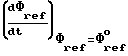
Указанный технический результат достигается тем, что в известном способе оценки склонности углеводородного топлива к сажеобразованию при горении путем сравнения ламинарных диффузионных пламен испытуемого и эталонного топлив согласно предлагаемому изобретению при горении эталонного топлива замеряют текущие значения фототока Фэ от пламени в течение определенного отрезка времени, в пределах которого фиксируют значение этого фототока Фэ о на пороге дымления пламени, после чего в течение другого отрезка времени замеряют текущие значения фототока Ф при горении испытуемого топлива, а в момент достижения фототоком Ф значения, равного значению фототока Фэ о от пламени эталонного топлива на пороге дымления, оценивают склонность испытуемого топлива к сажеобразованию по показателю черноты диффузионного пламени (ПЧДП), определяемому по следующей зависимости:

где ПЧДП - показатель черноты диффузионного пламени испытуемого топлива;
Фэ - фототок, регистрируемый в процессе горения эталонного топлива, мА;
Фэ о - фототок, фиксируемый при горении эталонного топлива на пороге дымления, мА;
Ф - фототок, регистрируемый в процессе горения испытуемого топлива, мА;
t - время, с.The specified technical result is achieved by the fact that in the known method of assessing the propensity of hydrocarbon fuel for soot formation during combustion by comparing the laminar diffusion flames of the test and reference fuels according to the invention, when the reference fuel is burned, the current values of the photocurrent f e from the flame are measured for a certain period of time, within which fixed value of this photocurrent F e of fuming at the threshold of the flame, after which the current is measured for different values of time interval Nia photocurrent F during combustion of the test fuel, and when it reaches the photocurrent F value equal to the value of the photocurrent F e of the flame reference fuel at the threshold fuming, evaluate the tendency of the test fuel to sooting in terms of blackness diffusion flame (PCHDP), defined by the following relationship:
where PSDP - an indicator of the black diffusion flame of the test fuel;
F e - photocurrent recorded during the combustion of the reference fuel, mA;
F e o - photocurrent recorded during the combustion of the reference fuel at the threshold of smoke, mA;
Ф - photocurrent recorded during the combustion of the test fuel, mA;
t is the time, s.
На фиг. 1 представлена схема устройства для реализации способа оценки склонности углеводородного топлива к сажеобразованию при горении (момент размещения резервуара с топливом в нижнем положении). In FIG. 1 shows a diagram of a device for implementing a method for assessing the propensity of hydrocarbon fuel for soot formation during combustion (the moment the tank with fuel is placed in the lower position).
На фиг. 2 представлена графическая зависимость, поясняющая характер изменения расходов G топлив и фототоков Ф от пламен эталонного (толуола) и испытуемого топлив при оценке склонности испытуемого углеводородного топлива к сажеобразованию при горении по показателю черноты диффузионного пламени (ПЧДП). In FIG. Figure 2 presents a graphical dependence explaining the nature of the change in the flow rate G of fuels and photocurrents F from the reference flames (toluene) and the test fuel when assessing the tendency of the test hydrocarbon fuel to soot during combustion by the diffusion flame blackness index (PSDP).
Для пояснения реализации способа приняты следующие условные обозначения:
точка "а" - значение фототока Ф*, фиксируемое при горении испытуемого топлива, равное значению фототока Фэ о эталонного топлива на пороге дымления;
точка "b" - значение фототока Фэ о, фиксируемое при горении эталонного топлива на пороге дымления;
точка "с" - значение расхода Gэ о, соответствующее режиму горения эталонного топлива на пороге дымления;
точка "d" - значение расхода G*, соответствующее режиму горения испытуемого топлива, при фототоке Ф* от пламени, равном фототоку Фэ о эталонного топлива на пороге дымления.To clarify the implementation of the method adopted the following conventions:
point "a" - the value of the photocurrent Ф * recorded during the combustion of the test fuel, equal to the value of the photocurrent Ф е on the reference fuel at the threshold of smoke;
point "b" - the value of the photocurrent Ф э о , recorded during the combustion of the reference fuel at the smoke threshold;
point "c" is the flow rate G e о corresponding to the combustion mode of the reference fuel at the smoke threshold;
Point "d" - flow value G *, the corresponding mode of combustion of the test fuel, the photocurrent from the flame F *, P e equal to the photocurrent of the reference fuel at the threshold fuming.
Способ реализуется следующим образом. Закрывают сливной кран 1. Промывают топливную систему прибора, для чего в поднятый в крайнее верхнее положение резервуар 2 заливают эталонное топливо (толуол) до уровня, соответствующего нижней риске 3 на стенке резервуара 2, затем, открыв сливной кран 1, сливают эталонное топливо в емкость 4, помеченную "СЛИВ". Закрывают сливной кран 1. В опущенный в крайнее нижнее положение резервуар 2 заливают эталонное топливо до уровня, соответствующего верхней риске 5 на стенке резервуара 2. Накрывают резервуар 2 крышкой 6. Путем вертикального перемещения резервуара 2 добиваются поднятия эталонного топлива в стеклянной бесфитильной диффузионной горелке 7 до верхнего ее уровня. Поджигают эталонное топливо в горелке 7 с помощью дистанционной зажигалки (не показана). Прогрев эталонного топлива в горелке 7, непосредственно самой горелки 7 и корпуса 8 прибора производят в течение 10 минут, для чего перемещением резервуара 2 поддерживают высоту пламени горелки 7 на уровне максимальной высоты некоптящего пламени. Включают регистрирующее устройство 9 и компьютер 10. Подняв уровень эталонного топлива в горелке 7 до появления дыма из пламени, фиксируют положение резервуара 2 и на компьютере 10 вызывают расчетную программу. По мере выгорания эталонного топлива следят за значениями фототока Фэ от пламени, регистрируемыми датчиком излучения 11 и индицируемыми на дисплее компьютера 10. Во время проведения испытания с помощью датчика дыма 12 расчетной программой автоматически фиксируется значение фототока Фэ о на пороге дымления пламени эталонного топлива. При снижении фототока Фэ от пламени ниже значения 150 единиц останавливают расчетную программу. После затухания пламени в горелке 7, открыв сливной кран 1, сливают эталонное топливо в емкость 4, помеченную "СЛИВ".The method is implemented as follows. Close the
Закрывают сливной кран 1. Промывают топливную систему прибора, для чего в поднятый в крайнее верхнее положение резервуар 2 заливают испытуемое топливо до уровня, соответствующего нижней риске 3 на стенке резервуара 2, затем, открыв сливной кран 1, сливают испытуемое топливо в емкость 4, помеченную "СЛИВ". Закрывают сливной кран 1. В опущенный в крайнее нижнее положение резервуар 2 заливают испытуемое топливо до уровня, соответствующего верхней риске 5 на стенке резервуара 2. Накрывают резервуар 2 крышкой 6. Путем вертикального перемещения резервуара 2 добиваются поднятия испытуемого топлива в стеклянной бесфитильной диффузионной горелке 7 до верхнего ее уровня. Поджигают испытуемое топливо в горелке 7 с помощью дистанционной зажигалки (не показана). Прогрев испытуемого топлива в горелке 7, непосредственно самой горелки 7 и корпуса прибора 8 производят в течение 10 минут, для чего перемещением резервуара 2 поддерживают высоту пламени горелки 7 на уровне максимальной высоты некоптящего пламени. Подняв уровень испытуемого топлива в горелке 7 до появления дыма из пламени, фиксируют положение резервуара 2 и на компьютере 10 вызывают расчетную программу. По мере выгорания испытуемого топлива следят за значениями фототока Ф от пламени, регистрируемыми датчиком излучения 11 и индицируемыми на дисплее компьютера 10. При снижении фототока Ф от пламени ниже значения 150 единиц останавливают расчетную программу. После затухания пламени в горелке 7, открыв сливной кран 1, сливают испытуемое топливо в емкость 4, помеченную "СЛИВ". Close the
Способ определения показателя ПЧДП аппаратно и программно реализуется следующим образом. Как вариант, в качестве регистрирующего устройства 9 использован аналого-цифровой преобразователь, в качестве компьютера 10 - компьютер Pentium-133 с операционной системой Windows 98, в качестве датчика дыма 12 - пара фотодиод-фоторезистор, в качестве датчика излучения 11 - фоторезистор с максимумом чувствительности в видимой (желтой) области излучения пламени, соответствующей излучению раскаленных частиц сажи. Результаты передаются через регистрирующее устройство 9 в компьютер 10, в котором по заложенной программе выполняется расчет ПЧДП с помощью последовательного выполнения операций сглаживания, численного дифференцирования и деления полученных значений производных. The method for determining the PPPD indicator is hardware and software implemented as follows. Alternatively, an analog-to-digital converter was used as a
Физический смысл процесса определения показателя черноты диффузионного пламени ПЧДП можно понять из графической зависимости, представленной на фиг. 2. The physical meaning of the process of determining the blackness index of the diffusion flame of the PCPD can be understood from the graphical dependence shown in FIG. 2.
Значение показателя черноты диффузионного пламени выражает отношение концентраций сажи с* и cэ о соответственно в пламени испытуемого и эталонного топлив при одинаковом квазистационарном количестве сажи S* и Sэ о соответственно в конусе пламени испытуемого и эталонного топлив, что соответствует одинаковым значениям фототока от пламени испытуемого Ф* и эталонного Фэ о топлив (точки а и b фиг.2). Следовательно, показатель черноты диффузионного пламени равен отношению расходов Gэ о и G* соответственно эталонного и испытуемого топлив (точки с и d фиг.2) при одинаковом уровне фототоков от их пламен, равном фототоку от пламени эталонного топлива в точке дымления (Ф*= Фэ о)

При такой системе подачи топлива в горелку, какая применена в конструкции прибора, расход топлива по мере его выгорания уменьшается. Причем производная расхода топлива по времени в условиях бесфитильной горелки пропорциональна величине самого расхода топлива. Следовательно, соотношение для расчета ПЧДП может быть переписано в виде

где Gэ - расход эталонного топлива, мл/с;
G - расход испытуемого топлива, мл/с.The value of the blackness index of the diffusion flame expresses the ratio of the soot concentrations c * and c e о, respectively, in the flame of the test and reference fuels with the same quasi-stationary amount of soot S * and S e о, respectively, in the flame cone of the test and reference fuels, which corresponds to the same values of the photocurrent from the flame of the test F * and the reference f e about fuels (points a and b of figure 2). Therefore, the diffusion flame blackness indicator is equal to the ratio of the flow rates G e о and G * of the reference and test fuels, respectively (points c and d of FIG. 2) at the same level of photocurrents from their flames equal to the photocurrent from the flame of the reference fuel at the smoke point (Ф * = F e o )
With such a system for supplying fuel to the burner, which is used in the design of the device, fuel consumption decreases as it burns out. Moreover, the derivative of fuel consumption in time in the conditions of a free-flow burner is proportional to the value of the fuel consumption itself. Therefore, the ratio for calculating the PSDP can be rewritten in the form
where G e - reference fuel consumption, ml / s;
G is the consumption of the test fuel, ml / s.
В то же время по мере снижения расхода топлива уменьшается фототок от пламени. Считая, что при этом производные по времени фототока от пламени и расхода топлива пропорциональны, окончательно имеем

Заявленным способом были исследованы топлива: авиационный керосин РТ производства АО "Крекинг" г. Саратов; толуол ч.д.а. по ГОСТ 5789-78; изооктан эталонный по ГОСТ 12433-83; смесь 50% толуола ч.д.а. по ГОСТ 5789-78 и 50% изооктана эталонного по ГОСТ 12433-83.At the same time, as fuel consumption decreases, the photocurrent from the flame decreases. Considering that in this case, the time derivatives of the photocurrent from the flame and fuel consumption are proportional, we finally have
The claimed method was investigated fuel: aviation RT kerosene produced by JSC "Cracking"Saratov; toluene according to GOST 5789-78; reference isooctane according to GOST 12433-83; a mixture of 50% toluene according to GOST 5789-78 and 50% of the reference isooctane according to GOST 12433-83.
Сравнительные результаты определения показателя черноты диффузионного пламени (ПЧДП) с помощью разработанного способа и люминометрического числа (ЛЧ) по ГОСТ 17750-72 для указанных углеводородных топлив приведены в таблице. Comparative results of determining the diffusion flame blackness index (PSDP) using the developed method and luminometric number (LCH) according to GOST 17750-72 for these hydrocarbon fuels are given in the table.
Как показывают результаты испытаний (см. таблицу), для каждой марки топлива (столбец 1) проведены два последовательных определения (столбец 2) и получены значения показателя черноты диффузионного пламени ПЧДП с помощью предлагаемого способа (столбец 3). В столбце 4 указано время, затраченное на определение ПЧДП. В столбце 5 приведены средние значения ПЧДП, полученные по результатам двух последовательных определений, а в столбце 6 - сходимость (σ1) от среднего арифметического двух последовательных определений, не превышающая значения, установленного ГОСТ 17750-72. В таблице также представлены результаты определения люминометрического числа (ЛЧ) по ГОСТ 17750-72 (столбец 7), время, затраченное на определение ЛЧ (столбец 8), и полученный в результате анализа проведенных испытаний эмпирический расчетный показатель

характеризующий соответствие между ПЧДП и ЛЧ (столбец 9).As the test results (see table) show, for each fuel grade (column 1), two sequential determinations were made (column 2) and the black index value of the diffusion flame of the PCPD was obtained using the proposed method (column 3).
characterizing the correspondence between PSDP and LF (column 9).
Значения ПЧДП, равные 0 и 1,0, всегда соответствуют значениям ЛЧ, равным соответственно ∞ и 9 (ПЧДП=0 и ЛЧ=∞ соответствует топливу, не содержащему углерод, ПЧДП=1,0 и ЛЧ=9 соответствуют эталонному топливу - толуолу). The values of PFDP equal to 0 and 1.0 always correspond to LF values equal to ∞ and 9, respectively (PFDP = 0 and LF = ∞ corresponds to carbon-free fuel, PFDP = 1.0 and LF = 9 correspond to the reference fuel - toluene) .
Значение коэффициента корреляции между результатами, полученными двумя различными методами (столбцы 3 и 9), составляет 0,998, что превышает критическое значение коэффициента корреляции при доверительной вероятности 0,95 для представленной в таблице выборки, которое составляет rкрит=0,950.The correlation coefficient between the results obtained by two different methods (
Таким образом, заявленный способ позволяет сократить время оценки склонности углеводородных топлив к сажеобразованию при сохранении точности на уровне, соответствующем ГОСТ 17750-72. Thus, the claimed method allows to reduce the time for assessing the propensity of hydrocarbon fuels to soot formation while maintaining accuracy at a level corresponding to GOST 17750-72.
Источник информации
1. ГОСТ 17750-72. Топливо для реактивных двигателей. Метод определения люминометрического числа на аппарате ПЛЧТ (прототип).Sourse of information
1. GOST 17750-72. Fuel for jet engines. The method for determining the luminometric number on the apparatus PLCT (prototype).
Claims (1)

где ПЧДП - показатель черноты диффузионного пламени испытуемого топлива;
Фэ - фототок, регистрируемый в процессе горения эталонного топлива, мА;
Фэ о - фототок, фиксируемый при горении эталонного топлива на пороге дымления, мА;
Ф - фототок, регистрируемый в процессе горения испытуемого топлива, мА;
t - время, с.A method for assessing the propensity of hydrocarbon fuel for soot formation during combustion by comparing the laminar diffusion flames of the test and reference fuels, characterized in that when burning the reference fuel, the current values of the photocurrent f e from the flame are measured for a certain period of time, within which the value of this photocurrent f e is fixed o at the threshold of smoke flame, after which, for another period of time, the current values of the photocurrent F are measured when the test fuel is burned, and at the moment the photocurrent F value equal to the value of F e from the reference fuel flame at the threshold fuming, evaluate the propensity of test fuel to sooting in terms of blackness diffusion flame (PCHDP), defined by the following relationship:
where PSDP - an indicator of the black diffusion flame of the test fuel;
F e - photocurrent recorded during the combustion of the reference fuel, mA;
F e o - photocurrent recorded during the combustion of the reference fuel at the threshold of smoke, mA;
Ф - photocurrent recorded during the combustion of the test fuel, mA;
t is the time, s.
Priority Applications (1)
| Application Number | Priority Date | Filing Date | Title |
|---|---|---|---|
| RU2001110714A RU2199737C2 (en) | 2001-04-23 | 2001-04-23 | Procedure estimating tendency of hydrocarbon fuel to form soot in process of combustion |
Applications Claiming Priority (1)
| Application Number | Priority Date | Filing Date | Title |
|---|---|---|---|
| RU2001110714A RU2199737C2 (en) | 2001-04-23 | 2001-04-23 | Procedure estimating tendency of hydrocarbon fuel to form soot in process of combustion |
Publications (1)
| Publication Number | Publication Date |
|---|---|
| RU2199737C2 true RU2199737C2 (en) | 2003-02-27 |
Family
ID=20248705
Family Applications (1)
| Application Number | Title | Priority Date | Filing Date |
|---|---|---|---|
| RU2001110714A RU2199737C2 (en) | 2001-04-23 | 2001-04-23 | Procedure estimating tendency of hydrocarbon fuel to form soot in process of combustion |
Country Status (1)
| Country | Link |
|---|---|
| RU (1) | RU2199737C2 (en) |
Cited By (1)
| Publication number | Priority date | Publication date | Assignee | Title |
|---|---|---|---|---|
| RU2537582C2 (en) * | 2012-10-11 | 2015-01-10 | Александр Васильевич Исаев | Method of black production from hydrocarbon gas |
Citations (4)
| Publication number | Priority date | Publication date | Assignee | Title |
|---|---|---|---|---|
| RU2094702C1 (en) * | 1994-09-05 | 1997-10-27 | Товарищество с ограниченной ответственностью Фирма "Форскамп" | Device for burning fuel |
| RU2096690C1 (en) * | 1993-02-26 | 1997-11-20 | Тольяттинский политехнический институт | Method for monitoring and controlling fuel combustion and ionization sensor for its implementing |
| RU2100698C1 (en) * | 1995-07-11 | 1997-12-27 | Институт технической механики НАН Украины | Method of burning fuel device for realization of this method |
| RU2131766C1 (en) * | 1998-04-07 | 1999-06-20 | Открытое акционерное общество "Ярославский технический углерод" | Reactor for production of carbon black |
-
2001
- 2001-04-23 RU RU2001110714A patent/RU2199737C2/en not_active IP Right Cessation
Patent Citations (4)
| Publication number | Priority date | Publication date | Assignee | Title |
|---|---|---|---|---|
| RU2096690C1 (en) * | 1993-02-26 | 1997-11-20 | Тольяттинский политехнический институт | Method for monitoring and controlling fuel combustion and ionization sensor for its implementing |
| RU2094702C1 (en) * | 1994-09-05 | 1997-10-27 | Товарищество с ограниченной ответственностью Фирма "Форскамп" | Device for burning fuel |
| RU2100698C1 (en) * | 1995-07-11 | 1997-12-27 | Институт технической механики НАН Украины | Method of burning fuel device for realization of this method |
| RU2131766C1 (en) * | 1998-04-07 | 1999-06-20 | Открытое акционерное общество "Ярославский технический углерод" | Reactor for production of carbon black |
Cited By (1)
| Publication number | Priority date | Publication date | Assignee | Title |
|---|---|---|---|---|
| RU2537582C2 (en) * | 2012-10-11 | 2015-01-10 | Александр Васильевич Исаев | Method of black production from hydrocarbon gas |
Similar Documents
| Publication | Publication Date | Title |
|---|---|---|
| Yamada et al. | Kinetic measurements in homogeneous charge compression of dimethyl ether: role of intermediate formaldehyde controlling chain branching in the low-temperature oxidation mechanism | |
| KR100686374B1 (en) | Thermal emission rate measurement and fire evaluation factor analysis system according to specimen burning | |
| Diemel et al. | In situ sensor for cycle-resolved measurement of temperature and mole fractions in IC engine exhaust gases | |
| US3489498A (en) | Flame photometric detector with improved specificity to sulfur and phosphorus | |
| US6780378B2 (en) | Method for measuring concentrations of gases and vapors using controlled flames | |
| JP7485312B2 (en) | Flame monitoring for flash point or fire point determination | |
| CA1157354A (en) | Gas analyzing apparatus | |
| Gallo et al. | A study of in-cylinder soot oxidation by laser extinction measurements during an EGR-sweep in an optical diesel engine | |
| US3519391A (en) | Method of and apparatus for measuring combustible constituents of gas samples | |
| Koenig et al. | Measurements of local in-cylinder fuel concentration fluctuations in a firing SI engine | |
| RU2199737C2 (en) | Procedure estimating tendency of hydrocarbon fuel to form soot in process of combustion | |
| US3582281A (en) | Determination and control of a composition characteristic while blending a multicomponent combustible fluid | |
| Agnew | End gas temperature measurement by a two-wavelength infrared radiation method | |
| Kamimoto et al. | A study on soot formation in premixed constant-volume propane combustion | |
| SCHIEβL et al. | Formaldehyde formation in the endgas of Otto engines: Numerical simulations and quantitative concentration measurements | |
| US3811839A (en) | Apparatus for the determination of flammability and smoke density of polymers | |
| Porter et al. | An Improved Slow-Combustion Pipet for Gas Analysis | |
| RU174688U1 (en) | Installation for determining the fire hazard of condensed materials during their thermal decomposition | |
| Zhou et al. | Measurement of dimensionless soot extinction constant using a gravimetric sampling technique | |
| Golibrzuch et al. | Optical sensor system for time-resolved quantification of methane densities in CH4-fueled spark ignition engines | |
| Arnold et al. | 2D‐Diagnostics in Industrial Devices | |
| Hall et al. | Fiber optic sensor for crank angle resolved measurements of burned gas residual fraction in the cylinder of an SI engine | |
| JP2000205562A (en) | Burner combustion diagnostic unit | |
| JPS6311641Y2 (en) | ||
| Maligne et al. | Chemiluminescence of BO2 to map the creation of thermal NO in flames |
Legal Events
| Date | Code | Title | Description |
|---|---|---|---|
| MM4A | The patent is invalid due to non-payment of fees |
Effective date: 20080424 |