KR20240015482A - Positive electrode, and rechargeable lithium battery including the same - Google Patents
Positive electrode, and rechargeable lithium battery including the same Download PDFInfo
- Publication number
- KR20240015482A KR20240015482A KR1020220093413A KR20220093413A KR20240015482A KR 20240015482 A KR20240015482 A KR 20240015482A KR 1020220093413 A KR1020220093413 A KR 1020220093413A KR 20220093413 A KR20220093413 A KR 20220093413A KR 20240015482 A KR20240015482 A KR 20240015482A
- Authority
- KR
- South Korea
- Prior art keywords
- formula
- substituted
- unsubstituted
- group
- independently
- Prior art date
- Legal status (The legal status is an assumption and is not a legal conclusion. Google has not performed a legal analysis and makes no representation as to the accuracy of the status listed.)
- Granted
Links
Classifications
-
- H—ELECTRICITY
- H01—ELECTRIC ELEMENTS
- H01M—PROCESSES OR MEANS, e.g. BATTERIES, FOR THE DIRECT CONVERSION OF CHEMICAL ENERGY INTO ELECTRICAL ENERGY
- H01M10/00—Secondary cells; Manufacture thereof
- H01M10/42—Methods or arrangements for servicing or maintenance of secondary cells or secondary half-cells
- H01M10/4235—Safety or regulating additives or arrangements in electrodes, separators or electrolyte
-
- H—ELECTRICITY
- H01—ELECTRIC ELEMENTS
- H01M—PROCESSES OR MEANS, e.g. BATTERIES, FOR THE DIRECT CONVERSION OF CHEMICAL ENERGY INTO ELECTRICAL ENERGY
- H01M10/00—Secondary cells; Manufacture thereof
- H01M10/05—Accumulators with non-aqueous electrolyte
- H01M10/052—Li-accumulators
-
- H—ELECTRICITY
- H01—ELECTRIC ELEMENTS
- H01M—PROCESSES OR MEANS, e.g. BATTERIES, FOR THE DIRECT CONVERSION OF CHEMICAL ENERGY INTO ELECTRICAL ENERGY
- H01M4/00—Electrodes
- H01M4/02—Electrodes composed of, or comprising, active material
- H01M4/13—Electrodes for accumulators with non-aqueous electrolyte, e.g. for lithium-accumulators; Processes of manufacture thereof
-
- H—ELECTRICITY
- H01—ELECTRIC ELEMENTS
- H01M—PROCESSES OR MEANS, e.g. BATTERIES, FOR THE DIRECT CONVERSION OF CHEMICAL ENERGY INTO ELECTRICAL ENERGY
- H01M4/00—Electrodes
- H01M4/02—Electrodes composed of, or comprising, active material
- H01M4/13—Electrodes for accumulators with non-aqueous electrolyte, e.g. for lithium-accumulators; Processes of manufacture thereof
- H01M4/131—Electrodes based on mixed oxides or hydroxides, or on mixtures of oxides or hydroxides, e.g. LiCoOx
-
- H—ELECTRICITY
- H01—ELECTRIC ELEMENTS
- H01M—PROCESSES OR MEANS, e.g. BATTERIES, FOR THE DIRECT CONVERSION OF CHEMICAL ENERGY INTO ELECTRICAL ENERGY
- H01M4/00—Electrodes
- H01M4/02—Electrodes composed of, or comprising, active material
- H01M4/13—Electrodes for accumulators with non-aqueous electrolyte, e.g. for lithium-accumulators; Processes of manufacture thereof
- H01M4/134—Electrodes based on metals, Si or alloys
-
- H—ELECTRICITY
- H01—ELECTRIC ELEMENTS
- H01M—PROCESSES OR MEANS, e.g. BATTERIES, FOR THE DIRECT CONVERSION OF CHEMICAL ENERGY INTO ELECTRICAL ENERGY
- H01M4/00—Electrodes
- H01M4/02—Electrodes composed of, or comprising, active material
- H01M4/13—Electrodes for accumulators with non-aqueous electrolyte, e.g. for lithium-accumulators; Processes of manufacture thereof
- H01M4/139—Processes of manufacture
- H01M4/1391—Processes of manufacture of electrodes based on mixed oxides or hydroxides, or on mixtures of oxides or hydroxides, e.g. LiCoOx
-
- H—ELECTRICITY
- H01—ELECTRIC ELEMENTS
- H01M—PROCESSES OR MEANS, e.g. BATTERIES, FOR THE DIRECT CONVERSION OF CHEMICAL ENERGY INTO ELECTRICAL ENERGY
- H01M4/00—Electrodes
- H01M4/02—Electrodes composed of, or comprising, active material
- H01M4/36—Selection of substances as active materials, active masses, active liquids
- H01M4/362—Composites
- H01M4/366—Composites as layered products
-
- H—ELECTRICITY
- H01—ELECTRIC ELEMENTS
- H01M—PROCESSES OR MEANS, e.g. BATTERIES, FOR THE DIRECT CONVERSION OF CHEMICAL ENERGY INTO ELECTRICAL ENERGY
- H01M4/00—Electrodes
- H01M4/02—Electrodes composed of, or comprising, active material
- H01M4/36—Selection of substances as active materials, active masses, active liquids
- H01M4/38—Selection of substances as active materials, active masses, active liquids of elements or alloys
- H01M4/386—Silicon or alloys based on silicon
-
- H—ELECTRICITY
- H01—ELECTRIC ELEMENTS
- H01M—PROCESSES OR MEANS, e.g. BATTERIES, FOR THE DIRECT CONVERSION OF CHEMICAL ENERGY INTO ELECTRICAL ENERGY
- H01M4/00—Electrodes
- H01M4/02—Electrodes composed of, or comprising, active material
- H01M4/36—Selection of substances as active materials, active masses, active liquids
- H01M4/48—Selection of substances as active materials, active masses, active liquids of inorganic oxides or hydroxides
- H01M4/52—Selection of substances as active materials, active masses, active liquids of inorganic oxides or hydroxides of nickel, cobalt or iron
- H01M4/525—Selection of substances as active materials, active masses, active liquids of inorganic oxides or hydroxides of nickel, cobalt or iron of mixed oxides or hydroxides containing iron, cobalt or nickel for inserting or intercalating light metals, e.g. LiNiO2, LiCoO2 or LiCoOxFy
-
- H—ELECTRICITY
- H01—ELECTRIC ELEMENTS
- H01M—PROCESSES OR MEANS, e.g. BATTERIES, FOR THE DIRECT CONVERSION OF CHEMICAL ENERGY INTO ELECTRICAL ENERGY
- H01M4/00—Electrodes
- H01M4/02—Electrodes composed of, or comprising, active material
- H01M4/36—Selection of substances as active materials, active masses, active liquids
- H01M4/58—Selection of substances as active materials, active masses, active liquids of inorganic compounds other than oxides or hydroxides, e.g. sulfides, selenides, tellurides, halogenides or LiCoFy; of polyanionic structures, e.g. phosphates, silicates or borates
- H01M4/583—Carbonaceous material, e.g. graphite-intercalation compounds or CFx
-
- H—ELECTRICITY
- H01—ELECTRIC ELEMENTS
- H01M—PROCESSES OR MEANS, e.g. BATTERIES, FOR THE DIRECT CONVERSION OF CHEMICAL ENERGY INTO ELECTRICAL ENERGY
- H01M4/00—Electrodes
- H01M4/02—Electrodes composed of, or comprising, active material
- H01M4/62—Selection of inactive substances as ingredients for active masses, e.g. binders, fillers
-
- H—ELECTRICITY
- H01—ELECTRIC ELEMENTS
- H01M—PROCESSES OR MEANS, e.g. BATTERIES, FOR THE DIRECT CONVERSION OF CHEMICAL ENERGY INTO ELECTRICAL ENERGY
- H01M4/00—Electrodes
- H01M4/02—Electrodes composed of, or comprising, active material
- H01M4/62—Selection of inactive substances as ingredients for active masses, e.g. binders, fillers
- H01M4/624—Electric conductive fillers
-
- H—ELECTRICITY
- H01—ELECTRIC ELEMENTS
- H01M—PROCESSES OR MEANS, e.g. BATTERIES, FOR THE DIRECT CONVERSION OF CHEMICAL ENERGY INTO ELECTRICAL ENERGY
- H01M4/00—Electrodes
- H01M4/02—Electrodes composed of, or comprising, active material
- H01M4/62—Selection of inactive substances as ingredients for active masses, e.g. binders, fillers
- H01M4/628—Inhibitors, e.g. gassing inhibitors, corrosion inhibitors
-
- H—ELECTRICITY
- H01—ELECTRIC ELEMENTS
- H01M—PROCESSES OR MEANS, e.g. BATTERIES, FOR THE DIRECT CONVERSION OF CHEMICAL ENERGY INTO ELECTRICAL ENERGY
- H01M4/00—Electrodes
- H01M4/02—Electrodes composed of, or comprising, active material
- H01M2004/026—Electrodes composed of, or comprising, active material characterised by the polarity
- H01M2004/028—Positive electrodes
-
- H—ELECTRICITY
- H01—ELECTRIC ELEMENTS
- H01M—PROCESSES OR MEANS, e.g. BATTERIES, FOR THE DIRECT CONVERSION OF CHEMICAL ENERGY INTO ELECTRICAL ENERGY
- H01M4/00—Electrodes
- H01M4/02—Electrodes composed of, or comprising, active material
- H01M4/36—Selection of substances as active materials, active masses, active liquids
- H01M4/48—Selection of substances as active materials, active masses, active liquids of inorganic oxides or hydroxides
- H01M4/52—Selection of substances as active materials, active masses, active liquids of inorganic oxides or hydroxides of nickel, cobalt or iron
-
- Y—GENERAL TAGGING OF NEW TECHNOLOGICAL DEVELOPMENTS; GENERAL TAGGING OF CROSS-SECTIONAL TECHNOLOGIES SPANNING OVER SEVERAL SECTIONS OF THE IPC; TECHNICAL SUBJECTS COVERED BY FORMER USPC CROSS-REFERENCE ART COLLECTIONS [XRACs] AND DIGESTS
- Y02—TECHNOLOGIES OR APPLICATIONS FOR MITIGATION OR ADAPTATION AGAINST CLIMATE CHANGE
- Y02E—REDUCTION OF GREENHOUSE GAS [GHG] EMISSIONS, RELATED TO ENERGY GENERATION, TRANSMISSION OR DISTRIBUTION
- Y02E60/00—Enabling technologies; Technologies with a potential or indirect contribution to GHG emissions mitigation
- Y02E60/10—Energy storage using batteries
Landscapes
- Chemical & Material Sciences (AREA)
- Chemical Kinetics & Catalysis (AREA)
- Electrochemistry (AREA)
- General Chemical & Material Sciences (AREA)
- Engineering & Computer Science (AREA)
- Materials Engineering (AREA)
- Composite Materials (AREA)
- Manufacturing & Machinery (AREA)
- Inorganic Chemistry (AREA)
- Battery Electrode And Active Subsutance (AREA)
- Secondary Cells (AREA)
- Organic Low-Molecular-Weight Compounds And Preparation Thereof (AREA)
Abstract
Description
본 기재는 양극과 이를 포함하는 리튬 이차 전지에 관한 것이다. This description relates to a positive electrode and a lithium secondary battery including the same.
리튬 이차 전지는 재충전이 가능하며, 종래 납 축전지, 니켈-카드뮴 전지, 니켈 수소 전지, 니켈 아연 전지 등과 비교하여 단위 중량당 에너지 밀도가 3배 이상 높고 고속 충전이 가능하기 때문에 노트북이나 핸드폰, 전동공구, 전기자전거용으로 상품화되고 있으며, 추가적인 에너지 밀도 향상을 위한 연구 개발이 활발하게 진행되고 있다.Lithium secondary batteries are rechargeable, and compared to conventional lead storage batteries, nickel-cadmium batteries, nickel-hydrogen batteries, and nickel-zinc batteries, the energy density per unit weight is more than 3 times higher and high-speed charging is possible, so they can be used in laptops, cell phones, and power tools. , is being commercialized for electric bicycles, and research and development to further improve energy density is actively underway.
리튬 이차 전지에서 양극은 양극 활물질, 바인더 및 도전제를 유기 용매중에서 혼합, 분산하여 양극 슬러리 조성물을 제조하고, 상기 양극 슬러리 조성물을 양극 집전체에 도포한 후, 건조 및 압연 공정을 거쳐 제조된다. 상기 양극 슬러리 조성물을 집전체 상에 도포할 때 균일하게 도포되기 위해서는 유기 용매 중에서 양극 활물질, 바인더 및 도전제가 서로 응집되지 않고 고르게 분산되어 있어야 하며, 시간에 따른 점도 안정성을 가져야 한다. 상기 양극 슬러리 조성물이 상기 집전체 상에 균일하게 도포되지 않으면 균일한 전지 화학 반응이 일어날 수 없으며, 전극 두께 편차로 인한 전극 변형 및 충방전시 활물질의 박리와 같은 문제점이 발생할 수 있다.In a lithium secondary battery, the positive electrode is manufactured by mixing and dispersing the positive electrode active material, binder, and conductive agent in an organic solvent to prepare a positive electrode slurry composition, applying the positive electrode slurry composition to the positive electrode current collector, and then going through a drying and rolling process. In order to apply the positive electrode slurry composition uniformly on a current collector, the positive electrode active material, binder, and conductive agent must be evenly dispersed in the organic solvent without agglomerating with each other, and must have viscosity stability over time. If the positive electrode slurry composition is not uniformly applied on the current collector, a uniform battery chemical reaction cannot occur, and problems such as electrode deformation due to electrode thickness deviation and peeling of the active material during charging and discharging may occur.
일 구현예는 고온 특성이 우수한 양극을 제공하는 것이다.One embodiment is to provide a positive electrode with excellent high temperature characteristics.
다른 일 구현예는 상기 양극을 포함함으로써 고온 저장 특성이 개선된 리튬 이차 전지를 제공하는 것이다.Another embodiment is to provide a lithium secondary battery with improved high-temperature storage characteristics by including the positive electrode.
본 발명의 일 구현예는 양극 활물질, 바인더, 도전재, 및 하기 화학식 1 또는 화학식 2로 표시되는 첨가제를 포함하는 양극을 제공한다.One embodiment of the present invention provides a positive electrode including a positive electrode active material, a binder, a conductive material, and an additive represented by Formula 1 or Formula 2 below.
[화학식 1][Formula 1]

[화학식 2][Formula 2]

상기 화학식 1 및 화학식 2에서,In Formula 1 and Formula 2,
R1 내지 R8은 각각 독립적으로 치환 또는 비치환된 C1 내지 C10 알킬기, 치환 또는 비치환된 C2 내지 C10 알케닐기, 치환 또는 비치환된 C3 내지 C10 사이클로알킬기, 치환 또는 비치환된 C3 내지 C10 사이클로알케닐기, 치환 또는 비치환된 C2 내지 C10 알키닐기, 치환 또는 비치환된 C3 내지 C10 사이클로알키닐기 또는 치환 또는 비치환된 C6 내지 C20 아릴기이고,R 1 to R 8 are each independently a substituted or unsubstituted C1 to C10 alkyl group, a substituted or unsubstituted C2 to C10 alkenyl group, a substituted or unsubstituted C3 to C10 cycloalkyl group, or a substituted or unsubstituted C3 to C10 cycle. An alkenyl group, a substituted or unsubstituted C2 to C10 alkynyl group, a substituted or unsubstituted C3 to C10 cycloalkynyl group, or a substituted or unsubstituted C6 to C20 aryl group,
R1 내지 R8은 각각 독립적으로 존재하거나, 또는R 1 to R 8 each exist independently, or
R1 및 R2; R3 및 R4; R5 및 R6; 그리고 R7 및 R8 중 적어도 하나가 연결되어 치환 또는 비치환된 단환 또는 다환의 지방족 헤테로 고리, 또는 치환 또는 비치환된 단환 또는 다환의 방향족 헤테로 고리를 형성하고,R 1 and R 2 ; R 3 and R 4 ; R 5 and R 6 ; And at least one of R 7 and R 8 is connected to form a substituted or unsubstituted monocyclic or polycyclic aliphatic heterocycle, or a substituted or unsubstituted monocyclic or polycyclic aromatic heterocycle,
L1 내지 L4는 각각 독립적으로 치환 또는 비치환된 C1 내지 C20 알킬렌기이다.L 1 to L 4 are each independently a substituted or unsubstituted C1 to C20 alkylene group.
상기 화학식 1은 하기 화학식 1A 또는 화학식 1B로 표시될 수 있다.Formula 1 may be represented by Formula 1A or Formula 1B below.
[화학식 1A][Formula 1A]

상기 화학식 1A에서,In Formula 1A,
R11 내지 R30은 각각 독립적으로 수소, 할로겐기 또는 치환 또는 비치환된 C1 내지 C10 알킬기이고,R 11 to R 30 are each independently hydrogen, a halogen group, or a substituted or unsubstituted C1 to C10 alkyl group,
n1 내지 n4는 각각 독립적으로 0 내지 4의 정수 중 하나이고,n1 to n4 are each independently one of the integers from 0 to 4,
L1 및 L2는 각각 독립적으로 치환 또는 비치환된 C1 내지 C20 알킬렌기이며;L 1 and L 2 are each independently a substituted or unsubstituted C1 to C20 alkylene group;
[화학식 1B][Formula 1B]

상기 화학식 1B에서,In Formula 1B,
R31 및 R32는 각각 독립적으로 치환 또는 비치환된 C2 내지 C10 알킬렌기이고,R 31 and R 32 are each independently a substituted or unsubstituted C2 to C10 alkylene group,
L1 및 L2는 각각 독립적으로 치환 또는 비치환된 C1 내지 C20 알킬렌기이다.L 1 and L 2 are each independently a substituted or unsubstituted C1 to C20 alkylene group.
상기 화학식 1B는 하기 화학식 1B-Ⅰ 또는 화학식 1B-Ⅱ로 표시될 수 있다.The formula 1B may be represented by the following formula 1B-I or formula 1B-II.
[화학식 1B-Ⅰ][Formula 1B-Ⅰ]
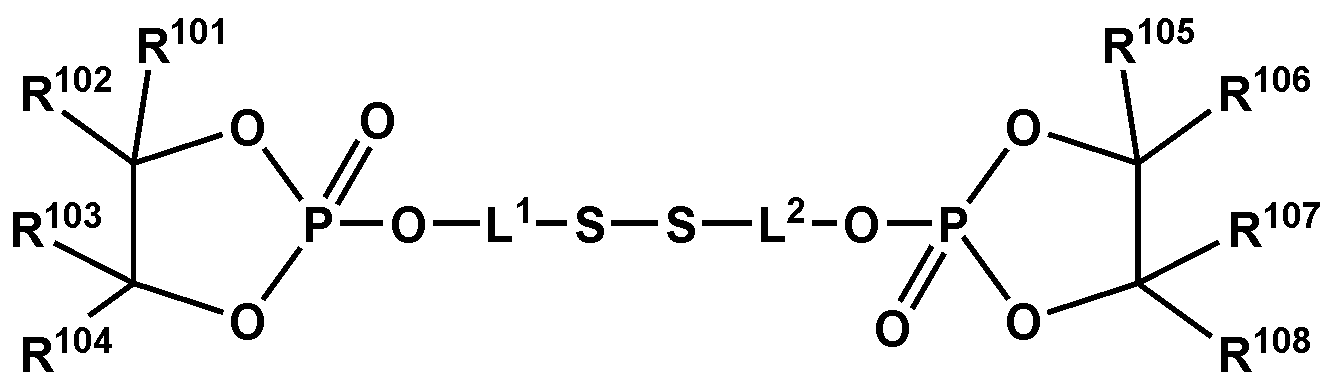
[화학식 1B-Ⅱ][Formula 1B-Ⅱ]

상기 화학식 1B-Ⅰ 및 화학식 1B-Ⅱ에서, In Formula 1B-I and Formula 1B-II,
R101 내지 R120은 각각 독립적으로 수소, 할로겐기 또는 치환 또는 비치환된 C1 내지 C10 알킬기이고,R 101 to R 120 are each independently hydrogen, a halogen group, or a substituted or unsubstituted C1 to C10 alkyl group,
L1 및 L2는 각각 독립적으로 치환 또는 비치환된 C1 내지 C20 알킬렌기이다.L 1 and L 2 are each independently a substituted or unsubstituted C1 to C20 alkylene group.
상기 화학식 2는 하기 화학식 2A 또는 화학식 2B로 표시될 수 있다.Formula 2 may be represented by Formula 2A or Formula 2B below.
[화학식 2A][Formula 2A]

상기 화학식 2A에서,In Formula 2A,
R33 내지 R52는 각각 독립적으로 수소, 할로겐기 또는 치환 또는 비치환된 C1 내지 C10 알킬기이고,R 33 to R 52 are each independently hydrogen, a halogen group, or a substituted or unsubstituted C1 to C10 alkyl group,
n5 내지 n8은 각각 독립적으로 0 내지 4의 정수 중 하나이고,n5 to n8 are each independently one of the integers from 0 to 4,
L3 및 L4는 각각 독립적으로 치환 또는 비치환된 C1 내지 C20 알킬렌기이며;L 3 and L 4 are each independently a substituted or unsubstituted C1 to C20 alkylene group;
[화학식 2B][Formula 2B]

상기 화학식 2B에서,In Formula 2B,
R53 및 R54는 각각 독립적으로 치환 또는 비치환된 C2 내지 C10 알킬렌기이고,R 53 and R 54 are each independently a substituted or unsubstituted C2 to C10 alkylene group,
L3 및 L4는 각각 독립적으로 치환 또는 비치환된 C1 내지 C20 알킬렌기이다.L 3 and L 4 are each independently a substituted or unsubstituted C1 to C20 alkylene group.
상기 화학식 2B는 하기 화학식 2B-Ⅰ 또는 화학식 2B-Ⅱ로 표시될 수 있다.The formula 2B may be represented by the following formula 2B-I or formula 2B-II.
[화학식 2B-Ⅰ][Formula 2B-Ⅰ]

[화학식 2B-Ⅱ][Formula 2B-Ⅱ]

상기 화학식 2B-Ⅰ 및 화학식 2B-Ⅱ에서, In Formula 2B-I and Formula 2B-II,
R121 내지 R140은 각각 독립적으로 수소, 할로겐기 또는 치환 또는 비치환된 C1 내지 C10 알킬기이고,R 121 to R 140 are each independently hydrogen, a halogen group, or a substituted or unsubstituted C1 to C10 alkyl group,
L3 및 L4는 각각 독립적으로 치환 또는 비치환된 C1 내지 C20 알킬렌기이다.L 3 and L 4 are each independently a substituted or unsubstituted C1 to C20 alkylene group.
상기 화학식 1은 하기 화학식 1B-Ⅰ-1 또는 하기 화학식 2B-Ⅰ-1로 표시될 수 있다.The formula 1 may be represented by the formula 1B-I-1 or the formula 2B-I-1.
[화학식 1B-Ⅰ-1][Formula 1B-Ⅰ-1]

[화학식 2B-Ⅰ-1][Formula 2B-Ⅰ-1]
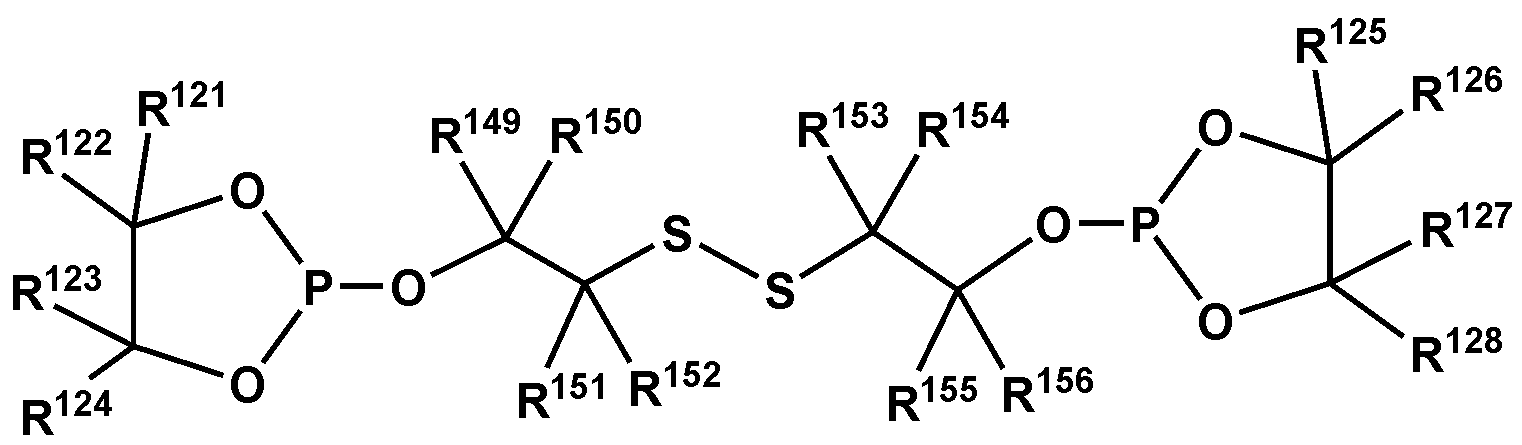
상기 화학식 1B-Ⅰ-1 및 하기 화학식 2B-Ⅰ-1에서,In the above formula 1B-I-1 and the following formula 2B-I-1,
R101 내지 R108, R121 내지 R128, 및 R141 내지 R156은 각각 독립적으로 수소, 할로겐기 또는 치환 또는 비치환된 C1 내지 C10 알킬기이다.R 101 to R 108 , R 121 to R 128 , and R 141 to R 156 are each independently hydrogen, a halogen group, or a substituted or unsubstituted C1 to C10 alkyl group.
상기 첨가제는 양극 활물질, 바인더 및 도전재의 전체 100 중량부에 대하여 0.001 내지 0.05 중량부로 포함될 수 있다.The additive may be included in an amount of 0.001 to 0.05 parts by weight based on 100 parts by weight of the positive electrode active material, binder, and conductive material.
상기 첨가제는 양극 활물질, 바인더 및 도전재의 전체 100 중량부에 대하여 0.005 내지 0.05 중량부로 포함될 수 있다.The additive may be included in an amount of 0.005 to 0.05 parts by weight based on a total of 100 parts by weight of the positive electrode active material, binder, and conductive material.
상기 양극 활물질은 하기 화학식 4로 표현될 수 있다.The positive electrode active material may be expressed by the following formula (4).
[화학식 4][Formula 4]
LixM1 yM2 zM3 1-y-zO2±aXa Li x M 1 y M 2 z M 3 1-yz O 2± a
상기 화학식 4에서,In Formula 4 above,
0.5≤x≤1.8, 0≤a≤0.1, 0<y≤1, 0≤z≤1, 0<y+z≤1, M1, M2 및 M3은 각각 독립적으로 Ni, Co, Mn, Al, B, Ba, Ca, Ce, Cr, Fe, Mo, Nb, Si, Sr, Mg, Ti, V, W, Zr 또는 La 등의 금속 및 이들의 조합에서 선택되는 1종 이상의 원소를 포함하고, X는 F, S, P 또는 Cl에서 선택되는 1종 이상의 원소를 포함한다.0.5≤x≤1.8, 0≤a≤0.1, 0<y≤1, 0≤z≤1, 0<y+z≤1, M 1 , M 2 and M 3 are each independently Ni, Co, Mn, Contains one or more elements selected from metals such as Al, B, Ba, Ca, Ce, Cr, Fe, Mo, Nb, Si, Sr, Mg, Ti, V, W, Zr or La, and combinations thereof; , X contains one or more elements selected from F, S, P or Cl.
상기 화학식 4에서, 0.8≤y≤1, 0≤z≤0.2, M1은 Ni일 수 있다.In Formula 4, 0.8≤y≤1, 0≤z≤0.2, M 1 may be Ni.
본 발명의 다른 일 구현예는 전술한 양극; 음극 활물질을 포함하는 음극; 및 리튬 이차 전지용 전해액을 포함하는 리튬 이차 전지를 제공한다.Another embodiment of the present invention includes the above-mentioned anode; A negative electrode containing a negative electrode active material; and a lithium secondary battery containing an electrolyte for a lithium secondary battery.
상기 양극 표면에 양극 피막을 더 포함하고, 상기 양극 피막은 상기 화학식 1 또는 화학식 2로 표시되는 첨가제가 상기 양극 활물질에 배위되어 형성된 것일 수 있다.It may further include a positive electrode film on the surface of the positive electrode, and the positive electrode film may be formed by coordinating an additive represented by Chemical Formula 1 or Chemical Formula 2 to the positive electrode active material.
상기 음극 활물질은 흑연 및 Si 복합체 중 적어도 1종을 포함할 수 있다.The negative electrode active material may include at least one of graphite and Si composite.
상기 Si 복합체는 Si계 입자를 포함한 코어 및 비정질 탄소 코팅층을 포함할 수 있다.The Si composite may include a core containing Si-based particles and an amorphous carbon coating layer.
상기 Si계 입자는 Si 입자, Si-C 복합체, SiOx(0 < x ≤ 2) 및 Si alloy 중 1종 이상을 포함할 수 있다.The Si-based particles may include one or more of Si particles, Si-C composite, SiO x (0 < x ≤ 2), and Si alloy.
양극 활물질의 붕괴를 억제함으로써 고온 저장 시 전지의 저항 증가를 억제하고 가스 발생량이 감소하여 고온 특성이 개선된 리튬 이차 전지를 구현할 수 있다.By suppressing the collapse of the positive electrode active material, an increase in battery resistance during high-temperature storage is suppressed and the amount of gas generated is reduced, making it possible to implement a lithium secondary battery with improved high-temperature characteristics.
또한, 양극에 첨가제로 사용함으로써 전해액에 첨가제로 사용 시 발생할 수 있는 전기화학적 반응에 따른 문제를 방지할 수 있다. Additionally, by using it as an additive to the positive electrode, problems caused by electrochemical reactions that may occur when using it as an additive to an electrolyte solution can be prevented.
도 1은 본 발명의 일 구현예에 따른 리튬 이차 전지를 도시한 개략도이다.
도 2는 실시예 1 내지 4, 및 비교예 1에 따른 양극에 대하여 시차주사열량 측정법(DSC, Differntial Scanning Calorimetry)으로 측정한 온도에 따른 열류량 그래프이다.
도 3 및 도 4는 실시예 1 및 비교예 1에 따라 제조된 리튬 이차 전지의 양극에 대한 XPS 분석 결과이다.
도 5는 비교예 1 및 비교예 4에 따른 전해액의 상온에서의 음극 순환전압전류(cyclic voltammetry, CV) 결과를 나타낸 그래프이다.1 is a schematic diagram showing a lithium secondary battery according to an embodiment of the present invention.
Figure 2 is a graph of heat flow according to temperature measured by differential scanning calorimetry (DSC) for the anodes according to Examples 1 to 4 and Comparative Example 1.
Figures 3 and 4 show the results of XPS analysis of the positive electrode of the lithium secondary battery manufactured according to Example 1 and Comparative Example 1.
Figure 5 is a graph showing the cathode cyclic voltammetry (CV) results of the electrolytes according to Comparative Examples 1 and 4 at room temperature.
이하, 본 발명의 구현예를 상세히 설명하기로 한다. 다만, 이는 예시로서 제시되는 것으로, 이에 의해 본 발명이 제한되지는 않으며 본 발명은 후수할 청구범위의 범주에 의해 정의될 뿐이다.Hereinafter, embodiments of the present invention will be described in detail. However, this is presented as an example, and the present invention is not limited thereby, and the present invention is only defined by the scope of the claims that follow.
본 명세서에서 "치환"이란 별도의 정의가 없는 한, 치환기 또는 화합물 중의 적어도 하나의 수소가 중수소, 할로겐기, 히드록실기, 아미노기, 치환 또는 비치환된 C1 내지 C30 아민기, 니트로기, 치환 또는 비치환된 C1 내지 C40 실릴기, C1 내지 C30 알킬기, C1 내지 C10 알킬실릴기, C6 내지 C30 아릴실릴기, C3 내지 C30 시클로알킬기, C3 내지 C30 헤테로시클로알킬기, C6 내지 C30 아릴기, C2 내지 C30 헤테로아릴기, C1 내지 C20 알콕시기, C1 내지 C10 플루오로알킬기, 시아노기, 또는 이들의 조합으로 치환된 것을 의미한다. In this specification, unless otherwise defined, “substitution” means that at least one hydrogen in the substituent or compound is deuterium, halogen group, hydroxyl group, amino group, substituted or unsubstituted C1 to C30 amine group, nitro group, substituted or Unsubstituted C1 to C40 silyl group, C1 to C30 alkyl group, C1 to C10 alkylsilyl group, C6 to C30 arylsilyl group, C3 to C30 cycloalkyl group, C3 to C30 heterocycloalkyl group, C6 to C30 aryl group, C2 to C30 It means substituted with a heteroaryl group, C1 to C20 alkoxy group, C1 to C10 fluoroalkyl group, cyano group, or a combination thereof.
본 발명의 일 예에서, "치환"은 치환기 또는 화합물 중의 적어도 하나의 수소가 중수소, 할로겐기, C1 내지 C30 알킬기, C1 내지 C10 알킬실릴기, C6 내지 C30 아릴실릴기, C3 내지 C30 시클로알킬기, C3 내지 C30 헤테로시클로알킬기, C6 내지 C30 아릴기, C2 내지 C30 헤테로아릴기, C1 내지 C10 플루오로알킬기 또는 시아노기로 치환된 것을 의미한다. 또한, 본 발명의 구체적인 일 예에서, "치환"은 치환기 또는 화합물 중의 적어도 하나의 수소가 중수소, 할로겐기, C1 내지 C20 알킬기, C6 내지 C30 아릴기, C1 내지 C10 플루오로알킬기 또는 시아노기로 치환된 것을 의미한다. 또한, 본 발명의 구체적인 일 예에서, "치환"은 치환기 또는 화합물 중의 적어도 하나의 수소가 중수소, 할로겐기, C1 내지 C5 알킬기, C6 내지 C18 아릴기, C1 내지 C5 플루오로알킬기 또는 시아노기로 치환된 것을 의미한다. 또한, 본 발명의 구체적인 일 예에서, "치환"은 치환기 또는 화합물 중의 적어도 하나의 수소가 중수소, 시아노기, 할로겐기, 메틸기, 에틸기, 프로필기, 부틸기, 페닐기, 바이페닐기, 터페닐기, 트리플루오로메틸기 또는 나프틸기로 치환된 것을 의미한다.In one example of the present invention, "substitution" means that at least one hydrogen in a substituent or compound is deuterium, halogen group, C1 to C30 alkyl group, C1 to C10 alkylsilyl group, C6 to C30 arylsilyl group, C3 to C30 cycloalkyl group, It means substituted with a C3 to C30 heterocycloalkyl group, a C6 to C30 aryl group, a C2 to C30 heteroaryl group, a C1 to C10 fluoroalkyl group, or a cyano group. In addition, in a specific example of the present invention, "substitution" means that at least one hydrogen in a substituent or compound is replaced with deuterium, a halogen group, a C1 to C20 alkyl group, a C6 to C30 aryl group, a C1 to C10 fluoroalkyl group, or a cyano group. It means that it has been done. In addition, in a specific example of the present invention, "substitution" means that at least one hydrogen in a substituent or compound is replaced with deuterium, a halogen group, a C1 to C5 alkyl group, a C6 to C18 aryl group, a C1 to C5 fluoroalkyl group, or a cyano group. It means that it has been done. In addition, in a specific example of the present invention, "substitution" means that at least one hydrogen in the substituent or compound is deuterium, cyano group, halogen group, methyl group, ethyl group, propyl group, butyl group, phenyl group, biphenyl group, terphenyl group, tri- group. It means substituted with a fluoromethyl group or naphthyl group.
일 구현예에 따른 양극은 양극 활물질, 바인더, 도전재, 및 하기 화학식 1 또는 화학식 2로 표시되는 첨가제를 포함한다.The positive electrode according to one embodiment includes a positive electrode active material, a binder, a conductive material, and an additive represented by Formula 1 or Formula 2 below.
[화학식 1][Formula 1]
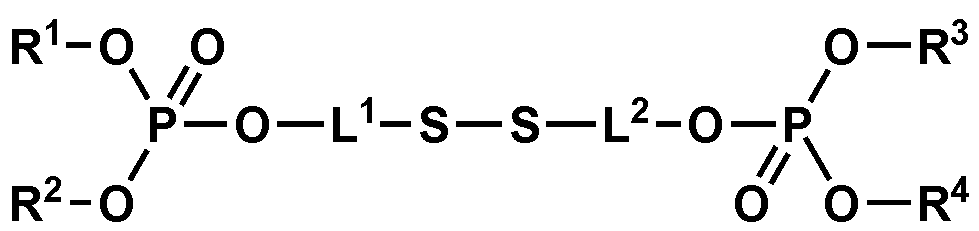
[화학식 2][Formula 2]

상기 화학식 1 및 화학식 2에서,In Formula 1 and Formula 2,
R1 내지 R8은 각각 독립적으로 치환 또는 비치환된 C1 내지 C10 알킬기, 치환 또는 비치환된 C2 내지 C10 알케닐기, 치환 또는 비치환된 C3 내지 C10 사이클로알킬기, 치환 또는 비치환된 C3 내지 C10 사이클로알케닐기, 치환 또는 비치환된 C2 내지 C10 알키닐기, 치환 또는 비치환된 C3 내지 C10 사이클로알키닐기 또는 치환 또는 비치환된 C6 내지 C20 아릴기이고,R 1 to R 8 are each independently a substituted or unsubstituted C1 to C10 alkyl group, a substituted or unsubstituted C2 to C10 alkenyl group, a substituted or unsubstituted C3 to C10 cycloalkyl group, or a substituted or unsubstituted C3 to C10 cycle. An alkenyl group, a substituted or unsubstituted C2 to C10 alkynyl group, a substituted or unsubstituted C3 to C10 cycloalkynyl group, or a substituted or unsubstituted C6 to C20 aryl group,
R1 내지 R8은 각각 독립적으로 존재하거나, 또는R 1 to R 8 each exist independently, or
R1 및 R2; R3 및 R4; R5 및 R6; 그리고 R7 및 R8 중 적어도 하나가 연결되어 치환 또는 비치환된 단환 또는 다환의 지방족 헤테로 고리, 또는 치환 또는 비치환된 단환 또는 다환의 방향족 헤테로 고리를 형성하고,R 1 and R 2 ; R 3 and R 4 ; R 5 and R 6 ; And at least one of R 7 and R 8 is connected to form a substituted or unsubstituted monocyclic or polycyclic aliphatic heterocycle, or a substituted or unsubstituted monocyclic or polycyclic aromatic heterocycle,
L1 내지 L4는 각각 독립적으로 치환 또는 비치환된 C1 내지 C20 알킬렌기이다.L 1 to L 4 are each independently a substituted or unsubstituted C1 to C20 alkylene group.
상기 첨가제는 양극 활물질과 결합하여 배위함으로써, 양극 표면에 피막을 형성하여 양극 활물질의 붕괴를 억제할 수 있다.The additive binds and coordinates with the positive electrode active material, thereby forming a film on the surface of the positive electrode and suppressing the collapse of the positive electrode active material.
상기 양극 표면에 형성되는 피막은 상기 화학식 1 또는 화학식 2로 표시되는 첨가제가 상기 양극 활물질에 배위되어 형성된 것일 수 있다.The film formed on the surface of the positive electrode may be formed by coordinating the additive represented by Formula 1 or Formula 2 to the positive electrode active material.
더욱 구체적으로 상기 피막은 상기 첨가제의 다이설파이드(disulfide)의 비공유 전자쌍과 양극 활물질의 금속이 착화합물을 형성한 것일 수 있다.More specifically, the film may be formed by forming a complex between the lone pair of electrons of the disulfide of the additive and the metal of the positive electrode active material.
특히, 상기 첨가제가 양극에 직접 적용됨으로써 첨가제가 전해액에 적용될 경우에 발생할 수 있는 전기화학적 반응이 방지되어 전해액의 변색을 방지할 수 있으며, 전해액에 적용될 경우 양극에서의 착화합물 형성 전 음극 표면에서 먼저 환원 분해하여 결과적으로 양극에서의 착화합물의 생성량이 감소되는 반면 양극에 적용됨에 따라 양극 활물질과 착화합물의 생성량이 더욱 증대될 수 있다.In particular, by applying the additive directly to the anode, electrochemical reactions that may occur when the additive is applied to the electrolyte are prevented, thereby preventing discoloration of the electrolyte. When applied to the electrolyte, it is reduced first on the cathode surface before forming a complex at the anode. As a result of decomposition, the amount of complex compounds generated at the positive electrode is reduced, but when applied to the positive electrode, the amount of complex compounds generated with the positive electrode active material can be further increased.
다시 말해, 첨가제가 양극에 적용될 경우 양극 표면 보호 효과가 더욱 개선될 수 있다.In other words, when additives are applied to the anode, the anode surface protection effect can be further improved.
구체적으로, 상기 첨가제는 비스포스페이트계 또는 비스포스파이트계 화합물로서 다이설파이드 링커에 의해 연결되는 구조를 갖는다.Specifically, the additive is a bisphosphate-based or bisphosphite-based compound and has a structure connected by a disulfide linker.
이러한 비스포스페이트계 화합물 및 비스포스파이트계 화합물 다이설파이드 링커를 중심으로 2개의 포스페이트계 화합물 또는 2개의 포스파이트계 화합물로 분해될 수 있다.These bisphosphate-based compounds and bisphosphite-based compounds can be decomposed into two phosphate-based compounds or two phosphite-based compounds centered on the disulfide linker.
이들은 양극 및 음극의 표면에 각각 피막을 형성함으로써 고온 저장 시 피막에서의 저항 증가를 억제하고 피막 안정성을 향상시켜 고온 수명 및 열 안전성 특성이 개선되는 효과를 나타낼 수 있다.By forming a film on the surface of the anode and cathode, respectively, they can suppress the increase in resistance in the film when stored at high temperatures and improve film stability, resulting in improved high-temperature lifespan and thermal safety characteristics.
일 예로 상기 첨가제는 하기 화학식 1A 또는 화학식 1B로 표현될 수 있다.As an example, the additive may be represented by Formula 1A or Formula 1B below.
[화학식 1A][Formula 1A]

상기 화학식 1A에서,In Formula 1A,
R11 내지 R30은 각각 독립적으로 수소, 할로겐기 또는 치환 또는 비치환된 C1 내지 C10 알킬기이고,R 11 to R 30 are each independently hydrogen, a halogen group, or a substituted or unsubstituted C1 to C10 alkyl group,
n1 내지 n4는 각각 독립적으로 0 내지 4의 정수 중 하나이고,n1 to n4 are each independently one of the integers from 0 to 4,
L1 및 L2는 각각 독립적으로 치환 또는 비치환된 C1 내지 C20 알킬렌기이며;L 1 and L 2 are each independently a substituted or unsubstituted C1 to C20 alkylene group;
[화학식 1B][Formula 1B]
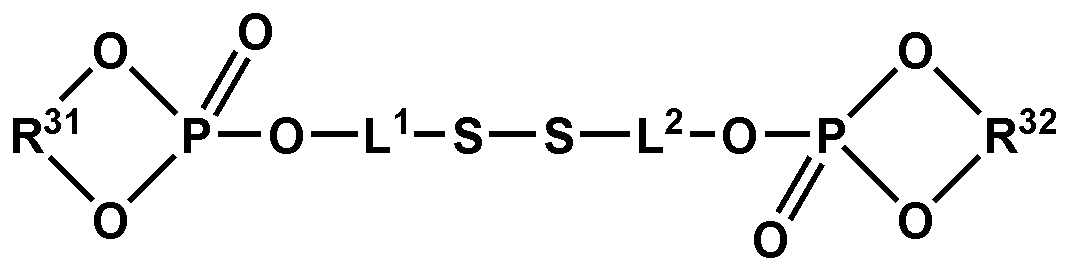
상기 화학식 1B에서,In Formula 1B,
R31 및 R32는 각각 독립적으로 치환 또는 비치환된 C2 내지 C10 알킬렌기이고,R 31 and R 32 are each independently a substituted or unsubstituted C2 to C10 alkylene group,
L1 및 L2는 각각 독립적으로 치환 또는 비치환된 C1 내지 C20 알킬렌기이다.L 1 and L 2 are each independently a substituted or unsubstituted C1 to C20 alkylene group.
일 실시예에서, 상기 R11 내지 R30은 각각 독립적으로 수소, 할로겐기 또는 치환 또는 비치환된 C1 내지 C5 알킬기이고, n1 내지 n4는 각각 독립적으로 0 내지 3의 정수 중 하나이고, L1 및 L2는 각각 독립적으로 치환 또는 비치환된 C2 내지 C20 알킬렌기일 수 있다.In one embodiment, R 11 to R 30 are each independently hydrogen, a halogen group, or a substituted or unsubstituted C1 to C5 alkyl group, n1 to n4 are each independently an integer of 0 to 3, L 1 and L 2 may each independently be a substituted or unsubstituted C2 to C20 alkylene group.
구체적인 일 실시예에서, 상기 R11 내지 R30은 각각 독립적으로 수소, 할로겐기 또는 치환 또는 비치환된 C1 내지 C3 알킬기이고, n1 내지 n4는 각각 독립적으로 0 내지 2의 정수 중 하나이고, L1 및 L2는 각각 독립적으로 치환 또는 비치환된 C2 내지 C10 알킬렌기일 수 있다.In a specific embodiment, R 11 to R 30 are each independently hydrogen, a halogen group, or a substituted or unsubstituted C1 to C3 alkyl group, n1 to n4 are each independently an integer of 0 to 2, and L 1 and L 2 may each independently be a substituted or unsubstituted C2 to C10 alkylene group.
일 실시예에서 상기 R31 및 R32는 각각 독립적으로 치환 또는 비치환된 C2 내지 C5 알킬렌기이고, L1 및 L2는 각각 독립적으로 치환 또는 비치환된 C2 내지 C20 알킬렌기일 수 있다.In one embodiment, R 31 and R 32 may each independently be a substituted or unsubstituted C2 to C5 alkylene group, and L 1 and L 2 may each independently be a substituted or unsubstituted C2 to C20 alkylene group.
구체적인 일 실시예에서, 상기 R31 및 R32는 각각 독립적으로 치환 또는 비치환된 C2 내지 C4 알킬렌기이고, L1 및 L2는 각각 독립적으로 치환 또는 비치환된 C2 내지 C10 알킬렌기일 수 있다.In a specific embodiment, R 31 and R 32 may each independently be a substituted or unsubstituted C2 to C4 alkylene group, and L 1 and L 2 may each independently be a substituted or unsubstituted C2 to C10 alkylene group. .
예컨대 상기 화학식 1B는 하기 화학식 1B-Ⅰ 또는 화학식 1B-Ⅱ로 표현될 수 있다.For example, Chemical Formula 1B may be expressed as Chemical Formula 1B-I or Chemical Formula 1B-II.
[화학식 1B-Ⅰ][Formula 1B-Ⅰ]

[화학식 1B-Ⅱ][Formula 1B-Ⅱ]

상기 화학식 1B-Ⅰ 및 화학식 1B-Ⅱ에서, In Formula 1B-I and Formula 1B-II,
R101 내지 R120은 각각 독립적으로 수소, 할로겐기 또는 치환 또는 비치환된 C1 내지 C10 알킬기이고,R 101 to R 120 are each independently hydrogen, a halogen group, or a substituted or unsubstituted C1 to C10 alkyl group,
L1 및 L2는 전술한 바와 같다.L 1 and L 2 are as described above.
일 실시예에서 상기 R101 내지 R120은 각각 독립적으로 수소, 할로겐기 또는 치환 또는 비치환된 C1 내지 C5 알킬기일 수 있다.In one embodiment, R 101 to R 120 may each independently be hydrogen, a halogen group, or a substituted or unsubstituted C1 to C5 alkyl group.
구체적인 일 실시예에서 상기 R101 내지 R120은 각각 수소일 수 있다.In a specific embodiment, R 101 to R 120 may each be hydrogen.
다른 일 예로 상기 첨가제는 하기 화학식 2A 또는 화학식 2B로 표현될 수 있다.As another example, the additive may be represented by the following Chemical Formula 2A or Chemical Formula 2B.
[화학식 2A][Formula 2A]

상기 화학식 2A에서,In Formula 2A,
R33 내지 R52는 각각 독립적으로 수소, 할로겐기 또는 치환 또는 비치환된 C1 내지 C10 알킬기이고,R 33 to R 52 are each independently hydrogen, a halogen group, or a substituted or unsubstituted C1 to C10 alkyl group,
n5 내지 n8은 각각 독립적으로 0 내지 4의 정수 중 하나이고,n5 to n8 are each independently one of the integers from 0 to 4,
L3 및 L4는 각각 독립적으로 치환 또는 비치환된 C1 내지 C20 알킬렌기이며;L 3 and L 4 are each independently a substituted or unsubstituted C1 to C20 alkylene group;
[화학식 2B][Formula 2B]

상기 화학식 2B에서,In Formula 2B,
R53 및 R54는 각각 독립적으로 치환 또는 비치환된 C2 내지 C10 알킬렌기이고,R 53 and R 54 are each independently a substituted or unsubstituted C2 to C10 alkylene group,
L3 및 L4는 각각 독립적으로 치환 또는 비치환된 C1 내지 C20 알킬렌기이다.L 3 and L 4 are each independently a substituted or unsubstituted C1 to C20 alkylene group.
일 실시예에서, 상기 R33 내지 R52는 각각 독립적으로 수소, 할로겐기 또는 치환 또는 비치환된 C1 내지 C5 알킬기이고, n5 내지 n8은 각각 독립적으로 0 내지 3의 정수 중 하나이고, L3 및 L4는 각각 독립적으로 치환 또는 비치환된 C2 내지 C20 알킬렌기일 수 있다.In one embodiment, R 33 to R 52 are each independently hydrogen, a halogen group, or a substituted or unsubstituted C1 to C5 alkyl group, n5 to n8 are each independently an integer of 0 to 3, L 3 and L 4 may each independently be a substituted or unsubstituted C2 to C20 alkylene group.
구체적인 일 실시예에서, 상기 R33 내지 R52는 각각 독립적으로 수소, 할로겐기 또는 치환 또는 비치환된 C1 내지 C3 알킬기이고, n5 내지 n8은 각각 독립적으로 0 내지 2의 정수 중 하나이고, L3 및 L4는 각각 독립적으로 치환 또는 비치환된 C2 내지 C10 알킬렌기일 수 있다.In a specific embodiment, R 33 to R 52 are each independently hydrogen, a halogen group, or a substituted or unsubstituted C1 to C3 alkyl group, n5 to n8 are each independently an integer of 0 to 2, and L 3 and L 4 may each independently be a substituted or unsubstituted C2 to C10 alkylene group.
일 실시예에서 상기 R53 및 R54는 각각 독립적으로 치환 또는 비치환된 C2 내지 C5 알킬렌기이고, L3 및 L4는 각각 독립적으로 치환 또는 비치환된 C2 내지 C20 알킬렌기일 수 있다.In one embodiment, R 53 and R 54 may each independently be a substituted or unsubstituted C2 to C5 alkylene group, and L 3 and L 4 may each independently be a substituted or unsubstituted C2 to C20 alkylene group.
구체적인 일 실시예에서, 상기 R53 및 R54는 각각 독립적으로 치환 또는 비치환된 C2 내지 C4 알킬렌기이고, L3 및 L4는 각각 독립적으로 치환 또는 비치환된 C2 내지 C10 알킬렌기일 수 있다.In a specific embodiment, R 53 and R 54 may each independently be a substituted or unsubstituted C2 to C4 alkylene group, and L 3 and L 4 may each independently be a substituted or unsubstituted C2 to C10 alkylene group. .
예컨대 상기 화학식 2B는 하기 화학식 2B-Ⅰ 또는 화학식 2B-Ⅱ로 표현될 수 있다.For example, Chemical Formula 2B may be expressed as Chemical Formula 2B-I or Chemical Formula 2B-II.
[화학식 2B-Ⅰ][Formula 2B-Ⅰ]

[화학식 2B-Ⅱ][Formula 2B-Ⅱ]

상기 화학식 2B-Ⅰ 및 화학식 2B-Ⅱ에서, In Formula 2B-I and Formula 2B-II,
R121 내지 R140은 각각 독립적으로 수소, 할로겐기 또는 치환 또는 비치환된 C1 내지 C10 알킬기이고,R 121 to R 140 are each independently hydrogen, a halogen group, or a substituted or unsubstituted C1 to C10 alkyl group,
L3 및 L4는 전술한 바와 같다.L 3 and L 4 are as described above.
일 실시예에서 상기 R121 내지 R140은 각각 독립적으로 수소, 할로겐기 또는 치환 또는 비치환된 C1 내지 C5 알킬기일 수 있다.In one embodiment, R 121 to R 140 may each independently be hydrogen, a halogen group, or a substituted or unsubstituted C1 to C5 alkyl group.
구체적인 일 실시예에서 상기 R121 내지 R140은 각각 수소일 수 있다.In a specific embodiment, R 121 to R 140 may each be hydrogen.
본 발명의 구체적인 일 예에 따른 첨가제는 하기 화학식 1B-Ⅰ-1 또는 하기 화학식 2B-Ⅰ-1로 표현될 수 있다.The additive according to a specific example of the present invention may be expressed by the following formula 1B-I-1 or the following formula 2B-I-1.
[화학식 1B-Ⅰ-1][Formula 1B-Ⅰ-1]

[화학식 2B-Ⅰ-1][Formula 2B-Ⅰ-1]

상기 화학식 1B-Ⅰ-1 및 하기 화학식 2B-Ⅰ-1에서,In the above formula 1B-I-1 and the following formula 2B-I-1,
R101 내지 R108, R121 내지 R128, 및 R141 내지 R156은 각각 독립적으로 수소, 할로겐기 또는 치환 또는 비치환된 C1 내지 C10 알킬기이고,R 101 to R 108 , R 121 to R 128 , and R 141 to R 156 are each independently hydrogen, a halogen group, or a substituted or unsubstituted C1 to C10 alkyl group,
L3 및 L4는 전술한 바와 같다.L 3 and L 4 are as described above.
일 실시예에서 상기 R101 내지 R108, R121 내지 R128, 및 R141 내지 R156은 각각 독립적으로 수소, 할로겐기 또는 치환 또는 비치환된 C1 내지 C5 알킬기일 수 있다.In one embodiment, R 101 to R 108 , R 121 to R 128 , and R 141 to R 156 may each independently be hydrogen, a halogen group, or a substituted or unsubstituted C1 to C5 alkyl group.
구체적인 일 실시예에서 상기 R101 내지 R108, R121 내지 R128, 및 R141 내지 R156은 각각 수소일 수 있다.In a specific embodiment, R 101 to R 108 , R 121 to R 128 , and R 141 to R 156 may each be hydrogen.
상기 첨가제는 양극 활물질, 바인더 및 도전재의 전체 100 중량부에 대하여 0.001 내지 0.05 중량부로 포함될 수 있다.The additive may be included in an amount of 0.001 to 0.05 parts by weight based on 100 parts by weight of the positive electrode active material, binder, and conductive material.
일 예로 상기 첨가제는 양극 활물질, 바인더 및 도전재의 전체 100 중량부에 대하여 0.005 내지 0.05 중량부로 포함될 수 있다.For example, the additive may be included in an amount of 0.005 to 0.05 parts by weight based on 100 parts by weight of the positive electrode active material, binder, and conductive material.
상기 첨가제는 양극 활물질과 결합하여 양극 표면에 피막을 형성함으로서 고온 저장 특성을 개선시킬 수 있고, 특히 상기 함량으로 첨가되는 경우에 저항 증가 없이 가스 발생량 개선 정도가 현저하게 나타날 수 있다.The additive can improve high-temperature storage characteristics by combining with the positive electrode active material to form a film on the surface of the positive electrode. In particular, when added in the above amount, the amount of gas generation can be significantly improved without increasing resistance.
상기 양극 활물질로는 리튬의 가역적인 인터칼레이션 및 디인터칼레이션이 가능한 화합물(리티에이티드 인터칼레이션 화합물)을 사용할 수 있다.As the positive electrode active material, a compound capable of reversible intercalation and deintercalation of lithium (lithiated intercalation compound) can be used.
구체적으로는 코발트, 망간, 니켈 및 이들의 조합으로부터 선택되는 금속과 리튬과의 복합 산화물 중 적어도 1종을 사용할 수 있다. Specifically, at least one type of complex oxide of a metal selected from cobalt, manganese, nickel, and a combination thereof and lithium can be used.
물론 상기 복합 산화물의 금속의 일부가 다른 금속 이외의 금속으로치환된 것을 사용할 수도 있고, 상기 복합 산화물의 인산 화합물, 예컨대 LiFePO4, LiCoPO4, 및 LiMnPO4로 이루어지는 군으로부터 선택되는 적어도 1종일 수도 있으며, 상기 복합 산화물의 표면에 코팅층을 갖는 것도 사용할 수 있고, 또는 상기 복합 산화물과 코팅층을 갖는 복합 산화물을 혼합하여 사용할 수도 있다. 이 코팅층은 코팅 원소의 옥사이드, 코팅 원소의 하이드록사이드, 코팅 원소의 옥시하이드록사이드, 코팅 원소의 옥시카보네이트 및 코팅 원소의 하이드록시카보네이트로 이루어진 군에서 선택되는 적어도 하나의 코팅 원소 화합물을 포함할 수 있다. 이들 코팅층을 이루는 화합물은 비정질 또는 결정질일 수 있다. 상기 코팅층에 포함되는 코팅 원소로는 Mg, Al, Co, K, Na, Ca, Si, Ti, V, Sn, Ge, Ga, B, As, Zr 또는 이들의 혼합물을 사용할 수 있다. 코팅층 형성 공정은 상기 화합물에 이러한 원소들을 사용하여 양극 활물질의 물성에 악영향을 주지 않는 방법(예를 들어 스프레이 코팅, 침지법 등)으로 코팅할 수 있으면 어떠한 코팅 방법을 사용하여도 무방하며, 이에 대하여는 당해 분야에 종사하는 사람들에게 잘 이해될 수 있는 내용이므로 자세한 설명은 생략하기로 한다.Of course, a part of the metal of the complex oxide may be substituted with a metal other than another metal, and a phosphoric acid compound of the complex oxide may be at least one selected from the group consisting of LiFePO 4 , LiCoPO 4 , and LiMnPO 4 . , one having a coating layer on the surface of the complex oxide may be used, or a mixture of the above complex oxide and a complex oxide having a coating layer may be used. This coating layer may include at least one coating element compound selected from the group consisting of oxides of coating elements, hydroxides of coating elements, oxyhydroxides of coating elements, oxycarbonates of coating elements and hydroxycarbonates of coating elements. You can. The compounds that make up these coating layers may be amorphous or crystalline. Coating elements included in the coating layer may include Mg, Al, Co, K, Na, Ca, Si, Ti, V, Sn, Ge, Ga, B, As, Zr, or mixtures thereof. For the coating layer formation process, any coating method may be used as long as these elements can be used in the compound to coat the compound in a manner that does not adversely affect the physical properties of the positive electrode active material (e.g., spray coating, dipping method, etc.). Since this is well-understood by people working in the field, detailed explanation will be omitted.
양극 활물질은 예컨대 하기 화학식 4로 표현되는 리튬 복합 산화물 중 1종 이상일 수 있다.The positive electrode active material may be, for example, one or more types of lithium complex oxides represented by the following formula (4).
[화학식 4][Formula 4]
LixM1 yM2 zM3 1-y-zO2±aXa Li x M 1 y M 2 z M 3 1-yz O 2± a
상기 화학식 4에서,In Formula 4 above,
0.5≤x≤1.8, 0≤a≤0.1, 0<y≤1, 0≤z≤1, 0<y+z≤1, M1, M2 및 M3은 각각 독립적으로 Ni, Co, Mn, Al, B, Ba, Ca, Ce, Cr, Fe, Mo, Nb, Si, Sr, Mg, Ti, V, W, Zr 또는 La 등의 금속 및 이들의 조합에서 선택되는 1종 이상의 원소를 포함하고, X는 F, S, P 또는 Cl에서 선택되는 1종 이상의 원소를 포함한다.0.5≤x≤1.8, 0≤a≤0.1, 0<y≤1, 0≤z≤1, 0<y+z≤1, M 1 , M 2 and M 3 are each independently Ni, Co, Mn, Contains one or more elements selected from metals such as Al, B, Ba, Ca, Ce, Cr, Fe, Mo, Nb, Si, Sr, Mg, Ti, V, W, Zr or La, and combinations thereof; , X contains one or more elements selected from F, S, P or Cl.
일 실시예에서 상기 양극 활물질은 LiCoO2, LiNiO2, LiMnO2, LiMn2O4, LiNiaMnbCocO2 (a+b+c=1), LiNiaMnbCocAldO2 (a+b+c+d=1) 및 LiNieCofAlgO2 (e+f+g=1)로 이루어지는 군으로부터 선택되는 적어도 1종일 수 있다. In one embodiment, the positive electrode active material is LiCoO 2 , LiNiO 2 , LiMnO 2 , LiMn 2 O 4 , LiNi a Mn b Co c O 2 (a+b+c=1), LiNi a Mn b Co c Al d O 2 (a+b+c+d=1) and LiNi e Co f Al g O 2 (e+f+g=1).
상기 화학식 4에서, 0.8≤y≤1, 0≤z≤0.2, M1은 Ni일 수 있다.In Formula 4, 0.8≤y≤1, 0≤z≤0.2, M 1 may be Ni.
예컨대 상기 LiNibMncCodO2 (b+c+d=1), LiNibMncCodAleO2 (b+c+d+e=1) 및 LiNibCodAleO2 (b+d+e=1)에서 선택되는 양극 활물질은 하이 니켈 (high Ni)계 양극 활물질일 수 있다. For example, LiNi b Mn c Co d O 2 (b+c+d=1), LiNi b Mn c Co d Al e O 2 (b+c+d+e=1) and LiNi b Co d Al e O 2 The positive electrode active material selected from (b+d+e=1) may be a high nickel (high Ni)-based positive electrode active material.
예를 들어 상기 LiNibMncCodO2 (b+c+d=1) 및 LiNibMncCodAleO2 (b+c+d+e=1)의 경우, 니켈의 함량은 60% 이상 (b ≥ 0.6)일 수 있으며, 더욱 구체적으로 80% 이상 (b ≥ 0.8)일 수 있다.For example, in the case of LiNi b Mn c Co d O 2 (b+c+d=1) and LiNi b Mn c Co d Al e O 2 (b+c+d+e=1), the nickel content is It may be 60% or more (b ≥ 0.6), and more specifically, it may be 80% or more (b ≥ 0.8).
예를 들어 상기 LiNibCodAleO2 (b+d+e=1)의 경우, 니켈의 함량은 60% 이상 (b ≥ 0.6)일 수 있으며, 더욱 구체적으로 80% 이상 (b ≥ 0.8)일 수 있다.For example, in the case of LiNi b Co d Al e O 2 (b+d+e=1), the nickel content may be 60% or more (b ≥ 0.6), more specifically 80% or more (b ≥ 0.8 ) can be.
상기 양극 활물질의 함량은 양극 조성물의 전체 중량에 대하여 90 중량% 내지 98 중량%일 수 있다.The content of the positive electrode active material may be 90% by weight to 98% by weight based on the total weight of the positive electrode composition.
상기 도전재 및 바인더의 함량은 양극 조성물의 전체 중량에 대하여 각각 1 중량% 내지 5 중량%일 수 있다.The content of the conductive material and binder may be 1% to 5% by weight, respectively, based on the total weight of the positive electrode composition.
상기 도전재는 양극에 도전성을 부여하기 위해 사용되는 것으로서, 구성되는 전지에 있어서, 화학변화를 야기하지 않고 전자 전도성 재료이면 어떠한 것도 사용 가능하며, 그 예로 천연 흑연, 인조 흑연, 카본 블랙, 아세틸렌 블랙, 케첸블랙, 탄소섬유 등의 탄소계 물질; 구리, 니켈, 알루미늄, 은 등의 금속 분말 또는 금속 섬유 등의 금속계 물질; 폴리페닐렌 유도체 등의 도전성 폴리머; 또는 이들의 혼합물을 포함하는 도전성 재료를 사용할 수 있다.The conductive material is used to provide conductivity to the positive electrode. In the battery being constructed, any electronically conductive material can be used as long as it does not cause chemical change. Examples include natural graphite, artificial graphite, carbon black, acetylene black, and Ketjen. Carbon-based materials such as black and carbon fiber; Metallic substances such as metal powders such as copper, nickel, aluminum, and silver, or metal fibers; Conductive polymers such as polyphenylene derivatives; Alternatively, a conductive material containing a mixture thereof may be used.
상기 바인더는 양극 활물질 입자들을 서로 잘 부착시키고, 또한 양극 활물질을 전류 집전체에 잘 부착시키는 역할을 하며, 그 대표적인 예로는 폴리비닐알콜, 카르복시메틸셀룰로즈, 히드록시프로필셀룰로즈, 디아세틸셀룰로즈, 폴리비닐클로라이드, 카르복실화된 폴리비닐클로라이드, 폴리비닐플루오라이드, 에틸렌 옥사이드를 포함하는 폴리머, 폴리비닐피롤리돈, 폴리우레탄, 폴리테트라플루오로에틸렌, 폴리비닐리덴 플루오라이드, 폴리에틸렌, 폴리프로필렌, 스티렌-부타디엔 러버, 아크릴레이티드 스티렌-부타디엔 러버, 에폭시 수지, 나일론 등을 사용할 수 있으나, 이에 한정되는 것은 아니다.The binder serves to attach the positive electrode active material particles to each other well and also to attach the positive electrode active material to the current collector. Representative examples include polyvinyl alcohol, carboxymethyl cellulose, hydroxypropyl cellulose, diacetyl cellulose, and polyvinyl alcohol. Chloride, carboxylated polyvinylchloride, polyvinylfluoride, polymers containing ethylene oxide, polyvinylpyrrolidone, polyurethane, polytetrafluoroethylene, polyvinylidene fluoride, polyethylene, polypropylene, styrene- Butadiene rubber, acrylated styrene-butadiene rubber, epoxy resin, nylon, etc. can be used, but are not limited thereto.
다른 구현예는 전술한 양극; 음극 활물질을 포함하는 음극; 및 리튬 이차 전지용 전해액을 포함하는 리튬 이차 전지를 제공한다.Other embodiments include the anode described above; A negative electrode containing a negative electrode active material; and a lithium secondary battery containing an electrolyte for a lithium secondary battery.
상기 양극은 양극 집전체 및 상기 양극 집전체에 상에 위치하는 양극 활물질 층을 포함하며, 상기 양극 활물질 층은 상기 양극 활물질을 포함한다.The positive electrode includes a positive electrode current collector and a positive electrode active material layer located on the positive electrode current collector, and the positive electrode active material layer includes the positive electrode active material.
상기 양극 집전체로는 Al을 사용할 수 있으나 이에 한정되는 것은 아니다.Al may be used as the positive electrode current collector, but is not limited thereto.
상기 음극은 음극 집전체 및 이 음극 집전체 위에 형성되는 음극 활물질을 포함하는 음극 활물질 층을 포함한다.The negative electrode includes a negative electrode current collector and a negative electrode active material layer including a negative electrode active material formed on the negative electrode current collector.
상기 음극 활물질은 리튬 이온을 가역적으로 인터칼레이션/디인터칼레이션할 수 있는 물질, 리튬 금속, 리튬 금속의 합금, 리튬에 도프 및 탈도프 가능한 물질 또는 전이 금속 산화물을 포함한다.The negative electrode active material includes a material capable of reversibly intercalating/deintercalating lithium ions, lithium metal, an alloy of lithium metal, a material capable of doping and dedoping lithium, or a transition metal oxide.
상기 리튬 이온을 가역적으로 인터칼레이션/디인터칼레이션할 수 있는 물질로는 탄소 물질로서, 리튬 이차 전지에서 일반적으로 사용되는 탄소계 음극 활물질은 어떠한 것도 사용할 수 있으며, 그 대표적인 예로는 결정질 탄소, 비정질 탄소 또는 이들을 함께 사용할 수 있다. 상기 결정질 탄소의 예로는 무정형, 판상, 린편상 (flake), 구형 또는 섬유형의 천연 흑연 또는 인조 흑연과 같은 흑연을 들 수 있고, 상기 비정질 탄소의 예로는 소프트 카본(soft carbon) 또는 하드 카본(hard carbon), 메조페이스 피치 탄화물, 소성된 코크스 등을 들 수 있다.The material capable of reversibly intercalating/deintercalating lithium ions is a carbon material. Any carbon-based negative electrode active material commonly used in lithium secondary batteries can be used, and representative examples include crystalline carbon, Amorphous carbon or a combination thereof can be used. Examples of the crystalline carbon include graphite such as amorphous, plate-shaped, flake, spherical or fibrous natural graphite or artificial graphite, and examples of the amorphous carbon include soft carbon or hard carbon ( hard carbon), mesophase pitch carbide, calcined coke, etc.
상기 리튬 금속의 합금으로는 리튬과 Na, K, Rb, Cs, Fr, Be, Mg, Ca, Sr, Si, Sb, Pb, In, Zn, Ba, Ra, Ge, Al 및 Sn으로 이루어진 군에서 선택되는 금속의 합금이 사용될 수 있다.The lithium metal alloy includes lithium and Na, K, Rb, Cs, Fr, Be, Mg, Ca, Sr, Si, Sb, Pb, In, Zn, Ba, Ra, Ge, Al and Sn. Any alloy of metals of choice may be used.
상기 리튬에 도프 및 탈도프 가능한 물질로는 Si, Si-C 복합체, SiOx(0 < x < 2), Si-Q 합금(상기 Q는 알칼리 금속, 알칼리 토금속, 13족 원소, Si를 제외한 14족 원소, 15족 원소, 16족 원소, 전이금속, 희토류 원소 및 이들의 조합으로 이루어진 군에서 선택되는 원소), Sn, SnO2, Sn-R11(상기 R11은 알칼리 금속, 알칼리 토금속, 13족 원소, Sn을 제외한 14족 원소, 15족 원소, 16족 원소, 전이금속, 희토류 원소 및 이들의 조합으로 이루어진 군에서 선택되는 원소) 등을 들 수 있고, 또한 이들 중 적어도 하나와 SiO2를 혼합하여 사용할 수도 있다.Materials that can be doped and undoped with lithium include Si, Si-C composite, SiOx (0 < elements selected from the group consisting of elements, group 15 elements, group 16 elements, transition metals, rare earth elements and combinations thereof), Sn, SnO 2 , Sn-R 11 (wherein R 11 is an alkali metal, alkaline earth metal, group 13) elements, elements selected from the group consisting of group 14 elements excluding Sn, group 15 elements, group 16 elements, transition metals, rare earth elements, and combinations thereof), etc., and at least one of these mixed with SiO 2 You can also use it.
상기 원소 Q 및 R11로는 Mg, Ca, Sr, Ba, Ra, Sc, Y, Ti, Zr, Hf, Rf, V, Nb, Ta, Db, Cr, Mo, W, Sg, Tc, Re, Bh, Fe, Pb, Ru, Os, Hs, Rh, Ir, Pd, Pt, Cu, Ag, Au, Zn, Cd, B, Al, Ga, Sn, In, Tl, Ge, P, As, Sb, Bi, S, Se, Te, Po, 및 이들의 조합으로 이루어진 군에서 선택되는 것을 사용할 수 있다.The elements Q and R 11 include Mg, Ca, Sr, Ba, Ra, Sc, Y, Ti, Zr, Hf, Rf, V, Nb, Ta, Db, Cr, Mo, W, Sg, Tc, Re, Bh. , Fe, Pb, Ru, Os, Hs, Rh, Ir, Pd, Pt, Cu, Ag, Au, Zn, Cd, B, Al, Ga, Sn, In, Tl, Ge, P, As, Sb, Bi , S, Se, Te, Po, and combinations thereof can be used.
상기 전이 금속 산화물로는 바나듐 산화물, 리튬 바나듐 산화물 또는 리튬 티타늄 산화물 등을 들 수 있다.The transition metal oxide may include vanadium oxide, lithium vanadium oxide, or lithium titanium oxide.
구체적인 일 실시예에서 상기 음극 활물질은 흑연 및 Si 복합체 중 적어도 1종을 포함할 수 있다.In a specific embodiment, the negative electrode active material may include at least one of graphite and Si composite.
상기 Si 복합체는 Si계 입자를 포함한 코어 및 비정질 탄소 코팅층을 포함하며, 예컨대 상기 Si계 입자는 Si 입자, Si-C 복합체, SiOx(0 < x ≤ 2) 및 Si alloy 중 1종 이상을 포함할 수 있다. The Si composite includes a core containing Si-based particles and an amorphous carbon coating layer. For example, the Si-based particles include one or more of Si particles, Si-C composite, SiO x (0 < x ≤ 2), and Si alloy. can do.
일 예로 상기 Si계 입자를 포함하는 코어의 중심부에 공극을 포함하고, 상기 중심부의 반지름은 상기 음극활물질의 반지름의 30% 내지 50%에 해당하며, 상기 Si계 입자의 평균 입경은 10nm 내지 200nm일 수 있다.For example, the core containing the Si-based particles includes a void at the center, the radius of the center corresponds to 30% to 50% of the radius of the negative electrode active material, and the average particle diameter of the Si-based particles is 10nm to 200nm. You can.
본 명세서에서, 평균 입경은 누적 분포 곡선(cumulative size-distribution curve)에서 부피비로 50%에서의 입자 크기 (D50)일 수 있다.In this specification, the average particle diameter may be the particle size at 50% by volume (D50) in the cumulative size-distribution curve.
상기 Si계 입자의 평균 입경이 상기 범위에 포함되는 경우, 충방전시 발생하는 부피 팽창을 억제할 수 있고, 충방전시 입자 파쇄에 의한 전도성 경로(conductive path)의 단절을 막을 수 있다.When the average particle diameter of the Si-based particles is within the above range, volume expansion that occurs during charging and discharging can be suppressed, and disconnection of the conductive path due to particle crushing during charging and discharging can be prevented.
상기 Si계 입자를 포함하는 코어는 비정질 탄소를 추가로 포함하고, 이 때 상기 중심부는 비정질 탄소를 포함하지 않으며, 비정질 탄소는 음극활물질의 표면부에만 존재할 수 있다. The core including the Si-based particles further includes amorphous carbon, and at this time, the central portion does not include amorphous carbon, and the amorphous carbon may exist only on the surface of the negative electrode active material.
이때, 표면부란, 중심부의 최표면으로부터 음극 활물질의 최표면까지의 영역을 의미한다.At this time, the surface portion refers to the area from the outermost surface of the center to the outermost surface of the negative electrode active material.
또한, Si계 입자는 음극 활물질에 전체적으로 실질적으로 균일하게 포함되는 것으로서, 즉 중심부와 표면부에 실질적으로 균일한 농도로 존재할 수 있다.In addition, the Si-based particles are included substantially uniformly throughout the negative electrode active material, that is, they may exist at a substantially uniform concentration in the center and surface portions.
상기 비정질 탄소는 소프트 카본, 하드 카본, 메조페이스 핏치 탄화물, 소성된 코크스 또는 이들의 조합일 수 있다.The amorphous carbon may be soft carbon, hard carbon, mesophase pitched carbide, calcined coke, or a combination thereof.
예를 들어 상기 Si-C 복합체는 Si 입자 그리고 결정질 탄소를 포함할 수 있다.For example, the Si-C composite may include Si particles and crystalline carbon.
상기 Si 입자는 상기 Si-C 복합체의 전체 중량에 대하여 1 내지 60 중량%로 포함될 수 있으며, 예컨대 3 내지 60 중량%로 포함될 수 있다.The Si particles may be included in an amount of 1 to 60% by weight based on the total weight of the Si-C composite, for example, 3 It may be included in 60% by weight.
상기 결정질 탄소는 예컨대 흑연일 수 있으며, 구체적으로는 천연 흑연, 인조 흑연, 또는 이들의 조합일 수 있다.The crystalline carbon may be, for example, graphite, and specifically may be natural graphite, artificial graphite, or a combination thereof.
상기 결정질 탄소의 평균 입경은 5 ㎛ 내지 30 ㎛일 수 있다.The average particle diameter of the crystalline carbon may be 5 ㎛ to 30 ㎛.
상기 비정질 탄소 전구체로는 석탄계 핏치, 메조페이스 핏치, 석유계 핏치, 석탄계 오일, 석유계 중질유 또는 페놀 수지, 퓨란 수지, 폴리이미드 수지 등의 고분자 수지를 사용할 수 있다. As the amorphous carbon precursor, coal-based pitch, mesophase pitch, petroleum-based pitch, coal-based oil, petroleum-based heavy oil, or polymer resin such as phenol resin, furan resin, and polyimide resin can be used.
상기 음극 활물질 층에서 음극 활물질의 함량은 음극 활물질 층 전체 중량에 대하여 95 중량% 내지 99 중량%일 수 있다.The content of the negative electrode active material in the negative electrode active material layer may be 95% by weight to 99% by weight based on the total weight of the negative electrode active material layer.
본 발명의 일 구현예에 있어서, 상기 음극 활물질 층은 바인더를 포함하며, 선택적으로 도전재를 더욱 포함할 수도 있다. 상기 음극 활물질 층에서 바인더의 함량은 음극 활물질 층 전체 중량에 대하여 1 중량% 내지 5 중량%일 수 있다. 또한 도전재를 더욱 포함하는 경우에는 음극 활물질을 90 중량% 내지 98 중량%, 바인더를 1 중량% 내지 5 중량%, 도전재를 1 중량% 내지 5 중량% 사용할 수 있다.In one embodiment of the present invention, the anode active material layer includes a binder and may optionally further include a conductive material. The content of the binder in the negative electrode active material layer may be 1% by weight to 5% by weight based on the total weight of the negative electrode active material layer. In addition, when a conductive material is further included, 90% to 98% by weight of the negative electrode active material, 1% to 5% by weight of the binder, and 1% to 5% by weight of the conductive material can be used.
상기 바인더는 음극 활물질 입자들을 서로 잘 부착시키고, 또한 음극 활물질을 전류 집전체에 잘 부착시키는 역할을 한다. 상기 바인더로는 비수용성 바인더, 수용성 바인더 또는 이들의 조합을 사용할 수 있다.The binder serves to adhere the negative electrode active material particles to each other and also helps the negative electrode active material to adhere to the current collector. The binder may be a water-insoluble binder, a water-soluble binder, or a combination thereof.
상기 비수용성 바인더로는 폴리비닐클로라이드, 카르복실화된 폴리비닐클로라이드, 폴리비닐플루오라이드, 폴리우레탄, 폴리테트라플루오로에틸렌, 폴리비닐리덴 플루오라이드, 폴리에틸렌, 폴리프로필렌, 폴리아미드이미드, 폴리이미드 또는 이들의 조합을 들 수 있다. The water-insoluble binder includes polyvinyl chloride, carboxylated polyvinyl chloride, polyvinyl fluoride, polyurethane, polytetrafluoroethylene, polyvinylidene fluoride, polyethylene, polypropylene, polyamidoimide, polyimide, or A combination of these can be mentioned.
상기 수용성 바인더로는 고무계 바인더 또는 고분자 수지 바인더를 들 수 있다. 상기 고무계 바인더는 스티렌-부타디엔 러버, 아크릴레이티드 스티렌-부타디엔 러버(SBR), 아크릴로나이트릴-부타디엔 러버, 아크릴 고무, 부틸고무, 불소고무 및 이들의 조합에서 선택되는 것일 수 있다. 상기 고분자 수지 바인더는 폴리테트라플루오로에틸렌, 에틸렌프로필렌공중합체, 폴리에틸렌옥시드, 폴리비닐피롤리돈, 폴리에피크로로히드린, 폴리포스파젠, 폴리아크릴로니트릴, 폴리스틸렌, 에틸렌프로필렌디엔공중합체, 폴리비닐피리딘, 클로로설폰화폴리에틸렌, 라텍스, 폴리에스테르수지, 아크릴수지, 페놀수지, 에폭시 수지, 폴리비닐알콜으로 및 이들의 조합에서 선택되는 것일 수 있다. Examples of the water-soluble binder include a rubber binder or a polymer resin binder. The rubber-based binder may be selected from styrene-butadiene rubber, acrylated styrene-butadiene rubber (SBR), acrylonitrile-butadiene rubber, acrylic rubber, butyl rubber, fluorine rubber, and combinations thereof. The polymer resin binder is polytetrafluoroethylene, ethylene propylene copolymer, polyethylene oxide, polyvinylpyrrolidone, polyepichlorohydrin, polyphosphazene, polyacrylonitrile, polystyrene, and ethylene propylene diene copolymer. , polyvinylpyridine, chlorosulfonated polyethylene, latex, polyester resin, acrylic resin, phenol resin, epoxy resin, polyvinyl alcohol, and combinations thereof.
상기 음극 바인더로 수용성 바인더를 사용하는 경우, 점성을 부여할 수 있는 셀룰로즈 계열 화합물을 증점제로서 더욱 포함할 수 있다. 이 셀룰로즈 계열 화합물로는 카르복시메틸 셀룰로즈, 하이드록시프로필메틸 셀룰로즈, 메틸 셀룰로즈, 또는 이들의 알칼리 금속염 등을 1종 이상 혼합하여 사용할 수 있다. 상기 알칼리 금속으로는 Na, K 또는 Li를 사용할 수 있다. 이러한 증점제 사용 함량은 음극 활물질 100 중량부에 대하여 0.1 중량부 내지 3 중량부일 수 있다. When a water-soluble binder is used as the negative electrode binder, a cellulose-based compound capable of imparting viscosity may be further included as a thickener. As this cellulose-based compound, one or more types of carboxymethyl cellulose, hydroxypropylmethyl cellulose, methyl cellulose, or alkali metal salts thereof can be used. Na, K, or Li can be used as the alkali metal. The amount of the thickener used may be 0.1 to 3 parts by weight based on 100 parts by weight of the negative electrode active material.
상기 도전재는 전극에 도전성을 부여하기 위해 사용되는 것으로서, 구성되는 전지에 있어서, 화학변화를 야기하지 않고 전자 전도성 재료이면 어떠한 것도 사용가능하며, 그 예로 천연 흑연, 인조 흑연, 카본 블랙, 아세틸렌 블랙, 케첸블랙, 탄소섬유 등의 탄소계 물질; 구리, 니켈, 알루미늄, 은 등의 금속 분말 또는 금속 섬유 등의 금속계 물질; 폴리페닐렌 유도체 등의 도전성 폴리머; 또는 이들의 혼합물을 포함하는 도전성 재료를 사용할 수 있다.The conductive material is used to provide conductivity to the electrode, and in the battery being constructed, any electronically conductive material can be used as long as it does not cause chemical change. Examples include natural graphite, artificial graphite, carbon black, acetylene black, and Ketjen. Carbon-based materials such as black and carbon fiber; Metallic substances such as metal powders such as copper, nickel, aluminum, and silver, or metal fibers; Conductive polymers such as polyphenylene derivatives; Alternatively, a conductive material containing a mixture thereof may be used.
상기 음극 집전체로는 구리 박, 니켈 박, 스테인레스강 박, 티타늄 박, 니켈 발포체(foam), 구리 발포체, 전도성 금속이 코팅된 폴리머 기재, 및 이들의 조합으로 이루어진 군에서 선택되는 것을 사용할 수 있다.The negative electrode current collector may be selected from the group consisting of copper foil, nickel foil, stainless steel foil, titanium foil, nickel foam, copper foam, a polymer substrate coated with a conductive metal, and combinations thereof. .
상기 리튬 이차 전지용 전해액은 비수성 유기 용매 및 리튬염을 포함한다.The electrolyte solution for a lithium secondary battery includes a non-aqueous organic solvent and a lithium salt.
상기 비수성 유기 용매는 전지의 전기화학적 반응에 관여하는 이온들이 이동할 수 있는 매질 역할을 한다. The non-aqueous organic solvent serves as a medium through which ions involved in the electrochemical reaction of the battery can move.
상기 비수성 유기 용매로는 카보네이트계, 에스테르계, 에테르계, 케톤계, 알코올계, 또는 비양성자성 용매를 사용할 수 있다. The non-aqueous organic solvent may be carbonate-based, ester-based, ether-based, ketone-based, alcohol-based, or aprotic solvent.
상기 카보네이트계 용매로는 디메틸 카보네이트(DMC), 디에틸 카보네이트(DEC), 디프로필 카보네이트(DPC), 메틸프로필 카보네이트(MPC), 에틸프로필 카보네이트(EPC), 에틸메틸 카보네이트(EMC), 에틸렌 카보네이트(EC), 프로필렌 카보네이트(PC), 부틸렌 카보네이트(BC) 등이 사용될 수 있다. 상기 에스테르계 용매로는 메틸 아세테이트, 에틸 아세테이트, n-프로필 아세테이트, t-부틸 아세테이트, 메틸프로피오네이트, 에틸프로피오네이트, 프로필프로피오네이트, 데카놀라이드(decanolide), 메발로노락톤(mevalonolactone), 카프로락톤(caprolactone) 등이 사용될 수 있다. 상기 에테르계 용매로는 디부틸 에테르, 테트라글라임, 디글라임, 디메톡시에탄, 2-메틸테트라히드로퓨란, 테트라히드로퓨란 등이 사용될 수 있다. 또한, 상기 케톤계 용매로는 시클로헥사논 등이 사용될 수 있다. 또한 상기 알코올계 용매로는 에틸알코올, 이소프로필 알코올 등이 사용될 수 있으며, 상기 비양성자성 용매로는 R1-CN(R1은 탄소수 2 내지 20의 직쇄상, 분지상, 또는 환 구조의 탄화수소기이며, 이중결합 방향 환 또는 에테르 결합을 포함할 수 있다) 등의 니트릴류, 디메틸포름아미드 등의 아미드류, 1,3-디옥솔란 등의 디옥솔란류, 설포란(sulfolane)류 등이 사용될 수 있다. The carbonate-based solvents include dimethyl carbonate (DMC), diethyl carbonate (DEC), dipropyl carbonate (DPC), methylpropyl carbonate (MPC), ethylpropyl carbonate (EPC), ethylmethyl carbonate (EMC), and ethylene carbonate ( EC), propylene carbonate (PC), butylene carbonate (BC), etc. can be used. The ester-based solvents include methyl acetate, ethyl acetate, n-propyl acetate, t-butyl acetate, methyl propionate, ethyl propionate, propyl propionate, decanolide, and mevalonolactone. ), caprolactone, etc. may be used. The ether-based solvent may include dibutyl ether, tetraglyme, diglyme, dimethoxyethane, 2-methyltetrahydrofuran, and tetrahydrofuran. Additionally, cyclohexanone, etc. may be used as the ketone-based solvent. In addition, the alcohol-based solvent may be ethyl alcohol, isopropyl alcohol, etc., and the aprotic solvent may be R 1 -CN (R 1 is a straight-chain, branched, or ring-shaped hydrocarbon having 2 to 20 carbon atoms. group, and may include a double bond aromatic ring or ether bond), amides such as dimethylformamide, dioxolanes such as 1,3-dioxolane, sulfolanes, etc. can be used. You can.
상기 비수성 유기 용매는 단독으로 또는 하나 이상 혼합하여 사용할 수 있으며, 하나 이상 혼합하여 사용하는 경우의 혼합 비율은 목적하는 전지 성능에 따라 적절하게 조절할 수 있고, 이는 당해 분야에 종사하는 사람들에게는 널리 이해될 수 있다.The non-aqueous organic solvents can be used alone or in a mixture of one or more, and when using a mixture of more than one, the mixing ratio can be appropriately adjusted according to the desired battery performance, which is widely understood by those working in the field. It can be.
또한, 상기 카보네이트계 용매의 경우 환형(cyclic) 카보네이트와 사슬형(chain) 카보네이트를 혼합하여 사용하는 것이 좋다. 이 경우 환형 카보네이트와 사슬형 카보네이트는 1:9 내지 9:1의 부피비로 혼합하여 사용하는 것이 전해액의 성능이 우수하게 나타날 수 있다.In addition, in the case of the carbonate-based solvent, it is recommended to use a mixture of cyclic carbonate and chain carbonate. In this case, mixing cyclic carbonate and chain carbonate in a volume ratio of 1:9 to 9:1 may result in superior electrolyte performance.
특히, 본 발명의 일 구현예에서는 상기 비수성 유기 용매는 상기 환형 카보네이트와 상기 사슬형 카보네이트가 2:8 내지 5:5의 부피비로 포함된 것일 수 있으며, 구체적인 일 예로 상기 환형 카보네이트와 상기 사슬형 카보네이트는 2:8 내지 4:6의 부피비로 포함된 것일 수 있다. In particular, in one embodiment of the present invention, the non-aqueous organic solvent may contain the cyclic carbonate and the chain carbonate in a volume ratio of 2:8 to 5:5, and as a specific example, the cyclic carbonate and the chain carbonate. Carbonate may be included in a volume ratio of 2:8 to 4:6.
더욱 구체적인 일 예로 상기 환형 카보네이트와 상기 사슬형 카보네이트는 2:8 내지 3:7의 부피비로 포함된 것일 수 있다.As a more specific example, the cyclic carbonate and the chain carbonate may be included in a volume ratio of 2:8 to 3:7.
상기 비수성 유기 용매는 상기 카보네이트계 용매에 방향족 탄화수소계 유기용매를 더 포함할 수도 있다. 이때 상기 카보네이트계 용매와 방향족 탄화수소계 용매는 1:1 내지 30:1의 부피비로 혼합될 수 있다.The non-aqueous organic solvent may further include an aromatic hydrocarbon-based organic solvent in addition to the carbonate-based solvent. At this time, the carbonate-based solvent and the aromatic hydrocarbon-based solvent may be mixed at a volume ratio of 1:1 to 30:1.
상기 방향족 탄화수소계 용매로는 하기 화학식 3의 방향족 탄화수소계 화합물이 사용될 수 있다.As the aromatic hydrocarbon-based solvent, an aromatic hydrocarbon-based compound of the following formula (3) may be used.
[화학식 3][Formula 3]

상기 화학식 3에서, R3 내지 R8은 서로 동일하거나 상이하며 수소, 할로겐, 탄소수 1 내지 10의 알킬기, 탄소수 1 내지 10의 할로알킬기 및 이들의 조합으로 이루어진 군에서 선택되는 것이다.In Formula 3, R 3 to R 8 are the same or different from each other and are selected from the group consisting of hydrogen, halogen, an alkyl group with 1 to 10 carbon atoms, a haloalkyl group with 1 to 10 carbon atoms, and combinations thereof.
상기 방향족 탄화수소계 용매의 구체적인 예로는 벤젠, 플루오로벤젠, 1,2-디플루오로벤젠, 1,3-디플루오로벤젠, 1,4-디플루오로벤젠, 1,2,3-트리플루오로벤젠, 1,2,4-트리플루오로벤젠, 클로로벤젠, 1,2-디클로로벤젠, 1,3-디클로로벤젠, 1,4-디클로로벤젠, 1,2,3-트리클로로벤젠, 1,2,4-트리클로로벤젠, 아이오도벤젠, 1,2-디아이오도벤젠, 1,3-디아이오도벤젠, 1,4-디아이오도벤젠, 1,2,3-트리아이오도벤젠, 1,2,4-트리아이오도벤젠, 톨루엔, 플루오로톨루엔, 2,3-디플루오로톨루엔, 2,4-디플루오로톨루엔, 2,5-디플루오로톨루엔, 2,3,4-트리플루오로톨루엔, 2,3,5-트리플루오로톨루엔, 클로로톨루엔, 2,3-디클로로톨루엔, 2,4-디클로로톨루엔, 2,5-디클로로톨루엔, 2,3,4-트리클로로톨루엔, 2,3,5-트리클로로톨루엔, 아이오도톨루엔, 2,3-디아이오도톨루엔, 2,4-디아이오도톨루엔, 2,5-디아이오도톨루엔, 2,3,4-트리아이오도톨루엔, 2,3,5-트리아이오도톨루엔, 자일렌, 및 이들의 조합으로 이루어진 군에서 선택되는 것이다.Specific examples of the aromatic hydrocarbon solvent include benzene, fluorobenzene, 1,2-difluorobenzene, 1,3-difluorobenzene, 1,4-difluorobenzene, and 1,2,3-trifluoro. Robenzene, 1,2,4-trifluorobenzene, chlorobenzene, 1,2-dichlorobenzene, 1,3-dichlorobenzene, 1,4-dichlorobenzene, 1,2,3-trichlorobenzene, 1, 2,4-trichlorobenzene, iodobenzene, 1,2-diiodobenzene, 1,3-diiodobenzene, 1,4-diiodobenzene, 1,2,3-triiodobenzene, 1,2 ,4-triiodobenzene, toluene, fluorotoluene, 2,3-difluorotoluene, 2,4-difluorotoluene, 2,5-difluorotoluene, 2,3,4-trifluoro Toluene, 2,3,5-trifluorotoluene, chlorotoluene, 2,3-dichlorotoluene, 2,4-dichlorotoluene, 2,5-dichlorotoluene, 2,3,4-trichlorotoluene, 2,3 ,5-trichlorotoluene, iodotoluene, 2,3-diiodotoluene, 2,4-diiodotoluene, 2,5-diiodotoluene, 2,3,4-triiodotoluene, 2,3, It is selected from the group consisting of 5-triiodotoluene, xylene, and combinations thereof.
상기 리튬 이차 전지용 전해액은 비닐렌 카보네이트(VC), 플루오로에틸렌 카보네이트 (FEC), 디플루오로에틸렌 카보네이트, 클로로에틸렌 카보네이트, 디클로로에틸렌 카보네이트, 브로모에틸렌 카보네이트, 디브로모에틸렌 카보네이트, 니트로에틸렌 카보네이트, 시아노에틸렌 카보네이트, 비닐에틸렌 카보네이트(VEC), 아디포니트릴 (AN), 숙시노니트릴 (SN), 1,3,6-헥산 트리시아나이드(HTCN), 프로펜술톤(PST), 프로판술톤(PS), 리튬테트라플루오로보레이트(LiBF4), 리튬 디플루오로포스페이트(LiPO2F2) 및 2-플루오로 바이페닐(2-FBP) 중 적어도 1종의 기타 첨가제를 더 포함할 수 있다.The electrolyte solution for the lithium secondary battery includes vinylene carbonate (VC), fluoroethylene carbonate (FEC), difluoroethylene carbonate, chloroethylene carbonate, dichloroethylene carbonate, bromoethylene carbonate, dibromoethylene carbonate, nitroethylene carbonate, Cyanoethylene carbonate, vinylethylene carbonate (VEC), adiponitrile (AN), succinonitrile (SN), 1,3,6-hexane tricyanide (HTCN), propenesultone (PST), propanesultone (PS) ), lithium tetrafluoroborate (LiBF4), lithium difluorophosphate (LiPO2F2), and 2-fluorobiphenyl (2-FBP).
상기한 기타 첨가제를 더욱 포함함으로써 수명이 더욱 향상되거나 고온 저장 시 양극과 음극에서 발생하는 가스를 효과적으로 제어할 수 있다.By further including the other additives mentioned above, the lifespan can be further improved or gases generated from the anode and cathode can be effectively controlled when stored at high temperatures.
상기 기타 첨가제는 상기 리튬 이차 전지용 전해액의 전체 100 중량부에 대하여 0.2 내지 20 중량부의 함량으로 포함될 수 있고, 구체적으로 0.2 내지 15 중량부, 예컨대 0.2 내지 10 중량부로 포함될 수 있다.The other additives may be included in an amount of 0.2 to 20 parts by weight, specifically 0.2 to 15 parts by weight, for example, 0.2 to 10 parts by weight, based on a total of 100 parts by weight of the electrolyte for a lithium secondary battery.
기타 첨가제의 함량이 상기와 같은 경우 피막 저항 증가를 최소화하여 전지 성능 향상에 기여할 수 있다.If the content of other additives is as above, it can contribute to improving battery performance by minimizing the increase in film resistance.
상기 리튬염은 비수성 유기 용매에 용해되어, 전지 내에서 리튬 이온의 공급원으로 작용하여 기본적인 리튬 이차 전지의 작동을 가능하게 하고, 양극과 음극 사이의 리튬 이온의 이동을 촉진하는 역할을 하는 물질이다. 이러한 리튬염의 대표적인 예로는 LiPF6, LiBF4, LiSbF6, LiAsF6, LiN(SO2C2F5)2, Li(CF3SO2)2N, LiN(SO3C2F5)2, Li(FSO2)2N(리튬 비스플루오로설포닐이미드 (lithium bis(fluorosulfonyl)imide): LiFSI), LiC4F9SO3, LiClO4, LiAlO2, LiAlCl4, LiPO2F2, LiN(CxF2x+1SO2)(CyF2y+1SO2)(여기서, x 및 y는 자연수이며, 예를 들면 1 내지 20의 정수임), LiCl, LiI, LiB(C2O4)2(리튬 비스(옥살레이토) 보레이트(lithium bis(oxalato) borate): LiBOB), LiDFOB (리튬 디플루오로(옥살레이토)보레이트) 및 Li[PF2(C2O4)2](리튬 디플루오로(비스 옥살레이토) 포스페이트(lithium difluoro (bis oxalato) phosphate)로 이루어진 군에서 선택되는 하나 또는 둘 이상을 들 수 있다. 리튬염의 농도는 0.1M 내지 2.0M 범위 내에서 사용하는 것이 좋다. 리튬염의 농도가 상기 범위에 포함되면, 전해질이 적절한 전도도 및 점도를 가지므로 우수한 전해질 성능을 나타낼 수 있고, 리튬 이온이 효과적으로 이동할 수 있다.The lithium salt is a substance that dissolves in a non-aqueous organic solvent and acts as a source of lithium ions in the battery, enabling the operation of a basic lithium secondary battery and promoting the movement of lithium ions between the positive and negative electrodes. . Representative examples of such lithium salts include LiPF 6 , LiBF 4 , LiSbF 6 , LiAsF 6 , LiN(SO 2 C 2 F 5 ) 2 , Li(CF 3 SO 2 ) 2 N, LiN(SO 3 C 2 F 5 ) 2 , Li(FSO 2 ) 2 N (lithium bis(fluorosulfonyl)imide): LiFSI), LiC 4 F 9 SO 3 , LiClO 4 , LiAlO 2 , LiAlCl 4 , LiPO 2 F 2 , LiN ( C _ _ _ _ _ _ ) 2 (lithium bis(oxalato) borate: LiBOB), LiDFOB (lithium difluoro(oxalato)borate) and Li[PF 2 (C 2 O 4 ) 2 ](lithium di One or two or more selected from the group consisting of fluoro (bis oxalato) phosphate (lithium difluoro (bis oxalato) phosphate). The concentration of lithium salt is preferably used within the range of 0.1M to 2.0M. Lithium When the salt concentration is within the above range, the electrolyte has appropriate conductivity and viscosity, so excellent electrolyte performance can be achieved and lithium ions can move effectively.
리튬 이차 전지의 종류에 따라 양극과 음극 사이에 세퍼레이터가 존재할 수도 있다. 이러한 세퍼레이터는 다공성 기재이거나; 또는 복합 다공성 기재일 수 있다.Depending on the type of lithium secondary battery, a separator may exist between the positive and negative electrodes. These separators may be porous substrates; Or it may be a composite porous substrate.
다공성 기재는 공극을 포함하는 기재로서 상기 공극을 통하여 리튬 이온이 이동할 수 있다. 상기 다공성 기재는 예컨대 폴리에틸렌, 폴리프로필렌, 폴리비닐리덴 플루오라이드 또는 이들의 2층 이상의 다층막이 사용될 수 있으며, 폴리에틸렌/폴리프로필렌 2층 세퍼레이터, 폴리에틸렌/폴리프로필렌/폴리에틸렌 3층 세퍼레이터, 폴리프로필렌/폴리에틸렌/폴리프로필렌 3층 세퍼레이터 등과 같은 혼합 다층막이 사용될 수 있음은 물론이다.A porous substrate is a substrate containing pores through which lithium ions can move. The porous substrate may be, for example, polyethylene, polypropylene, polyvinylidene fluoride, or a multilayer film of two or more layers thereof, and may be used as a polyethylene/polypropylene two-layer separator, a polyethylene/polypropylene/polyethylene three-layer separator, or a polypropylene/polyethylene/ Of course, a mixed multilayer film such as a polypropylene three-layer separator can be used.
상기 복합 다공성 기재는 다공성 기재 및 상기 다공성 기재 상에 위치하는 기능층을 포함하는 형태일 수 있다. 상기 기능층은 추가적인 기능 부가가 가능하게 되는 관점에서, 예를 들면 내열층, 및 접착층 중 적어도 하나일 수 있으며, 예컨대 상기 내열층은 내열성 수지 및 선택적으로 필러를 포함할 수 있다. The composite porous substrate may be in a form including a porous substrate and a functional layer located on the porous substrate. In terms of enabling additional functions, the functional layer may be, for example, at least one of a heat-resistant layer and an adhesive layer. For example, the heat-resistant layer may include a heat-resistant resin and optionally a filler.
또한, 상기 접착층은 접착성 수지 및 선택적으로 필러를 포함할 수 있다.Additionally, the adhesive layer may include an adhesive resin and optionally a filler.
상기 필러는 유기 필러이거나 무기 필러일 수 있다.The filler may be an organic filler or an inorganic filler.
리튬 이차 전지의 일 예로 원통형 리튬 이차 전지를 예시적으로 설명한다. 도 1은 일 구현예에 따른 리튬 이차 전지의 구조를 개략적으로 나타낸 것이다. 도 1을 참고하면, 일 구현예에 따른 리튬 이차 전지(100)는 양극(114), 양극(114)과 대향하여 위치하는 음극(112), 양극(114)과 음극(112) 사이에 배치되어 있는 세퍼레이터(113) 및 양극(114), 음극(112) 및 세퍼레이터(113)를 함침하는 전해액(도시하지 않음)을 포함하는 전지 셀과, 상기 전지 셀을 담고 있는 전지 용기(120) 및 상기 전지 용기(120)를 밀봉하는 밀봉 부재(140)를 포함한다.As an example of a lithium secondary battery, a cylindrical lithium secondary battery will be described. Figure 1 schematically shows the structure of a lithium secondary battery according to one embodiment. Referring to FIG. 1, the lithium secondary battery 100 according to one embodiment is disposed between the positive electrode 114, the negative electrode 112 located opposite the positive electrode 114, and the positive electrode 114 and the negative electrode 112. A battery cell including a separator 113 and an electrolyte solution (not shown) impregnating the positive electrode 114, the negative electrode 112, and the separator 113, a battery container 120 containing the battery cell, and the battery. It includes a sealing member 140 that seals the container 120.
이하 본 발명의 실시예 및 비교예를 기재한다. 그러나 하기한 실시예는 본 발명의 일 실시예일뿐 본 발명이 하기한 실시예에 한정되는 것은 아니다.Hereinafter, examples and comparative examples of the present invention will be described. However, the following example is only an example of the present invention, and the present invention is not limited to the following example.
리튬 이차 전지의 제작Production of lithium secondary battery
비교예 1Comparative Example 1
양극 활물질로서 LiNi0.88Co0.07Al0.05O2, 바인더로서 폴리비닐리덴 플루오라이드 및 도전재로서 아세틸렌 블랙을 각각 96:2:2의 중량비로 혼합하여, N-메틸 피롤리돈에 분산시켜 양극 활물질 슬러리를 제조하였다.LiNi 0.88 Co 0.07 Al 0.05 O 2 as a positive electrode active material, polyvinylidene fluoride as a binder, and acetylene black as a conductive material were mixed in a weight ratio of 96:2:2, respectively, and dispersed in N -methyl pyrrolidone to create a positive electrode active material slurry. was manufactured.
상기 양극 활물질 슬러리를 14 ㎛ 두께의 Al 포일 위에 코팅하고, 110℃에서 건조한 후, 압연(press)하여 양극을 제조하였다.The positive electrode active material slurry was coated on a 14 ㎛ thick Al foil, dried at 110°C, and then pressed to produce a positive electrode.
음극 활물질로서 인조 흑연과 Si-C 복합체가 93:7의 중량비로 혼합된 혼합물을 사용하였으며, 음극 활물질과 바인더로서 스티렌-부타디엔 고무 바인더 및 증점제로서 카르복시메틸셀룰로오스를 각각 97:1:2의 중량비로 혼합하여, 증류수에 분산시켜 음극 활물질 슬러리를 제조하였다.A mixture of artificial graphite and Si-C composite at a weight ratio of 93:7 was used as the negative electrode active material, and styrene-butadiene rubber binder as the negative electrode active material and binder and carboxymethylcellulose as a thickener were used at a weight ratio of 97:1:2, respectively. They were mixed and dispersed in distilled water to prepare a negative electrode active material slurry.
상기 Si-C 복합체는 인조 흑연 및 실리콘 입자를 포함하는 코어 및 상기 코어의 표면에 석탄계 핏치가 코팅된 형태이다. The Si-C composite has a core containing artificial graphite and silicon particles, and carbonyl pitch is coated on the surface of the core.
상기 음극 활물질 슬러리를 10㎛ 두께의 Cu 포일 위에 코팅하고, 100℃에서 건조한 후, 압연(press)하여 음극을 제조하였다.The negative electrode active material slurry was coated on a 10㎛ thick Cu foil, dried at 100°C, and then pressed to produce a negative electrode.
상기 제조된 양극 및 음극과 두께 25㎛의 폴리에틸렌 재질의 세퍼레이터를 조립하여 전극 조립체를 제조하고 전해액을 주입하여 리튬 이차 전지를 제작하였다.An electrode assembly was manufactured by assembling the prepared positive electrode and negative electrode with a separator made of polyethylene with a thickness of 25 μm, and an electrolyte solution was injected to produce a lithium secondary battery.
전해액 조성은 하기와 같다.The electrolyte composition is as follows.
(전해액 조성)(Electrolyte composition)
염: LiPF6 1.15 M Salt: LiPF 6 1.15 M
용매: 에틸렌 카보네이트: 에틸메틸 카보네이트: 디메틸 카보네이트 (EC: EMC:DMC=20:40:40의 부피비)Solvent: Ethylene carbonate: Ethylmethyl carbonate: Dimethyl carbonate (volume ratio of EC:EMC:DMC=20:40:40)
기타 첨가제: 비닐렌 카보네이트(VC) 1 중량부 및 LiPO2F2 1 중량부Other additives: 1 part by weight vinylene carbonate (VC) and 1 part by weight LiPO 2 F 2
(단, 상기 전해액 조성에서 “중량부”는 첨가제를 제외한 전해액의 전체(리튬염+비수성 유기 용매) 100 중량에 대한 첨가제의 상대적인 중량을 의미한다.)(However, in the above electrolyte composition, “parts by weight” refers to the relative weight of the additive relative to 100 weight of the entire electrolyte solution (lithium salt + non-aqueous organic solvent) excluding additives.)
실시예 1Example 1
양극 활물질, 바인더 및 도전재의 전체 100 중량부에 대하여 옥살산 0.2 중량부와 하기 화학식 a-1로 표시되는 첨가제 0.04 중량부를 혼합한 후, N-메틸 피롤리돈에 분산시켜 양극을 제조한 것을 제외하고는, 상기 비교예 1과 동일한 방법으로 리튬 이차 전지를 제작하였다.Except that the positive electrode was prepared by mixing 0.2 parts by weight of oxalic acid and 0.04 parts by weight of an additive represented by the following formula (a-1) with respect to a total of 100 parts by weight of the positive electrode active material, binder, and conductive material, and then dispersing them in N -methyl pyrrolidone. produced a lithium secondary battery in the same manner as in Comparative Example 1 above.

실시예 2 내지 4, 비교예 2 및 3Examples 2 to 4, Comparative Examples 2 and 3
상기 화학식 a-1로 표시되는 첨가제의 함량을 하기 표 1에 기재한 바와 같이 변경한 것을 제외하고는, 상기 실시예 1과 동일한 방법으로 리튬 이차 전지를 제작하였다.A lithium secondary battery was manufactured in the same manner as Example 1, except that the content of the additive represented by Chemical Formula a-1 was changed as shown in Table 1 below.
비교예 4Comparative Example 4
상기 화학식 a-1로 표시되는 첨가제를 하기 표 1에 기재된 함량으로 전해액에 첨가한 것을 제외하고는, 상기 비교예 1과 동일한 방법으로 리튬 이차 전지를 제작하였다.A lithium secondary battery was manufactured in the same manner as Comparative Example 1, except that the additive represented by Chemical Formula a-1 was added to the electrolyte solution in the amount shown in Table 1 below.
(중량부)Chemical formula a-1
(part by weight)
평가 1: 고온 저장 후 가스 발생량 측정 Evaluation 1: Measurement of gas generation after high temperature storage
실시예 1 내지 4, 및 비교예 1 내지 3에 따른 리튬 이차 전지를 4.2V 급 30 mAh 셀로 제작하여, 70℃에서 3일 방치한 후, 가스 발생량(ml)을 아르키메데스법으로 무게를 측정하여 표 2에 나타내었다.Lithium secondary batteries according to Examples 1 to 4 and Comparative Examples 1 to 3 were manufactured as 4.2V class 30 mAh cells, left at 70°C for 3 days, and the amount of gas generated (ml) was measured using the Archimedes method and recorded in the table. It is shown in 2.
평가 2: 고온 저장 후 직류저항 증가율 평가Evaluation 2: Evaluation of direct current resistance increase rate after high temperature storage
실시예 1 내지 4, 및 비교예 1 내지 3에 따라 제작된 리튬이차전지에 대하여 △V/△I(전압의 변화/전류의 변화) 값으로 초기 직류저항(DCIR)을 측정한 후, 전지 내부의 최대 에너지 상태를 만충전 상태(SOC 100%)로 만들고, 이 상태에서 70℃에서 3일간 보관한 후 측정한 직류저항 및 증가율 [{(3일 후 DC-IR)/(초기 DC-IR)}*100]을 계산하여 하기 표 2에 나타내었다. After measuring the initial direct current resistance (DCIR) using △V/△I (change in voltage/change in current) values for the lithium secondary batteries manufactured according to Examples 1 to 4 and Comparative Examples 1 to 3, the inside of the battery The maximum energy state of is set to a fully charged state (SOC 100%), and stored at 70°C for 3 days, then measured DC resistance and increase rate [{(DC-IR after 3 days)/(initial DC-IR) }*100] was calculated and shown in Table 2 below.
(mL)gas amount
(mL)
직류저항
(Ω) Early
direct current resistance
( Ω)
직류저항
@70℃/3D
(Ω) After high temperature storage
direct current resistance
@70℃/3D
( Ω)
증가율(%)direct current resistance
Increase rate (%)
표 2를 참고하면, 본원 발명에 따른 첨가제를 양극 조성물에 포함하는 경우에 가스 발생량이 현저히 줄고, 초기 직류 저항 대비 고온 저장 후 직류 저항이 증가되는 정도가 상대적으로 완화되는 것을 확인할 수 있다. 이에 따라 고온 저장 특성이 개선됨을 알 수 있다.Referring to Table 2, it can be seen that when the additive according to the present invention is included in the positive electrode composition, the amount of gas generated is significantly reduced, and the degree to which the direct current resistance increases after high temperature storage compared to the initial direct current resistance is relatively alleviated. Accordingly, it can be seen that high temperature storage characteristics are improved.
평가 3: 열류량(Heat Flow) 평가Evaluation 3: Heat Flow Evaluation
실시예 1 내지 4 및 비교예 1에 따른 양극에 대하여 시차주사열량 측정법(DSC, Differential Scanning Calorimetry)으로 온도에 따른 열류량(Heat Flow)을 측정하였다. 시차주사열량측정기(SETARAM社 SENSYS Evo)를 이용하여 측정하였고, 구체적으로 4.25 V(vs. Li/Li + )로 충전된 전극 15 mg을 채취하여 전해액 20 ㎕를 첨가한 후 분당 10 ℃의 승온 속도로 400 ℃까지 측정을 진행하였다. 측정된 결과를 도 2에 나타내었다. Heat flow according to temperature was measured for the anodes according to Examples 1 to 4 and Comparative Example 1 using differential scanning calorimetry (DSC). It was measured using a differential scanning calorimeter (SETARAM SENSYS Evo). Specifically, 15 mg of electrode charged with 4.25 V (vs. Li/Li + ) was collected and 20 ㎕ of electrolyte was added, and the temperature was increased at a rate of 10 ℃ per minute. Measurements were carried out up to 400°C. The measured results are shown in Figure 2.
도 2는 실시예 1 내지 4, 및 비교예 1에 따른 양극에 대하여 시차주사열량 측정법(DSC, Differntial Scanning Calorimetry)으로 측정한 온도에 따른 열류량 그래프이다.Figure 2 is a graph of heat flow according to temperature measured by differential scanning calorimetry (DSC) for the anodes according to Examples 1 to 4 and Comparative Example 1.
도 2를 참고하면, 실시예 1 내지 4에 따른 양극의 경우 200℃ 부근에서 발열량이 감소하고, 피크 온도가 나타나는 시점이 지연되어 비교예 1에 따른 양극에 비하여 우수한 고온 안정성을 보임을 확인할 수 있다.Referring to Figure 2, it can be seen that the anodes according to Examples 1 to 4 showed excellent high temperature stability compared to the anode according to Comparative Example 1 because the calorific value decreased around 200°C and the peak temperature was delayed. .
평가예 4: 양극 피막 성분 분석Evaluation Example 4: Analysis of anode film components
실시예 1 및 비교예 1에 따라 제조된 리튬 이차 전지에 대하여 양극 피막의 성분 분석을 위해 XPS(X-ray Photoelectron Spectroscopy)로 분석하여, 그 결과를 도 3 및 도 4에 나타내었다. The lithium secondary batteries manufactured according to Example 1 and Comparative Example 1 were analyzed by XPS (X-ray Photoelectron Spectroscopy) to analyze the components of the positive electrode film, and the results are shown in Figures 3 and 4.
도 3 및 도 4는 실시예 1 및 비교예 1에 따라 제조된 리튬 이차 전지의 양극에 대한 XPS 분석 결과이다.Figures 3 and 4 show the results of XPS analysis of the positive electrode of the lithium secondary battery manufactured according to Example 1 and Comparative Example 1.
도 3 및 도 4를 참고하면, 실시예 1의 경우 결합 에너지(Binding Energy)가 163 eV 내지 165 eV 부근에서 S2p 피크가 관찰된 반면, 비교예 1의 경우는 S2p 피크가 관찰되지 않았다.Referring to Figures 3 and 4, in the case of Example 1, the S2p peak was observed at a binding energy around 163 eV to 165 eV, while in the case of Comparative Example 1, the S2p peak was not observed.
또한, 실시예 1의 경우 결합 에너지(Binding Energy)가 133 eV 내지 135 eV 부근에서 P2p 피크가 관찰된 반면, 비교예 1의 경우는 P2p 피크가 관찰되지 않았다.In addition, in Example 1, the P2p peak was observed at a binding energy around 133 eV to 135 eV, whereas in Comparative Example 1, the P2p peak was not observed.
따라서, 본 실시예들에 따른 리튬 이차 전지는 양극 조성물에 포함되는 첨가제로 인해 양극 표면에 첨가제가 배위된 피막이 형성될 수 있음을 확인할 수 있다. Therefore, it can be confirmed that in the lithium secondary batteries according to the present embodiments, a film coordinated with the additive can be formed on the surface of the positive electrode due to the additive included in the positive electrode composition.
평가예 5: 전해액 변색 평가Evaluation Example 5: Electrolyte discoloration evaluation
비교예 1 및 비교예 4의 전해액을 각각 45℃에서 3일간 방치 후 변색 정도를 측정하기 위해, Lovibond 社의 색도 측정기 (모델명: PFXI-195)를 이용하여 APHA 색도 표준 측정 방법으로 하기와 같이 측정하여 그 결과를 하기 표 3에 나타내었다.To measure the degree of discoloration after the electrolytes of Comparative Example 1 and Comparative Example 4 were left at 45°C for 3 days, the color was measured using the APHA chromaticity standard measurement method using Lovibond's chromaticity meter (model name: PFXI-195) as follows. The results are shown in Table 3 below.
측정 방법: measurement method:
1. Sample cell내 DIW를 채운 후 Blank 측정한다. 1. After filling the DIW in the sample cell, measure the blank.
2. Sample cell 내 전해액 Sample을 채운 후 Color를 측정한다. 2. After filling the electrolyte sample in the sample cell, measure the color.
3. 장비 화면의 결과 값을 확인 한다.3. Check the result value on the equipment screen.
(APHA) initial chromaticity
(APHA )
@45℃/3D
(APHA) Color after high temperature storage
@45℃/3D
(APHA )
백금 코발트 표준용액의 색도 500 APHA 기준으로 0에 가까워질수록 투명한 용액이고, 500 APHA에 가까워질수록 변색되는 정도가 높아짐을 의미한다.Based on 500 APHA, the color of the platinum cobalt standard solution means that the closer it is to 0, the more transparent the solution is, and the closer it gets to 500 APHA, the higher the degree of discoloration.
비교예 1에 따른 표준 전해액, 즉 본 발명에 따른 첨가제 미포함 전해액과 비교예 4에 따른 전해액, 즉 본 발명에 따른 첨가제 포함 전해액의 경우 초기 색도는 유사했으나, 45℃에서 3일간 방치 후에는 상기 비교예 1은 50 APHA인 반면, 비교예 4는 200 APHA를 나타내어 본 발명에 따른 첨가제가 전해액에 포함되는 경우 변색 정도가 높게 나타남을 확인할 수 있다.In the case of the standard electrolyte according to Comparative Example 1, that is, the electrolyte without additives according to the present invention, and the electrolyte according to Comparative Example 4, that is, the electrolyte including additives according to the present invention, the initial chromaticity was similar, but after being left at 45 ° C. for 3 days, the above comparison Example 1 was 50 APHA, while Comparative Example 4 was 200 APHA, confirming that the degree of discoloration was high when the additive according to the present invention was included in the electrolyte solution.
평가 6: CV 특성 평가 Assessment 6: CV Characteristics Evaluation
비교예 1 및 비교예 4에 따른 전해액의 전기화학적 안정성을 평가하기 위해, 순환전압전류법 (cyclic voltammetry, CV) 측정을 하였고, 그 결과를 도 5에 나타내었다. To evaluate the electrochemical stability of the electrolytes according to Comparative Examples 1 and 4, cyclic voltammetry (CV) measurement was performed, and the results are shown in FIG. 5.
작업 전극으로는 그래파이트 음극을, 기준 전극과 상대 전극으로는 Li 금속을 이용한 삼전극 전기화학셀을 이용하여 음극 CV 측정을 수행하였다. 이때 스캔은 3V에서 0V로, OV에서 3V로 3 사이클을 진행하였고, 스캔 속도는 0.1mV/sec로 진행하였다. Cathode CV measurements were performed using a three-electrode electrochemical cell using a graphite cathode as the working electrode and Li metal as the reference and counter electrodes. At this time, the scan was performed for 3 cycles from 3V to 0V and from OV to 3V, and the scan speed was 0.1mV/sec.
도 5는 비교예 1 및 비교예 4에 따른 전해액의 상온에서의 음극 순환전압전류(cyclic voltammetry, CV) 결과를 나타낸 그래프이다. Figure 5 is a graph showing the cathode cyclic voltammetry (CV) results of the electrolytes according to Comparative Examples 1 and 4 at room temperature.
도 5에서 보는 바와 같이, 비교예 4에 따른 전해액은 1.5 V 부근에서 환원 분해 피크가 나타남을 확인할 수 있다. 이는 본 발명의 따른 첨가제가 전해액 내에서 용매와 교호 작용을 일으킨다는 증거가 되며, 이로 인해 비교예 4에 따른 전해액은 음극에 초기 SEI막을 형성할 것으로 예상되며, 이에 따라 상기 첨가제로부터 생성되는 양극에서의 착화합물의 생성량은 감소되어 양극 표면 보호 효과가 저하될 것으로 예상된다.As shown in Figure 5, it can be seen that the electrolyte solution according to Comparative Example 4 shows a reduction decomposition peak around 1.5 V. This is evidence that the additive according to the present invention interacts with the solvent in the electrolyte solution, and because of this, the electrolyte solution according to Comparative Example 4 is expected to form an initial SEI film on the cathode, and accordingly, in the anode produced from the additive. It is expected that the production amount of complex compounds will be reduced and the anode surface protection effect will be reduced.
이상을 통해 본 발명의 바람직한 실시예에 대하여 설명하였지만, 본 발명은 이에 한정되는 것이 아니고 특허청구범위와 발명의 상세한 설명 및 첨부한 도면의 범위 안에서 여러 가지로 변형하여 실시하는 것이 가능하고 이 또한 본 발명의 범위에 속하는 것은 당연하다.Although the preferred embodiments of the present invention have been described above, the present invention is not limited thereto, and can be implemented with various modifications within the scope of the claims, the detailed description of the invention, and the accompanying drawings, and this also applies to this invention. It is natural that it falls within the scope of the invention.
100: 리튬 이차 전지
112: 음극
113: 세퍼레이터
114: 양극
120: 전지 용기
140: 봉입 부재100: Lithium secondary battery
112: cathode
113: Separator
114: anode
120: battery container
140: Encapsulation member
Claims (15)
바인더,
도전재, 및
하기 화학식 1 또는 화학식 2로 표시되는 첨가제를 포함하는 양극:
[화학식 1]

[화학식 2]
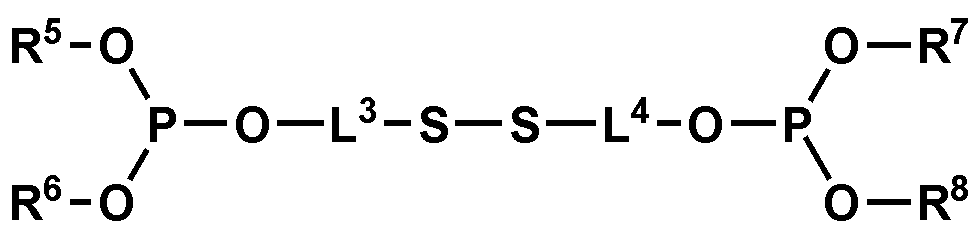
상기 화학식 1 및 화학식 2에서,
R1 내지 R8은 각각 독립적으로 치환 또는 비치환된 C1 내지 C10 알킬기, 치환 또는 비치환된 C2 내지 C10 알케닐기, 치환 또는 비치환된 C3 내지 C10 사이클로알킬기, 치환 또는 비치환된 C3 내지 C10 사이클로알케닐기, 치환 또는 비치환된 C2 내지 C10 알키닐기, 치환 또는 비치환된 C3 내지 C10 사이클로알키닐기 또는 치환 또는 비치환된 C6 내지 C20 아릴기이고,
R1 내지 R8은 각각 독립적으로 존재하거나, 또는
R1 및 R2; R3 및 R4; R5 및 R6; 그리고 R7 및 R8 중 적어도 하나가 연결되어 치환 또는 비치환된 단환 또는 다환의 지방족 헤테로 고리, 또는 치환 또는 비치환된 단환 또는 다환의 방향족 헤테로 고리를 형성하고,
L1 내지 L4는 각각 독립적으로 치환 또는 비치환된 C1 내지 C20 알킬렌기이다.cathode active material,
bookbinder,
conductive material, and
Anode containing an additive represented by Formula 1 or Formula 2:
[Formula 1]
[Formula 2]
In Formula 1 and Formula 2,
R 1 to R 8 are each independently a substituted or unsubstituted C1 to C10 alkyl group, a substituted or unsubstituted C2 to C10 alkenyl group, a substituted or unsubstituted C3 to C10 cycloalkyl group, or a substituted or unsubstituted C3 to C10 cycle. An alkenyl group, a substituted or unsubstituted C2 to C10 alkynyl group, a substituted or unsubstituted C3 to C10 cycloalkynyl group, or a substituted or unsubstituted C6 to C20 aryl group,
R 1 to R 8 each exist independently, or
R 1 and R 2 ; R 3 and R 4 ; R 5 and R 6 ; And at least one of R 7 and R 8 is connected to form a substituted or unsubstituted monocyclic or polycyclic aliphatic heterocycle, or a substituted or unsubstituted monocyclic or polycyclic aromatic heterocycle,
L 1 to L 4 are each independently a substituted or unsubstituted C1 to C20 alkylene group.
상기 화학식 1은 하기 화학식 1A 또는 화학식 1B로 표시되는 것인, 양극:
[화학식 1A]
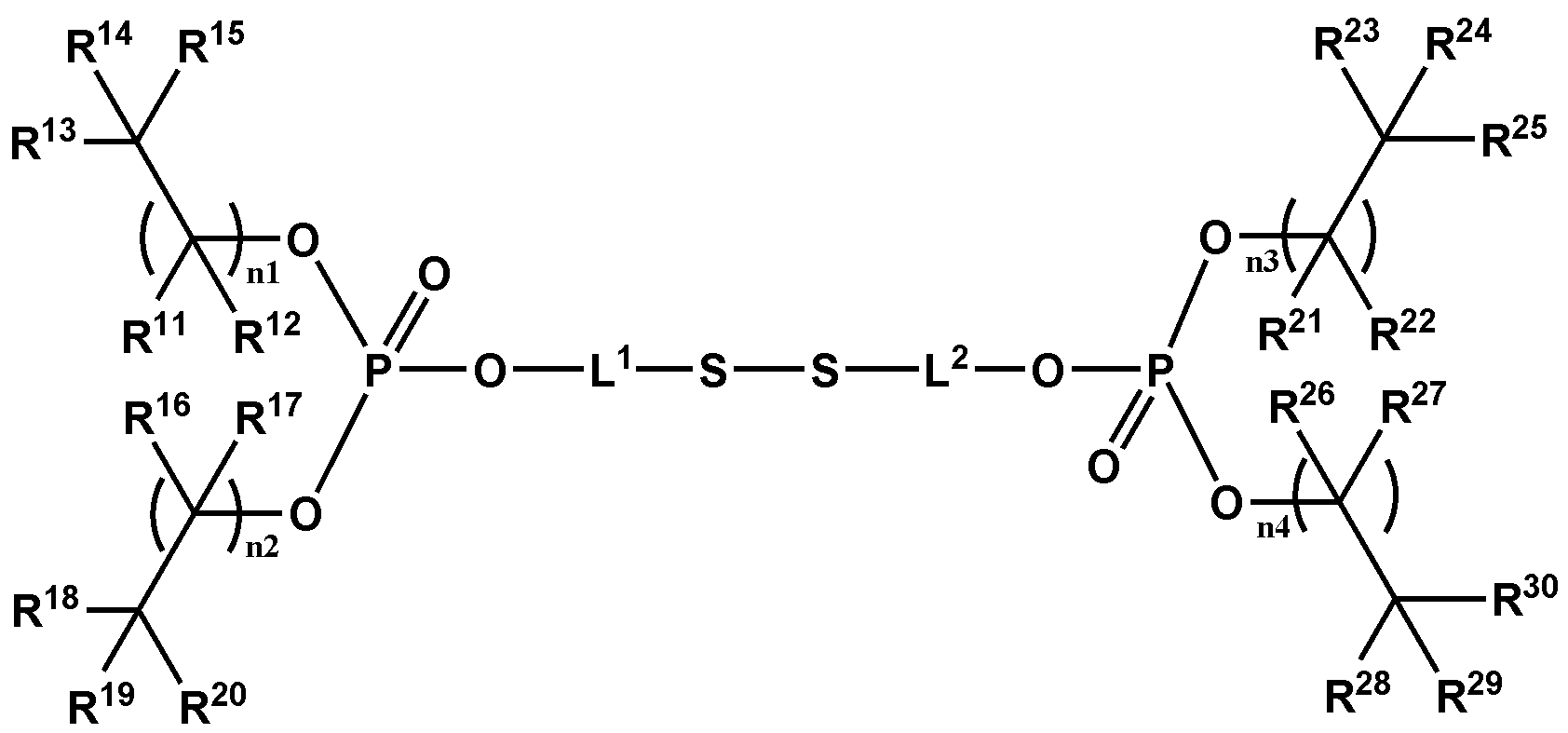
상기 화학식 1A에서,
R11 내지 R30은 각각 독립적으로 수소, 할로겐기 또는 치환 또는 비치환된 C1 내지 C10 알킬기이고,
n1 내지 n4는 각각 독립적으로 0 내지 4의 정수 중 하나이고,
L1 및 L2는 각각 독립적으로 치환 또는 비치환된 C1 내지 C20 알킬렌기이며;
[화학식 1B]

상기 화학식 1B에서,
R31 및 R32는 각각 독립적으로 치환 또는 비치환된 C2 내지 C10 알킬렌기이고,
L1 및 L2는 각각 독립적으로 치환 또는 비치환된 C1 내지 C20 알킬렌기이다.In paragraph 1:
Formula 1 is an anode represented by the following Formula 1A or Formula 1B:
[Formula 1A]
In Formula 1A,
R 11 to R 30 are each independently hydrogen, a halogen group, or a substituted or unsubstituted C1 to C10 alkyl group,
n1 to n4 are each independently one of the integers from 0 to 4,
L 1 and L 2 are each independently a substituted or unsubstituted C1 to C20 alkylene group;
[Formula 1B]
In Formula 1B,
R 31 and R 32 are each independently a substituted or unsubstituted C2 to C10 alkylene group,
L 1 and L 2 are each independently a substituted or unsubstituted C1 to C20 alkylene group.
상기 화학식 1B는 하기 화학식 1B-Ⅰ 또는 화학식 1B-Ⅱ로 표시되는 것인, 양극:
[화학식 1B-Ⅰ]

[화학식 1B-Ⅱ]

상기 화학식 1B-Ⅰ 및 화학식 1B-Ⅱ에서,
R101 내지 R120은 각각 독립적으로 수소, 할로겐기 또는 치환 또는 비치환된 C1 내지 C10 알킬기이고,
L1 및 L2는 각각 독립적으로 치환 또는 비치환된 C1 내지 C20 알킬렌기이다.In paragraph 2,
The formula 1B is an anode represented by the formula 1B-I or formula 1B-II:
[Formula 1B-Ⅰ]
[Formula 1B-Ⅱ]
In Formula 1B-I and Formula 1B-II,
R 101 to R 120 are each independently hydrogen, a halogen group, or a substituted or unsubstituted C1 to C10 alkyl group,
L 1 and L 2 are each independently a substituted or unsubstituted C1 to C20 alkylene group.
상기 화학식 2는 하기 화학식 2A 또는 화학식 2B로 표시되는 것인, 양극:
[화학식 2A]

상기 화학식 2A에서,
R33 내지 R52는 각각 독립적으로 수소, 할로겐기 또는 치환 또는 비치환된 C1 내지 C10 알킬기이고,
n5 내지 n8은 각각 독립적으로 0 내지 4의 정수 중 하나이고,
L3 및 L4는 각각 독립적으로 치환 또는 비치환된 C1 내지 C20 알킬렌기이며;
[화학식 2B]
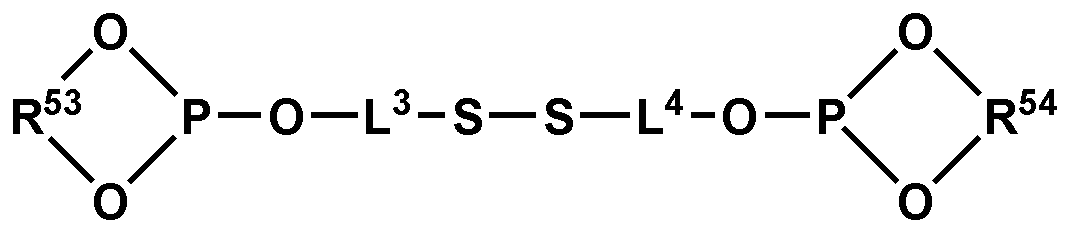
상기 화학식 2B에서,
R53 및 R54는 각각 독립적으로 치환 또는 비치환된 C2 내지 C10 알킬렌기이고,
L3 및 L4는 각각 독립적으로 치환 또는 비치환된 C1 내지 C20 알킬렌기이다.In paragraph 1:
Formula 2 is an anode represented by the following Formula 2A or Formula 2B:
[Formula 2A]
In Formula 2A,
R 33 to R 52 are each independently hydrogen, a halogen group, or a substituted or unsubstituted C1 to C10 alkyl group,
n5 to n8 are each independently one of the integers from 0 to 4,
L 3 and L 4 are each independently a substituted or unsubstituted C1 to C20 alkylene group;
[Formula 2B]
In Formula 2B,
R 53 and R 54 are each independently a substituted or unsubstituted C2 to C10 alkylene group,
L 3 and L 4 are each independently a substituted or unsubstituted C1 to C20 alkylene group.
상기 화학식 2B는 하기 화학식 2B-Ⅰ 또는 화학식 2B-Ⅱ로 표시되는 것인, 양극:
[화학식 2B-Ⅰ]

[화학식 2B-Ⅱ]
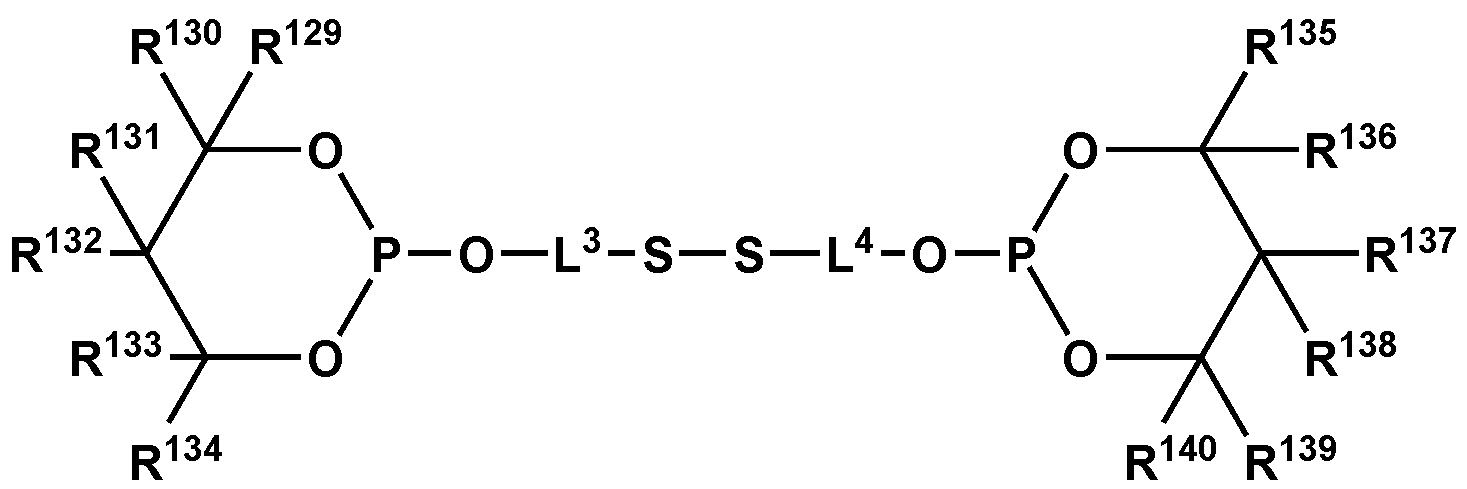
상기 화학식 2B-Ⅰ 및 화학식 2B-Ⅱ에서,
R121 내지 R140은 각각 독립적으로 수소, 할로겐기 또는 치환 또는 비치환된 C1 내지 C10 알킬기이고,
L3 및 L4는 각각 독립적으로 치환 또는 비치환된 C1 내지 C20 알킬렌기이다.In paragraph 4,
The formula 2B is an anode represented by the following formula 2B-I or formula 2B-II:
[Formula 2B-Ⅰ]
[Formula 2B-Ⅱ]
In Formula 2B-I and Formula 2B-II,
R 121 to R 140 are each independently hydrogen, a halogen group, or a substituted or unsubstituted C1 to C10 alkyl group,
L 3 and L 4 are each independently a substituted or unsubstituted C1 to C20 alkylene group.
상기 화학식 1은 하기 화학식 1B-Ⅰ-1 또는 하기 화학식 2B-Ⅰ-1로 표시되는 것인, 양극:
[화학식 1B-Ⅰ-1]

[화학식 2B-Ⅰ-1]

상기 화학식 1B-Ⅰ-1 및 하기 화학식 2B-Ⅰ-1에서,
R101 내지 R108, R121 내지 R128, 및 R141 내지 R156은 각각 독립적으로 수소, 할로겐기 또는 치환 또는 비치환된 C1 내지 C10 알킬기이다.In paragraph 1:
The anode of Formula 1 is represented by the formula 1B-I-1 or the formula 2B-I-1:
[Formula 1B-Ⅰ-1]
[Formula 2B-Ⅰ-1]
In the above formula 1B-I-1 and the following formula 2B-I-1,
R 101 to R 108 , R 121 to R 128 , and R 141 to R 156 are each independently hydrogen, a halogen group, or a substituted or unsubstituted C1 to C10 alkyl group.
상기 첨가제는 양극 활물질, 바인더 및 도전재의 전체 100 중량부에 대하여 0.001 내지 0.05 중량부로 포함되는 것인, 양극.In paragraph 1:
The positive electrode is comprised of 0.001 to 0.05 parts by weight based on 100 parts by weight of the positive electrode active material, binder, and conductive material.
상기 첨가제는 양극 활물질, 바인더 및 도전재의 전체 100 중량부에 대하여 0.005 내지 0.05 중량부로 포함되는 것인, 양극.In paragraph 1:
A positive electrode wherein the additive is included in an amount of 0.005 to 0.05 parts by weight based on a total of 100 parts by weight of the positive electrode active material, binder, and conductive material.
상기 양극 활물질은 하기 화학식 4로 표현되는 것인, 양극:
[화학식 4]
LixM1 yM2 zM3 1-y-zO2±aXa
상기 화학식 4에서,
0.5≤x≤1.8, 0≤a≤0.1, 0<y≤1, 0≤z≤1, 0<y+z≤1, M1, M2 및 M3은 각각 독립적으로 Ni, Co, Mn, Al, B, Ba, Ca, Ce, Cr, Fe, Mo, Nb, Si, Sr, Mg, Ti, V, W, Zr 또는 La 등의 금속 및 이들의 조합에서 선택되는 1종 이상의 원소를 포함하고, X는 F, S, P 또는 Cl에서 선택되는 1종 이상의 원소를 포함한다.In paragraph 8:
The positive electrode active material is represented by the following formula 4:
[Formula 4]
Li x M 1 y M 2 z M 3 1-yz O 2± a
In Formula 4 above,
0.5≤x≤1.8, 0≤a≤0.1, 0<y≤1, 0≤z≤1, 0<y+z≤1, M 1 , M 2 and M 3 are each independently Ni, Co, Mn, Contains one or more elements selected from metals such as Al, B, Ba, Ca, Ce, Cr, Fe, Mo, Nb, Si, Sr, Mg, Ti, V, W, Zr or La, and combinations thereof; , X contains one or more elements selected from F, S, P or Cl.
상기 화학식 4에서,
0.8≤y≤1, 0≤z≤0.2, M1은 Ni인, 양극.In paragraph 9:
In Formula 4 above,
0.8≤y≤1, 0≤z≤0.2, M 1 is Ni, anode.
음극 활물질을 포함하는 음극; 및
리튬 이차 전지용 전해액을 포함하는 리튬 이차 전지.The anode according to any one of claims 1 to 10;
A negative electrode containing a negative electrode active material; and
A lithium secondary battery containing an electrolyte for a lithium secondary battery.
상기 양극 표면에 양극 피막을 더 포함하고,
상기 양극 피막은 상기 화학식 1 또는 화학식 2로 표시되는 첨가제가 상기 양극 활물질에 배위되어 형성된 것인, 리튬 이차 전지.In paragraph 11:
Further comprising an anode film on the anode surface,
The positive electrode film is a lithium secondary battery formed by coordinating an additive represented by Chemical Formula 1 or Chemical Formula 2 to the positive electrode active material.
상기 음극 활물질은 흑연 및 Si 복합체 중 적어도 1종을 포함하는, 리튬 이차 전지.In paragraph 11:
A lithium secondary battery, wherein the negative electrode active material includes at least one of graphite and Si composite.
상기 Si 복합체는 Si계 입자를 포함하는 코어 및 비정질 탄소 코팅층을 포함하는, 리튬 이차 전지.In paragraph 13:
The Si composite is a lithium secondary battery including a core containing Si-based particles and an amorphous carbon coating layer.
상기 Si계 입자는 Si 입자, Si-C 복합체, SiOx(0 < x ≤ 2) 및 Si alloy 중 1종 이상을 포함하는, 리튬 이차 전지.In paragraph 14:
The Si-based particles include one or more of Si particles, Si-C composite, SiO x (0 < x ≤ 2), and Si alloy, a lithium secondary battery.
Priority Applications (4)
| Application Number | Priority Date | Filing Date | Title |
|---|---|---|---|
| KR1020220093413A KR102816122B1 (en) | 2022-07-27 | 2022-07-27 | Positive electrode, and rechargeable lithium battery including the same |
| EP23154760.5A EP4312284B1 (en) | 2022-07-27 | 2023-02-02 | Positive electrode, and rechargeable lithium battery including the same |
| CN202310106012.1A CN117476869A (en) | 2022-07-27 | 2023-02-13 | Positive electrode and rechargeable lithium battery including same |
| US18/303,343 US20240047671A1 (en) | 2022-07-27 | 2023-04-19 | Positive electrode, and rechargeable lithium battery including the same |
Applications Claiming Priority (1)
| Application Number | Priority Date | Filing Date | Title |
|---|---|---|---|
| KR1020220093413A KR102816122B1 (en) | 2022-07-27 | 2022-07-27 | Positive electrode, and rechargeable lithium battery including the same |
Publications (2)
| Publication Number | Publication Date |
|---|---|
| KR20240015482A true KR20240015482A (en) | 2024-02-05 |
| KR102816122B1 KR102816122B1 (en) | 2025-05-30 |
Family
ID=85172753
Family Applications (1)
| Application Number | Title | Priority Date | Filing Date |
|---|---|---|---|
| KR1020220093413A Active KR102816122B1 (en) | 2022-07-27 | 2022-07-27 | Positive electrode, and rechargeable lithium battery including the same |
Country Status (4)
| Country | Link |
|---|---|
| US (1) | US20240047671A1 (en) |
| EP (1) | EP4312284B1 (en) |
| KR (1) | KR102816122B1 (en) |
| CN (1) | CN117476869A (en) |
Cited By (2)
| Publication number | Priority date | Publication date | Assignee | Title |
|---|---|---|---|---|
| WO2025249990A1 (en) * | 2024-05-28 | 2025-12-04 | 주식회사 엘지에너지솔루션 | Positive electrode for lithium secondary battery comprising positive electrode additive |
| WO2025258733A1 (en) * | 2024-06-12 | 2025-12-18 | 삼성에스디아이 주식회사 | Positive electrode additive for secondary battery, positive electrode slurry comprising same, and lithium secondary battery comprising same |
Citations (4)
| Publication number | Priority date | Publication date | Assignee | Title |
|---|---|---|---|---|
| JP2013016515A (en) * | 2012-10-12 | 2013-01-24 | Nissan Motor Co Ltd | Electrode for battery |
| KR20180129184A (en) * | 2017-05-25 | 2018-12-05 | 주식회사 엘지화학 | Method for preparing positive electrode, positive electrode for secondary battery prepared by the same and lithium secondary battery comprising the same |
| KR20210154023A (en) * | 2020-06-11 | 2021-12-20 | 주식회사 엘지에너지솔루션 | Positive electrode for lithium-sulfur battery and lithium-sulfur battery comprising thereof |
| KR20220026300A (en) * | 2020-08-25 | 2022-03-04 | 삼성에스디아이 주식회사 | Additive, electrolyte for rechargeable lithium battery and rechargeable lithium battery |
Family Cites Families (5)
| Publication number | Priority date | Publication date | Assignee | Title |
|---|---|---|---|---|
| US4472487A (en) * | 1983-11-30 | 1984-09-18 | Allied Corporation | Battery having polymeric anode coated with reaction product of oxirane compound |
| CA2308277A1 (en) * | 1997-11-03 | 1999-05-14 | Ronald H. Kluger | Hemoglobin with chemically introduced disulfide cross-links and preparation thereof |
| CA2242017A1 (en) * | 1998-06-25 | 1999-12-25 | Hydro-Quebec | Dual function block polymerization monomers; their applications, especially in the preparation of ionic conductors |
| KR101559444B1 (en) * | 2011-03-04 | 2015-10-12 | 가부시키가이샤 덴소 | Nonaqueous electrolyte solution for batteries, and nonaqueous electrolyte secondary battery using same |
| CN111217856A (en) * | 2020-01-22 | 2020-06-02 | 恒大新能源技术(深圳)有限公司 | Five-membered cyclic phosphate compound and preparation method and application thereof |
-
2022
- 2022-07-27 KR KR1020220093413A patent/KR102816122B1/en active Active
-
2023
- 2023-02-02 EP EP23154760.5A patent/EP4312284B1/en active Active
- 2023-02-13 CN CN202310106012.1A patent/CN117476869A/en active Pending
- 2023-04-19 US US18/303,343 patent/US20240047671A1/en active Pending
Patent Citations (4)
| Publication number | Priority date | Publication date | Assignee | Title |
|---|---|---|---|---|
| JP2013016515A (en) * | 2012-10-12 | 2013-01-24 | Nissan Motor Co Ltd | Electrode for battery |
| KR20180129184A (en) * | 2017-05-25 | 2018-12-05 | 주식회사 엘지화학 | Method for preparing positive electrode, positive electrode for secondary battery prepared by the same and lithium secondary battery comprising the same |
| KR20210154023A (en) * | 2020-06-11 | 2021-12-20 | 주식회사 엘지에너지솔루션 | Positive electrode for lithium-sulfur battery and lithium-sulfur battery comprising thereof |
| KR20220026300A (en) * | 2020-08-25 | 2022-03-04 | 삼성에스디아이 주식회사 | Additive, electrolyte for rechargeable lithium battery and rechargeable lithium battery |
Cited By (2)
| Publication number | Priority date | Publication date | Assignee | Title |
|---|---|---|---|---|
| WO2025249990A1 (en) * | 2024-05-28 | 2025-12-04 | 주식회사 엘지에너지솔루션 | Positive electrode for lithium secondary battery comprising positive electrode additive |
| WO2025258733A1 (en) * | 2024-06-12 | 2025-12-18 | 삼성에스디아이 주식회사 | Positive electrode additive for secondary battery, positive electrode slurry comprising same, and lithium secondary battery comprising same |
Also Published As
| Publication number | Publication date |
|---|---|
| US20240047671A1 (en) | 2024-02-08 |
| EP4312284A3 (en) | 2024-02-28 |
| EP4312284A2 (en) | 2024-01-31 |
| CN117476869A (en) | 2024-01-30 |
| KR102816122B1 (en) | 2025-05-30 |
| EP4312284B1 (en) | 2026-03-04 |
Similar Documents
| Publication | Publication Date | Title |
|---|---|---|
| KR102906057B1 (en) | Electrolyte for rechargeable lithium battery and rechargeable lithium battery the same | |
| KR102906058B1 (en) | Electrolyte for rechargeable lithium battery and rechargeable lithium battery the same | |
| KR20230175176A (en) | Additives, electrolytes for lithium secondary batteries containing them, and lithium secondary batteries | |
| KR102904830B1 (en) | Electrolyte for rechargeable lithium battery and rechargeable lithium battery the same | |
| KR20230031007A (en) | Rechargeable lithium battery | |
| JP2024029747A (en) | Electrolyte additives, electrolytes for lithium secondary batteries containing the same, and lithium secondary batteries | |
| KR20240034157A (en) | Electrolyte for lithium secondary batteries and lithium secondary batteries containing the same | |
| KR102816122B1 (en) | Positive electrode, and rechargeable lithium battery including the same | |
| KR20230031009A (en) | Rechargeable lithium battery | |
| KR20250062880A (en) | Rechargeable lithium batteries | |
| KR102515099B1 (en) | Electrolyte for rechargeable lithium battery and rechargeable lithium battery | |
| KR102571752B1 (en) | Rechargeable lithium battery | |
| KR102935729B1 (en) | Additive, electrolyte for rechargeable lithium battery, positive electrode, and rechargeable lithium battery including the same | |
| KR102908015B1 (en) | Electrolyte for rechargeable lithium battery and rechargeable lithium battery the same | |
| KR20240026851A (en) | Additive for electrolyte, electrolyte for rechargeable lithium battery, and rechargeable lithium battery including the same | |
| KR102908016B1 (en) | Electrolyte of rechargeable lithium battery and rechargeable lithium battery including same | |
| KR20240143477A (en) | Electrolyte for rechargeable lithium battery and rechargeable lithium battery including the same | |
| KR20240174363A (en) | Rechargeable lithium battery including the same | |
| KR20240038464A (en) | Additive for electrolyte, electrolyte for rechargeable lithium battery, and rechargeable lithium battery including the same | |
| KR20240174263A (en) | Electrolyte for rechargeable lithium battery and rechargeable lithium battery including the same | |
| KR102614016B1 (en) | Electrolyte for rechargeable lithium battery and rechargeable lithium battery comprising the same | |
| KR102587915B1 (en) | Additive, electrolyte for rechargeable lithium battery and rechargeable lithium battery | |
| KR20240131882A (en) | Electrolyte for lithium secondary battery and lithium secondary battery containing same | |
| KR102604207B1 (en) | Additive, electrolyte for rechargeable lithium battery and rechargeable lithium battery | |
| KR102908014B1 (en) | Electrolyte of rechargeable lithium battery and rechargeable lithium battery including same |
Legal Events
| Date | Code | Title | Description |
|---|---|---|---|
| PA0109 | Patent application |
St.27 status event code: A-0-1-A10-A12-nap-PA0109 |
|
| PA0201 | Request for examination |
St.27 status event code: A-1-2-D10-D11-exm-PA0201 |
|
| P11-X000 | Amendment of application requested |
St.27 status event code: A-2-2-P10-P11-nap-X000 |
|
| P13-X000 | Application amended |
St.27 status event code: A-2-2-P10-P13-nap-X000 |
|
| PG1501 | Laying open of application |
St.27 status event code: A-1-1-Q10-Q12-nap-PG1501 |
|
| D13-X000 | Search requested |
St.27 status event code: A-1-2-D10-D13-srh-X000 |
|
| D14-X000 | Search report completed |
St.27 status event code: A-1-2-D10-D14-srh-X000 |
|
| E902 | Notification of reason for refusal | ||
| PE0902 | Notice of grounds for rejection |
St.27 status event code: A-1-2-D10-D21-exm-PE0902 |
|
| E13-X000 | Pre-grant limitation requested |
St.27 status event code: A-2-3-E10-E13-lim-X000 |
|
| P11-X000 | Amendment of application requested |
St.27 status event code: A-2-2-P10-P11-nap-X000 |
|
| P13-X000 | Application amended |
St.27 status event code: A-2-2-P10-P13-nap-X000 |
|
| E701 | Decision to grant or registration of patent right | ||
| PE0701 | Decision of registration |
St.27 status event code: A-1-2-D10-D22-exm-PE0701 |
|
| GRNT | Written decision to grant | ||
| PR0701 | Registration of establishment |
St.27 status event code: A-2-4-F10-F11-exm-PR0701 |
|
| PR1002 | Payment of registration fee |
St.27 status event code: A-2-2-U10-U11-oth-PR1002 Fee payment year number: 1 |
|
| PG1601 | Publication of registration |
St.27 status event code: A-4-4-Q10-Q13-nap-PG1601 |
|
| P22-X000 | Classification modified |
St.27 status event code: A-4-4-P10-P22-nap-X000 |