KR20210003234A - Maintaining blocks of a blockchain in a segmented blockchain network - Google Patents
Maintaining blocks of a blockchain in a segmented blockchain network Download PDFInfo
- Publication number
- KR20210003234A KR20210003234A KR1020207034209A KR20207034209A KR20210003234A KR 20210003234 A KR20210003234 A KR 20210003234A KR 1020207034209 A KR1020207034209 A KR 1020207034209A KR 20207034209 A KR20207034209 A KR 20207034209A KR 20210003234 A KR20210003234 A KR 20210003234A
- Authority
- KR
- South Korea
- Prior art keywords
- transaction
- node
- block
- shards
- blockchain
- Prior art date
- Legal status (The legal status is an assumption and is not a legal conclusion. Google has not performed a legal analysis and makes no representation as to the accuracy of the status listed.)
- Granted
Links
Images










Classifications
-
- G—PHYSICS
- G06—COMPUTING OR CALCULATING; COUNTING
- G06F—ELECTRIC DIGITAL DATA PROCESSING
- G06F16/00—Information retrieval; Database structures therefor; File system structures therefor
- G06F16/20—Information retrieval; Database structures therefor; File system structures therefor of structured data, e.g. relational data
- G06F16/22—Indexing; Data structures therefor; Storage structures
- G06F16/2228—Indexing structures
- G06F16/2246—Trees, e.g. B+trees
-
- G—PHYSICS
- G06—COMPUTING OR CALCULATING; COUNTING
- G06F—ELECTRIC DIGITAL DATA PROCESSING
- G06F16/00—Information retrieval; Database structures therefor; File system structures therefor
- G06F16/20—Information retrieval; Database structures therefor; File system structures therefor of structured data, e.g. relational data
- G06F16/23—Updating
- G06F16/2379—Updates performed during online database operations; commit processing
-
- G—PHYSICS
- G06—COMPUTING OR CALCULATING; COUNTING
- G06F—ELECTRIC DIGITAL DATA PROCESSING
- G06F16/00—Information retrieval; Database structures therefor; File system structures therefor
- G06F16/20—Information retrieval; Database structures therefor; File system structures therefor of structured data, e.g. relational data
- G06F16/27—Replication, distribution or synchronisation of data between databases or within a distributed database system; Distributed database system architectures therefor
- G06F16/278—Data partitioning, e.g. horizontal or vertical partitioning
-
- G—PHYSICS
- G06—COMPUTING OR CALCULATING; COUNTING
- G06F—ELECTRIC DIGITAL DATA PROCESSING
- G06F16/00—Information retrieval; Database structures therefor; File system structures therefor
- G06F16/90—Details of database functions independent of the retrieved data types
- G06F16/901—Indexing; Data structures therefor; Storage structures
- G06F16/9027—Trees
-
- G—PHYSICS
- G06—COMPUTING OR CALCULATING; COUNTING
- G06F—ELECTRIC DIGITAL DATA PROCESSING
- G06F21/00—Security arrangements for protecting computers, components thereof, programs or data against unauthorised activity
- G06F21/60—Protecting data
- G06F21/64—Protecting data integrity, e.g. using checksums, certificates or signatures
-
- G—PHYSICS
- G06—COMPUTING OR CALCULATING; COUNTING
- G06F—ELECTRIC DIGITAL DATA PROCESSING
- G06F9/00—Arrangements for program control, e.g. control units
- G06F9/06—Arrangements for program control, e.g. control units using stored programs, i.e. using an internal store of processing equipment to receive or retain programs
- G06F9/30—Arrangements for executing machine instructions, e.g. instruction decode
- G06F9/38—Concurrent instruction execution, e.g. pipeline or look ahead
- G06F9/3836—Instruction issuing, e.g. dynamic instruction scheduling or out of order instruction execution
-
- G—PHYSICS
- G06—COMPUTING OR CALCULATING; COUNTING
- G06Q—INFORMATION AND COMMUNICATION TECHNOLOGY [ICT] SPECIALLY ADAPTED FOR ADMINISTRATIVE, COMMERCIAL, FINANCIAL, MANAGERIAL OR SUPERVISORY PURPOSES; SYSTEMS OR METHODS SPECIALLY ADAPTED FOR ADMINISTRATIVE, COMMERCIAL, FINANCIAL, MANAGERIAL OR SUPERVISORY PURPOSES, NOT OTHERWISE PROVIDED FOR
- G06Q20/00—Payment architectures, schemes or protocols
- G06Q20/04—Payment circuits
- G06Q20/06—Private payment circuits, e.g. involving electronic currency used among participants of a common payment scheme
- G06Q20/065—Private payment circuits, e.g. involving electronic currency used among participants of a common payment scheme using e-cash
-
- G—PHYSICS
- G06—COMPUTING OR CALCULATING; COUNTING
- G06Q—INFORMATION AND COMMUNICATION TECHNOLOGY [ICT] SPECIALLY ADAPTED FOR ADMINISTRATIVE, COMMERCIAL, FINANCIAL, MANAGERIAL OR SUPERVISORY PURPOSES; SYSTEMS OR METHODS SPECIALLY ADAPTED FOR ADMINISTRATIVE, COMMERCIAL, FINANCIAL, MANAGERIAL OR SUPERVISORY PURPOSES, NOT OTHERWISE PROVIDED FOR
- G06Q20/00—Payment architectures, schemes or protocols
- G06Q20/04—Payment circuits
- G06Q20/06—Private payment circuits, e.g. involving electronic currency used among participants of a common payment scheme
- G06Q20/065—Private payment circuits, e.g. involving electronic currency used among participants of a common payment scheme using e-cash
- G06Q20/0658—Private payment circuits, e.g. involving electronic currency used among participants of a common payment scheme using e-cash e-cash managed locally
-
- G—PHYSICS
- G06—COMPUTING OR CALCULATING; COUNTING
- G06Q—INFORMATION AND COMMUNICATION TECHNOLOGY [ICT] SPECIALLY ADAPTED FOR ADMINISTRATIVE, COMMERCIAL, FINANCIAL, MANAGERIAL OR SUPERVISORY PURPOSES; SYSTEMS OR METHODS SPECIALLY ADAPTED FOR ADMINISTRATIVE, COMMERCIAL, FINANCIAL, MANAGERIAL OR SUPERVISORY PURPOSES, NOT OTHERWISE PROVIDED FOR
- G06Q20/00—Payment architectures, schemes or protocols
- G06Q20/22—Payment schemes or models
- G06Q20/223—Payment schemes or models based on the use of peer-to-peer networks
-
- G—PHYSICS
- G06—COMPUTING OR CALCULATING; COUNTING
- G06Q—INFORMATION AND COMMUNICATION TECHNOLOGY [ICT] SPECIALLY ADAPTED FOR ADMINISTRATIVE, COMMERCIAL, FINANCIAL, MANAGERIAL OR SUPERVISORY PURPOSES; SYSTEMS OR METHODS SPECIALLY ADAPTED FOR ADMINISTRATIVE, COMMERCIAL, FINANCIAL, MANAGERIAL OR SUPERVISORY PURPOSES, NOT OTHERWISE PROVIDED FOR
- G06Q20/00—Payment architectures, schemes or protocols
- G06Q20/30—Payment architectures, schemes or protocols characterised by the use of specific devices or networks
- G06Q20/36—Payment architectures, schemes or protocols characterised by the use of specific devices or networks using electronic wallets or electronic money safes
- G06Q20/367—Payment architectures, schemes or protocols characterised by the use of specific devices or networks using electronic wallets or electronic money safes involving electronic purses or money safes
- G06Q20/3674—Payment architectures, schemes or protocols characterised by the use of specific devices or networks using electronic wallets or electronic money safes involving electronic purses or money safes involving authentication
-
- G—PHYSICS
- G06—COMPUTING OR CALCULATING; COUNTING
- G06Q—INFORMATION AND COMMUNICATION TECHNOLOGY [ICT] SPECIALLY ADAPTED FOR ADMINISTRATIVE, COMMERCIAL, FINANCIAL, MANAGERIAL OR SUPERVISORY PURPOSES; SYSTEMS OR METHODS SPECIALLY ADAPTED FOR ADMINISTRATIVE, COMMERCIAL, FINANCIAL, MANAGERIAL OR SUPERVISORY PURPOSES, NOT OTHERWISE PROVIDED FOR
- G06Q20/00—Payment architectures, schemes or protocols
- G06Q20/30—Payment architectures, schemes or protocols characterised by the use of specific devices or networks
- G06Q20/36—Payment architectures, schemes or protocols characterised by the use of specific devices or networks using electronic wallets or electronic money safes
- G06Q20/367—Payment architectures, schemes or protocols characterised by the use of specific devices or networks using electronic wallets or electronic money safes involving electronic purses or money safes
- G06Q20/3678—Payment architectures, schemes or protocols characterised by the use of specific devices or networks using electronic wallets or electronic money safes involving electronic purses or money safes e-cash details, e.g. blinded, divisible or detecting double spending
-
- G—PHYSICS
- G06—COMPUTING OR CALCULATING; COUNTING
- G06Q—INFORMATION AND COMMUNICATION TECHNOLOGY [ICT] SPECIALLY ADAPTED FOR ADMINISTRATIVE, COMMERCIAL, FINANCIAL, MANAGERIAL OR SUPERVISORY PURPOSES; SYSTEMS OR METHODS SPECIALLY ADAPTED FOR ADMINISTRATIVE, COMMERCIAL, FINANCIAL, MANAGERIAL OR SUPERVISORY PURPOSES, NOT OTHERWISE PROVIDED FOR
- G06Q20/00—Payment architectures, schemes or protocols
- G06Q20/38—Payment protocols; Details thereof
- G06Q20/382—Payment protocols; Details thereof insuring higher security of transaction
- G06Q20/3827—Use of message hashing
-
- G—PHYSICS
- G06—COMPUTING OR CALCULATING; COUNTING
- G06Q—INFORMATION AND COMMUNICATION TECHNOLOGY [ICT] SPECIALLY ADAPTED FOR ADMINISTRATIVE, COMMERCIAL, FINANCIAL, MANAGERIAL OR SUPERVISORY PURPOSES; SYSTEMS OR METHODS SPECIALLY ADAPTED FOR ADMINISTRATIVE, COMMERCIAL, FINANCIAL, MANAGERIAL OR SUPERVISORY PURPOSES, NOT OTHERWISE PROVIDED FOR
- G06Q20/00—Payment architectures, schemes or protocols
- G06Q20/38—Payment protocols; Details thereof
- G06Q20/40—Authorisation, e.g. identification of payer or payee, verification of customer or shop credentials; Review and approval of payers, e.g. check credit lines or negative lists
- G06Q20/401—Transaction verification
-
- H—ELECTRICITY
- H04—ELECTRIC COMMUNICATION TECHNIQUE
- H04L—TRANSMISSION OF DIGITAL INFORMATION, e.g. TELEGRAPHIC COMMUNICATION
- H04L9/00—Cryptographic mechanisms or cryptographic arrangements for secret or secure communications; Network security protocols
- H04L9/06—Cryptographic mechanisms or cryptographic arrangements for secret or secure communications; Network security protocols the encryption apparatus using shift registers or memories for block-wise or stream coding, e.g. DES systems or RC4; Hash functions; Pseudorandom sequence generators
- H04L9/0618—Block ciphers, i.e. encrypting groups of characters of a plain text message using fixed encryption transformation
-
- H—ELECTRICITY
- H04—ELECTRIC COMMUNICATION TECHNIQUE
- H04L—TRANSMISSION OF DIGITAL INFORMATION, e.g. TELEGRAPHIC COMMUNICATION
- H04L9/00—Cryptographic mechanisms or cryptographic arrangements for secret or secure communications; Network security protocols
- H04L9/06—Cryptographic mechanisms or cryptographic arrangements for secret or secure communications; Network security protocols the encryption apparatus using shift registers or memories for block-wise or stream coding, e.g. DES systems or RC4; Hash functions; Pseudorandom sequence generators
- H04L9/0643—Hash functions, e.g. MD5, SHA, HMAC or f9 MAC
-
- H—ELECTRICITY
- H04—ELECTRIC COMMUNICATION TECHNIQUE
- H04L—TRANSMISSION OF DIGITAL INFORMATION, e.g. TELEGRAPHIC COMMUNICATION
- H04L9/00—Cryptographic mechanisms or cryptographic arrangements for secret or secure communications; Network security protocols
- H04L9/32—Cryptographic mechanisms or cryptographic arrangements for secret or secure communications; Network security protocols including means for verifying the identity or authority of a user of the system or for message authentication, e.g. authorization, entity authentication, data integrity or data verification, non-repudiation, key authentication or verification of credentials
-
- H—ELECTRICITY
- H04—ELECTRIC COMMUNICATION TECHNIQUE
- H04L—TRANSMISSION OF DIGITAL INFORMATION, e.g. TELEGRAPHIC COMMUNICATION
- H04L9/00—Cryptographic mechanisms or cryptographic arrangements for secret or secure communications; Network security protocols
- H04L9/32—Cryptographic mechanisms or cryptographic arrangements for secret or secure communications; Network security protocols including means for verifying the identity or authority of a user of the system or for message authentication, e.g. authorization, entity authentication, data integrity or data verification, non-repudiation, key authentication or verification of credentials
- H04L9/3236—Cryptographic mechanisms or cryptographic arrangements for secret or secure communications; Network security protocols including means for verifying the identity or authority of a user of the system or for message authentication, e.g. authorization, entity authentication, data integrity or data verification, non-repudiation, key authentication or verification of credentials using cryptographic hash functions
- H04L9/3239—Cryptographic mechanisms or cryptographic arrangements for secret or secure communications; Network security protocols including means for verifying the identity or authority of a user of the system or for message authentication, e.g. authorization, entity authentication, data integrity or data verification, non-repudiation, key authentication or verification of credentials using cryptographic hash functions involving non-keyed hash functions, e.g. modification detection codes [MDCs], MD5, SHA or RIPEMD
-
- H—ELECTRICITY
- H04—ELECTRIC COMMUNICATION TECHNIQUE
- H04L—TRANSMISSION OF DIGITAL INFORMATION, e.g. TELEGRAPHIC COMMUNICATION
- H04L9/00—Cryptographic mechanisms or cryptographic arrangements for secret or secure communications; Network security protocols
- H04L9/32—Cryptographic mechanisms or cryptographic arrangements for secret or secure communications; Network security protocols including means for verifying the identity or authority of a user of the system or for message authentication, e.g. authorization, entity authentication, data integrity or data verification, non-repudiation, key authentication or verification of credentials
- H04L9/3297—Cryptographic mechanisms or cryptographic arrangements for secret or secure communications; Network security protocols including means for verifying the identity or authority of a user of the system or for message authentication, e.g. authorization, entity authentication, data integrity or data verification, non-repudiation, key authentication or verification of credentials involving time stamps, e.g. generation of time stamps
-
- H—ELECTRICITY
- H04—ELECTRIC COMMUNICATION TECHNIQUE
- H04L—TRANSMISSION OF DIGITAL INFORMATION, e.g. TELEGRAPHIC COMMUNICATION
- H04L9/00—Cryptographic mechanisms or cryptographic arrangements for secret or secure communications; Network security protocols
- H04L9/50—Cryptographic mechanisms or cryptographic arrangements for secret or secure communications; Network security protocols using hash chains, e.g. blockchains or hash trees
-
- G—PHYSICS
- G06—COMPUTING OR CALCULATING; COUNTING
- G06Q—INFORMATION AND COMMUNICATION TECHNOLOGY [ICT] SPECIALLY ADAPTED FOR ADMINISTRATIVE, COMMERCIAL, FINANCIAL, MANAGERIAL OR SUPERVISORY PURPOSES; SYSTEMS OR METHODS SPECIALLY ADAPTED FOR ADMINISTRATIVE, COMMERCIAL, FINANCIAL, MANAGERIAL OR SUPERVISORY PURPOSES, NOT OTHERWISE PROVIDED FOR
- G06Q2220/00—Business processing using cryptography
-
- H04L2209/38—
-
- H—ELECTRICITY
- H04—ELECTRIC COMMUNICATION TECHNIQUE
- H04L—TRANSMISSION OF DIGITAL INFORMATION, e.g. TELEGRAPHIC COMMUNICATION
- H04L2209/00—Additional information or applications relating to cryptographic mechanisms or cryptographic arrangements for secret or secure communication H04L9/00
- H04L2209/56—Financial cryptography, e.g. electronic payment or e-cash
Landscapes
- Engineering & Computer Science (AREA)
- Business, Economics & Management (AREA)
- Theoretical Computer Science (AREA)
- Accounting & Taxation (AREA)
- Computer Security & Cryptography (AREA)
- Physics & Mathematics (AREA)
- General Physics & Mathematics (AREA)
- Finance (AREA)
- Computer Networks & Wireless Communication (AREA)
- General Business, Economics & Management (AREA)
- Strategic Management (AREA)
- Signal Processing (AREA)
- Databases & Information Systems (AREA)
- General Engineering & Computer Science (AREA)
- Software Systems (AREA)
- Data Mining & Analysis (AREA)
- Computing Systems (AREA)
- Power Engineering (AREA)
- General Health & Medical Sciences (AREA)
- Bioethics (AREA)
- Health & Medical Sciences (AREA)
- Computer Hardware Design (AREA)
- Information Retrieval, Db Structures And Fs Structures Therefor (AREA)
- Financial Or Insurance-Related Operations Such As Payment And Settlement (AREA)
- Magnetic Resonance Imaging Apparatus (AREA)
- Measuring Pulse, Heart Rate, Blood Pressure Or Blood Flow (AREA)
- Measurement And Recording Of Electrical Phenomena And Electrical Characteristics Of The Living Body (AREA)
- Electrotherapy Devices (AREA)
- Computer And Data Communications (AREA)
- Medicines Containing Material From Animals Or Micro-Organisms (AREA)
- Management, Administration, Business Operations System, And Electronic Commerce (AREA)
Abstract
샤딩된(sharded) 블록체인 네트워크의 노드 - 각각의 노드는 복수의 활성 샤드들 중 하나 이상의 샤드의 멤버임 - 에 걸쳐서 블록체인의 블록을 유지하는 컴퓨터 구현된 방법 및 시스템이 제공된다. 방법 및 시스템은, 블록체인의 새로운 블록을 나타내는 데이터를 생성하고 새로운 블록을 나타내는 데이터를 저장하기 위해, 복수의 활성 샤드들의 특정 서브세트의 멤버인 주어진 노드를 이용한다. 이러한 데이터는, i) 새로운 블록의 일부이고 복수의 활성 샤드들의 특정 서브세트와 연관되는 트랜잭션에 대한 트랜잭션 식별자의 리스트, 및/또는 ii) 새로운 블록에 대한 파셜 머클 트리를 포함한다. A computer-implemented method and system is provided for maintaining blocks of a blockchain across nodes of a sharded blockchain network, each node being a member of one or more shards of a plurality of active shards. The method and system uses a given node that is a member of a specific subset of multiple active shards to generate data representing a new block of the blockchain and store data representing the new block. Such data includes i) a list of transaction identifiers for transactions that are part of the new block and are associated with a specific subset of a plurality of active shards, and/or ii) a partial Merkle tree for the new block.
Description
본 개시는 일반적으로 블록체인 트랜잭션(transaction)을 처리하는 컴퓨터 구현되는 시스템 및 방법에 관한 것으로, 특히, 블록체인을 분할하고(partition) 분할된 블록체인의 블록 및 트랜잭션을 유효성 검증하는(validate) 시스템 및 방법에 관한 것이다. The present disclosure generally relates to a computer-implemented system and method for processing blockchain transactions, and in particular, a system for partitioning a blockchain and validating blocks and transactions in the partitioned blockchain. And a method.
본 문서에서, "블록체인"이라는 용어는 여러 유형의 전자적인, 컴퓨터 기반의, 분산 원장(distributed ledger)들 중 임의의 것을 일컫는다. 이들은, 합의-기반(consensus-based) 블록체인 및 트랜잭션-체인 기술, 허가형(permissioned) 및 비허가형(un-permissioned) 원장, 공유(shared) 원장 및 그 변형을 포함한다. 여타의 블록체인 구현도 제안되고 개발되어 왔지만, 블록체인 기술의 가장 널리 알려진 적용은 비트코인(Bitcoin) 블록체인이다. 본 개시에서는 편의 및 예시의 목적으로 비트코인의 예가 여기서 언급될 수 있지만, 본 개시는 비트코인 블록체인과 함께 사용하는 것에 제한되지 않으며; 대안적인 블록체인 구현 및 프로토콜이 본 개시의 범주 내에 있다는 점에 유의해야 한다. 예를 들어, 본 개시는, 트랜잭션 내에서 어떤 제약이 인코딩될 수 있는지와 관련하여 비트코인과 유사한 제한(constraints)을 갖는 다른 블록체인 구현에서 유용할 수 있다. In this document, the term "blockchain" refers to any of several types of electronic, computer-based, distributed ledgers. These include consensus-based blockchain and transaction-chain technologies, permissioned and un-permissioned ledgers, shared ledgers and their variants. Other blockchain implementations have also been proposed and developed, but the most widely known application of blockchain technology is the Bitcoin blockchain. In this disclosure, examples of bitcoins may be mentioned here for convenience and illustrative purposes, but this disclosure is not limited to use with a bitcoin blockchain; It should be noted that alternative blockchain implementations and protocols are within the scope of this disclosure. For example, the present disclosure may be useful in other blockchain implementations with constraints similar to Bitcoin with respect to which constraints can be encoded within a transaction.
블록체인은 컴퓨터 기반의 탈중앙화(decentralised) 분산 시스템에 의해 생성되고 유지되는 피어 투 피어(peer-to-peer) 전자 원장이다. 원장은 블록으로 구성되며, 블럭은 다시 트랜잭션 및 기타 정보로 구성된다. 블록체인 시스템 또는 블록체인 네트워크는 복수의 블록체인 노드 및 일련의 동작을 포함한다. 블록체인 노드는 일련의 동작의 일부 또는 전체 동작을 수행하도록 구성될 수 있다. 노드 운영자에 의해 운영되는 컴퓨터 하드웨어, 컴퓨터 소프트웨어, 또는 이 둘의 조합으로서 다양한 블록체인 노드가 구현될 수 있으며, 노드 운영자는 다른 노드 운영자와 독립적이고 관련 없을 수 있다. 블록체인 노드는 각각 블록체인 원장의 사본, 또는 그 일부를 유지할 수 있다. 일련의 동작은 사용자가 트랜잭션을 생성하고 블록체인 자산을 관리할 수 있도록 트랜잭션 생성, 트랜잭션 전파, 블록체인 원장 판독, 블록체인 원장 평가, 블록체인 원장에의 제안된 추가를 위한 새로운 블록 생성(채굴), 다른 블록체인 노드와의 통신, 지갑 기능 제공을 포함할 수 있다. Blockchain is a peer-to-peer electronic ledger created and maintained by a computer-based decentralized distributed system. The ledger is composed of blocks, and blocks are composed of transactions and other information. A blockchain system or a blockchain network includes a plurality of blockchain nodes and a series of operations. Blockchain nodes can be configured to perform some or all of a series of actions. Various blockchain nodes can be implemented as computer hardware, computer software, or a combination of the two operated by the node operator, and the node operator may be independent and unrelated to other node operators. Each blockchain node can maintain a copy of the blockchain ledger, or a portion of it. The sequence of actions is to create a transaction, propagate the transaction, read the blockchain ledger, evaluate the blockchain ledger, and create a new block (mining) for the proposed addition to the blockchain ledger so that users can create transactions and manage blockchain assets. , Communication with other blockchain nodes, and providing wallet functions.
블록체인 원장은, 원장이 수정되는 시기를 결정하는 단일 블록체인 노드나 엔티티가 없다는 점에서, 탈중앙화 되어 있다. 대신에, 블록체인 노드 각각은, 블록체인 프로토콜의 규칙에 관한 지식으로 프로그래밍 되어, 블록체인 원장을 검증하고(verify) 다른 블록체인 노드에 의해 취해진 액션이 해당 규칙과 일치하는지를 검증한다. "블록체인"이라는 용어는, 블록체인 원장이 일련의 체인으로 연결되는 블록을 포함하고 있다는 사실을 의미할 수 있으며, 각 블록은 컴퓨터 메모리에서 데이터 구조로서 표현 가능하고 컴퓨터 프로세스에 의해 판독 가능하며 데이터 전송으로 전송될 수 있다. 블록은, 컴퓨터 메모리에서 데이터 구조로서 역시 표현 가능하고 컴퓨터 프로세스에 의해 판독 가능하며 데이터 전송으로 전송될 수 있는 하나 이상의 트랜잭션을 포함한다. 블록체인에 공식적으로 추가되는 각각의 새로운 블록이 직전 블록에 대한 불변의 참조를 포함하며, 상기 직전 블록은 그 직전 선행하는 블록에 대한 불변의 참조 등을 포함한다는 점에서, 블록은 체인으로 연결되어 있다. Blockchain ledgers are decentralized in the sense that there is no single blockchain node or entity that determines when the ledger is modified. Instead, each of the blockchain nodes is programmed with knowledge of the rules of the blockchain protocol, verifying the blockchain ledger and verifying that the actions taken by other blockchain nodes match those rules. The term "blockchain" can mean the fact that the blockchain ledger contains blocks connected in a series of chains, each block being represented as a data structure in computer memory, readable by a computer process, and data Can be transmitted by transmission. A block contains one or more transactions that are also representable as data structures in computer memory, readable by a computer process, and that can be transferred in a data transfer. Blocks are chained in that each new block officially added to the blockchain contains an immutable reference to the previous block, and the immediately preceding block contains an immutable reference to the immediately preceding block, etc. have.
주어진 트랜잭션이 블록체인에 기록된 블록에 포함되기 위해, 하나 이상의 노드가 주어진 트랜잭션을 유효성 검증하고 가능하게는 트랜잭션을 다른 노드로 전파하고, 노드는 블록이 주어진 트랜잭션을 포함하는 트랜잭션 블록을 채굴하고, 다른 노드는 블록의 유효성 및 해당 블록의 트랜잭션의 유효성을 검증한다. 채굴 노드는 이러한 규칙을 염두에 두고 프로그래밍되거나 구성되므로 채굴 노드는 블록을 무효로 하는 블록에는 트랜잭션을 포함하지 않을 것이며, 왜냐하면 그러한 블록은 다른 노드에 의해 승인되지 않고 채굴 노드는 아무런 혜택도 얻을 수 없기 때문이다. 예를 들어, 다수의 블록체인 네트워크에서, 블록은 채굴 노드의 운영자에게 특정 가치량이 할당된 "보상" 트랜잭션을 포함할 수 있다. 이러한 방식으로, 성공적인 채굴자는 블록으로 생성된 가치로 보상받는다. 또한, 트랜잭션은 거래 수수료를 포함할 수 있으며, 이는 채굴 노드의 운영자에게 또한 이익이 될 것이다.In order for a given transaction to be included in a block recorded in the blockchain, one or more nodes validate the given transaction and possibly propagate the transaction to other nodes, and the node mines the transaction block containing the given transaction in the block, Other nodes verify the validity of the block and the transaction of the corresponding block. Since mining nodes are programmed or configured with these rules in mind, mining nodes will not contain transactions in blocks that invalidate blocks, because such blocks are not approved by other nodes and the mining node will not gain any benefit. Because. For example, in many blockchain networks, a block may contain a "reward" transaction that is assigned a certain amount of value to the operator of the mining node. In this way, successful miners are rewarded with the value generated by the block. In addition, the transaction may include a transaction fee, which will also benefit the operator of the mining node.
블록체인 네트워크의 트랜잭션은 가치 단위 및 기타 데이터 요소를 포함하는, 다양한 데이터 요소를 포함한다. 가치 단위는 암호 화폐(예를 들어, Bitcoin SV)가 될 수 있지만 다른 디지털 자산을 이용하는 다른 변형도 가능하다. 탈중앙화된 분산 원장 시스템에서, 원장은 공개되어 누구나 원장을 보고 원장의 블록에 저장된 트랜잭션에 액세스할 수 있다. Transactions on a blockchain network contain various data elements, including units of value and other data elements. The unit of value can be a cryptocurrency (e.g. Bitcoin SV), but other variations using other digital assets are possible. In a decentralized distributed ledger system, the ledger is public so anyone can view the ledger and access the transactions stored in the ledger's blocks.
예를 들어 비트코인 블록체인 네트워크 등의 블록체인 네트워크는, 각 트랜잭션이 채굴을 위해 다른 노드로 계속(onwards) 전파될 수 있기 전에 각 트랜잭션이 유효성 검증되어야 하기 때문에, 트랜잭션의 네트워크 전파에 있어서의 지연으로 인해 트랜잭션 유효성 검증과 관련된 성능 제한을 겪을 수 있다. 나아가, 블록체인의 사이즈가 커짐에 따라, 트랜잭션 및 블록을 유효성 검증하는 노드에 대한 저장(storage) 요구 사항 역시 커진다.Blockchain networks such as the Bitcoin blockchain network, for example, require delays in network propagation of transactions, since each transaction must be validated before it can be propagated onwards to other nodes for mining. As a result, you may experience performance limitations related to transaction validation. Furthermore, as the size of the blockchain increases, the storage requirements for nodes that validate transactions and blocks also increase.
따라서, 분할(partitioning) 또는 샤딩(sharding)의 이용을 통해 블록체인 원장의 확장성(scalability)을 향상시키는 개선된 시스템 및 방법을 제공하는 것이 바람직하다. Therefore, it is desirable to provide an improved system and method for improving the scalability of a blockchain ledger through the use of partitioning or sharding.
블록체인 네트워크를 샤드로 분할하는 것은 사용자가 블록체인 네트워크를 통한 자신의 참여 수준을 선택하는 것을 가능하게 한다. 각 사용자는 하나 이상의 샤드의 멤버이도록 선택할 수 있다. 모든 샤드보다 적은 멤버인 사용자는 사용자가 멤버인 샤드에 할당된 트랜잭션의 모두를 저장하는 데 더 작은 저장 공간을 요구한다. 트랜잭션을 그의 트랜잭션 id를 기초로 샤드에 할당하는 것은 결과적인 샤드 크기가 거의 동일할 것이라는 장점을 제공하며, 이를 통해 더 작은 샤드의 멤버에 비해 상대적으로 더 큰 샤드의 멤버에 대해 과도한 부담을 주는 것을 방지하면서, 동시에 트랜잭션 및 연관된 검증(verifications)이 임의의 과도한 지연 없이 정확하게 수행되는 것을 가능하게 한다. Splitting the blockchain network into shards allows users to choose their level of participation through the blockchain network. Each user can choose to be a member of one or more shards. Users with fewer members than all shards require less storage space to store all of the transactions assigned to the shards to which the user is a member. Assigning a transaction to a shard based on its transaction id provides the advantage that the resulting shard size will be approximately the same, which avoids overburdening members of a larger shard relative to members of a smaller shard. While avoiding, it enables transactions and associated verifications to be performed correctly without any undue delay at the same time.
본원에서 언급된 사용자는 하나 이상의 노드 또는 컴퓨팅 디바이스와 연관될 수 있으며, 이들 노드는 또한, 분할된 블록체인 네트워크에서 클라이언트 엔티티로서 지칭될 수 있다. 이하에서, 사용자에 대한 참조는 또한, (샤딩되거나 또는 분할된 블록체인 네트워크의 일부인 노드 또는 엔티티를 소유하거나 또는 제어할 수 있는) 사용자와 연관된 노드 또는 엔티티에 대한 참조로 이해될 수 있다. 각 노드는 분할된 블록체인 네트워크에서 적어도 하나 이상의 다른 노드와 통신 가능하게 결합될 수 있다.The users referred to herein may be associated with one or more nodes or computing devices, and these nodes may also be referred to as client entities in a segmented blockchain network. In the following, a reference to a user may also be understood as a reference to a node or entity associated with a user (which may own or control a node or entity that is part of a sharded or segmented blockchain network). Each node can be communicatively coupled with at least one or more other nodes in a divided blockchain network.
본 개시의 이 양상뿐만 아니라 (아래에서 논의되는) 다른 양상과 연관된 본원에서 논의된 이들 장점은 노드 및 결과적인 네트워크 토폴로지의 구조 및 네트워크의 노드와 연관된 샤딩된 블록체인 네트워크 및 프로토콜의 아키텍처에 기인한다. 이러한 샤딩된 네트워크에서 UTXO를 수신하는 것, 저장하는 것 및/또는 유효성 검증하는 것은, 각 샤드 내의 노드에 대한 유효성 검증 기술뿐만 아니라 통신, 데이터 저장, 데이터 공유를 위한 서술되고 청구된 방법, 규칙 또는 프로토콜을 사용하는 것뿐만 아니라, 상이한 샤드에 속하는 노드와의 통신을 위해 연관된 규칙 및 프로토콜을 기초로 수행된다. These advantages discussed herein associated with this aspect of the present disclosure as well as other aspects (discussed below) are due to the architecture of the nodes and the resulting network topology and the architecture of the sharded blockchain networks and protocols associated with the nodes of the network. . Receiving, storing, and/or validating UTXOs in such a sharded network is not only a validation technique for nodes within each shard, but also described and claimed methods, rules or rules for communication, data storage, data sharing, or In addition to using the protocol, it is performed on the basis of the associated rules and protocols for communication with nodes belonging to different shards.
이들 특정 구조, 데이터 흐름의 방법, 트랜잭션 할당 및 유효성 검증 프로토콜은 본 개시의 다양한 실시예에 대해 아래에서 더 설명될 것이다. 유리하게, 샤딩된 블록체인 네트워크 내의 트랜잭션의 할당 및 이러한 할당된 트랜잭션의 유효성 검증을 위해 본원에서 서술된 샤딩된 네트워크 구조 또는 아키텍처 및 연관된 방법은 데이터 흐름, 데이터 저장 및 UTXO 유효성 검증 검사를 위한 새로운 기술을 가능하게 한다. 나아가, 이들 기술은 구조 및 데이터 통신/유효성 검증 프로토콜의 관점에서 비트코인 블록체인에서의 시빌 공격과 같은 이중 지불 공격을 유리하게 방지한다. These specific structures, methods of data flow, transaction allocation and validation protocols will be further described below for various embodiments of the present disclosure. Advantageously, the sharding network structure or architecture and associated methods described herein for the allocation of transactions within a sharded blockchain network and validation of these allocated transactions are novel techniques for data flow, data storage and UTXO validation checks. Makes it possible. Furthermore, these technologies advantageously prevent double payment attacks such as Sybil attacks in the Bitcoin blockchain from the viewpoint of structure and data communication/validation protocol.
따라서, 본 개시에 따르면, 샤딩된 블록체인 네트워크의 노드 - 각각의 노드는 복수의 활성 샤드들(active shards) 중 하나 이상의 샤드의 멤버임 - 에 걸쳐서 블록체인의 블록을 유지하기 위한 컴퓨터 구현되는 방법 및 시스템이 제공될 수 있다. 방법 및 시스템은, 복수의 활성 샤드들의 특정 서브세트(subset)의 멤버인 주어진 노드를 이용하며, 주어진 노드는 블록체인의 새로운 블록을 나타내는 데이터를 생성하고 새로운 블록을 나타내는 데이터를 저장하도록 구성된다. 이러한 데이터는, i) 새로운 블록의 일부이고 복수의 활성 샤드들의 특정 서브세트와 연관되는 트랜잭션에 대한 트랜잭션 식별자의 리스트, 및/또는 ii) 새로운 블록에 대한 파셜 머클 트리(Partial Merkle Tree)를 포함한다. i)의 트랜잭션 식별자의 리스트는, 새로운 블록의 일부이고 복수의 활성 샤드들의 특정 서브세트와 연관되지 않는 트랜잭션에 대한 트랜잭션 식별자를 포함하지 않는다. Therefore, according to the present disclosure, a computer-implemented method for maintaining blocks of a blockchain across nodes of a sharded blockchain network-each node is a member of one or more shards among a plurality of active shards. And a system may be provided. The method and system utilizes a given node that is a member of a specific subset of a plurality of active shards, the given node being configured to generate data representing a new block in the blockchain and store data representing the new block. Such data includes: i) a list of transaction identifiers for transactions that are part of a new block and associated with a specific subset of multiple active shards, and/or ii) a Partial Merkle Tree for the new block. . The list of transaction identifiers in i) does not contain transaction identifiers for transactions that are part of a new block and are not associated with a specific subset of multiple active shards.
실시예에서, i)의 트랜잭션 식별자의 리스트는, 새로운 블록에 포함된 데이터에 기초하여 새로운 블록에 대한 트랜잭션 식별자의 초기 리스트를 구축하고, 복수의 활성 샤드들의 특정 서브세트와 연관되지 않는 트랜잭션에 대응하는 임의의 트랜잭션 식별자를 제거하도록 트랜잭션 식별자의 초기 리스트를 처리함으로써 생성될 수 있다. In an embodiment, the list of transaction identifiers in i) constructs an initial list of transaction identifiers for the new block based on the data contained in the new block, and corresponds to a transaction not associated with a specific subset of a plurality of active shards. It can be created by processing the initial list of transaction identifiers to remove any transaction identifiers.
실시예에서, ii)의 파셜 머클 트리는, 새로운 블록의 일부이고 복수의 활성 샤드들의 특정 서브세트와 연관되지 않는 트랜잭션으로부터 도출되는 해시 값을 포함하고, 새로운 블록의 일부이고 복수의 활성 샤드들의 특정 서브세트와 연관되는 트랜잭션으로부터 도출되는 해시 값은 생략한다. In an embodiment, the partial merkle tree of ii) contains a hash value derived from a transaction that is part of a new block and is not associated with a specific subset of a plurality of active shards, and is part of a new block and a specific sub of a plurality of active shards. The hash value derived from the transaction associated with the set is omitted.
실시예에서, ii)의 파셜 머클 트리는, 새로운 블록에 포함된 데이터에 기초하여 새로운 블록에 대한 풀 머클 트리(Full Merkle Tree)를 구축하고, 새로운 블록의 일부이고 복수의 활성 샤드들의 특정 서브세트와 연관되는 트랜잭션으로부터 도출되는 해시 값을 플레이스홀더(placeholders)로 대체하도록 풀 머클 트리를 처리함으로써 생성될 수 있다. In an embodiment, the partial Merkle tree of ii) constructs a Full Merkle Tree for a new block based on the data contained in the new block, is part of the new block, and includes a specific subset of a plurality of active shards. It can be created by processing the full Merkle tree to replace the hash values derived from the associated transaction with placeholders.
실시예에서, 풀 머클 트리를 처리하는 것은, 풀 머클 트리의 바닥 레벨로부터 루트 레벨까지 반복 처리하는 것(iterating) 및 인접-노드 쌍에 대한 두 개의 해시 값을 제거하고 부모(parent) 해시 값을 남기는 것을 더 포함할 수 있다. In an embodiment, processing a full merkle tree includes iterating from the bottom level to the root level of the full merkle tree and removing the two hash values for the neighbor-node pair and setting the parent hash value. It may further include leaving.
실시예에서, 풀 머클 트리를 처리하는 것은, 풀 머클 트리의 바닥 레벨로부터 루트 레벨까지 반복 처리하는 것 및 복수의 활성 샤드들의 특정 서브세트와 연관되지 않는 트랜잭션으로부터 도출되는 해시 값을 모두 나타내지 않는 두 개의 자식(child) 노드를 갖는 부모 트리 노드의 해시 값을 플레이스홀더로 대체하는 것을 더 포함할 수 있다. In an embodiment, processing a full merkle tree includes both iterating from the bottom level to the root level of the full merkle tree and not representing both hash values derived from transactions that are not associated with a particular subset of multiple active shards. It may further include replacing the hash value of the parent tree node having three child nodes with a placeholder.
실시예에서, 노드는, 블록의 일부이고 복수의 활성 샤드들의 특정 서브세트와 연관되지 않는 트랜잭션에 대한 액세스를 요구하지 않고 블록 유효성 검증을 위한 머클 루트 해시 값을 계산하기 위해 파셜 머클 트리를 처리하도록 동작할 수 있다. In an embodiment, the node processes the partial Merkle tree to compute the Merkle root hash value for block validation without requiring access to transactions that are part of a block and not associated with a specific subset of multiple active shards. It can work.
실시예에서, 머클 루트 해시 값을 계산하기 위해 파셜 머클 트리를 처리하는 것은, 파셜 머클 트리의 바닥 레벨로부터 루트 레벨까지 반복 처리하는 것, i)의 트랜잭션 식별자 리스트로부터의 대응하는 해시 값으로 바닥 레벨의 임의의 플레이스 홀더를 대체하는 것, 및 파셜 머클 트리의 대응하는 자식 해시 값으로부터 계산된 해시 값으로 바닥 레벨 위의 레벨의 임의의 플레이스 홀더를 대체하는 것을 포함할 수 있다.In an embodiment, processing the partial Merkle tree to compute the Merkle root hash value is iterating from the bottom level of the partial Merkle tree to the root level, i) the bottom level with the corresponding hash value from the list of transaction identifiers. And replacing any placeholder in the level above the floor level with a hash value calculated from the corresponding child hash value of the partial Merkle tree.
실시예에서, i)의 트랜잭션 식별자 리스트 및 ii)의 파셜 머클 트리는, 샤드들 중에서의 트랜잭션의 할당 및 노드 멤버쉽에 기초하여, 노드들 중에서 변할 수 있다. In an embodiment, the transaction identifier list of i) and the partial merkle tree of ii) may vary among nodes, based on node membership and allocation of transactions among shards.
실시예에서, 새로운 블록의 일부인 트랜잭션은 트랜잭션 식별자에 기초하여 복수의 활성 샤드들 중의 샤드와 연관(또는 샤드에 할당)될 수 있다. In embodiments, a transaction that is part of a new block may be associated (or assigned to a shard) among a plurality of active shards based on the transaction identifier.
다른 실시예에서, 새로운 블록의 일부인 트랜잭션은 부모 블록체인 트랜잭션에 기초하여 복수의 활성 샤드들 중의 샤드와 연관(또는 샤드에 할당)될 수 있고, 부모 트랜잭션은 자식 블록체인 트랜잭션의 입력에 대응하는 출력에 의해 정의되고, 부모 트랜잭션과 자식 트랜잭션 양쪽 모두는 동일한 샤드와 연관된다. In another embodiment, a transaction that is part of a new block may be associated with (or assigned to) a shard among a plurality of active shards based on a parent blockchain transaction, and the parent transaction is an output corresponding to the input of the child blockchain transaction. As defined by, both parent and child transactions are associated with the same shard.
실시예에서, 노드에 의해 유지되는 블록 데이터는 노드가 속하지 않는 샤드(들)의 일부인 트랜잭션 데이터를 생략할 수 있으므로 노드 저장 공간을 절약할 수 있다. 따라서 일부 노드는 블록체인 트랜잭션의 제한된 서브세트에 대해서만 블록체인의 데이터 구조를 저장할 수 있으며 다른 노드는 블록체인의 모든 트랜잭션에 대한 데이터 구조를 저장한다. 이 경우, 블록체인의 제한된 서브세트에 대한 데이터 구조를 저장하는 노드의 데이터 저장 용량은 전체 블록체인에 대한 데이터 구조를 저장하는 노드의 데이터 저장 용량보다 훨씬 적을 수 있다. In an embodiment, the block data maintained by the node may omit transaction data that is part of the shard(s) to which the node does not belong, thereby saving the node storage space. Thus, some nodes can store the data structures of the blockchain only for a limited subset of blockchain transactions, while others store the data structures of all transactions in the blockchain. In this case, the data storage capacity of the node storing the data structure for a limited subset of the blockchain may be much less than the data storage capacity of the node storing the data structure for the entire blockchain.
실시예에서, 새로운 블록을 나타내는 데이터를 생성할 때, 노드는, 새로운 블록의 일부이고 복수의 활성(active) 샤드들의 특정 서브세트와 연관되는 트랜잭션을 유효성 검증하고, 새로운 블록의 일부이고 복수의 활성 샤드들의 특정 서브세트와 연관되지 않는 트랜잭션의 유효성 검증은 바이패스(bypassing)할 수 있다. 이러한 처리는 블록 유효성 검증 동작의 계산 작업을 줄일 수 있다. 이러한 이점은, 블록체인 네트워크의 특정 샤드에 대한 감소된 데이터 저장소 용량 요구 조건과 함께, 제한된 계산 리소스를 가진 노드가 블록체인 네트워크에 효과적으로 참여할 수 있게 허용한다. In an embodiment, when generating data representing a new block, a node validates a transaction that is part of the new block and is associated with a specific subset of a plurality of active shards, and is part of the new block and has multiple active shards. Validation of transactions that are not associated with a specific subset of shards can be bypassed. This processing can reduce the computational work of the block validation operation. These advantages, along with the reduced data storage capacity requirements for specific shards of the blockchain network, allow nodes with limited computational resources to effectively participate in the blockchain network.
따라서, 본 개시에 따라 첨부된 청구범위에 규정된 바와 같은 방법이 제공된다. Accordingly, according to the present disclosure, a method is provided as defined in the appended claims.
본 개시에 따르면, 프로세서, 컴퓨터 메모리 및 네트워크 인터페이스 디바이스를 포함하는 전자 디바이스가 제공될 수 있다. 메모리는, 실행될 때, 본원에 설명된 방법을 수행하도록 프로세서를 구성하는 컴퓨터 실행 가능한 명령어를 저장하고 있다. According to the present disclosure, an electronic device including a processor, a computer memory and a network interface device may be provided. The memory stores computer executable instructions that, when executed, configure the processor to perform the methods described herein.
본 개시에 따르면, 비일시적 컴퓨터 판독 가능 저장 매체가 제공될 수 있다. 컴퓨터 판독 가능 저장 매체는, 실행될 때, 본원에 설명된 방법을 수행하도록 프로세서를 구성하는 컴퓨터 실행 가능 명령어를 포함한다. According to the present disclosure, a non-transitory computer-readable storage medium may be provided. The computer-readable storage medium contains computer-executable instructions that, when executed, configure a processor to perform the methods described herein.
본 개시의 이들 및 다른 측면은 본원에 설명된 실시예로부터 분명해질 것이고 또한 이를 참조하여 설명될 것이다. 이제 본 개시의 일 실시예를 단지 예시로서 첨부 도면을 참조하여 설명한다. 첨부 도면에서:
도 1a는, 여러 실시예가 구현될 수 있는 블록체인 네트워크를 나타낸다.
도 1b는, 도 1a의 블록체인 네트워크에 의해 유지될 수 있는 블록체인 원장 및 대표 블록을 나타내며, 다양한 실시예가 상기 블록체인 네트워크에서 구현될 수 있다.
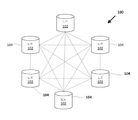
도 2는, 이러한 노드에 의해 유지되는 샤딩된 블록체인 원장의 데이터 구조와 함께 예시적인 샤딩된 블록체인 네트워크의 노드를 나타낸다.
도 3a 및 3b는, 총괄하여, 도 2의 샤딩된 블록체인 원장과 같은, 샤딩된 블록체인 원장의 일부로서 블록체인 트랜잭션의 생성 및 유효성 검증 및 채굴을 나타내는 흐름도이다.
도 4a 및 4b는, 총괄하여, 채굴자에 의해 생성된 새로운 블록을 유효성 검증할 때 모든 샤드의 멤버가 아닌 노드에 의해 수행되는 작업을 설명하는 흐름도이다.
도 5는, 새로운 블록에 대한 파셜 머클 트리를 구축할 때 모든 샤드의 멤버가 아닌 노드에 의해 수행되는 작업을 설명하는 흐름도이다.
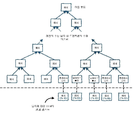
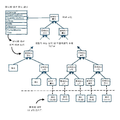
도 6a 내지 6d는, 도 5의 동작의 개략도이다.
도 7a 내지 7d는, 총괄하여, 노드에 의해 유지되는 블록 데이터를 유효성 검증할 때 모든 샤드의 멤버가 아닌 노드에 의해 수행되는 작업을 설명하는 흐름도이다; 이러한 작업은 블록에 대한 파셜 머클 트리를 처리하여 파셜 머클 트리에 대한 머클 루트 해시 값을 계산한다.
도 8a 내지 8d는, 도 7a 내지 7d의 동작의 개략도이다.
도 9는, 다양한 실시예가 구현될 수 있는 컴퓨팅 환경을 나타낸다. These and other aspects of the present disclosure will become apparent from the embodiments described herein and will be described with reference to them. Now, one embodiment of the present disclosure will be described with reference to the accompanying drawings by way of example only. In the attached drawing:
1A shows a blockchain network in which several embodiments may be implemented.
FIG. 1B shows a block chain ledger and a representative block that can be maintained by the block chain network of FIG. 1A, and various embodiments may be implemented in the block chain network.
Figure 2 shows the nodes of an exemplary sharded blockchain network along with the data structure of a sharded blockchain ledger maintained by these nodes.
3A and 3B are, collectively, a flowchart showing the creation and validation and mining of blockchain transactions as part of a sharded blockchain ledger, such as the sharded blockchain ledger of FIG. 2.
4A and 4B are, collectively, a flow chart illustrating operations performed by nodes that are not members of all shards when validating a new block generated by a miner.
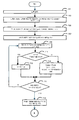
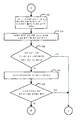
5 is a flow chart illustrating an operation performed by nodes that are not members of all shards when constructing a partial merkle tree for a new block.
6A to 6D are schematic diagrams of the operation of FIG. 5.
7A to 7D are, collectively, a flow chart describing operations performed by nodes that are not members of all shards when validating block data maintained by the node; This operation computes the Merkle root hash value for the partial Merkle tree by processing the partial Merkle tree for the block.
8A to 8D are schematic diagrams of the operation of FIGS. 7A to 7D.
9 shows a computing environment in which various embodiments may be implemented.
먼저, 본 개시의 일 실시예에 따른 블록체인과 연관된 예시적인 블록체인 네트워크(100)를 나타내는 도 1a를 참조한다. 실시예에서, 블록체인 네트워크(100)는 전체적으로 또는 부분적으로 블록체인 노드의 운영자간에 합의된 블록체인 프로토콜을 따르는 동작을 행하는 소프트웨어 및/또는 하드웨어의 인스턴스를 각각 수행하는 피어-투-피어(peer-to-peer) 분산형 전자 디바이스로서 구현될 수 있는 블록체인 노드를 포함한다. 일부 예에서, 이들 분산형 전자 디바이스는 도 1a의 노드(102)와 같이 단순히 "노드"라고 지칭된다. 블록체인 프로토콜의 일례는 비트코인 프로토콜이다. First, reference is made to FIG. 1A showing an exemplary
노드(102)는, 컴퓨팅 리소스 서비스 제공자의 분산 시스템(distributed system)의 다수의 컴퓨팅 디바이스에 의해, 또는 도 9의 컴퓨팅 디바이스(2600)와 같은 임의의 적합한 전자 클라이언트 디바이스에 의해, 임의의 적합한 컴퓨팅 디바이스(예를 들어, 데이터 센터의 서버, 데스크톱 컴퓨터, 랩톱 컴퓨터, 태블릿 컴퓨터, 스마트 폰 등과 같은 클라이언트 컴퓨팅 디바이스)를 포함할 수 있다. 노드(102)는, 다른 노드에 연관된 정보뿐만 아니라 트랜잭션 및/또는 블록을 나타내는 데이터 메시지 또는 객체를 수신하도록 입력을 가질 수 있다. 노드(102)들은 트랜잭션의 상태에 대한 그들의 이해와 같은, 그들이 유지하는 정보에 대해 쿼리되어질 수 있다(queryable).
도 1a에 도시된 바와 같이, 일부 노드(102)는 하나 이상의 다른 노드(102)에 통신 가능하게 커플링된다. 어떤 노드(102)가 어떤 다른 노드와 통신할 수 있는지에 관해, 그 세부사항은 중앙에서(centrally) 결정될 필요가 없다. 메시지가 블록체인 프로토콜이 전달해야 함을 나타내는 메시지라고 가정하면, 블록체인 네트워크(100)의 활성 노드가 하나 이상의 다른 노드(102)와 통신할 수 있어 하나의 노드(102)로부터 다른 노드(102)로 건네지는 메시지가 블록체인 네트워크(100)(또는 그의 중요한(significant) 부분)를 통해 전파될 수 있으면 충분할 수 있다. 그러한 하나의 메시지는 노드(102A)들 중 하나에 의한 제안된 트랜잭션의 게시(publication)일 수 있으며, 그러면 이것은 경로(106)와 같은 경로를 따라 전파될 것이다. 또 다른 그러한 메시지는 블록체인에 포함되도록 제안된 새로운 블록의 게시일 수 있다. As shown in FIG. 1A, some
노드(102)는 트랜잭션에 대응하는 데이터 및 트랜잭션의 블록에 대응하는 데이터를 포함하는 분산 블록체인 원장(또는 블록체인)을 저장할 수 있다. 노드(102)는 블록체인 원장의 완전한 사본 또는 그 일부를 저장할 수 있다. 예를 들어, 일부 노드는 전체 블록체인 원장에 대한 데이터를 저장할 수 있고, 다른 노드는 소비되지 않은 트랜잭션만에 대한 데이터를 저장할 수 있고, 다른 노드는 전체 블록체인 원장을 유지할 수 있다. 노드(102)는 수신하는 각 블록 및 그러한 블록의 트랜잭션을 유효성 검증하는 기능을 포함할 수 있다. 노드(102)들 중 일부는, 새로운 블록이 블록체인 원장에 추가될 수 있도록 트랜잭션을 수집하고 트랜잭션의 블록을 생성하는 채굴자(miner) 노드일 수 있다. 채굴자 노드는, (불량(rogue) 노드가 부적절한 블록을 용이하게 생성하는 것을 방지하기 위해) 복잡하면서 또한 (불량 노드가 복잡한 작업을 미리 수행할 수 없도록) 포함된 트랜잭션의 데이터에 의존하는 어떤 작업을 수행할 것으로 예상될 수 있으며, 이러한 작업의 성능은 다른 노드에 의해서 쉽게 검증된다(verified). 다수의 채굴자 노드는 새로운 블록을 만드는 데 필요한 작업을 수행하기 위해 경쟁할 수 있다. 이를 "작업 증명(proof-of-work)" 채굴이라 한다. 대안적으로, 새로운 블록을 위한 채굴자 노드는, 지분(stake)으로 또한 정의되는 그의 자산(wealth)에 따라 결정론적(deterministic) 방식으로 선택될 수 있다. 이를 "지분 증명(Proof of Stake)" 채굴 또는 단조(forging)라고 한다. 채굴자 노드는 유효성 검증을 위해 새로운 블록을 다른 노드로 전파한다. 다른 노드는 새로운 블록과 새로운 블록에 포함된 트랜잭션을 유효성 검증한다. 노드에 의해 수행되는 유효성 검증 작업이 성공하면, 노드는 새로운 블록을 블록체인에 추가하고 새로운 블록을 다른 노드로 전파한다. 이렇게 하면 새로운 블록이 블록체인 원장에 커밋된다.The
일부 예에서, 블록은 트랜잭션의 그룹이며, 보통 타임스탬프 및 이전 블록의 "지문"(예를 들어, 해시)으로 마킹되어 있다. 이러한 방식으로, 각 블록은 이전 블록에 연결되고, 이에 의해 블록체인 원장의 블록을 연결하는 "체인"을 생성한다. 각 블록은, 블록에 대한 트랜잭션의 그룹을 참조하는 데이터(예를 들어, 트랜잭션 식별자)를 포함한다. 실시예에서, 블록체인 네트워크에 있는 노드의 합의에 의해 유효한 블록이 블록체인 원장에 추가된다. 또한, 일부 예에서, 블록체인 원장은 유효성 검증된 블록의 순서 매겨진 리스트를 포함한다. 도 1b는 3개의 블록(1221, 1223 및 1223)의 체인을 갖는 블록체인 원장(1216)을 나타낸다. 블록(1222)은, 블록(1222)에 대한 트랜잭션의 그룹을 참조하는 데이터(예를 들어, 블록 헤더(1230) 및 트랜잭션 식별자 "1231(1), 1231(2), 1231(3)…")를 포함한다. In some examples, a block is a group of transactions and is usually marked with a timestamp and a "fingerprint" (eg, hash) of the previous block. In this way, each block is linked to the previous block, thereby creating a "chain" that connects the blocks of the blockchain ledger. Each block contains data (eg, transaction identifier) that refers to a group of transactions for the block. In an embodiment, valid blocks are added to the blockchain ledger by consensus of nodes in the blockchain network. Also, in some examples, the blockchain ledger contains an ordered list of validated blocks. 1B shows a
본 개시는 분할의 이용을 통해 블록체인 원장의 확장성을 향상시키는 것을 목표로 한다. 본 기술에서 분할은 두 가지 특정 차원: 수평 및 수직을 고려한다. 수평 분할에서는, 데이터가 샤드(shard)라고 알려진 서로 다른 섹션으로 분할되며, 이것은, 효과적으로는 (인스턴스 리던던시를 할인하는) 이들 인스턴스 각각에 퍼져있는 데이터를 갖는 특정 데이터베이스 스키마의 다수의 인스턴스이다. 수직 분할에서는, 주어진 데이터베이스 스키마가 다수의 노드로 퍼지고, 이에 의해 특정 객체의 속성이 표준화(normalisation)를 이용하여 퍼진다. This disclosure aims to improve the scalability of the blockchain ledger through the use of division. The segmentation in this technique takes into account two specific dimensions: horizontal and vertical. In horizontal partitioning, the data is divided into different sections known as shards, which are effectively multiple instances of a particular database schema with data spread across each of these instances (which discount instance redundancy). In vertical partitioning, a given database schema is spread across multiple nodes, whereby the properties of a particular object are spread using normalization.
본 개시는 "샤드(shards)"로 칭해지는 연관된 노드들의 그룹들 중에서 블록체인 원장의 데이터 구조에 대해 수평 분할 스키마를 채택한다. 각 샤드에는 고유의 식별자가 배정된다. 샤드 모두를 아우르는(encompass) "All Shards"라고 칭해지는 하나의 그룹이 있다. 블록체인 네트워크의 각 노드는 ("All Shards" 그룹을 포함하여) 하나 이상의 샤드에 속할 수 있다. 샤드에 속하는 노드는 그 샤드의 멤버로 칭해질 수 있다. 도 2의 예에서, 노드 A1과 A2는 샤드 A의 멤버이며(샤드 A에 속하며), 노드 B1 및 B2는 샤드 B의 멤버이며(샤드 B에 속하며), 노드 C는 샤드 A 및 B의 멤버이며(샤드 A 및 B에 속하며), 노드 D는 "All Shards" 그룹의 멤버이다("All Shards" 그룹에 속한다). 여타의 샤드(들)도 사용될 수 있다. 나아가, 각 노드는 자신이 속한 하나 이상의 샤드에 대응하는 블록체인 원장의 데이터 구조를 저장하도록 구성된다. 도 2의 예에서, 블록체인 원장의 데이터 구조는, 샤드에 대한 UTXO 세트, 샤드에 대한 트랜잭션 큐(멤풀(mempools)), 샤드에 대한 트랜잭션 데이터(TX 데이터 레이블이 지정됨) 및 샤드에 대한 블록 데이터를 포함하는, 샤드에 대한 비트코인-연관 데이터 구조를 포함한다. 샤드에 대한 UTXO 세트는 새로운 트랜잭션에 대한 입력으로서 사용될 수 있는 미사용 트랜잭션 출력(UTXO)을 나타낸다. This disclosure adopts a horizontal partitioning scheme for the data structure of a blockchain ledger among groups of related nodes referred to as "shards". Each shard is assigned a unique identifier. There is one group called "All Shards" that encompasses all shards. Each node in the blockchain network can belong to one or more shards (including the "All Shards" group). A node belonging to a shard may be referred to as a member of that shard. In the example of Figure 2, nodes A1 and A2 are members of shard A (which belongs to shard A), nodes B1 and B2 are members of shard B (which belong to shard B), and node C is a member of shards A and B. (Which belongs to shards A and B), and node D is a member of the "All Shards" group (which belongs to the "All Shards" group). Other shard(s) may also be used. Furthermore, each node is configured to store the data structure of the blockchain ledger corresponding to one or more shards to which it belongs. In the example of Figure 2, the data structure of the blockchain ledger is a set of UTXOs for shards, transaction queues for shards (mempools), transaction data for shards (labeled TX data), and block data for shards. It includes a bitcoin-associated data structure for a shard, including. The UTXO set for a shard represents an unused transaction output (UTXO) that can be used as an input to a new transaction.
본원에 설명된 바와 같은 실시예에서, 주어진 노드에 의해 유지되는 블록 데이터는, 주어진 노드가 속하는 하나 이상의 샤드에 대한 블록 데이터를 포함한다. 이러한 블록 데이터는, 블록체인 원장의 블록을 나타내는 데이터를 포함하며 각 블록에 대해 다음 데이터를 포함할 수 있다: i) 블록에 대한 다른 데이터와 함께 파셜 머클 트리를 포함하는 블록 헤더, 및/또는 ii) 블록의 일부인 트랜잭션에 대한 트랜잭션 식별자의 리스트; 이 리스트는, 블록의 일부이고 주어진 노드가 속한 하나 이상의 샤드와 연관된 트랜잭션에 대해서만의 트랜잭션 식별자를 포함하고; 이 리스트는, 블록의 일부이고 주어진 노드가 속한 하나 이상의 샤드와 연관되지 않는 트랜잭션에 대한 트랜잭션 식별자를 포함하지 않는다. 블록 헤더에 저장된 파셜 머클 트리는, 블록의 일부이고 주어진 노드가 속하지 않는 하나 이상의 샤드와 연관된 트랜잭션으로부터 도출된 해시 값을 포함하며, 블록의 일부이고 주어진 노드가 속하는 하나 이상의 샤드와 연관된 트랜잭션으로부터 도출된 해시 값은 생략한다. 파셜 머클 트리는, 노드가, 블록의 일부이고 노드가 속한 하나 이상의 샤드와 연관되지 않는 트랜잭션에 액세스할 필요없이 블록 유효성 검증을 위해 블록의 머클 루트 해시 값을 계산하는 것을 허용하는데 이용할 수 있다. 이러한 방식으로, 상이한 샤드의 노드에 의해 블록 데이터의 일부로서 저장되는 주어진 블록에 대한 i)의 파셜 머클 트리 및 ii)의 리스트는 샤드들 중의 트랜잭션의 분포 및 노드 멤버쉽에 기초하여 노드들 중에서 변할 수 있다. 유리하게는, 본 실시예에서 설명된 바와 같이, 각각의 노드가 주어진 트랜잭션과 연관된 모든 UTXO를 저장하고 유효성을 검증하지 않고도 유효성을 검증하고 전파할 블록에 대한 필요한 세부 사항을 여전히 정확하게 보유하고 이용하기 위해, 각각의 노드가 저장하거나 저장하지 않을 수 있는 정보를 확립하기 위한 본원에서 설명되는 프로토콜과 함께, 블록 헤더 및 블록에 대한 다른 데이터와 연관하여 파셜 머클 트리를 사용하는 것이, 샤딩된 블록체인 네트워크의 제한의 관점에서 가능하다. 본원에서 더 설명되는 바와 같이, 블록 정보를 처리하기 위한 파셜 머클 트리의 생성 및 이용은, 노드가 연관된 샤드 외부의 하나 이상의 노드와의 통신 및 데이터 흐름을 위한 다른 프로토콜에 더하여, 샤딩된 네트워크의 이러한 구조, 및 동 샤드 내에서의 통신 및 데이터 흐름을 위해 샤딩된 네트워크 내의 노드에 의해 적용되는 프로토콜에 의해 용이하여 진다. In an embodiment as described herein, the block data maintained by a given node includes block data for one or more shards to which the given node belongs. Such block data contains data representing blocks of the blockchain ledger and may contain the following data for each block: i) a block header containing a partial Merkle tree along with other data for the block, and/or ii ) A list of transaction identifiers for transactions that are part of the block; This list contains transaction identifiers only for transactions that are part of the block and associated with one or more shards to which a given node belongs; This list does not contain transaction identifiers for transactions that are part of a block and are not associated with one or more shards to which a given node belongs. The partial merkle tree stored in the block header contains hash values derived from transactions that are part of the block and are associated with one or more shards to which a given node does not belong, and hashes derived from transactions that are part of the block and associated with one or more shards to which a given node belongs. The value is omitted. The partial Merkle tree can be used to allow a node to compute a block's Merkle root hash value for block validation without having to access transactions that are part of the block and not associated with one or more shards to which the node belongs. In this way, the list of i) partial merkle trees and ii) for a given block stored as part of the block data by nodes of different shards can vary among nodes based on the distribution of transactions among the shards and node membership. have. Advantageously, as described in this embodiment, each node still correctly holds and uses the necessary details about the block to validate and propagate without having to store and validate all UTXOs associated with a given transaction. For the sake of this, using a partial Merkle tree in association with the block header and other data about the block, along with the protocol described herein for establishing information that each node may or may not store, is a sharded blockchain network. It is possible in terms of limitations. As further described herein, the creation and use of a partial Merkle tree for processing block information, in addition to other protocols for data flow and communication with one or more nodes outside the shard to which the node is associated, The structure is facilitated by the protocol applied by nodes in the sharded network for communication and data flow within the shard.
도 2의 예에서, 노드 A1과 A2는, 샤드 A에 대한 UTXO 세트의 사본, 샤드 A에 대한 트랜잭션 큐(멤풀)의 사본, 샤드 A에 대한 트랜잭션 데이터의 사본, 및 샤드 A에 대한 블록 데이터의 사본을 저장한다. 노드 A1 및 A2는 다음을 저장하지 않는다: (샤드 A가 아닌) 다른 샤드에 대한 UTXO 세트의 사본, (샤드 A가 아닌) 다른 샤드에 대한 트랜잭션 큐(멤풀)의 사본, (샤드 A가 아닌) 다른 샤드에 대한 트랜잭션 데이터의 사본. 또한, 샤드 A에 대한 블록 데이터는 블록체인 원장의 블록을 나타내는 데이터를 포함하며 각 블록에 대해 다음의 데이터를 포함할 수 있다: i) 블록에 대한 다른 데이터와 함께, 파셜 머클 트리를 포함하는 블록 헤더, 및 ii) 블록의 일부인 트랜잭션에 대한 트랜잭션 식별자의 리스트; 이 리스트는 블록의 일부이고 샤드 A와 연관된 트랜잭션에 대해서만 트랜잭션 식별자를 포함하고; 이 리스트는 블록의 일부이고 샤드 A와 연관되지 않는 트랜잭션에 대한 트랜잭션 식별자를 포함하지 않는다. 블록 헤더에 저장된 파셜 머클 트리는, 블록의 일부이고 샤드 A와 연관되지 않는 트랜잭션으로부터 도출되는 해시 값을 포함하고, 블록의 일부이고 샤드 A와 연관된 트랜잭션으로부터 도출되는 해시 값을 생략한다. In the example of Figure 2, nodes A1 and A2 are a copy of the UTXO set for shard A, a copy of the transaction queue (mempool) for shard A, a copy of the transaction data for shard A, and the block data for shard A. Save a copy. Nodes A1 and A2 do not store: a copy of the UTXO set for another shard (not shard A), a copy of the transaction queue (mempool) for another shard (not shard A), and a copy of the transaction queue (mempool) for another shard (not shard A). Copies of transaction data for other shards. In addition, the block data for shard A contains data representing blocks of the blockchain ledger, and may contain the following data for each block: i) A block containing a partial Merkle tree, along with other data about the block A header, and ii) a list of transaction identifiers for transactions that are part of the block; This list is part of the block and contains only transaction identifiers for transactions associated with shard A; This list is part of the block and does not contain transaction identifiers for transactions not associated with shard A. The partial Merkle tree stored in the block header contains hash values derived from transactions that are part of the block and not associated with shard A, and omit hash values derived from transactions that are part of the block and associated with shard A.
노드 B1과 B2는 샤드 B에 대한 UTXO 세트의 사본, 샤드 B에 대한 트랜잭션 큐(멤풀)의 사본, 샤드 B에 대한 트랜잭션 데이터의 사본, 샤드 B에 대한 블록 데이터의 사본을 저장한다. 노드 B1 및 B2는 다음을 저장하지 않는다: (샤드 B가 아닌) 다른 샤드에 대한 UTXO 세트의 사본, (샤드 B가 아닌) 다른 샤드에 대한 트랜잭션 큐(멤풀)의 사본, (샤드 B가 아닌) 다른 샤드에 대한 트랜잭션 데이터의 사본. 또한, 샤드 B에 대한 블록 데이터는 블록체인 원장의 블록을 나타내는 데이터를 포함하며 각 블록에 대해 다음 데이터를 포함할 수 있다: i) 블록에 대한 다른 데이터와 함께 파셜 머클 트리를 포함하는 블록 헤더, 및 ii) 블록의 일부인 트랜잭션에 대한 트랜잭션 식별자의 리스트; 이 리스트는 블록의 일부이고 샤드 B와 연관된 트랜잭션에 대한 트랜잭션 식별자만 포함하고; 이 리스트는 블록의 일부이고 샤드 B와 연관되지 않는 트랜잭션에 대한 트랜잭션 식별자는 포함하지 않는다. 블록 헤더에 저장된 파셜 머클 트리는, 블록의 일부이고 샤드 B와 연관되지 않는 트랜잭션으로부터 도출되는 해시 값을 포함하고, 블록의 일부이고 샤드 B와 연관된 트랜잭션으로부터 도출되는 해시값을 생략한다. Nodes B1 and B2 store a copy of the UTXO set for shard B, a copy of the transaction queue (mempool) for shard B, a copy of the transaction data for shard B, and a copy of the block data for shard B. Nodes B1 and B2 do not store: a copy of the UTXO set for another shard (not shard B), a copy of the transaction queue (mempool) for another shard (not shard B), and a copy of the transaction queue (mempool) for another shard (not shard B). Copies of transaction data for other shards. In addition, the block data for shard B contains data representing blocks of the blockchain ledger, and may contain the following data for each block: i) a block header containing a partial Merkle tree along with other data for the block, And ii) a list of transaction identifiers for transactions that are part of the block. This list is part of the block and contains only transaction identifiers for transactions associated with shard B; This list is part of the block and does not contain transaction identifiers for transactions not associated with Shard B. The partial merkle tree stored in the block header contains hash values derived from transactions that are part of the block and not associated with shard B, and omit hash values derived from transactions that are part of the block and associated with shard B.
노드 C는 샤드 A에 대한 UTXO 세트의 사본, 샤드 B에 대한 UTXO 세트의 사본, 샤드 A에 대한 트랜잭션 큐(멤풀)의 사본, 샤드 B에 대한 트랜잭션 큐(멤풀)의 사본, 샤드 A에 대한 트랜잭션 데이터의 사본, 샤드 B에 대한 트랜잭션 데이터의 사본, 샤드 A 및 B에 대한 블록 데이터의 사본을 포함한다. 노드 C는 다음을 저장하지 않는다: (샤드 A 및 B가 아닌) 다른 샤드에 대한 UTXO 세트의 사본, (샤드 A 및 B가 아닌) 다른 샤드에 대한 트랜잭션 큐(멤풀)의 사본, (샤드 A 및 B가 아닌) 다른 샤드에 대한 트랜잭션 데이터의 사본. 더 나아가, 샤드 A 및 B에 대한 블록 데이터는 블록체인 원장의 블록을 나타내는 데이터를 포함하며 각 블록에 대해 다음 데이터를 포함할 수 있다: i) 블록에 대한 다른 데이터와 함께 파셜 머클 트리를 포함하는 블록 헤더, 및 ii) 블록의 일부인 트랜잭션에 대한 트랜잭션 식별자의 리스트; 이 리스트는 블록의 일부이고 샤드 A 또는 B와 연관된 트랜잭션에 대해서만 트랜잭션 식별자를 포함한다; 그리고 이 리스트는 블록의 일부이고 샤드 A 또는 B와 연관되지 않는 트랜잭션에 대한 트랜잭션 식별자를 포함하지 않는다. 블록 헤더에 저장된 파셜 머클 트리는, 블록의 일부이고 샤드 A 또는 B와 연관되지 않는 트랜잭션으로부터 도출되는 해시 값을 포함하고, 블록의 일부이고 샤드 A 또는 B와 연관된 트랜잭션으로부터 도출되는 해시 값을 생략한다. Node C is a copy of the UTXO set for shard A, a copy of the UTXO set for shard B, a copy of the transaction queue (mempool) for shard A, a copy of the transaction queue (mempool) for shard B, and a transaction to shard A It contains a copy of the data, a copy of the transactional data for shards B, and a copy of the block data for shards A and B. Node C does not store: a copy of the UTXO set for other shards (other than shards A and B), a copy of the transaction queue (mempool) for other shards (not shards A and B), (shard A and A copy of transaction data for shards other than B). Furthermore, the block data for shards A and B contains data representing blocks of the blockchain ledger and may contain the following data for each block: i) containing a partial Merkle tree along with other data for the block. A block header, and ii) a list of transaction identifiers for transactions that are part of the block; This list is part of the block and contains only transaction identifiers for transactions associated with shard A or B; And this list does not contain transaction identifiers for transactions that are part of the block and not associated with shards A or B. The partial merkle tree stored in the block header includes a hash value derived from a transaction that is part of the block and is not associated with shard A or B, and omits the hash value derived from a transaction that is part of the block and associated with shard A or B.
노드 D는 모든 샤드에 대한 UTXO 세트의 사본, 모든 샤드에 대한 트랜잭션 큐(멤풀)의 사본, 모든 샤드에 대한 트랜잭션 데이터의 사본, 및 모든 샤드에 대한 블록 데이터의 사본을 저장한다. Node D stores a copy of the UTXO set for all shards, a copy of the transaction queue (mempool) for all shards, a copy of the transaction data for all shards, and a copy of the block data for all shards.
노드에 의해 관리되는 블록 데이터는 노드가 속하지 않는 샤드(들)의 일부인 트랜잭션 데이터를 생략할 수 있으므로, 노드 저장 공간을 절약할 수 있다. 따라서, 일부 노드(예를 들어, 노드 A1, A2, B1, B2 및 C)는 블록체인 원장의 트랜잭션의 제한된 서브세트에 대해서만 블록체인 원장의 데이터 구조를 저장하고, 다른 노드(예를 들어, 노드 D)는 블록체인 원장의 모든 트랜잭션에 대해 데이터 구조를 저장한다. 이 경우 블록체인 원장의 제한된 서브세트에 대한 데이터 구조를 저장하는 노드(예를 들어, 노드 A1, A2, B1, B2 및 C)의 데이터 저장 용량은 전체 블록체인 원장에 대한 데이터 구조를 저장하는 노드(예를 들어, 노드 D)의 데이터 저장 용량보다 훨씬 적을 수 있다. 다른 블록체인 원장에서는, 상이한 샤드에 대해 다른 데이터 구조가 저장되고 유지될 수 있음에 유의한다. In the block data managed by the node, transaction data that is part of the shard(s) to which the node does not belong can be omitted, thereby saving the node storage space. Thus, some nodes (e.g. nodes A1, A2, B1, B2, and C) store the blockchain ledger's data structure only for a limited subset of the blockchain ledger's transactions, while other nodes (e.g. node D) stores the data structure for all transactions on the blockchain ledger. In this case, the data storage capacity of the nodes that store the data structure for a limited subset of the blockchain ledger (e.g. nodes A1, A2, B1, B2 and C) is the node that stores the data structure for the entire blockchain ledger. It can be much less than the data storage capacity of (e.g. Node D). Note that in different blockchain ledgers, different data structures may be stored and maintained for different shards.
도 2의 수평 분할 방식은 노드의 운영자가 블록체인 네트워크의 하나 이상의 샤드의 멤버가 되도록 선출하거나 선택할 수 있도록 허용한다. 이것은 제한된 데이터 저장 용량을 가진 소규모 파티(party)(예를 들어, 하비스트(hobbyist))가 단일 샤드의 멤버가 되도록 선택하는 것을 허용하는 반면, 더 큰 데이터 저장 용량을 가진 대규모 파티(예를 들어, 금융 기관)는 모든 샤드의 멤버가 되거나 선택하는 것을 선출할 수 있다. The horizontal partitioning scheme of Figure 2 allows the operator of a node to elect or select to be a member of one or more shards of the blockchain network. This allows a small party with limited data storage capacity (e.g., a hobbyist) to choose to be a member of a single shard, while a larger party with a larger data storage capacity (e.g., a hobbyist) Financial Institutions) can elect to become members of any shard or elect to choose.
또한, 각 노드는 노드가 속한 하나 이상의 샤드와 연관된 트랜잭션만 유효성 검증하는 블록 유효성 검증 작업을 수행하도록 구성할 수 있다. 이러한 작업에서, 노드가 속하지 않는 다른 샤드와 연관된 임의의 트랜잭션의 유효성 검증은 바이패스되고 노드에 의해 블록이 유효한 것으로 간주되는지 여부에 영향을 주지 않는다. 이 경우, 단일 샤드의 멤버가 되기로 선택한 운영자는 블록체인 원장에서 제한된 트랜잭션의 세트를 유효성 검증함으로써 더 가벼운 보안 참여를 갖는 반면, 모든 샤드의 멤버가 되기로 선택한 운영자는 블록체인 원장의 모든 트랜잭션을 유효성 검증함으로써 더 큰 보안 참여를 갖는다. In addition, each node can be configured to perform a block validation task that validates only transactions associated with one or more shards to which the node belongs. In this operation, validation of any transactions associated with other shards to which the node does not belong is bypassed and does not affect whether the block is considered valid by the node. In this case, an operator who chooses to be a member of a single shard has lighter security participation by validating a limited set of transactions on the blockchain ledger, whereas an operator who chooses to be a member of all shards will have all transactions on the blockchain ledger. By validating, we have greater security participation.
노드는 시빌(Sybil) 공격을 방지하기 위해 단일 샤드 내의 여러 다른 노드와 통신하도록 구성될 수 있다. 이러한 공격은 노드로부터 전송된 트랜잭션을 효과적으로 무시하여 네트워크를 통한 전파를 방지할 수 있다. 주어진 샤드의 하나 이상의 노드는 또한 다른 샤드의 노드에 관한 정보를 교환하기 위해 배정될 수 있으며, 그러한 배정(들)은 시간에 따라 주어진 샤드의 노드들 사이에서 순환될 수 있다. 각 노드는 그가 수신하는 모든 트랜잭션을 그가 커플링된 다른 노드로 브로드캐스트할 수 있으며, 그 주어진 노드가 그 샤드의 멤버가 아닌 경우, 전체 트랜잭션 유효성 검증을 수행하는 대신, 트랜잭션을 계속 전파하기 전에 기본적인 트랜잭션-레벨의 검사를 수행한다. Nodes can be configured to communicate with several other nodes within a single shard to prevent Sybil attacks. Such an attack can effectively ignore the transaction transmitted from the node and prevent propagation through the network. One or more nodes of a given shard may also be assigned to exchange information about nodes of other shards, and such assignment(s) may be cycled between nodes of a given shard over time. Each node can broadcast all transactions it receives to other nodes to which it is coupled, and if that given node is not a member of that shard, then instead of performing full transaction validation, it has the basics before continuing to propagate the transaction. Perform transaction-level inspection.
상이한 또는 특정 시간/인스턴스에서, 다른 노드에 대한 세부사항도 또한, 특정 샤드에서 노드간에 공유될 수 있다. 이는 addr 프로토콜 메시지의 수정된 버전을 사용하여 본 개시의 제2 실시예에 따라 수행된다. 현재 비트코인 프로토콜의 일부로서 존재하는 addr 메시지의 일 구현은 하나 이상의 IP 주소 및 포트를 나열하거나 또는 식별하는 데 사용된다. 예를 들어, getaddr 요청은 (예를 들어, 부트스트래핑(bootstrapping)을 위한) 다수의 알려진-활성(active) 피어를 포함하는 addr 메시지를 획득하는 데 사용될 수 있다. addr 메시지는 종종, 하나의 주소만을 포함하지만, 때때로 더 많은, 일부 예시에서 최대 1000개까지 포함한다. 일부 예시에서, 모든 노드는 주기적으로 즉, 24 시간마다 그 자신의 IP 주소를 포함하는 addr을 브로드캐스트한다. 그 후, 노드는 이들 메시지를 그의 피어에게 중계할 수 있으며, 그들에게 새로운 경우 중계된 주소를 저장할 수 있다. 이 방식에서, 네트워크에서 노드는 네트워크에 연결하는 순간 또는 그 이후에, 어느 IP가 네트워크에 연결되는지의 타당하게 알아보기 쉬운 픽처를 가질 수 있다. 대부분의 경우, IP 주소는 초기 addr 브로드캐스트에 기인하여, 모든 사람의 주소 데이터베이스에 추가된다. At different or specific times/instances, details about other nodes may also be shared between nodes in a particular shard. This is done according to the second embodiment of the present disclosure using a modified version of the addr protocol message. One implementation of the addr message, which currently exists as part of the Bitcoin protocol, is used to list or identify one or more IP addresses and ports. For example, a getaddr request can be used to obtain an addr message containing a number of known-active peers (eg, for bootstrapping). The addr message often contains only one address, but sometimes more, up to 1000 in some examples. In some examples, every node broadcasts an addr containing its own IP address periodically, i.e. every 24 hours. The node can then relay these messages to its peers and store the relayed addresses if new to them. In this way, a node in the network can have a picture that is legitimately recognizable as to which IP is connected to the network at the moment or after connecting to the network. In most cases, IP addresses are added to everyone's address database due to the initial addr broadcast.
본 개시에 따른 수정된 addr 프로토콜의 일 구현은 상기에 부가하여 특정 노드가 속한 샤드 또는 샤드들에 대한 추가적인 정보를 송신할 수 있다. 예를 들어, 수정된 addr 프로토콜에서 도 1b와 같은 공유된 네트워크에서 노드가 네트워크에서 특정 샤드에 합류(joins)할 때, addr 메시지의 일부로서 브로드캐스트되는 것은 또한, 그것이 멤버인 하나 이상의 샤드를 식별하는 필드를 포함할 수 있다. 그러므로, 이 정보는 또한, 도 1b의 네트워크에서 피어로부터의 getaddr 요청에 대한 응답으로 반환된다. 제1 실시예에서 논의된 바와 같이, 이러한 정보는 각 노드 및/또는 노드가 연관된 각 샤드와 연관된 데이터 구조를 기초로 할 수 있다. An implementation of the modified addr protocol according to the present disclosure may transmit additional information about a shard or shards to which a specific node belongs in addition to the above. For example, in a modified addr protocol, when a node joins a specific shard in the network in a shared network such as Figure 1B, broadcast as part of the addr message also identifies one or more shards of which it is a member. May include a field to Therefore, this information is also returned in response to a getaddr request from a peer in the network of FIG. 1B. As discussed in the first embodiment, this information may be based on the data structure associated with each node and/or each shard to which the node is associated.
도 3a 및 3b는, 총괄하여, 도 2의 샤딩된 블록체인 원장과 같은 샤딩된 블록체인 원장의 일부로서 블록체인 트랜잭션의 생성 및 유효성 검증 및 채굴을 나타내는 흐름도이다. 3A and 3B are, collectively, a flowchart showing the creation, validation, and mining of blockchain transactions as part of a sharded blockchain ledger, such as the sharded blockchain ledger of FIG. 2.
박스(301)에서, 클라이언트 노드는 블록체인 트랜잭션을 생성하며, 블록체인 트랜잭션은 블록체인 네트워크의 하나 이상의 샤드에 연관된다(또는 배정되거나(assigned) 할당된다(allocated)). 유효한 블록체인 트랜잭션과 연관되는 샤드는, 유효한 블록체인 트랜잭션의 하나 이상의 트랜잭션 입력 또는 트랜잭션 출력과 연관되는 샤드 또는 블록체인 트랜잭션 그 자신과 연관되는 샤드일 수 있다. 예를 들어, 일 실시예에서, 유효한 블록체인 트랜잭션과 연관되는 샤드는 블록체인 트랜잭션의 트랜잭션 식별자에 기초할 수 있으며, 이것은 블록체인 트랜잭션의 트랜잭션 데이터에 SHA256 함수를 적용하여 생성된다. 보다 구체적으로는, 유효한 블록체인 트랜잭션과 연관되는 샤드는, 블록체인 네트워크 상에서 현재 활성 샤드의 수의 모듈러스(modulus)를, 트랜잭션 식별자, 즉, 샤드 식별자 = TX ID mod n에 적용하여 결정될 수 있으며, 여기서 n은 현재 활성 샤드의 수이다. 다른 실시예에서, 유효한 블록체인 트랜잭션과 연관되는 샤드는, 블록체인 트랜잭션의 제1 입력 또는 다른 입력, 및 해당 입력이 참조하는 이전 트랜잭션의 출력에 기초할 수 있다. 이러한 맥락에서, 그 출력이 후속 트랜잭션의 제1 입력에 의해 참조되는 트랜잭션을 "부모(parent)" 트랜잭션이라 칭하고, 후속 트랜잭션을 "자식(child)" 트랜잭션이라 칭한다. 부모를 정의하기 위해 제1 입력을 사용하는 것이 방법에 필수적인 것은 아니라는 점에 유의해야 하며; 복수의 입력이 존재할 경우, 방법을 수행하도록 임의의 입력이 선택될 수 있다. 예를 들어, 자식 트랜잭션의 입력의 특정 수가, 같은 샤드에 있는 트랜잭션의 출력을 부모로서 참조하는 경우, 이전 트랜잭션은 자식 트랜잭션의 부모로서 정의될 수 있다. 입력의 수는 자식 트랜잭션의 입력의 과반수(majority number)를 정의할 수 있다. 이러한 메커니즘에 대한 상세 내용은, 본원의 양수인에게 양도되었으며 그 전체가 본원에 참조로 포함된 영국 특허출원 제1806907.0호 및 영국 특허출원 제1806909.6호에 기재되어 있다. 또 다른 실시예에서, 블록체인 트랜잭션을 블록체인 네트워크의 하나 이상의 샤드와 연관시키기 위해 다른 메커니즘이 사용될 수 있다. In
박스(303)에서, 클라이언트 노드는, 블록체인 트랜잭션과 연관되는 하나 이상의 샤드에 속한 노드(및 가능하게는 블록체인 트랜잭션과 연관되지 않는 샤드에 속한 다른 노드)에의 통신을 위해 블록체인 트랜잭션을 브로드캐스트한다. In
박스(305)에서, 블록체인 트랜잭션과 연관되는 하나 이상의 샤드에 속한 노드는 블록체인 트랜잭션을 수신한다. In
박스(307)에서, 블록체인 트랜잭션과 연관되는 하나 이상의 샤드에 속한 노드는 수신된 블록체인 트랜잭션 또는 그 일부(들)를 유효성 검증하고, 각각의 그러한 노드는 수신된 블록체인 트랜잭션 또는 그 일부(들)가 유효한 것으로 혹시라도 간주되면 그것이 속한 샤드(들)의 다른 노드로 블록체인 트랜잭션을 전파한다. In
("트랜잭션 샤드 유효성 검증(Transaction Shard Validation)"이라 칭하는) 일 실시예에서, 박스(307)의 트랜잭션 유효성 검증은, 트랜잭션이 연관되거나 할당된 샤드에 의해 수행된다. 위에서 설명한 바와 같이, 트랜잭션은, 트랜잭션의 트랜잭션 식별자에 적용된 모듈로 함수의 결과를 사용하여 샤드에 연관(또는 배정)될 수 있다. 트랜잭션은 다른 샤드로부터의 입력을 가질 수 있기 때문에, 노드는 UTXO 확인을 위해 다른 샤드의 노드와 통신할 수 있다. 특히, 하나 이상의 샤드에 속한 노드는, 다른 샤드에 속한 노드에게, 다른 샤드에 대한 UTXO 세트를 가져올 것을 요청할 수 있다. 요청된 UTXO 세트를 갖는 노드가 없으면, 널(null) 응답이 주어지고 해당 트랜잭션은 무효로 간주된다. 트랜잭션 입력이 유효한 것으로 간주될 경우, 트랜잭션은, 트랜잭션이 연관되거나 또는 할당된 샤드에 대한 트랜잭션 큐(멤풀)에 추가되고(박스(309)), 트랜잭션은 이 샤드에서의 다른 노드로 전파된다(박스(311)). In one embodiment (referred to as "Transaction Shard Validation"), transaction validation of
("UTXO 샤드 기반 유효성 검증(UTXO Shard-Based Validation)"이라 칭하는) 다른 실시예에서, 박스(307)의 트랜잭션 유효성 검증은 유효성 검증을 수행하는 노드와 동일한 샤드 내에 있는 UTXO 세트와 관련이 있는 입력에 기초하여 트랜잭션을 유효성 검증한다. 다른 샤드의 UTXO 세트와 관련이 있는 입력은 유효성 검증되지 않는다. 각 입력의 유효성 검증은, 참조된 출력의 UTXO가 사용되지 않았는지를 확인하는 것, 입력이 참조되는 출력의 값을 수집할 권한이 있는지를 검증(예를 들어, 스크립트 검증(verification))하는 것, 및 여러 다른 확인을 포함할 수 있다. (입력을 관련시키는 UTXO가 존재하지 않는 경우, 트랜잭션의 출력의 값이 대응하는 입력의 UXTO보다 크거나, 또는 스크립트 오류가 있는 경우와 같이) 입력이 무효일 경우, 트랜잭션은 삭제되고 동일한 샤드의 다른 노드로 전파되지 않는다. 입력이 유효한 것으로 간주되면, 트랜잭션은 유효성 검증을 수행하는 노드에 대한 샤드의 트랜잭션 큐(멤풀)에 추가되고(박스(309)) 트랜잭션은 이 샤드에서의 다른 노드로 전파된다(박스 311). In another embodiment (referred to as "UTXO Shard-Based Validation"), the transaction validation of
"트랜잭션 샤드 유효성 검증" 실시예 및 "UTXO 샤드 기반 유효성 검증" 실시예의 상세 내용은, 본원의 양수인에게 양도되었으며 그 전체가 위에서 참조로 포함된 영국 특허출원 제1806911.2호 및 영국 특허출원 제1806914.6호에 제시되어 있다. Details of the "transaction shard validation" example and the "UTXO shard based validation" example are in U.K. Patent Application No. 1806911.2 and U.K. Patent Application No. 1806914.6, which have been assigned to the assignee of the present application and are incorporated by reference in their entirety above. Is presented.
실시예에서, 박스(307)의 트랜잭션의 유효성 검증은, 트랜잭션의 신택스(syntax) 및 데이터 구조가 올바른지 확인하는 것, 트랜잭션이 허용된 블록 사이즈 미만이고 100바이트 이상인지 확인하는 것, 및 잠금 시간이 최대의 허용되는 수보다 작은지를 확인하는 것과 같이, 트랜잭션 전체와 연관되는 확인을 포함할 수도 있다. In an embodiment, validation of the transaction in
박스(309)에서, 유효한 블록체인 트랜잭션과 연관되는 샤드에 속한 노드는, 유효한 블록체인 트랜잭션과 연관되는 샤드에 대한 트랜잭션 큐(멤풀)에 그 유효한 블록체인 트랜잭션을 추가한다. In
박스(311)에서, 하나 이상의 노드(예를 들어, 채굴자)는 샤드에 대한 트랜잭션 큐(멤풀)(예를 들어, "All Shards" 그룹에 대한 멤풀)로부터 블록을 형성하고 이 새로운 블록을 다른 노드에 전파한다. In
박스(313)에서, 노드는 새로운 블록을 수신하고 합의 프로토콜(consensus protocol)에 기초하여 블록 유효성 검증 및 블록의 커미트먼트(commitment)를 위해 새로운 블록을 처리한다. In
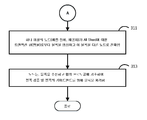
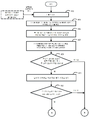
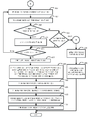
도 4a 및 4b는, 총괄하여, 모든 샤드의 멤버가 아닌 노드에 대해 채굴자에 의해 생성된 새로운 블록의 유효성을 검증할 때, 도 3a 및 3b의 박스(313)의 동작을 설명하는 흐름도이다. 이 경우에, 노드는 활성 샤드의 제한된 서브세트에 속하므로 하나 이상의 활성 샤드에 속하지 않는다. 모든 샤드의 멤버인 임의의 노드는 잘 알려진 블록 유효성 검증 프로세스를 이용하여 새로운 블록을 유효성 검증할 수 있음에 유의한다. 4A and 4B are, collectively, a flowchart illustrating the operation of the
박스(401)에서, 노드는 새로운 블록을 수신한다. 실시예에서, 블록은, 블록 헤더 및 블록에 대한 TX 식별자의 순서 매겨진 시퀀스를 나타내는 리스트 데이터를 포함한다. 도 2에 나타낸 바와 같은 비트코인형 분산 블록체인 시스템에서, 블록 헤더는 다음의 데이터 필드를 포함할 수 있다: In
[1] 블록 버전 번호는 따라야 할 블록 유효성 검증 규칙 세트를 나타낸다.[1] The block version number indicates the set of block validation rules to be followed.
[2] 이전 블록 헤더 해시, 이것은 이전 블록의 헤더의 인터널(internal) 바이트 순서에 따른 SHA256(SHA256()) 해시이다. 이렇게 하면 이 블록의 헤더를 변경하지 않고 이전 블록을 변경할 수 없다. [2] Previous block header hash, this is a SHA256 (SHA256()) hash according to the internal byte order of the header of the previous block. This way, you cannot change the previous block without changing the header of this block.
[3] 이 블록에 포함된 모든 트랜잭션의 해시로부터 유도된 머클 루트 해시, 헤더를 수정하지 않고는 이러한 트랜잭션이 수정될 수 없음을 보장한다. [3] It is guaranteed that these transactions cannot be modified without modifying the Merkle root hash and header derived from the hashes of all transactions included in this block.
[4] (채굴자에 따른) 블록 시간, 이것은 채굴자가 헤더를 해싱하기 시작했을 때의 Unix epoch time이다. [4] Block time (according to the miner), this is the Unix epoch time when the miner starts hashing the header.
[5] nBits, 이것은 목표 임계값(target threshold)의 인코딩된 버전이며, 블록의 헤더 해시는 이 목표 임계값보다 작거나 이와 같아야 한다. [5] nBits, this is the encoded version of the target threshold, and the header hash of the block must be less than or equal to this target threshold.
[6] 논스(nonce), 목표 임계값보다 작거나 이와 같은 해시를 생성하기 위해 헤더 해시를 수정하도록 채굴자가 변경시키는 임의의 수이다. [6] Nonce, an arbitrary number that is changed by the miner to modify the header hash to generate a hash that is less than the target threshold or like this.
필드를 갖는 예시 블록이 도 6a에 나타내어져 있다. An example block with fields is shown in FIG. 6A.
박스(403)에서, 노드는, 박스(401)에서 수신된 블록에 저장된 트랜잭션 식별자("TX 식별자" 또는 "TX Ids")의 순서 매겨진 시퀀스를 나타내는 리스트를 추출한다. 블록에 대한 트랜잭션 식별자의 예시 리스트가 도 6a에 개략적으로 나타내어져 있다. In
박스(405)에서, 노드는, 박스(403)에서 추출된 블록에 대한 트랜잭션 식별자의 순서 매겨진 시퀀스에 대한 풀 머클 트리를 나타내는 데이터를 생성한다. 풀 머클 트리는 블록에 대한 트랜잭션 식별자의 순서 매겨진 시퀀스에 대응하는 리프 노드의 순서 매겨진 시퀀스를 갖는 트리이다. 각 리프 노드는, 대응하는 트랜잭션 식별자에 의해 참조되는 트랜잭션 데이터의 해시를 포함하며, 모든 비-리프 노드는 그의 자식 노드의 해시 값의 암호화 해시를 포함한다. 풀 머클 트리의 비-리프 노드는, 리프(바닥)로부터 잘 알려진 것처럼 풀 머클 트리에 대한 루트 해시 값을 저장하고 있는 루트까지 상방으로 확장되는 레벨로 논리적으로 구조화된다. 블록에 대한 예시적인 풀 머클 트리가 도 6a에 개략적으로 나타내어져 있다. In
박스(407)에서, 노드는 박스(401)에서 수신된 블록의 헤더에 저장된 머클 루트 해시 값을 추출하고, 노드는 추출된 머클 루트 해시 값을 박스(405)에서 생성된 풀 머클 트리의 루트 해시 값과 비교한다. In
박스(409)에서, 노드는, 추출된 머클 루트 해시 값이 박스(405)에서 생성된 풀 머클 트리의 루트 해시 값과 일치하는지를 결정하기 위해 박스(407)의 비교를 평가한다. "아니오"일 경우, 동작은 박스(439 및 441)로 계속된다. "예"일 경우, 동작은 박스(411)로 계속된다. In
박스(411)에서, 노드는 블록의 유효성을 위한 다른 헤더 조건을 평가한다.In
박스(413)에서, 노드는, 블록의 유효성을 위한 다른 모든 헤더 조건이 충족되었는지를 결정하기 위해 박스(411)의 평가(들)를 확인한다. "아니오"일 경우, 동작은 박스(439 및 441)로 계속된다. "예"일 경우, 동작은 박스(415)로 계속된다. In
박스(415)에서, 노드는, 박스(403)에서 추출된 블록에 대한 트랜잭션 식별자의 순서 매겨진 시퀀스를 통해 루프를 구성하고 루프의 각 주어진 트랜잭션 식별자에 대해 박스(417 내지 425)의 동작을 수행한다. In
박스(417)에서, 노드는, 주어진 트랜잭션 식별자에 의해 참조되는 트랜잭션에 대응하는 샤드를 식별한다. 트랜잭션에 대응하는 샤드는, 트랜잭션의 하나 이상의 트랜잭션 입력 또는 트랜잭션 출력과 연관되는 샤드 또는 트랜잭션 그 자신과 연관되는 샤드일 수 있다. 트랜잭션과 하나 이상의 샤드 사이의 연관(또는 대응)을 지정하기 위해 이용될 수 있는 메커니즘의 예는 도 3a 및 3b의 박스(301)에 관련하여 위에서 설명되었다. At
박스(419)에서, 노드는 박스(417)에서 식별된 샤드에 속하는지 여부를 확인한다. 그렇지 않은 경우, 동작은 박스(421)로 계속된다. "예"일 경우, 동작은 박스(422)로 계속된다. In
박스(421)에서, 노드는 박스(403)에서 추출된 블록에 대한 트랜잭션 식별자의 순서 매겨진 시퀀스로부터 주어진 트랜잭션 식별자를 제거하고 동작은 박스(425)로 계속된다.At
박스(423)에서, 노드는 주어진 트랜잭션 식별자에 의해 참조되는 트랜잭션이 유효한지를 확인한다. 주어진 트랜잭션 식별자에 의해 참조된 트랜잭션이 유효하다고 결정되면, 동작은 박스(425)로 계속된다. 그렇지 않은 경우, 동작은 박스(439 및 441)로 계속된다. 실시예에서, 노드는, 주어진 트랜잭션 식별자에 의해 참조되는 트랜잭션이 노드가 속한 샤드에 대한 트랜잭션 큐(멤풀)에 저장되어 있는지 확인할 수 있다. 만일 그렇다면, 트랜잭션은 유효한 것으로 간주될 수 있고 동작은 박스(425)로 계속된다. 그렇지 않은 경우, 노드는 네트워크의 다른 노드와 통신하여 트랜잭션의 사본을 요청하여 얻을 수 있다. 일단 수신되면, 노드는 수신된 트랜잭션을 유효성 검증하기 위한 동작을 수행할 수 있다. 이러한 유효성 검증 동작의 예가 도 3a 및 3b의 박스(307)를 참조하여 위에서 설명되었다. 트랜잭션이 유효한 것으로 간주될 경우, 동작은 박스(425)로 계속된다. 트랜잭션이 무효로 간주될 경우, 동작은 박스(439 및 441)로 계속된다. In
박스(425)에서, 노드는, 박스(415)에서 구성된 바와 같이 트랜잭션 식별자의 순서 매겨진 시퀀스를 통한 루프에서 모든 트랜잭션 식별자가 처리되었는지 여부를 확인한다. 그렇지 않다면, 동작은 리스트에서의 다음의 트랜잭션 식별자에 대한 루프를 계속하기 위해 박스(415)로 되돌아 간다. "예"이면, 동작은 박스(427)로 계속된다. At
박스(419 내지 425)의 동작은, 노드가 속한 샤드와 연관되는 트랜잭션의 유효성(validity)을 확인하고, 따라서 노드가 속하지 않는 샤드와 연관되는 트랜잭션의 유효성 검증을 확인하는 것을 바이패스한다(bypass). The operations of the
박스(427)에서, 노드는 블록을 유효한 것으로 마킹하는 데이터를 생성하고 저장할 수 있다. At
박스(429)에서, 노드는 블록에 대한 트랜잭션 식별자의 결과 리스트를 포함하는 데이터를 저장한다. 이 트랜잭션 식별자의 결과 리스트는, 노드가 속하지 않는 샤드와 연관되는 트랜잭션 식별자를 생략할 수 있으며, 따라서 블록에 대한 트랜잭션 식별자의 순서 매겨진 시퀀스의 전체 리스트를 저장하는 것을 회피할 수 있다. At
박스(431)에서, 노드는, 블록에 대한 파셜 머클 트리를 나타내는 데이터를 유도한다. 이러한 동작에 대한 상세 내용은 도 5를 참조하여 아래에서 설명한다. In
박스(433)에서, 노드는, 박스(431)에서 유도된 블록에 대한 파셜 머클 트리를 포함하도록 블록의 헤더 데이터를 업데이트한다.In
박스(435)에서, 노드는, 블록을 나타내는 데이터(박스(433)에서의 블록에 대한 파셜 머클 트리로 업데이트된 헤더 및 박스(429)에서 저장된 블록에 대한 결과 리스트를 포함하는 데이터를 포함)를, 노드가 속한 하나 이상의 샤드에 대한 블록 데이터의 일부로서 저장한다. 이러한 동작은 디스크 또는 다른 형태의 영구 데이터 저장소(storage)와 같은 영구 저장소에 블록을 나타내는 것을 저장할 수 있다. 도 6d에는 블록을 나타내는 예시적인 헤더 데이터 및 트랜잭션 리스트 데이터가 개략적으로 나타내어져 있다. In
박스(431)의 파셜 머클 트리는, 노드가 속하지 않는 샤드와 연관되는 트랜잭션으로부터 유도된 분기를 생략할 수 있으며 노드가 속한 샤드와 연관되는 트랜잭션으로부터 유도된 분기를 따라 (해시 값에 대한) 플레이스홀더를 포함할 수 있다. 따라서, 많은 경우에, 파셜 머클 트리의 노드 및 레벨은, 풀 머클 트리의 일반 형태에 비해 균형이 맞지 않을 것이다(unbalanced). 중요하게, 파셜 머클 트리를 생성하기 위해 풀 머클 트리를 축소하는 동작은, 노드가 속한 하나 이상의 샤드에 대한 블록 데이터의 헤더에서 파셜 머클 트리의 저장 요구사항을 줄이기 위해 사용될 수 있다. 머클 트리 분기는, 아래에 있는 분기 또는 리프의 연결(concatenation) 및 해싱의 산물이므로, 풀 머클 트리는 트리에서의 전체 경로에 기초하여 축소될 수 있다. 분기가 전적으로 완전한 리프로 이어지는 경우, 이들 분기를 제거하여 그 해시만을 남길 수 있다. 머클 루트로부터 리프까지의 각각의 해시가 제거되어 파셜 머클 트리의 루트 해시가 플레이스홀더 교체에 의해 다시 생성될 수 있다. 이 프로세스를 수행함으로써, 파셜 머클 트리에서의 저장을 요구하는 해시의 수가 감소되고, 저장 요구사항을 낮출 수 있다.In the partial merkle tree of
박스(437)에서, 노드는, 박스(401)에서 수신된 새로운 블록을 다른 노드로 전파할 수 있다. At
박스(439)에서, 노드는, 블록을 무효로 마킹하는 데이터를 생성하고 저장할 수 있다.In
박스(441)에서, 노드는, 무효인 블록을 나타내는 데이터를 폐기하고 무효인 블록을 다른 노드로 전파하는 것을 회피할 수 있다. 또한, 노드는 샤드에 배정된 무효인 블록의 일부인 하나 이상의 트랜잭션에 대한 트랜잭션 데이터를 폐기하고 그러한 트랜잭션에 대한 UTXO를 적절히 샤드에 대한 UTXO 세트에 반환할 수 있다. In
도 5는 블록에 대한 파셜 머클 트리를 나타내는 데이터를 도출하기 위해 노드에 의해 수행되는 예시적인 동작을 나타내는 흐름도이다. 5 is a flow diagram illustrating an exemplary operation performed by a node to derive data representing a partial Merkle tree for a block.
박스(501)에서, 노드는, 블록 헤더 및 블록에 대한 트랜잭션 식별자의 순서 매겨진 리스트를 판독한다.At
박스(503)에서, 노드는 박스(501)에서 판독된 블록의 트랜잭션 식별자의 리스트를 이용하여 블록에 대한 풀 머클 트리를 나타내는 데이터를 생성한다. In
박스(505)에서, 노드는, 풀 머클 트리의 바닥 레벨의 (왼쪽에서 오른쪽으로) 해시 값에 대응하는, 블록에 대한 트랜잭션 식별자의 순서 매겨진 리스트의 트랜잭션 식별자를 통해 루프를 구성한다. 루프는 리스트의 주어진 각 트랜잭션 식별자에 대해 박스(507 내지 513)의 동작을 수행한다. In
박스(507)에서, 노드는, 주어진 트랜잭션 식별자에 의해 참조되는 트랜잭션이 노드가 속한 샤드에 대응하는지 여부를 확인한다. 트랜잭션과 하나 이상의 샤드 사이의 연관 또는 대응을 지정하는 데 사용될 수 있는 메커니즘의 예가 도 3a 및 3b의 박스(301)와 관련하여 위에서 설명되었다. 주어진 트랜잭션 식별자에 의해 참조되는 트랜잭션이 노드가 속한 샤드에 대응하지 않으면, 동작은 박스(509) 및 박스(513)로 계속된다. 주어진 트랜잭션 식별자에 의해 참조되는 트랜잭션이 노드가 속한 샤드에 대응할 경우, 동작은 박스(511)로 계속된다. In
박스(511)에서, 노드는, 리스트의 주어진 트랜잭션 식별자(해시 값)를 플레이스홀더로 대체하고, 동작은 박스(513)로 계속된다. 플레이스홀더는 리스트의 트랜잭션 식별자의 인코딩 사이즈에 비해 더 작은 인코딩 사이즈의 데이터 값 또는 문자이다. 또한, 플레이스홀더는 리스트의 트랜잭션 식별자에 대해 허용되는 값으로부터 쉽게 식별할 수 있도록 구성된다. 실시예에서, 플레이스홀더는 널(null) 값, 또는 특정 문자일 수 있다. 이상적으로는, 플레이스홀더는 256비트 해시에 비해 최대의 공간 감소를 제공해야 한다. 대안적으로는, 플레이스홀더는 256비트 해시에 비해 그외 다른 최소 내지 최대의(minimal to maximal) 공간 감소를 제공할 수 있다. At
박스(513)에서, 노드는, 박스(505)에서 구성된 트랜잭션 식별자를 통한 루프에서 처리될 트랜잭션 식별자가 남아 있는지 여부를 확인한다. "예"이면, 동작은, 리스트의 다음 트랜잭션 식별자에 대한 루프를 계속하기 위해 박스(505)로 되돌아 간다. 그렇지 않은 경우, 동작은 박스(515)로 계속된다. In
박스(507 내지 513)의 동작은, 노드가 속한 샤드(들)에 대응하는 트랜잭션을, 풀 머클 트리의 바닥(리프) 레벨에 있는 트랜잭션 식별자로부터의 플레이스홀더로 대체한다는 점에 유의한다. Note that the operation of
박스(515)에서, 노드는, 박스(503)에서 생성된 데이터에 의해 표현되는 풀 머클 트리의 바닥(또는 리프 노드 레벨)으로, 머클 트리 현재 레벨 포인터(Merkle Tree current level pointer)를 설정한다. In
박스(517)에서, 노드는, 머클 트리 현재 레벨 포인터가 풀 머클 트리에서 루트 레벨을 가리키는지 확인한다. "아니오"일 경우, 동작은 박스(533)로 계속된다. "예"일 경우, 동작은 박스(519)로 계속된다. In
박스(519)에서, 노드는, (머클 트리 현재 레벨 포인터에 의해 참조되는) 풀 머클 트리의 현재 레벨에서의 인접-노드-쌍을 통한 루프를 구성한다. 이 루프는 풀 머클 트리의 현재 레벨에서의 각각의 주어진 인접-노드-쌍에 대해 박스(521 내지 529)의 동작을 수행한다. In
박스(521)에서, 노드는, 주어진 인접-노드-쌍의 두 노드 모두가 각각 (플레이스홀더와 구별되는) 해시 값을 포함하는지 여부를 확인한다. 풀 머클 트리의 바닥 레벨에서의 인접-노드-쌍에 대한 노드는, 위에서 설명한 바와 같이 박스(505 내지 513)의 동작으로 인한 플레이스홀더 및 트랜잭션의 순서 매겨진 리스트에서 대응하는 요소를 참조하며, 이러한 대응은, 플레이스홀더 및 트랜잭션의 리스트에서의 위치를, 풀 머클 트리의 바닥 레벨에서 (왼쪽에서 오른쪽으로) 리프 노드 위치와 일치킴으로써 결정된다(dictated). 이 조건이 충족되지 않으면, 주어진 인접-노드-쌍의 두 노드 모두가 박스(523)에서 그대로 남겨지고, 주어진 인접-노드-쌍에 대한 부모 트리 노드의 해시 값이 박스(525)에서 플레이스홀더로 대체되고, 동작은 박스(529)로 계속된다. 이 조건이 충족되면, 노드는, 박스(527)에서, 주어진 인접-노드-쌍의 두 노드 모두를 제거하고 인접-노드-쌍에 대한 부모 트리 노드의 해시 값을 남겨두고, 동작은 박스(529)로 계속된다. In
박스(529)에서, 노드는, 풀 머클 트리의 현재 레벨에서의 인접-노드-쌍이 박스(519)에서 구성된대로 인접-노드-쌍을 통한 루프에서 처리되도록 더 남아있는지를 확인한다. "예"이면, 동작은, 풀 머클 트리의 현재 레벨에서의 다음의 인접-노드-쌍에 대한 루프를 계속하기 위해 박스(519)로 되돌아 간다. 그렇지 않은 경우, 동작은 박스(531)로 계속된다. In
박스(531)에서, 노드는 풀 머클 트리에서의 다음 레벨을 가리키도록 머클 트리 현재 레벨 포인터를 조정하고, 동작은 풀 머클 트리의 다음 레벨에 대해 박스(517 내지 529)의 동작을 계속 반복한다. In
박스(533)에서, 노드는 풀 머클 트리의 루트 노드 해시 값을 플레이스홀더로 교체하거나 대체하고 동작이 종료된다. In
도 6a는, 예시적인 블록의 풀 머클 트리를 나타낸다. 6A shows a full Merkle tree of exemplary blocks.
도 6b는, 도 6a의 예시적인 블록의 풀 머클 트리에 대해 도 5의 흐름도의 박스(519 내지 529)의 동작의 결과를 나타낸다. 이러한 동작에서, 플레이스홀더는 풀 머클 트리의 바닥 레벨에서 6개의 트랜잭션에 대한 해시 값(트랜잭션 식별자)을 대체했으며 이러한 트랜잭션은 노드가 속한 샤드(들)에 대응한다. 6B shows the results of the operation of boxes 519-529 of the flowchart of FIG. 5 with respect to the full merkle tree of the exemplary block of FIG. 6A. In this operation, the placeholder has replaced the hash values (transaction identifiers) for six transactions at the bottom level of the full merkle tree, and these transactions correspond to the shard(s) to which the node belongs.
도 6c는, 도 6a의 풀 머클 트리에 대해 도 5의 흐름도의 박스(519 내지 529)의 동작의 결과를 나타낸다. 이러한 동작에서, (풀 머클 트리 왼쪽의) 풀 머클 트리의 바닥 레벨에서 2개의 인접한 해시 값은, 그러한 해시 값이 노드가 속하지 않은 샤드(들)에 대응하지 않는 트랜잭션으로부터 도출되었기 때문에 제거되었다. 또한, 플레이스홀더는, 인접한 노드가 양쪽 모두 대응하는 해시 값을 갖지 않고 따라서 노드가 속한 샤드(들)에 대응하는 적어도 하나의 트랜잭션으로부터 도출되는 3개의 경우에 (풀 머클 트리 왼쪽의) 풀 머클 트리의 제2 레벨에서의 인접한 리프 노드의 부모 노드를 대체하였다. 6C shows the results of the operation of
도 6d는, 도 6a의 풀 머클 트리에 대해 도 5의 흐름도의 동작의 결과인 파셜 머클 트리를 나타낸다. 6D shows a partial merkle tree that is a result of the operation of the flowchart of FIG. 5 with respect to the full merkle tree of FIG. 6A.
도 7a 내지 7c는, 총괄하여, 도 2의 샤딩된 블록체인 원장과 같은 샤딩된 블록체인 원장의 일부로서 저장된 블록을 유효성 검증하기 위해 모든 샤드의 멤버가 아닌 노드에 의해 수행되는 동작을 나타내는 흐름도이다. 이 경우, 노드는 활성 샤드의 제한된 서브세트에 속하므로 하나 이상의 활성 샤드에 속하지 않는다. 모든 샤드의 멤버인 임의의 노드는 잘 알려진 블록 유효성 검증 프로세스를 이용하여 새로운 블록을 유효성 검증할 수 있음에 유의한다7A to 7C are, collectively, a flowchart showing operations performed by nodes that are not members of all shards to validate blocks stored as part of a sharded blockchain ledger such as the sharded blockchain ledger of FIG. 2 . In this case, the node belongs to a limited subset of active shards and therefore does not belong to more than one active shard. Note that any node that is a member of all shards can validate new blocks using the well-known block validation process.
박스(701)에서, 노드는 자신이 속한 샤드에 대한 블록 데이터로부터 블록을 판독한다. 블록 데이터는 블록에 대한 파셜 머클 트리를 나타내는 데이터를 포함하는 블록 헤더를 포함한다. 블록 헤더는 다른 필드도 포함할 수 있다. 블록 데이터는 또한, 블록의 일부이고 노드가 속한 샤드(들)에 대응하는 트랜잭션에 대한 트랜잭션 식별자의 순서 매겨진 리스트를 포함한다. 도 8a에 예시적인 블록 데이터가 개략적으로 도시되어 있다. In
박스(703)에서, 노드는, 박스(701)에서 판독된 블록 데이터에 저장된 블록에 대한 트랜잭션 식별자의 순서 매겨진 리스트를 추출한다. 트랜잭션 식별자의 리스트는, 가능하게는, 블록의 일부이고 노드가 속하지 않는 하나 이상의 샤드에 대응하는 트랜잭션을 생략할 수 있으며, 따라서 블록에 대한 트랜잭션 식별자의 순서 매겨진 시퀀스의 전체 리스트를 저장하는 것을 회피한다. In
박스(705)에서, 노드는, 박스(701)에서 판독된 블록 데이터에 저장된 블록에 대한 파셜 머클 트리를 나타내는 데이터를 추출한다. In
박스(707)에서, 노드는, 박스(705)에서 추출된 데이터에 의해 표현되는 파셜 머클 트리의 바닥 레벨로, 파셜 머클 트리 현재 레벨 포인터를 설정한다. In
박스(709)에서, 노드는, (박스(707)에서 설정된 파셜 머클 트리 현재 레벨 포인터에 의해 참조되는 바닥 레벨인) 파셜 풀 머클 트리의 현재 레벨에서의 3개의 노드를 통한 루프를 구성한다. 이 루프는, 파셜 머클 트리의 바닥 레벨에서의 각각의 주어진 트리 노드에 대해 박스(711 내지 717)의 동작을 수행한다. In
박스(711)에서, 노드는, 주어진 트리 노드가 플레이스홀더인지를 확인한다. 그렇지 않은 경우, 노드는 박스(713)의 트리 노드를 스킵하고 박스(717)로 계속된다. 만약 그렇다면, 노드는 박스(715)로 계속되고 여기서 노드는 박스(703)에서 추출된 리스트로부터의 대응하는 트랜잭션 식별자(해시 값)로 플레이스홀더를 교체하고, 동작은 박스(717)로 계속된다. 플레이스홀더와 박스(703)에서 추출된 리스트로부터의 트랜잭션 식별자(해시 값) 사이의 대응은, 파셜 머클 트리의 바닥 레벨에서의 플레이스홀더의 순서 매김(ordering)과 박스(703)에서 추출된 리스트에서의 트랜잭션 식별자의 순서 매김 사이의 대응에 의해 결정될 수 있다. In
박스(717)에서, 노드는, 박스(709)에서 구성된 트리 노드를 통한 루프에서 처리될 (파셜 머클 트리 현재 레벨 포인터에 의해 참조되는) 파셜 머클 트리의 현재 레벨에 트리 노드가 더 남아 있는지를 확인한다. 만약 그렇다면, 동작은 다음의 트리 노드에 대한 루프를 계속하기 위해 박스(709)로 되돌아 간다. 그렇지 않은 경우, 동작은 박스(719)로 계속된다. At
박스(719)에서, 노드는, 파셜 머클 트리 현재 레벨 포인터를, 박스(705)에서 추출된 데이터에 의해 표현되는 (바닥 리프 노드 레벨 위의 레벨인) 파셜 머클 트리의 다음 레벨로 설정한다. In
박스(721)에서, 노드는, 파셜 머클 트리 현재 레벨 포인터가 파셜 머클 트리에서의 루트 레벨을 가리키는지를 확인한다. "예"일 경우, 동작은 박스(735)로 계속된다. "아니오"일 경우, 동작은 박스(723)로 계속된다. In
박스(723)에서, 노드는, (박스(719 또는 733)에서 설정된 파셜 머클 트리 현재 레벨 포인터에 의해 참조되는) 파셜 풀 머클 트리의 현재 레벨에서의 트리 노드를 통한 루프를 구성한다. 이 루프는 파셜 머클 트리의 현재 레벨에서의 각각의 주어진 트리 노드에 대해 박스(725 내지 731)의 동작을 수행한다.In
박스(725)에서, 노드는, 주어진 트리 노드가 플레이스홀더인지 여부를 확인한다. "아니오"일 경우 노드는 박스(727)에서 트리 노드를 스킵하고 박스(731)로 계속된다. "예"일 경우, 노드는, 노드가 주어진 트리 노드의 2개의 자식 노드의 해시 값에 기초하여 해시 값을 계산하고 플레이스홀더를 이 계산된 해시 값으로 대체하는 박스(729)로 계속되고, 동작은 박스(729)로 계속된다. In
박스(729)에서, 노드는, 박스(723)에서 구성된 트리 노드를 통한 루프에서 처리될 (파셜 머클 트리 현재 레벨 포인터에 의해 참조되는) 파셜 머클 트리의 현재 레벨에서의 트리 노드가 더 남아 있는지를 확인한다. 만약 그렇다면, 동작은 다음의 트리 노드에 대한 루프를 계속하기 위해 박스(723)로 되돌아 간다. 그렇지 않을 경우, 동작은 박스(733)로 계속된다. At
박스(733)에서, 노드는 파셜 머클 트리에서 다음의 레벨을 가리키도록 파셜 머클 트리 현재 레벨 포인터를 조정하고, 동작은 파셜 머클 트리에서 다음 레벨을 처리하기 위해 박스(721)로 되돌아 간다. In
박스(735)에서, 노드는, 박스(709 내지 731)의 동작으로부터 결정된 루트 노드의 2개의 자식 노드에 기초하여 해시 값을 계산하고 루트 노드의 플레이스홀더를 이 계산된 해시 값으로 대체한다. In
박스(737)에서, 노드는, 박스(701)에서 판독된 블록 데이터의 일부로서 블록의 헤더에 저장된 머클 루트 해시 값을 추출하고, 노드는 추출된 머클 루트 해시 값을 박스(735)에서 계산된 파셜 머클 트리의 루트 해시 값과 비교한다. In
박스(739)에서, 노드는, 추출된 머클 루트 해시 값이 박스(735)에서 계산된 파셜 머클 트리의 루트 해시 값과 일치하는지를 결정하기 위해 박스(737)의 비교를 평가한다. "예"일 경우, 동작은 박스(741)로 계속된다. "아니오"일 경우, 동작은 박스(755 및 757)로 계속된다. In
박스(741)에서, 노드는, 블록의 유효성을 위한 다른 헤더 조건을 평가한다.In
박스(743)에서, 노드는, 블록의 유효성을 위한 다른 모든 헤더 조건이 충족되었는지를 결정하기 위해 박스(741)의 평가(들)를 확인한다. "예"이면, 동작은 박스(745)로 계속된다. "아니오"이면, 동작은 박스(755 및 757)로 계속된다. At
박스(745)에서, 노드는, 박스(703)에서 추출된 트랜잭션 식별자의 리스트를 통한 루프를 구성한다. 트랜잭션 식별자의 리스트는, 가능하게는 노드가 속하지 않는 샤드와 연관되는 트랜잭션을 생략할 수 있고, 따라서 블록에 대한 트랜잭션 식별자의 순서 매겨진 시퀀스의 전체 리스트를 저장하는 것을 회피한다. 이 루프는 이 리스트에서 각각의 주어진 트랜잭션 식별자에 대해 박스(747 내지 749)의 동작을 수행한다. In
박스(747)에서, 노드는, 주어진 트랜잭션 식별자에 의해 참조되는 트랜잭션이 유효한지를 확인한다. 주어진 트랜잭션 식별자에 의해 참조되는 트랜잭션이 유효한 것으로 결정되면, 동작은 박스(749)로 계속된다. 그렇지 않다면, 동작은 박스(755 및 757)로 계속된다. 실시예에서, 노드는, 주어진 트랜잭션 식별자에 의해 참조되는 트랜잭션이 노드가 속한 샤드에 대한 트랜잭션 큐(멤풀)에 저장되어 있는지 확인할 수 있다. 그렇다면, 트랜잭션은 유효한 것으로 간주될 수 있으며 동작은 박스(749)로 계속된다. 그렇지 않은 경우, 노드는, 트랜잭션의 사본을 요청하여 얻을 수 있도록 네트워크의 다른 노드와 통신할 수 있다. 일단 수신되면, 노드는 수신된 트랜잭션을 유효성 검증하기 위한 동작을 수행할 수 있다. 이러한 유효성 검증 동작의 예가 도 3a 및 3b의 박스(307)를 참조하여 위에서 설명되었다. 트랜잭션이 유효한 것으로 간주될 경우, 동작은 박스(749)로 계속된다. 트랜잭션이 무효로 간주될 경우, 동작은 박스(755 및 757)로 계속된다. At
박스(749)에서, 노드는, 박스(745)에서 구성된 트랜잭션 식별자를 통한 루프에서 처리될 트랜잭션 식별자가 남아 있는지 여부를 확인한다. "예"일 경우, 동작은 리스트에서의 다음의 트랜잭션 식별자에 대한 루프를 계속하기 위해 박스(745)로 되돌아간다. "아니오"일 경우, 동작은 박스(751 및 753)로 계속된다. In
박스(751)에서, 노드는, 블록을 유효한 것으로 마킹하는 데이터를 생성하고 저장한다. In
박스(753)에서, 노드는, 유효한 블록을 나타내는 데이터를, 노드와 동일한 샤드의 세트에 속하는 다른 노드로 전파할 수 있다. In
박스(755)에서, 노드는, 블록을 무효로 마킹하는 데이터를 생성하고 저장한다. At
박스(757)에서, 노드는, 무효인 블록을 나타내는 블록 데이터를 폐기하고 무효인 블록을 나타내는 블록 데이터를 다른 노드로 전파하는 것을 회피할 수 있다. 노드는 또한, 샤드에 배정된 무효인 블록의 일부인 하나 이상의 트랜잭션에 대한 트랜잭션 데이터를 폐기하고 그러한 트랜잭션에 대한 UTXO를 적절히 샤드에 대한 UTXO 세트에 반환할 수 있다. In
도 8a는, 예시적인 블록의 파셜 머클 트리를 나타낸다. 8A shows a partial Merkle tree of an exemplary block.
도 8b는, 도 8a의 파셜 머클 트리에 대한 도 7a 내지 7d의 흐름도의 박스(709-717)의 동작의 결과를 나타낸다. 이러한 동작에서, 파셜 머클 트리의 하위(lower)(리프) 레벨에서의 5개의 플레이스홀더는 박스(703)에서 추출된 트랜잭션 식별자의 리스트의 일부로서 대응하는 해시 값(트랜잭션 식별자)으로 대체되었다. Fig. 8B shows the results of the operation of boxes 709-717 of the flowcharts of Figs. 7A to 7D for the partial merkle tree of Fig. 8A. In this operation, the five placeholders at the lower (leaf) level of the partial Merkle tree have been replaced with the corresponding hash values (transaction identifiers) as part of the list of transaction identifiers extracted from
도 8c는, 도 8a의 파셜 머클 트리에 대한 도 7a 내지 7d의 흐름도의 박스(723 내지 731)의 동작의 결과를 나타낸다. 이러한 동작에서, 파셜 머클 트리의 제2 레벨에서의 3개의 플레이스홀더는 자식 노드 해시 값으로부터 도출되는 해시 값으로 대체되었다. Fig. 8C shows the results of operations of
도 8d는, 도 8a의 파셜 머클 트리에 대한 도 7a 내지 7d의 흐름도의 박스(723-737)의 동작의 결과를 나타낸다. 이러한 동작에서, 파셜 머클 트리의 루트에 대한 해시 값은 자식 노드 해시 값으로부터 도출되고 유효성 검증을 위해 블록의 블록 헤더에 저장된 머클 루트 해시 값과 비교된다. Fig. 8D shows the results of the operation of boxes 723-737 of the flowcharts of Figs. 7A to 7D for the partial merkle tree of Fig. 8A. In this operation, the hash value for the root of the partial Merkle tree is derived from the child node hash value and compared to the Merkle root hash value stored in the block header of the block for validation.
도 9는, 본 개시의 적어도 하나의 실시예를 구현하는 데 사용될 수 있는 컴퓨팅 디바이스(2600)의 예시적이고 단순화된 블록도이다. 다양한 실시예에서, 컴퓨팅 디바이스(2600)는 위에서 예시되고 설명된 시스템 중 임의의 것을 구현하는 데 사용될 수 있다. 예를 들어, 컴퓨팅 디바이스(2600)는 데이터 서버, 웹 서버, 휴대용 컴퓨팅 디바이스, 개인용 컴퓨터, 또는 임의의 전자 컴퓨팅 디바이스로서 사용하도록 구성될 수 있다. 도 9에 나타낸 바와 같이, 컴퓨팅 디바이스(2600)는 버스 서브시스템(2604)을 통해 다수의 주변 서브시스템과 통신하도록 구성될 수 있으며 그에 동작 가능하게 커플링되는 하나 이상의 프로세서(2602)를 포함할 수 있다. 프로세서(2602)는 본원에 설명된 지출 트랜잭션을 유효성 검증하는 것의 일부로서 잠금해제 및 잠금 스크립트의 처리를 위해 이용될 수 있다. 이러한 주변 서브시스템은, 메모리 서브시스템(2608) 및 파일/디스크 저장소 서브시스템(2610)을 포함하는 저장소 서브시스템(2606), 하나 이상의 사용자 인터페이스 입력 디바이스(2612), 하나 이상의 사용자 인터페이스 출력 디바이스(2614), 및 네트워크 인터페이스 서브시스템(2616)을 포함할 수 있다. 이러한 저장소 서브시스템(2606)은 본 개시에서 설명된 트랜잭션 및 블록과 연관되는 세부 사항과 같은 정보의 일시적 또는 장기 저장을 위해 사용될 수 있다. 9 is an exemplary and simplified block diagram of a
버스 서브시스템(2604)은 컴퓨팅 디바이스(2600)의 다양한 구성요소 및 서브시스템이 의도된 대로 서로 통신할 수 있게 하는 메커니즘을 제공할 수 있다. 버스 서브시스템(2604)은 단일의 버스로서 개략적으로 도시되었지만, 버스 서브시스템의 대안적인 실시예는 다수의 버스를 활용할 수 있다. 네트워크 인터페이스 서브시스템(2616)은 다른 컴퓨팅 디바이스 및 네트워크에 대한 인터페이스를 제공할 수 있다. 네트워크 인터페이스 서브시스템(2616)은 컴퓨팅 디바이스(2600)로부터의 다른 시스템으로부터 데이터를 수신하고 이에 대해 데이터를 송신하기 위한 인터페이스로서 기능할 수 있다. 예를 들어, 네트워크 인터페이스 서브시스템(2616)은, 데이터 기술자가 사용자 데이터 센터와 같은 원격 위치에 있으면서 데이터를 송신 및 수신할 수 있도록, 데이터 기술자가 디바이스를 무선 네트워크에 연결하게 할 수 있다. 버스 서브시스템(2604)은, 세부 사항, 검색어 등과 같은 데이터를 본 개시의 지도받은 모델(supervised model)에 통신하기 위해 활용될 수 있고 또한 지도받은 모델의 출력을 네트워크 인터페이스 서브시스템(2616)을 통해 하나 이상의 프로세서(2602)에게 및 상인(merchants) 및/또는 채권자(creditors)에게 통신하기 위해 활용될 수 있다. The
사용자 인터페이스 입력 디바이스(2612)는 키보드; 통합형 마우스, 트랙볼, 터치패드, 또는 그래픽스 태블릿과 같은 포인팅 디바이스; 스캐너; 바코드 스캐너; 디스플레이에 포함되는 터치 스크린; 음성 인식 시스템, 마이크로폰과 같은 오디오 입력 디바이스; 및 다른 타입의 입력 디바이스와 같은 하나 이상의 사용자 입력 디바이스를 포함할 수 있다. 일반적으로, "입력 디바이스"라는 용어의 사용은 컴퓨팅 디바이스(2600)에 정보를 입력하기 위한 가능한 모든 타입의 디바이스 및 메커니즘을 포함하는 것으로 의도된다. 하나 이상의 사용자 인터페이스 출력 디바이스(2614)는 디스플레이 서브시스템, 프린터, 또는 오디오 출력 디바이스와 같은 비-시각적 디스플레이 등을 포함할 수 있다. 디스플레이 서브시스템은 CRT(cathode ray tube), 또는 LCD(liquid crystal display), LED(light emitting diode) 디스플레이, 또는 프로젝션과 같은 플랫-패널 디바이스 또는 다른 디스플레이 디바이스일 수 있다. 일반적으로, "출력 디바이스"라는 용어의 사용은 컴퓨팅 디바이스(2600)로부터 정보를 출력하기 위한 가능한 모든 타입의 디바이스 및 메커니즘을 포함하는 것으로 의도된다. 하나 이상의 사용자 인터페이스 출력 디바이스(2614)는, 예를 들어, 이러한 상호작용이 적절할 수 있을 때, 서술된 프로세스 및 그 변형을 수행하는 애플리케이션과의 사용자 상호작용을 용이하게 하기 위해 사용자 인터페이스를 제시하는 데 사용될 수 있다.The user
저장소 서브시스템(2606)은 본 개시의 적어도 하나의 실시예의 기능을 제공할 수 있는 기본 프로그래밍 및 데이터 구조를 저장하기 위한 컴퓨터 판독가능 저장 매체를 제공할 수 있다. 하나 이상의 프로세서에 의해 실행될 때, 애플리케이션(프로그램, 코드 모듈, 명령어)은 본 개시의 하나 이상의 실시예의 기능을 제공할 수 있고, 저장소 서브시스템(2606)에 저장될 수 있다. 이들 애플리케이션 모듈 또는 명령어는 하나 이상의 프로세서(2602)에 의해 실행될 수 있다. 저장소 서브시스템(2606)은 본 개시에 따라 사용되는 데이터를 저장하기 위한 보관소를 추가적으로 제공할 수 있다. 저장소 서브시스템(2606)은 메모리 서브시스템(2608) 및 파일/디스크 저장소 서브시스템(2610)을 포함할 수 있다.
메모리 서브시스템(2608)은, 프로그램 실행 중에 명령어 및 데이터를 저장하기 위한 메인 랜덤 액세스 메모리(RAM)(2618) 및 고정된 명령어가 저장될 수 있는 읽기 전용 메모리(ROM)(2620)를 포함하는 다수의 메모리를 포함할 수 있다. 파일/디스크 저장소 서브시스템(2610)은, 프로그램 및 데이터 파일에 대한 비일시적 영구(비휘발성) 저장소를 제공할 수 있으며, 하드 디스크 드라이브, 관련된 이동식 미디어를 동반한 플로피 디스크 드라이브, CD-ROM 드라이브(Compact Disk Read Only Memory), 광학 드라이브, 이동식 미디어 카트리지, 및 다른 유사한 저장소 미디어를 포함할 수 있다. The
컴퓨팅 디바이스(2600)는 적어도 하나의 로컬 클럭(2624)을 포함할 수 있다. 로컬 클럭(2624)은 특정 시작 날짜로부터 발생한 틱(tick)의 수를 나타내는 카운터일 수 있으며 컴퓨팅 디바이스(2600) 내에 통합되어 위치될 수 있다. 로컬 클럭(2624)은, 특정 클럭 펄스로 컴퓨팅 디바이스(2600) 및 그 안에 포함된 모든 서브시스템에 대한 프로세서에서의 데이터 전송을 동기화하는 데 사용될 수 있으며, 컴퓨팅 디바이스(2600)와 데이터 센터의 다른 시스템 사이의 동기 작업을 조정하는 데 사용될 수 있다. 일 실시예에서, 로컬 클럭(2624)은 원자 클럭이다. 다른 실시예에서, 로컬 클럭은 프로그래머블 인터벌(interval) 타이머이다.
컴퓨팅 디바이스(2600)는 휴대용 컴퓨터 디바이스, 태블릿 컴퓨터, 워크스테이션, 또는 아래에서 서술되는 임의의 다른 디바이스를 포함하는 다양한 타입일 수 있다. 추가적으로, 컴퓨팅 디바이스(2600)는 하나 이상의 포트(예컨대, USB, 헤드폰 잭, 라이트닝(Lightning) 커넥터 등)를 통해 컴퓨팅 디바이스(2600)에 연결될 수 있는 다른 디바이스를 포함할 수 있다. 컴퓨팅 디바이스(2600)에 연결될 수 있는 디바이스는 광섬유 커넥터를 수용하도록 구성되는 복수의 포트를 포함할 수 있다. 따라서, 이 디바이스는 광 신호를, 처리를 위해 디바이스를 컴퓨팅 디바이스(2600)에 연결하는 포트를 통해 송신될 수 있는 전기 신호로 변환하도록 구성될 수 있다. 컴퓨터 및 네트워크의 계속 변하는 성질에 기인하여, 도 9에 도시된 컴퓨팅 디바이스(2600)의 서술은 디바이스의 바람직한 실시예를 예시할 목적으로 특정 예시로서만 의도된다. 도 9에 도시된 시스템보다 더 많거나 적은 구성요소를 갖는 다수의 다른 구성이 가능하다.
전술한 실시예는 본 개시를 제한하는 것이 아니고, 통상의 기술자는 첨부된 청구범위에 의해 정의된 본 개시의 범주를 벗어나지 않으면서, 다양한 대안적인 실시예를 설계할 수 있음이 유의되어야 한다. 청구범위에서, 괄호안에 있는 임의의 참조 부호는 청구범위를 제한하는 것으로 해석되어서는 안 된다. "포함하는" 및 "포함한다" 등의 단어는 임의의 청구범위 또는 명세서 전체에 열거된 것 이외의 요소 또는 단계의 존재를 배제하지 않는다. 본 명세서에서, "포함한다"는 "포함하거나 구성된다"를 의미하고, "포함하는"은 "포함하거나 구성되는"을 의미한다. 요소의 단수형 참조는 이러한 요소의 복수형의 참조를 배제하지 않으며, 그 역으로도 그러하다. 본 개시는 수 개의 개별적인 요소를 포함하는 하드웨어에 의해, 그리고 적합하게 프로그래밍된 컴퓨터에 의해 구현될 수 있다. 수 개의 수단을 나열하는 디바이스 청구항에서, 이들 수단 중 몇몇은 하나의 동일한 하드웨어의 항목에 의해 구현될 수 있다. 특정 측정치가 서로 상이한 종속 항에서 인용된다는 단순한 사실만으로 이들 측정치의 조합이 유리하도록 사용될 수 없음을 나타내지 않는다.It should be noted that the foregoing embodiments do not limit the present disclosure, and those skilled in the art may design various alternative embodiments without departing from the scope of the present disclosure as defined by the appended claims. In the claims, any reference signs placed between parentheses should not be construed as limiting the claim. Words such as “comprising” and “comprising” do not exclude the presence of elements or steps other than those recited throughout the specification or any claim. In the present specification, "comprising" means "including or consisting of", and "including" means "including or consisting of". The singular reference of an element does not preclude references to the plural of such an element, and vice versa. The present disclosure may be implemented by means of hardware comprising several individual elements and by means of a suitably programmed computer. In the device claim enumerating several means, some of these means may be embodied by one and the same item of hardware. The mere fact that certain measures are recited in different dependent terms does not indicate that a combination of these measures cannot be used to advantage.
위의 서술은 제한적인 것이 아니라 예시적인 것으로 의도된다는 것이 이해될 것이다. 위의 서술을 읽고 이해할 시, 다수의 다른 구현이 통상의 기술자에게 명백할 것이다. 본 개시가 특정 예시적인 구현을 참조하여 서술되었지만, 본 개시가 서술된 구현에 제한되지 않고 첨부된 청구 범위의 범주 내에서 수정 및 변경으로 실시될 수 있음이 인식될 것이다. 따라서, 명세서 및 도면은 제한적인 의미가 아닌 예시적인 의미로 간주될 것이다. 그러므로, 본 개시의 범주는 첨부된 청구 범위를 참조하여, 이러한 청구 범위가 주어지는(entitled) 등가물의 전체 범주와 함께 결정되어야 한다.It will be understood that the above description is intended to be illustrative and not restrictive. Upon reading and understanding the above description, many other implementations will be apparent to the skilled person. While the present disclosure has been described with reference to specific example implementations, it will be appreciated that the disclosure is not limited to the described implementation and may be practiced with modifications and variations within the scope of the appended claims. Accordingly, the specification and drawings will be regarded in an illustrative rather than a limiting sense. Therefore, the scope of the present disclosure should be determined with reference to the appended claims, along with the entire scope of equivalents to which such claims are entitled.
Claims (15)
상기 복수의 활성 샤드들의 특정 서브세트(subset)의 멤버인 주어진 노드에 의해 상기 블록체인의 새로운 블록을 나타내는 데이터를 생성하는 것; 및
상기 주어진 노드에 의해 상기 새로운 블록을 나타내는 상기 데이터를 저장하는 것을 포함하고,
상기 새로운 블록을 나타내는 상기 데이터는, i) 상기 새로운 블록의 일부이고 상기 복수의 활성 샤드들의 상기 특정 서브세트와 연관되는 트랜잭션(transaction)에 대한 트랜잭션 식별자의 리스트, 및/또는 ii) 상기 새로운 블록에 대한 파셜 머클 트리(Partial Merkle Tree)를 포함하는, 컴퓨터 구현되는 방법. As a computer-implemented method for maintaining blocks of a blockchain across nodes of a sharded blockchain network-each node is a member of one or more shards of a plurality of active shards. , The method is:
Generating data representing a new block of the blockchain by a given node that is a member of a specific subset of the plurality of active shards; And
Storing the data representing the new block by the given node,
The data indicative of the new block includes i) a list of transaction identifiers for a transaction that is part of the new block and is associated with the specific subset of the plurality of active shards, and/or ii) the new block A computer-implemented method comprising a Partial Merkle Tree for.
i)의 트랜잭션 식별자의 상기 리스트는, 상기 새로운 블록의 일부이고 상기 복수의 활성 샤드들의 상기 특정 서브세트와 연관되지 않는 트랜잭션에 대한 트랜잭션 식별자를 포함하지 않는, 컴퓨터 구현되는 방법. The method of claim 1,
the list of transaction identifiers in i) does not include transaction identifiers for transactions that are part of the new block and are not associated with the particular subset of the plurality of active shards.
i)의 트랜잭션 식별자의 상기 리스트는, 상기 새로운 블록에 포함된 데이터에 기초하여 상기 새로운 블록에 대한 트랜잭션 식별자의 초기 리스트를 구축하고, 상기 복수의 활성 샤드들의 상기 특정 서브세트와 연관되지 않는 트랜잭션에 대응하는 임의의 트랜잭션 식별자를 제거하도록 트랜잭션 식별자의 상기 초기 리스트를 처리함으로써 생성되는, 컴퓨터 구현되는 방법. The method of claim 2,
i) the list of transaction identifiers constructs an initial list of transaction identifiers for the new block based on the data included in the new block, and for transactions not associated with the specific subset of the plurality of active shards Computer-implemented method generated by processing the initial list of transaction identifiers to remove any corresponding transaction identifiers.
ii)의 상기 파셜 머클 트리는, 상기 새로운 블록의 일부이고 상기 복수의 활성 샤드들의 상기 특정 서브세트와 연관되지 않는 트랜잭션으로부터 도출되는 해시 값을 포함하고, 상기 새로운 블록의 일부이고 상기 복수의 활성 샤드들의 상기 특정 서브세트와 연관되는 트랜잭션으로부터 도출되는 해시 값은 생략하는, 컴퓨터 구현되는 방법. The method of claim 1,
The partial merkle tree of ii) includes a hash value derived from a transaction that is part of the new block and is not associated with the specific subset of the plurality of active shards, and is part of the new block and of the plurality of active shards. Omitting hash values derived from transactions associated with the particular subset.
ii)의 상기 파셜 머클 트리는, 상기 새로운 블록에 포함된 데이터에 기초하여 상기 새로운 블록에 대한 풀 머클 트리(Full Merkle Tree)를 구축하고, 상기 새로운 블록의 일부이고 상기 복수의 활성 샤드들의 상기 특정 서브세트와 연관되는 트랜잭션으로부터 도출되는 해시 값을 플레이스홀더(placeholders)로 대체하도록 상기 풀 머클 트리를 처리함으로써 생성되는, 컴퓨터 구현되는 방법. The method of claim 1,
The partial merkle tree of ii) constructs a full merkle tree for the new block based on data included in the new block, and is a part of the new block and the specific sub of the plurality of active shards Computer-implemented method generated by processing the full merkle tree to replace hash values derived from transactions associated with the set with placeholders.
상기 풀 머클 트리를 처리하는 것은, 상기 풀 머클 트리의 바닥 레벨로부터 루트 레벨까지 반복 처리하는 것(iterating) 및 인접-노드 쌍에 대한 두 개의 해시 값을 제거하고 부모(parent) 해시 값을 남기는 것을 더 포함하는, 컴퓨터 구현되는 방법.The method of claim 5,
Processing the full merkle tree includes iterating from the bottom level to the root level of the full merkle tree and removing two hash values for adjacent-node pairs and leaving a parent hash value. Further comprising, a computer-implemented method.
상기 풀 머클 트리를 처리하는 것은, 상기 풀 머클 트리의 바닥 레벨로부터 루트 레벨까지 반복 처리하는 것 및 상기 복수의 활성 샤드들의 상기 특정 서브세트와 연관되지 않는 트랜잭션으로부터 도출되는 해시 값을 모두 나타내지 않는 두 개의 자식(child) 노드를 갖는 부모 트리 노드의 해시 값을 플레이스홀더로 대체하는 것을 더 포함하는. 컴퓨터 구현되는 방법. The method of claim 5,
The processing of the full merkle tree includes both iterating from the bottom level to the root level of the full merkle tree and not representing both a hash value derived from a transaction not associated with the specific subset of the plurality of active shards. Further comprising replacing the hash value of the parent tree node with a placeholder with three child nodes. Computer-implemented method.
상기 블록의 일부이고 상기 복수의 활성 샤드들의 상기 특정 서브세트와 연관되지 않는 상기 트랜잭션에 대한 액세스를 요구하지 않고 블록 유효성 검증을 위한 머클 루트 해시 값을 계산하기 위해 상기 파셜 머클 트리를 처리하도록 상기 노드를 동작시키는 것을 더 포함하는, 컴퓨터 구현되는 방법. The method of claim 1,
The node to process the partial Merkle tree to calculate a Merkle root hash value for block validation without requiring access to the transaction that is part of the block and is not associated with the specific subset of the plurality of active shards. The computer-implemented method further comprising operating a.
상기 머클 루트 해시 값을 계산하기 위해 상기 파셜 머클 트리를 처리하는 것은, 상기 파셜 머클 트리의 하위(lower) 레벨로부터 루트 레벨까지 반복 처리하는 것 및 상기 파셜 머클 트리의 대응하는 자식 해시 값으로부터 계산된 해시 값으로 플레이스홀더를 대체하는 것을 포함하는, 컴퓨터 구현되는 방법.The method of claim 8,
Processing the partial merkle tree to calculate the merkle root hash value is iteratively processing from a lower level to a root level of the partial merkle tree and calculated from a corresponding child hash value of the partial merkle tree. A computer-implemented method comprising replacing the placeholder with a hash value.
i)의 상기 트랜잭션 식별자 리스트 및 ii)의 상기 파셜 머클 트리는, 상기 샤드들 중에서의 상기 트랜잭션의 할당 및 노드 멤버쉽에 기초하여, 상기 노드들 중에서 변하는, 컴퓨터 구현되는 방법. The method of claim 1,
The computer-implemented method, wherein the transaction identifier list of i) and the partial Merkle tree of ii) vary among the nodes based on node membership and allocation of the transaction among the shards.
상기 새로운 블록을 나타내는 상기 데이터를 생성할 때, 상기 노드는, 상기 새로운 블록의 일부이고 상기 복수의 활성(active) 샤드들의 상기 특정 서브세트와 연관되는 트랜잭션을 유효성 검증하고, 상기 새로운 블록의 일부이고 상기 복수의 활성 샤드들의 상기 특정 서브세트와 연관되지 않는 트랜잭션의 유효성 검증은 바이패스(bypassing)하는, 컴퓨터 구현되는 방법. The method of claim 1,
When generating the data representing the new block, the node validates a transaction that is part of the new block and associated with the specific subset of the plurality of active shards, and is part of the new block Bypassing the validation of a transaction not associated with the particular subset of the plurality of active shards.
상기 새로운 블록의 일부인 상기 트랜잭션은, 트랜잭션 식별자에 기초하여, 상기 복수의 활성 샤드들 중의 샤드와 연관되는, 컴퓨터 구현되는 방법.The method of claim 1,
The transaction, which is part of the new block, is associated with a shard of the plurality of active shards based on a transaction identifier.
상기 새로운 블록의 일부인 상기 트랜잭션은 부모 블록체인 트랜잭션에 기초하여 상기 복수의 활성 샤드들 중의 샤드와 연관되며,
상기 부모 트랜잭션은 자식 블록체인 트랜잭션의 입력에 대응하는 출력에 의해 정의되고,
상기 부모 트랜잭션과 상기 자식 트랜잭션 양쪽 모두는 동일한 샤드와 연관되는, 컴퓨터 구현되는 방법. The method of claim 1,
The transaction, which is part of the new block, is associated with a shard among the plurality of active shards based on a parent blockchain transaction,
The parent transaction is defined by an output corresponding to the input of the child blockchain transaction,
And both the parent transaction and the child transaction are associated with the same shard.
상기 프로세서에 의한 실행의 결과로서, 상기 시스템이 제1항 내지 제14항 중 어느 한 항에 따른 컴퓨터 구현되는 방법의 적어도 일부를 수행하게 하는 실행 가능한 명령어를 포함하는 메모리
를 포함하는, 시스템. Processor; And
A memory containing executable instructions that, as a result of execution by the processor, cause the system to perform at least a portion of the computer-implemented method according to any one of claims 1 to 14.
Containing, system.
Applications Claiming Priority (11)
| Application Number | Priority Date | Filing Date | Title |
|---|---|---|---|
| GBGB1806911.2A GB201806911D0 (en) | 2018-04-27 | 2018-04-27 | A computer-implemented method and system |
| GBGB1806914.6A GB201806914D0 (en) | 2018-04-27 | 2018-04-27 | A computer-implemented method and system |
| GB1806907.0 | 2018-04-27 | ||
| GB1806909.6 | 2018-04-27 | ||
| GBGB1806909.6A GB201806909D0 (en) | 2018-04-27 | 2018-04-27 | A computer-implemented method and system |
| GBGB1806907.0A GB201806907D0 (en) | 2018-04-27 | 2018-04-27 | A computer-implemented method and system |
| GB1806914.6 | 2018-04-27 | ||
| GB1806930.2 | 2018-04-27 | ||
| GB1806911.2 | 2018-04-27 | ||
| GBGB1806930.2A GB201806930D0 (en) | 2018-04-27 | 2018-04-27 | Computer-implemented systems and methods |
| PCT/IB2019/053383 WO2019207504A1 (en) | 2018-04-27 | 2019-04-24 | Maintaining blocks of a blockchain in a partitioned blockchain network |
Publications (2)
| Publication Number | Publication Date |
|---|---|
| KR20210003234A true KR20210003234A (en) | 2021-01-11 |
| KR102858534B1 KR102858534B1 (en) | 2025-09-11 |
Family
ID=66397390
Family Applications (4)
| Application Number | Title | Priority Date | Filing Date |
|---|---|---|---|
| KR1020207031800A Active KR102849769B1 (en) | 2018-04-27 | 2019-04-24 | Splitting the blockchain network |
| KR1020207034209A Active KR102858534B1 (en) | 2018-04-27 | 2019-04-24 | Maintaining blockchain blocks in a partitioned blockchain network |
| KR1020207033858A Active KR102952724B1 (en) | 2018-04-27 | 2019-04-24 | Splitting a blockchain network |
| KR1020207033856A Active KR102854129B1 (en) | 2018-04-27 | 2019-04-24 | Splitting the blockchain network |
Family Applications Before (1)
| Application Number | Title | Priority Date | Filing Date |
|---|---|---|---|
| KR1020207031800A Active KR102849769B1 (en) | 2018-04-27 | 2019-04-24 | Splitting the blockchain network |
Family Applications After (2)
| Application Number | Title | Priority Date | Filing Date |
|---|---|---|---|
| KR1020207033858A Active KR102952724B1 (en) | 2018-04-27 | 2019-04-24 | Splitting a blockchain network |
| KR1020207033856A Active KR102854129B1 (en) | 2018-04-27 | 2019-04-24 | Splitting the blockchain network |
Country Status (9)
| Country | Link |
|---|---|
| US (9) | US11856100B2 (en) |
| EP (5) | EP3785204B8 (en) |
| JP (9) | JP7362654B2 (en) |
| KR (4) | KR102849769B1 (en) |
| CN (8) | CN119226295A (en) |
| SG (5) | SG11202008987RA (en) |
| TW (6) | TWI848945B (en) |
| WO (5) | WO2019207503A1 (en) |
| ZA (2) | ZA202005969B (en) |
Cited By (6)
| Publication number | Priority date | Publication date | Assignee | Title |
|---|---|---|---|---|
| KR20200059136A (en) * | 2018-11-20 | 2020-05-28 | 서강대학교산학협력단 | Method for distributing transaction load between shard based on ethereum sharding envirionment |
| KR20230004295A (en) * | 2021-06-30 | 2023-01-06 | 주식회사 아티프렌즈 | Method of data split storage method through the participation of storage nodes |
| KR20230018876A (en) | 2021-07-30 | 2023-02-07 | 서강대학교산학협력단 | Method for distributed-storing data based on shard and a blockchain network system using the method |
| KR20230087954A (en) * | 2021-12-10 | 2023-06-19 | 한전케이디엔주식회사 | A method and device for data sharding for power data processing in ethereum blockchain environment |
| KR20240056402A (en) * | 2022-10-21 | 2024-04-30 | 한국전자통신연구원 | Method of storing blockchain transaction data using fountain codes and apparatus for the same |
| KR20240063615A (en) * | 2022-11-03 | 2024-05-10 | 주식회사 블룸테크놀로지 | System and method for distributing nodes across two shards in blockchain network |
Families Citing this family (81)
| Publication number | Priority date | Publication date | Assignee | Title |
|---|---|---|---|---|
| US10419225B2 (en) | 2017-01-30 | 2019-09-17 | Factom, Inc. | Validating documents via blockchain |
| US10411897B2 (en) | 2017-02-17 | 2019-09-10 | Factom, Inc. | Secret sharing via blockchains |
| US10817873B2 (en) | 2017-03-22 | 2020-10-27 | Factom, Inc. | Auditing of electronic documents |
| US10270599B2 (en) | 2017-04-27 | 2019-04-23 | Factom, Inc. | Data reproducibility using blockchains |
| US10873457B1 (en) | 2017-09-13 | 2020-12-22 | Inveniam.io, LLC | Data structure having internal self-references suitable for immutably representing and verifying data generated over time |
| US10783164B2 (en) | 2018-05-18 | 2020-09-22 | Factom, Inc. | Import and export in blockchain environments |
| US11134120B2 (en) | 2018-05-18 | 2021-09-28 | Inveniam Capital Partners, Inc. | Load balancing in blockchain environments |
| US11170366B2 (en) | 2018-05-18 | 2021-11-09 | Inveniam Capital Partners, Inc. | Private blockchain services |
| WO2020000011A1 (en) * | 2018-06-25 | 2020-01-02 | Commonwealth Scientific And Industrial Research Organisation | Blockchain system and method |
| US11328290B2 (en) | 2018-08-06 | 2022-05-10 | Inveniam Capital Partners, Inc. | Stable cryptocurrency coinage |
| US11620642B2 (en) | 2018-08-06 | 2023-04-04 | Inveniam Capital Partners, Inc. | Digital contracts in blockchain environments |
| US11989208B2 (en) * | 2018-08-06 | 2024-05-21 | Inveniam Capital Partners, Inc. | Transactional sharding of blockchain transactions |
| US12511648B2 (en) * | 2018-08-30 | 2025-12-30 | International Business Machines Corporation | Privacy preserving transaction system |
| US11301590B2 (en) * | 2018-09-05 | 2022-04-12 | International Business Machines Corporation | Unfalsifiable audit logs for a blockchain |
| US12095934B2 (en) * | 2018-09-13 | 2024-09-17 | International Business Machines Corporation | Sparse peer with transient participation |
| US12255953B2 (en) | 2018-09-13 | 2025-03-18 | International Business Machines Corporation | Sparse peer with transient participation |
| US12192275B2 (en) | 2018-09-13 | 2025-01-07 | International Business Machines Corporation | Sparse peer with transient participation |
| CA3051762A1 (en) * | 2018-12-13 | 2019-04-18 | Alibaba Group Holding Limited | Data isolation in a blockchain network |
| US20220200973A1 (en) * | 2019-04-15 | 2022-06-23 | Bear System, LLC | Blockchain schema for secure data transmission |
| US11483143B2 (en) * | 2019-04-15 | 2022-10-25 | Smart Security Systems, Llc | Enhanced monitoring and protection of enterprise data |
| GB201907347D0 (en) * | 2019-05-24 | 2019-07-10 | Nchain Holdings Ltd | In-script functions within a blockchain transaction |
| GB201907345D0 (en) | 2019-05-24 | 2019-07-10 | Nchain Holdings Ltd | Protocol for validating blockchain transactions |
| GB201907346D0 (en) | 2019-05-24 | 2019-07-10 | Nchain Holdings Ltd | Using blockchain transactions to provide off-chain functionality |
| US11539527B2 (en) | 2019-05-29 | 2022-12-27 | International Business Machines Corporation | Peer node recovery via approximate hash verification |
| US11570002B2 (en) | 2019-05-29 | 2023-01-31 | International Business Machines Corporation | Reduced-step blockchain verification of media file |
| US11711202B2 (en) | 2019-05-29 | 2023-07-25 | International Business Machines Corporation | Committing data to blockchain based on approximate hash verification |
| US11429738B2 (en) | 2019-05-29 | 2022-08-30 | International Business Machines Corporation | Blockchain endorsement with approximate hash verification |
| US11516000B2 (en) * | 2019-05-29 | 2022-11-29 | International Business Machines Corporation | Approximate hash verification of unused blockchain output |
| GB201913143D0 (en) * | 2019-09-12 | 2019-10-30 | Nchain Holdings Ltd | Running a program from a blockchain |
| GB2587190B (en) | 2019-09-12 | 2021-12-01 | Nchain Holdings Ltd | Storing a program on a blockchain |
| CN110958324B (en) * | 2019-12-12 | 2023-12-19 | 度小满科技(北京)有限公司 | Data processing method and device of block chain network |
| US11343075B2 (en) | 2020-01-17 | 2022-05-24 | Inveniam Capital Partners, Inc. | RAM hashing in blockchain environments |
| WO2021145606A1 (en) * | 2020-01-17 | 2021-07-22 | Samsung Electronics Co., Ltd. | User apparatus and manager apparatus included in blockchain network and controlling method thereof |
| WO2021150163A1 (en) * | 2020-01-22 | 2021-07-29 | The Flowchain Foundation Limited | Storage virtualization architecture with hybrid blockchain and the method thereof |
| CN111428275B (en) * | 2020-03-13 | 2021-03-26 | 华东师范大学 | A Consortium Chain-Oriented Service Non-stop sharding Method |
| CN111488202B (en) * | 2020-04-07 | 2023-08-15 | 百度国际科技(深圳)有限公司 | Transaction processing method, device, equipment, system and medium of multi-chain system |
| US11720453B2 (en) * | 2020-04-28 | 2023-08-08 | Akamai Technologies, Inc. | High performance distributed system of record with unspent transaction output (UTXO) database snapshot integrity |
| JP7459275B2 (en) * | 2020-05-20 | 2024-04-01 | 新華三技術有限公司 | Software license information monitoring method, device, server and storage medium |
| WO2022006473A1 (en) * | 2020-07-03 | 2022-01-06 | Inveniam Capital Partners, Inc. | Distribution of blockchain validation |
| US11853291B2 (en) | 2020-07-06 | 2023-12-26 | International Business Machines Corporation | Privacy preserving architecture for permissioned blockchains |
| US11741083B2 (en) | 2020-07-24 | 2023-08-29 | International Business Machines Corporation | Cross-shard private atomic commit |
| KR102337760B1 (en) * | 2020-08-27 | 2021-12-08 | 연세대학교 산학협력단 | Apparatus and method for adaptively managing sharded blockchain network based on Deep Q Network |
| CN112559204A (en) * | 2020-12-08 | 2021-03-26 | 中山市当下科技有限公司 | Application data communication structure in UTXO account model block chain |
| CN112615826A (en) * | 2020-12-08 | 2021-04-06 | 中山市当下科技有限公司 | MetaID protocol format structure applied to UTXO block chain |
| CN112269423B (en) * | 2020-12-21 | 2021-03-19 | 支付宝(杭州)信息技术有限公司 | Method for locking global clock in blockchain system and blockchain system |
| CN112839086B (en) * | 2021-01-06 | 2022-02-08 | 中山大学 | Network resource allocation method and device based on block chain fragmentation technology, terminal equipment and storage medium |
| EP4057173B1 (en) * | 2021-03-09 | 2023-10-11 | SW7 Ventures (H.K.) Limited | System and method of securely establishing control of a resource |
| US12597066B2 (en) | 2021-03-26 | 2026-04-07 | Inveniam Capital Partners, Inc. | Federated data room server and method for use in blockchain environments |
| US12008526B2 (en) | 2021-03-26 | 2024-06-11 | Inveniam Capital Partners, Inc. | Computer system and method for programmatic collateralization services |
| GB202105020D0 (en) * | 2021-04-08 | 2021-05-26 | Nchain Licensing Ag | Uniform resource identifier |
| CN113360951B (en) * | 2021-05-12 | 2022-08-16 | 电子科技大学 | Electronic evidence preservation method based on partitioned block chain |
| CN113067904B (en) * | 2021-06-02 | 2021-09-14 | 支付宝(杭州)信息技术有限公司 | Method for building block chain sub-network and block chain system |
| US12007972B2 (en) | 2021-06-19 | 2024-06-11 | Inveniam Capital Partners, Inc. | Systems and methods for processing blockchain transactions |
| US12137179B2 (en) | 2021-06-19 | 2024-11-05 | Inveniam Capital Partners, Inc. | Systems and methods for processing blockchain transactions |
| US12107966B2 (en) * | 2021-06-26 | 2024-10-01 | Ceremorphic, Inc. | Device authentication using blockchain |
| US11968311B2 (en) * | 2021-07-16 | 2024-04-23 | The Regents Of The University Of California | Multi-shard transactions in a Byzantine computing environment |
| CN116055051B (en) * | 2021-10-27 | 2025-11-07 | 腾讯科技(深圳)有限公司 | Data processing method based on block chain network and related equipment |
| JP2025506438A (en) * | 2022-02-07 | 2025-03-11 | エヌチェーン ライセンシング アーゲー | Blockchain-Based Privacy-Enhanced Outsourced Data Storage |
| GB202202955D0 (en) * | 2022-03-03 | 2022-04-20 | British Telecomm | Mutable digital asset storage units for verifying other storage units in a decentralised peer-to-peet storage network |
| WO2023177358A1 (en) * | 2022-03-18 | 2023-09-21 | National University Of Singapore | Distributed verifiable ledger database |
| KR102596700B1 (en) * | 2022-06-03 | 2023-11-09 | 주식회사 블룸테크놀로지 | System and method for inter shard transaction in blockchain network |
| KR102628759B1 (en) * | 2022-06-14 | 2024-01-23 | 주식회사 블룸테크놀로지 | System and method for changing a working-shard of an account in blockchain network |
| CN117422549A (en) * | 2022-07-11 | 2024-01-19 | 汇丰软件开发(广东)有限公司 | A UTXO-based sharding approach for regulated cryptocurrency scenarios |
| KR102843451B1 (en) * | 2022-08-17 | 2025-08-07 | 주식회사 블룸테크놀로지 | Dynamic sharding system and method in blockchain network |
| US20240184760A1 (en) * | 2022-10-21 | 2024-06-06 | Electronics And Telecommunications Research Institute | Method of storing blockchain transaction data using fountain codes and apparatus for the same |
| KR102783576B1 (en) * | 2022-10-25 | 2025-03-19 | 주식회사 블룸테크놀로지 | System and method for creating an account in blockchain network |
| CN116915794A (en) * | 2022-12-12 | 2023-10-20 | 中国移动通信集团浙江有限公司 | A method and device for expanding the capacity of a blockchain network |
| US11914616B1 (en) | 2022-12-16 | 2024-02-27 | Alchemy Insights, Inc. | Systems and methods for creating a consistent blockchain including block commitment determinations |
| US11816021B1 (en) | 2022-12-22 | 2023-11-14 | Alchemy Insights, Inc. | System and method for intelligent testing of blockchain applications using a shadow system |
| US11728976B1 (en) | 2022-12-22 | 2023-08-15 | Alchemy Insights, Inc. | Systems and methods for efficiently serving blockchain requests using an optimized cache |
| US11769143B1 (en) | 2022-12-22 | 2023-09-26 | Alchemy Insights, Inc. | System and method for high performance providing fresh NFT metadata |
| US11750711B1 (en) | 2022-12-22 | 2023-09-05 | Alchemy Insights, Inc. | Systems and methods for adaptively rate limiting client service requests at a blockchain service provider platform |
| US11811955B1 (en) * | 2022-12-23 | 2023-11-07 | Alchemy Insights, Inc. | Systems and methods for improving reliability in blockchain networks using sharding |
| WO2024225253A1 (en) * | 2023-04-27 | 2024-10-31 | 京セラ株式会社 | Communication system, node, and program |
| CN117131129A (en) * | 2023-06-06 | 2023-11-28 | 电子科技大学 | A blockchain sharding method, system and server based on partial repair system code |
| CN116566719B (en) * | 2023-06-06 | 2025-06-10 | 电子科技大学 | Safety protection method for segmented block chain system |
| US12602502B2 (en) * | 2023-10-13 | 2026-04-14 | Privafy Inc | System and method for providing trustworthy access enforcement to microservice container images on orchestration platforms |
| EP4560514A1 (en) * | 2023-11-22 | 2025-05-28 | BSV Association | Blockchain node and methods for block validation using array transaction databases |
| US20250300847A1 (en) * | 2024-03-19 | 2025-09-25 | Fellowship IP Holdings Corp. | System and method of providing a distributed system of computing devices in a structured overlay framework for more resilient and recoverable operation |
| CN118890138A (en) * | 2024-07-09 | 2024-11-01 | 纬创软件(北京)有限公司 | A feature data sniffing system based on blockchain technology |
| CN120546895B (en) * | 2025-07-25 | 2025-10-17 | 中国科学院合肥物质科学研究院 | A centralized block generation and sharding verification system that enhances the decentralization of alliance chains |
Citations (1)
| Publication number | Priority date | Publication date | Assignee | Title |
|---|---|---|---|---|
| US20150294308A1 (en) * | 2014-04-14 | 2015-10-15 | 21, Inc. | Digital currency mining circuitry |
Family Cites Families (89)
| Publication number | Priority date | Publication date | Assignee | Title |
|---|---|---|---|---|
| US5758257A (en) | 1994-11-29 | 1998-05-26 | Herz; Frederick | System and method for scheduling broadcast of and access to video programs and other data using customer profiles |
| GB9426341D0 (en) * | 1994-12-29 | 1995-03-01 | At & T Global Inf Solution | A transaction terminal |
| DE10104713A1 (en) * | 2001-02-02 | 2002-08-08 | Siemens Ag | Message accessing method e.g. for multi-media messaging service, allows initial message to by manipulated, called back or altered via transmission of second message |
| US7590589B2 (en) * | 2004-09-10 | 2009-09-15 | Hoffberg Steven M | Game theoretic prioritization scheme for mobile ad hoc networks permitting hierarchal deference |
| US7774010B2 (en) * | 2005-07-06 | 2010-08-10 | Nokia Corporation | Peer-to-peer group management framework and methodology |
| US8874477B2 (en) | 2005-10-04 | 2014-10-28 | Steven Mark Hoffberg | Multifactorial optimization system and method |
| US7702614B1 (en) | 2007-03-30 | 2010-04-20 | Google Inc. | Index updating using segment swapping |
| JP2009000708A (en) | 2007-06-20 | 2009-01-08 | Nikon Corp | Light irradiation apparatus and laser processing apparatus including the same |
| US20110029319A1 (en) * | 2009-07-29 | 2011-02-03 | Google Inc. | Impression forecasting and reservation analysis |
| WO2014147488A2 (en) * | 2013-03-15 | 2014-09-25 | James Webber | Method and apparatus for ensuring consistent outcomes updates to distributed databases |
| CN103268321B (en) * | 2013-04-19 | 2016-04-27 | 中国建设银行股份有限公司 | High concurrent transaction data processing method and device |
| CN107615317A (en) * | 2015-03-31 | 2018-01-19 | 纳斯达克公司 | System and method for blockchain transaction recording |
| US9886441B2 (en) * | 2015-04-06 | 2018-02-06 | Sap Se | Shard aware near real time indexing |
| US10812274B2 (en) * | 2015-05-07 | 2020-10-20 | Blockstream Corporation | Transferring ledger assets between blockchains via pegged sidechains |
| US20160342989A1 (en) * | 2015-05-21 | 2016-11-24 | Mastercard International Incorporated | Method and system for processing blockchain-based transactions on existing payment networks |
| AU2016288644A1 (en) * | 2015-07-02 | 2018-02-22 | Nasdaq, Inc. | Systems and methods of secure provenance for distributed transaction databases |
| US20170048235A1 (en) | 2015-07-14 | 2017-02-16 | Fmr Llc | Crypto Captcha and Social Aggregating, Fractionally Efficient Transfer Guidance, Conditional Triggered Transaction, Datastructures, Apparatuses, Methods and Systems |
| US20170091726A1 (en) * | 2015-09-07 | 2017-03-30 | NXT-ID, Inc. | Low bandwidth crypto currency transaction execution and synchronization method and system |
| US20170116693A1 (en) | 2015-10-27 | 2017-04-27 | Verimatrix, Inc. | Systems and Methods for Decentralizing Commerce and Rights Management for Digital Assets Using a Blockchain Rights Ledger |
| US20170132626A1 (en) * | 2015-11-05 | 2017-05-11 | Mastercard International Incorporated | Method and system for processing of a blockchain transaction in a transaction processing network |
| WO2017139688A1 (en) * | 2016-02-12 | 2017-08-17 | D+H Usa Corporation | Peer-to-peer financial transactions using a private distributed ledger |
| SG11201806704TA (en) * | 2016-02-23 | 2018-09-27 | Nchain Holdings Ltd | Blockchain-based exchange with tokenisation |
| CN109417465B (en) * | 2016-02-23 | 2021-01-15 | 区块链控股有限公司 | Registration and automatic management method of intelligent contracts executed by block chains |
| AU2017225932C1 (en) * | 2016-02-29 | 2021-06-24 | 2859824 Ontario Limited | Systems and methods for distributed identity verification |
| EP3440823B1 (en) * | 2016-04-05 | 2020-09-02 | Zamna Technologies Limited | Method and system for managing personal information within independent computer systems and digital networks |
| US10404469B2 (en) | 2016-04-08 | 2019-09-03 | Chicago Mercantile Exchange Inc. | Bilateral assertion model and ledger implementation thereof |
| US10346428B2 (en) | 2016-04-08 | 2019-07-09 | Chicago Mercantile Exchange Inc. | Bilateral assertion model and ledger implementation thereof |
| CN105931052A (en) * | 2016-04-21 | 2016-09-07 | 四川大学 | Virtual currency transaction validation method based on block chain multi-factor cross-validation |
| GB201607477D0 (en) * | 2016-04-29 | 2016-06-15 | Eitc Holdings Ltd | A method and system for controlling the performance of a contract using a distributed hash table and a peer to peer distributed ledger |
| WO2017194976A1 (en) * | 2016-05-13 | 2017-11-16 | De La Rue International Limited | Methods and systems for processing assets |
| US10417188B2 (en) * | 2016-05-27 | 2019-09-17 | Mastercard International Incorporated | Method and system for transferring trust across block chain segments |
| US20170357966A1 (en) * | 2016-06-09 | 2017-12-14 | Mastercard International Incorporated | Method and system for use of a proprietary private blockchain |
| US10097344B2 (en) | 2016-07-15 | 2018-10-09 | Mastercard International Incorporated | Method and system for partitioned blockchains and enhanced privacy for permissioned blockchains |
| CN106251216B (en) * | 2016-07-18 | 2020-12-25 | 恒宝股份有限公司 | Method and system for relieving storage pressure of node |
| CN107666388B (en) * | 2016-07-28 | 2019-11-01 | 郑珂威 | Block chain information encryption method based on complete homomorphic cryptography method |
| US10417217B2 (en) | 2016-08-05 | 2019-09-17 | Chicago Mercantile Exchange Inc. | Systems and methods for blockchain rule synchronization |
| CN106302702B (en) * | 2016-08-10 | 2020-03-20 | 华为技术有限公司 | Data fragment storage method, device and system |
| CN106372941B (en) * | 2016-08-31 | 2019-07-16 | 江苏通付盾科技有限公司 | Based on the ca authentication management method of block chain, apparatus and system |
| WO2018050222A1 (en) | 2016-09-14 | 2018-03-22 | Innogy Se | System comprising an electrical producer arrangement |
| CN106503053B (en) * | 2016-09-26 | 2019-07-16 | 江苏通付盾科技有限公司 | UTXO querying method and device |
| US11128603B2 (en) * | 2016-09-30 | 2021-09-21 | Nec Corporation | Method and system for providing a transaction forwarding service in blockchain implementations |
| JP6825296B2 (en) * | 2016-10-11 | 2021-02-03 | 富士通株式会社 | Edge server and its encrypted communication control method |
| JP6274680B1 (en) * | 2016-10-18 | 2018-02-07 | 株式会社大和総研ビジネス・イノベーション | Transaction recording system and program |
| CN107045518A (en) * | 2016-10-18 | 2017-08-15 | 北京天德科技有限公司 | A kind of extension design method of block chain |
| US11004130B2 (en) * | 2016-10-26 | 2021-05-11 | International Business Machines Corporation | Computer implemented method, an apparatus and a non transitory computer readable storage medium for verifying reviews on a blockchain |
| US10491378B2 (en) * | 2016-11-16 | 2019-11-26 | StreamSpace, LLC | Decentralized nodal network for providing security of files in distributed filesystems |
| US10540652B2 (en) | 2016-11-18 | 2020-01-21 | Intel Corporation | Technology for secure partitioning and updating of a distributed digital ledger |
| CN106797389A (en) * | 2016-11-18 | 2017-05-31 | 深圳前海达闼云端智能科技有限公司 | Block chain network, item transaction method, device and node equipment |
| CN106530072A (en) * | 2016-11-22 | 2017-03-22 | 天津米游科技有限公司 | Block chain consensus mechanism |
| CN106559211B (en) * | 2016-11-22 | 2019-12-13 | 中国电子科技集团公司第三十研究所 | A privacy-preserving smart contract method in blockchain |
| CN106603198A (en) * | 2016-12-02 | 2017-04-26 | 深圳大学 | Blockchain distributed storage method and system with network coding |
| US10396997B2 (en) | 2016-12-14 | 2019-08-27 | International Business Machines Corporation | Container-based operating system and method |
| CN106897351B (en) * | 2016-12-29 | 2020-11-10 | 北京瑞卓喜投科技发展有限公司 | Generation method and system of directed acyclic graph block chain |
| US10447480B2 (en) | 2016-12-30 | 2019-10-15 | Guardtime Sa | Event verification receipt system and methods |
| CN107018125B (en) * | 2017-02-17 | 2019-08-09 | 阿里巴巴集团控股有限公司 | A block chain system, data storage method and device |
| CN107040582B (en) * | 2017-02-17 | 2020-08-14 | 创新先进技术有限公司 | A data processing method and device |
| US11036707B2 (en) | 2017-03-08 | 2021-06-15 | Mcafee, Llc | Aggregate, index-based, real-time verification of node contents |
| CN106936589B (en) * | 2017-04-21 | 2020-02-07 | 杭州秘猿科技有限公司 | Centerless license chain parallel fragmentation method and transaction method |
| CN107239940A (en) * | 2017-05-11 | 2017-10-10 | 北京博晨技术有限公司 | Network trading method and device based on block catenary system |
| US10397328B2 (en) | 2017-05-17 | 2019-08-27 | Nec Corporation | Method and system for providing a robust blockchain with an integrated proof of storage |
| EP3632037B1 (en) | 2017-05-22 | 2024-10-16 | Visa International Service Association | Network for improved verification speed with tamper resistant data |
| US10740733B2 (en) | 2017-05-25 | 2020-08-11 | Oracle International Corporaton | Sharded permissioned distributed ledgers |
| CN107273760A (en) * | 2017-06-09 | 2017-10-20 | 济南浪潮高新科技投资发展有限公司 | One kind is based on many CA application authentication methods of block chain |
| WO2019010459A1 (en) * | 2017-07-07 | 2019-01-10 | Buki Pablo Javier | Methods and systems for processing high volume, fast settlement blockchain transactions |
| CN107392608B (en) * | 2017-07-11 | 2020-07-07 | 北京博晨技术有限公司 | Block chain system-based digital asset transaction method and block chain system |
| KR102415097B1 (en) * | 2017-07-11 | 2022-06-29 | 스월즈, 인크. | Methods and apparatus for efficiently implementing a distributed database within a network |
| US10616324B1 (en) * | 2017-07-20 | 2020-04-07 | Architecture Technology Corporation | Decentralized ledger system and method for enterprises |
| CN107528886B (en) * | 2017-07-25 | 2020-07-31 | 中国科学院计算技术研究所 | Block chain full-network splitting method and system |
| CN107240018A (en) * | 2017-07-25 | 2017-10-10 | 成都励睿德企业管理有限公司 | A kind of method and system for being used to pay tranaction costs in block chain network |
| KR101852935B1 (en) * | 2017-07-31 | 2018-04-27 | 임종범 | System and method for transaction of electronic currency |
| US10552556B2 (en) | 2017-08-03 | 2020-02-04 | Liquineq AG | System and method for performance testing of scalable distributed network transactional databases |
| CN107563817A (en) * | 2017-09-11 | 2018-01-09 | 浙江华信区块链科技服务有限公司 | A kind of method of advertisement spreading and system for entering row energization to user's notice based on block chain |
| WO2019067800A1 (en) * | 2017-09-29 | 2019-04-04 | Leverage Rock Llc | Transaction privacy in public distributed ledger systems |
| CN107862216B (en) * | 2017-10-13 | 2021-04-06 | 布比(北京)网络技术有限公司 | Privacy protection method, device and storage medium for anonymous cross-link transaction |
| CN107742210A (en) * | 2017-10-13 | 2018-02-27 | 布比(北京)网络技术有限公司 | A cross-chain transfer system and method between different blockchains |
| CN107909369A (en) * | 2017-10-13 | 2018-04-13 | 布比(北京)网络技术有限公司 | Based on the common recognition method, apparatus merchandised across chain and storage medium |
| CN107766540A (en) | 2017-10-31 | 2018-03-06 | 上海分布信息科技有限公司 | A kind of block chain network of subregion and its method for realizing partitioned storage |
| CN107807984A (en) * | 2017-10-31 | 2018-03-16 | 上海分布信息科技有限公司 | A kind of block chain network of subregion and its method for realizing subregion common recognition |
| US10567168B2 (en) * | 2017-11-16 | 2020-02-18 | International Business Machines Corporation | Blockchain transaction privacy enhancement through broadcast encryption |
| US10997125B2 (en) | 2017-11-29 | 2021-05-04 | Technion Research & Development Foundation Limited | Proof of lottery (PoL) blockchain |
| KR20190067581A (en) | 2017-12-07 | 2019-06-17 | 한국전자통신연구원 | Apparatus and method for distributed processing of blockchain transactions |
| US10250708B1 (en) * | 2017-12-26 | 2019-04-02 | Akamai Technologies, Inc. | High performance distributed system of record |
| GB2572135B (en) * | 2018-03-07 | 2023-01-25 | The Maidsafe Found | Data transaction system and method |
| CN108596613A (en) | 2018-03-22 | 2018-09-28 | 深圳市网心科技有限公司 | block chain transaction processing method, device and storage medium |
| CN108399572A (en) | 2018-03-22 | 2018-08-14 | 深圳市网心科技有限公司 | block chain transaction processing method, device and storage medium |
| CN108900321A (en) | 2018-06-06 | 2018-11-27 | 广州链块科技有限公司 | The method that a kind of block chain by stages carries out real-time atom transaction |
| CN108769264B (en) | 2018-07-09 | 2021-06-04 | 中国联合网络通信集团有限公司 | Block chain domain division method |
| CN108920723A (en) | 2018-08-01 | 2018-11-30 | 江苏恒宝智能系统技术有限公司 | A kind of nodal hierarchy partition management method |
| US10826705B2 (en) * | 2018-12-13 | 2020-11-03 | International Business Machines Corporation | Compact state database system |
-
2019
- 2019-04-24 WO PCT/IB2019/053382 patent/WO2019207503A1/en not_active Ceased
- 2019-04-24 JP JP2020558031A patent/JP7362654B2/en active Active
- 2019-04-24 WO PCT/IB2019/053378 patent/WO2019207500A1/en not_active Ceased
- 2019-04-24 KR KR1020207031800A patent/KR102849769B1/en active Active
- 2019-04-24 EP EP19721856.3A patent/EP3785204B8/en active Active
- 2019-04-24 CN CN202411469156.4A patent/CN119226295A/en active Pending
- 2019-04-24 CN CN201980028769.5A patent/CN112041870B/en active Active
- 2019-04-24 CN CN201980028825.5A patent/CN112055864B/en active Active
- 2019-04-24 EP EP19724254.8A patent/EP3785205A1/en active Pending
- 2019-04-24 SG SG11202008987RA patent/SG11202008987RA/en unknown
- 2019-04-24 CN CN202410394956.8A patent/CN118396627A/en active Pending
- 2019-04-24 SG SG11202008894XA patent/SG11202008894XA/en unknown
- 2019-04-24 JP JP2020557911A patent/JP7379371B2/en active Active
- 2019-04-24 WO PCT/IB2019/053380 patent/WO2019207501A1/en not_active Ceased
- 2019-04-24 WO PCT/IB2019/053383 patent/WO2019207504A1/en not_active Ceased
- 2019-04-24 JP JP2020558029A patent/JP2021522709A/en active Pending
- 2019-04-24 US US17/050,836 patent/US11856100B2/en active Active
- 2019-04-24 EP EP19724939.4A patent/EP3785208A1/en active Pending
- 2019-04-24 US US17/050,837 patent/US12028453B2/en active Active
- 2019-04-24 SG SG11202008896QA patent/SG11202008896QA/en unknown
- 2019-04-24 CN CN202411513574.9A patent/CN119228541A/en active Pending
- 2019-04-24 EP EP19724938.6A patent/EP3785207A1/en active Pending
- 2019-04-24 KR KR1020207034209A patent/KR102858534B1/en active Active
- 2019-04-24 EP EP19724255.5A patent/EP3785206A1/en active Pending
- 2019-04-24 SG SG11202008861TA patent/SG11202008861TA/en unknown
- 2019-04-24 US US17/051,075 patent/US11973869B2/en active Active
- 2019-04-24 US US17/051,070 patent/US11743045B2/en active Active
- 2019-04-24 CN CN201980028786.9A patent/CN112041872B/en active Active
- 2019-04-24 US US17/051,083 patent/US20210233074A1/en active Pending
- 2019-04-24 WO PCT/IB2019/053381 patent/WO2019207502A1/en not_active Ceased
- 2019-04-24 SG SG11202009189XA patent/SG11202009189XA/en unknown
- 2019-04-24 KR KR1020207033858A patent/KR102952724B1/en active Active
- 2019-04-24 CN CN201980028770.8A patent/CN112041871B/en active Active
- 2019-04-24 JP JP2020557925A patent/JP2021522704A/en active Pending
- 2019-04-24 JP JP2020557947A patent/JP2021522706A/en active Pending
- 2019-04-24 KR KR1020207033856A patent/KR102854129B1/en active Active
- 2019-04-24 CN CN201980028826.XA patent/CN112041873B/en active Active
- 2019-04-25 TW TW108114531A patent/TWI848945B/en active
- 2019-04-25 TW TW108114533A patent/TWI820124B/en not_active IP Right Cessation
- 2019-04-25 TW TW108114530A patent/TWI816781B/en active
- 2019-04-25 TW TW112117670A patent/TWI836988B/en not_active IP Right Cessation
- 2019-04-25 TW TW108114535A patent/TWI809096B/en active
- 2019-04-25 TW TW108114532A patent/TW201946017A/en unknown
-
2020
- 2020-09-28 ZA ZA2020/05969A patent/ZA202005969B/en unknown
- 2020-10-14 ZA ZA2020/06380A patent/ZA202006380B/en unknown
-
2023
- 2023-07-12 US US18/221,325 patent/US12166880B2/en active Active
- 2023-10-04 JP JP2023172657A patent/JP7649594B2/en active Active
- 2023-11-09 US US18/388,498 patent/US12609824B2/en active Active
-
2024
- 2024-02-02 JP JP2024014531A patent/JP7664014B2/en active Active
- 2024-02-02 JP JP2024014543A patent/JP7754961B2/en active Active
- 2024-02-02 JP JP2024014529A patent/JP2024032950A/en active Pending
- 2024-03-19 US US18/610,073 patent/US12256004B2/en active Active
- 2024-11-06 US US18/939,133 patent/US20250132914A1/en active Pending
Patent Citations (1)
| Publication number | Priority date | Publication date | Assignee | Title |
|---|---|---|---|---|
| US20150294308A1 (en) * | 2014-04-14 | 2015-10-15 | 21, Inc. | Digital currency mining circuitry |
Cited By (6)
| Publication number | Priority date | Publication date | Assignee | Title |
|---|---|---|---|---|
| KR20200059136A (en) * | 2018-11-20 | 2020-05-28 | 서강대학교산학협력단 | Method for distributing transaction load between shard based on ethereum sharding envirionment |
| KR20230004295A (en) * | 2021-06-30 | 2023-01-06 | 주식회사 아티프렌즈 | Method of data split storage method through the participation of storage nodes |
| KR20230018876A (en) | 2021-07-30 | 2023-02-07 | 서강대학교산학협력단 | Method for distributed-storing data based on shard and a blockchain network system using the method |
| KR20230087954A (en) * | 2021-12-10 | 2023-06-19 | 한전케이디엔주식회사 | A method and device for data sharding for power data processing in ethereum blockchain environment |
| KR20240056402A (en) * | 2022-10-21 | 2024-04-30 | 한국전자통신연구원 | Method of storing blockchain transaction data using fountain codes and apparatus for the same |
| KR20240063615A (en) * | 2022-11-03 | 2024-05-10 | 주식회사 블룸테크놀로지 | System and method for distributing nodes across two shards in blockchain network |
Also Published As
Similar Documents
| Publication | Publication Date | Title |
|---|---|---|
| US12256004B2 (en) | Maintaining blocks of a blockchain in a partitioned blockchain network | |
| KR102315473B1 (en) | Systems and Methods for Parallel-Processing Blockchain Transactions | |
| US11893582B2 (en) | Forcing the injection of a previous transaction's bytecode into a blockchain transaction | |
| CN114510750B (en) | Method and system for generating blocks of a partitioned blockchain | |
| CN114944932B (en) | Method and system for adding blocks to licensed blockchains | |
| CN113508570B (en) | Method for sharing and verifying blocks and electronic documents among nodes in block chain | |
| CN112970227A (en) | Computer-implemented system and method including public key combination verification | |
| KR102909469B1 (en) | Systems and methods for non-parallel mining on a proof-of-work blockchain network | |
| JP2022551874A (en) | Method and Apparatus for Secure Symbiosis Mining | |
| KUBEŠA | Analysis of EC keys in the wild |
Legal Events
| Date | Code | Title | Description |
|---|---|---|---|
| PA0105 | International application |
St.27 status event code: A-0-1-A10-A15-nap-PA0105 |
|
| PG1501 | Laying open of application |
St.27 status event code: A-1-1-Q10-Q12-nap-PG1501 |
|
| A201 | Request for examination | ||
| PA0201 | Request for examination |
St.27 status event code: A-1-2-D10-D11-exm-PA0201 |
|
| P22-X000 | Classification modified |
St.27 status event code: A-2-2-P10-P22-nap-X000 |
|
| D13-X000 | Search requested |
St.27 status event code: A-1-2-D10-D13-srh-X000 |
|
| D14-X000 | Search report completed |
St.27 status event code: A-1-2-D10-D14-srh-X000 |
|
| PE0902 | Notice of grounds for rejection |
St.27 status event code: A-1-2-D10-D21-exm-PE0902 |
|
| T11-X000 | Administrative time limit extension requested |
St.27 status event code: U-3-3-T10-T11-oth-X000 |
|
| E13-X000 | Pre-grant limitation requested |
St.27 status event code: A-2-3-E10-E13-lim-X000 |
|
| P11-X000 | Amendment of application requested |
St.27 status event code: A-2-2-P10-P11-nap-X000 |
|
| E701 | Decision to grant or registration of patent right | ||
| PE0701 | Decision of registration |
St.27 status event code: A-1-2-D10-D22-exm-PE0701 |
|
| R18-X000 | Changes to party contact information recorded |
St.27 status event code: A-3-3-R10-R18-oth-X000 |
|
| F11 | Ip right granted following substantive examination |
Free format text: ST27 STATUS EVENT CODE: A-2-4-F10-F11-EXM-PR0701 (AS PROVIDED BY THE NATIONAL OFFICE) |
|
| PR0701 | Registration of establishment |
St.27 status event code: A-2-4-F10-F11-exm-PR0701 |
|
| PR1002 | Payment of registration fee |
St.27 status event code: A-2-2-U10-U12-oth-PR1002 Fee payment year number: 1 |
|
| U12 | Designation fee paid |
Free format text: ST27 STATUS EVENT CODE: A-2-2-U10-U12-OTH-PR1002 (AS PROVIDED BY THE NATIONAL OFFICE) Year of fee payment: 1 |
|
| PG1601 | Publication of registration |
St.27 status event code: A-4-4-Q10-Q13-nap-PG1601 |
|
| Q13 | Ip right document published |
Free format text: ST27 STATUS EVENT CODE: A-4-4-Q10-Q13-NAP-PG1601 (AS PROVIDED BY THE NATIONAL OFFICE) |