KR20190065395A - SYSTEM AND METHOD FOR PROVIDING Slow-Motion Video Stream In Concurrent With Normal-Speed Video Stream When Event Is Detected - Google Patents
SYSTEM AND METHOD FOR PROVIDING Slow-Motion Video Stream In Concurrent With Normal-Speed Video Stream When Event Is Detected Download PDFInfo
- Publication number
- KR20190065395A KR20190065395A KR1020197013527A KR20197013527A KR20190065395A KR 20190065395 A KR20190065395 A KR 20190065395A KR 1020197013527 A KR1020197013527 A KR 1020197013527A KR 20197013527 A KR20197013527 A KR 20197013527A KR 20190065395 A KR20190065395 A KR 20190065395A
- Authority
- KR
- South Korea
- Prior art keywords
- video stream
- event
- content
- interaction
- event trigger
- Prior art date
- Legal status (The legal status is an assumption and is not a legal conclusion. Google has not performed a legal analysis and makes no representation as to the accuracy of the status listed.)
- Ceased
Links
Images





Classifications
-
- H—ELECTRICITY
- H04—ELECTRIC COMMUNICATION TECHNIQUE
- H04N—PICTORIAL COMMUNICATION, e.g. TELEVISION
- H04N21/00—Selective content distribution, e.g. interactive television or video on demand [VOD]
- H04N21/20—Servers specifically adapted for the distribution of content, e.g. VOD servers; Operations thereof
- H04N21/23—Processing of content or additional data; Elementary server operations; Server middleware
- H04N21/234—Processing of video elementary streams, e.g. splicing of video streams or manipulating encoded video stream scene graphs
- H04N21/2343—Processing of video elementary streams, e.g. splicing of video streams or manipulating encoded video stream scene graphs involving reformatting operations of video signals for distribution or compliance with end-user requests or end-user device requirements
- H04N21/234345—Processing of video elementary streams, e.g. splicing of video streams or manipulating encoded video stream scene graphs involving reformatting operations of video signals for distribution or compliance with end-user requests or end-user device requirements the reformatting operation being performed only on part of the stream, e.g. a region of the image or a time segment
-
- G—PHYSICS
- G11—INFORMATION STORAGE
- G11B—INFORMATION STORAGE BASED ON RELATIVE MOVEMENT BETWEEN RECORD CARRIER AND TRANSDUCER
- G11B27/00—Editing; Indexing; Addressing; Timing or synchronising; Monitoring; Measuring tape travel
- G11B27/10—Indexing; Addressing; Timing or synchronising; Measuring tape travel
- G11B27/19—Indexing; Addressing; Timing or synchronising; Measuring tape travel by using information detectable on the record carrier
- G11B27/28—Indexing; Addressing; Timing or synchronising; Measuring tape travel by using information detectable on the record carrier by using information signals recorded by the same method as the main recording
-
- G—PHYSICS
- G06—COMPUTING OR CALCULATING; COUNTING
- G06F—ELECTRIC DIGITAL DATA PROCESSING
- G06F16/00—Information retrieval; Database structures therefor; File system structures therefor
- G06F16/70—Information retrieval; Database structures therefor; File system structures therefor of video data
- G06F16/78—Retrieval characterised by using metadata, e.g. metadata not derived from the content or metadata generated manually
- G06F16/7867—Retrieval characterised by using metadata, e.g. metadata not derived from the content or metadata generated manually using information manually generated, e.g. tags, keywords, comments, title and artist information, manually generated time, location and usage information, user ratings
-
- G—PHYSICS
- G06—COMPUTING OR CALCULATING; COUNTING
- G06Q—INFORMATION AND COMMUNICATION TECHNOLOGY [ICT] SPECIALLY ADAPTED FOR ADMINISTRATIVE, COMMERCIAL, FINANCIAL, MANAGERIAL OR SUPERVISORY PURPOSES; SYSTEMS OR METHODS SPECIALLY ADAPTED FOR ADMINISTRATIVE, COMMERCIAL, FINANCIAL, MANAGERIAL OR SUPERVISORY PURPOSES, NOT OTHERWISE PROVIDED FOR
- G06Q10/00—Administration; Management
- G06Q10/40—Business processes related to social networking or social networking services
-
- G—PHYSICS
- G06—COMPUTING OR CALCULATING; COUNTING
- G06Q—INFORMATION AND COMMUNICATION TECHNOLOGY [ICT] SPECIALLY ADAPTED FOR ADMINISTRATIVE, COMMERCIAL, FINANCIAL, MANAGERIAL OR SUPERVISORY PURPOSES; SYSTEMS OR METHODS SPECIALLY ADAPTED FOR ADMINISTRATIVE, COMMERCIAL, FINANCIAL, MANAGERIAL OR SUPERVISORY PURPOSES, NOT OTHERWISE PROVIDED FOR
- G06Q10/00—Administration; Management
- G06Q10/40—Business processes related to social networking or social networking services
- G06Q10/44—Identification of trends within social networks, e.g. identification of trending topics
-
- G—PHYSICS
- G11—INFORMATION STORAGE
- G11B—INFORMATION STORAGE BASED ON RELATIVE MOVEMENT BETWEEN RECORD CARRIER AND TRANSDUCER
- G11B27/00—Editing; Indexing; Addressing; Timing or synchronising; Monitoring; Measuring tape travel
- G11B27/005—Reproducing at a different information rate from the information rate of recording
-
- G—PHYSICS
- G11—INFORMATION STORAGE
- G11B—INFORMATION STORAGE BASED ON RELATIVE MOVEMENT BETWEEN RECORD CARRIER AND TRANSDUCER
- G11B27/00—Editing; Indexing; Addressing; Timing or synchronising; Monitoring; Measuring tape travel
- G11B27/02—Editing, e.g. varying the order of information signals recorded on, or reproduced from, record carriers
- G11B27/031—Electronic editing of digitised analogue information signals, e.g. audio or video signals
-
- H—ELECTRICITY
- H04—ELECTRIC COMMUNICATION TECHNIQUE
- H04N—PICTORIAL COMMUNICATION, e.g. TELEVISION
- H04N21/00—Selective content distribution, e.g. interactive television or video on demand [VOD]
- H04N21/20—Servers specifically adapted for the distribution of content, e.g. VOD servers; Operations thereof
- H04N21/23—Processing of content or additional data; Elementary server operations; Server middleware
- H04N21/234—Processing of video elementary streams, e.g. splicing of video streams or manipulating encoded video stream scene graphs
- H04N21/23418—Processing of video elementary streams, e.g. splicing of video streams or manipulating encoded video stream scene graphs involving operations for analysing video streams, e.g. detecting features or characteristics
-
- H—ELECTRICITY
- H04—ELECTRIC COMMUNICATION TECHNIQUE
- H04N—PICTORIAL COMMUNICATION, e.g. TELEVISION
- H04N21/00—Selective content distribution, e.g. interactive television or video on demand [VOD]
- H04N21/20—Servers specifically adapted for the distribution of content, e.g. VOD servers; Operations thereof
- H04N21/23—Processing of content or additional data; Elementary server operations; Server middleware
- H04N21/234—Processing of video elementary streams, e.g. splicing of video streams or manipulating encoded video stream scene graphs
- H04N21/2343—Processing of video elementary streams, e.g. splicing of video streams or manipulating encoded video stream scene graphs involving reformatting operations of video signals for distribution or compliance with end-user requests or end-user device requirements
- H04N21/234381—Processing of video elementary streams, e.g. splicing of video streams or manipulating encoded video stream scene graphs involving reformatting operations of video signals for distribution or compliance with end-user requests or end-user device requirements by altering the temporal resolution, e.g. decreasing the frame rate by frame skipping
-
- H—ELECTRICITY
- H04—ELECTRIC COMMUNICATION TECHNIQUE
- H04N—PICTORIAL COMMUNICATION, e.g. TELEVISION
- H04N21/00—Selective content distribution, e.g. interactive television or video on demand [VOD]
- H04N21/20—Servers specifically adapted for the distribution of content, e.g. VOD servers; Operations thereof
- H04N21/23—Processing of content or additional data; Elementary server operations; Server middleware
- H04N21/236—Assembling of a multiplex stream, e.g. transport stream, by combining a video stream with other content or additional data, e.g. inserting a URL [Uniform Resource Locator] into a video stream, multiplexing software data into a video stream; Remultiplexing of multiplex streams; Insertion of stuffing bits into the multiplex stream, e.g. to obtain a constant bit-rate; Assembling of a packetised elementary stream
- H04N21/2365—Multiplexing of several video streams
-
- H—ELECTRICITY
- H04—ELECTRIC COMMUNICATION TECHNIQUE
- H04N—PICTORIAL COMMUNICATION, e.g. TELEVISION
- H04N21/00—Selective content distribution, e.g. interactive television or video on demand [VOD]
- H04N21/20—Servers specifically adapted for the distribution of content, e.g. VOD servers; Operations thereof
- H04N21/23—Processing of content or additional data; Elementary server operations; Server middleware
- H04N21/24—Monitoring of processes or resources, e.g. monitoring of server load, available bandwidth, upstream requests
-
- H—ELECTRICITY
- H04—ELECTRIC COMMUNICATION TECHNIQUE
- H04N—PICTORIAL COMMUNICATION, e.g. TELEVISION
- H04N21/00—Selective content distribution, e.g. interactive television or video on demand [VOD]
- H04N21/40—Client devices specifically adapted for the reception of or interaction with content, e.g. set-top-box [STB]; Operations thereof
- H04N21/47—End-user applications
- H04N21/478—Supplemental services, e.g. displaying phone caller identification, shopping application
- H04N21/4788—Supplemental services, e.g. displaying phone caller identification, shopping application communicating with other users, e.g. chatting
-
- H—ELECTRICITY
- H04—ELECTRIC COMMUNICATION TECHNIQUE
- H04N—PICTORIAL COMMUNICATION, e.g. TELEVISION
- H04N21/00—Selective content distribution, e.g. interactive television or video on demand [VOD]
- H04N21/40—Client devices specifically adapted for the reception of or interaction with content, e.g. set-top-box [STB]; Operations thereof
- H04N21/47—End-user applications
- H04N21/482—End-user interface for programme selection
- H04N21/4821—End-user interface for programme selection using a grid, e.g. sorted out by channel and broadcast time
-
- H—ELECTRICITY
- H04—ELECTRIC COMMUNICATION TECHNIQUE
- H04N—PICTORIAL COMMUNICATION, e.g. TELEVISION
- H04N21/00—Selective content distribution, e.g. interactive television or video on demand [VOD]
- H04N21/40—Client devices specifically adapted for the reception of or interaction with content, e.g. set-top-box [STB]; Operations thereof
- H04N21/47—End-user applications
- H04N21/482—End-user interface for programme selection
- H04N21/4828—End-user interface for programme selection for searching programme descriptors
-
- H—ELECTRICITY
- H04—ELECTRIC COMMUNICATION TECHNIQUE
- H04N—PICTORIAL COMMUNICATION, e.g. TELEVISION
- H04N21/00—Selective content distribution, e.g. interactive television or video on demand [VOD]
- H04N21/80—Generation or processing of content or additional data by content creator independently of the distribution process; Content per se
- H04N21/81—Monomedia components thereof
- H04N21/8146—Monomedia components thereof involving graphical data, e.g. 3D object, 2D graphics
Landscapes
- Engineering & Computer Science (AREA)
- Multimedia (AREA)
- Signal Processing (AREA)
- Business, Economics & Management (AREA)
- Theoretical Computer Science (AREA)
- Physics & Mathematics (AREA)
- General Physics & Mathematics (AREA)
- Human Computer Interaction (AREA)
- General Engineering & Computer Science (AREA)
- Operations Research (AREA)
- Human Resources & Organizations (AREA)
- General Business, Economics & Management (AREA)
- Strategic Management (AREA)
- Quality & Reliability (AREA)
- Economics (AREA)
- Marketing (AREA)
- Tourism & Hospitality (AREA)
- Entrepreneurship & Innovation (AREA)
- Data Mining & Analysis (AREA)
- Databases & Information Systems (AREA)
- Library & Information Science (AREA)
- Computer Graphics (AREA)
- Two-Way Televisions, Distribution Of Moving Picture Or The Like (AREA)
- Computing Systems (AREA)
- Information Transfer Between Computers (AREA)
Abstract
비디오 스트림에서 묘사되는 특정한 이벤트를 보여주는 슬로우 모션 비디오와 함께 비디오 스트림을 제공하기 위한 방법 및 시스템이 본원에서 설명된다. 방법은, 제1 비디오 스트림을 생성하는 것 및 제2 비디오 스트림을 생성하는 것을 포함하는데, 제2 비디오 스트림은, 제1 비디오 스트림의 재생 속도를 수정하는 것에 의해 제1 비디오 스트림으로부터의 슬로우 모션 비디오 스트림이다. 방법은, 제1 비디오 스트림의 컨텐츠를 모니터링하여 미리 정의된 이벤트 트리거 세트 중의 이벤트 트리거를 식별하는 것을 포함한다. 이벤트 트리거는, 제2 비디오 스트림을 사용하여 디스플레이하기 위해 생성될 이벤트가 제1 비디오 스트림 내에 존재한다는 것을 나타낸다. 방법은, 이벤트 트리거의 식별에 기초하여, 제1 비디오 스트림과 함께 제2 비디오 스트림을 송신할 것, 및 제1 비디오 스트림 및 제2 비디오 스트림 둘 모두를 동시에 송신할 것을 결정하는 것을 포함한다.A method and system for providing a video stream with slow motion video showing particular events depicted in the video stream is described herein. The method includes generating a first video stream and generating a second video stream, wherein the second video stream comprises a slow motion video from the first video stream by modifying the playback speed of the first video stream, Stream. The method includes monitoring the content of the first video stream to identify an event trigger in a predefined set of event triggers. The event trigger indicates that an event to be generated for display using the second video stream is present in the first video stream. The method includes determining to transmit a second video stream with the first video stream and to transmit both the first video stream and the second video stream simultaneously based on the identification of the event trigger.
Description
라이브 방송은 통상적으로, 득점 플레이, 애매한 판정(tight call), 및 비디오 판정 플레이(challenged play)와 같은 주요 이벤트가 먼저 보여진 후, 해당 이벤트를 슬로우 모션 리플레이로 보여준다. 이들 리플레이는 라이브 방송 공급자의 재량 및 결정에 따라 제공된다. 따라서, 라이브 방송의 공급자에 의한 슬로우 모션 리플레이를 위해 선택되지 않은 이벤트의 슬로우 모션 리플레이를 보기를 소망하는 시청자(viewer)는 좌절할 수도 있다. 또한, 슬로우 모션 리플레이가 방송 공급자에 의해 제공되는 경우에도, 리플레이의 타이밍은 방송국(broadcaster)의 재량에 달려 있고, 시청자는 리플레이가 언제 보여질지를 알지 못한다. 예를 들면, 방송국은 슬로우 모션 리플레이를 보여주기 이전에 광고를 재생할 수도 있다. 특히 시청자가 다수의 경기를 시청하려고 시도하고 있는 경우, 리플레이를 보기 위한 오랜 기다림은 시청자를 좌절시킬 수 있다. 주요 이벤트의 클립이 다른 소스, 예컨대 방송국에 의해 제공되는 앱 또는 다른 비디오 소스 예컨대 YouTube(유튜브)와 같은 오버 더 톱(over-the-top; OTT) 비디오 공급자로부터 현재 이용 가능하지만, 이들 클립이 업로드되기 이전에 지연이 존재하며, 유저는 이들 클립을 서치(search)해 내야 한다.Live broadcasts typically show key events such as score play, tight call, and challenged play first, followed by a slow motion replay of the event. These replays are provided at the discretion and upon the discretion of the live broadcast provider. Thus, a viewer who desires to view a slow motion replay of an event not selected for a slow motion replay by a supplier of a live broadcast may be frustrated. Also, even if the slow motion replay is provided by the broadcast provider, the timing of the replay depends on the discretion of the broadcaster, and the viewer does not know when the replay will be seen. For example, a station may play an advertisement before showing a slow motion replay. Especially when the viewer is trying to watch a number of games, a long wait for watching the replay can frustrate the viewer. Although the clips of the main events are currently available from other sources, such as apps provided by broadcasters or from over-the-top (OTT) video providers such as other video sources such as YouTube (YouTube) There is a delay before the user has to search for these clips.
비디오 스트림을, 해당 비디오 스트림에서 묘사되는 특정한 이벤트를 보여주는 슬로우 모션 비디오와 함께 제공하기 위한 방법 및 시스템이 본원에서 제공된다. 스포츠 경기의 스트림과 같은 라이브 비디오 스트림은, 득점 이벤트, 파울, 비디오 판정, 레이스 피니시, 등등과 같은 시청자가 특히 관심을 가질 주요 이벤트를 포함할 것이다. 이들과 같은 이벤트는 종종 빠른 움직임을 가지며, 그들은 슬로우 모션에서 더 잘 관찰될 수 있다. 시청자가 이들 이벤트를 슬로우 모션으로 볼 수 있는 것을 보장하기 위해, 본원에서 제공되는 방법 및 시스템은 슬로우 모션 비디오 스트림을 생성하고, 비디오 스트림에서 키 이벤트를 식별하고, 키 이벤트를 보여주는 슬로우 모션 비디오 스트림을, 정규(regular) 속도 비디오 스트림과 함께 시청자에게 송신한다. 본원에서 설명되는 방법 및 시스템은, 키 이벤트가 검출되는 순간에 시청자가 키 이벤트의 슬로우 모션 버전에 액세스하는 것을 보장하는 것에 의해 관련 기술의 한계를 극복한다.A method and system are provided herein for providing a video stream with slow motion video showing certain events depicted in the video stream. A live video stream, such as a stream of sports events, will include key events that will be of particular interest to viewers, such as scoring events, fouls, video decisions, race finishes, Events like these often have fast movements, and they can be better observed in slow motion. In order to ensure that viewers can view these events in slow motion, the methods and systems provided herein generate a slow motion video stream, identify a key event in the video stream, and generate a slow motion video stream , Along with a regular rate video stream to the viewer. The method and system described herein overcomes the limitations of the related art by ensuring that the viewer accesses the slow motion version of the key event at the moment the key event is detected.
몇몇 실시형태에서, 비디오 스트림 내에서 이벤트가 검출되는 경우 슬로우 모션 비디오 스트림을 제공하기 위한 방법 및 시스템이 본원에서 제공된다. 몇몇 실시형태에서, (예를 들면, 서버의) 제어 회로부(circuitry)에 의해 실행되는 미디어 가이던스 애플리케이션(media guidance application)은 제1 비디오 스트림을 생성한다. 예를 들면, 미디어 가이던스 애플리케이션은 하나의 풋볼 경기로부터 하나 이상의 라이브 비디오를 수신할 수도 있고, 수신된 라이브 비디오(들)로부터 유저에게 송신하기 위한 비디오 스트림을 생성할 수도 있다.In some embodiments, a method and system for providing a slow motion video stream when an event is detected within a video stream is provided herein. In some embodiments, a media guidance application executed by control circuitry (e.g., of a server) generates a first video stream. For example, the media guidance application may receive one or more live video from one football game and may generate a video stream for transmission to the user from the received live video (s).
몇몇 실시형태에서, 미디어 가이던스 애플리케이션은, 제1 비디오 스트림의 재생 속도를 수정하는 것에 의해 제1 비디오 스트림으로부터, 슬로우 모션 비디오 스트림인 제2 비디오 스트림을 생성한다. 예를 들면, 미디어 가이던스 애플리케이션은 제1 비디오 스트림을 복제하여 제2 비디오 스트림을 생성할 수도 있고, 그 다음, (예를 들면, 더 느린 재생 레이트를 명시하기 위해) 풋볼 경기를 묘사하는 제2 비디오 스트림의 속성을 수정할 수도 있거나, 또는 (예를 들면, 프레임을 추가하는 것에 의해) 제2 비디오 스트림 그 자체를 수정하여, 풋볼 경기를 묘사하는 비디오 스트림의 슬로우 모션 버전을 생성할 수도 있다.In some embodiments, the media guidance application generates a second video stream that is a slow motion video stream from the first video stream by modifying the playback speed of the first video stream. For example, the media guidance application may replicate the first video stream to generate a second video stream, and then generate a second video (e.g., to specify a slower playback rate) Modify the attributes of the stream, or modify the second video stream itself (e.g., by adding frames) to create a slow motion version of the video stream that describes the football game.
몇몇 실시형태에서, 미디어 가이던스 애플리케이션은 제1 비디오 스트림의 컨텐츠를 모니터링하여, 미리 정의된 이벤트 트리거 세트 중의 이벤트 트리거를 제1 비디오 스트림 내에서 식별한다. 미리 정의된 이벤트 트리거 세트 중의 각각의 이벤트 트리거는, 제2 비디오 스트림을 사용하여 디스플레이하기 위해 생성될 이벤트가 제1 비디오 스트림 내에 존재한다는 것을 나타낸다. 예를 들면, 라이브 풋볼 경기의 이벤트 트리거는, 비디오 스트림의 오디오에서 임계 볼륨 레벨을 초과하여 발화되는(spoken) 단어 "touchdown(터치다운)"일 수도 있다. 미디어 가이던스 애플리케이션은 라이브 풋볼 경기를 묘사하는 제1 비디오 스트림의 컨텐츠를 모니터링하여, 제1 비디오 스트림 내에 터치다운 이벤트가 존재한다는 것을 나타내는 이벤트 트리거(임계 볼륨 레벨을 초과하는 단어 "터치다운")를 제1 비디오 스트림 내에서 식별한다. 미디어 가이던스 애플리케이션은, 제2의 슬로우 모션 비디오 스트림을 사용하여 디스플레이하기 위해 생성될 터치다운 이벤트가 제1 비디오 스트림 내에 존재한다고 결정한다.In some embodiments, the media guidance application monitors the content of the first video stream to identify an event trigger in the predefined event trigger set in the first video stream. Each event trigger in the predefined event trigger set indicates that an event to be generated for display using the second video stream is present in the first video stream. For example, an event trigger in a live football game may be the word "touchdown" spoken beyond the threshold volume level in the audio of the video stream. The media guidance application monitors the content of the first video stream describing the live football game and generates an event trigger (the word "touchdown" above the threshold volume level) indicating that there is a touchdown event in the first video stream 1 video stream. The media guidance application determines that a touchdown event to be generated for display using the second slow motion video stream is present in the first video stream.
몇몇 실시형태에서, 미디어 가이던스 애플리케이션은 이벤트 트리거와 연관된 이벤트의 타입을 결정하고 그 타입을 데이터베이스의 엔트리에 비교하는데, 엔트리 중의 각각의 엔트리는 상이한 타입의 이벤트를 미리 정의된 슬로우 모션 재생 속도에 연관시킨다. 미디어 가이던스 애플리케이션은 제2 비디오 스트림에 대한 미리 정의된 재생 속도를 식별하고, 미리 정의된 재생 속도와 동일하도록 제2 비디오 스트림의 재생 속도를 수정한다. 예를 들면, 미디어 가이던스 애플리케이션은, 임계 볼륨 레벨을 초과하여 발화되는 단어 "터치다운"의 이벤트 트리거가 터치다운 이벤트와 연관되어 있다고 결정할 수도 있다. 그 다음, 미디어 가이던스 애플리케이션은 터치다운 이벤트 타입을, 터치다운 이벤트를 미리 정의된 슬로우 모션 재생 속도, 예를 들면, 정상(normal) 재생 속도의 1/4에 연관시키는 데이터베이스에 비교한다. 미디어 가이던스 애플리케이션은 제2 비디오 스트림에 대한 이 1/4 속도를 식별하고, 식별된 1/4 속도와 동일하도록, 터치다운을 보여주는 제2 비디오 스트림의 재생 속도를 수정한다.In some embodiments, the media guidance application determines the type of event associated with the event trigger and compares the type to an entry in the database, wherein each entry in the entry associates a different type of event with a predefined slow-motion playback rate . The media guidance application identifies a predefined playback speed for the second video stream and modifies the playback speed of the second video stream to be equal to the predefined playback speed. For example, the media guidance application may determine that an event trigger of the word "touchdown " that is fired above the threshold volume level is associated with the touchdown event. The media guidance application then compares the touchdown event type to a database that associates the touchdown event with a predefined slow motion playback speed, e.g., one-quarter of the normal playback speed. The media guidance application identifies this 1/4 speed for the second video stream and modifies the playback speed of the second video stream showing the touchdown to be equal to the identified 1/4 speed.
몇몇 실시형태에서, 미디어 가이던스 애플리케이션은 이벤트 트리거에 기초하여 제2 비디오 스트림에 추가할 가상 그래픽의 타입을 결정한다. 그 다음, 미디어 가이던스 애플리케이션은 가상 그래픽의 타입 및 제2 비디오 스트림의 컨텐츠에 기초하여 가상 그래픽을 생성하고, 가상 그래픽을 제2 비디오 스트림에 추가한다. 예를 들면, 미디어 가이던스 애플리케이션은, 터치다운의 존재를 나타내는 이벤트 트리거에 기초하여 혼잡한 엔드 존(end-zone) 내의 리시버에게 강조표시(highlight)를 추가할 것을 결정할 수도 있다. 미디어 가이던스 애플리케이션은 리시버의 위에 중첩될 강조표시를 생성하고, 이 가상 그래픽(강조표시)을 제2 비디오 스트림에 추가할 것이다.In some embodiments, the media guidance application determines the type of virtual graphics to add to the second video stream based on the event trigger. The media guidance application then creates a virtual graphic based on the type of virtual graphic and the content of the second video stream, and adds the virtual graphic to the second video stream. For example, the media guidance application may decide to add a highlight to a receiver in a congested end-zone based on an event trigger that indicates the presence of a touchdown. The media guidance application will create a highlight to be superimposed on top of the receiver and add this virtual graphic (highlight) to the second video stream.
몇몇 실시형태에서, 미디어 가이던스 애플리케이션이 제1 비디오 스트림의 컨텐츠를 모니터링하여 이벤트 트리거를 식별하는 경우, 미디어 가이던스 애플리케이션은 제1 비디오 스트림의 컨텐츠에 관련된 소셜 미디어 피드(social media feed)를 수신하고, 미디어 가이던스 애플리케이션은 소셜 미디어 피드 상에서의 활동의 레벨을 모니터링한다. 소셜 미디어 피드 상에서의 활동의 레벨이 활동의 임계 레벨을 초과한다는 것을 검출하는 데 응답하여, 미디어 가이던스 애플리케이션은 이벤트 트리거를 식별한다. 예를 들면, 미디어 가이던스 애플리케이션은 풋볼 경기에 관련된 전자 통신(예를 들면, 소셜 미디어 게시물)의 소셜 미디어 피드(예를 들면, TWITTER(트위터) 피드 또는 FACEBOOK(페이스북) 피드)를 수신할 수도 있다. 경기에 관련된 게시물의 수가 시간의 짧은 기간 내에 증가한다고 미디어 가이던스 애플리케이션이 결정하는 경우, 미디어 가이던스 애플리케이션은, 경기에서 이벤트가 발생했다고 결정할 수도 있고, 따라서, 미디어 가이던스 애플리케이션은 이벤트 트리거를 검출할 수도 있다.In some embodiments, if the media guidance application monitors the content of the first video stream to identify an event trigger, the media guidance application receives a social media feed related to the content of the first video stream, The guidance application monitors the level of activity on the social media feed. In response to detecting that the level of activity on the social media feed exceeds the threshold level of activity, the media guidance application identifies the event trigger. For example, a media guidance application may receive a social media feed (e.g., a TWITTER feed or a FACEBOOK feed) of an electronic communication (e.g., a social media post) associated with a football game . If the media guidance application determines that the number of posts related to the game increases within a short period of time, the media guidance application may determine that an event has occurred in the event, and thus the media guidance application may detect the event trigger.
몇몇 실시형태에서, 미디어 가이던스 애플리케이션이 제1 비디오 스트림의 컨텐츠를 모니터링하여 이벤트 트리거를 식별하는 경우, 미디어 가이던스 애플리케이션은 제1 비디오 스트림의 컨텐츠를 모니터링하여 이벤트 트리거의 제1 인자를 식별하고, 미디어 가이던스 애플리케이션은 제1 비디오 스트림의 컨텐츠를 모니터링하여 이벤트 트리거의 제2 인자를 식별하고, 제1 인자 및 제2 인자를 식별하는 것에 기초하여, 미디어 가이던스 애플리케이션은 이벤트 트리거를 식별한다. 그러한 실시형태에서, 제1 인자가 식별되고 제2 인자가 식별되지 않는 경우 이벤트 트리거는 식별되지 않고, 제2 인자가 식별되고 제1 인자가 식별되지 않는 경우 이벤트 트리거는 식별되지 않는다. 예를 들면, 이벤트 트리거는 아나운서가 단어 "터치다운"을 임계 볼륨 레벨을 초과하여 말하는 것일 수도 있다. 아나운서가 단어 "터치다운"을 말하지만, 그러나 더 낮은 볼륨에서 말하는 것을 미디어 가이던스 애플리케이션이 검출하거나, 또는 아나운서가 임계 볼륨 레벨에는 도달하지만, 그러나 단어 "터치다운"을 말하지 않는다는 것을 미디어 가이던스 애플리케이션이 검출하는 경우, 미디어 가이던스 애플리케이션은 이 이벤트 트리거를 식별하지 않을 것이다.In some embodiments, if the media guidance application monitors the content of the first video stream to identify the event trigger, the media guidance application monitors the content of the first video stream to identify the first argument of the event trigger, The application identifies the event trigger by monitoring the content of the first video stream, identifying the second argument of the event trigger, and identifying the first argument and the second argument. In such an embodiment, the event trigger is not identified if the first factor is identified and the second factor is not identified, and the event trigger is not identified if the second factor is identified and the first factor is not identified. For example, the event trigger may be that the announcer speaks the word "touchdown" in excess of the threshold volume level. The media guidance application detects that the announcer speaks the word " touchdown "but the media guidance application detects that it speaks at a lower volume, or the announcer reaches the critical volume level, but does not say the word & , Then the media guidance application will not identify this event trigger.
몇몇 실시형태에서, 미디어 가이던스 애플리케이션은, 이벤트 트리거를 식별하는 것에 기초하여, 제1 비디오 스트림과 함께 제2 비디오 스트림을 송신할 것을 결정한다. 예를 들면, 유저가 터치다운의 정규 스트림 및 슬로우 모션 비디오 둘 모두를 보는 것에 관심을 가질 것이기 때문에, 미디어 가이던스 애플리케이션은, 터치다운 이벤트의 존재를 나타내는 이벤트 트리거를 식별하는 것에 기초하여, 터치다운의 제2 슬로우 모션 비디오 스트림을 제1 비디오 스트림(터치다운을 정규 속도로 보여주는 비디오 스트림)과 함께 송신할 것을 결정한다.In some embodiments, the media guidance application decides to transmit the second video stream along with the first video stream based on identifying the event trigger. For example, because the user would be interested in seeing both the regular stream of touchdown and the slow motion video, the media guidance application would be able to determine whether the touchdown would be based on identifying an event trigger indicating the presence of a touchdown event. And decides to transmit the second slow motion video stream along with the first video stream (video stream showing the touchdown at normal speed).
몇몇 실시형태에서, 미디어 가이던스 애플리케이션은 또한 유저 기기를 수반하는 상호 작용을 설명하는 데이터를 수신하고, 상호 작용을 설명하는 데이터를 모니터링하여 상호 작용에서 이벤트에 대한 언급(reference)을 식별한다. 이 경우, 미디어 가이던스 애플리케이션은, 미디어 가이던스 애플리케이션이 상호 작용에서 이벤트에 대한 언급을 식별하는 것에도 기초하여, 제2 비디오 스트림을 제1 비디오 스트림과 함께 송신할 것을 결정할 수 있다. 예를 들면, 미디어 가이던스 애플리케이션은, 경기를 시청하는 두 명의 유저 사이의 대화를 설명하는 데이터를 마이크 데이터 피드(microphone data feed)로부터 수신할 수도 있다. 미디어 가이던스 애플리케이션은, 유저가 터치다운 이벤트를 논의하고 있다고 결정할 수도 있고, 그 다음, 제1 비디오 스트림과 함께 제2 비디오 스트림을 송신할 것을 결정할 수도 있다.In some embodiments, the media guidance application also receives data describing the interaction involving the user device, and monitors data describing the interaction to identify a reference to the event in the interaction. In this case, the media guidance application may determine to transmit the second video stream along with the first video stream, based also on the media guidance application identifying the mention of the event in the interaction. For example, the media guidance application may receive data describing a conversation between two users watching a game from a microphone data feed. The media guidance application may determine that the user is discussing a touchdown event and then decide to transmit the second video stream with the first video stream.
몇몇 실시형태에서, 미디어 가이던스 애플리케이션이 상호 작용을 설명하는 데이터를 모니터링하여 상호 작용에서 이벤트에 대한 언급을 식별하는 경우, 미디어 가이던스 애플리케이션은 상호 작용을 설명하는 데이터의 컨텐츠를 이벤트에 대응하는 메타데이터에 비교할 수도 있고; 비교에 기초하여, 상호 작용이 이벤트에 관한 것이라고 결정할 수도 있고; 상호 작용을 설명하는 데이터의 컨텐츠에 기초하여, 상호 작용이 이벤트에 대한 관심을 나타낸다고 결정할 수도 있다. 예를 들면, 미디어 가이던스 애플리케이션은 대화를 설명하는 데이터의 컨텐츠를, 터치다운을 설명하는 메타데이터에 비교할 수도 있는데, 메타데이터는, 예를 들면, 누가 터치다운 득점을 하였는지, 플레이하고 있는 팀, 등등을 포함할 수도 있다. 그 다음, 미디어 가이던스 애플리케이션은, 비교에 기초하여, 상호 작용이 그 터치다운에 관한 것이라고 결정하고, 상호 작용이 이벤트에 대한 관심을 나타낸다고 결정한다. 예를 들면, 미디어 가이던스 애플리케이션은, 유저가 터치다운 득점을 한 플레이어에 대한 관심을 표현했다는 것 또는 득점 플레이에 대한 관심을 표현했다는 것을 나타내는 데이터를 수신할 수도 있다.In some embodiments, if the media guidance application monitors data describing the interaction and identifies a reference to the event in the interaction, the media guidance application may send the content of the data describing the interaction to the metadata corresponding to the event Compare; Based on the comparison, it may be determined that the interaction is about an event; Based on the content of the data describing the interaction, it may determine that the interaction represents an interest in the event. For example, the media guidance application may compare the content of the data describing the conversation to the metadata describing the touchdown, which may include, for example, who made a touchdown score, who is playing, etc. . The media guidance application then determines, based on the comparison, that the interaction is about the touchdown and determines that the interaction represents an interest in the event. For example, the media guidance application may receive data indicating that the user has expressed interest in a player who has scored a touchdown score, or expressed interest in scoring play.
몇몇 실시형태에서, 유저 기기를 수반하는 상호 작용은 유저 기기에 의해 수신되는 전자 통신이다. 예를 들면, 유저가 인터넷을 통해 다른 유저와 채팅하고 있을 수도 있다. 몇몇 실시형태에서, 미디어 가이던스 애플리케이션은 이벤트를, 이전에 유저 기기에 송신된 이벤트의 리스트에 비교하여, 이벤트가 이전에 유저 기기에 송신되었는지의 여부를 결정한다. 미디어 가이던스 애플리케이션은, 이벤트가 이전에 유저 기기에 송신되었는지의 여부에도 기초하여, 제1 비디오 스트림과 함께 제2 비디오 스트림을 송신할 것을 결정할 수도 있다. 예를 들면, 두 명의 유저가 터치다운에 대해 채팅하고 있다는 것을 나타내는 데이터를 미디어 가이던스 애플리케이션이 수신하고, 한 명의 유저가 터치다운을 아직 시청하지 않았다고 미디어 가이던스 애플리케이션이 결정하면, 미디어 가이던스 애플리케이션은, 터치다운을 보여주는 두 개의 비디오 스트림이 유저에 의해 시청될 수도 있도록, 해당 비디오 스트림을 송신할 것을 결정할 것이다.In some embodiments, the interaction involving the user equipment is an electronic communication received by the user equipment. For example, a user may be chatting with another user via the Internet. In some embodiments, the media guidance application compares the event to a list of events previously sent to the user device to determine whether the event was previously sent to the user device. The media guidance application may determine to transmit the second video stream along with the first video stream based on whether or not the event was previously transmitted to the user device. For example, if the media guidance application determines that the media guidance application has received data indicating that two users are chatting for a touchdown and one user has not yet watched the touchdown, It will decide to transmit the video stream so that two video streams showing down may be watched by the user.
미디어 가이던스 애플리케이션이 제1 비디오 스트림과 함께 제2 비디오 스트림을 송신할 것을 결정하는 데 응답하여, 미디어 가이던스 애플리케이션은 제1 비디오 스트림 및 제2 비디오 스트림 둘 모두를 동시에 송신할 수도 있다. 예를 들면, 미디어 가이던스 애플리케이션은, 정규 속도에서 터치다운을 보여주는 제1 비디오 스트림 및 더 느린 속도에서 터치다운을 보여주는 제2 비디오 스트림을 송신한다. 이들 비디오 스트림 둘 모두는 유저 기기에서 동시에 디스플레이될 수 있다.In response to the media guidance application determining to transmit a second video stream with the first video stream, the media guidance application may simultaneously transmit both the first video stream and the second video stream. For example, the media guidance application transmits a first video stream showing a touchdown at normal speed and a second video stream showing a touchdown at a slower speed. Both of these video streams can be displayed simultaneously on the user equipment.
몇몇 실시형태에서, 미디어 가이던스 애플리케이션은 제2 비디오 스트림의 길이를 제2 비디오 스트림을 송신하기 위한 미리 결정된 기간에 비교한다. 비교에 기초하여, 제2 비디오 스트림의 길이가 미리 결정된 기간에 도달했다고 결정하는 데 응답하여, 미디어 가이던스 애플리케이션은, 제1 비디오 스트림을 계속 송신하면서, 제2 비디오 스트림의 송신을 중단한다. 예를 들면, 제2 비디오가 10 초의 길이에 도달하면, 미디어 가이던스 애플리케이션은, 정규 속도 풋볼 경기를 계속 송신하면서, 터치다운의 슬로우 모션 비디오의 송신을 중단할 수도 있다.In some embodiments, the media guidance application compares the length of the second video stream to a predetermined duration for transmitting the second video stream. On the basis of the comparison, in response to determining that the length of the second video stream has reached a predetermined period, the media guidance application continues to transmit the first video stream and stops transmitting the second video stream. For example, if the second video reaches a length of 10 seconds, the media guidance application may continue to transmit a normal speed football game, while stopping the transmission of the slow-motion video of the touchdown.
몇몇 실시형태에서, 미디어 가이던스 애플리케이션은 제1 비디오 스트림의 컨텐츠를 모니터링하여 이벤트의 종료를 식별하고, 이벤트의 종료를 식별하는 데 응답하여, 미디어 가이던스 애플리케이션은, 제1 비디오 스트림을 계속 송신하면서, 제2 비디오 스트림의 송신을 중단한다. 예를 들면, 미디어 가이던스 애플리케이션은, 터치다운 플레이가 종료되는 때(예를 들면, 터치다운이 공표된(announced) 이후 비디오가 다른 밴티지 포인트(vantage point)로 갑자기 스위칭되는 경우)를 결정하기 위해 비디오 스트림의 모션 감지를 수행할 수도 있고, 터치다운 플레이가 종료되었다고 것을 결정한 이후, 정규 속도 풋볼 경기를 계속 송신하면서, 터치다운의 슬로우 모션 비디오의 송신을 중단한다.In some embodiments, the media guidance application monitors the content of the first video stream to identify the end of the event, and in response to identifying the end of the event, the media guidance application continues to transmit the first video stream, 2 Transmission of the video stream is stopped. For example, the media guidance application may use a video guidance application to determine when the touchdown play is terminated (e.g., if the video is suddenly switched to a different vantage point after the touchdown has been announced) Motion detection of the stream, and after determining that the touchdown play is terminated, continues to transmit the normal velocity football game, stopping the transmission of the slowdown video of the touchdown.
본 개시의 상기 및 다른 목적 및 이점은, 첨부된 도면과 연계하여 취해지는 다음의 상세한 설명의 고려시, 명백할 것인데, 첨부의 도면에서, 동일한 도면 부호는 전체에 걸쳐 동일한 부분을 나타내며, 첨부의 도면에서:
도 1은, 본 개시의 몇몇 실시형태에 따른, 두 개의 비디오 스트림을 디스플레이하고 있는 미디어 가이던스 애플리케이션에 의해 생성되는 디스플레이의 예시적인 예를 도시한다;
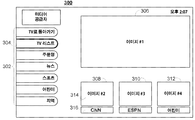
도 2는, 본 개시의 몇몇 실시형태에 따른, 미디어 가이던스 애플리케이션에 의해 생성되는 디스플레이 스크린의 예시적인 예를 도시한다;
도 3은, 본 개시의 몇몇 실시형태에 따른, 미디어 가이던스 애플리케이션에 의해 생성되는 디스플레이 스크린의 다른 예시적인 예를 도시한다;
도 4는, 본 개시의 몇몇 실시형태에 따른, 예시적인 유저 기기 디바이스의 블록도이다;
도 5는, 본 개시의 몇몇 실시형태에 따른, 예시적인 미디어 시스템의 블록도이다;
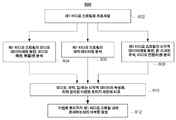
도 6은, 본 개시의 몇몇 실시형태에 따른, 비디오 스트림에서 묘사되는 특정한 이벤트를 보여주는 슬로우 모션 비디오 스트림과 함께 비디오 스트림을 제공함에 있어서 수반되는 예시적인 단계의 플로우차트이다;
도 7은, 본 개시의 몇몇 실시형태에 따른, 슬로우 모션 비디오 스트림을 생성하기 위한 예시적인 단계의 플로우차트이다;
도 8은, 본 개시의 몇몇 실시형태에 따른, 슬로우 모션 비디오 스트림을 송신하기 위한 이벤트 트리거가 비디오 스트림에 존재하는지의 여부를 결정하기 위한 예시적인 단계의 플로우차트이다; 그리고
도 9는, 본 개시의 몇몇 실시형태에 따른, 제2 비디오 스트림을 송신할지의 여부를 결정하기 위한 예시적인 단계의 플로우차트이다.The above and other objects and advantages of the disclosure will be apparent in consideration of the following detailed description, taken in conjunction with the accompanying drawings, in which like reference numerals designate like parts throughout and in which: In the drawing:
1 illustrates an exemplary example of a display generated by a media guidance application displaying two video streams, in accordance with some embodiments of the present disclosure;
Figure 2 illustrates an exemplary example of a display screen generated by a media guidance application, in accordance with some embodiments of the present disclosure;
Figure 3 illustrates another exemplary example of a display screen generated by a media guidance application, in accordance with some embodiments of the present disclosure;
4 is a block diagram of an exemplary user device device, in accordance with some embodiments of the present disclosure;
5 is a block diagram of an exemplary media system, in accordance with some embodiments of the present disclosure;
Figure 6 is a flowchart of exemplary steps involved in providing a video stream with a slow motion video stream showing particular events depicted in the video stream, in accordance with some embodiments of the present disclosure;
7 is a flowchart of an exemplary step for generating a slow motion video stream, in accordance with some embodiments of the present disclosure;
8 is a flowchart of an exemplary step for determining whether an event trigger for transmitting a slow motion video stream is present in a video stream, in accordance with some embodiments of the present disclosure; And
9 is a flowchart of an exemplary step for determining whether to transmit a second video stream, in accordance with some embodiments of the present disclosure.
비디오 스트림에서 묘사되는 특정한 이벤트를 보여주는 슬로우 모션 비디오와 함께 비디오 스트림을 제공하기 위한 방법 및 시스템이 본원에서 설명된다. 스포츠 경기의 스트림과 같은 라이브 비디오 스트림은, 득점 이벤트, 파울, 비디오 판정(challenge), 레이스 피니시(race finish), 등등과 같은 시청자가 특히 관심을 가질 주요 이벤트를 포함할 것이다. 이들과 같은 이벤트는 종종 빠른 움직임을 가지며, 그들은 슬로우 모션에서 더 잘 관찰될 수 있다. 시청자가 슬로우 모션에서 이들 이벤트를 볼 수 있는 것을 보장하기 위해, 본원에서 제공되는 방법 및 시스템은 슬로우 모션 비디오 스트림을 생성하고, 비디오 스트림에서 키 이벤트를 식별하고, 키 이벤트를 보여주는 슬로우 모션 비디오 스트림을, 정규(regular) 속도 비디오 스트림과 함께 시청자에게 송신한다. 본원에서 설명되는 방법 및 시스템은, 키 이벤트가 검출되는 순간에 시청자가 키 이벤트의 슬로우 모션 버전에 액세스하는 것을 보장하는 것에 의해 관련 기술의 한계를 극복한다.A method and system for providing a video stream with slow motion video showing particular events depicted in the video stream is described herein. A live video stream, such as a stream of sports events, will include key events that will be of particular interest to the viewer, such as a scoring event, a foul, a challenge, a race finish, Events like these often have fast movements, and they can be better observed in slow motion. To ensure that viewers are able to view these events in slow motion, the methods and systems provided herein generate a slow motion video stream, identify a key event in the video stream, and generate a slow motion video stream , Along with a regular rate video stream to the viewer. The method and system described herein overcomes the limitations of the related art by ensuring that the viewer accesses the slow motion version of the key event at the moment the key event is detected.
몇몇 실시형태에서, 미디어 가이던스 애플리케이션은, 예를 들면, 풋볼 경기를 보여주는 정상 속도 비디오 스트림인 제1 비디오 스트림을 생성한다. 미디어 가이던스 애플리케이션은, 제1 비디오 스트림의 재생 속도를 수정하는 것에 의해 제1 비디오 스트림으로부터 제2 슬로우 모션 비디오 스트림을 생성한다. 미디어 가이던스 애플리케이션은 제1 비디오 스트림의 컨텐츠를 모니터링하여, 미리 정의된 이벤트 트리거 세트로부터 이벤트 트리거를 식별한다. 각각의 이벤트 트리거는, 제2 비디오 스트림을 사용하여 디스플레이하기 위해 미디어 가이던스 애플리케이션이 생성해야만 하는 이벤트를 제1 비디오 스트림이 포함한다는 것을 나타낸다. 예를 들면, 제1 비디오 스트림이 풋볼 경기를 보여주는 경우, 이벤트 트리거는 제1 비디오 스트림이 터치다운을 포함한다는 것을 나타낼 수도 있다. 식별에 기초하여, 미디어 가이던스 애플리케이션은 제1 비디오 스트림과 함께 제2 슬로우 모션 비디오 스트림을 송신할 것을 결정하고, 미디어 가이던스 애플리케이션은 제1 정규 속도 비디오 스트림 및 제2 슬로우 모션 비디오 스트림 둘 모두를 송신한다.In some embodiments, the media guidance application generates a first video stream that is, for example, a normal rate video stream showing a football game. The media guidance application generates a second slow motion video stream from the first video stream by modifying the playback speed of the first video stream. The media guidance application monitors the content of the first video stream to identify an event trigger from a predefined set of event triggers. Each event trigger indicates that the first video stream includes an event that the media guidance application must generate to display using the second video stream. For example, if the first video stream shows a football game, the event trigger may indicate that the first video stream includes a touchdown. Based on the identification, the media guidance application decides to transmit a second slow motion video stream with the first video stream, and the media guidance application transmits both the first normal speed video stream and the second slow motion video stream .
도 1은, 본 개시의 몇몇 실시형태에 따른, 두 개의 비디오 스트림을 디스플레이하고 있는 미디어 가이던스 애플리케이션에 의해 생성되는 디스플레이의 예시적인 예를 도시한다. 도 1은 디스플레이(100)(예를 들면, 유저 기기)를 도시한다. 디스플레이(100)는 제1 비디오 스트림(102)을 전체 스크린에서 그리고 제2 비디오 스트림(104)을 픽쳐 인 픽쳐 윈도우(picture-in-picture window)에서 디스플레이하고 있다. 미디어 가이던스 애플리케이션은 제1 비디오 스트림(102)을 생성한다. 예를 들면, 미디어 가이던스 애플리케이션은 라이브 이벤트로부터 하나 이상의 라이브 비디오를 수신할 수도 있고, 수신된 라이브 비디오(들)로부터 유저에게 송신하기 위한 비디오 스트림을 생성할 수도 있다. 라이브 이벤트는, 풋볼 경기, 축구 경기, 야구 경기, 하키 경기, 농구 경기, 트랙 경기(track event), 수영, 등등과 같은 스포츠 경기를 포함할 수도 있다. 라이브 이벤트는, 이벤트로부터 슬로우 모션 비디오 클립을 보는 데 관심이 있을 임의의 타입의 이벤트, 예컨대 시상식, 콘서트, 토론, 버라이어티 쇼, 등등을 포함할 수도 있다.1 illustrates an exemplary example of a display generated by a media guidance application displaying two video streams, in accordance with some embodiments of the present disclosure. 1 shows a display 100 (e.g., a user device). The display 100 displays the
몇몇 실시형태에서, (예를 들면, 서버의) 제어 회로부에 의해 실행되는 미디어 가이던스 애플리케이션은 하나 이상의 비디오 입력에 기초하여 제1 스트림을 생성할 수도 있다. 미디어 가이던스 애플리케이션을 구현하는 제어 회로부의 구조 및 추가적인 기능은 도 4와 관련하여 이하에서 추가로 설명된다. 예를 들면, 미디어 가이던스 애플리케이션은 라이브 이벤트를 묘사하는 단일의 비디오 스트림을 수신할 수도 있고, 유저 기기로의 송신을 위해 비디오 스트림을 프로세싱 및/또는 포맷할 수도 있다. 다른 예로서, 미디어 가이던스 애플리케이션은, 예를 들면, 이벤트에 존재하는 여러 개의 카메라 각도로부터 여러 개의 비디오 피드를 수신할 수도 있고, 예를 들면, 시간적으로 하나의 시점에서 하나의 카메라로부터의 비디오 피드를 사용하여, 그리고 시간적으로 나중의 시점에서 다른 카메라로부터의 비디오 피드를 사용하여, 피드를 조립하여 단일의 비디오 피드를 형성할 수도 있다. 미디어 가이던스 애플리케이션은 이들 피드를 완전히 자동적으로 또는 약간의 수동 입력에 기초하여 조립할 수도 있다. 미디어 가이던스 애플리케이션은 유저 기기로의 송신을 위해 필요에 따라 조립된 비디오를 포맷할 수도 있다.In some embodiments, a media guidance application executed by a control circuitry (e.g., of a server) may generate a first stream based on one or more video inputs. The structure and additional functions of the control circuitry implementing the media guidance application are further described below with respect to FIG. For example, the media guidance application may receive a single video stream depicting a live event, and may process and / or format the video stream for transmission to a user device. As another example, the media guidance application may receive multiple video feeds from, for example, multiple camera angles present in the event, for example, a video feed from one camera at one point in time Using a video feed from another camera at a later point in time, and assembling the feed to form a single video feed. The media guidance application may assemble these feeds completely automatically or based on some manual input. The media guidance application may format the assembled video as needed for transmission to the user equipment.
몇몇 실시형태에서, 미디어 가이던스 애플리케이션은, 제1 비디오 스트림의 재생 속도를 수정하는 것에 의해, 제1 비디오 스트림(102)으로부터, 슬로우 모션 비디오 스트림인 제2 비디오 스트림(104)을 생성한다. 예를 들면, 미디어 가이던스 애플리케이션은 제1 비디오 스트림(102)을 복제하여 제2 비디오 스트림(104)을 생성할 수도 있고, 그 다음, 예를 들면, 미디어 가이던스 애플리케이션이 제2 비디오 스트림(104)의 비디오를 디스플레이해야 하는 재생 레이트를 명시하기 위해, 제2 비디오 스트림(104)의 속성을 수정할 수도 있다. 예를 들면, 비디오가 통상적으로 초당 24 프레임에서 재생되는 경우, 미디어 가이던스 애플리케이션은, 제2 비디오 스트림(104)이 초당 6 프레임에서 재생되어야 한다는 것을 명시하는 데이터를 제2 비디오 스트림(104)에 포함할 수도 있고, 그 결과, 제2 비디오 스트림(104)은 정상 재생 레이트의 1/4에서 재생된다. 미디어 가이던스 애플리케이션은 모든 슬로우 모션 비디오 스트림에 대해 고정된 재생 속도(예를 들면, 정규 재생 속도의 절반, 정규 재생 속도의 1/4, 정규 재생 속도의 1/8, 등등 등)를 가질 수도 있다. 대안적으로, 미디어 가이던스 애플리케이션은, 예를 들면, 라이브 이벤트의 타입, 제1 비디오 스트림(102)에서 미디어 가이던스 애플리케이션에 의해 검출되는 특정한 이벤트 또는 트리거, 프레임 사이의 시각적 변화의 양, 및/또는 다른 인자에 기초하여, 제2 비디오 스트림(104)에 대한 프레임 레이트를 선택할 수도 있다. 미디어 가이던스 애플리케이션이 제2 비디오 스트림(104)에 대한 재생 속도를 선택할 수도 있는 방식은 이하에서 더 상세하게 설명된다.In some embodiments, the media guidance application generates a
프레임 재생 레이트를 명시하는 데이터를 포함하는 대신, 미디어 가이던스 애플리케이션은, 원래의 프레임 사이에 프레임을 추가하는 것에 의해 비디오 스트림을 수정하여, 표준 재생 레이트에서 디스플레이되는 비디오 스트림의 슬로우 모션 버전을 생성할 수도 있다. 미디어 가이던스 애플리케이션은 상기에서 설명되는 기술 중 임의의 것을 사용하여 제2 비디오 스트림(104)의 소망되는 속도를 결정할 수도 있다: 미디어 가이던스 애플리케이션은 고정된 속도를 사용할 수도 있거나, 또는 미디어 가이던스 애플리케이션은, 예를 들면, 라이브 이벤트의 타입, 제1 비디오 스트림(102)에서 미디어 가이던스 애플리케이션에 의해 검출되는 특정한 이벤트 또는 트리거, 프레임 사이의 시각적 변화의 양, 및/또는 다른 인자에 기초하여, 제2 비디오 스트림(104)에 대한 속도를 선택할 수도 있다. 그 다음, 미디어 가이던스 애플리케이션은, 제1 비디오 스트림(102)의 프레임을 복제하는 것 및 복제된 프레임 사이에 추가적인 프레임을 삽입하는 것에 의해 제2 비디오 스트림(104)이 소망되는 속도를 가지게 되도록 제2 비디오 스트림(104)을 생성한다. 예를 들면, 미디어 가이던스 애플리케이션은 각각의 프레임을 한 번 이상 복제할 수 있고, 그 결과, 동일한 이미지가 미디어 가이던스 애플리케이션에 의해 정상보다 더 길게 디스플레이된다. 다른 예로서, 미디어 가이던스 애플리케이션은 캡쳐된 프레임 사이에 이미지를 디지털식으로 보간하여 캡쳐된 프레임 사이에 더 원활한 전환을 생성할 수도 있다. 미디어 가이던스 애플리케이션은 결정된 속도에 기초하여 삽입할 프레임 수를 선택할 것이다. 예를 들면, 속도가 원래 속도의 4 분의 1이어야 하면, 미디어 가이던스 애플리케이션은 각각의 원래의 프레임 사이에 세 개의 추가적인 프레임을 추가할 것이고; 속도가 원래의 속도의 절반이어야 하면, 미디어 가이던스는 각각의 원래 프레임 사이에 하나의 추가적인 프레임을 추가할 것이다.Instead of including data specifying the frame playback rate, the media guidance application may modify the video stream by adding frames between the original frames to generate a slow motion version of the video stream that is displayed at the standard playback rate have. The media guidance application may use any of the techniques described above to determine the desired rate of the second video stream 104: the media guidance application may use a fixed rate, or the media guidance application may use the example For example, based on the type of live event, the specific event or trigger detected by the media guidance application in the
몇몇 실시형태에서, 비디오 피드는 정상보다 더 높은 프레임 레이트를 가지고 기록되었을 수도 있고, 그 결과, 미디어 가이던스 애플리케이션이 제1 비디오 스트림(102)을 생성할 때, 미디어 가이던스 애플리케이션은 비디오로부터 프레임을 제거하거나, 또는 미디어 가이던스 애플리케이션은 프레임 레이트를 가속시키고, 그 결과, 미디어 가이던스 애플리케이션에 의해 디스플레이되는 비디오는 정상 속도에서 보이게 된다. 예를 들면, 표준 비디오 스트림이 초당 24 프레임을 갖는 경우, 카메라는 정상보다 더 높은 프레임 레이트, 예를 들면, 초당 96 프레임에서 라이브 이벤트를 캡쳐하도록 구성될 수도 있다. 비디오가 이러한 방식으로 캡쳐될 수도 있고, 그 결과 고품질의 슬로우 모션 스트림이 비디오 스트림으로부터 생성될 수 있다. 미디어 가이던스 애플리케이션이 초당 24 프레임에서 이 고 프레임 레이트 비디오를 재생하면, 비디오는, 캡쳐한 이벤트가 발생한 속도의 1/4의 슬로우 모션으로 보일 것이다. 따라서, 이 경우, 소망되는 슬로우 모션 속도가, 고 프레임 레이트 비디오가 표준 재생 프레임 레이트에서 재생될 속도와 매치하는 경우, 미디어 가이던스 애플리케이션은 제2 비디오 스트림(104)을 수정해야 할 필요가 없을 수도 있다.In some embodiments, the video feed may have been recorded with a higher frame rate than normal, so that when the media guidance application creates the
몇몇 실시형태에서, 미디어 가이던스 애플리케이션은 제1 비디오 스트림(102)의 컨텐츠를 모니터링하여, 미리 정의된 이벤트 트리거 세트 중의 이벤트 트리거를 제1 비디오 스트림(102) 내에서 식별한다. 미리 정의된 이벤트 트리거 세트 중의 각각의 이벤트 트리거는, 제2 비디오 스트림(104)을 사용하여 디스플레이하기 위해 생성될 이벤트가 제1 비디오 스트림(102) 내에 존재한다는 것을 나타낸다. 예를 들면, 라이브 풋볼 경기에서의 하나의 이벤트 트리거는 제1 비디오 스트림(102)의 오디오에서 임계 볼륨 레벨을 초과하여 발화되는 단어 "터치다운(touchdown)"일 수도 있다. 이것은 터치다운 이벤트가 제1 비디오 스트림(102) 내에 존재한다는 것을 나타내며; 이 터치다운 이벤트는 제2의 슬로우 모션 비디오 스트림(104)을 사용하여 디스플레이하기 위해 생성될 것이다.In some embodiments, the media guidance application monitors the content of the
본원에서 사용될 때, 이벤트 트리거는, 유저가 특히 관심을 가질 수도 있는 몇몇 이벤트를 라이브 이벤트의 일부가 포함한다는 것을 나타내는 임의의 것을 가리킨다. 이벤트 트리거는, 예를 들면, 제1 비디오 스트림(102)의 오디오 컨텐츠, 시각적 컨텐츠, 및, 이용 가능하다면, 자막(closed captioning) 컨텐츠를 분석하는 것에 의해 제1 비디오 스트림(102)에서 발견될 수도 있다. 이벤트 트리거는 보조 데이터, 예를 들면, 센서로부터의 데이터, 소셜 미디어 피드, 스코어 또는 플레이 업데이트, 메타데이터(예를 들면, 제1 비디오 스트림(102)과 함께 수신되거나 또는 써드파티 소스로부터 수신됨), 또는 이벤트의 존재를 나타내는 수동 입력에서 발견될 수도 있다. 각각의 이벤트 트리거는, 시각적, 오디오, 자막 컨텐츠, 및/또는 외부 데이터의 하나 이상의 속성으로 구성될 수도 있고, 상이한 속성의 조합으로 구성될 수도 있다. 제1 비디오 스트림(102)에서 식별되는 속성은, 예를 들면, 볼륨 레벨, 오디오 또는 자막에서의 개개의 단어 또는 어구(phrase), 화자 식별(speaker identification), 단일 프레임 시각적 특성, 및 검출된 움직임을 포함할 수도 있다. 미디어 가이던스 애플리케이션은 임의의 검출된 속성을 미리 정의된 이벤트 트리거 세트에 비교하여 이벤트 트리거를 식별할 수도 있다. 대안적으로, 미디어 가이던스 애플리케이션은 제1 비디오 스트림(102)에서 또는 보조 데이터에서 이벤트 트리거를 직접적으로 식별할 수도 있다.As used herein, an event trigger refers to anything that indicates that some of the live events include some events that may be of particular interest to the user. Event triggers may be detected in the
미디어 가이던스 애플리케이션은 제1 비디오 스트림(102)의 오디오 컴포넌트를 분석하여, 볼륨 레벨, 구두(verbal) 컨텐츠, 및/또는 화자(들)의 식별(들)을 비롯한, 다양한 오디오 속성을 결정할 수도 있다. 예를 들면, 미디어 가이던스 애플리케이션이 주어진 임계치를 초과하는 볼륨 레벨을 검출하면, 이 볼륨 레벨은 이벤트의 존재를 나타낼 수도 있거나, 또는 이 볼륨 레벨은, 하나 이상의 다른 인자와 조합하여 이벤트를 나타낼 수도 있는 흥분(excitement)의 정도를 나타낼 수도 있다. 미디어 가이던스 애플리케이션은, 아나운서가 그의 목소리를 높일 때, 군중이 흥분할 때, 경주의 시작을 나타내는 총이 발사될 때, 휘슬이 파울을 알릴 때, 등등의 경우에, 임계치를 초과하는 볼륨을 검출할 수도 있다. 미디어 가이던스 애플리케이션은, 아나운서 또는 다른 사람들이 이벤트에 실시간으로 응답하고 있는지의 여부를 검출하기 위해, 구어 컨텐츠(즉, 사용되는 단어)를 분석할 수도 있다. 예를 들면, 미디어 가이던스 애플리케이션은, 아나운서가 득점 활동(예를 들면, "Touchdown!(터치다운입니다)", "Goal!(골입니다)")을 말하는 것, 어떤 다른 타입의 활동(예를 들면, ""first down(퍼스트 다운)", "challenge(비디오 판정)", "finish line(피니시 라인)")을 말하는 것, 또는 액션에 대한 주의를 끄는 단어(예를 들면, "Look at that!(저걸 보세요)", "I've never seen...(...를 본적이 없습니다")를 사용하는 것을 검출할 수도 있다. 미디어 가이던스 애플리케이션은 더욱 정교한 스피치 패턴 인식(speech pattern recognition)을 사용하여, 이벤트 트리거를 식별하기 위해 사용될 수 있는 오디오의 다양한 속성을 식별할 수도 있다. 화자의 식별이 또한 이벤트 트리거를 식별하는 것에 관련될 수도 있다; 예를 들면, 레프리(referee)가 풋볼 경기 동안 "터치다운"이라고 말하면, 비디오는 통상적으로 레프리의 얼굴에 초점을 맞추는데, 이것은 슬로 모션으로 보여질 필요가 없다. 또한, 상이한 아나운서는, 미디어 가이던스 애플리케이션이 고려할 수도 있는 상이한 스타일 및 스피치 패턴(speech pattern)을 가질 수도 있다.The media guidance application may analyze the audio components of the
자막이 제어 회로부에서 수신되거나 또는 생성되면, 미디어 가이던스 애플리케이션은 자막 데이터를 분석하여, 아나운서 또는 다른 사람들이 이벤트에 실시간으로 응답하고 있는지의 여부를 검출하기 위해 미디어 가이던스 애플리케이션이 사용할 수 있는 자막의 속성을 식별할 수도 있다. 자막 데이터가 화자의 식별을 포함하는 경우, 미디어 가이던스 애플리케이션은 또한, 이벤트 트리거를 식별함에 있어서 화자의 식별을 고려할 수도 있다. 미디어 가이던스 애플리케이션은, 상기에서 설명되는 바와 같이, 예를 들면, 키워드를 서치하거나 또는 어구, 문장, 및/또는 더 긴 구절의 스피치를 분석하여 속성 및 이벤트 트리거를 식별하기 위해 오디오 정보가 프로세싱되는 것과 동일한 방식으로 자막을 프로세싱할 수도 있다.When the caption is received or generated in the control circuitry, the media guidance application analyzes the caption data and determines the attributes of the caption that the media guidance application can use to detect whether the announcer or others are responding in real time to the event . If the caption data includes the identification of the speaker, the media guidance application may also consider the identification of the speaker in identifying the event trigger. The media guidance application may be configured to determine whether the audio information is processed to identify attributes and event triggers, for example, by searching for keywords or analyzing phrases, phrases, sentences, and / The subtitles may be processed in the same manner.
미디어 가이던스 애플리케이션은 또한, 이벤트 트리거를 검출하기 위해 미디어 가이던스 애플리케이션이 사용할 수 있는 시각적 속성을 결정하기 위해, 비디오의 시각적 컴포넌트를 분석할 수도 있다. 미디어 가이던스 애플리케이션은 각각의 프레임을 개별적으로 분석하여, 엔드 존 안으로 패스된 풋볼, 골대 안에 있는 농구공, 또는 피니시 라인을 넘어가는 러너(runner)와 같은, 프레임 내의 속성을 식별할 수도 있다. 미디어 가이던스 애플리케이션은, 추가적으로 또는 대안적으로, 두 개 이상의 프레임을 함께 분석하여, 풋볼이 리시버에 의해 캐치되고(caught) 있는 것 또는 높이뛰기 선수(high jumper)가 지상에서 도약하는 것과 같은, 시각적 속성을 나타내는 움직임을 검출할 수도 있다. 미디어 가이던스 애플리케이션은 또한, 비디오 그래픽에서, 이미지 상의 단어 "Touchdown(터치다운)" 또는 "Goal(골)", 이벤트 시 득점판(scoreboard)에서의 스코어 변경, 또는 비디오에 그래픽적으로 추가되는 득점판 상에서의 스코어 변경과 같은 큐(cue)를 검출할 수도 있다. 미디어 가이던스 애플리케이션은, 본원에서 설명되는 시각적, 오디오, 및 캡션 분석 중 임의의 것 또는 비디오 및/또는 수반하는 데이터를 분석하기 위한 임의의 다른 방법을 비롯한, 다수의 타입의 분석을 병렬로 수행하여, 시각적, 오디오, 및/또는 자막 속성을 식별할 수도 있고 이벤트 트리거를 식별할 수도 있다.The media guidance application may also analyze the visual components of the video to determine the visual attributes that the media guidance application can use to detect the event trigger. The media guidance application may separately analyze each frame to identify attributes within the frame, such as a football that is pushed into the end zone, a basketball in the goal, or a runner that crosses the finish line. The media guidance application may additionally or alternatively analyze two or more frames together to determine a visual attribute such that the football is caught by the receiver or a high jumper jumps on the ground It is also possible to detect the motion represented by the motion. The media guidance application may also be used in video graphics to display the words "Touchdown" or "Goal" on the image, a score change in the scoreboard in the event, Lt; RTI ID = 0.0 > cue < / RTI > The media guidance application may perform a number of types of analyzes in parallel, including any of the visual, audio, and caption analyzes described herein, or any other method for analyzing video and / or accompanying data, It may identify visual, audio, and / or subtitle attributes and may identify event triggers.
몇몇 실시형태에서, 미디어 가이던스 애플리케이션은 이벤트 트리거와 연관된 이벤트의 타입을 결정하고 그 타입을 데이터베이스의 엔트리에 비교하는데, 엔트리 중의 각각의 엔트리는 상이한 타입의 이벤트를 미리 정의된 슬로우 모션 재생 속도에 연관시킨다. 상이한 타입의 라이브 이벤트(예를 들면, 상이한 스포츠)는 상이한 재생 속도를 가질 수도 있거나, 또는 라이브 이벤트의 한 타입 내의 상이한 이벤트는 상이한 재생 속도를 가질 수도 있다. 예를 들면, 미디어 가이던스 애플리케이션은, 엔드 존 안으로 던져지고 있는 볼 및 단어 "터치다운"의 이벤트 트리거는 캐칭 터치다운 이벤트(catching touchdown event)와 연관되어 있다고 결정하거나, 또는 엔드 존 안으로 볼을 가지고 달리고 있는 플레이어 및 단어 "터치다운"의 이벤트 트리거는 러닝 터치다운 이벤트와 연관되어 있다고 결정할 수도 있다. 그 다음, 미디어 가이던스 애플리케이션은 제2 비디오 스트림(104)에 대한 미리 정의된 재생 속도를 식별하고, 미리 정의된 재생 속도와 동일하도록 제2 비디오 스트림(104)의 재생 속도를 수정한다. 예를 들면, 이벤트 트리거가 러닝 터치다운 이벤트와 연관되어 있는 경우, 미디어 가이던스 애플리케이션은, 러닝 터치다운 이벤트 타입을 미리 정의된 슬로우 모션 재생 속도, 예를 들면, 정상 재생 속도의 1/4에 연관시키는 데이터베이스에 러닝 터치다운 이벤트를 비교한다. 미디어 가이던스 애플리케이션은 제2 비디오 스트림(104)에 대해 이 1/4 속도를 식별하고 식별된 1/4 속도와 동일하도록 터치다운을 보여주는 제2 비디오 스트림(104)의 재생 속도를 수정한다. 이벤트 트리거가 캐칭 터치다운 이벤트와 연관되어 있는 경우, 데이터베이스는 상이한 미리 정의된 슬로우 모션 재생 속도, 예를 들면, 정상 재생 속도의 1/8을 가질 수도 있다. 그 다음, 미디어 가이던스 애플리케이션은 재생 속도를 정상 재생 속도의 1/8로 수정할 것이다.In some embodiments, the media guidance application determines the type of event associated with the event trigger and compares the type to an entry in the database, wherein each entry in the entry associates a different type of event with a predefined slow-motion playback rate . Different types of live events (e.g., different sports) may have different playback speeds, or different events within one type of live event may have different playback speeds. For example, the media guidance application may determine that the event trigger of the ball and word "touchdown " being thrown into the end zone is associated with a catching touchdown event, And the event trigger of the word "touchdown" may be determined to be associated with a running touchdown event. The media guidance application then identifies a predefined playback speed for the
미리 정의된 재생 속도는 일정한 속도일 필요는 없다. 예를 들면, 이벤트가, 캐치하고 후속하여 뛰는 것과 같은 두 개의 액션으로 구성되는 경우, 미디어 가이던스 애플리케이션은 제2 비디오 스트림(104)의 캐치 부분을 상대적으로 느린 속도(예를 들면, 정상 재생 속도의 1/8)로 설정할 수도 있고, 미디어 가이던스 애플리케이션은 제2 비디오 스트림(104)의 뛰는 부분을 더 빠른 속도(예를 들면, 정상 재생 속도의 절반)로 설정할 수도 있다. 더구나, 미디어 가이던스 애플리케이션은, 단일의 이벤트가 가변 레이트에서 보여지도록 제2 비디오 스트림(104)을 생성할 수도 있다. 예를 들면, 미디어 가이던스 애플리케이션은 캐치 순간을, 캐치까지 이어지는 순간보다 더 느린 재생 레이트를 가지도록 설정할 수도 있다. 미디어 가이던스 애플리케이션은 또한 또는 대안적으로 제1 비디오 스트림(102)의 시각적 분석을 수행할 수도 있고 제1 비디오 스트림(102)의 이러한 시각적 분석에 기초하여 재생 속도를 변경할 수도 있다. 예를 들면, 제1 비디오 스트림(102)이 프레임 사이에서 높은 변화량을 갖는다는 것을 미디어 가이던스 애플리케이션이 검출하면, 미디어 가이던스 애플리케이션은, 제1 비디오 스트림(102)이 프레임 사이에서 더 낮은 변화량을 갖는다는 것을 미디어 가이던스 애플리케이션이 검출하는 경우보다 더 느린 재생 속도를 가지도록 제2 비디오 스트림(104)을 설정할 수도 있다.The predefined playback speed need not be constant. For example, if the event is comprised of two actions, such as catching and following up, the media guidance application may change the catch portion of the
몇몇 실시형태에서, 미디어 가이던스 애플리케이션은 이벤트 트리거에 기초하여 제2 비디오 스트림(104)에 추가할 가상 그래픽의 타입을 결정한다. 그 다음, 미디어 가이던스 애플리케이션은 가상 그래픽의 타입 및 제2 비디오 스트림(104)의 컨텐츠에 기초하여 가상 그래픽을 생성할 수도 있고, 가상 그래픽을 제2 비디오 스트림(104)에 추가할 수도 있다. 예를 들면, 미디어 가이던스 애플리케이션은, 터치다운의 존재를 나타내는 이벤트 트리거에 기초하여 혼잡한 엔드 존(end-zone) 내의 리시버에게 강조표시를 추가할 것을 결정할 수도 있다. 혼잡한 엔드 존에서, 시청자는 터치다운이 처음으로 보여질 때 리시버를 발견하기 어려울 수 있고, 따라서 미디어 가이던스 애플리케이션은 시청자가 보아야 할 곳을 찾는 것을 돕기 위해 추가적인 그래픽을 추가할 수도 있다. 미디어 가이던스 애플리케이션은 리시버의 위에 중첩될 강조표시를 생성할 것이고 가상 그래픽(강조표시)을 제2 비디오 스트림(104)에 추가할 것이다. 미디어 가이던스 애플리케이션에 의해 생성되는 다른 그래픽은, 경계 라인(그라운드 상에 있거나, 또는 경계의 3 차원 투영을 가짐), 퍼스트 다운 라인, 특정한 플레이어, 또는 볼 또는 퍽과 같은 경기 엘리먼트를 강조하기 위한 그래픽을 포함할 수도 있다. 미디어 가이던스 애플리케이션은 상이한 이벤트 트리거를 상이한 그래픽과 연관시키는 데이터베이스에 액세스할 수도 있다. 예를 들면, 터치다운 이벤트 트리거는 특정한 플레이어를 강조하는 그래픽과 연관될 수도 있다. 비디오 판정 이벤트 트리거는, 경계 라인을 강조하는 그래픽과 연관될 수도 있다. 그래픽을 생성할지의 여부, 및 어떤 타입의 그래픽을 포함시킬지를 결정하기 위해, 추가적인 오디오, 시각적, 및/또는 자막 분석이 수행될 수도 있다. 그래픽을 생성하는 방법, 및 각각의 프레임에서 그래픽을 배치할 곳을 결정하기 위해, 시각적 분석이 수행될 수도 있다.In some embodiments, the media guidance application determines the type of virtual graphics to add to the
몇몇 실시형태에서, 미디어 가이던스 애플리케이션이 제1 비디오 스트림(102)의 컨텐츠를 모니터링하여 이벤트 트리거를 식별하는 경우, 미디어 가이던스 애플리케이션은 제1 비디오 스트림(102)의 컨텐츠에 관련된 소셜 미디어 피드를 수신하고, 미디어 가이던스 애플리케이션은 소셜 미디어 피드 상에서의 활동의 레벨을 모니터링한다. 소셜 미디어 피드 상에서의 활동의 레벨이 활동의 임계 레벨을 초과한다는 것을 검출하는 데 응답하여, 미디어 가이던스 애플리케이션은 이벤트 트리거를 식별한다. 예를 들면, 미디어 가이던스 애플리케이션은 풋볼 경기에 관련된 게시물을 포함하는 전자 통신(예를 들면, 소셜 미디어 게시물)의 소셜 미디어 피드(예를 들면, TWITTER(트위터) 피드 또는 FACEBOOK(페이스북) 피드)를 수신할 수도 있다. 소셜 미디어 피드는, 개개인의 유저 또는 컨텐츠 공급자 사이에서 전자적으로 전달되는 임의의 데이터를 포함할 수도 있다. 데이터는 두 명 이상의 유저 사이에서 사적으로 공유될 수도 있거나, 또는 공개적으로 공유될 수도 있다. 데이터는 한 명의 유저 또는 컨텐츠 공급자에서 생길 수도 있고, 추가적인 유저에 의해 재송신될 수도 있다. 데이터는 임의의 포맷의 상이한 타입의 데이터 또는 컨텐츠(예를 들면, 텍스트, 이미지, 비디오)를 포함할 수도 있다. 다수의 피드가 집성될 수도 있고, 그 다음, 미디어 가이던스 애플리케이션에 의해 수신될 수도 있고, 및/또는 미디어 가이던스 애플리케이션은 다수의 소셜 미디어 피드를 수신할 수도 있다.In some embodiments, when the media guidance application monitors the content of the
경기에 관련된 게시물의 수가 시간의 짧은 기간 내에 갑자기 증가한다고 미디어 가이던스 애플리케이션이 결정하는 경우, 미디어 가이던스 애플리케이션은, 경기에서 이벤트가 발생했다고 결정할 수도 있고, 따라서, 미디어 가이던스 애플리케이션은 이벤트 트리거를 검출할 수도 있다. 미디어 가이던스 애플리케이션은, 게시물이 팀, 선수(athlete), 코치, 또는 라이브 이벤트의 임의의 다른 참가자에 관련된 것이라고 결정할 수도 있고, 미디어 가이던스 애플리케이션은 이 정보를 사용하여 이벤트 트리거를 식별할 수도 있다. 미디어 가이던스 애플리케이션은 게시물의 컨텐츠를 분석하여, 특정한 타입의 이벤트(예를 들면, 터치다운 또는 골)가 발생했는지의 여부를 결정할 수도 있다. 미디어 가이던스 애플리케이션은, 게시물의 수 및 빈도, 게시물의 컨텐츠, 게시물에 포함되는 임의의 태그, 게시물의 분위기, 게시물에 포함되는 픽쳐 또는 비디오, 및 이벤트 트리거를 식별하는 것에 관련되는 임의의 다른 속성을 분석할 수도 있다. 미디어 가이던스는, 다른 타입의 보충 데이터, 예컨대, 스코어가 변경되었다는 것을 나타내는 데이터 또는 볼 또는 퍽이 골 안으로 들어 갔다는 것을 나타내는 데이터를 수신할 수도 있다. 데이터는 (예를 들면, 전자 센서에 의해) 자동적으로 생성될 수도 있거나 또는 (예를 들면, 이벤트를 시청하는 사람에 의해) 수동으로 생성될 수 있다.If the media guidance application determines that the number of posts related to the game suddenly increases within a short period of time, then the media guidance application may determine that an event has occurred in the event, and thus the media guidance application may detect the event trigger . The media guidance application may determine that the post is related to a team, athlete, coach, or any other participant of a live event, and the media guidance application may use this information to identify the event trigger. The media guidance application may analyze the content of the post to determine whether a particular type of event (e.g., a touchdown or score) has occurred. The media guidance application analyzes the number and frequency of posts, the content of the post, any tags included in the post, the mood of the post, the picture or video contained in the post, and any other attributes related to identifying event triggers You may. The media guidance may receive other types of supplementary data, such as data indicating that the score has changed, or data indicating that the ball or puck has entered the goal. The data may be automatically generated (e.g., by an electronic sensor) or manually generated (e.g., by a person watching an event).
몇몇 실시형태에서, 미디어 가이던스 애플리케이션이 제1 비디오 스트림(102)의 컨텐츠를 모니터링하여 이벤트 트리거를 식별하는 경우, 미디어 가이던스 애플리케이션은 제1 비디오 스트림(102)의 컨텐츠를 모니터링하여 이벤트 트리거의 제1 인자를 식별하고, 미디어 가이던스 애플리케이션은 제1 비디오 스트림(102)의 컨텐츠를 모니터링하여 이벤트 트리거의 제2 인자를 식별하고, 제1 인자 및 제2 인자를 식별하는 것에 기초하여, 미디어 가이던스 애플리케이션은 이벤트 트리거를 식별한다. 그러한 실시형태에서, 미디어 가이던스 애플리케이션은, 제1 인자가 식별되고 제2 인자가 식별되지 않는 경우 이벤트 트리거를 식별하지 않고, 미디어 가이던스 애플리케이션은, 제2 인자가 식별되고 제1 인자가 식별되지 않는 경우, 이벤트 트리거를 식별하지 않는다. 예를 들면, 이벤트 트리거는 아나운서가 단어 "터치다운"을 임계 볼륨 레벨을 초과하여 말하는 것일 수도 있다. 아나운서가 단어 "터치다운"을 말하지만, 그러나 더 낮은 볼륨에서 말하는 것을 미디어 가이던스 애플리케이션이 검출하거나, 또는 아나운서가 임계 볼륨 레벨에는 도달하지만, 그러나 단어 "터치다운"을 말하지 않는다는 것을 미디어 가이던스 애플리케이션이 검출하는 경우, 미디어 가이던스 애플리케이션은 이 이벤트 트리거가 식별되지 않을 것이다는 것을 식별하지 않을 것이다. 단일의 트리거에 대해 두 개보다 더 많은 인자가 존재할 수도 있다. 단일의 이벤트 트리거에 대한 인자는, 상이한 타입의 데이터, 예를 들면, 오디오 데이터, 자막 데이터, 시각적 데이터, 소셜 미디어 데이터, 등등에서 발견될 수도 있다.In some embodiments, if the media guidance application monitors the content of the
몇몇 실시형태에서, 미디어 가이던스 애플리케이션은, 이벤트 트리거를 식별하는 것에 기초하여, 제1 비디오 스트림(102)과 함께 제2 비디오 스트림(104)을 송신할 것을 결정한다. 예를 들면, 유저가 터치다운의 정규 스트림 및 슬로우 모션 비디오 둘 모두를 보는 것에 관심을 가질 것이기 때문에, 미디어 가이던스 애플리케이션은, 터치다운 이벤트의 존재를 나타내는 이벤트 트리거를 식별하는 것에 기초하여, 터치다운의 제2 슬로우 모션 비디오 스트림을 제1 비디오 스트림(터치다운을 정규 속도로 보여주는 비디오 스트림)과 함께 송신할 것을 결정한다.In some embodiments, the media guidance application decides to transmit the
(예를 들면, 방송이 필요에 따라 검열될 수 있도록) 라이브 이벤트의 비디오가 전파 중계소(head-end) 또는 서버에서 수신되는 시간과 라이브 이벤트의 비디오가 유저 기기로 송신되는 시간 사이에 종종 시간 지연이 있기 때문에, 미디어 가이던스 애플리케이션이 비디오를 유저에게 송신하기 이전에, 이벤트의 라이브 비디오는 미디어 가이던스 애플리케이션에 의해 수신되어 분석될 수 있다. 예를 들면, 캐치가 이루어지고 아나운서가 캐치를 말할 때까지, 터치다운 플레이가 발생하고 있다는 것은 미디어 가이던스 애플리케이션에게는 명확하지 않을 수도 있다. 지연 윈도우는, 공표(announcement)가 이루어지는 시간까지, 캐치는 유저 기기로 송신되지 않을 만큼 또는 유저 기기 상에서 디스플레이되지 않을 만큼 충분히 길다(통상적으로 7 초). 따라서, 캐치의 시작이 유저 기기로 송신되어 디스플레이될 시간까지, 미디어 가이던스 애플리케이션은, 제1 비디오 스트림이 이벤트 트리거를 포함할 것이라고 결정하기에 충분한 비디오 피드를 수신할 것이고, 제1 비디오 스트림 및 제2 비디오 스트림 - 둘 모두 검출된 이벤트를 나타냄 - 을 동시에 송신할 수 있다.(For example, a broadcast can be censored as needed) between the time the video of the live event is received at the head-end or the server and the time the video of the live event is transmitted to the user device, The live video of the event can be received and analyzed by the media guidance application before the media guidance application sends the video to the user. For example, it may not be obvious to a media guidance application that touchdown play is occurring until a catch is made and the announcer says catch. The delay window is long enough (typically 7 seconds) that the catch will not be transmitted to the user device or displayed on the user device until the time the announcement is made. Thus, by the time the beginning of the catch is transmitted to and displayed on the user equipment, the media guidance application will receive a video feed sufficient to determine that the first video stream will include an event trigger, and the first video stream and the second Video stream - both representing detected events - can be transmitted at the same time.
몇몇 실시형태에서, 미디어 가이던스 애플리케이션은 또한 유저 기기를 수반하는 상호 작용을 설명하는 데이터를 수신하고, 상호 작용을 설명하는 데이터를 모니터링하여 상호 작용에서 이벤트에 대한 언급을 식별한다. 이 경우, 미디어 가이던스 애플리케이션은, 상호 작용에서 이벤트에 대한 언급을 식별하는 것에도 기초하여, 제2 비디오 스트림을 제1 비디오 스트림과 함께 송신할 것을 결정할 수도 있다. 상호 작용은, 유저 기기가 존재하는 경우의 두 명의 유저 사이의 상호 작용일 수도 있다. 예를 들면, 미디어 가이던스 애플리케이션은, 경기를 시청하는 두 명의 유저 사이의 대화를 설명하는 데이터를 마이크 데이터 피드로부터 수신할 수도 있고, 미디어 가이던스 애플리케이션은, 유저가 터치다운 이벤트를 기대하고 있다고 결정할 수도 있고, 그 다음, 유저가 이벤트에 관심이 있을 수도 있기 때문에, 제2 비디오 스트림을 제1 비디오 스트림과 함께 송신할 것을 결정할 수도 있다. 상호 작용은 유저 기기를 통해 통신하는 두 명 이상의 유저 사이에(예를 들면, 컴퓨터, 스마트폰, 태블릿, 등등 사이에) 있을 수도 있다. 대안적으로, 상호 작용은 유저와 유저 기기 사이에 있을 수도 있다; 예를 들면, 유저는 유저 기기에 직접적으로 말할 수도 있거나, 또는 입력 디바이스 또는 다른 인터페이스를 사용하여 선호도 또는 관심사를 제공할 수도 있다.In some embodiments, the media guidance application also receives data describing the interaction involving the user device, and monitors data describing the interaction to identify references to the event in the interaction. In this case, the media guidance application may also decide to transmit the second video stream along with the first video stream, based also on identifying the mention of the event in the interaction. The interaction may be an interaction between two users in the presence of a user device. For example, the media guidance application may receive data describing a conversation between two users watching a game from a microphone data feed, and the media guidance application may determine that the user is expecting a touchdown event , And then decide to transmit the second video stream with the first video stream, since the user may be interested in the event. The interaction may be between two or more users communicating through the user device (e.g., between a computer, a smartphone, a tablet, etc.). Alternatively, the interaction may be between the user and the user device; For example, a user may speak directly to a user device, or may provide preference or interest using an input device or other interface.
상호 작용은 라이브 이벤트에 대한 특정한 참조 없이 이루어지는 진술(statement) 또는 선택을 포함할 수도 있다; 예를 들면, 미디어 가이던스 애플리케이션은 유저가 특정한 팀 또는 선수에 대한 관심을 나타내었다는 것을 검출할 수도 있다. 예를 들면, 유저가 판타지 풋볼 팀(fantasy football team)의 선수를 선택하는 경우, 이것은, 유저가 그 선수를 포함하는 주요 이벤트의 슬로우 모션 비디오 스트림을 시청하는 것에 관심이 있을 것이다는 것을 미디어 가이던스 애플리케이션에게 나타낼 것이다. 상호 작용을 검출하는 애플리케이션은 상호 작용을 분석할 수도 있고 상호 작용을 요약하는 데이터를 미디어 가이던스 애플리케이션에 송신할 수도 있다. 대안적으로, 애플리케이션은 원시 상호 작용을 설명하는 데이터를 미디어 가이던스 애플리케이션에 송신하여 상호 작용을 분석할 수도 있다.The interaction may include a statement or selection made without a specific reference to a live event; For example, the media guidance application may detect that the user has expressed interest in a particular team or player. For example, if the user selects a player of the fantasy football team, then this indicates that the user will be interested in watching the slow motion video stream of the main event containing the player, . An application that detects an interaction may analyze the interaction and may send data to the media guidance application that summarizes the interaction. Alternatively, the application may send data describing the raw interaction to the media guidance application to analyze the interaction.
예를 들면, 유저는 미디어 가이던스 애플리케이션이, 다른 애플리케이션, 예컨대 판타지 스포츠 애플리케이션, 스포츠 뉴스 애플리케이션, 소셜 미디어 애플리케이션, 또는 유저가 라이브 이벤트 또는 라이브 이벤트의 양태에서 관심사를 표현할 수도 있는 임의의 다른 애플리케이션으로부터 유저의 관심사를 나타내는 데이터에 액세스하는 것을 허용할 수도 있다. 미디어 가이던스 애플리케이션은, 유저의 관심사에 관한 정보를 제공하는 하나 이상의 다른 애플리케이션에 자신이 액세스할 수 있다고 결정할 수도 있다. 미디어 가이던스 애플리케이션은 그들 애플리케이션의 각각에 자동적으로 액세스할 수도 있거나, 또는 미디어 가이던스 애플리케이션은 그들 애플리케이션의 각각에 액세스하여 애플리케이션으로부터 정보를 가져오기 위한 퍼미션을 유저에게 요청할 수도 있다. 그 다음, 미디어 가이던스 애플리케이션은 애플리케이션(예를 들면, 유저가 관심을 갖는 팀 또는 선수)에서 관련 정보를 가져온다. 예를 들면, 애플리케이션이 판타지 풋볼 애플리케이션인 경우, 미디어 가이던스 애플리케이션은 유저가 유저의 팀의 플레이어, 유저의 상대방 팀의 플레이어, 유저가 추가 요청한 플레이어, 유저가 주시 리스트에 넣어 둔 플레이어, 등등에 관심이 있다고 결정할 수도 있다. 예를 들면, 애플리케이션이 소셜 미디어 애플리케이션인 경우, 미디어 가이던스 애플리케이션은, 유저가 좋아요를 표시한 또는 팔로우를 한 스포츠 또는 선수에 유저가 관심이 있다고 결정할 수도 있다. 유저가 특정한 스포츠, 선수, 또는 라이브 이벤트의 다른 속성에 관심을 표현했다고 미디어 가이던스 애플리케이션이 결정하면, 이것은, 미디어 가이던스 애플리케이션이 이벤트 트리거를 식별하기 위해 고려하는 다른 속성의 임계치를 낮출 수도 있다.For example, a user may be able to view a media guidance application from another application, such as a fantasy sports application, a sports news application, a social media application, or any other application from which a user may express interests in aspects of live events or live events. And may allow access to data representing interests. The media guidance application may determine that it can access one or more other applications that provide information about the user's interests. The media guidance application may automatically access each of their applications, or the media guidance application may access each of their applications and ask the user for permission to retrieve information from the application. The media guidance application then retrieves relevant information from the application (e.g., the team or player that the user is interested in). For example, if the application is a fantasy football application, then the media guidance application is interested in the user's team player, the player's opponent's team player, the player's request for additional player, the player the user puts on the watchlist, . For example, if the application is a social media application, the media guidance application may determine that the user is interested in a sport or a player who has indicated or followed the likes of the user. If the media guidance application determines that the user has expressed interest in a particular sport, player, or other attribute of a live event, this may lower the threshold of other attributes that the media guidance application considers to identify the event trigger.
몇몇 실시형태에서, 미디어 가이던스 애플리케이션이 상호 작용을 설명하는 데이터를 모니터링하여 상호 작용에서 이벤트에 대한 언급을 식별하는 경우, 미디어 가이던스 애플리케이션은 상호 작용을 설명하는 데이터의 컨텐츠를 이벤트에 대응하는 메타데이터에 비교하고; 비교에 기초하여, 상호 작용이 이벤트에 관련된 것이라고 결정하고; 그리고, 상호 작용을 설명하는 데이터의 컨텐츠에 기초하여, 상호 작용이 이벤트에 대한 관심을 나타낸다고 결정한다. 풋볼 경기 동안의 이벤트의 경우, 메타데이터는 이벤트의 타입(예를 들면, 득점 플레이, 파울, 퍼스트 다운, 등등), 이벤트에 참가한 플레이어(들), 참가한 팀(들), 이벤트가 발생한 시간, 이벤트를 식별하기 위한 임의의 다른 관련 정보를 포함할 수도 있다.In some embodiments, if the media guidance application monitors data describing the interaction and identifies a reference to the event in the interaction, the media guidance application may send the content of the data describing the interaction to the metadata corresponding to the event Compare; Determine, based on the comparison, that the interaction is related to an event; Then, based on the content of the data describing the interaction, it is determined that the interaction represents an interest in the event. In the event of an event during a football game, the metadata may include the type of event (e.g., scoring play, foul, first down, etc.), player (s) participating in the event, participating team (s) Lt; RTI ID = 0.0 > and / or < / RTI >
예를 들면, 유저는 터치다운 캐치(touchdown catch)를 한 플레이어에 대한 관심을 (예를 들면, 그 플레이어에 대해 친구와 이야기하는 것에 의해, 또는 플레이어를 그의 판타지 팀에 배치하는 것에 의해) 표현할 수도 있다. 미디어 가이던스 애플리케이션은 이 상호 작용의 컨텐츠를 수신할 수도 있고 상호 작용을 설명하는 데이터의 컨텐츠(예를 들면, 플레이어의 이름)을 동일한 플레이어를 포함할 터치다운을 설명하는 메타데이터에 비교할 수도 있다. 그 다음, 미디어 가이던스 애플리케이션은, 비교에 기초하여, 대화가 터치다운에 관련된 것이라고 결정할 수도 있는데, 대화가 터치다운 캐치를 행한 플레이어에 대해 이야기하였기 때문이다. 그 다음, 미디어 가이던스 애플리케이션은 상호 작용이 이벤트에 대한 관심을 나타낸다고 결정할 수도 있다. 예를 들면, 터치다운 캐치를 행한 플레이어에 관해 유저가 긍정적으로 또는 상세히 말한다고 미디어 가이던스 애플리케이션이 결정하면, 미디어 가이던스 애플리케이션은 유저가 이벤트에 대한 관심을 나타내었다고 결정할 것이다. 반면에, 플레이어에 관해 유저가 아무렇게나 부정적인 비평을 하면, 상기 미디어 가이던스 애플리케이션은, 유저가 이벤트에 관심이 없다고 결정할 수도 있다.For example, a user may express interest in a player with a touchdown catch (e.g., by talking to a friend about the player, or by placing the player in his fantasy team) have. The media guidance application may receive the content of this interaction and may compare the content of the data describing the interaction (e.g., the name of the player) to the metadata describing the touchdown to include the same player. The media guidance application may then determine based on the comparison that the conversation is related to a touchdown, because the conversation has talked about the player who made the touchdown catch. The media guidance application may then determine that the interaction represents an interest in the event. For example, if the media guidance application determines that the user speaks positively or in detail about the player who made the touchdown catch, the media guidance application will determine that the user indicated interest in the event. On the other hand, if the user makes any negative review about the player, the media guidance application may determine that the user is not interested in the event.
몇몇 실시형태에서, 유저 기기를 수반하는 상호 작용은 유저 기기에 의해 수신된 전자 통신이다. 예를 들면, 유저는, 컴퓨터, 스마트폰, 또는 태블릿과 같은 유저 기기를 통해, 다른 유저와 통신 네트워크(예를 들면, 셀 네트워크 또는 인터넷)를 통해 채팅하고 있을 수도 있다. 몇몇 실시형태에서, 미디어 가이던스 애플리케이션은, 이벤트가 이전에 유저 기기에 송신되었는지의 여부를 결정하기 위해, 이벤트를, 이전에 유저 기기에 송신된 이벤트의 리스트에 비교한다. 미디어 가이던스 애플리케이션은, 이벤트가 이전에 유저 기기에 송신되었는지의 여부에도 기초하여, 제1 비디오 스트림과 함께 제2 비디오 스트림을 송신할 것을 결정할 수도 있다. 예를 들면, 두 명의 유저가 터치다운에 대해 채팅하고 있고, 한 명의 유저가 터치다운을 아직 시청하지 않았다고 미디어 가이던스 애플리케이션이 결정하면, 미디어 가이던스 애플리케이션은, 터치다운을 보여주는 두 개의 비디오 스트림(102 및 104)이 유저에 의해 시청될 수도 있도록, 그들을 송신할 것을 결정할 것이다. 그 다음, 미디어 가이던스 애플리케이션은 비디오 스트림(102 및 104) 중 하나 또는 둘 모두를 유저에게 디스플레이할 수도 있다. 미디어 가이던스 애플리케이션은 이미 다른 비디오, 예를 들면, 다른 스포츠 경기를 디스플레이하고 있을 수도 있고, 유저가 이미 디스플레이되고 있는 비디오를 계속 시청할 수 있도록, 비디오 스트림(102 또는 104)을 픽쳐 인 픽쳐 윈도우에서, 또는 어떤 다른 방식으로 디스플레이할 수 있다.In some embodiments, the interaction involving the user equipment is an electronic communication received by the user equipment. For example, a user may be chatting with another user over a communications network (e.g., a cell network or the Internet), via a user device such as a computer, smartphone, or tablet. In some embodiments, the media guidance application compares the event to a list of events previously sent to the user device to determine whether the event was previously sent to the user device. The media guidance application may determine to transmit the second video stream along with the first video stream based on whether or not the event was previously transmitted to the user device. For example, if the media guidance application determines that two users are chatting for a touchdown and one user has not yet watched the touchdown, then the media guidance application will display two
미디어 가이던스 애플리케이션은, 유저 기기가 어떤 라이브 이벤트를 디스플레이하였는지, 및 유저 기기가 어떤 비디오 스트림을 디스플레이하였는지에 기초하여, 유저 기기로 송신되었던 이벤트의 기록을 유지할 수도 있다. 이 방식에서, 유저가 특정한 경기를 이미 시청하였거나 경기로부터의 클립을 이미 시청하였고, 그 클립에 관해 친구와 채팅하고 있는 경우, 미디어 가이던스 애플리케이션은 이 클립을 유저에게 송신하지 않을 것인데, 그 이유는 유저가 그것을 미지 보았기 때문이다. 그러나, 유저가 아직 그 클립을 시청하지 않았다면, 미디어 가이던스 애플리케이션은 제1 비디오 스트림(102) 및/또는 제2 비디오 스트림(104)을 자동적으로 송신할 것이고, 그 결과, 유저는 자신의 친구가 말하고 있는 이벤트를 볼 수 있다.The media guidance application may maintain a record of events that have been transmitted to the user device based on which live event the user device has displayed and on which video stream the user device has displayed. In this manner, the media guidance application will not send the clip to the user if the user has already watched a particular match or has already watched the clip from the match and is chatting with a friend about the clip, Because they have not seen it. However, if the user has not watched the clip yet, the media guidance application will automatically send the
제1 비디오 스트림(102)과 함께 제2 비디오 스트림(104)을 송신할 것을 결정하는 데 응답하여, 미디어 가이던스 애플리케이션은 제1 비디오 스트림(102) 및 제2 비디오 스트림(104) 둘 모두를 동시에 송신할 수도 있다. 미디어 가이던스 애플리케이션은, 도 4와 관련하여 설명되는 통신 회로부를 사용하여 비디오 스트림(102 및 104)을 송신할 수도 있다. 예를 들면, 미디어 가이던스 애플리케이션은 정규 속도로 터치다운을 보여주는 제1 비디오 스트림(102), 및 더 느린 속도에서 터치다운을 보여주는 제2 비디오 스트림(104)을 송신할 수도 있다. 이들 비디오 스트림 둘 모두는, 도 1에서 도시되는 바와 같이, 유저 기기에서 동시에 디스플레이될 수 있다. 스트림 중 하나는 픽쳐 인 픽쳐 윈도우에서 디스플레이될 수 있거나, 또는 스트림은 디스플레이(100)에서 나란히 또는 임의의 다른 배열로 디스플레이될 수 있다. 대안적으로, 두 개의 비디오 스트림은 두 개의 상이한 디바이스 상에서 디스플레이될 수도 있다.In response to determining to transmit the
상기에서 논의되는 바와 같이, 미디어 가이던스 애플리케이션은, 비디오 스트림(102 및 104)에, 표준 재생 레이트와는 상이한 재생 레이트를 명시하는 데이터를 포함할 수도 있다. 미디어 가이던스 애플리케이션은, 제1 비디오 스트림(102)이 정규 속도로서 나타나고 제2 비디오 스트림(104)이 동일한 이벤트를 슬로우 모션으로 보여주도록 이 디스플레이 레이트를 사용하여 비디오 스트림을 생성할 수 있다.As discussed above, the media guidance application may include, in
제2 비디오 스트림(104)은 단지 비디오 스트림(102)의 감속된 버전일 필요는 없다. 예를 들면, 미디어 가이던스 애플리케이션은, 이벤트의 더 나은 뷰를 제공하기 위해, 제2 비디오 스트림(104)이 제1 비디오 스트림(104)의 줌인되고 감속된 버전이 되도록 제2 비디오 스트림(104)을 생성할 수도 있다. 미디어 가이던스 애플리케이션은 비디오 스트림(102)과는 상이한 종횡비를 가지도록 제2 비디오 스트림(104)을 수정할 수도 있다. 미디어 가이던스 애플리케이션이 동일한 이벤트를 보여주는 다수의 비디오 피드를 수신하면, 미디어 가이던스 애플리케이션은 제1 비디오 스트림(102)을 생성하기 위해 사용된 비디오 피드와는 상이한, 제2 비디오 스트림(104)을 생성하기 위한 비디오 피드를 선택할 수 있다. 제2 비디오를 생성하기 위해 사용되는 비디오 피드는 상이한 각도일 수도 있거나, 또는 더 가까운 샷을 가질 수도 있다. 제2 비디오 스트림(104)의 비디오 피드, 줌, 종횡비, 또는 다른 피쳐는 자동적으로 또는 수동으로 설정될 수도 있다.The
몇몇 실시형태에서, 미디어 가이던스 애플리케이션은 제2 비디오 스트림의 길이를 제2 비디오 스트림을 송신하기 위한 미리 결정된 기간에 비교한다. 비교에 기초하여, 제2 비디오 스트림의 길이가 미리 결정된 기간에 도달했다고 결정하는 데 응답하여, 미디어 가이던스 애플리케이션은, 제1 비디오 스트림을 계속 송신하면서, 제2 비디오 스트림의 송신을 중단한다. 예를 들면, 제2 비디오가 10 초의 길이에 도달하면, 미디어 가이던스 애플리케이션은, 정규 속도 비디오 스트림(102)을 계속 송신하면서, 슬로우 모션 비디오 스트림(104)의 송신을 중단할 수도 있다. 상이한 이벤트 타입은 상이하게 설정된 미리 결정된 기간과 연관될 수도 있고, 미디어 가이던스 애플리케이션은 이벤트 타입에 기초하여 미리 결정된 기간을 결정할 수도 있다.In some embodiments, the media guidance application compares the length of the second video stream to a predetermined duration for transmitting the second video stream. On the basis of the comparison, in response to determining that the length of the second video stream has reached a predetermined period, the media guidance application continues to transmit the first video stream and stops transmitting the second video stream. For example, if the second video reaches a length of 10 seconds, the media guidance application may stop transmitting the slow
몇몇 실시형태에서, 미디어 가이던스 애플리케이션은 제1 비디오 스트림의 컨텐츠를 모니터링하여 이벤트의 종료를 식별하고, 이벤트의 종료를 식별하는 데 응답하여, 미디어 가이던스 애플리케이션은, 제1 비디오 스트림을 계속 송신하면서, 제2 비디오 스트림의 송신을 중단한다. 예를 들면, 미디어 가이던스 애플리케이션은 비디오 다운스트림의 모션 감지를 수행하여 터치다운 플레이가 종료된 때를 결정할 수도 있고, 터치다운 플레이가 종료되었다고 결정하면, 미디어 가이던스 애플리케이션은, 정규 속도 비디오 스트림(102)을 계속 송신하면서, 슬로우 모션 비디오 스트림(104)의 송신을 중단한다. 예를 들면, 터치다운이 공표된 이후 비디오가 갑자기 다른 밴티지 포인트로 전환하면, 이것은 이벤트의 종료를 나타낼 수 있다.In some embodiments, the media guidance application monitors the content of the first video stream to identify the end of the event, and in response to identifying the end of the event, the media guidance application continues to transmit the first video stream, 2 Transmission of the video stream is stopped. For example, the media guidance application may perform motion detection of the video downstream to determine when the touchdown play is terminated, and if the media guidance application determines that the touchdown play is terminated,
미디어 가이던스 애플리케이션은, 제2 비디오 스트림의 송신을 중단할 때를 결정하기 위해, 미리 결정된 기간과 제1 비디오 스트림을 모니터링하는 것의 조합을 사용할 수도 있다. 예를 들면, 미디어 가이던스 애플리케이션은 제1 비디오 스트림에서 특정한 순간, 예컨대 볼이 캐치되거나 또는 선수가 피니시 라인을 가로지르는 때를 식별할 수도 있고, 그 다음, 그 순간의 미리 결정된 기간 이후 슬로우 모션 비디오 스트림(104)의 송신을 중단할 수도 있다.The media guidance application may use a combination of monitoring the first video stream and a predetermined period to determine when to stop transmitting the second video stream. For example, the media guidance application may identify a particular moment in the first video stream, such as when a ball is caught or when the player crosses the finish line, and then, after a predetermined period of time at that moment, (104).
몇몇 실시형태에서, 미디어 가이던스 애플리케이션은, 유저가 한 명 이상의 추가적인 유저와 통신할 수도 있는 채팅 컴포넌트를 포함한다. 예를 들면, 유저는 전자 메시지를 송신할 수도 있거나, 마이크에 말을 할 수도 있거나, 비디오 메시지를 송신할 수도 있거나, 또는 임의의 다른 수단을 사용하여 메시지를 서로 송신할 수도 있다. 미디어 가이던스 애플리케이션은, 이들 메시지의 컨텐츠를 분석하여, 어떤 비디오 스트림을 디스플레이할지, 또는 비디오 스트림의 어떤 부분을 디스플레이할지를 결정할 수도 있다. 예를 들면, 미디어 가이던스 애플리케이션이 유저에게 비디오 스트림을 디스플레이하고 있고, 유저가 그 비디오 스트림 내의 상이한 포인트를 논의하는 메시지를 수신하면, 미디어 가이던스 애플리케이션은 메시지가 관련되는 비디오 스트림 내의 그 포인트를 결정할 수도 있고, 메시지가 관련되는 포인트로부터의 비디오 스트림의 디스플레이를 자동적으로 시작할 수도 있다. 다른 예로서, 미디어 가이던스 애플리케이션이 유저에게 비디오 스트림(예를 들면, 하나의 풋볼 경기)을 디스플레이하고 있고, 유저가 상이한 비디오 스트림(예를 들면, 제2 풋볼 경기, 또는 특히 그 경기 내의 특정한 플레이)를 논의하는 메시지를 수신하면, 미디어 가이던스 애플리케이션은 메시지가 관련되는 비디오 스트림(즉, 제2 풋볼 경기 또는 특정한 플레이)을 결정할 수도 있고 메시지가 관련되는 비디오 스트림의 디스플레이를 자동적으로 시작할 수도 있다. 자동적으로 재생되는 비디오 스트림은 미디어 가이던스 애플리케이션이 디스플레이하는 유일한 비디오 스트림일 수도 있거나, 또는 미디어 가이던스 애플리케이션은, 미디어 가이던스 애플리케이션이 원래 디스플레이하고 있었던 비디오 스트림을 계속 재생할 수도 있다. 예를 들면, 미디어 가이던스 애플리케이션은 비디오 스트림 둘 모두를 픽쳐 인 픽쳐 배열로, 나란한 배열로, 또는 임의의 다른 배열로 디스플레이할 수도 있다.In some embodiments, the media guidance application includes a chat component in which a user may communicate with one or more additional users. For example, a user may transmit an electronic message, speak to a microphone, transmit a video message, or may use a different means to transmit messages to each other. The media guidance application may analyze the contents of these messages to determine which video stream to display or which portion of the video stream to display. For example, if a media guidance application is displaying a video stream to a user and the user receives a message that discusses a different point in the video stream, the media guidance application may determine that point in the video stream to which the message relates , And may automatically start displaying the video stream from the point at which the message is associated. As another example, if the media guidance application is displaying a video stream (e.g., a football game) to a user and the user is playing a different video stream (e.g., a second football game, or especially a particular play in the game) The media guidance application may determine the video stream to which the message relates (i.e., the second football game or a particular play) and may automatically initiate the display of the video stream with which the message is associated. The automatically played video stream may be the only video stream displayed by the media guidance application, or the media guidance application may continue playing the video stream originally displayed by the media guidance application. For example, the media guidance application may display both video streams in a picture-in-picture arrangement, in a side-by-side arrangement, or in any other arrangement.
임의의 주어진 컨텐츠 전달 시스템에서 유저가 이용 가능한 컨텐츠의 양은 상당할 수 있다. 결과적으로, 많은 유저는, 유저가 컨텐츠 셀렉션(content selection)을 효율적으로 탐색하는 것 및 그들이 소망할 수도 있는 컨텐츠를 쉽게 식별하는 것을 허용하는 인터페이스를 통한 미디어 가이던스의 형태를 소망한다. 그러한 가이던스를 제공하는 애플리케이션은 본원에서는 상호 작용식(interactive) 미디어 가이던스 애플리케이션으로, 또는, 때로는, 미디어 가이던스 애플리케이션 또는 가이던스 애플리케이션으로 칭해진다.The amount of content available to the user in any given content delivery system may be significant. As a result, many users desire a form of media guidance via an interface that allows the user to efficiently navigate content selections and easily identify the content they may desire. An application providing such guidance is referred to herein as an interactive media guidance application or, sometimes, a media guidance application or a guidance application.
상호 작용식 미디어 가이던스 애플리케이션은, 그들이 가이던스를 제공하는 컨텐츠에 따라 다양한 형태를 취할 수도 있다. 하나의 통상적인 타입의 미디어 가이던스 애플리케이션은 상호 작용식 텔레비전 프로그램 가이드이다. 상호 작용식 텔레비전 프로그램 가이드(종종 전자 프로그램 가이드로 칭해짐)는, 다른 것들 중에서도, 유저가 많은 타입의 컨텐츠 또는 미디어 자산 사이에서 탐색하는 것 및 많은 타입의 컨텐츠 또는 미디어 자산의 위치를 결정하는 것을 허용하는 널리 공지된 가이던스 애플리케이션이다. 상호 작용식 미디어 가이던스 애플리케이션은, 유저가 컨텐츠 사이를 탐색하는 것, 컨텐츠의 위치를 결정하는 것, 및 컨텐츠를 선택하는 것을 가능하게 하는 그래픽 유저 인터페이스 스크린을 생성할 수도 있다. 본원에서 언급될 때, 용어 "미디어 자산" 및 "컨텐츠"는, 텔레비젼 프로그램뿐만 아니라, 유료 시청(예컨대, pay-per-view) 프로그램, (주문형 비디오(video-on-demand; VOD) 시스템에서) 주문형 프로그램(on-demand program), 인터넷 컨텐츠(예를 들면, 스트리밍 컨텐츠, 다운로드 가능한 컨텐츠, 웹캐스트, 등등), 비디오 클립, 오디오, 컨텐츠 정보, 픽쳐, 회전 이미지, 문서, 플레이리스트, 웹사이트, 기사, 서적, 전자책, 블로그, 채팅 세션, 소셜 미디어, 애플리케이션, 게임, 및/또는 임의의 다른 미디어 또는 멀티미디어 및/또는 이들의 조합과 같은, 전자적으로 소비 가능한 유저 자산을 의미하는 것으로 이해되어야 한다. 가이던스 애플리케이션은 또한, 유저가 컨텐츠 사이를 탐색하는 것 및 컨텐츠의 위치를 결정하는 것을 허용한다. 본원에서 언급될 때, 용어 "멀티미디어"는, 상기에서 설명되는 적어도 두 개의 상이한 컨텐츠 형태, 예를 들면, 텍스트, 오디오, 이미지, 비디오, 또는 상호 작용식 컨텐츠 형태를 활용하는 컨텐츠를 의미하는 것으로 이해되어야 한다. 컨텐츠는 유저 기기 디바이스에 의해 녹화, 재생, 디스플레이 또는 액세스될 수도 있지만, 그러나 또한 라이브 공연의 일부일 수 있다.Interactive media guidance applications may take various forms depending on the content they provide guidance. One common type of media guidance application is an interactive television program guide. Interactive television program guides (sometimes referred to as electronic program guides) allow, among other things, users to navigate between many types of content or media assets and to determine the location of many types of content or media assets Lt; RTI ID = 0.0 > known < / RTI > The interactive media guidance application may create a graphical user interface screen that enables a user to navigate between content, determine the location of the content, and select content. As used herein, the terms "media asset" and "content" include not only television programs, but also pay-per-view programs, video- Video content, pictures, rotated images, documents, playlists, web sites, etc., on-demand programs, Internet content (e.g., streaming content, downloadable content, webcasts, Should be understood to mean electronically consumable user assets, such as articles, books, books, e-books, blogs, chat sessions, social media, applications, games, and / or any other media or multimedia and / . The guidance application also allows the user to navigate between content and determine the location of the content. As used herein, the term "multimedia" means content that utilizes at least two different content types, such as text, audio, image, video, or interactive content, . The content may be recorded, played back, displayed or accessed by the user device device, but may also be part of a live performance.
본원에서 논의되는 실시형태 중 임의의 것을 수행하기 위한 임의의 명령어 및/또는 미디어 가이던스 애플리케이션은, 컴퓨터 판독 가능 매체 상에 인코딩될 수도 있다. 컴퓨터 판독 가능 매체는 데이터를 저장할 수 있는 임의의 매체를 포함한다. 컴퓨터 판독 가능 매체는, 전기 신호 또는 전자기 신호를 전파하는 것을 포함하는, 그러나 이것으로 제한되지는 않는 일시적인 것일 수도 있거나, 또는 휘발성 및 불휘발성 컴퓨터 메모리 또는 스토리지 디바이스 예컨대 하드 디스크, 플로피 디스크, USB 드라이브, DVD, CD, 미디어 카드, 레지스터 메모리, 프로세서 캐시, 랜덤 액세스 메모리(Random Access Memory; "RAM"), 등등을 포함하는, 그러나 이들로 제한되지는 않는 비일시적인 것일 수도 있다.Any instruction and / or media guidance application for performing any of the embodiments discussed herein may be encoded on a computer readable medium. The computer readable medium includes any medium capable of storing data. The computer readable medium may be transient, including but not limited to, propagating electrical or electromagnetic signals, or it may be volatile and nonvolatile computer memory or storage devices such as hard disks, floppy disks, USB drives, But is not limited to, including, but not limited to, DVD, CD, media card, register memory, processor cache, random access memory ("RAM"),
인터넷, 모바일 컴퓨팅, 및 고속 무선 네트워크의 출현으로, 유저는, 그들이 전통적으로는 하지 않았던, 유저 기기 디바이스 상에서 미디어에 액세스하고 있다. 본원에서 언급될 때, 어구(phrase) "유저 기기 디바이스", "유저 기기", "유저 디바이스", "전자 디바이스", "전자 기기", "미디어 기기 디바이스", 또는 "미디어 디바이스"는, 상기에서 설명되는 컨텐츠에 액세스하기 위한 임의의 디바이스, 예컨대 텔레비전, 스마트 TV, 셋톱 박스, 위성 텔레비전을 핸들링하기 위한 통합 수신기 디코더(integrated receiver decoder; IRD), 디지털 스토리지 디바이스, 디지털 미디어 수신기(digital media receiver; DMR), 디지털 미디어 어댑터(digital media adapter; DMA), 스트리밍 미디어 디바이스, DVD 플레이어, DVD 레코더, 연결된 DVD, 로컬 미디어 서버, BLU-RAY(블루레이) 플레이어, BLU-RAY 레코더, 퍼스널 컴퓨터(personal computer; PC), 랩톱 컴퓨터 , 태블릿 컴퓨터, WebTV 박스, 퍼스널 컴퓨터 텔레비전(personal computer television; PC/TV), PC 미디어 서버, PC 미디어 센터, 핸드헬드 컴퓨터, 고정식 전화기, 개인 휴대형 정보 단말(personal digital assistant; PDA), 이동 전화 , 휴대용 비디오 플레이어, 휴대용 뮤직 플레이어, 휴대용 게임기, 스마트폰, 또는 임의의 다른 텔레비전 기기, 컴퓨팅 기기, 또는 무선 디바이스, 및/또는 이들의 조합을 의미하는 것으로 이해되어야 한다. 몇몇 실시형태에서, 유저 기기 디바이스는 전면 대향 스크린 및 후면 대향 스크린, 다수의 전면 스크린, 또는 다수의 경사진 스크린(angled screen)을 구비할 수도 있다. 몇몇 실시형태에서, 유저 기기 디바이스는 전면 대향 카메라 및/또는 후면 대향 카메라를 구비할 수도 있다. 이들 유저 기기 디바이스 상에서, 유저는 텔레비전을 통해 이용 가능한 동일한 컨텐츠 사이를 탐색하고 그 동일한 컨텐츠의 위치를 결정할 수 있을 수도 있다. 결과적으로, 미디어 가이던스는 이들 디바이스 상에서도 또한 이용 가능할 수도 있다. 제공되는 가이던스는, 텔레비전을 통해서만 이용 가능한 컨텐츠에 대한 것일 수도 있거나, 다른 타입의 유저 기기 디바이스 중 하나 이상을 통해서만 이용 가능한 컨텐츠에 대한 것일 수도 있거나, 또는 다른 타입의 유저 기기 디바이스 중 하나 이상 및 텔레비전 둘 모두를 통해 이용 가능한 컨텐츠에 대한 것일 수도 있다. 미디어 가이던스 애플리케이션은 온라인 애플리케이션(즉, 웹사이트 상에서 제공됨)으로서, 또는 유저 기기 디바이스 상에서 클라이언트 또는 독립형 애플리케이션으로서 제공될 수도 있다. 미디어 가이던스 애플리케이션을 구현할 수도 있는 다양한 디바이스 및 플랫폼이 이하에서 더욱 상세하게 설명된다.With the advent of the Internet, mobile computing, and high-speed wireless networks, users are accessing media on user device devices, which they traditionally did not. As used herein, the phrases "user device device", "user device", "user device", "electronic device", "electronic device", "media device device", or " Such as an integrated receiver decoder (IRD), a digital storage device, a digital media receiver, or any other device for handling any device, such as a television, smart TV, set top box, DMR), a digital media adapter (DMA), a streaming media device, a DVD player, a DVD recorder, a connected DVD, a local media server, a BLU-RAY player, a BLU-RAY recorder, a personal computer (PC), a laptop computer, a tablet computer, a WebTV box, a personal computer television (PC / TV), a PC media server, A handheld computer, a stationary telephone, a personal digital assistant (PDA), a mobile phone, a portable video player, a portable music player, a portable game machine, a smart phone, or any other television, computing, And / or combinations thereof. In some embodiments, the user device device may have a front facing screen and a rear facing screen, a plurality of front screens, or a plurality of angled screens. In some embodiments, the user device device may have a front facing camera and / or a rear facing camera. On these user device devices, the user may be able to navigate among the same content available on the television and determine the location of that same content. As a result, media guidance may also be available on these devices. The guidance provided may be for content available only through television, for content available only through one or more of the other types of user device devices, or for one or more of the other types of user device devices and / Or may be for content available through all. The media guidance application may be provided as an online application (i.e., provided on a web site), or as a client or standalone application on a user device device. Various devices and platforms that may implement a media guidance application are described in further detail below.
미디어 가이던스 애플리케이션의 기능 중 하나는, 미디어 가이던스 데이터를 유저에게 제공하는 것이다. 본원에서 언급될 때, 어구 "미디어 가이던스 데이터" 또는 "가이던스 데이터"는, 가이던스 애플리케이션을 동작시킴에 있어서 사용되는 데이터 또는 컨텐츠에 관련된 임의의 데이터를 의미하는 것으로 이해되어야 한다. 예를 들면, 가이던스 데이터는, 프로그램 정보, 가이던스 애플리케이션 설정, 유저 선호도, 유저 프로파일 정보, 미디어 리스트, 미디어 관련 정보(예를 들면, 방송 시간, 방송 채널, 제목, 설명, 등급 정보(예를 들면, 자녀 보호 등급(parental control rating), 평론가의 등급, 등등), 장르 또는 카테고리 정보, 배우 정보, 방송국의 또는 공급자의 로고에 대한 로고 데이터, 등등), 미디어 포맷(예를 들면, 표준 화질, 고화질, 3D, 등등), 주문형 정보, 블로그, 웹사이트, 및 유저가 소망되는 컨텐츠 셀렉션 사이를 탐색하고 소망되는 컨텐츠 셀렉션의 위치를 결정하는 데 도움이 되는 임의의 다른 타입의 가이던스 데이터를 포함할 수도 있다.One of the functions of the media guidance application is to provide the media guidance data to the user. As used herein, the phrase "media guidance data" or "guidance data" should be understood to mean any data related to data or content used in operating a guidance application. For example, the guidance data includes at least one of program information, a guidance application setting, a user preference, a user profile information, a media list, media related information (for example, broadcast time, broadcast channel, title, Parental control rating, rating of the criterion, etc.), genre or category information, actor information, logo data for the station's or supplier's logo, etc.), media format (e.g., standard definition, 3D, etc.), on-demand information, blogs, websites, and any other type of guidance data that helps the user navigate between desired content selections and determine the location of the desired content selection.
도 2 및 도 3은 미디어 가이던스 데이터를 제공하기 위해 사용될 수도 있는 예시적인 디스플레이 스크린을 도시한다. 도 2 및 도 3에서 도시되는 디스플레이 스크린은 임의의 적절한 유저 기기 디바이스 또는 플랫폼 상에서 구현될 수도 있다. 도 2 및 도 3의 디스플레이가 전체 스크린 디스플레이로서 예시되지만, 그들은 디스플레이되고 있는 컨텐츠 위에 전체적으로 또는 부분적으로 또한 중첩될 수도 있다. 유저는, 디스플레이 스크린에서 제공되는 선택 가능한 옵션(예를 들면, 메뉴 옵션, 리스트 옵션, 아이콘, 하이퍼링크, 등등)을 선택하는 것에 의해 또는 리모콘 또는 다른 유저 입력 인터페이스 또는 디바이스 상의 전용 버튼(예를 들면, GUIDE(가이드) 버튼)을 누르는 것에 의해, 컨텐츠 정보에 액세스하려는 소망을 나타낼 수도 있다. 유저의 지시(indication)에 응답하여, 미디어 가이던스 애플리케이션은, 그리드 형상의 채널 및 시간별, 시간별, 채널별, 소스별, 컨텐츠 타입별, 카테고리(예를 들면, 영화, 스포츠, 뉴스, 어린이, 또는 다른 카테고리의 프로그램)별, 또는 다른 미리 정의된, 유저 정의의, 또는 다른 편제 기준과 같은 여러 가지 방식 중 하나로 편제되는 미디어 가이던스 데이터를 디스플레이 스크린에 제공할 수도 있다.Figures 2 and 3 illustrate exemplary display screens that may be used to provide media guidance data. The display screen shown in Figures 2 and 3 may be implemented on any suitable user device device or platform. Although the displays of FIGS. 2 and 3 are illustrated as full screen displays, they may also be superimposed, in whole or in part, over the content being displayed. The user may select a particular button (e.g., a button) on the remote control or another user input interface or device by selecting a selectable option (e.g., a menu option, a list option, an icon, a hyperlink, , GUIDE (guide) button) to indicate the desire to access the content information. In response to an indication of the user, the media guidance application may be configured to display the grid-like channel and time-of-day, time, channel, source, content type, category (e.g. movie, sports, news, Category of program), or other predefined, user-defined, or other governing criteria, to the display screen.
도 2는, 단일의 디스플레이에서 상이한 타입의 컨텐츠에 대한 액세스를 또한 가능하게 하는, 시간 및 채널별로 배열되는 프로그램 리스트 디스플레이(200)의 예시적인 그리드를 도시한다. 디스플레이(200)는 다음을 갖는 그리드(202)를 포함할 수도 있다: (1) 채널/컨텐츠 타입 식별자 - 각각의 채널/컨텐츠 타입 식별자(이것은 열(column) 내의 셀임)는 이용 가능한 상이한 채널 또는 컨텐츠 타입을 식별함 - 의 열(204); 및 (2) 시간 식별자 - 각각의 시간 식별자(이것은 행(row) 내의 셀임)는 프로그램의 시간 블록을 식별함 - 의 행(206). 그리드(202)는 또한 프로그램 리스트(208)와 같은 프로그램 리스트의 셀을 포함하는데, 각각의 리스트는 리스트의 연관 채널 및 시간 상에서 제공되는 프로그램의 제목을 제공한다. 유저 입력 디바이스를 사용하여, 유저는 강조표시 영역(210)을 이동시키는 것에 의해 프로그램 리스트를 선택할 수 있다. 강조표시 영역(210)에 의해 선택되는 프로그램 리스트에 관한 정보는 프로그램 정보 영역(212)에서 제공될 수도 있다. 영역(212)은, 예를 들면, 프로그램 제목, 프로그램 설명, 프로그램이 제공되는 시간(적용 가능한 경우), 프로그램이 방송되는 채널(적용 가능한 경우), 프로그램의 등급, 및 다른 소망되는 정보를 포함할 수도 있다.Figure 2 illustrates an exemplary grid of
선형적인 프로그램(예를 들면, 미리 결정된 시간에 복수의 유저 기기 디바이스로 송신되도록 스케줄링되고 스케줄에 따라 제공되는 컨텐츠)에 대한 액세스를 제공하는 것 외에도, 미디어 가이던스 애플리케이션은 또한, 선형적이지 않은 프로그램(예를 들면, 임의의 시간에 유저 기기 디바이스가 액세스할 수 있는 그리고 스케줄에 따라 제공되지 않는 컨텐츠)에 대한 액세스를 제공한다. 선형적이지 않은 프로그램은, 주문형 컨텐츠(예를 들면, VOD), 인터넷 컨텐츠(예를 들면, 스트리밍 미디어, 다운로드 가능한 미디어, 등등), 로컬하게 저장된 컨텐츠(예를 들면, 상기에서 설명되는 임의의 유저 기기 디바이스 또는 다른 스토리지 디바이스 상에 저장되어 있는 컨텐츠), 또는 다른 시간 독립적인 컨텐츠를 포함하는 상이한 컨텐츠 소스로부터의 컨텐츠를 포함할 수도 있다. 주문형 컨텐츠는 특정한 컨텐츠 공급자(예를 들면, "The Sopranos" 및 "Curb Your Enthusiasm"를 제공하는 HBO On Demand)에 의해 제공되는 임의의 다른 컨텐츠 또는 영화를 포함할 수도 있다. HBO ON DEMAND는 Time Warner Company L.P. 등등이 소유한 서비스 마크이며, THE SOPRANOS 및 CURB YOUR ENTHUSIASM은 Home Box Office, Inc.가 소유한 상표이다. 인터넷 컨텐츠는, 채팅 세션 또는 웹캐스트와 같은 웹 이벤트, 또는 인터넷 웹사이트 또는 다른 인터넷 액세스(예를 들면, FTP)를 통해 스트리밍 컨텐츠 또는 다운로드 가능한 컨텐츠로서 요구에 따라(on-demand) 이용 가능한 컨텐츠를 포함할 수도 있다.In addition to providing access to a linear program (e.g., content that is scheduled and scheduled to be delivered to a plurality of user device devices at a predetermined time), the media guidance application also includes a non-linear program For example, content that the user device device can access at any time and is not provided according to a schedule). Non-linear programs may include content that is customizable (e.g., VOD), Internet content (e.g., streaming media, downloadable media, etc.), locally stored content Content stored on a device device or other storage device), or content from different content sources including other time-independent content. The on-demand content may include any other content or movie provided by a particular content provider (e.g., "The Sopranos" and HBO On Demand providing "Curb Your Enthusiasm"). HBO ON DEMAND is a Time Warner Company L.P. And THE SOPRANOS and CURB YOUR ENTHUSIASM are trademarks owned by Home Box Office, Inc. All rights reserved. Internet content may be streamed content or downloadable content on demand, such as via a web event, such as a chat session or webcast, or via an Internet website or other Internet access (e.g., FTP) .
그리드(202)는 주문형 리스트(on-demand listing)(214), 녹화된 컨텐츠 리스트(216), 및 인터넷 컨텐츠 리스트(218)을 포함하는 선형적이지 않은 프로그램에 대한 미디어 가이던스 데이터를 제공할 수도 있다. 상이한 타입의 컨텐츠 소스로부터의 컨텐츠에 대해 미디어 가이던스 데이터를 결합하는 디스플레이는, 종종, "혼합 미디어" 디스플레이로 칭해진다. 디스플레이(200)와는 상이한, 디스플레이될 수도 있는 미디어 가이던스 데이터의 타입의 다양한 조합은, 유저 선택 또는 가이던스 애플리케이션 정의(예를 들면, 녹화된 및 방송된 리스트만의, 주문형 및 방송된 리스트만의, 등등의 디스플레이)에 기초할 수도 있다. 예시되는 바와 같이, 리스트(214, 216 및 218)은, 이들 리스트의 선택이 주문형 리스트, 녹화된 리스트, 또는 인터넷 리스트에 각각 전용되는 디스플레이에 대한 액세스를 제공할 수도 있다는 것을 나타내기 위해, 그리드(202)에서 디스플레이 되는 전체 시간 블록에 걸쳐 확장하는 것으로 도시된다. 몇몇 실시형태에서, 이들 컨텐츠 타입에 대한 리스트는 그리드(202)에 직접적으로 포함될 수도 있다. 추가적인 미디어 가이던스 데이터는, 유저가 내비게이션 아이콘(220) 중 하나를 선택하는 데 응답하여 디스플레이될 수도 있다. (유저 입력 디바이스 상의 화살표 키를 누르는 것은, 내비게이션 아이콘(220)을 선택하는 것과 유사한 방식으로 디스플레이에 영향을 줄 수도 있다.)The grid 202 may provide media guidance data for a non-linear program that includes an on-
디스플레이(200)는 또한 비디오 영역(222), 및 옵션 영역(226)을 포함할 수도 있다. 비디오 영역(222)은, 유저가 현재 이용 가능한, 이용 가능할, 또는 이용 가능했던 프로그램을 유저가 보는 것 및/또는 미리 보는 것을 허용할 수도 있다. 비디오 영역(222)의 컨텐츠는 그리드(202)에서 디스플레이 되는 리스트 중 하나의 리스트에 대응할 수도 있거나, 또는 그 하나의 리스트와는 독립적일 수도 있다. 비디오 영역을 포함하는 그리드 디스플레이는 픽쳐 인 가이드(picture-in-guide; PIG) 디스플레이로 때때로 칭해진다. PIG 디스플레이 및 그들의 기능성은, 2003년 5월 13일자로 발행된 Satterfield 등등의 미국 특허 제6,564,378호 및 2001년 5월 29일자로 발행된 Yuen 등등의 미국 특허 제6,239,794호에서 더 상세하게 설명되는데, 이들 특허는 참조에 의해 그 전체가 본원에 통합된다. PIG 디스플레이는 본원에서 설명되는 실시형태의 다른 미디어 가이던스 애플리케이션 디스플레이 스크린에 포함될 수도 있다.The
옵션 영역(226)은, 유저가 상이한 타입의 컨텐츠, 미디어 가이던스 애플리케이션 디스플레이, 및/또는 미디어 가이던스 애플리케이션 피쳐에 액세스하는 것을 허용할 수도 있다. 옵션 영역(226)은 디스플레이(200)(및 본원에서 설명되는 다른 디스플레이 스크린)의 일부일 수도 있거나, 또는 온-스크린(on-screen) 옵션을 선택하는 것 또는 유저 입력 디바이스 상의 전용 또는 할당 가능한 버튼을 누르는 것에 의해, 유저에 의해 호출될 수도 있다. 옵션 영역(226) 내의 선택 가능한 옵션은 그리드(202) 내의 프로그램 리스트에 관련된 피쳐에 관한 것일 수도 있거나, 또는 메인 메뉴 디스플레이로부터 이용 가능한 옵션을 포함할 수도 있다. 프로그램 리스트에 관련된 피쳐는, 다른 방송 시간을 서치하는 것 또는 프로그램 수신 방식, 프로그램 녹화 방식, 프로그램의 시리즈물 녹화를 가능하게 하는 방식, 프로그램 및/또는 채널을 즐겨찾기로서 설정하는 방식, 프로그램 구매 방식, 또는 다른 피쳐를 포함할 수도 있다. 메인 메뉴 디스플레이로부터 이용 가능한 옵션은, 서치 옵션, VOD 옵션, 부모 제어 옵션(parental control option), 인터넷 옵션, 클라우드 기반의 옵션, 디바이스 동기화 옵션, 제2 스크린 디바이스 옵션, 다양한 타입의 미디어 가이던스 데이터 디스플레이에 액세스하는 옵션, 프리미엄 서비스에 가입하는 옵션, 유저 프로파일 편집 옵션, 브라우저 오버레이에 액세스하는 옵션, 또는 다른 옵션을 포함할 수도 있다.Option area 226 may allow a user to access different types of content, media guidance application displays, and / or media guidance application features. The option area 226 may be part of the display 200 (and other display screens described herein), or may be selected by selecting an on-screen option or by selecting a dedicated or assignable button on the user input device It can also be called by the user by pressing. The selectable options in the option area 226 may be related to a feature associated with the program list in the grid 202, or may include options available from the main menu display. The features related to the program list may include a program search method, a program recording method, a method of enabling a series of programs to be recorded, a method of setting programs and / or channels as favorites, a program purchase method , ≪ / RTI > or other features. Options available from the main menu display include search options, VOD options, parental control options, Internet options, cloud-based options, device synchronization options, secondary screen device options, various types of media guidance data display An option to access a premium service, an option to edit a user profile, an option to access a browser overlay, or other options.
미디어 가이던스 애플리케이션은 유저의 선호도에 기초하여 개인 맞춤될 수도 있다. 개인 맞춤된 미디어 가이던스 애플리케이션은, 미디어 가이던스 애플리케이션을 사용하여 개인 맞춤된 "경험"을 생성하도록, 유저가 디스플레이 및 피쳐를 커스텀화하는 것을 허용한다. 이 개인 맞춤된 경험은, 유저가 이들 커스텀화(customization)를 입력하는 것을 허용하는 것에 의해 및/또는 미디어 가이던스 애플리케이션이 유저 활동을 모니터링하여 다양한 유저 선호도를 결정하는 것에 의해 생성될 수도 있다. 유저는, 가이던스 애플리케이션에 로그인하는 것 또는 다르게는 자신을 가이던스 애플리케이션에 식별시키는 것에 의해, 그들의 개인 맞춤된 가이던스 애플리케이션에 액세스할 수도 있다. 미디어 가이던스 애플리케이션의 커스텀화는, 유저 프로파일에 따라 이루어질 수도 있다. 커스텀화는, 다양한 표시 스킴(presentation scheme)(예를 들면, 디스플레이의 컬러 스킴, 텍스트의 글꼴 사이즈, 등등), 디스플레이 되는 컨텐츠 리스트의 양태(예를 들면, HDTV 전용 또는 3D 프로그램 전용, 즐겨찾기 채널 선택에 기초한 유저 명시 방송 채널, 채널 디스플레이의 재정렬(re-ordering), 추천 컨텐츠, 등등), 소망되는 녹화 피쳐(예를 들면, 특정한 유저에 대한 녹화 또는 시리즈물 녹화, 녹화 품질, 등등), 부모 제어 설정, 인터넷 컨텐츠의 커스텀화된 표시(예를 들면, 소셜 미디어 컨텐츠, 전자 메일, 전자적으로 전달된 기사, 등등의 표시) 및 다른 소망되는 커스텀화를 포함할 수도 있다.The media guidance application may be personalized based on user preferences. The personalized media guidance application allows the user to customize the display and features to create a personalized "experience" using the media guidance application. This personalized experience may be generated by allowing the user to enter these customizations and / or by the media guidance application monitoring user activity to determine various user preferences. A user may access their personalized guidance applications by logging into a guidance application or otherwise identifying themselves to a guidance application. The customization of the media guidance application may be made according to the user profile. The customization may include various presentation schemes (e.g., color scheme of the display, font size of the text, etc.), aspects of the displayed content list (e.g., HDTV only or 3D programs only, (E.g., a user-specified broadcast channel based on a selection, a re-ordering of channel displays, a recommended content, etc.), a desired recording feature (e.g., recording or series recording for a specific user, Control settings, customized display of Internet content (e.g., social media content, e-mail, display of electronically delivered articles, etc.) and other desired customization.
미디어 가이던스 애플리케이션은, 유저가 유저 프로파일 정보를 제공하는 것을 허용할 수도 있거나, 또는 유저 프로파일 정보를 자동적으로 수집할 수도 있다. 미디어 가이던스 애플리케이션은, 예를 들면, 유저가 액세스하는 컨텐츠 및/또는 유저가 가이던스 애플리케이션과 가질 수도 있는 다른 상호 작용을 모니터링할 수도 있다. 추가적으로, 미디어 가이던스 애플리케이션은, (예를 들면, www.allrovi.com과 같은 유저가 액세스하는 인터넷 상의 다른 웹사이트로부터, 유저가 액세스하는 다른 미디어 가이던스 애플리케이션으로부터, 유저가 액세스하는 다른 상호 작용식 애플리케이션으로부터, 유저의 다른 유저 기기 디바이스로부터, 등등으로부터) 특정한 유저에 관련된 다른 유저 프로파일의 전체 또는 일부를 획득할 수도 있고, 및/또는 미디어 가이던스 애플리케이션이 액세스할 수도 있는 다른 소스로부터 유저에 관한 정보를 획득할 수도 있다. 결과적으로, 유저는 유저의 상이한 유저 기기 디바이스에 걸쳐 통일된 가이던스 애플리케이션 경험을 제공받을 수 있다. 이 타입의 유저 경험은 도 5와 관련하여 하기에서 더 상세하게 설명된다. 추가적인 개인 맞춤된 미디어 가이던스 애플리케이션 피쳐는, 2005년 7월 11일자로 출원된 Ellis 등등의 미국 특허 출원 공개 공보 제2005/0251827호, 2007년 1월 16일자로 발행된 Boyer 등등의 미국 특허 제7,165,098호, 및 2002년 2월 21일자로 출원된 Ellis 등등의 미국 특허 출원 공개 공보 제2002/0174430호에서 더 상세하게 설명되어 있는데, 이들은 참조에 의해 그들 전체가 본원에 통합된다.The media guidance application may allow a user to provide user profile information, or may automatically collect user profile information. The media guidance application may, for example, monitor the content that the user accesses and / or other interactions that the user may have with the guidance application. In addition, the media guidance application may be adapted to receive (e.g., from another web site on the Internet accessed by a user, such as www.allrovi.com, from another media guidance application that the user accesses, , From other user device devices of the user, etc.), and / or obtain information about the user from other sources that the media guidance application may access It is possible. As a result, the user can be provided with a unified guidance application experience across different user device devices of the user. This type of user experience is described in more detail below with respect to FIG. Additional personalized media guidance application features are disclosed in U. S. Patent Application Publication No. 2005/0251827 to Ellis et al., Filed July 11, 2005, U.S. Patent No. 7,165,098, Boyer et al., Issued January 16, 2007 , And Ellis et al., U.S. Patent Application Publication No. 2002/0174430, filed February 21, 2002, both of which are incorporated herein by reference in their entirety.
미디어 가이던스를 제공하기 위한 다른 디스플레이 장치(arrangement)가 도 3에 도시되어 있다. 비디오 모자이크 디스플레이(300)는, 컨텐츠 타입, 장르, 및/또는 다른 편제 기준에 기초하여 편제되는 컨텐츠 정보에 대한 선택 가능한 옵션(302)을 포함한다. 디스플레이(300)에서, 텔레비전 리스트 옵션(304)이 선택되고, 따라서 방송 프로그램 리스트로서 리스트(306, 308, 310 및 312)를 제공한다. 디스플레이(300)에서, 리스트는 커버 아트, 컨텐츠로부터의 스틸 이미지, 비디오 클립 프리뷰, 컨텐츠로부터의 라이브 비디오, 또는 미디어 가이던스 데이터에 의해 설명되고 있는 컨텐츠를 리스트에서 유저에게 나타내는 다른 타입의 컨텐츠를 포함하는 그래픽 이미지를 제공할 수도 있다. 그래픽 리스트의 각각은 또한, 리스트와 연관된 컨텐츠에 대한 추가 정보를 제공하기 위해, 텍스트를 수반할 수도 있다. 예를 들면, 리스트(308)은 미디어 부분(314) 및 텍스트 부분(316)을 포함하는 하나보다 많은 부분을 포함할 수도 있다. 미디어 부분(314) 및/또는 텍스트 부분(316)은 전체 스크린에서 컨텐츠를 보기 위해 또는 미디어 부분(314)에서 디스플레이 되는 컨텐츠에 관련된 정보를 보기 위해(예를 들면, 비디오가 디스플레이 되는 채널에 대한 리스트를 보기 위해) 선택 가능할 수도 있다.Another display arrangement for providing media guidance is shown in Fig.
디스플레이(300)에서의 리스트는 상이한 사이즈를 가지지만(즉, 리스트(306)은 리스트(308, 310 및 312)보다 더 크지만), 그러나, 소망되는 경우, 모든 리스트는 동일한 사이즈일 수도 있다. 리스트는, 유저가 관심을 갖는 정도를 나타내기 위해 또는 소정의 컨텐츠를 강조하기 위해, 컨텐츠 공급자에 의해 소망되는 대로 또는 유저 선호도에 기초하여, 상이한 사이즈를 가질 수도 있거나 또는 그래픽적으로 강조될 수도 있다. 컨텐츠 리스트를 그래픽적으로 강조하기 위한 다양한 시스템 및 방법은, 예를 들면, 2009년 11월 12일자로 출원된 Yates의 미국 특허 출원 공개 공보 제2010/0153885호에서 논의되는데, 이 출원 공개 공보는 참조에 의해 그 전체가 본원에 통합된다.The list at
유저는, 그들의 유저 기기 디바이스 중 하나 이상으로부터 컨텐츠 및 미디어 가이던스 애플리케이션(및 상기 및 하기에서 설명되는 그것의 디스플레이 스크린)에 액세스할 수도 있다. 도 4은 예시적인 유저 기기 디바이스(400)의 일반화된 실시형태를 도시한다. 유저 기기 디바이스의 더욱 특정한 구현예는, 도 5와 관련하여 이하에서 논의된다. 유저 기기 디바이스(400)는 입력/출력(input/output)(이하, "I/O") 경로(402)를 통해 컨텐츠 및 데이터를 수신할 수도 있다. I/O 경로(302)는 컨텐츠(예를 들면, 방송 프로그램, 주문형 프로그램, 인터넷 컨텐츠, 근거리 통신망(local area network; LAN) 또는 광역 네트워크(wide area network; WAN)를 통해 이용 가능한 컨텐츠, 및/또는 다른 컨텐츠) 및 데이터를 제어 회로부(404)로 제공할 수도 있는데, 제어 회로부(404)는 프로세싱 회로부(406) 및 스토리지(408)를 포함한다. 제어 회로부(404)는 I/O 경로(402)를 사용하여 커맨드, 요청, 및 다른 적절한 데이터를 전송 및 수신하기 위해 사용될 수도 있다. I/O 경로(402)는 제어 회로부(404)(및 구체적으로는 프로세싱 회로부(406))를 하나 이상의 통신 경로(하기에 설명됨)에 연결할 수도 있다. I/O 기능은 이들 통신 경로 중 하나 이상에 의해 제공될 수도 있지만, 그러나 도면이 과도하게 복잡해지는 것을 방지하기 위해, 도 4에서는 단일의 경로로서 도시된다.A user may access content and media guidance applications (and their display screens described above and discussed below) from one or more of their user device devices. FIG. 4 illustrates a generalized embodiment of an exemplary
제어 회로부(404)는 프로세싱 회로부(406)와 같은 임의의 적절한 프로세싱 회로부에 기초할 수도 있다. 본원에서 언급될 때, 프로세싱 회로부는, 하나 이상의 마이크로프로세서, 마이크로컨트롤러, 디지털 신호 프로세서, 프로그래머블 로직 디바이스, 필드 프로그래머블 게이트 어레이(field-programmable gate array; FPGA), 주문형 반도체(application-specific integrated circuit; ASIC), 등등에 기초하는 회로부를 의미하는 것으로 이해되어야 하고, 다중 코어 프로세서(예를 들면, 듀얼 코어, 쿼드 코어, 헥사 코어, 또는 임의의 적절한 수의 코어) 또는 수퍼 컴퓨터를 포함할 수도 있다. 몇몇 실시형태에서, 프로세싱 회로부는, 다수의 별개의 프로세서 또는 프로세싱 유닛, 예를 들면, 다수의 동일한 타입의 프로세싱 유닛(예를 들면, 두 개의 인텔 코어 i7(Intel Core i7) 프로세서) 또는 다수의 상이한 프로세서(예를 들면, 인텔 코어 i5 프로세서 및 인텔 코어 i7 프로세서)에 걸쳐 분산될 수도 있다. 몇몇 실시형태에서, 제어 회로부(404)는 메모리(즉, 스토리지(408))에 저장되는 미디어 가이던스 애플리케이션에 대한 명령어를 실행한다. 구체적으로는, 제어 회로부(404)는 미디어 가이던스 애플리케이션에 의해 상기 및 하기에서 논의되는 기능을 수행하도록 지시받을 수도 있다. 예를 들면, 미디어 가이던스 애플리케이션은 미디어 가이던스 디스플레이를 생성하도록 제어 회로부(404)에게 명령어를 제공할 수도 있다. 몇몇 구현예에서, 제어 회로부(404)에 의해 수행되는 임의의 액션은 미디어 가이던스 애플리케이션으로부터 수신되는 명령어에 기초할 수도 있다.The
클라이언트 서버 기반의 실시형태에서, 제어 회로부(404)는 가이던스 애플리케이션 서버 또는 다른 네트워크 또는 서버와 통신하기에 적절한 통신 회로부를 포함할 수도 있다. 상기에서 언급된 기능성을 수행하기 위한 명령어는 가이던스 애플리케이션 서버 상에 저장될 수도 있다. 통신 회로부는, 케이블 모뎀, 통합 서비스 디지털 네트워크(Integrated Services Digital Network; ISDN) 모뎀, 디지털 가입자 회선(Digital Subscriber Line; DSL) 모뎀, 전화 모뎀, 이더넷 카드, 또는 다른 기기와의 통신을 위한 무선 모뎀, 또는 임의의 다른 적절한 통신 회로부를 포함할 수도 있다. 그러한 통신은 인터넷 또는 임의의 다른 적절한 통신 네트워크 또는 경로(이것은 도 5와 관련하여 더 상세하게 설명됨)를 수반할 수도 있다. 또한, 통신 회로부는, 유저 기기 디바이스의 피어 투 피어(peer-to-peer) 통신, 또는 서로 멀리 떨어진 위치에 있는 유저 기기 디바이스의 통신(하기에서 더 상세하게 설명됨)을 가능하게 하는 회로부를 포함할 수도 있다.In a client server-based embodiment, the
메모리는 제어 회로부(404)의 일부인 스토리지(408)로서 제공되는 전자 스토리지 디바이스일 수도 있다. 본원에서 언급될 때, 어구 "전자적 스토리지 디바이스" 또는 "스토리지 디바이스"는, 랜덤 액세스 메모리, 리드 온리 메모리, 하드 드라이브, 광학 드라이브, 디지털 비디오 디스크(digital video disc; DVD) 레코더, 컴팩트 디스크(compact disc; CD) 레코더, BLU-RAY(블루레이) 디스크(BLU-RAY disc; BD) 레코더, 블루레이 3D 디스크 레코더, 디지털 비디오 레코더(digital video recorder)(DVR, 종종 개인용 비디오 레코더(personal video recorder), 또는 PVR로 칭해짐), 솔리드 스테이트 디바이스, 퀀텀 스토리지 디바이스(quantum storage device), 게임용 콘솔, 게임용 미디어, 또는 임의의 다른 적절한 고정식 또는 착탈식 스토리지 디바이스, 및/또는 이들의 임의의 조합과 같은, 전자 데이터, 컴퓨터 소프트웨어, 또는 펌웨어를 저장하기 위한 임의의 디바이스를 의미하는 것으로 이해되어야 한다. 스토리지(408)는 본원에서 설명되는 다양한 타입의 컨텐츠뿐만 아니라, 상기에서 설명되는 미디어 가이던스 데이터를 저장하기 위해 사용될 수도 있다. (예를 들면, 부트업 루틴 및 다른 명령어를 론칭하기 위해) 불휘발성 메모리가 또한 사용될 수도 있다. 도 5와 관련하여 설명되는 클라우드 기반의 스토리지는, 스토리지(408)를 보충하기 위해 또는 스토리지(408) 대신 사용될 수도 있다.The memory may be an electronic storage device provided as
제어 회로부(404)는, 비디오 생성 회로부 및 튜닝 회로부, 예컨대 하나 이상의 아날로그 튜너, 하나 이상의 MPEG-2 디코더 또는 다른 디지털 디코딩 회로부, 고선명 튜너, 또는 임의의 다른 적절한 튜닝 또는 비디오 회로 또는 그러한 회로의 조합을 포함할 수도 있다. (예를 들면, 저장을 위해, 공중파(over-the-air), 아날로그 또는 디지털 신호를 MPEG 신호로 변환하기 위한) 인코딩 회로부가 또한 제공될 수도 있다. 제어 회로부(404)는 또한, 컨텐츠를 유저 기기(400)의 선호되는 출력 포맷으로 상향 변환 및 하향 변환하기 위한 스케일러 회로부(scaler circuitry)를 포함할 수도 있다. 회로부(404)는 또한, 디지털 신호와 아날로그 신호 사이를 변환하기 위한 디지털 아날로그 컨버터 회로부 및 아날로그 디지털 컨버터 회로부를 포함할 수도 있다. 튜닝 및 인코딩 회로부는, 컨텐츠를 수신하여 디스플레이하기 위해, 재생하기 위해, 또는 녹화하기 위해, 유저 기기 디바이스에 의해 사용될 수도 있다. 튜닝 및 인코딩 회로부는 또한, 가이던스 데이터를 수신하기 위해 사용될 수도 있다. 예를 들면, 튜닝, 비디오 생성, 인코딩, 디코딩, 암호화, 암호 해독, 스케일러, 및 아날로그/디지털 회로부를 비롯한, 본원에서 설명되는 회로부는, 하나 이상의 범용 또는 특수 프로세서 상에서 실행하는 소프트웨어를 사용하여 구현될 수도 있다. 동시적 튜닝 기능(예를 들면, 시청 및 녹화 기능, 픽쳐 인 픽쳐(picture-in-picture; PIP) 기능, 다중 튜너 녹화, 등등)을 핸들링하기 위해, 다수의 튜너가 제공될 수도 있다. 스토리지(408)가 유저 기기(400)와는 별개의 디바이스로서 제공되는 경우, 튜닝 및 인코딩 회로부(다수의 튜너를 포함함)는 스토리지(408)와 연관될 수도 있다.The
유저는 유저 입력 인터페이스(410)를 사용하여 제어 회로부(404)로 명령어를 전송할 수도 있다. 유저 입력 인터페이스(410)는, 원격 제어, 마우스, 트랙볼, 키패드, 키보드, 터치스크린, 터치 패드, 스타일러스 입력, 조이스틱, 음성 인식 인터페이스, 또는 다른 유저 입력 인터페이스와 같은 임의의 적절한 유저 인터페이스일 수도 있다. 디스플레이(412)는 독립형 디바이스로서 제공될 수도 있거나 또는 유저 기기 디바이스(400)의 다른 엘리먼트와 통합될 수도 있다. 예를 들면, 디스플레이(412)는 터치스크린 또는 터치 감지 디스플레이일 수도 있다. 그러한 환경에서, 유저 입력 인터페이스(410)는 디스플레이(412)와 통합될 수도 있거나 또는 결합될 수도 있다. 디스플레이(412)는, 모니터, 텔레비전, 모바일 디바이스용 액정 디스플레이(liquid crystal display; LCD), 비정질 실리콘 디스플레이, 저온 폴리 실리콘 디스플레이, 전자 잉크 디스플레이, 전기영동 디스플레이(electrophoretic display), 액티브 매트릭스 디스플레이, 전자 습윤 디스플레이(electro-wetting display), 전기 유체 디스플레이(electrofluidic display), 음극선관 디스플레이, 발광 다이오드 디스플레이, 전자 발광 디스플레이, 플라즈마 디스플레이 패널, 고성능 어드레싱 디스플레이(high-performance addressing display), 박막 트랜지스터 디스플레이, 유기 발광 다이오드 디스플레이, 표면 전도 전자 방출 디스플레이(surface-conduction electron-emitter display; SED), 레이저 텔레비전, 탄소 나노 튜브, 퀀텀 닷 디스플레이(quantum dot display), 간섭계 변조기 디스플레이(interferometric modulator display), 또는 시각적 이미지를 디스플레이하기 위한 임의의 다른 적절한 기기 중 하나 이상일 수도 있다. 몇몇 실시형태에서, 디스플레이(412)는 HDTV에 대응할 수도 있다. 몇몇 실시형태에서, 디스플레이(412)는 3D 디스플레이일 수도 있고, 상호 작용식 미디어 가이던스 애플리케이션 및 임의의 적절한 컨텐츠는 3D로 디스플레이될 수도 있다. 비디오 카드 또는 그래픽 카드가 디스플레이(412)로의 출력을 생성할 수도 있다. 비디오 카드는, 3D 장면 및 2D 그래픽의 가속 렌더링, MPEG-2/MPEG-4 디코딩, TV 출력, 또는 다수의 모니터를 연결하는 능력과 같은 다양한 기능을 제공할 수도 있다. 비디오 카드는 제어 회로부(404)와 관련하여 상기에서 설명되는 임의의 프로세싱 회로부일 수도 있다. 비디오 카드는 제어 회로부(404)와 통합될 수도 있다. 스피커(414)는 유저 기기 디바이스(400)의 다른 엘리먼트와 통합되는 것으로 제공될 수도 있거나 또는 독립형 유닛일 수도 있다. 디스플레이(412) 상에 디스플레이 되는 비디오 및 다른 컨텐츠의 오디오 성분은 스피커(414)를 통해 재생될 수도 있다. 몇몇 실시형태에서, 오디오는, 스피커(414)를 통해 오디오를 프로세싱 및 출력하는 수신기(도시되지 않음)로 분배될 수도 있다.The user may transmit the command to the
가이던스 애플리케이션은 임의의 적절한 아키텍쳐를 사용하여 구현될 수도 있다. 예를 들면, 그것은 유저 기기 디바이스(400) 상에서 전적으로 구현되는 독립형 애플리케이션일 수도 있다. 그러한 접근법에서, 애플리케이션의 명령어는 로컬하게(예를 들면, 스토리지(408)에) 저장되고, 애플리케이션에 의한 사용을 위한 데이터는 (예를 들면, 대역 외 피드로부터, 인터넷 리소스로부터, 또는 다른 적절한 접근법을 사용하여) 주기적으로 다운로드된다. 제어 회로부(404)는 스토리지(408)로부터 애플리케이션의 명령어를 리트리빙(retrieving)할 수도 있고 본원에서 논의되는 디스플레이 중 임의의 것을 생성하기 위해 명령어를 프로세싱할 수도 있다. 프로세싱된 명령어에 기초하여, 제어 회로부(404)는, 입력 인터페이스(410)로부터 입력이 수신될 때 어떤 액션을 수행할지를 결정할 수도 있다. 예를 들면, 디스플레이 상에서의 커서의 상/하 움직임은, 상/하 버튼이 선택되었다는 것을 입력 인터페이스(410)가 나타낼 때 프로세싱된 명령어에 의해 나타내어질 수도 있다.The guidance application may be implemented using any suitable architecture. For example, it may be a standalone application that is entirely implemented on the
몇몇 실시형태에서, 미디어 가이던스 애플리케이션은 클라이언트-서버 기반의 애플리케이션이다. 유저 기기 디바이스(400) 상에서 구현되는 씩 클라이언트(thick client) 또는 씬 클라이언트(thin client )에 의한 사용을 위한 데이터는, 유저 기기 디바이스(400)에 대해 원격인 서버로 요청을 발행하는 것에 의해 요구에 따라 리트리빙된다. 클라이언트-서버 기반의 가이던스 애플리케이션의 하나의 예에서, 제어 회로부(404)는 원격 서버에 의해 제공되는 웹 페이지를 해석하는 웹 브라우저를 실행한다. 예를 들면, 원격 서버는 애플리케이션에 대한 명령어를 스토리지 디바이스에 저장할 수도 있다. 원격 서버는 회로부(예를 들면, 제어 회로부(404))를 사용하여 저장된 명령어를 프로세싱할 수도 있고 상기 및 하기에서 논의되는 디스플레이를 생성할 수도 있다. 클라이언트 디바이스는 원격 서버에 의해 생성되는 디스플레이를 수신할 수도 있고, 디스플레이의 컨텐츠를 기기 디바이스(400) 상에서 로컬하게 디스플레이할 수도 있다. 이러한 방식에서, 명령어의 프로세싱은 서버에 의해 원격으로 수행되고, 한편, 결과적으로 나타나는 디스플레이는 기기 디바이스(400) 상에서 로컬하게 제공된다. 기기 디바이스(400)는 입력 인터페이스(410)를 통해 유저로부터 입력을 수신할 수도 있고 대응하는 디스플레이를 프로세싱 및 생성하기 위해 그들 입력을 원격 서버로 송신할 수도 있다. 예를 들면, 기기 디바이스(400)는, 상/하 버튼이 입력 인터페이스(410)를 통해 선택되었다는 것을 나타내는 통신을 원격 서버로 송신할 수도 있다. 원격 서버는 그 입력에 따라 명령어를 프로세싱할 수도 있고 입력에 대응하는 애플리케이션의 디스플레이(예를 들면, 커서를 상/하로 이동시키는 디스플레이)를 생성할 수도 있다. 그 다음, 생성된 디스플레이는, 유저에 대한 표시를 위해, 기기 디바이스(400)로 송신된다.In some embodiments, the media guidance application is a client-server based application. Data for use by a thick client or a thin client implemented on the
몇몇 실시형태에서, 미디어 가이던스 애플리케이션은 인터프리터 또는 가상 머신(제어 회로부(404)에 의해 실행됨)에 의해 다운로드되고 해석되거나 또는 다르게는 실행된다. 몇몇 실시형태에서, 가이던스 애플리케이션은 ETV 바이너리 상호교환 포맷(ETV Binary Interchange Format; EBIF)으로 인코딩될 수도 있고, 적절한 피드의 일부로서 제어 회로부(404)에 의해 수신될 수도 있고, 제어 회로부(404) 상에서 실행하는 유저 에이전트에 의해 해석될 수도 있다. 예를 들면, 가이던스 애플리케이션은 EBIF 애플리케이션일 수도 있다. 몇몇 실시형태에서, 가이던스 애플리케이션은 제어 회로부(404)에 의해 실행되는 다른 적절한 미들웨어 또는 로컬 가상 머신에 의해 수신 및 실행되는 일련의 JAVA 기반의 파일에 의해 정의될 수도 있다. 그러한 실시형태(예를 들면, MPEG-2 또는 다른 디지털 미디어 인코딩 스킴을 활용하는 실시형태) 중 몇몇에서, 가이던스 애플리케이션은, 예를 들면, 인코딩되어 프로그램의 MPEG 오디오 및 비디오 패킷을 갖는 MPEG-2 오브젝트 주기 전송(object carousel)에서 송신될 수도 있다.In some embodiments, the media guidance application is downloaded and interpreted or otherwise executed by an interpreter or virtual machine (executed by control circuitry 404). In some embodiments, the guidance application may be encoded in the ETV Binary Interchange Format (EBIF), received as part of an appropriate feed by the
도 4의 유저 기기 디바이스(400)는, 도 5의 시스템(500)에서 유저 텔레비전 기기(502), 유저 컴퓨터 기기(504), 무선 유저 통신 디바이스(506), 또는 컨텐츠에 액세스하는 데 적절한 임의의 다른 타입의 유저 기기, 예컨대 비 휴대용 게임용 머신으로서 구현될 수 있다. 간략화를 위해, 이들 디바이스는 본원에서 일괄적으로 유저 기기 또는 유저 기기 디바이스로 칭해질 수도 있으며, 상기에서 설명되는 유저 기기 디바이스와 실질적으로 유사할 수도 있다. 미디어 가이던스 애플리케이션이 구현될 수도 있는 유저 기기 디바이스는 독립형 디바이스로서 기능할 수도 있거나 또는 디바이스의 네트워크의 일부일 수도 있다. 디바이스의 다양한 네트워크 구성이 구현될 수도 있으며, 이하에서 더 상세하게 논의된다.The
도 4와 관련하여 상기에서 설명되는 시스템 피쳐 중 적어도 일부를 활용하는 유저 기기 디바이스는, 오로지, 유저 텔레비전 기기(502), 유저 컴퓨터 기기(504), 또는 무선 유저 통신 디바이스(506)로 분류되지 않을 수도 있다. 예를 들면, 유저 텔레비전 기기(502)는, 일부 유저 컴퓨터 기기(504)처럼, 인터넷 컨텐츠에 대한 액세스를 허용하는 인터넷 대응일 수도 있고, 한편 유저 컴퓨터 기기(504)는, 일부 텔레비전 기기(502)처럼, 텔레비전 프로그램에 대한 액세스를 허용하는 튜너를 포함할 수도 있다. 미디어 가이던스 애플리케이션은 여러 가지 상이한 타입의 유저 기기 상에서 동일한 레이아웃을 가질 수도 있거나 또는 유저 기기의 디스플레이 성능에 맞춰질 수도 있다. 예를 들면, 유저 컴퓨터 기기(504) 상에서, 가이던스 애플리케이션은 웹 브라우저에 의해 액세스되는 웹 사이트로서 제공될 수도 있다. 다른 예에서, 가이던스 애플리케이션은 무선 유저 통신 디바이스(506)에 대해 스케일 다운될 수도 있다.A user device device that utilizes at least some of the system features described above in connection with FIG. 4 may be used only for
시스템(500)에서, 통상적으로는, 하나 보다 많은 각각의 타입의 유저 기기 디바이스가 존재하지만, 그러나 도면을 과도하게 복잡하게 하는 것을 방지하기 위해, 도 5에서는 각각의 하나만이 도시된다. 또한, 각각의 유저는 하나보다 더 많은 타입의 유저 기기 디바이스 및 또한 하나보다 더 많은 각각의 타입의 유저 기기 디바이스를 활용할 수도 있다.In
몇몇 실시형태에서, 유저 기기 디바이스(예를 들면, 유저 텔레비전 기기(502), 유저 컴퓨터 기기(504), 무선 유저 통신 디바이스(506))는 "제2 스크린 디바이스"로 칭해질 수도 있다. 예를 들면, 제2 스크린 디바이스는 제1 유저 기기 디바이스 상에 제시되는 컨텐츠를 보충할 수도 있다. 제2 스크린 디바이스 상에서 제시되는 컨텐츠는 제1 디바이스 상에서 제시되는 컨텐츠를 보충하는 임의의 적절한 컨텐츠일 수도 있다. 몇몇 실시형태에서, 제2 스크린 디바이스는, 제1 디바이스의 디스플레이 환경설정(preferences) 및 설정을 조정하기 위한 인터페이스를 제공한다. 몇몇 실시형태에서, 제2 스크린 디바이스는 다른 제2 스크린 디바이스와 상호 작용하도록 또는 소셜 네트워크와 상호 작용하도록 구성된다. 제2 스크린 디바이스는, 제1 디바이스와 동일한 방에, 동일한 집 또는 건물이지만 그러나 제1 디바이스와는 상이한 방에, 또는 제1 디바이스와는 상이한 건물에 위치될 수 있다.In some embodiments, a user device device (e.g.,
유저는 또한, 가정용(in-home) 디바이스 및 원격 디바이스 전체에 걸쳐 일관된 미디어 가이던스 애플리케이션 설정을 유지하기 위해 다양한 설정을 설정할 수도 있다. 설정은, 본원에서 설명되는 것뿐만 아니라, 채널 및 프로그램 즐겨찾기, 프로그램 추천을 하기 위해 가이던스 애플리케이션이 활용하는 프로그램 선호도, 디스플레이 환경 설정, 및 다른 바람직한 가이던스 설정을 포함한다. 예를 들면, 유저가, 예를 들면, 그들의 사무실에 있는 그들의 개인용 컴퓨터 상에서 웹사이트 www.allrovi.com에 대한 즐겨찾기로서 채널을 설정하면, 동일한 채널은 유저의 가정용 디바이스(예를 들면, 유저 텔레비전 기기 및 유저 컴퓨터 기기)뿐만 아니라, 소망되는 경우, 유저의 모바일 디바이스 상에서 즐겨찾기로서 나타날 것이다. 따라서, 하나의 유저 기기 디바이스 상에서 이루어지는 변경은, 다른 유저 기기 디바이스 상에서, 그들이 동일한 타입의 유저 기기 디바이스인지 또는 상이한 타입의 유저 기기 디바이스인지의 여부에 관계없이, 가이던스 경험을 변경할 수 있다. 또한, 행해지는 변경은, 유저에 의해 입력되는 설정뿐만 아니라, 가이던스 애플리케이션에 의해 모니터링되는 유저 활동에 기초할 수도 있다.The user may also set various settings to maintain consistent media guidance application settings throughout the in-home and remote devices. The settings include channel and program favorites as well as those described herein, program preferences utilized by the guidance application to make program recommendations, display preferences, and other desirable guidance settings. For example, if a user sets up a channel as a favorite for the website www.allrovi.com, for example, on their personal computer in their office, the same channel may be used for the user's home device (e.g., Device and user computer device), as well as, if desired, as a favorite on the user ' s mobile device. Thus, changes made on one user device device may change the guidance experience on other user device devices, regardless of whether they are the same type of user device device or different types of user device devices. Also, the changes being made may be based not only on the settings entered by the user, but also on the user activity being monitored by the guidance application.
유저 기기 디바이스는 통신 네트워크(514)에 커플링될 수도 있다. 즉, 유저 텔레비전 기기(502), 유저 컴퓨터 기기(504), 및 무선 유저 통신 디바이스(506)는, 각각, 통신 경로(508, 510 및 512)를 통해 통신 네트워크(514)에 커플링된다. 통신 네트워크(514)는, 인터넷, 이동 전화 네트워크, 모바일 음성 또는 데이터 네트워크(예를 들면, 4G 또는 LTE 네트워크), 케이블 네트워크, 공중 교환식 전화망, 또는 다른 타입의 통신 네트워크 또는 통신 네트워크의 조합을 포함하는 하나 이상의 네트워크일 수도 있다. 경로(508, 510, 및 512)는, 위성 경로, 광섬유 경로, 케이블 경로, 인터넷 통신(예를 들면, IPTV)을 지원하는 경로, (예를 들면, 방송 또는 다른 무선 신호를 위한) 자유 공간 연결, 또는 임의의 다른 적절한 유선 또는 무선 통신 경로 또는 그러한 경로의 조합과 같은 하나 이상의 통신 경로를, 개별적으로 또는 함께, 포함할 수도 있다. 경로(512)는 도 5에서 도시되는 예시적인 실시형태에서 무선 경로이다는 것을 나타내기 위해 점선으로 묘사되고, 경로(508 및 510)는 (비록 이들 경로가, 소망되는 경우, 무선 경로일 수도 있지만) 유선 경로이다는 것을 나타내기 위해 실선으로 묘사된다. 유저 기기 디바이스와의 통신은, 이들 통신 경로 중 하나 이상에 의해 제공될 수도 있지만, 그러나 도면이 과도하게 복잡해지는 것을 방지하기 위해, 도 5에서는 단일의 경로로서 도시된다.The user device device may be coupled to the
비록 유저 기기 디바이스 사이에서 통신 경로가 묘사되지는 않지만, 이들 디바이스는 경로(508, 510, 및 512)와 관련하여 상기에서 설명되는 것과 같은 통신 경로뿐만 아니라, 다른 단거리의 점대점(point-to-point) 통신 경로, 예컨대 USB 케이블, IEEE 1394 케이블, 무선 경로(예를 들면, 블루투스, 적외선, IEEE 802-11x, 등등), 또는 유선 또는 무선 경로를 통한 다른 단거리 통신을 통해 서로 직접적으로 통신할 수도 있다. BLUETOOTH는 Bluetooth SIG, INC.가 소유한 인증 마크이다. 유저 기기 디바이스는 또한 통신 네트워크(514)를 통해 간접 경로를 통해 서로 직접 통신할 수도 있다.Although the communication paths are not depicted between user device devices, these devices are not limited to communication paths such as those described above with respect to
시스템(500)은 통신 경로(520 및 522)를 통해 통신 네트워크(514)에 각각 커플링되는 컨텐츠 소스(516) 및 미디어 가이던스 데이터 소스(518)를 포함한다. 경로(520 및 522)는 경로(508, 510 및 512)와 관련하여 상기에서 설명되는 통신 경로 중 임의의 것을 포함할 수도 있다. 컨텐츠 소스(516) 및 미디어 가이던스 데이터 소스(518)와의 통신은 하나 이상의 통신 경로를 통해 교환될 수도 있지만, 그러나 도면을 과도하게 복잡하게 하는 것을 방지하기 위해, 도 5에서는 단일의 경로로서 도시된다. 또한, 하나보다 많은 각각의 컨텐츠 소스(516) 및 미디어 가이던스 데이터 소스(518)가 존재할 수도 있지만, 그러나 도면을 과도하게 복잡하게 하는 것을 방지하기 위해, 도 5에서는 각각의 하나만이 도시된다. (이들 소스의 각각의 상이한 타입은 하기에서 논의된다). 소망되는 경우, 컨텐츠 소스(516) 및 미디어 가이던스 데이터 소스(518)는 하나의 소스 디바이스로서 통합될 수도 있다. 비록 유저 기기 디바이스(502, 504, 및 506)와의 소스(516 및 518) 사이의 통신이 통신 네트워크(514)를 통하는 것으로 도시되지만, 몇몇 실시형태에서, 소스(516 및 518)는, 경로(508, 510, 512)와 관련하여 상기에서 설명되는 것과 같은 통신 경로(도시되지 않음)를 통해 유저 기기 디바이스(502, 504, 및 506)와 직접적으로 통신할 수도 있다.The
텔레비전 분배 설비, 케이블 시스템 중계국(cable system headend), 위성 분배 설비, 프로그램 소스(예를 들면, NBC, ABC, HBO, 등등과 같은 텔레비전 방송국), 중간 분배 설비 및/또는 서버, 인터넷 공급자, 주문형 미디어 서버, 및 다른 컨텐츠 공급자를 포함하는 컨텐츠 소스(516)는, 하나 이상의 타입의 컨텐츠 분배 기기를 포함할 수도 있다. NBC는 National Broadcasting Company, Inc. 소유의 상표이고, ABC는 American Broadcasting Company, Inc. 소유의 상표이며, HBO는 Home Box Office, Inc. 소유의 상표이다. 컨텐츠 소스(516)는 컨텐츠의 창작자(originator)(예를 들면, 텔레비전 방송국, 웹캐스트 공급자, 등등)일 수도 있거나 또는 컨텐츠의 창작자가 아닐 수도 있다(예를 들면, 주문형 컨텐츠 공급자, 다운로드용 방송 프로그램의 컨텐츠의 인터넷 공급자, 등등). 컨텐츠 소스(516)는, 케이블 소스, 위성 공급자, 주문형 공급자, 인터넷 공급자, 오버 더 톱(over-the-top) 컨텐츠 공급자, 또는 다른 컨텐츠 공급자를 포함할 수도 있다. 컨텐츠 소스(516)는 또한, 유저 기기 디바이스 중 임의의 것으로부터 원격의 위치에서 상이한 타입의 컨텐츠(유저에 의해 선택되는 비디오 컨텐츠를 포함함)를 저장하기 위해 사용되는 원격 미디어 서버를 포함할 수도 있다. 컨텐츠의 원격 저장을 위한, 그리고 원격으로 저장된 컨텐츠를 유저 기기에 제공하기 위한 시스템 및 방법은, 2010년 7월 20일자로 발행된 Ellis 등등의 미국 특허 제7,761,892호와 관련하여 더 상세하게 논의되는데, 이 특허는 참조에 의해 그 전체가 본원에 통합된다.(Eg, television stations such as NBC, ABC, HBO, etc.), intermediate distribution facilities and / or servers, Internet providers, on-demand media Servers, and other content providers may include one or more types of content distribution devices. NBC is a National Broadcasting Company, Inc. ABC is a trademark owned by American Broadcasting Company, Inc. HBO is a trademark owned by Home Box Office, Inc. It is a trademark of ownership.
미디어 가이던스 데이터 소스(518)는 상기에서 설명되는 미디어 가이던스 데이터와 같은 미디어 가이던스 데이터를 제공할 수도 있다. 미디어 가이던스 데이터는 임의의 적절한 접근법을 사용하여 유저 기기 디바이스로 제공될 수도 있다. 몇몇 실시형태에서, 가이던스 애플리케이션은, 데이터 피드(예를 들면, 연속하는 피드 또는 간헐적인 피드(trickle feed))를 통해 프로그램 가이드 데이터를 수신하는 독립형의 상호 작용식 텔레비전 프로그램 가이드일 수도 있다. 대역 내 디지털 신호를 사용하여, 대역 외 디지털 신호를 사용하여, 또는 임의의 다른 적절한 데이터 송신 기술에 의해, 프로그램 스케줄 데이터 및 다른 가이던스 데이터가 텔레비전 채널 측대역 상에서 유저 기기로 제공될 수도 있다. 다수의 아날로그 또는 디지털 텔레비전 채널 상에서, 프로그램 스케줄 데이터 및 다른 미디어 가이던스 데이터가 유저 기기로 제공될 수도 있다.The media
몇몇 실시형태에서, 미디어 가이던스 데이터 소스(518)로부터의 가이던스 데이터는 클라이언트-서버 접근법을 사용하여 유저의 기기로 제공될 수도 있다. 예를 들면, 유저 기기 디바이스는 서버로부터 미디어 가이던스 데이터를 가져올 수도 있거나, 또는 서버가 미디어 가이던스 데이터를 유저 기기 디바이스로 푸시할 수도 있다. 몇몇 실시형태에서, 유저의 기기 상에 상주하는 가이던스 애플리케이션 클라이언트는, 필요시, 예를 들면, 가이던스 데이터가 오래된 경우 또는 유저 기기 디바이스가 유저로부터 데이터 수신 요청을 수신하는 경우, 가이던스 데이터를 획득하기 위해 소스 데이터(518)와의 세션을 개시할 수도 있다. 미디어 가이던스는, 임의의 적절한 빈도로(예를 들면, 연속적으로, 매일, 유저가 명시한 시간 주기로, 시스템이 명시한 시간 주기로, 유저 기기로부터의 요청에 응답하여, 등등으로) 유저 기기로 제공될 수도 있다. 미디어 가이던스 데이터 소스(518)는 유저 기기 디바이스(502, 504 및 506)에 미디어 가이던스 애플리케이션 그 자체 또는 미디어 가이던스 애플리케이션에 대한 소프트웨어 업데이트를 제공할 수도 있다.In some embodiments, the guidance data from the media
몇몇 실시형태에서, 미디어 가이던스 데이터는 시청자 데이터를 포함할 수도 있다. 예를 들면, 시청자 데이터는, 현재 및/또는 과거(historical) 유저 활동 정보(예를 들면, 유저가 통상적으로 어떤 컨텐츠를 시청하는지, 유저가 하루 중 어떤 시간에 컨텐츠를 시청하는지, 유저가 소셜 네트워크와 상호 작용하는지의 여부, 유저가 정보를 게시하기 위해 어떤 시간에 소셜 네트워크와 상호 작용하는지, 유저가 통상적으로 어떤 타입의 컨텐츠(예를 들면, 유료 TV 또는 무료 TV)를 시청하는지, 무드, 뇌 활동 정보, 등등)를 포함할 수도 있다. 미디어 가이던스 데이터는 또한 가입 데이터를 포함할 수도 있다. 예를 들면, 가입 데이터는 주어진 유저가 어떤 소스 또는 서비스에 가입하는지 및/또는 어떤 소스 또는 서비스에 주어진 유저가 이전에 가입하였고 그러나 나중에 액세스를 종료하였는지(예를 들면, 유저가 프리미엄 채널에 가입하는지의 여부, 유저가 프리미엄 레벨의 서비스를 추가했는지의 여부, 유저가 인터넷 속도를 증가시켰는지의 여부)를 식별할 수도 있다. 몇몇 실시형태에서, 시청자 데이터 및/또는 가입 데이터는 1년이 넘는 기간 동안 주어진 유저의 패턴을 식별할 수도 있다. 미디어 가이던스 데이터는, 주어진 유저가 서비스/소스에 대한 액세스를 종료할 가능성을 나타내는 스코어를 생성하기 위해 사용되는 모델(예를 들면, 생존자 모델(survivor model))을 포함할 수도 있다. 예를 들면, 미디어 가이던스 애플리케이션은, 주어진 유저가 특정한 서비스 또는 소스에 대한 액세스를 종료할지의 여부의 가능성을 나타내는 값 또는 스코어를 생성하는 모델을 사용하여 가입 데이터와 함께 시청자 데이터를 프로세싱할 수도 있다. 특히, 더 높은 스코어는, 유저가 특정한 서비스 또는 소스에 대한 액세스를 종료할 것이라는 더 높은 레벨의 신뢰도를 나타낼 수도 있다. 스코어에 기초하여, 미디어 가이던스 애플리케이션은, 유저가 액세스를 종료할 가능성이 있는 서비스 또는 소스로서 스코어에 의해 나타내어지는 특정한 서비스 또는 소스를 계속 유지하도록 유저를 부추기는 프로모션 및 광고를 생성할 수도 있다.In some embodiments, the media guidance data may include viewer data. For example, the viewer data may include current and / or historical user activity information (e.g., what content the user typically watches, at what time of day the user views the content, , What time the user interacts with the social network to post information, what type of content the user typically watches (e.g. pay-TV or free TV), mood, brain Activity information, etc.). The media guidance data may also include subscription data. For example, subscription data may indicate whether a given user subscribes to which source or service and / or whether a given user at a given source or service has previously subscribed but later terminated access (e.g., whether the user subscribes to a premium channel Whether or not the user has added a premium level service, and whether the user has increased the speed of the Internet). In some embodiments, the viewer data and / or subscription data may identify a given user's pattern for more than a year. The media guidance data may include a model (e.g., a survivor model) used to generate a score that indicates the likelihood that a given user will terminate access to the service / source. For example, the media guidance application may process viewer data with the subscription data using a model that generates a value or score that indicates the likelihood of whether a given user terminates access to a particular service or source. In particular, a higher score may indicate a higher level of confidence that the user will terminate access to a particular service or source. Based on the score, the media guidance application may generate promotions and advertisements that encourage the user to keep the particular service or source represented by the score as a service or source that the user may terminate access to.
미디어 가이던스 애플리케이션은, 예를 들면, 유저 기기 디바이스 상에서 구현되는 독립형 애플리케이션일 수도 있다. 예를 들면, 미디어 가이던스 애플리케이션은, 스토리지(408)에 저장될 수도 있고, 유저 기기 디바이스(400)의 제어 회로부(404)에 의해 실행될 수도 있는 소프트웨어 또는 실행 가능한 명령어 세트로서 구현될 수도 있다. 몇몇 실시형태에서, 미디어 가이던스 애플리케이션은, 클라이언트 애플리케이션만이 유저 기기 디바이스 상에 상주하고, 서버 애플리케이션이 원격 서버 상에 상주하는 클라이언트-서버 애플리케이션일 수도 있다. 예를 들면, 미디어 가이던스 애플리케이션은 부분적으로는 유저 기기 디바이스(400)의 제어 회로부(404) 상에서 클라이언트 애플리케이션으로서 그리고 부분적으로는 원격 서버 상에서 원격 서버의 제어 회로부 상에서 실행하는 서버 애플리케이션(예를 들면, 미디어 가이던스 데이터 소스(518))으로서 구현될 수도 있다. (미디어 가이던스 데이터 소스(518)와 같은) 원격 서버의 제어 회로부에 의해 실행될 때, 미디어 가이던스 애플리케이션은, 가이던스 애플리케이션 디스플레이를 생성할 것을 그리고 생성된 디스플레이를 유저 기기 디바이스로 송신할 것을 제어 회로부에게 지시할 수도 있다. 서버 애플리케이션은, 유저 기기 상에서의 저장을 위해 데이터를 송신할 것을 미디어 가이던스 데이터 소스(518)의 제어 회로부에게 지시할 수도 있다. 클라이언트 애플리케이션은 가이던스 애플리케이션 디스플레이를 생성할 것을 수신 유저 기기의 제어 회로부에게 지시할 수도 있다.The media guidance application may be, for example, a standalone application implemented on a user device device. For example, the media guidance application may be stored in the
유저 기기 디바이스(502, 504 및 506)로 전달되는 컨텐츠 및/또는 미디어 가이던스 데이터는 오버 더 톱(over-the-top; OTT) 컨텐츠일 수도 있다. OTT 컨텐츠 전달은, 상기에서 설명되는 임의의 유저 기기 디바이스를 비롯한, 인터넷 대응 유저 디바이스가, 케이블 또는 위성 연결을 통해 수신되는 컨텐츠 외에도, 상기에서 설명되는 임의의 컨텐츠를 비롯한, 인터넷을 통해 전달되는 컨텐츠를 수신하는 것을 허용한다. OTT 컨텐츠는 인터넷 서비스 공급자(Internet service provider; ISP)에 의해 제공되는 인터넷 연결을 통해 전달되지만, 그러나 써드파티가 컨텐츠를 배포한다. ISP는 컨텐츠의 시청 능력, 저작권, 또는 재배포에 대한 책임을 지지 않을 수도 있고, OTT 컨텐츠 공급자에 의해 제공되는 IP 패킷을 전송하기만 할 수도 있다. OTT 컨텐츠 공급자의 예는, IP 패킷을 통해 오디오 및 비디오를 제공하는 YOUTUBE(유튜브), NETFLIX(넷플릭스), 및 HULU(훌루)를 포함한다. 유튜브는 Google Inc. 소유의 상표이고, 넷플릭스는 Netflix Inc. 소유의 상표이며, 훌루는 Hulu, LLC 소유의 상표이다. OTT 컨텐츠 공급자는, 추가적으로 또는 대안적으로, 상기에서 설명되는 미디어 가이던스 데이터를 제공할 수도 있다. 컨텐츠 및/또는 미디어 가이던스 데이터 외에, OTT 컨텐츠의 공급자는 미디어 가이던스 애플리케이션(예를 들면, 웹기반의 애플리케이션 또는 클라우드 기반의 애플리케이션)을 배포할 수 있거나, 또는 컨텐츠는 유저 기기 디바이스 상에 저장되어 있는 미디어 가이던스 애플리케이션에 의해 디스플레이될 수 있다.The content and / or media guidance data delivered to the
미디어 가이던스 시스템(500)은 다수의 접근법, 또는 네트워크 구성을 예시하도록 의도되는데, 컨텐츠에 액세스하고 미디어 가이던스를 제공하는 목적을 위해 유저 기기 디바이스 및 컨텐츠 및 가이던스 데이터의 소스는 다수의 접근법, 또는 네트워크 구성에 의해 서로 통신할 수도 있다. 본원에서 설명되는 실시형태는 이들 접근법 중 임의의 하나 또는 서브세트에서, 또는 컨텐츠를 전달하고 미디어 가이던스를 제공하기 위한 다른 접근법을 활용하는 시스템에서 적용될 수도 있다. 다음의 네 가지 접근법은 도 5의 일반화된 예의 특정한 예시를 제공한다.The
하나의 접근법에서, 유저 기기 디바이스는 홈 네트워크 내에서 서로 통신할 수도 있다. 유저 기기 디바이스는, 상기에서 설명되는 단거리의 점대점 통신 스킴을 통해, 홈 네트워크 상에 제공되는 허브 또는 다른 유사한 디바이스를 통한 간접 경로를 통해, 또는 통신 네트워크(514)를 통해, 서로 직접적으로 통신할 수 있다. 단일의 가정 내의 다수의 개인의 각각은 홈 네트워크 상에서 상이한 유저 기기 디바이스를 조작할 수도 있다. 결과적으로, 다양한 미디어 가이던스 정보 또는 설정이 상이한 유저 기기 디바이스 사이에서 통신되는 것이 바람직할 수도 있다. 예를 들면, 2005년 7월 11일자로 출원된 Ellis 등등의 미국 특허 공개 공보 제2005/0251827호에서 더 상세하게 설명되는 바와 같이, 유저가 홈 네트워크 내의 상이한 유저 기기 디바이스 상에서 일관된 미디어 가이던스 애플리케이션 설정을 유지하는 것이 바람직할 수도 있다. 홈 네트워크 내의 상이한 타입의 유저 기기 디바이스는 또한, 컨텐츠를 송신하기 위해 서로 통신할 수도 있다. 예를 들면, 유저는 유저 컴퓨터 기기로부터 휴대용 비디오 플레이어 또는 휴대용 뮤직 플레이어로 컨텐츠를 송신할 수도 있다.In one approach, user device devices may communicate with each other within a home network. The user device devices may communicate directly with each other, via the indirect path through a hub or other similar device provided on the home network, or via the
제2 접근법에서, 유저는, 컨텐츠에 액세스하여 미디어 가이던스를 획득하게 하는 다수의 타입의 유저 기기를 구비할 수도 있다. 예를 들면, 몇몇 유저는 가정용 디바이스 및 모바일 디바이스에 의해 액세스되는 홈 네트워크를 구비할 수도 있다. 유저는 원격 디바이스 상에서 구현되는 미디어 가이던스 애플리케이션을 통해 가정용 디바이스를 제어할 수도 있다. 예를 들면, 유저는 그들의 사무실의 퍼스널 컴퓨터, 또는 PDA 또는 웹 대응 이동 전화와 같은 모바일 디바이스를 통해 웹사이트 상의 온라인 미디어 가이던스 애플리케이션에 액세스할 수도 있다. 유저는, 유저의 가정용 기기를 제어하기 위해, 온라인 가이던스 애플리케이션 상의 다양한 설정(예를 들면, 녹화, 리마인더, 또는 다른 설정)을 설정할 수도 있다. 온라인 가이드는 유저의 기기를, 직접적으로, 또는 유저의 가정용 기기 상의 미디어 가이던스 애플리케이션과 통신하는 것에 의해, 제어할 수도 있다. 유저 기기 디바이스가 서로 멀리 떨어진 위치에 있는 경우, 통신하는 유저 기기 디바이스에 대한 다양한 시스템 및 방법은, 예를 들면, 2011년 10월 25일자로 발행된 Ellis 등등의 미국 특허 제8,046,801호에서 논의되는데, 이 특허는 참조에 의해 그 전체가 본원에 통합된다.In a second approach, a user may have multiple types of user devices that access content to obtain media guidance. For example, some users may have home devices that are accessed by home devices and mobile devices. The user may control the home device through the media guidance application implemented on the remote device. For example, a user may access an online media guidance application on a web site via a personal computer in their office, or a mobile device such as a PDA or web-enabled mobile phone. The user may set various settings (e.g., recording, reminders, or other settings) on the online guidance application to control the user's home device. The online guide may control the user's device either directly or by communicating with the media guidance application on the user's home device. Various systems and methods for communicating user device devices are discussed, for example, in U. S. Patent No. 8,046, 801 issued to Ellis et al. On Oct. 25, 2011, when user device devices are located at a distance from each other, This patent is incorporated herein by reference in its entirety.
제3 접근법에서, 가정 내부 및 외부의 유저 기기 디바이스의 유저는, 컨텐츠 소스(516)와 직접적으로 통신하여 컨텐츠에 액세스하기 위해, 그들의 미디어 가이던스 애플리케이션을 사용할 수 있다. 구체적으로, 가정 내에서, 유저 텔레비전 기기(502) 및 유저 컴퓨터 기기(504)의 유저는, 바람직한 컨텐츠 사이를 탐색하고 바람직한 컨텐츠의 위치를 결정하기 위해, 미디어 가이던스 애플리케이션에 액세스할 수도 있다. 유저는 또한, 바람직한 컨텐츠 사이를 탐색하고 바람직한 컨텐츠의 위치를 결정하기 위해, 무선 유저 통신 디바이스(506)를 사용하여 가정 외부의 미디어 가이던스 애플리케이션에 액세스할 수도 있다.In a third approach, users of user device devices within and outside of the home may use their media guidance application to access the content in direct communication with the
제4 접근법에서, 유저 기기 디바이스는 클라우드 서비스에 액세스하기 위해 클라우드 컴퓨팅 환경에서 동작할 수도 있다. 클라우드 컴퓨팅 환경에서, 컨텐츠 공유, 저장 또는 배포를 위한 다양한 타입의 컴퓨팅 서비스(예를 들면, 비디오 공유 사이트 또는 소셜 네트워킹 사이트)는, "클라우드"로 칭해지는 네트워크 액세스 가능 컴퓨팅 및 스토리지 리소스의 집합(collection)에 의해 제공된다. 예를 들면, 클라우드는 통신 네트워크(514)를 통해 인터넷과 같은 네트워크를 통해 연결되는 다양한 타입의 유저 및 디바이스에게 클라우드 기반의 서비스를 제공하는, 중앙 집중식으로 또는 분산된 위치에 위치될 수도 있는 서버 컴퓨팅 디바이스의 집합을 포함할 수 있다. 이들 클라우드 리소스는 하나 이상의 컨텐츠 소스(516) 및 하나 이상의 미디어 가이던스 데이터 소스(518)를 포함할 수도 있다. 추가적으로 또는 대안적으로, 원격 컴퓨팅 사이트는 유저 텔레비전 기기(502), 유저 컴퓨터 기기(504), 및 무선 유저 통신 디바이스(506)와 같은 다른 유저 기기 디바이스를 포함할 수도 있다. 예를 들면, 다른 유저 기기 디바이스는 비디오의 저장된 복사본 또는 스트리밍된 비디오에 대한 액세스를 제공할 수도 있다. 그러한 실시형태에서, 유저 기기 디바이스는 중앙 서버와 통신하지 않고 피어 투 피어 방식으로 동작할 수도 있다.In a fourth approach, a user device device may operate in a cloud computing environment to access cloud services. In a cloud computing environment, various types of computing services (e.g., video sharing sites or social networking sites) for sharing, storing, or distributing content may include a collection of network accessible computing and storage resources called " Lt; / RTI > For example, the cloud may be located in a centralized or distributed location that provides cloud-based services to various types of users and devices that are connected through a network, such as the Internet, Device < / RTI > These cloud resources may include one or
클라우드는, 유저 기기 디바이스에 대해, 다른 예 중에서도, 컨텐츠 저장, 컨텐츠 공유, 또는 소셜 네트워킹 서비스와 같은 서비스에 대한 액세스뿐만 아니라, 상기에서 설명되는 임의의 컨텐츠에 대한 액세스를 제공한다. 서비스는 클라우드 컴퓨팅 서비스 공급자를 통해, 또는 온라인 서비스의 다른 공급자를 통해 클라우드에서 제공될 수 있다. 예를 들면, 클라우드 기반의 서비스는, 컨텐츠 저장 서비스, 컨텐츠 공유 사이트, 소셜 네트워킹 사이트, 또는 연결된 디바이스 상에서 다른 사람이 보도록 유저 출처의 컨텐츠(user-sourced content)가 배포되는 다른 서비스를 포함할 수 있다. 이들 클라우드 기반의 서비스는, 컨텐츠를 로컬하게 저장하고 로컬하게 저장된 컨텐츠에 액세스하는 대신, 유저 기기 디바이스가 컨텐츠를 클라우드에 저장하는 것 및 클라우드로부터 컨텐츠를 수신하는 것을 허용할 수도 있다.The cloud provides access to any content described above, as well as access to services, such as content storage, content sharing, or social networking services, among other examples for user device devices. Services can be provided in the cloud through cloud computing service providers or through other providers of online services. For example, a cloud-based service may include a content storage service, a content sharing site, a social networking site, or other services where user-sourced content is distributed to other people for viewing on a connected device . These cloud-based services may allow the user device device to store the content in the cloud and receive the content from the cloud, instead of locally storing the content and accessing the locally stored content.
유저는, 컨텐츠를 녹화하기 위해, 캠코더, 비디오 모드를 갖는 디지털 카메라, 오디오 레코더, 이동 전화, 및 핸드헬드 컴퓨팅 디바이스와 같은 다양한 컨텐츠 캡쳐 디바이스를 사용할 수도 있다. 유저는, 예를 들면, 컨텐츠 캡쳐 피쳐를 갖는 무선 유저 통신 디바이스(506) 또는 유저 컴퓨터 기기(504)로부터 직접적으로 클라우드 상의 컨텐츠 저장 서비스에 컨텐츠를 업로드할 수 있다. 대안적으로, 유저는 유저 컴퓨터 기기(504)와 같은 유저 기기 디바이스로 컨텐츠를 먼저 전송할 수 있다. 컨텐츠를 저장하는 유저 기기 디바이스는 통신 네트워크(514) 상에서 데이터 송신 서비스를 사용하여 컨텐츠를 클라우드로 업로드한다. 몇몇 실시형태에서, 유저 기기 디바이스 그 자체는 클라우드 리소스이고, 다른 유저 기기 디바이스는 유저가 컨텐츠를 저장한 유저 기기 디바이스로부터 직접적으로 컨텐츠에 액세스할 수 있다.A user may use various content capture devices, such as a camcorder, a digital camera with video mode, an audio recorder, a mobile phone, and a handheld computing device, for recording content. A user may upload content to a content storage service on the cloud, for example, directly from a wireless
클라우드 리소스는, 예를 들면, 웹 브라우저, 미디어 가이던스 애플리케이션, 데스크톱 애플리케이션, 모바일 애플리케이션, 및/또는 이들의 액세스 애플리케이션의 임의의 조합을 사용하여 유저 기기 디바이스에 의해 액세스될 수도 있다. 유저 기기 디바이스는 애플리케이션 전달을 위해 클라우드 컴퓨팅에 의존하는 클라우드 클라이언트일 수도 있거나, 또는 유저 기기 디바이스는 클라우드 리소스에 액세스하지 않는 몇몇 기능성을 가질 수도 있다. 예를 들면, 유저 기기 디바이스 상에서 실행하는 몇몇 애플리케이션은 클라우드 애플리케이션, 즉, 인터넷을 통해 서비스로서 전달되는 애플리케이션일 수도 있고, 한편 다른 애플리케이션은 유저 기기 디바이스 상에서 저장 및 실행될 수도 있다. 몇몇 실시형태에서, 유저 디바이스는 다수의 클라우드 리소스로부터 동시에 컨텐츠를 수신할 수도 있다. 예를 들면, 유저 디바이스는 하나의 클라우드 리소스로부터 오디오를 스트리밍할 수도 있고, 동시에 제2 클라우드 리소스로부터 컨텐츠를 다운로드할 수 있다. 또는 더 효율적인 다운로드를 위해 유저 디바이스가 다수의 클라우드 리소스로부터 컨텐츠를 다운로드할 수 있다. 몇몇 실시형태에서, 유저 기기 디바이스는 도 4와 관련하여 설명되는 프로세싱 회로부에 의해 수행되는 프로세싱 동작과 같은 동작을 프로세싱하기 위해 클라우드 리소스를 사용할 수 있다.The cloud resources may be accessed by user device devices using any combination of web browser, media guidance application, desktop application, mobile application, and / or their access applications, for example. The user device device may be a cloud client that relies on cloud computing for application delivery, or the user device device may have some functionality that does not access the cloud resource. For example, some applications running on a user device device may be cloud applications, i.e. applications that are delivered as services over the Internet, while other applications may be stored and executed on user device devices. In some embodiments, the user device may simultaneously receive content from multiple cloud resources. For example, the user device can stream audio from one cloud resource and simultaneously download content from the second cloud resource. Or the user device can download content from multiple cloud resources for more efficient downloading. In some embodiments, the user device device may use the cloud resource to process operations, such as the processing operations performed by the processing circuitry described in connection with FIG.
본원에서 언급될 때, 용어 "~에 응답하여"는 ~의 결과로서 개시되는 것을 가리킨다. 예를 들면, 제1 액션이 제2 액션에 응답하여 수행되는 것은, 제1 액션과 제2 액션 사이에 개재하는(interstitial) 단계를 포함할 수도 있다. 본원에서 언급될 때, 용어 "~에 직접적으로 응답하여"는 ~에 의해 야기되는 것을 가리킨다. 예를 들면, 제1 액션이 제2 액션에 응답하여 직접적으로 수행되는 것은, 제1 액션과 제2 액션 사이에 개재하는 단계를 포함하지 않을 수도 있다.As used herein, the term "in response" refers to being initiated as a result of. For example, performing a first action in response to a second action may include interstitialing between a first action and a second action. As referred to herein, the term "in direct response to" refers to what is caused by. For example, the fact that the first action is performed directly in response to the second action may not include intervening steps between the first action and the second action.
도 6 내지 도 8은, 본 개시의 몇몇 실시형태에 따른, 비디오 스트림에서 묘사되는 특정한 이벤트를 보여주는 슬로우 모션 비디오와 함께 비디오 스트림을 제공하기 위한 제어 회로부(예를 들면, 제어 회로부(404))에 대한 프로세스를 제시한다. 몇몇 실시형태에서, 이 알고리즘은, 프로세싱 회로부(예를 들면, 프로세싱 회로부(406))에 의해 디코딩 및 실행될 명령어 세트로서 비일시적 저장 매체(예를 들면, 스토리지 디바이스(408)) 상으로 인코딩될 수도 있다. 프로세싱 회로부는, 이어서(in turn), 튜닝, 비디오 생성, 인코딩, 디코딩, 암호화, 암호 해독, 스케일링, 아날로그/디지털 변환 회로부, 및 등등과 같은, 제어 회로부(404) 내에 포함되는 다른 서브 회로에 명령어를 제공할 수도 있다.6 through 8 illustrate a flow diagram of a control circuit (e.g., control circuitry 404) for providing a video stream with slow motion video showing particular events depicted in a video stream, in accordance with some embodiments of the present disclosure. The process is presented. In some embodiments, the algorithm may be encoded onto a non-volatile storage medium (e.g., storage device 408) as a set of instructions to be decoded and executed by the processing circuitry (e.g., processing circuitry 406) have. The processing circuitry may then be used to instruct other subcircuits included in the
도 6은, 본 개시의 몇몇 실시형태에 따른, 비디오 스트림에서 묘사되는 특정한 이벤트를 보여주는 슬로우 모션 비디오 스트림과 함께 비디오 스트림을 제공함에 있어서 수반되는 예시적인 단계의 플로우차트이다. 도 6의 플로우차트는 제어 회로부(예를 들면, 제어 회로부(404)) 상에서 구현되는 프로세스(600)를 설명한다. 제어 회로부(404)는, 상기에서 설명되는 바와 같이, 미디어 가이던스 애플리케이션으로부터의 커맨드 하에서 동작할 수도 있다. 프로세스(600)의 엘리먼트는 유저 기기 디바이스(502, 504, 및/또는 506)에서, 또는 미디어 컨텐츠 소스(516)에서, 또는 디바이스 및/또는 소스의 조합에서 수행될 수도 있다.Figure 6 is a flowchart of exemplary steps involved in providing a video stream with a slow motion video stream showing particular events depicted in the video stream, in accordance with some embodiments of the present disclosure. The flowchart of FIG. 6 illustrates a
602에서, 제어 회로부(404)는 제1 비디오 스트림을 생성한다. 제1 비디오 스트림(102)을 생성하는 것이 도 1과 관련하여 설명된다. 제1 비디오 스트림(102)을 디스플레이하는 디스플레이(100)는 도 4와 관련하여 상기에서 설명되는 디스플레이(412)일 수도 있다. 디스플레이(100)는, 도 4와 관련하여 상기에서 설명되는, 유저 텔레비전 기기(502), 유저 컴퓨터 기기(504), 또는 무선 유저 통신 디바이스(506)에 의해 생성될 수도 있다. 하나의 예로서, 제어 회로부(404)는, 미디어 컨텐츠 소스(516)로부터 수신되는 풋볼 경기의 비디오 피드에 기초하여, 풋볼 경기를 묘사하는 제1 비디오 스트림(102)을 생성한다.At 602, the
604에서, 제어 회로부(404)는, 제1 비디오 스트림(102)의 재생 속도를 수정하는 것에 의해 제1 비디오 스트림(102)으로부터 제2 비디오 스트림(104)을 생성한다. 제2 비디오 스트림(104)은 슬로우 모션 비디오 스트림이다. 슬로우 모션 비디오 스트림을 생성하는 프로세스는 도 1과 관련하여 설명되며, 도 7과 관련하여 추가로 설명된다. 예를 들면, 미디어 가이던스 애플리케이션은 제1 비디오 스트림(102)을 복제하여 제2 비디오 스트림(104)을 생성할 수도 있고, 그 다음, (예를 들면, 더 느린 재생 레이트를 명시하기 위해) 풋볼 경기를 묘사하는 제2 비디오 스트림(104)의 속성을 수정할 수도 있거나, 또는 (예를 들면, 프레임을 추가하는 것에 의해) 제2 비디오 스트림 그 자체(104)를 수정하여, 풋볼 경기를 묘사하는 비디오 스트림의 슬로우 모션 버전을 생성할 수도 있다.At 604, the
606에서, 제어 회로부(404)는 제1 비디오 스트림의 컨텐츠를 모니터링하여, 미리 정의된 이벤트 트리거 세트 중의 이벤트 트리거를 제1 비디오 스트림 내에서 식별한다. 미리 정의된 이벤트 트리거 세트 중의 각각의 이벤트 트리거는, 제2 비디오 스트림을 사용하여 디스플레이하기 위해 생성될 이벤트가 제1 비디오 스트림 내에 존재한다는 것을 나타낸다. 미리 정의된 이벤트 트리거 세트는 스토리지(408)에 저장될 수도 있고 프로세싱 회로부(406)에 의해 액세스될 수도 있다. 이벤트 트리거는 도 1과 관련하여 설명된다. 예를 들면, 하나의 이벤트 트리거는 풋볼 경기에서의 터치다운일 수도 있는데, 터치다운은, 제어 회로부(404)가 제1 비디오 스트림에서 임계 볼륨 레벨을 초과하여 발화되는 단어 "터치다운"을 식별하는 경우에 검출될 수도 있다. 제어 회로부(404)는, 제2 비디오 스트림(104)을 사용하여 디스플레이하기 위해 생성될 터치다운 이벤트가 제1 비디오 스트림(102) 내에 존재한다고 결정한다. 이벤트 트리거를 식별하기 위해 컨텐츠를 모니터링하는 프로세스는 도 8과 관련하여 추가로 설명되며, 도 1을 참조하여 설명된다.At 606, the
608에서, 제어 회로부(404)는, 이벤트 트리거의 식별에 기초하여, 제1 비디오 스트림(102)과 함께 제2 비디오 스트림(104)을 송신할 것을 결정한다. 예를 들면, 제1 비디오 스트림(102)에서 터치다운 이벤트 트리거를 식별하는 것에 기초하여, 제어 회로부(404)는, 제1 비디오 스트림(102)과 함께 슬로우 모션에서 터치다운을 보여주는 제2 비디오 스트림(104)을 송신할 것을 결정한다. 제2 비디오 스트림을 송신할 것을 결정하는 프로세스는 도 1과 관련하여 추가로 설명된다.At 608, the
610에서, 통신 회로부는, 제1 비디오 스트림(102)과 함께 제2 비디오 스트림(104)을 송신할 것을 결정하는 데 응답하여, 제1 비디오 스트림(102) 및 제2 비디오 스트림(104) 둘 모두를 동시에 송신한다. 도 4와 관련하여 설명되는 바와 같이, 제어 회로부(404)는 통신 회로부를 포함할 수도 있다. 비디오 스트림(102 및 104)은, 도 1에서 도시되는 바와 같이, 비디오 스트림 둘 모두를 동시에 디스플레이하기 위한, 유저 텔레비전 기기(502), 유저 컴퓨터 기기(504), 또는 무선 유저 통신 디바이스(506)에 의해 수신될 수도 있다. 통신 회로부는 통신 네트워크(514)를 통해 비디오 스트림(102 및 104)을 송신할 수도 있다.At 610, the communication circuitry determines that both the
도 7은, 본 개시의 몇몇 실시형태에 따른, 슬로우 모션 비디오 스트림을 생성하기 위한 예시적인 단계의 플로우차트이다. 도 7의 플로우차트는 제어 회로부(예를 들면, 제어 회로부(404)) 상에서 구현되는 프로세스(700)를 설명한다. 제어 회로부(404)는, 상기에서 설명되는 바와 같이, 미디어 가이던스 애플리케이션으로부터의 커맨드 하에서 동작할 수도 있다. 프로세스(700)의 엘리먼트는 유저 기기 디바이스(502, 504, 및/또는 506)에서, 또는 미디어 컨텐츠 소스(516)에서, 또는 디바이스 및/또는 소스의 조합에서 수행될 수도 있다.7 is a flowchart of an exemplary step for generating a slow motion video stream, in accordance with some embodiments of the present disclosure. The flowchart of Fig. 7 illustrates the
702에서, 제어 회로부(404)는 제2 비디오 스트림(104)에 대한 재생 속도를 결정한다. 도 1과 관련하여 논의되는 바와 같이, 모든 슬로우 모션 비디오 스트림에 대한 고정 재생 속도가 있을 수도 있거나, 또는, 재생 속도는, 예를 들면, 라이브 이벤트의 타입, 이벤트 트리거, 프레임 사이의 시각적 변화의 양, 및 다른 인자에 기초하여 변할 수도 있다. 제어 회로부(404)는, 제2 비디오 스트림(104)에 대한 재생 속도를 결정하기 위해, (예를 들면, 스토리지(408)에 저장되어 있는 재생 속도 정보를 룩업하는 것에 의한) 임의의 요구된 데이터베이스 룩업 및/또는 제1 비디오 스트림(102)의 비디오 분석을 수행할 수 있다.At 702, the
704에서, 제어 회로부(404)는 제1 비디오 스트림(102)의 프레임에 기초하여 제2 비디오 스트림(104)에 대한 프레임을 생성한다. 도 1과 관련하여 설명되는 바와 같이, 제1 비디오 스트림(102), 또는 제1 비디오 스트림(102)의 프레임은, 제2 비디오 스트림(104)을 생성하도록 복제될 수도 있다. 제2 비디오 스트림(104) 내의 프레임 사이의 갭을 메우기 위해, 제1 비디오 스트림(102)의 프레임에 기초하여 추가적인 프레임이 또한 생성될 수도 있다. 이들 추가적인 프레임은 제1 비디오 스트림(102) 내의 프레임의 사본일 수도 있거나, 또는 제어 회로부(404)는 복제된 제1 비디오 스트림(102)의 프레임 사이에 삽입하기 위해 프레임을 디지털 방식으로 보간할 수도 있다. 대안적으로, 제어 회로부(404)는, 제2 비디오 스트림(104)에 대한 프레임을 생성하기 위해, 제1 비디오 스트림(102)의 프레임을 지적할 수도 있다.At 704, the
706에서, 제어 회로부(404)는 생성된 프레임을 조립하여 제2 비디오 스트림을 생성한다. 예를 들면, 제어 회로부(404)가 제1 비디오 스트림(102)으로부터 프레임을 복사하면, 이들은 제2 비디오 스트림을 생성하기 위해 정렬 및 조립될 수 있다. 제어 회로부(404)가 제2 비디오 스트림(104)에 대한 디지털 방식으로 보간된 프레임을 갖는다면, 이들은, 제2 비디오 스트림(104)을 조립하기 위해, 복제된 제1 비디오 스트림(102)의 프레임 사이에 삽입될 것이다.At 706, the
도 8은, 본 개시의 몇몇 실시형태에 따른, 슬로우 모션 비디오 스트림을 송신하기 위한 이벤트 트리거가 비디오 스트림에 존재하는지의 여부를 결정하기 위한 예시적인 단계의 플로우차트이다. 도 8의 플로우차트는 제어 회로부(예를 들면, 제어 회로부(404)) 상에서 구현된 프로세스(800)를 설명한다. 제어 회로부(404)는, 상기에서 설명되는 바와 같이, 미디어 가이던스 애플리케이션으로부터의 커맨드 하에서 동작할 수도 있다. 프로세스(800)의 엘리먼트는 유저 기기 디바이스(502, 504, 및/또는 506)에서, 또는 미디어 컨텐츠 소스(516)에서, 또는 디바이스 및/또는 소스의 조합에서 수행될 수도 있다.8 is a flowchart of an exemplary step for determining whether an event trigger for transmitting a slow motion video stream is present in a video stream, in accordance with some embodiments of the present disclosure. The flowchart of Fig. 8 illustrates the
802에서, 제어 회로부(404)는, 제어 회로부(404)에 의해 생성된 제1 비디오 스트림(102)을 프로세싱한다. 제어 회로부(404)에 의해 수행되는 프로세싱은, 오디오, 자막, 및 비디오 데이터가 각각 별개로 분석될 수 있도록, 오디오, 자막, 및 비디오 데이터를 판독 및 분리해 내는 것을 수반할 수도 있다. 프로세싱은 또한, 오디오 데이터 내의 단어가 분석될 수도 있도록, 오디오 데이터에 대한 스피치 인식을 수행하는 것을 수반할 수도 있다. 제어 회로부(404)는, 802에서, 이벤트 트리거를 위해 오디오, 자막, 및 시각적 데이터를 분석하는 데 필요한 임의의 다른 사전 프로세싱을 수행할 수도 있다.At 802, the
804에서, 제어 회로부(404)는 제1 비디오 스트림(102)의 오디오 데이터를 분석한다. 도 1과 관련하여 설명되는 바와 같이, 오디오 데이터는, 해설 트랙(commentary track)에서의 단어, 볼륨, 화자 식별, 및 이벤트 트리거를 식별하기 위한 다른 관련 속성을 포함할 수 있다.At 804, the
806에서, 제어 회로부(404)는 제1 비디오 스트림(102)의 자막 데이터를 분석한다. 도 1과 관련하여 설명되는 바와 같이, 자막 데이터는 해설자의 분석, 다른 발화된 단어(예를 들면, 군중으로부터의 구호(chant), 레프리의 코멘트), 화자(들)의 식별, 및 이벤트 트리거를 식별하기 위해 사용될 수 있는 임의의 다른 속성을 포함할 수도 있다.At 806, the
808에서, 제어 회로부(404)는 제1 비디오 스트림(102)의 시각적 데이터를 분석한다. 도 1과 관련하여 설명되는 바와 같이, 시각적 데이터는 온-스크린(on-screen) 주석, 프레임 단위(frame-by-frame) 시각적 컨텐츠, 움직임 분석, 및 이벤트 트리거를 식별하기 위한 다른 관련 속성을 포함할 수 있다. 도 8에서 도시되는 바와 같이, 엘리먼트(804, 806, 및 808)는 병렬로 수행될 수도 있다.At 808, the
810에서, 제어 회로부(404)는 오디오, 자막, 및/또는 시각적 데이터의 속성을, 미리 정의된 이벤트 트리거 세트에 비교한다. 미리 정의된 이벤트 트리거 세트는 스토리지(408)에 저장될 수도 있다. 도 1과 관련하여 설명되는 바와 같이, 미리 정의된 이벤트 트리거는 하나 이상의 타입의 데이터에서 검출되는 단일의 피쳐 또는 인자의 조합을 설명할 수도 있다. 엘리먼트(804-808)의 분석을 통해 식별되는 피쳐 및 인자는 미리 정의된 이벤트 트리거에 비교된다.At 810, the
812에서, 제어 회로부(404)는 이벤트 트리거가 제1 비디오 스트림(102) 내에 존재하는지의 여부를 결정한다. 특히, 하나 이상의 이벤트 트리거의 피쳐 또는 인자가 분석된 데이터에 존재한다는 것을 810에서의 비교가 나타내면, 제어 회로부(404)는, 이벤트 트리거가 비디오 스트림에 존재한다고 결정한다.At 812, the
도 9는, 본 개시의 몇몇 실시형태에 따른, 제2 비디오 스트림을 송신할지의 여부를 결정하기 위한 예시적인 단계의 플로우차트이다. 도 9의 플로우차트는 제어 회로부(404) 상에서 구현되는 프로세스(900)를 설명한다. 제어 회로부(404)는, 상기에서 설명되는 바와 같이, 미디어 가이던스 애플리케이션으로부터의 커맨드 하에서 동작할 수도 있다. 프로세스(900)의 엘리먼트는 유저 기기 디바이스(502, 504, 및/또는 506)에서, 또는 미디어 컨텐츠 소스(516)에서, 또는 디바이스 및/또는 소스의 조합에서 수행될 수도 있다.9 is a flowchart of an exemplary step for determining whether to transmit a second video stream, in accordance with some embodiments of the present disclosure. The flowchart of FIG. 9 illustrates the
902에서, 제어 회로부(404)는 제1 비디오 스트림(102)의 오디오, 자막, 및/또는 시각적 속성을 결정한다. 제1 비디오 스트림의 오디오, 자막, 및/또는 시각적 속성은, 도 8의 엘리먼트(804, 806, 및 808)와 관련하여 설명되는 바와 같이, 그리고 도 1과 관련하여 상기에서 설명되는 바와 같이, 오디오, 자막, 및/또는 시각적 속성을 분석하는 것에 의해 결정될 수도 있다.At 902, the
904에서, 제어 회로부(404)는 미리 정의된 이벤트 트리거 세트로부터 다음 이벤트 트리거를 획득한다. 제어 회로부(404)가 엘리먼트(904)를 처음으로 수행할 때, 미리 정의된 이벤트 트리거 세트로부터 제1 이벤트 트리거가 리트리빙된다. 미리 정의된 이벤트 트리거 세트는 스토리지(408)로부터 리트리빙될 수도 있다.At 904, the
906에서, 제어 회로부(404)는 리트리빙된 이벤트 트리거를, 제1 비디오 스트림의 오디오, 자막, 및 시각적 속성에 비교한다.At 906, the
908에서, 제어 회로부(404)는 리트리빙된 이벤트 트리거의 조건이 오디오, 자막, 및 시각적 속성에 의해 충족되었는지의 여부를 결정한다. 도 1과 관련하여 설명되는 바와 같이, 이벤트 트리거는 하나 이상의 속성 또는 인자를 포함할 수도 있고, 결정된 속성이 이벤트 트리거의 모든 인자와 매치하지 않는 경우, 이벤트 트리거 조건은 충족되지 않는다. 이벤트 트리거는 OR 또는 NOT 조건과 같은 더 복잡한 논리를 가질 수도 있다. 예를 들면, 프레임에 적색 플래그가 표시되는 경우, 또는 단어 "비디오 판정"이 발화되거나 또는 자막에 존재하고 코치의 얼굴이 프레임에 나타나는 경우, 챌린지에 대한 이벤트 트리거가 충족될 수도 있다.At 908, the
모든 이벤트 트리거 조건이 충족되었다고 판단 단계(908)에서 결정하면, 제어 회로부(404)는 910에서 제2 비디오 스트림(104)을 송신한다. 제어 회로부(404)는 통신 네트워크(514)를 통해 제2 비디오 스트림(104)을 송신할 수도 있다. 제2 비디오 스트림(104)의 송신은 도 1과 관련하여 설명된다.If it is determined in
모든 이벤트 트리거 조건이 충족되지 않았다고 판단 단계(908)에서 결정하면, 제어 회로부(404)는 판단 단계(912)로 진행한다. 판단 단계(912)에서, 제어 회로부(404)는, 이벤트 트리거의 미리 결정된 리스트가 임의의 더 많은 이벤트 트리거를 포함하는지의 여부를 결정한다. 이벤트 트리거의 미리 결정된 리스트가 더 많은 이벤트 트리거를 포함한다고 제어 회로부(404)가 결정하면, 제어 회로부(404)는 엘리먼트(904)로 복귀한다.If it is determined in
912에서, 이벤트 트리거의 미리 결정된 리스트가 어떠한 더 이상의 이벤트 트리거도 포함하지 않는다고 제어 회로부(404)가 결정하면, 제어 회로부(404)는 엘리먼트(914)로 진행한다. 914에서, 제어 회로부(404)는, 이벤트 트리거가 존재하지 않기 때문에, 제2 비디오 스트림(104)을 송신하지 않는다.At 912, if the
도 9에서 도시되는 바와 같이, 제어 회로부(404)는 각각의 이벤트 트리거를 순차적으로 체크한다. 대안적으로, 제어 회로부(404)는, 둘 이상의 이벤트 트리거의 조건이 동시에 충족되었는지의 여부를 체크할 수도 있다. 도 9에서 도시되는 바와 같이, 제어 회로부(404)는 이벤트 트리거가 발견된 이후 이벤트 트리거를 체크하는 것을 중지한다. 대안적으로, 제어 회로부(404)는, 예를 들면, 제2 비디오 스트림(104)의 속도 및/또는 제2 비디오 스트림(104)에서 포함할 추가적인 그래픽을 결정하기 위해 사용될 수도 있는 추가적인 이벤트 트리거에 대해 계속 체크할 수도 있다.As shown in Fig. 9, the
도 6 내지 도 9의 설명은 본 개시의 임의의 다른 실시형태와 함께 사용될 수도 있다는 것이 고려된다. 또한, 도 6 내지 도 9와 관련하여 설명되는 설명은, 본 개시의 목적을 더욱 진전시키기 위해 대안적인 순서로 또는 병렬로 행해질 수도 있다. 예를 들면, 시스템 또는 방법의 지연을 감소시키기 위해 또는 속도를 증가시키기 위해, 조건문(conditional statement) 및 로직 평가가 임의의 순서로 또는 병렬로 또는 동시에 수행될 수도 있다. 추가적인 예로서, 몇몇 실시형태에서, 변수의 몇몇 인스턴스가, 다수의 로직 프로세서 스레드를 사용하여, 병렬로 평가될 수도 있거나, 또는 알고리즘은 분기 예측을 통합하는 것에 의해 향상될 수도 있다. 더구나, 도 6 내지 도 9의 프로세스는 적절하게 구성된 소프트웨어 및 하드웨어의 조합 상에서 구현될 수도 있다는 것, 및 도 4 및 도 5와 관련하여 논의되는 디바이스 또는 기기 중 임의의 것은 프로세스 중 하나 이상의 부분을 구현하기 위해 사용될 수도 있다는 것을 유의해야 한다.It is contemplated that the description of Figures 6-9 may be used in conjunction with any other embodiment of the present disclosure. 6 to 9 may also be performed in an alternate sequence or in parallel to further advance the object of this disclosure. For example, conditional statements and logic evaluations may be performed in any order, or in parallel, or concurrently, to reduce delays in the system or method or to increase the speed. As a further example, in some embodiments, some instances of a variable may be evaluated in parallel using multiple logic processor threads, or the algorithm may be enhanced by incorporating branch prediction. Moreover, it should be understood that the processes of FIGS. 6-9 may be implemented on a suitably configured combination of software and hardware, and that any of the devices or devices discussed in connection with FIGS. 4 and 5 may implement one or more portions of the process Or < / RTI >
상기에서 논의되는 프로세스는, 제한하는 것이 아니라 예시적인 것으로 의도된다. 기술 분야에서 숙련된 자는, 본원에서 논의되는 프로세스의 단계가 생략, 수정, 결합, 및/또는 재배열될 수도 있고, 임의의 추가적인 단계가 본 발명의 범위를 벗어나지 않으면서 수행될 수도 있다는 것을 인식할 것이다. 더욱 일반적으로, 상기의 개시는 제한하는 것이 아니라 예시적인 것으로 의도된다. 후속하는 청구범위만이 본 발명이 포함하는 바에 관한 한계를 설정하도록 의도된다. 더구나, 임의의 하나의 실시형태에서 설명되는 피쳐 및 제한은, 본원의 임의의 다른 실시형태에 적용될 수도 있다는 것, 및 하나의 실시형태에 관련이 있는 플로우차트 또는 예는 적절한 방식으로 임의의 다른 실시형태와 결합될 수도 있거나, 상이한 순서로 행해질 수도 있거나, 또는 병렬로 행해질 수도 있다는 것을 유의해야 한다. 또한, 본원에서 설명되는 시스템 및 방법은 실시간으로 수행될 수도 있다. 상기에서 설명되는 시스템 및/또는 방법은, 다른 시스템 및/또는 방법에 적용될 수도 있다는 것, 또는 다른 시스템 및/또는 방법에 따라 사용될 수도 있다는 것을 또한 유의해야 한다.The processes discussed above are intended to be illustrative, not limiting. Skilled artisans will appreciate that the steps of the process discussed herein may be omitted, modified, combined, and / or rearranged, and any additional steps may be performed without departing from the scope of the present invention will be. More generally, the above disclosure is intended to be illustrative rather than limiting. It is intended that the following claims only establish limits as to what the invention is to be embraced. Furthermore, it is to be understood that the features and restrictions described in any one embodiment may be applied to any other embodiment of the present application, and the flowcharts or examples associated with one embodiment may be combined with any other implementation Or may be performed in a different order, or may be performed in parallel. In addition, the systems and methods described herein may be performed in real time. It should also be noted that the system and / or method described above may be applied to other systems and / or methods, or may be used according to other systems and / or methods.
Claims (51)
제어 회로부를 사용하여, 제1 비디오 스트림을 생성하는 단계;
상기 제어 회로부를 사용하여, 상기 제1 비디오 스트림으로부터 제2 비디오 스트림 - 상기 제2 비디오 스트림은 슬로우 모션 비디오 스트림임 - 을 생성하는 단계;
상기 제어 회로부를 사용하여, 미리 정의된 이벤트 트리거 세트 중의 이벤트 트리거를 상기 제1 비디오 스트림 내에서 식별하는 단계;
상기 이벤트 트리거를 식별하는 데 응답하여, 상기 제1 비디오 스트림과 함께 상기 제2 비디오 스트림을 송신하고, 통신 회로부를 사용하여, 상기 제1 비디오 스트림 및 상기 제2 비디오 스트림 둘 모두를 동시에 송신하는 단계를 포함하는, 비디오 스트림 내에서 이벤트가 검출되는 경우 슬로우 모션 비디오 스트림을 제공하기 위한 방법.A method for providing a slow motion video stream when an event is detected within a video stream,
Using the control circuitry, generating a first video stream;
Using the control circuitry, generating a second video stream from the first video stream, the second video stream being a slow motion video stream;
Using the control circuitry to identify in the first video stream an event trigger in a predefined set of event triggers;
In response to identifying the event trigger, transmitting the second video stream with the first video stream and simultaneously transmitting both the first video stream and the second video stream using the communication circuitry Wherein the event is detected within the video stream.
제어 회로부를 사용하여, 제1 비디오 스트림을 생성하는 단계;
상기 제어 회로부를 사용하여, 상기 제1 비디오 스트림의 재생 속도를 수정하는 것에 의해 상기 제1 비디오 스트림으로부터 제2 비디오 스트림 - 상기 제2 비디오 스트림은 슬로우 모션 비디오 스트림임 - 을 생성하는 단계;
상기 제어 회로부를 사용하여, 상기 제1 비디오 스트림의 컨텐츠를 모니터링하여, 미리 정의된 이벤트 트리거 세트 중의 이벤트 트리거 - 상기 미리 정의된 이벤트 트리거 세트 중의 각각의 이벤트 트리거는, 상기 제2 비디오 스트림을 사용하여 디스플레이하기 위해 생성될 이벤트가 상기 제1 비디오 스트림 내에 존재한다는 것을 나타냄 - 를 상기 제1 비디오 스트림 내에서 식별하는 단계;
상기 제어 회로부를 사용하여, 상기 이벤트 트리거의 식별에 기초하여, 상기 제1 비디오 스트림과 함께 상기 제2 비디오 스트림을 송신할 것을 결정하는 단계; 및
상기 제1 비디오 스트림과 함께 상기 제2 비디오 스트림을 송신할 것을 결정하는 데 응답하여, 통신 회로부를 사용하여, 상기 제1 비디오 스트림 및 상기 제2 비디오 스트림 둘 모두를 동시에 송신하는 단계를 포함하는, 비디오 스트림 내에서 이벤트가 검출되는 경우 슬로우 모션 비디오 스트림을 제공하기 위한 방법.A method for providing a slow motion video stream when an event is detected within a video stream,
Using the control circuitry, generating a first video stream;
Generating a second video stream from the first video stream, wherein the second video stream is a slow motion video stream, by modifying the playback speed of the first video stream using the control circuitry;
Using the control circuitry to monitor the content of the first video stream to trigger an event in a predefined set of event triggers wherein each event trigger in the predefined set of event triggers is triggered using the second video stream Identifying in the first video stream that an event to be generated for display is present in the first video stream;
Using the control circuitry, determining to transmit the second video stream with the first video stream based on the identification of the event trigger; And
And simultaneously transmitting both the first video stream and the second video stream using a communication circuitry in response to determining to transmit the second video stream with the first video stream. A method for providing a slow motion video stream when an event is detected within the video stream.
상기 이벤트 트리거와 연관된 이벤트의 타입을 결정하는 단계;
상기 타입을 데이터베이스의 엔트리 - 상기 엔트리 중의 각각의 엔트리는 상이한 타입의 이벤트를 미리 정의된 슬로우 모션 재생 속도에 연관시킴 - 에 비교하는 단계;
상기 비교에 기초하여 상기 제2 비디오 스트림에 대한 미리 정의된 재생 속도를 식별하는 단계; 및
상기 미리 정의된 재생 속도와 동일하도록 상기 제2 비디오 스트림의 재생 속도를 수정하는 단계를 더 포함하는, 비디오 스트림 내에서 이벤트가 검출되는 경우 슬로우 모션 비디오 스트림을 제공하기 위한 방법.3. The method of claim 2,
Determining a type of an event associated with the event trigger;
Associating the type with an entry in a database, wherein each entry in the entries associates different types of events with a predefined slow-motion playback rate;
Identifying a predefined playback rate for the second video stream based on the comparison; And
Further comprising modifying the playback speed of the second video stream to be equal to the predefined playback speed when the event is detected in the video stream.
상기 이벤트 트리거에 기초하여 상기 제2 비디오 스트림에 추가할 가상 그래픽의 타입을 결정하는 단계;
상기 가상 그래픽의 타입 및 상기 제2 비디오 스트림의 컨텐츠에 기초하여 상기 가상 그래픽을 생성하는 단계; 및
상기 가상 그래픽을 상기 제2 비디오 스트림에 추가하는 단계를 더 포함하는, 비디오 스트림 내에서 이벤트가 검출되는 경우 슬로우 모션 비디오 스트림을 제공하기 위한 방법.3. The method of claim 2,
Determining a type of virtual graphics to be added to the second video stream based on the event trigger;
Generating the virtual graphic based on the type of the virtual graphic and the content of the second video stream; And
Further comprising adding the virtual graphics to the second video stream when the event is detected within the video stream.
유저 기기를 수반하는 상호 작용을 설명하는 데이터를 수신하는 단계; 및
상기 상호 작용을 설명하는 데이터를 모니터링하여 상기 상호 작용 내에서 상기 이벤트에 대한 언급(reference)을 식별하는 단계를 더 포함하며;
상기 제1 비디오 스트림과 함께 상기 제2 비디오 스트림을 송신할 것을 결정하는 단계는 또한, 상기 상호 작용 내에서 상기 이벤트에 대한 언급을 식별하는 단계에 기초하는, 비디오 스트림 내에서 이벤트가 검출되는 경우 슬로우 모션 비디오 스트림을 제공하기 위한 방법.3. The method of claim 2,
The method comprising: receiving data describing an interaction involving a user device; And
Monitoring data describing the interaction to identify a reference to the event within the interaction;
Wherein the step of determining to transmit the second video stream with the first video stream further comprises the step of identifying a reference to the event within the interaction, A method for providing a motion video stream.
상기 상호 작용을 설명하는 데이터를 모니터링하여 상기 상호 작용 내에서 상기 이벤트에 대한 언급을 식별하는 단계는:
상기 상호 작용을 설명하는 데이터의 컨텐츠를, 상기 이벤트에 대응하는 메타데이터에 비교하는 단계;
상기 비교에 기초하여, 상기 상호 작용이 상기 이벤트에 관련된 것이라고 결정하는 단계; 및
상기 상호 작용을 설명하는 데이터의 컨텐츠에 기초하여, 상기 상호 작용이 상기 이벤트에 대한 관심을 나타낸다고 결정하는 단계를 포함하는, 비디오 스트림 내에서 이벤트가 검출되는 경우 슬로우 모션 비디오 스트림을 제공하기 위한 방법.6. The method of claim 5,
Wherein monitoring data describing the interaction to identify a reference to the event within the interaction comprises:
Comparing content of data describing the interaction to metadata corresponding to the event;
Based on the comparison, determining that the interaction is related to the event; And
And determining, based on the content of the data describing the interaction, that the interaction represents an interest in the event, if an event is detected in the video stream.
상기 유저 기기를 수반하는 상호 작용은 상기 유저 기기에 의해 수신되는 전자 통신을 포함하고, 상기 방법은, 상기 이벤트를, 이전에 상기 유저 기기에 송신된 이벤트의 리스트에 비교하여, 상기 이벤트가 이전에 상기 유저 기기에 송신되었는지의 여부를 결정하는 단계를 더 포함하고, 상기 제1 비디오 스트림과 함께 상기 제2 비디오 스트림을 송신할 것을 결정하는 단계는 또한, 상기 이벤트가 이전에 상기 유저 기기에 송신되었는지의 여부에 기초하는, 비디오 스트림 내에서 이벤트가 검출되는 경우 슬로우 모션 비디오 스트림을 제공하기 위한 방법.6. The method of claim 5,
Wherein the interaction involving the user equipment comprises an electronic communication received by the user equipment, the method comprising: comparing the event to a list of events previously transmitted to the user equipment, Wherein the step of determining whether to transmit the second video stream with the first video stream further comprises determining whether the event was previously transmitted to the user equipment And if the event is detected within the video stream.
상기 제1 비디오 스트림의 컨텐츠를 모니터링하여, 이벤트 트리거를 상기 제1 비디오 스트림 내에서 식별하는 단계는:
상기 제1 비디오 스트림의 컨텐츠에 관련된 소셜 미디어 피드(social media feed)를 수신하는 단계;
상기 소셜 미디어 피드 상에서의 활동의 레벨을 모니터링하여 상기 이벤트 트리거를 식별하는 단계; 및
상기 모니터링 동안, 상기 소셜 미디어 피드 상에서의 활동의 레벨이 활동의 임계 레벨을 초과한다는 것을 검출하는 데 응답하여, 상기 이벤트 트리거를 식별하는 단계를 포함하는, 비디오 스트림 내에서 이벤트가 검출되는 경우 슬로우 모션 비디오 스트림을 제공하기 위한 방법.3. The method of claim 2,
Wherein monitoring the content of the first video stream to identify an event trigger within the first video stream comprises:
Receiving a social media feed associated with the content of the first video stream;
Monitoring the level of activity on the social media feed to identify the event trigger; And
During the monitoring, identifying the event trigger in response to detecting that the level of activity on the social media feed exceeds a threshold level of activity. ≪ RTI ID = 0.0 > A method for providing a video stream.
상기 제1 비디오 스트림의 컨텐츠를 모니터링하여, 상기 미리 정의된 이벤트 트리거 세트 중의 이벤트 트리거를 상기 제1 비디오 스트림 내에서 식별하는 단계는:
상기 제1 비디오 스트림의 컨텐츠를 모니터링하여 상기 이벤트 트리거의 제1 인자를 식별하는 단계;
상기 제1 비디오 스트림의 컨텐츠를 모니터링하여 상기 이벤트 트리거의 제2 인자를 식별하는 단계; 및
상기 제1 인자 및 상기 제2 인자를 식별하는 것에 기초하여, 상기 이벤트 트리거를 식별하는 단계를 포함하며, 상기 이벤트 트리거는, 상기 제1 인자가 식별되고 상기 제2 인자가 식별되지 않는 경우 식별되지 않고, 상기 이벤트 트리거는, 상기 제2 인자가 식별되고 상기 제1 인자가 식별되지 않는 경우 식별되지 않는, 비디오 스트림 내에서 이벤트가 검출되는 경우 슬로우 모션 비디오 스트림을 제공하기 위한 방법.3. The method of claim 2,
Wherein monitoring the content of the first video stream to identify an event trigger in the predefined event trigger set in the first video stream comprises:
Monitoring the content of the first video stream to identify a first factor of the event trigger;
Monitoring the content of the first video stream to identify a second factor of the event trigger; And
Identifying the event trigger based on identifying the first factor and the second factor, wherein the event trigger is identified if the first factor is identified and the second factor is not identified And wherein the event trigger is not identified if the second factor is identified and the first factor is not identified. ≪ Desc / Clms Page number 19 >
상기 제2 비디오 스트림의 길이를, 상기 제2 비디오 스트림을 송신하기 위한 미리 결정된 기간에 비교하는 단계; 및
상기 비교에 기초하여 상기 제2 비디오 스트림의 길이가 상기 미리 결정된 기간에 도달했다고 결정하는 데 응답하여, 상기 제1 비디오 스트림을 계속 송신하면서, 상기 제2 비디오 스트림의 송신을 중단하는 단계를 더 포함하는, 비디오 스트림 내에서 이벤트가 검출되는 경우 슬로우 모션 비디오 스트림을 제공하기 위한 방법.3. The method of claim 2,
Comparing the length of the second video stream to a predetermined duration for transmitting the second video stream; And
And stopping the transmission of the second video stream while continuing to transmit the first video stream in response to determining that the length of the second video stream has reached the predetermined time period based on the comparison Wherein the event is detected within the video stream.
상기 제1 비디오 스트림의 컨텐츠를 모니터링하여 상기 이벤트의 종료를 식별하는 단계; 및
상기 이벤트의 종료를 식별하는 데 응답하여, 상기 제1 비디오 스트림을 계속 송신하면서 상기 제2 비디오 스트림의 송신을 중단하는 단계를 더 포함하는, 비디오 스트림 내에서 이벤트가 검출되는 경우 슬로우 모션 비디오 스트림을 제공하기 위한 방법.3. The method of claim 2,
Monitoring the content of the first video stream to identify an end of the event; And
Further comprising stopping transmission of the second video stream while continuing to transmit the first video stream in response to identifying an end of the event. Methods for providing.
제어 회로부 - 상기 제어 회로부는:
제1 비디오 스트림을 생성하도록;
상기 제1 비디오 스트림의 재생 속도를 수정하는 것에 의해 상기 제1 비디오 스트림으로부터 제2 비디오 스트림 - 상기 제2 비디오 스트림은 슬로우 모션 비디오 스트림임 - 을 생성하도록;
상기 제1 비디오 스트림의 컨텐츠를 모니터링하여, 미리 정의된 이벤트 트리거 세트 중의 이벤트 트리거 - 상기 미리 정의된 이벤트 트리거 세트 중의 각각의 이벤트 트리거는, 상기 제2 비디오 스트림을 사용하여 디스플레이하기 위해 생성될 이벤트가 상기 제1 비디오 스트림 내에 존재한다는 것을 나타냄 - 를 상기 제1 비디오 스트림 내에서 식별하도록;
상기 이벤트 트리거의 식별에 기초하여, 상기 제1 비디오 스트림과 함께 상기 제2 비디오 스트림을 송신할 것을 결정하도록
구성됨 - ; 및
통신 회로부 - 상기 통신 회로부는:
상기 제1 비디오 스트림과 함께 상기 제2 비디오 스트림을 송신할 것을 결정하는 데 응답하여, 상기 제1 비디오 스트림 및 상기 제2 비디오 스트림 둘 모두를 동시에 송신하도록
구성됨 - 를 포함하는, 비디오 스트림 내에서 이벤트가 검출되는 경우 슬로우 모션 비디오 스트림을 제공하기 위한 시스템.A system for providing a slow motion video stream when an event is detected within a video stream,
Control Circuit Unit - The control circuit unit includes:
To generate a first video stream;
To generate a second video stream from the first video stream, the second video stream being a slow motion video stream by modifying the playback speed of the first video stream;
Wherein each event trigger in the predefined set of event triggers is triggered by an event to be generated for display using the second video stream, To indicate in the first video stream that it is present in the first video stream;
Determine, based on the identification of the event trigger, to transmit the second video stream with the first video stream
Configured -; And
The communication circuit unit includes:
In response to determining to transmit the second video stream with the first video stream, to simultaneously transmit both the first video stream and the second video stream
Wherein the event is detected within the video stream. ≪ Desc / Clms Page number 19 >
상기 제어 회로부는 또한:
상기 이벤트 트리거와 연관된 이벤트의 타입을 결정하도록;
상기 타입을 데이터베이스의 엔트리 - 상기 엔트리 중의 각각의 엔트리는 상이한 타입의 이벤트를 미리 정의된 슬로우 모션 재생 속도에 연관시킴 - 에 비교하도록;
상기 비교에 기초하여 상기 제2 비디오 스트림에 대한 미리 정의된 재생 속도를 식별하도록; 그리고
상기 미리 정의된 재생 속도와 동일하도록 상기 제2 비디오 스트림의 재생 속도를 수정하도록
구성되는, 비디오 스트림 내에서 이벤트가 검출되는 경우 슬로우 모션 비디오 스트림을 제공하기 위한 시스템.13. The method of claim 12,
The control circuit portion also includes:
Determine a type of event associated with the event trigger;
Entry of the type into a database, wherein each entry of the entries associates different types of events with a predefined slow-motion playback rate;
To identify a predefined playback rate for the second video stream based on the comparison; And
To modify the playback speed of the second video stream to be equal to the predefined playback speed
Wherein the event is detected within the video stream.
상기 제어 회로부는 또한:
상기 이벤트 트리거에 기초하여 상기 제2 비디오 스트림에 추가할 가상 그래픽의 타입을 결정하도록;
상기 가상 그래픽의 타입 및 상기 제2 비디오 스트림의 컨텐츠에 기초하여 상기 가상 그래픽을 생성하도록; 그리고
상기 가상 그래픽을 상기 제2 비디오 스트림에 추가하도록
구성되는, 비디오 스트림 내에서 이벤트가 검출되는 경우 슬로우 모션 비디오 스트림을 제공하기 위한 시스템.13. The method of claim 12,
The control circuit portion also includes:
Determine a type of virtual graphics to add to the second video stream based on the event trigger;
Generate the virtual graphic based on the type of the virtual graphic and the content of the second video stream; And
To add the virtual graphics to the second video stream
Wherein the event is detected within the video stream.
상기 제어 회로부는 또한:
유저 기기를 수반하는 상호 작용을 설명하는 데이터를 수신하도록; 그리고
상기 상호 작용을 설명하는 데이터를 모니터링하여 상기 상호 작용 내에서 상기 이벤트에 대한 언급을 식별하도록
구성되고;
상기 제어 회로부는 또한, 상기 상호 작용 내에서 상기 이벤트에 대한 언급을 식별하는 것에도 기초하여 상기 제1 비디오 스트림과 함께 상기 제2 비디오 스트림을 송신할 것을 결정하도록 구성되는, 비디오 스트림 내에서 이벤트가 검출되는 경우 슬로우 모션 비디오 스트림을 제공하기 위한 시스템.13. The method of claim 12,
The control circuit portion also includes:
Receive data describing an interaction involving a user device; And
Monitoring data describing the interaction to identify a reference to the event within the interaction
Configured;
Wherein the control circuitry is further configured to determine to transmit the second video stream with the first video stream based also on identifying a reference to the event within the interaction. And if detected, provides a slow motion video stream.
상기 제어 회로부는 또한, 상기 상호 작용을 설명하는 데이터를 모니터링하여 상기 상호 작용 내에서 상기 이벤트에 대한 언급을 식별하는 경우:
상기 상호 작용을 설명하는 데이터의 컨텐츠를, 상기 이벤트에 대응하는 메타데이터에 비교하도록;
상기 비교에 기초하여, 상기 상호 작용이 상기 이벤트에 관련된 것이라고 결정하도록; 그리고
상기 상호 작용을 설명하는 데이터의 컨텐츠에 기초하여, 상기 상호 작용이 상기 이벤트에 대한 관심을 나타낸다고 결정하도록
구성되는, 비디오 스트림 내에서 이벤트가 검출되는 경우 슬로우 모션 비디오 스트림을 제공하기 위한 시스템.16. The method of claim 15,
Wherein the control circuitry further comprises means for monitoring data describing the interaction to identify a reference to the event within the interaction,
Compare the content of the data describing the interaction with metadata corresponding to the event;
Determine, based on the comparison, that the interaction is related to the event; And
Based on the content of the data describing the interaction, to determine that the interaction represents an interest in the event
Wherein the event is detected within the video stream.
상기 유저 기기를 수반하는 상호 작용은 상기 유저 기기에 의해 수신되는 전자 통신을 포함하고, 상기 제어 회로부는 또한, 상기 이벤트를, 이전에 상기 유저 기기에 송신된 이벤트의 리스트에 비교하여, 상기 이벤트가 이전에 상기 유저 기기에 송신되었는지의 여부를 결정하도록 구성되고, 상기 제어 회로부는 또한, 이전에 상기 이벤트가 상기 유저 기기에 송신되었는지의 여부에도 기초하여, 상기 제1 비디오 스트림과 함께 상기 제2 비디오 스트림을 송신할 것을 결정하도록 구성되는, 비디오 스트림 내에서 이벤트가 검출되는 경우 슬로우 모션 비디오 스트림을 제공하기 위한 시스템.16. The method of claim 15,
Wherein the interaction involving the user equipment comprises an electronic communication received by the user equipment and the control circuitry also compares the event to a list of events previously transmitted to the user equipment, Wherein the control circuitry is further configured to determine whether the event has been previously transmitted to the user device and wherein the control circuitry is further configured to determine whether the event was previously sent to the user device, And to determine to transmit the stream when the event is detected within the video stream.
상기 제어 회로부는 또한, 상기 제1 비디오 스트림의 컨텐츠를 모니터링하여, 이벤트 트리거를 상기 제1 비디오 스트림 내에서 식별하는 경우:
상기 제1 비디오 스트림의 컨텐츠에 관련된 소셜 미디어 피드를 수신하도록;
상기 소셜 미디어 피드 상에서의 활동의 레벨을 모니터링하여 상기 이벤트 트리거를 식별하도록; 그리고
상기 모니터링 동안, 상기 소셜 미디어 피드 상에서의 활동의 레벨이 활동의 임계 레벨을 초과한다는 것을 검출하는 데 응답하여, 상기 이벤트 트리거를 식별하도록
구성되는, 비디오 스트림 내에서 이벤트가 검출되는 경우 슬로우 모션 비디오 스트림을 제공하기 위한 시스템.13. The method of claim 12,
Wherein the control circuitry is further adapted to monitor the content of the first video stream and identify an event trigger within the first video stream:
Receive a social media feed associated with the content of the first video stream;
Monitor the level of activity on the social media feed to identify the event trigger; And
During the monitoring, in response to detecting that the level of activity on the social media feed exceeds a threshold level of activity,
Wherein the event is detected within the video stream.
상기 제어 회로부는 또한, 상기 제1 비디오 스트림의 컨텐츠를 모니터링하여, 상기 미리 정의된 이벤트 트리거 세트 중의 이벤트 트리거를 상기 제1 비디오 스트림 내에서 식별하는 경우:
상기 제1 비디오 스트림의 컨텐츠를 모니터링하여 상기 이벤트 트리거의 제1 인자를 식별하도록;
상기 제1 비디오 스트림의 컨텐츠를 모니터링하여 상기 이벤트 트리거의 제2 인자를 식별하도록; 그리고
상기 제1 인자 및 상기 제2 인자를 식별하는 것에 기초하여, 상기 이벤트 트리거를 식별하도록 구성되며, 상기 이벤트 트리거는, 상기 제1 인자가 식별되고 상기 제2 인자가 식별되지 않는 경우 식별되지 않고, 상기 이벤트 트리거는, 상기 제2 인자가 식별되고 상기 제1 인자가 식별되지 않는 경우 식별되지 않는, 비디오 스트림 내에서 이벤트가 검출되는 경우 슬로우 모션 비디오 스트림을 제공하기 위한 시스템.13. The method of claim 12,
Wherein the control circuitry is further adapted to monitor the content of the first video stream to identify an event trigger in the predefined event trigger set in the first video stream:
Monitor the content of the first video stream to identify a first factor of the event trigger;
Monitor the content of the first video stream to identify a second factor of the event trigger; And
Wherein the event trigger is configured to identify the event trigger based on identifying the first factor and the second factor, wherein the event trigger is not identified if the first factor is identified and the second factor is not identified, Wherein the event trigger is not identified if the second factor is identified and the first factor is not identified. ≪ Desc / Clms Page number 21 >
상기 제어 회로부는 또한:
상기 제2 비디오 스트림의 길이를, 상기 제2 비디오 스트림을 송신하기 위한 미리 결정된 기간에 비교하도록; 그리고
상기 비교에 기초하여 상기 제2 비디오 스트림의 길이가 상기 미리 결정된 기간에 도달했다고 결정하는 데 응답하여, 상기 제1 비디오 스트림을 계속 송신하면서, 상기 제2 비디오 스트림의 송신을 중단하도록
구성되는, 비디오 스트림 내에서 이벤트가 검출되는 경우 슬로우 모션 비디오 스트림을 제공하기 위한 시스템.13. The method of claim 12,
The control circuit portion also includes:
Compare the length of the second video stream to a predetermined duration for transmitting the second video stream; And
In response to determining that the length of the second video stream has reached the predetermined period based on the comparison, transmitting the second video stream while continuing to transmit the first video stream
Wherein the event is detected within the video stream.
상기 제어 회로부는 또한:
상기 제1 비디오 스트림의 컨텐츠를 모니터링하여 상기 이벤트의 종료를 식별하도록; 그리고
상기 이벤트의 종료를 식별하는 데 응답하여, 상기 제1 비디오 스트림을 계속 송신하면서 상기 제2 비디오 스트림의 송신을 중단하도록
구성되는, 비디오 스트림 내에서 이벤트가 검출되는 경우 슬로우 모션 비디오 스트림을 제공하기 위한 시스템.13. The method of claim 12,
The control circuit portion also includes:
Monitor the content of the first video stream to identify an end of the event; And
In response to identifying the end of the event, to continue transmitting the first video stream while stopping transmission of the second video stream
Wherein the event is detected within the video stream.
제어 회로부를 사용하여, 제1 비디오 스트림을 생성하기 위한 수단;
상기 제어 회로부를 사용하여, 상기 제1 비디오 스트림의 재생 속도를 수정하는 것에 의해 상기 제1 비디오 스트림으로부터 제2 비디오 스트림 - 상기 제2 비디오 스트림은 슬로우 모션 비디오 스트림임 - 을 생성하기 위한 수단;
상기 제어 회로부를 사용하여, 상기 제1 비디오 스트림의 컨텐츠를 모니터링하여, 미리 정의된 이벤트 트리거 세트 중의 이벤트 트리거 - 상기 미리 정의된 이벤트 트리거 세트 중의 각각의 이벤트 트리거는, 상기 제2 비디오 스트림을 사용하여 디스플레이하기 위해 생성될 이벤트가 상기 제1 비디오 스트림 내에 존재한다는 것을 나타냄 - 를 상기 제1 비디오 스트림 내에서 식별하기 위한 수단;
상기 제어 회로부를 사용하여, 상기 이벤트 트리거의 식별에 기초하여, 상기 제1 비디오 스트림과 함께 상기 제2 비디오 스트림을 송신할 것을 결정하기 위한 수단; 및
상기 제1 비디오 스트림과 함께 상기 제2 비디오 스트림을 송신할 것을 결정하는 데 응답하여, 통신 회로부를 사용하여, 상기 제1 비디오 스트림 및 상기 제2 비디오 스트림 둘 모두를 동시에 송신하기 위한 수단을 포함하는, 비디오 스트림 내에서 이벤트가 검출되는 경우 슬로우 모션 비디오 스트림을 제공하기 위한 시스템.A system for providing a slow motion video stream when an event is detected within a video stream,
Means for generating a first video stream using a control circuitry;
Means for generating a second video stream from the first video stream, the second video stream being a slow motion video stream, by modifying the playback speed of the first video stream using the control circuitry;
Using the control circuitry to monitor the content of the first video stream to trigger an event in a predefined set of event triggers wherein each event trigger in the predefined set of event triggers is triggered using the second video stream Means for identifying within the first video stream that an event to be generated for display is present in the first video stream;
Means for using the control circuitry to determine to transmit the second video stream with the first video stream based on the identification of the event trigger; And
Means for simultaneously transmitting both the first video stream and the second video stream using a communication circuitry in response to determining to transmit the second video stream with the first video stream, , And wherein an event is detected within the video stream.
상기 이벤트 트리거와 연관된 이벤트의 타입을 결정하기 위한 수단;
상기 타입을 데이터베이스의 엔트리 - 상기 엔트리 중의 각각의 엔트리는 상이한 타입의 이벤트를 미리 정의된 슬로우 모션 재생 속도에 연관시킴 - 에 비교하기 위한 수단;
상기 비교에 기초하여 상기 제2 비디오 스트림에 대한 미리 정의된 재생 속도를 식별하기 위한 수단; 및
상기 미리 정의된 재생 속도와 동일하도록 상기 제2 비디오 스트림의 재생 속도를 수정하기 위한 수단을 더 포함하는, 비디오 스트림 내에서 이벤트가 검출되는 경우 슬로우 모션 비디오 스트림을 제공하기 위한 시스템.23. The method of claim 22,
Means for determining a type of event associated with the event trigger;
Means for comparing said type to an entry in a database, each entry of said entries relating to a different type of event to a predefined slow-motion playback speed;
Means for identifying a predefined playback rate for the second video stream based on the comparison; And
Further comprising means for modifying the playback speed of the second video stream to be equal to the predefined playback speed when the event is detected within the video stream.
상기 이벤트 트리거에 기초하여 상기 제2 비디오 스트림에 추가할 가상 그래픽의 타입을 결정하기 위한 수단;
상기 가상 그래픽의 타입 및 상기 제2 비디오 스트림의 컨텐츠에 기초하여 상기 가상 그래픽을 생성하기 위한 수단; 및
상기 가상 그래픽을 상기 제2 비디오 스트림에 추가하기 위한 수단을 더 포함하는, 비디오 스트림 내에서 이벤트가 검출되는 경우 슬로우 모션 비디오 스트림을 제공하기 위한 시스템.23. The method of claim 22,
Means for determining a type of virtual graphics to add to the second video stream based on the event trigger;
Means for generating the virtual graphics based on the type of the virtual graphics and the content of the second video stream; And
Further comprising means for adding the virtual graphics to the second video stream when the event is detected within the video stream.
유저 기기를 수반하는 상호 작용을 설명하는 데이터를 수신하기 위한 수단; 및
상기 상호 작용을 설명하는 데이터를 모니터링하여 상기 상호 작용 내에서 상기 이벤트에 대한 언급을 식별하기 위한 수단을 더 포함하며;
상기 제1 비디오 스트림과 함께 상기 제2 비디오 스트림을 송신할 것을 결정하기 위한 수단은, 상기 상호 작용 내에서 상기 이벤트에 대한 언급을 식별하는 것에 기초하여 상기 제1 비디오 스트림과 함께 상기 제2 비디오 스트림을 송신할 것을 결정하기 위한 수단을 포함하는, 비디오 스트림 내에서 이벤트가 검출되는 경우 슬로우 모션 비디오 스트림을 제공하기 위한 시스템.23. The method of claim 22,
Means for receiving data describing an interaction involving a user device; And
Means for monitoring data describing the interaction to identify a reference to the event within the interaction;
Wherein the means for determining to transmit the second video stream with the first video stream comprises means for determining whether to transmit the second video stream along with the first video stream based on identifying a reference to the event within the interaction, The system comprising means for determining to send a slow motion video stream when the event is detected within the video stream.
상기 상호 작용을 설명하는 데이터를 모니터링하여 상기 상호 작용 내에서 상기 이벤트에 대한 언급을 식별하기 위한 수단은:
상기 상호 작용을 설명하는 데이터의 컨텐츠를, 상기 이벤트에 대응하는 메타데이터에 비교하기 위한 수단;
상기 비교에 기초하여, 상기 상호 작용이 상기 이벤트에 관련된 것이라고 결정하기 위한 수단; 및
상기 상호 작용을 설명하는 데이터의 컨텐츠에 기초하여, 상기 상호 작용이 상기 이벤트에 대한 관심을 나타낸다고 결정하기 위한 수단을 포함하는, 비디오 스트림 내에서 이벤트가 검출되는 경우 슬로우 모션 비디오 스트림을 제공하기 위한 시스템.26. The method of claim 25,
Wherein the means for monitoring data describing the interaction to identify a reference to the event within the interaction comprises:
Means for comparing the content of data describing the interaction to metadata corresponding to the event;
Means for determining, based on the comparison, that the interaction is related to the event; And
A system for providing a slow motion video stream when an event is detected in a video stream, the system comprising means for determining, based on content of data describing the interaction, that the interaction represents an interest in the event .
상기 유저 기기를 수반하는 상호 작용은 상기 유저 기기에 의해 수신되는 전자 통신을 포함하고, 상기 시스템은, 상기 이벤트를, 이전에 상기 유저 기기에 송신된 이벤트의 리스트에 비교하여, 상기 이벤트가 이전에 상기 유저 기기에 송신되었는지의 여부를 결정하기 위한 수단을 더 포함하고, 상기 제1 비디오 스트림과 함께 상기 제2 비디오 스트림을 송신할 것을 결정하기 위한 수단은, 이전에 상기 이벤트가 상기 유저 기기에 송신되었는지의 여부를 결정하기 위한 수단을 포함하는, 비디오 스트림 내에서 이벤트가 검출되는 경우 슬로우 모션 비디오 스트림을 제공하기 위한 시스템.26. The method of claim 25,
Wherein the interaction involving the user equipment comprises an electronic communication received by the user equipment and the system compares the event to a list of events previously transmitted to the user equipment, Wherein the means for determining whether to transmit the second video stream with the first video stream further comprises means for determining whether the event has previously been transmitted to the user equipment The method comprising the steps of: determining whether an event is detected in the video stream.
상기 제1 비디오 스트림의 컨텐츠를 모니터링하여, 이벤트 트리거를 상기 제1 비디오 스트림 내에서 식별하기 위한 수단은:
상기 제1 비디오 스트림의 컨텐츠에 관련된 소셜 미디어 피드를 수신하기 위한 수단;
상기 소셜 미디어 피드 상에서의 활동의 레벨을 모니터링하여 상기 이벤트 트리거를 식별하기 위한 수단; 및
상기 모니터링 동안, 상기 소셜 미디어 피드 상에서의 활동의 레벨이 활동의 임계 레벨을 초과한다는 것을 검출하는 데 응답하여, 상기 이벤트 트리거를 식별하기 위한 수단을 포함하는, 비디오 스트림 내에서 이벤트가 검출되는 경우 슬로우 모션 비디오 스트림을 제공하기 위한 시스템.23. The method of claim 22,
Wherein the means for monitoring the content of the first video stream and identifying an event trigger in the first video stream comprises:
Means for receiving a social media feed associated with the content of the first video stream;
Means for monitoring the level of activity on the social media feed to identify the event trigger; And
During the monitoring, means for identifying the event trigger in response to detecting that the level of activity on the social media feed exceeds a threshold level of activity. A system for providing a motion video stream.
상기 제1 비디오 스트림의 컨텐츠를 모니터링하여, 상기 미리 정의된 이벤트 트리거 세트 중의 이벤트 트리거를 상기 제1 비디오 스트림 내에서 식별하기 위한 수단은:
상기 제1 비디오 스트림의 컨텐츠를 모니터링하여 상기 이벤트 트리거의 제1 인자를 식별하기 위한 수단;
상기 제1 비디오 스트림의 컨텐츠를 모니터링하여 상기 이벤트 트리거의 제2 인자를 식별하기 위한 수단; 및
상기 제1 인자 및 상기 제2 인자를 식별하는 것에 기초하여, 상기 이벤트 트리거를 식별하기 위한 수단을 포함하며, 상기 이벤트 트리거는, 상기 제1 인자가 식별되고 상기 제2 인자가 식별되지 않는 경우 식별되지 않고, 상기 이벤트 트리거는, 상기 제2 인자가 식별되고 상기 제1 인자가 식별되지 않는 경우 식별되지 않는, 비디오 스트림 내에서 이벤트가 검출되는 경우 슬로우 모션 비디오 스트림을 제공하기 위한 시스템.23. The method of claim 22,
Wherein the means for monitoring the content of the first video stream to identify an event trigger in the predefined event trigger set in the first video stream comprises:
Means for monitoring the content of the first video stream to identify a first factor of the event trigger;
Means for monitoring a content of the first video stream to identify a second factor of the event trigger; And
And means for identifying the event trigger based on identifying the first factor and the second factor, wherein the event trigger further comprises: means for identifying if the first factor is identified and the second factor is not identified And wherein the event trigger is not identified if the second factor is identified and the first factor is not identified. ≪ Desc / Clms Page number 21 >
상기 제2 비디오 스트림의 길이를, 상기 제2 비디오 스트림을 송신하기 위한 미리 결정된 기간에 비교하기 위한 수단; 및
상기 비교에 기초하여 상기 제2 비디오 스트림의 길이가 상기 미리 결정된 기간에 도달했다고 결정하는 데 응답하여, 상기 제1 비디오 스트림을 계속 송신하면서, 상기 제2 비디오 스트림의 송신을 중단하기 위한 수단을 더 포함하는, 비디오 스트림 내에서 이벤트가 검출되는 경우 슬로우 모션 비디오 스트림을 제공하기 위한 시스템.23. The method of claim 22,
Means for comparing the length of the second video stream to a predetermined duration for transmitting the second video stream; And
Further comprising means for stopping transmission of the second video stream while continuing to transmit the first video stream in response to determining that the length of the second video stream has reached the predetermined period of time based on the comparison Wherein the event is detected within the video stream.
상기 제1 비디오 스트림의 컨텐츠를 모니터링하여 상기 이벤트의 종료를 식별하기 위한 수단; 및
상기 이벤트의 종료를 식별하는 데 응답하여, 상기 제1 비디오 스트림을 계속 송신하면서 상기 제2 비디오 스트림의 송신을 중단하기 위한 수단을 더 포함하는, 비디오 스트림 내에서 이벤트가 검출되는 경우 슬로우 모션 비디오 스트림을 제공하기 위한 시스템.23. The method of claim 22,
Means for monitoring the content of the first video stream to identify an end of the event; And
Further comprising means for suspending transmission of the second video stream while continuing to transmit the first video stream in response to identifying an end of the slow motion video stream when the event is detected in the video stream. . ≪ / RTI >
제어 회로부를 사용하여, 제1 비디오 스트림을 생성하기 위한 명령어;
상기 제어 회로부를 사용하여, 상기 제1 비디오 스트림의 재생 속도를 수정하는 것에 의해 상기 제1 비디오 스트림으로부터 제2 비디오 스트림 - 상기 제2 비디오 스트림은 슬로우 모션 비디오 스트림임 - 을 생성하기 위한 명령어;
상기 제어 회로부를 사용하여, 상기 제1 비디오 스트림의 컨텐츠를 모니터링하여, 미리 정의된 이벤트 트리거 세트 중의 이벤트 트리거 - 상기 미리 정의된 이벤트 트리거 세트 중의 각각의 이벤트 트리거는, 상기 제2 비디오 스트림을 사용하여 디스플레이하기 위해 생성될 이벤트가 상기 제1 비디오 스트림 내에 존재한다는 것을 나타냄 - 를 상기 제1 비디오 스트림 내에서 식별하기 위한 명령어;
상기 제어 회로부를 사용하여, 상기 이벤트 트리거의 식별에 기초하여, 상기 제1 비디오 스트림과 함께 상기 제2 비디오 스트림을 송신할 것을 결정하기 위한 명령어; 및
상기 제1 비디오 스트림과 함께 상기 제2 비디오 스트림을 송신할 것을 결정하는 데 응답하여, 통신 회로부를 사용하여, 상기 제1 비디오 스트림 및 상기 제2 비디오 스트림 둘 모두를 동시에 송신하기 위한 명령어를 포함하는, 명령어가 인코딩된 메모리를 포함하는 비일시적 컴퓨터 판독 가능 매체.17. A non-transitory computer readable medium comprising instructions encoded with instructions for providing a slow motion video stream when an event is detected within the video stream, the instructions comprising:
Instructions for generating a first video stream using a control circuitry;
Instructions for generating a second video stream from the first video stream, wherein the second video stream is a slow motion video stream, by modifying the playback speed of the first video stream using the control circuitry;
Using the control circuitry to monitor the content of the first video stream to trigger an event in a predefined set of event triggers wherein each event trigger in the predefined set of event triggers is triggered using the second video stream Indicating in the first video stream that an event to be generated for display is present in the first video stream;
Using the control circuitry, to determine to transmit the second video stream with the first video stream based on the identification of the event trigger; And
In response to determining to transmit the second video stream with the first video stream, using the communication circuitry to simultaneously transmit both the first video stream and the second video stream , ≪ / RTI > wherein the instructions comprise an encoded memory.
상기 명령어는:
상기 이벤트 트리거와 연관된 이벤트의 타입을 결정하기 위한 명령어;
상기 타입을 데이터베이스의 엔트리 - 상기 엔트리 중의 각각의 엔트리는 상이한 타입의 이벤트를 미리 정의된 슬로우 모션 재생 속도에 연관시킴 - 에 비교하기 위한 명령어;
상기 비교에 기초하여 상기 제2 비디오 스트림에 대한 미리 정의된 재생 속도를 식별하기 위한 명령어; 및
상기 미리 정의된 재생 속도와 동일하도록 상기 제2 비디오 스트림의 재생 속도를 수정하기 위한 명령어를 더 포함하는, 명령어가 인코딩된 메모리를 포함하는 비일시적 컴퓨터 판독 가능 매체.33. The method of claim 32,
The command is:
Instructions for determining a type of an event associated with the event trigger;
Associating the type with an entry in a database, wherein each entry in the entries associates different types of events with a predefined slow-motion playback rate;
Instructions for identifying a predefined playback rate for the second video stream based on the comparison; And
Further comprising instructions for modifying the playback speed of the second video stream to be equal to the predefined playback speed.
상기 명령어는:
상기 이벤트 트리거에 기초하여 상기 제2 비디오 스트림에 추가할 가상 그래픽의 타입을 결정하기 위한 명령어;
상기 가상 그래픽의 타입 및 상기 제2 비디오 스트림의 컨텐츠에 기초하여 상기 가상 그래픽을 생성하기 위한 명령어; 및
상기 가상 그래픽을 상기 제2 비디오 스트림에 추가하기 위한 명령어를 더 포함하는, 명령어가 인코딩된 메모리를 포함하는 비일시적 컴퓨터 판독 가능 매체.33. The method of claim 32,
The command is:
Instructions for determining a type of virtual graphics to add to the second video stream based on the event trigger;
Instructions for generating the virtual graphic based on the type of the virtual graphic and the content of the second video stream; And
Further comprising instructions for adding the virtual graphics to the second video stream. ≪ RTI ID = 0.0 >< / RTI >
상기 명령어는:
유저 기기를 수반하는 상호 작용을 설명하는 데이터를 수신하기 위한 명령어; 및
상기 상호 작용을 설명하는 데이터를 모니터링하여 상기 상호 작용 내에서 상기 이벤트에 대한 언급을 식별하기 위한 명령어를 더 포함하며;
상기 제1 비디오 스트림과 함께 상기 제2 비디오 스트림을 송신할 것을 결정하기 위한 명령어는, 상기 상호 작용 내에서 상기 이벤트에 대한 언급을 식별하는 것에 기초하여 상기 제1 비디오 스트림과 함께 상기 제2 비디오 스트림을 송신할 것을 결정하기 위한 명령어를 포함하는, 명령어가 인코딩된 메모리를 포함하는 비일시적 컴퓨터 판독 가능 매체.33. The method of claim 32,
The command is:
Instructions for receiving data describing an interaction involving a user device; And
Further comprising instructions for monitoring data describing the interaction to identify a reference to the event within the interaction;
Wherein the instructions for determining to transmit the second video stream with the first video stream comprise instructions for determining whether to transmit the second video stream along with the first video stream based on identifying a reference to the event within the interaction, The computer program product comprising instructions for: deciding to transmit an instruction to a processor, wherein the instruction comprises an encoded memory.
상기 상호 작용을 설명하는 데이터를 모니터링하여 상기 상호 작용 내에서 상기 이벤트에 대한 언급을 식별하기 위한 명령어는:
상기 상호 작용을 설명하는 데이터의 컨텐츠를, 상기 이벤트에 대응하는 메타데이터에 비교하기 위한 명령어;
상기 비교에 기초하여, 상기 상호 작용이 상기 이벤트에 관련된 것이라고 결정하기 위한 명령어; 및
상기 상호 작용을 설명하는 데이터의 컨텐츠에 기초하여, 상기 상호 작용이 상기 이벤트에 대한 관심을 나타낸다고 결정하기 위한 명령어를 포함하는, 명령어가 인코딩된 메모리를 포함하는 비일시적 컴퓨터 판독 가능 매체.36. The method of claim 35,
Instructions for monitoring data describing the interaction to identify a reference to the event within the interaction comprises:
Instructions for comparing the content of data describing the interaction to metadata corresponding to the event;
Based on the comparison, determining that the interaction is related to the event; And
Wherein the instructions include instructions for determining, based on content of data describing the interaction, that the interaction represents an interest in the event.
상기 유저 기기를 수반하는 상호 작용은 상기 유저 기기에 의해 수신되는 전자 통신을 포함하고, 상기 명령어는, 상기 이벤트를, 이전에 상기 유저 기기에 송신된 이벤트의 리스트에 비교하여, 상기 이벤트가 이전에 상기 유저 기기에 송신되었는지의 여부를 결정하기 위한 명령어를 더 포함하고, 상기 제1 비디오 스트림과 함께 상기 제2 비디오 스트림을 송신할 것을 결정하기 위한 명령어는, 상기 이벤트가 이전에 상기 유저 기기에 송신되었는지의 여부를 결정하기 위한 명령어를 포함하는, 명령어가 인코딩된 메모리를 포함하는 비일시적 컴퓨터 판독 가능 매체.36. The method of claim 35,
Wherein the interaction involving the user equipment comprises an electronic communication received by the user equipment, the instruction comparing the event to a list of events previously transmitted to the user equipment, Further comprising instructions for determining whether the second video stream has been transmitted to the user device, wherein the instructions for determining to transmit the second video stream with the first video stream include: The computer program product comprising instructions for: determining whether a computer program has been executed on a computer readable medium;
상기 제1 비디오 스트림의 컨텐츠를 모니터링하여, 이벤트 트리거를 상기 제1 비디오 스트림 내에서 식별하기 위한 명령어는:
상기 제1 비디오 스트림의 컨텐츠에 관련된 소셜 미디어 피드를 수신하기 위한 명령어;
상기 소셜 미디어 피드 상에서의 활동의 레벨을 모니터링하여 상기 이벤트 트리거를 식별하기 위한 명령어; 및
상기 모니터링 동안, 상기 소셜 미디어 피드 상에서의 활동의 레벨이 활동의 임계 레벨을 초과한다는 것을 검출하는 데 응답하여, 상기 이벤트 트리거를 식별하기 위한 명령어를 포함하는, 명령어가 인코딩된 메모리를 포함하는 비일시적 컴퓨터 판독 가능 매체.33. The method of claim 32,
The instructions for monitoring the content of the first video stream and identifying an event trigger within the first video stream include:
Instructions for receiving a social media feed associated with the content of the first video stream;
Instructions for monitoring the level of activity on the social media feed to identify the event trigger; And
Responsive to detecting that the level of activity on the social media feed exceeds the threshold level of activity during the monitoring, the method comprising: identifying the event trigger, wherein the instruction comprises a non-transient Computer readable medium.
상기 제1 비디오 스트림의 컨텐츠를 모니터링하여, 상기 미리 정의된 이벤트 트리거 세트 중의 이벤트 트리거를 상기 제1 비디오 스트림 내에서 식별하기 위한 명령어는:
상기 제1 비디오 스트림의 컨텐츠를 모니터링하여 상기 이벤트 트리거의 제1 인자를 식별하기 위한 명령어;
상기 제1 비디오 스트림의 컨텐츠를 모니터링하여 상기 이벤트 트리거의 제2 인자를 식별하기 위한 명령어;
상기 제1 인자 및 상기 제2 인자를 식별하는 것에 기초하여, 상기 이벤트 트리거를 식별하기 위한 명령어를 포함하며, 상기 이벤트 트리거는, 상기 제1 인자가 식별되고 상기 제2 인자가 식별되지 않는 경우 식별되지 않고, 상기 이벤트 트리거는, 상기 제2 인자가 식별되고 상기 제1 인자가 식별되지 않는 경우 식별되지 않는, 명령어가 인코딩된 메모리를 포함하는 비일시적 컴퓨터 판독 가능 매체.33. The method of claim 32,
Wherein instructions for monitoring the content of the first video stream to identify an event trigger in the predefined event trigger set in the first video stream comprises:
Instructions for monitoring a content of the first video stream to identify a first factor of the event trigger;
Instructions for monitoring a content of the first video stream to identify a second factor of the event trigger;
Instructions for identifying the event trigger based on identifying the first factor and the second factor, the event trigger further comprising: identifying if the first factor is identified and the second factor is not identified; And wherein the event trigger is not identified if the second argument is identified and the first argument is not identified.
상기 명령어는:
상기 제2 비디오 스트림의 길이를, 상기 제2 비디오 스트림을 송신하기 위한 미리 결정된 기간에 비교하기 위한 명령어; 및
상기 비교에 기초하여 상기 제2 비디오 스트림의 길이가 상기 미리 결정된 기간에 도달했다고 결정하는 데 응답하여, 상기 제1 비디오 스트림을 계속 송신하면서, 상기 제2 비디오 스트림의 송신을 중단하기 위한 명령어를 더 포함하는, 명령어가 인코딩된 메모리를 포함하는 비일시적 컴퓨터 판독 가능 매체.33. The method of claim 32,
The command is:
Comparing the length of the second video stream to a predetermined duration for transmitting the second video stream; And
In response to determining that the length of the second video stream has reached the predetermined period of time based on the comparison, transmitting the first video stream while stopping transmission of the second video stream ≪ / RTI > wherein the instructions comprise an encoded memory.
상기 명령어는:
상기 제1 비디오 스트림의 컨텐츠를 모니터링하여 상기 이벤트의 종료를 식별하기 위한 명령어; 및
상기 이벤트의 종료를 식별하는 데 응답하여, 상기 제1 비디오 스트림을 계속 송신하면서 상기 제2 비디오 스트림의 송신을 중단하기 위한 명령어를 더 포함하는, 명령어가 인코딩된 메모리를 포함하는 비일시적 컴퓨터 판독 가능 매체.33. The method of claim 32,
The command is:
Instructions for monitoring the content of the first video stream to identify an end of the event; And
Further comprising instructions for: in response to identifying an end of the event, continuing to transmit the first video stream and ceasing transmission of the second video stream, wherein the instructions comprise an encoded temporal computer readable media.
제1 비디오 스트림을 생성하는 단계;
상기 제1 비디오 스트림의 재생 속도를 수정하는 것에 의해 상기 제1 비디오 스트림으로부터 제2 비디오 스트림 - 상기 제2 비디오 스트림은 슬로우 모션 비디오 스트림임 - 을 생성하는 단계;
상기 제1 비디오 스트림의 컨텐츠를 모니터링하여, 미리 정의된 이벤트 트리거 세트 중의 이벤트 트리거 - 상기 미리 정의된 이벤트 트리거 세트 중의 각각의 이벤트 트리거는, 상기 제2 비디오 스트림을 사용하여 디스플레이하기 위해 생성될 이벤트가 상기 제1 비디오 스트림 내에 존재한다는 것을 나타냄 - 를 상기 제1 비디오 스트림 내에서 식별하는 단계;
상기 이벤트 트리거의 식별에 기초하여, 상기 제1 비디오 스트림과 함께 상기 제2 비디오 스트림을 송신할 것을 결정하는 단계; 및
상기 제1 비디오 스트림과 함께 상기 제2 비디오 스트림을 송신할 것을 결정하는 데 응답하여, 상기 제1 비디오 스트림 및 상기 제2 비디오 스트림 둘 모두를 동시에 송신하는 단계를 포함하는, 비디오 스트림 내에서 이벤트가 검출되는 경우 슬로우 모션 비디오 스트림을 제공하기 위한 방법.A method for providing a slow motion video stream when an event is detected within a video stream,
Generating a first video stream;
Generating a second video stream from the first video stream, the second video stream being a slow motion video stream by modifying the playback speed of the first video stream;
Wherein each event trigger in the predefined set of event triggers is triggered by an event to be generated for display using the second video stream, Identifying in the first video stream that the video stream is present in the first video stream;
Determining to transmit the second video stream with the first video stream based on the identification of the event trigger; And
And simultaneously transmitting both the first video stream and the second video stream in response to determining to transmit the second video stream with the first video stream. And if so, providing a slow motion video stream.
상기 이벤트 트리거와 연관된 이벤트의 타입을 결정하는 단계;
상기 타입을 데이터베이스의 엔트리 - 상기 엔트리 중의 각각의 엔트리는 상이한 타입의 이벤트를 미리 정의된 슬로우 모션 재생 속도에 연관시킴 - 에 비교하는 단계;
상기 비교에 기초하여 상기 제2 비디오 스트림에 대한 미리 정의된 재생 속도를 식별하는 단계; 및
상기 미리 정의된 재생 속도와 동일하도록 상기 제2 비디오 스트림의 재생 속도를 수정하는 단계를 더 포함하는, 비디오 스트림 내에서 이벤트가 검출되는 경우 슬로우 모션 비디오 스트림을 제공하기 위한 방법.43. The method of claim 42,
Determining a type of an event associated with the event trigger;
Associating the type with an entry in a database, wherein each entry in the entries associates different types of events with a predefined slow-motion playback rate;
Identifying a predefined playback rate for the second video stream based on the comparison; And
Further comprising modifying the playback speed of the second video stream to be equal to the predefined playback speed when the event is detected in the video stream.
상기 이벤트 트리거에 기초하여 상기 제2 비디오 스트림에 추가할 가상 그래픽의 타입을 결정하는 단계;
상기 가상 그래픽의 타입 및 상기 제2 비디오 스트림의 컨텐츠에 기초하여 상기 가상 그래픽을 생성하는 단계; 및
상기 가상 그래픽을 상기 제2 비디오 스트림에 추가하는 단계를 더 포함하는, 비디오 스트림 내에서 이벤트가 검출되는 경우 슬로우 모션 비디오 스트림을 제공하기 위한 방법.44. The method of claim 42 or 43,
Determining a type of virtual graphics to be added to the second video stream based on the event trigger;
Generating the virtual graphic based on the type of the virtual graphic and the content of the second video stream; And
Further comprising adding the virtual graphics to the second video stream when the event is detected within the video stream.
유저 기기를 수반하는 상호 작용을 설명하는 데이터를 수신하는 단계; 및
상기 상호 작용을 설명하는 데이터를 모니터링하여 상기 상호 작용 내에서 상기 이벤트에 대한 언급을 식별하는 단계를 더 포함하며;
상기 제1 비디오 스트림과 함께 상기 제2 비디오 스트림을 송신할 것을 결정하는 단계는 또한, 상기 상호 작용 내에서 상기 이벤트에 대한 언급을 식별하는 단계에 기초하는, 비디오 스트림 내에서 이벤트가 검출되는 경우 슬로우 모션 비디오 스트림을 제공하기 위한 방법.45. The method according to any one of claims 42 to 44,
The method comprising: receiving data describing an interaction involving a user device; And
Further comprising monitoring data describing the interaction to identify a reference to the event within the interaction;
Wherein the step of determining to transmit the second video stream with the first video stream further comprises the step of identifying a reference to the event within the interaction, A method for providing a motion video stream.
상기 상호 작용을 설명하는 데이터를 모니터링하여 상기 상호 작용 내에서 상기 이벤트에 대한 언급을 식별하는 단계는:
상기 상호 작용을 설명하는 데이터의 컨텐츠를, 상기 이벤트에 대응하는 메타데이터에 비교하는 단계;
상기 비교에 기초하여, 상기 상호 작용이 상기 이벤트에 관련된 것이라고 결정하는 단계; 및
상기 상호 작용을 설명하는 데이터의 컨텐츠에 기초하여, 상기 상호 작용이 상기 이벤트에 대한 관심을 나타낸다고 결정하는 단계를 포함하는, 비디오 스트림 내에서 이벤트가 검출되는 경우 슬로우 모션 비디오 스트림을 제공하기 위한 방법.46. The method of claim 45,
Wherein monitoring data describing the interaction to identify a reference to the event within the interaction comprises:
Comparing content of data describing the interaction to metadata corresponding to the event;
Based on the comparison, determining that the interaction is related to the event; And
And determining, based on the content of the data describing the interaction, that the interaction represents an interest in the event, if an event is detected in the video stream.
상기 유저 기기를 수반하는 상호 작용은 상기 유저 기기에 의해 수신되는 전자 통신을 포함하고, 상기 방법은, 상기 이벤트를, 이전에 상기 유저 기기에 송신된 이벤트의 리스트에 비교하여, 상기 이벤트가 이전에 상기 유저 기기에 송신되었는지의 여부를 결정하는 단계를 더 포함하고, 상기 제1 비디오 스트림과 함께 상기 제2 비디오 스트림을 송신할 것을 결정하는 단계는 또한, 상기 이벤트가 이전에 상기 유저 기기에 송신되었는지의 여부에 기초하는, 비디오 스트림 내에서 이벤트가 검출되는 경우 슬로우 모션 비디오 스트림을 제공하기 위한 방법.46. The method of claim 45 or 46,
Wherein the interaction involving the user equipment comprises an electronic communication received by the user equipment, the method comprising: comparing the event to a list of events previously transmitted to the user equipment, Wherein the step of determining whether to transmit the second video stream with the first video stream further comprises determining whether the event was previously transmitted to the user equipment And if the event is detected within the video stream.
상기 제1 비디오 스트림의 컨텐츠를 모니터링하여, 이벤트 트리거를 상기 제1 비디오 스트림 내에서 식별하는 단계는:
상기 제1 비디오 스트림의 컨텐츠에 관련된 소셜 미디어 피드를 수신하는 단계;
상기 소셜 미디어 피드 상에서의 활동의 레벨을 모니터링하여 상기 이벤트 트리거를 식별하는 단계; 및
상기 모니터링 동안, 상기 소셜 미디어 피드 상에서의 활동의 레벨이 활동의 임계 레벨을 초과한다는 것을 검출하는 데 응답하여, 상기 이벤트 트리거를 식별하는 단계를 포함하는, 비디오 스트림 내에서 이벤트가 검출되는 경우 슬로우 모션 비디오 스트림을 제공하기 위한 방법.A method according to any one of claims 42 to 47,
Wherein monitoring the content of the first video stream to identify an event trigger within the first video stream comprises:
Receiving a social media feed associated with the content of the first video stream;
Monitoring the level of activity on the social media feed to identify the event trigger; And
During the monitoring, identifying the event trigger in response to detecting that the level of activity on the social media feed exceeds a threshold level of activity. ≪ RTI ID = 0.0 > A method for providing a video stream.
상기 제1 비디오 스트림의 컨텐츠를 모니터링하여, 상기 미리 정의된 이벤트 트리거 세트 중의 이벤트 트리거를 상기 제1 비디오 스트림 내에서 식별하는 단계는:
상기 제1 비디오 스트림의 컨텐츠를 모니터링하여 상기 이벤트 트리거의 제1 인자를 식별하는 단계;
상기 제1 비디오 스트림의 컨텐츠를 모니터링하여 상기 이벤트 트리거의 제2 인자를 식별하는 단계; 및
상기 제1 인자 및 상기 제2 인자를 식별하는 것에 기초하여, 상기 이벤트 트리거를 식별하는 단계를 포함하며, 상기 이벤트 트리거는, 상기 제1 인자가 식별되고 상기 제2 인자가 식별되지 않는 경우 식별되지 않고, 상기 이벤트 트리거는, 상기 제2 인자가 식별되고 상기 제1 인자가 식별되지 않는 경우 식별되지 않는, 비디오 스트림 내에서 이벤트가 검출되는 경우 슬로우 모션 비디오 스트림을 제공하기 위한 방법.49. The method according to any one of claims 42 to 48,
Wherein monitoring the content of the first video stream to identify an event trigger in the predefined event trigger set in the first video stream comprises:
Monitoring the content of the first video stream to identify a first factor of the event trigger;
Monitoring the content of the first video stream to identify a second factor of the event trigger; And
Identifying the event trigger based on identifying the first factor and the second factor, wherein the event trigger is identified if the first factor is identified and the second factor is not identified And wherein the event trigger is not identified if the second factor is identified and the first factor is not identified. ≪ Desc / Clms Page number 19 >
상기 제2 비디오 스트림의 길이를, 상기 제2 비디오 스트림을 송신하기 위한 미리 결정된 기간에 비교하는 단계; 및
상기 비교에 기초하여 상기 제2 비디오 스트림의 길이가 상기 미리 결정된 기간에 도달했다고 결정하는 데 응답하여, 상기 제1 비디오 스트림을 계속 송신하면서, 상기 제2 비디오 스트림의 송신을 중단하는 단계를 더 포함하는, 비디오 스트림 내에서 이벤트가 검출되는 경우 슬로우 모션 비디오 스트림을 제공하기 위한 방법.A method according to any one of claims 42 to 49,
Comparing the length of the second video stream to a predetermined duration for transmitting the second video stream; And
And stopping the transmission of the second video stream while continuing to transmit the first video stream in response to determining that the length of the second video stream has reached the predetermined time period based on the comparison Wherein the event is detected within the video stream.
상기 제1 비디오 스트림의 컨텐츠를 모니터링하여 상기 이벤트의 종료를 식별하는 단계; 및
상기 이벤트의 종료를 식별하는 데 응답하여, 상기 제1 비디오 스트림을 계속 송신하면서 상기 제2 비디오 스트림의 송신을 중단하는 단계를 더 포함하는, 비디오 스트림 내에서 이벤트가 검출되는 경우 슬로우 모션 비디오 스트림을 제공하기 위한 방법.A method according to any one of claims 42 to 50,
Monitoring the content of the first video stream to identify an end of the event; And
Further comprising stopping transmission of the second video stream while continuing to transmit the first video stream in response to identifying an end of the event. Methods for providing.
Applications Claiming Priority (1)
| Application Number | Priority Date | Filing Date | Title |
|---|---|---|---|
| PCT/US2016/057234 WO2018071046A1 (en) | 2016-10-14 | 2016-10-14 | Systems and methods for providing a slow motion video stream concurrently with a normal-speed video stream upon detection of an event |
Publications (1)
| Publication Number | Publication Date |
|---|---|
| KR20190065395A true KR20190065395A (en) | 2019-06-11 |
Family
ID=57227106
Family Applications (1)
| Application Number | Title | Priority Date | Filing Date |
|---|---|---|---|
| KR1020197013527A Ceased KR20190065395A (en) | 2016-10-14 | 2016-10-14 | SYSTEM AND METHOD FOR PROVIDING Slow-Motion Video Stream In Concurrent With Normal-Speed Video Stream When Event Is Detected |
Country Status (10)
| Country | Link |
|---|---|
| US (5) | US11197039B2 (en) |
| EP (2) | EP4485461A3 (en) |
| JP (1) | JP7098610B2 (en) |
| KR (1) | KR20190065395A (en) |
| CN (1) | CN109964275A (en) |
| AU (2) | AU2016426163C1 (en) |
| BR (1) | BR112019007152B1 (en) |
| CA (1) | CA3039783A1 (en) |
| MX (1) | MX2019004351A (en) |
| WO (1) | WO2018071046A1 (en) |
Cited By (5)
| Publication number | Priority date | Publication date | Assignee | Title |
|---|---|---|---|---|
| KR102195188B1 (en) * | 2019-06-28 | 2020-12-29 | 주식회사 마인즈랩 | Method and computer program for image generation |
| KR102198303B1 (en) * | 2020-12-17 | 2021-01-06 | 주식회사 마인즈랩 | Method and apparatus for training artificial neural network to generate slow motion image |
| KR20210086535A (en) * | 2019-12-30 | 2021-07-08 | 엑시스 에이비 | Real-time deviation in video monitoring |
| WO2022154439A1 (en) * | 2021-01-12 | 2022-07-21 | 삼성전자 주식회사 | Electronic device, method, and non-transitory storage medium for video editing |
| US11955141B2 (en) | 2021-01-12 | 2024-04-09 | Samsung Electronics Co., Ltd. | Electronic device, method, and non-transitory storage medium for editing video |
Families Citing this family (24)
| Publication number | Priority date | Publication date | Assignee | Title |
|---|---|---|---|---|
| WO2018071046A1 (en) | 2016-10-14 | 2018-04-19 | Rovi Guides, Inc. | Systems and methods for providing a slow motion video stream concurrently with a normal-speed video stream upon detection of an event |
| US10587924B2 (en) * | 2017-01-03 | 2020-03-10 | Turner Broadcasting System, Inc | Personalized, event-driven, and location-based consumption of media content |
| JP6497530B2 (en) * | 2017-02-08 | 2019-04-10 | パナソニックIpマネジメント株式会社 | Swimmer status display system and swimmer status display method |
| CN109565565B (en) | 2017-05-30 | 2022-06-07 | 索尼株式会社 | Information processing apparatus, information processing method, and non-transitory computer readable medium |
| US11343545B2 (en) * | 2019-03-27 | 2022-05-24 | International Business Machines Corporation | Computer-implemented event detection using sonification |
| US10855813B1 (en) * | 2019-07-01 | 2020-12-01 | EMC IP Holding Company LLC | Controlled activation of performance monitoring component of network protocol |
| CN113079336A (en) * | 2020-01-03 | 2021-07-06 | 深圳市春盛海科技有限公司 | High-speed image recording method and device |
| US11533428B2 (en) | 2020-01-23 | 2022-12-20 | Samsung Electronics Co., Ltd. | Electronic device and method for controlling electronic device |
| CN111787341B (en) * | 2020-05-29 | 2023-12-05 | 北京京东尚科信息技术有限公司 | Directing method, device and system |
| US11122341B1 (en) * | 2020-11-24 | 2021-09-14 | International Business Machines Corporation | Contextual event summary annotations for video streams |
| US11800179B2 (en) * | 2020-12-03 | 2023-10-24 | Alcacruz Inc. | Multiview video with one window based on another |
| US11735172B2 (en) * | 2021-04-26 | 2023-08-22 | Cerence Operating Company | Flexible-format voice command |
| AU2022274268A1 (en) * | 2021-05-12 | 2023-12-21 | W.S.C. Sports Technologies Ltd. | Automated tolerance-based matching of video streaming events with replays in a video |
| KR20220159131A (en) | 2021-05-25 | 2022-12-02 | 삼성전자주식회사 | Electronic device including image sensor and dynamic vision seneor, and operating method thereof |
| CN115484498A (en) * | 2021-05-31 | 2022-12-16 | 华为技术有限公司 | Method and device for playing video |
| US12020728B2 (en) * | 2021-06-10 | 2024-06-25 | Kyle Quinton Beatch | Systems and methods for generating video compilations for tracked activities |
| US11645841B2 (en) * | 2021-08-30 | 2023-05-09 | At&T Intellectual Property I, L.P. | Augmented reality event switching |
| CN114071179B (en) * | 2021-11-22 | 2023-12-26 | 北京字跳网络技术有限公司 | Live broadcast preview method, device, equipment and medium |
| CN114210071B (en) * | 2021-11-26 | 2026-03-17 | 腾讯科技(深圳)有限公司 | Display methods and devices, storage media and electronic devices for game live streaming |
| CN114222165B (en) * | 2021-12-31 | 2023-11-10 | 咪咕视讯科技有限公司 | Video playback method, device, equipment and computer storage medium |
| US12316907B2 (en) * | 2022-04-05 | 2025-05-27 | Adeia Guides Inc. | Systems and methods for automatically generating content items from identified events |
| CN117014686B (en) | 2022-04-29 | 2025-05-06 | 荣耀终端股份有限公司 | Video processing method, electronic equipment and computer readable storage medium |
| US12225267B2 (en) * | 2022-08-08 | 2025-02-11 | Phenix Real Time Solutions, Inc. | Leveraging insights from real-time media stream in delayed versions |
| KR102796897B1 (en) * | 2024-07-29 | 2025-04-18 | 쿠팡 주식회사 | Method for changing video playback speed and electronic device for performing the same |
Family Cites Families (49)
| Publication number | Priority date | Publication date | Assignee | Title |
|---|---|---|---|---|
| US6239794B1 (en) | 1994-08-31 | 2001-05-29 | E Guide, Inc. | Method and system for simultaneously displaying a television program and information about the program |
| US6564378B1 (en) | 1997-12-08 | 2003-05-13 | United Video Properties, Inc. | Program guide system with browsing display |
| CN1867068A (en) | 1998-07-14 | 2006-11-22 | 联合视频制品公司 | Client-server based interactive television program guide system with remote server recording |
| ATE460812T1 (en) | 1998-07-17 | 2010-03-15 | United Video Properties Inc | INTERACTIVE TELEVISION PROGRAM GUIDE SYSTEM WITH MULTIPLE DEVICES IN ONE HOUSE |
| AR020608A1 (en) | 1998-07-17 | 2002-05-22 | United Video Properties Inc | A METHOD AND A PROVISION TO SUPPLY A USER REMOTE ACCESS TO AN INTERACTIVE PROGRAMMING GUIDE BY A REMOTE ACCESS LINK |
| US7165098B1 (en) | 1998-11-10 | 2007-01-16 | United Video Properties, Inc. | On-line schedule system with personalization features |
| KR20090104922A (en) | 2001-02-21 | 2009-10-06 | 유나이티드 비디오 프로퍼티즈, 인크. | System and method for interactive program guides with personal video recording features |
| KR100941388B1 (en) * | 2001-04-24 | 2010-02-10 | 코닌클리케 필립스 일렉트로닉스 엔.브이. | Method for generating a video signal |
| US20030142238A1 (en) * | 2001-06-08 | 2003-07-31 | Jay Wasack | Automated presentation of a live event |
| US7474698B2 (en) | 2001-10-19 | 2009-01-06 | Sharp Laboratories Of America, Inc. | Identification of replay segments |
| US7657836B2 (en) * | 2002-07-25 | 2010-02-02 | Sharp Laboratories Of America, Inc. | Summarization of soccer video content |
| FR2871016B1 (en) * | 2004-05-28 | 2006-09-22 | Digital Video Sud Sarl | IMAGE ACQUISITION DEVICE |
| US8042140B2 (en) | 2005-07-22 | 2011-10-18 | Kangaroo Media, Inc. | Buffering content on a handheld electronic device |
| US20100153885A1 (en) | 2005-12-29 | 2010-06-17 | Rovi Technologies Corporation | Systems and methods for interacting with advanced displays provided by an interactive media guidance application |
| US20080111822A1 (en) * | 2006-09-22 | 2008-05-15 | Yahoo, Inc.! | Method and system for presenting video |
| US9571902B2 (en) * | 2006-12-13 | 2017-02-14 | Quickplay Media Inc. | Time synchronizing of distinct video and data feeds that are delivered in a single mobile IP data network compatible stream |
| US20080189215A1 (en) * | 2007-02-01 | 2008-08-07 | Prototype Productions | Event driven advertising method and system |
| US20080271078A1 (en) * | 2007-04-30 | 2008-10-30 | Google Inc. | Momentary Electronic Program Guide |
| US9055271B2 (en) * | 2008-03-20 | 2015-06-09 | Verna Ip Holdings, Llc | System and methods providing sports event related media to internet-enabled devices synchronized with a live broadcast of the sports event |
| US8161504B2 (en) * | 2009-03-20 | 2012-04-17 | Nicholas Newell | Systems and methods for memorializing a viewer's viewing experience with captured viewer images |
| US9400982B2 (en) * | 2009-09-29 | 2016-07-26 | Verizon Patent And Licensing Inc. | Real time television advertisement shaping |
| US8797380B2 (en) * | 2010-04-30 | 2014-08-05 | Microsoft Corporation | Accelerated instant replay for co-present and distributed meetings |
| US9484065B2 (en) * | 2010-10-15 | 2016-11-01 | Microsoft Technology Licensing, Llc | Intelligent determination of replays based on event identification |
| US20120210383A1 (en) * | 2011-02-11 | 2012-08-16 | Sayers Craig P | Presenting streaming media for an event |
| US9041860B2 (en) * | 2011-05-31 | 2015-05-26 | Brian K. Buchheit | Simultaneously presenting an enhanced and primary stream associated with a digital television broadcast |
| US9344606B2 (en) | 2012-01-24 | 2016-05-17 | Radical Switchcam Llc | System and method for compiling and playing a multi-channel video |
| EP2670156A1 (en) | 2012-06-01 | 2013-12-04 | Thomson Licensing | Interactive audio/video broadcast system, method for operating the same and user device for operation in the interactive audio/video broadcast system |
| US8495697B1 (en) * | 2012-07-24 | 2013-07-23 | Cbs Interactive, Inc. | Techniques to provide an enhanced video replay |
| US9699485B2 (en) | 2012-08-31 | 2017-07-04 | Facebook, Inc. | Sharing television and video programming through social networking |
| US20130022332A1 (en) * | 2012-09-21 | 2013-01-24 | Symfono, Inc | Simulated Graphical Replay of a Sporting Event |
| US9160984B2 (en) | 2012-11-29 | 2015-10-13 | Fanvision Entertainment Llc | Mobile device with personalized content |
| US9532095B2 (en) * | 2012-11-29 | 2016-12-27 | Fanvision Entertainment Llc | Mobile device with smart gestures |
| US9253533B1 (en) * | 2013-03-22 | 2016-02-02 | Amazon Technologies, Inc. | Scene identification |
| JP2015012574A (en) | 2013-07-02 | 2015-01-19 | 日本電信電話株式会社 | Video content recommend device, method and program |
| US9396761B2 (en) * | 2013-08-05 | 2016-07-19 | Rovi Guides, Inc. | Methods and systems for generating automatic replays in a media asset |
| US20160212485A1 (en) * | 2013-08-23 | 2016-07-21 | Telefonaktiebolaget L M Ericsson (Publ) | On demand information for video |
| WO2015048338A1 (en) * | 2013-09-26 | 2015-04-02 | Publicover Mark W | Providing targeted content based on a user's moral values |
| US20160004991A1 (en) | 2014-07-07 | 2016-01-07 | Lurniture Corp. | System and method for delivering sales training videos |
| US9564172B2 (en) * | 2014-07-14 | 2017-02-07 | NFL Enterprises LLC | Video replay systems and methods |
| US11351466B2 (en) * | 2014-12-05 | 2022-06-07 | Activision Publishing, Ing. | System and method for customizing a replay of one or more game events in a video game |
| US9679605B2 (en) * | 2015-01-29 | 2017-06-13 | Gopro, Inc. | Variable playback speed template for video editing application |
| EP3275202B1 (en) * | 2015-03-27 | 2021-12-29 | Twitter, Inc. | Live video streaming services |
| US11956516B2 (en) * | 2015-04-16 | 2024-04-09 | W.S.C. Sports Technologies Ltd. | System and method for creating and distributing multimedia content |
| US10116976B2 (en) * | 2015-10-15 | 2018-10-30 | At&T Intellectual Property I, L.P. | System and method for distributing media content associated with an event |
| US10694137B2 (en) * | 2016-05-10 | 2020-06-23 | Rovi Guides, Inc. | Systems and methods for resizing content based on a relative importance of the content |
| US11069378B1 (en) * | 2016-05-10 | 2021-07-20 | Google Llc | Method and apparatus for frame accurate high resolution video editing in cloud using live video streams |
| KR102537210B1 (en) * | 2016-07-29 | 2023-05-26 | 삼성전자주식회사 | Providing Method For Video Contents and Electronic device supporting the same |
| WO2018071046A1 (en) | 2016-10-14 | 2018-04-19 | Rovi Guides, Inc. | Systems and methods for providing a slow motion video stream concurrently with a normal-speed video stream upon detection of an event |
| EP3343561B1 (en) * | 2016-12-29 | 2020-06-24 | Axis AB | Method and system for playing back recorded video |
-
2016
- 2016-10-14 WO PCT/US2016/057234 patent/WO2018071046A1/en not_active Ceased
- 2016-10-14 EP EP24194659.9A patent/EP4485461A3/en active Pending
- 2016-10-14 CN CN201680090927.6A patent/CN109964275A/en active Pending
- 2016-10-14 AU AU2016426163A patent/AU2016426163C1/en active Active
- 2016-10-14 KR KR1020197013527A patent/KR20190065395A/en not_active Ceased
- 2016-10-14 EP EP16790796.3A patent/EP3526794A1/en not_active Ceased
- 2016-10-14 BR BR112019007152-0A patent/BR112019007152B1/en active IP Right Grant
- 2016-10-14 JP JP2019519685A patent/JP7098610B2/en active Active
- 2016-10-14 MX MX2019004351A patent/MX2019004351A/en unknown
- 2016-10-14 CA CA3039783A patent/CA3039783A1/en active Pending
- 2016-10-14 US US16/340,610 patent/US11197039B2/en active Active
-
2021
- 2021-11-01 US US17/516,070 patent/US11490136B2/en active Active
-
2022
- 2022-09-30 US US17/957,032 patent/US12022140B2/en active Active
- 2022-12-15 AU AU2022287638A patent/AU2022287638B2/en active Active
-
2024
- 2024-05-14 US US18/663,759 patent/US12401838B2/en active Active
-
2025
- 2025-07-24 US US19/279,684 patent/US20250358464A1/en active Pending
Cited By (5)
| Publication number | Priority date | Publication date | Assignee | Title |
|---|---|---|---|---|
| KR102195188B1 (en) * | 2019-06-28 | 2020-12-29 | 주식회사 마인즈랩 | Method and computer program for image generation |
| KR20210086535A (en) * | 2019-12-30 | 2021-07-08 | 엑시스 에이비 | Real-time deviation in video monitoring |
| KR102198303B1 (en) * | 2020-12-17 | 2021-01-06 | 주식회사 마인즈랩 | Method and apparatus for training artificial neural network to generate slow motion image |
| WO2022154439A1 (en) * | 2021-01-12 | 2022-07-21 | 삼성전자 주식회사 | Electronic device, method, and non-transitory storage medium for video editing |
| US11955141B2 (en) | 2021-01-12 | 2024-04-09 | Samsung Electronics Co., Ltd. | Electronic device, method, and non-transitory storage medium for editing video |
Also Published As
| Publication number | Publication date |
|---|---|
| EP4485461A2 (en) | 2025-01-01 |
| BR112019007152A2 (en) | 2019-06-25 |
| US20240373075A1 (en) | 2024-11-07 |
| US12401838B2 (en) | 2025-08-26 |
| EP3526794A1 (en) | 2019-08-21 |
| JP7098610B2 (en) | 2022-07-11 |
| WO2018071046A1 (en) | 2018-04-19 |
| BR112019007152B1 (en) | 2023-03-07 |
| US20230171443A1 (en) | 2023-06-01 |
| MX2019004351A (en) | 2019-08-05 |
| US11490136B2 (en) | 2022-11-01 |
| CN109964275A (en) | 2019-07-02 |
| EP4485461A3 (en) | 2025-04-02 |
| AU2016426163A1 (en) | 2019-05-02 |
| AU2022287638B2 (en) | 2024-12-05 |
| US11197039B2 (en) | 2021-12-07 |
| US20250358464A1 (en) | 2025-11-20 |
| US20220060768A1 (en) | 2022-02-24 |
| AU2016426163B2 (en) | 2022-09-15 |
| US20200053401A1 (en) | 2020-02-13 |
| US12022140B2 (en) | 2024-06-25 |
| CA3039783A1 (en) | 2018-04-19 |
| AU2022287638A1 (en) | 2023-02-02 |
| JP2019532584A (en) | 2019-11-07 |
| AU2016426163C1 (en) | 2023-05-25 |
Similar Documents
| Publication | Publication Date | Title |
|---|---|---|
| US12401838B2 (en) | Systems and methods for providing a slow motion video stream concurrently with a normal-speed video stream upon detection of an event | |
| KR102589628B1 (en) | System and method for minimizing occlusion of media assets by overlays by predicting the movement path of objects of interest in media assets and avoiding placing overlays on the movement path | |
| US10708660B2 (en) | Systems and methods for providing summarized views of a media asset in a multi-window user interface | |
| US9396761B2 (en) | Methods and systems for generating automatic replays in a media asset | |
| US9800923B2 (en) | Systems and methods for recording content from a different source when previous content runs over | |
| US20250260876A1 (en) | Systems and methods for providing a progress bar for updating viewing status of previously viewed content | |
| JP7084484B2 (en) | Systems and methods for dynamically adjusting the notification frequency for events | |
| US20160309214A1 (en) | Method of synchronizing alternate audio content with video content | |
| EP3625969A1 (en) | Systems and methods for determining whether to adjust volumes of individual audio components in a media asset based on a type of a segment of the media asset | |
| US10362344B1 (en) | Systems and methods for providing media content related to a viewer indicated ambiguous situation during a sporting event | |
| JP2021503790A (en) | Systems and methods for providing Binge-watching pause position recommendations | |
| AU2024342567A1 (en) | Systems and methods for providing simultaneous display of portions of a media asset | |
| KR20180021669A (en) | System and method for automatic formatting of images for media assets based on user profiles | |
| US10477254B1 (en) | Systems and methods for providing media content related to a detected ambiguous situation during a sporting event |
Legal Events
| Date | Code | Title | Description |
|---|---|---|---|
| PA0105 | International application |
Patent event date: 20190510 Patent event code: PA01051R01D Comment text: International Patent Application |
|
| PG1501 | Laying open of application | ||
| A201 | Request for examination | ||
| PA0201 | Request for examination |
Patent event code: PA02012R01D Patent event date: 20210413 Comment text: Request for Examination of Application |
|
| E902 | Notification of reason for refusal | ||
| PE0902 | Notice of grounds for rejection |
Comment text: Notification of reason for refusal Patent event date: 20220224 Patent event code: PE09021S01D |
|
| E601 | Decision to refuse application | ||
| PE0601 | Decision on rejection of patent |
Patent event date: 20220524 Comment text: Decision to Refuse Application Patent event code: PE06012S01D Patent event date: 20220224 Comment text: Notification of reason for refusal Patent event code: PE06011S01I |