KR20170107434A - Otdoa (observed time difference of arrival) positioning enhancement by using heterogeneous reference signals - Google Patents
Otdoa (observed time difference of arrival) positioning enhancement by using heterogeneous reference signals Download PDFInfo
- Publication number
- KR20170107434A KR20170107434A KR1020177017496A KR20177017496A KR20170107434A KR 20170107434 A KR20170107434 A KR 20170107434A KR 1020177017496 A KR1020177017496 A KR 1020177017496A KR 20177017496 A KR20177017496 A KR 20177017496A KR 20170107434 A KR20170107434 A KR 20170107434A
- Authority
- KR
- South Korea
- Prior art keywords
- rss
- enb
- rstd
- enbs
- additional
- Prior art date
- Legal status (The legal status is an assumption and is not a legal conclusion. Google has not performed a legal analysis and makes no representation as to the accuracy of the status listed.)
- Granted
Links
Images


Classifications
-
- H—ELECTRICITY
- H04—ELECTRIC COMMUNICATION TECHNIQUE
- H04W—WIRELESS COMMUNICATION NETWORKS
- H04W64/00—Locating users or terminals or network equipment for network management purposes, e.g. mobility management
- H04W64/006—Locating users or terminals or network equipment for network management purposes, e.g. mobility management with additional information processing, e.g. for direction or speed determination
-
- G—PHYSICS
- G01—MEASURING; TESTING
- G01S—RADIO DIRECTION-FINDING; RADIO NAVIGATION; DETERMINING DISTANCE OR VELOCITY BY USE OF RADIO WAVES; LOCATING OR PRESENCE-DETECTING BY USE OF THE REFLECTION OR RERADIATION OF RADIO WAVES; ANALOGOUS ARRANGEMENTS USING OTHER WAVES
- G01S5/00—Position-fixing by co-ordinating two or more direction or position line determinations; Position-fixing by co-ordinating two or more distance determinations
- G01S5/02—Position-fixing by co-ordinating two or more direction or position line determinations; Position-fixing by co-ordinating two or more distance determinations using radio waves
- G01S5/10—Position of receiver fixed by co-ordinating a plurality of position lines defined by path-difference measurements, e.g. omega or decca systems
-
- G—PHYSICS
- G01—MEASURING; TESTING
- G01S—RADIO DIRECTION-FINDING; RADIO NAVIGATION; DETERMINING DISTANCE OR VELOCITY BY USE OF RADIO WAVES; LOCATING OR PRESENCE-DETECTING BY USE OF THE REFLECTION OR RERADIATION OF RADIO WAVES; ANALOGOUS ARRANGEMENTS USING OTHER WAVES
- G01S1/00—Beacons or beacon systems transmitting signals having a characteristic or characteristics capable of being detected by non-directional receivers and defining directions, positions, or position lines fixed relatively to the beacon transmitters; Receivers co-operating therewith
- G01S1/02—Beacons or beacon systems transmitting signals having a characteristic or characteristics capable of being detected by non-directional receivers and defining directions, positions, or position lines fixed relatively to the beacon transmitters; Receivers co-operating therewith using radio waves
- G01S1/08—Systems for determining direction or position line
- G01S1/20—Systems for determining direction or position line using a comparison of transit time of synchronised signals transmitted from non-directional antennas or antenna systems spaced apart, i.e. path-difference systems
-
- G—PHYSICS
- G01—MEASURING; TESTING
- G01S—RADIO DIRECTION-FINDING; RADIO NAVIGATION; DETERMINING DISTANCE OR VELOCITY BY USE OF RADIO WAVES; LOCATING OR PRESENCE-DETECTING BY USE OF THE REFLECTION OR RERADIATION OF RADIO WAVES; ANALOGOUS ARRANGEMENTS USING OTHER WAVES
- G01S5/00—Position-fixing by co-ordinating two or more direction or position line determinations; Position-fixing by co-ordinating two or more distance determinations
- G01S5/02—Position-fixing by co-ordinating two or more direction or position line determinations; Position-fixing by co-ordinating two or more distance determinations using radio waves
- G01S5/0205—Details
- G01S5/0236—Assistance data, e.g. base station almanac
Landscapes
- Engineering & Computer Science (AREA)
- Physics & Mathematics (AREA)
- General Physics & Mathematics (AREA)
- Radar, Positioning & Navigation (AREA)
- Remote Sensing (AREA)
- Computer Networks & Wireless Communication (AREA)
- Signal Processing (AREA)
- Mobile Radio Communication Systems (AREA)
Abstract
이종 기준 신호(RS)에 기초하는 관측 도달 시간차(OTDOA) 포지셔닝을 위한 기술이 논의된다. 사용자 장비(UE) 내에서 사용되도록 구성되는 일 예의 장치는 수신기 회로, 프로세서 및 송신기 회로를 포함한다. 수신기 회로는 복수의 진화된 노드B(eNB)의 각각으로부터, 복수의 별개 유형의 RS의 각각 중 하나 이상의 RS를 수신할 수 있다. 프로세서는 각 eNB마다, 복수의 별개 유형의 RS의 각각 중 하나 이상의 RS의 도달 시간(TOA)을 결정하고, 각 eNB마다, 복수의 별개 유형의 RS의 각각 중 하나 이상의 RS의 TOA에 적어도 부분적으로 기초하여 기준 신호 시간차(RSTD)를 계산할 수 있다. 송신기 회로는 각 eNB마다 계산된 RSTD를 전송할 수 있다.Techniques for positioning an observed arrival time difference (OTDOA) based on a heterogeneous reference signal (RS) are discussed. An example device configured for use within a user equipment (UE) includes a receiver circuit, a processor and a transmitter circuit. A receiver circuit may receive from each of a plurality of evolved Node Bs (eNB), one or more RSs of each of a plurality of distinct types of RSs. The processor determines, for each eNB, the time of arrival (TOA) of at least one RS of each of a plurality of distinct types of RSs and for each eNB, at least partially, in the TOA of one or more RSs of each of the plurality of distinct types of RSs The reference signal time difference RSTD can be calculated. The transmitter circuit can transmit the calculated RSTD for each eNB.
Description
관련출원의 상호참조Cross reference of related application
본 출원은, "OTDOA POSITIONING ENHANCEMENT BY USING HETEROGENEOUS REFERENCE SIGNALS(이종 기준 신호를 사용한 OTDOA 포지셔닝 향상)"라는 명칭으로, 2015년 1월 26일 출원된 미국 가출원 제62/107,627호의 우선권을 주장하며, 가출원의 내용은 그 전체가 본 출원에서 참조로써 인용된다.This application claims the benefit of U.S. Provisional Application No. 62 / 107,627, filed January 26, 2015, entitled " OTDOA POSITIONING ENHANCEMENT BY USING HETEROGENEOUS REFERENCE SIGNALS " The content of which is hereby incorporated by reference in its entirety.
분야Field
본 개시는 무선 기술에 관한 것으로, 더 상세하게는 향상된 기준 신호 시간차(reference signal time difference, RSTD) 측정 기술을 통해 OTDOA 기술을 통한 포지셔닝(positioning)을 개선하기 위한 기술에 관한 것이다.This disclosure relates to wireless technology, and more particularly to techniques for improving positioning through OTDOA technology through improved reference signal time difference (RSTD) measurement techniques.
관측된 도달 시간차(Observed Time Difference of Arrival, OTDOA)는 LTE에서의 다운링크 포지셔닝(downlink positioning) 방법이다. OTDOA는 사용자 장비(User equipment, UE)가 다수의 기지국(진화된 노드 B(Evolved Node B, eNB))으로부터 수신된 신호의 도달 시간(time of arrival, TOA)을 측정하여 네트워크에 보고하는 기준 신호 시간차(reference signal time difference, RSTD)를 계산하는 다변측정(multilateration) 방법이다. 3세대 파트너십 프로젝트(the Third Generation Partnership Project, 3GPP)는 포지셔닝 기준 신호(Positioning Reference Signal, PRS)를 사용함으로써 OTDOA를 정의한다.The Observed Time Difference of Arrival (OTDOA) is a downlink positioning method in LTE. The OTDOA is a reference signal that a user equipment (UE) measures a time of arrival (TOA) of a signal received from a plurality of base stations (Evolved Node B, eNB) Is a multilateration method for calculating a reference signal time difference (RSTD). The Third Generation Partnership Project (3GPP) defines OTDOA by using a Positioning Reference Signal (PRS).
eNB가 실외에 위치할 때, 실내의 UE가 실외의 UE보다 더 많은 경로손실(pathloss)을 경험한다. 따라서, 더 낮은 SINR(Signal to Interference-plus-Noise Ratio(신호 대 간섭 및 잡음비))의 결과로서, 실내의 UE가 탐지 가능한 셀의 수는 감소한다. 실내의 포지셔닝은 최근 Rel-13(3GPP 사양서 릴리즈 13)에 대해 3GPP RAN(Radio Access Network(무선 액세스 네트워크)) WG1(워킹 그룹1)에 의해 연구되고 있다. When the eNB is located outdoors, the indoor UE experiences more pathloss than the outdoor UE. Thus, as a result of the lower SINR (Signal to Interference-plus-Noise Ratio), the number of cells that can be detected by the indoor UE decreases. Indoor positioning is currently being studied by the 3GPP RAN (Radio Access Network) WG1 (Working Group 1) for Rel-13 (3GPP Specification Release 13).
E-UTRAN(evolved universal terrestrial RAN(진화된 범용 지상 RAN)) OTDOA RSTD 측정을 서술하는 3GPP TS(기술 사양서) 36.133에서, UE 물리 계층은 (PRS SINR) >= -6dB인 기준 셀 및 (PRS SINR) >= -13dB인 모든 이웃 셀의 RSTD를 보고할 능력이 있다. 이들 SINR은 실외의 UE를 포함하는 것을 고려하여 설정되었다. 실내의 UE의 경우에, SINR은 신호가 빌딩에 침투해야 하기 때문에 좀 더 엄격할 수 있다. In 3GPP TS (Technical Specification) 36.133, which describes an OTDOA RSTD measurement, the UE physical layer uses a reference cell (PRS SINR)> = -6 dB and a PRS SINR (Evolved Universal Terrestrial RAN) )> = -13dB for all neighboring cells. These SINRs are set in consideration of including an outdoor UE. In the case of an indoor UE, the SINR can be more stringent because the signal must penetrate the building.
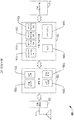
도 1은 본 명세서에 기술되는 다양한 양태에 관련하여 사용할 수 있는 사용자 장비(UE)의 예를 도시한다.
도 2는 본 명세서에 기술되는 다양한 양태에 따른 이종 기준 신호(reference signal, RS)를 통해 RSTD 측정을 가능하게 하는 시스템의 블록도이다.
도 3은 본 명세서에 기술되는 다양한 양태에 따른 향상된 기준 신호 시간차(RSTD)를 통해 OTDOA 기술을 통한 개선된 포지셔닝을 가능하게 하는 시스템의 블록도이다.
도 4는 본 명세서에 기술되는 다양한 양태에 따른 이종 기준 신호(RS)를 통해 사용자 장비(UE)에 의한 RSTD 측정을 가능하게 하는 방법의 흐름도이다.
도 5는 본 명세서에 기술되는 다양한 양태에 따른 이종 RS 집합에 기초하여 하나 이상의 UE에 의한 RSTD 측정을 가능하게 하는 방법의 흐름도이다.
도 6은 본 명세서에 기술되는 다양한 양태에 따른 향상된 기준 신호 시간차(RSTD) 결정을 위해 사용될 수 있는, 일반적인 주기적 전치부호(cyclic prefix, CP)에 대한 셀-특정 기준 신호(cell-specific reference signal, CRS) 맵핑을 예시하는 시간-주파수 도면이다.
도 7은 본 명세서에 기술되는 다양한 양태에 따른 향상된 RSTD 결정을 위해 사용될 수 있는, 확장 CP에 대한 CRS 맵핑을 예시하는 시간-주파수 도면이다.
도 8은 서브프레임 내의 코히어런트 누산(coherent accumulation)에 의해 CRS에 대한 자기 상관(autocorrelation) 프로필(RSTD 정확도에 대한 주요 인자)을 예시하는 한 쌍의 그래프이다.
도 9는 본 명세서에 기술되는 다양한 양태에 따른 향상된 RSTD 결정을 위하여 사용될 수 있는, 일반 CP에 대한 채널 상태 정보 기준 신호(channel state information reference signal, CSI-RS) 맵핑을 예시하는 시간-주파수 도면이다.
도 10은 본 명세서에 기술되는 다양한 양태에 따른 향상된 RSTD 결정을 위해 사용될 수 있는, 확장 CP에 대한 CSI-RS 맵핑을 예시하는 시간-주파수 도면이다.
도 11(a)는 본 명세서에 기술되는 다양한 양태에 따른 향상된 RSTD 결정을 위해 사용될 수 있는, 일반 CP에 대한 포지셔닝 기준 신호(positioning reference signal, PRS) 맵핑을 예시하는 시간-주파수 도면이다.
도 11(b)는 본 명세서에 기술되는 다양한 양태에 따른 향상된 RSTD 결정을 위해 사용될 수 있는, 확장 CP에 대한 PRS 맵핑을 예시하는 시간-주파수 도면이다.
도 12는 서브프레임 내의 코히어런트 누산에 의해 PRS에 대한 자기 상관 프로필(RSTD 정확도에 대한 주요 인자)을 예시하는 한 쌍의 그래프이다.
도 13은 본 명세서에 기술되는 다양한 양태에 따른 복수의 실시예의 이점을 비교한 것을 예시하는 링크 레벨 시뮬레이션 결과의 그래프이다.Figure 1 illustrates an example of a user equipment (UE) that may be used in connection with various aspects described herein.
2 is a block diagram of a system that enables RSTD measurements over a heterogeneous reference signal (RS) according to various aspects described herein.
3 is a block diagram of a system that enables improved positioning through OTDOA technology over an enhanced reference signal time difference (RSTD) according to various aspects described herein.
4 is a flow diagram of a method for enabling RSTD measurements by a user equipment (UE) over a heterogeneous reference signal (RS) according to various aspects described herein.
5 is a flow diagram of a method for enabling RSTD measurements by one or more UEs based on a heterogeneous RS aggregation in accordance with various aspects described herein.
Figure 6 illustrates a cell-specific reference signal for a generic cyclic prefix (CP), which may be used for improved reference signal time difference (RSTD) determination according to various aspects described herein. Frequency (CRS) mapping.
FIG. 7 is a time-frequency diagram illustrating CRS mapping for an extended CP, which may be used for enhanced RSTD determination according to various aspects described herein.
8 is a pair of graphs illustrating an autocorrelation profile (a key factor for RSTD accuracy) for CRS by coherent accumulation in subframes.
9 is a time-frequency plot illustrating a channel state information reference signal (CSI-RS) mapping for a generic CP, which can be used for enhanced RSTD determination according to various aspects described herein .
10 is a time-frequency diagram illustrating CSI-RS mapping for an extended CP, which may be used for enhanced RSTD determination according to various aspects described herein.
11 (a) is a time-frequency diagram illustrating a positioning reference signal (PRS) mapping for a generic CP, which may be used for enhanced RSTD determination according to various aspects described herein.
FIG. 11 (b) is a time-frequency diagram illustrating PRS mapping for an extended CP, which may be used for enhanced RSTD determination according to various aspects described herein.
Figure 12 is a pair of graphs illustrating autocorrelation profiles (a key factor for RSTD accuracy) for PRS by coherent accumulation in subframes.
13 is a graph of link level simulation results illustrating a comparison of the advantages of multiple embodiments in accordance with various aspects described herein.
본 개시는 이제 첨부 도면을 참조하여 기술될 것이며, 첨부 도면에서 같은 참조 번호는 전체적으로 같은 구성요소를 지칭하는데 사용되며, 도시되는 구조 및 디바이스는 반드시 축척하여 작성되는 것은 아니다. 본 명세서에서 사용되는 것으로, 용어 "컴포넌트", "시스템", "인터페이스" 및 그와 유사한 것은 컴퓨터-관련 엔티티, 하드웨어, (예를 들면, 실행 중인) 소프트웨어, 및/또는 펌웨어를 지칭하는 것으로 의도된다. 예를 들어, 컴포넌트는 프로세서(예를 들면, 마이크로프로세서, 컨트롤러, 또는 다른 프로세싱 디바이스), 프로세서상에 수행되는 프로세스, 컨트롤러, 객체, 실행가능 파일, 프로그램, 저장 디바이스, 컴퓨터, 태블릿 PC 및/또는 프로세싱 디바이스를 갖는 사용자 장비(예를 들어, 모바일 폰 등)일 수 있다. 예를 들면, 서버에서 수행되는 애플리케이션 및 서버 또한 컴포넌트일 수 있다. 하나 이상의 컴포넌트가 프로세스 내에 상주할 수 있고, 컴포넌트는 하나의 컴퓨터에 배치될 수 있고 그리고/또는 두 개 이상의 컴퓨터 사이에 분산될 수 있다. 요소 집합 또는 다른 컴포넌트 집합이 본 명세서에 기술될 수 있으며, "집합"이라는 용어는 "하나 이상"으로 해석될 수 있다.The present disclosure will now be described with reference to the accompanying drawings, wherein like reference numerals are used to refer to like elements throughout, and the structures and devices shown are not necessarily drawn to scale. As used herein, the terms "component", "system", "interface" and the like are intended to refer to a computer-related entity, hardware, software (eg, running) do. For example, a component may be a processor (e.g., a microprocessor, controller, or other processing device), a process running on a processor, a controller, an object, an executable file, a program, a storage device, a computer, a tablet PC, and / (E. G., A mobile phone, etc.) having a processing device. For example, the applications and servers running on the server may also be components. One or more components may reside within the process, and the components may be located on one computer and / or distributed between two or more computers. An element set or other set of components may be described herein, and the term "set" may be interpreted as "one or more ".
또한, 이들 컴포넌트는, 예를 들어, 모듈과 같은, 저장되는 다양한 데이터 구조를 갖는 다양한 컴퓨터 판독 가능한 저장 매체로부터 실행할 수 있다. 컴포넌트는 예컨대, 하나 이상의 데이터 패킷(예를 들어, 로컬 시스템, 분산 시스템 내 및/또는 인터넷, 근거리 네트워크, 광역 네트워크, 또는 신호를 통한 다른 시스템과의 유사 네트워크와 같은 네트워크를 통해 다른 컴포넌트와 상호작용하는 하나의 컴포넌트로부터의 데이터)을 갖는 신호에 따라 로컬 및/또는 원격 프로세스를 통해 통신할 수 있다.In addition, these components may be executed from various computer readable storage media having various data structures stored, such as, for example, modules. A component may interact with other components via a network, such as, for example, one or more data packets (e.g., a local system, a distributed system, and / or a similar network with other systems via the Internet, a local area network, And / or remote processes in accordance with a signal having data (e.g., data from one component).
다른 예로서, 컴포넌트는 전기 또는 전자 회로에 의해 동작하는 기계적 부품에 의해 제공되는 특정 기능성을 갖는 디바이스일 수 있으며, 이때, 전기 또는 전자 회로는 하나 이상의 프로세서에 의해 실행되는 소프트웨어 애플리케이션 또는 펌웨어 애플리케이션에 의해 동작할 수 있다. 하나 이상의 프로세서는 디바이스 내부 또는 외부에 있을 수 있으며 소프트웨어 또는 펌웨어 애플리케이션의 적어도 일부를 실행할 수 있다. 또 다른 예로서, 컴포넌트는 기계 부품 없이 전자 컴포넌트를 통해 특정 기능성을 제공하는 디바이스일 수 있고, 전자 컴포넌트는 내부에 그 전자 컴포넌트의 기능성을 적어도 부분적으로 부여하는 소프트웨어 및/또는 펌웨어를 실행하는 하나 이상의 프로세서를 포함할 수 있다. As another example, a component may be a device having a particular functionality provided by a mechanical component that is operated by electrical or electronic circuitry, wherein the electrical or electronic circuitry is implemented by a software application or a firmware application executed by one or more processors Can operate. The one or more processors may be internal or external to the device and may execute at least a portion of the software or firmware application. As another example, a component may be a device that provides specific functionality through an electronic component without mechanical components, and the electronic component may include software and / or firmware that implements at least in part the functionality of the electronic component Processor.
단어 예시의 사용은 구체적인 방식으로 개념을 표현하려 의도된다. 본 출원에서 사용되는 것으로, "또는"이라는 용어는 배타적인 "또는"이라기 보다는 포괄적인 "또는" 을 의미하는 것으로 의도된다. 즉, 달리 특정되지 않거나, 문맥으로부터 명백하지 않다면, "X는 A 또는 B를 사용한다"는 자연적인 포괄적 순열 중 임의의 것을 의미하는 것으로 의도된다. 즉, 만일 X는 A를 사용하거나; X는 B를 사용하거나; 또는 X는 A와 B를 모두 사용한다 라면, "X는 A 또는 B를 사용한다"는 앞의 어느 상황에서도 만족된다. 그 밖에, 본 출원 및 첨부의 청구범위에서 사용되는 관사 "하나의"는 달리 명시되지 않거나 또는 단수 형태를 지시하는 것이라고 문맥상 명확하지 않다면 "하나 이상"을 의미하는 것으로 일반적으로 이해되어야 한다. 또한, 용어 "포함하는", "포함하다", "갖는", "갖다", "지닌", 또는 그 변종이 발명의 상세한 설명 및 청구범위에서 사용되는 정도까지, 그러한 용어는 "포함하는"이라는 용어에 유사한 방식으로 포함되는 것으로 의도된다. The use of word examples is intended to express concepts in a specific way. As used in this application, the term "or" is intended to mean " exclusive "or" rather than exclusive " That is, it is intended to mean any of the natural global permutations where "X uses A or B ", unless otherwise specified or clear from the context. That is, if X uses A; X uses B; Or if X uses both A and B, then "X uses A or B" is satisfied in any of the preceding situations. In addition, the article "a" or "an article" used in this application and the appended claims should be understood generally as meaning "one or more" unless the context clearly dictates otherwise. Also, to the extent that the terms "including," " including, "" having ", "having "," having ", or variants thereof are used in the description and claims of the invention, Is intended to be included in a manner similar to the term.
본 명세서에 사용되는 것으로, "회로"라는 용어는 애플리케이션 특정 주문형 집적 회로(Application Specific Integrated Circuit, ASIC), 전자 회로, (공유, 전용 또는 그룹) 프로세서, 및/또는 하나 이상의 소프트웨어나 펌웨어 프로그램을 실행하는 (공유, 전용 또는 그룹) 메모리, 조합 논리 회로, 및/또는 기술되는 기능성을 제공하는 다른 적합한 하드웨어 컴포넌트의 일부를 말하거나 이를 포함할 수 있다. 일부 실시예에서, 회로가 구현될 수 있거나 또는 하나 이상의 소프트웨어나 펌웨어 모듈 내에 회로와 연관되는 기능이 구현될 수 있다. 일부 실시예에서, 회로는, 하드웨어에서 적어도 부분적으로 동작하는 로직을 포함할 수 있다.As used herein, the term "circuit" refers to an application specific integrated circuit (ASIC), an electronic circuit, a (shared, dedicated or group) processor, and / or one or more software or firmware programs (Shared, dedicated or grouped) memory, combinational logic circuitry, and / or other suitable hardware components that provide the described functionality. In some embodiments, circuitry may be implemented or functionality associated with circuitry within one or more software or firmware modules may be implemented. In some embodiments, the circuitry may include logic that at least partially operates in hardware.
본 명세서에 기술되는 실시예는 임의의 적절하게 구성된 하드웨어 및/또는 소프트웨어를 사용하여 시스템으로 구현될 수 있다. 도 1은, 일 실시예로서, 사용자 장비(UE) 디바이스(100)의 예시적인 컴포넌트를 도시한다. 일부 실시예에서, UE 디바이스(100)는, 도시된 것처럼 적어도 함께 연결된, 애플리케이션 회로(102), 베이스밴드 회로(104), 무선 주파수(radio frequency, RF) 회로(106), 프런트-엔드 모듈(front-end module, FEM) 회로(108) 및 하나 이상의 안테나(110)를 포함할 수 있다. The embodiments described herein may be implemented in a system using any suitably configured hardware and / or software. 1 illustrates, by way of example, an exemplary component of a user equipment (UE)
애플리케이션 회로(102)는 하나 이상의 애플리케이션 프로세서를 포함할 수 있다. 예를 들어, 애플리케이션 회로(102)는 하나 이상의 싱글 코어 또는 멀티 코어 프로세서와 같은 회로를 포함할 수 있지만, 이것으로 제한되는 것은 아니다. 프로세서(들)는 범용 프로세서와 전용 프로세서(예를 들어, 그래픽 프로세서, 애플리케이션 프로세서 등)의 어떠한 조합도 포함할 수 있다. 프로세서는 메모리/저장소와 연결될 수 있고 및/또는 이를 포함할 수 있으며, 메모리/저장소에 저장된 명령어를 실행하여 다양한 애플리케이션 및/또는 오퍼레이팅 시스템이 시스템상에서 구동할 수 있도록 구성될 수 있다.The
베이스밴드 회로(104)는 이것으로 제한되는 것은 아니지만, 하나 이상의 싱글 코어 또는 멀티 코어 프로세서와 같은 회로를 포함할 수 있다. 베이스밴드 회로(104)는 RF 회로(106)의 수신신호 경로로부터 수신한 베이스밴드 신호를 처리하며 RF 회로(106)의 송신 신호 경로에 대해 베이스밴드 신호를 생성하는 하나 이상의 베이스밴드 프로세서 및/또는 제어 로직을 포함할 수 있다. 베이스밴드 프로세싱 회로(104)는 베이스밴드 신호의 생성 및 처리를 위해 그리고 RF 회로(106)의 동작을 제어하기 위해 애플리케이션 회로(102)와 인터페이싱할 수 있다. 예를 들면, 일부 실시예에서, 베이스밴드 회로(104)는 2세대(2G) 베이스밴드 프로세서(104a), 3세대(3G) 베이스밴드 프로세서(104b), 4세대 프로세서(4G) 베이스밴드 프로세서(104c), 및/또는 개발 중이거나 미래에 개발될 세대(예를 들어, 5세대(5G), 6G 등)의 기타 기존 세대에 대한 다른 베이스밴드 프로세서(들)(104d)를 포함할 수 있다. 베이스밴드 회로(104)(예를 들어, 하나 이상의 베이스밴드 프로세서(104a-d))는 RF 회로(106)를 통해 하나 이상의 무선 네트워크와의 통신을 가능하게 할 수 있는 다양한 무선 제어 기능을 처리할 수 있다. 무선 제어 기능은 신호 변조/복조, 인코딩/디코딩, 무선 주파수 시프트 등을 포함할 수 있지만, 이것으로 제한되는 것은 아니다. 일부 실시예에서, 베이스밴드 회로(104)의 변조/복조 회로는 고속-퓨리에 변환(fast fourier transform, FFT), 프리코딩, 및/또는 콘스텔레이션 맵핑/디맵핑 기능성을 포함할 수 있다. 일부 실시예에서, 베이스밴드 회로(104)의 인코딩/디코딩 회로는 컨벌루션(convolution), 테일-바이팅(tail-biting) 컨벌루션, 터보, 비터비(viterbi) 및/또는 저밀도 패리티 검사(Low Density Parity Check, LDPC) 인코더/디코더 기능성을 포함할 수 있다. 변조/복조 및 인코더/디코더 기능성의 실시예는 이들 예에 제한되지 않으며 다른 실시예에서 다른 적합한 기능성을 포함할 수 있다.The
일부 실시예에서, 베이스밴드 회로(104)는 예를 들면, 물리(physical, PHY), 미디어 액세스 제어(media access control, MAC), 무선 링크 제어(radio link control, RLC), 패킷 데이터 수렴 프로토콜(packet data convergence protocol, PDCP) 및/또는 무선 자원 제어(radio resource control, RRC) 요소를 비롯한 진화된 범용 지상 무선 액세스 네트워크(EUTRAN) 프로토콜의 요소와 같은 프로토콜 스택의 요소를 포함할 수 있다. 베이스밴드 회로(104)의 중앙 프로세싱 유닛(central processing unit, CPU)(104e)은 PHY, MAC, RLC, PDCP 및/또는 RRC 계층의 시그널링을 위해 프로토콜 스택의 요소를 수행하도록 구성될 수 있다. 일부 실시예에서, 베이스밴드 회로는 하나 이상의 오디오 디지털 신호 프로세서(들)(digital signal processor, DSP)(104f)를 포함할 수 있다. 오디오 DSP(들)(104f)는 압축/압축해제와 반향 제거를 위한 요소를 포함할 수 있고, 다른 실시예에서 다른 적합한 프로세싱 요소를 포함할 수 있다. 베이스밴드 회로의 컴포넌트는 단일 칩, 단일 칩셋 내에 적절하게 조합되거나 또는 일부 실시예에서는 동일한 회로 기판상에 배치될 수 있다. 일부 실시예에서, 베이스밴드 회로(104) 및 애플리케이션 회로(102)의 구성 컴포넌트의 일부 또는 전부는 예를 들어, 시스템 온 칩(system on a chip, SOC) 상에 함께 구현될 수 있다.In some embodiments, the
일부 실시예에서, 베이스밴드 회로(104)는 하나 이상의 무선 기술과 호환 가능한 통신을 제공할 수 있다. 예를 들어, 일부 실시예에서, 베이스밴드 회로(104)는 진화된 범용 지상 무선 접근 네트워크(EUTRAN) 및/또는 다른 무선 도시지역 네트워크(metropolitan area network, WMAN), 무선 근거리 네트워크(wireless local area network, WLAN), 무선 개인 영역 네트워크(wireless personal area network, WPAN)와의 통신을 지원할 수 있다. 베이스밴드 회로(104)가 하나 이상의 무선 프로토콜의 무선 통신을 지원하도록 구성되는 실시예는 다중모드 베이스밴드 회로라고 지칭될 수 있다.In some embodiments,
RF 회로(106)는 비-고체 (non-solid) 매체를 통해 변조된 전자기 방사를 사용하여 무선 네트워크와 통신할 수 있게 할 수 있다. 다양한 실시예에서, RF 회로(106)는 무선 네트워크와 통신을 가능하게 하기 위해 스위치, 필터, 증폭기 등을 포함할 수 있다. RF 회로(106)는 FEM 회로(108)로부터 수신된 RF 신호를 하향 변환(down-convert)하며 베이스밴드 신호를 베이스밴드 회로(104)에 제공하는 회로를 포함할 수 있는 수신 신호 경로를 포함할 수 있다. RF 회로(106)는 또한 베이스밴드 회로(104)에 의해 제공되는 베이스밴드 신호를 상향 변환(up-convert)하며 RF 출력 신호를 전송을 위해 FEM 회로(108)에 제공하는 회로를 포함할 수 있는 송신 신호 경로를 포함할 수 있다. The
일부 실시예에서, RF 회로(106)는 수신 신호 경로와 송신 신호 경로를 포함할 수 있다. RF 회로(106)의 수신 신호 경로는 믹서 회로(106a), 증폭기 회로(106b) 및 필터 회로(106c)를 포함할 수 있다. RF 회로(106)의 송신 신호 경로는 필터 회로(106c) 및 믹서 회로(106a)를 포함할 수 있다. RF 회로(106)는 또한 수신 신호 경로와 송신 신호 경로의 믹서 회로(106a)에 의해 사용하기 위해 주파수를 합성하기 위한 합성기 회로(106d)를 포함할 수 있다. 일부 실시예에서, 수신 신호 경로의 믹서 회로(106a)는 합성기 회로(106d)에 의해 제공되는 합성된 주파수에 기초하여 FEM 회로(108)로부터 수신된 RF 신호를 하향 변환하도록 구성될 수 있다. 증폭기 회로(106b)는 하향 변환된 신호를 증폭하도록 구성될 수 있고, 필터 회로(106c)는 하향 변환된 신호로부터 원하지 않는 신호를 제거하여 출력 베이스밴드 신호를 생성하도록 구성된 저역 필터(low-pass filter, LPF) 또는 대역 필터(band-pass filter, BPF)일 수 있다. 출력 베이스밴드 신호는 추가 처리를 위해 베이스밴드 회로(104)에 제공될 수 있다. 일부 실시예에서, 출력 베이스밴드 신호는 제로-주파수 베이스밴드 신호일 수 있지만, 이것은 필수 사항이 아니다. 일부 실시예에서, 수신 신호 경로의 믹서 회로(106a)는 수동형 믹서(passive mixer)를 포함할 수 있지만, 실시예의 범위는 이러한 국면으로 제한되지 않는다. In some embodiments, the
일부 실시예에서, 송신 신호 경로의 믹서 회로(106a)는 합성기 회로(106d)에 의해 제공되는 합성된 주파수에 기초하여 입력 베이스밴드 신호를 상향 변환하여 FEM 회로(108)에 대한 RF 출력 신호를 생성하도록 구성될 수 있다. 베이스밴드 신호는 베이스밴드 회로(104)에 의해 제공될 수 있으며 필터 회로(106c)에 의해 필터링될 수 있다. 필터 회로(106c)는 저역 필터(LPF)를 포함할 수 있지만, 본 실시예의 범위는 이러한 국면으로 제한되지 않는다.In some embodiments, the transmit signal
일부 실시예에서, 수신 신호 경로의 믹서 회로(106a)와 송신 신호 경로의 믹서 회로(106a)는 두 개 이상의 믹서를 포함할 수 있으며 각기 직교(quadrature) 하향 변환 및/또는 상향 변환을 위해 배치될 수 있다. 일부 실시예에서, 수신 신호 경로의 믹서 회로(106a) 및 송신 신호 경로의 믹서 회로(106a)는 두 개 이상의 믹서를 포함할 수 있으며 이미지 제거(예를 들어, 하틀리 이미지 제거(Hartley image rejection))를 위해 배치될 수 있다. 일부 실시예에서, 수신 신호 경로의 믹서 회로(106a) 및 송신 신호 경로의 믹서 회로(106a)는 각기 직접 하향 변환 및/또는 직접 상향 변환을 위해 배치될 수 있다. 일부 실시예에서, 수신 신호 경로의 믹서 회로(106a) 및 송신 신호 경로의 믹서 회로(106a)는 슈퍼-헤테로다인(super heterodyne) 동작을 위해 구성될 수 있다. In some embodiments, the
일부 실시예에서, 출력 베이스밴드 신호 및 입력 베이스밴드 신호는 아날로그 베이스밴드 신호일 수 있지만, 실시예의 범위는 이러한 국면으로 제한되지 않는다. 일부 다른 실시예에서, 출력 베이스밴드 신호 및 입력 베이스밴드 신호는 디지털 베이스밴드 신호일 수 있다. 이러한 다른 실시예에서, RF 회로(106)는 아날로그-디지털 변환기(ADC) 및 디지털-아날로그 변환기(DAC) 회로를 포함할 수 있고, 베이스밴드 회로(104)는 RF 회로(106)와 통신하기 위한 디지털 베이스밴드 인터페이스를 포함할 수 있다.In some embodiments, the output baseband signal and the input baseband signal may be analog baseband signals, but the scope of the embodiment is not limited to this aspect. In some other embodiments, the output baseband signal and the input baseband signal may be digital baseband signals. In this alternative embodiment, the
일부 듀얼 모드 실시예에서, 별도의 무선 IC 회로가 각 스펙트럼의 신호를 처리하기 위해 제공될 수 있지만, 실시예의 범위는 이러한 국면으로 제한되지 않는다.In some dual mode embodiments, separate wireless IC circuits may be provided for processing signals of each spectrum, although the scope of the embodiment is not limited to this aspect.
일부 실시예에서, 합성기 회로(106d)는 분수-N 합성기 (a fractional-N synthesizer) 또는 분수 N/N+1 합성기일 수 있지만, 다른 유형의 주파수 합성기가 적합할 수도 있기 때문에 실시예의 범위는 이러한 국면으로 제한되지 않는다. 예를 들어, 합성기 회로(106d)는 델타-시그마 합성기, 주파수 체배기, 또는 분주기를 갖는 위상 고정 루프를 포함하는 합성기일 수 있다.In some embodiments, the
합성기 회로(106d)는 주파수 입력 및 분주기 제어 입력에 기초하여 RF 회로(106)의 믹서 회로(106a)에 의해 사용하기 위한 출력 주파수를 합성하도록 구성될 수 있다. 일부 실시예에서, 합성기 회로(106d)는 분수 N/N+1 합성기일 수 있다.The
일부 실시예에서, 주파수 입력은 전압 제어 발진기(voltage controlled oscillator, VCO)에 의해 제공될 수 있지만, 이것은 필수 사항이 아니다. 분주기 제어 입력은 필요한 출력 주파수에 따라서 베이스밴드 회로(104) 또는 애플리케이션 프로세서(102) 중 하나에 의해 제공될 수 있다. 일부 실시예에서, 분주기 제어 입력(예를 들어, N)은 애플리케이션 프로세서(102)에 의해 표시된 채널에 기초하여 룩업 테이블로부터 결정될 수 있다.In some embodiments, the frequency input may be provided by a voltage controlled oscillator (VCO), but this is not required. The divider control input may be provided by either the
RF 회로(106)의 합성기 회로(106d)는 분주기, 지연 고정 루프(delay-locked loop, DLL), 멀티플렉서 및 위상 누산기(phase accumulator)를 포함할 수 있다. 일부 실시예에서, 분주기는 듀얼 모듈러스 분주기(dual modulus divider, DMD)일 수 있고 위상 누산기는 디지털 위상 누산기(digital phase accumulator, DPA)일 수 있다. 일부 실시예에서, DMD는 입력 신호를 (예를 들어, 캐리 아웃(carry out)에 기초하여) N 또는 N+1로 나누어서 분수 분주비를 제공하도록 구성될 수 있다. 일부 예시적인 실시예에서, DLL은 한 세트의 캐스케이드 방식의 조정 가능한 지연 요소, 위상 검출기, 전하 펌프(charge pump) 및 D-형 플립 플롭을 포함할 수 있다. 이들 실시예에서, 지연 요소는 VCO 주기를 최대 Nd 개의 동일한 위상 패킷으로 나누도록 구성될 수 있으며, 여기서 Nd는 지연 라인에 있는 지연 요소의 개수이다. 이러한 방식으로, DLL은 부궤환을 제공하여 지연 라인 전체의 총 지연은 하나의 VCO 사이클이 되도록 보장한다. The
일부 실시예에서, 합성기 회로(106d)는 출력 주파수로서 반송파 주파수를 생성하도록 구성될 수 있지만, 다른 실시예에서, 출력 주파수는 반송파 주파수의 배수(예를 들어, 반송파 주파수의 두 배, 캐리어 주파수의 네 배)일 수 있으며 직교 위상 발생기 및 분주기 회로와 함께 사용되어 서로에 대해 배수의 차이 위상을 갖는 반송파 주파수에서 다수의 신호를 생성할 수 있다. 일부 실시예에서, 출력 주파수는 LO 주파수(fLO)일 수 있다. 일부 실시예에서, RF 주파수(106)는 IQ/폴라 컨버터(polar converter)를 포함할 수 있다.In some embodiments, the
FEM 회로(108)는 하나 이상의 안테나(110)로부터 수신한 RF 신호에 대해 작동하며, 수신된 신호를 증폭하며, 수신된 신호의 증폭 버전을 추가 처리를 위해 RF 회로(106)에 제공하도록 구성되는 회로를 포함할 수 있는 수신 신호 경로를 포함할 수 있다. FEM 회로(108)는 또한 하나 이상의 안테나(110) 중의 하나 이상에 의해 전송하기 위해 RF 회로(106)에 의해 제공되는 전송을 위한 신호를 증폭하도록 구성되는 회로를 포함할 수 있는 송신 신호 경로를 포함할 수 있다.The
일부 실시예에서, FEM 회로(108)는 송신 모드와 수신 모드 동작 사이에서 스위칭하는 TX/RX 스위치를 포함할 수 있다. FEM 회로는 수신 신호 경로 및 송신 신호 경로를 포함할 수 있다. FEM 회로의 수신 신호 경로는 수신된 RF 신호를 증폭하며 증폭된 수신 RF 신호를 (예를 들어, RF 회로(106)에) 출력으로 제공하는 저소음 증폭기(low-noise amplifier, LNA)를 포함할 수 있다. FEM 회로(108)의 송신 신호 경로는 (예를 들어, RF 회로(106)에 의해 제공된) 입력 RF 신호를 증폭하는 전력 증폭기(power amplifier, PA)와, (예를 들어, 하나 이상의 안테나(110) 중 하나 이상에 의한) 후속 전송을 위한 RF 신호를 생성하는 하나 이상의 필터를 포함할 수 있다.In some embodiments, the
일부 실시예에서, UE 디바이스(100)는 예를 들어, 메모리/저장소, 디스플레이, 카메라, 센서 및/또는 입력/출력(input/output, I/O) 인터페이스와 같은 부가적인 요소를 포함할 수 있다.In some embodiments,
다양한 양태에서, 이종 신호는 OTDOA에 대한 RSTD 측정에 사용될 수 있다. 따라서, 에너지를 증가시킴으로써, 전반적인 위치 정확도 또한 개선될 수 있다. 다양한 실시예에서, 더 나은 RSTD 측정 성능을 위해 다음과 같은 예시적인 조합이 제공될 수 있다. 즉, (1) CRS(셀-특정 기준 신호)와 조합하는 PRS(포지셔닝 기준 신호); (2) CSI-RS(채널 상태 정보 기준 신호)와 조합하는 PRS; 또는 (3) CRS 및 CSI-RS와 조합하는 PRS.In various embodiments, the heterologous signal may be used for RSTD measurements on OTDOA. Thus, by increasing the energy, the overall positional accuracy can also be improved. In various embodiments, the following exemplary combination may be provided for better RSTD measurement performance. (1) a PRS (positioning reference signal) in combination with a CRS (cell-specific reference signal); (2) PRS in combination with CSI-RS (Channel State Information Reference Signal); Or (3) PRS in combination with CRS and CSI-RS.
수신 UE에서, 여러 신호로부터의 상관 출력은 코히런트하게 또는 논-코히런트하게 조합될 수 있다. 대안으로, 다른 신호에 대해 수행된 독립적인 RSTD 측정이 가중 평균 채널 추정치(weighted average channel estimate)(또는 상관 출력)을 구하기 위해 조합되어 RSTD(예를 들어, w0*CH_CRS+w1*CH_PRS)를 도출할 수 있다. 이종 신호 간에 코히런트 결합(coherent combining)을 가능하게 하기 위해, 이종 기준 신호가 공통 안테나 포트로서 정의될 수 있다. 추가로, 이종 기준 신호는 상이한 신호로부터 결과적으로 생성된 분산된 RSTD 측정을 방지하기 위해 코히런트 및 논-코히런트 결합(예를 들어, 최소한의 논-코히런트 결합)에 대해 준-동위치화(quasi-collocated)될 수 있다. 공통 안테나 포트 및 준-동위치화(quasi-collocation, QCL)와 관련하여 더 상세한 사항은 아래에서 논의된다.At the receiving UE, the correlation outputs from the various signals can be combined coherently or non-coherently. Alternatively, independent RSTD measurements performed on different signals may be combined to obtain a weighted average channel estimate (or correlation output) to derive an RSTD (e.g., w0 * CH_CRS + w1 * CH_PRS) can do. To enable coherent combining between heterogeneous signals, a heterogeneous reference signal may be defined as a common antenna port. In addition, the heterogeneous reference signal may be quasi-coherent for coherent and non-coherent coupling (e.g., minimal non-coherent coupling) to prevent distributed RSTD measurements resulting from the different signals or quasi-collocated. More details regarding the common antenna port and quasi-collocation (QCL) are discussed below.
여러 eNB로부터 정확한 측정을 위하여, 낮은 간섭 서브프레임을 갖는 시간 및 주파수 재사용이 가능한 한 많이 활용될 수 있다. 그러나 시간 주파수 재사용 인자를 고려하면(CRS의 경우 3, PRS의 경우 6), 부가적인 CRS-IC(interference cancellation(간섭 제거)), PRS-IC, CSI-IC 또는 이들의 조합은 가능한 한 많은 자원으로부터 추정치를 획득하는데 사용될 수 있다. 지능형 간섭 제거 기술은 복수의 자원으로부터 기준 신호 수신 전력(Reference Signals Received Power, RSRP) 또는 품질(RSRQ)을 측정할 수 있으며 충돌한 CRS, PRS, CSI-RS 패턴이 사용되는 상황에서 반복적 보상 및/또는 제거를 적용할 수 있다. For accurate measurements from multiple eNBs, time and frequency reuse with low interfering subframes can be utilized as much as possible. However, considering additional time-frequency reuse factors (3 for CRS and 6 for PRS), additional CRS-IC (interference cancellation), PRS-IC, CSI-IC, Lt; / RTI > The intelligent interference cancellation technique can measure the reference signal received power (RSRP) or quality (RSRQ) from a plurality of resources and can perform repetitive compensation and / or adaptive interference avoidance in situations where collision CRS, PRS, CSI- Or removal may be applied.
본 명세서에 기술되는 다양한 실시예는 이종 기준 신호에 기초한 향상된 RSTD 측정을 제공할 수 있으며, 이것은 통상적인 OTDOA 포지셔닝 기술보다 개선된 포지셔닝을 가능하게 할 수 있다.The various embodiments described herein can provide improved RSTD measurements based on heterogeneous reference signals, which can enable improved positioning over conventional OTDOA positioning techniques.
도 2를 참조하면, 본 명세서에 기술되는 다양한 양태에 따른 이종 기준 신호(RS)를 통해 RSTD 측정을 가능하게 하는 시스템(200)의 블록도가 도시된다. 시스템(200)은 수신기 회로(210), 프로세서(220), 송신기 회로(230), (다양한 임의의 저장 매체를 포함할 수 있으며 수신기 회로(210), 프로세서(220), 또는 송신기 회로(230) 중 하나 이상과 연관되는 명령어 및/또는 데이터를 저장할 수 있는) 메모리(240)를 포함할 수 있다. 다양한 양태에서, 시스템(200)은 사용자 장비(UE) 내에 포함될 수 있다. 아래에서 더 상세하게 기술되는 것처럼, 시스템(200)은 이종 RS에 기초한 RSTD 측정을 통해 UE의 개선된 OTDOA 포지셔닝을 가능하게 할 수 있다.2, a block diagram of a
수신기 회로(210)는 복수의 진화된 노드 B(eNB)의 각각으로부터 RS 집합을 수신할 수 있으며, RS 집합은 PRS, CRS, CSI-RS, 등과 같이 두 개 이상의 별개 유형의 RS를 포함한다. UE 및 하나 이상의 eNB의 위치에 기초하여, 이들 RS는 일반적으로 다양한 시간에 수신될 수 있다.The
선택적으로, 다양한 양태에서, 수신기 회로(210)는 시스템(200)에 의해 RSTD 측정을 가능하게 할 수 있는 상위 계층 시그널링(예를 들어, RRC(무선 자원 제어) 및/또는 LPP(LTE(long term evolution) positioning protocol(LTE(롱텀 에볼루션) 포지셔닝 프로토콜) 등)을 통해 하나 이상의 구성 메시지를 수신할 수 있다.Alternatively, in various aspects, the
첫 번째 예로서, 구성 메시지는 하나 이상의 eNB로부터 두 개 이상의 별개 유형의 RS와 연관되는 공통 안테나 포트(antenna port, AP)를 지정할 수 있다. 그와 같은 일부 측면에서, (예를 들어, 공통 프리코딩 벡터 등에 기초하는) 공통 AP는 새로운 구성 메시지가 다르게 표시할 때까지 하나 이상의 eNB로부터의 두 개 이상의 별개 유형의 RS와 연관될 수 있다. 다른 측면에서, 공통 AP는 특정 표시된 시간(예를 들어, 서브프레임 등) 동안에만 하나 이상의 eNB로부터의 두 개 이상의 별개 유형의 RS와 연관될 수 있다. 별개 유형의 RS에 대한 공통 AP를 사용하면 본 명세서에서 논의되는 바와 같이, 코히런트 결합을 가능하게 할 수 있다.As a first example, a configuration message may specify a common antenna port (AP) associated with two or more distinct types of RSs from one or more eNBs. In some such aspects, a common AP (e.g., based on a common precoding vector, etc.) may be associated with two or more distinct types of RSs from one or more eNBs until a new configuration message indicates otherwise. In another aspect, a common AP may be associated with two or more distinct types of RSs from one or more eNBs only during a particular indicated time period (e.g., a subframe, etc.). Using a common AP for a distinct type of RS may enable coherent combining, as discussed herein.
두 번째 예로서, 구성 메시지는 eNB로부터의 상이한 RS와 연관되는 하나 이상의 AP를 지정할 수 있으며 이들 AP를 준-동위치화된 것(QCled)으로 표시할 수 있는데, 이것은 이들 AP 중의 하나를 통해 심볼이 전달되는 채널의 하나 이상의 대규모 속성(예를 들어, 하나 이상의 지연 스프레드, 도플러 확산, 도플러 시프트, 평균 이득 또는 평균 지연)은 다른 AP 중의 하나를 통해 심볼이 전달되는 채널로부터 유추될 수 있다는 것을 나타낸다.As a second example, the configuration message may specify one or more APs associated with different RSs from the eNB, and these APs may be marked as quasi-localized (QCled) One or more large attributes (e.g., one or more delay spreads, Doppler spread, Doppler shift, average gain, or average delay) of the delivered channel indicate that the symbol can be inferred from one of the other APs through which the symbol is transmitted .
프로세서(220)는 각 eNB로부터 수신한 각 RS에 대한 도달 시간(time of arrival, TOA)을 결정할 수 있다. eNB로부터 수신한 RS로부터 계산된 TOA에 기초하여, 프로세서(220)는 eNB와 연관된 수신 신호 시간차(RSTD)를 계산할 수 있다. eNB에 대한 RSTD는 특정 실시예에 따라 및/또는 eNB로부터 수신된 RS의 특성(및 간섭 완화와 같은 특정 유형의 간섭 제거를 사용하는 실시예에서, 하나 이상의 부가적인 eNB로부터 수신된 RS의 잠재적 특성)에 따라 달라질 수 있는 다양한 방식으로 계산될 수 있다.
첫 번째 예의 실시예로서, 프로세서(220)는 별개의 유형의 각 RS를 별도로 처리할 수 있으며, 해당 유형의 RS와 연관된 RS-특정 RSTD(예를 들어, PRS-RSTD, CRS-RSTD, CSI-RS-RSTD 등 중의 하나 이상)를 계산할 수 있다. eNB에 대한 두 개 이상의 RS-특정 RSTD는, 예를 들면, 가중 평균에 기초하여 해당 eNB에 대해 eNB를 계산하는 다양한 방법으로 조합될 수 있다. 다양한 양태에서, 상이한 RS-특정 RSTD는 동일하거나 상이한 가중치가 부여될 수 있는데, 여기서 상이한 가중치는 RS의 유형(예를 들어, PRS는 더 높은 가중치 등을 수신할 수 있다), 수신된 RS와 연관된 신호의 품질 등과 같은 다양한 요인에 기초할 수 있다.In an embodiment of the first example, the
두 번째 예의 실시예로서, 프로세서(220)는 상이한 유형의 RS를 조합할 수 있다. 예를 들어, 만일 다른 유형의 RS가 (예를 들어, 상위 계층 시그널링을 통해 구성되는) 공통 AP와 연관된다면, 이들 상이한 유형의 RS는 코히런트 또는 논-코히런트 누산을 통해 조합될 수 있다. 다른 예로서, RS는 이들 RS를 전송하기 위한 AP가 QCLed되는 정보(예를 들어, 상위 계층 시그널링을 통해 구성될 수 있는 정보)에 기초하여 조합될 수 있다.As an example of the second example, the
송신기 회로(230)는 각 eNB에 대해 계산된 RSTD를 복수의 eNB 중의 프라이머리 eNB로 전송할 수 있다.The
도 3을 참조하면, 본 명세서에 기술되는 다양한 양태에 따른 향상된 기준 신호 시간차(RSTD) 측정 기술을 통해 OTDOA를 통한 개선된 포지셔닝을 가능하게 하는 시스템(300)의 블록도가 도시된다. 시스템(300)은 프로세서(310), 송신기 회로(320), 선택적인 수신기 회로(330) 및 (다양한 저장 매체를 포함할 수 있으며 또한 프로세서(310), 송신기 회로(320) 또는 수신기 회로(330) 중 하나 이상과 연관되는 명령어 및 데이터를 저장할 수 있는) 메모리(340)를 포함할 수 있다. 다양한 양태에서, 시스템(300)은 진화된 범용 지상 무선 액세스 네트워크(E-UTRAN) 노드 B(진화된 노드 B, eNodeB, 또는 eNB) 또는 무선 통신 네트워크 내의 다른 기지국 내에 포함될 수 있다. 아래에서 더 상세하게 기술되는 것처럼, 시스템(300)은 이종 기준 신호를 통한 개선된 ODTOA 포지셔닝 기술을 가능하게 할 수 있다. Referring to FIG. 3, there is shown a block diagram of a
프로세서(310)는 본 명세서에서 논의되는 하나 이상의 양태에 따른 향상된 RSTD 측정을 위해 UE를 구성할 수 있는 구성 메시지를 선택적으로 생성할 수 있다. 예를 들면, 구성 메시지는 (예를 들어, 재구성될 때까지 또는 특정 서브프레임을 지정하거나 미리 결정되거나 서브프레임의 표시된 패턴 등에 따라서) 하나 이상의 별개 유형의 RS에 대한 공통 AP를 구성할 수 있다. 대안으로 또는 부가적으로, 구성 메시지는 두 개 이상의 별개의 유형의 RS와 연관되는 AP가 QCLed된다는 정보를 가지고 UE를 구성할 수 있다. 동일하거나 또는 다른 양태에서, 통상적으로 PRS에 대한 CP 길이만을 포함하는 메시징은 프로세서(310)에 의해 하나 이상의 별개 유형의 RS에 대한 CP 길이도 부가적으로 포함하도록 생성될 수 있다.The
또한, 프로세서(310)는 eNB 사용 시스템(300)과 연관되는 RSTD를 결정하기 위해 UE에 의해 사용될 수 있는 두 개 이상의 별개 유형의 RS를 포함하는, 복수의 RS를 생성할 수 있다. In addition, the
송신기 회로(320)는 복수의 RS를 UE로 전송할 수 있으며, 하나 이상의 구성 메시지가 프로세서(310)에 의해 생성될 때, 송신기 회로(320)는 하나 이상의 구성 메시지를 상위 계층 시그널링(예를 들어, RRC 및/또는 LPP 등)을 통해 UE로 전송할 수 있다. The
수신기 회로(330)는 UE로부터 RSTD 측정치 집합을 수신할 수 있는데, RSTD 측정치 중 하나는 적어도 부분적으로, 프로세서(310)에 의해 생성되는 두 개 이상의 별개 유형의 RS에 기초한다. The
수신된 RSTD 및 각 RSTD와 연관되는 eNB의 알고 있는 위치에 기초하여, 프로세서(310)는 UE의 위치를 추정할 수 있다. RSTD는 본 명세서에서 논의되는 다양한 기술을 사용하여 더 정확하게 결정될 수 있기 때문에, 결과적인 위치 추정은 또한 종래의 기술을 통한 것보다 더 정확할 수 있을 것이다.Based on the received RSTD and the known location of the eNB associated with each RSTD, the
도 4를 참조하면, 본 명세서에 기술되는 다양한 양태에 따른 이종 기준 신호(RS)를 통해 사용자 장비(UE)에 의한 RSTD 측정을 가능하게 하는 방법(400)의 흐름도가 도시된다. 일부 양태에서, 방법(400)은 UE에서 수행될 수 있다. 다른 양태에서, 머신 판독 가능한 매체는, 실행될 때, UE가 방법(400)의 작동을 수행하게 할 수 있는 방법(400)과 연관된 명령어를 저장할 수 있다.Referring to FIG. 4, a flow diagram of a
(410)에서, UE는 본 명세서에 논의되는 바와 같이, 예를 들면, (일반적으로 또는 표시된 서브프레임 등에 대해) 하나 이상의 별개 유형의 RS에 대한 공통 AP를 표시하고, 별개 유형의 RS와 연관되는 두 개 이상의 AP의 QCL을 표시하고, 복수의 별개 유형의 RS 등에 기초하는 RSTD 결정을 가능하게 하는 부가 정보(예를 들어, PRS만이 아닌, CRS 및/또는 CSI-RS 등의 CP 길이)를 표시하는 구성 메시징에 의해, 향상된 RSTD 측정을 위한 하나 이상의 방법으로 선택적으로 구성될 수 있다.At 410, the UE may indicate, for example, a common AP for one or more distinct types of RSs (for a generally or indicated subframe, etc.), as discussed herein, (For example, a CP length such as CRS and / or CSI-RS, not only PRS) indicating the QCL of two or more APs and enabling RSTD determination based on RSs of a plurality of distinct types Lt; RTI ID = 0.0 > RSTD < / RTI > measurements.
(420)에서, PRS의 집합이 복수의 eNB의 각각으로부터 수신될 수 있다. In
(430)에서, 하나 이상의 부가적인 RS 집합(예를 들어, CRS, CSI-RS, 등)이 복수의 eNB의 각각으로부터 수신될 수 있다.One or more additional RS aggregates (e.g., CRS, CSI-RS, etc.) may be received from each of the plurality of eNBs.
(440)에서, 각 eNB마다, TOA는 eNB로부터 수신된 각 PRS마다 측정될 수 있고, TOA는 eNB로부터의 추가적인 별개의 RS 집합의 각 RS마다 측정될 수 있다. At 440, for each eNB, the TOA may be measured for each PRS received from the eNB, and the TOA may be measured for each RS of the additional distinct RS set from the eNB.
(450)에서, PRS 및 하나 이상의 부가적인 RS에 대해 측정된 TOA에 기초하여, 각 eNB마다 RSTD가 결정될 수 있다. 특정 실시예 및 상황에 따라서, 주어진 eNB에 대해 RSTD를 결정하도록 하나 이상의 상이한 기술이 적용될 수 있다. 예를 들면, (예를 들어, 공통 AP가 구성된) 일부 상황에서, PRS의 별개 유형의 RS와의 코히런트 또는 논-코히런트 결합이 사용될 수 있다. 예를 들어, 일부 상황에서, 공통 AP가 사용되고 두 개 이상의 eNB로부터의 특정 RS가 충돌하고 나머지는 충돌하지 않는다면, 간섭 제거가 사용되어 RSTD 결정을 가능하게 할 수 있다. 다른 예로서, 공통 AP가 사용되든 또는 QCL이 상이한 AP에 대해 가정되든, 여러 RS-특정 RSTD의 가중 평균이 결정될 수 있고, 이것은 단일 유형의 RS만을 기초로 생성될 수 있는 RSTD에 비해 향상된 추정을 제공할 수 있다.At 450, the RSTD may be determined for each eNB based on the measured TOA for the PRS and one or more additional RSs. Depending on the specific embodiment and situation, one or more different techniques may be applied to determine the RSTD for a given eNB. For example, in some situations (e.g., where a common AP is configured), coherent or non-coherent combining with the RS of a distinct type of PRS may be used. For example, in some situations, if a common AP is used and a particular RS from two or more eNBs collides and the rest does not collide, interference cancellation can be used to enable RSTD determination. As another example, a weighted average of several RS-specific RSTDs may be determined, whether a common AP is used or a QCL is assumed for a different AP, which may provide an improved estimate over RSTD that can be generated based only on a single type of RS .
(460)에서, 결정된 RSTD는 방법(400)을 사용하는 eNB와 연관된 프라이머리 셀의 eNB로 전송될 수 있다. The determined RSTD may be sent to the eNB of the primary cell associated with the
도 5를 참조하면, 본 명세서에 기술되는 다양한 양태에 따른 이종 RS 집합에 기초하여 하나 이상의 UE에 의한 RSTD 측정을 가능하게 하는 방법(500)의 흐름도가 도시된다. 일부 양태에서, 방법(500)은 eNB에서 수행될 수 있다. 다른 양태에서, 머신 판독 가능한 매체는, 실행될 때, eNB가 방법(500)의 작동을 수행하게 할 수 있는 방법(500)과 연관되는 명령어를 저장할 수 있다.5, a flow diagram of a
(510)에서, UE는 본 명세서에서 논의되는 다양한 양태에 따른 향상된 RSTD 결정을 위해 하나 이상의 기술을 사용하도록 선택적으로 구성될 수 있다.At 510, the UE may optionally be configured to use one or more techniques for enhanced RSTD determination according to various aspects discussed herein.
(520)에서, RSTD 결정을 위해 UE에 의해 사용될 수 있는 두 개 이상의 별개 유형의 RS(예를 들어, PRS, CRS, CSI-RS, 등)가 생성될 수 있다.Two or more distinct types of RSs (e.g., PRS, CRS, CSI-RS, etc.) that may be used by the UE for RSTD determination may be generated.
(530)에서, 두 개 이상의 별개 유형의 RS가 UE로 전송될 수 있다.At 530, two or more distinct types of RSs may be transmitted to the UE.
(540)에서, RSTD 측정치 집합이 UE로부터 수신될 수 있는데, 각 RSTD 측정치는 별개의 eNB와 연관되고, RSTD 집합의 제 1 RSTD는 방법(500)을 사용하는 eNB와 연관된다. 적어도 제 1 RSTD는, 본 명세서에서 논의되는 향상된 RSTD 결정 기술 중의 하나 이상을 통해, 두 개 이상의 별개 유형의 RS에 기초할 수 있다. At 540, a set of RSTD measurements may be received from the UE, with each RSTD measurement being associated with a separate eNB, and a first RSTD of the RSTD aggregation being associated with the eNB using the
(550)에서, UE의 위치는 RSTD 측정치 집합과 이들 RSTD 측정치와 연관되는 eNB의 알고 있는 위치에 기초하여 결정될 수 있다.The location of the UE may be determined based on the set of RSTD measurements and the known location of the eNB associated with these RSTD measurements.
도 6과 도 7을 참조하면, 도 6에는 일반 CP(주기적 전치부호)에 대한 CRS(셀-특정 기준 신호) 맵핑이 예시되고, 도 7에는 확장 CP에 대한 CRS 맵핑이 예시된다. 다양한 실시예에서, CRS는 OTDOA를 위하여 하나 이상의 RS와 관련되어 사용될 수 있다.Referring to FIGS. 6 and 7, FIG. 6 illustrates a cell-specific reference signal (CRS) mapping for a generic CP (periodic prefix), and FIG. 7 illustrates a CRS mapping for an extended CP. In various embodiments, CRS may be used in conjunction with one or more RSs for OTDOA.
도 8을 참조하면, 파선 타원 내의 영역의 확대도(810)와 함께, 서브프레임 내의 코히런트 누산에 의해 CRS에 대한 자기 상관 프로필(RSTD 정확도를 위한 주요 인자)(800)이 예시된다. 도 8의 자기 상관 프로필에 보는 것처럼, CRS는 (도 6 및 7에 알 수 있는 바와 같이) 주파수 도메인 내에서 세 개의 반송파마다 교대로 맵핑하기 때문에 모호한 피크(peak)를 갖게 되어, 시간 도메인 내에 3 개의 반복 파형을 초래한다. 가장 강력하게 모호한 피크는 타겟 피크와 비교하여 -3 dB로 나타난다. Referring to FIG. 8, an autocorrelation profile (a key factor for RSTD accuracy) 800 for CRS is illustrated by coherent accumulation in a subframe, along with an
모호한 피크를 경감하기 위하여, 평활화(smoothing), 보간(interpolating), 또는 필터링 중의 하나 이상이 주파수 도메인에 사용되어, 보간된 채널이 각 RE(resource element)(자원 요소)에 대해 추정되고, IFFT(역 고속 퓨리에 변환)가 실제 피크 또는 채널 임펄스 응답의 제 1 경로를 추정하도록 선정될 수 있다. One or more of smoothing, interpolating, or filtering may be used in the frequency domain to mitigate ambiguous peaks so that the interpolated channel is estimated for each RE (resource element) Inverse fast Fourier transform) may be selected to estimate the first path of the actual peak or channel impulse response.
도 9 및 도 10을 참조하면, 도 9에는 일반 CP(주기적 전치부호)에 대한 CSI-RS(채널 상태 정보 기준 신호) 맵핑이 예시되고, 도 10에는 확장 CP에 대한 CSI-RS 맵핑이 예시된다. 다양한 실시예에서, CSI-RS는 OTDOA를 위한 하나 이상의 다른 RS와 연관되어 사용될 수 있다.9 and 10, a CSI-RS (Channel State Information Reference Signal) mapping is illustrated for a general CP (periodic prefix), and a CSI-RS mapping for an extended CP is illustrated in FIG. . In various embodiments, the CSI-RS may be used in conjunction with one or more other RSs for OTDOA.
도 11(a) 및 도 11(b)를 참조하면, 도 11(a)에는 일반 CP(주기적 전치부호)에 대한 PRS(포지셔닝 기준 신호) 맵핑이 예시되고, 도 11(b)에는 확장 CP에 대한 PRS 맵핑이 예시된다. 다양한 실시예에서, PRS는 OTDOA를 위한 하나 이상의 다른 RS와 연관되어 사용될 수 있다.Referring to FIGS. 11A and 11B, a PRS (Positioning Reference Signal) mapping for a general CP (periodic prefix) is illustrated in FIG. 11A, The PRS mapping for the PRS is illustrated. In various embodiments, the PRS may be used in conjunction with one or more other RSs for OTDOA.
도 12를 참조하면, 파선의 타원 내의 영역의 확대도(1210)와 함께, 서브프레임 내의 코히런트 누산에 의해 PRS에 대한 자기 상관 프로필(RSTD 정확도에 대한 주요 인자)(1200)이 예시된다. 도 11(a) 및 도 11(b)에서 알 수 있는 것처럼, PRS는 가능한 많은 RE를 점유하여, CRS를 포함할 수도 있는 OFDM(Orthogonal Frequency Division Multiplexing(직교 주파수 분할 다중화)) 심볼을 배제하여, 좋은 자기상관 프로필을 제공한다. 예를 들어, 도 12에서 알 수 있는 것처럼, 가장 강력하게 모호한 피크는 타겟 피크와 비교하여 약 -13dB 정도로 나타난다.Referring to FIG. 12, an autocorrelation profile (a key factor for RSTD accuracy) 1200 for PRS is illustrated by coherent accumulation in a subframe, along with an
안테나 포트는 안테나 포트를 통해 심볼이 전달되는 채널이 해당 안테나 포트를 통해 다른 심볼이 전달되는 채널로부터 추론될 수 있도록 LTE(롱텀 에볼루션) 내에 구성된다. 다양한 유형의 각 기준 신호 - MBSFN(Multimedia Broadcast multicast service Signal Frequency Network(멀티미디어 브로드캐스트 멀티캐스트 서비스 싱글 주파수 네트워크)) 기준 신호, 포지셔닝 기준 신호, PDSCH(physical downlink shared channel)(물리 다운링크 공유 채널)와 연관되는 UE-특정 기준 신호, 및 EPDCCH(physical downlink shared channel(향상된 물리 다운링크 제어 채널))와 연관되는 복조 기준 신호 - 에 대해, 동일한 안테나 포트를 통한 한 심볼로부터 다른 심볼로의 채널이 추론될 수 있는 범위가 아래와 같이 제공된다. 안테나 포트 당 하나의 자원 그리드가 있다. 지원되는 안테나 포트의 집합은 셀 내의 기준 신호 구성에 종속하며, 이것은 다음과 같은 유형의 기준 신호 중 임의의 기준 신호일 수 있다: 셀-특정 기준 신호, MBSFN 기준 신호, UE-특정 기준 신호, 복조 기준 신호, 위치 기준 신호, CSI 기준 신호 등. The antenna port is configured in LTE (Long Term Evolution) so that the channel through which the symbol is transmitted through the antenna port can be deduced from the channel through which the other symbol is transmitted through the corresponding antenna port. Each reference signal of various types - MBSFN (Multimedia Broadcast Multicast Service Single Frequency Network) reference signal, positioning reference signal, physical downlink shared channel (PDSCH) For a UE-specific reference signal to be associated, and a demodulation reference signal associated with a physical downlink shared channel (EPDCCH), a channel from one symbol to another via the same antenna port is inferred The range that can be provided is as follows. There is one resource grid per antenna port. The set of supported antenna ports is dependent on the reference signal configuration within the cell, which may be any of the following types of reference signals: cell-specific reference signal, MBSFN reference signal, UE- Signal, position reference signal, CSI reference signal, etc.
셀-특정 기준 신호는 하나, 둘, 또는 네 개의 안테나 포트의 구성을 지원하며 안테나 포트 р = 0, р ∈ {0, 1}, 및 р ∈ {0, 1, 2, 3}를 통해 각각 전송된다.The cell-specific reference signal supports the configuration of one, two, or four antenna ports and is transmitted through antenna ports π = 0, π ∈ {0, 1}, and π ∈ {0, 1, 2, do.
MBSFN 기준 신호는 안테나 포트 р = 4를 통해 전송된다. 안테나 포트 р = 4를 통해 한 심볼이 전달되는 채널은, 두 심볼이 동일한 MBSFN 영역의 서브프레임에 대응할 때, 동일한 안테나 포트를 통해 다른 심볼이 전달되는 채널로부터 추론될 수 있다. The MBSFN reference signal is transmitted via antenna port ¼ 4. A channel to which one symbol is transmitted through antenna port ¼ 4 can be deduced from a channel through which the other symbol is transmitted through the same antenna port when the two symbols correspond to a subframe of the same MBSFN region.
PDSCH와 연관되는 UE-특정 기준 신호는 안테나 포트 р = 5, р = 7, р = 8, 또는 수 개의 р ∈ {7, 8, 9, 10, 11, 12, 13, 14}를 통해 전송된다. 이들 안테나 포트 중 하나의 안테나를 통해 한 심볼이 전달되는 채널은, 두 심볼이 동일한 서브프레임 내 및 PRB(physical resource block(물리 자원 블록)) 번들링이 사용될 때는 동일한 PRG(precoding resource block group(프리코딩 자원 블록 그룹))에 있을 때 또는 PRB(물리 자원 블록) 번들링이 사용되지 않을 때는 동일한 PRB 쌍에 있을 때 동일한 안테나 포트를 통해 다른 심볼이 전달되는 채널로부터 추론될 수 있다.The UE-specific reference signal associated with the PDSCH is transmitted over an antenna port δ = 5, π = 7, π = 8, or several π ∈ {7, 8, 9, 10, 11, 12, 13, 14} . The channel through which one symbol is transmitted through one of these antenna ports is the same PRG (precoding resource block group) when two symbols are in the same subframe and when PRB (physical resource block) bundling is used, Resource block group)) or when PRB (physical resource block) bundling is not used, it can be deduced from the channel through which the other symbol is transmitted through the same antenna port when in the same PRB pair.
EPDCCH와 연관되는 복조 기준 신호는 하나 또는 수개의 р ∈ {107, 108, 109, 110}를 통해 전송된다. 이들 안테나 포트 중의 하나의 안테나를 통해 한 심볼이 전달되는 채널은, 두 심볼이 동일한 PRB 쌍 내에 있을 때, 동일한 안테나 포트를 통해 다른 심볼이 전달되는 채널로부터 추론될 수 있다. The demodulation reference signal associated with the EPDCCH is transmitted over one or several ε {107, 108, 109, 110}. The channel through which one symbol is transmitted through one of these antenna ports can be deduced from the channel through which the other symbol is transmitted through the same antenna port when the two symbols are in the same PRB pair.
포지셔닝 기준 신호는 안테나 포트 р = 6를 통해 전송된다. 안테나 포트 р = 6를 통해 심볼이 전송되는 채널은 동일한 안테나 포트를 통해 다른 심볼이, NPRS가 상위 계층에 의해 구성되는 곳인, NPRS 연속 다운링크 서브프레임으로 이루어지는 하나의 포지셔닝 기준 신호 내에서 전달되는 채널로부터 추론될 수 있다. The positioning reference signal is transmitted via antenna port = = 6. The channel through which the symbol is transmitted via antenna port = 6 is transmitted in one positioning reference signal consisting of N PRS consecutive downlink subframes, where the other symbol is through the same antenna port, where N PRS is constituted by the upper layer. Lt; / RTI > channel.
CSI 기준 신호는 하나, 둘, 넷 또는 여덟 안테나 포트의 구성을 지원하며 안테나 포트 р = 15; р = 15, 16; р = 15, ..., 18; 및 р = 15, ..., 22를 통해 각기 전송된다.The CSI reference signal supports the configuration of one, two, four, or eight antenna ports, with antenna port = 15; = 15, 16; = 15, ..., 18; And? = 15, ..., 22, respectively.
안테나 포트를 통해 심볼이 전달되는 채널의 하나 이상의 대규모 속성이 다른 안테나 포트를 통해 심볼이 전달되는 채널로부터 추론될 수 있을 때, 두 개의 안테나 포트는 본 명세서에서 준-동위치화(quasi co-location, QCL)라고 지칭된다. 대규모 속성은 지연 스프레드, 도플러 확산, 도플러 시프트, 평균 이득 또는 평균 지연 중의 하나 이상을 포함한다. When one or more large-scale attributes of a channel through which an symbol is transmitted through an antenna port can be deduced from a channel through which a symbol is transmitted through another antenna port, the two antenna ports are referred to herein as quasi co-location , QCL). Large-scale properties include one or more of delay spread, Doppler spread, Doppler shift, average gain, or average delay.
따라서, 상이한 안테나 포트 간의 코히런트 결합은 가능하지 않다. 또한, 상이한 안테나 포트 간의 상이한 QCL 가정으로, (코히런트 또는 논-코히런트 결합을 위해) 기준 신호를 조합하는 것은 RSTD 측정 성능을 악화시킬 수 있다. Thus, coherent coupling between different antenna ports is not possible. Also, with different QCL assumptions between different antenna ports, combining the reference signal (for coherent or non-coherent combining) may worsen RSTD measurement performance.
제 1 세트의 실시예에서, 이종 기준 신호는 RSTD 측정을 위해 하나 이상의 방식으로 조합할 수 있다. 따라서, 다양한 양태에서, UE가 RSTD를 측정할 때, 한 종류 이상의 RS가 사용될 수 있다. 예시적인 조합으로는 PRS+CRS, PRS+CSI-RS, 또는 PRS+CRS+CSI-RS를 포함한다.In a first set of embodiments, the heterogeneous reference signal may be combined in one or more ways for RSTD measurements. Thus, in various aspects, when the UE measures the RSTD, more than one RS may be used. Exemplary combinations include PRS + CRS, PRS + CSI-RS, or PRS + CRS + CSI-RS.
제 2 세트의 실시예에서, 공통 안테나 포트(AP)가 이종 기준 신호에 대해 사용될 수 있는데, 이것은 수신 UE에서의 코히런트 누산을 가능하게 할 수 있다. 다양한 양태에서, UE는 상위 계층 시그널링(예를 들어, RRC(무선 자원 제어) 또는 LLP(LTE(롱텀 에볼루션) 포지셔닝 프로토콜) 시그널링 등)에 의해 이종 기준 신호에 대한 공통 AP를 가정하도록 구성될 수 있다. In a second set of embodiments, a common antenna port AP may be used for the heterogeneous reference signal, which may enable coherent accumulation at the receiving UE. In various aspects, the UE may be configured to assume a common AP for a heterogeneous reference signal by higher layer signaling (e.g., RRC (Radio Resource Control) or LLP (LTE (Long Term Evolution) Positioning Protocol) signaling, etc.) .
제 3 세트의 실시예에서, 이종 신호를 위한 안테나 포트들 간의 QCL(준-동위치화)은 수신 UE에 의해서 가정될 수 있다. 다양한 양태에서, UE는 이종 기준 신호의 안테나 포트를 위한 QCL을 상위 계층의 시그널링(예를 들어, RRC나 LPP 시그널링 등)으로 추정할 수 있다. In a third set of embodiments, QCL (quasi-coplanarization) between antenna ports for heterogeneous signals may be assumed by the receiving UE. In various embodiments, the UE may estimate the QCL for the antenna port of the heterogeneous reference signal with higher layer signaling (e.g., RRC or LPP signaling).
도 13을 참조하면, 본 명세서에 기술되는 다양한 양태에 따른 복수의 실시예의 이득을 비교한 링크 레벨 시뮬레이션 결과의 그래프가 예시된다. 시뮬레이션은 AWGN(additive white Gaussian noise)(부가 백색 가우스 잡음)를 가정하는 환경에서 수행되었다. 10MHz 시스템 대역폭이 가정되었고 RSTD 측정이 싱글 서브프레임 내에 수행되었다. 측정된 RSTD가 (예를 들어, 3GPP TS 36.133에 정의된 것처럼) ±5Ts 내에 있을 때, 측정은 성공으로 간주되었고, 그렇지 않으면 오류로 간주되었다. 코히런트 누산 및 논-코히런트 누산을 갖는 PRS+CRS로 도시된 결과에 대해, 상이한 유형의 RS에 대한 AP는 위에서 논의된 제 3 세트의 실시예에 따라 QCLed로 가정되었다.Referring to FIG. 13, there is illustrated a graph of link level simulation results comparing gain of a plurality of embodiments in accordance with various aspects described herein. The simulation was performed in an environment assuming additive white Gaussian noise (AWGN) (additive white Gaussian noise). A 10 MHz system bandwidth was assumed and RSTD measurements were performed within a single subframe. When the measured RSTD was within ± 5 Ts (as defined for example in 3GPP TS 36.133), the measurement was considered successful and otherwise considered an error. For the results shown as PRS + CRS with coherent accumulation and non-coherent accumulation, the AP for different types of RS was assumed to be QCLed according to the third set of embodiments discussed above.
도 13에서 알 수 있는 것처럼, 시뮬레이션 결과는 다음을 나타낸다. 즉, 기존의 PRS 기반의 RSTD 측정은 기존의 CRS 기반의 것을 3.13dB SNR 만큼 능가하고, 본 명세서에서 논의되는 실시예에 따른 논-코히런트 누산을 갖는 PRS+CRS 기반의 RSTD 측정은 기존의 CRS 기반의 것을 4.36 dB SNR 만큼 능가하고 기존의 PRS 기반의 것을 1.23 dB SNR 만큼 능가하며, 본 명세서에서 논의되는 실시예에 따른 코히런트 누산을 갖는 PRS+CRS 기반의 RSTD 측정은 기존의 CRS 기반의 것을 5.03 dB SNR 만큼 능가하고 기존의 PRS 기반의 것을 1.90 dB SNR 만큼 능가한다.As can be seen from Fig. 13, the simulation results show the following. In other words, the existing PRS-based RSTD measurement exceeds the existing CRS-based SNR by 3.13 dB, and the PRS + CRS-based RSTD measurement with non-coherent accumulation according to the embodiment discussed in this specification can be applied to existing CRS Based SNR by 4.36 dB SNR and the existing PRS-based SNR by 1.23 dB, and the PRS + CRS-based RSTD measurement with coherent accumulation according to the embodiment discussed herein is based on existing CRS- 5.03 dB SNR, and exceeds the existing PRS-based one by 1.90 dB SNR.
제 4 세트의 실시예에서, 상이한 기준 신호에 대한 CP(주기적 전치부호) 길이는 PRS CP 길이와 함께 시그널링될 수 있다. 3GPP TS 36.355에 따르면, cpLength는 기준 셀과 이웃 셀(들)에 시그널링된다. 그러나 아래에서 나타난 것처럼, 만일 PRS 정보가 구성된다면, 다른 RS에 대한 CP 정보는 없다. 따라서, 다른 RS(예를 들어, CRS 및/또는 CSI-RS, 등)에 대한 다른 CP 관련 정보(예를 들어, CP 정보 자체 또는 다른 RS에 대한 CP의 영향 - 예를 들어, PRS에 대한 것과 같이 다른 RS에 대한 동일한 CP)는 PRS CP 길이와 함께 시그널링될 수 있다.In a fourth set of embodiments, a CP (periodic prefix) length for a different reference signal may be signaled with a PRS CP length. According to 3GPP TS 36.355, cpLength is signaled to the reference cell and neighbor cell (s). However, as shown below, if PRS information is configured, there is no CP information for the other RSs. Thus, other CP-related information (e.g., the CP information itself or the impact of the CP on other RSs-for example, on the PRS) for other RSs (e.g., CRS and / or CSI- The same CP for another RS) can be signaled with the PRS CP length.
cpLengthcpLength
이 필드는, prsInfo 필드가 존재하면, 보조 데이터 기준 셀 PRS의 주기적 전치부호 길이를 명시하고, 그렇지 않으면, 이 필드는 보조 데이터 기준 셀 CRS의 주기적 전치부호 길이를 명시한다.This field specifies the periodic prefix length of the ancillary data reference cell PRS if the prsInfo field is present; otherwise, this field specifies the periodic prefix length of the ancillary data reference cell CRS.
제 5 세트의 실시예에서, 본 명세서에 기술되는 것처럼, 이종 신호는 TDM(시간 분할 다중화) 방식으로 사용될 수 있다. In a fifth set of embodiments, as described herein, the heterogeneous signal may be used in a TDM (Time Division Multiplex) manner.
PRS 안테나 포트와 CRS 안테나 포트가 반드시 동일한 물리 안테나를 나타내는 것은 아니며, 상이한 안테나 프리코딩 벡터를 활용할 수 있다고 한다면, 코히런트 결합은 수신기 측에서 적절하지 않을 수 있다. 그러나 만일 다중 RSTD 측정이 사용된다면, 공간 다이버시티(spatial diversity)를 활용하며 상이한 시간 인스턴스에서의 PRS 전송에 대해 상이한 프리코딩을 사용하는 것이 이로울 수 있다. 예를 들어, 특정 시간 인스턴스에서, PRS 프리코딩은 CRS 안테나 포트에 대해 사용되는 것과 동일할 수 있다. 만일 CRS 안테나 포트의 수가 1보다 크면, 수신 UE는 특정 서브프레임에서 PRS 안테나 포트가 CRS 안테나 포트와 일치하는지 여부에 따라 구성될 수 있고, 이에 따라서, 코히런트 결합은 이러한 상황에서 활용될 수 있다. If the PRS antenna port and the CRS antenna port do not necessarily represent the same physical antenna, and if different antenna precoding vectors are available, the coherent combining may not be appropriate at the receiver side. However, if multiple RSTD measurements are used, it may be advantageous to utilize spatial diversity and to use different precoding for PRS transmissions at different time instances. For example, at a particular time instance, the PRS precoding may be the same as that used for the CRS antenna port. If the number of CRS antenna ports is greater than one, then the receiving UE may be configured according to whether the PRS antenna port in a particular subframe coincides with the CRS antenna port, so that coherent combining can be utilized in this situation.
일부 양태에서, 규칙이 정의될 수 있으며 CRS에 의해 사용되는 동일한 포트로부터의 (서브프레임 레벨에서) 엮인 PRS 전송이 가능해져서, 수신기는 시간 인스턴스 "Y" (예를 들어, 서브프레임 Y 등)에서 PRS 포트가 CRS 안테나 포트 "X"와 함께 정렬된다고 통보받을 수 있다. 또한, PRS와 CRS 포트가 상이할 때(예를 들어, 상이한 프리코딩이 사용될 때), 시간 인스턴스가 있을 수 있다. 후자의 경우에, 코히런트 결합 대신에, 논-코히런트 결합이 사용될 수 있거나 또는 (예를 들어, 가중 평균 등으로서) RSTD 측정치의 조합이 활용될 수 있다.In some aspects, the rules can be defined and PRS transmission tangled (at the subframe level) from the same port used by the CRS is enabled, so that the receiver is able to transmit the time instance "Y" The PRS port can be notified that it is aligned with the CRS antenna port "X". Also, there may be a time instance when the PRS and CRS ports are different (e.g., when different precoding is used). In the latter case, instead of coherent combining, non-coherent combining may be used or a combination of RSTD measurements (e.g., as a weighted average, etc.) may be utilized.
제 6 세트의 실시예에서, RSTD 측정 성능은 이종 RS에 대해 QCL과 공통 AP 모두를 가정함으로써 개선될 수 있다. QCL 가정이 적용되고 공통 AP가 두 개 이상의 RS(예를 들어, CRS와 PRS 등) 간에 재사용될 때, 하나(또는 그 이상)의 RS가 채널 추정을 위해 사용될 수 있고, 간섭 제거도 또한 적용될 수 있다. 예로서, 상이한 셀로부터의 CRS가 충돌하되, PRS가 충돌하지 않는다면, 주파수 도메인에서의 더 정확한 초기의 채널 추정은 PRS를 사용하여 수행될 수 있다(다양한 양태에서, 이것은 CRS 등과 합작하여 수행될 수도 있다). 이 채널은 CRS의 측면에서 충돌되는 이웃 셀에 대한 채널을 추정하기 위해 CRS-IC에 대해 사용될 수 있다. In the sixth set of embodiments, the RSTD measurement capability can be improved by assuming both a QCL and a common AP for different RSs. When the QCL hypothesis is applied and a common AP is reused between two or more RSs (e.g., CRS and PRS, etc.), one (or more) RSs may be used for channel estimation, have. For example, if the CRS from different cells collide but the PRS does not collide, a more accurate initial channel estimate in the frequency domain may be performed using the PRS (in various aspects this may be done in collaboration with CRS, etc. have). This channel can be used for the CRS-IC to estimate the channel for neighboring cells that are colliding in terms of CRS.
추가로, 양태에서, 하나 이상의 실시예는 전술한 제 1 세트부터 제 6 세트까지의 실시예와 같은 본 명세서에서 논의되는 한 세트 이상의 실시예 또는 (예를 들어, 이종 RS 결합, 이종 RS에 대한 공통 AP 가정, 이종 RS에 대한 AP 간의 QCL 가정 등 중의 둘 이상을 사용하는 예제 실시예와 함께) 본 명세서에 기술되는 다른 실시예의 양태를 포함할 수 있다. In addition, in an embodiment, one or more embodiments may be implemented with one or more sets of embodiments discussed herein (e. G., A heterogeneous RS-combination, a heterogeneous RS- (E.g., with the example embodiment using two or more of the common AP assumption, the QCL hypothesis between the APs for different RSs, etc.).
본 명세서에서 예는 방법, 방법의 행위나 블록을 수행하는 수단, 실행 가능한 명령어를 포함하는 적어도 하나의 머신 판독 가능한 매체와 같은 청구대상을 포함할 수 있으며, 명령어는 머신(메모리를 갖는 프로세서, 주문형 집적 회로(application specific integrated circuit, ASIC), 필드 프로그래머블 게이트 어레이(field programmable gate array, FPGA) 또는 그와 유사한 것)에 의해 수행될 때 머신으로 하여금 방법의 행위 또는 기술되는 실시예 및 예에 따른 복수의 통신 기술을 사용하여 동시에 통신하기 위한 디바이스 또는 시스템의 행위를 수행하게 한다.An example in the present context may include a method, a method of carrying out a method or a method of carrying out a block, a charged object such as at least one machine-readable medium comprising executable instructions, the instructions including a machine (processor with memory, (E.g., an application specific integrated circuit (ASIC), a field programmable gate array (FPGA), or the like) to enable a machine to perform an operation of a method or a plurality Lt; RTI ID = 0.0 > communication < / RTI >
예 1은 수신기 회로, 프로세서 및 송신기 회로를 포함하는 사용자 장비(UE) 내에서 사용되도록 구성되는 장치이다. 수신기 회로는 복수의 진화된 노드B(eNB)의 각각으로부터, 복수의 별개 유형의 RS의 각각 중 하나 이상의 RS를 수신하도록 구성된다. 프로세서는 복수의 eNB의 각각마다, 복수의 별개 유형의 RS의 각각 중 하나 이상의 RS의 도달 시간(TOA)을 결정하고; 복수의 eNB의 각각마다, 복수의 별개 유형의 RS의 각각 중 하나 이상의 RS의 TOA에 적어도 부분적으로 기초하여 기준 신호 시간차(RSTD)를 계산하도록 구성된다. 송신기 회로는 복수의 eNB의 각각마다 계산된 RSTD를 전송하도록 구성된다. Example 1 is a device that is configured for use in a user equipment (UE) that includes a receiver circuit, a processor, and a transmitter circuit. The receiver circuit is configured to receive, from each of a plurality of evolved Node Bs (eNB), one or more RSs of each of a plurality of distinct types of RSs. Wherein the processor determines, for each of the plurality of eNBs, a time of arrival (TOA) of at least one RS of each of a plurality of distinct types of RSs; For each of a plurality of eNBs, a reference signal time difference (RSTD) based at least in part on a TOA of at least one RS of each of a plurality of distinct types of RSs. The transmitter circuit is configured to transmit the calculated RSTD for each of the plurality of eNBs.
예 2는 예 1의 청구대상을 포함하며, 이 예에서 복수의 별개 유형의 RS의 각각 중 하나 이상의 RS는 하나 이상의 포지셔닝 RS(positioning RS, PRS)를 포함한다.Example 2 includes the subject matter of Example 1, where in this example at least one RS of each of a plurality of distinct types of RSs comprises at least one positioning RS (PRS).
예 3은 예 1의 청구대상을 포함하며, 이 예에서 복수의 별개 유형의 RS의 각각 중 하나 이상의 RS는 하나 이상의 셀-특정 RS(cell-specific RS, CRS)를 포함한다.Example 3 includes the subject matter of Example 1, where in this example at least one RS of each of a plurality of distinct types of RSs comprises at least one cell-specific RS (CRS).
예 4는 예 1의 청구대상을 포함하며, 이 예에서 복수의 별개 유형의 RS의 각각 중 하나 이상의 RS는 하나 이상의 채널 상태 정보 RS(channel state information RS, CSI-RS)를 포함한다.Example 4 includes the subject matter of Example 1, where in this example at least one RS of each of a plurality of distinct types of RSs comprises one or more channel state information RSs (CSI-RSs).
예 5는 선택적인 특징을 포함하거나 제외하면서, 예 1-4 중 어느 하나의 청구대상을 포함하며, 이 예에서 복수의 eNB 중 적어도 하나의 eNB에 대해, 프로세서는 또한 복수의 별개 유형의 RS의 각각 중 하나 이상의 RS를 조합하도록 구성되고, 적어도 하나의 eNB에 대해 각각의 RSTD는 복수의 별개 유형의 RS의 각각 중 조합된 하나 이상의 RS에 적어도 부분적으로 기초한다.Example 5 includes any claim of Example 1-4, with or without optional features, wherein for at least one eNB of a plurality of eNBs, the processor also includes a plurality of distinct types of RSs Wherein each RSTD for at least one eNB is based at least in part on at least one RS of the combined of each of a plurality of distinct types of RSs.
예 6는 예 5의 임의의 변형예의 청구대상을 포함하며, 이 예에서 프로세서는 복수의 별개 유형의 RS의 각각 중 하나 이상의 RS를 코히런트하게(coherently) 조합하도록 구성된다. Example 6 includes the subject matter of any variant of Example 5, wherein the processor is configured to coherently combine at least one RS of each of a plurality of distinct types of RSs.
예 7은 예 5의 임의의 변형예의 청구대상을 포함하며, 이 예에서 프로세서는 복수의 별개 유형의 RS의 각각 중 하나 이상의 RS를 논-코히런트하게(non-coherently) 조합하도록 구성된다.Example 7 includes the subject matter of any variation of Example 5, wherein the processor is configured to non-coherently combine at least one RS of each of a plurality of distinct types of RSs.
예 8은 선택적인 특징을 포함하거나 제외하면서, 예 1-4 중 어느 하나의 청구대상을 포함하며, 이 예에서 복수의 eNB 중 적어도 하나의 eNB에 대해, 프로세서는 또한 복수의 별개 유형의 RS의 각각에 대해, 별개 유형의 RS 중 하나 이상의 RS에 기초하여 RS-특정 RSTD를 계산하도록 구성되고, 복수의 eNB 중 적어도 하나의 eNB에 대해 RSTD는 RS-특정 RSTD의 가중화된 조합에 기초한다.Example 8 includes any claim of Examples 1-4, with or without optional features, wherein for at least one eNB of a plurality of eNBs, the processor also includes a plurality of distinct types of RSs Specific RSTD based on at least one RS of a distinct type of RS, and for at least one of the plurality of eNBs, the RSTD is based on a weighted combination of RS-specific RSTDs.
예 9는, 선택적 특징을 포함하거나 제외하면서, 예 1-4 중 어느 하나의 청구대상을 포함하며, 이 예에서 수신기 회로는 복수의 eNB 중 제 1 eNB로부터 수신된 복수의 별개 유형의 RS의 각각 중 하나 이상의 RS의 준-동위치화(quasi-collocation)를 표시하는 구성 메시지를 수신하도록 구성된다.Example 9 includes any claim of Examples 1-4, with or without optional features, in which the receiver circuit is configured to receive each of a plurality of distinct types of RSs received from a first one of the plurality of eNBs And a quasi-collocation of one or more of the RSs of the RS.
예 10은 선택적인 특징을 포함하거나 제외하면서, 예 1-2 중 어느 하나의 청구대상을 포함하며, 이 예에서 복수의 별개 유형의 RS의 각각 중 하나 이상의 RS는 하나 이상의 셀-특정 RS(CRS)를 포함한다. Example 10 includes any claimed subject matter of Example 1-2, with or without optional features, in which one or more RSs of each of a plurality of distinct types of RSs are associated with one or more cell-specific RSs ).
예 11은 선택적인 특징을 포함하거나 제외하면서, 예 1-3 중 어느 하나의 청구대상을 포함하며, 이 예에서 복수의 별개 유형의 RS의 각각 중 하나 이상의 RS는 하나 이상의 채널 상태 정보 RS(CSI-RS)를 포함한다. Example 11 includes any claimed subject matter of Examples 1-3, with or without optional features, in which one or more RSs of each of a plurality of distinct types of RSs are associated with one or more channel state information RSs (CSI -RS).
예 12는 선택적인 특징을 포함하거나 제외하면서, 예 1-8 중 어느 하나의 청구대상을 포함하며, 이 예에서 수신기 회로는 또한 복수의 eNB 중 제 1 eNB로부터 수신된 복수의 별개 유형의 RS의 각각 중 하나 이상의 RS의 준-동위치화를 표시하는 구성 메시지를 수신하도록 구성된다.Example 12 includes an optional feature of any of Examples 1-8, with or without optional features, wherein the receiver circuit also includes a plurality of distinct types of RSs received from the first one of the plurality of eNBs And to receive a configuration message indicating quasi-co-localization of at least one RS of each.
예 13은 예 1의 청구대상을 포함하며, 이 예에서 복수의 eNB 중 적어도 한 eNB에 대해, 프로세서는 복수의 별개 유형의 RS의 각각 중 하나 이상의 RS를 조합하도록 구성되고, 적어도 하나의 eNB에 대해 각각의 RSTD는 적어도 부분적으로 복수의 별개 유형의 RS의 각각 중 조합된 하나 이상의 RS에 기초한다.Example 13 includes the subject matter of Example 1, wherein for at least one eNB of a plurality of eNBs, the processor is configured to combine at least one RS of each of a plurality of distinct types of RSs, Each RSTD is based at least in part on one or more RSs combined of each of a plurality of distinct types of RSs.
예 14는 예 1의 청구대상을 포함하며, 이 예에서 복수의 eNB 중 적어도 한 eNB에 대해, 프로세서는 복수의 별개 유형의 RS의 각각마다, 별개 유형의 RS 중 하나 이상의 RS에 기초하는 RS-특정 RSTD를 계산하도록 구성되고, 복수의 eNB 중 적어도 하나의 eNB에 대한 RSTD는 RS-특정 RSTD의 가중화된 조합에 기초한다.Example 14 includes the claimed subject matter of Example 1, wherein for at least one eNB of a plurality of eNBs, the processor is configured to generate, for each of a plurality of distinct types of RSs, an RS- And the RSTD for at least one of the plurality of eNBs is based on a weighted combination of RS-specific RSTDs.
예 15는 예 1의 청구대상을 포함하며, 이 예에서 수신기 회로는 또한 복수의 eNB로부터 수신된 복수의 별개 유형의 RS의 각각 중 하나 이상의 RS의 준-동위치화를 표시하는 구성 메시지를 수신하도록 구성된다.Example 15 includes the claimed subject matter of Example 1, in which the receiver circuit also receives a configuration message indicating quasi-dynamic localization of one or more RSs of each of a plurality of distinct types of RSs received from a plurality of eNBs .
예 16은 명령어를 포함하는 머신 판독가능한 저장 매체로서, 명령어는 실행될 때, 사용자 장비(UE)로 하여금, 복수의 진화된 노드B(eNB)의 각각으로부터, 포지셔닝 기준 심볼(PRS)의 집합을 수신하게 하고; 복수의 eNB의 각각으로부터, 하나 이상의 추가 RS의 집합 - 각각의 추가 RS는 PRS와 별개의 유형의 RS임 - 을 수신하게 하고, 복수의 eNB의 각각마다, PRS 집합의 각각의 PRS의 도달시간(TOA) 및 하나 이상의 추가 RS의 집합의 각각의 추가 RS의 TOA를 측정하게 하고; 복수의 eNB의 각각마다, PRS의 집합의 각각의 PRS의 도달 시간(TOA) 및 하나 이상의 추가 RS의 집합의 각각의 추가 RS의 TOA에 적어도 부분적으로 기초하여 기준 신호 시간차(RSTD)를 계산하도록 하고; 복수의 eNB의 각각마다 RSTD를 전송하게 한다.Example 16 is a machine-readable storage medium comprising instructions that when executed cause a user equipment (UE) to receive a set of positioning reference symbols (PRS) from each of a plurality of evolved Node Bs (eNB) ; From each of the plurality of eNBs, a set of one or more additional RSs, each additional RS being a separate type of RS from the PRS, and for each of the plurality of eNBs, the arrival time of each PRS of the PRS set TOA) and the TOA of each additional RS of the set of one or more additional RSs; For each of the plurality of eNBs, to calculate a reference signal time difference (RSTD) based at least in part on the time of arrival (TOA) of each PRS of the set of PRSs and the TOA of each additional RS of the set of one or more additional RSs ; And transmits RSTD to each of a plurality of eNBs.
예 17은 예 16의 청구대상을 포함하며, 이 예에서 명령어는 또한 실행될 때, UE로 하여금, 복수의 eNB 중 제 1 eNB로부터 수신된 PRS의 집합 및 하나 이상의 추가 RS의 집합과 연관되는 공통 안테나 포트를 표시하는 구성 메시지를 수신하게 하고; 제 1 eNB로부터의 PRS의 집합을 제 1 eNB로부터의 하나 이상의 추가 RS의 집합과 조합하도록 하되, 제 1 eNB에 대해 RSTD는 제 1 eNB로부터의 PRS의 집합과 하나 이상의 추가 RS의 집합의 조합된 집합에 적어도 부분적으로 기초하여 계산된다.Example 17 includes the claimed subject matter of Example 16, wherein the instructions, when executed, also cause the UE to request a set of PRSs received from the first one of the plurality of eNBs and a common antenna port associated with the set of one or more additional RSs To receive a configuration message indicating < RTI ID = 0.0 > With the set of PRSs from the first eNB being combined with the set of one or more additional RSs from the first eNB, wherein for the first eNB the RSTD comprises a set of PRSs from the first eNB and a combined set of one or more additional sets of RSs At least partially.
예 18은 예 17의 청구대상을 포함하며, 이 예에서 명령어는 또한 실행될 때, UE로 하여금, 제 1 eNB로부터의 PRS의 집합을 제 1 eNB로부터의 하나 이상의 추가 RS의 집합과 코히런트하게 조합하게 한다.Example 18 includes the subject matter of Example 17 wherein the instructions, when executed, also cause the UE to coherently combine the set of PRSs from the first eNB with the set of one or more additional RSs from the first eNB do.
예 19는 예 18의 청구대상을 포함하며, 이 예에서 명령어는 실행될 때, UE로 하여금, 하나 이상의 서브프레임을 표시하는 추가 메시지를 수신하게 하며, 제 1 eNB로부터 수신된 PRS 집합과 연관되는 안테나 포트는 제 1 eNB로부터 수신된 하나 이상의 추가 RS의 집합과 연관되는 하나 이상의 안테나 포트와 정렬된다.Example 19 includes the subject matter of Example 18, wherein the instructions, when executed, cause the UE to receive an additional message indicating one or more subframes and to transmit an additional message indicating an antenna port associated with the PRS set received from the first eNB Is aligned with one or more antenna ports associated with the set of one or more additional RSs received from the first eNB.
예 20은 예 17의 청구대상을 포함하며, 이 예에서 명령어는 실행될 때, UE로 하여금, 제 1 eNB로부터의 PRS의 집합을 제 1 eNB로부터의 하나 이상의 추가 RS의 집합과 논-코히런트하게 조합하게 한다.Example 20 includes the subject matter of Example 17 wherein the instructions, when executed, cause the UE to perform a non-coherent combination of the set of PRSs from the first eNB with the set of one or more additional RSs from the first eNB .
예 21은 예 17의 청구대상을 포함하며, 이 예에서 명령어는 실행될 때, UE로 하여금, 복수의 eNB 중 제 1 eNB로부터 수신된 하나 이상의 추가 RS의 집합과 복수의 eNB 중 제 2 eNB로부터 수신된 하나 이상의 추가 RS의 집합 간의 간섭 제거(interference cancellation)를 수행하게 한다.Example 21 includes the subject matter of Example 17 wherein the instructions, when executed, cause the UE to perform the steps of: receiving, from a plurality of eNBs, a set of one or more additional RSs received from a first one of the plurality of eNBs To perform interference cancellation between a set of one or more additional RSs.
예 22는 예 16의 청구대상을 포함하며, 이 예에서 명령어는 또한 실행될 때, UE로 하여금, PRS 집합과 연관되는 안테나 포트와 복수의 eNB 중 제 1 eNB로부터 수신된 하나 이상의 추가 RS의 집합과 연관되는 하나 이상의 안테나 포트의 준-동위치화를 표시하는 구성 메시지를 수신하게 하고, 제 1 eNB로부터의 PRS의 집합과 제 1 eNB로부터의 하나 이상의 추가 RS의 집합을 조합하게 하며, 제 1 eNB에 대해 RSTD는 제 1 eNB로부터의 PRS의 집합과 하나 이상의 추가 RS의 집합의 조합된 집합에 적어도 부분적으로 기초하여 계산된다.Example 22 includes the subject matter of Example 16 wherein the instructions, when executed, also cause the UE to perform the steps of: associating an antenna port associated with the PRS set and a set of one or more additional RSs received from the first one of the plurality of eNBs To receive a configuration message indicating quasi-co-localization of one or more antenna ports, to combine a set of PRSs from a first eNB and a set of one or more additional RSs from a first eNB, Is calculated based at least in part on a combined set of a set of PRSs from the first eNB and a set of one or more additional RSs.
예 23은 예 22의 청구대상을 포함하며, 이 예에서 명령어는 실행될 때, UE로 하여금, 제 1 eNB로부터의 PRS의 집합과 제 1 eNB로부터의 하나 이상의 추가 RS의 집합을 논-코히런트하게 조합하게 한다.Example 23 includes the subject matter of Example 22 wherein the instructions, when executed, cause the UE to non-coherently combine the set of PRSs from the first eNB and the set of one or more additional RSs from the first eNB .
예 24는 선택적인 특징을 포함하거나 제외하면서, 예 16-23 중의 어느 하나의 청구대상을 포함하며, 이 예에서 명령어는 또한 실행될 때, UE로 하여금, PRS의 집합과 연관되는 주기적 전치부호(CP) 길이 및 복수의 eNB 중 제 1 eNB로부터의 수신된 하나 이상의 추가 RS의 집합과 연관되는 하나 이상의 CP 길이를 표시하는 구성 메시지를 수신하게 한다.Example 24 includes any claim of Examples 16-23, with or without optional features, wherein the instructions also, when executed, cause the UE to transmit a periodic prefix (CP) associated with a set of PRSs, Length and one or more CP lengths associated with a set of one or more additional RSs received from the first one of the plurality of eNBs.
예 25는 예 16의 청구대상을 포함하며, 이 예에서 명령어는 실행될 때, UE를로 하여금, 복수의 eNB 중 적어도 제 1 eNB에 대해, 제 1 eNB로부터의 수신된 PRS 집합에 기초하여 PRS-RSTD를 계산하게 하고, 제 1 eNB로부터의 수신된 하나 이상의 추가 RS의 집합에 기초하여 하나 이상의 추가 RS-특정 RSTD를 계산하게 하며, RSTD는 PRS-RSTD와 하나 이상의 추가 RS-특정 RSTD의 가중화된 조합에 기초하여 계산된다.Example 25 includes the subject matter of Example 16, wherein the instructions, when executed, cause the UE to perform, for at least a first eNB of the plurality of eNBs, a PRS- based on the received set of PRSs from the first eNB, RSTD to calculate one or more additional RS-specific RSTDs based on the set of one or more additional RSs received from the first eNB, and wherein the RSTD is configured to weight PRS-RSTD and one or more additional RS- Lt; / RTI >
예 26은 예 16의 청구대상을 포함하며, 이 예에서 명령어는 또한 실행될 때, UE로 하여금, PRS의 집합과 연관되는 주기적 전치부호(CP) 길이 및 복수의 eNB 중 제 1 eNB로부터의 수신된 하나 이상의 추가 RS의 집합과 연관되는 하나 이상의 CP 길이를 표시하는 구성 메시지를 수신하게 한다.Example 26 includes the subject matter of Example 16, wherein the instructions, when executed, also cause the UE to request a periodic prefix (CP) length associated with a set of PRSs and a received one from a first one of the plurality of eNBs To receive a configuration message indicating one or more CP lengths associated with the set of additional RSs.
예 27은 진화된 노드B(eNB) 내에서 사용되도록 구성되는 장치로서, 프로세서, 송신기 회로 및 수신기 회로를 포함한다. 프로세서는 적어도 두 개의 별개 유형의 기준 신호(RS)에 기초하여 기준 신호 시간차(RSTD) 계산을 가능하게 하는 구성 메시지를 생성하고, 적어도 두 개의 별개 유형의 RS의 각각 중 하나 이상의 RS의 집합을 포함하는 복수의 RS를 생성하도록 구성된다. 송신기 회로는 구성 메시지와 복수의 RS를 사용자 장비(UE)로 전송하도록 구성된다. 수신기 회로는 UE로부터 RSTD 측정치의 집합을 수신하도록 구성된다. 프로세서는 또한 RSTD 측정치의 집합에 적어도 부분적으로 기초하여 UE의 위치를 추정하도록 구성된다. Example 27 is an apparatus that is configured for use within an evolved Node B (eNB), including a processor, a transmitter circuit, and a receiver circuit. The processor generates a configuration message that enables calculation of a reference signal time difference (RSTD) based on at least two distinct types of reference signals (RS) and includes a set of one or more RSs of each of at least two distinct types of RSs To generate a plurality of RSs. The transmitter circuit is configured to transmit the configuration message and the plurality of RSs to the user equipment (UE). The receiver circuit is configured to receive a set of RSTD measurements from the UE. The processor is also configured to estimate the location of the UE based at least in part on the set of RSTD measurements.
예 28은 예 27의 청구대상을 포함하며, 이 예에서 구성 메시지는 적어도 두 개의 별개 유형의 RS의 각각과 연관되는 공통 안테나 포트를 표시한다. Example 28 includes the subject matter of Example 27, wherein the configuration message indicates a common antenna port associated with each of at least two distinct types of RSs.
예 29는 예 27의 청구대상을 포함하며, 이 예에서 구성 메시지는 적어도 두 개의 별개 유형의 RS의 각각과 연관되는 안테나 포트의 준-동위치화를 표시한다.Example 29 comprises the subject matter of Example 27, wherein the configuration message indicates quasi-coplanarization of the antenna port associated with each of at least two distinct types of RSs.
예 30은 선택적인 특징을 포함하거나 제외하면서, 예 27-29 중 어느 하나의 청구대상을 포함하며, 이 예에서 송신기 회로는 구성 메시지를 무선 자원 제어(RRC) 메시지로서 전송하도록 구성된다.Example 30 includes the claimed subject matter of any of Examples 27-29, with or without optional features, wherein the transmitter circuitry is configured to transmit the configuration message as a radio resource control (RRC) message.
예 31은 선택적인 특징을 포함하거나 제외하면서, 예 27-29 중 어느 하나의 청구대상을 포함하며, 이 예에서 송신기 회로는 구성 메시지를 롱텀 에볼루선(LTE) 포지셔닝 프로토콜(LPP) 메시지로서 전송하도록 구성된다.Example 31 includes the claimed subject matter of any of Examples 27-29, with or without optional features, wherein the transmitter circuit is configured to send a configuration message as a Long Term Evolute Line (LTE) Positioning Protocol (LPP) message .
예 32는 선택적인 특징을 포함하거나 제외하면서, 예 27-29 중 어느 하나의 청구대상을 포함하며, 이 예에서 송신기 회로는 또한 적어도 두 개의 별개 유형의 RS의 각각과 연관되는 주기적 전치부호(CP) 길이를 UE로 전송하도록 구성된다.Example 32 includes the claimed subject matter of Examples 27-29, with or without optional features, wherein the transmitter circuitry also includes a cyclic prefix (CP) associated with each of at least two distinct types of RSs ) ≪ / RTI > length to the UE.
예 33은 선택적 특징을 포함하거나 제외하면서, 예 27-29 중 어느 하나의 청구대상을 포함하며, 이 예에서 송신기 회로는 또한 적어도 두 개의 별개 유형의 RS의 각각과 연관되는 주기적 전치부호(CP) 길이를 UE로 전송하도록 구성된다.Example 33 includes the claimed subject matter of any of Examples 27-29, with or without optional features, wherein the transmitter circuitry also includes a cyclic prefix (CP) associated with each of at least two distinct types of RSs. Length to the UE.
예 34는 예 27의 청구대상을 포함하며, 이 예에서 송신기 회로는 구성 메시지를 무선 자원 제어(RRC) 메시지로서 전송하도록 구성된다.Example 34 includes the subject matter of Example 27, wherein the transmitter circuitry is configured to transmit a configuration message as a radio resource control (RRC) message.
예 35는 예 27의 청구대상을 포함하며, 이 예에서 송신기 회로는 구성 메시지를 롱텀 에볼루선(LTE) 포지셔닝 프로토콜(LPP) 메시지로서 전송하도록 구성된다.Example 35 includes the subject matter of Example 27 wherein the transmitter circuitry is configured to transmit a configuration message as a Long Term Evolute Line (LTE) Positioning Protocol (LPP) message.
예 36은 예 27의 청구대상을 포함하며, 이 예에서 송신기 회로는 또한 적어도 두 개의 별개 유형의 RS의 각각과 연관되는 주기적 전치부호(CP) 길이를 UE로 전송하도록 구성된다.Example 36 includes the subject matter of Example 27 wherein the transmitter circuitry is also configured to transmit to the UE a periodic prefix (CP) length associated with each of at least two distinct types of RSs.
예 37은 사용자 장비(UE) 내에서 사용되도록 구성되는 장치로서, 수신 수단, 프로세싱 수단 및 전송 수단을 포함한다. 수신 수단은 복수의 진화된 노드B(eNB)의 각각으로부터, 복수의 별개 유형의 RS의 각각 중 하나 이상의 RS를 수신하도록 구성된다. 프로세싱 수단은 복수의 eNB의 각각마다, 복수의 별개 유형의 RS의 각각 중 하나 이상의 RS의 도달 시간(TOA)을 결정하고, 복수의 eNB의 각각마다, 복수의 별개 유형의 RS의 각각 중 하나 이상의 RS의 TOA에 적어도 부분적으로 기초하여 기준 신호 시간차(RSTD)를 계산하도록 구성된다. 전송 수단은 복수의 eNB의 각각마다 계산된 RSTD를 전송하도록 구성된다.Example 37 is an apparatus configured to be used in a user equipment (UE), which includes receiving means, processing means and transmitting means. The receiving means is configured to receive, from each of the plurality of evolved Node Bs (eNB), one or more RSs of each of a plurality of distinct types of RSs. The processing means determines the time of arrival (TOA) of each of the plurality of distinct types of RSs for each of the plurality of eNBs, and for each of the plurality of eNBs, one or more of each of the plurality of distinct types of RSs And to calculate a reference signal time difference (RSTD) based at least in part on the TOA of the RS. The transmitting means is configured to transmit the calculated RSTD for each of the plurality of eNBs.
예 38은 진화된 노드B(eNB) 내에서 사용되도록 구성되는 장치로서, 프로세싱 수단, 전송 수단 및 수신 수단을 포함한다. 프로세싱 수단은 적어도 두 개의 별개 유형의 기준 신호(RS)에 기초하여 기준 신호 시간차(RSTD) 계산을 가능하게 하는 구성 메시지를 생성하고, 적어도 두 개의 별개 유형의 RS의 각각 중 하나 이상의 RS의 집합을 포함하는 복수의 RS를 생성한다. 전송 수단은 구성 메시지와 복수의 RS를 사용자 장비(UE)로 전송하도록 구성된다. 수신 수단은 UE로부터 RSTD 측정의 집합을 수신하도록 구성된다. 프로세싱 수단은 또한 RSTD 측정의 집합에 적어도 부분적으로 기초하여 UE의 위치를 추정하도록 구성된다.Example 38 is an apparatus that is configured for use in an evolved Node B (eNB), which includes processing means, transmitting means, and receiving means. The processing means generates a configuration message that enables calculation of a reference signal time difference (RSTD) based on at least two distinct types of reference signals (RS), and generates a set of one or more RSs of each of at least two distinct types of RSs And generates a plurality of RSs including the RS. The transmission means is configured to transmit the configuration message and the plurality of RSs to the user equipment (UE). The receiving means is configured to receive a set of RSTD measurements from the UE. The processing means is also configured to estimate the location of the UE based at least in part on the set of RSTD measurements.
요약서에 기술된 내용을 포함하는 본 개시의 예시된 실시예의 전술한 설명은 개시된 실시예를 개시된 바와 조금도 틀림 없는 형태로 총망라 하려거나 제한하려는 의도는 아니다. 본 명세서에서 특정 실시예 및 예가 예시적인 목적을 위해 기술되지만, 관련 기술의 통상의 지식을 가진 자가 인식할 수 있는 것처럼, 그러한 실시예 및 예의 범위 내에 속하는 것으로 간주되는 다양한 수정이 가능하다. The foregoing description of the illustrative embodiments of the present disclosure, including the description in the abstract, is not intended to be exhaustive or to limit the disclosed embodiments to the precise forms disclosed. Although specific embodiments and examples are described herein for illustrative purposes, various modifications may be deemed to be within the scope of such embodiments and examples, as would be recognized by one of ordinary skill in the art.
이 점에서, 개시된 청구대상이 다양한 실시예 및 대응하는 도면과 관련하여 기술되었지만, 해당 사항이 있을 경우, 다른 유사한 실시예가 사용될 수 있거나 또는 개시된 청구대상을 벗어나지 않고 개시된 청구대상의 동일하거나, 유사하거나, 대안적이거나 또는 대체적인 기능을 수행하기 위해 개시된 실시예에 대해 수정되거나 추가될 수 있다는 것을 알아야 한다. 그러므로 개시된 청구대상은 본 명세서에 기술된 임의의 단일의 실시예로 제한되지 않아야 하며, 오히려 아래의 첨부된 청구범위에 따른 폭과 범위 내에서 해석되어야 한다.In this respect, although the disclosed subject matter has been described in connection with various embodiments and corresponding drawings, other similar embodiments may be used, if appropriate, or the same, similar, or similar embodiments of the disclosed subject matter without departing from the disclosed subject matter , Alternative, or alternative functions to the disclosed embodiments for performing the functions described herein. Accordingly, the claimed subject matter should not be limited to any single embodiment described herein, but rather should be construed within the breadth and scope of the appended claims.
특히 전술한 컴포넌트 또는 구조(어셈블리, 디바이스, 회로, 시스템 등)에 의해 수행되는 다양한 기능과 관련하여, 그러한 컴포넌트를 기술하는데 사용된 ("수단"이라고 말하는 것을 비롯한) 용어는 본 명세서에서 예시된 본 개시의 예시적인 구현 예에서 기능을 수행하는 개시된 구조와 구조적으로 동등하지 않을지라도, 달리 지적하지 않는 한, (예를 들면, 기능적으로 동등한) 설명된 컴포넌트의 명시된 기능을 수행하는 임의의 컴포넌트 또는 구조에 대응하는 것으로 의도된다. 또한, 특정한 특징이 여러 구현예 중 단지 하나의 구현예에 관련하여 설명되었지만, 그러한 특징은 임의의 주어진 또는 특정한 응용에 바람직하고 유리할 수 있으므로 다른 구현예의 하나 이상의 다른 특징과 조합될 수 있다.In connection with the various functions performed by the above-described components or structures (assemblies, devices, circuits, systems, etc.), the terms used to describe such components (including what is referred to as & Any component or structure that performs the specified function of the described component (e.g., functionally equivalent), unless otherwise indicated, is not structurally equivalent to the disclosed structure performing the function in the exemplary embodiment of the disclosure As shown in Fig. In addition, while a particular feature has been described in connection with only one of several implementations, such feature may be desirable and advantageous for any given or particular application and therefore be combined with one or more other features of other implementations.
Claims (25)
복수의 진화된 노드 B(evolved node B; eNB)의 각각으로부터, 복수의 별개 유형의 RS의 각각 중 하나 이상의 RS를 수신하도록 구성되는 수신기와,
프로세서 - 상기 프로세서는 상기 복수의 eNB의 각각마다, 상기 복수의 별개 유형의 RS의 각각 중 상기 하나 이상의 RS의 도달 시간(time of arrival; TOA)을 결정하고, 상기 복수의 eNB의 각각마다, 상기 복수의 별개 유형의 RS의 각각 중 상기 하나 이상의 RS의 상기 TOA에 적어도 부분적으로 기초하여 기준 신호 시간차(reference signal time difference; RSTD)를 계산하도록 구성됨 - 와,
상기 복수의 eNB의 각각마다 계산된 상기 RSTD를 전송하도록 구성되는 송신기 회로를 포함하는
장치.
An apparatus configured to be used within a user equipment (UE)
A receiver configured to receive, from each of a plurality of evolved Node Bs (eNBs), one or more RSs of each of a plurality of distinct types of RSs;
Processor, wherein the processor determines, for each of the plurality of eNBs, a time of arrival (TOA) of the one or more RSs of each of the plurality of distinct types of RSs, and for each of the plurality of eNBs, Configured to calculate a reference signal time difference (RSTD) based at least in part on the TOA of the one or more RSs of each of a plurality of distinct types of RSs,
And a transmitter circuit configured to transmit the calculated RSTD for each of the plurality of eNBs
Device.
상기 복수의 별개 유형의 RS의 각각 중 상기 하나 이상의 RS는 하나 이상의 포지셔닝 RS(positioning RS; PRS)를 포함하는
장치.
The method according to claim 1,
Wherein the at least one RS of each of the plurality of distinct types of RS comprises at least one positioning RS (PRS)
Device.
상기 복수의 별개 유형의 RS의 각각 중 상기 하나 이상의 RS는 하나 이상의 셀-특정 RS(cell-specific RS; CRS)를 포함하는
장치.
The method according to claim 1,
Wherein the one or more RSs of each of the plurality of distinct types of RSs comprise one or more cell-specific RSs (CRSs)
Device.
상기 복수의 별개 유형의 RS의 각각 중 상기 하나 이상의 RS는 하나 이상의 채널 상태 정보 RS(channel state information RS; CSI-RS)를 포함하는
장치.
The method according to claim 1,
Wherein the at least one RS of each of the plurality of distinct types of RSs comprises at least one channel state information RS (CSI-RS)
Device.
상기 복수의 eNB 중 적어도 하나의 eNB에 대해, 상기 프로세서는 또한 상기 복수의 별개 유형의 RS의 각각 중 상기 하나 이상의 RS를 조합하도록 구성되고, 상기 적어도 하나의 eNB에 대해 각각의 RSTD는 상기 복수의 별개 유형의 RS의 각각 중 상기 조합된 하나 이상의 RS에 적어도 부분적으로 기초하는
장치.
5. The method according to any one of claims 1 to 4,
Wherein for at least one eNB of the plurality of eNBs, the processor is further configured to combine the at least one RS of each of the plurality of distinct types of RSs, wherein for each at least one eNB, At least partially based on the combined one or more RSs of each of the distinct types of RSs
Device.
상기 프로세서는 상기 복수의 별개 유형의 RS의 각각 중 상기 하나 이상의 RS를 코히런트하게(coherently) 조합하도록 구성되는
장치.
6. The method of claim 5,
Wherein the processor is configured to coherently combine the one or more RSs of each of the plurality of distinct types of RSs
Device.
상기 프로세서는 상기 복수의 별개 유형의 RS의 각각 중 상기 하나 이상의 RS를 논-코히런트하게(non-coherently) 조합하도록 구성되는
장치.
6. The method of claim 5,
Wherein the processor is configured to non-coherently combine the one or more RSs of each of the plurality of distinct types of RSs
Device.
상기 복수의 eNB 중 적어도 하나의 eNB에 대해, 상기 프로세서는 또한 상기 복수의 별개 유형의 RS의 각각마다, 상기 별개 유형의 RS 중 상기 하나 이상의 RS에 기초하여 RS-특정 RSTD를 계산하도록 구성되고, 상기 복수의 eNB 중 상기 적어도 하나의 eNB에 대해 상기 RSTD는 상기 RS-특정 RSTD의 가중화된 조합에 기초하는
장치.
5. The method according to any one of claims 1 to 4,
And for at least one eNB of the plurality of eNBs, the processor is further configured to calculate an RS-specific RSTD based on the one or more RSs of the distinct types of RSs for each of the plurality of distinct types of RSs, The RSTD for the at least one eNB among the plurality of eNBs is based on a weighted combination of the RS-specific RSTDs
Device.
상기 수신기 회로는 상기 복수의 eNB 중 제 1 eNB로부터 수신된 상기 복수의 별개 유형의 RS의 각각 중 상기 하나 이상의 RS의 준-동위치화(quasi-collocation)를 표시하는 구성 메시지를 수신하도록 구성되는
장치.
5. The method according to any one of claims 1 to 4,
Wherein the receiver circuit is configured to receive a configuration message indicating a quasi-collocation of the one or more RSs of each of the plurality of distinct types of RSs received from a first one of the plurality of eNBs
Device.
상기 명령어는, 실행될 때, 사용자 장비(UE)로 하여금,
복수의 진화된 노드B(eNB)의 각각으로부터, 포지셔닝 기준 심볼(PRS)의 집합을 수신하게 하고,
상기 복수의 eNB의 각각으로부터, 하나 이상의 추가 RS의 집합 - 상기 추가 RS의 각각은 상기 PRS와 별개의 유형의 RS임 - 을 수신하게 하며,
상기 복수의 eNB의 각각마다, 상기 PRS 집합의 각각의 PRS의 도달 시간(TOA) 및 상기 하나 이상의 추가 RS의 집합의 각각의 추가 RS의 TOA를 측정하게 하고,
상기 복수의 eNB의 각각마다, 상기 PRS의 집합의 상기 각각의 PRS의 상기 TOA 및 상기 하나 이상의 추가 RS의 집합의 각각의 추가 RS의 상기 TOA에 적어도 부분적으로 기초하여 기준 신호 시간차(RSTD)를 계산하게 하며,
상기 복수의 eNB의 각각마다 상기 RSTD를 전송하게 하는
머신 판독가능한 저장 매체.
20. A machine-readable storage medium comprising instructions,
Wherein the instructions, when executed, cause the user equipment (UE)
To receive a set of positioning reference symbols (PRS) from each of a plurality of evolved Node Bs (eNB)
From each of the plurality of eNBs, a set of one or more additional RSs, each of the additional RSs being a distinct type of RS from the PRS,
For each of the plurality of eNBs, to measure the TOA of each additional RS of the set of one or more additional RSs and the time of arrival (TOA) of each PRS of the set of PRSs,
Calculating, for each of the plurality of eNBs, a reference signal time difference (RSTD) based at least in part on the TOA of each additional RS of the TOA and the set of one or more additional RSs of the respective PRSs of the set of PRSs However,
And transmitting the RSTD to each of the plurality of eNBs
A machine-readable storage medium.
상기 명령어는 실행될 때, 상기 UE로 하여금 또한,
상기 복수의 eNB 중 제 1 eNB로부터 수신된 상기 PRS의 집합 및 상기 하나 이상의 추가 RS의 집합과 연관되는 공통 안테나 포트를 표시하는 구성 메시지를 수신하게 하고,
상기 제 1 eNB로부터의 상기 PRS의 집합을 상기 제 1 eNB로부터의 상기 하나 이상의 추가 RS의 집합과 조합하게 하며,
상기 제 1 eNB에 대해 상기 RSTD는 상기 제 1 eNB로부터의 PRS의 집합과 하나 이상의 추가 RS의 집합의 상기 조합된 집합에 적어도 부분적으로 기초하여 계산되는
머신 판독가능한 저장 매체.
11. The method of claim 10,
The instruction, when executed,
Receive a configuration message indicating a set of PRSs received from a first one of the plurality of eNBs and a common antenna port associated with the set of one or more additional RSs,
Combine the set of PRSs from the first eNB with the set of one or more additional RSs from the first eNB,
The RSTD for the first eNB is calculated based at least in part on the set of PRSs from the first eNB and the combined set of one or more additional RSs
A machine-readable storage medium.
상기 명령어는 실행될 때, 상기 UE로 하여금, 상기 제 1 eNB로부터의 상기 PRS의 집합을 상기 제 1 eNB로부터의 상기 하나 이상의 추가 RS의 집합과 코히런트하게 조합하게 하는
머신 판독가능한 저장 매체.
12. The method of claim 11,
The instructions, when executed, cause the UE to coherently combine the set of PRSs from the first eNB with the set of one or more additional RSs from the first eNB
A machine-readable storage medium.
상기 명령어는 실행될 때, 상기 UE로 하여금, 하나 이상의 서브프레임을 표시하는 추가 메시지를 수신하게 하며,
상기 제 1 eNB로부터 수신된 상기 PRS의 집합과 연관되는 안테나 포트는 상기 제 1 eNB로부터 수신된 상기 하나 이상의 추가 RS의 집합과 연관되는 하나 이상의 안테나 포트와 정렬되는
머신 판독가능한 저장 매체.
13. The method of claim 12,
Wherein the instructions, when executed, cause the UE to receive an additional message indicating one or more subframes,
An antenna port associated with the set of PRSs received from the first eNB is aligned with one or more antenna ports associated with the set of one or more additional RSs received from the first eNB
A machine-readable storage medium.
상기 명령어는 실행될 때, 상기 UE로 하여금, 상기 제 1 eNB로부터의 상기 PRS의 집합을 상기 제 1 eNB로부터의 상기 하나 이상의 추가 RS의 집합과 논-코히런트하게 조합하게 하는
머신 판독가능한 저장 매체.
12. The method of claim 11,
Wherein the instructions, when executed, cause the UE to non-coherently combine the set of PRSs from the first eNB with the set of one or more additional RSs from the first eNB
A machine-readable storage medium.
상기 명령어는 실행될 때, 상기 UE로 하여금, 상기 복수의 eNB 중 제 1 eNB로부터 수신된 상기 하나 이상의 추가 RS의 집합과 상기 복수의 eNB 중 제 2 eNB로부터 수신된 상기 하나 이상의 추가 RS의 집합 간에 간섭 제거(interference cancellation)를 수행하게 하는
머신 판독가능한 저장 매체.
12. The method of claim 11,
Wherein the instructions, when executed, cause the UE to remove interference between a set of one or more additional RSs received from a first one of the plurality of eNBs and a set of one or more additional RSs received from a second one of the plurality of eNBs (interference cancellation)
A machine-readable storage medium.
상기 명령어는 또한 실행될 때, 상기 UE로 하여금,
상기 PRS의 집합과 연관되는 안테나 포트 및 상기 복수의 eNB 중 제 1 eNB로부터 수신된 상기 하나 이상의 추가 RS의 집합과 연관되는 하나 이상의 안테나 포트의 준-동위치화를 표시하는 구성 메시지를 수신하게 하고,
상기 제 1 eNB로부터의 PRS의 집합과 상기 제 1 eNB로부터의 상기 하나 이상의 추가 RS의 집합을 조합하게 하며,
상기 제 1 eNB에 대해 상기 RSTD는 상기 제 1 eNB로부터의 PRS의 집합과 하나 이상의 추가 RS의 집합의 상기 조합된 집합에 적어도 부분적으로 기초하여 계산되는
머신 판독가능한 저장 매체.
11. The method of claim 10,
The instructions also cause the UE to, when executed,
To receive a configuration message indicating quasi-co-localization of an antenna port associated with the set of PRSs and one or more antenna ports associated with the set of one or more additional RSs received from a first one of the plurality of eNBs,
To combine the set of PRSs from the first eNB and the set of one or more additional RSs from the first eNB,
The RSTD for the first eNB is calculated based at least in part on the set of PRSs from the first eNB and the combined set of one or more additional RSs
A machine-readable storage medium.
상기 명령어는 실행될 때, 상기 UE로 하여금, 상기 제 1 eNB로부터의 상기 PRS의 집합과 상기 제 1 eNB로부터의 상기 하나 이상의 추가 RS의 집합을 논-코히런트하게 조합하게 하는
머신 판독가능한 저장 매체.
17. The method of claim 16,
The command, when executed, causes the UE to non-coherently combine the set of PRSs from the first eNB and the set of one or more additional RSs from the first eNB
A machine-readable storage medium.
상기 명령어는 실행될 때, 상기 UE로 하여금 또한, 상기 PRS의 집합과 연관되는 주기적 전치부호(CP) 길이 및 상기 복수의 eNB 중 제 1 eNB로부터의 수신된 상기 하나 이상의 추가 RS의 집합과 연관되는 하나 이상의 CP 길이를 표시하는 구성 메시지를 수신하게 하는
머신 판독가능한 저장 매체.
18. The method according to any one of claims 10 to 17,
Wherein the instructions, when executed, cause the UE to further determine a cyclic prefix (CP) length associated with the set of PRSs and one or more CPs associated with a set of one or more additional RSs received from a first one of the plurality of eNBs To receive a configuration message indicating the length of
A machine-readable storage medium.
상기 명령어는 실행될 때, 상기 UE로 하여금, 상기 복수의 eNB 중 적어도 제 1 eNB에 대해, 상기 제 1 eNB로부터의 수신된 상기 PRS의 집합에 기초하여 PRS-RSTD를 계산하게 하고, 상기 제 1 eNB로부터 수신된 상기 하나 이상의 추가 RS의 집합에 기초하여 하나 이상의 추가 RS-특정 RSTD를 계산하게 하며,
상기 RSTD는 상기 PRS-RSTD와 상기 하나 이상의 추가 RS-특정 RSTD의 가중화된 조합에 기초하여 계산되는
머신 판독가능한 저장 매체.
11. The method of claim 10,
When executed, cause the UE to calculate PRS-RSTD for at least a first one of the plurality of eNBs based on the set of PRSs received from the first eNB, To calculate one or more additional RS-specific RSTDs based on the set of one or more additional RSs received from the base station,
The RSTD is calculated based on the weighted combination of the PRS-RSTD and the one or more additional RS-specific RSTDs
A machine-readable storage medium.
프로세서 - 상기 프로세서는 적어도 두 개의 별개 유형의 기준 신호(RS)에 기초하여 기준 신호 시간차(RSTD) 계산을 가능하게 하는 구성 메시지를 생성하고, 상기 적어도 두 개의 별개 유형의 RS의 각각 중 하나 이상의 RS의 집합을 포함하는 복수의 RS를 생성함 - 와,
상기 구성 메시지 및 상기 복수의 RS를 사용자 장비(UE)로 전송하도록 구성되는 송신기 회로와,
상기 UE로부터 RSTD 측정치의 집합을 수신하도록 구성되는 수신기 회로를 포함하되,
상기 프로세서는 또한 상기 RSTD 측정치의 집합에 적어도 부분적으로 기초하여 상기 UE의 위치를 추정하도록 구성되는
장치.
An apparatus configured to be used within an evolved Node B (eNB)
A processor, wherein the processor generates a configuration message that enables calculation of a reference signal time difference (RSTD) based on at least two distinct types of reference signals (RS), wherein one or more of the RSs of each of the at least two distinct types of RS A plurality of RSs including a set of RSs,
A transmitter circuit configured to transmit the configuration message and the plurality of RSs to a user equipment (UE)
And receiver circuitry configured to receive a set of RSTD measurements from the UE,
The processor may also be configured to estimate the location of the UE based at least in part on the set of RSTD measurements
Device.
상기 구성 메시지는 상기 적어도 두 개의 별개 유형의 RS의 각각과 연관되는 공통 안테나 포트를 표시하는
장치.
21. The method of claim 20,
Wherein the configuration message indicates a common antenna port associated with each of the at least two distinct types of RSs
Device.
상기 구성 메시지는 상기 적어도 두 개의 별개 유형의 RS의 각각과 연관되는 안테나 포트의 준-동위치화를 표시하는
장치.
21. The method of claim 20,
Wherein the configuration message indicates quasi-dynamic localization of an antenna port associated with each of the at least two distinct types of RSs
Device.
상기 송신기 회로는 상기 구성 메시지를 무선 자원 제어(radio resource control; RRC) 메시지로서 전송하도록 구성되는
장치.
23. The method according to any one of claims 20 to 22,
Wherein the transmitter circuit is configured to transmit the configuration message as a radio resource control (RRC) message
Device.
상기 송신기 회로는 상기 구성 메시지를 롱텀 에볼루선 포지셔닝 프로토콜(long term evolution(LTE) positioning protocol; LPP) 메시지로서 전송하도록 구성되는
장치.
23. The method according to any one of claims 20 to 22,
The transmitter circuit is configured to transmit the configuration message as a long term evolution (LTE) positioning protocol (LPP) message
Device.
상기 송신기 회로는 또한 상기 적어도 두 개의 별개 유형의 RS의 각각과 연관되는 주기적 전치부호(cyclic prefix; CP) 길이를 상기 UE로 전송하도록 구성되는
장치.23. The method according to any one of claims 20 to 22,
The transmitter circuitry is also configured to transmit to the UE a cyclic prefix (CP) length associated with each of the at least two distinct types of RSs
Device.
Applications Claiming Priority (3)
| Application Number | Priority Date | Filing Date | Title |
|---|---|---|---|
| US201562107627P | 2015-01-26 | 2015-01-26 | |
| US62/107,627 | 2015-01-26 | ||
| PCT/US2015/067400 WO2016122812A1 (en) | 2015-01-26 | 2015-12-22 | Otdoa (observed time difference of arrival) positioning enhancement by using heterogeneous reference signals |
Publications (2)
| Publication Number | Publication Date |
|---|---|
| KR20170107434A true KR20170107434A (en) | 2017-09-25 |
| KR102517847B1 KR102517847B1 (en) | 2023-04-04 |
Family
ID=55168445
Family Applications (1)
| Application Number | Title | Priority Date | Filing Date |
|---|---|---|---|
| KR1020177017496A Active KR102517847B1 (en) | 2015-01-26 | 2015-12-22 | Otdoa (observed time difference of arrival) positioning enhancement by using heterogeneous reference signals |
Country Status (5)
| Country | Link |
|---|---|
| US (3) | US10627478B2 (en) |
| EP (1) | EP3250937B1 (en) |
| KR (1) | KR102517847B1 (en) |
| CN (2) | CN112924929B (en) |
| WO (1) | WO2016122812A1 (en) |
Cited By (1)
| Publication number | Priority date | Publication date | Assignee | Title |
|---|---|---|---|---|
| KR20220164610A (en) * | 2020-05-29 | 2022-12-13 | 퀄컴 인코포레이티드 | Systems and methods for beam-sweeping for new radio positioning |
Families Citing this family (24)
| Publication number | Priority date | Publication date | Assignee | Title |
|---|---|---|---|---|
| US10627478B2 (en) | 2015-01-26 | 2020-04-21 | Apple Inc. | OTDOA (observed time difference of arrival) positioning enhancement by using heterogeneous reference signals |
| US10405293B2 (en) | 2015-08-25 | 2019-09-03 | Lg Electronics Inc. | Method for receiving or transmitting reference signal for location determination in wireless communication system and device for same |
| WO2017078464A1 (en) * | 2015-11-04 | 2017-05-11 | 엘지전자(주) | Method for transmitting and receiving downlink data in wireless communication system, and apparatus therefor |
| EP3282276A1 (en) * | 2016-08-12 | 2018-02-14 | Nokia Technologies Oy | Position detection of user equipment within a network |
| WO2018085078A1 (en) * | 2016-11-04 | 2018-05-11 | Intel IP Corporation | Reference signal time difference (rstd) measurements for observed time difference of arrival (otdoa) positioning |
| CN114978455B (en) * | 2017-04-03 | 2025-02-07 | 苹果公司 | Method performed by a positioning server and computer readable medium |
| US9797983B1 (en) | 2017-04-05 | 2017-10-24 | Qualcomm Incorporated | Measuring positioning signals based on assistance data |
| CN107688164A (en) * | 2017-09-06 | 2018-02-13 | 惠州Tcl移动通信有限公司 | A kind of localization method of airborne aircraft, positioner and storage medium |
| CN110635876B (en) * | 2018-06-22 | 2020-11-06 | 维沃移动通信有限公司 | Positioning reference signal configuration, receiving method and device of NR system |
| US11792606B2 (en) | 2018-06-25 | 2023-10-17 | Nokia Technologies Oy | Position determination |
| CN110690950B (en) * | 2018-07-06 | 2020-08-11 | 维沃移动通信有限公司 | Positioning reference signal configuration, receiving method and device |
| CN110856096B (en) | 2018-07-30 | 2022-07-15 | 中兴通讯股份有限公司 | Positioning reference signal generation method, related device, communication system and storage medium |
| EP3934127B1 (en) | 2018-10-12 | 2024-05-29 | OQ Technology S.à r.l. | Method and system for non-terrestrial cellular wireless communication networks |
| EP4243523A3 (en) * | 2018-11-06 | 2023-11-01 | Telefonaktiebolaget LM Ericsson (publ) | Method and user equipement for reference symbol transmission |
| US11668806B2 (en) | 2018-11-12 | 2023-06-06 | Qualcomm Incorporated | Staggered channel state information reference signal resource sets for tracking used for positioning |
| US11044581B2 (en) * | 2019-01-21 | 2021-06-22 | Qualcomm Incorporated | Signaling for round trip time (RTT) based positioning using stronger path tracking |
| CN113873632A (en) | 2019-02-01 | 2021-12-31 | 华为技术有限公司 | Method and device for transmitting signals |
| US11496264B2 (en) * | 2019-02-15 | 2022-11-08 | Qualcomm Incorporated | Interaction of positioning and media access control procedures |
| US11139935B2 (en) * | 2019-05-02 | 2021-10-05 | Qualcomm Incorporated | Aperiodic and cross component carrier positioning reference signals |
| US11533155B2 (en) * | 2019-06-07 | 2022-12-20 | Qualcomm Incorporated | Triggering demodulation reference signal bundling |
| US11963202B2 (en) * | 2020-04-23 | 2024-04-16 | Qualcomm Incorporated | UE receive-transmit time difference measurement reporting |
| US11792607B2 (en) * | 2020-07-22 | 2023-10-17 | Qualcomm Incorporated | Positioning signal frequency hop aggregation |
| CN112004190B (en) * | 2020-08-27 | 2021-06-29 | 苏州智铸通信科技股份有限公司 | A method, apparatus, storage medium and base station group for locating terminal equipment |
| WO2023065086A1 (en) * | 2021-10-18 | 2023-04-27 | 北京小米移动软件有限公司 | Positioning method and apparatus, communication device, and storage medium |
Citations (4)
| Publication number | Priority date | Publication date | Assignee | Title |
|---|---|---|---|---|
| WO2011139201A1 (en) * | 2010-05-03 | 2011-11-10 | Telefonaktiebolaget L M Ericsson (Publ) | Methods and apparatus for positioning measurements in multi-antenna transmission systems |
| US20130285856A1 (en) * | 2012-04-30 | 2013-10-31 | Qualcomm Incorporated | Position and Uncertainty Determination Using Staggered Reception of Position Reference Signals |
| KR20140069905A (en) * | 2012-11-30 | 2014-06-10 | 엘지전자 주식회사 | Otdoa positioning method |
| US20140349582A1 (en) * | 2012-07-30 | 2014-11-27 | Huawei Technologies Co., Ltd. | Positioning method for user equipment, data sending method, device and user equipment |
Family Cites Families (31)
| Publication number | Priority date | Publication date | Assignee | Title |
|---|---|---|---|---|
| KR20140078730A (en) * | 2009-02-05 | 2014-06-25 | 애플 인크. | Method and system for user equipment location determination on a wireless transmission system |
| US8730925B2 (en) * | 2009-04-09 | 2014-05-20 | Motorola Mobility Llc | Method and apparatus for generating reference signals for accurate time-difference of arrival estimation |
| KR101644881B1 (en) * | 2009-04-10 | 2016-08-03 | 엘지전자 주식회사 | Apparatus and metheod for positioing a user equipment |
| US9565011B2 (en) * | 2009-06-04 | 2017-02-07 | Qualcomm Incorporated | Data transmission with cross-subframe control in a wireless network |
| US9002354B2 (en) * | 2009-06-12 | 2015-04-07 | Google Technology Holdings, LLC | Interference control, SINR optimization and signaling enhancements to improve the performance of OTDOA measurements |
| US20100331012A1 (en) * | 2009-06-29 | 2010-12-30 | Yang Zhang | TDOA-Based Reconstruction of Base Station Location Data |
| US8248997B2 (en) * | 2009-08-17 | 2012-08-21 | Nokia Corporation | Apparatus and method for positioning a wireless user equipment |
| US8134990B2 (en) * | 2009-12-14 | 2012-03-13 | Telefonaktiebolaget Lm Ericsson (Publ) | Defining adaptive detection thresholds |
| US20110176440A1 (en) * | 2010-01-15 | 2011-07-21 | Motorola-Mobility, Inc. | Restrictions on autonomous muting to enable time difference of arrival measurements |
| US9237473B2 (en) * | 2010-02-19 | 2016-01-12 | Lenovo Group Limited | Inter-frequency positioning measurements |
| US20110230144A1 (en) * | 2010-03-17 | 2011-09-22 | Iana Siomina | Method and Apparatus for Muting Signaling in a Wireless Communication Network |
| CN102405588B (en) | 2010-05-24 | 2014-01-22 | 华为技术有限公司 | Power supply method and device |
| KR101191215B1 (en) * | 2010-07-16 | 2012-10-15 | 엘지전자 주식회사 | Method and apparatus of positioning in a wireless communication system |
| US8447327B2 (en) * | 2010-08-16 | 2013-05-21 | Nokia Corporation | Method and apparatus for a buffering scheme for OTDOA based location positioning |
| US8942720B2 (en) | 2010-08-16 | 2015-01-27 | Telefonaktiebolaget L M Ericsson (Publ) | Positioning node, user equipment and methods therein |
| KR20120053941A (en) * | 2010-11-17 | 2012-05-29 | 엘지전자 주식회사 | Method and apparatus ofpositioning in a wireless communication system |
| EP2739986B1 (en) * | 2011-08-03 | 2018-01-10 | PoLTE Corporation | Multi-path mitigation in rangefinding and tracking objects using reduced attenuation rf technology |
| US9503914B2 (en) * | 2012-01-31 | 2016-11-22 | Apple Inc. | Methods and apparatus for enhanced scrambling sequences |
| WO2013137645A1 (en) * | 2012-03-13 | 2013-09-19 | 엘지전자 주식회사 | Method for measuring location of user equipment in wireless access system and apparatus therefor |
| US8891491B2 (en) * | 2012-06-15 | 2014-11-18 | Intel Mobile Communications GmbH | Method of processing signals and a signal processor |
| CN103517314A (en) * | 2012-06-27 | 2014-01-15 | 华为技术有限公司 | Wireless resource management method, base station and terminal thereof |
| CN103634899B (en) * | 2012-08-20 | 2018-04-27 | 华为技术有限公司 | Method of locating terminal, base station and user equipment |
| CN102869038B (en) * | 2012-08-24 | 2015-01-21 | 华为技术有限公司 | Measurement compensation method and device in positioning of base station, server and system |
| US9549288B2 (en) * | 2013-02-07 | 2017-01-17 | Qualcomm Incorporated | Determination of differential forward link calibration in LTE networks for positioning |
| CN110336654B (en) * | 2013-03-28 | 2024-01-30 | 华为技术有限公司 | Bandwidth allocation method, device, user equipment and base station |
| CA2908299C (en) | 2013-03-28 | 2020-10-27 | Dentsply International Inc. | Integrated dental implant component and tool for placement of a dental implant component |
| US20150011238A1 (en) | 2013-07-05 | 2015-01-08 | Broadcom Corporation | Unilateral Geolocation for Mobile Terminals |
| EP3032862B1 (en) * | 2013-08-07 | 2019-02-27 | Huawei Technologies Co., Ltd. | Information sending and receiving method and device |
| DE102014100975B4 (en) * | 2014-01-28 | 2016-03-10 | Intel IP Corporation | Method and related mobile device for localization based on the reference signal time difference |
| US9986373B2 (en) * | 2015-01-12 | 2018-05-29 | Intel Corporation | LTE-A systems and method of DRS based positioning |
| US10627478B2 (en) * | 2015-01-26 | 2020-04-21 | Apple Inc. | OTDOA (observed time difference of arrival) positioning enhancement by using heterogeneous reference signals |
-
2015
- 2015-12-22 US US15/539,896 patent/US10627478B2/en active Active
- 2015-12-22 CN CN202110166620.2A patent/CN112924929B/en active Active
- 2015-12-22 KR KR1020177017496A patent/KR102517847B1/en active Active
- 2015-12-22 WO PCT/US2015/067400 patent/WO2016122812A1/en not_active Ceased
- 2015-12-22 EP EP15823900.4A patent/EP3250937B1/en active Active
- 2015-12-22 CN CN201580069553.5A patent/CN107113771B/en active Active
-
2020
- 2020-04-20 US US16/852,914 patent/US11391811B2/en active Active
-
2022
- 2022-05-20 US US17/749,241 patent/US11656317B2/en active Active
Patent Citations (4)
| Publication number | Priority date | Publication date | Assignee | Title |
|---|---|---|---|---|
| WO2011139201A1 (en) * | 2010-05-03 | 2011-11-10 | Telefonaktiebolaget L M Ericsson (Publ) | Methods and apparatus for positioning measurements in multi-antenna transmission systems |
| US20130285856A1 (en) * | 2012-04-30 | 2013-10-31 | Qualcomm Incorporated | Position and Uncertainty Determination Using Staggered Reception of Position Reference Signals |
| US20140349582A1 (en) * | 2012-07-30 | 2014-11-27 | Huawei Technologies Co., Ltd. | Positioning method for user equipment, data sending method, device and user equipment |
| KR20140069905A (en) * | 2012-11-30 | 2014-06-10 | 엘지전자 주식회사 | Otdoa positioning method |
Cited By (1)
| Publication number | Priority date | Publication date | Assignee | Title |
|---|---|---|---|---|
| KR20220164610A (en) * | 2020-05-29 | 2022-12-13 | 퀄컴 인코포레이티드 | Systems and methods for beam-sweeping for new radio positioning |
Also Published As
| Publication number | Publication date |
|---|---|
| CN107113771B (en) | 2021-01-08 |
| EP3250937B1 (en) | 2020-08-05 |
| US11391811B2 (en) | 2022-07-19 |
| US20200386852A1 (en) | 2020-12-10 |
| WO2016122812A1 (en) | 2016-08-04 |
| US11656317B2 (en) | 2023-05-23 |
| CN112924929A (en) | 2021-06-08 |
| KR102517847B1 (en) | 2023-04-04 |
| US10627478B2 (en) | 2020-04-21 |
| CN107113771A (en) | 2017-08-29 |
| CN112924929B (en) | 2024-11-22 |
| EP3250937A1 (en) | 2017-12-06 |
| US20220276335A1 (en) | 2022-09-01 |
| US20180011163A1 (en) | 2018-01-11 |
Similar Documents
| Publication | Publication Date | Title |
|---|---|---|
| US11656317B2 (en) | OTDOA (observed time difference of arrival) positioning enhancement by using heterogeneous reference signals | |
| US20240422720A1 (en) | Device and Method to Improve Horizontal and Vertical Positioning Accuracy | |
| CN107431678B (en) | Positioning Reference System (PRS) Enhanced Design | |
| US11664958B2 (en) | Frequency tracking for beamformed systems | |
| US20190037429A1 (en) | Measurement restrictions for comp | |
| US10396864B2 (en) | Reference signals, measurements, and demodulation architectures and methods | |
| WO2017026982A1 (en) | Transmission point selection for lte license assisted access | |
| HK1242895B (en) | Otdoa (observed time difference of arrival) positioning enhancement by using heterogeneous reference signals | |
| HK1242895A1 (en) | Otdoa (observed time difference of arrival) positioning enhancement by using heterogeneous reference signals | |
| HK1243267B (en) | Device and method to improve horizontal and vertical positioning accuracy | |
| HK1251363B (en) | Reference signals, measurements, and demodulation architectures and methods | |
| HK1243267A1 (en) | Device and method to improve horizontal and vertical positioning accuracy |
Legal Events
| Date | Code | Title | Description |
|---|---|---|---|
| PA0105 | International application |
St.27 status event code: A-0-1-A10-A15-nap-PA0105 |
|
| P11-X000 | Amendment of application requested |
St.27 status event code: A-2-2-P10-P11-nap-X000 |
|
| P13-X000 | Application amended |
St.27 status event code: A-2-2-P10-P13-nap-X000 |
|
| PG1501 | Laying open of application |
St.27 status event code: A-1-1-Q10-Q12-nap-PG1501 |
|
| R17-X000 | Change to representative recorded |
St.27 status event code: A-3-3-R10-R17-oth-X000 |
|
| N231 | Notification of change of applicant | ||
| PN2301 | Change of applicant |
St.27 status event code: A-3-3-R10-R13-asn-PN2301 St.27 status event code: A-3-3-R10-R11-asn-PN2301 |
|
| N231 | Notification of change of applicant | ||
| PN2301 | Change of applicant |
St.27 status event code: A-3-3-R10-R13-asn-PN2301 St.27 status event code: A-3-3-R10-R11-asn-PN2301 |
|
| P11-X000 | Amendment of application requested |
St.27 status event code: A-2-2-P10-P11-nap-X000 |
|
| P13-X000 | Application amended |
St.27 status event code: A-2-2-P10-P13-nap-X000 |
|
| A201 | Request for examination | ||
| PA0201 | Request for examination |
St.27 status event code: A-1-2-D10-D11-exm-PA0201 |
|
| E902 | Notification of reason for refusal | ||
| PE0902 | Notice of grounds for rejection |
St.27 status event code: A-1-2-D10-D21-exm-PE0902 |
|
| P11-X000 | Amendment of application requested |
St.27 status event code: A-2-2-P10-P11-nap-X000 |
|
| P13-X000 | Application amended |
St.27 status event code: A-2-2-P10-P13-nap-X000 |
|
| E701 | Decision to grant or registration of patent right | ||
| PE0701 | Decision of registration |
St.27 status event code: A-1-2-D10-D22-exm-PE0701 |
|
| GRNT | Written decision to grant | ||
| PR0701 | Registration of establishment |
St.27 status event code: A-2-4-F10-F11-exm-PR0701 |
|
| PR1002 | Payment of registration fee |
St.27 status event code: A-2-2-U10-U12-oth-PR1002 Fee payment year number: 1 |
|
| PG1601 | Publication of registration |
St.27 status event code: A-4-4-Q10-Q13-nap-PG1601 |
|
| PR1001 | Payment of annual fee |
St.27 status event code: A-4-4-U10-U11-oth-PR1001 Fee payment year number: 4 |
|
| U11 | Full renewal or maintenance fee paid |
Free format text: ST27 STATUS EVENT CODE: A-4-4-U10-U11-OTH-PR1001 (AS PROVIDED BY THE NATIONAL OFFICE) Year of fee payment: 4 |