KR20160064012A - Barrier film - Google Patents
Barrier film Download PDFInfo
- Publication number
- KR20160064012A KR20160064012A KR1020150165631A KR20150165631A KR20160064012A KR 20160064012 A KR20160064012 A KR 20160064012A KR 1020150165631 A KR1020150165631 A KR 1020150165631A KR 20150165631 A KR20150165631 A KR 20150165631A KR 20160064012 A KR20160064012 A KR 20160064012A
- Authority
- KR
- South Korea
- Prior art keywords
- layer
- film
- light
- light emitting
- group
- Prior art date
- Legal status (The legal status is an assumption and is not a legal conclusion. Google has not performed a legal analysis and makes no representation as to the accuracy of the status listed.)
- Granted
Links
Images


Classifications
-
- B—PERFORMING OPERATIONS; TRANSPORTING
- B32—LAYERED PRODUCTS
- B32B—LAYERED PRODUCTS, i.e. PRODUCTS BUILT-UP OF STRATA OF FLAT OR NON-FLAT, e.g. CELLULAR OR HONEYCOMB, FORM
- B32B7/00—Layered products characterised by the relation between layers; Layered products characterised by the relative orientation of features between layers, or by the relative values of a measurable parameter between layers, i.e. products comprising layers having different physical, chemical or physicochemical properties; Layered products characterised by the interconnection of layers
- B32B7/02—Physical, chemical or physicochemical properties
-
- B—PERFORMING OPERATIONS; TRANSPORTING
- B32—LAYERED PRODUCTS
- B32B—LAYERED PRODUCTS, i.e. PRODUCTS BUILT-UP OF STRATA OF FLAT OR NON-FLAT, e.g. CELLULAR OR HONEYCOMB, FORM
- B32B27/00—Layered products comprising a layer of synthetic resin
- B32B27/06—Layered products comprising a layer of synthetic resin as the main or only constituent of a layer, which is next to another layer of the same or of a different material
- B32B27/08—Layered products comprising a layer of synthetic resin as the main or only constituent of a layer, which is next to another layer of the same or of a different material of synthetic resin
-
- B—PERFORMING OPERATIONS; TRANSPORTING
- B32—LAYERED PRODUCTS
- B32B—LAYERED PRODUCTS, i.e. PRODUCTS BUILT-UP OF STRATA OF FLAT OR NON-FLAT, e.g. CELLULAR OR HONEYCOMB, FORM
- B32B27/00—Layered products comprising a layer of synthetic resin
- B32B27/18—Layered products comprising a layer of synthetic resin characterised by the use of special additives
- B32B27/20—Layered products comprising a layer of synthetic resin characterised by the use of special additives using fillers, pigments, thixotroping agents
-
- C—CHEMISTRY; METALLURGY
- C08—ORGANIC MACROMOLECULAR COMPOUNDS; THEIR PREPARATION OR CHEMICAL WORKING-UP; COMPOSITIONS BASED THEREON
- C08J—WORKING-UP; GENERAL PROCESSES OF COMPOUNDING; AFTER-TREATMENT NOT COVERED BY SUBCLASSES C08B, C08C, C08F, C08G or C08H
- C08J5/00—Manufacture of articles or shaped materials containing macromolecular substances
- C08J5/18—Manufacture of films or sheets
-
- C—CHEMISTRY; METALLURGY
- C08—ORGANIC MACROMOLECULAR COMPOUNDS; THEIR PREPARATION OR CHEMICAL WORKING-UP; COMPOSITIONS BASED THEREON
- C08L—COMPOSITIONS OF MACROMOLECULAR COMPOUNDS
- C08L101/00—Compositions of unspecified macromolecular compounds
-
- H01L31/042—
-
- H01L51/50—
-
- Y—GENERAL TAGGING OF NEW TECHNOLOGICAL DEVELOPMENTS; GENERAL TAGGING OF CROSS-SECTIONAL TECHNOLOGIES SPANNING OVER SEVERAL SECTIONS OF THE IPC; TECHNICAL SUBJECTS COVERED BY FORMER USPC CROSS-REFERENCE ART COLLECTIONS [XRACs] AND DIGESTS
- Y02—TECHNOLOGIES OR APPLICATIONS FOR MITIGATION OR ADAPTATION AGAINST CLIMATE CHANGE
- Y02E—REDUCTION OF GREENHOUSE GAS [GHG] EMISSIONS, RELATED TO ENERGY GENERATION, TRANSMISSION OR DISTRIBUTION
- Y02E10/00—Energy generation through renewable energy sources
- Y02E10/50—Photovoltaic [PV] energy
Landscapes
- Chemical & Material Sciences (AREA)
- Health & Medical Sciences (AREA)
- Chemical Kinetics & Catalysis (AREA)
- Medicinal Chemistry (AREA)
- Polymers & Plastics (AREA)
- Organic Chemistry (AREA)
- Engineering & Computer Science (AREA)
- Manufacturing & Machinery (AREA)
- Materials Engineering (AREA)
- Laminated Bodies (AREA)
Abstract
본 출원은 배리어 필름 및 이의 용도에 관한 것이다. 본 출원은 배리어 필름, 예를 들면, 산소를 차단할 수 있고, 상기와 같은 산소 차단 특성이 고온, 고습 조건과 같은 가혹한 조건에서도 장기간 안정적으로 유지될 수 있는 배리어 필름과 그 용도를 제공할 수 있다.The present application relates to barrier films and their uses. The present application can provide a barrier film that can block a barrier film, for example, oxygen, and can stably maintain the oxygen barrier property even under harsh conditions such as high temperature and high humidity conditions for a long period of time and its use.
Description
본 출원은 배리어 필름과 그 용도에 대한 것이다.This application is directed to barrier films and applications thereof.
태양전지, 액정, 유기 또는 무기 전계발광(이하 「EL」라고 칭) 등의 다양한 디스플레이 및 전자 페이퍼 등의 전자 디바이스는, 그 내부 구조를 보호하고, 외부로부터의 산소나 수증기를 차단하기 위한 밀봉재로서 일반적으로 유리 기판이 사용되지만, 박형화나 경량화, 혹은 유연한 제품을 제공하는 목적으로, 플라스틱 필름을 기재로 하는 투명 배리어 필름의 사용이 검토되고 있다 (예를 들면, 특허 문헌 1 참조).BACKGROUND ART [0002] Various displays such as solar cells, liquid crystal, organic or inorganic electroluminescence (hereinafter referred to as " EL "), and electronic devices such as electronic paper are used as a sealing material for protecting the internal structure thereof and shielding oxygen and water vapor from the outside In general, a glass substrate is used. However, for the purpose of providing a thin, light-weight, or flexible product, use of a transparent barrier film made of a plastic film as a substrate has been studied (see, for example, Patent Document 1).
이들의 배리어 필름은, 가스배리어성을 부여하기 위하여 통상 금속 증착층이 설치되어 있다. 그렇지만 알루미늄 등의 금속 증착층을 가스 배리어층으로서 채택한 필름은 불투명하고, 예를 들면 포장재료로서, 내부를 확인할 수 없는 문제나 전자레인지 사용을 할 수 없는 문제가 있었다. 또한 실리카나 알루미나 등의 금속 산화물의 증착층을 배리어층으로서 마련한 필름은, 고가이면서 유연성이 부족하고 크랙 또는 핀홀에 의해 배리어 성능이 저하되는 문제점이 있다.These barrier films are usually provided with a metal vapor deposition layer for imparting gas barrier properties. However, a film employing a metal vapor deposition layer such as aluminum as a gas barrier layer is opaque and, for example, there is a problem that the interior can not be confirmed as a packaging material and a microwave oven can not be used. In addition, a film provided with a vapor-deposited layer of a metal oxide such as silica or alumina as a barrier layer has a problem in that the barrier performance is deteriorated due to insufficient flexibility while being expensive and cracks or pinholes.
한편, 디스플레이 장치, 예를 들면 양자점 등의 발광 나노입자를 포함하는 발광 필름의 경우, 발광 필름 내로 유입되는 산소로 인한 발광 나노입자의 발광 효율이 저하되는 등의 문제점이 있다. 이에, 전술한 크랙 등을 방지할 수 있는 유연성을 구비하고 수분 차단 특성과 더불어 산소 등을 효율적으로 차단하여 발광 필름의 발광 효율의 저하를 방지할 수 있는 배리어 필름의 연구에 대한 다양한 시도들이 있었다.On the other hand, in the case of a display device, for example, a light emitting film containing light emitting nanoparticles such as a quantum dot, there is a problem that luminous efficiency of light emitting nanoparticles due to oxygen introduced into the light emitting film is decreased. Accordingly, various attempts have been made to study barrier films which have flexibility to prevent cracks and the like, and which are capable of effectively preventing the oxygen and the like from being deteriorated by the moisture barrier properties as well as the reduction of the luminous efficiency of the luminescent films.
본 출원은 배리어 필름, 예를 들면, 산소를 차단할 수 있고, 상기와 같은 산소 차단 특성이 고온, 고습 조건과 같은 가혹한 조건에서도 장기간 안정적으로 유지될 수 있는 배리어 필름과 그 용도를 제공하는 것을 하나의 목적으로 한다.The present application is directed to a barrier film capable of blocking a barrier film, for example, oxygen, and capable of stably maintaining the oxygen barrier property even under harsh conditions such as high temperature and high humidity conditions for a long period of time, The purpose.
본 출원의 예시적인 배리어 필름은, 산소 차단층과 기능성층을 포함할 수 있다. 상기 기능성층은, 상기 산소 차단층의 일면에만 형성되어 있거나, 혹은 양면에 형성되어 있을 수 있다. 상기 기능성층은, 후술하는 다양한 종류 중에서 선택된 1종이거나, 혹은 2종 이상의 적층 구조일 수 있다. 산소 차단층의 양면에 기능성층이 형성되는 경우에 그 양측의 기능성층은 동일한 것이거나, 혹은 상이한 것일 수 있다.An exemplary barrier film of the present application may include an oxygen barrier layer and a functional layer. The functional layer may be formed on only one side of the oxygen barrier layer or on both sides of the oxygen barrier layer. The functional layer may be one kind selected from various types described later, or may have a laminated structure of two or more kinds. In the case where the functional layer is formed on both surfaces of the oxygen barrier layer, the functional layers on both sides may be the same or different.
하나의 예시에서 상기 기능성층은 수분 차단층일 수 있다. 예를 들어, 산소 차단층의 일면 또는 양면에 상기 기능성층으로서 수분 차단층을 형성하는 경우에, 산소 차단 특성을 가지고, 그러한 특성이 고온 및/또는 고습 조건과 같은 가혹 조건에서도 장기간 안정적으로 유지되는 배리어 필름을 제공할 수 있다.In one example, the functional layer may be a moisture barrier layer. For example, when the moisture barrier layer is formed as one of the functional layers on one or both surfaces of the oxygen barrier layer, it is preferable that the oxygen barrier property is maintained and the characteristics are stably maintained for a long period of time under severe conditions such as high temperature and / A barrier film can be provided.
본 출원에서 용어 산소 차단층은, 산소 차단성을 가지는 층으로서, 예를 들면, ASTM D 3985 방식에 의해 23℃의 ℃ 조건 및 0%의 상대습도 조건에서 측정한 산소 투과율(OTR)이 약 1 cc/m2/day/atm 이하, 0.9 cc/m2/day/atm 이하, 0.8 cc/m2/day/atm 이하, 0.7 cc/m2/day/atm 이하, 0.6 cc/m2/day/atm 이하, 0.5 cc/m2/day/atm 이하, 0.4 cc/m2/day/atm 이하, 0.3 cc/m2/day/atm 이하, 0.2 cc/m2/day/atm 이하 또는 0.1 cc/m2/day/atm 이하, 정도인 층을 의미할 수 있다. 상기 산소 투과율은 그 수치가 낮을수록 산소 차단층이 우수한 차단능을 보이는 것을 의미하므로, 그 하한은 특별히 제한되지 않는다.The term oxygen barrier layer in the present application refers to a layer having oxygen barrier properties, for example, an oxygen permeability (OTR) measured by a method of ASTM D 3985 at 23 ° C and 0% relative humidity of about 1 cc / m 2 / day / atm or less, 0.9 cc / m 2 / day / atm or less, 0.8 cc / m 2 / day / atm or less, 0.7 cc / m 2 / day / atm or less, 0.6 cc / m 2 / day / atm or less, 0.5 cc / m 2 / day / atm or less, 0.4 cc / m 2 / day / atm or less, 0.3 cc / m 2 / day / atm or less, 0.2 cc / m 2 / day / atm or less, or 0.1 cc / m 2 / day / atm or less. The oxygen permeability means that the lower the oxygen permeability is, the better the oxygen barrier layer exhibits the better blocking ability, so the lower limit is not particularly limited.
본 출원에서 용어 수분 차단층은, 수분 또는 습기의 차단성을 가지는 층으로서, 예를 들면, ASTM F 1249 방식에 의해 38℃의 ℃ 및 90%의 상대습도 조건에서 측정한수분 투과율(WVTR: Water Vapor Transmission Rate)이 약 1 g/m2/day 이하, 0.9 g/m2/day 이하, 0.8 g/m2/day 이하, 0.7 g/m2/day 이하, 0.6 g/m2/day 이하, 0.5 g/m2/day 이하, 0.4 g/m2/day 이하, 0.3 g/m2/day 이하, 0.2 g/m2/day 이하, 0.1 g/m2/day 이하, 0.09 g/m2/day 이하, 0.08 g/m2/day 이하, 0.07 g/m2/day 이하, 0.06 g/m2/day 이하, 0.05 g/m2/day 이하, 0.04 g/m2/day 이하, 0.03 g/m2/day 이하 또는 0.025 g/m2/day 이하 정도인 층을 의미할 수 있다. 상기 수분 투과율은 그 수치가 낮을수록 수분 차단층이 수분 내지는 습기에 대하여 우수한 차단능을 보이는 것을 의미하므로, 그 하한은 특별히 제한되지 않는다. 수분 차단층은 후술하는 기능성층을 구성하는 고분자 필름, 고분자 코팅층, 증착층, 점착제층 또는 접착제층 등의 1층 또는 다층 구조를 포함하는 것일 수 있다.The term moisture barrier layer in the present application refers to a layer having water or moisture barrier properties and has a water permeability (WVTR: Water (WVTR): water content measured at a temperature of 38 캜 and a relative humidity of 90% Vapor Transmission Rate) of about 1 g / m 2 / day or less, 0.9 g / m 2 / day or less, 0.8 g / m 2 / day or less, 0.7 g / m 2 / day or less, 0.6 g / m 2 / day or less , 0.5 g / m 2 / day or less, 0.4 g / m 2 / day or less, 0.3 g / m2 / day or less, 0.2 g / m 2 / day or less, 0.1 g / m 2 / day or less, 0.09 g / m 2 / day or less, 0.08 g / m 2 / day or less, 0.07 g / m 2 / day or less, 0.06 g / m 2 / day or less, 0.05 g / m 2 / day or less, 0.04 g / m 2 / day or less, 0.03 g / m 2 / day or less than 0.025 g / m 2 / day. The moisture permeability means that the lower the numerical value is, the more excellent the blocking ability of the moisture barrier layer against moisture or moisture is, so the lower limit is not particularly limited. The moisture barrier layer may include a single-layer or multi-layer structure such as a polymer film, a polymer coating layer, a vapor deposition layer, a pressure-sensitive adhesive layer, or an adhesive layer constituting a functional layer described later.
상기 배리어 필름은 다양한 용도에 적용될 수 있다. 특히 상기 배리어 필름은 후술하는 바와 같이 광학 특성이 우수하여, 예를 들면, 양자점(QD, Quantum Dot)과 같은 발광 나노입자를 포함하는 발광층의 배리어 필름으로서 효과적으로 적용될 수 있다.The barrier film can be applied to various applications. In particular, the barrier film has excellent optical properties as described later, and can be effectively applied as a barrier film of a light-emitting layer including light-emitting nanoparticles such as a quantum dot (QD).
산소 차단층은, 산소 차단능을 가지는 것으로 알려진 소재, 예를 들면, 고분자를 사용하여 형성할 수 있다. 상기 고분자를 사용하여 형성한 필름 또는 시트를 사용하여 산소 차단층을 형성하거나, 상기 고분자를 코팅하여 형성한 코팅층을 통해 상기 산소 차단층을 형성할 수 있다. 적절하게는 후술하는 고분자 소재를 주성분으로 포함하는 고분자 필름을 상기 산소 차단층으로 사용할 수 있다. 이러한 경우에 고분자 필름은 연신 필름이거나, 가교된 필름일 수 있다. 본 출원에서 주성분으로 포함한다는 것은, 해당 성분이 중량을 기준으로 약 55% 이상, 60% 이상, 65% 이상, 70% 이상, 75% 이상, 80% 이상, 85% 이상, 90% 이상 또는 95% 이상 포함되는 경우를 의미한다. 이러한 경우에 상기 비율의 상한은 예를 들면, 100% 또는 100% 미만일 수 있다.The oxygen barrier layer can be formed using a material known to have an oxygen barrier property, for example, a polymer. An oxygen barrier layer may be formed using a film or a sheet formed using the polymer, or the oxygen barrier layer may be formed through a coating layer formed by coating the polymer. A polymer film containing a polymer material as a main component may be suitably used as the oxygen barrier layer. In this case, the polymer film may be a stretched film or a crosslinked film. The inclusion of the main ingredient in the present application means that the ingredient is present in an amount of at least about 55%, at least 60%, at least 65%, at least 70%, at least 75%, at least 80%, at least 85% % ≪ / RTI > In this case, the upper limit of the ratio may be, for example, 100% or less than 100%.
산소 차단층으로 사용될 수 있는 고분자로는, 폴리비닐알코올, 나일론, 폴리염화비닐, 폴리불화비닐, 폴리염화비닐리덴, 폴리아크릴로니트릴, 에틸렌 비닐 알코올 공중합체, 폴리카르복실산, 폴리에틸렌이민, 에틸렌비닐아세테이트 공중합체, 폴리올레핀, 폴리에스테르, 폴리아미드, 폴리스티렌, 폴리아크릴레이트, 폴리(에틸렌-염화비닐), 폴리(염화비닐리덴-스티렌) 또는 폴리(염화비닐리덴-염화비닐) 등이 예시될 수 있지만 이에 제한되는 것은 아니다.Examples of the polymer that can be used as the oxygen barrier layer include polyvinyl alcohol, nylon, polyvinyl chloride, polyvinyl fluoride, polyvinylidene chloride, polyacrylonitrile, ethylene vinyl alcohol copolymer, polycarboxylic acid, polyethyleneimine, ethylene (Ethylene vinyl chloride), poly (vinylidene chloride-styrene), or poly (vinylidene chloride-vinyl chloride), and the like can be given as examples of the vinyl acetate copolymer, polyolefin, polyester, polyamide, polystyrene, polyacrylate, But is not limited thereto.
하나의 예시에서 산소 차단층은 수용성 또는 수팽윤성 고분자를 포함할 수 있다. 상기 수용성 또는 수팽윤성 고분자로는, 폴리비닐알코올, 에틸렌 비닐 알코올 공중합체, 폴리카르복실산 또는 폴리에틸렌이민 등이 예시될 수 있다. In one example, the oxygen barrier layer may comprise a water-soluble or water-swellable polymer. Examples of the water-soluble or water-swellable polymer include polyvinyl alcohol, ethylene vinyl alcohol copolymer, polycarboxylic acid, or polyethyleneimine.
예를 들면, 산소 차단층은, 폴리비닐알코올을 주성분으로 포함할 수 있다. 용어 폴리비닐알코올에는, 폴리비닐알코올, 그 공중합물 및 그 변성물 등이 포함될 수 있다.For example, the oxygen barrier layer may contain polyvinyl alcohol as a main component. The term polyvinyl alcohol includes polyvinyl alcohol, a copolymer thereof and a modified product thereof.
하나의 예시에서, 상기 폴리비닐알코올은 평균 중합도(Average degree of polymerization)가 200 내지 3,500, 300 내지 2,000 또는 500 내지 1,500의 범위 내에 있을 수 있다. In one example, the polyvinyl alcohol may have an average degree of polymerization in the range of 200 to 3,500, 300 to 2,000, or 500 to 1,500.
폴리비닐알코올은 가수분해도 80% 이상, 90% 이상, 95% 이상 또는 98% 이상일 수 있다. The polyvinyl alcohol may have a degree of hydrolysis of 80% or more, 90% or more, 95% or more, or 98% or more.
상기 폴리비닐알코올의 물성은, 예를 들면, KS M ISO 15023-2 (폴리비닐알코올(PVOH)재료의 물성측정법 기준)에 의거하여 측정된 값일 수 있다. 상기 폴리비닐알코올 수지는 공지의 방법, 예를 들면 폴리비닐아세테이트의 가수분해에 의해 제조될 수 있다.The physical properties of the polyvinyl alcohol may be, for example, a value measured on the basis of KS M ISO 15023-2 (Measurement of Physical Properties of Polyvinyl Alcohol (PVOH) Material). The polyvinyl alcohol resin can be produced by a known method, for example, by hydrolysis of polyvinyl acetate.
산소 차단층은, 유리전이온도가 60℃ 이상일 수 있다. 이러한 유리전이온도의 범위 내에서 산소 차단층과 그를 포함하는 배리어 필름이 고온 조건에서 우수한 내구성을 나타낼 수 있다. 상기 유리전이온도는, 다른 예시에서 65℃ 이상 또는 70℃ 이상일 수 있다. 상기 유리전이온도는, 다른 예시에서 300℃ 이하, 250℃ 이하, 200℃ 이하, 150℃ 이하 또는 100℃ 이하일 수 있다. 이러한 유리전이온도는, 산소 차단층을 형성하는 소재로서 높은 유리전이온도를 가지는 것을 선택하거나, 필요하다면, 적절한 가교 내지는 연신 공정을 통해 달성할 수 있다.The oxygen barrier layer may have a glass transition temperature of 60 DEG C or higher. Within the range of the glass transition temperature, the oxygen barrier layer and the barrier film containing the barrier layer can exhibit excellent durability under high temperature conditions. The glass transition temperature may be 65 deg. C or higher or 70 deg. C or higher in another example. The glass transition temperature may be 300 ° C or lower, 250 ° C or lower, 200 ° C or lower, 150 ° C or 100 ° C or lower in other examples. Such a glass transition temperature can be achieved by selecting one having a high glass transition temperature as a material for forming the oxygen barrier layer or, if necessary, through appropriate crosslinking or stretching process.
상기 산소 차단층은, 전술한 고분자 필름에 연신 처리가 수행된 것이거나, 혹은 가교 처리가 수행된 것일 수 있다. 즉, 산소 차단층은 연신 고분자 필름 또는 가교된 고분자 필름일 수 있다. The oxygen barrier layer may be one obtained by subjecting the above-mentioned polymer film to stretching treatment or crosslinking treatment. That is, the oxygen barrier layer may be a stretched polymer film or a crosslinked polymer film.
산소 차단층이, 연신 고분자 필름인 경우에 상기 고분자 필름은 1축 연신층이거나 혹은 2축 연신층 또는 그 이상의 다축 연신층일 수 있다. 상기 연신을 하기 방법은, 공지이며, 예를 들면, 1축 또는 2축 연신기 등을 통해 소정 배율로 연신을 수행할 수 있다. When the oxygen barrier layer is a stretched polymer film, the polymer film may be a uniaxially stretched layer or a biaxially stretched layer or a multiaxially stretched layer. The above-mentioned method of stretching is known, and the stretching can be performed at a predetermined magnification, for example, through a uniaxial or biaxial stretching machine or the like.
연신 고분자 필름인 경우에 연신 배율은, 유리전이온도나 산소 차단성 등을 고려하여 적정 범위로 조절될 수 있다. 예를 들면, 연신 필름의 연신 배율은 약 1배 내지 20배 또는 약 1.1배 내지 20배의 범위 내에 있을 수 있다. 다른 예시에서 연신 필름의 연신 배율은 1.5배 이상, 2배 이상, 3배 이상, 4배 이상 또는 약 5배 이상일 수 있다. 상기 연신 배율은 다른 예시에서 약 19배 이하, 약 18배 이하, 약 17배 이하, 약 16배 이하, 약 15배 이하, 약 14배 이하, 약 13배 이하, 약 12배 이하, 약 11배 이하, 약 10배 이하, 약 9배 이하, 약 8배 이하 또는 약 2배 이하일 수 있다. 상기 배율로 1축 또는 2축 또는 다축 연신된 연신 고분자 필름을 상기 산소 차단층으로 적용할 수 있다. In the case of a stretched polymer film, the stretching magnification can be adjusted to an appropriate range in consideration of glass transition temperature, oxygen barrier property, and the like. For example, the draw ratio of the stretched film may be in the range of about 1 to 20 times, or about 1.1 to 20 times. In another example, the draw ratio of the drawn film may be 1.5 times or more, 2 times or more, 3 times or more, 4 times or more, or about 5 times or more. The stretching magnification may be about 19 times or less, about 18 times or less, about 17 times or less, about 16 times or less, about 15 times or less, about 14 times or less, about 13 times or less, about 12 times or less, about 11 times or more About 10 times or less, about 9 times or less, about 8 times or less, or about 2 times or less. The stretched polymer film which is uniaxially, biaxially or multiaxially stretched at the above-mentioned magnification can be applied as the oxygen barrier layer.
상기에서 연신 배율은 연신 전 길이와 연신 후에 측정된 연신 방향의 길이의 비율로 구하거나, 혹은 하기 수식에 따라 구해진 λ값일 수 있다.The stretching magnification may be a ratio of the length before stretching to the length in the stretching direction measured after stretching, or may be a value obtained by the following formula.
[수식 1][Equation 1]
d/do = λ-α d / d o =? - ?
수식 1에서 d는 연신 후의 필름의 두께이고, do는 연신 전의 필름의 두께이며, α는 0.5 내지 1의 범위 내의 수일 수 있다.D is the thickness of the film after stretching, d0 is the thickness of the film before stretching, and [alpha] can be a number within the range of 0.5 to 1.
전술한 바와 같이 산소 차단층은, 가교된 고분자 필름일 수 있다. 고분자의 가교는 적절한 가교제를 사용하여 수행할 수 있다. 사용될 수 있는 가교제는, 산소 차단층을 형성하는 고분자의 종류를 고려하여 선택될 수 있으며, 그 종류는 특별히 제한되지 않는다. 가교제로는, 예를 들면, 붕산 등과 같은 무기산, 알데히드 화합물, 실록산 화합물, 숙신산 등과 같은 다가 카복실산 화합물 또는 다관능 이소시아네이트 화합물 등이 예시될 수 있지만, 이에 제한되는 것은 아니다. 하나의 예시에서 산소 차단층이 폴리비닐알코올을 주성분으로 포함하는 필름인 경우에 상기 가교는 가교제로서, 붕산과 같은 무기산을 사용하여 수행할 수 있다. 이러한 가교는, 공지의 방식으로 수행될 수 있다. 적절한 가교에 의해 산소 차단층의 산소 차단능을 확보하고, 전술한 유리전이온도 범위를 가지게 할 수 있으며, 또한, 내열성도 확보할 수 있다.As described above, the oxygen barrier layer may be a crosslinked polymer film. Crosslinking of the polymer may be carried out using a suitable cross-linking agent. The crosslinking agent that can be used may be selected in consideration of the kind of the polymer forming the oxygen-barrier layer, and the kind thereof is not particularly limited. Examples of the crosslinking agent include, but are not limited to, inorganic acids such as boric acid and the like, polyvalent carboxylic acid compounds such as aldehyde compounds, siloxane compounds and succinic acid, and polyfunctional isocyanate compounds. In one example, in the case where the oxygen barrier layer is a film containing polyvinyl alcohol as a main component, the crosslinking may be carried out using a mineral acid such as boric acid as a crosslinking agent. Such crosslinking can be carried out in a known manner. It is possible to secure the oxygen blocking ability of the oxygen barrier layer by proper crosslinking, to have the above-mentioned glass transition temperature range, and to secure the heat resistance.
산소 차단성과 내열성 등의 확보를 위해 산소 차단층 내의 가교제의 비율이 조절될 수 있다. 예를 들면, 산소 차단층은, 주제인 고분자 100 중량부 대비 3 내지 6 중량부 또는 3 내지 5 중량부의 가교제를 포함할 수 있다. 이러한 범위 내에서 적합한 산소 배리어성 및 유리전이온도를 확보할 수 있다. 다른 예시에서 산소 차단층은, 주제인 고분자 100 중량부 대비 3.1 내지 4.9, 3.2 내지 4.8, 3.3 내지 4.7, 3.5 내지 4.6 또는 3.6 내지 4.5중량부의 가교제를 포함할 수 있다. The ratio of the cross-linking agent in the oxygen barrier layer can be adjusted for ensuring oxygen barrier property and heat resistance. For example, the oxygen barrier layer may comprise 3 to 6 parts by weight or 3 to 5 parts by weight of a crosslinking agent based on 100 parts by weight of the polymer. Within this range, a suitable oxygen barrier property and a glass transition temperature can be secured. In another example, the oxygen barrier layer may comprise from 3.1 to 4.9, from 3.2 to 4.8, from 3.3 to 4.7, from 3.5 to 4.6 or from 3.6 to 4.5 parts by weight of a crosslinking agent relative to 100 parts by weight of the subject polymer.
하나의 예시에서 산소 차단층은, 1축 연신된 가교 고분자 필름이거나 2축 연신된 고분자 필름일 수 있다. 상기에서 2축 연신의 경우, 고분자 필름을 가교된 것이거나 혹은 가교되지 않은 것일 수 있다. 이러한 고분자 필름을 통해 적절한 산소 차단성과 내열성 등을 만족하는 산소 차단층을 형성할 수 있다.In one example, the oxygen barrier layer may be a uniaxially stretched crosslinked polymer film or a biaxially stretched polymer film. In the case of the above biaxial stretching, the polymer film may be crosslinked or not crosslinked. By using such a polymer film, it is possible to form an oxygen barrier layer satisfying appropriate oxygen barrier properties and heat resistance.
산소 차단층은 광학 이방성을 가질 수 있다. The oxygen barrier layer may have optical anisotropy.
광학 이방성을 가지는 경우에 광학 용도로의 적용 등을 고려하여 그 복굴절(△n, 기준 파장: 550 nm)의 범위가 조절될 수 있다. 예를 들면, 산소 차단층은, 복굴절의 범위가 0.01 이상, 0.015 이상 또는 0.02 이상일 수 있다. 상기 복굴절은, 다른예시에서 0.2 이하, 0.15 이하, 0.1 이하 또는 0.05 이하일 수 있다.The range of the birefringence (DELTA n, reference wavelength: 550 nm) can be adjusted in consideration of the application to optical applications and the like in the case of having optical anisotropy. For example, the oxygen barrier layer may have a birefringence range of 0.01 or more, 0.015 or more, or 0.02 or more. In another example, the birefringence may be 0.2 or less, 0.15 or less, 0.1 or less, or 0.05 or less.
광학 이방성을 가지는 산소 차단층은, 면상 위상차(Rin=d(nx-ny), 상기에서 d는 산소 차단층의 두께, nx는 산소 차단층의 지상축 방향 굴절률, ny는 산소 차단층의 진상축 방향의 굴절률이다.)(기준 파장: 550 nm)가 소정 범위에 있을 수 있다. 예를 들면, 광학 용도로의 적용 등을 고려하여 그 면상 위상차(△Rin, 기준 파장: 550 nm)의 범위가 조절될 수 있다. 예를 들면, 산소 차단층은, 상기 면상 위상차가, 100nm 이상, 150nm 이상, 165nm 이상, 200nm 이상, 700nm 이상, 750nm 이상, 또는 800nm 이상일 수 있다. 상기 복굴절은, 다른 예시에서 1,500nm 이하, 1,400nm 이하, 1,300nm 이하, 1,200nm 이하 또는 1,000nm 이하 일 수 있다. The oxygen blocking layer having optical anisotropy has a surface phase difference (Rin = d (nx-ny), where d is the thickness of the oxygen blocking layer, nx is the refractive index in the slow axis direction of the oxygen blocking layer, Direction) (reference wavelength: 550 nm) may be within a predetermined range. For example, the range of the phase difference (DELTA Rin, reference wavelength: 550 nm) can be adjusted in consideration of the application to optical use and the like. For example, the oxygen barrier layer may have a phase difference of 100 nm or more, 150 nm or more, 165 nm or more, 200 nm or more, 700 nm or more, 750 nm or more, or 800 nm or more. In another example, the birefringence may be 1,500 nm or less, 1,400 nm or less, 1,300 nm or less, 1,200 nm or less or 1,000 nm or less.
산소 차단층은, 후술하는 기능성층과 적층되기 전에 연신된 것이거나, 혹은 기능성층과 적층된 후에 일체로 연신 된 것일 수도 있다. The oxygen barrier layer may be a layer that has been stretched before lamination with a functional layer described later, or a layer that is integrally stretched after lamination with the functional layer.
산소 차단층은, 연신 공정을 수행하기 전 소정의 전처리 공정, 예를 들면, 세척 또는 팽윤 처리 등을 수행할 수 있다. 상기 세척 또는 팽윤 처리 공정조건은 산소 차단층의 산소 등과 같은 기체에 대한 차단 특성을 확보 및 연신 공정을 수행함으로써 발생할 수 있는 산소 차단층의 파손 등을 고려하여 공지의 적절한 공정조건이 선택될 수 있다. The oxygen barrier layer may be subjected to a predetermined pretreatment process, for example, washing or swelling treatment, etc., before the stretching process is performed. The washing or swelling treatment process conditions may be selected from known appropriate process conditions in consideration of breakage of the oxygen barrier layer that can be generated by securing the barrier property against the gas such as oxygen of the oxygen barrier layer and performing the stretching process .
산소 차단층의 두께는 산소 등의 기체에 대한 차단 특성의 확보 및 적층체의 휨에 따른 크랙의 발생 우려 등을 고려하여 적절한 두께범위가 설정될 수 있다. 하나의 예시에서, 산소 차단층은 0.1 ㎛ 내지 100 ㎛의 범위 내의 두께를 가질 수 있다. 상기 두께는 0.5㎛ 이상, 1㎛ 이상, 2㎛ 이상, 3㎛ 이상, 4㎛ 이상, 5㎛ 이상, 6㎛ 이상, 7㎛ 이상, 8㎛ 이상, 9㎛ 이상 또는 10㎛ 이상 일 수 있다. 또한, 상기 두께는 95㎛ 이하, 90㎛ 이하, 85㎛ 이하, 80㎛ 이하, 75㎛ 이하, 70㎛ 이하, 65㎛ 이하, 60㎛ 이하, 55㎛ 이하, 50㎛ 이하, 45㎛ 이하, 40㎛ 이하, 35㎛ 이하, 30㎛ 이하, 25㎛ 이하, 20㎛ 이하, 15㎛ 이하 또는 10 ㎛ 이하일 수 있으나 이에 제한되는 것은 아니며, 산소 차단층의 일면 또는 양면에 기능성층을 형성하는 제조 공정상 차이 등을 고려하여 상기 수치범위는 달라질 수 있다.The thickness of the oxygen barrier layer may be set to a suitable thickness range in consideration of securing the barrier properties against gas such as oxygen and the possibility of cracking due to warping of the laminate. In one example, the oxygen barrier layer may have a thickness in the range of 0.1 占 퐉 to 100 占 퐉. The thickness may be at least 0.5 탆, at least 1 탆, at least 2 탆, at least 3 탆, at least 4 탆, at least 5 탆, at least 6 탆, at least 7 탆, at least 8 탆, at least 9 탆, or at least 10 탆. The thickness is not more than 95 탆, not more than 90 탆, not more than 85 탆, not more than 80 탆, not more than 75 탆, not more than 70 탆, not more than 65 탆, not more than 60 탆, not more than 55 탆, But the present invention is not limited to this, and it is also possible to use the oxygen barrier layer in the manufacturing process of forming the functional layer on one side or both sides of the oxygen barrier layer The above numerical range may be varied in consideration of differences and the like.
산소 차단층은, 전술한 고분자 및/또는 가교제에 추가로 다양한 첨가제를 포함할 수 있다.The oxygen barrier layer may further contain various additives in addition to the above-mentioned polymer and / or crosslinking agent.
하나의 예시에서, 산소 차단층은 수분 또는 산소차단 물질, 또는 산란 입자 등을 포함할 수 있다. 용어 「수분 또는 산소차단 물질」은 산소 차단층에 포함되어 화학적 또는 물리적 작용을 통해 수분이나 산소를 차단할 수 있는 물질을 의미할 수 있다. 상기 수분 또는 산소차단 물질로는, 활성 알루미나 등의 무기 미립자; 층상 규산염(필로 규산염 광물 등), 카올리나이트 족점토 광물(할로이사이트, 카올리나이트, 엔데라이트, 딕카이트 또는 나크라이트 등), 안치고라이트 족 점토광물(안치고라이트 또는 크리소타일 등), 스멕타이트 족 점토광물(몬모릴로나이트, 베이델라이트, 논트로나이트, 사포나이트, 헥토라이트 또는 스테벤사이트 등), 버미큘라이트 족 점토광물(버미큘라이트 등), 운모 또는 운모족 점토광물(백운모 또는 금 운모 등의 운모, 마가라이트, 테트라시리릭크마이카 또는 테니올라이트 등)의 층상 무기 화합물; 힌더드 아민계, 페놀계, 티오에스터계 또는 포스파이트계 유기물 등의 산화 방지제 등이 예시될 수 있지만, 이에 제한되는 것은 아니다.In one example, the oxygen barrier layer may comprise a moisture or oxygen barrier material, or scattering particles, and the like. The term " moisture or oxygen barrier material " may refer to a material that is included in the oxygen barrier layer and can block water or oxygen through chemical or physical action. Examples of the moisture or oxygen barrier material include inorganic fine particles such as activated alumina; (Such as phyllosilicate minerals), kaolinite clay minerals (haloite, kaolinite, endoleite, dickite or nacrite), anchigoite clay minerals (such as anchigoite or creosote), smectite clay minerals (Such as montmorillonite, beellite, nontronite, saponite, hectorite or stevensite), vermiculite clay minerals (such as vermiculite), mica or mica clay minerals (mica such as muscovite or phlogopite, margarite, tetra Stratiform inorganic compounds such as silicalmica or teniolite; And antioxidants such as hindered amine-based, phenol-based, thioester-based or phosphite-based organic substances. However, the present invention is not limited thereto.
층상 무기 화합물은 산소 차단층의 특성을 보완하는 측면에서 적절한 첨가제로 이용될 수 있다. 층상 무기 화합물은 산소 차단층 내에서 균일하게 분산될 수 있고, 종횡비(aspect ratio)를 가지고 있어 산소 차단층의 우수한 기체 차단 특성을 확보하는데 유리할 수 있다.The layered inorganic compound can be used as an appropriate additive in terms of complementing the characteristics of the oxygen barrier layer. The layered inorganic compound can be uniformly dispersed in the oxygen barrier layer and has an aspect ratio, which may be advantageous in securing excellent gas barrier properties of the oxygen barrier layer.
산소 차단층은, 또한 산란 입자를 포함할 수 있다. 산소 차단층에 포함되는 산란 입자는, 배리어 필름의 용도, 예를 들면 발광 필름에 포함될 경우, 발광 필름 내에 발광 나노입자의 광 특성을 보다 개선할 수 있는 역할을 수행하는 것일 수 있다. 본 출원에서 용어 산란 입자는, 주변 매질, 예를 들면, 후술하는 산소 차단층의 주제인 고분자와는 상이한 굴절률을 가지고, 또한 적절한 크기를 가져서 입사되는 광을 산란, 굴절 또는 확산시킬 수 있는 모든 종류의 입자를 의미할 수 있다. 산란 입자는, 예를 들면, 평균 입경이 100 nm 이상, 100 nm 초과, 100 nm 내지 20,000 nm, 100 nm 내지 15,000 nm, 100 nm 내지 10,000 nm, 100 nm 내지 5,000 nm, 100 nm 내지 1,000 nm 또는 100 nm 내지 500 nm 정도일 수 있다. 산란 입자는, 구형, 타원형, 다면체 또는 무정형과 같은 형상을 가질 수 있으나, 상기 형태는 특별히 제한되는 것은 아니다. 산란 입자로는, 예를 들면, 폴리스티렌 또는 그 유도체, 아크릴 수지 또는 그 유도체, 실리콘 수지 또는 그 유도체, 또는 노볼락 수지 또는 그 유도체 등과 같은 유기 재료, 또는 산화 티탄 또는 산화 지르코늄과 같은 무기 재료를 포함하는 입자가 예시될 수 있다. 산란 입자는, 상기 재료 중에 어느 하나의 재료만을 포함하거나, 상기 중 2종 이상의 재료를 포함하여 형성될 수 있다. 예를 들면, 산란 입자로 중공 실리카(hollow silica) 등과 같은 중공 입자 또는 코어-셀 구조의 입자도 사용할 수 있다.The oxygen barrier layer may also include scattering particles. The scattering particles included in the oxygen barrier layer may serve to further improve the optical characteristics of the light emitting nanoparticles in the light emitting film when the barrier film is included in, for example, a light emitting film. The term scattering particles in this application refers to all kinds of materials which have different refractive indices from those of the surrounding medium, for example, the polymer which is the subject of the oxygen barrier layer described later, and which have an appropriate size and can scatter, refract, or diffuse the incident light ≪ / RTI > The scattering particles may have a mean particle diameter of, for example, 100 nm or more, 100 nm or more, 100 nm to 20,000 nm, 100 nm to 15,000 nm, 100 nm to 10,000 nm, 100 nm to 5,000 nm, nm to 500 nm. The scattering particle may have a shape such as a sphere, an ellipse, a polyhedron or an amorphous shape, but the shape is not particularly limited. Examples of the scattering particles include organic materials such as polystyrene or a derivative thereof, an acrylic resin or a derivative thereof, a silicone resin or a derivative thereof, a novolak resin or a derivative thereof, or an inorganic material such as titanium oxide or zirconium oxide Can be exemplified. The scattering particles may include only one of the above materials, or may be formed to include two or more of the above materials. For example, as the scattering particles, hollow particles such as hollow silica or particles of a core-cell structure may be used.
상기 수분 또는 산소 차단 물질, 또는 산란 입자의 산소 차단층 내 첨가량은, 산소 차단층의 기체 차단 특성을 저해하지 않으면서, 각 물질들의 첨가 목적을 달성할 수 있을 정도의 양으로 조절될 수 있다.The addition amount of the moisture or oxygen barrier material or the scattering particles in the oxygen barrier layer can be adjusted to an amount that can achieve the purpose of addition of the respective substances without impairing the gas barrier property of the oxygen barrier layer.
산소 차단층은 상기 첨가제 외에 열 안정제, 자외선 흡수제, 가소제, 대전 방지제, 윤활제, 블로킹 방지제, 착색제 또는 레벨링제 등의 첨가제를 포함할 수 있다.The oxygen barrier layer may contain additives such as a heat stabilizer, an ultraviolet absorber, a plasticizer, an antistatic agent, a lubricant, an antiblocking agent, a coloring agent or a leveling agent in addition to the above additives.
배리어 필름에서 산소 차단층의 일측 또는 양측에는 기능성층이 형성되어 있다. 기능성층은, 예를 들면, 수분 차단층일 수 있다.In the barrier film, a functional layer is formed on one side or both sides of the oxygen barrier layer. The functional layer may be, for example, a moisture barrier layer.
기능성층은, 유리전이온도가 60℃ 이상일 수 있다. 이러한 유리전이℃의 범위 내에서 배리어 필름이 고온 조건에서 우수한 내구성을 나타낼 수 있다. 상기 유리전이℃는, 다른 예시에서 65℃ 이상 또는 70℃ 이상일 수 있다. 상기 유리전이℃는, 다른 예시에서 300℃ 이하, 250℃ 이하, 200℃ 이하, 150℃ 이하 또는 100℃ 이하일 수 있다. 이러한 유리전이온도는, 기능성층을 형성하는 소재로서 높은 유리전이온도를 가지는 것을 선택하거나, 필요하다면, 적절한 가교 내지는 연신 공정을 통해 달성할 수 있다.The functional layer may have a glass transition temperature of 60 캜 or higher. Within such a glass transition temperature range, the barrier film can exhibit excellent durability under high temperature conditions. The glass transition temperature may be 65 deg. C or higher or 70 deg. C or higher in another example. The glass transition temperature may be 300 deg. C or lower, 250 deg. C or lower, 200 deg. C or lower, 150 deg. C or 100 deg. C or lower in another example. Such a glass transition temperature can be achieved by selecting a material having a high glass transition temperature as a material for forming the functional layer or, if necessary, through appropriate crosslinking or stretching process.
기능성층은 열팽창계수(CTE)가 약 5ppm/℃ 내지 70ppm/℃의 범위 내에 있을 수 있다. 이러한 범위는 후술하는 산소 차단층을 기능성층에 형성하는 공정, 예를 들면, 산소 차단층을 접착제층 등을 매개로 혹은 직접 적층하는 공정 등에 있어서의 안정성 및 층간 박리에 따른 문제 등을 방지할 수 있다. The functional layer may have a coefficient of thermal expansion (CTE) in the range of about 5 ppm / ° C to 70 ppm / ° C. Such a range can prevent the process of forming the oxygen barrier layer to be described later on the functional layer, for example, the stability in the process of directly laminating the oxygen barrier layer through an adhesive layer or the like, have.
하나의 예시에서 기능성층은, 굴절률이 약 1.5 이상, 약 1.6 이상, 약 1.7 이상, 약 1.75 이상 또는 약 1.8 이상일 수 있다. 본 출원에서 용어 굴절률은, 특별히 달리 규정하지 않는 한, 약 550 nm 파장의 광에서 측정한 굴절률이다. 기능성층이 상기 굴절률 범위를 가질 경우, 기능성층을 포함하는 배리어 필름이 발광 필름 등에 적용될 경우에 광 효율을 높이는 것에 유리할 수 있다. 기능성층 굴절률의 상한은 특별히 제한되는 것은 아니며, 예를 들면, 약 2.0 정도일 수 있다. 이러한 기능성층의 굴절률은 상기와 같은 범위의 굴절률을 가지는 수지를 통해 상기 기능성층을 제조하거나, 기능성층을 제조하는 과정에서 필름 내에 상기 굴절률 범위를 가지는 성분을 적절히 배합하여 달성할 수 있다. In one example, the functional layer may have a refractive index of at least about 1.5, at least about 1.6, at least about 1.7, at least about 1.75, or at least about 1.8. The term refractive index in the present application is a refractive index measured at a wavelength of about 550 nm unless otherwise specified. When the functional layer has the above refractive index range, it may be advantageous to increase the light efficiency when the barrier film including the functional layer is applied to a light emitting film or the like. The upper limit of the refractive index of the functional layer is not particularly limited, and may be, for example, about 2.0. The refractive index of the functional layer may be achieved by preparing the functional layer through a resin having a refractive index in the same range as described above, or by appropriately blending components having the refractive index range in the film during the process of producing the functional layer.
기능성층은, 고분자 필름 또는 시트이거나, 고분자 코팅층이거나, 증착층 또는 점착제층이거나 접착제층일 수 있다. 용어 「고분자 코팅층」은, 고분자 및/또는, UV경화 또는 열경화 가능한 경화성 모노머를 포함하는 코팅층을 의미할 수 있다. 기능성층은 다층 구조이거나 단층 구조일 수 있다. 다층 구조인 경우로는, 예를 들면, 상기 고분자 필름 또는 시트가 산소 차단층의 일면에 존재하고, 상기 점착제층 또는 접착제층이 상기 고분자 필름 또는 시트와 산소 차단층의 사이에 존재하는 구조 등이 예시될 수 있다.The functional layer may be a polymer film or sheet, a polymer coating layer, a vapor deposition layer, a pressure sensitive adhesive layer, or an adhesive layer. The term " polymer coating layer " may refer to a coating layer comprising a polymer and / or a UV curable or thermosetting curable monomer. The functional layer may have a multi-layer structure or a single layer structure. Examples of the multilayer structure include a structure in which the polymer film or sheet is present on one side of the oxygen barrier layer and the pressure sensitive adhesive layer or adhesive layer is present between the polymer film or the sheet and the oxygen barrier layer Can be illustrated.
기능성층으로 적용되는 고분자 필름 또는 시트 또는 고분자 코팅층으로는, 수분 차단능을 가지는 것으로 알려진 고분자를 사용하여 형성한 필름, 시트 또는 코팅층을 예시할 수 있다.As the polymer film, sheet, or polymer coating layer applied as the functional layer, a film, a sheet, or a coating layer formed using a polymer known to have moisture blocking ability can be exemplified.
이러한 소재로는, 폴리에스테르, 폴리올레핀, 폴리아미드, 불소 수지, 폴리카보네이트, 폴리우레탄, 고리형 올레핀 폴리머 또는 폴리아크릴레이트 등이 예시될 수 있으나, 이에 제한되는 것은 아니다.Examples of such materials include, but are not limited to, polyester, polyolefin, polyamide, fluorine resin, polycarbonate, polyurethane, cyclic olefin polymer or polyacrylate.
예를 들면, 기능성층은 폴리에틸렌 테레프탈레이트(PET), 폴리에틸렌 나프탈레이트(PEN), 폴리부틸렌 테레프탈레이트(PBT) 또는 폴리사이클로헥산디메탄올 테레프탈레이트(PCT) 등의 폴리에스테르; 폴리에틸렌, 폴리프로필렌 또는 폴리부텐 등의 폴리올레핀; 나일론 6 또는 나일론 12 등의 폴리아미드; 폴리비닐알코올이나 에틸렌-비닐 알코올 공중합체 등의 비닐 알코올계 수지; 퍼플루오로 알콕시 수지(PFA), 4불화 에틸렌- 6불화 프로필렌 공중합체(FEP), 퍼플루오로 에틸렌-퍼플루오로 프로필렌-퍼플루오로 비닐 에테르 3원 공중합체(EPE), 에틸렌-4불화 에틸렌 공중합체(ETFE), 염화-3불화 에틸렌 수지(PCTFE), 폴리 불화 비닐리덴(PVDF) 또는 폴리 불화 비닐(PVF) 등의 불소수지; 폴리카보네이트계 수지; 트리아세틸셀룰로오스; 사이클로 올레핀; 또는 폴리아크릴로니트릴, 아크릴계 수지, 메타크릴 수지 또는 폴리글리콜산 수지로부터 선택되는 수지 등이나, 폴리이미드 또는 폴리아릴레이트 등의 고분자를 포함하는 필름, 시트 또는 코팅층일 수 있다.For example, the functional layer may be a polyester such as polyethylene terephthalate (PET), polyethylene naphthalate (PEN), polybutylene terephthalate (PBT) or polycyclohexanedimethanol terephthalate (PCT); Polyolefins such as polyethylene, polypropylene or polybutene; Polyamides such as nylon 6 or nylon 12; Vinyl alcohol-based resins such as polyvinyl alcohol and ethylene-vinyl alcohol copolymer; Perfluoroethylene-perfluoro vinyl ether terpolymer (EPE), ethylene-tetrafluoroethylene copolymer (PEP), perfluoroalkoxy resin (PFA), tetrafluoroethylene-hexafluoropropylene copolymer A fluororesin such as a copolymer (ETFE), a chlorinated ethylene fluoride resin (PCTFE), polyvinylidene fluoride (PVDF), or polyvinyl fluoride (PVF); Polycarbonate resin; Triacetylcellulose; Cycloolefins; Or a film, a sheet or a coating layer containing a polymer selected from polyacrylonitrile, acrylic resin, methacrylic resin or polyglycolic acid resin, or a polymer such as polyimide or polyarylate.
하나의 예시에서, 기능성층은 상기 소재 중에서 1종 또는 2종 이상의 수지 혼합물로부터 형성되는 1층 또는 다층 필름 또는 시트이거나, 코팅층 일 수 있다.In one example, the functional layer may be a single-layer or multi-layer film or sheet formed from one or more resin mixtures in the material, or may be a coating layer.
증착층인 기능성층은, 예를 들면, ZnO, SiON, TiO2, SiO2, Al2O3, Ta2O3, Ti3O3, TiO, ZrO2, Nb2O3, CeO2 또는 ZnS 등과 같은 물질을 포함할 수 있다. 상기와 같은 소재를 사용하여 배리어성 증착층을 형성하는 방식, 예를 들어, 스퍼터링, ALD(Atomic Layer Deposition) 또는 기타 방식들은 공지이며, 이러한 방식은 모두 본 출원에 적용될 수 있다.The functional layer which is a deposition layer may be formed of a material selected from the group consisting of ZnO, SiON, TiO 2 , SiO 2 , Al 2 O 3 , Ta 2 O 3 , Ti 3 O 3 , TiO, ZrO 2 , Nb 2 O 3 , CeO 2 , And the like. Methods of forming a barrier-type deposition layer using such a material, for example, sputtering, ALD (Atomic Layer Deposition), or other methods are known, and all of these methods can be applied to the present application.
기능성층이 점착제층 또는 접착제층인 경우에 적용될 수 있는 점착제 또는 접착제의 종류는 특별히 제한되지 않고, 공지의 소재가 적용될 수 있다. 이러한 점착제 또는 접착제는, 예를 들면, 고분자 필름 등과 같은 다른 기능성 필름을 산소 차단층에 부착하거나, 산소 차단층을 다른 층에 부착하기 위해 적용될 수 있다. 적용될 수 있는 점착제 또는 접착제로는, 에폭시계, 아크릴계, 우레탄계, 실리콘계 또는 올레핀계(ex. PIB(polyisobutylene 계열) 점착제층 또는 접착제층이 예시될 수 있다.The kind of the pressure-sensitive adhesive or adhesive that can be applied when the functional layer is a pressure-sensitive adhesive layer or an adhesive layer is not particularly limited and a known material can be applied. Such a pressure-sensitive adhesive or adhesive can be applied to attach another functional film such as, for example, a polymer film to the oxygen barrier layer or to adhere the oxygen barrier layer to another layer. Examples of the pressure-sensitive adhesive or adhesive that can be applied include an epoxy-based, acrylic-based, urethane-based, silicone-based or olefin-based pressure sensitive adhesive (PIB) adhesive layer or adhesive layer.
접착제층으로는, 예를 들면, 폴리비닐알코올계 접착제; 아크릴 접착제; 비닐 아세테이트계 접착제; 우레탄계 접착제; 폴리에스테르계 접착제; 폴리올레핀계 접착제; 폴리비닐알킬에테르계 접착제; 고무계 접착제; 염화비닐-비닐아세테이트계 접착제; 스티렌-부타디엔-스티렌(SBS) 접착제; 스티렌-부타디엔-스티렌의 수소 첨가물(SEBS)계 접착제; 에틸렌계 접착제; 및 아크릴산 에스테르계 접착제 등의 일종 또는 이종 이상도 적용될 수 있다.As the adhesive layer, for example, a polyvinyl alcohol-based adhesive; Acrylic adhesive; Vinyl acetate based adhesive; Urethane based adhesives; Polyester-based adhesives; Polyolefin adhesives; Polyvinyl alkyl ether adhesives; Rubber adhesives; Vinyl chloride-vinyl acetate-based adhesive; Styrene-butadiene-styrene (SBS) adhesives; Hydrogenated styrene-butadiene-styrene (SEBS) based adhesives; Ethylenic adhesives; And an acrylic ester-based adhesive.
상기 점착제층 또는 접착제층은, 예를 들면, 수계, 용제계 또는 무용제계 점착제 또는 접착제 조성물을 경화시켜 조제할 수 있다. 또한, 상기 점착제층 또는 접착제층은, 열경화형, 상온 경화형, 습기 경화형 또는 광경화형 점착제 또는 접착제 조성물을 경화된 상태로 포함할 수 있다.The pressure-sensitive adhesive layer or adhesive layer can be prepared, for example, by curing an aqueous, solvent-based or solvent-free pressure-sensitive adhesive or adhesive composition. The pressure-sensitive adhesive layer or the adhesive layer may include a thermosetting type, a room temperature setting type, a moisture setting type or a light setting type pressure-sensitive adhesive or an adhesive composition in a cured state.
기능성층에는, 다양한 공지의 첨가제가 첨가될 수 있으며, 하나의 예시에서 가소제, 염 안료, 대전 방지제, 자외선 흡수제, 산화 방지제, 무기 미립자, 레빌링제 또는 윤활제 등이 첨가될 수 있다. Various known additives may be added to the functional layer. In one example, a plasticizer, a salt pigment, an antistatic agent, an ultraviolet absorber, an antioxidant, an inorganic fine particle, a lubricant or a lubricant may be added.
기능성층도, 산소 차단층과 같이 연신된 연신층이거나, 무연신된 무연신층일 수 있다.The functional layer may also be a stretched stretched layer such as an oxygen barrier layer or a non-stretched non-stretched layer.
하나의 예시에서, 기능성층은 폴리에틸렌 테레프탈레이트 등의 수지를 포함하는 미산소 차단층을 1축 연신, 텐터식 축차 2축 연신, 텐터식 동시 2축연신, 튜브식 동시 2축 연신 등 종래 공지된 다양한 연신 방법을 이용해 연신을 수행한 것일 수 있다.In one example, the functional layer may be formed from a variety of materials known in the art such as uniaxial stretching including a resin such as polyethylene terephthalate, biaxial stretching in the tenter type, simultaneous biaxial stretching in the tenter type, The stretching may be performed by a stretching method.
기능성층은, 박막화, 강도 및 투명성 등을 고려하여 적절한 두께 범위가 설정될 수 있으며, 예를 들면 0.1 ㎛ 내지 100 ㎛ 또는 1 ㎛ 내지 90 ㎛, 10 ㎛ 내지 80 ㎛ 또는 20 ㎛ 내지 70 ㎛의 두께 범위를 가질 수 있으나 이에 제한되는 것은 아니다. The functional layer may have an appropriate thickness range in consideration of thinning, strength, transparency, and the like. For example, the functional layer may have a thickness of 0.1 占 퐉 to 100 占 퐉 or 1 占 퐉 to 90 占 퐉, 10 占 퐉 to 80 占 퐉, or 20 占 퐉 to 70 占 퐉 , But is not limited thereto.
기능성층도 광학 이방성을 가지는 층일 수 있다. 광학 이방성을 가지는 경우에 광학 용도로의 적용 등을 고려하여 기능성층의 복굴절(△n, 기준 파장: 550 nm)의 범위가 조절될 수 있다. 또한, 광학 이방성을 가지는 기능성층은, 면상 위상차(Rin=d(nx-ny), 상기에서 d는 기능성층의 두께, nx는 기능성층의 지상축 방향 굴절률, ny는 기능성층의 진상축 방향의 굴절률이다.)(기준 파장: 550 nm)가 소정 범위에 있을 수 있다. 예를 들면, 광학 용도로의 적용 등을 고려하여 그 면상 위상차(△n, 기준 파장: 550 nm)의 범위가 조절될 수 있다.The functional layer may also be a layer having optical anisotropy. The range of the birefringence (DELTA n, reference wavelength: 550 nm) of the functional layer can be adjusted in consideration of the application to optical applications and the like in the case of having optical anisotropy. In the functional layer having optically anisotropy, the phase difference (Rin = d (nx-ny), where d is the thickness of the functional layer, nx is the refractive index in the slow axis direction of the functional layer, and ny is the refractive index in the fast axis direction Refractive index) (reference wavelength: 550 nm) may be within a predetermined range. For example, the range of the phase difference (DELTA n, reference wavelength: 550 nm) can be adjusted in consideration of the application to optical use and the like.
기능성층과 산소 차단층이 모두 광학 이방성이라면, 광학 용도로의 적용 가능성을 고려하여, 상기 산소 차단층의 지상축과 상기 기능성층의 지상축은 서로 수직하거나 수평하게 배치되어 있을 수 있다. 본 출원에서 각도를 정의하는 수직 또는 수평은, 제조 오차 등을 감안한 실질적 수직 또는 수평으로서, 예를 들면, 약 ±10도 이내, ±9 도 이내, ±8 도 이내, ±7 도 이내, ±6 도 이내, ±5 도 이내, ±4 도 이내, ±3 도 이내, ±2 도 이내 또는 ±1도 이내의 오차를 포함할 수 있다.If the functional layer and the oxygen barrier layer are both optically anisotropic, the slow axis of the oxygen barrier layer and the slow axis of the functional layer may be arranged perpendicularly or horizontally to each other in consideration of the possibility of application to optical use. In the present application, the vertical or horizontal which defines the angle may be substantially vertical or horizontal, for example, within about ± 10 degrees, within ± 9 degrees, within ± 8 degrees, within ± 7 degrees, ± 6 Within ± 5 °, within ± 4 °, within ± 3 °, within ± 2 °, or within ± 1 °.
산소 차단층 또는 상기 기능성층에는, 필요에 따라 화학적 처리, 코로나 방전 처리, 기계적 처리, 자외선(UV) 처리, 활성 플라즈마 처리 또는 글로우 방전 처리 등의 처리가 수행되어 있을 수 있으며, 앵커 코팅층이나 하드 코팅층 등의 코팅처리를 실시하여 기능성층의 내구성을 향상시킬 수도 있다. The oxygen barrier layer or the functional layer may be subjected to treatment such as chemical treatment, corona discharge treatment, mechanical treatment, ultraviolet (UV) treatment, active plasma treatment or glow discharge treatment, if necessary, Or the like may be applied to improve the durability of the functional layer.
배리어 필름은, 적어도 하나의 상기 산소 차단층 및 적어도 하나의 상기 기능성층을 포함하면서 다양한 구조를 가질 수 있다.The barrier film may have a variety of structures including at least one of the oxygen barrier layer and the at least one functional layer.
예를 들면, 기능성층은, 산소 차단층의 일측에만 형성되어 있을 수도 있고, 양측 모두에 형성한 것일 수 있다. 또한, 예를 들면, 산소 차단층의 일측에 상기 기능성층으로서 수분 차단능을 가지는 고분자를 포함하는 필름, 시트 또는 코팅층이 형성되고, 그 필름, 시트 또는 코팅층의 사이에 점착제층 또는 접착제층이 오는 형식으로 기능성층이 다층 구조로 형성될 수도 있다. 또한, 산소 차단층의 양측에 기능성층이 오는 경우에 그 양쪽의 기능성층은 동일한 소재 내지는 구조를 가지는 것이거나, 소재 및/또는 구조가 상이한 것일 수도 있다.For example, the functional layer may be formed only on one side of the oxygen barrier layer or on both sides of the oxygen barrier layer. Further, for example, a film, a sheet or a coating layer containing a polymer having moisture-blocking ability as the functional layer is formed on one side of the oxygen barrier layer, and a pressure-sensitive adhesive layer or an adhesive layer comes between the film, the sheet or the coating layer The functional layer may be formed in a multi-layer structure. Further, when the functional layers are provided on both sides of the oxygen barrier layer, both of the functional layers may have the same material or structure, or may have different materials and / or structures.
도 1은, 산소 차단층(100)의 일측에 기능성층(200)이 형성되어 있는 경우를 보여주고 있다. 도 2 역시 산소 차단층(100)의 일측에 기능성층이 형성된 경우로서, 기능성층이 수분 차단능을 가지는 고분자를 포함하는 필름 또는 시트(201)이고, 그 필름 또는 시트(201)가 점착제 또는 접착제층(202)에 의해 부착된 경우를 보여주고 있다. 도 3은, 산소 차단층(100)의 양측에 각각 고분자 필름 또는 시트(201)가 점착제층 또는 접착제층(202)에 의해 부착되어 있는 경우를 보여준다.FIG. 1 shows a case where the
도 4는, 다른 예시적인 배리어 필름으로서, 산소 차단층(100)의 일측에는 수분 차단능을 가지는 고분자 필름 또는 시트(201)가 점착제층 또는 접착제층(202)에 의해 부착되어 있고, 다른 측에는 고분자 코팅층으로서 고경도층(203)이 형성되어 있는 경우를 보여주고 있다. 4 shows another example of a barrier film in which a polymer film or
상기에서 「고경도층」은, 기능성층의 하나인 고분자의 코팅층의 일종으로서, 500 g의 하중 하에서의 연필 경도가 1H 이상 또는 2H 이상인 층을 의미할 수 있다. 상기에서 연필 경도는, 예를 들면, KS G2603에서 규정된 연필심을 사용하여 ASTM D 3363 규격에 따라 측정할 수 있다. As used herein, the term " high hardness layer " may mean a layer having a pencil hardness of at least 1H or 2H or more under a load of 500 g as a kind of a coating layer of a polymer which is one of the functional layers. The pencil hardness can be measured in accordance with ASTM D 3363 specification using, for example, a pencil lead specified in KS G2603.
고경도층은, 예를 들면, 고경도의 수지층일 수 있다. 상기 수지층은, 예를 들면, 상온경화형, 습기경화형, 열경화형 또는 활성 에너지선 경화형 수지 조성물을 경화된 상태로 포함할 수 있다. 하나의 예시에서는, 상기 수지층은, 열경화형 또는 활성 에너지선 경화형 수지 조성물, 또는 활성 에너지선 경화형 수지 조성물을 경화된 상태로 포함할 수 있다 또한, 상기에서 상온경화형, 습기경화형, 열경화형 또는 활성 에너지선 경화형 수지 조성물은, 상기 경화 상태가 상온 하에서 유도되거나, 혹은 적절한 습기의 존재 하, 열의 인가 또는 활성 에너지선의 조사에 의해서 유도될 수 있는 조성물을 의미할 수 있다. The high hardness layer may be, for example, a resin layer having a high hardness. The resin layer may include, for example, a room temperature curing type, a moisture curing type, a thermosetting type, or an active energy ray curing type resin composition in a cured state. In one example, the resin layer may include a thermosetting or active energy ray-curable resin composition, or an active energy ray-curable resin composition in a cured state. In the above, the room temperature curing type, moisture curing type, thermosetting type, or active The energy ray-curable resin composition may mean a composition which can be induced in the cured state at room temperature, or in the presence of appropriate moisture, by application of heat or irradiation of an active energy ray.
하나의 예시에서, 상기 수지 조성물은, 주재로서 아크릴 화합물, 에폭시 화합물, 우레탄 화합물, 페놀 화합물 또는 폴리에스테르 화합물 등을 포함할 수 있다. 상기에서 「화합물」은, 단량체성, 올리고머성 또는 중합체성 화합물일 수 있다. In one example, the resin composition may include an acrylic compound, an epoxy compound, a urethane compound, a phenol compound or a polyester compound as a main component. In the above, the "compound" may be a monomeric, oligomeric or polymeric compound.
상기와 같이 순차적으로 산소 차단층 및 점착제 층 또는 접착제층, 수분 차단능을 가지는 고분자 필름 또는 시트 및 고경도 층 등의 기능성층을 형성하는 방법은, 예를 들면, 기 제조된 산소 차단층의 일측 또는 양측에 접착제층을 형성한 후, 수분 차단능을 가지는 고분자 필름 또는 시트를 상기 접착제층을 매개로 라미네이트 하는 방법 등을 이용할 수 있다.The method of forming the functional layer such as the oxygen barrier layer, the pressure-sensitive adhesive layer or adhesive layer, the polymer film or sheet having the water-blocking ability, and the high hardness layer sequentially as described above is, for example, Or a method in which an adhesive layer is formed on both sides, and then a polymer film or sheet having moisture barrier properties is laminated through the adhesive layer.
또 다른 예시에서 각 층을 형성할 수 있는 수지 재료를 공지의 압출 다이를 이용하여 공압출 하는 방법을 이용하여 순차적으로 산소 차단층, 점착제층 또는 접착제층, 및 수분 차단능을 가지는 고분자 필름 또는 시트 를 포함하는 배리어 필름을 형성할 수도 있다. 또한, 다층의 배리어 필름을 형성하기 위해 상기 언급한 방법들을 조합하여, 본 출원에 따른 배리어 필름을 제조할 수도 있다.In yet another example, a method of coextruding a resin material capable of forming each layer using a known extrusion die may be used to sequentially form an oxygen barrier layer, a pressure-sensitive adhesive layer or an adhesive layer, and a polymer film or sheet May be formed on the barrier film. In addition, a barrier film according to the present application may also be produced by combining the above-mentioned methods for forming a multilayer barrier film.
하나의 예시에서, 도 3에 예시되어 있는 배리어 필름을 제조하기 위해서는, 산소 차단층 형성용 조성물을 이용하여 전술한 방법에 따라 연신필름을 형성한 후, 상기 산소 차단층(100)의 양면에 동시에 또는 순차적으로 점착제층 또는 접착제층(202) 및 수분 차단능을 가지는 고분자 필름 또는 시트(201)를 라미네이션하는 방법을 이용할 수 있다.In one example, in order to produce the barrier film illustrated in FIG. 3, a stretched film is formed by the above-described method using a composition for forming an oxygen barrier layer, and then a film is formed on both sides of the
광학 용도로의 적용을 위해서 상기 배리어 필름의 투과율이 조절될 수 있다. 예를 들면, 상기 배리어 필름은, 가시광 영역, 예를 들면, 420 nm 내지 680 nm의 범위 내의 파장 중 어느 한 파장에 대한 투과율 또는 상기 범위 내의 모든 광에 대한 투과율이 80% 이상, 85% 이상, 90% 이상 또는 95% 이상일 수 있다. 상기 투과율은 그 범위가 높을수록 우수한 투명성 등을 가지는 점을 의미하는 것으로 그 상한은 특별히 제한되지 않는다.The transmittance of the barrier film can be adjusted for application in optical applications. For example, the barrier film may have a transmittance for a wavelength in a visible light region, for example, a wavelength in the range of 420 nm to 680 nm, or a transmittance for all the light in the above range of 80% or more, 85% 90% or more, or 95% or more. The higher the range, the better the transparency and the upper limit is not particularly limited.
광학 용도, 특히 디스플레이 장치로의 적합한 적용을 위하여 배리어 필름의 투과율은 균일하도록 조절될 수 있다. 예를 들면, 상기 배리어 필름은, 420nm 내지 490nm의 범위 내 파장의 광에 대한 투과율(A)과 500nm 내지 580nm의 범위 내의 광에 대한 투과율(B)의 비율(A/B)이 1 내지 1.5 의 범위 내이고, 500nm 내지 580nm의 범위 내의 광에 대한 투과율(B)과 590nm 내지 780nm의 범위 내의 광에 대한 투과율(C)의 비율(B/C)이 1 내지 1.5 의 범위 내에 있을 수 있다. 다른 예시에서, 상기 배리어 필름은, 420nm 내지 490nm의 범위 내 파장의 광에 대한 투과율(A)과 500nm 내지 580nm의 범위 내의 광에 대한 투과율(B)의 비율(A/B)이 1.1 내지 1.4 또는 1.2 내지 1.3 의 범위 내이고, 500nm 내지 580nm의 범위 내의 광에 대한 투과율(B)과 590nm 내지 780nm의 범위 내의 광에 대한 투과율(C)의 비율(B/C)이 1.1 내지 1.4 또는 1.2 내지 1.3 의 범위 내에 있을 수 있다. 이와 같은 투과율의 특성을 가지는 배리어 필름은 디스플레이 장치 등에 적용되어 색얼룩 등을 발생시키지 않고 우수한 효과를 발휘할 수 있다. The transmittance of the barrier film can be adjusted to be uniform for optical applications, especially for display applications. For example, the barrier film preferably has a ratio (A / B) of a transmittance (A) to a light having a wavelength within a range of 420 to 490 nm and a transmittance (B) to a light within a range of 500 to 580 nm of 1 to 1.5 (B / C) of the transmittance (B) for the light within the range of 500 nm to 580 nm and the transmittance (C) for the light within the range of 590 nm to 780 nm may be within the range of 1 to 1.5. In another example, the barrier film has a ratio (A / B) of a transmittance (A) for light within a wavelength range of 420 to 490 nm and a transmittance (B) to a light within a range of 500 to 580 nm of 1.1 to 1.4 (B / C) of the transmittance (B) in the range of 1.2 to 1.3 and the transmittance (B) in the range of 500 nm to 580 nm and the transmittance (C) in the range of 590 nm to 780 nm is 1.1 to 1.4 or 1.2 to 1.3 Lt; / RTI > The barrier film having such a transmittance characteristic can be applied to a display device or the like to exhibit excellent effects without generating color unevenness or the like.
배리어 필름은 또한, 헤이즈가 15% 내지 96%의 범위 내에 있을 수 있다. 다른 예시에서 배리어 필름은 헤이즈가 20% 내지 90%, 30% 내지 80%, 40% 내지 80% 또는 50% 내지 70%의 범위 내에 있을 수 있다. 이러한 범위 내의 헤이즈는, 예를 들면, 배리어 필름이 후술하는 발광 필름에 적용되었을 때에 그 필름이 적합한 발광 특성을 나타내도록 할 수 있다. 본 출원은 또한 발광 필름이 대한 것이다. 상기 필름은, 발광 나노입자를 포함하는 발광층 및 상기 발광층의 일면 또는 양면에 형성되어 있는 배리어 필름을 포함할 수 있다. 상기 배리어 필름으로는, 전술한 바와 같은 배리어 필름을 적용할 수 있다.The barrier film may also have a haze in the range of 15% to 96%. In another example, the barrier film may have a haze in the range of 20% to 90%, 30% to 80%, 40% to 80%, or 50% to 70%. The haze within such a range can cause the film to exhibit suitable luminescence characteristics, for example, when the barrier film is applied to a luminescent film to be described later. The present application is also directed to a light-emitting film. The film may include a light emitting layer including light emitting nanoparticles and a barrier film formed on one or both surfaces of the light emitting layer. As the barrier film, the barrier film as described above can be applied.
도 5는 예시적인 발광 필름으로서, 발광층(500)의 양면에 상기 산소 차단층(100)과 기능성층(200)을 포함하는 배리어 필름이 위치한 경우를 보여주는 도면이다.5 is a view showing a case where a barrier film including the
도 5에서는 배리어 필름이 하나의 산소 차단층(100)과 하나의 기능성층(200)을 포함하는 구조를 가지고, 상기 산소 차단층(100)이 발광층(500)에 접하고 있는 구조의 발광 필름을 나타내고 있으나, 배리어 필름의 구조는 이러한 구조에 제한되지 않고, 전술한 다양한 구조가 모두 적용될 수 있다.5 shows a light emitting film having a structure in which the barrier film includes one
또한, 도 5의 구조에서 배리어 필름은 발광층(500)의 양측에 존재하지만, 발광층(500)의 일측에만 배리어 필름이 존재하는 구조도 적용될 수 있다.5, the barrier film is present on both sides of the
발광 필름에서 산소 차단층이 광학이방성이고, 그 산소 차단층이 발광층의 양측에 존재하는 경우에 상기 산소 차단층의 지상축은 서로 수직하거나 수평할 수 있다. 또한, 발광 필름의 구조에서 기능성층도 광학 이방성인 경우에 그 기능성층간의 지상축 또는 기능성층의 지상축과 광학 이방성인 산소 차단층의 지상축은 서로 수직하거나 수평할 수 있다.In the light emitting film, when the oxygen barrier layer is optically anisotropic and the oxygen barrier layer is present on both sides of the light emitting layer, the slow axis of the oxygen barrier layer may be perpendicular or horizontal to each other. Further, in the structure of the light-emitting film, when the functional layer is also optically anisotropic, the slow axis between the functional layers or the slow axis of the functional layer and the slow axis of the optically anisotropic oxygen barrier layer may be perpendicular or horizontal to each other.
본 출원에서 용어 「발광 필름 또는 발광층」은 광을 낼 수 있도록 형성된 필름 또는 층을 의미할 수 있고, 예를 들면, 상기 발광 필름은, 소정 파장의 광을 흡수하여 상기 흡수한 광과 동일하거나 다른 파장의 광을 방출할 수 있도록 형성된 필름일 수 있다. The term " luminescent film or luminescent layer " in the present application may mean a film or layer formed to emit light. For example, the luminescent film may absorb light of a predetermined wavelength, And may be a film formed to emit light of a wavelength.
이러한 발광 필름 또는 발광층의 종류는 특별히 제한되지 않고, 공지의 모든 종류의 발광 필름 또는 발광층, 예를 들면 소위 QD(Quantum Dot) 필름 등으로 호칭되는 발광 필름 또는 발광층이 적용될 수 있다.The kind of the light emitting film or the light emitting layer is not particularly limited, and a known light emitting film or light emitting layer, for example, a light emitting film called a QD (Quantum Dot) film or a light emitting layer can be applied.
하나의 예시에서 상기 발광층은 서로 상분리되어 있는 2개의 영역을 포함할 수 있다. 본 출원에서 용어 상분리되어 있는 영역들은, 예를 들면, 상대적으로 소수성인 영역 및 상대적으로 친수성인 영역과 같이 서로 섞이지 않는 2개의 영역들에 의해 형성된 영역으로서, 서로 분리되어 있다는 점을 확인할 수 있는 상태로 형성되어 있는 영역들을 의미할 수 있다. 이하, 설명의 편의를 위하여 발광층의 상분리되어 있는 2개의 영역 중에서 어느 한 영역을 제 1 영역으로 호칭하고, 다른 영역을 제 2 영역으로 호칭할 수 있다. 발광층이 후술하는 에멀젼 형태인 경우에 상기 제 1 및 제 2 영역 중 어느 하나의 영역은 연속상(continuous phase)이고, 다른 하나의 영역은 분산상(dispersed phase)일 수 있다.In one example, the light emitting layer may include two regions that are phase-separated from each other. In the present application, the terms phase-separated regions are, for example, regions formed by two regions that do not mix with each other, such as relatively hydrophobic regions and relatively hydrophilic regions, As shown in FIG. Hereinafter, for convenience of explanation, any one of the two regions of the light-emitting layer that are phase-separated may be referred to as a first region, and the other region may be referred to as a second region. In the case where the light emitting layer is in the form of an emulsion described later, any one of the first and second regions may be a continuous phase and the other region may be a dispersed phase.
상기 제 1 영역과 제 2 영역 중에서 제 1 영역은 친수성 영역이고, 제 2 영역은 소수성 영역일 수 있다. 본 출원에서 제 1 및 제 2 영역을 구분하는 친수성과 소수성은 서로 상대적인 개념이고, 친수성과 소수성의 절대적인 기준은 상기 발광층 내에서 상기 두 개의 영역이 서로 구분되어 있는 것이 확인될 수 있을 정도이면 특별히 제한되는 것은 아니다. The first region and the second region may be hydrophilic regions and the second region may be a hydrophobic region. In the present application, hydrophilicity and hydrophobicity for distinguishing the first and second regions are relative to each other. An absolute criterion for hydrophilicity and hydrophobicity is that the two regions are distinguished from each other in the light-emitting layer, It is not.
발광층 내에서 친수성인 제 1 영역과 소수성인 제 2 영역의 비율은, 예를 들면, 발광층에 포함시키고자 하는 발광 나노입자의 비율, 배리어층 등의 다른 층과의 부착성, 상분리 구조의 생성 효율 또는 필름화를 위해 요구되는 물성 등을 고려하여 선택할 수 있다. 예를 들면, 발광층은, 상기 제 1 영역 100 중량부 대비 10 중량부 내지 100 중량부의 제 2 영역을 포함할 수 있다. 다른 예시에서 발광층은, 제 1 영역 50 내지 95 중량부 및 제 2 영역 5 내지 50 중량부를 포함할 수 있다. 또는 반대로 발광층은, 제 2 영역 50 내지 95 중량부 및 제 1 영역 5 내지 50 중량부를 포함할 수 있다. 본 출원에서 용어 중량부는, 특별히 달리 규정하지 않는 한, 성분간의 중량 비율을 의미한다. 또한, 상기에서 제 1 및 제 2 영역의 중량의 비율은, 각 영역 자체의 중량의 비율; 각 영역에 포함되는 모든 성분의 중량의 합계의 비율; 각 영역의 주성분으로 포함되는 성분간의 중량의 비율 또는 상기 각 영역을 형성하기 위하여 사용하는 재료의 중량의 비율을 의미할 수 있다. 예를 들면, 상기 발광층은, 후술하는 바와 같이 친수성 중합성 조성물과 상대적으로 소수성인 중합성 조성물을 혼합하고, 중합시켜서 형성할 수 있는데, 이러한 경우에 상기 각 영역의 중량의 비율은 상기 각 중합성 조성물의 중량의 비율을 의미하거나, 혹은 상기 각 조성물에 포함되는 주성분인 친수성 중합성 화합물과 소수성 중합성 화합물간의 중량의 비율을 의미할 수 있다. 상기에서 친수성 중합성 조성물은 친수성 중합성 화합물을 주성분으로 포함하는 조성물을 의미하고, 소수성 중합성 조성물은 소수성 중합성 화합물을 주성분으로 포함하는 조성물을 의미할 수 있다. 상기에서 중합성 화합물의 종류는 특별히 제한되지 않으며, 예를 들면, 라디칼 중합성 화합물일 수 있다. 본 출원에서 주성분으로 포함된다는 것은, 전체 중량을 기준으로 주성분으로 포함되는 성분의 중량의 비율이 55 중량% 이상, 60 중량% 이상, 65 중량% 이상, 70 중량% 이상, 75 중량% 이상, 80 중량% 이상, 85 중량% 이상 또는 95 중량% 이상인 경우를 의미할 수 있다. 본 출원에서 상기 친수성 중합성 화합물과 소수성 중합성 화합물의 친수성 및 소수성의 구분의 기준은, 예를 들면, 상기 양 화합물이 서로 상대적으로 친수성 또는 소수성이면서 서로 혼합되었을 때에 전술한 상분리되어 있는 영역을 형성할 수 있을 정도라면 특별히 제한되지 않는다. 하나의 예시에서 상기 친수성과 소수성의 구분은 소위 용해도 파라미터(solubility parameter)에 의해 수행될 수 있다. 본 출원에서 용해도 파라미터는 해당 중합성 화합물의 중합에 의해 형성되는 단독 폴리머(homopolymer)의 용해도 파라미터를 의미하고, 이를 통해 해당 화합물의 친수성 및 소수성의 정도를 파악할 수 있다. 용해도 파라미터를 구하는 방식은 특별히 제한되지 않고, 이 분야에서 공지된 방식에 따를 수 있다. 예를 들면, 상기 파라미터는 당업계에서 소위 HSP(Hansen solubility parameter)로 공지된 방식에 따라서 계산하거나 구해질 수 있다. 특별히 제한되는 것은 아니지만, 본 출원에서 소수성 중합성 화합물은, 중합에 의해서 상기 용해도 파라미터가 약 10 (cal/cm3)1/2 미만인 고분자를 형성할 수 있는 중합성의 화합물을 의미할 수 있고, 친수성 중합성 화합물은 중합에 의해서 상기 파라미터가 약 10 (cal/cm3)1/2 이상인 고분자를 형성할 수 있는 중합성의 화합물을 의미할 수 있다. 상기 소수성 중합성 화합물이 형성하는 고분자의 용해도 파라미터는 다른 예시에서 3 (cal/cm3)1/2 이상, 4 (cal/cm3)1/2 이상 또는 약 5 (cal/cm3)1/2 이상일 수 있다. 상기 친수성 중합성 화합물이 형성하는 고분자의 용해도 파라미터는 다른 예시에서 약 11 (cal/cm3)1/2 이상, 12 (cal/cm3)1/2 이상, 13 (cal/cm3)1/2 이상, 14 (cal/cm3)1/2 이상 또는 15 (cal/cm3)1/2 이상일 수 있다. 상기 친수성 중합성 화합물이 형성하는 고분자의 용해도 파라미터는 다른 예시에서 약 40 (cal/cm3)1/2 이하, 약 35 (cal/cm3)1/2 이하 또는 약 30 (cal/cm3)1/2 이하일 수 있다. 적절한 상분리 구조 혹은 에멀젼 구조의 구현을 위해서 상기 소수성 및 친수성 화합물의 용해도 파라미터의 차이가 제어될 수 있다. 하나의 예시에서 상기 친수성 및 소수성 중합성 화합물 또는 그 각각에 의해 형성되는 고분자의 용해도 파라미터의 차이는 5 (cal/cm3)1/2 이상, 6 (cal/cm3)1/2 이상, 7 (cal/cm3)1/2 이상 또는 약 8 (cal/cm3)1/2 이상일 수 있다. 상기 차이는 용해도 파라미터 중 큰 값에서 작은 값을 뺀 수치이다. 상기 차이의 상한은 특별히 제한되지 않는다. 용해도 파라미터의 차이가 클수록 보다 적절한 상분리 구조 내지는 에멀젼 구조가 형성될 수 있다. 상기 차이의 상한은, 예를 들면, 30 (cal/cm3)1/2 이하, 25 (cal/cm3)1/2 이하 또는 약 20 (cal/cm3)1/2 이하일 수 있다. 본 명세서에서 기재하는 어떤 물성이 온도에 따라서 변화하는 물성인 경우에, 상기 물성은 상온에서의 물성을 의미할 수 있다. 본 명세서에서 용어 상온은, 가온되거나, 감온되지 않은 자연 그대로의 온도이고, 예를 들면, 약 10℃ 내지 30℃의 범위 내의 어느 한 온도, 약 23℃ 또는 약 25℃ 정도를 의미할 수 있다. The ratio of the first hydrophilic region and the second hydrophobic region in the light emitting layer may vary depending on, for example, the ratio of the light emitting nanoparticles to be included in the light emitting layer, the adhesion with other layers such as the barrier layer, Or physical properties required for film formation. For example, the light emitting layer may include a second region of from 10 parts by weight to 100 parts by weight based on 100 parts by weight of the first region. In another example, the light emitting layer may include 50 to 95 parts by weight of the first region and 5 to 50 parts by weight of the second region. Alternatively, the light-emitting layer may include 50 to 95 parts by weight of the second region and 5 to 50 parts by weight of the first region. The term "parts by weight" in this application means the weight ratio between the components unless otherwise specified. In the above, the ratio of the weight of the first and second regions may be a ratio of the weight of each region itself; The ratio of the total weight of all components contained in each region; The weight ratio between the components contained in the main component of each region or the weight of the material used to form each of the regions. For example, the light-emitting layer may be formed by mixing and polymerizing a hydrophilic polymerizable composition and a relatively hydrophobic polymerizable composition as described later. In this case, the ratio of the weight of each of the above- Means the ratio of the weight of the composition or the ratio of the weight between the hydrophilic polymerizable compound and the hydrophobic polymerizable compound which are the main components contained in each composition. In the above, the hydrophilic polymerizable composition means a composition comprising a hydrophilic polymerizable compound as a main component, and the hydrophobic polymerizable composition means a composition containing a hydrophobic polymerizable compound as a main component. The kind of the polymerizable compound is not particularly limited and may be, for example, a radical polymerizable compound. The inclusion of the main component in the present application means that the proportion of the weight of the main component is 55 wt% or more, 60 wt% or more, 65 wt% or more, 70 wt% or more, 75 wt% or more, 80 By weight, not less than 85% by weight, or not less than 95% by weight. In the present application, the criterion for distinguishing hydrophilicity and hydrophobicity between the hydrophilic polymerizable compound and the hydrophobic polymerizable compound is that, for example, when the two compounds are relatively hydrophilic or hydrophobic and mixed with each other, the above-mentioned phase-separated regions are formed The present invention is not limited thereto. In one example, the distinction between hydrophilicity and hydrophobicity can be performed by a so-called solubility parameter. In this application, the solubility parameter refers to the solubility parameter of a homopolymer formed by polymerization of the polymerizable compound, thereby determining the degree of hydrophilicity and hydrophobicity of the compound. The manner of obtaining the solubility parameter is not particularly limited and may be in accordance with a method known in the art. For example, the parameter may be calculated or obtained according to a method known in the art as a so-called Hansen solubility parameter (HSP). Although not particularly limited, the hydrophobic polymerizable compound in the present application may mean a polymerizable compound capable of forming a polymer having a solubility parameter of less than about 10 (cal / cm < 3 >) 1/2 by polymerization, The polymerizable compound may mean a polymerizable compound capable of forming a polymer having a parameter of about 10 (cal / cm < 3 >) 1/2 or more by polymerization. The solubility parameter of a polymer in which the hydrophobic polymeric compound formed is 3 (cal / cm 3) 1/2 or more, 4 (cal / cm 3) 1/2 or more, or about 5 (cal / cm 3) in another example 1 / 2 or more. The solubility parameter of a polymer in which the hydrophilic polymeric compound is formed in another example about 11 (cal / cm 3) over 1/2, 12 (cal / cm 3 ) over 1/2, 13 (cal / cm 3 ) 1 / 2 or more, 14 (cal / cm 3 ) 1/2 or more, or 15 (cal / cm 3 ) 1/2 or more. The solubility parameter of a polymer in which the hydrophilic polymeric compound is formed from about 40 (cal / cm 3) 1/2 or less, about 35 (cal / cm 3) 1/2 or less, or about 30 (cal / cm 3) in another example Can be less than 1/2 . The difference in solubility parameters of the hydrophobic and hydrophilic compounds can be controlled for the implementation of a suitable phase separation structure or emulsion structure. In one example of the difference between the solubility parameter of a polymer formed by the hydrophilic and hydrophobic polymeric compound or each of 5 (cal / cm 3) 1/2 or more, 6 (cal / cm 3) 1/2 or more, 7 (cal / cm 3 ) 1/2 or more or about 8 (cal / cm 3 ) 1/2 or more. The difference is a value obtained by subtracting a small value from a large value among the solubility parameters. The upper limit of the difference is not particularly limited. The greater the difference in solubility parameter, the more appropriate phase separation structure or emulsion structure can be formed. The upper limit of the difference may be, for example, 30 (cal / cm 3 ) 1/2 or less, 25 (cal / cm 3 ) 1/2 or less, or about 20 (cal / cm 3 ) 1/2 or less. In the case where the physical properties described in this specification are physical properties varying with temperature, the physical properties may mean physical properties at room temperature. As used herein, the term ambient temperature refers to a natural, unheated or non-warmed temperature, for example, any temperature within the range of about 10 ° C to 30 ° C, or about 23 ° C or about 25 ° C.
하나의 예시에서 상기 발광층은, 에멀젼 형태의 층일 수 있다. 한편, 본 출원에서 용어 에멀젼 형태의 층은, 서로 섞이지 않는 2개 이상의 상(phase)(예를 들면, 상기 제 1 및 제 2 영역) 중 어느 한 영역은, 층 내에서 연속적인 상(continuous phase)을 형성하고 있고, 다른 하나의 영역은 상기 연속적인 상 내에 분산되어 분산상(dispersed phase)을 이루고 있는 형태의 층을 의미할 수 있다. 상기에서 연속상(continuous phase) 및 분산상(dispersed phase)은, 각각 고상, 반고상 또는 액상일 수 있고, 서로 동일한 상이거나, 다른 상일 수 있다. 통상적으로 에멀젼은 서로 섞이지 않는 2개 이상의 액상에 대하여 주로 사용되는 용어이지만, 본 출원에서의 용어 에멀젼은 반드시 2개 이상의 액상에 의해서 형성된 에멀젼만 의미하는 것은 아니다.///In one example, the light emitting layer may be in the form of an emulsion. On the other hand, the term emulsion-type layer in the present application means that any one of two or more phases (for example, the first and second regions) that are not intermixed with each other is a continuous phase ), And the other region may be a layer having a dispersed phase dispersed in the continuous phase. The continuous phase and the dispersed phase may be solid phase, semi-solid phase or liquid phase, respectively, and may be the same phase or different phase. Emulsions are typically used primarily for two or more liquid phases that do not intermingle, but the term emulsion in this application does not necessarily mean an emulsion formed by more than one liquid phase.
하나의 예시에서 상기 발광층은 상기 연속상(continuous phase)을 형성하고 있는 매트릭스를 포함하고, 상기 매트릭스 내에 분산되어 있는 분산상(dispersed phase)인 에멀젼 영역을 포함할 수 있다. 상기에서 매트릭스는 전술한 제 1 및 제 2 영역 중 어느 한 영역(예를 들면, 제 1 영역)이고, 분산상인 에멀젼 영역은 제 1 및 제 2 영역 중 다른 하나의 영역(예를 들면, 제 2 영역)일 수 있다.In one example, the emissive layer comprises a matrix forming the continuous phase and may comprise an emulsion region that is a dispersed phase dispersed within the matrix. In this case, the matrix is any one of the above-described first and second regions (for example, the first region), and the emulsion region as the dispersed phase is the region of the other of the first and second regions Region).
에멀젼 영역은 입자 형태일 수 있다. 즉 에멀젼 영역은 입자 형태를 이루면서 매트릭스 내에 분산되어 있을 수 있다. 이러한 경우에 상기 에멀젼 영역의 입자 형태는, 특별히 제한되지 않으며, 대략적으로 구상이거나, 타원체형, 다각형 또는 무정형 등일 수 있다. 상기 입자 형태의 평균 직경은 약 1 μm 내지 200 μm의 범위 내, 약 1 μm 내지 50 μm의 범위 내 또는 약 50 μm 내지 200 μm의 범위 내일 수 있다. 입자 형태의 크기는, 상기 매트릭스 및 에멀젼 영역을 형성하는 재료의 비율을 조절하거나, 혹은 계면 활성제 등의 사용을 통해 제어할 수 있다.The emulsion region may be in the form of particles. That is, the emulsion regions may be dispersed within the matrix in the form of particles. In this case, the particle shape of the emulsion region is not particularly limited, and may be roughly spherical, ellipsoidal, polygonal or amorphous. The average diameter of the particle shape may be in the range of about 1 m to 200 m, in the range of about 1 m to 50 m, or in the range of about 50 m to 200 m. The size of the particle shape can be controlled by controlling the ratio of the material forming the matrix and the emulsion region, or by using a surfactant or the like.
발광층 내에서 매트릭스 및 에멀젼 영역의 비율은. 예를 들면, 발광층에 포함시키고자 하는 발광 나노입자의 비율, 배리어층 등의 다른 층과의 부착성, 상분리 구조인 에멀젼 구조의 생성 효율 또는 필름화를 위해 요구되는 물성 등을 고려하여 선택할 수 있다. 예를 들면, 발광층은, 매트릭스 100 중량부 대비 5 내지 40 중량부의 에멀젼 영역을 포함할 수 있다. 상기 에멀젼 영역의 비율은 매트릭스 100 중량부 대비 10 중량부 이상 또는 15 중량부 이상일 수 있다. 상기 에멀젼 영역의 비율은 상기 매트릭스 100 중량부 대비 35 중량부 이하일 수 있다. 상기에서 매트릭스 및 에멀젼 영역의 중량의 비율은, 각 영역 자체의 중량의 비율이거나, 그 영역에 포함되는 모든 성분의 중량의 합계 또는 주성분의 비율 또는 상기 각 영역을 형성하기 위하여 사용하는 재료의 중량의 비율을 의미할 수 있다. 예를 들면, 상기 매트릭스 및 에멀젼 영역은, 각각 후술하는 친수성 및 소수성 중합성 화합물의 중합 단위를 포함할 수 있는데, 상기 중량의 비율은 상기 중합 단위간의 비율일 수 있다.The ratio of the matrix and the emulsion region in the light emitting layer is. For example, the ratio can be selected in consideration of the ratio of the light emitting nanoparticles to be included in the light emitting layer, the adhesion with other layers such as the barrier layer, the production efficiency of the emulsion structure as the phase separation structure, or the physical properties required for film formation . For example, the light emitting layer may comprise from 5 to 40 parts by weight of the emulsion region relative to 100 parts by weight of the matrix. The ratio of the emulsion region may be 10 parts by weight or more or 15 parts by weight or more based on 100 parts by weight of the matrix. The ratio of the emulsion region may be 35 parts by weight or less based on 100 parts by weight of the matrix. The ratio of the weight of the matrix and the emulsion region in the above is the ratio of the weight of each region itself or the sum of the weights of all the components contained in the region or the ratio of the main component or the weight of the material used for forming each of the regions It can mean the ratio. For example, the matrix and the emulsion region may each include polymerized units of a hydrophilic and hydrophobic polymerizable compound described below, and the ratio of the weight may be a ratio between the polymerized units.
발광층은 발광 나노입자를 포함할 수 있다. 용어 발광 나노입자는, 발광할 수 있는 나노입자를 의미할 수 있다. 예를 들면, 상기 발광 나노입자는, 소정 파장의 광을 흡수하여 상기 흡수한 광과 동일하거나 다른 파장의 광을 방출할 수 있도록 형성된 나노입자를 의미할 수 있다. 본 출원에서 용어 나노입자는 나노 스케일의 디멘젼(dimension)을 가지는 입자로서, 예를 들면, 평균 입경이 약 100 nm 이하, 90 nm 이하, 80 nm 이하, 70 nm 이하, 60 nm 이하, 50 nm 이하, 40 nm 이하, 30 nm 이하, 20 nm 이하 또는 약 15 nm 이하인 입자를 의미할 수 있다. 나노입자의 형태는 특별히 제한되지 않으며, 구상이거나, 타원체, 다각형 또는 무정형 등을 포함할 수 있다.The light emitting layer may include light emitting nanoparticles. The term light emitting nanoparticle may mean a nanoparticle capable of emitting light. For example, the light emitting nanoparticles may be nanoparticles that absorb light of a predetermined wavelength and emit light having the same or different wavelengths as the absorbed light. As used herein, the term nanoparticles refers to particles having a nanoscale dimension, for example, having an average particle size of about 100 nm or less, 90 nm or less, 80 nm or less, 70 nm or less, 60 nm or less, 50 nm or less , 40 nm or less, 30 nm or less, 20 nm or less, or 15 nm or less. The shape of the nanoparticles is not particularly limited, and may be spherical, ellipsoidal, polygonal or amorphous.
발광 나노입자는 상기 매트릭스 또는 에멀젼 영역에 포함되어 있을 수 있다. 하나의 예시에서 상기 발광 나노입자는 상기 매트릭스 및 에멀젼 영역 중에서 어느 한 영역에만 포함되고, 다른 영역에는 실질적으로 포함되어 있지 않을 수 있다. 본 출원에서 발광 나노입자가 어느 영역에 실질적으로 포함되어 있지 않다는 것은, 예를 들면, 발광층에 포함되어 있는 발광 나노입자의 전체 중량을 기준으로 해당 영역에 포함되어 있는 발광 나노입자의 중량 비율이 10% 이하, 9% 이하, 8% 이하, 7% 이하, 6% 이하, 5% 이하, 4% 이하, 3% 이하, 2% 이하, 1% 이하, 0.5% 이하 또는 0.1% 이하인 경우를 의미할 수 있다. The light emitting nanoparticles may be contained in the matrix or emulsion region. In one example, the light emitting nanoparticles may be contained in only one of the matrix and emulsion regions, and may not be substantially contained in the other regions. The fact that the light emitting nanoparticles are not substantially contained in any region in the present application means that the weight ratio of the light emitting nanoparticles contained in the region to the light emitting nanoparticles contained in the light emitting layer is 10 , Not more than 9%, not more than 8%, not more than 7%, not more than 6%, not more than 5%, not more than 4%, not more than 3%, not more than 2%, not more than 1%, not more than 0.5% or not more than 0.1% .
하나의 예시에서 발광 나노입자는, 상기 매트릭스 및 에멀젼 영역 중에서 실질적으로 에멀젼 영역에 포함되어 있을 수 있다. 이러한 경우에 매트릭스에는 발광 나노입자는 실질적으로 포함되어 있지 않을 수 있다. 따라서, 상기와 같은 경우 에멀젼 영역 내에 포함되어 있는 발광 나노입자의 비율은, 발광층에 포함되어 있는 전체 발광 나노입자의 중량을 기준으로 90 중량% 이상, 91 중량% 이상, 92 중량% 이상, 93 중량% 이상, 94 중량% 이상, 95 중량% 이상, 96 중량% 이상, 97 중량% 이상, 98 중량% 이상, 99 중량% 이상, 99.5 중량% 이상 또는 99.9 중량% 이상일 수 있다.In one example, the light emitting nanoparticles may be substantially contained in the emulsion region in the matrix and emulsion regions. In this case, the matrix may contain substantially no light emitting nanoparticles. Accordingly, in the above case, the proportion of the light emitting nanoparticles contained in the emulsion region may be 90 wt% or more, 91 wt% or more, 92 wt% or more, 93 wt% or more, , At least 94 wt%, at least 95 wt%, at least 96 wt%, at least 97 wt%, at least 98 wt%, at least 99 wt%, at least 99.5 wt%, or at least 99.9 wt%.
발광층 내에서 상분리된 2개의 영역을 형성하고, 발광 나노입자를 상기 2개의 영역 중에서 어느 한 영역에만 실질적으로 위치시키면, 필름화에 적합한 물성을 확보할 수 있고, 후술하는 배리어층과 같은 다른 층과 상기 발광층간의 밀착성의 확보가 유리하며, 발광 필름의 형성 시에 발광 나노입자가 존재하는 영역에 개시제나 가교제 등과 같은 상기 나노입자의 물성에 악영향을 미칠 수 있는 다른 요인들을 보다 효과적으로 제어하여 내구성이 우수한 필름을 형성할 수 있다.By forming the two regions phase-separated in the light-emitting layer and locating the light-emitting nanoparticles substantially in only one of the two regions, properties suitable for film formation can be ensured and other layers such as a barrier layer It is advantageous to secure adhesion between the light emitting layer and other factors that may adversely affect physical properties of the nanoparticle such as an initiator and a crosslinking agent in a region where the light emitting nanoparticles are present at the time of forming the light emitting film, A film can be formed.
매트릭스 및 에멀젼 영역 중 어느 한 영역은 친수성 고분자를 포함할 수 있고, 다른 한 영역은 소수성 고분자를 포함할 수 있다. 상기에서 친수성 고분자는 전술한 바와 같이 HSP(Hansen solubility parameter)가 10 (cal/cm3)1/2 이상인 고분자를 의미하고, 소수성 고분자는 HSP가 10 (cal/cm3)1/2 미만인 고분자를 의미할 수 있다. 상기 소수성 고분자의 용해도 파라미터는 다른 예시에서 3 (cal/cm3)1/2 이상, 4 (cal/cm3)1/2 이상 또는 약 5 (cal/cm3)1/2 이상일 수 있다. 상기 친수성 고분자의 용해도 파라미터는 다른 예시에서 약 11 (cal/cm3)1/2 이상, 12 (cal/cm3)1/2 이상, 13 (cal/cm3)1/2 이상, 14 (cal/cm3)1/2 이상 또는 15 (cal/cm3)1/2 이상일 수 있다. 상기 친수성 고분자의 용해도 파라미터는 다른 예시에서 약 40 (cal/cm3)1/2 이하, 약 35 (cal/cm3)1/2 이하 또는 약 30 (cal/cm3)1/2 이하일 수 있다. 적절한 상분리 구조 혹은 에멀젼 구조의 구현을 위해서 상기 소수성 및 친수성 고분자의 용해도 파라미터의 차이가 제어될 수 있다. 하나의 예시에서 상기 친수성 및 소수성 고분자의 용해도 파라미터의 차이는 5 (cal/cm3)1/2 이상, 6 (cal/cm3)1/2 이상, 7 (cal/cm3)1/2 이상 또는 약 8 (cal/cm3)1/2 이상일 수 있다. 상기 차이는 용해도 파라미터 중 큰 값에서 작은 값을 뺀 수치이다. 상기 차이의 상한은 특별히 제한되지 않는다. 용해도 파라미터의 차이가 클수록 보다 적절한 상분리 구조 내지는 에멀젼 구조가 형성될 수 있다. 상기 차이의 상한은, 예를 들면, 30 (cal/cm3)1/2 이하, 25 (cal/cm3)1/2 이하 또는 약 20 (cal/cm3)1/2 이하일 수 있다. 하나의 예시에서 상기 매트릭스가 친수성 고분자를 포함할 수 있고, 에멀젼 영역이 소수성 고분자를 포함할 수 있다.Any one of the matrix and the emulsion region may contain a hydrophilic polymer and the other region may include a hydrophobic polymer. In the hydrophilic polymer is the HSP (Hansen solubility parameter) is 10 (cal / cm 3) 1/2 or more means the polymer, and the hydrophobic polymer is less than the HSP 10 (cal / cm 3) 1/2 the polymer, as described above It can mean. The solubility parameter of the hydrophobic polymer may be 3 (cal / cm 3 ) 1/2 or more, 4 (cal / cm 3 ) 1/2 or more, or about 5 (cal / cm 3 ) 1/2 or more in another example. The solubility parameters of the hydrophilic polymer is from about 11 (cal / cm 3) 1/2 or more in another example, 12 (cal / cm 3) 1/2 or more, 13 (cal / cm 3) 1/2 or more, 14 (cal / cm 3 ) 1/2 or more or 15 (cal / cm 3 ) 1/2 or more. The solubility parameters of the hydrophilic polymer is from about 40 (cal / cm 3) 1/2 or less, about 35 (cal / cm 3) 1/2 or less, or about 30 (cal / cm 3) 1/2 can be less than in other examples . The difference in solubility parameters of the hydrophobic and hydrophilic polymers can be controlled for the implementation of a suitable phase separation structure or emulsion structure. In one example of the difference between the solubility parameters of the hydrophilic and hydrophobic polymer is 5 (cal / cm 3) 1/2 or more, 6 (cal / cm 3) 1/2 or more, 7 (cal / cm 3) 1/2 or more Or about 8 (cal / cm 3 ) 1/2 or more. The difference is a value obtained by subtracting a small value from a large value among the solubility parameters. The upper limit of the difference is not particularly limited. The greater the difference in solubility parameter, the more appropriate phase separation structure or emulsion structure can be formed. The upper limit of the difference may be, for example, 30 (cal / cm 3 ) 1/2 or less, 25 (cal / cm 3 ) 1/2 or less, or about 20 (cal / cm 3 ) 1/2 or less. In one example, the matrix may comprise a hydrophilic polymer and the emulsion region may comprise a hydrophobic polymer.
매트릭스는, 상기 친수성 중합성 화합물, 예를 들면, 친수성 라디칼 중합성 화합물을 중합시켜서 형성할 수 있다. 이러한 경우에 상기 매트릭스는 하기 화학식 1의 화합물, 하기 화학식 2의 화합물, 하기 화학식 3의 화합물, 하기 화학식 4의 화합물, 질소 함유 라디칼 중합성 화합물, 아크릴산, 메타크릴산 또는 염(salt) 부위를 포함하는 라디칼 중합성 화합물의 중합 단위를 포함할 수 있다. 본 출원에서 용어 소정 화합물의 중합 단위는, 상기 소정의 화합물이 중합되어 형성되는 단위를 의미할 수 있다. The matrix can be formed by polymerizing the hydrophilic polymerizable compound, for example, a hydrophilic radical polymerizable compound. In this case the matrix comprises a compound of formula 1, a compound of formula 2, a compound of formula 3, a compound of formula 4, a nitrogen-containing radically polymerizable compound, an acrylic acid, a methacrylic acid or a salt And a polymerization unit of a radically polymerizable compound. In the present application, the term "polymerized unit" of a given compound may mean a unit formed by polymerization of a given compound.
[화학식 1][Chemical Formula 1]

화학식 1에서 Q는 수소 또는 알킬기이고, U는 알킬렌기이며, Z는 수소, 알콕시기, 에폭시기 또는 1가 탄화수소기이고, m은 임의의 수이다.In Formula (1), Q is hydrogen or an alkyl group, U is an alkylene group, Z is hydrogen, an alkoxy group, an epoxy group or a monovalent hydrocarbon group, and m is an arbitrary number.
[화학식 2](2)

화학식 2에서 Q는 수소 또는 알킬기이고, U는 알킬렌기이며, m은 임의의 수이다.In the general formula (2), Q is hydrogen or an alkyl group, U is an alkylene group, and m is an arbitrary number.
[화학식 3](3)
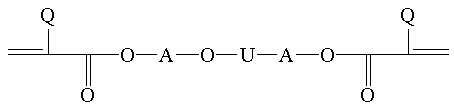
화학식 3에서 Q는 수소 또는 알킬기이고, A는 히드록시기가 치환되어 있을 수 있는 알킬렌기이며, U는 알킬렌기이다.In Formula (3), Q is hydrogen or an alkyl group, A is an alkylene group in which a hydroxyl group may be substituted, and U is an alkylene group.
[화학식 4][Chemical Formula 4]
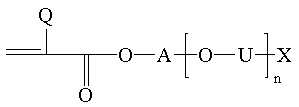
화학식 4에서 Q는 수소 또는 알킬기이고, A 및 U는 각각 독립적으로 알킬렌기이며, X는 히드록시기 또는 시아노기이다.In Formula 4, Q is hydrogen or an alkyl group, A and U are each independently an alkylene group, and X is a hydroxyl group or a cyano group.
본 출원에서 용어 「알킬렌기」는, 특별히 달리 규정하지 않는 한, 탄소수 1 내지 20, 탄소수 1 내지 16, 탄소수 1 내지 12, 탄소수 1 내지 8 또는 탄소수 1 내지 4의 알킬렌기를 의미할 수 있다. 상기 알킬렌기는 직쇄형, 분지쇄형 또는 고리형일 수 있다. 또한, 상기 알킬렌기는 임의적으로 하나 이상의 치환기로 치환되어 있을 수 있다.The term "alkylene group" in the present application may mean an alkylene group having 1 to 20 carbon atoms, 1 to 16 carbon atoms, 1 to 12 carbon atoms, 1 to 8 carbon atoms, or 1 to 4 carbon atoms unless otherwise specified. The alkylene group may be linear, branched or cyclic. The alkylene group may optionally be substituted with one or more substituents.
본 출원에서 용어 「에폭시기」는, 특별히 달리 규정하지 않는 한, 3개의 고리 구성 원자를 가지는 고리형 에테르(cyclic ether) 또는 상기 고리형 에테르를 포함하는 화합물 또는 그로부터 유도된 1가 잔기를 의미할 수 있다. 에폭시기로는 글리시딜기, 에폭시알킬기, 글리시독시알킬기 또는 지환식 에폭시기 등이 예시될 수 있다. 상기에서 지환식 에폭시기는, 지방족 탄화수소 고리 구조를 포함하고, 상기 지방족 탄화수소 고리를 형성하고 있는 2개의 탄소 원자가 또한 에폭시기를 형성하고 있는 구조를 포함하는 화합물로부터 유래되는 1가 잔기를 의미할 수 있다. 지환식 에폭시기로는, 6개 내지 12개의 탄소 원자를 가지는 지환식 에폭시기가 예시될 수 있고, 예를 들면, 3,4-에폭시시클로헥실에틸기 등이 예시될 수 있다.The term " epoxy group " in the present application means, unless otherwise specified, a cyclic ether having three ring constituting atoms or a compound containing such a cyclic ether or a monovalent residue derived therefrom have. As the epoxy group, a glycidyl group, an epoxy alkyl group, a glycidoxyalkyl group or an alicyclic epoxy group can be exemplified. The alicyclic epoxy group may be a monovalent residue derived from a compound containing a structure containing an aliphatic hydrocarbon ring structure and having a structure in which two carbon atoms forming the aliphatic hydrocarbon ring also form an epoxy group. As the alicyclic epoxy group, an alicyclic epoxy group having 6 to 12 carbon atoms can be exemplified, and for example, 3,4-epoxycyclohexylethyl group and the like can be exemplified.
본 출원에서 용어 「알콕시기」는, 특별히 달리 규정하지 않는 한, 탄소수 1 내지 20, 탄소수 1 내지 16, 탄소수 1 내지 12, 탄소수 1 내지 8 또는 탄소수 1 내지 4의 알콕시기를 의미할 수 있다. 상기 알콕시기는 직쇄형, 분지쇄형 또는 고리형일 수 있다. 또한, 상기 알콕시기는 임의적으로 하나 이상의 치환기로 치환되어 있을 수 있다.The term "alkoxy group" in the present application may mean an alkoxy group having 1 to 20 carbon atoms, 1 to 16 carbon atoms, 1 to 12 carbon atoms, 1 to 8 carbon atoms or 1 to 4 carbon atoms, unless otherwise specified. The alkoxy group may be linear, branched or cyclic. In addition, the alkoxy group may be optionally substituted with one or more substituents.
본 출원에서 용어 「알킬기」는, 특별히 달리 규정하지 않는 한, 탄소수 1 내지 20, 탄소수 1 내지 16, 탄소수 1 내지 12, 탄소수 1 내지 8 또는 탄소수 1 내지 4의 알킬기를 의미할 수 있다. 상기 알킬기는 직쇄형, 분지쇄형 또는 고리형일 수 있다. 또한, 상기 알킬기는 임의적으로 하나 이상의 치환기로 치환되어 있을 수 있다.The term "alkyl group" in the present application may mean an alkyl group having 1 to 20 carbon atoms, 1 to 16 carbon atoms, 1 to 12 carbon atoms, 1 to 8 carbon atoms or 1 to 4 carbon atoms, unless otherwise specified. The alkyl group may be linear, branched or cyclic. In addition, the alkyl group may be optionally substituted with one or more substituents.
본 출원에서 용어 「1가 탄화수소기」는, 특별히 달리 규정하지 않는 한, 탄소와 수소로 이루어진 화합물 또는 그러한 화합물의 유도체로부터 유도되는 1가 잔기를 의미할 수 있다. 예를 들면, 1가 탄화수소기는, 1개 내지 25개의 탄소 원자를 포함할 수 있다. 1가 탄화수소기로는, 알킬기, 알케닐기, 알키닐기 또는 아릴기 등이 예시될 수 있다.Unless otherwise specified, the term " monovalent hydrocarbon group " in the present application may mean a monovalent residue derived from a compound consisting of carbon and hydrogen or a derivative of such a compound. For example, the monovalent hydrocarbon group may contain from 1 to 25 carbon atoms. As the monovalent hydrocarbon group, an alkyl group, an alkenyl group, an alkynyl group or an aryl group can be exemplified.
본 출원에서 용어 「알케닐기」는, 특별히 달리 규정하지 않는 한, 탄소수 2 내지 20, 탄소수 2 내지 16, 탄소수 2 내지 12, 탄소수 2 내지 8 또는 탄소수 2 내지 4의 알케닐기를 의미할 수 있다. 상기 알케닐기는 직쇄형, 분지쇄형 또는 고리형일 수 있고, 임의적으로 하나 이상의 치환기로 치환되어 있을 수 있다.The term "alkenyl group" in the present application may mean an alkenyl group having 2 to 20 carbon atoms, 2 to 16 carbon atoms, 2 to 12 carbon atoms, 2 to 8 carbon atoms or 2 to 4 carbon atoms unless otherwise specified. The alkenyl group may be linear, branched or cyclic and may optionally be substituted with one or more substituents.
본 출원에서 용어 「알키닐기」는, 특별히 달리 규정하지 않는 한, 탄소수 2 내지 20, 탄소수 2 내지 16, 탄소수 2 내지 12, 탄소수 2 내지 8 또는 탄소수 2 내지 4의 알키닐기를 의미할 수 있다. 상기 알키닐기는 직쇄형, 분지쇄형 또는 고리형일 수 있고, 임의적으로 하나 이상의 치환기로 치환되어 있을 수 있다.The term "alkynyl group" in the present application may mean an alkynyl group having 2 to 20 carbon atoms, 2 to 16 carbon atoms, 2 to 12 carbon atoms, 2 to 8 carbon atoms, or 2 to 4 carbon atoms unless otherwise specified. The alkynyl group may be linear, branched or cyclic and may optionally be substituted with one or more substituents.
본 출원에서 용어 「아릴기」는, 특별히 달리 규정하지 않는 한, 벤젠 고리 또는 2개 이상의 벤젠 고리가 축합 또는 결합된 구조를 포함하는 화합물 또는 그 유도체로부터 유래하는 1가 잔기를 의미할 수 있다. 아릴기의 범위에는 통상적으로 아릴기로 호칭되는 관능기는 물론 소위 아르알킬기(aralkyl group) 또는 아릴알킬기 등도 포함될 수 있다. 아릴기는, 예를 들면, 탄소수 6 내지 25, 탄소수 6 내지 21, 탄소수 6 내지 18 또는 탄소수 6 내지 12의 아릴기일 수 있다. 아릴기로는, 페닐기, 페녹시기, 페녹시페닐기, 페녹시벤질기, 디클로로페닐, 클로로페닐, 페닐에틸기, 페닐프로필기, 벤질기, 톨릴기, 크실릴기(xylyl group) 또는 나프틸기 등이 예시될 수 있다.The term " aryl group " in the present application may mean a monovalent residue derived from a compound or derivative containing a benzene ring or a structure in which two or more benzene rings are condensed or bonded, unless otherwise specified. The range of the aryl group may include a so-called aralkyl group or an arylalkyl group as well as a functional group ordinarily called an aryl group. The aryl group may be, for example, an aryl group having 6 to 25 carbon atoms, 6 to 21 carbon atoms, 6 to 18 carbon atoms, or 6 to 12 carbon atoms. Examples of the aryl group include a phenyl group, a phenoxy group, a phenoxyphenyl group, a phenoxybenzyl group, a dichlorophenyl group, a chlorophenyl group, a phenylethyl group, a phenylpropyl group, a benzyl group, a tolyl group, a xylyl group, .
본 출원에서 상기 알콕시기, 알킬렌기, 에폭시기 또는 1가 탄화수소기에 임의적으로 치환되어 있을 수 있는 치환기로는, 염소 또는 불소 등의 할로겐, 글리시딜기, 에폭시알킬기, 글리시독시알킬기 또는 지환식 에폭시기 등의 에폭시기, 아크릴로일기, 메타크릴로일기, 이소시아네이트기, 티올기 또는 1가 탄화수소기 등이 예시될 수 있으나, 이에 제한되는 것은 아니다.Examples of the substituent which may optionally be substituted in the alkoxy group, alkylene group, epoxy group or monovalent hydrocarbon group in the present application include halogen such as chlorine or fluorine, glycidyl group, epoxyalkyl group, glycidoxyalkyl group or alicyclic epoxy group An acryloyl group, a methacryloyl group, an isocyanate group, a thiol group or a monovalent hydrocarbon group, but the present invention is not limited thereto.
화학식 1, 2 및 4에서 m 및 n은 임의의 수이며, 예를 들면, 각각 독립적으로 1 내지 20, 1 내지 16 또는 1 내지 12의 범위 내의 수일 수 있다.In the general formulas (1), (2) and (4), m and n are arbitrary numbers and can be, for example, independently in the range of 1 to 20, 1 to 16 or 1 to 12.
상기 질소 함유 라디칼 중합성 화합물로는, 예를 들면, 아미드기-함유 라디칼 중합성 화합물, 아미노기-함유 라디칼 중합성 화합물, 이미드기-함유 라디칼 중합성 화합물 또는 사이아노기-함유 라디칼 중합성 화합물 등을 사용할 수 있다. 상기에서 아미드기-함유 라디칼 중합성 화합물로서는, 예를 들면 (메타)아크릴아미드 또는 N,N-디메틸 (메타)아크릴아미드, N,N-디에틸 (메타)아크릴아미드, N-아이소프로필 (메타)아크릴아미드, N-메틸올 (메타)아크릴아미드, 다이아세톤 (메타)아크릴아미드, N-비닐아세토아미드, N,N’-메틸렌비스(메타)아크릴아미드, N,N-디메틸아미노프로필(메타)아크릴아미드, N,N-디메틸아미노프로필메타크릴아미드, N-비닐피롤리돈, N-비닐카프로락탐 또는 (메트)아크릴로일모폴린 등이 예시될 수 있고, 아미노기-함유 라디칼 중합성 화합물로서는, 아미노에틸(메트)아크릴레이트, N,N-디메틸아미노에틸(메트)아크릴레이트 또는 N,N-디메틸아미노프로필(메트)아크릴레이트 등이 예시될 수 있으며, 이미드기-함유 라디칼 중합성 화합물로서는, N-아이소프로필말레이미드, N-사이클로헥실말레이미드 또는 이타콘이미드 등이 예시될 수 있고, 사이아노기-함유 라디칼 중합성 화합물로서는, 아크릴로나이트릴 또는 메타크릴로나이트릴 등이 예시될 수 있지만, 이에 제한되는 것은 아니다.Examples of the nitrogen-containing radical polymerizable compound include an amide group-containing radical polymerizing compound, an amino group-containing radical polymerizing compound, an imide group-containing radical polymerizing compound, or a cyano group-containing radical polymerizing compound Can be used. Examples of the amide group-containing radical polymerizable compound include (meth) acrylamide or N, N-dimethyl (meth) acrylamide, N, (Meth) acrylamide, N, N'-methylenebis (meth) acrylamide, N, N-dimethylaminopropyl (meth) acrylamide, Acrylamide, N, N-dimethylaminopropyl methacrylamide, N-vinylpyrrolidone, N-vinylcaprolactam or (meth) acryloylmorpholine, and the amino group-containing radical polymerizable compound (Meth) acrylate, N, N-dimethylaminoethyl (meth) acrylate or N, N-dimethylaminopropyl (meth) acrylate. Examples of the imide group-containing radical polymerizing compound , N-isopropylmaleimide, N- Cyclohexylmaleimide or itaconimide. Examples of the cyano group-containing radically polymerizable compound include acrylonitrile and methacrylonitrile, but the present invention is not limited thereto .
또한, 상기에서 염(salt) 부위를 포함하는 라디칼 중합성 화합물로는, 아크릴산 또는 메타크릴산의 염(salt)으로서, 예를 들면 상기와 리튬, 나트륨, 및 칼륨을 비롯한 알칼리 금속과의 염 또는 마그네슘, 칼슘, 스트론튬 및 바륨을 비롯한 알칼리 토금속과의 염 등이 예시될 수 있지만, 이에 제한되는 것은 아니다.Examples of the radically polymerizable compound having a salt moiety include salts of acrylic acid or methacrylic acid with an alkali metal such as lithium, sodium and potassium, Magnesium, calcium, strontium and salts with alkaline earth metals including barium, and the like, but the present invention is not limited thereto.
상기와 같은 중합 단위를 포함하는 매트릭스는, 예를 들면, 친수성 중합성 화합물, 예를 들면, 라디칼 중합성 화합물 및 라디칼 개시제를 포함하는 친수성 중합성 조성물을 중합시켜 형성할 수 있다. 따라서, 상기 매트릭스는 상기 친수성 중합성 조성물의 중합물일 수 있다.The matrix containing such a polymerized unit can be formed, for example, by polymerizing a hydrophilic polymerizable composition comprising a hydrophilic polymerizable compound, for example, a radical polymerizable compound and a radical initiator. Thus, the matrix may be a polymer of the hydrophilic polymerizable composition.
친수성 라디칼 중합성 화합물의 종류는 특별히 제한되지 않고, 예를 들면, 상기 기술한 화합물을 사용할 수 있다. The kind of the hydrophilic radical polymerizable compound is not particularly limited, and for example, the compounds described above can be used.
친수성 중합성 조성물에 포함되는 라디칼 개시제의 종류는 특별히 제한되지 않는다. 개시제로는, 열의 인가 또는 광의 조사에 의해 중합 반응을 개시시킬 수 있는 라디칼을 생성할 수 있는 라디칼 열개시제 또는 광개시제를 사용할 수 있다.The kind of the radical initiator contained in the hydrophilic polymerizable composition is not particularly limited. As the initiator, a radical thermal initiator or photoinitiator capable of generating a radical capable of initiating a polymerization reaction by application of heat or irradiation of light can be used.
열개시제로는, 예를 들면, 2,2-아조비스-2,4-디메틸발레로니트릴(V-65, Wako(제)), 2,2-아조비스이소부티로니트릴(V-60, Wako(제)) 또는 2,2-아조비스-2-메틸부티로니트릴(V-59, Wako(제))와 같은 아조계 개시제; 디프로필 퍼옥시디카보네이트(Peroyl NPP, NOF(제)), 디이소프로필 퍼옥시 디카보네이트(Peroyl IPP, NOF(제)), 비스-4-부틸시클로헥실 퍼옥시 디카보네이트(Peroyl TCP, NOF(제)), 디에톡시에틸 퍼옥시 디카보네이트(Peroyl EEP, NOF(제)), 디에톡시헥실 퍼옥시 디카보네이트(Peroyl OPP, NOF(제)), 헥실 퍼옥시 디카보네이트(Perhexyl ND, NOF(제)), 디메톡시부틸 퍼옥시 디카보네이트(Peroyl MBP, NOF(제)), 비스(3-메톡시-3-메톡시부틸)퍼옥시 디카보네이트(Peroyl SOP, NOF(제)), 헥실 퍼옥시 피발레이트(Perhexyl PV, NOF(제)), 아밀 퍼옥시 피발레이트(Luperox 546M75, Atofina(제)), 부틸 퍼옥시 피발레이트(Perbutyl, NOF(제)) 또는 트리메틸헥사노일 퍼옥사이드(Peroyl 355, NOF(제))와 같은 퍼옥시에스테르 화합물; 디메틸 하이드록시부틸 퍼옥사네오데카노에이트(Luperox 610M75, Atofina(제)), 아밀 퍼옥시 네오데카노에이트(Luperox 546M75, Atofina(제)) 또는 부틸 퍼옥시 네오데카노에이트(Luperox 10M75, Atofina(제))와 같은 퍼옥시 디카보네이트 화합물; 3,5,5-트리메틸헥사노일 퍼옥사이드, 라우릴 퍼옥사이드 또는 디벤조일 퍼옥사이드와 같은 아실 퍼옥사이드; 케톤 퍼옥시드; 디알킬 퍼옥시드; 퍼옥시 케탈; 또는 히드로퍼옥시드 등과 같은 퍼옥시드 개시제 등의 일종 또는 이종 이상을 사용할 수 있고, 광개시제로는, 벤조인계, 히드록시 케톤계, 아미노케톤계 또는 포스핀 옥시드계 광개시제 등이 사용될 수 있고, 구체적으로는, 벤조인, 벤조인 메틸에테르, 벤조인 에틸에테르, 벤조인 이소프로필에테르, 벤조인 n-부틸에테르, 벤조인 이소부틸에테르, 아세토페논, 디메틸아니노 아세토페논, 2,2-디메톡시-2-페닐아세토페논, 2,2-디에톡시-2-페닐아세토페논, 2-히드록시-2-메틸-1-페닐프로판-1온, 1-히드록시시클로헥실페닐케톤, 2-메틸-1-[4-(메틸티오)페닐]-2-몰포리노-프로판-1-온, 4-(2-히드록시에톡시)페닐-2-(히드록시-2-프로필)케톤, 벤조페논, p-페닐벤조페논, 4,4’-디에틸아미노벤조페논, 디클로로벤조페논, 2-메틸안트라퀴논, 2-에틸안트라퀴논, 2-t-부틸안트라퀴논, 2-아미노안트라퀴논, 2-메틸티오잔톤(thioxanthone), 2-에틸티오잔톤, 2-클로로티오잔톤, 2,4-디메틸티오잔톤, 2,4-디에틸티오잔톤, 벤질디메틸케탈, 아세토페논 디메틸케탈, p-디메틸아미노 안식향산 에스테르, 올리고[2-히드록시-2-메틸-1-[4-(1-메틸비닐)페닐]프로판논] 및 2,4,6-트리메틸벤조일-디페닐-포스핀옥시드 등을 사용할 수 있으나, 이에 제한되는 것은 아니다.Azo compounds such as 2,2-azobis-2,4-dimethylvaleronitrile (V-65, Wako), 2,2-azobisisobutyronitrile (V-60, Azo type initiators such as 2,2-azobis-2-methylbutyronitrile (V-59, Wako); (Peroyl NPP, NOF), diisopropyl peroxydicarbonate (Peroyl IPP, NOF), bis-4-butylcyclohexyl peroxydicarbonate (Peroyl TCP, NOF (Peroyl EEP, NOF), diethoxyhexyl peroxydicarbonate (peroyl OPP, NOF), hexyl peroxydicarbonate (Perhexyl ND, NOF), diethoxyethyl peroxydicarbonate ), Dimethoxybutylperoxy dicarbonate (Peroyl MBP, NOF), bis (3-methoxy-3-methoxybutyl) peroxy dicarbonate (Peroyl SOP, NOF), hexyl peroxypivalate (Perflux, NOF), trimethylhexanoyl peroxide (Peroyl 355, NOF), amyl peroxypivalate (Luperox 546M75, Atofina), butyl peroxypivalate (Peroxy compound); (Luperox 610M75, Atofina), amyl peroxyneodecanoate (Luperox 546M75, Atofina) or butyl peroxyneodecanoate (Luperox 10M75, available from Atofina Peroxy dicarbonate compounds such as a)); Acyl peroxides such as 3,5,5-trimethylhexanoyl peroxide, lauryl peroxide or dibenzoyl peroxide; Ketone peroxide; Dialkyl peroxides; Peroxyketals; Or a peroxide initiator such as hydroperoxide, etc., can be used. As the photoinitiator, benzoin, hydroxy ketone, amino ketone or phosphine oxide photoinitiators can be used. Specifically, Benzoin methyl ether, benzoin ethyl ether, benzoin isopropyl ether, benzoin n-butyl ether, benzoin isobutyl ether, acetophenone, dimethyl anino acetophenone, 2,2-dimethoxy- 2-methyl-1-phenylpropan-1-one, 1-hydroxycyclohexyl phenyl ketone, 2-methyl-1 (4-methylthio) phenyl] -2-morpholino-propan-1-one, 4- - phenylbenzophenone, 4,4'-diethylaminobenzophenone, dichlorobenzophenone, 2-methyl anthraquinone, 2-ethyl anthraquinone, 2-t-butyl anthraquinone , 2-aminoanthraquinone, thioxanthone, 2-ethylthioxanthone, 2-chlorothioxanthone, 2,4-dimethylthioxanthone, 2,4-diethylthioxanthone, benzyldimethylketal, (2-hydroxy-2-methyl-1- [4- (1-methylvinyl) phenyl] propanone] and 2,4,6-trimethylbenzoyl-diphenyl - phosphine oxide, and the like can be used, but the present invention is not limited thereto.
개시제로는 친수성 성분에 높은 용해도를 나타내는 것을 선택하여 사용할 수 있고, 예를 들면, 히드록시케톤 화합물, 수분산 히드록시케톤 화합물 또는 아미노케톤 화합물 또는 수분산 아미노케톤 화합물 등이 사용될 수 있지만, 이에 제한되는 것은 아니다.As the initiator, for example, a compound having a high solubility in a hydrophilic component can be selected and used. For example, a hydroxyketone compound, a water-dispersible hydroxyketone compound, an amino ketone compound or an aqueous dispersion aminoketone compound can be used. It is not.
친수성 중합성 조성물은, 예를 들면, 라디칼 개시제를, 0.1 중량% 내지 10 중량% 정도의 농도로 포함할 수 있다. 이러한 비율은, 예를 들면, 필름의 물성이나 중합 효율 등을 고려하여 변경할 수 있다. The hydrophilic polymerizable composition may contain, for example, a radical initiator at a concentration of about 0.1% by weight to 10% by weight. Such a ratio can be changed, for example, in consideration of the physical properties and polymerization efficiency of the film.
예를 들면, 필름화 물성 등을 고려하여, 필요하다면 친수성 중합성 조성물은, 가교제를 추가로 포함할 수 있다. 가교제로는, 예를 들면, 라디칼 중합성기를 2개 이상 가지는 화합물을 사용할 수 있다.For example, considering the film property and the like, if necessary, the hydrophilic polymerizable composition may further include a crosslinking agent. As the crosslinking agent, for example, a compound having two or more radically polymerizable groups can be used.
가교제로 사용될 수 있는 화합물로는, 다관능성 아크릴레이트가 예시될 수 있다. 상기 다관능성 아크릴레이트는, 아크릴로일기 또는 메타크릴로일기를 2개 이상 포함하는 화합물을 의미할 수 있다.As the compound which can be used as a crosslinking agent, a polyfunctional acrylate can be exemplified. The polyfunctional acrylate may mean a compound containing two or more acryloyl groups or methacryloyl groups.
다관능성 아크릴레이트로는, 예를 들면, 1,4-부탄디올 디(메타)아크릴레이트, 1,6-헥산디올 디(메타)아크릴레이트, 네오펜틸글리콜 디(메타)아크릴레이트, 폴리에틸렌글리콜 디(메타)아크릴레이트, 네오펜틸글리콜아디페이트(neopentylglycol adipate) 디(메타)아크릴레이트, 히드록시피발산(hydroxyl puivalic acid) 네오펜틸글리콜 디(메타)아크릴레이트, 디시클로펜타닐(dicyclopentanyl) 디(메타)아크릴레이트, 카프로락톤 변성 디시클로펜테닐 디(메타)아크릴레이트, 에틸렌옥시드 변성 디(메타)아크릴레이트, 디(메타)아크릴록시 에틸 이소시아누레이트, 알릴(allyl)화 시클로헥실 디(메타)아크릴레이트, 트리시클로데칸디메탄올(메타)아크릴레이트, 디메틸롤 디시클로펜탄 디(메타)아크릴레이트, 에틸렌옥시드 변성 헥사히드로프탈산 디(메타)아크릴레이트, 트리시클로데칸 디메탄올(메타)아크릴레이트, 네오펜틸글리콜 변성 트리메틸프로판 디(메타)아크릴레이트, 아다만탄(adamantane) 디(메타)아크릴레이트 또는 9,9-비스[4-(2-아크릴로일옥시에톡시)페닐]플루오렌(fluorine) 등과 같은 2관능성 아크릴레이트; 트리메틸롤프로판 트리(메타)아크릴레이트, 디펜타에리쓰리톨 트리(메타)아크릴레이트, 프로피온산 변성 디펜타에리쓰리톨 트리(메타)아크릴레이트, 펜타에리쓰리톨 트리(메타)아크릴레이트, 프로필렌옥시드 변성 트리메틸롤프로판 트리(메타)아크릴레이트, 3 관능형 우레탄 (메타)아크릴레이트 또는 트리스(메타)아크릴록시에틸이소시아누레이트 등의 3관능형 아크릴레이트; 디글리세린 테트라(메타)아크릴레이트 또는 펜타에리쓰리톨 테트라(메타)아크릴레이트 등의 4관능형 아크릴레이트; 프로피온산 변성 디펜타에리쓰리톨 펜타(메타)아크릴레이트 등의 5관능형 아크릴레이트; 및 디펜타에리쓰리톨 헥사(메타)아크릴레이트, 카프로락톤 변성 디펜타에리쓰리톨 헥사(메타)아크릴레이트 또는 우레탄 (메타)아크릴레이트(ex. 이소시아네이트 단량체 및 트리메틸롤프로판 트리(메타)아크릴레이트의 반응물 등의 6관능형 아크릴레이트 등을 사용할 수 있다. 또한, 다관능성 아크릴레이트로는, 업계에서 소위 광경화성 올리고머로 호칭되는 화합물로서, 우레탄 아크릴레이트, 에폭시 아크릴레이트, 폴리에스테르 아크릴레이트 또는 폴리에테르 아크릴레이트 등도 사용할 수 있다. 상기와 같은 화합물 중에서 적절한 종류를 일종 또는 이종 이상 선택하여 사용할 수 있다.Examples of the polyfunctional acrylate include 1,4-butanediol di (meth) acrylate, 1,6-hexanediol di (meth) acrylate, neopentyl glycol di (meth) acrylate, polyethylene glycol di (Meth) acrylate, neopentylglycol adipate di (meth) acrylate, hydroxyl puivalic acid neopentyl glycol di (meth) acrylate, dicyclopentanyl di (meth) Acrylate, caprolactone modified dicyclopentenyl di (meth) acrylate, ethylene oxide modified di (meth) acrylate, di (meth) acryloxy ethyl isocyanurate, allyl cyclohexyl di ) Acrylate, tricyclodecane dimethanol (meth) acrylate, dimethylol dicyclopentanedi (meth) acrylate, ethylene oxide modified hexahydrophthalic acid di (meth) acrylate, tricyclo (Meth) acrylate, neopentyl glycol-modified trimethylpropane di (meth) acrylate, adamantane di (meth) acrylate or 9,9-bis [4- Ethoxy) phenyl] fluorene and the like; (Meth) acrylates such as trimethylolpropane tri (meth) acrylate, dipentaerythritol tri (meth) acrylate, propionic acid modified dipentaerythritol tri (meth) acrylate, pentaerythritol tri Trifunctional acrylates such as modified trimethylolpropane tri (meth) acrylate, trifunctional urethane (meth) acrylate or tris (meth) acryloxyethylisocyanurate; Tetrafunctional acrylates such as diglycerin tetra (meth) acrylate or pentaerythritol tetra (meth) acrylate; Pentafunctional acrylates such as propionic acid-modified dipentaerythritol penta (meth) acrylate; And dipentaerythritol hexa (meth) acrylate, caprolactone-modified dipentaerythritol hexa (meth) acrylate or urethane (meth) acrylate (e.g., an isocyanate monomer and trimethylolpropane tri Hexafunctional acrylates such as acrylate, hexamethyldisiloxane, hexamethyldisiloxane, hexamethyldisiloxane, hexamethyldisiloxane, hexamethyldisiloxane, hexamethyldisiloxane, hexamethyldisiloxane, and reaction product. Acrylate and the like can be also used. Of these compounds, one kind or more than one kind may be selected appropriately.
가교제로는, 상기 다관능성 아크릴레이트와 같이 라디칼 반응에 의해 가교 구조를 구현할 수 있는 성분은 물론 필요하다면, 공지의 이소시아네이트 가교제, 에폭시 가교제, 아지리딘 가교제 또는 금속 킬레이트 가교제 등과 같이 열경화 반응에 의해 가교 구조를 구현할 수 있는 성분도 사용할 수 있다.As the crosslinking agent, crosslinking agents such as the above-mentioned polyfunctional acrylates can be crosslinked by a thermal curing reaction such as known isocyanate crosslinking agents, epoxy crosslinking agents, aziridine crosslinking agents or metal chelate crosslinking agents, A component capable of implementing the structure may also be used.
가교제는, 예를 들면, 친수성 중합성 조성물에 50 중량% 이하 또는 10 중량% 내지 50 중량%의 농도로 포함될 수 있다. 가교제의 비율은, 예를 들면, 필름의 물성 등을 고려하여 변경될 수 있다.The crosslinking agent may be contained, for example, in the hydrophilic polymerizable composition at a concentration of 50% by weight or less or 10% by weight to 50% by weight. The ratio of the cross-linking agent can be changed in consideration of, for example, physical properties of the film.
친수성 중합성 조성물은, 상기 기술한 성분 외에도 필요한 다른 성분을 추가로 포함할 수 있다. 또한, 친수성 중합성 조성물을 사용하여 제 1 영역을 형성하는 방식은 후술한다.The hydrophilic polymerizable composition may further include other necessary components in addition to the above-described components. The method of forming the first region using the hydrophilic polymerizable composition will be described later.
에멀젼 영역은, 역시 중합성 화합물, 예를 들면, 라디칼 중합성 화합물을 중합시켜서 형성할 수 있다. 예를 들면, 에멀젼 영역은, 상기 소수성 라디칼 중합성 화합물을 중합시켜서 형성할 수 있다. The emulsion region can also be formed by polymerizing a polymerizable compound, for example, a radical polymerizable compound. For example, the emulsion region can be formed by polymerizing the hydrophobic radically polymerizable compound.
하나의 예시에서 에멀젼 영역은, 하기 화학식 5 내지 7 중 어느 하나의 화학식으로 표시되는 화합물의 중합 단위를 포함할 수 있다. In one example, the emulsion region may comprise a polymerized unit of a compound represented by any one of the following formulas (5) to (7).
[화학식 5][Chemical Formula 5]

화학식 5에서 Q는 수소 또는 알킬기이고, B는 탄소수 5 이상의 직쇄 또는 분지쇄 알킬기 또는 지환식 탄화수소기이다.In Formula (5), Q is hydrogen or an alkyl group, and B is a linear or branched alkyl group or alicyclic hydrocarbon group having 5 or more carbon atoms.
[화학식 6][Chemical Formula 6]

화학식 6에서 Q는 수소 또는 알킬기이고, U는 알킬렌, 알케닐렌 또는 알키닐렌 또는 아릴렌기이다.In Formula (6), Q is hydrogen or an alkyl group, and U is alkylene, alkenylene or alkynylene or arylene group.
[화학식 7](7)
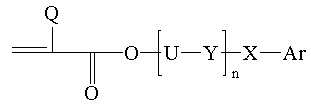
화학식 7에서 Q는 수소 또는 알킬기이고, U는 알킬렌기이며, Y는 탄소 원자, 산소 원자 또는 황 원자이며, X는 산소 원자, 황 원자 또는 알킬렌기이고, Ar은 아릴기이며, n은 임의의 수이다.Y is a carbon atom, an oxygen atom or a sulfur atom, X is an oxygen atom, a sulfur atom or an alkylene group, Ar is an aryl group, and n is an arbitrary Number.
본 출원에서 용어 알케렌기 또는 알키닐렌기는, 특별히 달리 규정하지 않는 한, 탄소수 2 내지 20, 탄소수 2 내지 16, 탄소수 2 내지 12, 탄소수 2 내지 8 또는 탄소수 2 내지 4의 알케렌기 또는 알키닐렌기를 의미할 수 있다. 상기 알케렌기 또는 알키닐렌기는 직쇄형, 분지쇄형 또는 고리형일 수 있다. 또한, 상기 알케렌기 또는 알키닐렌기는 임의적으로 하나 이상의 치환기로 치환되어 있을 수 있다.The term alkenylene group or alkynylene group in the present application means an alkenylene group or alkynylene group having 2 to 20 carbon atoms, 2 to 16 carbon atoms, 2 to 12 carbon atoms, 2 to 8 carbon atoms, or 2 to 4 carbon atoms, It can mean a group. The alkenylene group or alkynylene group may be linear, branched or cyclic. In addition, the alkenylene or alkynylene group may be optionally substituted with one or more substituents.
본 출원에서 용어 「아릴렌기」는, 특별히 달리 규정하지 않는 한, 벤젠 또는 2개 이상의 벤젠이 축합 또는 결합된 구조를 포함하는 화합물 또는 그 유도체로부터 유래하는 2가 잔기를 의미할 수 있다. 아릴렌기는, 예를 들면, 벤젠, 나프탈렌 또는 플루오렌(fluorene) 등을 포함하는 구조를 가질 수 있다.The term " arylene group " in the present application may mean a divalent moiety derived from a compound or derivative thereof containing a structure in which benzene or two or more benzenes are condensed or bonded, unless otherwise specified. The arylene group may have a structure including, for example, benzene, naphthalene or fluorene.
화학식 5에서 B는 탄소수 5 이상, 탄소수 7 이상 또는 탄소수 9 이상의 직쇄 또는 분지쇄 알킬기일 수 있다. 이와 같이 상대적으로 장쇄의 알킬기를 포함하는 화합물은 상대적으로 비극성의 화합물로 알려져 있다. 상기 직쇄 또는 분지쇄 알킬기의 탄소수의 상한은 특별히 제한되지 않으며, 예를 들면, 상기 알킬기는, 탄소수 20 이하의 알킬기일 수 있다.In Formula (5), B may be a linear or branched alkyl group having 5 or more carbon atoms, 7 or more carbon atoms, or 9 or more carbon atoms. Such relatively long chain alkyl group containing compounds are known to be relatively nonpolar compounds. The upper limit of the number of carbon atoms of the linear or branched alkyl group is not particularly limited. For example, the alkyl group may be an alkyl group having 20 or less carbon atoms.
화학식 5에서 B는 다른 예시에서 지환식 탄화수소기, 예를 들면, 탄소수 3 내지 20, 탄소수 3 내지 16 또는 탄소수 6 내지 12의 지환식 탄화수소기일 수 있고, 그러한 탄화수소기의 예로는 사이클로헥실기 또는 이소보르닐기 등이 예시될 수 있다. 이와 같이 지환식 탄화수소기를 가지는 화합물은, 상대적으로 비극성의 화합물로 알려져 있다.In another embodiment, B may be an alicyclic hydrocarbon group, for example, an alicyclic hydrocarbon group having 3 to 20 carbon atoms, 3 to 16 carbon atoms, or 6 to 12 carbon atoms. Examples of such hydrocarbon groups include cyclohexyl group or iso Boronyl group and the like can be exemplified. The compound having an alicyclic hydrocarbon group is known as a relatively nonpolar compound.
화학식 7에서 n은 임의의 수이며, 예를 들면, 각각 독립적으로 1 내지 20, 1 내지 16 또는 1 내지 12의 범위 내의 수일 수 있다.In formula (7), n is an arbitrary number and can be, for example, independently within the range of 1 to 20, 1 to 16, or 1 to 12, respectively.
제 2 영역은, 예를 들면, 소수성 라디칼 중합성 화합물 및 라디칼 개시제를 포함하는 소수성 중합성 조성물을 중합시켜 형성할 수 있다. 따라서, 상기 제 2 영역은 상기 소수성 중합성 조성물의 중합물일 수 있다.The second region can be formed, for example, by polymerizing a hydrophobic polymerizable composition comprising a hydrophobic radical polymerizing compound and a radical initiator. Accordingly, the second region may be a polymer of the hydrophobic polymerizable composition.
소수성 중합성 조성물에 포함되는 소수성 라디칼 중합성 화합물의 종류는 특별히 제한되지 않고, 업계에서 소위 비극성의 단량체로 알려져 있는 화합물을 사용할 수 있다. 예를 들면, 상기 화합물로는 전술한 화합물을 사용할 수 있다. The kind of the hydrophobic radical polymerizable compound contained in the hydrophobic polymerizable composition is not particularly limited, and a compound known as a so-called non-polar monomer in the industry can be used. For example, the above-mentioned compounds can be used as the above-mentioned compounds.
소수성 중합성 조성물에 포함되는 라디칼 개시제의 종류는 특별히 제한되지 않는다. 예를 들면, 전술한 친수성 중합성 화합물의 항목에서 기술한 개시제 중에서 적절한 종류를 선택하여 사용할 수 있다.The kind of the radical initiator contained in the hydrophobic polymerizable composition is not particularly limited. For example, an appropriate type of initiator described in the item of hydrophilic polymerizable compound described above can be selected and used.
소수성 중합성 조성물은, 예를 들면, 라디칼 개시제를, 5 중량% 이하의 농도로 포함할 수 있다. 이러한 농도는, 예를 들면, 필름의 물성이나 중합 효율 등을 고려하여 변경할 수 있다. The hydrophobic polymerizable composition may contain, for example, a radical initiator in a concentration of 5% by weight or less. Such a concentration can be changed in consideration of, for example, the physical properties and polymerization efficiency of the film.
필름화 물성 등을 고려하여, 필요하다면 소수성 중합성 조성물도, 가교제를 추가로 포함할 수 있다. 가교제로는, 특별한 제한 없이, 예를 들면, 상기 친수성 중합성 조성물 항목에서 설명한 성분들 중에서 적절한 성분을 선택하여 사용할 수 있다.Considering film properties and the like, if necessary, the hydrophobic polymerizable composition may further include a crosslinking agent. As the crosslinking agent, for example, suitable components may be selected from among the components described in the item of the hydrophilic polymerizable composition without any particular limitation.
가교제는, 예를 들면, 소수성 중합성 조성물에 50 중량% 이하, 또는 10 내지 50 중량%의 농도로 포함될 수 있다. 가교제의 농도는, 예를 들면, 필름의 물성 등이나 중합성 화합물에 포함되는 다른 성분으로의 영향 등을 고려하여 변경될 수 있다.The crosslinking agent may be contained in the hydrophobic polymerizable composition at a concentration of, for example, 50% by weight or less, or 10 to 50% by weight. The concentration of the crosslinking agent can be changed in consideration of, for example, the physical properties of the film and the influence on other components contained in the polymerizable compound.
소수성 중합성 조성물도 필요하다면 다른 성분을 추가로 포함할 수 있다. 또한, 상기 소수성 중합성 조성물을 사용하여 에멀젼 영역을 형성하는 방식은 후술한다.The hydrophobic polymerizable composition may further comprise other components if desired. The method of forming the emulsion region using the hydrophobic polymerizable composition will be described later.
발광층은, 발광 나노입자를 포함한다. 전술한 바와 같이 발광 나노입자는, 소정 파장의 광을 흡수하여 그와 동일하거나 다른 파장의 광을 방출할 수 있는 입자일 수 있다. 예를 들면, 발광 나노입자는 420 내지 490 nm의 범위 내의 어느 한 파장의 광을 흡수하여 490 내지 580 nm 범위 내의 어느 한 파장의 광을 방출할 수 있는 나노입자(이하, 녹색 입자라 칭할 수 있다.) 및/또는 450 내지 490 nm의 범위 내의 어느 한 파장의 광을 흡수하여 580 내지 780 nm 범위 내의 어느 한 파장의 광을 방출할 수 있는 나노입자(이하, 적색 입자라 칭할 수 있다.)일 수 있다. 예를 들어, 백색광을 방출할 수 있는 발광 필름을 얻기 위하여 상기 적색 입자와 녹색 입자가 적정 비율로 함께 발광층에 포함되어 있을 수 있다. 일 예시에서 백색광을 방출할 수 있는 발광 필름의 발광층은, 상기 적색 입자 100 중량부 대비 300 내지 1500 중량부의 녹색 입자를 포함할 수 있다. 발광 나노입자로는 이러한 작용을 나타내는 것이라면 특별한 제한 없이 사용할 수 있다. 이러한 나노입자의 대표적인 예로는, 소위 양자점(Quantum Dot)으로 호칭되는 나노 구조물이 예시될 수 있다.The light emitting layer includes light emitting nanoparticles. As described above, the light emitting nanoparticles may be particles capable of absorbing light of a predetermined wavelength and emitting light of the same or different wavelengths. For example, the luminescent nanoparticles can be called nanoparticles (hereinafter, referred to as green particles) capable of absorbing light of any wavelength within the range of 420 to 490 nm and emitting light of any wavelength within the range of 490 to 580 nm ) And / or nanoparticles (hereinafter, referred to as red particles) capable of absorbing light of any wavelength within the range of 450 to 490 nm and emitting light of any wavelength within the range of 580 to 780 nm . For example, in order to obtain a light emitting film capable of emitting white light, the red particles and the green particles may be included in the light emitting layer together at an appropriate ratio. In one example, the light emitting layer of the light emitting film capable of emitting white light may include 300 to 1500 parts by weight of green particles per 100 parts by weight of the red particles. The light emitting nanoparticles can be used without any particular limitation as long as they exhibit such action. Representative examples of such nanoparticles include nanostructures called so-called quantum dots.
본 명세서에서는 편의상 나노입자로 호칭하나, 상기 나노 구조물은, 입자 형태일 수도 있고, 예를 들면, 나노와이어, 나노로드, 나노튜브, 분기된 나노구조, 나노테트라포드(nanotetrapods), 트라이포드(tripods) 또는 바이포드(bipods) 등의 형태일 수 있으며, 이러한 형태도 본 출원에서 규정하는 나노입자에 포함될 수 있다. 본 출원에서 용어 나노 구조물에는 약 500 nm 미만, 약 200 nm 미만, 약 100 nm 미만, 약 50 nm 미만, 약 20 nm 미만 또는 약 10 nm 미만의 치수를 가지는 적어도 하나의 영역 또는 특성 치수를 가지는 유사한 구조들을 포함할 수 있다. 일반적으로, 영역 또는 특성 치수들은 그 구조의 가장 작은 축을 따라서 존재할 수 있으나, 이에 제한되는 것은 아니다. 상기 나노 구조물은, 예를 들면, 실질적으로 결정질이거나, 실질적으로 단결정질, 다결정질 또는 비정질이거나, 상기의 조합일 수 있다.The nanostructures may be in the form of particles, for example, nanowires, nanorods, nanotubes, branched nanostructures, nanotetrapods, tripods, Or bipods, and such forms may also be included in the nanoparticles defined in the present application. The term nanostructures in the present application includes at least one region having dimensions of less than about 500 nm, less than about 200 nm, less than about 100 nm, less than about 50 nm, less than about 20 nm, or less than about 10 nm, Structures. In general, region or characteristic dimensions may exist along the smallest axis of the structure, but are not limited thereto. The nanostructure may be, for example, substantially crystalline, substantially monocrystalline, polycrystalline or amorphous, or a combination of the foregoing.
발광 나노입자로 사용될 수 있는 양자점은 공지된 임의의 방식으로 제조할 수 있다. 예를 들어, 양자점을 형성하는 적합한 방법들은, 미국특허 제6,225,198호, 미국공개특허 제2002-0066401호, 미국 특허 제6,207,229호, 미국특허 제6,322,901호, 미국특허 제6,949,206호, 미국특허 제7,572,393호, 미국특허 제7,267,865호, 미국특허 제7,374,807호 또는 미국특허 제6,861,155호 등에 공지되어 있으며, 상기 외에도 다양한 공지의 방식들이 본 출원에 적용될 수 있다.Quantum dots that can be used as the light emitting nanoparticles can be prepared in any known manner. For example, suitable methods for forming quantum dots are described in U.S. Patent Nos. 6,225,198, 2002-0066401, 6,207,229, 6,322,901, 6,949,206, 7,572,393 , U.S. Patent No. 7,267,865, U.S. Patent No. 7,374,807, U.S. Patent No. 6,861,155, and the like, and various other known methods can be applied to the present invention.
본 출원에서 사용될 수 있는 양자점 또는 다른 나노입자들은 임의의 적합한 재료, 예를 들면, 무기 재료로서, 무기 전도 또는 반전도 재료를 사용하여 형성될 수 있다. 적합한 반도체 재료로는 II-VI족, III-V족, IV-VI족 및 IV족 반도체들이 예시될 수 있다. 구체적으로는, Si, Ge, Sn, Se, Te, B, C(다이아몬드 포함), P, BN, BP, BAs, AlN, AlP, AlAs, AlSb, GaN, GaP, GaAs, GaSb, InN, InP, InAs, InSb, AlN, AlP, AlAs, AlSb, GaN, GaP, GaAs, GaSb, ZnO, ZnS, ZnSe, ZnTe, CdS, CdSe, CdSeZn, CdTe, HgS, HgSe, HgTe, BeS, BeSe, BeTe, MgS, MgSe, GeS, GeSe, GeTe, SnS, SnSe, SnTe, PbO, PbS, PbSe, PbTe, CuF, CuCl, CuBr, CuI, Si3N4, Ge3N4, Al2O3, (Al, Ga, In)2 (S, Se, Te)3, Al2CO 및 2개 이상의 상기 반도체들의 적합한 조합들이 예시될 수 있지만, 이에 한정되지 않는다.Quantum dots or other nanoparticles that may be used in the present application may be formed using any suitable material, for example, an inorganic material, using an inorganic conducting or semi-conducting material. Suitable semiconductor materials include II-VI, III-V, IV-VI, and IV semiconductors. More specifically, it is possible to use Si, Ge, Sn, Se, Te, B, C (including diamond), P, BN, BP, BAs, AlN, AlP, AlAs, AlSb, GaN, GaP, GaAs, GaSb, InN, InP, ZnSe, ZnTe, CdS, CdSe, CdSeZn, CdTe, HgS, HgSe, HgTe, BeS, BeSe, BeTe, MgS, InS, InSb, AlN, AlP, AlAs, AlSb, GaN, GaP, GaAs, GaSb, ZnO, ZnS, (Al, Ga, In) 2 (S, Se, Te), GeSe, GeS, GeSe, GeTe, SnS, SnSe, SnTe, PbO, PbS, PbSe, PbTe, CuF, CuCl, CuBr, CuI, Si3N4, Ge3N4, Al2O3, ) 3, Al2CO and two or more suitable combinations of these semiconductors can be exemplified, but are not limited thereto.
하나의 예시에서 반도체 나노결정 또는 다른 나노구조는 p-형 도펀트 또는 n-형 도펀트 등과 같은 도펀트를 포함할 수도 있다. 본 출원에서 사용될 수 있는 나노입자는 또한 II-VI 또는 III-V 반도체들을 포함할 수 있다. II-VI 또는 III-V 반도체 나노결정들 및 나노구조들의 예로는, Zn, Cd 및 Hg 등과 같은 주기율표 II족 원소와 S, Se, Te, Po 등과 같은 주기표 VI족 원소와의 임의의 조합; 및 B, Al, Ga, In, 및 Tl 등과 같은 III족 원소와 N, P, As, Sb 및 Bi 등과 같은 V족 원소와의 임의의 조합이 있지만, 이에 제한되는 것은 아니다. 다른 예시에서 적합한 무기 나노구조들은 금속 나노구조들을 포함하고, 적합한 금속으로는 Ru, Pd, Pt, Ni, W, Ta, Co, Mo, Ir, Re, Rh, Hf, Nb, Au, Ag, Ti, Sn, Zn, Fe 또는 FePt 등이 예시될 수 있지만, 이에 제한되는 것은 아니다. In one example, the semiconductor nanocrystals or other nanostructures may comprise a dopant such as a p-type dopant or an n-type dopant. The nanoparticles that may be used in the present application may also include II-VI or III-V semiconductors. Examples of II-VI or III-V semiconductor nanocrystals and nanostructures include any combination of elements in the Periodic Table Group II elements such as Zn, Cd, and Hg, and periodic Table VI elements such as S, Se, Te, Po, And Group V elements such as B, Al, Ga, In, and Tl and Group V elements such as N, P, As, Sb and Bi, but are not limited thereto. Suitable inorganic nanostructures in other examples include metal nanostructures and suitable metals include Ru, Pd, Pt, Ni, W, Ta, Co, Mo, Ir, Re, Rh, Hf, Nb, , Sn, Zn, Fe, or FePt, but the present invention is not limited thereto.
발광 나노입자, 예를 들면, 양자점은 코어-셀 구조(core-shell structure)를 가질 수 있다. 코어-셀 구조의 발광 나노입자를 형성할 수 있는 예시적인 재료에는 Si, Ge, Sn, Se, Te, B, C (다이아몬드 포함), P, Co, Au, BN, BP, BAs, AlN, AlP, AlAs, AlSb, GaN, GaP, GaAs, GaSb, InN, InP, InAs, InSb, AlN, AlP, AlAs, AlSb, GaN, GaP, GaAs, GaSb, ZnO, ZnS, ZnSe, ZnTe, CdS, CdSe, CdSeZn, CdTe, HgS, HgSe, HgTe, BeS, BeSe, BeTe, MgS, MgSe, GeS, GeSe, GeTe, SnS, SnSe, SnTe, PbO, PbS, PbSe, PbTe, CuF, CuCl, CuBr, CuI, Si3N4, Ge3N4, Al2O3, (Al, Ga, In)2 (S, Se, Te)3, Al2CO 및 2개 이상의 이런 재료들의 임의의 조합들이 포함되지만, 이에 제한되는 것은 아니다. 본 출원에서 적용 가능한 예시적인 코어-셀 발광 나노입자(코어/셀)에는 CdSe/ZnS, InP/ZnS, PbSe/PbS, CdSe/CdS, CdTe/CdS 또는 CdTe/ZnS 등이 포함되지만, 이에 제한되는 것은 아니다.The light emitting nanoparticles, for example, quantum dots, may have a core-shell structure. Exemplary materials that can form the core nanoparticles include Si, Ge, Sn, Se, Te, B, C (including diamond), P, Co, Au, BN, BP, BAs, AlN, ZnS, ZnSe, ZnTe, CdSe, CdSeZn, AlS, AlSb, GaN, GaP, GaAs, GaSb, InN, InP, InAs, InSb, AlN, AlP, AlAs, AlSb, GaN, GaP, , CdTe, HgS, HgSe, HgTe, BeS, BeSe, BeTe, MgS, MgSe, GeS, GeSe, GeTe, SnS, SnSe, SnTe, PbO, PbS, PbSe, PbTe, CuF, CuCl, CuBr, CuI, Si3N4, Ge3N4 , Al2O3, (Al, Ga, In) 2 (S, Se, Te) 3, Al2CO and any combination of two or more of these materials. Exemplary core-cell luminescent nanoparticles (cores / cells) applicable in the present application include, but are not limited to, CdSe / ZnS, InP / ZnS, PbSe / PbS, CdSe / CdS, CdTe / CdS or CdTe / It is not.
발광 나노입자의 구체적인 종류는 특별히 제한되지 않고, 목적하는 광 방출 특성을 고려하여 적절하게 선택될 수 있다.The specific kind of the light-emitting nanoparticles is not particularly limited and may be appropriately selected in consideration of the desired light emission characteristics.
하나의 예시에서 양자점과 같은 발광 나노입자는, 하나 이상의 리간드 또는 배리어에 의해 둘러싸여 있을 수 있다. 상기 리간드 또는 배리어는, 양자점과 같은 발광 나노입자의 안정성을 향상시키고, 고온, 고강도, 외부 가스 또는 수분 등을 포함하는 유해한 외부 조건들로부터 발광 나노입자를 보호하는 것에 유리할 수 있다. 또한, 후술하는 바와 같이 발광 나노입자는 상기 매트릭스 또는 에멀젼 영역 중 어느 하나의 영역에만 존재할 수 있는데, 이와 같은 발광층을 얻기 위하여 상기 리간드 또는 배리어의 특성이 상기 매트릭스 및 에멀젼 영역 중에서 어느 한 영역에만 상용성을 가지도록 선택될 수도 있다.In one example, the emitting nanoparticles, such as quantum dots, may be surrounded by one or more ligands or barriers. The ligand or barrier may be advantageous for improving the stability of light emitting nanoparticles such as quantum dots and for protecting luminescent nanoparticles from harmful external conditions including high temperature, high intensity, external gas or moisture. As described later, the light emitting nanoparticles may exist only in one of the matrix or emulsion regions. In order to obtain such a light emitting layer, the characteristics of the ligand or barrier should be compatible only with any one of the matrix and emulsion regions . ≪ / RTI >
하나의 예시에서 양자점과 같은 발광 나노입자는, 그 표면과 공액, 협동, 연관 또는 부착된 리간드를 포함할 수 있다. 양자점과 같은 발광 나노입자의 표면에 적합한 특성을 나타낼 수 있게 하는 리간드와 그 형성 방법은 공지이며, 이와 같은 방식은 본 출원에서 제한 없이 적용될 수 있다. 이러한 재료 내지는 방법들은, 예를 들면, 미국공개특허 제2008-0281010호, 미국공개특허 제2008-0237540호, 미국공개특허 제2010-0110728호, 미국공개특허 제2008-0118755호, 미국특허 제7,645,397호, 미국특허 제7,374,807호, 미국특허 제6,949,206호, 미국특허 제7,572,393호 또는 미국특허 제7,267,875호 등에 개시되어 있으나, 이에 제한되는 것은 아니다. 하나의 예시에서 상기 리간드는, 아민기를 갖는 분자(oleylamine, triethylamine, hexylamine, naphtylamine 등) 혹은 고분자, 카복실기를 갖는 분자(oleic acid 등) 혹은 고분자, 티올기를 갖는 분자(butanethiol, hexanethiol, dodecanethiol 등) 혹은 고분자, 피리딘기를 갖는 분자(pyridine 등) 혹은 고분자, 포스핀기를 갖는 분자(triphenylphosphine 등), 산화포스핀기를 갖는 분자(trioctylphosphine oxide 등), 카보닐기를 갖는 분자(alkyl ketone 등), 벤젠고리를 갖는 분자(benzene, styrene 등) 혹은 고분자, 히드록시기를 갖는 분자(butanol, hexanol 등) 혹은 고분자 등에 의해 형성될 수 있다.In one example, a light emitting nanoparticle, such as a quantum dot, may comprise a ligand conjugated, cooperated, associated, or attached to its surface. A ligand capable of exhibiting properties suitable for the surface of a light emitting nanoparticle such as a quantum dot and a method for forming the ligand are known, and such a method can be applied without limitation in the present application. Such materials and methods are disclosed, for example, in U.S. Patent Publication No. 2008-0281010, U.S. Patent Publication No. 2008-0237540, U.S. Patent Publication No. 2010-0110728, U.S. Patent Application No. 2008-0118755, U.S. Patent No. 7,645,397 U.S. Patent No. 7,374,807, U.S. Patent No. 6,949,206, U.S. Patent No. 7,572,393, U.S. Patent No. 7,267,875, and the like, but are not limited thereto. In one example, the ligand is a molecule having an amine group (oleylamine, triethylamine, hexylamine, naphtylamine, etc.) or a polymer, a molecule having a carboxyl group (oleic acid, etc.) or a polymer having a thiol group (butanethiol, hexanethiol, dodecanethiol, etc.) A molecule having a phosphine group (e.g., triphenylphosphine), a molecule having an oxidized phosphine group (such as trioctylphosphine oxide), a molecule having a carbonyl group (such as alkyl ketone), a polymer having a benzene ring (Benzene, styrene, etc.) or a polymer, a molecule having a hydroxyl group (butanol, hexanol, etc.), or a polymer.
발광 나노입자는 발광층에 포함되고, 예를 들면 상기 매트릭스 또는 에멀젼 영역에 포함될 수 있다. 하나의 예시에서 발광 나노입자는, 상기 매트릭스 및 에멀젼 영역 중에서 어느 한 영역에만 포함되고, 다른 영역에는 존재하지 않을 수 있다. 상기에서 발광 나노입자가 존재하지 않는 영역은, 전술한 바와 같이 발광 나노입자를 실질적으로 포함하지 않는 영역을 의미할 수 있다.The light emitting nanoparticles may be included in the light emitting layer, for example, in the matrix or the emulsion region. In one example, the light emitting nanoparticles may be contained in only one of the matrix and the emulsion region, but not in the other region. The region in which the light emitting nanoparticles are not present may be a region that does not substantially contain the light emitting nanoparticles as described above.
발광 나노입자의 발광층 내에서의 비율은 특별히 제한되지 않으며, 예를 들면, 목적하는 광 특성 등을 고려하여 적정 범위로 선택될 수 있다. 하나의 예시에서 발광층 내에서 상기 발광 나노입자는 0.05 내지 20 중량%, 0.05 내지 15 중량%, 0.1 내지 15 중량% 또는 0.5 내지 15 중량% 정도의 농도로 존재할 수 있으나, 이에 제한되는 것은 아니다.The ratio of the light emitting nanoparticles in the light emitting layer is not particularly limited, and can be selected in an appropriate range in consideration of, for example, desired optical characteristics. In one example, the luminescent nanoparticles may be present in the emissive layer at a concentration of about 0.05 to 20 wt%, 0.05 to 15 wt%, 0.1 to 15 wt%, or 0.5 to 15 wt%, but are not limited thereto.
발광층은, 전술한 성분에 추가적으로 다른 성분을 포함할 수 있다. 상기 다른 성분의 예로는, 공지의 계면활성제나, 후술하는 항산화제 또는 산란 입자 등이 예시될 수 있지만, 이에 제한되는 것은 아니다.The light emitting layer may contain other components in addition to the above-mentioned components. Examples of the other components include, but are not limited to, known surfactants, antioxidants or scattering particles to be described later, and the like.
발광층은 또한 항산화제를 포함할 수 있고, 이러한 성분은 특히 상기 발광 나노입자로서, 양자점을 적용하는 경우에 유용할 수 있다. 양자점은, 산소에 노출되면, 열화되어 발광능이 저하되는 특성을 가지는데, 이러한 경우에 전술한 항산화제가 발광층에 포함되어 있다면, 상기 발광 나노입자를 보호할 수 있다. 항산화제로는, 예를 들면, 산화성 금속, 페놀계 산화 방지제, 티오에테르계 산화 방지제, 포스파이트(phosphate)계 산화 방지제 또는 힌더드 아민계와 같은 아민계 산화 방지제가 사용될 수 있다. 항산화제는 전술한 매트릭스 또는 에멀젼 영역 중 어느 영역 내에 포함되어 있어도 무방하다.The luminescent layer may also contain an antioxidant, and such a component may be particularly useful when the quantum dot is applied as the luminescent nanoparticle. The quantum dots have a characteristic of being deteriorated when exposed to oxygen to lower the luminous efficiency. In this case, if the above-mentioned antioxidant is contained in the light emitting layer, the light emitting nanoparticles can be protected. As the antioxidant, for example, an amine-based antioxidant such as an oxidizing metal, a phenol antioxidant, a thioether antioxidant, a phosphate antioxidant or a hindered amine-based antioxidant may be used. The antioxidant may be contained in any of the above-mentioned matrix or emulsion regions.
따라서, 발광층은 산화성 금속 입자 또는 그 금속 입자의 산화물을 포함할 수 있다. 산화성 금속 입자는, 산소와 반응하여 산화물을 형성할 수 있는 금속을 의미하고, 알칼리 금속, 알칼리 토금속 또는 전이 금속 등도 산화성인 경우에 적용될 수 있다. 상기 금속이 발광층 내의 산소와 반응하여 산화물을 형성함으로써 상기 발광 나노입자를 보호할 수 있다. 사용될 수 있는 산화성 금속은, 산소와 반응하여 산화물을 형성할 수 있는 것이라면, 특별히 제한되지 않는다. 산화성 금속으로는, 예를 들면, Pt, Au, Ag 또는 Ce 등을 들 수 있지만, 이에 제한되는 것은 아니다. 금속 입자의 크기는, 산소와의 반응성을 고려하여 조절될 수 있으며, 일반적으로 약 10 nm 내지 10,000 nm의 범위 내의 평균 입자 직경을 가질 수 있다. Accordingly, the light emitting layer may contain oxidizing metal particles or oxides of the metal particles. The oxidizing metal particle means a metal capable of reacting with oxygen to form an oxide, and can be applied when an alkali metal, an alkaline earth metal, a transition metal or the like is also oxidizing. The metal reacts with oxygen in the light emitting layer to form an oxide, thereby protecting the light emitting nanoparticles. The oxidizing metal that can be used is not particularly limited as long as it is capable of reacting with oxygen to form an oxide. Examples of the oxidizing metal include, for example, Pt, Au, Ag or Ce, but the present invention is not limited thereto. The size of the metal particles can be adjusted considering the reactivity with oxygen, and can generally have an average particle diameter within a range of about 10 nm to 10,000 nm.
발광층 내에서 상기 산화성 금속 입자 또는 그 산화물의 비율은, 예를 들면, 산소와의 반응성, 발광층 재료의 경화성이나, 발광층의 발광 특성을 고려하여 선택될 수 있다. 일 예시에서 상기 산화성 금속 입자는, 발광층 내에서 약 0.01 중량% 내지 1 중량%의 비율로 존재할 수 있다. 필요하다면, 상기 산화성 금속 입자의 분산을 위한 공지의 분산제가 함께 사용될 수 있다.The ratio of the oxidized metal particles or the oxide thereof in the light emitting layer can be selected in consideration of, for example, reactivity with oxygen, curability of the light emitting layer material, and light emitting property of the light emitting layer. In one example, the oxidizing metal particles may be present in the light emitting layer in a ratio of about 0.01 wt% to 1 wt%. If necessary, known dispersants for dispersing the above oxidizable metal particles may be used together.
발광층은 또한 항산화제로는, 페놀계 산화 방지제, 티오에테르계 산화 방지제, 포스파이트(phosphate)계 산화 방지제 또는 힌더드 아민계와 같은 아민계 산화 방지제를 포함할 수 있다. 상기 각 산화 방지제의 구체적인 종류는 특별히 제한되지 않으며, 공지의 물질이 적용될 수 있다.The luminescent layer may also include an amine antioxidant such as a phenol-based antioxidant, a thioether-based antioxidant, a phosphate-based antioxidant or a hindered amine-based antioxidant. The specific kind of each antioxidant is not particularly limited, and known substances can be applied.
발광층 내에서 상기 산화 방지제의 비율도, 예를 들면, 산소와의 반응성, 발광층 재료의 경화성이나, 발광층의 발광 특성을 고려하여 선택될 수 있다. 일 예시에서 상기 산화 방지제는, 발광층 내에서 약 0.01 중량% 내지 1 중량%의 비율로 존재할 수 있다.The proportion of the antioxidant in the light emitting layer can also be selected in consideration of, for example, reactivity with oxygen, curability of the light emitting layer material, and light emitting property of the light emitting layer. In one example, the antioxidant may be present in the emissive layer in a ratio of about 0.01% to 1% by weight.
발광층은, 또한 산란 입자를 포함할 수 있다. 발광층에 포함되는 산란 입자는, 상기 발광층에 입사되는 광이 상기 발광 나노입자로 도입될 확률을 조절하여 발광층이 가지는 광 특성을 보다 개선할 수 있다. 본 명세서에서 용어 산란 입자는, 주변 매질, 예를 들면, 상기 매트릭스 또는 에멀젼 영역과는 상이한 굴절률을 가지고, 또한 적절한 크기를 가져서 입사되는 광을 산란, 굴절 또는 확산시킬 수 있는 모든 종류의 입자를 의미할 수 있다. 예를 들면, 산란 입자는, 주변 매질, 예를 들면, 매트릭스 및/또는 에멀젼 영역에 비하여 낮거나 높은 굴절률을 가질 수 있고, 상기 매트릭스 및/또는 에멀젼 영역과의 굴절률의 차이의 절대값이 0.2 이상 또는 0.4 이상인 입자일 수 있다. 상기 굴절률의 차이의 절대값의 상한은 특별히 제한되지 않고, 예를 들면, 약 0.8 이하 또는 약 0.7 이하일 수 있다. 산란 입자는, 예를 들면, 평균 입경이 10nm 이상, 100 nm 이상, 100 nm 초과, 100 nm 내지 20000 nm, 100 nm 내지 15000 nm, 100 nm 내지 10000 nm, 100 nm 내지 5000 nm, 100 nm 내지 1000 nm 또는 100 nm 내지 500 nm 정도일 수 있다. 산란 입자는, 구형, 타원형, 다면체 또는 무정형과 같은 형상을 가질 수 있으나, 상기 형태는 특별히 제한되는 것은 아니다. 산란 입자로는, 예를 들면, 폴리스티렌 또는 그 유도체, 아크릴 수지 또는 그 유도체, 실리콘 수지 또는 그 유도체, 또는 노볼락 수지 또는 그 유도체 등과 같은 유기 재료, 또는 실리카, 알루미나, 산화 티탄 또는 산화 지르코늄과 같은 무기 재료를 포함하는 입자가 예시될 수 있다. 산란 입자는, 상기 재료 중에 어느 하나의 재료만을 포함하거나, 상기 중 2종 이상의 재료를 포함하여 형성될 수 있다. 예를 들면, 산란 입자로 중공 실리카(hollow silica) 등과 같은 중공 입자 또는 코어/셀 구조의 입자도 사용할 수 있다. 산란 입자의 발광층 내에서의 비율은 특별히 제한되지 않고, 예를 들면, 발광층으로 입사되는 광의 경로를 고려하여 적정 비율로 선택될 수 있다. The light emitting layer may also include scattering particles. The scattering particles included in the light emitting layer can improve the optical characteristics of the light emitting layer by controlling the probability that light incident on the light emitting layer is introduced into the light emitting nanoparticles. The term scattering particles herein refers to all kinds of particles that have a refractive index different from that of the surrounding medium, for example, the matrix or emulsion region, and that have an appropriate size to scatter, refract, or diffuse the incident light can do. For example, the scattering particles may have a lower or higher refractive index than the surrounding medium, for example, the matrix and / or emulsion region, and the absolute value of the difference in refractive index with the matrix and / Or 0.4 or more. The upper limit of the absolute value of the difference in refractive index is not particularly limited, and may be, for example, about 0.8 or less or about 0.7 or less. The scattering particles may have an average particle diameter of, for example, 10 nm or more, 100 nm or more, 100 nm or more, 100 nm or 20000 nm, 100 nm or 15000 nm, 100 nm or 10000 nm, nm or from 100 nm to 500 nm. The scattering particle may have a shape such as a sphere, an ellipse, a polyhedron or an amorphous shape, but the shape is not particularly limited. Examples of the scattering particles include organic materials such as polystyrene or a derivative thereof, an acrylic resin or a derivative thereof, a silicone resin or a derivative thereof, or a novolak resin or a derivative thereof, or an organic material such as silica, alumina, titanium oxide or zirconium oxide Particles including an inorganic material can be exemplified. The scattering particles may include only one of the above materials, or may be formed to include two or more of the above materials. For example, as the scattering particles, hollow particles such as hollow silica or particles having a core / shell structure can be used. The ratio of the scattering particles in the light emitting layer is not particularly limited and may be selected at a proper ratio, for example, in consideration of the path of light incident on the light emitting layer.
산란 입자는, 예를 들면 상기 매트릭스 또는 에멀젼 영역에 포함될 수 있다. 하나의 예시에서 산란 입자는, 상기 매트릭스 및 에멀젼 영역 중에서 어느 한 영역에만 포함되고, 다른 영역에는 존재하지 않을 수 있다. 상기에서 산란 입자가 존재하지 않는 영역은, 전술한 바와 같이 해당 입자를 실질적으로 포함하지 않는 영역으로서, 그 영역의 전체 중량을 기준으로 산란 입자의 그 영역 내에서의 중량 비율이 10% 이하, 8% 이하, 6% 이하, 4% 이하, 2% 이하, 1% 이하 또는 0.5% 이하 인 경우를 의미할 수 있다. 하나의 예시에서 매트릭스 및 에멀젼 영역 중에서 어느 한 영역에만 상기 발광 나노입자가 포함되는 경우에 산란 입자는 상기 발광 나노입자가 포함되지 않는 영역에만 존재할 수 있다.The scattering particles may be included, for example, in the matrix or emulsion region. In one example, the scattering particles may be contained in only one of the matrix and the emulsion region, but not in the other region. As described above, the region in which the scattering particles are not present is a region substantially not containing the particles and the weight ratio of the scattering particles in the region is 10% or less based on the total weight of the region, % Or less, 6% or less, 4% or less, 2% or less, 1% or less, or 0.5% or less. In one example, when the light emitting nanoparticles are included in only one of the matrix and the emulsion regions, the scattering particles may exist only in a region not containing the light emitting nanoparticles.
산란 입자는, 예를 들면, 매트릭스 또는 에멀젼 영역의 전체 중량 100 중량부 대비 10 내지 100 중량부의 비율로 발광층에 포함될 수 있고, 이러한 비율 내에서 적절한 산란 특성을 확보할 수 있다. The scattering particles can be contained in the light emitting layer at a ratio of, for example, 10 to 100 parts by weight relative to 100 parts by weight of the total weight of the matrix or emulsion region, and appropriate scattering characteristics can be ensured within this ratio.
발광층은, 전술한 성분 외에도 산소 제거제(oxygen scavenger) 또는 라디칼 제거제 등과 같은 첨가제를 필요한 양으로 추가로 포함할 수도 있다.The light-emitting layer may further include, in addition to the above-described components, additives such as an oxygen scavenger or a radical scavenger in a necessary amount.
발광층의 두께는 특별히 제한되지 않고, 목적하는 용도 및 광특성을 고려하여 적정 범위로 선택될 수 있다. 하나의 예시에서 발광층은 10 내지 500 ㎛, 10 내지 400㎛, 10 내지 300㎛ 또는 10 내지 200㎛의 범위 내의 두께를 가질 수 있으나, 이에 제한되는 것은 아니다.The thickness of the light emitting layer is not particularly limited, and may be selected within an appropriate range in consideration of the intended use and optical characteristics. In one example, the light-emitting layer may have a thickness within a range of 10 to 500 mu m, 10 to 400 mu m, 10 to 300 mu m, or 10 to 200 mu m, but is not limited thereto.
본 출원은 또한 조명 장치에 대한 것이다. 예시적인 조명 장치는, 광원과 상기 발광 필름을 포함할 수 있다. 하나의 예시에서 상기 조명 장치에서의 광원과 발광 필름은, 상기 광원에서 조사된 광이 상기 발광 필름으로 입사할 수 있도록 배치될 수 있다. 광원으로부터 조사된 광이 상기 발광 필름으로 입사하면, 입사된 광 중에서 일부는 상기 발광 필름 내의 발광 나노입자에 흡수되지 않고 그대로 방출되고, 다른 일부는 상기 발광 나노입자에 흡수된 후에 다른 파장의 광으로 방출될 수 있다. 이에 따라 상기 광원에서 방출되는 광의 파장과 상기 발광 나노입자가 방출하는 광의 파장을 조절하여 발광 필름으로부터 방출되는 광의 색순도 또는 칼라 등을 조절할 수 있고, 발광 효율이 증대된 발광 필름을 제공할 수 있다. The present application is also directed to a lighting device. An exemplary illumination device may include a light source and the light emitting film. In one example, the light source and the light emitting film in the illumination device may be arranged such that the light emitted from the light source can be incident on the light emitting film. When the light emitted from the light source is incident on the light emitting film, a part of the incident light is not absorbed by the light emitting nanoparticles in the light emitting film but is emitted as it is, while the other part is absorbed by the light emitting nanoparticles, Can be released. Accordingly, it is possible to control the color purity or color of light emitted from the light emitting film by controlling the wavelength of the light emitted from the light source and the wavelength of the light emitted by the light emitting nanoparticles, thereby providing a light emitting film with enhanced light emitting efficiency.
하나의 예시에서, 발광층에 전술한 적색 및 녹색 입자를 적정량 포함시키고, 광원이 청색광을 방출하도록 조절하면, 발광 필름에서는 백색광이 방출될 수 있다.In one example, white light may be emitted in the luminescent film if the luminescent layer contains the aforementioned red and green particles in an appropriate amount and the light source is adjusted to emit blue light.
본 출원의 조명 장치에 포함되는 광원의 종류는 특별히 제한되지 않으며, 목적하는 광의 종류를 고려하여 적절한 종류가 선택될 수 있다. 하나의 예시에서 상기 광원은 청색 광원이고, 예를 들면, 450 내지 490 nm의 범위 내의 파장의 광을 방출할 수 있는 광원일 수 있다.The type of the light source included in the illumination device of the present application is not particularly limited, and an appropriate type can be selected in consideration of the type of the target light. In one example, the light source is a blue light source and may be, for example, a light source capable of emitting light in a wavelength range of 450 to 490 nm.
또한, 본 출원은 상기와 같은 발광 필름을 포함하는 조명 장치 및 그 용도에 관한 것일 수 있다. Further, the present application may relate to a lighting apparatus including such a light-emitting film and a use thereof.
상기 조명장치의 용도는, 예를 들면, 컴퓨터, 모바일폰, 스마트폰, 개인 휴대정보 단말기(PDA), 게이밍 장치, 전자 리딩 (reading) 장치 또는 디지털 카메라 등과 같은 디스플레이 장치의 BLU(Backlight Unit), 실내 또는 실외 조명, 무대 조명, 장식 조명, 액센트 조명 또는 박물관 조명 등 등에 사용될 수 있고, 이 외에도 원예학이나, 생물학에서 필요한 특별한 파장 조명 등에 사용될 수 있으나, 상기 조명 장치가 적용될 수 있는 용도가 상기에 제한되는 것은 아니다.The use of the illumination device is for example a BLU (Backlight Unit) of a display device such as a computer, a mobile phone, a smart phone, a personal digital assistant (PDA), a gaming device, an electronic reading device or a digital camera, And may be used for indoor or outdoor lighting, stage lighting, decorative lighting, accent lighting or museum lighting, etc. In addition, it may be used for horticulture, special wavelength lighting necessary for biology, etc. However, It is not.
발광 필름을 포함하는 조명장치의 구성 및 구조는, 예를 들면, 광원 및 상기 발광 필름을 포함하고, 상기 광원과 발광 필름은, 상기 광원에서 조사된 광이 상기 발광 필름으로 입사할 수 있도록 배치될 수 있는 등 공지의 모든 구성 및 구조가 제한 없이 이용될 수 있다.The structure and structure of the illumination device including the light emitting film include, for example, a light source and the light emitting film, and the light source and the light emitting film are arranged such that light emitted from the light source can enter the light emitting film And the like can be used without limitation.
본 출원은 배리어 필름, 예를 들면, 산소를 차단할 수 있고, 상기와 같은 산소 차단 특성이 고온, 고습 조건과 같은 가혹한 조건에서도 장기간 안정적으로 유지될 수 있는 배리어 필름과 그 용도를 제공할 수 있다. The present application can provide a barrier film that can block a barrier film, for example, oxygen, and can stably maintain the oxygen barrier property even under harsh conditions such as high temperature and high humidity conditions for a long period of time and its use.
도 1 내지 4는 예시적인 배리어 필름의 구조를 보여준다.
도 5는 예시적인 발광 필름의 구조를 보여준다.
도 6은 실시예에서 적용된 발광층의 현미경 사진이다.Figures 1 to 4 show the structure of an exemplary barrier film.
5 shows the structure of an exemplary light-emitting film.
6 is a photomicrograph of a light-emitting layer applied in the embodiment.
이하 본 출원에 따른 실시예 및 비교예를 통하여 본 출원을 상세히 설명하지만, 본 출원의 범위가 하기 실시예에 의해 제한되는 것은 아니다.Hereinafter, the present application will be described in detail by way of examples and comparative examples according to the present application, but the scope of the present application is not limited by the following examples.
1. 배리어 필름의 내구성 평가1. Evaluation of durability of barrier film
배리어 필름의 내구성은, 각 실시예 또는 비교예에서 제조된 배리어 필름을 발광층의 양면에 적층하여 발광 필름을 제조하고, 제조된 발광 필름의 휘도(Luminance)의 변화를 평가하여 측정하였다. 상기에서 휘도는 블루 영역의 광을 방출하는 광원의 광 방출측에 발광 필름을 위치시키고, 광원에서 방출되는 광을 입사시킨 후에 발광 필름에서 방출되는 광의 휘도를 평가하였다. 상기 방식으로 측정한 휘도는 초기 휘도, 즉 발광 필름의 제조 직후에 평가된 휘도, 발광 필름을 80℃에서 1000 시간 유지한 후에 측정한 휘도(고온 방치 후 휘도) 또는 발광 필름을 약 60℃의 온도 및 90%의 상대 습도 조건에서 약 1000 시간 유지한 후에 측정한 휘도(고온고습 방치 후 휘도)였으며, 하기 결과에서 고온 방치 후 휘도와 고온고습 방치 후 휘도는, 상기에서 초기 휘도를 100%로 환산하였을 때의 비율이다.The durability of the barrier film was measured by laminating the barrier film produced in each Example or Comparative Example on both sides of the luminescent layer to prepare a luminescent film and evaluating the change in luminance of the prepared luminescent film. In the above, the luminance was determined by placing the light emitting film on the light emitting side of the light source emitting light in the blue region, and evaluating the luminance of the light emitted from the light emitting film after the light emitted from the light source was incident. The luminance measured in this manner is the initial luminance, i.e., the luminance evaluated immediately after the production of the light-emitting film, the luminance measured after maintaining the light-emitting film at 80 DEG C for 1000 hours (luminance after leaving at a high temperature) (Brightness after leaving at a high temperature and a high humidity) after holding for about 1000 hours under a relative humidity of 90% and at a relative humidity of about 90%. In the following results, the luminance after the high temperature storage and the luminance after the high temperature and high humidity storage were converted to 100% .
실시예 1.Example 1.
산소 차단층의 제조Preparation of oxygen barrier layer
산소 차단층은, PVA(poly(vinyl alcohol)) 필름을 사용하여 제조하였다. 즉, 일본 합성사의 M6000 그래이드(grade)의 PVA 필름을 약 4배의 연신 배율로 일축 연신하고, 약 4.0 중량%의 농도로 붕산(boric acid)을 포함하는 가교액에 침지시켜 가교시킴으로써 산소 차단층을 제조하였다. 상기에서 가교액은 일반적으로 흡수형 PVA 편광판을 제조하는 것에 사용되는 가교액을 사용하였다. 제조된 산소 차단층(PVA 필름)의 두께는 약 23 ㎛ 정도였다.The oxygen barrier layer was prepared using a poly (vinyl alcohol) (PVA) film. That is, the PVA film of M6000 grade of Japanese synthetic resin was uniaxially stretched at a stretching magnification of about 4 times and immersed in a crosslinking solution containing boric acid at a concentration of about 4.0 wt% Layer. The crosslinking solution used in the above was a crosslinking solution generally used for producing an absorption type PVA polarizing plate. The thickness of the produced oxygen barrier layer (PVA film) was about 23 탆.
배리어 필름의 제조Manufacture of barrier film
제조된 산소 차단층의 일면에 기능성층으로서, 두께가 약 40 ㎛ 정도인 아크릴 필름을 적층하여 배리어 필름을 제조하였다.An acrylic film having a thickness of about 40 占 퐉 was laminated as a functional layer on one side of the produced oxygen barrier layer to prepare a barrier film.
발광층의 제조Preparation of luminescent layer
PEGDA(poly(ethyleneglycol) diacrylate, CAS No.: 26570-48-9, 용해도 파라미터(HSP): 약 18 (cal/cm3)1/2), LA(lauryl acrylate, CAS No.: 2156-97-0, 용해도 파라미터(HSP): 약 8 (cal/cm3)1/2), 비스플루오렌 디아크릴레이트(BD, bisfluorene diacrylate, CAS No.: 161182-73-6, 용해도 파라미터(HSP): 약 8 내지 9 (cal/cm3)1/2), 녹색 입자(Quantum Dot 입자), 계면활성제(polyvinylpyrrolidone) 및 SiO2 나노 입자를 9:1:1:0.1:0.05:0.05(PEGDA: LA:BD:녹색입자:계면활성제:SiO2 나노입자)의 중량 비율로 혼합하였다. 이어서 라디칼 개시제로서 Irgacure2959와 Irgacure907를 각각 농도가 약 1중량%가 되도록 혼합하고, 6시간 정도 교반하여 혼합물을 제조였다. 일정 간격으로 이격 배치된 2장의 필름의 사이에 상기 혼합물을 약 100 ㎛의 두께로 위치시키고, 자외선을 조사하여 라디칼 중합을 유도하여 경화시켜 발광층을 형성하였다. 도 6은 상기와 같은 방식으로 형성된 발광층의 사진이다. 도면에서 녹색 입자가 존재하는 에멀젼 영역이 매트릭스 내에 분산되어 존재하는 것을 확인할 수 있다. PEGDA (poly (ethyleneglycol) diacrylate, CAS No. 26570-48-9, Solubility Parameter (HSP): about 18 (cal / cm 3 ) 1/2 ), LA (lauryl acrylate, CAS No .: 2156-97- Solubility parameter (HSP): about 8 (cal / cm 3 ) 1/2 ), bisfluorene diacrylate (CAS No. 161182-73-6, solubility parameter 8 to 9 (cal / cm 3) 1/2 ), green particles (Quantum Dot particles), surface active agent (polyvinylpyrrolidone), and SiO 2 nanoparticles of 9: 1: 1: 0.1: 0.05: 0.05 (PEGDA: LA: BD : Green particles: surfactant: SiO 2 nanoparticles). Subsequently, Irgacure 2959 and Irgacure 907 as radical initiators were mixed at a concentration of about 1% by weight, respectively, and stirred for about 6 hours to prepare a mixture. The mixture was placed between two films spaced apart at regular intervals to a thickness of about 100 mu m and irradiated with ultraviolet light to induce radical polymerization and cure to form a light emitting layer. 6 is a photograph of a light emitting layer formed in the above manner. In the figure, it can be seen that the emulsion region in which the green particles are present dispersed in the matrix.
발광 필름의 제조Preparation of luminescent film
제조된 발광층의 양면에 상기 제조된 배리어 필름을 적층하여 발광필름을 제조하였다.The prepared barrier film was laminated on both sides of the prepared light emitting layer to prepare a light emitting film.
실시예 2.Example 2.
산소 차단층의 제조 시에 PVA(poly(vinyl alcohol)) 필름의 연신 배율을 약 5배로 조절한 것을 제외하고는, 실시예 1과 동일하게 산소 차단층, 배리어 필름 및 발광 필름을 순차 제조하였다.An oxygen barrier layer, a barrier film, and a light emitting film were prepared in the same manner as in Example 1, except that the stretching magnification of the poly (vinyl alcohol) (PVA) film was adjusted to about 5 times in the production of the oxygen barrier layer.
실시예 3.Example 3.
산소 차단층의 제조 시에 PVA(poly(vinyl alcohol)) 필름의 연신 배율을 약 6배로 조절한 것을 제외하고는, 실시예 1과 동일하게 산소 차단층, 배리어 필름 및 발광 필름을 순차 제조하였다.An oxygen barrier layer, a barrier film and a light emitting film were prepared in the same manner as in Example 1, except that the stretching magnification of the poly (vinyl alcohol) (PVA) film was adjusted to about 6 times in the production of the oxygen barrier layer.
비교예 1.Comparative Example 1
고분자 필름의 일면에 무기 증착층이 형성된 일반적인 배리어 필름으로서, WVTR(ASTM F 1249 방식에 의해 38℃의 온도 및 90%의 상대습도 조건에서 측정)이 약 2×10⁻² g/m2/day 정도인 필름을 배리어 필름으로서 적용한 것을 제외하고는 실시예 1과 동일하게, 발광 필름을 제조하였다.A general barrier film having an inorganic vapor-deposited layer formed on one side of a polymer film, wherein WVTR (measured by ASTM F 1249 system at a temperature of 38 캜 and a relative humidity of 90%) is about 2 × 10 -2 g / m 2 / day Was applied as a barrier film, a light-emitting film was produced in the same manner as in Example 1. The light-
제조된 발광 필름에 대한 내구성 평가 결과는 하기 표 1과 같다.The durability evaluation results of the prepared luminescent films are shown in Table 1 below.
실시예 4.Example 4.
산소 차단층의 제조 시에 PVA(poly(vinyl alcohol)) 필름의 가교를 위한 가교액으로서, 붕산의 농도가 약 1 중량%인 가교액을 사용한 것을 제외하고는, 실시예 3과 동일하게 산소 차단층, 배리어 필름 및 발광 필름을 순차 제조하였다.Except that a crosslinking solution having a boric acid concentration of about 1% by weight was used as a crosslinking solution for crosslinking of a poly (vinyl alcohol) (PVA) film in the production of the oxygen barrier layer, Layer, a barrier film and a light emitting film were sequentially prepared.
실시예 5.Example 5.
산소 차단층의 제조 시에 PVA(poly(vinyl alcohol)) 필름의 가교를 위한 가교액으로서, 붕산의 농도가 약 3 중량%인 가교액을 사용한 것을 제외하고는, 실시예 3과 동일하게 산소 차단층, 배리어 필름 및 발광 필름을 순차 제조하였다.As in Example 3, except that a crosslinking solution having a boric acid concentration of about 3 wt% was used as a crosslinking solution for crosslinking a poly (vinyl alcohol) (PVA) film in the production of the oxygen barrier layer, Layer, a barrier film and a light emitting film were sequentially prepared.
실시예 6.Example 6.
산소 차단층의 제조 시에 PVA(poly(vinyl alcohol)) 필름의 가교를 위한 가교액으로서, 붕산의 농도가 약 6 중량%인 가교액을 사용한 것을 제외하고는, 실시예 3과 동일하게 산소 차단층, 배리어 필름 및 발광 필름을 순차 제조하였다.Except that a crosslinking solution having a boric acid concentration of about 6% by weight was used as a crosslinking solution for crosslinking a poly (vinyl alcohol) (PVA) film in the production of the oxygen barrier layer, Layer, a barrier film and a light emitting film were sequentially prepared.
제조된 발광 필름에 대한 내구성 평가 결과는 하기 표 2와 같다.The durability evaluation results of the prepared luminescent films are shown in Table 2 below.
실시예 7.Example 7.
기능성층으로서, Al2O3를 약 100 nm 정도의 두께로 증착한 증착 필름으로서, WVTR(ASTM F 1249 방식에 의해 38℃의 온도 및 90%의 상대습도 조건에서 측정)이 약 8×10⁻² g/m2/day 정도인 필름을 사용하고, 산소 차단층의 제조 시에 PVA 필름의 최종 두께가 약 12㎛ 정도가 되도록 한 것을 제외하고는, 실시예 3과 동일하게 발광 필름을 제조하였다. 제조된 발광 필름에 대하여 고온 방치 후의 휘도를 평가한 결과, 초기 휘도를 100%로 하였을 때에 상기 고온 방치 후의 휘도는 약 118.8%였다.As a functional film, a WVTR (measured by ASTM F 1249 system at a temperature of 38 캜 and a relative humidity of 90%) of about 8 × 10 -2 g / m 2 / day was used, and the final thickness of the PVA film was about 12 μm when the oxygen barrier layer was produced. The luminance of the prepared luminescent film after being left at a high temperature was evaluated. As a result, when the initial luminance was 100%, the luminance after the high-temperature luminescence was about 118.8%.
실시예 8.Example 8.
산소 차단층의 제조Preparation of oxygen barrier layer
산소 차단층은, 일본 합성사의 M6000 그래이드(grade)의 PVA 필름을 이축 연신하여 최종 두께가 약 20 ㎛ 정도가 되도록 하여 제조하였다. 이축 연신시에 각 방향별 연신 배율은 약 2배 내지 4배 정도의 범위 내가 되도록 하였다.The oxygen barrier layer was prepared by biaxially stretching a PVA film of M6000 grades manufactured by Nippon Synthetic Chemical Industry to have a final thickness of about 20 占 퐉. At the biaxial stretching, the stretching ratio in each direction was about 2 to 4 times.
배리어 필름의 제조Manufacture of barrier film
기능성층으로서, SiOx 및 ZnO를 약 100 nm 정도의 두께로 혼합 증착한 증착 필름으로서, WVTR(ASTM F 1249 방식에 의해 38℃의 온도 및 90%의 상대습도 조건에서 측정)이 약 2×10⁻² g/m2/day 정도인 필름을 사용하고, 상기 제조된 산소 차단층의 일면에 상기 기능성층을 적층하여 배리어 필름을 제조하였다.As the functional layer, SiOx, and the as deposited film deposited mixture to a thickness of about 100 nm, WVTR (measured at a temperature and relative humidity of 90% for 38 ℃ by the ASTM F 1249 method) ZnO about 2 × 10 - A film having a thickness of about 2 g / m 2 / day was used, and the functional layer was laminated on one side of the oxygen barrier layer to produce a barrier film.
발광 필름의 제조Preparation of luminescent film
제조된 배리어 필름을 실시예 1에서 사용한 것과 동일한 발광층의 양면에 적층하여 발광필름을 제조하였다. 제조된 발광 필름에 대하여 고온 방치 후의 휘도 및 고온고습 방치 후 휘도를 평가한 결과, 초기 휘도를 100%로 하였을 때에 상기 고온 방치 후의 휘도는 약 108.2%였고, 고온고습 방치 후 휘도는 약 111.7%였다.The prepared barrier film was laminated on both sides of the same light emitting layer as used in Example 1 to prepare a light emitting film. The luminance of the prepared light emitting film after the high temperature was left and the luminance after high temperature and high humidity was evaluated. As a result, when the initial luminance was 100%, the luminance after the high temperature was about 108.2% and the luminance after the high temperature and high humidity was about 111.7% .
100: 산소 차단층
200: 기능성층
201: 고분자 필름 또는 시트
202: 점착제층 또는 접착제층
203: 고경도층
500: 발광층100: oxygen barrier layer
200: Functional layer
201: polymer film or sheet
202: pressure-sensitive adhesive layer or adhesive layer
203: High hardness layer
500: light emitting layer
Claims (20)
Applications Claiming Priority (2)
| Application Number | Priority Date | Filing Date | Title |
|---|---|---|---|
| KR20140167705 | 2014-11-27 | ||
| KR1020140167705 | 2014-11-27 |
Publications (2)
| Publication Number | Publication Date |
|---|---|
| KR20160064012A true KR20160064012A (en) | 2016-06-07 |
| KR101874292B1 KR101874292B1 (en) | 2018-08-02 |
Family
ID=56193030
Family Applications (1)
| Application Number | Title | Priority Date | Filing Date |
|---|---|---|---|
| KR1020150165631A Active KR101874292B1 (en) | 2014-11-27 | 2015-11-25 | Barrier film |
Country Status (1)
| Country | Link |
|---|---|
| KR (1) | KR101874292B1 (en) |
Cited By (8)
| Publication number | Priority date | Publication date | Assignee | Title |
|---|---|---|---|---|
| CN106292073A (en) * | 2016-10-09 | 2017-01-04 | 纷响新材料科技(上海)有限公司 | A kind of long-life quantum dot film and preparation method thereof |
| KR20180038274A (en) * | 2016-10-06 | 2018-04-16 | 현대자동차주식회사 | The method for manufacturing a barrier film with enhanced moisture resistance and the barrier film produced thereby |
| KR101957927B1 (en) * | 2017-09-07 | 2019-03-14 | 부산대학교 산학협력단 | Upconversion anti-counterfeiting film, preparation method thereof and anti-counterfeiting article comprising the same |
| KR20190027477A (en) * | 2017-09-07 | 2019-03-15 | 부산대학교 산학협력단 | Upconversion optical film, preparation method thereof and solar-cell comprising the same |
| KR102083124B1 (en) * | 2019-07-17 | 2020-02-28 | 동원시스템즈 주식회사 | Laminated film to be applied to eco-friendly high barrier packaging |
| WO2020154023A1 (en) * | 2019-01-25 | 2020-07-30 | Applied Materials, Inc. | Method of forming moisture and oxygen barrier coatings |
| JP2021081607A (en) * | 2019-11-20 | 2021-05-27 | 東洋インキScホールディングス株式会社 | Optical wavelength conversion member and light-emitting device |
| KR102734038B1 (en) * | 2023-11-24 | 2024-11-25 | 율촌화학 주식회사 | Gas Barrier Film with Excellent Adhesion to Substrate and Manufacturing Method thereof |
Citations (5)
| Publication number | Priority date | Publication date | Assignee | Title |
|---|---|---|---|---|
| JP2000126681A (en) * | 1998-10-21 | 2000-05-09 | Mitsubishi Chemicals Corp | Preparation method of nanoparticle thin film |
| JP2005077553A (en) | 2003-08-29 | 2005-03-24 | Dainippon Printing Co Ltd | Optical filter and organic EL display using gas barrier film |
| KR20060008999A (en) * | 2003-05-16 | 2006-01-27 | 도판 인사츠 가부시키가이샤 | Transparent gas barrier laminate film, electroluminescence light emitting device, electroluminescence display device and electrophoretic display panel using same |
| JP2013208867A (en) * | 2012-03-30 | 2013-10-10 | Konica Minolta Inc | Gas barrier film, and electronic device |
| KR20140070492A (en) * | 2012-11-30 | 2014-06-10 | 주식회사 엘지화학 | Substrate for organic electronic device |
-
2015
- 2015-11-25 KR KR1020150165631A patent/KR101874292B1/en active Active
Patent Citations (5)
| Publication number | Priority date | Publication date | Assignee | Title |
|---|---|---|---|---|
| JP2000126681A (en) * | 1998-10-21 | 2000-05-09 | Mitsubishi Chemicals Corp | Preparation method of nanoparticle thin film |
| KR20060008999A (en) * | 2003-05-16 | 2006-01-27 | 도판 인사츠 가부시키가이샤 | Transparent gas barrier laminate film, electroluminescence light emitting device, electroluminescence display device and electrophoretic display panel using same |
| JP2005077553A (en) | 2003-08-29 | 2005-03-24 | Dainippon Printing Co Ltd | Optical filter and organic EL display using gas barrier film |
| JP2013208867A (en) * | 2012-03-30 | 2013-10-10 | Konica Minolta Inc | Gas barrier film, and electronic device |
| KR20140070492A (en) * | 2012-11-30 | 2014-06-10 | 주식회사 엘지화학 | Substrate for organic electronic device |
Cited By (12)
| Publication number | Priority date | Publication date | Assignee | Title |
|---|---|---|---|---|
| KR20180038274A (en) * | 2016-10-06 | 2018-04-16 | 현대자동차주식회사 | The method for manufacturing a barrier film with enhanced moisture resistance and the barrier film produced thereby |
| US10170643B2 (en) | 2016-10-06 | 2019-01-01 | Hyundai Motor Company | Method for manufacturing barrier film with enhanced moisture resistance and barrier film manufactured by the same |
| CN106292073A (en) * | 2016-10-09 | 2017-01-04 | 纷响新材料科技(上海)有限公司 | A kind of long-life quantum dot film and preparation method thereof |
| KR101957927B1 (en) * | 2017-09-07 | 2019-03-14 | 부산대학교 산학협력단 | Upconversion anti-counterfeiting film, preparation method thereof and anti-counterfeiting article comprising the same |
| KR20190027477A (en) * | 2017-09-07 | 2019-03-15 | 부산대학교 산학협력단 | Upconversion optical film, preparation method thereof and solar-cell comprising the same |
| WO2020154023A1 (en) * | 2019-01-25 | 2020-07-30 | Applied Materials, Inc. | Method of forming moisture and oxygen barrier coatings |
| CN113302334A (en) * | 2019-01-25 | 2021-08-24 | 应用材料公司 | Method of forming a moisture and oxygen barrier coating |
| KR102083124B1 (en) * | 2019-07-17 | 2020-02-28 | 동원시스템즈 주식회사 | Laminated film to be applied to eco-friendly high barrier packaging |
| WO2021010573A1 (en) * | 2019-07-17 | 2021-01-21 | 동원시스템즈 주식회사 | Laminated film to be applied to eco-friendly packaging material with high barrier properties |
| US11794971B2 (en) | 2019-07-17 | 2023-10-24 | Dongwon Systems Corporation | Laminated film to be applied to eco-friendly packaging material with high barrier properties |
| JP2021081607A (en) * | 2019-11-20 | 2021-05-27 | 東洋インキScホールディングス株式会社 | Optical wavelength conversion member and light-emitting device |
| KR102734038B1 (en) * | 2023-11-24 | 2024-11-25 | 율촌화학 주식회사 | Gas Barrier Film with Excellent Adhesion to Substrate and Manufacturing Method thereof |
Also Published As
| Publication number | Publication date |
|---|---|
| KR101874292B1 (en) | 2018-08-02 |
Similar Documents
| Publication | Publication Date | Title |
|---|---|---|
| KR101874292B1 (en) | Barrier film | |
| KR101748991B1 (en) | Light-emitting film | |
| KR102034463B1 (en) | A wavelength conversion particle complex and Optical film comprising it | |
| KR101959486B1 (en) | Light-emitting film | |
| KR20170035688A (en) | A wavelength conversion particle complex and Optical film comprising it | |
| KR101959487B1 (en) | Light-emitting film | |
| JP6732045B2 (en) | Wavelength conversion film and backlight unit | |
| KR20150109376A (en) | Optical-member adhesive composition, optical-member adhesive layer, and surface light source device | |
| KR20170037953A (en) | Organic el light-emitting device | |
| TW202212533A (en) | A solid polymer composition, a self-supporting film and a light emitting device | |
| KR102006378B1 (en) | Composition of wavelength-conversion particle and optical film thereof | |
| KR20170035687A (en) | Optical element and display device comprising thereof | |
| KR101815344B1 (en) | Light-emitting film | |
| KR102069489B1 (en) | Light-emitting film | |
| KR101719033B1 (en) | Light-emitting film | |
| KR102024254B1 (en) | Optical element and display device comprising thereof | |
| CN111868150B (en) | barrier film | |
| KR101748911B1 (en) | Light-emitting film | |
| KR101880210B1 (en) | Barrier film | |
| KR20170092936A (en) | Wavelength-conversion particle complex and composition comprising it | |
| KR101958655B1 (en) | Composition using optical film and optical film thereof | |
| TW202535676A (en) | Method for manufacturing wavelength conversion sheet | |
| KR20170004437A (en) | Light-emitting film |
Legal Events
| Date | Code | Title | Description |
|---|---|---|---|
| PA0109 | Patent application |
St.27 status event code: A-0-1-A10-A12-nap-PA0109 |
|
| A201 | Request for examination | ||
| PA0201 | Request for examination |
St.27 status event code: A-1-2-D10-D11-exm-PA0201 |
|
| R18-X000 | Changes to party contact information recorded |
St.27 status event code: A-3-3-R10-R18-oth-X000 |
|
| PG1501 | Laying open of application |
St.27 status event code: A-1-1-Q10-Q12-nap-PG1501 |
|
| D13-X000 | Search requested |
St.27 status event code: A-1-2-D10-D13-srh-X000 |
|
| D14-X000 | Search report completed |
St.27 status event code: A-1-2-D10-D14-srh-X000 |
|
| E902 | Notification of reason for refusal | ||
| PE0902 | Notice of grounds for rejection |
St.27 status event code: A-1-2-D10-D21-exm-PE0902 |
|
| E13-X000 | Pre-grant limitation requested |
St.27 status event code: A-2-3-E10-E13-lim-X000 |
|
| P11-X000 | Amendment of application requested |
St.27 status event code: A-2-2-P10-P11-nap-X000 |
|
| P13-X000 | Application amended |
St.27 status event code: A-2-2-P10-P13-nap-X000 |
|
| E701 | Decision to grant or registration of patent right | ||
| PE0701 | Decision of registration |
St.27 status event code: A-1-2-D10-D22-exm-PE0701 |
|
| GRNT | Written decision to grant | ||
| PR0701 | Registration of establishment |
St.27 status event code: A-2-4-F10-F11-exm-PR0701 |
|
| PR1002 | Payment of registration fee |
St.27 status event code: A-2-2-U10-U11-oth-PR1002 Fee payment year number: 1 |
|
| PG1601 | Publication of registration |
St.27 status event code: A-4-4-Q10-Q13-nap-PG1601 |
|
| R18-X000 | Changes to party contact information recorded |
St.27 status event code: A-5-5-R10-R18-oth-X000 |
|
| R18-X000 | Changes to party contact information recorded |
St.27 status event code: A-5-5-R10-R18-oth-X000 |
|
| P22-X000 | Classification modified |
St.27 status event code: A-4-4-P10-P22-nap-X000 |
|
| R18-X000 | Changes to party contact information recorded |
St.27 status event code: A-5-5-R10-R18-oth-X000 |
|
| FPAY | Annual fee payment |
Payment date: 20210322 Year of fee payment: 4 |
|
| PR1001 | Payment of annual fee |
St.27 status event code: A-4-4-U10-U11-oth-PR1001 Fee payment year number: 4 |
|
| FPAY | Annual fee payment |
Payment date: 20220502 Year of fee payment: 5 |
|
| PR1001 | Payment of annual fee |
St.27 status event code: A-4-4-U10-U11-oth-PR1001 Fee payment year number: 5 |
|
| P22-X000 | Classification modified |
St.27 status event code: A-4-4-P10-P22-nap-X000 |
|
| P22-X000 | Classification modified |
St.27 status event code: A-4-4-P10-P22-nap-X000 |
|
| PR1001 | Payment of annual fee |
St.27 status event code: A-4-4-U10-U11-oth-PR1001 Fee payment year number: 6 |
|
| PR1001 | Payment of annual fee |
St.27 status event code: A-4-4-U10-U11-oth-PR1001 Fee payment year number: 7 |
|
| P22-X000 | Classification modified |
St.27 status event code: A-4-4-P10-P22-nap-X000 |
|
| PR1001 | Payment of annual fee |
St.27 status event code: A-4-4-U10-U11-oth-PR1001 Fee payment year number: 8 |
|
| U11 | Full renewal or maintenance fee paid |
Free format text: ST27 STATUS EVENT CODE: A-4-4-U10-U11-OTH-PR1001 (AS PROVIDED BY THE NATIONAL OFFICE) Year of fee payment: 8 |