KR20120023175A - Control of multiple radios using a database of interference-related information - Google Patents
Control of multiple radios using a database of interference-related information Download PDFInfo
- Publication number
- KR20120023175A KR20120023175A KR1020127000073A KR20127000073A KR20120023175A KR 20120023175 A KR20120023175 A KR 20120023175A KR 1020127000073 A KR1020127000073 A KR 1020127000073A KR 20127000073 A KR20127000073 A KR 20127000073A KR 20120023175 A KR20120023175 A KR 20120023175A
- Authority
- KR
- South Korea
- Prior art keywords
- radio
- radios
- database
- wireless communication
- performance
- Prior art date
- Legal status (The legal status is an assumption and is not a legal conclusion. Google has not performed a legal analysis and makes no representation as to the accuracy of the status listed.)
- Granted
Links
Images




Classifications
-
- H—ELECTRICITY
- H04—ELECTRIC COMMUNICATION TECHNIQUE
- H04W—WIRELESS COMMUNICATION NETWORKS
- H04W72/00—Local resource management
- H04W72/12—Wireless traffic scheduling
- H04W72/1215—Wireless traffic scheduling for collaboration of different radio technologies
-
- H—ELECTRICITY
- H04—ELECTRIC COMMUNICATION TECHNIQUE
- H04W—WIRELESS COMMUNICATION NETWORKS
- H04W24/00—Supervisory, monitoring or testing arrangements
-
- H—ELECTRICITY
- H04—ELECTRIC COMMUNICATION TECHNIQUE
- H04W—WIRELESS COMMUNICATION NETWORKS
- H04W72/00—Local resource management
- H04W72/50—Allocation or scheduling criteria for wireless resources
- H04W72/54—Allocation or scheduling criteria for wireless resources based on quality criteria
- H04W72/542—Allocation or scheduling criteria for wireless resources based on quality criteria using measured or perceived quality
-
- H—ELECTRICITY
- H04—ELECTRIC COMMUNICATION TECHNIQUE
- H04W—WIRELESS COMMUNICATION NETWORKS
- H04W88/00—Devices specially adapted for wireless communication networks, e.g. terminals, base stations or access point devices
- H04W88/02—Terminal devices
- H04W88/06—Terminal devices adapted for operation in multiple networks or having at least two operational modes, e.g. multi-mode terminals
Landscapes
- Engineering & Computer Science (AREA)
- Computer Networks & Wireless Communication (AREA)
- Signal Processing (AREA)
- Mobile Radio Communication Systems (AREA)
Abstract
라디오 공존 관리를 수행하기 위한 기술이 설명된다. 한 양상에서, 동시에 동작하는 서로 다른 라디오들 사이의 간섭을 나타낼 수 있는 간섭 관련 정보의 데이터베이스를 이용하여 다수의 라디오의 동작이 제어될 수 있다. 한 설계에서, 엔티티는 업커밍 구간에서 다수의 라디오들의 계획된 동작 상태들을 획득할 수 있다. 엔티티는 라디오들의 계획된 동작 상태들 및 데이터베이스를 기초로 하나 이상의 라디오들의 성능을 결정할 수 있으며, 데이터베이스는 라디오들의 서로 다른 조합들에 대한 성능 대 동작 상태들에 관한 정보를 저장할 수 있다. 엔티티는 양호한 성능을 달성하도록, 결정된 성능 및 데이터베이스를 기초로 적어도 하나의 라디오에 대한 적어도 하나의 새로운 동작 상태를 선택할 수 있다. 엔티티는 적어도 하나의 새로운 동작 상태를 적어도 하나의 라디오에 전송할 수 있다. 각각의 라디오는 (만약에 존재한다면) 각자의 새로운 동작 상태 또는 각자의 계획된 동작 상태에 따라 동작할 수 있다.Techniques for performing radio coexistence management are described. In an aspect, the operation of multiple radios may be controlled using a database of interference related information that may be indicative of interference between different radios operating simultaneously. In one design, an entity may obtain the planned operating states of multiple radios in the upcoming interval. The entity may determine the performance of one or more radios based on the planned operating states of the radios and the database, and the database may store information about performance versus operating states for different combinations of radios. The entity may select at least one new operating state for the at least one radio based on the determined performance and database to achieve good performance. The entity may send at least one new operating state to the at least one radio. Each radio can operate according to its new operating state (if present) or its intended operating state.
Description
본 출원은 대리인 관리번호 092262P1호를 가지며, "COEXISTENCE MANAGER FOR CONTROLLING OPERATION OF MULTIPLE RADIOS"라는 명칭으로 2009년 6월 1일자 제출된 미국 가출원 61/182,946호에 대한 우선권을 주장한다.This application claims the priority to US Provisional Application No. 61 / 182,946, filed June 1, 2009, entitled "COEXISTENCE MANAGER FOR CONTROLLING OPERATION OF MULTIPLE RADIOS," with agent control number 092262P1.
본 발명은 일반적으로 통신에 관한 것이고, 더 구체적으로는 무선 통신을 위한 라디오들을 제어하기 위한 기술들에 관한 것이다.The present invention relates generally to communications, and more particularly to techniques for controlling radios for wireless communications.
무선 통신 시스템들은 음성, 비디오, 패킷 데이터, 메시징, 브로드캐스트 등과 같은 다양한 통신 콘텐츠를 제공하도록 널리 배치된다. 이러한 무선 시스템들은 사용 가능한 시스템 자원들을 공유함으로써 다수의 사용자들을 지원할 수 있는 다중-액세스 시스템들을 포함할 수 있다. 이러한 다중-액세스 시스템들의 예들은 코드 분할 다중 액세스(CDMA: Code Division Multiple Access) 시스템들, 시분할 다중 액세스(TDMA: Time Division Multiple Access) 시스템들, 주파수 분할 다중 액세스(FDMA: Frequency Division Multiple Access) 시스템들, 직교 FDMA(OFDMA: Orthogonal FDMA) 시스템들, 및 단일-캐리어 FDMA(SC-FDMA: Single-Carrier FDMA) 시스템들을 포함한다. 이들 무선 시스템들은 또한 브로드캐스트 시스템들 및 다른 시스템들을 포함할 수 있다.Wireless communication systems are widely deployed to provide various communication content such as voice, video, packet data, messaging, broadcast, and the like. Such wireless systems can include multiple-access systems that can support multiple users by sharing the available system resources. Examples of such multiple-access systems include code division multiple access (CDMA) systems, time division multiple access (TDMA) systems, and frequency division multiple access (FDMA) systems. Orthogonal FDMA (OFDMA) systems, and single-carrier FDMA (SC-FDMA) systems. These wireless systems may also include broadcast systems and other systems.
무선 통신 디바이스는 서로 다른 무선 통신 시스템들과의 통신을 지원하기 위한 다수의 라디오들을 포함할 수 있다. 각각의 라디오는 특정 주파수 채널들 및 대역들을 통해 동작할 수 있고, 특정 요건들을 가질 수 있다. 양호한 성능을 달성하기 위한 방식으로 라디오들을 제어하는 것이 바람직할 수 있다.The wireless communication device can include a number of radios to support communication with different wireless communication systems. Each radio may operate over specific frequency channels and bands and may have certain requirements. It may be desirable to control the radios in a manner to achieve good performance.
여기서는 양호한 성능을 달성하기 위해 라디오 공존 관리를 수행하기 위한 기술들이 설명된다. 한 양상에서, 동시에 동작하는 다수의 라디오들의 동작이 간섭 관련 정보의 데이터베이스를 이용하여 제어될 수 있다. 간섭 관련 정보는 동시에 동작하는 서로 다른 라디오들 사이의 간섭을 나타낼 수 있으며 다양한 형태들로 제공될 수 있다. 한 설계에서, 엔티티(예를 들어, 공존 매니저 또는 라디오 제어기)는 업커밍(upcoming) 구간에서 다수의 라디오들의 계획된 동작 상태들을 획득할 수 있다. 엔티티는 다수의 라디오들의 계획된 동작 상태들 및 데이터베이스를 기초로 다수의 라디오들 중 하나 이상의 라디오들의 성능을 결정할 수 있다. 데이터베이스는 라디오들의 서로 다른 조합들에 대한 성능 대 동작 상태들에 관한 정보를 포함할 수 있다. 각각의 라디오에 대한 동작 상태는 라디오에 대한 적어도 하나의 구성 가능한 파라미터의 특정 세팅을 기초로 결정될 수 있다. 엔티티는 가능한 한 많은 라디오들에 대해 양호한 성능이 달성될 수 있도록, 상기 결정된 성능 및 데이터베이스를 기초로 적어도 하나의 라디오에 대한 적어도 하나의 새로운 동작 상태를 선택할 수 있다. 엔티티는 적어도 하나의 새로운 동작 상태를 적어도 하나의 라디오에 전송할 수 있다. 각각의 라디오는 (만약에 존재한다면) 각자의 새로운 동작 상태 또는 각자의 계획된 동작 상태에 따라 동작할 수 있다.Techniques for performing radio coexistence management are described herein to achieve good performance. In an aspect, the operation of multiple radios operating simultaneously may be controlled using a database of interference related information. Interference related information may indicate interference between different radios operating simultaneously and may be provided in various forms. In one design, an entity (eg, coexistence manager or radio controller) may obtain the planned operating states of multiple radios in an upcoming interval. The entity may determine the performance of one or more of the plurality of radios based on the planned operating states of the plurality of radios and the database. The database may include information about performance versus operating states for different combinations of radios. The operating state for each radio may be determined based on a particular setting of at least one configurable parameter for the radio. The entity may select at least one new operating state for the at least one radio based on the determined performance and database so that good performance can be achieved for as many radios as possible. The entity may send at least one new operating state to the at least one radio. Each radio can operate according to its new operating state (if present) or its intended operating state.
다른 양상에서, 간섭 관련 정보의 데이터베이스는 선험적(a priori)으로 또는 동적으로 결정될 수 있다. 한 설계에서, 제 1 라디오의 성능 및 제 1 라디오의 동작 상태가 결정될 수 있다. 또한, 제 1 라디오와 동시에 동작하는 적어도 하나의 제 2 라디오의 적어도 하나의 동작 상태가 결정될 수 있다. 데이터베이스는 제 1 라디오 및 제 2 라디오의 동작 상태들을 기초로 하는 제 1 라디오의 성능으로 업데이트될 수 있습니다. 데이터베이스는 수신기 라디오들의 성능 대 송신기 및 수신기 라디오들의 동작 상태들을 저장하는 컬러 차트(color chart)를 포함할 수 있다. 데이터베이스는 또한 다른 어떤 포맷 또는 구조로 간섭 관련 정보를 저장할 수 있다. 제 1 라디오의 성능은 계산, 컴퓨터 시뮬레이션 또는 실험 측정들을 기초로 결정될 수 있다. 제 1 라디오의 성능은 또한 동작하고 있는 제 1 라디오 및 제 2 라디오에 의해 획득되는 측정들을 기초로 결정될 수 있다. 데이터베이스는 동작 전에 초기 정보로 사전 구성될 수 있고 동작 동안 이루어지는 측정들로부터 획득되는 새로운 정보로 업데이트될 수 있다. 또한, 동작 동안 시스템으로부터 데이터베이스에 대한 정보가 다운로드될 수 있다.In another aspect, the database of interference related information may be determined a priori or dynamically. In one design, the performance of the first radio and the operating state of the first radio can be determined. In addition, at least one operating state of at least one second radio operating simultaneously with the first radio may be determined. The database may be updated with the performance of the first radio based on the operating states of the first radio and the second radio. The database may include a color chart that stores performance of receiver radios versus operational states of transmitter and receiver radios. The database may also store interference related information in any other format or structure. The performance of the first radio can be determined based on calculations, computer simulations or experimental measurements. The performance of the first radio may also be determined based on the measurements obtained by the first and second radios in operation. The database may be preconfigured with initial information prior to operation and updated with new information obtained from measurements made during the operation. In addition, information about the database may be downloaded from the system during operation.
본 발명의 다양한 양상들 및 특징들은 아래에 더 상세히 설명된다.Various aspects and features of the invention are described in further detail below.
도 1은 다양한 시스템들과 통신하는 무선 디바이스를 도시한다.
도 2는 무선 디바이스의 블록도를 도시한다.
도 3은 2개의 무선 디바이스들의 블록도를 도시한다.
도 4 및 도 5는 2개의 예시적인 컬러 차트들을 도시한다.
도 6은 컬러 차트에서 셀에 대한 성능의 플롯을 도시한다.
도 7은 다른 예시적인 컬러 차트를 도시한다.
도 8a 및 도 8b는 각각 중앙 집중형 아키텍처 및 분산형 아키텍처에 의한 라디오 공존 관리를 도시한다.
도 9는 중앙 집중형 라디오 공존 관리에 대한 메시지 플로우를 도시한다.
도 10은 분산형 라디오 공존 관리에 대한 메시지 플로우를 도시한다.
도 11은 공존 매니저 및 다수의 프로세싱 모듈들을 도시한다.
도 12는 라디오들에 대한 라디오 제어기들의 2개의 설계를 도시한다.
도 13a 및 도 13b는 라디오들에 대한 안테나들을 공유하는 2개의 설계를 도시한다.
도 14는 라디오들의 동작을 제어하기 위한 프로세스를 도시한다.
도 15는 라디오들의 제어 동작에 사용되는 데이터베이스를 업데이트하기 위한 프로세스를 나타낸다.1 illustrates a wireless device in communication with various systems.
2 shows a block diagram of a wireless device.
3 shows a block diagram of two wireless devices.
4 and 5 show two example color charts.
6 shows a plot of performance for a cell in a color chart.
7 shows another exemplary color chart.
8A and 8B illustrate radio coexistence management with a centralized architecture and a distributed architecture, respectively.
9 shows a message flow for centralized radio coexistence management.
10 shows a message flow for distributed radio coexistence management.
11 shows a coexistence manager and a number of processing modules.
12 shows two designs of radio controllers for radios.
13A and 13B show two designs that share antennas for radios.
14 shows a process for controlling the operation of radios.
15 shows a process for updating a database used for the control operation of radios.
도 1은 다수의 통신 시스템들과 통신할 수 있는 무선 디바이스(110)를 도시한다. 이러한 시스템들은 하나 이상의 무선 광역 통신망(WWAN: wireless wide area network) 시스템들(120 및 130), 하나 이상의 무선 근거리 통신망(WLAN: wireless local area network) 시스템들(140 및 150), 하나 이상의 무선 개인 영역 통신망(WPAN: wireless personal area network) 시스템들(160), 하나 이상의 브로드캐스트 시스템(170), 하나 이상의 위성 위치 결정 시스템들(180), 도 1에 도시되지 않은 다른 시스템들, 또는 이들의 임의의 조합을 포함할 수 있다. "네트워크" 및 "시스템"이라는 용어는 종종 상호 교환 가능하게 사용된다. WWAN 시스템들은 셀룰러 시스템들일 수 있다.1 illustrates a
셀룰러 시스템들(120 및 130)은 각각 CDMA, TDMA, FDMA, OFDMA, SC-FDMA, 또는 다른 어떤 시스템일 수도 있다. CDMA 시스템은 범용 지상 라디오 액세스(UTRA: Universal Terrestrial Radio Access), cdma2000 등과 같은 무선 기술을 구현할 수 있다. UTRA는 광대역 CDMA(WCDMA: Wideband CDMA) 및 CDMA의 다른 변형들을 포함한다. cdma2000은 IS-2000(CDMA2000 1X), IS-95, 및 IS-856 (1xEVDO) 표준들을 커버한다. TDMA 시스템은 글로벌 이동 통신 시스템(GSM: Global System for Moble Communications), 디지털 어드밴스드 모바일 전화 시스템(D-AMPS: Digital Advanced Mobile Phone System) 등과 같은 무선 기술을 구현할 수 있다. OFDMA 시스템은 이벌브드 UTRA(E-UTRA: Evolved UTRA), 울트라 모바일 브로드밴드(UMB: Ultra Mobile Broadband), IEEE 802.16(WiMAX), IEEE 802.20, 플래시-OFDM? 등과 같은 무선 기술을 구현할 수 있다. UTRA 및 E-UTRA는 범용 모바일 통신 시스템(UMTS: Universal Mobile Telecommunication System)의 일부분이다. 3GPP 롱 텀 에볼루션(LTE: Long Term Evolution) 및 LTE-어드밴스드(LTE-A: LTE-Advanced)는 E-UTRA를 사용하는 UMTS의 새로운 릴리스(release)들이다. UTRA, E-UTRA, UMTS, LTE, LTE-A 및 GSM은 "제 3 세대 파트너십 프로젝트"(3GPP: 3rd Generation Partnership Project)라는 명칭의 기구로부터의 문서들에 기재되어 있다. cdma2000 및 UMB는 "제 3 세대 파트너십 프로젝트 2"(3GPP2)라는 명칭의 기구로부터의 문서들에 기재된다. 셀룰러 시스템(120)은 자신들의 커버리지 내의 무선 디바이스들에 대한 양방향 통신을 지원할 수 있는 다수의 기지국들(122)을 포함할 수 있다. 유사하게, 셀룰러 시스템(130)은 자신들의 커버리지 내의 무선 디바이스들에 대한 양방향 통신을 지원할 수 있는 다수의 기지국들(132)을 포함할 수 있다.
WLAN 시스템들(140 및 150)은 각각 IEEE 802.11(Wi-Fi), 하이퍼랜(Hyperlan) 등과 같은 무선 기술을 구현할 수 있다. WLAN 시스템(140)은 양방향 통신을 지원할 수 있는 하나 이상의 액세스 포인트들(142)을 포함할 수 있다. 유사하게, WLAN 시스템(150)은 양방향 통신을 지원할 수 있는 하나 이상의 액세스 포인트들(152)을 포함할 수 있다. WPAN 시스템(160)은 블루투스, IEEE 802.15 등과 같은 무선 기술을 구현할 수 있다. WPAN 시스템(160)은 무선 디바이스(110), 헤드셋(162), 컴퓨터(164), 마우스(166) 등과 같은 다양한 디바이스들에 대한 양방향 통신을 지원할 수 있다.
브로드캐스트 시스템(170)은 텔레비전(TV) 브로드캐스트 시스템, 주파수 변조(FM: frequency modulation) 브로드캐스트 시스템, 디지털 브로드캐스트 시스템 등일 수 있다. 디지털 브로드캐스트 시스템은 MediaFLO™, 핸드헬드들에 대한 디지털 비디오 방송(DVB-H: Digital Video Broadcasting for Handhelds), 지상 텔레비전 방송을 위한 종합 서비스 디지털 방송(ISDB-T: Integrated Services Digital Broadcasting for Terrestrial Television Broadcasting), 어드밴스드 텔레비전 시스템 위원회 - 모바일/핸드헬드(ATSC-M/H: Advanced Television Systems Committee - Mobile/Handheld) 등과 같은 무선 기술을 구현할 수 있다. 브로드캐스트 시스템(170)은 단방향 통신을 지원할 수 있는 하나 이상의 방송국들(172)을 포함할 수 있다.The
위성 위치 결정 시스템(180)은 미국의 글로벌 위치 결정 시스템(GPS: Global Positioning System), 유럽의 갈릴레오(Galileo) 시스템, 러시아의 GLONASS 시스템, 일본의 일본 준천정 위성 시스템(QZSS: Quasi-Zenith Satellite System), 인도의 인도 지역 내비게이션 위성 시스템(IRNSS: Indian Regional Navigational Satellite System), 중국의 Beidou 시스템 등일 수 있다. 위성 위치 결정 시스템(180)은 위치 결정을 위해 사용되는 신호들을 전송하는 다수의 위성들(182)을 포함할 수 있다.The
무선 디바이스(110)는 고정식이거나 이동식일 수 있으며, 또한 사용자 장비(UE: user equipment), 이동국, 모바일 장비, 단말, 액세스 단말, 가입자 유닛, 스테이션 등으로 지칭될 수도 있다. 무선 디바이스(110)는 셀룰러 전화, 개인 디지털 보조 기기(PDA: personal digital assistant), 무선 모뎀, 핸드헬드 디바이스, 랩톱 컴퓨터, 코드리스 전화, 무선 로컬 루프(WLL: wireless local loop) 스테이션, 브로드캐스트 수신기 등일 수 있다. 무선 디바이스(110)는 셀룰러 시스템들(120 및/또는 130), WLAN 시스템들(140 및/또는 140), WPAN 시스템(160) 내의 디바이스들 등과 양방향으로 통신할 수 있다. 무선 디바이스(110)는 또한 브로드캐스트 시스템(170), 위성 위치 결정 시스템(180), 옥내 위치 결정 시스템 등으로부터 신호들을 수신할 수 있다. 일반적으로, 무선 디바이스(110)는 임의의 주어진 순간에 임의의 개수의 시스템들과 통신할 수 있다.The
도 2는 무선 디바이스(110)의 설계의 블록도를 도시한다. 이러한 설계에서, 무선 디바이스(110)는 N개의 라디오들(220a 내지 220n)을 포함하며, 여기서 N은 임의의 정수 값일 수 있다. 예를 들어, 무선 디바이스(110)는 3GPP2 셀룰러 시스템들(예를 들어, CDMA 1X, 1xEVDO 등), 3GPP 셀룰러 시스템들(예를 들어, GSM, GPRS, EDGE, WCDMA, HSPA, LTE 등), WLAN 시스템들, WiMAX 시스템, GPS, 블루투스, FM 라디오(예를 들어, 전송 및 수신), 브로드캐스트 시스템들(예를 들어, TV, MediaFLO™, DVB-H, ISDB-T, ATSC-M/H 등), 근거리 통신(NFC: Near Field Communication), 무선 주파수 식별(RFID: Radio Frequency Identification) 등을 위한 라디오들을 포함할 수 있다.2 shows a block diagram of a design of
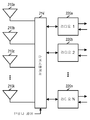
N개의 라디오들(220a 내지 220n)은 각각 N개의 안테나들(210a 내지 210n)에 연결될 수 있다. 간소하게 하기 위해, 도 2는 각각의 라디오(220)가 연관된 안테나(210)와 쌍을 이루는 것으로 도시한다. 일반적으로, 각각의 라디오(220)는 임의의 개수의 안테나들에 연결될 수 있고, 다수의 라디오들은 또한 하나 이상의 안테나들을 공유할 수 있다.The
일반적으로, 라디오는 전자기 스펙트럼에서 에너지를 방사 또는 방출하거나, 전자기 스펙트럼에서 에너지를 수신하거나, 또는 도전성 수단을 통해 전달(pass)되는 에너지를 발생시키는 유닛일 수 있다. 일부 예들로서, 라디오는 (ⅰ) 시스템 또는 디바이스에 신호를 전송하는 유닛 또는 (ⅱ) 시스템 또는 디바이스로부터 신호들을 수신하는 유닛일 수 있다. 따라서, 라디오는 무선 통신을 지원할 수 있다. 또한, 라디오는 다른 라디오들의 성능에 영향을 줄 수 있는 잡음을 방출하는 유닛(예를 들어, 컴퓨터 상의 스크린, 회로 기판 등)일 수 있다. 따라서, 라디오는 무선 통신을 지원하지 않고 잡음 및 간섭을 방출하는 유닛일 수 있다. 간소하게 하기 위해, 아래 설명의 대부분은 무선 통신을 위해 사용되는 라디오들에 대한 것이다.In general, a radio may be a unit that emits or emits energy in the electromagnetic spectrum, receives energy in the electromagnetic spectrum, or generates energy that is passed through conductive means. As some examples, a radio may be (i) a unit for transmitting a signal to a system or a device or (ii) a unit for receiving signals from a system or a device. Thus, the radio can support wireless communication. The radio may also be a unit (eg, a screen on a computer, a circuit board, etc.) that emits noise that may affect the performance of other radios. Thus, a radio may be a unit that emits noise and interference without supporting wireless communication. For the sake of simplicity, much of the description below is for radios used for wireless communication.
라디오들(220)은 하나 이상의 타입들의 라디오들을 포함할 수 있다. 라디오는 특정 시스템에 대한 특정 대역 상에서 전송 또는 수신하도록 설계된 한 세트의 회로들을 포함할 수 있다. 또한, 라디오는 다수의 시스템 및/또는 다수의 대역들을 지원하도록 구성될 수 있는 소프트웨어 정의된 라디오(SDR: software defined radio)일 수 있다. 예를 들어, SDR은 상이한 주파수들에서 동작할 수 있는 프로그램 가능한 회로들(예를 들어, 튜닝 가능한/스위칭 가능한 무선 주파수(RF) 필터들, 스위칭된 필터 뱅크, 튜닝 가능한 매칭 네트워크들 등)을 포함할 수 있다. 또한, SDR은 상이한 시스템들에 대한 프로세싱을 수행할 수 있는 프로그램 가능한 프로세싱 유닛들을 포함할 수 있다. SDR은 임의의 주어진 순간에 특정 시스템에 대한 특정 대역 상에서 동작하도록 구성될 수 있다. 또한, 라디오는 클리어(clear) 주파수 채널을 탐색하여 클리어 주파수 채널 상에서 동작할 수 있는 인지(cognitive) 라디오일 수 있다. 주파수 채널은 단순히 채널로 지칭될 수도 있다.Radios 220 may include one or more types of radios. The radio may include a set of circuits designed to transmit or receive on a particular band for a particular system. The radio may also be a software defined radio (SDR) that may be configured to support multiple systems and / or multiple bands. For example, SDR includes programmable circuits that can operate at different frequencies (eg, tunable / switchable radio frequency (RF) filters, switched filter banks, tunable matching networks, etc.). can do. In addition, the SDR may include programmable processing units capable of performing processing for different systems. SDR may be configured to operate on a particular band for a particular system at any given moment. The radio may also be a cognitive radio capable of searching for and operating on a clear frequency channel. The frequency channel may simply be referred to as a channel.
각각의 라디오(220)는 특정 시스템과의 통신을 지원할 수 있고, 하나 이상의 주파수 대역들 내의 하나 이상의 주파수 채널들 상에서 동작할 수 있다. 또한, 주어진 시스템에 대해 다수의 라디오들(220)이 사용될 수 있는데, 예를 들어, 시스템에 대해 어떤 라디오는 전송하기 위한 것이고 다른 라디오는 수신하기 위한 것이다. 다수의 라디오들(220)은 또한 상이한 주파수 대역들, 예를 들어, 셀룰러 및 PCS 대역들에 대해 정의될 수 있다.Each radio 220 may support communication with a particular system and may operate on one or more frequency channels in one or more frequency bands. Also, a number of radios 220 may be used for a given system, for example, some radios are for transmitting and other radios are for the system. Multiple radios 220 may also be defined for different frequency bands, eg, cellular and PCS bands.
디지털 프로세서(230)는 라디오들(220a 내지 220n)에 연결될 수 있고, 라디오들(220)을 통해 전송 또는 수신되는 데이터에 대한 프로세싱과 같은 다양한 기능들을 수행할 수 있다. 각 라디오(220)에 대한 프로세싱은 해당 라디오에 의해 지원되는 무선 기술에 의존할 수 있으며, 인코딩, 디코딩, 변조, 복조, 암호화, 복호화 등을 포함할 수 있다. 디지털 프로세서(230)는 아래에 설명되는 바와 같이, 양호한 성능을 달성하기 위해 라디오들(220)의 동작을 제어할 수 있는 공존 매니저(CxM)(240)를 포함할 수 있다. 공존 매니저(240)는 라디오들의 동작을 제어하기 위해 사용되는 정보를 저장할 수 있는 라디오 공존 데이터베이스(242)에 대한 액세스를 가질 수 있다. 디지털 프로세서(230)는 또한 데이터 및 프로그램 코드들을 저장하기 위한 내부 메모리(244)를 포함할 수 있다.The
간소하게 하기 위해, 도 2에서 디지털 프로세서(230)는 단일 프로세서로서 도시된다. 일반적으로, 디지털 프로세서(230)는 임의의 개수 및 임의의 타입의 프로세서들, 제어기들, 메모리들 등을 포함할 수 있다. 예를 들어, 디지털 프로세서(230)는 하나 이상의 프로세서들, 마이크로프로세서들, 중앙 처리 장치(CPU: central processing unit)들, 디지털 신호 프로세서(DSP: Digital Signal Processor)들, 축소 명령 세트 컴퓨터(RISC: reduced instruction set computer)들, 어드밴스드 RISC 머신(ARM: advanced RISC machine)들, 제어기들 등을 포함할 수 있다. 제어기/프로세서(250)는 무선 디바이스(110) 내의 다양한 유닛들의 동작을 지시(direct)할 수 있다. 메모리(252)는 무선 디바이스(110)에 대한 프로그램 코드들 및 데이터를 저장할 수 있다. 디지털 프로세서(230), 제어기/프로세서(250) 및 메모리(252)는 하나 이상의 집적 회로(IC: integrated circuit)들, 주문형 집적 회로(ASIC: Application Specific Integrated Circuit)들 등 상에서 구현될 수 있다. 예를 들어, 디지털 프로세서(230)는 이동국 모뎀(MSM: Mobile Station Modem) ASIC 상에서 구현될 수 있다.For simplicity,
도 3은 무선 디바이스(110)(디바이스 A) 및 무선 디바이스(112)(디바이스 B)의 설계의 블록도를 도시한다. 디바이스(112)는 M개의 안테나들(212a 내지 212m) 각각에 연결되는 M개의 라디오들(222a 내지 222m)을 포함하며, 여기서 M은 임의의 정수 값일 수 있다. 일반적으로, 디바이스는 개별적으로 패키지화될 수 있는 임의의 유닛일 수 있으며, 임의의 개수의 라디오들을 포함할 수 있다. 예를 들어, 디바이스(112)는 도 1의 헤드셋(162) 또는 컴퓨터(164) 또는 다른 어떤 디바이스에 대응할 수 있다.3 shows a block diagram of a design of wireless device 110 (device A) and wireless device 112 (device B).
디바이스들(110 및 112)은 (도 3에 도시된 바와 같은) 유선(wireline) 인터페이스 및/또는 무선 인터페이스를 통해 서로 통신할 수 있다. 공존 매니저(240)는, 아래에 설명되는 바와 같이, 라디오들(220 및/또는 222)로부터 입력들을 수신할 수 있고, 양호한 성능을 달성하기 위해 이들 라디오들의 동작을 제어할 수 있다.The
도 2 및 도 3에 도시된 바와 같이, 하나 이상의 디바이스들 내의 다수의 라디오들은 서로 근접하게 위치할 수 있으며, 성능을 저하시킬 수 있는 간섭을 관찰하거나 야기할 수 있다. 각각의 라디오는 하나 이상의 주파수 대역들 내의 하나 이상의 주파수 채널들 상에서 동작할 수 있다. 각각의 라디오는 다른 라디오들에 대한 간섭을 야기할 수도 있고 또는 다른 라디오들로부터 간섭을 관찰할 수도 있다. 다른 라디오에 대한 주어진 라디오의 영향은 각각의 라디오에 의해 사용되는 주파수 채널 및 주파수 대역, 각각의 라디오에 의해 지원되는 무선 기술, 각각의 라디오에 의해 관찰되는 라디오 상태들, 각각의 라디오의 설계 및 구현 등과 같은 다양한 인자들에 의존할 수 있다. 일반적으로, 근접한 다수의 라디오들은, 특히 동시성의 조건들 하에서, 종종 중요한 동작상의 문제들을 발생시킬 수 있고, 다수의 라디오들은 동시에 동작한다. (방사성 및 도전성 잡음 모두에 대한) 공동-위치(co-locate)된 라디오들에 대한 불충분한 격리 및 스펙트럼 공동-점유 또는 인접성이 라디오 공존 문제들의 주요 원인들일 수 있다.As shown in FIGS. 2 and 3, multiple radios in one or more devices may be located in close proximity to one another and may observe or cause interference that may degrade performance. Each radio may operate on one or more frequency channels in one or more frequency bands. Each radio may cause interference to other radios or may observe interference from other radios. The impact of a given radio on other radios can include the frequency channels and frequency bands used by each radio, the radio technologies supported by each radio, the radio states observed by each radio, and the design and implementation of each radio. It can depend on various factors such as In general, multiple radios in close proximity can often cause significant operational problems, especially under conditions of concurrency, and multiple radios operate simultaneously. Insufficient isolation and spectral co-occupancy or proximity to co-located radios (both for radioactive and conductive noise) may be the main causes of radio coexistence problems.
공존 매니저(240)는 라디오들의 동작을 조정할 수 있다. 공존 매니저(240)는 (ⅰ) 포인트 솔루션들이 통합될 수 있는 공존 완화를 위한 스케일링 가능하고 업그레이드 가능한 솔루션들 및 (ⅱ) 진화(evolutionary) 방식으로 구현될 수 있는 단일화된 프레임워크를 제공할 수 있다. 포인트 솔루션들은 특정 라디오들 사이의 문제점들에 대한 솔루션들을 지칭한다. 프레임워크는 또한 향후의 개선들을 위해 RF 및 기저대역 변경들의 통합을 허용할 수 있다. 공존 관리 기능은 공존 문제점들이 검출될 때 해법들을 제공하도록 다양한 라디오들 사이의 동작들을 중재할 수 있다.
공존 매니저(240)는 현재 동작하는 라디오들일 수 있는 활성 라디오들로부터 입력들을 수신할 수 있다. 각각의 활성 라디오로부터의 입력들은 업커밍 시간 구간에서 라디오의 계획된 또는 예상되는 동작 상태, 라디오의 계획된 활동 등을 표시할 수 있다. 활동은 또한 이벤트로 지칭될 수도 있다. 공존 매니저(240)는 이러한 라디오들 사이의 간섭을 완화하기 위해 수신된 입력들에 기초하여 활성 라디오들에 대한 제어들을 결정할 수 있다. 예를 들어, 제어들은 간섭들을 완화하기 위해 묵음(silencing), 시간 중재, 주파수 중재, 적응형 변조, 적응형 디지털 노치(notch) 필터링 등에 관련될 수 있다. 공존 매니저(240)는 양호한 성능을 달성하기 위해 영향받는 모든 라디오들에 상기 제어들을 송신할 수 있다.
공존 매니저(240)는 가능한 많은 라디오들에 대해 양호한 성능을 달성하도록 활성 라디오들의 동작을 제어할 수 있다. 라디오는 라디오의 성능을 개선하기 위해 그리고/또는 라디오로부터의 간섭을 완화하기 위해 조정될 수 있는 하나 이상의 구성 가능한 파라미터들을 가질 수 있다. 구성 가능한 파라미터는 증폭기, 필터, 안테나, 안테나 어레이 등과 같은 라디오 내의 물리적 컴포넌트에 대한 것일 수 있다. 구성 가능한 파라미터는 또한 송신 전력 레벨, 주파수 채널, 트래픽 채널 등과 같은 동작 파라미터에 대한 것일 수 있다. 수신된 전력 레벨은 또한 예를 들어, 상이한 안테나들 및/또는 더 많은 안테나를 선택함으로써 변경될 수 있는 경우에 구성 가능할 파라미터일 수 있다. 각각의 구성 가능한 파라미터는 해당 파라미터에 대해 적용 가능한 다수의 가능한 세팅들/값들 중 하나로 세팅될 수 있다. 라디오는 각각의 구성 가능한 파라미터에 대한 특정 세팅에 의해 정의될 수 있는 동작 상태를 가질 수 있다. 구성 가능한 파라미터는 "노브(knob)"로 지칭될 수도 있고, 구성 가능한 파라미터 세팅은 "노브 세팅"으로 지칭될 수도 있고, 동작 상태는 "노브 상태"로 지칭될 수도 있다.
공존 매니저(240)는 활성 라디오들의 동작을 제어하기 위해 라디오 공존 데이터베이스(242)를 이용할 수 있다. 일 설계에서, 데이터베이스(242)는 라디오들의 서로 다른 조합들에 대한 성능 대 동작 상태들에 관한 정보를 포함할 수 있다.
도 4는 활성 라디오들을 제어하기 위해 사용될 수 있는 라디오 공존 데이터베이스의 일 설계인 컬러 차트(400)의 설계를 도시한다. 컬러 차트(400)에서, 수평축은 간섭을 야기할 수 있고 제어 가능할 수 있는 송신기 라디오에 대한 것일 수 있다. 수직축은 송신기 라디오로부터의 간섭에 의해 악영향을 받을 수 있으며 또한 제어 가능할 수 있는, 수신기 라디오에 대한 것일 수 있다. 송신기 라디오는 공격자로 지칭될 수 있고, 수신기 라디오는 희생자로 지칭될 수 있다. 간소하게 하기 위해, 도 4는 송신기 라디오에 대한 단지 일부 주파수 채널들 및 수신기 라디오에 대한 단지 일부 주파수 채널들만을 도시한다. 컬러 차트(400)는 간소하게 하기 위해 도 4에 도시되지 않은 다른 라디오들 및 다른 주파수 채널들을 커버할 수 있다.4 shows a design of a
컬러 차트(400)는 송신기 라디오가 동작하게 할 수 있는 상이한 주파수 채널들에 대한 다수의 열(column) 세트들을 포함한다. 각각의 열 세트는 송신기 라디오의 상이한 동작 상태들(또는 노브 상태들)에 대한 다수의 열들을 포함한다. 도 4에 도시된 예에서, 각각의 열 세트는 송신기 라디오의 8개의 상이한 동작 상태들에 대한 8개의 열들을 포함한다. 더 적거나 더 많은 동작 상태들이 또한 송신기 라디오에 대해 지원될 수 있다.
컬러 차트(400)는 또한 수신기 라디오가 동작할 수 있는 상이한 주파수 채널들에 대한 다수의 행 세트들을 포함한다. 각각의 행 세트는 수신기 라디오의 상이한 동작 상태들에 대한 다수의 행들을 포함한다. 도 4에 도시된 예에서, 각각의 행 세트는 수신기 라디오의 8개의 상이한 동작 상태들에 대한 8개의 행들을 포함한다. 더 적거나 더 많은 동작 상태들이 또한 수신기 라디오에 대해 지원될 수 있다. 일반적으로, 각각의 라디오는 임의의 개수의 동작 상태들을 가질 수 있다. 하나의 행 또는 하나의 열은 간섭 관리 목적으로 라디오에 대해 선택될 수 있는 각각의 동작 상태에 대해 제공될 수 있다.
도 4에서 도시된 설계에서, 라디오의 성능은 3개의 가능한 레벨들 ? "수용 가능", "한계", 및 "수용 불가능" 또는 "심각함" 중 하나에 의해 수량화(또는 하나로 양자화)될 수 있다. 수용 가능, 한계 또는 수용 불가능 레벨들은 컬러 차트(400)에서 각각 녹색, 황색 및 적색으로 표현될 수 있다. 수용 가능한 레벨은 라디오의 성능이 모든 적용 가능한 요건들을 만족시키는 경우에 대응할 수 있다. 한계 레벨은 (ⅰ) 라디오의 성능이 모든 적용 가능한 요건들을 충족하지만 가능한 대로 작은 마진들만을 가지는 경우 또는 (ⅱ) 라디오의 성능이 중요 요건들을 충족하지만, 가능한 대로 모든 요건들을 충족하지 않는 경우에 대응할 수 있다. 수용 불가능한 레벨은 라디오의 성능이 적용 가능한 요건을 충족하지 않고 개선되어야 하는 경우에 대응할 수 있다. 일반적으로, 성능은 임의의 개수, 예를 들어, 2개, 4개 등의 레벨들로 수량화될 수 있다. 각각의 레벨은 라디오의 요건들에 의존할 수 있는 임의의 방식으로 정의될 수 있다. 더 많은 레벨들은 이들 레벨들을 저장하기 위해 더 많은 메모리를 소비하여 라디오들의 더 양호한 제어를 허용할 수 있다.In the design shown in Figure 4, the performance of the radio is three possible levels? It may be quantified (or quantized into one) by one of "acceptable", "limit", and "unacceptable" or "serious". Acceptable, limit or unacceptable levels may be represented in green, yellow and red in
도 4의 설계에서, 컬러 차트(400)는 송신기 및 수신기 라디오들에 대한 동작 상태들의 각각의 고유한 조합에 대한 셀(또는 사각 박스)을 포함한다. 셀(i, j)은 송신기 라디오에 대한 동작 상태 i 및 수신기 라디오에 대한 동작 상태 j에 대응할 수 있다. 셀(i, j)은 동작 상태 i에서의 송신기 라디오 및 동작 상태 j에서의 수신기 라디오에 의한 수신기 라디오에 대한 성능 레벨로 채워질 수 있다(populated).In the design of FIG. 4, the
도 4의 설계는 수신기 라디오에 대한 동작 상태의 선택과는 무관하게 송신기 라디오에 대한 동작 상태의 선택을 허용할 수 있다. 송신기 및 수신기 라디오들에 대한 선택된 동작 상태들에 대한 수신기 라디오의 성능은 동작 상태들의 이러한 조합을 커버하는 셀에 의해 결정될 수 있다.The design of FIG. 4 may allow selection of an operating state for the transmitter radio regardless of the selection of the operating state for the receiver radio. The performance of a receiver radio for selected operating states for transmitter and receiver radios may be determined by the cell covering this combination of operating states.
일반적으로, 도 4에 도시된 설계에 대해, 컬러 차트는 각각의 라디오에 대한 특정 주파수 채널에 대해 송신기 라디오에 대한 U개의 동작 상태들 및 수신기 라디오에 대한 V개의 동작 상태들을 커버할 수 있으며, 여기서, U ≥ 1 및 V ≥ 1이다. 전체 U×V개의 셀이 송신기 및 수신기 라디오들에 대한 동작 상태들의 서로 다른 조합들에 대한 수신기 라디오의 성능을 수량화하기 위해 사용될 수 있다. U = 1 및 V = 1인 경우, 컬러 차트는 각각의 라디오에 대한 특정 동작 상태에 대해 각각의 주파수 채널 쌍에 대한 단일 셀을 포함할 수 있다.In general, for the design shown in FIG. 4, the color chart can cover U operating states for the transmitter radio and V operating states for the receiver radio for a particular frequency channel for each radio, where , U ≧ 1 and V ≧ 1. A total of U × V cells can be used to quantify the performance of a receiver radio for different combinations of operating states for transmitter and receiver radios. If U = 1 and V = 1, the color chart may include a single cell for each pair of frequency channels for a particular operating state for each radio.
도 5는 활성 라디오들을 제어하기 위해 사용될 수 있는 라디오 공존 데이터베이스의 다른 설계인, 컬러 차트(500)의 설계를 도시한다. 컬러 차트(500)에서, 수평축은 간섭을 야기할 수 있고 제어 가능할 수 있는 송신기 라디오들에 대한 것일 수 있다. 수직축은 송신기 라디오들로부터의 간섭에 의해 영향을 받을 수 있고 또한 제어 가능할 수 있는 수신기 라디오들에 대한 것일 수 있다. 간소하게 하기 위해, 도 5는 단 하나의 송신기 라디오 및 단 하나의 수신기 라디오를 도시한다.5 shows a design of a
도 5에 도시된 설계에서, 컬러 차트(500)는 송신기 라디오(또는 공격자)에 대한 특정 주파수 채널 및 수신기 라디오(또는 희생자)에 대한 특정 주파수 채널을 커버하는 각각의 채널 조합에 대한 2개의 셀들을 포함한다. 각각의 셀은 송신기 및 수신기 라디오들에 대한 특정 동작 시나리오와 연관될 수 있으며, 동작 시나리오에 대한 수신기 라디오의 성능을 전달할 수 있다. 예를 들어, 주파수 조합에 대한 좌측 셀은 "감도" 시나리오에 대한 수신기 라디오의 성능을 커버할 수 있고, 우측 셀은 "공칭" 시나리오에 대한 수신기 라디오의 성능을 커버할 수 있다. 감도 시나리오는 (ⅰ) 최대 전력 레벨(Pmax)에서 전송하는 송신기 라디오 및 (ⅱ) 감도 레벨(RXmin)에서 또는 감도 레벨(RXmin) 근처에서 동작하고 매우 약한 신호의 수신을 시도하는 수신기 라디오에 의해 정의될 수 있다. Pmax 및 RXmin는 각각 송신기 및 수신기 라디오들에 대해 적용 가능한 표준들에 의해 특정될 수 있다. 무선 디바이스(110)가 기지국으로부터 멀리 떨어져 위치하고 기지국에 도달하기 위해 높은 전력 레벨에서 업링크 신호를 전송하면서 동시에 또한 낮은 전력 레벨에서 기지국으로부터 다운링크 신호를 수신할 필요가 있는 경우, 감도 시나리오가 발생할 수 있다. 공칭 시나리오는 (ⅰ) Pmax보다 낮은 적어도 X ㏈m로 전송하는 송신기 라디오 및 (ⅱ) RXmin보다 높은 적어도 Y 데시벨(㏈)로 동작하는 수신기 라디오에 의해 정의될 수 있으며, 여기서, X 및 Y는 임의의 적당한 값들일 수 있다. 감도 및 공칭 시나리오들에 대한 성능은 송신기 및 수신기 라디오들에 대한 다양한 구성 가능한 파라미터들에 대한 통상적인 세팅들(또는 통상적인 노브 세팅들)을 가정할 수 있다.In the design shown in FIG. 5,
일 설계에서, 컬러 차트(500) 내의 각각의 셀에 대한 성능 레벨은 3개의 레벨들 - 수용 가능, 한계, 및 수용 불가능 중 하나에 의해 주어질 수 있으며, 이는 도 4에 대해 상술한 바와 같이 정의될 수 있다. 각각의 셀에 대한 성능 레벨은 또한 더 적거나 더 많은 레벨들에 의해 주어질 수 있다.In one design, the performance level for each cell in
일반적으로, 도 5에 도시된 설계에 대해, 컬러 차트는 송신기 라디오에 대한 특정 주파수 채널 및 수신기 라디오에 대한 특정 주파수 채널을 커버하는 각각의 채널 조합에 대한 Q개의 셀들을 포함할 수 있다. 각각의 셀은 송신기 및 수신기 라디오들에 대한 특정 동작 시나리오들과 연관될 수 있으며, 연관된 동작 시나리오에 대한 수신기 라디오의 성능을 전달할 수 있다. 도 5의 컬러 차트에 대한 Q개의 셀들은 도 4의 컬러 차트에 대한 셀들의 서브세트일 수 있으며, 이러한 Q개의 셀들은 더 가능성 있는 동작 시나리오들에 대한 것일 수 있다. 성능은 임의의 개수의 레벨들로 수량화될 수 있다. 성능은 또한 값, 예를 들어, 달성 가능한 성능과 요구되는 성능 사이의 마진에 의해 수량화될 수 있다. 더 많은 셀들 및/또는 더 많은 성능 레벨들이 라디오들의 더 양호한 제어를 허용할 수 있다.In general, for the design shown in FIG. 5, the color chart may include Q cells for each channel combination covering a particular frequency channel for the transmitter radio and a specific frequency channel for the receiver radio. Each cell may be associated with specific operating scenarios for transmitter and receiver radios, and may convey the performance of the receiver radio for the associated operating scenario. The Q cells for the color chart of FIG. 5 may be a subset of the cells for the color chart of FIG. 4, which may be for more likely operating scenarios. Performance can be quantified in any number of levels. Performance can also be quantified by a value, for example, the margin between achievable performance and the performance required. More cells and / or more performance levels may allow for better control of radios.
도 6은 컬러 차트 내의 하나의 셀에 대한 성능의 3차원 플롯(600)의 설계를 도시한다. 예를 들어, 플롯(600)은 도 4의 컬러 차트(400) 내의 각각의 셀에 대해, 도 5의 컬러 차트(500) 내의 각각의 셀에 대해 획득될 수 있는 식이다. 성능은 달성 가능한 성능과 요구되는 성능 사이의 마진에 의해 수량화될 수 있다. 성능 플롯(600)은 송신기 라디오에 대한 특정 파라미터 세팅들, 수신기 라디오에 대한 특정 파라미터 세팅들, 송신기 라디오에 대한 송신 전력 레벨 및 수신기 라디오에 대한 수신 전력 레벨의 함수에 기초하여, 다음과 같이 획득될 수 있다:6 shows a design of a three-
마진 = f(TX 전력, RX 전력, 다른 파라미터 세팅들) 식(1)Margin = f (TX power, RX power, other parameter settings) Equation (1)
여기서 f( )는 임의의 적당한 함수일 수 있다.Where f () can be any suitable function.
도 6에서, x축은 수신기 라디오의 수신 전력을 나타낼 수 있고, y축은 송신기 라디오의 송신 전력을 나타낼 수 있고, z축은 마진을 나타낼 수 있다. 도 6에 도시된 바와 같이, 성능(또는 마진)은 송신 전력 및 수신 전력에 의존할 수 있다. 송신 전력 및/또는 수신 전력을 조정함으로써 원하는 성능이 획득될 수 있다.In FIG. 6, the x axis may represent the received power of the receiver radio, the y axis may represent the transmit power of the transmitter radio, and the z axis may represent the margin. As shown in FIG. 6, performance (or margin) may depend on transmit power and receive power. Desired performance can be obtained by adjusting the transmit power and / or receive power.
도 5의 컬러 차트(500) 내의 셀들에 대한 성능 레벨들은 도 6의 플롯(600)과 같은 플롯들에 기초하여 결정될 수 있다. 예를 들어, 감도 시나리오에 대응하는 주어진 (x, y) 포인트에서의 마진이 결정될 수 있다. 이러한 마진은 도 6에 도시된 바와 같이 성능이 수용 가능한지, 한계인지, 또는 수용 불가능한지를 결정하기 위해 2개의 임계값(TH1 및 TH2)에 대해 비교될 수 있다.Performance levels for the cells in
일 설계에서, 송신기 라디오 및 수신기 라디오에 대한 상이한 구성 가능한 파라미터 세팅들에 대해 한 세트의 플롯들이 획득될 수 있다. 일 설계에서, 송신기 및 수신기 라디오들에 대한 동작 상태들은 한 세트의 플롯들에 기초하여 선택될 수 있다. 예를 들어, 원하는 성능을 제공할 수 있는 송신기 및 수신기 라디오들에 대한 가장 덜 제한적인 동작 상태들이 선택될 수 있다. 따라서 플롯들은 송신기 및 수신기 라디오들에 대한 동작 상태들을 선택하도록 사용될 수 있다. 다른 설계에서, 송신기 및 수신기 라디오들에 대한 구성 가능한 파라미터 세팅들은 다른 고려사항들에 기초하여 선택될 수도 있다. 두 설계 모두에 대해, 송신 전력 및/또는 수신 전력은 선택된 파라미터 세팅들에 대한 플롯에 기초하여 조정될 수 있다.In one design, a set of plots can be obtained for different configurable parameter settings for the transmitter radio and the receiver radio. In one design, operating conditions for transmitter and receiver radios may be selected based on a set of plots. For example, the least restrictive operating states for transmitter and receiver radios can be selected that can provide the desired performance. Thus plots can be used to select operating states for transmitter and receiver radios. In another design, configurable parameter settings for transmitter and receiver radios may be selected based on other considerations. For both designs, the transmit power and / or receive power can be adjusted based on the plot for the selected parameter settings.
다른 설계에서, 수신기 라디오에 대한 특정 주파수 채널 및 송신기 라디오에 대한 특정 주파수 채널을 커버하는 채널 조합들에 대한 송신기 및 수신기 라디오들에 대한 상이한 구성 가능한 파라미터 세팅들에 대해 한 세트의 성능 플롯들이 획득될 수 있다. 전체 플롯을 획득하기 위해 한 세트의 성능 플롯들이 수집될 수 있다. 수집은 다양한 방식들로 수행될 수 있다. 일 설계에서, 전체 플롯 내의 각각의 (x, y) 포인트에는 해당 (x, y) 포인트에 대한 한 세트의 플롯들로부터 최상의 성능이 할당될 수 있다. 따라서 세트 내의 플롯들 모두를 중첩시키고, 모든 플롯들에 대한 가장 높은 포인트를 저장함으로써 전체 플롯이 획득될 수 있다. 이후, 전체 플롯은 각각의 (x, y) 포인트에 대한 최상의 가능한 성능을 나타낼 수 있다.In another design, a set of performance plots can be obtained for different configurable parameter settings for transmitter and receiver radios for channel combinations covering a particular frequency channel for the receiver radio and a specific frequency channel for the transmitter radio. Can be. A set of performance plots can be collected to obtain a full plot. Collection can be performed in a variety of ways. In one design, each (x, y) point in the overall plot can be assigned the best performance from a set of plots for that (x, y) point. Thus, the entire plot can be obtained by superimposing all the plots in the set and storing the highest point for all plots. The entire plot can then represent the best possible performance for each (x, y) point.
도 7은 활성 라디오들을 제어하기 위해 사용될 수 있는 라디오 공존 데이터베이스의 또 다른 설계인, 컬러 차트(700)의 설계를 도시한다. 컬러 차트(700)에서, 수평축은 송신기 라디오들에 대한 것일 수 있으며, (상이한 주파수 채널들 대신) 상이한 주파수 대역들을 커버할 수 있다. 대역은 다수의 주파수 채널들을 커버할 수 있다. 각각의 대역 내의 특정 개수의 주파수 채널들은 무선 기술, 대역 등에 의존할 수 있다. 수직축은 수신기 라디오들에 대한 것일 수 있으며, 또한 상이한 대역들을 커버할 수 있다.7 shows a design of a
도 7에 도시된 설계에서, 컬러 차트(700)는 송신기 라디오에 대한 특정 대역 및 수신기 라디오에 대한 특정 대역을 커버하는 각각의 대역 조합에 대한 6개의 셀들을 포함한다. 주어진 대역 조합에 대해, 좌측 열에서 3개의 셀들은 감도 시나리오(Sen)에 대한 성능을 제공하고, 우측 열에서 3개 셀들은 공칭 시나리오(Nom)에 대한 성능을 제공한다. 최상부 행에서 2개 셀들은 수용 가능한 성능을 가지는 채널들의 비율을 표시하고, 중간 행에서 2개 셀들은 마진 성능을 가지는 채널들의 비율을 표시하고, 최하부 행에서 2개 셀들은 수용 불가능한 성능을 가지는 채널들의 비율을 표시한다. 예를 들어, 2.4㎓에서 블루투스 송신기를 그리고 2.6㎓ 대역에서 LTE 수신기를 커버하는 블록(710)에서, 모든 주파수 채널들의 47퍼센트가 감도 시나리오에 대해 수용 가능한 성능을 가지고, 모든 주파수 채널들의 10퍼센트는 한계 성능을 가지고, 모든 주파수 채널들의 43퍼센트는 수용 불가능한 성능을 가진다. (ⅰ) 주어진 시나리오(예를 들어, 감도 또는 공칭)에 대한 대역 조합에서 각각의 주파수 채널에 대한 성능(예를 들어, 수용 가능, 한계, 또는 수용 불가능)을 결정함으로써, 그리고 (ⅱ) 각각의 성능 레벨에 대한 주파수 채널들의 비율을 결정함으로써 컬러 차트(700) 내의 정보가 획득될 수 있다.In the design shown in FIG. 7, the
도 4 내지 도 7은 2개의 라디오들에 대한 2차원 컬러 차트들의 예시적인 설계들을 도시한다. 일반적으로, 주어진 라디오에 대한 성능은 하나 이상의 다른 라디오들에 의해 영향을 받을 수 있다. 컬러 차트는 동시에 동작하는 K개의 라디오들에 대해 K개의 차원들로 정의될 수 있으며, 여기서 K는 임의의 정수 값일 수 있다. 예를 들어, 하나 이상의 라디오들의 성능은 K개 라디오의 동작 상태들에 의해 주어질 수 있다.4-7 show example designs of two-dimensional color charts for two radios. In general, the performance for a given radio may be affected by one or more other radios. The color chart may be defined in K dimensions for K radios operating simultaneously, where K may be any integer value. For example, the performance of one or more radios can be given by the operating states of the K radios.
도 4 내지 도 7은 라디오 공존 데이터베이스에 대해 사용될 수 있는 컬러 차트들의 일부 예시적인 설계들을 도시한다. 공존 라디오들로 인한 간섭에 관한 정보는 또한 다른 방식들로 캡처되어 컬러 차트 또는 데이터베이스로 제시될 수 있는데, 예를 들어, 다른 방식들로 양자화될 수 있고, 다른 포맷들 또는 구조들을 사용하여 제시될 수 있는 식이다.4-7 show some example designs of color charts that can be used for a radio coexistence database. Information about interference due to coexistent radios can also be captured in different ways and presented in a color chart or database, for example, can be quantized in other ways and presented using other formats or structures. It can be an expression.
라디오 공존 데이터베이스(예를 들어, 컬러 차트)에 대한 정보가 다양한 방식들로 획득될 수 있다. 일 설계에서, 정보는 계산, 컴퓨터 시뮬레이션 등을 통해 획득될 수 있다. 임의의 적절한 모델링 및 시뮬레이션 툴들은 공존하는 라디오들 사이의 간섭에 대한 정보를 분석적으로 획득하는데 사용될 수 있다. 정보는 속성상 분석적일 수 있고, 라디오들의 설계 및 구현과는 독립적일 수 있다.Information about the radio coexistence database (eg, color charts) can be obtained in various ways. In one design, the information may be obtained through calculations, computer simulations, and the like. Any suitable modeling and simulation tools can be used to analytically obtain information about interference between coexisting radios. The information may be analytic in nature and may be independent of the design and implementation of the radios.
다른 설계에서, 라디오 공존 데이터베이스에 대한 정보는 실험적 측정들, 연구소 또는 필드 테스트 등을 통해 획득될 수 있다. 예를 들어, 테스트는 송신기 및 수신기 라디오들의 서로 다른 조합들에 대한 상이한 구성 가능한 파라미터 세팅들 및 전력 레벨들에 대해 수행될 수 있다. 성능 데이터는 라디오 공존 데이터베이스에 대한 정보를 유도하기 위해 수집 및 사용될 수 있다. 정보는 라디오들의 설계 및 구현에 의존할 수 있다. 라디오 공존 데이터베이스는 제조 단계(phase) 동안 무선 디바이스(110)에 로딩될 수 있다. 데이터베이스는 또한 예를 들어, 무선 디바이스(110)가 통신하고 있는 시스템으로부터 무선으로 다운로드될 수 있다.In another design, information about the radio coexistence database may be obtained through experimental measurements, laboratory or field tests, and the like. For example, the test may be performed on different configurable parameter settings and power levels for different combinations of transmitter and receiver radios. Performance data can be collected and used to derive information about the radio coexistence database. The information may depend on the design and implementation of the radios. The radio coexistence database may be loaded into the
또 다른 설계에서, 라디오 공존 데이터베이스에 대한 정보는 라디오들에 대한 실제 동작 동안 획득될 수 있다. 예를 들어, 무선 디바이스(110)는 정상 동작 동안 송신기 라디오 및 수신기 라디오에 대한 동작 상태들의 서로 다른 조합들(예를 들어, 상이한 전력 레벨들)에 대한 수신기 라디오의 성능을 결정할 수 있다. 성능은 무선 디바이스(110)에 대해 특정적일 수 있다. 무선 디바이스(110)는 정상 동작 동안 성능 데이터가 획득될 때마다 라디오 공존 데이터베이스(예를 들어, 컬러 차트 내의 셀들)를 업데이트할 수 있다.In another design, information about the radio coexistence database may be obtained during actual operation on the radios. For example, the
라디오 공존 데이터베이스에 대한 정보는 또한 다른 방식들로 획득되거나 업데이트될 수 있다. 라디오 공존 데이터베이스는 온도, 컴포넌트 에이징/드리프트, 전압/전류 변경들, (예를 들어, 디바이스 근접도, 장애물, 케이블 등으로 인한) 안테나 풀링, 주파수, 송신 및 수신 전력 레벨 등과 같은 다양한 인자들을 감안하도록 업데이트될 수 있다.Information about the radio coexistence database may also be obtained or updated in other ways. The radio coexistence database takes into account various factors such as temperature, component aging / drift, voltage / current changes, antenna pooling (eg, due to device proximity, obstructions, cables, etc.), frequency, transmit and receive power levels, and so on. Can be updated.
일 설계에서, 무선 디바이스(110)는 무선 디바이스(110)에 의해 측정되고 수집된 정보를 시스템으로 송신할 수 있다. 시스템은 마스터 라디오 공존 데이터베이스를 형성하기 위해 상이한 무선 디바이스들로부터 획득되는 정보를 수집할 수 있다. 마스터 데이터베이스의 일부 또는 전부는 공존 관리를 위해 사용하기 위해 무선 디바이스들로 다운로드될 수 있다.In one design, the
무선 디바이스(110)에서의 라디오 공존 데이터베이스는 또한 간섭 정보 이외의 다른 정보를 포함할 수도 있다. 예를 들어, 데이터베이스는 동작의 주파수 대역들, 최대 송신 전력에 관한 정보 및/또는 각각의 라디오에 대한 다른 정보를 포함할 수 있다. 데이터베이스는 또한 이벤트 시간, 이벤트 듀레이션 등과 같은 라디오의 각각의 활동에 관련된 정보를 포함할 수 있다.The radio coexistence database at the
N개의 모든 라디오들(220)에 대한 라디오 공존 데이터베이스는, 특히 상당수의 라디오들, 상당수의 주파수 채널들, 각각의 라디오에 대한 상당수의 동작 상태들 등에 대해, 상대적으로 클 수 있다. 일 설계에서, 전체 라디오 공존 데이터베이스는 벌크 비휘발성 메모리(예를 들어, 도 2의 메모리(252))에 저장될 수 있다. 벌크 메모리는 NAND 플래시, NOR 플래시, 또는 큰 저장 용량을 가지는 다른 어떤 타입의 메모리일 수 있다. 라디오 공존 데이터베이스의 관련 부분은 공존 매니저(240)에 의한 신속한 액세스를 위해 벌크 메모리로부터 더 고속의 메모리로 로딩될 수 있다. 더 고속의 메모리는 디지털 프로세서(230) 내의 메모리(244)일 수도 있고, 정적 랜덤 액세스 메모리(SRAM: static random access memory) 또는 다른 어떤 타입의 메모리일 수도 있다. 라디오 공존 데이터베이스의 로딩된 부분은 모든 활성 라디오들에 대한 정보, 서로 충돌할 수도 있는 활성 라디오들에 대한 정보 등을 포함할 수 있다. 더 고속의 메모리 내의 로딩된 부분은 라디오가 활성이 될 때마다 또는 활성 라디오가 비활성이 될 때마다 업데이트될 수 있다.The radio coexistence database for all N radios 220 may be relatively large, especially for a large number of radios, a number of frequency channels, a significant number of operating states for each radio, and the like. In one design, the entire radio coexistence database may be stored in bulk nonvolatile memory (eg,
라디오 공존 데이터베이스는 라디오 선택, 라디오 관리 등과 같은 다양한 목적들로 사용될 수 있다. 라디오 선택은 특정 애플리케이션에 대한 특정 라디오의 선택을 지칭한다. 라디오 관리는 가능한 한 많은 라디오들에 대해 양호한 성능을 달성하기 위한 공존하는 라디오들의 관리를 지칭한다. 라디오 선택은 전체 라디오 공존 데이터베이스에 기초하여 수행될 수 있다. 라디오 관리는 활성 라디오들에 대한 라디오 공존 데이터베이스의 일부분에 기초하여 수행될 수 있다.The radio coexistence database can be used for various purposes such as radio selection, radio management, and the like. Radio selection refers to the selection of a particular radio for a particular application. Radio management refers to the management of coexisting radios to achieve good performance for as many radios as possible. Radio selection may be performed based on the entire radio coexistence database. Radio management may be performed based on a portion of a radio coexistence database for active radios.
라디오 선택을 위해, 특정 애플리케이션에 대해 다수의 라디오들이 사용될 수 있다. 이들 다수의 라디오들 중 가장 적절한 라디오가 라디오 환경 및 라디오 공존 데이터베이스에 기초하여 애플리케이션에 대해 선택될 수 있다. 예를 들어, 라디오 환경에서 WLAN 라디오에 의해 야기되거나 관찰되는 더 높은 간섭으로 인해 WLAN 라디오 대신 LTE 라디오가 선택될 수 있다. 따라서, 선택된 라디오는 주어진 라디오 환경에 대한 양호한(예를 들어, 가능한 가장 좋은) 성능을 제공할 수 있는 라디오일 수 있다. 라디오 선택은 라디오 환경의 변화들에 따라, 정적/반-정적 또는 동적일 수 있다. 예를 들어, 무선 디바이스(110) 내의 특정 라디오는 라디오 환경이 상대적으로 정적인 경우, 예를 들어, 무선 디바이스(110)가 이동식이 아닌 경우, 연장된 시간 기간 동안 선택 및 사용될 수 있다. 대안으로, 예를 들어, 무선 디바이스(110)의 이동성으로부터 초래되는 라디오 환경의 변화로 인해 상이한 라디오들이 선택될 수 있다. 라디오 환경은 또한 인에이블 또는 디스에이블되는, 무선 디바이스(110) 근처 내의 다른 라디오들로 인해 변화할 수 있다.For radio selection, multiple radios can be used for a particular application. The most appropriate of these multiple radios can be selected for the application based on the radio environment and radio coexistence database. For example, LTE radio may be selected instead of WLAN radio due to the higher interference caused or observed by WLAN radio in a radio environment. Thus, the selected radio may be a radio capable of providing good (eg, the best possible) performance for a given radio environment. Radio selection can be static / semi-static or dynamic, depending on changes in the radio environment. For example, certain radios within
라디오 관리를 위해, 공존 매니저(240)는 라디오 공존 데이터베이스(예를 들어, 컬러 차트(400))를 사용하여 활성 라디오들의 동작을 제어할 수 있다. 예를 들어, 공존 매니저(240)는 송신기 및 수신기 라디오들의 계획된 동작 상태들을 표시하는 입력들을 수신할 수 있고, 이러한 계획된 동작 상태들로 수신기 라디오의 성능을 결정할 수 있다. 수신기 라디오의 성능이 수용 불가능한 경우(또는 가능하게는 한계인 경우), 공존 매니저(240)는 수신기 라디오의 성능이 수용 가능하도록(또는 가능하게는 한계가 되도록) 수신기 라디오에 대한 새로운 동작 상태 및/또는 송신기 라디오에 대한 새로운 동작 상태를 선택할 수 있다. 송신기 라디오에 대한 새로운 동작 상태는 송신기 라디오에 대한 송신 전력 레벨 및/또는 다른 구성 가능한 파라미터들(예를 들어, 새로운 주파수 채널)의 변경을 포함할 수 있다. 어느 경우든, 임의의 라디오에 대해 새로운 동작 상태가 선택되는 경우, 공존 매니저(240)는 대응하는 라디오에 각각의 새로운 동작 상태를 송신할 수 있다.For radio management,
라디오 공존 관리는 중앙 집중형 아키텍처 또는 분산형 아키텍처와 같은 다양한 아키텍처들을 이용하여 구현될 수 있다. 중앙 집중형 아키텍처에 대해, 공존 매니저(240)는 활성 라디오들로부터 입력들을 수신할 수 있고, 가능한 많은 라디오들에 대해 양호한 성능이 달성될 수 있도록 라디오들에 대한 제어들(예를 들어, 동작 상태들)을 결정할 수 있다. 광역성(distributed) 아키텍처라고도 지칭되는 분산형 아키텍처에 대해, 활성 라디오들은 라디오들에 대한 제어들을 결정하기 위해 서로 통신할 수 있다. 공존 매니저(240)는 분산형 아키텍처에서 관리 기능을 제공할 수 있다.Radio coexistence management can be implemented using various architectures, such as a centralized architecture or a distributed architecture. For a centralized architecture,
도 8a는 중앙 집중형 아키텍처를 가지는 라디오 공존 관리의 설계를 도시한다. 이러한 아키텍처에서, 공존 매니저(240)는 메시징 버스를 통해 모든 활성 라디오들(220)과 통신할 수 있다. 메시징 버스는 소프트웨어-기반 메시징 또는 하드웨어-기반 메시징을 지원할 수 있다. 메시징 버스는 활성 라디오들 및 이들의 개별 메시징 및 시스템 타이밍의 조정을 지원하기 위해 충분히 짧은 레이턴시(latency)를 가질 수 있다. 공존 매니저(240)와 활성 라디오들(220) 사이의 통신은 또한 적절한 메시징 프로토콜에 기초할 수 있다.8A shows a design of radio coexistence management with a centralized architecture. In this architecture,
활성 라디오들(220)은 단일 디바이스(예를 들어, 도 2의 디바이스(110)) 또는 다수의 디바이스들(예를 들어, 도 3의 디바이스들(110 및 112)) 상에 위치할 수 있다. 각각의 라디오(220)는 공존 매니저(240)에 대한 개별 엔티티로 간주될 수 있다. 각각의 라디오(220)는 라디오에 대한 라디오 공존을 지원할 수 있고 또한 공존 매니저(240)와 통신할 수 있는 라디오 제어기(224)와 연관될 수 있다. 각각의 라디오(220)는 또한 해당 라디오에 의해 관찰되거나 야기되는 간섭을 완화하기 위해 달라질 수 있는 하나 이상의 구성 가능한 파라미터들을 가질 수 있다.Active radios 220 may be located on a single device (eg,
공존 매니저(240)는 라디오 공존을 지원하기 위한 다양한 관리 기능들을 수행할 수 있다. 예를 들어, 공존 매니저(240)는 라디오들(220)에 의한 등록, 이벤트 통지들, 이벤트들의 해결 및 중재, 및 통지 응답들을 지원할 수 있다. 공존 매니저(240)는 모든 활성 라디오들(220)로부터 입력들을 수신할 수 있다. 공존 매니저(240)는 라디오 공존 데이터베이스(242)를 이용하여, 수신된 입력들을 기초로 활성 라디오들의 동작에 대한 결정들을 수행할 수 있다. 공존 매니저(240)는 라디오들에 대해 양호한 성능이 달성될 수 있도록 라디오들에 대한 제어들(예를 들어, 동작 상태들)을 결정할 수 있다. 공존 매니저(240)는 영향을 받는 라디오들에 상기 제어들을 송신할 수 있다.The
도 8b는 분산형 아키텍처를 가지는 라디오 공존 관리의 예시적인 설계를 도시한다. 이러한 아키텍처에서, 활성 라디오들(220)은 라디오 공존을 지원하기 위해 공존 매니저(240)와 그리고/또는 서로 통신할 수 있다. 라디오 공존을 위한 중재 기능은 공존 매니저(240)에 집중되는 대신, 활성 라디오들(220)에 걸쳐 공유될 수 있다. 활성 라디오들 중 적어도 하나 및 가능하게는 전부에 의한 분산 프로세싱에 의해 활성 라디오들에 대한 최상의 동작 상태들이 결정될 수 있다. 활성 라디오들은 다수의 디바이스들(예를 들어, 디바이스들(110 및 112))에 상주할 수 있고, 분산 프로세싱은 모든 디바이스들 내에 모든 라디오들을 포함하도록 확장될 수 있다. 각각의 활성 라디오(220)는 해당 라디오가 라디오의 계획된 활동들에 영향을 주는 결정들을 수행하도록 라디오 제어기(224)에 의해 사용될 수 있는 연관된 데이터베이스(226)를 가질 수 있다. 공존 매니저(240)는 관리 기능을 제공할 수 있다.8B shows an exemplary design of radio coexistence management with a distributed architecture. In this architecture, the active radios 220 may communicate with the
도 8a의 중앙 집중형 아키텍처 및 도 8b의 분산형 아키텍처에 대해 양호한 성능을 달성하기 위해 활성 라디오들의 동작을 제어하도록 다양한 메시지 플로우들이 정의될 수 있다. 메시지 플로우들은 선택된 아키텍처 및 다른 인자들에 따라 다양한 방식들로 구현될 수 있다.Various message flows may be defined to control the operation of active radios to achieve good performance for the centralized architecture of FIG. 8A and the distributed architecture of FIG. 8B. Message flows can be implemented in a variety of ways depending on the architecture selected and other factors.
도 9는 도 8a의 중앙 집중형 아키텍처에 대한 공존 매니저(240)에 의해 라디오들을 제어하기 위한 메시지 플로우(900)의 설계를 도시한다. 일반적으로, 공존 매니저(240)는 최대 N개까지의 활성 라디오들(220)과 통신할 수 있다. 간소하게 하기 위해, 2개의 라디오들(X 및 Y)만이 도 9에 도시된다. 명확하게 하기 위해, 라디오(X)에 의해 수행되는 프로세싱이 아래에 설명된다. 유사한 프로세싱이 각각의 활성 라디오에 의해 수행될 수 있다.9 illustrates a design of a
일 설계에서, 라디오(X)는 등록 이벤트(RE)를 통해 공존 매니저(240)에 자신을 등록할 수 있다. 라디오(X)는 무선 디바이스(110)에 전원이 인가된 경우, 사용을 위해 라디오(X)가 선택되는 경우, 또는 일부 다른 트리거 조건이 발생하는 경우 등록을 수행할 수 있다. 라디오(X)는 자신의 무선 기술 및 설계에 의존할 수 있는 자신의 구성 가능한 파라미터들을 식별할 수 있다. 등록은 공존 매니저(240)가 라디오(X)를 인식하게 되고, 라디오(X)에 대한 관련 정보를 획득하고, 라디오(X)에 대한 라디오 공존 데이터베이스의 관련 부분을 결정하고, 데이터베이스의 이러한 부분을 외부 메모리로부터 내부 메모리로 다운로드하고, 라디오(X)에 통신 자원들을 할당하게 하는 등을 허용할 수 있다. 상이한 라디오들은 상이한 시간들에 공존 매니저(240)에 등록할 수 있다.In one design, radio X may register itself with
일 설계에서, 라디오(X)는 통지 이벤트(NE: notification event)로 지칭될 수도 있는 통지를 통해 자신의 계획된 활동을 공존 매니저(240)에 통지할 수 있다. 계획된 활동 또는 이벤트는 전송 또는 수신을 위한 것일 수 있고, 계획된 활동이 발생할 계획된 동작 상태와 연관될 수 있다. 예를 들어, 라디오(X)는 송신기 라디오일 수 있고, 예를 들어, 라디오(X)로부터의 간섭으로 인해, 수신기 라디오들이 적절한 동작을 취하게 하거나 또는 다른 송신기 라디오들로부터 묵음을 요청하기 위해 자신의 계획된 활동의 통지를 송신할 수 있다. 라디오(X)는 또한 수신기 라디오일 수 있고, 송신기 라디오들이 동일한 대역 상에서의 라디오(X)와의 충돌을 회피하게 하기 위해 그리고/또는 다른 수신기 라디오들이 적절한 동작들을 취하게 하기 위해 자신의 계획된 활동의 통지를 송신할 수 있다.In one design, radio X may notify
라디오(X)는 계획된 활동, 계획된 동작 상태, 및/또는 다른 정보를 통지로 제공할 수 있다. 일 설계에서, 통지는 다음 중 하나 이상을 전달할 수 있다:The radio X may provide a notification of the planned activity, the planned operating state, and / or other information. In one design, the notification may convey one or more of the following:
● 라디오(X)의 라디오 신원(ID)● Radio identity (ID) of radio (X)
● 라디오(X)의 계획된 동작 상태● The planned operating state of the radio (X)
● 계획된 활동의 우선순위 및/또는 라디오(X)의 우선순위● priorities of planned activities and / or priorities of radio (X)
● 계획된 활동의 시작 시간 및/또는 주기성● Start time and / or periodicity of the planned activity
● 계획된 활동의 중단 시간 및/또는 듀레이션● Downtime and / or duration of planned activities
● 계획된 활동의 기한● Due date of planned activity
● 계획된 활동에 대해 사용할 송신 전력 레벨 및 주파수 채널, 및/또는The transmit power level and frequency channel to use for the planned activity, and / or
● 라디오(X)에 대한 또는 계획된 활동에 대한 다른 정보.● Other information about the radio (X) or about planned activities.
계획된 활동에 대한 우선순위 및/또는 라디오(X)의 우선순위는 (예를 들어, 라디오(X)의 등록 동안) 공존 매니저(240)에 의해 할당될 수도 있고, 또는 우선순위의 할당을 담당하는 일부 다른 엔티티에 의해 할당될 수도 있고, 또는 다른 방식들로 확인될 수 있다. 우선순위를 할당하는 엔티티는 무선 디바이스(110) 내에 또는 시스템에 상주할 수 있다. 우선순위들은 글로벌하게(globally) 정의된 의미들을 가질 수 있으며, 동일한 우선순위를 가지는 상이한 라디오들로부터의 동작들은 동일한 중요도를 가질 수 있다. 우선순위들은 정적일 수도 있고 또는 동적으로 변화할 수 있다. 예를 들어, 동작의 우선순위는 동작의 기한이 다가옴에 따라 증가할 수 있다. The priority for the planned activity and / or the priority of the radio X may be assigned by the coexistence manager 240 (eg, during registration of the radio X), or in charge of assigning priorities. May be assigned by some other entity, or may be verified in other ways. The entity assigning the priority may reside in the
일 설계에서, 라디오(X)는 예를 들어, 도 9에 도시된 바와 같이, 계획된 활동이 존재하는 각 결정 기간에서 주기적으로 통지들을 송신할 수 있다. 결정 기간은 공존 매니저(240)로부터의 결정들에 대해 원하는 레이턴시에 기초하여 선택될 수 있는 특정 시간 듀레이션을 커버할 수 있다. 예를 들어, 결정 기간은 100 마이크로초(㎲) 또는 일부 다른 듀레이션을 커버할 수 있다. 다른 설계에서, 라디오(X)는 라디오(X)의 계획된 동작 상태 또는 계획된 활동에 변경이 있을 때마다 통지를 송신할 수 있다. 이러한 설계에서, 새로 계획된 활동 및/또는 새로 계획된 동작 상태가 라디오(X)에 의해 송신되지 않는 경우 이전 결정 기간 내의 라디오(X)에 대한 활동 및 동작 상태가 현재 결정 기간 동안 사용될 수 있다.In one design, the radio X may send notifications periodically in each decision period in which there is a planned activity, for example, as shown in FIG. 9. The decision period may cover a particular time duration that may be selected based on the desired latency for the decisions from
공존 매니저(240)는 결정 기간 내에 모든 활성 라디오들로부터 통지들을 수신할 수 있으며, 필요에 따라 평가 및 중재를 수행할 수 있다. 공존 매니저(240)는 활성 라디오들 중 임의의 활성 라디오가 서로 충돌하게 될지 여부를 결정할 수 있다. 송신기 라디오와 수신기 라디오의 동시 동작이 수용 가능한 레벨을 넘어 한 라디오(통상적으로 수신기 라디오)의 성능에 악영향을 미치게 될 경우 송신기 라디오와 수신기 라디오 사이에 충돌이 발생할 수 있다. 예를 들어, 송신기 라디오의 송신 전력은 수신기 라디오에 대한 간섭을 야기할 수 있고, 수신기 라디오에 대한 수용 불가능한 성능을 초래할 수 있다. 일 설계에서, 공존 매니저(240)는 충돌하는 라디오들 사이를 중재할 수 있으며 다음 결정 기간 동안의 활동들에 대한 결정을 수행할 수 있다. 중재는 원하는 목적들에 기초하여 정의될 수 있는 한 세트의 룰(rule)들에 기초할 수 있다. 한 세트의 룰들은 선호도들, 우선순위들, 및/또는 다른 성능 메트릭들에 대해 동작할 수 있다. 공존 매니저(240)는 본질적으로 비례 공정성(proportional fairness) 및/또는 다른 기준에 기초할 수 있는 이벤트 스케줄링 알고리즘을 구현할 수 있다. 또 다른 설계에서, 공존 매니저(240)는 한 세트의 룰들에 기초하여 하나 이상의 라디오들을 선택할 수 있고, 각각의 선택된 라디오에 의해 영향받는 라디오들에 대한 적절한 통지 경보들을 결정하여, 영향받는 라디오들에 통지 경고들을 송신할 수 있다.
공존 매니저(240)는 각각의 영향받는 라디오들에 대한 응답을 송신할 수 있다. 응답은 통지 경보(NA: notification alert)로 지칭될 수도 있다. 하나의 라디오로부터의 통지로 인해 다수의 라디오들에 대한 다수의 응답들이 존재할 수 있다. 예를 들어, GSM 송신기 라디오에 의한 고 전력 송신 활동은 브로드캐스트 TV 수신기 라디오 및 GPS 수신기 라디오와 같은 다수의 공존 라디오들에 영향을 줄 수 있다. 라디오에 대한 응답은 라디오에 대한 선택된 동작 상태, 라디오에 대한 적어도 하나의 구성 가능한 파라미터 세팅 등을 표시할 수 있다. 응답을 수신하는 각각의 라디오는 다른 라디오들로부터의 간섭을 방지(combat)하기 위해 또는 다른 라디오들에 대한 간섭을 감소시키기 위해 응답에 따라 자신의 동작을 조정할 수 있다(예를 들어, 자신의 동작 상태를 변경하고, 하나 이상의 구성 가능한 파라미터들을 조정하는 등).
일 설계에서, 라디오 공존 관리는 예를 들어 도 9에 도시된 바와 같이 동기 방식으로 수행될 수 있다. 이러한 설계에서, 활성 라디오들은 각각의 결정 기간 내에 주기적으로 각자의 통지들을 송신할 수 있다. 예를 들어, 각각의 라디오에는 각각의 결정 구간 내에 특정 시간 슬롯이 할당될 수 있고, 할당된 시간 슬롯에서 자신의 통지를 송신할 수 있다. 이러한 설계는 다수의 라디오들이 공통 버스를 공유하고, 공통 버스 상에서 충돌없이 각자의 통지들을 송신하게 할 수 있다. 공존 매니저(240)는 결정들을 수행할 수 있고, 각 결정 기간 내에 주기적으로 응답들을 송신할 수 있다. 예를 들어, 공존 매니저(240)는 각각의 결정 기간의 제 1 구간에서 결정들을 수행하고 제 2 구간에서 응답들을 송신할 수 있다. 각각의 응답은 응답이 의도되는 라디오의 라디오 ID를 포함할 수 있다. 모든 활성 라디오들은 공존 매니저(240)에 의해 송신되는 응답들을 청취할 수 있다. 각각의 라디오는 라디오 ID에 의해 결정된 바와 같이, 해당 라디오에 송신된 응답을 유지할 수 있다.In one design, radio coexistence management may be performed in a synchronous manner, for example as shown in FIG. In this design, active radios may send their respective notifications periodically within each decision period. For example, each radio may be assigned a specific time slot within each decision interval and may transmit its own notification in the assigned time slot. This design may allow multiple radios to share a common bus and send their notifications without collision on the common bus.
다른 설계에서, 라디오 공존 관리는 비동기 방식으로 수행될 수 있다. 이러한 설계에서, 각각의 라디오는 예를 들어, 업커밍 구간에서 계획된 활동으로 인해 트리거링될 때마다 자신의 통지를 송신할 수 있다. 공존 매니저(240)는 결정들을 수행하고, 통지들이 수신될 때마다 응답들을 송신할 수 있다.In another design, radio coexistence management may be performed in an asynchronous manner. In this design, each radio may send its own notification each time it is triggered, for example, due to planned activity in the upcoming interval.
도 10은 도 8b에 도시된 분산형 아키텍처에 대한 라디오들을 제어하기 위한 메시지 플로우(1000)의 설계를 도시한다. 일반적으로, N개까지의 라디오들(220)이 서로 그리고 공존 매니저(240)와 통신할 수 있다. 간소하게 하기 위해, 3개의 라디오들(X, Y 및 Z)만이 도 10에 도시된다. 명확하게 하기 위해, 라디오(X)에 의해 수행되는 프로세싱이 아래에 설명된다. 유사한 프로세싱이 각각의 활성 라디오에 의해 수행될 수 있다.FIG. 10 shows a design of a
일 설계에서, 라디오(X)는 등록 이벤트를 통해 공존 매니저(240)에 자신을 등록할 수 있다. 등록은 공존 매니저(240)가 라디오(X)를 인식하게 되고, 라디오 공존 데이터베이스의 관련 부분을 라디오(X)에 다운로드하고, 라디오(X)에 통신 자원들을 할당하는 등을 허용할 수 있다.In one design, the radio X may register itself with the
일 설계에서, 공존 매니저(240)는 라디오(X)에 대한 라디오 공존 데이터베이스를 결정할 수 있고, 라디오(X)에 이러한 데이터베이스를 제공할 수 있다. 라디오(X)가 수신기 라디오인 경우, 데이터베이스는 수신(RX) 데이터베이스로 지칭될 수 있다. RX 데이터베이스는 수신기 라디오(X)와 충돌할 수 있는 한 세트의 송신기 라디오들, 하나 이상의 가능한 해법들 등을 포함할 수 있다. 해법은 수신기 라디오(X)에 의해 단독으로 구현될 수도 있고, 또는 송신기 라디오의 적어도 하나의 구성 가능한 파라미터에 대한 변경을 요구할 수도 있다. 라디오(X)에 대한 RX 데이터베이스가 라디오(X)에 제공될 수 있으며, 자신의 동작 및/또는 다른 라디오의 동작을 제어하기 위해 라디오(X)에 의해 사용될 수 있다. 라디오(X)가 송신기 라디오인 경우, 데이터베이스는 전송(TX) 데이터베이스로 지칭될 수 있다. TX 데이터베이스는 송신기 라디오(X)와 충돌할 수 있는 한 세트의 수신기 라디오들, 하나 이상의 가능한 해법들 등을 포함할 수 있다.In one design,
일 설계에서, 라디오(X)는 업커밍 시간 기간에서 라디오(X)에 대한 계획된 활동이 있을 때마다 다른 활성 라디오들에 이벤트 요청(ER: event request)을 송신할 수 있다. 이벤트 요청은 이벤트 통지로 지칭될 수도 있다. 이벤트 요청은 (도 10에서 "이벤트 X1"로 표기되는) 라디오(X)의 계획된 활동에 관한 관련 정보를 전달할 수 있고, (도 10에서 "세팅들 S1"로 표기되는) 라디오(X)에 대한 계획된 파라미터 세팅들과 같이 메시지 플로우(900)에 대해 상술한 임의의 정보를 포함할 수 있다. 다른 라디오들(예를 들어, 라디오들(Y 및 Z))은 라디오(X)로부터의 이벤트 요청을 수신할 수 있고, 라디오(X)의 계획된 활동이 이들 라디오들에 대한 임의의 계획된 활동들과 충돌할 것인지 여부를 결정할 수 있다. 각각의 라디오는 라디오(X)의 계획된 활동과의 가능한 충돌을 검출하기 위해 자신의 RX 또는 TX 데이터베이스를 사용할 수 있다. 충돌이 존재하는 경우, 라디오는 자신의 계획된 활동의 우선순위를 이벤트 요청에 의해 제공될 수 있는 라디오(X)의 계획된 활동의 우선순위와 비교할 수 있다. 이후 라디오는 표 1에 도시된 응답들 중 하나를 포함할 수 있는 응답을 송신할 수 있다.In one design, radio X may send an event request (ER) to other active radios whenever there is a planned activity for radio X in the upcoming time period. An event request may be referred to as an event notification. The event request may convey relevant information about the planned activity of radio X (denoted as "event X1" in FIG. 10) and for radio X (denoted "settings S1" in FIG. 10). It may include any of the information described above for the
aACK 및 aNACK는 라디오(X)의 계획된 활동이 발생할 수 있는지 여부를 표시할 수 있다. cNACK는 라디오(X)에 의해 특정 변경들이 이루어지는 경우에만 라디오(X)의 계획된 활동이 발생할 수 있음을 표시할 수 있다. cNACK는 (ⅰ) 라디오(X)의 전송 이벤트와 더 높은 우선순위를 가지는 다른 라디오의 수신 이벤트 사이의 충돌 및 (ⅱ) 사용 가능한 충돌에 대한 해법으로부터 초래될 수 있다. cNACK는 요구되는 변경들에 대한 정보를 포함할 수 있다. 예를 들어, 라디오(X)는 송신기 라디오일 수 있고, 상이한 채널 상에서, 또는 더 낮은 송신 전력 레벨 등에서 전송하도록 요구될 수 있다. 라디오(X)는 변경을 이행하도록 요구될 수 있고, 또는 계획된 활동이 승인되지 않을 수도 있다.aACK and aNACK may indicate whether the planned activity of radio X may occur. The cNACK may indicate that the planned activity of radio X may occur only if certain changes are made by radio X. The cNACK may result from a solution for (i) a conflict between the transmission event of radio X and a reception event of another radio with higher priority and (ii) an available conflict. The cNACK may include information about the required changes. For example, radio X may be a transmitter radio and may be required to transmit on a different channel, or at a lower transmit power level or the like. Radio X may be required to implement the change, or the planned activity may not be approved.
cACK는 라디오(X)의 계획된 활동이 발생할 수 있지만 라디오(X)에 의해 특정 변경들이 이루어져야 함을 표시할 수 있다. cACK는 (ⅰ) 라디오(X)의 전송 이벤트 및 더 낮은 우선순위를 가지는 다른 라디오의 수신 이벤트 사이의 충돌 및 (ⅱ) 사용 가능한 충돌에 대한 해법으로부터 초래될 수 있다. cACK는 요청된 변경에 대한 정보를 포함할 수 있다. 예를 들어, 라디오(X)는 상이한 채널 상에서 또는 더 낮은 송신 전력 레벨 등에서 전송하도록 요청될 수 있다. 라디오(X)는 요청된 변경을 이행할 수도 또는 이행하지 않을 수도 있고, 이와 무관하게 계획된 활동을 수행할 수 있다.The cACK may indicate that planned activity of radio X may occur but specific changes should be made by radio X. The cACK may result from a solution to (i) a conflict between the transmission event of radio X and a reception event of another radio with lower priority and (ii) an available conflict. The cACK may include information about the requested change. For example, radio X may be requested to transmit on a different channel or at a lower transmit power level or the like. Radio X may or may not implement the requested change and may perform the planned activity independently of it.
라디오(X)는 자신의 요청에 대한 응답들을 다른 모든 라디오들로부터 수신할 수 있다. 라디오(X)는 다른 라디오들로부터 aACK, cACK 및/또는 cNACK가 수신된다면 자신의 계획된 활동을 수행할 수 있고, 임의의 cNACK에서 변경들을 수행할 수 있다. 라디오(X)는 임의의 라디오로부터 aNACK가 수신된다면, 자신의 계획된 활동을 포기할 수 있다. 이러한 경우, 라디오(X)는 하나 이상의 구성 가능한 파라미터들을 변경할 수 있고, 제 2 반복 동안 (도 10에서 "세팅들 S2"로서 표기되는) 새로운 파라미터 세팅들로 상술한 프로세스를 반복할 수 있다.Radio X can receive responses to its request from all other radios. Radio X may perform its planned activity if it receives aACK, cACK and / or cNACK from other radios, and may make changes in any cNACK. Radio X may abandon its planned activity if aNACK is received from any radio. In this case, the radio X may change one or more configurable parameters and may repeat the above-described process with new parameter settings (denoted as “settings S2” in FIG. 10) during the second iteration.
라디오(X)가 하나의 라디오로부터 요청된 변경을 적용하는 경우들이 있을 수 있는데, 이는 이후 다른 라디오의 동작에 악영향을 미칠 수 있다. 예를 들어, 라디오(X)는 송신기 라디오일 수 있고, 수신기 라디오들(Y 및 Z)에 의해 수신될 수 있는 전송 활동에 대한 요청을 송신할 수 있다. 라디오(Y)는 자신의 계획된 활동과의 충돌을 검출할 수 있고, cACK 또는 cNACK로 응답할 수 있다. 라디오(Z)는 자신의 계획된 활동과의 충돌이 없음을 검출할 수 있고, aACK를 송신할 수 있다. 라디오(X)는 수신기 라디오(Y)로부터 요청된 변경을 이행하여 라디오(Y)의 성능을 개선할 수 있다. 공교롭게도, 라디오(X)는 수신기 라디오(Z)와 충돌할 수 있고, 변경의 결과로서 라디오(Z)에 더 많은 간섭을 야기할 수 있다.There may be cases where radio X applies the requested change from one radio, which may then adversely affect the operation of another radio. For example, radio X may be a transmitter radio and may transmit a request for transmission activity that may be received by receiver radios Y and Z. The radio Y may detect a collision with its planned activity and respond with cACK or cNACK. The radio Z may detect that there is no conflict with its planned activity and may transmit an aACK. Radio X may implement the changes requested from receiver radio Y to improve the performance of radio Y. Unfortunately, radio X may collide with receiver radio Z and cause more interference to radio Z as a result of the change.
일 설계에서, 상술한 프로세싱은 모든 충돌들이 해결될 수 있을 때까지 반복적으로 수행될 수 있다. 상술한 예에 대해, 송신기 라디오(X)는 요청된 변경을 이행하는 것으로 결정한다면 다른 요청을 송신할 수 있고, 계획된 활동에 대해 aNACK들 또는 aACK들만이 수신될 때 중단할 수 있다. 다른 설계에서, 수신기 라디오는 수신기 라디오와의 충돌을 완화하기 위해 송신기 라디오(X)에 의해 사용될 수 있는 정보를 리턴할 수 있다.In one design, the processing described above may be performed repeatedly until all conflicts can be resolved. For the above example, the transmitter radio X may send another request if it determines to implement the requested change and may abort when only aNACKs or aACKs are received for the planned activity. In another design, the receiver radio can return information that can be used by the transmitter radio X to mitigate collisions with the receiver radio.
일반적으로, 도 8a의 중앙 집중형 아키텍처 및 도 8b의 분산형 아키텍처 모두에 대해, 라디오들의 동작에 대한 결정들은 단일 반복으로 또는 다수의 반복들로 프로세싱될 수 있다. 다수의 반복들은 분산형 아키텍처에 대해 특히 적절할 수 있다.In general, for both the centralized architecture of FIG. 8A and the distributed architecture of FIG. 8B, decisions about the operation of radios may be processed in a single iteration or in multiple iterations. Multiple iterations may be particularly appropriate for distributed architectures.
중앙 집중형 아키텍처 및 분산형 아키텍처 모두에 대해, 공존 라디오들 사이의 간섭은 하나 이상의 라디오들의 동작을 제어함으로써 완화될 수 있다. 간섭 완화는 시간, 주파수, 송신 전력, 코드, 공간, 편파 등과 같은 하나 이상의 동작 디멘전들에 기초할 수 있다. 시간-기반 완화를 위해, 상이한 라디오들의 이벤트들의 시간이 조정된 방식으로 조정(예를 들어, 지연 및/또는 선행(advance))되어 결합 간섭을 완화할 수 있다. 시간 조정들은 각각의 영향받는 라디오가 충분한 마진을 갖고 적용 가능한 사양들을 따를 수 있도록 제한될 수 있다. 주파수-기반 완화를 위해, 하나 이상의 라디오들에 대해 하나 이상의 새로운 주파수 채널들이 선택되어 모든 라디오들에 대한 간섭을 완화할 수 있다. 송신 전력-기반 완화를 위해, 하나 이상의 송신기 라디오들의 송신 전력이 (예를 들어, 반드시 감도에서가 아니라, 수신기 라디오들에 대해 허용 가능한 요건들에 기초하여) 조정되어 결합 간섭을 감소시킬 수 있다. 원하는 간섭 완화를 달성하기 위해 송신 전력 조정이 전력 제어보다 중요할 수도 있다(override). 코드-기반 완화를 위해, 상이한 라디오들에 상이한 코드들(예를 들어, 직교 코드들, 스크램블링 코드 등)이 사용되어 간섭을 완화(예를 들어, 감소 또는 랜덤화)할 수 있다. 공간-기반 완화를 위해, 상이한 라디오들이 상이한 물리적 위치들의 안테나들과 연관될 수 있다. 이러한 안테나들은 상이한 공간 지향들을 위한 것일 수 있고, 라디오들 간의 간섭을 감소시키도록 선택될 수 있다. 공간 지향들은 빔 스티어링 또는 섹터화 패턴들에 관련될 수 있다. 이러한 안테나들의 제어는 결합 간섭을 완화하기 위해 공존 매니저(240)를 통해 달성될 수 있다. 편파-기반 완화를 위해, 상이한 라디오들에 상이한 편파 지향들(예를 들어, 수직 및 수평 지향들)이 사용되어 간섭을 감소시킬 수 있다. 특정 라디오에 대한 안테나를 회전시킴으로써, 원하는 편파를 제공할 수 있는 안테나 또는 안테나 어레이를 선택함으로써 등에 의해 특정 라디오에 대해 특정 편파가 획득될 수 있다. 또한, 간섭은 상술한 디멘전들 중 임의의 하나 또는 임의의 조합에 기초하여 완화될 수 있다. 또한, 간섭은 다른 방식들로 완화될 수도 있다.For both centralized and distributed architectures, interference between coexisting radios can be mitigated by controlling the operation of one or more radios. Interference mitigation may be based on one or more operating dimensions such as time, frequency, transmit power, code, space, polarization, and the like. For time-based mitigation, the time of events of different radios can be adjusted (eg, delayed and / or advanced) in a coordinated manner to mitigate combined interference. Time adjustments may be limited such that each affected radio has sufficient margin and follows applicable specifications. For frequency-based mitigation, one or more new frequency channels may be selected for one or more radios to mitigate interference for all radios. For transmit power-based mitigation, the transmit power of one or more transmitter radios can be adjusted (eg, based on acceptable requirements for receiver radios, not necessarily in sensitivity) to reduce coupling interference. Transmit power adjustment may be more important than power control to achieve the desired interference mitigation. For code-based mitigation, different codes (eg, orthogonal codes, scrambling code, etc.) may be used for different radios to mitigate the interference (eg, reduce or randomize). For space-based mitigation, different radios can be associated with antennas of different physical locations. Such antennas may be for different spatial orientations and may be selected to reduce interference between radios. Spatial orientations can relate to beam steering or sectoring patterns. Control of these antennas may be achieved through
공존 매니저(240)는 라디오 공존을 지원하기 위해 다양한 방식들로 라디오들(220)과 통신할 수 있다. 통신은 도 8a의 중앙 집중형 아키텍처가 사용되는지 또는 도 8b의 분산형 아키텍처가 사용되는지에 의존할 수 있다. 명확하게 하기 위해, 아래에서는 중앙 집중형 아키텍처에 대한 공존 매니저(240)와 라디오들(220) 사이의 통신이 설명된다.
도 11은 상이한 무선 기술들을 지원하는 다수의 라디오들(220)에 대한 다수의 프로세싱 모듈들(260)과 통신하는 공존 매니저(240)의 예시적인 설계를 도시한다. 프로세싱 모듈(260a)은 CDMA(예를 들어, CDMA 1X, WCDMA, 및/또는 CDMA의 다른 어떤 변형)을 지원할 수 있고, 송신기 라디오(220a) 및 수신기 라디오(220b)와 통신할 수 있다. 프로세싱 모듈(260b)은 GSM을 지원할 수 있고, 송신기 라디오(220c) 및 수신기 라디오(220d)와 통신할 수 있다. 프로세싱 모듈(260c)은 LTE를 지원할 수 있고, 송신기 라디오(220e) 및 수신기 라디오(220f)와 통신할 수 있다. 프로세싱 모듈(260d)은 GPS를 지원할 수 있고, 수신기 라디오(220g)와 통신할 수 있다. 프로세싱 모듈(260e)은 WLAN을 지원할 수 있고, 송신기 라디오(220h) 및 수신기 라디오(220i)와 통신할 수 있다. 프로세싱 모듈(260f)은 블루투스/FM을 지원할 수 있고, 송신기 라디오(220j) 및 수신기 라디오(220k)와 통신할 수 있다. 프로세싱 모듈(260g)은 브로드캐스트 수신을 지원할 수 있고, 수신기 라디오(220l)와 통신할 수 있다.11 shows an exemplary design of
도 11에 도시된 설계에서, 공존 매니저(240) 및 모든 프로세싱 모듈들(260)은 디지털 프로세서(230) 내에서 구현될 수 있다. 다른 설계에서, 공존 매니저(240) 및 프로세싱 모듈들(260a, 260b, 260c 및 260d)은 디지털 프로세서(230) 내에 구현될 수 있고, 나머지 프로세싱 모듈들(260e, 260f 및 260g)은 디지털 프로세서(230) 외부에 구현될 수 있다. 일반적으로, 디지털 프로세서(230)는 무선 기술들의 임의의 세트에 대해 임의의 개수의 프로세싱 모듈들(260)을 포함할 수 있다.In the design shown in FIG. 11,
프로세싱 모듈들(260a, 260b, 260c, 260e 및 260f)은 각각 (ⅰ) 공존 매니저(240) 및/또는 다른 엔티티들과 통신할 수 있는 인터페이스 유닛(262), (ⅱ) 연관된 송신기 라디오를 지원하는 TX 모듈(264), 및 (ⅲ) 연관된 수신기 라디오를 지원하는 RX 모듈(266)을 포함할 수 있다. 프로세싱 모듈들(260d 및 260g)은 각각 (ⅰ) 공존 매니저(240) 및/또는 다른 엔티티들과 통신하기 위한 인터페이스 유닛(262) 및 (ⅱ) 연관된 수신기 라디오를 지원하는 RX 모듈(266)을 포함할 수 있다. 각각의 프로세싱 모듈(260)은 또한 물리 계층(L1), 상위 계층(L3) 및/또는 다른 계층들에 대한 프로세싱을 수행할 수 있다. 일부 프로세싱 모듈들은 또한 간섭을 완화하기 위해 그리고 다른 기능들을 위해 서로 직접 통신할 수 있다. 예를 들어, WLAN 프로세싱 모듈(260e) 및 블루투스 프로세싱 모듈(260f)은 패킷 트래픽 중재(PTA: Packet Traffic Arbitration) 인터페이스를 통해 직접 통신할 수 있다.
도 11에 도시된 설계에서, 프로세싱 모듈들(260)은 계획된 활동들에 대한 공존 매니저(240)에 통지들을 송신할 수 있고, 공존 매니저(240)로부터 응답들을 수신할 수 있다. 각각의 프로세싱 모듈(260)은 공존 매니저(240)로부터 수신되는 응답들에 기초하여 자신의 송신기 라디오 및/또는 자신의 수신기 라디오를 제어할 수 있다. 예를 들어, 주어진 프로세싱 모듈(260)은 RF 파라미터들, 안테나 파라미터들, 기저대역 파라미터들, 프로토콜들 및 그 파라미터들 등을 제어할 수 있다. RF 파라미터들은 수신기 감도, 스퓨리어스 응답, 선형성 및 잡음, 필터링, 트랩들, 삽입 손실, 인접 채널 거부, 필터 선택성, 대신호 파라미터들(예를 들어, RX 차단, 원하는 신호들 및 원치 않는 고조파들, 크로스-압축, 가역적 믹싱, 오실레이터 풀링 등), 소신호 파라미터들(예를 들어, 수신 대역에서 송신기의 대역 외 위상 잡음, 가역적 믹싱, 스퓨리어스 수신기 응답 등), 동적 제어 메커니즘들, 송신 전력 제어, 디지털 사전왜곡(DPD: digital predistortion), 튜닝 가능한 필터들 등을 포함할 수 있다. 안테나 파라미터들은 안테나들의 수, 다이버시티 방식들, 안테나 공유 및 스위칭 제어, 물리적 기하학구조(geometry), 안테나 간 연결 손실, 격리, 전송/수신(T/R) 스위치, 안테나 이격, 편파 등을 포함할 수 있다. 기저대역 파라미터들은 간섭 상쇄 알고리즘들, 적응형 노치 필터, 스펙트럼 감지, 적응형 알고리즘들, 재밍(jamming) 시나리오들, 적응형 호핑, 트래픽 감지 및 검출, 라디오들을 직교화하기 위한 인지 방법들, 코딩 및 변조 제어(백-오프), 라디오들을 직교하기 위한 인지 방법들 등을 포함할 수 있다. 프로토콜들 및 이들의 파라미터들은 시분할 멀티플렉스(TDM: time division multiplx) 조정, 매체 액세스 제어(MAC: Medium Access Control) 스케줄링, 시간상의 솔루션들, 간섭 회피, 대역 선택, 연기된 전송, 패킷 타이밍 정보, 우선순위 정보, 전송들의 억제, 패킷 재시도들, 큐잉 등을 포함할 수 있다. 또한, 간섭을 완화하고 양호한 성능을 달성하도록 다른 구성 가능한 파라미터들이 제어될 수도 있다.In the design shown in FIG. 11, processing modules 260 may send notifications to
예로서, 수신기 라디오는 다수의 모드들을 지원할 수 있다. 제 1 모드는 더 높은 이득 및 더 낮은 잡음 지수를 가질 수 있고, 재머들이 존재하지 않고 더 높은 감도가 요구되는 경우에 선택될 수 있다. 제 2 모드는 더 낮은 더 낮은 이득 및 더 높은 IIP3을 가질 수 있고, 재머들이 존재하고 더 높은 선형성이 요구되는 경우에 선택될 수 있다. 다른 라디오들로부터의 간섭 여부 및 재머들의 여부에 기초하여 수신기 라디오에 대해 하나의 모드가 선택될 수 있다. 수신기 라디오에 대한 다른 구성 가능한 파라미터들은 바이어스 조건들, 선형성, 주파수 계획, 필터링, PLL 모드들, 전력 레벨들, 샘플링 레이트들 등에 대한 변경들을 포함할 수 있다.As an example, the receiver radio may support multiple modes. The first mode may have a higher gain and lower noise figure, and may be selected if no jammers are present and higher sensitivity is required. The second mode may have lower lower gain and higher IIP3 and may be selected if jammers are present and higher linearity is required. One mode may be selected for the receiver radio based on whether interference from other radios and jammers. Other configurable parameters for the receiver radio may include changes to bias conditions, linearity, frequency planning, filtering, PLL modes, power levels, sampling rates, and the like.
또한, 송신기 라디오는 다양한 구성 가능한 파라미터들을 포함할 수 있다. 예를 들어, 인접 채널 전력비(ACPR: adjacent channel power ratio)를 감소시켜 다른 수신기 라디오들에 대한 간섭량을 감소시키기 위해 (예를 들어, 바이어스 전류를 증가시킴으로써) 전력 증폭기의 선형성이 개선될 수 있다. 또한, ACPR을 낮추고 수신기 라디오들의 감도 저하(desense)를 회피하기 위해 사전 왜곡 및 다른 선형화 기술들이 사용될 수도 있다. 송신기 라디오에 대한 다른 구성 가능한 파라미터들은 감도 저하를 야기하는 스퍼(spur)들을 감소 또는 이동시키기 위한 부분-N PLL에 대한 변경들(예를 들어, 비(ratio)들 또는 기준 클록을 분할하기 위한 변경들), 수신기 대역들(예를 들어, GPS 대역)을 회피하거나 DAC 이미지를 감소시키기 위한 디지털-아날로그 변환기(DAC: digital-to-analog converter)들의 클록 레이트(예를 들어, chipx32, 64, 또는 96)에 대한 변경들 등을 포함할 수 있다.In addition, the transmitter radio may include various configurable parameters. For example, the linearity of the power amplifier can be improved (eg, by increasing the bias current) to reduce the adjacent channel power ratio (ACPR) to reduce the amount of interference to other receiver radios. Also, predistortion and other linearization techniques may be used to lower ACPR and avoid sensitivity of receiver radios. Other configurable parameters for the transmitter radio include changes to the partial-N PLL for reducing or moving spurs causing desensitization (eg, changes to split ratios or reference clock). S), clock rates (eg, chipx32, 64, or of digital-to-analog converters (DACs) for avoiding receiver bands (eg, GPS bands) or reducing DAC images 96), and the like.
도 11은 상이한 라디오들(220)에 대한 공존 매니저(240) 및 프로세싱 모듈들(260) 사이의 예시적인 통신을 도시한다. 일반적으로, 공존 매니저(240) 및 프로세싱 모듈들(260)은 (ⅰ) 상이한 논리 엔티티들 사이에 전달되는 소프트웨어-기반 메시지들 및/또는 (ⅱ) 모든 엔티티들이 접속되는 공통 버스를 통해 전달되는 하드웨어-기반 메시지들을 통해 등록, 통지, 응답 및/또는 다른 기능들에 대한 메시지들을 교환할 수 있다. 프로세싱 모듈들(260) 사이의 직접 인터페이스(예를 들어, WLAN과 블루투스 프로세싱 모듈들(260e 및 260f) 사이의 PTA 인터페이스)는 또한 공통 버스를 통한 메시징을 이용하여 구현되고 이에 의해 흡수될 수 있다.11 shows an example communication between
공존 매니저(240)는 라디오들의 임의의 집합을 지원할 수 있다. 각각의 라디오는 해당 라디오에 의해 관찰되거나 야기되는 간섭을 완화하기 위해 자신의 구성 가능한 파라미터들을 제어하는 역할을 할 수 있다. 각각의 라디오는, 해당 라디오에 대한 응답들을 수신할 수 있고, 구성 가능한 파라미터들을 그에 따라 세팅할 수 있는 라디오 제어기와 연관될 수 있다. 또한, 라디오 제어기는 통지 핸들러(NH: Notification Handler), 호스트 RF 드라이버(DRV) 등으로 지칭될 수도 있다.
도 12는 라디오들에 대한 라디오 제어기들의 2개의 설계를 도시한다. 주어진 라디오 기술에 대한 프로세싱 모듈(260x)은 공존 매니저(240)와 메시지들을 교환하기 위한 인터페이스 유닛(262x), 연관된 송신기 라디오(220x)를 지원하는 TX 모듈(264x), 및 연관된 수신기 라디오(220y)를 지원하는 RX 모듈(266x)을 포함할 수 있다.12 shows two designs of radio controllers for radios. The
제 1 설계에 대해, 라디오 제어기는 (예를 들어, 프로세싱 모듈 내의) 연관된 라디오 외부에 상주할 수 있고, 라디오의 구성 가능한 파라미터들을 세팅할 수 있다. 제 2 설계에 대해, 라디오 제어기는 연관된 라디오 내에 상주할 수 있고, 라디오의 구성 가능한 파라미터들을 세팅할 수 있다. 도 12에 도시된 예에서, 라디오 제어기(224x)는 제 1 설계로 구현될 수 있고, TX 모듈(264x) 내에 상주한다. 라디오 제어기(224x)는 라디오(220x)에 대한 공존 매니저(240)로부터 응답들을 수신할 수 있고, 수신된 응답들에 따라 라디오(220x)에 대한 구성 가능한 파라미터들을 세팅할 수 있다. 라디오 제어기(224y)는 제 2 설계로 구현될 수 있고 라디오(220y) 내에 상주한다. 프로세싱 모듈(260x)은 라디오(220y)에 대한 공존 매니저(240)로부터 응답들을 수신할 수 있고, 라디오 제어기(224y)에 응답들을 전달할 수 있다. 라디오 제어기(224y)는 수신된 응답들에 따라 라디오(220y)에 대한 구성 가능한 파라미터들을 세팅할 수 있다.For the first design, the radio controller can reside outside the associated radio (eg, within the processing module) and set the configurable parameters of the radio. For the second design, the radio controller can reside within the associated radio and set the configurable parameters of the radio. In the example shown in FIG. 12,
무선 디바이스(110)는 N개의 라디오들(220)을 지원하기 위한 다수의 안테나를 포함할 수 있다. 예를 들어, 무선 디바이스(110)는 상이한 대역들에 대한 WWAN 시스템들을 위한 다수의 안테나, GPS를 위한 하나 이상의 안테나들, 브로드캐스트 시스템들을 위한 하나 이상의 안테나들, WLAN 시스템들 및 블루투스를 위한 하나 이상의 안테나들, FM 시스템들을 위한 하나 이상의 안테나들 등을 포함할 수 있다. 각각의 라디오에 대해 하나 이상의 전용 안테나들을 가지는 것은 N개의 모든 라디오들에 대한 상당수의 안테나들을 초래할 수 있다.
도 13a는 공유 안테나들을 가지는 N개의 라디오들(220)을 지원하는 설계를 도시한다. 무선 디바이스(110)는 N개의 라디오들(220a 내지 220n)을 지원할 수 있는 K개의 안테나들(210a 내지 210k)의 세트를 포함할 수 있으며, K는 임의의 적절한 정수 값일 수 있다. 예를 들어, WWAN, WLAN, 블루투스 및 GPS를 위한 2개의 안테나 및 브로드캐스트를 위한 하나의 안테나를 포함할 수 있다. 스위치플렉서(214)는 K개의 안테나들(210)에, 또한 N개의 라디오들(220)에 연결될 수 있다. 스위치플렉서(214)는 안테나 제어에 기초하여 각각의 라디오(220)를 하나 이상의 안테나들(210)에 연결할 수 있다. 스위치플렉서(214)는 어느 라디오들이 활성인지에 따라 하나 이상의 활성 라디오들에 K개의 안테나들(210)을 할당할 수 있다. 예를 들어, 다수의 안테나는 음성 또는 데이터 접속 동안 수신 다이버시티를 위해 WWAN에 할당될 수 있다. 이러한 안테나들은 WWAN이 사용중이지 않을 때, 또는 요건들에 의해 지시될 때 수신 다이버시티를 위해 WLAN에 스위칭될 수 있다. K개의 사용 가능한 안테나들은 수신 다이버시티, 선택 다이버시티, 다중-입력 다중-출력(MIMO: multiple-input multiple-output), 또는 임의의 라디오들에 대한 빔 형성을 위해 구성될 수 있다. 스위치플렉서(214)의 동작은 공존 매니저(240) 및/또는 다른 어떤 엔티티에 의해 제어될 수 있다.13A shows a design supporting N radios 220 with shared antennas.
도 13b는 하나 이상의 안테나 어레이들을 가지는 N개의 라디오들(220)을 지원하는 설계를 도시한다. 무선 디바이스(110)는 Q개의 안테나 어레이들(208a 내지 208q)을 포함할 수 있으며, 여기서 Q ≥ 1이다. 제 1 안테나 어레이(208a)는 L개의 안테나들(210aa 내지 210al)을 포함할 수 있고, 여기서 L ≥ 1이다. 각각의 나머지 안테나 어레이는 동일한 또는 상이한 개수의 안테나들을 포함할 수 있다. 스위치플렉서(214)는 Q개의 안테나 어레이들(208)에, 그리고 또한 N개의 라디오들(220)에 연결될 수 있다. 스위치플렉서(214)는 안테나 제어에 기초하여 각각의 라디오(220)를 하나 이상의 안테나 어레이들(208)에 연결할 수 있다. 선택된 안테나 어레이의 안테나들의 위상들은 스티어링, 빔 형성 등을 이행하도록 제어될 수 있다. 스위치플렉서(214)의 동작은 공존 매니저(240) 및/또는 다른 어떤 엔티티에 의해 제어될 수 있다.13B shows a design supporting N radios 220 with one or more antenna arrays. The
도 14는 라디오들의 동작을 제어하기 위한 프로세스(1400)의 설계를 나타낸다. 업커밍 구간에서 다수의 라디오의 계획된 동작 상태들이 획득될 수 있다(블록 1412). 다수의 라디오의 계획된 동작 상태들 및 라디오들의 서로 다른 조합들에 대한 성능 대 동작 상태들에 관한 정보의 데이터베이스를 기초로 다수의 라디오 중 하나 이상의 라디오들의 성능이 결정될 수 있다(블록 1414). 가능한 한 많은 라디오에 대해 양호한 성능이 달성될 수 있도록, 상기 결정된 성능 및 데이터베이스를 기초로 다수의 라디오 중 적어도 하나의 라디오에 대한 적어도 하나의 새로운 동작 상태가 선택될 수 있다(블록 1416). 한 설계에서, 다수의 라디오는 각각의 세트가 충돌하는 라디오들을 포함하는 하나 이상의 세트들로 정렬될 수 있다. 각각의 세트에서 모든 라디오들의 동작 상태들은 그 세트 내의 라디오들에 대해 양호한 성능을 얻도록 공동으로 결정될 수 있다. 다수의 라디오의 동작 상태들은 다른 방식들로 결정될 수도 있다. 어떤 경우든, 적어도 하나의 새로운 동작 상태가 적어도 하나의 라디오에 전송될 수 있다(블록 1418). 각각의 라디오는 (만약에 존재한다면) 각자의 새로운 동작 상태 또는 각자의 계획된 동작 상태에 따라 동작할 수 있다.14 shows a design of a
한 설계에서, 데이터베이스는, 예를 들어 도 4에 도시된 바와 같이 수신기 라디오의 성능 대 수신기 라디오의 동작 상태 및 적어도 하나의 송신기 라디오의 동작 상태에 관한 정보를 포함할 수 있다. 각각의 라디오에 대한 동작 상태는 해당 라디오에 대한 적어도 하나의 구성 가능한 파라미터의 특정 세팅을 기초로 결정될 수 있다. 동작 상태는 또한 라디오에 의해 관찰되는 라디오 상태(condition)들 및/또는 다른 인자들을 기초로 결정될 수 있다.In one design, the database may include information regarding the performance of the receiver radio versus the operating state of the receiver radio and the operating state of the at least one transmitter radio, for example as shown in FIG. 4. The operating state for each radio may be determined based on a particular setting of at least one configurable parameter for that radio. The operating state may also be determined based on radio conditions and / or other factors observed by the radio.
다른 설계에서, 데이터베이스는, 예를 들어 도 5에 도시된 바와 같이 수신기 라디오 및 적어도 하나의 송신기 라디오에 대한 적어도 하나의 동작 시나리오에 대한 수신기 라디오의 성능에 관한 정보를 포함할 수 있다. 각각의 동작 시나리오는 수신기 라디오에 대한 특정 동작 상태 및 송신기 라디오에 대한 특정 동작 상태와 연관될 수 있다. 적어도 하나의 동작 시나리오는 수신기 라디오에 대한 낮은 수신 전력 레벨 및 송신기 라디오에 대한 높은 송신 전력 레벨과 연관된 감도 시나리오를 포함할 수 있다. 적어도 하나의 동작 시나리오는 또한 제 1 레벨보다 높은 수신기 라디오의 수신 전력 및 제 2 레벨보다 낮은 송신기 라디오의 송신 전력과 연관된 공칭 시나리오를 포함할 수도 있다.In another design, the database may include information regarding the performance of the receiver radio for at least one operating scenario for the receiver radio and at least one transmitter radio as shown in FIG. 5, for example. Each operating scenario may be associated with a specific operating state for the receiver radio and a specific operating state for the transmitter radio. At least one operating scenario may include a sensitivity scenario associated with a low receive power level for a receiver radio and a high transmit power level for the transmitter radio. The at least one operating scenario may also include a nominal scenario associated with the receive power of the receiver radio above the first level and the transmit power of the transmitter radio below the second level.
또 다른 설계에서, 데이터베이스는 수신기 라디오의 성능 대 적어도 하나의 송신기 라디오에 대한 적어도 하나의 구성 가능한 파라미터에 관한 정보를 포함할 수 있다. 적어도 하나의 구성 가능한 파라미터는, 예를 들어 도 6에 도시된 바와 같이 송신 전력 레벨을 포함할 수 있다. 수신기 라디오의 성능은 또한 수신기 라디오에 대한 적어도 하나의 디폴트(default) 파라미터 세팅 및 송신기 라디오에 대한 적어도 하나의 디폴트 파라미터 세팅을 기초로 할 수 있다.In another design, the database may include information about the performance of the receiver radio versus at least one configurable parameter for the at least one transmitter radio. The at least one configurable parameter may comprise a transmit power level, for example as shown in FIG. 6. The performance of the receiver radio may also be based on at least one default parameter setting for the receiver radio and at least one default parameter setting for the transmitter radio.
한 설계에서, 데이터베이스에서 라디오의 성능은 한 세트의 L개의 레벨을 이용하여 양자화될 수 있는데, 여기서 L은 1보다 큰 임의의 정수일 수 있다. 예를 들어, L은 3과 같을 수도 있고, 라디오의 성능은 수용 가능, 한계 또는 수용 불가능으로서 양자화될 수 있다. 성능은 또한 다른 방식들로, 예를 들어 도 7에 도시된 바와 같이, 다른 성능 레벨들에 대한 채널들의 비율로 양자화될 수도 있다.In one design, the performance of the radio in the database can be quantized using a set of L levels, where L can be any integer greater than one. For example, L may be equal to three, and the performance of the radio may be quantized as acceptable, limiting or unacceptable. Performance may also be quantized in other ways, for example in the ratio of channels to other performance levels, as shown in FIG. 7.
한 설계에서, 중앙 집중형 아키텍처의 경우, 프로세스(1400)는 다수의 라디오 전부의 동작을 제어하도록 지정된 공존 매니저에 의해 수행될 수 있다. 공존 매니저는, 예를 들어 도 8a에 도시된 바와 같이 모든 라디오에 대한 데이터베이스를 유지할 수 있다. 공존 매니저는 라디오의 등록을 위해 라디오와 통신할 수 있다. 공존 매니저는 라디오의 동작을 제어하기 위한 데이터베이스의 일부분을 결정할 수 있고, 이러한 데이터베이스의 일부분을 외부 메모리(예를 들어, 도 2의 메모리(252))로부터 내부 메모리(예를 들어, 도 2의 메모리(244))로 로딩할 수 있다.In one design, for a centralized architecture,
다른 설계에서, 분산형 아키텍처의 경우, 프로세스(1400)는 다수의 라디오 중 하나에 대한 제어기에 의해 수행될 수 있다. 제어기는 라디오의 등록을 위해 공존 매니저와 통신할 수 있고 공존 매니저로부터 데이터베이스를 수신할 수 있다. 데이터베이스는 라디오의 동작을 제어하기 위한 정보를 포함할 수 있다. 나머지 각각의 라디오는 해당 라디오에 대해 비슷하게 프로세스(1400)를 수행할 수 있는 제어기를 가질 수도 있다. 예를 들어, 도 8b에 도시된 바와 같이, 서로 다른 라디오는 서로 다른 데이터베이스를 가질 수 있다.In another design, for a distributed architecture,
도 15는 라디오들의 동작을 제어하는데 사용되는 데이터베이스를 업데이트하기 위한 프로세스(1500)의 설계를 나타낸다. 제 1 라디오의 성능이 결정될 수 있다(블록 1512). 제 1 라디오의 동작 상태 또한 결정될 수 있다(블록 1514). 제 1 라디오와 동시에 동작하는 적어도 하나의 제 2 라디오의 적어도 하나의 동작 상태 또한 결정될 수 있다(블록 1516). 데이터베이스는 제 1 라디오 및 제 2 라디오의 동작 상태들을 기초로 하는 제 1 라디오의 성능으로 업데이트될 수 있다(블록 1518). 또한, 제 1 라디오 및 제 2 라디오의 주파수 채널들 및 주파수 대역들이 결정될 수 있다. 데이터베이스는 제 1 라디오 및 제 2 라디오의 주파수 채널들 및 주파수 대역들에 추가로 기초하여 업데이트될 수 있다. 데이터베이스는, 예를 들어 도 4에 도시된 바와 같이 수신기 라디오들의 성능 대 송신기 및 수신기 라디오들의 동작 상태들을 저장하는 컬러 차트를 포함할 수 있다. 데이터베이스는 또한 다른 어떤 포맷 또는 구조로 정보를 저장할 수 있다.15 shows a design of a
한 설계에서, 제 1 라디오의 성능은 계산, 컴퓨터 시뮬레이션 또는 실험 측정들을 기초로 결정될 수 있다. 다른 설계에서, 제 1 라디오의 성능은 동작하고 있는 제 1 라디오 및 제 2 라디오에 의해 획득되는 측정들을 기초로 결정될 수 있다. 한 설계에서, 데이터베이스는 동작 전에 초기 정보로 사전 구성될 수 있고, 동작 동안 측정들로부터 획득되는 새로운 정보로 업데이트될 수 있다. 또한, 동작 동안 시스템으로부터 데이터베이스에 대한 정보가 다운로드될 수 있다.In one design, the performance of the first radio may be determined based on calculations, computer simulations or experimental measurements. In another design, the performance of the first radio may be determined based on the measurements obtained by the first and second radios in operation. In one design, the database may be preconfigured with initial information prior to operation and updated with new information obtained from measurements during operation. In addition, information about the database may be downloaded from the system during operation.
한 설계에서, 제 1 라디오 및 제 2 라디오에 대한 동작 상태들의 가능한 모든 조합들의 서브세트에 대해 데이터베이스가 업데이트될 수 있다. 서브세트는 제 1 라디오 및 제 2 라디오에 대한 동작 상태들의 지원되는 또는 가능성 있는 조합들을 포함할 수 있으며, 이는 제 1 라디오 및 제 2 라디오에 대한 서로 다른 동작 시나리오들에 대응할 수 있다. 한 설계에서, 예를 들어 도 4에 도시된 바와 같이, 데이터베이스는 단 하나의 제 2 라디오의 동작 상태를 기초로 하는 제 1 라디오의 성능으로 업데이트될 수 있다. 다른 설계에서, 데이터베이스는 다수의 제 2 라디오의 동작 상태들을 기초로 하는 제 1 라디오의 성능으로 업데이트될 수 있다. 일반적으로, 데이터베이스는 임의의 수의 라디오들, 예를 들어 충돌하는 한 세트의 라디오들의 동작 상태들을 기초로 하는 제 1 라디오의 성능으로 업데이트될 수 있다.In one design, the database may be updated for a subset of all possible combinations of operating states for the first radio and the second radio. The subset may include supported or possible combinations of operating states for the first radio and the second radio, which may correspond to different operating scenarios for the first radio and the second radio. In one design, for example, as shown in FIG. 4, the database may be updated with the performance of the first radio based on the operating state of only one second radio. In another design, the database may be updated with the performance of the first radio based on the operating states of the plurality of second radios. In general, the database may be updated with the performance of the first radio based on the operational states of any number of radios, eg, a colliding set of radios.
한 설계에서, 제 1 라디오의 성능은 한 세트의 레벨들, 예를 들어 수용 가능 레벨, 한계 레벨 및 수용 불가능 레벨을 포함하는 3개의 레벨 중 하나로 양자화될 수 있다. 제 1 라디오의 성능은 또한 다른 방식들로 양자화될 수도 있다.In one design, the performance of the first radio may be quantized to one of three levels, including a set of levels, for example an acceptable level, a threshold level, and an unacceptable level. The performance of the first radio may also be quantized in other ways.
데이터베이스는 동시에 동작하는 다수의 라디오의 동작을 제어하는데 사용될 수 있다. 한 설계에서, 업커밍 구간에서 다수의 라디오의 계획된 동작 상태들이 획득될 수 있다. 다수의 라디오의 계획된 동작 상태들 및 데이터베이스를 기초로 다수의 라디오 중 하나 이상의 라디오들의 성능이 결정될 수 있다. 가능한 한 많은 라디오에 대해 양호한 성능이 달성되도록, 만약 필요하다면, 결정된 성능 및 데이터베이스를 기초로 다수의 라디오 중 적어도 하나의 라디오에 대한 적어도 하나의 새로운 동작 상태가 선택될 수 있다.The database can be used to control the operation of multiple radios operating simultaneously. In one design, planned operating states of multiple radios can be obtained in the upcoming interval. The performance of one or more of the plurality of radios may be determined based on the planned operating states of the plurality of radios and the database. At least one new operating state for at least one of the plurality of radios may be selected, if necessary, based on the determined performance and database so that good performance is achieved for as many radios as possible.
당업자는 정보 및 신호들이 다양한 타입의 상이한 기술들을 사용하여 표현될 수 있음을 이해할 것이다. 예를 들어, 위 설명 전반에 걸쳐 참조될 수 있는 데이터, 명령, 명령어, 정보, 신호, 비트, 심벌, 및 칩은 전압, 전류, 전자기파, 자기장 또는 자기 입자, 광 필드 또는 광 입자, 또는 이들의 임의의 조합으로 표현될 수 있다.Those skilled in the art will appreciate that information and signals may be represented using various types of different techniques. For example, data, commands, instructions, information, signals, bits, symbols, and chips that may be referenced throughout the above description may include voltages, currents, electromagnetic waves, magnetic fields or magnetic particles, light fields or optical particles, or their It can be expressed in any combination.
당업자는 본원의 개시와 관련하여 설명된 다양한 예시적인 논리 블록들, 모듈들, 회로들 및 알고리즘 단계들이 전자 하드웨어, 컴퓨터 소프트웨어, 또는 이들의 조합으로서 구현될 수 있음을 잘 이해할 것이다. 이러한 하드웨어 및 소프트웨어의 상호 호환성을 명확히 예시하기 위해, 상기에서는 다양한 예시적인 컴포넌트들, 블록들, 모듈들, 회로들 및 단계들이 이들의 기능과 관련하여 일반적으로 설명되었다. 이러한 기능이 하드웨어로 구현되는지 또는 소프트웨어로 구현되는지는 특정 애플리케이션 및 전체 시스템에 대해 부과된 설계 제한들에 좌우된다. 당업자들은 설명한 기능들을 각각의 특정 애플리케이션에 대해 다양한 방식들로 구현할 수 있지만, 이러한 구현 결정들은 본 개시의 범위를 벗어나는 것으로 해석되지 않아야 한다.Those skilled in the art will appreciate that various exemplary logical blocks, modules, circuits, and algorithm steps described in connection with the present disclosure can be implemented as electronic hardware, computer software, or a combination thereof. To clearly illustrate this interchangeability of hardware and software, various illustrative components, blocks, modules, circuits, and steps have been described above generally in terms of their functionality. Whether such functionality is implemented in hardware or software depends upon the design constraints imposed on the particular application and the overall system. Skilled artisans may implement the described functionality in varying ways for each particular application, but such implementation decisions should not be interpreted as causing a departure from the scope of the present disclosure.
본원에 개시된 실시예들과 관련하여 설명한 다양한 예시적인 논리 블록들, 모듈들 및 회로들은 여기서 설명한 기능들을 수행하도록 설계된 범용 프로세서, 디지털 신호 프로세서(DSP), 주문형 집적 회로(ASIC), 필드 프로그래밍 가능 게이트 어레이 신호(FPGA: field programmable gate array) 또는 다른 프로그래밍 가능 논리 디바이스, 이산 게이트 또는 트랜지스터 로직, 이산 하드웨어 컴포넌트들, 또는 이들의 임의의 조합을 포함할 수 있다. 범용 프로세서는 마이크로프로세서일 수도 있지만, 대안으로 프로세서는 임의의 통상의 프로세서, 제어기, 마이크로컨트롤러 또는 상태 머신일 수도 있다. 프로세서는 또한 컴퓨팅 디바이스들의 조합, 예를 들어 DSP와 마이크로프로세서의 조합, 다수의 마이크로프로세서, DSP 코어와 결합한 하나 이상의 마이크로프로세서, 또는 임의의 다른 구성으로 구현될 수도 있다.The various illustrative logic blocks, modules, and circuits described in connection with the embodiments disclosed herein are general purpose processors, digital signal processors (DSPs), application specific integrated circuits (ASICs), field programmable gates designed to perform the functions described herein. Array signal (FPGA) or other programmable logic device, discrete gate or transistor logic, discrete hardware components, or any combination thereof. A general purpose processor may be a microprocessor, but in the alternative, the processor may be any conventional processor, controller, microcontroller, or state machine. A processor may also be implemented in a combination of computing devices, eg, a combination of a DSP and a microprocessor, multiple microprocessors, one or more microprocessors in conjunction with a DSP core, or any other configuration.
본원에 개시된 양상들과 관련하여 설명한 방법 또는 알고리즘의 단계들 및/또는 동작들은 직접 하드웨어에, 프로세서에 의해 실행되는 소프트웨어 모듈에, 또는 이 둘의 조합으로 구현될 수 있다. 소프트웨어 모듈은 RAM 메모리, 플래시 메모리, ROM 메모리, EPROM 메모리, EEPROM 메모리, 레지스터들, 하드디스크, 착탈식 디스크, CD-ROM, 또는 공지된 임의의 다른 형태의 저장 매체에 상주할 수 있다. 예시적인 저장 매체는 프로세서가 저장 매체로부터 정보를 읽고 저장 매체에 정보를 기록할 수 있도록 프로세서에 연결된다. 대안으로, 저장 매체는 프로세서에 통합될 수도 있다. 프로세서 및 저장 매체는 ASIC에 상주할 수도 있다. ASIC는 사용자 단말에 상주할 수도 있다. 대안으로, 프로세서 및 저장 매체는 사용자 단말의 개별 컴포넌트들로서 상주할 수도 있다.The steps and / or operations of a method or algorithm described in connection with the aspects disclosed herein may be embodied directly in hardware, in a software module executed by a processor, or in a combination of the two. The software module may reside in RAM memory, flash memory, ROM memory, EPROM memory, EEPROM memory, registers, hard disk, removable disk, CD-ROM, or any other type of storage medium known in the art. An exemplary storage medium is coupled to the processor such that the processor can read information from, and write information to, the storage medium. Alternatively, the storage medium may be integrated into the processor. The processor and the storage medium may reside in an ASIC. The ASIC may reside in a user terminal. In the alternative, the processor and the storage medium may reside as discrete components in a user terminal.
하나 이상의 예시적인 설계들에서, 설명한 기능들은 하드웨어, 소프트웨어, 펌웨어, 또는 이들의 임의의 조합으로 구현될 수 있다. 소프트웨어로 구현된다면, 이 기능들은 컴퓨터 판독 가능 매체 상에 하나 이상의 명령들 또는 코드로서 저장될 수도 있고 이들을 통해 전송될 수도 있다. 컴퓨터 판독 가능 매체들은 한 장소에서 다른 장소로 컴퓨터 프로그램의 전달을 용이하게 하는 임의의 매체를 포함하는 통신 매체들 및 컴퓨터 저장 매체들을 모두 포함한다. 저장 매체들은 범용 또는 특수 목적 컴퓨터에 의해 액세스 가능한 임의의 이용 가능 매체들일 수 있다. 한정이 아닌 예시로, 이러한 컴퓨터 판독 가능 매체들은 RAM, ROM, EEPROM, CD-ROM이나 다른 광 디스크 저장소, 자기 디스크 저장소 또는 다른 자기 저장 디바이스들, 또는 명령들이나 데이터 구조들의 형태로 원하는 프로그램 코드를 운반 또는 저장하는데 사용될 수 있으며 컴퓨터에 의해 액세스 가능한 임의의 다른 매체를 포함할 수 있다. 또한, 임의의 접속이 컴퓨터 판독 가능 매체로 적절히 지칭된다. 예를 들어, 소프트웨어가 동축 케이블, 광섬유 케이블, 꼬임 쌍선, 디지털 가입자 회선(DSL: digital subscriber line), 또는 적외선, 라디오 및 초고주파와 같은 무선 기술을 이용하여 웹사이트, 서버 또는 다른 원격 소스로부터 전송된다면, 동축 케이블, 광섬유 케이블, 꼬임 쌍선, DSL, 또는 적외선, 라디오 및 초고주파와 같은 무선 기술들이 전송 매체의 정의에 포함된다. 여기서 사용된 것과 같은 디스크(disk 및 disc)는 콤팩트 디스크(CD: compact disc), 레이저 디스크, 광 디스크, 디지털 다목적 디스크(DVD: digital versatile disc), 플로피디스크 및 블루레이 디스크를 포함하며, 디스크(disk)들은 보통 데이터를 자기적으로 재생하는 반면, 디스크(disc)들은 데이터를 레이저에 의해 광학적으로 재생한다. 상기의 조합들 또한 컴퓨터 판독 가능 매체의 범위 내에 포함되어야 한다.In one or more example designs, the functions described may be implemented in hardware, software, firmware, or any combination thereof. If implemented in software, these functions may be stored on or transmitted over as one or more instructions or code on a computer-readable medium. Computer-readable media includes both computer storage media and communication media including any medium that facilitates transfer of a computer program from one place to another. Storage media may be any available media that can be accessed by a general purpose or special purpose computer. By way of example, and not limitation, such computer readable media carry desired program code in the form of RAM, ROM, EEPROM, CD-ROM or other optical disk storage, magnetic disk storage or other magnetic storage devices, or instructions or data structures. Or any other medium that can be used for storage and accessible by a computer. Also, any connection is properly termed a computer readable medium. For example, if the software is transmitted from a website, server or other remote source using coaxial cable, fiber optic cable, twisted pair, digital subscriber line (DSL), or wireless technologies such as infrared, radio and microwave. , Coaxial cable, fiber optic cable, twisted pair, DSL, or wireless technologies such as infrared, radio, and microwave are included in the definition of transmission media. Discs as used herein (disks and discs) include compact discs (CDs), laser discs, optical discs, digital versatile discs (DVDs), floppy discs, and Blu-ray discs. Disks normally reproduce data magnetically, while discs optically reproduce data by laser. Combinations of the above should also be included within the scope of computer readable media.
본 발명의 이전 설명은 당업자가 본 발명을 제작 또는 사용할 수 있도록 제공된다. 본 개시내용에 대한 다양한 수정들이 당업자에게 자명할 것이며, 여기서 정의되는 일반 원리들은 본 개시내용의 사상 및 범위를 벗어나지 않으면서 다른 변형예들에 적용될 수 있다. 따라서 본 개시내용은 여기서 설명되는 예들에 제한되는 것으로 의도되는 것이 아니라 여기서 개시된 원리들 및 신규한 특징들에 부합하는 최광의의 범위에 따르는 것이다.The previous description of the invention is provided to enable any person skilled in the art to make or use the present invention. Various modifications to the disclosure will be apparent to those skilled in the art, and the generic principles defined herein may be applied to other variations without departing from the spirit and scope of the disclosure. Thus, the present disclosure is not intended to be limited to the examples described herein but is to be accorded the widest scope consistent with the principles and novel features disclosed herein.
Claims (46)
업커밍(upcoming) 구간에서 다수의 라디오들의 계획된 동작 상태들을 획득하는 단계;
상기 다수의 라디오들의 상기 계획된 동작 상태들 및 라디오들의 서로 다른 조합들에 대한 성능 대 동작 상태들에 관한 정보의 데이터베이스를 기초로 상기 다수의 라디오들 중 하나 이상의 라디오들의 성능을 결정하는 단계;
상기 결정된 성능 및 상기 데이터베이스를 기초로 상기 다수의 라디오들 중 적어도 하나의 라디오에 대한 적어도 하나의 새로운 동작 상태를 선택하는 단계; 및
상기 적어도 하나의 새로운 동작 상태를 상기 적어도 하나의 라디오에 전송하는 단계를 포함하는,
무선 통신을 지원하는 방법.As a method of supporting wireless communication,
Obtaining planned operating states of the plurality of radios in an upcoming interval;
Determining a performance of one or more of the plurality of radios based on a database of information about the planned operating states of the plurality of radios and performance versus operating states for different combinations of radios;
Selecting at least one new operating state for at least one of the plurality of radios based on the determined performance and the database; And
Transmitting the at least one new operating state to the at least one radio,
How to support wireless communication.
라디오에 대한 적어도 하나의 구성 가능한 파라미터의 특정 세팅을 기초로 상기 라디오의 동작 상태가 결정되는,
무선 통신을 지원하는 방법.The method of claim 1,
An operating state of the radio is determined based on a particular setting of at least one configurable parameter for the radio,
How to support wireless communication.
라디오에 의해 관찰되는 라디오 상태(condition)들에 추가로 기초하여 상기 라디오의 동작 상태가 결정되는,
무선 통신을 지원하는 방법.The method of claim 2,
An operating state of the radio is further determined based on radio conditions observed by the radio,
How to support wireless communication.
상기 데이터베이스는 수신기 라디오의 성능 대 상기 수신기 라디오의 동작 상태 및 적어도 하나의 송신기 라디오의 동작 상태에 관한 정보를 포함하는,
무선 통신을 지원하는 방법.The method of claim 1,
The database includes information regarding the performance of a receiver radio versus the operational state of the receiver radio and at least one transmitter radio;
How to support wireless communication.
상기 데이터베이스는 수신기 라디오 및 적어도 하나의 송신기 라디오에 대한 적어도 하나의 동작 시나리오에 대한 상기 수신기 라디오의 성능에 관한 정보를 포함하는,
무선 통신을 지원하는 방법.The method of claim 1,
The database includes information about the performance of the receiver radio for at least one operating scenario for the receiver radio and at least one transmitter radio,
How to support wireless communication.
각각의 동작 시나리오는 상기 수신기 라디오에 대한 특정 동작 상태 및 각각의 송신기 라디오에 대한 특정 동작 상태와 연관되는,
무선 통신을 지원하는 방법.The method of claim 5, wherein
Each operating scenario is associated with a specific operating state for the receiver radio and a specific operating state for each transmitter radio,
How to support wireless communication.
상기 적어도 하나의 동작 시나리오는 상기 수신기 라디오에 대한 낮은 수신 전력 레벨 및 각각의 송신기 라디오에 대한 높은 송신 전력 레벨과 연관된 감도(sensitivity) 시나리오를 포함하는,
무선 통신을 지원하는 방법.The method of claim 5, wherein
The at least one operating scenario comprises a sensitivity scenario associated with a low received power level for the receiver radio and a high transmit power level for each transmitter radio,
How to support wireless communication.
상기 적어도 하나의 동작 시나리오는 제 1 레벨보다 높은 상기 수신기 라디오의 수신 전력 및 제 2 레벨보다 낮은 각각의 송신기 라디오의 송신 전력과 연관된 공칭(nominal) 시나리오를 포함하는,
무선 통신을 지원하는 방법.The method of claim 5, wherein
The at least one operating scenario comprises a nominal scenario associated with a received power of the receiver radio above a first level and a transmit power of each transmitter radio below a second level,
How to support wireless communication.
상기 데이터베이스는 수신기 라디오의 성능 대 적어도 하나의 송신기 라디오에 대한 적어도 하나의 구성 가능한 파라미터에 관한 정보를 포함하는,
무선 통신을 지원하는 방법.The method of claim 1,
The database includes information about the performance of a receiver radio versus at least one configurable parameter for the at least one transmitter radio,
How to support wireless communication.
상기 적어도 하나의 구성 가능한 파라미터는 각각의 송신기 라디오의 송신 전력 레벨을 포함하는,
무선 통신을 지원하는 방법.The method of claim 9,
The at least one configurable parameter comprises a transmit power level of each transmitter radio,
How to support wireless communication.
상기 수신기 라디오의 성능은 상기 수신기 라디오에 대한 적어도 하나의 제 1 디폴트(default) 파라미터 세팅 및 각각의 송신기 라디오에 대한 적어도 하나의 제 2 디폴트 파라미터 세팅을 기초로 하는,
무선 통신을 지원하는 방법.The method of claim 9,
The performance of the receiver radio is based on at least one first default parameter setting for the receiver radio and at least one second default parameter setting for each transmitter radio,
How to support wireless communication.
상기 데이터베이스에서의 라디오의 성능은 한 세트의 L개의 레벨들을 이용하여 양자화되고, 여기서 L은 1보다 큰 정수인,
무선 통신을 지원하는 방법.The method of claim 1,
The performance of the radio in the database is quantized using a set of L levels, where L is an integer greater than one,
How to support wireless communication.
L은 3과 같고,
상기 라디오의 성능은 수용 가능(acceptable), 한계(marginal) 또는 수용 불가능(unacceptable)으로서 양자화되는,
무선 통신을 지원하는 방법.The method of claim 12,
L is equal to 3,
The performance of the radio is quantized as acceptable, marginal or unacceptable,
How to support wireless communication.
상기 획득하는 단계, 상기 결정하는 단계, 상기 선택하는 단계 및 상기 전송하는 단계는 상기 다수의 라디오들 전부의 동작을 제어하도록 지정된 공존(coexistence) 매니저에 의해 수행되는,
무선 통신을 지원하는 방법.The method of claim 1,
The acquiring, determining, selecting and transmitting are performed by a coexistence manager designated to control the operation of all of the plurality of radios.
How to support wireless communication.
라디오의 등록을 위해 상기 라디오와 통신하는 단계;
상기 라디오의 동작을 제어하기 위한 상기 데이터베이스의 일부분을 결정하는 단계; 및
상기 데이터베이스의 일부분을 외부 메모리로부터 내부 메모리로 로딩하는 단계를 더 포함하는,
무선 통신을 지원하는 방법.The method of claim 1,
Communicating with the radio for registration of the radio;
Determining a portion of the database for controlling the operation of the radio; And
Further comprising loading a portion of the database from external memory into internal memory,
How to support wireless communication.
상기 획득하는 단계, 상기 결정하는 단계, 상기 선택하는 단계 및 상기 전송하는 단계는 상기 다수의 라디오들 중 하나의 라디오에 대한 제어기에 의해 수행되는,
무선 통신을 지원하는 방법.The method of claim 1,
The acquiring, determining, selecting and transmitting are performed by a controller for one of the plurality of radios.
How to support wireless communication.
라디오의 등록을 위해 공존 매니저와 통신하는 단계; 및
상기 공존 매니저로부터 상기 데이터베이스를 수신하는 단계를 더 포함하는,
무선 통신을 지원하는 방법.The method of claim 1,
Communicating with a coexistence manager for registration of a radio; And
Receiving the database from the coexistence manager,
How to support wireless communication.
업커밍 구간에서 다수의 라디오들의 계획된 동작 상태들을 획득하기 위한 수단;
상기 다수의 라디오들의 상기 계획된 동작 상태들 및 라디오들의 서로 다른 조합들에 대한 성능 대 동작 상태들에 관한 정보의 데이터베이스를 기초로 상기 다수의 라디오들 중 하나 이상의 라디오들의 성능을 결정하기 위한 수단;
상기 결정된 성능 및 상기 데이터베이스를 기초로 상기 다수의 라디오들 중 적어도 하나의 라디오에 대한 적어도 하나의 새로운 동작 상태를 선택하기 위한 수단; 및
상기 적어도 하나의 새로운 동작 상태를 상기 적어도 하나의 라디오에 전송하기 위한 수단을 포함하는,
무선 통신을 지원하는 장치.A device supporting wireless communication,
Means for obtaining planned operating states of the plurality of radios in the upcoming interval;
Means for determining the performance of one or more radios of the plurality of radios based on a database of information about the planned operating states of the plurality of radios and performance versus operating states for different combinations of radios;
Means for selecting at least one new operating state for at least one of the plurality of radios based on the determined performance and the database; And
Means for transmitting the at least one new operating state to the at least one radio,
Devices that support wireless communication.
상기 데이터베이스는 수신기 라디오의 성능 대 상기 수신기 라디오의 동작 상태 및 적어도 하나의 송신기 라디오의 동작 상태에 관한 정보를 포함하는,
무선 통신을 지원하는 장치.The method of claim 18,
The database includes information regarding the performance of a receiver radio versus the operational state of the receiver radio and at least one transmitter radio;
Devices that support wireless communication.
라디오의 등록을 위해 상기 라디오와 통신하기 위한 수단;
상기 라디오의 동작을 제어하기 위한 상기 데이터베이스의 일부분을 결정하기 위한 수단; 및
상기 데이터베이스의 일부분을 외부 메모리로부터 내부 메모리로 로딩하기 위한 수단을 더 포함하는,
무선 통신을 지원하는 장치.The method of claim 18,
Means for communicating with the radio for registration of a radio;
Means for determining a portion of the database for controlling operation of the radio; And
Means for loading a portion of the database from external memory to internal memory,
Devices that support wireless communication.
라디오의 등록을 위해 공존 매니저와 통신하기 위한 수단; 및
상기 공존 매니저로부터 상기 데이터베이스를 수신하기 위한 수단을 더 포함하는,
무선 통신을 지원하는 장치.The method of claim 18,
Means for communicating with a coexistence manager for registration of a radio; And
Means for receiving the database from the coexistence manager,
Devices that support wireless communication.
업커밍 구간에서 다수의 라디오들의 계획된 동작 상태들을 획득하고, 상기 다수의 라디오들의 상기 계획된 동작 상태들 및 라디오들의 서로 다른 조합들에 대한 성능 대 동작 상태들에 관한 정보의 데이터베이스를 기초로 상기 다수의 라디오들 중 하나 이상의 라디오들의 성능을 결정하고, 상기 결정된 성능 및 상기 데이터베이스를 기초로 상기 다수의 라디오들 중 적어도 하나의 라디오에 대한 적어도 하나의 새로운 동작 상태를 선택하고, 그리고 상기 적어도 하나의 새로운 동작 상태를 상기 적어도 하나의 라디오에 전송하도록 구성된 적어도 하나의 프로세서를 포함하는,
무선 통신을 지원하는 장치.A device supporting wireless communication,
Obtain the planned operating states of the plurality of radios in an upcoming interval, and based on the database of information on performance versus operating states for the planned combinations of the radios and different combinations of radios Determine a performance of one or more of the radios, select at least one new operating state for at least one of the plurality of radios based on the determined performance and the database, and the at least one new operation At least one processor configured to send status to the at least one radio,
Devices that support wireless communication.
상기 데이터베이스는 수신기 라디오의 성능 대 상기 수신기 라디오의 동작 상태 및 적어도 하나의 송신기 라디오의 동작 상태에 관한 정보를 포함하는,
무선 통신을 지원하는 장치.The method of claim 22,
The database includes information regarding the performance of a receiver radio versus the operational state of the receiver radio and at least one transmitter radio;
Devices that support wireless communication.
상기 적어도 하나의 프로세서는 라디오의 등록을 위해 상기 라디오와 통신하고, 상기 라디오의 동작을 제어하기 위한 상기 데이터베이스의 일부분을 결정하고, 그리고 상기 데이터베이스의 일부분을 외부 메모리로부터 내부 메모리로 로딩하도록 구성되는,
무선 통신을 지원하는 장치.The method of claim 22,
The at least one processor is configured to communicate with the radio for registration of a radio, determine a portion of the database for controlling the operation of the radio, and load the portion of the database from external memory into internal memory;
Devices that support wireless communication.
상기 적어도 하나의 프로세서는 라디오의 등록을 위해 공존 매니저와 통신하고, 그리고 상기 공존 매니저로부터 상기 데이터베이스를 수신하도록 구성되는,
무선 통신을 지원하는 장치.The method of claim 22,
The at least one processor is configured to communicate with a coexistence manager for registration of a radio and to receive the database from the coexistence manager,
Devices that support wireless communication.
적어도 하나의 컴퓨터로 하여금 업커밍 구간에서 다수의 라디오들의 계획된 동작 상태들을 획득하게 하기 위한 코드;
상기 적어도 하나의 컴퓨터로 하여금 상기 다수의 라디오들의 상기 계획된 동작 상태들 및 라디오들의 서로 다른 조합들에 대한 성능 대 동작 상태들에 관한 정보의 데이터베이스를 기초로 상기 다수의 라디오들 중 하나 이상의 라디오들의 성능을 결정하게 하기 위한 코드;
상기 적어도 하나의 컴퓨터로 하여금 상기 결정된 성능 및 상기 데이터베이스를 기초로 상기 다수의 라디오들 중 적어도 하나의 라디오에 대한 적어도 하나의 새로운 동작 상태를 선택하게 하기 위한 코드; 및
상기 적어도 하나의 컴퓨터로 하여금 상기 적어도 하나의 새로운 동작 상태를 상기 적어도 하나의 라디오에 전송하게 하기 위한 코드를 포함하는,
컴퓨터 판독 가능 매체를 포함하는,
컴퓨터 프로그램 물건.As a computer program product,
Code for causing at least one computer to obtain planned operating states of the plurality of radios in an upcoming interval;
Allow the at least one computer to perform the performance of one or more radios of the plurality of radios based on a database of information on the planned operating states of the plurality of radios and the performance versus operating states for different combinations of radios; Code for causing a determination;
Code for causing the at least one computer to select at least one new operating state for at least one of the plurality of radios based on the determined performance and the database; And
Code for causing the at least one computer to transmit the at least one new operating state to the at least one radio;
Computer-readable media,
Computer program stuff.
제 1 라디오의 성능을 결정하는 단계;
상기 제 1 라디오와 동시에 동작하는 적어도 하나의 제 2 라디오의 적어도 하나의 동작 상태를 결정하는 단계; 및
상기 적어도 하나의 제 2 라디오의 상기 적어도 하나의 동작 상태를 기초로 하는 상기 제 1 라디오의 성능으로 데이터베이스를 업데이트하는 단계를 포함하는,
무선 통신을 지원하는 방법.As a method of supporting wireless communication,
Determining a performance of the first radio;
Determining at least one operating state of at least one second radio operating simultaneously with the first radio; And
Updating a database with the performance of the first radio based on the at least one operating state of the at least one second radio;
How to support wireless communication.
상기 제 1 라디오의 동작 상태를 결정하는 단계를 더 포함하며,
상기 데이터베이스는 상기 제 1 라디오의 동작 상태를 추가로 기초로 하는 상기 제 1 라디오의 성능으로 업데이트되는,
무선 통신을 지원하는 방법.The method of claim 27,
Determining an operating state of the first radio,
The database is updated with the performance of the first radio further based on the operating state of the first radio;
How to support wireless communication.
상기 제 1 라디오의 성능은 동작하고 있는 상기 제 1 라디오 및 상기 적어도 하나의 제 2 라디오에 의해 획득되는 측정들을 기초로 결정되는,
무선 통신을 지원하는 방법.The method of claim 27,
The performance of the first radio is determined based on measurements obtained by the first radio and the at least one second radio in operation;
How to support wireless communication.
상기 제 1 라디오의 성능은 계산, 컴퓨터 시뮬레이션 또는 실험 측정들을 기초로 결정되는,
무선 통신을 지원하는 방법.The method of claim 27,
The performance of the first radio is determined based on calculations, computer simulations or experimental measurements,
How to support wireless communication.
상기 제 1 라디오 및 상기 제 2 라디오에 대한 동작 상태들의 가능한 모든 조합들의 서브세트에 대해 상기 데이터베이스가 업데이트되며, 상기 서브세트는 상기 제 1 라디오 및 상기 제 2 라디오에 대한 동작 상태들의 지원되는 또는 가능성 있는 조합들을 포함하는,
무선 통신을 지원하는 방법.The method of claim 27,
The database is updated for a subset of all possible combinations of operating states for the first radio and the second radio, the subset supporting or possibility of operating states for the first radio and the second radio. Including combinations of
How to support wireless communication.
상기 적어도 하나의 제 2 라디오는 다수의 제 2 라디오들을 포함하며,
상기 데이터베이스는 상기 다수의 제 2 라디오들의 동작 상태들을 기초로 하는 상기 제 1 라디오의 성능으로 업데이트되는,
무선 통신을 지원하는 방법.The method of claim 27,
The at least one second radio comprises a plurality of second radios,
The database is updated with the performance of the first radio based on the operational states of the plurality of second radios,
How to support wireless communication.
상기 데이터베이스는 라디오들의 성능 대 상기 라디오들의 동작 상태들을 저장하는 컬러 차트(color chart)를 포함하는,
무선 통신을 지원하는 방법.The method of claim 27,
The database includes a color chart storing performance of radios versus operational states of the radios,
How to support wireless communication.
상기 제 1 라디오 및 상기 적어도 하나의 제 2 라디오의 주파수 대역들을 결정하는 단계를 더 포함하며,
상기 데이터베이스는 주파수 대역들을 추가로 기초로 하여 업데이트되는,
무선 통신을 지원하는 방법.The method of claim 27,
Determining frequency bands of the first radio and the at least one second radio,
The database is updated further based on frequency bands,
How to support wireless communication.
상기 제 1 라디오 및 상기 적어도 하나의 제 2 라디오의 주파수 채널들을 결정하는 단계를 더 포함하며,
상기 데이터베이스는 상기 주파수 채널들을 추가로 기초로 하여 업데이트되는,
무선 통신을 지원하는 방법.35. The method of claim 34,
Determining frequency channels of the first radio and the at least one second radio,
The database is updated further based on the frequency channels;
How to support wireless communication.
상기 제 1 라디오의 성능을 한 세트의 레벨들 중 하나로 양자화하는 단계를 더 포함하는,
무선 통신을 지원하는 방법.The method of claim 27,
Further quantizing the performance of the first radio to one of a set of levels,
How to support wireless communication.
수용 가능 레벨, 한계 레벨 및 수용 불가능 레벨을 포함하는 적어도 3개의 레벨들 중 하나로 상기 제 1 라디오의 성능을 양자화하는 단계를 더 포함하는,
무선 통신을 지원하는 방법.The method of claim 27,
Quantizing the performance of the first radio to one of at least three levels including an acceptable level, a threshold level, and an unacceptable level,
How to support wireless communication.
동시에 동작하는 다수의 라디오들의 동작을 제어하기 위해 상기 데이터베이스를 사용하는 단계를 더 포함하는,
무선 통신을 지원하는 방법.The method of claim 27,
Further comprising using the database to control the operation of multiple radios operating simultaneously;
How to support wireless communication.
상기 다수의 라디오들의 동작을 제어하기 위해 상기 데이터베이스를 사용하는 단계는,
업커밍 구간에서 상기 다수의 라디오들의 계획된 동작 상태들을 획득하는 단계;
상기 다수의 라디오들의 상기 계획된 동작 상태들 및 상기 데이터베이스를 기초로 상기 다수의 라디오들 중 하나 이상의 라디오들의 성능을 결정하는 단계; 및
필요하다면, 상기 결정된 성능 및 상기 데이터베이스를 기초로 상기 다수의 라디오들 중 적어도 하나의 라디오에 대한 적어도 하나의 새로운 동작 상태를 선택하는 단계를 포함하는,
무선 통신을 지원하는 방법.The method of claim 38,
Using the database to control the operation of the plurality of radios,
Obtaining planned operating states of the plurality of radios in an upcoming interval;
Determining performance of one or more of the plurality of radios based on the planned operating states of the plurality of radios and the database; And
If necessary, selecting at least one new operating state for at least one of the plurality of radios based on the determined performance and the database;
How to support wireless communication.
상기 데이터베이스는 동작 전에 초기 정보로 사전 구성되고 동작 동안 새로운 정보로 업데이트되는,
무선 통신을 지원하는 방법.The method of claim 27,
The database is preconfigured with initial information before the operation and updated with new information during the operation,
How to support wireless communication.
시스템으로부터 상기 데이터베이스에 대한 정보를 다운로드하는 단계를 더 포함하는,
무선 통신을 지원하는 방법.The method of claim 27,
Further comprising downloading information about the database from a system,
How to support wireless communication.
제 1 라디오의 성능을 결정하기 위한 수단;
상기 제 1 라디오와 동시에 동작하는 적어도 하나의 제 2 라디오의 적어도 하나의 동작 상태를 결정하기 위한 수단; 및
상기 적어도 하나의 제 2 라디오의 상기 적어도 하나의 동작 상태를 기초로 하는 상기 제 1 라디오의 성능으로 데이터베이스를 업데이트하기 위한 수단을 포함하는,
무선 통신을 지원하는 장치.A device supporting wireless communication,
Means for determining a performance of the first radio;
Means for determining at least one operating state of at least one second radio operating simultaneously with the first radio; And
Means for updating a database with the performance of the first radio based on the at least one operating state of the at least one second radio;
Devices that support wireless communication.
상기 제 1 라디오의 동작 상태를 결정하기 위한 수단을 더 포함하며,
상기 데이터베이스는 상기 제 1 라디오의 동작 상태를 추가로 기초로 하는 상기 제 1 라디오의 성능으로 업데이트되는,
무선 통신을 지원하는 장치.43. The method of claim 42,
Means for determining an operating state of the first radio,
The database is updated with the performance of the first radio further based on the operating state of the first radio;
Devices that support wireless communication.
상기 제 1 라디오의 성능은 동작하고 있는 상기 제 1 라디오 및 상기 적어도 하나의 제 2 라디오에 의해 획득되는 측정들을 기초로 결정되는,
무선 통신을 지원하는 장치.43. The method of claim 42,
The performance of the first radio is determined based on measurements obtained by the first radio and the at least one second radio in operation;
Devices that support wireless communication.
업커밍 구간에서 상기 다수의 라디오들의 계획된 동작 상태들을 획득하기 위한 수단;
상기 다수의 라디오들의 상기 계획된 동작 상태들 및 상기 데이터베이스를 기초로 상기 다수의 라디오들 중 하나 이상의 라디오들의 성능을 결정하기 위한 수단; 및
필요하다면, 상기 결정된 성능 및 상기 데이터베이스를 기초로 상기 다수의 라디오들 중 적어도 하나의 라디오에 대한 적어도 하나의 새로운 동작 상태를 선택하기 위한 수단을 포함하는,
무선 통신을 지원하는 장치.43. The method of claim 42,
Means for obtaining planned operating states of the plurality of radios in an upcoming interval;
Means for determining the performance of one or more of the plurality of radios based on the planned operating states of the plurality of radios and the database; And
If necessary, means for selecting at least one new operating state for at least one of the plurality of radios based on the determined performance and the database;
Devices that support wireless communication.
상기 데이터베이스는 동작 전에 초기 정보로 사전 구성되고 동작 동안 새로운 정보로 업데이트되는,
무선 통신을 지원하는 장치.43. The method of claim 42,
The database is preconfigured with initial information before the operation and updated with new information during the operation,
Devices that support wireless communication.
Applications Claiming Priority (5)
| Application Number | Priority Date | Filing Date | Title |
|---|---|---|---|
| US18294609P | 2009-06-01 | 2009-06-01 | |
| US61/182,946 | 2009-06-01 | ||
| US12/549,678 | 2009-08-28 | ||
| US12/549,678 US9148889B2 (en) | 2009-06-01 | 2009-08-28 | Control of multiple radios using a database of interference-related information |
| PCT/US2010/036882 WO2010141454A1 (en) | 2009-06-01 | 2010-06-01 | Control of multiple radios using a database of interference-related information |
Publications (2)
| Publication Number | Publication Date |
|---|---|
| KR20120023175A true KR20120023175A (en) | 2012-03-12 |
| KR101385607B1 KR101385607B1 (en) | 2014-04-24 |
Family
ID=43220769
Family Applications (2)
| Application Number | Title | Priority Date | Filing Date |
|---|---|---|---|
| KR1020127000073A Expired - Fee Related KR101385607B1 (en) | 2009-06-01 | 2010-06-01 | Control of multiple radios using a database of interference-related information |
| KR1020127000072A Active KR101385609B1 (en) | 2009-06-01 | 2010-06-01 | Coexistence manager for controlling operation of multiple radios |
Family Applications After (1)
| Application Number | Title | Priority Date | Filing Date |
|---|---|---|---|
| KR1020127000072A Active KR101385609B1 (en) | 2009-06-01 | 2010-06-01 | Coexistence manager for controlling operation of multiple radios |
Country Status (8)
| Country | Link |
|---|---|
| US (2) | US9155103B2 (en) |
| EP (2) | EP2438792B1 (en) |
| JP (2) | JP5420764B2 (en) |
| KR (2) | KR101385607B1 (en) |
| CN (2) | CN102450089B (en) |
| ES (1) | ES2588168T3 (en) |
| TW (2) | TWI444084B (en) |
| WO (2) | WO2010141448A1 (en) |
Cited By (1)
| Publication number | Priority date | Publication date | Assignee | Title |
|---|---|---|---|---|
| KR20190076636A (en) * | 2017-12-22 | 2019-07-02 | 삼성전자주식회사 | Broadcasting signal receiving apparatus and control method thereof |
Families Citing this family (156)
| Publication number | Priority date | Publication date | Assignee | Title |
|---|---|---|---|---|
| US8314736B2 (en) | 2008-03-31 | 2012-11-20 | Golba Llc | Determining the position of a mobile device using the characteristics of received signals and a reference database |
| US9829560B2 (en) | 2008-03-31 | 2017-11-28 | Golba Llc | Determining the position of a mobile device using the characteristics of received signals and a reference database |
| US7800541B2 (en) | 2008-03-31 | 2010-09-21 | Golba Llc | Methods and systems for determining the location of an electronic device |
| US8229378B2 (en) * | 2008-05-22 | 2012-07-24 | Broadcom Corporation | Receiver with hybrid reception estimation and methods for use therewith |
| US8190200B2 (en) | 2009-04-03 | 2012-05-29 | Researc In Motion Limited | System and method for automatically scheduling radios on a mobile device |
| US9155103B2 (en) * | 2009-06-01 | 2015-10-06 | Qualcomm Incorporated | Coexistence manager for controlling operation of multiple radios |
| US8594056B2 (en) * | 2009-06-16 | 2013-11-26 | Qualcomm Incorporated | Method and apparatus for dynamic and dual antenna bluetooth (BT)/WLAN coexistence |
| US9185718B2 (en) | 2009-06-29 | 2015-11-10 | Qualcomm Incorporated | Centralized coexistence manager for controlling operation of multiple radios |
| US9161232B2 (en) | 2009-06-29 | 2015-10-13 | Qualcomm Incorporated | Decentralized coexistence manager for controlling operation of multiple radios |
| US20110007680A1 (en) * | 2009-07-09 | 2011-01-13 | Qualcomm Incorporated | Sleep mode design for coexistence manager |
| US8639270B2 (en) | 2010-08-06 | 2014-01-28 | Golba Llc | Method and system for device positioning utilizing distributed transceivers with array processing |
| US9135197B2 (en) | 2009-07-29 | 2015-09-15 | Qualcomm Incorporated | Asynchronous interface for multi-radio coexistence manager |
| US9185719B2 (en) | 2009-08-18 | 2015-11-10 | Qualcomm Incorporated | Method and apparatus for mapping applications to radios in a wireless communication device |
| TW201110644A (en) * | 2009-09-10 | 2011-03-16 | Inventec Appliances Corp | Hand-held electricnic device and communication method thereof |
| TW201110789A (en) * | 2009-09-10 | 2011-03-16 | Inventec Appliances Corp | Hand-held electricnic device and communication method thereof |
| US8340578B2 (en) | 2009-10-05 | 2012-12-25 | Apple Inc. | Methods and apparatus for enhanced coexistence algorithms in wireless systems |
| US8693569B2 (en) | 2009-10-19 | 2014-04-08 | Apple Inc. | Methods and apparatus for dynamic wireless device coexistence |
| US8903314B2 (en) | 2009-10-29 | 2014-12-02 | Qualcomm Incorporated | Bluetooth introduction sequence that replaces frequencies unusable due to other wireless technology co-resident on a bluetooth-capable device |
| US8918062B2 (en) * | 2009-12-08 | 2014-12-23 | Qualcomm Incorporated | Combined intelligent receive diversity (IRD) and mobile transmit diversity (MTD) with independent antenna switching for uplink and downlink |
| US20110250926A1 (en) * | 2009-12-21 | 2011-10-13 | Qualcomm Incorporated | Dynamic antenna selection in a wireless device |
| US8331484B2 (en) * | 2010-01-13 | 2012-12-11 | Cisco Technology, Inc. | Digital Predistortion training system |
| US8954011B2 (en) * | 2010-02-19 | 2015-02-10 | Broadcom Corporation | Method and system for a wireless integrated test and measurement device |
| US8514798B2 (en) * | 2010-02-25 | 2013-08-20 | Mediatek Inc. | Methods for scheduling channel activities for multiple radio access technologies in a communications apparatus and communications apparatuses utilizing the same |
| US8451789B2 (en) | 2010-06-15 | 2013-05-28 | Nokia Corporation | Method to request resources in TV white spaces type environment |
| EP2583383B1 (en) * | 2010-06-18 | 2017-11-15 | CommScope Technologies LLC | Digital distributed antenna system with improved data transmission features |
| JP5986084B2 (en) * | 2010-08-13 | 2016-09-06 | インターデイジタル パテント ホールディングス インコーポレイテッド | Method and system for intra-device interference mitigation |
| US8385286B2 (en) | 2010-09-03 | 2013-02-26 | Nokia Corporation | Resource sharing between secondary networks |
| US8412247B2 (en) | 2010-09-03 | 2013-04-02 | Nokia Corporation | Method for generating a coexistence value to define fair resource share between secondary networks |
| KR101928448B1 (en) * | 2010-10-11 | 2018-12-13 | 삼성전자주식회사 | Method and appratus for avoiding inteference from in-device communication module using time division multiplexing in wireless communication system |
| US9130656B2 (en) | 2010-10-13 | 2015-09-08 | Qualcomm Incorporated | Multi-radio coexistence |
| CN103155647B (en) * | 2010-10-21 | 2016-05-18 | Lg电子株式会社 | In wireless communication system, adjust and be used for avoiding the community of IDC interference to reselect method and the equipment thereof of priority |
| US20120106364A1 (en) * | 2010-10-29 | 2012-05-03 | Nokia Corporation | Heterogeneous coexistence management in secondary networks |
| US8379586B2 (en) * | 2010-11-01 | 2013-02-19 | Nokia Corporation | Method and apparatus for radio coexistence |
| KR101785116B1 (en) * | 2010-12-24 | 2017-10-17 | 한양대학교 산학협력단 | Software-defined raido terminal for modem hardware independent radio applications |
| US8934362B2 (en) | 2011-01-06 | 2015-01-13 | Mediatek Inc. | Power control method to mitigate interference for in-device coexistence |
| US8989672B2 (en) | 2011-01-07 | 2015-03-24 | Apple Inc. | Methods for adjusting radio-frequency circuitry to mitigate interference effects |
| CN102595543A (en) * | 2011-01-10 | 2012-07-18 | 中兴通讯股份有限公司 | Communication method with coexistence of multiple wireless techniques in terminal and system |
| US8983483B2 (en) * | 2011-01-13 | 2015-03-17 | Lg Electronics Inc. | Management device for serving network or device and resource management method thereof |
| US8363602B2 (en) | 2011-01-14 | 2013-01-29 | Nokia Corporation | Method, apparatus and computer program product for resource allocation of coexistent secondary networks |
| GB2487756B (en) | 2011-02-03 | 2015-11-04 | Nvidia Corp | System and method for reducing interference |
| GB2487757B (en) | 2011-02-03 | 2015-11-04 | Nvidia Corp | Apparatus and method for reducing interference |
| US8599709B2 (en) | 2011-02-10 | 2013-12-03 | Apple Inc. | Methods and apparatus for wireless coexistence based on transceiver chain emphasis |
| CN102638809A (en) * | 2011-02-15 | 2012-08-15 | 北京博创讯达通信技术有限责任公司 | Simulation method for interference coexistence of mobile communication system |
| US8780752B2 (en) * | 2011-03-02 | 2014-07-15 | Qualcomm Incorporated | Method and apparatus to facilitate support for multi-radio coexistence |
| US8310991B2 (en) * | 2011-03-07 | 2012-11-13 | Nokia Corporation | Method, apparatus and computer program for controlling coexistence between wireless networks |
| EP2693791B1 (en) * | 2011-03-27 | 2020-02-12 | LG Electronics Inc. | Method for service conversion in manager equipment for servicing a network or device |
| US8724492B2 (en) * | 2011-04-08 | 2014-05-13 | Motorola Mobility Llc | Method and apparatus for multi-radio coexistence on adjacent frequency bands |
| EP2698036A4 (en) * | 2011-04-12 | 2015-04-15 | Public Wireless Inc | Common radio element application manager architecture for wireless picocells |
| US8514802B2 (en) | 2011-05-04 | 2013-08-20 | Nokia Corporation | Method to evaluate fairness of resource allocations in shared bands |
| KR101836509B1 (en) | 2011-05-09 | 2018-03-12 | 한양대학교 산학협력단 | Apparatus for software-defined radio terminal and methods for distributing and installing radio applications |
| US9480077B2 (en) | 2011-06-06 | 2016-10-25 | Telefonaktiebolaget Lm Ericsson (Publ) | Methods and systems for a generic multi-radio access technology |
| US9144084B2 (en) | 2011-06-13 | 2015-09-22 | Qualcomm Incorporated | Multi-radio coexistence |
| WO2012176179A1 (en) * | 2011-06-23 | 2012-12-27 | Renesas Mobile Corporation | Multicast grouping |
| GB2492326B (en) | 2011-06-23 | 2013-10-16 | Renesas Mobile Corp | Multicast grouping |
| US20120329395A1 (en) * | 2011-06-27 | 2012-12-27 | Qualcomm Atheros, Inc. | Dynamic antenna sharing |
| US8929831B2 (en) | 2011-07-18 | 2015-01-06 | Nokia Corporation | Method, apparatus, and computer program product for wireless network discovery based on geographical location |
| US8744502B2 (en) * | 2011-08-12 | 2014-06-03 | Qualcomm Incorporated | Antenna to transceiver mapping of a multimode wireless device |
| US10219319B2 (en) | 2011-09-02 | 2019-02-26 | Philips Lighting Holding B.V. | Device and method for controlling a node of a wireless network |
| US9780928B2 (en) | 2011-10-17 | 2017-10-03 | Golba Llc | Method and system for providing diversity in a network that utilizes distributed transceivers and array processing |
| US8995918B2 (en) | 2011-11-14 | 2015-03-31 | Motorola Solutions, Inc. | Mitigating transmission interference between digital radio and broadband communication devices |
| US9019909B2 (en) | 2011-12-06 | 2015-04-28 | Nokia Corporation | Method, apparatus, and computer program product for coexistence management |
| US9826524B2 (en) * | 2011-12-15 | 2017-11-21 | Avago Technologies General Ip (Singapore) Pte. Ltd. | Dynamic space, frequency and time domain coexistence |
| CN103209415B (en) | 2012-01-16 | 2017-08-04 | 华为技术有限公司 | Full duplex disturbs treating method and apparatus |
| US10264587B2 (en) | 2012-01-17 | 2019-04-16 | Motorola Solutions, Inc. | Collaborative interference mitigation between physically-proximate narrowband and broadband communication devices |
| GB2498800A (en) * | 2012-01-30 | 2013-07-31 | Renesas Mobile Corp | An Interference control mechanism using frequency carrier deactivation in an in-device co-existence scenario |
| US20130196654A1 (en) * | 2012-01-31 | 2013-08-01 | Qualcomm Incorporated | Multi-radio coexistence messaging over a data interface |
| US20130196673A1 (en) * | 2012-01-31 | 2013-08-01 | Research In Motion Limited | Mobile wireless communications device with wireless local area network and cellular scheduling and related methods |
| US9374134B2 (en) | 2012-02-02 | 2016-06-21 | Qualcomm Incorporated | Methods and apparatus for improving the identification of multiple NFC-A devices |
| US20130201883A1 (en) * | 2012-02-08 | 2013-08-08 | Qualcomm Incorporated | Multi-radio coexistence |
| US9160462B2 (en) | 2012-03-06 | 2015-10-13 | Mediatek Inc. | Method for suppressing transmission noise comprised in received downlink signal and communications apparatus utilizing the same |
| US9473946B2 (en) | 2012-03-12 | 2016-10-18 | Nokia Technologies Oy | Method, apparatus, and computer program product for temporary release of resources in radio networks |
| US8909274B2 (en) | 2012-03-12 | 2014-12-09 | Nokia Corporation | Method, apparatus, and computer program product for resource allocation conflict handling in RF frequency bands |
| US9516698B2 (en) | 2012-04-02 | 2016-12-06 | Intel Deutschland Gmbh | Radio communication devices and methods for operating radio communication devices |
| US9781701B2 (en) | 2012-04-02 | 2017-10-03 | Intel Deutschland Gmbh | Radio communication device and method for operating a radio communication device |
| US9094999B2 (en) | 2012-04-02 | 2015-07-28 | Intel Deutschland Gmbh | Radio communication device and method for operating a radio communication device |
| US10034329B2 (en) | 2012-04-02 | 2018-07-24 | Intel Deutschland Gmbh | Radio communication device and method for operating a radio communication device |
| US9497797B2 (en) | 2012-04-02 | 2016-11-15 | Intel Deutschland Gmbh | Radio communication devices and methods for operating radio communication devices |
| WO2013154380A1 (en) * | 2012-04-12 | 2013-10-17 | 한양대학교 산학협력단 | Method for operating software defined radio application |
| US8494580B1 (en) * | 2012-04-24 | 2013-07-23 | Texas Instruments Incorporated | Method of coordinating the operation of adjacent wireless transceivers on a single device |
| US9402279B1 (en) * | 2012-05-17 | 2016-07-26 | Marvell International Ltd. | Multi-level arbitration for wireless device having multiple radio resources |
| US9331744B2 (en) | 2012-05-18 | 2016-05-03 | Qualcomm Incorporated | Methods and apparatus for improving collision resolution among multiple NFC-A devices |
| US9287953B2 (en) * | 2012-05-21 | 2016-03-15 | Qualcomm Incorporated | Systems, apparatus, and methods for antenna selection |
| US8942772B2 (en) | 2012-05-21 | 2015-01-27 | Qualcomm Incorporated | Systems, apparatus, and methods for arbitration of antenna switch configuration among different clients |
| US8831655B2 (en) | 2012-06-05 | 2014-09-09 | Apple Inc. | Methods and apparatus for coexistence of wireless subsystems in a wireless communication device |
| US9297697B2 (en) | 2012-06-05 | 2016-03-29 | Apple Inc. | In-device coexistence between radios |
| US8995553B2 (en) | 2012-06-08 | 2015-03-31 | Apple Inc. | Methods and apparatus for mitigating interference in aggressive form factor designs |
| WO2013185785A1 (en) * | 2012-06-13 | 2013-12-19 | Telefonaktiebolaget L M Ericsson (Publ) | Technique for processing spectral emission information in a communication device with multiple radio interfaces |
| EP2867999B1 (en) * | 2012-07-02 | 2017-08-30 | MediaTek Inc. | Methods for managing radio resources between multiple radio modules and communications apparatus utilizing the same |
| US9445426B2 (en) * | 2012-08-06 | 2016-09-13 | Broadcom Corporation | Apparatuses, methods and computer program products related to improvements in autonomous denial prohibition mechanisms |
| US9197982B2 (en) | 2012-08-08 | 2015-11-24 | Golba Llc | Method and system for distributed transceivers for distributed access points connectivity |
| US8942701B2 (en) | 2012-08-14 | 2015-01-27 | Nokia Corporation | Method, apparatus, and computer program product for transferring responsibility between network controllers managing coexistence in radio frequency spectrum |
| US9131522B2 (en) | 2012-08-22 | 2015-09-08 | Qualcomm Incorporated | Time-frequency scheduling to improve multi-radio coexistence |
| JP6007674B2 (en) * | 2012-08-27 | 2016-10-12 | 富士通株式会社 | Radio apparatus and radio signal processing method |
| US9219563B2 (en) | 2012-09-24 | 2015-12-22 | Blackberry Limited | Method and system for addressing interference between co-existing radios of differing radio access technologies |
| EP3119152B1 (en) * | 2012-09-24 | 2019-04-24 | BlackBerry Limited | Method and apparatus for addressing interference between co-existing radios of differing radio access technologies |
| US10091798B2 (en) | 2012-11-07 | 2018-10-02 | Massachusetts Institute Of Technology | Cognitive radio method and apparatus for achieving ad hoc interference multiple access wireless communication |
| WO2013180816A2 (en) | 2012-11-07 | 2013-12-05 | Massachusetts Institute Of Technology | Method and apparatus for rate determination in a radio frequency system |
| US9148804B2 (en) | 2012-11-07 | 2015-09-29 | Massachusetts Institute Of Technology | Method and apparatus for making optimal use of an asymmetric interference channel in wireless communication systems |
| US9693361B2 (en) | 2012-11-07 | 2017-06-27 | Massachusetts Institute Of Technology | Cognitive radio method and apparatus for achieving ad hoc interference multiple access wireless communication |
| US9107089B2 (en) * | 2012-11-09 | 2015-08-11 | Nokia Technologies Oy | Method, apparatus, and computer program product for location based query for interferer discovery in coexistence management system |
| US20140194158A1 (en) * | 2013-01-04 | 2014-07-10 | Htc Corporation | Method for intelligent antenna configuration selection and communication apparatus utilizing the same |
| US9154239B2 (en) | 2013-02-19 | 2015-10-06 | Harris Corporation | Co-located frequency management and mitigation |
| US9191991B2 (en) * | 2013-02-27 | 2015-11-17 | Blackberry Limited | Methods and apparatus for reducing the impact of RF interference based on estimation of colored noise |
| US9998199B2 (en) | 2013-03-14 | 2018-06-12 | Massachusetts Institute Of Technology | Method and apparatus for smart adaptive dynamic range multiuser detection radio receiver |
| US9094835B2 (en) | 2013-03-15 | 2015-07-28 | Intel Mobile Communications GmbH | Radio communication device and method for operating a radio communication device |
| US9408015B2 (en) * | 2013-05-06 | 2016-08-02 | Broadcom Corporation | Reducing receiver performance degradation due to frequency coexistence |
| US9699801B2 (en) | 2013-08-20 | 2017-07-04 | Blackberry Limited | Mitigating interference between co-located wireless technologies |
| US20150065064A1 (en) * | 2013-08-30 | 2015-03-05 | Qualcomm Incorporated | Active interference cancellation in analog domain |
| US9991971B2 (en) | 2013-09-06 | 2018-06-05 | Qualcomm Incorporated | Systems and methods for reducing transmission interference |
| US9026127B2 (en) | 2013-09-18 | 2015-05-05 | Qualcomm Incorporated | Predictive control for radio frequency coexistence management in multi-SIM-multi-active (MSMA) devices |
| JP5456935B1 (en) * | 2013-10-30 | 2014-04-02 | 太陽誘電株式会社 | Circuit module |
| CN106454696B (en) * | 2013-12-31 | 2019-10-01 | 深圳市汇顶科技股份有限公司 | The near field communication method and system of a kind of electronic equipment |
| US9998246B2 (en) * | 2014-03-13 | 2018-06-12 | Mimosa Networks, Inc. | Simultaneous transmission on shared channel |
| US9167588B1 (en) | 2014-04-15 | 2015-10-20 | Qualcomm Incorporated | Enhanced mobile standby performance during simultaneous dual-technology communication by avoiding interference scenarios |
| US9632184B2 (en) * | 2014-05-02 | 2017-04-25 | Qualcomm Incorporated | Systems and methods for managing the coexistence of a GNSS receiver and a RAT transceiver |
| US9467865B2 (en) * | 2014-05-16 | 2016-10-11 | Qualcomm Incorporated | Avoidance of interference during simultaneous multi-active technologies in global mode |
| US9699665B2 (en) | 2014-06-16 | 2017-07-04 | Massachusetts Institute Of Technology | Cognitive radio method and apparatus for achieving ad hoc interference multiple access wireless communication |
| US10299281B2 (en) | 2014-06-16 | 2019-05-21 | Massachusetts Institute Of Technology | Cognitive radio method and apparatus for achieving ad hoc interference multiple access wireless communication |
| KR102249689B1 (en) * | 2014-06-24 | 2021-05-10 | 삼성전자 주식회사 | Electronic apparatus, Radio frequency signal receiving method thereof and Systems having the same |
| US10159004B2 (en) | 2014-11-03 | 2018-12-18 | Massachusetts Institute Of Technology | Message fractionation and physical layer channel assignment for multiuser detection-enabled wireless communication among adaptive interference |
| US10039148B2 (en) * | 2014-12-12 | 2018-07-31 | Apple Inc. | Application-aware multiple wireless radio-access technology coexistence solution and time sharing between multiple radio-access technologies for in-device coexistence |
| US9679454B2 (en) * | 2015-02-06 | 2017-06-13 | Google Inc. | Systems, methods, and devices for managing coexistence of multiple transceiver devices using control signals |
| US9749925B2 (en) * | 2015-02-06 | 2017-08-29 | Qualcomm Incorporated | Systems and methods for GNSS rat priority control for coexistence of a GNSS receiver and one or more rat transceivers |
| US9396633B1 (en) | 2015-06-14 | 2016-07-19 | Google Inc. | Systems, methods, and devices for managing coexistence of multiple transceiver devices by optimizing component layout |
| US9794522B2 (en) | 2015-02-06 | 2017-10-17 | Google Inc. | Systems, methods, and devices for managing coexistence of multiple transceiver devices by optimizing component layout |
| US10123156B2 (en) * | 2015-03-06 | 2018-11-06 | Qualcomm Incorporated | Systems and methods for far-field communication using a repurposed antenna |
| US9414404B1 (en) | 2015-05-29 | 2016-08-09 | Apple Inc. | Coalescing application data activity from multiple applications |
| US9543998B2 (en) | 2015-06-14 | 2017-01-10 | Google Inc. | Systems, methods, and devices for managing coexistence of multiple transceiver devices using bypass circuitry |
| US10064208B2 (en) | 2015-08-24 | 2018-08-28 | Qualcomm Incorporated | Multi-carrier throughput enhancement by opportunistic packet scheduling with SPS concurrency |
| US9602313B1 (en) | 2015-09-01 | 2017-03-21 | Qualcomm Incorporated | Time-controlled spatial interference rejection |
| US10613213B2 (en) | 2016-05-13 | 2020-04-07 | Google Llc | Systems, methods, and devices for utilizing radar with smart devices |
| US10687184B2 (en) | 2016-05-13 | 2020-06-16 | Google Llc | Systems, methods, and devices for utilizing radar-based touch interfaces |
| US10587699B2 (en) * | 2016-05-26 | 2020-03-10 | International Business Machines Corporation | Coordinating the use of independent radio receivers associated with a single transmitter |
| JP6996056B2 (en) | 2016-09-13 | 2022-01-17 | ホアウェイ・テクノロジーズ・カンパニー・リミテッド | Antenna configuration method, terminal device and antenna circuit |
| US10236948B2 (en) * | 2016-10-27 | 2019-03-19 | Korea University Research And Business Foundation | MIMO systems with independent oscillators and phase noise mitigation method thereof |
| KR102472989B1 (en) * | 2016-11-30 | 2022-12-01 | 삼성전자주식회사 | Method for controlling communication and electronic device therefor |
| US10321332B2 (en) | 2017-05-30 | 2019-06-11 | Movandi Corporation | Non-line-of-sight (NLOS) coverage for millimeter wave communication |
| US10348346B2 (en) * | 2017-06-15 | 2019-07-09 | Dell Products, Lp | System and method for operating a unified antenna front end module |
| US10772052B2 (en) * | 2017-06-16 | 2020-09-08 | Qualcomm Incorporated | Controlling coexistent radio systems in a wireless device |
| US10484078B2 (en) | 2017-07-11 | 2019-11-19 | Movandi Corporation | Reconfigurable and modular active repeater device |
| US10862559B2 (en) | 2017-12-08 | 2020-12-08 | Movandi Corporation | Signal cancellation in radio frequency (RF) device network |
| US10637159B2 (en) | 2018-02-26 | 2020-04-28 | Movandi Corporation | Waveguide antenna element-based beam forming phased array antenna system for millimeter wave communication |
| US11088457B2 (en) | 2018-02-26 | 2021-08-10 | Silicon Valley Bank | Waveguide antenna element based beam forming phased array antenna system for millimeter wave communication |
| WO2019181333A1 (en) * | 2018-03-19 | 2019-09-26 | 株式会社日立国際電気 | Software radio machine |
| US10616743B2 (en) * | 2018-06-18 | 2020-04-07 | Qualcomm Incorporated | Low-latency audio streaming with communication coexistence |
| US10372190B1 (en) * | 2018-06-26 | 2019-08-06 | Cypress Semiconductor Corporation | System and methods for arbitrating communications by collocated communication circuitry |
| CN115515163A (en) * | 2018-08-10 | 2022-12-23 | 华为技术有限公司 | Method and communication device for monitoring physical downlink control channel |
| JP7026656B2 (en) * | 2019-03-20 | 2022-02-28 | 華為技術有限公司 | A method for reducing the interference between WiFi and LTE and a device for reducing the interference between WiFi and LTE. |
| US11637613B1 (en) | 2019-05-21 | 2023-04-25 | Massachusetts Institute Of Technology | Method and apparatus for determining a receiver beam in a co-existence cognitive radio |
| US10873951B1 (en) | 2019-06-04 | 2020-12-22 | Motorola Solutions, Inc. | Method and device to minimize interference in a converged LMR/LTE communication device |
| US11005507B2 (en) | 2019-06-14 | 2021-05-11 | Massachusetts Institute Of Technology | Targeted ratio of signal power to interference plus noise power for enhancement of a multi-user detection receiver |
| US10951243B2 (en) | 2019-07-26 | 2021-03-16 | Shure Acquisition Holdings, Inc. | Wireless system having diverse transmission protocols |
| US11483726B2 (en) * | 2019-08-06 | 2022-10-25 | Microsoft Technology Licensing, Llc | Coexistence management in device communications |
| US11106612B2 (en) | 2019-09-20 | 2021-08-31 | Apple Inc. | Coordinating operations of multiple communication chips via local hub device |
| US12615548B2 (en) * | 2023-04-19 | 2026-04-28 | Comcast Cable Communications, Llc | Method and system for improving coexistence of wireless protocols |
| US12267247B2 (en) | 2023-06-29 | 2025-04-01 | Comcast Cable Communications, Llc | Packet replication and usage monitoring in a network environment |
Family Cites Families (187)
| Publication number | Priority date | Publication date | Assignee | Title |
|---|---|---|---|---|
| JPS61110250A (en) | 1984-11-02 | 1986-05-28 | Hitachi Ltd | Data processing system provided with plural bus |
| US4933845A (en) | 1987-09-04 | 1990-06-12 | Digital Equipment Corporation | Reconfigurable bus |
| US5486210A (en) | 1992-01-30 | 1996-01-23 | Reeves Brothers, Inc. | Air bag fabric containing graft polymer thereon |
| JPH05336141A (en) | 1992-06-04 | 1993-12-17 | Matsushita Electric Ind Co Ltd | Loop network |
| US5726893A (en) | 1992-12-17 | 1998-03-10 | Stanford Telecommunications, Inc. | Cellular telephone with voice-in-data modem |
| US5410740A (en) | 1993-03-24 | 1995-04-25 | Telefonaktiebolaget L M Ericsson | Control of a radio communications system base station |
| JPH0721114A (en) | 1993-06-21 | 1995-01-24 | Hitachi Ltd | Shared memory controller for multiprocessor system |
| JPH0855495A (en) | 1994-01-31 | 1996-02-27 | Texas Instr Inc <Ti> | Reconstituting circuit and method of synchronous memory device as asynchronous memory device |
| US5511233A (en) * | 1994-04-05 | 1996-04-23 | Celsat America, Inc. | System and method for mobile communications in coexistence with established communications systems |
| DE19602535C1 (en) | 1996-01-25 | 1996-09-12 | Grundig Emv | Energy conserving method for communications equipment, based on television receiver |
| US6035000A (en) | 1996-04-19 | 2000-03-07 | Amati Communications Corporation | Mitigating radio frequency interference in multi-carrier transmission systems |
| US6128483A (en) | 1996-11-19 | 2000-10-03 | Ericsson, Inc. | Simultaneous over the air data download to multiple radios |
| TW448666B (en) | 1999-01-28 | 2001-08-01 | Ibm | Method and apparatus for automotive radio time shifting personalized to multiple drivers |
| US7107253B1 (en) | 1999-04-05 | 2006-09-12 | American Board Of Family Practice, Inc. | Computer architecture and process of patient generation, evolution and simulation for computer based testing system using bayesian networks as a scripting language |
| US7015789B1 (en) | 1999-05-13 | 2006-03-21 | Honeywell International Inc. | State validation using bi-directional wireless link |
| US6571285B1 (en) | 1999-12-23 | 2003-05-27 | Accenture Llp | Providing an integrated service assurance environment for a network |
| US7990882B1 (en) | 1999-12-30 | 2011-08-02 | Avaya Inc. | Adaptively maintaining quality of service (QoS) in distributed PBX networks |
| WO2002001741A1 (en) | 2000-06-26 | 2002-01-03 | Matsushita Electric Industrial Co., Ltd. | Three-frequency branching circuit, branching circuit, and radio communication device |
| US20020039892A1 (en) | 2000-10-04 | 2002-04-04 | Bo Lindell | System and method for network and service selection in a mobile communication station |
| US6526264B2 (en) | 2000-11-03 | 2003-02-25 | Cognio, Inc. | Wideband multi-protocol wireless radio transceiver system |
| CA2430849A1 (en) * | 2000-12-07 | 2002-06-13 | Glaxosmithkline Consumer Healthcare Gmbh & Co Kg | Brush part for electric toothbrush |
| FI20002881A7 (en) | 2000-12-29 | 2002-06-30 | Nokia Corp | Arrangement and method for reducing radio transmitter losses |
| US6959354B2 (en) | 2001-03-08 | 2005-10-25 | Sony Corporation | Effective bus utilization using multiple bus interface circuits and arbitration logic circuit |
| US20020167963A1 (en) | 2001-03-27 | 2002-11-14 | Mario Joa-Ng | Method and apparatus for spread spectrum medium access protocol with collision avoidance using controlled time of arrival |
| ES2248602T3 (en) | 2001-05-01 | 2006-03-16 | Koninklijke Philips Electronics N.V. | PROVISIONS FOR RADIO COMMUNICATION. |
| US7287070B2 (en) | 2001-05-25 | 2007-10-23 | Interdigital Technology Corporation | Determining control of an internet communication between a sender and receiver |
| US8089888B2 (en) | 2001-12-10 | 2012-01-03 | Qualcomm Incorporated | Method and apparatus for testing traffic and auxiliary channels in a wireless data communication system |
| JP2003199160A (en) | 2001-12-27 | 2003-07-11 | Nec Mobiling Ltd | Wireless communication device |
| US7317900B1 (en) | 2001-12-28 | 2008-01-08 | Broadcom Corporation | Method and apparatus for co-location of two radio frequency devices |
| US6873825B2 (en) * | 2002-01-10 | 2005-03-29 | Qualcomm, Incorporated | System and method for optimizing bluetooth transmissions to overcome signal interference |
| US20030135675A1 (en) | 2002-01-17 | 2003-07-17 | Koninklijke Philips Electronics N.V. | Configurable synchronous or asynchronous bus interface |
| JP4122789B2 (en) | 2002-02-13 | 2008-07-23 | 日本電気株式会社 | Composite radio apparatus and interference avoidance control method used therefor |
| JP3883463B2 (en) | 2002-03-29 | 2007-02-21 | 株式会社東芝 | Communication connection setting method |
| US7424268B2 (en) | 2002-04-22 | 2008-09-09 | Cisco Technology, Inc. | System and method for management of a shared frequency band |
| US7254191B2 (en) | 2002-04-22 | 2007-08-07 | Cognio, Inc. | System and method for real-time spectrum analysis in a radio device |
| FI113123B (en) | 2002-06-03 | 2004-02-27 | Nokia Corp | A method and apparatus for forming decentralized networks into ad hoc networks |
| WO2003105418A2 (en) | 2002-06-07 | 2003-12-18 | Koninklijke Philips Electronics N.V. | Wireless technology co-existence |
| US7099438B2 (en) | 2002-06-14 | 2006-08-29 | Ixia | Multi-protocol, multi-interface communications device testing system |
| US6853628B2 (en) | 2002-06-28 | 2005-02-08 | Interdigital Technology Corporation | System for facilitating personal communications with multiple wireless transmit/receive units |
| US7263351B2 (en) | 2002-07-01 | 2007-08-28 | Qualcomm Incorporated | Wireless network optimization through remote device data |
| US7245649B2 (en) | 2002-07-09 | 2007-07-17 | Telefonaktiebolaget Lm Ericsson (Publ) | Methods and apparatus for adapting a hop sequence when establishing a communication connection |
| US7171161B2 (en) | 2002-07-30 | 2007-01-30 | Cognio, Inc. | System and method for classifying signals using timing templates, power templates and other techniques |
| US20040022210A1 (en) | 2002-08-01 | 2004-02-05 | Frank Edward H. | Cooperative transceiving between wireless interface devices of a host device |
| US8364080B2 (en) | 2002-08-01 | 2013-01-29 | Broadcom Corporation | Method and system for achieving enhanced quality and higher throughput for collocated IEEE 802.11 B/G and bluetooth devices in coexistent operation |
| US7340236B2 (en) | 2002-08-07 | 2008-03-04 | Texas Instruments Incorporated | System for operational coexistence of wireless communication technologies |
| US7035314B1 (en) | 2002-09-03 | 2006-04-25 | Rfmd Wpan, Inc. | Method and apparatus implementing an overlay adaptive frequency hopping kernel in a wireless communication system |
| US6774857B2 (en) | 2002-09-12 | 2004-08-10 | Agilent Technologies, Inc. | Method facilitating inter-mode handoff |
| JP3846715B2 (en) | 2002-09-30 | 2006-11-15 | ソニー株式会社 | Wireless communication system |
| JP3672196B2 (en) | 2002-10-07 | 2005-07-13 | 松下電器産業株式会社 | Antenna device |
| GB2394133A (en) | 2002-10-17 | 2004-04-14 | Toumaz Technology Ltd | Radio receiver with reconfigurable filtering arrangement |
| US7184777B2 (en) | 2002-11-27 | 2007-02-27 | Cognio, Inc. | Server and multiple sensor system for monitoring activity in a shared radio frequency band |
| US7433970B1 (en) * | 2003-01-27 | 2008-10-07 | Sprint Communications Company L.P. | Method for providing performance cues for a server-based software application |
| US20040192222A1 (en) | 2003-03-26 | 2004-09-30 | Nokia Corporation | System and method for semi-simultaneously coupling an antenna to transceivers |
| US7146133B2 (en) | 2003-06-19 | 2006-12-05 | Microsoft Corporation | Wireless transmission interference avoidance on a device capable of carrying out wireless network communications |
| US7406296B2 (en) | 2003-08-22 | 2008-07-29 | Telefonaktiebolaget L M Ericsson (Publ) | Co-located radio operation |
| JP4202852B2 (en) | 2003-08-27 | 2008-12-24 | 株式会社ルネサステクノロジ | Communication electronic parts and transmission / reception switching semiconductor device |
| FI20031646A0 (en) | 2003-11-12 | 2003-11-12 | Nokia Corp | Control of traffic and radio resources in a wireless communication device |
| EP1695567A4 (en) | 2003-11-13 | 2009-08-26 | Thomson Licensing | INTEGRATED CELLULAR COMMUNICATION SYSTEM / PCS-POTS |
| WO2005062815A2 (en) | 2003-12-19 | 2005-07-14 | Gentex Corporation | Device with improved serial communication |
| WO2005062652A1 (en) | 2003-12-22 | 2005-07-07 | Telefonaktiebolaget Lm Ericsson (Publ) | A system and method for multi-access |
| GB2412817A (en) | 2004-03-10 | 2005-10-05 | Nokia Corp | BT-WLAN coexistence interface signalling to reduce mutual interference in a dual mode terminal |
| US7610057B2 (en) | 2004-04-23 | 2009-10-27 | Microsoft Corporation | Selecting a wireless networking technology on a device capable of carrying out wireless network communications via multiple wireless technologies |
| DE602005014416D1 (en) | 2004-06-03 | 2009-06-25 | Option | Method and device for managing simultaneous connections of a mobile communication station to different networks |
| US7764981B2 (en) | 2004-07-30 | 2010-07-27 | Nokia Corporation | System and method for managing a wireless connection to reduce power consumption of a mobile terminal |
| US20060026051A1 (en) | 2004-07-30 | 2006-02-02 | Idx Investment Corporation | System and method for directly scheduling health care patient appointments |
| CN100364286C (en) | 2004-08-09 | 2008-01-23 | 美国博通公司 | Method and system for sharing a single antenna in radio communication |
| US8566326B2 (en) | 2004-11-05 | 2013-10-22 | Oracle International Corporation | High-performance log-based processing |
| FI20045450A0 (en) | 2004-11-22 | 2004-11-22 | Nokia Corp | Method and apparatus for checking a radio connection |
| EP1815645A1 (en) | 2004-11-15 | 2007-08-08 | Koninklijke Philips Electronics N.V. | Detection of the operation of a microwave oven by scanning medium noise pattern |
| EP1662760A1 (en) | 2004-11-30 | 2006-05-31 | Sony Ericsson Mobile Communications AB | Method for providing alerts in a mobile device and mobile device therefor |
| US7440728B2 (en) | 2004-12-03 | 2008-10-21 | Microsoft Corporation | Use of separate control channel to mitigate interference problems in wireless networking |
| KR100664566B1 (en) | 2005-01-17 | 2007-01-04 | 삼성전자주식회사 | Apparatus and method for effectively using an antenna in a mobile communication terminal having a Bluetooth and a wireless LAN |
| US7395084B2 (en) | 2005-01-24 | 2008-07-01 | Sikorsky Aircraft Corporation | Dynamic antenna allocation system |
| JP2006211242A (en) | 2005-01-27 | 2006-08-10 | Toshiba Corp | Wireless communication method and wireless communication apparatus |
| US7454171B2 (en) | 2005-02-25 | 2008-11-18 | Nokia Corporation | Method and system for VoIP over WLAN to Bluetooth headset using ACL link and sniff for aligned eSCO transmission |
| EP1703675B1 (en) | 2005-03-16 | 2008-01-16 | Sony Computer Entertainment Inc. | Dual mode communication apparatus comprising two wireless communication modules sharing the same frequency band |
| US7907954B2 (en) | 2005-03-23 | 2011-03-15 | Nokia Corporation | System and method for dynamic interface management |
| US7590075B2 (en) | 2005-04-15 | 2009-09-15 | Dell Products L.P. | Systems and methods for managing wireless communication |
| US9059782B2 (en) | 2005-06-01 | 2015-06-16 | Broadcom Corporation | Method and system for antenna and radio front-end topologies for a system-on-a-chip (SOC) device that combines bluetooth and IEEE 802.11 b/g WLAN technologies |
| WO2006138464A2 (en) | 2005-06-15 | 2006-12-28 | Skilex Freepour Systems | Wireless liquid-level measuring free pour spout |
| US7339446B2 (en) | 2005-06-16 | 2008-03-04 | Intel Corporation | Tunable resonator with MEMS element |
| US20060292986A1 (en) | 2005-06-27 | 2006-12-28 | Yigal Bitran | Coexistent bluetooth and wireless local area networks in a multimode terminal and method thereof |
| US8169980B2 (en) | 2005-07-11 | 2012-05-01 | Qualcomm Incorporated | Methods and apparatuses for interworking |
| EP1659814A1 (en) | 2005-10-27 | 2006-05-24 | Siemens Aktiengesellschaft | Method for intersystem-interference cancellation between at least two radio transmission methods |
| US20070098004A1 (en) | 2005-10-31 | 2007-05-03 | Lada Henry F | Systems and methods for arbitrating multiple communications |
| US7707269B2 (en) | 2005-11-02 | 2010-04-27 | Nortel Networks Limited | Interfacing between a command line interface-based application program and a remote network device |
| WO2007063901A1 (en) | 2005-12-01 | 2007-06-07 | Sharp Kabushiki Kaisha | Wireless communication system and wireless communication method |
| US8094631B2 (en) | 2005-12-09 | 2012-01-10 | Marvell World Trade Ltd. | Coexistence system and method for wireless network devices |
| US7643469B2 (en) | 2006-01-04 | 2010-01-05 | Alcatel-Lucent Usa Inc. | Method for channel assignment and routing for multi-radio wireless mesh networks |
| US20070165754A1 (en) | 2006-01-17 | 2007-07-19 | Niko Kiukkonen | Method for avoiding interference from a cellular transmitter to the 2.4/5GHz ISM band |
| US8184154B2 (en) | 2006-02-27 | 2012-05-22 | Texas Instruments Incorporated | Video surveillance correlating detected moving objects and RF signals |
| US20070232349A1 (en) | 2006-04-04 | 2007-10-04 | Jones Alan E | Simultaneous dual mode operation in cellular networks |
| US9124357B2 (en) | 2006-04-20 | 2015-09-01 | Qualcomm Incorporated | Media access control for ultra-wide band communication |
| FI20065269A0 (en) | 2006-04-26 | 2006-04-26 | Nokia Corp | Spectrum utilization in a radio system |
| US8862680B2 (en) | 2006-05-01 | 2014-10-14 | The Boeing Company | Methods and systems for data prioritization |
| SG172650A1 (en) | 2006-05-30 | 2011-07-28 | Nokia Corp | Dynamic radio data system options |
| US7899396B2 (en) | 2006-06-02 | 2011-03-01 | Qulacomm Incorporated | Efficient operation for co-located WLAN and Bluetooth |
| FI20065455A0 (en) | 2006-06-29 | 2006-06-29 | Nokia Corp | Control method, medium, computer program product and computer program distribution medium |
| US8223729B2 (en) | 2006-07-19 | 2012-07-17 | Qualcomm Incorporated | Radio interface selection for a terminal |
| US8554270B2 (en) | 2006-08-16 | 2013-10-08 | Broadcom Corporation | Systems and methods for enabling coexistence of multiple wireless components operating in the same frequency band |
| US8824966B2 (en) | 2006-08-16 | 2014-09-02 | Dell Products L.P. | System and method for reducing signal interference between bluetooth and WLAN communications |
| WO2008024713A2 (en) | 2006-08-22 | 2008-02-28 | Marvell World Trade Ltd. | Multi-mode handheld apparatus |
| US7793292B2 (en) | 2006-09-13 | 2010-09-07 | Fisher-Rosemount Systems, Inc. | Compact batch viewing techniques for use in batch processes |
| US7949364B2 (en) | 2006-10-03 | 2011-05-24 | Nokia Corporation | System for managing radio modems |
| US7778603B2 (en) | 2006-10-26 | 2010-08-17 | Nokia Corporation | Bandwidth conservation by reallocating unused time scheduled for a radio to another radio |
| US7904631B2 (en) | 2006-11-02 | 2011-03-08 | Honeywell International Inc. | Protocol independent bridge |
| FI20065696A0 (en) * | 2006-11-03 | 2006-11-03 | Nokia Corp | Radio process control |
| US8660085B2 (en) | 2006-12-04 | 2014-02-25 | Qualcomm Incorporated | Methods and apparatus for transferring a mobile device from a source eNB to a target eNB |
| US20080139212A1 (en) | 2006-12-07 | 2008-06-12 | Motorola, Inc. | Apparatus and method for interoperation of various radio links with a piconet link in a wireless device |
| JP4765924B2 (en) | 2006-12-18 | 2011-09-07 | 日本電気株式会社 | Receive diversity circuit |
| US8228922B2 (en) | 2006-12-29 | 2012-07-24 | Nokia Corporation | Multiradio synchronization and scheduling control |
| US7653397B2 (en) | 2007-02-09 | 2010-01-26 | Nokia Corporation | Managing unscheduled wireless communication in a multiradio device |
| US8554137B2 (en) | 2007-02-12 | 2013-10-08 | Broadcom Corporation | Method and system for short range and wireless LAN coexistence |
| US7809012B2 (en) | 2007-02-16 | 2010-10-05 | Nokia Corporation | Managing low-power wireless mediums in multiradio devices |
| JP4406435B2 (en) | 2007-03-05 | 2010-01-27 | 株式会社日立製作所 | Radio interference prevention method in multi-hop wireless system, multi-hop radio system, relay station, radio interference avoidance method and program for relay station |
| CN101663912A (en) | 2007-03-12 | 2010-03-03 | 诺基亚公司 | Techniques for reporting and simultaneous transmission mechanism to improve reliability of signaling |
| US8249030B2 (en) | 2007-03-23 | 2012-08-21 | Intel Corporation | Adapting TXOP requests for multi-radio platforms |
| US8189710B2 (en) | 2007-04-06 | 2012-05-29 | Intel Corporation | Architecture and methods for coexistence of wireless radios having differing protocols |
| WO2008124796A1 (en) | 2007-04-10 | 2008-10-16 | Marvell Semiconductor, Inc. | Systems and methods for providing collaborative coexistence between bluetooth and wi-fi |
| US8325627B2 (en) | 2007-04-13 | 2012-12-04 | Hart Communication Foundation | Adaptive scheduling in a wireless network |
| US8026845B2 (en) * | 2007-04-16 | 2011-09-27 | Qualcomm Incorporated | Positioning and transmitting system |
| US20080279137A1 (en) | 2007-05-10 | 2008-11-13 | Nokia Corporation | Discontinuous inquiry for wireless communication |
| US7966037B2 (en) | 2007-05-16 | 2011-06-21 | Intel Corporation | Method and apparatus for multi-radio traffic arbitration in wireless communication protocols |
| US20080298643A1 (en) | 2007-05-30 | 2008-12-04 | Lawther Joel S | Composite person model from image collection |
| US8060085B2 (en) | 2007-06-04 | 2011-11-15 | Pine Valley Investments, Inc. | System and method for communicating location information |
| US20080311912A1 (en) | 2007-06-15 | 2008-12-18 | Qualcomm Incorporated | System selection based on application requirements and preferences |
| EP2160871B1 (en) * | 2007-07-04 | 2017-08-30 | Airbus Operations GmbH | Deterministic communication system |
| JP2009042887A (en) | 2007-08-07 | 2009-02-26 | Koyo Electronics Ind Co Ltd | Cpu effective utilization system in multi-cpu system |
| US7826459B2 (en) | 2007-08-10 | 2010-11-02 | Texas Instruments Incorporated | Coexistence of different network technologies |
| US8059553B2 (en) | 2007-08-21 | 2011-11-15 | Fimax Technology Limited | Adaptive interference control |
| US7546404B2 (en) | 2007-08-30 | 2009-06-09 | Mediatek Inc. | Method and apparatus for arbitration in a wireless device |
| US8504120B2 (en) | 2007-08-31 | 2013-08-06 | Palm, Inc. | Techniques for controlling a radio processor in a mobile computing device |
| US7929432B2 (en) | 2007-09-24 | 2011-04-19 | Intel Corporation | Flexible starting time scheduling algorithm for bitmap coexistence protection |
| US20100329161A1 (en) | 2007-10-02 | 2010-12-30 | Nokia Corporation | IP MTU Control Based on Multiradio Schedule |
| US8553612B2 (en) | 2007-10-05 | 2013-10-08 | St-Ericsson Sa | Coexistence of wireless personal area network and wireless local area network |
| US8494072B2 (en) | 2007-11-06 | 2013-07-23 | Qualcomm Incorporated | Frequency diverse control mapping of channel elements to resource elements |
| US8045922B2 (en) | 2007-11-23 | 2011-10-25 | Texas Instruments Incorporated | Apparatus for and method of bluetooth and wireless local area network coexistence using a single antenna in a collocated device |
| US7903642B2 (en) | 2007-12-04 | 2011-03-08 | Nokia Corporation | Multi-processor architecture for a device |
| US8345704B2 (en) | 2007-12-05 | 2013-01-01 | Broadcom Corporation | Method and system for multi-radio coexistence and a collaborative interface |
| GB0724434D0 (en) * | 2007-12-14 | 2008-01-30 | Cambridge Silicon Radio Ltd | Distributed arbitration |
| US7685325B2 (en) | 2008-01-04 | 2010-03-23 | International Business Machines Corporation | Synchronous bus controller system |
| US8417187B2 (en) | 2008-01-07 | 2013-04-09 | Apple Inc. | Methods and apparatus for wireless device coexistence |
| US20090180451A1 (en) | 2008-01-10 | 2009-07-16 | Comsys Communication & Signal Processing Ltd. | Apparatus for and method of coordinating transmission and reception opportunities in a communications device incorporating multiple radios |
| US8072913B2 (en) | 2008-02-03 | 2011-12-06 | Broadcom Corporation | Collaborative coexistence of co-located mobile WiMAX, wireless LAN, and/or bluetooth radios |
| US8418046B2 (en) | 2008-02-13 | 2013-04-09 | Apple Inc. | Data signal handling circuitry and methods with error analysis capabilities |
| US7936708B2 (en) | 2008-02-26 | 2011-05-03 | Intel Corporation | Device, system, and method of wireless network selection and handover |
| US8165544B2 (en) | 2008-03-18 | 2012-04-24 | Marvell World Trade Ltd. | Bluetooth and WLAN coexistence architecture having a shared low noise amplifier |
| US8085683B2 (en) | 2008-04-02 | 2011-12-27 | National University Of Ireland Maynooth | Method and apparatus for estimating link quality |
| US8149804B2 (en) | 2008-04-04 | 2012-04-03 | Intel Corporation | Multi-transceiver wireless communication device and methods for operating during device discovery and connection establishment |
| US8619634B2 (en) | 2008-04-14 | 2013-12-31 | Cisco Technology, Inc. | Channel assignment protocol |
| US8072896B2 (en) | 2008-04-18 | 2011-12-06 | Telefonaktiebolaget L M Ericsson (Publ) | Adaptive coexistence between different wireless communication systems |
| FI20085480A0 (en) * | 2008-05-21 | 2008-05-21 | Nokia Corp | Simultaneous radio access equipment |
| US20090303975A1 (en) | 2008-06-05 | 2009-12-10 | Texas Instruments Incorporated | Method and system for wireless coexistence |
| US8098590B2 (en) | 2008-06-13 | 2012-01-17 | Qualcomm Incorporated | Apparatus and method for generating performance measurements in wireless networks |
| US8111783B2 (en) | 2008-06-17 | 2012-02-07 | Cisco Technology, Inc. | Capturing and using radio events |
| US7990992B2 (en) | 2008-06-19 | 2011-08-02 | Nokia Corporation | Electronically configurable interface |
| US8284721B2 (en) | 2008-06-26 | 2012-10-09 | Apple Inc. | Methods and apparatus for antenna isolation-dependent coexistence in wireless systems |
| US20100130129A1 (en) | 2008-11-25 | 2010-05-27 | Jue Chang | WLAN and bluetooth harmonization |
| US8724649B2 (en) | 2008-12-01 | 2014-05-13 | Texas Instruments Incorporated | Distributed coexistence system for interference mitigation in a single chip radio or multi-radio communication device |
| US8412263B2 (en) | 2008-12-04 | 2013-04-02 | Intel Corporation | Coexistence interface for multiple radio modules using a reduced number of connections |
| US8095176B2 (en) | 2008-12-04 | 2012-01-10 | Intel Corporation | Method and apparatus of subchannelization of wireless communication system |
| US8823518B2 (en) | 2008-12-08 | 2014-09-02 | Motorola Solutions, Inc. | Method of sensor cluster processing for a communication device |
| US20100153760A1 (en) | 2008-12-12 | 2010-06-17 | Microsoft Corporation | Power Settings in Wireless Ultra-Wide band Universal Serial Bus |
| US8855570B2 (en) | 2009-02-05 | 2014-10-07 | Telefonaktiebolaget L M Ericsson (Publ) | Coexistence of plural wireless communication transceivers in close proximity |
| US9048932B2 (en) | 2009-02-06 | 2015-06-02 | Google Technology Holdings LLC | Method and apparatus for co-existence of an OFDMA transmitter with a synchronous frame-based transmitter |
| US8200161B2 (en) | 2009-04-22 | 2012-06-12 | Broadcom Corporation | Method and system for dynamic selection of a coexistence method and transmit power level based on calibration data |
| US8213957B2 (en) | 2009-04-22 | 2012-07-03 | Trueposition, Inc. | Network autonomous wireless location system |
| US9155103B2 (en) | 2009-06-01 | 2015-10-06 | Qualcomm Incorporated | Coexistence manager for controlling operation of multiple radios |
| US20110249603A1 (en) | 2009-06-16 | 2011-10-13 | Qualcomm Incorporated | Apparatus and method for multiple wireless service coexistence |
| US8594056B2 (en) | 2009-06-16 | 2013-11-26 | Qualcomm Incorporated | Method and apparatus for dynamic and dual antenna bluetooth (BT)/WLAN coexistence |
| US8787468B2 (en) | 2009-06-19 | 2014-07-22 | Motorola Mobility Llc | Method and apparatus for multi-radio coexistence |
| US8351456B2 (en) | 2009-06-29 | 2013-01-08 | Qualcomm Incorporated | Method and apparatus for radio filtering in a multi-radio device |
| US9185718B2 (en) | 2009-06-29 | 2015-11-10 | Qualcomm Incorporated | Centralized coexistence manager for controlling operation of multiple radios |
| US9161232B2 (en) | 2009-06-29 | 2015-10-13 | Qualcomm Incorporated | Decentralized coexistence manager for controlling operation of multiple radios |
| US8886126B2 (en) | 2009-07-09 | 2014-11-11 | Qualcomm Incorporated | Resolution algorithms for multi-radio coexistence |
| US20110007688A1 (en) | 2009-07-09 | 2011-01-13 | Qualcomm Incorporated | Method and apparatus for event prioritization and arbitration in a multi-radio device |
| US20110007680A1 (en) | 2009-07-09 | 2011-01-13 | Qualcomm Incorporated | Sleep mode design for coexistence manager |
| US8995333B2 (en) | 2009-07-29 | 2015-03-31 | Qualcomm Incorporated | Synchronous interface for multi-radio coexistence manager |
| US9135197B2 (en) | 2009-07-29 | 2015-09-15 | Qualcomm Incorporated | Asynchronous interface for multi-radio coexistence manager |
| US9185719B2 (en) | 2009-08-18 | 2015-11-10 | Qualcomm Incorporated | Method and apparatus for mapping applications to radios in a wireless communication device |
| US8903314B2 (en) | 2009-10-29 | 2014-12-02 | Qualcomm Incorporated | Bluetooth introduction sequence that replaces frequencies unusable due to other wireless technology co-resident on a bluetooth-capable device |
| US8811241B2 (en) | 2009-11-17 | 2014-08-19 | Telefonaktiebolaget L M Ericsson (Publ) | Coexistence of plural wireless communication transceivers in close proximity |
| US20110212288A1 (en) * | 2010-03-01 | 2011-09-01 | Apple Inc. | Foam/adhesive composite and methods of use thereof |
| WO2011157235A1 (en) | 2010-06-18 | 2011-12-22 | Mediatek Inc. | System and method for coordinating multiple radio transceivers within the same device platform |
| US20120213303A1 (en) | 2010-08-17 | 2012-08-23 | Qualcomm Incorporated | Compatible subset generation to facilitate multi-radio coexistence |
| US9130656B2 (en) | 2010-10-13 | 2015-09-08 | Qualcomm Incorporated | Multi-radio coexistence |
| US8660548B1 (en) * | 2011-06-13 | 2014-02-25 | Marvell International Ltd. | Multi-radio time base |
-
2009
- 2009-08-28 US US12/549,651 patent/US9155103B2/en active Active
- 2009-08-28 US US12/549,678 patent/US9148889B2/en active Active
-
2010
- 2010-06-01 CN CN201080024363.9A patent/CN102450089B/en active Active
- 2010-06-01 TW TW099117627A patent/TWI444084B/en active
- 2010-06-01 JP JP2012514039A patent/JP5420764B2/en active Active
- 2010-06-01 KR KR1020127000073A patent/KR101385607B1/en not_active Expired - Fee Related
- 2010-06-01 WO PCT/US2010/036873 patent/WO2010141448A1/en not_active Ceased
- 2010-06-01 EP EP10722502.1A patent/EP2438792B1/en not_active Not-in-force
- 2010-06-01 JP JP2012514038A patent/JP5497162B2/en active Active
- 2010-06-01 TW TW099117626A patent/TW201132205A/en unknown
- 2010-06-01 WO PCT/US2010/036882 patent/WO2010141454A1/en not_active Ceased
- 2010-06-01 ES ES10723882.6T patent/ES2588168T3/en active Active
- 2010-06-01 CN CN201080024361.XA patent/CN102450088B/en active Active
- 2010-06-01 EP EP10723882.6A patent/EP2438793B1/en active Active
- 2010-06-01 KR KR1020127000072A patent/KR101385609B1/en active Active
Cited By (1)
| Publication number | Priority date | Publication date | Assignee | Title |
|---|---|---|---|---|
| KR20190076636A (en) * | 2017-12-22 | 2019-07-02 | 삼성전자주식회사 | Broadcasting signal receiving apparatus and control method thereof |
Also Published As
| Publication number | Publication date |
|---|---|
| EP2438793A1 (en) | 2012-04-11 |
| CN102450088A (en) | 2012-05-09 |
| JP2012529231A (en) | 2012-11-15 |
| CN102450089A (en) | 2012-05-09 |
| US9155103B2 (en) | 2015-10-06 |
| US20100304685A1 (en) | 2010-12-02 |
| EP2438792A1 (en) | 2012-04-11 |
| CN102450089B (en) | 2015-06-03 |
| KR20120026122A (en) | 2012-03-16 |
| JP2012529230A (en) | 2012-11-15 |
| ES2588168T3 (en) | 2016-10-31 |
| EP2438793B1 (en) | 2016-06-29 |
| US9148889B2 (en) | 2015-09-29 |
| TWI444084B (en) | 2014-07-01 |
| TW201132205A (en) | 2011-09-16 |
| CN102450088B (en) | 2014-12-10 |
| JP5497162B2 (en) | 2014-05-21 |
| KR101385609B1 (en) | 2014-05-19 |
| EP2438792B1 (en) | 2014-07-09 |
| WO2010141454A1 (en) | 2010-12-09 |
| TW201116142A (en) | 2011-05-01 |
| WO2010141448A1 (en) | 2010-12-09 |
| JP5420764B2 (en) | 2014-02-19 |
| US20100304770A1 (en) | 2010-12-02 |
| KR101385607B1 (en) | 2014-04-24 |
Similar Documents
| Publication | Publication Date | Title |
|---|---|---|
| KR101385607B1 (en) | Control of multiple radios using a database of interference-related information | |
| US9130656B2 (en) | Multi-radio coexistence | |
| US9820158B2 (en) | Multi-radio interference mitigation via frequency selectivity | |
| KR101437030B1 (en) | METHOD AND SYSTEM FOR A TIME DOMAIN APPROACH TO 4G WiMAX/LTE-WiFi/BT COEXISTENCE | |
| US12035367B2 (en) | Channel sensing indication when COT sharing in NR systems operating in unlicensed spectrum | |
| US20140126552A1 (en) | Autonomous denial configurations for multi-radio coexistence | |
| US20130003671A1 (en) | Multi-radio coexistence | |
| KR102263621B1 (en) | Listen again after talk for broadcast/multi-cast communications | |
| US20250310065A1 (en) | Systems and methods for network coexistence | |
| US11134534B2 (en) | System on a chip with multiple cores | |
| CN118648246A (en) | System and method for reducing interference between transmitted and received signals | |
| US12301509B2 (en) | Systems and methods for network coexistence | |
| US20250260506A1 (en) | Jamming signal rejection | |
| WO2022160313A1 (en) | Communication apparatus |
Legal Events
| Date | Code | Title | Description |
|---|---|---|---|
| A201 | Request for examination | ||
| PA0105 | International application |
St.27 status event code: A-0-1-A10-A15-nap-PA0105 |
|
| PA0201 | Request for examination |
St.27 status event code: A-1-2-D10-D11-exm-PA0201 |
|
| P11-X000 | Amendment of application requested |
St.27 status event code: A-2-2-P10-P11-nap-X000 |
|
| P13-X000 | Application amended |
St.27 status event code: A-2-2-P10-P13-nap-X000 |
|
| PG1501 | Laying open of application |
St.27 status event code: A-1-1-Q10-Q12-nap-PG1501 |
|
| R17-X000 | Change to representative recorded |
St.27 status event code: A-3-3-R10-R17-oth-X000 |
|
| R18-X000 | Changes to party contact information recorded |
St.27 status event code: A-3-3-R10-R18-oth-X000 |
|
| E902 | Notification of reason for refusal | ||
| PE0902 | Notice of grounds for rejection |
St.27 status event code: A-1-2-D10-D21-exm-PE0902 |
|
| T11-X000 | Administrative time limit extension requested |
St.27 status event code: U-3-3-T10-T11-oth-X000 |
|
| T11-X000 | Administrative time limit extension requested |
St.27 status event code: U-3-3-T10-T11-oth-X000 |
|
| P11-X000 | Amendment of application requested |
St.27 status event code: A-2-2-P10-P11-nap-X000 |
|
| P13-X000 | Application amended |
St.27 status event code: A-2-2-P10-P13-nap-X000 |
|
| E701 | Decision to grant or registration of patent right | ||
| PE0701 | Decision of registration |
St.27 status event code: A-1-2-D10-D22-exm-PE0701 |
|
| GRNT | Written decision to grant | ||
| PR0701 | Registration of establishment |
St.27 status event code: A-2-4-F10-F11-exm-PR0701 |
|
| PR1002 | Payment of registration fee |
St.27 status event code: A-2-2-U10-U12-oth-PR1002 Fee payment year number: 1 |
|
| PG1601 | Publication of registration |
St.27 status event code: A-4-4-Q10-Q13-nap-PG1601 |
|
| PR1001 | Payment of annual fee |
St.27 status event code: A-4-4-U10-U11-oth-PR1001 Fee payment year number: 4 |
|
| FPAY | Annual fee payment |
Payment date: 20180329 Year of fee payment: 5 |
|
| PR1001 | Payment of annual fee |
St.27 status event code: A-4-4-U10-U11-oth-PR1001 Fee payment year number: 5 |
|
| FPAY | Annual fee payment |
Payment date: 20190327 Year of fee payment: 6 |
|
| PR1001 | Payment of annual fee |
St.27 status event code: A-4-4-U10-U11-oth-PR1001 Fee payment year number: 6 |
|
| PR1001 | Payment of annual fee |
St.27 status event code: A-4-4-U10-U11-oth-PR1001 Fee payment year number: 7 |
|
| PR1001 | Payment of annual fee |
St.27 status event code: A-4-4-U10-U11-oth-PR1001 Fee payment year number: 8 |
|
| PR1001 | Payment of annual fee |
St.27 status event code: A-4-4-U10-U11-oth-PR1001 Fee payment year number: 9 |
|
| PR1001 | Payment of annual fee |
St.27 status event code: A-4-4-U10-U11-oth-PR1001 Fee payment year number: 10 |
|
| PR1001 | Payment of annual fee |
St.27 status event code: A-4-4-U10-U11-oth-PR1001 Fee payment year number: 11 |
|
| PC1903 | Unpaid annual fee |
St.27 status event code: A-4-4-U10-U13-oth-PC1903 Not in force date: 20250410 Payment event data comment text: Termination Category : DEFAULT_OF_REGISTRATION_FEE |
|
| H13 | Ip right lapsed |
Free format text: ST27 STATUS EVENT CODE: N-4-6-H10-H13-OTH-PC1903 (AS PROVIDED BY THE NATIONAL OFFICE); TERMINATION CATEGORY : DEFAULT_OF_REGISTRATION_FEE Effective date: 20250410 |
|
| PC1903 | Unpaid annual fee |
St.27 status event code: N-4-6-H10-H13-oth-PC1903 Ip right cessation event data comment text: Termination Category : DEFAULT_OF_REGISTRATION_FEE Not in force date: 20250410 |