KR20090052289A - Data retransmission system and method in communication system - Google Patents
Data retransmission system and method in communication system Download PDFInfo
- Publication number
- KR20090052289A KR20090052289A KR1020080115276A KR20080115276A KR20090052289A KR 20090052289 A KR20090052289 A KR 20090052289A KR 1020080115276 A KR1020080115276 A KR 1020080115276A KR 20080115276 A KR20080115276 A KR 20080115276A KR 20090052289 A KR20090052289 A KR 20090052289A
- Authority
- KR
- South Korea
- Prior art keywords
- stream
- coding
- blocks
- coding blocks
- retransmitted
- Prior art date
- Legal status (The legal status is an assumption and is not a legal conclusion. Google has not performed a legal analysis and makes no representation as to the accuracy of the status listed.)
- Granted
Links
Images




Classifications
-
- H—ELECTRICITY
- H04—ELECTRIC COMMUNICATION TECHNIQUE
- H04L—TRANSMISSION OF DIGITAL INFORMATION, e.g. TELEGRAPHIC COMMUNICATION
- H04L5/00—Arrangements affording multiple use of the transmission path
- H04L5/0001—Arrangements for dividing the transmission path
- H04L5/0014—Three-dimensional division
- H04L5/0023—Time-frequency-space
-
- H—ELECTRICITY
- H04—ELECTRIC COMMUNICATION TECHNIQUE
- H04L—TRANSMISSION OF DIGITAL INFORMATION, e.g. TELEGRAPHIC COMMUNICATION
- H04L1/00—Arrangements for detecting or preventing errors in the information received
- H04L1/12—Arrangements for detecting or preventing errors in the information received by using return channel
- H04L1/16—Arrangements for detecting or preventing errors in the information received by using return channel in which the return channel carries supervisory signals, e.g. repetition request signals
- H04L1/18—Automatic repetition systems, e.g. Van Duuren systems
- H04L1/1825—Adaptation of specific ARQ protocol parameters according to transmission conditions
-
- H—ELECTRICITY
- H04—ELECTRIC COMMUNICATION TECHNIQUE
- H04B—TRANSMISSION
- H04B7/00—Radio transmission systems, i.e. using radiation field
- H04B7/02—Diversity systems; Multi-antenna system, i.e. transmission or reception using multiple antennas
- H04B7/04—Diversity systems; Multi-antenna system, i.e. transmission or reception using multiple antennas using two or more spaced independent antennas
- H04B7/0413—MIMO systems
-
- H—ELECTRICITY
- H04—ELECTRIC COMMUNICATION TECHNIQUE
- H04B—TRANSMISSION
- H04B7/00—Radio transmission systems, i.e. using radiation field
- H04B7/02—Diversity systems; Multi-antenna system, i.e. transmission or reception using multiple antennas
- H04B7/04—Diversity systems; Multi-antenna system, i.e. transmission or reception using multiple antennas using two or more spaced independent antennas
- H04B7/06—Diversity systems; Multi-antenna system, i.e. transmission or reception using multiple antennas using two or more spaced independent antennas at the transmitting station
- H04B7/0697—Diversity systems; Multi-antenna system, i.e. transmission or reception using multiple antennas using two or more spaced independent antennas at the transmitting station using spatial multiplexing
-
- H—ELECTRICITY
- H04—ELECTRIC COMMUNICATION TECHNIQUE
- H04L—TRANSMISSION OF DIGITAL INFORMATION, e.g. TELEGRAPHIC COMMUNICATION
- H04L5/00—Arrangements affording multiple use of the transmission path
- H04L5/003—Arrangements for allocating sub-channels of the transmission path
- H04L5/0044—Allocation of payload; Allocation of data channels, e.g. PDSCH or PUSCH
-
- H—ELECTRICITY
- H04—ELECTRIC COMMUNICATION TECHNIQUE
- H04L—TRANSMISSION OF DIGITAL INFORMATION, e.g. TELEGRAPHIC COMMUNICATION
- H04L5/00—Arrangements affording multiple use of the transmission path
- H04L5/003—Arrangements for allocating sub-channels of the transmission path
- H04L5/0058—Allocation criteria
- H04L5/006—Quality of the received signal, e.g. BER, SNR, water filling
Landscapes
- Engineering & Computer Science (AREA)
- Signal Processing (AREA)
- Computer Networks & Wireless Communication (AREA)
- Quality & Reliability (AREA)
- Mobile Radio Communication Systems (AREA)
- Detection And Prevention Of Errors In Transmission (AREA)
Abstract
본 발명은 통신 시스템에서 부호화 블록 재전송 방법에 있어서, 재전송할 부호화 블록들의 개수를 검출하고, 상기 재전송할 부호화 블록들의 개수가 상기 부호화 블록들을 재전송하는 것이 가능한 스트림 개수의 정수배인지 검사하고, 상기 재전송할 부호화 블록들의 개수가 상기 스트림 개수의 정수배가 아닐 경우, 상기 재전송할 부호화 블록들의 개수가 상기 스트림 개수의 정수배가 되기 위해 추가적으로 필요한 부호화 블록들의 최소 개수를 검출하고, 상기 스트림의 무선자원을 상기 재전송할 부호화 블록들에게 할당하여 신호 수신기로 재전송함과 동시에, 상기 스트림의 무선자원 중 상기 재전송할 부호화 블록들에게 할당되지 않은 무선자원을 상기 추가적으로 필요한 개수의 부호화 블록들에게 할당하여 상기 신호 수신기로 반복 재전송한다.

MIMO 통신 시스템, 자원할당, 재전송, 반복 재전송, 코딩 레이트
The present invention provides a method for retransmitting a coded block in a communication system, the method comprising: detecting the number of coded blocks to be retransmitted, checking whether the number of coded blocks to be retransmitted is an integer multiple of the number of streams capable of retransmitting the coded blocks, and retransmitting If the number of coding blocks is not an integer multiple of the stream number, the minimum number of coding blocks additionally required for the number of coding blocks to be retransmitted to be an integer multiple of the stream number is detected, and the radio resource of the stream is retransmitted. Simultaneously retransmitted to the signal receiver by re-transmitting the coded blocks to the signal receiver and re-transmitting the radio resources not allocated to the coded blocks to be retransmitted among the radio resources of the stream to the additionally required number of coded blocks. do.
MIMO communication system, resource allocation, retransmission, repetitive retransmission, coding rate
Description
본 발명은 통신 시스템에서 데이터 재전송 시스템 및 방법에 관한 것으로서, 특히 다중 입력 다중 출력(MIMO: Multiple Input Multiple Output, 이하 'MIMO'라 칭하기로 한다) 통신 시스템에서 데이터를 재전송하는 시스템 및 방법에 관한 것이다. The present invention relates to a system and method for retransmitting data in a communication system, and more particularly, to a system and method for retransmitting data in a multiple input multiple output (MIMO) communication system. .
최근에 활발하게 연구되고 있는 차세대 통신 시스템은 음성 위주의 서비스를 벗어나 영상, 무선 데이터 등의 다양한 정보를 처리하고 전송할 수 있는 고속 통신 시스템이 요구됨에 따라 시스템에 적절한 부호화 방식을 사용하여 시스템 효율을 높이는 것이 필수적이다. The next generation communication system, which is being actively researched recently, requires a high-speed communication system capable of processing and transmitting various information such as video and wireless data, beyond voice-oriented services. It is essential.
그러나, 데이터를 전송할 때에는 채널 상황에 따라 잡음, 간섭 및 페이딩 등으로 불가피하게 발생되는 오류로 인한 정보 손실이 일어난다. 일반적으로 이러한 정보 손실을 감소시키기 위해 채널 성격을 고려한 다양한 오류 제어 방식(error control scheme)들을 이용하여 시스템의 신뢰도를 높인다. 그리고 이러한 오류 제 어 방식들 중 가장 대표적인 방식이 하이브리드 자동 재전송 요구(HARQ: Hybrid Automatic Retransmission reQuest, 이하 'HARQ' 라 칭하기로 한다) 방식이다. However, when transmitting data, information loss occurs due to an error inevitably generated due to noise, interference, fading, etc., depending on channel conditions. In general, in order to reduce such information loss, various error control schemes considering channel characteristics improve system reliability. The most representative of these error control schemes is a hybrid automatic retransmission request (HARQ) scheme.
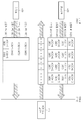
그러면 여기서, 도 1을 참조하여 일반적인 MIMO 통신 시스템에서 HARQ 방식을 사용하여 데이터를 재전송하는 동작에 대해서 설명하기로 한다. 후술할 통신 시스템은 4개의 MIMO 스트림(stream)으로 데이터를 전송하는 통신 시스템을 가정하기로 한다. Next, an operation of retransmitting data using a HARQ scheme in a general MIMO communication system will be described with reference to FIG. 1. The communication system to be described later assumes a communication system for transmitting data in four MIMO streams.
도 1은 일반적인 MIMO 통신 시스템에서 HARQ 방식을 사용하여 데이터를 재전송하는 동작을 도시한 도면이다. 1 is a diagram illustrating an operation of retransmitting data using a HARQ scheme in a general MIMO communication system.
도 1을 참조하면, 상기 통신 시스템은 신호 송신기, 일 예로 기지국(BS: Base Station)(100)과, 신호 수신기, 일 예로 이동국(MS: Mobile Station)(110)을 포함한다. 도시하지는 않았으나 상기 기지국(100)은 매체 접속 제어(MAC: Media Access Control, 이하 'MAC'이라 칭하기로 한다) 스케쥴러(scheduler)와, HARQ 모듈을 포함하고, 상기 이동국(110)은 송수신기 (modem)를 포함한다. Referring to FIG. 1, the communication system includes a signal transmitter, for example, a base station (BS) 100, and a signal receiver, for example, a mobile station (MS) 110. Although not shown, the
먼저, 기지국(100)의 MAC 스케쥴러는 스트림 #1(121), 스트림 #2(131), 스트림 #3(141), 스트림 #4(151)를 통해 복수개의 데이터 프레임, 일 예로 부호화 블록(encoding block)들을 이동국(110)으로 최초 전송한다.(120단계) 여기서, 상기 부호화 블록들은 긍정 응답(ACK: ACKnowledgement, 이하 'ACK'라 칭하기로 한다) 식별자(ID: IDentifier)(이하 'ACID'라 칭하기로 한다) 1번 내지 16번이 할당되었다고 가정한다. First, the MAC scheduler of the
상기 부호화 블록들 ACID=1(123) 내지 ACID=16(159)을 수신한 이동국(110)의 송수신기는 상기 수신한 부호화 블록들 중 정상 수신한 부호화 블록들에 대한 정보를 포함하는 ACK 메시지를 기지국(100)으로 피드백(feedback)한다.(140단계) 이때, 상기 ACK 메시지라 함은 상기 이동국(110)의 송수신기가 부호화 블록을 정상적으로 수신하면 상기 정상 수신한 부호화 블록에 대응되는 비트를 '1'로 셋팅하고, 부호화 블록을 비정상적으로 수신하면 상기 비정상 수신한 부호화 블록에 대응되는 비트를 '0'으로 셋팅하여 구성한 메시지를 의미한다. 상기 이동국(110)의 송수신기는 부호화 블록 ACID=1(123), ACID=3(143), ACID=5(125), ACID=7(145), ACID=8(155)을 비정상적으로 수신하였으므로 기지국(100)으로 피드백되는 ACK 메시지는 '0101010011111111'이 된다. The transceiver of the mobile station 110 having received the coding blocks ACID = 1 (123) to ACID = 16 (159) receives an ACK message including information on normally received coded blocks among the received coded blocks. In
한편, 상기 이동국(110)의 송수신기가 부호화 블록 정상적으로 수신하였는지 여부를 판단하는 과정은 상기 기지국(100)으로부터 부호화 블록이 수신되었는지 여부를 검사하는 과정과, 상기 부호화 블록이 수신되었을 경우, 상기 수신된 부호화 블록에 오류가 발생하였는지 여부를 검사하는 과정을 포함한다. 상기 수신된 부호화 블록에 오류가 발생하였는지 여부는 주기적 덧붙임 검사(CRC: Cyclic Redundancy Check, 이하 'CRC'라 칭하기로 한다) 부호 등을 사용하여 검사할 수 있다. In the meantime, the determining whether the transceiver of the mobile station 110 has normally received the coding block includes checking whether the coding block is received from the
기지국(100)의 MAC 스케쥴러는 이동국(110)의 송수신기로부터 자신이 송신한 부호화 블록들에 대한 ACK 메시지를 수신하면, 상기 수신한 ACK 메시지에 따라 비정상 수신된 부호화 블록들, 즉 ACID=1(123), ACID=3(143), ACID=5(125), ACID=7(145), ACID=8(155)을 검출한다. 그리고 상기 검출된 부호화 블록들을 스트 림 #1(161), 스트림 #2(171), 스트림 #3(181), 스트림 #4(191)를 통해 상기 이동국(110)으로 재전송한다.(160단계) 따라서 부호화 블록 ACID=1(123), ACID=8(155)은 스트림 #1(161)을 통해 상기 이동국(110)으로 재전송되고, 부호화 블록 ACID=3(143), ACID=5(125), ACID=7(145) 각각은 스트림 #2(171), 스트림 #3(181), 스트림 #4(191) 각각을 통해 상기 이동국(110)으로 재전송된다. When the MAC scheduler of the
그러나, 일반적인 MIMO 통신 시스템에서 기지국이 비정상 수신된 부호화 블록들을 재전송할 때, 상기 재전송할 부호화 블록들의 개수가 상기 재전송에 사용되는 MIMO 스트림 개수의 정수배가 되지 않으면, 상기 MIMO 스트림의 모든 무선자원이 사용되지 않아 일부 무선자원은 낭비되는 문제점이 있었다. 여기서 상기 모든 무선자원이라 함은 상기 MIMO 스트림을 통한 데이터의 전송시 사용 가능한 모든 무선자원을 의미한다. 즉, 도 1에서 부호화 블록들의 재전송에 사용될 스트림은 4개이지만 재전송할 부호화 블록은 5개이므로 스트림 #2(171), 스트림 #3(181), 스트림 #4(191) 각각의 무선자원은 절반만 부호화 블록에 할당되고 나머지 절반의 무선자원은 낭비되게 된다. However, when a base station retransmits abnormally received coded blocks in a general MIMO communication system, if the number of coded blocks to be retransmitted is not an integer multiple of the number of MIMO streams used for the retransmission, all radio resources of the MIMO stream are used. If not, some radio resources were wasted. Herein, all radio resources mean all radio resources available for transmission of data through the MIMO stream. That is, since there are four streams to be used for retransmission of the coding blocks in FIG. 1 but five coding blocks to be retransmitted, the radio resources of each of
본 발명은 MIMO 통신 시스템에서 체이스 컴바이닝(CC: Chase Combining, 이하 'CC'라 칭하기로 한다) 방식이 적용된 HARQ 방식을 사용하여 무선자원의 낭비 없이 데이터를 재전송할 수 있는 시스템 및 방법을 제공한다. The present invention provides a system and method capable of retransmitting data without waste of radio resources by using a HARQ scheme to which Chase Combining (CC) is applied in a MIMO communication system. .
또한 본 발명은 MIMO 통신 시스템에서 중복분 증가(IR: Incremental Redundancy, 이하 'IR'이라 칭하기로 한다) 방식이 적용된 HARQ 방식을 사용하여 무선자원의 낭비 없이 데이터를 재전송할 수 있는 시스템 및 방법을 제공한다. In addition, the present invention provides a system and method for retransmitting data without waste of radio resources by using an HARQ method to which an incremental redundancy (IR) method is applied in a MIMO communication system. do.
본 발명의 방법은, 통신 시스템에서 부호화 블록 재전송 방법에 있어서, 재전송할 부호화 블록들의 개수를 검출하는 과정과, 상기 재전송할 부호화 블록들의 개수가 상기 부호화 블록들을 재전송하는 것이 가능한 스트림 개수의 정수배인지 검사하는 과정과, 상기 재전송할 부호화 블록들의 개수가 상기 스트림 개수의 정수배가 아닐 경우, 상기 재전송할 부호화 블록들의 개수가 상기 스트림 개수의 정수배가 되기 위해 추가적으로 필요한 부호화 블록들의 최소 개수를 검출하는 과정과, 상기 스트림의 무선자원을 상기 재전송할 부호화 블록들에게 할당하여 신호 수신기로 재전송함과 동시에, 상기 스트림의 무선자원 중 상기 재전송할 부호화 블록들에게 할당되지 않은 무선자원을 상기 추가적으로 필요한 개수의 부호화 블록들에게 할당하여 상기 신호 수신기로 반복 재전송하는 과정을 포함한다. The method of the present invention provides a method for retransmitting a coded block in a communication system, the method comprising: detecting a number of coded blocks to be retransmitted, and checking whether the number of coded blocks to be retransmitted is an integer multiple of the number of streams capable of retransmitting the coded blocks. Detecting a minimum number of coding blocks additionally required for the number of coding blocks to be retransmitted to be an integer multiple of the number of streams, if the number of coding blocks to be retransmitted is not an integer multiple of the number of streams; The radio resource of the stream is allocated to the coding blocks to be retransmitted and retransmitted to a signal receiver, and the radio resources not allocated to the coding blocks to be retransmitted among the radio resources of the stream are additionally required. Assigned to the god Repeating retransmission to the call receiver.
본 발명의 다른 방법은, 통신 시스템에서 신호 송신기의 부호화 블록 재전송 방법에 있어서, 재전송할 부호화 블록들 전체 크기를 검출하는 과정과, 상기 전체 크기가 상기 부호화 블록들을 재전송하는 것이 가능한 스트림의 무선자원 크기와 동일한지 검사하는 과정과, 상기 전체 크기가 상기 스트림의 무선자원 크기와 동일하지 않을 경우, 상기 전체 크기가 상기 스트림의 무선자원 크기와 동일해질 때까지 상대적으로 재전송 횟수가 큰 부호화 블록부터 상대적으로 재전송 횟수가 작은 부호화 블록의 순서에 따라 해당 순서의 부호화 블록의 코딩 레이트를 감소시키는 과정과, 상기 전체 크기와 상기 스트림의 무선자원 크기가 동일해지면, 상기 코딩 레이트가 감소된 부호화 블록들 및 상기 재전송할 부호화 블록들 중 상기 코딩 레이트가 감소된 부호화 블록들을 제외한 나머지 블록들에게 상기 스트림의 무선자원을 할당하여 상기 신호 수신기로 재전송하는 과정을 포함한다. According to another aspect of the present invention, there is provided a method of retransmitting a coded block of a signal transmitter in a communication system, the method comprising: detecting a total size of coded blocks to be retransmitted; And if the total size is not the same as the radio resource size of the stream, the coding block having a relatively high number of retransmissions until the total size is the same as the radio resource size of the stream. Reducing the coding rate of the coding blocks in the corresponding order according to the order of the coding blocks having the smallest number of retransmissions; and if the total size and the radio resource size of the stream are the same, the coding blocks having the reduced coding rate and the retransmission A negative portion of the coded blocks to be reduced To the exception of the screen blocks block by allocating a radio resource of the stream comprises the step of retransmitting by the signal receiver.
본 발명의 다른 방법은, 통신 시스템에서 부호화 블록들을 수신하는 방법에 있어서, 상기 부호화 블록들의 수신에 사용되는 스트림들 각각의 수신 품질을 측정하여 신호 송신기로 송신하는 과정과, 상기 신호 송신기로부터 수신 품질이 높은 스트림부터 수신 품질이 낮은 스트림의 순서에 따라 해당 스트림의 무선자원이 할당된 부호화 블록들을 수신하는 과정을 포함한다.According to another aspect of the present invention, there is provided a method of receiving encoded blocks in a communication system, the method comprising: measuring a reception quality of each of the streams used to receive the encoded blocks and transmitting the received quality to a signal transmitter; And receiving the coding blocks to which radio resources of the stream are allocated in order from the high stream to the low reception stream.
본 발명의 장치는, 통신 시스템에서 부호화 블록을 재전송하는 장치에 있어서, 재전송할 부호화 블록들의 개수를 검출하고, 상기 재전송할 부호화 블록들의 개수가 상기 부호화 블록들을 재전송하는 것이 가능한 스트림 개수의 정수배인지 검사하고, 상기 재전송할 부호화 블록들의 개수가 상기 스트림 개수의 정수배가 아 닐 경우, 상기 재전송할 부호화 블록들의 개수가 상기 스트림 개수의 정수배가 되기 위해 추가적으로 필요한 부호화 블록들의 최소 개수를 검출하고, 상기 스트림의 무선자원을 상기 재전송할 부호화 블록들에게 할당하여 신호 수신기로 재전송함과 동시에, 상기 무선자원 중 상기 재전송할 부호화 블록들에게 할당되지 않은 무선자원을 상기 추가적으로 필요한 개수의 부호화 블록들에게 할당하여 상기 신호 수신기로 반복 재전송하는 MAC 스케쥴러를 포함한다.An apparatus of the present invention is a device for retransmitting a coding block in a communication system, the apparatus comprising: detecting the number of coding blocks to be retransmitted, and checking whether the number of coding blocks to be retransmitted is an integer multiple of the number of streams capable of retransmitting the coding blocks. If the number of coding blocks to be retransmitted is not an integer multiple of the number of streams, the minimum number of coding blocks additionally required for the number of coding blocks to be retransmitted to be an integer multiple of the number of streams is detected. The radio resources are allocated to the coding blocks to be retransmitted and retransmitted to the signal receiver, and the radio resources not allocated to the coding blocks to be retransmitted among the radio resources are allocated to the additionally required number of coding blocks. Repeated retransmission to the receiver It includes a MAC scheduler.
본 발명의 다른 장치는, 통신 시스템에서 부호화 블록을 재전송하는 장치에 있어서, 재전송할 부호화 블록들 전체 크기를 검출하고, 상기 전체 크기가 상기 부호화 블록들을 재전송하는 것이 가능한 스트림의 무선자원 크기와 동일한지 검사하고, 상기 전체 크기가 상기 스트림의 무선자원 크기와 동일하지 않을 경우, 상기 전체 크기가 상기 스트림의 무선자원 크기와 동일해질 때까지 재전송 횟수가 큰 부호화 블록부터 재전송 횟수가 작은 부호화 블록의 순서에 따라 해당 순서의 부호화 블록의 코딩 레이트를 감소시키고, 상기 전체 크기와 상기 스트림의 무선자원 크기가 동일해지면, 상기 코딩 레이트가 감소된 부호화 블록들 및 상기 재전송할 부호화 블록들 중 상기 코딩 레이트가 감소된 부호화 블록들을 제외한 나머지 블록들에게 상기 스트림의 무선자원을 할당하여 상기 신호 수신기로 재전송하는 MAC 스케쥴러를 포함한다. Another apparatus of the present invention is an apparatus for retransmitting a coding block in a communication system, the apparatus comprising: detecting the total size of coding blocks to be retransmitted, and whether the total size is equal to the radio resource size of a stream capable of retransmitting the coding blocks And if the total size is not equal to the radio resource size of the stream, the coding block having the largest number of retransmissions from the coding block having the smallest number of retransmissions until the total size is equal to the radio resource size of the stream. If the coding rate of the coded blocks in the corresponding order is reduced, and the total size and the radio resource size of the stream are the same, the coding rate of the coded blocks having reduced coding rate and the coded blocks to be retransmitted is reduced. The remaining blocks except the coding blocks And a MAC scheduler for allocating radio resources and retransmitting them to the signal receiver.
본 발명의 다른 장치는, 통신 시스템에서 부호화 블록을 수신하는 장치에 있어서, 상기 부호화 블록들의 수신에 사용되는 스트림들 각각의 수신 품질을 측정하여 신호 송신기로 송신하는 수신 품질 측정기와, 상기 신호 송신기로부터 수신 품 질이 높은 스트림부터 수신 품질이 낮은 스트림의 순서에 따라 해당 스트림의 무선자원이 할당된 부호화 블록들을 수신하는 송수신기를 포함한다. According to another aspect of the present invention, there is provided an apparatus for receiving an encoding block in a communication system, the apparatus comprising: a reception quality measuring unit for measuring a reception quality of each of the streams used for reception of the encoding blocks and transmitting the received quality to a signal transmitter; And a transceiver configured to receive coding blocks to which radio resources of the stream are allocated, in order from a stream having a high reception quality to a stream having a low reception quality.
상술한 바와 같이 본 발명은 MIMO 통신 시스템에서 CC방식이 적용된 HARQ 방식과 IR 방식이 적용된 HARQ 방식을 사용하여, 무선자원의 낭비 없이 데이터를 재전송함으로써 상기 무선자원의 활용도를 높이고, 이에 따른 시스템 이득을 획득할 수 있다. As described above, the present invention increases the utilization of the radio resource by retransmitting data without wasting radio resources by using the HARQ method to which the CC method is applied and the HARQ method to which the IR method is applied in the MIMO communication system. Can be obtained.
이하, 본 발명에 따른 바람직한 실시예를 첨부한 도면을 참조하여 상세히 설명한다. 하기의 설명에서는 본 발명에 따른 동작을 이해하는데 필요한 부분만이 설명되며 그 이외 부분의 설명은 본 발명의 요지를 흩트리지 않도록 생략될 것이라는 것을 유의하여야 한다. Hereinafter, exemplary embodiments of the present invention will be described in detail with reference to the accompanying drawings. It should be noted that in the following description, only parts necessary for understanding the operation according to the present invention will be described, and descriptions of other parts will be omitted so as not to distract from the gist of the present invention.
본 발명은 MIMO 통신 시스템에서 CC 방식이 적용된 HARQ 방식을 사용하여 무선자원의 낭비 없이 데이터를 재전송할 수 있는 시스템 및 방법을 제안한다. 또한, 본 발명은 MIMO 통신 시스템에서 IR 방식이 적용된 HARQ 방식을 사용하여 무선자원의 낭비 없이 데이터를 재전송할 수 있는 시스템 및 방법을 제안한다. The present invention proposes a system and method for retransmitting data without wasting radio resources by using the HARQ scheme to which the CC scheme is applied in a MIMO communication system. In addition, the present invention proposes a system and method capable of retransmitting data without wasting radio resources by using the HARQ scheme to which the IR scheme is applied in a MIMO communication system.
본 발명을 설명하기에 앞서 상기 CC 방식이 적용된 HARQ 방식과 상기 IR 방식이 적용된 HARQ 방식에 대하여 설명하면 다음과 같다. Prior to describing the present invention, the HARQ scheme to which the CC scheme is applied and the HARQ scheme to which the IR scheme is applied will be described below.
상기 CC 방식이 적용된 HARQ 방식은 송신기가 최초 전송과 재전송 시에 동일한 포맷의 데이터 프레임을 전송하고, 수신기는 상기 송신기가 최초 전송과 재전송 시 전송한 데이터 프레임을 수신한 다음 소프트 컴바이닝(soft combining)을 수행하여 복호하도록 하는 것이다. 이를 구체적으로 설명하면 다음과 같다. In the HARQ scheme to which the CC scheme is applied, the transmitter transmits data frames having the same format at the time of initial transmission and retransmission, and the receiver receives data frames transmitted at the time of initial transmission and retransmission, and then soft combines them. To decode. This will be described in detail as follows.
먼저, 송신기는 최초 전송과 재전송 시에 동일한 포맷의 데이터 프레임을 전송한다. 여기서, 상기 데이터 프레임은 오류 정정 부호로 부호화된 데이터 프레임이다. 즉, 상기 송신기가 최초 전송한 데이터 프레임이 수신기에서의 오류 발생으로 인해 정상적으로 수신되지 않았을 경우, 상기 송신기는 최초 전송시에 전송한 데이터 프레임과 동일한 데이터 프레임을 상기 수신기로 재전송한다. First, the transmitter transmits data frames of the same format in the first transmission and retransmission. Here, the data frame is a data frame encoded with an error correction code. That is, when the data frame initially transmitted by the transmitter is not normally received due to an error in the receiver, the transmitter retransmits the same data frame as the data frame transmitted during the initial transmission to the receiver.
한편, 수신기는 상기 송신기가 최초 전송한 데이터 프레임이 수신되면, 상기 수신된 데이터 프레임을 복호하여 그 오류 발생 여부를 확인한다. 그런 다음 상기 수신된 데이터 프레임에 오류가 발생되었을 경우 상기 데이터 프레임을 버퍼링(buffering)하고, 최초 전송한 데이터 프레임이 비정상 수신되었음을 나타내는 정보를 상기 송신기로 전송하여 해당 데이터 프레임의 재전송을 요구한다. 그리고 나서, 상기 수신기는 상기 송신기로부터 재전송되는 데이터 프레임을 수신하여 앞서 수신한 최초 전송한 데이터 프레임과 소프트 컴바이닝한 다음 복호한다. On the other hand, when a receiver receives a data frame initially transmitted by the transmitter, the receiver decodes the received data frame and checks whether an error occurs. Then, when an error occurs in the received data frame, the data frame is buffered, and information indicating that an initially transmitted data frame is abnormally transmitted is transmitted to the transmitter to request retransmission of the data frame. The receiver then receives the data frame retransmitted from the transmitter, soft combines with the previously transmitted data frame and then decodes it.
상기 IR 방식이 적용된 HARQ 방식은 송신기가 최초 전송과 재전송 시에 상이한 포맷의 데이터 프레임을 전송하고, 수신기는 상기 송신기가 최초 전송과 재전송시 전송한 데이터 프레임을 수신한 다음 부호 컴바이닝(code combining)을 수행하여 복호하도록 하는 것이다. 이를 구체적으로 설명하면 다음과 같다. In the HARQ scheme to which the IR scheme is applied, the transmitter transmits data frames having different formats during initial transmission and retransmission, and the receiver receives data frames transmitted during the initial transmission and retransmission, and then code combines them. To decode. This will be described in detail as follows.
먼저, 송신기는 최초 전송과 재전송시에 상이한 포맷의 데이터 프레임을 전송한다. 여기서, 상기 데이터 프레임은 오류정정 부호로 부호화된 데이터 프레임이다. 즉, 상기 송신기가 최초 전송한 데이터 프레임이 수신기에서의 오류 발생으로 인해 정상적으로 수신되지 않았을 경우, 상기 송신기는 최초 전송시에 전송한 데이터 프레임과 상이한 데이터 프레임을 상기 수신기로 재전송한다. 여기서, 상기 송신기로부터 최초 전송되는 데이터 프레임과 재전송되는 데이터 프레임은 그 부호화 방식이 상이하다. First, the transmitter transmits data frames of different formats during initial transmission and retransmission. Here, the data frame is a data frame encoded with an error correction code. That is, when the data frame originally transmitted by the transmitter is not normally received due to an error in the receiver, the transmitter retransmits a data frame different from the data frame transmitted at the initial transmission to the receiver. Here, the data frame initially transmitted from the transmitter and the data frame retransmitted have different encoding schemes.
한편, 수신기는 상기 송신기가 최초 전송한 데이터 프레임이 수신되면, 상기 수신된 데이터 프레임을 복호하여 그 오류 발생 여부를 확인한다. 그런 다음 상기 수신된 데이터 프레임에 오류가 발생되었을 경우 상기 데이터 프레임을 버퍼링하고, 최초 전송한 데이터 프레임이 비정상 수신되었음을 나타내는 정보를 상기 송신기로 전송하여 해당 데이터 프레임의 재전송을 요구한다. 그리고 나서, 상기 수신기는 상기 송신기로부터 재전송되는 데이터 프레임을 수신하여 앞서 수신한 최초 전송한 데이터 프레임과 코드 컴바이닝한 다음 복호한다. On the other hand, when a receiver receives a data frame initially transmitted by the transmitter, the receiver decodes the received data frame and checks whether an error occurs. Then, when an error occurs in the received data frame, the data frame is buffered, and information indicating that the initially transmitted data frame is abnormally received is transmitted to the transmitter to request retransmission of the data frame. The receiver then receives the data frame retransmitted from the transmitter, code combines with the previously transmitted data frame previously received and then decodes it.
한편, 수신기는 MIMO 스트림 각각에 대하여 수신된 신호의 품질을 측정하는 수신 품질 측정기를 포함하고, 상기 수신 품질 측정기는 송신기가 데이터 프레임을 재전송할 때 사용할 MIMO 스트림을 선택할 수 있도록 MIMO 스트림 각각에 대하여 측정된 수신 품질을 상기 송신기에게 주기적 또는 비주기적으로 송신할 수 있다. 이때 상기 송신기는 수신된 수신 품질을 기반으로 수신 품질이 가장 좋은 MIMO 스트림을 선택하고, 상기 선택한 MIMO 스트림을 통해 데이터 프레임을 송신한다.Meanwhile, the receiver includes a reception quality meter for measuring the quality of a received signal for each MIMO stream, and the reception quality meter measures for each MIMO stream so that the transmitter can select a MIMO stream to use when retransmitting a data frame. The received reception quality may be periodically or aperiodically transmitted to the transmitter. At this time, the transmitter selects a MIMO stream having the best reception quality based on the received reception quality, and transmits a data frame through the selected MIMO stream.
도 2는 본 발명의 제 1 실시예에 따른 MIMO 통신 시스템에서 CC 방식이 적용된 HARQ 방식을 사용하여 데이터를 재전송하는 동작을 도시한 도면이다. 2 is a diagram illustrating an operation of retransmitting data using a HARQ scheme to which a CC scheme is applied in a MIMO communication system according to a first embodiment of the present invention.
도 2를 참조하면, 상기 통신 시스템은 신호 송신기, 일 예로 기지국(200)과, 신호 수신기, 일 예로 이동국(210)을 포함한다. 그리고 도시하지는 않았으나 상기 기지국(200)은 MAC 스케쥴러와, HARQ 모듈을 포함하고, 상기 이동국(210)은 송수신기를 포함한다. Referring to FIG. 2, the communication system includes a signal transmitter, for example, a
먼저, 기지국(200)의 MAC 스케쥴러는 스트림 #1(221), 스트림 #2(231), 스트림 #3(241), 스트림 #4(251)를 통해 복수개의 데이터 프레임, 일 예로 부호화 블록들을 이동국(210)으로 최초 전송한다.(220단계) 여기서, 상기 부호화 블록들은 ACID 1번 내지 16번이 할당되었다고 가정한다. 그리고 상기 부호화 블록들은 동일한 변조 및 코딩 방식(MCS: Modulation and Coding Scheme, 이하 'MCS'라 칭하기로 한다) 레벨(level)을 사용하여 전송된다. First, the MAC scheduler of the
상기 부호화 블록들 ACID=1(223) 내지 ACID=16(259)을 수신한 이동국(210)의 송수신기는 상기 수신한 부호화 블록들 중 정상 수신한 부호화 블록들에 대한 정보를 포함하는 ACK 메시지를 기지국(200)으로 피드백한다.(240단계) 이때, 상기 ACK 메시지라 함은 상기 이동국(210)의 송수신기가 부호화 블록을 정상적으로 수신하면 상기 정상 수신한 블록에 대응되는 비트를 '1'로 셋팅하고, 부호화 블록을 비정상적으로 수신하면 상기 비정상 수신한 부호화 블록에 대응되는 비트를 '0'으로 셋팅하여 구성한 메시지를 의미한다. 상기 이동국(210)의 송수신기는 부호화 블록들 ACID=1(223), ACID=3(243), ACID=5(225), ACID=7(245), ACID=8(255)을 비정상적으 로 수신하였으므로 기지국(200)으로 피드백되는 ACK 메시지는 '0101010011111111'이 된다. The transceiver of the
한편, 상기 이동국(210)의 송수신기의 부호화 블록이 정상적으로 수신되었는지 여부를 판단하는 과정은 상기 기지국(200)으로부터 부호화 블록을 수신하였는지 여부를 검사하는 과정과, 상기 부호화 블록을 수신하였을 경우, 상기 수신한 부호화 블록에 오류가 발생하였는지 여부를 검사하는 과정을 포함한다. 상기 수신한 부호화 블록에 오류가 발생하였는지 여부는 주기적 덧붙임 검사(CRC: Cyclic Redundancy Check, 이하 'CRC'라 칭하기로 한다) 부호 등을 사용하여 검사할 수 있다. On the other hand, the process of determining whether the coding block of the transceiver of the
기지국(200)의 MAC 스케쥴러는 자신이 송신한 부호화 블록들에 대한 ACK 메시지를 수신하면, 상기 수신한 ACK 메시지가 나타내는 비정상적으로 수신된 부호화 블록들, 즉 ACID=1(223), ACID=3(243), ACID=5(225), ACID=7(245), ACID=8(255)을 검출하고, 상기 검출된 부호화 블록들을 스트림 #1(261), 스트림 #2(271), 스트림 #3(281), 스트림 #4(291)를 통해 상기 이동국(210)으로 재전송한다.(260단계) 이때, 상기 기지국(200)의 MAC 스케쥴러가 검출한 비정상적으로 수신된 부호화 블록은 5개이고, 상기 검출된 부호화 블록들을 재전송할 MIMO 스트림은 4개이므로 스트림 #2(271), 스트림 #3(281), 스트림 #4(291)의 무선자원은 일부만이 부호화 블록에 할당된다. When the MAC scheduler of the
따라서, 상기 기지국(200)의 MAC 스케쥴러는 상기 스트림 #2(271), 스트림 #3(281), 스트림 #4(291)의 무선자원 중 부호화 블록이 할당되지 않은 무선자원을 재전송 횟수가 큰 부호화 블록에 재할당하여 반복 재전송한다. 상기 재전송 횟수가 큰 부호화 블록은 기지국(200)의 HARQ 모듈에 의해 검출되며, 상기 기지국(200)의 HARQ 모듈은 부호화 블록들의 재전송 횟수를 관리한다. 이동국(210)이 기지국(200)으로부터 최초 전송되는 부호화 블록을 정상적으로 수신하면, 상기 재전송 횟수는 0이 되고, 상기 이동국(210)이 상기 기지국(200)으로부터 재전송되는 부호화 블록을 정상적으로 수신하면, 상기 재전송 횟수는 1이 된다. 이후, 상기 재전송 횟수는 상기 이동국(210)이 상기 기지국(200)으로부터 재전송되는 부호화 블록을 비정상적으로 수신할 때마다 1씩 증가하게 된다. 도 2에서는 상기 과정을 통해 기지국(200)의 HARQ 모듈이 검출한 재전송 횟수가 큰 부호화 블록이 ACID=1(223), ACID=3(243), ACID=5(225)라고 가정한다. 상기 재전송 횟수의 크기는 ACID=1(223)〉ACID=3(243)〉ACID=5(225)으로써, 상기 부호화 블록 ACID=1(223)의 재전송 횟수가 가장 크고, 부호화 블록 ACID=5(225)의 재전송 횟수가 가장 작다고 가정한다. Accordingly, the MAC scheduler of the
한편, 기지국(200)이 부호화 블록들을 이동국(210)으로 최초 전송한 다음, 상기 최초 전송된 부호화 블록들 중 비정상적으로 수신된 부호화 블록들에 대한 재전송을 수행할 경우, 상기 재전송을 수행할 부호화 블록들의 재전송 횟수가 모두 0일이면 이전에 부호화 블록이 전송된 순서, 즉 기지국(200)이 부호화 블록들을 이동국(210)으로 최초 전송한 순서에 따라 재전송을 수행한다.Meanwhile, when the
즉, 부호화 블록 ACID=1(223), ACID=3(243), ACID=5(225), ACID=7(245), ACID=8(255)을 스트림 #1(261), 스트림 #2(271), 스트림 #3(281), 스트림 #4(291)의 무선자원을 할당하여 상기 이동국(210)으로 재전송하고, 상기 각 스트림의 무선 자원 중 부호화 블록이 할당되지 않은 무선자원을 부호화 블록 ACID=1(223), ACID=3(243), ACID=5(225)에 재할당하여, 상기 부호화 블록 ACID=1(223), ACID=3(243), ACID=5(225)를 반복(repitition) 재전송한다. 따라서, MIMO 스트림의 무선자원을 낭비 없이 모두 사용할 수 있으며, 상기 반복 재전송된 부호화 블록들 ACID=1(223), ACID=3(243), ACID=5(225)에 대해서는 반복으로 인한 높은 수신이득 또한 기대할 수 있다. That is, coding blocks ACID = 1 (223), ACID = 3 (243), ACID = 5 (225), ACID = 7 (245), and ACID = 8 (255) are converted into stream # 1 (261) and stream # 2 ( 271), the radio resources of stream # 3 (281) and stream # 4 (291) are allocated and retransmitted to the mobile station (210). Reassign to = 1 (223), ACID = 3 (243), ACID = 5 (225), and repeat the coding blocks ACID = 1 (223), ACID = 3 (243), and ACID = 5 (225) ( repitition). Therefore, all the radio resources of the MIMO stream can be used without waste, and high reception gain due to repetition for the repeated retransmitted coding blocks ACID = 1 (223), ACID = 3 (243), and ACID = 5 (225) You can also expect.
도 2에서는 이동국이 MIMO 스트림 각각에 대한 수신 품질을 상기 기지국으로 송신하지 않을 경우의 데이터 재전송을 일 예로 설명하였다. 다음으로 도 3을 참조하여 이동국이 MIMO 스트림 각각에 대한 수신 품질을 상기 기지국으로 송신할 경우의 데이터 재전송을 설명하기로 한다. 2 illustrates an example of data retransmission when the mobile station does not transmit a reception quality for each MIMO stream to the base station. Next, with reference to FIG. 3, data retransmission will be described when the mobile station transmits reception quality for each MIMO stream to the base station.
도 3은 본 발명의 제 2 실시예에 따른 MIMO 통신 시스템에서 CC 방식이 적용된 HARQ 방식을 사용하여 데이터를 재전송하는 동작을 도시한 도면이다.3 is a diagram illustrating an operation of retransmitting data using a HARQ scheme to which a CC scheme is applied in a MIMO communication system according to a second embodiment of the present invention.
도 3을 참조하면, 상기 통신 시스템은 신호 송신기, 일 예로 기지국(300)과, 신호 수신기, 일 예로 이동국(310)을 포함한다. 그리고 도시하지는 않았으나 상기 기지국(300)은 MAC 스케쥴러와, HARQ 모듈을 포함하고, 상기 이동국(310)은 송수신기와, 수신 품질 측정기를 함한다.Referring to FIG. 3, the communication system includes a signal transmitter, for example, a
상기 기지국(300)의 MAC 스케줄러가 상기 이동국(310)으로 스트림 #1(321), 스트림 #2(331), 스트림 #3(341), 스트림 #4(351)를 통해 부호화 블록들을 최초 전송하고,(320단계) 상기 이동국(310)의 송수신기가 상기 기지국(300)으로 ACK 메시지를 피드백(240단계)하는 과정은 도 2의 220단계 및 240단계와 동일하게 수행되므 로 여기서는 그 상세한 설명을 생략하기로 한다. The MAC scheduler of the
한편, 상기 이동국(310)의 수신 품질 측정기는 스트림 #1(321,361), 스트림 #2(331,371), 스트림 #3(341,381), 스트림 #4(351,391)의 수신 품질을 측정하여 상기 기지국(300)으로 송신한다. 여기서 상기 측정된 수신 품질은 스트림 #2(331,371) > 스트림 #3(341,381) > 스트림 #4(351,391) > 스트림 #1(321,361)로써, 상기 스트림 #2(331,371)의 수신 품질이 가장 좋고, 상기 스트림 #1(321,361)의 수신 품질이 가장 나쁘다고 가정한다. 또한 상기 부호화 블록들에 대한 재전송 횟수의 크기는 ACID=1 > ACID=3 > ACID=5 > ACID=7 > ACID=8로써, 상기 부호화 블록 ACID=1의 재전송 횟수가 가장 크고, 부호화 블록 ACID=8의 재전송 횟수가 가장 작다고 가정한다.Meanwhile, the reception quality measuring device of the
기지국(300)의 MAC 스케쥴러는 자신이 송신한 부호화 블록들에 대한 ACK 메시지를 수신하면, 상기 ACK 메시지가 나타내는 비정상적으로 수신된 부호화 블록들, 즉 ACID=1(323), ACID=3(343), ACID=5(325), ACID=7(345), ACID=8(355)을 검출한다. 그런 다음 상기 부호화 블록들 중 ACID=1(323), ACID=3(343), ACID=5(325), ACID=7(345) 각각에게 스트림 #2(371), 스트림 #3(381), 스트림 #4(391), 스트림 #1(361)의 무선자원을 순서대로 할당하고, ACID=8(355)에게는 스트림 #2(371)의 무선자원을 할당하여 상기 이동국(310)으로 재전송한다. 이때 상기 스트림 #1(361), 스트림 #3(381), 스트림 #4(391)의 무선자원은 일부만이 부호화 블록에 할당되었으므로, 재전송 횟수가 큰 ACID=1(323), ACID=3(343), ACID=5(325) 각각에게 스트림 #3(381), 스트림 #4(391), 스트림 #1(361)의 무선자원을 순서대로 할당하여 반복 재전송한다. When the MAC scheduler of the
도 4는 본 발명의 실시예에 따른 MIMO 통신 시스템에서 기지국이 CC 방식이 적용된 HARQ 방식을 사용하여 데이터를 재전송하는 과정을 도시한 순서도이다. FIG. 4 is a flowchart illustrating a process of retransmitting data using a HARQ scheme to which a base station is applied in a MIMO communication system according to an embodiment of the present invention.
도 4를 참조하면, 401단계에서 기지국은 적어도 두개의 부호화 블록들을 이동국으로 최초 전송하고 403단계로 진행한다. 상기 403단계에서 기지국은 상기 이동국으로부터 피드백되는 ACK 메시지를 수신하고 405단계로 진행한다. 상기 405단계에서 기지국은 상기 수신한 ACK 메시지에 따라 비정상적으로 수신된 부호화 블록들을 검출하고 407단계로 진행한다. 상기 407단계에서 기지국은 상기 검출된 부호화 블록들의 개수가 MIMO 스트림 개수의 정수배인지 검사한다. 상기 검사 결과, 상기 검출된 부호화 블록들의 개수가 상기 MIMO 스트림 개수의 정수배이면, 409단계로 진행하여 상기 검출된 부호화 블록들에게 MIMO 스트림의 무선자원을 할당하고 411단계로 진행한다. 상기 411단계에서 기지국은 부호화 블록들을 상기 MIMO 스트림을 통해 이동국으로 재전송한다. Referring to FIG. 4, the base station first transmits at least two coding blocks to the mobile station in
한편, 상기 407단계 검사 결과, 기지국은 상기 검출된 부호화 블록들의 개수가 상기 MIMO 스트림 개수의 정수배가 아니면 413단계로 진행한다. 상기 413단계에서 기지국은 상기 검출된 부호화 블록들의 개수가 상기 MIMO 스트림 개수의 정수배가 되기 위해 필요한 부호화 블록들의 최소 개수를 검출하고 415단계로 진행한다. 상기 415단계에서 기지국은 재전송 횟수가 큰 순서대로, 즉 재전송 횟수가 가장 큰 부호화 블록부터 재전송 횟수가 가장 작은 부호화 블록 순서로 상기 검출한 개수 만큼의 부호화 블록들을 검출하고 417단계로 진행한다. 상기 417단계에서 기지국은 상기 MIMO 스트림의 무선자원을 상기 405단계에서 검출된 부호화 블록들에게 할당하고, 상기 MIMO 스트림의 무선자원 중 부호화 블록이 할당되지 않은 무선자원을 상기 415단계에서 검출된 부호화 블록들에게 재할당하고 419단계로 진행한다. 상기 419단계에서 기지국은 상기 405단계에서 검출된 부호화 블록들을 상기 MIMO 스트림을 통해 이동국으로 재전송함과 동시에 상기 415단계에서 검출된 부호화 블록들을 반복 재전송한다. On the other hand, if the result of the check in
도4에서는 기지국이 MIMO 스트림의 수신 품질을 알지 못하므로 재전송 및 반복 재전송시 임의로 선택된 MIMO 스트림을 사용하는 것을 일 예로 설명하였다. 그러나 상기 기지국이 상기 이동국으로부터 MIMO 스트림들 각각에 대한 수신 품질을 수신할 경우에는, 재전송 및 반복 재전송시 수신 품질을 고려하여 선택된 MIMO 스트림을 사용함은 물론이다. In FIG. 4, since the base station does not know the reception quality of the MIMO stream, it is described as an example that a randomly selected MIMO stream is used for retransmission and retransmission. However, when the base station receives the reception quality for each of the MIMO streams from the mobile station, the base station uses the selected MIMO stream in consideration of the reception quality during retransmission and repeated retransmission.
도 5는 본 발명의 제 3 실시예에 따른 MIMO 통신 시스템에서 IR 방식이 적용된 HARQ 방식을 사용하여 데이터를 재전송하는 동작을 도시한 도면이다. 5 is a diagram illustrating an operation of retransmitting data using a HARQ scheme to which an IR scheme is applied in a MIMO communication system according to a third embodiment of the present invention.
도 5를 참조하면, 상기 통신 시스템은 신호 송신기, 일 예로 기지국(400)과, 신호 수신기, 일 예로 이동국(410)을 포함한다. 그리고 도시하지는 않았으나 상기 기지국(400)은 MAC 스케쥴러와, HARQ 모듈을 포함하고, 상기 이동국(410)은 송수신기를 포함한다. Referring to FIG. 5, the communication system includes a signal transmitter, for example, a
먼저, 기지국(400)의 MAC 스케쥴러는 스트림 #1(421), 스트림 #2(431), 스트림 #3(441), 스트림 #4(451)를 통해 복수개의 데이터 프레임, 일 예로 부호화 블록들을 이동국(410)으로 최초 전송한다.(420단계) 여기서, 상기 부호화 블록들은 ACID 1번 내지 16번이 할당되었다고 가정한다. First, the MAC scheduler of the
상기 부호화 블록들 ACID=1(423) 내지 ACID=16(459)을 수신한 이동국(410)의 송수신기는 상기 수신한 부호화 블록들 중 정상 수신한 부호화 블록들에 대한 정보를 포함하는 ACK 메시지를 기지국(400)으로 피드백한다.(440단계) 상기 이동국(410)의 송수신기는 부호화 블록들 ACID=1(423), ACID=3(443), ACID=5(425), ACID=7(445), ACID=8(455)을 비정상적으로 수신하였으므로 기지국(400)으로 피드백되는 ACK 메시지는 '0101010011111111'이 된다. The transceiver of the mobile station 410 that has received the coding blocks ACID = 1 (423) to ACID = 16 (459) receives an ACK message including information on normally received coded blocks among the received coded blocks. (Step 440) The transceiver of the mobile station 410 receives the coding blocks ACID = 1 (423), ACID = 3 (443), ACID = 5 (425), ACID = 7 (445), Since the ACID = 8 455 is abnormally received, the ACK message fed back to the
기지국(400)의 MAC 스케쥴러는 자신이 송신한 부호화 블록들에 대한 ACK 메시지를 수신하면, 상기 수신한 ACK 메시지가 나타내는 비정상적으로 수신된 부호화 블록들, 즉 ACID=1(423), ACID=3(443), ACID=5(425), ACID=7(445), ACID=8(455)을 검출하고, 상기 검출된 부호화 블록들을 스트림 #1(461), 스트림 #2(471), 스트림 #3(481), 스트림 #4(491)를 통해 상기 이동국(410)으로 재전송한다.(460단계) When the MAC scheduler of the
이때, 상기 기지국(400)의 MAC 스케쥴러가 검출한 비정상 수신된 부호화 블록들의 전체 크기는 상기 MIMO 스트림의 무선자원의 전체 크기와 동일하지 않으므로, 상기 기지국(400)의 HARQ 모듈은 상기 비정상 수신된 부호화 블록들 중 재전송 횟수가 가장 큰 부호화 블록을 검출하여 코딩 레이트(coding date)를 낮춘다. 도 4에서는 기지국(400)의 HARQ 모듈이 검출한 재전송 횟수가 큰 부호화 블록이 ACID=1(423), ACID=3(443), ACID=5(425)라고 가정한다. 상기 재전송 횟수의 크기는 ACID=1(423)〉ACID=3(443)〉ACID=5(425)으로써, 상기 부호화 블록 ACID=1(423)의 재전송 횟수가 가장 크고, 부호화 블록 ACID=5(425)의 재전송 횟수가 가장 작다고 가정한다. 그런 다음 상기 부호화 블록들의 전체 크기와 상기 MIMO 스트림에 따른 무선자원의 전체 크기가 동일한지 비교한다. 상기 부호화 블록들의 전체 크기와 상기 MIMO 스트림에 따른 무선자원의 전체 크기가 동일하면, 상기 부호화 블록들을 MIMO 스트림을 통해 이동국(410)으로 재전송한다. In this case, since the total size of abnormally received coded blocks detected by the MAC scheduler of the
한편, 상기 부호화 블록들의 전체 크기와 상기 MIMO 스트림에 따른 무선자원의 전체 크기가 동일하지 않으면, 상기 재전송 횟수가 가장 높은 부호화 블록부터 재전송 횟수가 가장 낮은 부호화 블록 순서로, 부호화 블록들의 전체 크기와 상기 MIMO 스트림의 무선자원의 전체 크기가 동일해질 때까지 해당 되는 부호화 블록의 코딩 레이트를 낮춘다. 즉, 부호화 블록들 ACID=1(423), ACID=3(443), ACID=5(425)의 코딩 레이트를 낮춘 다음, 부호화 블록들 ACID=1(423), ACID=3(443), ACID=5(425), ACID=7(445), ACID=8(455)을 스트림 #1(461), 스트림 #2(471), 스트림 #3(481), 스트림 #4(491)를 통해 이동국(410)으로 재전송한다. 따라서, MIMO 스트림의 무선자원을 낭비 없이 모두 사용할 수 있으며, 상기 코딩 레이트를 낮춘 부호화 블록들 ACID=1(423), ACID=3(443), ACID=5(425)에 대해서는 코딩 레이트를 낮춤으로 인한 높은 수신이득 또한 기대할 수 있다.On the other hand, if the total size of the coding blocks and the total size of radio resources according to the MIMO stream are not the same, the total size of the coding blocks and the coded blocks from the highest coded block to the lowest coded retransmission order, The coding rate of the corresponding coding block is lowered until the total size of radio resources of the MIMO stream is the same. That is, the coding rate of the coding blocks ACID = 1 (423), ACID = 3 (443) and ACID = 5 (425) is lowered, and then the coding blocks ACID = 1 (423), ACID = 3 (443) and ACID. Mobile station via stream # 1 (461), stream # 2 (471), stream # 3 (481), stream # 4 (491) = 5 (425), ACID = 7 (445), ACID = 8 (455) Resend to 410. Accordingly, all the radio resources of the MIMO stream can be used without waste, and the coding rates for the lowered coding rates ACID = 1 (423), ACID = 3 (443), and ACID = 5 (425) are reduced. High reception gains can also be expected.
또한 부호화 블록을 전송하는 스트림의 무선자원은 도 2에서 설명한 바와 같이 최초 전송(420)과 재전송(460)시 동일한 크기를 가진다. 따라서 부호화 블록들 ACID=1(423), ACID=3(443), ACID=5(425), ACID=7(445), ACID=8(455)에 할당하고 남는 무선자원은 다른 데이터 전송을 위해 할당할 수도 있다. In addition, the radio resource of the stream for transmitting the coding block has the same size at the time of the
도 5에서는 이동국이 MIMO 스트림 각각에 대한 수신 품질을 상기 기지국으로 송신하지 않을 경우의 데이터 재전송을 일 예로 설명하였다. 다음으로 도 6을 참조하여 이동국이 MIMO 스트림 각각에 대한 수신 품질을 상기 기지국으로 송신할 경우의 데이터 재전송을 설명하기로 한다.In FIG. 5, data retransmission when the mobile station does not transmit a reception quality for each MIMO stream to the base station has been described as an example. Next, data retransmission will be described when the mobile station transmits reception quality for each MIMO stream to the base station with reference to FIG.
도 6은 본 발명의 제 4 실시예에 따른 MIMO 통신 시스템에서 IR 방식이 적용된 HARQ 방식을 사용하여 데이터를 재전송하는 동작을 도시한 도면이다.6 is a diagram illustrating an operation of retransmitting data using a HARQ scheme to which an IR scheme is applied in a MIMO communication system according to a fourth embodiment of the present invention.
도 6을 참조하면, 상기 통신 시스템은 신호 송신기, 일 예로 기지국(500)과, 신호 수신기, 일 예로 이동국(510)을 포함한다. 그리고 도시하지는 않았으나 상기 기지국(500)은 MAC 스케쥴러와, HARQ 모듈을 포함하고, 상기 이동국(510)은 송수신기와, 수신 품질 측정기를 포함한다.Referring to FIG. 6, the communication system includes a signal transmitter, for example, a
상기 기지국(500)의 MAC 스케줄러가 상기 이동국(510)으로 스트림 #1(521), 스트림 #2(531), 스트림 #3(541), 스트림 #4(551)를 통해 부호화 블록들을 최초 전송하고,(520단계) 상기 이동국(510)의 송수신기가 상기 기지국(500)으로 ACK 메시지를 피드백(540단계)하는 과정은 도 5의 420단계 및 440단계와 동일하게 수행되므로 여기서는 그 상세한 설명을 생략하기로 한다.The MAC scheduler of the
한편, 상기 이동국(510)의 수신 품질 측정기는 스트림 #1(521,561), 스트림 #2(531,571), 스트림 #3(541,581), 스트림 #4(551,591)의 수신 품질을 측정하여 상기 기지국(500)으로 송신한다. 여기서 상기 측정된 수신 품질은 스트림 #2(531,571) > 스트림 #3(541,581) > 스트림 #4(551,591) > 스트림 #1(521,561)로써, 상기 스트림 #2(531,571)의 수신 품질이 가장 좋고, 상기 스트림 #1(521,561)의 수신 품질이 가장 나쁘다고 가정한다. 또한 상기 부호화 블록들에 대한 재전송 횟수의 크기는 ACID=1 > ACID=3 > ACID=5 > ACID=7 > ACID=8로써, 상기 부호화 블록 ACID=1의 재전송 횟수가 가장 크고, 부호화 블록 ACID=8의 재전송 횟수가 가장 작다고 가정한다.Meanwhile, the reception quality measuring device of the mobile station 510 measures the reception quality of the stream # 1 (521,561), the stream # 2 (531,571), the stream # 3 (541,581), and the stream # 4 (551,591) to the
기지국(500)의 MAC 스케쥴러는 자신이 송신한 부호화 블록들에 대한 ACK 메시지를 수신하면, 상기 수신한 ACK 메시지가 나타내는 비정상적으로 수신된 부호화 블록들, 즉 ACID=1(523), ACID=3(543), ACID=5(525), ACID=7(545), ACID=8(555)을 검출하고, 상기 검출된 부호화 블록들을 스트림 #1(561), 스트림 #2(571), 스트림 #3(581), 스트림 #4(591)를 통해 상기 이동국(510)으로 재전송한다.(560단계) 이때, 상기 상기 검출된 부호화 블록들의 전체 크기는 상기 MIMO 스트림의 무선자원의 전체 크기와 동일하지 않으므로, 재전송 횟수가 가장 높은 부호화 블록부터 재전송 횟수가 가장 낮은 부호화 블록 순서로, 부호화 블록들의 전체 크기와 상기 MIMO 스트림의 무선자원의 전체 크기가 동일해질 때까지 해당 되는 부호화 블록의 코딩 레이트를 낮춘다. 즉, 부호화 블록들 ACID=1(523), ACID=3(543), ACID=5(525)의 코딩 레이트를 낮춘 다음, 코딩 레이트를 낮춘 부호화 블록들을 수신 품질이 가장 좋은 스트림 #2(571), 스트림 #3(581), 스트림 #4(591)를 통해 상기 이동국(510)으로 재전송하고, 부호화 블록들 ACID=7(545), ACID=8(555)을 수신 품질이 가장 나쁜 스트림 #1(561)을 통해 이동국(510)으로 재전송한다.When the MAC scheduler of the
도 7은 본 발명의 실시예에 따른 MIMO 통신 시스템에서 기지국이 IR 방식이 적용된 HARQ 방식을 사용하여 데이터를 재전송하는 과정을 도시한 순서도이다. 7 is a flowchart illustrating a process in which a base station retransmits data using an HARQ scheme to which an IR scheme is applied in a MIMO communication system according to an exemplary embodiment of the present invention.
도 7을 참조하면, 701단계에서 기지국은 적어도 두개의 부호화 블록들을 이 동국으로 최초 전송하고 703단계로 진행한다. 상기 703단계에서 기지국은 상기 이동국으로부터 피드백되는 ACK 메시지를 수신하고 705단계로 진행한다. 상기 705단계에서 기지국은 상기 수신한 ACK 메시지에 따라 비정상 수신된 부호화 블록을 검출하고 707단계로 진행한다. 상기 707단계에서 기지국은 상기 검출된 부호화 블록들 전체의 크기가 MIMO 스트림의 무선자원 크기와 동일한지 검사한다. 상기 검사 결과, 상기 상기 검출된 부호화 블록들 전체의 크기가 상기 MIMO 스트림의 무선자원 크기와 동일하면, 709단계로 진행하여 상기 검출된 부호화 블록들에게 MIMO 스트림의 무선자원을 할당하고 711단계로 진행한다. 상기 711단계에서 기지국은 부호화 블록들을 상기 MIMO 스트림을 통해 이동국으로 재전송한다. Referring to FIG. 7, the base station first transmits at least two coding blocks to the mobile station in
한편, 상기 707단계 검사 결과, 기지국은 상기 검출된 부호화 블록들 전체의 크기가 상기 MIMO 스트림의 무선자원 크기와 동일하지 않으면 713단계로 진행한다. 상기 713단계에서 기지국은 재전송 횟수가 큰 부호화 블록부터 재전송 횟수가 작은 부호화 블록 순서에 따라 해당 부호화 블록을 차례대로 검출하여 코딩 레이트를 낮춘 후 707단계로 진행한다. On the other hand, if the result of the check in
도 1은 일반적인 MIMO 통신 시스템에서 HARQ 방식을 사용하여 데이터를 재전송하는 동작을 도시한 도면1 is a diagram illustrating an operation of retransmitting data using a HARQ scheme in a general MIMO communication system.
도 2는 본 발명의 제 1 실시예에 따른 MIMO 통신 시스템에서 CC 방식이 적용된 HARQ 방식을 사용하여 데이터를 재전송하는 동작을 도시한 도면 2 is a diagram illustrating an operation of retransmitting data using a HARQ scheme to which a CC scheme is applied in a MIMO communication system according to a first embodiment of the present invention;
도 3은 본 발명의 제 2 실시예에 따른 MIMO 통신 시스템에서 CC 방식이 적용된 HARQ 방식을 사용하여 데이터를 재전송하는 동작을 도시한 도면3 is a diagram illustrating an operation of retransmitting data using a HARQ scheme to which a CC scheme is applied in a MIMO communication system according to a second embodiment of the present invention;
도 4는 본 발명의 실시예에 따른 MIMO 통신 시스템에서 기지국이 CC 방식이 적용된 HARQ 방식을 사용하여 데이터를 재전송하는 과정을 도시한 순서도4 is a flowchart illustrating a process of retransmitting data using a HARQ scheme to which a base station is applied in a MIMO communication system according to an embodiment of the present invention.
도 5는 본 발명의 제 3 실시예에 따른 MIMO 통신 시스템에서 IR 방식이 적용된 HARQ 방식을 사용하여 데이터를 재전송하는 동작을 도시한 도면5 is a diagram illustrating an operation of retransmitting data using a HARQ scheme to which an IR scheme is applied in a MIMO communication system according to a third embodiment of the present invention;
도 6은 본 발명의 제 4 실시예에 따른 MIMO 통신 시스템에서 IR 방식이 적용된 HARQ 방식을 사용하여 데이터를 재전송하는 동작을 도시한 도면6 is a diagram illustrating an operation of retransmitting data using a HARQ scheme to which an IR scheme is applied in a MIMO communication system according to a fourth embodiment of the present invention;
도 7은 본 발명의 실시예에 따른 MIMO 통신 시스템에서 기지국이 IR 방식이 적용된 HARQ 방식을 사용하여 데이터를 재전송하는 과정을 도시한 순서도 7 is a flowchart illustrating a process of retransmitting data using a HARQ scheme to which an eNB is applied in an MIMO communication system according to an embodiment of the present invention.
Claims (20)
Applications Claiming Priority (2)
| Application Number | Priority Date | Filing Date | Title |
|---|---|---|---|
| KR1020070118486 | 2007-11-20 | ||
| KR20070118486 | 2007-11-20 |
Publications (2)
| Publication Number | Publication Date |
|---|---|
| KR20090052289A true KR20090052289A (en) | 2009-05-25 |
| KR101626152B1 KR101626152B1 (en) | 2016-06-01 |
Family
ID=40643246
Family Applications (1)
| Application Number | Title | Priority Date | Filing Date |
|---|---|---|---|
| KR1020080115276A Expired - Fee Related KR101626152B1 (en) | 2007-11-20 | 2008-11-19 | System and method for retransmitting of a data in a communication system |
Country Status (2)
| Country | Link |
|---|---|
| US (1) | US20090132885A1 (en) |
| KR (1) | KR101626152B1 (en) |
Families Citing this family (3)
| Publication number | Priority date | Publication date | Assignee | Title |
|---|---|---|---|---|
| WO2010075678A1 (en) * | 2009-01-04 | 2010-07-08 | Huawei Technologies Co., Ltd. | Method, apparatus and system for signaling resource partition |
| CN102469024B (en) * | 2010-11-04 | 2014-08-06 | 华为技术有限公司 | Method for indicating and obtaining user fluxion and communication device |
| EP2638653B1 (en) * | 2010-11-08 | 2020-07-15 | Telefonaktiebolaget LM Ericsson (publ) | Method and arrangement for retransmission control |
Citations (1)
| Publication number | Priority date | Publication date | Assignee | Title |
|---|---|---|---|---|
| KR20030056950A (en) * | 2001-12-28 | 2003-07-04 | 삼성전자주식회사 | Apparatus for transmitting/receiving high speed-shared control channel in communication system using high speed downlink packet access scheme and method thereof |
Family Cites Families (14)
| Publication number | Priority date | Publication date | Assignee | Title |
|---|---|---|---|---|
| US6898743B2 (en) * | 2000-07-03 | 2005-05-24 | Lg Electronics Inc. | Data rate matching method in 3GPP2 system |
| US7372837B2 (en) * | 2001-10-26 | 2008-05-13 | Texas Instrument Incorporated | Incremental redundancy using two stage rate matching for automatic repeat request to obtain high speed transmission |
| US7020823B2 (en) * | 2002-03-19 | 2006-03-28 | Matsushita Electric Industrial Co., Ltd. | Error resilient coding, storage, and transmission of digital multimedia data |
| US7532600B2 (en) * | 2003-04-25 | 2009-05-12 | Alcatel-Lucent Usa Inc. | Method and system for using hybrid ARQ in communication systems that use multiple input multiple output antenna systems |
| US7974243B2 (en) * | 2003-06-18 | 2011-07-05 | Nippon Telegraph And Telephone Corporation | Wireless packet communication method and wireless packet communication apparatus |
| KR100807466B1 (en) * | 2003-06-18 | 2008-02-25 | 니폰덴신뎅와 가부시키가이샤 | Radio packet communication method |
| KR101435300B1 (en) * | 2006-02-03 | 2014-09-23 | 인터디지탈 테크날러지 코포레이션 | Method and system for supporting multiple hybrid automatic repeat request processes per transmission time interval |
| FI20065108A0 (en) * | 2006-02-13 | 2006-02-13 | Nokia Corp | Data transmission procedure, transceivers and telecommunications systems |
| US20090305690A1 (en) * | 2006-03-01 | 2009-12-10 | Matsushita Electric Industrial Co., Ltd | Radio transmission device and radio transmission method |
| US9049017B2 (en) * | 2006-10-02 | 2015-06-02 | Sony Corporation | Efficient TCP ACK prioritization in wireless networks |
| US8189559B2 (en) * | 2007-07-23 | 2012-05-29 | Samsung Electronics Co., Ltd. | Rate matching for hybrid ARQ operations |
| US7924763B2 (en) * | 2007-12-11 | 2011-04-12 | Motorola Mobility, Inc. | Method and appratus for rate matching within a communication system |
| US9071402B2 (en) * | 2008-03-24 | 2015-06-30 | Telefonaktiebolaget L M Ericsson (Publ) | Selection of retransmission settings for HARQ in WCDMA and LTE networks |
| US8316286B2 (en) * | 2008-09-04 | 2012-11-20 | Futurewei Technologies, Inc. | System and method for rate matching to enhance system throughput based on packet size |
-
2008
- 2008-11-19 US US12/274,204 patent/US20090132885A1/en not_active Abandoned
- 2008-11-19 KR KR1020080115276A patent/KR101626152B1/en not_active Expired - Fee Related
Patent Citations (1)
| Publication number | Priority date | Publication date | Assignee | Title |
|---|---|---|---|---|
| KR20030056950A (en) * | 2001-12-28 | 2003-07-04 | 삼성전자주식회사 | Apparatus for transmitting/receiving high speed-shared control channel in communication system using high speed downlink packet access scheme and method thereof |
Also Published As
| Publication number | Publication date |
|---|---|
| US20090132885A1 (en) | 2009-05-21 |
| KR101626152B1 (en) | 2016-06-01 |
Similar Documents
| Publication | Publication Date | Title |
|---|---|---|
| US10972228B2 (en) | Base station device, user equipment, wireless communication system, and communication method | |
| CN102318254B (en) | Method for requesting retransmission, method for retransmission and devices thereof | |
| KR100882057B1 (en) | Communication control methods, wireless communication systems, base stations, mobile stations and computer readable recording media | |
| EP2289196B1 (en) | Method and apparatus in a telecommunications network | |
| CN101529785A (en) | HARQ in spatial multiplexing MIMO systems | |
| TW201631923A (en) | Support for most hybrid automatic repeat request method and system per food interval | |
| JP2008228357A (en) | Method of transmitting and method of receiving subpacket in parallel channel encoder packet transmission system | |
| US20240322949A1 (en) | Base station, terminal, transmission method and reception method | |
| US20080318531A1 (en) | Method for controlling allocating resources in a mobile radio communication network, corresponding transmitter and receiver | |
| CN101645763A (en) | Dispatching method and uplink dispatching system for uplink data transmission | |
| US8675692B2 (en) | Method for acquiring processing time of wireless signal | |
| JP6681488B2 (en) | Base station, terminal and communication method | |
| KR100966074B1 (en) | Retransmission Device and Method in Wireless Communication System | |
| KR101626152B1 (en) | System and method for retransmitting of a data in a communication system | |
| CN101978725B (en) | Communication system, base station, mobile station, retransmission control method, and retransmission program | |
| US9215042B2 (en) | Apparatus and method for transmitting and receiving packet data in a wireless communication system using hybrid automatic repeat request | |
| KR101279694B1 (en) | Method of hybrid automatic repeat request having low signaling overhead and system thereof | |
| JP7095009B2 (en) | Base station, communication method and integrated circuit | |
| KR20080062887A (en) | Resource Allocation Device and Method in Wireless Communication System | |
| CN107454625A (en) | A kind of confirmation feedback information processing method and processing device of hybrid automatic repeat-request | |
| KR101368467B1 (en) | Method for acquiring processing time of wireless signal | |
| KR20120010022A (en) | Method and apparatus for transmitting and receiving uplink resource allocation information in wireless communication system | |
| KR20020088801A (en) | Method for requesting data transmission in radio communication system |
Legal Events
| Date | Code | Title | Description |
|---|---|---|---|
| PA0109 | Patent application |
St.27 status event code: A-0-1-A10-A12-nap-PA0109 |
|
| PG1501 | Laying open of application |
St.27 status event code: A-1-1-Q10-Q12-nap-PG1501 |
|
| R18-X000 | Changes to party contact information recorded |
St.27 status event code: A-3-3-R10-R18-oth-X000 |
|
| A201 | Request for examination | ||
| E13-X000 | Pre-grant limitation requested |
St.27 status event code: A-2-3-E10-E13-lim-X000 |
|
| P11-X000 | Amendment of application requested |
St.27 status event code: A-2-2-P10-P11-nap-X000 |
|
| P13-X000 | Application amended |
St.27 status event code: A-2-2-P10-P13-nap-X000 |
|
| PA0201 | Request for examination |
St.27 status event code: A-1-2-D10-D11-exm-PA0201 |
|
| D13-X000 | Search requested |
St.27 status event code: A-1-2-D10-D13-srh-X000 |
|
| D14-X000 | Search report completed |
St.27 status event code: A-1-2-D10-D14-srh-X000 |
|
| E902 | Notification of reason for refusal | ||
| PE0902 | Notice of grounds for rejection |
St.27 status event code: A-1-2-D10-D21-exm-PE0902 |
|
| P11-X000 | Amendment of application requested |
St.27 status event code: A-2-2-P10-P11-nap-X000 |
|
| P13-X000 | Application amended |
St.27 status event code: A-2-2-P10-P13-nap-X000 |
|
| E90F | Notification of reason for final refusal | ||
| PE0902 | Notice of grounds for rejection |
St.27 status event code: A-1-2-D10-D21-exm-PE0902 |
|
| E13-X000 | Pre-grant limitation requested |
St.27 status event code: A-2-3-E10-E13-lim-X000 |
|
| P11-X000 | Amendment of application requested |
St.27 status event code: A-2-2-P10-P11-nap-X000 |
|
| P13-X000 | Application amended |
St.27 status event code: A-2-2-P10-P13-nap-X000 |
|
| E701 | Decision to grant or registration of patent right | ||
| PE0701 | Decision of registration |
St.27 status event code: A-1-2-D10-D22-exm-PE0701 |
|
| GRNT | Written decision to grant | ||
| PR0701 | Registration of establishment |
St.27 status event code: A-2-4-F10-F11-exm-PR0701 |
|
| PR1002 | Payment of registration fee |
St.27 status event code: A-2-2-U10-U11-oth-PR1002 Fee payment year number: 1 |
|
| PG1601 | Publication of registration |
St.27 status event code: A-4-4-Q10-Q13-nap-PG1601 |
|
| LAPS | Lapse due to unpaid annual fee | ||
| PC1903 | Unpaid annual fee |
St.27 status event code: A-4-4-U10-U13-oth-PC1903 Not in force date: 20190526 Payment event data comment text: Termination Category : DEFAULT_OF_REGISTRATION_FEE |
|
| PC1903 | Unpaid annual fee |
St.27 status event code: N-4-6-H10-H13-oth-PC1903 Ip right cessation event data comment text: Termination Category : DEFAULT_OF_REGISTRATION_FEE Not in force date: 20190526 |