KR102766253B1 - Apparatus and method for maintaining wvaelengh interval of light sources - Google Patents
Apparatus and method for maintaining wvaelengh interval of light sources Download PDFInfo
- Publication number
- KR102766253B1 KR102766253B1 KR1020220029162A KR20220029162A KR102766253B1 KR 102766253 B1 KR102766253 B1 KR 102766253B1 KR 1020220029162 A KR1020220029162 A KR 1020220029162A KR 20220029162 A KR20220029162 A KR 20220029162A KR 102766253 B1 KR102766253 B1 KR 102766253B1
- Authority
- KR
- South Korea
- Prior art keywords
- nodes
- remote verification
- network
- tokens
- network message
- Prior art date
- Legal status (The legal status is an assumption and is not a legal conclusion. Google has not performed a legal analysis and makes no representation as to the accuracy of the status listed.)
- Active
Links
Images




Classifications
-
- H—ELECTRICITY
- H04—ELECTRIC COMMUNICATION TECHNIQUE
- H04L—TRANSMISSION OF DIGITAL INFORMATION, e.g. TELEGRAPHIC COMMUNICATION
- H04L63/00—Network architectures or network communication protocols for network security
- H04L63/12—Applying verification of the received information
- H04L63/123—Applying verification of the received information received data contents, e.g. message integrity
-
- H—ELECTRICITY
- H04—ELECTRIC COMMUNICATION TECHNIQUE
- H04W—WIRELESS COMMUNICATION NETWORKS
- H04W12/00—Security arrangements; Authentication; Protecting privacy or anonymity
- H04W12/10—Integrity
- H04W12/108—Source integrity
-
- H—ELECTRICITY
- H04—ELECTRIC COMMUNICATION TECHNIQUE
- H04L—TRANSMISSION OF DIGITAL INFORMATION, e.g. TELEGRAPHIC COMMUNICATION
- H04L9/00—Cryptographic mechanisms or cryptographic arrangements for secret or secure communications; Network security protocols
- H04L9/30—Public key, i.e. encryption algorithm being computationally infeasible to invert or user's encryption keys not requiring secrecy
-
- H—ELECTRICITY
- H04—ELECTRIC COMMUNICATION TECHNIQUE
- H04L—TRANSMISSION OF DIGITAL INFORMATION, e.g. TELEGRAPHIC COMMUNICATION
- H04L9/00—Cryptographic mechanisms or cryptographic arrangements for secret or secure communications; Network security protocols
- H04L9/30—Public key, i.e. encryption algorithm being computationally infeasible to invert or user's encryption keys not requiring secrecy
- H04L9/3066—Public key, i.e. encryption algorithm being computationally infeasible to invert or user's encryption keys not requiring secrecy involving algebraic varieties, e.g. elliptic or hyper-elliptic curves
- H04L9/3073—Public key, i.e. encryption algorithm being computationally infeasible to invert or user's encryption keys not requiring secrecy involving algebraic varieties, e.g. elliptic or hyper-elliptic curves involving pairings, e.g. identity based encryption [IBE], bilinear mappings or bilinear pairings, e.g. Weil or Tate pairing
-
- H—ELECTRICITY
- H04—ELECTRIC COMMUNICATION TECHNIQUE
- H04L—TRANSMISSION OF DIGITAL INFORMATION, e.g. TELEGRAPHIC COMMUNICATION
- H04L9/00—Cryptographic mechanisms or cryptographic arrangements for secret or secure communications; Network security protocols
- H04L9/32—Cryptographic mechanisms or cryptographic arrangements for secret or secure communications; Network security protocols including means for verifying the identity or authority of a user of the system or for message authentication, e.g. authorization, entity authentication, data integrity or data verification, non-repudiation, key authentication or verification of credentials
- H04L9/321—Cryptographic mechanisms or cryptographic arrangements for secret or secure communications; Network security protocols including means for verifying the identity or authority of a user of the system or for message authentication, e.g. authorization, entity authentication, data integrity or data verification, non-repudiation, key authentication or verification of credentials involving a third party or a trusted authority
- H04L9/3213—Cryptographic mechanisms or cryptographic arrangements for secret or secure communications; Network security protocols including means for verifying the identity or authority of a user of the system or for message authentication, e.g. authorization, entity authentication, data integrity or data verification, non-repudiation, key authentication or verification of credentials involving a third party or a trusted authority using tickets or tokens, e.g. Kerberos
-
- H—ELECTRICITY
- H04—ELECTRIC COMMUNICATION TECHNIQUE
- H04L—TRANSMISSION OF DIGITAL INFORMATION, e.g. TELEGRAPHIC COMMUNICATION
- H04L9/00—Cryptographic mechanisms or cryptographic arrangements for secret or secure communications; Network security protocols
- H04L9/32—Cryptographic mechanisms or cryptographic arrangements for secret or secure communications; Network security protocols including means for verifying the identity or authority of a user of the system or for message authentication, e.g. authorization, entity authentication, data integrity or data verification, non-repudiation, key authentication or verification of credentials
- H04L9/3236—Cryptographic mechanisms or cryptographic arrangements for secret or secure communications; Network security protocols including means for verifying the identity or authority of a user of the system or for message authentication, e.g. authorization, entity authentication, data integrity or data verification, non-repudiation, key authentication or verification of credentials using cryptographic hash functions
-
- H—ELECTRICITY
- H04—ELECTRIC COMMUNICATION TECHNIQUE
- H04L—TRANSMISSION OF DIGITAL INFORMATION, e.g. TELEGRAPHIC COMMUNICATION
- H04L9/00—Cryptographic mechanisms or cryptographic arrangements for secret or secure communications; Network security protocols
- H04L9/32—Cryptographic mechanisms or cryptographic arrangements for secret or secure communications; Network security protocols including means for verifying the identity or authority of a user of the system or for message authentication, e.g. authorization, entity authentication, data integrity or data verification, non-repudiation, key authentication or verification of credentials
- H04L9/3247—Cryptographic mechanisms or cryptographic arrangements for secret or secure communications; Network security protocols including means for verifying the identity or authority of a user of the system or for message authentication, e.g. authorization, entity authentication, data integrity or data verification, non-repudiation, key authentication or verification of credentials involving digital signatures
-
- H—ELECTRICITY
- H04—ELECTRIC COMMUNICATION TECHNIQUE
- H04L—TRANSMISSION OF DIGITAL INFORMATION, e.g. TELEGRAPHIC COMMUNICATION
- H04L9/00—Cryptographic mechanisms or cryptographic arrangements for secret or secure communications; Network security protocols
- H04L9/32—Cryptographic mechanisms or cryptographic arrangements for secret or secure communications; Network security protocols including means for verifying the identity or authority of a user of the system or for message authentication, e.g. authorization, entity authentication, data integrity or data verification, non-repudiation, key authentication or verification of credentials
- H04L9/3271—Cryptographic mechanisms or cryptographic arrangements for secret or secure communications; Network security protocols including means for verifying the identity or authority of a user of the system or for message authentication, e.g. authorization, entity authentication, data integrity or data verification, non-repudiation, key authentication or verification of credentials using challenge-response
-
- H—ELECTRICITY
- H04—ELECTRIC COMMUNICATION TECHNIQUE
- H04L—TRANSMISSION OF DIGITAL INFORMATION, e.g. TELEGRAPHIC COMMUNICATION
- H04L2209/00—Additional information or applications relating to cryptographic mechanisms or cryptographic arrangements for secret or secure communication H04L9/00
- H04L2209/80—Wireless
- H04L2209/805—Lightweight hardware, e.g. radio-frequency identification [RFID] or sensor
Landscapes
- Engineering & Computer Science (AREA)
- Computer Security & Cryptography (AREA)
- Computer Networks & Wireless Communication (AREA)
- Signal Processing (AREA)
- Theoretical Computer Science (AREA)
- Computing Systems (AREA)
- Physics & Mathematics (AREA)
- Mathematical Analysis (AREA)
- Mathematical Optimization (AREA)
- Mathematical Physics (AREA)
- Pure & Applied Mathematics (AREA)
- General Physics & Mathematics (AREA)
- Algebra (AREA)
- Computer Hardware Design (AREA)
- General Engineering & Computer Science (AREA)
- Data Exchanges In Wide-Area Networks (AREA)
- Mobile Radio Communication Systems (AREA)
Abstract
모빌리티를 고려한 원격 검증 장치 및 방법이 개시된다. 상기 모빌리티를 고려한 원격 검증 방법은, 네트워크를 구성하는 노드들 각각에서 자가 원격 검증을 수행하여 원격 검증 결과 값을 획득하는 단계; 상기 노드들 각각에서 상기 획득된 원격 검증 결과 값을 이웃하는 적어도 하나의 노드로 브로드캐스트하여 상기 노드들 각각에서 상기 노드들 각각에 대한 원격 검증 결과 값을 획득하는 단계; 및 상기 노드들 각각에서 상기 획득된 노드들 각각에 대한 원격 검증 결과 값에 기초하여 상기 노드들 각각의 원격 검증을 모니터링하는 단계를 포함한다.A remote verification device and method considering mobility are disclosed. The remote verification method considering mobility includes a step of performing self-remote verification on each node constituting a network to obtain a remote verification result value; a step of broadcasting the obtained remote verification result value from each of the nodes to at least one neighboring node to obtain a remote verification result value for each of the nodes; and a step of monitoring remote verification of each of the nodes based on the obtained remote verification result value for each of the nodes.

Description
본 개시는 원격 검증 장치 및 방법에 관한 것이며, 보다 구체적으로 모빌리티(mobility)를 고려하여 원격 검증을 수행할 수 있는 장치 및 방법에 대한 것이다.The present disclosure relates to a remote verification device and method, and more specifically, to a device and method capable of performing remote verification by taking mobility into consideration.
최근 CCTV 카메라, 아파트 월패드와 같이 개인정보가 유출되기 쉬운 IoT 장치들이 악의적인 DDoS 공격에 받아 약 150,000개 장비가 해킹되어 봇의 일부가 되고 프랑스 웹 호스팅 회사를 공격했던 사건이 기사화되었다. Recently, there was an article about an incident where IoT devices, such as CCTV cameras and apartment wall pads, which are prone to leaking personal information, were hacked by a malicious DDoS attack, and around 150,000 devices became part of a bot that attacked a French web hosting company.
만약 CCTV 카메라와 같이 IoT 장치들의 상태 예를 들어, 악의적인 해커에 의해 장치가 악성코드에 감염되었는지 내부 상황을 주기적으로 모니터링 할 수 있다면 피해를 막을 수도 있다. 원격 검증은 검증자(Verifier)가 IoT 장치 시스템 무결성에 대해 신뢰 수준을 결정할 수 있게 해주는 기술로써 검증자가 원격 검증을 요청하면 IoT 장비는 자신의 내부 상태 혹은 시스템에서 발생한 행위들을 체인 해시를 이용하여 검증 결과 값을 생성하고 이를 검증자에게 전송하여 무결성을 증명하는 프로토콜을 사용한다.If the internal status of IoT devices such as CCTV cameras can be periodically monitored to see if the device has been infected with malware by malicious hackers, for example, damage can be prevented. Remote verification is a technology that allows a verifier to determine the level of trust in the integrity of an IoT device system. When a verifier requests remote verification, the IoT device uses a protocol that generates a verification result value using a chain hash of its internal status or actions that occurred in the system and transmits it to the verifier to prove its integrity.
본 개시의 기술적 과제는, 모빌리티(mobility)를 고려하여 원격 검증을 수행할 수 있는 장치 및 방법을 제공하는데 그 목적이 있다.The technical problem of the present disclosure is to provide a device and method capable of performing remote verification considering mobility.
본 개시에서 이루고자 하는 기술적 과제들은 이상에서 언급한 기술적 과제들로 제한되지 않으며, 언급하지 않은 또 다른 기술적 과제들은 아래의 기재로부터 본 개시가 속하는 기술분야에서 통상의 지식을 가진 자에게 명확하게 이해될 수 있을 것이다.The technical problems to be achieved in the present disclosure are not limited to the technical problems mentioned above, and other technical problems not mentioned will be clearly understood by a person having ordinary skill in the technical field to which the present disclosure belongs from the description below.
본 개시의 일 실시예에 따르면, 모빌리티를 고려한 원격 검증 장치 및 방법이 개시된다. 본 개시의 일 실시예에 따른 상기 모빌리티를 고려한 원격 검증 방법은, 네트워크를 구성하는 노드들 각각에서 자가 원격 검증을 수행하여 원격 검증 결과 값을 획득하는 단계; 상기 노드들 각각에서 상기 획득된 원격 검증 결과 값을 이웃하는 적어도 하나의 노드로 브로드캐스트하여 상기 노드들 각각에서 상기 노드들 각각에 대한 원격 검증 결과 값을 획득하는 단계; 및 상기 노드들 각각에서 상기 획득된 노드들 각각에 대한 원격 검증 결과 값에 기초하여 상기 노드들 각각의 원격 검증을 모니터링하는 단계를 포함한다.According to one embodiment of the present disclosure, a remote verification device and method considering mobility are disclosed. The remote verification method considering mobility according to one embodiment of the present disclosure includes: a step of performing self-remote verification on each of nodes constituting a network to obtain a remote verification result value; a step of broadcasting the obtained remote verification result value from each of the nodes to at least one neighboring node to obtain a remote verification result value for each of the nodes; and a step of monitoring remote verification of each of the nodes based on the obtained remote verification result value for each of the nodes.
이때, 상기 자가 원격 검증을 수행하여 원격 검증 결과 값을 획득하는 단계는, 블룸 필터(Bloom filter)를 이용하여 해당 노드의 상기 원격 검증 결과 값을 미리 정해진 네트워크 메시지에 기록할 수 있다.At this time, the step of performing the self-remote verification and obtaining the remote verification result value can record the remote verification result value of the corresponding node in a predefined network message using a Bloom filter.
이때, 상기 노드들 각각에 대한 원격 검증 결과 값을 획득하는 단계는, 상기 네트워크 메시지를 상기 이웃하는 적어도 하나의 노드로 브로드캐스트하고, 상기 노드들 각각에서 미리 설정된 합의 프로토콜과 상기 이웃하는 적어도 하나의 노드로부터 수신된 네트워크 메시지를 이용하여 자신의 네트워크 메시지를 업데이트함으로써, 상기 노드들 각각에 대한 원격 검증 결과 값을 획득할 수 있다.At this time, the step of obtaining a remote verification result value for each of the nodes may include broadcasting the network message to at least one neighboring node, and updating its own network message using a preset consensus protocol and a network message received from at least one neighboring node, thereby obtaining a remote verification result value for each of the nodes.
이때, 상기 노드들 각각에 대한 원격 검증 결과 값을 획득하는 단계는, 상기 자신의 네트워크 메시지에 기록된 원격 검증 결과 값과 상기 수신된 네트워크 메시지에 기록된 원격 검증 결과 값을 합하여 상기 자신의 네트워크 메시지를 업데이트할 수 있다.At this time, the step of obtaining the remote verification result value for each of the above nodes can update the above own network message by adding the remote verification result value recorded in the above own network message and the remote verification result value recorded in the above received network message.
이때, 상기 합의 프로토콜은, 대칭키 기반 합의 프로토콜과 비대칭키 기반 합의 프로토콜 중 어느 하나의 프로토콜을 포함할 수 있다.At this time, the consensus protocol may include either a symmetric key-based consensus protocol or an asymmetric key-based consensus protocol.
이때, 상기 노드들 각각에 대한 원격 검증 결과 값을 획득하는 단계는, 상기 노드들 각각에서 상기 합의 프로토콜을 이용하여 상기 노드들 각각의 무결성을 검증하는 단계; 상기 무결성이 검증된 적어도 하나 이상의 노드의 네트워크 메시지로 상기 자신의 네트워크 메시지를 업데이트하는 단계; 및 상기 업데이트된 자신의 네트워크 메시지를 통해 상기 노드들 각각에 대한 원격 검증 결과 값을 획득하는 단계를 포함할 수 있다.At this time, the step of obtaining a remote verification result value for each of the nodes may include a step of verifying the integrity of each of the nodes using the consensus protocol in each of the nodes; a step of updating the own network message with a network message of at least one node whose integrity has been verified; and a step of obtaining a remote verification result value for each of the nodes through the updated own network message.
이때, 상기 노드들 각각의 무결성을 검증하는 단계는, 상기 노드들이 커밋값들을 생성하여 토큰들의 생성을 시작하는 단계; 상기 노드들 각각의 주변 노드들에 상응하는, 식별자들 및 커밋값들을 각각 통합하여 토큰들을 생성하는 단계; 및 상기 토큰들을 이용하여 상기 토큰들의 생성에 참여한 노드들의 무결성을 검증하는 단계를 포함할 수 있다.At this time, the step of verifying the integrity of each of the nodes may include a step of the nodes generating commit values to start generating tokens; a step of integrating identifiers and commit values corresponding to surrounding nodes of each of the nodes to generate tokens; and a step of verifying the integrity of nodes that participated in the generation of the tokens using the tokens.
이때, 상기 토큰들의 생성에 참여한 노드들의 무결성을 검증하는 단계는, 상기 토큰들 중 어느 하나에 상응하는 토큰의 생성에 참여한 노드들이 상기 토큰들 중 어느 하나에 상응하는 토큰에 상기 노드들에 상응하는 서명값들을 저장하는 단계; 상기 노드들에 상응하는 서명값들을 통합하는 단계; 및 상기 통합된 커밋값들 및 상기 통합된 서명값들을 검증하여 상기 토큰들의 생성에 참여한 노드들의 무결성을 검증하는 단계를 포함할 수 있다.At this time, the step of verifying the integrity of the nodes that participated in the generation of the tokens may include the step of: the step of storing signature values corresponding to the nodes in a token corresponding to one of the tokens by the nodes that participated in the generation of the tokens; the step of integrating the signature values corresponding to the nodes; and the step of verifying the integrity of the nodes that participated in the generation of the tokens by verifying the integrated commit values and the integrated signature values.
이때, 상기 커밋값들(Ri)은, 소수 위수(prime order) q를 가지는 그룹(group) G, 상기 그룹 G의 생성원(generator) g, 비밀 난수 ri에 대하여, Ri = g^{ri}에 상응하여 생성될 수 있다.At this time, the above commitment values (Ri) can be generated corresponding to R i = g^{r i } for a group G having a prime order q, a generator g of the group G, and a secret random number r i .
이때, 상기 서명값들(si)은, 서명키 쌍(pair) 중 개인키(signature private key) xi, 상기 비밀 난수 ri, 및 해시값 c에 의해 si = ri + cxi에 상응하여 생성되고, 상기 해시값은, 상기 통합된 커밋값들 및 전자서명을 요청하는 메시지에 상응하여 생성될 수 있다.At this time, the signature values (s i ) are generated by a private key x i among a pair of signature keys, the secret random number r i , and a hash value c such that s i = r i + cx i , and the hash value can be generated corresponding to the integrated commit values and a message requesting an electronic signature.
이때, 상기 통합된 커밋값들 및 상기 통합된 서명값들을 검증하는 단계는, 상기 서명키 쌍 중 서명 공개키(signature public key)를 통합한 공동 공개키를 이용할 수 있다.At this time, the step of verifying the integrated commit values and the integrated signature values can use a common public key that integrates the signature public key among the signature key pairs.
본 개시의 다른 실시예에 따른 모빌리티를 고려한 원격 검증 방법은, 자가 원격 검증을 수행하여 원격 검증 결과 값을 획득하고, 상기 획득된 원격 검증 결과 값을 자신의 네트워크 메시지에 기록하는 단계; 이웃하는 적어도 하나의 노드로부터 브로드캐스트되는 네트워크 메시지를 수신하는 단계; 상기 수신된 네트워크 메시지와 미리 설정된 합의 프로토콜을 이용하여 상기 자신의 네트워크 메시지를 업데이트하는 단계; 및 상기 자신의 네트워크 메시지에 업데이트된 원격 검증 결과 값에 기초하여 네트워크를 구성하는 노드들 각각의 원격 검증을 모니터링하는 단계를 포함한다.A remote verification method considering mobility according to another embodiment of the present disclosure includes: a step of performing self-remote verification to obtain a remote verification result value, and recording the obtained remote verification result value in its own network message; a step of receiving a network message broadcast from at least one neighboring node; a step of updating its own network message using the received network message and a preset consensus protocol; and a step of monitoring remote verification of each of the nodes constituting the network based on the remote verification result value updated in its own network message.
본 개시의 또 다른 실시예에 따른 모빌리티를 고려한 원격 검증 장치는, 자가 원격 검증을 수행하여 원격 검증 결과 값을 획득하고, 상기 획득된 원격 검증 결과 값을 자신의 네트워크 메시지에 기록하는 자가 검증부; 이웃하는 적어도 하나의 노드로부터 브로드캐스트되는 네트워크 메시지를 수신하는 수신부; 상기 수신된 네트워크 메시지와 미리 설정된 합의 프로토콜을 이용하여 상기 자신의 네트워크 메시지에 업데이트하는 업데이트부; 및 상기 자신의 네트워크 메시지에 업데이트된 원격 검증 결과 값에 기초하여 네트워크를 구성하는 노드들 각각의 원격 검증을 모니터링하는 모니터링부를 포함한다.A remote verification device considering mobility according to another embodiment of the present disclosure includes a self-verification unit that performs self-remote verification to obtain a remote verification result value and records the obtained remote verification result value in its own network message; a receiving unit that receives a network message broadcast from at least one neighboring node; an updating unit that updates its own network message using the received network message and a preset consensus protocol; and a monitoring unit that monitors remote verification of each of the nodes constituting the network based on the remote verification result value updated in the own network message.
본 개시에 대하여 위에서 간략하게 요약된 특징들은 후술하는 본 개시의 상세한 설명의 예시적인 양상일 뿐이며, 본 개시의 범위를 제한하는 것은 아니다.The features briefly summarized above regarding the present disclosure are merely exemplary aspects of the detailed description of the present disclosure that follows and do not limit the scope of the present disclosure.
본 개시에 따르면, 모빌리티(mobility)를 고려하여 원격 검증을 수행할 수 있는 장치 및 방법을 제공할 수 있다.According to the present disclosure, a device and method capable of performing remote verification considering mobility can be provided.
본 개시에서 얻을 수 있는 효과는 이상에서 언급한 효과들로 제한되지 않으며, 언급하지 않은 또 다른 효과들은 아래의 기재로부터 본 개시가 속하는 기술 분야에서 통상의 지식을 가진 자에게 명확하게 이해될 수 있을 것이다.The effects obtainable from the present disclosure are not limited to the effects mentioned above, and other effects not mentioned will be clearly understood by a person skilled in the art to which the present disclosure belongs from the description below.
도 1은 TEE(Trusted Execution Environment) 환경에서 원격 검증을 수행하는 TPM(Trusted Platform Module)을 도시한 도면이다.
도 2는 본 개시의 실시예에 따른 모빌리티를 고려한 원격 검증 방법의 순서도를 도시한 도면이다.
도 3은 블룸 필터를 설명하기 위한 일 예시도를 도시한 도면이다.
도 4는 노드들 각각에서 블룸 필터를 초기화한 것을 도시한 도면이다.
도 5는 노드들 각각에서 자가 원격 검증을 수행한 결과의 실시예를 도시한 도면이다.
도 6과 도 7은 노드들 간의 합의 과정을 설명하기 위해 도시한 도면이다.
도 8은 노드들 각각에서의 최종 네트워크 메시지를 설명하기 위해 도시한 도면이다.
도 9는 도 2의 단계 S230에 대한 일 실시예의 순서도를 도시한 도면이다.
도 10은 Schnorr 멀티시그니쳐 방식으로 개별 사용자의 공개키를 통합한 공동 공개키를 생성하는 것을 개념적으로 도시한 도면이다.
도 11은 노드들 각각의 무결성을 검증하기 위한 과정을 도시한 일 실시예의 도면이다.
도 12는 본 개시의 다른 실시예에 따른 모빌리티를 고려한 원격 검증 방법의 순서도를 도시한 도면이다.
도 13은 본 개시의 또 다른 실시예에 따른 모빌리티를 고려한 원격 검증 장치의 구성을 도시한 도면이다.
도 14는 본 개시의 실시예에 따른 모빌리티를 고려한 원격 검증 장치가 적용되는 디바이스의 구성도를 도시한 도면이다.Figure 1 is a diagram illustrating a Trusted Platform Module (TPM) that performs remote verification in a Trusted Execution Environment (TEE) environment.
FIG. 2 is a diagram illustrating a flowchart of a remote verification method considering mobility according to an embodiment of the present disclosure.
Figure 3 is a diagram illustrating an example diagram for explaining a bloom filter.
Figure 4 is a diagram showing the initialization of bloom filters at each node.
Figure 5 is a diagram illustrating an example of the results of performing self-remote verification on each node.
Figures 6 and 7 are diagrams illustrating the agreement process between nodes.
Figure 8 is a diagram illustrating the final network message at each node.
FIG. 9 is a flowchart illustrating one embodiment of step S230 of FIG. 2.
Figure 10 is a conceptual diagram illustrating the creation of a joint public key by integrating the public keys of individual users using the Schnorr multisignature method.
FIG. 11 is a diagram illustrating one embodiment of a process for verifying the integrity of each node.
FIG. 12 is a flowchart illustrating a remote verification method considering mobility according to another embodiment of the present disclosure.
FIG. 13 is a diagram illustrating a configuration of a remote verification device considering mobility according to another embodiment of the present disclosure.
FIG. 14 is a diagram illustrating a configuration of a device to which a remote verification device considering mobility according to an embodiment of the present disclosure is applied.
이하에서는 첨부한 도면을 참고로 하여 본 개시의 실시 예에 대하여 본 개시가 속하는 기술 분야에서 통상의 지식을 가진 자가 용이하게 실시할 수 있도록 상세히 설명한다. 그러나, 본 개시는 여러 가지 상이한 형태로 구현될 수 있으며 여기에서 설명하는 실시 예에 한정되지 않는다. Hereinafter, embodiments of the present disclosure will be described in detail with reference to the attached drawings so that those skilled in the art can easily implement the present disclosure. However, the present disclosure may be implemented in various different forms and is not limited to the embodiments described herein.
본 개시의 실시 예를 설명함에 있어서 공지 구성 또는 기능에 대한 구체적인 설명이 본 개시의 요지를 흐릴 수 있다고 판단되는 경우에는 그에 대한 상세한 설명은 생략한다. 그리고, 도면에서 본 개시에 대한 설명과 관계없는 부분은 생략하였으며, 유사한 부분에 대해서는 유사한 도면 부호를 붙였다.In describing embodiments of the present disclosure, if it is determined that a specific description of a known configuration or function may obscure the gist of the present disclosure, a detailed description thereof will be omitted. In addition, parts in the drawings that are not related to the description of the present disclosure have been omitted, and similar parts have been given similar drawing reference numerals.
본 개시에 있어서, 어떤 구성요소가 다른 구성요소와 "연결", "결합" 또는 "접속"되어 있다고 할 때, 이는 직접적인 연결 관계 뿐만 아니라, 그 중간에 또 다른 구성요소가 존재하는 간접적인 연결관계도 포함할 수 있다. 또한 어떤 구성요소가 다른 구성요소를 "포함한다" 또는 "가진다"고 할 때, 이는 특별히 반대되는 기재가 없는 한 다른 구성요소를 배제하는 것이 아니라 또 다른 구성요소를 더 포함할 수 있는 것을 의미한다.In the present disclosure, when a component is said to be "connected," "coupled," or "connected" to another component, this may include not only a direct connection relationship, but also an indirect connection relationship in which another component exists in between. In addition, when a component is said to "include" or "have" another component, this does not exclude the other component unless specifically stated otherwise, but rather means that the other component may be included.
본 개시에 있어서, 제1, 제2 등의 용어는 하나의 구성요소를 다른 구성요소로부터 구별하는 목적으로만 사용되며, 특별히 언급되지 않는 한 구성요소들 간의 순서 또는 중요도 등을 한정하지 않는다. 따라서, 본 개시의 범위 내에서 일 실시 예에서의 제1 구성요소는 다른 실시 예에서 제2 구성요소라고 칭할 수도 있고, 마찬가지로 일 실시 예에서의 제2 구성요소를 다른 실시 예에서 제1 구성요소라고 칭할 수도 있다. In this disclosure, the terms first, second, etc. are used only for the purpose of distinguishing one component from another component, and do not limit the order or importance between the components unless specifically stated. Accordingly, within the scope of this disclosure, a first component in one embodiment may be referred to as a second component in another embodiment, and similarly, a second component in one embodiment may be referred to as a first component in another embodiment.
본 개시에 있어서, 서로 구별되는 구성요소들은 각각의 특징을 명확하게 설명하기 위한 것일 뿐, 구성요소들이 반드시 분리되는 것을 의미하지는 않는다. 즉, 복수의 구성요소가 통합되어 하나의 하드웨어 또는 소프트웨어 단위로 이루어질 수도 있고, 하나의 구성요소가 분산되어 복수의 하드웨어 또는 소프트웨어 단위로 이루어질 수도 있다. 따라서, 별도로 언급하지 않더라도 이와 같이 통합된 또는 분산된 실시 예도 본 개시의 범위에 포함된다. In the present disclosure, the components that are distinguished from each other are only intended to clearly explain the characteristics of each, and do not necessarily mean that the components are separated. That is, a plurality of components may be integrated to form a single hardware or software unit, or a single component may be distributed to form a plurality of hardware or software units. Accordingly, even if not mentioned separately, such integrated or distributed embodiments are also included in the scope of the present disclosure.
본 개시에 있어서, 다양한 실시 예에서 설명하는 구성요소들이 반드시 필수적인 구성요소들은 의미하는 것은 아니며, 일부는 선택적인 구성요소일 수 있다. 따라서, 일 실시 예에서 설명하는 구성요소들의 부분집합으로 구성되는 실시 예도 본 개시의 범위에 포함된다. 또한, 다양한 실시예에서 설명하는 구성요소들에 추가적으로 다른 구성요소를 포함하는 실시 예도 본 개시의 범위에 포함된다. In the present disclosure, the components described in various embodiments do not necessarily mean essential components, and some may be optional components. Accordingly, an embodiment that consists of a subset of the components described in one embodiment is also included in the scope of the present disclosure. In addition, an embodiment that includes other components in addition to the components described in various embodiments is also included in the scope of the present disclosure.
본 개시에 있어서, 본 명세서에 사용되는 위치 관계의 표현, 예컨대 상부, 하부, 좌측, 우측 등은 설명의 편의를 위해 기재된 것이고, 본 명세서에 도시된 도면을 역으로 보는 경우에는, 명세서에 기재된 위치 관계는 반대로 해석될 수도 있다.In the present disclosure, expressions of positional relationships used in the present specification, such as top, bottom, left, right, etc., are described for convenience of explanation, and when the drawings illustrated in the present specification are viewed in reverse, the positional relationships described in the specification may be interpreted in the opposite way.
도 1은 TEE(Trusted Execution Environment) 환경에서 원격 검증을 수행하는 TPM(Trusted Platform Module)을 도시한 도면이다.Figure 1 is a diagram illustrating a Trusted Platform Module (TPM) that performs remote verification in a Trusted Execution Environment (TEE) environment.
도 1에 도시된 바와 같이, 검증자(Verifier)가 논스(nonce) 값과 함께 원격검증 요청하면 IoT 장비(Prover)는 TPM이 비밀키(Attestation Identify Key)로 PCR(Platform Configuration Register) 값과 논스(nonce) 값을 서명하여 생성된 쿼트(Quote)를 검증자에게 전송한다. 쿼트(Quote)를 수신한 검증자는 인증서를 통해 이를 검증하고 장치의 무결성을 파악하는 프로토콜이다.As illustrated in Figure 1, when a verifier requests remote verification with a nonce value, the IoT device (Prover) sends a quote generated by signing the PCR (Platform Configuration Register) value and the nonce value with a secret key (Attestation Identify Key) to the verifier. The verifier that receives the quote verifies it through a certificate and determines the integrity of the device.
TPM을 이용한 원격 검증에서는 한 개의 검증자와 한개의 IoT 단말을 통해 이루어지는 원격 검증 기술만을 다루고 있다. 하지만, 멀티홉으로 이루어진 대규모 네트워크 환경에서 하나의 검증자가 중앙집중식 통신 방법을 통해 원격 검증 요청/응답을 수행한다면 통신 부하가 발생하게 되고, 특히 실시간으로 센싱 데이터 처리가 필요하고 자원이 제한되어 있는 IoT 환경을 고려한다면 원격 검증을 수행할 수 없게 된다. Remote verification using TPM only deals with remote verification technology that is performed through one verifier and one IoT terminal. However, if one verifier performs remote verification request/response through a centralized communication method in a large-scale network environment consisting of multi-hops, communication load occurs, and especially considering the IoT environment that requires real-time sensing data processing and has limited resources, remote verification cannot be performed.
또한, 모빌리티(mobility)가 중요한 드론 응용서비스, 스마트 시티, 스마트 교통 분야 등에서는 기기가 원격 검증에 참여하는 동안에도 네트워크를 이동, 가입 및 탈퇴하거나 간헐적으로 활동할 수 있어야 한다. 즉 특정한 라우팅 프로토콜에 의존하지 말아야 하고, 리소스가 제한된 대규모 IoT 네트워크에서 원격 검증을 수행하는 통신부하를 최소화하고 데이터 처리를 가볍고 효율적으로 처리해야 한다.In addition, in areas where mobility is important, such as drone applications, smart cities, and smart transportation, devices should be able to move, join and leave the network, or operate intermittently while participating in remote verification. In other words, they should not rely on specific routing protocols, and the communication load for performing remote verification in large-scale IoT networks with limited resources should be minimized, and data processing should be handled lightly and efficiently.
본 개시의 실시예들은, 모빌리티를 고려하여 노드들 각각에서 자가 원격 검증을 수행하고 네트워크를 구성하는 노드들 간의 합의 프로토콜을 이용하여 노드들 각각에서 다른 노드들의 자가 원격 검증 결과 값을 모니터링할 수 있는 것을 그 요지로 한다.The embodiments of the present disclosure are intended to perform self-remote verification at each node by considering mobility, and to enable each node to monitor the self-remote verification result values of other nodes by utilizing a consensus protocol among the nodes forming the network.
즉, 본 개시의 실시예들은, 스패닝 트리를 구축할 필요가 없어 라우팅이 필요 없는 비정형 네트워크에 적합하고, 기기(증명자)가 항상 온라인 상태이거나 전체 원격 검증하는 동안 연결할 수 있어야 하는 것은 아니기 때문에 모빌리티를 충분히 고려하고 원격검증을 수행할 수 있다.That is, the embodiments of the present disclosure are suitable for an irregular network that does not require routing because there is no need to build a spanning tree, and can perform remote verification while sufficiently considering mobility because the device (attorney) does not always need to be online or connectable during the entire remote verification.
이때, 본 개시의 실시예들은, 블룸 필터와 합의 프로토콜을 이용하여 기기 상태(노드 상태)에 대한 정확한 정보 대신 네트워크 상태를 추정할 수 있다. 이러한 본 개시는, 다음과 같은 장점을 가질 수 있다. 첫번째, 블룸 필터를 이용하여 각 결과를 수집할 수 있는 효율적인 데이터 구조를 제공하여 런타임 성능을 줄이며 네트워크 가입 및 탈퇴 시 장치 수를 보다 확장할 수 있다. 두 번째, 장치들(노드들) 각각에서 각 원격 검증 증명의 수집을 통해 네트워크 상태 스냅샷 수렴에 도달하는 것을 허용한다. 여기서, 스냅샷은, 노드들 각각의 자가 원격 검증 결과 값을 수집한 최종 네트워크 상태를 의미할 수 있다. 최종 검증 결과에서 검증자는 i) 네트워크의 장치를 쿼리하여 네트워크에 손상된 장치가 포함되어 있는지 쉽게 확인할 수 있다. ii) 손상된 장치의 수를 추정할 수 있다. iii) 특정 장치가 손상되었는지 확인할 수 있다.At this time, the embodiments of the present disclosure can estimate the network state instead of the accurate information about the device state (node state) by using the bloom filter and the consensus protocol. This present disclosure can have the following advantages. First, it provides an efficient data structure that can collect each result by using the bloom filter, so that the runtime performance can be reduced and the number of devices can be further expanded when joining and leaving the network. Second, it allows reaching the convergence of the network state snapshot through the collection of each remote verification proof from each of the devices (nodes). Here, the snapshot can mean the final network state where each of the nodes collected its own remote verification result value. From the final verification result, the verifier can i) easily check whether the network includes a compromised device by querying the devices in the network. ii) the number of compromised devices can be estimated. iii) a specific device can be confirmed to be compromised.
이러한 본 개시의 방법과 장치에 대하여, 도 2 내지 도 13을 참조하여 설명한다.The method and device of this disclosure will be described with reference to FIGS. 2 to 13.
도 2는 본 개시의 실시예에 따른 모빌리티를 고려한 원격 검증 방법의 순서도를 도시한 도면이다.FIG. 2 is a diagram illustrating a flowchart of a remote verification method considering mobility according to an embodiment of the present disclosure.
도 2를 참조하면, 본 개시의 실시예에 따른 모빌리티를 고려한 원격 검증 방법은, 네트워크를 구성하는 노드들 각각에서 자가 원격 검증을 수행하여 원격 검증 결과 값을 획득하고, 획득된 원격 검증 결과 값을 자신의 네트워크 메시지에 기록하는 단계(S210, S220), 노드들 각각에서 미리 설정된 합의 프로토콜과 이웃하는 적어도 하나의 노드로부터 수신된 네트워크 메시지를 이용하여 자신의 네트워크 메시지를 업데이트하는 단계(S230) 및 노드들 각각에서 업데이트된 자신의 네트워크 메시지에 기록된 노드들 각각의 원격 검증 결과 값에 기초하여 노드들 각각의 원격 검증을 모니터링하는 단계(S240)를 포함한다.Referring to FIG. 2, a remote verification method considering mobility according to an embodiment of the present disclosure includes a step of performing self-remote verification on each node constituting a network to obtain a remote verification result value and recording the obtained remote verification result value in its own network message (S210, S220), a step of updating its own network message using a preset consensus protocol and a network message received from at least one neighboring node on each node (S230), and a step of monitoring remote verification of each node based on the remote verification result value of each node recorded in its own updated network message on each node (S240).
단계 S210은, 노드들 각각에서 자가 원격 검증을 수행하는 과정으로, 자가 원격 검증을 수행하는 모든 방식을 이용하여 자가 원격 검증을 수행할 수 있으며, 이러한 자가 원격 검증을 수행하는 방식은 이 기술 분야에 종사하는 당업자에게 있어서 자명하기에 그 상세한 설명은 생략한다.Step S210 is a process of performing self-remote verification on each node. Self-remote verification can be performed using any method for performing self-remote verification. Since the method for performing such self-remote verification is obvious to those skilled in the art, a detailed description thereof is omitted.
단계 S220은, 노드들 각각에서 블룸 필터(Bloom Filter)를 이용하여 자신의 원격 검증 결과 값을 자신의 네트워크 메시지에 기록한다.Step S220 causes each node to record its own remote verification result value in its own network message using a Bloom Filter.
블룸 필터에 대해 설명하면, 블룸 필터는 1970년 Burton Howard Bloom이 고안한 공간 효율적인 확률 데이터 구조로, 요소가 집합의 구성원인지 여부를 테스트하는 데 사용된다. 처음에 빈 블룸 필터는 모두 0으로 설정된 m비트의 비트 배열이다. 블룸 필터는 k개의 서로 다른 해시 함수가 정의되어 있어야 하며, 각 해시 함수는 일부 설정된 요소를 m개의 배열 위치 중 하나로 매핑하거나 해시하여 균일한 무작위 분포를 생성한다. 요소를 추가하려면 k개의 해시 함수 각각에 요소를 삽입하여 k개의 배열 위치를 가져오고 모든 위치의 비트를 1로 설정한다. 요소를 쿼리하려면(집합에 있는지 테스트) k개의 해시 함수 각각에 전달하여 k개의 배열 위치를 가져온다. 이 위치의 비트 중 하나라도 0이면 요소는 확실히 집합에 없기 때문에 삽입될 때 모든 비트가 1로 설정된다. 모두 1이면 요소가 집합에 있거나 다른 요소를 삽입하는 동안 비트가 우연히 1로 설정되어 거짓 긍정이 발생할 수 있다. 단순 블룸 필터에서는 두 경우를 구분할 방법이 없지만 보다 고급 기술을 사용하면 이 문제를 해결할 수 있다.In terms of Bloom filters, Bloom filters are a space-efficient probabilistic data structure invented by Burton Howard Bloom in 1970, used to test whether an element is a member of a set. Initially, an empty Bloom filter is a bit array of m bits, all set to 0. A Bloom filter requires k different hash functions to be defined, each of which maps or hashes some set elements to one of m array positions, producing a uniformly random distribution. To add an element, insert the element into each of the k hash functions, obtaining k array positions, and setting all bits at those positions to 1. To query an element (test if it is in the set), pass it to each of the k hash functions, obtaining k array positions. If any of the bits at these positions are 0, the element is definitely not in the set, so all bits are set to 1 when inserted. If they are all 1, the element is either in the set, or the bits are accidentally set to 1 during the insertion of another element, which can result in a false positive. In a simple Bloom filter, there is no way to distinguish between the two cases, but more advanced techniques can solve this problem.
도 3은 블룸 필터를 설명하기 위한 일 예시도를 도시한 도면으로, m = 18 및 k = 3인 경우 집합 {x, y, z}를 나타내는 블룸 필터의 예를 도시한 도면이다. 도 3에 도시된 바와 같이, 각각의 화살표는 각 세트 요소가 매핑되는 비트 배열의 위치를 보여주고, 요소 w는 0을 포함하는 하나의 비트 배열 위치로 해시되기 때문에 집합 {x, y, z}에 없다.Fig. 3 is a diagram illustrating an example diagram for explaining a bloom filter, and is a diagram showing an example of a bloom filter representing a set {x, y, z} when m = 18 and k = 3. As illustrated in Fig. 3, each arrow shows a position in a bit array to which each set element is mapped, and element w is not in the set {x, y, z} because it is hashed to one bit array position containing 0.
단계 S230은, 노드들 각각에서 합의 프로토콜을 이용하여 자신의 네트워크 메시지를 업데이트하는 과정으로, 합의 프로토콜을 이용하여 수신된 네트워크 메시지를 브로드캐스트한 노드들에 대한 무결성을 검증한 후 무결성이 검증된 노드들의 네트워크 메시지에 기록된(또는 업데이트된) 원격 검증 결과 값과 자신의 네트워크 메시지에 기록된 원격 검증 결과 값을 합하여 자신의 네트워크 메시지를 업데이트할 수 있다. Step S230 is a process in which each node updates its own network message using a consensus protocol, verifies the integrity of nodes that broadcasted the received network message using the consensus protocol, and then updates its own network message by adding the remote verification result value recorded (or updated) in the network message of the nodes whose integrity has been verified and the remote verification result value recorded in its own network message.
단계 S240은, 단계 S230의 과정을 반복 수행함으로써, 네트워크를 구성하는 노드들 각각에서 무결성이 검증된 노드들 각각에 대한 원격 검증 결과 값을 네트워크 메시지에 업데이트하게 되어, 노드들 각각의 네트워크 메시지를 통해 네트워크를 구성하는 모든 노드들의 원격 검증 결과 값을 모니터링할 수 있다. 즉, 노드들 각각에서, 모든 노드들의 원격 검증 결과 값을 가지게 되어, 노드들 각각에서 모든 노드들의 원격 검증 결과를 알 수 있으며, 나아가, 어느 하나의 노드만을 쿼리하여 서버 등에서 네트워크를 구성하는 모든 노드들 중 손상된 노드가 포함되어 있는지, 손상된 노드의 수가 몇 개나 되는지, 어떤 장치가 손상되었지 등을 확인할 수 있다.Step S240 updates the remote verification result values of each of the nodes whose integrity has been verified in each of the nodes constituting the network in a network message by repeatedly performing the process of step S230, so that the remote verification result values of all nodes constituting the network can be monitored through the network messages of each of the nodes. That is, each of the nodes has the remote verification result values of all nodes, so that each of the nodes can know the remote verification results of all nodes, and further, by querying only one node, it is possible to check whether a damaged node is included among all the nodes constituting the network, such as on a server, and how many damaged nodes there are, which device is damaged, etc.
이러한 본 개시의 방법에 대해 도 4 내지 도 8을 참조하여 설명하면 다음과 같다.The method of this disclosure is described below with reference to FIGS. 4 to 8.
도 4는 노드들 각각에서 블룸 필터를 초기화한 것을 도시한 도면이고, 도 5는 노드들 각각에서 자가 원격 검증을 수행한 결과의 실시예를 도시한 도면이며, 도 6과 도 7은 노드들 간의 합의 과정을 설명하기 위해 도시한 도면이고, 도 8은 노드들 각각에서의 최종 네트워크 메시지를 설명하기 위해 도시한 도면이다. 여기서, 도 4 내지 도 8은 노드들이 드론 기기이고, m=8, k=2인 경우에 대한 예시도를 도시한 도면이다.FIG. 4 is a diagram illustrating initialization of a bloom filter in each node, FIG. 5 is a diagram illustrating an example of the results of performing self-remote verification in each node, FIGS. 6 and 7 are diagrams illustrating an agreement process between nodes, and FIG. 8 is a diagram illustrating a final network message in each node. Here, FIGS. 4 to 8 are diagrams illustrating examples for the case where the nodes are drone devices and m=8, k=2.
도 4에 도시된 바와 같이, 네트워크를 구성하는 노드들(510~590) 각각은 블룸 필터를 초기화함으로써, 블룸 필터(410)를 0으로 세팅하고, 블룸 필터가 0으로 세팅된 후 도 5에 도시된 바와 같이, 노드들(510~590) 각각은 자가 원격 검증을 수행하여 자가 원격 검증 결과 값을 블룸 필터를 이용하여 네트워크 메시지에 기록한다. 여기서, 노드들 각각은 TPM(HW), TEE(예를 들어, OP-TEE, OPEN-TEE) 등을 이용하여 자가 원격 검증을 수행할 수 있다. 이때, 노드들(510~590) 각각은 자가 원격 검증 결과 해당 노드가 정상이면 네트워크 메시지에 0을 기록하고 해당 노드가 compromised(비정상)이며 네트워크 메시지에 1을 기록한다. 도 5의 경우 3개의 드론 기기들(510, 520, 530)이 자가 원격 검증 결과 비정상으로 처리되고, k=2이기 때문에 3개의 드론 기기들(510, 520, 530) 각각은 블룸 필터를 이용하여 네트워크 메시지의 2개 필드를 1로 세팅한다. 그리고, 나머지 드론 기기들(540~590) 각각은 자가 원격 검증 결과 정상으로 처리되기 때문에 초기 상태를 그대로 유지한다.As illustrated in FIG. 4, each of the nodes (510 to 590) constituting the network sets the bloom filter (410) to 0 by initializing the bloom filter, and after the bloom filter is set to 0, as illustrated in FIG. 5, each of the nodes (510 to 590) performs self-remote verification and records the self-remote verification result value in a network message using the bloom filter. Here, each of the nodes can perform self-remote verification using TPM (HW), TEE (e.g., OP-TEE, OPEN-TEE), etc. At this time, each of the nodes (510 to 590)
도 5와 같이 드론 기기들(510~590) 각각에서 자가 원격 검증이 수행되어 자가 원격 검증 결과 값을 블룸 필터를 이용하여 자신의 네트워크 메시지 예를 들어, 네트워크 스냅샷 메시지에 기록하면, 도 6과 도 7에 도시된 바와 같이, 드론 기기들 각각이 이웃하는 적어도 하나 이상의 드론 기기로 자신의 네트워크 스냅샷 메시지를 브로드캐스트함으로써, 드론 기기들 각각은, 이웃하는 드론 기기로부터 네트워크 스냅샷 메시지를 수신하고, 미리 설정된 합의 프로토콜과 이웃하는 드론 기기로부터 수신된 네트워크 스냅샷 메시지를 이용하여 자신의 네트워크 스냅샷 메시지를 업데이트한다. 일 예로, 도 6의 경우, 드론 기기(580)는 이웃하는 드론 기기(520)로부터 브로드캐스트된 네트워크 스냅샷 메시지 즉, 드론 기기(520)의 자가 원격 검증 결과 값을 포함하는 네트워크 스냅샷 메시지를 수신하고, 수신된 네트워크 스냅샷 메시지와 합의 프로토콜을 이용하여 자신의 네트워크 스냅샷 메시지를 업데이트한다. 이때, 드론 기기들(510~590) 각각은, 수신된 네트워크 스냅샷 메시지의 원격 검증 결과 값과 자신의 네트워크 스냅샷 메시지의 원격 검증 결과 값을 bitwise OR 연산을 통해 합함으로써, 자신의 네트워크 스냅샷 메시지를 업데이트할 수 있다. 다른 일 예로, 도 7의 경우, 드론 기기(550, 590)는 드론 기기(510)로부터 브로드캐스트된 네트워크 스냅샷 메시지를 수신하고, 수신된 네트워크 스냅샷 메시지와 합의 프로토콜을 이용하여 자신의 네트워크 스냅샷 메시지를 업데이트한다. 이러한 과정이 노드들(510~590) 각각에서 반복적으로 수행됨으로써, 노드들 각각은 네트워크를 구성하는 모든 노드들 각각의 원격 검증 결과 값을 자신의 네트워크 스냅샷 메시지에 기록하게 되고, 따라서, 노드들 각각에서 자신의 네트워크 스냅샷 메시지에 기록된 원격 검증 결과 값을 통해 네트워크를 구성하는 다른 노드들의 원격 검증을 모니터링할 수 있다. 도 8은 도 5의 자가 원격 검증 결과 값에 대한 최종 네트워크 스냅샷 메시지에 기록된 정보를 도시한 것으로, 도 8에 도시된 바와 같이, 가장 오른쪽에 위치한 드론 기기(530)는 통신이 이루어지지 않고 있어(out of communication) 해당 드론 기기(530)의 자가 원격 검증 결과 값이 반영되지 못하고, 왼쪽 하단에 위치한 드론 기기(590)는 통신은 이루어졌지만 아직 업데이트가 이루어지지 않아서 전체 네트워크 스냅샷이 아니고 부분 네트워크 스냅샷 정보만을 자신의 네트워크 메시지에 업데이트하게 된다. 즉, 두 드론 기기(530, 590)를 제외한 나머지 드론 기기들 모두는 동일한 원격 검증 결과 값을 포함하는 네트워크 스냅샷 메시지를 가지게 되어, 자신의 네트워크 스냅샷 메시지를 통해 자신 뿐만 아니라 네트워크를 구성하는 다른 드론 기기들의 원격 검증 결과 값을 알 수 있게 된다.As shown in FIG. 5, when self-remote verification is performed on each of the drone devices (510 to 590) and the self-remote verification result value is recorded in its own network message, for example, a network snapshot message, using a bloom filter, as shown in FIGS. 6 and 7, by broadcasting its own network snapshot message to at least one neighboring drone device, each of the drone devices receives the network snapshot message from the neighboring drone device and updates its own network snapshot message using a preset consensus protocol and the network snapshot message received from the neighboring drone device. For example, in the case of FIG. 6, the drone device (580) receives the network snapshot message broadcasted from the neighboring drone device (520), that is, the network snapshot message including the self-remote verification result value of the drone device (520), and updates its own network snapshot message using the received network snapshot message and the consensus protocol. At this time, each of the drone devices (510 to 590) can update its own network snapshot message by adding the remote verification result value of the received network snapshot message and the remote verification result value of its own network snapshot message through a bitwise OR operation. As another example, in the case of FIG. 7, the drone devices (550, 590) receive the network snapshot message broadcast from the drone device (510) and update its own network snapshot message using the received network snapshot message and a consensus protocol. Since this process is repeatedly performed in each of the nodes (510 to 590), each of the nodes records the remote verification result value of each of all the nodes constituting the network in its own network snapshot message, and therefore, each of the nodes can monitor the remote verification of other nodes constituting the network through the remote verification result value recorded in its own network snapshot message. FIG. 8 illustrates information recorded in the final network snapshot message for the self-remote verification result value of FIG. 5. As illustrated in FIG. 8, the drone device (530) located on the far right is not communicating (out of communication), and thus the self-remote verification result value of the corresponding drone device (530) is not reflected, and the drone device (590) located on the lower left is communicating but has not yet been updated, and thus only partial network snapshot information, not the entire network snapshot, is updated in its own network message. In other words, all drone devices except for the two drone devices (530, 590) have network snapshot messages that include the same remote verification result value, and thus can know the remote verification result values of other drone devices forming the network as well as their own through their own network snapshot messages.
본 개시의 실시예에 따른 방법은, 합의 프로토콜을 이용하여 노드들 각각에서 수신되는 네트워크 스냅샷 메시지를 브로드캐스트한 노드들 각각에 대한 무결성을 검증하고, 무결성이 검증된 노드의 네트워크 스냅샷 메시지를 이용하여 자신의 네트워크 스냅샷 메시지를 업데이트하는 것으로, 본 개시에서 사용하는 합의 프로토콜과 합의 프로토콜을 이용하여 노드들의 무결성을 검증하는 과정에 대해 설명한다.A method according to an embodiment of the present disclosure verifies the integrity of each node that has broadcasted a network snapshot message received from each node using a consensus protocol, and updates its own network snapshot message using the network snapshot message of the node whose integrity has been verified, thereby explaining a consensus protocol used in the present disclosure and a process of verifying the integrity of nodes using the consensus protocol.
합의 프로토콜은 증명자들 사이에서 증명 결과를 브로드캐스트하고 반복적으로 네트워크 원격 검증 상태의 "스냅샷"으로 수렴한다. 검증자는 네트워크의 모든 증명자를 쿼리하여 네트워크의 집합적 상태를 얻을 수 있는데, 분산 및 내결함성 계산 및 정보 교환 알고리즘의 필요성을 해결하기 위해 합의 프로토콜을 사용한다. 기본 합의 프로토콜은 (i) 계산, 통신 및 시간 동기화를 조정하는 중앙 집중식 엔터티가 없음, (ii) 네트워크 노드에 완전히 알려지지 않은 토폴로지, (iii) 제한된 계산 능력 및 에너지 자원을 효율적으로 사용하는 장점이 있다. The consensus protocol broadcasts the proof results among the provers and iteratively converges on a "snapshot" of the network's remote verification state. A verifier can query all provers in the network to obtain the collective state of the network, using a consensus protocol to address the need for distributed and fault-tolerant computation and information exchange algorithms. The underlying consensus protocol has the advantages of (i) no centralized entity coordinating computation, communication, and time synchronization, (ii) a topology that is completely unknown to network nodes, and (iii) efficient use of limited computational power and energy resources.
합의 프로토콜 중 원격 검증에 사용되는 방법은 대칭키를 사용하는 기본 합의 프로토콜과 비대칭키를 사용하는 Schnorr 멀티시그니쳐 합의 프로토콜로 나눌 수 있다.Among consensus protocols, the methods used for remote verification can be divided into the basic consensus protocol using symmetric keys and the Schnorr multisignature consensus protocol using asymmetric keys.
기본 합의 프로토콜에서는 노드가 주기적으로 자신의 상태를 연결 내의 이웃에게 브로드캐스트한다. 모든 노드는 정보를 수신하면 이웃 노드 상태를 업데이트하고 새로운 각 노드가 그러한 과정을 반복함으로써, 모든 네트워크 노드의 상태에 같은 합의에 수렴한다. 증명자는 자체 증명 절차 후 증명 결과를 공유하고 반복적으로 네트워크 상태의 "스냅샷"으로 수렴한다. 검증자는 네트워크의 모든 장치를 쿼리하여 네트워크의 집합적 상태를 얻을 수 있는데 네트워크 상태는 각 장치에 몇 개의 비트가 할당되고 서로 다른 값이 다른 상태(예를 들어, 정상, 손상됨 또는 알 수 없음)를 나타내는 비트맵을 통해 표시된다. 기본 합의 프로토콜에서는 모든 네트워크가 동일한 원격 검증 키를 사용하여 블룸 필터 네트워크 스냅샷 메시지를 업데이트 할 수 있다. In the basic consensus protocol, a node periodically broadcasts its state to its neighbors within the connection. All nodes update their neighbors' states when they receive the information, and each new node repeats the process until all network nodes converge on the same state. The prover shares the results of its proof after its own proof procedure, and iteratively converges to a "snapshot" of the network state. The verifier can query all devices in the network to obtain the collective state of the network, represented as a bitmap where each device is assigned a number of bits, and different values represent different states (e.g., healthy, broken, or unknown). The basic consensus protocol allows the entire network to update the Bloom filter network snapshot message using the same remote verification key.
Schnorr 멀티시그니쳐 방식은 도 10에 도시된 바와 같이, 개별 사용자의 공개키를 모두 통합하면서 공통의 공개키를 생성할 수 있다. 따라서, 사용자 개별로 인증한 서명을 해독할 수 있기 때문에 메시지 서명 길이를 줄이고 여러 사용자가 서명할 때 발생하는 컴퓨팅 비용을 줄이는데 효율적인 방법이다. 모든 IoT 장치는 주기적으로 Schnorr 멀티시그니쳐를 이용하여 토큰(T)을 생성한다. 각각의 토큰은 토큰 생성에 참여하는 모든 장치들(노드들)과 함께 생성하는데 블룸 필터 네트워크 스냅샷 메시지를 업데이트하는데 사용된다. 노드들 별로 각각 서명한 결과 값은 통합되어 토큰에 저장되고 노드들끼리 토큰을 주기적으로 교환한다.The Schnorr multi-signature method can generate a common public key by integrating all the public keys of individual users, as illustrated in Fig. 10. Therefore, it is an efficient method for reducing the length of message signatures and reducing the computing cost incurred when multiple users sign, since it can decrypt signatures authenticated by individual users. All IoT devices periodically generate tokens (T) using Schnorr multi-signature. Each token is generated together with all devices (nodes) participating in token generation and is used to update the bloom filter network snapshot message. The result values signed by each node are integrated and stored in the token, and tokens are periodically exchanged between nodes.
도 9는 도 2의 단계 S230에 대한 일 실시예의 순서도를 도시한 도면으로, 도 9에 도시된 바와 같이, 단계 S230은, 노드들 각각에서 합의 프로토콜을 이용하여 노드들 각각의 무결성을 검증하는 단계(S910)와 무결성이 검증된 적어도 하나 이상의 노드의 네트워크 메시지를 이용하여 자신의 네트워크 메시지를 업데이트하는 단계(S920)를 포함하며, 업데이트된 자신의 네트워크 메시지를 통해 노드들 각각에 대한 원격 검증 결과 값을 획득할 수 있다.FIG. 9 is a flowchart illustrating one embodiment of step S230 of FIG. 2. As illustrated in FIG. 9, step S230 includes a step (S910) of verifying the integrity of each node using a consensus protocol in each node, and a step (S920) of updating its own network message using a network message of at least one node whose integrity has been verified, and a remote verification result value for each node can be obtained through its own updated network message.
단계 S910은, 노드들이 커밋값들을 생성하여 토큰들의 생성을 시작하는 단계; 노드들 각각의 주변 노드들에 상응하는, 식별자들 및 커밋값들을 각각 통합하여 토큰들을 생성하는 단계; 및 상기 토큰들을 이용하여 상기 토큰들의 생성에 참여한 노드들의 무결성을 검증하는 단계를 포함할 수 있다.Step S910 may include a step of starting the generation of tokens by having nodes generate commit values; a step of generating tokens by integrating identifiers and commit values corresponding to each of the peripheral nodes of the nodes; and a step of verifying the integrity of nodes that participated in the generation of the tokens by using the tokens.
여기서, 상기 토큰들의 생성에 참여한 노드들의 무결성을 검증하는 단계는, 상기 토큰들 중 어느 하나에 상응하는 토큰의 생성에 참여한 노드들이 상기 토큰들 중 어느 하나에 상응하는 토큰에 상기 노드들에 상응하는 서명값들을 저장하는 단계; 상기 노드들에 상응하는 서명값들을 통합하는 단계; 및 상기 통합된 커밋값들 및 상기 통합된 서명값들을 검증하여 상기 토큰들의 생성에 참여한 노드들의 무결성을 검증하는 단계를 포함할 수 있다. 이때, 커밋값은 Schnorr 멀티시그니쳐 방식에 의해 생성될 수 있다.Here, the step of verifying the integrity of the nodes that participated in the generation of the tokens may include the step of: the nodes that participated in the generation of a token corresponding to one of the tokens storing signature values corresponding to the nodes in a token corresponding to one of the tokens; the step of integrating the signature values corresponding to the nodes; and the step of verifying the integrated commit values and the integrated signature values to verify the integrity of the nodes that participated in the generation of the tokens. At this time, the commit value may be generated by the Schnorr multi-signature method.
구체적으로, 커밋값들(Ri)은 아래 [수학식 1]에 의해 생성될 수 있다.Specifically, the commit values (R i ) can be generated by [Mathematical Formula 1] below.
[수학식 1][Mathematical formula 1]
Ri = g^{ri}R i = g^{r i }
이때, g는 소수 위수(prime order) q를 가지는 그룹(group) G의 생성원에 상응하고, ri는 비밀 난수를 의미할 수 있다. 거듭제곱 연산은 상기 그룹 G의 연산을 반복하여 수행하는 것이다.Here, g corresponds to a generator of a group G having a prime order q, and r i can mean a secret random number. The exponentiation operation is performed by repeating the operation of the group G.
생성된 토큰들의 식별자들(ids)은 토큰들의 생성에 참여한 노드들의 정보를 포함하도록 구성될 수 있으며, 이렇게 생성된 토큰들을 이용하여 토큰들의 생성에 참여한 상기 주변 노드들의 무결성을 검증한다.The identifiers (ids) of the generated tokens can be configured to include information about the nodes that participated in the generation of the tokens, and the generated tokens are used to verify the integrity of the surrounding nodes that participated in the generation of the tokens.
토큰들을 토큰들의 생성에 참여한 노드들과 교환하는 단계에서 검증자에 상응하는 노드들은 주변 노드들에 전자서명 요청 메시지를 전달할 수 있다. 이때, 전자서명 요청 메시지는 토큰의 식별자, 통합된 상기 토큰 생성에 참여한 노드들의 커밋값, 토큰 생성 시간 정보 중 적어도 어느 하나를 더 포함할 수 있다.At the stage of exchanging tokens with nodes that participated in the generation of tokens, nodes corresponding to the verifier can transmit an electronic signature request message to surrounding nodes. At this time, the electronic signature request message can further include at least one of the token identifier, the commit value of the nodes that participated in the generation of the integrated token, and token generation time information.
토큰 생성에 참여한 노드들은 각 노드들에 상응하는 서명값들을 저장할 수 있으며, 서명값들은 전자서명 요청 메시지에 기반하여 저장될 수 있다.Nodes that participated in token generation can store signature values corresponding to each node, and the signature values can be stored based on an electronic signature request message.
이때, 서명값들은 상기 노드들에 상응하는, 서명 과정에서 생성되는 서명키 쌍(pair) 중 개인키(signature private key) xi, 상기 비밀 난수 ri, 및 해시값에 기반하여 생성될 수 있으며, 서명키 쌍은 개인키(signature private key) x, 및 공개키(signature public key) X로 구성될 수 있다.At this time, the signature values can be generated based on a private key (signature private key) x i , the secret random number r i , and a hash value among the signature key pairs generated in the signing process corresponding to the nodes, and the signature key pair can be composed of a private key (signature private key) x and a public key (signature public key) X.
상기 개인키와 상기 공개키는 아래 [수학식 2]의 관계를 가질 수 있다.The above private key and the above public key can have the relationship shown in [Mathematical Formula 2] below.
[수학식 2][Mathematical formula 2]
Xi = g^{xi}X i = g^{x i }
이때, g는 소수 위수(prime order) q를 가지는 그룹(group) G의 생성원에 상응하며, 거듭제곱 연산은 상기 그룹 G의 연산을 반복하여 수행하는 것이다.At this time, g corresponds to the generator of group G having prime order q, and the exponentiation operation is performed by repeating the operation of the group G.
또한, 상기 해시값은 상기 통합된 커밋값 및 전자서명 요청 메시지에 상응하여 생성될 수 있으며, 상기 서명값들(si)은 아래 [수학식 3]에 의해 생성될 수 있다.In addition, the hash value can be generated corresponding to the integrated commit value and electronic signature request message, and the signature values (s i ) can be generated by the following [Mathematical Formula 3].
[수학식 3][Mathematical Formula 3]
si = ri + cxi s i = r i + cx i
이때, c는 H(R|m)으로 나타낼 수 있으며, R = agg(R1, R2, …)은 각 노드들의 커밋값들을 통합한 값을 의미하고, m은 전자서명 요청 메시지를 의미하며, H()는 해시함수를 의미할 수 있다.At this time, c can be represented as H(R|m), R = agg(R 1 , R 2 , …) means the integrated value of the commit values of each node, m means an electronic signature request message, and H() can mean a hash function.
서명값을 생성하기 위해 R, m을 이용할 수 있으며, 서명값을 생성하는 함수를 si = sig(R, m)으로 나타낼 수 있다.R and m can be used to generate a signature value, and the function that generates the signature value can be expressed as si = sig(R, m).
다음으로, 상기 각 노드들에서 저장된 서명값들을 통합하여 저장한다. 예를 들어, 상기 서명값들을 통합한 값을 s로 나타낼 수 있으며 s = agg(s1, s2, …)으로 정의할 수 있다.Next, the signature values stored in each of the above nodes are integrated and stored. For example, the integrated value of the above signature values can be represented as s and defined as s = agg(s 1 , s 2 , …).
다음으로, 상기 토큰들의 통합된 상기 커밋값들 및 통합된 상기 서명값들을 검증한다. 이때, 상기 서명값을 저장하는 과정에서 생성된 서명키 쌍 중 서명 공개키(signature public key)를 통합한 공동 공개키를 이용할 수 있다.Next, the integrated commit values and integrated signature values of the above tokens are verified. At this time, a joint public key that integrates the signature public key among the signature key pairs generated in the process of storing the signature value can be used.
예를 들어, 상기 서명 공개키들을 통합한 공동 공개키를 X로 나타낼 수 있으며, X = agg(X1, X2, …)으로 정의할 수 있다.For example, a joint public key that integrates the above signing public keys can be represented as X, and can be defined as X = agg(X 1 , X 2 , …).
상기 토큰들의 상기 통합된 커밋값들 및 상기 통합된 서명값들을 검증하는 과정을 아래 [수학식 4]와 같이 나타낼 수 있다.The process of verifying the integrated commit values and integrated signature values of the above tokens can be expressed as shown in [Mathematical Formula 4] below.
[수학식 4][Mathematical formula 4]
Verify(R, s) = (g^{s} ?= RX^{c})Verify(R, s) = (g^{s} ?= RX^{c})
또한, 상기 토큰들의 생성에 참여한 상기 주변 노드들의 무결성을 검증하는 단계는, 상기 토큰들 중 어느 하나에 상응하는 토큰의 생성 시간에서 기 설정된 시간 내에 상기 토큰들 중 어느 하나에 상응하는 토큰의 생성에 참여한 노드들의 무결성 검증이 이뤄졌는지를 판단할 수 있다. 따라서, 기 설정된 시간 내에 무결성 검증이 이뤄지지 않는 경우 토큰을 폐기할 수 있다.In addition, the step of verifying the integrity of the peripheral nodes that participated in the generation of the tokens can determine whether the integrity verification of the nodes that participated in the generation of the token corresponding to one of the tokens was performed within a preset time from the generation time of the token corresponding to one of the tokens. Accordingly, if the integrity verification is not performed within the preset time, the token can be discarded.
도 11은 노드들 각각의 무결성을 검증하기 위한 과정을 도시한 일 실시예의 도면으로, 도 11은 IoT 장치가 생성한 토큰을 이웃 노드에게 전파하고 또한 이웃 노드로부터 토큰을 수신하여 중앙집중식 방법이 아닌 분산방식으로 모든 노드들이 검증자가 될 수 있고 참여자가 될 수 있는 실시 예를 나타낸 도면이다.FIG. 11 is a diagram illustrating an embodiment of a process for verifying the integrity of each node. FIG. 11 is a diagram illustrating an embodiment in which an IoT device transmits a token generated to a neighboring node and also receives a token from a neighboring node, so that all nodes can become verifiers and participants in a distributed manner rather than a centralized manner.
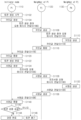
여기서, 분산환경에서 토큰을 생성하는 최상위 노드(Initiator Node)(1110)를 Pi로 가정하고 참여자들을 Pi의 이웃 노드(1120) Pj와 Pj의 이웃 노드(1130) Pk로 구분한다. 최상위 노드(1110)는 검증자에 상응하는 노드로, 토큰 생성을 시작할 수 있다. 토큰 생성에 참여하는 노드 중 이웃 노드(1120)들은 최상위 노드(1110)의 메시지를 전달받아 이웃 노드(1130)로 전달할 수 있고, 이웃 노드(1130)의 커밋값 또는 서명값을 전달받고, 이를 자신의 커밋값 또는 서명값과 통합하여 최상위 노드(1110)에 전달할 수 있다. 이웃 노드(1130)는 이웃 노드(1120)로부터 메시지를 전달받아 커밋값 또는 서명값을 생성하고, 이를 이웃 노드(1120)에게 전달할 수 있다.Here, the top node (Initiator Node) (1110) that generates a token in a distributed environment is assumed to be P i , and the participants are divided into a neighboring node (1120) P j of P i and a neighboring node (1130) P k of P j . The top node (1110) is a node corresponding to a verifier and can start token generation. Among the nodes participating in token generation, the neighboring nodes (1120) can receive a message from the top node (1110) and transmit it to the neighboring node (1130), and can receive a commit value or signature value of the neighboring node (1130) and integrate it with its own commit value or signature value and transmit it to the top node (1110). The neighboring node (1130) can receive a message from the neighboring node (1120), generate a commit value or signature value, and transmit it to the neighboring node (1120).
도 11에 도시된 바와 같이, 노드들 각각의 무결성을 검증하기 위한 과정은 네트워크를 구성하는 복수개의 노드들 중 검증자(Verifier)에 상응하는 최상위 노드(1110)에서 토큰 생성을 시작한다(S1102).As illustrated in Figure 11, the process for verifying the integrity of each node begins with token generation at the top node (1110) corresponding to the verifier among the multiple nodes forming the network (S1102).
이때, 검증자에 상응하는 노드들은 기 설정된 개수 및 주기에 상응하도록 상기 네트워크를 구성하는 복수개의 노드들 중에서 선택될 수 있고, 검증자에 상응하는 노드의 개수 및 주기는 네트워크의 종류, 크기, 및 네트워크를 구성하는 장치들의 구성 등에 기반하여 결정될 수 있다. 이때, 토큰의 생성에 참여하는 노드들은 상기 검증자에 상응하는 노드로부터 기 설정된 홉(hop) 이내에 위치하는 노드들에 상응할 수 있다.At this time, nodes corresponding to the verifier may be selected from among a plurality of nodes constituting the network in a manner corresponding to a preset number and period, and the number and period of nodes corresponding to the verifier may be determined based on the type and size of the network, and the configuration of devices constituting the network. At this time, nodes participating in the generation of tokens may correspond to nodes located within a preset hop from the node corresponding to the verifier.
최상위 노드(1110)에서 커밋값을 생성(S1104)하고, 이웃 노드(1120)에 토큰 생성 참여 요청 메시지를 전달(S1106)할 수 있다. 이때, 상기 커밋값은 Schnorr 멀티시그니쳐 방식에 의해 생성될 수 있다.A commit value can be generated (S1104) in the top node (1110) and a token generation participation request message can be transmitted (S1106) to a neighboring node (1120). At this time, the commit value can be generated by the Schnorr multi-signature method.
상기 토큰 생성 참여 요청 메시지를 전달받은 이웃 노드(1120)는 커밋값을 생성(S1108)한다. 이때, 토큰 생성 참여 요청 메시지는 토큰의 식별자를 포함할 수 있고, 상기 식별자는 토큰 생성에 참여한 노드의 정보를 포함할 수 있다. 나아가, 이웃 노드(1120)는 토큰의 식별자가 이웃 노드의 정보를 포함하도록 토큰의 식별자를 갱신하는 과정을 포함할 수 있다.The neighboring node (1120) that received the token generation participation request message generates a commit value (S1108). At this time, the token generation participation request message may include an identifier of the token, and the identifier may include information of the node that participated in token generation. Furthermore, the neighboring node (1120) may include a process of updating the identifier of the token so that the identifier of the token includes information of the neighboring node.
이웃 노드(1120)는 최상위 노드(1110)로부터 전달받은 메시지를 이웃 노드(1130)들에게 전달(S1110)한다. 메시지를 전달받은 이웃 노드(1130)들은 각 노드에 상응하는 커밋값을 생성(S1112)하고, 이를 이웃 노드(1120)에게 전달한다(S1114).The neighboring node (1120) transmits (S1110) the message received from the top node (1110) to the neighboring nodes (1130). The neighboring nodes (1130) that received the message generate a commit value corresponding to each node (S1112) and transmit it to the neighboring node (1120) (S1114).
이웃 노드(1130)의 커밋값을 전달받은 이웃 노드(1120)는 자신의 커밋값과 전달받은 커밋값을 통합하고(S1116), 통합한 커밋값을 최상위 노드(1110)로 전달한다(S1118).A neighboring node (1120) that has received the commit value of a neighboring node (1130) integrates its own commit value with the received commit value (S1116) and transmits the integrated commit value to the top node (1110) (S1118).
이웃 노드(1120)로부터 통합한 커밋값을 전달받은 최상위 노드(1110)는 이를 다시 자신의 커밋값과 통합하여(S1120) 토큰 생성을 완료한다(S1122).The top node (1110), which receives the integrated commit value from the neighboring node (1120), integrates it again with its own commit value (S1120) and completes token generation (S1122).
결국, 토큰 생성을 완료하는 시점에서 토큰의 식별자는 토큰 생성에 참여한 노드들(1110, 1120, 1130)의 정보를 포함할 수 있다. 마찬가지로, 통합된 커밋값은 토큰 생성에 참여한 노드들(1110, 1120, 1130)의 커밋값을 통합한 값이다.Finally, at the point of completing token generation, the identifier of the token may include information on the nodes (1110, 1120, 1130) that participated in token generation. Similarly, the integrated commit value is a value that integrates the commit values of the nodes (1110, 1120, 1130) that participated in token generation.
최상위 노드(1110)는 상기 토큰에 대하여 전자 서명값을 생성하고(S1124) 이웃 노드(1120)에게 전자서명 요청 메시지를 전달한다(S1126). 이때, 상기 전자서명 요청 메시지는 상기 토큰의 식별자, 통합된 상기 토큰 생성에 참여한 노드들의 커밋값, 토큰 생성 시간 정보 중 적어도 어느 하나를 더 포함할 수 있다.The top node (1110) generates an electronic signature value for the token (S1124) and transmits an electronic signature request message to a neighboring node (1120) (S1126). At this time, the electronic signature request message may further include at least one of the identifier of the token, the commit values of the nodes that participated in the integrated token generation, and token generation time information.
전자서명 요청 메시지를 전달받은 이웃 노드(1120)는 서명값을 생성하고(S1128), 이웃 노드(1130)에게 전자서명 요청 메시지를 전달할 수 있다(S1130).A neighboring node (1120) that has received an electronic signature request message can generate a signature value (S1128) and transmit an electronic signature request message to a neighboring node (1130) (S1130).
이웃 노드(1130)는 전자서명 요청 메시지에 기반하여 서명값을 생성하고(S1132), 생성된 서명값을 이웃 노드(1120)에게 전달한다(S1134). 이때, 상기 서명값들은 상기 노드들에 상응하는, 서명 과정에서 생성되는 서명키 쌍(pair) 중 개인키, 비밀 난수, 및 해시값에 기반하여 생성될 수 있으며, 서명키 쌍은 개인키(signature private key) 및 공개키(signature public key)로 구성될 수 있다.A neighboring node (1130) generates a signature value based on an electronic signature request message (S1132) and transmits the generated signature value to a neighboring node (1120) (S1134). At this time, the signature values may be generated based on a private key, a secret random number, and a hash value among signature key pairs generated in a signing process corresponding to the nodes, and the signature key pair may be composed of a private key (signature private key) and a public key (signature public key).
이웃 노드(1120)는 전달받은 서명값과 자신의 서명값을 통합하고(S1136), 통합된 서명값을 최상위 노드(1110)에게 전달한다(S1138). 최상위 노드(1110)는 이웃 노드(1120)로부터 전달받은 서명값과 자신의 서명값을 통합한다(S1140).The neighboring node (1120) integrates the received signature value with its own signature value (S1136) and transmits the integrated signature value to the top node (1110) (S1138). The top node (1110) integrates the received signature value with its own signature value (S1140).
최상위 노드(1110)는 통합된 커밋값과 통합된 서명값에 대한 검증을 수행한다(S1142). 이때, 단계 S1142는 상기 서명값을 저장하는 과정에서 생성된 서명키 쌍 중 서명 공개키(signature public key)를 통합한 공동 공개키를 이용하여 토큰에 대한 검증을 수행할 수 있다.The top node (1110) performs verification on the integrated commit value and the integrated signature value (S1142). At this time, step S1142 can perform verification on the token using a joint public key that integrates the signature public key among the signature key pairs generated in the process of storing the signature value.
토큰에 대한 검증이 성공한 경우, 검증을 완료하고 토큰 생성에 참여한 노드들을 안전한 상태로 판단한다(S1144). 토큰에 대한 검증이 실패하면 토큰을 폐기한다(S1146).If the token verification is successful, the verification is completed and the nodes that participated in token creation are judged to be safe (S1144). If the token verification fails, the token is discarded (S1146).
또한, 상기 토큰의 생성에 참여한 상기 주변 노드들의 무결성을 검증하는 단계(S1142)는 상기 토큰의 생성 시간에서 기 설정된 시간 내에 상기 토큰의 생성에 참여한 노드들의 무결성 검증이 이뤄졌는지를 판단할 수 있다. 따라서, 기 설정된 시간 내에 무결성 검증이 이뤄지지 않는 경우 토큰을 폐기할 수 있다.In addition, the step (S1142) of verifying the integrity of the peripheral nodes that participated in the generation of the token can determine whether the integrity of the nodes that participated in the generation of the token was verified within a preset time from the generation time of the token. Accordingly, if the integrity verification is not performed within the preset time, the token can be discarded.
상술한 과정을 통해 각 노드에서, 네트워크 스냅샷 메시지를 브로드캐스트하는 이웃 노드들의 무결성을 검증하고, 무결성이 검증된 노드들의 네트워크 스냅샷 메시지를 이용하여 자신의 네트워크 스냅샷 메시지를 업데이트할 수 있다. 즉, 토큰을 모두 공유한 참여자들은 수신한 토큰에 대한 검증을 수행한다. 각 토큰은 참여자들의 개별 서명을 통합한 서명값을 검증하여 그 결과 값을 블룸 필터 네트워크 스냅샷 메시지에 업데이트 할 수 있다.Through the above process, each node can verify the integrity of neighboring nodes broadcasting network snapshot messages, and update its own network snapshot message using the network snapshot messages of nodes whose integrity has been verified. That is, participants who have shared all tokens perform verification on the received tokens. Each token can verify the signature value that integrates the individual signatures of the participants and update the resulting value in the bloom filter network snapshot message.
도 12는 본 개시의 다른 실시예에 따른 모빌리티를 고려한 원격 검증 방법의 순서도를 도시한 도면으로, 네트워크를 구성하는 노드들 각각에서 이루어지는 원격 검증 방법의 순서도를 도시한 도면이다.FIG. 12 is a diagram illustrating a flow chart of a remote verification method considering mobility according to another embodiment of the present disclosure, and is a diagram illustrating a flow chart of a remote verification method performed at each node constituting a network.
도 12를 참조하면, 본 개시의 다른 실시예에 따른 모빌리티를 고려한 원격 검증 방법은, 자가 원격 검증을 수행하여 원격 검증 결과 값을 획득하고, 획득된 원격 검증 결과 값을 자신의 네트워크 메시지에 기록한다(S1210).Referring to FIG. 12, a remote verification method considering mobility according to another embodiment of the present disclosure performs self-remote verification to obtain a remote verification result value, and records the obtained remote verification result value in its own network message (S1210).
여기서, 단계 S1210은 블룸 필터를 이용하여 획득된 원격 검증 결과 값을 자신의 네트워크 스냅샷 메시지에 기록할 수 있다.Here, step S1210 can record the remote verification result value obtained using a bloom filter in its own network snapshot message.
단계 S1210에 의한 자가 원격 검증 후에, 이웃하는 적어도 하나의 노드 즉, 이웃 노드로부터 브로드캐스트되는 네트워크 스냅샷 메시지를 수신하고, 수신된 네트워크 스냅샷 메시지와 미리 설정된 합의 프로토콜을 이용하여 자신의 네트워크 스냅샷 메시지를 업데이트한다(S1220, S1230).After self-remote verification by step S1210, the network snapshot message broadcasted from at least one neighboring node, i.e., a neighboring node, is received, and its own network snapshot message is updated using the received network snapshot message and a preset consensus protocol (S1220, S1230).
여기서, 단계 S1230은 Schnorr 멀티시그니쳐 합의 프로토콜을 이용하여 네트워크 스냅샷 메시지를 브로드캐스트한 노드들 즉, 이웃 노드들 각각의 무결성을 검증하고, 무결성이 검증된 이웃 노드로부터 수신된 네트워크 스냅샷 메시지를 이용하여 자신의 네트워크 스냅샷 메시지를 업데이트할 수 있다. 자신의 네트워크 스냅샷 메시지의 업데이트는, 수신된 네트워크 스냅샷 메시지의 원격 검증 결과 값과 자신의 네트워크 스냅샷 메시지의 원격 검증 결과 값을 bitwise OR 연산을 통해 합함으로써, 자신의 네트워크 스냅샷 메시지를 업데이트할 수 있다.Here, step S1230 verifies the integrity of each node that broadcasted the network snapshot message, i.e., the neighboring nodes, using the Schnorr multisignature consensus protocol, and updates its own network snapshot message using the network snapshot message received from the neighboring node whose integrity has been verified. The update of its own network snapshot message can be done by adding the remote verification result value of the received network snapshot message and the remote verification result value of its own network snapshot message through a bitwise OR operation.
이때, 이웃 노드들 각각의 무결성을 검증하는 과정은, 노드들이 커밋값들을 생성하여 토큰들의 생성을 시작하는 단계; 노드들 각각의 주변 노드들에 상응하는, 식별자들 및 커밋값들을 각각 통합하여 토큰들을 생성하는 단계; 및 상기 토큰들을 이용하여 상기 토큰들의 생성에 참여한 노드들의 무결성을 검증하는 단계를 포함할 수 있다. 그리고, 상기 토큰들의 생성에 참여한 노드들의 무결성을 검증하는 단계는, 상기 토큰들 중 어느 하나에 상응하는 토큰의 생성에 참여한 노드들이 상기 토큰들 중 어느 하나에 상응하는 토큰에 상기 노드들에 상응하는 서명값들을 저장하는 단계; 상기 노드들에 상응하는 서명값들을 통합하는 단계; 및 상기 통합된 커밋값들 및 상기 통합된 서명값들을 검증하여 상기 토큰들의 생성에 참여한 노드들의 무결성을 검증하는 단계를 포함할 수 있다.At this time, the process of verifying the integrity of each of the neighboring nodes may include a step of having the nodes generate commit values and start generating tokens; a step of integrating identifiers and commit values corresponding to the peripheral nodes of each of the nodes to generate tokens; and a step of verifying the integrity of the nodes that participated in the generation of the tokens using the tokens. In addition, the step of verifying the integrity of the nodes that participated in the generation of the tokens may include a step of having the nodes that participated in the generation of a token corresponding to one of the tokens store signature values corresponding to the nodes in a token corresponding to one of the tokens; a step of integrating the signature values corresponding to the nodes; and a step of verifying the integrated commit values and the integrated signature values to verify the integrity of the nodes that participated in the generation of the tokens.
단계 S1220과 단계 S1230의 과정을 반복 수행함으로써, 최종 네트워크 스냅샷 메시지로 수렴되면, 자신의 네트워크 메시지에 업데이트된 원격 검증 결과 값에 기초하여 네트워크를 구성하는 노드들 각각의 원격 검증을 모니터링한다(S1240).By repeating the process of steps S1220 and S1230, when convergence is reached to a final network snapshot message, remote verification of each node constituting the network is monitored based on the updated remote verification result value in its own network message (S1240).
비록, 도 12에서 그 설명이 생략되더라도, 도 12의 방법은 도 2 내지 도 11에서 설명한 모든 내용을 포함할 수 있으며, 이는 이 기술 분야에 종사하는 당업자에게 있어서 자명하다.Even though the description is omitted in FIG. 12, the method of FIG. 12 may include all the contents described in FIGS. 2 to 11, which is obvious to those skilled in the art.
이와 같이, 본 개시의 실시예들에 따른 방법은, 스패닝 트리를 구축할 필요가 없어 라우팅이 필요 없는 비정형 네트워크에 적합하고, 기기(증명자)가 항상 온라인 상태이거나 전체 원격 검증하는 동안 연결할 수 있어야 하는 것은 아니기 때문에 모빌리티를 충분히 고려하고 원격검증을 수행할 수 있다.In this way, the method according to the embodiments of the present disclosure is suitable for an irregular network that does not require routing because there is no need to build a spanning tree, and can perform remote verification while sufficiently considering mobility because the device (attorney) does not always need to be online or connectable during the entire remote verification.
또한, 본 개시의 실시예들에 따른 방법은, 블룸 필터와 합의 프로토콜을 이용하여 기기 상태(노드 상태)에 대한 정확한 정보 대신 네트워크 상태를 추정할 수 있기 때문에 런타임 성능을 줄이며 네트워크 가입 및 탈퇴 시 장치 수를 보다 확장할 수 있고, 노드들 각각에서 각 원격 검증 증명의 수집을 통해 네트워크 상태 스냅샷 수렴에 도달할 수 있다.In addition, the method according to the embodiments of the present disclosure can estimate the network state instead of the exact information about the device state (node state) by using the bloom filter and the consensus protocol, thereby reducing the runtime performance and expanding the number of devices when joining and leaving the network, and reaching the convergence of the network state snapshot through the collection of each remote verification proof from each node.
도 13은 본 개시의 또 다른 실시예에 따른 모빌리티를 고려한 원격 검증 장치의 구성을 도시한 도면으로, 도 12의 방법을 수행하는 각 노드의 개념적인 구성을 도시한 도면이다.FIG. 13 is a diagram illustrating a configuration of a remote verification device considering mobility according to another embodiment of the present disclosure, and is a diagram illustrating a conceptual configuration of each node performing the method of FIG. 12.
도 13을 참조하면, 본 개시의 또 다른 실시예에 따른 모빌리티를 고려한 원격 검증 장치(1300)는, 자가 검증부(1310), 송수신부(1320), 업데이트부(1330) 및 모니터링부(1340)를 포함한다.Referring to FIG. 13, a remote verification device (1300) considering mobility according to another embodiment of the present disclosure includes a self-verification unit (1310), a transceiver unit (1320), an update unit (1330), and a monitoring unit (1340).
자가 검증부(1310)는 자가 원격 검증을 수행하여 원격 검증 결과 값을 획득하고, 획득된 원격 검증 결과 값을 자신의 네트워크 메시지에 기록한다.The self-verification unit (1310) performs self-remote verification to obtain a remote verification result value and records the obtained remote verification result value in its own network message.
이때, 자가 검증부(1310)는 블룸 필터를 이용하여 획득된 원격 검증 결과 값을 자신의 네트워크 스냅샷 메시지에 기록할 수 있다.At this time, the self-verification unit (1310) can record the remote verification result value obtained using the bloom filter in its own network snapshot message.
송수신부(1320)는 자신의 네트워크 스냅샷 메시지를 이웃하는 적어도 하나의 노드 즉, 이웃 노드로 브로드캐스트하고, 적어도 하나의 이웃 노드로부터 브로드캐스트되는 네트워크 스냅샷 메시지를 수신한다.The transceiver (1320) broadcasts its own network snapshot message to at least one neighboring node, i.e., a neighboring node, and receives a network snapshot message broadcast from at least one neighboring node.
업데이트부(1330)는 수신된 네트워크 스냅샷 메시지와 미리 설정된 합의 프로토콜을 이용하여 자신의 네트워크 스냅샷 메시지를 업데이트한다The update unit (1330) updates its own network snapshot message using the received network snapshot message and a preset consensus protocol.
이때, 업데이트부(1330)는 Schnorr 멀티시그니쳐 합의 프로토콜을 이용하여 네트워크 스냅샷 메시지를 브로드캐스트한 이웃 노드들 각각의 무결성을 검증하고, 무결성이 검증된 이웃 노드로부터 수신된 네트워크 스냅샷 메시지를 이용하여 자신의 네트워크 스냅샷 메시지를 업데이트할 수 있다.At this time, the update unit (1330) can verify the integrity of each neighboring node that broadcasted the network snapshot message using the Schnorr multi-signature consensus protocol, and update its own network snapshot message using the network snapshot message received from the neighboring node whose integrity has been verified.
나아가, 업데이트부(1330)는 상기 노드들이 커밋값들을 생성하여 토큰들의 생성을 시작하고, 상기 노드들 각각의 주변 노드들에 상응하는, 식별자들 및 커밋값들을 각각 통합하여 토큰들을 생성하며, 상기 토큰들 중 어느 하나에 상응하는 토큰의 생성에 참여한 노드들이 상기 토큰들 중 어느 하나에 상응하는 토큰에 상기 노드들에 상응하는 서명값들을 저장하고, 상기 노드들에 상응하는 서명값들을 통합하며, 상기 통합된 커밋값들 및 상기 통합된 서명값들을 검증하여 상기 토큰들의 생성에 참여한 노드들의 무결성을 검증할 수 있다.Furthermore, the update unit (1330) starts generating tokens by having the nodes generate commit values, integrates identifiers and commit values corresponding to peripheral nodes of each of the nodes to generate tokens, causes nodes participating in the generation of a token corresponding to one of the tokens to store signature values corresponding to the nodes in a token corresponding to one of the tokens, integrates the signature values corresponding to the nodes, and verifies the integrity of the nodes participating in the generation of the tokens by verifying the integrated commit values and the integrated signature values.
모니터링부(1340)는 자신의 네트워크 스냅샷 메시지가 최종 네트워크 스냅샷 메시지로 수렴되면, 자신의 네트워크 메시지에 업데이트된 원격 검증 결과 값에 기초하여 네트워크를 구성하는 노드들 각각의 원격 검증을 모니터링한다.The monitoring unit (1340) monitors the remote verification of each node constituting the network based on the updated remote verification result value of its network message when its network snapshot message converges to the final network snapshot message.
도 14는 본 개시의 실시예에 따른 모빌리티를 고려한 원격 검증 장치가 적용되는 디바이스의 구성도를 도시한 도면이다.FIG. 14 is a diagram illustrating a configuration of a device to which a remote verification device considering mobility according to an embodiment of the present disclosure is applied.
예를 들어, 도 13의 본 개시의 실시예에 따른 모빌리티를 고려한 원격 검증 장치는 도 14의 디바이스(1600)가 될 수 있다. 도 14를 참조하면, 디바이스(1600)는 메모리(1602), 프로세서(1603), 송수신부(1604) 및 주변 장치(1601)를 포함할 수 있다. 또한, 일 예로, 디바이스(1600)는 다른 구성을 더 포함할 수 있으며, 상술한 실시예로 한정되지 않는다. 이때, 상기 디바이스(1600)는 예를 들어 이동 가능한 사용자 단말기(예를 들어, 스마트 폰, 노트북, 웨어러블 기기 등) 이거나 고정된 관리 장치(예를 들어, 서버, PC 등) 일 수 있다.For example, a remote verification device considering mobility according to an embodiment of the present disclosure of FIG. 13 may be a device (1600) of FIG. 14. Referring to FIG. 14, the device (1600) may include a memory (1602), a processor (1603), a transceiver (1604), and a peripheral device (1601). In addition, as an example, the device (1600) may further include other configurations and is not limited to the above-described embodiment. At this time, the device (1600) may be, for example, a movable user terminal (for example, a smart phone, a laptop, a wearable device, etc.) or a fixed management device (for example, a server, a PC, etc.).
보다 상세하게는, 도 14의 디바이스(1600)는 WDM 광통신 시스템, 센싱 시스템 또는 장치 등과 같은 예시적인 하드웨어/소프트웨어 아키텍처일 수 있다. 이때, 일 예로, 메모리(1602)는 비이동식 메모리 또는 이동식 메모리일 수 있다. 또한, 일 예로, 주변 장치(1601)는 디스플레이, GPS 또는 다른 주변기기들을 포함할 수 있으며, 상술한 실시예로 한정되지 않는다. More specifically, the device (1600) of FIG. 14 may be an exemplary hardware/software architecture, such as a WDM optical communication system, a sensing system or a device. In this case, as an example, the memory (1602) may be a non-removable memory or a removable memory. In addition, as an example, the peripheral device (1601) may include a display, a GPS or other peripheral devices, and is not limited to the above-described embodiment.
또한, 일 예로, 상술한 디바이스(1600)는 상기 송수신부(1604)와 같이 통신 회로를 포함할 수 있으며, 이에 기초하여 외부 디바이스와 통신을 수행할 수 있다.In addition, as an example, the above-described device (1600) may include a communication circuit such as the transceiver (1604), and may perform communication with an external device based thereon.
또한, 일 예로, 프로세서(1603)는 범용 프로세서, DSP(digital signal processor), DSP 코어, 제어기, 마이크로제어기, ASIC들(Application Specific Integrated Circuits), FPGA(Field Programmable Gate Array) 회로들, 임의의 다른 유형의 IC(integrated circuit) 및 상태 머신과 관련되는 하나 이상의 마이크로프로세서 중 적어도 하나 이상일 수 있다. 즉, 상술한 디바이스(1600)를 제어하기 위한 제어 역할을 수행하는 하드웨어적/소프트웨어적 구성일 수 있다. 또한 상기 프로세서(1603)는 전술한 도 13의 자가 검증부(1310), 업데이트부(1330)과 모니터링부(1340)의 기능을 모듈화하여 수행할 수 있다.In addition, as an example, the processor (1603) may be at least one of a general-purpose processor, a digital signal processor (DSP), a DSP core, a controller, a microcontroller, ASICs (Application Specific Integrated Circuits), FPGAs (Field Programmable Gate Array) circuits, any other type of IC (integrated circuit), and one or more microprocessors associated with a state machine. That is, it may be a hardware/software configuration that performs a control role for controlling the above-described device (1600). In addition, the processor (1603) may modularize and perform the functions of the self-verification unit (1310), the update unit (1330), and the monitoring unit (1340) of FIG. 13 described above.
이때, 프로세서(1603)는 모빌리티를 고려한 원격 검증 장치의 다양한 필수 기능들을 수행하기 위해 메모리(1602)에 저장된 컴퓨터 실행가능한 명령어들을 실행할 수 있다. 일 예로, 프로세서(1603)는 신호 코딩, 데이터 처리, 전력 제어, 입출력 처리 및 통신 동작 중 적어도 어느 하나를 제어할 수 있다. 또한, 프로세서(1603)는 물리 계층, MAC 계층, 어플리케이션 계층들을 제어할 수 있다. 또한, 일 예로, 프로세서(1603)는 액세스 계층 및/또는 어플리케이션 계층 등에서 인증 및 보안 절차를 수행할 수 있으며, 상술한 실시예로 한정되지 않는다.At this time, the processor (1603) may execute computer executable instructions stored in the memory (1602) to perform various essential functions of a remote verification device considering mobility. For example, the processor (1603) may control at least one of signal coding, data processing, power control, input/output processing, and communication operations. In addition, the processor (1603) may control physical layers, MAC layers, and application layers. In addition, for example, the processor (1603) may perform authentication and security procedures in an access layer and/or an application layer, and is not limited to the above-described embodiment.
일 예로, 프로세서(1603)는 송수신부(1604)를 통해 다른 장치들과 통신을 수행할 수 있다. 일 예로, 프로세서(1603)는 컴퓨터 실행가능한 명령어들의 실행을 통해 모빌리티를 고려한 원격 검증 장치가 네트워크를 통해 다른 장치들과 통신을 수행하게 제어할 수 있다. 즉, 본 개시에서 수행되는 통신이 제어될 수 있다. 일 예로, 송수신부(1604)는 안테나를 통해 RF 신호를 전송할 수 있으며, 다양한 통신망에 기초하여 신호를 전송할 수 있다. For example, the processor (1603) can perform communication with other devices through the transceiver (1604). For example, the processor (1603) can control the remote verification device considering mobility to perform communication with other devices through a network through the execution of computer-executable instructions. That is, the communication performed in the present disclosure can be controlled. For example, the transceiver (1604) can transmit an RF signal through an antenna and can transmit a signal based on various communication networks.
또한, 일 예로, 안테나 기술로서 MIMO 기술, 빔포밍 등이 적용될 수 있으며, 상술한 실시예로 한정되지 않는다. 또한, 송수신부(1604)를 통해 송수신한 신호는 변조 및 복조되어 프로세서(1603)에 의해 제어될 수 있으며, 상술한 실시 예로 한정되지 않는다.In addition, as an example, MIMO technology, beamforming, etc. can be applied as antenna technology, and are not limited to the above-described embodiment. In addition, a signal transmitted and received through the transceiver (1604) can be modulated and demodulated and controlled by the processor (1603), and are not limited to the above-described embodiment.
본 개시의 예시적인 방법들은 설명의 명확성을 위해서 동작의 시리즈로 표현되어 있지만, 이는 단계가 수행되는 순서를 제한하기 위한 것은 아니며, 필요한 경우에는 각각의 단계가 동시에 또는 상이한 순서로 수행될 수도 있다. 본 개시에 따른 방법을 구현하기 위해서, 예시하는 단계에 추가적으로 다른 단계를 포함하거나, 일부의 단계를 제외하고 나머지 단계를 포함하거나, 또는 일부의 단계를 제외하고 추가적인 다른 단계를 포함할 수도 있다.Although the exemplary methods of the present disclosure are presented as a series of operations for clarity of description, this is not intended to limit the order in which the steps are performed, and each step may be performed simultaneously or in a different order, if desired. In order to implement a method according to the present disclosure, additional steps may be included in addition to the steps illustrated, or some of the steps may be excluded and the remaining steps may be included, or some of the steps may be excluded and additional other steps may be included.
본 개시의 다양한 실시 예는 모든 가능한 조합을 나열한 것이 아니고 본 개시의 대표적인 양상을 설명하기 위한 것이며, 다양한 실시 예에서 설명하는 사항들은 독립적으로 적용되거나 또는 둘 이상의 조합으로 적용될 수도 있다.The various embodiments of the present disclosure are not intended to list all possible combinations but rather to illustrate representative aspects of the present disclosure, and the matters described in the various embodiments may be applied independently or in combinations of two or more.
또한, 본 개시의 다양한 실시 예는 하드웨어, 펌웨어(firmware), 소프트웨어, 또는 그들의 결합 등에 의해 구현될 수 있다. 하드웨어에 의한 구현의 경우, 하나 또는 그 이상의 ASICs(Application Specific Integrated Circuits), DSPs(Digital Signal Processors), DSPDs(Digital Signal Processing Devices), PLDs(Programmable Logic Devices), FPGAs(Field Programmable Gate Arrays), 범용 프로세서(general processor), 컨트롤러, 마이크로 컨트롤러, 마이크로 프로세서 등에 의해 구현될 수 있다. Additionally, various embodiments of the present disclosure may be implemented by hardware, firmware, software, or a combination thereof. In the case of hardware implementation, the embodiments may be implemented by one or more ASICs (Application Specific Integrated Circuits), DSPs (Digital Signal Processors), DSPDs (Digital Signal Processing Devices), PLDs (Programmable Logic Devices), FPGAs (Field Programmable Gate Arrays), general processors, controllers, microcontrollers, microprocessors, etc.
본 개시의 범위는 다양한 실시 예의 방법에 따른 동작이 장치 또는 컴퓨터 상에서 실행되도록 하는 소프트웨어 또는 머신-실행가능한 명령들(예를 들어, 운영체제, 애플리케이션, 펌웨어(firmware), 프로그램 등), 및 이러한 소프트웨어 또는 명령 등이 저장되어 장치 또는 컴퓨터 상에서 실행 가능한 비-일시적 컴퓨터-판독가능 매체(non-transitory computer-readable medium)를 포함한다.The scope of the present disclosure includes software or machine-executable instructions (e.g., an operating system, an application, firmware, a program, etc.) that cause operations according to the methods of various embodiments to be executed on a device or a computer, and a non-transitory computer-readable medium having such software or instructions stored thereon and being executable on the device or the computer.
1300 모빌리티를 고려한 원격 검증 장치
1310 자가 검증부
1320 송수신부
1330 업데이트부
1340 모니터링부1300 Remote Verification Device with Mobility in mind
1310 Self-verification department
1320 Transmitter and Receiver
1330 update
1340 Monitoring Department
Claims (20)
상기 노드들 각각에서 상기 획득된 원격 검증 결과 값을 이웃하는 적어도 하나의 노드로 브로드캐스트하여 상기 노드들 각각에서 상기 노드들 각각에 대한 원격 검증 결과 값을 획득하는 단계; 및
상기 노드들 각각에서 상기 획득된 노드들 각각에 대한 원격 검증 결과 값에 기초하여 상기 노드들 각각의 원격 검증을 모니터링하는 단계
를 포함하고,
상기 노드들 각각의 상기 원격 검증 결과 값을 수집한 최종 네트워크 상태인 스냅샷 상태에서, 상기 노드들은 무결성이 검증된 노드의 네트워크 스냅샷 메시지를 이용하여 자신의 네트워크 스냅샷 메시지를 업데이트하는, 모빌리티를 고려한 원격 검증 방법.
A step of performing self-remote verification on each node forming the network to obtain a remote verification result value;
A step of broadcasting the obtained remote verification result value from each of the above nodes to at least one neighboring node to obtain the remote verification result value for each of the above nodes from each of the above nodes; and
A step of monitoring remote verification of each of the nodes based on the remote verification result values obtained for each of the nodes.
Including,
A remote verification method considering mobility, in which, in a snapshot state which is the final network state in which the remote verification result values of each of the above nodes are collected, the nodes update their own network snapshot messages using the network snapshot messages of the nodes whose integrity has been verified.
상기 자가 원격 검증을 수행하여 원격 검증 결과 값을 획득하는 단계는,
블룸 필터(Bloom filter)를 이용하여 해당 노드의 상기 원격 검증 결과 값을 미리 정해진 네트워크 메시지에 기록하는, 모빌리티를 고려한 원격 검증 방법.
In the first paragraph,
The step of performing the above self-remote verification and obtaining the remote verification result value is as follows:
A remote verification method that takes mobility into account, which records the remote verification result value of the corresponding node in a predetermined network message using a bloom filter.
상기 노드들 각각에 대한 원격 검증 결과 값을 획득하는 단계는,
상기 네트워크 메시지를 상기 이웃하는 적어도 하나의 노드로 브로드캐스트하고, 상기 노드들 각각에서 미리 설정된 합의 프로토콜과 상기 이웃하는 적어도 하나의 노드로부터 수신된 네트워크 메시지를 이용하여 자신의 네트워크 메시지를 업데이트함으로써, 상기 노드들 각각에 대한 원격 검증 결과 값을 획득하는, 모빌리티를 고려한 원격 검증 방법.
In the second paragraph,
The step of obtaining the remote verification result value for each of the above nodes is:
A remote verification method considering mobility, wherein the network message is broadcast to at least one neighboring node, and each of the nodes updates its own network message using a preset consensus protocol and a network message received from the at least one neighboring node, thereby obtaining a remote verification result value for each of the nodes.
상기 노드들 각각에 대한 원격 검증 결과 값을 획득하는 단계는,
상기 자신의 네트워크 메시지에 기록된 원격 검증 결과 값과 상기 수신된 네트워크 메시지에 기록된 원격 검증 결과 값을 합하여 상기 자신의 네트워크 메시지를 업데이트하는, 모빌리티를 고려한 원격 검증 방법.
In the third paragraph,
The step of obtaining the remote verification result value for each of the above nodes is:
A remote verification method considering mobility, which updates its own network message by adding the remote verification result value recorded in its own network message and the remote verification result value recorded in the received network message.
상기 합의 프로토콜은,
대칭키 기반 합의 프로토콜과 비대칭키 기반 합의 프로토콜 중 어느 하나의 프로토콜을 포함하는, 모빌리티를 고려한 원격 검증 방법.
In the third paragraph,
The above consensus protocol is,
A remote verification method considering mobility, comprising either a symmetric key-based consensus protocol or an asymmetric key-based consensus protocol.
상기 노드들 각각에 대한 원격 검증 결과 값을 획득하는 단계는,
상기 노드들 각각에서 상기 합의 프로토콜을 이용하여 상기 노드들 각각의 무결성을 검증하는 단계;
상기 무결성이 검증된 적어도 하나 이상의 노드의 네트워크 메시지로 상기 자신의 네트워크 메시지를 업데이트하는 단계; 및
상기 업데이트된 자신의 네트워크 메시지를 통해 상기 노드들 각각에 대한 원격 검증 결과 값을 획득하는 단계
를 포함하는, 모빌리티를 고려한 원격 검증 방법.
In the third paragraph,
The step of obtaining the remote verification result value for each of the above nodes is:
A step of verifying the integrity of each of the nodes using the consensus protocol in each of the nodes;
A step of updating said own network message with a network message of at least one node whose integrity has been verified; and
Step of obtaining remote verification result values for each of the nodes through the updated network message
A remote verification method considering mobility, including:
상기 노드들 각각의 무결성을 검증하는 단계는,
상기 노드들이 커밋값들을 생성하여 토큰들의 생성을 시작하는 단계;
상기 노드들 각각의 주변 노드들에 상응하는, 식별자들 및 커밋값들을 각각 통합하여 토큰들을 생성하는 단계; 및
상기 토큰들을 이용하여 상기 토큰들의 생성에 참여한 노드들의 무결성을 검증하는 단계
를 포함하는, 모빌리티를 고려한 원격 검증 방법.
In Article 6,
The step of verifying the integrity of each of the above nodes is:
A step in which the above nodes generate commit values and start generating tokens;
A step of generating tokens by integrating identifiers and commit values corresponding to the surrounding nodes of each of the above nodes; and
A step for verifying the integrity of nodes that participated in the creation of the above tokens using the above tokens.
A remote verification method considering mobility, including:
상기 토큰들의 생성에 참여한 노드들의 무결성을 검증하는 단계는,
상기 토큰들 중 어느 하나에 상응하는 토큰의 생성에 참여한 노드들이 상기 토큰들 중 어느 하나에 상응하는 토큰에 상기 노드들에 상응하는 서명값들을 저장하는 단계;
상기 노드들에 상응하는 서명값들을 통합하는 단계; 및
상기 통합된 커밋값들 및 상기 통합된 서명값들을 검증하여 상기 토큰들의 생성에 참여한 노드들의 무결성을 검증하는 단계
를 포함하는, 모빌리티를 고려한 원격 검증 방법.
In Article 7,
The step of verifying the integrity of the nodes that participated in the creation of the above tokens is:
A step in which nodes that participated in the generation of a token corresponding to one of the above tokens store signature values corresponding to the nodes in a token corresponding to one of the above tokens;
a step of integrating the signature values corresponding to the above nodes; and
A step of verifying the integrity of nodes that participated in the creation of the tokens by verifying the integrated commit values and the integrated signature values.
A remote verification method considering mobility, including:
상기 커밋값들(Ri)은,
소수 위수(prime order) q를 가지는 그룹(group) G, 상기 그룹 G의 생성원(generator) g, 비밀 난수 ri에 대하여, Ri = g^{ri}에 상응하여 생성되는, 모빌리티를 고려한 원격 검증 방법.
In Article 8,
The above commit values (R i ) are,
A mobility-sensitive remote verification method, wherein for a group G having prime order q, a generator g of the group G, and a secret random number r i , the generator generates a random number corresponding to R i = g^{r i }.
상기 서명값들(si)은,
서명키 쌍(pair) 중 개인키(signature private key) xi, 상기 비밀 난수 ri, 및 해시값 c에 의해 si = ri + cxi에 상응하여 생성되고,
상기 해시값은,
상기 통합된 커밋값들 및 전자서명을 요청하는 메시지에 상응하여 생성되는, 모빌리티를 고려한 원격 검증 방법.
In Article 9,
The above signature values (s i ) are,
A signature key pair is generated by a private key x i , a secret random number r i , and a hash value c such that s i = r i + cx i ,
The above hash value is,
A mobility-conscious remote verification method, which is generated in response to the above integrated commit values and a message requesting an electronic signature.
상기 통합된 커밋값들 및 상기 통합된 서명값들을 검증하는 단계는,
상기 서명키 쌍 중 서명 공개키(signature public key)를 통합한 공동 공개키를 이용하는, 모빌리티를 고려한 원격 검증 방법.
In Article 10,
The step of verifying the above integrated commit values and the above integrated signature values is:
A remote verification method that takes mobility into account, using a joint public key that integrates the signature public key among the above-mentioned signature key pairs.
이웃하는 적어도 하나의 노드로부터 브로드캐스트되는 네트워크 메시지를 수신하는 단계;
상기 수신된 네트워크 메시지와 미리 설정된 합의 프로토콜을 이용하여 상기 자신의 네트워크 메시지를 업데이트하는 단계; 및
상기 자신의 네트워크 메시지에 업데이트된 원격 검증 결과 값에 기초하여 네트워크를 구성하는 노드들 각각의 원격 검증을 모니터링하는 단계
를 포함하고,
상기 노드들 각각의 상기 원격 검증 결과 값을 수집한 최종 네트워크 상태에서, 상기 노드들은 무결성이 검증된 노드의 네트워크 스냅샷 메시지를 이용하여 자신의 네트워크 스냅샷 메시지를 업데이트하는, 모빌리티를 고려한 원격 검증 방법.
A step of performing self-remote verification to obtain a remote verification result value and recording the obtained remote verification result value in its own network message;
A step of receiving a network message broadcast from at least one neighboring node;
A step of updating said own network message using the received network message and a preset consensus protocol; and
A step of monitoring the remote verification of each node constituting the network based on the updated remote verification result value in the above-mentioned own network message.
Including,
A remote verification method considering mobility, in which, in a final network state where the remote verification result values of each of the above nodes are collected, the nodes update their own network snapshot messages using the network snapshot messages of the nodes whose integrity has been verified.
상기 자신의 네트워크 메시지에 기록하는 단계는,
블룸 필터(Bloom filter)를 이용하여 상기 획득된 원격 검증 결과 값을 상기 자신의 네트워크 메시지에 기록하는, 모빌리티를 고려한 원격 검증 방법.
In Article 12,
The step of recording the above-mentioned network message is:
A remote verification method considering mobility, which records the obtained remote verification result value in its own network message using a bloom filter.
상기 자신의 네트워크 메시지에 업데이트하는 단계는,
상기 합의 프로토콜을 이용하여 상기 노드들 각각의 무결성을 검증하는 단계; 및
상기 무결성이 검증된 노드의 네트워크 메시지로 상기 자신의 네트워크 메시지를 업데이트하는 단계
를 포함하는, 모빌리티를 고려한 원격 검증 방법.
In Article 12,
The steps to update your own network message are:
A step of verifying the integrity of each of the nodes using the above consensus protocol; and
A step of updating one's own network message with the network message of the node whose integrity has been verified.
A remote verification method considering mobility, including:
상기 노드들 각각의 무결성을 검증하는 단계는,
상기 노드들이 커밋값들을 생성하여 토큰들의 생성을 시작하는 단계;
상기 노드들 각각의 주변 노드들에 상응하는, 식별자들 및 커밋값들을 각각 통합하여 토큰들을 생성하는 단계; 및
상기 토큰들을 이용하여 상기 토큰들의 생성에 참여한 노드들의 무결성을 검증하는 단계
를 포함하는, 모빌리티를 고려한 원격 검증 방법.
In Article 14,
The step of verifying the integrity of each of the above nodes is:
A step in which the above nodes generate commit values and start generating tokens;
A step of generating tokens by integrating identifiers and commit values corresponding to the surrounding nodes of each of the above nodes; and
A step for verifying the integrity of nodes that participated in the creation of the above tokens using the above tokens.
A remote verification method considering mobility, including:
상기 토큰들의 생성에 참여한 노드들의 무결성을 검증하는 단계는,
상기 토큰들 중 어느 하나에 상응하는 토큰의 생성에 참여한 노드들이 상기 토큰들 중 어느 하나에 상응하는 토큰에 상기 노드들에 상응하는 서명값들을 저장하는 단계;
상기 노드들에 상응하는 서명값들을 통합하는 단계; 및
상기 통합된 커밋값들 및 상기 통합된 서명값들을 검증하여 상기 토큰들의 생성에 참여한 노드들의 무결성을 검증하는 단계
를 포함하는, 모빌리티를 고려한 원격 검증 방법.
In Article 15,
The step of verifying the integrity of the nodes that participated in the creation of the above tokens is:
A step in which nodes that participated in the generation of a token corresponding to one of the above tokens store signature values corresponding to the nodes in a token corresponding to one of the above tokens;
a step of integrating the signature values corresponding to the above nodes; and
A step of verifying the integrity of nodes that participated in the creation of the tokens by verifying the integrated commit values and the integrated signature values.
A remote verification method considering mobility, including:
이웃하는 적어도 하나의 노드로부터 브로드캐스트되는 네트워크 메시지를 수신하는 수신부;
상기 수신된 네트워크 메시지와 미리 설정된 합의 프로토콜을 이용하여 상기 자신의 네트워크 메시지에 업데이트하는 업데이트부; 및
상기 자신의 네트워크 메시지에 업데이트된 원격 검증 결과 값에 기초하여 네트워크를 구성하는 노드들 각각의 원격 검증을 모니터링하는 모니터링부
를 포함하고,
상기 노드들 각각의 상기 원격 검증 결과 값을 수집한 최종 네트워크 상태에서, 상기 노드들은 무결성이 검증된 노드의 네트워크 스냅샷 메시지를 이용하여 자신의 네트워크 스냅샷 메시지를 업데이트하는, 모빌리티를 고려한 원격 검증 장치.
A self-verification unit that performs self-remote verification to obtain a remote verification result value and records the obtained remote verification result value in its own network message;
A receiver for receiving a network message broadcast from at least one neighboring node;
An update unit that updates its own network message using the received network message and a preset agreement protocol; and
A monitoring unit that monitors the remote verification of each node that constitutes the network based on the updated remote verification result value in the above-mentioned network message.
Including,
A remote verification device that takes mobility into account, in a final network state where the remote verification result values of each of the above nodes are collected, the nodes update their own network snapshot messages using the network snapshot messages of the nodes whose integrity has been verified.
상기 자가 검증부는,
블룸 필터(Bloom filter)를 이용하여 상기 획득된 원격 검증 결과 값을 상기 자신의 네트워크 메시지에 기록하는, 모빌리티를 고려한 원격 검증 장치.
In Article 17,
The above self-verification unit,
A mobility-conscious remote verification device that records the acquired remote verification result value in its own network message using a bloom filter.
상기 업데이트부는,
상기 합의 프로토콜을 이용하여 상기 노드들 각각의 무결성을 검증하고, 상기 무결성이 검증된 노드의 네트워크 메시지로 상기 자신의 네트워크 메시지를 업데이트하는, 모빌리티를 고려한 원격 검증 장치.
In Article 17,
The above update section,
A remote verification device that takes mobility into account, verifies the integrity of each of the nodes using the above consensus protocol, and updates its own network message with the network message of the node whose integrity has been verified.
상기 업데이트부는,
상기 노드들이 커밋값들을 생성하여 토큰들의 생성을 시작하고,
상기 노드들 각각의 주변 노드들에 상응하는, 식별자들 및 커밋값들을 각각 통합하여 토큰들을 생성하며,
상기 토큰들 중 어느 하나에 상응하는 토큰의 생성에 참여한 노드들이 상기 토큰들 중 어느 하나에 상응하는 토큰에 상기 노드들에 상응하는 서명값들을 저장하고,
상기 노드들에 상응하는 서명값들을 통합하며,
상기 통합된 커밋값들 및 상기 통합된 서명값들을 검증하여 상기 토큰들의 생성에 참여한 노드들의 무결성을 검증하는, 모빌리티를 고려한 원격 검증 장치.
In Article 19,
The above update section,
The above nodes generate commit values and start generating tokens,
Each of the above nodes generates tokens by integrating identifiers and commit values corresponding to the surrounding nodes,
Nodes that participated in the creation of a token corresponding to one of the above tokens store signature values corresponding to the nodes in a token corresponding to one of the above tokens,
Integrate the signature values corresponding to the above nodes,
A remote verification device that takes mobility into account, which verifies the integrity of nodes that participated in the generation of the tokens by verifying the integrated commit values and the integrated signature values.
Priority Applications (2)
| Application Number | Priority Date | Filing Date | Title |
|---|---|---|---|
| KR1020220029162A KR102766253B1 (en) | 2022-03-08 | 2022-03-08 | Apparatus and method for maintaining wvaelengh interval of light sources |
| US18/118,202 US12425860B2 (en) | 2022-03-08 | 2023-03-07 | Apparatus and method for performing remote attestation by taking into account mobility |
Applications Claiming Priority (1)
| Application Number | Priority Date | Filing Date | Title |
|---|---|---|---|
| KR1020220029162A KR102766253B1 (en) | 2022-03-08 | 2022-03-08 | Apparatus and method for maintaining wvaelengh interval of light sources |
Publications (2)
| Publication Number | Publication Date |
|---|---|
| KR20230132088A KR20230132088A (en) | 2023-09-15 |
| KR102766253B1 true KR102766253B1 (en) | 2025-02-13 |
Family
ID=87931472
Family Applications (1)
| Application Number | Title | Priority Date | Filing Date |
|---|---|---|---|
| KR1020220029162A Active KR102766253B1 (en) | 2022-03-08 | 2022-03-08 | Apparatus and method for maintaining wvaelengh interval of light sources |
Country Status (2)
| Country | Link |
|---|---|
| US (1) | US12425860B2 (en) |
| KR (1) | KR102766253B1 (en) |
Families Citing this family (2)
| Publication number | Priority date | Publication date | Assignee | Title |
|---|---|---|---|---|
| US12219071B1 (en) * | 2022-11-17 | 2025-02-04 | Judica, Inc. | Systems and methods for facilitating cryptographic attestation chains using bonded oracles |
| CN120658409B (en) * | 2025-08-15 | 2025-11-04 | 武汉大学 | Mixed remote proving method supporting batch addition and deletion of equipment |
Family Cites Families (13)
| Publication number | Priority date | Publication date | Assignee | Title |
|---|---|---|---|---|
| US20160149708A1 (en) * | 2013-07-12 | 2016-05-26 | Koninklijke Philips N.V. | Electronic signature system |
| KR102324336B1 (en) | 2015-03-20 | 2021-11-11 | 한국전자통신연구원 | User device and integrity verification method for the same |
| KR102522778B1 (en) | 2016-04-27 | 2023-04-19 | 한국전자통신연구원 | Integrity Verification Device, Integrity Verification System based Distributed Delegator Based and Method thereof |
| US10191794B2 (en) * | 2016-09-28 | 2019-01-29 | Mcafee, Llc | Monitoring and analyzing watchdog messages in an internet of things network environment |
| US11196623B2 (en) * | 2016-12-30 | 2021-12-07 | Intel Corporation | Data packaging protocols for communications between IoT devices |
| CN111699502A (en) * | 2018-01-15 | 2020-09-22 | E·马伊姆 | Token-based transaction system and method |
| KR102205779B1 (en) | 2019-01-30 | 2021-01-21 | 순천향대학교 산학협력단 | Integrity mutual verification method and system using few resources |
| KR102176115B1 (en) | 2019-01-30 | 2020-11-09 | 순천향대학교 산학협력단 | Integrity self verification method and system using few resources |
| US11343091B2 (en) * | 2019-04-05 | 2022-05-24 | Cisco Technology, Inc. | Authentication of network devices using access control protocols |
| CN112217775B (en) * | 2019-07-12 | 2022-04-05 | 华为技术有限公司 | A kind of remote certification method and device |
| CN110635904B (en) * | 2019-09-16 | 2020-07-31 | 绍兴文理学院 | A software-defined IoT node remote attestation method and system |
| US11627128B2 (en) * | 2020-12-22 | 2023-04-11 | Red Hat, Inc. | Network management using trusted execution environments |
| CN114070733B (en) * | 2022-01-17 | 2023-01-31 | 清华大学 | Consensus method, device and system based on block chain network |
-
2022
- 2022-03-08 KR KR1020220029162A patent/KR102766253B1/en active Active
-
2023
- 2023-03-07 US US18/118,202 patent/US12425860B2/en active Active
Non-Patent Citations (2)
| Title |
|---|
| Florian Kohnhauser 외 2인, "A Practical Attestation Protocol for Autonomous Embedded Systems", 2019 IEEE European Symposium on Security and Privacy(2019.06.19.)* |
| Salvatore Frontera 외 1인, "Bloom Filter based Collective Remote Attestation for Dynamic Networks", ARES 21(2021.08.31.)* |
Also Published As
| Publication number | Publication date |
|---|---|
| KR20230132088A (en) | 2023-09-15 |
| US20230292129A1 (en) | 2023-09-14 |
| US12425860B2 (en) | 2025-09-23 |
Similar Documents
| Publication | Publication Date | Title |
|---|---|---|
| US12278899B2 (en) | Blockchain-implemented method and system | |
| US20240333474A1 (en) | Computer-implemented systems and methods for using a blockchain to perform an atomic swap | |
| Li et al. | Secure ad hoc trust initialization and key management in wireless body area networks | |
| CN109714168B (en) | Trusted remote attestation method, device and system | |
| CN107862216B (en) | Privacy protection method, device and storage medium for anonymous cross-link transaction | |
| US11792190B2 (en) | Method and apparatus for establishing trusted computing cluster | |
| TWI836066B (en) | Systems and methods for mining on a proof-of-work blockchain network | |
| KR102766253B1 (en) | Apparatus and method for maintaining wvaelengh interval of light sources | |
| CN113612604A (en) | Asynchronous network-oriented safe distributed random number generation method and device | |
| CN110945831A (en) | Generation of Anti-Sybil Attack Identity | |
| CN109617679A (en) | Generate, obtain and provide method, system and the storage medium of random number | |
| CN117478302B (en) | Block chain-based privacy node identity verification method and device | |
| US12200138B2 (en) | System and method of establishing a trusted relationship in a distributed system | |
| Laouid et al. | A self-managing volatile key scheme for wireless sensor networks | |
| CN112889239A (en) | Method and apparatus for validating physical attacks | |
| Yuan et al. | Efficient group authentication with multiple authentications on resource-limited devices: J. Yuan et al. | |
| Robinson et al. | Group key establishment with physical unclonable functions | |
| Shanmugam et al. | RETRACTED: A two‐level authentication scheme for clone node detection in smart cities using Internet of things | |
| JP2006109413A (en) | Authentication method of group element | |
| Yuan et al. | A PUF-based lightweight broadcast authentication protocol for multi-server systems using blockchain | |
| Mutlaq et al. | Blockchain assisted signature and certificate based protocol for efficient data protection and transaction management in smart grids | |
| CN115567929A (en) | Key management method and device, electronic device and storage medium | |
| Pannyagol et al. | ChaoticPUFChain-IoT: PUF-based Authentication with Chaotic Maps for Blockchain-Enhanced IoT. | |
| KR20230005588A (en) | Apparatus and method for remote attestation in massive network environment | |
| Kuppusamy et al. | A Novel Forward-Secure Key Establishment Protocol from Physically Related Functions. |
Legal Events
| Date | Code | Title | Description |
|---|---|---|---|
| PA0109 | Patent application |
Patent event code: PA01091R01D Comment text: Patent Application Patent event date: 20220308 |
|
| PA0201 | Request for examination |
Patent event code: PA02012R01D Patent event date: 20221118 Comment text: Request for Examination of Application Patent event code: PA02011R01I Patent event date: 20220308 Comment text: Patent Application |
|
| PG1501 | Laying open of application | ||
| E902 | Notification of reason for refusal | ||
| PE0902 | Notice of grounds for rejection |
Comment text: Notification of reason for refusal Patent event date: 20240517 Patent event code: PE09021S01D |
|
| E701 | Decision to grant or registration of patent right | ||
| PE0701 | Decision of registration |
Patent event code: PE07011S01D Comment text: Decision to Grant Registration Patent event date: 20250117 |
|
| PG1601 | Publication of registration |