KR102332334B1 - Organic electrolytic solution and Lithium battery comprising organic electrolyte solution - Google Patents
Organic electrolytic solution and Lithium battery comprising organic electrolyte solution Download PDFInfo
- Publication number
- KR102332334B1 KR102332334B1 KR1020150034488A KR20150034488A KR102332334B1 KR 102332334 B1 KR102332334 B1 KR 102332334B1 KR 1020150034488 A KR1020150034488 A KR 1020150034488A KR 20150034488 A KR20150034488 A KR 20150034488A KR 102332334 B1 KR102332334 B1 KR 102332334B1
- Authority
- KR
- South Korea
- Prior art keywords
- group
- organic electrolyte
- substituted
- halogen
- unsubstituted
- Prior art date
- Legal status (The legal status is an assumption and is not a legal conclusion. Google has not performed a legal analysis and makes no representation as to the accuracy of the status listed.)
- Active
Links
Images


Classifications
-
- H—ELECTRICITY
- H01—ELECTRIC ELEMENTS
- H01M—PROCESSES OR MEANS, e.g. BATTERIES, FOR THE DIRECT CONVERSION OF CHEMICAL ENERGY INTO ELECTRICAL ENERGY
- H01M10/00—Secondary cells; Manufacture thereof
- H01M10/05—Accumulators with non-aqueous electrolyte
- H01M10/056—Accumulators with non-aqueous electrolyte characterised by the materials used as electrolytes, e.g. mixed inorganic/organic electrolytes
- H01M10/0564—Accumulators with non-aqueous electrolyte characterised by the materials used as electrolytes, e.g. mixed inorganic/organic electrolytes the electrolyte being constituted of organic materials only
- H01M10/0566—Liquid materials
- H01M10/0567—Liquid materials characterised by the additives
-
- H—ELECTRICITY
- H01—ELECTRIC ELEMENTS
- H01M—PROCESSES OR MEANS, e.g. BATTERIES, FOR THE DIRECT CONVERSION OF CHEMICAL ENERGY INTO ELECTRICAL ENERGY
- H01M10/00—Secondary cells; Manufacture thereof
- H01M10/05—Accumulators with non-aqueous electrolyte
- H01M10/052—Li-accumulators
-
- H—ELECTRICITY
- H01—ELECTRIC ELEMENTS
- H01M—PROCESSES OR MEANS, e.g. BATTERIES, FOR THE DIRECT CONVERSION OF CHEMICAL ENERGY INTO ELECTRICAL ENERGY
- H01M10/00—Secondary cells; Manufacture thereof
- H01M10/05—Accumulators with non-aqueous electrolyte
- H01M10/056—Accumulators with non-aqueous electrolyte characterised by the materials used as electrolytes, e.g. mixed inorganic/organic electrolytes
- H01M10/0564—Accumulators with non-aqueous electrolyte characterised by the materials used as electrolytes, e.g. mixed inorganic/organic electrolytes the electrolyte being constituted of organic materials only
- H01M10/0566—Liquid materials
- H01M10/0568—Liquid materials characterised by the solutes
-
- H—ELECTRICITY
- H01—ELECTRIC ELEMENTS
- H01M—PROCESSES OR MEANS, e.g. BATTERIES, FOR THE DIRECT CONVERSION OF CHEMICAL ENERGY INTO ELECTRICAL ENERGY
- H01M10/00—Secondary cells; Manufacture thereof
- H01M10/05—Accumulators with non-aqueous electrolyte
- H01M10/056—Accumulators with non-aqueous electrolyte characterised by the materials used as electrolytes, e.g. mixed inorganic/organic electrolytes
- H01M10/0564—Accumulators with non-aqueous electrolyte characterised by the materials used as electrolytes, e.g. mixed inorganic/organic electrolytes the electrolyte being constituted of organic materials only
- H01M10/0566—Liquid materials
- H01M10/0569—Liquid materials characterised by the solvents
-
- H—ELECTRICITY
- H01—ELECTRIC ELEMENTS
- H01M—PROCESSES OR MEANS, e.g. BATTERIES, FOR THE DIRECT CONVERSION OF CHEMICAL ENERGY INTO ELECTRICAL ENERGY
- H01M2300/00—Electrolytes
- H01M2300/0017—Non-aqueous electrolytes
- H01M2300/0025—Organic electrolyte
-
- H—ELECTRICITY
- H01—ELECTRIC ELEMENTS
- H01M—PROCESSES OR MEANS, e.g. BATTERIES, FOR THE DIRECT CONVERSION OF CHEMICAL ENERGY INTO ELECTRICAL ENERGY
- H01M2300/00—Electrolytes
- H01M2300/0017—Non-aqueous electrolytes
- H01M2300/0025—Organic electrolyte
- H01M2300/0028—Organic electrolyte characterised by the solvent
-
- H—ELECTRICITY
- H01—ELECTRIC ELEMENTS
- H01M—PROCESSES OR MEANS, e.g. BATTERIES, FOR THE DIRECT CONVERSION OF CHEMICAL ENERGY INTO ELECTRICAL ENERGY
- H01M2300/00—Electrolytes
- H01M2300/0017—Non-aqueous electrolytes
- H01M2300/0025—Organic electrolyte
- H01M2300/0028—Organic electrolyte characterised by the solvent
- H01M2300/0037—Mixture of solvents
- H01M2300/004—Three solvents
-
- Y—GENERAL TAGGING OF NEW TECHNOLOGICAL DEVELOPMENTS; GENERAL TAGGING OF CROSS-SECTIONAL TECHNOLOGIES SPANNING OVER SEVERAL SECTIONS OF THE IPC; TECHNICAL SUBJECTS COVERED BY FORMER USPC CROSS-REFERENCE ART COLLECTIONS [XRACs] AND DIGESTS
- Y02—TECHNOLOGIES OR APPLICATIONS FOR MITIGATION OR ADAPTATION AGAINST CLIMATE CHANGE
- Y02E—REDUCTION OF GREENHOUSE GAS [GHG] EMISSIONS, RELATED TO ENERGY GENERATION, TRANSMISSION OR DISTRIBUTION
- Y02E60/00—Enabling technologies; Technologies with a potential or indirect contribution to GHG emissions mitigation
- Y02E60/10—Energy storage using batteries
-
- Y—GENERAL TAGGING OF NEW TECHNOLOGICAL DEVELOPMENTS; GENERAL TAGGING OF CROSS-SECTIONAL TECHNOLOGIES SPANNING OVER SEVERAL SECTIONS OF THE IPC; TECHNICAL SUBJECTS COVERED BY FORMER USPC CROSS-REFERENCE ART COLLECTIONS [XRACs] AND DIGESTS
- Y02—TECHNOLOGIES OR APPLICATIONS FOR MITIGATION OR ADAPTATION AGAINST CLIMATE CHANGE
- Y02T—CLIMATE CHANGE MITIGATION TECHNOLOGIES RELATED TO TRANSPORTATION
- Y02T10/00—Road transport of goods or passengers
- Y02T10/60—Other road transportation technologies with climate change mitigation effect
- Y02T10/70—Energy storage systems for electromobility, e.g. batteries
Landscapes
- Chemical & Material Sciences (AREA)
- Engineering & Computer Science (AREA)
- Manufacturing & Machinery (AREA)
- Chemical Kinetics & Catalysis (AREA)
- Electrochemistry (AREA)
- General Chemical & Material Sciences (AREA)
- Physics & Mathematics (AREA)
- Condensed Matter Physics & Semiconductors (AREA)
- General Physics & Mathematics (AREA)
- Inorganic Chemistry (AREA)
- Secondary Cells (AREA)
Abstract
하기 화학식 1로 표시되는 디술톤계 화합물; 리튬 비스플루오로술포닐 이미드(lithium bisfluorosulfonyl imide, Li(FSO2)2N) 및 리튬 디플루오로포스페이트(lithium difluorophosphate, LiPO2F2) 중에서 선택된 하나 이상의 제1 리튬염; 및 유기용매를 포함하는 유기전해액:
<화학식 1>

상기 식들에서,
A1, A2, A3 및 A4는 서로 독립적으로 치환기로 치환 또는 비치환된 탄소수 1 내지 5의 알킬렌기; 카르보닐기; 또는 술피닐(sulfinyl)기이며,
n1 내지 n4는 서로 독립적으로 1 내지 3이며,
A1, A2, A3 및 A4는 서로 독립적으로 복수인 경우 같거나 다를 수 있다.a disultone-based compound represented by the following formula (1); at least one first lithium salt selected from lithium bisfluorosulfonyl imide (Li(FSO 2 ) 2 N) and lithium difluorophosphate (LiPO 2 F 2 ); And an organic electrolyte comprising an organic solvent:
<Formula 1>
In the above formulas,
A 1 , A 2 , A 3 and A 4 are each independently an alkylene group having 1 to 5 carbon atoms that is unsubstituted or substituted with a substituent; carbonyl group; Or a sulfinyl group,
n1 to n4 are each independently 1 to 3,
A 1 , A 2 , A 3 , and A 4 may be the same or different from each other independently in a plural case.
Description
유기 전해액 및 상기 유기전해액을 포함하는 리튬전지에 관한 것이다.It relates to an organic electrolyte and a lithium battery including the organic electrolyte.
리튬전지는 비디오 카메라, 휴대폰, 노트북 컴퓨터 등 휴대용 전자기기의 구동 전원으로 사용된다. 재충전이 가능한 리튬이차전지는 기존의 납 축전지, 니켈-카드뮴 전지, 니켈수소 전지, 니켈아연 전지 등과 비교하여 단위 중량당 에너지 밀도가 3배 이상 높고 고속 충전이 가능하다.Lithium batteries are used as power sources for portable electronic devices such as video cameras, mobile phones, and notebook computers. Rechargeable lithium secondary batteries have three times higher energy density per unit weight compared to conventional lead storage batteries, nickel-cadmium batteries, nickel-hydrogen batteries, and nickel-zinc batteries, and are capable of fast charging.
리튬전지는 높은 구동 전압에서 작동되므로 리튬과 반응성이 높은 수계 전해액이 사용될 수 없다. 리튬전지에는 일반적으로 유기전해액이 사용된다. 유기전해액은 리튬염이 유기용매에 용해되어 제조된다. 유기용매는 고전압에서 안정적이며, 이온전도도와 유전율이 높고 점도가 낮은 것이 바람직하다.Since lithium batteries operate at a high driving voltage, an aqueous electrolyte solution highly reactive with lithium cannot be used. An organic electrolyte is generally used for a lithium battery. The organic electrolyte is prepared by dissolving a lithium salt in an organic solvent. It is preferable that the organic solvent is stable at high voltage, has high ionic conductivity and dielectric constant, and has low viscosity.
리튬전지에 리튬염을 포함하는 유기전해액이 사용되면 음극/양극과 전해액 사이의 부반응에 의해 리튬전지의 수명 특성 및 고온 안정성이 저하될 수 있다.When an organic electrolyte containing a lithium salt is used in a lithium battery, lifespan characteristics and high temperature stability of the lithium battery may be deteriorated due to a side reaction between the anode/anode and the electrolyte.
따라서, 향상된 수명 특성 및 고온 안정성을 가지는 리튬전지를 제공할 수 있는 유기전해액이 요구된다.Accordingly, there is a need for an organic electrolyte capable of providing a lithium battery having improved lifespan characteristics and high temperature stability.
한 측면은 새로운 리튬전지용 유기전해액을 제공하는 것이다.One aspect is to provide a novel organic electrolyte for a lithium battery.
다른 한 측면은 상기 유기전해액을 포함하는 리튬전지를 제공하는 것이다.Another aspect is to provide a lithium battery including the organic electrolyte.
한 측면에 따라,According to one aspect,
하기 화학식 1로 표시되는 디술톤계 화합물;a disultone-based compound represented by the following formula (1);
리튬 비스플루오로술포닐 이미드(lithium bisfluorosulfonyl imide, Li(FSO2)2N) 및 리튬 디플루오로포스페이트(lithium difluorophosphate, LiPO2F2) 중에서 선택된 하나 이상의 제1 리튬염; at least one first lithium salt selected from lithium bisfluorosulfonyl imide (Li(FSO 2 ) 2 N) and lithium difluorophosphate (LiPO 2 F 2 );
제2 리튬염; 및a second lithium salt; and
유기용매를 포함하는 유기전해액이 제공된다:An organic electrolyte comprising an organic solvent is provided:
<화학식 1><

상기 식들에서,In the above formulas,
A1, A2, A3 및 A4는 서로 독립적으로 치환기로 치환 또는 비치환된 탄소수 1 내지 5의 알킬렌기; 카르보닐기; 또는 술피닐(sulfinyl)기이며,A 1 , A 2 , A 3 and A 4 are each independently an alkylene group having 1 to 5 carbon atoms that is unsubstituted or substituted with a substituent; carbonyl group; Or a sulfinyl group,
n1 내지 n4는 서로 독립적으로 1 내지 3이며,n1 to n4 are each independently 1 to 3,
A1, A2, A3 및 A4는 서로 독립적으로 복수인 경우 같거나 다를 수 있다.A 1 , A 2 , A 3 , and A 4 may be the same or different from each other independently in a plural case.
다른 한 측면에 따라,According to the other side,
양극; 음극; 및 anode; cathode; and
상기에 따른 유기전해액을 포함하는 리튬전지가 제공된다.A lithium battery including the organic electrolyte according to the above is provided.
한 측면에 따르면 새로운 구조의 디술톤계 화합물 및 이미드계 또는 포스페이트계 리튬염을 포함하는 유기전해액을 사용함에 의하여 리튬전지의 수명 특성 및 저온, 상온 및 고온 안정성이 향상될 수 있다.According to one aspect, by using an organic electrolyte containing a disultone-based compound having a new structure and an imide-based or phosphate-based lithium salt, lifespan characteristics and stability at low, room temperature, and high temperature of a lithium battery may be improved.
도 1은 실시예 3 및 비교예 6 및 8에서 제조된 리튬전지의 저온 보관 후 임피던스 측정 결과를 보여주는 나이퀴스트 플롯(Nyquist plot)이다.
도 2는 실시예 3 내지 4 및 비교예 6 내지 10에서 제조된 리튬전지의 상온 수명특성을 나타내는 그래프이다.
도 3은 실시예 3 내지 4 및 비교예 6, 7, 10에서 제조된 리튬전지의 고온 수명특성을 나타내는 그래프이다.
도 4는 실시예 3 내지 4 및 비교예 6 내지 10에서 제조된 리튬전지의 60℃ 고온 보관 후의 용량 유지율을 나타내는 그래프이다.
도 5는 실시예 3 내지 4 및 비교예 6 내지 10에서 제조된 리튬전지의 고온 보관 후의 직류 저항(DC-IR)을 나타내는 그래프이다.
도 6은 예시적인 구현예에 따른 리튬전지의 모식도이다.
<도면의 주요 부분에 대한 부호의 설명>
1: 리튬전지 2: 음극
3: 양극 4: 세퍼레이터
5: 전지케이스 6: 캡 어셈블리1 is a Nyquist plot showing the impedance measurement results of lithium batteries prepared in Example 3 and Comparative Examples 6 and 8 after low-temperature storage.
2 is a graph showing the room temperature life characteristics of the lithium batteries prepared in Examples 3 to 4 and Comparative Examples 6 to 10.
3 is a graph showing high-temperature lifespan characteristics of lithium batteries prepared in Examples 3 to 4 and Comparative Examples 6, 7, and 10;
4 is a graph showing the capacity retention rate of lithium batteries prepared in Examples 3 to 4 and Comparative Examples 6 to 10 after storage at a high temperature of 60°C.
5 is a graph showing the direct current resistance (DC-IR) of the lithium batteries prepared in Examples 3 to 4 and Comparative Examples 6 to 10 after high-temperature storage.
6 is a schematic diagram of a lithium battery according to an exemplary embodiment.
<Explanation of symbols for main parts of the drawing>
1: Lithium battery 2: Anode
3: positive electrode 4: separator
5: Battery case 6: Cap assembly
이하에서 예시적인 구현예들에 따른 리튬전지용 유기 전해액 및 상기 유기전해액을 채용한 리튬 전지에 관하여 더욱 상세히 설명한다.Hereinafter, an organic electrolyte for a lithium battery according to exemplary embodiments and a lithium battery employing the organic electrolyte will be described in more detail.
일구현예에 따른 리튬전지용 유기전해액은 하기 화학식 1로 표시되는 디술톤계 화합물; 리튬 비스플루오로술포닐 이미드(lithium bisfluorosulfonyl imide, Li(FSO2)2N) 및 리튬 디플루오로포스페이트(lithium difluorophosphate, LiPO2F2) 중에서 선택된 하나 이상의 제1 리튬염; 제2 리튬염; 및 유기용매를 포함한다:An organic electrolyte for a lithium battery according to an embodiment includes a disultone-based compound represented by the following Chemical Formula 1; at least one first lithium salt selected from lithium bisfluorosulfonyl imide (Li(FSO 2 ) 2 N) and lithium difluorophosphate (LiPO 2 F 2 ); a second lithium salt; and organic solvents:
<화학식 1><

상기 식에서, A1, A2, A3 및 A4는 서로 독립적으로 치환기로 치환 또는 비치환된 탄소수 1 내지 5의 알킬렌기; 카르보닐기; 또는 술피닐(sulfinyl)기이며, n1 내지 n4는 서로 독립적으로 1 내지 3이며, A1, A2, A3 및 A4는 서로 독립적으로 복수인 경우 같거나 다를 수 있다. 상기 제1 리튬염은 제2 리튬염과 다르다.In the above formula, A 1 , A 2 , A 3 and A 4 are each independently an alkylene group having 1 to 5 carbon atoms which is substituted or unsubstituted with a substituent; carbonyl group; or a sulfinyl group, n1 to n4 are each independently 1 to 3, and A 1 , A 2 , A 3 and A 4 may be the same or different from each other independently of a plurality. The first lithium salt is different from the second lithium salt.
상기 디술톤계 화합물 및 이미드계 또는 포스페이트계 리튬염이 리튬전지 전해액에 첨가되어 리튬전지의 수명 특성 및 저온, 상온 및 고온 안정성 등의 전지 성능을 향상시킬 수 있다. 상기 디술톤계 화합물은 두개의 술톤 고리가 스파이로(spiro) 형태로 연결된 구조를 가질 수 있다.The disultone-based compound and the imide-based or phosphate-based lithium salt may be added to the lithium battery electrolyte to improve battery performance such as lifespan characteristics and stability at low, room temperature, and high temperature of a lithium battery. The disultone-based compound may have a structure in which two sultone rings are connected in a spiro form.
상기 디술톤계 화합물 및 이미드계 또는 포스페이트계 리튬염이 전해액에 첨가되어 리튬전지의 성능을 향상시키는 이유에 대하여 이하에서 보다 구체적으로 설명하나 이는 본 발명의 이해를 돕기 위한 것으로서 본 발명의 범위가 이하 설명의 범위로 한정되는 것은 아니다.The reason why the disultone-based compound and the imide-based or phosphate-based lithium salt are added to the electrolyte to improve the performance of the lithium battery will be described in more detail below, but this is to help the understanding of the present invention, and the scope of the present invention will be described below is not limited to the scope of
일반적으로 리튬전지의 충방전시에 전하가 과량 사용되는 비가역 반응이 진행된다. 상기 비가역 반응에 의해 음극 표면에 고체전해질막층(Solid Electrolyte Interface layer; 이하 SEI층)과 같은 패시베이션층(passivation layer)이 형성된다. 상기 SEI층은 충방전시에 전해액의 분해를 방지하고 이온터널(ion tunnel)의 역할을 수행한다. SEI층이 높은 안정성 및 낮은 저항을 가질수록 리튬전지의 수명이 향상될 수 있다. 또한, 비가역 반응에 의해 양극 표면에 보호층(protection layer)이 형성된다. 상기 보호층은 충방전시에 전해액의 분해를 방지하고 이온터널(ion tunnel)의 역할을 수행한다. 상기 보호층이 고온에서 높은 안정성을 가질수록 리튬전지의 수명이 향상될 수 있다.In general, an irreversible reaction in which an excessive amount of electric charge is used during charging and discharging of a lithium battery proceeds. A passivation layer such as a solid electrolyte interface layer (hereinafter referred to as an SEI layer) is formed on the surface of the anode by the irreversible reaction. The SEI layer prevents decomposition of the electrolyte during charging and discharging and functions as an ion tunnel. As the SEI layer has high stability and low resistance, the lifespan of the lithium battery may be improved. In addition, a protection layer is formed on the surface of the anode by the irreversible reaction. The protective layer prevents decomposition of the electrolyte during charging and discharging and functions as an ion tunnel. As the protective layer has high stability at high temperature, the lifespan of the lithium battery may be improved.
한편, 상기 디술톤계 화합물에 포함된 술포네이트 에스테르기는 충전과정에서 음극 표면으로부터 전자를 받아들여 자신이 환원되거나, 이미 환원된 극성 용매 분자와 반응함으로써 음극 표면에 형성되는 SEI층의 성질에 영향을 줄 수 있다. 예를 들어, 상기 술포네이트 에스테르기를 포함하는 디술톤계 화합물은 극성용매에 비해 음극으로부터 전자를 더욱 용이하게 받아들일 수 있다. 즉, 상기 디술톤계 화합물은 극성용매보다 낮은 전압에서 환원되어 극성용매가 환원되기 전에 환원될 수 있다. 즉, 상기 디술톤계 화합물은 술포네이트 에스테르기를 포함함에 의하여 충전시에 라디칼 및/또는 이온으로 더욱 용이하게 환원 및/또는 분해될 수 있다. 따라서, 라디칼 및/또는 이온이 리튬이온과 결합하여 음극에 적당한 SEI층을 형성하여 용매의 추가적인 분해 산물형성을 억제할 수 있다. 상기 디술톤계 화합물은 예를 들어 탄소계 음극 표면에 존재하는 각종 작용기 또는 탄소계 음극과 공유 결합을 형성하거나 전극 표면에 흡착될 수 있다. 이러한 결합 및/또는 흡착에 의하여 유기용매 및 리튬염에 의해서만 형성되는 SEI층에 비하여 장기간의 충방전 후에도 견고한 상태를 유지하는 안정성이 향상된 변성 SEI층이 형성될 수 있다. 또한, 이러한 견고한 변성 SEI층은 리튬 이온의 인터컬레이션시에 리튬 이온을 용매화시킨 유기용매가 전극 내부로 들어가는 것을 보다 효과적으로 차단할 수 있다. 상기 변성 SEI층이 유기용매와 음극의 직접적인 접촉을 더욱 효과적으로 차단하므로 리튬이온 흡장/방출의 가역성이 더욱 향상되고 결과적으로 전지의 수명특성이 향상될 수 있다.On the other hand, the sulfonate ester group contained in the disultone-based compound receives electrons from the surface of the anode during the charging process and reduces itself or reacts with the already reduced polar solvent molecules to affect the properties of the SEI layer formed on the surface of the anode. can For example, the disultone-based compound including the sulfonate ester group may more easily accept electrons from the negative electrode than the polar solvent. That is, the disultone-based compound may be reduced before the polar solvent is reduced by reducing at a voltage lower than that of the polar solvent. That is, the disultone-based compound may be more easily reduced and/or decomposed into radicals and/or ions during charging by including a sulfonate ester group. Accordingly, radicals and/or ions combine with lithium ions to form an appropriate SEI layer on the negative electrode, thereby suppressing the formation of additional decomposition products of the solvent. The disultone-based compound may form, for example, various functional groups present on the surface of the carbon-based negative electrode or a covalent bond with the carbon-based negative electrode, or may be adsorbed on the surface of the electrode. By such bonding and/or adsorption, a modified SEI layer with improved stability that maintains a solid state even after long-term charge and discharge compared to an SEI layer formed only by an organic solvent and a lithium salt can be formed. In addition, such a rigid modified SEI layer can more effectively block the organic solvent solvated with lithium ions from entering the electrode during intercalation of lithium ions. Since the modified SEI layer more effectively blocks the direct contact between the organic solvent and the negative electrode, the reversibility of lithium ion occlusion/release is further improved, and as a result, the lifespan characteristics of the battery can be improved.
또한, 상기 디술톤계 화합물은 술포네이트 에스테르기를 포함함에 의하여 양극표면에 배위될 수 있으므로 양극 표면에 형성되는 보호층의 성질에 영향을 줄 수 있다. 예를 들어, 상기 술포네이트 에스테르기가 양극활물질의 전이금속 이온에 배위되어 복합체(complex)를 형성할 수 있다. 이러한 복합체에 의하여 유기용매에 의해서만 형성되는 보호층에 비하여 장기간의 충방전 후에도 견고한 상태를 유지하는 안정성이 향상된 변성(modified) 보호층이 형성될 수 있다. 또한, 이러한 견고한 변성 보호층은 리튬이온의 인터컬레이션시에 상기 리튬이온을 용매화시킨 유기용매가 전극 내부로 들어가는 것을 보다 효과적으로 차단할 수 있다. 따라서, 상기 변성 보호층이 유기용매와 양극의 직접적인 접촉을 더욱 효과적으로 차단하므로 리튬이온 흡장/방출의 가역성이 더욱 향상되고 결과적으로 전지의 안정성이 증가하고 수명특성이 향상될 수 있다.In addition, since the disultone-based compound may be coordinated to the surface of the anode by including a sulfonate ester group, it may affect the properties of the protective layer formed on the surface of the anode. For example, the sulfonate ester group may be coordinated with a transition metal ion of the positive electrode active material to form a complex. Compared to a protective layer formed only by an organic solvent, a modified protective layer with improved stability that maintains a solid state even after long-term charging and discharging can be formed by such a composite. In addition, such a strong modified protective layer can more effectively block the organic solvent solvated with lithium ions from entering the electrode during intercalation of lithium ions. Accordingly, since the denatured protective layer more effectively blocks direct contact between the organic solvent and the positive electrode, the reversibility of lithium ion occlusion/release is further improved, and as a result, the stability of the battery can be increased and lifespan characteristics can be improved.
또한, 상기 디술톤계 화합물은 일반적인 술톤계 화합물에 비하여 복수의 고리가 스파이로(spiro) 형태로 결합되어 있어 상대적으로 큰 분자량을 가지므로 열적으로 안정할 수 있다. 또한, 리튬전지의 내부 저항이 감소할 수 있다.In addition, the disultone-based compound has a relatively large molecular weight because a plurality of rings are bonded in a spiro form compared to a general sultone-based compound, and thus may be thermally stable. Also, the internal resistance of the lithium battery may decrease.
결과적으로, 상기 디술톤계 화합물은 음극 표면에 SEI층을 형성하거나 양극 표면에 보호층을 형성할 수 있으며, 향상된 열안정성을 가짐에 의하여 리튬 전지의 고온 안정성이 향상될 수 있다.As a result, the disultone-based compound may form an SEI layer on the surface of the negative electrode or a protective layer on the surface of the positive electrode, and by having improved thermal stability, the high temperature stability of the lithium battery may be improved.
또한, 상기 이미드계 또는 포스페이트계 리튬염은 유기전해액 내에 존재하는 제2 리튬염의 열분해물 또는 제2 리튬염으로부터 해리된 음이온에 배위되어 이들을 안정화시킬 수 있다. 상기 제2 리튬염의 열분해물 또는 제2 리튬염으로부터 해리된 음이온이 안정화됨에 의하여 이들과 유기전해액의 부반응이 억제될 수 있다. 따라서, 리튬전지의 수명특성 및 고온 안정성이 향상될 수 있다. 또한, 상기 이미드계 또는 포스페이트계 리튬염이 유기전해액의 부반응을 억제함에 의하여 저항이 낮은 SEI층 및/또는 보호층을 형성할 수 있다. 따라서, 리튬전지의 내부 저항이 감소할 수 있다.In addition, the imide-based or phosphate-based lithium salt may be coordinated with a thermal decomposition product of the second lithium salt present in the organic electrolyte or an anion dissociated from the second lithium salt to stabilize them. By stabilizing the thermal decomposition product of the second lithium salt or anions dissociated from the second lithium salt, side reactions between them and the organic electrolyte may be suppressed. Accordingly, the lifespan characteristics and high temperature stability of the lithium battery can be improved. In addition, the imide-based or phosphate-based lithium salt may form a low resistance SEI layer and/or a protective layer by suppressing a side reaction of the organic electrolyte. Accordingly, the internal resistance of the lithium battery may be reduced.
따라서, 상기 디술톤계 화합물 및 이미드계 및/또는 포스페이트계 리튬염을 포함하는 유기전해액은 저온 내지 고온의, 예를 들어, -30℃ 내지 85℃의 넓은 온도 범위에서 리튬전지에 안정성을 제공하며 향상된 충방전 특성을 제공할 수 있다.Accordingly, the organic electrolyte containing the disultone-based compound and the imide-based and/or phosphate-based lithium salt provides stability to a lithium battery in a wide temperature range from low to high temperature, for example, -30°C to 85°C. It can provide charging/discharging characteristics.
상기 유기전해액에서 화학식 1로 표시되는 디술톤계 화합물의 함량은 유기전해액 총 중량을 기준으로 0.01 내지 10중량%일 수 있으나, 반드시 이러한 범위로 한정되는 것은 아니며 필요에 따라 적절한 양이 사용될 수 있다. 예를 들어, 상기 유기전해액에서 디술톤계 화합물의 함량은 유기전해액 총 중량을 기준으로 0.1 내지 10중량%일 수 있다. 예를 들어, 상기 유기전해액에서 디술톤계 화합물의 함량은 유기전해액 총 중량을 기준으로 0.1 내지 7중량%일 수 있다. 예를 들어, 상기 유기전해액에서 디술톤계 화합물의 함량은 유기전해액 총 중량을 기준으로 0.1 내지 5중량%일 수 있다. 예를 들어, 상기 유기전해액에서 디술톤계 화합물의 함량은 유기전해액 총 중량을 기준으로 0.2 내지 5중량%일 수 있다. 예를 들어, 상기 유기전해액에서 디술톤계 화합물의 함량은 유기전해액 총 중량을 기준으로 0.5 내지 5중량%일 수 있다. 예를 들어, 상기 유기전해액에서 디술톤계 화합물의 함량은 유기전해액 총 중량을 기준으로 0.5 내지 3중량%일 수 있다. 상기 함량 범위 내에서 더욱 향상된 전지 특성이 얻어질 수 있다.The content of the disultone-based compound represented by
상기 유기전해액에서 제1 리튬염의 함량은 유기전해액 총 중량을 기준으로 0.01 내지 5중량%일 수 있으나, 반드시 이러한 범위로 한정되는 것은 아니며 필요에 따라 적절한 양이 사용될 수 있다. 예를 들어, 상기 유기전해액에서 제1 리튬염의 함량은 유기전해액 총 중량을 기준으로 0.1 내지 4중량%일 수 있다. 예를 들어, 상기 유기전해액에서 제1 리튬염의 함량은 유기전해액 총 중량을 기준으로 0.1 내지 3.5중량%일 수 있다. 예를 들어, 상기 유기전해액에서 제1 리튬염의 함량은 유기전해액 총 중량을 기준으로 0.1 내지 3중량%일 수 있다. 예를 들어, 상기 유기전해액에서 제1 리튬염의 함량은 유기전해액 총 중량을 기준으로 0.2 내지 3중량%일 수 있다. 예를 들어, 상기 유기전해액에서 제1 리튬염의 함량은 유기전해액 총 중량을 기준으로 0.3 내지 3중량%일 수 있다. 예를 들어, 상기 유기전해액에서 제1 리튬염의 함량은 유기전해액 총 중량을 기준으로 0.3 내지 2중량%일 수 있다. 상기 함량 범위 내에서 더욱 향상된 전지 특성이 얻어질 수 있다.The content of the first lithium salt in the organic electrolyte may be 0.01 to 5% by weight based on the total weight of the organic electrolyte, but is not necessarily limited to this range, and an appropriate amount may be used as necessary. For example, the content of the first lithium salt in the organic electrolyte may be 0.1 to 4% by weight based on the total weight of the organic electrolyte. For example, the content of the first lithium salt in the organic electrolyte may be 0.1 to 3.5% by weight based on the total weight of the organic electrolyte. For example, the content of the first lithium salt in the organic electrolyte may be 0.1 to 3% by weight based on the total weight of the organic electrolyte. For example, the content of the first lithium salt in the organic electrolyte may be 0.2 to 3% by weight based on the total weight of the organic electrolyte. For example, the content of the first lithium salt in the organic electrolyte may be 0.3 to 3% by weight based on the total weight of the organic electrolyte. For example, the content of the first lithium salt in the organic electrolyte may be 0.3 to 2% by weight based on the total weight of the organic electrolyte. Further improved battery characteristics can be obtained within the above content range.
상기 유기전해액은 비극성 불포화기 함유 고리형 카보네이트계 화합물을 추가적으로 포함할 수 있다. 상기 비극성 불포화기 함유 고리형 카보네이트 화합물은 비닐기, 비닐렌기 또는 이들의 조합의 비극성 불포화기를 함유할 수 있다.The organic electrolyte may additionally include a cyclic carbonate-based compound containing a non-polar unsaturated group. The non-polar unsaturated group-containing cyclic carbonate compound may contain a non-polar unsaturated group of a vinyl group, a vinylene group, or a combination thereof.
예를 들어, 상기 비극성 불포화기 함유 고리형 카보네이트 화합물은 비닐렌 카보네이트(VC); 할로겐, 시아노기(CN) 및 니트로기(NO2) 중에서 선택된 하나 이상의 치환기로 치환된 비닐렌 카보네이트; 비닐에틸렌 카보네이트(VEC); 및 할로겐, 시아노기(CN) 및 니트로기(NO2) 중에서 선택된 하나 이상의 치환기로 치환된 비닐에틸렌 카보네이트;로 이루어진 군으로부터 선택된 하나 이상일 수 있다. 상기 비극성 불포화기 함유 고리형 카보네이트 화합물은 1종만 사용되거나, 또는 2종 이상이 동시에 사용될 수 있다. For example, the non-polar unsaturated group-containing cyclic carbonate compound is vinylene carbonate (VC); vinylene carbonate substituted with one or more substituents selected from halogen, cyano group (CN) and nitro group (NO 2 ); vinylethylene carbonate (VEC); and vinylethylene carbonate substituted with one or more substituents selected from halogen, cyano group (CN) and nitro group (NO 2 ). It may be at least one selected from the group consisting of. Only one type of the non-polar unsaturated group-containing cyclic carbonate compound may be used, or two or more types may be used simultaneously.
예를 들어, 상기 비극성 불포화기 함유 고리형 카보네이트 화합물은 비닐렌 카보네이트(VC) 및/또는 비닐에틸렌 카보네이트(VEC)일 수 있다. 비닐렌 카보네이트(VC)는 SP2 혼성 오비탈을 갖는 탄소가 5각 구조를 이루고 있다. 따라서, 상기 비닐렌 카보네이트(VC)는 높은 고리 변형(ring strain)에 의한 불안정한 구조로 인하여, 보다 안정한 구조로 변하기 위한 높은 반응성을 가질 수 있다. 따라서, 최초 충전시 개환 반응에 의해 쉽게 환원 및/또는 분해되어 안정한 SEI층 형성에 기여할 수 있다. For example, the non-polar unsaturated group-containing cyclic carbonate compound may be vinylene carbonate (VC) and/or vinylethylene carbonate (VEC). Vinylene carbonate (VC) has a pentagonal structure of carbon having an SP 2 hybrid orbital. Accordingly, the vinylene carbonate (VC) may have high reactivity to change into a more stable structure due to an unstable structure due to high ring strain. Therefore, it can be easily reduced and/or decomposed by a ring-opening reaction upon initial charging, thereby contributing to the formation of a stable SEI layer.
상기 유기전해액에서 비극성 불포화기 함유 고리형 카보네이트계 화합물의 함량은 유기전해액 총 중량을 기준으로 0.01 내지 5중량%일 수 있으나, 반드시 이러한 범위로 한정되는 것은 아니며 필요에 따라 적절한 양이 사용될 수 있다. 예를 들어, 상기 유기전해액에서 비극성 불포화기 함유 고리형 카보네이트계 화합물의 함량은 유기전해액 총 중량을 기준으로 0.1 내지 4중량%일 수 있다. 예를 들어, 상기 유기전해액에서 비극성 불포화기 함유 고리형 카보네이트계 화합물의 함량은 유기전해액 총 중량을 기준으로 0.1 내지 3.5중량%일 수 있다. 예를 들어, 상기 유기전해액에서 비극성 불포화기 함유 고리형 카보네이트계 화합물의 함량은 유기전해액 총 중량을 기준으로 0.1 내지 3중량%일 수 있다. 예를 들어, 상기 유기전해액에서 비극성 불포화기 함유 고리형 카보네이트계 화합물의 함량은 유기전해액 총 중량을 기준으로 0.2 내지 3중량%일 수 있다. 예를 들어, 상기 유기전해액에서 비극성 불포화기 함유 고리형 카보네이트계 화합물의 함량은 유기전해액 총 중량을 기준으로 0.3 내지 3중량%일 수 있다. 예를 들어, 상기 유기전해액에서 비극성 불포화기 함유 고리형 카보네이트계 화합물의 함량은 유기전해액 총 중량을 기준으로 0.3 내지 2중량%일 수 있다. 상기 함량 범위 내에서 더욱 향상된 전지 특성이 얻어질 수 있다.The content of the non-polar unsaturated group-containing cyclic carbonate-based compound in the organic electrolyte may be 0.01 to 5% by weight based on the total weight of the organic electrolyte, but is not necessarily limited to this range, and an appropriate amount may be used as necessary. For example, the content of the non-polar unsaturated group-containing cyclic carbonate-based compound in the organic electrolyte may be 0.1 to 4% by weight based on the total weight of the organic electrolyte. For example, the content of the non-polar unsaturated group-containing cyclic carbonate-based compound in the organic electrolyte may be 0.1 to 3.5% by weight based on the total weight of the organic electrolyte. For example, the content of the non-polar unsaturated group-containing cyclic carbonate-based compound in the organic electrolyte may be 0.1 to 3% by weight based on the total weight of the organic electrolyte. For example, the content of the non-polar unsaturated group-containing cyclic carbonate-based compound in the organic electrolyte may be 0.2 to 3% by weight based on the total weight of the organic electrolyte. For example, the content of the non-polar unsaturated group-containing cyclic carbonate-based compound in the organic electrolyte may be 0.3 to 3% by weight based on the total weight of the organic electrolyte. For example, the content of the non-polar unsaturated group-containing cyclic carbonate-based compound in the organic electrolyte may be 0.3 to 2% by weight based on the total weight of the organic electrolyte. Further improved battery characteristics can be obtained within the above content range.
상기 유기전해액에서 제2 리튬염은 LiPF6, LiBF4, LiSbF6, LiAsF6, LiClO4, LiCF3SO3, Li(CF3SO2)2N, LiC4F9SO3, LiAlO2, LiAlCl4, LiN(CxF2x+1SO2)(CyF2y+1SO2)(x, y는 각각 1 내지 20의 정수이다), LiCl, LiI 또는 이들의 혼합물 등일 수 있으나, 반드시 이들로 한정되지 않으며 당해 기술 분야에서 리튬염으로 사용할 수 있는 것이라면 모두 가능하다.In the organic electrolyte, the second lithium salt is LiPF 6 , LiBF 4 , LiSbF 6 , LiAsF 6 , LiClO 4 , LiCF 3 SO 3 , Li(CF 3 SO 2 ) 2 N, LiC 4 F 9 SO 3 , LiAlO 2 , LiAlCl 4 , LiN(C x F 2x+1 SO 2 )(C y F 2y+1 SO 2 ) (x and y are each an integer of 1 to 20), LiCl, LiI, or a mixture thereof, but not necessarily these It is not limited to, and any lithium salt that can be used in the art is possible.
상기 유기전해액에서 상기 제2 리튬염의 농도는 0.01 내지 2.0 M 일 수 있다. 예를 들어, 상기 유기전해액에서 상기 제2 리튬염의 농도는 0.05 내지 2.0 M 일 수 있다. 예를 들어, 상기 유기전해액에서 상기 제2 리튬염의 농도는 0.1 내지 2.0 M 일 수 있다. 예를 들어, 상기 유기전해액에서 상기 제2 리튬염의 농도는 0.5 내지 2.0 M 일 수 있으나, 반드시 이러한 범위로 한정되는 것은 아니며 필요에 따라 적절한 농도가 사용될 수 있다. 상기 농도 범위 내에서 더욱 향상된 전지 특성이 얻어질 수 있다.The concentration of the second lithium salt in the organic electrolyte may be 0.01 to 2.0 M. For example, the concentration of the second lithium salt in the organic electrolyte may be 0.05 to 2.0 M. For example, the concentration of the second lithium salt in the organic electrolyte may be 0.1 to 2.0 M. For example, the concentration of the second lithium salt in the organic electrolyte may be 0.5 to 2.0 M, but is not necessarily limited to this range, and an appropriate concentration may be used as necessary. Further improved battery characteristics can be obtained within the above concentration range.
상기 화학식 1로 표시되는 디술톤계 화합물에서 상기 A1, A2, A3 및 A4 중 하나 이상이 비치환된 탄소수 1 내지 5의 알킬렌기 또는 치환된 탄소수 1 내지 5의 알킬렌기이며, 상기 치환된 탄소수 1 내지 5의 알킬렌기의 치환기는 할로겐으로 치환 또는 비치환된 탄소수 1 내지 5의 알킬기; 할로겐으로 치환 또는 비치환된 탄소수 5 내지 10의 아릴기; 할로겐으로 치환 또는 비치환된 탄소수 2 내지 10의 헤테로아릴기; 할로겐으로 치환 또는 비치환된 탄소수 2 내지 5의 알케닐기; 할로겐으로 치환 또는 비치환된 탄소수 2 내지 5의 알키닐기; 또는 헤테로원자를 포함하는 극성작용기일 수 있다.In the disultone-based compound represented by
예를 들어, 화학식 1로 표시되는 디술톤계 화합물에서 치환된 탄소수 1 내지 5의 알킬렌기의 치환기는 할로겐, 메틸기, 에틸기, 프로필기, 이소프로필기, 부틸기, tert-부틸기, 트리플루오로메틸기, 테트라플루오로에틸기, 페닐기, 나프틸기, 테트라플루오로페닐기, 피롤릴기, 및 피리디닐기 등일 수 있으나, 반드시 이들로 한정되지 않으며 당해 기술분야에서 알킬렌기의 치환기로 사용될 수 있는 것이라면 모두 가능하다.For example, the substituent of the alkylene group having 1 to 5 carbon atoms substituted in the disultone-based compound represented by
예를 들어, 화학식 1로 표시되는 디술톤계 화합물에서 치환된 탄소수 1 내지 5의 알킬렌기의 치환기는 헤테로원자를 포함하는 극성작용기일 수 있으며, 상기 극성작용기의 헤테로원자는 산소, 질소, 인, 황, 실리콘 및 보론으로 이루어진 군에서 선택된 하나 이상일 수 있다.For example, in the disultone-based compound represented by
예를 들어, 상기 헤테로원자를 포함하는 극성작용기는 -F, -Cl, -Br, -I, -C(=O)OR16, -OR16, -OC(=O)OR16, -R15OC(=O)OR16, -C(=O)R16, -R15C(=O)R16, -OC(=O)R16, -R15OC(=O)R16, -C(=O)-O-C(=O)R16, -R15C(=O)-O-C(=O)R16, -SR16, -R15SR16, -SSR16, -R15SSR16, -S(=O)R16, -R15S(=O)R16, -R15C(=S)R16, -R15SO3R16, -SO3R16, -NNC(=S)R16, -R15NNC(=S)R16, -R15N=C=S, -NCO, -R15-NCO, -NO2, -R15NO2, -R15SO2R16, -SO2R16, 


R11 및 R15가 서로 독립적으로 할로겐으로 치환 또는 비치환된 탄소수 1 내지 10의 알킬렌기; 할로겐으로 치환 또는 비치환된 탄소수 2 내지 10의 알케닐렌기; 할로겐으로 치환 또는 비치환된 탄소수 2 내지 10의 알키닐렌기; 할로겐으로 치환 또는 비치환된 탄소수 3 내지 10의 시클로알킬렌기; 할로겐으로 치환 또는 비치환된 탄소수 5 내지 10의 아릴렌기; 할로겐으로 치환 또는 비치환된 탄소수 2 내지 10의 헤테로아릴렌기; 할로겐으로 치환 또는 비치환된 탄소수 6 내지 15의 알킬아릴렌기; 또는 할로겐으로 치환 또는 비치환된 탄소수 6 내지 15의 아랄킬렌기이고,R 11 and R 15 are each independently an alkylene group having 1 to 10 carbon atoms substituted or unsubstituted with halogen; a halogen-substituted or unsubstituted C2-10 alkenylene group; a halogen-substituted or unsubstituted C2-10 alkynylene group; a halogen-substituted or unsubstituted C3-10 cycloalkylene group; a halogen-substituted or unsubstituted C5 to C10 arylene group; a halogen-substituted or unsubstituted C2-10 heteroarylene group; A halogen-substituted or unsubstituted C6-C15 alkylarylene group; or an aralkylene group having 6 to 15 carbon atoms that is unsubstituted or substituted with halogen,
R12, R13, R14 및 R16이 서로 독립적으로 수소; 할로겐; 할로겐으로 치환 또는 비치환된 탄소수 1 내지 10의 알킬기; 할로겐으로 치환 또는 비치환된 탄소수 2 내지 10의 알케닐기; 할로겐으로 치환 또는 비치환된 탄소수 2 내지 5의 알키닐기; 할로겐으로 치환 또는 비치환된 탄소수 3 내지 10의 시클로알킬기; 할로겐으로 치환 또는 비치환된 탄소수 5 내지 10의 아릴기; 할로겐으로 치환 또는 비치환된 탄소수 2 내지 10의 헤테로아릴기; 할로겐으로 치환 또는 비치환된 탄소수 6 내지 15의 알킬아릴기; 할로겐으로 치환 또는 비치환된 탄소수 6 내지 15의 트리알킬실릴기; 또는 할로겐으로 치환 또는 비치환된 탄소수 6 내지 15의 아랄킬기이다.R 12 , R 13 , R 14 and R 16 are each independently hydrogen; halogen; a halogen-substituted or unsubstituted C1-C10 alkyl group; a halogen-substituted or unsubstituted C2-10 alkenyl group; A halogen-substituted or unsubstituted C2-5 alkynyl group; a halogen-substituted or unsubstituted C3-10 cycloalkyl group; a halogen-substituted or unsubstituted C5 to C10 aryl group; a halogen-substituted or unsubstituted C2-10 heteroaryl group; a halogen-substituted or unsubstituted C6-C15 alkylaryl group; a halogen-substituted or unsubstituted C6-C15 trialkylsilyl group; or an aralkyl group having 6 to 15 carbon atoms that is unsubstituted or substituted with halogen.
예를 들어, 상기 헤테로원자를 포함하는 극성작용기에 포함된 알킬기, 알케닐기, 알키닐기, 시클로알킬기, 아릴기, 헤테로아릴기, 알킬아릴기, 트리알킬실릴기, 또는 아랄킬기에 치환된 할로겐은 불소(F)일 수 있다.For example, halogen substituted with an alkyl group, an alkenyl group, an alkynyl group, a cycloalkyl group, an aryl group, a heteroaryl group, an alkylaryl group, a trialkylsilyl group, or an aralkyl group included in the polar functional group including the hetero atom is It may be fluorine (F).
예를 들어, 상기 디술톤계 화합물은 하기 화학식 2 내지 3으로 표시될 수 있다:For example, the disultone-based compound may be represented by the following
<화학식 2> <화학식 3><


상기 식들에서, B1, B2, B3, B4, D1, D2, D3, D4, D5 및 D6 은 서로 독립적으로 -C(E1)(E2)-; 카르보닐기(-C(=O)-); 또는 술피닐(sulfinyl)기(-S(=O)-)이며, E1 및 E2는 서로 독립적으로 수소; 할로겐; 할로겐으로 치환 또는 비치환된 탄소수 1 내지 10의 알킬기; 할로겐으로 치환 또는 비치환된 탄소수 2 내지 10의 알케닐기; 할로겐으로 치환 또는 비치환된 탄소수 2 내지 10의 알키닐기; 할로겐으로 치환 또는 비치환된 탄소수 3 내지 10의 시클로알케닐기; 할로겐으로 치환 또는 비치환된 탄소수 3 내지 10의 헤테로사이클릴기; 할로겐으로 치환 또는 비치환된 탄소수 5 내지 10의 아릴기; 또는 할로겐으로 치환 또는 비치환된 탄소수 2 내지 10의 헤테로아릴기일 수 있다.In the above formulas, B 1 , B 2 , B 3 , B 4 , D 1 , D 2 , D 3 , D 4 , D 5 and D 6 are each independently -C(E 1 )(E 2 )-; carbonyl group (-C(=O)-); or a sulfinyl group (-S(=O)-), and E 1 and E 2 are each independently hydrogen; halogen; a halogen-substituted or unsubstituted C1-C10 alkyl group; a halogen-substituted or unsubstituted C2-10 alkenyl group; a halogen-substituted or unsubstituted C2 to C10 alkynyl group; a halogen-substituted or unsubstituted C3-10 cycloalkenyl group; a halogen-substituted or
예를 들어, 상기 E1 및 E2는 서로 독립적으로 수소; 할로겐; 할로겐으로 치환 또는 비치환된 탄소수 1 내지 10의 알킬기; 할로겐으로 치환 또는 비치환된 탄소수 5 내지 10의 아릴기; 또는 할로겐으로 치환 또는 비치환된 탄소수 2 내지 10의 헤테로아릴기일 수 있다.For example, the E 1 and E 2 are each independently hydrogen; halogen; a halogen-substituted or unsubstituted C1-C10 alkyl group; a halogen-substituted or unsubstituted C5 to C10 aryl group; Or it may be a heteroaryl group having 2 to 10 carbon atoms that is unsubstituted or substituted with halogen.
예를 들어, 상기 E1 및 E2는 서로 독립적으로 수소, F, Cl, Br, I, 메틸기, 에틸기, 프로필기, 이소프로필기, 부틸기, tert-부틸기, 트리플루오로메틸기, 테트라플루오로에틸기, 페닐기, 나프틸기, 테트라플루오로페닐기, 피롤릴기, 또는 피리디닐기일 수 있다.For example, the E 1 and E 2 are each independently hydrogen, F, Cl, Br, I, a methyl group, an ethyl group, a propyl group, an isopropyl group, a butyl group, a tert-butyl group, a trifluoromethyl group, tetrafluoro It may be a loethyl group, a phenyl group, a naphthyl group, a tetrafluorophenyl group, a pyrrolyl group, or a pyridinyl group.
예를 들어, 상기 E1 및 E2는 서로 독립적으로 수소, 불소(F), 메틸기, 에틸기, 트리플루오로메틸기, 테트라플루오로에틸기 또는 페닐기일 수 있다.For example, E 1 and E 2 may each independently represent hydrogen, fluorine (F), a methyl group, an ethyl group, a trifluoromethyl group, a tetrafluoroethyl group, or a phenyl group.
예를 들어, 상기 디술톤계 화합물은 하기 화학식 4 내지 5로 표시될 수 있다:For example, the disultone-based compound may be represented by the following
<화학식 4> <화학식 5><


상기 식들에서,In the above formulas,
R1, R2, R3, R4, R5, R6, R7, R8, R21, R22, R23, R24, R25, R26, R27, R28, R29, R30, R31 및 R32 는 서로 독립적으로 수소; 할로겐; 할로겐으로 치환 또는 비치환된 탄소수 1 내지 10의 알킬기; 할로겐으로 치환 또는 비치환된 탄소수 5 내지 10의 아릴기; 또는 할로겐으로 치환 또는 비치환된 탄소수 2 내지 10의 헤테로아릴기일 수 있다.R 1 , R 2 , R 3 , R 4 , R 5 , R 6 , R 7 , R 8 , R 21 , R 22 , R 23 , R 24 , R 25 , R 26 , R 27 , R 28 , R 29 , R 30 , R 31 and R 32 are each independently hydrogen; halogen; a halogen-substituted or unsubstituted C1-C10 alkyl group; a halogen-substituted or unsubstituted C5 to C10 aryl group; Or it may be a heteroaryl group having 2 to 10 carbon atoms that is unsubstituted or substituted with halogen.
예를 들어, 상기 R1, R2, R3, R4, R5, R6, R7, R8, R21, R22, R23, R24, R25, R26, R27, R28, R29, R30, R31 및 R32는 서로 독립적으로 수소, F, Cl, Br, I, 메틸기, 에틸기, 프로필기, 이소프로필기, 부틸기, tert-부틸기, 트리플루오로메틸기, 테트라플루오로에틸기, 페닐기, 나프틸기, 테트라플루오로페닐기, 피롤기, 또는 피리딘기일 수 있다.For example, R 1 , R 2 , R 3 , R 4 , R 5 , R 6 , R 7 , R 8 , R 21 , R 22 , R 23 , R 24 , R 25 , R 26 , R 27 , R 28 , R 29 , R 30 , R 31 and R 32 are each independently hydrogen, F, Cl, Br, I, methyl group, ethyl group, propyl group, isopropyl group, butyl group, tert-butyl group, trifluoro It may be a methyl group, a tetrafluoroethyl group, a phenyl group, a naphthyl group, a tetrafluorophenyl group, a pyrrole group, or a pyridine group.
예를 들어, 상기 R1, R2, R3, R4, R5, R6, R7, R8, R21, R22, R23, R24, R25, R26, R27, R28, R29, R30, R31 및 R32는 서로 독립적으로 수소, F, 메틸기, 에틸기, 프로필기, 트리플루오로메틸기, 테트라플루오로에틸기, 또는 페닐기일 수 있다.For example, R 1 , R 2 , R 3 , R 4 , R 5 , R 6 , R 7 , R 8 , R 21 , R 22 , R 23 , R 24 , R 25 , R 26 , R 27 , R 28 , R 29 , R 30 , R 31 and R 32 may each independently represent hydrogen, F, a methyl group, an ethyl group, a propyl group, a trifluoromethyl group, a tetrafluoroethyl group, or a phenyl group.
구체적으로, 상기 디술톤계 화합물은 하기 화학식 6 내지 17로 표시될 수 있다:Specifically, the disultone-based compound may be represented by the following
<화학식 6> <화학식 7><


<화학식 8> <화학식 9><


<화학식 10> <화학식 11><


<화학식 12> <화학식 13><

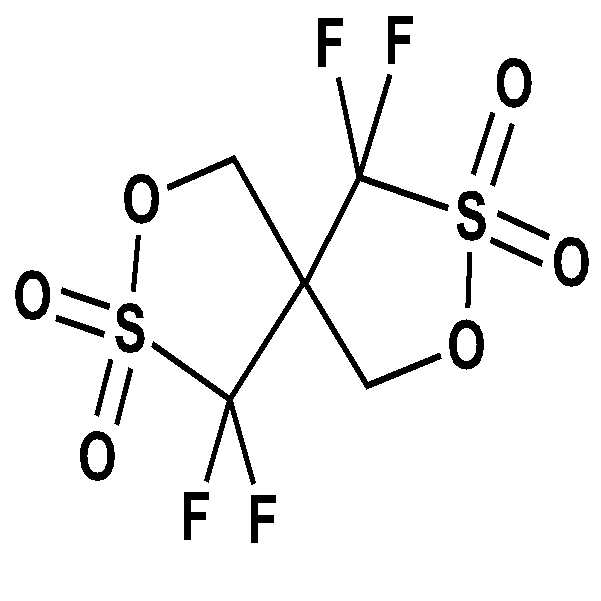
<화학식 14> <화학식 15><Formula 14> <


<화학식 16> <화학식 17><Formula 16> <Formula 17>


상기 유기전해액에서 유기용매는 저비점용매를 포함할 수 있다. 상기 저비점용매는 25℃, 1기압에서 비점이 200℃ 이하인 용매를 의미한다.In the organic electrolyte, the organic solvent may include a low boiling point solvent. The low boiling point solvent means a solvent having a boiling point of 200 °C or less at 25 °C and 1 atm.
예를 들어, 상기 유기용매는 디알킬카보네이트, 고리형카보네이트, 선형 또는 고리형 에스테르, 선형 또는 고리형 아미드, 지방족 니트릴, 선형 또는 고리형 에테르 및 이들의 유도체로 이루어진 군에서 선택되는 하나 이상을 포함할 수 있다.For example, the organic solvent includes at least one selected from the group consisting of dialkyl carbonates, cyclic carbonates, linear or cyclic esters, linear or cyclic amides, aliphatic nitriles, linear or cyclic ethers, and derivatives thereof. can do.
보다 구체적으로, 상기 유기용매는 디메틸카보네이트(DMC), 에틸메틸카보네이트(EMC), 메틸프로필카보네이트, 에틸프로필카보네이트, 디에틸카보네이트(DEC), 디프로필카보네이트, 프로필렌카보네이트(PC), 에틸렌카보네이트(EC), 플루오로에틸렌카보네이트(FEC), 부틸렌카보네이트, 에틸프로피오네이트, 에틸부티레이트, 아세토니트릴, 석시노니트릴(SN), 디메틸술폭사이드, 디메틸포름아미드, 디메틸아세트아미드, 감마-발레로락톤, 감마-부티로락톤 및 테트라하이드로퓨란 중에서 선택된 하나 이상을 포함할 수 있으나 반드시 이들로 한정되지 않으며 당해 기술분야에서 사용될 수 있는 저비점용매라면 모두 가능하다.More specifically, the organic solvent is dimethyl carbonate (DMC), ethyl methyl carbonate (EMC), methyl propyl carbonate, ethyl propyl carbonate, diethyl carbonate (DEC), dipropyl carbonate, propylene carbonate (PC), ethylene carbonate (EC) ), fluoroethylene carbonate (FEC), butylene carbonate, ethyl propionate, ethyl butyrate, acetonitrile, succinonitrile (SN), dimethyl sulfoxide, dimethylformamide, dimethylacetamide, gamma-valerolactone, It may include at least one selected from gamma-butyrolactone and tetrahydrofuran, but is not limited thereto, and any low-boiling solvent that can be used in the art may be used.
상기 유기전해액은 액체 또는 겔 상태일 수 있다. 상기 유기전해액은 상술한 유기용매에 상술한 화학식 1의 디술톤계 화합물, 제1 리튬염 및 제2 리튬염을 첨가하여 제조될 수 있다.The organic electrolyte may be in a liquid or gel state. The organic electrolyte may be prepared by adding the disultone-based compound of
본 명세서에서, "탄소수 a 내지 b"의 a 및 b는 특정 작용기(group)의 탄소수를 의미한다. 즉, 상기 작용기는 a 부터 b까지의 탄소원자를 포함할 수 있다. 예를 들어, "탄소수 1 내지 4의 알킬기"는 1 내지 4의 탄소를 가지는 알킬기, 즉, CH3-, CH3CH2-, CH3CH2CH2-, (CH3)2CH-, CH3CH2CH2CH2-, CH3CH2CH(CH3)- and (CH3)3C-를 의미한다.In the present specification, a and b of "carbon number a to b" means the number of carbon atoms of a specific functional group (group). That is, the functional group may include carbon atoms a to b. For example, an "alkyl group having 1 to 4 carbon atoms" refers to an alkyl group having 1 to 4 carbons, that is, CH 3 -, CH 3 CH 2 -, CH 3 CH 2 CH 2 -, (CH 3 ) 2 CH-, CH 3 CH 2 CH 2 CH 2 -, CH 3 CH 2 CH(CH 3 )- and (CH 3 ) 3 C-.
특정 라디칼에 대한 명명법은 문맥에 따라 모노라디칼(mon-radical) 또는 디라디칼(di-radical)을 포함할 수 있다. 예를 들어, 치환기가 나머지 분자에 대하여 두개의 연결지점을 요구하면, 상기 치환기는 디라디칼로 이해되어야 한다. 예를 들어, 2개의 연결지점을 요구하는 알킬기로 특정된 치환기는 -CH2-, -CH2CH2-, -CH2CH(CH3)CH2-, 등과 같은 디라디칼을 포함한다. "아킬렌"과 같은 다른 라디칼 명명법은 명확하게 상기 라디칼이 디라디칼임을 나타낸다.Nomenclature for a particular radical may include mono-radical or di-radical depending on the context. For example, if a substituent requires two points of attachment to the rest of the molecule, then the substituent should be understood as a diradical. For example, substituents specified as alkyl groups requiring two points of attachment include diradicals such as -CH 2 - , -CH 2 CH 2 - , -CH 2 CH(CH 3 )CH 2 - , and the like. Other radical nomenclatures, such as "acylene", clearly indicate that the radical is a diradical.
본 명세서에서, "알킬기" 또는 "알킬렌기"라는 용어는 분지된 또는 분지되지 않은 지방족 탄화수소기를 의미한다. 일 구현예에서 알킬기는 치환되거나 치환되지 않을 수 있다. 알킬기는 메틸기, 에틸기, 프로필기, 이소프로필기, 부틸기, 이소부틸기, tert-부틸기, 펜틸기, 헥실기, 시클로프로필기, 시클로펜틸기, 시클로헥실기, 시클로헵틸기 등을 포함하나 반드시 이들로 한정되지 않으며, 이들 각각은 선택적으로 치환되거나 치환되지 않을 수 있다. 일 구현예에서 알킬기는 1 내지 5의 탄소원자를 가질 수 있다. 예를 들어, 탄소수 1 내지 5의 알킬기는 메틸, 에틸, 프로필, 이소프로필, 부틸, 이소-부틸, sec-부틸, 펜틸, 3-펜틸, 헥실 등일 수 있으나 반드시 이들로 한정되지 않는다.As used herein, the term "alkyl group" or "alkylene group" means a branched or unbranched aliphatic hydrocarbon group. In one embodiment, the alkyl group may be substituted or unsubstituted. The alkyl group includes a methyl group, an ethyl group, a propyl group, an isopropyl group, a butyl group, an isobutyl group, a tert-butyl group, a pentyl group, a hexyl group, a cyclopropyl group, a cyclopentyl group, a cyclohexyl group, a cycloheptyl group, etc. It is not necessarily limited thereto, and each of them may be optionally substituted or unsubstituted. In one embodiment, the alkyl group may have 1 to 5 carbon atoms. For example, an alkyl group having 1 to 5 carbon atoms may be methyl, ethyl, propyl, isopropyl, butyl, iso-butyl, sec-butyl, pentyl, 3-pentyl, hexyl, etc., but is not necessarily limited thereto.
본 명세서에서, "시클로알킬기"라는 용어는 완전히 포화된 카보사이클 고리 또는 고리시스템을 의미한다. 예를 들어, 시클로프로필, 시클로부틸, 시클로펜틸, 시클로헥실을 의미한다.As used herein, the term "cycloalkyl group" refers to a fully saturated carbocyclic ring or ring system. for example, cyclopropyl, cyclobutyl, cyclopentyl, cyclohexyl.
본 명세서에서, "알케닐기"라는 용어는 적어도 하나의 탄소-탄소 이중결합을 포함하는 2 내지 10의 탄소원자를 포함하는 탄화수소기로서 에테닐기, 1-프로페닐기, 2-프로페닐기, 2-메틸-1-프로페닐기, 1-부테닐기, 2-부테닐기, 시클로프로페닐기, 시클로펜테닐기, 시클로헥세닐기, 시클로헵테닐기 등을 포함하나 이들로 한정되지 않는다. 일 구현예에서, 알케닐기는 치환되거나 치환되지 않을 수 있다. 일 구현예에서, 알케닐기는 2 내지 10의 탄소원자를 가질 수 있다.As used herein, the term "alkenyl group" is a hydrocarbon group containing 2 to 10 carbon atoms including at least one carbon-carbon double bond, and is an ethenyl group, 1-propenyl group, 2-propenyl group, 2-methyl- 1-propenyl group, 1-butenyl group, 2-butenyl group, cyclopropenyl group, cyclopentenyl group, cyclohexenyl group, cycloheptenyl group, etc., but are not limited thereto. In one embodiment, an alkenyl group may be substituted or unsubstituted. In one embodiment, an alkenyl group can have from 2 to 10 carbon atoms.
본 명세서에서, "알키닐기"라는 용어는 적어도 하나의 탄소-탄소 삼중결합을 포함하는 2 내지 10의 탄소원자를 포함하는 탄화수소기로서 에티닐기, 1-프로피닐기, 1-부티닐기, 2-부티닐기 등을 포함하나 이들로 한정되지 않는다. 일 구현예에서, 알키닐기는 치환되거나 치환되지 않을 수 있다. 일 구현예에서, 알키닐기는 2 내지 10의 탄소원자를 가질 수 있다.As used herein, the term "alkynyl group" refers to a hydrocarbon group containing 2 to 10 carbon atoms including at least one carbon-carbon triple bond, and an ethynyl group, 1-propynyl group, 1-butynyl group, 2-butynyl group and the like. In one embodiment, an alkynyl group may be substituted or unsubstituted. In one embodiment, an alkynyl group can have from 2 to 10 carbon atoms.
본 명세서에서, "방향족"이라는 용어는 공액(conjugated) 파이 전자 시스템을 가지는 고리 또는 고리 시스템을 의미하며, 탄소고리 방향족(예를 들어, 페닐기) 및 헤테로고리 방향족기 (예를 들어, 피리딘)을 포함한다. 상기 용어는 전체 고리 시스템이 방향족이라면, 단일환고리 또는 융화된 다환고리(즉, 인접하는 원자쌍을 공유하는 고리)를 포함한다.As used herein, the term "aromatic" refers to a ring or ring system having a conjugated pi electron system, and a carbocyclic aromatic (eg, a phenyl group) and a heterocyclic aromatic group (eg, pyridine). include The term includes monocyclic rings or fused polycyclic rings (ie, rings that share adjacent pairs of atoms) provided that the entire ring system is aromatic.
본 명세서에서, "아릴기"라는 용어는 고리 골격이 오직 탄소만을 포함하는 방향족 고리 또는 고리 시스템(즉, 2개의 인접하는 탄소 원자들을 공유하는 2 이상의 융화된(fused) 고리)을 의미한다. 상기 아릴기가 고리 시스템이면, 상기 시스템에서 각각의 고리는 방향족이다. 예를 들어, 아릴기는 페닐기, 비페닐기, 나프틸기, 페날트레닐기(phenanthrenyl), 나프타세닐기(naphthacenyl) 등을 포함하나 이들로 한정되지 않는다. 상기 아릴기는 치환되거나 치환되지 않을 수 있다.As used herein, the term "aryl group" refers to an aromatic ring or ring system (ie, two or more fused rings sharing two adjacent carbon atoms) in which the ring skeleton contains only carbon. If the aryl group is a ring system, then each ring in the system is aromatic. For example, the aryl group includes, but is not limited to, a phenyl group, a biphenyl group, a naphthyl group, a phenalthrenyl group, a naphthacenyl group, and the like. The aryl group may be substituted or unsubstituted.
본 명세서에서, "헤테로아릴기"라는 용어는 하나의 고리 또는 복수의 융화된 고리를 가지며, 하나 이상의 고리 원자가 탄소가 아닌, 즉 헤테로원자인, 방향족 고리 시스템을 의미한다. 융화된 고리 시스템에서, 하나 이상의 헤테로원자는 오직 하나의 고리에 존재할 수 있다. 예를 들어, 헤테로원자는 산소, 황 및 질소를 포함하나 반드시 이들로 한정되지 않는다. 예를 들어, 헤테로아릴기는 퓨라닐기(furanyl), 티에닐기(thienyl), 이미다졸릴기(imidazolyl), 퀴나졸리닐기(quinazolinyl), 퀴놀리닐기(quinolinyl), 이소퀴놀리닐기(isoquinolinyl), 퀴녹살리닐기(quinoxalinyl), 피리디닐기(pyridinyl), 피롤릴기(pyrrolyl), 옥사졸릴기(oxazolyl), 인돌릴기(indolyl), 등일 수 있으나 이들로 한정되지 않는다.As used herein, the term "heteroaryl group" refers to an aromatic ring system having one ring or a plurality of fused rings, wherein at least one ring atom is not carbon, ie, a heteroatom. In a fused ring system, one or more heteroatoms may be present in only one ring. For example, heteroatoms include, but are not necessarily limited to, oxygen, sulfur and nitrogen. For example, a heteroaryl group is a furanyl group, a thienyl group, an imidazolyl group, a quinazolinyl group, a quinolinyl group, a quinolinyl group, an isoquinolinyl group, and a quinoxy group. It may be a saline group (quinoxalinyl), a pyridinyl group (pyridinyl), a pyrrolyl group (pyrrolyl), an oxazolyl group (oxazolyl), an indolyl group (indolyl), and the like, but is not limited thereto.
본 명세서에서, "아랄킬기", "알킬아릴기"라는 용어는 탄소수 6 내지 15의 아랄킬기 등과 같이, 알킬렌기를 경유하여 치환기로서 연결된 아릴기를 의미하며, 벤질기, 2-페닐에틸기, 3-페닐프로필기, 나프틸알킬기를 포함하나 이들로 한정되지 않는다. 일 구현에에서, 알킬렌기는 저급 알킬렌기(즉, 탄소수 1 내지 5의 알킬렌기)이다.As used herein, the terms "aralkyl group" and "alkylaryl group" refer to an aryl group connected as a substituent via an alkylene group, such as an aralkyl group having 6 to 15 carbon atoms, a benzyl group, a 2-phenylethyl group, 3- It includes, but is not limited to, a phenylpropyl group and a naphthylalkyl group. In one embodiment, the alkylene group is a lower alkylene group (ie, an alkylene group having 1 to 5 carbon atoms).
본 명세서에서, "시클로알케닐기"는 하나 이상의 이중결합을 가지는 카보사이틀 고리 또는 고리시스템으로서, 방향족 고리가 없는 고리 시스템이다. 예를 들어, 시클로헥세닐기이다.As used herein, the "cycloalkenyl group" is a carbocytyl ring or ring system having one or more double bonds, and is a ring system without an aromatic ring. For example, it is a cyclohexenyl group.
본 명세서에서 "헤테로사이클릴기"는 고리 골격에 하나 이상의 헤테로원자를 포함하는 비방향족 고리 또는 고리시스템이다.As used herein, "heterocyclyl group" is a non-aromatic ring or ring system including one or more heteroatoms in the ring skeleton.
본 명세서에서 "할로겐"은 원소주기율표의 17족에서 속하는 안정한 원소로서 예를 들어, 불소, 염소, 브롬 또는 요오드이며, 특히 불소 및/또는 염소이다.As used herein, "halogen" is a stable element belonging to Group 17 of the Periodic Table of the Elements, and is, for example, fluorine, chlorine, bromine or iodine, in particular fluorine and/or chlorine.
본 명세서에서, 치환기는 치환되지 않는 모그룹(mother group)에서 하나 이상의 수소가 다른 원자나 작용기를 교환됨에 의하여 유도된다. 다르게 기재하지 않으면, 어떠한 작용기가 "치환된"것으로 여겨질 때, 그것은 상기 작용기가 탄소수 1 내지 10의 알킬기, 탄소수 2 내지 10의 알케닐기, 탄소수 3 내지 10의 시클로알킬기, 탄소수 3 내지 10의 시클로알케닐기, 탄소수 1 내지 10의 알킬기, 탄소수 5 내지 10의 아릴기에서 선택된 하나 이상의 치환기로 치횐됨을 의미한다. 작용기가 "선택적으로 치환된다"고 기재되는 경우에, 상기 작용기가 상술한 치환기로 치환될 수 있다는 것을 의미한다.
In the present specification, a substituent is derived by exchanging one or more hydrogens with another atom or a functional group in an unsubstituted mother group. Unless otherwise stated, when a functional group is considered to be “substituted,” it means that the functional group is an alkyl group having 1 to 10 carbon atoms, an alkenyl group having 2 to 10 carbon atoms, a cycloalkyl group having 3 to 10 carbon atoms, or a cycloalkyl group having 3 to 10 carbon atoms. It means substituted with one or more substituents selected from an alkenyl group, an alkyl group having 1 to 10 carbon atoms, and an aryl group having 5 to 10 carbon atoms. When a functional group is described as being “optionally substituted”, it is meant that the functional group may be substituted with the aforementioned substituents.
다른 구현예에 따른 리튬전지는 양극; 음극 및 상기에 따른 유기전해액을 포함한다. 상기 리튬전지는 그 형태가 특별히 제한되지는 않으며, 리튬이온전지, 리튬이온폴리머전지, 리튬설퍼전지 등과 같은 리튬이차전지는 물론, 리튬일차 전지도 포함한다.A lithium battery according to another embodiment includes a positive electrode; It includes an anode and the organic electrolyte according to the above. The form of the lithium battery is not particularly limited, and includes lithium secondary batteries such as lithium ion batteries, lithium ion polymer batteries, and lithium sulfur batteries, as well as lithium primary batteries.
예를 들어, 상기 리튬전지에서 음극은 흑연을 포함할 수 있다. 그리고, 상기 리튬전지는 4.3V 이상의 고전압을 가질 수 있다.For example, in the lithium battery, the negative electrode may include graphite. And, the lithium battery may have a high voltage of 4.3V or more.
예를 들어, 상기 리튬전지는 다음과 같은 방법에 의하여 제조될 수 있다.For example, the lithium battery may be manufactured by the following method.
먼저 양극이 준비된다.First, an anode is prepared.
예를 들어, 양극활물질, 도전재, 바인더 및 용매가 혼합된 양극활물질 조성물이 준비된다. 상기 양극활물질 조성물이 금속 집전체 위에 직접 코팅되어 양극판이 제조된다. 다르게는, 상기 양극활물질 조성물이 별도의 지지체 상에 캐스팅된 다음, 상기 지지체로부터 박리된 필름이 금속 집전체상에 라미네이션되어 양극판이 제조될 수 있다. 상기 양극은 상기에서 열거한 형태에 한정되는 것은 아니고 상기 형태 이외의 형태일 수 있다.For example, a positive electrode active material composition in which a positive electrode active material, a conductive material, a binder, and a solvent are mixed is prepared. The positive electrode active material composition is directly coated on a metal current collector to manufacture a positive electrode plate. Alternatively, the positive electrode active material composition may be cast on a separate support, and then a film peeled from the support may be laminated on a metal current collector to manufacture a positive electrode plate. The positive electrode is not limited to the above-listed shapes and may be in a shape other than the above-mentioned shapes.
상기 양극활물질은 리튬함유 금속산화물로서, 당업계에서 통상적으로 사용되는 것이면 제한 없이 모두 사용될 수 있다. 예를 들어, 코발트, 망간, 니켈, 및 이들의 조합에서 선택되는 금속과 리튬과의 복합 산화물 중 1종 이상의 것을 사용할 수 있으며, 그 구체적인 예로는, LiaA1-bBbD2(상기 식에서, 0.90 ≤ a ≤ 1.8, 및 0 ≤ b ≤ 0.5이다); LiaE1-bBbO2-cDc(상기 식에서, 0.90 ≤ a ≤ 1.8, 0 ≤ b ≤ 0.5, 0 ≤ c ≤ 0.05이다); LiE2-bBbO4-cDc(상기 식에서, 0 ≤ b ≤ 0.5, 0 ≤ c ≤ 0.05이다); LiaNi1-b-cCobBcDα(상기 식에서, 0.90 ≤ a ≤ 1.8, 0 ≤ b ≤ 0.5, 0 ≤ c ≤ 0.05, 0 < α ≤ 2이다); LiaNi1-b-cCobBcO2-αFα(상기 식에서, 0.90 ≤ a ≤ 1.8, 0 ≤ b ≤ 0.5, 0 ≤ c ≤ 0.05, 0 < α < 2이다); LiaNi1-b-cCobBcO2-αF2(상기 식에서, 0.90 ≤ a ≤ 1.8, 0 ≤ b ≤ 0.5, 0 ≤ c ≤ 0.05, 0 < α < 2이다); LiaNi1-b-cMnbBcDα(상기 식에서, 0.90 ≤ a ≤ 1.8, 0 ≤ b ≤ 0.5, 0 ≤ c ≤ 0.05, 0 < α ≤ 2이다); LiaNi1-b-cMnbBcO2-αFα(상기 식에서, 0.90 ≤ a ≤ 1.8, 0 ≤ b ≤ 0.5, 0 ≤ c ≤ 0.05, 0 < α < 2이다); LiaNi1-b-cMnbBcO2-αF2(상기 식에서, 0.90 ≤ a ≤ 1.8, 0 ≤ b ≤ 0.5, 0 ≤ c ≤ 0.05, 0 < α < 2이다); LiaNibEcGdO2(상기 식에서, 0.90 ≤ a ≤ 1.8, 0 ≤ b ≤ 0.9, 0 ≤ c ≤ 0.5, 0.001 ≤ d ≤ 0.1이다.); LiaNibCocMndGeO2(상기 식에서, 0.90 ≤ a ≤ 1.8, 0 ≤ b ≤ 0.9, 0 ≤ c ≤ 0.5, 0 ≤ d ≤0.5, 0.001 ≤ e ≤ 0.1이다.); LiaNiGbO2(상기 식에서, 0.90 ≤ a ≤ 1.8, 0.001 ≤ b ≤ 0.1이다.); LiaCoGbO2(상기 식에서, 0.90 ≤ a ≤ 1.8, 0.001 ≤ b ≤ 0.1이다.); LiaMnGbO2(상기 식에서, 0.90 ≤ a ≤ 1.8, 0.001 ≤ b ≤ 0.1이다.); LiaMn2GbO4(상기 식에서, 0.90 ≤ a ≤ 1.8, 0.001 ≤ b ≤ 0.1이다.); QO2; QS2; LiQS2; V2O5; LiV2O5; LiIO2; LiNiVO4; Li(3-f)J2(PO4)3(0 ≤ f ≤ 2); Li(3-f)Fe2(PO4)3(0 ≤ f ≤ 2); LiFePO4의 화학식 중 어느 하나로 표현되는 화합물을 사용할 수 있다:The cathode active material is a lithium-containing metal oxide, and any one commonly used in the art may be used without limitation. For example, one or more of a complex oxide of lithium and a metal selected from cobalt, manganese, nickel, and combinations thereof may be used, and specific examples thereof include Li a A 1-b B b D 2 (above where 0.90 ≤ a ≤ 1.8, and 0 ≤ b ≤ 0.5); Li a E 1-b B b O 2-c D c (wherein 0.90 ≤ a ≤ 1.8, 0 ≤ b ≤ 0.5, 0 ≤ c ≤ 0.05); LiE 2-b B b O 4-c D c (wherein 0 ≤ b ≤ 0.5 and 0 ≤ c ≤ 0.05); Li a Ni 1-bc Co b B c D α (wherein 0.90 ≤ a ≤ 1.8, 0 ≤ b ≤ 0.5, 0 ≤ c ≤ 0.05, 0 < α ≤ 2); Li a Ni 1-bc Co b B c O 2-α F α (wherein 0.90 ≤ a ≤ 1.8, 0 ≤ b ≤ 0.5, 0 ≤ c ≤ 0.05, 0 < α <2); Li a Ni 1-bc Co b B c O 2-α F 2 (wherein 0.90 ≤ a ≤ 1.8, 0 ≤ b ≤ 0.5, 0 ≤ c ≤ 0.05, 0 < α <2); Li a Ni 1-bc Mn b B c D α (wherein 0.90 ≤ a ≤ 1.8, 0 ≤ b ≤ 0.5, 0 ≤ c ≤ 0.05, 0 < α ≤ 2); Li a Ni 1-bc Mn b B c O 2-α F α (wherein 0.90 ≤ a ≤ 1.8, 0 ≤ b ≤ 0.5, 0 ≤ c ≤ 0.05, 0 < α <2); Li a Ni 1-bc Mn b B c O 2-α F 2 (wherein 0.90 ≤ a ≤ 1.8, 0 ≤ b ≤ 0.5, 0 ≤ c ≤ 0.05, 0 < α <2); Li a Ni b E c G d O 2 (in the above formula, 0.90 ≤ a ≤ 1.8, 0 ≤ b ≤ 0.9, 0 ≤ c ≤ 0.5, 0.001 ≤ d ≤ 0.1); Li a Ni b Co c Mn d GeO 2 (wherein 0.90 ≤ a ≤ 1.8, 0 ≤ b ≤ 0.9, 0 ≤ c ≤ 0.5, 0 ≤ d ≤ 0.5, 0.001 ≤ e ≤ 0.1); Li a NiG b O 2 (in the above formula, 0.90 ≤ a ≤ 1.8, 0.001 ≤ b ≤ 0.1); Li a CoG b O 2 (in the above formula, 0.90 ≤ a ≤ 1.8, 0.001 ≤ b ≤ 0.1); Li a MnG b O 2 (in the above formula, 0.90 ≤ a ≤ 1.8, 0.001 ≤ b ≤ 0.1); Li a Mn 2 G b O 4 (in the above formula, 0.90 ≤ a ≤ 1.8, 0.001 ≤ b ≤ 0.1); QO 2 ; QS 2 ; LiQS 2 ; V 2 O 5 ; LiV 2 O 5 ; LiIO 2 ; LiNiVO 4 ; Li (3-f) J 2 (PO 4 ) 3 (0 ≤ f ≤ 2); Li (3-f) Fe 2 (PO 4 ) 3 (0 ≤ f ≤ 2); A compound represented by any one of the formulas of LiFePO 4 may be used:
상기 화학식에 있어서, A는 Ni, Co, Mn, 또는 이들의 조합이고; B는 Al, Ni, Co, Mn, Cr, Fe, Mg, Sr, V, 희토류 원소 또는 이들의 조합이고; D는 O, F, S, P, 또는 이들의 조합이고; E는 Co, Mn, 또는 이들의 조합이고; F는 F, S, P, 또는 이들의 조합이고; G는 Al, Cr, Mn, Fe, Mg, La, Ce, Sr, V, 또는 이들의 조합이고; Q는 Ti, Mo, Mn, 또는 이들의 조합이고; I는 Cr, V, Fe, Sc, Y, 또는 이들의 조합이며; J는 V, Cr, Mn, Co, Ni, Cu, 또는 이들의 조합이다.In the above formula, A is Ni, Co, Mn, or a combination thereof; B is Al, Ni, Co, Mn, Cr, Fe, Mg, Sr, V, a rare earth element, or a combination thereof; D is O, F, S, P, or a combination thereof; E is Co, Mn, or a combination thereof; F is F, S, P, or a combination thereof; G is Al, Cr, Mn, Fe, Mg, La, Ce, Sr, V, or a combination thereof; Q is Ti, Mo, Mn, or a combination thereof; I is Cr, V, Fe, Sc, Y, or a combination thereof; J is V, Cr, Mn, Co, Ni, Cu, or a combination thereof.
예를 들어, LiCoO2, LiMnxO2x(x=1, 2), LiNi1-xMnxO2x(0<x<1), LiNi1-x-yCoxMnyO2 (0≤x≤0.5, 0≤y≤0.5), LiFePO4 등이다.For example, LiCoO 2 , LiMn x O 2x (x=1, 2), LiNi 1-x Mn x O 2x (0<x<1), LiNi 1-xy Co x Mn y O 2 (0≤x≤ 0.5, 0≤y≤0.5), LiFePO 4 and the like.
물론 상기 화합물 표면에 코팅층을 갖는 것도 사용할 수 있고, 또는 상기 화합물과 코팅층을 갖는 화합물을 혼합하여 사용할 수도 있다. 이 코팅층은 코팅 원소의 옥사이드, 하이드록사이드, 코팅 원소의 옥시하이드록사이드, 코팅 원소의 옥시카보네이트, 또는 코팅 원소의 하이드록시카보네이트의 코팅 원소 화합물을 포함할 수 있다. 이들 코팅층을 이루는 화합물은 비정질 또는 결정질일 수 있다. 상기 코팅층에 포함되는 코팅 원소로는 Mg, Al, Co, K, Na, Ca, Si, Ti, V, Sn, Ge, Ga, B, As, Zr 또는 이들의 혼합물을 사용할 수 있다. 코팅층 형성 공정은 상기 화합물에 이러한 원소들을 사용하여 양극 활물질의 물성에 악영향을 주지 않는 방법(예를 들어 스프레이 코팅, 침지법 등)으로 코팅할 수 있으면 어떠한 코팅 방법을 사용하여도 무방하며, 이에 대하여는 당해 분야에 종사하는 사람들에게 잘 이해될 수 있는 내용이므로 자세한 설명은 생략하기로 한다.Of course, a compound having a coating layer on the surface of the compound may be used, or a mixture of the compound and a compound having a coating layer may be used. The coating layer may include a coating element compound of oxide or hydroxide of the coating element, oxyhydroxide of the coating element, oxycarbonate of the coating element, or hydroxycarbonate of the coating element. The compound constituting these coating layers may be amorphous or crystalline. As the coating element included in the coating layer, Mg, Al, Co, K, Na, Ca, Si, Ti, V, Sn, Ge, Ga, B, As, Zr, or a mixture thereof may be used. In the coating layer forming process, any coating method may be used as long as it can be coated by a method that does not adversely affect the physical properties of the positive electrode active material by using these elements in the compound (eg, spray coating, immersion method, etc.). Since the content can be well understood by those engaged in the field, a detailed description thereof will be omitted.
상기 도전재로는 카본블랙, 흑연미립자 등이 사용될 수 있으나, 이들로 한정되지 않으며, 당해 기술분야에서 도전재로 사용될 수 있는 것이라면 모두 사용될 수 있다.Carbon black, graphite fine particles, etc. may be used as the conductive material, but are not limited thereto, and any conductive material that can be used as a conductive material in the art may be used.
상기 바인더로는 비닐리덴 플루오라이드/헥사플루오로프로필렌 코폴리머, 폴리비닐리덴플루오라이드(PVDF), 폴리아크릴로니트릴, 폴리메틸메타크릴레이트, 폴리테트라플루오로에틸렌 및 그 혼합물 또는 스티렌 부타디엔 고무계 폴리머 등이 사용될 수 있으나, 이들로 한정되지 않으며 당해 기술분야에서 바인더로 사용될 수 있는 것이라면 모두 사용될 수 있다.Examples of the binder include vinylidene fluoride/hexafluoropropylene copolymer, polyvinylidene fluoride (PVDF), polyacrylonitrile, polymethyl methacrylate, polytetrafluoroethylene and mixtures thereof, or styrene butadiene rubber-based polymer. may be used, but is not limited thereto, and any binder that can be used as a binder in the art may be used.
상기 용매로는 N-메틸피롤리돈, 아세톤 또는 물 등이 사용될 수 있으나, 이들로 한정되지 않으며 당해 기술분야에서 사용될 수 있는 것이라면 모두 사용될 수 있다.As the solvent, N-methylpyrrolidone, acetone, or water may be used, but the solvent is not limited thereto and any solvent that can be used in the art may be used.
상기, 양극 활물질, 도전재, 바인더 및 용매의 함량은 리튬 전지에서 통상적으로 사용되는 수준이다. 리튬전지의 용도 및 구성에 따라 상기 도전재, 바인더 및 용매 중 하나 이상이 생략될 수 있다.The content of the positive electrode active material, the conductive material, the binder, and the solvent is a level commonly used in a lithium battery. At least one of the conductive material, the binder, and the solvent may be omitted depending on the use and configuration of the lithium battery.
다음으로 음극이 준비된다.Next, the cathode is prepared.
예를 들어, 음극활물질, 도전재, 바인더 및 용매를 혼합하여 음극활물질 조성물이 준비된다. 상기 음극활물질 조성물이 금속 집전체 상에 직접 코팅 및 건조되어 음극판이 제조된다. 다르게는, 상기 음극활물질 조성물이 별도의 지지체상에 캐스팅된 다음, 상기 지지체로부터 박리된 필름이 금속 집전체상에 라미네이션되어 음극판이 제조될 수 있다.For example, the negative electrode active material composition is prepared by mixing the negative electrode active material, the conductive material, the binder, and the solvent. The negative electrode active material composition is directly coated and dried on a metal current collector to prepare a negative electrode plate. Alternatively, the negative electrode active material composition may be cast on a separate support, and then the film peeled from the support may be laminated on a metal current collector to manufacture a negative electrode plate.
상기 음극활물질은 당해 기술분야에서 리튬전지의 음극활물질로 사용될 수 있는 것이라면 모두 가능하다. 예를 들어, 리튬 금속, 리튬과 합금 가능한 금속, 전이금속 산화물, 비전이금속산화물 및 탄소계 재료로 이루어진 군에서 선택된 하나 이상을 포함할 수 있다.The negative active material may be any material that can be used as an anode active material for a lithium battery in the art. For example, it may include one or more selected from the group consisting of lithium metal, a metal alloyable with lithium, a transition metal oxide, a non-transition metal oxide, and a carbon-based material.
예를 들어, 상기 리튬과 합금가능한 금속은 Si, Sn, Al, Ge, Pb, Bi, Sb Si-Y 합금(상기 Y는 알칼리 금속, 알칼리 토금속, 13족 원소, 14족 원소, 전이금속, 희토류 원소 또는 이들의 조합 원소이며, Si는 아님), Sn-Y 합금(상기 Y는 알칼리 금속, 알칼리 토금속, 13족 원소, 14족 원소, 전이금속, 희토류 원소 또는 이들의 조합 원소이며, Sn은 아님) 등일 수 있다. 상기 원소 Y로는 Mg, Ca, Sr, Ba, Ra, Sc, Y, Ti, Zr, Hf, Rf, V, Nb, Ta, Db, Cr, Mo, W, Sg, Tc, Re, Bh, Fe, Pb, Ru, Os, Hs, Rh, Ir, Pd, Pt, Cu, Ag, Au, Zn, Cd, B, Al, Ga, Sn, In, Ti, Ge, P, As, Sb, Bi, S, Se, Te, Po, 또는 이들의 조합일 수 있다.For example, the metal alloyable with lithium is Si, Sn, Al, Ge, Pb, Bi, Sb Si-Y alloy (wherein Y is an alkali metal, an alkaline earth metal, a group 13 element, a group 14 element, a transition metal, a rare earth) an element or a combination element thereof, not Si), Sn-Y alloy (wherein Y is an alkali metal, alkaline earth metal, group 13 element, group 14 element, transition metal, rare earth element, or a combination element thereof, and not Sn ) and so on. The element Y includes Mg, Ca, Sr, Ba, Ra, Sc, Y, Ti, Zr, Hf, Rf, V, Nb, Ta, Db, Cr, Mo, W, Sg, Tc, Re, Bh, Fe, Pb, Ru, Os, Hs, Rh, Ir, Pd, Pt, Cu, Ag, Au, Zn, Cd, B, Al, Ga, Sn, In, Ti, Ge, P, As, Sb, Bi, S, Se, Te, Po, or a combination thereof.
예를 들어, 상기 전이금속 산화물은 리튬 티탄 산화물, 바나듐 산화물, 리튬 바나듐 산화물 등일 수 있다.For example, the transition metal oxide may be lithium titanium oxide, vanadium oxide, lithium vanadium oxide, or the like.
예를 들어, 상기 비전이금속 산화물은 SnO2, SiOx(0<x<2) 등일 수 있다. For example, the non-transition metal oxide may be SnO 2 , SiO x (0<x<2), or the like.
상기 탄소계 재료로는 결정질 탄소, 비정질 탄소 또는 이들의 혼합물일 수 있다. 상기 결정질 탄소는 무정형, 판상, 린편상(flake), 구형 또는 섬유형의 천연 흑연 또는 인조 흑연과 같은 흑연일 수 있으며, 상기 비정질 탄소는 소프트 카본(soft carbon: 저온 소성 탄소) 또는 하드 카본(hard carbon), 메조페이스 피치(mesophase pitch) 탄화물, 소성된 코크스 등일 수 있다.The carbon-based material may be crystalline carbon, amorphous carbon, or a mixture thereof. The crystalline carbon may be amorphous, plate-like, flake-like, spherical or fibrous graphite, such as natural graphite or artificial graphite, and the amorphous carbon is soft carbon (low-temperature calcined carbon) or hard carbon (hard carbon). carbon), mesophase pitch carbide, calcined coke, and the like.
음극활물질 조성물에서 도전재 및 바인더는 상기 양극활물질 조성물의 경우와 동일한 것을 사용할 수 있다.In the negative electrode active material composition, the conductive material and the binder may be the same as those of the positive electrode active material composition.
상기 음극활물질, 도전재, 바인더 및 용매의 함량은 리튬 전지에서 통상적으로 사용하는 수준이다. 리튬전지의 용도 및 구성에 따라 상기 도전재, 바인더 및 용매 중 하나 이상이 생략될 수 있다.The content of the negative electrode active material, the conductive material, the binder, and the solvent is a level commonly used in a lithium battery. At least one of the conductive material, the binder, and the solvent may be omitted depending on the use and configuration of the lithium battery.
다음으로, 상기 양극과 음극 사이에 삽입될 세퍼레이터가 준비된다.Next, a separator to be inserted between the positive electrode and the negative electrode is prepared.
상기 세퍼레이터는 리튬 전지에서 통상적으로 사용되는 것이라면 모두 사용가능하다. 전해질의 이온 이동에 대하여 저저항이면서 전해액 함습 능력이 우수한 것이 사용될 수 있다. 예를 들어, 유리 섬유, 폴리에스테르, 테프론, 폴리에틸렌, 폴리프로필렌, 폴리테트라플루오로에틸렌(PTFE) 또는 이들의 조합물 중에서 선택된 것으로서, 부직포 또는 직포 형태이어도 무방하다. 예를 들어, 리튬이온전지에는 폴리에틸렌, 폴리프로필렌 등과 같은 권취 가능한 세퍼레이터가 사용되며, 리튬이온폴리머전지에는 유기전해액 함침 능력이 우수한 세퍼레이터가 사용될 수 있다. 예를 들어, 상기 세퍼레이터는 하기 방법에 따라 제조될 수 있다.Any of the separators may be used as long as they are commonly used in lithium batteries. Those having low resistance to ion movement of the electrolyte and excellent in the electrolyte moisture content may be used. For example, it is selected from glass fiber, polyester, Teflon, polyethylene, polypropylene, polytetrafluoroethylene (PTFE), or a combination thereof, and may be in the form of a nonwoven fabric or a woven fabric. For example, a separator that can be wound up such as polyethylene or polypropylene is used for a lithium ion battery, and a separator having an excellent organic electrolyte impregnation ability may be used for a lithium ion polymer battery. For example, the separator may be manufactured according to the following method.
고분자 수지, 충진제 및 용매를 혼합하여 세퍼레이터 조성물이 준비된다. 상기 세퍼레이터 조성물이 전극 상부에 직접 코팅 및 건조되어 세퍼레이터가 형성될 수 있다. 또는, 상기 세퍼레이터 조성물이 지지체상에 캐스팅 및 건조된 후, 상기 지지체로부터 박리시킨 세퍼레이터 필름이 전극 상부에 라미네이션되어 세퍼레이터가 형성될 수 있다.A separator composition is prepared by mixing a polymer resin, a filler, and a solvent. The separator composition may be directly coated on the electrode and dried to form a separator. Alternatively, after the separator composition is cast and dried on a support, a separator film peeled from the support is laminated on an electrode to form a separator.
상기 세퍼레이터 제조에 사용되는 고분자 수지는 특별히 한정되지 않으며, 전극판의 결합재에 사용되는 물질들이 모두 사용될 수 있다. 예를 들어, 비닐리덴플루오라이드/헥사플루오로프로필렌 코폴리머, 폴리비닐리덴플루오라이드(PVDF), 폴리아크릴로니트릴, 폴리메틸메타크릴레이트 또는 이들의 혼합물 등이 사용될 수 있다.The polymer resin used for manufacturing the separator is not particularly limited, and all materials used for the bonding material of the electrode plate may be used. For example, vinylidene fluoride/hexafluoropropylene copolymer, polyvinylidene fluoride (PVDF), polyacrylonitrile, polymethylmethacrylate, or mixtures thereof may be used.
다음으로, 상술한 유기전해액이 준비된다.Next, the above-described organic electrolyte is prepared.
도 6에서 보여지는 바와 같이 상기 리튬전지(1)는 양극(3), 음극(2) 및 세퍼레이터(4)를 포함한다. 상술한 양극(3), 음극(2) 및 세퍼레이터(4)가 와인딩되거나 접혀서 전지케이스(5)에 수용된다. 이어서, 상기 전지케이스(5)에 유기전해액이 주입되고 캡(cap) 어셈블리(6)로 밀봉되어 리튬전지(1)가 완성된다. 상기 전지케이스는 원통형, 각형, 박막형 등일 수 있다. 예를 들어, 상기 리튬전지는 대형박막형전지일 수 있다. 상기 리튬전지는 리튬이온전지일 수 있다.As shown in FIG. 6 , the
상기 양극 및 음극 사이에 세퍼레이터가 배치되어 전지구조체가 형성될 수 있다. 상기 전지구조체가 바이셀 구조로 적층된 다음, 유기 전해액에 함침되고, 얻어진 결과물이 파우치에 수용되어 밀봉되면 리튬이온폴리머전지가 완성된다.A separator may be disposed between the positive electrode and the negative electrode to form a battery structure. After the battery structure is laminated in a bi-cell structure, impregnated with an organic electrolyte, and the obtained result is accommodated and sealed in a pouch, a lithium ion polymer battery is completed.
또한, 상기 전지구조체는 복수개 적층되어 전지팩을 형성하고, 이러한 전지팩이 고용량 및 고출력이 요구되는 모든 기기에 사용될 수 있다. 예를 들어, 노트북, 스마트폰, 전기차량 등에 사용될 수 있다.In addition, a plurality of the battery structure is stacked to form a battery pack, and the battery pack may be used in any device requiring high capacity and high output. For example, it can be used in a laptop, a smartphone, an electric vehicle, and the like.
또한, 상기 리튬전지는 수명특성 및 고율특성이 우수하므로 전기차량(electric vehicle, EV)에 사용될 수 있다. 예를 들어, 플러그인하이브리드차량(plug-in hybrid electric vehicle, PHEV) 등의 하이브리드차량에 사용될 수 있다. 또한, 많은 양의 전력 저장이 요구되는 분야에 사용될 수 있다. 예를 들어, 전기 자전거, 전동 공구 등에 사용될 수 있다.
In addition, since the lithium battery has excellent lifespan characteristics and high rate characteristics, it can be used in an electric vehicle (EV). For example, it may be used in a hybrid vehicle such as a plug-in hybrid electric vehicle (PHEV). In addition, it can be used in fields requiring a large amount of power storage. For example, it can be used for electric bicycles, power tools, and the like.
이하의 실시예 및 비교예를 통하여 본 발명이 더욱 상세하게 설명된다. 단, 실시예는 본 발명을 예시하기 위한 것으로서 이들만으로 본 발명의 범위가 한정되는 것이 아니다.The present invention will be described in more detail through the following examples and comparative examples. However, the examples are provided to illustrate the present invention, and the scope of the present invention is not limited thereto.
(첨가제의 합성)(synthesis of additives)
제조예 1: 하기 화학식 6의 화합물 합성Preparation Example 1: Synthesis of a compound of the following formula (6)
하기 화학식 6의 화합물은 하기 반응 스킴 1에 따라 제조될 수 있다.The compound of
<반응 스킴 1><

200ml의 에탄올에 수산화칼륨 10.34 g (0.156 mole)이 용해된 용액을 200ml 에탄올에 펜타에리스리톨트리브로마이드(pentaerythritol tribromide)가 50 g (0.154 mole) 용해된 용액에 적하한 후 상기 혼합물을 30분간 환류(reflux)시켰다. 이어서, 상온까지 냉각시킨 후 KBr을 여과하고, 에탄올을 증발시키고, 잔류물을 진공에서 증류시켜 3,3-비스(브로모메틸)옥사시클로부탄(3,3-bis(bromomethyl)oxacyclobutane) 28 g (0.115 mole)을 수득하였다(75%, b.p. 72-78℃ @ 10 mmHg).A solution of 10.34 g (0.156 mole) of potassium hydroxide in 200 ml of ethanol was added dropwise to a solution in which 50 g (0.154 mole) of pentaerythritol tribromide was dissolved in 200 ml of ethanol, and the mixture was refluxed for 30 minutes. ) was made. Then, after cooling to room temperature, KBr was filtered, ethanol was evaporated, and the residue was distilled in vacuo to 28 g of 3,3-bis(bromomethyl)oxacyclobutane. (0.115 mole) was obtained (75%, bp 72-78° C. @ 10 mmHg).
1H NMR (400 MHz, CDCl3): δ 3.84 (s, 4H), 4.42 (s, 4H), 4.58 (s, 4H).1H NMR (400 MHz, CDCl3): δ 3.84 (s, 4H), 4.42 (s, 4H), 4.58 (s, 4H).
94ml의 메탄올과 28ml의 물의 혼합용매에 3,3-비스(브로모메틸)옥사시클로부탄 28 g (0.115 mole)이 용해된 용액을 252ml이 물에 Na2SO3 44.8 g (0.358 mol)이 용해된 용액에 적하하였다. 상기 혼합물을 3.5h 동안 환류시킨 후 용매를 진공에서 제거하였다. 잔류물을 상온에서 200ml 진한 염산(conc. HCl)으로 처리한 후 NaCl을 여과하였다. 술푠산 용액을 진공에서 여과한 후 잔류 오일을 2mmHg의 압력에서 210-220℃로 2시간 동안 가열하였다. 얻어진 흑색 덩어리(mass)를 끓는(boiling) 디옥산으로 추출한 후, 상기 용액이 뜨거운 상태에서 여과하였다. 상기 여과된 용액이 냉각된 후에 디술톤이 결정화되었다.A solution of 28 g (0.115 mole) of 3,3-bis(bromomethyl)oxacyclobutane in a mixed solvent of 94 ml of methanol and 28 ml of water is dissolved in 252 ml of Na 2 SO 3 44.8 g (0.358 mol) of water. was added dropwise to the solution. The mixture was refluxed for 3.5 h and then the solvent was removed in vacuo. The residue was treated with 200 ml concentrated hydrochloric acid (conc. HCl) at room temperature, and then NaCl was filtered off. After filtration of the sulfonic acid solution in vacuo, the residual oil was heated to 210-220° C. at a pressure of 2 mmHg for 2 hours. After extracting the obtained black mass with boiling dioxane, the solution was filtered while hot. After the filtered solution was cooled, disultone crystallized.
수율: 10 g (38%, m.p. 244-246 ℃). 1H NMR (400 MHz, DMSO-d6): δ 3.87 (s, 2H), 3.88 (s, 2H), 4.58 (s, 4H).Yield: 10 g (38%, m.p. 244-246° C.). 1H NMR (400 MHz, DMSO-d6): δ 3.87 (s, 2H), 3.88 (s, 2H), 4.58 (s, 4H).
<화학식 6><

(유기전해액의 제조)(Production of organic electrolyte)
실시예 1Example 1
에틸렌카보네이트(EC), 에틸메틸카보네이트(EMC) 및 디메틸카보네이트(DMC)의 2:4:4 부피비 혼합용매에, 제2 리튬염으로 1.15M LiPF6 및 상기 화학식 6으로 표시되는 디술톤계 화합물 1.0중량%, 하기 화학식 18로 표시되는 리튬 디플루오로포스페이트(lithium difluorophosphate, LiPO2F2)(제1 리튬염) 1.0중량% 및 하기 화학식 19로 표시되는 비닐렌 카보네이트(vinylene carbonate, VC) 0.5중량%를 첨가하여 유기전해액을 제조하였다.In a 2:4:4 volume ratio mixed solvent of ethylene carbonate (EC), ethylmethyl carbonate (EMC) and dimethyl carbonate (DMC), 1.15M LiPF 6 as a second lithium salt and 1.0 weight of a disultone-based compound represented by
<화학식 18> <화학식 19><Formula 18> <Formula 19>


실시예 2Example 2
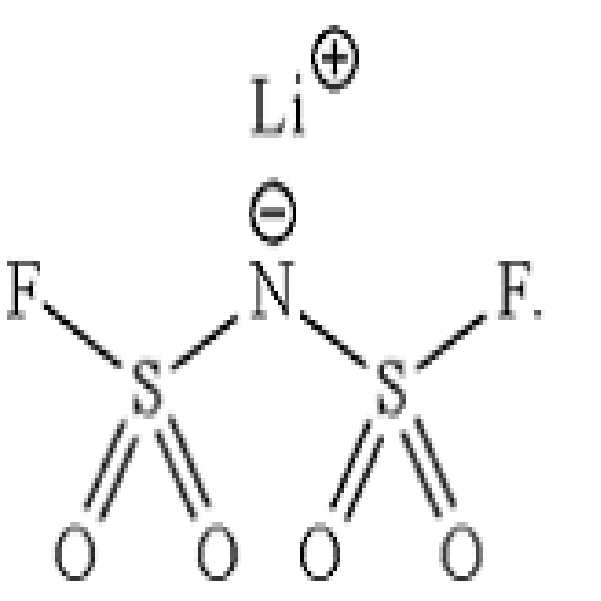
에틸렌카보네이트(EC), 에틸메틸카보네이트(EMC) 및 디메틸카보네이트(DMC)의 2:4:4 부피비 혼합용매에, 리튬염으로 1.15M LiPF6 및 상기 화학식 6으로 표시되는 디술톤계 화합물 1.0중량%, 하기 화학식 20으로 표시되는 리튬 비스플루오로술포닐 이미드(lithium bisfluorosulfonyl imide, Li(FSO2)2N) 1.0중량% 및 하기 화학식 19로 표시되는 비닐렌 카보네이트(vinylene carbonate, VC) 0.5중량%를 첨가하여 유기전해액을 제조하였다.In a 2:4:4 volume ratio mixed solvent of ethylene carbonate (EC), ethylmethyl carbonate (EMC) and dimethyl carbonate (DMC), 1.15M LiPF 6 as a lithium salt and 1.0% by weight of a disultone-based compound represented by
<화학식 20> <화학식 19><

비교예 1: LiPOComparative Example 1: LiPO 22 FF 22 + VC + VC
상기 화학식 6의 디술톤계 화합물을 첨가하지 않은 것을 제외하고는 실시예 1과 동일한 방법으로 유기전해액을 제조하였다.An organic electrolyte was prepared in the same manner as in Example 1, except that the disultone-based compound of
비교예 2: Li(FSOComparative Example 2: Li (FSO) 22 )) 22 N + VCN + VC
상기 화학식 6의 디술톤계 화합물을 첨가하지 않은 것을 제외하고는 실시예 2와 동일한 방법으로 유기전해액을 제조하였다.An organic electrolyte was prepared in the same manner as in Example 2, except that the disultone-based compound of
비교예 3: LiPOComparative Example 3: LiPO 22 FF 22 only only
상기 화학식 6의 디술톤계 화합물 및 상기 화학식 19의 비닐렌 카보네이트를 첨가하지 않은 것을 제외하고는 실시예 1과 동일한 방법으로 유기전해액을 제조하였다.An organic electrolyte was prepared in the same manner as in Example 1, except that the disultone-based compound of
비교예 4: Li(FSOComparative Example 4: Li (FSO) 22 )) 22 N onlyN only
상기 화학식 6의 디술톤계 화합물 및 상기 화학식 19의 비닐렌 카보네이트를 첨가하지 않은 것을 제외하고는 실시예 2와 동일한 방법으로 유기전해액을 제조하였다.An organic electrolyte was prepared in the same manner as in Example 2, except that the disultone-based compound of
비교예 5Comparative Example 5
에틸렌카보네이트(EC), 에틸메틸카보네이트(EMC) 및 디메틸카보네이트(DMC)의 2:4:4 부피비 혼합용매에, 리튬염으로 1.15M LiPF6을 첨가하여 유기전해액을 제조하였다. 즉, 디술톤계 화합물, 제1 리튬염 및 비닐렌 카보네이트를 첨가하지 않았다.
An organic electrolyte was prepared by adding 1.15M LiPF 6 as a lithium salt to a 2:4:4 volume ratio mixed solvent of ethylene carbonate (EC), ethylmethyl carbonate (EMC) and dimethyl carbonate (DMC). That is, the disultone-based compound, the first lithium salt, and vinylene carbonate were not added.
(리튬 전지의 제조)(Manufacture of lithium battery)
실시예 3Example 3
(양극의 제조)(Manufacture of anode)
양극 활물질로서 LiNi0.6Co0.2Mn0.2O2 93.0 중량%, 도전재로서 Denka black 4.0 중량% 및 바인더로서 PVDF(Solef 6020, Solvay사 제조) 3.0 중량%를 혼합하여, N-메틸-2-피롤리돈 용매에 투입한 후 기계식 교반기를 사용하여 30분간 분산시켜 양극 활물질 조성물을 제조하였다. 상기 양극 활물질 조성물을 닥터 블레이드를 사용하여 두께 20 ㎛의 알루미늄 호일 집전체 상에 약 60㎛ 두께로 도포하고 100℃의 열풍건조기에서 0.5시간 동안 건조한 후 진공, 120℃의 조건에서 4시간 동안 다시 한번 건조하고, 압연(roll press)하여 집전체상에 양극 활물질층이 형성된 양극을 제조하였다. 제조된 양극 활물질층의 밀도는 3.15 g/cc이고, 로딩 레벨(loading level)은 27.05 mg/cm2이었다. LiNi 0.6 Co 0.2 Mn 0.2 O 2 93.0 wt% as a cathode active material, 4.0 wt% of Denka black as a conductive material, and 3.0 wt% of PVDF (Solef 6020, manufactured by Solvay) as a binder were mixed, and N-methyl-2-pyrroly After being added to the money solvent, it was dispersed for 30 minutes using a mechanical stirrer to prepare a cathode active material composition. The positive active material composition was applied to a thickness of about 60 μm on an aluminum foil current collector having a thickness of 20 μm using a doctor blade, dried in a hot air dryer at 100° C. for 0.5 hours, and then again under vacuum and 120° C. conditions for 4 hours. Drying and rolling (roll press) to prepare a positive electrode having a positive electrode active material layer formed on the current collector. The prepared cathode active material layer had a density of 3.15 g/cc and a loading level of 27.05 mg/cm 2 .
(음극의 제조)(Production of cathode)
음극 활물질로서 흑연 입자(MC20, 미츠비시 화학 제조) 97 중량%, 도전재로서 (다이셀(Daicel)사의 BM408) 1.5 중량%, 바인더로서 (제온(Zeon)사의 BM400-B) 1.5 중량%를 혼합하여, N-메틸-2-피롤리돈 용매에 투입한 후 기계식 교반기를 사용하여 60분간 분산시켜 음극 활물질 조성물을 제조하였다. 상기 음극 활물질 조성물을 닥터 블레이드를 사용하여 두께 10 ㎛의 구리 집전체 상에 약 60㎛ 두께로 도포하고 100℃의 열풍건조기에서 0.5시간 동안 건조한 후 진공, 120℃의 조건에서 4시간 동안 다시 한번 건조하고, 압연하여 집전체상에 음극 활물질층이 형성된 음극을 제조하였다. 제조된 음극 활물질층의 밀도는 1.55 g/cc이고, 로딩 레벨(loading level)은 14.36 mg/cm2이었다.97 wt% of graphite particles (MC20, manufactured by Mitsubishi Chemical) as an anode active material, 1.5 wt% of a conductive material (BM408 of Daicel), and 1.5 wt% of a binder (BM400-B of Zeon) 1.5 wt% , N-methyl-2-pyrrolidone was added to a solvent and dispersed for 60 minutes using a mechanical stirrer to prepare a negative active material composition. The negative active material composition was applied to a thickness of about 60 μm on a copper current collector having a thickness of 10 μm using a doctor blade, dried in a hot air dryer at 100° C. for 0.5 hours, and then dried again under vacuum and 120° C. conditions for 4 hours. and rolling to prepare a negative electrode having a negative electrode active material layer formed on the current collector. The density of the prepared negative active material layer was 1.55 g/cc, and the loading level was 14.36 mg/cm 2 .
(리튬 전지의 조립)(Assembly of lithium battery)
상기 양극, 상기 음극, 및 세라믹이 코팅된 두께 18㎛ 폴리에틸렌 세퍼레이터 및 전해액으로서 상기 실시예 1에서 제조된 전해액을 사용하여 리튬 전지를 제조하였다.
A lithium battery was prepared using the electrolyte prepared in Example 1 as the electrolyte and the positive electrode, the negative electrode, and an 18 μm thick polyethylene separator coated with ceramic.
실시예 4Example 4
실시예 1에서 제조된 유기전해액 대신에 실시예 2에서 제조된 유기전해액을 각각 사용한 것을 제외하고는 실시예 3과 동일한 방법으로 리튬전지를 제조하였다.A lithium battery was manufactured in the same manner as in Example 3, except that the organic electrolyte prepared in Example 2 was used instead of the organic electrolyte prepared in Example 1, respectively.
비교예 6 내지 10Comparative Examples 6 to 10
실시예 1에서 제조된 유기전해액 대신에 비교예 1 내지 5에서 제조된 유기전해액을 각각 사용한 것을 제외하고는 실시예 3과 동일한 방법으로 리튬전지를 제조하였다.
A lithium battery was manufactured in the same manner as in Example 3, except that the organic electrolytes prepared in Comparative Examples 1 to 5 were respectively used instead of the organic electrolyte prepared in Example 1.
평가예 1: 초기용량 및 초기 직류저항(DC-IR) 평가Evaluation Example 1: Initial capacity and initial direct current resistance (DC-IR) evaluation
상기 실시예 3 내지 4 및 비교예 6 내지 10에서 제조된 리튬전지에 대하여 상온(25℃)에서, 초기용량 및 직류저항(DC-IR)을 하기 방법으로 측정하였다.The initial capacity and direct current resistance (DC-IR) of the lithium batteries prepared in Examples 3 to 4 and Comparative Examples 6 to 10 were measured at room temperature (25° C.) by the following method.
1st 사이클에서 0.5C의 전류로 SOC(state of charge) 50%의 전압까지 충전한 후 0.02C에서 컷오프한 후 10분 휴지시킨 후,After charging to a voltage of 50% of the state of charge (SOC) with a current of 0.5C in the 1st cycle, cut-off at 0.02C and resting for 10 minutes,
0.5C로 30초간 정전류 방전한 후, 30초 휴지시킨 후, 0.5C로 30초 정전류 충전시키고 10분 휴지시키고,After constant current discharge at 0.5C for 30 seconds, pause for 30 seconds, charge at 0.5C with constant current for 30 seconds and rest for 10 minutes,
1.0C로 30초간 정전류 방전한 후, 30초 휴지시킨 후, 0.5C로 1분 정전류 충전시키고 10분 휴지시키고,After constant current discharge at 1.0C for 30 seconds, pause for 30 seconds, charge at 0.5C with constant current for 1 minute and rest for 10 minutes,
2.0C로 30초간 정전류 방전한 후, 30초 휴지시킨 후, 0.5C로 2분 정전류 충전시키고 10분 휴지시키고,After constant current discharge at 2.0C for 30 seconds, rest for 30 seconds, charge at 0.5C with constant current for 2 minutes and rest for 10 minutes,
3.0C로 30초간 정전류 방전한 후, 30초 휴지시킨 후, 0.5C로 2분 정전류 충전시키고 10분 휴지시켰다.After constant current discharge at 3.0C for 30 seconds, pause for 30 seconds, constant current charge at 0.5C for 2 minutes, and rest for 10 minutes.
각각의 C-rate 별 방전용량 및 30초 동안의 평균 전압강하값이 직류 전압값이다.The DC voltage value is the discharge capacity for each C-rate and the average voltage drop for 30 seconds.
측정된 초기 방전용량 및 직류 저항을 하기 표 1에 나타내었다.The measured initial discharge capacity and DC resistance are shown in Table 1 below.
상기 표 1에서 보여지는 바와 같이 본원발명의 유기전해액을 포함하는 실시예 3 내지 4의 리튬전지는 본원발명의 유기전해액을 포함하지 않는 비교예 6 내지 10의 리튬전지에 비하여 초기 방전 용량이 증가하거나 유사하였고, 직류 저항도 감소하거나 유사하였다.As shown in Table 1 above, the lithium batteries of Examples 3 to 4 containing the organic electrolyte of the present invention have an increased initial discharge capacity, or compared to the lithium batteries of Comparative Examples 6 to 10, which do not include the organic electrolyte of the present invention. was similar, and the DC resistance was also reduced or similar.
평가예 2: 저온 임피던스 평가Evaluation Example 2: Low-temperature impedance evaluation
상기 실시예 3 내지 4 및 비교예 6 내지 10에서 제조된 리튬전지를 1st 사이클에서 0.5C의 전류로 SOC(state of charge) 50%의 전압까지 충전한 후 0.02C에서 컷오프한 후, -30℃에서 임피던스 분석기(Material Mates 7260 impedance analyzer)를 사용하여 2-프로브 (probe)법으로 임피던스를 측정하였다. 임피던스 측정시에 주파수 범위는 0.1Hz 내지 10MHz 였다. 임피던스 측정 결과의 일부에 대한 나이퀴스트 플롯(Nyquist plot)을 도 1에 나타내었다.After charging the lithium batteries prepared in Examples 3 to 4 and Comparative Examples 6 to 10 to a voltage of 50% of the state of charge (SOC) at a current of 0.5C in the 1st cycle, cut-off at 0.02C, and then at -30°C Impedance was measured by a 2-probe method using an impedance analyzer (Material Mates 7260 impedance analyzer). When measuring the impedance, the frequency range was 0.1 Hz to 10 MHz. A Nyquist plot for some of the impedance measurement results is shown in FIG. 1 .
도 1에 보여지는 바와 같이 실시예 3의 리튬전지는 비교예 6 및 8의 리튬전지에 비하여 저온 보관 후의 저항이 현저히 감소하였다. 따라서, 저온에서 초기 출력이 현저히 향상되었다.
As shown in FIG. 1 , the resistance of the lithium battery of Example 3 was significantly reduced after storage at a low temperature compared to the lithium batteries of Comparative Examples 6 and 8. Therefore, the initial output was significantly improved at low temperature.
평가예 3: 상온(25℃) 충방전 특성 평가Evaluation Example 3: Room temperature (25° C.) charge/discharge characteristic evaluation
상기 실시예 3 내지 4 및 비교예 6 내지 10에서 제조된 리튬전지를 25℃℃에서 0.1C rate의 전류로 전압이 4.3V(vs. Li)에 이를 때까지 정전류 충전하고, 이어서 정전압 모드에서 4.3V를 유지하면서 0.05C rate의 전류에서 컷오프(cut-off)하였다. 이어서, 방전시에 전압이 2.8V(vs. Li)에 이를 때까지 0.1C rate의 정전류로 방전하였다(화성단계, 1st 사이클).The lithium batteries prepared in Examples 3 to 4 and Comparative Examples 6 to 10 were charged with a constant current at 25°C at a rate of 0.1C at a current rate of 0.1C until the voltage reached 4.3V (vs. Li), and then 4.3 in the constant voltage mode. A cut-off was performed at a current of 0.05C rate while maintaining V. Then, it was discharged at a constant current of 0.1C rate until the voltage reached 2.8V (vs. Li) during discharge (Hwaseong stage, 1 st cycle).
상기 화성단계의 1st 사이클을 거친 리튬전지를 25℃℃에서 0.2C rate의 전류로 전압이 4.3V(vs. Li)에 이를 때까지 정전류 충전하고, 이어서 정전압 모드에서 4.3V를 유지하면서 0.05C rate의 전류에서 컷오프(cut-off)하였다. 이어서, 방전시에 전압이 2.8V(vs. Li)에 이를 때까지 0.2C rate의 정전류로 방전하였다(화성단계, 2nd 사이클). The lithium battery that has undergone the 1st cycle of the formation step is charged with a constant current at 25°C at a rate of 0.2C until the voltage reaches 4.3V (vs. Li), and then at 0.05C while maintaining 4.3V in the constant voltage mode. cut-off at the current of rate. Then, it was discharged at a constant current of 0.2C rate until the voltage reached 2.8V (vs. Li) during discharge (Hwaseong stage, 2nd cycle).
상기 화성단계를 거친 리튬전지를 25℃에서 0.5C rate의 전류로 전압이 4.3V(vs. Li)에 이를 때까지 정전류 충전하고, 이어서 정전압 모드에서 4.3V를 유지하면서 0.05C rate의 전류에서 컷오프(cut-off)하였다. 이어서, 방전시에 전압이 2.8V(vs. Li)에 이를 때까지 1.0C rate의 정전류로 방전하는 사이클을 200th 사이클까지 반복하였다.The lithium battery that has undergone the formation step is charged with a constant current at 25° C. at a rate of 0.5 C until the voltage reaches 4.3 V (vs. Li), and then cut-off at a current of 0.05 C while maintaining 4.3 V in the constant voltage mode. (cut-off). Then, until the voltage at the time of discharge to 2.8V (vs. Li) was repeated cycles of discharging at a constant current of 1.0C rate to 200 th cycle.
상기 모든 충방전 사이클에서 하나의 충전/방전 사이클 후 10분간의 정지 시간을 두었다.After one charge/discharge cycle in all the above charge/discharge cycles, there was a stop time of 10 minutes.
상기 충방전 실험 결과의 일부를 하기 표 2 및 도 2에 나타내었다. 200th 사이클에서의 용량유지율은 하기 수학식 1로 정의된다.Some of the results of the charging and discharging experiments are shown in Table 2 and FIG. 2 below. The capacity retention rate at 200 th cycle is defined by
<수학식 1><
용량 유지율=[200th 사이클에서의 방전용량/1st 사이클에서의 방전용량]×100Capacity retention rate = [discharge capacity at 200 th cycle/1 discharge capacity at st cycle] x 100
상기 표 2 및 도 2에서 보여지는 바와 같이 본원발명의 유기전해액을 포함하는 실시예 3 내지 4의 리튬전지는 비교예 6 내지 10의 리튬전지에 비하여 상온에서의 수명특성이 향상되었다.As shown in Table 2 and FIG. 2, the lithium batteries of Examples 3 to 4 containing the organic electrolyte of the present invention have improved lifespan characteristics at room temperature compared to the lithium batteries of Comparative Examples 6 to 10.
평가예 4: 고온(45℃) 충방전 특성 평가Evaluation Example 4: Evaluation of high-temperature (45°C) charge/discharge characteristics
충방전 온도를 45℃로 변경한 것을 제외하고는 평가예 1과 동일한 방법으로 상기 실시예 3 내지 4 및 비교예 6 내지 10에서 제조된 리튬전지에 대하여 충방전 특성을 평가하였다. 평가 결과의 일부를 하기 표 3 및 도 3에 나타내었다.Charge-discharge characteristics were evaluated for the lithium batteries prepared in Examples 3 to 4 and Comparative Examples 6 to 10 in the same manner as in Evaluation Example 1, except that the charge/discharge temperature was changed to 45°C. Some of the evaluation results are shown in Table 3 and FIG. 3 below.
상기 표 3 및 도 3에서 보여지는 바와 같이 본원발명의 유기전해액을 포함하는 실시예 3 내지 4의 리튬전지는 비교예 6 내지 7 및 10의 리튬전지에 비하여 고온에서의 수명특성이 향상되었다.As shown in Table 3 and FIG. 3, the lithium batteries of Examples 3 to 4 containing the organic electrolyte of the present invention have improved lifespan characteristics at high temperatures compared to the lithium batteries of Comparative Examples 6 to 7 and 10.
평가예 5: 60℃ 고온 안정성 평가Evaluation Example 5: 60° C. high temperature stability evaluation
상기 실시예 3 내지 4 및 비교예 6 내지 10에서 제조된 리튬전지에 대하여 상온(25℃)에서, 1st 사이클에서 0.5C의 속도(rate)로 4.3V까지 정전류 충전하고, 이어서 4.3V로 유지하면서 전류가 0.05C가 될 때까지 정전압 충전하였으며, 0.5C의 속도로 2.8 V까지 정전류 방전하였다.The lithium batteries prepared in Examples 3 to 4 and Comparative Examples 6 to 10 were charged with a constant current to 4.3V at room temperature (25°C) at a rate of 0.5C in the 1st cycle, and then maintained at 4.3V. A constant voltage was charged until the current reached 0.05C, and the constant current was discharged at a rate of 0.5C to 2.8V.
2nd 사이클은 0.5C의 속도로 4.3V까지 정전류 충전하고, 이어서 4.3V로 유지하면서 전류가 0.05C가 될 때까지 정전압 충전하였으며 0.2C의 속도로 2.8V까지 정전류 방전하였다.2 nd cycle was constant voltage charging until the constant current charging to 4.3V at a rate of 0.5C, and subsequently kept at 4.3V the current is 0.05C was constant current discharge to 2.8V at a rate of 0.2C.
3rd 사이클은 0.5C의 속도로 4.3V까지 정전류 충전하고 이어서 4.3V로 유지하면서 전류가 0.05C가 될 때까지 정전압 충전하였으며 0.2C의 속도로 2.80 V까지 정전류 방전하였다. 상기 3rd 사이클에서의 방전용량을 표준용량으로 간주하였다.3 rd cycle was kept at the constant current charging and then 4.3V at a rate of 0.5C to 4.3V constant voltage charge until the current is a constant current discharge until 0.05C was 2.80 V at a rate of 0.2C. The discharge capacity at the 3 rd cycle was regarded as a standard capacity.
4th 사이클에서 0.5C의 속도로 4.30 V까지 충전하고 이어서 4.30 V로 유지하면서 전류가 0.05C가 될 때까지 정전압 충전한 후,After charging to 4.30 V at a rate of 0.5C in the 4th cycle and then constant voltage charging until the current becomes 0.05C while maintaining 4.30 V,
상기 충전된 전지를 60℃ 오븐에 10일, 30일 동안 보관한 후, 상기 전지를 꺼내 0.1C 의 속도로 2.80 V까지 4th 사이클의 방전을 진행하였다.After the charged battery was stored in an oven at 60° C. for 10 days and 30 days, the battery was taken out and discharged at a rate of 0.1C to 2.80 V in 4th cycles.
충방전 평가 결과를 하기 표 4 및 도 4에 나타내었다. 고온 보관 후 용량유지율은 하기 수학식 2로 정의된다.The charging and discharging evaluation results are shown in Table 4 and FIG. 4 below. The capacity retention rate after high temperature storage is defined by
<수학식 2><
고온 보관 후 용량유지율[%]= [4th 사이클에서 고온방치 후 방전용량 / 표준용량] × 100 (상기 표준용량은 3rd 사이클에서의 방전용량이다)After high temperature storage capacity retention ratio (%) = [discharge capacity after high temperature cycles in the 4th / standard capacity] × 100 (the standard capacity is the discharge capacity at the 3 rd cycle)
상기 표 4 및 도 4에서 보여지는 바와 같이 본원발명의 유기전해액을 포함하는 실시예 3 내지 4의 리튬전지는 본원발명의 유기전해액을 포함하지 않는 비교예 6 내지 10의 리튬전지에 비하여 고온 안정성이 현저히 증가하였다.As shown in Table 4 and FIG. 4, the lithium batteries of Examples 3 to 4 containing the organic electrolyte of the present invention had higher high temperature stability than the lithium batteries of Comparative Examples 6 to 10 that did not contain the organic electrolyte of the present invention. increased significantly.
평가예 6: 60℃ 고온 보관 후 직류저항(DC-IR) 평가Evaluation Example 6: Evaluation of DC resistance (DC-IR) after high temperature storage at 60°C
상기 실시예 3 내지 4 및 비교예 6 내지 10에서 제조된 리튬전지 중에서 상온(25℃)에서, 60℃ 오븐에 넣지 않은 전지 및 60℃ 오븐에 10일 및 30일 동안 보관한 후 꺼낸 전지에 대하여, 직류저항(DC-IR)을 하기 방법으로 측정하였다.Among the lithium batteries prepared in Examples 3 to 4 and Comparative Examples 6 to 10, at room temperature (25° C.), batteries not placed in an oven at 60° C. and batteries taken out after being stored in an oven at 60° C. for 10 days and 30 days , DC resistance (DC-IR) was measured by the following method.
1st 사이클에서 0.5C의 전류로 SOC(state of charge) 50%의 전압까지 충전한 후 0.02C에서 컷오프한 후 10분 휴지시킨 후,After charging to a voltage of 50% of the state of charge (SOC) with a current of 0.5C in the 1st cycle, cut-off at 0.02C and resting for 10 minutes,
0.5C로 30초간 정전류 방전한 후, 30초 휴지시킨 후, 0.5C로 30초 정전류 충전시키고 10분 휴지시키고,After constant current discharge at 0.5C for 30 seconds, pause for 30 seconds, charge at 0.5C with constant current for 30 seconds and rest for 10 minutes,
1.0C로 30초간 정전류 방전한 후, 30초 휴지시킨 후, 0.5C로 1분 정전류 충전시키고 10분 휴지시키고,After constant current discharge at 1.0C for 30 seconds, rest for 30 seconds, charge at 0.5C with constant current for 1 minute and rest for 10 minutes,
2.0C로 30초간 정전류 방전한 후, 30초 휴지시킨 후, 0.5C로 2분 정전류 충전시키고 10분 휴지시키고,After constant current discharge at 2.0C for 30 seconds, rest for 30 seconds, charge at 0.5C with constant current for 2 minutes and rest for 10 minutes,
3.0C로 30초간 정전류 방전한 후, 30초 휴지시킨 후, 0.5C로 2분 정전류 충전시키고 10분 휴지시켰다.After constant current discharge at 3.0C for 30 seconds, rest for 30 seconds, constant current charge at 0.5C for 2 minutes and rest for 10 minutes.
각각의 C-rate 별 30초 동안의 평균 전압강하값이 직류 전압값이다.The average voltage drop for 30 seconds for each C-rate is the DC voltage value.
측정된 초기 직류 저항 및 고온 보관 후 직류 저항으로부터 계산된 직류 저항 증가율을 하기 표 5 및 도 5에 나타내었다. 직류 저항 증가율은 하기 수학식 3으로 표시된다.The measured initial DC resistance and the DC resistance increase rate calculated from the DC resistance after high-temperature storage are shown in Table 5 and FIG. 5 below. The DC resistance increase rate is expressed by
<수학식 3><
직류 저항 증가율 [%] = [고온 보관 후 직류 저항 / 초기 직류 저항] × 100DC resistance increase rate [%] = [DC resistance after high temperature storage / Initial DC resistance] × 100
상기 표 5 및 도 5에서 보여지는 바와 같이 본원발명의 유기전해액을 포함하는 실시예 3 내지 4의 리튬전지는 본원발명의 유기전해액을 포함하지 않는 비교예 6 내지 10의 리튬전지에 비하여 고온 보관 후 직류 저항의 증가율이 감소하였다.As shown in Table 5 and FIG. 5, the lithium batteries of Examples 3 to 4 containing the organic electrolyte of the present invention were stored at a higher temperature than the lithium batteries of Comparative Examples 6 to 10 that did not contain the organic electrolyte of the present invention. The increase rate of DC resistance decreased.
평가예 7: 85℃ 고온 보관 후 출력(power) 평가Evaluation Example 7: Evaluation of power after high temperature storage at 85°C
상기 실시예 3 내지 4 및 비교예 6 내지 10에서 제조된 리튬전지 중에서 오븐에 넣지 않은 리튬전지 및 85℃ 오븐에 30일 동안 보관한 후 꺼낸 전지에 대하여, 직류저항(DC-IR)을 하기 방법으로 측정하고 이로부터 출력을 계산하였다.Among the lithium batteries prepared in Examples 3 to 4 and Comparative Examples 6 to 10, the following method for direct current resistance (DC-IR) for lithium batteries not placed in an oven and batteries taken out after being stored in an oven at 85° C. for 30 days was measured and the output was calculated therefrom.
1st 사이클에서 0.5C의 전류로 SOC(state of charge) 50%의 전압까지 충전한 후 0.02C에서 컷오프한 후 10분 휴지시킨 후,After charging to a voltage of 50% of the state of charge (SOC) with a current of 0.5C in the 1st cycle, cut-off at 0.02C and resting for 10 minutes,
0.5C로 30초간 정전류 방전한 후, 30초 휴지시킨 후, 0.5C로 30초 정전류 충전시키고 10분 휴지시키고,After constant current discharge at 0.5C for 30 seconds, pause for 30 seconds, charge at 0.5C with constant current for 30 seconds and rest for 10 minutes,
1.0C로 30초간 정전류 방전한 후, 30초 휴지시킨 후, 0.5C로 1분 정전류 충전시키고 10분 휴지시키고,After constant current discharge at 1.0C for 30 seconds, rest for 30 seconds, charge at 0.5C with constant current for 1 minute and rest for 10 minutes,
2.0C로 30초간 정전류 방전한 후, 30초 휴지시킨 후, 0.5C로 2분 정전류 충전시키고 10분 휴지시키고,After constant current discharge at 2.0C for 30 seconds, rest for 30 seconds, charge at 0.5C with constant current for 2 minutes and rest for 10 minutes,
3.0C로 30초간 정전류 방전한 후, 30초 휴지시킨 후, 0.5C로 2분 정전류 충전시키고 10분 휴지시켰다.After constant current discharge at 3.0C for 30 seconds, rest for 30 seconds, constant current charge at 0.5C for 2 minutes and rest for 10 minutes.
각각의 C-rate 별 30초 동안의 평균 전압강하값이 직류 전압값이다.The average voltage drop for 30 seconds for each C-rate is the DC voltage value.
하기 표 6에서 상기 측정된 직류 저항을 출력으로 표시하였다.In Table 6 below, the measured DC resistance was expressed as an output.
출력 변화율은 하기 수학식 4로 표시된다. 초기 출력은 고온 보관하지 않은 리튬전지의 출력이고 30일 보관 후 출력은 80℃ 오븐에서 30일 보관 후 꺼낸 전지의 출력이다.The output change rate is expressed by the following Equation (4). The initial output is the output of the lithium battery that has not been stored at a high temperature, and the output after 30 days of storage is the output of the battery taken out after being stored in an oven at 80°C for 30 days.
<수학식 4><
출력 변화율 [%] = [30 일 보관 후 출력 / 초기 출력] × 100 Output change rate [%] = [output after storage for 30 days / initial output] × 100
[W]initial output
[W]
[W]Print after 30 days of storage
[W]
[%]output rate of change
[%]
상기 표 6에서 보여지는 바와 같이 본원발명의 유기전해액을 포함하는 실시예 3 내지 4의 리튬전지는 본원발명의 유기전해액을 포함하지 않는 비교예 6 내지 10의 리튬전지에 비하여 직류 저항의 증가율이 감소하였으며 출력의 변화율도 증가하였다.As shown in Table 6, the lithium batteries of Examples 3 to 4 containing the organic electrolyte of the present invention had a decrease in the increase rate of DC resistance compared to the lithium batteries of Comparative Examples 6 to 10 without the organic electrolyte of the present invention. and the rate of change of output also increased.
Claims (15)
리튬 비스플루오로술포닐 이미드(lithium bisfluorosulfonyl imide, Li(FSO2)2N) 및 리튬 디플루오로포스페이트(lithium difluorophosphate, LiPO2F2) 중에서 선택된 하나 이상의 제1 리튬염;
제2 리튬염; 및
유기용매를 포함하는 유기전해액:
<화학식 1>

상기 식들에서,
A1, A2, A3 및 A4는 서로 독립적으로 치환기로 치환 또는 비치환된 탄소수 1 내지 5의 알킬렌기; 카르보닐기; 또는 술피닐(sulfinyl)기이며,
n1 내지 n4는 서로 독립적으로 1 내지 3이며,
A1, A2, A3 및 A4는 서로 독립적으로 복수인 경우 같거나 다를 수 있다.a disultone-based compound represented by the following formula (1);
at least one first lithium salt selected from lithium bisfluorosulfonyl imide (Li(FSO 2 ) 2 N) and lithium difluorophosphate (LiPO 2 F 2 );
a second lithium salt; and
An organic electrolyte containing an organic solvent:
<Formula 1>
In the above formulas,
A 1 , A 2 , A 3 and A 4 are each independently an alkylene group having 1 to 5 carbon atoms that is unsubstituted or substituted with a substituent; carbonyl group; Or a sulfinyl group,
n1 to n4 are each independently 1 to 3,
A 1 , A 2 , A 3 , and A 4 may be the same or different from each other independently in a plural case.
<화학식 2> <화학식 3>


상기 식들에서,
B1, B2, B3, B4, D1, D2, D3, D4, D5 및 D6 은 서로 독립적으로 -C(E1)(E2)-; 카르보닐기; 또는 술피닐(sulfinyl)기이며,
E1 및 E2는 서로 독립적으로 수소; 할로겐; 할로겐으로 치환 또는 비치환된 탄소수 1 내지 5의 알킬기; 할로겐으로 치환 또는 비치환된 탄소수 5 내지 10의 아릴기; 또는 할로겐으로 치환 또는 비치환된 탄소수 2 내지 10의 헤테로아릴기이다.The organic electrolyte according to claim 1, wherein the disultone-based compound is represented by the following Chemical Formulas 2 to 3:
<Formula 2><Formula3>
In the above formulas,
B 1 , B 2 , B 3 , B 4 , D 1 , D 2 , D 3 , D 4 , D 5 and D 6 are independently of each other -C(E 1 )(E 2 )-; carbonyl group; Or a sulfinyl group,
E 1 and E 2 are each independently hydrogen; halogen; a halogen-substituted or unsubstituted C 1 to C 5 alkyl group; a halogen-substituted or unsubstituted C5-10 aryl group; or a heteroaryl group having 2 to 10 carbon atoms that is unsubstituted or substituted with halogen.
<화학식 4> <화학식 5>


상기 식들에서,
R1, R2, R3, R4, R5, R6, R7, R8, R21, R22, R23, R24, R25, R26, R27, R28, R29, R30, R31 및 R32 는 서로 독립적으로 수소; 할로겐; 할로겐으로 치환 또는 비치환된 탄소수 1 내지 5의 알킬기; 할로겐으로 치환 또는 비치환된 탄소수 5 내지 10의 아릴기; 또는 할로겐으로 치환 또는 비치환된 탄소수 2 내지 10의 헤테로아릴기인 첨가제.The organic electrolyte according to claim 1, wherein the disultone-based compound is represented by the following Chemical Formulas 4 to 5:
<Formula 4><Formula5>
In the above formulas,
R 1 , R 2 , R 3 , R 4 , R 5 , R 6 , R 7 , R 8 , R 21 , R 22 , R 23 , R 24 , R 25 , R 26 , R 27 , R 28 , R 29 , R 30 , R 31 and R 32 are each independently hydrogen; halogen; a halogen-substituted or unsubstituted C 1 to C 5 alkyl group; a halogen-substituted or unsubstituted C5 to C10 aryl group; or a halogen-substituted or unsubstituted C2-10 heteroaryl group.
<화학식 6> <화학식 7>


<화학식 8> <화학식 9>


<화학식 10> <화학식 11>


<화학식 12> <화학식 13>

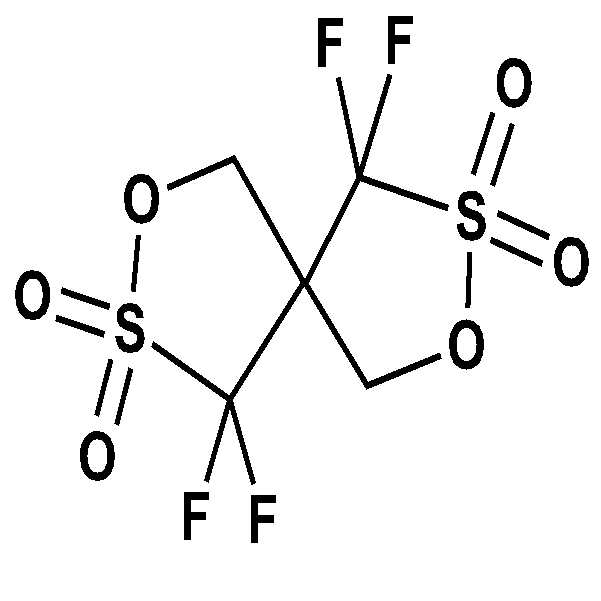
<화학식 14> <화학식 15>


<화학식 16> <화학식 17>


<Formula 6><Formula7>
<Formula 8><Formula9>
<Formula 10><Formula11>
<Formula 12><Formula13>
<Formula 14><Formula15>
<Formula 16><Formula17>
상기 제 1 항 내지 제 14 항 중 어느 한 항에 따른 유기전해액을 포함하는 리튬전지.anode; cathode; and
A lithium battery comprising the organic electrolyte according to any one of claims 1 to 14.
Priority Applications (2)
| Application Number | Priority Date | Filing Date | Title |
|---|---|---|---|
| KR1020150034488A KR102332334B1 (en) | 2015-03-12 | 2015-03-12 | Organic electrolytic solution and Lithium battery comprising organic electrolyte solution |
| US15/068,054 US9847554B2 (en) | 2015-03-12 | 2016-03-11 | Organic electrolytic solution and lithium battery comprising organic electrolyte solution |
Applications Claiming Priority (1)
| Application Number | Priority Date | Filing Date | Title |
|---|---|---|---|
| KR1020150034488A KR102332334B1 (en) | 2015-03-12 | 2015-03-12 | Organic electrolytic solution and Lithium battery comprising organic electrolyte solution |
Publications (2)
| Publication Number | Publication Date |
|---|---|
| KR20160109663A KR20160109663A (en) | 2016-09-21 |
| KR102332334B1 true KR102332334B1 (en) | 2021-11-29 |
Family
ID=56888708
Family Applications (1)
| Application Number | Title | Priority Date | Filing Date |
|---|---|---|---|
| KR1020150034488A Active KR102332334B1 (en) | 2015-03-12 | 2015-03-12 | Organic electrolytic solution and Lithium battery comprising organic electrolyte solution |
Country Status (2)
| Country | Link |
|---|---|
| US (1) | US9847554B2 (en) |
| KR (1) | KR102332334B1 (en) |
Families Citing this family (11)
| Publication number | Priority date | Publication date | Assignee | Title |
|---|---|---|---|---|
| KR102380512B1 (en) * | 2015-01-16 | 2022-03-31 | 삼성에스디아이 주식회사 | Electrolyte solution for lithium battery and lithium battery using the same |
| KR102436423B1 (en) | 2015-03-12 | 2022-08-25 | 삼성에스디아이 주식회사 | Electrolyte for lithium battery and lithium battery including the electrolyte |
| JP7028164B2 (en) * | 2016-06-13 | 2022-03-02 | 日本電気株式会社 | Lithium ion secondary battery |
| WO2018047456A1 (en) * | 2016-09-12 | 2018-03-15 | パナソニックIpマネジメント株式会社 | Lithium battery |
| US10707531B1 (en) | 2016-09-27 | 2020-07-07 | New Dominion Enterprises Inc. | All-inorganic solvents for electrolytes |
| KR102141267B1 (en) * | 2016-11-04 | 2020-08-04 | 주식회사 엘지화학 | Compound including aromatic ring, polymer including the same |
| WO2018138865A1 (en) * | 2017-01-27 | 2018-08-02 | Nec Corporation | Silicone ball containing electrode and lithium ion battery including the same |
| ES2965698T3 (en) * | 2017-12-01 | 2024-04-16 | Lg Energy Solution Ltd | Electrolyte composition for a lithium secondary battery and lithium secondary battery comprising the same |
| KR102426254B1 (en) * | 2019-03-28 | 2022-07-28 | 삼성에스디아이 주식회사 | Lithium secondary battery comprisng electrolyte additive for lithium secondary battery |
| CN111987362A (en) * | 2020-10-09 | 2020-11-24 | 昆山宝创新能源科技有限公司 | Lithium ion battery electrolyte and preparation method and application thereof |
| CN115477297B (en) * | 2022-10-18 | 2023-06-20 | 山东海科创新研究院有限公司 | Preparation method of lithium difluorophosphate and product obtained by preparation method |
Citations (2)
| Publication number | Priority date | Publication date | Assignee | Title |
|---|---|---|---|---|
| JP2009070636A (en) | 2007-09-12 | 2009-04-02 | Gs Yuasa Corporation:Kk | Nonaqueous electrolyte battery |
| WO2011118984A2 (en) | 2010-03-23 | 2011-09-29 | 주식회사 엘지화학 | Separator for electrochemical device, method for manufacturing same, and electrochemical device having same |
Family Cites Families (14)
| Publication number | Priority date | Publication date | Assignee | Title |
|---|---|---|---|---|
| FR1578019A (en) | 1968-04-29 | 1969-08-14 | ||
| DE102005048802A1 (en) | 2005-10-10 | 2007-04-12 | Solvay Fluor Gmbh | Fluorinated additives for lithium-ion batteries |
| JP2009132593A (en) | 2007-10-30 | 2009-06-18 | Sumitomo Chemical Co Ltd | Carbon material and electrode having the carbon material |
| FR2949113B1 (en) | 2009-08-11 | 2012-04-13 | Advanced Accelerator Applic | SULTON-BASED COMPOUNDS, DERIVATIVES THEREOF SUITED BY NUCLEOPHILES, IN PARTICULAR RADIONUCLEIDS, METHODS AND APPLICATIONS |
| WO2011059083A1 (en) | 2009-11-13 | 2011-05-19 | Necエナジーデバイス株式会社 | Gel electrolyte for lithium ion secondary battery and lithium ion secondary battery comprising same |
| JP2011150958A (en) | 2010-01-25 | 2011-08-04 | Sony Corp | Nonaqueous electrolyte and nonaqueous electrolyte battery |
| KR101233325B1 (en) | 2011-04-11 | 2013-02-14 | 로베르트 보쉬 게엠베하 | Electrolyte for rechargeable lithium battery and rechargeable lithium battery inclduing same |
| US9130246B2 (en) * | 2012-01-11 | 2015-09-08 | Samsung Sdi Co., Ltd. | Rechargeable lithium battery having lithium difluorophosphate and a sultone-based compound |
| JP6206639B2 (en) * | 2012-04-02 | 2017-10-04 | 日産自動車株式会社 | Electrolyte for lithium ion secondary battery and lithium ion secondary battery |
| JP6085994B2 (en) * | 2012-04-27 | 2017-03-01 | 日産自動車株式会社 | Method for producing non-aqueous electrolyte secondary battery |
| JP6067851B2 (en) | 2013-02-20 | 2017-01-25 | エルジー・ケム・リミテッド | Electrolytic solution additive for lithium secondary battery, non-aqueous electrolytic solution containing the electrolytic solution additive, and lithium secondary battery |
| EP2824750B1 (en) | 2013-07-08 | 2019-01-30 | Samsung SDI Co., Ltd. | Silicon-containing compound used in electrolytes for lithium secondary batteries |
| KR101718062B1 (en) | 2013-09-24 | 2017-03-20 | 삼성에스디아이 주식회사 | Additive for electrolyte of lithium battery, organic electrolytic solution comprising the same and Lithium battery using the solution |
| KR102380512B1 (en) * | 2015-01-16 | 2022-03-31 | 삼성에스디아이 주식회사 | Electrolyte solution for lithium battery and lithium battery using the same |
-
2015
- 2015-03-12 KR KR1020150034488A patent/KR102332334B1/en active Active
-
2016
- 2016-03-11 US US15/068,054 patent/US9847554B2/en active Active
Patent Citations (2)
| Publication number | Priority date | Publication date | Assignee | Title |
|---|---|---|---|---|
| JP2009070636A (en) | 2007-09-12 | 2009-04-02 | Gs Yuasa Corporation:Kk | Nonaqueous electrolyte battery |
| WO2011118984A2 (en) | 2010-03-23 | 2011-09-29 | 주식회사 엘지화학 | Separator for electrochemical device, method for manufacturing same, and electrochemical device having same |
Also Published As
| Publication number | Publication date |
|---|---|
| US20160268636A1 (en) | 2016-09-15 |
| KR20160109663A (en) | 2016-09-21 |
| US9847554B2 (en) | 2017-12-19 |
Similar Documents
| Publication | Publication Date | Title |
|---|---|---|
| KR102152365B1 (en) | Additive for electrolyte of lithium battery, organic electrolytic solution comprising the same and Lithium battery using the solution | |
| KR101718062B1 (en) | Additive for electrolyte of lithium battery, organic electrolytic solution comprising the same and Lithium battery using the solution | |
| KR102547064B1 (en) | Additive for electrolyte of lithium battery, organic electrolytic solution comprising the same and Lithium battery using the solution | |
| KR102332334B1 (en) | Organic electrolytic solution and Lithium battery comprising organic electrolyte solution | |
| KR102411933B1 (en) | Organic electrolytic solution and Lithium battery comprising organic electrolyte solution | |
| KR102209828B1 (en) | Electrolyte additive for lithium battery, electrolyte including the same and lithium battery using the electrolyte | |
| KR102172025B1 (en) | Additive for electrolyte of lithium battery, organic electrolytic solution comprising the same and Lithium battery using the solution | |
| KR102380512B1 (en) | Electrolyte solution for lithium battery and lithium battery using the same | |
| KR102332336B1 (en) | Additive for electrolyte of lithium battery, organic electrolytic solution comprising the same and Lithium battery using the solution | |
| KR20170018739A (en) | Electrolyte for lithium battery and Lithium battery including the electrolyte | |
| KR102547067B1 (en) | Lithium Battery | |
| KR102737098B1 (en) | Lithium battery | |
| KR102436423B1 (en) | Electrolyte for lithium battery and lithium battery including the electrolyte | |
| KR20170112122A (en) | Additive for lithium battery electrolytic solution, Organic electrolytic solution and Lithium battery comprising additive | |
| KR102737099B1 (en) | Lithium battery using the solution | |
| KR102510887B1 (en) | Lithium battery | |
| KR102517654B1 (en) | Electrolyte for lithium secondary battery and lithium secondary battery including the same | |
| JP2024503902A (en) | Additive for lithium battery electrolyte, organic electrolyte containing the same, and lithium battery using the electrolyte | |
| KR102537229B1 (en) | Lithium battery | |
| KR20170120897A (en) | Organic electrolytic solution and Lithium battery comprising organic electrolyte solution | |
| KR102537230B1 (en) | Lithium battery | |
| KR20200033203A (en) | Lithium battery | |
| KR20240164457A (en) | Compound for electrolyte, compound for electrolyte additive, electrolyte material, electrolyte additive, electrolyte for secondary battery and secondary battery |
Legal Events
| Date | Code | Title | Description |
|---|---|---|---|
| PA0109 | Patent application |
Patent event code: PA01091R01D Comment text: Patent Application Patent event date: 20150312 |
|
| PG1501 | Laying open of application | ||
| A201 | Request for examination | ||
| PA0201 | Request for examination |
Patent event code: PA02012R01D Patent event date: 20191227 Comment text: Request for Examination of Application Patent event code: PA02011R01I Patent event date: 20150312 Comment text: Patent Application |
|
| E701 | Decision to grant or registration of patent right | ||
| PE0701 | Decision of registration |
Patent event code: PE07011S01D Comment text: Decision to Grant Registration Patent event date: 20210926 |
|
| GRNT | Written decision to grant | ||
| PR0701 | Registration of establishment |
Comment text: Registration of Establishment Patent event date: 20211124 Patent event code: PR07011E01D |
|
| PR1002 | Payment of registration fee |
Payment date: 20211125 End annual number: 3 Start annual number: 1 |
|
| PG1601 | Publication of registration |