KR102331422B1 - Isoindoline compositions and methods for treating neurodegenerative disease - Google Patents
Isoindoline compositions and methods for treating neurodegenerative disease Download PDFInfo
- Publication number
- KR102331422B1 KR102331422B1 KR1020167023951A KR20167023951A KR102331422B1 KR 102331422 B1 KR102331422 B1 KR 102331422B1 KR 1020167023951 A KR1020167023951 A KR 1020167023951A KR 20167023951 A KR20167023951 A KR 20167023951A KR 102331422 B1 KR102331422 B1 KR 102331422B1
- Authority
- KR
- South Korea
- Prior art keywords
- sigma
- salt
- compound
- alkyl
- pharmaceutically acceptable
- Prior art date
- Legal status (The legal status is an assumption and is not a legal conclusion. Google has not performed a legal analysis and makes no representation as to the accuracy of the status listed.)
- Active
Links
- 0 *C(*)(CCc1c(*)c(*)c(*)c(*)c1*)N(C1)Cc2c1c(*)c(*)c(*)c2* Chemical compound *C(*)(CCc1c(*)c(*)c(*)c(*)c1*)N(C1)Cc2c1c(*)c(*)c(*)c2* 0.000 description 5
- WIBVYMDDPOXFEA-CQSZACIVSA-N C[C@H](CCc(cc1)cc(OC)c1O)N(C1)Cc2c1cccc2S(C)(=O)=O Chemical compound C[C@H](CCc(cc1)cc(OC)c1O)N(C1)Cc2c1cccc2S(C)(=O)=O WIBVYMDDPOXFEA-CQSZACIVSA-N 0.000 description 2
- PAMRCPLHRDFSTB-CYBMUJFWSA-N C[C@H](CCc(cc1)cc(OC)c1O)N1Cc2cc(C(F)(F)F)ccc2C1 Chemical compound C[C@H](CCc(cc1)cc(OC)c1O)N1Cc2cc(C(F)(F)F)ccc2C1 PAMRCPLHRDFSTB-CYBMUJFWSA-N 0.000 description 2
- RCAWYRTWTRRNST-OAHLLOKOSA-N C[C@H](CCc(cc1)cc(OC)c1OCCO)N(Cc1ccc2)Cc1c2F Chemical compound C[C@H](CCc(cc1)cc(OC)c1OCCO)N(Cc1ccc2)Cc1c2F RCAWYRTWTRRNST-OAHLLOKOSA-N 0.000 description 2
- ISQAPFMBJFZOLG-UHFFFAOYSA-N CC(C)(C)Oc1cc(CCC(C)(C)N(C2)Cc3c2ccc(S(C)(=O)=O)c3)ccc1O Chemical compound CC(C)(C)Oc1cc(CCC(C)(C)N(C2)Cc3c2ccc(S(C)(=O)=O)c3)ccc1O ISQAPFMBJFZOLG-UHFFFAOYSA-N 0.000 description 1
- NOIWIZKAQFHHLU-UHFFFAOYSA-N CC(C)(C)Oc1cc(CCC(C)(C)N2Cc3cc(S(C)(=O)=O)ccc3C2)ccc1OC(C)=O Chemical compound CC(C)(C)Oc1cc(CCC(C)(C)N2Cc3cc(S(C)(=O)=O)ccc3C2)ccc1OC(C)=O NOIWIZKAQFHHLU-UHFFFAOYSA-N 0.000 description 1
- HSHMBUQZFMQWOY-UHFFFAOYSA-N CC(C)(C)Oc1ccc(CCC(C)(C)N(C2)Cc3c2ccc(S(C)(=O)=O)c3)cc1OC Chemical compound CC(C)(C)Oc1ccc(CCC(C)(C)N(C2)Cc3c2ccc(S(C)(=O)=O)c3)cc1OC HSHMBUQZFMQWOY-UHFFFAOYSA-N 0.000 description 1
- ZBXIRNVCPMZPFS-UHFFFAOYSA-N CC(C)(CCc(cc1)cc(OC(F)(F)F)c1O)N(C1)Cc2c1cccc2S(C)(=O)=O Chemical compound CC(C)(CCc(cc1)cc(OC(F)(F)F)c1O)N(C1)Cc2c1cccc2S(C)(=O)=O ZBXIRNVCPMZPFS-UHFFFAOYSA-N 0.000 description 1
- XNAGJLRFPOQPPM-UHFFFAOYSA-N CC(C)(CCc(cc1)cc(OC)c1O)N(C1)Cc2c1cccc2C(N1CCNCC1)=O Chemical compound CC(C)(CCc(cc1)cc(OC)c1O)N(C1)Cc2c1cccc2C(N1CCNCC1)=O XNAGJLRFPOQPPM-UHFFFAOYSA-N 0.000 description 1
- KBZZQJZAGBCNLA-UHFFFAOYSA-N CC(C)(CCc(cc1)ccc1OC)N(C1)Cc2c1cccc2C(N1CCNCC1)=O Chemical compound CC(C)(CCc(cc1)ccc1OC)N(C1)Cc2c1cccc2C(N1CCNCC1)=O KBZZQJZAGBCNLA-UHFFFAOYSA-N 0.000 description 1
- ZBSPPCBPRARDAO-UHFFFAOYSA-N CC(C)(CCc(cc1OC(F)(F)F)ccc1O)N(Cc1ccc2)Cc1c2C(O)=O Chemical compound CC(C)(CCc(cc1OC(F)(F)F)ccc1O)N(Cc1ccc2)Cc1c2C(O)=O ZBSPPCBPRARDAO-UHFFFAOYSA-N 0.000 description 1
- MXAUURQBNVRGPJ-UHFFFAOYSA-N CC(C)(CCc(cc1OC)ccc1OC)N(C1)Cc2c1cccc2C(N1CCNCC1)=O Chemical compound CC(C)(CCc(cc1OC)ccc1OC)N(C1)Cc2c1cccc2C(N1CCNCC1)=O MXAUURQBNVRGPJ-UHFFFAOYSA-N 0.000 description 1
- LJSPHZLEKKQLGW-UHFFFAOYSA-N CC(C)(CCc1cc(OC)ccc1)N(C1)Cc2c1cccc2C(N1CCNCC1)=O Chemical compound CC(C)(CCc1cc(OC)ccc1)N(C1)Cc2c1cccc2C(N1CCNCC1)=O LJSPHZLEKKQLGW-UHFFFAOYSA-N 0.000 description 1
- CZMKZNSLFDBBJT-UHFFFAOYSA-N CC(C)Oc1cc(CCC(C)(C)N(C2)Cc3c2cccc3F)ccc1O Chemical compound CC(C)Oc1cc(CCC(C)(C)N(C2)Cc3c2cccc3F)ccc1O CZMKZNSLFDBBJT-UHFFFAOYSA-N 0.000 description 1
- LZYHBBIARMIKJV-UHFFFAOYSA-N CC(C)Oc1ccc(CCC(C)(C)N(C2)Cc3c2ccc(F)c3)cc1OC(C)C Chemical compound CC(C)Oc1ccc(CCC(C)(C)N(C2)Cc3c2ccc(F)c3)cc1OC(C)C LZYHBBIARMIKJV-UHFFFAOYSA-N 0.000 description 1
- GAVBLSFCTDBORN-KRWDZBQOSA-N COC[C@H](CCc(cc1)cc(Cl)c1Cl)N1Cc2cc(F)ccc2C1 Chemical compound COC[C@H](CCc(cc1)cc(Cl)c1Cl)N1Cc2cc(F)ccc2C1 GAVBLSFCTDBORN-KRWDZBQOSA-N 0.000 description 1
- UYQJQXBCVBDUGX-LLVKDONJSA-N C[C@H](CCc(cc1)cc(Cl)c1Cl)N(C1)Cc(cc2Cl)c1cc2Cl Chemical compound C[C@H](CCc(cc1)cc(Cl)c1Cl)N(C1)Cc(cc2Cl)c1cc2Cl UYQJQXBCVBDUGX-LLVKDONJSA-N 0.000 description 1
- QOXCLDKXSCBOOF-CYBMUJFWSA-N C[C@H](CCc(cc1)cc(Cl)c1Cl)N(C1)Cc(cc2OC)c1cc2OC Chemical compound C[C@H](CCc(cc1)cc(Cl)c1Cl)N(C1)Cc(cc2OC)c1cc2OC QOXCLDKXSCBOOF-CYBMUJFWSA-N 0.000 description 1
- KTHLRNWGDXCNQL-GFCCVEGCSA-N C[C@H](CCc(cc1)cc(Cl)c1Cl)N(C1)Cc2c1cc1OCOc1c2 Chemical compound C[C@H](CCc(cc1)cc(Cl)c1Cl)N(C1)Cc2c1cc1OCOc1c2 KTHLRNWGDXCNQL-GFCCVEGCSA-N 0.000 description 1
- NTTVSJIWKNQHBI-GFCCVEGCSA-N C[C@H](CCc(cc1)cc(Cl)c1Cl)N(C1)Cc2c1ccc(F)c2 Chemical compound C[C@H](CCc(cc1)cc(Cl)c1Cl)N(C1)Cc2c1ccc(F)c2 NTTVSJIWKNQHBI-GFCCVEGCSA-N 0.000 description 1
- ZIDKNUHPKSUTKP-GFCCVEGCSA-N C[C@H](CCc(cc1)cc(Cl)c1Cl)N(C1)Cc2c1cccc2F Chemical compound C[C@H](CCc(cc1)cc(Cl)c1Cl)N(C1)Cc2c1cccc2F ZIDKNUHPKSUTKP-GFCCVEGCSA-N 0.000 description 1
- LEJPCSJGRRORSD-GFCCVEGCSA-N C[C@H](CCc(cc1)cc(Cl)c1Cl)N(Cc1ccc2)Cc1c2Cl Chemical compound C[C@H](CCc(cc1)cc(Cl)c1Cl)N(Cc1ccc2)Cc1c2Cl LEJPCSJGRRORSD-GFCCVEGCSA-N 0.000 description 1
- YKCVGPQFUBUSHV-CQSZACIVSA-N C[C@H](CCc(cc1)cc(Cl)c1Cl)N1Cc2cc(C)ccc2C1 Chemical compound C[C@H](CCc(cc1)cc(Cl)c1Cl)N1Cc2cc(C)ccc2C1 YKCVGPQFUBUSHV-CQSZACIVSA-N 0.000 description 1
- UBTJMMKDCGBMEX-CQSZACIVSA-N C[C@H](CCc(cc1)cc(OC(C)(C)C)c1O)N(Cc1c(cc2)F)Cc1c2F Chemical compound C[C@H](CCc(cc1)cc(OC(C)(C)C)c1O)N(Cc1c(cc2)F)Cc1c2F UBTJMMKDCGBMEX-CQSZACIVSA-N 0.000 description 1
- KWZTVVFHLUDCLT-OAHLLOKOSA-N C[C@H](CCc(cc1)cc(OC(C)(C)C)c1O)N(Cc1ccc2)Cc1c2F Chemical compound C[C@H](CCc(cc1)cc(OC(C)(C)C)c1O)N(Cc1ccc2)Cc1c2F KWZTVVFHLUDCLT-OAHLLOKOSA-N 0.000 description 1
- GLAFJHYUSDSQSZ-MRXNPFEDSA-N C[C@H](CCc(cc1)cc(OC(C)(C)C)c1O)N1Cc2cc(S(C)(=O)=O)ccc2C1 Chemical compound C[C@H](CCc(cc1)cc(OC(C)(C)C)c1O)N1Cc2cc(S(C)(=O)=O)ccc2C1 GLAFJHYUSDSQSZ-MRXNPFEDSA-N 0.000 description 1
- YYCFTPUSYYQXNV-GFCCVEGCSA-N C[C@H](CCc(cc1)cc(OC(F)(F)F)c1O)N(C1)Cc2c1cc1OCOc1c2 Chemical compound C[C@H](CCc(cc1)cc(OC(F)(F)F)c1O)N(C1)Cc2c1cc1OCOc1c2 YYCFTPUSYYQXNV-GFCCVEGCSA-N 0.000 description 1
- DKIOLBBRSOUKFN-GFCCVEGCSA-N C[C@H](CCc(cc1)cc(OC)c1O)N(C1)Cc(cc2Cl)c1cc2Cl Chemical compound C[C@H](CCc(cc1)cc(OC)c1O)N(C1)Cc(cc2Cl)c1cc2Cl DKIOLBBRSOUKFN-GFCCVEGCSA-N 0.000 description 1
- FUSCVNVOEODHTI-CYBMUJFWSA-N C[C@H](CCc(cc1)cc(OC)c1O)N(C1)Cc2c1cc1OCOc1c2 Chemical compound C[C@H](CCc(cc1)cc(OC)c1O)N(C1)Cc2c1cc1OCOc1c2 FUSCVNVOEODHTI-CYBMUJFWSA-N 0.000 description 1
- IKOFTAHOICQOFR-CYBMUJFWSA-N C[C@H](CCc(cc1)cc(OC)c1O)N(C1)Cc2c1ccc(F)c2 Chemical compound C[C@H](CCc(cc1)cc(OC)c1O)N(C1)Cc2c1ccc(F)c2 IKOFTAHOICQOFR-CYBMUJFWSA-N 0.000 description 1
- MVMPGBQFAWCGBD-CQSZACIVSA-N C[C@H](CCc(cc1)cc(OC)c1O)N(C1)Cc2c1ccc(S(C)(=O)=O)c2 Chemical compound C[C@H](CCc(cc1)cc(OC)c1O)N(C1)Cc2c1ccc(S(C)(=O)=O)c2 MVMPGBQFAWCGBD-CQSZACIVSA-N 0.000 description 1
- PPPGEPQJNAMZSS-CQSZACIVSA-N C[C@H](CCc(cc1)cc(OC)c1O)N(Cc1c2)Cc1cc(OC)c2OC Chemical compound C[C@H](CCc(cc1)cc(OC)c1O)N(Cc1c2)Cc1cc(OC)c2OC PPPGEPQJNAMZSS-CQSZACIVSA-N 0.000 description 1
- YYNYULNQESTNGR-CYBMUJFWSA-N C[C@H](CCc(cc1)cc(OC)c1O)N(Cc1ccc2)Cc1c2F Chemical compound C[C@H](CCc(cc1)cc(OC)c1O)N(Cc1ccc2)Cc1c2F YYNYULNQESTNGR-CYBMUJFWSA-N 0.000 description 1
- QGQPAGBSUNRRSW-OAHLLOKOSA-N C[C@H](CCc(cc1)cc(OC)c1OCCO)N(Cc1c2)Cc1cc1c2OCO1 Chemical compound C[C@H](CCc(cc1)cc(OC)c1OCCO)N(Cc1c2)Cc1cc1c2OCO1 QGQPAGBSUNRRSW-OAHLLOKOSA-N 0.000 description 1
- FCLQKBPRTZWHGX-OAHLLOKOSA-N C[C@H](CCc(cc1)cc(OC)c1OCCO)N1Cc2cc(F)ccc2C1 Chemical compound C[C@H](CCc(cc1)cc(OC)c1OCCO)N1Cc2cc(F)ccc2C1 FCLQKBPRTZWHGX-OAHLLOKOSA-N 0.000 description 1
- LFYNHAXLOHOWGV-CYBMUJFWSA-N C[C@H](CCc(cc1)ccc1F)N(C1)Cc2c1cccc2F Chemical compound C[C@H](CCc(cc1)ccc1F)N(C1)Cc2c1cccc2F LFYNHAXLOHOWGV-CYBMUJFWSA-N 0.000 description 1
- KZTQRGRPZOLMSL-CQSZACIVSA-N C[C@H](CCc(cc1OC(F)(F)F)ccc1OCCO)N1Cc2cc(F)ccc2C1 Chemical compound C[C@H](CCc(cc1OC(F)(F)F)ccc1OCCO)N1Cc2cc(F)ccc2C1 KZTQRGRPZOLMSL-CQSZACIVSA-N 0.000 description 1
Classifications
-
- A—HUMAN NECESSITIES
- A61—MEDICAL OR VETERINARY SCIENCE; HYGIENE
- A61P—SPECIFIC THERAPEUTIC ACTIVITY OF CHEMICAL COMPOUNDS OR MEDICINAL PREPARATIONS
- A61P25/00—Drugs for disorders of the nervous system
-
- A—HUMAN NECESSITIES
- A61—MEDICAL OR VETERINARY SCIENCE; HYGIENE
- A61K—PREPARATIONS FOR MEDICAL, DENTAL OR TOILETRY PURPOSES
- A61K31/00—Medicinal preparations containing organic active ingredients
- A61K31/33—Heterocyclic compounds
- A61K31/395—Heterocyclic compounds having nitrogen as a ring hetero atom, e.g. guanethidine or rifamycins
- A61K31/40—Heterocyclic compounds having nitrogen as a ring hetero atom, e.g. guanethidine or rifamycins having five-membered rings with one nitrogen as the only ring hetero atom, e.g. sulpiride, succinimide, tolmetin, buflomedil
- A61K31/403—Heterocyclic compounds having nitrogen as a ring hetero atom, e.g. guanethidine or rifamycins having five-membered rings with one nitrogen as the only ring hetero atom, e.g. sulpiride, succinimide, tolmetin, buflomedil condensed with carbocyclic rings, e.g. carbazole
- A61K31/4035—Isoindoles, e.g. phthalimide
-
- A—HUMAN NECESSITIES
- A61—MEDICAL OR VETERINARY SCIENCE; HYGIENE
- A61K—PREPARATIONS FOR MEDICAL, DENTAL OR TOILETRY PURPOSES
- A61K31/00—Medicinal preparations containing organic active ingredients
- A61K31/33—Heterocyclic compounds
- A61K31/395—Heterocyclic compounds having nitrogen as a ring hetero atom, e.g. guanethidine or rifamycins
- A61K31/40—Heterocyclic compounds having nitrogen as a ring hetero atom, e.g. guanethidine or rifamycins having five-membered rings with one nitrogen as the only ring hetero atom, e.g. sulpiride, succinimide, tolmetin, buflomedil
- A61K31/403—Heterocyclic compounds having nitrogen as a ring hetero atom, e.g. guanethidine or rifamycins having five-membered rings with one nitrogen as the only ring hetero atom, e.g. sulpiride, succinimide, tolmetin, buflomedil condensed with carbocyclic rings, e.g. carbazole
- A61K31/404—Indoles, e.g. pindolol
-
- A—HUMAN NECESSITIES
- A61—MEDICAL OR VETERINARY SCIENCE; HYGIENE
- A61K—PREPARATIONS FOR MEDICAL, DENTAL OR TOILETRY PURPOSES
- A61K31/00—Medicinal preparations containing organic active ingredients
- A61K31/33—Heterocyclic compounds
- A61K31/395—Heterocyclic compounds having nitrogen as a ring hetero atom, e.g. guanethidine or rifamycins
- A61K31/40—Heterocyclic compounds having nitrogen as a ring hetero atom, e.g. guanethidine or rifamycins having five-membered rings with one nitrogen as the only ring hetero atom, e.g. sulpiride, succinimide, tolmetin, buflomedil
- A61K31/407—Heterocyclic compounds having nitrogen as a ring hetero atom, e.g. guanethidine or rifamycins having five-membered rings with one nitrogen as the only ring hetero atom, e.g. sulpiride, succinimide, tolmetin, buflomedil condensed with other heterocyclic ring systems, e.g. ketorolac, physostigmine
-
- A—HUMAN NECESSITIES
- A61—MEDICAL OR VETERINARY SCIENCE; HYGIENE
- A61K—PREPARATIONS FOR MEDICAL, DENTAL OR TOILETRY PURPOSES
- A61K31/00—Medicinal preparations containing organic active ingredients
- A61K31/33—Heterocyclic compounds
- A61K31/395—Heterocyclic compounds having nitrogen as a ring hetero atom, e.g. guanethidine or rifamycins
- A61K31/495—Heterocyclic compounds having nitrogen as a ring hetero atom, e.g. guanethidine or rifamycins having six-membered rings with two or more nitrogen atoms as the only ring heteroatoms, e.g. piperazine or tetrazines
- A61K31/496—Non-condensed piperazines containing further heterocyclic rings, e.g. rifampin, thiothixene or sparfloxacin
-
- C—CHEMISTRY; METALLURGY
- C07—ORGANIC CHEMISTRY
- C07D—HETEROCYCLIC COMPOUNDS
- C07D209/00—Heterocyclic compounds containing five-membered rings, condensed with other rings, with one nitrogen atom as the only ring hetero atom
- C07D209/02—Heterocyclic compounds containing five-membered rings, condensed with other rings, with one nitrogen atom as the only ring hetero atom condensed with one carbocyclic ring
- C07D209/44—Iso-indoles; Hydrogenated iso-indoles
-
- C—CHEMISTRY; METALLURGY
- C07—ORGANIC CHEMISTRY
- C07D—HETEROCYCLIC COMPOUNDS
- C07D209/00—Heterocyclic compounds containing five-membered rings, condensed with other rings, with one nitrogen atom as the only ring hetero atom
- C07D209/56—Ring systems containing three or more rings
- C07D209/58—[b]- or [c]-condensed
- C07D209/62—Naphtho [c] pyrroles; Hydrogenated naphtho [c] pyrroles
-
- C—CHEMISTRY; METALLURGY
- C07—ORGANIC CHEMISTRY
- C07D—HETEROCYCLIC COMPOUNDS
- C07D403/00—Heterocyclic compounds containing two or more hetero rings, having nitrogen atoms as the only ring hetero atoms, not provided for by group C07D401/00
- C07D403/02—Heterocyclic compounds containing two or more hetero rings, having nitrogen atoms as the only ring hetero atoms, not provided for by group C07D401/00 containing two hetero rings
- C07D403/06—Heterocyclic compounds containing two or more hetero rings, having nitrogen atoms as the only ring hetero atoms, not provided for by group C07D401/00 containing two hetero rings linked by a carbon chain containing only aliphatic carbon atoms
-
- C—CHEMISTRY; METALLURGY
- C07—ORGANIC CHEMISTRY
- C07D—HETEROCYCLIC COMPOUNDS
- C07D491/00—Heterocyclic compounds containing in the condensed ring system both one or more rings having oxygen atoms as the only ring hetero atoms and one or more rings having nitrogen atoms as the only ring hetero atoms, not provided for by groups C07D451/00 - C07D459/00, C07D463/00, C07D477/00 or C07D489/00
- C07D491/02—Heterocyclic compounds containing in the condensed ring system both one or more rings having oxygen atoms as the only ring hetero atoms and one or more rings having nitrogen atoms as the only ring hetero atoms, not provided for by groups C07D451/00 - C07D459/00, C07D463/00, C07D477/00 or C07D489/00 in which the condensed system contains two hetero rings
- C07D491/04—Ortho-condensed systems
- C07D491/044—Ortho-condensed systems with only one oxygen atom as ring hetero atom in the oxygen-containing ring
- C07D491/048—Ortho-condensed systems with only one oxygen atom as ring hetero atom in the oxygen-containing ring the oxygen-containing ring being five-membered
-
- C—CHEMISTRY; METALLURGY
- C07—ORGANIC CHEMISTRY
- C07D—HETEROCYCLIC COMPOUNDS
- C07D491/00—Heterocyclic compounds containing in the condensed ring system both one or more rings having oxygen atoms as the only ring hetero atoms and one or more rings having nitrogen atoms as the only ring hetero atoms, not provided for by groups C07D451/00 - C07D459/00, C07D463/00, C07D477/00 or C07D489/00
- C07D491/02—Heterocyclic compounds containing in the condensed ring system both one or more rings having oxygen atoms as the only ring hetero atoms and one or more rings having nitrogen atoms as the only ring hetero atoms, not provided for by groups C07D451/00 - C07D459/00, C07D463/00, C07D477/00 or C07D489/00 in which the condensed system contains two hetero rings
- C07D491/04—Ortho-condensed systems
- C07D491/056—Ortho-condensed systems with two or more oxygen atoms as ring hetero atoms in the oxygen-containing ring
Landscapes
- Chemical & Material Sciences (AREA)
- Organic Chemistry (AREA)
- Health & Medical Sciences (AREA)
- Life Sciences & Earth Sciences (AREA)
- Pharmacology & Pharmacy (AREA)
- Animal Behavior & Ethology (AREA)
- General Health & Medical Sciences (AREA)
- Public Health (AREA)
- Veterinary Medicine (AREA)
- Medicinal Chemistry (AREA)
- Epidemiology (AREA)
- Bioinformatics & Cheminformatics (AREA)
- Engineering & Computer Science (AREA)
- Biomedical Technology (AREA)
- Neurology (AREA)
- Neurosurgery (AREA)
- Chemical Kinetics & Catalysis (AREA)
- General Chemical & Material Sciences (AREA)
- Nuclear Medicine, Radiotherapy & Molecular Imaging (AREA)
- Pharmaceuticals Containing Other Organic And Inorganic Compounds (AREA)
- Plural Heterocyclic Compounds (AREA)
- Indole Compounds (AREA)
- Nitrogen Condensed Heterocyclic Rings (AREA)
Abstract
아이소인돌린 시그마-2 수용체 길항제 화합물, 이러한 화합물을 포함하는 약제학적 조성물, 및 뉴런 세포에서 A베타 관련 시냅스 손실 또는 시냅스 기능이상을 저해하고, 뉴런 세포에서 A베타 관련 막 수송 변화를 조절하고, A베타 병리학과 연관된 인지 감소를 치료하기 위한 방법이 제공된다.Isoindoline sigma-2 receptor antagonist compounds, pharmaceutical compositions comprising such compounds, and inhibits Abeta-related synaptic loss or synaptic dysfunction in neuronal cells, modulates Abeta-related membrane transport changes in neuronal cells, A Methods are provided for treating cognitive decline associated with beta pathology.
Description
본원은 2015년 1월 30일자에 PCT 국제 출원으로서 출원되고, 2014년 1월 31일에 출원된 미국 가출원 제61/934,528호(전문이 본 명세서에 참고로 인용됨)의 우선권을 주장한다.This application claims priority to U.S. Provisional Application Serial No. 61/934,528, filed January 31, 2014, filed on January 30, 2015 as a PCT International Application, which is incorporated herein by reference in its entirety.
기술분야technical field
시그마-2 수용체에 결합하는 신규한 아이소인돌린 화합물, 이러한 화합물을 포함하는 약제학적 조성물, 및 뉴런 세포에서 시냅스 손실을 저해하거나 복원하고, 뉴런 세포에서의 막 수송 변화를 조절하고, 인지 감소 및 신경퇴행성 질환 및 장애를 치료하는 방법이 제공된다.Novel isoindoline compounds that bind to sigma-2 receptors, pharmaceutical compositions comprising such compounds, and inhibit or restore synaptic loss in neuronal cells, modulate changes in membrane transport in neuronal cells, reduce cognitive and neurological Methods of treating degenerative diseases and disorders are provided.
알츠하이머병(Alzheimer's Disease: AD)의 치료를 위해 현재 FDA 승인된 약제는 불과 5개이다. 4개는 콜린에스터라제 저해제: 타크린(COGNEX(등록상표); 사이엘(Sciele)), 도네페질(ARICEPT(등록상표); 화이자(Pfizer)), 리바스티그민(EXELON(등록상표); 노바티스(Novartis)) 및 갈란타민(RAZADYNE(등록상표); 오르토-맥네일-얀센(Ortho-McNeil-Janssen))이다. 도네페질, 리바스티그민 및 갈란타민은 간독성의 가능성으로 인해 좀처럼 처방되지 않는 제1 세대 화합물인 타크린의 계승물질이고; 이것은 AD의 모든 단계에서의 인지 및 기능의 대증적 개선을 제공하는 데 있어서 거의 동등하게 효과적이다. 5번째로 승인받은 약제는 메만틴(NAMENDA(등록상표); 포레스트(Forest))이고, 저친화도이고, 보통 내지는 중증의 AD에서긴 하지만 유사한 이점을 제공하는 의존적 N-메틸-D-아스파르테이트 글루타메이트 수용체 길항제를 사용한다. 이 화합물의 임상 효과는 적고 영구적이 아니고, 현재 이용 가능한 데이터는 질환 개선 물질로서의 이의 사용을 지지하기에 결정적이 아니다. 예를 들어, 문헌[Kerchner et al, 2010, Bapineuzumab, Expert Opin Biol Ther., 10(7):1121-1130]을 참조한다. 명확히, AD의 치료에 대한 대안적인 접근법이 필요하다.There are currently only five FDA-approved drugs for the treatment of Alzheimer's Disease (AD). Four are cholinesterase inhibitors: tacrine (COGNEX®; Sciele), donepezil (ARICEPT®; Pfizer), rivastigmine (EXELON®); Novartis) and Galantamine (RAZADYNE®; Ortho-McNeil-Janssen). donepezil, rivastigmine and galantamine are successors to tacrine, a first-generation compound that is seldom prescribed due to potential hepatotoxicity; It is almost equally effective in providing symptomatic improvement in cognition and function at all stages of AD. The fifth drug approved is memantine (NAMENDA®; Forest), a low-affinity, dependent N -methyl-D-aspart that provides similar benefits, but in moderate to severe AD. Tate glutamate receptor antagonists are used. The clinical effects of this compound are small and not permanent, and currently available data are not conclusive to support their use as disease-modifying substances. See, eg, Kerchner et al, 2010, Bapineuzumab , Expert Opin Biol Ther., 10(7):1121-1130. Clearly, alternative approaches to the treatment of AD are needed.
시그마-2 수용체 기능성 길항제로서 작용하고 가용성 Aβ 올리고머의 해로운 효과를 저해하는 소정의 아이소인돌린 화합물이 제공된다. 몇몇 실시형태에서, 아이소인돌린 시그마-2 수용체 길항제 화합물 및 조성물은 대상체에서의 시냅스 기능이상을 치료하거나 예방하기 위해 사용된다.Certain isoindoline compounds are provided that act as sigma-2 receptor functional antagonists and inhibit the deleterious effects of soluble Aβ oligomers. In some embodiments, isoindoline sigma-2 receptor antagonist compounds and compositions are used to treat or prevent synaptic dysfunction in a subject.
시그마-2 수용체에 결합하는 신규한 아이소인돌린 화합물, 이러한 화합물을 포함하는 약제학적 조성물, 및 뉴런 세포에서 시냅스 손실을 저해하거나 복원하고, 뉴런 세포에서의 막 수송 변화를 조절하고, 인지 감소 및 신경퇴행성 질환 및 장애를 치료하는 방법이 제공된다.Novel isoindoline compounds that bind to sigma-2 receptors, pharmaceutical compositions comprising such compounds, and inhibit or restore synaptic loss in neuronal cells, modulate changes in membrane transport in neuronal cells, reduce cognitive and neurological Methods of treating degenerative diseases and disorders are provided.
몇몇 실시형태에서, 화학식 I 및/또는 화학식 II에 따른 아이소인돌린 화합물 및 이의 약제학적으로 허용 가능한 염, 또는 이의 약제학적으로 허용 가능한 염은 시그마-2 수용체 길항제 활성을 나타내고, 또한 특정한 치료학적 표현형의 다른 양상을 나타내고, 따라서 하기 기재된 바대로 뉴런 세포에 대한 가용성 아밀로이드-베타("A베타", "Aβ") 펩타이드 및 올리고머 및 이의 다른 가용성 종의 해로운 효과를 저해하고, 결과적으로, A베타 올리고머 유도 병리학과 연관된 질환 및 장애, 예컨대 알츠하이머병을 포함하는 병태를 치료하기 위해 사용될 수 있다.In some embodiments, the isoindoline compound according to Formula I and/or Formula II and a pharmaceutically acceptable salt thereof, or a pharmaceutically acceptable salt thereof, exhibit sigma-2 receptor antagonist activity and also exhibit a specific therapeutic phenotype and thus inhibit the deleterious effects of soluble amyloid-beta (“Abeta”, “Aβ”) peptides and oligomers and other soluble species thereof on neuronal cells as described below, and consequently, Abeta oligomers diseases and disorders associated with inducible pathology, such as Alzheimer's disease.
가용성 A베타 올리고머는 특이적 수용체에 결합하고 정상 시냅스 가소성에 중요한 신호전달 경로를 방해하여서, 궁극적으로 척수 및 시냅스 손실을 야기하는 가역적 약역학적 리간드와 같이 작용한다. 시그마-2 수용체에 결합하고 기능적 뉴런 길항제로서 작용하는, 본 명세서에 제공된 바와 같은, 화학식 I에 따른 아이소인돌린 화합물이 A베타 올리고머와의 약역학적 경쟁을 나타내는 것이 발견되었다. 본 명세서에 기재된 아이소인돌린 시그마-2 길항제 화합물은 따라서 A베타 올리고머 효과, 예컨대 A베타 유도 세포 독성을 감소시키거나 예방할 수 있다. 선행 기술의 소정의 화합물이 배제된다. 세포를 화학식 I 및/또는 화학식 II에 따른 시그마-2 길항제, 또는 이의 약제학적으로 허용 가능한 염과 접촉시키는 단계를 포함하는, 뉴런 세포 및 더 일반적으로 아밀로이드 베타 병리학에 대한 A베타 올리고머 또는 다른 가용성 A베타 종의 효과를 저해하는 방법이 또한 제공된다. 몇몇 실시형태에서, 치료학적 유효량의 화학식 I 및/또는 화학식 II에 따른 시그마-2 기능성 길항제, 또는 이의 약제학적으로 허용 가능한 염을 투여하는 단계를 포함하는 알츠하이머병의 초기 단계를 치료하는 방법이 제공되다.Soluble Abeta oligomers act like reversible pharmacodynamic ligands that bind specific receptors and interfere with signaling pathways important for normal synaptic plasticity, ultimately leading to spinal cord and synaptic loss. It has been found that isoindoline compounds according to formula I, as provided herein, which bind to the sigma-2 receptor and act as functional neuronal antagonists exhibit pharmacodynamic competition with Abeta oligomers. The isoindoline sigma-2 antagonist compounds described herein can thus reduce or prevent Abeta oligomeric effects, such as Abeta induced cytotoxicity. Certain compounds of the prior art are excluded. Abeta oligomers or other soluble A for neuronal cells and more generally amyloid beta pathology comprising contacting the cell with a sigma-2 antagonist according to formula (I) and/or formula (II), or a pharmaceutically acceptable salt thereof Methods of inhibiting the effect of beta species are also provided. In some embodiments, there is provided a method of treating an early stage of Alzheimer's disease comprising administering a therapeutically effective amount of a sigma-2 functional antagonist according to Formula I and/or Formula II, or a pharmaceutically acceptable salt thereof to be.
일 실시형태에서, 단리된 화합물, 또는 이의 약제학적으로 허용 가능한 염이 하기 화학식 I에 따라 제공된다:In one embodiment, an isolated compound, or a pharmaceutically acceptable salt thereof, is provided according to Formula I:

식 중,during the meal,
R1 및 R2는 각각 독립적으로 H, C1-C6 알킬, 또는 CH2OR'로부터 선택되고; R'는 H 또는 C1-C6 알킬이며;R 1 and R 2 are each independently selected from H, C 1 -C 6 alkyl, or CH 2 OR′; R′ is H or C 1 -C 6 alkyl;
R3, R4, R5 및 R6은 각각 독립적으로 H, C1-C6 알킬, OH, OCH3, OCH(CH3)2, OCH2CH(CH3)2, OC(CH3)3, O(C1-C6 알킬), OCF3, OCH2CH2OH, O(C1-C6 알킬)OH, O(C1-C6 할로알킬), F, Cl, Br, I, CF3, CN, NO2, NH2, C1-C6 할로알킬, C1-C6 하이드록시알킬, C1 -6 알콕시 C1 -6 알킬, 아릴, 헤테로아릴, C3 -7 사이클로알킬, 헤테로사이클로알킬, 알킬아릴, 헤테로아릴, CO2R', C(O)R', NH(C1 -4 알킬), N(C1 -4 알킬)2, NH(C3 -7 사이클로알킬), NHC(O)(C1-4 알킬), CONR'2, NC(O)R', NS(O)nR', S(O)nNR'2, S(O)nR', C(O)O(C1-4 알킬), OC(O)N(R')2, C(O)(C1 -4 알킬) 및 C(O)NH(C1-4 알킬)로부터 선택되고; n은 0, 1 또는 2이며; R'는 각각 독립적으로 H, CH3, CH2CH3, C3-C6 알킬, C1-C6 할로알킬; 또는 임의로 치환된 아릴, 알킬아릴, 피페라진-1-일, 피페리딘-1-일, 몰폴리닐, 헤테로사이클로알킬, 헤테로아릴, C1 -6 알콕시, NH(C1 -4 알킬) 또는 NH(C1-4 알킬)2이고, 임의로 치환된 기는 C1-C6 알킬 또는 C2-C7 아실로부터 선택되거나; R 3 , R 4 , R 5 and R 6 are each independently H, C 1 -C 6 alkyl, OH, OCH 3 , OCH(CH 3 ) 2 , OCH 2 CH(CH 3 ) 2 , OC(CH 3 ) 3 , O(C 1 -C 6 alkyl), OCF 3 , OCH 2 CH 2 OH, O(C 1 -C 6 alkyl)OH, O(C 1 -C 6 haloalkyl), F, Cl, Br, I , CF 3, CN, NO 2 , NH 2, C 1 -C 6 haloalkyl, C 1 -C 6 hydroxyalkyl, C 1 -6 alkoxy C 1 -6 alkyl, aryl, heteroaryl, C 3 -7 cycloalkyl alkyl, heterocycloalkyl, alkyl, aryl, heteroaryl, CO 2 R ', C ( O) R', NH (C 1 -4 alkyl), N (C 1 -4 alkyl) 2, NH (C 3 -7 cycloalkyl alkyl), NHC(O)(C 1-4 alkyl), CONR' 2 , NC(O)R', NS(O) n R', S(O) n NR' 2 , S(O) n R' , C (O) O (C 1-4 alkyl), OC (O) N ( R ') 2, C (O) (C 1 -4 alkyl), and C (O) NH (C 1-4 alkyl) from selected; n is 0, 1 or 2; each R′ is independently H, CH 3 , CH 2 CH 3 , C 3 -C 6 alkyl, C 1 -C 6 haloalkyl; Or optionally substituted aryl, aryl alkyl, piperazin-1-yl, piperidin-1-yl, morpholino carbonyl, heterocycloalkyl, heteroaryl, C 1 -6 alkoxy, NH (C 1 -4 alkyl) or NH(C 1-4 alkyl) 2 , the optionally substituted group being selected from C 1 -C 6 alkyl or C 2 -C 7 acyl;
R3과 R4는, 이들이 부착된 C 원자와 함께, OH, 아미노, 할로, C1 -6 알킬, C1 -6 할로알킬, C1 -6 알콕시, C1 -6 할로알콕시, 아릴, 아릴알킬, 헤테로아릴, 헤테로아릴알킬, 사이클로알킬 및 헤테로사이클로알킬로부터 독립적으로 선택된 1개, 2개, 3개, 4개 또는 5개의 치환기에 의해 임의로 치환된 4원, 5원, 6원, 7원 또는 8원 사이클로알킬, 아릴, 헤테로아릴 또는 헤테로사이클로알킬을 형성하며, R3 및 R4, 또는 R4 및 R5는 각각 독립적으로 결합, C, N, S 및 O로부터 선택되거나; R3과 R4는 함께 연결되어 -O-C1 -2 메틸렌-O-기를 형성하거나;R 3 and R 4 may, together with the C atom to which they are attached, OH, amino, halo, C 1 -6 alkyl, C 1 -6 haloalkyl, C 1 -6 alkoxy, C 1 -6 haloalkoxy, aryl, 4, 5, 6, 7 membered optionally substituted by 1, 2, 3, 4 or 5 substituents independently selected from alkyl, heteroaryl, heteroarylalkyl, cycloalkyl and heterocycloalkyl or 8 membered cycloalkyl, aryl, heteroaryl or heterocycloalkyl, wherein R 3 and R 4 , or R 4 and R 5 are each independently selected from a bond, C, N, S and O; R 3 and R 4 are linked together form a group -O- or -OC 1 -2-methylene;
R4와 R5는, 이들이 부착된 C 원자와 함께, OH, 아미노, 할로, C1 -6 알킬, C1 -6 할로알킬, C1 -6 알콕시, C1 -6 할로알콕시, 아릴, 아릴알킬, 헤테로아릴, 헤테로아릴알킬, 사이클로알킬 및 헤테로사이클로알킬로부터 독립적으로 선택된 1개, 2개, 3개, 4개 또는 5개의 치환기에 의해 임의로 치환된 4원, 5원, 6원, 7원 또는 8원 사이클로알킬, 아릴, 헤테로아릴 또는 헤테로사이클로알킬을 형성하고, R3 및 R4, 또는 R4 및 R5는 각각 독립적으로 결합, C, N, S 및 O로부터 선택되거나; R4와 R5는 함께 연결되어 -O-C1-2 메틸렌-O-기를 형성하며;R 4 and R 5 may, together with the C atom to which they are attached, OH, amino, halo, C 1 -6 alkyl, C 1 -6 haloalkyl, C 1 -6 alkoxy, C 1 -6 haloalkoxy, aryl, 4, 5, 6, 7 membered optionally substituted by 1, 2, 3, 4 or 5 substituents independently selected from alkyl, heteroaryl, heteroarylalkyl, cycloalkyl and heterocycloalkyl or 8 membered cycloalkyl, aryl, heteroaryl or heterocycloalkyl, wherein R 3 and R 4 , or R 4 and R 5 are each independently selected from a bond, C, N, S and O; R 4 and R 5 are joined together to form a -OC 1-2 methylene-O- group;
R7, R8, R9, R10 및 R11은 각각 독립적으로 H, C1-C6 알킬, OH, OCH3, OCH(CH3)2, OCH2CH(CH3)2, OC(CH3)3, O(C1-C6 알킬), OCF3, OCH2CH2OH, O(C1-C6 알킬)OH, O(C1-C6 할로알킬), O(CO)R', F, Cl, Br, I, CF3, CN, NO2, NH2, C1-C6 할로알킬, C1-C6 하이드록시알킬, C1 -6 알콕시 C1-6 알킬, 아릴, 헤테로아릴, C3 -7 사이클로알킬, 헤테로사이클로알킬, 알킬아릴, 헤테로아릴, CO2R', C(O)R', NH(C1 -4 알킬), N(C1 -4 알킬)2, NH(C3 -7 사이클로알킬), NHC(O)(C1-4 알킬), CONR'2, NC(O)R', NS(O)nR', S(O)nNR'2, S(O)nR', C(O)O(C1-4 알킬), OC(O)N(R')2, C(O)(C1-4 알킬) 및 C(O)NH(C1-4 알킬)로부터 선택되고; n은 0, 1 또는 2이며; R'는 각각 독립적으로 H, CH3, CH2CH3, C3-C6 알킬, C1-C6 할로알킬, 아릴, 알킬아릴, 피페라진-1-일, 피페리딘-1-일, 몰폴리닐, 헤테로사이클로알킬, 헤테로아릴, C1 -6 알콕시, NH(C1 -4 알킬) 또는 NH(C1 -4 알킬)2이거나;R 7 , R 8 , R 9 , R 10 and R 11 are each independently H, C 1 -C 6 alkyl, OH, OCH 3 , OCH(CH 3 ) 2 , OCH 2 CH(CH 3 ) 2 , OC( CH 3 ) 3 , O(C 1 -C 6 alkyl), OCF 3 , OCH 2 CH 2 OH, O(C 1 -C 6 alkyl)OH, O(C 1 -C 6 haloalkyl), O(CO) R ', F, Cl, Br, I, CF 3, CN, NO 2, NH 2, C 1 -C 6 haloalkyl, C 1 -C 6 hydroxyalkyl, C 1 -6 alkoxy C 1-6 alkyl, aryl, heteroaryl, C 3 -7-cycloalkyl, heterocycloalkyl, alkylaryl, heteroaryl, CO 2 R ', C ( O) R', NH (C 1 -4 alkyl), N (C 1 -4 alkyl ) 2 , NH(C 3 -7 Cycloalkyl), NHC(O)(C 1-4 Alkyl), CONR' 2 , NC(O)R', NS(O) n R', S(O) n NR ' 2 , S(O) n R', C(O)O(C 1-4 alkyl), OC(O)N(R') 2 , C(O)(C 1-4 alkyl) and C(O) )NH(C 1-4 alkyl); n is 0, 1 or 2; each R' is independently H, CH 3 , CH 2 CH 3 , C 3 -C 6 alkyl, C 1 -C 6 haloalkyl, aryl, alkylaryl, piperazin-1-yl, piperidin-1-yl , morpholino carbonyl, heterocycloalkyl, heteroaryl, C 1 -6 alkoxy, NH (C 1 -4 alkyl) or NH (C 1 -4 alkyl) 2;
R7과 R8은, 이들이 부착된 N 또는 C 원자와 함께, OH, 아미노, 할로, C1 -6 알킬, C1 -6 할로알킬, C1 -6 알콕시, C1 -6 할로알콕시, 아릴, 아릴알킬, 헤테로아릴, 헤테로아릴알킬, 사이클로알킬 및 헤테로사이클로알킬로부터 독립적으로 선택된 1개, 2개, 3개, 4개 또는 5개의 치환기에 의해 임의로 치환된 4원, 5원, 6원, 7원 또는 8원 사이클로알킬, 아릴, 헤테로사이클로알킬 또는 헤테로아릴기를 형성하고, R9 및 R10은 각각 독립적으로 결합, C, N, S 및 O로부터 선택되거나; R7과 R8은 함께 연결되어 -O-C1 -2 메틸렌-O-기를 형성하거나; R 7 and R 8, together with the N or C atom to which they are attached, OH, amino, halo, C 1 -6 alkyl, C 1 -6 haloalkyl, C 1 -6 alkoxy, C 1 -6 haloalkoxy, aryl , 4, 5, 6, optionally substituted by 1, 2, 3, 4 or 5 substituents independently selected from arylalkyl, heteroaryl, heteroarylalkyl, cycloalkyl and heterocycloalkyl, form a 7 or 8 membered cycloalkyl, aryl, heterocycloalkyl or heteroaryl group, wherein R 9 and R 10 are each independently selected from a bond, C, N, S and O; R 7 and R 8 are linked together form a group -O- or -OC 1 -2-methylene;
R8과 R9는, 이들이 부착된 N 또는 C 원자와 함께, OH, 아미노, 할로, C1 -6 알킬, C1-6 할로알킬, C1-6 알콕시, C1-6 할로알콕시, 아릴, 아릴알킬, 헤테로아릴, 헤테로아릴알킬, 사이클로알킬 및 헤테로사이클로알킬로부터 독립적으로 선택된 1개, 2개, 3개, 4개 또는 5개의 치환기에 의해 임의로 치환된 4원, 5원, 6원, 7원 또는 8원 사이클로알킬, 아릴, 헤테로사이클로알킬 또는 헤테로아릴기를 형성하며, R9 및 R10은 각각 독립적으로 결합, C, N, S 및 O로부터 선택되거나; R8과 R9는 함께 연결되어 -O-C1-2 메틸렌-O-기를 형성하고,R 8 and R 9 may, together with the N or C atom to which they are attached, OH, amino, halo, C 1 -6 alkyl, C 1-6 haloalkyl, C 1-6 alkoxy, C 1-6 haloalkoxy, aryl , 4, 5, 6, optionally substituted by 1, 2, 3, 4 or 5 substituents independently selected from arylalkyl, heteroaryl, heteroarylalkyl, cycloalkyl and heterocycloalkyl, form a 7 or 8 membered cycloalkyl, aryl, heterocycloalkyl or heteroaryl group, wherein R 9 and R 10 are each independently selected from a bond, C, N, S and O; R 8 and R 9 are joined together to form a -OC 1-2 methylene-O- group,
O, C1 -6 알킬, C1 -6 할로알킬, 헤테로아릴, 아릴, 헤테로아릴, 헤테로사이클로알킬 및 사이클로알킬의 각각은 OH, 아미노, 할로, C1 -6 알킬, C1 -6 할로알킬, C1 -6 알콕시, C1 -6 할로알콕시, 아릴, 아릴알킬, 헤테로아릴, 헤테로아릴알킬, 사이클로알킬 및 헤테로사이클로알킬로부터 독립적으로 선택된 1개, 2개, 3개, 4개 또는 5개의 치환기에 의해 임의로 독립적으로 치환되며; O, C 1 -6 alkyl, C 1 -6 haloalkyl, heteroaryl, aryl, heteroaryl, heterocycloalkyl and cycloalkyl each are OH, amino, halo, C 1 -6 alkyl, C 1 -6 haloalkyl , C 1 -6 alkoxy, C 1 -6 haloalkoxy, aryl, arylalkyl, heteroaryl, heteroarylalkyl, cycloalkyl and heterocycloalkyl one independently selected from alkyl, two, three, four or five optionally independently substituted by a substituent;
단, 하기 화합물은 배제된다:However, the following compounds are excluded:


또 다른 실시형태에서, 화합물, 또는 이의 약제학적으로 허용 가능한 염은 화학식 I에 따라 제공되고, 여기서 R1 및 R2는 각각 독립적으로 H 또는 CH3으로부터 선택되고; R3, R4, R5 및 R6은 각각 독립적으로 H, C1-C6 알킬, OH, OCH3, O(C1-C6 알킬), O(C1-C6 할로알킬), F, Cl, CF3, 아릴, 헤테로아릴, C3-7 사이클로알킬, CO2R', C(O)R', OC(O)N(R')2, CONR'2, NC(O)R', NS(O)nR', S(O)nNR'2, S(O)nR'로부터 선택되며; n은 0, 1 또는 2이고; R'는 각각 독립적으로 H, CH3, CH2CH3, C3-C6 알킬, C1-C6 할로알킬; 또는 임의로 치환된 피페라진-1-일, 피페리딘-1-일, 몰폴리닐, 헤테로사이클로알킬 또는 아릴이며, 임의로 치환된 기는 C1-C6 알킬 또는 C2-C7 아실로부터 선택되거나; R3과 R4는, 이들이 부착된 C 원자와 함께, 5원 또는 6원 C3-7 사이클로알킬 또는 아릴을 형성하거나; R4와 R5는, 이들이 부착된 C 원자와 함께, C3-7 사이클로알킬, 또는 5원 또는 6원 아릴을 형성하거나; R3과 R4는 함께 연결되어 -O-C1-2 메틸렌-O-기를 형성하거나; R4와 R5는 함께 연결되어 -O-C1-2 메틸렌-O-기를 형성하고; R7, R8, R9, R10 및 R11은 각각 독립적으로 H, OH, CH3, CH2CH3, F, Cl, CF3, OCF3, C1-C6 할로알킬, OCH3, O(C1-C6 알킬), OCH2CH2OH, O(C1-C6 알킬)OH, 아릴, 헤테로아릴, C3 -7 사이클로알킬, 알킬아릴, CO2R', CONR'2, S(O)nNR'2, S(O)nR', C(O)O(C1-4 알킬), OC(O)N(R')2 및 C(O)NH(C1-4 알킬)로부터 선택되며; n은 0, 1 또는 2이고; R'는 각각 독립적으로 H, C1-C6 알킬, C1-C6 할로알킬, 아릴, 알킬아릴 또는 C1-6 알콕시이다.In another embodiment, a compound, or a pharmaceutically acceptable salt thereof, is provided according to Formula I, wherein R 1 and R 2 are each independently selected from H or CH 3 ; R 3 , R 4 , R 5 and R 6 are each independently H, C 1 -C 6 alkyl, OH, OCH 3 , O(C 1 -C 6 alkyl), O(C 1 -C 6 haloalkyl), F, Cl, CF 3 , aryl, heteroaryl, C 3-7 cycloalkyl, CO 2 R′, C(O)R′, OC(O)N(R′) 2, CONR′ 2 , NC(O) R', NS(O) n R', S(O) n NR' 2 , S(O) n R'; n is 0, 1 or 2; each R′ is independently H, CH 3 , CH 2 CH 3 , C 3 -C 6 alkyl, C 1 -C 6 haloalkyl; or optionally substituted piperazin-1-yl, piperidin-1-yl, morpholinyl, heterocycloalkyl or aryl, the optionally substituted group being selected from C 1 -C 6 alkyl or C 2 -C 7 acyl; ; R 3 and R 4 together with the C atom to which they are attached form a 5 or 6 membered C 3-7 cycloalkyl or aryl; R 4 and R 5 together with the C atom to which they are attached form C 3-7 cycloalkyl, or 5- or 6-membered aryl; or R 3 and R 4 are joined together to form a —OC 1-2 methylene-O— group; R 4 and R 5 are joined together to form a -OC 1-2 methylene-O- group; R 7 , R 8 , R 9 , R 10 and R 11 are each independently H, OH, CH 3 , CH 2 CH 3 , F, Cl, CF 3 , OCF 3 , C 1 -C 6 haloalkyl, OCH 3 , O(C 1 -C 6 alkyl), OCH 2 CH 2 OH, O(C 1 -C 6 alkyl)OH, aryl, heteroaryl, C 3 -7 cycloalkyl, alkylaryl, CO 2 R', CONR' 2 , S(O) n NR′ 2 , S(O) n R′, C(O)O(C 1-4 alkyl), OC(O)N(R′) 2 and C(O)NH(C 1-4 alkyl); n is 0, 1 or 2; each R′ is independently H, C 1 -C 6 alkyl, C 1 -C 6 haloalkyl, aryl, alkylaryl or C 1-6 alkoxy.
추가의 실시형태에서, 화합물, 또는 이의 약제학적으로 허용 가능한 염은 화학식 I에 따라 제공되고, 여기서 R7, R10, R11은 각각 H이고; R3 및 R4는 각각 독립적으로 H, F, Cl, S(O)nR', C(O)R'로부터 선택되며, n은 2이고, R'는 CH3, 피페라진-1-일, 피페리딘-1-일, 몰폴리닐로부터 선택되고; R8은 OH, OCH3, OCH(CH3)2, OCH2CH(CH3)2 또는 OC(CH3)3로부터 선택되며; R9는 OH이다.In a further embodiment, a compound, or a pharmaceutically acceptable salt thereof, is provided according to Formula I, wherein R 7 , R 10 , R 11 are each H; R 3 and R 4 are each independently selected from H, F, Cl, S(O) n R′, C(O)R′, n is 2, R′ is CH 3 , piperazin-1-yl , piperidin-1-yl, morpholinyl; R 8 is selected from OH, OCH 3 , OCH(CH 3 ) 2 , OCH 2 CH(CH 3 ) 2 or OC(CH 3 ) 3 ; R 9 is OH.
또 다른 실시형태에서, 화합물, 또는 이의 약제학적으로 허용 가능한 염은 하기로 이루어진 군으로부터 선택된다:In another embodiment, the compound, or a pharmaceutically acceptable salt thereof, is selected from the group consisting of:


추가의 실시형태에서, 화합물, 또는 이의 약제학적으로 허용 가능한 염은 하기 화학식 II에 따라 제공된다: In a further embodiment, the compound, or a pharmaceutically acceptable salt thereof, is provided according to Formula II:

식 중, R3, R4, R5 및 R6은 각각 독립적으로 H, Cl, F, OH, CH3, C1-6 알킬, OCH3, OCH(CH3)2, OCH2CH(CH3)2, OC(CH3)3, OC1-6 알킬, 아릴, 헤테로아릴, 헤테로사이클로알킬, CO2R', CONR'2, NC(O)R', NS(O)nR', S(O)nNR'2, S(O)nR', C(O)R', OC(O)N(R')2 또는 C(O)NH(C1 -4 알킬)로부터 선택되고, n은 0, 1 또는 2이며; R'는 각각 독립적으로 H, C1-C6 알킬, C1-C6 할로알킬; 또는 임의로 치환된 아릴, 알킬아릴, 피페라진-1-일, 피페리딘-1-일, 몰폴리닐, 헤테로사이클로알킬, 헤테로아릴, C1 -6 알콕시, NH(C1 -4 알킬) 또는 NH(C1 -4 알킬)2이고, 임의로 치환된 기는 C1-C6 알킬 또는 C2-C7 아실로부터 선택되거나;wherein R 3 , R 4 , R 5 and R 6 are each independently H, Cl, F, OH, CH 3 , C 1-6 alkyl, OCH 3 , OCH(CH 3 ) 2 , OCH 2 CH(CH 3 ) 2 , OC(CH 3 ) 3 , OC 1-6 alkyl, aryl, heteroaryl, heterocycloalkyl, CO 2 R′, CONR′ 2 , NC(O)R′, NS(O) n R′, S (O) n is selected from NR '2, S (O) n R', C (O) R ', OC (O) n (R') 2 or C (O) NH (C 1 -4 alkyl) , n is 0, 1 or 2; each R' is independently H, C 1 -C 6 alkyl, C 1 -C 6 haloalkyl; Or optionally substituted aryl, aryl alkyl, piperazin-1-yl, piperidin-1-yl, morpholino carbonyl, heterocycloalkyl, heteroaryl, C 1 -6 alkoxy, NH (C 1 -4 alkyl) or NH (C 1 -4 alkyl) 2, optionally substituted with groups C 1 -C 6 alkyl or C 2 -C 7 acyl, or selected from;
R3과 R4는, 이들이 부착된 C 원자와 함께, 6원 아릴을 형성하거나; R3과 R4는 함께 연결되어 -O-C1 -2 메틸렌-O-기를 형성하거나; R4와 R5는, 이들이 부착된 C 원자와 함께, 6원 아릴을 형성하거나; R4와 R5는 함께 연결되어 -O-C1 -2 메틸렌-O-기를 형성하며;R 3 and R 4 together with the C atom to which they are attached form a 6 membered aryl; R 3 and R 4 are linked together form a group -O- or -OC 1 -2-methylene; R 4 and R 5 together with the C atom to which they are attached form a 6 membered aryl; R 4 and R 5 are linked together to form a group -OC 1 -2 methylene -O-;
R8 및 R9는 각각 독립적으로 H, Cl, F, OH, CH3, C1 -6 알킬, OCH3, OCH(CH3)2, OCH2CH(CH3)2, OC(CH3)3, O(CO)R', OC1 -6 알킬, 아릴, 헤테로아릴, 헤테로사이클로알킬, CO2R', CONR'2, NC(O)R', NS(O)nR', S(O)nNR'2, S(O)nR', OC(O)N(R')2 또는 C(O)NH(C1-4 알킬)로부터 선택되거나;R 8 and R 9 are each independently H, Cl, F, OH, CH 3, C 1 -6 alkyl, OCH 3, OCH (CH 3 ) 2, OCH 2 CH (CH 3) 2, OC (CH 3) 3, O (CO) R ' , OC 1 -6 alkyl, aryl, heteroaryl, heterocycloalkyl, CO 2 R', CONR ' 2, NC (O) R', NS (O) n R ', S ( O) n NR′ 2 , S(O) n R′, OC(O)N(R′) 2 or C(O)NH(C 1-4 alkyl);
R8과 R9는, 이들이 부착된 N 또는 C 원자와 함께, OH, 아미노, 할로, C1 -6 알킬, C1 -6 할로알킬, C1 -6 알콕시, C1 -6 할로알콕시, 아릴, 아릴알킬, 헤테로아릴, 헤테로아릴알킬, 사이클로알킬 및 헤테로사이클로알킬로부터 독립적으로 선택된 1개, 2개, 3개, 4개 또는 5개의 치환기에 의해 임의로 치환된 4원, 5원, 6원, 7원 또는 8원 사이클로알킬, 아릴, 헤테로사이클로알킬 또는 헤테로아릴기를 형성하고, R9 및 R10은 각각 독립적으로 결합, C, N, S 및 O로부터 선택되거나; R8과 R9는 함께 연결되어 -O-C1 -2 메틸렌-O-기를 형성한다.R 8 and R 9 may, together with the N or C atom to which they are attached, OH, amino, halo, C 1 -6 alkyl, C 1 -6 haloalkyl, C 1 -6 alkoxy, C 1 -6 haloalkoxy, aryl , 4, 5, 6, optionally substituted by 1, 2, 3, 4 or 5 substituents independently selected from arylalkyl, heteroaryl, heteroarylalkyl, cycloalkyl and heterocycloalkyl, form a 7 or 8 membered cycloalkyl, aryl, heterocycloalkyl or heteroaryl group, wherein R 9 and R 10 are each independently selected from a bond, C, N, S and O; Is connected to R 8 and R 9 together form a group -OC 1 -2 methylene -O-.
추가의 실시형태에서, 화합물, 또는 약제학적으로 허용 가능한 염은 화학식 II에 따라 제공되고, 여기서 R3, R4, R5 및 R6 중 적어도 하나는 H가 아니고; R8 및 R9 중 적어도 하나는 H가 아니다.In a further embodiment, the compound, or pharmaceutically acceptable salt, is provided according to Formula II, wherein at least one of R 3 , R 4 , R 5 and R 6 is not H; At least one of R 8 and R 9 is not H.
또 다른 실시형태에서, 화학식 II에 따라 화합물 또는 약제학적으로 허용 가능한 염이 제공되고, 여기서 R7, R10, R11은 각각 H이고; R3 및 R4는 각각 독립적으로 H, F, Cl, S(O)nR', C(O)R'로부터 선택되며, n은 2이고, R'는 CH3, 또는 임의로 치환된 피페라진-1-일, 피페리딘-1-일 또는 몰폴리닐로부터 선택되며, 임의로 치환된 기는 C1-C6 알킬 또는 C2-C7 아실로부터 선택되고; R8은 OH, Cl, OCH3, OCH(CH3)2, OCH2CH(CH3)2 또는 OC(CH3)3로부터 선택되고; R9는 OH 또는 Cl이다.In another embodiment, a compound or pharmaceutically acceptable salt is provided according to Formula II, wherein R 7 , R 10 , R 11 are each H; R 3 and R 4 are each independently selected from H, F, Cl, S(O) n R′, C(O)R′, n is 2, R′ is CH 3 , or optionally substituted piperazine -1-yl, piperidin-1-yl or morpholinyl, optionally substituted groups are selected from C 1 -C 6 alkyl or C 2 -C 7 acyl; R 8 is selected from OH, Cl, OCH 3 , OCH(CH 3 ) 2 , OCH 2 CH(CH 3 ) 2 or OC(CH 3 ) 3 ; R 9 is OH or Cl.
추가의 실시형태에서, 화합물, 또는 약제학적으로 허용 가능한 염은 화학식 II에 따라 제공되고, 여기서 R3 및 R4는 각각 독립적으로 H, F, Cl, S(O)nR', C(O)R'로부터 선택되고, n은 2이며, R'는 CH3, 피페라진-1-일, 피페리딘-1-일 또는 몰폴리닐로부터 선택되고; R5 및 R6은 각각 H이며; R8은 OH, OCH3, OCH(CH3)2, OCH2CH(CH3)2 또는 OC(CH3)3로부터 선택되고; R9는 OH이다.In a further embodiment, the compound, or pharmaceutically acceptable salt, is provided according to Formula II, wherein R 3 and R 4 are each independently H, F, Cl, S(O) n R′, C(O). ) R′, n is 2 and R′ is selected from CH 3 , piperazin-1-yl, piperidin-1-yl or morpholinyl; R 5 and R 6 are each H; R 8 is selected from OH, OCH 3 , OCH(CH 3 ) 2 , OCH 2 CH(CH 3 ) 2 or OC(CH 3 ) 3 ; R 9 is OH.
추가의 실시형태에서, 화합물, 또는 이의 약제학적으로 허용 가능한 염은 하기로 이루어진 군으로부터 선택된다:In a further embodiment, the compound, or a pharmaceutically acceptable salt thereof, is selected from the group consisting of:


추가의 실시형태에서, 하기로 이루어진 군으로부터 선택된 화합물, 또는 이의 약제학적으로 허용 가능한 염이 제공된다:In a further embodiment is provided a compound selected from the group consisting of, or a pharmaceutically acceptable salt thereof:


추가의 실시형태에서, 하기로 이루어진 군으로부터 선택된 화합물, 또는 이의 약제학적으로 허용 가능한 염이 제공된다:In a further embodiment is provided a compound selected from the group consisting of, or a pharmaceutically acceptable salt thereof:

또 다른 실시형태에서, 하기 화학식 I에 따른 화합물, 또는 이의 약제학적으로 허용 가능한 염 및 약제학적으로 허용 가능한 담체를 포함하는, 뉴런 세포에 대한 아밀로이드 베타 효과를 저해하기 위한 조성물이 제공되고, 여기서 화합물 또는 이의 염은 상기 세포에서 아밀로이드 베타 올리고머 결합을 저해하기에 효과적인 양으로 조성물 중에 존재한다:In another embodiment, there is provided a composition for inhibiting the effect of amyloid beta on neuronal cells comprising a compound according to formula (I), or a pharmaceutically acceptable salt thereof, and a pharmaceutically acceptable carrier, wherein the compound or a salt thereof is present in the composition in an amount effective to inhibit amyloid beta oligomer binding in said cell:

식 중,during the meal,
R1 및 R2는 각각 독립적으로 H, C1-C6 알킬 또는 CH2OR'로부터 선택되고; R'는 H 또는 C1-C6 알킬이며;R 1 and R 2 are each independently selected from H, C 1 -C 6 alkyl or CH 2 OR′; R′ is H or C 1 -C 6 alkyl;
R3, R4, R5 및 R6은 각각 독립적으로 H, C1-C6 알킬, OH, OCH3, OCH(CH3)2, OCH2CH(CH3)2, OC(CH3)3, O(C1-C6 알킬), OCF3, OCH2CH2OH, O(C1-C6 알킬)OH, O(C1-C6 할로알킬), F, Cl, Br, I, CF3, CN, NO2, NH2, C1-C6 할로알킬, C1-C6 하이드록시알킬, C1 -6 알콕시 C1 -6 알킬, 아릴, 헤테로아릴, C3 -7 사이클로알킬, 헤테로사이클로알킬, 알킬아릴, 헤테로아릴, CO2R', C(O)R', NH(C1 -4 알킬), N(C1 -4 알킬)2, NH(C3 -7 사이클로알킬), NHC(O)(C1 -4 알킬), CONR'2, NC(O)R', NS(O)nR', S(O)nNR'2, S(O)nR', C(O)R', C(O)O(C1-4 알킬), OC(O)N(R')2, C(O)(C1-4 알킬) 및 C(O)NH(C1-4 알킬)로부터 선택되고; n은 0, 1 또는 2이며; R'는 각각 독립적으로 H, CH3, CH2CH3, C3-C6 알킬, C1-C6 할로알킬; 또는 임의로 치환된 아릴, 알킬아릴, 피페라진-1-일, 피페리딘-1-일, 몰폴리닐, 헤테로사이클로알킬, 헤테로아릴, C1 -6 알콕시, NH(C1 -4 알킬) 또는 NH(C1 -4 알킬)2이고, 임의로 치환된 기는 C1-C6 알킬 또는 C2-C7 아실로부터 선택되거나; R 3 , R 4 , R 5 and R 6 are each independently H, C 1 -C 6 alkyl, OH, OCH 3 , OCH(CH 3 ) 2 , OCH 2 CH(CH 3 ) 2 , OC(CH 3 ) 3 , O(C 1 -C 6 alkyl), OCF 3 , OCH 2 CH 2 OH, O(C 1 -C 6 alkyl)OH, O(C 1 -C 6 haloalkyl), F, Cl, Br, I , CF 3, CN, NO 2 , NH 2, C 1 -C 6 haloalkyl, C 1 -C 6 hydroxyalkyl, C 1 -6 alkoxy C 1 -6 alkyl, aryl, heteroaryl, C 3 -7 cycloalkyl alkyl, heterocycloalkyl, alkyl, aryl, heteroaryl, CO 2 R ', C ( O) R', NH (C 1 -4 alkyl), N (C 1 -4 alkyl) 2, NH (C 3 -7 cycloalkyl alkyl), NHC (O) (C 1 -4 alkyl), CONR '2, NC ( O) R', NS (O) n R ', S (O) n NR' 2, S (O) n R ' , C(O)R', C(O)O(C 1-4 alkyl), OC(O)N(R') 2 , C(O)(C 1-4 alkyl) and C(O)NH( C 1-4 alkyl); n is 0, 1 or 2; each R′ is independently H, CH 3 , CH 2 CH 3 , C 3 -C 6 alkyl, C 1 -C 6 haloalkyl; Or optionally substituted aryl, aryl alkyl, piperazin-1-yl, piperidin-1-yl, morpholino carbonyl, heterocycloalkyl, heteroaryl, C 1 -6 alkoxy, NH (C 1 -4 alkyl) or NH (C 1 -4 alkyl) 2, optionally substituted with groups C 1 -C 6 alkyl or C 2 -C 7 acyl, or selected from;
R3과 R4는, 이들이 부착된 C 원자와 함께, OH, 아미노, 할로, C1 -6 알킬, C1 -6 할로알킬, C1 -6 알콕시, C1 -6 할로알콕시, 아릴, 아릴알킬, 헤테로아릴, 헤테로아릴알킬, 사이클로알킬 및 헤테로사이클로알킬로부터 독립적으로 선택된 1개, 2개, 3개, 4개 또는 5개의 치환기에 의해 임의로 치환된 4원, 5원, 6원, 7원 또는 8원 사이클로알킬, 아릴, 헤테로아릴 또는 헤테로사이클로알킬을 형성하며, R3 및 R4, 또는 R4 및 R5는 각각 독립적으로 결합, C, N, S 및 O로부터 선택되거나; R3과 R4는 함께 연결되어 -O-C1-2 메틸렌-O-기를 형성하거나; R 3 and R 4 may, together with the C atom to which they are attached, OH, amino, halo, C 1 -6 alkyl, C 1 -6 haloalkyl, C 1 -6 alkoxy, C 1 -6 haloalkoxy, aryl, 4, 5, 6, 7 membered optionally substituted by 1, 2, 3, 4 or 5 substituents independently selected from alkyl, heteroaryl, heteroarylalkyl, cycloalkyl and heterocycloalkyl or 8 membered cycloalkyl, aryl, heteroaryl or heterocycloalkyl, wherein R 3 and R 4 , or R 4 and R 5 are each independently selected from a bond, C, N, S and O; or R 3 and R 4 are joined together to form a —OC 1-2 methylene-O— group;
R4와 R5는, 이들이 부착된 C 원자와 함께, OH, 아미노, 할로, C1 -6 알킬, C1 -6 할로알킬, C1 -6 알콕시, C1 -6 할로알콕시, 아릴, 아릴알킬, 헤테로아릴, 헤테로아릴알킬, 사이클로알킬 및 헤테로사이클로알킬로부터 독립적으로 선택된 1개, 2개, 3개, 4개 또는 5개의 치환기에 의해 임의로 치환된 4원, 5원, 6원, 7원 또는 8원 사이클로알킬, 아릴, 헤테로아릴 또는 헤테로사이클로알킬을 형성하고, R3 및 R4, 또는 R4 및 R5는, 각각 독립적으로 결합, C, N, S 및 O로부터 선택되거나; R4와 R5는 함께 연결되어 -O-C1-2 메틸렌-O-기를 형성하며;R 4 and R 5 may, together with the C atom to which they are attached, OH, amino, halo, C 1 -6 alkyl, C 1 -6 haloalkyl, C 1 -6 alkoxy, C 1 -6 haloalkoxy, aryl, 4, 5, 6, 7 membered optionally substituted by 1, 2, 3, 4 or 5 substituents independently selected from alkyl, heteroaryl, heteroarylalkyl, cycloalkyl and heterocycloalkyl or 8 membered cycloalkyl, aryl, heteroaryl or heterocycloalkyl, wherein R 3 and R 4 , or R 4 and R 5 are each independently selected from a bond, C, N, S and O; R 4 and R 5 are joined together to form a -OC 1-2 methylene-O- group;
R7, R8, R9, R10 및 R11은 각각 독립적으로 H, C1-C6 알킬, OH, OCH3, OCH(CH3)2, OCH2CH(CH3)2, OC(CH3)3, O(C1-C6 알킬), OCF3, OCH2CH2OH, O(C1-C6 알킬)OH, O(C1-C6 할로알킬), F, Cl, Br, I, CF3, CN, NO2, NH2, C1-C6 할로알킬, C1-C6 하이드록시알킬, C1 -6 알콕시 C1 -6 알킬, 아릴, 헤테로아릴, C3 -7 사이클로알킬, 헤테로사이클로알킬, 알킬아릴, 헤테로아릴, CO2R', C(O)R', NH(C1 -4 알킬), N(C1 -4 알킬)2, NH(C3-7 사이클로알킬), NHC(O)(C1-4 알킬), CONR'2, NC(O)R', NS(O)nR', S(O)nNR'2, S(O)nR', C(O)O(C1-4 알킬), OC(O)N(R')2, C(O)(C1 -4 알킬) 및 C(O)NH(C1-4 알킬)로부터 선택되고; n은 0, 1 또는 2이며; R'는 각각 독립적으로 H, CH3, CH2CH3, C3-C6 알킬, C1-C6 할로알킬, 아릴, 알킬아릴, 피페라진-1-일, 피페리딘-1-일, 몰폴리닐, 헤테로사이클로알킬, 헤테로아릴, C1-6 알콕시, NH(C1-4 알킬) 또는 NH(C1-4 알킬)2이거나;R 7 , R 8 , R 9 , R 10 and R 11 are each independently H, C 1 -C 6 alkyl, OH, OCH 3 , OCH(CH 3 ) 2 , OCH 2 CH(CH 3 ) 2 , OC( CH 3 ) 3 , O(C 1 -C 6 alkyl), OCF 3 , OCH 2 CH 2 OH, O(C 1 -C 6 alkyl)OH, O(C 1 -C 6 haloalkyl), F, Cl, Br, I, CF 3, CN, NO 2, NH 2, C 1 -C 6 haloalkyl, C 1 -C 6 hydroxyalkyl, C 1 -6 alkoxy C 1 -6 alkyl, aryl, heteroaryl, C 3 -7 cycloalkyl, heterocycloalkyl, alkylaryl, heteroaryl, CO 2 R ', C ( O) R', NH (C 1 -4 alkyl), N (C 1 -4 alkyl) 2, NH (C 3 -7 Cycloalkyl), NHC(O)(C 1-4 Alkyl), CONR' 2 , NC(O)R', NS(O) n R', S(O) n NR' 2 , S(O) n R ', C (O) O (C 1-4 alkyl), OC (O) N ( R') 2, C (O) (C 1 -4 alkyl), and C (O) NH (C 1-4 alkyl); n is 0, 1 or 2; each R' is independently H, CH 3 , CH 2 CH 3 , C 3 -C 6 alkyl, C 1 -C 6 haloalkyl, aryl, alkylaryl, piperazin-1-yl, piperidin-1-yl , morpholinyl, heterocycloalkyl, heteroaryl, C 1-6 alkoxy, NH(C 1-4 alkyl) or NH(C 1-4 alkyl) 2 ;
R7과 R8은, 이들이 부착된 N 또는 C 원자와 함께, OH, 아미노, 할로, C1 -6 알킬, C1 -6 할로알킬, C1 -6 알콕시, C1 -6 할로알콕시, 아릴, 아릴알킬, 헤테로아릴, 헤테로아릴알킬, 사이클로알킬 및 헤테로사이클로알킬로부터 독립적으로 선택된 1개, 2개, 3개, 4개 또는 5개의 치환기에 의해 임의로 치환된 4원, 5원, 6원, 7원 또는 8원 사이클로알킬, 아릴, 헤테로사이클로알킬 또는 헤테로아릴기를 형성하고, R9 및 R10은 각각 독립적으로 결합, C, N, S 및 O로부터 선택되거나; R7과 R8은 함께 연결되어 -O-C1 -2 메틸렌-O-기를 형성하거나;R 7 and R 8, together with the N or C atom to which they are attached, OH, amino, halo, C 1 -6 alkyl, C 1 -6 haloalkyl, C 1 -6 alkoxy, C 1 -6 haloalkoxy, aryl , 4, 5, 6, optionally substituted by 1, 2, 3, 4 or 5 substituents independently selected from arylalkyl, heteroaryl, heteroarylalkyl, cycloalkyl and heterocycloalkyl, form a 7 or 8 membered cycloalkyl, aryl, heterocycloalkyl or heteroaryl group, wherein R 9 and R 10 are each independently selected from a bond, C, N, S and O; R 7 and R 8 are linked together form a group -O- or -OC 1 -2-methylene;
R8과 R9는, 이들이 부착된 N 또는 C 원자와 함께, OH, 아미노, 할로, C1 -6 알킬, C1 -6 할로알킬, C1 -6 알콕시, C1 -6 할로알콕시, 아릴, 아릴알킬, 헤테로아릴, 헤테로아릴알킬, 사이클로알킬 및 헤테로사이클로알킬로부터 독립적으로 선택된 1개, 2개, 3개, 4개 또는 5개의 치환기에 의해 임의로 치환된 4원, 5원, 6원, 7원 또는 8원 사이클로알킬, 아릴, 헤테로사이클로알킬 또는 헤테로아릴기를 형성하며, R9 및 R10은 각각 독립적으로 결합, C, N, S 및 O로부터 선택되거나; R8 및 R9는 함께 연결되어 -O-C1 -2 메틸렌-O-기를 형성하고;R 8 and R 9 may, together with the N or C atom to which they are attached, OH, amino, halo, C 1 -6 alkyl, C 1 -6 haloalkyl, C 1 -6 alkoxy, C 1 -6 haloalkoxy, aryl , 4, 5, 6, optionally substituted by 1, 2, 3, 4 or 5 substituents independently selected from arylalkyl, heteroaryl, heteroarylalkyl, cycloalkyl and heterocycloalkyl, form a 7 or 8 membered cycloalkyl, aryl, heterocycloalkyl or heteroaryl group, wherein R 9 and R 10 are each independently selected from a bond, C, N, S and O; R 8 and R 9 are linked together form a group -OC 1 -2 methylene -O-;
O, C1 -6 알킬, C1 -6 할로알킬, 헤테로아릴, 아릴, 헤테로아릴, 헤테로사이클로알킬 및 사이클로알킬의 각각은 OH, 아미노, 할로, C1 -6 알킬, C1 -6 할로알킬, C1 -6 알콕시, C1 -6 할로알콕시, 아릴, 아릴알킬, 헤테로아릴, 헤테로아릴알킬, 사이클로알킬 및 헤테로사이클로알킬로부터 독립적으로 선택된 1개, 2개, 3개, 4개 또는 5개의 치환기에 의해 임의로 독립적으로 치환되며;O, C 1 -6 alkyl, C 1 -6 haloalkyl, heteroaryl, aryl, heteroaryl, heterocycloalkyl and cycloalkyl each are OH, amino, halo, C 1 -6 alkyl, C 1 -6 haloalkyl , C 1 -6 alkoxy, C 1 -6 haloalkoxy, aryl, arylalkyl, heteroaryl, heteroarylalkyl, cycloalkyl and heterocycloalkyl one independently selected from alkyl, two, three, four or five optionally independently substituted by a substituent;
단, 하기 화합물은 배제된다:However, the following compounds are excluded:


또 다른 실시형태에서, 하기 화학식 I에 따른 화합물, 또는 이의 약제학적으로 허용 가능한 염 및 약제학적으로 허용 가능한 담체를 포함하는, 뉴런 세포에 대한 아밀로이드 베타 효과를 저해하기 위한 조성물이 제공되고, 여기서 화합물 또는 이의 염은 상기 세포에서 아밀로이드 베타 올리고머 결합을 저해하기에 효과적인 양으로 조성물 중에 존재한다:In another embodiment, there is provided a composition for inhibiting the effect of amyloid beta on neuronal cells comprising a compound according to formula (I), or a pharmaceutically acceptable salt thereof, and a pharmaceutically acceptable carrier, wherein the compound or a salt thereof is present in the composition in an amount effective to inhibit amyloid beta oligomer binding in said cell:

식 중, R1, R2, R3, R4, R5, R6, R7, R8, R9, R10 및 R11은 본 명세서에 정의된 바와 같고, 단, R1, R3, R6, R7, R10 및 R11이 각각 H이고; R2가 CH3이고; R8이 OCH3 또는 Cl이고; R9가 OH 또는 Cl일 때; R4는 Cl 또는 CF3이 아니고, R5는 Cl 또는 CF3이 아니다wherein R 1 , R 2 , R 3 , R 4 , R 5 , R 6 , R 7 , R 8 , R 9 , R 10 and R 11 are as defined herein, provided that R 1 , R 3 , R 6 , R 7 , R 10 and R 11 are each H; R 2 is CH 3 ; R 8 is OCH 3 or Cl; when R 9 is OH or Cl; R 4 is not Cl or CF 3 and R 5 is not Cl or CF 3
또 다른 실시형태에서, In another embodiment,
R1 및 R2는 각각 독립적으로 H 또는 CH3으로부터 선택되고; R 1 and R 2 are each independently selected from H or CH 3 ;
R3, R4, R5 및 R6은 각각 독립적으로 H, C1-C6 알킬, OH, OCH3, O(C1-C6 알킬), O(C1-C6 할로알킬), F, Cl, CF3, 아릴, 헤테로아릴, C3 -7 사이클로알킬, CO2R', C(O)R', OC(O)N(R')2, CONR'2, NC(O)R', NS(O)nR', S(O)nNR'2, S(O)nR'로부터 선택되며; n은 0, 1 또는 2이고; R'는 각각 독립적으로 H, CH3, CH2CH3, C3-C6 알킬, C1-C6 할로알킬, 피페라진-1-일, 피페리딘-1-일, 몰폴리닐, 헤테로사이클로알킬 또는 아릴이거나;R 3 , R 4 , R 5 and R 6 are each independently H, C 1 -C 6 alkyl, OH, OCH 3 , O(C 1 -C 6 alkyl), O(C 1 -C 6 haloalkyl), F, Cl, CF 3, aryl, heteroaryl, C 3 -7-cycloalkyl, CO 2 R ', C ( O) R', OC (O) N (R ') 2, CONR' 2, NC (O) R', NS(O) n R', S(O) n NR' 2 , S(O) n R'; n is 0, 1 or 2; each R' is independently H, CH 3 , CH 2 CH 3 , C 3 -C 6 alkyl, C 1 -C 6 haloalkyl, piperazin-1-yl, piperidin-1-yl, morpholinyl, heterocycloalkyl or aryl;
R3과 R4는, 이들이 부착된 C 원자와 함께, 5원 또는 6원 C3 -7 사이클로알킬 또는 아릴을 형성하거나; R4와 R5는, 이들이 부착된 C 원자와 함께, C3 -7 사이클로알킬, 또는 5원 또는 6원 아릴을 형성하거나; R3과 R4는 함께 연결되어 -O-C1 -2 메틸렌-O-기를 형성하거나; R4와 R5는 함께 연결되어 -O-C1-2 메틸렌-O-기를 형성하며;R 3 and R 4 may, together with the C atom to which they are attached, a 5- or 6-membered C 3 -7 cycloalkyl, or form an alkyl or aryl; R 4 and R 5 may, together with the C atom to which they are attached, C 3 -7-cycloalkyl, or form a 5 or 6 membered aryl or; R 3 and R 4 are linked together form a group -O- or -OC 1 -2-methylene; R 4 and R 5 are joined together to form a -OC 1-2 methylene-O- group;
R7, R8, R9, R10 및 R11은 각각 독립적으로 H, OH, CH3, CH2CH3, F, Cl, CF3, OCF3, C1-C6 할로알킬, OCH3, O(C1-C6 알킬), OCH2CH2OH, O(C1-C6 알킬)OH, 아릴, 헤테로아릴, C3 -7 사이클로알킬, 알킬아릴, CO2R', CONR'2, S(O)nNR'2, S(O)nR', C(O)O(C1-4 알킬), OC(O)N(R')2 및 C(O)NH(C1-4 알킬)로부터 선택되고; n은 0, 1 또는 2이며; R'는 각각 독립적으로 H, C1-C6 알킬, C1-C6 할로알킬, 아릴, 알킬아릴 또는 C1-6 알콕시인, 화학식 I에 따른 화합물, 또는 이의 약제학적으로 허용 가능한 염, 및 약제학적으로 허용 가능한 담체를 포함하는 조성물이 제공된다.R 7 , R 8 , R 9 , R 10 and R 11 are each independently H, OH, CH 3 , CH 2 CH 3 , F, Cl, CF 3 , OCF 3 , C 1 -C 6 haloalkyl, OCH 3 , O(C 1 -C 6 alkyl), OCH 2 CH 2 OH, O(C 1 -C 6 alkyl)OH, aryl, heteroaryl, C 3 -7 cycloalkyl, alkylaryl, CO 2 R', CONR' 2 , S(O) n NR′ 2 , S(O) n R′, C(O)O(C 1-4 alkyl), OC(O)N(R′) 2 and C(O)NH(C 1-4 alkyl); n is 0, 1 or 2; R' is each independently H, C 1 -C 6 alkyl, C 1 -C 6 haloalkyl, aryl, alkylaryl or C 1-6 alkoxy, a compound according to formula I, or a pharmaceutically acceptable salt thereof; and a pharmaceutically acceptable carrier.
또 다른 실시형태에서, R7, R10, R11은 각각 H이고; R3 및 R4는 각각 독립적으로 H, F, Cl, S(O)nR', C(O)R'로부터 선택되며, n은 2이고, R'는 CH3, 피페라진-1-일, 피페리딘-1-일, 몰폴리닐로부터 선택되며; R8은 OH, OCH3, OCH(CH3)2, OCH2CH(CH3)2 또는 OC(CH3)3로부터 선택되고; R9는 OH인, 화학식 I에 따른 화합물, 또는 이의 약제학적으로 허용 가능한 염, 및 약제학적으로 허용 가능한 담체를 포함하는 조성물이 제공된다.In another embodiment, R 7 , R 10 , R 11 are each H; R 3 and R 4 are each independently selected from H, F, Cl, S(O) n R′, C(O)R′, n is 2, R′ is CH 3 , piperazin-1-yl , piperidin-1-yl, morpholinyl; R 8 is selected from OH, OCH 3 , OCH(CH 3 ) 2 , OCH 2 CH(CH 3 ) 2 or OC(CH 3 ) 3 ; There is provided a composition comprising a compound according to formula I, wherein R 9 is OH, or a pharmaceutically acceptable salt thereof, and a pharmaceutically acceptable carrier.
또 다른 실시형태에서, 화학식 I에 따른 화합물, 또는 이의 약제학적으로 허용 가능한 염, 및 약제학적으로 허용 가능한 담체를 포함하는 조성물이 제공되고, 여기서 화합물, 또는 이의 약제학적으로 허용 가능한 염은 하기로 이루어진 군으로부터 선택된다: In another embodiment, there is provided a composition comprising a compound according to formula (I), or a pharmaceutically acceptable salt thereof, and a pharmaceutically acceptable carrier, wherein the compound, or a pharmaceutically acceptable salt thereof, is is selected from the group consisting of:


또 다른 실시형태에서, 하기 화학식 II에 따른 화합물, 또는 이의 약제학적으로 허용 가능한 염; 및 약제학적으로 허용 가능한 담체를 포함하는 조성물이 제공된다:In another embodiment, a compound according to Formula II, or a pharmaceutically acceptable salt thereof; and a pharmaceutically acceptable carrier.

식 중, R3, R4, R5 및 R6은 각각 독립적으로 H, Cl, F, OH, CH3, C1-6 알킬, OCH3, OCH(CH3)2, OCH2CH(CH3)2, OC(CH3)3, OC1-6 알킬, 아릴, 헤테로아릴, 헤테로사이클로알킬, CO2R', CONR'2, NC(O)R', NS(O)nR', S(O)nNR'2, S(O)nR', C(O)R', OC(O)N(R')2 또는 C(O)NH(C1 -4 알킬)로부터 선택되고, n은 0, 1 또는 2이며; R'는 각각 독립적으로 H, C1-C6 알킬, C1-C6 할로알킬 또는 임의로 치환된 아릴, 알킬아릴, 피페라진-1-일, 피페리딘-1-일, 몰폴리닐, 헤테로사이클로알킬, 헤테로아릴, C1 -6 알콕시, NH(C1 -4 알킬) 또는 NH(C1 -4 알킬)2이고, 임의로 치환된 기는 C1-C6 알킬 또는 C2-C7 아실로부터 선택되거나; wherein R 3 , R 4 , R 5 and R 6 are each independently H, Cl, F, OH, CH 3 , C 1-6 alkyl, OCH 3 , OCH(CH 3 ) 2 , OCH 2 CH(CH 3 ) 2 , OC(CH 3 ) 3 , OC 1-6 alkyl, aryl, heteroaryl, heterocycloalkyl, CO 2 R′, CONR′ 2 , NC(O)R′, NS(O) n R′, S (O) n is selected from NR '2, S (O) n R', C (O) R ', OC (O) N (R') 2 or C (O) NH (C 1 -4 alkyl) , n is 0, 1 or 2; each R' is independently H, C 1 -C 6 alkyl, C 1 -C 6 haloalkyl or optionally substituted aryl, alkylaryl, piperazin-1-yl, piperidin-1-yl, morpholinyl, heterocycloalkyl, heteroaryl, C 1 -6 alkoxy, NH (C 1 -4 alkyl) or NH (C 1 -4 alkyl) 2, optionally substituted with groups C 1 -C 6 alkyl or C 2 -C 7 acyl is selected from;
R3과 R4는, 이들이 부착된 C 원자와 함께, 6원 아릴을 형성하거나; R3과 R4는 함께 연결되어 -O-C1 -2 메틸렌-O-기를 형성하거나; R4와 R5는, 이들이 부착된 C 원자와 함께, 6원 아릴을 형성하거나; R4와 R5는 함께 연결되어 -O-C1 -2 메틸렌-O-기를 형성하며;R 3 and R 4 together with the C atom to which they are attached form a 6 membered aryl; R 3 and R 4 are linked together form a group -O- or -OC 1 -2-methylene; R 4 and R 5 together with the C atom to which they are attached form a 6 membered aryl; R 4 and R 5 are linked together to form a group -OC 1 -2 methylene -O-;
R8 및 R9는 각각 독립적으로 H, Cl, F, OH, CH3, C1 -6 알킬, OCH3, OCH(CH3)2, OCH2CH(CH3)2, OC(CH3)3, OC1 -6 알킬, 아릴, 헤테로아릴, 헤테로사이클로알킬, CO2R', CONR'2, NC(O)R', NS(O)nR', S(O)nNR'2, S(O)nR', OC(O)N(R')2 또는 C(O)NH(C1-4 알킬)로부터 선택된다.R 8 and R 9 are each independently H, Cl, F, OH, CH 3, C 1 -6 alkyl, OCH 3, OCH (CH 3 ) 2, OCH 2 CH (CH 3) 2, OC (CH 3) 3, OC 1 -6 alkyl, aryl, heteroaryl, heterocycloalkyl, CO 2 R ', CONR' 2, NC (O) R ', NS (O) n R', S (O) n NR '2, S(O) n R′, OC(O)N(R′) 2 or C(O)NH(C 1-4 alkyl).
또 다른 실시형태에서, R3 및 R4는 각각 독립적으로 H, F, Cl, S(O)nR', C(O)R'로부터 선택되고, n은 2이며, R'는 CH3, 피페라진-1-일, 피페리딘-1-일 또는 몰폴리닐로부터 선택되고; R5 및 R6은 각각 H이며; R8은 OH, OCH3, OCH(CH3)2, OCH2CH(CH3)2 또는 OC(CH3)3로부터 선택되고; R9는 OH인, 화학식 II에 따른 화합물, 또는 이의 약제학적으로 허용 가능한 염; 및 약제학적으로 허용 가능한 담체를 포함하는 조성물이 제공된다.In another embodiment, R 3 and R 4 are each independently selected from H, F, Cl, S(O) n R′, C(O)R′, n is 2, R′ is CH 3 , piperazin-1-yl, piperidin-1-yl or morpholinyl; R 5 and R 6 are each H; R 8 is selected from OH, OCH 3 , OCH(CH 3 ) 2 , OCH 2 CH(CH 3 ) 2 or OC(CH 3 ) 3 ; R 9 is OH; a compound according to formula II, or a pharmaceutically acceptable salt thereof; and a pharmaceutically acceptable carrier.
추가의 실시형태에서, 화합물, 또는 이의 약제학적으로 허용 가능한 염, 및 약제학적으로 허용 가능한 담체를 포함하는 조성물이 제공되고, 여기서 화합물 또는 염은 하기로 이루어진 군으로부터 선택된다: In a further embodiment, there is provided a composition comprising a compound, or a pharmaceutically acceptable salt thereof, and a pharmaceutically acceptable carrier, wherein the compound or salt is selected from the group consisting of:


추가의 실시형태에서, 화합물, 또는 이의 약제학적으로 허용 가능한 염, 및 약제학적으로 허용 가능한 담체를 포함하는 조성물이 제공되고, 여기서 화합물 또는 염은 하기로 이루어진 군으로부터 선택된다:In a further embodiment, there is provided a composition comprising a compound, or a pharmaceutically acceptable salt thereof, and a pharmaceutically acceptable carrier, wherein the compound or salt is selected from the group consisting of:


추가의 실시형태에서, 화합물, 또는 이의 약제학적으로 허용 가능한 염, 및 약제학적으로 허용 가능한 담체를 포함하는 조성물이 제공되고, 여기서 화합물 또는 염은 하기로 이루어진 군으로부터 선택된다:In a further embodiment, there is provided a composition comprising a compound, or a pharmaceutically acceptable salt thereof, and a pharmaceutically acceptable carrier, wherein the compound or salt is selected from the group consisting of:

일 실시형태에서, 하기 화학식 I에 따른 선택적 시그마-2 수용체 길항제 화합물, 또는 이의 약제학적으로 허용 가능한 염; 및 약제학적으로 허용 가능한 담체를 포함하는, 유효량의 조성물을 투여하는 단계를 포함하는, 뉴런 세포에 대한 아밀로이드 베타 효과를 저해하기 위한 방법/용도가 제공되고, 여기서 화합물 또는 이의 염은 상기 세포에서 아밀로이드 베타 올리고머 결합을 저해하기에 효과적인 양으로 조성물 중에 존재한다:In one embodiment, a selective sigma-2 receptor antagonist compound according to Formula I, or a pharmaceutically acceptable salt thereof; There is provided a method/use for inhibiting an amyloid beta effect on a neuronal cell, comprising administering an effective amount of a composition comprising a pharmaceutically acceptable carrier, wherein the compound or a salt thereof is amyloid in the cell. present in the composition in an amount effective to inhibit beta oligomer binding:

식 중,during the meal,
R1 및 R2는 각각 독립적으로 H, C1-C6 알킬 또는 CH2OR'로부터 선택되고; R'는 H 또는 C1-C6 알킬이며;R 1 and R 2 are each independently selected from H, C 1 -C 6 alkyl or CH 2 OR′; R′ is H or C 1 -C 6 alkyl;
R3, R4, R5 및 R6은 각각 독립적으로 H, C1-C6 알킬, OH, OCH3, OCH(CH3)2, OCH2CH(CH3)2, OC(CH3)3, O(C1-C6 알킬), OCF3, OCH2CH2OH, O(C1-C6 알킬)OH, O(C1-C6 할로알킬), F, Cl, Br, I, CF3, CN, NO2, NH2, C1-C6 할로알킬, C1-C6 하이드록시알킬, C1 -6 알콕시 C1 -6 알킬, 아릴, 헤테로아릴, C3 -7 사이클로알킬, 헤테로사이클로알킬, 알킬아릴, 헤테로아릴, CO2R', C(O)R', NH(C1 -4 알킬), N(C1 -4 알킬)2, NH(C3 -7 사이클로알킬), NHC(O)(C1-4 알킬), CONR'2, NC(O)R', NS(O)nR', S(O)nNR'2, S(O)nR', C(O)R', C(O)O(C1-4 알킬), OC(O)N(R')2, C(O)(C1-4 알킬) 및 C(O)NH(C1-4 알킬)로부터 선택되고; n은 0, 1 또는 2이며; R'는 각각 독립적으로 H, CH3, CH2CH3, C3-C6 알킬, C1-C6 할로알킬; 또는 임의로 치환된 아릴, 알킬아릴, 피페라진-1-일, 피페리딘-1-일, 몰폴리닐, 헤테로사이클로알킬, 헤테로아릴, C1 -6 알콕시, NH(C1 -4 알킬) 또는 NH(C1-4 알킬)2이고, 임의로 치환된 기는 C1-C6 알킬 또는 C2-C7 아실로부터 선택되거나;R 3 , R 4 , R 5 and R 6 are each independently H, C 1 -C 6 alkyl, OH, OCH 3 , OCH(CH 3 ) 2 , OCH 2 CH(CH 3 ) 2 , OC(CH 3 ) 3 , O(C 1 -C 6 alkyl), OCF 3 , OCH 2 CH 2 OH, O(C 1 -C 6 alkyl)OH, O(C 1 -C 6 haloalkyl), F, Cl, Br, I , CF 3, CN, NO 2 , NH 2, C 1 -C 6 haloalkyl, C 1 -C 6 hydroxyalkyl, C 1 -6 alkoxy C 1 -6 alkyl, aryl, heteroaryl, C 3 -7 cycloalkyl alkyl, heterocycloalkyl, alkyl, aryl, heteroaryl, CO 2 R ', C ( O) R', NH (C 1 -4 alkyl), N (C 1 -4 alkyl) 2, NH (C 3 -7 cycloalkyl alkyl), NHC(O)(C 1-4 alkyl), CONR' 2 , NC(O)R', NS(O) n R', S(O) n NR' 2 , S(O) n R' , C(O)R', C(O)O(C 1-4 alkyl), OC(O)N(R') 2 , C(O)(C 1-4 alkyl) and C(O)NH( C 1-4 alkyl); n is 0, 1 or 2; each R′ is independently H, CH 3 , CH 2 CH 3 , C 3 -C 6 alkyl, C 1 -C 6 haloalkyl; Or optionally substituted aryl, aryl alkyl, piperazin-1-yl, piperidin-1-yl, morpholino carbonyl, heterocycloalkyl, heteroaryl, C 1 -6 alkoxy, NH (C 1 -4 alkyl) or NH(C 1-4 alkyl) 2 , the optionally substituted group being selected from C 1 -C 6 alkyl or C 2 -C 7 acyl;
R3과 R4는, 이들이 부착된 C 원자와 함께, OH, 아미노, 할로, C1 -6 알킬, C1 -6 할로알킬, C1 -6 알콕시, C1 -6 할로알콕시, 아릴, 아릴알킬, 헤테로아릴, 헤테로아릴알킬, 사이클로알킬 및 헤테로사이클로알킬로부터 독립적으로 선택된 1개, 2개, 3개, 4개 또는 5개의 치환기에 의해 임의로 치환된 4원, 5원, 6원, 7원 또는 8원 사이클로알킬, 아릴, 헤테로아릴 또는 헤테로사이클로알킬을 형성하며, R3 및 R4, 또는 R4 및 R5는 각각 독립적으로 결합, C, N, S 및 O로부터 선택되거나; R3과 R4는 함께 연결되어 -O-C1-2 메틸렌-O-기를 형성하거나;R 3 and R 4 may, together with the C atom to which they are attached, OH, amino, halo, C 1 -6 alkyl, C 1 -6 haloalkyl, C 1 -6 alkoxy, C 1 -6 haloalkoxy, aryl, 4, 5, 6, 7 membered optionally substituted by 1, 2, 3, 4 or 5 substituents independently selected from alkyl, heteroaryl, heteroarylalkyl, cycloalkyl and heterocycloalkyl or 8 membered cycloalkyl, aryl, heteroaryl or heterocycloalkyl, wherein R 3 and R 4 , or R 4 and R 5 are each independently selected from a bond, C, N, S and O; or R 3 and R 4 are joined together to form a —OC 1-2 methylene-O— group;
R4와 R5는, 이들이 부착된 C 원자와 함께, OH, 아미노, 할로, C1 -6 알킬, C1 -6 할로알킬, C1 -6 알콕시, C1 -6 할로알콕시, 아릴, 아릴알킬, 헤테로아릴, 헤테로아릴알킬, 사이클로알킬 및 헤테로사이클로알킬로부터 독립적으로 선택된 1개, 2개, 3개, 4개 또는 5개의 치환기에 의해 임의로 치환된 4원, 5원, 6원, 7원 또는 8원 사이클로알킬, 아릴, 헤테로아릴 또는 헤테로사이클로알킬을 형성하고, R3 및 R4, 또는 R4 및 R5는 각각 독립적으로 결합, C, N, S 및 O로부터 선택되거나; R4와 R5는 함께 연결되어 -O-C1 -2 메틸렌-O-기를 형성하며;R 4 and R 5 may, together with the C atom to which they are attached, OH, amino, halo, C 1 -6 alkyl, C 1 -6 haloalkyl, C 1 -6 alkoxy, C 1 -6 haloalkoxy, aryl, 4, 5, 6, 7 membered optionally substituted by 1, 2, 3, 4 or 5 substituents independently selected from alkyl, heteroaryl, heteroarylalkyl, cycloalkyl and heterocycloalkyl or 8 membered cycloalkyl, aryl, heteroaryl or heterocycloalkyl, wherein R 3 and R 4 , or R 4 and R 5 are each independently selected from a bond, C, N, S and O; R 4 and R 5 are linked together to form a group -OC 1 -2 methylene -O-;
R7, R8, R9, R10 및 R11은 각각 독립적으로 H, C1-C6 알킬, OH, OCH3, OCH(CH3)2, OCH2CH(CH3)2, OC(CH3)3, O(C1-C6 알킬), OCF3, OCH2CH2OH, O(C1-C6 알킬)OH, O(C1-C6 할로알킬), F, Cl, Br, I, CF3, CN, NO2, NH2, C1-C6 할로알킬, C1-C6 하이드록시알킬, C1 -6 알콕시 C1 -6 알킬, 아릴, 헤테로아릴, C3 -7 사이클로알킬, 헤테로사이클로알킬, 알킬아릴, 헤테로아릴, CO2R', C(O)R', NH(C1 -4 알킬), N(C1 -4 알킬)2, NH(C3-7 사이클로알킬), NHC(O)(C1-4 알킬), CONR'2, NC(O)R', NS(O)nR', S(O)nNR'2, S(O)nR', C(O)O(C1-4 알킬), OC(O)N(R')2, C(O)(C1-4 알킬) 및 C(O)NH(C1-4 알킬)로부터 선택되고; n은 0, 1 또는 2이며; R'는 각각 독립적으로 H, CH3, CH2CH3, C3-C6 알킬, C1-C6 할로알킬; 또는 임의로 치환된 아릴, 알킬아릴, 피페라진-1-일, 피페리딘-1-일, 몰폴리닐, 헤테로사이클로알킬, 헤테로아릴, C1-6 알콕시, NH(C1 -4 알킬) 또는 NH(C1 -4 알킬)2이고, 임의로 치환된 기는 C1-C6 알킬 또는 C2-C7 아실로부터 선택되거나; R 7 , R 8 , R 9 , R 10 and R 11 are each independently H, C 1 -C 6 alkyl, OH, OCH 3 , OCH(CH 3 ) 2 , OCH 2 CH(CH 3 ) 2 , OC( CH 3 ) 3 , O(C 1 -C 6 alkyl), OCF 3 , OCH 2 CH 2 OH, O(C 1 -C 6 alkyl)OH, O(C 1 -C 6 haloalkyl), F, Cl, Br, I, CF 3, CN, NO 2, NH 2, C 1 -C 6 haloalkyl, C 1 -C 6 hydroxyalkyl, C 1 -6 alkoxy C 1 -6 alkyl, aryl, heteroaryl, C 3 -7 cycloalkyl, heterocycloalkyl, alkylaryl, heteroaryl, CO 2 R ', C ( O) R', NH (C 1 -4 alkyl), N (C 1 -4 alkyl) 2, NH (C 3 -7 Cycloalkyl), NHC(O)(C 1-4 Alkyl), CONR' 2 , NC(O)R', NS(O) n R', S(O) n NR' 2 , S(O) n R', C(O)O(C 1-4 alkyl), OC(O)N(R') 2 , C(O)(C 1-4 alkyl) and C(O)NH(C 1-4 alkyl); n is 0, 1 or 2; each R′ is independently H, CH 3 , CH 2 CH 3 , C 3 -C 6 alkyl, C 1 -C 6 haloalkyl; Or optionally substituted aryl, aryl alkyl, piperazin-1-yl, piperidin-1-yl, morpholino carbonyl, heterocycloalkyl, heteroaryl, C 1-6 alkoxy, NH (C 1 -4 alkyl) or NH (C 1 -4 alkyl) 2, optionally substituted with groups C 1 -C 6 alkyl or C 2 -C 7 acyl, or selected from;
R7과 R8은, 이들이 부착된 N 또는 C 원자와 함께, OH, 아미노, 할로, C1 -6 알킬, C1 -6 할로알킬, C1 -6 알콕시, C1 -6 할로알콕시, 아릴, 아릴알킬, 헤테로아릴, 헤테로아릴알킬, 사이클로알킬 및 헤테로사이클로알킬로부터 독립적으로 선택된 1개, 2개, 3개, 4개 또는 5개의 치환기에 의해 임의로 치환된 4원, 5원, 6원, 7원 또는 8원 사이클로알킬, 아릴, 헤테로사이클로알킬 또는 헤테로아릴기를 형성하며, R9 및 R10은 각각 독립적으로 결합, C, N, S 및 O로부터 선택되거나; R7과 R8은 함께 연결되어 -O-C1 -2 메틸렌-O-기를 형성하거나;R 7 and R 8, together with the N or C atom to which they are attached, OH, amino, halo, C 1 -6 alkyl, C 1 -6 haloalkyl, C 1 -6 alkoxy, C 1 -6 haloalkoxy, aryl , 4, 5, 6, optionally substituted by 1, 2, 3, 4 or 5 substituents independently selected from arylalkyl, heteroaryl, heteroarylalkyl, cycloalkyl and heterocycloalkyl, form a 7 or 8 membered cycloalkyl, aryl, heterocycloalkyl or heteroaryl group, wherein R 9 and R 10 are each independently selected from a bond, C, N, S and O; R 7 and R 8 are linked together form a group -O- or -OC 1 -2-methylene;
R8과 R9는, 이들이 부착된 N 또는 C 원자와 함께, OH, 아미노, 할로, C1 -6 알킬, C1 -6 할로알킬, C1 -6 알콕시, C1 -6 할로알콕시, 아릴, 아릴알킬, 헤테로아릴, 헤테로아릴알킬, 사이클로알킬 및 헤테로사이클로알킬로부터 독립적으로 선택된 1개, 2개, 3개, 4개 또는 5개의 치환기에 의해 임의로 치환된 4원, 5원, 6원, 7원 또는 8원 사이클로알킬, 아릴, 헤테로사이클로알킬 또는 헤테로아릴기를 형성하고, R9 및 R10은 각각 독립적으로 결합, C, N, S 및 O로부터 선택되거나; 또는 R8과 R9는 함께 연결되어 -O-C1 -2 메틸렌-O-기를 형성하며,R 8 and R 9 may, together with the N or C atom to which they are attached, OH, amino, halo, C 1 -6 alkyl, C 1 -6 haloalkyl, C 1 -6 alkoxy, C 1 -6 haloalkoxy, aryl , 4, 5, 6, optionally substituted by 1, 2, 3, 4 or 5 substituents independently selected from arylalkyl, heteroaryl, heteroarylalkyl, cycloalkyl and heterocycloalkyl, form a 7 or 8 membered cycloalkyl, aryl, heterocycloalkyl or heteroaryl group, wherein R 9 and R 10 are each independently selected from a bond, C, N, S and O; Or R 8 and R 9 are connected together to form a group -OC 1 -2 methylene -O-,
O, C1 -6 알킬, C1 -6 할로알킬, 헤테로아릴, 아릴, 헤테로아릴, 헤테로사이클로알킬 및 사이클로알킬의 각각은 임의로 독립적으로 OH, 아미노, 할로, C1 -6 알킬, C1-6 할로알킬, C1 -6 알콕시, C1 -6 할로알콕시, 아릴, 아릴알킬, 헤테로아릴, 헤테로아릴알킬, 사이클로알킬 및 헤테로사이클로알킬로부터 독립적으로 선택된 1개, 2개, 3개, 4개 또는 5개의 치환기에 의해 치환되고;O, C 1 -6 alkyl, C 1 -6 respective haloalkyl, heteroaryl, aryl, heteroaryl, heterocycloalkyl and cycloalkyl are optionally independently selected from OH, amino, halo, C 1 -6 alkyl, C 1- 6 haloalkyl, C 1 -6 alkoxy, C 1 -6 haloalkoxy, aryl, arylalkyl, heteroaryl, heteroarylalkyl, one independently selected from cycloalkyl and heterocycloalkyl, 2, 3, 4 or substituted by 5 substituents;
단, 하기 화합물은 배제된다:However, the following compounds are excluded:


또 다른 실시형태에서, 화학식 I에 따른 선택적 시그마-2 수용체 길항제 화합물, 또는 이의 약제학적으로 허용 가능한 염을 포함하는, 유효량의 조성물을 투여하는 단계를 포함하는, 뉴런 세포에 대한 아밀로이드 베타 효과를 저해하기 위한 방법/용도가 제공되고, 여기서 화합물, 또는 이의 약제학적으로 허용 가능한 염은 상기 세포에서 막 수송 결함을 저해하기에 효과적인 양으로 투여되고, 상기 막 수송 효과는 가용성 아밀로이드 베타 올리고머에 대한 상기 세포의 노출과 연관된다.In another embodiment, inhibiting an amyloid beta effect on neuronal cells comprising administering an effective amount of a composition comprising a selective sigma-2 receptor antagonist compound according to formula I, or a pharmaceutically acceptable salt thereof Provided is a method/use for is associated with the exposure of
또 다른 실시형태에서, 화학식 I에 따른 선택적 시그마-2 수용체 길항제 화합물, 또는 이의 약제학적으로 허용 가능한 염을 포함하는, 유효량의 조성물을 투여하는 단계를 포함하는, 뉴런 세포에 대한 아밀로이드 베타 효과를 저해하기 위한 방법/용도가 제공되고, 여기서 화합물, 또는 이의 약제학적으로 허용 가능한 염은 상기 세포에서 가용성 아밀로이드 베타 올리고머에 대한 세포의 노출과 연관된 올리고머 결합 및 시냅스 손실 둘 다를 저해하기에 효과적인 양으로 투여된다.In another embodiment, inhibiting an amyloid beta effect on neuronal cells comprising administering an effective amount of a composition comprising a selective sigma-2 receptor antagonist compound according to formula I, or a pharmaceutically acceptable salt thereof Provided is a method/use for .
또 다른 실시형태에서, 유효량의 화학식 I에 따른 화합물, 또는 이의 약제학적으로 허용 가능한 염, 및 약제학적으로 허용 가능한 담체를 포함하는 조성물을 투여하는 단계를 포함하는, 뉴런 세포에 대한 아밀로이드 베타 효과를 저해하기 위한 방법/용도가 제공되고, 여기서 화합물, 또는 이의 약제학적으로 허용 가능한 염은 가용성 아밀로이드 베타 올리고머 매개 인지 효과를 저해하기에 효과적인 양으로 투여된다. 일 양상에서, 인지 효과는 인지 감소의 동물 모델에서 시험된 것처럼 인지 감소이다. 또 다른 양상에서, 인지 감소는 공포 조건화 검정(fear conditioning assay)에 의해 시험된 것처럼 감퇴이다. 추가의 양상에서, 인지 감소는 모리스 수중 미로(Morris water maze) 시험에 의해 시험된 것처럼 공간 학습 및 기억의 감퇴이다. 또 다른 양상에서, 인지 감소는 알츠하이머병의 형질전환 동물 모델에서 시험된 것처럼 해마 기반 공간 학습 및 기억 감퇴이다.In another embodiment, an amyloid beta effect on neuronal cells comprising administering an effective amount of a compound according to formula (I), or a pharmaceutically acceptable salt thereof, and a composition comprising a pharmaceutically acceptable carrier; A method/use for inhibiting is provided, wherein the compound, or a pharmaceutically acceptable salt thereof, is administered in an amount effective to inhibit a soluble amyloid beta oligomer mediated cognitive effect. In one aspect, the cognitive effect is cognitive decline as tested in an animal model of cognitive decline. In another aspect, the cognitive decline is a decline as tested by a fear conditioning assay. In a further aspect, the cognitive decline is a decline in spatial learning and memory as tested by the Morris water maze test. In another aspect, the cognitive decline is hippocampal-based spatial learning and memory loss as tested in a transgenic animal model of Alzheimer's disease.
또 다른 실시형태에서, 유효량의 화학식 I에 따른 화합물, 또는 이의 약제학적으로 허용 가능한 염; 및 약제학적으로 허용 가능한 담체를 포함하는 조성물을 투여하는 단계를 포함하는, 뉴런 세포에 대한 아밀로이드 베타 효과를 저해하기 위한 방법/용도가 제공되고: 여기서, In another embodiment, an effective amount of a compound according to formula (I), or a pharmaceutically acceptable salt thereof; There is provided a method/use for inhibiting an amyloid beta effect on a neuronal cell, comprising administering a composition comprising a pharmaceutically acceptable carrier, wherein:
R1 및 R2는 각각 독립적으로 H 또는 CH3으로부터 선택되고; R 1 and R 2 are each independently selected from H or CH 3 ;
R3, R4, R5 및 R6은 각각 독립적으로 H, C1-C6 알킬, OH, OCH3, O(C1-C6 알킬), O(C1-C6 할로알킬), F, Cl, CF3, 아릴, 헤테로아릴, C3 -7 사이클로알킬, CO2R', C(O)R', OC(O)N(R')2, CONR'2, NC(O)R', NS(O)nR', S(O)nNR'2, S(O)nR'로부터 선택되며; n은 0, 1 또는 2이고; R'는 각각 독립적으로 H, CH3, CH2CH3, C3-C6 알킬, C1-C6 할로알킬, 피페라진-1-일, 피페리딘-1-일, 몰폴리닐, 헤테로사이클로알킬 또는 아릴이거나;R 3 , R 4 , R 5 and R 6 are each independently H, C 1 -C 6 alkyl, OH, OCH 3 , O(C 1 -C 6 alkyl), O(C 1 -C 6 haloalkyl), F, Cl, CF 3, aryl, heteroaryl, C 3 -7-cycloalkyl, CO 2 R ', C ( O) R', OC (O) N (R ') 2, CONR' 2, NC (O) R', NS(O) n R', S(O) n NR' 2 , S(O) n R'; n is 0, 1 or 2; each R' is independently H, CH 3 , CH 2 CH 3 , C 3 -C 6 alkyl, C 1 -C 6 haloalkyl, piperazin-1-yl, piperidin-1-yl, morpholinyl, heterocycloalkyl or aryl;
R3과 R4는, 이들이 부착된 C 원자와 함께, 5원 또는 6원 C3-7 사이클로알킬 또는 아릴을 형성하거나; R4와 R5는, 이들이 부착된 C 원자와 함께, C3- 7사이클로알킬, 또는 5원 또는 6원 아릴을 형성하거나; R3과 R4는 함께 연결되어 -O-C1 -2 메틸렌-O-기를 형성하거나; R4와 R5는 함께 연결되어 -O-C1-2 메틸렌-O-기를 형성하며;R 3 and R 4 together with the C atom to which they are attached form a 5 or 6 membered C 3-7 cycloalkyl or aryl; R 4 and R 5 may, together with the C atom to which they are attached, form a C 3- 7 cycloalkyl, or a 5-or 6-membered aryl, or; R 3 and R 4 are linked together form a group -O- or -OC 1 -2-methylene; R 4 and R 5 are joined together to form a -OC 1-2 methylene-O- group;
R7, R8, R9, R10 및 R11은 각각 독립적으로 H, OH, CH3, CH2CH3, F, Cl, CF3, OCF3, C1-C6 할로알킬, OCH3, O(C1-C6 알킬), OCH2CH2OH, O(C1-C6 알킬)OH, 아릴, 헤테로아릴, C3 -7 사이클로알킬, 알킬아릴, CO2R', CONR'2, S(O)nNR'2, S(O)nR', C(O)O(C1-4 알킬), OC(O)N(R')2 및 C(O)NH(C1-4 알킬)로부터 선택되고; n은 0, 1 또는 2이며; R'는 각각 독립적으로 H, C1-C6 알킬, C1-C6 할로알킬, 아릴, 알킬아릴 또는 C1-6 알콕시이다.R 7 , R 8 , R 9 , R 10 and R 11 are each independently H, OH, CH 3 , CH 2 CH 3 , F, Cl, CF 3 , OCF 3 , C 1 -C 6 haloalkyl, OCH 3 , O(C 1 -C 6 alkyl), OCH 2 CH 2 OH, O(C 1 -C 6 alkyl)OH, aryl, heteroaryl, C 3 -7 cycloalkyl, alkylaryl, CO 2 R', CONR' 2 , S(O) n NR′ 2 , S(O) n R′, C(O)O(C 1-4 alkyl), OC(O)N(R′) 2 and C(O)NH(C 1-4 alkyl); n is 0, 1 or 2; each R′ is independently H, C 1 -C 6 alkyl, C 1 -C 6 haloalkyl, aryl, alkylaryl or C 1-6 alkoxy.
또 다른 실시형태에서, 유효량의 화학식 I에 따른 화합물, 또는 이의 약제학적으로 허용 가능한 염; 및 약제학적으로 허용 가능한 담체를 포함하는 조성물을 투여하는 단계를 포함하는, 뉴런 세포에 대한 아밀로이드 베타 효과를 저해하기 위한 방법/용도가 제공되고: 여기서, R7, R10, R11은 각각 H이고; R3 및 R4는 각각 독립적으로 H, F, Cl, S(O)nR', C(O)R'로부터 선택되며, n은 2이고, R'는 CH3 또는 임의로 치환된 피페라진-1-일, 피페리딘-1-일 또는 몰폴리닐로부터 선택되며, 임의로 치환된 기는 C1-C6 알킬 또는 C2-C7 아실로부터 선택되고; R8은 OH, OCH3, OCH(CH3)2, OCH2CH(CH3)2 또는 OC(CH3)3로부터 선택되며; R9는 OH이다.In another embodiment, an effective amount of a compound according to formula (I), or a pharmaceutically acceptable salt thereof; And there is provided a method/use for inhibiting amyloid beta effect on neuronal cells, comprising administering a composition comprising a pharmaceutically acceptable carrier: wherein R 7 , R 10 , R 11 are each H ego; R 3 and R 4 are each independently selected from H, F, Cl, S(O) n R′, C(O)R′, n is 2, and R′ is CH 3 or optionally substituted piperazine- 1-yl, piperidin-1-yl or morpholinyl, optionally substituted groups are selected from C 1 -C 6 alkyl or C 2 -C 7 acyl; R 8 is selected from OH, OCH 3 , OCH(CH 3 ) 2 , OCH 2 CH(CH 3 ) 2 or OC(CH 3 ) 3 ; R 9 is OH.
또 다른 실시형태에서, 하기로 이루어진 군으로부터 선택된, 유효량의 화합물, 또는 이의 약제학적으로 허용 가능한 염을 포함하는 조성물을 투여하는 단계를 포함하는, 뉴런 세포에 대한 아밀로이드 베타 효과를 저해하기 위한 방법/용도가 제공된다:In another embodiment, a method for inhibiting amyloid beta effect on neuronal cells comprising administering a composition comprising an effective amount of a compound, or a pharmaceutically acceptable salt thereof, selected from the group consisting of Uses are provided:


또 다른 실시형태에서, 유효량의 화학식 II에 따른 화합물, 또는 이의 약제학적으로 허용 가능한 염; 및 약제학적으로 허용 가능한 담체를 포함하는 조성물을 투여하는 단계를 포함하는, 뉴런 세포에 대한 아밀로이드 베타 효과를 저해하기 위한 방법/용도가 제공된다:In another embodiment, an effective amount of a compound according to Formula II, or a pharmaceutically acceptable salt thereof; There is provided a method/use for inhibiting amyloid beta effect on neuronal cells, comprising administering a composition comprising a pharmaceutically acceptable carrier:

식 중, R3, R4, R5 및 R6은 각각 독립적으로 H, Cl, F, OH, CH3, C1 -6 알킬, OCH3, OCH(CH3)2, OCH2CH(CH3)2, OC(CH3)3, OC1 -6 알킬, 아릴, 헤테로아릴, 헤테로사이클로알킬, CO2R', CONR'2, NC(O)R', NS(O)nR', S(O)nNR'2, S(O)nR', C(O)R', OC(O)N(R')2 또는 C(O)NH(C1 -4 알킬)로부터 선택되고, n은 0, 1 또는 2이며; R'는 각각 독립적으로 H, C1-C6 알킬, C1-C6 할로알킬 또는 임의로 치환된 아릴, 알킬아릴, 피페라진-1-일, 피페리딘-1-일, 몰폴리닐, 헤테로사이클로알킬, 헤테로아릴, C1 -6 알콕시, NH(C1 -4 알킬) 또는 NH(C1 -4 알킬)2이고, 임의로 치환된 기는 C1-C6 알킬 또는 C2-C7 아실로부터 선택되거나; Wherein, R 3, R 4, R 5 and R 6 are each independently H, Cl, F, OH, CH 3, C 1 -6 alkyl, OCH 3, OCH (CH 3 ) 2, OCH 2 CH (CH 3) 2, OC (CH 3 ) 3, OC 1 -6 alkyl, aryl, heteroaryl, heterocycloalkyl, CO 2 R ', CONR' 2, NC (O) R ', NS (O) n R', S (O) n is selected from NR '2, S (O) n R', C (O) R ', OC (O) N (R') 2 or C (O) NH (C 1 -4 alkyl) , n is 0, 1 or 2; each R' is independently H, C 1 -C 6 alkyl, C 1 -C 6 haloalkyl or optionally substituted aryl, alkylaryl, piperazin-1-yl, piperidin-1-yl, morpholinyl, heterocycloalkyl, heteroaryl, C 1 -6 alkoxy, NH (C 1 -4 alkyl) or NH (C 1 -4 alkyl) 2, optionally substituted with groups C 1 -C 6 alkyl or C 2 -C 7 acyl is selected from;
R3과 R4는, 이들이 부착된 C 원자와 함께, 6원 아릴을 형성하거나; R3과 R4는 함께 연결되어 -O-C1 -2 메틸렌-O-기를 형성하거나; R4와 R5는, 이들이 부착된 C 원자와 함께, 6원 아릴을 형성하거나; R4와 R5는 함께 연결되어 -O-C1 -2 메틸렌-O-기를 형성하며;R 3 and R 4 together with the C atom to which they are attached form a 6 membered aryl; R 3 and R 4 are linked together form a group -O- or -OC 1 -2-methylene; R 4 and R 5 together with the C atom to which they are attached form a 6 membered aryl; R 4 and R 5 are linked together to form a group -OC 1 -2 methylene -O-;
R8 및 R9는 각각 독립적으로 H, Cl, F, OH, CH3, C1 -6 알킬, OCH3, OCH(CH3)2, OCH2CH(CH3)2, OC(CH3)3, OC1-6 알킬, 아릴, 헤테로아릴, 헤테로사이클로알킬, CO2R', CONR'2, NC(O)R', NS(O)nR', S(O)nNR'2, S(O)nR', OC(O)N(R')2 또는 C(O)NH(C1-4 알킬)로부터 선택된다.R 8 and R 9 are each independently H, Cl, F, OH, CH 3, C 1 -6 alkyl, OCH 3, OCH (CH 3 ) 2, OCH 2 CH (CH 3) 2, OC (CH 3) 3 , OC 1-6 alkyl, aryl, heteroaryl, heterocycloalkyl, CO 2 R′, CONR′ 2 , NC(O)R′, NS(O) n R′, S(O) n NR′ 2 , S(O) n R′, OC(O)N(R′) 2 or C(O)NH(C 1-4 alkyl).
또 다른 실시형태에서, 유효량의 화학식 II에 따른 화합물, 또는 이의 약제학적으로 허용 가능한 염을 포함하는 조성물을 투여하는 단계를 포함하는, 뉴런 세포에 대한 아밀로이드 베타 효과를 저해하기 위한 방법/용도가 제공되고, 여기서 R3, R4, R5 및 R6 중 적어도 하나는 H가 아니고; R8 및 R9 중 적어도 하나는 H가 아니다.In another embodiment, there is provided a method/use for inhibiting amyloid beta effect on neuronal cells comprising administering an effective amount of a composition comprising a compound according to formula II, or a pharmaceutically acceptable salt thereof wherein at least one of R 3 , R 4 , R 5 and R 6 is not H; At least one of R 8 and R 9 is not H.
또 다른 실시형태에서, 유효량의 화학식 II에 따른 화합물, 또는 이의 약제학적으로 허용 가능한 염을 포함하는 조성물을 투여하는 단계를 포함하는, 뉴런 세포에 대한 아밀로이드 베타 효과를 저해하기 위한 방법/용도가 제공되고, 여기서, R3 및 R4는 각각 독립적으로 H, F, Cl, S(O)nR', C(O)R'로부터 선택되고, n은 2이며, R'는 CH3, 피페라진-1-일, 피페리딘-1-일 또는 몰폴리닐로부터 선택되고; R5 및 R6은 각각 H이며; R8은 OH, OCH3, OCH(CH3)2, OCH2CH(CH3)2 또는 OC(CH3)3로부터 선택되고; R9는 OH이다.In another embodiment, there is provided a method/use for inhibiting amyloid beta effect on neuronal cells comprising administering an effective amount of a composition comprising a compound according to formula II, or a pharmaceutically acceptable salt thereof wherein R 3 and R 4 are each independently selected from H, F, Cl, S(O) n R′, C(O)R′, n is 2, R′ is CH 3 , piperazine -1-yl, piperidin-1-yl or morpholinyl; R 5 and R 6 are each H; R 8 is selected from OH, OCH 3 , OCH(CH 3 ) 2 , OCH 2 CH(CH 3 ) 2 or OC(CH 3 ) 3 ; R 9 is OH.
또 다른 실시형태에서, 유효량의 화합물, 또는 이의 약제학적으로 허용 가능한 염; 및 약제학적으로 허용 가능한 담체를 포함하는 조성물을 투여하는 단계를 포함하는, 뉴런 세포에 대한 아밀로이드 베타 효과를 저해하기 위한 방법/용도가 제공되고, 여기서 화합물 또는 이의 염은 하기로 이루어진 군으로부터 선택된다: In another embodiment, an effective amount of a compound, or a pharmaceutically acceptable salt thereof; There is provided a method/use for inhibiting amyloid beta effect on neuronal cells, comprising administering a composition comprising a pharmaceutically acceptable carrier, wherein the compound or salt thereof is selected from the group consisting of :


또 다른 실시형태에서, 유효량의 화합물, 또는 이의 약제학적으로 허용 가능한 염; 및 약제학적으로 허용 가능한 담체를 포함하는 조성물을 투여하는 단계를 포함하는, 뉴런 세포에 대한 아밀로이드 베타 효과를 저해하기 위한 방법/용도가 제공되고, 여기서 화합물 또는 이의 염은 하기로 이루어진 군으로부터 선택된다:In another embodiment, an effective amount of a compound, or a pharmaceutically acceptable salt thereof; There is provided a method/use for inhibiting amyloid beta effect on neuronal cells, comprising administering a composition comprising a pharmaceutically acceptable carrier, wherein the compound or salt thereof is selected from the group consisting of :


또 다른 실시형태에서, 유효량의 화합물, 또는 이의 약제학적으로 허용 가능한 염; 및 약제학적으로 허용 가능한 담체를 포함하는 조성물을 투여하는 단계를 포함하는, 뉴런 세포에 대한 아밀로이드 베타 효과를 저해하기 위한 방법/용도가 제공되고, 여기서 화합물 또는 이의 염은 하기로 이루어진 군으로부터 선택된다:In another embodiment, an effective amount of a compound, or a pharmaceutically acceptable salt thereof; There is provided a method/use for inhibiting amyloid beta effect on neuronal cells, comprising administering a composition comprising a pharmaceutically acceptable carrier, wherein the compound or salt thereof is selected from the group consisting of :

또 다른 실시형태에서, 화학식 I 및/또는 화학식 II에 따른 시그마-2 수용체 길항제 화합물, 또는 이의 약제학적으로 허용 가능한 염; 및 약제학적으로 허용 가능한 담체를 포함하는, 치료학적 유효량의 조성물을 대상체에게 투여하는 단계를 포함하는, 이를 필요로 하는 대상체에서 장기간 강화의 억제를 저해하는 방법/용도가 제공된다. In another embodiment, a sigma-2 receptor antagonist compound according to Formula I and/or Formula II, or a pharmaceutically acceptable salt thereof; And there is provided a method/use of inhibiting inhibition of prolonged potentiation in a subject in need thereof comprising administering to the subject a therapeutically effective amount of a composition comprising a pharmaceutically acceptable carrier.
또 다른 실시형태에서, 화학식 I 및/또는 화학식 II에 따른 시그마-2 수용체 길항제 화합물, 또는 이의 약제학적으로 허용 가능한 염; 및 약제학적으로 허용 가능한 담체를 포함하는, 치료학적 유효량의 조성물을 대상체에게 투여하는 단계를 포함하는, 인지 감소를 나타내거나 이것을 나타낼 위험이 있는 대상체에서 인지 감소를 저해하는 방법/용도가 제공된다. In another embodiment, a sigma-2 receptor antagonist compound according to Formula I and/or Formula II, or a pharmaceutically acceptable salt thereof; There is provided a method/use of inhibiting cognitive decline in a subject exhibiting or at risk of exhibiting cognitive decline, comprising administering to the subject a therapeutically effective amount of a composition comprising a pharmaceutically acceptable carrier.
또 다른 실시형태에서, 화학식 I 및/또는 화학식 II에 따른 시그마-2 수용체 길항제 화합물, 또는 이의 약제학적으로 허용 가능한 염; 및 약제학적으로 허용 가능한 담체를 포함하는, 치료학적 유효량의 조성물을 상기 인지 감소로 고생하는 대상체에게 투여하는 단계를 포함하는, 중추 뉴런에서 아밀로이드 베타 올리고머 효과와 연관된 대상체에서의 인지 감소를 저해하는 방법/용도가 제공된다. In another embodiment, a sigma-2 receptor antagonist compound according to Formula I and/or Formula II, or a pharmaceutically acceptable salt thereof; and a method of inhibiting cognitive decline in a subject associated with an amyloid beta oligomer effect on central neurons, comprising administering to the subject a therapeutically effective amount of a composition comprising a pharmaceutically acceptable carrier /use is provided.
또 다른 실시형태에서, 화학식 I 및/또는 화학식 II에 따른 시그마-2 수용체 길항제 화합물, 또는 이의 약제학적으로 허용 가능한 염; 및 약제학적으로 허용 가능한 담체를 포함하는, 치료학적 유효량의 조성물을 대상체에게 투여하는 단계를 포함하는, 이를 필요로 하는 대상체에서 알츠하이머병에서의 중등 인지 장애의 치료를 위한 방법/용도가 제공된다. In another embodiment, a sigma-2 receptor antagonist compound according to Formula I and/or Formula II, or a pharmaceutically acceptable salt thereof; And there is provided a method/use for the treatment of moderate cognitive impairment in Alzheimer's disease in a subject in need thereof, comprising administering to the subject a therapeutically effective amount of a composition comprising a pharmaceutically acceptable carrier.
추가의 실시형태에서, 화학식 I 및/또는 화학식 II에 따른 아이소인돌린 화합물, 또는 이의 약제학적으로 허용 가능한 염이 제공되고, 이것은 시그마-2 수용체에 결합하고, 뉴런, 특히 시냅스에 대한 Aβ 올리고머의 결합을 저해함으로써 시그마-2 길항제로서 작용한다. 몇몇 실시형태에서, 시그마-2 길항제는 뉴런 및 구체적으로 시냅스에 대한 Aβ 올리고머 결합과 경쟁하거나, 그렇지 않으면 예컨대 Aβ 올리고머 형성 또는 Aβ 올리고머에 대한 결합을 방해하거나 가능하게는 뉴런에 대한 결합에 부수하는 운동 신호 전달 기전을 시작하는 Aβ 올리고머의 능력을 방해함으로써, 뉴런에 결합하는 Aβ 올리고머의 능력을 파괴한다. 소정의 실시형태에서, 시그마-2 길항제는 이로써 무엇보다도 막 수송에서의 결함, 시냅스 기능이상, 동물에서의 기억 및 학습 결함, 시냅스 수의 감소, 수지상 척추 길이 또는 척추 형태의 변화, 또는 장기간 강화(long term potentiation: LTP)의 결핍을 포함하는 비치사 Aβ 병리학적 효과("비치사 Aβ 병리학" 또는 "비치사 아밀로이드 베타 병리학)을 저해한다. In a further embodiment, there is provided an isoindoline compound according to formula (I) and/or formula (II), or a pharmaceutically acceptable salt thereof, which binds to the sigma-2 receptor and is an Aβ oligomer for neurons, particularly synapses. It acts as a sigma-2 antagonist by inhibiting binding. In some embodiments, the sigma-2 antagonist competes with Αβ oligomer binding to neurons and specifically synapses, or otherwise interferes with, such as, Αβ oligomer formation or binding to Αβ oligomers, or possibly motility incidental to binding to neurons. By interfering with the ability of Aβ oligomers to initiate signaling mechanisms, they disrupt the ability of Aβ oligomers to bind to neurons. In certain embodiments, the sigma-2 antagonist thereby inhibits, among other things, defects in membrane transport, synaptic dysfunction, memory and learning deficits in animals, a decrease in the number of synapses, changes in dendritic spine length or vertebral morphology, or prolonged enhancement ( It inhibits non-lethal Aβ pathological effects (“non-lethal Aβ pathology” or “non-lethal amyloid beta pathology”), including deficiency of long term potentiation (LTP).
다른 실시형태에서, 본 명세서에 예시된 바와 같은 다른 검정에서 활성인 본 명세서에 제공된 아이소인돌린 시그마-2 길항제는 정상 상태로 뉴런을 복원시키거나 Aβ 올리고머 유도 시냅스 기능이상을 방해하는 능력을 보유한다. 이론에 구속됨이 없이, 본 명세서에 제공된 시그마-2 길항제는, Aβ 올리고머의 비치사 효과에 대응하고 가용성 Aβ 올리고머 관련 병리학의 초기 단계를 치료하는 데 있어서 유용한, Aβ 올리고머 구조, 뉴런에 대한 Aβ 올리고머 결합 또는 Aβ 올리고머 유도 분자 신호전달 기전 중 하나 이상을 방해한다. In another embodiment, an isoindoline sigma-2 antagonist provided herein that is active in other assays as exemplified herein retains the ability to restore neurons to a normal state or interfere with Aβ oligomer induced synaptic dysfunction . Without wishing to be bound by theory, the sigma-2 antagonists provided herein are Aβ oligomer structures, Aβ oligomers on neurons, useful in counteracting the non-lethal effects of Aβ oligomers and in treating early stages of soluble Aβ oligomer-associated pathologies. Interfere with one or more of the mechanisms of binding or Aβ oligomer-induced molecular signaling.
일 실시형태에서, 화학식 I 및/또는 화학식 II에 따른 시그마-2 길항제, 또는 이의 약제학적으로 허용 가능한 염이 제공되고, 이것은 기능적 뉴런 길항제이고 뉴런 세포에서 시냅스 손실을 저해하는 방법에서 사용되고, 소실은 하나 이상의 A베타 올리고머 또는 다른 A베타 복합체, 또는 더 일반적으로, 단량체 또는 올리고머 또는 (하기 정의된 바와 같은) 달리 가용성 복합체화된 형태의 A베타 펩타이드를 포함하는 A베타 종에 대한 세포의 노출과 연관되고, 상기 방법은 상기 세포를 하나 이상의 시그마-2 길항제의 양과 상기 소실을 피하거나 감소시키거나, 상기 세포에서 시냅스 수를 예비 노출 수준으로 부분적으로 또는 완전히 복원하기에 효과적인 양으로 접촉시키는 단계를 포함한다.In one embodiment, there is provided a sigma-2 antagonist according to formula (I) and/or formula (II), or a pharmaceutically acceptable salt thereof, which is a functional neuron antagonist and is used in a method of inhibiting synapse loss in a neuronal cell, wherein the loss comprises: associated with exposure of a cell to an Abeta species comprising one or more Abeta oligomers or other Abeta complexes, or more generally, Abeta peptides in monomeric or oligomeric or otherwise soluble complexed form (as defined below) wherein the method comprises contacting the cell with an amount of one or more sigma-2 antagonists in an amount effective to avoid or reduce the loss or partially or completely restore the number of synapses in the cell to the pre-exposure level. do.
또 다른 실시형태에서, 뉴런 세포에서 막 수송 변화를 조절하는 방법이 제공되고, 상기 변화는 하나 이상의 A베타 종에 대한 상기 세포의 노출과 연관되고, 상기 방법은 상기 세포를 화학식 I 및/또는 화학식 II에 따른 하나 이상의 시그마-2 길항제, 또는 이의 약제학적으로 허용 가능한 염의 양과 상기 막 수송 변화를 피하거나 감소시키기에 효과적인 양(또는 이것은 상기 A베타 종에 대한 상기 세포의 노출 전에 관찰된 수준에 있거나 이와 가깝게 있음)으로 접촉시키는 단계를 포함한다.In another embodiment, a method of modulating a change in membrane transport in a neuronal cell is provided, wherein the change is associated with exposure of the cell to one or more Abeta species, the method comprising: transforming the cell to Formula I and/or Formula I and/or Formula an amount of one or more sigma-2 antagonists according to II, or a pharmaceutically acceptable salt thereof, and an amount effective to avoid or reduce said membrane transport alteration (or it is at a level observed prior to exposure of said cells to said Abeta species, or close to it).
또 다른 실시형태에서, 본 개시내용의 하나 이상의 시그마-2 길항제를 대상체에게 투여하는 단계를 포함하는 인지 감소를 치료하는 방법에서 사용되는, 화학식 I 및/또는 화학식 II에 따른 시그마-2 길항제, 또는 이의 약제학적으로 허용 가능한 염이 제공된다.In another embodiment, a sigma-2 antagonist according to Formula (I) and/or Formula (II), or Pharmaceutically acceptable salts thereof are provided.
또 다른 실시형태에서, 유효량의 화학식 I 및/또는 화학식 II에 따른 하나 이상의 시그마-2 길항제, 또는 이의 약제학적으로 허용 가능한 염을 대상체에게 투여하는 단계를 포함하는, 이를 필요로 하는 대상체에서 인지 감소를 치료하는 방법이 제공된다.In another embodiment, cognitive decline in a subject in need thereof comprising administering to the subject an effective amount of one or more sigma-2 antagonists according to Formula I and/or Formula II, or a pharmaceutically acceptable salt thereof. A method of treating is provided.
훨씬 또 다른 실시형태에서, 화학식 I 및/또는 화학식 II에 따른 시그마-2 길항제, 또는 이의 약제학적으로 허용 가능한 염은 본 개시내용의 하나 이상의 시그마-2 길항제를 대상체에게 투여하는 단계를 포함하는, 인지 감소 또는 신경퇴행성 장애 또는 시냅스 기능 및/또는 수의 결합을 치료하는 방법에서 사용되는 기능적 뉴런 시그마-2 길항제이다. In yet another embodiment, a sigma-2 antagonist according to formula (I) and/or formula (II), or a pharmaceutically acceptable salt thereof, comprises administering to a subject one or more sigma-2 antagonists of the present disclosure, is a functional neuronal sigma-2 antagonist used in a method of treating cognitive decline or neurodegenerative disorders or binding of synaptic function and/or number.
훨씬 또 다른 실시형태에서, 기능적 뉴런 시그마-2 길항제인 화학식 I 및/또는 화학식 II에 따른 하나 이상의 시그마-2 길항제, 또는 이의 약제학적으로 허용 가능한 염을 대상체에게 투여하는 단계를 포함하는, 대상체에서 인지 감소 또는 신경퇴행성 장애 또는 시냅스 기능 및/또는 수의 결함을 치료하는 방법이 제공된다. In yet another embodiment, in a subject comprising administering to the subject at least one sigma-2 antagonist according to Formula I and/or Formula II that is a functional neuronal sigma-2 antagonist, or a pharmaceutically acceptable salt thereof Methods are provided for treating cognitive decline or neurodegenerative disorders or defects in synaptic function and/or number.
추가의 실시형태에서, 하나 이상의 화학식 I 및/또는 화학식 II에 따른 시그마-2 수용체 길항제, 또는 이의 약제학적으로 허용 가능한 염을 뉴런 세포의 아밀로이드 베타 올리고머 유도 시냅스 기능이상을 저해하고/하거나; A베타 올리고머에 대한 뉴런의 노출에 의해 발생한 해마 장기간 강화의 억제를 저해하기에 효과적인 양으로 이를 필요로 하는 대상체에게 투여하는 단계를 포함하는 방법이 제공된다.In a further embodiment, at least one sigma-2 receptor antagonist according to formula (I) and/or formula (II), or a pharmaceutically acceptable salt thereof, inhibits amyloid beta oligomer-induced synaptic dysfunction of neuronal cells; Provided is a method comprising administering to a subject in need thereof in an amount effective to inhibit inhibition of hippocampal long-term potentiation caused by exposure of neurons to Abeta oligomers.
화합물, 조성물 및 방법을 자세히 기재하기 전에, 본 개시내용이 기재된 특정한 공정, 조성물 또는 방법론에 제한되지 않는 것(이들이 변할 수 있으므로)으로 이해되어야 한다. 명세서에 사용된 전문용어가 오직 특정한 변형 또는 실시형태를 기술한 목적을 위한 것이고, 청구항에 의해서만 제한되는 본 개시내용의 범위를 제한하는 것으로 의도되지 않는 것으로 또한 이해되어야 한다. 달리 정의되지 않은 한, 본 명세서에 사용된 모든 기술 및 과학 용어는 당해 분야의 당업자가 보통 이해하는 것과 동일한 의미를 가진다. 본 명세서에 기재된 것과 유사하거나 동등한 임의의 방법 및 재료가 본 개시내용의 실시형태의 실행 또는 시험 시 사용될 수 있지만, 바람직한 방법, 장치 및 재료가 이제 기재된다.Before describing compounds, compositions, and methods in detail, it is to be understood that this disclosure is not limited to the particular processes, compositions, or methodologies described, as these may vary. It is also to be understood that the terminology used in the specification is for the purpose of describing particular variations or embodiments only, and is not intended to limit the scope of the disclosure, which is limited only by the claims. Unless defined otherwise, all technical and scientific terms used herein have the same meaning as commonly understood by one of ordinary skill in the art. Although any methods and materials similar or equivalent to those described herein can be used in the practice or testing of embodiments of the present disclosure, the preferred methods, devices, and materials are now described.
명확을 기하기 위하여 별개의 실시형태의 맥락에서 기재된 본 개시내용의 소정의 특징이 단일 실시형태와 조합되어 또한 제공될 수 있는 것으로 추가로 이해된다. 반대로, 간략화를 위하여 단일 실시형태의 맥락에서 기재된 본 개시내용의 다양한 특징은 별개로 또는 임의의 적합한 하위조합으로 또한 제공될 수 있다.It is further understood that certain features of the disclosure, which, for clarity, are described in the context of separate embodiments, may also be provided in combination in a single embodiment. Conversely, various features of the disclosure, which are, for brevity, described in the context of a single embodiment, may also be provided separately or in any suitable subcombination.
정의Justice
단수 형태 "일", "하나" 및 "이"는 문맥이 달리 명확히 기술하지 않는 한 복수 언급을 포함한다. 따라서, 예를 들어 "세포"에 대한 언급은 하나 이상의 세포 및 당해 분야의 당업자에게 공지된 이의 등가물, 및 기타 등등에 대한 언급이다.The singular forms “a,” “an,” and “the” include plural references unless the context clearly dictates otherwise. Thus, for example, reference to "a cell" is a reference to one or more cells and equivalents thereof known to those skilled in the art, and the like, and the like.
본 명세서에 사용되는 바대로, 용어 "약"은 소정의 값의 + 또는 - 10%를 의미한다. 예를 들어, "약 50%"는 45% 내지 55%의 범위를 의미한다.As used herein, the term “about” means plus or minus 10% of a given value. For example, “about 50%” means in the range of 45% to 55%.
"시그마-2 리간드"는 시그마-2 수용체에 결합하는 화합물을 의미하고, 이 수용체 또는 단백질의 다른 리간드에 대한 효현제, 길항제, 부분 효현제, 역효현제 및 단순히 경쟁자를 포함한다."Sigma-2 ligand" means a compound that binds to a sigma-2 receptor and includes agonists, antagonists, partial agonists, inverse agonists and simply competitors for other ligands of this receptor or protein.
용어 "효현제"는 그 존재가 수용체에 대한 천연 발생 리간드의 존재로부터 생긴 생물학적 활성과 동일한 수용체의 생물학적 활성을 생성시키는 화합물을 의미한다.The term “agonist” means a compound whose presence produces a biological activity of a receptor that is identical to the biological activity resulting from the presence of a naturally occurring ligand for that receptor.
용어 "부분 효현제"는 그 존재가 수용체에 대한 천연 발생 리간드의 존재로부터 생긴 것과 동일한 유형, 그러나 더 낮은 규모의 수용체의 생물학적 활성을 생성시키는 화합물을 의미한다.The term "partial agonist" means a compound whose presence produces a biological activity of a receptor of the same type, but on a lower scale, than that resulting from the presence of a naturally occurring ligand for that receptor.
용어 "길항제"는 그 존재가 수용체의 생물학적 활성의 규모를 감소시키는 집합체, 예를 들어 화합물, 항체 또는 단편을 의미한다. 소정의 실시형태에서, 길항제의 존재는 수용체의 생물학적 활성의 완전한 저해를 발생시킨다. 본 명세서에 사용되는 바대로, 용어 "시그마-2 수용체 길항제"는, 이것이 예를 들어 실험실내 검정, 예컨대 막 수송 검정, 또는 시냅스 손실 검정에서 볼 수 있는 것처럼 A베타 효과, 예를 들어 A베타 올리고머 유도 시냅스 기능이상, 또는 카스파제-3의 A베타 올리고머 매개 시그마-2 수용체 활성화(또는 거동 검정에서 또는 이를 필요로 하는 환자에서)를 차단한다는 점에서, 시그마-2 수용체에서 "기능성 길항제"로서 작용하는 화합물을 기술하도록 사용된다. 기능성 길항제는 직접적으로 예를 들어 시그마-2 수용체에 대한 A베타 올리고머의 결합을 저해함으로써, 또는 간접적으로 시그마-2 수용체에 결합하는 A베타 올리고머로부터 생긴 하향 신호전달을 방해함으로써 작용할 수 있다.The term “antagonist” refers to an aggregate, eg, a compound, antibody or fragment, whose presence reduces the magnitude of the biological activity of the receptor. In certain embodiments, the presence of the antagonist results in complete inhibition of the biological activity of the receptor. As used herein, the term "sigma-2 receptor antagonist" refers to an Abeta effect, e.g., an Abeta oligomer, as it can be seen, for example, in an in vitro assay such as a membrane transport assay, or a synaptic loss assay. Acts as a "functional antagonist" at the sigma-2 receptor in that it blocks induced synaptic dysfunction, or Abeta oligomer-mediated sigma-2 receptor activation of caspase-3 (or in a behavior assay or in a patient in need thereof) used to describe a compound that Functional antagonists can act either directly, for example by inhibiting the binding of Abeta oligomers to the sigma-2 receptor, or indirectly by interfering with down-signaling resulting from Abeta oligomers binding to the sigma-2 receptor.
용어 "시그마-2 수용체 길항제 화합물"은 측정 가능한 양으로 시그마-2 수용체에 결합하고, 시그마-2 수용체 결합으로부터 생긴 A베타 효과, 올리고머 유도 시냅스 기능이상과 관련하여 기능성 길항제로서 작용하는 분자를 의미한다.The term "sigma-2 receptor antagonist compound" refers to a molecule that binds to the sigma-2 receptor in a measurable amount and acts as a functional antagonist in relation to the Abeta effect resulting from sigma-2 receptor binding, oligomer-induced synaptic dysfunction. .
용어 "선택도" 또는 "선택적"은 비시그마 수용체와 비교하여 시그마 수용체, 예를 들어 시그마-2 수용체에 대한 화합물의 결합 친화도(Ki)의 차이를 의미한다. 시그마-2 길항제는 시냅스 뉴런에서 시그마 수용체에 대해 높은 선택도를 보유한다. 시그마-2 수용체 또는 시그마-2 및 시그마-1 수용체 둘 다에 대한 Ki는 비시그마 수용체에 대한 Ki와 비교된다. 몇몇 실시형태에서, 선택적 시그마-2 수용체 길항제, 또는 시그마-1 수용체 리간드는 상이한 수용체에서 결합 해리 상수 Ki 값, 또는 IC50 값, 또는 결합 상수의 비교에 의해 평가되는 것처럼, 비시그마 수용체와 비교하여, 시그마 수용체에 대한 결합에 대해 적어도 10배, 20배, 30배, 50배, 70배, 100배 또는 500배 이상의 친화도를 가진다. 임의의 공지된 검정 프로토콜은 예를 들어 문헌[Cheng and Prusoff (1973) (Biochem. Pharmacol. 22, 3099-3108)]의 방법에 의해, 또는 구체적으로 본 명세서에 제공된 바대로 예를 들어 공지된 해리 상수를 가지는 방사선 표지된 화합물의 수용체로부터 경쟁적 대체를 모니터링함으로써 상이한 수용체에서 Ki 또는 IC50 값을 평가하기 위해 사용될 수 있다. 몇몇 실시형태에서, 시그마-2 길항제 화합물은, 비시그마 수용체와 비교하여 시그마-2 수용체에 대한 결합에 특이적인, 항체, 또는 활성 결합 이의 단편이다. 항체, 또는 단편의 경우에, 당해 분야에 공지된 임의의 수단에 의해, 예를 들어 문헌[Beatty et al., 1987, J Immunol Meth, 100(1-2):173-179]의 방법, 또는 문헌[Chalquest, 1988, J. Clin. Microbiol. 26(12): 2561-2563]의 방법에 의해 시그마-2 수용체, 또는 단편에서의 결합 상수는 계산되고 비시그마 수용체에서 결합 상수와 비교될 수 있다. 비시그마 수용체는 예를 들어 무스카린 M1-M4 수용체, 세로토닌(5-HT) 수용체, 알파 아드레날린 수용체, 베타 아드레날린 수용체, 오피오이드 수용체, 세로토닌 운반체, 도파민 운반체, 아드레날린 운반체, 도파민 수용체, 또는 NMDA 수용체로부터 선택된다.The term “selectivity” or “selective” refers to a difference in the binding affinity (K i ) of a compound for a sigma receptor, eg, a sigma-2 receptor, compared to a non-sigma receptor. Sigma-2 antagonists possess high selectivity for sigma receptors in synaptic neurons. The K i for the sigma-2 receptor or both sigma-2 and sigma-1 receptors is compared to the K i for the non-sigma receptor. In some embodiments, the selective sigma-2 receptor antagonist, or sigma-1 receptor ligand, is compared to a non-sigma receptor, as assessed by comparison of the binding dissociation constant Ki value, or IC 50 value, or binding constant at different receptors. , at least 10-fold, 20-fold, 30-fold, 50-fold, 70-fold, 100-fold, or 500-fold or more for binding to a sigma receptor. Any known assay protocol may be performed, e.g., by the method of Cheng and Prusoff (1973) (Biochem. Pharmacol. 22, 3099-3108), or as specifically provided herein, e.g., known dissociation It can be used to assess Ki or IC 50 values at different receptors by monitoring competitive displacement from the receptor of a radiolabeled compound with a constant. In some embodiments, the sigma-2 antagonist compound is an antibody, or active binding fragment thereof, that is specific for binding to a sigma-2 receptor as compared to a non-sigma receptor. In the case of antibodies, or fragments, by any means known in the art, for example by the method of Beatty et al., 1987, J Immunol Meth, 100(1-2):173-179, or Chalquest, 1988, J. Clin. Microbiol. 26(12): 2561-2563], the binding constant at the sigma-2 receptor, or fragment, can be calculated and compared to the binding constant at the non-sigma receptor. The non-sigma receptor is selected from, for example, a muscarinic M1-M4 receptor, a serotonin (5-HT) receptor, an alpha adrenergic receptor, a beta adrenergic receptor, an opioid receptor, a serotonin transporter, a dopamine transporter, an adrenergic transporter, a dopamine receptor, or an NMDA receptor. do.
본원에서, 용어 "고친화도"는, 시그마-1 및 시그마-2 수용체 부위 둘 다에 대한 화합물의 결합 친화도를 측정하는, 문헌[Weber et al., Proc. Natl. Acad. Sci (USA) 83: 8784-8788 (1986)](본 명세서에 참조문헌으로 인용됨)에 개시된 바와 같은, 예를 들어 [3H]-DTG에 대해 시그마 수용체 결합 검정에서 600nM 미만, 500nM, 400nM, 300nM, 200nM, 150nM 미만, 100nM 미만, 80nM 미만, 60nM 미만, 또는 바람직하게는 50nM 미만의 Ki 값을 나타내는 화합물을 의미하도록 의도된다. 특히 바람직한 시그마 리간드는 [3H]-DTG에 대해 약 150nM 미만, 바람직하게는 100nM 미만, 약 60nM 미만, 약 10nM 미만, 또는 약 1nM 미만의 Ki 값을 나타낸다.As used herein, the term "high affinity" refers to the determination of the binding affinity of a compound for both sigma-1 and sigma-2 receptor sites, as described in Weber et al., Proc. Natl. Acad. Sci (USA) 83: 8784-8788 (1986)] (incorporated herein by reference), e.g., less than 600 nM, 500 nM, 400 nM in a sigma receptor binding assay for [ 3 H]-DTG , 300nM, 200nM, less than 150nM, less than 100nM, less than 80nM, less than 60nM to, or, preferably, is intended to mean a compound that exhibits a K i value of less than 50nM. Particularly preferred sigma ligands exhibit Ki values for [ 3 H]-DTG of less than about 150 nM, preferably less than 100 nM, less than about 60 nM, less than about 10 nM, or less than about 1 nM.
용어 "치료학적 표현형"은 거동 효율을 예측하는 실험실내 검정에서 화합물에 대한 활성의 패턴을 기술하기 위해 사용된다. (1) 시그마-2 수용체에 고친화도로 선택적으로 결합하고, (2) 뉴런에서 A베타 올리고머 유도 효과와 관련하여 기능성 길항제로서 작용하는 화합물은, (ⅰ) 이것이 Aβ 유도 막 수송 결함을 차단하거나 감소시키고; (ⅱ) 이것이 Aβ 유도 시냅스 손실을 차단하거나 감소시키고; (ⅲ) A베타 올리고머의 부재 하에 수송 또는 시냅스 수에 영향을 미치지 않는 경우, "치료학적 표현형"을 가진다고 말해진다. 실험실내 검정에서의 활성의 이 패턴은 "치료학적 표현형"이라 칭해지고, 거동 효율을 예측한다.The term “therapeutic phenotype” is used to describe the pattern of activity for a compound in an in vitro assay that predicts behavioral efficacy. A compound that (1) selectively binds to the sigma-2 receptor with high affinity and (2) acts as a functional antagonist with respect to the Abeta oligomer-inducing effect in neurons is that (i) it blocks or reduces Aβ-induced membrane transport defects let; (ii) it blocks or reduces Aβ-induced synaptic loss; (iii) it is said to have a "therapeutic phenotype" if it does not affect transport or synapse number in the absence of Abeta oligomers. This pattern of activity in an in vitro assay is termed "therapeutic phenotype" and predicts behavioral efficiency.
용어 "치료학적 프로필"은 치료학적 표현형을 충족시키고, 또한 우수한 뇌 침투성(혈액 뇌 장벽을 횡단하는 능력), 우수한 혈장 안정성 및 우수한 대사 안정성을 가지는 화합물을 기술하도록 사용된다.The term “therapeutic profile” is used to describe a compound that satisfies a therapeutic phenotype and also has good brain permeability (ability to cross the blood brain barrier), good plasma stability and good metabolic stability.
용어 "약물 유사 특성"은, 뇌 침투성, 대사 안정성 및/또는 혈장 안정성을 포함하는, 투여 시 시그마-2 수용체 리간드의 약동학적 및 안정성 특징을 기술하도록 본 명세서에서 사용된다.The term “drug-like properties” is used herein to describe the pharmacokinetic and stability characteristics of a sigma-2 receptor ligand upon administration, including brain permeability, metabolic stability and/or plasma stability.
"A베타 종" 또는 "Aβ"는 가용성 아밀로이드 펩타이드 함유 성분, 예컨대 A베타 단량체, A베타 올리고머, 또는 (단량체, 이량체 또는 중합체 형태의) A베타 펩타이드와 다른 가용성 펩타이드 또는 단백질의 복합체, 및 아밀로이드 전구체 단백질의 임의의 가공된 생성물을 포함하는 다른 가용성 A베타 어셈블리를 포함하는 조성물을 포함해야 한다. 가용성 Aβ 올리고머는 신경독성인 것으로 공지되어 있다. 심지어 Aβ1-42 이량체는 마우스 해마 슬라이스에서 시냅스 가소성을 손상시키는 것으로 공지되어 있다. 당해 분야에 공지된 일 이론에서, 네이티브 Aβ1-42 단량체는 신경보호성으로 생각되고, 가용성 A베타 올리고머로의 Aβ 단량체의 자가 결합은 신경독성에 필요하다. 그러나, 소정의 Aβ 돌연변이체 단량체(북극 돌연변이(E22G)는 가족성 AD와 연관된 것으로 보고되었다. 예를 들어, 문헌[Giuffrida et al., β-Amyloid monomers are neuroprotective . J. Neurosci. 2009 29(34):10582-10587]을 참조한다. A베타 종을 포함하는 제제의 비제한적인 예는 미국 특허 출원 번호 제13/021,872호; 미국 특허 공보 제2010/0240868호; 국제 특허 출원 제WO/2004/067561호; 국제 특허 출원 제WO/2010/011947호; 미국 특허 공보 제20070098721호; 미국 특허 공보 제20100209346호; 국제 특허 출원 제WO/2007/005359호; 미국 특허 공보 제20080044356호; 미국 특허 공보 제20070218491호; 제WO/2007/126473호; 미국 특허 공보 제20050074763호; 국제 특허 출원 제WO/2007/126473호, 국제 특허 출원 제WO/2009/048631호 및 미국 특허 공보 제20080044406호(이의 각각은 본 명세서에 참조문헌으로 인용됨)에 개시되어 있다. "Abeta species" or "Aβ" refers to soluble amyloid peptide containing components, such as Abeta monomers, Abeta oligomers, or complexes of Abeta peptides (in monomeric, dimer or polymeric form) with other soluble peptides or proteins, and amyloid Compositions comprising other soluble Abeta assemblies including any engineered product of the precursor protein should be included. Soluble Aβ oligomers are known to be neurotoxic. Even Aβ 1-42 dimers are known to impair synaptic plasticity in mouse hippocampal slices. In one theory known in the art, native Aβ 1-42 monomers are thought to be neuroprotective, and self-binding of Aβ monomers to soluble Abeta oligomers is required for neurotoxicity. However, certain Aβ mutant monomers (polar mutation (E22G)) have been reported to be associated with familial AD. See, e.g., Giuffrida et al., β-Amyloid monomers are neuroprotective . J. Neurosci. 2009 29(34). ):10582-10587. Non-limiting examples of formulations comprising Abeta species include US Patent Application Serial No. 13/021,872; US Patent Publication No. 2010/0240868; 067561; International Patent Application WO/2010/011947; US Patent Publication No. 20070098721; US Patent Publication No. 201000209346; International Patent Application No. WO/2007/005359; US Patent Publication No. 20080044356; 20070218491; WO/2007/126473; U.S. Patent Publication No. 20050074763; International Patent Application No. WO/2007/126473; International Patent Application No. WO/2009/048631 and U.S. Patent Publication No. 20080044406, each of which is incorporated herein by reference).
"투여하는"은, 본 개시내용의 화합물과 함께 사용될 때, 화합물을 표적 조직에 또는 이것으로 직접적으로 투여하는 것 또는 화합물을 환자 또는 다른 대상체에 전신으로 또는 국소로 투여하는 것을 의미한다. "Administering", when used in conjunction with a compound of the present disclosure, means administering the compound directly to or into a target tissue, or administering the compound systemically or locally to a patient or other subject.
용어 "동물"은 본 명세서에 사용되는 바대로 인간 및 비인간 척추동물, 예컨대 야생, 실험, 가축 및 농장 동물 및 애완동물을 포함하지만, 이들로 제한되지는 않는다.The term “animal” as used herein includes, but is not limited to, human and non-human vertebrates such as wild, laboratory, livestock and farm animals and pets.
본 명세서에 사용되는 바대로, 용어 "대상체", "개인" 및 "환자"는 상호교환적으로 사용되고, 포유동물, 마우스, 래트, 다른 설치류, 토끼, 개, 고양이, 돼지, 소, 양, 말, 영장류, 비인간 영장류, 인간 등을 포함하는 임의의 동물을 의미한다.As used herein, the terms "subject", "individual" and "patient" are used interchangeably and are used interchangeably with mammals, mice, rats, other rodents, rabbits, dogs, cats, pigs, cattle, sheep, horses. , any animal, including primates, non-human primates, humans, and the like.
본 명세서에 사용되는 바대로, 용어 "접촉"은 2개의 펩타이드 또는 하나의 단백질과 또 다른 단백질 또는 다른 분자, 예컨대 소분자 사이의 분자간 상호작용, 예컨대 비공유 상호작용을 허용하는 거리 내에 있도록 분자(또는 더 높은 차수의 구조, 예컨대 세포 또는 세포막을 가지는 분자)를 함께 놓는 것 또는 이들을 조합하는 것을 의미한다. 몇몇 실시형태에서, 접촉은 합해지거나 접촉된 분자가 일반 용매 중에 혼합되고 자유로이 회합되게 하는 용액 중에 발생한다. 몇몇 실시형태에서, 접촉은 세포에서 또는 달리 세포 내에 또는 무세포 환경에서 발생할 수 있다. 몇몇 실시형태에서, 무세포 환경은 세포로부터 생성된 용해물이다. 몇몇 실시형태에서, 세포 용해물은 전체 세포 용해물, 핵 용해물, 세포질 용해물, 및 이들의 조합일 수 있다. 몇몇 실시형태에서, 무세포 용해물은 핵 추출 및 단리로부터 얻은 용해물이고, 세포 집단의 핵은 세포로부터 제거되고 이후 용해된다. 몇몇 실시형태에서, 핵은 용해되지 않지만, 여전히 무세포 환경인 것으로 생각된다. 분자는 혼합, 예컨대 와류, 진탕 등에 의해 함께 놓일 수 있다.As used herein, the term “contact” refers to a molecule (or more) such that it is within a distance that allows intermolecular interactions, such as non-covalent interactions, between two peptides or one protein and another protein or other molecule, such as a small molecule. It means putting together a higher order structure, such as a cell or a molecule having a cell membrane) or a combination thereof. In some embodiments, the contacting occurs in a solution that allows the combined or contacted molecules to mix in a common solvent and to associate freely. In some embodiments, contacting may occur in a cell or otherwise within a cell or in a cell-free environment. In some embodiments, the cell-free environment is a lysate produced from a cell. In some embodiments, the cell lysate can be whole cell lysate, nuclear lysate, cytoplasmic lysate, and combinations thereof. In some embodiments, the cell-free lysate is a lysate obtained from nuclear extraction and isolation, and the nuclei of the cell population are removed from the cells and then lysed. In some embodiments, the nucleus is not lysed, but is still considered to be a cell-free environment. The molecules may be brought together by mixing, such as vortexing, shaking, and the like.
용어 "개선한다"는 본 개시내용이 제공되거나 적용되거나 투여되는 조직의 특징 및/또는 물리적 속성을 변화시킨다는 것을 전달하도록 사용된다. 용어 "개선한다"는 질환 상태와 함께 또한 사용될 수 있어서, 질환 상태가 "개선"될 때, 질환 상태와 연관된 증상 또는 신체 특징은 줄거나, 감소하거나, 제거되거나, 지연되거나, 피해진다.The term “improves” is used to convey that the present disclosure changes the characteristics and/or physical properties of the tissue to which it is provided, applied or administered. The term “ameliorate” may also be used in conjunction with a disease state, such that when the disease state is “improved,” symptoms or physical features associated with the disease state are reduced, reduced, eliminated, delayed, or avoided.
용어 "저해한다"는 소정의 결과 또는 과정의 봉쇄, 반감, 또는 반대의 결과 또는 과정의 회복을 포함한다. 본 개시내용의 화합물의 투여에 의한 예방 또는 치료의 면에서, "저해한다"는 증상에 대해 (부분적으로 또는 전체로) 보호하거나, 이의 발병을 지연시키거나, 증상을 경감시키거나, 질환, 병태 또는 장애에 대해 보호하거나, 이를 감소시키거나, 제거하는 것을 포함한다.The term “inhibiting” includes blockade, antagonism, or restoration of a desired outcome or process, to the contrary. In terms of prophylaxis or treatment by administration of a compound of the present disclosure, the term "inhibits" protects (partially or wholly) against, delays the onset of, ameliorates a symptom, or a disease, condition or protecting against, reducing or eliminating the disorder.
용어 "수송 결함을 저해하는 것"은 세포, 바람직하게는 뉴런 세포에서 가용성 Ab 올리고머 유도 막 수송 결함을 차단하는 능력을 의미한다. 수송 결함을 저해할 수 있는 화합물은 막 수송 검정에서 20μM 미만, 15μM 미만, 10μM 미만, 5μM 미만, 바람직하게는 1μM 미만의 EC50을 가지고, 추가로 예를 들어 실시예 6에 기재된 바대로 가용성 A베타 올리고머 유도 막 수송 결함의 A베타 올리고머 효과의 적어도 50%, 바람직하게는 적어도 60%, 더 바람직하게는 적어도 70%의 최대 저해를 할 수 있다.The term "inhibiting a transport defect" refers to the ability to block a soluble Ab oligomer induced membrane transport defect in a cell, preferably a neuronal cell. Compounds capable of inhibiting transport defects have an EC50 of less than 20 μM, less than 15 μM, less than 10 μM, less than 5 μM, preferably less than 1 μM in a membrane transport assay, further for example soluble Abeta as described in Example 6 maximal inhibition of at least 50%, preferably at least 60%, more preferably at least 70% of the effect of Abeta oligomers of oligomer induced membrane transport defects.
용어 "log P"는 화합물의 분배 계수를 의미한다. 분배 계수는 2개의 용액 상, 예를 들어 옥탄올 및 물의 각각에서 탈이온화된 화합물의 농도의 비율이다. 이온화 가능한 용질 화합물의 분배 계수를 측정하기 위해, 수성 상의 pH는 화합물의 우세 형태가 탈이온화되도록 조정된다. 용매 중의 탈이온화된 용질 화합물의 농도의 비율의 로그는 log P라 불린다. log P는 친유성의 측정치이다. 예를 들어,The term "log P" means the partition coefficient of a compound. The partition coefficient is the ratio of the concentrations of the deionized compound in each of the two solution phases, for example, octanol and water. To determine the partition coefficient of an ionizable solute compound, the pH of the aqueous phase is adjusted such that the predominant form of the compound is deionized. The logarithm of the ratio of the concentrations of deionized solute compounds in the solvent is called log P. log P is a measure of lipophilicity. E.g,

본 명세서에서 다양한 위치에서, 본 개시내용의 화합물의 치환기는 기 또는 범위에 개시되어 있다. 본 개시내용의 실시형태가 이러한 기 및 범위의 구성원의 각각의 및 모든 개별적 하위조합을 포함하는 것으로 구체적으로 의도된다. 예를 들어, 용어 "C1-6 알킬"은 예를 들어 메틸 (C1 알킬), 에틸 (C2 알킬), C3 알킬, C4 알킬, C5 알킬, 및 C6 알킬, 및 예를 들어 C1-C2 알킬, C1-C3 알킬, C1-C4 알킬, C2-C3 알킬, C2-C4 알킬, C3-C6 알킬, C4-C5 알킬 및 C5-C6 알킬을 개별적으로 개시하도록 구체적으로 의도된다.At various positions herein, the substituents of the compounds of the present disclosure are disclosed in groups or ranges. It is specifically intended that embodiments of the present disclosure include each and every individual subcombination of members of such groups and ranges. For example, the term “C 1-6 alkyl” refers to, for example, methyl (C 1 alkyl), ethyl (C 2 alkyl), C 3 alkyl, C 4 alkyl, C 5 alkyl, and C 6 alkyl, and for example for C 1 -C 2 alkyl, C 1 -C 3 alkyl, C 1 -C 4 alkyl, C 2 -C 3 alkyl, C 2 -C 4 alkyl, C 3 -C 6 alkyl, C 4 -C 5 alkyl and It is specifically intended to disclose C 5 -C 6 alkyl individually.
변수가 1회 초과 나타나는 본 개시내용의 화합물의 경우, 각각의 변수는 변수를 한정하는 마쿠쉬(Markush) 군으로부터 선택된 상이한 모이어티일 수 있다. 예를 들어, 구조가 동일한 화합물에 동시에 존재하는 2개의 R기를 가지는 것으로 기술될 때, 2개의 R기는 R에 대해 정의된 마쿠쉬 군으로부터 선택된 상이한 모이어티를 나타낼 수 있다.For compounds of the present disclosure in which a variable appears more than once, each variable may be a different moiety selected from the Markush group defining the variable. For example, when a structure is described as having two R groups present simultaneously in the same compound, the two R groups may represent different moieties selected from the Markush group defined for R.
용어 "n원"은, n이 정수일 때, 통상적으로 고리 형성 원자의 수가 n인 모이어티에서의 고리 형성 원자의 수를 기술한다. 예를 들어, 피리딘은 6원 헤테로아릴 고리의 예이고, 티오펜은 5원 헤테로아릴기의 예이다.The term "n member", when n is an integer, describes the number of ring-forming atoms in a moiety, usually where the number of ring-forming atoms is n. For example, pyridine is an example of a 6 membered heteroaryl ring and thiophene is an example of a 5 membered heteroaryl group.
본 명세서에 사용되는 바대로, 용어 "알킬"은 선형 또는 분지형인 포화 탄화수소 기를 의미하도록 의도된다. 알킬기의 예는 메틸(Me), 에틸(Et), 프로필(예를 들어, n-프로필 및 아이소프로필), 뷰틸(예를 들어, n-뷰틸, 아이소뷰틸, t-뷰틸), 펜틸(예를 들어, n-펜틸, 아이소펜틸, 네오펜틸) 등을 포함하지만, 이들로 제한되지는 않는다. 알킬기는 1개 내지 약 20개, 2개 내지 약 20개, 1개 내지 약 10개, 1개 내지 약 8개, 1개 내지 약 6개, 1개 내지 약 4개, 또는 1개 내지 약 3개의 탄소 원자를 함유할 수 있다. 용어 "알킬렌"은 2가 알킬 연결 기를 의미한다. 알킬렌의 예는 메틸렌(CH2)이다.As used herein, the term “alkyl” is intended to mean a saturated hydrocarbon group that is linear or branched. Examples of alkyl groups include methyl (Me), ethyl (Et), propyl (e.g. n-propyl and isopropyl), butyl (e.g. n-butyl, isobutyl, t-butyl), pentyl (e.g. n-pentyl, isopentyl, neopentyl) and the like). 1 to about 20, 2 to about 20, 1 to about 10, 1 to about 8, 1 to about 6, 1 to about 4, or 1 to about 3 alkyl groups may contain two carbon atoms. The term “alkylene” refers to a divalent alkyl linking group. An example of an alkylene is methylene (CH 2 ).
본 명세서에 사용되는 바대로, "알켄일"는 하나 이상의 이중 탄소-탄소 결합을 가지는 알킬기를 의미한다. 알켄일기의 예는 에테닐, 프로페닐, 사이클로헥세닐 등을 포함하지만, 이들로 제한되지는 않는다. 용어 "알켄일레닐"은 2가 연결 알켄일기를 의미한다.As used herein, “alkenyl” refers to an alkyl group having one or more double carbon-carbon bonds. Examples of alkenyl groups include, but are not limited to, ethenyl, propenyl, cyclohexenyl, and the like. The term “alkenylenyl” refers to a divalent linked alkenyl group.
본 명세서에 사용되는 바대로, "알킨일"은 하나 이상의 삼중 탄소-탄소 결합을 가지는 알킬기를 의미한다. 알킨일기의 예는 에티닐, 프로피닐 등을 포함하지만, 이들로 제한되지는 않는다. 용어 "알킨일레닐"은 2가 연결 알킨일기를 의미한다.As used herein, "alkynyl" refers to an alkyl group having one or more triple carbon-carbon bonds. Examples of alkynyl groups include, but are not limited to, ethynyl, propynyl, and the like. The term “alkynylenyl” refers to a divalent linked alkynyl group.
본 명세서에 사용되는 바대로, "할로알킬"은 F, Cl, Br 및/또는 I로부터 선택된 하나 이상의 할로겐 치환기를 가지는 알킬기를 의미한다. 할로알킬기의 예는 CF3, C2F5, CHF2, CCl3, CHCl2, C2Cl5, CH2CF3 등을 포함하지만, 이들로 제한되지는 않는다. As used herein, “haloalkyl” refers to an alkyl group having one or more halogen substituents selected from F, Cl, Br and/or I. Examples of haloalkyl groups include, but are not limited to, CF 3 , C 2 F 5 , CHF 2 , CCl 3 , CHCl 2 , C 2 Cl 5 , CH 2 CF 3 , and the like.
본 명세서에 사용되는 바대로, "아릴"은 단환식 또는 다환식(예를 들어, 2개, 3개 또는 4개의 축합 고리를 가짐) 방향족 탄화수소, 예컨대, 예를 들어 페닐, 나프틸, 안트라세닐, 페난트레닐, 인다닐, 인데닐 등을 의미한다. 몇몇 실시형태에서, 아릴기는 6개 내지 약 20개의 탄소 원자를 가진다. 몇몇 실시형태에서, 아릴기는 6개 내지 약 10개의 탄소 원자를 가진다.As used herein, “aryl” refers to monocyclic or polycyclic (eg, having 2, 3 or 4 condensed rings) aromatic hydrocarbons such as, for example, phenyl, naphthyl, anthracenyl , phenanthrenyl, indanyl, indenyl, and the like. In some embodiments, an aryl group has from 6 to about 20 carbon atoms. In some embodiments, an aryl group has from 6 to about 10 carbon atoms.
본 명세서에 사용되는 바대로, "사이클로알킬"은 20개 이하의 고리 형성 탄소 원자를 함유하는 고리화 알킬, 알켄일 및 알킨일기를 포함하는 비방향족 사이클릭 탄화수소를 의미한다. 사이클로알킬기는 단환식 또는 다환식(예를 들어, 2개, 3개 또는 4개의 축합 고리) 고리 시스템, 및 스피로 고리 시스템을 포함할 수 있다. 사이클로알킬기는 3개 내지 약 15개, 3개 내지 약 10개, 3개 내지 약 8개, 3개 내지 약 6개, 4개 내지 약 6개, 3개 내지 약 5개, 또는 5개 내지 약 6개의 고리 형성 탄소 원자를 함유할 수 있다. 사이클로알킬기의 고리 형성 탄소 원자는 옥소 또는 설피도에 의해 임의로 치환될 수 있다. 사이클로알킬기의 예는 사이클로프로필, 사이클로뷰틸, 사이클로펜틸, 사이클로헥실, 사이클로헵틸, 사이클로펜테닐, 사이클로헥세닐, 사이클로헥사다이에닐, 사이클로헵타트라이에닐, 노르보닐, 노르피닐, 노르카르닐, 아다만틸 등을 포함하지만, 이들로 제한되지는 않는다. 또한, 사이클로알킬 고리에 축합된(즉, 이것과 공통하는 결합을 가지는) 하나 이상의 방향족 고리를 가지는 모이어티, 예를 들어 펜탄, 펜텐, 헥산 등의 벤조 또는 티에닐 유도체(예를 들어, 2,3-다이하이드로-1H-인덴-1-일, 또는 1H-인덴-2(3H)-온-1-일)가 사이클로알킬의 정의 내에 있다. 바람직하게는, "사이클로알킬"은 20개 이하의 고리 형성 탄소 원자를 함유하는 고리화 알킬기를 의미한다. 사이클로알킬의 예는 바람직하게는 사이클로프로필, 사이클로뷰틸, 사이클로펜틸, 사이클로헥실, 사이클로헵틸, 아다만틸 등을 포함한다.As used herein, “cycloalkyl” refers to non-aromatic cyclic hydrocarbons including cyclized alkyl, alkenyl and alkynyl groups containing up to 20 ring-forming carbon atoms. Cycloalkyl groups can include monocyclic or polycyclic (eg, 2, 3, or 4 fused rings) ring systems, and spiro ring systems. The cycloalkyl group is 3 to about 15, 3 to about 10, 3 to about 8, 3 to about 6, 4 to about 6, 3 to about 5, or 5 to about It may contain 6 ring-forming carbon atoms. The ring-forming carbon atoms of the cycloalkyl group may be optionally substituted by oxo or sulfido. Examples of cycloalkyl groups include cyclopropyl, cyclobutyl, cyclopentyl, cyclohexyl, cycloheptyl, cyclopentenyl, cyclohexenyl, cyclohexadienyl, cycloheptatrienyl, norbornyl, norphinyl, norcarnyl, adamantyl and the like. In addition, moieties having one or more aromatic rings fused to (i.e. having a bond in common with) a cycloalkyl ring, for example benzo or thienyl derivatives of pentane, pentene, hexane, etc. (e.g., 2, 3-dihydro-1H-inden-1-yl, or 1H-inden-2(3H)-on-1-yl) is within the definition of cycloalkyl. Preferably, "cycloalkyl" means a cyclized alkyl group containing up to 20 ring-forming carbon atoms. Examples of cycloalkyl preferably include cyclopropyl, cyclobutyl, cyclopentyl, cyclohexyl, cycloheptyl, adamantyl and the like.
본 명세서에 사용되는 바대로, "헤테로아릴"기는 20개 이하의 고리 형성 원자를 가지고 적어도 하나의 이종원자 고리 구성원(고리 형성 원자), 예컨대 황, 산소 또는 질소를 가지는 방향족 헤테로사이클을 의미한다. 몇몇 실시형태에서, 헤테로아릴기는 황, 산소 및 질소로부터 각각 독립적으로 선택된 적어도 하나 이상의 이종원자 고리 형성 원자를 가진다. 헤테로아릴기는 단환식 및 다환식(예를 들어, 2개, 3개 또는 4개의 축합 고리를 가짐) 시스템을 포함한다. 헤테로아릴기의 예는 제한 없이 피리딜, 피리미디닐, 피라지닐, 피리다지닐, 트라이아지닐, 퓨릴, 퀴놀릴, 아이소퀴놀릴, 티에닐, 이미다졸릴, 티아졸릴, 인돌릴, 피릴, 옥사졸릴, 벤조퓨릴, 벤조티에닐, 벤즈티아졸릴, 아이속사졸릴, 피라졸릴, 트라이아졸릴, 테트라졸릴, 인다졸릴, 1,2,4-티아다이아졸릴, 아이소티아졸릴, 벤조티에닐, 퓨리닐, 카바졸릴, 벤즈이미다졸릴, 인돌리닐 등을 포함한다. 몇몇 실시형태에서, 헤테로아릴기는 고리 형성 원자로서 1개 내지 약 20개의 탄소 원자, 추가의 실시형태에서 약 1개 내지 약 5개, 약 1개 내지 약 4개, 약 1개 내지 약 3개, 약 1개 내지 약 2개의 탄소 원자를 가진다. 몇몇 실시형태에서, 헤테로아릴기는 3개 내지 약 14개, 3개 내지 약 7개, 또는 5개 내지 6개의 고리 형성 원자를 함유한다. 몇몇 실시형태에서, 헤테로아릴기는 1개 내지 약 4개, 1개 내지 약 3개, 또는 1개 내지 2개의 이종원자를 가진다.As used herein, a "heteroaryl" group refers to an aromatic heterocycle having up to 20 ring forming atoms and having at least one heteroatom ring member (ring forming atom), such as sulfur, oxygen or nitrogen. In some embodiments, a heteroaryl group has at least one heteroatom ring forming atom each independently selected from sulfur, oxygen, and nitrogen. Heteroaryl groups include monocyclic and polycyclic (eg, having 2, 3, or 4 fused rings) systems. Examples of heteroaryl groups include, without limitation, pyridyl, pyrimidinyl, pyrazinyl, pyridazinyl, triazinyl, furyl, quinolyl, isoquinolyl, thienyl, imidazolyl, thiazolyl, indolyl, pyryl, Oxazolyl, benzofuryl, benzothienyl, benzthiazolyl, isoxazolyl, pyrazolyl, triazolyl, tetrazolyl, indazolyl, 1,2,4-thiadiazolyl, isothiazolyl, benzothienyl, fury nyl, carbazolyl, benzimidazolyl, indolinyl, and the like. In some embodiments, a heteroaryl group has from 1 to about 20 carbon atoms as ring forming atoms, in further embodiments from about 1 to about 5, from about 1 to about 4, from about 1 to about 3, having from about 1 to about 2 carbon atoms. In some embodiments, a heteroaryl group contains 3 to about 14, 3 to about 7, or 5 to 6 ring forming atoms. In some embodiments, a heteroaryl group has 1 to about 4, 1 to about 3, or 1 to 2 heteroatoms.
본 명세서에 사용되는 바대로, "헤테로사이클로알킬"은 고리화 알킬, 알켄일 및 알킨일기를 포함하는 20개 이하의 고리 형성 원자를 가지는 비방향족 헤테로사이클을 의미하고, 여기서 고리 형성 탄소 원자 중 하나 이상은 이종원자, 예컨대 O, N 또는 S 원자에 의해 대체된다. 헤테로사이클로알킬기는 단환식 또는 다환식(예를 들어, 축합 및 스피로 시스템 둘 다)일 수 있다. "헤테로사이클로알킬"기의 예는 몰폴리노, 티오몰폴리노, 피페라지닐, 테트라하이드로퓨라닐, 테트라하이드로티에닐, 2,3-다이하이드로벤조퓨릴, 1,3-벤조다이옥솔, 벤조-1,4-다이옥산, 피페리디닐, 피롤리디닐, 아이속사졸리디닐, 아이소티아졸리디닐, 피라졸리디닐, 옥사졸리디닐, 티아졸리디닐, 이미다졸리디닐, 피롤리딘-2-온-3-일 등을 포함한다. 헤테로사이클로알킬기의 고리 형성 탄소 원자 및 이종원자는 옥소 또는 설피도에 의해 임의로 치환될 수 있다. 예를 들어, 고리 형성 S 원자는 1개 또는 2개의 옥소에 의해 치환될 수 있다[즉, S(O) 또는 S(O)2를 형성한다]. 또 다른 예의 경우, 고리 형성 C 원자는 옥소에 의해 치환될 수 있다(즉, 카보닐을 형성한다). 또한, 비방향족 헤테로사이클릭 고리에 축합된(즉, 이것과 공통하는 결합을 가지는) 하나 이상의 방향족 고리를 가지는 모이어티, 예를 들어 헤테로사이클의 피리디닐, 티오페닐, 프탈이미딜, 나프탈이미딜 및 벤조 유도체, 예컨대 인돌린, 아이소인돌린, 아이소인돌린-1-온-3-일, 4,5,6,7-테트라하이드로티에노[2,3-c]피리딘-5-일, 5,6-다이하이드로티에노[2,3-c]피리딘-7(4H)-온-5-일 및 3,4-다이하이드로아이소퀴놀린-1(2H)-온-3일기가 헤테로사이클로알킬의 정의 내에 포함된다. 헤테로사이클로알킬기의 고리 형성 탄소 원자 및 이종원자는 옥소 또는 설피도에 의해 임의로 치환될 수 있다. 몇몇 실시형태에서, 헤테로사이클로알킬기는 1개 내지 약 20개의 탄소 원자, 추가의 실시형태에서 약 3개 내지 약 20개의 탄소 원자를 가진다. 몇몇 실시형태에서, 헤테로사이클로알킬기는 3개 내지 약 14개, 3개 내지 약 7개, 또는 5개 내지 6개의 고리 형성 원자를 함유한다. 몇몇 실시형태에서, 헤테로사이클로알킬기는 1개 내지 약 4개, 1개 내지 약 3개, 또는 1개 내지 2개의 이종원자를 가진다. 몇몇 실시형태에서, 헤테로사이클로알킬기는 0 내지 3개의 이중 결합을 함유한다. 몇몇 실시형태에서, 헤테로사이클로알킬기는 0 내지 2개의 삼중 결합을 함유한다.As used herein, “heterocycloalkyl” refers to a non-aromatic heterocycle having up to 20 ring-forming atoms, including cyclized alkyl, alkenyl and alkynyl groups, wherein one of the ring-forming carbon atoms is The phase is replaced by a heteroatom, such as an O, N or S atom. Heterocycloalkyl groups can be monocyclic or polycyclic (eg, both condensed and spiro systems). Examples of "heterocycloalkyl" groups are morpholino, thiomorpholino, piperazinyl, tetrahydrofuranyl, tetrahydrothienyl, 2,3-dihydrobenzofuryl, 1,3-benzodioxole, benzo -1,4-dioxane, piperidinyl, pyrrolidinyl, isoxazolidinyl, isothiazolidinyl, pyrazolidinyl, oxazolidinyl, thiazolidinyl, imidazolidinyl, pyrrolidin-2-one- 3-days and the like. The ring-forming carbon atoms and heteroatoms of the heterocycloalkyl group may be optionally substituted by oxo or sulfido. For example, a ring-forming S atom may be substituted by 1 or 2 oxo (ie, form S(O) or S(O) 2 ). For another example, the ring-forming C atom may be substituted by oxo (ie, forming a carbonyl). Also moieties having one or more aromatic rings fused to (i.e., having bonds in common with) a non-aromatic heterocyclic ring, such as pyridinyl, thiophenyl, phthalimidyl, naphthalimi of heterocycles dill and benzo derivatives such as indoline, isoindoline, isoindolin-1-one-3-yl, 4,5,6,7-tetrahydrothieno[2,3-c]pyridin-5-yl, 5,6-dihydrothieno[2,3-c]pyridin-7(4H)-one-5-yl and 3,4-dihydroisoquinolin-1(2H)-one-3-yl groups are heterocycloalkyl included within the definition of The ring-forming carbon atoms and heteroatoms of the heterocycloalkyl group may be optionally substituted by oxo or sulfido. In some embodiments, a heterocycloalkyl group has from 1 to about 20 carbon atoms, and in further embodiments from about 3 to about 20 carbon atoms. In some embodiments, the heterocycloalkyl group contains 3 to about 14, 3 to about 7, or 5 to 6 ring forming atoms. In some embodiments, a heterocycloalkyl group has 1 to about 4, 1 to about 3, or 1 to 2 heteroatoms. In some embodiments, the heterocycloalkyl group contains 0 to 3 double bonds. In some embodiments, the heterocycloalkyl group contains 0 to 2 triple bonds.
본 명세서에 사용되는 바대로, "할로" 또는 "할로겐"은 플루오로, 클로로, 브로모 및 요오도를 의미한다.As used herein, “halo” or “halogen” refers to fluoro, chloro, bromo and iodo.
본 명세서에 사용되는 바대로, "알콕시"는 -O-알킬기를 의미한다. 알콕시기의 예는 메톡시, 에톡시, 프로폭시(예를 들어, n-프로폭시 및 아이소프로폭시), t-뷰톡시 등을 포함한다.As used herein, "alkoxy" refers to an -O-alkyl group. Examples of the alkoxy group include methoxy, ethoxy, propoxy (eg, n-propoxy and isopropoxy), t-butoxy, and the like.
본 명세서에 사용되는 바대로, "할로알콕시"는 -O-할로알킬기를 의미한다. 할로알콕시기의 예는 OCF3이다. 본 명세서에 사용되는 바대로, "트라이할로메톡시"는 3개의 할로겐 치환기를 가지는 메톡시기를 의미한다. 트라이할로메톡시기의 예는 -OCF3, -OCClF2, -OCCl3 등을 포함하지만, 이들로 제한되지는 않는다.As used herein, "haloalkoxy" refers to the group -O-haloalkyl. An example of a haloalkoxy group is OCF 3 . As used herein, "trihalomethoxy" refers to a methoxy group having three halogen substituents. Examples of trihalomethoxy groups include, but are not limited to, -OCF 3 , -OCClF 2 , -OCCl 3 , and the like.
본 명세서에 사용되는 바대로, "아릴알킬"은 아릴에 의해 치환된 C1 -6 알킬을 의미하고, "사이클로알킬알킬"은 사이클로알킬에 의해 치환된 C1 -6 알킬을 의미한다.As As used herein, "arylalkyl" means a C 1 -6 alkyl substituted by aryl and "cycloalkylalkyl" means a substituted C 1 -6 alkyl, by a cycloalkyl.
본 명세서에 사용되는 바대로, "헤테로아릴알킬"은 헤테로아릴기에 의해 치환된 C1 -6 알킬기를 의미하고, "헤테로사이클로알킬알킬"은 헤테로사이클로알킬에 의해 치환된 C1 -6 알킬을 의미한다.As As used herein, "heteroaryl alkyl", "heterocycloalkyl-alkyl" means a substituted C 1 -6 alkyl group, and by a heteroaryl group refers to a C 1 -6 alkyl substituted by heterocycloalkyl do.
본 명세서에 사용되는 바대로, "아미노"는 NH2를 의미한다.As used herein, “amino” means NH 2 .
본 명세서에 사용되는 바대로, "알킬아미노"는 알킬기에 의해 치환된 아미노기를 의미한다.As used herein, "alkylamino" refers to an amino group substituted by an alkyl group.
본 명세서에 사용되는 바대로, "다이알킬아미노"는 2개의 알킬기에 의해 치환된 아미노기를 의미한다.As used herein, "dialkylamino" refers to an amino group substituted by two alkyl groups.
본 명세서에 사용되는 바대로, C(O)는 C(=O)를 의미한다.As used herein, C(O) means C(=O).
본 명세서에 사용되는 바대로, 용어 "임의로 치환된"은 치환이 임의적이고 따라서 비치환된 및 치환된 원자 및 모이어티 둘 다를 포함한다는 것을 의미한다. "치환된" 원자 또는 모이어티는 지정된 원자 또는 모이어티에서의 임의의 수소가 표시된 치환기 기로부터의 선택에 의해 대체될 수 있되, 단 지정된 원자 또는 모이어티의 일반 원자가가 초과하지 않고, 치환이 안정한 화합물을 생성시킨다는 것을 나타낸다. 예를 들어, 메틸기(즉, CH3)가 임의로 치환되면, 탄소 원자에서의 3개의 수소 원자가 표시된 치환기 기에 의해 대체될 수 있다.As used herein, the term “optionally substituted” means that the substitution is optional and thus includes both unsubstituted and substituted atoms and moieties. A “substituted” atom or moiety may be replaced by selection from a substituent group in which any hydrogen at the designated atom or moiety is indicated, provided that the general valence of the designated atom or moiety is not exceeded, and the substitution is stable. indicates that the compound is formed. For example, if a methyl group (ie, CH 3 ) is optionally substituted, then three hydrogen atoms at a carbon atom may be replaced by the indicated substituent group.
본 명세서에 사용되는 바대로, "아밀로이드 베타 효과", 예를 들어 "비치사 아밀로이드 베타 효과", 또는 "A베타 올리고머 효과"는 A베타 종과 접촉하는 세포에 대한 효과, 특히 비치사 효과를 의미한다. 예를 들어, 뉴런 세포가 가용성 아밀로이드-베타("A베타") 올리고머와 접촉할 때, 올리고머가 실험실내 뉴런 세포의 하위집단에서 시냅스의 하위집단에 결합하는 것으로 밝혀졌다. 이 결합은 예를 들어 실험실내 A베타 올리고머 결합을 측정하는 검정에서 정량화될 수 있다. A베타 종의 또 다른 보고된 효과는 인간 해마에서 약 18%인 것으로 보고되고(Scheff et al, 2007), (예를 들어, 시냅스 수를 측정하는 검정에서) 정량화될 수 있는 시냅스 수의 감소이다. 또 다른 예로서, 뉴런 세포가 아밀로이드-베타("A베타")가 올리고머와 접촉할 때, 막 수송이 조절되고, 막 수송의 변경이 이어지는 것으로 밝혀졌다. 이 비정상은 MTT 검정(이것으로 제한되지는 않음)을 포함하는 많은 검정에서 가시화될 수 있다. 예를 들어, 황색의 테트라졸륨염은 세포에 의해 세포내이입되고, 염은 엔도솜 경로에서 소포(vesicle) 내에 위치한 효소에 의해 불용성의 자주색 포마진으로 환원된다. 자주색 포마진의 수준은 배양물 중의 활성으로 대사 가능한 세포의 수의 반영이고, 포마진의 양의 감소는 배양물 중의 세포사 또는 대사 독성의 측정치로서 취해진다. 황색의 테트라졸륨염과 접촉하는 세포가 현미경을 통해 관찰될 때, 자주색 포마진은 세포를 충전하는 세포내 소포에서 처음에 보인다. 시간이 지나면서, 소포은 세포외유출되고, 불용성 포마진이 수성 매질 환경에 노출되면서 포마진은 혈장 막의 외부 표면에서 침형 결정으로서 침전된다. A베타 종의 훨씬 다른 효과는 생체내 동물 모델을 이용하여 검정에서 검출될 수 있는 인지 감소, 예컨대 새로운 기억을 형성하는 능력의 감소 및 기억 상실을 포함한다. 몇몇 실시형태에서, A베타 효과는 예를 들어 실험실내 검정, 예컨대 막 수송 검정, 또는 시냅스 손실 검정에서 볼 수 있는 것처럼 A베타 올리고머 유도 시냅스 기능이상, 또는 카스파제-3의 A베타 올리고머 매개 시그마-2 수용체 활성화, 또는 A베타 유도 뉴런 기능이상, 장기간 강화(LTP)의 A베타 매개 감소, 또는 거동 검정에서의 또는 이를 필요로 하는 환자에서의 인지 감소로부터 선택된다.As used herein, "amyloid beta effect", eg "non-lethal amyloid beta effect", or "Abeta oligomer effect" refers to an effect, particularly a non-lethal effect, on cells in contact with Abeta species. do. For example, when a neuronal cell is contacted with a soluble amyloid-beta (“Abeta”) oligomer, the oligomer has been shown to bind to a subpopulation of synapses in a subpopulation of neuronal cells in vitro. This binding can be quantified, for example, in an assay that measures Abeta oligomer binding in vitro. Another reported effect of Abeta species is a decrease in the number of synapses that is reported to be about 18% in the human hippocampus (Scheff et al, 2007) and can be quantified (eg, in assays measuring synapse number). . As another example, when neuronal cells contact amyloid-beta (“Abeta”) with oligomers, it has been shown that membrane transport is regulated, followed by alteration of membrane transport. This abnormality can be visualized in many assays, including but not limited to the MTT assay. For example, yellow tetrazolium salts are endocytosed by cells, and the salts are reduced to insoluble purple formazin by enzymes located in vesicles in the endosomal pathway. The level of purple formazin is a reflection of the number of actively metabolizable cells in culture, and a decrease in the amount of formazin is taken as a measure of cell death or metabolic toxicity in culture. When cells in contact with yellow tetrazolium salts are observed under a microscope, purple formazin is first seen in the intracellular vesicles filling the cells. Over time, the vesicles are exocytosed and formazin precipitates as needle-like crystals on the outer surface of the plasma membrane as the insoluble formazin is exposed to an aqueous medium environment. Even other effects of Abeta species include cognitive decline that can be detected in assays using in vivo animal models, such as reduced ability to form new memories and memory loss. In some embodiments, the Abeta effect is Abeta oligomer induced synaptic dysfunction, as seen for example in in vitro assays, such as membrane transport assays, or synaptic loss assays, or Abeta oligomer mediated sigma- 2 receptor activation, or Abeta-induced neuronal dysfunction, Abeta-mediated reduction of long-term potentiation (LTP), or cognitive decline in or in a patient in need thereof.
몇몇 실시형태에서, 시험 화합물은 음성 대조군과 비교하여 약 10% 초과, 바람직하게는 15% 초과, 바람직하게는 20% 초과로 뉴런 세포에서 가용성 A베타 올리고머 종과 연관된 효과를 저해할 수 있을 때 인지 감소 또는 이와 연관된 질환을 치료하기에 효과적인 것으로 말해진다. 몇몇 실시형태에서, 시험 물질은 양성 대조군과 비교하여 약 10% 초과, 바람직하게는 15% 초과, 바람직하게는 20% 초과로 아밀로이드 전구체 단백질 매개 효과의 처리된 생성물을 저해할 수 있을 때 효과적인 것으로 말해진다. 예를 들어, 하기 실시예에 기재된 것처럼, 오직 18%만큼의 A베타 올리고머 결합의 저해는 시냅스 감소를 완전히 저해한다. 예를 들어, 도 3C 및 도 3D를 참조한다. 본 명세서가 A베타 종의 비치사 효과, 예컨대 뉴런 대사의 비정상 및 시냅스 수 감소의 저해를 초점으로 하지만, 인지 기능과 상관되고 게다가 시간이 지남에 따라 (비치료 대상체과 비교하여) 아밀로이드 병리학의 하향 측정 가능한 증상, 특히 임상 증상, 예컨대 1) 아밀로이드 조영제, 예컨대 풀루오르베타피르, PittB 또는 임의의 다른 조영제에 의해 측정되는 피브릴 또는 플라크(plaque) 축적, 2) FDG-PET에 의해 검출된 글루코스 대사저하에 의해 측정되는 시냅스 손실 또는 세포사, 또는 3) 영상화에 의해 검출 가능한 뇌 또는 신체에서의 단백질 발현 또는 대사물질 양 또는 ELISA에 의해 환자로부터 얻은 뇌척수액, 뇌 생검 또는 혈장에서의 단백질/대사물질 검출의 변화, 예컨대, ELISA에 의해 측정된 A베타 42, 포스포릴화 타우(tau), 전체 타우의 수준 및 또는 비율의 변화, 또는 ELISA 패널에서 검출 가능한 단백질 발현 변화의 패턴(참조문헌[Wyss-Coray T. et al. Modeling of pathological traits in Alzheimer's disease based on systemic extracellular signaling proteome. Mol Cell Proteomics 2011 Jul 8](본 명세서에 그 전문이 참조문헌으로 인용됨) 참조), 4) MRI에 의해 검출 가능한 혈관 부종 또는 미세출혈 및 영상화 기법에 의해 검출 가능한 임의의 다른 증상의 존재에 의해 측정된 뇌 혈관 이상, 및 5) 임의의 투여된 인지 시험, 예컨대 ADAS-Cog, MMSE, CBIC 또는 임의의 다른 인지 시험 기구에 의해 측정된 인지 감소를 감소시키는 것으로 밝혀졌다.In some embodiments, the test compound is capable of inhibiting an effect associated with a soluble Abeta oligomeric species in neuronal cells by greater than about 10%, preferably greater than 15%, preferably greater than 20% as compared to a negative control. It is said to be effective for reducing or treating diseases associated therewith. In some embodiments, a test agent is said to be effective when it is capable of inhibiting the treated product of an amyloid precursor protein mediated effect by greater than about 10%, preferably greater than 15%, preferably greater than 20% compared to a positive control. becomes For example, as described in the Examples below, inhibition of Abeta oligomer binding by only 18% completely inhibits synaptic decline. See, for example, FIGS. 3C and 3D. Although this specification focuses on the inhibition of non-lethal effects of Abeta species, such as abnormalities in neuronal metabolism and decreased synapse number, it correlates with cognitive function and furthermore down-measures amyloid pathology over time (compared to untreated subjects). Possible symptoms, particularly clinical symptoms, such as 1) accumulation of fibrils or plaques as measured by an amyloid contrast agent such as pulluorbetapyr, PittB or any other contrast medium, 2) hypoglycemia detected by FDG-PET synaptic loss or cell death as measured by, or 3) changes in protein expression or metabolite amount in the brain or body detectable by imaging or protein/metabolite detection in cerebrospinal fluid, brain biopsy or plasma obtained from a patient by ELISA , for example, changes in levels and/or proportions of Abeta 42, phosphorylated tau, total tau as measured by ELISA, or patterns of detectable protein expression changes in an ELISA panel (see Wyss-Coray T. et al. Modeling of pathological traits in Alzheimer's disease based on systemic extracellular signaling proteome. Mol Cell Proteomics 2011 Jul 8] (incorporated herein by reference in its entirety), 4) angioedema detectable by MRI, or Cerebrovascular abnormalities measured by microbleeding and the presence of any other symptoms detectable by imaging techniques, and 5) by any administered cognitive test, such as ADAS-Cog, MMSE, CBIC or any other cognitive testing instrument. It has been found to reduce measured cognitive decline.
본 명세서에 사용되는 바대로, 용어 "뉴런 세포"는 단일 세포 또는 세포의 집단을 의미하도록 사용될 수 있다. 몇몇 실시형태에서, 뉴런 세포는 1차 뉴런 세포이다. 몇몇 실시형태에서, 뉴런 세포는 불활화된 또는 형질전환된 뉴런 세포 또는 줄기 세포이다. 1차 뉴런 세포는 다른 유형의 뉴런 세포, 예컨대 신경교 세포로 분화할 수 없는 뉴런 세포이다. 줄기 세포는 뉴런 및 다른 유형의 뉴런 세포, 예컨대 신경교로 분화할 수 있는 것이다. 몇몇 실시형태에서, 검정은 신경교 세포가 없는 적어도 하나의 뉴런 세포를 포함하는 조성물을 이용한다. 몇몇 실시형태에서, 조성물은 A베타를 내재화하고 축적하는 것으로 공지된 신경교 세포를 약 30% 미만, 25%, 20%, 15%, 10%, 5% 또는 1% 포함한다. 1차 뉴런 세포는 동물의 뇌의 임의의 부위로부터 유래할 수 있다. 몇몇 실시형태에서, 뉴런 세포는 해마 또는 피질 세포이다. 신경교 세포의 존재는 임의의 방법에 의해 결정될 수 있다. 몇몇 실시형태에서, 신경교 세포는 GFAP의 존재에 의해 검출되고, 뉴런은 MAP2에 지향된 항체에 의해 양성으로 염색함으로써 검출될 수 있다. As used herein, the term “neuronal cell” may be used to refer to a single cell or population of cells. In some embodiments, the neuronal cell is a primary neuronal cell. In some embodiments, the neuronal cell is an inactivated or transformed neuronal cell or stem cell. Primary neuronal cells are neuronal cells that cannot differentiate into other types of neuronal cells, such as glial cells. Stem cells are those capable of differentiating into neurons and other types of neuronal cells, such as glia. In some embodiments, the assay utilizes a composition comprising at least one neuronal cell devoid of glial cells. In some embodiments, the composition comprises less than about 30%, 25%, 20%, 15%, 10%, 5% or 1% of glial cells known to internalize and accumulate Abeta. Primary neuronal cells may be derived from any region of the animal's brain. In some embodiments, the neuronal cell is a hippocampal or cortical cell. The presence of glial cells can be determined by any method. In some embodiments, glial cells are detected by the presence of GFAP and neurons can be detected by staining positively with an antibody directed to MAP2.
구절 "약제학적으로 허용 가능한"은 안전하고 비독성으로 것으로 일반적으로 생각되는 분자 집합체 및 조성물을 의미한다. 특히, 본 개시내용의 약제학적 조성물에서 사용되는 약제학적으로 허용 가능한 담체, 희석제 또는 다른 부형제는 환자에게 투여될 때 생리학으로 관용성이고, 다른 성분과 상용성이고, 통상적으로 알레르기 또는 유사한 뜻밖의 반응(예를 들어, 위 연동, 현훈 등)을 생성하지 않는다. 바람직하게는, 본 명세서에 사용되는 바대로, 용어 "약제학적으로 허용 가능한"은 동물, 더 특히 인간에서 사용에 대해 연방정부 또는 주정부의 규제 기관에 의해 승인되거나 미국 약전 또는 다른 일반적으로 인정된 약전에 수록된다는 것을 의미한다. 구절 "약제학적으로 허용 가능한 염(들)"은, 본 명세서에 사용되는 바대로, 포유동물에서 사용하기에 안전하고 효과적이며, 원하는 생물학적 활성을 보유하는 본 개시내용의 화합물의 염을 포함한다. 약제학적으로 허용 가능한 염은 본 개시내용의 화합물 또는 본 개시내용의 방법에 따라 확인된 화합물에 존재하는 산성 또는 염기성 기의 염을 포함한다. 약제학적으로 허용 가능한 산 부가염은 하이드로클로라이드, 하이드로브로마이드, 하이드로아이오다이드, 니트레이트, 설페이트, 바이설페이트, 포스페이트, 산 포스페이트, 아이소니코티네이트, 아세테이트, 락테이트, 살리실레이트, 시트레이트, 타르트레이트, 판토테네이트, 바이타르트레이트, 아스코르베이트, 숙시네이트, 말레에이트, 겐티시네이트, 퓨마레이트, 글루코네이트, 글루카로네이트, 사카레이트, 폼메이트, 벤조에이트, 글루타메이트, 메탄설포네이트, 에탄설포네이트, 벤젠설포네이트, p-톨루엔설포네이트 및 파모에이트(즉, 1,1'-메틸렌-비스-(2-하이드록시-3-나프토에이트)) 염을 포함하지만, 이들로 제한되지는 않는다. 본 개시내용의 소정의 화합물은 다양한 아미노산과 약제학적으로 허용 가능한 염을 형성할 수 있다. 적합한 염기 염은 알루미늄, 칼슘, 리튬, 마그네슘, 칼륨, 나트륨, 아연, 철 및 다이에탄올아민 염을 포함하지만, 이들로 제한되지는 않는다. 약제학적으로 허용 가능한 염기 부가염은 또한 아민, 예컨대 유기 아민에 의해 형성된다. 적합한 아민의 예는 N,N'-다이벤질에틸렌다이아민, 클로로프로카인, 콜린, 다이에탄올아민, 다이사이클로헥실아민, 에틸렌다이아민, N-메틸글루카민 및 프로카인이다.The phrase “pharmaceutically acceptable” refers to a collection of molecules and compositions that are generally thought to be safe and non-toxic. In particular, pharmaceutically acceptable carriers, diluents or other excipients used in the pharmaceutical compositions of the present disclosure are physiologically tolerable, compatible with other ingredients, and typically allergic or similar when administered to a patient ( For example, gastric linkage, vertigo, etc.) are not created. Preferably, as used herein, the term "pharmaceutically acceptable" is approved by a federal or state regulatory agency for use in animals, more particularly humans, or in the United States Pharmacopoeia or other generally recognized pharmacopeia. means to be included in The phrase “pharmaceutically acceptable salt(s),” as used herein, includes salts of compounds of the present disclosure that are safe and effective for use in mammals and that retain the desired biological activity. Pharmaceutically acceptable salts include salts of acidic or basic groups present in the compounds of the present disclosure or compounds identified according to the methods of the present disclosure. Pharmaceutically acceptable acid addition salts include hydrochloride, hydrobromide, hydroiodide, nitrate, sulfate, bisulfate, phosphate, acid phosphate, isonicotinate, acetate, lactate, salicylate, citrate, Tartrate, pantothenate, bitartrate, ascorbate, succinate, maleate, genticinate, fumarate, gluconate, glucaronate, saccharate, formate, benzoate, glutamate, methanesulfonate, ethanesulfonate, benzenesulfonate, p-toluenesulfonate and pamoate (i.e., 1,1'-methylene-bis-(2-hydroxy-3-naphthoate)) salts; does not Certain compounds of the present disclosure are capable of forming pharmaceutically acceptable salts with various amino acids. Suitable base salts include, but are not limited to, aluminum, calcium, lithium, magnesium, potassium, sodium, zinc, iron and diethanolamine salts. Pharmaceutically acceptable base addition salts are also formed with amines, such as organic amines. Examples of suitable amines are N,N'-dibenzylethylenediamine, chloroprocaine, choline, diethanolamine, dicyclohexylamine, ethylenediamine, N-methylglucamine and procaine.
본 명세서에 사용되는 바대로, 용어 "치료제"는 대상체의 원치않는 병태 또는 질환을 치료하거나, 싸우거나, 경감시키거나, 보호하거나 개선하기 위해 사용되는 물질을 의미한다.As used herein, the term “therapeutic agent” refers to a substance used to treat, combat, ameliorate, protect or ameliorate an unwanted condition or disease in a subject.
본 명세서에 사용되는 바대로, 용어 "유효량"은 특정한 장애 또는 병리학적 과정의 적어도 하나의 증상 또는 매개변수의 측정 가능한 저해를 발생시키는 양을 의미한다. 예를 들어, A베타 올리고머의 존재 하에 측정 가능하게 더 낮은 시냅스 감소를 제공하는 본 개시내용의 시그마-2 리간드의 양은 아밀로이드 병리학의 임상 증상이 적어도 즉시 변경되지 않더라도 병리학적 과정을 감소시킬 수 있으므로 유효량으로서 자격 주어진다.As used herein, the term “effective amount” means an amount that results in measurable inhibition of at least one symptom or parameter of a particular disorder or pathological process. For example, an amount of a sigma-2 ligand of the present disclosure that provides a measurably lower synaptic reduction in the presence of an Abeta oligomer can reduce the pathological process even if the clinical symptoms of amyloid pathology are not at least not immediately altered, so an effective amount qualified as
본 개시내용의 화합물 또는 조성물의 "치료학적 유효량" 또는 "유효량"은 임의의 의학 치료에 적용 가능한 합당한 이익/위험 비율로 치료되는 대상체에 치료학적 효과를 부여하는 미리 결정된 양이다. 치료학적 효과는 객관적(즉, 몇몇 시험 또는 마커에 의해 측정 가능) 또는 주관적(즉, 대상체가 효과의 표시를 제공하거나 효과를 느끼거나, 의사가 변화를 관찰)일 수 있다. 본 개시내용의 화합물의 유효량은 광범위하게 약 0.01㎎/㎏ 내지 약 500㎎/㎏, 약 0.1㎎/㎏ 내지 약 400㎎/㎏, 약 1㎎/㎏ 내지 약 300㎎/㎏, 약 0.05 내지 약 20㎎/㎏, 약 0.1㎎/㎏ 내지 약 10㎎/㎏, 또는 약 10㎎/㎏ 내지 약 100㎎/㎏ 범위일 수 있다. 본 명세서에 고려되는 효과는 적절한 바대로 의학 치료학적 및/또는 예방학적 치료 둘 다를 포함한다. 치료학적 및/또는 예방학적 효과를 얻기 위해 본 개시내용에 따라 투여된 화합물의 특정한 용량은 물론 예를 들어 투여된 화합물, 투여 경로, 다른 활성 성분의 동시투여, 치료되는 병태, 사용된 특정한 화합물의 활성, 사용된 특정한 조성물, 환자의 연령, 체중, 일반 건강, 성별 및 식이; 사용된 특정한 화합물의 투여 시간, 투여 경로 및 배설 속도 및 치료 기간을 포함하는 경우를 둘러싼 특정한 상황에 의해 결정될 것이고; 투여된 유효량은 상기 관련 상황 및 충분한 의학적 판단의 행사의 견지에서 의사에 의해 결정될 것이다. 본 개시내용의 화합물의 치료학적 유효량은 통상적으로, 생리학적으로 관용성인 부형제 조성물 중에 투여될 때, 효과적인 전신 농도 또는 조직에서의 국소 농도를 달성하기에 충분한 양이다. 단일 또는 분할 용량으로 인간 또는 다른 동물에게 투여되는 본 개시내용의 화합물의 전체 일일 용량은 예를 들어 매일 0.01㎎/㎏ 내지 약 500㎎/㎏, 약 0.1㎎/㎏ 내지 약 400㎎/㎏, 약 1㎎/㎏ 내지 약 300㎎/㎏, 약 10㎎/㎏ 내지 약 100㎎/㎏, 또는 더 일반적으로 0.1 내지 25㎎/㎏(체중)의 양일 수 있다. 단일 용량 조성물은 이러한 양 또는 일일 용량을 구성하는 이의 약수를 함유할 수 있다. 일반적으로, 본 개시내용에 따른 치료 섭생은 이러한 치료를 필요로 하는 환자에 대한 투여를 포함하고, 단일 또는 다수의 용량으로 매일 약 1㎎ 내지 약 5000㎎, 10㎎ 내지 약 2000㎎의 화합물(들), 20 내지 1000㎎, 바람직하게는 20 내지 500㎎, 가장 바람직하게는 약 50㎎의 화학식 I 및/또는 화학식 II에 따른 화합물, 또는 이의 약제학적으로 허용 가능한 염을 보통 함유할 것이다.A “therapeutically effective amount” or “effective amount” of a compound or composition of the present disclosure is a predetermined amount that confers a therapeutic effect on the subject being treated with a reasonable benefit/risk ratio applicable to any medical treatment. A therapeutic effect may be objective (ie, measurable by some test or marker) or subjective (ie, the subject gives an indication of or feels an effect, or a physician observes a change). An effective amount of a compound of the present disclosure may range from about 0.01 mg/kg to about 500 mg/kg, from about 0.1 mg/kg to about 400 mg/kg, from about 1 mg/kg to about 300 mg/kg, from about 0.05 to about 20 mg/kg, about 0.1 mg/kg to about 10 mg/kg, or about 10 mg/kg to about 100 mg/kg. Effects contemplated herein include both medical therapeutic and/or prophylactic treatment as appropriate. The specific dose of a compound administered according to the present disclosure to obtain a therapeutic and/or prophylactic effect, of course, includes, for example, the compound administered, the route of administration, the concomitant administration of other active ingredients, the condition being treated, the specific compound used. activity, the particular composition used, the age, weight, general health, sex and diet of the patient; The particular compound employed will be dictated by the particular circumstances surrounding the case, including the time of administration, route of administration and rate of excretion, and duration of treatment; The effective amount administered will be determined by the physician in light of the above relevant circumstances and the exercise of sufficient medical judgment. A therapeutically effective amount of a compound of the present disclosure is typically an amount sufficient to achieve an effective systemic concentration or local concentration in a tissue when administered in a physiologically tolerable excipient composition. The total daily dose of a compound of the present disclosure administered to a human or other animal in single or divided doses may be, for example, 0.01 mg/kg to about 500 mg/kg, about 0.1 mg/kg to about 400 mg/kg, about from 1 mg/kg to about 300 mg/kg, from about 10 mg/kg to about 100 mg/kg, or more typically from 0.1 to 25 mg/kg body weight. Single dose compositions may contain such amounts or sub-multiples thereof to make up the daily dose. In general, a treatment regimen according to the present disclosure includes administration to a patient in need of such treatment, in single or multiple doses daily of about 1 mg to about 5000 mg, 10 mg to about 2000 mg of compound(s). ), 20 to 1000 mg, preferably 20 to 500 mg, most preferably about 50 mg of a compound according to formula (I) and/or formula (II), or a pharmaceutically acceptable salt thereof.
용어 "치료한다", "치료된", 또는 "치료하는"은 본 명세서에 사용되는 바대로 치료학적 치료 및 예방학적 또는 예방적 조치 둘 다를 의미하고, 목적은 원치않는 생리학적 조건, 장애 또는 질환에 대해 (부분적으로 또는 전체로) 보호하거나 이들을 느리게 하거나(예를 들어, 이들의 발병을 감소시키거나 연기하거나), 비정상을 가지거나 비정상이 되는 매개변수, 값, 기능 또는 결과의 감소에서 유리한 또는 원하는 임상 결과, 예컨대 부분 또는 전체 복원 또는 저해를 얻는 것이다. 본 개시내용의 목적을 위해, 유리한 또는 원하는 임상 결과는 증상의 완화; 병태, 장애 또는 질환의 발생의 정도 또는 활력 또는 속도의 감소; 병태, 장애 또는 질환의 상태의 안정화(즉, 비악화); 병태, 장애 또는 질환의 발병의 지연 또는 이들의 느려짐; 병태, 장애 또는 질환 상태의 경감; 및 (부분 또는 완전이든) 관해, 실제 임상 증상의 즉각적 감소로 번역되는지 아닌지, 또는 병태, 장애 또는 질환의 증대 또는 개선을 포함하지만, 이들로 제한되지는 않는다. 치료는 과도한 부작용 수준 없이 임상적으로 유의적인 반응을 발생시키도록 추구한다. 치료는 또한 치료를 받지 않는 경우 예상된 생존율과 비교하여 생존율을 연장하는 것을 포함한다.The terms “treat”, “treated”, or “treating” as used herein refer to both therapeutic treatment and prophylactic or prophylactic measures, the purpose of which is an undesired physiological condition, disorder or disease. protect (partially or wholly) against or slow them down (e.g., reduce or delay their onset), have or benefit from a decrease in a parameter, value, function, or outcome that has or becomes abnormal To obtain a desired clinical outcome, such as partial or total restoration or inhibition. For the purposes of this disclosure, beneficial or desired clinical outcomes include alleviation of symptoms; a decrease in the extent or vitality or rate of occurrence of the condition, disorder or disease; stabilization (ie, non-exacerbation) of the condition, disorder or disease state; delaying or slowing the onset of a condition, disorder or disease; alleviation of a condition, disorder or disease state; and remission (whether partial or complete), whether or not translated into an immediate reduction in actual clinical symptoms, or augmentation or amelioration of a condition, disorder or disease. Treatment seeks to elicit a clinically significant response without undue level of side effects. Treatment also includes prolonging survival as compared to expected survival if not receiving treatment.
일반적으로 말해서, 용어 "조직"은 특정한 기능의 수행에서 통합된 유사하게 특수화된 세포의 임의의 응집을 의미한다.Generally speaking, the term “tissue” refers to any aggregate of similarly specialized cells that are integrated in the performance of a particular function.
본 명세서에 사용되는 바대로, "인지 감소"는 동물의 인지 기능의 임의의 부정적 변화일 수 있다. 예를 들어 인지 감소는 기억 상실(예를 들어, 거동 기억 상실), 새로운 기억 획득의 실패, 혼란, 그릇된 판단, 성격 변화, 방향상실, 또는 임의의 이들의 조합을 포함하지만, 이들로 제한되지는 않는다. 인지 감소를 치료하게 효과적인 화합물은 따라서 장기간 뉴런 강화(LTP) 또는 장기간 뉴런 저하(LTD) 또는 전기생리학적으로 측정되는 시냅스 가소성의 균형의 복원; 신경퇴행의 저해, 치료 및/또는 경감; 일반 아밀로이드증의 저해, 치료 및/또는 경감; 아밀로이드 생성, 아밀로이드 어셈블리, 아밀로이드 응집 및 아밀로이드 올리고머 결합 중 하나 이상의 저해, 치료, 경감; 뉴런 세포에서 A베타 종의 하나 이상의 비치사 효과(예컨대, 시냅스 손실 또는 기능이상 및 비정상 막 수송)의 저해, 치료 및/또는 경감; 및 임의의 이들의 조합에 의해 효과적일 수 있다. 추가적으로, 그 화합물은 알츠하이머병(AD), 예컨대 경증츠하이머병, 다운 증후군, 혈관 치매(뇌 아밀로이드 혈관증 및 뇌졸중), 루이소체를 동반한 치매, HIV 치매, 경증 인지 장애(Mild Cognitive Impairment: MCI); 연령 관련 기억 장애(Age-Associated Memory Impairment: AAMI); 연령 관련 인지 감소(Age-Related Cognitive Decline: ARCD), 전임상 알츠하이머병(preclinical Alzheimer's Disease: PCAD); 및 인지 장애가 없는 치매(Cognitive Impairment No Dementia: CIND)(이들로 제한되지는 않음)를 포함하는 치매(이것으로 제한되지는 않음)를 포함하는 A베타 연관 신경퇴행성 질환 및 장애를 치료하는 데 있어서 또한 효과적일 수 있다. As used herein, "cognitive decline" can be any negative change in an animal's cognitive function. For example, cognitive decline includes, but is not limited to, memory loss (e.g., behavioral memory loss), failure to acquire new memories, confusion, misjudgment, personality change, disorientation, or any combination thereof. does not Compounds effective to treat cognitive decline may thus include long-term neuronal enhancement (LTP) or long-term neuronal degradation (LTD) or restoration of the balance of electrophysiologically measured synaptic plasticity; inhibiting, treating and/or alleviating neurodegeneration; inhibition, treatment and/or alleviation of general amyloidosis; inhibition, treatment, alleviation of one or more of amyloid production, amyloid assembly, amyloid aggregation and amyloid oligomer binding; inhibiting, treating and/or alleviating one or more non-lethal effects of Abeta species (eg, synaptic loss or dysfunction and abnormal membrane transport) on neuronal cells; and any combination thereof. Additionally, the compound may be used for Alzheimer's disease (AD), such as mild Alzheimer's disease, Down's syndrome, vascular dementia (cerebral amyloid angiopathy and stroke), dementia with Lewy bodies, HIV dementia, Mild Cognitive Impairment (MCI) ); Age-Associated Memory Impairment (AAMI); Age-Related Cognitive Decline (ARCD), preclinical Alzheimer's Disease (PCAD); and dementia including, but not limited to, Cognitive Impairment No Dementia (CIND); It can be effective.
본 명세서에 사용되는 바대로, 용어 "천연 리간드"는 생체내 단백질, 수용체, 막 지질 또는 다른 결합 파트너에 결합하거나, 실험실내 복제되는 대상체에서의 리간드를 의미한다. 천연 리간드는 기원이 합성일 수 있지만, 천연에서 대상체에서의 인간 중재 없이 또한 존재해야 한다. 예를 들어, A베타 올리고머는 인간 대상체에 존재하는 것으로 공지되어 있다. 따라서, 대상체에서 발견되는 A베타 올리고머는 천연 리간드로 생각될 것이다. 결합 파트너에 대한 A베타 올리고머의 결합은 재조합 또는 합성 기법을 이용하여 실험실내 복제될 수 있지만, A베타 올리고머는 A베타 올리고머가 어떻게 준비되고 제조되는지와 무관하게 여전히 천연 리간드로 생각될 것이다. 동일한 결합 파트너에 또한 결합할 수 있는 합성 소분자는 대상체에 존재하지 않는 경우 천연 리간드가 아니다. 예를 들어, 본 명세서에 기재된 아이소인돌린 화합물은 대상체에서 정상적으로 존재하지 않고, 따라서 천연 리간드로 생각되지 않을 것이다. As used herein, the term “native ligand” refers to a ligand in a subject that binds to a protein, receptor, membrane lipid or other binding partner in vivo, or is replicated in vitro . A natural ligand may be synthetic in origin, but must also exist in nature without human intervention in the subject. For example, Abeta oligomers are known to exist in human subjects. Thus, Abeta oligomers found in a subject would be considered natural ligands. Although the binding of Abeta oligomers to binding partners can be replicated in vitro using recombinant or synthetic techniques, Abeta oligomers will still be considered natural ligands regardless of how the Abeta oligomers are prepared and prepared. A small synthetic molecule that can also bind to the same binding partner is not a natural ligand if it is not present in the subject. For example, the isoindoline compounds described herein are not normally present in a subject and therefore would not be considered natural ligands.
인간 아밀로이드 베타human amyloid beta
아밀로이드 베타의 과생성 및 축척은 알츠하이머병의 병리학적 특징이다. 인간 아밀로이드 베타(A베타)는 알츠하이머병을 가지는 환자의 뇌에서 발견되는 불용성 아밀로이드 플라크 침착의 주성분이다. 플라크는 A베타의 섬유성 응집체로 이루어진다. 아밀로이드 베타 피브릴은 알츠하이머병의 진행된 상태와 연관된다. The overproduction and accumulation of amyloid beta is a pathological hallmark of Alzheimer's disease. Human amyloid beta (Abeta) is a major component of insoluble amyloid plaque deposits found in the brains of patients with Alzheimer's disease. Plaques consist of fibrous aggregates of Abeta. Amyloid beta fibrils are associated with the advanced state of Alzheimer's disease.
초기 알츠하이머병(AD)의 인지 특징은 놀랍게 새로운 기억을 형성하지 못하는 것이다. 초기 기억 상실은 가용성 Aβ 올리고머에 의해 발생한 시냅스 실패라 생각된다. 이 올리고머는 시냅스 가소성에 대한 장기간 강화, 전통적 실험 패러다임을 차단하고, 이들은 AD 뇌 조직 및 형질전환 AD 모델에서 놀랍게도 상승한다. 초기 기억 상실이 뉴런 사멸 전에 시냅스 실패로부터 생기고, 시냅스 실패가 피브릴보다는 가용성 Aβ 올리고머의 작용으로부터 유래한다는 것이 가정된다. Lacor et al., Synaptic targeting by Alzheimer's -related amyloid β oligomers, J. Neurosci. 2004, 24(45):10191-10200.A cognitive feature of early Alzheimer's disease (AD) is the remarkably inability to form new memories. Early amnesia is thought to be a synaptic failure caused by soluble Aβ oligomers. These oligomers block long-term enhancement of synaptic plasticity, traditional experimental paradigms, and they are surprisingly elevated in AD brain tissue and transgenic AD models. It is hypothesized that early memory loss results from synaptic failure prior to neuronal death, and that synaptic failure results from the action of soluble Aβ oligomers rather than fibrils. Lacor et al., Synaptic targeting by Alzheimer's- related amyloid β oligomers , J. Neurosci. 2004, 24(45):10191-10200.
A베타는, 뉴런의 시냅스에서 농축된 것으로 발견된, 통합 막 단백질, 아밀로이드 전구체 단백질(amyloid precursor protein: APP)의 절단 생성물이다. A베타의 가용성 형태는 알츠하이머 환자의 뇌 및 조직에 존재하고, 이의 존재는 질환 진행과 상관된다. Yu et al., 2009, Structural characterization of a soluble amyloid beta-peptide oligomer, Biochemistry, 48(9):1870-1877. 가용성 아밀로이드 β 올리고머는 학습 및 기억을 차단하는 뉴런 시냅스의 변화를 유도하는 것으로 입증되었다. Abeta is a cleavage product of an integral membrane protein, amyloid precursor protein (APP), found to be concentrated at the synapse of neurons. Soluble forms of Abeta are present in the brain and tissues of Alzheimer's patients, and their presence correlates with disease progression. Yu et al., 2009, Structural characterization of a soluble amyloid beta-peptide oligomer, Biochemistry, 48(9):1870-1877. Soluble amyloid β oligomers have been demonstrated to induce changes in neuronal synapses that block learning and memory.
더 작은, 가용성 Aβ 올리고머는 정상 시냅스 가소성에 중요한 다수의 신호전달 경로를 방해하여서, 궁극적으로 척추 및 시냅스 손실을 발생시킨다. Selkoe et al., 2008, Soluble oligomers of the amyloid beta-protein impair synaptic plasticity and behavior, Behav Brain Res 192(1): 106-113. 알츠하이머가 시작하고 시냅스 가소성 질환으로서 계속된다.Smaller, soluble Aβ oligomers interfere with multiple signaling pathways important for normal synaptic plasticity, ultimately resulting in spine and synaptic loss. Selkoe et al., 2008, Soluble oligomers of the amyloid beta-protein impair synaptic plasticity and behavior , Behav Brain Res 192(1): 106-113. Alzheimer's begins and continues as a synaptic plasticity disease.
가용성 Aβ 올리고머의 존재는 예비 알츠하이머병 뇌에서 초기 인지 감소에 책임이 있는 것으로 생각된다. 아밀로이드 베타 올리고머가 뉴런 시냅스에서 결합하고 시그마-2 수용체가 뉴런 및 신경교에서 상당한 양으로 존재하는 것으로 공지되어 있다. The presence of soluble Aβ oligomers is thought to be responsible for early cognitive decline in the pre-Alzheimer's disease brain. It is known that amyloid beta oligomers bind at neuronal synapses and that sigma-2 receptors are present in significant amounts in neurons and glia.
시그마-2 수용체 sigma-2 receptor
시그마 수용체는 조직 및 상태 연관 방식으로 여러 명확한 단백질 신호전달 복합체에 참여하는 다중기능적 어댑터/샤페론 단백질이다. 시그마-2 수용체는 낮은 수준으로 뇌 및 다양한 말초 조직에서 발현된다. (Walker et al., 1990 Sigma receptors: biology and function. Pharmacol. Rev. 42:355-402). 시그마-2 수용체는 인간 해마 및 피질에 존재한다. 시그마-2 수용체는 종양 세포 증식에 대한 바이오마커로서 또한 이전에 검증되었다. (Mach et al., Sigma-2 receptors as potential biomarkers of proliferation in breast cancer. Cancer Res. 57:156-161, 1997). Sigma receptors are multifunctional adapter/chaperone proteins that participate in several distinct protein signaling complexes in a tissue- and state-associated manner. Sigma-2 receptors are expressed at low levels in the brain and various peripheral tissues. (Walker et al., 1990 Sigma receptors: biology and function. Pharmacol. Rev. 42:355-402). Sigma-2 receptors are present in the human hippocampus and cortex. The sigma-2 receptor has also been previously validated as a biomarker for tumor cell proliferation. (Mach et al., Sigma-2 receptors as potential biomarkers of proliferation in breast cancer . Cancer Res. 57:156-161, 1997).
시그마-2 수용체는 많은 신호전달 경로, 예컨대 헴(heme) 결합, 사이토크롬 P450 대사, 콜레스테롤 합성, 프로게스테론 신호전달, 아폽토시스 및 막 수송에 연루된다. 오직 시그마 수용체 결합 부위/신호전달 경로의 하위집단이 AD에서 올리고머 신호전달과 관련된다. 시그마-2 수용체 넉아웃(knock-out)이 현재 이용 가능하지 않고, 시그마-2 서열에서의 인간 돌연변이는 신경퇴행 상황에서 연구되지 않았다. The sigma-2 receptor is implicated in many signaling pathways, such as heme binding, cytochrome P450 metabolism, cholesterol synthesis, progesterone signaling, apoptosis and membrane transport. Only a subset of the sigma receptor binding site/signaling pathway is involved in oligomeric signaling in AD. No sigma-2 receptor knock-out is currently available, and human mutations in the sigma-2 sequence have not been studied in neurodegenerative settings.
시그마-2 수용체는 래트 간에서 시그마-2 수용체를 비가역적으로 표지하는 광친화도 프로브 WC-21의 사용에 의해 래트 간에서 프로게스테론 수용체 막 성분 1(PGRMC1)로서 최근에 확인되었다. Xu et al. Identification of the PGRMC1 protein complex as the putative sigma-2 receptor binding site. Nature Communications 2, article number 380, July 5, 2011(본 명세서에 참조문헌으로 인용됨). PGRMC1(프로게스테론 수용체 막 성분 1)은 2011년 8월에 Xu 등에 의해 시그마-2 수용체 활성의 중요한 25kDa 성분으로서 확인되었다. PGRMC1은 시그마-1 단백질에 상동성을 갖지 않는 단일 막관통 단백질이고; 패밀리 구성원은 PGRMC2 및 네우데신을 포함한다. PGRMC1은 사이토크롬 b5 헴 결합 도메인을 함유한다. PGRMC1은 S1 단백질에 상동성을 갖지 않는 단일 막관통 단백질이고; 패밀리 구성원은 PGRMC2 및 네우데신을 포함한다. PGRMC1은 사이토크롬 b5 헴 결합 도메인을 함유한다. 내인성 PGRMC1 리간드는 프로게스테론/스테로이드, 콜레스테롤 대사물질, 글루코코르티코이드 및 헴을 포함한다. PGRMC1은 상이한 하위세포 위치에서 상이한 단백질 복합체와 연관된 샤페론/어댑터로서 작용한다(Cahill 2007. Progesterone receptor membrane component 1: an integrative review. J. Steroid Biochem. Mol. Biol. 105:16-36). PGRMC1은 감소한 활성으로 헴에 결합하고, CYP450 단백질과 복합체 형성하고(조절된 산화환원 반응), PAIRBP1과 회합하고, 아폽토시스의 프로게스테론 차단을 매개하고, 낮은 콜레스테롤에 반응하여 SRE 관련 유전자 전사를 유도하기 위해 Insig-1 및 SCAP와 회합한다. 씨. 엘레간스(C. elegans) 동족체 VEM1은 UNC-40/DCC와 회합하여 액손 가이던스를 매개한다. PGRMC1은 2개의 SH2 표적 서열, SH3 표적 서열, 티로신 키나제 부위, 2개의 호산성 키나제 부위(CK2), 및 ERK1 및 PDK1에 대한 공통 결합 부위를 함유한다. PGRMC1은 막 수송(소포 수송, 칼베올린 매개 피트의 클라트린 의존적 세포내이입)에 관여된 여러 ITAM 서열을 함유한다.The sigma-2 receptor was recently identified as progesterone receptor membrane component 1 (PGRMC1) in rat liver by the use of the photoaffinity probe WC-21, which irreversibly labels the sigma-2 receptor in rat liver. Xu et al. Identification of the PGRMC1 protein complex as the putative sigma-2 receptor binding site . Nature Communications 2, article number 380, July 5, 2011 (incorporated herein by reference). PGRMC1 (progesterone receptor membrane component 1) was identified as an important 25 kDa component of sigma-2 receptor activity by Xu et al. in August 2011. PGRMC1 is a single transmembrane protein with no homology to the sigma-1 protein; Family members include PGRMC2 and neudesin. PGRMC1 contains a cytochrome b5 heme binding domain. PGRMC1 is a single transmembrane protein with no homology to the S1 protein; Family members include PGRMC2 and neudesin. PGRMC1 contains a cytochrome b5 heme binding domain. Endogenous PGRMC1 ligands include progesterone/steroids, cholesterol metabolites, glucocorticoids and heme. PGRMC1 acts as a chaperone/adapter associated with different protein complexes at different subcellular locations (Cahill 2007. Progesterone receptor membrane component 1: an integrative review. J. Steroid Biochem. Mol. Biol. 105:16-36). PGRMC1 binds heme with reduced activity, forms a complex with CYP450 protein (a regulated redox reaction), associates with PAIRBP1, mediates progesterone blockade of apoptosis, and induces SRE-associated gene transcription in response to low cholesterol. Associate with Insig-1 and SCAP. Seed. The C. elegans homolog VEM1 associates with UNC-40/DCC to mediate axon guidance. PGRMC1 contains two SH2 target sequences, a SH3 target sequence, a tyrosine kinase site, two eosinophilic kinase sites (CK2), and a common binding site for ERK1 and PDK1. PGRMC1 contains several ITAM sequences involved in membrane transport (vesicle transport, clathrin-dependent endocytosis of calveolin-mediated pits).
시그마-2 수용체 치료제는 AD의 치료를 위해서가 아니라 다른 CNS 적응증을 위한 인간 II상 임상 실험에 도달하였다. 많은 시그마-2 수용체 리간드는 매우 선택적이 아니고, 다른 비시그마 CNS 수용체에 대해 고친화도를 가진다. 예를 들어, Cyr-101/MT-210(Cyrenaic Pharmaceuticals; Mitsubishi)은 조현병에 대한 IIa상 임상 실험에서 시그마-2 수용체 길항제이지만, 5HT2a, ADRA1 및 히스타민 H1에서 다수의 다른 수용체 상호작용을 가진다. 시라메신(Lundbeck, 포레스트 Lu28179)은 불안에 대해 임상 실험에 있었지만 중단된 시그마-2 수용체 효현제이다. 시그마-1 수용체 리간드는 다양한 CNS 적응증에 대해 임상 실험에 있다. 쿠타메신 다이하이드로클로라이드(AGY SA4503, M's Science Corp.)는 뇌졸중에 대해 II상 임상 실험에 있고, 우울증에 대해 II상 실험에 있는 시그마-1 수용체 효현제이다. 아나벡스(Anavex) 2-73은 M2/3 길항제로서 무스카린 콜린성 수용체에서 또한 작용하는 시그마-1 수용체 효현제인, M1 효현제이고, 다양한 이온 채널(NMDAR, Na+, Ca++)과 관련하여 길항제이다. 아나벡스 2-73은 AD 및 경증 인지 장애를 가지는 환자에 대해 IIa상 임상 실험에 진입했다. AD에서 매우 선택적인 시그마-2 수용체 리간드 치료제에 의한 이전의 임상 실험이 없었다. Sigma-2 receptor therapeutics have reached human phase II clinical trials for other CNS indications and not for the treatment of AD. Many sigma-2 receptor ligands are not very selective and have high affinity for other non-sigma CNS receptors. For example, Cyr-101/MT-210 (Cyrenaic Pharmaceuticals; Mitsubishi) is a sigma-2 receptor antagonist in phase IIa clinical trials for schizophrenia, but has a number of other receptor interactions at 5HT2a, ADRA1 and histamine H1. Siramesin (Lundbeck, Forest Lu28179) is a sigma-2 receptor agonist that has been in clinical trials for anxiety but has been discontinued. Sigma-1 receptor ligands are in clinical trials for various CNS indications. Kutamesin dihydrochloride (AGY SA4503, M's Science Corp.) is a sigma-1 receptor agonist in a phase II clinical trial for stroke and a phase II trial for depression. Anavex 2-73 is an M1 agonist, a sigma-1 receptor agonist that also acts at muscarinic cholinergic receptors as an M2/3 antagonist, and is an antagonist with respect to various ion channels (NMDAR, Na+, Ca++). Anavex 2-73 has entered phase IIa clinical trials in patients with AD and mild cognitive impairment. There have been no previous clinical trials with highly selective sigma-2 receptor ligand therapeutics in AD.
시그마-2 길항제Sigma-2 antagonists
이론에 구속되지 않으면서, 시그마-2 수용체가 뉴런에서 A베타 올리고머에 대한 수용체라는 것이 제안되어 있다. 다양한 수용체는 프리온 단백질, 인슐린 수용체, 베타 아드레날린 수용체 및 RAGE(진행된 당화반응 최종 생성물에 대한 수용체)를 포함하는 가용성 A베타 올리고머에 대해 문헌에 제안되어 있다. 
이론에 구속됨이 없이, A베타 올리고머는 시그마 단백질 복합체에 결합하고 비정상 수송 및 시냅스 손실을 야기하는 시그마 수용체 효현제이다. 뉴런에서 이 상호작용 및/또는 시그마 수용체 기능을 길항시키는 고친화도 시그마-2 리간드가 A베타 올리고머와 경쟁하거나 달리 방해하고 뉴런 반응을 정상으로 복원시킨다는 것이 본 명세서에서 입증되었다. 이러한 리간드는 기능적 시그마-2 수용체 길항제라 생각되고, 이러한 또는 더 단순히 시그마-2 수용체 길항제 또는 시그마-2 길항제라 칭해진다. Without wishing to be bound by theory, Abeta oligomers are sigma receptor agonists that bind to the sigma protein complex and cause aberrant transport and synaptic loss. It has been demonstrated herein that high affinity sigma-2 ligands that antagonize this interaction and/or sigma receptor function in neurons compete with or otherwise interfere with Abeta oligomers and restore neuronal responses to normal. Such ligands are considered functional sigma-2 receptor antagonists and are termed such or more simply sigma-2 receptor antagonists or sigma-2 antagonists.
몇몇 실시형태에서, 화학식 I 및/또는 화학식 II에 따른 시그마-2 수용체 길항제, 또는 이의 약제학적으로 허용 가능한 염은 가용성 Aβ 올리고머 유도 시냅스 손실을 저해하고, 막 수송 검정에서 가용성 Aβ 올리고머 유도 결함을 저해하고; 시그마-2 수용체에서 고친화도를 나타내는 것; 및 임의의 다른 비시그마 수용체와 비교하여 하나 이상의 시그마 수용체에 대해 높은 선택도를 가지는 것; 및 우수한 약물 유사 특성을 나타내는 것과 관련하여 뉴런 세포에서 기능성 길항제로서 작용한다.In some embodiments, the sigma-2 receptor antagonist according to Formula I and/or Formula II, or a pharmaceutically acceptable salt thereof, inhibits soluble Aβ oligomer-induced synaptic loss and inhibits soluble Aβ oligomer-induced defects in a membrane transport assay. do; exhibiting high affinity at the sigma-2 receptor; and having high selectivity for one or more sigma receptors compared to any other non-sigma receptors; and as a functional antagonist in neuronal cells with respect to exhibiting good drug-like properties.
몇몇 실시형태에서, 본 명세서에 기재된 소정의 실험실내 검정 기준을 충족시키는 시그마-2 수용체 기능성 길항제는 본 명세서에 개시된 바와 같은 하나 이상의 관련 동물 거동 모델에서 거동 효율을 나타내거나, 거동 효율을 가지는 것으로 예측될 것이다. 몇몇 실시형태에서, 거동 효율은 10㎎/㎏ p.o. 이하에서 결정된다.In some embodiments, a sigma-2 receptor functional antagonist that meets certain in vitro assay criteria described herein exhibits, or is predicted to have, behavioral efficiency in one or more relevant animal behavior models as disclosed herein. will be In some embodiments, the behavioral efficiency is 10 mg/kg p.o. It is determined below.
몇몇 실시형태에서, 본 개시내용은 고친화도 시그마-2 수용체 리간드에 대한 거동 효율을 예측하는 실험실내 검정 플랫폼을 제공한다. 실험실내 검정 플랫폼에 따라, 리간드는 시그마-2 수용체에 고친화도로 결합하고; 뉴런에서 A베타 올리고머 유도 효과와 관련하여 기능성 길항제로서 작용하고; 중추 뉴런에서 A베타 올리고머 유도 시냅스 손실을 저해하거나 뉴런에 대한 A베타 올리고머 결합을 감소시켜 시냅스 손실을 저해하고; A베타 올리고머의 부재 하에 수송 또는 시냅스 수에 영향을 미치지 않는다. 실험실내 검정에서 활성의 이 패턴은 "치료학적 표현형"이라 칭한다. A베타 올리고머의 부재 하에 정상 기능에 영향을 미치지 않으면서 성숙 뉴런에서 A베타 올리고머 효과를 차단하는 시그마-2 수용체 길항제의 능력은 치료학적 표현형에 대한 기준을 충족시킨다. 치료학적 표현형을 가지는 선택적 시그마-2 길항제가 A베타 올리고머 유도 시냅스 기능이상을 차단할 수 있다는 것이 이제 개시된다. In some embodiments, the present disclosure provides an in vitro assay platform for predicting behavioral efficiency for high affinity sigma-2 receptor ligands. Depending on the in vitro assay platform, the ligand binds to the sigma-2 receptor with high affinity; Acts as a functional antagonist with regard to Abeta oligomer-induced effects in neurons; inhibiting Abeta oligomer-induced synaptic loss in central neurons or inhibiting synaptic loss by reducing Abeta oligomer binding to neurons; No effect on transport or synapse number in the absence of Abeta oligomers. This pattern of activity in an in vitro assay is termed a “therapeutic phenotype”. The ability of a sigma-2 receptor antagonist to block Abeta oligomer effects in mature neurons without affecting normal function in the absence of Abeta oligomers meets the criteria for a therapeutic phenotype. It is now disclosed that selective sigma-2 antagonists with a therapeutic phenotype can block Abeta oligomer-induced synaptic dysfunction.
몇몇 실시형태에서, 이를 필요로 하는 환자에서 적합한 A베타 올리고머 유도 시냅스 기능이상을 치료하기 위한 치료학적 후보물질로서 하기 특징을 또한 보유하는 치료학적 표현형을 가지는 고친화도 선택적 시그마-2 길항제가 제공된다: 시그마 수용체에서의 고친화도; 다른 비시그마 CNS 수용체와 비교하여 시그마 수용체에 대한 고선택도; 시그마-2 수용체에 대한 더 고친화도, 또는 예를 들어 시그마-2 및 시그마-1 수용체에서 규모의 차수 내에 필적하는 친화도; 중추 신경계에서 관련한 다른 수용체에 반대하여 시그마 수용체에 대한 선택도 및 우수한 약물 유사 특성. 약물 유사 특성은 허용되는 뇌 침투성(혈액 뇌 장벽을 횡단하는 능력), 혈장에서의 우수한 안정성 및 예를 들어 간 마이크로솜에 대한 노출에 의해 측정된 바와 같은 우수한 대사 안정성을 포함한다. 이론에 구속됨이 없이, 고친화도 시그마-2 수용체 길항제는 A베타 올리고머와 경쟁하고/하거나 알츠하이머병을 발생시키는 병리학적 시그마 수용체 신호전달을 중지시킨다. In some embodiments, a high affinity selective sigma-2 antagonist is provided that has a therapeutic phenotype that also possesses the following characteristics as a suitable therapeutic candidate for treating Abeta oligomer induced synaptic dysfunction in a patient in need thereof: high affinity at sigma receptors; high selectivity for sigma receptors compared to other non-sigma CNS receptors; higher affinity for the sigma-2 receptor, or comparable affinity within an order of magnitude at, for example, the sigma-2 and sigma-1 receptors; Selectivity for sigma receptors against other receptors involved in the central nervous system and good drug-like properties. Drug-like properties include acceptable brain permeability (ability to cross the blood-brain barrier), good stability in plasma, and good metabolic stability as measured, for example, by exposure to liver microsomes. Without wishing to be bound by theory, high affinity sigma-2 receptor antagonists compete with Abeta oligomers and/or stop pathological sigma receptor signaling leading to Alzheimer's disease.
몇몇 실시형태에서, 본 개시내용의 길항제는 시그마-2 수용체에보다 시그마-1 수용체에 더 고친화도로 결합할 수 있지만, A베타 올리고머 유도 효과(A베타 효과)를 차단하거나 저해하는 것과 관련하여 기능적 뉴런 길항제로서 여전히 거동해야 한다.In some embodiments, antagonists of the present disclosure are capable of binding sigma-1 receptors with higher affinity than sigma-2 receptors, but are functional with respect to blocking or inhibiting Abeta oligomer induced effects (Abeta effects). It should still behave as a neuron antagonist.
몇몇 실시형태에서, 하기 특징을 또한 보유하는 치료학적 표현형을 가지는 시그마-2 길항제는 이를 필요로 하는 환자에서 A베타 올리고머 유도 시냅스 기능이상을 치료하기 위한 치료학적 후보물질로서 적합하다: 시그마 수용체에서의 고친화도; 다른 비시그마 CNS 수용체와 비교된 시그마 수용체에 대한 고선택도; 시그마-2 수용체에 대한 고친화도, 또는 시그마-2 및 시그마-1 수용체에서 필적하는 친화도; 및 우수한 약물 유사 특성. 약물 유사 특성은 높은 뇌 침투성, 혈장 안정성, 및 대사 안정성을 포함한다. In some embodiments, a sigma-2 antagonist having a therapeutic phenotype that also possesses the following characteristics is suitable as a therapeutic candidate for treating Abeta oligomer induced synaptic dysfunction in a patient in need thereof: high affinity; high selectivity for sigma receptors compared to other non-sigma CNS receptors; high affinity for the sigma-2 receptor, or comparable affinity for the sigma-2 and sigma-1 receptors; and good drug-like properties. Drug-like properties include high brain permeability, plasma stability, and metabolic stability.
몇몇 실시형태에서, 결합 활성 연구에서, 기껏해야 약 600nM, 500nM, 400nM, 300nM, 200nM, 150nM, 100nM, 바람직하게는 기껏해야 약 75nM, 바람직하게는 기껏해야 약 60nM, 바람직하게는 기껏해야 약 40nM, 더 바람직하게는 기껏해야 10nM, 가장 바람직하게는 기껏해야 1nM의 IC50 또는 Ki 값은 시그마 수용체 결합 부위와 관련하여 높은 결합 친화도를 나타낸다. In some embodiments, in a binding activity study, at most about 600 nM, 500 nM, 400 nM, 300 nM, 200 nM, 150 nM, 100 nM, preferably at most about 75 nM, preferably at most about 60 nM, preferably at most about 40 nM , more preferably at most 10 nM, most preferably at most 1 nM IC50 or Ki values indicate a high binding affinity with respect to the sigma receptor binding site.
몇몇 실시형태에서, 다른 비시그마 CNS 또는 표적 수용체와 비교하여 시그마 수용체에 대해 약 20배 초과, 30배, 50배, 70배 또는 바람직하게는 100배 초과의 선택도를 가지고, 뇌 침투성 및 우수한 대사 및/또는 혈장 안정성을 포함하는 우수한 약물 유사 특성을 가지고, 치료학적 표현형을 보유하는, 시그마-2 수용체에서 고친화도(바람직하게는 약 600nM 미만, 500nM, 400nM, 300nM, 200nM, 150nM, 100nM, 70nM, 60nM, 50nM, 30nM 또는 10nM의 Ki)를 가지는 시그마-2 수용체 길항제는 거동 효율을 가지는 것으로 예측되고, 이를 필요로 하는 환자에서 A베타 올리고머 유도 시냅스 기능이상을 치료하기 위해 사용될 수 있다. In some embodiments, having greater than about 20-fold, 30-fold, 50-fold, 70-fold or preferably greater than 100-fold selectivity for a sigma receptor compared to other non-sigma CNS or target receptors, brain permeability and good metabolism and/or high affinity at the sigma-2 receptor (preferably less than about 600 nM, 500 nM, 400 nM, 300 nM, 200 nM, 150 nM, 100 nM, 70 nM) having good drug-like properties, including plasma stability, and possessing a therapeutic phenotype. , 60 nM, 50 nM, 30 nM, or 10 nM sigma-2 receptor antagonists are predicted to have behavioral efficacy, and can be used to treat Abeta oligomer-induced synaptic dysfunction in patients in need thereof.
본 명세서에 사용되는 바대로 용어 "뇌 침투성"은 혈액-뇌 장벽을 횡단하는 약물, 항체 또는 단편의 능력에 관한 것이다. 몇몇 실시형태에서, 동물 약동학적(pK) 연구, 예를 들어 마우스 약동학적/혈액-뇌 장벽 연구는 뇌 침투성을 결정하고 예측하기 위해 사용될 수 있다. 몇몇 실시형태에서, 약물의 다양한 농도는 5일 동안 예를 들어 3, 10 및 30㎎/㎏에서, 예를 들어 p.o. 투여될 수 있고, 다양한 pK 특성은 예를 들어 동물 모델에서 측정된다. 몇몇 실시형태에서, 용량 관련 혈장 및 뇌 수준이 결정된다. 몇몇 실시형태에서, 뇌 Cmax는 100 초과, 300, 600, 1000, 1300, 1600, 또는 1900ng/㎖이다. 몇몇 실시형태에서 우수한 뇌 침투성은 0.1 초과, 0.3 초과, 0.5 초과, 0.7 초과, 0.8 초과, 0.9 초과, 바람직하게는 1 초과, 더 바람직하게는 2 초과, 5 초과, 또는 10 초과의 뇌/혈장 비율로서 정의된다. 다른 실시형태에서, 우수한 뇌 침투성은 예비 결정된 시간의 기간 후에 BBB를 횡단하는 투여된 용량의 약 0.1% 초과, 1%, 5%, 약 10% 초과, 바람직하게는 약 15% 초과로서 정의된다. 소정의 실시형태에서, 용량은 경구로(p.o.) 투여된다. 다른 실시형태에서, 용량은 pK 특성을 측정하기 전에 정맥내로(i.v.) 투여된다. 약동학적 검정 및 뇌 침투성은 실시예 7에 기재되어 있다.The term “brain permeability” as used herein relates to the ability of a drug, antibody or fragment to cross the blood-brain barrier. In some embodiments, animal pharmacokinetic (pK) studies, eg, mouse pharmacokinetic/blood-brain barrier studies, can be used to determine and predict brain permeability. In some embodiments, various concentrations of the drug are administered, eg, at 3, 10 and 30 mg/kg, eg, p.o. can be administered, and various pK properties are measured, for example, in animal models. In some embodiments, dose related plasma and brain levels are determined. In some embodiments, the brain Cmax is greater than 100, 300, 600, 1000, 1300, 1600, or 1900 ng/ml. In some embodiments good brain permeability is greater than 0.1, greater than 0.3, greater than 0.5, greater than 0.7, greater than 0.8, greater than 0.9, preferably greater than 1, more preferably greater than 2, greater than 5, or greater than 10 brain/plasma ratio is defined as In another embodiment, good brain penetration is defined as greater than about 0.1%, 1%, 5%, greater than about 10%, preferably greater than about 15% of the administered dose across the BBB after a predetermined period of time. In certain embodiments, the dose is administered orally (p.o.). In another embodiment, the dose is administered intravenously (i.v.) prior to determining the pK properties. Pharmacokinetic assays and brain permeability are described in Example 7.
본 명세서에 사용되는 바대로 용어 "혈장 안정성"은 예를 들어 효소, 예컨대 하이드롤라제 및 에스터라제에 의한 혈장 중의 화합물의 분해를 의미한다. 임의의 다양한 실험실내 검정을 이용할 수 있다. 약물은 다양한 시간 기간에 걸쳐 혈장 중에 항온처리된다. 각각의 시점에 남은 모 화합물(분석물질)의 백분율은 혈장 안정성을 반영한다. 불량한 안정성 특징은 낮은 생체이용률을 가지는 경향일 수 있다. 우수한 혈장 안정성은 30분 후 남은 50% 초과의 분석물질, 45분 후 남은 50% 초과의 분석물질, 바람직하게는 60분 후 남은 50% 초과의 분석물질로서 정의될 수 있다.The term “plasma stability” as used herein refers to the degradation of compounds in plasma by, for example, enzymes such as hydrolases and esterases. Any of a variety of in vitro assays may be used. The drug is incubated in plasma over various time periods. The percentage of parent compound (analyte) remaining at each time point reflects plasma stability. Poor stability characteristics may tend to have low bioavailability. Good plasma stability can be defined as greater than 50% analyte remaining after 30 minutes, greater than 50% analyte remaining after 45 minutes, preferably greater than 50% analyte remaining after 60 minutes.
본 명세서에 사용되는 바대로 용어 "대사 안정성"은 제1 통과 대사(경구로 투여된 약물의 장 및 간 분해 또는 접합)에 살아남은 화합물의 능력을 의미한다. 이것은 마우스 또는 인간 간 마이크로솜에 대한 화합물의 노출에 의해 예를 들어 실험실내 평가될 수 있다. 몇몇 실시형태에서, 우수한 대사 안정성은 마우스 또는 인간 간 마이크로솜에 대한 화합물의 노출 시 5분 초과, 10분 초과, 15분 초과, 20분 초과, 바람직하게는 30분 초과의 t1/2를 의미한다. 몇몇 실시형태에서, 우수한 대사 안정성은 300㎕/분/㎎ 미만, 바람직하게는 200㎕/분/㎎ 미만, 더 바람직하게는 100㎕/분/㎎ 미만의 내재 청소율(Clint)을 의미한다.The term "metabolic stability" as used herein refers to the ability of a compound to survive first pass metabolism (intestinal and hepatic degradation or conjugation of an orally administered drug). This can be assessed, for example, in vitro by exposure of the compound to mouse or human liver microsomes. In some embodiments, good metabolic stability means a t 1/2 of greater than 5 minutes, greater than 10 minutes, greater than 15 minutes, greater than 20 minutes, preferably greater than 30 minutes upon exposure of the compound to mouse or human liver microsomes. do. In some embodiments, good metabolic stability means an intrinsic clearance (Cl int ) of less than 300 μl/min/mg, preferably less than 200 μl/min/mg, more preferably less than 100 μl/min/mg.
몇몇 실시형태에서, 선행 기술의 소정의 화합물이 배제된다. 몇몇 실시형태에서, 표 1에 기재된 화합물은 WO 제2013/029057호 및/또는 WO 제2013/029060호(이의 각각은 본 명세서에 참조문헌으로 인용됨)에 개시되어 있고, 본 명세서에 제공된 조성물 또는 방법과 관련하여 부인된다. In some embodiments, certain compounds of the prior art are excluded. In some embodiments, the compounds described in Table 1 are disclosed in WO 2013/029057 and/or WO 2013/029060, each of which is incorporated herein by reference, and a composition provided herein or method is denied.

본 명세서에 제공된 아이소인돌린 화합물은 치료학적 표현형, 및 우수한 약물 유사 특성을 가지는 고친화도 선택적 시그마-2 기능성 길항제로서 작용하고, 따라서 A베타 올리고머 유도 시냅스 기능이상을 치료하기 위해 사용될 수 있다.The isoindoline compounds provided herein act as high affinity selective sigma-2 functional antagonists with a therapeutic phenotype and good drug-like properties, and thus can be used to treat Abeta oligomer-induced synaptic dysfunction.
소정의 실시형태에서, 시그마 수용체에 대한 높은 결합 친화도를 가지는 선택적 시그마-2 기능성 길항제로서 화학식 I의 아이소인돌린 화합물을 포함하는 조성물이 제공된다. 몇몇 실시형태에서, 시그마 수용체는 시그마-1 및 시그마-2 하위유형 둘 다를 포함한다. 문헌[Hellewell, S. B. and Bowen, W. D., Brain Res. 527: 224-253 (1990); 및 Wu, X.-Z. et al., J. Pharmacol. Exp. Ther. 257: 351-359 (1991)]을 참조한다. (거의 동일한 친화도를 가지는 부위 둘 다를 표지하는 3H-DTG에 대한) 시그마 부위 둘 다에 대한 추정상 리간드의 결합 친화도를 정량화하는 시그마 수용체 결합 검정은 문헌[Weber et al., Proc. Natl. Acad. Sci (USA) 83: 8784-8788 (1986)]에 의해 개시되어 있다. 대안적으로, [3H]펜토조신은 결합 검정에서 시그마-1 결합 부위를 선택적으로 표지하기 위해 사용될 수 있다. [3H]DTG 및 비표지된 (+)펜타조신의 혼합물은 결합 검정에서 시그마-2 부위를 선택적으로 표지하기 위해 사용된다. 본 개시내용은 또한 시그마-1 및 시그마-2 수용체에 대해 선택적이고 시그마-2 기능성 길항제로서 작용하는 소정의 리간드를 포함하는 조성물, 및 A베타 올리고머 유도 시냅스 기능이상을 치료하는 이 조성물의 용도에 관한 것이다. 2개의 시그마 수용체 하위유형 중 하나에 선택적인 이러한 리간드의 발견은 최소 부작용으로 중추 신경계 장애를 치료하는 데 있어서 효율적인 화합물을 확인하는 데 있어서 중요한 인자일 수 있다.In certain embodiments, there is provided a composition comprising an isoindoline compound of formula (I) as a selective sigma-2 functional antagonist with high binding affinity to the sigma receptor. In some embodiments, the sigma receptor comprises both sigma-1 and sigma-2 subtypes. Hellewell, SB and Bowen, WD, Brain Res. 527: 224-253 (1990); and Wu, X.-Z. et al., J. Pharmacol. Exp. Ther. 257: 351-359 (1991). A sigma receptor binding assay that quantifies the binding affinity of a putative ligand for both sigma sites ( to 3 H-DTG, which labels both sites with approximately equal affinity) is described in Weber et al., Proc. Natl. Acad. Sci (USA) 83: 8784-8788 (1986). Alternatively, [ 3 H]pentozosine can be used to selectively label the sigma-1 binding site in a binding assay. A mixture of [ 3 H]DTG and unlabeled (+)pentazocine is used to selectively label the sigma-2 site in a binding assay. The present disclosure also relates to compositions comprising certain ligands that are selective for sigma-1 and sigma-2 receptors and act as sigma-2 functional antagonists, and the use of these compositions to treat Abeta oligomer induced synaptic dysfunction. will be. The discovery of such ligands that are selective for one of the two sigma receptor subtypes may be an important factor in identifying compounds that are effective in treating central nervous system disorders with minimal side effects.
몇몇 실시형태에서, 화학식 (I)의 아이소인돌린 화합물은 시그마-2 길항제 활성, 시그마-2 수용체에 대한 고친화도, 및 가용성 A베타 올리고머 결합 또는 A베타 올리고머 유도 시냅스 기능이상을 차단하는 능력을 나타낸다.In some embodiments, the isoindoline compound of Formula (I) exhibits sigma-2 antagonist activity, high affinity to the sigma-2 receptor, and the ability to block soluble Abeta oligomer binding or Abeta oligomer induced synaptic dysfunction. .
몇몇 실시형태에서, 시그마-2 길항제는 혈액-뇌 장벽을 횡단하는 능력을 증대시키도록 설계된다. In some embodiments, the sigma-2 antagonist is designed to enhance the ability to cross the blood-brain barrier.
몇몇 실시형태에서, 특이적 시그마-2 수용체 길항제 화합물은 가용성 A베타 올리고머와 시그마-2 수용체 사이의 결합을 차단한다. In some embodiments, the specific sigma-2 receptor antagonist compound blocks binding between the soluble Abeta oligomer and the sigma-2 receptor.
몇몇 실시형태에서, 시그마-2 길항제 화합물은 시그마-2 수용체에 대한 고친화도를 나타낸다.In some embodiments, the sigma-2 antagonist compound exhibits high affinity for the sigma-2 receptor.
시그마-2 수용체 길항제로서의 선택을 위한 시그마-2 수용체 리간드Sigma-2 receptor ligands for selection as sigma-2 receptor antagonists
몇몇 실시형태에서, 본 개시내용에서 사용하기 위한 시그마-2 수용체 길항제는 추가적인 선택 기준을 또한 충족시키는 시그마-2 수용체 리간드 화합물 중에서 선택된다. 추가적인 기준은 시그마-2 수용체 리간드 중에서 본 개시내용에서 사용하기 위한 시그마-2 수용체 길항제를 선택하도록 사용된다. 추가적인 선택 기준은 가용성 Aβ 올리고머 유도 시냅스 손실을 저해하고, 막 수송 검정에서의 가용성 Aβ 올리고머 유도 결함을 저해하는 것과 관련하여 뉴런 세포에서 기능성 길항제로서 작용하는 것; 임의의 다른 비시그마 수용체와 비교하여 하나 이상의 시그마 수용체에 대해 높은 선택도를 가지는 것; 시그마-2 수용체에서 고친화도를 나타내는 것; 및 우수한 뇌 침투성, 우수한 대사 안정성 및 우수한 혈장 안정성을 포함하는 우수한 약물 유사 특성을 나타내는 것을 포함한다. 몇몇 실시형태에서, 시그마-2 수용체 길항제는 추가적인 하기 특성 중 하나 이상을 나타내는 것에 기초하여 추가로 선택된다: A베타 올리고머의 부재 하의 수송 또는 시냅스 수에 영향을 미치지 않음; 뉴런 세포에서 카스파제-3 활성을 유도하지 않음; 시그마-2 수용체 효현제에 의한 카스파제-3 활성의 유도를 저해하는 것; 및/또는 시그마-2 수용체 효현제에 의해 발생한 뉴런 세포에서의 뉴런 독성에 대해 보호하거나 이를 감소시키는 것.In some embodiments, the sigma-2 receptor antagonist for use in the present disclosure is selected from among sigma-2 receptor ligand compounds that also meet additional selection criteria. Additional criteria are used to select sigma-2 receptor antagonists for use in the present disclosure among sigma-2 receptor ligands. Additional selection criteria include inhibiting soluble Aβ oligomer-induced synaptic loss and acting as a functional antagonist in neuronal cells with respect to inhibiting soluble Aβ oligomer-induced defects in membrane transport assays; having high selectivity for one or more sigma receptors compared to any other non-sigma receptors; exhibiting high affinity at the sigma-2 receptor; and exhibiting good drug-like properties including good brain permeability, good metabolic stability and good plasma stability. In some embodiments, the sigma-2 receptor antagonist is further selected based on exhibiting one or more of the following additional properties: no effect on transport or synapse number in the absence of Abeta oligomers; does not induce caspase-3 activity in neuronal cells; inhibiting the induction of caspase-3 activity by a sigma-2 receptor agonist; and/or protecting against or reducing neuronal toxicity in neuronal cells caused by sigma-2 receptor agonists.
몇몇 실시형태에서, 추가의 선택 기준으로 처리되는 소정의 시그마-2 수용체 리간드 화합물은 본 명세서에 기재된 화합물로부터 선택되고, 본 명세서 또는 WO 제2011/014880호(출원 제PCT/US2010/044136호), WO 제2010/118055호(출원 제PCT/US2010/030130호), 출원 제PCT/US2011/026530호, WO 제2012/106426호(출원 제PCT/US2012/023483호), WO 제2013/029057호(출원 제PCT/US2012/052572호) 및 WO 제2013/029060호(출원 제PCT/US2012/052578호)(이들은 각각 본 명세서에 그 전문이 참조문헌으로 인용됨)에 기재된 방법에 따라 합성될 수 있다. 이 화합물을 제조하기 위한 추가적인 옵션은 하기 자세히 기재되어 있다. In some embodiments, a given sigma-2 receptor ligand compound subjected to additional selection criteria is selected from the compounds described herein, as described herein or in WO 2011/014880 (application No. PCT/US2010/044136); WO 2010/118055 (Application No. PCT/US2010/030130), Application No. PCT/US2011/026530, WO 2012/106426 (Application No. PCT/US2012/023483), WO 2013/029057 ( can be synthesized according to the methods described in Application No. PCT/US2012/052572) and WO 2013/029060 (Application No. PCT/US2012/052578), each of which is incorporated herein by reference in its entirety. . Additional options for preparing this compound are described in detail below.
몇몇 실시형태에서, 시그마-2 리간드는 하기 화학식 I의 화합물 또는 이의 약제학적으로 허용 가능한 염을 포함한다:In some embodiments, the sigma-2 ligand comprises a compound of Formula I: or a pharmaceutically acceptable salt thereof:

R1 및 R2는 각각 독립적으로 H, C1-C6 알킬 또는 CH2OR'로부터 선택되고; R'는 H 또는 C1-C6 알킬이며;R 1 and R 2 are each independently selected from H, C 1 -C 6 alkyl or CH 2 OR′; R′ is H or C 1 -C 6 alkyl;
R3, R4, R5 및 R6은 각각 독립적으로 H, C1-C6 알킬, OH, OCH3, OCH(CH3)2, OCH2CH(CH3)2, OC(CH3)3, O(C1-C6 알킬), OCF3, OCH2CH2OH, O(C1-C6 알킬)OH, O(C1-C6 할로알킬), F, Cl, Br, I, CF3, CN, NO2, NH2, C1-C6 할로알킬, C1-C6 하이드록시알킬, C1 -6 알콕시 C1 -6 알킬, 아릴, 헤테로아릴, C3 -7 사이클로알킬, 헤테로사이클로알킬, 알킬아릴, 헤테로아릴, CO2R', C(O)R', NH(C1 -4 알킬), N(C1 -4 알킬)2, NH(C3 -7 사이클로알킬), NHC(O)(C1 -4 알킬), CONR'2, NC(O)R', NS(O)nR', S(O)nNR'2, S(O)nR', C(O)O(C1-4 알킬), OC(O)N(R')2, C(O)(C1 -4 알킬) 및 C(O)NH(C1-4 알킬)로부터 선택되고; n은 0, 1 또는 2이며; R'는 각각 독립적으로 H, CH3, CH2CH3, C3-C6 알킬, C1-C6 할로알킬; 또는 임의로 치환된 아릴, 알킬아릴, 피페라진-1-일, 피페리딘-1-일, 몰폴리닐, 헤테로사이클로알킬, 헤테로아릴, C1-6 알콕시, NH(C1-4 알킬) 또는 NH(C1-4 알킬)2이고, 임의의 치환된 기는 C1-C6 알킬 또는 C2-C7 아실로부터 선택되거나; R 3 , R 4 , R 5 and R 6 are each independently H, C 1 -C 6 alkyl, OH, OCH 3 , OCH(CH 3 ) 2 , OCH 2 CH(CH 3 ) 2 , OC(CH 3 ) 3 , O(C 1 -C 6 alkyl), OCF 3 , OCH 2 CH 2 OH, O(C 1 -C 6 alkyl)OH, O(C 1 -C 6 haloalkyl), F, Cl, Br, I , CF 3, CN, NO 2 , NH 2, C 1 -C 6 haloalkyl, C 1 -C 6 hydroxyalkyl, C 1 -6 alkoxy C 1 -6 alkyl, aryl, heteroaryl, C 3 -7 cycloalkyl alkyl, heterocycloalkyl, alkyl, aryl, heteroaryl, CO 2 R ', C ( O) R', NH (C 1 -4 alkyl), N (C 1 -4 alkyl) 2, NH (C 3 -7 cycloalkyl alkyl), NHC (O) (C 1 -4 alkyl), CONR '2, NC ( O) R', NS (O) n R ', S (O) n NR' 2, S (O) n R ' , C (O) O (C 1-4 alkyl), OC (O) N ( R ') 2, C (O) (C 1 -4 alkyl), and C (O) NH (C 1-4 alkyl) from selected; n is 0, 1 or 2; each R′ is independently H, CH 3 , CH 2 CH 3 , C 3 -C 6 alkyl, C 1 -C 6 haloalkyl; or optionally substituted aryl, alkylaryl, piperazin-1-yl, piperidin-1-yl, morpholinyl, heterocycloalkyl, heteroaryl, C 1-6 alkoxy, NH(C 1-4 alkyl) or NH(C 1-4 alkyl) 2 , the optionally substituted group being selected from C 1 -C 6 alkyl or C 2 -C 7 acyl;
R3과 R4는, 이들이 부착된 C 원자와 함께, OH, 아미노, 할로, C1 -6 알킬, C1 -6 할로알킬, C1 -6 알콕시, C1 -6 할로알콕시, 아릴, 아릴알킬, 헤테로아릴, 헤테로아릴알킬, 사이클로알킬 및 헤테로사이클로알킬로부터 독립적으로 선택된 1개, 2개, 3개, 4개 또는 5개의 치환기에 의해 임의로 치환된 4원, 5원, 6원, 7원 또는 8원 사이클로알킬, 아릴, 헤테로아릴 또는 헤테로사이클로알킬을 형성하며, R3과 R4 또는 R4와 R5는 각각 독립적으로 결합, C, N, S 및 O로부터 선택되거나; R3과 R4는 함께 연결되어 -O-C1 -2 메틸렌-O-기를 형성하거나;R 3 and R 4 may, together with the C atom to which they are attached, OH, amino, halo, C 1 -6 alkyl, C 1 -6 haloalkyl, C 1 -6 alkoxy, C 1 -6 haloalkoxy, aryl, 4, 5, 6, 7 membered optionally substituted by 1, 2, 3, 4 or 5 substituents independently selected from alkyl, heteroaryl, heteroarylalkyl, cycloalkyl and heterocycloalkyl or 8 membered cycloalkyl, aryl, heteroaryl or heterocycloalkyl, wherein R 3 and R 4 or R 4 and R 5 are each independently selected from a bond, C, N, S and O; R 3 and R 4 are linked together form a group -O- or -OC 1 -2-methylene;
R4와 R5는, 이들이 부착된 C 원자와 함께, OH, 아미노, 할로, C1 -6 알킬, C1 -6 할로알킬, C1 -6 알콕시, C1 -6 할로알콕시, 아릴, 아릴알킬, 헤테로아릴, 헤테로아릴알킬, 사이클로알킬 및 헤테로사이클로알킬로부터 독립적으로 선택된 1개, 2개, 3개, 4개 또는 5개의 치환기에 의해 임의로 치환된 4원, 5원, 6원, 7원 또는 8원 사이클로알킬, 아릴, 헤테로아릴 또는 헤테로사이클로알킬을 형성하고, R3 및 R4 또는 R4 및 R5는 각각 독립적으로 결합, C, N, S 및 O로부터 선택되거나; R4와 R5는 함께 연결되어 -O-C1-2 메틸렌-O-기를 형성하며;R 4 and R 5 may, together with the C atom to which they are attached, OH, amino, halo, C 1 -6 alkyl, C 1 -6 haloalkyl, C 1 -6 alkoxy, C 1 -6 haloalkoxy, aryl, 4, 5, 6, 7 membered optionally substituted by 1, 2, 3, 4 or 5 substituents independently selected from alkyl, heteroaryl, heteroarylalkyl, cycloalkyl and heterocycloalkyl or 8 membered cycloalkyl, aryl, heteroaryl or heterocycloalkyl, wherein R 3 and R 4 or R 4 and R 5 are each independently selected from a bond, C, N, S and O; R 4 and R 5 are joined together to form a -OC 1-2 methylene-O- group;
R7, R8, R9, R10 및 R11은 각각 독립적으로 H, C1-C6 알킬, OH, OCH3, OCH(CH3)2, OCH2CH(CH3)2, OC(CH3)3, O(C1-C6 알킬), OCF3, OCH2CH2OH, O(C1-C6 알킬)OH, O(C1-C6 할로알킬), F, Cl, Br, I, CF3, CN, NO2, NH2, C1-C6 할로알킬, C1-C6 하이드록시알킬, C1 -6 알콕시 C1 -6 알킬, 아릴, 헤테로아릴, C3 -7 사이클로알킬, 헤테로사이클로알킬, 알킬아릴, 헤테로아릴, CO2R', C(O)R', NH(C1 -4 알킬), N(C1 -4 알킬)2, NH(C3 -7 사이클로알킬), NHC(O)(C1 -4 알킬), CONR'2, NC(O)R', NS(O)nR', S(O)nNR'2, S(O)nR', C(O)O(C1-4 알킬), OC(O)N(R')2, C(O)(C1 -4 알킬) 및 C(O)NH(C1-4 알킬)로부터 선택되고; n은 0, 1 또는 2이며; R'는 각각 독립적으로 H, CH3, CH2CH3, C3-C6 알킬, C1-C6 할로알킬, 아릴, 알킬아릴, 피페라진-1-일, 피페리딘-1-일, 몰폴리닐, 헤테로사이클로알킬, 헤테로아릴, C1 -6 알콕시, NH(C1-4 알킬) 또는 NH(C1-4 알킬)2이거나; R 7 , R 8 , R 9 , R 10 and R 11 are each independently H, C 1 -C 6 alkyl, OH, OCH 3 , OCH(CH 3 ) 2 , OCH 2 CH(CH 3 ) 2 , OC( CH 3 ) 3 , O(C 1 -C 6 alkyl), OCF 3 , OCH 2 CH 2 OH, O(C 1 -C 6 alkyl)OH, O(C 1 -C 6 haloalkyl), F, Cl, Br, I, CF 3, CN, NO 2, NH 2, C 1 -C 6 haloalkyl, C 1 -C 6 hydroxyalkyl, C 1 -6 alkoxy C 1 -6 alkyl, aryl, heteroaryl, C 3 -7 cycloalkyl, heterocycloalkyl, alkylaryl, heteroaryl, CO 2 R ', C ( O) R', NH (C 1 -4 alkyl), N (C 1 -4 alkyl) 2, NH (C 3 -7 cycloalkyl), NHC (O) (C 1 -4 alkyl), CONR '2, NC ( O) R', NS (O) n R ', S (O) n NR' 2, S (O) n R ', C (O) O (C 1-4 alkyl), OC (O) N ( R') 2, C (O) (C 1 -4 alkyl), and C (O) NH (C 1-4 alkyl); n is 0, 1 or 2; each R' is independently H, CH 3 , CH 2 CH 3 , C 3 -C 6 alkyl, C 1 -C 6 haloalkyl, aryl, alkylaryl, piperazin-1-yl, piperidin-1-yl , morpholino carbonyl, heterocycloalkyl, heteroaryl, C 1 -6 alkoxy, NH (C 1-4 alkyl) or NH (C 1-4 alkyl) 2;
R7과 R8은, 이들이 부착된 N 또는 C 원자와 함께, OH, 아미노, 할로, C1 -6 알킬, C1 -6 할로알킬, C1 -6 알콕시, C1 -6 할로알콕시, 아릴, 아릴알킬, 헤테로아릴, 헤테로아릴알킬, 사이클로알킬 및 헤테로사이클로알킬로부터 독립적으로 선택된 1개, 2개, 3개, 4개 또는 5개의 치환기에 의해 임의로 치환된 4원, 5원, 6원, 7원 또는 8원 사이클로알킬, 아릴, 헤테로사이클로알킬 또는 헤테로아릴기를 형성하고, R9 및 R10은 각각 독립적으로 결합, C, N, S 및 O로부터 선택되거나; R7과 R8은 함께 연결되어 -O-C1 -2 메틸렌-O-기를 형성하거나;R 7 and R 8, together with the N or C atom to which they are attached, OH, amino, halo, C 1 -6 alkyl, C 1 -6 haloalkyl, C 1 -6 alkoxy, C 1 -6 haloalkoxy, aryl , 4, 5, 6, optionally substituted by 1, 2, 3, 4 or 5 substituents independently selected from arylalkyl, heteroaryl, heteroarylalkyl, cycloalkyl and heterocycloalkyl, form a 7 or 8 membered cycloalkyl, aryl, heterocycloalkyl or heteroaryl group, wherein R 9 and R 10 are each independently selected from a bond, C, N, S and O; R 7 and R 8 are linked together form a group -O- or -OC 1 -2-methylene;
R8과 R9는, 이들이 부착된 N 또는 C 원자와 함께, OH, 아미노, 할로, C1 -6 알킬, C1 -6 할로알킬, C1 -6 알콕시, C1 -6 할로알콕시, 아릴, 아릴알킬, 헤테로아릴, 헤테로아릴알킬, 사이클로알킬 및 헤테로사이클로알킬로부터 독립적으로 선택된 1개, 2개, 3개, 4개 또는 5개의 치환기에 의해 임의로 치환된 4원, 5원, 6원, 7원 또는 8원 사이클로알킬, 아릴, 헤테로사이클로알킬 또는 헤테로아릴기를 형성하며, R9 및 R10은 각각 독립적으로 결합, C, N, S 및 O로부터 선택되거나; R8과 R9는 함께 연결되어 -O-C1 -2 메틸렌-O-기를 형성하고;R 8 and R 9 may, together with the N or C atom to which they are attached, OH, amino, halo, C 1 -6 alkyl, C 1 -6 haloalkyl, C 1 -6 alkoxy, C 1 -6 haloalkoxy, aryl , 4, 5, 6, optionally substituted by 1, 2, 3, 4 or 5 substituents independently selected from arylalkyl, heteroaryl, heteroarylalkyl, cycloalkyl and heterocycloalkyl, form a 7 or 8 membered cycloalkyl, aryl, heterocycloalkyl or heteroaryl group, wherein R 9 and R 10 are each independently selected from a bond, C, N, S and O; R 8 and R 9 are linked together form a group -OC 1 -2 methylene -O-;
O, C1 -6 알킬, C1 -6 할로알킬, 헤테로아릴, 아릴, 헤테로아릴, 헤테로사이클로알킬 및 사이클로알킬의 각각은 OH, 아미노, 할로, C1 -6 알킬, C1 -6 할로알킬, C1 -6 알콕시, C1 -6 할로알콕시, 아릴, 아릴알킬, 헤테로아릴, 헤테로아릴알킬, 사이클로알킬 및 헤테로사이클로알킬로부터 독립적으로 선택된 1개, 2개, 3개, 4개 또는 5개의 치환기에 의해 임의로 독립적으로 치환되며;O, C 1 -6 alkyl, C 1 -6 haloalkyl, heteroaryl, aryl, heteroaryl, heterocycloalkyl and cycloalkyl each are OH, amino, halo, C 1 -6 alkyl, C 1 -6 haloalkyl , C 1 -6 alkoxy, C 1 -6 haloalkoxy, aryl, arylalkyl, heteroaryl, heteroarylalkyl, cycloalkyl and heterocycloalkyl one independently selected from alkyl, two, three, four or five optionally independently substituted by a substituent;
단, 하기 화합물은 배제된다:However, the following compounds are excluded:


몇몇 실시형태에서, 시그마-2 리간드는 화학식 I의 화합물(여기서, R1, R2, R3, R4, R5, R6, R7, R8, R9, R10, 및 R11은 상기 기재된 바와 같음)의 라세미 혼합물 또는 거울상이성질체를 포함한다.In some embodiments, the sigma-2 ligand is a compound of Formula I, wherein R 1 , R 2 , R 3 , R 4 , R 5 , R 6 , R 7 , R 8 , R 9 , R 10 , and R 11 . is as described above).
몇몇 실시형태에서, 단리된 화합물은 하기 화학식 I 또는 이의 약제학적으로 허용 가능한 염에 따라 제공된다:In some embodiments, an isolated compound is provided according to Formula I: or a pharmaceutically acceptable salt thereof:

식 중, R1, R2, R3, R4, R5, R6, R7, R8, R9, R10 및 R11은 본 명세서에 정의된 바와 같고, 단, R1, R3, R6, R7, R10 및 R11이 각각 H이고; R2가 CH3이고; R8이 OCH3 또는 Cl이고; R9가 OH 또는 Cl일 때; R4는 Cl 또는 CF3이 아니고, R5는 Cl 또는 CF3이 아니다.wherein R 1 , R 2 , R 3 , R 4 , R 5 , R 6 , R 7 , R 8 , R 9 , R 10 and R 11 are as defined herein, provided that R 1 , R 3 , R 6 , R 7 , R 10 and R 11 are each H; R 2 is CH 3 ; R 8 is OCH 3 or Cl; when R 9 is OH or Cl; R 4 is not Cl or CF 3 and R 5 is not Cl or CF 3 .
다른 실시형태에서, 단리된 화합물, 또는 이의 조성물, 또는 이의 투여를 포함하는 방법은 하기 화학식 I 또는 이의 약제학적으로 허용 가능한 염에 따라 제공된다:In another embodiment, an isolated compound, or composition thereof, or a method comprising administration thereof is provided according to Formula I: or a pharmaceutically acceptable salt thereof:

식 중, R1, R2, R3, R4, R5, R6, R7, R8, R9, R10 및 R11은 본 명세서에 정의된 바와 같고, 단, R1, R3, R6, R7, R10 및 R11이 각각 H이고; R2가 CH3이고; R8이 OCH3 또는 Cl이고; R9가 OH 또는 Cl이고; R4가 Cl 또는 CF3이고, R5가 Cl 또는 CF3인 화학식 I에 따른 화합물은 바람직한 화합물이 아니다.wherein R 1 , R 2 , R 3 , R 4 , R 5 , R 6 , R 7 , R 8 , R 9 , R 10 and R 11 are as defined herein, provided that R 1 , R 3 , R 6 , R 7 , R 10 and R 11 are each H; R 2 is CH 3 ; R 8 is OCH 3 or Cl; R 9 is OH or Cl; Compounds according to formula I in which R 4 is Cl or CF 3 and R 5 is Cl or CF 3 are not preferred compounds.
또 다른 실시형태에서, 하기 화학식 I에 따른 화합물: 또는 이의 약제학적으로 허용 가능한 염, 및 약제학적으로 허용 가능한 담체를 포함하는, 뉴런 세포에 대한 아밀로이드 베타 효과를 저해하기 위한 약제학적 조성물이 제공된다:In another embodiment, there is provided a pharmaceutical composition for inhibiting the effect of amyloid beta on neuronal cells comprising a compound according to formula I: or a pharmaceutically acceptable salt thereof, and a pharmaceutically acceptable carrier :

식 중, R1, R2, R3, R4, R5, R6, R7, R8, R9, R10 및 R11은 본 명세서에 정의된 바와 같고, 단, R1, R3, R6, R7, R10 및 R11이 각각 H이고; R2가 CH3이고; R8이 OCH3 또는 Cl이고; R9가 OH 또는 Cl일 때; R4는 Cl 또는 CF3이 아니고, R5는 Cl 또는 CF3이 아니다.wherein R 1 , R 2 , R 3 , R 4 , R 5 , R 6 , R 7 , R 8 , R 9 , R 10 and R 11 are as defined herein, provided that R 1 , R 3 , R 6 , R 7 , R 10 and R 11 are each H; R 2 is CH 3 ; R 8 is OCH 3 or Cl; when R 9 is OH or Cl; R 4 is not Cl or CF 3 and R 5 is not Cl or CF 3 .
또 다른 실시형태에서, 하기 화학식 I에 따른 선택적 시그마-2 수용체 길항제 화합물 또는 이의 약제학적으로 허용 가능한 염, 및 약제학적으로 허용 가능한 담체를 포함하는, 유효량의 조성물을 투여하는 단계를 포함하는, 뉴런 세포에서 아밀로이드 베타 효과를 저해하는 방법/용도가 제공되되, 화합물 또는 이의 염은 상기 세포에서 아밀로이드 베타 올리고머 결합을 저해하기에 효과적인 양으로 조성물 중에 존재한다:In another embodiment, a neuron comprising administering an effective amount of a composition comprising a selective sigma-2 receptor antagonist compound according to Formula I, or a pharmaceutically acceptable salt thereof, and a pharmaceutically acceptable carrier. Provided is a method/use of inhibiting amyloid beta effect in a cell, wherein the compound or salt thereof is present in the composition in an amount effective to inhibit amyloid beta oligomer binding in said cell:

식 중, R1, R2, R3, R4, R5, R6, R7, R8, R9, R10 및 R11은 본 명세서에 정의된 바와 같고, 단, R1, R3, R6, R7, R10 및 R11이 각각 H이고; R2가 CH3이고; R8이 OCH3 또는 Cl이고; R9가 OH 또는 Cl일 때; R4는 Cl 또는 CF3이 아니고, R5는 Cl 또는 CF3이 아니다.wherein R 1 , R 2 , R 3 , R 4 , R 5 , R 6 , R 7 , R 8 , R 9 , R 10 and R 11 are as defined herein, provided that R 1 , R 3 , R 6 , R 7 , R 10 and R 11 are each H; R 2 is CH 3 ; R 8 is OCH 3 or Cl; when R 9 is OH or Cl; R 4 is not Cl or CF 3 and R 5 is not Cl or CF 3 .
몇몇 실시형태에서, 시그마-2 리간드는 하기 화학식 II의 화합물의 라세미 혼합물 또는 거울상이성질체를 포함한다:In some embodiments, the sigma-2 ligand comprises a racemic mixture or enantiomer of a compound of Formula II:

식 중, R3, R4, R5, R6, R8 및 R9는 본 명세서에 기재된 바와 같다.wherein R 3 , R 4 , R 5 , R 6 , R 8 and R 9 are as described herein.
또 다른 실시형태에서, 하기 화학식 III에 따른 화합물, 또는 이의 약제학적으로 허용 가능한 염이 제공된다:In another embodiment, there is provided a compound according to Formula III, or a pharmaceutically acceptable salt thereof:

식 중, R3, R4, R5, R6, R7, R8, R9, R10 및 R11은 본 명세서에 제공된 바와 같고, 
몇몇 양상에서, 화학식 III에 따른 화합물은 In some aspects, a compound according to Formula III is

또는 이의 약제학적으로 허용 가능한 염으로부터 선택된다.or a pharmaceutically acceptable salt thereof.
몇몇 실시형태에서, 시그마-2 리간드는 화학식 I의 화합물의 라세미 혼합물 또는 거울상이성질체를 포함하고, 여기서, R3, R4, R5, R6, R8 및 R9는 본 명세서에 기재된 바와 같다.In some embodiments, the sigma-2 ligand comprises a racemic mixture or enantiomer of a compound of Formula I, wherein R 3 , R 4 , R 5 , R 6 , R 8 and R 9 are as described herein. same.
몇몇 실시형태에서, 시그마-2 리간드는 화학식 I의 화합물 또는 약제학적으로 허용 가능한 염이고, 여기서, R8 및 R9는 OH, C1-6 알콕시 및 하이드록시 C1-6 알콕시로부터 독립적으로 선택된다.In some embodiments, the sigma-2 ligand is a compound of Formula I or a pharmaceutically acceptable salt, wherein R 8 and R 9 are independently selected from OH, C 1-6 alkoxy and hydroxy C 1-6 alkoxy do.
몇몇 실시형태에서, 시그마-2 리간드는 화학식 I의 화합물 또는 약제학적으로 허용 가능한 염이고, 여기서, R8 및 R9는 OH 및 NH(C1 -4 알킬)로부터 독립적으로 선택된다.In some embodiments, the sigma ligand is -2, or a pharmaceutically acceptable salt of a compound of formula I, wherein, R 8 and R 9 are independently selected from OH and NH (C 1 -4 alkyl).
몇몇 실시형태에서, 시그마-2 리간드는 화학식 I의 화합물 또는 약제학적으로 허용 가능한 염이고, 여기서, R8 및 R9는 H, 할로, C1-6 할로알킬 및 C1-6 할로알콕시로부터 독립적으로 선택된다.In some embodiments, the sigma-2 ligand is a compound of Formula I or a pharmaceutically acceptable salt, wherein R 8 and R 9 are independent from H, halo, C 1-6 haloalkyl and C 1-6 haloalkoxy. is selected as
몇몇 실시형태에서, 시그마-2 리간드는 화학식 I의 화합물 또는 약제학적으로 허용 가능한 염이고, 여기서, R8 및 R9는 각각 독립적으로 OH, 할로, C1-6 알콕시 및 C1-6 할로알콕시로부터 선택되고, R1 및 R2는 각각 독립적으로 C1-6 알킬이다. In some embodiments, the sigma-2 ligand is a compound of Formula I or a pharmaceutically acceptable salt, wherein R 8 and R 9 are each independently OH, halo, C 1-6 alkoxy and C 1-6 haloalkoxy. and R 1 and R 2 are each independently C 1-6 alkyl.
몇몇 실시형태에서, 시그마-2 리간드는 화학식 I의 화합물 또는 약제학적으로 허용 가능한 염이고, 여기서, R1 및 R2는 각각 메틸이다. In some embodiments, the sigma-2 ligand is a compound of Formula I or a pharmaceutically acceptable salt, wherein R 1 and R 2 are each methyl.
몇몇 실시형태에서, 시그마-2 리간드는 화학식 I의 화합물 또는 약제학적으로 허용 가능한 염이고, 여기서, R1 및 R2 중 하나는 메틸이고, 다른 하나는 H이다. In some embodiments, the sigma-2 ligand is a compound of Formula I or a pharmaceutically acceptable salt, wherein one of R 1 and R 2 is methyl and the other is H.
몇몇 실시형태에서, 시그마-2 리간드는 화학식 I의 화합물 또는 약제학적으로 허용 가능한 염이고, 여기서, R8 및 R9는 각각 독립적으로 OH 및 C1 -6 알콕시로부터 선택되고, R1 및 R2는 각각 독립적으로 메틸이다. In some embodiments, the sigma ligand is -2, or a pharmaceutically acceptable salt of a compound of formula I, wherein, R 8 and R 9 are independently selected from OH and C 1 -6 alkoxy, R 1 and R 2 each are each independently methyl.
몇몇 실시형태에서, 시그마-2 리간드는 화학식 I의 화합물 또는 약제학적으로 허용 가능한 염이고, 여기서, R8 및 R9는 H, 할로 및 C1-6 할로알킬로부터 독립적으로 선택되고, R1 및 R2는 각각 메틸이다.In some embodiments, the sigma-2 ligand is a compound of Formula I or a pharmaceutically acceptable salt, wherein R 8 and R 9 are independently selected from H, halo and C 1-6 haloalkyl, R 1 and each R 2 is methyl.
몇몇 실시형태에서, 시그마-2 리간드는 화학식 I의 화합물 또는 약제학적으로 허용 가능한 염이고, 여기서, R8 및 R9는 각각 독립적으로 H, 할로 및 C1 -6 할로알킬로부터 선택된다.In some embodiments, the sigma ligand is -2, or a pharmaceutically acceptable salt of a compound of formula I, wherein, R 8 and R 9 are each independently selected from H, halo and C 1 -6 haloalkyl.
몇몇 실시형태에서, 시그마-2 리간드는 화학식 I의 화합물 또는 약제학적으로 허용 가능한 염이고, 여기서, R7 및 R11은 각각 H이다.In some embodiments, the sigma-2 ligand is a compound of Formula I or a pharmaceutically acceptable salt, wherein R 7 and R 11 are each H.
몇몇 실시형태에서, 시그마-2 리간드는 화학식 I의 화합물 또는 약제학적으로 허용 가능한 염이고, 여기서, R3, R4, R5 및 R6은 각각 독립적으로 H, 할로, C1-6 알킬, C1-6 할로알킬 및 C1-6 알콕시로부터 선택된다.In some embodiments, the sigma-2 ligand is a compound of Formula I or a pharmaceutically acceptable salt, wherein R 3 , R 4 , R 5 and R 6 are each independently H, halo, C 1-6 alkyl; C 1-6 haloalkyl and C 1-6 alkoxy.
몇몇 실시형태에서, 시그마-2 리간드는 화학식 I의 화합물 또는 약제학적으로 허용 가능한 염이고, 여기서, R3, R4 및 R5는 각각 독립적으로 H, 할로, C1-6 알킬, C1-6 할로알킬 및 C1-6 알콕시로부터 선택된다.In some embodiments, the sigma-2 ligand is a compound of Formula I or a pharmaceutically acceptable salt, wherein R 3 , R 4 and R 5 are each independently H, halo, C 1-6 alkyl, C 1 - 6 haloalkyl and C 1-6 alkoxy.
몇몇 실시형태에서, 시그마-2 리간드는 화학식 I의 화합물 또는 약제학적으로 허용 가능한 염이고, 여기서, R3, R4, R5 및 R6은 각각 독립적으로 H, 할로, S(O)nR', C(O)OR', C(O)N(R')2 및 C(O)R'로부터 선택되고; n은 2이며; R'는 각각 독립적으로 H, CH3, CH2CH3, C3-C6 알킬, C1-C6 할로알킬, 또는 임의로 C1-C6 알킬 또는 C2-C7 아실 치환된 아릴, 알킬아릴, 피페라지닐, 피페리디닐, 몰폴리닐, 헤테로사이클로알킬 및 헤테로아릴이다. In some embodiments, the sigma-2 ligand is a compound of Formula I or a pharmaceutically acceptable salt, wherein R 3 , R 4 , R 5 and R 6 are each independently H, halo, S(O) n R ', C(O)OR', C(O)N(R') 2 and C(O)R'; n is 2; each R' is independently H, CH 3 , CH 2 CH 3 , C 3 -C 6 alkyl, C 1 -C 6 haloalkyl, or optionally C 1 -C 6 alkyl or C 2 -C 7 acyl substituted aryl; alkylaryl, piperazinyl, piperidinyl, morpholinyl, heterocycloalkyl and heteroaryl.
몇몇 실시형태에서, 시그마-2 리간드는 화학식 I의 화합물 또는 약제학적으로 허용 가능한 염이고, 여기서, R3, R4 및 R5는 각각 독립적으로 H, 할로, S(O)nR' 및 C(O)R'로부터 선택되고; n은 2이며; R'는 각각 독립적으로 CH3, CH2CH3, C3-C6 알킬, 아릴, 피페라진-1-일, 피페리딘-1-일 및 몰폴리닐-4-일이다. In some embodiments, the sigma-2 ligand is a compound of Formula I or a pharmaceutically acceptable salt, wherein R 3 , R 4 and R 5 are each independently H, halo, S(O) n R′ and C (O)R'; n is 2; each R′ is independently CH 3 , CH 2 CH 3 , C 3 -C 6 alkyl, aryl, piperazin-1-yl, piperidin-1-yl and morpholinyl-4-yl.
몇몇 실시형태에서, 시그마-2 리간드는 화학식 I의 화합물 또는 약제학적으로 허용 가능한 염이고, 여기서, R3, R4 및 R5는 각각 독립적으로 H, 할로, S(O)nR' 및 C(O)R'로부터 선택되고; n은 2이며; R'는 각각 독립적으로 CH3, CH2CH3, C3-C6 알킬, 아릴, 피페라진-1-일, 피페리딘-1-일 및 몰폴리닐-4-일이고; R8 및 R9는 각각 독립적으로 OH, 할로, C1 -6 알콕시 및 C1 -6 할로알콕시로부터 선택되며; R1 및 R2는 각각 메틸이다. In some embodiments, the sigma-2 ligand is a compound of Formula I or a pharmaceutically acceptable salt, wherein R 3 , R 4 and R 5 are each independently H, halo, S(O) n R′ and C (O)R'; n is 2; each R′ is independently CH 3 , CH 2 CH 3 , C 3 -C 6 alkyl, aryl, piperazin-1-yl, piperidin-1-yl and morpholinyl-4-yl; R 8 and R 9 are each independently selected from OH, halo, C 1 -6 alkoxy, C 1 -6 alkoxy is selected from halo; R 1 and R 2 are each methyl.
몇몇 실시형태에서, 시그마-2 리간드는 화학식 I의 화합물 또는 약제학적으로 허용 가능한 염이고, 여기서, R3과 R4 또는 R4와 R5는 이들이 부착된 C 원자와 함께 6원 사이클로알킬, 또는 헤테로사이클로알킬, 아릴 또는 헤테로아릴 고리를 형성한다. In some embodiments, the sigma-2 ligand is a compound of Formula I or a pharmaceutically acceptable salt, wherein R 3 and R 4 or R 4 and R 5 together with the C atom to which they are attached are 6 membered cycloalkyl, or form a heterocycloalkyl, aryl or heteroaryl ring.
몇몇 실시형태에서, 시그마-2 리간드는 화학식 I의 화합물 또는 약제학적으로 허용 가능한 염이고, 여기서, R3 및 R4 또는 R4 및 R5는 O이고, 함께 연결되어 -O-C1-2 메틸렌-O-기를 형성한다.In some embodiments, the sigma-2 ligand is a compound of Formula I or a pharmaceutically acceptable salt, wherein R 3 and R 4 or R 4 and R 5 are O and linked together -OC 1-2 methylene- O-groups are formed.
몇몇 실시형태에서, 시그마-2 리간드는 화학식 I의 화합물 또는 약제학적으로 허용 가능한 염이고, 여기서, R2 및 R3은 H, OH, 할로, C1 -6 알콕시 및 C1 -6 할로알킬로부터 독립적으로 선택된다.In some embodiments, the sigma ligand is -2, or a pharmaceutically acceptable salt of a compound of formula I, wherein, R 2 and R 3 from H, OH, halo, C 1 -6 alkoxy, C 1 -6 haloalkyl independently selected.
몇몇 실시형태에서, 시그마-2 리간드는 화학식 II의 화합물 또는 약제학적으로 허용 가능한 염이고, 여기서, R3 및 R4는 H, Cl, F, -OMe, -CF3, S(O)nR' 및 C(O)R'로부터 독립적으로 선택되고; n은 2이며; R'는 각각 독립적으로 H, CH3, CH2CH3, C3-C6 알킬, 아릴, 피페라진-1-일, 피페리딘-1-일 및 몰폴리닐-4-일이고; R8 및 R9는 각각 독립적으로 OH 및 C1 -6 알콕시로부터 선택된다.In some embodiments, the sigma-2 ligand is a compound of Formula II or a pharmaceutically acceptable salt, wherein R 3 and R 4 are H, Cl, F, -OMe, -CF 3 , S(O) n R independently selected from 'and C(O)R'; n is 2; each R′ is independently H, CH 3 , CH 2 CH 3 , C 3 -C 6 alkyl, aryl, piperazin-1-yl, piperidin-1-yl and morpholinyl-4-yl; R 8 and R 9 are each selected from OH and C 1 -6 alkoxy-independent.
몇몇 실시형태에서, 시그마-2 리간드는 화학식 I의 화합물 또는 약제학적으로 허용 가능한 염이고, 여기서, R2 및 R3은 H, OH, Cl, F, -OMe 및 -CF3으로부터 독립적으로 선택되고, 여기서, R7 및 R8은 각각 독립적으로 H 및 C1 -6 알킬로부터 선택되며, R9는 H이고, R5 및 R6은 각각 독립적으로 H 및 C1 -6 할로알킬로부터 선택된다.In some embodiments, the sigma-2 ligand is a compound of Formula I or a pharmaceutically acceptable salt, wherein R 2 and R 3 are independently selected from H, OH, Cl, F, -OMe and -CF 3 wherein, R 7 and R 8 are each independently selected from H and C 1 -6 alkyl, R 9 is H, R 5 and R 6 are each independently selected from H and C 1 -6 haloalkyl.
본 개시내용에서 사용하기에 바람직한 염은 상기 화합물의 하이드로클로라이드 염을 포함한다.Preferred salts for use in the present disclosure include the hydrochloride salts of the above compounds.
이들은 본 명세서에 제공된 일반 방법 및 특정한 합성 예에 따라 합성되고, 임의의 추가적인 단계는 당해 분야의 기술 내에 있다. 여러 이들 화합물은 본 명세서에 기재된 바와 같은 다양한 검정에서 시험되고 활성인 것으로 밝혀졌다. 시험된 화합물은 WO 제2010/110855호에 개시된 화합물을 참조하여 증가한 생체이용률을 또한 나타낸다.They are synthesized according to the general methods and specific synthetic examples provided herein, and any additional steps are within the skill of the art. Several of these compounds have been tested and found to be active in various assays as described herein. The tested compounds also show increased bioavailability with reference to the compounds disclosed in WO 2010/110855.
몇몇 실시형태에서, 각각의 상기 일반식은 하기 화합물 중 하나 이상을 제거하는 단서를 함유할 수 있다:In some embodiments, each of the above formulas may contain the proviso that eliminates one or more of the following compounds:


화학식 I 및/또는 화학식 II에 따른 화합물은 본 명세서에 제공된 일반 방법 및 특정한 합성 예에 따라 합성되고, 임의의 추가적인 단계는 당해 분야의 기술 내에 있다. 여러 이들 화합물은 본 명세서에 기재된 바와 같은 다양한 검정에서 시험되고 활성인 것으로 밝혀졌다. 시험된 화합물은 WO 제2010/110855호(본 명세서에 참조문헌으로 인용됨)에 개시된 화합물을 참조하여 증가한 생체이용률을 또한 나타낸다.Compounds according to Formula I and/or Formula II are synthesized according to the general methods and specific synthesis examples provided herein, any additional steps being within the skill of the art. Several of these compounds have been tested and found to be active in various assays as described herein. The tested compounds also exhibit increased bioavailability with reference to the compounds disclosed in WO 2010/110855, which is incorporated herein by reference.
본 명세서에 사용되는 바대로, 용어 "수소 결합 억셉터 기"는 수소 결합을 수용할 수 있는 기를 의미한다. 수소 결합 억셉터 기의 예는 공지되어 있고, 알콕시기, 옥사졸리딘-2-온기, -O-C(O)-N-; -C(O)-N-; -O-; 사이클로헤테로알킬 내의 이종원자(예를 들어, 산소); -N-SO2- 등을 포함하지만, 이들로 제한되지는 않는다. 기는 어느 한 방향으로 결합될 수 있고, 또 다른 탄소 또는 이종원자에 연결될 수 있다. 수소 결합 억셉터 기는 또한 소수성 지방족 기에 또는 이 근처에 존재할 수 있다. 예를 들어, 테트라하이드로퓨란기는 수소 결합 억셉터 기 및 소수성 지방족 기 둘 다를 포함한다. 테트라하이드로퓨란 고리에 존재하는 산소는 수소 결합 억셉터로서 작용하고, 테트라하이드로퓨란 고리에 존재하는 탄소는 소수성 지방족 기로서 작용한다. As used herein, the term “hydrogen bond acceptor group” refers to a group capable of accepting hydrogen bonds. Examples of hydrogen bond acceptor groups are known and include an alkoxy group, an oxazolidin-2-one group, -OC(O)-N-; -C(O)-N-; -O-; a heteroatom in a cycloheteroalkyl (eg, oxygen); -N-SO 2 -, and the like. A group can be bonded in either direction and can be linked to another carbon or heteroatom. Hydrogen bond acceptor groups may also be present at or near hydrophobic aliphatic groups. For example, tetrahydrofuran groups include both hydrogen bond acceptor groups and hydrophobic aliphatic groups. The oxygen present in the tetrahydrofuran ring acts as a hydrogen bond acceptor, and the carbon present in the tetrahydrofuran ring acts as a hydrophobic aliphatic group.
본 명세서에 사용되는 바대로, 용어 "소수성 지방족 기"는 탄소 사슬 또는 탄소 고리를 의미한다. 탄소 사슬은 사이클로헤테로알킬에 존재할 수 있지만, 소수성 지방족 기는 이종원자를 포함하지 않는다. 상기 제공된 테트라하이드로퓨란 예는 하나의 이러한 예이지만, 많은 다른 것이 있다. 몇몇 실시형태에서, 소수성 지방족 기는 임의로 치환된 C1-C6 알킬, 사이클로알킬, 또는 헤테로사이클로알킬의 C1-C6 탄소이다. "소수성 지방족 기"는 소수성 방향족 기가 아니다.As used herein, the term “hydrophobic aliphatic group” refers to a carbon chain or carbon ring. The carbon chain may be present in the cycloheteroalkyl, but the hydrophobic aliphatic group contains no heteroatoms. The tetrahydrofuran examples provided above are one such example, but there are many others. In some embodiments, the hydrophobic aliphatic group is a C1-C6 carbon of an optionally substituted C1-C6 alkyl, cycloalkyl, or heterocycloalkyl. A “hydrophobic aliphatic group” is not a hydrophobic aromatic group.
본 명세서에 사용되는 바대로, 용어 "양성 이온화 가능한 기"는 소정의 조건, 예컨대 용액 또는 세포에 존재하는 생물학적 조건 하에 양으로 하전될 수 있는 구조에 존재하는 원자 또는 원자의 기를 의미한다. 몇몇 실시형태에서, 양성 이온화 가능한 기는 질소이다. 몇몇 실시형태에서, 양성 이온화 가능한 기는 사이클로헤테로알킬 고리에 존재하는 질소이다. 예를 들어, 피페라진 기에서, 2개의 질소는 2개의 양성 이온화 가능한 기로 생각될 것이다. 그러나, 몇몇 실시형태에서, 양성 이온화 가능한 기에 연결된 탄소는 소수성 지방족 기로 생각되지 않는다. 몇몇 실시형태에서, 양성 이온화 가능한 기는 질소 함유 고리이다. 질소 함유 고리의 예는 피페라진, 피페라딘, 트라이아지난, 테트라지난 등을 포함하지만, 이들로 제한되지는 않는다. 양성 이온화 가능한 기와 관련하여 몇몇 실시형태에서, 질소 함유 고리는 1개, 2개, 3개 또는 4개의 질소를 포함한다. 몇몇 실시형태에서, 양성 이온화 가능한 기는 -N-SO2-기에 존재하는 질소가 아니다.As used herein, the term "positive ionizable group" refers to an atom or group of atoms present in a structure that can be positively charged under certain conditions, such as biological conditions present in solution or cells. In some embodiments, the positive ionizable group is nitrogen. In some embodiments, the zwitterionizable group is a nitrogen present in the cycloheteroalkyl ring. For example, in a piperazine group, two nitrogens would be considered two positively ionizable groups. However, in some embodiments, a carbon linked to a zwitterionizable group is not considered a hydrophobic aliphatic group. In some embodiments, the zwitterionizable group is a nitrogen containing ring. Examples of nitrogen-containing rings include, but are not limited to, piperazine, piperadine, triazinane, tetrazinane, and the like. In some embodiments with respect to the zwitterionizable group, the nitrogen containing ring comprises 1, 2, 3, or 4 nitrogens. In some embodiments, the zwitterionizable group is not a nitrogen present in the —N—SO 2 — group.
몇몇 실시형태에서, 기는 수소 결합 억셉터 및 양성 이온화 가능한 기 둘 다를 포함한다. 예를 들어, 몰롤린기는 산소 기에서 수소 결합 억셉터 및 질소에서 양성 이온화 가능한 기 둘 다를 포함한다.In some embodiments, a group includes both a hydrogen bond acceptor and a positive ionizable group. For example, a mololine group includes both a hydrogen bond acceptor at the oxygen group and a positive ionizable group at the nitrogen.
본 명세서에 사용되는 바대로, 용어 "수소 결합 도너"는 수소 결합을 공여할 수 있는 기를 의미한다. 수소 결합 도너 기의 예는 -OH 등을 포함하지만, 이것으로 제한되지는 않는다.As used herein, the term “hydrogen bond donor” refers to a group capable of donating hydrogen bonds. Examples of hydrogen bond donor groups include, but are not limited to, —OH and the like.
신규한new 화합물의 염, 용매화물, salts, solvates of compounds, 입체이성질체stereoisomer , 유도체, , derivatives, 프로드럭prodrug 및 활성 대사물질. and active metabolites.
본 개시내용은 임의의 상기 화학식의 화합물의 염, 용매화물, 입체이성질체, 프로드럭 및 활성 대사물질을 추가로 포함한다.The present disclosure further includes salts, solvates, stereoisomers, prodrugs and active metabolites of compounds of any of the formulas above.
용어 "염"은 산 부가염 또는 유리 염기의 부가염을 포함할 수 있다. 바람직하게는, 염은 약제학적으로 허용된다. 약제학적으로 허용 가능한 산 부가염을 형성하기 위해 사용될 수 있는 산의 예는 비독성 무기 산, 예컨대 질산, 인산, 황산, 또는 브롬산, 요오드산, 불소산, 인으로부터 유래한 염, 및 비독성 유기 산, 예컨대 지방족 모노- 및 다이카복실산, 페닐 치환된 알칸산, 하이드록실 알칸산, 알칸다이오산, 방향족 산, 지방족 및 방향족 설폰산, 및 아세트산, 말레산, 숙신산 또는 시트르산으로부터 유래한 염을 포함하지만, 이들로 제한되지는 않는다. 이러한 염의 비제한적인 예는 나파디실레이트, 베실레이트, 설페이트, 피로설페이트, 바이설페이트, 설파이트, 바이설파이트, 니트레이트, 포스페이트, 모노하이드로겐포스페이트, 다이하이드로겐포스페이트, 메타포스페이트, 피로포스페이트, 클로라이드, 브로마이드, 아이오다이드, 아세테이트, 트라이플루오로아세테이트, 프로피오네이트, 카프릴레이트, 아이소뷰티레이트, 옥살레이트, 말로네이트, 숙시네이트, 수베레이트, 세바케이트, 퓨마레이트, 말레에이트, 만델레이트, 벤조에이트, 클로로벤조에이트, 메틸벤조에이트, 다이나이트로벤조에이트, 프탈레이트, 벤젠설포네이트, 톨루엔설포네이트, 페닐아세테이트, 시트레이트, 락테이트, 말레에이트, 타르트레이트, 메탄설포네이트 등을 포함한다. 아미노산, 예컨대 아르기네이트 등 및 글루코네이트, 갈락투로네이트의 염이 또한 고려된다(예를 들어, 문헌[Berge, et al. "Pharmaceutical Salts," J. Pharma . Sci . 1977;66:1] 참조).The term “salt” may include acid addition salts or addition salts of the free base. Preferably, the salt is pharmaceutically acceptable. Examples of acids that can be used to form pharmaceutically acceptable acid addition salts include salts derived from non-toxic inorganic acids such as nitric acid, phosphoric acid, sulfuric acid, or hydrobromic acid, iodic acid, fluoric acid, phosphorus, and non-toxic acids. organic acids such as aliphatic mono- and dicarboxylic acids, phenyl substituted alkanoic acids, hydroxyl alkanoic acids, alkanedioic acids, aromatic acids, aliphatic and aromatic sulfonic acids, and salts derived from acetic, maleic, succinic or citric acids. However, it is not limited to these. Non-limiting examples of such salts include nafadisylate, besylate, sulfate, pyrosulfate, bisulfate, sulfite, bisulfite, nitrate, phosphate, monohydrogenphosphate, dihydrogenphosphate, metaphosphate, pyrophosphate. , chloride, bromide, iodide, acetate, trifluoroacetate, propionate, caprylate, isobutyrate, oxalate, malonate, succinate, suberate, sebacate, fumarate, maleate, mandel lactate, benzoate, chlorobenzoate, methylbenzoate, dinitrobenzoate, phthalate, benzenesulfonate, toluenesulfonate, phenylacetate, citrate, lactate, maleate, tartrate, methanesulfonate, etc. do. Salts of amino acids such as arginate and the like and gluconates, galacturonates are also contemplated (see, e.g., Berge, et al. "Pharmaceutical Salts," J. Pharma . Sci . 1977;66:1). Reference).
임의의 상기 화학식의 화합물의 산 부가염은 유리 염기 형태를 종래의 방식으로 염을 생성하기 위해 충분한 양의 원하는 산과 접촉시킴으로써 제조될 수 있다. 유리 염기 형태는 염 형태를 염기와 접촉시키고 유리 염기를 종래의 방식으로 단리시킴으로써 재생될 수 있다. 유리 염기 형태는 소정의 물성, 예컨대 극성 용매 중의 용해도에서 다소 이의 각각의 염 형태와 다르지만, 달리 염은 본 개시내용의 목적을 위해 이의 각각의 유리 염기와 동등하다.Acid addition salts of compounds of any of the above formulas may be prepared by contacting the free base form with a sufficient amount of the desired acid to produce the salt in a conventional manner. The free base form can be regenerated by contacting the salt form with a base and isolating the free base in a conventional manner. The free base form differs somewhat from its respective salt form in certain physical properties, such as solubility in polar solvents, but otherwise the salt is equivalent to its respective free base for purposes of this disclosure.
전체 및 부분 염 둘 다, 즉 예를 들어 화학식 I 화합물 또는 염의 산의 1몰당 1, 2 또는 3, 바람직하게는 2당량의 염기, 임의의 상기 화학식 화합물의 염기의 1몰당 1, 2 또는 3당량, 바람직하게는 1당량의 산을 가지는 염가 또한 포함된다.Both total and partial salts, i.e. for example 1, 2 or 3, preferably 2 equivalents of base per mole of acid of the compound of formula (I) or of the salt, 1, 2 or 3 equivalents of base, per mole of base of any of said compounds of formula (I) , preferably a cheap price having 1 equivalent of acid is also included.
단리 또는 정제의 목적을 위해, 또한 약제학적으로 허용되지 않는 염을 사용할 수 있다. 그러나, 오직 약제학적으로 허용 가능한 비독성 염이 치료학적으로 사용되고, 이것이 따라서 바람직하다.For the purposes of isolation or purification, it is also possible to use salts that are not pharmaceutically acceptable. However, only pharmaceutically acceptable non-toxic salts are used therapeutically and are therefore preferred.
약제학적으로 허용 가능한 염기 부가염은 금속 또는 아민, 예컨대 알칼리 금속 및 알칼리 토금속 또는 유기 아민에 의해 형성된다. 양이온으로서 사용되는 금속의 예는 나트륨, 칼륨, 마그네슘, 칼슘 등이다. 적합한 아민의 예는 N,N'-다이벤질에틸렌다이아민, 클로로프로카인, 콜린, 다이에탄올아민, 다이사이클로헥실아민, 에틸렌다이아민, N-메틸글루카민 및 프로카인이다.Pharmaceutically acceptable base addition salts are formed with metals or amines such as alkali metals and alkaline earth metals or organic amines. Examples of metals used as cations are sodium, potassium, magnesium, calcium and the like. Examples of suitable amines are N,N'-dibenzylethylenediamine, chloroprocaine, choline, diethanolamine, dicyclohexylamine, ethylenediamine, N-methylglucamine and procaine.
상기 산성 화합물의 염기 부가염은 유리 산 형태를 종래의 방식으로 염을 생성하기 위해 충분한 양의 원하는 염기와 접촉시킴으로써 제조될 수 있다. 유리 산 형태는 염 형태를 산과 접촉시키고 유리 산을 종래의 방식으로 단리시킴으로써 재생될 수 있다. Base addition salts of the above acidic compounds can be prepared by contacting the free acid form with a sufficient amount of the desired base to produce the salt in a conventional manner. The free acid form can be regenerated by contacting the salt form with an acid and isolating the free acid in a conventional manner.
본 개시내용의 화합물은 염기성 및 산성 중심 둘 다를 가질 수 있고, 따라서 양쪽성 이온 또는 내부 염의 형태일 수 있다.The compounds of the present disclosure may have both basic and acidic centers and thus may be in the form of zwitterions or internal salts.
통상적으로, 임의의 상기 화학식의 화합물의 약제학적으로 허용 가능한 염은 원하는 산 또는 염기를 적절한 바대로 사용함으로써 용이하게 제조될 수 있다. 염은 용액으로부터 침전되고 여과에 의해 수집될 수 있거나 용매의 증발에 의해 회수될 수 있다. 예를 들어, 산, 예컨대 염산의 수용액은 임의의 상기 화학식의 화합물의 수성 현탁액에 첨가되고, 생성된 혼합물은 증발 건조(동결건조)되어 고체로서 산 부가염을 얻을 수 있다. 대안적으로, 임의의 상기 화학식의 화합물은 적합한 용매, 예를 들어 알코올, 예컨대 아이소프로판올 중에 용해될 수 있고, 산은 동일한 용매 또는 또 다른 적합한 용매 중에 첨가될 수 있다. 이후, 생성된 산 부가염은 직접적으로 또는 덜 극성인 용매, 예컨대 다이아이소프로필 에터 또는 헥산의 첨가에 의해 첨전되고 여과에 의해 단리될 수 있다.Typically, pharmaceutically acceptable salts of a compound of any of the above formulas can be readily prepared by using the desired acid or base as appropriate. The salt may precipitate from solution and be collected by filtration or may be recovered by evaporation of the solvent. For example, an aqueous solution of an acid, such as hydrochloric acid, can be added to an aqueous suspension of a compound of any of the formulas above, and the resulting mixture can be evaporated to dryness (lyophilization) to afford the acid addition salt as a solid. Alternatively, a compound of any of the above formulas may be dissolved in a suitable solvent, for example an alcohol such as isopropanol, and the acid may be added in the same solvent or in another suitable solvent. The resulting acid addition salt can then be precipitated directly or by addition of a less polar solvent such as diisopropyl ether or hexanes and isolated by filtration.
유기 화학의 분야의 당업자는 많은 유기 화합물이 용매와 복합체를 형성할 수 있다는 것을 이해할 것이고, 이 용매 중에 이것이 반응하거나 이 용매로부터 이것이 침전되거나 결정화된다. 이들 복합체는 "용매화물"이라 공지되어 있다. 예를 들어, 물과의 복합체는 "수화물"로 공지되어 있다. 본 개시내용의 화합물의 용매화물은 본 개시내용의 범위 내에 있다. 임의의 상기 화학식의 화합물의 염은 용매화물(예를 들어, 수화물)을 형성할 수 있고, 본 개시내용은 또한 모든 이러한 용매화물을 포함한다. "용매화물"의 단어의 의미는 용매 및 용질의 상호작용(즉, 용매화)에 의해 형성된 화합물로서 당해 분야의 당업자에게 널리 공지되어 있다. 용매화물을 제조하기 위한 기법은 당해 분야에 널리 확립되어 있다(예를 들어, 문헌[Brittain. Polymorphism in Pharmaceutical solids. Marcel Decker, New York, 1999] 참조.).Those skilled in the art of organic chemistry will understand that many organic compounds can form complexes with solvents in which they react or from which they precipitate or crystallize. These complexes are known as "solvates". For example, complexes with water are known as "hydrates". Solvates of the compounds of the present disclosure are within the scope of the present disclosure. Salts of compounds of any of the above formulas can form solvates (eg, hydrates), and the present disclosure also includes all such solvates. The meaning of the word "solvate" is well known to those skilled in the art as a compound formed by the interaction (ie, solvation) of a solvent and a solute. Techniques for preparing solvates are well established in the art (see, eg, Britain. Polymorphism in Pharmaceutical solids. Marcel Decker, New York, 1999).
본 개시내용은 또한 화학식 I의 화합물의 N-옥사이드를 포함한다. 용어 "N-옥사이드"는, 달리 치환되지 않은 sp2 N 원자를 함유하는 헤테로사이클의 경우, N 원자가 공유 결합된 O 원자, 즉, -N→O를 보유할 수 있다는 것을 의미한다. 이러한 N-옥사이드 치환된 헤테로사이클의 예는 피리딜 N-옥사이드, 피리미딜 N-옥사이드, 피라지닐 N-옥사이드 및 피라졸릴 N-옥사이드를 포함한다. The present disclosure also includes N-oxides of compounds of formula (I). The term "N-oxide" refers to sp 2 unsubstituted In the case of a heterocycle containing an N atom, it is meant that the N atom may have a covalently bonded O atom, ie -N→O. Examples of such N-oxide substituted heterocycles include pyridyl N-oxide, pyrimidyl N-oxide, pyrazinyl N-oxide and pyrazolyl N-oxide.
임의의 상기 화학식의 화합물은 하나 이상의 키랄 중심을 가질 수 있고, 개별적 치환기의 성질에 따라, 이것은 또한 기하 이성질체를 가질 수 있다. 공간에서 원자의 배열이 다른 이성질체는 "입체이성질체"라 칭해진다. 서로의 거울상이 아닌 입체이성질체는 "부분입체이성질체"라 칭해지고, 서로의 중첩 가능하지 않은 거울상인 것은 "거울상이성질체"라 칭해진다. 화합물이 키랄 중심을 가질 때, 거울상이성질체의 쌍이 가능하다. 거울상이성질체는 이의 비대칭 중심의 절대 구성에 의해 규명될 수 있고, Cahn 및 Prelog의 R- 및 S-순서화 원칙에 의해, 또는 분자가 편광의 면을 회전시는 방식에 의해 기술되고, 우회전성 또는 좌회전성(즉, 각각 (+) 또는 (-)-이성질체로서)이라 칭해진다. 키랄 화합물은 개별적 거울상이성질체로서 또는 거울상이성질체의 혼합물로서 존재할 수 있다. 동일한 비율의 거울상이성질체를 함유하는 혼합물은 "라세미 혼합물"이라 불린다. 동일하지 않은 부분의 거울상이성질체를 함유하는 혼합물은 R 또는 S 화합물의 "거울상이성질체 과량"(ee)를 가지는 것으로 기술된다. 혼합물에서 하나의 거울상이성질체의 과량은 하기 화학식에 의해 결정되는 거울상이성질체 과량(%)(% ee) 값으로 대개 기술된다: A compound of any of the above formulas may have one or more centers of chiral and, depending on the nature of the individual substituents, they may also possess geometric isomerism. Isomers that differ in the arrangement of their atoms in space are called "stereoisomers". Stereoisomers that are not mirror images of one another are termed "diastereomers", and those that are non-superimposable mirror images of one another are termed "enantiomers". When a compound has a chiral center, pairs of enantiomers are possible. Enantiomers can be characterized by the absolute configuration of their asymmetric centers, and described by the R- and S-ordering principles of Cahn and Prelog, or by the way molecules rotate the plane of polarization, and are either clockwise or left-rotating. sexes (ie as (+) or (-)-isomers, respectively). Chiral compounds may exist as individual enantiomers or as mixtures of enantiomers. A mixture containing equal proportions of enantiomers is called a "racemic mixture". A mixture containing unequal portions of enantiomers is described as having an "enantiomeric excess" (ee) of the R or S compound. The excess of one enantiomer in a mixture is usually described as the enantiomeric excess (%) (% ee ) value determined by the formula:

거울상이성질체의 비율은 "광학 순도"에 의해 또한 정의될 수 있고, 여기서 거울상이성질체의 혼합물이 편광을 회전시키는 정도는 개별적인 광학적으로 순수한 R 및 S 화합물가 비교된다. 이후, 광학 순도는 하기 식을 이용하여 결정될 수 있다:The ratio of enantiomers can also be defined by "optical purity", where the degree to which a mixture of enantiomers rotates polarization is compared to the individual optically pure R and S compounds. Then, the optical purity can be determined using the formula:

화합물은 또한 본 명세서에 기재된 화합물의 실질적으로 순수한 (+) 또는 (-) 거울상이성질체일 수 있다. 몇몇 실시형태에서, 실질적으로 순수한 거울상이성질체를 포함하는 조성물은 적어도 90%, 91%, 92%, 93%, 94%, 95%, 96%, 97%, 98% 또는 99%의 하나의 거울상이성질체를 포함한다. 몇몇 실시형태에서, 실질적으로 순수한 거울상이성질체를 포함하는 조성물은 적어도 99.5%의 하나의 거울상이성질체이다. 몇몇 실시형태에서, 조성물은 본 명세서에 기재된 화합물의 오직 하나의 거울상이성질체를 포함한다. A compound may also be a substantially pure (+) or (-) enantiomer of a compound described herein. In some embodiments, a composition comprising substantially pure enantiomers comprises at least 90%, 91%, 92%, 93%, 94%, 95%, 96%, 97%, 98% or 99% of one enantiomer. includes In some embodiments, a composition comprising a substantially pure enantiomer is at least 99.5% one enantiomer. In some embodiments, the composition comprises only one enantiomer of a compound described herein.
본 개시내용은 임의의 상기 화학식의 화합물의 모든 개별적 이성질체를 포함한다. 명세서 및 청구항에서의 특정한 화합물의 설명 또는 명칭은 개별적 거울상이성질체 및 혼합물 둘 다, 또는 달리 이의 라세미체를 포함하는 것으로 의도된다. 입체화학의 결정 및 입체이성질체의 분할 또는 정위적(stereotactic) 합성을 위한 방법은 당해 분야에 널리 공지되어 있다. 구체적으로, 거울상이성질체의 일 세트를 생성하는 임의의 상기 화학식의 화합물에서 보이는 키랄 중심이 있다. 추가적인 키랄 중심은 치환기에 따라 존재할 수 있다. This disclosure includes all individual isomers of compounds of any of the above formulas. The description or designation of a particular compound in the specification and claims is intended to include both the individual enantiomers and mixtures, or otherwise racemates thereof. Methods for determination of stereochemistry and resolution or stereotactic synthesis of stereoisomers are well known in the art. Specifically, there are chiral centers seen in compounds of any of the above formulas that give rise to a set of enantiomers. Additional chiral centers may be present depending on the substituent.
많은 분야를 위해, 실질적으로 광학적으로 순수한 재료를 생성하기 위해 입체선택적 합성을 수행하고/하거나, 반응 생성물을 적절한 정제 단계로 처리하는 것이 바람직하다. 광학적으로 순수한 재료를 생성하기 위한 적합한 입체선택적 합성 절차는 라세미 혼합물을 광학적으로 순수한 분획으로 정제하기 위한 절차와 같이 당해 분야에 널리 공지되어 있다. 당해 분야의 당업자는 개시내용 화합물이 다형 형태로 존재할 수 있고, 화합물이 상이한 형태로 결정화할 수 있다는 것을 추가로 인식할 것이다. 다형을 확인하고 분리하기에 적합한 방법은 당해 분야에 공지되어 있다. For many applications, it is desirable to perform stereoselective synthesis and/or subject the reaction product to appropriate purification steps to produce substantially optically pure materials. Suitable stereoselective synthetic procedures for producing optically pure materials are well known in the art, such as those for purifying racemic mixtures into optically pure fractions. Those skilled in the art will further recognize that the compounds of the disclosure may exist in polymorphic forms, and that the compounds may crystallize in different forms. Suitable methods for identifying and isolating polymorphs are known in the art.
부분입체이성질체는 물성 및 화학 반응성 둘 다가 다르다. 부분입체이성질체의 혼합물은 용해도, 분별 결정화 또는 크로마토그래피 특성, 예를 들어 박층 크로마토그래피, 칼럼 크로마토그래피 또는 HPLC에 기초하여 거울상이성질체 쌍으로 분리될 수 있다.Diastereomers differ in both physical properties and chemical reactivity. Mixtures of diastereomers can be separated into enantiomeric pairs based on solubility, fractional crystallization or chromatographic properties, such as thin layer chromatography, column chromatography or HPLC.
거울상이성질체로의 부분입체이성질체의 복잡한 혼합물의 정제는 통상적으로 2개의 단계를 요한다. 제1 단계에서, 부분입체이성질체의 혼합물은 거울상이성질체 쌍으로 분할된다. 상기 기재된 바와 같이, 제2 단계에서, 거울상이성질체 쌍은 하나의 또는 다른 거울상이성질체에 풍부한 조성물로 추가로 정제되거나, 더 바람직하게는 순수한 거울상이성질체를 포함하는 조성물로 분할된다. 거울상이성질체의 분할은 통상적으로 키랄제, 예를 들어 용매 또는 칼럼 매트릭스와의 반응 또는 분자 상호작용을 요한다. 분할은 예를 들어 제2 물질, 즉 분할제의 순수한 거울상이성질체와의 반응에 의해 거울상이성질체의 혼합물, 예를 들어 라세미 혼합물을 부분입체이성질체의 혼합물로 전환함으로써 달성될 수 있다. 2개의 생성된 부분입체이성질체 생성물은 이후 분리될 수 있다. 이후, 분리된 부분입체이성질체는 초기 화학 변환을 역전시킴으로써 순수한 거울상이성질체로 재전환된다.Purification of complex mixtures of diastereomers to enantiomers usually requires two steps. In the first step, a mixture of diastereomers is resolved into pairs of enantiomers. As described above, in a second step, the enantiomeric pair is further purified into a composition enriched in one or the other enantiomer, or more preferably resolved into a composition comprising the pure enantiomer. Resolution of enantiomers usually requires reaction or molecular interaction with a chiral agent, such as a solvent or column matrix. Resolving can be accomplished, for example, by converting a mixture of enantiomers, eg a racemic mixture, into a mixture of diastereomers by reaction with the pure enantiomer of a second substance, ie the resolving agent. The two resulting diastereomeric products can then be separated. The separated diastereomer is then reconverted to the pure enantiomer by reversing the initial chemical transformation.
거울상이성질체의 분할은 예를 들어 호모키랄 흡착제 상의 크로마토그래피에 의해 키랄 물질에 대한 이의 비공유 결합의 차이에 의해 또한 달성될 수 있다. 거울상이성질체와 크로마토그래피 흡착제 사이의 비공유 결합은 부분입체이성질체 복합체를 확립하여서, 크로마토그래피 시스템에서 이동 및 결합 상태에서 차등 분배를 발생시킨다. 2개의 거울상이성질체는 따라서 상이한 속도로 크로마토그래피 시스템, 예를 들어 칼럼을 통해 이동하여서 이의 분리를 허용한다.Resolution of enantiomers can also be achieved by differences in their non-covalent bonds to chiral substances, for example by chromatography on homochiral adsorbents. Non-covalent bonds between enantiomers and chromatographic adsorbents establish diastereomeric complexes, resulting in differential partitioning in migration and binding states in chromatography systems. The two enantiomers thus migrate through a chromatography system, eg a column, at different rates to allow their separation.
키랄 분할 칼럼은 당해 분야에 널리 공지되어 있고, (예를 들어, 메타켐 테크놀로지스 인코포레이티드(MetaChem Technologies Inc.), 안시스 테크놀로지스 인코포레이티드(ANSYS Technologies, Inc.)(캘리포니아주 레이크 포레스트)의 부서로부터) 상업적으로 구입 가능하다. 거울상이성질체는 HPLC를 위한 예를 들어 키랄 정지상(chiral stationary phase: CSP)을 이용하여 분석되고 정제될 수 있다. 키랄 HPLC 칼럼은 통상적으로 실리카 패킹 재료의 표면에 부동화된 거울상이성질체 화합물의 하나의 형태를 함유한다.Chiral resolution columns are well known in the art (e.g., MetaChem Technologies Inc., ANSYS Technologies, Inc. (Lake Forest, CA) ) from the department of ) are commercially available. Enantiomers can be analyzed and purified using, for example, a chiral stationary phase (CSP) for HPLC. Chiral HPLC columns typically contain one form of enantiomeric compound immobilized on the surface of a silica packing material.
D-페닐글리신 및 L-류신은 1형 CSP의 예이고, π-π 상호작용, 수소 결합, 다이폴-다이폴 상호작용, 및 키랄 인식을 달성하는 입체 상호작용의 조합을 이용한다. 1형 칼럼에서 분할되기 위해, 분석물질 거울상이성질체는, 분석물질이 CSP와 필수 상호작용을 겪도록, CSP의 것에 상보성인 기능성을 함유해야 한다. 샘플은 바람직하게는 하기 작용기 중 하나를 함유해야 한다: π-산 또는 π-염기, 수소 결합 도너 및/또는 억셉터, 또는 아마이드 다이폴. 유도체화는 때때로 상호작용 부위가 부족한 화합물에 이 부위를 첨가하기 위해 사용된다. 가장 흔한 유도체는 아민 및 카복실산으로부터 아마이드의 형성을 수반한다.D-phenylglycine and L-leucine are examples of type 1 CSPs and utilize a combination of π-π interactions, hydrogen bonding, dipole-dipole interactions, and steric interactions to achieve chiral recognition. To be resolved in a Type 1 column, the analyte enantiomer must contain functionality complementary to that of the CSP so that the analyte undergoes the necessary interaction with the CSP. The sample should preferably contain one of the following functional groups: π-acids or π-bases, hydrogen bond donors and/or acceptors, or amide dipoles. Derivatization is sometimes used to add interaction sites to compounds that lack them. The most common derivatives involve the formation of amides from amines and carboxylic acids.
메타키랄(MetaChiral) ODM(상표명)은 II형 CSP의 예이다. 용질-CSP 복합체의 형성을 위한 1차 기전은 인력 상호작용을 통해서이지만, 봉입 봉합체는 또한 중요한 역할을 한다. 수소 결합, π-π 상호작용, 및 다이폴 스태킹은 메타키랄(상표명) ODM 상의 키랄 분할에 중요하다. 유도체화는 용질 분자가 용질-칼럼 상호작용에 필요한 기를 함유하지 않는 경우 필요할 수 있다. 보통 벤질아마이드에 대한 유도체화는 아민 및 카복실산과 같은 몇몇 강하게 극성인 분자에 필요할 수 있고, 이것은 달리 비특이적-입체 상호작용을 통해 정지상과 강하게 상호작용할 것이다.MetaChiral ODM™ is an example of a Type II CSP. Although the primary mechanism for the formation of solute-CSP complexes is through attractive interactions, inclusion sutures also play an important role. Hydrogen bonding, π-π interactions, and dipole stacking are important for chiral resolution on metachiral(TM) ODMs. Derivatization may be necessary if the solute molecule does not contain the groups necessary for solute-column interactions. Derivatization to usually benzylamide may be necessary for some strongly polar molecules such as amines and carboxylic acids, which would otherwise strongly interact with the stationary phase through non-specific-steric interactions.
이용 가능한 경우, 임의의 상기 화학식의 화합물은 예를 들어 실리카 겔 상의 칼럼 크로마토그래피 또는 TLC에 의한 분리에 의해 부분입체이성질체 쌍으로 분리될 수 있다. 이 부분입체이성질체 쌍은 본 명세서에서 상부 TLC Rf를 가지는 부분입체이성질체; 및 하부 TLC Rf를 가지는 부분입체이성질체라 칭해진다. 부분입체이성질체는 추가로 특정한 거울상이성질체에 대해 농후화되거나, 당해 분야에 널리 공지된 방법, 예컨대 본 명세서에 기재된 것을 이용하여 단일 거울상이성질체로 분할될 수 있다.Where available, compounds of any of the above formulas may be separated into diastereomeric pairs by, for example, column chromatography on silica gel or separation by TLC. This diastereomeric pair is referred to herein as a diastereomer with an upper TLC Rf; and diastereomers with lower TLC Rf. Diastereomers can be further enriched for a particular enantiomer or resolved into a single enantiomer using methods well known in the art, such as those described herein.
부분입체이성질체 쌍의 상대 구성은 이론적 모델 또는 원칙(예를 들어, Cram 원칙, Felkin-Ahn 모델)의 적용에 의해 또는 계산적 화학 프로그램에 의해 생성된 더 신뢰성 있는 3차원 모델을 이용하여 추론될 수 있다. 많은 경우에, 이 방법은 어떤 부분입체이성질체가 화학 변환의 에너지에서 양호한 생성물인지를 예측할 수 있다. 대안으로서, 부분입체이성질체 쌍의 상대 구성은 부분입체이성질체 쌍(들)의 하나(또는 둘 다)에서 단일 거울상이성질체의 절대 구성을 발견함으로써 간접적으로 결정될 수 있다.The relative composition of diastereomeric pairs can be inferred by application of theoretical models or principles (e.g. Cram principle, Felkin-Ahn model) or using more reliable three-dimensional models generated by computational chemistry programs. . In many cases, this method can predict which diastereomer is a good product at the energy of the chemical transformation. Alternatively, the relative configuration of a diastereomeric pair can be determined indirectly by finding the absolute configuration of a single enantiomer in one (or both) of the diastereomeric pair(s).
입체중심의 절대 구성은 당해 분야의 당업자에게 매우 널리 공지된 방법(예를 들어, X선 회절, 원형 이색성)에 의해 결정될 수 있다. 절대 구성의 결정은 이론적 모델의 예측능력을 확인하는 데 또한 유용할 수 있고, 유사한 기전을 가지는 반응(예를 들어, 하이드라이드에 의해 케톤의 케톤 환원 및 환원성 아미노화)에 의해 제조된 유사한 분자로 이 모델의 이용을 확장시키는 데 도움이 될 수 있다.The absolute configuration of the stereocenter can be determined by methods very well known to those skilled in the art (eg X-ray diffraction, circular dichroism). Determination of absolute composition may also be useful in confirming the predictive power of theoretical models, with similar molecules prepared by reactions with similar mechanisms (e.g., ketone reduction and reductive amination of ketones with hydrides). It may help to extend the use of this model.
본 개시내용은 고리에 직접적으로 연결되지 않은 이중 결합에 대한 R2-R3 치환기로 인해 Z-E 유형의 입체이성질체, 및 이의 혼합물을 또한 포함할 수 있다. 추가적인 Z-E 입체이성질체가 m이 1이 아니고 m 및 n이 상이할 때 접해진다. 이중 결합 치환기의 이중 결합의 면에서 각각의 위치로 인해 입체이성질체가 Z 또는 E인지를 결정하기 위해 Cahn-Ingold-Prelog 우선성 원칙이 적용된다. 입체이성질체는 가장 높은 우선성의 2개의 기가 C=C 결합을 통과하는 기준 면의 동일한 면에 있는 경우 Z( zusammen = 함께)라 칭해진다. 다른 입체이성질체는 E( entgegen = 반대)로 칭해진다.The present disclosure may also include stereoisomers of the ZE type, and mixtures thereof, due to the R 2 -R 3 substituents on the double bond not connected directly to the ring. Additional ZE stereoisomers are encountered when m is not 1 and m and n are different. The Cahn-Ingold-Prelog principle of precedence applies to determine whether a stereoisomer is Z or E due to each position in terms of a double bond in a double bond substituent. Stereoisomers are termed Z ( zusammen = together) when the two groups of highest priority are on the same side of the reference plane passing through the C=C bond. The other stereoisomer is called E ( entgegen = opposite).
E-Z 유형의 입체이성질체의 혼합물은 이들 화합물의 상이한 화학물성에 기초한 전통적인 정제 방법을 이용하여 이의 성분에서 분리(및/또는 규명)될 수 있다. 분별 결정화, 저압, 중압 또는 고압 기법에 의해 수행된 크로마토그래피, 분별 증류 및 당해 분야의 당업자에게 매우 널리 공지된 임의의 다른 방법이 이 방법에 포함된다.Mixtures of stereoisomers of type E-Z can be separated (and/or characterized) from their components using traditional purification methods based on the different chemistries of these compounds. These methods include fractional crystallization, chromatography performed by low, medium or high pressure techniques, fractional distillation and any other method very well known to those skilled in the art.
본 개시내용은 또한 임의의 상기 화학식의 화합물의 프로드럭, 즉 포유동물 대상체에게 투여될 때 생체내 임의의 상기 화학식에 따른 활성 약물을 방출하는 화합물을 포함한다. 프로드럭은 약역학적 활성인 또는 더 통상적으로 대사 변환에 의해 약역학적 활성제로 전환되는 불활성인 화합물이다. 임의의 상기 화학식의 화합물의 프로드럭은 모 화합물을 방출하도록 변형이 생체내 절단될 수 있는 방식으로 임의의 상기 화학식의 화합물에 존재하는 작용기를 변형시킴으로써 제조된다. 생체내, 프로드럭은 약역학적 활성제의 방출을 발생시키는 생리학적 조건(예를 들어, 가수분해되거나 천연 발생 효소(들)가 작용) 하에 용이하게 화학 변화를 겪는다. 프로드럭은 임의의 상기 화학식의 화합물을 포함하고, 여기서 하이드록시, 아미노, 또는 카복시기는 각각 유리 하이드록실, 아미노 또는 카복시기를 재생시키도록 생체내 절단될 수 있는 임의의 기에 결합한다. 프로드럭의 예는 임의의 상기 화학식의 화합물의 에스터(예를 들어, 아세테이트, 폼메이트 및 벤조에이트 유도체) 또는 생리학적 pH가 될 시 또는 효소 작용을 통해 활성 모 약물로 전환되는 임의의 다른 유도체를 포함하지만, 이들로 제한되지는 않는다. 적합한 프로드럭 유도체의 선택 및 제조에 대한 종래의 절차는 당해 분야에 기재되어 있다(예를 들어, 문헌[Bundgaard. Design of Prodrugs. Elsevier, 1985] 참조).The present disclosure also includes prodrugs of a compound of any of the formulas above, ie, compounds that release an active drug according to any of the formulas above in vivo when administered to a mammalian subject. A prodrug is a compound that is pharmacodynamically active or more commonly converted to a pharmacodynamically active agent by metabolic transformation. A prodrug of a compound of any of the above formulas is prepared by modifying a functional group present in a compound of any of the above formulas in such a way that the modification can be cleaved in vivo to release the parent compound. In vivo, prodrugs readily undergo chemical changes under physiological conditions (eg, hydrolyzed or under the action of naturally occurring enzyme(s)) that result in release of the pharmacodynamically active agent. Prodrugs include compounds of any of the formulas above, wherein the hydroxy, amino, or carboxy group is attached to any group that can be cleaved in vivo to regenerate the free hydroxyl, amino or carboxy group, respectively. Examples of prodrugs include esters of compounds of any of the formulas above (e.g., acetate, formate and benzoate derivatives) or any other derivative that is converted to the active parent drug upon reaching physiological pH or through enzymatic action. including, but not limited to. Conventional procedures for the selection and preparation of suitable prodrug derivatives are described in the art (see, eg, Bundgaard. Design of Prodrugs. Elsevier, 1985).
프로드럭은 이것이 전환하는 활성 성분과 동일한 방식으로 투여될 수 있거나, 이것은 (효소 또는 다른 적절한 시약의 제공에 의해) 시간에 걸쳐 천천히 활성 성분으로의 프로드럭의 전환, 및 환자에 대한 활성 성분의 전달을 허용하기에 적합한, 저장소 형태, 예를 들어 경피 패치 또는 다른 저장소로 전달될 수 있다.A prodrug may be administered in the same manner as the active ingredient to which it converts, or it may be administered (by provision of an enzyme or other suitable reagent) to the conversion of the prodrug to the active ingredient slowly over time, and delivery of the active ingredient to the patient. may be delivered in a form of a reservoir suitable to allow for
구체적으로 표시되지 않은 경우, 용어 "활성 성분"은 본 명세서에 정의된 바와 같은 임의의 상기 화학식의 화합물을 의미하는 것을 이해되어야 한다.It is to be understood that, unless specifically indicated, the term "active ingredient" means a compound of any of the above formulas as defined herein.
본 개시내용은 또한 대사물질을 포함한다. 본 명세서에 개시된 화합물의 "대사물질"은 화합물이 대사될 때 형성되는 화합물의 유도체이다. 용어 "활성 대사물질"은 화합물이 대사될 때 형성되는 화합물의 생물학적 활성 유도체를 의미한다. 용어 "대사되는"은 살아있는 신체에서 특정한 물질이 변하는 과정의 합을 의미한다. 간단히 말하면, 신체에 존재하는 모든 화합물은 에너지를 추진하고/하거나, 신체로부터 이를 제거하기 위해 신체 내에 효소에 의해 조작된다. 특이적 효소는 화합물에 대한 특정한 구조 변경을 생성한다. 예를 들어, 사이토크롬 P450은 다양한 산화 및 환원 반응을 촉매화하는 반면, 유리딘 다이포스페이트 글루쿠로닐트랜스퍼라제는 방향족 알코올, 지방족 알코올, 카복실산, 아민 및 유리 설프하이드릴 기로 활성화된 글루쿠론산 분자의 이동을 촉매화한다. 대사에 대한 추가의 정보는 문헌[The Pharmacological Basis of Therapeutics, 9th Edition, McGraw-Hill (1996), pages 11-17]로부터 얻어질 수 있다. 본 명세서에 개시된 화합물의 대사물질은 숙주에 대한 화합물의 투여 및 숙주로부터의 조직 샘플의 분석에 의해, 또는 실험실내 화합물과 간 세포의 항온처리 및 생성된 화합물의 분석에 의해 확인될 수 있다. 방법 둘 다는 당해 분야에 널리 공지되어 있다.The present disclosure also includes metabolites. A “metabolite” of a compound disclosed herein is a derivative of the compound that is formed when the compound is metabolized. The term “active metabolite” refers to a biologically active derivative of a compound that is formed when the compound is metabolized. The term “metabolized” refers to the sum of the processes by which a particular substance is transformed in a living body. Simply put, every compound present in the body is engineered by enzymes within the body to propel energy and/or remove it from the body. Specific enzymes produce specific structural changes to a compound. For example, cytochrome P450 catalyzes a variety of oxidation and reduction reactions, whereas uridine diphosphate glucuronyltransferase is glucuronic acid activated with aromatic alcohols, aliphatic alcohols, carboxylic acids, amines and free sulfhydryl groups. catalyzes the movement of molecules. Additional information on metabolism can be obtained from The Pharmacological Basis of Therapeutics , 9th Edition, McGraw-Hill (1996), pages 11-17. Metabolites of a compound disclosed herein can be identified by administration of the compound to a host and analysis of a tissue sample from the host, or by incubation of the compound with liver cells in vitro and analysis of the resulting compound. Both methods are well known in the art.
시그마-2 수용체 길항제의 용도Uses of Sigma-2 Receptor Antagonists
몇몇 실시형태에서, 본 개시내용은 시그마-2 수용체 길항제의 투여에 의해 A베타 종에 대한 뉴런 세포의 노출과 연관된 시냅스 수 감소 또는 막 수송 이상을 저해하는 방법을 제공한다. 본 개시내용은 본 명세서에 기재된 시그마-2 길항제, 예를 들어 본 명세서에 기재된 임의의 화학식에 의해 포함된 것, 또는 이의 약제학적으로 허용 가능한 염을 환자에게 투여하는 단계를 포함하는 환자에서 인지 감소 및/또는 신경퇴행성 질환, 예를 들어 알츠하이머병 또는 경증 인지 손상(MCI)을 치료하는 방법을 또한 제공한다. 몇몇 실시형태에서, 인지 감소 및/또는 신경퇴행성 질환, 예를 들어 알츠하이머병을 저해하거나 치료하는 방법은 기억 상실, 혼란, 그릇된 판단, 성격 변화, 방향상실 및 언어 능력의 소실로 이루어진 군으로부터 선택된 인지 감소의 하나 이상의 증상을 저해하거나 치료하는 것을 포함한다. 몇몇 실시형태에서, 상기 방법은 A베타 올리고머에 의해 매개되거나 이와 연관된 질환 또는 장애 또는 병태를 저해하거나 치료하는 것을 포함한다(002 문단 참조). 몇몇 실시형태에서, 인지 감소 및/또는 신경퇴행성 질환, 예를 들어 알츠하이머병을 저해하거나 치료하는 방법은 (ⅰ) 상기 용어의 정의에 언급된 바대로 전기생리학적 측정에 의해 검출 가능한 장기간 강화(LTP), 장기간 우울증(LTD) 또는 시냅스 가소성 또는 인지 기능의 임의의 다른 부정적인 변화의 복원; 및/또는 (ⅱ) 신경퇴행의 저해 또는 치료; 및/또는 (ⅲ) 일반 아밀로이드증의 저해 또는 치료; 및/또는 (ⅳ) 아밀로이드 생성, 아밀로이드 어셈블리, 아밀로이드 응집, 및 아밀로이드 올리고머 결합, 및 아밀로이드 침착 중 하나 이상의 저해 또는 치료; 및/또는 (ⅴ) 뉴런 세포에 대한 하나 이상의 A베타 올리고머의 효과, 특히 비치사 효과의 저해, 치료 및/또는 약화 중 하나 이상을 포함한다. 몇몇 실시형태에서, 인지 감소 및/또는 신경퇴행성 질환, 예를 들어 알츠하이머병을 저해하고/하거나 치료하고/하거나 약화시키는 방법은 아밀로이드 생성, 아밀로이드 어셈블리, 뉴런 세포에 대한 하나 이상의 A베타 올리고머의 활성/효과, 아밀로이드 응집, 아밀로이드 결합, 및 아밀로이드 침착 중 하나 이상을 저해하고/하거나 치료하고/하거나 약화시키는 것을 포함한다. 몇몇 실시형태에서, 인지 감소 및/또는 신경퇴행성 질환, 예를 들어 알츠하이머병을 저해하고/하거나 치료하고/하거나 약화시키는 방법은 뉴런 세포에 대한 하나 이상의 A베타 올리고머의 활성/효과 중 하나 이상을 저해하고/하거나 치료하고/하거나 약화시키는 것을 포함한다.In some embodiments, the present disclosure provides a method of inhibiting a synaptic number reduction or membrane transport abnormality associated with exposure of neuronal cells to Abeta species by administration of a sigma-2 receptor antagonist. The present disclosure provides cognitive reduction in a patient comprising administering to the patient a sigma-2 antagonist described herein, eg, encompassed by any formula described herein, or a pharmaceutically acceptable salt thereof. and/or a method of treating a neurodegenerative disease, such as Alzheimer's disease or mild cognitive impairment (MCI). In some embodiments, the method of inhibiting or treating cognitive decline and/or a neurodegenerative disease, e.g., Alzheimer's disease, comprises a cognition selected from the group consisting of memory loss, confusion, misjudgment, personality change, disorientation and loss of speech ability. inhibiting or treating one or more symptoms of reduction. In some embodiments, the method comprises inhibiting or treating a disease or disorder or condition mediated by or associated with an Abeta oligomer (see paragraph 002). In some embodiments, the method of inhibiting or treating cognitive decline and/or a neurodegenerative disease, e.g., Alzheimer's disease, comprises (i) long-term potentiation (LTP) detectable by electrophysiological measurements as referred to in the definition of the term above. ), restoration of long-term depression (LTD) or any other negative change in synaptic plasticity or cognitive function; and/or (ii) inhibiting or treating neurodegeneration; and/or (iii) inhibiting or treating general amyloidosis; and/or (iv) inhibiting or treating one or more of amyloid production, amyloid assembly, amyloid aggregation, and amyloid oligomer binding, and amyloid deposition; and/or (v) inhibiting, treating and/or attenuating an effect of one or more Abeta oligomers on neuronal cells, in particular a non-lethal effect. In some embodiments, the method of inhibiting and/or treating and/or attenuating cognitive decline and/or neurodegenerative diseases, such as Alzheimer's disease, comprises amyloid production, amyloid assembly, activity/activity of one or more Abeta oligomers on neuronal cells. inhibiting and/or treating and/or attenuating one or more of effects, amyloid aggregation, amyloid binding, and amyloid deposition. In some embodiments, the method of inhibiting and/or treating and/or attenuating cognitive decline and/or a neurodegenerative disease such as Alzheimer's disease inhibits one or more of the activity/effect of one or more Abeta oligomers on neuronal cells and/or treating and/or weakening.
몇몇 실시형태에서, 뉴런 세포에 대한 하나 이상의 A베타 올리고머의 활성/효과, 아밀로이드 응집 및 아밀로이드 결합은 막 수송 또는 시냅스 수에 대한 A베타 올리고머의 효과이다. 몇몇 실시형태에서, 시그마-2 길항제는 막 수송 또는 시냅스 수 또는 A베타 올리고머 결합에 대한 A베타 올리고머 효과를 저해한다.In some embodiments, the activity/effect of one or more Abeta oligomers on neuronal cells, amyloid aggregation and amyloid binding are effects of Abeta oligomers on membrane transport or synaptic number. In some embodiments, the sigma-2 antagonist inhibits the effect of Abeta oligomers on membrane transport or synaptic number or Abeta oligomer binding.
몇몇 실시형태에서, 본 개시내용은 A베타 올리고머 독성, 구체적으로 비치사 A베타 올리고머 효과와 연관된 단백질접힘 질환(proteopathic disease)을 치료하는 방법을 제공한다. 몇몇 실시형태에서, 상기 방법은 이러한 단백질접힘 질환을 가지는 대상체를 본 개시내용의 시그마-2 길항제 또는 시그마-2 수용체에 결합하는 이를 함유하는 조성물과 접촉시키는 단계를 포함한다.In some embodiments, the present disclosure provides a method of treating a proteopathic disease associated with Abeta oligomer toxicity, specifically a non-lethal Abeta oligomer effect. In some embodiments, the method comprises contacting a subject having such a protein folding disorder with a sigma-2 antagonist of the present disclosure or a composition containing it that binds to a sigma-2 receptor.
몇몇 실시형태에서, 단백질접힘 질환은 A베타 단백질, 예컨대 MCI, 다운 증후군, 황반변성 또는 알츠하이머병 등의 증가를 특징으로 하는 CNS 단백질접힘질환이다.In some embodiments, the protein folding disorder is a CNS folding disorder characterized by an increase in Abeta proteins, such as MCI, Down's syndrome, macular degeneration, or Alzheimer's disease.
몇몇 실시형태에서, 본 개시내용은 본 개시내용에 따라 시그마-2 길항제를 치료함으로써 하나 이상의 경증 인지 장애(MCI), 또는 치매를 치료하는 방법을 제공한다. 몇몇 실시형태에서, 본 개시내용은 MCI 및 치매를 치료하는 방법을 제공한다.In some embodiments, the present disclosure provides a method of treating one or more mild cognitive impairment (MCI), or dementia, by treating a sigma-2 antagonist according to the present disclosure. In some embodiments, the present disclosure provides methods of treating MCI and dementia.
몇몇 실시형태에서, 본 개시내용은 A베타 종, 예컨대 A베타 올리고머에 의해 부정적으로 영향을 받는 기능의 면에서 대상체의 세포를 정상 표현형으로 부분적으로 또는 완전히 복원하기 위해 본 개시내용에 따른 시그마-2 길항제에 의해 개인을 치료하는 방법을 제공한다. 예는 본 명세서에 기재된 검정을 포함하는 다양한 방법에 의해 측정될 수 있는 시냅스 수 감소 및 막 수송 이상이다. 정상 표현형은 예를 들어 정상 막 수송일 수 있다. 몇몇 실시형태에서, 정상 표현형은 정상 인지 능력이다. "정상" 표현형은 대상체의 결과를 정상 대상체의 샘플과 비교함으로써 결정될 수 있다. 샘플은 1개만큼 작은 대상체 또는 1개의 샘플일 수 있거나, 10개 초과의 샘플 또는 대상체일 수 있고, 표준은 복수의 대상체에 기초하여 계산된 평균이다.In some embodiments, the present disclosure provides a sigma-2 according to the present disclosure to partially or fully restore a cell of a subject to a normal phenotype in terms of function negatively affected by an Abeta species, such as an Abeta oligomer. A method of treating an individual with an antagonist is provided. Examples are synaptic number reduction and membrane transport abnormalities that can be measured by a variety of methods, including the assays described herein. The normal phenotype may be, for example, normal membrane transport. In some embodiments, the normal phenotype is normal cognitive ability. A “normal” phenotype can be determined by comparing a subject's results to a sample from a normal subject. A sample may be as few as 1 subject or 1 sample, or may be more than 10 samples or subjects, and the standard is a calculated average based on a plurality of subjects.
몇몇 실시형태에서, 상기 방법은 인지 감소 또는 신경퇴행성 질환에 의해 고통받는 대상체에게 시그마-2 단백질에 결합하고 베타-아밀로이드 병리학을 저해하는 화합물 또는 조성물을 투여하는 단계를 포함한다. 몇몇 실시형태에서, 베타-아밀로이드 병리학은 막 수송 결함, 시냅스 수의 감소, 수지상 척추 수의 감소, 수지상 척추 형태의 변화, LTP의 변화, LTD의 변화, 동물에서의 기억 및 학습의 측정치의 결함, 또는 임의의 이들의 조합 등이다. 상기 용도는 하기와 같이 본 발명자들이 제시한 증거로부터 생긴다:In some embodiments, the method comprises administering to a subject suffering from cognitive decline or a neurodegenerative disease a compound or composition that binds to a sigma-2 protein and inhibits beta-amyloid pathology. In some embodiments, the beta-amyloid pathology is characterized by a defect in membrane transport, a decrease in the number of synapses, a decrease in the number of dendritic vertebrae, a change in dendritic spine morphology, a change in LTP, a change in LTD, a defect in measures of memory and learning in the animal, or any combination thereof. This use arises from the evidence presented by the inventors as follows:
거동 효율의 평가: 마우스 공포 조건화에서의 A베타 올리고머 유도 기억 결함은 콜롬비아 대학의 옥타비오 아란시오(Ottavio Arancio) 박사의 실험실에서 확립된 모델(Puzzo 2008)이다. 여러 약제학적 회사는 이의 개발 노력에서 이 동일한 모델을 사용한다. 정황 공포 조건화는 인간 인지 기능과 상관되는 연상 기억 형성 및 구체적으로 새로운 기억의 생성의 승인 모델(Delgado 2006)이다. A베타 올리고머는 조건화 훈련 직전 야생형 동물의 해마로 주입되고, 24시간 후 동결 거동(freezing behavior)을 통해 기억은 평가된다. 올리고머의 해마내 투여가 화합물 활성 및 오프-표적 독성의 신속한 경쟁적 평가를 허용하므로, 이 모델 시스템이 선택된다.Assessment of Behavioral Efficiency: Abeta oligomer-induced memory deficits in fear conditioning in mice is an established model (Puzzo 2008) in the laboratory of Dr. Ottavio Arancio, Columbia University. Several pharmaceutical companies use this same model in their development efforts. Contextual fear conditioning is an accepted model of associative memory formation and specifically the generation of new memories correlated with human cognitive function (Delgado 2006). Abeta oligomers are injected into the hippocampus of wild-type animals just before conditioning training, and memory is assessed through freezing behavior after 24 hours. This model system was chosen as intrahippocampal administration of oligomers allows for rapid competitive assessment of compound activity and off-target toxicity.
화합물은 A베타 올리고머 관련 기억 상실을 역전시키는 데 있어서의 화합물의 효과를 나타내기 위해 2개의 형질전환 알츠하이머 모델에서 생체내 또한 시험될 수 있다. 이 거동 연구는 총체적으로 시그마-2 길항제 화합물이 성별 둘 다에서 및 단기간 또는 장기간 투여 후 알츠하이머병의 2개의 상이한 모델에 의해 2개의 상이한 거동에서 업무에서의 학습 및 기억의 개선을 발생시킨다는 것을 입증하고, 실험실내 검정이 생체내 활성과 상관된다는 것을 입증한다. Compounds can also be tested in vivo in two transgenic Alzheimer's models to show the effects of compounds in reversing Abeta oligomer-related amnesia. Collectively, this behavioral study demonstrates that sigma-2 antagonist compounds result in improvements in learning and memory at work in both sexes and in two different behaviors by two different models of Alzheimer's disease after short-term or long-term administration and , demonstrating that in vitro assays correlate with in vivo activity.
본 명세서에 기재된 바대로, 증거는 막 수송에 의해 매개된 뉴런 표면 수용체 발현에서의 A베타 올리고머 매개 감소가 시냅스 가소성(LTP) 및 따라서 학습 및 기억의 전기생리학적 측정에 대한 올리고머 저해에 대한 기본이라는 것을 제안한다(문헌[Kamenetz F, Tomita T, Hsieh H, Seabrook G, Borchelt D, Iwatsubo T, Sisodia S, Malinow R. APP processing and synaptic function. Neuron. 2003 Mar 27;37(6):925-37; 및 Hsieh H, Boehm J, Sato C, Iwatsubo T, Tomita T, Sisodia S, Malinow R. AMPAR removal underlies Abeta oligomer-induced synaptic depression and dendritic spine loss. Neuron. 2006 Dec 7;52(5):831-43] 참조). 포마진 형태학적 이동을 통해 올리고머에 의해 유도된 막 수송 속도 변화의 측정은 A베타 올리고머 차단 약물을 발견하기 위해 세포주에서 사용된다[Maezawa I, Hong HS, Wu HC, Battina SK, Rana S, Iwamoto T, Radke GA, Pettersson E, Martin GM, Hua DH, Jin LW]. 신규한 삼환식 피론 화합물은 세포내 아밀로이드-베타 올리고머 복합체와 연관된 세포사를 완화한다. J Neurochem. 2006 Jul;98(1):57-67; Liu Y, Schubert D. 세포독성 아밀로이드 펩타이드는 MTT 포마진 세포외배출을 증대시킴으로써 세포 3-(4,5-다이메틸티아졸-2-일)-2,5-다이페닐테트라졸륨 브로마이드(MTT) 환원을 저해한다. J Neurochem. 1997 Dec;69(6):2285-93; Liu Y, Dargusch R, Banh C, Miller CA, Schubert D. Detecting bioactive amyloid beta peptide species in Alzheimer's disease. J Neurochem. 2004 Nov;91(3):648-56; Liu Y, Schubert D. Treating Alzheimer's disease by inactivating bioactive amyloid beta peptide. Curr Alzheimer Res. 2006 Apr;3(2):129-35; Rana S, Hong HS, Barrigan L, Jin LW, Hua DH. Syntheses of tricyclic pyrones and pyridinones and protection of Abeta-peptide induced MC65 neuronal cell death. Bioorg Med Chem Lett. 2009 Feb 1;19(3):670-4. Epub 2008 Dec 24; 및 Hong HS, Maezawa I, Budamagunta M, Rana S, Shi A, Vassar R, Liu R, Lam KS, Cheng RH, Hua DH, Voss JC, Jin LW. Candidate anti-Abeta fluorene compounds selected from analogs of amyloid imaging agents. Neurobiol Aging. 2008 Nov 18. (Epub ahead of print)] that lower Abeta brain levels in rodents in vivo [Hong HS, Rana S, Barrigan L, Shi A, Zhang Y, Zhou F, Jin LW, Hua DH. Inhibition of Alzheimer's amyloid toxicity with a tricyclic pyrone molecule in vitro and in vivo. J Neurochem. 2009 Feb;108(4):1097-1108]. 따라서, 상기 시험은 초기 알츠하이머병 및 경증 인지 장애를 치료하기 위해 화합물을 확인하는 데 있어서 관련성을 확립하였다.As described herein, evidence is that Abeta oligomer-mediated reduction in neuronal surface receptor expression mediated by membrane transport is fundamental for oligomer inhibition of synaptic plasticity (LTP) and thus electrophysiological measures of learning and memory. (Kamenetz F, Tomita T, Hsieh H, Seabrook G, Borchelt D, Iwatsubo T, Sisodia S, Malinow R. APP processing and synaptic function. Neuron. 2003 Mar 27;37(6):925-37 and Hsieh H, Boehm J, Sato C, Iwatsubo T, Tomita T, Sisodia S, Malinow R. AMPAR removal underlies Abeta oligomer-induced synaptic depression and dendritic spine loss. Neuron. 2006 Dec 7;52(5):831- 43]). Measurement of membrane transport rate changes induced by oligomers through formazin morphological shift is used in cell lines to discover Abeta oligomer blocking drugs [Maezawa I, Hong HS, Wu HC, Battina SK, Rana S, Iwamoto T , Radke GA, Pettersson E, Martin GM, Hua DH, Jin LW]. Novel tricyclic pyrone compounds alleviate cell death associated with intracellular amyloid-beta oligomer complexes. J Neurochem. 2006 Jul;98(1):57-67; Liu Y, Schubert D. Cytotoxic amyloid peptide enhances MTT formazine exocytosis in cells 3-(4,5-dimethylthiazol-2-yl)-2,5-diphenyltetrazolium bromide (MTT) hinders the return. J Neurochem. 1997 Dec;69(6):2285-93; Liu Y, Dargusch R, Banh C, Miller CA, Schubert D. Detecting bioactive amyloid beta peptide species in Alzheimer's disease. J Neurochem. 2004 Nov;91(3):648-56; Liu Y, Schubert D. Treating Alzheimer's disease by inactivating bioactive amyloid beta peptide. Curr Alzheimer Res. 2006 Apr;3(2):129-35; Rana S, Hong HS, Barrigan L, Jin LW, Hua DH. Syntheses of tricyclic pyrones and pyridinones and protection of Abeta-peptide induced MC65 neuronal cell death. Bioorg Med Chem Lett. 2009 Feb 1;19(3):670-4. Epub 2008 Dec 24; and Hong HS, Maezawa I, Budamagunta M, Rana S, Shi A, Vassar R, Liu R, Lam KS, Cheng RH, Hua DH, Voss JC, Jin LW. Candidate anti-Abeta fluorene compounds selected from analogs of amyloid imaging agents. Neurobiol Aging. 2008 Nov 18. (Epub ahead of print)] that lower Abeta brain levels in rodents in vivo [Hong HS, Rana S, Barrigan L, Shi A, Zhang Y, Zhou F, Jin LW, Hua DH. Inhibition of Alzheimer's amyloid toxicity with a tricyclic pyrone molecule in vitro and in vivo. J Neurochem. 2009 Feb;108(4):1097-1108]. Thus, this trial established relevance in identifying compounds to treat early Alzheimer's disease and mild cognitive impairment.
몇몇 실시형태에서, 임의의 상기 화학식의 화합물은 뉴런(예컨대, 뇌에서의 뉴런)에 대한 A베타 올리고머의 영향, 아밀로이드 어셈블리 또는 이의 파괴, 및 아밀로이드(아밀로이드 올리고머 포함) 결합, 및 아밀로이드 침착 중 하나 이상의 저해와 관련하여 100μM 미만, 50μM, 20μM, 15μM, 10μM, 5μM, 1μM, 500nM, 100nM, 50nM 또는 10nM의 IC50 값을 가진다. 몇몇 실시형태에서, 화합물은 뉴런(예컨대, 중추 신경계 뉴런)에 대한 A베타 종, 예컨대 올리고머의 활성/영향의 저해와 관련하여 100μM 미만, 50μM, 20μM, 15μM, 10μM, 5μM, 1μM, 500nM, 100nM, 50nM 또는 10nM의 IC50 값을 가진다.In some embodiments, a compound of any of the above formulas comprises one or more of the following: effects of Abeta oligomers on neurons (eg, neurons in the brain), amyloid assembly or disruption thereof, and amyloid (including amyloid oligomers) binding, and amyloid deposition. IC 50 values of less than 100 μM, 50 μM, 20 μM, 15 μM, 10 μM, 5 μM, 1 μM, 500 nM, 100 nM, 50 nM or 10 nM with respect to inhibition. In some embodiments, the compound is less than 100 μM, 50 μM, 20 μM, 15 μM, 10 μM, 5 μM, 1 μM, 500 nM, 100 nM with respect to inhibition of the activity/effect of an Abeta species, such as an oligomer, on a neuron (eg, a central nervous system neuron). , has an IC 50 value of 50 nM or 10 nM.
몇몇 실시형태에서, 뉴런(예컨대, 뇌에서의 뉴런)에 대한 A베타 종, 예컨대 올리고머의 효과, 예컨대 시냅스에 대한 아밀로이드(아밀로이드 올리고머 포함) 결합, 및 A베타 올리고머에 의해 매개된 막 수송에서의 비정상 중 하나 이상의 본 개시내용의 화합물에 의한 저해의 백분율은 10nM 내지 10μM의 농도에서 측정된다. 몇몇 실시형태에서, 측정된 저해의 백분율은 약 1% 내지 약 20%, 약 20% 내지 약 50%, 약 1% 내지 약 50%, 또는 약 1% 내지 약 80%이다. 저해는 예를 들어 아밀로이드 베타 종에 대한 노출 전에 및 후에 뉴런의 시냅스 수를 정량화함으로써 또는 시그마-2 길항제 및 A베타 종 둘 다의 존재 하에 시냅스의 수를 정량화함으로써 평가될 수 있고, 시그마-2 길항제는 A베타 종 노출과 동시이거나 이에 선행하거나, 이에 후행한다. 또 다른 예로서, 저해는 막 수송을 결정하고, A베타 종의 존재 및 부재 하에 및 본 개시내용에 따른 시그마-2 길항제의 존재 및 부재 하에 세포외배출 속도 및 정도, 세포내이입 속도 및 정도, 또는 세포 대사의 다른 표시자를 측정하는 하나 이상의 매개변수를 비교함으로써 평가될 수 있다. 본 발명자들은 본 개시내용의 화합물이 또한 아밀로이드 응집을 저해한다는 생화학 검정 증거(데이터 비도시)를 제시하였다. In some embodiments, the effects of Abeta species, such as oligomers, on neurons (eg, neurons in the brain), such as abnormalities in amyloid (including amyloid oligomers) binding to synapses, and membrane transport mediated by Abeta oligomers The percentage of inhibition by one or more of the compounds of the present disclosure is determined at a concentration of 10 nM to 10 μM. In some embodiments, the percentage of inhibition measured is from about 1% to about 20%, from about 20% to about 50%, from about 1% to about 50%, or from about 1% to about 80%. Inhibition can be assessed, for example, by quantifying the number of synapses in neurons before and after exposure to amyloid beta species, or by quantifying the number of synapses in the presence of both sigma-2 antagonists and Abeta species, sigma-2 antagonists is concurrent with, preceding, or following Abeta species exposure. As another example, inhibition determines membrane transport, the rate and extent of exocytosis, rate and extent of endocytosis, in the presence and absence of Abeta species and in the presence and absence of a sigma-2 antagonist according to the present disclosure; or by comparing one or more parameters that measure different markers of cellular metabolism. We have provided biochemical assay evidence (data not shown) that compounds of the present disclosure also inhibit amyloid aggregation.
몇몇 실시형태에서, 본 명세서에 기재된 화합물은 시그마-2 수용체에 특이적으로 결합한다. 특이적 수용체에 특이적으로 결합하는 화합물은 또 다른 수용체에 비해 하나의 수용체에 대한 선호도를 가지는 화합물을 의미한다. 예를 들어, 화합물이 시그마-1 및 시그마-2 수용체 둘 다에 결합할 수 있지만, 화합물은 시그마-1 수용체에 적어도 10% 초과인 결합 친화도로 결합할 때 시그마-2 수용체에 특이적이라고 말해질 수 있다. 몇몇 실시형태에서, 특이성은 제2 결합 파트너보다 하나의 결합 파트너(예를 들어, 수용체)에 대해 적어도 10%, 20%, 30%, 40%, 50%, 60%, 70%, 80%, 90%, 100%, 200%, 300%, 400%, 500% 또는 1000% 초과이다.In some embodiments, the compounds described herein specifically bind to the sigma-2 receptor. A compound that specifically binds to a specific receptor refers to a compound having a preference for one receptor over another receptor. For example, a compound can bind to both the sigma-1 and sigma-2 receptors, but a compound is said to be specific for the sigma-2 receptor when it binds to the sigma-1 receptor with a binding affinity that is at least 10% greater. can In some embodiments, the specificity is at least 10%, 20%, 30%, 40%, 50%, 60%, 70%, 80%, for one binding partner (eg, a receptor) rather than a second binding partner; greater than 90%, 100%, 200%, 300%, 400%, 500% or 1000%.
몇몇 실시형태에서, 본 개시내용은 표지된 시그마-2 리간드를 사용하여 동물에서 베타-아밀로이드 관련 인지 감소를 측정하는 방법을 제공한다. 몇몇 실시형태에서, 상기 방법은 동물을 본 개시내용에 따른 표지된 시그마-2 리간드와 접촉시키는 단계 및 시그마-2 활성 또는 발현을 측정하는 단계를 포함한다. 몇몇 실시형태에서, 상기 방법은 동물에서 시그마-2 활성 또는 발현을 베타-아밀로이드 유도된 인지 감소를 가지는 것으로 공지된 동물과 비교하는 단계를 포함한다. 활성 또는 발현이 베타-아밀로이드 유도된 인지 감소를 가지는 것으로 공지된 동물과 동일할 때, 동물은 동일한 수준의 인지 감소를 가진다고 말해진다. 동물은 베타 아밀로이드 유도된 인지 감소의 다양한 단계의 공지된 활성 또는 발현에서 유사성에 따라 점수 매겨질 수 있다. 본 명세서에 기재된 임의의 시그마-2 리간드는 표지될 수 있어서, 표지된 시그마-2 리간드가 생체내 사용될 수 있다.In some embodiments, the present disclosure provides a method of measuring beta-amyloid related cognitive decline in an animal using a labeled sigma-2 ligand. In some embodiments, the method comprises contacting the animal with a labeled sigma-2 ligand according to the present disclosure and measuring sigma-2 activity or expression. In some embodiments, the method comprises comparing sigma-2 activity or expression in the animal to an animal known to have beta-amyloid induced cognitive decline. When the activity or expression is the same as an animal known to have beta-amyloid induced cognitive decline, the animal is said to have the same level of cognitive decline. Animals can be scored according to similarity in the known activity or expression of various stages of beta-amyloid-induced cognitive decline. Any of the sigma-2 ligands described herein can be labeled, so that the labeled sigma-2 ligand can be used in vivo.
임의의 상기 화학식의 화합물 및 상기 시그마-2 길항제로서 기재된 다른 화합물이 본 명세서에 기재된 다양한 병태를 치료하는 데 있어서 효과적인지를 결정하는 데 있어서, 실험실내 검정을 이용할 수 있다. 실험실내 검정은 예를 들어 화합물 II와 구조 유사성을 보유하는 화학식 III-IV의 화합물이 활성인 경우 화합물 II를 사용하여 생체내 효과와 상관되고, 예를 들어 본 명세서에 기재된 실험실내 검정에서, 이것은, 시냅스 손실의 저해 또는 복원, 뉴런 세포에서의 막 수송 변화의 조절, 기억 상실에 대한 보호 또는 이의 복원, 및 인지 감소 병태, 질환 및 장애, 예컨대 MCI 및 알츠하이머병의 치료를 포함하는, 본 명세서에 기재된 병태를 치료하거나 경감시키기 위해 생체내 또한 사용될 수 있다. 검정은 부분적으로 아밀로이드 베타 올리고머 및 시냅스에서의 뉴런에 대한 결합 및 아밀로이드 베타 올리고머가 실험실내 뉴런에 대해 가지는 효과에서의 이의 기능에 기초한다. 몇몇 실시형태에서, 본 발명자들이 시그마-2 단백질을 포함한다고 믿는 뉴런에서의 A베타 올리고머 수용체는 본 명세서에 기재된 아밀로이드 베타 어셈블리와 접촉되고, 시그마-2 단백질에 결합하는 화학식 I, II 또는 III에 따른 화합물은 수용체에 대한 아밀로이드 베타 어셈블리의 결합을 저해할 것이다. 경쟁적 방사성 리간드 결합 검정에서, 본 발명자들은 본 화합물이 시그마-2 수용체에 특이적이라는 것을 밝혀냈다. 본 발명자들은 본 개시내용의 화합물이 뉴런의 표면에서 이의 지금까지 확인되지 않은 수용체에 대한 A베타 올리고머의 결합을 저해한다는 것을 또한 밝혀냈다. 몇몇 실시형태에서, 상기 방법은 뉴런 신호전달에서 임의의 상기 화학식의 화합물의 시그마-2 리간드 효율을 결정하기 위해 제공된다. 몇몇 실시형태에서, 상기 방법은 세포, 예컨대 1차 뉴런(이것으로 제한되지는 않음)을 시그마-2 리간드와 접촉시키는 단계 및 뉴런 기능을 측정하는 단계를 포함한다. 몇몇 실시형태에서, 세포는 실험실내 접촉된다. 몇몇 실시형태에서, 세포는 생체내 접촉된다. 뉴런 활성은 신호전달 활성, 전기 활성, 시냅스 단백질의 생성 또는 방출 등일 수 있다. 신호전달을 증대시키거나 복원하는 시그마-2 길항제는 뉴런 활성을 조절하는 데 효과적인 화합물로서 확인된다. 몇몇 실시형태에서, 세포는 병리학적 샘플로부터 유래한다. 몇몇 실시형태에서, 세포는 신경퇴행성 질환을 가지는 대상체로부터 유래한다. 몇몇 실시형태에서, 신경퇴행성 질환은 MCI 또는 알츠하이머병, 특히 경증 알츠하이머병이다. In determining whether a compound of any of the above formulas and other compounds described above as sigma-2 antagonists is effective in treating the various conditions described herein, in vitro assays can be used. In vitro assays correlate with in vivo effects using, for example, compound II when a compound of formula III-IV, which possesses structural similarity to compound II, is active, e.g., in the in vitro assay described herein, it is , inhibition or restoration of synaptic loss, modulation of membrane transport changes in neuronal cells, protection against or restoration of memory loss, and treatment of cognitive decline conditions, diseases and disorders such as MCI and Alzheimer's disease. It can also be used in vivo to treat or ameliorate the described conditions. The assay is based in part on amyloid beta oligomers and their function in binding to neurons at synapses and the effects that amyloid beta oligomers have on neurons in vitro. In some embodiments, the Abeta oligomeric receptor in neurons, which we believe comprises a sigma-2 protein, is contacted with the amyloid beta assembly described herein and is according to Formula I, II, or III that binds to the sigma-2 protein. The compound will inhibit the binding of the amyloid beta assembly to the receptor. In a competitive radioligand binding assay, we found that this compound is specific for the sigma-2 receptor. The present inventors have also found that the compounds of the present disclosure inhibit the binding of Abeta oligomers to their hitherto unidentified receptors on the surface of neurons. In some embodiments, the method is provided for determining the sigma-2 ligand efficiency of a compound of any of the above formulas in neuronal signaling. In some embodiments, the method comprises contacting a cell, such as, but not limited to, a primary neuron, with a sigma-2 ligand and measuring neuronal function. In some embodiments, the cells are contacted in vitro. In some embodiments, the cells are contacted in vivo. Neuronal activity may be signaling activity, electrical activity, production or release of a synaptic protein, and the like. Sigma-2 antagonists that enhance or restore signaling have been identified as compounds effective in modulating neuronal activity. In some embodiments, the cell is from a pathological sample. In some embodiments, the cell is from a subject having a neurodegenerative disease. In some embodiments, the neurodegenerative disease is MCI or Alzheimer's disease, particularly mild Alzheimer's disease.
수용체 결합 검정 및 화합물 스크리닝Receptor Binding Assays and Compound Screening
몇몇 실시형태에서, 시험 화합물은 시험 화합물이 시그마-2 수용체에 결합할 수 있는지를 결정하기 위해 세포 또는 세포막과 접촉한다. 몇몇 실시형태에서, 시험 화합물은 담체 또는 비히클, 예컨대, 다이메틸 설폭사이드(이것으로 제한되지는 않음) 중에 용해된다. 몇몇 실시형태에서, 세포는 포화상태(confluent)까지 배양된다. 몇몇 실시형태에서, 포화상태 시, 세포는 온화한 긁어내기에 의해 탈착될 수 있다. 몇몇 실시형태에서, 세포는 트립신분해, 또는 임의의 다른 적합한 탈착 수단에 의해 탈착된다.In some embodiments, the test compound is contacted with a cell or cell membrane to determine if the test compound is capable of binding to a sigma-2 receptor. In some embodiments, the test compound is dissolved in a carrier or vehicle such as, but not limited to, dimethyl sulfoxide. In some embodiments, the cells are cultured to confluent. In some embodiments, upon confluency, cells can be detached by gentle scraping. In some embodiments, the cells are detached by trypsinlysis, or any other suitable detachment means.
몇몇 실시형태에서, 시그마-2 수용체에 대한 시험 화합물의 결합은 예를 들어 경쟁적 방사성 리간드 결합 검정에 의해 결정될 수 있다. 방사성 리간드 결합 검정은 인간 수용체를 안정하게 발현하는 온전한 세포 또는 조직 소스에서 수행될 수 있다. 탈착된 세포 또는 조직은 예를 들어 세척하고, 원심분리되고/되거나, 완충제 중에 재현탁될 수 있다. 시험 화합물은 본 명세서에 기재된 것을 포함하는 임의의 방법에 따라 방사성 표지될 수 있다. 방사성 리간드는 다양한 농도의 존재 하에 0.1μCi의 고정된 농도에서 사용될 수 있다(범위는 예를 들어 경쟁 약물의 1010-103M 내지 1011-104M일 수 있다). 약물은 완충제 중에 조직 또는 세포(약 예를 들어, 50,000개의 세포)에 첨가되고 항온처리되도록 허용될 수 있다. 비특이적 결합은 (예를 들어, 각각의 수용체에 대한 10μM의 적절한 리간드의 존재 하의, 예를 들어, 시그마 수용체에 대한) 각각의 수용체 하위유형에 대한 광역 스펙트럼 활성자 또는 저해제 또는 기능적 효현제 또는 길항제의 존재 하에 결정될 수 있다. 반응은 신속한 여과에 의해 결정될 수 있고, 이것에 얼음 냉각 완충제에 의해 2회 세척이 후행할 수 있다. 건조된 필터 디스크에서의 방사성은 액체 섬광 분석기(이것으로 제한되지는 않음)를 포함하는 임의의 방법을 이용하여 측정될 수 있다. 변위 곡선이 작도될 수 있고, 수용체 하위유형에 대한 시험 리간드의 Ki 값은 예를 들어 그래프패드 프리즘(GraphPad Prism)(그래프패드 소프트웨어 인코포레이티드(캘리포니아주 샌 디에고))을 이용하여 결정될 수 있다. 특이적 결합의 백분율은 전체 결합(분당 분해)에 의해 전체 결합(분당 분해)과 비특이적 결합(분당 분해) 사이의 차이를 나눔으로써 결정될 수 있다.In some embodiments, binding of a test compound to a sigma-2 receptor can be determined, for example, by a competitive radioligand binding assay. Radioligand binding assays can be performed on intact cells or tissue sources that stably express human receptors. The detached cells or tissue can be washed, centrifuged, and/or resuspended in buffer, for example. Test compounds can be radiolabeled according to any method, including those described herein. The radioligand can be used at a fixed concentration of 0.1 μCi in the presence of various concentrations (the range can be, for example, 10 10 -10 3 M to 10 11 -10 4 M of a competing drug). The drug may be added to the tissue or cells (eg, 50,000 cells) in buffer and allowed to incubate. Nonspecific binding is a broad spectrum activator or inhibitor or functional agonist or antagonist for each receptor subtype (e.g., to a sigma receptor, e.g., in the presence of 10 μM of an appropriate ligand for each receptor). can be determined under The reaction can be determined by rapid filtration, followed by two washes with ice cold buffer. Radioactivity in the dried filter disk can be measured using any method including, but not limited to, a liquid scintillation analyzer. Displacement curves can be plotted and Ki values of test ligands for receptor subtypes can be determined using, for example, GraphPad Prism (GraphPad Software, Inc., San Diego, CA). . The percentage of specific binding can be determined by dividing the difference between total bindings (dissolves per minute) and non-specific binding (disintegrations per minute) by total bindings (dissolves per minute).
몇몇 실시형태에서, 세포주 또는 조직 소스에서의 결합 연구를 위해, 다양한 농도의 각각의 약물은 각각의 실험 내에 2회 첨가되고, 개별적 IC50 값은 예를 들어 그래프패드 프리즘 소프트웨어를 이용하여 결정된다. 각각의 리간드의 Ki 값은 Cheng 및 Prusoff(1973)에 의해 기재된 식에 따라 결정될 수 있고, 최종 데이터는 pKi±S.E.M.으로 제시될 수 있고, 몇몇 실시형태에서, 시험의 수는 약 1-6개이다. In some embodiments, for binding studies in cell lines or tissue sources, varying concentrations of each drug are added twice within each experiment, and individual IC 50 values are determined using, for example, GraphPad Prism software. The Ki value of each ligand can be determined according to the formula described by Cheng and Prusoff (1973), and the final data can be presented as pKi±SEM, and in some embodiments, the number of tests is about 1-6.
몇몇 실시형태에서, 상기 방법은 시그마-2 수용체에 결합하는 화합물이 막 수송 검정에서 가용성 Aβ 올리고머 유도 시냅스 손실을 저해하고, 가용성 Aβ 올리고머 유도 결함을 저해하는 것과 관련하여 가용성 Aβ 올리고머 유도 신경독성을 저해함으로써 시그마-2 수용체에서 기능성 길항제로서 작용하는지를 결정하는 단계를 추가로 포함한다. 몇몇 실시형태에서, 상기 방법은 시그마-2 수용체 길항제가 A베타 올리고머의 부재 하에 수송 또는 시냅스 수에 영향을 미치지 않고/않거나; 뉴런 세포에서 카스파제-3 활성을 유도하지 않고/않거나; 시그마-2 수용체 효현제에 의해 카스파제-3 활성의 유도를 저해하고/하거나; 시그마-2 수용체 효현제에 의해 발생한 뉴런 세포에서 뉴런 독성에 대해 보호하거나 이를 감소시키는지를 결정하는 단계를 추가로 포함한다.In some embodiments, the method inhibits soluble Aβ oligomer-induced neurotoxicity in connection with the compound that binds to the sigma-2 receptor inhibits soluble Aβ oligomer-induced synaptic loss in a membrane transport assay and inhibits a soluble Aβ oligomer-induced defect. thereby determining whether it acts as a functional antagonist at the sigma-2 receptor. In some embodiments, the method comprises that the sigma-2 receptor antagonist does not affect transport or synaptic number in the absence of Abeta oligomers; do not induce caspase-3 activity in neuronal cells; inhibit the induction of caspase-3 activity by a sigma-2 receptor agonist; and determining whether it protects against or reduces neuronal toxicity in neuronal cells caused by the sigma-2 receptor agonist.
시험은 시그마-2 수용체(이것으로 제한되지는 않음)일 수 있는 결합 파트너의 기능에 대한 시험 화합물의 효과를 결정하는 기능적 검정을 또한 포함할 수 있다. 다양한 표준 검정 기술을 이용할 수 있다. 예를 들어, 상기 방법은 살아 있는 세포 또는 조직에서 화합물의 기능적 효현제 유사 또는 길항제 유사 활성을 측정하기 위해 이용될 수 있다. 상기 방법은 cAMP 농도 및 IP1 수준을 결정하는 TR-FRET, 칼슘 유입을 모니터링하는 실시간 형광, 임피던스 변조를 측정하는 세포 유전 분광법, 회장 수축, 또는 종양 세포 아폽토시스를 포함하지만, 이들로 제한되지는 않는다. 시험 화합물의 특이성은 예를 들어 화합물이 시그마-1 수용체, 시그마-2 수용체에 결합하지 않거나 둘 다에 결합하는지를 결정함으로써 또한 결정될 수 있다. 시험 화합물이 시그마-1 수용체에 결합하는지를 결정하는 방법은 문헌[Ganapathy, M.E et al.(1999) J. Pharmacol. Exp. Ther., 289: 251-260](본 명세서에 그 전문이 참조문헌으로 인용됨)에 기재되어 있다. 시험 화합물이 시그마-1 수용체에 결합하는지를 결정하는 방법은 문헌[Bowen, W.D et al.(1993) Mol. Neuropharmacol., 3: 117-126](본 명세서에 그 전문이 참조문헌으로 인용됨), 및 또한 문헌[Xu, J. et al, Nature Communications, 2011, 2:380 DOI:10.1038/ncomms 1386](또한 본 명세서에 그 전문이 참조문헌으로 인용됨)에 기재되어 있다.Testing may also include functional assays that determine the effect of a test compound on the function of a binding partner, which may be, but is not limited to, a sigma-2 receptor. A variety of standard assay techniques are available. For example, the method can be used to determine a functional agonist-like or antagonist-like activity of a compound in a living cell or tissue. Such methods include, but are not limited to, TR-FRET to determine cAMP concentration and IP1 levels, real-time fluorescence to monitor calcium influx, cytogenetic spectroscopy to measure impedance modulation, ileal contraction, or tumor cell apoptosis. The specificity of a test compound can also be determined, for example, by determining whether the compound binds to the sigma-1 receptor, the sigma-2 receptor, or both. Methods for determining whether a test compound binds to the sigma-1 receptor are described in Ganapathy, M.E et al. (1999) J. Pharmacol. Exp. Ther., 289: 251-260, which is incorporated herein by reference in its entirety. Methods for determining whether a test compound binds to the sigma-1 receptor are described in Bowen, W.D et al. (1993) Mol. Neuropharmacol., 3: 117-126, which is incorporated herein by reference in its entirety, and also Xu, J. et al, Nature Communications, 2011, 2:380 DOI: 10.1038/ncomms 1386 ( Also incorporated herein by reference in its entirety).
다양한 실시형태에서, 본 개시내용은 가용성 Aβ 올리고머 유도 시냅스 손실을 저해하는 것과 관련하여 가용성 Aβ 올리고머 유도 신경독성을 저해함으로써 시그마-2 수용체에서 기능성 길항제로서 작용할 수 있고, 막 수송 검정에서 가용성 Aβ 올리고머 유도 결함을 저해하고, A베타 올리고머의 부재 하에 수송 또는 시냅스 수에 영향을 미치지 않고; 본 명세서에 기재된 바와 같은 우수한 약물 유사 특성을 나타내는 선택적 고친화도 시그마-2 수용체 리간드의 확인을 위한 검정 프로토콜을 제공하여서, 이렇게 확인된 선택적 고친화도 시그마-2 수용체 길항제 화합물은 생체내 가용성 Aβ 올리고머 유도 시냅스 기능이상을 치료하기 위해 사용될 수 있다.In various embodiments, the present disclosure is capable of acting as a functional antagonist at the sigma-2 receptor by inhibiting soluble Αβ oligomer induced neurotoxicity in the context of inhibiting soluble Αβ oligomer induced synaptic loss, soluble Αβ oligomer induction in a membrane transport assay. inhibits the defect and does not affect transport or synaptic number in the absence of Abeta oligomers; By providing an assay protocol for the identification of selective high-affinity sigma-2 receptor ligands exhibiting superior drug-like properties as described herein, the thus identified selective high-affinity sigma-2 receptor antagonist compounds are soluble in Aβ oligomer-induced synapses in vivo. It can be used to treat dysfunction.
몇몇 실시형태에서, 본 개시내용은 대상체가 시그마-2 길항제에 의해 치료되어야 하는지를 결정하는 방법을 제공하고, 여기서 대상체는 인지 감소 또는 신경퇴행성 질환 또는 본 명세서에 기재된 다른 병태, 질환 또는 장애를 가지는 것으로 의심된다. 몇몇 실시형태에서, 상기 방법은 환자로부터 유래한 샘플을 시그마-2 길항제와 접촉시키는 단계 및 시그마-2 조절 화합물이 샘플에 존재하는 베타-아밀로이드 병리학을 저해하거나 경감시키는지를 결정하는 단계를 포함하고, 여기서 샘플에 존재하는 베타-아밀로이드 병리학의 저해 또는 경감을 나타내는 샘플은 대상체가 시그마-2 길항제에 의해 치료되어야 한다는 것을 나타낸다. In some embodiments, the present disclosure provides a method of determining whether a subject should be treated with a sigma-2 antagonist, wherein the subject is diagnosed with cognitive decline or a neurodegenerative disease or other condition, disease, or disorder described herein. suspected In some embodiments, the method comprises contacting a sample from the patient with a sigma-2 antagonist and determining whether the sigma-2 modulating compound inhibits or alleviates beta-amyloid pathology present in the sample, wherein a sample exhibiting inhibition or amelioration of the beta-amyloid pathology present in the sample indicates that the subject should be treated with a sigma-2 antagonist.
추가적으로, 본 개시내용은 시냅스 수에서 Aβ 올리고머 유도 감소 등을 저해하는 시그마-2 길항제를 확인하는 방법을 포함한다. 몇몇 실시형태에서, 상기 방법은 베타-아밀로이드 병리학을 치료하기 위해 시그마-2 길항제를 확인하기 위해 사용될 수 있다. 몇몇 실시형태에서, 상기 방법은 베타-아밀로이드 병리학을 치료하기 위해 치료의 효율을 결정하기 위해 사용된다. 몇몇 실시형태에서, 베타-아밀로이드 병리학은 막 수송의 결함, 시냅스 기능이상, 동물에서의 기억 및 학습 결함, 시냅스 수의 감소, 수지상 척수 길이 또는 척수 형태의 변화, LTP의 결함, 또는 타우 단백질의 인산화의 증가이다.Additionally, the present disclosure includes methods for identifying sigma-2 antagonists that inhibit Aβ oligomer induction, and the like, in synaptic number. In some embodiments, the method can be used to identify a sigma-2 antagonist to treat beta-amyloid pathology. In some embodiments, the method is used to determine the efficacy of a treatment to treat a beta-amyloid pathology. In some embodiments, the beta-amyloid pathology is a defect in membrane transport, synaptic dysfunction, memory and learning defects in animals, a decrease in synaptic number, a change in dendritic spinal cord length or spinal cord morphology, a defect in LTP, or phosphorylation of the tau protein. is an increase in
본 개시내용에서 사용되는 아밀로이드 베타Amyloid beta used in the present disclosure
인간 아밀로이드 β는, 뉴런의 시냅스에서 농축된 것으로 발견된, 내부 막 단백질, 아밀로이드 전구체 단백질(APP)의 절단 생성물이다. 아밀로이드 β는 자가 결합하여 준안정한, 올리고머 어셈블리를 형성한다. 더 높은 농도에서, A베타는 중합하고 선형 피브릴로 조립되고, 이는 더 낮은 pH에 의해 가속된다. 피브릴이 올리고머로부터 형성되는지에 대해 명확히 제시되어 있지 않다. 아밀로이드 β 올리고머는 학습 및 기억을 차단하는 뉴런 시냅스에서 변화를 유도함으로써 동물 모델에서 알츠하이머병을 발생시키는 것으로 입증되었고, 아밀로이드 β 피브릴은 동물 및 인간에서 진행된 상태의 알츠하이머병과 오랫동안 연관되었다. 사실, 알츠하이머병에 대해 현대의 이용 가능한 가설 및 많은 지원을 얻은 것은 A베타 어셈블리 및 특히 A베타 올리고머가 알츠하이머와 연관된 초기 병리학, 및 덜 심각한 치매, 예컨대 MCI 및 경증 AD와 연관된 병리학의 중심에 있다는 것이다. 명확히, 문헌[James P. et al. "Natural oligomers of the amyloid-β protein specifically disrupt cognitive function." Nature Neuroscience Vol. 8 (2005): 79 - 84; Klyubin, I. et al. "Amyloid beta protein dimer-containing human CSF disrupts synaptic plasticity: prevention by systemic passive immunization." J Neurosci . Vol. 28 (2008): 4231-4237]. 그러나, 올리고머가 어떻게 형성되는지 및 올리고머의 구조적 상태에 대해 아주 조금 공지되어 있다. 예를 들어, 올리고머를 형성하기 위해 회합하는 아밀로이드 β 하위단위의 수는 올리고머의 구조적 형태, 또는 어떤 잔기가 노출되었는지와 마찬가지로 현재 공지되어 있지 않다. 올리고머의 하나 초과의 구조적 상태가 신경활성이라는 것을 제시하는 증거가 있다. 문헌[Reed, Jess D. et al. "MALDI-TOF mass spectrometry of oligomeric food polyphenols." Phytochemistry 66:18 (September 2005): 2248-2263; 명확하게, James P. et al. "Natural oligomers of the amyloid-β protein specifically disrupt cognitive function." Nature Neuroscience Vol. 8 (2005): 79-84]. Human amyloid β is the cleavage product of an inner membrane protein, amyloid precursor protein (APP), found to be concentrated at the synapses of neurons. Amyloid β self-associates to form metastable, oligomeric assemblies. At higher concentrations, Abeta polymerizes and assembles into linear fibrils, which are accelerated by lower pH. It is not clearly shown whether fibrils are formed from oligomers. Amyloid β oligomers have been demonstrated to cause Alzheimer's disease in animal models by inducing changes in neuronal synapses that block learning and memory, and amyloid β fibrils have long been associated with advanced Alzheimer's disease in animals and humans. In fact, what has gained much support and modern available hypotheses for Alzheimer's disease is that Abeta assembly and in particular Abeta oligomers are at the center of the early pathologies associated with Alzheimer's, and pathologies associated with less severe dementias such as MCI and mild AD. . Notably, James P. et al. "Natural oligomers of the amyloid-β protein specifically disrupt cognitive function." Nature Neuroscience Vol. 8 (2005): 79 - 84; Klyubin, I. et al. "Amyloid beta protein dimer-containing human CSF disrupts synaptic plasticity: prevention by systemic passive immunization." J Neurosci . Vol. 28 (2008): 4231-4237]. However, very little is known about how oligomers are formed and the structural state of oligomers. For example, the number of amyloid β subunits that associate to form an oligomer is currently unknown, as is the structural conformation of the oligomer, or which residues are exposed. There is evidence to suggest that more than one structural state of an oligomer is neuroactive. Reed, Jess D. et al. "MALDI-TOF mass spectrometry of oligomeric food polyphenols." Phytochemistry 66:18 (September 2005): 2248-2263; Specifically, James P. et al. "Natural oligomers of the amyloid-β protein specifically disrupt cognitive function." Nature Neuroscience Vol. 8 (2005): 79-84].
아밀로이드 β는 ApoE 및 ApoJ를 포함하는 뇌에서 발견되는 많은 단백질에 대해 친화도를 가진다. 그러나, 샤페론 또는 다른 단백질이 이의 최종 구조 상태 및/또는 이의 신경활성에 영향을 미칠 수 있는 단백질과 회합을 형성하는지는 명확하지 않다.Amyloid β has affinity for many proteins found in the brain, including ApoE and ApoJ. However, it is not clear whether chaperones or other proteins form associations with proteins that may affect their final structural state and/or their neuronal activity.
가용성 A베타 펩타이드는 시냅스 기능이상 및 인지 과정을 교란시킴으로써 AD의 초기 상태 동안 중요한 역할을 할 것이다. 예를 들어, 오리글리아(Origlia) 등은 가용성 A베타(A베타 42)가 p38MAPK의 진행된 당화반응 최종 생성물(RAGE) 매개 활성화에 대해 뉴런 수용체를 통해 내후각 피질에서 장기간 강화(LTP)를 손상시킨다는 것을 나타냈다. Origlia et al. 2008, p38 미토겐 활성화 단백질 키나제의 진행된 당화반응 최종 생성물 의존적 활성화에 대한 수용체는 아밀로이드-베타 매개 피질 시냅스 기능이상에 기여한다. J. Neuroscience 28(13):3521-3530(본 명세서에 참조문헌으로 인용됨).Soluble Abeta peptides may play an important role during the early state of AD by perturbing synaptic dysfunction and cognitive processes. For example, Origlia et al. show that soluble Abeta (Abeta 42) impairs long-term potentiation (LTP) in the endoolfactory cortex via neuronal receptors for advanced glycosylation end product (RAGE) mediated activation of p38MAPK. indicated to do it. Origlia et al. 2008, A receptor for the end-product-dependent activation of the advanced glycosylation of p38 mitogen-activated protein kinase contributes to amyloid-beta-mediated cortical synaptic dysfunction. J. Neuroscience 28(13):3521-3530 (incorporated herein by reference).
시냅스 기능이상은 알츠하이머병의 초기 단계에 관여된다. 아밀로이드 베타 펩타이드는 시냅스 기능을 변경시키는 것으로 밝혀졌다. 푸조(Puzzo) 등은 A베타의 합성 섬유성 형태가 초기 단백질 합성 상에 영향을 미치지 않으면서 LTP의 후기 단백질 합성 의존적 상을 손상시킨다는 것을 보고하였다. 보고서는 A베타 올리고머가 세포에 매우 독성이고 시냅스 기능이상에 관여된다는 이전의 보고서와 일치한다. Puzzo et al., 2006, Curr Alzheimer's Res 3(3):179-183(본 명세서에 참조문헌으로 인용됨). A베타가 산화질소 캐스케이드를 포함하는 다양한 제2 메신저 캐스케이드에 의해 해마 장기간 강화(LTP)를 현저히 손상시키는 것으로 밝혀졌다. NO/cGMP/cGK/CREB. Puzzo et al., J Neurosci. 2005, 몇몇 실시형태에서, 본 개시내용은 뉴런 세포의 아밀로이드 베타 올리고머 유도 시냅스 기능이상을 저해하고; A베타 올리고머에 대한 뉴런의 노출에 의해 발생한 해마 장기간 강화의 억제를 저해하기 위한 시그마-2 수용체 길항제를 포함하는 조성물 및 방법을 제공한다.Synaptic dysfunction is involved in the early stages of Alzheimer's disease. Amyloid beta peptides have been shown to alter synaptic function. Puzzo et al. reported that the synthetic fibrous form of Abeta impairs the late protein synthesis-dependent phase of LTP without affecting the early protein synthesis phase. The report is consistent with previous reports that Abeta oligomers are highly toxic to cells and are involved in synaptic dysfunction. Puzzo et al., 2006, Curr Alzheimer's Res 3(3):179-183 (incorporated herein by reference). It has been found that Abeta significantly impairs hippocampal long-term potentiation (LTP) by various second messenger cascades including the nitric oxide cascade. NO/cGMP/cGK/CREB. Puzzo et al., J Neurosci. 2005, in some embodiments, the present disclosure inhibits amyloid beta oligomer-induced synaptic dysfunction of a neuronal cell; Provided are compositions and methods comprising a sigma-2 receptor antagonist for inhibiting the inhibition of hippocampal long-term potentiation caused by exposure of neurons to Abeta oligomers.
아밀로이드 β의 임의의 형태는 아밀로이드 β 단량체, 올리고머, 피브릴, 및 단백질과 연관된 아밀로이드 β("단백질 복합체") 및 더 일반적으로 아밀로이드 β 어셈블리를 포함하는 본 개시내용에 따른 검정 및 스크리닝 방법의 실행 시 사용될 수 있다. 예를 들어, 스크리닝 방법은 예를 들어 미국 특허 출원 번호 제13/021,872호; 미국 특허 공보 제2010/0240868호; 국제 특허 출원 제WO/2004/067561호; 국제 특허 출원 제WO/2010/011947호; 미국 특허 공보 제20070098721호; 미국 특허 공보 제20100209346호; 국제 특허 출원 제WO/2007/005359호; 미국 특허 공보 제20080044356호; 미국 특허 공보 제20070218491호; 제WO/2007/126473호; 미국 특허 공보 제20050074763호; 국제 특허 출원 제WO/2007/126473, 국제 특허 출원 제WO/2009/048631호, 및 미국 특허 공보 제20080044406호, 미국 특허 제7,902,328호 및 미국 특허 제6,218,506호(이의 각각은 본 명세서에 참조문헌으로 인용됨)에 개시된 바대로 가용성 아밀로이드 β 올리고머의 다양한 형태를 사용할 수 있다.Any form of amyloid β is amyloid β monomers, oligomers, fibrils, and proteins associated with amyloid β (“protein complexes”) and more generally amyloid β assembly in the practice of assays and screening methods according to the present disclosure. can be used For example, screening methods are described, for example, in US Patent Application Serial Nos. 13/021,872; US Patent Publication No. 2010/0240868; International Patent Application No. WO/2004/067561; International Patent Application No. WO/2010/011947; US Patent Publication No. 20070098721; US Patent Publication No. 201000209346; International Patent Application No. WO/2007/005359; US Patent Publication No. 20080044356; US Patent Publication No. 20070218491; WO/2007/126473; US Patent Publication No. 20050074763; International Patent Application No. WO/2007/126473, International Patent Application No. WO/2009/048631, and US Patent Publication No. 20080044406, US Patent No. 7,902,328 and US Patent No. 6,218,506, each of which is incorporated herein by reference. cited) can be used in various forms of soluble amyloid β oligomers.
아밀로이드 β의 단량체 또는 올리고머를 포함하는 아밀로이드 β 형태는 임의의 소스로부터 얻어질 수 있다. 예를 들어, 몇몇 실시형태에서, 상업적으로 구입 가능한 아밀로이드 β 단량체 및/또는 아밀로이드 β 올리고머는 수용액 중에 사용될 수 있고, 다른 실시형태에서, 수성 단백질 용액 중에 사용되는 아밀로이드 β 단량체 및/또는 아밀로이드 β 올리고머는 임의의 수의 공지된 기법을 이용하여 당업자에 의해 단리되고 정제될 수 있다. 일반적으로, 다양한 실시형태의 단백질 및 아밀로이드 β의 수용액의 제조에 사용된 아밀로이드 β 단량체 및/또는 아밀로이드 β 올리고머는 수용액 중에 가용성일 수 있다. 따라서, 수용액의 단백질 및 아밀로이드 β 둘 다는 가용성일 수 있다. Amyloid β forms, including monomers or oligomers of amyloid β, can be obtained from any source. For example, in some embodiments, commercially available amyloid β monomers and/or amyloid β oligomers can be used in aqueous solutions, and in other embodiments, the amyloid β monomers and/or amyloid β oligomers used in aqueous protein solutions are It can be isolated and purified by one of ordinary skill in the art using any number of known techniques. In general, the amyloid β monomers and/or amyloid β oligomers used in the preparation of the various embodiments of the protein and aqueous solutions of amyloid β may be soluble in the aqueous solution. Thus, both protein and amyloid β in aqueous solution may be soluble.
첨가된 아밀로이드 β는 임의의 아이소폼일 수 있다. 예를 들어, 몇몇 실시형태에서, 아밀로이드 β 단량체는 아밀로이드 β 1-42일 수 있고, 다른 실시형태에서, 아밀로이드 β 단량체는 아밀로이드 β 1-40일 수 있다. 훨씬 다른 실시형태에서, 아밀로이드 β는 아밀로이드 β 1-39 또는 아밀로이드 β 1-41일 수 있다. 그러므로, 다양한 실시형태의 아밀로이드 β는 아밀로이드 β의 임의의 C-말단 아이소폼을 포함할 수 있다. 훨씬 다른 실시형태는 N 말단이 벗겨진 아밀로이드 β를 포함하고, 몇몇 실시형태에서, 임의의 상기 기재된 아밀로이드 β C-말단 이성질체의 N 말단은 아미노산 2, 3, 4, 5, 또는 6일 수 있다. 예를 들어, 아밀로이드 β 1-42는 아밀로이드 β 2-42, 아밀로이드 β 3-42, 아밀로이드 β 4-42, 또는 아밀로이드 β 5-42 및 이들의 혼합물을 포함할 수 있고, 유사하게, 아밀로이드 β 1-40은 아밀로이드 β 2-40, 아밀로이드 β 3-40, 아밀로이드 β 4-40, 또는 아밀로이드 β 5-40을 포함할 수 있다. The added amyloid β may be any isoform. For example, in some embodiments, the amyloid β monomer can be amyloid β 1-42, and in other embodiments, the amyloid β monomer can be amyloid β 1-40. In yet other embodiments, the amyloid β may be amyloid β 1-39 or amyloid β 1-41. Thus, the amyloid β of various embodiments may comprise any C-terminal isoform of amyloid β. Still other embodiments include N-terminally stripped amyloid β, and in some embodiments, the N-terminus of any of the above-described amyloid β C-terminal isomers may be amino acids 2, 3, 4, 5, or 6. For example, amyloid β 1-42 can include amyloid β 2-42, amyloid β 3-42, amyloid β 4-42, or amyloid β 5-42 and mixtures thereof, and similarly, amyloid β 1 -40 may include amyloid β 2-40, amyloid β 3-40, amyloid β 4-40, or amyloid β 5-40.
다양한 실시형태에서 사용된 아밀로이드 β 형태는 야생형이거나, 즉 집단의 대부분에 의해 생체내 합성된 아밀로이드 β의 아미노산 서열과 동일한 아미노산 서열을 가질 수 있거나, 몇몇 실시형태에서, 아밀로이드 β는 돌연변이체 아밀로이드 β일 수 있다. 실시형태는 임의의 특정한 다양한 돌연변이체 아밀로이드 β로 제한되지 않는다. 예를 들어, 몇몇 실시형태에서, 수용액으로 도입된 아밀로이드 β는 공지된 돌연변이, 예를 들어 "더치(Dutch)"(E22Q) 돌연변이 또는 "북극(Arctic)"(E22G) 돌연변이를 가지는 아밀로이드 β 등을 포함할 수 있다. 이러한 돌연변이된 단량체는 천연 발생 돌연변이, 예를 들어 알츠하이머병의 소인이 있는 개인의 집단으로부터 예를 들어 단리된 아밀로이드 β의 형태, 아밀로이드 β의 가족성 형태를 포함할 수 있다. 다른 실시형태에서, 돌연변이체 아밀로이드 β 단량체는 특이적 돌연변이를 가지는 아밀로이드 β 돌연변이체를 생성하기 위한 분자 기법을 사용함으로써 합성으로 생성될 수 있다. 훨씬 다른 실시형태에서, 돌연변이체 아밀로이드 β 단량체는 이전에 확인되지 않은 돌연변이, 예를 들어 무작위로 생성된 아밀로이드 β 돌연변이체에서 발견되는 돌연변이체를 포함할 수 있다. 용어 "아밀로이드 β"는 본 명세서에 사용되는 바대로 아밀로이드 β의 야생형 형태, 및 아밀로이드 β의 임의의 돌연변이체 형태 둘 다를 포함하는 것으로 의도된다. The amyloid β form used in various embodiments may be wild-type, i.e., have the same amino acid sequence as that of amyloid β synthesized in vivo by the majority of the population, or in some embodiments, the amyloid β is a mutant amyloid β. can Embodiments are not limited to any particular variety of mutant amyloid β. For example, in some embodiments, amyloid β introduced into an aqueous solution harbors known mutations, such as amyloid β with a “Dutch” (E22Q) mutation or an “Arctic” (E22G) mutation, and the like. may include Such mutated monomers may include naturally occurring mutations, eg, a form of amyloid β isolated from a population of individuals predisposed to Alzheimer's disease, a familial form of amyloid β. In other embodiments, mutant amyloid β monomers can be produced synthetically by using molecular techniques to generate amyloid β mutants with specific mutations. In yet other embodiments, the mutant amyloid β monomer may comprise a mutation that has not been previously identified, eg, a mutant found in randomly generated amyloid β mutants. The term “amyloid β” as used herein is intended to include both the wild-type form of amyloid β, and any mutant form of amyloid β.
몇몇 실시형태에서, 수성 단백질 용액 중의 아밀로이드 β는 단일 아이소폼일 수 있다. 다른 실시형태에서, 아밀로이드 β의 다양한 C-말단 아이소폼 및/또는 아밀로이드 β의 다양한 N-말단 아이소폼은 수성 단백질 용액 중에 제공될 수 있는 아밀로이드 β 혼합물을 형성하도록 조합될 수 있다. 훨씬 다른 실시형태에서, 아밀로이드 β는 단백질 함유 수용액에 첨가되고 인시츄 절단된 아밀로이드 전구체 단백질(APP)로부터 유래할 수 있고, 이러한 실시형태에서, 아밀로이드 β의 다양한 아이소폼은 용액 내에 함유될 수 있다. N 말단의 벗겨짐 및/또는 C-말단 아미노산의 제거는 아밀로이드 β가 첨가된 후 수용액 내에 발생할 수 있다. 따라서, 본 명세서에 기재된 바대로 제조된 수용액은 단일 아이소폼이 초기에 용액에 첨가될 때에도 다양한 아밀로이드 β 아이소폼을 포함할 수 있다.In some embodiments, the amyloid β in the aqueous protein solution may be a single isoform. In another embodiment, the various C-terminal isoforms of amyloid β and/or the various N-terminal isoforms of amyloid β may be combined to form an amyloid β mixture that may be provided in an aqueous protein solution. In yet other embodiments, the amyloid β can be derived from amyloid precursor protein (APP) that has been added to a protein-containing aqueous solution and cleaved in situ, and in such embodiments, the various isoforms of amyloid β can be contained in solution. Stripping of the N-terminus and/or removal of the C-terminal amino acid may occur in aqueous solution after amyloid β is added. Thus, aqueous solutions prepared as described herein can contain various amyloid β isoforms even when a single isoform is initially added to the solution.
수용액에 첨가되는 아밀로이드 β 단량체는 천연 소스, 예컨대 살아 있는 조직으로부터 단리될 수 있고, 다른 실시형태에서, 아밀로이드 β는 합성 소스, 예컨대 형질전환 마우스 또는 배양된 세포로부터 유래할 수 있다. 몇몇 실시형태에서, 단량체, 올리고머, 또는 이들의 조합을 포함하는 아밀로이드 β 형태는 정상 대상체 및/또는 인지 감소 또는 이와 연관된 질환, 예컨대 알츠하이머병(이것으로 제한되지는 않음)으로 진단된 환자로부터 단리된다. 몇몇 실시형태에서, 아밀로이드 β 단량체, 올리고머, 또는 이의 조합은 정상 대상체 또는 이환된 환자로부터 단리된 A베타 어셈블리이다. 몇몇 실시형태에서, A베타 어셈블리는 고분자량, 예를 들어 100KDa 초과이다. 몇몇 실시형태에서, A베타 어셈블리는 중분자량, 예를 들어 10 내지 100KDa이다. 몇몇 실시형태에서, A베타 어셈블리는 10kDa 미만이다.The amyloid β monomer added to the aqueous solution may be isolated from a natural source, such as living tissue, and in other embodiments, the amyloid β may be derived from a synthetic source, such as a transgenic mouse or cultured cell. In some embodiments, the amyloid β form comprising monomers, oligomers, or combinations thereof is isolated from normal subjects and/or patients diagnosed with cognitive decline or a disease associated therewith, such as, but not limited to, Alzheimer's disease. . In some embodiments, the amyloid β monomer, oligomer, or combination thereof is an Abeta assembly isolated from a normal subject or a diseased patient. In some embodiments, the Abeta assembly is of high molecular weight, eg, greater than 100 KDa. In some embodiments, the Abeta assembly is of medium molecular weight, eg, 10-100 KDa. In some embodiments, the Abeta assembly is less than 10 kDa.
몇몇 실시형태의 아밀로이드 β 올리고머는 "올리고머"의 흔히 사용되는 정의와 일치하는 임의의 수의 아밀로이드 β 단량체로 구성될 수 있다. 예를 들어, 몇몇 실시형태에서, 아밀로이드 β 올리고머는 약 2개 내지 약 300개, 약 2개 내지 약 250개, 약 2개 내지 약 200개의 아밀로이드 β 단량체를 포함할 수 있고, 다른 실시형태에서, 아밀로이드 β 올리고머는 약 2개 내지 약 150개, 약 2개 내지 약 100개, 약 2개 내지 약 50개, 또는 약 2개 내지 약 25개의 아밀로이드 β 단량체로 구성될 수 있다. 몇몇 실시형태에서, 아밀로이드 β 올리고머는 2개 이상의 단량체를 포함할 수 있다. 다양한 실시형태의 아밀로이드 β 올리고머는 단량체의 확인에 기초하여 아밀로이드 β 피브릴 및 아밀로이드 β 프로토피브릴로부터 구별될 수 있다. 특히, 아밀로이드 β 올리고머의 아밀로이드 β 단량체는 일반적으로 β 병풍 시트로 구성된 구상인 반면, 피브릴 및 프로토피브릴의 아밀로이드 β 단량체의 2차 구조는 평형 β 시트이다.The amyloid β oligomers of some embodiments may be composed of any number of amyloid β monomers consistent with the commonly used definition of “oligomer”. For example, in some embodiments, the amyloid β oligomer may comprise from about 2 to about 300, from about 2 to about 250, from about 2 to about 200 amyloid β monomers, and in other embodiments, The amyloid β oligomers may consist of about 2 to about 150, about 2 to about 100, about 2 to about 50, or about 2 to about 25 amyloid β monomers. In some embodiments, the amyloid β oligomer may comprise two or more monomers. The amyloid β oligomers of various embodiments can be distinguished from amyloid β fibrils and amyloid β protofibrils based on the identification of the monomers. In particular, the amyloid β monomers of amyloid β oligomers are generally spherical composed of β folding sheets, whereas the secondary structures of the amyloid β monomers of fibrils and protofibrils are equilibrium β sheets.
알츠하이머병을 가지거나have Alzheimer's disease or 이의 위험에 있는 at risk of 대상체의subject's 확인 Confirm
알츠하이머병(AD)은 뇌 피질에서 세포외 β-아밀로이드(Aβ) 플라크 및 뉴런내 신경섬유 매듭의 존재에 의해 조직학적으로 정의된다. 다양한 진단학적 및 예후적 바이오마커가 당해 분야에 공지되어 있고, 예컨대 자기 공명 영상화, 단일 광자 방출 단층촬영, FDG PET, PiB PET, CSF 타우 및 A베타 분석, 및 진단학적 정확성에 대한 이용 가능한 데이터가 문헌[Alves et al., 2012, Alzheimer's disease: a clinical practice-oriented review, Frontiers in Neurology, April, 2012, vol 3, Article 63, 1-20](본 명세서에 참조문헌으로 인용됨)에 기재되어 있다.Alzheimer's disease (AD) is histologically defined by the presence of extracellular β-amyloid (Aβ) plaques and intraneuronal neurofibrillary tangles in the brain cortex. A variety of diagnostic and prognostic biomarkers are known in the art, such as magnetic resonance imaging, single photon emission tomography, FDG PET, PiB PET, CSF tau and Abeta analysis, and available data for diagnostic accuracy. Alves et al., 2012, Alzheimer's disease: a clinical practice-oriented review, Frontiers in Neurology, April, 2012, vol 3, Article 63, 1-20, incorporated herein by reference. have.
누가 치매가 발병할 지의 예측과 함께 치매의 진단은 [(18)F]플루오로데옥시글루코스(FDG)를 이용함으로써 자기 공명 영상화 및 광장 방출 단층촬영(PET)에 의해 지원된다. 이들 기법은 AD에 특이적이지 않다. 예를 들어, 문헌[Vallabhajosula S. Positron emission tomography radiopharmaceuticals for imaging brain Beta-amyloid. Semin Nucl Med. 2011 Jul;41(4):283-99]을 참조한다. 인지 장애를 가지는 환자에서 보통 내지 빈번한 아밀로이드 신경반을 영상화하기 위해 최근에 FDA 승인된 또 다른 PET 리간드는 플로르베타피르(Florbetapir) F 18 주사, (4-((1E)-2-(6-{2-(2-(2-(18F)플루오로에톡시)에톡시)에톡시}피리딘-3-일)에테닐)-N-메틸벤젠아민, AMYVID(등록상표), 릴리(Lilly))이다. 플로르베타피르는 신경섬유 매듭이 아니라 섬유성 A베타에 특이적으로 결합한다. 예를 들어, 문헌[Choi SR, et al., Correlation of amyloid PET ligand florbetapir F 18 binding with Aβ aggregation and neuritic plaque deposition in postmortem brain tissue. Alzheimer Dis Assoc Disord. 2012 Jan;26(1):8-16]을 참조한다. PET 리간드 플로르베타피르는 PET 스캔의 정성적 육안 평가와 관련하여 낮은 특이성이 된다. Camus et al., 2012, Eur J Nucl Med Mol Imaging 39:621-631. 그러나, 신경반을 가지는 많은 사람들이 인지에서 정상인 것으로 보인다. Diagnosis of dementia along with prediction of who will develop dementia is supported by magnetic resonance imaging and square emission tomography (PET) by using [(18)F]fluorodeoxyglucose (FDG). These techniques are not specific to AD. See, for example, Vallabhajosula S.Positron emission tomography radiopharmaceuticals for imaging brain Beta-amyloid.Semin Nucl Med. 2011 Jul;41(4):283-99]. Another recently FDA-approved PET ligand for imaging moderate to frequent amyloid neurites in patients with cognitive impairment is Florbetapir F 18 injection, (4-((1E)-2-(6-{ 2-(2-(2-(18F)fluoroethoxy)ethoxy)ethoxy}pyridin-3-yl)ethenyl)-N-methylbenzeneamine, AMYVID®, Lilly) . Florbetapyr binds specifically to fibrous Abeta, but not to neurofibrillary tangles. See, e.g., Choi SR, et al.,Correlation of amyloid PET ligand florbetapir F 18 binding with Aβ aggregation and neuritic plaque deposition in postmortem brain tissue.Alzheimer Dis Assoc Disord. 2012 Jan;26(1):8-16]. The PET ligand florbetapyr is of low specificity with respect to qualitative visual evaluation of PET scans. Camus et al., 2012, Eur J Nucl Med Mol Imaging 39:621-631. However, many people with neurites appear to be cognitively normal.
알츠하이머병에 대한 CSF 마커는 전체 타우, 포스포-타우 및 A베타42를 포함한다. 예를 들어 문헌[Andreasen, Sjogren and Blennow, World J Biol Psyciatry, 2003, 4(4): 147-155](본 명세서에 참조문헌으로 인용됨)을 참조한다. 다양한 연구에서 AD에서 A베타의 42개 아미노산 형태(Abeta42)의 감소한 CSF 수준 및 전체 타우의 증가한 CSF 수준이 발견되었다. 또한, AD가 발병할 위험에 있는 대상체의 확인에서 유용한 APP 유전자에서의 돌연변이에 대한 공지된 유전적 마커가 존재한다. 예를 들어 문헌[Goate et al., Segregation of a missense mutation in the amyloid precursor protein gene with familial Alzheimer's disease, Nature, 349, 704-706, 1991](본 명세서에 참조문헌으로 인용됨)을 참조한다. 실시형태에서, 임의의 공지된 진단학적 또는 예후적 방법은 알츠하이머병을 가지거나 이것이 발병할 위험에 있는 대상체를 확인하기 위해 이용될 수 있다.CSF markers for Alzheimer's disease include total tau, phospho-tau and Abeta42. See, eg, Andreasen, Sjogren and Blennow, World J Biol Psyciatry, 2003, 4(4): 147-155, incorporated herein by reference. Various studies have found decreased CSF levels of the 42 amino acid form of Abeta (Abeta42) and increased CSF levels of total tau in AD. In addition, there are known genetic markers for mutations in the APP gene that are useful in the identification of subjects at risk of developing AD. See, e.g., Goate et al., Segregation of a missense mutation in the amyloid precursor protein gene with familial Alzheimer's disease, Nature, 349, 704-706, 1991, incorporated herein by reference. In embodiments, any known diagnostic or prognostic method can be used to identify a subject having or at risk of developing Alzheimer's disease.
시그마-2 수용체 길항제를 포함하는 약제학적 조성물 Pharmaceutical composition comprising a sigma-2 receptor antagonist
본 명세서에 제공된 시그마-2 수용체 길항제 화합물은 약제학적 조성물의 형태로 투여될 수 있다. 이 조성물은 약제 분야에서 널리 공지된 방식으로 제조될 수 있고, 국소 또는 전신 치료가 원해지는지 및 치료되는 부위에 따라 다양한 경로로 투여될 수 있다.The sigma-2 receptor antagonist compounds provided herein can be administered in the form of a pharmaceutical composition. The composition may be prepared in a manner well known in the pharmaceutical art, and may be administered by various routes depending on whether local or systemic treatment is desired and the site to be treated.
따라서, 본 개시내용의 또 다른 실시형태는 약제학적으로 허용 가능한 부형제 또는 희석제 및 치료학적 유효량의 본 개시내용의 시그마-2 수용체 길항제 화합물(거울상이성질체, 부분입체이성질체, N-옥사이드 또는 이의 약제학적으로 허용 가능한 염 포함)을 포함하는 약제학적 조성물을 포함한다.Accordingly, another embodiment of the present disclosure provides a pharmaceutically acceptable excipient or diluent and a therapeutically effective amount of a sigma-2 receptor antagonist compound (enantiomer, diastereomer, N-oxide or pharmaceutically thereof) of the present disclosure. acceptable salts).
화합물이 벌크 물질로서 투여될 수 있으면서, 약제학적 제제 내에 활성 성분을 제시하는 것이 바람직할 수 있고, 예를 들어 여기서 활성제는 의도되는 투여 경로 및 표준 약제학적 실행과 관련하여 선택된 약제학적으로 허용 가능한 담체와의 혼합물이다.While the compound may be administered as a bulk material, it may be desirable to present the active ingredient in a pharmaceutical formulation, for example, wherein the active agent is a pharmaceutically acceptable carrier selected with respect to the intended route of administration and standard pharmaceutical practice. is a mixture with
따라서, 일 양상에서, 본 개시내용은 임의의 상기 화학식의 적어도 하나의 화합물, 항체 또는 단편, 및 상기 기재된 상기 시그마-2 수용체 길항제로서 기재된 다른 화합물 또는 이의 약제학적으로 허용 가능한 유도체(예를 들어, 염 또는 용매화물) 및, 임의로, 약제학적으로 허용 가능한 담체를 포함하는 약제학적 조성물을 제공한다. 특히, 본 개시내용은 치료학적 유효량의 적어도 하나의 임의의 상기 화학식의 화합물 또는 이의 약제학적으로 허용 가능한 유도체, 및, 임의로, 약제학적으로 허용 가능한 담체를 포함하는 약제학적 조성물을 제공한다.Accordingly, in one aspect, the present disclosure provides at least one compound, antibody or fragment of any of the above formulas, and other compounds described above as sigma-2 receptor antagonists described above, or pharmaceutically acceptable derivatives thereof (e.g., salt or solvate) and, optionally, a pharmaceutically acceptable carrier. In particular, the present disclosure provides a pharmaceutical composition comprising a therapeutically effective amount of at least one compound of any of the formulas above, or a pharmaceutically acceptable derivative thereof, and, optionally, a pharmaceutically acceptable carrier.
조합Combination
본 개시내용의 조성물 및 방법의 경우, 임의의 상기 화학식의 화합물 및 상기 기재된 상기 시그마-2 수용체 길항제로서 기재된 다른 화합물은 다른 치료제 및/또는 활성제와 조합되어 사용될 수 있다. For the compositions and methods of the present disclosure, compounds of any of the formulas above and other compounds described above as sigma-2 receptor antagonists described above may be used in combination with other therapeutic agents and/or active agents.
몇몇 실시형태에서, 시그마-2 길항제 화합물은 콜린에스터라제 저해제, N-메틸-D-아스파르테이트(NMDA) 글루타메이트 수용체 길항제, 베타-아밀로이드 특이적 항체, 베타-분비효소 1(BACE1, 베타-부위 아밀로이드 전구체 단백질 절단 효소 1) 저해제, 종양 괴사 인자 알파(TNF 알파) 조정자, 정맥내 면역글로불린(intravenous immunoglobulin: IVIG), 또는 프리온 단백질 길항제 중 하나 이상과 조합될 수 있다. 몇몇 실시형태에서, 시그마-2 수용체 길항제는 타크린(COGNEX(등록상표); 사이엘), 도네페질(ARICEPT(등록상표); 화이자), 리바스티그민(EXELON(등록상표); 노바티스), 또는 갈란타민(RAZADYNE(등록상표); 오르토-맥네일-얀센)으로부터 선택된 콜린에스터라제 저해제와 조합된다. 몇몇 실시형태에서, 시그마-2 수용체 길항제는 페리스피날(perispinal) 에타네르셉트(ENBREL(등록상표), 암젠(Amgen)/화이자)인 TNF알파 조정자와 조합된다. 몇몇 실시형태에서, 시그마-2 수용체 길항제는 바피뉴주맙(화이자), 솔라네주맙(릴리), PF-04360365(화이자), GSK933776(글락소스미스클라인(GlaxoSmithKline)), 감마가드(박스터(Baxter)) 또는 옥타감(Octagam)(옥타팜(Octapharma))으로부터 선택된 베타-아밀로이드 특이적 항체와 조합된다. 몇몇 실시형태에서, 시그마-2 수용체 길항제는 메만틴(NAMENDA(등록상표); 포레스트)인 NMDA 수용체 길항제와 조합된다. 몇몇 실시형태에서, BACE1 저해제는 MK-8931(머크(Merck))이다. 몇몇 실시형태에서, 시그마-2 수용체 길항제는 문헌[Magga et al., J Neuroinflam 2010, 7:90, Human intravenous immunoglobulin provides protection against Ab toxicity by multiple mechanisms in a mouse model of Alzheimer's disease, 및 Whaley et al., 2011, Human Vaccines 7:3, 349-356, Emerging antibody products and Nicotiana manufacturing](이들 각각은 본 명세서에 참조문헌으로 인용됨)에 기재된 IVIG와 조합된다. 몇몇 실시형태에서, 시그마-2 수용체 길항제는 스트리트마터(Strittmatter) 등의 US 제2010/0291090호(본 명세서에 참조문헌으로 인용됨)에 개시된 바와 같은 프리온 단백질 길항제와 조합된다. In some embodiments, the sigma-2 antagonist compound is a cholinesterase inhibitor, N-methyl-D-aspartate (NMDA) glutamate receptor antagonist, beta-amyloid specific antibody, beta-secretase 1 (BACE1, beta- may be combined with one or more of a regional amyloid precursor protein cleaving enzyme 1) inhibitor, a tumor necrosis factor alpha (TNF alpha) modulator, an intravenous immunoglobulin (IVIG), or a prion protein antagonist. In some embodiments, the sigma-2 receptor antagonist is tacrine (COGNEX®; Cyel), donepezil (ARICEPT®; Pfizer), rivastigmine (EXELON®; Novartis), or in combination with a cholinesterase inhibitor selected from galantamine (RAZADYNE®; Ortho-McNeill-Janssen). In some embodiments, the sigma-2 receptor antagonist is combined with a TNFalpha modulator that is perispinal etanercept (ENBREL®, Amgen/Pfizer). In some embodiments, the sigma-2 receptor antagonist is bafinuzumab (Pfizer), solanezumab (Lily), PF-04360365 (Pfizer), GSK933776 (GlaxoSmithKline), gammagard (Baxter) or in combination with a beta-amyloid specific antibody selected from Octagam (Octapharma). In some embodiments, the sigma-2 receptor antagonist is combined with an NMDA receptor antagonist that is memantine (NAMENDA®; Forest). In some embodiments, the BACE1 inhibitor is MK-8931 (Merck). In some embodiments, the sigma-2 receptor antagonist is described in Magga et al., J Neuroinflam 2010, 7:90, Human intravenous immunoglobulin provides protection against Ab toxicity by multiple mechanisms in a mouse model of Alzheimer's disease, and Whaley et al. , 2011, Human Vaccines 7:3, 349-356, Emerging antibody products and Nicotiana manufacturing, each of which is incorporated herein by reference. In some embodiments, the sigma-2 receptor antagonist is combined with a prion protein antagonist as disclosed in US 2010/0291090 to Strittmatter et al. (incorporated herein by reference).
따라서, 본 개시내용은 추가의 양상에서 적어도 하나의 임의의 상기 화학식의 화합물 또는 이의 약제학적으로 허용 가능한 유도체, 제2 활성제, 및 임의로 약제학적으로 허용 가능한 담체를 포함하는 약제학적 조성물을 제공한다.Accordingly, the present disclosure in a further aspect provides a pharmaceutical composition comprising at least one compound of any of the above formulas or a pharmaceutically acceptable derivative thereof, a second active agent, and optionally a pharmaceutically acceptable carrier.
동일한 제제에서 배합될 때, 2개 이상 화합물이 안정하고 서로 및 제제의 다른 성분과 상용성이어야 하는 것으로 이해될 것이다. 별개로 제제화될 때, 이들은 당해 분야에서 이러한 화합물에 대해 공지된 바와 같은 방식으로 편리하게 임의의 편리한 제제 중에 제공될 수 있다.It will be understood that when combined in the same formulation, two or more compounds must be stable and compatible with each other and with the other ingredients of the formulation. When formulated separately, they may be conveniently presented in any convenient formulation in a manner as is known for such compounds in the art.
보존제, 안정화제, 염료 및 심지어 향료 물질은 약제학적 조성물 중에 제공될 수 있다. 보존제의 예는 나트륨 벤조에이트, 아스코르브산 및 p-하이드록시벤조산의 에스터를 포함한다. 항산화제 및 현탁제를 또한 사용할 수 있다.Preservatives, stabilizers, dyes and even perfume substances may be provided in the pharmaceutical composition. Examples of preservatives include sodium benzoate, ascorbic acid and esters of p-hydroxybenzoic acid. Antioxidants and suspending agents may also be used.
생물제제, 예컨대 단일클론 항체 또는 단편을 포함하는 조합과 관련하여, 적합한 부형제는 응집을 방지하고, 일반적으로 비경구, 예를 들어 정맥내, 투여를 위해 적은 내독소로 용액 중에 항체 또는 단편을 안정화시키기 위해 사용될 것이다. 예를 들어, 문헌[Formulation and Delivery Issues for Monoclonal Antibody Therapeutics, Daugherty et al., in Current Trends in Monoclonal Antibody Development and Manufacturing, Part 4, 2010, Springer, New York pp 103-129]을 참조한다.In the context of combinations comprising biologics, such as monoclonal antibodies or fragments, suitable excipients prevent aggregation and generally stabilize the antibody or fragment in solution with little endotoxin for parenteral, eg, intravenous, administration. will be used to make See, eg, Formulation and Delivery Issues for Monoclonal Antibody Therapeutics, Daugherty et al., in Current Trends in Monoclonal Antibody Development and Manufacturing, Part 4, 2010, Springer, New York pp 103-129.
본 개시내용의 화합물은 정제 형성 및 다른 제제 유형에 적절한 입자 크기를 얻기 위해 공지된 분쇄 절차, 예컨대 습식 분쇄를 이용하여 분쇄될 수 있다. 본 개시내용의 화합물의 미분(나노입자) 제제는 당해 분야에 공지된 공정에 의해 제조될 수 있고, 예를 들어 WO 제02/00196호(스미스클라인 비참(SmithKline Beecham))를 참조한다.The compounds of the present disclosure may be milled using known milling procedures, such as wet milling, to obtain particle sizes suitable for tablet formation and other formulation types. Fine (nanoparticle) formulations of the compounds of the present disclosure may be prepared by processes known in the art, see, for example, WO 02/00196 (SmithKline Beecham).
투여 경로 및 단위 제형Route of Administration and Unit Formulation
투여(전달) 경로는 하기 중 하나 이상을 포함하지만, 이들로 제한되지는 않는다: 경구(예를 들어, 정제, 캡슐로서, 또는 섭취용 용액으로서), 국소, 점막(예를 들어, 흡입용 비강 스프레이 또는 에어로졸로서), 비경구(예를 들어, 주사용 형태로), 위장관, 척수내, 복강내, 근육내, 정맥내, 뇌실내, 또는 다른 데포 투여 등. 항체 또는 단편의 투여는 일반적으로 비경구 수단에 의할 것이다.Routes of administration (delivery) include, but are not limited to, one or more of the following: oral (eg, as a tablet, capsule, or as a solution for ingestion), topical, mucosal (eg, nasal for inhalation) as a spray or aerosol), parenteral (eg, in injectable form), gastrointestinal, intrathecal, intraperitoneal, intramuscular, intravenous, intraventricular, or other depot administration, and the like. Administration of the antibody or fragment will generally be by parenteral means.
따라서, 본 개시내용의 조성물은 특히 투여 방식에 대해 제제화된 형태의 것을 포함한다. 소정의 실시형태에서, 본 개시내용의 약제학적 조성물은 경구 전달에 적합한 형태로 제제화된다. 예를 들어 화합물 CB 및 화합물 CF는 동물 모델에서 경구로 생체이용 가능하고 1일 1회 경구로 투여되고 공포 조건화 모델에서 효율을 나타낸 시그마-2 수용체 길항제 화합물이고, 예를 들어 도 12B를 참조한다. 본 명세서에 기재된 경구로 생체이용 가능한 화합물은 경구 제제에서 제조될 수 있다. 몇몇 실시형태에서, 시그마-2 길항제 화합물은 경구 전달에 적합한 경구로 생체이용 가능한 화합물이다. 다른 실시형태에서, 본 개시내용의 약제학적 조성물은 비경구 전달에 적합한 형태로 제제화된다. 몇몇 실시형태에서, 시그마-2 수용체 길항제 화합물은 항체 또는 이의 단편이고, 항체 또는 단편은 비경구 조성물 중에 제제화된다. 예를 들어, 항-시그마-2 수용체 항체, 예컨대 시그마-2 수용체에 대한 A베타 올리고머의 결합을 차단하는 항-PGRMC1 항체는 비경구 전달을 위해 제제화될 수 있다.Accordingly, the compositions of the present disclosure include those in particularly formulated form for the mode of administration. In certain embodiments, the pharmaceutical compositions of the present disclosure are formulated in a form suitable for oral delivery. For example Compound CB and Compound CF are sigma-2 receptor antagonist compounds that are orally bioavailable in animal models and administered orally once daily and have shown efficacy in fear conditioning models, see eg FIG. 12B. Orally bioavailable compounds described herein can be prepared in oral formulations. In some embodiments, the sigma-2 antagonist compound is an orally bioavailable compound suitable for oral delivery. In another embodiment, the pharmaceutical compositions of the present disclosure are formulated in a form suitable for parenteral delivery. In some embodiments, the sigma-2 receptor antagonist compound is an antibody or fragment thereof, wherein the antibody or fragment is formulated in a parenteral composition. For example, an anti-sigma-2 receptor antibody, such as an anti-PGRMC1 antibody that blocks binding of an Abeta oligomer to the sigma-2 receptor, can be formulated for parenteral delivery.
본 개시내용의 화합물은 인간 또는 수의 의학에서의 사용을 위한 임의의 편리한 방식으로 투여를 위해 제제화될 수 있고, 본 개시내용은 따라서 인간 또는 수의 의학에서의 사용에 적합한 본 개시내용의 화합물을 포함하는 약제학적 조성물을 이의 범위 내에 포함한다. 이러한 조성물은 하나 이상 적합한 담체의 도움에 의해 종래의 방식으로 사용을 위해 제시될 수 있다. 치료학적 용도에 허용되는 담체는 약제학적 분야에 널리 공지되어 있고, 예를 들어 문헌[Remington's Pharmaceutical Sciences, Mack Publishing Co. (A. R. Gennaro edit. 1985)]에 기재되어 있다. 약제학적 담체의 선택은 의도된 투여 경로 및 표준 약제학적 실행과 관련하여 선택될 수 있다. 약제학적 조성물은 담체 이외에 임의의 적합한 결합제(들), 활택제(들), 현탁제(들), 코팅제(들) 및/또는 용매화제(들)를 포함할 수 있다.The compounds of the present disclosure may be formulated for administration in any convenient manner for use in human or veterinary medicine, and the present disclosure thus provides for compounds of the present disclosure suitable for use in human or veterinary medicine. Included within its scope are pharmaceutical compositions comprising Such compositions may be presented for use in a conventional manner with the aid of one or more suitable carriers. Carriers acceptable for therapeutic use are well known in the pharmaceutical art and are described, for example, in Remington's Pharmaceutical Sciences, Mack Publishing Co. (A. R. Gennaro edit. 1985)]. The choice of pharmaceutical carrier can be selected with regard to the intended route of administration and standard pharmaceutical practice. The pharmaceutical composition may include, in addition to the carrier, any suitable binder(s), glidant(s), suspending agent(s), coating agent(s) and/or solvating agent(s).
상이한 전달 시스템에 따라 상이한 조성물/제제 요건이 있을 수 있다. 모든 화합물이 동일한 경로에 의해 투여될 필요가 없는 것으로 이해되어야 한다. 마찬가지로, 조성물이 하나 초과의 활성 성분을 포함할 때, 이들 성분은 상이한 경로에 의해 투여될 수 있다. 예로서, 본 개시내용의 약제학적 조성물은 미니 펌프를 사용하여 또는 점막 경로에 의해, 예를 들어 흡입 또는 섭취용 용액을 위한 비강 스프레이 또는 에어로졸로서, 또는 비경구로(여기서, 조성물은 예를 들어 정맥내, 근육내 또는 피하 경로에 의한 전달을 위해 주사용 형태에 의해 제제화됨) 전달되도록 제제화될 수 있다. 대안적으로, 제제는 다수의 경로에 의해 전달되도록 설계될 수 있다. Different delivery systems may have different composition/formulation requirements. It should be understood that not all compounds need be administered by the same route. Likewise, when a composition comprises more than one active ingredient, these ingredients may be administered by different routes. By way of example, a pharmaceutical composition of the present disclosure may be administered using a mini-pump or by mucosal route, eg, as a nasal spray or aerosol for solution for inhalation or ingestion, or parenterally, wherein the composition is administered, eg, intravenously. (formulated by injectable form for delivery by the intramuscular or subcutaneous route) may be formulated for delivery. Alternatively, the formulation may be designed to be delivered by multiple routes.
본 명세서에 제공된 화합물 및 항체 또는 항체 단편 분자의 조합은 제제화되고 임의의 다수의 경로에 의해 투여될 수 있고, 적응증에서 또는 추구하는 목적에 대해 치료학적으로 유효 농도로 투여된다. 이 목표를 달성하기 위해, 항체는 당해 분야에 공지된 다양한 허용되는 부형제를 사용하여 제제화될 수 있다. 통상적으로, 항체는 주사, 예를 들어 정맥내 주사에 의해 투여된다. 이 투여를 달성하는 방법은 당해 분야의 당업자에게 공지되어 있다. 예를 들어, 문헌[Gokarn et al., 2008, J Pharm Sci 97(8):3051-3066](본 명세서에 참조문헌으로 인용됨)은 다양한 고농도 항체 자가 완충 제제를 기술한다. 예를 들어, 5.25% 솔비톨(pH 5.0) 중의 50㎎/㎖ mAb 또는 5% 솔비톨, 0.01% 폴리솔베이트 20(pH 5.2) 중의 60㎎/㎖ mAb에서의 자가 완충 제제; 또는 종래의 완충 제제, 예를 들어 5.25% 솔비톨, 25 또는 50mM 아세테이트, 글루타메이트 또는 숙시네이트(pH 5.0) 중의 50㎎/㎖ mAb1; 또는 10mM 아세테이트 또는 글루타메이트, 5.25% 솔비톨, 0.01% 폴리솔베이트 20(pH 5.2) 중의 60㎎/㎖; 다른 더 낮은 농도 제제 중의 예를 들어 단일클론 항체가 당해 분야에 공지된 바대로 사용될 수 있다.Combinations of a compound provided herein and an antibody or antibody fragment molecule may be formulated and administered by any of a number of routes, and administered at a therapeutically effective concentration for the indication or for the purpose sought. To achieve this goal, antibodies can be formulated using a variety of acceptable excipients known in the art. Typically, the antibody is administered by injection, eg, by intravenous injection. Methods of achieving this administration are known to those skilled in the art. For example, Gokarn et al., 2008, J Pharm Sci 97(8):3051-3066, incorporated herein by reference, describe various high concentration antibody self-buffering formulations. self-buffered formulations, eg, at 50 mg/ml mAb in 5.25% sorbitol (pH 5.0) or 60 mg/ml mAb in 5% sorbitol, 0.01% polysorbate 20 (pH 5.2); or 50 mg/ml mAbl in a conventional buffering formulation, such as 5.25% sorbitol, 25 or 50 mM acetate, glutamate or succinate, pH 5.0; or 60 mg/ml in 10 mM acetate or glutamate, 5.25% sorbitol, 0.01% polysorbate 20, pH 5.2; For example, monoclonal antibodies in other lower concentration formulations can be used as is known in the art.
본 개시내용의 바람직한 시그마-2 수용체 길항제 화합물은 혈액 뇌 장벽을 횡단할 수 있으므로, 이것은 예를 들어 전신(예를 들어, iv, SC, 경구, 점막, 경피 경로에 의해) 또는 국소화 방법(예를 들어, 두개내)을 포함하는 다양한 방법에서 투여될 수 있다. 본 개시내용의 화합물이 위장 점막을 통해 점막으로 전달되는 경우, 이것은 위장관을 통한 수송 동안 안정하게 있을 수 있어야 하고; 예를 들어, 이것은 단백질 분해에 내성이고, 산 pH에서 안정하고, 담즙의 세제 효과에 내성이어야 한다. 예를 들어, 시그마-2 리간드로부터 선택되고 상기 기재된 경구 투여에 제조된 시그마-2 길항제 화합물은 장용 코팅 층에 의해 코팅될 수 있다. 장용 코팅 층 재료는 물 또는 적합한 유기 용매 중에 분산되나 용해될 수 있다. 장용 코팅 층 중합체로서, 하기 중 하나 이상이, 별개로 또는 조합으로, 사용될 수 있다; 예를 들어, 메타크릴산 공중합체, 셀룰로스 아세테이트 프탈레이트, 셀룰로스 아세테이트 뷰티레이트, 하이드록시프로필 메틸셀룰로스 프탈레이트, 하이드록시프로필 메틸셀룰로스 아세테이트 숙시네이트, 폴리비닐 아세테이트 프탈레이트, 셀룰로스 아세테이트 트라이멜리테이트, 카복시메틸에틸셀룰로스, 쉘락 또는 다른 적합한 장용 코팅 층 중합체(들)의 용액 또는 분산액. 환경적 이유로, 수성 코팅 공정이 바람직할 수 있다. 이러한 수성 공정에서, 메타크릴산 공중합체가 가장 바람직하다.Preferred sigma-2 receptor antagonist compounds of the present disclosure are capable of crossing the blood brain barrier, and thus may be used, for example, by systemic (eg, iv, SC, oral, mucosal, transdermal routes) or localized methods (eg, eg, intracranial). When a compound of the present disclosure is delivered to a mucosa via the gastrointestinal tract, it must be able to remain stable during transport through the gastrointestinal tract; For example, it should be resistant to proteolysis, stable at acid pH, and resistant to the detergent effects of bile. For example, a sigma-2 antagonist compound selected from sigma-2 ligands and prepared for oral administration as described above may be coated with an enteric coating layer. The enteric coating layer material is dispersed but soluble in water or a suitable organic solvent. As the enteric coating layer polymer, one or more of the following may be used, either separately or in combination; For example, methacrylic acid copolymer, cellulose acetate phthalate, cellulose acetate butyrate, hydroxypropyl methylcellulose phthalate, hydroxypropyl methylcellulose acetate succinate, polyvinyl acetate phthalate, cellulose acetate trimellitate, carboxymethylethylcellulose , a solution or dispersion of shellac or other suitable enteric coating layer polymer(s). For environmental reasons, an aqueous coating process may be preferred. In this aqueous process, methacrylic acid copolymers are most preferred.
적절한 경우, 약제학적 조성물은 흡입에 의해, 피부 패치의 사용에 의해, 부형제, 예컨대 전분 또는 락토스를 함유하는 정제의 형태로 경구로, 또는 단독의 또는 부형제와 혼합된 캡슐 또는 질좌약(ovule)으로, 또는 향료 또는 착색제를 함유하는 엘릭시르, 용액 또는 현탁액의 형태로 투여될 수 있거나, 이것은 비경구로, 예를 들어 정맥내로, 근육내로 또는 피하로 주사될 수 있다. 협측 또는 설하 투여를 위해, 조성물은 종래의 방식으로 제제화될 수 있는 정제 또는 로렌지제의 형태로 투여될 수 있다.Where appropriate, the pharmaceutical composition may be prepared by inhalation, by use of a skin patch, orally in the form of tablets containing excipients such as starch or lactose, or as capsules or ovules, alone or mixed with excipients. , or in the form of elixirs, solutions or suspensions containing flavoring or coloring agents, or they may be injected parenterally, for example, intravenously, intramuscularly or subcutaneously. For buccal or sublingual administration, the compositions may be administered in the form of tablets or lozenges which may be formulated in a conventional manner.
본 개시내용의 조성물이 비경구로 투여되고자 하는 경우, 이러한 투여는 제한 없이 본 개시내용의 화합물을 정맥내, 동맥내, 척추강내, 심실내, 두개내, 근육내 또는 피하 투여하는 것; 및/또는 점적주사 기법을 사용하는 것을 포함할 수 있다. 항체 또는 단편은 통상적으로 비경구로, 예를 들어 정맥내로 투여된다.When a composition of the present disclosure is intended to be administered parenterally, such administration includes, without limitation, intravenous, intraarterial, intrathecal, intraventricular, intracranial, intramuscular or subcutaneous administration of a compound of the present disclosure; and/or using instillation techniques. Antibodies or fragments are usually administered parenterally, eg, intravenously.
주사 또는 점적주사에 적합한 약제학적 조성물은 점적주사 또는 주사에 적합한 이러한 무균 용액 또는 분산액의 제조를 위해, 필요한 바대로, 조정되는 활성 성분을 함유하는 무균 수용액, 분산 또는 무균 분말의 형태일 수 있다. 이 제제는 리포솜으로 임의로 캡슐화될 수 있다. 모든 경우에, 최종 제제는 무균이고, 액체이며, 제조 및 저장 조건 하에 안정해야 한다. 저장 안정성을 개선하기 위해, 이러한 제제는 미생물의 성장을 막는 보존제를 또한 함유할 수 있다. 미생물의 작용의 예방은 다양한 항박테리아제 및 항진균제, 예를 들어 파라벤, 클로로뷰탄올, 또는 아시소르브산의 첨가에 의해 달성될 수 있다. 많은 경우에, 체액, 특히 혈액과 유사한 삼투 압력을 보장하기 위해 등장성 물질, 예를 들어 당, 완충제 및 염화나트륨이 추천된다. 이러한 주사용 혼합물의 연장된 흡수는 흡수-지연제, 예컨대 알루미늄 모노스테아레이트 또는 젤라틴의 도입에 의해 달성될 수 있다.Pharmaceutical compositions suitable for injection or instillation may be in the form of sterile aqueous solutions, dispersions or sterile powders containing the active ingredient to be adjusted, as required, for the preparation of such sterile solutions or dispersions suitable for instillation or injection. This formulation may optionally be encapsulated in liposomes. In all cases, the final formulation must be sterile, liquid, and stable under the conditions of manufacture and storage. To improve storage stability, these preparations may also contain preservatives that prevent the growth of microorganisms. Prevention of the action of microorganisms can be achieved by the addition of various antibacterial and antifungal agents, for example, parabens, chlorobutanol, or acisorbic acid. In many cases, isotonic substances such as sugars, buffers and sodium chloride are recommended to ensure an osmotic pressure similar to that of body fluids, particularly blood. Prolonged absorption of such injectable mixtures can be brought about by the introduction of absorption-delaying agents such as aluminum monostearate or gelatin.
분산액은 액체 담체 또는 중간체, 예컨대 글라이세린, 액체 폴리에틸렌 글리콜, 트라이아세틴 오일, 및 이의 혼합물 중에 제조될 수 있다. 액체 담체 또는 중간체는 예를 들어 물, 에탄올, 폴리올(예를 들어, 글리세롤, 프로필렌 글리콜 또는 기타), 식물성 오일, 비독성 글라이세린 에스터 및 이의 적합한 혼합물을 함유하는 용매 또는 액체 분산성 매질일 수 있다. 적합한 유동성은 리포솜의 생성, 분산의 경우에 적합한 입자 크기의 투여, 또는 계면활성제의 첨가에 의해 유지될 수 있다.Dispersions can be prepared in liquid carriers or intermediates such as glycerin, liquid polyethylene glycol, triacetin oil, and mixtures thereof. The liquid carrier or intermediate may be a solvent or liquid dispersible medium containing, for example, water, ethanol, a polyol (eg, glycerol, propylene glycol or others), vegetable oil, non-toxic glycerin esters and suitable mixtures thereof. have. Proper fluidity can be maintained by generation of liposomes, administration of a suitable particle size in the case of dispersion, or addition of surfactants.
비경구 투여의 경우, 화합물은 용액이 혈액과 등장성이게 만드는 다른 물질, 예를 들어 충분한 염 또는 글루코스를 함유할 수 있는 무균 수용액의 형태로 최고로 사용된다. 수용액은 필요한 경우 (바람직하게는, 3 내지 9의 pH로) 적합하게 완충되어야 한다. 무균 조건 하의 적합한 비경구 제제의 제조는 당해 분야의 당업자에게 널리 공지된 표준 약제학적 기법에 의해 용이하게 달성된다.For parenteral administration, the compounds are best used in the form of a sterile aqueous solution which may contain other substances which render the solution isotonic with the blood, for example sufficient salts or glucose. The aqueous solution should be suitably buffered if necessary (preferably to a pH of 3 to 9). The preparation of suitable parenteral preparations under sterile conditions is readily accomplished by standard pharmaceutical techniques well known to those skilled in the art.
화학식 I의 화합물을 적절한 용매 및 상기 언급된 담체 중 하나 이상과 혼합한 후, 무균 여과시킴으로써 무균 주사용 용액은 제조될 수 있다. 무균 주사용 용액의 조제에 사용하기에 적합한 무균 분말의 경우에, 바람직한 제제 방법은 진공 하 건조 및 동결건조를 포함하고, 이것은 시그마-2 수용체 길항제 및 무균 용액의 후속 제조를 위한 원하는 부형제의 분말 혼합물을 제공한다.Sterile injectable solutions may be prepared by mixing a compound of formula (I) with an appropriate solvent and one or more of the aforementioned carriers followed by sterile filtration. In the case of sterile powders suitable for use in the preparation of sterile injectable solutions, preferred methods of formulation include drying under vacuum and lyophilization, which is a powder mixture of a sigma-2 receptor antagonist and the desired excipient for subsequent preparation of a sterile solution. provides
본 개시내용에 따른 화합물은 주사에 의해(예를 들어, 정맥내 볼루스 주사 또는 점적주사에 의해 또는 근육내, 피하 또는 척수강내 경로를 통해) 인간 또는 수의 의학에서 사용하도록 제제화될 수 있고, 필요한 경우 첨가된 보존제와 함께 단위 용량 형태로, 앰플 또는 다른 단위 용량 용기, 또는 다중 용량 용기에서 제시될 수 있다. 주사용 조성물은 오일 또는 수성 비히클 중의 현탁액, 용액 또는 에멀전의 형태일 수 있고, 제제화 물질, 예컨대 현탁, 안정화, 용매화 및/또는 분산 물질을 함유할 수 있다. 대안적으로, 활성 성분은 사용 전에 적합한 비히클, 예를 들어 무균, 발열원 비함유 물과의 재구성을 위해 무균 분말 형태일 수 있다.A compound according to the present disclosure may be formulated for use in human or veterinary medicine by injection (e.g., by intravenous bolus injection or instillation or via the intramuscular, subcutaneous or intrathecal route), It may be presented in unit dose form, in ampoules or other unit dose containers, or in multi-dose containers, with added preservatives if desired. Compositions for injection may be in the form of suspensions, solutions or emulsions in oily or aqueous vehicles, and may contain formulatory substances such as suspending, stabilizing, solvating and/or dispersing substances. Alternatively, the active ingredient may be in sterile powder form for reconstitution with a suitable vehicle, eg, sterile, pyrogen-free water, prior to use.
본 개시내용의 화합물은 즉시, 지연, 변형, 지속, 펄스화 또는 제어 방출 적용을 위해 정제, 캡슐, 트로키, 질좌약, 엘릭시르, 용액 또는 현탁액의 형태로 투여될 수 있다.The compounds of the present disclosure may be administered in the form of tablets, capsules, troches, vaginal suppositories, elixirs, solutions or suspensions for immediate, delayed, modified, sustained, pulsed or controlled release applications.
본 개시내용의 화합물은 사용 전에 물 또는 다른 적합한 비히클과의 재구성을 위해 예를 들어 용액, 겔, 시럽, 또는 현탁액, 또는 건조 분말의 형태로 경구 또는 협측 투여에 적합한 형태로 인간 또는 수의 용도에 또한 제시될 수 있다. 고체 조성물, 예컨대 정제, 캡슐, 로젠지, 트로키, 파스틸(pastille), 환제, 볼루스, 분말, 페이스트, 과립, 불릿(bullet) 또는 프리믹스 제제가 또한 사용될 수 있다. 경구 용도를 위한 고체 및 액체 조성물은 당해 분야에 널리 공지된 방법에 따라 제조될 수 있다. 이러한 조성물은 고체 또는 액체 형태일 수 있는 하나 이상의 약제학적으로 허용 가능한 담체 및 부형제를 또한 함유할 수 있다.The compounds of the present disclosure are formulated for human or veterinary use in a form suitable for oral or buccal administration, for example, in the form of a solution, gel, syrup, or suspension, or dry powder, for reconstitution with water or other suitable vehicle prior to use. may also be presented. Solid compositions such as tablets, capsules, lozenges, troches, pastilles, pills, boluses, powders, pastes, granules, bullets or premix formulations may also be used. Solid and liquid compositions for oral use may be prepared according to methods well known in the art. Such compositions may also contain one or more pharmaceutically acceptable carriers and excipients, which may be in solid or liquid form.
정제는 부형제, 예컨대 미결정질 셀룰로스, 락토스, 시트르산나트륨, 탄산칼슘, 이염기성 인산칼슘 및 글리신, 붕괴제, 예컨대 전분(바람직하게는, 옥수수, 감자 또는 타피오카 전분), 나트륨 전분 글리콜레이트, 크로스카르멜로스 나트륨 및 소정의 복잡한 실리케이트, 및 과립 결합제, 예컨대 폴리비닐피롤리돈, 하이드록시프로필메틸셀룰로스(HPMC), 하이드록시프로필셀룰로스(HPC), 수크로스, 젤라틴 및 아카시아를 함유할 수 있다.Tablets may contain excipients such as microcrystalline cellulose, lactose, sodium citrate, calcium carbonate, dibasic calcium phosphate and glycine, disintegrants such as starch (preferably corn, potato or tapioca starch), sodium starch glycolate, croscarmellose sodium and certain complex silicates, and granular binders such as polyvinylpyrrolidone, hydroxypropylmethylcellulose (HPMC), hydroxypropylcellulose (HPC), sucrose, gelatin and acacia.
추가적으로, 활택제, 예컨대 스테아르산마그네슘, 스테아르산, 글라이세릴 베헤네이트 및 활석이 포함될 수 있다.Additionally, glidants such as magnesium stearate, stearic acid, glyceryl behenate and talc may be included.
조성물은 이의 제조를 위해 신속 또는 제어 방출 정제, 마이크로입자, 미니 정제, 캡슐, 사셰(sachet), 및 경구 용액 또는 현탁액, 또는 분말의 형태로 경구로 투여될 수 있다. 경구 제제는 임의로 다양한 표준 약제학적 담체 및 부형제, 예컨대 결합제, 충전제, 완충제, 활택제, 유동화제, 염료, 붕괴제, 착취제, 감미료, 계면활성제, 금형 이형제, 접착방지 물질 및 코팅을 포함할 수 있다. 몇몇 부형제는 조성물 중에 다수의 역할을 가질 수 있고, 예를 들어 결합제 및 붕괴제 둘 다로서 작용한다.The compositions may be administered orally for their preparation in the form of rapid or controlled release tablets, microparticles, mini tablets, capsules, sachets, and oral solutions or suspensions, or powders. Oral formulations may optionally contain a variety of standard pharmaceutical carriers and excipients, such as binders, fillers, buffers, glidants, glidants, dyes, disintegrants, odorants, sweeteners, surfactants, mold release agents, anti-adhesive materials and coatings. have. Some excipients may have multiple roles in the composition, for example acting as both binders and disintegrants.
본 명세서에서 유용한 경구 조성물을 위한 약제학적으로 허용 가능한 붕괴제의 예는 전분, 호화 전분, 나트륨 전분 글리콜레이트, 나트륨 카복시메틸셀룰로스, 크로스카르멜로스 나트륨, 미결정질 셀룰로스, 알기네이트, 수지, 계면활성제, 발포성 조성물, 수성 규산알루미늄 및 가교결합된 폴리비닐피롤리돈을 포함하지만, 이들로 제한되지는 않는다.Examples of pharmaceutically acceptable disintegrants for oral compositions useful herein include starch, pregelatinized starch, sodium starch glycolate, sodium carboxymethylcellulose, croscarmellose sodium, microcrystalline cellulose, alginates, resins, surfactants, effervescent compositions, aqueous aluminum silicate and crosslinked polyvinylpyrrolidone.
본 명세서에서 유용한 경구 조성물을 위한 약제학적으로 허용 가능한 결합제의 예는 아카시아; 셀룰로스 유도체, 예컨대 메틸셀룰로스, 카복시메틸셀룰로스, 하이드록시프로필메틸셀룰로스, 하이드록시프로필셀룰로스 또는 하이드록시에틸셀룰로스; 젤라틴, 글루코스, 덱스트로스, 자일리톨, 폴리메타크릴레이트, 폴리비닐피롤리돈, 솔비톨, 전분, 호화 전분, 트라가칸스, 잔틴 수지, 알기네이트, 마그네슘-규산알루미늄, 폴리에틸렌 글리콜 또는 벤토나이트를 포함하지만, 이들로 제한되지는 않는다.Examples of pharmaceutically acceptable binders for oral compositions useful herein include acacia; cellulose derivatives such as methylcellulose, carboxymethylcellulose, hydroxypropylmethylcellulose, hydroxypropylcellulose or hydroxyethylcellulose; gelatin, glucose, dextrose, xylitol, polymethacrylate, polyvinylpyrrolidone, sorbitol, starch, pregelatinized starch, tragacanth, xanthine resin, alginate, magnesium-aluminum silicate, polyethylene glycol or bentonite, It is not limited to these.
경구 조성물을 위한 약제학적으로 허용 가능한 충전제의 예는 락토스, 언하이드로락토스, 락토스 1수화물, 수크로스, 덱스트로스, 만니톨, 솔비톨, 전분, 셀룰로스(특히 미결정질 셀룰로스), 다이하이드로- 또는 언하이드로-인산칼슘, 탄산칼슘 및 황산칼슘을 포함하지만, 이들로 제한되지는 않는다.Examples of pharmaceutically acceptable fillers for oral compositions are lactose, anhydrolactose, lactose monohydrate, sucrose, dextrose, mannitol, sorbitol, starch, cellulose (especially microcrystalline cellulose), dihydro- or anhydro- calcium phosphate, calcium carbonate and calcium sulfate.
본 개시내용의 조성물에 유용한 약제학적으로 허용 가능한 활택제의 예는 스테아르산마그네슘, 활석, 폴리에틸렌 글리콜, 에틸렌 옥사이드의 중합체, 라우릴 황산 나트륨, 라우릴 황산 마그네슘, 나트륨 올레에이트, 나트륨 스테아릴 퓨마레이트, 및 콜로이드성 이산화규소를 포함하지만, 이들로 제한되지는 않는다. Examples of pharmaceutically acceptable glidants useful in the compositions of the present disclosure include magnesium stearate, talc, polyethylene glycol, polymers of ethylene oxide, sodium lauryl sulfate, magnesium lauryl sulfate, sodium oleate, sodium stearyl fumarate. , and colloidal silicon dioxide.
경구 조성물을 위한 적합한 약제학적으로 허용 가능한 착취제의 예는 합성 아로마 및 천연 방향족 오일, 예컨대 오일 추출물, 꽃, 과일(예를 들어, 바나나, 사과, 사우어 체리, 복숭아) 및 이들의 조합, 및 유사한 아로마를 포함하지만, 이들로 제한되지는 않는다. 이의 용도는 많은 인자에 따라 달라지고, 가장 중요한 것은 약제학적 조성물을 취하는 집단의 관능적 수용능력이다.Examples of suitable pharmaceutically acceptable odorants for oral compositions include synthetic and natural aromatic oils such as oil extracts, flowers, fruits (eg, bananas, apples, sour cherries, peaches) and combinations thereof, and similar Aromas include, but are not limited to. Its use depends on many factors, the most important being the organoleptic capacity of the population taking the pharmaceutical composition.
경구 조성물을 위한 적합한 약제학적으로 허용 가능한 염료의 예는 합성 및 천연 염료, 예컨대 이산화티탄, 베타-카로텐 및 자몽 껍질의 추출물을 포함하지만, 이들로 제한되지는 않는다.Examples of suitable pharmaceutically acceptable dyes for oral compositions include, but are not limited to, synthetic and natural dyes such as titanium dioxide, beta-carotene and extracts of grapefruit peel.
삼키기 수월하게 하고/하거나, 방출 특성을 변경하고/하거나, 외관을 개선하고/하거나, 조성물의 맛을 차폐시키기 위해 통상적으로 사용되는 경구 조성물을 위한 유용한 약제학적으로 허용 가능한 코팅의 예는 하이드록시프로필메틸셀룰로스, 하이드록시프로필셀룰로스 및 아크릴레이트-메타크릴레이트 공중합체를 포함하지만, 이들로 제한되지는 않는다.Examples of useful pharmaceutically acceptable coatings for oral compositions commonly used to facilitate swallowing, alter release properties, improve appearance, and/or mask the taste of the compositions include hydroxypropyl methylcellulose, hydroxypropylcellulose, and acrylate-methacrylate copolymers.
경구 조성물을 위한 약제학적으로 허용 가능한 감미료의 적합한 예는 아스파르탐, 사카린, 사카린 나트륨, 나트륨 사이클라메이트, 자일리톨, 만니톨, 솔비톨, 락토스 및 수크로스를 포함하지만, 이들로 제한되지는 않는다.Suitable examples of pharmaceutically acceptable sweeteners for oral compositions include, but are not limited to, aspartame, saccharin, sodium saccharin, sodium cyclamate, xylitol, mannitol, sorbitol, lactose and sucrose.
약제학적으로 허용 가능한 완충제의 적합한 예는 시트르산, 시트르산나트륨, 중탄산나트륨, 이염기성 인산나트륨, 산화마그네슘, 탄산칼슘 및 수산화마그네슘을 포함하지만, 이들로 제한되지는 않는다.Suitable examples of pharmaceutically acceptable buffers include, but are not limited to, citric acid, sodium citrate, sodium bicarbonate, sodium phosphate dibasic, magnesium oxide, calcium carbonate and magnesium hydroxide.
약제학적으로 허용 가능한 계면활성제의 적합한 예는 라우릴 황산 나트륨 및 폴리솔베이트를 포함하지만, 이들로 제한되지는 않는다.Suitable examples of pharmaceutically acceptable surfactants include, but are not limited to, sodium lauryl sulfate and polysorbate.
유사한 유형의 고체 조성물은 젤라틴 캡슐 중에 충전제로서 또한 사용될 수 있다. 바람직한 부형제는 이와 관련하여 락토스, 전분, 셀룰로스, 유당 또는 고분자량 폴리에틸렌 글리콜을 포함한다. 수성 현탁액 및/또는 엘릭시르의 경우, 상기 물질은 다양한 감미료 또는 향료, 착색제 또는 염료, 유화제 및/또는 현탁제 및 희석제, 예컨대 물, 에탄올, 프로필렌 글리콜 및 글라이세린, 및 이들의 조합과 조합될 수 있다.Solid compositions of a similar type may also be used as fillers in gelatin capsules. Preferred excipients include in this context lactose, starch, cellulose, milk sugar or high molecular weight polyethylene glycols. For aqueous suspensions and/or elixirs, the substances may be combined with various sweetening or flavoring agents, coloring agents or dyes, emulsifying and/or suspending and diluents such as water, ethanol, propylene glycol and glycerin, and combinations thereof. have.
표시된 바대로, 본 개시내용의 화합물은 비강으로 또는 흡입에 의해 투여될 수 있고, 적합한 추진제, 예를 들어 다이클로로다이플루오로메탄, 트라이클로로플루오로메탄, 다이클로로테트라플루오로에탄, 하이드로플루오로알칸, 예컨대 1,1,1,2-테트라플루오로에탄(HFA 134AT) 또는 1,1,1,2,3,3,3-헵타플루오로프로판(HFA 227EA), 이산화탄소 또는 다른 적합한 가스의 사용에 의해 가압 용기, 펌프, 스프레이 또는 분무기로부터 건조 분말 흡입기 또는 에어로졸 스프레이 제시의 형태로 편리하게 전달된다. 가압 에어로졸의 경우에, 투약량 단위는 계량 양을 전달하기 위해 밸브를 제공함으로써 결정될 수 있다. 가압 용기, 펌프, 스프레이 또는 분무기는, 예를 들어 활택제, 예를 들어 소르비탄 트라이올레에이트를 추가적으로 함유할 수 있는, 용매로서 에탄올의 추진제의 혼합물을 사용하여, 활성 화합물의 용액 또는 현탁액을 함유할 수 있다. As indicated, the compounds of the present disclosure may be administered nasally or by inhalation, with a suitable propellant such as dichlorodifluoromethane, trichlorofluoromethane, dichlorotetrafluoroethane, hydrofluoro Use of alkanes such as 1,1,1,2-tetrafluoroethane (HFA 134AT) or 1,1,1,2,3,3,3-heptafluoropropane (HFA 227EA), carbon dioxide or other suitable gas It is conveniently delivered in the form of a dry powder inhaler or aerosol spray presentation from a pressurized container, pump, spray or nebulizer by In the case of a pressurized aerosol, the dosage unit may be determined by providing a valve to deliver a metered amount. Pressurized containers, pumps, sprays or nebulizers contain solutions or suspensions of the active compound, using, for example, a mixture of propellants of ethanol as solvent, which may additionally contain a glidant, for example sorbitan trioleate. can do.
흡입기 또는 취입기에서 사용하기 위한 (예를 들어, 젤라틴으로부터 제조된) 캡슐 및 카트리지는 화합물 및 적합한 분말 기제, 예컨대 락토스 또는 전분의 분말 혼합물을 함유하도록 제제화될 수 있다.Capsules and cartridges (eg, made from gelatin) for use in an inhaler or insufflator may be formulated to contain a powder mixture of the compound and a suitable powder base such as lactose or starch.
흡입에 의한 국소 투여를 위해, 본 개시내용에 따른 화합물은 분무기를 통해 인간 또는 수의 의학에서 사용하기 위해 전달될 수 있다.For topical administration by inhalation, the compounds according to the present disclosure may be delivered for use in human or veterinary medicine via a nebulizer.
본 개시내용의 약제학적 조성물은 활성 재료의 용적당 0.01 내지 99중량%를 함유할 수 있다. 국소 투여의 경우, 예를 들어 조성물은 0.01-10%, 더 바람직하게는 0.01-1%의 활성 재료를 일반적으로 함유할 것이다.Pharmaceutical compositions of the present disclosure may contain 0.01 to 99% by weight per volume of active material. For topical administration, for example, the composition will generally contain 0.01-10%, more preferably 0.01-1% of active ingredient.
화합물은 리포솜 전달 시스템, 예컨대 작은 단층 소포, 큰 단층 소포 및 다층 소포의 형태로 또한 투여될 수 있다. 리포솜은 다양한 인지질, 예컨대 콜레스테롤, 스테아릴아민 또는 포스파티딜콜린으로부터 형성될 수 있다.The compounds can also be administered in the form of liposomal delivery systems, such as small unilamellar vesicles, large unilamellar vesicles and multilamellar vesicles. Liposomes can be formed from a variety of phospholipids, such as cholesterol, stearylamine or phosphatidylcholine.
본 개시내용의 약제학적 조성물 또는 단위 제형은 특정한 환자에 대한 독성 또는 부작용을 최소화하면서 최적 활성을 얻기 위해 상기 제공된 가이드라인의 견지에서 일상적 시험에 의해 한정된 투약량 및 투여 섭생에 따라 투여될 수 있다. 그러나, 치료학적 섭생의 이러한 미세한 조율은 본 명세서에 제공된 가이드라인의 견지에서 일상적이다.The pharmaceutical compositions or unit dosage forms of the present disclosure may be administered according to dosages and dosing regimens defined by routine testing in light of the guidelines provided above to obtain optimal activity while minimizing toxicity or side effects for a particular patient. However, such fine tuning of the therapeutic regimen is routine in light of the guidelines provided herein.
본 개시내용의 화합물의 투약량은 다양한 인자, 예컨대 기초 질환 상태, 개인의 상태, 체중, 성별 및 연령, 및 투여 방식에 따라 변할 수 있다. 장애를 치료하기 위한 유효량은 예를 들어 투약량의 매트릭스 및 투여 빈도를 확립하고 매트릭스에서의 각각의 점에서 실험 유닛의 군 또는 대상체를 비교함으로써 당해 분야의 당업자에게 공지된 실증적 방법에 의해 용이하게 결정될 수 있다. 환자에게 투여되는 정확한 양은 장애의 상태 및 중증도 및 환자의 신체 상태에 따라 변할 것이다. 임의의 증상 또는 매개변수의 측정 가능한 경감은 당해 분야의 당업자에 의해 결정되거나 환자에 의해 의사에게 보고될 수 있다. 요로 장애의 임의의 증상 또는 매개변수의 임의의 임상적으로 또는 통계적으로 유의적인 감소 또는 경감이 본 개시내용의 범위 내에 있는 것으로 이해될 것이다. 임상적으로 유의적인 감소 또는 경감은 환자 및/또는 의사에게 지각 가능함을 의미한다.The dosage of the compounds of the present disclosure may vary depending on various factors, such as the underlying disease state, the individual's condition, body weight, sex and age, and the mode of administration. An effective amount to treat a disorder can be readily determined by empirical methods known to those skilled in the art, for example, by establishing a matrix of dosages and frequency of administration and comparing groups or subjects of experimental units at each point in the matrix. have. The exact amount administered to a patient will vary depending on the condition and severity of the disorder and the physical condition of the patient. Measurable relief of any symptom or parameter can be determined by one of ordinary skill in the art or reported by the patient to the physician. It will be understood that any clinically or statistically significant reduction or alleviation of any symptom or parameter of a urinary tract disorder is within the scope of the present disclosure. A clinically significant reduction or relief is meant to be perceptible to the patient and/or physician.
투여되는 화합물의 양은 약 0.01 내지 약 25㎎/㎏/일, 보통 약 0.1 내지 약 10㎎/㎏/일, 가장 대개 0.2 내지 약 5㎎/㎏/일의 범위일 수 있다. 이러한 유효량이 이러한 약제학적 제제의 복수의 분할 용량의 투여에 의해 도달될 수 있으므로, 본 개시내용의 약제학적 제제가 장애를 치료하는 데 효과적인 화합물의 전체 양을 반드시 함유할 필요는 없는 것으로 이해될 것이다.The amount of compound administered may range from about 0.01 to about 25 mg/kg/day, usually from about 0.1 to about 10 mg/kg/day, and most often from 0.2 to about 5 mg/kg/day. It will be understood that the pharmaceutical formulations of the present disclosure need not necessarily contain the entire amount of the compound effective to treat the disorder, as such effective amounts may be reached by administration of multiple divided doses of such pharmaceutical agents. .
본 개시내용의 바람직한 실시형태에서, 화합물 I는 10 내지 200㎎의 본 개시내용의 화합물을 보통 함유하는 캡슐 또는 정제에서 캡슐화되고, 바람직하게는 10 내지 300㎎, 바람직하게는 20 내지 150㎎, 가장 바람직하게는 약 50㎎의 전체 일일 용량으로 환자에게 투여된다. In a preferred embodiment of the present disclosure, compound I is encapsulated in capsules or tablets which usually contain 10-200 mg of a compound of the present disclosure, preferably 10-300 mg, preferably 20-150 mg, most It is preferably administered to the patient in a total daily dose of about 50 mg.
비경구 투여를 위한 약제학적 조성물은 전체 약제학적 조성물의 100중량% 기준으로 본 개시내용의 활성 화합물의 약 0.01중량% 내지 약 100중량%를 함유한다.Pharmaceutical compositions for parenteral administration contain from about 0.01% to about 100% by weight of the active compound of the present disclosure, based on 100% by weight of the total pharmaceutical composition.
일반적으로, 경피 제형은 제형의 100% 전체 중량에 비해 활성 화합물의 약 0.01중량% 내지 약 100중량%를 함유한다.In general, transdermal formulations contain from about 0.01% to about 100% by weight of the active compound relative to 100% total weight of the formulation.
약제학적 조성물 또는 단위 제형은 단일 일일 용량으로 투여될 수 있거나, 전체 일일 투약량은 분할 용량으로 투여될 수 있다. 또한, 장애의 치료를 위한 또 다른 화합물의 동시투여 또는 순차 투여가 바람직할 수 있다. 이 목적에, 조합 활성 원칙은 단순한 투약량 단위로 제제화된다.The pharmaceutical composition or unit dosage form may be administered in a single daily dose, or the entire daily dose may be administered in divided doses. In addition, simultaneous or sequential administration of another compound for the treatment of a disorder may be desirable. For this purpose, the principle of combination activity is formulated in simple dosage units.
화합물의 합성synthesis of compounds
화학식 I 및 II의 화합물 및 거울상이성질체, 부분입체이성질체, N-옥사이드, 및 이의 약제학적으로 허용 가능한 염은 예를 들어 WO 제2013/029057호(본 명세서에 참조문헌으로 인용되거나, 이하 본 명세서에 기재됨)에 기재된 일반 방법에 의해 제조될 수 있고, 상기 방법은 본 개시내용의 추가의 양상을 구성한다. Compounds of formulas I and II and enantiomers, diastereomers, N-oxides, and pharmaceutically acceptable salts thereof are described, for example, in WO 2013/029057 (incorporated herein by reference or hereinafter incorporated herein by reference) described), which method constitutes a further aspect of the present disclosure.
화합물의 제법에서 사용된 중간체의 보호된 유도체를 사용하는 것이 바람직할 수 있다는 것이 당해 분야의 당업자에 의해 이해될 것이다. 작용기의 보호 및 탈보호는 당해 분야에 공지된 방법에 의해 수행될 수 있다(예를 들어, 문헌[Green and Wuts Protective Groups in Organic Synthesis. John Wiley and Sons, New York, 1999] 참조.). 하이드록시 또는 아미노기는 임의의 하이드록시 또는 아미노 보호기에 의해 보호될 수 있다. 아미노 보호기, 예를 들어, 아실기, 예컨대 알카노일, 알콕시카보닐 및 아로일기는 종래의 기법에 의해 제거될 수 있고, 가용매분해에 의해, 예를 들어 산성 또는 염기성 조건 하의 가수분해에 의해 제거될 수 있다. 아릴메톡시카보닐기(예를 들어, 벤질옥시카보닐)는 촉매, 예컨대 챠콜 상 팔라듐의 존재 하에 수소화분해에 의해 절단될 수 있다.It will be understood by those skilled in the art that it may be desirable to use protected derivatives of intermediates used in the preparation of compounds. Protection and deprotection of functional groups can be performed by methods known in the art (see, eg, Green and Wuts Protective Groups in Organic Synthesis. John Wiley and Sons, New York, 1999). A hydroxy or amino group may be protected by any hydroxy or amino protecting group. Amino protecting groups such as acyl groups such as alkanoyl, alkoxycarbonyl and aroyl groups can be removed by conventional techniques and removed by solvolysis, for example by hydrolysis under acidic or basic conditions. can be An arylmethoxycarbonyl group (eg, benzyloxycarbonyl) can be cleaved by hydrocracking in the presence of a catalyst such as palladium on charcoal.
당해 분야의 당업자에게 널리 공지된 표준 기법을 이용하여 끝에서 두번째 중간체에 존재할 수 있는 임의의 보호기를 제거함으로써 표적 화합물의 합성이 완료된다. 이후, 탈보호된 최종 생성물은, 필요한 바대로, 표준 기법, 예컨대 실리카 겔 크로마토그래피, 실리카 겔 상의 HPLC 등을 이용하여, 또는 재결정화에 의해 정제된다. The synthesis of the target compound is completed by removal of any protecting groups that may be present in the penultimate intermediate using standard techniques well known to those skilled in the art. The deprotected final product is then purified, as required, using standard techniques such as silica gel chromatography, HPLC on silica gel, etc., or by recrystallization.
작업 및 합성 work and compositing 실시예Example
실시예 1 및 2는 실험에 사용될 수 있는 A베타 올리고머 제제, 예컨대 본 명세서에 기재된 것을 기술한다. 막 수송 및 올리고머 바인딘/시냅스 환원 검정에서 사용된 특정한 제제, 및 하기 기재된 생체내 검정에 사용된 것은 각각 이것이 관여하는 실시예에 기재되어 있다.Examples 1 and 2 describe Abeta oligomeric formulations that can be used in experiments, such as those described herein. The specific agents used in the membrane transport and oligomeric bindin/synaptic reduction assays, and those used in the in vivo assays described below, respectively, are described in the Examples in which they are involved.
실시예Example 1: 아밀로이드 β 올리고머의 제조 1: Preparation of amyloid β oligomer
아밀로이드 β 올리고머 및 피브릴의 더 질환 관련된 구조적 상태를 확인하기 위해 아밀로이드 β가 신경 조직에서 올리고머화할 수 있는 조건인, 이것이 회합할 수 있는 수성-가용성 단백질의 환경을 재생성하였다. 수성 가용성 단백질을 초원심분리에 의해 래트 뇌로부터 제조하였다. 구체적으로, 뇌 조직의 1그램당 5 용적의 TBS 완충제(20mM 트리스-HCL, pH 7.5, 34mM NaCl 및 완전 프로테아제 저해제 칵테일(Santa Cruz)를 얼음에서 래트 뇌 조직에 첨가하였다. 이후, 다운스(dounce) 균질화를 타이트 피팅 막자에 의해 수행하였다. 이후, 균질화된 뇌 조직을 150,000 x g에서 4℃에서 1시간 동안 원심분리하였다(40,000rpm Ty65). 이후, (부유하는 미엘린과 펠릿 위 반 ㎝ 사이의) 하층액을 제거하고 분취량을 -75℃에서 냉동시켰다. 이후, 펠렛을 원래 용적으로 TBS 중에 재현탁시키고, -75℃에서 분취량에서 냉동시켰다. 합성, 단량체 인간 아밀로이드 β 1-42를 이 혼합물에 첨가하여 1.5μM 아밀로이드 β의 최종 농도를 제공하고, 용액을 4℃에서 24시간 동안 항온처리하였다. 5,800g에서 10분 동안 혼합물의 원심분리를 수행하여 섬유성 어셈블리를 제거하고, 이후 면역침전을 4℃에서 24시간 동안 6E10 접합된 아가로스 스핀 칼럼(Pierce Chemical Company)을 사용하여 수행하였다. 이후, 용리된 아밀로이드 β 올리고머를 MALDI -Tof 질량 분광 분석으로 처리하여 샘플의 함량을 확인하였다.To identify the more disease-related structural states of amyloid β oligomers and fibrils, we regenerated the environment of aqueous-soluble proteins in which amyloid β can associate, the conditions under which it can oligomerize in neural tissue. Aqueous soluble protein was prepared from rat brain by ultracentrifugation. Specifically, 5 volumes of TBS buffer (20 mM Tris-HCL, pH 7.5, 34 mM NaCl and complete protease inhibitor cocktail (Santa Cruz)) per gram of brain tissue were added to rat brain tissue on ice. Then, dounce Homogenization was carried out with a tight fitting pestle.Then, the homogenized brain tissue was centrifuged (40,000rpm Ty65) at 150,000×g at 4°C for 1 hour.Then, the lower layer (between floating myelin and half cm above the pellet) The liquor was removed and aliquots were frozen at -75° C. The pellet was then resuspended in TBS to its original volume and frozen in aliquots at -75° C. Synthetic, monomeric human amyloid β 1-42 was added to this mixture. was added to give a final concentration of 1.5 μM amyloid β, and the solution was incubated for 24 h at 4° C. The mixture was centrifuged at 5,800 g for 10 min to remove the fibrous assembly, followed by immunoprecipitation. It was carried out using a 6E10 conjugated agarose spin column (Pierce Chemical Company) for 24 hours at ° C. Then, the eluted amyloid β oligomer was subjected to MALDI-Tof mass spectrometry to check the content of the sample.
아밀로이드 β는 단백질에서 자가 회합하여 22,599Da, 5 하위단위 5합체 및 31,950Da, 7 하위단위, 7합체의 하위단위 어셈블리를 형성한다. 49,291Da에서의 또 다른 피크는 12 하위단위, 12합체를 나타낼 수 있지만, 이는 아밀로이드 β 12합체에 대한 정확한 분자량인 것으로 보이지 않는다. 특히, 아밀로이드 β 단량체 및 이량체를 나타내는 4518Da 또는 9036Da에서 피크가 관찰되지 않았다. 그러나, 9,882Da 및 14,731Da에서의 피크는 각각 786Da(또는 2x393Da) 지질과 연관된 아밀로이드 β 이량체 또는 단백질 및 3x393Da 지질 또는 단백질과 연관된 아밀로이드 β 삼량체를 나타낼 수 있다. 또한, 19,686Da에서의 피크의 존재는 가능하게는 삼량체 복합체 및 4954Da의 래트 아밀로이드 β 단편을 포함하는 어셈블리 상태를 나타낸다. 따라서, 이 데이터는, 생리학적 시스템에 독특한 입체구성 상태의 어셈블리를 지시할 수 있는, 작은 지질 또는 단백질과 아밀로이드 β의 이량체 및 삼량체의 회합을 반영할 수 있다.Amyloid β self-associates in proteins to form subunit assemblies of 22,599 Da, 5 subunit pentamers and 31,950 Da, 7 subunits, heptamers. Another peak at 49,291 Da may represent 12 subunits, dodecamers, but this does not appear to be the correct molecular weight for amyloid β dodecimers. In particular, no peaks were observed at 4518 Da or 9036 Da, representing amyloid β monomers and dimers. However, the peaks at 9,882 Da and 14,731 Da may represent an amyloid β dimer or protein associated with a 786 Da (or 2x393 Da) lipid and amyloid β trimer associated with a 3x393 Da lipid or protein, respectively. In addition, the presence of a peak at 19,686 Da is indicative of an assembly state, possibly comprising a trimeric complex and a rat amyloid β fragment of 4954 Da. Thus, these data may reflect the association of dimers and trimers of amyloid β with small lipids or proteins, which may direct the assembly of conformational states unique to physiological systems.
실시예Example 2: 베타-아밀로이드 올리고머의 제조 2: Preparation of beta-amyloid oligomer
래트 뇌 가용성 단백질의 혼합물 중의 1.5μM 단량체 인간 아밀로이드 β 1-42의 용액을 실시예 1에 기재된 바대로 4℃에서 24시간 동안 항온처리하였다. 이후, 이 용액을 스펙트럼을 취하기 전에 트라이-플루오로 에탄올(TFE)에 의해 처리하였다. TFE에서, 조립된 단백질 구조 및 비공유로 결합된 단백질 복합체는 변성된 단백질로 해리하고, 조립된 올리고머와 연관된 피크는 사라지는 것으로 예상된다. 상기 확인된 9822Da, 14,731Da, 31,950Da 및 49,291Da 피크를 포함하는, 실시예 1에서 관찰된 대부분의 단백질 피크가 사라졌다. 그러나, 아밀로이드 β 단량체 피크를 나타내는 4518Da에서 풍부한 피크가 관찰된다. 아밀로이드 β 1-46과 유사한 긴 a베타 단편을 나타낼 수 있는 4954.7에서의 피크가 분명하다. 2550Da 공유로 결합된 단백질과 연관된 아밀로이드 β 단량체를 나타낼 수 있는, 실시예 1에 기재된 제제에 존재하지 않는, 7086Da에서의 추가적인 피크가 관찰되었다.A solution of 1.5 μM monomeric human amyloid β 1-42 in a mixture of rat brain soluble protein was incubated as described in Example 1 at 4° C. for 24 hours. Then, this solution was treated with tri-fluoro ethanol (TFE) before taking spectra. In TFE, it is expected that the assembled protein structure and the non-covalently bound protein complex dissociate into the denatured protein, and the peak associated with the assembled oligomer disappears. Most of the protein peaks observed in Example 1, including the 9822 Da, 14,731 Da, 31,950 Da and 49,291 Da peaks identified above, disappeared. However, an abundant peak is observed at 4518Da indicating the amyloid β monomer peak. The peak at 4954.7 is evident, which may represent a long abeta fragment similar to amyloid β 1-46. An additional peak at 7086 Da, which was not present in the formulation described in Example 1, was observed, which may represent an amyloid β monomer associated with a 2550 Da covalently bound protein.
실시예Example 3: 인간 AD 뇌 조직으로부터의 베타-아밀로이드 올리고머의 단리. 3: Isolation of beta-amyloid oligomers from human AD brain tissue.
TBS 가용성 추출물: 병원 뇌 조직 은행으로부터 조직병리학적 분석을 통해 브라크 병기(Braak stage) V/VI 알츠하이머병(AD)으로서 규명된 인간 환자로부터의 사후검시 뇌 조직의 샘플을 얻었다. 연령 및 성병 일치하는 AD 및 정상 조직 시편을 1mM EDTA 및 1㎎/㎖ 완전 프로테아제 저해제 칵테일(시그마 P8340)을 함유하는 20mM 트리스-HCL, 137mM NaCl(pH 7.6) 중에 0.15g 조직/㎖로 희석하고 균질화하였다. 조직 균질물의 초원심분리를 벡맨 옵티마(Beckman Optima) XL-80K 초원심분리기에서 105,000g에서 1시간 동안 수행하였다. 생성된 TBS 가용성 분획을 단백질-A 및 단백질-G 아가로스 칼럼(피어스 케미컬(Pierce Chemical))을 사용하여 면역결핍시키고, 이후, Amicon Ultra 3, 10 및 100kDa NMWCO 필터(밀리포어 코포레이션(Millipore Corporation))에 의해 크기 분별화하였다. TBS Soluble Extract : Samples of post-mortem brain tissue from a human patient identified as Braak stage V/VI Alzheimer's disease (AD) via histopathological analysis were obtained from a hospital brain tissue bank. Dilute and homogenize age- and sexually transmitted disease-matched AD and normal tissue specimens to 0.15 g tissue/ml in 20 mM Tris-HCL, 137 mM NaCl, pH 7.6, containing 1 mM EDTA and 1 mg/ml complete protease inhibitor cocktail (Sigma P8340). did. Ultracentrifugation of tissue homogenates was performed in a Beckman Optima XL-80K ultracentrifuge at 105,000 g for 1 hour. The resulting TBS soluble fraction was immunodeficient using Protein-A and Protein-G agarose columns (Pierce Chemical) and then Amicon Ultra 3, 10 and 100 kDa NMWCO filters (Millipore Corporation). ) by size fractionation.
면역침전: 크기 분별화되고 면역결핍된 TBS 가용성 추출물을 적절한 NMWCO 아미콘 울트라 필터(Amicon Ultra filter) 중에 대략 200㎕로 농축시켰다. 농축된 TBS 가용성 추출물을 TBS 샘플 완충제(피어스 케미컬)에 의해 400㎕ 이하로 희석하고, 5,800 g에서 10분 동안 원심분리하여 피브릴을 제거하였다. 이후, 생성된 상청액을 6E10 접합된 아가로스 비드에 의해 4℃에서 밤새 면역침전시킨 후, 고삼투 강도 젠틀 일루션(Gentle elution) 완충제(피어스 케미컬)를 사용하여 항원 용리하여 A베타 함유 단백질 종을 단리하였다. Immunoprecipitation : The size fractionated, immunodeficient TBS soluble extracts were concentrated to approximately 200 μl in an appropriate NMWCO Amicon Ultra filter. The concentrated TBS soluble extract was diluted up to 400 μl with TBS sample buffer (Pierce Chemicals) and centrifuged at 5,800 g for 10 minutes to remove fibrils. The resulting supernatant was then immunoprecipitated overnight at 4°C with 6E10 conjugated agarose beads, followed by antigen elution using high osmotic strength Gentle elution buffer (Pierce Chemicals) to isolate Abeta-containing protein species. did.
MALDI -질량 분광법: 면역단리된 베타 아밀로이드를 어플라이드 바이오시스템즈(Applied Biosystems)(ABI) 보이저(Voyager) DE-Pro MALDI-Tof 기기를 사용하여 질량 분광 분석으로 처리하였다. 분석의 표적 분자량 범위에 따라 다양한 매트릭스 유형, 예컨대 α-사이아노-4-하이드록시신남산(CHCA), 시나핀산(SA), 또는 6-아자-2-티오티민(ATT)을 사용하여 샘플을 분석하였다. 다양한 추출 지연과 함께 선형-양이온 모드에서 기기를 실행하였다. 비축적된 스펙트럼은 획득마다 "핫 스팟"의 100개의 샷을 나타내는 반면, 축적된 스펙트럼은 획득마다 200 레이저에 의한 각각의 스팟의 12개의 별개의 구역으로 나타낸다. MALDI -Mass Spectrometry : The immunoisolated beta amyloid was subjected to mass spectrometry using an Applied Biosystems (ABI) Voyager DE-Pro MALDI-Tof instrument. Depending on the target molecular weight range of the assay, samples were prepared using various matrix types, such as α-cyano-4-hydroxycinnamic acid (CHCA), sinaphinic acid (SA), or 6-aza-2-thiothymine (ATT). analyzed. The instrument was run in linear-positive mode with varying extraction delays. The unaccumulated spectrum represents 100 shots of “hot spots” per acquisition, while the accumulated spectrum represents 12 distinct regions of each spot with 200 lasers per acquisition.
데이터 분석: 보이져 데이터 익스플로어 소프트웨어 패키지(Voyager's Data Explorer software package)를 사용하여 데이터 획득 및 분석을 수행하였다. 질량 스펙트럼의 표준 처리는 신호 대 노이즈 비율에서의 변동 이외에 스펙트럼의 평활화 및 기준 공제 기능을 포함한다.Data Analysis: Data acquisition and analysis were performed using Voyager's Data Explorer software package. Standard processing of mass spectra includes spectral smoothing and reference subtraction functions in addition to fluctuations in the signal-to-noise ratio.
Ab 정량화에 대한 ELISA: 변형 샌드위치 ELISA 기법을 이용하여 "전체" A베타 및 A베타 올리고머 농도 둘 다에 대해 면역침전된 TBS 가용성 분획을 분석하였다. 간단히 말하면, 6E10 및 4G8 코팅된 Nunc MaxiSorp 96웰 플레이트를 A베타 함유 샘플과 항온처리하고, 이후 바이오티닐화된 4G8 검출 항체에 의해 프로빙하였다. 스트렙타비딘-HRP(Rockland)에 의한 항온처리 후 테트라메틸 벤지딘(TMB) 기질의 발생은 바이오텍 시너지(BioTEk Synergy) HT 플레이트 판독기에서 a베타의 비색 검출(OD 450)을 허용하였다. 단량체 A베타 1-42는 표준 곡선의 생성에 사용되고, GEN 5 소프트웨어와 함께 면역침전된 샘플에서 A베타 수준의 정량화를 허용하였다. ELISA for Ab quantification: A modified sandwich ELISA technique was used to analyze the immunoprecipitated TBS soluble fraction for both "total" Abeta and Abeta oligomer concentrations. Briefly, 6E10 and 4G8 coated Nunc MaxiSorp 96 well plates were incubated with Abeta containing samples and then probed with biotinylated 4G8 detection antibody. Generation of tetramethyl benzidine (TMB) substrate after incubation with streptavidin-HRP (Rockland) allowed colorimetric detection (OD 450) of abeta in a BioTEk Synergy HT plate reader. Monomer Abeta 1-42 was used for generation of standard curves and allowed quantification of Abeta levels in immunoprecipitated samples with GEN 5 software.
실시예 4: 수용체 결합 검정 Example 4: Receptor Binding Assay
소정의 화합물을 결합 또는 이의 효현제 또는 길항제의 작용을 차단함으로써 여러 수용체와의 상호작용에 대해 시험하였다. 몇몇 화합물을 이들이 직접적으로 공지된 세포 수용체 또는 신호전달 단백질과 상호작용하는지를 보기 위해 시험하였다. 화합물을 세포주에서 과발현되거나 조직으로부터 단리된 소정의 인간 수용체의 공지된 효현제 또는 길항제의 결합을 대체하는 능력에 대해 시험할 수 있다. 화합물을 소정의 인간 수용체의 효현제 또는 길항제에 의해 유도된 하향 신호전달을 차단하는 능력에 대해 또한 시험할 수 있다. 화합물을 100개의 공지된 수용체에서 작용에 대해 시험할 수 있고, 오직 CNS 관련 수용체의 작은 하위집단에서 비활성(specific activity)이 발생하는 것이 바람직하다. 다른 수용체와 비교하여 가장 높은 친화도로 시그마-2 수용체에 결합하는 화합물은 시그마-2 수용체 선택적 리간드로 표지된다.Certain compounds are tested for interaction with multiple receptors by blocking the binding or action of an agonist or antagonist thereof. Several compounds were tested to see if they interact directly with known cellular receptors or signaling proteins. Compounds can be tested for their ability to displace binding of known agonists or antagonists of certain human receptors overexpressed in cell lines or isolated from tissues. Compounds can also be tested for their ability to block down-signaling induced by an agonist or antagonist of a given human receptor. Compounds can be tested for action at 100 known receptors, and it is desirable that only a small subpopulation of CNS related receptors result in specific activity. Compounds that bind to the sigma-2 receptor with the highest affinity compared to other receptors are labeled with a sigma-2 receptor selective ligand.
동일한 프로토콜을 이용하여, 막 수송 데이터가 표 2에 제공된 몇몇 화합물을 시그마-2 수용체의 인식에 대해 시험한다. 화학식 I의 소정의 바람직한 화합물은 선택적 시그마-2 수용체 리간드이고, 즉 시그마-2 수용체에 우선적으로 결합한다.Using the same protocol, several compounds for which membrane transport data are provided in Table 2 are tested for recognition of the sigma-2 receptor. Certain preferred compounds of formula (I) are selective sigma-2 receptor ligands, i.e. bind preferentially to the sigma-2 receptor.
경쟁적 방사성 리간드 결합 검정.Competitive Radioligand Binding Assay.
시그마-1 수용체 및 시그마-2 수용체에 대한 방사성 리간드 결합 검정을 상업 계약 조사 협회에 의해 수행하였다. 시그마-1 결합을 위해, 100μM 내지 1nM의 다양한 농도의 시험 화합물을 사용하여 주카트(Jurkat) 세포막에서 내인성 수용체로부터 8nM [3H](+)펜타조신을 대체하였다(Ganapathy ME et al. 1991, J Pharmacol. Exp. Ther. 289:251-260). 10μM 할로페리돌을 사용하여 비특이적 결합을 한정하였다. 시그마-2 수용체의 경우, 100μM 내지 1nM의 다양한 농도의 시험 화합물을 사용하여 300nM (+)펜타조신의 존재 하에 래트 뇌 피질로부터 막에서 내인성 수용체로부터 5nM [3H] 1,3-다이-(2-톨릴)구아니딘을 대체하여 시그마-1 수용체를 마스킹하였다. (Bowen WD, et al. 1993, Mol. Neuropharmcol 3:117-126). 10μM 할로페리돌을 사용하여 비특이적 결합을 한정하였다. Brandel 12R 세포 수확장치를 사용하여 와트만(Whatman) GF/C 필터를 통해 신속히 여과한 후 얼음 냉각 완충제에 의해 2회 세척하여 반응을 종료시켰다. 건조된 필터 디스크에서의 방사성은 액체 섬광 분석기를 사용하여 측정하였다(Tri-Carb 2900TR; PerkinElmer Life and Analytical Sciences). 대체 곡선을 작도하고, 수용체 하위유형에 대한 시험 리간드의 Ki 값을 그래프패드 프리즘(그래프패드 소프트웨어 인코포레이티드(캘리포니아주 샌디에고))을 사용하여 결정하였다. 전체 결합(분당 분해)에 의해 전체 결합(분당 분해)과 비특이적 결합(분당 분해) 사이의 차이를 나눔으로써 특이적 결합의 백분율을 결정하였다.Radioligand binding assays for sigma-1 receptor and sigma-2 receptor were performed by the Commercial Contract Research Association. For sigma-1 binding, various concentrations of test compounds from 100 μM to 1 nM were used to displace 8 nM [ 3 H](+)pentazocine from endogenous receptors in the Jurkat cell membrane (Ganapathy ME et al. 1991, J Pharmacol. Exp. Ther. 289:251-260). Non-specific binding was defined using 10 μM haloperidol. For the sigma-2 receptor, 5 nM [ 3 H] 1,3-di-(2) from the endogenous receptor at the membrane from the rat brain cortex in the presence of 300 nM (+)pentazocine using various concentrations of test compound from 100 μM to 1 nM. -Tolyl) guanidine was replaced to mask the sigma-1 receptor. (Bowen WD, et al. 1993, Mol. Neuropharmcol 3:117-126). Non-specific binding was defined using 10 μM haloperidol. The reaction was terminated by rapid filtration through a Whatman GF/C filter using a Brandel 12R cell harvester and then washed twice with ice cold buffer. Radioactivity in dried filter discs was measured using a liquid scintillation analyzer (Tri-Carb 2900TR; PerkinElmer Life and Analytical Sciences). Substitution curves were plotted and Ki values of test ligands for receptor subtypes were determined using GraphPad Prism (GraphPad Software, Inc., San Diego, Calif.). Percentage of specific binding was determined by dividing the difference between total bindings (dissolves per minute) and non-specific binding (disintegrations per minute) by total bindings (dissolves per minute).
시그마-1 및 시그마-2 수용체에 대한 친화도는 시그마-1 수용체로부터의 대체를 측정하기 위해 [3H] (+)펜타조신을 가지는 뇌 조직 균질물 및 시그마-2 수용체로부터의 대체를 측정하기 위해 300nM (+)펜타조신의 존재 하에 [3H] 1,3-다이-(2-톨릴)구아니딘을 사용하여 공개 연구로부터 통상적으로 얻어진다. Affinities for sigma-1 and sigma-2 receptors were measured in brain tissue homogenates with [ 3 H] (+)pentazocine to determine displacement from sigma-1 receptors and to determine displacement from sigma-2 receptors. It is routinely obtained from public studies using [ 3 H] 1,3-di-(2-tolyl) guanidine in the presence of 300 nM (+)pentazocine for
경쟁적 방사성 리간드 결합 검정 2. Competitive Radioligand Binding Assay 2.
시그마-1 및 시그마-2 수용체에서의 후보물질 시그마-2 리간드 화합물의 친화도를 상이한 공지된 표지된 시그마-2 또는 시그마-1 리간드의 대체에 의해 또한 결정하였다. 여과 검정을 이전에 공개된 절차(Xu, et al., 2005)에 따라 수행하였다. 시험 화합물을 N,N-다이메틸폼아마이드(DMF), 다이메틸 설폭사이드(DMSO) 또는 에탄올 중에 용해시키고, 이후 150mM NaCl 및 100mM EDTA를 함유하는 50mM 트리스-HCl(pH 7.4) 완충제 중에 희석하였다. 막 균질물을 시그마-1 결합 검정을 위해 기니아 피그 뇌로부터 만들고, 시그마-2 결합 검정을 위해 래트 간으로부터 만들었다. 막 균질물을 50mM 트리스-HCl 완충제(pH 8.0)에 의해 희석하고, 0.1nM 내지 10μM의 범위의 농도로 방사성 리간드 및 시험 화합물을 가지는 96웰 플레이트에서 150㎕의 전체 용적 중에 25℃에서 항온처리하였다. 항온처리를 완료한 후, 96 채널 이동 피펫(피셔 사이언티픽(Fisher Scientific)(펜실베니아주 피츠버그))을 사용하여 150㎕의 얼음 냉각 세척 완충제(10mM 트리스 HCI, 150mM NaCl, pH 7.4)의 첨가에 의해 반응을 종료하고, 샘플을 수확하고 100㎕의 50mM 트리스-HCI 완충제가 예비 침지된 96웰 섬유 유리 필터 플레이트(밀리포어(매사추세츠주 빌러리카))를 통해 신속히 여과시켰다. 각각의 필터를 200㎕의 얼음 냉각 세척 완충제(10mM 트리스-HCl, 150mM NaCl, pH 7.4)에 의해 4회 세척하였다. 왈락(Wallac) 1450 마이크로베타 액체 섬광 계수기(퍼킨 엘머(매사추세츠주 보스턴))를 사용하여 결합된 방사성을 정량화하였다. The affinities of candidate sigma-2 ligand compounds at the sigma-1 and sigma-2 receptors were also determined by replacement of different known labeled sigma-2 or sigma-1 ligands. Filtration assays were performed according to previously published procedures (Xu, et al., 2005). Test compounds were dissolved in N,N -dimethylformamide (DMF), dimethyl sulfoxide (DMSO) or ethanol and then diluted in 50 mM Tris-HCl pH 7.4 buffer containing 150 mM NaCl and 100 mM EDTA. Membrane homogenates were made from guinea pig brains for the sigma-1 binding assay and from rat livers for the sigma-2 binding assay. Membrane homogenates were diluted with 50 mM Tris-HCl buffer (pH 8.0) and incubated at 25° C. in a total volume of 150 μl in 96 well plates with radioligand and test compounds at concentrations ranging from 0.1 nM to 10 μM. . After completion of incubation, by addition of 150 μl of ice cold wash buffer (10 mM Tris HCl, 150 mM NaCl, pH 7.4) using a 96 channel transfer pipette (Fisher Scientific, Pittsburgh, PA). At the end of the reaction, the samples were harvested and rapidly filtered through 96 well fiber glass filter plates (Millipore, Billerica, MA) pre-soaked with 100 μl of 50 mM Tris-HCI buffer. Each filter was washed 4 times with 200 μl of ice cold wash buffer (10 mM Tris-HCl, 150 mM NaCl, pH 7.4). Bound radioactivity was quantified using a Wallac 1450 microbeta liquid scintillation counter (Perkin Elmer, Boston, MA).
시그마-l 수용체 결합 검정을 기니아 피그 뇌 막 균질물(약 300㎍ 단백질) 및 약 5nM [3H](+)-펜타조신(34.9Ci/m㏖, 퍼킨 엘머(매사추세츠주 보스턴))을 사용하여 수행하고, 항온처리 시간은 실온에서 90분이다. 비특이적 결합은 10μM의 차가운 할로페리돌을 함유하는 샘플로부터 결정된다.A sigma-1 receptor binding assay was performed using guinea pig brain membrane homogenate (about 300 μg protein) and about 5 nM [ 3 H](+)-pentazocine (34.9 Ci/mmol, Perkin Elmer, Boston, Mass.) and the incubation time is 90 minutes at room temperature. Nonspecific binding is determined from samples containing 10 μM cold haloperidol.
시그마-2 수용체 결합 검정을 시그마-1 부위를 차단하기 위해 1μM (+)-펜타조신의 존재 하에 래트 간 막 균질물(약 300㎍ 단백질) 및 오직 약 2nM 시그마-2 매우 선택적인 방사성 리간드 [3H]RHM-l(다른 차단제 없음)(아메리카 라디오라벨링드 케미컬즈 인코포레이션(America Radiolabeled Chemicals Inc.)(미주리주 세인트 루이스)), 약 10nM [3H]DTG(58.1Ci/m㏖, 퍼킨 엘머(매사추세츠주 보스턴)) 또는 약 10nM [3H]할로페리돌(아메리카 라디오라벨링드 케미컬즈 인코포레이션(미주리주 세인트 루이스))을 사용하여 수행하고, 항온처리 시간은 실온에서 [3H]RHM-l의 경우 6분, [3H]DTG 및 [3H]할로페리돌의 경우 120분이다. 비특이적 결합을 10μM의 차가운 할로페리돌을 함유하는 샘플로부터 결정하였다.A sigma-2 receptor binding assay was performed with rat liver membrane homogenate (about 300 μg protein) and only about 2 nM sigma-2 highly selective radioligand [ 3 ] in the presence of 1 μM (+)-pentazocine to block the sigma-1 site. H]RHM-l (no other blocking agents) (America Radiolabeled Chemicals Inc., St. Louis, MO), about 10 nM [ 3 H]DTG (58.1 Ci/mmol, Perkin Elmer) (Boston, Massachusetts)) or about 10 nM [ 3 H]haloperidol (America Radio Labeled Chemicals, Inc. (St. Louis, MO)), and the incubation time was that of [ 3 H]RHM-l at room temperature. 6 min for [ 3 H]DTG and 120 min for [ 3 H]haloperidol. Nonspecific binding was determined from samples containing 10 μM cold haloperidol.
경쟁적 저해 실험으로부터의 데이터를 비선형 회귀 분석을 이용하여 모델링하여 방사성 리간드(IC50 값)의 특이적 결합의 50%를 저해하는 저해제의 농도를 결정하였다. 결합 친화도, Ki 값을 Cheng 및 Prusoff의 방법을 이용하여 계산하였다. 기니아 피그 뇌에서의 [3H](+)-펜타조신에 사용된 Kd 값은 7.89nM이고, 래트 간에서의 [3H]RHM-l 및 [3H]DTG의 경우 각각 0.66nM 및 30.73nM이었다. 품질 확인에 표준 화합물 할로페리돌을 사용하였다. 실시예 1-118의 예시적인 화합물에 대한 시그마-2 수용체에서의 친화도 데이터가 표 2에 기재되어 있다. Data from competitive inhibition experiments were modeled using non-linear regression analysis to determine the concentration of inhibitor that inhibited 50% of the specific binding of the radioligand (IC 50 value). Binding affinity, Ki values were calculated using the method of Cheng and Prusoff. The Kd value used for [ 3 H](+)-pentazocine in guinea pig brain was 7.89 nM, and for [ 3 H]RHM-1 and [ 3 H]DTG in rat liver 0.66 nM and 30.73 nM, respectively. It was. The standard compound haloperidol was used for quality check. Affinity data at the sigma-2 receptor for exemplary compounds of Examples 1-118 are set forth in Table 2.
몇몇 실시형태에서, 본 명세서에 제공된 바와 같은 아이소인돌린 화학식 I 및/또는 화학식 II에 따른 화합물, 또는 이의 약제학적으로 허용 가능한 염은 본 명세서에 제공된 시그마-2 수용체 결합 검정 프로토콜에 따라 시험될 때 1,000nM 이하, 750nM 이하, 500nM 이하, 250nM 이하, 100nM 이하, 50nM 이하, 25nM 이하, 또는 10nM 이하의 시그마-2 수용체 결합 친화도 Ki를 나타낸다.In some embodiments, an isoindoline compound according to Formula I and/or Formula II as provided herein, or a pharmaceutically acceptable salt thereof, when tested according to the Sigma-2 receptor binding assay protocol provided herein Sigma-2 receptor binding affinity Ki of 1,000 nM or less, 750 nM or less, 500 nM or less, 250 nM or less, 100 nM or less, 50 nM or less, 25 nM or less, or 10 nM or less.
실시예Example 5: 형질전환 마우스에서의 기억 상실: 모리스 수영 시험 5: Memory loss in transgenic mice: Morris swimming test
선택된 화합물을 시험하여 알츠하이머병의 나이 든 형질전환 마우스 모델에서 기억 상실을 역전시키는 능력을 결정하고, 여기서 올리고머는 연령에 따라 축적된다. 이 연구를 위해 쥣과 Thy-1 프로모터의 제어 하에 인간 APP751 Swedish(670/671) 및 런던(London)(717) 돌연변이를 발현하는 hAPP 마우스를 선택하였다. 이 마우스는 3-6달에 시작하면서 발생하는 플라크와 함께 A베타의 양의 연령 의존적 증가를 나타내고, 8월령에 확립된 인지 결함을 나타낸다. 이 연구에서, 결함이 발생하는 것을 방지하기보다는, 이미 확립된 결함을 치료하였다. 이 연구를 실험 조건에 맹검인 과학자와의 서비스 계약에 따라 수행하였다. 시험 화합물을 피하 미니펌프를 통해 8월령 암컷 마우스에서 1달 동안 0.5 및 0.1㎎/㎏/일에서 인퓨징하고, 인지 성능을 해마 기반 공간 학습 및 기억의 시험인 모리스 수중 미로에서 시험하였다. 이 마우스 모델은 뉴런 소실을 나타내지 않아서, 기억의 복원은 폽토시스의 회피로 인한 것일 수 없다.Selected compounds are tested to determine their ability to reverse memory loss in an aged transgenic mouse model of Alzheimer's disease, where oligomers accumulate with age. For this study, hAPP mice expressing human APP751 Swedish (670/671) and London (717) mutants under the control of the murine Thy-1 promoter were selected. These mice show an age-dependent increase in the amount of Abeta, with plaques developing beginning at 3-6 months of age, and an established cognitive deficit at 8 months of age. In this study, rather than preventing defects from occurring, established defects were treated. This study was performed under a service contract with a scientist who was blind to the experimental conditions. Test compounds were infused via subcutaneous minipumps at 0.5 and 0.1 mg/kg/day for 1 month in 8-month-old female mice, and cognitive performance was tested in the Morris water maze, a test of hippocampal-based spatial learning and memory. This mouse model does not show neuronal loss, so restoration of memory cannot be due to avoidance of apoptosis.
수영 속도를 모리스 측정의 일부로서 분석하여 임의의 운동 또는 동기적 결함이 존재하는지를 결정하였다. 비히클은 5% DMSO/5% 솔루톨(Solutol), 90% 식염수 혼합물이다. 형질전환 동물을 저용량(예를 들어, 0.1㎎/㎏/일) 및 고용량(예를 들어, 0.5㎎/㎏/일)의 화합물에 의해 처리하였다. 각각 연속 4일에 평균 3개의 일일 실험을 결정하였다. 통상적으로, 이 연령에서 예상된 사망률 수준 아래에서 연구 동안 유의적인 운동 결함 또는 비정상 거동이 관찰되지 않았다. 또한, 화합물의 혈장 수준을 모니터링하기 위해 정기적으로 채혈하는 동물의 보초 군을 유지시켰다.Swimming speed was analyzed as part of the Morris measurement to determine if any motor or synchronous deficits were present. The vehicle is a mixture of 5% DMSO/5% Solutol, 90% saline. Transgenic animals were treated with a low dose (eg, 0.1 mg/kg/day) and a high dose (eg, 0.5 mg/kg/day) of the compound. An average of 3 daily trials on each of 4 consecutive days was determined. Typically, no significant motor deficits or abnormal behaviors were observed during the study below the expected mortality level at this age. In addition, a sentry group of animals was maintained with regular bleeds to monitor plasma levels of the compound.
모리스 물 시험으로부터의 도피 잠재성 측정을 취했다. 통상적으로, 시험 2일째에 야생형과 형질전환 동물 사이의 상당한 차이가 관찰되었고, 야생형은 형질전환보다 더 신속히 습득한다. 통상적으로, 이 일자에 비히클에 비해 더 높은 화합물 용량에서의 형질전환 성능의 상당한 개선이 관찰될 때, 예를 들어 0.5㎎/㎏/일의 더 높은 용량에서 투여된 화합물이 AD의 형질전환 모델에서 인지 성능을 개선한다는 것이 결론지어진다.Escape potential measurements from the Morris water test were taken. Typically, significant differences were observed between wild-type and transgenic animals on day 2 of testing, with wild-type acquiring more rapidly than transgenic. Typically, when a significant improvement in transforming performance is observed at higher compound doses compared to vehicle on this day, for example, compounds administered at a higher dose of 0.5 mg/kg/day are administered in a transgenic model of AD. It is concluded that improving cognitive performance.
통상적으로, A베타 42 올리고머는 시냅스 수를 약 18% 감소시키고; 이 손실의 100%는 바람직한 시험 화합물에 의해 제거될 수 있다. 다른 시그마-2 수용체 길항제는 또한 시냅스 손실을 차단한다. 공지된 선행 기술 시그마-2 수용체 리간드 NE-100 및 할로페리돌은 시냅스 손실을 완전히 제거하는 반면, SM-21, 선택적 시그마 1 리간드는 시냅스 손실(20% 회복)을 제거하는 데 있어서 오직 약하게 활성이다.Typically, Abeta 42 oligomers reduce the number of synapses by about 18%; 100% of this loss can be eliminated by the desired test compound. Other sigma-2 receptor antagonists also block synaptic loss. The known prior art sigma-2 receptor ligands NE-100 and haloperidol completely abolish synaptic loss, whereas SM-21, a selective sigma 1 ligand, is only weakly active in abrogating synaptic loss (20% recovery).
유사한 검정을 이용하여 시험 화합물을 또한 시험할 수 있다. 화합물(예를 들어, 1㎎/㎏/일, N=8 또는 10㎎/㎏/일, N=8) 또는 비히클(5% DMSO/5% 솔루톨/90% 식염수, N=15)을 20일 동안 예를 들어 9월령 수컷 hAPPSL 형질전환 마우스(예를 들어, N=8) 또는 비형질전환 한배새끼(예를 들어, N=6)에 피하 투약(Alzet 미니펌프)을 통해 전신으로 투여할 수 있고, 이들 마우스의 공간 학습 및 기억을 모리스 수중 미로에서 평가할 수 있다. 최종 4일의 치료 동안, 마우스를 3개의 실험/일에서 숨겨진 플랫폼을 찾도록 시험하였다. 컴퓨터화 추적 시스템은 도피 잠재성, 또는 수영 길이를 자동으로 정량화한다.Similar assays can also be used to test test compounds. Compound (e.g., 1 mg/kg/day, N=8 or 10 mg/kg/day, N=8) or vehicle (5% DMSO/5% Solutol/90% saline, N=15) 20 Administer systemically via subcutaneous dosing (Alzet minipump) to, e.g., 9 month-old male hAPPSL transgenic mice (e.g., N=8) or non-transgenic littermates (e.g., N=6) for one day. and the spatial learning and memory of these mice can be assessed in the Morris water maze. During the last 4 days of treatment, mice were tested to find a hidden platform in 3 experiments/day. A computerized tracking system automatically quantifies the escape potential, or swim length.
임의의 시험 일자(이 2개의 군으로 제한된 분석; 반복 측정에 의한 2방향(유전자형 및 시간) ANOVA 이후 본페로니(Bonferroni) 사후 시험)에 형질전환 동물 대 비형질전환 동물의 성능에서 상당한 차이가 없었다. 유사한 분석은, 10㎎/㎏/일의 시험 화합물에 의해 치료된 형질전환 동물에 의해, 형질전환군(치료 및 시간)으로 제한될 때, 치료된 동물이 예를 들어 스튜던츠 t-시험에 의해 분석될 때 시험 제1 일 후 비히클 치료된 형질전환 동물보다 상당히 우수하게 수행한다는 것을 보여주는 것으로 예상된다. 시험 화합물에 의해 치료된 동물이 시험 기간에 걸쳐 비히클 치료와 비교하여 개선된 형질전환 동물 성능을 나타내는 것으로 예상된다.There were no significant differences in the performance of transgenic versus non-transgenic animals at any test date (analysis limited to these two groups; Bonferroni post hoc test after two-way (genotypic and time) ANOVA with repeated measures). there was no A similar assay shows that when restricted to transgenic groups (treatment and time), with transgenic animals treated with test compound at 10 mg/kg/day, treated animals are treated, for example, by Student's t-test. When analyzed it is expected to show that it performs significantly better than the vehicle treated transgenic animals after the first day of testing. Animals treated with the test compound are expected to exhibit improved transgenic animal performance compared to vehicle treatment over the test period.
성공적인 시험 화합물은 용량 의존적 방식으로 나이 든 형질전환 동물에서 학습 및 기억의 확립된 거동 결함을 역전시킬 수 있다.Successful test compounds can reverse established behavioral deficits in learning and memory in aged transgenic animals in a dose-dependent manner.
실시예Example 6: 막 수송 검정에서의 뉴런 세포에 대한 A베타 6: Abeta for neuronal cells in a membrane transport assay 올리고머oligomer 효과의 저해 inhibition of effect
본 명세서에 제공된 시그마-2 리간드를 세포에 대한 아밀로이드 베타 효과를 저해하는 이의 능력에 대해 시험한다. 시그마-2 리간드는 일반적으로 막 수송/세포외배출 검정(MTT 검정)에 의해 측정되는 바대로 아밀로이드 베타 효과를 저해할 수 있다. 결과는 표 2에 표시되어 있다. 이 검정에 대한 이유는 하기와 같다:Sigma-2 ligands provided herein are tested for their ability to inhibit amyloid beta effects on cells. Sigma-2 ligands are capable of inhibiting amyloid beta effects as generally measured by a membrane transport/exocytosis assay (MTT assay). The results are shown in Table 2. The reasons for this assay are as follows:
시냅스 및 기억 결함, 및 널러 퍼지지 않은 세포사가 알츠하이머병의 가장 초기 단계에서 우세하므로, 이 변화를 측정하는 검정은 올리고머 활성의 소분자 저해제를 발견하는 데 특히 매우 적합하다. MTT 검정은 배양물 중에 독성의 측정치로서 흔히 사용된다. 황색의 테트라졸륨 염은 세포에 의해 세포내이입되고 엔도솜 경로에서 불용성의 자주색 포마진으로 환원된다. 자주색 포마진의 수준은 배양물 중에 활성으로 대사하는 세포의 수의 반영이고, 포마진의 양의 감소는 배양물 중의 세포사 또는 대사 독성의 측정치로서 취해진다. 현미경을 통해 관찰될 때, 자주색 포마진은 세포를 충전하는 세포내 소포에서 처음에 보인다. 시간이 지나면서, 소포은 세포외유출되고, 불용성 포마진이 수성 매질 환경에 노출되면서 포마진은 혈장 막의 외부 표면에서 침형 결정으로서 침전된다. 리우(Liu) 및 슈베르트(Schubert)('97)는 세포내이입 속도가 영향받지 않게 하면서 세포가 환원된 포마진의 세포외배출 속도를 선택적으로 가속시킴으로써 A베타 올리고머의 준치사 수준에 반응한다는 것을 발견하였다. 본 발명자들은 배양물 중의 성숙 1차 뉴런에서 이 관찰을 반복하고, 자동화 현미경검사법 및 영상 처리를 통해 이 형태학적 이동을 정량화하였다. 이러한 상황 하에, 환원된 포마진의 전체 양의 전체 감소, 단순히 이의 형성 및/또는 세포로부터의 방출의 속도의 변화를 반영하는 이의 형태의 이동이 없었다. 본 발명자들은 이 검정이 세포사를 발생시키지 않는 낮은 수준의 올리고머에 민감하지 않다는 이전의 발견을 확정하였다(Liu and Schubert '04, Hong et al., '07). 실제로, LTP의 저해를 발생시키는 적은 양의 올리고머는 세포사를 발생시키지 않고(Tong et al., '04), 배양물(또는 뇌 슬라이스) 중의 포마진의 전체 양을 변화시키는 것으로 예상되지 않았다. Since synaptic and memory defects, and non-spread cell death, predominate in the earliest stages of Alzheimer's disease, assays measuring these changes are particularly well suited to discovering small molecule inhibitors of oligomeric activity. The MTT assay is commonly used as a measure of toxicity in culture. The yellow tetrazolium salt is endocytosed by cells and reduced to insoluble purple formazin in the endosomal pathway. The level of purple formazin is a reflection of the number of actively metabolizing cells in culture, and a decrease in the amount of formazin is taken as a measure of cell death or metabolic toxicity in culture. When observed under a microscope, purple formazin is first seen in the intracellular vesicles filling the cells. Over time, the vesicles are exocytosed and formazin precipitates as needle-like crystals on the outer surface of the plasma membrane as the insoluble formazin is exposed to an aqueous medium environment. Liu and Schubert ('97) demonstrated that cells respond to sublethal levels of Abeta oligomers by selectively accelerating the rate of exocytosis of reduced formazin while leaving the rate of endocytosis unaffected. found We repeated this observation in mature primary neurons in culture and quantified this morphological shift through automated microscopy and image processing. Under these circumstances, there was no overall decrease in the total amount of reduced formazin, no shift in its morphology simply reflecting a change in the rate of its formation and/or release from cells. We confirmed the previous finding that this assay is not sensitive to low levels of oligomers that do not result in cell death (Liu and Schubert '04, Hong et al., '07). Indeed, small amounts of oligomers that result in inhibition of LTP do not result in cell death (Tong et al., '04) and were not expected to change the overall amount of formazin in culture (or brain slices).
다른 조사자들에 의해 제시된 증거는 막 수송에 의해 매개된 뉴런 표면 수용체 발현에서의 A베타 올리고머 매개 감소가 시냅스 가소성(LTP)의 전기생리학적 측정치의 올리고머 저해 및 이에 따라 학습 및 기억에 기초한다는 것을 제시한다(Kamenetz et al., '03, Hseih et al., '06). 포마진 형태학적 이동을 통해 올리고머에 의해 유도된 막 수송 속도 변화를 측정하는 것은 생체내 설치류에서 A베타 뇌 수준을 낮추는(Hong et al., '09) A베타 올리고머 차단 약물(Maezawa et al., '06, Liu and Schubert '97, '04,'06, Rana et al., '09, Hong et al., '08)을 발견하기 위해 세포주에서 사용된다. 세포외배출 검정/MTT 검정을 위한 유사한 절차가 문헌에서 발견될 수 있다. 예를 들어, 문헌[Liu Y, et. al., Detecting bioactive amyloid beta peptide species in Alzheimer's disease. J Neurochem. 2004 Nov;91(3):648-56; Liu Y, and Schubert D. "Cytotoxic amyloid peptides inhibit cellular 3-(4,5-dimethylthiazol-2-yl)-2,5-diphenyltetrazolium bromide (MTT) reduction by enhancing MTT formazan exocytosis." J Neurochem. 1997 Dec;69(6):2285-93; 및 Liu Y, and Schubert D. "Treating Alzheimer's disease by inactivating bioactive amyloid beta peptide" Curr. Alzheimer Res. 2006 Apr;3(2):129-35]을 참조한다. 따라서, 접근법이 유효하다.Evidence presented by other investigators suggests that Abeta oligomer-mediated reduction in neuronal surface receptor expression mediated by membrane transport is based on oligomeric inhibition of electrophysiological measures of synaptic plasticity (LTP) and thus learning and memory. (Kamenetz et al., '03; Hseih et al., '06). Measuring changes in the membrane transport rate induced by oligomers via formazin morphological shift showed that Abeta oligomer blocking drugs (Maezawa et al., '06, Liu and Schubert '97, '04, '06, Rana et al., '09, Hong et al., '08). Similar procedures for exocytosis assay/MTT assay can be found in the literature. See, for example, Liu Y, et. al., Detecting bioactive amyloid beta peptide species in Alzheimer's disease. J Neurochem. 2004 Nov;91(3):648-56; Liu Y, and Schubert D. "Cytotoxic amyloid peptides inhibit cellular 3-(4,5-dimethylthiazol-2-yl)-2,5-diphenyltetrazolium bromide (MTT) reduction by enhancing MTT formazan exocytosis." J Neurochem. 1997 Dec;69(6):2285-93; and Liu Y, and Schubert D. "Treating Alzheimer's disease by inactivating bioactive amyloid beta peptide" Curr. Alzheimer Res. 2006 Apr;3(2):129-35]. Therefore, the approach is valid.
본 세포외배출 검정은 실험실내 3주 성장한 성숙 1차 뉴런 배양과 사용하기에 적합하다. WO 제2011/106785호(본 명세서에 그 전문이 참조문헌으로 인용됨)를 참조한다. A베타 올리고머는 셀로믹스(Cellomics) VTI 자동화 현미경검사법 시스템을 이용하여 영상 처리를 통해 측정된 바와 같은 환원된 자주색 포마진으로 충전된 세포내 소포(반점)의 양의 용량 의존적 감소를 발생시킨다. 오직 비히클에 노출된 배양된 뉴런 세포에 대한 현미경사진은 포마진으로 충전된 소포을 보여주는 반면; 비히클과 A베타 올리고머에 노출된 뉴런 세포의 현미경사진은 포마진으로 충전된 상당히 더 적은 소포을 보여주고, 대신에 세포외 환경에 부딪힐 때, 결정으로 침전하는, 세포외유출된 포마진을 보여준다. A베타 올리고머의 양을 증가시키는 것은 결국 명시적인 독성을 발생시킨다. 따라서, 검정에 사용된 신경활성 A베타 올리고머의 농도는 세포사를 발생시키는 것보다 훨씬 더 낮다. 본 발명자들은 A베타 올리고머의 효과가 항-A베타 항체의 첨가 시 차단되지만, 항체 단독은 저절로 효과를 가지지 않는다는 것을 보여줌으로써(데이터 비도시) 검정이 작동적이라는 것을 확정하였다. 이러한 방식으로 구성될 때, 검정은 올리고머의 파괴, 뉴런에 대한 올리고머 결합의 저해, 또는 올리고머 결합에 의해 개시된 작용의 신호 전달 기전의 저지를 통해 이 화합물이 작용하는지에 대한 A베타 올리고머의 비치사 효과를 저해하는 화합물을 검출할 수 있다.This exocytosis assay is suitable for use with in vitro 3 week-grown mature primary neuron cultures. See WO 2011/106785, incorporated herein by reference in its entirety. Abeta oligomers result in a dose-dependent decrease in the amount of intracellular vesicles (spots) filled with reduced purple formazin as measured via image processing using the Cellomics VTI automated microscopy system. Micrographs of cultured neuronal cells exposed only to vehicle show vesicles filled with formazin; Photomicrographs of neuronal cells exposed to vehicle and Abeta oligomer show significantly fewer vesicles filled with formazin, and instead show exocytosed formazin, which precipitate into crystals when struck with the extracellular environment. Increasing the amount of Abeta oligomers eventually leads to overt toxicity. Therefore, the concentration of neuroactive Abeta oligomer used in the assay is much lower than that which caused cell death. We confirmed that the assay was operative by showing that the effect of Abeta oligomers was blocked upon addition of anti-Abeta antibody, but antibody alone had no effect on its own (data not shown). When configured in this way, the assay determines the non-lethal effect of Abeta oligomers on whether this compound acts through disruption of the oligomer, inhibition of oligomeric binding to neurons, or inhibition of the signaling mechanism of action initiated by oligomeric binding. compounds that inhibit it can be detected.
결과를 생성하기 위해 사용된 방법은 막 수송/세포외배출(MTT) 검정에서 하기와 같다.The method used to generate the results is as follows in the membrane transport/exocytosis (MTT) assay.
E18 스프라그-다울리(Sprague-Dawley) 래트 배아로부터의 1차 해마 뉴런을 NB 배지(인비트로겐(Invitrogen)) 중에 384웰 플레이트에서 최적화된 농도로 도말하였다. 뉴런을 N2 보충(인비트로겐)에 의해 NB 배지의 1주 2회 공급에 의해 3주 동안 배양물 중에 유지시켰다. 이 뉴런은 성숙 뇌에서 뉴런에 특징적인 시냅스 단백질의 전체 보체를 발현하고, 활성 의존적 전기 신호전달의 복잡한 기전을 나타낸다. 이러한 배양물에서의 뉴런 및 신경교는 온전한 뇌 회로에 의한 훌륭한 등록을 나타내는 분자 신호전달 네트워크를 가지고, 이러한 이유로 20년에 걸쳐 학습 및 기억에 대한 모델 시스템으로서 사용되었다(예를 들어, 문헌[Kaech S, Banker G. Culturing hippocampal neurons. Nat Protoc. 2006;1(5):2406-15. Epub 2007 Jan 11] 참조; 또한 문헌[Craig AM, Graf ER, Linhoff MW. How to build a central synapse: clues from cell culture. Trends Neurosci. 2006 Jan;29(1):8-20. Epub 2005 Dec 7. Review] 참조). Primary hippocampal neurons from E18 Sprague-Dawley rat embryos were plated at optimized concentrations in 384 well plates in NB medium (Invitrogen). Neurons were maintained in culture for 3 weeks by a twice-weekly supply of NB medium with N 2 supplementation (Invitrogen). These neurons express the full complement of synaptic proteins characteristic of neurons in the mature brain, and represent a complex mechanism of activity-dependent electrical signaling. Neurons and glia in these cultures have molecular signaling networks that exhibit excellent registration by intact brain circuits, and for this reason have been used as model systems for learning and memory over 20 years (see, e.g., Kaech S. , Banker G. Culturing hippocampal neurons. Nat Protoc. 2006;1(5):2406-15. Epub 2007 Jan 11; see also Craig AM, Graf ER, Linhoff MW. How to build a central synapse: clues from cell culture. Trends Neurosci. 2006 Jan;29(1):8-20. Epub 2005 Dec 7. Review]).
시험 화합물을 100μM 내지 0.001nM의 범위의 농도로 세포에 첨가한 후, 비히클 또는 A베타 올리고머 제제(3μM 전체 A베타 단백질 농도)를 첨가하고, 5% CO2 중에 37℃에서 1 내지 24시간 동안 항온처리하였다. MTT 시약(3-(4,5-다이메틸티아졸-2-일)-2,5-다이페닐 테트라졸륨 브로마이드)(로슈 모레큘러 바이오케미컬즈(Roche Molecular Biochemicals))을 인산염 완충 식염수 중에 5㎎/㎖로 재구성하였다. 10㎕의 MTT 표지 시약을 각각의 웰에 첨가하고, 37℃에서 1시간 동안 항온처리한 후 영상화하였다. 세포외배출을 자동화 현미경검사법 및 영상 처리에 의해 평가하여 세포내이입된 및 세포외유출된 포마진의 양을 정량화하였다. Test compound is added to cells at concentrations ranging from 100 μM to 0.001 nM, followed by vehicle or Abeta oligomer preparation (3 μM total Abeta protein concentration) is added and incubated in 5% CO 2 at 37° C. for 1-24 hours. processed. 5 mg of MTT reagent (3-(4,5-dimethylthiazol-2-yl)-2,5-diphenyl tetrazolium bromide) (Roche Molecular Biochemicals) in phosphate buffered saline /ml reconstituted. 10 μl of MTT labeling reagent was added to each well, incubated at 37° C. for 1 hour before imaging. Exocytosis was assessed by automated microscopy and image processing to quantify the amount of endocytosed and exocytosed formazin.
각각의 검정 플레이트를 포맷팅하여서, 화합물을 각각의 플레이트에서 A베타 올리고머에 의해 및 이것 없이 시험하였다. 이 설계는 초기에 (1차 스크린의 수준에서) 캐스케이드를 스크리닝하는 데 있어서 독성 또는 대사상 활성인 화합물을 제거한다. 환원된 포마진은 세포내 소포에서 처음에 보인다. 결과적인 포마진 세포외배출은 A베타 올리고머를 통해 가속된다. 도 1A 및 도 1B는 포마진이 처음에 보이는 세포내 소포의 처음 것 및 세포외배출을 통해 방출된 불용성의 자주색 염료에 덮인 뉴런의 두번째 것인 뉴런의 현미경사진의 예이다. 염료는 배양물의 수성 환경 중에 침전하고, 뉴런의 표면에서 침형 결정을 형성하였다.By formatting each assay plate, compounds were tested with and without Abeta oligomers on each plate. This design eliminates toxic or metabolically active compounds in screening the cascade initially (at the level of the primary screen). Reduced formazin is initially seen in intracellular vesicles. The resulting formazin exocytosis is accelerated via Abeta oligomers. 1A and 1B are examples of photomicrographs of neurons in which formazin is the first visible intracellular vesicle and the second is the neuron covered with an insoluble purple dye released via exocytosis. The dye precipitated in the aqueous environment of the culture and formed needle-like crystals on the surface of the neurons.
활성 시험 화합물의 유효 농도의 존재 하에, 막 수송 변화가 차단되고, 세포는 비히클 치료된 뉴런으로부터 구별 가능하지 않다. 게다가, 몇몇 경우에, 시험 화합물의 이 효과는 시험 화합물이 치료학적 효과, 및 예방학적 효과를 나타내는 A베타 올리고머에 대한 세포의 노출 전에 또는 후에 첨가되는지와 독립적인 것으로 보인다. 활성 시험 화합물의 적절한 농도는 이 검정에서 보이는 A베타 올리고머의 막 수송 효과를 차단한다. 선택적 고친화도 시그마-2 수용체 길항제 화합물의 상승 용량은 올리고머 효과를 중지시키고, 배양물이 더 비히클 치료된 배양물과 같이 보이게 한다.In the presence of an effective concentration of the active test compound, membrane transport changes are blocked and cells are indistinguishable from vehicle treated neurons. Moreover, in some cases, this effect of a test compound appears to be independent of whether the test compound is added before or after exposure of cells to Abeta oligomers that exhibit therapeutic and prophylactic effects. Appropriate concentrations of active test compounds block the membrane transport effect of Abeta oligomers seen in this assay. Escalating doses of the selective high affinity sigma-2 receptor antagonist compound halt the oligomeric effect and render the culture more vehicle-treated.
이 결과에 기초하여, A베타 올리고머 독성을 저해하는 것에 효과적인, 본 명세서에 개시된 바와 같은, 선택적 고친화도 시그마-2 수용체 길항제 화합물은 아밀로이드 베타 올리고머 독성 관련 인지 감소, 예컨대 알츠하이머병에서 보이는 것에 치료학적 및 (매우 초기 단계에서) 예방학적 양상으로서 유망하다. Based on these results, selective high-affinity sigma-2 receptor antagonist compounds, as disclosed herein, effective in inhibiting Abeta oligomer toxicity, are therapeutic and therapeutic in reducing amyloid beta oligomer toxicity-related cognitive decline, such as seen in Alzheimer's disease. It is promising (at a very early stage) as a prophylactic modality.
합성 A베타 올리고머는 막 수송 검정에서 투약되고, 여기서 이것은 820nM의 EC50을 나타낸다. 각각 선택적 고친화도 시그마-2 수용체 길항제 시험 화합물의 여러 농도에 대해 A베타의 각각의 농도를 시험하였다. 활성 화합물은 거의 2차수의 규모만큼 EC50을 오른쪽으로 이동시켰다. 데이터가 전통적인 선형 및 비선형 모델에 작도될 때, 데이터는 쉴드(Schild) 분석(1의 힐 기울기(nH))에 의해 선형이고, 이것은 시그마-2 수용체 화합물이 막 수송을 매개하는 표적에 대한 올리고머와 화합물 사이의 진정한 약역학적 경쟁을 나타낸다는 것을 나타낸다. Synthetic Abeta oligomers are dosed in a membrane transport assay, where it exhibits an EC50 of 820 nM. Each concentration of Abeta was tested against different concentrations of each selective high affinity sigma-2 receptor antagonist test compound. The active compound shifted the EC 50 to the right by almost two orders of magnitude. When the data are plotted on traditional linear and non-linear models, the data are linear by Schild analysis (Hill slope (nH) of 1), indicating that the sigma-2 receptor compound interacts with an oligomer to a target that mediates membrane transport. indicates true pharmacodynamic competition between the compounds.
알츠하이머 환자의 뇌로부터 유래한 A베타 올리고머는 시험 화합물에 대해 투약될 수 있고, 오른쪽 이동은 화합물 노출에 의해 나타나는 것으로 또한 예상된다. 구체적으로, 유효 용량에서, 활성 시험 화합물은 합성 및 인간 알츠하이머 환자 유래 올리고머 둘 다와의 약역학적 경쟁을 나타낸다. 선택적 고친화도 시그마-2 수용체 길항제 화합물 후보물질 약물은 효과적으로 A베타 올리고머가 덜 시냅스독성이도록 한다. 이론에 구속됨이 없이, 가장 단순한 가능한 작용 기전은 시그마-2 수용체 화합물이 경쟁적 수용체 길항제로서 작용한다는 것이다.Abeta oligomers derived from the brain of Alzheimer's patients can be dosed for the test compound, and a right shift is also expected to be exhibited by compound exposure. Specifically, at effective doses, the active test compound exhibits pharmacodynamic competition with both synthetic and human Alzheimer's patient-derived oligomers. The selective high-affinity sigma-2 receptor antagonist compound candidate drug effectively renders the Abeta oligomer less synaptically toxic. Without wishing to be bound by theory, the simplest possible mechanism of action is that the sigma-2 receptor compound acts as a competitive receptor antagonist.
실험 대조군: Experimental Controls:
공개 방법에 따라 제조된 A베타 1-42 올리고머를 양성 대조군으로서 사용하였다. [예를 들어, 문헌[Dahlgren et al., "Oligomeric and fibrillar species of amyloid-beta peptides differentially affect neuronal viability" J Biol Chem. 2002 Aug 30;277(35):32046-53. Epub 2002 Jun 10.; LeVine H 3rd. "Alzheimer's beta-peptide oligomer formation at physiologic concentrations" Anal Biochem. 2004 Dec 1;335(1):81-90; Shrestha et.al, "Amyloid beta peptide adversely affects spine number and motility in hippocampal neurons" Mol Cell Neurosci. 2006 Nov;33(3):274-82. Epub 2006 Sep 8; Puzzo et al., "Amyloid-beta peptide inhibits activation of the nitric oxide/cGMP/cAMP-responsive element-binding protein pathway during hippocampal synaptic plasticity" J Neurosci. 2005 Jul 20;25(29):6887-97; Barghorn et al., "Globular amyloid beta-peptide oligomer - a homogenous and stable neuropathological protein in Alzheimer's disease" J Neurochem. 2005 Nov;95(3):834-47. Epub 2005 Aug 31; Johansson et al., Physiochemical characterization of the Alzheimer's disease-related peptides A beta 1-42 Arctic and A beta 1-42wt. FEBS J. 2006 Jun;2 73(12):2618-30] 참조] 및 뇌 유래 A베타 올리고머(예를 들어, 문헌[Walsh et al., Naturally secreted oligomers of amyloid beta protein potently inhibit hippocampal long-term potentiation in vivo. Nature (2002). 416, 535-539; Lesne et al., A specific amyloid-beta protein assembly in the brain impairs memory. Nature. 2006 Mar 16;440(7082):352-7; Shankar et al, Amyloid-beta protein dimers isolated directly from Alzheimer's brains impair synaptic plasticity and memory. Nat Med. 2008 Aug;14(8):837-42. Epub 2008 Jun 22] 참조). 이 검정에서 또는 대조군으로서 상기 인용되고 참조문헌으로 그 전문이 인용된 특허 문헌에 기재된 제제를 포함하여, 임의의 A베타 올리고머 제제가 사용될 수 있다는 것에 주목한다.Abeta 1-42 oligomers prepared according to published methods were used as positive controls. [See, e.g., Dahlgren et al., "Oligomeric and fibrillar species of amyloid-beta peptides differentially affect neuronal viability" J Biol Chem. 2002 Aug 30;277(35):32046-53. Epub 2002 Jun 10.; LeVine H 3rd. "Alzheimer's beta-peptide oligomer formation at physiologic concentrations" Anal Biochem. 2004 Dec 1:335(1):81-90; Shrestha et.al, "Amyloid beta peptide adversely affects spine number and motility in hippocampal neurons" Mol Cell Neurosci. 2006 Nov;33(3):274-82. Epub 2006 Sep 8; Puzzo et al., "Amyloid-beta peptide inhibits activation of the nitric oxide/cGMP/cAMP-responsive element-binding protein pathway during hippocampal synaptic plasticity" J Neurosci. 2005 Jul 20;25(29):6887-97; Barghorn et al., "Globular amyloid beta-peptide oligomer - a homogenous and stable neuropathological protein in Alzheimer's disease" J Neurochem. 2005 Nov;95(3):834-47. Epub 2005 Aug 31; Johansson et al., Physiochemical characterization of the Alzheimer's disease-related peptides A beta 1-42 Arctic and A beta 1-42wt. FEBS J. 2006 Jun;2 73(12):2618-30] and brain-derived Abeta oligomers (e.g., Walsh et al., Naturally secreted oligomers of amyloid beta protein potently inhibit hippocampal long-term potentiation Nature (2002).416, 535-539;Lesne et al., A specific amyloid-beta protein assembly in the brain impairs memory.Nature.2006 Mar 16;440(7082):352-7;Shankar et al. , Amyloid-beta protein dimers isolated directly from Alzheimer's brains impair synaptic plasticity and memory. Nat Med. 2008 Aug;14(8):837-42. Epub 2008 Jun 22). It is noted that any Abeta oligomer preparation can be used in this assay or as a control, including those described in the patent literature cited above and incorporated by reference in its entirety.
특히 알츠하이머병 환자의 뇌로부터 단리된 올리고머 제제를 포함하여 다양한 상이한 A베타 올리고머 제제가 막 수송 검정에서 A베타 효과를 발생시키는 것으로 입증되었다.A variety of different Abeta oligomeric preparations have been demonstrated to produce Abeta effects in membrane transport assays, including oligomeric preparations, particularly isolated from the brains of Alzheimer's disease patients.
올리고머는 세제의 사용 없이 사후 인간 해마 또는 전두 피질로부터 단리되고, 6pM의 Kd로 용량 의존적 방식으로 막 수송을 저해하였다. 인간 알츠하이머병 환자 유래 A베타 올리고머(137pM, 제2 막대 도 1J)는 비히클(제1 막대, 도 1J)과 비교하여 통계학적으로 유의적인 막 수송의 저해를 생성하였다. 화합물 II(제3 막대)는 AD 뇌 유래 A베타 올리고머에 의해 유도된 막 수송 결함을 제거하였지만, A베타의 부재 하에 투약될 때 수송에 영향을 미치지 않았다(4번째, 빗금, 막대). 데이터는 3회 실험으로부터 평균된다(n=3).Oligomers were isolated from postmortem human hippocampus or prefrontal cortex without the use of detergents and inhibited membrane transport in a dose-dependent manner with a Kd of 6 pM. Human Alzheimer's disease patient-derived Abeta oligomer (137 pM, second bar FIG. 1J) produced a statistically significant inhibition of membrane transport compared to vehicle (first bar, FIG. 1J). Compound II (third bar) abrogated the membrane transport defect induced by AD brain-derived Abeta oligomers, but had no effect on transport when dosed in the absence of Abeta (4th, hatched, bars). Data are averaged from three experiments (n=3).
다양한 A베타 올리고머 제제의 효력이 다르지만(예를 들어, 네이티브 알츠하이머 단리물은 임의의 시험된 합성 제제보다 더 강력하다 - 데이터 비도시), 결과는 정성적으로 동일하고: 올리고머에 의해 매개된 병리학이 시그마-2 수용체 길항제 화합물을 포함하는 본 개시내용의 조성물에 의해 대응된다.Although the potency of the various Abeta oligomer preparations is different (e.g., native Alzheimer's isolates are more potent than any of the tested synthetic agents - data not shown), the results are qualitatively the same: oligomer-mediated pathology is -2 is countered by a composition of the present disclosure comprising a receptor antagonist compound.
1차 뉴런 배양Primary neuron culture
판독으로서 세포외배출 검정, 및 배양물 중의 뉴런에 대한 신경교의 상대 비율의 면역조직화학 분석을 이용한 A베타 올리고머에 대한 세포 반응에 기초하여 최적 세포 밀도를 결정하였다. 배양물을 신경교(신경교 세포)에 대한 뉴런의 배양의 백분율을 모니터링하기 위한 정량화에 기초하여 면역조직화학 및 영상 처리에 의해 주 기준으로 모니터링하였다. 실험실내 21일의 스크리닝 연령(21 DIV)에 뉴런(1:5000(농도 변수)로 MAP2에 지시된 (닭 다중클론) 항체(밀리포어)에 의해 양으로 염색)에 대해 20% 초과의 신경교(GFAP에 대해 양성)를 함유하는 배양물을 거절하였다.Optimal cell density was determined based on cell response to Abeta oligomers using an exocytosis assay as readout and immunohistochemical analysis of the relative ratio of glia to neurons in culture. Cultures were monitored on a weekly basis by immunohistochemistry and image processing based on quantification to monitor the percentage of culture of neurons to glia (glial cells). >20% glia (stained positively by a (chicken polyclonal) antibody (Millipore) directed to MAP2 at 1:5000 (concentration variable)) at screening age (21 DIV) of 21 days in vitro Cultures containing positive for GFAP) were rejected.
A베타 A beta 올리고머oligomer 제제. formulation.
인간 아밀로이드 펩타이드 1-42를 다수의 상업용 판매처, 예컨대 캘리포니아 펩타이드(California Peptide)로부터 얻고, 품질 관리 분석에 따라 롯트 선택하였다. 올리고머 제제의 품질 관리는 올리고머 크기 범위 및 상대 농도를 결정하는 웨스턴, 및 독성 없이 세포외배출 가속을 확인시켜주는 MTT 검정으로 이루어진다. DNA 결합 블루 염료 DAPI(인비트로겐)에 의해 가시화된 핵 형태의 정량화를 통해 각각의 영상 기반 검정에서 독성을 모니터링하였다. 단편화된 핵은 후기 단계 아폽토시스(Majno and Joris '95)에 있는 것으로 생각되고, 시험은 거절될 것이다. 드문 펩타이드 크기 범위 또는 표준 1.5μM 농도에서 뉴런에 대해 상당한 독성을 생성하는 펩타이드 롯트는 또한 거절될 것이다.Human amyloid peptides 1-42 were obtained from a number of commercial vendors, such as California Peptide, and lot selection according to quality control analysis. Quality control of oligomeric preparations consists of Western to determine oligomer size ranges and relative concentrations, and MTT assays to confirm accelerated exocytosis without toxicity. Toxicity was monitored in each image-based assay via quantification of nuclear morphology visualized by the DNA binding blue dye DAPI (Invitrogen). Fragmented nuclei are thought to be in late stage apoptosis (Majno and Joris '95) and the test will be rejected. Peptide lots that produce significant toxicity to neurons in the rare peptide size range or standard 1.5 μM concentration will also be rejected.
플레이트 기반 대조군 - 검정 최적화는 재포맷팅된 플레이트가 플레이트 사이에 10% 이하의 CV로 일상 기준으로 비히클과 A베타 올리고머 치료된 뉴런 사이의 최소 통계학적으로 유의적인 2배의 분리(p<0.01, 스튜던츠 t-시험, 이분산성)를 달성할 때 완전한 것으로 생각된다.Plate-based controls - assay optimization showed minimal statistically significant 2-fold separation (p<0.01, stew) between vehicle and Abeta oligomer treated neurons on a routine basis with reformatted plates of 10% or less CV between plates. Duntz t-test, heteroscedasticity) is considered complete.
통계 소프트웨어 및 분석:Statistical software and analysis:
셀로믹스 VTI 영상 분석 소프트웨어 및 STORE 자동화 데이터염기 소프트웨어에 의해 데이터 취급 및 분석을 달성하였다. 배양물 중의 3주 후 낮은 동적 범위 및 뉴런 웰 대 웰 가변성 때문에, A베타 단독으로부터의 화합물 + A베타 올리고머 사이, 및 오직 비히클로부터의 화합물 사이의 분리의 유의성을 결정하기 위해 쌍 지은 터키-크라머(Tukey-Kramer) 분석을 통해 통계 비교를 하였다. 성인 뇌의 전기생리학적으로 매개된 신호 전달 네트워크에 더 가깝게 근접하는 성숙 1차 뉴런의 능력은 이 스크리닝 전략을 정당화한다. 파워 분석은 거짓 음성(예를 들어, N=4)을 최소화하는 다수의 반복검증 스크리닝 웰에 설정되었다. 본 개시내용의 시험 화합물은 막 수송에 대한 A베타 올리고머의 효과를 유의적으로 역전시키지만, 뉴런 대사 자체에 영향을 미치지 않는다.Data handling and analysis was accomplished by Cellomics VTI image analysis software and STORE automated database software. Because of the low dynamic range and neuronal well-to-well variability after 3 weeks in culture, paired Turkey-Kramers ( Statistical comparison was performed through Tukey-Kramer) analysis. The ability of mature primary neurons to more closely approximate the electrophysiologically mediated signaling networks of the adult brain justifies this screening strategy. Power analysis was set up in multiple replicate screening wells that minimize false negatives (eg, N=4). Test compounds of the present disclosure significantly reverse the effect of Abeta oligomers on membrane transport, but do not affect neuronal metabolism per se.
화학식 I 및/또는 화학식 II에 따른 선택된 화합물을 A베타 올리고머 첨가 전에 본 명세서에 기재된 MTT 검정에서 투약하고, 표시된 EC50으로 A베타 올리고머 유도 막 수송 결함을 차단하는 것으로 나타났다. 구체적으로, 이 결과는 화합물이 마이크로몰 농도에서 뉴런 세포의 막 수송에 대한 A베타 올리고머의 활성/효과를 차단/약화시킨다는 것을 나타낸다.Selected compounds according to Formula I and/or Formula II were dosed in the MTT assay described herein prior to Abeta oligomer addition and were shown to block Abeta oligomer induced membrane transport defects with the indicated EC 50 . Specifically, these results indicate that the compound blocks/attenuates the activity/effect of Abeta oligomers on membrane transport of neuronal cells at micromolar concentrations.
로그 P, psa(Å2), 막 수송(μM), 시그마-2 수용체 친화도, 마우스 간 마이크로솜(MLM)에서의 마이크로솜 안정성(t1/2, 분), 실험실내 독성 칼륨 채널 hERG(IC50, nM), 및 뉴런 표현형에 관한 화학식 I 및 또는 화학식 II의 화합물에 대한 조합 결과가 표 2에 제공된다.log P, psa (Å 2 ), membrane transport (μM), sigma-2 receptor affinity, microsomal stability in mouse liver microsomes (MLM) (t1/2, min), in vitro toxic potassium channel hERG (IC50 , nM), and the combination results for compounds of Formula I and or Formula II with respect to neuronal phenotype are provided in Table 2.


표 2에서의 소정의 화합물은 표시된 EC50으로 세포외배출의 A베타 올리고머 유도 가속을 차단하는 것으로 나타났다. 따라서, 표 2에서의 화합물은 막 수송에서 A베타 올리고머 매개 변화를 상당히 차단하였다. 이 결과는 화합물이 뉴런 세포에 대한 A베타 올리고머의 활성/효과를 차단/약화시키고, 시그마-2 리간드가 A베타 올리고머 유도 막 수송 비정상을 차단하기 위해 사용될 수 있다는 것을 나타낸다.Certain compounds in Table 2 were shown to block Abeta oligomer-induced acceleration of exocytosis with the indicated EC 50 . Thus, the compounds in Table 2 significantly blocked Abeta oligomer-mediated changes in membrane transport. These results indicate that the compound blocks/attenuates the activity/effect of Abeta oligomers on neuronal cells, and that sigma-2 ligands can be used to block Abeta oligomer-induced membrane transport aberrations.
표 2에서의 선택된 화합물을 막 수송 검정에서 투약하고, 표시된 EC50으로 A베타 올리고머 유도 막 수송 비정상을 차단하는 것으로 나타났다. 따라서, 표 2에서의 화합물은 막 수송에서 A베타 올리고머 매개 변화를 상당히 차단하였다. 이 결과는 화합물이 뉴런 세포에 대한 A베타 올리고머의 활성/효과를 차단/약화시키고, 시그마-2 수용체 리간드가 A베타 올리고머 유도 막 수송 비정상을 차단하기 위해 사용될 수 있다는 것을 나타낸다.Selected compounds in Table 2 were dosed in a membrane transport assay and were shown to block Abeta oligomer induced membrane transport aberrations with the indicated EC 50 . Thus, the compounds in Table 2 significantly blocked Abeta oligomer-mediated changes in membrane transport. These results indicate that the compound blocks/attenuates the activity/effect of Abeta oligomers on neuronal cells, and that sigma-2 receptor ligands can be used to block Abeta oligomer-induced membrane transport aberrations.
몇몇 실시형태에서, 본 명세서에 제공된 바와 같은 화학식 I 및/또는 화학식 II에 따른 아이소인돌린 화합물, 또는 이의 약제학적으로 허용 가능한 염은 본 명세서에 제공된 막 수송 검정 프로토콜에 따라 시험할 때 20μM 이하, 15μM 이하, 10μM 이하, 5μM 이하, 1μM 이하, 0.5μM 이하의 EC50으로 A베타 올리고머 유도 막 수송 결함을 저해한다. In some embodiments, an isoindoline compound according to Formula I and/or Formula II as provided herein, or a pharmaceutically acceptable salt thereof, is 20 μM or less when tested according to the membrane transport assay protocol provided herein; Inhibits Abeta oligomer-induced membrane transport defects with EC 50 of 15 μM or less, 10 μM or less, 5 μM or less, 1 μM or less, and 0.5 μM or less.
상기 화학식에 의해 포함되는 화합물이 또한 시그마-2 리간드인 것으로 예상되고, 따라서 또한 세포외배출의 A베타 올리고머 유도 가속을 차단하는 데 있어서 유용할 것이다.Compounds encompassed by the above formula are also expected to be sigma-2 ligands and thus will also be useful in blocking the Abeta oligomer-induced acceleration of exocytosis.
실시예 7. 약동학적 및 대사 안정성 연구.Example 7. Pharmacokinetic and metabolic stability studies.
제1 약동학적 연구를 마우스 간 마이크로솜(MLM)의 마이크로솜에서 상업 계약 조사 협회(commercial contract research organization)에 의해 수행하였다. 문헌[Obach, R.S et al. (1997) J. Pharmacol. Exp. Ther., 283: 46-58](본 명세서에 참조문헌으로 인용됨)에 따라 연구를 수행하였다. MLM 검정에서의 화합물의 반감기(t1 /2)가 표 2에 기재되어 있고, 3-617분의 범위이다.The first pharmacokinetic study was performed by a commercial contract research organization in microsomes of mouse liver microsomes (MLM). Obach, RS et al. (1997) J. Pharmacol. Exp. Ther., 283: 46-58] (incorporated herein by reference). The half-life (t 1/2) of the compounds in black and MLM are shown in Table 2, in the range of 3-617 minutes.
몇몇 실시형태에서, 본 명세서에 제공된 바와 같은, 화학식 I 및/또는 화학식 II에 따른 아이소인돌린 화합물, 또는 이의 약제학적으로 허용 가능한 염은 본 명세서에 제공된 바와 같은 마우스 간 마이크로솜(MLM) 검정에서 적어도 5분, 적어도 10분, 적어도 25분, 적어도 50분, 적어도 100분, 또는 적어도 200분의 반감기(t1/2)를 나타낸다. In some embodiments, an isoindoline compound according to Formula I and/or Formula II, or a pharmaceutically acceptable salt thereof, as provided herein is administered in a mouse liver microsome (MLM) assay as provided herein. a half-life (t1/2) of at least 5 minutes, at least 10 minutes, at least 25 minutes, at least 50 minutes, at least 100 minutes, or at least 200 minutes.
결과는 시험된 여러 화합물이 마우스 간 마이크로솜에서 실질적으로 더 긴 반감기를 가진다는 것을 나타낸다. 이 결과는 이 화합물에 대한 경구 투여 후 더 높은 생체이용률의 전조를 보인다. 동일한 화합물을 상기 기재된 막 수송 검정 및 본 명세서에서 언급된 이의 활성에 의해 시험하였다.The results indicate that several compounds tested have substantially longer half-lives in mouse liver microsomes. These results are indicative of higher bioavailability following oral administration of this compound. The same compound was tested by the membrane transport assay described above and its activity mentioned herein.
시험 화합물의 고유 청소율이 신속하면, 이것은 실질적인 제1 통과 대사를 제시한다. 약동학적 특성을 개선하기 위해, 대사 안정성을 증대시키고 약물 유사 특성을 개선하도록 화합물을 설계하였다. 후보물질 화합물의 대사 및 간 안정성을 결정하기 위해 마이크로솜 안정성 실험 및 혈장 안정성 실험을 수행하였다. 몇몇 실시형태에서, 실험실내 마이크로솜 안정성을 표준 화합물 CT010914로 정규화하였다.If the intrinsic clearance of the test compound is rapid, this suggests substantial first-pass metabolism. To improve pharmacokinetic properties, compounds were designed to enhance metabolic stability and improve drug-like properties. Microsomal stability experiments and plasma stability experiments were performed to determine the metabolic and hepatic stability of candidate compounds. In some embodiments, in vitro microsomal stability was normalized to standard compound CT010914.
제2 PK 연구를 생체내 수행할 수 있고, 하기한 바대로 급성 또는 만성 방식으로 다양한 경로에 의해 투여된 시험 화합물에 대해 혈장 수준 및 뇌 수준을 측정하는 것을 포함한다:A second PK study can be performed in vivo and involves measuring plasma levels and brain levels for the test compound administered by various routes in either acute or chronic fashion as described below:
HPLC-MS 최적화HPLC-MS optimization
각각의 시험 화합물의 용액을 준비하고, 일정한 속도로 주사기 펌프를 통해 TSQ 양자 분광기(피셔 써모 사이언티픽(Fisher Thermo Scientific)) 소스로 인퓨징하였다. 완전 스캔 MS(질량 분광법) 분석을 수행하고, 전체 이온 전류 크로마토그램 및 상응하는 질량 스펙트럼을 양성 및 음성 이온화 모드 둘 다에서 각각의 시험 화합물에 대해 생성하였다. 각각의 이온 풍부도의 함수로서 양성 또는 음성 질량 스펙트럼으로부터 MS/MS에 대한 전구체 이온을 선택하였다. 또한, 정량적 분석에서 사용하기 위한 적절한 선택된 단편화 반응을 결정하기 위해 생성물 이온 MS/MS 분석을 수행하였다. 성분의 복잡한 혼합물 내에 존재할 때 시험 화합물을 정량화하는 능력을 최대화하기 위해 최종 반응 모니터링 매개변수를 선택하였다. 각각의 시험 화합물에 사용되는 특이적 SRM 전이의 확인 후, TSQ 양자 화합물 최적화 작업실(TSQ Quantum Compound Optimization workspace)에서 자동화 프로토콜을 사용하여 검출 매개변수를 최적화하였다. 마지막으로, LC-MS 분석에 사용하고자 하는 크로마토그래피 조건을 적합한 LC 칼럼에서 분석물질의 주입 및 분리에 의해 확인하고, 구배 조건의 조정을 필요한 바대로 수행하였다.Solutions of each test compound were prepared and infused with a TSQ quantum spectrometer (Fisher Thermo Scientific) source via a syringe pump at a constant rate. Full scan MS (mass spectroscopy) analysis was performed and full ion current chromatograms and corresponding mass spectra were generated for each test compound in both positive and negative ionization modes. Precursor ions for MS/MS were selected from either positive or negative mass spectra as a function of respective ion abundance. In addition, product ion MS/MS analysis was performed to determine the appropriate selected fragmentation reaction for use in quantitative analysis. The final reaction monitoring parameters were chosen to maximize the ability to quantify the test compound when present in a complex mixture of components. After identification of the specific SRM transition used for each test compound, the detection parameters were optimized using an automated protocol in the TSQ Quantum Compound Optimization workspace. Finally, chromatographic conditions to be used for LC-MS analysis were confirmed by injection and separation of analytes in a suitable LC column, and adjustment of gradient conditions was performed as necessary.
IV 투약을 위한 제제: Formulations for IV dosing:
인산염 완충 식염수(pH 7.4)(PBS) 중의 시험 화합물의 용해도를 처음에 육안 검사에 의해 평가하였다. 화합물이 표적 농도에서 가용성인 경우 PBS를 비히클로서 사용하였다. (IV 투약에 적합한 다른 비히클은 화합물이 PBS 중에 완전히 가용성이 아닌 경우 평가될 수 있다. 이러한 비히클은 무엇보다도 DMSO, 폴리에틸렌 글리콜(PEG 400), 솔루톨 HS 15 및 크레모포어(Cremophor) EL을 포함한다.) 여기 보고된 실험에서, 시험 화합물의 10㎎/㎏인 단일 볼루스를 IV 투여하였다. The solubility of the test compounds in phosphate buffered saline (pH 7.4) (PBS) was initially assessed by visual inspection. PBS was used as vehicle if the compound was soluble at the target concentration. (Other vehicles suitable for IV dosing may be evaluated if the compound is not fully soluble in PBS. Such vehicles include DMSO, polyethylene glycol (PEG 400), Solutol HS 15 and Cremophor EL, among others. In the experiments reported here, a single bolus of 10 mg/kg of test compound was administered IV.
PO 투약을 위한 제제: PBS 중의 시험 화합물의 용해도를 처음에 평가하였다. 화합물이 표적 농도에서 가용성인 경우 PBS를 비히클로서 사용하였다. (시험 화합물이 각각의 농도에서 PBS 중에 완전히 가용성이 아닌 경우, DMSO/솔루톨 HS 15/PBS(5/5/90, v/v/v), 또는 DMSO/1% 메틸셀룰로스(5/95, v/v)를 사용할 수 있다.)Formulations for PO dosing: The solubility of the test compound in PBS was initially evaluated. PBS was used as vehicle if the compound was soluble at the target concentration. (If the test compound is not completely soluble in PBS at the respective concentrations, DMSO/Solutol HS 15/PBS (5/5/90, v/v/v), or DMSO/1% methylcellulose (5/95, v/v) can be used.)
혈장에서의 선형성Linearity in Plasma
혈장의 분취량을 특정 농도에서 시험 화합물에 의해 스파이킹하였다. 스파이킹된 샘플을 아세토나이트릴 침전을 이용하여 처리하고, HPLC-MS 또는 HPLC-MS/MS에 의해 분석하였다. 농도에 대한 피크 면적의 보정 곡선을 작제하였다. 더 낮은 정량 한계(LLQ)와 함께 검정의 보고 가능한 선형 범위를 결정하였다.Aliquots of plasma were spiked with test compounds at specific concentrations. The spiked samples were processed using acetonitrile precipitation and analyzed by HPLC-MS or HPLC-MS/MS. A calibration curve of peak area versus concentration was constructed. The reportable linear range of the assay with a lower limit of quantitation (LLQ) was determined.
혈장 샘플의 정량적 바이오분석Quantitative bioanalysis of plasma samples
혈장 샘플을 아세토나이트릴 침전을 이용하여 처리하고, HPLC-MS 또는 HPLC-MS/MS에 의해 분석하였다. 혈장 보정 곡선을 생성하였다. 약물 비함유 혈장의 분취량을 특정 농도 수준에서 시험 화합물에 의해 스파이킹하였다. 스파이킹된 혈장 샘플을 동일한 절차를 이용하여 미공지 혈장 샘플과 함께 처리하였다. 처리된 혈장 샘플(건조된 추출물)을 HPLC-MS 또는 HPLC-MS/MS 분석까지 통상적으로 냉동(-20℃) 저장하였다. 건조된 추출물을 적합한 용매로 재구성하고, 원심분리 후 HPLC-MS 또는 HPLC-MS/MS에 의해 분석하였다. 피크 면적을 기록하고, 각각의 보정 곡선을 이용하여 미공지 혈장 샘플 중의 시험 화합물의 농도를 결정하였다. 더 낮은 정량 한계(LLQ)와 함께 검정의 보고 가능한 선형 범위를 결정하였다.Plasma samples were processed using acetonitrile precipitation and analyzed by HPLC-MS or HPLC-MS/MS. Plasma calibration curves were generated. Aliquots of drug-free plasma were spiked with the test compound at specific concentration levels. The spiked plasma samples were processed along with the unknown plasma samples using the same procedure. Treated plasma samples (dried extracts) were stored conventionally frozen (-20°C) until HPLC-MS or HPLC-MS/MS analysis. The dried extracts were reconstituted with a suitable solvent and analyzed by HPLC-MS or HPLC-MS/MS after centrifugation. The peak area was recorded and the respective calibration curve was used to determine the concentration of the test compound in the unknown plasma sample. The reportable linear range of the assay with a lower limit of quantitation (LLQ) was determined.
연구에 사용된 동물은 통상적으로 각각 체중이 20-30g인 수컷 C57BL/6 마우스 또는 체중이 180-250g인 수컷 스프라그-다울리 래트이다. 3마라의 동물을 각각의 투여 조건 및 각각의 시점에 대해 치료하여, 각각의 동물을 오직 한 번의 채혈로 처리하였다. 복강내 주사에 의해 피하 화합물 투여를 달성하였다. 위관 영양에 의해 경구 투여를 달성하였다. 경정맥 카테터를 통해 정맥내 투여를 달성하였다.Animals used in the study are typically male C57BL/6 mice weighing 20-30 g each or male Sprague-Dawley rats weighing 180-250 g each. Three animals were treated for each dosing condition and each time point, so that each animal was treated with only one blood draw. Subcutaneous compound administration was achieved by intraperitoneal injection. Oral administration was achieved by gavage. Intravenous administration was achieved via a jugular vein catheter.
다양한 농도에서의 화합물 투여 후, 예를 들어 10, 30, 60, 120, 240, 360, 480 및 1440분에서 혈장 샘플을 수집하였다.Plasma samples were collected at, for example, 10, 30, 60, 120, 240, 360, 480 and 1440 minutes after compound administration at various concentrations.
마우스 및 래트로부터의 혈장 샘플 수집Collection of plasma samples from mice and rats
심장 천자(마우스) 또는 정맥내 카테터(래트)에 의해 채혈을 위해 일반 흡입 마취제(3% 아이소플루란) 하에 동물을 진정시켰다. 혈액 분취량(300-400㎕)을 리튬 헤파린으로 코팅된 관에서 수집하고, 수집 1시간 내에 온화하게 혼합하고, 얼음에서 유지시키고, 2,500x g에서 4℃에서 15분 동안 원심분리하였다. 이후, 혈장을 수확하고, 추가의 처리까지 -20℃에서 냉동 채 유지시켰다. Animals were sedated under general inhalation anesthetic (3% isoflurane) for blood draw by cardiac puncture (mouse) or intravenous catheter (rat). Blood aliquots (300-400 μl) were collected in lithium heparin coated tubes, mixed gently within 1 hour of collection, kept on ice, and centrifuged at 2,500×g at 4° C. for 15 minutes. Plasma was then harvested and kept frozen at -20°C until further processing.
동물 투약 설계 - 생체내 PK - 캐뉼러 삽입되지 않은 민첩하지 않은 동물Animal Dosing Design - In Vivo PK - Non-Cannulated Non-Agile Animals
1군: SC, 시점마다 n=3 동물(24 동물 전체) 또는 Group 1: SC, n=3 animals per time point (all 24 animals) or
IV, 시점마다 n=3 동물(24 동물 전체)IV, n=3 animals per time point (all 24 animals)
2군: PO, 시점마다 n=3 동물(24 동물 전체)Group 2: PO, n=3 animals per time point (all 24 animals)
3군: (약물 비함유 혈액의 경우) 대조군 동물, n=5 마우스Group 3: (for drug-free blood) control animals, n=5 mice
각각의 동물을 한 번의 채혈 및 한 번의 뇌 수집으로 처리하였다.Each animal was treated with one blood draw and one brain collection.
동물로부터의 뇌 샘플 수집Collection of brain samples from animals
혈액 샘플링 직후, 동물을 목을 베고, 전체 뇌를 신속히 제거하고, 차가운 식염수(0.9% NaCl, g/㎖)로 세정하고, 표면 맥관구조를 파열시키고, 거즈로 블롯 건조하고, 중량을 재고, 수집 1시간 내에 추가의 처리까지 얼음에 유지시켰다. 각각의 뇌를 파워 건(Power Gen) 125를 사용하여 얼음에서 10초 동안 1.5㎖의 차가운 인산염 완충 식염수(pH 7.4)(마우스 =1.5㎖, 래트 =) 중에 균질화하였다. 이후, 각각의 뇌로부터의 뇌 균질물을 추가의 처리까지 -20℃에서 저장하였다.Immediately after blood sampling, animals are decapitated, whole brain is rapidly removed, rinsed with cold saline (0.9% NaCl, g/ml), superficial vasculature is ruptured, blot-dried with gauze, weighed, and collected It was kept on ice until further treatment within 1 hour. Each brain was homogenized in 1.5 ml of cold phosphate buffered saline (pH 7.4) (mouse = 1.5 ml, rat =) for 10 s on ice using a Power Gen 125. Brain homogenates from each brain were then stored at -20°C until further processing.
뇌 샘플에서의 선형성Linearity in brain samples
뇌 균질물의 분취량을 특정 농도에서 시험 화합물에 의해 스파이킹하였다. 각각의 뇌 분취량에 동일 용적의 차가운 26%(g/㎖) 중성 덱스트란(평균 분자량 65,000-85,000 시그마사제, 카탈로그 D-1390호) 용액을 첨가하여 13%의 최종 덱스트란 농도를 얻었다. 균질물을 54000 x g에서 4℃에서 15분 동안 원심분리하였다. 상청액을 후속하여 아세토나이트릴 침전을 이용하여 처리하고 HPLC-MS/MS에 의해 분석하였다. 농도에 대한 피크의 보정 곡선을 작도하였다. 더 낮은 정량 한계(LLQ)와 함께 검정의 보고 가능한 선형 범위를 결정하였다.Aliquots of brain homogenates were spiked with test compounds at specific concentrations. To each brain aliquot was added an equal volume of a cold 26% (g/ml) solution of neutral dextran (average molecular weight 65,000-85,000, manufactured by Sigma, Catalog No. D-1390) to obtain a final dextran concentration of 13%. The homogenate was centrifuged at 54000 x g at 4 °C for 15 min. The supernatant was subsequently treated using acetonitrile precipitation and analyzed by HPLC-MS/MS. A calibration curve of the peak versus concentration was plotted. The reportable linear range of the assay with a lower limit of quantitation (LLQ) was determined.
뇌 샘플의 정량적 분석Quantitative analysis of brain samples
각각의 뇌 균질물 분취량에 동일 용적의 차가운 26%(g/㎖) 중성 덱스트란(평균 분자량 65,000-85,000 시그마사제, 카탈로그 D-1390호) 용액을 첨가하여 13%의 최종 덱스트란 농도를 얻었다. 균질물을 54000 x g에서 4℃에서 15분 동안 원심분리하였다. 상청액을 후속하여 아세토나이트릴 침전을 이용하여 처리하고 HPLC-MS/MS에 의해 분석하였다. 뇌 보정 곡선을 생성하였다. 약물 비함유 뇌 균질물의 분취량을 특정 농도 수준에서 시험 화합물에 의해 스파이킹하였다. 스파이킹된 뇌 균질물 샘플을 동일한 절차를 이용하여 미공지 뇌 균질물 샘플과 함께 처리하였다. 처리된 뇌 샘플을 LC-MS/MS 분석까지 -20℃에서 저장하고, 이때 피크 면적을 기록하고, 미공지 뇌 샘플에서의 시험 화합물의 농도를 각각의 보정 곡선을 이용하여 결정하였다. 더 낮은 정량 한계(LLQ)와 함께 검정의 보고 가능한 선형 범위를 결정하였다.To each brain homogenate aliquot was added an equal volume of a cold 26% (g/ml) solution of neutral dextran (average molecular weight 65,000-85,000, manufactured by Sigma, catalog number D-1390) to obtain a final dextran concentration of 13%. . The homogenate was centrifuged at 54000 x g at 4 °C for 15 min. The supernatant was subsequently treated using acetonitrile precipitation and analyzed by HPLC-MS/MS. A brain calibration curve was generated. Aliquots of drug-free brain homogenates were spiked with test compounds at specific concentration levels. The spiked brain homogenate samples were processed along with the unknown brain homogenate samples using the same procedure. Treated brain samples were stored at −20° C. until LC-MS/MS analysis, at which time peak areas were recorded, and concentrations of test compounds in unknown brain samples were determined using respective calibration curves. The reportable linear range of the assay with a lower limit of quantitation (LLQ) was determined.
뇌 침투성brain permeability
뇌(ng/g 조직) 및 혈장(ng/㎖)에서의 시험 화합물의 농도, 및 뇌 농도의 비율 및 각각의 시점에서의 혈장 농도를 LC-MS/MS에 의해 결정하고, 상기 기재된 바와 같이 보고된다. Concentrations of test compounds in brain (ng/g tissue) and plasma (ng/ml), and ratios of brain concentrations and plasma concentrations at each time point were determined by LC-MS/MS and reported as described above. do.
약동학Pharmacokinetics
시간에 대한 화합물의 혈장 농도의 도면을 작도하였다. 경구 및 SC 투약 후 화합물의 기본적인 약동학적 매개변수(AUClast, AUCINF, T1/2, Tmax 및 Cmax)를, 윈논린(WinNonlin)(Pharsight)을 이용하여 혈장 데이터의 비구획적 분석(non-compartmental analysis: NCA)으로부터 얻었다. 비구획적 분석은 약물 또는 대사물질에 대한 특정한 구획적 모델의 추정을 필요로 하지 않는다. NCA는 혈장 농도-시간 곡선 하의 면적의 측정을 위한 사다리꼴 규칙의 적용을 허용한다(Gabrielsson, J. and Weiner, D. Pharmacokinetic and Pharmacodynamic Data Analysis: Concepts and Applications. Swedish Pharmaceutical Press. 1997).A plot of plasma concentration of compound versus time was plotted. Basic pharmacokinetic parameters (AUClast, AUCINF, T1/2, Tmax and Cmax) of compounds after oral and SC dosing, non-compartmental analysis of plasma data using WinNonlin (Pharsight) : NCA). Noncompartmental analysis does not require the estimation of specific compartmental models for drugs or metabolites. NCA allows the application of the trapezoidal rule for the determination of the area under the plasma concentration-time curve (Gabrielsson, J. and Weiner, D. Pharmacokinetic and Pharmacodynamic Data Analysis: Concepts and Applications. Swedish Pharmaceutical Press. 1997).
보고된 용어의 정의Definition of Reported Terms
곡선 하 면적(AUC) - 전신 순환에 도달한 변하지 않은 약물의 전체 양의 측정치. 곡선 하 면적은 시간에 대해 농도를 작도하고 각각의 사다리꼴의 증분 면적을 합함으로써 계산된 기하 측정이다.Area under the curve (AUC)—a measure of the total amount of unchanged drug that reached the systemic circulation. The area under the curve is a geometric measure calculated by plotting the concentration versus time and summing the incremental areas of each trapezoid.
윈논린은 면적의 계산을 위한 2개의 컴퓨터 방법을 가진다: 선형 사다리꼴 방법 및 선형-로그 사다리꼴 방법. 선형 사다리꼴 방법이 농도-시간 곡선의 하강 부분에 대해 편향된 결과를 생성하고 AUC를 과대평가할 수 있으므로, 윈논린은 AUC의 계산에 대한 선형-로그 옵션을 제공한다. 디폴트에 의해, 로그-선형 사다리꼴 방법은 혈장 농도-시간 곡선의 나머지에 대한 Tmax 후 면적을 측정하기 위해 사용된다.Winnonlin has two computer methods for calculating areas: the linear trapezoid method and the linear-log trapezoidal method. Since the linear trapezoidal method produces biased results for the falling portion of the concentration-time curve and can overestimate the AUC, Winnonlin provides a linear-log option for the calculation of AUC. By default, the log-linear trapezoidal method is used to determine the area after Tmax for the remainder of the plasma concentration-time curve.
AUClast: 투약의 시간으로부터 정량 한계 초과인 마지막 관찰의 시간의 곡선 하 면적.AUC last : Area under the curve from the time of dosing to the time of the last observation above the limit of quantitation.
AUCINF: 무한으로 외삽된 투약의 시간으로부터의 곡선 하 면적.AUC INF : Area under the curve from time of dosing extrapolated to infinity.
Cmax - 투약 시간과 최종 관찰된 시점 사이의 약물의 경구 또는 비-IV 투여 후 얻은 최대 혈장 약물 농도.C max - the maximum plasma drug concentration obtained after oral or non-IV administration of the drug between the time of dosing and the last observed time point.
Tmax - 약물의 투여 후 분 단위로 보고된 최대 관찰된 혈장 농도(Cmax)에서의 시간.T max - the time at the maximum observed plasma concentration (Cmax) reported in minutes after administration of the drug.
T1 /2 - IV 및 비IV 투약 둘 다로부터의 말단 제거 반감기.T 1/2 - terminal elimination half-life from both the IV and non-IV dose.
여기서, 람다 Z(z)는 혈장 농도-시간 곡선의 말단 (로그-선형) 부분과 연관된 1차 속도 상수이다. z는 로그 농도에 대한 시간의 선형 회귀에 의해 예측된다. where lambda Z(z) is the first-order rate constant associated with the terminal (log-linear) portion of the plasma concentration-time curve. z is predicted by linear regression of time to log concentration.
결과는 소정의 시험 화합물이 급성으로 또는 만성으로(5일에 걸쳐 매일) 0.1 내지 0.5㎎/㎏의 범위의 용량으로 투여될 때 우수한 생체이용률 및 우수한 뇌 침투성을 나타낸다는 것을 보여주는 것으로 예상된다. 선택된 시험 화합물을 이러한 방식으로 경구 생체이용률에 대해 평가하였다. The results are expected to show that certain test compounds exhibit good bioavailability and good brain penetration when administered either acutely or chronically (daily over 5 days) at doses ranging from 0.1 to 0.5 mg/kg. Selected test compounds were evaluated for oral bioavailability in this manner.
실시예Example 8: A베타 1-42 8: Abeta 1-42 올리고머oligomer 결합 및 시냅스 손실 검정 Assay for binding and synapse loss
이 검정에서, A베타 올리고머를 배양물 중의 성숙 1차 뉴런과 접촉시키고, 이의 결합을 면역조직화학(항-A베타 항체)에 의해 결정하고 영상 처리에 의해 정량화하였다. 뉴런 수상돌기에서의 신경염에서 표지된 반점의 수를 계수함으로써 A베타의 양을 평가하였다. A베타 올리고머는 1차 배양물에서 상당한 백분율(30 내지 50%)의 해마 뉴런에 존재하는 포스트시냅스 뉴런의 하위집단에 포화가능하게(대략 400nM의 Kd; Lauren 2009) 및 고친화도로(Lacor et al, 2004; Lambert et al, 2007) 결합하는 것으로 공지되어 있고, 이것은 알츠하이머 환자로부터의 뇌에서의 A베타 결합의 관찰과 매우 상관된다(Lambert et al, 2007). 이 표지화는 시냅스와 연관되어서, 포스트시냅스 스캐폴드 단백질 PSD-95에 의해 동시국재화된다(Lacor et al., '04). A베타 올리고머는, 뇌 슬라이스에서 인간 해마 뉴런에서 18%로 보고된(Schef et al, 2007), 시냅스 손실을 매기하고 장기간 강화(LTP)를 저해하는 것으로 또한 공지되어 있다. 시냅스의 수를 이 검정에서 면역플루오로화학에 의해 또한 정량화할 수 있다. 결합 검정에 대한 유사한 절차가 문헌에서 발견될 수 있다. 예를 들어, 문헌[Look GC, et. al. Discovery of ADDL--targeting small molecule drugs for Alzheimer's disease. Curr Alzheimer Res. 2007 Dec;4(5):562-7. Review]을 참조한다. In this assay, Abeta oligomers were contacted with mature primary neurons in culture, and their binding was determined by immunohistochemistry (anti-Abeta antibody) and quantified by image processing. The amount of Abeta was assessed by counting the number of labeled spots in neuritis in neuronal dendrites. Abeta oligomers are saturable (Kd of approximately 400 nM; Lauren 2009) and with high affinity (Lacor et al. , 2004; Lambert et al, 2007), which correlates well with the observation of Abeta binding in the brain from Alzheimer's patients (Lambert et al, 2007). This labeling is associated with synapses and is colocalized by the post-synaptic scaffold protein PSD-95 (Lacor et al., '04). Abeta oligomers are also known to quantify synaptic loss and inhibit long-term potentiation (LTP), reported in 18% of human hippocampal neurons in brain slices (Schef et al, 2007). The number of synapses can also be quantified by immunofluorochemistry in this assay. Similar procedures for binding assays can be found in the literature. See, eg, Look GC, et. al. Discovery of ADDL--targeting small molecule drugs for Alzheimer's disease. Curr Alzheimer Res. 2007 Dec;4(5):562-7. Review].
뉴런의 표면에 결합된 A베타의 양의 측정은 하기 기전 중 하나 이상을 통해 작용하는 화합물을 확인하기 위해 2차 스크린으로서 사용될 수 있다: 뉴런 표면에 대한 A베타 올리고머 결합에 의한 간섭에 의해 또는 올리고머 자체에 대한 변경(역효현작용 또는 올리고머 해리) 또는 올리고머가 결합하는 표면 수용체의 변경(입체적 변조 또는 전통적인 수용체 길항작용)을 실행함으로써 A베타 효과를 차단하는 것. 이것은 하향 신호전달 사건에 작용하는 화합물로부터 이 화합물을 또한 구별할 수 있다. 따라서, 이 검정은 뉴런에 대한 A베타 올리고머 비치사 효과에 의해 규명된 질환 상태에 관한 것이고, 임상적으로 관련된 화합물을 확인하기 위해 본 발명자들이 사용하는 스크리닝 캐스케이드의 형태를 형성한다. 막 수송 검정 및 이 결합/시냅스 손실 검정에서 활성인 선택된 시험 화합물을 알츠하이머병에 대한 2개의 상이한 형질전환 모델에서 및 또한 유도된 모델에서 활성에 대해 시험할 수 있다. 따라서, 이것 및 막 수송 검정은 임상적으로 관련된 화합물을 확인하는 데 유용하고, 생체내 결과에 대한 예측 값을 가지는 것으로 보인다. 이 검정의 예측 타당성은 본 개시내용의 범위 밖의 화합물을 사용하는 화합물 특성을 예측하는 능력을 입증함으로써 확인된다.Measurement of the amount of Abeta bound to the surface of a neuron can be used as a secondary screen to identify compounds that act through one or more of the following mechanisms: by interference by Abeta oligomer binding to the neuronal surface or by oligomers. Blocking the Abeta effect by effecting an alteration on itself (inverse agonism or oligomer dissociation) or alteration of the surface receptor to which the oligomer binds (stereomodulation or traditional receptor antagonism). It can also distinguish these compounds from compounds that act on down-signaling events. Thus, this assay relates to disease states characterized by non-lethal effects of Abeta oligomers on neurons, and forms the form of the screening cascade we use to identify clinically relevant compounds. Selected test compounds that are active in the membrane transport assay and this binding/synaptic loss assay can be tested for activity in two different transgenic models for Alzheimer's disease and also in an induced model. Thus, this and membrane transport assays are useful for identifying clinically relevant compounds and appear to have predictive value for in vivo outcomes. The predictive validity of this assay is confirmed by demonstrating its ability to predict compound properties using compounds outside the scope of the present disclosure.
1차 해마 뉴런 배양을 상기 막 수송 검정에서처럼 확립하였다. (10-8 내지 30 마이크로몰의 농도에서) 시험 화합물을 플레이트에 첨가한 후, 포화 결합에 도달하는 농도에서 A베타 1-42 올리고머 함유 제제를 첨가하였다. 1시간 동안 시험 화합물에 의한 전처리 및 A베타 올리고머의 첨가 또는 올리고머의 비첨가(비히클 단독) 후에 추가적인 23시간 동안 항온처리하였다.Primary hippocampal neuron cultures were established as in the membrane transport assay above. The test compound was added to the plate (at a concentration of 10 −8 to 30 micromolar) followed by the addition of the formulation containing the Abeta 1-42 oligomer at a concentration that reached saturation binding. Pretreatment with test compound for 1 hour and addition of Abeta oligomers or no oligomers (vehicle alone) followed by incubation for an additional 23 hours.
플레이트를 인산염 완충 식염수 중에 3.7% 파라폼알데하이드에 의해 15분 동안 고정하였다. 이후, 플레이트를 PBS에 의해 각각 5분 동안 3회 세척하였다. 플레이트를 PBS 중에 5% 염소 혈청 및 0.5% 트리톤 X-100 중에 실온에서 1시간 동안 실온에서 차단하였다. 1차 항체(항-MAP 2 다중클론, 밀리포어 AB5622호 및 항-베타 아밀로이드 6E10 단일클론, Covance SIG-39300호, 1㎍/㎖에서, 및 토끼 다중클론 항-시냅토파이신, 아나스펙(Anaspec), 0.2㎍/㎖에서)를 PBS에 의해 5% 염소 혈청 중에 1:1000 희석하였다. 1차 항체를 4℃에서 밤새 항온처리하였다. 이후, 플레이트를 PBS에 의해 각각 5분 동안 3회 세척하였다. 2차 항체(알렉사 플루오르 488 다중클론, 인비트로겐 A11008호 및 알렉사 플루오르(Alexa Flor) 647 단일클론, 인비트로겐 A21235호)를 PBS에 의해 5% 염소 혈청 중에 1:1000 희석하였다. 2차 항체를 실온에서 1시간 동안 항온처리하였다. 플레이트를 PBS에 의해 1회 세척하였다. 이후, DAPI(4',6-다이아미디노-2-페닐인돌, 인비트로겐)를 0.03㎍/㎕에서 적용하고, 실온에서 5분 동안 항온처리한 후, PBS에 의해 세척하였다.Plates were fixed with 3.7% paraformaldehyde in phosphate buffered saline for 15 minutes. The plates were then washed 3 times with PBS for 5 minutes each. Plates were blocked in 5% goat serum and 0.5% Triton X-100 in PBS for 1 hour at room temperature. Primary antibodies (anti-MAP 2 polyclonal, Millipore AB5622 and anti-beta amyloid 6E10 monoclonal, Covance SIG-39300, at 1 μg/ml, and rabbit polyclonal anti-synaptophysin, Anaspec ), at 0.2 μg/ml) diluted 1:1000 in 5% goat serum with PBS. Primary antibody was incubated overnight at 4°C. The plates were then washed 3 times with PBS for 5 minutes each. Secondary antibodies (Alexa Fluor 488 polyclonal, Invitrogen A11008 and Alexa Flor 647 monoclonal, Invitrogen A21235) were diluted 1:1000 in 5% goat serum with PBS. The secondary antibody was incubated for 1 h at room temperature. Plates were washed once with PBS. Then, DAPI (4′,6-diamidino-2-phenylindole, Invitrogen) was applied at 0.03 μg/μl, incubated at room temperature for 5 minutes, and then washed with PBS.
결과는 하기 기재된 바대로 제조되고 사용된 제제에 따라 3 또는 1μM으로 투약되고, 시냅스에서 뉴런에 결합된, A베타 올리고머가 적색 염료에 의해 드러난다는 것을 밝히는 것으로 예상된다. 초기 알츠하이머병을 가지는 인간에서, 해마에서의 시냅스의 수는 연령 일치된 인지가 정상인 개인과 비교하여 18% 감소한다는 것으로 밝혀졌고(Scheff et al., '07), 이 결과는 형광 반점 및 이에 따라 시냅스의 수의 20% 회귀만큼 이 검정에서 또한 가시화될 수 있다. 선택된 시험 화합물의 동시존재에서, A베타 결합은 본질적으로 제어 수준으로 감소하는 것으로 예상되고, 녹색 형광은 영향을 받지 않아서 감소하지 않은 시냅스 수를 나타낸다. A베타 42 올리고머는 포스트시냅스 척추에 결합하고; 1차 뉴런 포스트시냅스 척추에서 시냅토파이신에 의해 표지되고, 시냅스는 유효량의 바람직한 시험 화합물이 배양물에 첨가될 때 본질적으로 제어 수준에서 나타나는 것으로 예상된다. 단독으로 첨가된 A베타 42 올리고머는 비히클 단독과 비교할 때 24시간 후 시냅토파이신 반점의 밀도를 20% 감소시킨다. 이 손실은 유효량의 바람직한 시험 화합물에 의해 역전된다. A베타 올리고머의 부재 하에, 바람직한 시험 화합물은 시냅스 수에 영향을 미치지 않고, 대조군(비히클 단독)과 필적하는 수준으로 남아 있다. A베타 반점에 의해 계산된 바와 같은 A베타 결합 강도가 유효량의 시험 화합물의 존재 하에 약 18% 감소하지만, 이 감소는 이 화합물의 존재 하에 대조군 수준에 도달하는 시냅스 수를 허용하기에 충분한 것으로 예상된다.The results are expected to reveal that Abeta oligomers, prepared as described below and dosed at 3 or 1 μM depending on the formulation used, and bound to neurons at synapses, are revealed by the red dye. In humans with early Alzheimer's disease, the number of synapses in the hippocampus was found to be reduced by 18% compared to individuals with normal age-matched cognition (Scheff et al., '07), which results in fluorescence spots and thus A 20% regression of the number of synapses can also be visualized in this assay. In the co-presence of selected test compounds, Abeta binding is expected to essentially decrease to control levels, and green fluorescence is unaffected, indicating an undecreased synapse number. Abeta 42 oligomer binds to the post-synaptic spine; Labeled by synaptophysin in the primary neuronal post-synaptic spine, synapses are expected to appear at essentially control levels when an effective amount of the desired test compound is added to the culture. Abeta 42 oligomer added alone reduced the density of synaptophysin spots by 20% after 24 hours when compared to vehicle alone. This loss is reversed by an effective amount of the desired test compound. In the absence of Abeta oligomers, the preferred test compound has no effect on synaptic number and remains at levels comparable to controls (vehicle alone). Although the Abeta binding strength, as calculated by the Abeta spot, decreases by about 18% in the presence of an effective amount of the test compound, this decrease is expected to be sufficient to allow the number of synapses to reach control levels in the presence of this compound. .
추가적으로, 반점 시냅스 A베타 올리고머 결합은 농도 의존적 방식으로 소정의 시험 화합물의 존재 하에 약 38% 감소하는 것으로 예상된다. 반점 강도의 히스토그램은 정상 바이모달 결합 집단(밝은 반점을 가지는 뉴런 및 덜 밝은 반점을 가지는 집단)이 약물(데이터 비도시)의 존재 하에 왼쪽으로 이동한다는 것을 나타낸다. A베타 올리고머 결합의 부분 저해는 LTP 기능의 100%를 복원하는 것으로 보고되었다(Strittmatter SM et al., Cellular Prion Protein Mediates Impairment of Synaptic Plasticity by Amyloid-Beta Oligomers Nature (2009) 457 (7233:1128-32)). Additionally, speckle synaptic Abeta oligomer binding is expected to decrease by about 38% in the presence of a given test compound in a concentration dependent manner. Histograms of speckle intensity indicate that the normal bimodal binding population (neurons with bright spots and populations with less bright spots) shifted to the left in the presence of drug (data not shown). Partial inhibition of Abeta oligomer binding has been reported to restore 100% of LTP function (Strittmatter SM et al., Cellular Prion Protein Mediates Impairment of Synaptic Plasticity by Amyloid-Beta Oligomers Nature (2009) 457 (7233:1128-32) )).
A베타 올리고머는 비히클 치료 군(제1 막대)과 비교하여 24시간 후 시냅토파이신 반점의 밀도를 20% 감소시키고, 이것은 유효량의 시험 화합물에 의해 역전된다. 예를 들어 WO 제2013/029060호(본 명세서에 참조문헌으로 인용됨)를 참조한다.Abeta oligomer reduced the density of synaptophysin spots by 20% after 24 hours compared to the vehicle treated group (first bar), which was reversed by an effective amount of test compound. See, for example, WO 2013/029060, incorporated herein by reference.
A베타의 부재 하에, 시험 화합물이 시냅스 수에 영향을 미치지 않는 것이 바람직하다. A베타 올리고머는 시냅스 수를 18.2% 감소시키고; 이 소실의 100%는 유효량의 바람직한 시험 화합물에 의해 제거된다. In the absence of Abeta, it is preferred that the test compound does not affect the number of synapses. Abeta oligomers reduced the number of synapses by 18.2%; 100% of this loss is eliminated by an effective amount of the desired test compound.
DAPI에 의해 가시화된 핵은 정상 형태를 나타내어서, 신경퇴행의 부재를 나타낸다. 화학식 I 및/또는 II에 의해 포함되는 것 중에서부터 선택되는 선택된 시험 화합물에 의해 절차를 수행한다.Nuclei visualized by DAPI exhibited a normal morphology, indicating the absence of neurodegeneration. The procedure is carried out with a selected test compound selected from those encompassed by formulas I and/or II.
A베타 올리고머 제제: Abeta oligomer formulation :
인간 아밀로이드 펩타이드 1-42를 캘리포니아 펩타이드로부터 얻고, 품질 관리 분석에 따라 롯트 선택하였다. A베타 1-42 올리고머를 상기 기재된 바와 같은 공개 방법에 따라 만들었다. [예를 들어, 문헌[Dahlgren et al., "Oligomeric and fibrillar species of amyloid-beta peptides differentially affect neuronal viability" J Biol Chem. 2002 Aug 30;277(35):32046-53. Epub 2002 Jun 10.; LeVine H 3rd. "Alzheimer's beta-peptide oligomer formation at physiologic concentrations" Anal Biochem. 2004 Dec 1;335(1):81-90; Shrestha et.al, "Amyloid beta peptide adversely affects spine number and motility in hippocampal neurons" Mol Cell Neurosci. 2006 Nov;33(3):274-82. Epub 2006 Sep 8; Puzzo et al., "Amyloid-beta peptide inhibits activation of the nitric oxide/cGMP/cAMP-responsive element-binding protein pathway during hippocampal synaptic plasticity" J Neurosci. 2005 Jul 20;25(29):6887-97; Barghorn et al., "Globular amyloid beta-peptide oligomer - a homogenous and stable neuropathological protein in Alzheimer's disease" J Neurochem. 2005 Nov;95(3):834-47. Epub 2005 Aug 31; Johansson et al., Physiochemical characterization of the Alzheimer's disease-related peptides A beta 1-42 Arctic and A beta 1-42wt. FEBS J. 2006 Jun;2 73(12):2618-30] 참조] 및 뇌 유래 A베타 올리고머(예를 들어, 문헌[Walsh et al., Naturally secreted oligomers of amyloid beta protein potently inhibit hippocampal long-term potentiation in vivo. Nature (2002). 416, 535-539; Lesne et al., A specific amyloid-beta protein assembly in the brain impairs memory. Nature. 2006 Mar 16;440(7082):352-7; Shankar et al, Amyloid-beta protein dimers isolated directly from Alzheimer's brains impair synaptic plasticity and memory. Nat Med. 2008 Aug;14(8):837-42. Epub 2008 Jun 22] 참조). 올리고머 제제의 품질 관리는 올리고머 크기 범위 및 상대 농도를 결정하는 웨스턴, 및 독성 없이 세포외배출 가속을 확인시켜주는 MTT 검정으로 이루어진다. DNA 결합 염료 DAPI(인비트로겐)에 의해 가시화된 핵 형태의 정량화를 통해 각각의 영상 기반 검정에서 독성을 모니터링하였다. 단편화된 핵은 후기 단계 아폽토시스에 있는 것으로 생각되고, 시험은 거절될 것이다(Majno and Joris Apoptosis, oncosis, and necrosis. An overview of cell death. Am J Pathol 1995;146:3-16). 드문 펩타이드 크기 범위 또는 표준 농도에서 뉴런에 대해 상당한 독성을 생성하는 펩타이드 롯트는 거절될 것이다. Human amyloid peptides 1-42 were obtained from California Peptides and lot selected according to quality control analysis. Abeta 1-42 oligomers were made according to published methods as described above. [See, e.g., Dahlgren et al., "Oligomeric and fibrillar species of amyloid-beta peptides differentially affect neuronal viability" J Biol Chem. 2002 Aug 30;277(35):32046-53. Epub 2002 Jun 10.; LeVine H 3rd. "Alzheimer's beta-peptide oligomer formation at physiologic concentrations" Anal Biochem. 2004 Dec 1:335(1):81-90; Shrestha et.al, "Amyloid beta peptide adversely affects spine number and motility in hippocampal neurons" Mol Cell Neurosci. 2006 Nov;33(3):274-82. Epub 2006 Sep 8; Puzzo et al., "Amyloid-beta peptide inhibits activation of the nitric oxide/cGMP/cAMP-responsive element-binding protein pathway during hippocampal synaptic plasticity" J Neurosci. 2005 Jul 20;25(29):6887-97; Barghorn et al., "Globular amyloid beta-peptide oligomer - a homogenous and stable neuropathological protein in Alzheimer's disease" J Neurochem. 2005 Nov;95(3):834-47. Epub 2005 Aug 31; Johansson et al., Physiochemical characterization of the Alzheimer's disease-related peptides A beta 1-42 Arctic and A beta 1-42wt. FEBS J. 2006 Jun;2 73(12):2618-30] and brain-derived Abeta oligomers (e.g., Walsh et al., Naturally secreted oligomers of amyloid beta protein potently inhibit hippocampal long-term potentiation Nature (2002).416, 535-539;Lesne et al., A specific amyloid-beta protein assembly in the brain impairs memory.Nature.2006 Mar 16;440(7082):352-7;Shankar et al. , Amyloid-beta protein dimers isolated directly from Alzheimer's brains impair synaptic plasticity and memory. Nat Med. 2008 Aug;14(8):837-42. Epub 2008 Jun 22). Quality control of oligomeric preparations consists of Western to determine oligomer size ranges and relative concentrations, and MTT assays to confirm accelerated exocytosis without toxicity. Toxicity was monitored in each image-based assay via quantification of nuclear morphology visualized by the DNA binding dye DAPI (Invitrogen). Fragmented nuclei are thought to be in late stage apoptosis, and testing will be rejected (Majno and Joris Apoptosis, oncosis, and necrosis. An overview of cell death. Am J Pathol 1995;146:3-16). Peptide lots that produce significant toxicity to neurons in the rare peptide size range or standard concentration will be rejected.
대조군control
올리고머 제제에 의한 항-A베타 항체 6E10의 예비 흡착은 용량 의존적 방식으로(7.84x10⁻⁶에서) 시냅스 결합을 저해하고, 양성 대조군으로서 사용하였다. 항체를 1:1000(1㎍/㎖)으로 사용하였다. 시냅스 손실 검정을 위해, NMDA 길항제 다이조실핀(MK-801)을 80μM에서 양성 대조군으로서 사용하였다. Pre-adsorption of anti-Abeta antibody 6E10 by the oligomeric agent inhibited synaptic binding in a dose dependent manner (at 7.84x10 -6 ) and was used as a positive control. Antibody was used at 1:1000 (1 μg/ml). For the synaptic loss assay, the NMDA antagonist diazosilpine (MK-801) was used as a positive control at 80 μM.
영상 처리image processing
영상을 포획하고 뉴런 프로파일링 알고리즘을 이용하여 셀로믹스 VTI 자동화 현미경 플랫폼에 의해 분석하였다. 통계 분석을 위해, 이분산성에 의한 터키-크라머 쌍 지음 비교를 이용하였다.Images were captured and analyzed by the Cellomics VTI automated microscope platform using a neuron profiling algorithm. For statistical analysis, a Turkish-Kramer pairwise comparison by heteroscedasticity was used.
웨스턴western 블롯blot
A베타 1-42를 함유하는 샘플을 비환원 레인 마커 샘플 완충제(피어스 1859594호) 중에 (1:5) 희석하였다. 30마이크로리터(㎕) 샘플을 18개의 웰 프리캐스트 4-15% 트리스-HCl 겔(BIORAD 345-0028호)에 로딩하였다. 125볼트(V)에서 90분 동안 트리스-글리신 완충제를 사용하여 바이오라드 크리터리언 프리캐스트 겔 시스템(BIO-RAD Criterian precast gel system)에서 전기영동을 수행하였다. 겔을 30V에서 120분 동안 트리스-글리신/10% 메탄올 완충제 중에 0.2μM 나이트로셀룰로스 막에 블롯팅하였다. 막을 PBS 용액 중에 5분 동안 비등시키고 4℃에서 TBS/5% 젖 용액에 의해 밤새 차단하였다. 막을 실온에서 1시간 동안 TBS/1% 젖 용액 중에 10㎍/㎖로 희석된 6E10-HRP(Covance SIG-39345호)에 의해 프로빙하였다. 막을 TBS/0.05% tween-20의 용액에 의해 각각 40분 동안 3회 세척하고 ECL 시약(BIO-RAD 162-0112호)에 의해 5분 동안 전개시켰다. 알파 이노텍 플루오르켐 큐 정량적 영상화 시스템(Alpha Innotech FluorChem Q quantitative imaging system)에서 영상 획득을 수행하고 알파뷰 큐 소프트웨어(AlphaView Q software)에 의해 분석하였다.Samples containing Abeta 1-42 were diluted (1:5) in non-reducing lane marker sample buffer (Pierce No. 1859594). A 30 microliter (μl) sample was loaded into an 18 well precast 4-15% Tris-HCl gel (BIORAD No. 345-0028). Electrophoresis was performed in a BIO-RAD Criterian precast gel system using Tris-glycine buffer at 125 volts (V) for 90 minutes. The gel was blotted on 0.2 μM nitrocellulose membrane in tris-glycine/10% methanol buffer at 30V for 120 min. Membranes were boiled in PBS solution for 5 minutes and blocked overnight with TBS/5% milk solution at 4°C. Membranes were probed with 6E10-HRP (Covance SIG-39345) diluted to 10 μg/ml in TBS/1% milk solution for 1 hour at room temperature. The membrane was washed 3 times for 40 min each with a solution of TBS/0.05% tween-20 and developed with ECL reagent (BIO-RAD No. 162-0112) for 5 min. Image acquisition was performed on an Alpha Innotech FluorChem Q quantitative imaging system and analyzed by AlphaView Q software.
활성 activation
바람직한 시험 화합물은 (영상화 처리 알고리즘을 이용하여) 결합 검정에 따라 뉴런에 대한 A베타 올리고머 리간드의 결합을 약 25% 부분적으로 차단하는 것으로 나타나는 것으로 예상된다. Preferred test compounds are expected to appear to partially block binding of Abeta oligomeric ligands to neurons by about 25% according to binding assays (using imaging processing algorithms).
실시예Example 9: 공포 조건화 검정 9: Fear conditioning test
선택된 시험 화합물을 공포 조건화로서 공지된 기억 의존적 거동 업무의 동물 모델에서 시험하였다. 연구 프로토콜을 공개 프로토콜에 기초하여 설계하였다(예를 들어, 문헌[Puzzo D, Privitera L, Leznik E, Fa M, Staniszewski A, Palmeri A, Arancio O. Picomolar amyloid-beta positively modulates synaptic plasticity and memory in hippocampus. J Neurosci. 2008 Dec 31;28(53):14537-45] 참조.). 정황 기억의 형성은 중앙 측두엽 구조, 예컨대 해마의 통합성에 의존한다. 이 검정에서, 마우스를 특정한 핵심적인 정황(조건화 자극; CS)이 가벼운 발 쇼크(비조건화 자극, US)의 경우에 회피 사건과 연관된다는 것을 기억하도록 훈련시켰다. 우수한 학습을 나타낸 동물은 동일한 정황에 다시 위치할 때 동결 거동의 증가를 나타낼 것이다. 이 동결은 새로운 정황에서 부재한다. 정황에서의 동결의 증가는 동물에서 강한 해마 의존적 기억 형성을 나타낸다. 공포 조건화에서 시험된 기억은 가용성 Aβ의 상승에 민감하다. 화합물 II는 막 수송에서 A베타 올리고머 매개 효과를 중단시키는 데 있어서 효과적이다. A베타 올리고머 투여 전에 동물에게 투여될 때, 바람직한 시험 화합물은 용량 의존적 방식으로 기억에 대한 올리고머 효과를 차단하는 것으로 예상된다.Selected test compounds were tested in an animal model of a memory dependent behavioral task known as fear conditioning. Study protocols were designed based on published protocols (see, e.g., Puzzo D, Privitera L, Leznik E, Fa M, Staniszewski A, Palmeri A, Arancio O. Picomolar amyloid-beta positively modulates synaptic plasticity and memory in hippocampus. J Neurosci. 2008 Dec 31;28(53):14537-45). The formation of contextual memories depends on the integrity of central temporal structures, such as the hippocampus. In this assay, mice were trained to remember that certain key contexts (conditioned stimuli; CS) were associated with avoidance events in the case of mild foot shock (unconditioned stimuli, US). Animals that show good learning will show an increase in freezing behavior when placed back in the same context. This freeze is absent in the new context. An increase in freezing in context indicates strong hippocampal-dependent memory formation in animals. Memory tested in fear conditioning is sensitive to elevations in soluble Aβ. Compound II is effective in abrogating Abeta oligomer mediated effects on membrane transport. When administered to animals prior to Abeta oligomer administration, the preferred test compound is expected to block the oligomeric effect on memory in a dose dependent manner.
소정의 바람직한 시험 화합물은 기억에서 A베타 올리고머 유도 결함을 제거할 수 있는 것이지만, 단독 용량될 때 기억에 영향을 미치지 않을 것이다. 이 거동 효율은 올리고머에 의해 발생한 거동 기억 상실을 치료하는 데 있어서 막 수송 검정이 어떤 화합물이 효율적인지를 예측할 수 있다는 것을 나타낸다. 기억에 대한 공포 조건화 모델을 본 명세서에 기재된 바대로 수행하였다. 임의의 용량에서 불리한 거동 변화가 관찰되지 않는 것이 바람직하다. 따라서, 막 수송 검정에서의 이 화합물의 성능과 공포 조건화 검정에서의 이의 성능 사이의 상관관계가 존재하고, 후자는 기억 상실의 표시자이다. 본 명세서에 제공된 아이소인돌린 화합물이 공포 조건화 검정에서 활성이고, 따라서 기억 상실을 치료하는 데 있어서 효율적인 것으로 나타날 것이라고 예상된다. 공포 조건화 모델에서의 화합물의 성능과 기억 상실을 치료하는 데 있어서의 이의 효율 사이의 상관관계가 문헌에서 확립되어 있다. (Delgado MR, Olsson A, Phelps EA. "Extending animal models of fear conditioning to humans" Biol . Psychol. 2006 Jul;73(1):39-48Certain preferred test compounds are those capable of abrogating Abeta oligomer-induced defects in memory, but will not affect memory when administered alone. This behavioral efficiency indicates that membrane transport assays can predict which compounds are effective in treating behavioral memory loss caused by oligomers. A fear conditioning model for memory was performed as described herein. It is preferred that no adverse behavioral changes are observed at any dose. Thus, there is a correlation between the performance of this compound in the membrane transport assay and its performance in the fear conditioning assay, the latter being an indicator of memory loss. It is expected that the isoindoline compounds provided herein are active in fear conditioning assays and, therefore, will be shown to be effective in treating memory loss. A correlation between the performance of compounds in fear conditioning models and their effectiveness in treating memory loss has been established in the literature. (Delgado MR, Olsson A, Phelps EA. "Extending animal models of fear conditioning to humans" Biol . Psychol . 2006 Jul;73(1):39-48
실시예Example 10. 10. 래트rat , , 레서스rhesus 원숭이 및 인간 사후 뇌 샘플에 의한 방사선자동사진법 연구. Autoradiographic studies with monkey and human postmortem brain samples.
시그마-2 및 시그마-1 수용체 리간드의 신경학적 및 약역학적 프로파일링에 대한 방사선자동사진법 영상화 연구를 문헌[Xu et al., 2010. Xu, J., Hassanzadeh B, Chu W, Tu Z, Vangveravong S,.Tones LA, Leudtke RR, Perlmutter JS, Mintun MA, Mach RH. [ 3 H]4-( Dimethylamino )-N-[4-(4-(2-methoxyphenyl)piperazin-1-yl)butyl]benzamide, a selective radioligand for dopamine D(3) receptors . II . Quantitative analysis of dopamine D3 and D2 receptor density ratio in the caudate - putamen . Synapse 64: 449-459(2010)](본 명세서에 참조문헌으로 인용됨)에 의해 이전에 보고된 프로토콜의 변형에 의해 수행하였다. 표지된 RHM-1을 문헌[Xu J, Tu Z, Jones LA, Wheeler KT, Mach RH. [ 3 H]N-[4-(3,4- dihydro -6,7-dimethoxyisoquinolin-2(1 H)- yl ) butyl ]-2- methoxy -5-methylbenzamide: a Novel Sigma -2 Receptor Probe. Eur. J. Pharmacol. 525: 8-17 (2005)](본 명세서에 참조문헌으로 인용됨)의 방법에 의해 얻었다.Autoradiographic imaging studies for neurological and pharmacodynamic profiling of sigma-2 and sigma-1 receptor ligands are described in Xu et al., 2010. Xu, J., Hassanzadeh B, Chu W, Tu Z, Vangveravong. S,. Tones LA, Leudtke RR, Perlmutter JS, Mintun MA, Mach RH. [ 3 H]4-( Dimethylamino )-N-[4-(4-(2-methoxyphenyl)piperazin-1-yl)butyl]benzamide, a selective radioligand for dopamine D(3) receptors . II . Quantitative analysis of dopamine D3 and D2 receptor density ratio in the caudate - putamen . Synapse 64: 449-459 (2010)] (incorporated herein by reference) by a modification of the protocol previously reported. Labeled RHM-1 was described in Xu J, Tu Z, Jones LA, Wheeler KT, Mach RH. [ 3 H]N-[4-(3,4- dihydro -6,7-dimethoxyisoquinolin-2(1 H)- yl ) butyl ]-2- methoxy- 5-methylbenzamide: a Novel Sigma- 2 Receptor Probe . Eur. J. Pharmacol. 525: 8-17 (2005)] (incorporated herein by reference).
래트, 레서스 원숭이 및 사후 인간 뇌로부터의 20μM 두께의 뇌 절편을 마이크롬 냉동절편기(cryotome)을 사용하여 절단하고 슈퍼프로스트(superfrost)와 유리 슬라이드(피셔 사이언티픽(펜실베니아주 피츠버그))에 탑재하고, 뇌 피질 및 해마의 뇌 구역을 통한 연속 절편을 이 연구에 사용하였다. 뇌 절편을 시그마-1 수용체 프로파일링에 위해 5nM [3H](+)-펜타조신, 오직 시그마-2 수용체 규명을 위해 4nM [3H]RHM-l, 시그마-l 수용체 블록 (+)-펜타조신의 존재 하에 10nM [3H]DTG 및 [3H]할로페리돌과 항온처리하여 시그마-2 수용체 분포를 영상화하고; 30분 동안 방사성 리간드와 항온처리 후, 뇌 절편 함유 유리 슬라이드를 얼음 냉각 완충제에 의해 매회 1분에 5회 세정하였다. 20 μM thick brain sections from rat, rhesus monkey and postmortem human brains were cut using a micron cryotome and mounted on superfrost and glass slides (Fisher Scientific, Pittsburgh, PA). and serial sections through the brain regions of the cerebral cortex and hippocampus were used in this study. Brain sections 5 nM [ 3 H](+)-pentazocine for sigma-1 receptor profiling , 4 nM [ 3 H]RHM-1, sigma-1 receptor block (+)-pentazocine only for sigma-2 receptor identification Sigma-2 receptor distribution was imaged by incubation with 10 nM [ 3 H]DTG and [ 3 H]haloperidol in the presence of zosin; After incubation with radioligand for 30 minutes, glass slides containing brain sections were washed 5 times per minute each time with ice cold buffer.
슬라이드를 건조하고 프리 슬라이드에서 구리 호일 테이프에 의해 코팅함으로써 전도성으로 만들고 이후 가스 챔버[가스 검출기의 아르곤과 트라이에틸아민(시그마-알드리히(미국))]의 혼합물, 베타 이미저 2000Z 디지털 베타 이미징 시스템(Beta Imager 2000Z Digital Beta Imaging System)(Biospace(프랑스))에 위치시켰다. 가스를 잘 혼합하고 균질 상태에 도달한 후, 고품질 영상까지 24시간 내지 48시간 동안 추가의 노출을 관찰한다. [3H]마이크로스케일(American Radiolabeled Chemicals, Inc.(미주리주 세인트 루이스))을 전체 방사성 정량적 분석을 위한 기준으로서, 즉 nCi/mg 조직으로 cpm/㎟를 전환하기 위해 동시에 수행하였다. 정량적 분석을 해부학적 관심 구역(regions of interest: ROI)을 위해, 즉 피질 및 해마의 구역에서 정량적 방사성 흡수(cpm/nlln2)를 얻기 위해 프로그램 베타-이미지 플러스(Beta-Image Plus)(BioSpace(프랑스))에 의해 수행하였다. 결합 밀도를 상응하는 방사성 리간드의 비활성 및 표준 [3H]마이크로스케일로부터의 보정 곡선에 기초하여 fmol/mg 조직으로 정규화하였다. 일련의 시험 화합물(10nM, 100nM, 1,000nM 및 10,000nM)의 희석액을 정량적 방사선자동사진법을 이용하여 결합 부위와의 경쟁에 대해 시험하고, 4개의 방사성 리간드, [3H](+)-펜타조신, [3H]RHM-l, [3H]DTG 및 [3H]할로페리돌의 경우, 특이적 결합(대조군(%))을 분석하여 피질 및 해마의 구역(치상회, 해마 CA I 및 CA3)에서의 결합 친화도를 추론하였다. The slides are dried and made conductive by coating by copper foil tape on the free slide and then in a gas chamber [mixture of argon and triethylamine (Sigma-Aldrich, USA) in gas detector], beta imager 2000Z digital beta imaging system (Beta Imager 2000Z Digital Beta Imaging System) (Biospace, France). After mixing the gases well and reaching homogeneity, observe further exposure for 24 to 48 hours until high quality images. A [ 3 H]microscale (American Radiolabeled Chemicals, Inc., St. Louis, Mo.) was performed simultaneously as a reference for total radioactive quantitative analysis, ie to convert cpm/mm 2 to nCi/mg tissue. Quantitative analysis was performed using the program Beta-Image Plus (BioSpace, France) to obtain quantitative radioactive absorption (cpm/nlln2) for anatomical regions of interest (ROI), ie in regions of the cortex and hippocampus. ))). Binding densities were normalized to fmol/mg tissue based on the specific activity of the corresponding radioligand and a calibration curve from the standard [ 3 H] microscale. Dilutions of a series of test compounds (10 nM, 100 nM, 1,000 nM and 10,000 nM) were tested for competition with binding sites using quantitative autoradiography, and four radioligands, [ 3 H](+)-penta For zocin, [ 3 H]RHM-1, [ 3 H]DTG and [ 3 H]haloperidol, specific binding (control (%)) was analyzed to analyze regions of cortex and hippocampus (dentate gyrus, hippocampal CA I and CA3) ) inferred binding affinity.
정상 환자, 루이소체 치매(DLB) 환자, 또는 알츠하이머병(AD) 환자 특이적 결합으로부터의 예를 들어 인간 전두 피질 슬라이스에서 [3H]-(+)-펜타조신(시그마-1 수용체 리간드) 및/또는 [125I]-RHM-4, 또는 [3H]-RHM-1, (시그마-2 수용체 리간드)에 의한 시그마-1 및 시그마-2 수용체에서의 방사선자동사진법을 수행하고 대조군과 비교하였다. 시그마-1 수용체는 정상 대조군과 비교하여 알츠하이머병에서 및 가능하게는 DLB에서 통계학적으로 하향조절되고, 예를 들어 미시나(Mishina) 등은 초기 알츠하이머병에서 시그마-1 수용체의 저밀도를 보고하였다. Mishina et al., 2008, Low density of sigma1 receptors in early Alzheimer's disease. Ann. Nucl Med 22: 151-156. 그러나; 시그마-2 수용체는 AD에서 통계적으로 하향조절되지 않았다. 방사선자동사진법은 이용하여 시험 화합물 시그마-2 리간드에 의한 원숭이 전두 피질, 원숭이 해마 또는 인간 측두 피질에서의 예를 들어 18.4nM [3H]-RHM-1의 대체를 나타낸다. 시라메신, 공지된 시그마-2 수용체 리간드, 및 시험 화합물은 표적 조직에서 [3H]-RHM-1을 부분적으로 대체하는 것으로 예상된다. [ 3 H]-(+)-pentazocine (sigma-1 receptor ligand) and e.g. in human prefrontal cortical slices from normal patients, Lewy body dementia (DLB) patients, or Alzheimer's disease (AD) patients specific binding Autoradiography at sigma-1 and sigma-2 receptors with / or [ 125 I]-RHM-4, or [ 3 H]-RHM-1, (sigma-2 receptor ligand) is performed and compared with control. did. Sigma-1 receptors are statistically downregulated in Alzheimer's disease and possibly in DLB compared to normal controls, for example, Mishina et al. reported a low density of sigma-1 receptors in early Alzheimer's disease. Mishina et al., 2008, Low density of sigma1 receptors in early Alzheimer's disease. Ann. Nucl Med 22: 151-156. But; The sigma-2 receptor was not statistically downregulated in AD. Autoradiography is used to show the replacement of eg 18.4 nM [ 3 H]-RHM-1 in monkey frontal cortex, monkey hippocampus or human temporal cortex by test compound sigma-2 ligands. Siramesin, a known sigma-2 receptor ligand, and a test compound are expected to partially displace [ 3 H]-RHM-1 in the target tissue.
실시예Example 11. 11. MTSMTS 검정: 다양한 시그마-2 Black: Variety of Sigma-2 리간드의ligand 효현제Hyonje 또는 길항제 활성의 결정. or determination of antagonist activity.
시험 화합물의 세포독성은 셀티터 96 수성 원 용액 검정(CellTiter96 Aqueous One Solution Assay)(프로메가(위스콘신주 매디슨))를 사용하여 결정하였다. 간단히 말하면, MDA-MB-435 또는 MDA-MB231 또는 SKOV-3 세포를 시그마-2 수용체 선택적 리간드에 의한 처리 전날에 2000개의 세포/웰의 밀도로 96웰 플레이트에 시딩하였다. 24시간 처리 후, 셀티터 96 수성 원 용액 시약을 각각의 웰에 첨가하고, 플레이트를 37℃에서 2시간 동안 항온처리하였다. 플레이트를 Victor3 플레이트 판독기(PerkinElmer Life and Analytical Sciences(코네티컷수 셀턴))에서 490㎚에서 판독하였다. 비처리 세포에 비해 세포 생존능력을 50% 저해하는 데 필요한 시그마 리간드의 농도로서 정의된, EC50 값을 각각의 세포주에 대한 용량 반응 곡선으로부터 결정하였다. 시라메신은 효현제로서 인정된다. 시그마-2 리간드의 효현제 및 길항제는 하기 대로 정의된다: 시그마-2 리간드 시험 화합물의 EC50이 시라메신의 EC50의 2배 미만인 경우, 이 시그마-2 리간드 시험 화합물은 효현제로서 생각된다. 시그마-2 리간드의 EC50이 시라메신의 EC50의 2배 내지 10배인 경우, 이 시그마-2 리간드는 부분 효현제로서 생각된다. 시그마-2 리간드의 EC50이 시라메신의 EC50의 10배 초과인 경우, 이 시그마-2 리간드는 길항제로서 생각된다. 연구에 사용된 시그마-2 리간드 표준 화합물은 효현제(시라메신 및 SV 119), 부분 효현제(WC26) 및 길항제(RHM-1)이다. 표준품에 대한 결과는 표 3에 기재되어 있다.The cytotoxicity of the test compounds was determined using the CellTiter96 Aqueous One Solution Assay (Promega, Madison, Wis.). Briefly, MDA-MB-435 or MDA-MB231 or SKOV-3 cells were seeded in 96-well plates at a density of 2000 cells/well the day before treatment with sigma-2 receptor selective ligands. After 24 h treatment, CellTiter 96 aqueous stock solution reagent was added to each well and the plate was incubated at 37° C. for 2 h. Plates were read at 490 nm in a Victor3 plate reader (PerkinElmer Life and Analytical Sciences, Shelton, Conn.). EC 50 values, defined as the concentration of sigma ligand required to inhibit cell viability by 50% relative to untreated cells, were determined from dose response curves for each cell line. Shiramesin is recognized as an agonist. Agonists and antagonists of a sigma-2 ligand are defined as follows: A sigma-2 ligand test compound is considered an agonist if the EC50 of the sigma-2 ligand test compound is less than twice the EC50 of siramesin. When the EC50 of the sigma-2 ligand is 2 to 10 times that of siramesin, the sigma-2 ligand is considered a partial agonist. A sigma-2 ligand is considered an antagonist if the EC50 of the sigma-2 ligand is greater than 10-fold that of siramesin. The sigma-2 ligand standard compounds used in the study are agonists (Siramesin and SV 119), partial agonists (WC26) and antagonists (RHM-1). The results for the standard are shown in Table 3.

뉴런 배양물을 24시간 동안 다양한 농도의 시그마 화합물에 의해 처리하고, 비히클과 비교된 핵 강도를 측정하였다. 시그마-2 효현제(시라메신, SV-119, WC-26)는 시험 농도에서 핵 강도를 감소시키지 않은 시그마-2 길항제(RHM-1)와 반대로 뉴런에서 상당한 비정상 핵 형태를 발생시켰다. 예를 들어 WO 제2013/029060호, 도 9B(본 명세서에 참조문헌으로 인용됨)를 참조하고, 여기서 시그마-2 수용체 효현제는 뉴런 및 암 세포에 세포독성인 것으로 나타났지만; 시그마-2 수용체 길항제는 독성이 아니고, 시그마-2 수용체 효현제에 의해 발생한 세포독성을 추가로 차단하였다. 본 개시내용의 아이소인돌린 시험 화합물을 이 검정에서 분석하여 뉴런 표현형을 결정하는 것을 돕고, 결과가 표 2에 기재되어 있다.Neuronal cultures were treated with various concentrations of sigma compound for 24 hours, and nuclear intensity compared to vehicle was measured. Sigma-2 agonists (Siramesin, SV-119, WC-26) produced significant abnormal nuclear morphology in neurons, as opposed to the sigma-2 antagonist (RHM-1), which did not reduce nuclear strength at the concentrations tested. See, eg, WO 2013/029060, FIG. 9B (incorporated herein by reference), wherein sigma-2 receptor agonists have been shown to be cytotoxic to neurons and cancer cells; The sigma-2 receptor antagonist was not toxic and further blocked the cytotoxicity caused by the sigma-2 receptor agonist. Isoindoline test compounds of the present disclosure are analyzed in this assay to help determine neuronal phenotypes and the results are set forth in Table 2.
실시예Example 12. 12. 카스파제caspase -3 검정. 시그마-2 -3 black. Sigma-2 리간드의ligand 효현제Hyonje 또는 길항제 활성의 결정. or determination of antagonist activity.
본 명세서에 기재된 바대로, Xu 등은 추정적 시그마-2 수용체 결합 부위로서 PGRMC1 단백질 복합체를 확인하였다. Xu et al., 2011. Nature Commun. 2, article number 380(본 명세서에 참조문헌으로 인용됨). 시그마-2 수용체 효현제는 카스파제-3 의존적 세포사를 유도할 수 있다. Xu 등(2011)은 시그마-2 수용체 효현제 WC-26에 의해 카스파제-3 활성화를 조절하는 PGRMC1의 능력을 조사하기 위한 기능적 검정을 개시한다.As described herein, Xu et al. identified the PGRMC1 protein complex as a putative sigma-2 receptor binding site. Xu et al., 2011. Nature Commun. 2, article number 380 (incorporated herein by reference). Sigma-2 receptor agonists can induce caspase-3 dependent cell death. Xu et al. (2011) disclose a functional assay to examine the ability of PGRMC1 to modulate caspase-3 activation by the sigma-2 receptor agonist WC-26.
A베타 올리고머는 낮은 수준의 카스파제-3 활성화를 발생시키고, LTD를 생성시켰다. 높은 수준의 A베타 올리고머 및 카스파제-3 활성화는 세포사를 발생시켰다. Li et al., 2010; Olsen and Sheng 2012. WO 제2013/029060호(본 명세서에 참조문헌으로 인용됨)에서 시그마-2 수용체 효현제(SV-119, 시라메신)가 종양 세포 및 뉴런에서 카스파제-3을 활성화한다는 것이 입증되었고; 예를 들어 도 10A 및 도 10B를 참조한다. 시그마-2 수용체 길항제 RHM-1은 종양 세포(도 10A)에서 활성화를 저해하지만, 이 실험에서 뉴런에서 효현제 SV-119에 의해 활성화를 차단할 수 없었다(도 10B). 시그마 2 수용체 길항제인 시험 화합물은 종양 세포에서 카스파제-3 활성화를 저해하고 뉴런에서 카스파제-3의 시그마-2 수용체 효현제 SV-119 활성화를 차단할 수 있다. 따라서, 소정의 시험 화합물을 이 실시예에서 입증된 바대로 종양 세포 및 뉴런에서 카스파제-3 검정에서 시그마-2 수용체 길항제 거동에 대해 시험하였다.Abeta oligomers resulted in low levels of caspase-3 activation and LTD. High levels of Abeta oligomers and caspase-3 activation resulted in cell death. Li et al., 2010; Olsen and Sheng 2012. demonstrated in WO 2013/029060 (incorporated herein by reference) that a sigma-2 receptor agonist (SV-119, siramesin) activates caspase-3 in tumor cells and neurons became; See, for example, FIGS. 10A and 10B. The sigma-2 receptor antagonist RHM-1 inhibited activation in tumor cells ( FIG. 10A ), but was unable to block activation by the agonist SV-119 in neurons in this experiment ( FIG. 10B ). A test compound that is a sigma 2 receptor antagonist can inhibit caspase-3 activation in tumor cells and block the sigma-2 receptor agonist SV-119 activation of caspase-3 in neurons. Accordingly, certain test compounds were tested for sigma-2 receptor antagonist behavior in a caspase-3 assay in tumor cells and neurons as demonstrated in this example.
시그마-2 수용체 리간드에 의한 내인성 카스파제-3의 활성화를, 제조사의 프로토콜에 따라 카스파제-3 비색 활성 검정 키트(밀리포어(매사추세츠주 빌러리카))를 사용하여 측정하였다. 간단히 말하면, MDA-MB 435 또는 MDA-MB23I 세포를 0.5x10⁶개의 세포 100㎜ 접시에서 도말하였다. 도말 24시간 후, 시그마-2 리간드를 배양 접시에 첨가하여 카스파제 3 활성화를 유도하였다. 시그마-2 리간드의 최종 농도는 이의 EC50이다. 처리 24시간 후, 세포를 수확하고, 300㎕의 세포 용해 완충제 중에 용해시키고, 10,000 x g에서 5분 동안 원심분리하였다. 상청액을 수집하고 카스파제-3 기질, DEVD-pNA와 37℃에서 2시간 동안 항온처리하였다. 단백질 농도를 Dc 단백질 검정 키트(Bio-Rad(캘리포니아주 헤르큘스))를 사용하여 결정하였다. 생성된 유리 pNA를 405㎚에서 Victor3 마이크로플레이트 판독기(PerkinEliner Life and Analytical Sciences(코네티컷수 셀턴))를 사용하여 측정하였다. 시험된 리간드는 표준 시그마-2 효현제(시라메신, SV119, WC26), 및 시그마-2 길항제, RHMWU-I-102(RHM-1), 및 시험 화합물을 포함하였다. 카스파제 3을 활성화하는 리간드는 효현제로 생각되는 반면, 카스파제 3을 활성화하지 않는 리간드는 길항제로 생각된다. WO2013/029060, 도 10A에 기재된 것처럼, 시그마-2 효현제 시라메신은 카스파제-3 활성을 유도하는 반면, 시그마-2 길항제, 예를 들어 RHM-1, 및 시그마-2 길항제인 시험 화합물은 암 세포 및 뉴런 둘 다에서 카스파제-3 활성을 유도하지 않는다.Activation of endogenous caspase-3 by sigma-2 receptor ligands was measured using a caspase-3 colorimetric activity assay kit (Millipore, Billerica, MA) according to the manufacturer's protocol. Briefly, MDA-MB 435 or MDA-MB23I cells were plated in 0.5×10 6 cell 100 mm dishes. 24 hours after plating, sigma-2 ligand was added to the culture dish to induce caspase 3 activation. The final concentration of the sigma-2 ligand is its EC50. After 24 hours of treatment, cells were harvested, lysed in 300 μl of cell lysis buffer and centrifuged at 10,000×g for 5 minutes. The supernatant was collected and incubated with caspase-3 substrate, DEVD-pNA at 37° C. for 2 h. Protein concentrations were determined using a Dc protein assay kit (Bio-Rad, Hercules, CA). The resulting free pNA was measured at 405 nm using a Victor 3 microplate reader (PerkinEliner Life and Analytical Sciences, Shelton, Connecticut). Ligands tested included standard sigma-2 agonists (Siramesin, SV119, WC26), and sigma-2 antagonists, RHMWU-I-102 (RHM-1), and test compounds. A ligand that activates caspase 3 is considered an agonist, whereas a ligand that does not activate caspase 3 is considered an antagonist. As described in WO2013/029060, FIG. 10A , the sigma-2 agonist siramesin induces caspase-3 activity, whereas the sigma-2 antagonist, eg RHM-1, and test compounds that are sigma-2 antagonists are cancer cells and does not induce caspase-3 activity in both neurons.
실시예Example 13. 치료학적 표현형. 13. Therapeutic phenotype.
시험 화합물에 대한 치료학적 표현형은 실험실내 검정 플랫폼에 의해 결정되고 거동 효율을 예측한다. (1) 시그마-2 수용체에 고친화도로 선택적으로 결합하고; (2) 뉴런에서 기능성 길항제로서 작용하는, 화합물은 A베타 올리고머의 부재 하에 Aβ 유도 막 수송 결함을 차단하고; Aβ 유도 시냅스 손실을 차단하고, 수송 또는 시냅스 수에 영향을 미치지 않는 경우 거동 효율을 가지는 것으로 예측된다. 실험실내 검정에서 활성의 이 패턴은 "치료학적 표현형"이라 칭해진다. A베타 올리고머의 부재 하에 정상 기능에 영향을 미치지 않으면서 성숙 뉴런에서 A베타 올리고머 효과를 차단하는 시그마-2 수용체 길항제의 능력은 치료학적 표현형에 대한 하나의 기준이다. 올리고머의 부재 하에 수송 또는 시냅스 수에 영향을 미치는 화합물은 거동에서 효율적이지 않다. 정상 수송에 영향을 미치거나 시냅스 수를 변경하지 않으면서 올리고머를 선택적으로 차단하는 유일한 이 화합물은 A베타 올리고머 유도 기억 상실을 예방하고 치료하는 데 있어서 거동에서 효율적이다. 일 실시형태에서, 실험실내 검정 플랫폼은 거동 효율을 예측할 수 있다. 플랫폼 검정에서의 활성의 이 패턴은 따라서 치료학적 표현형이다.The therapeutic phenotype for a test compound is determined by an in vitro assay platform and predicts behavioral efficacy. (1) binds selectively to the sigma-2 receptor with high affinity; (2) acting as functional antagonists in neurons, the compounds block Aβ-induced membrane transport defects in the absence of Abeta oligomers; It is predicted to block Aβ-induced synaptic loss and to have behavioral efficiency if it does not affect transport or synapse number. This pattern of activity in an in vitro assay is termed a “therapeutic phenotype”. The ability of a sigma-2 receptor antagonist to block Abeta oligomer effects in mature neurons without affecting normal function in the absence of Abeta oligomers is one criterion for the therapeutic phenotype. Compounds that affect transport or synapse number in the absence of oligomers are not efficient in behavior. The only compounds that selectively block oligomers without affecting normal transport or altering synaptic number are behaviorally efficient in preventing and treating Abeta oligomer-induced amnesia. In one embodiment, the in vitro assay platform is capable of predicting behavioral efficiency. This pattern of activity in the platform assay is thus a therapeutic phenotype.
요약하면, 다른 비시그마 CNS 또는 표적 수용체와 비교하여 시그마 수용체에 대해 약 20배 초과, 30배, 50배, 70배, 또는 바람직하게는 100배 초과의 선택도를 가지는 시그마-2 수용체에서 고친화도(바람직하게는 약 600nM 미만, 500nM, 400nM, 300nM, 200nM, 150nM, 100nM 또는 70nM의 Ki)를 가지는 시그마-2 길항제는 뇌 침투성 및 우수한 대사 및/또는 혈장 안정성을 포함하는 우수한 약물 유사 특성을 가지고, 치료학적 표현형을 보유하는 것은 거동 효율을 가지는 것으로 예측되고, 이를 필요로 하는 환자에서 A베타 올리고머 유도 시냅스 기능이상을 치료하기 위해 사용될 수 있다. In summary, high affinity at the sigma-2 receptor having greater than about 20-fold, 30-fold, 50-fold, 70-fold, or preferably greater than 100-fold selectivity for the sigma receptor compared to other non-sigma CNS or target receptors (preferably a Ki of less than about 600 nM, 500 nM, 400 nM, 300 nM, 200 nM, 150 nM, 100 nM or 70 nM) has good drug-like properties including brain permeability and good metabolic and/or plasma stability. , possessing a therapeutic phenotype is predicted to have behavioral efficacy, and can be used to treat Abeta oligomer-induced synaptic dysfunction in patients in need thereof.
실험실내 검정 규명에 의해 경구 생체이용률을 가지는 것으로 예측된 여러 아이소인돌린 화학식 I 및/또는 화학식 II에 따른 화합물에 대한 기능적 뉴런 표현형은 표 2에 기재되어 있다.The functional neuronal phenotypes for several isoindolines compounds according to formula (I) and/or formula (II) predicted to have oral bioavailability by in vitro assay characterization are listed in Table 2.
치료학적 표현형therapeutic phenotype
여러 시그마-2 리간드는 3개의 기능적 뉴런 표현형에 들어간다: 길항제(A베타 신호전달을 차단); 효현제(U형상 용량-반응 곡선에 의해 A베타 신호전달 및 고용량에서의 독성을 차단; 및 불활성(뉴런 배양에서 효과 없음). 공지된 선행 기술 시그마-1 수용체 리간드는 2개의 카테고리에 들어간다: 길항제(A 베타 신호전달을 차단) 및 불활성(뉴런 배양에서 효과 없음). 대부분의 선행 기술 화합물은 다른, 비시그마, 수용체에 대해 상당한 친화도를 가진다는 점에서 낮은 선택도가 된다. 여러 선행 기술 화합물은 혈액 뇌 장벽(BBB)을 침투할 수 없고, 산화 대사에 대한 기질일 것이고, 따라서 치료학적 프로필에 맞지 않을 것이다.Several sigma-2 ligands enter three functional neuronal phenotypes: antagonists (blocking Abeta signaling); Agonists (block Abeta signaling by a U-shaped dose-response curve and toxicity at high doses; and inactive (no effect in neuronal culture). Known prior art sigma-1 receptor ligands fall into two categories: antagonists ( Blocks A beta signaling) and inactive (no effect in neuronal culture).Most prior art compounds have low selectivity in that they have significant affinity for other, non-sigma, receptors. It cannot penetrate the blood-brain barrier (BBB) and will be a substrate for oxidative metabolism and therefore not fit into a therapeutic profile.
여러 임상 화합물이 원하는 기능적 표현형을 가지지만, 이것은 원하는 치료학적 프로필을 충족시키지 않았다. 원하는 길항제 기능적 뉴런 표현형을 가지지만, 비선택적이거나, BBB를 횡단하지 못하는 것에 의해, 또는 산화성 기질인 것으로 예측되고 대사 불안정성을 가지는 것에 의해 치료학적 프로필에 대한 기준에 실패한 공지된 선행 기술 화합물이 WO 제2013/029060호, 표 11C 및 표 11D(본 명세서에 참조문헌으로 인용됨)에 기재되어 있다.Although several clinical compounds have the desired functional phenotype, they do not meet the desired therapeutic profile. Known prior art compounds having the desired antagonist functional neuronal phenotype but failing the criteria for a therapeutic profile by being nonselective, not traversing the BBB, or by being predicted to be an oxidative substrate and having metabolic instability are disclosed in WO 2013/029060, Table 11C and Table 11D (incorporated herein by reference).
실시예Example 14: 14: 실험실내in the laboratory 독성. toxicity.
대표적인 시그마-2 길항제 시험 화합물은 실험실내 급성 또는 만성 투약에 의해 뉴런 또는 신경교 독성을 유도하지 않았다. 시그마-2 수용체 길항제는 막 수송에서의 A베타 올리고머 유도 변화를 제거하거나 감소시켰다. 올리고머 없이 투약될 때 막 수송에 대한 화합물의 상당한 효과 발생하지 않았다. 3일 동안 EC50 농도의 10배 이하까지 시험될 때 뉴런 수, 신경교 수, 핵 크기, 핵 형태, 신경돌기 길이, 세포골격 형태에 비해 독성이 없었다. 예를 들어 WO 제2013/029060호, 표 12(본 명세서에 참조문헌으로 인용됨)를 참조한다.Representative sigma-2 antagonist test compounds did not induce neuronal or glial toxicity by acute or chronic in vitro dosing. Sigma-2 receptor antagonists abrogated or reduced Abeta oligomer-induced changes in membrane transport. No significant effect of the compound on membrane transport occurred when dosed without oligomers. There was no toxicity compared to neuron number, glial number, nuclear size, nuclear morphology, neurite length, and cytoskeletal morphology when tested up to 10 times the EC50 concentration for 3 days. See, for example, WO 2013/029060, Table 12, which is incorporated herein by reference.
다수의 표준 검정에서 시험 화합물에 대한 실험실내 독성을 시험하였다. 바람직하게는, 실험실내 tox 연구를 시험하는 것은 10μM에서의 무의 유전독성(AMES, 소핵, 박테리아 사이토톡스); HepG2 종양 세포주에서의 시그마-2 수용체에서 친화도 100배 초과의 HepG2 독성; 10μM에서의 CYP 450 효소 2D6, 3A4 및 2C19의 저해; 및 hERG 저해를 나타낸다. hERG 저해(IC50, nM)에 대한 시험 화합물에 결과는 표 2에 기재되어 있다.A number of standard assays tested in vitro toxicity for test compounds. Preferably, testing in vitro tox studies include radish genotoxicity (AMES, micronucleus, bacterial cytotox) at 10 μM; HepG2 toxicity >100 fold affinity at sigma-2 receptor in HepG2 tumor cell line; inhibition of CYP 450 enzymes 2D6, 3A4 and 2C19 at 10 μM; and hERG inhibition. Results for test compounds for hERG inhibition (IC50, nM) are shown in Table 2.
몇몇 실시형태에서, 본 명세서에 제공된 화학식 I 또는 화학식 II에 따른 아이소인돌린 화합물, 또는 이의 약제학적으로 허용 가능한 염은 300nM 초과, 500nM 초과, 1,000nM 초과, 3,000nM 초과, 5,000nM 초과, 10,000 초과, 또는 20,000nM 초과의 IC50으로 최소 hERG 저해를 나타낸다. 특정한 실시형태에서, 본 명세서에 제공된 화학식 I 또는 화학식 II에 따른 아이소인돌린 화합물, 또는 이의 약제학적으로 허용 가능한 염은 최소 hERG 저해를 나타내고, 5,000nM 초과, 10,000 초과, 또는 20,000nM 초과의 IC50을 나타낸다.In some embodiments, an isoindoline compound according to Formula I or Formula II provided herein, or a pharmaceutically acceptable salt thereof, is greater than 300 nM, greater than 500 nM, greater than 1,000 nM, greater than 3,000 nM, greater than 5,000 nM, greater than 10,000 , or minimal hERG inhibition with an IC50 greater than 20,000 nM. In certain embodiments, an isoindoline compound according to Formula I or Formula II provided herein, or a pharmaceutically acceptable salt thereof, exhibits minimal hERG inhibition and has an IC50 of greater than 5,000 nM, greater than 10,000, or greater than 20,000 nM. indicates.
실시예Example 15: 막 수송 검정에서 화합물 15: compound in membrane transport assay IIII 의 of 거울상이성질체의enantiomeric 분리 및 활성. isolate and active.
몇몇 실시형태에서, 유사체 중 하나의 실질적으로 순수한 또는 순수한 거울상이성질체를 제조하기 위해 비대칭적으로 합성을 수행하였다. 몇몇 경우에, 당해 분야에 공지된 임의의 기법에 의해 라세미 혼합물로부터 키랄 화합물을 분할하였다.In some embodiments, the synthesis is performed asymmetrically to prepare a substantially pure or pure enantiomer of one of the analogs. In some cases, the chiral compound was resolved from the racemic mixture by any technique known in the art.
몇몇 경우에, 키랄 화합물은 키랄 크로마토그래피에 의해 (+) 및 (-) 거울상이성질체로 분리된다. 라세미 혼합물을 4.6X250mm) 공지된 기법; 예를 들어, WO 제2013/029060호, 실시예 15(본 명세서에 참조문헌으로 인용됨)에 의해 실리카 겔에 코팅된 키랄 칼럼 CHIRALPAK AD-H(아밀로스 트리스(3,5-다이메틸페닐카바메이트)에 적용할 수 있다. 칼럼으로부터의 용리 후, 각각의 (+) 거울상이성질체 및 (-) 거울상이성질체에 대한 특정 회전을 결정하였다. 분할된 거울상이성질체를 예를 들어 막 수송 검정에서 개별적으로 시험하였다.In some cases, chiral compounds are separated into (+) and (-) enantiomers by chiral chromatography. The racemic mixture was 4.6X250mm) known technique; Chiral column CHIRALPAK AD-H (amylose tris(3,5-dimethylphenylcarbamate) coated on silica gel, for example, by WO 2013/029060, Example 15, which is incorporated herein by reference) After elution from the column, the specific rotation for each (+) enantiomer and (-) enantiomer is determined.Resolved enantiomers are individually tested, for example, in membrane transport assays.
실시예Example 16. 경구로 이용 가능한 화합물의 거동 효율 - 형질전환 16. Behavioral Efficiency of Orally Available Compounds - Transformation 알츠하이Alzheimer's 머 마우스 모델에서 기억 결함의 개선. Improvement of memory deficits in a mercurial mouse model.
AD의 TG 모델로서 수컷 hAPP Swe/Ldn 형질전환(Tg) 마우스를 사용하였다. 특정 시간 기간 동안 비히클, 또는 10 또는 30㎎/㎏/일의 시험 화합물에 의해 p.o. 치료된 형질전환 마우스, 및 비형질전환 비히클 치료 한배새끼를 표준 공포 조건화 패러다임으로 처리하였다. 동일한 시간 기간 동안 비히클에 의해 p.o. 치료된 비히클 치료 9월령 수컷 hAPP Swe/Ldn 형질전환(Tg) 마우스는 정황 공포 조건화에서 비히클 치료 비형질전환 한배새끼에 비해 상당한 기억 결함을 나타낸다.Male hAPP Swe/Ldn transgenic (Tg) mice were used as the TG model of AD. p.o. by vehicle, or test compound at 10 or 30 mg/kg/day for a specified period of time. Treated transgenic mice, and non-transgenic vehicle-treated littermates were treated with a standard fear conditioning paradigm. p.o. by vehicle for the same period of time. Treated vehicle-treated 9-month-old male hAPP Swe/Ldn transgenic (Tg) mice exhibit significant memory deficits in contextual fear conditioning compared to vehicle-treated non-transgenic littermates.
동물을 훈련 24시간 후 연상 기억에 대해 시험을 때, 반복된 측정을 가지는 2방향(유전자형 및 시간) ANOVA는 형질전환과 비형질전환 비히클 치료 마우스 사이의 전체 동결 시간의 임의의 상당한 차이를 검출하기 위해 사용된다. 경구로 이용 가능한 화합물에 대한 뇌/최저 혈장 및 뇌/피크 혈장 비율을 결정하였다. 후속하는 연구를 이용하여 바람직한 시험 화합물의 최소 유효 용량을 결정할 수 있다. When animals were tested for associative memory 24 h after training, two-way (genotypic and time) ANOVA with repeated measures to detect any significant difference in overall freezing time between transgenic and non-transgenic vehicle-treated mice used for Brain/trough plasma and brain/peak plasma ratios for orally available compounds were determined. Subsequent studies can be used to determine the minimum effective dose of the preferred test compound.
합성 synthesis 실시예Example
본 명세서에 제공된 화합물은 임의의 합성 경로를 통해 합성할 수 있고; 예를 들어, WO 제2013/029060호 및 WO 제2013/029067호(이의 각각은 본 명세서에 참조문헌으로 인용됨)를 참조한다.The compounds provided herein can be synthesized via any synthetic route; See, for example, WO 2013/029060 and WO 2013/029067, each of which is incorporated herein by reference.
실시예Example 17: 젬- 17: Gem- 다이메틸Dimethyl 아민 중간체의 합성. Synthesis of amine intermediates.
실시예 17A는 반응식 1에 도시된 바와 같은 예시적인 젬-다이메틸 아민 중간체의 제법을 예시한다. Example 17A illustrates the preparation of an exemplary gem-dimethyl amine intermediate as depicted in Scheme 1.

반응식 1. 예시적인 젬-다이메틸 아민 중간체 4-(3-(tert-뷰톡시)-4-((tert-뷰틸다이메틸실릴)옥시)페닐)-2-메틸뷰탄-2-아민의 제법.Scheme 1. Preparation of exemplary gem-dimethyl amine intermediate 4-(3-(tert-butoxy)-4-((tert-butyldimethylsilyl)oxy)phenyl)-2-methylbutan-2-amine.
반응식 1은 젬-다이메틸 아민 중간체, 화합물 11; 4-(3-(tert-뷰톡시)-4-((tert-뷰틸다이메틸실릴)옥시)페닐)-2-메틸뷰탄-2-아민의 제조를 위한 절차를 예시한다. Scheme 1 is a gem-dimethyl amine intermediate, compound 11; The procedure for the preparation of 4-(3-(tert-butoxy)-4-((tert-butyldimethylsilyl)oxy)phenyl)-2-methylbutan-2-amine is illustrated.
화합물 3; 3-(tert-뷰톡시)-4-하이드록시벤즈알데하이드의 제법(반응식 1): DCM(30㎖) 중의 3,4-디하이드록시벤즈알데하이드 1(2.0g, 14.5m㏖)의 교반된 용액에 농축 H2SO4(0.1㎖)를 첨가하고, 3시간 동안 아이소뷰틸렌을 버블링하였다. 트라이에틸아민(2㎖)을 첨가하고, 혼합물을 실온에서 1시간 동안 교반하고, 감압 하에 농축시켜 잔류물을 얻고, 이것을 실리카 겔(PE:EA = 5:1) 상에 칼럼 크로마토그래피에 의해 정제하여 화합물 3(1.01g, 35%)을 얻었다. compound 3; Preparation of 3-(tert-butoxy)-4-hydroxybenzaldehyde (Scheme 1): A stirred solution of 3,4-dihydroxybenzaldehyde 1 (2.0 g, 14.5 mmol) in DCM (30 mL) Concentrated H 2 SO 4 (0.1 mL) was added thereto, and isobutylene was bubbled for 3 hours. Triethylamine (2 mL) was added, the mixture was stirred at room temperature for 1 h, and concentrated under reduced pressure to give a residue, which was purified by column chromatography on silica gel (PE:EA = 5:1). to obtain compound 3 (1.01 g, 35%).
화합물 5, (E)-4-(3-(tert-뷰톡시)-4-하이드록시페닐)뷰트-3-엔-2-온의 제법(반응식 1): 아세톤(10㎖) 중의 3(0.8g, 4.1m㏖)의 교반된 용액에 10% NaOH 수용액(0.5㎖)을 첨가하였다. 혼합물을 실온에서 12시간 동안 교반하고, 빙수에 붓고, 이것을 에틸 아세테이트(3x20㎖)에 의해 추출하였다. pH 6이 달성될 때까지 수성 상을 1N HCl에 의해 산성화시켰다. 반응물을 EtOAc(3x30㎖)에 의해 추출하고, 유기 층을 염수 및 물에 의해 세척하고, 황산나트륨 위로 건조시키고 여과시켰다. 여과액을 감압 하에 농축시켜 잔류물을 얻고, 이것을 실리카 겔(PE:EA = 3:1)에서 칼럼 크로마토그래피에 의해 정제하여 표제 화합물 5(0.5g, 50%)를 얻었다. Preparation of compound 5, (E)-4-(3-(tert-butoxy)-4-hydroxyphenyl)but-3-en-2-one (Scheme 1): 3 (0.8) in acetone (10 mL) g, 4.1 mmol) was added 10% aqueous NaOH solution (0.5 mL). The mixture was stirred at room temperature for 12 h, poured into ice water, which was extracted with ethyl acetate (3x20 mL). The aqueous phase was acidified with 1N HCl until pH 6 was achieved. The reaction was extracted with EtOAc (3x30 mL) and the organic layer was washed with brine and water, dried over sodium sulfate and filtered. The filtrate was concentrated under reduced pressure to give a residue, which was purified by column chromatography on silica gel (PE:EA = 3:1) to give the title compound 5 (0.5 g, 50%).
화합물 7, (E)-4-(3-(tert-뷰톡시)-4-((tert-뷰틸다이메틸실릴)옥시)페닐)뷰트-3-엔-2-온의 제법(반응식 1): DCM(40㎖) 중의 5(0.22g, 0.9m㏖)의 교반된 용액에 TBSCl(0.28g, 1.8m㏖) 및 이미다졸(0.14g, 2m㏖)을 첨가하였다. 혼합물을 실온에서 8시간 동안 교반하고, 감압 하에 농축시켜 잔류물을 얻고, 이것을 실리카 겔(PE:EA = 10:1)에서 칼럼 크로마토그래피에 의해 정제하여 표제 화합물 7(0.22g, 67%)을 얻었다. Preparation of compound 7, (E)-4-(3-(tert-butoxy)-4-((tert-butyldimethylsilyl)oxy)phenyl)but-3-en-2-one (Scheme 1): To a stirred solution of 5 (0.22 g, 0.9 mmol) in DCM (40 mL) was added TBSCl (0.28 g, 1.8 mmol) and imidazole (0.14 g, 2 mmol). The mixture was stirred at room temperature for 8 hours, and concentrated under reduced pressure to give a residue, which was purified by column chromatography on silica gel (PE:EA = 10:1) to give the title compound 7 (0.22 g, 67%) got it
화합물 8, 4-(3-(tert-뷰톡시)-4-((tert-뷰틸다이메틸실릴)옥시)페닐)뷰탄-2-온의 제법(반응식 1): EA(10㎖) 중의 7(0.22g, 0.6m㏖)의 교반된 용액에 10% Pd/C(0.02g)를 첨가하였다. 혼합물을 실온에서 12시간 동안 교반하고, 여과시켰다. 여과액을 감압 하에 농축시켜 잔류물을 얻고, 이것을 실리카 겔(PE:EA = 10:1)에서 칼럼 크로마토그래피에 의해 정제하여 표제 화합물 8(0.6g, 0.4m㏖, 68%)을 얻었다. Preparation of compound 8, 4-(3-(tert-butoxy)-4-((tert-butyldimethylsilyl)oxy)phenyl)butan-2-one (Scheme 1): 7 in EA (10 mL) ( To a stirred solution of 0.22 g, 0.6 mmol) was added 10% Pd/C (0.02 g). The mixture was stirred at room temperature for 12 h and filtered. The filtrate was concentrated under reduced pressure to give a residue, which was purified by column chromatography on silica gel (PE:EA = 10:1) to give the title compound 8 (0.6 g, 0.4 mmol, 68%).
화합물 9, (R,E)-N-(4-(3-(tert-뷰톡시)-4-((tert-뷰틸다이메틸실릴)옥시)페닐)뷰탄-2-일리덴)-2-메틸프로판-2-설핀아마이드의 제법(반응식 1): THF(30㎖) 중의 8(2.6g, 7.4m㏖, 1당량)의 교반된 용액에 (R)-(+)-t-뷰틸설핀아마이드(1.0g, 8.14m㏖, 1.1당량) 및 Ti(OEt)4(3.2g, 14.8m㏖, 2.0당량)를 첨가하였다. 혼합물을 70℃에서 밤새 교반하였다. 반응물을 빙수에 의해 급랭시키고 여과시켰다. 여과액을 에틸 아세테이트에 의해 추출하였다. 유기 층을 Na2SO4 위로 건조시키고, 농축시켜 미정제 생성물 9(2.7g, 80%)를 얻고, 이것을 다음 단계에서 직접 사용하였다. Compound 9, (R,E)-N-(4-(3-(tert-butoxy)-4-((tert-butyldimethylsilyl)oxy)phenyl)butan-2-ylidene)-2-methyl Preparation of propane-2-sulfinamide (Scheme 1): To a stirred solution of 8 (2.6 g, 7.4 mmol, 1 eq) in THF (30 mL) (R )-(+)- t -butylsulfinamide ( 1.0 g, 8.14 mmol, 1.1 equiv) and Ti(OEt) 4 (3.2 g, 14.8 mmol, 2.0 equiv) were added. The mixture was stirred at 70° C. overnight. The reaction was quenched with ice water and filtered. The filtrate was extracted with ethyl acetate. The organic layer was dried over Na 2 SO 4 and concentrated to give crude product 9 (2.7 g, 80%), which was used directly in the next step.
화합물 10, (R)-N-(4-(3-(tert-뷰톡시)-4-((tert-뷰틸다이메틸실릴)옥시)페닐)-2-메틸뷰탄-2-일)-2-메틸프로판-2-설핀아마이드의 제법(반응식 1): 0℃에서의 에터(30㎖) 중의 9(2.7g, 5.9m㏖, 1당량)의 교반된 용액에 메틸마그네슘 브로마이드(10㎖, 30m㏖, 5당량)를 첨가하였다. 혼합물을 실온에서 4시간 동안 교반하였다. 반응물을 빙수에 의해 급랭시키고, 에틸 아세테이트에 의해 추출하였다. 유기 층을 Na2SO4 위로 건조시키고, 감압 하에 농축시켜 잔류물을 얻고, 이것을 실리카 겔(PE:EA = 10:1)에서 칼럼 크로마토그래피에 의해 정제하여 화합물 10(1.6g, 57%)을 얻었다. Compound 10, (R)-N-(4-(3-(tert-butoxy)-4-((tert-butyldimethylsilyl)oxy)phenyl)-2-methylbutan-2-yl)-2- Preparation of methylpropane-2-sulfinamide (Scheme 1): To a stirred solution of 9 (2.7 g, 5.9 mmol, 1 equiv) in ether (30 mL) at 0 °C, methylmagnesium bromide (10 mL, 30 mmol) , 5 eq) was added. The mixture was stirred at room temperature for 4 hours. The reaction was quenched with ice water and extracted with ethyl acetate. The organic layer was dried over Na 2 SO 4 and concentrated under reduced pressure to give a residue, which was purified by column chromatography on silica gel (PE:EA = 10:1) to give compound 10 (1.6 g, 57%) got it
화합물 11; 4-(3-(tert-뷰톡시)-4-((tert-뷰틸다이메틸실릴)옥시)페닐)-2-메틸뷰탄-2-아민의 제법(반응식 1): EA(30㎖) 중의 10(1.2g, 2.55m㏖, 1당량)의 교반된 용액에 0℃에서의 EA(HCl)(10㎖)를 첨가하였다. 혼합물을 실온에서 2시간 동안 교반하고, 감압 하에 농축시켜 황색의 오일로서 11(1.3g, 100%)을 얻었다. 화학식 I 및/또는 II의 아이소인돌린의 합성에서 사용되는 젬-다이메틸 아민 중간체를 제조하기 위해 유사한 합성 경로를 이용할 수 있다. t-뷰틸다이메틸실릴 옥시 치환기 및/또는 tert-뷰톡시 치환기는 대안적인 치환기에 의해 대체될 수 있거나, 추가적인 R1 기는 다른 유사체를 생성하기 위해 또한 사용될 수 있다. compound 11; Preparation of 4-(3-(tert-butoxy)-4-((tert-butyldimethylsilyl)oxy)phenyl)-2-methylbutan-2-amine (Scheme 1): 10 in EA (30 mL) To a stirred solution of (1.2 g, 2.55 mmol, 1 eq) was added EA(HCl) (10 mL) at 0°C. The mixture was stirred at room temperature for 2 h and concentrated under reduced pressure to give 11 (1.3 g, 100%) as a yellow oil. A similar synthetic route can be used to prepare the gem-dimethyl amine intermediate used in the synthesis of isoindolines of Formulas I and/or II. A t-butyldimethylsilyl oxy substituent and/or a tert-butoxy substituent may be replaced by an alternative substituent, or additional R1 groups may also be used to generate other analogs.
실시예 17B는 반응식 3에 도시된 바와 같은 젬-다이메틸 아민 중간체의 일반적인 제법을 예시한다.Example 17B illustrates the general preparation of a gem-dimethyl amine intermediate as shown in Scheme 3.

반응식 3: 젬-다이메틸아민의 일반적인 제조 Scheme 3: General preparation of gem-dimethylamine
화합물 2; (E)-4-(4-플루오로페닐)뷰트-3-엔-2-온의 제법(반응식 3): 아세톤(1000㎖) 중의 1,4-플루오로벤즈알데하이드(100g, 805.7m㏖, 1당량)의 교반된 용액에 10% NaOH 수용액(100㎖)을 첨가하였다. 혼합물을 실온에서 12시간 동안 교반하고, 이후 빙수에 붓고, 이것을 EtOAc(3x300㎖)에 의해 추출하였다. 유기 층을 염수 및 물에 의해 세척하고, 황산나트륨 위로 건조시키고 여과시키고 여과액을 감압 하에 농축시켜 잔류물을 얻고, 이것을 실리카 겔(PE:EA = 10:1)에서 칼럼 크로마토그래피에 의해 정제하여 표제 화합물 2; (E)-4-(4-플루오로페닐)뷰트-3-엔-2-온(110g, 85%)을 얻었다. compound 2; (E) Preparation of -4-(4-fluorophenyl)but-3-en-2-one (Scheme 3): 1,4-fluorobenzaldehyde (100 g, 805.7 mmol, in acetone (1000 mL); To a stirred solution of 1 eq) was added 10% aqueous NaOH solution (100 mL). The mixture was stirred at room temperature for 12 h, then poured into ice water, which was extracted with EtOAc (3x300 mL). The organic layer was washed with brine and water, dried over sodium sulfate, filtered and the filtrate was concentrated under reduced pressure to give a residue, which was purified by column chromatography on silica gel (PE:EA = 10:1) to obtain the title compound 2 ; (E) -4- (4-fluorophenyl) but-3-en-2-one (110 g, 85%) was obtained.
화합물 3; 4-(4-플루오로페닐)뷰탄-2-온의 제법(반응식 3): MeOH(40㎖) 중의 2(50g, 304.5m㏖)의 교반된 용액에 Pd/C(10%, 5g)를 첨가하였다. 혼합물을 실온에서 4시간 동안 교반하고, 이후 여과시켰다. 여과액을 감압 하에 농축시켜 화합물 3; 4-(4-플루오로페닐)뷰탄-2-온(50g, 300.9m㏖, 99%)을 얻고, 이것을 다음 단계에서 직접 사용하였다. compound 3; Preparation of 4-(4-fluorophenyl)butan-2-one (Scheme 3): To a stirred solution of 2 (50 g, 304.5 mmol) in MeOH (40 mL) was added Pd/C (10%, 5 g) added. The mixture was stirred at room temperature for 4 h, then filtered. The filtrate was concentrated under reduced pressure to obtain compound 3 ; 4-(4-fluorophenyl)butan-2-one (50 g, 300.9 mmol, 99%) was obtained, which was used directly in the next step.
화합물 4; (R,E)-N-(4-(4-플루오로페닐)뷰탄-2-일리덴)-2-메틸프로판-2-설핀아마이드의 제법(반응식 3): THF(30㎖) 중의 3(50g, 300.9m㏖, 1당량)의 교반된 용액에 (R)-(+)-t-뷰틸설핀아마이드(40.4g, 331m㏖, 1.1당량) 및 Ti(OEt)4(136.8g, 600.2m㏖, 2당량)를 첨가하였다. 혼합물을 70℃에서 밤새 교반하고 빙수에 의해 급랭시키고 여과시키고 EA에 의해 세척하였다. 유기 층을 Na2SO4 위로 건조시키고 농축시켜 미정제 생성물 4(65g, 80%)를 얻고, 이것을 다음 단계에서 직접 사용하였다. compound 4; Preparation of (R,E)-N-(4-(4-fluorophenyl)butan-2-ylidene)-2-methylpropane-2-sulfinamide (Scheme 3): 3 ( (R )-(+)-t-butylsulfinamide (40.4 g, 331 mmol, 1.1 equiv) and Ti(OEt) 4 (136.8 g, 600.2 mmol) in a stirred solution of 50 g, 300.9 mmol, 1 equiv) , 2 eq) was added. The mixture was stirred at 70° C. overnight, quenched with ice water, filtered and washed with EA. The organic layer was dried over Na 2 SO 4 and concentrated to give crude product 4 (65 g, 80%), which was used directly in the next step.
화합물 5; (R)-N-(4-(4-플루오로페닐)-2-메틸뷰탄-2-일)-2-메틸프로판-2-설핀아마이드의 제법(반응식 3): 에터(30㎖) 중의 4(30g, 111.4m㏖, 1.0당량)의 교반된 용액에 0℃에서의 MeMgBr(111㎖, 333m㏖, 3.0당량)를 첨가하였다. 혼합물을 실온에서 4시간 동안 교반하였다. 반응물을 빙수에 의해 급랭시키고 EA에 의해 추출하였다. 유기 층을 Na2SO4 위로 건조시키고 감압 하에 농축시켜 잔류물을 얻고, 이것을 실리카 겔(PE:EA = 10:1)에서 칼럼 크로마토그래피에 의해 정제하여 표제 화합물 5(28.6g, 90%)을 얻었다. compound 5; Preparation of (R)-N-(4-(4-fluorophenyl)-2-methylbutan-2-yl)-2-methylpropane-2-sulfinamide (Scheme 3): 4 in ether (30 mL) To a stirred solution of (30 g, 111.4 mmol, 1.0 equiv) was added MeMgBr (111 mL, 333 mmol, 3.0 equiv) at 0 °C. The mixture was stirred at room temperature for 4 hours. The reaction was quenched with ice water and extracted with EA. The organic layer was dried over Na 2 SO 4 and concentrated under reduced pressure to give a residue, which was purified by column chromatography on silica gel (PE:EA = 10:1) to give the title compound 5 (28.6 g, 90%) got it
화합물 6; 4-(4-플루오로페닐)-2-메틸뷰탄-2-아민의 제법(반응식 3): EA(150㎖) 중의 5(28.6g, 100m㏖, 1당량)의 교반된 용액에 0℃에서의 EA(HCl)(200㎖)를 첨가하였다. 혼합물을 실온에서 2시간 동안 교반하고 감압 하에 농축시켜 황색의 오일로서 6(18g, 100%)을 얻었다. compound 6; Preparation of 4-(4-fluorophenyl)-2-methylbutan-2-amine (Scheme 3): To a stirred solution of 5 (28.6 g, 100 mmol, 1 eq) in EA (150 mL) at 0 °C of EA (HCl) (200 mL) was added. The mixture was stirred at room temperature for 2 h and concentrated under reduced pressure to give 6 (18 g, 100%) as a yellow oil.
실시예 17C는 반응식 7에 도시된 바와 같은 젬-다이메틸 아민 중간체 4-(3-아미노-3-메틸뷰틸)-2-(트라이플루오로메톡시)페놀 하이드로클로라이드의 일반적인 제법을 예시한다.Example 17C illustrates the general preparation of the gem-dimethyl amine intermediate 4-(3-amino-3-methylbutyl)-2-(trifluoromethoxy)phenol hydrochloride as shown in Scheme 7.

반응식 7: 젬-다이메틸 아민 중간체 4-(3-아미노-3-메틸뷰틸)-2-(트라이플루오로메톡시)페놀 하이드로클로라이드의 제법. Scheme 7: Preparation of gem-dimethyl amine intermediate 4-(3-amino-3-methylbutyl)-2-(trifluoromethoxy)phenol hydrochloride.
화합물 2의 제법(반응식 7): 트라이플루오로아세트산(400㎖) 중의 2-트라이플루오로메톡실페놀 1(40.0g, 0.224mol, 1당량)의 교반된 용액에 헥사메틸렌테트라민(188.7g, 1.35mol, 6당량)을 첨가하였다. 혼합물을 70℃에서 12시간 동안 교반하였다. 진공에 의해 농축시킨 후, 반응 혼합물을 2N HCl에 의해 희석하고 EA(3x400㎖)에 의해 추출하였다. 합한 유기 층을 염수에 의해 세척하고 Na2SO4 위로 건조시키고 진공 하에 농축시켜 오렌지색 오일을 얻었다. 미정제 생성물을 칼럼 크로마토그래피(PE:EA = 5:1)로 처리하여 표제 화합물 2(30.0g, 65%)를 얻었다. Preparation of Compound 2 (Scheme 7): To a stirred solution of 2-trifluoromethoxylphenol 1 (40.0 g, 0.224 mol, 1 eq) in trifluoroacetic acid (400 mL) was hexamethylenetetramine (188.7 g, 1.35). mol, 6 eq) was added. The mixture was stirred at 70° C. for 12 h. After concentration in vacuo, the reaction mixture was diluted with 2N HCl and extracted with EA (3x400 mL). The combined organic layers were washed with brine, dried over Na 2 SO 4 and concentrated in vacuo to give an orange oil. The crude product was subjected to column chromatography (PE:EA = 5:1 ) to obtain the title compound 2 (30.0 g, 65%).
화합물 3의 제법(반응식 7): 아세톤(300㎖) 중의 4-하이드록시-3-트라이플루오로메톡시-벤즈알데하이드(30.0g, 145.5m㏖, 1.0당량)의 교반된 용액에 10% NaOH 수용액(150㎖)을 첨가하였다. 혼합물을 실온에서 12시간 동안 교반하고 빙수에 부었다. 반응물을 EtOAc(3x20㎖)에 의해 추출하였다. pH 6이 달성될 때까지 수성 상을 1N HCl에 의해 산성화시켰다. 반응물을 EtOAc(3x100㎖)에 의해 추출하였다. 유기 층을 염수 및 물에 의해 세척하고 황산나트륨 위로 건조시키고 여과시켰다. 여과액을 감압 하에 농축시켜 잔류물을 얻고, 이것을 실리카 겔(PE : EA = 3:1)에서 칼럼 크로마토그래피에 의해 정제하여 표제 화합물 3(30.1g, 84%)을 얻었다. Preparation of compound 3 (Scheme 7): To a stirred solution of 4-hydroxy-3-trifluoromethoxy-benzaldehyde (30.0 g, 145.5 mmol, 1.0 equiv) in acetone (300 mL) in 10% aqueous NaOH solution ( 150 mL) was added. The mixture was stirred at room temperature for 12 h and poured into ice water. The reaction was extracted with EtOAc (3x20 mL). The aqueous phase was acidified with 1N HCl until pH 6 was achieved. The reaction was extracted with EtOAc (3x100 mL). The organic layer was washed with brine and water, dried over sodium sulfate and filtered. The filtrate was concentrated under reduced pressure to give a residue, which was purified by column chromatography on silica gel (PE:EA = 3:1) to give the title compound 3 (30.1 g, 84%).
화합물 4의 제법(반응식 7): 메탄올(100㎖) 중의 4-(4-하이드록시-3-트라이플루오로메톡시-페닐)-뷰트-3-엔-2-온(12g, 47.5m㏖)의 용액에 10% Pd/C(1g)를 첨가하였다. 생성된 용액을 H2 분위기 하에 8시간 동안 교반하였다. 용액을 셀라이트의 패드를 통해 여과시키고 농축시켜 미정제 4-(4-하이드록시-3-트라이플루오로메톡시-페닐)-뷰탄-2-온(11g, 94%)을 얻었다. Preparation of compound 4 (Scheme 7): Preparation of 4-(4-hydroxy-3-trifluoromethoxy-phenyl)-but-3-en-2-one (12 g, 47.5 mmol) in methanol (100 mL) To the solution was added 10% Pd/C (1 g). The resulting solution was stirred for 8 hours under H 2 atmosphere. The solution was filtered through a pad of Celite and concentrated to give crude 4-(4-hydroxy-3-trifluoromethoxy-phenyl)-butan-2-one (11 g, 94%).
화합물 5의 제법(반응식 7): THF(100㎖) 중의 4-(4-하이드록시-3-트라이플루오로메톡시-페닐)-뷰탄-2-온(11g, 44.3m㏖)의 용액에 (R)-(+)-t-뷰틸설핀아마이드(7.0g, 58m㏖) 및 Ti(OEt)4(22.0g, 96.7m㏖)를 첨가하였다. 생성된 용액을 밤새 교반하였다. 반응물을 빙수에 의해 급랭시키고 여과시켰다. 여과액을 에틸 아세테이트에 의해 추출하였다. 유기 층을 Na2SO4 위로 건조시키고 농축시켜 미정제 생성물 5(11.2g, 78%)을 얻고, 이것을 다음 단계에 사용하였다. Preparation of compound 5 (Scheme 7): To a solution of 4-(4-hydroxy-3-trifluoromethoxy-phenyl)-butan-2-one (11 g, 44.3 mmol) in THF (100 mL) ( R )-(+)- t -Butylsulfinamide (7.0 g, 58 mmol) and Ti(OEt) 4 (22.0 g, 96.7 mmol) were added. The resulting solution was stirred overnight. The reaction was quenched with ice water and filtered. The filtrate was extracted with ethyl acetate. The organic layer was dried over Na 2 SO 4 and concentrated to give crude product 5 (11.2 g, 78%), which was used in the next step.
화합물 6의 제법(반응식 7): 에터(120㎖) 중의 5(23g, 49.4m㏖, 1당량)의 교반된 용액에 0℃에서의 MeMgBr(82㎖, 247m㏖, 5당량)을 첨가하였다. 혼합물을 실온에서 4시간 동안 교반하였다. 반응물을 빙수에 의해 급랭시키고 EA에 의해 추출하였다. 유기 층을 Na2SO4 위로 건조시키고 감압 하에 농축시켜 잔류물을 얻고, 이것을 실리카 겔(PE:EA = 10:1)에서 칼럼 크로마토그래피에 의해 정제하여 표제 화합물 6(16.7g, 70%)을 얻었다. Preparation of compound 6 (Scheme 7): To a stirred solution of 5 (23 g, 49.4 mmol, 1 equiv) in ether (120 mL) at 0° C. was added MeMgBr (82 mL, 247 mmol, 5 equiv). The mixture was stirred at room temperature for 4 hours. The reaction was quenched with ice water and extracted with EA. The organic layer was dried over Na 2 SO 4 and concentrated under reduced pressure to give a residue, which was purified by column chromatography on silica gel (PE:EA = 10:1) to give the title compound 6 (16.7 g, 70%) got it
화합물 7의 제법(반응식 7): 에틸 아세테이트(5㎖) 중의 6(1.0g, 2.08m㏖, 1당량)의 교반된 용액에 0℃에서의 아세테이트 중의 포화 HCl(5㎖)을 첨가하였다. 혼합물을 실온에서 2시간 동안 교반하고 감압 하에 농축시켜 황색의 오일로서 화합물 7(0.85g, 100%)을 얻었다. Preparation of Compound 7 (Scheme 7): To a stirred solution of 6 (1.0 g, 2.08 mmol, 1 eq) in ethyl acetate (5 mL) was added saturated HCl in acetate at 0° C. (5 mL). The mixture was stirred at room temperature for 2 h and concentrated under reduced pressure to give compound 7 (0.85 g, 100%) as a yellow oil.
실시예 17D는 반응식 8에 도시된 바와 같은 젬-다이메틸 아민 중간체 4-(4-((tert-뷰틸다이메틸실릴)옥시)-3-(트라이플루오로메톡시)페닐)-2-메틸뷰탄-2-아민의 일반적인 제법을 예시한다.Example 17D is the gem-dimethyl amine intermediate 4-(4-((tert-butyldimethylsilyl)oxy)-3-(trifluoromethoxy)phenyl)-2-methylbutane- as shown in Scheme 8 A general preparation of 2-amines is illustrated.

반응식 8: 젬-다이메틸아민 4-(4-((tert-뷰틸다이메틸실릴)옥시)-3-(트라이플루오로메톡시)페닐)-2-메틸뷰탄-2-아민의 제법. Scheme 8: Preparation of gem-dimethylamine 4-(4-((tert-butyldimethylsilyl)oxy)-3-(trifluoromethoxy)phenyl)-2-methylbutan-2-amine.
화합물 5의 제법(반응식 8): DCM(200㎖) 중의 4(18g, 72.5m㏖, 1당량)의 교반된 용액에 TBSCl(16.4g, 108.8m㏖, 1.5당량) 및 이미다졸(9.9g, 145m㏖, 2.0당량)을 첨가하였다. 혼합물을 실온에서 8시간 동안 교반하고 감압 하에 농축시켜 잔류물을 얻고, 이것을 실리카 겔(PE:EA = 10:1)에서 칼럼 크로마토그래피에 의해 정제하여 표제 화합물 5(19g, 73%)을 얻었다. Preparation of compound 5 (Scheme 8): To a stirred solution of 4 (18 g, 72.5 mmol, 1 equiv) in DCM (200 mL) was added TBSCl (16.4 g, 108.8 mmol, 1.5 equiv) and imidazole (9.9 g, 145 mmol, 2.0 equiv) was added. The mixture was stirred at room temperature for 8 hours and concentrated under reduced pressure to give a residue, which was purified by column chromatography on silica gel (PE:EA = 10:1) to give the title compound 5 (19 g, 73%).
화합물 6의 제법(반응식 8): THF(20㎖) 중의 5(1.2g, 3.3m㏖, 1당량)의 교반된 용액에 (R)-(+)-t-뷰틸설핀아마이드(0.4g, 3.6m㏖, 1.1당량) 및 Ti(OEt)4(1.5g, 6.6m㏖, 2당량)를 첨가하였다. 혼합물을 70℃에서 밤새 교반하였다. 반응물을 빙수에 의해 급랭시키고 여과시키고 에틸 아세테이트에 의해 추출하였다. 유기 층을 Na2SO4 위로 건조시키고 농축시켜 미정제 생성물 6(1.6g, 97%)을 얻고, 이것을 다음 단계에 직접 사용하였다. Preparation of compound 6 (Scheme 8): To a stirred solution of 5 (1.2 g, 3.3 mmol, 1 eq) in THF (20 mL) (R)-(+)-t-butylsulfinamide (0.4 g, 3.6 mmol, 1.1 equiv) and Ti(OEt) 4 (1.5 g, 6.6 mmol, 2 equiv) were added. The mixture was stirred at 70° C. overnight. The reaction was quenched with ice water, filtered and extracted with ethyl acetate. The organic layer was dried over Na 2 SO 4 and concentrated to give crude product 6 (1.6 g, 97%), which was used directly in the next step.
화합물 7의 제법(반응식 8): 0℃에서의 에터(30㎖) 중의 6(1.6g, 3.4m㏖, 1.0당량)의 교반된 용액에 MeMgBr(5㎖, 17m㏖, 5.0당량)을 첨가하였다. 혼합물을 실온에서 4시간 동안 교반하였다. 반응물을 빙수에 의해 급랭시키고, 에틸 아세테이트에 의해 추출하였다. 유기 층을 Na2SO4 위로 건조시키고, 감압 하에 농축시켜 잔류물을 얻고, 이것을 실리카 겔(PE:EA = 10:1)에서 칼럼 크로마토그래피에 의해 정제하여 표제 화합물 7(0.6g, 1.2m㏖, 37%)을 얻었다. Preparation of compound 7 (Scheme 8): To a stirred solution of 6 (1.6 g, 3.4 mmol, 1.0 equiv) in ether (30 mL) at 0 °C was added MeMgBr (5 mL, 17 mmol, 5.0 equiv) . The mixture was stirred at room temperature for 4 hours. The reaction was quenched with ice water and extracted with ethyl acetate. The organic layer was dried over Na 2 SO 4 and concentrated under reduced pressure to give a residue, which was purified by column chromatography on silica gel (PE:EA = 10:1) for the title compound 7 (0.6 g, 1.2 mmol) , 37%) was obtained.
화합물 8의 제법(반응식 8): 에틸 아세테이트(30㎖) 중의 7(3.0g, 6.2m㏖, 1당량)의 교반된 용액에 0℃에서의 아세테이트(10㎖) 중의 포화 HCl을 첨가하였다. 혼합물을 실온에서 2시간 동안 교반하고, 감압 하에 농축시켜 황색의 오일로서 화합물 8 4-(4-((tert-뷰틸다이메틸실릴)옥시)-3-(트라이플루오로메톡시)페닐)-2-메틸뷰탄-2-아민(2.6g, 100%)을 얻었다. Preparation of compound 8 (Scheme 8): To a stirred solution of 7 (3.0 g, 6.2 mmol, 1 eq) in ethyl acetate (30 mL) was added saturated HCl in acetate (10 mL) at 0°C. The mixture was stirred at room temperature for 2 h and concentrated under reduced pressure as a yellow oil compound 8 4-(4-((tert-butyldimethylsilyl)oxy)-3-(trifluoromethoxy)phenyl)-2- Methylbutan-2-amine (2.6 g, 100%) was obtained.
실시예 17E는 반응식 11에 도시된 바와 같은 젬-다이메틸 아민 중간체 4-(3-아미노-3-메틸뷰틸)-2-(트라이플루오로메톡시)페닐 다이메틸카바메이트 하이드로클로라이드의 일반적인 제법을 예시한다.Example 17E illustrates the general preparation of the gem-dimethyl amine intermediate 4-(3-amino-3-methylbutyl)-2-(trifluoromethoxy)phenyl dimethylcarbamate hydrochloride as shown in Scheme 11 do.

반응식 11: 젬-다이메틸아민 4-(3-아미노-3-메틸뷰틸)-2-(트라이플루오로메톡시)페닐 다이메틸카바메이트 하이드로클로라이드의 제법. Scheme 11: Preparation of gem-dimethylamine 4-(3-amino-3-methylbutyl)-2-(trifluoromethoxy)phenyl dimethylcarbamate hydrochloride.
화합물 8c의 제법(반응식 11): DCM(100㎖) 중의 7c(5.0g, 13.6m㏖, 1.0당량) 및 다이메틸카바밀 클로라이드(3.0g, 27.8m㏖, 2.2당량)의 용액에 DMAP(0.25g, 5몰%), TEA(2.9g, 22.6m㏖, 2.0당량)를 첨가하였다. 혼합물을 실온에서 12시간 동안 교반하고, 진공에 의해 농축시킨 후, 미정제 생성물을 칼럼 크로마토그래피(20%-30% EtOAc/헥산)로 처리하여 생성물 8c(4.8g, 48%)를 얻었다. Preparation of compound 8c (Scheme 11): To a solution of 7c (5.0 g, 13.6 mmol, 1.0 equiv) and dimethylcarbamyl chloride (3.0 g, 27.8 mmol, 2.2 equiv) in DCM (100 mL) DMAP (0.25) g, 5 mol %) and TEA (2.9 g, 22.6 mmol, 2.0 equiv) were added. The mixture was stirred at room temperature for 12 h, concentrated by vacuum, and then the crude product was subjected to column chromatography (20%-30% EtOAc/hexanes) to give the product 8c (4.8 g, 48%).
화합물 8d; 4-(3-아미노-3- 메틸뷰틸 )-2-( 트라이플루오로메톡시 )페닐 다이메틸 카바메이트 하이드로클로라이드의 제법(반응식 11): 0℃에서의 EA(30㎖) 중의 8c(4.8g, 11.0m㏖, 1당량)의 교반된 용액에 EA(HCl)(30㎖)를 첨가하였다. 혼합물을 실온에서 2시간 동안 교반하고, 감압 하에 농축시켜 황색의 오일로서 8d(4.1g, 100%)를 얻었다. compound 8d; Preparation of 4-(3-amino-3- methylbutyl )-2-( trifluoromethoxy )phenyl dimethyl carbamate hydrochloride (Scheme 11): 8c (4.8 g, To a stirred solution of 11.0 mmol, 1 eq) was added EA (HCl) (30 mL). The mixture was stirred at room temperature for 2 h and concentrated under reduced pressure to give 8d (4.1 g, 100%) as a yellow oil.
실시예 18: 키랄 아민 중간체의 일반적인 제법.Example 18: General preparation of chiral amine intermediates.
실시예 18A는 반응식 2에 도시된 바와 같은 키랄 아민 중간체 (R)-4-(3-아미노뷰틸)-2-아이소프로폭시페놀의 일반적인 제법을 예시한다.Example 18A illustrates the general preparation of the chiral amine intermediate (R)-4-(3-aminobutyl)-2-isopropoxyphenol as shown in Scheme 2.

반응식 2: 키랄 아민 중간체 (R)-4-(3-아미노뷰틸)-2-아이소프로폭시페놀의 일반적인 제법. Scheme 2: General preparation of the chiral amine intermediate (R)-4-(3-aminobutyl)-2-isopropoxyphenol.
화합물 2; (R)-N-((R)-4-(4-하이드록시-3-아이소프로폭시페닐)뷰탄-2-일)-2-메틸프로판-2-설핀아마이드의 제법(반응식 2): THF(200㎖) 중의 1; (R,E)-N-(4-(4-하이드록시-3-아이소프로폭시페닐)뷰탄-2-일리덴)-2-메틸프로판-2-설핀아마이드(20g, 61.4m㏖, 1당량)의 교반된 용액에 -78℃에서의 DABAL-H(180㎖, 180m㏖, 3당량)를 첨가하였다. 혼합물을 -78℃에서 4시간 동안 교반하고, 이후 빙수(20㎖)에 의해 급랭시키고, 여과시키고 여과액을 감압 하에 농축시켜 잔류물을 얻고, 이것을 실리카 겔(PE:EA = 5:1)에서 칼럼 크로마토그래피에 의해 정제하여 표제 화합물 2(17.1g, 52.2m㏖, 85%)를 얻었다. compound 2; Preparation of (R)-N-((R)-4-(4-hydroxy-3-isopropoxyphenyl)butan-2-yl)-2-methylpropane-2-sulfinamide (Scheme 2): THF 1 in (200 mL); (R,E)-N-(4-(4-hydroxy-3-isopropoxyphenyl)butan-2-ylidene)-2-methylpropane-2-sulfinamide (20 g, 61.4 mmol, 1 eq.) ) was added DABAL-H (180 mL, 180 mmol, 3 equiv) at -78 °C. The mixture was stirred at -78 °C for 4 h, then quenched with ice water (20 mL), filtered and the filtrate was concentrated under reduced pressure to give a residue, which was washed on silica gel (PE:EA = 5:1). Purification by column chromatography gave the title compound 2 (17.1 g, 52.2 mmol, 85%).
화합물 3; (R)-4-(3-아미노뷰틸)-2-아이소프로폭시페놀의 제법(반응식 2): EA(50㎖) 중의 2(17.1g, 52.2m㏖, 1당량)의 교반된 용액에 0℃에서의 EA(HCl)(50㎖, 100m㏖, 2당량, 2N)를 첨가하였다. 혼합물을 실온에서 2시간 동안 교반하고 감압 하에 농축시켜 황색의 오일로서 화합물 3(11.6g, 100%)을 얻었다. compound 3; Preparation of (R)-4-(3-aminobutyl)-2-isopropoxyphenol (Scheme 2): To a stirred solution of 2 (17.1 g, 52.2 mmol, 1 eq) in EA (50 mL) 0 EA(HCl) at °C (50 mL, 100 mmol, 2 eq, 2N) was added. The mixture was stirred at room temperature for 2 hours and concentrated under reduced pressure to give compound 3 (11.6 g, 100%) as a yellow oil.
실시예 18B는 반응식 4에 도시된 바와 같은 3,4-벤즈알데하이드 출발 물질로부터의 키랄 아민 중간체 (R)-4-(3,4-다이아이소프로폭시페닐)뷰탄-2-아민의 제법을 예시한다.Example 18B illustrates the preparation of chiral amine intermediate (R)-4-(3,4-diisopropoxyphenyl)butan-2-amine from 3,4-benzaldehyde starting material as shown in Scheme 4. do.

반응식 4: 키랄 아민(R)-4-(3,4-다이아이소프로폭시페닐)뷰탄-2-아민의 일반적인 제법. Scheme 4: General preparation of chiral amine (R)-4-(3,4-diisopropoxyphenyl)butan-2-amine.
화합물 1의 제법(반응식 4): DMF(300㎖) 중의 3,4-디하이드록시-벤즈알데하이드 1a(30.0g, 65.7m㏖, 1당량) 및 2-브로모 프로판(18.4g, 131.4m㏖, 2당량) 및 NaH(5.4g, 오일 중의 60%, 130m㏖)의 혼합물을 70℃에서 12시간 동안 교반하였다. 진공에 의해 농축시킨 후, 혼합물을 2N HCl에 의해 희석하고, 에틸 아세테이트(3x100㎖)에 의해 추출하였다. 합한 유기 층을 염수에 의해 세척하고, Na2SO4 위로 건조시키고 진공 하에 농축시켜 오렌지색 오일을 얻었다. 미정제 생성물을 칼럼 크로마토그래피(20%-30% EtOAc/헥산)로 처리하여 생성물 1; 3,4-다이아이소프로폭시벤즈알데하이드(10.1g, 30%)를 제공하였다. Preparation of compound 1 (Scheme 4): 3,4-dihydroxy-benzaldehyde la (30.0 g, 65.7 mmol, 1 eq) and 2-bromopropane (18.4 g, 131.4 mmol) in DMF (300 mL) , 2 eq) and NaH (5.4 g, 60% in oil, 130 mmol) was stirred at 70° C. for 12 h. After concentration in vacuo, the mixture was diluted with 2N HCl and extracted with ethyl acetate (3x100 mL). The combined organic layers were washed with brine, dried over Na 2 SO 4 and concentrated in vacuo to give an orange oil. The crude product was subjected to column chromatography (20%-30% EtOAc/hexanes) to give product 1; 3,4-diisopropoxybenzaldehyde (10.1 g, 30%) was provided.
화합물 2의 제법(반응식 4): 화합물 1(20g, 90m㏖)을 아세톤(80㎖) 중에 용해시켰다. 용기에 이후 에탄올(8㎖), 10% NaOH(80㎖) 및 물(200㎖)을 첨가하였다. 생성된 용액을 8시간 동안 교반하였다. EA(3x100㎖)에 의해 추출하였다. 합한 유기 층을 염수의 의해 세척하고, Na2SO4 위로 건조시키고 진공 하에 농축시켜 오렌지색 오일을 얻었다. 미정제 생성물을 칼럼 크로마토그래피로 처리하여 화합물 2; (E)-4-(3,4-다이아이소프로폭시페닐)뷰트-3-엔-2-온(12g, 98%)을 얻었다. Preparation of Compound 2 (Scheme 4): Compound 1 (20 g, 90 mmol) was dissolved in acetone (80 mL). To the vessel was then added ethanol (8 mL), 10% NaOH (80 mL) and water (200 mL). The resulting solution was stirred for 8 hours. Extracted with EA (3×100 mL). The combined organic layers were washed with brine, dried over Na 2 SO 4 and concentrated in vacuo to give an orange oil. The crude product was subjected to column chromatography to obtain compound 2 ; (E)-4-(3,4-diisopropoxyphenyl)but-3-en-2-one (12 g, 98%) was obtained.
화합물 3의 제법(반응식 4): MeOH(300㎖) 중의 화합물 2(30.0g, 114m㏖, 1당량)의 교반된 용액에 10% Pd/C(3g)를 첨거하였다. 혼합물을 실온에서 12시간 동안 교반하고, 셀라이트의 패드를 통해 여과시켰다. 여과액을 감압 하에 농축시켜 잔류물을 얻고, 이것을 실리카 겔(PE:EA = 5:1)에서 칼럼 크로마토그래피에 의해 정제하여 표제 화합물 3; 4-(3,4-다이아이소프로폭시페닐)뷰탄-2-온(11.4g, 38%)을 얻었다. Preparation of Compound 3 (Scheme 4): To a stirred solution of Compound 2 (30.0 g, 114 mmol, 1 eq) in MeOH (300 mL) was added 10% Pd/C (3 g). The mixture was stirred at room temperature for 12 h and filtered through a pad of Celite. The filtrate was concentrated under reduced pressure to give a residue, which was purified by column chromatography on silica gel (PE:EA = 5:1) to obtain the title compound 3 ; 4-(3,4-diisopropoxyphenyl)butan-2-one (11.4 g, 38%) was obtained.
화합물 4의 제법(반응식 4): THF(100㎖) 중의 화합물 3(11.4g, 43.1m㏖, 1.0당량)의 교반된 용액에 (R)-(+)-t-뷰틸설핀아마이드(5.7g, 47.4m㏖, 1.1당량) 및 Ti(OEt)4(19.7g, 86.2m㏖, 2.0당량)를 첨가하였다. 혼합물을 70℃에서 밤새 교반하였다. 반응물을 빙수에 의해 급랭시키고, 여과시키고, 에틸 아세테이트에 의해 추출하였다. 유기 층을 Na2SO4 위로 건조시키고, 농축시켜 미정제 생성물 4(15g, 95%)을 얻고, 이것을 다음 단계에서 직접 사용하였다. Preparation of compound 4 (Scheme 4): To a stirred solution of compound 3 (11.4 g, 43.1 mmol, 1.0 equiv) in THF (100 mL) (R )-(+)-t-butylsulfinamide (5.7 g, 47.4 mmol, 1.1 equiv) and Ti(OEt) 4 (19.7 g, 86.2 mmol, 2.0 equiv) were added. The mixture was stirred at 70° C. overnight. The reaction was quenched with ice water, filtered and extracted with ethyl acetate. The organic layer was dried over Na 2 SO 4 and concentrated to give crude product 4 (15 g, 95%), which was used directly in the next step.
화합물 5의 제법(반응식 4): -78℃에서의 THF(50㎖) 중의 4(6.3g, 17.1m㏖, 1당량)의 교반된 용액에 DABAL-H(34㎖, 34m㏖, 2.0당량)를 첨가하였다. 혼합물을 -78℃에서 4시간 동안 교반하고, 빙수(20㎖)에 의해 급랭시키고, 여과시켰다. 여과액을 감압 하에 농축시켜 잔류물을 얻고, 이것을 실리카 겔(PE:EA = 5:1)에서 칼럼 크로마토그래피에 의해 정제하여 표제 화합물 5; (R)-N-((R)-4-(3,4-다이아이소프로폭시페닐)뷰탄-2-일)-2-메틸프로판-2-설핀아마이드(2.5g, 40%)을 얻었다. Preparation of compound 5 (Scheme 4): To a stirred solution of 4 (6.3 g, 17.1 mmol, 1 equiv) in THF (50 mL) at -78 °C DABAL-H (34 mL, 34 mmol, 2.0 equiv) was added. The mixture was stirred at −78° C. for 4 h, quenched with ice water (20 mL) and filtered. The filtrate was concentrated under reduced pressure to give a residue, which was purified by column chromatography on silica gel (PE:EA = 5:1) to obtain the title compound 5 ; (R)-N-((R)-4-(3,4-diisopropoxyphenyl)butan-2-yl)-2-methylpropane-2-sulfinamide (2.5 g, 40%) was obtained.
화합물 6의 제법(반응식 4): EA(30㎖) 중의 5(2.5g, 6.8m㏖, 1.0당량)의 교반된 용액에 0℃에서의 에틸 아세테이트(10㎖) 중의 포화 HCl을 첨가하였다. 혼합물을 실온에서 2시간 동안 교반하고, 감압 하에 농축시켜 황색의 오일로서 화합물 6; (R)-4-(3,4-다이아이소프로폭시페닐)뷰탄-2-아민(2.1g, 100%)을 얻었다. Preparation of compound 6 (Scheme 4): To a stirred solution of 5 (2.5 g, 6.8 mmol, 1.0 equiv) in EA (30 mL) was added saturated HCl in ethyl acetate (10 mL) at 0 °C. The mixture was stirred at room temperature for 2 h and concentrated under reduced pressure to give compound 6 as a yellow oil; (R)-4-(3,4-diisopropoxyphenyl)butan-2-amine (2.1 g, 100%) was obtained.
실시예 18C는 반응식 5에 도시된 바와 같은 키랄 아민 중간체 (R)-2-(4-(3-아미노뷰틸)-2-메톡시페녹시)에탄-1-올의 제법을 예시한다.Example 18C illustrates the preparation of the chiral amine intermediate (R)-2-(4-(3-aminobutyl)-2-methoxyphenoxy)ethan-1-ol as shown in Scheme 5.

반응식 5: 키랄 아민 중간체 (R)-2-(4-(3-아미노뷰틸)-2-메톡시페녹시)에탄-1-올의 제법.Scheme 5: Preparation of chiral amine intermediate (R)-2-(4-(3-aminobutyl)-2-methoxyphenoxy)ethan-1-ol.
화합물 2; (R)-N-((R)-4-(4-(2- 하이드록시에톡시 )-3- 메톡시페닐 ) 뷰탄 -2-일)-2-메틸프로판-2-설핀아마이드의 제법(반응식 5): DMF(50㎖) 중의 화합물 1; (R)-N-((R)-4-(4-하이드록시-3-메톡시페닐)뷰탄-2-일)-2-메틸프로판-2-설핀아마이드(4.3g, 14.4m㏖, 1.0당량)의 교반된 용액에 K2CO3(4.0g, 28.8m㏖, 2.0당량) 및 2-브로모에탄올(1.5g, 13.6m㏖, 1.2당량)을 첨가하였다. 혼합물을 80℃에서 8시간 동안 교반하고, 빙수(100㎖)에 의해 급랭시키고, EA(3x50㎖)에 의해 추출하였다. 합한 유기 층을 염수에 의해 세척하고, Na2SO4 위로 건조시키고 진공 하에 농축시켜 오렌지색 오일을 얻었다. 미정제 생성물을 실리카 겔(PE:EA = 5:1)에서 칼럼 크로마토그래피에 의해 정제하여 표제 화합물 2(3.1g, 63%)를 얻었다. compound 2; Preparation of (R)-N-((R)-4-(4-(2 -hydroxyethoxy )-3 -methoxyphenyl ) butan -2-yl)-2-methylpropane-2-sulfinamide ( Scheme 5): Compound 1 in DMF (50 mL); (R)-N-((R)-4-(4-hydroxy-3-methoxyphenyl)butan-2-yl)-2-methylpropane-2-sulfinamide (4.3 g, 14.4 mmol, 1.0 equiv) was added K 2 CO 3 (4.0 g, 28.8 mmol, 2.0 equiv) and 2-bromoethanol (1.5 g, 13.6 mmol, 1.2 equiv). The mixture was stirred at 80° C. for 8 h, quenched with ice water (100 mL) and extracted with EA (3×50 mL). The combined organic layers were washed with brine, dried over Na 2 SO 4 and concentrated in vacuo to give an orange oil. The crude product was purified by column chromatography on silica gel (PE:EA = 5:1) to give the title compound 2 (3.1 g, 63%).
화합물 3; (R)-2-(4-(3- 아미노뷰틸 )-2- 메톡시페녹시 )에탄-1-올의 제법(반응식 5): EA(30㎖) 중의 2(3.1g, 9.0m㏖, 1.0당량)의 교반된 용액에 0℃에서의 HCl-EA(10㎖)를 첨가하였다. 혼합물을 실온에서 2시간 동안 교반하고 감압 하에 농축시켜 황색의 오일로서 3(2.1g, 100%)을 얻었다. compound 3; Preparation of (R)-2-(4-(3- aminobutyl )-2 -methoxyphenoxy )ethan-1-ol (Scheme 5): 2 (3.1 g, 9.0 mmol, in EA (30 mL); To a stirred solution of 1.0 eq) was added HCl-EA (10 mL) at 0 °C. The mixture was stirred at room temperature for 2 h and concentrated under reduced pressure to give 3 (2.1 g, 100%) as a yellow oil.
실시예 18D는 반응식 6에 도시된 바와 같은 키랄 아민 중간체 (S)-4-(3,4-다이클로로페닐)-1-메톡시뷰탄-2-아민의 제법을 예시한다.Example 18D illustrates the preparation of the chiral amine intermediate (S)-4-(3,4-dichlorophenyl)-1-methoxybutan-2-amine as shown in Scheme 6.

반응식 6: 키랄 아민 중간체, (S)-4-(3,4-다이클로로페닐)-1-메톡시뷰탄-2-아민의 제법. Scheme 6 : Preparation of chiral amine intermediate, (S)-4-(3,4-dichlorophenyl)-1-methoxybutan-2-amine.
화합물 2; 3-(tert-뷰틸) 4-메틸(R)-2,2-다이메틸옥사졸리딘-3,4-다이카복실레이트의 제법(반응식 6): 실온에서의 DCM(150㎖) 중의 화합물 1; 메틸 N-(tert-뷰톡시카보닐)-D-세린(13g, 59.2m㏖)의 용액에 톨루엔-4-설폰산 1수화물(2.0g, 10.3m㏖) 및 2,2-다이메톡시프로판(18.5g, 177.6m㏖)을 첨가하였다. 혼합물을 실온에서 48시간 동안 교반하고, 농축시켜 잔류물을 얻고, 이것을 섬광 칼럼 크로마토그래피(PE:EA=4:1)에 의해 정제하여 황색의 오일로서 화합물 2(13g, 84%)를 얻었다. compound 2; Preparation of 3-(tert-butyl)4-methyl(R)-2,2-dimethyloxazolidine-3,4-dicarboxylate (Scheme 6): Compound 1 in DCM (150 mL) at room temperature; Toluene-4-sulfonic acid monohydrate (2.0 g, 10.3 mmol) and 2,2-dimethoxypropane in a solution of methyl N-(tert-butoxycarbonyl)-D-serine (13 g, 59.2 mmol) (18.5 g, 177.6 mmol) was added. The mixture was stirred at room temperature for 48 h, and concentrated to give a residue, which was purified by flash column chromatography (PE:EA=4:1) to give compound 2 (13 g, 84%) as a yellow oil.
화합물 3의 제법(반응식 6): N2 하의 0℃에서의 THF(200㎖) 중의 LiAlH4(2.85g, 75m㏖)의 혼합물을 20분 동안 교반하였다. 0℃에서의 혼합물에 화합물 2(13.0g, 50.1m㏖)를 적하하였다. 혼합물을 30분 동안 교반하고, Na2SO4.10H2O에 의해 급랭시키고, 여과시켰다. 여과액을 농축시켜 잔류물을 얻고, 이것을 FCC(PE:EA=4:1)에 의해 정제하여 황색의 오일로서 화합물 3(10.3g, 89%)을 얻었다. Preparation of compound 3 (Scheme 6): A mixture of LiAlH 4 (2.85 g, 75 mmol) in THF (200 mL) at 0° C. under N 2 was stirred for 20 min. Compound 2 (13.0 g, 50.1 mmol) was added dropwise to the mixture at 0°C. The mixture was stirred for 30 min, quenched with Na 2 SO 4 .10H 2 O and filtered. The filtrate was concentrated to give a residue, which was purified by FCC (PE:EA=4:1) to give compound 3 (10.3 g, 89%) as a yellow oil.
화합물 4의 제법(반응식 6): -78℃에서의 메틸렌 클로라이드(200㎖) 중의 옥살릴 클로라이드(7.6g, 60.1m㏖)의 예비 냉각된 용액에 메틸렌 클로라이드(20㎖) 중의 DMSO(9.3g, 120.21m㏖)를 첨가하였다. 혼합물을 30분 동안 교반하였다. -78℃에서의 혼합물에 메틸렌 클로라이드(30㎖) 중의 화합물 3(10.3g, 44.5m㏖)을 첨가하였다. 반응 혼합물을 -78℃에서 2시간 동안 교반하고, 이때 트라이에틸아민(18.0g, 178.13)을 첨가하였다. 생성된 용액을 0℃로 가온시키고, 염수(30㎖)에 의해 급랭시키고, 다이에틸 에터(2x300㎖)에 의해 추출하였다. 유기 층을 Na2SO4 위로 건조시키고, 여과시키고, 농축시켜 오일로서 화합물 4(9.0g, 85%)를 얻었다. Preparation of compound 4 (Scheme 6): To a pre-cooled solution of oxalyl chloride (7.6 g, 60.1 mmol) in methylene chloride (200 mL) at -78 °C in DMSO (9.3 g) in methylene chloride (20 mL), 120.21 mmol) was added. The mixture was stirred for 30 minutes. To the mixture at -78°C was added compound 3 (10.3 g, 44.5 mmol) in methylene chloride (30 mL). The reaction mixture was stirred at -78 °C for 2 h, at which time triethylamine (18.0 g, 178.13) was added. The resulting solution was warmed to 0° C., quenched with brine (30 mL) and extracted with diethyl ether (2×300 mL). The organic layer was dried over Na 2 SO 4 , filtered and concentrated to give compound 4 (9.0 g, 85%) as an oil.
화합물 6의 제법(반응식 6): N2 하의 -78℃에서의 THF(15㎖) 중의 화합물 5(285㎎, 0.56m㏖)의 용액에 n-BuLi(0.3㎖, 2.5M)를 첨가하였다. 10분 후, 침전물이 사라질 때까지 반응 혼합물을 -40℃로 가온시켰다. 반응 혼합물을 -78℃로 냉각시키고, THF(5㎖) 중의 화합물 4(130㎎, 0.56m㏖)를 -78℃에서 적하하였다. 생성된 용액을 실온으로 가온시키고, 밤새 교반한 후 메탄올(2㎖)에 의해 급랭시켰다. 30분 동안 교반한 후, 혼합물을 농축시켜 잔류물을 얻고, 이것을 섬광 칼럼 크로마토그래피(PE:EA=4:1)에 의해 정제하여 황색의 오일로서 화합물 6(200㎎, 90%)을 얻었다. Preparation of Compound 6 (Scheme 6): To a solution of Compound 5 (285 mg, 0.56 mmol) in THF (15 mL) at -78°C under N 2 was added n-BuLi (0.3 mL, 2.5M). After 10 min, the reaction mixture was warmed to -40 °C until the precipitate disappeared. The reaction mixture was cooled to -78 °C, and compound 4 (130 mg, 0.56 mmol) in THF (5 mL) was added dropwise at -78 °C. The resulting solution was warmed to room temperature, stirred overnight and then quenched with methanol (2 mL). After stirring for 30 min, the mixture was concentrated to give a residue, which was purified by flash column chromatography (PE:EA=4:1) to give compound 6 (200 mg, 90%) as a yellow oil.
화합물 7의 제법(반응식 6): 메탄올(50㎖) 중의 화합물 6(2.6g, 6.98m㏖)의 용액에 H2 벌룬 하에 실온에서 Pd/C(2.0g)를 첨가하였다. 혼합물을 12시간 동안 교반하고, 여과시키고, 농축시켜 잔류물을 얻고, 이것을 FCC(PE)에 의해 정제하여 황색의 오일로서 화합물 7(2.0g, 77%)을 얻었다. Preparation of compound 7 (Scheme 6): To a solution of compound 6 (2.6 g, 6.98 mmol) in methanol (50 mL) was added Pd/C (2.0 g) at room temperature under H 2 balloon. The mixture was stirred for 12 h, filtered and concentrated to give a residue, which was purified by FCC (PE) to give compound 7 (2.0 g, 77%) as a yellow oil.
화합물 8의 제법(반응식 6): THF(20㎖) 중의 화합물 7(500㎎, 1.34m㏖)의 용액에 실온에서 0.5M HCl(1㎖)을 첨가하였다. 반응물을 12시간 동안 교반하고, Mg2SO4 위로 건조시키고, 여과시켰다. 여과액을 농축시켜 잔류물을 얻고, 이것을 FCC(PE)에 의해 정제하여 황색의 오일로서 7(400㎎, 90%)을 얻었다. Preparation of Compound 8 (Scheme 6): To a solution of Compound 7 (500 mg, 1.34 mmol) in THF (20 mL) was added 0.5M HCl (1 mL) at room temperature. The reaction was stirred for 12 h, dried over Mg 2 SO 4 and filtered. The filtrate was concentrated to give a residue, which was purified by FCC (PE) to give 7 (400 mg, 90%) as a yellow oil.
화합물 9의 제법(반응식 6): 아세토나이트릴(10㎖) 중의 화합물 8(140㎎, 0.42m㏖)의 용액에 Ag2O(200㎎, 0.87m㏖)를 첨가한 후, 메틸 아이오다이드(0.15㎖, 2.4m㏖)를 첨가하였다. 혼합물을 24시간 동안 교반하고, 셀라이트의 패드를 통해 여과시켰다. 여과액을 농축시켜 잔류물을 얻고, 이것을 Prep-HPLC에 의해 정제하여 황색의 오일로서 화합물 9(70㎎, 48%)를 얻었다. Preparation of compound 9 (Scheme 6): To a solution of compound 8 (140 mg, 0.42 mmol) in acetonitrile (10 mL) was added Ag 2 O (200 mg, 0.87 mmol) followed by methyl iodide (0.15 mL, 2.4 mmol) was added. The mixture was stirred for 24 hours and filtered through a pad of Celite. The filtrate was concentrated to give a residue, which was purified by Prep-HPLC to give compound 9 (70 mg, 48%) as a yellow oil.
화합물 10의 제법(반응식 6): DCM(2㎖) 중의 화합물 9(70㎎, 0.20m㏖)의 용액에 TFA(1㎖)를 첨가하였다. 혼합물을 24시간 동안 교반하고, 농축시켜 오일로서 화합물 10; (S)-4-(3,4-다이클로로페닐)-1-메톡시뷰탄-2-아민(50㎎, 100%)을 얻었다. Preparation of Compound 10 (Scheme 6): To a solution of Compound 9 (70 mg, 0.20 mmol) in DCM (2 mL) was added TFA (1 mL). The mixture was stirred for 24 hours and concentrated to give compound 10 as an oil; (S)-4-(3,4-dichlorophenyl)-1-methoxybutan-2-amine (50 mg, 100%) was obtained.
실시예 18E는 반응식 9에 도시된 바와 같은 키랄 아민 중간체 (R)-4-(3-아미노뷰틸)-2-(트라이플루오로메톡시)페놀의 제법을 예시한다.Example 18E illustrates the preparation of the chiral amine intermediate (R)-4-(3-aminobutyl)-2-(trifluoromethoxy)phenol as shown in Scheme 9.

반응식 9: 키랄 아민(R)-4-(3-아미노뷰틸)-2-(트라이플루오로메톡시)페놀의 제법. Scheme 9: Preparation of chiral amine (R)-4-(3-aminobutyl)-2-(trifluoromethoxy)phenol.
화합물 6의 제법(반응식 9): 화합물 5(11g, 31.3m㏖)를 THF(100㎖) 중에 용해시키고 -78℃로 냉각시켰다. 용기에 이후 DIBAL-H(60㎖, THF 중의 1.5M, 90m㏖)를 첨가하고, 생성된 용액을 3시간 동안 교반하였다. TLC에 의한 반응 혼합물의 분석은 설핀아마이드 화합물 5를 생성시키는 출발 이민의 완전한 소모를 나타낸다. 용액을 이후 물에 의해 급랭시키고 EA(3x500㎖)에 의해 추출하였다. 합한 유기 층을 염수에 의해 세척하고, Na2SO4 위로 건조시키고 진공 하에 농축시켜 오렌지색 오일을 얻었다. 미정제 생성물을 칼럼 크로마토그래피(50%-75% EtOAc/헥산)로 처리하여 생성물 6(6g, 55%)을 얻었다. Preparation of Compound 6 (Scheme 9): Compound 5 (11 g, 31.3 mmol) was dissolved in THF (100 mL) and cooled to -78°C. To the vessel was then added DIBAL-H (60 mL, 1.5M in THF, 90 mmol) and the resulting solution was stirred for 3 h. Analysis of the reaction mixture by TLC shows complete consumption of the starting imine to give sulfinamide compound 5. The solution was then quenched with water and extracted with EA (3x500 mL). The combined organic layers were washed with brine, dried over Na 2 SO 4 and concentrated in vacuo to give an orange oil. The crude product was subjected to column chromatography (50%-75% EtOAc/hexanes) to give product 6 (6 g, 55%) .
화합물 7; (R)-4-(3-아미노뷰틸)-2-(트라이플루오로메톡시)페놀의 제법(반응식 9): 화합물 6(7g, 15m㏖)을 EA(20㎖) 중에 용해시켰다. 용기에 이후 EA-HCl(20㎖, 1.5M, 30m㏖)를 첨가하고, 생성된 용액을 실온에서 2시간 동안 교반하였다. 용액을 H2O(3회 동안 50㎖)에 의해 추출하였다. 합한 수성 층을 포화 Na2CO3에 의해 pH를 10으로 조정하고, EA(3회 동안 50㎖)에 의해 추출하고, Na2SO4 위로 건조시키고 진공 하에 농축시켜 생성물 7(5g, 95%)을 얻었다. compound 7; Preparation of (R)-4-(3-aminobutyl)-2-(trifluoromethoxy)phenol (Scheme 9): Compound 6 (7 g, 15 mmol) was dissolved in EA (20 mL). To the vessel was then added EA-HCl (20 mL, 1.5M, 30 mmol) and the resulting solution was stirred at room temperature for 2 hours. The solution was extracted with H 2 O (50 mL for 3 times). The combined aqueous layers were adjusted to pH 10 with saturated Na 2 CO 3 , extracted with EA (50 mL for 3 times), dried over Na 2 SO 4 and concentrated in vacuo to give product 7 (5 g, 95%).
실시예 18F는 반응식 10에 도시된 바와 같은 키랄 아민 중간체 (R)-4-(3-아미노뷰틸)-2-(트라이플루오로메톡시)페닐 다이메틸카바메이트의 제법을 예시한다.Example 18F illustrates the preparation of the chiral amine intermediate (R)-4-(3-aminobutyl)-2-(trifluoromethoxy)phenyl dimethylcarbamate as shown in Scheme 10.

반응식 10: 키랄 아민(R)-4-(3-아미노뷰틸)-2-(트라이플루오로메톡시)페닐 다이메틸카바메이트의 제법. Scheme 10: Preparation of chiral amine (R)-4-(3-aminobutyl)-2-(trifluoromethoxy)phenyl dimethylcarbamate.
화합물 6b의 제법(반응식 10): DCM(50㎖) 중의 6(4g, 11.3m㏖, 1.0당량)의 교반된 용액에 DMAP(0.2g, 5몰%), TEA(2.3g, 22.6m㏖, 2.0당량) 및 다이메틸카바밀 클로라이드 5(1.5g, 13.6m㏖, 1.2당량)를 첨가하였다. 혼합물을 40℃에서 4시간 동안 교반하고, 빙수(20㎖)에 의해 급랭시켰다. 혼합물을 DCM(3x50㎖)에 의해 추출하였다. 합한 유기 층을 염수에 의해 세척하고, Na2SO4 위로 건조시키고 진공 하에 농축시켜 오렌지색 오일을 얻었다. 미정제 생성물을 실리카 겔(PE:EA = 5:1)에서 칼럼 크로마토그래피에 의해 정제하여 표제 화합물 6b(2.8g, 58%)를 얻었다. Preparation of compound 6b (Scheme 10): To a stirred solution of 6 (4 g, 11.3 mmol, 1.0 equiv) in DCM (50 mL) DMAP (0.2 g, 5 mol %), TEA (2.3 g, 22.6 mmol, 2.0 equiv) and dimethylcarbamyl chloride 5 (1.5 g, 13.6 mmol, 1.2 equiv). The mixture was stirred at 40° C. for 4 h and quenched with ice water (20 mL). The mixture was extracted with DCM (3x50 mL). The combined organic layers were washed with brine, dried over Na 2 SO 4 and concentrated in vacuo to give an orange oil. The crude product was purified by column chromatography on silica gel (PE:EA = 5:1) to give the title compound 6b (2.8 g, 58%).
화합물 7b의 제법(반응식 10): 0℃에서의 EA(30㎖) 중의 6b(3g, 7.1m㏖, 1당량)의 교반된 용액에 EA(HCl)(10㎖)를 첨가하였다. 혼합물을 실온에서 2시간 동안 교반하고, 감압 하에 농축시켜 황색의 오일로서 7b(1.8g, 100%)를 얻었다. Preparation of compound 7b (Scheme 10): To a stirred solution of 6b (3 g, 7.1 mmol, 1 eq) in EA (30 mL) at 0° C. was added EA (HCl) (10 mL). The mixture was stirred at room temperature for 2 h and concentrated under reduced pressure to give 7b (1.8 g, 100%) as a yellow oil.
실시예 18G는 반응식 12에 도시된 바와 같은 키랄 아민 중간체 (R)-2-(4-(3-아미노뷰틸)-2-(트라이플루오로메톡시)페녹시)에탄-1-올의 제법을 예시한다.Example 18G illustrates the preparation of the chiral amine intermediate (R)-2-(4-(3-aminobutyl)-2-(trifluoromethoxy)phenoxy)ethan-1-ol as shown in Scheme 12 do.

반응식 12: 키랄 아민(R)-2-(4-(3-아미노뷰틸)-2-(트라이플루오로메톡시)페녹시)에탄-1-올의 제법. Scheme 12: Preparation of chiral amine (R)-2-(4-(3-aminobutyl)-2-(trifluoromethoxy)phenoxy)ethan-1-ol.
화합물 2의 제법(반응식 12): DMF(10㎖) 중의 1(0.7g, 2m㏖, 1.0당량)의 교반된 용액에 K2CO3(0.55g, 4m㏖, 2.0당량) 및 2-브로모에탄올(0.3g, 2.4m㏖, 1.2당량)을 첨가하였다. 혼합물을 80℃에서 8시간 동안 교반하고, 이후 빙수(30㎖)에 의해 급랭시키고, EA(3회 동안 20㎖)에 의해 추출하였다. 합한 유기 층을 염수에 의해 세척하고, Na2SO4 위로 건조시키고 진공 하에 농축시켜 오렌지색 오일을 얻었다. 미정제 생성물을 실리카 겔(PE:EA = 5:1)에서 칼럼 크로마토그래피에 의해 정제하여 표제 화합물 2(0.66g, 83%)를 얻었다. Preparation of compound 2 (Scheme 12): To a stirred solution of 1 (0.7 g, 2 mmol, 1.0 equiv) in DMF (10 mL) K 2 CO 3 (0.55 g, 4 mmol, 2.0 equiv) and 2-bromo Ethanol (0.3 g, 2.4 mmol, 1.2 eq) was added. The mixture was stirred at 80° C. for 8 h, then quenched with ice water (30 mL) and extracted with EA (20 mL for 3 times). The combined organic layers were washed with brine, dried over Na2SO4 and concentrated in vacuo to give an orange oil. The crude product was purified by column chromatography on silica gel (PE:EA = 5:1) to give the title compound 2 (0.66 g, 83%).
화합물 3의 제법(반응식 12): EA(30㎖) 중의 2(0.9g, 2.3m㏖, 1당량)의 교반된 용액에 0℃에서의 EA(HCl)(10㎖)를 첨가하였다. 혼합물을 실온에서 2시간 동안 교반하고, 감압 하에 농축시켜 황색의 오일로서 3(0.75g, 100%)을 얻었다. Preparation of Compound 3 (Scheme 12): To a stirred solution of 2 (0.9 g, 2.3 mmol, 1 eq) in EA (30 mL) was added EA(HCl) (10 mL) at 0°C. The mixture was stirred at room temperature for 2 h and concentrated under reduced pressure to give 3 (0.75 g, 100%) as a yellow oil.
실시예 19: 키랄 아민 중간체 또는 젬-다이메틸 아민 중간체로부터의 아이소인돌린의 일반적인 제법.Example 19: General preparation of isoindolines from chiral amine intermediates or gem-dimethyl amine intermediates.
실시예 19A는 반응식 13에 도시된 바와 같은 젬-다이메틸 아민 중간체로부터의 아이소인돌린 화합물 56, 2-(4-(4-하이드록시-3-(트라이플루오로메톡시)페닐)-2-메틸뷰탄-2-일)아이소인돌린-4-카복실산의 제법을 예시한다.Example 19A is isoindoline compound 56, 2-(4-(4-hydroxy-3-(trifluoromethoxy)phenyl)-2-methyl from gem-dimethyl amine intermediate as shown in Scheme 13 The preparation of butan-2-yl)isoindoline-4-carboxylic acid is illustrated.

반응식 13: 아이소인돌린 2-(4-(4-하이드록시-3-(트라이플루오로메톡시)페닐)-2-메틸뷰탄-2-일)아이소인돌린-4-카복실산(실시예 56)의 제법. Scheme 13: of isoindoline 2- (4- (4-hydroxy-3- (trifluoromethoxy) phenyl) -2-methylbutan-2-yl) isoindoline-4-carboxylic acid ( Example 56 ) quite.
화합물 2의 제법(반응식 13): MeOH(30㎖) 중의 1; 2,3-다이메틸벤조산(2.0g, 13.3m㏖, 1.0당량)의 용액에 티오닐 클로라이드(1.5㎖)를 첨가하고 환류에서 3시간 동안 교반하였다. 혼합물을 농축시키고, EA(30㎖)에 의해 추출하였다. 유기 층을 물(2x30㎖)에 의해 세척하고, Na2SO4 위로 건조시키고, 농축시켜 추가의 정제 없이 원하는 생성물 2(2.1g, 98%)를 얻었다. Preparation of compound 2 (Scheme 13): 1 in MeOH (30 mL); To a solution of 2,3-dimethylbenzoic acid (2.0 g, 13.3 mmol, 1.0 equiv) was added thionyl chloride (1.5 mL) and stirred at reflux for 3 hours. The mixture was concentrated and extracted with EA (30 mL). The organic layer was washed with water (2x30 mL), dried over Na 2 SO 4 and concentrated to give the desired product 2 (2.1 g, 98%) without further purification.
화합물 3의 제법(반응식 13): CCl4(30㎖) 중의 2(2.1g, 13.3m㏖, 1.0당량)의 용액에 NBS(4.7g, 26.6m㏖, 2.0당량) 및 BPO(0.2g)를 첨가하였다. 혼합물을 4시간 동안 환류로 가열하였다. 반응물을 DCM(30㎖)에 의해 희석하고, 물(2x30㎖)에 의해 세척하고, Na2SO4 위로 건조시키고, 농축시켜 미정제 생성물을 얻고, 이것을 칼럼 크로마토그래피에 의해 정제하여 화합물 3; 메틸 2,3-비스(브로모메틸)벤조에이트(4.0g, 94%)를 얻었다. Preparation of compound 3 (Scheme 13): To a solution of 2 (2.1 g, 13.3 mmol, 1.0 equiv) in CCl 4 (30 mL) was added NBS (4.7 g, 26.6 mmol, 2.0 equiv) and BPO (0.2 g) added. The mixture was heated to reflux for 4 h. The reaction was diluted with DCM (30 mL), washed with water (2x30 mL), dried over Na 2 SO 4 and concentrated to give the crude product, which was purified by column chromatography to give compound 3 ; Methyl 2,3-bis(bromomethyl)benzoate (4.0 g, 94%) was obtained.
화합물 5의 제법(반응식 13): THF(10㎖) 중의 3(0.3g, 0.93m㏖, 1.0당량)의 용액에 Na2CO3(0.2g, 1.9m㏖, 2.0당량)을 첨가하였다. 혼합물을 환류에서 4시간 동안 교반하였다. 생성된 혼합물을 EA에 의해 희석하고, 염수에 의해 세척하고, 농축시켜 추가의 정제 없이 원하는 생성물 5(300㎎, 82%)를 얻었다. Preparation of compound 5 (Scheme 13): To a solution of 3 (0.3 g, 0.93 mmol, 1.0 equiv) in THF (10 mL) was added Na 2 CO 3 (0.2 g, 1.9 mmol, 2.0 equiv). The mixture was stirred at reflux for 4 h. The resulting mixture was diluted with EA, washed with brine and concentrated to give the desired product 5 (300 mg, 82%) without further purification.
화합물 6의 제법(반응식 13): THF(5㎖) 중의 5(0.3g, 0.56m㏖, 1.0당량)의 용액에 10N NaOH(5㎖)를 첨가하였다. 혼합물을 55℃에서 4시간 동안 교반하였다. 생성된 혼합물을 농축시키고 6N HCl에 의해 pH 5로 조정하였다. 혼합물을 EA에 의해 추출하였다. 유기 층을 황산나트륨 위로 건조시키고, 농축시켜 잔류물을 얻고, 이것을 pre-HPLC에 의해 정제하여 백색의 고체(86㎎, 37%)로서 원하는 생성물, 2-(4-(4-하이드록시-3-(트라이플루오로메톡시)페닐)-2-메틸뷰탄-2-일)아이소인돌린-4-카복실산(실시예 화합물 56)을 얻었다. 1H NMR (400 MHz, CD3OD): δ 8.04 (d, J = 7.6 Hz, 1H), 7.63 (d, J = 7.2 Hz, 1H), 7.54 (t, J = 8.0 Hz, 1H), 7.14 (s, 1H), 7.10 (d, J = 8.8 Hz, 1H), 6.90 (d, J = 8.0 Hz, 1H), 5.10-4.70 (m, 4H), 2.73-2.69 (m, 2H), 2.10-2.06 (m, 2H), 1.56 (s, 6H); m/z (ESI+)(M+H)+ = 410.15. LC-MS: 410.1 (M+1)+ . Preparation of compound 6 (Scheme 13): To a solution of 5 (0.3 g, 0.56 mmol, 1.0 equiv) in THF (5 mL) was added 10N NaOH (5 mL). The mixture was stirred at 55° C. for 4 h. The resulting mixture was concentrated and adjusted to pH 5 with 6N HCl. The mixture was extracted with EA. The organic layer was dried over sodium sulfate and concentrated to give a residue, which was purified by pre-HPLC as a white solid (86 mg, 37%) of the desired product, 2-(4-(4-hydroxy-3- (trifluoromethoxy)phenyl)-2-methylbutan-2-yl)isoindoline-4-carboxylic acid ( Example compound 56 ) was obtained. 1 H NMR (400 MHz, CD 3 OD): δ 8.04 (d, J = 7.6 Hz, 1H), 7.63 (d, J = 7.2 Hz, 1H), 7.54 (t, J = 8.0 Hz, 1H), 7.14 (s, 1H), 7.10 (d, J = 8.8 Hz, 1H), 6.90 (d, J = 8.0 Hz, 1H), 5.10-4.70 (m, 4H), 2.73-2.69 (m, 2H), 2.10- 2.06 (m, 2H), 1.56 (s, 6H); m/z (ESI+)(M+H)+ = 410.15. LC-MS: 410.1 (M+1) + .
실시예 19B는 반응식 14에 도시된 바와 같은 젬-다이메틸 아민 중간체부터의 설폰 치환된 아이소인돌린 화합물, 2-메톡시-4-(3-메틸-3-(4-(메틸설포닐)아이소인돌린-2-일)뷰틸)페놀 하이드로클로라이드의 제법을 예시한다.Example 19B is a sulfone substituted isoindoline compound from the gem-dimethyl amine intermediate as shown in Scheme 14, 2-methoxy-4-(3-methyl-3-(4-(methylsulfonyl)i The preparation of soindolin-2-yl)butyl)phenol hydrochloride is illustrated.

반응식 14: 설폰 치환된 아이소인돌린 2-메톡시-4-(3-메틸-3-(4-(메틸설포닐)아이소인돌린-2-일)뷰틸)페놀 하이드로클로라이드(실시예 화합물 64)의 제법에 대한 일반적인 절차. Scheme 14: Sulfone-substituted isoindoline 2-methoxy-4-(3-methyl-3-(4-(methylsulfonyl)isoindolin-2-yl)butyl)phenol hydrochloride ( Example compound 64 ) The general procedure for the recipe of
화합물 2의 제법(반응식 14): THF(150㎖) 중의 1(12.0g, 64.8m㏖, 1당량)의 교반된 용액에 -75℃에서의 n-BuLi(30㎖, 2.5M)를 첨가하였다. 혼합물을 -75℃에서 1시간 동안 교반하고, 이후 다이메틸 다이설파이드(7.2g, 76.4m㏖)를 적하하였다. 혼합물을 -75℃에서 4시간 동안 교반하고, 포화 NH4Cl 용액에 의해 급랭시키고, 에틸 아세테이트에 의해 추출하고, Na2SO4 위로 건조시키고, 감압 하에 농축시켜 미정제 생성물 2(12g, 100%)를 얻었다. 상하이 루이딩 케미컬 코포레이티드로부터 1-브로모-2,3-다이메틸벤젠을 구입하였다. Preparation of compound 2 (Scheme 14): To a stirred solution of 1 (12.0 g, 64.8 mmol, 1 eq) in THF (150 mL) at -75 °C was added n- BuLi (30 mL, 2.5M) . The mixture was stirred at -75°C for 1 hour, and then dimethyl disulfide (7.2 g, 76.4 mmol) was added dropwise. The mixture was stirred at −75° C. for 4 h, quenched with saturated NH 4 Cl solution, extracted with ethyl acetate, dried over Na 2 SO 4 and concentrated under reduced pressure to crude product 2 (12 g, 100%) ) was obtained. 1-Bromo-2,3-dimethylbenzene was purchased from Shanghai Ruiding Chemical Corporation.
화합물 3의 제법(반응식 14): DCM(200㎖) 중의 2(12.0g, 78.8m㏖, 1당량)의 교반된 용액에 0℃에서 m-CPBA(30g, 173.8m㏖)를 첨가하였다. 혼합물을 10℃에서 2시간 동안 교반하고 10% Na2SO3에 의해 급랭시켰다. 수용액을 10% NaOH에 의해 pH 10으로 조정하고, DCM에 의해 추출하고, Na2SO4 위로 건조시키고, 감압 하에 농축시켜 미정제 생성물을 얻고, 이것을 칼럼 크로마토그래피(PE:EA = 5:1)에 의해 정제하여 표제 화합물 3(9.0g, 62%)을 얻었다. 상하이 데모 케미컬 코포레이티드(Shanghai DeMo Chemical Co. Ltd)로부터 3-클로로퍼벤조산을 구입하였다. Preparation of compound 3 (Scheme 14): To a stirred solution of 2 (12.0 g, 78.8 mmol, 1 eq) in DCM (200 mL) at 0° C. was added m- CPBA (30 g, 173.8 mmol). The mixture was stirred at 10° C. for 2 h and quenched with 10% Na 2 SO 3 . The aqueous solution was adjusted to pH 10 with 10% NaOH, extracted with DCM, dried over Na 2 SO 4 and concentrated under reduced pressure to give the crude product, which was subjected to column chromatography (PE:EA = 5:1) was purified to give the title compound 3 (9.0 g, 62%). 3-Chloroperbenzoic acid was purchased from Shanghai DeMo Chemical Co. Ltd.
화합물 4의 제법(반응식 14): CCl4(15㎖) 중의 3(1.0g, 5.42m㏖)의 교반된 용액에 NBS(2.22g, 12.4m㏖, 1.2당량) 및 AIBN(400㎎, 2.43m㏖)을 첨가하였다. 혼합물을 70℃에서 6시간 동안 교반하고, 냉각시키고, 진공 하에 농축시키고, 칼럼 크로마토그래피(PE:EA=3:1)에 의해 정제하여 표제 화합물 4(1.4g, 75%)를 얻었다. 상하이 징춘 케미컬 코포레이티드로부터 N-브로모숙신이미드를 구입하였다. 상하이 구오야오 케미컬 코포레이티드(Shanghai GuoYao Chemical Co. Ltd.)로부터 아조비스아이소뷰티로나이트릴을 구입하였다. Preparation of compound 4 (Scheme 14): To a stirred solution of 3 (1.0 g, 5.42 mmol) in CCl 4 (15 mL) NBS (2.22 g, 12.4 mmol, 1.2 eq) and AIBN (400 mg, 2.43 m) mol) was added. The mixture was stirred at 70° C. for 6 h, cooled, concentrated in vacuo, and purified by column chromatography (PE:EA=3:1) to give the title compound 4 (1.4 g, 75%). N-bromosuccinimide was purchased from Shanghai Jingchun Chemical Corporation. Azobisisobutyronitrile was purchased from Shanghai GuoYao Chemical Co. Ltd.
화합물의 제법 6(반응식 14): EA(100㎖) 중의 6(4.0g, 1.2 mol)의 용액에 HCl/EA(1.2g, 2M, 200 mol)를 첨가하였다. 생성된 용액을 실온에서 1시간 동안 교반하였다. 반응물을 농축시켜 미정제 생성물 7(2.8g, 99%)을 얻고, 이것을 추가의 정제 없이 다음 단계에 사용하였다. Preparation of compound 6 (Scheme 14): To a solution of 6 (4.0 g, 1.2 mol) in EA (100 mL) was added HCl/EA (1.2 g, 2M, 200 mol). The resulting solution was stirred at room temperature for 1 hour. The reaction was concentrated to give crude product 7 (2.8 g, 99%), which was used in the next step without further purification.
화합물 7의 제법(반응식 14): THF(10㎖) 중의 6(280㎎, 1.20m㏖)의 용액에 4(410㎎, 1.2m㏖) 및 K2CO3(330㎎, 2.4m㏖)을 첨가하였다. 생성된 용액을 70℃에서 12시간 동안 교반하였다. 반응 혼합물을 셀라이트의 패드를 통해 여과시키고, EA에 의해 세척하고, 여과액을 농축시켜 미정제 생성물 7(500㎎, 100%)을 얻고, 이것을 추가의 정제 없이 다음 단계에 사용하였다. Preparation of compound 7 (Scheme 14): To a solution of 6 (280 mg, 1.20 mmol) in THF (10 mL) 4 (410 mg, 1.2 mmol) and K 2 CO 3 (330 mg, 2.4 mmol) were added added. The resulting solution was stirred at 70° C. for 12 hours. The reaction mixture was filtered through a pad of Celite, washed with EA, and the filtrate was concentrated to give crude product 7 (500 mg, 100%), which was used in the next step without further purification.
화합물 8의 제법(반응식 14): THF(10㎖) 중의 7(500㎎, 미정제)의 용액에 TBAF(1.2㎖, 1M)를 첨가하였다. 생성된 용액을 실온에서 1시간 동안 교반하였다. 반응 혼합물을 농축시켜 잔류물을 얻고, 이것을 Prep-HPLC에 의해 정제하여 8(120㎎, 2개의 단계에 걸쳐 20%)을 얻었다. Preparation of compound 8 (Scheme 14): To a solution of 7 (500 mg, crude) in THF (10 mL) was added TBAF (1.2 mL, 1M). The resulting solution was stirred at room temperature for 1 hour. The reaction mixture was concentrated to give a residue, which was purified by Prep-HPLC to give 8 (120 mg, 20% over 2 steps).
화합물 9; 2-메톡시-4-(3-메틸-3-(4-(메틸설포닐)아이소인돌린-2-일)뷰틸)페놀 하이드로클로라이드(실시예 화합물 64)의 제법(반응식 14): EA(10㎖) 중의 8(120㎎, 0.30 mol)의 용액에 HCl/EA(1.2g, 2M, 2m㏖)를 첨가하였다. 생성된 용액을 실온에서 1시간 동안 교반하였다. 반응물을 농축시켜 생성물 9(90㎎, 75%)를 얻었다. 1H NMR (400 MHz, CD3OD): δ 7.97 (d, J = 7.2 Hz, 1H), 7.78-7.68 (m, 2H), 6.88 (s, 1H), 6.72 (s, 2H), 5.09 (s, 2H), 4.85 (s, 2H), 3.85 (s, 3H), 3.20 (s, 3H), 2.73-2.70 (m, 2H), 2.13-2.10 (m, 2H), 1.58 (s, 6H); m/z (ESI+)(M+H)+ = 390.15. compound 9; Preparation of 2-methoxy-4-(3-methyl-3-(4-(methylsulfonyl)isoindolin-2-yl)butyl)phenol hydrochloride (Example compound 64) (Scheme 14): EA ( To a solution of 8 (120 mg, 0.30 mol) in 10 mL) was added HCl/EA (1.2 g, 2M, 2 mmol). The resulting solution was stirred at room temperature for 1 hour. The reaction was concentrated to give product 9 (90 mg, 75%). 1H NMR (400 MHz, CDOD): δ 7.97 (d, J = 7.2 Hz, 1H), 7.78-7.68 (m, 2H), 6.88 (s, 1H), 6.72 (s, 2H), 5.09 (s, 2H) ), 4.85 (s, 2H), 3.85 (s, 3H), 3.20 (s, 3H), 2.73-2.70 (m, 2H), 2.13-2.10 (m, 2H), 1.58 (s, 6H); m/z (ESI+)(M+H)+ = 390.15.
실시예 19C는 반응식 15에 도시된 바와 같은 젬-다이메틸 아민 중간체부터의 설폰 치환된 아이소인돌린 화합물, 2-메톡시-4-(3-메틸-3-(5-(메틸설포닐)아이소인돌린-2-일)뷰틸)페놀 하이드로클로라이드의 대표적인 제법을 예시한다.Example 19C is a sulfone substituted isoindoline compound from the gem-dimethyl amine intermediate as shown in Scheme 15, 2-methoxy-4-(3-methyl-3-(5-(methylsulfonyl)i A representative preparation of soindolin-2-yl)butyl)phenol hydrochloride is exemplified.

반응식 15: 설폰 치환된 인돌린 2-메톡시-4-(3-메틸-3-(5-(메틸설포닐)아이소인돌린-2-일)뷰틸)페놀 하이드로클로라이드의 제법에 대한 일반적인 절차. Scheme 15: General procedure for the preparation of sulfone substituted indoline 2-methoxy-4-(3-methyl-3-(5-(methylsulfonyl)isoindolin-2-yl)butyl)phenol hydrochloride.
화합물 2a의 제법(반응식 15): CHCl3(500㎖) 중의 1(50g, 0.47mol, 1.00당량)의 용액에 얼음 냉각 욕 내에서 HSO3Cl(75.5㎖, 0.95mol, 2.00당량)을 적하하였다. 첨가를 완료한 후, 혼합물을 실온으로 가온시키고, 1시간 동안 교반하였다. 생성된 혼합물을 얼음물에 붓고 이후 3회 동안 DCM(500㎖)에 의해 추출하였다. 합한 유기 층을 물, 염수에 의해 세척하고, Na2SO4 위로 건조시키고, 진공 하에 농축시켜 백색의 고체 생성물 2a(76.5g, 79.3%)를 얻었다. 상하이 구오야오 케미컬 코포레이티드로부터 1,2-다이메틸벤젠을 구입하였다. 상하이 아오유 케미컬 코포레이티드(Shanghai AoYue Chemical Co. Ltd.)로부터 클로로설폰산을 구입하였다. Preparation of compound 2a (Scheme 15): To a solution of 1 (50 g, 0.47 mol, 1.00 equiv) in CHCl 3 (500 mL) was added HSO 3 Cl (75.5 mL, 0.95 mol, 2.00 equiv) dropwise in an ice-cooled bath. . After the addition was complete, the mixture was warmed to room temperature and stirred for 1 h. The resulting mixture was poured into ice water and then extracted with DCM (500 mL) for 3 times. The combined organic layers were washed with water, brine, dried over Na 2 SO 4 and concentrated in vacuo to give a white solid product 2a (76.5 g, 79.3%). 1,2-dimethylbenzene was purchased from Shanghai Guoyao Chemical Corporation. Chlorosulfonic acid was purchased from Shanghai AoYue Chemical Co. Ltd.
화합물 3a의 제법(반응식 15): 포화 Na2SO3(118g, 0.94mol, 2.50당량) 중의 2(77g, 0.38mol, 1.00당량)의 현탁액에 32% NaOH(30g, 0.75mol, 2.00당량) 용액을 첨가하였다. 실온에서 3시간 동안 교반한 후, 반응물을 얼음 냉각 욕 내에서 25% HCl 용액에 의해 pH = 1로 산성화시켰다. 침전물은 미정제 생성물 3a(59.75g, 93.8%)이고, 이것을 추가의 정제 없이 사용하였다. Preparation of compound 3a (Scheme 15): 32% NaOH (30 g, 0.75 mol, 2.00 equiv) solution in a suspension of 2 (77 g, 0.38 mol, 1.00 equiv) in saturated Na 2 SO 3 (118 g, 0.94 mol, 2.50 equiv) was added. After stirring at room temperature for 3 h, the reaction was acidified to pH = 1 with 25% HCl solution in an ice cooling bath. The precipitate was crude product 3a (59.75 g, 93.8%), which was used without further purification.
화합물 4a의 제법(반응식 15): 밀봉 유기 관 내에서 H2O(50㎖) 및 MeOH(67.5mL) 용액의 혼합물 중의 3(20g, 0.12mol, 1.00당량)의 현탁액에 요오드화메틸(20g, 0.14mol, 1.15당량) 및 32% NaOH(47g, 1.2mol, 10.00당량) 용액을 첨가하였다. 반응물을 90℃로 가열하고 밤새 교반하였다. 반응을 완료한 후, 메탄올을 감압 하에 제거하고, EA에 의해 추출하고, 농축시켜 생성물 4a(8.33g, 38.5%)를 얻었다. 상하이 아오유 케미컬 코포레이티드로부터 요오드화메틸을 구입하였다. Preparation of compound 4a (Scheme 15): To a suspension of 3 (20 g, 0.12 mol, 1.00 equiv) in a mixture of H 2 O (50 mL) and MeOH (67.5 mL) solution in a sealed organic tube with methyl iodide (20 g, 0.14) mol, 1.15 equiv) and 32% NaOH (47 g, 1.2 mol, 10.00 equiv) solution were added. The reaction was heated to 90° C. and stirred overnight. After completion of the reaction, methanol was removed under reduced pressure, extracted with EA, and concentrated to give product 4a (8.33 g, 38.5%). Methyl iodide was purchased from Shanghai Aoyu Chemical Corporation.
화합물 5a의 제법(반응식 15): CCl4 중의 화합물 4(9.5g, 51.6m㏖, 1.00당량)의 용액에 NBS(18.3g, 103m㏖, 2.00당량) 및 BPO(1.0g, 5.2m㏖, 0.10당량)를 첨가하였다. 반응물을 환류로 6시간 동안 가열하였다. 반응을 완료한 후, 용매를 감압 하에 제거하였다. 얻은 잔류물을 PE 및 H2O에 의해 희석하였다. 유기 층을 Na2SO4 위로 건조시키고 농축시켜 미정제 생성물을 얻고, 이것을 FCC(PE:EA = 10:1 약 3:1)에 의해 정제하여 설폰 중간체 5a; 1,2-비스(브로모메틸)-4-(메틸설포닐)벤젠을 얻었다. Preparation of compound 5a (Scheme 15): To a solution of compound 4 (9.5 g, 51.6 mmol, 1.00 equiv) in CCl4 NBS (18.3 g, 103 mmol, 2.00 equiv) and BPO (1.0 g, 5.2 mmol, 0.10 equiv) ) was added. The reaction was heated to reflux for 6 h. After completion of the reaction, the solvent was removed under reduced pressure. The obtained residue was diluted with PE and H 2 O. The organic layer was dried over Na 2 SO 4 and concentrated to give the crude product, which was purified by FCC (PE:EA = 10:1 about 3:1) to sulfone intermediate 5a ; 1,2-bis(bromomethyl)-4-(methylsulfonyl)benzene was obtained.
화합물 9a, 2-메톡시-4-(3-메틸-3-(5-(메틸설포닐)아이소인돌린-2-일)뷰틸)페놀 하이드로클로라이드의 제법은 실시예 19B에 기재된 기법에 의해 중간체 5a로부터 수행된다.The preparation of compound 9a, 2-methoxy-4-(3-methyl-3-(5-(methylsulfonyl)isoindolin-2-yl)butyl)phenol hydrochloride was prepared by the technique described in Example 19B as an intermediate 5a.
실시예 20: 4-(3-(4-플루오로아이소인돌린-2-일)-3-메틸뷰틸)-2-아이소프로폭시페놀 하이드로클로라이드, 실시예 화합물 28의 제법Example 20: Preparation of 4-(3-(4-fluoroisoindolin-2-yl)-3-methylbutyl)-2-isopropoxyphenol hydrochloride, Example compound 28
실시예 20은 반응식 16에 도시된 바와 같은 4-(3-(4-플루오로아이소인돌린-2-일)-3-메틸뷰틸)-2-아이소프로폭시페놀 하이드로클로라이드, 실시예 화합물 28의 대표적인 제법을 예시한다.Example 20 is 4-(3-(4-fluoroisoindolin-2-yl)-3-methylbutyl)-2-isopropoxyphenol hydrochloride as shown in Scheme 16, Example compound 28 A typical manufacturing method is exemplified.

반응식 16: 4-(3-(4-플루오로아이소인돌린-2-일)-3-메틸뷰틸)-2-아이소프로폭시페놀 하이드로클로라이드, 실시예 화합물 28의 제조를 위한 절차. Scheme 16: Procedure for the preparation of 4-(3-(4-fluoroisoindolin-2-yl)-3-methylbutyl)-2-isopropoxyphenol hydrochloride, example compound 28.
화합물 2의 제법(반응식 16): 사염화탄소(1.5ℓ) 중의 1-플루오로-2,3-다이메틸벤젠(100g, 0.81m㏖)의 현탁액에 N-브로모숙신이미드(288g, 1.62m㏖), 벤조일 퍼옥사이드(10g)를 첨가하였다. 혼합물을 70℃로 가열하였다. 15시간 동안 교반한 후, 혼합물을 실온으로 냉각시키고 물(1ℓ)에 붓고 DCM(3x1ℓ)에 의해 추출하였다. 합한 유기 층을 석유 에터에 의해 섬광 칼럼 크로마토그래피에 의해 정제하여 백색의 고체로서 생성물 2(161g, 70%)를 얻었다. Preparation of Compound 2 (Scheme 16): To a suspension of 1-fluoro-2,3-dimethylbenzene (100 g, 0.81 mmol) in carbon tetrachloride (1.5 L), N -bromosuccinimide (288 g, 1.62 mmol) ), benzoyl peroxide (10 g) was added. The mixture was heated to 70°C. After stirring for 15 h, the mixture was cooled to room temperature, poured into water (1 L) and extracted with DCM (3×1 L). The combined organic layers were purified by flash column chromatography with petroleum ether to give product 2 (161 g, 70%) as a white solid.
TLC: PE/EA = 10/1; Rf(화합물 1) = 1; Rf(화합물 2) = 0.8TLC : PE/EA = 10/1 ; R f (Compound 1 ) = 1 ; R f (Compound 2 ) = 0.8
화합물 3의 제법(반응식 16): THF(900㎖) 중의 1,1-다이메틸프로파길아민(20g, 240m㏖, 1.0당량)의 혼합물에 화합물 2(70.7g, 253m㏖, 1.05당량) 및 트라이에틸아민(73g, 720m㏖, 3당량)을 첨가하였다. 반응물을 60℃에서 12시간 동안 교반하였다. 혼합물을 셀라이트의 패드를 통해 여과시키고, 패드를 에틸 아세테이트에 의해 세척하였다. 여과액을 진공 하에 농축시켜 오렌지색 오일을 얻었다. 잔류물을 섬광 칼럼 크로마토그래피(PE/EA, 10/1)에 의해 정제하여 황색의 고체로서 화합물 3(30g, 61%)을 얻었다. TLC: PE/EA = 10/1; Rf(화합물 2) = 0.8; Rf(화합물 3) = 0.5. Preparation of compound 3 (Scheme 16): To a mixture of 1,1-dimethylpropargylamine (20 g, 240 mmol, 1.0 equiv) in THF (900 mL), compound 2 (70.7 g, 253 mmol, 1.05 equiv) and tri Ethylamine (73 g, 720 mmol, 3 eq) was added. The reaction was stirred at 60° C. for 12 hours. The mixture was filtered through a pad of Celite, and the pad was washed with ethyl acetate. The filtrate was concentrated in vacuo to give an orange oil. The residue was purified by flash column chromatography (PE/EA, 10/1) to give compound 3 (30 g, 61%) as a yellow solid. TLC : PE/EA = 10/1; R f (Compound 2 ) = 0.8; R f (Compound 3 ) = 0.5.
화합물 5의 제법(반응식 16): 메탄올(700㎖) 중의 2-아이소프로폭시-페놀(100g, 0.66mol, 1.0당량)의 용액에 수산화나트륨(39.4g, 1.0mol, 1.5당량) 및 요오드화칼륨(114.5g, 0.69mol, 1.05당량)을 첨가하였다. 반응물을 실온에서 교반하였다. 반응 혼합물에 나트륨 하이포클로라이트(978g, 1.31mol, 2.0당량)를 적하하였다. LCMS가 출발 물질이 사라졌다는 것을 나타낼 때, pH 1까지 농축 HCl을 첨가하였다. 황산나트륨(56g, 445m㏖, 1.0당량)을 첨가하였다. 혼합물을 에틸 아세테이트(3x500㎖)에 의해 추출하고, 합한 유기 층을 염수에 의해 세척하고, 황산나트륨 위로 건조시키고 여과시키고 진공 하에 농축시켜 백색의 고체로서 화합물 5(175g, 96%)를 얻었다. TLC: PE/EA =10/1; Rf(화합물 4) = 0.4; Rf(화합물 5) = 0.4 Preparation of compound 5 (Scheme 16): To a solution of 2-isopropoxy-phenol (100 g, 0.66 mol, 1.0 equiv) in methanol (700 mL) sodium hydroxide (39.4 g, 1.0 mol, 1.5 equiv) and potassium iodide ( 114.5 g, 0.69 mol, 1.05 equiv) was added. The reaction was stirred at room temperature. Sodium hypochlorite (978 g, 1.31 mol, 2.0 equiv) was added dropwise to the reaction mixture. When LCMS showed the starting material was gone, concentrated HCl was added to pH 1. Sodium sulfate (56 g, 445 mmol, 1.0 equiv) was added. The mixture was extracted with ethyl acetate (3x500 mL) and the combined organic layers were washed with brine, dried over sodium sulfate, filtered and concentrated in vacuo to give compound 5 (175 g, 96%) as a white solid. TLC: PE/EA =10/1; R f (Compound 4 ) = 0.4; R f (Compound 5 ) = 0.4
화합물 6의 제법(반응식 16): DMF(2ℓ) 중의 화합물 5(350g, 1.26mol, 1.0당량)의 용액에 질소 하에 0℃에서의 수소화나트륨(65.4g, 1.64mol, 1.3당량)을 첨가하였다. 0.5시간 동안 교반한 후, 클로로메틸 메틸 에터(131.7g, 1.64m㏖, 1.3당량)를 천천히 첨가하였다. 반응물을 실온에서 2시간 동안 교반하였다. 반응물을 물(4ℓ)에 의해 급랭시키고 에틸 아세테이트(3x1ℓ)에 의해 추출하였다. 합한 유기 층을 염수에 의해 세척하고, 황산나트륨 위로 건조시키고 여과시키고 진공 하에 농축시켜 미정제 생성물을 얻었다. 잔류물을 섬광 칼럼 크로마토그래피(PE/EA, 10/1)에 의해 정제하여 백색의 고체로서 화합물 6(300g, 74%)을 얻었다. TLC: PE/EA =10/1; Rf(화합물 5) = 0.4; Rf(화합물 6) = 0.6 Preparation of compound 6 (Scheme 16): To a solution of compound 5 (350 g, 1.26 mol, 1.0 equiv) in DMF (2 L) was added sodium hydride (65.4 g, 1.64 mol, 1.3 equiv) at 0° C. under nitrogen. After stirring for 0.5 h, chloromethyl methyl ether (131.7 g, 1.64 mmol, 1.3 eq) was added slowly. The reaction was stirred at room temperature for 2 hours. The reaction was quenched with water (4 L) and extracted with ethyl acetate (3×1 L). The combined organic layers were washed with brine, dried over sodium sulfate, filtered and concentrated in vacuo to give the crude product. The residue was purified by flash column chromatography (PE/EA, 10/1) to give compound 6 (300 g, 74%) as a white solid. TLC: PE/EA =10/1; R f (Compound 5 ) = 0.4; R f (Compound 6 ) = 0.6
화합물 7의 제법(반응식 16): 아세토나이트릴(600㎖) 중의 화합물 6(56.2g, 174m㏖, 1.0당량)의 용액에 화합물 3(39g, 192m㏖, 1.1당량) 및 X-Phos(4.16g, 9.0m㏖, 0.05당량), 이어서 탄산세슘(56.9g, 174m㏖, 1.0당량) 및 팔라듐 다이아세테이트(1.2g, 5.23m㏖, 0.03당량)를 첨가하였다. 반응물을 60℃에서 12시간 동안 교반하였다. 반응물을 빙수(1ℓ)에 의해 급랭시킨 후, 에틸 아세테이트(3x500㎖)에 의해 추출하였다. 합한 유기 층을 염수에 의해 세척하고, 황산나트륨 위로 건조시키고 여과시키고 진공 하에 농축시켜 미정제 생성물을 얻었다. 잔류물을 섬광 칼럼 크로마토그래피(PE/EA, 10/1)에 의해 정제하여 갈색의 고체로서 화합물 6(48.5g, 70%)을 얻었다. TLC: PE/EA =10/1; Rf(화합물 6) = 0.6; Rf(화합물 7) = 0.3. Preparation of compound 7 (Scheme 16): To a solution of compound 6 (56.2 g, 174 mmol, 1.0 equiv) in acetonitrile (600 mL) , compound 3 (39 g, 192 mmol, 1.1 equiv) and X-Phos (4.16 g) , 9.0 mmol, 0.05 equiv), followed by cesium carbonate (56.9 g, 174 mmol, 1.0 equiv) and palladium diacetate (1.2 g, 5.23 mmol, 0.03 equiv). The reaction was stirred at 60° C. for 12 hours. The reaction was quenched with ice water (1 L) and then extracted with ethyl acetate (3x500 mL). The combined organic layers were washed with brine, dried over sodium sulfate, filtered and concentrated in vacuo to give the crude product. The residue was purified by flash column chromatography (PE/EA, 10/1) to give compound 6 (48.5 g, 70%) as a brown solid. TLC: PE/EA =10/1; R f (Compound 6 ) = 0.6; R f (Compound 7 ) = 0.3.
화합물 28의 제법(반응식 16): 메탄올(1.4ℓ) 중의 화합물 7(72g, 181m㏖, 1.0당량)의 용액에 농축 HCl(36㎖, 360m㏖, 2.0당량) 및 활성탄 상의 10% 팔라듐(14g)을 첨가하였다. 반응물을 수소 벌룬 하에 실온에서 4시간 동안 교반하였다. 혼합물을 셀라이트 패드를 통해 여과시키고, 패드를 메탄올에 의해 세척하였다. 여과액을 진공하에 농축시켜 옅은 오렌지색 오일을 얻었다. 잔류물을 에터에 의해 희석하고, 실온에서 교반하고 고체가 형성되었다. 고체를 여과시키고 에탄올에 의해 세척하여 백색의 고체로서 실시예 화합물 28(60g, 93%)을 얻었다. TLC: PE/EA =3/1; Rf(화합물 7) = 0.6; Rf(생성물 실시예 화합물 28) = 0.3. LC-MS: 358.2 (M+1)+. 1H NMR (400 MHz, DMSO-d6) δ 12.17 (s, 1H), δ 8.59 (s, 1H), δ 7.43 (m, 1H), δ 7.21 (m, 2H), δ 6.80 (s, 1H), 6.71 - 6.63 (m, 2H), 4.88 - 4.79 (m, 2H), δ 4.66 (m, 2H), δ 4.47 (m, 2H), δ 2.53 (m, 2H), δ 1.97 (m, 2H), δ 1.43 (s, 6H), δ 1.22 (s, 6H). Preparation of compound 28 (Scheme 16): To a solution of compound 7 (72 g, 181 mmol, 1.0 equiv) in methanol (1.4 L) concentrated HCl (36 mL, 360 mmol, 2.0 equiv) and 10% palladium on activated carbon (14 g) was added. The reaction was stirred at room temperature under a hydrogen balloon for 4 hours. The mixture was filtered through a pad of Celite, and the pad was washed with methanol. The filtrate was concentrated in vacuo to give a pale orange oil. The residue was diluted with ether, stirred at room temperature and a solid formed. The solid was filtered and washed with ethanol to give Example compound 28 (60 g, 93%) as a white solid. TLC: PE/EA =3/1; R f (Compound 7 ) = 0.6; R f (product example compound 28) = 0.3. LC-MS: 358.2 (M+1) + . 1 H NMR (400 MHz, DMSO- d6 ) δ 12.17 (s, 1H), δ 8.59 (s, 1H), δ 7.43 (m, 1H), δ 7.21 (m, 2H), δ 6.80 (s, 1H) , 6.71 - 6.63 (m, 2H), 4.88 - 4.79 (m, 2H), δ 4.66 (m, 2H), δ 4.47 (m, 2H), δ 2.53 (m, 2H), δ 1.97 (m, 2H) , δ 1.43 (s, 6H), δ 1.22 (s, 6H).
실시예Example 21: 221: 2 -(-( TertTert -- 뷰톡시Butoxy )-4-(3-)-4-(3- 메틸methyl -3-(5-(-3-(5-( 메틸설포닐methylsulfonyl )) 아이소인돌린isoindolin -2-일)뷰틸)페놀, -2-yl) butyl) phenol; 실시예Example 화합물 62의 제법. Preparation of compound 62.
실시예 21은 반응식 17에 도시된 바와 같은 2-(Tert-뷰톡시)-4-(3-메틸-3-(5-(메틸설포닐)아이소인돌린-2-일)뷰틸)페놀, 실시예 화합물 62의 대표적인 제법을 예시한다.Example 21, run 2-(Tert-butoxy)-4-(3-methyl-3-(5-(methylsulfonyl)isoindolin-2-yl)butyl)phenol, as shown in Scheme 17 Example A representative preparation of compound 62 is illustrated.

반응식 17: 2-(Tert-뷰톡시)-4-(3-메틸-3-(5-(메틸설포닐)아이소인돌린-2-일)뷰틸)페놀, 실시예 화합물 62의 제조를 위한 절차. Scheme 17: Procedure for the preparation of 2-(Tert-butoxy)-4-(3-methyl-3-(5-(methylsulfonyl)isoindolin-2-yl)butyl)phenol, Example compound 62 .
화합물 1의 제법(반응식 17): 다이클로로메탄(200㎖) 중의 카테콜(50.0g, 454m㏖, 1.0당량), 농축 황산(0.3㎖)의 혼합물을 함유하는 -30℃에서의 유리 압력 병에 아이소뷰텐(152.6g, 2.72mol, 6.0당량)을 응축시켰다. 테플론 보호된 고무 O-고리가 팁핑된 트레딩된 테플론 캡을 가지는 압력 병을 밀봉한 후, 투명한 용액이 얻어질 때까지 혼합물을 35℃에서 3시간 동안 가열하였다. 냉각(-30℃) 후, 트라이에틸아민(1.5㎖, 10.8m㏖)을 첨가하고 혼합물을 농축시켰다. 잔류물을 0.5M NaOH(1ℓ) 중에 현탁시키고 10분 동안 교반하였다. 어두운 녹색의 용액을 석유 에터(2x100㎖)에 의해 세척하고 세척 층을 0.5M NaOH(3x100㎖)에 의해 재추출하였다. 합한 수성 층을 2N HCl(400㎖)에 의해 pH 7-8이 되게 하고, 에틸 아세테이트(2x1ℓ)에 의해 추출하고, 황산나트륨 위로 건조시키고 농축시켜 무색의 오일로서 생성물 1(67.7g, 90%)을 얻고, 이것을 추가의 정제 없이 다음 단계 반응에 직접적으로 사용하였다. TLC: PE/EA = 50/1; Rf(카테콜) = 0.1; Rf(화합물 1) = 0.6. Preparation of Compound 1 (Scheme 17): In a glass pressure bottle at -30°C containing a mixture of catechol (50.0 g, 454 mmol, 1.0 equiv), concentrated sulfuric acid (0.3 mL) in dichloromethane (200 mL). Isobutene (152.6 g, 2.72 mol, 6.0 equiv) was condensed. After sealing the pressure bottle with a threaded Teflon cap tipped with a Teflon protected rubber O-ring, the mixture was heated at 35° C. for 3 hours until a clear solution was obtained. After cooling (-30° C.), triethylamine (1.5 mL, 10.8 mmol) was added and the mixture was concentrated. The residue was suspended in 0.5M NaOH (1 L) and stirred for 10 min. The dark green solution was washed with petroleum ether (2×100 mL) and the washed layer re-extracted with 0.5M NaOH (3×100 mL). The combined aqueous layers were brought to pH 7-8 with 2N HCl (400 mL), extracted with ethyl acetate (2×1 L), dried over sodium sulfate and concentrated to give product 1 (67.7 g, 90%) as a colorless oil. obtained, which was used directly in the next step reaction without further purification. TLC : PE/EA = 50/1; R f (catechol) = 0.1; R f (Compound 1 ) = 0.6.
화합물 2의 제법(반응식 17): 0℃에서의 메탄올(2ℓ) 중의 화합물 1(112.2g, 676m㏖, 1.2당량) 및 요오드화칼륨(112.2g, 676m㏖, 1.0당량)의 교반된 용액에 0℃ 미만에서 반응을 유지시키면서 3시간에 걸쳐 수산화나트륨(27.0g, 676m㏖, 1.0당량), 이어서 수성 아염소산나트륨(7% 수성, 718.8㎖, 710m㏖, 1.05당량)를 천천히 적하하였다. 혼합물을 0℃에서 또 다른 30분 동안 교반하고 pH 7까지 2N HCl을 0℃에서 첨가함으로써 중화시키고, DCM(2x 1ℓ)에 의해 추출하였다. 유기 층을 황산나트륨 위로 건조시키고 농축시켜 생성물 2(179.8g, 91%)를 얻었다. TLC: PE/EA = 50/1; Rf(화합물 1) = 0.6 ; Rf(화합물 2) = 0.6. Preparation of Compound 2 (Scheme 17): To a stirred solution of Compound 1 (112.2 g, 676 mmol, 1.2 equiv) and potassium iodide (112.2 g, 676 mmol, 1.0 equiv) in methanol (2 L) at 0 °C at 0 °C Sodium hydroxide (27.0 g, 676 mmol, 1.0 equiv) followed by aqueous sodium chlorite (7% aq., 718.8 mL, 710 mmol, 1.05 equiv) was slowly added dropwise over 3 hours while maintaining the reaction below. The mixture was stirred at 0° C. for another 30 min and neutralized by addition of 2N HCl at 0° C. until pH 7 and extracted with DCM (2×1 L). The organic layer was dried over sodium sulfate and concentrated to give product 2 (179.8 g, 91%). TLC : PE/EA = 50/1; R f (Compound 1 ) = 0.6 ; R f (Compound 2 ) = 0.6.
화합물 3의 제법(반응식 17): 0℃에서의 다이클로로메탄(2ℓ) 중의 화합물 2(179.8g, 616m㏖, 1.0당량) 및 트라이에틸아민(186.6g, 1.85mol, 3.0당량)의 교반된 용액에 아세틸 클로라이드(53.2g, 677m㏖, 1.1당량)를 천천히 첨가하였다. 혼합물을 0℃에서 또 다른 30분 동안 교반하고, 실온으로 가온시키고, 실온에서 3시간 동안 교반하고, 물(1ℓ)을 반응 혼합물에 첨가하고 유기 층을 염수에 의해 세척하고, 황산나트륨 위로 건조시키고 농축시켜 생성물 3(206g, 100%)을 얻고, 이것을 추가의 정제 없이 다음 단계에 직접적으로 사용하였다. TLC: PE/EA = 50/1; Rf(화합물 2) = 0.6; Rf(화합물 3) = 0.5. Preparation of compound 3 (Scheme 17): stirred solution of compound 2 (179.8 g, 616 mmol, 1.0 equiv) and triethylamine (186.6 g, 1.85 mol, 3.0 equiv) in dichloromethane (2 L) at 0°C Acetyl chloride (53.2 g, 677 mmol, 1.1 equiv) was slowly added thereto. The mixture was stirred at 0° C. for another 30 minutes, warmed to room temperature, stirred at room temperature for 3 hours, water (1 L) was added to the reaction mixture and the organic layer was washed with brine, dried over sodium sulfate and concentrated. to give product 3 (206 g, 100%), which was used directly in the next step without further purification. TLC : PE/EA = 50/1; R f (Compound 2 ) = 0.6; R f (Compound 3 ) = 0.5.
화합물 4의 제법(반응식 17): 트라이에틸아민(4.0ℓ) 중의 화합물 3(206g, 616m㏖, 1.0당량)의 교반된 용액에 2-메틸뷰트-3-인-2-아민(102.5g, 1.23mol, 2.0당량), Pd(PPh3)2Cl2(15.1g, 18.5m㏖, 0.03당량) 및 요오드화구리(I)(5.9g, 31m㏖, 0.05당량)를 첨가하고 생성된 혼합물을 실온에서 17시간 동안 교반하였다. 용매를 감압 하에 제거하고 미정제 생성물을 실리카 겔 크로마토그래피에 의해 정제하여 표제 화합물 4(132.7g, 74%)를 얻었다. TLC: PE/EA = 1/1; Rf(화합물 3) = 0.9; Rf(화합물 4) = 0.3. Preparation of compound 4 (Scheme 17): To a stirred solution of compound 3 (206 g, 616 mmol, 1.0 eq) in triethylamine (4.0 L) 2-methylbut-3-yn-2-amine (102.5 g, 1.23) mol, 2.0 equiv), Pd(PPh 3 ) 2 Cl 2 (15.1 g, 18.5 mmol, 0.03 equiv) and copper(I) iodide (5.9 g, 31 mmol, 0.05 equiv) were added and the resulting mixture was stirred at room temperature. Stirred for 17 hours. The solvent was removed under reduced pressure and the crude product was purified by silica gel chromatography to give the title compound 4 (132.7 g, 74%). TLC : PE/EA = 1/1; R f (Compound 3 ) = 0.9; R f (Compound 4 ) = 0.3.
화합물 5의 제법(반응식 17): 에탄올(1.5ℓ) 중의 화합물 4(104.5g, 0.36 mol)의 교반된 용액에 Pd/C(10중량%, 10.5g)를 첨가하였다. 혼합물을 수소(벌룬) 하에 밤새 교반하고, 여과시켰다. 여과액을 증발 건조시켜 화합물 5(106.3g, 100%)를 얻고, 이것을 추가의 정제 없이 다음 단계에 직접적으로 사용하였다. TLC: PE/EA = 1/1; Rf(화합물 4) = 0.3 ; Rf(화합물 5) = 0.3. Preparation of compound 5 (Scheme 17): To a stirred solution of compound 4 (104.5 g, 0.36 mol) in ethanol (1.5 L) was added Pd/C (10 wt %, 10.5 g). The mixture was stirred under hydrogen (balloon) overnight and filtered. The filtrate was evaporated to dryness to give compound 5 (106.3 g, 100%), which was used directly in the next step without further purification. TLC : PE/EA = 1/1; R f (Compound 4 ) = 0.3 ; R f ( Compound 5 ) = 0.3.
화합물 6의 제법(반응식 17): 0℃에서의 클로로form(1.0ℓ) 중의 o-자일렌(115.7g, 1.09mol, 1.0당량)의 용액에 ClSO3H(254g, 2.18mol, 2.0당량)를 적하하였다. 첨가 후, 반응 혼합물을 실온에서 2일 동안 교반하고, 얼음에 부었다. 미정제 혼합물을 다이클로로메탄(3x1.0ℓ)에 의해 추출하였다. 유기 층을 합하고, 무수 황산나트륨 위로 건조시키고, 농축시켜 백색의 고체로서 미정제 화합물 6(161.5g, 80%)을 얻고, 이것을 추가의 정제 없이 다음 단계에 직접적으로 사용하였다. TLC: PE/EA = 5/1; Rf(화합물 6) = 0.7. Preparation of compound 6 (Scheme 17): To a solution of o -xylene (115.7 g, 1.09 mol, 1.0 equiv) in chloroform (1.0 L) at 0 °C was ClSO 3 H (254 g, 2.18 mol, 2.0 equiv) was dropped. After addition, the reaction mixture was stirred at room temperature for 2 days and poured onto ice. The crude mixture was extracted with dichloromethane (3×1.0 L). The organic layers were combined, dried over anhydrous sodium sulfate and concentrated to give crude compound 6 (161.5 g, 80%) as a white solid, which was used directly in the next step without further purification. TLC : PE/EA = 5/1; R f ( Compound 6 ) = 0.7.
화합물 7의 제조를 위한 일반적인 절차(반응식 17): 포화 황산나트륨 용액(273g, 2.17mol, 2.5당량, 2.0ℓ의 물 중) 중의 화합물 6(161.5g, 0.87mol, 1.0당량)의 교반된 용액에 용액이 pH 9에 도달할 때까지 32% NaOH(69.4g, 1.73mol, 2.0당량)를 적하하였다. 실온에서 밤새 교반한 후, 반응 혼합물을 얼음 냉각 욕 내에서 pH 1까지 농축 HCl에 의해 산성화시켰다. 침전물을 여과시키고, 얼음물(2x)에 의해 세척하고, 진공 하에 건조시켜 미정제 생성물 7(131g, 88%)을 얻고, 이것을 추가의 정제 없이 다음 단계에 직접적으로 사용하였다. TLC: PE/EA = 5/1; Rf(화합물 6) = 0.7; Rf(화합물 7) = 0.6. General procedure for the preparation of compound 7 (Scheme 17): a solution of compound 6 (161.5 g, 0.87 mol, 1.0 equiv) in a stirred solution of compound 6 (161.5 g, 0.87 mol, 1.0 equiv) in saturated sodium sulfate solution (273 g, 2.17 mol, 2.5 equiv, in 2.0 L of water) 32% NaOH (69.4 g, 1.73 mol, 2.0 equiv) was added dropwise until this pH of 9 was reached. After stirring at room temperature overnight, the reaction mixture was acidified with concentrated HCl to pH 1 in an ice cooling bath. The precipitate was filtered, washed with ice water (2x) and dried under vacuum to give crude product 7 (131 g, 88%), which was used directly in the next step without further purification. TLC : PE/EA = 5/1; R f (Compound 6 ) = 0.7; R f (Compound 7 ) = 0.6.
화합물 8의 제법(반응식 17): DMF(300㎖) 중의 화합물 7(130g, 0.76mol, 1.0당량) 및 탄산칼륨(211g, 1.53mol, 2.0당량)의 교반된 용액에 요오도메탄(96㎖, 1.53mol, 2.0당량)을 첨가하였다. 반응물을 40℃에서 밤새 교반하였다. 반응 혼합물을 증발 건조시키고, 에틸 아세테이트에 의해 추출하였다. 유기 층을 물 및 염수에 의해 세척하고, 황산나트륨 위로 건조시키고 농축시키고, 섬광 칼럼 크로마토그래피(PE: EA,10: 1 약 5:1)에 의해 정제하여 화합물 8(85.2g, 61%)을 얻었다. TLC: PE/EA = 5/1; Rf(화합물 7) = 0.6; Rf(화합물 8) = 0.3. Preparation of compound 8 (Scheme 17): To a stirred solution of compound 7 (130 g, 0.76 mol, 1.0 equiv) and potassium carbonate (211 g, 1.53 mol, 2.0 equiv) in DMF (300 mL) iodomethane (96 mL, 1.53 mol, 2.0 equiv) was added. The reaction was stirred at 40° C. overnight. The reaction mixture was evaporated to dryness and extracted with ethyl acetate. The organic layer was washed with water and brine, dried over sodium sulfate, concentrated and purified by flash column chromatography (PE: EA, 10: 1 about 5:1) to give compound 8 (85.2 g, 61%). . TLC : PE/EA = 5/1; R f (Compound 7 ) = 0.6; R f (Compound 8 ) = 0.3.
화합물 9의 제법(반응식 17): 1,2-다이클로로에탄(1.2ℓ) 중의 화합물 8(78.2g, 424m㏖, 1.0당량)의 교반된 용액에 N-브로모숙신이미드(166g, 934m㏖, 2.2당량) 및 AIBN(6.9g, 42.4m㏖, 0.1당량)을 첨가하였다. 반응물을 환류에서 밤새 교반하였다. 반응물을 물 및 다이클로로메탄에 의해 희석하였다. 유기 층을 수집하고, 황산나트륨 위로 건조시키고 농축시키고, 섬광 칼럼 크로마토그래피에 의해 정제하여 화합물 9를 얻고, 이것을 뜨거운 메탄올로부터 추가로 재결정화하여 순수한 생성물 8(75g, 52%)을 얻었다. TLC: PE/EA = 5/1; Rf(화합물 8) = 0.3; Rf(화합물 9) = 0.2. Preparation of compound 9 (Scheme 17): To a stirred solution of compound 8 (78.2 g, 424 mmol, 1.0 equiv) in 1,2-dichloroethane (1.2 L) N-bromosuccinimide (166 g, 934 mmol) , 2.2 equiv) and AIBN (6.9 g, 42.4 mmol, 0.1 equiv) were added. The reaction was stirred at reflux overnight. The reaction was diluted with water and dichloromethane. The organic layer was collected, dried over sodium sulfate, concentrated and purified by flash column chromatography to give compound 9 , which was further recrystallized from hot methanol to give pure product 8 (75 g, 52%). TLC : PE/EA = 5/1; R f (Compound 8 ) = 0.3; R f (Compound 9 ) = 0.2.
화합물 10의 제법(반응식 17): THF(460㎖) 중의 화합물 5(46g, 157m㏖, 1.0당량) 및 화합물 9(53.5g, 157m㏖, 1.0당량)의 교반된 용액에 트라이에틸아민(47.7g, 472m㏖, 3.0당량)을 첨가하였다. 반응물을 40℃에서 밤새 교반하고, 여과시키고 여과액을 증발 건조시키고 섬광 칼럼 크로마토그래피에 의해 정제하여 화합물 10(45g, 63%)을 얻었다. TLC: PE/EA = 1/1; Rf(화합물 5) = 0.3; Rf(화합물 9) = 1.0; Rf(화합물 10) = 0.4. Preparation of compound 10 (Scheme 17): To a stirred solution of compound 5 (46 g, 157 mmol, 1.0 equiv) and compound 9 (53.5 g, 157 mmol, 1.0 equiv) in THF (460 mL) triethylamine (47.7 g) , 472 mmol, 3.0 equiv) was added. The reaction was stirred at 40° C. overnight, filtered and the filtrate evaporated to dryness and purified by flash column chromatography to give compound 10 (45 g, 63%). TLC : PE/EA = 1/1; R f (Compound 5 ) = 0.3; R f (Compound 9 ) = 1.0; R f (Compound 10 ) = 0.4.
화합물 62의 제법(반응식 17): 메탄올(300㎖) 중의 화합물 10(45g, 98.4m㏖)의 교반된 용액에 나트륨 메톡사이드(844㎎, 15.6m㏖, 0.16당량)를 일 부분으로 첨가하였다. 용액을 실온에서 밤새 교반하였다. 물(250㎖)을 1시간에 걸쳐 반응 혼합물에 적하하고, 혼합물을 실온에서 2시간 동안 교반하고, 여과시켰다. 백색의 고체를 수집하고 진공 하에 밤새 건조시켜 순수한 실시예 화합물 62 염기(38g, 89%)를 얻었다. TLC: PE/EA = 1/1; Rf(화합물 10) = 0.4; Rf(화합물 62) = 0.4; ESI-MS: 432 (M+1)+; 1H NMR (400 MHz, CDCl3) δ 7.80-7.78 (m, 2H). 7.40-7.38 (m, 1H), 6.87-6.79 (m, 3H), 5.58 (s, 1H), 4.11 (s, 4H), 3.05 (s, 3H), 2.61-2.57 (m, 2H), 1.76-1.72 (m, 2H), 1.48 (s, 9H), 1.18 (s, 6H). Preparation of compound 62 (Scheme 17): To a stirred solution of compound 10 ( 45 g, 98.4 mmol) in methanol (300 mL) was added sodium methoxide (844 mg, 15.6 mmol, 0.16 equiv) in one portion. The solution was stirred at room temperature overnight. Water (250 mL) was added dropwise to the reaction mixture over 1 h, and the mixture was stirred at room temperature for 2 h and filtered. The white solid was collected and dried under vacuum overnight to give pure Example compound 62 base (38 g, 89%). TLC : PE/EA = 1/1; R f (Compound 10 ) = 0.4; R f (Compound 62 ) = 0.4; ESI-MS: 432 (M+1) + ; 1 H NMR (400 MHz, CDCl 3 ) δ 7.80-7.78 (m, 2H). 7.40-7.38 (m, 1H), 6.87-6.79 (m, 3H), 5.58 (s, 1H), 4.11 (s, 4H), 3.05 (s, 3H), 2.61-2.57 (m, 2H), 1.76- 1.72 (m, 2H), 1.48 (s, 9H), 1.18 (s, 6H).
실시예 22: (2-(4-(4-하이드록시-3-메톡시페닐)-2-메틸뷰탄-2-일)아이소인돌린-4-일)(피페라진-1-일)메탄온, 실시예 화합물 76의 제법. Example 22: (2-(4-(4-hydroxy-3-methoxyphenyl)-2- methylbutan -2-yl)isoindolin-4-yl)(piperazin-1-yl)methanone , Preparation of Example Compound 76.
실시예 22는 반응식 18에 도시된 바와 같은 (2-(4-(4-하이드록시-3-메톡시페닐)-2-메틸뷰탄-2-일)아이소인돌린-4-일)(피페라진-1-일)메탄온, 실시예 화합물 76의 대표적인 제법을 예시한다.Example 22 is (2-(4-(4-hydroxy-3-methoxyphenyl)-2-methylbutan-2-yl)isoindolin-4-yl)(piperazine) as shown in Scheme 18. A representative preparation of -1-yl)methanone, Example compound 76 is exemplified.

반응식 18: (2-(4-(4-하이드록시-3-메톡시페닐)-2-메틸뷰탄-2-일)아이소인돌린-4-일)(피페라진-1-일)메탄온, 실시예 화합물 76의 제조를 위한 절차. Scheme 18: (2-(4-(4-hydroxy-3-methoxyphenyl)-2-methylbutan-2-yl)isoindolin-4-yl)(piperazin-1-yl)methanone , Procedure for the preparation of Example compound 76.
화합물의 제법 2(반응식 18): 0℃에서의 메탄올 중의 2,3-다이메틸벤조산(60g, 0.399 mol)의 용액에 티오닐 클로라이드(20㎖)를 첨가하였다. 반응물을 60℃로 가열하였다. 밤새 교반한 후, 반응물을 냉각시키고 농축시켜 미정제 메틸 에스터(65g, 0.396 mol)를 얻었다. 사염화탄소(500㎖) 중의 미정제 메틸 에스터(65g, 0.396 mol)의 현탁액에 N-브로모숙신이미드(142.2g, 0.798m㏖), 벤조일 퍼옥사이드(6g, 24.8m㏖)를 첨가하였다. 혼합물을 70℃로 가열하였다. 15시간 동안 교반한 후, 혼합물을 실온으로 냉각시키고, 물(250㎖)에 붓고 다이클로로메탄(3x250㎖)에 의해 추출하였다. 합한 유기 층을 석유 에터에 의해 섬광 칼럼 크로마토그래피에 의해 정제하여 백색의 고체로서 생성물 2(120g, 94%)를 얻었다. TLC: PE/EA = 10/1; Rf(화합물 1의 메틸 에스터) = 0.8; Rf(화합물 2) = 0.7. Preparation of compound 2 (Scheme 18): To a solution of 2,3-dimethylbenzoic acid (60 g, 0.399 mol) in methanol at 0° C. was added thionyl chloride (20 mL). The reaction was heated to 60°C. After stirring overnight, the reaction was cooled and concentrated to give crude methyl ester (65 g, 0.396 mol). To a suspension of crude methyl ester (65 g, 0.396 mol) in carbon tetrachloride (500 mL) was added N-bromosuccinimide (142.2 g, 0.798 mmol), benzoyl peroxide (6 g, 24.8 mmol). The mixture was heated to 70°C. After stirring for 15 h, the mixture was cooled to room temperature, poured into water (250 mL) and extracted with dichloromethane (3x250 mL). The combined organic layers were purified by flash column chromatography with petroleum ether to give product 2 (120 g, 94%) as a white solid. TLC : PE/EA = 10/1 ; R f (methyl ester of compound 1 ) = 0.8 ; R f (Compound 2 ) = 0.7.
화합물 3의 제법(반응식 18):Preparation of compound 3 (Scheme 18):
THF(500㎖) 중의 1,1-다이메틸프로파길아민(11.4g, 0.14mol, 1.0당량)의 혼합물에 메틸 2,3-비스(브로모메틸)벤조에이트(40.0g, 0.125mol, 1.1당량) 및 트라이에틸아민(50.5g, 0.50mol, 4.0당량)을 첨가하였다. 반응물을 60℃에서 12시간 동안 교반하였다. 혼합물을 셀라이트의 패드를 통해 여과시키고, 패드를 에틸 아세테이트에 의해 세척하였다. 여과액을 진공 하에 농축시켜 오렌지색 오일을 얻었다. 잔류물을 섬광 칼럼 크로마토그래피(PE/EA: 10/1)에 의해 정제하여 황색의 고체로서 화합물 3(19g, 62%)을 얻었다. TLC: PE/EA = 10/1; Rf(화합물 2) = 0.8; Rf(화합물 3) = 0.5.To a mixture of 1,1-dimethylpropargylamine (11.4 g, 0.14 mol, 1.0 equiv) in THF (500 mL), methyl 2,3-bis(bromomethyl)benzoate (40.0 g, 0.125 mol, 1.1 equiv) ) and triethylamine (50.5 g, 0.50 mol, 4.0 equiv) were added. The reaction was stirred at 60° C. for 12 hours. The mixture was filtered through a pad of Celite, and the pad was washed with ethyl acetate. The filtrate was concentrated in vacuo to give an orange oil. The residue was purified by flash column chromatography (PE/EA: 10/1) to give compound 3 (19 g, 62%) as a yellow solid. TLC: PE/EA = 10/1; R f (Compound 2 ) = 0.8; R f (Compound 3 ) = 0.5.
화합물 5의 제법(반응식 18): 메탄올(1ℓ) 중의 2-메톡시페놀(100g, 0.81mol, 1.0당량)의 용액에 수산화나트륨(48.3g, 1.21mol, 1.5당량) 및 요오드화칼륨(140.4g, 0.84mol, 1.05당량)을 첨가하였다. 반응물을 실온에서 교반하였다. 반응 혼합물에 나트륨 하이포클로라이트(1199g, 1.61mol, 2.0당량)를 적하하였다. LCMS가 출발 물질이 사라졌다는 것을 나타낼 때, 농축 HCl을 pH 1까지 첨가하였다. 황산나트륨(56g, 0.44mol, 0.54당량)을 첨가하였다. 혼합물을 에틸 아세테이트(3x500㎖)에 의해 추출하고, 합한 유기 층을 염수에 의해 세척하고, 황산나트륨 위로 건조시키고 여과시키고 진공 하에 농축시켜 황색의 오일로서 화합물 5(160g, 79%)를 얻었다. TLC: PE/EA =10/1; Rf(화합물 4) = 0.4; Rf(화합물 5) = 0.4. Preparation of compound 5 (Scheme 18): To a solution of 2-methoxyphenol (100 g, 0.81 mol, 1.0 equiv) in methanol (1 liter) sodium hydroxide (48.3 g, 1.21 mol, 1.5 equiv) and potassium iodide (140.4 g, 0.84 mol, 1.05 equiv). The reaction was stirred at room temperature. Sodium hypochlorite (1199 g, 1.61 mol, 2.0 equiv) was added dropwise to the reaction mixture. When LCMS showed the starting material was gone, concentrated HCl was added to pH 1. Sodium sulfate (56 g, 0.44 mol, 0.54 equiv) was added. The mixture was extracted with ethyl acetate (3x500 mL) and the combined organic layers were washed with brine, dried over sodium sulfate, filtered and concentrated in vacuo to give compound 5 (160 g, 79%) as a yellow oil. TLC: PE/EA =10/1; R f (Compound 4 ) = 0.4; R f (Compound 5 ) = 0.4.
화합물 6의 제법(반응식 18): DMF(200㎖) 중의 화합물 5(31.4g, 125.8m㏖, 1.0당량)의 용액에 질소 하에 0℃에서 수소화나트륨(6.54g, 163.6m㏖, 1.3당량)을 첨가하였다. 0.5시간 후, 클로로메틸 메틸 에터(13.2g, 163.6m㏖, 1.3당량)를 천천히 첨가하였다. 반응물을 실온에서 2시간 동안 교반하였다. 반응물을 물(400㎖)에 의해 급랭시키고 에틸 아세테이트(3x200㎖)에 의해 추출하였다. 합한 유기 층을 염수에 의해 세척하고, 황산나트륨 위로 건조시키고 여과시키고 진공 하에 농축시켜 미정제 생성물을 얻었다. 잔류물을 섬광 칼럼 크로마토그래피(PE/EA, 10/1)에 의해 정제하여 황색의 오일로서 화합물 6(30g, 74%)을 얻었다. TLC: PE/EA =10/1; Rf(화합물 5) = 0.4; Rf(화합물 6) = 0.6. Preparation of compound 6 (Scheme 18): To a solution of compound 5 (31.4 g, 125.8 mmol, 1.0 equiv) in DMF (200 mL) at 0° C. under nitrogen was added sodium hydride (6.54 g, 163.6 mmol, 1.3 equiv) added. After 0.5 h, chloromethyl methyl ether (13.2 g, 163.6 mmol, 1.3 equiv) was added slowly. The reaction was stirred at room temperature for 2 hours. The reaction was quenched with water (400 mL) and extracted with ethyl acetate (3x200 mL). The combined organic layers were washed with brine, dried over sodium sulfate, filtered and concentrated in vacuo to give the crude product. The residue was purified by flash column chromatography (PE/EA, 10/1) to give compound 6 (30 g, 74%) as a yellow oil. TLC: PE/EA =10/1; R f (Compound 5 ) = 0.4; R f (Compound 6 ) = 0.6.
화합물 7의 제법(반응식 18): 아세토나이트릴(120㎖) 중의 화합물 6(10.2g, 34.5m㏖, 1.2당량)의 용액에 화합물 3(7.00g, 28.7m㏖, 1.0당량) 및 X-Phos(624㎎, 1.30m㏖, 0.05당량), 이어서 탄산세슘(9.38g, 28.7m㏖, 1.0당량) 및 팔라듐 다이아세테이트(168㎎, 0.74m㏖, 0.03당량)를 첨가하였다. 반응물을 60℃에서 12시간 동안 교반하였다. 반응물을 빙수(100㎖)에 의해 급랭시키고 에틸 아세테이트(3x300㎖)에 의해 추출하였다. 합한 유기 층을 염수에 의해 세척하고, 황산나트륨 위로 건조시키고 여과시키고 진공 하에 농축시켜 미정제 생성물을 얻었다. 잔류물을 섬광 칼럼 크로마토그래피(PE/EA, 10/1)에 의해 정제하여 갈색의 고체로서 화합물 6(9.4g, 79%)을 얻었다. TLC: PE/EA =10/1; Rf(화합물 6) = 0.6; Rf(화합물 7) = 0.3. Preparation of compound 7 (Scheme 18): To a solution of compound 6 ( 10.2 g, 34.5 mmol, 1.2 equiv) in acetonitrile (120 mL), compound 3 (7.00 g, 28.7 mmol, 1.0 equiv) and X-Phos (624 mg, 1.30 mmol, 0.05 equiv), followed by cesium carbonate (9.38 g, 28.7 mmol, 1.0 equiv) and palladium diacetate (168 mg, 0.74 mmol, 0.03 equiv). The reaction was stirred at 60° C. for 12 hours. The reaction was quenched with ice water (100 mL) and extracted with ethyl acetate (3×300 mL). The combined organic layers were washed with brine, dried over sodium sulfate, filtered and concentrated in vacuo to give the crude product. The residue was purified by flash column chromatography (PE/EA, 10/1) to give compound 6 (9.4 g, 79%) as a brown solid. TLC: PE/EA =10/1; R f (Compound 6 ) = 0.6; R f (Compound 7 ) = 0.3.
화합물 8의 제법(반응식 18): 메탄올(220㎖) 중의 화합물 7(3.81g, 9.31m㏖, 1.0당량)의 용액에 농축 HCl(2㎖) 및 활성탄 상의 팔라듐(1.8g, 10%)을 첨가하였다. 반응물을 수소 분위기 하에 실온에서 4시간 동안 교반하였다. 혼합물을 셀라이트의 패드를 통해 여과시키고, 패드를 메탄올에 의해 세척하였다. 여과액을 진공 하에 농축시켜 옅은 오렌지색 오일을 얻었다. 잔류물을 에터에 의해 희석하고, 실온에서 교반하고, 고체가 형성되었다. 고체를 여과시키고 에탄올에 의해 세척하여 황색의 고체로서 8(4.8g, 100%)을 얻었다. TLC: PE/EA =3/1; Rf(화합물 7) = 0.6; Rf(생성물 8) = 0.3. Preparation of compound 8 (Scheme 18): To a solution of compound 7 (3.81 g, 9.31 mmol, 1.0 equiv) in methanol (220 mL) was added concentrated HCl (2 mL) and palladium on activated charcoal (1.8 g, 10%) did. The reaction was stirred at room temperature under a hydrogen atmosphere for 4 hours. The mixture was filtered through a pad of Celite, and the pad was washed with methanol. The filtrate was concentrated in vacuo to give a pale orange oil. The residue was diluted with ether, stirred at room temperature, and a solid formed. The solid was filtered and washed with ethanol to give 8 (4.8 g, 100%) as a yellow solid. TLC: PE/EA =3/1; R f (Compound 7 ) = 0.6; R f (product 8 ) = 0.3.
화합물 9의 제법(반응식 18): 메탄올(100㎖) 중의 화합물 8(4.80g, 13.0m㏖, 1.0당량)의 용액에 수산화나트륨(2.0g, 50m㏖) 및 물(15㎖)을 첨가하였다. 반응물을 40℃에서 6시간 동안 교반하였다. 실온으로 냉각시킨 후, 반응물을 6N HCl에 의해 pH 7로 조정하고, (DCM/MeOH, 10/1; 3x100㎖)에 의해 추출하였다. 유기 상을 황산나트륨 위로 건조시키고 여과시키고 진공 하에 농축시켜 미정제 생성물을 얻고, 이것을 에틸 아세테이트에 의해 미분쇄하여 청색의 고체로서 9(2.8g, 60%)를 얻었다. TLC: PE/EA =2/1; Rf(화합물 8) = 0.6; Rf(생성물 9) = 0.05. Preparation of compound 9 (Scheme 18): To a solution of compound 8 (4.80 g, 13.0 mmol, 1.0 equiv) in methanol (100 mL) was added sodium hydroxide (2.0 g, 50 mmol) and water (15 mL). The reaction was stirred at 40° C. for 6 hours. After cooling to room temperature, the reaction was adjusted to pH 7 with 6N HCl and extracted with (DCM/MeOH, 10/1; 3x100 mL). The organic phase was dried over sodium sulfate, filtered and concentrated in vacuo to give the crude product, which was triturated with ethyl acetate to give 9 (2.8 g, 60%) as a blue solid. TLC: PE/EA =2/1; R f (Compound 8 ) = 0.6; R f (product 9 ) = 0.05.
화합물 76의 제법(반응식 18): DMF(50㎖) 중의 9(2.8g, 7.87m㏖, 1.0당량)의 혼합물에 후속하여 1-(tert-뷰톡시카보닐)피페라진(1.54g, 8.26m㏖, 1.04당량), EDCI(1.81g, 9.44m㏖, 1.2당량), HOBT(615㎎, 4.55m㏖, 0.57당량) 및 트라이에틸아민(1.74g, 17.2m㏖, 2.18당량)을 첨가하였다. 반응물을 25℃에서 36시간 동안 교반하였다. 혼합물을 셀라이트의 패드를 통해 여과시키고, 패드를 에틸 아세테이트에 의해 세척하였다. 여과액을 진공 하에 농축시켜 오일을 얻었다. 잔류물을 Prep-HPLC에 의해 정제하여 백색의 고체로서 화합물 10(2.0g)을 얻었다. 화합물 10(2.0g)을 에틸 아세테이트(3.5M, 15㎖) 중의 HCl에 의해 처리하였다. 25℃에서 1시간 동안 교반한 후, 석유 에터(100㎖)를 첨가하였다. 생성된 백색의 고체를 여과시키고, 에터에 의해 세척하고 공기 건조시켜 백색의 고체로서 실시예 화합물 76(1.6g, 41%, 2개의 단계)을 얻었다. TLC: DCM/MeOH =10/1; Rf(화합물 9) = 0.3; Rf(생성물 10) = 0.35; LC-MS: 424.70 (M+1)+; 1H NMR (400 MHz, CD3OD) δ 7.55-7.48 (m, 3H), 6.87 (s, 1H), 6.72-6.70 (m, 2H), 4.95-4.79 (m, 4H) 3.90-3.80 (m, 7H), 3.35-3.30 (m, 4H), 2.72-2.69 (m, 2H), 2.12-2.08 (m, 2H), 1.56 (s, 6H). Preparation of compound 76 (Scheme 18): a mixture of 9 (2.8 g, 7.87 mmol, 1.0 equiv) in DMF (50 mL) followed by 1-(tert-butoxycarbonyl)piperazine (1.54 g, 8.26m) mol, 1.04 equiv), EDCI (1.81 g, 9.44 mmol, 1.2 equiv), HOBT (615 mg, 4.55 mmol, 0.57 equiv) and triethylamine (1.74 g, 17.2 mmol, 2.18 equiv) were added. The reaction was stirred at 25° C. for 36 h. The mixture was filtered through a pad of Celite, and the pad was washed with ethyl acetate. The filtrate was concentrated in vacuo to give an oil. The residue was purified by Prep-HPLC to give compound 10 (2.0 g) as a white solid. Compound 10 (2.0 g) was treated with HCl in ethyl acetate (3.5M, 15 mL). After stirring at 25° C. for 1 hour, petroleum ether (100 mL) was added. The resulting white solid was filtered, washed with ether and air dried to give Example compound 76 (1.6 g, 41%, 2 steps) as a white solid. TLC: DCM/MeOH = 10/1; R f (Compound 9 ) = 0.3; R f (product 10 ) = 0.35; LC-MS: 424.70 (M+1) + ; 1 H NMR (400 MHz, CD 3 OD) δ 7.55-7.48 (m, 3H), 6.87 (s, 1H), 6.72-6.70 (m, 2H), 4.95-4.79 (m, 4H) 3.90-3.80 (m) , 7H), 3.35-3.30 (m, 4H), 2.72-2.69 (m, 2H), 2.12-2.08 (m, 2H), 1.56 (s, 6H).
실시예 23: 아이소인돌린 화합물 종에 대한 분석 데이터. Example 23: Analytical data for isoindoline compound species.
실시예 23은 상기 기재된 것과 유사한 방식으로 제조된 화합물에 대한 분석 데이터를 제공한다.Example 23 provides analytical data for compounds prepared in a manner analogous to that described above.

실시예 화합물 1: 1H NMR (400 MHz, DMSO-d6): δ 11.45 (br. s, 1H), 8.76 (br. s, 1H), 7.48-7.41 (m, 3H), 6.82 (s, 1H), 6.69 (d, J = 8.0 Hz, 1H), 6.53 (d, J = 8.0 Hz, 1H), 4.80-4.50 (m, 4H), 3.75 (s, 3H), 3.53-3.50 (m, 1H), 2.70-2.65 (m, 1H), 2.12-2.10 (m, 1H), 1.83-1.80 (m, 1H), 1.36 (d, J = 6.0 Hz, 3H); m/z (ESI+) (M+H)+ = 332.05. Example compound 1 : 1 H NMR (400 MHz, DMSO-d6): δ 11.45 (br. s, 1H), 8.76 (br. s, 1H), 7.48-7.41 (m, 3H), 6.82 (s, 1H) ), 6.69 (d, J = 8.0 Hz, 1H), 6.53 (d, J = 8.0 Hz, 1H), 4.80-4.50 (m, 4H), 3.75 (s, 3H), 3.53-3.50 (m, 1H) , 2.70-2.65 (m, 1H), 2.12-2.10 (m, 1H), 1.83-1.80 (m, 1H), 1.36 (d, J = 6.0 Hz, 3H); m/z (ESI+) (M+H)+ = 332.05.

실시예 화합물 2: 1H NMR (400 MHz, CDCl3): δ 7.75-7.45 (m, 4H), 6.85-6.60 (m, 5H), 5.71 (br. s, 2H), 4.14-3.75 (m, 7H), 2.90-2.50 (m, 5H), 1.78-1.20 (m, 8H0, 1.26-1.23 (m, 3H); m/z (ESI+) (M+H)+ = 366.10. Example compound 2 : 1 H NMR (400 MHz, CDCl 3 ): δ 7.75-7.45 (m, 4H), 6.85-6.60 (m, 5H), 5.71 (br. s, 2H), 4.14-3.75 (m, 7H), 2.90-2.50 (m, 5H), 1.78-1.20 (m, 8H0, 1.26-1.23 (m, 3H); m/z (ESI+) (M+H)+ = 366.10.

실시예 화합물 3: 1H NMR (400 MHz, DMSO-d6): δ 12.57 (br. s, 1H), 8.80 (br. s, 1H), 7.66 (d, J = 5.2 Hz, 2H), 6.79 (s, 1H), 6.68 (d, J = 7.2 Hz, 1H), 6.60 (d, J = 7.2 Hz, 1H) 3.74 (s, 3H), 3.53-3.50 (m, 1H), 2.70-2.60 (m, 1H), 2.12-2.10 (m, 1H), 1.83-1.80 (m, 1H), 1.36 (d, J = 6.0 Hz, 3H); m/z (ESI+) (M+H)+ = 366.20. Example compound 3 : 1 H NMR (400 MHz, DMSO- d6 ): δ 12.57 (br. s, 1H), 8.80 (br. s, 1H), 7.66 (d, J = 5.2 Hz, 2H), 6.79 ( s, 1H), 6.68 (d, J = 7.2 Hz, 1H), 6.60 (d, J = 7.2 Hz, 1H) 3.74 (s, 3H), 3.53-3.50 (m, 1H), 2.70-2.60 (m, 1H), 2.12-2.10 (m, 1H), 1.83-1.80 (m, 1H), 1.36 (d, J = 6.0 Hz, 3H); m/z (ESI+) (M+H)+ = 366.20.

실시예 화합물 4: 1H NMR (400 MHz, CD3OD): δ 7.75-7.72 (m, 2H), 7.61 (d, J = 7.6 Hz, 1H), 7.51-7.45 (m, 2H), 7.24 (dd, J1 = 8.0 Hz, J2 = 2.0 Hz, 1H), 5.05-4.90 (m, 2H), 4.75-4.65 (m, 2H), 3.69-3.64 (m, 1H), 2.89-2.82 (m, 1H), 2.73-2.67 (m, 1H), 2.27-2.22 (m, 1H), 1.98-193 (m, 1H), 1.52 (d, J = 6.4 Hz, 3H); m/z (ESI+) (M+H)+ = 388.10. Example compound 4 : 1 H NMR (400 MHz, CD 3 OD): δ 7.75-7.72 (m, 2H), 7.61 (d, J = 7.6 Hz, 1H), 7.51-7.45 (m, 2H), 7.24 ( dd, J1 = 8.0 Hz, J2 = 2.0 Hz, 1H), 5.05-4.90 (m, 2H), 4.75-4.65 (m, 2H), 3.69-3.64 (m, 1H), 2.89-2.82 (m, 1H) , 2.73-2.67 (m, 1H), 2.27-2.22 (m, 1H), 1.98-193 (m, 1H), 1.52 (d, J = 6.4 Hz, 3H); m/z (ESI+) (M+H)+ = 388.10.

실시예 화합물 5: 1H NMR (400 MHz, CD3OD): δ 7.61 (br, s. 2H), 7.49-7.45 (m, 2H), 7.22 (dd, J1 = 8.4 Hz, J2 = 2.0 Hz, 1H), 4.80-4.20 (m, 4H), 3.66-3.62 (m, 1H), 2.89-2.80 (m, 1H), 2.75-2.65 (m, 1H), 2.25-2.20 (m, 1H), 1.98-1.90 (m, 1H), 1.52 (d, J = 6.4 Hz, 3H); m/z (ESI+) (M+H)+ = 390.00. Example compound 5 : 1 H NMR (400 MHz, CD 3 OD): δ 7.61 (br, s. 2H), 7.49-7.45 (m, 2H), 7.22 (dd, J1 = 8.4 Hz, J2 = 2.0 Hz, 1H), 4.80-4.20 (m, 4H), 3.66-3.62 (m, 1H), 2.89-2.80 (m, 1H), 2.75-2.65 (m, 1H), 2.25-2.20 (m, 1H), 1.98- 1.90 (m, 1H), 1.52 (d, J = 6.4 Hz, 3H); m/z (ESI+) (M+H)+ = 390.00.

실시예 화합물 6: 1H NMR (400 MHz, CD3OD): δ 6.84 (s, 2H), 6.74-6.68 (m, 2H), 5.99 (s, 2H), 4.74-4.65 (m, 2H), 4.47-4.41 (m, 2H), 3.85 (s, 3H), 3.60-3.55 (m, 1H), 2.80-2.70 (m, 1H), 2.65-2.55 (m, 1H), 2.25-2.15 (m, 1H), 1.98-1.90 (m, 1H), 1.46 (d, J = 6.4 Hz, 3H); m/z (ESI+) (M+H)+ = 342.05. Example compound 6 : 1 H NMR (400 MHz, CD 3 OD): δ 6.84 (s, 2H), 6.74-6.68 (m, 2H), 5.99 (s, 2H), 4.74-4.65 (m, 2H), 4.47-4.41 (m, 2H), 3.85 (s, 3H), 3.60-3.55 (m, 1H), 2.80-2.70 (m, 1H), 2.65-2.55 (m, 1H), 2.25-2.15 (m, 1H) ), 1.98-1.90 (m, 1H), 1.46 (d, J = 6.4 Hz, 3H); m/z (ESI+) (M+H)+ = 342.05.

실시예 화합물 7: 1H NMR (400 MHz, DMSO-d6): δ 8.61 (s, 1H), 6.83 (s, 2H), 6.74 (s, 1H), 6.65 (d, J = 8.0 Hz, 1H), 6.57 (d, J = 8.0 Hz, 1H), 3.80 (s, 4H), 3.69 (s, 6H), 3.60-3.55 (m, 1H), 2.85-2.80 (m, 1H), 2.75-2.70 (m, 1H), 1.82-1.75 (m, 1H), 1.60-1.55 (m, 1H), 1.06 (d, J = 6.4 Hz, 3H); m/z (ESI+) (M+H)+ = 358.25. Example compound 7 : 1 H NMR (400 MHz, DMSO- d6 ): δ 8.61 (s, 1H), 6.83 (s, 2H), 6.74 (s, 1H), 6.65 (d, J = 8.0 Hz, 1H) , 6.57 (d, J = 8.0 Hz, 1H), 3.80 (s, 4H), 3.69 (s, 6H), 3.60-3.55 (m, 1H), 2.85-2.80 (m, 1H), 2.75-2.70 (m) , 1H), 1.82-1.75 (m, 1H), 1.60-1.55 (m, 1H), 1.06 (d, J = 6.4 Hz, 3H); m/z (ESI+) (M+H)+ = 358.25.

실시예 화합물 8: 1H NMR (400 MHz, DMSO-d6): δ 12.20 (s, 1H), 8.79 (s, 1H), 7.44-7.40 (m, 1H), 7.24-7.19 (m, 2H), 6.84 (s, 1H), 6.70 (d, J = 8.0 Hz, 1H), 6.65 (d, J = 8.0 Hz, 1H), 4.85-4.57 (m, 4H), 3.52-3.48 (m, 1H), 2.71-2.64 (m, 1H), 2.20-2.17 (m, 1H), 1.97-1.84 (m, 1H), 1.40-1.38 (m, 3H); m/z (ESI+) (M+H)+ = 316.10. Example compound 8 : 1 H NMR (400 MHz, DMSO- d6 ): δ 12.20 (s, 1H), 8.79 (s, 1H), 7.44-7.40 (m, 1H), 7.24-7.19 (m, 2H), 6.84 (s, 1H), 6.70 (d, J = 8.0 Hz, 1H), 6.65 (d, J = 8.0 Hz, 1H), 4.85-4.57 (m, 4H), 3.52-3.48 (m, 1H), 2.71 -2.64 (m, 1H), 2.20-2.17 (m, 1H), 1.97-1.84 (m, 1H), 1.40-1.38 (m, 3H); m/z (ESI+) (M+H)+ = 316.10.

실시예 화합물 9: 1H NMR (400 MHz, CD3OD): δ 7.60 (d, J = 2.0 Hz, 1H), 7.48-7.43 (m, 2H), 7.24 (dd, J1 = 8.8 Hz, J2 - 2.0 Hz, 2H), 7.15 (t, J = 8.4 Hz, 1H), 4.90-4.70 (m, 4H), 3.70-3.60 (m, 1H), 2.90-2.80 (m, 1H), 2.30-2.20 (m, 1H), 2.00-1.80 (m, 1H), 1.51 (d, J = 6.8 Hz, 3H); m/z (ESI+) (M+H)+ = 338.10. Example compound 9 : 1 H NMR (400 MHz, CD 3 OD): δ 7.60 (d, J = 2.0 Hz, 1H), 7.48-7.43 (m, 2H), 7.24 (dd, J1 = 8.8 Hz, J2 - 2.0 Hz, 2H), 7.15 (t, J = 8.4 Hz, 1H), 4.90-4.70 (m, 4H), 3.70-3.60 (m, 1H), 2.90-2.80 (m, 1H), 2.30-2.20 (m) , 1H), 2.00-1.80 (m, 1H), 1.51 (d, J = 6.8 Hz, 3H); m/z (ESI+) (M+H)+ = 338.10.

실시예 화합물 10: 1H NMR (400 MHz, DMSO-d6): δ 11.90 (s, 1H), 7.58 (d, J = 2.0 Hz, 1H), 7.54 (d, J = 8.4 Hz, 1H), 7.28 (dd, J1 = 8.0 Hz, J2 = 2.0 Hz, 1H), 6.90 (d, J = 5.2 Hz, 2H), 4.65-4.50 (m, 2H), 4.48-4.35 (m, 2H), 3.55-3.45 (m, 1H), 2.82-2.78 (m, 1H), 2.65-2.55 (m, 1H), 2.15-2.05 (m, 1H), 1.90-1.80 (m, 1H), 1.35 (d, J = 6.4 Hz, 3H); m/z (ESI+) (M+H)+ = 364.10. Example compound 10 : 1 H NMR (400 MHz, DMSO- d6 ): δ 11.90 (s, 1H), 7.58 (d, J = 2.0 Hz, 1H), 7.54 (d, J = 8.4 Hz, 1H), 7.28 (dd, J1 = 8.0 Hz, J2 = 2.0 Hz, 1H), 6.90 (d, J = 5.2 Hz, 2H), 4.65-4.50 (m, 2H), 4.48-4.35 (m, 2H), 3.55-3.45 ( m, 1H), 2.82-2.78 (m, 1H), 2.65-2.55 (m, 1H), 2.15-2.05 (m, 1H), 1.90-1.80 (m, 1H), 1.35 (d, J = 6.4 Hz, 3H); m/z (ESI+) (M+H)+ = 364.10.

실시예 화합물 11: 1H NMR (400 MHz, DMSO-d6): δ 11.96 (s, 1H), 7.59 (s, 1H), 7.55 (d, J = 8.4 Hz, 1H), 7.29 (dd, J1 = 8.0 Hz, J2 = 2.0 Hz, 1H), 6.94 (d, J = 5.2 Hz, 2H), 4.66-4.55 (m, 2H), 4.48-4.35 (m, 2H), 3.74 (s, 6H), 3.55-3.45 (m, 1H), 2.82-2.78 (m, 1H), 2.65-2.55 (m, 1H), 2.20-2.10 (m, 1H), 1.95-1.80 (m, 1H), 1.37 (d, J = 6.4 Hz, 3H); m/z (ESI+) (M+H)+ = 380.15. Example compound 11 : 1 H NMR (400 MHz, DMSO- d6 ): δ 11.96 (s, 1H), 7.59 (s, 1H), 7.55 (d, J = 8.4 Hz, 1H), 7.29 (dd, J1 = 8.0 Hz, J2 = 2.0 Hz, 1H), 6.94 (d, J = 5.2 Hz, 2H), 4.66-4.55 (m, 2H), 4.48-4.35 (m, 2H), 3.74 (s, 6H), 3.55- 3.45 (m, 1H), 2.82-2.78 (m, 1H), 2.65-2.55 (m, 1H), 2.20-2.10 (m, 1H), 1.95-1.80 (m, 1H), 1.37 (d, J = 6.4 Hz, 3H); m/z (ESI+) (M+H)+ = 380.15.

실시예 화합물 12: 1H NMR (400 MHz, DMSO-d6): δ 7.58 d, J = 2.0 Hz, 1H), 7.55 (d, J = 8.4 Hz, 1H), 7.41-7.38 (m, 1H), 7.28 (dd, J1 = 8.0 Hz, J2 = 2.0 Hz, 1H), 7.24-7.16 (m, 3H), 4.73-4.62 (m, 2H), 4.58-4.45 (m, 2H), 3.55-3.45 (m, 1H), 2.82-2.78 (m, 1H), 2.65-2.55 (m, 1H), 2.20-2.10 (m, 1H), 1.95-1.80 (m, 1H), 1.37 (d, J = 6.4 Hz, 3H); m/z (ESI+) (M+H)+ = 338.10. Example compound 12 : 1 H NMR (400 MHz, DMSO- d6 ): δ 7.58 d, J = 2.0 Hz, 1H), 7.55 (d, J = 8.4 Hz, 1H), 7.41-7.38 (m, 1H), 7.28 (dd, J1 = 8.0 Hz, J2 = 2.0 Hz, 1H), 7.24-7.16 (m, 3H), 4.73-4.62 (m, 2H), 4.58-4.45 (m, 2H), 3.55-3.45 (m, 1H), 2.82-2.78 (m, 1H), 2.65-2.55 (m, 1H), 2.20-2.10 (m, 1H), 1.95-1.80 (m, 1H), 1.37 (d, J = 6.4 Hz, 3H) ; m/z (ESI+) (M+H)+ = 338.10.

실시예 화합물 13: 1H NMR (400 MHz, DMSO-d6): δ 7.58 (d, J = 2.0 Hz, 1H), 7.55 (d, J = 8.4 Hz, 1H), 7.28 (dd, J1 = 8.0 Hz, J2 = 2.0 Hz, 1H), 7.22 (dd, J1 = 8.0 Hz, J2 = 3.2 Hz, 1H), 7.14 (d, J = 6.4 Hz, 2H), 4.73-4.61 (m, 2H), 4.54-4.45 (m, 2H), 3.52-3.49 (m, 1H), 2.80-2.75 (m, 1H), 2.65-2.59 (m, 1H), 2.30 (s, 3H), 2.16-2.14 (m, 1H), 1.90-1.85 (m, 1H), 1.35 (d, J = 6.4 Hz, 3H); m/z (ESI+) (M+H)+ = 334.15. Example compound 13 : 1 H NMR (400 MHz, DMSO- d6 ): δ 7.58 (d, J = 2.0 Hz, 1H), 7.55 (d, J = 8.4 Hz, 1H), 7.28 (dd, J1 = 8.0 Hz) , J2 = 2.0 Hz, 1H), 7.22 (dd, J1 = 8.0 Hz, J2 = 3.2 Hz, 1H), 7.14 (d, J = 6.4 Hz, 2H), 4.73-4.61 (m, 2H), 4.54-4.45 (m, 2H), 3.52-3.49 (m, 1H), 2.80-2.75 (m, 1H), 2.65-2.59 (m, 1H), 2.30 (s, 3H), 2.16-2.14 (m, 1H), 1.90 -1.85 (m, 1H), 1.35 (d, J = 6.4 Hz, 3H); m/z (ESI+) (M+H)+ = 334.15.

실시예 화합물 14: 1H NMR (400 MHz, DMSO-d6): δ 7.41-7.38 9m, 1H), 7.25-7.15 (m, 2H), 6.80 (d, J = 6.0 Hz, 1H), 6.68 (d, 8.0 Hz, 1H), 6.62 (dd, J1 = 8.0 Hz, J2 = 2.0 Hz, 1H), 4.77-4.63 (m, 2H), 4.59-4.44 (m, 2H), 3.75 (s, 3H), 3.51-3.48 (m, 1H), 2.70-2.62 (m, 1H), 2.52-2.44 (m, 1H), 2.14-2.11 (m, 1H), 1.90-1.85 (m, 1H), 1.35 (d, J = 6.4 Hz, 3H); m/z (ESI+) (M+H)+ = 316.60. Example compound 14 : 1 H NMR (400 MHz, DMSO- d6 ): δ 7.41-7.38 9m, 1H), 7.25-7.15 (m, 2H), 6.80 (d, J = 6.0 Hz, 1H), 6.68 (d , 8.0 Hz, 1H), 6.62 (dd, J1 = 8.0 Hz, J2 = 2.0 Hz, 1H), 4.77-4.63 (m, 2H), 4.59-4.44 (m, 2H), 3.75 (s, 3H), 3.51 -3.48 (m, 1H), 2.70-2.62 (m, 1H), 2.52-2.44 (m, 1H), 2.14-2.11 (m, 1H), 1.90-1.85 (m, 1H), 1.35 (d, J = 6.4 Hz, 3H); m/z (ESI+) (M+H)+ = 316.60.

실시예 화합물 15: 1H NMR (400 MHz, DMSO-d6): δ 11.60 (s, 1H), 7.59 (s, 1H), 7.55 (d, J = 8.4 Hz, 1H), 7.29-7.24 (m, 2H), 6.93-6.90 (m, 2H), 4.75-4.58 (m, 2H), 4.58-4.44 (m, 2H), 3.74 (s, 3H), 3.52-3.50 (m, 1H), 2.81-2.74 (m, 1H), 2.65-2.57 (m, 1H), 2.20-2.10 (m, 1H), 1.90-1.80 (m, 1H), 1.36 (d, J = 6.0 Hz, 3H); m/z (ESI+) (M+H)+ = 350.15. Example compound 15 : 1 H NMR (400 MHz, DMSO- d6 ): δ 11.60 (s, 1H), 7.59 (s, 1H), 7.55 (d, J = 8.4 Hz, 1H), 7.29-7.24 (m, 2H), 6.93-6.90 (m, 2H), 4.75-4.58 (m, 2H), 4.58-4.44 (m, 2H), 3.74 (s, 3H), 3.52-3.50 (m, 1H), 2.81-2.74 ( m, 1H), 2.65-2.57 (m, 1H), 2.20-2.10 (m, 1H), 1.90-1.80 (m, 1H), 1.36 (d, J = 6.0 Hz, 3H); m/z (ESI+) (M+H)+ = 350.15.

실시예 화합물 16: 1H NMR (400 MHz, DMSO-d6): δ 12.32 (s, 1H), 7.60 (s, 1H), 7.56-7.54 (m, 1H), 7.44-7.28 (m, 4H), 4.86-4.40 (m, 4H), 3.60-3.50 (m, 1H), 2.83-2.75 (m, 1H), 2.65-2.59 (m, 1H), 2.30-2.15 (m, 1H), 1.95-1.82 (m, 1H), 1.17-1.13 (m, 3H); m/z (ESI+) (M+H)+ = 356.15. Example compound 16 : 1 H NMR (400 MHz, DMSO- d6 ): δ 12.32 (s, 1H), 7.60 (s, 1H), 7.56-7.54 (m, 1H), 7.44-7.28 (m, 4H), 4.86-4.40 (m, 4H), 3.60-3.50 (m, 1H), 2.83-2.75 (m, 1H), 2.65-2.59 (m, 1H), 2.30-2.15 (m, 1H), 1.95-1.82 (m) , 1H), 1.17-1.13 (m, 3H); m/z (ESI+) (M+H)+ = 356.15.

실시예 화합물 17: 1H NMR (400 MHz, CD3OD): δ 7.93 (dd, J1 = 11.6 Hz, J2 = 8.4 Hz, 2H), 7.82 (d, J = 8.4 Hz, 1H), 7.63-7.54 (m, 2H), 7.48 (d, J = 11.6 Hz, 1H), 6.92-6.86 (m, 1H), 6.78-6.70 (m, 2H), 5.22-4.76 (m, 4H), 3.85 (s, 3H), 3.75-3.65 (m, 1H), 2.83-2.77 (m, 1H), 2.68-2.60 (m, 1H), 2.40-2.30 (m, 1H), 2.10-1.95 (m, 1H), 1.58-1.50 (m, 3H); m/z (ESI+) (M+H)+ = 348.65. Example compound 17 : 1 H NMR (400 MHz, CD 3 OD): δ 7.93 (dd, J1 = 11.6 Hz, J2 = 8.4 Hz, 2H), 7.82 (d, J = 8.4 Hz, 1H), 7.63-7.54 (m, 2H), 7.48 (d, J = 11.6 Hz, 1H), 6.92-6.86 (m, 1H), 6.78-6.70 (m, 2H), 5.22-4.76 (m, 4H), 3.85 (s, 3H) ), 3.75-3.65 (m, 1H), 2.83-2.77 (m, 1H), 2.68-2.60 (m, 1H), 2.40-2.30 (m, 1H), 2.10-1.95 (m, 1H), 1.58-1.50 (m, 3H); m/z (ESI+) (M+H)+ = 348.65.

실시예 화합물 18: 1H NMR (400 MHz, DMSO-d6): δ 12.06 (s, 1H), 7.95-7.87 (m, 4H), 7.62-7.50 (m, 4H), 7.31 (d, J = 8.0 Hz, 1H), 4.98-4.85 (m, 2H), 4.73-4.63 (m, 2H), 3.59-3.55 (m, 1H), 2.86-2.78 (m, 1H), 2.68-2.60 (m, 1H), 2.25-2.20 (m, 1H), 2.00-1.90 (m, 1H), 1.43 (d, J = 6.4 Hz, 3H); m/z (ESI+) (M+H)+ = 370.20. Example compound 18 : 1 H NMR (400 MHz, DMSO- d6 ): δ 12.06 (s, 1H), 7.95-7.87 (m, 4H), 7.62-7.50 (m, 4H), 7.31 (d, J = 8.0 Hz, 1H), 4.98-4.85 (m, 2H), 4.73-4.63 (m, 2H), 3.59-3.55 (m, 1H), 2.86-2.78 (m, 1H), 2.68-2.60 (m, 1H), 2.25-2.20 (m, 1H), 2.00-1.90 (m, 1H), 1.43 (d, J = 6.4 Hz, 3H); m/z (ESI+) (M+H)+ = 370.20.

실시예 화합물 19: 1H NMR (400 MHz, CD3OD): δ 7.94 (t, J = 8.8 Hz, 2H), 7.83 (d, J = 8.0 Hz, 1H), 7.64-7.43 (m, 5H), 7.40-7.30 (m, 1H), 5.34-4.80 (m, 4H), 3.80-3.70 (m, 1H), 2.90-2.80 (m, 1H), 2.80-2.70 (m, 1H), 2.40-2.30 (m, 1H), 2.10-2.00 (m, 1H), 1.60-1.55 (m, 3H); m/z (ESI+) (M+H)+ = 370.10. Example compound 19 : 1 H NMR (400 MHz, CD 3 OD): δ 7.94 (t, J = 8.8 Hz, 2H), 7.83 (d, J = 8.0 Hz, 1H), 7.64-7.43 (m, 5H) , 7.40-7.30 (m, 1H), 5.34-4.80 (m, 4H), 3.80-3.70 (m, 1H), 2.90-2.80 (m, 1H), 2.80-2.70 (m, 1H), 2.40-2.30 ( m, 1H), 2.10-2.00 (m, 1H), 1.60-1.55 (m, 3H); m/z (ESI+) (M+H)+ = 370.10.

실시예 화합물 20: 1H NMR (400 MHz, DMSO-d6): δ 11.62 (s, 1H), 7.59 (s, 1H), 7.56 (d, J = 8.0 Hz, 1H), 7.29 (d, J = 8.4 Hz, 1H), 6.94 (s, 2H), 4.68-5.55 (m, 2H), 4.49-4.40 (m, 2H), 3.73 (s, 6H), 3.55-3.48 (m, 1H), 2.82-2.78 (m, 1H), 2.65-2.57 (m, 1H), 2.20-2.08 (m, 1H), 1.90-1.80 (m, 1H), 1.36 (d, J = 6.4 Hz, 3H); m/z (ESI+) (M+H)+ = 380.10. Example compound 20 : 1 H NMR (400 MHz, DMSO- d6 ): δ 11.62 (s, 1H), 7.59 (s, 1H), 7.56 (d, J = 8.0 Hz, 1H), 7.29 (d, J = 8.4 Hz, 1H), 6.94 (s, 2H), 4.68-5.55 (m, 2H), 4.49-4.40 (m, 2H), 3.73 (s, 6H), 3.55-3.48 (m, 1H), 2.82-2.78 (m, 1H), 2.65-2.57 (m, 1H), 2.20-2.08 (m, 1H), 1.90-1.80 (m, 1H), 1.36 (d, J = 6.4 Hz, 3H); m/z (ESI+) (M+H)+ = 380.10.

실시예 화합물 21: 1H NMR (400 MHz, DMSO-d6): δ 12.20 (s, 1H), 7.42 (dd, J1 = 12.8 Hz, J2 = 8.0 Hz, 1H), 7.33-7.30 (m, 2H), 7.23-7.18 (m, 2H), 7.15-7.05 (m, 2H), 4.88-4.72 (m, 2H), 4.70-4.55 (m, 2H), 3.60-3.50 (m, 1H), 2.80-2.70 (m, 1H), 2.65-2.52 (m, 1H), 2.22-2.10 (m, 1H), 1.90-1.82 (m, 1H), 1.42-1.35 (m, 3H); m/z (ESI+) (M+H)+ = 288.15. Example compound 21 : 1 H NMR (400 MHz, DMSO- d6 ): δ 12.20 (s, 1H), 7.42 (dd, J1 = 12.8 Hz, J2 = 8.0 Hz, 1H), 7.33-7.30 (m, 2H) , 7.23-7.18 (m, 2H), 7.15-7.05 (m, 2H), 4.88-4.72 (m, 2H), 4.70-4.55 (m, 2H), 3.60-3.50 (m, 1H), 2.80-2.70 ( m, 1H), 2.65-2.52 (m, 1H), 2.22-2.10 (m, 1H), 1.90-1.82 (m, 1H), 1.42-1.35 (m, 3H); m/z (ESI+) (M+H)+ = 288.15.

실시예 화합물 22: 1H NMR (400 MHz, DMSO-d6): δ 12.05 (s, 1H), 7.40-7.09 (m, 7H), 4.76-4.65 (m, 2H), 4.60-4.45 (m, 2H), 3.55-3.48 (m, 1H), 2.80-2.70 (m, 1H), 2.62-2.52 (m, 1H), 2.20-2.08 (m, 1H), 1.90-1.82 (m, 1H), 1.37 (d, J = 6.0 Hz, 3H); m/z (ESI+) (M+H)+ = 288.15. Example compound 22 : 1 H NMR (400 MHz, DMSO- d6 ): δ 12.05 (s, 1H), 7.40-7.09 (m, 7H), 4.76-4.65 (m, 2H), 4.60-4.45 (m, 2H) ), 3.55-3.48 (m, 1H), 2.80-2.70 (m, 1H), 2.62-2.52 (m, 1H), 2.20-2.08 (m, 1H), 1.90-1.82 (m, 1H), 1.37 (d) , J = 6.0 Hz, 3H); m/z (ESI+) (M+H)+ = 288.15.

실시예 화합물 23: 1H NMR (400 MHz, CD3OD): δ 7.29 (dd, J1 = 8.0 Hz, J2 - 6.4 Hz, 2H), 7.03 (t, J = 8.8 Hz, 2H), 6.85 (s, 2H), 6.00 (d, J = 2.4 Hz, 2H), 4.75-4.67 (m, 2H), 4.51-4.44 (m, 2H), 3.60-3.55 (m, 1H), 2.83-2.79 (m, 1H), 2.72-2.67 (m, 1H), 2.22-2.18 (m, 1H), 1.93-1.89 (m, 1H), 1.47 (d, J = 6.4 Hz, 3H); m/z (ESI+) (M+H)+ = 314.20. Example compound 23 : 1 H NMR (400 MHz, CD 3 OD): δ 7.29 (dd, J1 = 8.0 Hz, J2 - 6.4 Hz, 2H), 7.03 (t, J = 8.8 Hz, 2H), 6.85 (s) , 2H), 6.00 (d, J = 2.4 Hz, 2H), 4.75-4.67 (m, 2H), 4.51-4.44 (m, 2H), 3.60-3.55 (m, 1H), 2.83-2.79 (m, 1H) ), 2.72-2.67 (m, 1H), 2.22-2.18 (m, 1H), 1.93-1.89 (m, 1H), 1.47 (d, J = 6.4 Hz, 3H); m/z (ESI+) (M+H)+ = 314.20.

실시예 화합물 24: 1H NMR (400 MHz, CD3OD): δ 7.12 (s, 1H), 7.08 (dd, J1 = 8.4 Hz, J2 = 2.0 Hz, 1H), 6.90 (d, 8.4 Hz, 1H), 6.84 (s, 2H), 6.00 (s, 2H), 4.75-4.50 (m, 4H), 3.58-3.53 (m, 1H), 2.81-2.73 (m, 1H), 2.65-2.58 (m, 1H), 2.22-2.18 (m, 1H), 1.93-1.82 (m, 1H), 1.45 (d, J = 6.4 Hz, 3H); m/z (ESI+) (M+H)+ = 396.15. Example compound 24 : 1 H NMR (400 MHz, CD 3 OD): δ 7.12 (s, 1H), 7.08 (dd, J1 = 8.4 Hz, J2 = 2.0 Hz, 1H), 6.90 (d, 8.4 Hz, 1H) ), 6.84 (s, 2H), 6.00 (s, 2H), 4.75-4.50 (m, 4H), 3.58-3.53 (m, 1H), 2.81-2.73 (m, 1H), 2.65-2.58 (m, 1H) ), 2.22-2.18 (m, 1H), 1.93-1.82 (m, 1H), 1.45 (d, J = 6.4 Hz, 3H); m/z (ESI+) (M+H)+ = 396.15.

실시예 화합물 25: 1H NMR (400 MHz, CD3OD): δ 6.91 (br. s, 3H), 6.81 (d, J = 8.0 Hz, 1H), 6.76 (d, J = 8.0 Hz, 1H), 6.06 (d, J = 2.8 Hz, 2H), 4.82-4.72 (m, 2H), 4.68-4.61 (m, 1H), 4.55-4.48 (m, 2H), 3.62-3.57 (, 1H), 2.86-2.78 (m, 1H), 2.68-2.60 (m, 1H), 2.26-2.22 (m, 1H), 1.97-1.91 (m, 1H), 1.52 (d, J = 6.8 Hz, 3H), 1.38 (d, J = 6.0 Hz, 6H); m/z (ESI+) (M+H)+ = 370.20. Example compound 25 : 1 H NMR (400 MHz, CD 3 OD): δ 6.91 (br. s, 3H), 6.81 (d, J = 8.0 Hz, 1H), 6.76 (d, J = 8.0 Hz, 1H) , 6.06 (d, J = 2.8 Hz, 2H), 4.82-4.72 (m, 2H), 4.68-4.61 (m, 1H), 4.55-4.48 (m, 2H), 3.62-3.57 (, 1H), 2.86- 2.78 (m, 1H), 2.68-2.60 (m, 1H), 2.26-2.22 (m, 1H), 1.97-1.91 (m, 1H), 1.52 (d, J = 6.8 Hz, 3H), 1.38 (d, J = 6.0 Hz, 6H); m/z (ESI+) (M+H)+ = 370.20.

실시예 화합물 26: 1H NMR (400 MHz, CD3OD): δ 7.45-7.41 (m, 1H), 7.21 (d, J = 7.6 Hz, 1H), 7.17-7.11 (m, 1H), 6.84 (s, 1H), 6.74 (d, J = 8.0 Hz, 1H), 6.69 (d, J = 8.0 Hz, 1H), 4.82-4.50 (m, 5H), 3.61-3.56 (, 1H), 2.80-2.70 (m, 1H), 2.62-2.55 (m, 1H), 2.25-2.18 (m, 1H), 1.95-1.85 (m, 1H), 1.48 (d, J = 6.8 Hz, 3H), 1.30 (d, J = 6.0 Hz, 6H); m/z (ESI+) (M+H)+ = 370.20. Example compound 26 : 1 H NMR (400 MHz, CD 3 OD): δ 7.45-7.41 (m, 1H), 7.21 (d, J = 7.6 Hz, 1H), 7.17-7.11 (m, 1H), 6.84 ( s, 1H), 6.74 (d, J = 8.0 Hz, 1H), 6.69 (d, J = 8.0 Hz, 1H), 4.82-4.50 (m, 5H), 3.61-3.56 (, 1H), 2.80-2.70 ( m, 1H), 2.62-2.55 (m, 1H), 2.25-2.18 (m, 1H), 1.95-1.85 (m, 1H), 1.48 (d, J = 6.8 Hz, 3H), 1.30 (d, J = 6.0 Hz, 6H); m/z (ESI+) (M+H)+ = 370.20.

실시예 화합물 27: 1H NMR (400 MHz, CD3OD): δ 7.41 (dd, J1 = 8.0 Hz, J2 = 4.8 Hz, 1H), 7.17 (d, J = 8.0 Hz, 1H), 6.16-7.14 (m, 1H), 6.84 (d, J = 1.6 Hz, 1H), 6.74 (d, J = 8.4 Hz, 1H), 6.71 (dd, J1 = 8.0 Hz, J2 = 1.6 Hz, 1H), 4.82-4.62 (m, 4H), 4.58-4.55 (m, 1H), 2.67-2.63 (m, 2H), 2.05-2.00 (m, 2H), 1.52 (s, 6H), 1.30 (d, J = 6.0 Hz, 6H); m/z (ESI+) (M+H)+ = 358.15. Example compound 27 : 1 H NMR (400 MHz, CD 3 OD): δ 7.41 (dd, J1 = 8.0 Hz, J2 = 4.8 Hz, 1H), 7.17 (d, J = 8.0 Hz, 1H), 6.16-7.14 (m, 1H), 6.84 (d, J = 1.6 Hz, 1H), 6.74 (d, J = 8.4 Hz, 1H), 6.71 (dd, J1 = 8.0 Hz, J2 = 1.6 Hz, 1H), 4.82-4.62 (m, 4H), 4.58-4.55 (m, 1H), 2.67-2.63 (m, 2H), 2.05-2.00 (m, 2H), 1.52 (s, 6H), 1.30 (d, J = 6.0 Hz, 6H) ); m/z (ESI+) (M+H)+ = 358.15.

실시예 화합물 28: 1H NMR (400 MHz, CD3OD): δ 7.49-7.43 (m, 1H), 7.24 (d, J = 7.6 Hz, 1H), 7.16 (t, J = 8.4 Hz, 1H), 6.85 (s, 1H), 6.74 (d, J = 8.0 Hz, 1H), 6.71 (dd, J1 = 8.0 Hz, J2 = 1.6 Hz, 1H), 4.87-4.79 (m, 4H), 4.58-4.56 (m, 1H), 2.67-2.63 (m, 2H), 2.07-2.03 (m, 2H), 1.54 (s, 6H), 1.30 (d, J = 6.0 Hz, 6H); m/z (ESI+) (M+H)+ = 358.25. Example compound 28 : 1 H NMR (400 MHz, CD 3 OD): δ 7.49-7.43 (m, 1H), 7.24 (d, J = 7.6 Hz, 1H), 7.16 (t, J = 8.4 Hz, 1H) , 6.85 (s, 1H), 6.74 (d, J = 8.0 Hz, 1H), 6.71 (dd, J1 = 8.0 Hz, J2 = 1.6 Hz, 1H), 4.87-4.79 (m, 4H), 4.58-4.56 ( m, 1H), 2.67-2.63 (m, 2H), 2.07-2.03 (m, 2H), 1.54 (s, 6H), 1.30 (d, J = 6.0 Hz, 6H); m/z (ESI+) (M+H)+ = 358.25.

실시예 화합물 29: 1H NMR (400 MHz, CD3OD): δ 6.84 (d, J = 8.0 Hz, 1H), 6.83 (s, 2H), 6.73 (d, J = 8.0 Hz, 1H), 6.70 (d, J = 8.0 Hz, 1H), 5.98 (d, J = 2.4 Hz, 2H), 4.68-4.54 (m, 5H), 2.66-2.62 (m, 2H), 2.04-2.00 (m, 2H), 1.50 (s, 6H), 1.30 (d, J = 6.0 Hz, 6H); m/z (ESI+) (M+H)+ = 384.25. Example compound 29 : 1 H NMR (400 MHz, CD 3 OD): δ 6.84 (d, J = 8.0 Hz, 1H), 6.83 (s, 2H), 6.73 (d, J = 8.0 Hz, 1H), 6.70 (d, J = 8.0 Hz, 1H), 5.98 (d, J = 2.4 Hz, 2H), 4.68-4.54 (m, 5H), 2.66-2.62 (m, 2H), 2.04-2.00 (m, 2H), 1.50 (s, 6H), 1.30 (d, J = 6.0 Hz, 6H); m/z (ESI+) (M+H)+ = 384.25.

실시예 화합물 30: 1H NMR (400 MHz, CD3OD): δ 7.40 (dd, J1 = 8.0 Hz, J2 = 4.8 Hz, 1H), 7.16 (d, J = 8.4 Hz, 1H), 7.15-7.12 (m, 1H), 6.92-6.90 (m, 2H), 6.80 (dd, J1 = 8.0 Hz, J2 = 2.0 Hz, 1H), 4.85-4.52 (m, 4H), 4.02-4.00 (m, 1H), 3.85 (s, 3H), 3.85-3.82 (m, 2H), 3.61-3.55 (m, 1H), 2.84-2.77 (m, 1H), 2.67-2.59 (m, 1H), 2.24-2.18 (m, 1H), 1.94-1.88 (m, 1H), 1.48 (d, J = 6.4 Hz, 3H); m/z (ESI+) (M+H)+ = 360.20. Example compound 30 : 1 H NMR (400 MHz, CD 3 OD): δ 7.40 (dd, J1 = 8.0 Hz, J2 = 4.8 Hz, 1H), 7.16 (d, J = 8.4 Hz, 1H), 7.15-7.12 (m, 1H), 6.92-6.90 (m, 2H), 6.80 (dd, J1 = 8.0 Hz, J2 = 2.0 Hz, 1H), 4.85-4.52 (m, 4H), 4.02-4.00 (m, 1H), 3.85 (s, 3H), 3.85-3.82 (m, 2H), 3.61-3.55 (m, 1H), 2.84-2.77 (m, 1H), 2.67-2.59 (m, 1H), 2.24-2.18 (m, 1H) ), 1.94-1.88 (m, 1H), 1.48 (d, J = 6.4 Hz, 3H); m/z (ESI+) (M+H)+ = 360.20.

실시예 화합물 31: 1H NMR (400 MHz, CD3OD): δ 7.38-7.34 (m, 1H), 7.14-7.08 (m, 3H), 7.04 (dd, J1 = 8.0 Hz, J2 = 2.0 Hz, 1H), 6.86 (d, J = 8.8 Hz, 1H), 4.86-4.73 (m, 2H), 4.60-4.48 (m, 2H), 3.60-3.53 (m, 1H), 2.76-2.69 (m, 1H), 2.61-2.53 (m, 1H), 2.16-2.12 (m, 1H), 1.86-1.82 (m, 1H), 1.42 (d, J = 6.8 Hz, 3H); m/z (ESI+) (M+H)+ = 370.10. Example compound 31 : 1 H NMR (400 MHz, CD 3 OD): δ 7.38-7.34 (m, 1H), 7.14-7.08 (m, 3H), 7.04 (dd, J1 = 8.0 Hz, J2 = 2.0 Hz, 1H), 6.86 (d, J = 8.8 Hz, 1H), 4.86-4.73 (m, 2H), 4.60-4.48 (m, 2H), 3.60-3.53 (m, 1H), 2.76-2.69 (m, 1H) , 2.61-2.53 (m, 1H), 2.16-2.12 (m, 1H), 1.86-1.82 (m, 1H), 1.42 (d, J = 6.8 Hz, 3H); m/z (ESI+) (M+H)+ = 370.10.

실시예 화합물 32: 1H NMR (400 MHz, CD3OD): δ 7.42-7.38 (m, 1H), 7.24-7.11 (m, 5H), 4.92-4.80 (m, 2H), 4.68-4.55 (m, 2H), 4.10-4.07 (m, 2H), 3.88-3.86 (m, 2H), 6.64-3.60 (m, 1H), 2.85-2.75 (m, 1H), 2.72-2.60 (m, 1H), 2.24-2.18 (m, 1H), 1.98-1.88 (m, 1H), 1.49 (d, J = 6.0 Hz, 3H); m/z (ESI+) (M+H)+ = 414.20. Example compound 32 : 1 H NMR (400 MHz, CD 3 OD): δ 7.42-7.38 (m, 1H), 7.24-7.11 (m, 5H), 4.92-4.80 (m, 2H), 4.68-4.55 (m) , 2H), 4.10-4.07 (m, 2H), 3.88-3.86 (m, 2H), 6.64-3.60 (m, 1H), 2.85-2.75 (m, 1H), 2.72-2.60 (m, 1H), 2.24 -2.18 (m, 1H), 1.98-1.88 (m, 1H), 1.49 (d, J = 6.0 Hz, 3H); m/z (ESI+) (M+H)+ = 414.20.

실시예 화합물 33: 1H NMR (400 MHz, CD3OD): δ 7.46-7.41 (m, 1H), 7.32-7.29 (m, 2H), 7.23 (d, J = 7.6 Hz, 1H), 7.13 (t, J = 8.4 Hz, 1H), 7.01 (t, 8.8 Hz, 2H), 4.86-4.80 (m, 4H), 2.78-2.73 (m, 2H), 2.12-2.08 (m, 2H), 1.56 (s, 6H); m/z (ESI+) (M+H)+ = 302.10. Example compound 33 : 1 H NMR (400 MHz, CD 3 OD): δ 7.46-7.41 (m, 1H), 7.32-7.29 (m, 2H), 7.23 (d, J = 7.6 Hz, 1H), 7.13 ( t, J = 8.4 Hz, 1H), 7.01 (t, 8.8 Hz, 2H), 4.86-4.80 (m, 4H), 2.78-2.73 (m, 2H), 2.12-2.08 (m, 2H), 1.56 (s) , 6H); m/z (ESI+) (M+H)+ = 302.10.

실시예 화합물 34: 1H NMR (400 MHz, CD3OD): δ 7.31-7.27 (m, 2H), 7.03 (t, J = 8.8 Hz, 2H), 6.98 (s, 2H), 4.72 (d, J = 13.6 Hz, 2H), 4.61 (d, J = 13.6 Hz, 2H), 3.83 (6H), 2.81-2.72 (m, 2H), 2.07-1.98 (m, 2H), 1.56 (s, 6H); m/z (ESI+) (M+H)+ = 344.20. Example compound 34 : 1 H NMR (400 MHz, CD 3 OD): δ 7.31-7.27 (m, 2H), 7.03 (t, J = 8.8 Hz, 2H), 6.98 (s, 2H), 4.72 (d, J = 13.6 Hz, 2H), 4.61 (d, J = 13.6 Hz, 2H), 3.83 (6H), 2.81-2.72 (m, 2H), 2.07-1.98 (m, 2H), 1.56 (s, 6H); m/z (ESI+) (M+H)+ = 344.20.

실시예 화합물 35: 1H NMR (400 MHz, CD3OD): δ 7.43-7.40 (m, 2H), 7.32-7.27 (m, 2H), 7.20-7.14 (m, 2H), 7.03 (t, J = 8.8 Hz, 2H), 4.85-4.70 (m, 4H), 2.77-2.72 (m, 2H), 2.08-2.03 (m, 2H), 1.54 (s, 6H); m/z (ESI+) (M+H)+ = 302.20. Example compound 35 : 1 H NMR (400 MHz, CD 3 OD): δ 7.43-7.40 (m, 2H), 7.32-7.27 (m, 2H), 7.20-7.14 (m, 2H), 7.03 (t, J = 8.8 Hz, 2H), 4.85-4.70 (m, 4H), 2.77-2.72 (m, 2H), 2.08-2.03 (m, 2H), 1.54 (s, 6H); m/z (ESI+) (M+H)+ = 302.20.

실시예 화합물 36: 1H NMR (400 MHz, CD3OD): δ 7.29 (dd, J1 = 8.4 Hz, J2 = 5.6 Hz, 2H), 7.01 (t, J = 8.4 Hz, 2H), 6.83 (s, 2H), 4.67 (d, J = 14.0 Hz, 2H), 4.58 (d, J = 14.0 Hz, 2H), 2.78-2.71 (m, 2H), 2.07-2.03 (m, 2H), 1.53 (s, 6H); m/z (ESI+) (M+H)+ = 328.10. Example compound 36 : 1 H NMR (400 MHz, CD 3 OD): δ 7.29 (dd, J1 = 8.4 Hz, J2 = 5.6 Hz, 2H), 7.01 (t, J = 8.4 Hz, 2H), 6.83 (s) , 2H), 4.67 (d, J = 14.0 Hz, 2H), 4.58 (d, J = 14.0 Hz, 2H), 2.78-2.71 (m, 2H), 2.07-2.03 (m, 2H), 1.53 (s, 6H); m/z (ESI+) (M+H)+ = 328.10.

실시예 화합물 37: 1H NMR (400 MHz, CD3OD): δ 7.38 (dd, J1 = 8.0 Hz, J2 = 4.4 Hz, 1H), 7.16-7.10 (m, 2H), 6.86 (s, 1H), 6.75 (d, J = 8.0 HZ, 1H), 6.70 (d, J = 8.8 Hz, 1H), 4.93-4.76 (m, 2H), 4.62-4.50 (m, 3H), 3.60-3.52 (m, 1H), 2.78-2.70 (m, 1H), 2.62-2.55 (m, 1H), 2.25-2.15 (m, 1H), 1.95-1.85 (m, 1H), 1.47 (d, J = 6.4 Hz, 3H), 1.30 (d, J =6.4 Hz, 6H); m/z (ESI+) (M+H)+ = 344.15. Example compound 37 : 1 H NMR (400 MHz, CD 3 OD): δ 7.38 (dd, J1 = 8.0 Hz, J2 = 4.4 Hz, 1H), 7.16-7.10 (m, 2H), 6.86 (s, 1H) , 6.75 (d, J = 8.0 HZ, 1H), 6.70 (d, J = 8.8 Hz, 1H), 4.93-4.76 (m, 2H), 4.62-4.50 (m, 3H), 3.60-3.52 (m, 1H) ), 2.78-2.70 (m, 1H), 2.62-2.55 (m, 1H), 2.25-2.15 (m, 1H), 1.95-1.85 (m, 1H), 1.47 (d, J = 6.4 Hz, 3H), 1.30 (d, J = 6.4 Hz, 6H); m/z (ESI+) (M+H)+ = 344.15.

실시예 화합물 38: 1H NMR (400 MHz, CD3OD): δ 7.39 (dd, J1 = 8.4 Hz, J2 = 4.8 Hz, 1H), 7.17-7.10 (m, 2H), 6.89 (s, 1H), 6.88 (d, J = 8.4 HZ, 1H), 6.81 (d, J = 8.0 Hz, 1H), 4.92-4.83 (m, 2H), 4.58-4.42 (m, 4H), 3.60-3.55 (m, 1H), 2.80-2.70 (m, 1H), 2.65-2.55 (m, 1H), 2.25-2.15 (m, 1H), 1.95-1.85 (m, 1H), 1.47 (d, J = 6.4 Hz, 3H), 1.30-1.25 (m, 12H); m/z (ESI+) (M+H)+ = 386.25. Example compound 38 : 1 H NMR (400 MHz, CD 3 OD): δ 7.39 (dd, J1 = 8.4 Hz, J2 = 4.8 Hz, 1H), 7.17-7.10 (m, 2H), 6.89 (s, 1H) , 6.88 (d, J = 8.4 HZ, 1H), 6.81 (d, J = 8.0 Hz, 1H), 4.92-4.83 (m, 2H), 4.58-4.42 (m, 4H), 3.60-3.55 (m, 1H) ), 2.80-2.70 (m, 1H), 2.65-2.55 (m, 1H), 2.25-2.15 (m, 1H), 1.95-1.85 (m, 1H), 1.47 (d, J = 6.4 Hz, 3H), 1.30-1.25 (m, 12H); m/z (ESI+) (M+H)+ = 386.25.

실시예 화합물 39: 1H NMR (400 MHz, CD3OD): δ 7.46-7.40 (m, 1H), 7.22 (d, J = 7.6 Hz, 1H), 7.12 (t, J = 8.8 Hz, 1H), 6.90 (s, 1H), 6.89 (d, J = 8.4 HZ, 1H), 6.82 (dd, J1 = 8.0 Hz, J2 = 2.0 Hz, 1H), 4.95-4.85 (m, 2H), 4.70-4.62 (m, 2H), 4.60-4.52 (m, 1H), 4.50-4.42 (m, 1H), 3.60-3.52 (m, 1H), 2.82-2.72 (m, 1H), 2.65-2.55 (m, 1H), 2.28-2.18 (m, 1H), 1.95-1.88 (m, 1H), 1.49 (d, J = 6.4 Hz, 3H), 1.30-1.25 (m, 12H); m/z (ESI+) (M+H)+ = 386.70. Example compound 39 : 1 H NMR (400 MHz, CD 3 OD): δ 7.46-7.40 (m, 1H), 7.22 (d, J = 7.6 Hz, 1H), 7.12 (t, J = 8.8 Hz, 1H) , 6.90 (s, 1H), 6.89 (d, J = 8.4 HZ, 1H), 6.82 (dd, J1 = 8.0 Hz, J2 = 2.0 Hz, 1H), 4.95-4.85 (m, 2H), 4.70-4.62 ( m, 2H), 4.60-4.52 (m, 1H), 4.50-4.42 (m, 1H), 3.60-3.52 (m, 1H), 2.82-2.72 (m, 1H), 2.65-2.55 (m, 1H), 2.28-2.18 (m, 1H), 1.95-1.88 (m, 1H), 1.49 (d, J = 6.4 Hz, 3H), 1.30-1.25 (m, 12H); m/z (ESI+) (M+H)+ = 386.70.

실시예 화합물 40: 1H NMR (400 MHz, CD3OD): δ 7.26 (s, 1H), 6.84 (d, J = 8.8 Hz, 1H), 6.72-6.65 (m, 4H), 6.00 (d, J = 5.2 Hz, 2H), 4.96-4.87 (m, 2H), 4.50-4.41 (m, 2H), 4.18-4.10 (m, 2H), 3.42-3.36 (m, 1H), 2.77-2.74 (m, 1H), 2.58-2.50 (m, 1H), 2.18-2.10 (m, 1H), 1.92-1.86 (m, 1H), 1.42 (d, J = 5.6 Hz, 3H), 1.30-1.25 (m, 12H); m/z (ESI+) (M+H)+ = 412.30. Example compound 40 : 1 H NMR (400 MHz, CDOD): δ 7.26 (s, 1H), 6.84 (d, J = 8.8 Hz, 1H), 6.72-6.65 (m, 4H), 6.00 (d, J = 5.2 Hz, 2H), 4.96-4.87 (m, 2H), 4.50-4.41 (m, 2H), 4.18-4.10 (m, 2H), 3.42-3.36 (m, 1H), 2.77-2.74 (m, 1H) , 2.58-2.50 (m, 1H), 2.18-2.10 (m, 1H), 1.92-1.86 (m, 1H), 1.42 (d, J = 5.6 Hz, 3H), 1.30-1.25 (m, 12H); m/z (ESI+) (M+H)+ = 412.30.

실시예 화합물 41: 1H NMR (400 MHz, CD3OD): δ 7.47-7.42 (m, 1H), 7.35-7.30 (m, 2H), 7.25-7.22 (m, 2H), 7.13 (t, J = 8.8 Hz, 1H), 5.01-4.91 (m, 2H), 4.72-4.65 (m, 2H), 3.72-3.65 (m, 1H), 3.12 (s, 3H), 2.98 (s, 3H), 2.92-2.85 (m, 1H), 2.80-2.70 (m, 1H), 2.30-2.20 (m, 1H), 2.02-1.95 (m, 1H), 1.52 (d, J = 4.0 Hz, 3H); m/z (ESI+) (M+H)+ = 441.20. Example compound 41 : 1 H NMR (400 MHz, CDOD): δ 7.47-7.42 (m, 1H), 7.35-7.30 (m, 2H), 7.25-7.22 (m, 2H), 7.13 (t, J = 8.8) Hz, 1H), 5.01-4.91 (m, 2H), 4.72-4.65 (m, 2H), 3.72-3.65 (m, 1H), 3.12 (s, 3H), 2.98 (s, 3H), 2.92-2.85 ( m, 1H), 2.80-2.70 (m, 1H), 2.30-2.20 (m, 1H), 2.02-1.95 (m, 1H), 1.52 (d, J = 4.0 Hz, 3H); m/z (ESI+) (M+H)+ = 441.20.

실시예 화합물 42: 1H NMR (400 MHz, CD3OD): δ 7.43-7.40 (m, 1H), 7.19-7.16 (m, 2H), 6.89-6.87 (m, 2H), 6.82 (dd, J1 = 8.8 Hz, J2 = 2.0 Hz, 1H), 4.84-4.67 (m, 4H), 4.55-4.45 (m, 2H), 2.71-2.66 (m, 2H), 2.08-2.03 (m, 2H), 1.53 (s, 6H), 1.30-1.26 (m, 12H); m/z (ESI+) (M+H)+ = 400.25. Example compound 42 : 1 H NMR (400 MHz, CDOD): δ 7.43-7.40 (m, 1H), 7.19-7.16 (m, 2H), 6.89-6.87 (m, 2H), 6.82 (dd, J1 = 8.8 Hz, J2 = 2.0 Hz, 1H), 4.84-4.67 (m, 4H), 4.55-4.45 (m, 2H), 2.71-2.66 (m, 2H), 2.08-2.03 (m, 2H), 1.53 (s, 6H), 1.30-1.26 (m, 12H); m/z (ESI+) (M+H)+ = 400.25.

실시예 화합물 43: 1H NMR (400 MHz, CD3OD): δ 7.46-7.38 (m, 1H), 7.36-7.32 (m, 2H), 7.26-7.22 (m, 1H), 7.20-7.12 (m, 2H), 4.90-4.80 (m, 2H), 4.70-4.55 (m, 2H), 3.70-3.60 (m, 1H), 3.12 (s, 3H), 2.99 (s, 3H), 2.95-2.85 (m, 1H), 2.80-2.70 (m, 1H), 2.30-2.20 (m, 1H), 2.00-1.90 (m, 1H), 1.50 (d, J =6.0 Hz, 3H); m/z (ESI+) (M+H)+ = 441.15. Example compound 43: 1 H NMR (400 MHz, CDOD): δ 7.46-7.38 (m, 1H), 7.36-7.32 (m, 2H), 7.26-7.22 (m, 1H), 7.20-7.12 (m, 2H) ), 4.90-4.80 (m, 2H), 4.70-4.55 (m, 2H), 3.70-3.60 (m, 1H), 3.12 (s, 3H), 2.99 (s, 3H), 2.95-2.85 (m, 1H) ), 2.80-2.70 (m, 1H), 2.30-2.20 (m, 1H), 2.00-1.90 (m, 1H), 1.50 (d, J =6.0 Hz, 3H); m/z (ESI+) (M+H)+ = 441.15.

실시예 화합물 44: 1H NMR (400 MHz, DMSO-d6): δ 12.15 (s, 1H), 7.44-7.42 (m, 1H), 7.24-7.21 (m, 2H), 6.88-6.86 (m, 2H), 6.77-6.75 (m, 1H), 4.88-4.79 (m, 2H), 4.71-4.66 (m, 2H), 3.93-3.90 (m, 2H), 3.76 (s, 3H), 3.69-3.66 (m, 2H), 2.63-2.58 (m, 2H), 2.05-2.00 (m, 2H), 1.45 (s, 3H); m/z (ESI+) (M+H)+ = 347.15. Example compound 44 : 1 H NMR (400 MHz, DMSO- d6 ): δ 12.15 (s, 1H), 7.44-7.42 (m, 1H), 7.24-7.21 (m, 2H), 6.88-6.86 (m, 2H) ), 6.77-6.75 (m, 1H), 4.88-4.79 (m, 2H), 4.71-4.66 (m, 2H), 3.93-3.90 (m, 2H), 3.76 (s, 3H), 3.69-3.66 (m) , 2H), 2.63-2.58 (m, 2H), 2.05-2.00 (m, 2H), 1.45 (s, 3H); m/z (ESI+) (M+H)+ = 347.15.

실시예 화합물 45: 1H NMR (400 MHz, CD3OD): δ 7.43-7.39 (m, 1H), 7.18-7.12 (m, 2H), 6.92-6.88 (m, 2H), 6.82-6.80 (m, 1H), 4.85-4.70 (m, 4H), 4.02-3.99 (m, 2H), 3.85-3.82 (m, 5H), 2.73-2.69 (m, 2H), 2.10-2.05 (m, 2H), 1.54 (s, 3H); m/z (ESI+) (M+H)+ = 374.15. Example compound 45 : 1 H NMR (400 MHz, CDOD): δ 7.43-7.39 (m, 1H), 7.18-7.12 (m, 2H), 6.92-6.88 (m, 2H), 6.82-6.80 (m, 1H) ), 4.85-4.70 (m, 4H), 4.02-3.99 (m, 2H), 3.85-3.82 (m, 5H), 2.73-2.69 (m, 2H), 2.10-2.05 (m, 2H), 1.54 (s) , 3H); m/z (ESI+) (M+H)+ = 374.15.

실시예 화합물 46: 1H NMR (400 MHz, CD3OD): δ 7.48 (d, J = 1.6 Hz, 1H), 7.46 (d, J = 8.4 Hz, 1H), 7.44-7.38 (m, 1H), 7.23 (dd, J1 = 8.0 Hz, J2 = 2.0 hz, 1H), 7.20-7.12 (m, 2H), 4.85-4.55 (m, 4H), 3.86-3.75 (m, 2H), 3.72-3.65 (m, 1H), 3.46 (s, 3H), 2.85-2.70 (m, 2H), 2.18-2.12 (m, 2H); m/z (ESI+) (M+H)+ = 368.05. Example compound 46 : 1 H NMR (400 MHz, CDOD): δ 7.48 (d, J = 1.6 Hz, 1H), 7.46 (d, J = 8.4 Hz, 1H), 7.44-7.38 (m, 1H), 7.23 (dd, J1 = 8.0 Hz, J2 = 2.0 Hz, 1H), 7.20-7.12 (m, 2H), 4.85-4.55 (m, 4H), 3.86-3.75 (m, 2H), 3.72-3.65 (m, 1H) ), 3.46 (s, 3H), 2.85-2.70 (m, 2H), 2.18-2.12 (m, 2H); m/z (ESI+) (M+H)+ = 368.05.

실시예 화합물 47: 1H NMR (400 MHz, DMSO-d6): δ 6.90-6.86 (m, 4H), 6.74 (d, J = 8.0 Hz, 1H), 6.04 (d, J = 8.8 Hz, 2H), 4.63 (dd, J1 = 14.0 Hz, J2 = 6.4 Hz, 2H), 4.46 (dd, J1 = 14.0 Hz, J2 = 6.4 Hz, 2H), 3.75 (s, 3H), 3.69-3.67 (m, 2H), 2.62-2.57 (m, 2H), 1.99-1.96 (m, 2H), 1.42 (s, 6H); m/z (ESI+) (M+H)+ = 400.15. Example compound 47 : 1 H NMR (400 MHz, DMSO- d6 ): δ 6.90-6.86 (m, 4H), 6.74 (d, J = 8.0 Hz, 1H), 6.04 (d, J = 8.8 Hz, 2H) , 4.63 (dd, J1 = 14.0 Hz, J2 = 6.4 Hz, 2H), 4.46 (dd, J1 = 14.0 Hz, J2 = 6.4 Hz, 2H), 3.75 (s, 3H), 3.69-3.67 (m, 2H) , 2.62-2.57 (m, 2H), 1.99-1.96 (m, 2H), 1.42 (s, 6H); m/z (ESI+) (M+H)+ = 400.15.

실시예 화합물 48: 1H NMR (400 MHz, CD3OD): δ 6.99 (br. s, 2H), 6.92-6.89 (m, 2H), 6.81 (d, J = 8.0 Hz, 1H), 4.72 (d, J = 11.6 Hz, 2H), 4.62 (d, J = 11.6 Hz, 2H), 4.02-4.00 (m, 2H), 3.86-3.82 (m, 11 H), 2.73-2.68 (m, 2H), 2.09-2.05 (m, 2H), 1.53 (s, 6H); m/z (ESI+) (M+H)+ = 416.20. Example compound 48 : 1 H NMR (400 MHz, CDOD): δ 6.99 (br. s, 2H), 6.92-6.89 (m, 2H), 6.81 (d, J = 8.0 Hz, 1H), 4.72 (d, J = 11.6 Hz, 2H), 4.62 (d, J = 11.6 Hz, 2H), 4.02-4.00 (m, 2H), 3.86-3.82 (m, 11 H), 2.73-2.68 (m, 2H), 2.09- 2.05 (m, 2H), 1.53 (s, 6H); m/z (ESI+) (M+H)+ = 416.20.

실시예 화합물 49: 1H NMR (400 MHz, DMSO-d6): δ 12.22 (br. s, 1H), 7.46-7.41 (m, 1H), 7.24-7.20 (m, 2H), 7.01 (s, 1H), 6.96 (d, J = 8.0 HZ, 1H), 6.82 (d, J = 7.2 Hz, 1H), 4.92-4.80 (m, 2H), 4.72-4.69 (m, 2H), 3.02 (s, 3H), 2.88 (s, 3H), 2.70-2.66 (m, 2H), 2.09-2.05 (m, 2H), 1.47 (s, 6H); m/z (ESI+) (M+H)+ = 401.20. Example compound 49 : 1 H NMR (400 MHz, DMSO- d6 ): δ 12.22 (br. s, 1H), 7.46-7.41 (m, 1H), 7.24-7.20 (m, 2H), 7.01 (s, 1H) ), 6.96 (d, J = 8.0 HZ, 1H), 6.82 (d, J = 7.2 Hz, 1H), 4.92-4.80 (m, 2H), 4.72-4.69 (m, 2H), 3.02 (s, 3H) , 2.88 (s, 3H), 2.70-2.66 (m, 2H), 2.09-2.05 (m, 2H), 1.47 (s, 6H); m/z (ESI+) (M+H)+ = 401.20.

실시예 화합물 50: 1H NMR (400 MHz, DMSO-d6): δ 12.07 (br. s, 1H), 7.42-7.39 (m, 1H), 7.24-7.18 (m, 2H), 7.01-6.95 (m, 2H), 6.82 (d, J = 8.0 Hz, 1H), 4.82-4.60 (m, 4H), 3.02 (s, 3H), 2.88 (s, 3H), 2.70-2.65 (m, 2H), 2.07-2.04 (m, 2H), 1.44 (s, 6H); m/z (ESI+) (M+H)+ = 401.15. Example compound 50 : 1 H NMR (400 MHz, DMSO- d6 ): δ 12.07 (br. s, 1H), 7.42-7.39 (m, 1H), 7.24-7.18 (m, 2H), 7.01-6.95 (m , 2H), 6.82 (d, J = 8.0 Hz, 1H), 4.82-4.60 (m, 4H), 3.02 (s, 3H), 2.88 (s, 3H), 2.70-2.65 (m, 2H), 2.07- 2.04 (m, 2H), 1.44 (s, 6H); m/z (ESI+) (M+H)+ = 401.15.

실시예 화합물 51: 1H NMR (400 MHz, CD3OD): δ 7.48-7.42 (m, 1H), 7.23 (d, J = 7.2 Hz, 1H), 7.14 (t, J = 8.4 Hz, 1H), 6.92 (s, 1H), 6.90 (d, J = 8.4 Hz, 1H), 6.80 (d, J = 8.0 Hz, 1H), 5.01-4.89 (m, 2H), 4.69-4.63 (m, 2H), 4.03-4.00 (m, 2H), 3.86-3.83 (m, 5H), 3.64-3.60 (m, 1H), 2.86-2.78 (m, 1H), 2.67-2.60 (m, 1H), 2.30-2.20 (m, 1H), 1.98-1.90 (m, 1H), 1.50 (d, J = 6.0 Hz, 3H); m/z (ESI+) (M+H)+ = 360.15. Example compound 51 : 1 H NMR (400 MHz, CDOD): δ 7.48-7.42 (m, 1H), 7.23 (d, J = 7.2 Hz, 1H), 7.14 (t, J = 8.4 Hz, 1H), 6.92 (s, 1H), 6.90 (d, J = 8.4 Hz, 1H), 6.80 (d, J = 8.0 Hz, 1H), 5.01-4.89 (m, 2H), 4.69-4.63 (m, 2H), 4.03- 4.00 (m, 2H), 3.86-3.83 (m, 5H), 3.64-3.60 (m, 1H), 2.86-2.78 (m, 1H), 2.67-2.60 (m, 1H), 2.30-2.20 (m, 1H) ), 1.98-1.90 (m, 1H), 1.50 (d, J = 6.0 Hz, 3H); m/z (ESI+) (M+H)+ = 360.15.

실시예 화합물 52: 1H NMR (400 MHz, CD3OD): δ 6.91 (s, 1H), 6.90 (d, J = 8.4 Hz, 1H), 6.83 (s, 2H), 6.79 (d, J = 8.8 Hz, 1H), 5.98 (d, J = 2.4 Hz, 2H), 4.75-4.66 (m, 2H), 4.49-4.42 (m, 2H), 4.02-3.99 (m, 2H), 3.86-3.79 (m, 5H), 3.50-3.44 (m, 1H), 2.82-2.75 (m, 1H), 2.66-2.58 (m, 1H), 2.25-2.18 (m, 1H), 1.95-1.86 (m, 1H), 1.46 (d, J = 6.4 Hz, 3H); m/z (ESI+) (M+H)+ = 386.20. Example compound 52 : 1 H NMR (400 MHz, CDOD): δ 6.91 (s, 1H), 6.90 (d, J = 8.4 Hz, 1H), 6.83 (s, 2H), 6.79 (d, J = 8.8 Hz) , 1H), 5.98 (d, J = 2.4 Hz, 2H), 4.75-4.66 (m, 2H), 4.49-4.42 (m, 2H), 4.02-3.99 (m, 2H), 3.86-3.79 (m, 5H) ), 3.50-3.44 (m, 1H), 2.82-2.75 (m, 1H), 2.66-2.58 (m, 1H), 2.25-2.18 (m, 1H), 1.95-1.86 (m, 1H), 1.46 (d) , J = 6.4 Hz, 3H); m/z (ESI+) (M+H)+ = 386.20.

실시예 화합물 53: 1H NMR (400 MHz, CD3OD): δ 7.40-7.36 (m, 1H), 7.18 (d, J = 7.6 Hz, 1H), 7.08 (t, J = 8.8 Hz, 1H), 6.86 (s, 1H), 6.73 (d, J = 7.6 Hz, 1H), 6.68 (d, J = 8.0 Hz, 1H), 3.58 (br. s, 4H), 4.81-4.75 (m, 3H), 3.82 (s, 3H), 2.67-2.63 (m, 2H), 2.10-2.06 (m, 2H), 1.52 (s, 6H); m/z (ESI+) (M+H)+ = 330.10. Example compound 53 : 1 H NMR (400 MHz, CDOD): δ 7.40-7.36 (m, 1H), 7.18 (d, J = 7.6 Hz, 1H), 7.08 (t, J = 8.8 Hz, 1H), 6.86 (s, 1H), 6.73 (d, J = 7.6 Hz, 1H), 6.68 (d, J = 8.0 Hz, 1H), 3.58 (br. s, 4H), 4.81-4.75 (m, 3H), 3.82 ( s, 3H), 2.67-2.63 (m, 2H), 2.10-2.06 (m, 2H), 1.52 (s, 6H); m/z (ESI+) (M+H)+ = 330.10.

실시예 화합물 54: 1H NMR (400 MHz, DMSO-d6): δ 10.04 (s, 1H), 7.46-7.40 (m, 1H), 7.23-7.18 (m, 3H), 7.10 (d, J = 8.4 Hz, 1H), 6.97 (d, J = 8.0 Hz, 1H), 4.85-4.78 (m, 2H), 4.69-4.66 (m, 2H), 2.63-2.59 (m, 2H), 2.03-1.98 (m, 2H), 1.46 (s, 6H); m/z (ESI+) (M+H)+ = 384.15. Example compound 54 : 1 H NMR (400 MHz, DMSO- d6 ): δ 10.04 (s, 1H), 7.46-7.40 (m, 1H), 7.23-7.18 (m, 3H), 7.10 (d, J=8.4 Hz, 1H), 6.97 (d, J = 8.0 Hz, 1H), 4.85-4.78 (m, 2H), 4.69-4.66 (m, 2H), 2.63-2.59 (m, 2H), 2.03-1.98 (m, 2H), 1.46 (s, 6H); m/z (ESI+) (M+H)+ = 384.15.

실시예 화합물 55: 1H NMR (400 MHz, CD3OD): δ 7.20 (t, J = 6.0 Hz, 2H), 7.15 (s, 1H), 7.11 (d, J = 8.0 Hz, 1H), 6.90 (d, J = 8.4 Hz, 1H), 4.90-4.86 (m, 4H), 2.73-2.68 (m, 2H), 2.10-2.06 (m, 2H), 1.54 (s, 6H); m/z (ESI+) (M+H)+ = 402.15. Example compound 55 : 1 H NMR (400 MHz, CDOD): δ 7.20 (t, J = 6.0 Hz, 2H), 7.15 (s, 1H), 7.11 (d, J = 8.0 Hz, 1H), 6.90 (d , J = 8.4 Hz, 1H), 4.90-4.86 (m, 4H), 2.73-2.68 (m, 2H), 2.10-2.06 (m, 2H), 1.54 (s, 6H); m/z (ESI+) (M+H)+ = 402.15.

실시예 화합물 56: 1H NMR (400 MHz, CD3OD): δ 8.04 (d, J = 7.6 Hz, 1H), 7.63 (d, J = 7.2 Hz, 1H), 7.54 (t, J = 8.0 Hz, 1H), 7.14 (s, 1H), 7.10 (d, J = 8.8 Hz, 1H), 6.90 (d, J = 8.0 Hz, 1H), 5.10-4.70 (m, 4H), 2.73-2.69 (m, 2H), 2.10-2.06 (m, 2H), 1.56 (s, 6H); m/z (ESI+) (M+H)+ = 410.15. Example compound 56 : 1 H NMR (400 MHz, CDOD): δ 8.04 (d, J = 7.6 Hz, 1H), 7.63 (d, J = 7.2 Hz, 1H), 7.54 (t, J = 8.0 Hz, 1H) ), 7.14 (s, 1H), 7.10 (d, J = 8.8 Hz, 1H), 6.90 (d, J = 8.0 Hz, 1H), 5.10-4.70 (m, 4H), 2.73-2.69 (m, 2H) , 2.10-2.06 (m, 2H), 1.56 (s, 6H); m/z (ESI+) (M+H)+ = 410.15.

실시예 화합물 57: 1H NMR (400 MHz, CD3OD): δ 7.48-7.38 (m, 3H), 7.12 (s, 1H), 7.10 (d, J = 8.4 Hz, 1H), 6.90 (d, J = 8.0 Hz, 1H), 4.81-4.71 (m, 4H), 3.09 9s, 3H), 209 (s, 3H), 2.71-2.66 (m, 2H), 2.07-2.03 (m, 2H), 1.62 (s, 6H); m/z (ESI+) (M+H)+ = 437.25. Example compound 57 : 1 H NMR (400 MHz, CDOD): δ 7.48-7.38 (m, 3H), 7.12 (s, 1H), 7.10 (d, J = 8.4 Hz, 1H), 6.90 (d, J = 8.0 Hz, 1H), 4.81-4.71 (m, 4H), 3.09 9s, 3H), 209 (s, 3H), 2.71-2.66 (m, 2H), 2.07-2.03 (m, 2H), 1.62 (s, 6H); m/z (ESI+) (M+H)+ = 437.25.

실시예 화합물 58: 1H NMR (400 MHz, CD3OD): δ 8.07-8.05 (m, 1H), 7.66-7.54 (m, 2H), 6.90-6.78 (m, 3H), 5.20-4.80 (m, 4H), 2.67-2.60 (m, 2H), 2.07-2.00 (m, 2H), 1.55 (s, 6H), 1.35 (s, 9H); m/z (ESI+) (M+H)+ = 398.25. Example compound 58 : 1 H NMR (400 MHz, CDOD): δ 8.07-8.05 (m, 1H), 7.66-754 (m, 2H), 6.90-6.78 (m, 3H), 5.20-4.80 (m, 4H) ), 2.67-2.60 (m, 2H), 2.07-2.00 (m, 2H), 1.55 (s, 6H), 1.35 (s, 9H); m/z (ESI+) (M+H)+ = 398.25.

실시예 화합물 59: 1H NMR (400 MHz, DMSO-d6): δ 11.32 (s, 1H), 7.44-7.37 (m, 3H), 6.83-6.74 (m, 3H), 4.81-4.56 (m, 4H), 3.00 (s, 3H), 2.91 (s, 3H), 2.60-2.50 (m, 2H), 2.00-1.90 (m, 2H), 1.43 (s, 6H), 1.28 (s, 9H); m/z (ESI+) (M+H)+ = 425.35. Example compound 59 : 1 H NMR (400 MHz, DMSO- d6 ): δ 11.32 (s, 1H), 7.44-7.37 (m, 3H), 6.83-6.74 (m, 3H), 4.81-4.56 (m, 4H) ), 3.00 (s, 3H), 2.91 (s, 3H), 2.60-2.50 (m, 2H), 2.00-1.90 (m, 2H), 1.43 (s, 6H), 1.28 (s, 9H); m/z (ESI+) (M+H)+ = 425.35.

실시예 화합물 60A: 1H NMR (400 MHz, CD3OD): δ 7.19 (t, J = 6.0 Hz, 2H), 6.90 (s, 1H), 6.85 (d, J = 7.6 Hz, 1H), 6.79 (d, J = 8.0 Hz, 1H), 4.86-4.80 (m, 4H), 3.65-3.60 (m, 1H), 2.80-2.70 (m, 1H), 2.62-2.52 (m, 1H), 2.25-2.15 (m, 2H), 1.95-1.85 (m, 1H), 1.48 (d, J =6.0 Hz, 3H), 1.36 (s, 9H); m/z (ESI+) (M+H)+ = 376.25. Example compound 60A : 1 H NMR (400 MHz, CDOD): δ 7.19 (t, J = 6.0 Hz, 2H), 6.90 (s, 1H), 6.85 (d, J = 7.6 Hz, 1H), 6.79 (d , J = 8.0 Hz, 1H), 4.86-4.80 (m, 4H), 3.65-3.60 (m, 1H), 2.80-2.70 (m, 1H), 2.62-2.52 (m, 1H), 2.25-2.15 (m) , 2H), 1.95-1.85 (m, 1H), 1.48 (d, J =6.0 Hz, 3H), 1.36 (s, 9H); m/z (ESI+) (M+H)+ = 376.25.

실시예 화합물 60B: 1H NMR (400 MHz, CDCl3): δ 7.18-7.15 (m, 1H), 6.98 (d, J = 7.2 Hz, 1H), 6.88-6.80 (m, 4H), 4.04-4.00 (m, 4H), 2.80-2.72 (m, 1H), 2.70-2.62 (m, 1H), 2.60-2.50 (m, 1H), 1.95-1.88 (m, 1H), 1.76-1.70 (m, 1H), 1.42 (s, 9H), 1.20 (d, J = 6.4 Hz, 3H); m/z (ESI+) (M+H)+ = 358.25. Example compound 60B : 1 H NMR (400 MHz, CDCl3): δ 7.18-7.15 (m, 1H), 6.98 (d, J = 7.2 Hz, 1H), 6.88-6.80 (m, 4H), 4.04-4.00 ( m, 4H), 2.80-2.72 (m, 1H), 2.70-2.62 (m, 1H), 2.60-2.50 (m, 1H), 1.95-1.88 (m, 1H), 1.76-1.70 (m, 1H), 1.42 (s, 9H), 1.20 (d, J = 6.4 Hz, 3H); m/z (ESI+) (M+H)+ = 358.25.

실시예 화합물 61: 1H NMR (400 MHz, DMSO-d6): δ 11.95 (br. s, 1H), 10.00 (br. s, 1H), 7.93 (s, 2H), 7.65-7.64 (m, 1), 7.22-7.09 (m, 2H), 6.92-6.90 (m, 1H), 4.85-4.75 (m, 4H), 3.23 (s, 3H), 2.65-2.60 (m, 2H), 2.02-1.95 (m, 2H), 1.45 (s, 6H); m/z (ESI+) (M+H)+ = 444.20. Example compound 61 : 1 H NMR (400 MHz, DMSO- d6 ): δ 11.95 (br. s, 1H), 10.00 (br. s, 1H), 7.93 (s, 2H), 7.65-7.64 (m, 1 ), 7.22-7.09 (m, 2H), 6.92-6.90 (m, 1H), 4.85-4.75 (m, 4H), 3.23 (s, 3H), 2.65-2.60 (m, 2H), 2.02-1.95 (m) , 2H), 1.45 (s, 6H); m/z (ESI+) (M+H)+ = 444.20.

실시예 화합물 62: 1H NMR (400 MHz, CDCl3): δ 7.80-7.78 (m, 2H), 7.40-7.38 (m, 1H), 6.87-6.78 (m, 3H), 4.18-4.10 (m, 4H), 3.02 (s, 3H), 2.62-2.56 (m, 2H), 1.80-1.60 (m, 2H), 1.45 (s, 9H), 1.20 (s, 6H); m/z (ESI+) (M+H)+ = 432.25. Example compound 62 : 1 H NMR (400 MHz, CDCl3): δ 7.80-7.78 (m, 2H), 7.40-7.38 (m, 1H), 6.87-6.78 (m, 3H), 4.18-4.10 (m, 4H) ), 3.02 (s, 3H), 2.62-2.56 (m, 2H), 1.80-1.60 (m, 2H), 1.45 (s, 9H), 1.20 (s, 6H); m/z (ESI+) (M+H)+ = 432.25.

실시예 화합물 63: 1H NMR (400 MHz, CD3OD): δ 7.98-7.95 (m, 1H), 7.63 (d, J = 7.6 Hz, 1H), 6.90 (s, 1H), 6.85 (d, J = 8.0 Hz, 1H), 6.79 (d, J =8.0 Hz, 1H), 4.90-4.80 (m, 4H), 3.66-3.60 (m, 1H), 3.12 (s, 3H), 2.80-2.72 (m, 1H), 2.65-2.55 (m, 1H), 2.25-2.15 (m, 1H), 1.95-1.85 (m, 1H), 1.47 (d, J = 6.4 Hz, 3H), 1.36 (s, 9H); m/z (ESI+) (M+H)+ = 418.20. Example compound 63 : 1 H NMR (400 MHz, CDOD): δ 7.98-7.95 (m, 1H), 7.63 (d, J = 7.6 Hz, 1H), 6.90 (s, 1H), 6.85 (d, J = 8.0 Hz, 1H), 6.79 (d, J =8.0 Hz, 1H), 4.90-4.80 (m, 4H), 3.66-3.60 (m, 1H), 3.12 (s, 3H), 2.80-2.72 (m, 1H) ), 2.65-2.55 (m, 1H), 2.25-2.15 (m, 1H), 1.95-1.85 (m, 1H), 1.47 (d, J = 6.4 Hz, 3H), 1.36 (s, 9H); m/z (ESI+) (M+H)+ = 418.20.

실시예 화합물 64: 1H NMR (400 MHz, CD3OD): δ 7.97 (d, J = 7.2 Hz, 1H), 7.78-7.68 (m, 2H), 6.88 (s, 1H), 6.72 (s, 2H), 5.09 (s, 2H), 4.85 (s, 2H), 3.85 (s, 3H), 3.20 (s, 3H), 2.73-2.70 (m, 2H), 2.13-2.10 (m, 2H), 1.58 (s, 6H); m/z (ESI+) (M+H)+ = 390.15. Example compound 64 : 1 H NMR (400 MHz, CDOD): δ 7.97 (d, J = 7.2 Hz, 1H), 7.78-7.68 (m, 2H), 6.88 (s, 1H), 6.72 (s, 2H) , 5.09 (s, 2H), 4.85 (s, 2H), 3.85 (s, 3H), 3.20 (s, 3H), 2.73-2.70 (m, 2H), 2.13-2.10 (m, 2H), 1.58 (s) , 6H); m/z (ESI+) (M+H)+ = 390.15.

실시예 화합물 65: 1H NMR (400 MHz, CD3OD): δ 8.75 (s, 1H), 7.85 (d, J = 7.2 Hz, 1H), 7.74 (d, J = 6.8 Hz, 1H), 7.68 (d, J = 6.8 Hz, 1H), 6.83 (s, 1H), 6.70 (d, J = 7.6 Hz, 1H), 6.64 (d, J = 8.0 Hz, 1H), 5.05-4.60 (m, 4H), 3.76 (s, 3H), 3.60-3.50 (m, 1H), 3.40-3.30 (m, 2H), 2.72-2.65 (m, 1H), 2.20-2.10 (m, 1H), 1.90-1.80 (m, 1H), 1.45-1.40 (m, 3H); m/z (ESI+) (M+H)+ = 376.10. Example compound 65 : 1 H NMR (400 MHz, CDOD): δ 8.75 (s, 1H), 7.85 (d, J = 7.2 Hz, 1H), 7.74 (d, J = 6.8 Hz, 1H), 7.68 (d) , J = 6.8 Hz, 1H), 6.83 (s, 1H), 6.70 (d, J = 7.6 Hz, 1H), 6.64 (d, J = 8.0 Hz, 1H), 5.05-4.60 (m, 4H), 3.76 (s, 3H), 3.60-3.50 (m, 1H), 3.40-3.30 (m, 2H), 2.72-2.65 (m, 1H), 2.20-2.10 (m, 1H), 1.90-1.80 (m, 1H) , 1.45-1.40 (m, 3H); m/z (ESI+) (M+H)+ = 376.10.

실시예 화합물 66: 1H NMR (400 MHz, CD3OD): δ 8.55 (br. s, 1H), 7.86 (d, J = 6.4 Hz, 1H), 7.74-7.67 (m, 2H), 6.83-6.77 (m, 3H), 4.93 (s, 2H), 4.81-4.73 (m, 2H), 3.28 (s, 3H), 2.60-2.55 (m, 2H), 2.02-1.98 (m, 2H), 1.48-1.46 (m, 6H), 1.28 (s, 9H); m/z (ESI+) (M+H)+ = 432.30. Example compound 66 : 1 H NMR (400 MHz, CDOD): δ 8.55 (br. s, 1H), 7.86 (d, J = 6.4 Hz, 1H), 7.74-7.67 (m, 2H), 6.83-6.77 ( m, 3H), 4.93 (s, 2H), 4.81-4.73 (m, 2H), 3.28 (s, 3H), 2.60-2.55 (m, 2H), 2.02-1.98 (m, 2H), 1.48-1.46 ( m, 6H), 1.28 (s, 9H); m/z (ESI+) (M+H)+ = 432.30.

실시예 화합물 67: 1H NMR (400 MHz, CD3OD): δ 7.93 (d, J = 7.2 Hz, 1H), 7.76-7.66 (m, 2H), 7.15 (s, 1H), 7.11 (d, J = 8.0 Hz, 1H), 6.91 (d, J = 7.2 Hz, 1H), 5.05 (s, 2H), 4.82 (s, 2H), 3.20 (s, 3H), 2.75-2.70 (m, 2H), 2.30-2.00 (m, 2H), 1.57-1.56 (m, 6H); m/z (ESI+) (M+H)+ = 444.15. Example compound 67 : 1 H NMR (400 MHz, CDOD): δ 7.93 (d, J = 7.2 Hz, 1H), 7.76-7.66 (m, 2H), 7.15 (s, 1H), 7.11 (d, J = 8.0 Hz, 1H), 6.91 (d, J = 7.2 Hz, 1H), 5.05 (s, 2H), 4.82 (s, 2H), 3.20 (s, 3H), 2.75-2.70 (m, 2H), 2.30- 2.00 (m, 2H), 1.57-1.56 (m, 6H); m/z (ESI+) (M+H)+ = 444.15.
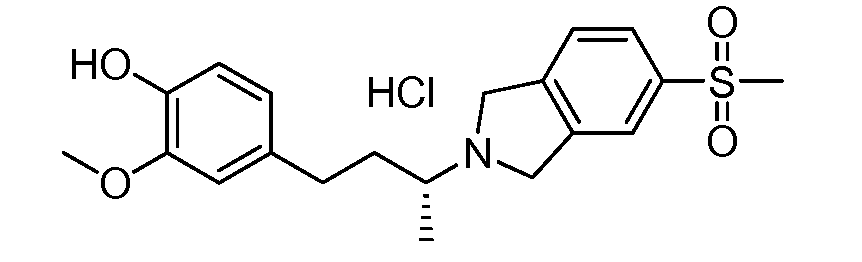
실시예 화합물 68: 1H NMR (400 MHz, CD3OD): δ 7.98 (s, 2H), 7.66-7.63 (m, 1H), 6.84 (s, 1H), 6.75-6.69 (m, 2H), 4.83 (s, 4H), 3.85 (s, 3H), 3.63-3.59 (m, 1H), 3.13 (s, 3H), 2.82-2.76 (m, 1H), 2.66-2.58 (m, 1H), 2.24-2.21 (m, 1H), 1.96-1.91 (m, 1H), 1.49 (d, J =6.4 Hz, 3H); m/z (ESI+) (M+H)+ = 376.15. Example compound 68 : 1 H NMR (400 MHz, CDOD): δ 7.98 (s, 2H), 7.66-7.63 (m, 1H), 6.84 (s, 1H), 6.75-6.69 (m, 2H), 4.83 ( s, 4H), 3.85 (s, 3H), 3.63-3.59 (m, 1H), 3.13 (s, 3H), 2.82-2.76 (m, 1H), 2.66-2.58 (m, 1H), 2.24-2.21 ( m, 1H), 1.96-1.91 (m, 1H), 1.49 (d, J =6.4 Hz, 3H); m/z (ESI+) (M+H)+ = 376.15.

실시예 화합물 69: 1H NMR (400 MHz, CD3OD): δ 7.99 (s, 2H), 7.64 (d, J = 8.4 Hz, 1H), 6.85 (s, 1H), 6.75 (d, J = 8.0 Hz, 1H), 6.71 (d, J = 7.6 Hz, 1H), 4.84 (s, 4H), 4.60-4.55 (m, 1H), 3.60-3.56 (m, 1H), 3.13 (s, 3H), 2.78-2.73 (m, 1H), 2.62-2.58 (m, 1H), 2.22-2.18 (m, 1H), 1.93-1.89 (m, 1H), 1.48 (d, J = 6.4 Hz, 3H), 1.31 (d, J = 6.0 Hz, 6H); m/z (ESI+) (M+H)+ = 404.20. Example compound 69 : 1H NMR (400 MHz, CDOD): δ 7.99 (s, 2H), 7.64 (d, J = 8.4 Hz, 1H), 6.85 (s, 1H), 6.75 (d, J = 8.0 Hz, 1H), 6.71 (d, J = 7.6 Hz, 1H), 4.84 (s, 4H), 4.60-4.55 (m, 1H), 3.60-3.56 (m, 1H), 3.13 (s, 3H), 2.78-2.73 (m, 1H), 2.62-2.58 (m, 1H), 2.22-2.18 (m, 1H), 1.93-1.89 (m, 1H), 1.48 (d, J = 6.4 Hz, 3H), 1.31 (d, J) = 6.0 Hz, 6H); m/z (ESI+) (M+H)+ = 404.20.

실시예 화합물 70: 1H NMR (400 MHz, CD3OD): δ 8.01 (s, 2H), 7.67 (d, J = 8.4 Hz, 1H), 6.85 (s, 1H), 6.78-6.70 (m, 2H), 4.84 (s, 4H), 4.60-4.56 (m, 1H), 3.13 (s, 3H), 2.70-2.66 (m, 2H), 2.08-2.04 (m, 2H), 1.55 (s, 6H), 1.31 (d, J = 6.0 Hz, 6H); m/z (ESI+) (M+H)+ = 418.25. Example compound 70 : 1H NMR (400 MHz, CDOD): δ 8.01 (s, 2H), 7.67 (d, J = 8.4 Hz, 1H), 6.85 (s, 1H), 6.78-6.70 (m, 2H), 4.84 (s, 4H), 4.60-4.56 (m, 1H), 3.13 (s, 3H), 2.70-2.66 (m, 2H), 2.08-2.04 (m, 2H), 1.55 (s, 6H), 1.31 ( d, J = 6.0 Hz, 6H); m/z (ESI+) (M+H)+ = 418.25.

실시예 화합물 71: 1H NMR (400 MHz, CD3OD): δ 7.99-7.91 (m, 4H), 7.62-7.54 (m, 4H), 6.83 (s, 1H), 6.72-6.68 (m, 2H), 4.82 (s, 4H), 3.81 (s, 3H), 2.70-2.65 (m, 2H), 2.08-2.02 (m, 2H), 1.51 (s, 6H); m/z (ESI+) (M+H)+ = 452.00. Example compound 71 : 1H NMR (400 MHz, CDOD): δ 7.99-7.91 (m, 4H), 7.62-754 (m, 4H), 6.83 (s, 1H), 6.72-6.68 (m, 2H), 4.82 (s, 4H), 3.81 (s, 3H), 2.70-2.65 (m, 2H), 2.08-2.02 (m, 2H), 1.51 (s, 6H); m/z (ESI+) (M+H)+ = 452.00.

실시예 화합물 72: 1H NMR (400 MHz, CD3OD): δ 8.00 (s, 1H), 7.86 (d, J = 8.0 Hz, 1H), 6.85 (s, 1H), 6.74-6.70 (m, 2H), 4.85 (s, 4H), 3.85 (s, 3H), 3.13 (s, 3H), 2.72-2.68 (m, 2H), 2.10-2.06 (m, 2H), 1.56 (s, 6H); m/z (ESI+) (M+H)+ = 390.15. Example compound 72 : 1H NMR (400 MHz, CDOD): δ 8.00 (s, 1H), 7.86 (d, J = 8.0 Hz, 1H), 6.85 (s, 1H), 6.74-6.70 (m, 2H), 4.85 (s, 4H), 3.85 (s, 3H), 3.13 (s, 3H), 2.72-2.68 (m, 2H), 2.10-2.06 (m, 2H), 1.56 (s, 6H); m/z (ESI+) (M+H)+ = 390.15.

실시예 화합물 73. Example compound 73.

실시예 화합물 74: 1H NMR (400 MHz, CD3OD): 1H NMR (400 MHz, CDCl3): δ 7.03-6.99 (m, 2H), 6.88-6.83 (m, 2H), 6.78-6.75 (m, 1H), 4.80-4.65 (m, 4H), 2.65-2.60 (m, 2H), 2.03-1.99 (m, 2H), 1.52 (s, 6H), 1.40 (s, 9H); m/z (ESI+) (M+H)+ = 390.20. Example compound 74 : 1H NMR (400 MHz, CD3OD): 1H NMR (400 MHz, CDCl3): δ 7.03-6.99 (m, 2H), 6.88-6.83 (m, 2H), 6.78-6.75 (m, 1H) , 4.80-4.65 (m, 4H), 2.65-2.60 (m, 2H), 2.03-1.99 (m, 2H), 1.52 (s, 6H), 1.40 (s, 9H); m/z (ESI+) (M+H)+ = 390.20.

실시예 화합물 75: 1H NMR (400 MHz, CD3OD): δ 8.07-8.05 (m, 1H), 7.66-7.54 (m, 2H), 6.90-6.78 (m, 3H), 5.20-4.80 (m, 4H), 2.67-2.60 (m, 2H), 2.07-2.00 (m, 2H), 1.55 (s, 6H), 1.35 (s, 9H); m/z (ESI+) (M+H)+ = 398.25. Example compound 75 : 1 H NMR (400 MHz, CDOD): δ 8.07-8.05 (m, 1H), 7.66-754 (m, 2H), 6.90-6.78 (m, 3H), 5.20-4.80 (m, 4H) ), 2.67-2.60 (m, 2H), 2.07-2.00 (m, 2H), 1.55 (s, 6H), 1.35 (s, 9H); m/z (ESI+) (M+H)+ = 398.25.

실시예 화합물 76: 1H NMR (400 MHz, CD3OD) δ 7.55-7.48 (m, 3H), 6.87 (s, 1H), 6.72-6.70 (m, 2H), 4.95-4.79 (m, 4H) 3.90-3.80 (m, 7H), 3.35-3.30 (m, 4H), 2.72-2.69 (m, 2H), 2.12-2.08 (m, 2H), 1.56 (s, 6H). LC-MS: 424.70 (M+1)+. Example compound 76 : 1 H NMR (400 MHz, CD 3 OD) δ 7.55-7.48 (m, 3H), 6.87 (s, 1H), 6.72-6.70 (m, 2H), 4.95-4.79 (m, 4H) 3.90-3.80 (m, 7H), 3.35-3.30 (m, 4H), 2.72-2.69 (m, 2H), 2.12-2.08 (m, 2H), 1.56 (s, 6H). LC-MS: 424.70 (M+1) + .
추가적인 화합물은 상기 제공된 것과 유사한 방식으로 제조되고, 각각에 대한 구조는 표 4에 기재된 바와 같은 1H-NMR 및 MS에 의해 확인되었다.Additional compounds were prepared in a similar manner to those provided above, and the structures for each were confirmed by 1 H-NMR and MS as described in Table 4.


요약서 및 도면을 포함하는 명세서에 개시된 모든 특징, 및 개시된 임의의 방법 또는 공정에서의 모든 단계는 이러한 특징 및/또는 단계의 적어도 일부가 상호 배타적인 조합을 제외하고 임의의 조합으로 조합될 수 있다. 요약서 및 도면을 포함하는 명세서에 개시된 각각의 특징은 달리 명확히 기재되지 않은 한 동일한, 동등한 또는 유사한 목적을 제공하는 대안적인 특징에 의해 대체될 수 있다. 따라서, 달리 명확히 기재되지 않은 한, 개시된 각각의 특징은 포괄적인 일련의 동등한 또는 유사한 특징의 오직 일 예이다. 본 명세서에 기재된 것 이외의 본 개시내용의 다양한 변형은 상기 설명으로부터 당해 분야의 당업자에게 명확할 것이다. 이러한 변형은 첨부된 청구항의 범위 내에 해당하는 것으로 또한 의도된다.All features disclosed in the specification, including abstracts and drawings, and all steps in any disclosed method or process may be combined in any combination, except combinations in which at least some of such features and/or steps are mutually exclusive. Each feature disclosed in the specification, including the abstract and drawings, may be replaced by an alternative feature serving the same, equivalent or similar purpose, unless expressly stated otherwise. Accordingly, unless expressly stated otherwise, each feature disclosed is only one example of a generic series of equivalent or similar features. Various modifications of the present disclosure other than those described herein will become apparent to those skilled in the art from the foregoing description. Such modifications are also intended to fall within the scope of the appended claims.
본 명세서에 언급된 모든 공보는 참조문헌으로 그 전문이 인용된다. 본 명세서에서 어느 것도 본 개시내용이 선행 개시내용에 의해 이러한 개시내용에 선행하도록 권한부여되지 않는다는 인정으로서 해석되어서는 안 된다.All publications mentioned herein are incorporated by reference in their entirety. Nothing in this specification should be construed as an admission that the present disclosure is not entitled to antedate such disclosure by virtue of prior disclosure.
Claims (37)


하기 화학식의 화합물:

상기 화합물 또는 이의 약제학적으로 허용 가능한 염은 상기 세포에서 아밀로이드 베타 올리고머 결합을 저해시키기에 효과적인 양으로 존재하는, 약제학적 조성물.A pharmaceutical composition for use in a method of inhibiting cognitive decline in a subject exhibiting or at risk of exhibiting cognitive decline, comprising inhibiting an amyloid beta effect on neuronal cells, comprising:
A compound of the formula:
The compound or a pharmaceutically acceptable salt thereof is present in an amount effective to inhibit amyloid beta oligomer binding in the cell.
Applications Claiming Priority (3)
| Application Number | Priority Date | Filing Date | Title |
|---|---|---|---|
| US201461934528P | 2014-01-31 | 2014-01-31 | |
| US61/934,528 | 2014-01-31 | ||
| PCT/US2015/013754 WO2015116923A1 (en) | 2014-01-31 | 2015-01-30 | Isoindoline compositions and methods for treating neurodegenerative disease |
Publications (2)
| Publication Number | Publication Date |
|---|---|
| KR20160108564A KR20160108564A (en) | 2016-09-19 |
| KR102331422B1 true KR102331422B1 (en) | 2021-11-25 |
Family
ID=53757753
Family Applications (1)
| Application Number | Title | Priority Date | Filing Date |
|---|---|---|---|
| KR1020167023951A Active KR102331422B1 (en) | 2014-01-31 | 2015-01-30 | Isoindoline compositions and methods for treating neurodegenerative disease |
Country Status (15)
| Country | Link |
|---|---|
| US (5) | US9796672B2 (en) |
| EP (3) | EP3498692B1 (en) |
| JP (1) | JP6517827B2 (en) |
| KR (1) | KR102331422B1 (en) |
| CN (1) | CN106163516B (en) |
| AU (1) | AU2015210852B2 (en) |
| BR (1) | BR112016017808B1 (en) |
| CA (1) | CA2938212C (en) |
| DK (2) | DK3498692T3 (en) |
| ES (2) | ES2915833T3 (en) |
| IL (1) | IL247003B (en) |
| MX (1) | MX368755B (en) |
| NZ (1) | NZ722599A (en) |
| RU (1) | RU2692258C2 (en) |
| WO (1) | WO2015116923A1 (en) |
Families Citing this family (40)
| Publication number | Priority date | Publication date | Assignee | Title |
|---|---|---|---|---|
| BR112014015197A8 (en) | 2011-12-21 | 2017-06-13 | Novira Therapeutics Inc | hepatitis b antiviral agents |
| KR102271574B1 (en) | 2012-08-28 | 2021-07-01 | 얀센 사이언시즈 아일랜드 언리미티드 컴퍼니 | Sulfamoyl-arylamides and the use thereof as medicaments for the treatment of hepatitis B |
| WO2014131847A1 (en) | 2013-02-28 | 2014-09-04 | Janssen R&D Ireland | Sulfamoyl-arylamides and the use thereof as medicaments for the treatment of hepatitis b |
| MX353412B (en) | 2013-04-03 | 2018-01-10 | Janssen Sciences Ireland Uc | N-phenyl-carboxamide derivatives and the use thereof as medicaments for the treatment of hepatitis b. |
| TWI733288B (en) | 2013-05-17 | 2021-07-11 | 愛爾蘭商健生科學愛爾蘭無限公司 | Sulphamoylpyrrolamide derivatives and the use thereof as medicaments for the treatment of hepatitis b |
| HRP20180791T1 (en) | 2013-07-25 | 2018-09-07 | Janssen Sciences Ireland Uc | Glyoxamide substituted pyrrolamide derivatives and the use thereof as medicaments for the treatment of hepatitis b |
| CA2923712C (en) | 2013-10-23 | 2021-11-02 | Janssen Sciences Ireland Uc | Carboxamide derivatives and the use thereof as medicaments for the treatment of hepatitis b |
| US10392349B2 (en) | 2014-01-16 | 2019-08-27 | Novira Therapeutics, Inc. | Azepane derivatives and methods of treating hepatitis B infections |
| US9169212B2 (en) | 2014-01-16 | 2015-10-27 | Novira Therapeutics, Inc. | Azepane derivatives and methods of treating hepatitis B infections |
| RU2692258C2 (en) | 2014-01-31 | 2019-06-24 | Когнишн Терапьютикс, Инк. | Isoindoline compositions and methods of treating neurodegenerative disease |
| CA2936947A1 (en) | 2014-02-05 | 2015-08-13 | Novira Therapeutics, Inc. | Combination therapy for treatment of hbv infections |
| TW201620893A (en) | 2014-02-06 | 2016-06-16 | 健生科學愛爾蘭無限公司 | Sulphamoylpyrrolamide derivatives and the use thereof as medicaments for the treatment of hepatitis B |
| JP2018510159A (en) | 2015-03-19 | 2018-04-12 | ノヴィラ・セラピューティクス・インコーポレイテッド | Azocan and azonan derivatives and methods for treating hepatitis B infection |
| US10875876B2 (en) | 2015-07-02 | 2020-12-29 | Janssen Sciences Ireland Uc | Cyclized sulfamoylarylamide derivatives and the use thereof as medicaments for the treatment of hepatitis B |
| TW201718496A (en) | 2015-09-29 | 2017-06-01 | 諾維拉治療公司 | Crystalline forms of a hepatitis B antiviral agent |
| EP3364976B1 (en) | 2015-10-19 | 2026-03-18 | Board of Regents, The University of Texas System | Piperazinyl norbenzomorphan compounds and methods for using the same |
| AU2017248828A1 (en) | 2016-04-15 | 2018-11-01 | Janssen Sciences Ireland Uc | Combinations and methods comprising a capsid assembly inhibitor |
| WO2017190109A1 (en) | 2016-04-29 | 2017-11-02 | Board Of Regents, The University Of Texas System | Sigma receptor binders |
| CN107162944B (en) * | 2017-04-27 | 2019-02-26 | 湖南化工研究院有限公司 | The preparation method of 2,3- dimethyl benzene methyl sulfide |
| DK3634394T3 (en) | 2017-05-15 | 2026-03-02 | Cognition Therapeutics Inc | COMPOSITIONS FOR TREATING NEUROGENERATE DISEASES |
| WO2019089988A1 (en) * | 2017-11-01 | 2019-05-09 | Cognition Therapeutics, Inc. | Isoindoline compositions and methods for treating neurodegenerative disease |
| MX2020009531A (en) | 2018-03-14 | 2020-10-05 | Janssen Sciences Ireland Unlimited Co | Capsid assembly modulator dosing regimen. |
| JP6567153B1 (en) * | 2018-09-28 | 2019-08-28 | 学校法人東北工業大学 | Method, computer system, and program for predicting characteristics of target compound |
| US20220009876A1 (en) * | 2018-10-31 | 2022-01-13 | Polycore Therapeutics Llc | Method for synthesizing d3 dopamine receptor agonists |
| WO2020169784A1 (en) | 2019-02-22 | 2020-08-27 | Janssen Sciences Ireland Unlimited Company | Amide derivatives useful in the treatment of hbv infection or hbv-induced diseases |
| CN111848466A (en) * | 2019-03-08 | 2020-10-30 | 新昌县大船畈生物科技有限公司 | A kind of preparation method of edible flavor and fragrance |
| CN109734638A (en) * | 2019-03-08 | 2019-05-10 | 新昌县大船畈生物科技有限公司 | A kind of preparation method of edible essence fragrance |
| AR119732A1 (en) | 2019-05-06 | 2022-01-05 | Janssen Sciences Ireland Unlimited Co | AMIDE DERIVATIVES USEFUL IN THE TREATMENT OF HBV INFECTION OR HBV-INDUCED DISEASES |
| US12352719B2 (en) | 2019-09-20 | 2025-07-08 | KYCERA AVX Components Corporation | Somatic cell-based electrical biosensor |
| CN112694427B (en) * | 2019-10-23 | 2022-11-18 | 江西天宇化工有限公司 | Method for preparing 2, 3-dimethyl sulfide |
| AU2021218735A1 (en) * | 2020-02-13 | 2022-09-01 | Cognition Therapeutics, Inc. | Method of decreasing amyloid beta monomer levels in patients with cognitive decline |
| IL298323B2 (en) | 2020-05-20 | 2023-10-01 | Univ Illinois | Method for treating lysosomal storage diseases with histatin peptides |
| IL303592A (en) * | 2020-12-11 | 2023-08-01 | Cognition Therapeutics Inc | Preparations for the treatment of dry age-related macular degeneration (AMD) |
| EP4308565A4 (en) * | 2021-03-19 | 2025-01-01 | Cognition Therapeutics, Inc. | Compositions and methods for treating neurologic diseases |
| WO2024020059A1 (en) * | 2022-07-18 | 2024-01-25 | Cognition Therapeutics, Inc. | Isoindoline compositions and methods for treating neurodegenerative disease |
| WO2024130030A1 (en) * | 2022-12-14 | 2024-06-20 | Fred Hutchinson Cancer Center | Method for treating neurological diseases through glial pruning regulation |
| WO2024196799A2 (en) * | 2023-03-17 | 2024-09-26 | Cognition Therapeutics, Inc. | Isoindoline compositions and methods for treating neurodegenerative disease |
| CN117945980A (en) * | 2024-01-24 | 2024-04-30 | 上海健康医学院 | An isoindole sulfilimine compound and its preparation and use as a sigma-2 receptor inhibitor |
| WO2026064543A1 (en) | 2024-09-18 | 2026-03-26 | Cognition Therapeutics, Inc. | Process for preparing 2-(tert-butoxy)-4-(3-methyl-3-(5-methylsulfonyl)isoindolin-2-yl)butyl)phenol |
| WO2026064542A1 (en) | 2024-09-18 | 2026-03-26 | Cognition Therapeutics, Inc. | 2-(tert-butoxy)-4-(3-methyl-3-(5-(methylsulfonyl)isoindolin-2-yl)butyl)phenol fumarate salts in solid forms |
Citations (1)
| Publication number | Priority date | Publication date | Assignee | Title |
|---|---|---|---|---|
| WO2013029057A2 (en) * | 2011-08-25 | 2013-02-28 | Cognition Therapeutics, Inc. | Compositions and methods for treating neurodegenerative disease |
Family Cites Families (96)
| Publication number | Priority date | Publication date | Assignee | Title |
|---|---|---|---|---|
| ZA732136B (en) | 1972-04-12 | 1974-03-27 | Lilly Co Eli | Dopamine derivatives |
| DE2753278A1 (en) | 1977-11-30 | 1979-05-31 | Basf Ag | ARALKYLPIPERIDINONE |
| US4321386A (en) | 1981-01-28 | 1982-03-23 | Mead Johnson & Company | Quaternary piperidinium halides |
| DE3222152A1 (en) | 1982-06-12 | 1983-12-15 | Bayer Ag, 5090 Leverkusen | SUBSTITUTED MALEINIC ACID IMIDES, METHOD FOR THE PRODUCTION THEREOF AND THEIR USE AS A PEST CONTROL |
| IL70813A (en) | 1983-01-31 | 1987-10-30 | Lilly Co Eli | Animal feed comprising certain phenethanolamine derivatives and 1-phenyl-2-(1-methyl-3-(4-nitrophenyl)propylamino)ethanol hydrochloride |
| JPS62283922A (en) | 1986-05-30 | 1987-12-09 | Tsumura Juntendo Inc | Platelet coagulation inhibiting agent |
| US4697024A (en) | 1986-11-24 | 1987-09-29 | Merrell Dow Pharmaceuticals Inc. | Medroxalol intermediates |
| US4958029A (en) * | 1987-01-13 | 1990-09-18 | Banyu Pharmaceutical Co., Ltd. | Process for the production of isoindoline derivatives, novel intermediates and process for their production |
| JPH01180822A (en) | 1988-01-12 | 1989-07-18 | Dainippon Pharmaceut Co Ltd | Anti-delayed type allergic agent |
| JPH01305085A (en) | 1988-05-31 | 1989-12-08 | Yamanouchi Pharmaceut Co Ltd | Pyridylthiazolidine carboxamide derivative |
| JPH02215789A (en) | 1989-02-15 | 1990-08-28 | Yamanouchi Pharmaceut Co Ltd | Thiazolo(3,4-a)pyrazine derivative |
| CA2071897A1 (en) | 1989-12-28 | 1991-06-29 | Richard A. Glennon | Sigma receptor ligands and the use thereof |
| DE4000610A1 (en) | 1990-01-11 | 1991-07-18 | Knoll Ag | Optically active 1-aryl-3-amino-butane derivs. prodn. - by fractional crystallisation of salts with optically active acid, useful as pharmaceutical intermediates |
| JP2818958B2 (en) | 1990-02-23 | 1998-10-30 | 塩野義製薬株式会社 | 4- (4-Alkoxyphenyl) -2-butylamine derivative and method for producing the same |
| JPH045266A (en) | 1990-04-24 | 1992-01-09 | Toyo Pharma- Kk | Production of dopamine derivative |
| DE4142366A1 (en) | 1991-07-15 | 1993-06-24 | Thomae Gmbh Dr K | PHENYLALKYL DERIVATIVES, MEDICINAL PRODUCTS CONTAINING THESE COMPOUNDS AND METHOD FOR THE PRODUCTION THEREOF |
| CN1192011C (en) | 1991-08-23 | 2005-03-09 | Nps药物有限公司 | Calcium receptor-active arylalkyl amines |
| US6011068A (en) | 1991-08-23 | 2000-01-04 | Nps Pharmaceuticals, Inc. | Calcium receptor-active molecules |
| US6610493B1 (en) | 1993-06-17 | 2003-08-26 | Brigham And Women's Hospital | Screening compounds for the ability to alter the production of amyloid-β peptide |
| CA2115900A1 (en) | 1993-02-22 | 1994-08-23 | Gerald W. Becker | Pharmaceutical screens and antibodies |
| JPH06321781A (en) | 1993-05-13 | 1994-11-22 | Yamanouchi Pharmaceut Co Ltd | Antagonistic agent for platelet activating factor |
| ES2285707T3 (en) | 1994-10-21 | 2007-11-16 | Nps Pharmaceuticals, Inc. | ACTIVE COMPOUNDS AGAINST CALCIUM RECEIVER. |
| JPH0915744A (en) | 1995-06-29 | 1997-01-17 | Fuji Photo Film Co Ltd | Magnetic head inspecting method and film carrier |
| JP3522930B2 (en) | 1995-12-06 | 2004-04-26 | 花王株式会社 | Antimicrobial agent and oral composition containing the same |
| WO1997030038A1 (en) | 1996-02-15 | 1997-08-21 | Mitsubishi Chemical Corporation | Diarylsultam derivatives |
| WO1997040051A1 (en) * | 1996-04-24 | 1997-10-30 | Takeda Chemical Industries, Ltd. | Fused imidazopyridine derivatives as antihyperlipidemic agents |
| US6218506B1 (en) | 1997-02-05 | 2001-04-17 | Northwestern University | Amyloid β protein (globular assembly and uses thereof) |
| US6518315B1 (en) | 1997-10-21 | 2003-02-11 | The University Of Sydney | Medicinal uses of phenylaikanols and derivatives |
| CO4980891A1 (en) | 1997-11-14 | 2000-11-27 | Sanofi Sa | ASSOCIATION OF ACTIVE PRINCIPLES FOR THE TREATMENT OF SENILE DEMENTIA OF THE AZHEIMER TYPE |
| CO5011072A1 (en) | 1997-12-05 | 2001-02-28 | Lilly Co Eli | ETANOLAMINAS PIRAZINIL SUBSTITUTED AS AGFONISTS OF THE RECEPTORS |
| IL138686A0 (en) | 1999-10-01 | 2001-10-31 | Pfizer Prod Inc | α- SULFONYLAMINO HYDROXAMIC ACID INHIBITORS OF MATRIX METALLOPROTEINASES FOR THE TREATMENT OF PERIPHERAL OR CENTRAL NERVOUS SYSTEM DISORDERS |
| WO2001030335A2 (en) | 1999-10-22 | 2001-05-03 | The Board Of Trustees Of The University Of Illinois | Pharmaceutical compositions useful in the prevention and treatment of beta-amyloid protein-induced disease |
| DE10027151A1 (en) | 2000-05-31 | 2001-12-06 | Bayer Ag | Herbicides based on substituted carboxamides |
| KR100786927B1 (en) | 2000-06-28 | 2007-12-17 | 스미스클라인비이참피이엘시이 | Wet Grinding Method |
| ES2365602T3 (en) | 2001-03-05 | 2011-10-07 | Yissum Research Development Company Of The Hebrew University Of Jerusalem | CHAPERONA TYPE OLIGOMERIC PROTEINS, STABLE TO DENATURALIZERS AND / OR PROTEASA RESISTANT, POLINUCLEOTIDES CODING THE SAME AND ITS USES. |
| JP4312402B2 (en) | 2001-07-31 | 2009-08-12 | 有限会社大長企画 | Anti-depressant, anti-menopausal agent, anti-senile dementia agent, anti-Alzheimer agent |
| US20030073681A1 (en) | 2001-08-21 | 2003-04-17 | Hauske James R. | 2-substituted piperidines that are ligands for monoamine receptors and transporters |
| US6991814B2 (en) | 2001-12-13 | 2006-01-31 | Council Of Scientific And Industrial Research | Herbal medicaments for the treatment of neurocerebrovascular disorders |
| EP1453528B1 (en) | 2001-12-14 | 2009-07-22 | Council of Scientific and Industrial Research | Compositions containing curcuma extracts for the treatment of neurocerebrovascular disorders |
| JP2004002517A (en) | 2002-05-31 | 2004-01-08 | Dae Sil Kim | Composition of soap containing ginger ingredient and method for producing the same |
| DE10303974A1 (en) | 2003-01-31 | 2004-08-05 | Abbott Gmbh & Co. Kg | Amyloid β (1-42) oligomers, process for their preparation and their use |
| DE10320560A1 (en) | 2003-05-07 | 2004-01-29 | Brosig, Stefan, Dr. | Prophylaxis or treatment of Alzheimer's disease and/or Parkinson's disease, by administration of ginger, specifically in food and/or as ginger extract |
| EP1644026A4 (en) | 2003-06-12 | 2007-10-24 | Ms Science Corp | Sigma ligands for neuronal regeneration and functional recovery |
| US7829562B2 (en) | 2003-06-12 | 2010-11-09 | M's Science Corporation | Sigma ligands for neuronal regeneration and functional recovery |
| CZ2006628A3 (en) | 2004-03-12 | 2007-01-24 | Egis Gyogyszergyár Nyrt. | Combined pharmaceutical composition for inhibition of decline of cognitive functions |
| TW200538052A (en) | 2004-05-31 | 2005-12-01 | Kaneka Corp | Agent for preventing/amelioratig life style-relaetd diseases containing turmeric essential oil component |
| EP1794313B1 (en) | 2004-06-21 | 2013-05-15 | Proteome Sciences Plc | Screening methods using c-abl, fyn and syk in combination with tau protein |
| TW200613272A (en) | 2004-08-13 | 2006-05-01 | Astrazeneca Ab | Isoindolone compounds and their use as metabotropic glutamate receptor potentiators |
| WO2006027252A1 (en) | 2004-09-10 | 2006-03-16 | Ucb Pharma, Sa | Sigma receptor ligands |
| US20080044356A1 (en) | 2004-10-22 | 2008-02-21 | Regents Of The University Of Minnesota | Assemblies of Oligomeric Amyloid Beta Protein and Uses Thereof |
| WO2006066118A2 (en) | 2004-12-15 | 2006-06-22 | Neuralab Limited | Contextual fear test for predicting efficacy of alzheimer immunotherapeutic treatment |
| WO2006094724A2 (en) | 2005-03-05 | 2006-09-14 | Abbott Gmbh & Co. Kg | Screening method, process for purifying of non-diffusible a-beta oligomers, selective antibodies against said non-diffusible a-beta oligomers and a process for manufacturing of said antibodies |
| KR20080041624A (en) | 2005-06-15 | 2008-05-13 | 대릭 에스. 에치. 엘. 김 | Treatment Methods for Beta-amyloid Protein-Induced Eye Disease |
| TW200726774A (en) | 2005-06-30 | 2007-07-16 | Merck & Co Inc | Composition and method for producing stable amyloid beta oligomers |
| EP1745778A3 (en) | 2005-07-20 | 2007-03-07 | Speedel Experimenta AG | Diaminoalcohols as therapeutic compounds |
| ITRM20060007A1 (en) | 2006-01-05 | 2007-07-06 | Univ Bari | SIGMA-2 RECEPTOR METHOD OF SCREENING OF SPECIFIC LIGANDS AND USE OF THE SAME IN DIAGNOSTIC OR THERAPEUTIC METHODS |
| US20070218491A1 (en) | 2006-02-08 | 2007-09-20 | Oligomerix, Inc. | Oligomerization of amyloid proteins |
| KR20090007564A (en) | 2006-03-17 | 2009-01-19 | 허발사이언스 싱가포르 피티이 리미티드 | Extracts containing curcuma species and methods for obtaining them |
| WO2007112288A2 (en) | 2006-03-23 | 2007-10-04 | Mount Sinai School Of Medicine | Cardiovascular composition and use the same for the treatment of alzheimers disease |
| WO2007126473A2 (en) | 2006-04-10 | 2007-11-08 | Oligomerix, Inc. | Oligomerization of amyloid proteins |
| WO2008042024A2 (en) | 2006-06-01 | 2008-04-10 | Elan Pharmaceuticals, Inc. | Neuroactive fragments of app |
| US7561775B2 (en) | 2006-08-22 | 2009-07-14 | Senko Advanced Components, Inc. | Fiber optic protective shutter |
| CA2662723A1 (en) | 2006-09-08 | 2008-03-13 | Vib Vzw | Means and methods for the production of amyloid oligomers |
| WO2008042755A2 (en) | 2006-09-29 | 2008-04-10 | Cognition Therapeutics, Inc. | Inhibitors of cognitive decline |
| US20080131233A1 (en) | 2006-10-17 | 2008-06-05 | Yao Chun I | Plate-shaped fastener device |
| WO2008076262A2 (en) | 2006-12-15 | 2008-06-26 | Merck & Co., Inc. | Receptor for amyloid beta and uses thereof |
| US20080171757A1 (en) | 2007-01-11 | 2008-07-17 | Government Of The Us, As Represented By The Secretary, Department Of Health And Human Serivces | Methods to identify inhibitors of cell sickling |
| EP2152744A4 (en) | 2007-04-26 | 2012-02-15 | Univ Yale | PRION PROTEIN AS RECEPTOR FOR AMYLOID BETA OLIGOMERS |
| CA2684920A1 (en) | 2007-05-15 | 2008-11-27 | Helicon Therapeutics, Inc. | Methods of treating cognitive disorders by inhibition of gpr12 |
| CN101121670A (en) | 2007-09-11 | 2008-02-13 | 上海紫源制药有限公司 | Method for preparing 3,4-dimethoxy-N-[3-(4-methoxyphenyl)-1-methyl-n-propyl]-beta-phenylethylamine hydrochloride |
| US20090246191A1 (en) | 2007-10-11 | 2009-10-01 | University Of Tennessee Research Foundation | Preparation of Purified Covalently Cross-linked Abeta Oligomers and Uses Thereof |
| EP2206707B1 (en) | 2007-10-24 | 2014-07-23 | Astellas Pharma Inc. | Azolecarboxamide compound or salt thereof |
| WO2009059214A1 (en) | 2007-11-02 | 2009-05-07 | The Regents Of The University Of California | Abeta-binding small molecules |
| US20110092554A1 (en) | 2007-11-19 | 2011-04-21 | Richard Chesworth | 1,3,5 tri-subtituted benzenes for treatment of alzheimer's disease and other disorders |
| CN102203124A (en) | 2008-07-25 | 2011-09-28 | 雅培制药有限公司 | Amyloid beta peptide analogues, oligomers thereof, processes for their preparation and compositions comprising said analogues or oligomers, and uses thereof |
| WO2010062260A1 (en) | 2008-11-29 | 2010-06-03 | The Thailand Research Fund | Virus and target cell interaction inhibition |
| WO2010088450A2 (en) | 2009-01-30 | 2010-08-05 | Celladon Corporation | Methods for treating diseases associated with the modulation of serca |
| AU2010226726B8 (en) | 2009-03-16 | 2014-08-14 | Pangu Biopharma Limited | Compositions and methods comprising histidyl-tRNA synthetase splice variants having non-canonical biological activities |
| US7972164B2 (en) | 2009-03-24 | 2011-07-05 | Tyco Electronics Corporation | Connector assembly with a latch |
| ES2545795T3 (en) * | 2009-04-09 | 2015-09-15 | Cognition Therapeutics, Inc. | Cognitive impairment inhibitors |
| ES2581178T3 (en) | 2009-07-29 | 2016-09-01 | Pharnext | New diagnostic tools for Alzheimer's disease |
| CN102595884B (en) | 2009-07-31 | 2014-12-03 | 考格尼申治疗股份有限公司 | Inhibitors of cognitive decline |
| US20150160228A1 (en) | 2010-02-05 | 2015-06-11 | Susan Catalano | Compositions and method for determining the efficacy of amyloidosis treatments |
| WO2011106785A2 (en) | 2010-02-26 | 2011-09-01 | Cognition Therapeutics, Inc. | Methods of identifying agents effective to treat cognitive decline and diseases associated therewith |
| WO2012027548A1 (en) | 2010-08-25 | 2012-03-01 | The Feinstein Institute For Medical Research | Compounds and methods for prevention and treatment of alzheimer's and other diseases |
| BR112013019775A2 (en) | 2011-02-02 | 2017-04-18 | Cognition Therapeutics Inc | compound, pharmaceutical composition and method for treating cognitive decline or alzheimer's disease in a patient |
| US20170049723A1 (en) | 2011-02-02 | 2017-02-23 | Cognition Therapeutics, Inc. | Isolated compounds from turmeric oil and methods of use |
| EP2747768A4 (en) | 2011-08-25 | 2015-10-21 | Cognition Therapeutics Inc | Compositions and methods for treating neurodegenerative disease |
| AT511906B1 (en) | 2011-08-30 | 2016-05-15 | Blum Gmbh Julius | DRAWER |
| WO2015020523A1 (en) | 2013-08-07 | 2015-02-12 | Stichting Vu-Vumc | Biomarkers for early diagnosis of alzheimer's disease |
| RU2692258C2 (en) | 2014-01-31 | 2019-06-24 | Когнишн Терапьютикс, Инк. | Isoindoline compositions and methods of treating neurodegenerative disease |
| DK3634394T3 (en) | 2017-05-15 | 2026-03-02 | Cognition Therapeutics Inc | COMPOSITIONS FOR TREATING NEUROGENERATE DISEASES |
| WO2019089988A1 (en) * | 2017-11-01 | 2019-05-09 | Cognition Therapeutics, Inc. | Isoindoline compositions and methods for treating neurodegenerative disease |
| CN110283082A (en) | 2019-07-15 | 2019-09-27 | 泰州职业技术学院 | A kind of preparation method of 3- phenylpropylamine |
| AU2021218735A1 (en) * | 2020-02-13 | 2022-09-01 | Cognition Therapeutics, Inc. | Method of decreasing amyloid beta monomer levels in patients with cognitive decline |
| IL303592A (en) | 2020-12-11 | 2023-08-01 | Cognition Therapeutics Inc | Preparations for the treatment of dry age-related macular degeneration (AMD) |
-
2015
- 2015-01-30 RU RU2016134677A patent/RU2692258C2/en active
- 2015-01-30 EP EP19154222.4A patent/EP3498692B1/en active Active
- 2015-01-30 CA CA2938212A patent/CA2938212C/en active Active
- 2015-01-30 EP EP22155541.0A patent/EP4023294A1/en active Pending
- 2015-01-30 DK DK19154222.4T patent/DK3498692T3/en active
- 2015-01-30 ES ES19154222T patent/ES2915833T3/en active Active
- 2015-01-30 KR KR1020167023951A patent/KR102331422B1/en active Active
- 2015-01-30 NZ NZ722599A patent/NZ722599A/en unknown
- 2015-01-30 ES ES15743281T patent/ES2721001T3/en active Active
- 2015-01-30 JP JP2016549224A patent/JP6517827B2/en active Active
- 2015-01-30 US US15/115,187 patent/US9796672B2/en active Active
- 2015-01-30 CN CN201580017497.0A patent/CN106163516B/en active Active
- 2015-01-30 DK DK15743281.6T patent/DK3099296T3/en active
- 2015-01-30 BR BR112016017808-4A patent/BR112016017808B1/en active IP Right Grant
- 2015-01-30 MX MX2016009845A patent/MX368755B/en active IP Right Grant
- 2015-01-30 WO PCT/US2015/013754 patent/WO2015116923A1/en not_active Ceased
- 2015-01-30 AU AU2015210852A patent/AU2015210852B2/en active Active
- 2015-01-30 EP EP15743281.6A patent/EP3099296B1/en active Active
-
2016
- 2016-07-28 IL IL247003A patent/IL247003B/en active IP Right Grant
-
2017
- 2017-09-11 US US15/700,923 patent/US10207991B2/en active Active
-
2018
- 2018-12-21 US US16/230,238 patent/US10611728B2/en active Active
-
2020
- 2020-02-06 US US16/783,943 patent/US11691947B2/en active Active
-
2023
- 2023-04-27 US US18/308,037 patent/US12466795B2/en active Active
Patent Citations (1)
| Publication number | Priority date | Publication date | Assignee | Title |
|---|---|---|---|---|
| WO2013029057A2 (en) * | 2011-08-25 | 2013-02-28 | Cognition Therapeutics, Inc. | Compositions and methods for treating neurodegenerative disease |
Also Published As
Similar Documents
| Publication | Publication Date | Title |
|---|---|---|
| KR102331422B1 (en) | Isoindoline compositions and methods for treating neurodegenerative disease | |
| JP2017206545A (en) | Compositions and methods for treating neurodegenerative disease | |
| JP2014529613A (en) | Compositions and methods for treating neurodegenerative diseases | |
| EP3634394B1 (en) | Compositions for treating neurodegenerative diseases | |
| HK40010047A (en) | Isoindoline compositions and methods for treating neurodegenerative disease | |
| HK40010047B (en) | Isoindoline compositions and methods for treating neurodegenerative disease | |
| HK1225651B (en) | Isoindoline compositions and methods for treating neurodegenerative disease | |
| WO2026030341A1 (en) | Zervimesine for treating neurodegenerative disease |
Legal Events
| Date | Code | Title | Description |
|---|---|---|---|
| PA0105 | International application |
Patent event date: 20160830 Patent event code: PA01051R01D Comment text: International Patent Application |
|
| PG1501 | Laying open of application | ||
| A201 | Request for examination | ||
| PA0201 | Request for examination |
Patent event code: PA02012R01D Patent event date: 20200129 Comment text: Request for Examination of Application |
|
| E902 | Notification of reason for refusal | ||
| PE0902 | Notice of grounds for rejection |
Comment text: Notification of reason for refusal Patent event date: 20210623 Patent event code: PE09021S01D |
|
| E701 | Decision to grant or registration of patent right | ||
| PE0701 | Decision of registration |
Patent event code: PE07011S01D Comment text: Decision to Grant Registration Patent event date: 20210902 |
|
| GRNT | Written decision to grant | ||
| PR0701 | Registration of establishment |
Comment text: Registration of Establishment Patent event date: 20211123 Patent event code: PR07011E01D |
|
| PR1002 | Payment of registration fee |
Payment date: 20211123 End annual number: 3 Start annual number: 1 |
|
| PG1601 | Publication of registration | ||
| PR1001 | Payment of annual fee |
Payment date: 20241029 Start annual number: 4 End annual number: 4 |