KR102285480B1 - Polyethylene copolymer and method for preparing the same - Google Patents
Polyethylene copolymer and method for preparing the same Download PDFInfo
- Publication number
- KR102285480B1 KR102285480B1 KR1020180154616A KR20180154616A KR102285480B1 KR 102285480 B1 KR102285480 B1 KR 102285480B1 KR 1020180154616 A KR1020180154616 A KR 1020180154616A KR 20180154616 A KR20180154616 A KR 20180154616A KR 102285480 B1 KR102285480 B1 KR 102285480B1
- Authority
- KR
- South Korea
- Prior art keywords
- group
- formula
- transition metal
- aryl
- alkyl
- Prior art date
- Legal status (The legal status is an assumption and is not a legal conclusion. Google has not performed a legal analysis and makes no representation as to the accuracy of the status listed.)
- Active
Links
Images


Classifications
-
- C—CHEMISTRY; METALLURGY
- C08—ORGANIC MACROMOLECULAR COMPOUNDS; THEIR PREPARATION OR CHEMICAL WORKING-UP; COMPOSITIONS BASED THEREON
- C08L—COMPOSITIONS OF MACROMOLECULAR COMPOUNDS
- C08L23/00—Compositions of homopolymers or copolymers of unsaturated aliphatic hydrocarbons having only one carbon-to-carbon double bond; Compositions of derivatives of such polymers
- C08L23/02—Compositions of homopolymers or copolymers of unsaturated aliphatic hydrocarbons having only one carbon-to-carbon double bond; Compositions of derivatives of such polymers not modified by chemical after-treatment
- C08L23/04—Homopolymers or copolymers of ethene
- C08L23/08—Copolymers of ethene
-
- C—CHEMISTRY; METALLURGY
- C08—ORGANIC MACROMOLECULAR COMPOUNDS; THEIR PREPARATION OR CHEMICAL WORKING-UP; COMPOSITIONS BASED THEREON
- C08F—MACROMOLECULAR COMPOUNDS OBTAINED BY REACTIONS ONLY INVOLVING CARBON-TO-CARBON UNSATURATED BONDS
- C08F2/00—Processes of polymerisation
- C08F2/38—Polymerisation using regulators, e.g. chain terminating agents, e.g. telomerisation
-
- C—CHEMISTRY; METALLURGY
- C08—ORGANIC MACROMOLECULAR COMPOUNDS; THEIR PREPARATION OR CHEMICAL WORKING-UP; COMPOSITIONS BASED THEREON
- C08F—MACROMOLECULAR COMPOUNDS OBTAINED BY REACTIONS ONLY INVOLVING CARBON-TO-CARBON UNSATURATED BONDS
- C08F210/00—Copolymers of unsaturated aliphatic hydrocarbons having only one carbon-to-carbon double bond
- C08F210/02—Ethene
-
- C—CHEMISTRY; METALLURGY
- C08—ORGANIC MACROMOLECULAR COMPOUNDS; THEIR PREPARATION OR CHEMICAL WORKING-UP; COMPOSITIONS BASED THEREON
- C08F—MACROMOLECULAR COMPOUNDS OBTAINED BY REACTIONS ONLY INVOLVING CARBON-TO-CARBON UNSATURATED BONDS
- C08F210/00—Copolymers of unsaturated aliphatic hydrocarbons having only one carbon-to-carbon double bond
- C08F210/04—Monomers containing three or four carbon atoms
-
- C—CHEMISTRY; METALLURGY
- C08—ORGANIC MACROMOLECULAR COMPOUNDS; THEIR PREPARATION OR CHEMICAL WORKING-UP; COMPOSITIONS BASED THEREON
- C08F—MACROMOLECULAR COMPOUNDS OBTAINED BY REACTIONS ONLY INVOLVING CARBON-TO-CARBON UNSATURATED BONDS
- C08F210/00—Copolymers of unsaturated aliphatic hydrocarbons having only one carbon-to-carbon double bond
- C08F210/14—Monomers containing five or more carbon atoms
-
- C—CHEMISTRY; METALLURGY
- C08—ORGANIC MACROMOLECULAR COMPOUNDS; THEIR PREPARATION OR CHEMICAL WORKING-UP; COMPOSITIONS BASED THEREON
- C08F—MACROMOLECULAR COMPOUNDS OBTAINED BY REACTIONS ONLY INVOLVING CARBON-TO-CARBON UNSATURATED BONDS
- C08F210/00—Copolymers of unsaturated aliphatic hydrocarbons having only one carbon-to-carbon double bond
- C08F210/16—Copolymers of ethene with alpha-alkenes, e.g. EP rubbers
-
- C—CHEMISTRY; METALLURGY
- C08—ORGANIC MACROMOLECULAR COMPOUNDS; THEIR PREPARATION OR CHEMICAL WORKING-UP; COMPOSITIONS BASED THEREON
- C08F—MACROMOLECULAR COMPOUNDS OBTAINED BY REACTIONS ONLY INVOLVING CARBON-TO-CARBON UNSATURATED BONDS
- C08F4/00—Polymerisation catalysts
- C08F4/42—Metals; Metal hydrides; Metallo-organic compounds; Use thereof as catalyst precursors
- C08F4/44—Metals; Metal hydrides; Metallo-organic compounds; Use thereof as catalyst precursors selected from light metals, zinc, cadmium, mercury, copper, silver, gold, boron, gallium, indium, thallium, rare earths or actinides
- C08F4/60—Metals; Metal hydrides; Metallo-organic compounds; Use thereof as catalyst precursors selected from light metals, zinc, cadmium, mercury, copper, silver, gold, boron, gallium, indium, thallium, rare earths or actinides together with refractory metals, iron group metals, platinum group metals, manganese, rhenium technetium or compounds thereof
- C08F4/62—Refractory metals or compounds thereof
- C08F4/64—Titanium, zirconium, hafnium or compounds thereof
- C08F4/647—Catalysts containing a specific non-metal or metal-free compound
- C08F4/649—Catalysts containing a specific non-metal or metal-free compound organic
-
- C—CHEMISTRY; METALLURGY
- C08—ORGANIC MACROMOLECULAR COMPOUNDS; THEIR PREPARATION OR CHEMICAL WORKING-UP; COMPOSITIONS BASED THEREON
- C08F—MACROMOLECULAR COMPOUNDS OBTAINED BY REACTIONS ONLY INVOLVING CARBON-TO-CARBON UNSATURATED BONDS
- C08F4/00—Polymerisation catalysts
- C08F4/42—Metals; Metal hydrides; Metallo-organic compounds; Use thereof as catalyst precursors
- C08F4/44—Metals; Metal hydrides; Metallo-organic compounds; Use thereof as catalyst precursors selected from light metals, zinc, cadmium, mercury, copper, silver, gold, boron, gallium, indium, thallium, rare earths or actinides
- C08F4/60—Metals; Metal hydrides; Metallo-organic compounds; Use thereof as catalyst precursors selected from light metals, zinc, cadmium, mercury, copper, silver, gold, boron, gallium, indium, thallium, rare earths or actinides together with refractory metals, iron group metals, platinum group metals, manganese, rhenium technetium or compounds thereof
- C08F4/62—Refractory metals or compounds thereof
- C08F4/64—Titanium, zirconium, hafnium or compounds thereof
- C08F4/647—Catalysts containing a specific non-metal or metal-free compound
- C08F4/649—Catalysts containing a specific non-metal or metal-free compound organic
- C08F4/6496—Catalysts containing a specific non-metal or metal-free compound organic containing sulfur
-
- C—CHEMISTRY; METALLURGY
- C08—ORGANIC MACROMOLECULAR COMPOUNDS; THEIR PREPARATION OR CHEMICAL WORKING-UP; COMPOSITIONS BASED THEREON
- C08F—MACROMOLECULAR COMPOUNDS OBTAINED BY REACTIONS ONLY INVOLVING CARBON-TO-CARBON UNSATURATED BONDS
- C08F4/00—Polymerisation catalysts
- C08F4/42—Metals; Metal hydrides; Metallo-organic compounds; Use thereof as catalyst precursors
- C08F4/44—Metals; Metal hydrides; Metallo-organic compounds; Use thereof as catalyst precursors selected from light metals, zinc, cadmium, mercury, copper, silver, gold, boron, gallium, indium, thallium, rare earths or actinides
- C08F4/60—Metals; Metal hydrides; Metallo-organic compounds; Use thereof as catalyst precursors selected from light metals, zinc, cadmium, mercury, copper, silver, gold, boron, gallium, indium, thallium, rare earths or actinides together with refractory metals, iron group metals, platinum group metals, manganese, rhenium technetium or compounds thereof
- C08F4/62—Refractory metals or compounds thereof
- C08F4/64—Titanium, zirconium, hafnium or compounds thereof
- C08F4/659—Component covered by group C08F4/64 containing a transition metal-carbon bond
- C08F4/6592—Component covered by group C08F4/64 containing a transition metal-carbon bond containing at least one cyclopentadienyl ring, condensed or not, e.g. an indenyl or a fluorenyl ring
-
- C—CHEMISTRY; METALLURGY
- C08—ORGANIC MACROMOLECULAR COMPOUNDS; THEIR PREPARATION OR CHEMICAL WORKING-UP; COMPOSITIONS BASED THEREON
- C08F—MACROMOLECULAR COMPOUNDS OBTAINED BY REACTIONS ONLY INVOLVING CARBON-TO-CARBON UNSATURATED BONDS
- C08F4/00—Polymerisation catalysts
- C08F4/42—Metals; Metal hydrides; Metallo-organic compounds; Use thereof as catalyst precursors
- C08F4/44—Metals; Metal hydrides; Metallo-organic compounds; Use thereof as catalyst precursors selected from light metals, zinc, cadmium, mercury, copper, silver, gold, boron, gallium, indium, thallium, rare earths or actinides
- C08F4/60—Metals; Metal hydrides; Metallo-organic compounds; Use thereof as catalyst precursors selected from light metals, zinc, cadmium, mercury, copper, silver, gold, boron, gallium, indium, thallium, rare earths or actinides together with refractory metals, iron group metals, platinum group metals, manganese, rhenium technetium or compounds thereof
- C08F4/62—Refractory metals or compounds thereof
- C08F4/64—Titanium, zirconium, hafnium or compounds thereof
- C08F4/659—Component covered by group C08F4/64 containing a transition metal-carbon bond
- C08F4/6592—Component covered by group C08F4/64 containing a transition metal-carbon bond containing at least one cyclopentadienyl ring, condensed or not, e.g. an indenyl or a fluorenyl ring
- C08F4/65922—Component covered by group C08F4/64 containing a transition metal-carbon bond containing at least one cyclopentadienyl ring, condensed or not, e.g. an indenyl or a fluorenyl ring containing at least two cyclopentadienyl rings, fused or not
- C08F4/65925—Component covered by group C08F4/64 containing a transition metal-carbon bond containing at least one cyclopentadienyl ring, condensed or not, e.g. an indenyl or a fluorenyl ring containing at least two cyclopentadienyl rings, fused or not two cyclopentadienyl rings being mutually non-bridged
-
- C—CHEMISTRY; METALLURGY
- C08—ORGANIC MACROMOLECULAR COMPOUNDS; THEIR PREPARATION OR CHEMICAL WORKING-UP; COMPOSITIONS BASED THEREON
- C08F—MACROMOLECULAR COMPOUNDS OBTAINED BY REACTIONS ONLY INVOLVING CARBON-TO-CARBON UNSATURATED BONDS
- C08F4/00—Polymerisation catalysts
- C08F4/42—Metals; Metal hydrides; Metallo-organic compounds; Use thereof as catalyst precursors
- C08F4/44—Metals; Metal hydrides; Metallo-organic compounds; Use thereof as catalyst precursors selected from light metals, zinc, cadmium, mercury, copper, silver, gold, boron, gallium, indium, thallium, rare earths or actinides
- C08F4/60—Metals; Metal hydrides; Metallo-organic compounds; Use thereof as catalyst precursors selected from light metals, zinc, cadmium, mercury, copper, silver, gold, boron, gallium, indium, thallium, rare earths or actinides together with refractory metals, iron group metals, platinum group metals, manganese, rhenium technetium or compounds thereof
- C08F4/62—Refractory metals or compounds thereof
- C08F4/64—Titanium, zirconium, hafnium or compounds thereof
- C08F4/659—Component covered by group C08F4/64 containing a transition metal-carbon bond
- C08F4/6592—Component covered by group C08F4/64 containing a transition metal-carbon bond containing at least one cyclopentadienyl ring, condensed or not, e.g. an indenyl or a fluorenyl ring
- C08F4/65922—Component covered by group C08F4/64 containing a transition metal-carbon bond containing at least one cyclopentadienyl ring, condensed or not, e.g. an indenyl or a fluorenyl ring containing at least two cyclopentadienyl rings, fused or not
- C08F4/65927—Component covered by group C08F4/64 containing a transition metal-carbon bond containing at least one cyclopentadienyl ring, condensed or not, e.g. an indenyl or a fluorenyl ring containing at least two cyclopentadienyl rings, fused or not two cyclopentadienyl rings being mutually bridged
-
- C—CHEMISTRY; METALLURGY
- C08—ORGANIC MACROMOLECULAR COMPOUNDS; THEIR PREPARATION OR CHEMICAL WORKING-UP; COMPOSITIONS BASED THEREON
- C08L—COMPOSITIONS OF MACROMOLECULAR COMPOUNDS
- C08L23/00—Compositions of homopolymers or copolymers of unsaturated aliphatic hydrocarbons having only one carbon-to-carbon double bond; Compositions of derivatives of such polymers
- C08L23/02—Compositions of homopolymers or copolymers of unsaturated aliphatic hydrocarbons having only one carbon-to-carbon double bond; Compositions of derivatives of such polymers not modified by chemical after-treatment
- C08L23/04—Homopolymers or copolymers of ethene
- C08L23/08—Copolymers of ethene
- C08L23/0807—Copolymers of ethene with unsaturated hydrocarbons only containing four or more carbon atoms
- C08L23/0815—Copolymers of ethene with unsaturated hydrocarbons only containing four or more carbon atoms with aliphatic 1-olefins containing one carbon-to-carbon double bond
-
- F—MECHANICAL ENGINEERING; LIGHTING; HEATING; WEAPONS; BLASTING
- F16—ENGINEERING ELEMENTS AND UNITS; GENERAL MEASURES FOR PRODUCING AND MAINTAINING EFFECTIVE FUNCTIONING OF MACHINES OR INSTALLATIONS; THERMAL INSULATION IN GENERAL
- F16L—PIPES; JOINTS OR FITTINGS FOR PIPES; SUPPORTS FOR PIPES, CABLES OR PROTECTIVE TUBING; MEANS FOR THERMAL INSULATION IN GENERAL
- F16L11/00—Hoses, i.e. flexible pipes
- F16L11/04—Hoses, i.e. flexible pipes made of rubber or flexible plastics
-
- C—CHEMISTRY; METALLURGY
- C08—ORGANIC MACROMOLECULAR COMPOUNDS; THEIR PREPARATION OR CHEMICAL WORKING-UP; COMPOSITIONS BASED THEREON
- C08F—MACROMOLECULAR COMPOUNDS OBTAINED BY REACTIONS ONLY INVOLVING CARBON-TO-CARBON UNSATURATED BONDS
- C08F2420/00—Metallocene catalysts
- C08F2420/02—Cp or analog bridged to a non-Cp X anionic donor
-
- C—CHEMISTRY; METALLURGY
- C08—ORGANIC MACROMOLECULAR COMPOUNDS; THEIR PREPARATION OR CHEMICAL WORKING-UP; COMPOSITIONS BASED THEREON
- C08F—MACROMOLECULAR COMPOUNDS OBTAINED BY REACTIONS ONLY INVOLVING CARBON-TO-CARBON UNSATURATED BONDS
- C08F2420/00—Metallocene catalysts
- C08F2420/06—Cp analog where at least one of the carbon atoms of the non-coordinating part of the condensed ring is replaced by a heteroatom
-
- C—CHEMISTRY; METALLURGY
- C08—ORGANIC MACROMOLECULAR COMPOUNDS; THEIR PREPARATION OR CHEMICAL WORKING-UP; COMPOSITIONS BASED THEREON
- C08F—MACROMOLECULAR COMPOUNDS OBTAINED BY REACTIONS ONLY INVOLVING CARBON-TO-CARBON UNSATURATED BONDS
- C08F2420/00—Metallocene catalysts
- C08F2420/07—Heteroatom-substituted Cp, i.e. Cp or analog where at least one of the substituent of the Cp or analog ring is or contains a heteroatom
-
- C—CHEMISTRY; METALLURGY
- C08—ORGANIC MACROMOLECULAR COMPOUNDS; THEIR PREPARATION OR CHEMICAL WORKING-UP; COMPOSITIONS BASED THEREON
- C08F—MACROMOLECULAR COMPOUNDS OBTAINED BY REACTIONS ONLY INVOLVING CARBON-TO-CARBON UNSATURATED BONDS
- C08F2420/00—Metallocene catalysts
- C08F2420/10—Heteroatom-substituted bridge, i.e. Cp or analog where the bridge linking the two Cps or analogs is substituted by at least one group that contains a heteroatom
-
- C—CHEMISTRY; METALLURGY
- C08—ORGANIC MACROMOLECULAR COMPOUNDS; THEIR PREPARATION OR CHEMICAL WORKING-UP; COMPOSITIONS BASED THEREON
- C08F—MACROMOLECULAR COMPOUNDS OBTAINED BY REACTIONS ONLY INVOLVING CARBON-TO-CARBON UNSATURATED BONDS
- C08F2500/00—Characteristics or properties of obtained polyolefins; Use thereof
- C08F2500/12—Melt flow index or melt flow ratio
-
- C—CHEMISTRY; METALLURGY
- C08—ORGANIC MACROMOLECULAR COMPOUNDS; THEIR PREPARATION OR CHEMICAL WORKING-UP; COMPOSITIONS BASED THEREON
- C08F—MACROMOLECULAR COMPOUNDS OBTAINED BY REACTIONS ONLY INVOLVING CARBON-TO-CARBON UNSATURATED BONDS
- C08F2500/00—Characteristics or properties of obtained polyolefins; Use thereof
- C08F2500/18—Bulk density
-
- C—CHEMISTRY; METALLURGY
- C08—ORGANIC MACROMOLECULAR COMPOUNDS; THEIR PREPARATION OR CHEMICAL WORKING-UP; COMPOSITIONS BASED THEREON
- C08F—MACROMOLECULAR COMPOUNDS OBTAINED BY REACTIONS ONLY INVOLVING CARBON-TO-CARBON UNSATURATED BONDS
- C08F4/00—Polymerisation catalysts
- C08F4/42—Metals; Metal hydrides; Metallo-organic compounds; Use thereof as catalyst precursors
- C08F4/44—Metals; Metal hydrides; Metallo-organic compounds; Use thereof as catalyst precursors selected from light metals, zinc, cadmium, mercury, copper, silver, gold, boron, gallium, indium, thallium, rare earths or actinides
- C08F4/60—Metals; Metal hydrides; Metallo-organic compounds; Use thereof as catalyst precursors selected from light metals, zinc, cadmium, mercury, copper, silver, gold, boron, gallium, indium, thallium, rare earths or actinides together with refractory metals, iron group metals, platinum group metals, manganese, rhenium technetium or compounds thereof
- C08F4/62—Refractory metals or compounds thereof
- C08F4/64—Titanium, zirconium, hafnium or compounds thereof
- C08F4/659—Component covered by group C08F4/64 containing a transition metal-carbon bond
- C08F4/65912—Component covered by group C08F4/64 containing a transition metal-carbon bond in combination with an organoaluminium compound
-
- C—CHEMISTRY; METALLURGY
- C08—ORGANIC MACROMOLECULAR COMPOUNDS; THEIR PREPARATION OR CHEMICAL WORKING-UP; COMPOSITIONS BASED THEREON
- C08F—MACROMOLECULAR COMPOUNDS OBTAINED BY REACTIONS ONLY INVOLVING CARBON-TO-CARBON UNSATURATED BONDS
- C08F4/00—Polymerisation catalysts
- C08F4/42—Metals; Metal hydrides; Metallo-organic compounds; Use thereof as catalyst precursors
- C08F4/44—Metals; Metal hydrides; Metallo-organic compounds; Use thereof as catalyst precursors selected from light metals, zinc, cadmium, mercury, copper, silver, gold, boron, gallium, indium, thallium, rare earths or actinides
- C08F4/60—Metals; Metal hydrides; Metallo-organic compounds; Use thereof as catalyst precursors selected from light metals, zinc, cadmium, mercury, copper, silver, gold, boron, gallium, indium, thallium, rare earths or actinides together with refractory metals, iron group metals, platinum group metals, manganese, rhenium technetium or compounds thereof
- C08F4/62—Refractory metals or compounds thereof
- C08F4/64—Titanium, zirconium, hafnium or compounds thereof
- C08F4/659—Component covered by group C08F4/64 containing a transition metal-carbon bond
- C08F4/65916—Component covered by group C08F4/64 containing a transition metal-carbon bond supported on a carrier, e.g. silica, MgCl2, polymer
-
- C—CHEMISTRY; METALLURGY
- C08—ORGANIC MACROMOLECULAR COMPOUNDS; THEIR PREPARATION OR CHEMICAL WORKING-UP; COMPOSITIONS BASED THEREON
- C08L—COMPOSITIONS OF MACROMOLECULAR COMPOUNDS
- C08L2203/00—Applications
- C08L2203/18—Applications used for pipes
Landscapes
- Chemical & Material Sciences (AREA)
- Health & Medical Sciences (AREA)
- Chemical Kinetics & Catalysis (AREA)
- Medicinal Chemistry (AREA)
- Polymers & Plastics (AREA)
- Organic Chemistry (AREA)
- Engineering & Computer Science (AREA)
- Materials Engineering (AREA)
- Crystallography & Structural Chemistry (AREA)
- General Engineering & Computer Science (AREA)
- Mechanical Engineering (AREA)
- Transition And Organic Metals Composition Catalysts For Addition Polymerization (AREA)
- Addition Polymer Or Copolymer, Post-Treatments, Or Chemical Modifications (AREA)
Abstract
본 발명은 우수한 가공성과 장기 내구성을 가져 파이프 등의 중공 성형에 유용한 폴리에틸렌 공중합체에 관한 것이다.The present invention relates to a polyethylene copolymer useful for blow molding of pipes, etc. having excellent processability and long-term durability.
Description
본 발명은 폴리에틸렌 공중합체 및 이의 제조 방법에 관한 것이다.The present invention relates to a polyethylene copolymer and a method for preparing the same.
대구경 고압 파이프 관에 쓰이는 폴리올레핀 수지에는 일반적으로 높은 내압 특성 및 우수한 가공성이 요구된다. 높은 내압 특성은 일반적으로 고밀도 영역에서 발현될 수 있는 물성으로서, 이는 폴리올레핀 수지 내의 결정화도가 높을수록 강도(Modulus)가 증가하여 고압에 견디는 힘이 증가하기 때문이다. Polyolefin resins used for large-diameter high-pressure pipes generally require high pressure resistance and excellent processability. High pressure resistance is a physical property that can be generally expressed in a high-density region, because the higher the degree of crystallinity in the polyolefin resin, the higher the strength (Modulus) increases, thereby increasing the strength to withstand high pressure.
그러나, 통상 파이프는 최소 50년 동안의 장기 내압 안정성이 보장되어야 하지만, 밀도가 높으면 취성 파괴(Brittle Fracture) 모드에 대한 저항력이 떨어져서, 장기 내압 특성이 저하되는 단점이 있다. 또한, 폴리올레핀 수지의 분자량이 낮거나 다분산지수가 좁으면 대구경 파이프 가공시에 Sagging 현상이 발생하여 가공이 어렵기 때문에, 분자량이 높고 다분산지수가 매우 넓은 폴리올레핀 수지를 적용하여야 이러한 문제를 해결할 수 있다. However, in general, although long-term pressure stability for at least 50 years must be guaranteed for a pipe, when the density is high, resistance to brittle fracture mode is lowered, and thus long-term pressure resistance characteristics are deteriorated. In addition, if the molecular weight of the polyolefin resin is low or the polydispersity index is narrow, sagging occurs during processing of large-diameter pipes, making it difficult to process. there is.
그러나, 폴리올레핀 수지의 분자량이 높으면 압출부하가 많이 발생하고, 파이프 가공성 감소에 따라 외관이 불량한 한계가 있다.However, when the molecular weight of the polyolefin resin is high, an extrusion load is generated a lot, and there is a limit in that the appearance is poor due to a decrease in pipe workability.
이에, 장기 안정성과 가공성 간의 균형이 이루어진 보다 우수한 제품의 제조가 끊임없이 요구되고 있다.Accordingly, there is a constant demand for the production of better products with a balance between long-term stability and processability.
본 발명은 우수한 가공성과 장기 내구성을 가져 파이프 등의 중공 성형에 유용한 폴리에틸렌 공중합체를 제공하기 위한 것이다.An object of the present invention is to provide a polyethylene copolymer that has excellent processability and long-term durability and is useful for blow molding of pipes and the like.
본 발명은 또한 상기 폴리에틸렌 공중합체의 제조 방법을 제공하기 위한 것이다.The present invention also provides a method for preparing the polyethylene copolymer.
본 발명은 또한 상기 폴리에틸렌 공중합체를 포함하는 성형품을 제공하기 위한 것이다.The present invention is also to provide a molded article comprising the polyethylene copolymer.
발명의 일 구현예에 따르면, 에틸렌 유래 반복단위 및 탄소수 3 이상의 알파올레핀 유래 반복단위를 포함하고, 하기 수학식1을 만족하는 폴리에틸렌 공중합체가 제공될 수 있다.According to one embodiment of the invention, a polyethylene copolymer comprising a repeating unit derived from ethylene and a repeating unit derived from an alpha olefin having 3 or more carbon atoms, satisfying Equation 1 below may be provided.
[수학식1] [Equation 1]
SCG index ≤ (상기 알파올레핀 탄소수)1/2 x 5SCG index ≤ (the number of carbon atoms in the alpha olefin) 1/2 x 5
상기 수학식1에서, SCG index는 ASTM 1238(21.6 kg 하중, 190 ℃)에 의해 측정된 상기 폴리에틸렌 공중합체의 용융지수(p)를 상기 폴리에틸렌 공중합체의 공단량체 분산지수(q)로 나눈 값(p/q)이며, 상기 공단량체 분산지수(CDI)는 상기 폴리에틸렌 공중합체에 대하여, 겔 투과 크로마토그래피로 측정한 분자량 분포 곡선 그래프(x축이 고분자 쇄의 분자량, y축이 고분자 쇄의 함량)에 대하여, 하기 수학식2로 계산되며,In Equation 1, the SCG index is the melt index (p) of the polyethylene copolymer measured by ASTM 1238 (21.6 kg load, 190 ° C) divided by the comonomer dispersion index (q) of the polyethylene copolymer ( p/q), and the comonomer dispersion index (CDI) is a molecular weight distribution curve graph measured by gel permeation chromatography for the polyethylene copolymer (x-axis is the molecular weight of the polymer chain, y-axis is the content of the polymer chain) is calculated by
[수학식2][Equation 2]
공단량체 분산지수(CDI) = c / dComonomer Dispersion Index (CDI) = c / d
상기 수학식2에서, c는 a ≤ x ≤ m 구간에서 상기 분자량 분포 곡선 그래프와 x축 사이의 면적(s1)이 a ≤ x ≤ b 구간에서 상기 분자량 분포 곡선 그래프와 x축 사이의 면적(s2)의 80%인 분자량값 m인 고분자 쇄의 탄소 1000 개당의 탄소수 2 내지 7개의 곁가지(SCB) 함량(FT-IR 에 의해 측정)이고,In
d는 a ≤ x ≤ n 구간에서 상기 분자량 분포 곡선 그래프와 x축 사이의 면적(s3)이 a ≤ x ≤ b 구간에서 상기 분자량 분포 곡선 그래프와 x축 사이의 면적(s4)의 20%인 분자량값 n인 고분자 쇄의 탄소 1000 개당의 탄소수 2 내지 7개의 곁가지(SCB) 함량(FT-IR 에 의해 측정)이고,d is a molecular weight in which the area (s3) between the molecular weight distribution curve graph and the x-axis in the section a ≤ x ≤ n is 20% of the area (s4) between the molecular weight distribution curve graph and the x-axis in the section a ≤ x ≤ b is the content of side branches (SCB) of 2 to 7 carbon atoms per 1000 carbons of the polymer chain with the value n (measured by FT-IR),
상기 a는 상기 분자량 분포 곡선 그래프에서 x축인 분자량의 최소값이고, b는 상기 분자량 분포 곡선 그래프에서 x축인 분자량의 최대값이다.a is the minimum value of the molecular weight on the x-axis in the molecular weight distribution curve graph, and b is the maximum value of the molecular weight along the x-axis in the molecular weight distribution curve graph.
본 발명자들은, 상기 수학식1의 조건을 만족하는 폴리에틸렌 공중합체를 사용할 경우, 상대적으로 낮은 용융점도를 통해 우수한 가공성을 구현함과 동시에, 공단량체의 분자량 분포를 조절하여 장기 취성파괴 저항성이 향상되어 우수한 장기 내구성을 구현할 수 있음을 실험을 통해 확인하고 발명을 완성하였다.The present inventors, when using a polyethylene copolymer satisfying the condition of Equation 1, realizes excellent processability through a relatively low melt viscosity, and at the same time, by controlling the molecular weight distribution of the comonomer, the long-term brittle fracture resistance is improved. It was confirmed through experiments that excellent long-term durability can be implemented and the invention was completed.
특히, 상기 수학식1의 조건을 만족하는 폴리에틸렌 공중합체는 후술하는 다른 구현예의 폴리에틸렌 공중합체 제조방법에 의해 얻어짐에 따른 것으로 보이며, 구체적으로, 하기 화학식2 및 화학식3으로 이루어진 군에서 선택된 1종 이상을 포함한 제 1 전이 금속 화합물, 및 하기 화학식4 내지 화학식 7로 이루어진 군에서 선택된 1종 이상을 포함한 제 2 전이 금속 화합물을 포함한 제1 혼합물 또는 하기 화학식1을 포함한 제 1 전이 금속 화합물, 및 하기 화학식4, 화학식6, 및 화학식 7로 이루어진 군에서 선택된 1종 이상을 포함한 제 2 전이 금속 화합물을 포함한 제2혼합물을 포함한 전이금속 혼합물; 및 상기 전이금속 혼합물이 담지된 담체;를 포함하는 혼성 담지 촉매 존재 하에, 에틸렌 단량체 및 알파올레핀 단량체를 중합함으로써 구현될 수 있다.In particular, the polyethylene copolymer satisfying the condition of Equation 1 appears to be obtained by the method for preparing a polyethylene copolymer of another embodiment to be described later, and specifically, one selected from the group consisting of the following
상기 에틸렌 유래 반복단위는 에틸렌 단량체의 중합으로부터 형성된 반복단위이며, 상기 알파올레핀 유래 반복단위는 알파올레핀 단량체의 중합으로부터 형성된 반복단위를 의미한다. 상기 알파올레핀 단량체는 탄소수 3 이상, 또는 3 내지 20, 또는 3 내지 10이며, 예를 들어, 프로필렌, 1-부텐, 1-펜텐, 4-메틸-1-펜텐, 1-헥센, 1-헵텐, 1-옥텐, 1-데센, 1-운데센, 1-도데센, 1-테트라데센, 1-헥사데센, 1-아이토센, 노보넨, 노보나디엔, 에틸리덴노보덴, 페닐노보덴, 비닐노보덴, 디사이클로펜타디엔, 1,4-부타디엔, 1,5-펜타디엔, 1,6-헥사디엔, 스티렌, 알파-메틸스티렌, 디비닐벤젠 및 3-클로로메틸스티렌으로 이루어진 군으로부터 선택되는 1종 이상을 포함할 수 있다.The ethylene-derived repeating unit is a repeating unit formed by polymerization of an ethylene monomer, and the alpha-olefin-derived repeating unit refers to a repeating unit formed by polymerization of an alpha-olefin monomer. The alpha olefin monomer has 3 or more carbon atoms, or 3 to 20, or 3 to 10 carbon atoms, for example, propylene, 1-butene, 1-pentene, 4-methyl-1-pentene, 1-hexene, 1-heptene, 1-octene, 1-decene, 1-undecene, 1-dodecene, 1-tetradecene, 1-hexadecene, 1-aitocene, norbornene, norbornadiene, ethylidene noboden, phenyl norbodene, vinyl selected from the group consisting of norboden, dicyclopentadiene, 1,4-butadiene, 1,5-pentadiene, 1,6-hexadiene, styrene, alpha-methylstyrene, divinylbenzene and 3-chloromethylstyrene It may include one or more types.
상기 에틸렌/알파-올레핀 공중합체에서, 상기 공단량체인 알파-올레핀의 함량은 특별히 제한되는 것은 아니며, 공중합체의 용도, 목적 등에 따라 적절하게 선택할 수 있다. 보다 구체적으로는 0 몰% 초과 99 몰% 이하일 수 있다.In the ethylene/alpha-olefin copolymer, the content of alpha-olefin as the comonomer is not particularly limited, and may be appropriately selected according to the use and purpose of the copolymer. More specifically, it may be more than 0 mol% and 99 mol% or less.
상기 수학식1은 보다 구체적으로, 하기 수학식1-1로 표현될 수도 있다.Equation 1 may be more specifically expressed as Equation 1-1 below.
[수학식1-1] [Equation 1-1]
SCG index ≤ (상기 알파올레핀 탄소수)1/2 x 4.6SCG index ≤ (the number of carbon atoms in the alpha olefin) 1/2 x 4.6
상기 수학식2에서, c는 a ≤ x ≤ m 구간에서 상기 분자량 분포 곡선 그래프와 x축 사이의 면적(s1)이 a ≤ x ≤ b 구간에서 상기 분자량 분포 곡선 그래프와 x축 사이의 면적(s2)의 80%인 분자량값 m인 고분자 쇄의 탄소 1000 개당의 탄소수 2 내지 7개의 곁가지(SCB) 함량(FT-IR 에 의해 측정)일 수 있다. 상기 a ≤ x ≤ m구간에서 상기 분자량 분포 곡선 그래프와 x축 사이의 면적(s1)은 상기 분자량 분포 곡선 그래프에 대해 a ≤ x ≤ m 범위에서의 적분값을 의미할 수 있으며, 상기 a ≤ x ≤ b 구간에서 상기 분자량 분포 곡선 그래프와 x축 사이의 면적(s2)은 a ≤ x ≤ b 범위에서의 적분값을 의미한다. In
이때, 상기 a는 상기 분자량 분포 곡선 그래프에서 x축인 분자량의 최소값을 의미하는 양의 실수이고, b는 상기 분자량 분포 곡선 그래프에서 x축인 분자량의 최대값을 의미하는 양의 실수이며, m은 a ≤ m ≤ b을 만족하는 양의 실수이며, s1 = 0.8 x s2을 만족할 수 있다. 보다 구체적으로, 하기 수학식 3을 만족할 수 있다.In this case, a is a positive real number meaning the minimum value of the molecular weight on the x-axis in the molecular weight distribution curve graph, b is a positive real number meaning the maximum value of the molecular weight on the x-axis in the molecular weight distribution curve graph, and m is a ≤ It is a positive real number satisfying m ≤ b, and s1 = 0.8 x s2 may be satisfied. More specifically,
[수학식3][Equation 3]

또한, 상기 수학식2에서, d는 a ≤ x ≤ n 구간에서 상기 분자량 분포 곡선 그래프와 x축 사이의 면적(s3)이 a ≤ x ≤ b 구간에서 상기 분자량 분포 곡선 그래프와 x축 사이의 면적(s4)의 20%인 분자량값 n인 고분자 쇄의 탄소 1000 개당의 탄소수 2 내지 7개의 곁가지(SCB) 함량(FT-IR 에 의해 측정)일 수 있다. 상기 a ≤ x ≤ n 구간에서 상기 분자량 분포 곡선 그래프와 x축 사이의 면적(s3)은 상기 분자량 분포 곡선 그래프에 대해 a ≤ x ≤ n 범위에서의 적분값을 의미할 수 있으며, 상기 a ≤ x ≤ b 구간에서 상기 분자량 분포 곡선 그래프와 x축 사이의 면적(s4)은 a ≤ x ≤ b 범위에서의 적분값을 의미한다. Also, in
이때, 상기 a는 상기 분자량 분포 곡선 그래프에서 x축인 분자량의 최소값을 의미하는 양의 실수이고, b는 상기 분자량 분포 곡선 그래프에서 x축인 분자량의 최대값을 의미하는 양의 실수이며, n은 a ≤ n ≤ b을 만족하는 양의 실수이며, s3 = 0.2 x s4을 만족할 수 있다. 이때, n은 a ≤ n ≤ b을 만족하는 양의 실수이며, 보다 구체적으로, 하기 수학식 4를 만족할 수 있다.In this case, a is a positive real number meaning the minimum value of the molecular weight on the x-axis in the molecular weight distribution curve graph, b is a positive real number meaning the maximum value of the molecular weight on the x-axis in the molecular weight distribution curve graph, and n is a ≤ It is a positive real number satisfying n ≤ b, and s3 = 0.2 x s4 may be satisfied. In this case, n is a positive real number satisfying a ≤ n ≤ b, and more specifically, Equation 4 below may be satisfied.
[수학식4][Equation 4]

상기 수학식2, 수학식3, 수학식3에 의한 공단량체 분산지수(CDI)를 계산하는 구체적인 일례를 하기 도2에 나타내었다.A specific example of calculating the comonomer dispersion index (CDI) by
상기 " 폴리에틸렌 공중합체"에 포함된 "고분자 쇄(들)"라 함은, 상기 폴리에틸렌 공중합체를 중합 및 제조하였을 때, 형성되는 다수의 고분자 사슬들을 지칭할 수 있다. 이러한 고분자 사슬들의 분자량 등은 겔 투과 크로마토그래피(GPC)를 이용한 분자량 분포곡선(하기 도1의 연속적인 실선으로 표시)을 통하여 확인될 수 있다.The "polymer chain(s)" included in the "polyethylene copolymer" may refer to a plurality of polymer chains formed when the polyethylene copolymer is polymerized and prepared. The molecular weight of these polymer chains can be confirmed through a molecular weight distribution curve (indicated by a continuous solid line in FIG. 1 below) using gel permeation chromatography (GPC).
상기 분자량 분포 곡선 그래프 측정에 사용되는 겔 투과 크로마토그래피는 예를 들어, Polymer Laboratories PLgel MIX-B 300mm 길이 칼럼, Waters PL-GPC220 기기를 이용하여, 평가 온도는 100 ℃ 내지 200 ℃이며, 1,2,4-트리클로로벤젠을 용매로서 사용하였으며, 유속은 0.1 mL/min내지 10 mL/min 의 속도이고, 1 mg/10mL 내지 20mg/10mL의 농도의 시료를 100 μL 내지 300 μL 의 양으로 공급하는 조건으로 사용할 수 있다.Gel permeation chromatography used to measure the molecular weight distribution curve graph is, for example, a Polymer Laboratories PLgel MIX-B 300 mm long column, Waters PL-GPC220 instrument, and the evaluation temperature is 100 ° C. to 200 ° C., 1,2 ,4-trichlorobenzene was used as a solvent, the flow rate was 0.1 mL/min to 10 mL/min, and a sample with a concentration of 1 mg/10mL to 20mg/10mL was supplied in an amount of 100 μL to 300 μL. can be used as a condition.
한편, 상기 폴리에틸렌 공중합체에 함유된 복수의 고분자 쇄 각각이 갖는 탄소 1000 개당의 탄소수 2 내지 7개의 곁가지 함량은 FT-IR로 폴리에틸렌 공중합체를 분석함으로서 확인할 수 있다.Meanwhile, the content of side branches having 2 to 7 carbon atoms per 1000 carbon atoms of each of the plurality of polymer chains contained in the polyethylene copolymer can be confirmed by analyzing the polyethylene copolymer by FT-IR.
상기 SCB(Short Chain Branch) 측정에 사용되는 FT-IR은 예를 들어, DTGS 검출기가 포함된 PerkinElmer Spectrum 100 기기를 이용하여, 평가 온도는 100 ℃ 내지 200 ℃이며, 파수(wavenumber) 2000 cm-1 내지 4000 cm-1, 스캔 횟수(number of scanning) 1회 내지 20회, 해상도(resolution) 1 cm-1 내지 10 cm-1 조건으로 사용할 수 있다.The FT-IR used for the SCB (Short Chain Branch) measurement is, for example, using a
상기 일 구현예의 폴리에틸렌 공중합체의 SCG index가 (상기 알파올레핀 탄소수)1/2 x 5 값을 초과하여 상기 수학식1을 만족하지 못할 경우, 상기 폴리에틸렌 공중합체의 용융지수가 증가하거나, 공단량체 분산지수인 CDI가 감소함에 따라, 가공성 내지 장기 내구성이 감소하는 한계가 있다.When the SCG index of the polyethylene copolymer of one embodiment exceeds the value of 1/2 x 5 and does not satisfy Equation 1, the melt index of the polyethylene copolymer increases or the comonomer dispersion As the index CDI decreases, there is a limit in that processability or long-term durability decreases.
구체적으로, 상기 폴리에틸렌 공중합체는 SCG index가 11 이하, 또는 5 내지 11, 또는 5 내지 10, 또는 5 내지 9.6 일 수 있고, 상기 폴리에틸렌 공중합체는 공단량체 분산지수(CDI)가 1.2 내지 3.0, 또는 1.2 내지 2.6, 또는 1.23 내지 2.56일 수 있다.Specifically, the polyethylene copolymer may have an SCG index of 11 or less, or 5 to 11, or 5 to 10, or 5 to 9.6, and the polyethylene copolymer has a comonomer dispersion index (CDI) of 1.2 to 3.0, or 1.2 to 2.6, or 1.23 to 2.56.
이에 따라, 상기 폴리에틸렌 공중합체는 S.H. Modulus(80 ℃에서 측정)가 0.85 MPa 이상, 또는 0.85 MPa 내지 1.0 MPa, 또는 0.90 MPa 내지 0.97 MPa 일 수 있다. 또한, 상기 폴리에틸렌 공중합체는 내응력 균열성(FNCT, 4MPa에서 측정)이 1000 hr 이상, 또는 1000 hr 내지 10000 hr일 수 있다.Accordingly, the polyethylene copolymer is S.H. The Modulus (measured at 80° C.) may be 0.85 MPa or more, or 0.85 MPa to 1.0 MPa, or 0.90 MPa to 0.97 MPa. In addition, the polyethylene copolymer may have a stress cracking resistance (FNCT, measured at 4 MPa) of 1000 hr or more, or 1000 hr to 10000 hr.
이처럼, 상기 폴리에틸렌 공중합체가 높은 S.H. Modulus 및 내응력 균열성(FNCT)을 가짐에 따라, 뛰어난 장기 취성파괴 저항성을 가짐을 확인할 수 있다.As such, the polyethylene copolymer has a high S.H. As it has modulus and stress cracking resistance (FNCT), it can be confirmed that it has excellent long-term resistance to brittle fracture.
상기 폴리에틸렌 공중합체는 용융지수(ASTM D1238에 따라 190 ℃에서 2.16 kg 하중으로 측정)가 0.01 g/10min 내지 0.65 g/10min, 또는 0.02 g/10min 내지 0.60 g/10min, 또는 0.03 g/10min 내지 0.60 g/10min, 또는 0.036 g/10min 내지 0.591 g/10min일 수 있다. 또한, 상기 폴리에틸렌 공중합체는 용융지수(ASTM D1238에 따라 190 ℃에서 21.6 kg 하중으로 측정)가 2 g/10min 내지 30 g/10min, 또는 9 g/10min 내지 25 g/10min, 또는 9.5 g/10min 내지 24.5 g/10min일 수 있다.The polyethylene copolymer has a melt index (measured under a load of 2.16 kg at 190°C according to ASTM D1238) of 0.01 g/10min to 0.65 g/10min, or 0.02 g/10min to 0.60 g/10min, or 0.03 g/10min to 0.60 g/10min, or 0.036 g/10min to 0.591 g/10min. In addition, the polyethylene copolymer has a melt index (measured under a load of 21.6 kg at 190°C according to ASTM D1238) of 2 g/10min to 30 g/10min, or 9 g/10min to 25 g/10min, or 9.5 g/10min. to 24.5 g/10min.
상기 폴리에틸렌 공중합체는 밀도(ASTM 1505)가 0.930 g/cm3 내지 0.945 g/cm3 , 또는 0.935 g/cm3 내지 0.940 g/cm3일 수 있다.The polyethylene copolymer has a density (ASTM 1505) of 0.930 g/cm 3 to 0.945 g/cm 3 , or 0.935 g/cm 3 to 0.940 g/cm 3 .
상기 폴리에틸렌 공중합체에 함유된 복수의 고분자 쇄 각각이 갖는 탄소 1000 개당의 탄소수 2 내지 7개의 곁가지 함량의 평균값(FT-IR에 의해 측정)이 7 개/1,000C 내지 15 개/1,000C, 또는 7 개/1,000C 내지 14 개/1,000C, 또는 7 개/1,000C 내지 13 개/1,000C, 또는 7 개/1,000C 내지 13 개/1,000C, 또는 7 개/1,000C 내지 11 개/1,000C로 나타나는 특징이 있다. The average value (measured by FT-IR) of the content of side branches having 2 to 7 carbon atoms per 1000 carbon atoms of each of the plurality of polymer chains contained in the polyethylene copolymer is 7/1,000C to 15/1,000C, or 7 pcs/1,000C to 14 pcs/1,000C, or 7 pcs/1,000C to 13 pcs/1,000C, or 7 pcs/1,000C to 13 pcs/1,000C, or 7 pcs/1,000C to 11 pcs/1,000C There are features that appear.
상기 폴리에틸렌 공중합체에 함유된 복수의 고분자 쇄 각각이 갖는 탄소 1000 개당의 탄소수 2 내지 7개의 곁가지 함량의 평균값은, 상기 폴리에틸렌 공중합체에 함유된 복수의 고분자 쇄 각각이 갖는 탄소 1000 개당의 탄소수 2 내지 7개의 곁가지 함량의 합계를 상기 폴리에틸렌 공중합체에 함유된 고분자 쇄의 개수로 나누어 계산할 수 있다.The average value of the content of side branches having 2 to 7 carbon atoms per 1000 carbon atoms of each of the plurality of polymer chains contained in the polyethylene copolymer is 2 to carbon atoms per 1000 carbons each of the plurality of polymer chains contained in the polyethylene copolymer. It can be calculated by dividing the sum of the seven side branch contents by the number of polymer chains contained in the polyethylene copolymer.
또는, 상기 폴리에틸렌 공중합체에 함유된 복수의 고분자 쇄 각각이 갖는 탄소 1000 개당의 탄소수 2 내지 7개의 곁가지 함량의 평균값은, 겔 투과 크로마토그래피에 의해 얻어진 분자량(M)의 로그값(log M)을 x축으로 하고, FT-IR에 의해 얻어진 상기 로그값에 대한 탄소 1,000 개당의 탄소수 2 내지 7개의 곁가지 함량을 y축으로 하는 SCB 분포 곡선(하기 도1의 불연속적인 점선으로 표시)을 도출한 이후, 상술한 평균값 계산방법에 따라 구할 수 있다.Alternatively, the average value of the content of side branches having 2 to 7 carbon atoms per 1000 carbon atoms of each of the plurality of polymer chains contained in the polyethylene copolymer is the log value (log M) of the molecular weight (M) obtained by gel permeation chromatography After deriving the SCB distribution curve (indicated by the discontinuous dotted line in FIG. 1 below) with the content of side branches having 2 to 7 carbon atoms per 1,000 carbons relative to the log value obtained by FT-IR as the x-axis as the x-axis as the y-axis , can be obtained according to the above-described average value calculation method.
즉, 상기 폴리에틸렌 공중합체는 겔 투과 크로마토그래피(GPC: Gel Permeation Chromatography)를 이용하여 측정된 다양한 분자량을 갖는 모든 고분자 쇄에 대하여, 각각의 고분자 쇄마다 갖는 탄소 1000 개당의 탄소수 2 내지 7개의 곁가지 함량의 평균을 구한 값이 7 개/1,000C 내지 15 개/1,000C, 또는 7 개/1,000C 내지 14 개/1,000C, 또는 7 개/1,000C 내지 13 개/1,000C, 또는 7 개/1,000C 내지 13 개/1,000C, 또는 7 개/1,000C 내지 11 개/1,000C 로 높게 나타날 수 있다.That is, the polyethylene copolymer has a side branch content of 2 to 7 carbon atoms per 1000 carbon atoms for each polymer chain with respect to all polymer chains having various molecular weights measured using Gel Permeation Chromatography (GPC). The averaged value of 7/1,000C to 15/1,000C, or 7/1,000C to 14/1,000C, or 7/1,000C to 13/1,000C, or 7/1,000C It may appear as high as 13 to 13/1,000C, or 7/1,000C to 11/1,000C.
그리고, 상기 폴리에틸렌 공중합체가 복수의 고분자 쇄 각각이 갖는 탄소 1000 개당의 탄소수 2 내지 7개의 곁가지(SCB) 함량의 평균값(FT-IR에 의해 측정)이 7 개/1000C 이상으로 높아짐에 따라, 저분자량보다 상대적으로 물성을 담당하는 고분자량 부분에 짧은 사슬 가지(Short Chain Branching, SCB)와 같은 연결분자(Tie Molecule)들을 집중함으로써 기존에 비해 보다 우수한 물성을 구현할 수 있다.And, as the average value (measured by FT-IR) of the content of side branches (SCB) having 2 to 7 carbon atoms per 1000 carbon atoms of each of the plurality of polymer chains in the polyethylene copolymer increases to 7/1000 C or more, low By concentrating Tie Molecules such as Short Chain Branching (SCB) in the high molecular weight portion responsible for physical properties relative to molecular weight, superior physical properties can be realized.
상기 폴리에틸렌 공중합체는 상술한 물성 중 적어도 어느 하나의 물성을 가질 수 있으며, 우수한 기계적 강도를 나타내기 위해 상술할 물성 모두를 가질 수 있다. 이 경우, 우수한 장기 내구성과 함께, 기계적 강도와 가공성의 개선 효과가 더욱 현저할 수 있다.The polyethylene copolymer may have at least one of the above-described physical properties, and may have all of the above-described physical properties to exhibit excellent mechanical strength. In this case, along with excellent long-term durability, the effect of improving mechanical strength and workability may be more remarkable.
상기와 같은 폴리에틸렌 공중합체는 하기 화학식2 및 화학식3으로 이루어진 군에서 선택된 1종 이상을 포함한 제 1 전이 금속 화합물, 및 하기 화학식4 내지 화학식 7로 이루어진 군에서 선택된 1종 이상을 포함한 제 2 전이 금속 화합물을 포함한 제1 혼합물 또는 하기 화학식1을 포함한 제 1 전이 금속 화합물, 및 하기 화학식4, 화학식6, 및 화학식 7로 이루어진 군에서 선택된 1종 이상을 포함한 제 2 전이 금속 화합물을 포함한 제2혼합물을 포함한 전이금속 혼합물; 및 상기 전이금속 혼합물이 담지된 담체;를 포함하는 혼성 담지 촉매 존재 하에, 에틸렌 단량체 및 알파올레핀 단량체를 중합하는 단계를 포함하는 제조방법에 의해 제조될 수 있다.The polyethylene copolymer as described above is a first transition metal compound including at least one selected from the group consisting of the following
[화학식 1][Formula 1]

상기 화학식 1에서,In Formula 1,
M1은 4족 전이금속이고;M 1 is a Group 4 transition metal;
R1 내지 R8 중 적어도 하나는 -(CH2)n-ORa (이때, Ra는 C1-6의 직쇄 또는 분지쇄 알킬기이고, n은 2 내지 10의 정수이다)이고, 나머지는 서로 동일하거나 상이하고 각각 독립적으로, 수소, C1-20 알킬, C2-20 알케닐, C3-20 사이클로알킬, C6-20 아릴, C7-20 알킬아릴, 또는 C7-20 아릴알킬이거나, 또는 서로 인접하는 2개 이상이 서로 연결되어 치환 또는 비치환된 지방족 또는 방향족 고리를 형성하고,At least one of R 1 to R 8 is -(CH 2 ) n -OR a (in this case, R a is a C 1-6 straight-chain or branched alkyl group, and n is an integer of 2 to 10), and the rest are each other. same or different and each independently hydrogen, C 1-20 alkyl, C 2-20 alkenyl, C 3-20 cycloalkyl, C 6-20 aryl, C 7-20 alkylaryl, or C 7-20 arylalkyl Or, two or more adjacent to each other are connected to each other to form a substituted or unsubstituted aliphatic or aromatic ring,
X1 및 X2는 서로 동일하거나 상이하고 각각 독립적으로, 할로겐, C1-20 알킬, C2-10 알케닐, C3-20 사이클로알킬, C7-40 알킬아릴, C7-40 아릴알킬, C6-20 아릴, C1-20 알킬리덴, 아미노, C2-20 알킬알콕시, 또는 C7-40 아릴알콕시이고;X 1 and X 2 are the same as or different from each other and are each independently halogen, C 1-20 alkyl, C 2-10 alkenyl, C 3-20 cycloalkyl, C 7-40 alkylaryl, C 7-40 arylalkyl , C 6-20 aryl, C 1-20 alkylidene, amino, C 2-20 alkylalkoxy, or C 7-40 arylalkoxy;
[화학식 2] [Formula 2]

상기 화학식 2에서,In
M2는 4족 전이 금속이고;M 2 is a Group 4 transition metal;
X3 및 X4는 서로 동일하거나 상이하고 각각 독립적으로, 할로겐, C1-20 알킬, C2-10 알케닐, C3-20 사이클로알킬, C7-40 알킬아릴, C7-40 아릴알킬, C6-20 아릴, C1-20 알킬리덴, 아미노, C2-20 알킬알콕시, 또는 C7-40 아릴알콕시이고;X 3 and X 4 are the same as or different from each other and are each independently halogen, C 1-20 alkyl, C 2-10 alkenyl, C 3-20 cycloalkyl, C 7-40 alkylaryl, C 7-40 arylalkyl , C 6-20 aryl, C 1-20 alkylidene, amino, C 2-20 alkylalkoxy, or C 7-40 arylalkoxy;
R11 내지 R14 중 적어도 어느 하나는 -(CH2)m-ORb (이때, Rb는 C1-6의 직쇄 또는 분지쇄 알킬기이고, m은 2 내지 10의 정수이다)이고, 나머지는 서로 동일하거나 상이하고 각각 독립적으로, 수소, C1-20 알킬, C2-20 알케닐, C3-20 사이클로알킬, C6-20 아릴, C7-20 알킬아릴, 또는 C7-20 아릴알킬이거나, 또는 서로 인접하는 2개 이상이 서로 연결되어 치환 또는 비치환된 지방족 또는 방향족 고리를 형성하고,At least one of R 11 to R 14 is -(CH 2 ) m -OR b (in this case, R b is a C 1-6 straight-chain or branched alkyl group, and m is an integer of 2 to 10), and the rest are same or different from each other and each independently hydrogen, C 1-20 alkyl, C 2-20 alkenyl, C 3-20 cycloalkyl, C 6-20 aryl, C 7-20 alkylaryl, or C 7-20 aryl alkyl, or two or more adjacent to each other are connected to each other to form a substituted or unsubstituted aliphatic or aromatic ring,
R15 및 R16는 서로 동일하거나 상이하고, 각각 독립적으로 수소, C1-20 알킬, C3-20 사이클로알킬, C1-10 알콕시, C2-20 알콕시알킬, C6-20 아릴, C6-10 아릴옥시, C2-20 알케닐, C7-40 알킬아릴, C7-40 아릴알킬, C8-40 아릴알케닐, 또는 C2-10 알키닐이고;R 15 and R 16 are the same as or different from each other and are each independently hydrogen, C 1-20 alkyl, C 3-20 cycloalkyl, C 1-10 alkoxy, C 2-20 alkoxyalkyl, C 6-20 aryl, C 6-10 aryloxy, C 2-20 alkenyl, C 7-40 alkylaryl, C 7-40 arylalkyl, C 8-40 arylalkenyl, or C 2-10 alkynyl;
[화학식 3][Formula 3]
삭제delete

상기 화학식 3에서,In
M3은 4족 전이금속이고;M 3 is a Group 4 transition metal;
X5 및 X6는 서로 동일하거나 상이하고 각각 독립적으로, 할로겐, C1-20 알킬, C2-10 알케닐, C3-20 사이클로알킬, C7-40 알킬아릴, C7-40 아릴알킬, C6-20 아릴, C1-20 알킬리덴, 아미노, C2-20 알킬알콕시, 또는 C7-40 아릴알콕시이고;X 5 and X 6 are the same as or different from each other and are each independently halogen, C 1-20 alkyl, C 2-10 alkenyl, C 3-20 cycloalkyl, C 7-40 alkylaryl, C 7-40 arylalkyl , C 6-20 aryl, C 1-20 alkylidene, amino, C 2-20 alkylalkoxy, or C 7-40 arylalkoxy;
R20 내지 R29는 서로 동일하거나 상이하고, 각각 독립적으로 수소, C1-20 알킬, C3-20 사이클로알킬, C1-10 알콕시, C2-20 알콕시알킬, C6-20 아릴, C6-10 아릴옥시, C2-20 알케닐, C7-40 알킬아릴, C7-40 아릴알킬, C8-40 아릴알케닐, 또는 C2-10 알키닐이고, 단, R20 내지 R29 중 적어도 하나는 -(CH2)p-ORc (이때, Rc은 탄소수 1 내지 6의 직쇄 또는 분지쇄 알킬기이고, p은 2 내지 10의 정수이다)이고,R 20 to R 29 are the same as or different from each other, and each independently hydrogen, C 1-20 alkyl, C 3-20 cycloalkyl, C 1-10 alkoxy, C 2-20 alkoxyalkyl, C 6-20 aryl, C 6-10 aryloxy, C 2-20 alkenyl, C 7-40 alkylaryl, C 7-40 arylalkyl, C 8-40 arylalkenyl, or C 2-10 alkynyl, with the proviso that R 20 to R At least one of 29 is -(CH 2 ) p -OR c (in this case, R c is a linear or branched alkyl group having 1 to 6 carbon atoms, and p is an integer of 2 to 10);
[화학식 4][Formula 4]
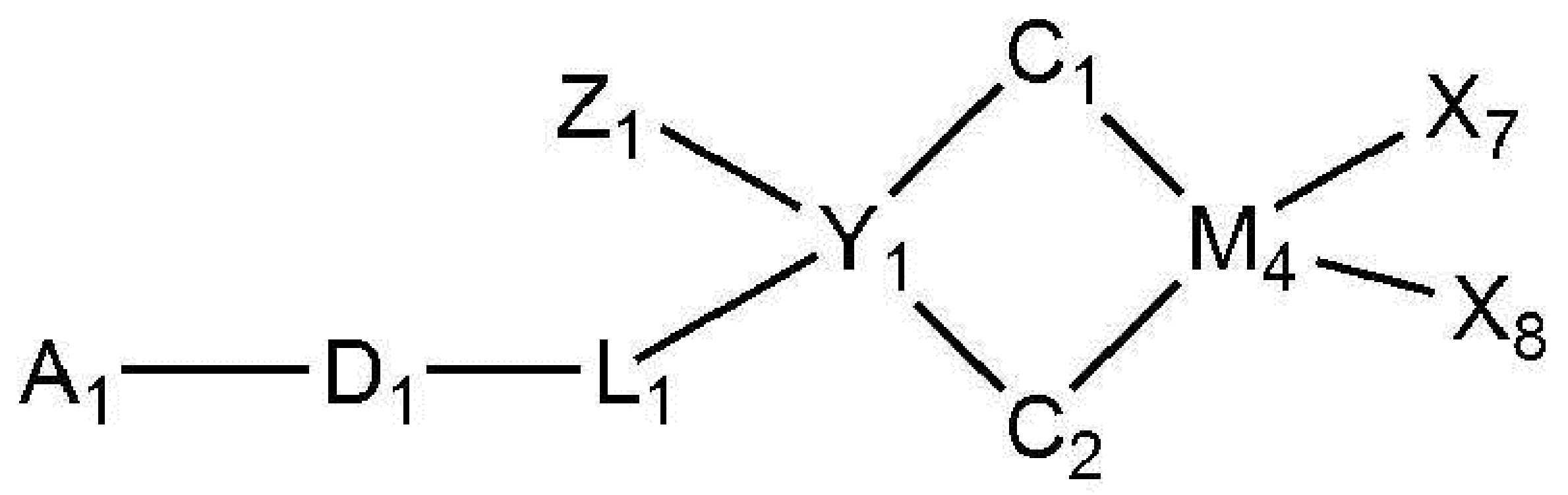
상기 화학식 4에서,In Formula 4,
A1는 수소, 할로겐, C1-20 알킬기, C2-20 알케닐기, C6-20 아릴기, C7-20 알킬아릴기, C7-20 아릴알킬기, C1-20 알콕시기, C2-20 알콕시알킬기, C3-20 헤테로시클로알킬기, 또는 C5-20 헤테로아릴기이고;A 1 is hydrogen, halogen, C 1-20 alkyl group, C 2-20 alkenyl group, C 6-20 aryl group, C 7-20 alkylaryl group, C 7-20 arylalkyl group, C 1-20 alkoxy group, C a 2-20 alkoxyalkyl group, a C 3-20 heterocycloalkyl group, or a C 5-20 heteroaryl group;
D1는 -O-, -S-, -N(R)- 또는 -Si(R)(R')- 이고, 여기서 R 및 R'은 서로 동일하거나 상이하고, 각각 독립적으로 수소, 할로겐, C1-20 알킬기, C2-20 알케닐기, 또는 C6-20 아릴기이고;D 1 is -O-, -S-, -N(R)- or -Si(R)(R')-, wherein R and R' are the same or different from each other, and each independently hydrogen, halogen, C 1-20 alkyl group, C 2-20 alkenyl group, or C 6-20 aryl group;
L1은 C1-10 직쇄 또는 분지쇄 알킬렌기이고;L 1 is a C 1-10 straight-chain or branched alkylene group;
Y1는 탄소, 실리콘 또는 게르마늄이고;Y 1 is carbon, silicon or germanium;
Z1는 수소, 할로겐, C1-20 알킬기, C2-20 알케닐기, C6-20 아릴기, C7-20 알킬아릴기, 또는 C7-20 아릴알킬기이고;Z 1 is hydrogen, halogen, C 1-20 alkyl group, C 2-20 alkenyl group, C 6-20 aryl group, C 7-20 alkylaryl group, or C 7-20 arylalkyl group;
M4은 4족 전이금속이며;M 4 is a Group 4 transition metal;
X7 및 X8는 서로 동일하거나 상이하고 각각 독립적으로, 할로겐, C1-20 알킬, C2-10 알케닐, C3-20 사이클로알킬, C7-40 알킬아릴, C7-40 아릴알킬, C6-20 아릴, C1-20 알킬리덴, 아미노, C2-20 알킬알콕시, 또는 C7-40 아릴알콕시이고;X 7 and X 8 are the same as or different from each other and are each independently halogen, C 1-20 alkyl, C 2-10 alkenyl, C 3-20 cycloalkyl, C 7-40 alkylaryl, C 7-40 arylalkyl , C 6-20 aryl, C 1-20 alkylidene, amino, C 2-20 alkylalkoxy, or C 7-40 arylalkoxy;
C1는 하기 화학식 4a로 표시되고;C 1 is represented by the following Chemical Formula 4a;
[화학식 4a][Formula 4a]

C2는 -NR36-이고,C 2 is -NR 36 -,
R30 내지 R36는 서로 동일하거나 상이하고, 각각 독립적으로 수소, 할로겐, C1-20 알킬기, C2-20 알케닐기, C1-20 알킬실릴기, C1-20 실릴알킬기, C1-20 알콕시실릴기, C1-20 알콕시기, C6-20 아릴기, C7-20 알킬아릴기, 또는 C7-20 아릴알킬기이며, 상기 R30 내지 R35 중 서로 인접하는 2개 이상이 서로 연결되어 치환 또는 비치환된 지방족 또는 방향족 고리를 형성할 수 있고,R 30 to R 36 are the same as or different from each other, and each independently hydrogen, halogen, C 1-20 alkyl group, C 2-20 alkenyl group, C 1-20 alkylsilyl group, C 1-20 silylalkyl group, C 1- 20 alkoxysilyl group, C1-20 alkoxy group, C 6-20 aryl group, C 7-20 alkylaryl group, or C 7-20 arylalkyl group, wherein two or more adjacent to each other among R 30 to R 35 are mutually exclusive may be linked to form a substituted or unsubstituted aliphatic or aromatic ring,
[화학식 5][Formula 5]

상기 화학식 5에서,In
A2는 수소, 할로겐, C1-20 알킬기, C2-20 알케닐기, C6-20 아릴기, C7-20 알킬아릴기, C7-20 아릴알킬기, C1-20 알콕시기, C2-20 알콕시알킬기, C3-20 헤테로시클로알킬기, 또는 C5-20 헤테로아릴기이고;A 2 is hydrogen, halogen, C 1-20 alkyl group, C 2-20 alkenyl group, C 6-20 aryl group, C 7-20 alkylaryl group, C 7-20 arylalkyl group, C 1-20 alkoxy group, C a 2-20 alkoxyalkyl group, a C 3-20 heterocycloalkyl group, or a C 5-20 heteroaryl group;
D2는 -O-, -S-, -N(R)- 또는 -Si(R)(R')- 이고, 여기서 R 및 R'은 서로 동일하거나 상이하고, 각각 독립적으로 수소, 할로겐, C1-20 알킬기, C2-20 알케닐기, 또는 C6-20 아릴기이고;D 2 is -O-, -S-, -N(R)- or -Si(R)(R')-, wherein R and R' are the same or different from each other and are each independently hydrogen, halogen, C 1-20 alkyl group, C 2-20 alkenyl group, or C 6-20 aryl group;
L2은 C1-10 직쇄 또는 분지쇄 알킬렌기이고;L 2 is a C 1-10 straight-chain or branched alkylene group;
Y2는 탄소, 실리콘 또는 게르마늄이고;Y 2 is carbon, silicon or germanium;
Z2는 수소, 할로겐, C1-20 알킬기, C2-20 알케닐기, C6-20 아릴기, C7-20 알킬아릴기, 또는 C7-20 아릴알킬기이고;Z 2 is hydrogen, halogen, C 1-20 alkyl group, C 2-20 alkenyl group, C 6-20 aryl group, C 7-20 alkylaryl group, or C 7-20 arylalkyl group;
M5은 4족 전이금속이며;M 5 is a Group 4 transition metal;
X9 및 X10는 서로 동일하거나 상이하고 각각 독립적으로, 할로겐, C1-20 알킬, C2-10 알케닐, C3-20 사이클로알킬, C7-40 알킬아릴, C7-40 아릴알킬, C6-20 아릴, C1-20 알킬리덴, 아미노, C2-20 알킬알콕시, 또는 C7-40 아릴알콕시이고;X 9 and X 10 are the same as or different from each other and are each independently halogen, C 1-20 alkyl, C 2-10 alkenyl, C 3-20 cycloalkyl, C 7-40 alkylaryl, C 7-40 arylalkyl , C 6-20 aryl, C 1-20 alkylidene, amino, C 2-20 alkylalkoxy, or C 7-40 arylalkoxy;
C3는 하기 화학식 5a로 표시되고;C 3 is represented by the following Chemical Formula 5a;
[화학식 5a][Formula 5a]

C4는 -NR44-이고,C 4 is -NR 44 -,
R40 내지 R44는 서로 동일하거나 상이하고, 각각 독립적으로 수소, 할로겐, C1-20 알킬기, C2-20 알케닐기, C1-20 알킬실릴기, C1-20 실릴알킬기, C1-20 알콕시실릴기, C1-20 알콕시기, C6-20 아릴기, C7-20 알킬아릴기, 또는 C7-20 아릴알킬기이며, 상기 R40 내지 R43 중 서로 인접하는 2개 이상이 서로 연결되어 치환 또는 비치환된 지방족 또는 방향족 고리를 형성할 수 있다.R 40 to R 44 are the same as or different from each other, and each independently hydrogen, halogen, C 1-20 alkyl group, C 2-20 alkenyl group, C 1-20 alkylsilyl group, C 1-20 silylalkyl group, C 1- 20 alkoxysilyl group, C1-20 alkoxy group, C 6-20 aryl group, C 7-20 alkylaryl group, or C 7-20 arylalkyl group, wherein two or more adjacent to each other among R 40 to R 43 are may be linked to form a substituted or unsubstituted aliphatic or aromatic ring.
[화학식 6][Formula 6]

상기 화학식 6에서,In
A3는 수소, 할로겐, C1-20 알킬기, C2-20 알케닐기, C6-20 아릴기, C7-20 알킬아릴기, C7-20 아릴알킬기, C1-20 알콕시기, C2-20 알콕시알킬기, C3-20 헤테로시클로알킬기, 또는 C5-20 헤테로아릴기이고;A 3 is hydrogen, halogen, C 1-20 alkyl group, C 2-20 alkenyl group, C 6-20 aryl group, C 7-20 alkylaryl group, C 7-20 arylalkyl group, C 1-20 alkoxy group, C a 2-20 alkoxyalkyl group, a C 3-20 heterocycloalkyl group, or a C 5-20 heteroaryl group;
D3는 -O-, -S-, -N(R)- 또는 -Si(R)(R')- 이고, 여기서 R 및 R'은 서로 동일하거나 상이하고, 각각 독립적으로 수소, 할로겐, C1-20 알킬기, C2-20 알케닐기, 또는 C6-20 아릴기이고;D 3 is -O-, -S-, -N(R)- or -Si(R)(R')-, wherein R and R' are the same or different from each other and each independently hydrogen, halogen, C 1-20 alkyl group, C 2-20 alkenyl group, or C 6-20 aryl group;
L3은 C1-10 직쇄 또는 분지쇄 알킬렌기이고;L 3 is a C 1-10 straight-chain or branched alkylene group;
Y3는 탄소, 실리콘 또는 게르마늄이고;Y 3 is carbon, silicon or germanium;
Z3는 수소, 할로겐, C1-20 알킬기, C2-20 알케닐기, C6-20 아릴기, C7-20 알킬아릴기, 또는 C7-20 아릴알킬기이고;Z 3 is hydrogen, halogen, C 1-20 alkyl group, C 2-20 alkenyl group, C 6-20 aryl group, C 7-20 alkylaryl group, or C 7-20 arylalkyl group;
M6은 4족 전이금속이며;M 6 is a Group 4 transition metal;
X11 및 X12는 서로 동일하거나 상이하고 각각 독립적으로, 할로겐, C1-20 알킬, C2-10 알케닐, C3-20 사이클로알킬, C7-40 알킬아릴, C7-40 아릴알킬, C6-20 아릴, C1-20 알킬리덴, 아미노, C2-20 알킬알콕시, 또는 C7-40 아릴알콕시이고;X 11 and X 12 are the same as or different from each other and are each independently halogen, C 1-20 alkyl, C 2-10 alkenyl, C 3-20 cycloalkyl, C 7-40 alkylaryl, C 7-40 arylalkyl , C 6-20 aryl, C 1-20 alkylidene, amino, C 2-20 alkylalkoxy, or C 7-40 arylalkoxy;
C5 및 C6는 서로 동일하거나 상이하고, 각각 독립적으로 하기 화학식 6a 내지 화학식 6b 중 하나로 표시되고;C 5 and C 6 are the same as or different from each other, and are each independently represented by one of the following Chemical Formulas 6a to 6b;
[화학식 6a][Formula 6a]

[화학식 6b][Formula 6b]

R50 내지 R58, R60 내지 R68은 서로 동일하거나 상이하고, 각각 독립적으로 수소, 할로겐, C1-20 알킬기, C2-20 알케닐기, C1-20 알킬실릴기, C1-20 실릴알킬기, C1-20 알콕시실릴기, C1-20 알콕시기, C6-20 아릴기, C7-20 알킬아릴기, 또는 C7-20 아릴알킬기이며, 상기 R50 내지 R58, R60 내지 R68 중 서로 인접하는 2개 이상이 서로 연결되어 치환 또는 비치환된 지방족 또는 방향족 고리를 형성할 수 있고,R 50 To R 58 , R 60 To R 68 are the same as or different from each other, and each independently hydrogen, halogen, C 1-20 alkyl group, C 2-20 alkenyl group, C 1-20 alkylsilyl group, C 1-20 Silylalkyl group, C 1-20 alkoxysilyl group, C1-20 alkoxy group, C 6-20 aryl group, C 7-20 alkylaryl group, or C 7-20 arylalkyl group, wherein R 50 to R 58 , R 60 to R 68 , two or more adjacent to each other may be connected to each other to form a substituted or unsubstituted aliphatic or aromatic ring,
[화학식 7][Formula 7]

상기 화학식 7에서,In
M7는 4족 전이 금속이고;M 7 is a Group 4 transition metal;
X13 및 X14는 서로 동일하거나 상이하고 각각 독립적으로, 할로겐, C1-20 알킬, C2-10 알케닐, C3-20 사이클로알킬, C7-40 알킬아릴, C7-40 아릴알킬, C6-20 아릴, C1-20 알킬리덴, 아미노, C2-20 알킬알콕시, 또는 C7-40 아릴알콕시이고;X 13 and X 14 are the same as or different from each other and are each independently halogen, C 1-20 alkyl, C 2-10 alkenyl, C 3-20 cycloalkyl, C 7-40 alkylaryl, C 7-40 arylalkyl , C 6-20 aryl, C 1-20 alkylidene, amino, C 2-20 alkylalkoxy, or C 7-40 arylalkoxy;
R71 내지 R74 중 적어도 어느 하나는 -(CH2)q-ORd (이때, Rd는 C1-6의 직쇄 또는 분지쇄 알킬기이고, q은 2 내지 10의 정수이다)이고, 나머지는 서로 동일하거나 상이하고 각각 독립적으로, 수소, C1-20 알킬, C2-20 알케닐, C3-20 사이클로알킬, C6-20 아릴, C7-20 알킬아릴, 또는 C7-20 아릴알킬이거나, 또는 서로 인접하는 2개 이상이 서로 연결되어 치환 또는 비치환된 지방족 또는 방향족 고리를 형성하고,At least one of R 71 to R 74 is -(CH 2 ) q -OR d (wherein, R d is a C 1-6 straight-chain or branched alkyl group, and q is an integer of 2 to 10), and the rest are same or different from each other and each independently hydrogen, C 1-20 alkyl, C 2-20 alkenyl, C 3-20 cycloalkyl, C 6-20 aryl, C 7-20 alkylaryl, or C 7-20 aryl alkyl, or two or more adjacent to each other are connected to each other to form a substituted or unsubstituted aliphatic or aromatic ring,
R75 및 R76는 서로 동일하거나 상이하고, 각각 독립적으로 수소, C1-20 알킬, C3-20 사이클로알킬, C1-10 알콕시, C2-20 알콕시알킬, C6-20 아릴, C6-10 아릴옥시, C2-20 알케닐, C7-40 알킬아릴, C7-40 아릴알킬, C8-40 아릴알케닐, 또는 C2-10 알키닐이고;R 75 and R 76 are the same as or different from each other and are each independently hydrogen, C 1-20 alkyl, C 3-20 cycloalkyl, C 1-10 alkoxy, C 2-20 alkoxyalkyl, C 6-20 aryl, C 6-10 aryloxy, C 2-20 alkenyl, C 7-40 alkylaryl, C 7-40 arylalkyl, C 8-40 arylalkenyl, or C 2-10 alkynyl;
삭제delete
Q1 및 Q2는 서로 동일하거나 상이하고 각각 독립적으로, 수소, 할로겐, C1-20 알킬, C2-20 알케닐, C3-20 사이클로알킬, C6-20 아릴, C7-20 알킬아릴, 또는 C7-20 아릴알킬이다.Q 1 and Q 2 are the same as or different from each other and are each independently hydrogen, halogen, C 1-20 alkyl, C 2-20 alkenyl, C 3-20 cycloalkyl, C 6-20 aryl, C 7-20 alkyl aryl, or C 7-20 arylalkyl.
상기 C1-20 알킬로는, 직쇄 또는 분지쇄의 알킬을 포함하고, 구체적으로 메틸, 에틸, 프로필, 이소프로필, n-부틸, tert-부틸, 펜틸, 헥실, 헵틸, 옥틸 등을 들 수 있으나, 이에만 한정되는 것은 아니다.The C 1-20 alkyl includes straight-chain or branched alkyl, specifically methyl, ethyl, propyl, isopropyl, n-butyl, tert-butyl, pentyl, hexyl, heptyl, octyl, and the like. , but is not limited thereto.
상기 C2-20 알케닐로는, 직쇄 또는 분지쇄의 알케닐을 포함하고, 구체적으로 알릴, 에테닐, 프로페닐, 부테닐, 펜테닐 등을 들 수 있으나, 이에만 한정되는 것은 아니다.The C 2-20 alkenyl includes straight-chain or branched alkenyl, and specifically includes allyl, ethenyl, propenyl, butenyl, pentenyl, and the like, but is not limited thereto.
상기 C3-20 사이클로알킬로는, 단환 또는 축합환의 사이클로알킬을 포함하고, 구체적으로는 사이클로프로필, 사이클로부틸, 사이클로펜틸, 사이클로헥실, 노보닐 등을 들 수 있으나, 이에만 한정되는 것은 아니다.The C 3-20 cycloalkyl includes monocyclic or condensed cycloalkyl, and specifically includes, but is not limited to, cyclopropyl, cyclobutyl, cyclopentyl, cyclohexyl, norbornyl.
상기 C6-20 아릴로는, 단환 또는 축합환의 아릴을 포함하고, 구체적으로 페닐, 비페닐, 나프틸, 페난트레닐, 플루오레닐 등을 들 수 있으나, 이에만 한정되는 것은 아니다.Examples of the C 6-20 aryl include monocyclic or condensed aryl, and specifically include, but are not limited to, phenyl, biphenyl, naphthyl, phenanthrenyl, fluorenyl, and the like.
상기 C5-20 헤테로아릴로는, 단환 또는 축합환의 헤테로아릴을 포함하고, 카바졸릴, 피리딜, 퀴놀린, 이소퀴놀린, 티오페닐, 퓨라닐, 이미다졸, 옥사졸릴, 티아졸릴, 트리아진, 테트라하이드로피라닐, 테트라하이드로퓨라닐 등을 들 수 있으나, 이에만 한정되는 것은 아니다.The C 5-20 heteroaryl includes monocyclic or condensed cyclic heteroaryl, carbazolyl, pyridyl, quinoline, isoquinoline, thiophenyl, furanyl, imidazole, oxazolyl, thiazolyl, triazine, tetra hydropyranyl, tetrahydrofuranyl, and the like, but is not limited thereto.
상기 C1-20 알콕시로는, 메톡시, 에톡시, 페닐옥시, 시클로헥실옥시 등을 들 수 있으나, 이에만 한정되는 것은 아니다.The C 1-20 alkoxy may include, but is not limited to, methoxy, ethoxy, phenyloxy, cyclohexyloxy, and the like.
상기 4족 전이금속으로는 티타늄, 지르코늄, 하프늄 등을 들 수 있으나, 이에만 한정되는 것은 아니다.Examples of the Group 4 transition metal include, but are not limited to, titanium, zirconium, and hafnium.
본 명세서에서 서로 인접하는 2 개의 치환기가 서로 연결되어 지방족 또는 방향족 고리를 형성한다는 것은 2개의 치환기의 원자(들) 및 상기 2개의 치환기가 결합된 원자가(원자들이) 서로 연결되어 고리를 이루는 것을 의미한다. In the present specification, that two substituents adjacent to each other are connected to each other to form an aliphatic or aromatic ring means that the atom(s) of the two substituents and the valences (atoms) to which the two substituents are bonded are connected to each other to form a ring do.
상술한 치환기들은 목적하는 효과와 동일 내지 유사한 효과를 발휘하는 범위 내에서 임의적으로 하이드록시기; 할로겐; 하이드로카빌기; 하이드로카빌옥시기; 14족 내지 16족의 헤테로 원자들 중 하나 이상의 헤테로 원자를 포함하는 하이드로카빌기 또는 하이드로카빌옥시기; -SiH3; 하이드로카빌(옥시)실릴기; 포스파인기; 포스파이드기; 술포네이트기; 및 술폰기로 이루어진 군에서 선택된 1 이상의 치환기로 치환될 수 있다.The above-mentioned substituents are optionally a hydroxyl group within the range of exhibiting the same or similar effect as the desired effect; halogen; hydrocarbyl group; hydrocarbyloxy group; a hydrocarbyl group or a hydrocarbyloxy group containing at least one hetero atom among the heteroatoms of Groups 14 to 16; -SiH 3 ; hydrocarbyl (oxy) silyl group; phosphine group; phosphide group; sulfonate group; And it may be substituted with one or more substituents selected from the group consisting of a sulfone group.
본 발명의 일 구현예에 따른 폴리에틸렌 공중합체의 제조에 사용가능한 혼성 담지 촉매에 있어서, 상기 화학식1 내지 화학식3으로 이루어진 군에서 선택된 1종 이상을 포함한 제 1 전이 금속 화합물은 주로 낮은 SCB 함량을 가지는 저분자량의 공중합체를 만드는데 기여할 수 있고, 상기 화학식4 내지 화학식 7로 이루어진 군에서 선택된 1종 이상을 포함한 제 2 전이 금속 화합물은 주로 높은 SCB(short chain branch) 함량을 가지는 고분자량의 공중합체를 만드는데 기여할 수 다. In the hybrid supported catalyst usable for preparing the polyethylene copolymer according to an embodiment of the present invention, the first transition metal compound including at least one selected from the group consisting of Chemical Formulas 1 to 3 is mainly having a low SCB content. It can contribute to making a low molecular weight copolymer, and the second transition metal compound including at least one selected from the group consisting of Chemical Formulas 4 to 7 is mainly a high molecular weight copolymer having a high SCB (short chain branch) content. can contribute to making
상기 화학식 1로 표시되는 제1 전이금속 화합물은 주로 낮은 SCB (short chain branch) 함량을 가지는 저분자량의 공중합체를 만드는데 기여하는 것으로, 구체적인 예로 하기 구조식들로 표시되는 화합물을 들 수 있으나, 본 발명이 이에 제한되는 것은 아니다. The first transition metal compound represented by Formula 1 mainly contributes to making a low molecular weight copolymer having a low SCB (short chain branch) content, and specific examples include compounds represented by the following structural formulas, but the present invention This is not limited thereto.


또, 상기 화학식 1에 있어서 상기 사이클로펜타디에닐기의 치환기로서 R1 내지 R4 중 어느 하나, 그리고 R5 내지 R8 중 중 어느 하나에 -(CH2)n-ORa (이때, Ra는 C1-6의 직쇄 또는 분지쇄 알킬기이고, n은 2 내지 10의 정수이다), 보다 구체적으로는 t-부톡시헥실기를 도입함으로써, 공단량체를 이용한 폴리올레핀 제조시 낮은 전환율을 나타내어 공중합도 또는 공단량체 분포가 조절된 저분자량의 폴리올레핀을 제조할 수 있다. In addition, as a substituent of the cyclopentadienyl group in Formula 1, any one of R 1 to R 4 and R 5 to R 8 is -(CH 2 ) n -OR a (in this case, R a is C 1-6 straight-chain or branched alkyl group, n is an integer of 2 to 10), more specifically, by introducing a t-butoxyhexyl group, a low conversion rate is exhibited in the production of polyolefin using a comonomer, so that the degree of copolymerization or A low molecular weight polyolefin with controlled comonomer distribution can be prepared.
보다 구체적으로, 우수한 활성을 가지며, 특히 1-옥텐, 1-부텐 또는 1-헥센의 공중합성을 더욱 향상시킬 수 있는 화학식 1로 표시되는 제1 메탈로센 화합물은 하기 구조식으로 표시되는 화합물 일 수 있다.More specifically, the first metallocene compound represented by Formula 1, which has excellent activity and can further improve the copolymerizability of 1-octene, 1-butene, or 1-hexene, may be a compound represented by the following structural formula there is.

한편, 화학식 2의 제1 전이금속 화합물은, 2개의 인덴(indene)기가 M2X3X4 브릿지(bridge)에 의해 가교된 형태이며, 상기 인덴기의 치환기 R11 내지 R14 중 어느 하나 이상의 치환기는 -(CH2)m-ORb이고, 각각의 인덴기는 R15 및 R16로 치환될 수 있다. Meanwhile, in the first transition metal compound of
이와 같이, 화학식 2의 제1 전이금속 화합물은 인덴(indene) 또는 그 유도체의 치환기에 -(CH2)m-ORb (이때, Rb는 C1-6의 직쇄 또는 분지쇄 알킬기이고, m은 2 내지 10의 정수이다)의 테더(tether)기를 적어도 하나, 보다 구체적으로는 2 이상을 도입함으로써, 공단량체를 이용한 폴리올레핀 제조시 상기 치환기를 포함하지 않는 다른 Cp계 촉매에 비하여 공단량체에 대한 낮은 전환율을 나타내어 공중합도 또는 공단량체 분포가 조절된 중저분자량의 폴리올레핀을 제조할 수 있다.As such, the first transition metal compound of
구체적으로, 상기 화학식 2의 R11 내지 R14 중 어느 하나 이상은 -(CH2)m-ORb (이때, Rb는 C1-6의 직쇄 또는 분지쇄 알킬기이고, m은 2 내지 10의 정수이다)인 특징을 지닌다. 상기 화학식 2에서, -(CH2)m-ORb는 구체적으로 tert-부톡시부틸기(tert-butoxybutyl) 또는 tert-부톡시헥실기(tert-butoxyhexyl) 일 수 있다. 보다 구체적으로는 2개의 인덴기가 각각 -(CH2)m-ORb 기를 포함할 수 있으며, 상기 -(CH2)m-ORb 기는 tert-부톡시부틸기 또는 tert-부톡시헥실기일 수 있다. 이와 같은 구조의 전이금속 화합물이 담체에 담지되었을 때, -(CH2)m-ORb 기가 담지체로 사용되는 실리카 표면의 실라놀기와 밀접한 상호작용을 통해 공유결합을 형성할 수 있어 안정적인 담지 중합이 가능하다. 또한, 상기 작용기는 1-옥텐, 1-부텐, 또는 1-헥센과 같은 알파 올레핀 공단량체의 공중합성에 영향을 미칠 수 있는데, -(CH2)m-ORb 에서 m이 10 이하, 보다 구체적으로는 6 이하, 보다 더 구체적으로는 4 이하의 짧은 알킬 체인을 갖는 경우, 전체 중합 활성은 유지하면서 알파 올레핀 공단량체에 대한 공중합성(comonomer incorporation)이 낮아져 다른 물성의 저하없이 공중합도가 조절된 폴리에틸렌 공중합체의 제조에 유리하다. Specifically, at least one of R 11 to R 14 of
상기 화학식 2로 표시되는 제1 전이금속 화합물로는 예를 들어 하기 구조식들 중 하나로 표시되는 화합물일 수 있으나, 이에만 한정되는 것은 아니다.The first transition metal compound represented by

또한, 상기 화학식 3으로 표시되는 제1 전이금속 화합물은 인덴(indene)기와 사이클로펜타디엔(Cp)가 비가교된 구조로서, 전이금속 주위의 전자적/입체적 환경을 용이하게 제어할 수 있다. 그 결과, 합성되는 폴리에틸렌 공중합체의 화학적 구조, 분자량 분포, 및 기계적 물성 등의 특성을 용이하게 조절할 수 있다. 또 상기 인덴기와 사이클로펜타디엔기 중 적어도 어느 하나의 치환기에 -(CH2)p-ORc (이때, Rc은 탄소수 1 내지 6의 직쇄 또는 분지쇄 알킬기이고, p은 2 내지 10의 정수이다)의 치환기를 도입함으로써, 공단량체를 이용한 폴리에틸렌 공중합체 제조시 상기 치환기를 포함하지 않는 다른 Cp계 촉매에 비하여 공단량체에 대한 낮은 전환율을 나타내어 공중합도 또는 공단량체 분포가 조절된 저분자량의 폴리올레핀을 제조할 수 있다. 또, 상기와 같은 구조의 제1 전이 금속 화합물은 담체에 담지되었을 때, 치환기 중 -(CH2)n-OR기가 담지체로 사용되는 실리카 표면의 실라놀기와 밀접한 상호작용을 통해 공유결합을 형성할 수 있어 안정적인 담지 중합이 가능하다.In addition, the first transition metal compound represented by
상기 화학식 3에 있어서, M3은 4족 전이금속으로서 구체적으로 Ti, Zr 또는 Hf일 수 있으며, 보다 구체적으로는 Ti 또는 Zr일 수 있다.In
또, 상기 화학식 3에 있어서, R20 내지 R29 는 구체적으로 서로 동일하거나 상이하고, 각각 독립적으로 수소, 탄소수 1 내지 20의 알킬기, 탄소수 2 내지 20의 알케닐기, 탄소수 6 내지 20의 아릴기, 탄소수 7 내지 20의 알킬아릴기, 및 탄소수 7 내지 20의 아릴알킬기로 이루어진 군에서 선택되며, 단, R20 내지 R29 중 적어도 하나는 -(CH2)p-ORc (이때, Rc은 탄소수 1 내지 6의 직쇄 또는 분지쇄 알킬기이고, p은 2 내지 10의 정수이다)일 수 있다. 또, 상기 -(CH2)p-ORc 작용기는 1-부텐(1-butene), 또는 1-헥센(1-hexene)과 같은 알파 올레핀 공단량체의 공중합성에 영향을 미칠 수 있는데, p가 4 이하의 짧은 알킬 체인을 갖는 경우, 전체 중합 활성은 유지하면서 알파 올레핀 공단량체에 대한 공중합성(comonomer incorporation)이 낮아져 다른 물성의 저하 없이 공중합도가 조절된 폴리올레핀을 제조할 수 있다. 이에 따라 상기 화학식 3에 있어서 상기 R20 및 R21 중 어느 하나 이상의 치환기, 또는 상기 사이클로펜타디엔(Cp)의 R26 내지 R29 중 어느 하나 이상의 치환기가 -(CH2)p-ORc (이때, Rc은 탄소수 1 내지 6의 직쇄 또는 분지쇄 알킬기이고, p은 2 내지 10의 정수이다)일 수 있고, 보다 더 구체적으로는 R20 및 R21 중 어느 하나 이상의 치환기가 -(CH2)p-ORc (이때, Rc은 탄소수 1 내지 6의 직쇄 또는 분지쇄 알킬기이고, p은 2 내지 10의 정수이다)일 수 있다. In addition, in
또, 상기 화학식 3에 있어서, X5 및 X6는 서로 동일하거나 상이하고 각각 독립적으로, 할로겐, 또는 탄소수 1 내지 20의 알킬기일 수 있다.In addition, in
상기 화학식 3으로 표시되는 제 1 전이 금속 화합물의 구체적인 예로, 하기 구조식들로 표시되는 화합물을 들 수 있으나, 본 발명이 이에 제한되는 것은 아니다.Specific examples of the first transition metal compound represented by

한편, 상기 화학식 4로 표시되는 제2 전이 금속 화합물에 있어서, 상기 화학식 4로 표시되는 전이 금속 화합물은 서로 다른 리간드로 싸이오펜(thiophene)을 포함하는 방향족 고리 화합물과 14족 또는 15족 원자를 포함하는 베이스 화합물을 포함하며, 서로 다른 리간드는 - Y1-에 의하여 가교되어 있고, 서로 다른 리간드 사이에 M4(X7)(X8)가 존재하는 구조를 가진다. 이러한 특정 구조를 가지는 전이 금속 화합물이 담지된 담지 촉매는 폴리에틸렌 공중합체의 중합 반응에 적용되어 높은 활성을 나타내고, 고분자량의 폴리에틸렌 공중합체를 제공할 수 있다. On the other hand, in the second transition metal compound represented by Formula 4, the transition metal compound represented by Formula 4 includes an aromatic ring compound including thiophene as different ligands and a
구체적으로, 상기 화학식 4로 표시되는 전이 금속 화합물의 구조 내에서 C1의 리간드는, 예를 들면, 올레핀 중합 활성과 올레핀의 공중합 특성에 영향을 미칠 수 있다. 구체적으로 C1의 리간드로, 화학식 4a에서의 R30 내지 R35은 서로 동일하거나 상이하며, 각각 독립적으로 수소 또는 탄소수 1 내지 10의 알킬기이고, R30 내지 R35는 서로 동일하거나 상이하며, 보다 구체적으로는 탄소수 1 내지 10의 알킬기 중 어느 하나인 리간드를 포함하는 경우, 폴리에틸렌 공중합 공정에서 우수한 촉매 활성과 함께 높은 공단량체 전환율을 나타내는 촉매를 제공할 수 있다. Specifically, the ligand of C 1 in the structure of the transition metal compound represented by Formula 4 may affect, for example, olefin polymerization activity and copolymerization properties of olefins. Specifically, as a C 1 ligand, R 30 to R 35 in Formula 4a are the same as or different from each other, and each independently represent hydrogen or an alkyl group having 1 to 10 carbon atoms, and R 30 to R 35 are the same as or different from each other, and more Specifically, when a ligand that is any one of an alkyl group having 1 to 10 carbon atoms is included, it is possible to provide a catalyst exhibiting a high comonomer conversion rate with excellent catalytic activity in the polyethylene copolymerization process.
또, 상기 화학식 4로 표시되는 전이 금속 화합물의 구조 내에서 C2 리간드 역시 올레핀의 중합 활성에 영향을 미칠 수 있다. 특히, 화학식 4의 C2가 -NR36-이며, 상기 R36은 탄소수 1 내지 10의 알킬기인 경우 올레핀 중합 공정에서 매우 높은 활성을 나타내는 촉매를 제공할 수 있다. In addition, in the structure of the transition metal compound represented by Chemical Formula 4, the C 2 ligand may also affect the polymerization activity of the olefin. In particular, when C 2 of Formula 4 is -NR 36 - and R 36 is an alkyl group having 1 to 10 carbon atoms, a catalyst exhibiting very high activity in the olefin polymerization process may be provided.
상기 C1의 리간드 및 C2의 리간드는 -Y1-에 의하여 가교되어 우수한 담지 안정성 및 중합 활성을 나타낼 수 있다. 상기 화학식 4의 L1은 C4 내지 C8의 직쇄 또는 분지쇄 알킬렌기인 것이 더욱 바람직하나, 이에만 한정되는 것은 아니다. 또한, 상기 알킬렌기는 C1 내지 C20의 알킬기, C2 내지 C20의 알케닐기, 또는 C6 내지 C20의 아릴기로 치환 또는 비치환될 수 있다.The ligand of C 1 and the ligand of C 2 may be crosslinked by -Y 1 - to exhibit excellent loading stability and polymerization activity. L 1 of Formula 4 is more preferably a C4 to C8 straight-chain or branched alkylene group, but is not limited thereto. In addition, the alkylene group may be unsubstituted or substituted with a C1 to C20 alkyl group, a C2 to C20 alkenyl group, or a C6 to C20 aryl group.
또한, 상기 화학식 4의 Y1는 실리콘인 것이 바람직하나, 이에만 한정되는 것은 아니다.In addition, Y 1 in Formula 4 is preferably silicon, but is not limited thereto.
또한, 상기 화학식 4의 A1는 수소, 메틸기, 에틸기, 프로필기, 이소프로필기, n-부틸기, tert-부틸기, 메톡시메틸기, tert-부톡시메틸기, 1-에톡시에틸기, 1-메틸-1-메톡시에틸기, 테트라하이드로피라닐기, 또는 테트라하이드로퓨라닐기인 것이 바람직하나, 이에만 한정되는 것은 아니다.In addition, A 1 of Formula 4 is hydrogen, methyl group, ethyl group, propyl group, isopropyl group, n-butyl group, tert-butyl group, methoxymethyl group, tert-butoxymethyl group, 1-ethoxyethyl group, 1- It is preferably a methyl-1-methoxyethyl group, a tetrahydropyranyl group, or a tetrahydrofuranyl group, but is not limited thereto.
한편, 가교된 C1의 리간드와 C2의 리간드 사이에는 M4(X7)(X8)가 존재하는데, M4(X7)(X8)는 금속 착물의 보관 안정성에 영향을 미칠 수 있다. 이러한 효과를 더욱 효과적으로 담보하기 위하여 X7 및 X8가 각각 독립적으로 할로겐 중 어느 하나인 전이 금속 화합물을 사용할 수 있다. Meanwhile, M 4 (X 7 )(X 8 ) exists between the cross-linked C 1 ligand and the C 2 ligand, and M 4 (X 7 )(X 8 ) may affect the storage stability of the metal complex. there is. In order to guarantee this effect more effectively, X 7 and a transition metal compound in which X 8 is each independently any one of halogen.
상기 화학식 4로 표시되는 제 2 전이 금속 화합물의 구체적인 예로, 하기 구조식들로 표시되는 화합물을 들 수 있으나, 본 발명이 이에 제한되는 것은 아니다.Specific examples of the second transition metal compound represented by Formula 4 may include compounds represented by the following structural formulas, but the present invention is not limited thereto.

상기 화학식 4로 표시되는 전이 금속 화합물은 공지의 반응들을 응용하여 합성될 수 있으며, 보다 상세한 합성 방법은 실시예를 참고할 수 있다. The transition metal compound represented by Chemical Formula 4 may be synthesized by applying known reactions, and for more detailed synthesis method, refer to Examples.
한편, 상기 화학식 5로 표시되는 제2 전이 금속 화합물에 있어서, 상기 화학식 5로 표시되는 전이 금속 화합물은 서로 다른 리간드로 시클로펜타다이엔을 포함하는 고리 화합물과 14족 또는 15족 원자를 포함하는 베이스 화합물을 포함하며, 서로 다른 리간드는 - Y2-에 의하여 가교되어 있고, 서로 다른 리간드 사이에 M5(X9)(X10)가 존재하는 구조를 가진다. 이러한 특정 구조를 가지는 전이 금속 화합물이 담지된 담지 촉매는 폴리에틸렌 공중합체의 중합 반응에 적용되어 높은 활성을 나타내고, 고분자량의 폴리에틸렌 공중합체를 제공할 수 있다. On the other hand, in the second transition metal compound represented by
구체적으로, 상기 화학식 5로 표시되는 전이 금속 화합물의 구조 내에서 C3의 리간드는, 예를 들면, 올레핀 중합 활성과 올레핀의 공중합 특성에 영향을 미칠 수 있다. 구체적으로 C3의 리간드로, 화학식 5a에서의 R40 내지 R43은 서로 동일하거나 상이하며, 각각 독립적으로 수소 또는 탄소수 1 내지 10의 알킬기이고, R40 내지 R43은 서로 동일하거나 상이하며, 보다 구체적으로는 탄소수 1 내지 10의 알킬기 중 어느 하나인 리간드를 포함하는 경우, 폴리에틸렌 공중합 공정에서 우수한 촉매 활성과 함께 높은 공단량체 전환율을 나타내는 촉매를 제공할 수 있다. Specifically, the ligand of C 3 in the structure of the transition metal compound represented by
또, 상기 화학식 5로 표시되는 전이 금속 화합물의 구조 내에서 C4 리간드 역시 올레핀의 중합 활성에 영향을 미칠 수 있다. 특히, 화학식5의 C4가 -NR44-이며, 상기 R44은 탄소수 1 내지 10의 알킬기인 경우 올레핀 중합 공정에서 매우 높은 활성을 나타내는 촉매를 제공할 수 있다. In addition, in the structure of the transition metal compound represented by
상기 C3의 리간드 및 C4의 리간드는 -Y2-에 의하여 가교되어 우수한 담지 안정성 및 중합 활성을 나타낼 수 있다. 상기 화학식 5의 L2은 C4 내지 C8의 직쇄 또는 분지쇄 알킬렌기인 것이 더욱 바람직하나, 이에만 한정되는 것은 아니다. 또한, 상기 알킬렌기는 C1 내지 C20의 알킬기, C2 내지 C20의 알케닐기, 또는 C6 내지 C20의 아릴기로 치환 또는 비치환될 수 있다.The C 3 ligand and C 4 ligand may be crosslinked by -Y 2 - to exhibit excellent loading stability and polymerization activity. L 2 of
또한, 상기 화학식 5의 Y2는 실리콘인 것이 바람직하나, 이에만 한정되는 것은 아니다.In addition, Y 2 of
또한, 상기 화학식 5의 A2는 수소, 메틸기, 에틸기, 프로필기, 이소프로필기, n-부틸기, tert-부틸기, 메톡시메틸기, tert-부톡시메틸기, 1-에톡시에틸기, 1-메틸-1-메톡시에틸기, 테트라하이드로피라닐기, 또는 테트라하이드로퓨라닐기인 것이 바람직하나, 이에만 한정되는 것은 아니다.In addition, in
한편, 가교된 C3의 리간드와 C4의 리간드 사이에는 M5(X9)(X10)가 존재하는데, M5(X9)(X10)는 금속 착물의 보관 안정성에 영향을 미칠 수 있다. 이러한 효과를 더욱 효과적으로 담보하기 위하여 X9 및 X10가 각각 독립적으로 할로겐 중 어느 하나인 전이 금속 화합물을 사용할 수 있다. Meanwhile, M 5 (X 9 )(X 10 ) exists between the cross-linked C 3 ligand and the C 4 ligand, and M 5 (X 9 )(X 10 ) may affect the storage stability of the metal complex. there is. In order to guarantee this effect more effectively, X 9 and a transition metal compound in which X 10 is each independently any one of halogen.
상기 화학식 5로 표시되는 제 2 전이 금속 화합물의 구체적인 예로, 하기 구조식으로 표시되는 화합물을 들 수 있으나, 본 발명이 이에 제한되는 것은 아니다.Specific examples of the second transition metal compound represented by

상기 화학식 5로 표시되는 전이 금속 화합물은 공지의 반응들을 응용하여 합성될 수 있으며, 보다 상세한 합성 방법은 실시예를 참고할 수 있다. The transition metal compound represented by
한편, 상기 화학식 6에서, 상기 화학식 6a, 및 6b의 R50 내지 R58, R60 내지 R68은 각각 독립적으로 수소, 메틸기, 에틸기, 프로필기, 이소프로필기, n-부틸기, tert-부틸기, 펜틸기, 헥실기, 헵틸기, 옥틸기, 페닐기, 할로겐기, 트리메틸실릴기, 트리에틸실릴기, 트리프로필실릴기, 트리부틸실릴기, 트리이소프로필실릴기, 트리메틸실릴메틸기, 메톡시기, 또는 에톡시기인 것이 더욱 바람직하나, 이에만 한정되는 것은 아니다.Meanwhile, in
상기 화학식 6의 L3은 C4 내지 C8의 직쇄 또는 분지쇄 알킬렌기인 것이 더욱 바람직하나, 이에만 한정되는 것은 아니다. 또한, 상기 알킬렌기는 C1 내지 C20의 알킬기, C2 내지 C20의 알케닐기, 또는 C6 내지 C20의 아릴기로 치환 또는 비치환될 수 있다. L 3 of
또한, 상기 화학식 6의 A3는 수소, 메틸기, 에틸기, 프로필기, 이소프로필기, n-부틸기, tert-부틸기, 메톡시메틸기, tert-부톡시메틸기, 1-에톡시에틸기, 1-메틸-1-메톡시에틸기, 테트라하이드로피라닐기, 또는 테트라하이드로퓨라닐기인 것이 바람직하나, 이에만 한정되는 것은 아니다.In addition, A 3 of
또한, 상기 화학식 6의 Y3는 실리콘인 것이 바람직하나, 이에만 한정되는 것은 아니다.In addition, Y 3 of
상기 화학식 6의 제 2 전이 금속 화합물은 인데노 인돌(indeno indole) 유도체 및/또는 플루오렌(fluorene) 유도체가 브릿지에 의해 가교된 구조를 형성하며, 리간드 구조에 루이스 염기로 작용할 수 있는 비공유 전자쌍을 가짐으로써 담체의 루이스 산 특성을 지니는 표면에 담지되어 담지 시에도 높은 중합 활성을 나타낸다. 또한 전자적으로 풍부한 인데노 인돌기 및/또는 플루오렌기를 포함함에 따라 활성이 높고, 적절한 입체 장애와 리간드의 전자적인 효과로 인해 수소 반응성이 낮을 뿐 아니라 수소가 존재하는 상황에서도 높은 활성이 유지된다. 또한 인데노 인돌 유도체의 질소 원자가 자라나는 고분자 사슬의 beta-hydrogen을 수소결합에 의해 안정화시켜 beta-hydrogen elimination을 억제하여 초고분자량의 폴리에틸렌 공중합체를 중합할 수 있다.The second transition metal compound of
본 발명의 일 실시예에 따르면, 상기 화학식 6a로 표시되는 화합물의 구체적인 예로는 하기 구조식들 중 하나로 표시되는 화합물을 들 수 있으나, 본 발명이 이에만 한정되는 것은 아니다.According to an embodiment of the present invention, specific examples of the compound represented by Formula 6a include a compound represented by one of the following structural formulas, but the present invention is not limited thereto.


본 발명의 일 실시예에 따르면, 상기 화학식 6b로 표시되는 화합물의 구체적인 예로는 하기 구조식 들 중 하나로 표시되는 화합물을 들 수 있으나, 본 발명이 이에만 한정되는 것은 아니다.According to an embodiment of the present invention, specific examples of the compound represented by Formula 6b may include a compound represented by one of the following structural formulas, but the present invention is not limited thereto.


본 발명의 일 실시예에 따르면, 상기 화학식 6으로 표시되는 제 2 전이금속 화합물의 구체적인 예로는 하기 구조식들 중 하나로 표시되는 화합물을 들 수 있으나, 이에만 한정되는 것은 아니다.According to an embodiment of the present invention, a specific example of the second transition metal compound represented by


상기 화학식 6의 제 2 전이금속 화합물은 활성이 우수하고 고분자량의 폴리에틸렌 공중합체를 중합할 수 있다. 특히, 담체에 담지하여 사용할 경우에도 높은 중합 활성을 나타내어, 초고분자량의 폴리에틸렌 공중합체를 제조할 수 있다.The second transition metal compound of
또한, 고분자량과 동시에 넓은 분자량 분포를 갖는 폴리에틸렌 공중합체를 제조하기 위해 수소를 포함하여 중합 반응을 진행하는 경우에도, 본 발명에 따른 화학식 6의 제 2 전이금속 화합물은 낮은 수소 반응성을 나타내어 여전히 높은 활성으로 초고분자량의 폴리에틸렌 공중합체의 중합이 가능하다. 따라서, 다른 특성을 갖는 촉매와 혼성으로 사용하는 경우에도 활성의 저하없이 고분자량의 특성을 만족시키는 폴리에틸렌 공중합체를 제조할 수 있어, 고분자의 폴리에틸렌 공중합체를 포함하면서 넓은 분자량 분포를 갖는 폴리에틸렌 공중합체를 용이하게 제조할 수 있다. In addition, even when a polymerization reaction is performed including hydrogen to prepare a polyethylene copolymer having a high molecular weight and a wide molecular weight distribution at the same time, the second transition metal compound of
상기 화학식 6의 제 2 전이금속 화합물은 인데노인돌 유도체 및/또는 플루오렌 유도체를 브릿지 화합물로 연결하여 리간드 화합물로 제조한 다음, 금속 전구체 화합물을 투입하여 메탈레이션(metallation)을 수행함으로써 수득될 수 있다. 상기 제 2 전이금속 화합물의 제조방법은 후술하는 실시예에 구체화하여 설명한다.The second transition metal compound of
한편, 화학식 7의 제 2 전이금속 화합물은, 2개의 인덴(indene)기가 SiQ1Q2 브릿지(bridge)에 의해 가교된 형태이며, 상기 인덴기의 치환기 R71 내지 R74 중 어느 하나 이상의 치환기는 -(CH2)q-ORd(이때, Rd는 C1-6의 직쇄 또는 분지쇄 알킬기이고, q은 2 내지 10의 정수이다)이고, 각각의 인덴기는 R75 및 R76로 치환될 수 있다. On the other hand, in the second transition metal compound of
이와 같이, 화학식 7의 제 2 전이금속 화합물은 인덴(indene) 또는 그 유도체의 치환기에 -(CH2)q-ORd (이때, Rd는 C1-6의 직쇄 또는 분지쇄 알킬기이고, q은 2 내지 10의 정수이다)의 테더(tether)기를 적어도 하나, 보다 구체적으로는 2 이상을 도입하고, 개의 인덴(indene)기가 SiQ1Q2 브릿지(bridge)에 의해 가교함으로써, 고분자량의 폴리올레핀을 제조할 수 있다.As such, the second transition metal compound of
구체적으로, 상기 화학식 7의 R71 내지 R74 중 어느 하나 이상은 -(CH2)q-ORd (이때, Rd는 C1-6의 직쇄 또는 분지쇄 알킬기이고, q은 2 내지 10의 정수이다)인 특징을 지닌다. 상기 화학식 7에서, -(CH2)q-ORd는 구체적으로 tert-부톡시부틸기(tert-butoxybutyl) 또는 tert-부톡시헥실기(tert-butoxyhexyl) 일 수 있다. 보다 구체적으로는 2개의 인덴기가 각각 -(CH2)q-ORd 기를 포함할 수 있으며, 상기 -(CH2)q-ORd 기는 tert-부톡시부틸기 또는 tert-부톡시헥실기일 수 있다. 이와 같은 구조의 전이금속 화합물이 담체에 담지되었을 때, -(CH2)q-ORd 기가 담지체로 사용되는 실리카 표면의 실라놀기와 밀접한 상호작용을 통해 공유결합을 형성할 수 있어 안정적인 담지 중합이 가능하다. 또한, 상기 작용기는 1-옥텐, 1-부텐, 또는 1-헥센과 같은 알파 올레핀 공단량체의 공중합성에 영향을 미칠 수 있는데, -(CH2)q-ORd 에서 q가 10 이하, 보다 구체적으로는 6 이하, 보다 더 구체적으로는 4 이하의 짧은 알킬 체인을 갖는 경우, 전체 중합 활성은 유지하면서 알파 올레핀 공단량체에 대한 공중합성(comonomer incorporation)이 낮아져 다른 물성의 저하없이 공중합도가 조절된 폴리에틸렌 공중합체의 제조에 유리하다. Specifically, at least one of R 71 to R 74 in
상기 화학식 7로 표시되는 제2 전이금속 화합물로는 예를 들어 하기 구조식들 중 하나로 표시되는 화합물일 수 있으나, 이에만 한정되는 것은 아니다.The second transition metal compound represented by

본 발명에서 사용되는 혼성 담지 촉매는 상기 화학식2 및 화학식3으로 이루어진 군에서 선택된 1종 이상을 포함한 제 1 전이 금속 화합물, 및 상기 화학식4 내지 화학식 7로 이루어진 군에서 선택된 1종 이상을 포함한 제 2 전이 금속 화합물을 포함한 제1 혼합물 또는 상기 화학식1을 포함한 제 1 전이 금속 화합물, 및 하기 화학식4, 화학식6, 및 화학식 7로 이루어진 군에서 선택된 1종 이상을 포함한 제 2 전이 금속 화합물을 포함한 제2혼합물을 포함한 전이금속 혼합물을 조촉매 화합물과 함께 담체에 담지한 것일 수 있다. 상기 전이금속 혼합물은 상기 화학식2 및 화학식3으로 이루어진 군에서 선택된 1종 이상을 포함한 제 1 전이 금속 화합물, 및 상기 화학식4 내지 화학식 7로 이루어진 군에서 선택된 1종 이상을 포함한 제 2 전이 금속 화합물을 포함한 제1 혼합물 또는 상기 화학식1을 포함한 제 1 전이 금속 화합물, 및 하기 화학식4, 화학식6, 및 화학식 7로 이루어진 군에서 선택된 1종 이상을 포함한 제 2 전이 금속 화합물을 포함한 제2혼합물 중 어느 하나를 포함할 수 있다. The supported hybrid catalyst used in the present invention includes a first transition metal compound including at least one selected from the group consisting of
즉, 상기 제 1 혼합물에 포함된 제1전이금속 화합물로는 상기 화학식2 1종, 화학식3 1종, 또는 상기 화학식2 및 화학식3 2종을 사용할 수 있다. 또한, 상기 제 1 혼합물에 포함된 제2전이금속 화합물로는 상기 화학식4 1종, 화학식5 1종. 화학식6 1종, 화학식7 1종, 상기 화학식4 및 화학식5 2종, 상기 화학식4 및 화학식6 2종, 상기 화학식4 및 화학식7 2종, 상기 화학식5 및 화학식6 2종, 상기 화학식5 및 화학식7 2종, 상기 화학식6 및 화학식7 2종, 상기 화학식4, 화학식5 및 화학식6 3종, 상기 화학식4, 화학식5 및 화학식7 3종, 상기 화학식4, 화학식6 및 화학식7 3종, 상기 화학식5, 화학식6 및 화학식7 3종, 또는 상기 화학식4, 화학식5, 화학식6 및 화학식7 3종의 제2전이금속 화합물을 사용할 수 있다.That is, as the first transition metal compound included in the first mixture, one kind of
한편, 상기 제 2 혼합물에 포함된 제1전이금속 화합물로는 상기 화학식1 1종을 사용할 수 있다. 또한, 상기 제 2 혼합물에 포함된 제2전이금속 화합물로는 상기 화학식4 1종, 화학식6 1종, 화학식7 1종, 상기 화학식4 및 화학식6 2종, 상기 화학식4 및 화학식7 2종, 상기 화학식6 및 화학식7 2종, 상기 화학식4, 화학식6 및 화학식7 3종의 제2전이금속 화합물을 사용할 수 있다.Meanwhile, as the first transition metal compound included in the second mixture, one type of Formula 1 may be used. In addition, as the second transition metal compound included in the second mixture, one type of Formula 4, 1 type of
바람직하게는 상기 제 1 전이 금속 화합물로는 상기 화학식1 1종, 상기 제 2 전이 금속 화합물로는 상기 화학식4 1종을 사용할 수 있다. 또한, 상기 제 1 전이 금속 화합물로는 상기 화학식2 1종, 상기 제 2 전이 금속 화합물로는 상기 화학식5 1종을 사용할 수 있다. 또한, 상기 제 1 전이 금속 화합물로는 상기 화학식3 1종, 상기 제 2 전이 금속 화합물로는 상기 화학식5 1종을 사용할 수 있다. 또한, 상기 제 1 전이 금속 화합물로는 상기 화학식1 1종, 상기 제 2 전이 금속 화합물로는 상기 화학식6 및 화학식7 2종을 사용할 수 있다. Preferably, one type of Formula 1 may be used as the first transition metal compound, and one type of Formula 4 may be used as the second transition metal compound. In addition, one type of
상기 전이금속 혼합물에서, 상기 제 2 전이 금속 화합물 100 중량부를 기준으로, 제 1 전이 금속 화합물은 1 중량부 내지 80 중량부, 또는 5 중량부 내지 50 중량부로 포함될 수 있다. 상기 혼합비로 포함됨으로써, 우수한 가공성 및 장기 내구성을 갖는 폴리에틸렌 공중합체의 제조에 보다 용이할 수 있다.In the transition metal mixture, based on 100 parts by weight of the second transition metal compound, the first transition metal compound may be included in an amount of 1 part by weight to 80 parts by weight, or 5 parts by weight to 50 parts by weight. By being included in the above mixing ratio, it may be easier to prepare a polyethylene copolymer having excellent processability and long-term durability.
상기 제 2 전이 금속 화합물이 화학식6 및 화학식7 2종을 포함하는 경우, 상기 화학식 6의 화합물 100 중량부를 기준으로, 화학식7의 화합물 10 중량부 내지 80 중량부, 또는 40 중량부 내지 60 중량부로 포함될 수 있다.When the second transition metal compound includes two types of
본 발명에 따른 혼성 담지 촉매에 있어서, 상기 담체로는 표면에 하이드록시기를 함유하는 담체를 사용할 수 있으며, 바람직하게는 건조되어 표면에 수분이 제거된, 반응성이 큰 하이드록시기와 실록산기를 가지고 있는 담체를 사용할 수 있다.In the hybrid supported catalyst according to the present invention, a carrier containing a hydroxyl group on the surface may be used as the carrier, and preferably a carrier having a highly reactive hydroxyl group and a siloxane group from which moisture has been removed from the surface by drying. can be used
예컨대, 고온에서 건조된 실리카, 실리카-알루미나, 및 실리카-마그네시아 등이 사용될 수 있고, 이들은 통상적으로 Na2O, K2CO3, BaSO4, 및 Mg(NO3)2 등의 산화물, 탄산염, 황산염, 및 질산염 성분을 함유할 수 있다.For example, silica dried at high temperature, silica-alumina, and silica-magnesia may be used, and these are typically oxides, carbonates, such as Na 2 O, K 2 CO 3 , BaSO 4 , and Mg(NO 3 ) 2 ; It may contain sulfate, and nitrate components.
상기 담체의 건조 온도는 200 ℃ 내지 800℃가 바람직하고, 300℃ 내지 600℃가 더욱 바람직하며, 300 ℃ 내지 400℃가 가장 바람직하다. 상기 담체의 건조 온도가 200 ℃미만인 경우 수분이 너무 많아서 표면의 수분과 조촉매가 반응하게 되고, 800℃를 초과하는 경우에는 담체 표면의 기공들이 합쳐지면서 표면적이 줄어들며, 또한 표면에 하이드록시기가 많이 없어지고 실록산기만 남게 되어 조촉매와의 반응자리가 감소하기 때문에 바람직하지 않다.The drying temperature of the carrier is preferably 200 °C to 800 °C, more preferably 300 °C to 600 °C, and most preferably 300 °C to 400 °C. When the drying temperature of the carrier is less than 200 ℃, there is too much moisture and the surface moisture and the cocatalyst react. It is undesirable because it disappears and only the siloxane remains, and the reaction site with the co-catalyst decreases.
상기 담체 표면의 하이드록시기 양은 0.1 mmol/g 내지 10 mmol/g이 바람직하며, 0.5 mmol/g 내지 5 mmol/g일 때 더욱 바람직하다. 상기 담체 표면에 있는 하이드록시기의 양은 담체의 제조방법 및 조건 또는 건조 조건, 예컨대 온도, 시간, 진공 또는 스프레이 건조 등에 의해 조절할 수 있다. 상기 하이드록시기의 양이 0.1 mmol/g 미만이면 조촉매와의 반응자리가 적고, 10 mmol/g을 초과하면 담체 입자 표면에 존재하는 하이드록시기 이외에 수분에서 기인한 것일 가능성이 있기 때문에 바람직하지 않다.The amount of hydroxyl groups on the surface of the carrier is preferably 0.1 mmol/g to 10 mmol/g, more preferably 0.5 mmol/g to 5 mmol/g. The amount of hydroxyl groups on the surface of the carrier can be controlled by the method and conditions or drying conditions of the carrier, such as temperature, time, vacuum or spray drying, and the like. If the amount of the hydroxyl group is less than 0.1 mmol/g, there are few reaction sites with the cocatalyst, and if it exceeds 10 mmol/g, it is not preferable because it may be caused by moisture other than the hydroxyl group present on the surface of the carrier particle. not.
상기 혼성 담지 촉매는 제조되는 폴리에틸렌 공중합체, 구체적으로는 에틸렌/1-헥센 또는 에틸렌/1-부텐 공중합체에서 LCB(Long Chain Branch)의 생성을 유도할 수 있다.The hybrid supported catalyst may induce the production of a long chain branch (LCB) in the prepared polyethylene copolymer, specifically, ethylene/1-hexene or ethylene/1-butene copolymer.
또, 본 발명에 따른 혼성 담지 촉매에 있어서, 상기 전이금속 화합물을 활성화하기 위하여 담체에 함께 담지되는 조촉매로는 13족 금속을 포함하는 유기 금속 화합물로서, 일반적인 메탈로센 촉매 하에 올레핀을 중합할 때 사용될 수 있는 것이라면 특별히 한정되는 것은 아니다.In addition, in the hybrid supported catalyst according to the present invention, the cocatalyst supported together on the support to activate the transition metal compound is an organometallic compound containing a Group 13 metal, which polymerizes olefins under a general metallocene catalyst. It is not particularly limited as long as it can be used when.
구체적으로, 상기 조촉매 화합물은 하기 화학식 8의 알루미늄 함유 제1 조촉매, 및 하기 화학식 9의 보레이트계 제2 조촉매 중 하나 이상을 포함할 수 있다.Specifically, the cocatalyst compound may include at least one of an aluminum-containing first cocatalyst of the following Chemical Formula 8 and a borate-based second cocatalyst of the following Chemical Formula 9.
[화학식 8][Formula 8]
-[Al(R77)-O-]k--[Al(R 77 )-O-] k -
화학식 8에서, R77은 각각 독립적으로 할로겐, 할로겐 치환 또는 비치환된 탄소수 1 내지 20의 하이드로카빌기이고, k는 2 이상의 정수이고, In Formula 8, R 77 is each independently a halogen, halogen-substituted or unsubstituted C 1 to
[화학식 9][Formula 9]
T+[BG4]- T + [BG 4 ] -
화학식 8에서, T+은 +1가의 다원자 이온이고, B는 +3 산화 상태의 붕소이고, G는 각각 독립적으로 하이드라이드, 디알킬아미도, 할라이드, 알콕사이드, 아릴옥사이드, 하이드로카빌, 할로카빌 및 할로-치환된 하이드로카빌로 이루어진 군에서 선택되고, 상기 G는 20개 이하의 탄소를 가지나, 단 하나 이하의 위치에서 G는 할라이드이다.In Formula 8, T + is a +1 valent polyatomic ion, B is boron in +3 oxidation state, and G is each independently a hydride, dialkylamido, halide, alkoxide, aryloxide, hydrocarbyl, or halocarbyl. and halo-substituted hydrocarbyl, wherein G has no more than 20 carbons, but in no more than one position, G is a halide.
이러한 제1 및 제2 조촉매의 사용에 의해, 최종 제조된 폴리올레핀의 다분산지수가 보다 균일하게 되면서, 중합 활성이 향상될 수 있다. By using these first and second cocatalysts, the polydispersity index of the finally prepared polyolefin becomes more uniform, and polymerization activity can be improved.
상기 화학식 8의 제1 조촉매는 선형, 원형 또는 망상형으로 반복단위가 결합된 알킬알루미녹산계 화합물로 될 수 있고, 이러한 제1 조촉매의 구체적인 예로는, 메틸알루미녹산(MAO), 에틸알루미녹산, 이소부틸알루미녹산 또는 부틸알루미녹산 등을 들 수 있다. The first cocatalyst of Chemical Formula 8 may be an alkylaluminoxane-based compound to which repeating units are bound in a linear, circular or network form, and specific examples of the first cocatalyst include methylaluminoxane (MAO), ethylalumin oxane, isobutylaluminoxane, or butylaluminoxane; and the like.
또한, 상기 화학식 9의 제2 조촉매는 삼치환된 암모늄염, 또는 디알킬 암모늄염, 삼치환된 포스포늄염 형태의 보레이트계 화합물로 될 수 있다. 이러한 제2 조촉매의 구체적인 예로는, 트리메탈암모늄 테트라페닐보레이트, 메틸디옥타데실암모늄 테트라페닐보레이트, 트리에틸암모늄 테트라페닐보레이트, 트리프로필암모늄 테트라페닐보레이트, 트리(n-부틸)암모늄 테트라페닐보레이트, 메틸테트라데사이클로옥타데실암모늄 테트라페닐보레이트, N,N-디메틸아닐늄 테트라페닐보레이트, N,N-디에틸아닐늄 테트라페닐보레이트, N,N-디메틸(2,4,6-트리메틸아닐늄)테트라페닐보레이트, 트리메틸암모늄 테트라키스(펜타플로오로페닐)보레이트, 메틸디테트라데실암모늄 테트라키스(펜타페닐)보레이트, 메틸디옥타데실암모늄 테트라키스(펜타플루오로페닐)보레이트, 트리에틸암모늄, 테트라키스(펜타플루오로페닐)보레이트, 트리프로필암모늄테트라키스(펜타프루오로페닐)보레이트, 트리(n-부틸)암모늄 테트라키스(펜타플루오로페닐)보레이트, 트리(2급-부틸)암모늄테트라키스(펜타플루오로페닐)보레이트, N,N-디메틸아닐늄 테트라키스(펜타플루오로페닐)보레이트, N,N-디에틸아닐늄테트라키스(펜타플루오로페닐)보레이트, N,N-디메틸(2,4,6-트리메틸아닐늄)테트라키스(펜타플루오로페닐)보레이트, 트리메틸암모늄테트라키스(2,3,4,6-테트라플루오로페닐)보레이트, 트리에틸암모늄 테트라키스(2,3,4,6-테트라플루오로페닐)보레이트, 트리프로필암모늄 테트라키스(2,3,4,6-테트라플루오로페닐)보레이트, 트리(n-부틸)암모늄 테트라키스(2,3,4,6-,테트라플루오로페닐)보레이트, 디메틸(t-부틸)암모늄 테트라키스(2,3,4,6-테트라플루오로페닐)보레이트, N,N-디메틸아닐늄 테트라키스(2,3,4,6-테트라플루오로페닐)보레이트, N,N-디에틸아닐늄 테트라키스(2,3,4,6-테트라플루오로페닐)보레이트 또는 N,N-디메틸-(2,4,6-트리메틸아닐늄)테트라키스-(2,3,4,6-테트라플루오로페닐)보레이트 등의 삼치환된 암모늄염 형태의 보레이트계 화합물; 디옥타데실암모늄 테트라키스(펜타플루오로페닐)보레이트, 디테트라데실암모늄 테트라키스(펜타플루오로페닐)보레이트 또는 디사이클로헥실암모늄 테트라키스(펜타플루오로페닐)보레이트 등의 디알킬암모늄염 형태의 보레이트계 화합물; 또는 트리페닐포스포늄 테트라키스(펜타플루오로페닐)보레이트, 메틸디옥타데실포스포늄 테트라키스(펜타플루오로페닐)보레이트 또는 트리(2,6-, 디메틸페닐)포스포늄 테트라키스(펜타플루오로페닐)보레이트 등의 삼치환된 포스포늄염 형태의 보레이트계 화합물 등을 들 수 있다.In addition, the second cocatalyst of Formula 9 may be a borate compound in the form of a trisubstituted ammonium salt, a dialkyl ammonium salt, or a trisubstituted phosphonium salt. Specific examples of the second cocatalyst include trimetalammonium tetraphenylborate, methyldioctadecylammonium tetraphenylborate, triethylammonium tetraphenylborate, tripropylammonium tetraphenylborate, and tri(n-butyl)ammonium tetraphenylborate. , Methyltetradecyclooctadecylammonium tetraphenylborate, N,N-dimethylaninium tetraphenylborate, N,N-diethylaninium tetraphenylborate, N,N-dimethyl (2,4,6-trimethylanilium ) tetraphenylborate, trimethylammonium tetrakis(pentafluorophenyl)borate, methylditetradecylammonium tetrakis(pentaphenyl)borate, methyldioctadecylammonium tetrakis(pentafluorophenyl)borate, triethylammonium, tetra Kis(pentafluorophenyl)borate, tripropylammoniumtetrakis(pentafluorophenyl)borate, tri(n-butyl)ammonium tetrakis(pentafluorophenyl)borate, tri(sec-butyl)ammonium tetrakis (Pentafluorophenyl)borate, N,N-dimethylaninium tetrakis(pentafluorophenyl)borate, N,N-diethylaniliumtetrakis(pentafluorophenyl)borate, N,N-dimethyl (2 ,4,6-trimethylanilium)tetrakis(pentafluorophenyl)borate, trimethylammonium tetrakis(2,3,4,6-tetrafluorophenyl)borate, triethylammonium tetrakis(2,3,4 ,6-tetrafluorophenyl)borate, tripropylammonium tetrakis(2,3,4,6-tetrafluorophenyl)borate, tri(n-butyl)ammonium tetrakis(2,3,4,6-, Tetrafluorophenyl) borate, dimethyl (t-butyl) ammonium tetrakis (2,3,4,6-tetrafluorophenyl) borate, N,N-dimethylaninium tetrakis (2,3,4,6- Tetrafluorophenyl)borate, N,N-diethylaninium tetrakis(2,3,4,6-tetrafluorophenyl)borate or N,N-dimethyl-(2,4,6-trimethylaninium) borate compounds in the form of trisubstituted ammonium salts such as tetrakis-(2,3,4,6-tetrafluorophenyl)borate; Borates in the form of dialkylammonium salts such as dioctadecylammonium tetrakis(pentafluorophenyl)borate, ditetradecylammonium tetrakis(pentafluorophenyl)borate, or dicyclohexylammonium tetrakis(pentafluorophenyl)borate compound; or triphenylphosphonium tetrakis(pentafluorophenyl)borate, methyldioctadecylphosphonium tetrakis(pentafluorophenyl)borate or tri(2,6-, dimethylphenyl)phosphonium tetrakis(pentafluorophenyl ) borate-based compounds in the form of trisubstituted phosphonium salts such as borate.
이러한 혼성 담지 촉매는, 예를 들면, 담체에 조촉매를 담지시키는 단계 및 조촉매 담지 담체에 제1 및 제2의 전이금속 화합물들을 순차로 담지시키는 단계로 제조될 수 있다. 이때 상기 전이금속 화합물들의 담지 순서는 특별히 한정되지는 않으나, 분자 구조가 작은 제1 전이금속 화합물, 그리고 제2 전이금속 화합물의 순서대로 담지할 수 있다. Such a hybrid supported catalyst may be prepared by, for example, supporting the promoter on a support and sequentially loading the first and second transition metal compounds on the support supported on the promoter. At this time, the supporting order of the transition metal compounds is not particularly limited, but may be supported in the order of the first transition metal compound having a small molecular structure and the second transition metal compound.
또, 담체에 조촉매를 담지시키는 단계에서는, 고온에서 건조된 담체에 조촉매를 첨가하고, 이를 약 20 ℃ 내지 120 ℃의 온도에서 교반하여 조촉매 담지 담체를 제조할 수 있다. In addition, in the step of supporting the promoter on the support, the promoter can be prepared by adding the promoter to the carrier dried at a high temperature and stirring it at a temperature of about 20°C to 120°C.
그리고, 조촉매 담지 담체에 촉매 전구체를 담지시키는 단계에서는 상기 담체에 조촉매를 담지시키는 단계에서 얻어진 조촉매 담지 담체에 전이 금속 화합물을 첨가하고, 다시 이를 약 20 ℃ 내지 120 ℃의 온도에서 교반하여 담지 촉매를 제조할 수 있다. And, in the step of supporting the catalyst precursor on the promoter supported carrier, the transition metal compound is added to the promoter supported carrier obtained in the step of supporting the promoter on the support, and again stirred at a temperature of about 20 ° C. to 120 ° C. A supported catalyst can be prepared.
상기 조촉매 담지 담체에 촉매 전구체를 담지시키는 단계에서는 조촉매 담지 담체에 전이 금속 화합물을 첨가하여 교반한 후, 조촉매를 추가로 첨가하여 담지 촉매를 제조할 수 있다. In the step of supporting the catalyst precursor on the promoter-supported support, a supported catalyst may be prepared by adding a transition metal compound to the promoter-supported support and stirring, and then adding a promoter.
발명의 일 구현에에 따른 상기 혼성 담지 촉매에 있어서 사용되는 담체, 조촉매, 조촉매 담지 담체 및 전이 금속 화합물의 함량은 목적하는 담지 촉매의 물성 또는 효과에 따라 적절하게 조절될 수 있다. The content of the carrier, the cocatalyst, the promoter supported carrier and the transition metal compound used in the hybrid supported catalyst according to an embodiment of the present invention may be appropriately adjusted according to the desired physical properties or effects of the supported catalyst.
또, 발명 일 구현예에 따른 상기 혼성 담지 촉매에 있어서, 상기 제1 및 제2 전이금속 화합물을 포함하는 전이금속 혼합물 대 담체의 중량비는 1:10 내지 1:1,000, 보다 구체적으로는 1:10 내지 1:500일 수 있다. 상기한 범위의 중랑비로 담체 및 전이금속 혼합물을 포함할 때, 최적의 형상을 나타낼 수 있다. In addition, in the hybrid supported catalyst according to an embodiment of the invention, the weight ratio of the transition metal mixture comprising the first and second transition metal compounds to the carrier is 1:10 to 1:1,000, more specifically 1:10 to 1:500. When the mixture of the carrier and the transition metal is included in the above-mentioned range, the optimum shape may be exhibited.
또, 상기 혼성 담지 촉매가 조촉매를 더 포함할 경우, 조촉매 대 담체의 중량비는 1:1 내지 1:100, 보다 구체적으로는 1:1 내지 1:50일 수 있다. 상기 중량비로 조촉매 및 담체를 포함할 때, 활성 및 고분자 미세구조를 최적화할 수 있다.In addition, when the hybrid supported catalyst further includes a co-catalyst, the weight ratio of the co-catalyst to the carrier may be 1:1 to 1:100, more specifically 1:1 to 1:50. When the cocatalyst and the carrier are included in the above weight ratio, the activity and the microstructure of the polymer can be optimized.
상기 혼성 담지 촉매 제조시에 반응 용매로는 펜탄, 헥산, 헵탄 등과 같은 탄화수소 용매, 또는 벤젠, 톨루엔 등과 같은 방향족 용매가 사용될 수 있다.In preparing the hybrid supported catalyst, as the reaction solvent, a hydrocarbon solvent such as pentane, hexane, heptane, or the like, or an aromatic solvent such as benzene or toluene may be used.
상기 담지 촉매의 구체적인 제조 방법은 후술하는 실시예를 참고할 수 있다. 그러나, 담지 촉매의 제조 방법이 본 명세서에 기술한 내용에 한정되는 것은 아니며, 상기 제조 방법은 본 발명이 속한 기술분야에서 통상적으로 채용하는 단계를 추가로 채용할 수 있고, 상기 제조 방법의 단계(들)는 통상적으로 변경 가능한 단계(들)에 의하여 변경될 수 있다.For a specific method of preparing the supported catalyst, reference may be made to Examples to be described later. However, the preparation method of the supported catalyst is not limited to the contents described herein, and the preparation method may additionally employ a step commonly employed in the technical field to which the present invention belongs, and the step of the preparation method ( ) may be modified by means of a changeable step(s).
한편, 본 발명에 따른 폴리에틸렌 공중합체는 상술한 혼성 담지 촉매의 존재 하에서, 에틸렌 단량체 및 알파올레핀 단량체를 중합시킴으로써 제조될 수 있다. Meanwhile, the polyethylene copolymer according to the present invention may be prepared by polymerizing an ethylene monomer and an alpha olefin monomer in the presence of the above-described hybrid supported catalyst.
상기 단량체의 중합 반응을 위하여, 연속식 용액 중합 공정, 벌크 중합 공정, 현탁 중합 공정, 슬러리 중합 공정 또는 유화 중합 공정 등 올레핀 단량체의 중합 반응으로 알려진 다양한 중합 공정을 채용할 수 있다.For the polymerization reaction of the monomer, various polymerization processes known as polymerization of olefin monomers, such as a continuous solution polymerization process, a bulk polymerization process, a suspension polymerization process, a slurry polymerization process, or an emulsion polymerization process, may be employed.
그리고, 상기 중합 온도는 25 ℃ 내지 500 ℃, 바람직하게는 25 ℃ 내지 200 ℃, 보다 바람직하게는 50 ℃ 내지 150 ℃일 수 있다. 또한, 중합 압력은 1 bar 내지 100 bar, 바람직하게는 1 bar 내지 50 bar, 보다 바람직하게는 5 bar 내지 30 bar 일 수 있다.And, the polymerization temperature may be 25 °C to 500 °C, preferably 25 °C to 200 °C, more preferably 50 °C to 150 °C. In addition, the polymerization pressure may be 1 bar to 100 bar, preferably 1 bar to 50 bar, more preferably 5 bar to 30 bar.
본 발명에서의 제1 및 제2 전이금속 화합물은 수소 반응성이 우수하기 때문에 중합 공정시 수소 기체 사용량의 조절에 의해 원하는 수준의 분자량과 용융지수를 갖는 폴리에틸렌 공중합체를 효과적으로 제조할 수 있다. Since the first and second transition metal compounds in the present invention have excellent hydrogen reactivity, a polyethylene copolymer having a desired level of molecular weight and melt index can be effectively prepared by controlling the amount of hydrogen gas used during the polymerization process.
구체적으로 상기 에틸렌 단량체 및 알파올레핀 단량체를 중합하는 단계에서, 에틸렌 단량체 대비 0.005 중량% 내지 0.040 중량%, 또는 0.008 중량% 내지 0.035 중량%, 또는 0.005 중량% 내지 0.020 중량%의 수소기체가 투입될 수 있다.Specifically, in the step of polymerizing the ethylene monomer and the alpha olefin monomer, 0.005 wt% to 0.040 wt%, or 0.008 wt% to 0.035 wt%, or 0.005 wt% to 0.020 wt% hydrogen gas relative to the ethylene monomer. there is.
보다 구체적으로, 상기 제1 전이금속 화합물로 화학식1의 전이금속, 상기 제2 전이금속 화합물로 화학식4의 전이금속을 사용하는 경우, 상기 에틸렌 단량체 및 알파올레핀 단량체를 중합하는 단계에서, 에틸렌 단량체 대비 0.005 중량% 내지 0.013 중량%의 수소기체가 투입될 수 있다.More specifically, when using the transition metal of Formula 1 as the first transition metal compound and the transition metal of Formula 4 as the second transition metal compound, in the step of polymerizing the ethylene monomer and the alpha-olefin monomer, compared to the ethylene monomer 0.005 wt% to 0.013 wt% of hydrogen gas may be added.
또한, 상기 제1 전이금속 화합물로 화학식2의 전이금속, 상기 제2 전이금속 화합물로 화학식5의 전이금속을 사용하는 경우, 상기 에틸렌 단량체 및 알파올레핀 단량체를 중합하는 단계에서, 에틸렌 단량체 대비 0.033 중량% 내지 0.040 중량%의 수소기체가 투입될 수 있다.In addition, when using the transition metal of
또, 상술한 담지 메탈로센 촉매는 탄소수 5 내지 12의 지방족 탄화수소 용매, 예를 들면 펜탄, 헥산, 헵탄, 노난, 데칸, 및 이들의 이성질체와 톨루엔, 벤젠과 같은 방향족 탄화수소 용매, 디클로로메탄, 클로로벤젠과 같은 염소원자로 치환된 탄화수소 용매 등에 용해하거나 희석하여 주입할 수 있다. 여기에 사용되는 용매는 소량의 알킬 알루미늄 처리함으로써 촉매 독으로 작용하는 소량의 물 또는 공기 등을 제거하여 사용하는 것이 바람직하며, 조촉매를 더 사용하여 실시하는 것도 가능하다.In addition, the above-described supported metallocene catalyst is an aliphatic hydrocarbon solvent having 5 to 12 carbon atoms, for example, pentane, hexane, heptane, nonane, decane, and isomers thereof, and aromatic hydrocarbon solvents such as toluene and benzene, dichloromethane, chloromethane It can be injected by dissolving or diluting in a hydrocarbon solvent substituted with a chlorine atom, such as benzene. The solvent used here is preferably used by treating a small amount of alkyl aluminum to remove a small amount of water or air that acts as a catalyst poison, and it is also possible to further use a cocatalyst.
이에 따라 본 발명의 다른 일 구현예에 따르면 상기한 폴리에틸렌 공중합체를 이용하여 제조된 성형품, 구체적으로는 고내압 난방관, mining 파이프 또는 대구경 파이프 등의 파이프를 제공한다.Accordingly, according to another embodiment of the present invention, there is provided a molded article manufactured using the polyethylene copolymer, specifically, a pipe such as a high-pressure heating pipe, a mining pipe, or a large-diameter pipe.
본 발명에 따르면, 우수한 가공성과 장기 내구성을 가져 파이프 등의 중공 성형에 유용한 폴리에틸렌 공중합체를 제공할 수 있다.According to the present invention, it is possible to provide a polyethylene copolymer having excellent processability and long-term durability and useful for blow molding of pipes and the like.
도 1은 실시예 1의 폴리에틸렌 공중합체의 분자량 분포 곡선(실선) 및 SCB 분포 곡선(점선)을 함께 도시한 도면이다.
도 2는 실시예 1의 폴리에틸렌 공중합체의 공단량체 분산지수(CDI)를 측정하는 방법을 나타낸 도면이다.1 is a view showing the molecular weight distribution curve (solid line) and the SCB distribution curve (dashed line) of the polyethylene copolymer of Example 1 together.
2 is a view showing a method for measuring the comonomer dispersion index (CDI) of the polyethylene copolymer of Example 1.
발명을 하기의 실시예에서 보다 상세하게 설명한다. 단, 하기의 실시예는 본 발명을 예시하는 것일 뿐, 본 발명의 내용이 하기의 실시예에 의하여 한정되는 것은 아니다. The invention is described in more detail in the following examples. However, the following examples only illustrate the present invention, and the content of the present invention is not limited by the following examples.
[제조예][Production Example]
[제 1 전이금속 화합물의 제조예 : 제조예 1 내지 3][Preparation example of the first transition metal compound: Preparation Examples 1 to 3]
제조예 1Preparation Example 1

6-클로로헥사놀(6-chlorohexanol)을 사용하여 문헌(Tetrahedron Lett. 2951 (1988))에 제시된 방법으로 t-Butyl-O-(CH2)6-Cl을 제조하고, 여기에 NaCp를 반응시켜 t-Butyl-O-(CH2)6-C5H5를 얻었다(수율 60%, b.p. 80 / 0.1 mmHg). t-Butyl-O-(CH 2 ) 6 -Cl was prepared by the method presented in the literature (Tetrahedron Lett. 2951 (1988)) using 6-chlorohexanol, and NaCp was reacted therewith t-Butyl-O-(CH 2 ) 6 -C 5 H 5 was obtained (yield 60%, bp 80 / 0.1 mmHg).
또한, -78℃에서 t-Butyl-O-(CH2)6-C5H5를 THF에 녹이고, 노르말 부틸리튬(n-BuLi)을 천천히 가한 후, 실온으로 승온시킨 후, 8시간 반응시켰다. 그 용액을 다시 -78℃에서 ZrCl4(THF)2(1.70g, 4.50mmol)/THF(30㎖)의 서스펜젼(suspension) 용액에 기 합성된 리튬염(lithium salt) 용액을 천천히 가하고 실온에서 6시간 동안 더 반응시켰다.In addition, t-Butyl-O-(CH 2 ) 6 -C 5 H 5 was dissolved in THF at -78°C, n-butyllithium (n-BuLi) was slowly added thereto, and then heated to room temperature, followed by reaction for 8 hours. . The solution was again added to a suspension solution of ZrCl 4 (THF) 2 (1.70 g, 4.50 mmol)/THF (30 mL) at -78 ° C., and a lithium salt solution synthesized in advance was slowly added to the solution at room temperature. was further reacted for 6 hours.
모든 휘발성 물질을 진공 건조하고, 얻어진 오일성 액체 물질에 헥산(hexane) 용매를 가하여 걸러내었다. 걸러낸 용액을 진공 건조한 후, 헥산을 가해 저온(-20℃)에서 침전물을 유도하였다. 얻어진 침전물을 저온에서 걸러내어 흰색 고체 형태의 [tBu-O-(CH2)6-C5H4]2ZrCl2 화합물을 얻었다(수율 92%).All volatile substances were vacuum-dried, and a hexane solvent was added to the obtained oily liquid substance and filtered. After vacuum drying the filtered solution, hexane was added to induce a precipitate at low temperature (-20 °C). The obtained precipitate was filtered at low temperature to obtain a white solid [tBu-O-(CH 2 ) 6 -C 5 H 4 ] 2 ZrCl 2 compound (yield 92%).
1H NMR (300 MHz, CDCl3): 6.28 (t, J = 2.6 Hz, 2H), 6.19 (t, J = 2.6 Hz, 2H), 3.31 (t, 6.6 Hz, 2H), 2.62 (t, J = 8 Hz), 1.7 - 1.3 (m, 8H), 1.17 (s, 9H) 1 H NMR (300 MHz, CDCl 3 ): 6.28 (t, J = 2.6 Hz, 2H), 6.19 (t, J = 2.6 Hz, 2H), 3.31 (t, 6.6 Hz, 2H), 2.62 (t, J) = 8 Hz), 1.7 - 1.3 (m, 8H), 1.17 (s, 9H)
13C NMR (CDCl3): 135.09, 116.66, 112.28, 72.42, 61.52, 30.66, 30.61, 30.14, 29.18, 27.58, 26.00 13 C NMR (CDCl 3 ): 135.09, 116.66, 112.28, 72.42, 61.52, 30.66, 30.61, 30.14, 29.18, 27.58, 26.00
제조예 2

(1) 리간드 화합물의 제조(1) Preparation of ligand compound
건조된 250 mL Schlenk flask에 10.8 g (100 mmol)의 chlorohexanol을 넣은 후 10 g의 molecular sieve와 100 mL의 MTBE(methyl tert-butyl ether)를 첨가하고, 20 g의 황산을 30분에 걸쳐 천천히 가하였다. 반응 혼합물은 시간이 지날수록 천천히 분홍색으로 변했으며, 16시간 이후 얼음으로 차갑게 식힌 포화 sodium bicarbonate 용액에 부었다. 이 혼합물에 에테르 100mL씩 사용하여 4회 추출해내고, 모인 유기층은 MgSO4로 건조하고 여과를 거친 다음 진공 감압 하에서 용매를 제거하여 노란색의 액체 형태의 1-(tert butoxy)-6-chlorohexane 10 g (60% 수율)을 얻었다. After adding 10.8 g (100 mmol) of chlorohexanol to a dried 250 mL Schlenk flask, 10 g of molecular sieve and 100 mL of MTBE (methyl tert-butyl ether) were added, and 20 g of sulfuric acid was slowly added over 30 minutes. did. The reaction mixture slowly turned pink over time, and after 16 h it was poured into ice-cold saturated sodium bicarbonate solution. The mixture was extracted 4 times by using 100 mL of ether each, and the collected organic layer was dried over MgSO 4 , filtered, and then the solvent was removed under vacuum under reduced pressure to remove 10 g of 1-(tert butoxy)-6-chlorohexane ( 60% yield) was obtained.
1 H NMR (500MHz, CDCl3): 3.53 (2H, t), 3.33 (2H, t), 1.79 (2H, m), 1.54 (2H, m), 1.45 (2H, m), 1.38 (2H, m), 1.21 (9H, s) 1 H NMR (500 MHz, CDCl 3 ): 3.53 (2H, t), 3.33 (2H, t), 1.79 (2H, m), 1.54 (2H, m), 1.45 (2H, m), 1.38 (2H, m) ), 1.21 (9H, s)
건조된 250 mL Schlenk flask에 4.5 g (25 mmol)의 상기에서 합성한 1-(tert butoxy)-6-chlorohexane을 넣고 40 mL의 THF에 녹였다. 여기에 20 mL의 sodium indenide THF 용액을 천천히 가한 후 하룻동안 교반시켰다. 이 반응 혼합물에 50 mL의 물을 가해 퀀칭(quenching)시키고, ether로 추출(50 mL x 3)한 다음 모인 유기층을 brine으로 충분히 씻어주었다. MgSO4로 남은 수분을 건조하고 여과한 다음, 진공 감압 하에 용매를 제거함으로써 어두운 갈색의 점성이 있는 형태의 생성물인 3-(6-tert-butoxy hexyl)-1H-indene을 정량 수율로 수득하였다. Into a dried 250 mL Schlenk flask, 4.5 g (25 mmol) of 1-(tert butoxy)-6-chlorohexane synthesized above was added and dissolved in 40 mL of THF. 20 mL of sodium indenide THF solution was slowly added thereto and stirred for one day. The reaction mixture was quenched by adding 50 mL of water, extracted with ether (50 mL x 3), and then the collected organic layer was sufficiently washed with brine. The remaining moisture was dried over MgSO 4 , filtered, and the solvent was removed under vacuum to obtain 3-(6-tert-butoxy hexyl)-1H-indene, a dark brown viscous product, in quantitative yield.
Mw= 272.21 g/molMw = 272.21 g/mol
1H NMR (500MHz, CDCl3): 7.47 (1H, d), 7.38 (1H, d), 7.31 (1H, t), 7.21 (1H, t), 6.21 (1H, s), 3.36 (2H, m), 2.57 (2H, m), 1.73 (2H, m), 1.57 (2H, m), 1.44 (6H, m), 1.21 (9H, s) 1 H NMR (500 MHz, CDCl 3 ): 7.47 (1H, d), 7.38 (1H, d), 7.31 (1H, t), 7.21 (1H, t), 6.21 (1H, s), 3.36 (2H, m) ), 2.57 (2H, m), 1.73 (2H, m), 1.57 (2H, m), 1.44 (6H, m), 1.21 (9H, s)
(2) 전이금속 화합물의 제조 (2) Preparation of transition metal compound
-78 ℃에서 상기 3-(6-tert-butoxy hexyl)-1H-indene를 THF에 녹이고, 노르말 부틸리튬(n-BuLi)을 천천히 가한 후, 실온으로 승온시킨 후, 8시간 반응시켰다. 그 용액을 다시 -78 ℃에서 ZrCl4(THF)2(1.70g, 4.50mmol)/THF(30㎖)의 서스펜젼(suspension) 용액에 기 합성된 리튬염(lithium salt) 용액을 천천히 가하고 실온에서 6시간 동안 더 반응시켰다.The 3-(6-tert-butoxy hexyl)-1H-indene was dissolved in THF at -78°C, n-butyllithium (n-BuLi) was slowly added thereto, the temperature was raised to room temperature, and the reaction was carried out for 8 hours. The solution was then slowly added to a suspension solution of ZrCl 4 (THF) 2 (1.70 g, 4.50 mmol)/THF (30 mL) at -78 ° C. was further reacted for 6 hours.
모든 휘발성 물질을 진공 건조하고, 얻어진 오일성 액체 물질에 헥산(hexane) 용매를 가하여 걸러내었다. 걸러낸 용액을 진공 건조한 후, 헥산을 가해 저온(-20)에서 침전물을 유도하였다. 얻어진 침전물을 저온에서 걸러내어 흰색 고체 형태의 [3-(6-tert-butoxy hexyl)-1H-indene]2ZrCl2 화합물을 얻었다. (수율 78%)All volatile substances were vacuum-dried, and a hexane solvent was added to the obtained oily liquid substance and filtered. After vacuum drying the filtered solution, hexane was added to induce a precipitate at low temperature (-20). The obtained precipitate was filtered at low temperature to obtain a white solid [3-(6-tert-butoxy hexyl)-1H-indene] 2 ZrCl 2 compound. (yield 78%)
1H NMR (300 MHz, CDCl3): 7.47 (2H, d), 7.38 (2H, d), 7.21 (2H, t), 6.95 (2H, m), 6.10 (1H, s), 5.87(1H, s), 5.48(1H, s), 5.36(1H, s) 3.36 (4H, m), 2.95 (2H, m), 2.76(2H, m), 1.47 (8H, m), 1.30 (4H, m), 1.05 (18H, s) 1 H NMR (300 MHz, CDCl 3 ): 7.47 (2H, d), 7.38 (2H, d), 7.21 (2H, t), 6.95 (2H, m), 6.10 (1H, s), 5.87 (1H, s), 5.48(1H, s), 5.36(1H, s) 3.36 (4H, m), 2.95 (2H, m), 2.76(2H, m), 1.47 (8H, m), 1.30 (4H, m) , 1.05 (18H, s)
제조예 3

(1) 리간드 화합물의 제조(1) Preparation of ligand compound
건조된 250 mL Schlenk flask에 10.8 g (100 mmol)의 chlorohexanol을 넣은 후 10 g의 molecular sieve와 100 mL의 MTBE(methyl tert-butyl ether)를 첨가하고, 20 g의 황산을 30분에 걸쳐 천천히 가하였다. 반응 혼합물은 시간이 지날수록 천천히 분홍색으로 변했으며, 16시간 이후 얼음으로 차갑게 식힌 포화 sodium bicarbonate 용액에 부었다. 이 혼합물에 에테르 100mL씩 사용하여 4회 추출해내고, 모인 유기층은 MgSO4로 건조하고 여과를 거친 다음 진공 감압 하에서 용매를 제거하여 노란색의 액체 형태의 1-(tert butoxy)-6-chlorohexane 10 g (60% 수율)을 얻었다. After adding 10.8 g (100 mmol) of chlorohexanol to a dried 250 mL Schlenk flask, 10 g of molecular sieve and 100 mL of MTBE (methyl tert-butyl ether) were added, and 20 g of sulfuric acid was slowly added over 30 minutes. did. The reaction mixture slowly turned pink over time, and after 16 h it was poured into ice-cold saturated sodium bicarbonate solution. The mixture was extracted 4 times by using 100 mL of ether each, and the collected organic layer was dried over MgSO 4 , filtered, and then the solvent was removed under vacuum under reduced pressure to remove 10 g of 1-(tert butoxy)-6-chlorohexane ( 60% yield) was obtained.
1 H NMR (500MHz, CDCl3): 3.53 (2H, t), 3.33 (2H, t), 1.79 (2H, m), 1.54 (2H, m), 1.45 (2H, m), 1.38 (2H, m), 1.21 (9H, s) 1 H NMR (500 MHz, CDCl 3 ): 3.53 (2H, t), 3.33 (2H, t), 1.79 (2H, m), 1.54 (2H, m), 1.45 (2H, m), 1.38 (2H, m) ), 1.21 (9H, s)
건조된 250 mL Schlenk flask에 4.5 g (25 mmol)의 상기에서 합성합 1-(tert butoxy)-6-chlorohexane을 넣고 40 mL의 THF에 녹였다. 여기에 20 mL의 sodium indenide THF 용액을 천천히 가한 후 하룻동안 교반시켰다. 이 반응 혼합물에 50 mL의 물을 가해 퀀칭(quenching)시키고, ether로 추출(50 mL x 3)한 다음 모인 유기층을 brine으로 충분히 씻어주었다. MgSO4로 남은 수분을 건조하고 여과한 다음, 진공 감압 하에 용매를 제거함으로써 어두운 갈색의 점성이 있는 형태의 생성물인 3-(6-tert-butoxy hexyl)-1H-indene을 정량 수율로 수득하였다. 4.5 g (25 mmol) of the above-synthesized 1-(tert butoxy)-6-chlorohexane was added to a dried 250 mL Schlenk flask and dissolved in 40 mL of THF. 20 mL of sodium indenide THF solution was slowly added thereto and stirred for one day. The reaction mixture was quenched by adding 50 mL of water, extracted with ether (50 mL x 3), and then the collected organic layer was sufficiently washed with brine. The remaining moisture was dried over MgSO 4 , filtered, and the solvent was removed under vacuum to obtain 3-(6-tert-butoxy hexyl)-1H-indene, a dark brown viscous product, in quantitative yield.
Mw= 272.21 g/molMw = 272.21 g/mol
1H NMR (500MHz, CDCl3): 7.47 (1H, d), 7.38 (1H, d), 7.31 (1H, t), 7.21 (1H, t), 6.21 (1H, s), 3.36 (2H, m), 2.57 (2H, m), 1.73 (2H, m), 1.57 (2H, m), 1.44 (6H, m), 1.21 (9H, s) 1 H NMR (500 MHz, CDCl 3 ): 7.47 (1H, d), 7.38 (1H, d), 7.31 (1H, t), 7.21 (1H, t), 6.21 (1H, s), 3.36 (2H, m) ), 2.57 (2H, m), 1.73 (2H, m), 1.57 (2H, m), 1.44 (6H, m), 1.21 (9H, s)
(2) 전이금속 화합물의 제조(2) Preparation of transition metal compound
건조된 250 mL Schlenk flask에 상기에서 제조한 3-(6-tert-butoxy hexyl)-1H-indene 5.44 g(20 mmol)을 넣고 60 mL의 에테르(ether)에 녹였다. 여기에 13 mL의 n-BuLi 2.0M hexane solution을 가하고 하룻동안 교반시킨 다음, n-butyl cyclopentadiene ZrCl3의 톨루엔(toluene) 용액(농도 0.378 mmol/g)을 -78에서 천천히 가하였다. 이 반응 혼합물은 상온까지 올리면 맑은 갈색 용액에서 노란색 고체가 떠다니는 흰색의 서스펜션 형태로 변하였다. 12시간이 지난 후 반응 혼합물에 100 mL의 헥산을 넣어 추가로 침전을 생성시켰다. 이후 아르곤 하에서 여과하여 노란색의 여과액을 얻고, 이를 건조하여 원하는 화합물인 3-(6-(tert-butoxy)hexyl)-1H-inden-1-yl)(3-butylcylcopenta-2,4-dien-1-yl) zirconium(IV) chloride가 생성되었음을 확인하였다. In a dried 250 mL Schlenk flask, 5.44 g (20 mmol) of 3-(6-tert-butoxy hexyl)-1H-indene prepared above was added and dissolved in 60 mL of ether. 13 mL of n-BuLi 2.0M hexane solution was added thereto, stirred for one day, and then a toluene solution of n-butyl cyclopentadiene ZrCl 3 (concentration 0.378 mmol/g) was slowly added at -78. When the reaction mixture was raised to room temperature, it changed from a clear brown solution to a white suspension in which a yellow solid floated. After 12 hours, 100 mL of hexane was added to the reaction mixture to form an additional precipitate. Then, it is filtered under argon to obtain a yellow filtrate, which is dried to obtain the desired compound 3-(6-(tert-butoxy)hexyl)-1H-inden-1-yl)(3-butylcylcopenta-2,4-dien- It was confirmed that 1-yl) zirconium (IV) chloride was produced.
Mw= 554.75 g/molMw = 554.75 g/mol
1H NMR (500MHz, CDCl3): 7.62 (2H, m), 7.24 (2H, m), 6.65 (1H, s), 6.39 (1H, s), 6.02 (1H, s), 5.83 (1H, s), 5.75 (1H, s), 3.29 (2H, m), 2.99 (1H, m), 2.89 (1H, m), 2.53 (1H, m), 1.68 (2H, m), 1.39-1.64 (10H, m), 1.14 (9H, s), 0.93 (4H, m) 1 H NMR (500 MHz, CDCl 3 ): 7.62 (2H, m), 7.24 (2H, m), 6.65 (1H, s), 6.39 (1H, s), 6.02 (1H, s), 5.83 (1H, s) ), 5.75 (1H, s), 3.29 (2H, m), 2.99 (1H, m), 2.89 (1H, m), 2.53 (1H, m), 1.68 (2H, m), 1.39-1.64 (10H, m), 1.14 (9H, s), 0.93 (4H, m)
[제 2 전이금속 화합물의 제조예 : 제조예 4 내지 7][Preparation example of the second transition metal compound: Preparation Examples 4 to 7]
제조예 4Preparation 4

(1) 리간드 A의 제조(1) Preparation of Ligand A
1-벤조싸이오펜 4.0g(30mmol)을 THF에 용해시켜 1-벤조싸이오펜 용액을 준비하였다. 그리고, n-BuLi 용액 14mL(36mmol, 2.5M in hexane)와 CuCN 1.3g(15mmol)을 상기 1-벤조싸이오펜 용액에 첨가하였다. 1-benzothiophene 4.0 g (30 mmol) was dissolved in THF to prepare a 1-benzothiophene solution. Then, 14 mL (36 mmol, 2.5 M in hexane) of an n-BuLi solution and 1.3 g (15 mmol) of CuCN were added to the 1-benzothiophene solution.
이어서, -80℃에서 tigloyl chloride 3.6g(30mmol)을 상기 용액에 천천히 첨가하고, 얻어진 용액을 상온에서 약 10 시간 정도 교반하였다. Then, 3.6 g (30 mmol) of tigloyl chloride was slowly added to the solution at -80°C, and the resulting solution was stirred at room temperature for about 10 hours.
이후, 상기 용액에 10% HCl을 부어 반응을 종료(quenching)시키고, 다이클로로메탄으로 유기층을 분리하여 베이지색 고체인 (2E)-1-(1-벤조싸이엔-2-일)-2-메틸-2-부텐-1-온을 얻었다.Thereafter, 10% HCl was poured into the solution to quench the reaction, and the organic layer was separated with dichloromethane to form a beige solid (2E)-1-(1-benzothien-2-yl)-2- Methyl-2-buten-1-one was obtained.

1H NMR (CDCl3): 7.85-7.82 (m, 2H), 7.75 (m, 1H), 7.44-7.34 (m, 2H), 6.68 (m, 1H), 1.99 (m, 3H), 1.92 (m, 3H) 1 H NMR (CDCl 3 ): 7.85-7.82 (m, 2H), 7.75 (m, 1H), 7.44-7.34 (m, 2H), 6.68 (m, 1H), 1.99 (m, 3H), 1.92 (m) , 3H)
클로로벤젠 5mL에 상기에서 제조한 (2E)-1-(1-벤조싸이엔-2-일)-2-메틸-2-부텐-1-온 5.0g(22mmol)을 용해시킨 용액을 격렬하게 교반하면서 상기 용액에 황산 34mL를 서서히 첨가하였다. 그리고, 상기 용액을 상온에서 약 1 시간 동안 교반하였다. 이후, 상기 용액에 얼음물을 붓고, 에테르 용매로 유기층을 분리하여 노랑색 고체인 1,2-다이메틸-1,2-다이하이드로-3H-벤조[b]사이클로펜타[d]싸이오펜-3-온 4.5g(91% yield)을 얻었다.A solution of 5.0 g (22 mmol) of (2E)-1-(1-benzothien-2-yl)-2-methyl-2-buten-1-one prepared above in 5 mL of chlorobenzene was stirred vigorously. 34 mL of sulfuric acid was slowly added to the solution. Then, the solution was stirred at room temperature for about 1 hour. Then, ice water was poured into the solution, the organic layer was separated with an ether solvent, and 1,2-dimethyl-1,2-dihydro-3H-benzo[b]cyclopenta[d]thiophen-3-one as a yellow solid 4.5 g (91% yield) was obtained.

1H NMR (CDCl3): 7.95-7.91 (m, 2H), 7.51-7.45 (m, 2H), 3.20 (m, 1H), 2.63 (m, 1H), 1.59 (d, 3H), 1.39 (d, 3H) 1 H NMR (CDCl 3 ): 7.95-7.91 (m, 2H), 7.51-7.45 (m, 2H), 3.20 (m, 1H), 2.63 (m, 1H), 1.59 (d, 3H), 1.39 (d) , 3H)
THF 20mL 및 메탄올 10mL의 혼합 용매에 1,2-다이메틸-1,2-다이하이드로-3H-벤조[b]사이클로펜타[d]싸이오펜-3-온 2.0g(9.2mmol)을 용해시킨 용액에 NaBH4 570mg(15mmol)을 0에서 첨가하였다. 그리고, 상기 용액을 상온에서 약 2 시간 동안 교반하였다. 이후, 상기 용액에 HCl을 첨가하여 pH를 1로 조절하고, 에테르 용매로 유기층을 분리하여 알코올 중간체를 얻었다. A solution of 2.0 g (9.2 mmol) of 1,2-dimethyl-1,2-dihydro-3H-benzo [b] cyclopenta [d] thiophen-3-one in a mixed solvent of
톨루엔에 상기 알코올 중간체를 용해시켜 용액을 제조하였다. 그리고, 상기 용액에 p-톨루엔설폰산 190mg(1.0mmol)을 첨가하고, 약 10 분간 환류하였다. 얻어진 반응 혼합물을 컬럼 크로마토그래피로 분리하여 오렌지-브라운 색상을 띄며, 액상인 1,2-다이메틸-3H-벤조[b]사이클로펜타[d]싸이오펜(리간드 A) 1.8g(9.0mmol, 98% yield)을 얻었다.A solution was prepared by dissolving the alcohol intermediate in toluene. Then, 190 mg (1.0 mmol) of p-toluenesulfonic acid was added to the solution, and the mixture was refluxed for about 10 minutes. The obtained reaction mixture was separated by column chromatography to give orange-brown color, and 1.8 g (9.0 mmol, 98) of 1,2-dimethyl-3H-benzo [b] cyclopenta [d] thiophene (ligand A) in liquid form. % yield) was obtained.

1H NMR (CDCl3): 7.81 (d, 1H), 7.70 (d, 1H), 7.33 (t, 1H), 7.19 (t, 1H), 6.46 (s, 1H), 3.35 (q, 1H), 2.14 (s, 3H), 1.14 (d, 3H) 1 H NMR (CDCl 3 ): 7.81 (d, 1H), 7.70 (d, 1H), 7.33 (t, 1H), 7.19 (t, 1H), 6.46 (s, 1H), 3.35 (q, 1H), 2.14 (s, 3H), 1.14 (d, 3H)
(2) 리간드 B의 제조 (2) Preparation of Ligand B
250mL schlenk flask에 t-부틸아민 13mL(120mmol)와 에테르 용매 20mL를 넣고, 상기 flask와 다른 250mL schlenk flask에 (6-tert-부톡시헥실)다이클로로(메틸)실란 16g(60mmol)과 에테르 용매 40mL를 넣어 t-부틸아민 용액 및 (6-tert-부톡시헥실)다이클로로(메틸)실란 용액을 각각 준비하였다. 그리고, 상기 t-부틸아민 용액을 -78℃로 냉각한 다음, 냉각된 용액에 (6-tert-부톡시헥실)다이클로로(메틸)실란 용액을 천천히 주입하고, 이를 상온에서 약 2 시간 동안 교반하였다. 생성된 white suspension을 여과하여 아이보리(ivory) 색상을 띄며, 액상인 1-(6-(tert-부톡시)헥실)-N-(tert-부틸)-1-클로로-1-메틸실란아민(리간드 B)을 얻었다. Put 13 mL (120 mmol) of t-butylamine and 20 mL of an ether solvent in a 250 mL schlenk flask, and 16 g (60 mmol) of (6-tert-butoxyhexyl) dichloro(methyl) silane and 40 mL of an ether solvent in another 250 mL schlenk flask. was added to prepare a t-butylamine solution and a (6-tert-butoxyhexyl)dichloro(methyl)silane solution, respectively. Then, the t-butylamine solution was cooled to -78°C, and a (6-tert-butoxyhexyl)dichloro(methyl)silane solution was slowly injected into the cooled solution, and the solution was stirred at room temperature for about 2 hours. did. The resulting white suspension was filtered to give an ivory color, and liquid 1-(6-(tert-butoxy)hexyl)-N-(tert-butyl)-1-chloro-1-methylsilaneamine (ligand B) was obtained.

1H NMR (CDCl3): 3.29 (t, 2H), 1.52-1.29 (m, 10H), 1.20 (s, 9H), 1.16 (s, 9H), 0.40 (s, 3H) 1 H NMR (CDCl 3 ): 3.29 (t, 2H), 1.52-1.29 (m, 10H), 1.20 (s, 9H), 1.16 (s, 9H), 0.40 (s, 3H)
(3) 리간드 A 및 B의 가교 (3) crosslinking of ligands A and B
250mL schlenk flask에 1,2-다이메틸-3H-벤조[b]사이클로펜타[d]싸이오펜(리간드 A) 1.7g(8.6mmol)을 넣고, THF 30mL를 첨가하여 리간드 A 용액을 제조하였다. 상기 리간드 A 용액을 -78℃로 냉각한 후, n-BuLi 용액 3.6mL(9.1mmol, 2.5M in hexane)를 상기 리간드 A 용액에 첨가하고, 이를 상온에서 하룻밤 동안 교반하여 purple-brown의 용액을 얻었다. 상기 purple-brown 용액의 용매를 톨루엔으로 치환하고, 이 용액에 CuCN 39mg(0.43mmol)을 THF 2mL에 분산시킨 용액을 주입하여 용액 A를 제조하였다. 1.7 g (8.6 mmol) of 1,2-dimethyl-3H-benzo [b] cyclopenta [d] thiophene (ligand A) was added to a 250 mL schlenk flask, and 30 mL of THF was added to prepare a ligand A solution. After cooling the ligand A solution to -78°C, 3.6 mL (9.1 mmol, 2.5M in hexane) of an n-BuLi solution was added to the ligand A solution, and the solution was stirred at room temperature overnight to obtain a purple-brown solution. got it Solution A was prepared by replacing the solvent of the purple-brown solution with toluene, and injecting a solution in which 39 mg (0.43 mmol) of CuCN was dispersed in 2 mL of THF.
한편, 250mL schlenk flask에 1-(6-(tert-부톡시)헥실)-N-(tert-부틸)-1-클로로-1-메틸실란아민(리간드 B) 및 톨루엔을 주입하여 준비한 용액 B를 -78로 냉각하였다. 상기 냉각된 용액 B에 앞서 제조한 용액 A를 천천히 주입하였다. 그리고 용액 A 및 B의 혼합물을 상온에서 하룻밤 동안 교반하였다. 그리고, 생성된 고체를 여과하여 제거함으로써 brown 색상을 띄며 점성이 있는 액상의 1-(6-(tert-부톡시)헥실)-N-(tert-부틸)-1-(1,2-다이메틸-3H-벤조[b]사이클로펜타[d]싸이오펜-3-일)-1-메틸실란아민(리간드 A 및 B의 가교 생성물) 4.2g(> 99% yield)을 얻었다. On the other hand, solution B prepared by injecting 1-(6-(tert-butoxy)hexyl)-N-(tert-butyl)-1-chloro-1-methylsilaneamine (ligand B) and toluene into a 250mL schlenk flask was Cooled to -78. Solution A prepared above was slowly injected into the cooled solution B. And the mixture of solutions A and B was stirred at room temperature overnight. Then, by filtration and removing the generated solid, 1-(6-(tert-butoxy)hexyl)-N-(tert-butyl)-1-(1,2-dimethyl) brown color and viscous liquid 4.2 g (>99% yield) of -3H-benzo[b]cyclopenta[d]thiophen-3-yl)-1-methylsilaneamine (crosslinked product of ligands A and B) was obtained.

상기 리간드 A 및 B의 가교 생성물의 구조를 확인하기 위하여 상기 가교 생성물을 상온에서 lithiation한 후, 소량의 pyridine-D5와 CDCl3에 용해시킨 샘플을 이용하여 H-NMR 스펙트럼을 얻었다. After lithiation of the cross-linked product at room temperature to confirm the structure of the cross-linked product of ligands A and B, a H-NMR spectrum was obtained using a sample dissolved in a small amount of pyridine-D5 and CDCl 3 .
1H NMR (pyridine-D5 및 CDCl3): 7.81 (d, 1H), 7.67 (d, 1H), 7.82-7.08 (m, 2H), 3.59 (t, 2H), 3.15 (s, 6H), 2.23-1.73 (m, 10H), 2.15 (s, 9H), 1.91 (s, 9H), 1.68 (s, 3H) 1 H NMR (pyridine-D5 and CDCl 3 ): 7.81 (d, 1H), 7.67 (d, 1H), 7.82-7.08 (m, 2H), 3.59 (t, 2H), 3.15 (s, 6H), 2.23 -1.73 (m, 10H), 2.15 (s, 9H), 1.91 (s, 9H), 1.68 (s, 3H)
(4) 전이 금속 화합물의 제조(4) Preparation of transition metal compounds
250mL schlenk flask에 1-(6-(tert-부톡시)헥실)-N-(tert-부틸)-1-(1,2-다이메틸-3H-벤조[b]사이클로펜타[d]싸이오펜-3-일)-1-메틸실란아민(리간드 A 및 B의 가교 생성물) 4.2g(8.6mmol)을 넣고, 상기 flask에 톨루엔 14mL와 n-헥산 1.7mL를 주입하여 가교 생성물을 용해시켰다. 이 용액을 -78℃로 냉각한 후, n-BuLi 용액 7.3mL(18mmol, 2.5M in hexane)를 상기 냉각된 용액에 주입하였다. 그리고, 상기 용액을 상온에서 약 12시간 동안 교반하였다. 이어서, 상기 용액에 트라이메틸아민 5.3mL(38mmol)을 투입하고, 이 용액을 약 40℃에서 약 3 시간 동안 교반하여 용액 C를 준비하였다. 1-(6-(tert-butoxy)hexyl)-N-(tert-butyl)-1-(1,2-dimethyl-3H-benzo[b]cyclopenta[d]thiophene- in a 250mL schlenk flask 4.2 g (8.6 mmol) of 3-yl)-1-methylsilaneamine (cross-linked product of ligands A and B) was added, and 14 mL of toluene and 1.7 mL of n-hexane were added to the flask to dissolve the cross-linked product. After the solution was cooled to -78°C, 7.3 mL of an n-BuLi solution (18 mmol, 2.5M in hexane) was injected into the cooled solution. Then, the solution was stirred at room temperature for about 12 hours. Then, 5.3 mL (38 mmol) of trimethylamine was added to the solution, and the solution was stirred at about 40° C. for about 3 hours to prepare a solution C.
한편, 별도로 준비된 250mL schlenk flask에 TiCl4(THF)2 2.3g(8.6mmol)과 톨루엔 10mL를 첨가하여 TiCl4(THF)2를 톨루엔에 분산시킨 용액 D를 제조하였다. 상기 용액 D에 앞서 준비한 용액 C를 -78℃에서 천천히 주입하고, 용액 C 및 D의 혼합물을 상온에서 약 12 시간 동안 교반하였다. 그 후, 상기 용액을 감압하여 용매를 제거하고, 얻어진 용질은 톨루엔에 용해시켰다. 그리고, 톨루엔에 용해되지 않은 고체는 여과하여 제거하고 여과된 용액에서 용매를 제거하여 갈색 고체 형태의 전이 금속 화합물 4.2g(83% yield)를 얻었다. Meanwhile, TiCl 4 (THF) 2 2.3 g (8.6 mmol) and 10 mL of toluene were added to a 250 mL schlenk flask prepared separately to prepare a solution D in which TiCl 4 (THF) 2 was dispersed in toluene. Solution C prepared before solution D was slowly injected at -78°C, and the mixture of solutions C and D was stirred at room temperature for about 12 hours. Thereafter, the solution was depressurized to remove the solvent, and the resulting solute was dissolved in toluene. Then, the solid not dissolved in toluene was removed by filtration, and the solvent was removed from the filtered solution to obtain 4.2 g (83% yield) of a transition metal compound in the form of a brown solid.
1H NMR (CDCl3): 8.01 (d, 1H), 7.73 (d, 1H), 7.45-7.40 (m, 2H), 3.33 (t, 2H), 2.71 (s, 3H), 2.33 (d, 3H), 1.38 (s, 9H), 1.18 (s, 9H), 1.80-0.79 (m, 10H), 0.79 (d, 3H) 1 H NMR (CDCl 3 ): 8.01 (d, 1H), 7.73 (d, 1H), 7.45-7.40 (m, 2H), 3.33 (t, 2H), 2.71 (s, 3H), 2.33 (d, 3H) ), 1.38 (s, 9H), 1.18 (s, 9H), 1.80-0.79 (m, 10H), 0.79 (d, 3H)
제조예 5

상온에서 50 g의 Mg(s)를 10 L 반응기에 가한 후, THF 300 mL을 가하였다. I2 0.5 g 정도를 가한 후, 반응기 온도를 50 로 유지하였다. 반응기 온도가 안정화된 후 250 g의 6-t-부톡시헥실 클로라이드(6-t-buthoxyhexyl chloride)를 피딩펌프(feeding pump)를 이용하여 5 mL/min의 속도로 반응기에 가하였다. 6-t-부톡시헥실 클로라이드를 가함에 따라 반응기 온도가 4 내지 5 정도 상승하는 것을 관찰하였다. 계속적으로 6-t-부톡시헥실 클로라이드을 가하면서 12시간 교반하였다. 반응 12시간 후 검은색의 반응용액을 얻었다. 생성된 검은색의 용액 2 mL 취한 뒤 물을 가하여 유기층을 얻어 1H-NMR을 통해 6-t-부톡시헥산(6-t-buthoxyhexane)을 확인하였다. 상기 6-t-부톡시헥산으로부터 그리냐드(Gringanrd) 반응이 잘 진행되었음을 알 수 있었다. 그리하여 6-t-부톡시헥실 마그네슘 클로라이드(6-t-buthoxyhexyl magnesium chloride)를 합성하였다.After adding 50 g of Mg(s) to a 10 L reactor at room temperature, 300 mL of THF was added. After adding about 0.5 g of I2, the temperature of the reactor was maintained at 50 °C. After the reactor temperature was stabilized, 250 g of 6-t-butoxyhexyl chloride was added to the reactor at a rate of 5 mL/min using a feeding pump. It was observed that the reactor temperature increased by about 4 to 5 as 6-t-butoxyhexyl chloride was added. The mixture was stirred for 12 hours while continuously adding 6-t-butoxyhexyl chloride. After 12 hours of reaction, a black reaction solution was obtained. After taking 2 mL of the resulting black solution, water was added to obtain an organic layer, and 6-t-butoxyhexane was identified through 1H-NMR. From the 6-t-butoxyhexane, it was found that the Grignard reaction proceeded well. Thus, 6-t-butoxyhexyl magnesium chloride was synthesized.
MeSiCl3 500 g과 1 L의 THF를 반응기에 가한 후 반응기 온도를 -20℃까지 냉각하였다. 합성한 6-t-부톡시헥실 마그네슘 클로라이드 중 560 g을 피딩펌프를 이용하여 5 mL/min의 속도로 반응기에 가하였다. 그리냐드 시약(Grignard reagent)의 피딩(feeding)이 끝난 후 반응기 온도를 천천히 상온으로 올리면서 12시간 교반하였다. 반응 12시간 후 흰색의 MgCl2 염이 생성되는 것을 확인하였다. 헥산 4 L을 가하여 랩도리(labdori)을 통해 염을 제거하여 필터용액을 얻었다. 얻은 필터용액을 반응기에 가한 후 70℃에서 헥산을 제거하여 엷은 노란색의 액체를 얻었다. 얻은 액체를 1H-NMR을 통해 원하는 메틸(6-t-부톡시 헥실)디클로로실란{Methyl(6-t-buthoxy hexyl)dichlorosilane} 화합물임을 확인하였다.After 500 g of MeSiCl 3 and 1 L of THF were added to the reactor, the temperature of the reactor was cooled to -20°C. 560 g of the synthesized 6-t-butoxyhexyl magnesium chloride was added to the reactor at a rate of 5 mL/min using a feeding pump. After feeding of the Grignard reagent was completed, the temperature of the reactor was slowly raised to room temperature and stirred for 12 hours. After 12 hours of reaction, it was confirmed that a white MgCl 2 salt was formed. By adding 4 L of hexane, salt was removed through a labdori to obtain a filter solution. After adding the obtained filter solution to the reactor, hexane was removed at 70° C. to obtain a pale yellow liquid. It was confirmed that the obtained liquid was a desired methyl (6-t-butoxy hexyl) dichlorosilane {Methyl (6-t-butoxy hexyl) dichlorosilane} compound through 1H-NMR.
1H-NMR (CDCl3): 3.3 (t, 2H), 1.5 (m, 3H), 1.3 (m, 5H), 1.2 (s, 9H), 1.1 (m, 2H), 0.7 (s, 3H) 1 H-NMR (CDCl 3 ): 3.3 (t, 2H), 1.5 (m, 3H), 1.3 (m, 5H), 1.2 (s, 9H), 1.1 (m, 2H), 0.7 (s, 3H)
테트라메틸시클로펜타디엔(tetramethylcyclopentadiene) 1.2 mol (150 g)와 2.4 L의 THF를 반응기에 가한 후 반응기 온도를 -20℃로 냉각하였다. n-BuLi 480 mL 피딩펌프를 이용하여 5 mL/min의 속도로 반응기에 가하였다. n-BuLi을 가한 후 반응기 온도를 천천히 상온으로 올리면서 12시간 교반하였다. 반응 12시간 후, 당량의 메틸(6-t-부톡시 헥실)디클로로실란(Methyl(6-t-buthoxy hexyl)dichlorosilane) (326 g, 350 mL)을 빠르게 반응기에 가하였다. 반응기 온도를 천천히 상온으로 올리면서 12시간 교반한 후 다시 반응기 온도를 0℃로 냉각시킨 후 2당량의 t-BuNH2을 가하였다. 반응기 온도를 천천히 상온으로 올리면서 12시간 교반하였다. 반응 12시간 후 THF을 제거하고 4 L의 헥산을 가하여 랩도리를 통해 염을 제거한 필터용액을 얻었다. 필터용액을 다시 반응기에 가한 후, 헥산을 70℃에서 제거하여 노란색의 용액을 얻었다. 얻을 노란색의 용액을 1H-NMR을 통해 메틸(6-t-부톡시헥실)(테트라메틸CpH)t-부틸아미노실란(Methyl(6-t-buthoxyhexyl)(tetramethylCpH)t-Butylaminosilane) 화합물임을 확인하였다. After adding 1.2 mol (150 g) of tetramethylcyclopentadiene and 2.4 L of THF to the reactor, the temperature of the reactor was cooled to -20°C. n-BuLi was added to the reactor at a rate of 5 mL/min using a 480 mL feeding pump. After adding n-BuLi, the reactor was stirred for 12 hours while slowly raising the temperature to room temperature. After 12 hours of reaction, an equivalent of methyl (6-t-butoxy hexyl) dichlorosilane (326 g, 350 mL) was quickly added to the reactor. After stirring for 12 hours while slowly raising the reactor temperature to room temperature, the reactor temperature was again cooled to 0° C., and 2 equivalents of t-BuNH 2 was added thereto. The reactor was stirred for 12 hours while slowly raising the temperature to room temperature. After 12 hours of reaction, THF was removed and 4 L of hexane was added to obtain a filter solution from which salt was removed through Labdory. After the filter solution was added to the reactor again, hexane was removed at 70° C. to obtain a yellow solution. It was confirmed that the obtained yellow solution was a methyl (6-t-butoxyhexyl) (tetramethylCpH)t-butylaminosilane (Methyl(6-t-butoxyhexyl)(tetramethylCpH)t-Butylaminosilane) compound through 1H-NMR. .
n-BuLi과 리간드 디메틸(테트라메틸CpH)t-부틸아민실란 (Dimethyl(tetramethylCpH)t-Butylaminosilane)로부터 THF용액에서 합성한 -78℃의 리간드의 디리튬염에 TiCl3(THF)3(10 mmol)을 빠르게 가하였다. 반응 용액을 천천히 -78℃에서 상온으로 올리면서 12시간 교반하였다. 12시간 교반 후, 상온에서 당량의 PbCl2(10 mmol)를 반응용액에 가한 후 12시간 교반하였다. 12시간 교반 후, 푸른색을 띠는 짙은 검은색의 용액을 얻었다. 생성된 반응용액에서 THF를 제거한 후 헥산을 가하여 생성물을 필터하였다. 얻을 필터용액에서 헥산을 제거한 후, 1H-NMR로부터 원하는 ([methyl(6-t-buthoxyhexyl)silyl(η5-tetramethylCp)(t-Butylamido)]TiCl2)인 (tBu-O-(CH2)6)(CH3)Si(C5(CH3)4)(tBu-N)TiCl2임을 확인하였다. TiCl 3 (THF) 3 (10 mmol ) was added quickly. The reaction solution was stirred for 12 hours while slowly raising the temperature from -78°C to room temperature. After stirring for 12 hours, an equivalent of PbCl 2 (10 mmol) was added to the reaction solution at room temperature, followed by stirring for 12 hours. After stirring for 12 hours, a dark black solution with a bluish color was obtained. After removing THF from the resulting reaction solution, hexane was added to filter the product. After removal of the hexane solution obtained from the filter, desired from the 1H-NMR of (tBu-O- (CH 2) ([methyl (6-t-buthoxyhexyl) silyl (η5-tetramethylCp) (t-Butylamido)] TiCl 2) 6 )(CH 3 )Si(C 5 (CH 3 ) 4 )(tBu-N)TiCl 2 It was confirmed.
1H-NMR (CDCl3): 3.3 (s, 4H), 2.2 (s, 6H), 2.1 (s, 6H), 1.8 ~ 0.8 (m), 1.4 (s, 9H), 1.2(s, 9H), 0.7 (s, 3H) 1 H-NMR (CDCl 3 ): 3.3 (s, 4H), 2.2 (s, 6H), 2.1 (s, 6H), 1.8 to 0.8 (m), 1.4 (s, 9H), 1.2 (s, 9H) , 0.7 (s, 3H)
제조예 6

(1) 리간드 화합물의 제조 (1) Preparation of ligand compound
건조된 1L shlenk flask에 102.54g (376.69 mmol)의 3-tether Indene을 넣고 아르곤 하에서 450ml의 THF를 주입하였다. 이 용액을 -30℃까지 냉각한 후 173.3ml (119.56 g, d=0.690g/ml)의 2.5 M nBuLi hexane solution을 적가하였다. 반응 혼합물은 천천히 상온으로 올린 후 다음날까지 교반하였다. 이 Lithiated 3-thether Indene solution을 -78℃까지 냉각한 뒤, dimethyldichlorosilicone 24.3g(188.3mmol)을 준비하여 이 schlenk flask에 적가하였다. 주입이 끝난 혼합물은 상온으로 천천히 올린 후 하루동안 교반하고, flask 내에 200ml의 물을 넣어 quenching 하고 유기층을 분리하여 MgSO4로 건조하였다. 그 결과, 115g(191.4 mmol, 101.6%)의 노란색 오일을 얻었다. 102.54 g (376.69 mmol) of 3-tether Indene was added to a dried 1L shlenk flask, and 450 ml of THF was injected under argon. After cooling the solution to -30°C, 173.3 ml (119.56 g, d=0.690 g/ml) of 2.5 M nBuLi hexane solution was added dropwise. The reaction mixture was slowly raised to room temperature and stirred until the next day. After cooling the Lithiated 3-thether Indene solution to -78°C, 24.3 g (188.3 mmol) of dimethyldichlorosilicone was prepared and added dropwise to this schlenk flask. After the injection was completed, the mixture was slowly raised to room temperature, stirred for one day, quenched by adding 200 ml of water to the flask, and the organic layer was separated and dried over MgSO 4 . As a result, 115 g (191.4 mmol, 101.6%) of a yellow oil was obtained.
NMR 기준 순도(wt%)=100%. Mw=600.99. 1H NMR(500 MHz, CDCl3): -0.53, -0.35, -0.09(6H, t), 1.18(18H, m), 1.41(8H, m), 1.54(4H, m), 1.68(4H, m), 2.58(4H, m), 3.32(4H, m), 6.04(1H, s), 6.26(1H, s), 7.16(2H, m), 7.28(3H, m), 7.41(3H, m).Purity by NMR (wt%)=100%. Mw=600.99. 1 H NMR (500 MHz, CDCl 3 ): -0.53, -0.35, -0.09 (6H, t), 1.18 (18H, m), 1.41 (8H, m), 1.54 (4H, m), 1.68 (4H, m), 2.58(4H, m), 3.32(4H, m), 6.04(1H, s), 6.26(1H, s), 7.16(2H, m), 7.28(3H, m), 7.41(3H, m) ).
(2) 전이금속 화합물의 제조(2) Preparation of transition metal compound
오븐에 건조한 2L schlenk flask에 상기에서 합성한 리간드 화합물 191.35 mmol을 넣고 MTBE 4 당량(67.5g, d=0.7404g/ml)과 Toluene 696g(d=0.87g/ml) 용액을 용매에 녹인 다음, 2.1 당량의 nBuLi solution(160.7ml)을 가해 다음날까지 lithiation을 시켰다. 글러브 박스 내에서 72.187g(191.35 mmol)의 ZrCl4(THF)2를 취해 2L schlenk flask에 담고 톨루엔을 넣은 suspension을 준비하였다. 위 두 개의 flask 모두 -78℃까지 냉각시킨 후 ligand anion을 천천히 Zr suspension에 가하였다. 주입이 끝난 후, 반응 혼합물은 천천히 상온까지 올렸다. 이를 하루동안 교반한 후, 슬러리를 아르곤 하에서 필터하고 여과한 후 필터된 고체와 여과액을 모두 진공 가압 하에서 증발시켰다. 115g(191.35mmol)의 리간드로부터 150.0g(198mmol, >99%)의 촉매 전구체가 Filtrate에서 얻어져 톨루엔 용액 상태로 보관하였다(1.9446g/mmol). In a 2L schlenk flask dried in an oven, 191.35 mmol of the ligand compound synthesized above was added, 4 equivalents of MTBE (67.5 g, d=0.7404 g/ml) and a solution of 696 g of Toluene (d=0.87 g/ml) were dissolved in a solvent, and then 2.1 An equivalent amount of nBuLi solution (160.7 ml) was added and lithiation was continued until the next day. In a glove box, 72.187g (191.35 mmol) of ZrCl 4 (THF) 2 was taken and placed in a 2L schlenk flask to prepare a suspension containing toluene. After both flasks were cooled to -78°C, ligand anion was slowly added to the Zr suspension. After the injection, the reaction mixture was slowly raised to room temperature. After stirring for one day, the slurry was filtered under argon, filtered, and both the filtered solid and the filtrate were evaporated under vacuum pressure. From 115 g (191.35 mmol) of ligand, 150.0 g (198 mmol, >99%) of a catalyst precursor was obtained from Filtrate and stored as a toluene solution (1.9446 g/mmol).
NMR 기준 순도(wt%)=100%. Mw=641.05. 1H NMR(500 MHz, CDCl3): 0.87(6H, m), 1.14(18H, m), 1.11-1.59(16H, m), 2.61, 2.81(4H, m), 3.30(4H, m), 5.54(1H, s), 5.74(1H, s), 6.88(1H, m), 7.02(1H, m), 7.28(1H, m), 7.39(1H, d), 7.47(1H, t), 7.60-7.71(1H, m).Purity by NMR (wt%)=100%. Mw=641.05. 1 H NMR (500 MHz, CDCl 3 ): 0.87 (6H, m), 1.14 (18H, m), 1.11-1.59 (16H, m), 2.61, 2.81 (4H, m), 3.30 (4H, m), 5.54(1H, s), 5.74(1H, s), 6.88(1H, m), 7.02(1H, m), 7.28(1H, m), 7.39(1H, d), 7.47(1H, t), 7.60 -7.71 (1H, m).
제조예 7

(1) 리간드 화합물의 제조(1) Preparation of ligand compound
250 mL flask에 5-methyl-5,10-dihydroindeno[1,2-b]indole 2.63 g (12 mmol)을 넣고 THF 50 mL에 녹인 후 2.5M n-BuLi hexane solution 6 mL를 dr yice/acetone bath에서 적가하여 상온에서 밤새 교반하였다. 또 다른 250 mL flask에 (6-(tert-butoxy)hexyl)dichloro(methyl)silane 1.62 g(6 mmol)을 hexane 100 mL에 녹여 준비한 후 dry ice/acetone bath 하에서5-methyl-5,10-dihydroindeno[1,2-b]indole의 lithiated solution에 천천히 적가하여 상온에서 밤새 교반하였다. 반응 후 ether/water로 추출하여 유기층의 잔류수분을 MgSO4로 제거 후 진공 건조하여 리간드 화합물 3.82 g (6 mmol)을 얻었으며 이를 1H-NMR에서 확인하였다. In a 250 mL flask, add 2.63 g (12 mmol) of 5-methyl-5,10-dihydroindeno[1,2-b]indole, dissolve in 50 mL of THF, and add 6 mL of 2.5M n-BuLi hexane solution to a dryice/acetone bath. was added dropwise and stirred at room temperature overnight. In another 250 mL flask, prepare by dissolving 1.62 g (6 mmol) of (6-(tert-butoxy)hexyl)dichloro(methyl)silane in 100 mL of hexane, and under a dry ice/acetone bath, 5-methyl-5,10-dihydroindeno It was slowly added dropwise to the lithiated solution of [1,2-b]indole and stirred at room temperature overnight. After the reaction, the mixture was extracted with ether/water, and the residual moisture in the organic layer was removed with MgSO 4 and vacuum dried to obtain 3.82 g (6 mmol) of the ligand compound, which was confirmed by 1H-NMR.
1H NMR (500 MHz, CDCl3): -0.33 (3H, m), 0.86 ~ 1.53 (10H, m), 1.16 (9H, d), 3.18 (2H, m), 4.07 (3H, d), 4.12 (3H, d), 4.17 (1H, d), 4.25 (1H, d), 6.95 ~ 7.92 (16H, m) 1 H NMR (500 MHz, CDCl3): -0.33 (3H, m), 0.86 to 1.53 (10H, m), 1.16 (9H, d), 3.18 (2H, m), 4.07 (3H, d), 4.12 ( 3H, d), 4.17 (1H, d), 4.25 (1H, d), 6.95 to 7.92 (16H, m)
(2) 전이금속 화합물의 제조(2) Preparation of transition metal compound
상기 2-1에서 합성한 리간드 화합물 3.82 g (6 mmol)을 toluene 100 mL와 MTBE 5 mL에 녹인 후 2.5M n-BuLi hexane solution 5.6 mL(14 mmol)를 dryice/acetone bath에서 적가하여 상온에서 밤새 교반하였다. 또 다른 flask에 ZrCl4(THF)2 2.26 g (6 mmol)을 준비하고 toluene 100ml를 넣어 슬러리로 준비하였다. ZrCl4(THF)2의 toluene slurry를 litiation된 리간드에 dry ice/acetone bath에서 transfer하였다. 상온에서 밤새 교반하였고 violet color로 변화하였다. 반응 용액을 필터하여 LiCl을 제거한 후 얻어진 여액을 진공 건조하여 hexane을 넣고 sonication하였다. 슬러리를 필터하여 filtered solid인 dark violet 의 전이금속 화합물 3.40 g (yield 71.1mol%)을 얻었다. 3.82 g (6 mmol) of the ligand compound synthesized in 2-1 above was dissolved in 100 mL of toluene and 5 mL of MTBE, and 5.6 mL (14 mmol) of 2.5M n-BuLi hexane solution was added dropwise in a dryice/acetone bath overnight at room temperature. stirred. ZrCl 4 (THF) 2 2.26 g (6 mmol) was prepared in another flask, and 100 ml of toluene was added to prepare a slurry. The toluene slurry of ZrCl 4 (THF) 2 was transferred to the litiated ligand in a dry ice/acetone bath. It was stirred at room temperature overnight and changed to violet color. The reaction solution was filtered to remove LiCl, and the resulting filtrate was vacuum-dried, and hexane was added thereto, followed by sonication. The slurry was filtered to obtain 3.40 g (yield 71.1 mol%) of a dark violet transition metal compound as a filtered solid.
1H NMR (500 MHz, CDCl3): 1.74 (3H, d), 0.85 ~ 2.33(10H, m), 1.29(9H, d), 3.87 (3H, s), 3.92 (3H, s), 3.36(2H, m), 6.48 ~ 8.10 (16H, m) 1 H NMR (500 MHz, CDCl3): 1.74 (3H, d), 0.85 to 2.33 (10H, m), 1.29 (9H, d), 3.87 (3H, s), 3.92 (3H, s), 3.36 (2H) , m), 6.48 to 8.10 (16H, m)
[실시예][Example]
실시예 1Example 1
(1) 조촉매 담지 담체의 제조(1) Preparation of promoter-supported carrier
300 ml 유리 반응기에 톨루엔 100 mL를 넣고, 실리카(Grace Davison사의 SP2410) 10 g을 넣은 후, 반응기의 온도를 약 40 ℃로 올리면서 교반하였다. 실리카를 충분히 분산시킨 후, 상기 반응기에 메틸알루미녹산(MAO) 용액(10wt% in toluene)(Albemarle 사) 60 mL를 투입하고, 반응기의 온도를 약 60 ℃로 올린 후, 약 200 rpm으로 약 12 시간 동안 교반하였다. 그 후, 반응기의 온도를 약 40 ℃로 낮춘 후 교반을 중지하고, 약 10분 동안 정치(setting)한 후, 반응 용액을 decantation 하였다. 결과의 반응물에 톨루엔 100 ml를 투입하고 약 10분간 교반한 후 교반을 중지하고, 10분간 정치시킨 후 톨루엔을 decantation 하였다. 결과로, 조촉매 담지 담체(MAO/SiO2)를 얻었다. 100 mL of toluene was put into a 300 ml glass reactor, 10 g of silica (SP2410 by Grace Davison) was added, and the reactor was stirred while raising the temperature of the reactor to about 40 °C. After the silica was sufficiently dispersed, 60 mL of a methylaluminoxane (MAO) solution (10wt% in toluene) (Albemarle) was added to the reactor, the temperature of the reactor was raised to about 60°C, and then the temperature of the reactor was increased to about 12 at about 200 rpm. stirred for hours. After that, after lowering the temperature of the reactor to about 40 °C, stirring was stopped, and after setting for about 10 minutes, the reaction solution was decantation. 100 ml of toluene was added to the resulting reactant, stirred for about 10 minutes, the stirring was stopped, and the toluene was decanted after standing for 10 minutes. As a result, a promoter supported carrier (MAO/SiO 2 ) was obtained.
(2) 담지 촉매의 제조(2) Preparation of supported catalyst
조촉매 담지 담체(MAO/SiO2)가 담긴 반응기에 톨루엔 50mL를 투입하고, 상기 제조예 1에서 제조한 전이 금속 화합물 0.8 g과 톨루엔 10 ml를 반응기에 투입하고, 200 rpm으로 60분간 교반하였다. 여기에 상기 제조예 4에서 제조한 전이 금속 화합물 10.0 g과 톨루엔 10 ml를 반응기에 투입하고 200 rpm으로 12시간 교반하였다. 교반을 중지한 후 10분간 정치시키고, 반응 용액을 decantation 하였다. 반응기에 헥산 100 ml를 투입하고 결과의 혼합물을 200 ml schlenk flask로 이용하고 헥산 용액을 decantation하였다. 이후 상온(23±5 ℃)에서 3시간 동안 감압하 건조하여 혼성 담지 촉매를 수득하였다.50 mL of toluene was added to the reactor containing the promoter supporting carrier (MAO/SiO 2 ), 0.8 g of the transition metal compound prepared in Preparation Example 1 and 10 ml of toluene were added to the reactor, and stirred at 200 rpm for 60 minutes. Here, 10.0 g of the transition metal compound prepared in Preparation Example 4 and 10 ml of toluene were added to the reactor and stirred at 200 rpm for 12 hours. After stopping the stirring, it was allowed to stand for 10 minutes, and the reaction solution was decantation. 100 ml of hexane was added to the reactor, and the resulting mixture was used as a 200 ml schlenk flask, followed by decantation of the hexane solution. Thereafter, it was dried under reduced pressure at room temperature (23±5° C.) for 3 hours to obtain a hybrid supported catalyst.
(3) 폴리에틸렌 공중합체의 제조 (3) Preparation of polyethylene copolymer
200L 2단 연속식 고압 반응기에 Hexane 34kg/hr 과 Ethylene 10kg/hr, 수소 1.06g/hr, 1-Butene 600~720ml/hr, Teal 35g/hr 를 투입하면서 상기에서 제조한 혼성담지촉매 7~10 g/hr를 Hexane용액에 섞어 투입하였다.Hexane 34kg/hr, Ethylene 10kg/hr, Hydrogen 1.06g/hr, 1-Butene 600~720ml/hr, Teal 35g/hr were put into a 200L two-stage continuous high-pressure reactor, and the prepared hybrid supported
8.0 bar 의 압력하에서 3단 Agitator 와 Ciculation Pump로 중합물이 잘 섞이도록 교반하고, Cooling Jacket과 Outer Cooler를 통해 반응기 온도는 80 ℃로 유지하였으며, 반응기 Level은 75% 로 유지하며 압력차로 후단 반응기로 이송하였다. Under a pressure of 8.0 bar, the polymer was stirred to mix well with a 3-stage agitator and a ciculation pump, and the reactor temperature was maintained at 80 ℃ through a cooling jacket and an outer cooler, and the reactor level was maintained at 75% and transferred to the downstream reactor by a pressure difference did.
반응 종료된 Surry는 원심분리기를 통해 헥산을 1차 제거하고, Dryer에서 Hot N2 퍼징을 통해 건조하여 약 9kg/hr 의 폴리에틸렌 공중합체를 수득하였다.After completion of the reaction, Surry was first removed with hexane through a centrifuge, and dried through Hot N 2 purging in a dryer to obtain a polyethylene copolymer of about 9 kg/hr.
실시예 2Example 2
(1) 조촉매 담지 담체의 제조 (1) Preparation of promoter-supported carrier
상기 실시예 1의 (1)에서와 동일한 방법으로 수행하여 조촉매 담지 담체(MAO/SiO2)를 제조하였다. A promoter supported carrier (MAO/SiO 2 ) was prepared in the same manner as in Example 1 (1).
(2) 담지 촉매의 제조(2) Preparation of supported catalyst
상기 조촉매 담지 담체(MAO/SiO2)가 담긴 반응기에, 톨루엔 50 mL를 투입하고, 상기 제조예 2에서 제조한 전이 금속 화합물 1.5 g과 톨루엔 10 ml를 반응기에 투입하고, 200 rpm으로 60분간 교반하였다. 여기에 상기 제조예 5에서 제조한 전이 금속 화합물 6.0 g과 톨루엔 10 ml를 반응기에 투입하고 200 rpm으로 12시간 교반하였다. 교반을 중지한 후 10분간 정치시키고, 반응 용액을 decantation 하였다. 반응기에 헥산 100 ml를 투입하고 결과의 혼합물을 200 ml schlenk flask로 이용하고 헥산 용액을 decantation하였다. 이후 상온(23±5 ℃)에서 3시간 동안 감압하 건조하여 혼성 담지 촉매를 수득하였다.50 mL of toluene was added to the reactor containing the promoter supporting carrier (MAO/SiO 2 ), 1.5 g of the transition metal compound prepared in Preparation Example 2 and 10 ml of toluene were added to the reactor, and 200 rpm for 60 minutes stirred. Here, 6.0 g of the transition metal compound prepared in Preparation Example 5 and 10 ml of toluene were added to the reactor and stirred at 200 rpm for 12 hours. After stopping the stirring, it was allowed to stand for 10 minutes, and the reaction solution was decantation. 100 ml of hexane was added to the reactor, and the resulting mixture was used as a 200 ml schlenk flask, followed by decantation of the hexane solution. Thereafter, it was dried under reduced pressure at room temperature (23±5° C.) for 3 hours to obtain a hybrid supported catalyst.
(3) 폴리에틸렌 공중합체의 제조 (3) Preparation of polyethylene copolymer
상기 실시예 2의 (2)에서 제조한 혼성 담지 촉매를 사용하며, 3.50g/hr의 수소를 사용하는 것을 제외하고는 실시예 1의 (3)에서와 동일한 방법으로 수행하여 폴리에틸렌 공중합체를 제조하였다.A polyethylene copolymer was prepared in the same manner as in (3) of Example 1, except that the hybrid supported catalyst prepared in (2) of Example 2 was used and 3.50 g/hr of hydrogen was used. did.
실시예 3Example 3
(1) 조촉매 담지 담체의 제조 (1) Preparation of promoter-supported carrier
상기 실시예 1의 (1)에서와 동일한 방법으로 수행하여 조촉매 담지 담체(MAO/SiO2)를 제조하였다. A promoter supported carrier (MAO/SiO 2 ) was prepared in the same manner as in Example 1 (1).
(2) 담지 촉매의 제조(2) Preparation of supported catalyst
상기 조촉매 담지 담체(MAO/SiO2)가 담긴 반응기에, 톨루엔 50 mL를 투입하고, 상기 제조예 2에서 제조한 전이 금속 화합물 1.5 g과 톨루엔 10 ml를 반응기에 투입하고, 200 rpm으로 60분간 교반하였다. 여기에 상기 제조예 5에서 제조한 전이 금속 화합물 5.0 g과 톨루엔 10 ml를 반응기에 투입하고 200 rpm으로 12시간 교반하였다. 교반을 중지한 후 10분간 정치시키고, 반응 용액을 decantation 하였다. 반응기에 헥산 100 ml를 투입하고 결과의 혼합물을 200 ml schlenk flask로 이용하고 헥산 용액을 decantation하였다. 이후 상온(23±5 ℃)에서 3시간 동안 감압하 건조하여 혼성 담지 촉매를 수득하였다.50 mL of toluene was added to the reactor containing the promoter supporting carrier (MAO/SiO 2 ), 1.5 g of the transition metal compound prepared in Preparation Example 2 and 10 ml of toluene were added to the reactor, and 200 rpm for 60 minutes stirred. Here, 5.0 g of the transition metal compound prepared in Preparation Example 5 and 10 ml of toluene were added to the reactor and stirred at 200 rpm for 12 hours. After stopping the stirring, it was allowed to stand for 10 minutes, and the reaction solution was decantation. 100 ml of hexane was added to the reactor, and the resulting mixture was used as a 200 ml schlenk flask, followed by decantation of the hexane solution. Thereafter, it was dried under reduced pressure at room temperature (23±5° C.) for 3 hours to obtain a hybrid supported catalyst.
(3) 폴리에틸렌 공중합체의 제조 (3) Preparation of polyethylene copolymer
상기 실시예 3의 (2)에서 제조한 혼성 담지 촉매를 사용하며, 3.45g/hr의 수소를 사용하는 것을 제외하고는 실시예 1의 (3)에서와 동일한 방법으로 수행하여 폴리에틸렌 공중합체를 제조하였다.A polyethylene copolymer was prepared in the same manner as in (3) of Example 1, except that the hybrid supported catalyst prepared in (2) of Example 3 was used and 3.45 g/hr of hydrogen was used. did.
실시예 4Example 4
(1) 조촉매 담지 담체의 제조 (1) Preparation of promoter-supported carrier
상기 실시예 1의 (1)에서와 동일한 방법으로 수행하여 조촉매 담지 담체(MAO/SiO2)를 제조하였다. A promoter supported carrier (MAO/SiO 2 ) was prepared in the same manner as in Example 1 (1).
(2) 담지 촉매의 제조(2) Preparation of supported catalyst
상기 조촉매 담지 담체(MAO/SiO2)가 담긴 반응기에, 톨루엔 50 mL를 투입하고, 상기 제조예 3에서 제조한 전이 금속 화합물 2.1 g과 톨루엔 10 ml를 반응기에 투입하고, 200 rpm으로 60분간 교반하였다. 여기에 상기 제조예 5에서 제조한 전이 금속 화합물 6.7 g과 톨루엔 10 ml를 반응기에 투입하고 200 rpm으로 12시간 교반하였다. 교반을 중지한 후 10분간 정치시키고, 반응 용액을 decantation 하였다. 반응기에 헥산 100 ml를 투입하고 결과의 혼합물을 200 ml schlenk flask로 이용하고 헥산 용액을 decantation하였다. 이후 상온(23±5 ℃)에서 3시간 동안 감압하 건조하여 혼성 담지 촉매를 수득하였다.50 mL of toluene was added to the reactor containing the promoter supporting carrier (MAO/SiO 2 ), 2.1 g of the transition metal compound prepared in Preparation Example 3 and 10 ml of toluene were added to the reactor, and the reaction speed was 200 rpm for 60 minutes. stirred. Here, 6.7 g of the transition metal compound prepared in Preparation Example 5 and 10 ml of toluene were added to a reactor and stirred at 200 rpm for 12 hours. After stopping the stirring, it was allowed to stand for 10 minutes, and the reaction solution was decantation. 100 ml of hexane was added to the reactor, and the resulting mixture was used as a 200 ml schlenk flask, followed by decantation of the hexane solution. Thereafter, it was dried under reduced pressure at room temperature (23±5° C.) for 3 hours to obtain a hybrid supported catalyst.
(3) 폴리에틸렌 공중합체의 제조 (3) Preparation of polyethylene copolymer
상기 실시예 4의 (2)에서 제조한 혼성 담지 촉매를 사용하며, 1.50g/hr의 수소를 사용하는 것을 제외하고는 실시예 1의 (3)에서와 동일한 방법으로 수행하여 폴리에틸렌 공중합체를 제조하였다.A polyethylene copolymer was prepared in the same manner as in (3) of Example 1, except that the hybrid supported catalyst prepared in (2) of Example 4 was used, and 1.50 g/hr of hydrogen was used. did.
실시예 5Example 5
(1) 조촉매 담지 담체의 제조 (1) Preparation of promoter-supported carrier
상기 실시예 1의 (1)에서와 동일한 방법으로 수행하여 조촉매 담지 담체(MAO/SiO2)를 제조하였다. A promoter supported carrier (MAO/SiO 2 ) was prepared in the same manner as in Example 1 (1).
(2) 담지 촉매의 제조(2) Preparation of supported catalyst
상기 조촉매 담지 담체(MAO/SiO2)가 담긴 반응기에, 톨루엔 50 mL를 투입하고, 상기 제조예 1에서 제조한 전이 금속 화합물 2.1 g과 톨루엔 10 ml를 반응기에 투입하고, 200 rpm으로 60분간 교반하였다. 여기에 상기 제조예 6에서 제조한 전이 금속 화합물 1.8 g과 톨루엔 10 ml를 반응기에 투입하고 200 rpm으로 12시간 교반하였다. 여기에 상기 제조예 7에서 제조한 전이 금속 화합물 3.4 g과 톨루엔 10 ml를 반응기에 투입하고 200 rpm으로 12시간 교반하였다. 교반을 중지한 후 10분간 정치시키고, 반응 용액을 decantation 하였다. 반응기에 헥산 100 ml를 투입하고 결과의 혼합물을 200 ml schlenk flask로 이용하고 헥산 용액을 decantation하였다. 이후 상온(23±5 ℃)에서 3시간 동안 감압하 건조하여 혼성 담지 촉매를 수득하였다.50 mL of toluene was added to the reactor containing the promoter supporting carrier (MAO/SiO 2 ), 2.1 g of the transition metal compound prepared in Preparation Example 1 and 10 ml of toluene were added to the reactor, and the reaction was performed at 200 rpm for 60 minutes. stirred. Here, 1.8 g of the transition metal compound prepared in Preparation Example 6 and 10 ml of toluene were added to a reactor and stirred at 200 rpm for 12 hours. Here, 3.4 g of the transition metal compound prepared in Preparation Example 7 and 10 ml of toluene were added to a reactor and stirred at 200 rpm for 12 hours. After stopping the stirring, it was allowed to stand for 10 minutes, and the reaction solution was decantation. 100 ml of hexane was added to the reactor, and the resulting mixture was used as a 200 ml schlenk flask, followed by decantation of the hexane solution. Thereafter, it was dried under reduced pressure at room temperature (23±5° C.) for 3 hours to obtain a hybrid supported catalyst.
(3) 폴리에틸렌 공중합체의 제조 (3) Preparation of polyethylene copolymer
상기 실시예 5의 (2)에서 제조한 혼성 담지 촉매를 사용하며, 0.8g/hr의 수소를 사용하는 것을 제외하고는 실시예 1의 (3)에서와 동일한 방법으로 수행하여 폴리에틸렌 공중합체를 제조하였다.A polyethylene copolymer was prepared in the same manner as in (3) of Example 1, except that the hybrid supported catalyst prepared in (2) of Example 5 was used, and 0.8 g/hr of hydrogen was used. did.
[비교예][Comparative example]
비교예1Comparative Example 1
에틸렌-1-헥센 공중합체[Daelim 사 XP9000 제품]를 사용하였다.Ethylene-1-hexene copolymer [XP9000 manufactured by Daelim Corporation] was used.
비교예2Comparative Example 2
에틸렌-1-옥텐 공중합체[SK사 DX800 제품]를 사용하였다.An ethylene-1-octene copolymer [manufactured by SK Corporation DX800] was used.
비교예3Comparative Example 3
(1) 조촉매 담지 담체의 제조 (1) Preparation of promoter-supported carrier
300 ml 유리 반응기에 톨루엔 100 mL를 넣고, 실리카(Grace Davison사의 SP2410) 10 g을 넣은 후, 반응기의 온도를 약 40 ℃로 올리면서 교반하였다. 실리카를 충분히 분산시킨 후, 상기 반응기에 메틸알루미녹산(MAO) 용액(10wt% in toluene)(Albemarle 사) 60 mL를 투입하고, 반응기의 온도를 약 60 ℃로 올린 후, 약 200 rpm으로 약 12 시간 동안 교반하였다. 그 후, 반응기의 온도를 약 40 ℃로 낮춘 후 교반을 중지하고, 약 10분 동안 정치(setting)한 후, 반응 용액을 decantation 하였다. 결과의 반응물에 톨루엔 100 ml를 투입하고 약 10분간 교반한 후 교반을 중지하고, 10분간 정치시킨 후 톨루엔을 decantation 하였다. 결과로, 조촉매 담지 담체(MAO/SiO2)를 얻었다. 100 mL of toluene was put into a 300 ml glass reactor, 10 g of silica (SP2410 by Grace Davison) was added, and the reactor was stirred while raising the temperature of the reactor to about 40 °C. After the silica was sufficiently dispersed, 60 mL of a methylaluminoxane (MAO) solution (10wt% in toluene) (Albemarle) was added to the reactor, the temperature of the reactor was raised to about 60°C, and then the temperature of the reactor was increased to about 12 at about 200 rpm. stirred for hours. After that, after lowering the temperature of the reactor to about 40 °C, stirring was stopped, and after setting for about 10 minutes, the reaction solution was decantation. 100 ml of toluene was added to the resulting reactant, stirred for about 10 minutes, the stirring was stopped, and the toluene was decanted after standing for 10 minutes. As a result, a promoter supported carrier (MAO/SiO 2 ) was obtained.
(2) 담지 촉매의 제조(2) Preparation of supported catalyst
상기 조촉매 담지 담체(MAO/SiO2)가 담긴 반응기에, 톨루엔 50 mL를 투입하고, 하기 화학식A의 전이 금속 화합물 2.1 g과 톨루엔 10 ml를 반응기에 투입하고, 200 rpm으로 60분간 교반하였다. 여기에 상기 제조예 5에서 제조한 전이 금속 화합물 6.7 g과 톨루엔 10 ml를 반응기에 투입하고 200 rpm으로 12시간 교반하였다. 교반을 중지한 후 10분간 정치시키고, 반응 용액을 decantation 하였다. 반응기에 헥산 100 ml를 투입하고 결과의 혼합물을 200 ml schlenk flask로 이용하고 헥산 용액을 decantation하였다. 이후 상온(23±5 ℃)에서 3시간 동안 감압하 건조하여 혼성 담지 촉매를 수득하였다.50 mL of toluene was added to the reactor containing the promoter supporting carrier (MAO/SiO 2 ), 2.1 g of a transition metal compound of Formula A and 10 ml of toluene were added to the reactor, and stirred at 200 rpm for 60 minutes. Here, 6.7 g of the transition metal compound prepared in Preparation Example 5 and 10 ml of toluene were added to a reactor and stirred at 200 rpm for 12 hours. After stopping the stirring, it was allowed to stand for 10 minutes, and the reaction solution was decantation. 100 ml of hexane was added to the reactor, and the resulting mixture was used as a 200 ml schlenk flask, followed by decantation of the hexane solution. Thereafter, it was dried under reduced pressure at room temperature (23±5° C.) for 3 hours to obtain a hybrid supported catalyst.
[화학식A] [Formula A]

(3) 폴리에틸렌 공중합체의 제조 (3) Preparation of polyethylene copolymer
200L 2단 연속식 고압 반응기에 Hexane 34kg/hr 과 Ethylene 10kg/hr, 수소 1.50g/hr, 1-Butene 600~720ml/hr, Teal 35g/hr 를 투입하면서 상기에서 제조한 혼성담지촉매 7~10 g/hr를 Hexane용액에 섞어 투입하였다.Hexane 34kg/hr, Ethylene 10kg/hr, Hydrogen 1.50g/hr, 1-Butene 600~720ml/hr, Teal 35g/hr were put into a 200L two-stage continuous high-pressure reactor, and the prepared hybrid supported
8.0 bar 의 압력하에서 3단 Agitator 와 Ciculation Pump로 중합물이 잘 섞이도록 교반하고, Cooling Jacket과 Outer Cooler를 통해 반응기 온도는 80 ℃로 유지하였으며, 반응기 Level은 75% 로 유지하며 압력차로 후단 반응기로 이송하였다. Under a pressure of 8.0 bar, the polymer was stirred to mix well with a 3-stage agitator and a ciculation pump, and the reactor temperature was maintained at 80 ℃ through a cooling jacket and an outer cooler, and the reactor level was maintained at 75% and transferred to the downstream reactor by a pressure difference. did.
반응 종료된 Surry는 원심분리기를 통해 헥산을 1차 제거하고, Dryer에서 Hot N2 퍼징을 통해 건조하여 약 9kg/hr 의 폴리에틸렌 공중합체를 수득하였다.After completion of the reaction, Surry was first removed with hexane through a centrifuge, and dried through Hot N 2 purging in a dryer to obtain a polyethylene copolymer of about 9 kg/hr.
[참고예][Reference example]
참고예1Reference Example 1
(1) 조촉매 담지 담체의 제조 (1) Preparation of promoter-supported carrier
상기 실시예 1의 (1)에서와 동일한 방법으로 수행하여 조촉매 담지 담체(MAO/SiO2)를 제조하였다. A promoter supported carrier (MAO/SiO 2 ) was prepared in the same manner as in Example 1 (1).
(2) 담지 촉매의 제조(2) Preparation of supported catalyst
조촉매 담지 담체(MAO/SiO2)가 담긴 반응기에 톨루엔 50mL를 투입하고, 상기 제조예 1에서 제조한 전이 금속 화합물 0.8 g과 톨루엔 10 ml를 반응기에 투입하고, 200 rpm으로 60분간 교반하였다. 여기에 상기 제조예 4에서 제조한 전이 금속 화합물 10 g과 톨루엔 10 ml를 반응기에 투입하고 200 rpm으로 12시간 교반하였다. 교반을 중지한 후 10분간 정치시키고, 반응 용액을 decantation 하였다. 반응기에 헥산 100 ml를 투입하고 결과의 혼합물을 200 ml schlenk flask로 이용하고 헥산 용액을 decantation하였다. 이후 상온(23±5 ℃)에서 3시간 동안 감압하 건조하여 혼성 담지 촉매를 수득하였다.50 mL of toluene was added to the reactor containing the promoter supporting carrier (MAO/SiO 2 ), 0.8 g of the transition metal compound prepared in Preparation Example 1 and 10 ml of toluene were added to the reactor, and stirred at 200 rpm for 60 minutes. Here, 10 g of the transition metal compound prepared in Preparation Example 4 and 10 ml of toluene were added to the reactor and stirred at 200 rpm for 12 hours. After stopping the stirring, it was allowed to stand for 10 minutes, and the reaction solution was decantation. 100 ml of hexane was added to the reactor, and the resulting mixture was used as a 200 ml schlenk flask, followed by decantation of the hexane solution. Thereafter, it was dried under reduced pressure at room temperature (23±5° C.) for 3 hours to obtain a hybrid supported catalyst.
(3) 폴리에틸렌 공중합체의 제조 (3) Preparation of polyethylene copolymer
상기 참고예 1의 (2)에서 제조한 혼성 담지 촉매를 사용하며, 1.50g/hr의 수소를 사용하는 것을 제외하고는 실시예 1의 (3)에서와 동일한 방법으로 수행하여 폴리에틸렌 공중합체를 제조하였다.A polyethylene copolymer was prepared in the same manner as in (3) of Example 1, except that the hybrid supported catalyst prepared in (2) of Reference Example 1 was used, and 1.50 g/hr of hydrogen was used. did.
참고예2Reference Example 2
(1) 조촉매 담지 담체의 제조 (1) Preparation of promoter-supported carrier
상기 실시예 1의 (1)에서와 동일한 방법으로 수행하여 조촉매 담지 담체(MAO/SiO2)를 제조하였다. A promoter supported carrier (MAO/SiO 2 ) was prepared in the same manner as in Example 1 (1).
(2) 담지 촉매의 제조(2) Preparation of supported catalyst
조촉매 담지 담체(MAO/SiO2)가 담긴 반응기에 톨루엔 50mL를 투입하고, 상기 제조예 1에서 제조한 전이 금속 화합물 0.8 g과 톨루엔 10 ml를 반응기에 투입하고, 200 rpm으로 60분간 교반하였다. 여기에 상기 제조예 4에서 제조한 전이 금속 화합물 10 g과 톨루엔 10 ml를 반응기에 투입하고 200 rpm으로 12시간 교반하였다. 교반을 중지한 후 10분간 정치시키고, 반응 용액을 decantation 하였다. 반응기에 헥산 100 ml를 투입하고 결과의 혼합물을 200 ml schlenk flask로 이용하고 헥산 용액을 decantation하였다. 이후 상온(23±5 ℃)에서 3시간 동안 감압하 건조하여 혼성 담지 촉매를 수득하였다.50 mL of toluene was added to the reactor containing the promoter supporting carrier (MAO/SiO 2 ), 0.8 g of the transition metal compound prepared in Preparation Example 1 and 10 ml of toluene were added to the reactor, and stirred at 200 rpm for 60 minutes. Here, 10 g of the transition metal compound prepared in Preparation Example 4 and 10 ml of toluene were added to the reactor and stirred at 200 rpm for 12 hours. After stopping the stirring, it was allowed to stand for 10 minutes, and the reaction solution was decantation. 100 ml of hexane was added to the reactor, and the resulting mixture was used as a 200 ml schlenk flask, followed by decantation of the hexane solution. Thereafter, it was dried under reduced pressure at room temperature (23±5° C.) for 3 hours to obtain a hybrid supported catalyst.
(3) 폴리에틸렌 공중합체의 제조 (3) Preparation of polyethylene copolymer
상기 참고예 2의 (2)에서 제조한 혼성 담지 촉매를 사용하며, 1.40g/hr의 수소를 사용하는 것을 제외하고는 실시예 1의 (3)에서와 동일한 방법으로 수행하여 폴리에틸렌 공중합체를 제조하였다.A polyethylene copolymer was prepared in the same manner as in (3) of Example 1, except that the hybrid supported catalyst prepared in (2) of Reference Example 2 was used, and 1.40 g/hr of hydrogen was used. did.
참고예3Reference example 3
(1) 조촉매 담지 담체의 제조 (1) Preparation of promoter-supported carrier
상기 실시예 1의 (1)에서와 동일한 방법으로 수행하여 조촉매 담지 담체(MAO/SiO2)를 제조하였다. A promoter supported carrier (MAO/SiO 2 ) was prepared in the same manner as in Example 1 (1).
(2) 담지 촉매의 제조(2) Preparation of supported catalyst
상기 조촉매 담지 담체(MAO/SiO2)가 담긴 반응기에, 톨루엔 50 mL를 투입하고, 상기 제조예 2에서 제조한 전이 금속 화합물 1.5 g과 톨루엔 10 ml를 반응기에 투입하고, 200 rpm으로 60분간 교반하였다. 여기에 상기 제조예 5에서 제조한 전이 금속 화합물 6.0 g과 톨루엔 10 ml를 반응기에 투입하고 200 rpm으로 12시간 교반하였다. 교반을 중지한 후 10분간 정치시키고, 반응 용액을 decantation 하였다. 반응기에 헥산 100 ml를 투입하고 결과의 혼합물을 200 ml schlenk flask로 이용하고 헥산 용액을 decantation하였다. 이후 상온(23±5 ℃)에서 3시간 동안 감압하 건조하여 혼성 담지 촉매를 수득하였다.50 mL of toluene was added to the reactor containing the promoter supporting carrier (MAO/SiO 2 ), 1.5 g of the transition metal compound prepared in Preparation Example 2 and 10 ml of toluene were added to the reactor, and 200 rpm for 60 minutes stirred. Here, 6.0 g of the transition metal compound prepared in Preparation Example 5 and 10 ml of toluene were added to the reactor and stirred at 200 rpm for 12 hours. After stopping the stirring, it was allowed to stand for 10 minutes, and the reaction solution was decantation. 100 ml of hexane was added to the reactor, and the resulting mixture was used as a 200 ml schlenk flask, followed by decantation of the hexane solution. Thereafter, it was dried under reduced pressure at room temperature (23±5° C.) for 3 hours to obtain a hybrid supported catalyst.
(3) 폴리에틸렌 공중합체의 제조 (3) Preparation of polyethylene copolymer
상기 참고예 3의 (2)에서 제조한 혼성 담지 촉매를 사용하며, 3.2g/hr의 수소를 사용하는 것을 제외하고는 실시예 1의 (3)에서와 동일한 방법으로 수행하여 폴리에틸렌 공중합체를 제조하였다.A polyethylene copolymer was prepared in the same manner as in (3) of Example 1, except that the hybrid supported catalyst prepared in (2) of Reference Example 3 was used, and 3.2 g/hr of hydrogen was used. did.
[시험예][Test Example]
실시예, 비교예 및 참고예에 따라 얻어진 폴리에틸렌 공중합체에 대하여 다음과 같은 방법으로 물성 평가를 수행하고, 그 결과를 하기 표 1에 나타내었다.The polyethylene copolymers obtained according to Examples, Comparative Examples and Reference Examples were evaluated for physical properties in the following manner, and the results are shown in Table 1 below.
(1) 밀도(단위 : g/cm3) : ASTM D1505 기준에 따라 측정하였다.(1) Density (unit: g/cm 3 ): It was measured according to ASTM D1505 standard.
(2) 용융지수(Ml, 단위 : g/10분): 수직 중력방향으로 2.16kg 또는 21.6kg 힘을 가하는 조건에서, 190 ℃, 10분 동안 2.1mm orifice 를 통과하여 나오는 용융된 폴리에틸렌 공중합체의 무게를 ASTM D1238기준에 따라 측정하였다.(2) Melt index (Ml, unit: g/10 min): Under the condition of applying a force of 2.16 kg or 21.6 kg in the direction of vertical gravity, 190 ° C. for 10 min. The weight was measured according to ASTM D1238 standard.
(3) SCB(Short Chain Branch; 탄소 1,000 개당의 탄소수 2 내지 7개의 곁가지(branch)) 단위: 개/1,000C) 함량의 평균값(3) SCB (Short Chain Branch; branch with 2 to 7 carbons per 1,000 carbons) unit: average value of content per 1,000C)
겔 투과 크로마토그래피(GPC: Gel Permeation Chromatography)를 이용하여 분자량(M), 구체적으로 분자량의 로그값(log M)을 x축으로 하고, 상기 분자량값에 대한 고분자쇄 함량(dwt/dlog M)을 y축으로 하여 분자량 분포 곡선을 얻었다. 하기 도1에서는 연속적인 실선으로 표시하였다.Using gel permeation chromatography (GPC: Gel Permeation Chromatography), the molecular weight (M), specifically, the log value of the molecular weight (log M) was taken as the x-axis, and the polymer chain content (dwt / dlog M) for the molecular weight value was calculated A molecular weight distribution curve was obtained as the y-axis. 1, it is indicated by a continuous solid line.
이후, GPC장치와 연결된 FT-IR 장치를 이용하여, 겔 투과 크로마토그래피에 의해 얻어진 분자량(M), 구체적으로 분자량의 로그값(log M)을 x축으로 하고, FT-IR에 의해 얻어진 상기 분자량값에 대한 탄소 1,000 개당의 탄소수 2 내지 7개의 곁가지 함량을 y축으로 하는 SCB 분포 곡선을 얻었다. 하기 도1에서는 불연속적인 점선으로 표시하였다.Then, using an FT-IR device connected to a GPC device, the molecular weight (M) obtained by gel permeation chromatography, specifically, the log value of the molecular weight (log M) is taken as the x-axis, and the molecular weight obtained by FT-IR An SCB distribution curve was obtained with the y-axis the content of side branches having 2 to 7 carbon atoms per 1,000 carbons for the value. In FIG. 1, it is indicated by a discontinuous dotted line.
그리고, 상기 SCB 분포 곡선을 이용하여, 폴리에틸렌 공중합체에 함유된 복수의 고분자 쇄 각각이 갖는 탄소 1000 개당의 탄소수 2 내지 7개의 곁가지 함량의 평균값을 계산하였다.And, using the SCB distribution curve, the average value of the content of side branches having 2 to 7 carbon atoms per 1000 carbon atoms of each of the plurality of polymer chains contained in the polyethylene copolymer was calculated.
상기 평균값은 일반적인 평균값 계산방법에 따라, 상기 폴리에틸렌 공중합체에 함유된 복수의 고분자 쇄 각각이 갖는 탄소 1000 개당의 탄소수 2 내지 7개의 곁가지 함량의 합계를 상기 폴리에틸렌 공중합체에 함유된 고분자 쇄의 개수로 나누어 구하였다.The average value is the sum of the content of side branches having 2 to 7 carbon atoms per 1000 carbon atoms of each of the plurality of polymer chains contained in the polyethylene copolymer according to the general average value calculation method as the number of polymer chains contained in the polyethylene copolymer. divided and saved.
이때, 겔 투과 크로마토그래피의 측정기기 및 측정 조건은 다음과 같다.At this time, the measuring device and measurement conditions of the gel permeation chromatography are as follows.
<측정 기기> Polymer Laboratories PLgel MIX-B 300mm 길이 칼럼, Waters PL-GPC220<Measuring Instrument> Polymer Laboratories PLgel MIX-B 300 mm long column, Waters PL-GPC220
<측정 조건><Measurement conditions>
평가 온도는 160 ℃이며, 1,2,4-트리클로로벤젠을 용매로서 사용하였으며 유속은 1mL/min의 속도이고, 샘플은 10mg/10mL의 농도로 조제한 다음, 200 μL 의 양으로 공급하며, 폴리스티렌 표준을 이용하여 형성된 검정 곡선을 이용하여 Mw, Mn, PDI 의 값을 구할 수 있다. 폴리스티렌 표준품의 분자량은 2,000 / 10,000 / 30,000 / 70,000 / 200,000 / 700,000 / 2,000,000 / 4,000,000 / 10,000,000의 9종을 사용하였다.The evaluation temperature was 160 ° C., 1,2,4-trichlorobenzene was used as a solvent, the flow rate was 1 mL/min, the sample was prepared at a concentration of 10 mg/10 mL, and then supplied in an amount of 200 μL, polystyrene The values of Mw, Mn, and PDI can be obtained using a calibration curve formed using a standard. The molecular weight of the polystyrene standard was 2,000 / 10,000 / 30,000 / 70,000 / 200,000 / 700,000 / 2,000,000 / 4,000,000 / 10,000,000.
또한, FT-IR 측정 기기 및 측정 조건은 다음과 같다.In addition, FT-IR measurement equipment and measurement conditions are as follows.
<측정 기기> PerkinElmer Spectrum 100<Measuring Instrument>
<측정 조건><Measurement conditions>
파수(wavenumber) : 2700 cm-1 내지 3000 cm-1 Wavenumber: 2700 cm -1 to 3000 cm -1
스캔 횟수(number of scanning): 16회Number of scanning: 16
해상도(resolution) : 8 cm-1 Resolution: 8 cm -1
검출기(detector): DTGSDetector: DTGS
(4) SCG index(단위 : g/10분) : 상기 ASTM 1238(21.6 kg 하중, 190 ℃)에 의해 측정된 용융지수(p)를 하기 CDI(q)로 나눈 값(p/q)으로 정의한다. (4) SCG index (unit: g/10 min): Defined as a value (p/q) obtained by dividing the melt index (p) measured by ASTM 1238 (21.6 kg load, 190 ° C) by the following CDI (q) do.
(5) 공단량체 분산지수(Comonomer Distribution Index, CDI) : 하기 도2를 참조하여 설명하면, 겔 투과 크로마토그래피(GPC: Gel Permeation Chromatography)를 이용하여 분자량(M), 구체적으로 분자량의 로그값(log M)을 x축으로 하고, 상기 분자량값에 대한 고분자쇄 함량(dwt/dlog M)을 y축으로 하여 분자량 분포 곡선(도2에서 연속적인 실선으로 표시)에 대하여, 하기 수학식2를 만족하는 분자량값 m인 고분자 쇄의 SCB(Short Chain Branch) 함량(c)과 하기 수학식3을 만족하는 분자량값 n인 고분자 쇄의 SCB(Short Chain Branch) 함량(d)을 GPC장치와 연결된 FT-IR 장치를 이용하여 측정하였다. GPC 및 FT-IR에 관한 내용은 상기"(3) SCB(Short Chain Branch; 탄소 1,000 개당의 탄소수 2 내지 7개의 곁가지(branch)) 단위: 개/1,000C) 함량의 평균값"에서 상술한 내용과 같다.(5) Comonomer Distribution Index (CDI): When described with reference to FIG. 2 below, the molecular weight (M), specifically the log value of the molecular weight ( log M) as the x-axis, and the molecular weight distribution curve (indicated by a continuous solid line in Fig. 2) with the polymer chain content (dwt/dlog M) relative to the molecular weight value as the y-axis, the following
[수학식2][Equation 2]

[수학식3][Equation 3]

상기 수학식2 및 수학식3에서, a는 상기 GPC에 의한 분자량 분포 곡선에서 x축인 분자량의 최소값, b는 상기 GPC에 의한 분자량 분포 곡선에서 x축인 분자량의 최대값, f(x)는 상기 폴리에틸렌 공중합체를 겔 투과 크로마토그래피(GPC: Gel Permeation Chromatography)를 이용하여 분자량(M), 구체적으로 분자량의 로그값(log M)을 x축으로 하고, 상기 분자량값에 대한 고분자쇄 함량(dwt/dlog M)을 y축으로 하여 분자량 분포 곡선의 함수식이다.In
그리고, 상기 수학식2를 만족하는 분자량 m인 고분자 쇄의 SCB(Short Chain Branch) 함량(c)을 상기 수학식3을 만족하는 분자량 n인 고분자 쇄의 SCB(Short Chain Branch) 함량(d)으로 나눈 값(c/d)을 공단량체 분산지수(Comonomer Distribution Index, CDI)로 정의하고 이를 계산하였다.And, the SCB (Short Chain Branch) content (c) of the polymer chain having a molecular weight m
(6) S.H. Modulus(단위 : MPa) : ISO 18488 기준에 따라 측정하였다.(6) S.H. Modulus (unit: MPa): It was measured according to ISO 18488 standard.
(7) 내응력 균열성 (Full Notch Creep Test, FNCT, 단위 : 시간(hr)) : 80 ℃, 4MPa, IGEPAL CA-630 10% solution 조건에서 ISO 16770 기준에 따라 측정하였다.(7) Stress Crack Resistance (Full Notch Creep Test, FNCT, unit: time (hr)): 80 ℃, 4 MPa, IGEPAL CA-630 10% solution conditions were measured according to ISO 16770 standard.
상기 표1에 나타난 바와 같이, 상기 실시예 1 내지 5에서 얻어진 폴리에틸렌 공중합체는 SCG index가 5 내지 9.6, CDI가 1.23 내지 2.56, S.H. Modulus(80 ℃에서 측정)가 0.90 MPa 내지 0.97 MPa, 내응력 균열성(FNCT, 4MPa에서 측정)이 1963 hr이상, 용융지수(ASTM D1238에 따라 190 ℃에서 2.16 kg 하중으로 측정)가 0.036 g/10min 내지 0.591 g/10min, 용융지수(ASTM D1238에 따라 190 ℃에서 21.6 kg 하중으로 측정)가 9.574 g/10min 내지 24.458 g/10min, SCB 함량의 평균값 7.2 개/1,000C 내지 10.1 개/1,000C 를 만족할 수 있다.또한, 상기 실시예 1 내지 5에서 얻어진 폴리에틸렌 공중합체는 SCG index 값이 코모노머로 사용된 알파올레핀의 탄소수의 제곱근 값에 비해 각각 4.45배, 3.9배, 4.8배, 2.5배, 3.9배로 나타나, 탄소수의 제곱근 값의 5배이하를 만족하는 것으로 확인되었다.As shown in Table 1, the polyethylene copolymers obtained in Examples 1 to 5 had an SCG index of 5 to 9.6, a CDI of 1.23 to 2.56, and S.H. Modulus (measured at 80 ℃) 0.90 MPa to 0.97 MPa, stress cracking resistance (FNCT, measured at 4 MPa) of 1963 hr or more, melt index (measured at 190 ℃ under a load of 2.16 kg according to ASTM D1238) of 0.036 g/ 10min to 0.591 g/10min, melt index (measured with 21.6 kg load at 190°C according to ASTM D1238) of 9.574 g/10min to 24.458 g/10min, average value of SCB content of 7.2 pcs/1,000C to 10.1 pcs/1,000C In addition, the polyethylene copolymers obtained in Examples 1 to 5 had SCG index values of 4.45 times, 3.9 times, 4.8 times, 2.5 times, and 3.9, respectively, compared to the square root value of the carbon number of the alpha olefin used as a comonomer. It was confirmed that it satisfies 5 times or less of the square root value of carbon number.
반면, 상기 비교예 1 내지 3에서 얻어진 폴리에틸렌 공중합체는 SCG index 값이 코모노머로 사용된 알파올레핀의 탄소수의 제곱근 값에 비해 각각 5.14배, 7.71배, 6.57배로 나타나 탄소수의 제곱근 값의 5배를 초과하는 것으로 확인되었다.On the other hand, in the polyethylene copolymers obtained in Comparative Examples 1 to 3, the SCG index value was 5.14 times, 7.71 times, and 6.57 times, respectively, compared to the square root value of the carbon number of the alpha olefin used as the comonomer, which was 5 times the square root value of the carbon number. was found to be exceeded.
또한, 비교예 1 내지 3에서 얻어진 폴리에틸렌 공중합체는 SCG index가 실시예보다 증가한 12.6 내지 21.8, S.H. Modulus(80 ℃에서 측정)가 실시예보다 낮은 0.76 MPa 내지 0.77 MPa, 내응력 균열성(FNCT, 4MPa에서 측정)이 실시예보다 낮은 20 hr 내지 425 hr로 나타나, 실시예에 비해 물성이 나빠진 것을 확인할 수 있다.In addition, the polyethylene copolymers obtained in Comparative Examples 1 to 3 had an SCG index of 12.6 to 21.8, S.H. Modulus (measured at 80 ℃) is 0.76 MPa to 0.77 MPa lower than the example, and the stress cracking resistance (FNCT, measured at 4 MPa) is 20 hr to 425 hr lower than the example, indicating that the physical properties are worse than in the example can be checked
Claims (15)
[수학식1]
SCG index ≤ (상기 알파올레핀 탄소수)1/2 x 5
상기 수학식1에서,
SCG index는 ASTM 1238(21.6 kg 하중, 190 ℃)에 의해 측정된 상기 폴리에틸렌 공중합체의 용융지수(p)를 상기 폴리에틸렌 공중합체의 공단량체 분산지수(q)로 나눈 값(p/q)이며,
상기 공단량체 분산지수(CDI)는 상기 폴리에틸렌 공중합체에 대하여, 겔 투과 크로마토그래피로 측정한 분자량 분포 곡선 그래프(x축이 고분자 쇄의 분자량, y축이 고분자 쇄의 함량)에 대하여, 하기 수학식2로 계산되며,
[수학식2]
공단량체 분산지수(CDI) = c / d
상기 수학식2에서, c는 a ≤ x ≤ m 구간에서 상기 분자량 분포 곡선 그래프와 x축 사이의 면적(s1)이 a ≤ x ≤ b 구간에서 상기 분자량 분포 곡선 그래프와 x축 사이의 면적(s2)의 80%인 분자량값 m인 고분자 쇄의 탄소 1000 개당의 탄소수 2 내지 7개의 곁가지(SCB) 함량(FT-IR 에 의해 측정)이고,
d는 a ≤ x ≤ n 구간에서 상기 분자량 분포 곡선 그래프와 x축 사이의 면적(s3)이 a ≤ x ≤ b 구간에서 상기 분자량 분포 곡선 그래프와 x축 사이의 면적(s4)의 20%인 분자량값 n인 고분자 쇄의 탄소 1000 개당의 탄소수 2 내지 7개의 곁가지(SCB) 함량(FT-IR 에 의해 측정)이고,
상기 a는 상기 분자량 분포 곡선 그래프에서 x축인 분자량의 최소값이고, b는 상기 분자량 분포 곡선 그래프에서 x축인 분자량의 최대값이다.
A polyethylene copolymer comprising a repeating unit derived from ethylene and a repeating unit derived from an alpha olefin having 3 or more carbon atoms, and satisfying the following formula:
[Equation 1]
SCG index ≤ (the number of carbon atoms in the alpha olefin) 1/2 x 5
In Equation 1 above,
SCG index is a value (p / q) obtained by dividing the melt index (p) of the polyethylene copolymer by ASTM 1238 (21.6 kg load, 190 ° C) by the comonomer dispersion index (q) of the polyethylene copolymer,
The comonomer dispersion index (CDI) for the polyethylene copolymer, the molecular weight distribution curve graph (x-axis is the molecular weight of the polymer chain, the y-axis is the content of the polymer chain) measured by gel permeation chromatography, the following formula is calculated as 2,
[Equation 2]
Comonomer Dispersion Index (CDI) = c / d
In Equation 2, c is the area (s1) between the molecular weight distribution curve graph and the x-axis in the section a ≤ x ≤ m is the area between the molecular weight distribution curve graph and the x-axis in the section a ≤ x ≤ b (s2) ) is a side branch (SCB) content (measured by FT-IR) of 2 to 7 carbon atoms per 1000 carbons of a polymer chain having a molecular weight value m, which is 80% of the
d is a molecular weight in which the area (s3) between the molecular weight distribution curve graph and the x-axis in the section a ≤ x ≤ n is 20% of the area (s4) between the molecular weight distribution curve graph and the x-axis in the section a ≤ x ≤ b is the content of side branches (SCB) of 2 to 7 carbon atoms per 1000 carbons of the polymer chain with the value n (measured by FT-IR),
a is the minimum value of the molecular weight on the x-axis in the molecular weight distribution curve graph, and b is the maximum value of the molecular weight on the x-axis in the molecular weight distribution curve graph.
상기 폴리에틸렌 공중합체는 S.H. Modulus(80 ℃에서 측정)가 0.85 MPa 이상인, 폴리에틸렌 공중합체.
According to claim 1,
The polyethylene copolymer has a SH Modulus (measured at 80 ° C.) of 0.85 MPa or more.
상기 폴리에틸렌 공중합체는 내응력 균열성(FNCT, 4MPa에서 측정)이 1000 hr 이상인, 폴리에틸렌 공중합체.
According to claim 1,
The polyethylene copolymer has a stress cracking resistance (FNCT, measured at 4 MPa) of 1000 hr or more, a polyethylene copolymer.
상기 폴리에틸렌 공중합체는 용융지수(ASTM D1238에 따라 190 ℃에서 2.16 kg 하중으로 측정)가 0.01 g/10min 내지 0.65 g/10min인 폴리에틸렌 공중합체.
According to claim 1,
The polyethylene copolymer has a melt index (measured under a load of 2.16 kg at 190°C according to ASTM D1238) of 0.01 g/10min to 0.65 g/10min.
상기 폴리에틸렌 공중합체는 용융지수(ASTM D1238에 따라 190 ℃에서 21.6 kg 하중으로 측정)가 2 g/10min 내지 30 g/10min인 폴리에틸렌 공중합체.
According to claim 1,
The polyethylene copolymer is a polyethylene copolymer having a melt index (measured under a load of 21.6 kg at 190°C according to ASTM D1238) of 2 g/10min to 30 g/10min.
상기 폴리에틸렌 공중합체는 공단량체 분산지수(CDI)가 1.2 내지 3.0인 폴리에틸렌 공중합체.
According to claim 1,
The polyethylene copolymer is a polyethylene copolymer having a comonomer dispersion index (CDI) of 1.2 to 3.0.
상기 폴리에틸렌 공중합체는 SCG index가 11 이하인 폴리에틸렌 공중합체.
According to claim 1,
The polyethylene copolymer is a polyethylene copolymer having an SCG index of 11 or less.
상기 폴리에틸렌 공중합체는 밀도(ASTM 1505)가 0.930 g/cm3 내지 0.945 g/cm3인 폴리에틸렌 공중합체.
According to claim 1,
The polyethylene copolymer is a polyethylene copolymer having a density (ASTM 1505) of 0.930 g/cm 3 to 0.945 g/cm 3 .
상기 폴리에틸렌 공중합체에 함유된 복수의 고분자 쇄 각각이 갖는 탄소 1000 개당의 탄소수 2 내지 7개의 곁가지 함량의 평균값(FT-IR에 의해 측정)이 7 개/1000C 이상 15 개/1000C 이하인, 폴리에틸렌 공중합체.
According to claim 1,
The average value (measured by FT-IR) of the content of side branches having 2 to 7 carbon atoms per 1000 carbon atoms of each of the plurality of polymer chains contained in the polyethylene copolymer is 7/1000C or more and 15/1000C or less, polyethylene copolymer .
[화학식 1]

상기 화학식 1에서,
M1은 4족 전이금속이고;
R1 내지 R8 중 적어도 하나는 -(CH2)n-ORa (이때, Ra는 C1-6의 직쇄 또는 분지쇄 알킬기이고, n은 2 내지 10의 정수이다)이고, 나머지는 서로 동일하거나 상이하고 각각 독립적으로, 수소, C1-20 알킬, C2-20 알케닐, C3-20 사이클로알킬, C6-20 아릴, C7-20 알킬아릴, 또는 C7-20 아릴알킬이거나, 또는 서로 인접하는 2개 이상이 서로 연결되어 치환 또는 비치환된 지방족 또는 방향족 고리를 형성하고,
X1 및 X2는 서로 동일하거나 상이하고 각각 독립적으로, 할로겐, C1-20 알킬, C2-10 알케닐, C3-20 사이클로알킬, C7-40 알킬아릴, C7-40 아릴알킬, C6-20 아릴, C1-20 알킬리덴, 아미노, C2-20 알킬알콕시, 또는 C7-40 아릴알콕시이고;
[화학식 2]

상기 화학식 2에서,
M2는 4족 전이 금속이고;
X3 및 X4는 서로 동일하거나 상이하고 각각 독립적으로, 할로겐, C1-20 알킬, C2-10 알케닐, C3-20 사이클로알킬, C7-40 알킬아릴, C7-40 아릴알킬, C6-20 아릴, C1-20 알킬리덴, 아미노, C2-20 알킬알콕시, 또는 C7-40 아릴알콕시이고;
R11 내지 R14 중 적어도 어느 하나는 -(CH2)m-ORb (이때, Rb는 C1-6의 직쇄 또는 분지쇄 알킬기이고, m은 2 내지 10의 정수이다)이고, 나머지는 서로 동일하거나 상이하고 각각 독립적으로, 수소, C1-20 알킬, C2-20 알케닐, C3-20 사이클로알킬, C6-20 아릴, C7-20 알킬아릴, 또는 C7-20 아릴알킬이거나, 또는 서로 인접하는 2개 이상이 서로 연결되어 치환 또는 비치환된 지방족 또는 방향족 고리를 형성하고,
R15 및 R16는 서로 동일하거나 상이하고, 각각 독립적으로 수소, C1-20 알킬, C3-20 사이클로알킬, C1-10 알콕시, C2-20 알콕시알킬, C6-20 아릴, C6-10 아릴옥시, C2-20 알케닐, C7-40 알킬아릴, C7-40 아릴알킬, C8-40 아릴알케닐, 또는 C2-10 알키닐이고;
[화학식 3]

상기 화학식 3에서,
M3은 4족 전이금속이고;
X5 및 X6는 서로 동일하거나 상이하고 각각 독립적으로, 할로겐, C1-20 알킬, C2-10 알케닐, C3-20 사이클로알킬, C7-40 알킬아릴, C7-40 아릴알킬, C6-20 아릴, C1-20 알킬리덴, 아미노, C2-20 알킬알콕시, 또는 C7-40 아릴알콕시이고;
R20 내지 R29는 서로 동일하거나 상이하고, 각각 독립적으로 수소, C1-20 알킬, C3-20 사이클로알킬, C1-10 알콕시, C2-20 알콕시알킬, C6-20 아릴, C6-10 아릴옥시, C2-20 알케닐, C7-40 알킬아릴, C7-40 아릴알킬, C8-40 아릴알케닐, 또는 C2-10 알키닐이고, 단, R20 내지 R29 중 적어도 하나는 -(CH2)p-ORc (이때, Rc은 탄소수 1 내지 6의 직쇄 또는 분지쇄 알킬기이고, p은 2 내지 10의 정수이다)이고,
[화학식 4]

상기 화학식 4에서,
A1는 수소, 할로겐, C1-20 알킬기, C2-20 알케닐기, C6-20 아릴기, C7-20 알킬아릴기, C7-20 아릴알킬기, C1-20 알콕시기, C2-20 알콕시알킬기, C3-20 헤테로시클로알킬기, 또는 C5-20 헤테로아릴기이고;
D1는 -O-, -S-, -N(R)- 또는 -Si(R)(R')- 이고, 여기서 R 및 R'은 서로 동일하거나 상이하고, 각각 독립적으로 수소, 할로겐, C1-20 알킬기, C2-20 알케닐기, 또는 C6-20 아릴기이고;
L1은 C1-10 직쇄 또는 분지쇄 알킬렌기이고;
Y1는 탄소, 실리콘 또는 게르마늄이고;
Z1는 수소, 할로겐, C1-20 알킬기, C2-20 알케닐기, C6-20 아릴기, C7-20 알킬아릴기, 또는 C7-20 아릴알킬기이고;
M4은 4족 전이금속이며;
X7 및 X8는 서로 동일하거나 상이하고 각각 독립적으로, 할로겐, C1-20 알킬, C2-10 알케닐, C3-20 사이클로알킬, C7-40 알킬아릴, C7-40 아릴알킬, C6-20 아릴, C1-20 알킬리덴, 아미노, C2-20 알킬알콕시, 또는 C7-40 아릴알콕시이고;
C1는 하기 화학식 4a로 표시되고;
[화학식 4a]

C2는 -NR36-이고,
R30 내지 R36는 서로 동일하거나 상이하고, 각각 독립적으로 수소, 할로겐, C1-20 알킬기, C2-20 알케닐기, C1-20 알킬실릴기, C1-20 실릴알킬기, C1-20 알콕시실릴기, C1-20 알콕시기, C6-20 아릴기, C7-20 알킬아릴기, 또는 C7-20 아릴알킬기이며, 상기 R30 내지 R35 중 서로 인접하는 2개 이상이 서로 연결되어 치환 또는 비치환된 지방족 또는 방향족 고리를 형성할 수 있고,
[화학식 5]

상기 화학식 5에서,
A2는 수소, 할로겐, C1-20 알킬기, C2-20 알케닐기, C6-20 아릴기, C7-20 알킬아릴기, C7-20 아릴알킬기, C1-20 알콕시기, C2-20 알콕시알킬기, C3-20 헤테로시클로알킬기, 또는 C5-20 헤테로아릴기이고;
D2는 -O-, -S-, -N(R)- 또는 -Si(R)(R')- 이고, 여기서 R 및 R'은 서로 동일하거나 상이하고, 각각 독립적으로 수소, 할로겐, C1-20 알킬기, C2-20 알케닐기, 또는 C6-20 아릴기이고;
L2은 C1-10 직쇄 또는 분지쇄 알킬렌기이고;
Y2는 탄소, 실리콘 또는 게르마늄이고;
Z2는 수소, 할로겐, C1-20 알킬기, C2-20 알케닐기, C6-20 아릴기, C7-20 알킬아릴기, 또는 C7-20 아릴알킬기이고;
M5은 4족 전이금속이며;
X9 및 X10는 서로 동일하거나 상이하고 각각 독립적으로, 할로겐, C1-20 알킬, C2-10 알케닐, C3-20 사이클로알킬, C7-40 알킬아릴, C7-40 아릴알킬, C6-20 아릴, C1-20 알킬리덴, 아미노, C2-20 알킬알콕시, 또는 C7-40 아릴알콕시이고;
C3는 하기 화학식 5a로 표시되고;
[화학식 5a]

C4는 -NR44-이고,
R40 내지 R44는 서로 동일하거나 상이하고, 각각 독립적으로 수소, 할로겐, C1-20 알킬기, C2-20 알케닐기, C1-20 알킬실릴기, C1-20 실릴알킬기, C1-20 알콕시실릴기, C1-20 알콕시기, C6-20 아릴기, C7-20 알킬아릴기, 또는 C7-20 아릴알킬기이며, 상기 R40 내지 R43 중 서로 인접하는 2개 이상이 서로 연결되어 치환 또는 비치환된 지방족 또는 방향족 고리를 형성할 수 있다.
[화학식 6]

상기 화학식 6에서,
A3는 수소, 할로겐, C1-20 알킬기, C2-20 알케닐기, C6-20 아릴기, C7-20 알킬아릴기, C7-20 아릴알킬기, C1-20 알콕시기, C2-20 알콕시알킬기, C3-20 헤테로시클로알킬기, 또는 C5-20 헤테로아릴기이고;
D3는 -O-, -S-, -N(R)- 또는 -Si(R)(R')- 이고, 여기서 R 및 R'은 서로 동일하거나 상이하고, 각각 독립적으로 수소, 할로겐, C1-20 알킬기, C2-20 알케닐기, 또는 C6-20 아릴기이고;
L3은 C1-10 직쇄 또는 분지쇄 알킬렌기이고;
Y3는 탄소, 실리콘 또는 게르마늄이고;
Z3는 수소, 할로겐, C1-20 알킬기, C2-20 알케닐기, C6-20 아릴기, C7-20 알킬아릴기, 또는 C7-20 아릴알킬기이고;
M6은 4족 전이금속이며;
X11 및 X12는 서로 동일하거나 상이하고 각각 독립적으로, 할로겐, C1-20 알킬, C2-10 알케닐, C3-20 사이클로알킬, C7-40 알킬아릴, C7-40 아릴알킬, C6-20 아릴, C1-20 알킬리덴, 아미노, C2-20 알킬알콕시, 또는 C7-40 아릴알콕시이고;
C5 및 C6는 서로 동일하거나 상이하고, 각각 독립적으로 하기 화학식 6a 내지 화학식 6b 중 하나로 표시되고;
[화학식 6a]

[화학식 6b]

R50 내지 R58, R60 내지 R68은 서로 동일하거나 상이하고, 각각 독립적으로 수소, 할로겐, C1-20 알킬기, C2-20 알케닐기, C1-20 알킬실릴기, C1-20 실릴알킬기, C1-20 알콕시실릴기, C1-20 알콕시기, C6-20 아릴기, C7-20 알킬아릴기, 또는 C7-20 아릴알킬기이며, 상기 R50 내지 R58, R60 내지 R68 중 서로 인접하는 2개 이상이 서로 연결되어 치환 또는 비치환된 지방족 또는 방향족 고리를 형성할 수 있고,
[화학식 7]

상기 화학식 7에서,
M7는 4족 전이 금속이고;
X13 및 X14는 서로 동일하거나 상이하고 각각 독립적으로, 할로겐, C1-20 알킬, C2-10 알케닐, C3-20 사이클로알킬, C7-40 알킬아릴, C7-40 아릴알킬, C6-20 아릴, C1-20 알킬리덴, 아미노, C2-20 알킬알콕시, 또는 C7-40 아릴알콕시이고;
R71 내지 R74 중 적어도 어느 하나는 -(CH2)q-ORd (이때, Rd는 C1-6의 직쇄 또는 분지쇄 알킬기이고, q은 2 내지 10의 정수이다)이고, 나머지는 서로 동일하거나 상이하고 각각 독립적으로, 수소, C1-20 알킬, C2-20 알케닐, C3-20 사이클로알킬, C6-20 아릴, C7-20 알킬아릴, 또는 C7-20 아릴알킬이거나, 또는 서로 인접하는 2개 이상이 서로 연결되어 치환 또는 비치환된 지방족 또는 방향족 고리를 형성하고,
R75 및 R76는 서로 동일하거나 상이하고, 각각 독립적으로 수소, C1-20 알킬, C3-20 사이클로알킬, C1-10 알콕시, C2-20 알콕시알킬, C6-20 아릴, C6-10 아릴옥시, C2-20 알케닐, C7-40 알킬아릴, C7-40 아릴알킬, C8-40 아릴알케닐, 또는 C2-10 알키닐이고;
Q1 및 Q2는 서로 동일하거나 상이하고 각각 독립적으로, 수소, 할로겐, C1-20 알킬, C2-20 알케닐, C3-20 사이클로알킬, C6-20 아릴, C7-20 알킬아릴, 또는 C7-20 아릴알킬이다.
A first mixture including a first transition metal compound including at least one selected from the group consisting of Chemical Formulas 2 and 3, and a second transition metal compound containing at least one selected from the group consisting of Chemical Formulas 4 to 7, or a transition metal mixture including a second mixture including a first transition metal compound having the following Chemical Formula 1 and a second transition metal compound containing at least one selected from the group consisting of Chemical Formulas 4, 6, and 7; And in the presence of a hybrid supported catalyst comprising a carrier on which the transition metal mixture is supported, the method for producing the polyethylene copolymer of claim 1, comprising the step of polymerizing an ethylene monomer and an alpha olefin monomer:
[Formula 1]
In Formula 1,
M 1 is a Group 4 transition metal;
At least one of R 1 to R 8 is -(CH 2 ) n -OR a (in this case, R a is a C 1-6 straight-chain or branched alkyl group, and n is an integer of 2 to 10), and the rest are each other. same or different and each independently hydrogen, C 1-20 alkyl, C 2-20 alkenyl, C 3-20 cycloalkyl, C 6-20 aryl, C 7-20 alkylaryl, or C 7-20 arylalkyl Or, two or more adjacent to each other are connected to each other to form a substituted or unsubstituted aliphatic or aromatic ring,
X 1 and X 2 are the same as or different from each other and are each independently halogen, C 1-20 alkyl, C 2-10 alkenyl, C 3-20 cycloalkyl, C 7-40 alkylaryl, C 7-40 arylalkyl , C 6-20 aryl, C 1-20 alkylidene, amino, C 2-20 alkylalkoxy, or C 7-40 arylalkoxy;
[Formula 2]
In Formula 2,
M 2 is a Group 4 transition metal;
X 3 and X 4 are the same as or different from each other and are each independently halogen, C 1-20 alkyl, C 2-10 alkenyl, C 3-20 cycloalkyl, C 7-40 alkylaryl, C 7-40 arylalkyl , C 6-20 aryl, C 1-20 alkylidene, amino, C 2-20 alkylalkoxy, or C 7-40 arylalkoxy;
At least one of R 11 to R 14 is -(CH 2 ) m -OR b (in this case, R b is a C 1-6 straight-chain or branched alkyl group, and m is an integer of 2 to 10), and the rest are same or different from each other and each independently hydrogen, C 1-20 alkyl, C 2-20 alkenyl, C 3-20 cycloalkyl, C 6-20 aryl, C 7-20 alkylaryl, or C 7-20 aryl alkyl, or two or more adjacent to each other are connected to each other to form a substituted or unsubstituted aliphatic or aromatic ring,
R 15 and R 16 are the same as or different from each other and are each independently hydrogen, C 1-20 alkyl, C 3-20 cycloalkyl, C 1-10 alkoxy, C 2-20 alkoxyalkyl, C 6-20 aryl, C 6-10 aryloxy, C 2-20 alkenyl, C 7-40 alkylaryl, C 7-40 arylalkyl, C 8-40 arylalkenyl, or C 2-10 alkynyl;
[Formula 3]
In Formula 3,
M 3 is a Group 4 transition metal;
X 5 and X 6 are the same as or different from each other and are each independently halogen, C 1-20 alkyl, C 2-10 alkenyl, C 3-20 cycloalkyl, C 7-40 alkylaryl, C 7-40 arylalkyl , C 6-20 aryl, C 1-20 alkylidene, amino, C 2-20 alkylalkoxy, or C 7-40 arylalkoxy;
R 20 to R 29 are the same as or different from each other, and each independently hydrogen, C 1-20 alkyl, C 3-20 cycloalkyl, C 1-10 alkoxy, C 2-20 alkoxyalkyl, C 6-20 aryl, C 6-10 aryloxy, C 2-20 alkenyl, C 7-40 alkylaryl, C 7-40 arylalkyl, C 8-40 arylalkenyl, or C 2-10 alkynyl, with the proviso that R 20 to R At least one of 29 is -(CH 2 ) p -OR c (in this case, R c is a linear or branched alkyl group having 1 to 6 carbon atoms, and p is an integer of 2 to 10);
[Formula 4]
In Formula 4,
A 1 is hydrogen, halogen, C 1-20 alkyl group, C 2-20 alkenyl group, C 6-20 aryl group, C 7-20 alkylaryl group, C 7-20 arylalkyl group, C 1-20 alkoxy group, C a 2-20 alkoxyalkyl group, a C 3-20 heterocycloalkyl group, or a C 5-20 heteroaryl group;
D 1 is -O-, -S-, -N(R)- or -Si(R)(R')-, wherein R and R' are the same or different from each other, and each independently hydrogen, halogen, C 1-20 alkyl group, C 2-20 alkenyl group, or C 6-20 aryl group;
L 1 is a C 1-10 straight-chain or branched alkylene group;
Y 1 is carbon, silicon or germanium;
Z 1 is hydrogen, halogen, C 1-20 alkyl group, C 2-20 alkenyl group, C 6-20 aryl group, C 7-20 alkylaryl group, or C 7-20 arylalkyl group;
M 4 is a Group 4 transition metal;
X 7 and X 8 are the same as or different from each other and are each independently halogen, C 1-20 alkyl, C 2-10 alkenyl, C 3-20 cycloalkyl, C 7-40 alkylaryl, C 7-40 arylalkyl , C 6-20 aryl, C 1-20 alkylidene, amino, C 2-20 alkylalkoxy, or C 7-40 arylalkoxy;
C 1 is represented by the following Chemical Formula 4a;
[Formula 4a]
C 2 is -NR 36 -,
R 30 to R 36 are the same as or different from each other, and each independently hydrogen, halogen, C 1-20 alkyl group, C 2-20 alkenyl group, C 1-20 alkylsilyl group, C 1-20 silylalkyl group, C 1- 20 alkoxysilyl group, C1-20 alkoxy group, C 6-20 aryl group, C 7-20 alkylaryl group, or C 7-20 arylalkyl group, wherein two or more adjacent to each other among R 30 to R 35 are mutually exclusive may be linked to form a substituted or unsubstituted aliphatic or aromatic ring,
[Formula 5]
In Formula 5,
A 2 is hydrogen, halogen, C 1-20 alkyl group, C 2-20 alkenyl group, C 6-20 aryl group, C 7-20 alkylaryl group, C 7-20 arylalkyl group, C 1-20 alkoxy group, C a 2-20 alkoxyalkyl group, a C 3-20 heterocycloalkyl group, or a C 5-20 heteroaryl group;
D 2 is -O-, -S-, -N(R)- or -Si(R)(R')-, wherein R and R' are the same or different from each other and are each independently hydrogen, halogen, C 1-20 alkyl group, C 2-20 alkenyl group, or C 6-20 aryl group;
L 2 is a C 1-10 straight-chain or branched alkylene group;
Y 2 is carbon, silicon or germanium;
Z 2 is hydrogen, halogen, C 1-20 alkyl group, C 2-20 alkenyl group, C 6-20 aryl group, C 7-20 alkylaryl group, or C 7-20 arylalkyl group;
M 5 is a Group 4 transition metal;
X 9 and X 10 are the same as or different from each other and are each independently halogen, C 1-20 alkyl, C 2-10 alkenyl, C 3-20 cycloalkyl, C 7-40 alkylaryl, C 7-40 arylalkyl , C 6-20 aryl, C 1-20 alkylidene, amino, C 2-20 alkylalkoxy, or C 7-40 arylalkoxy;
C 3 is represented by the following Chemical Formula 5a;
[Formula 5a]
C 4 is -NR 44 -,
R 40 to R 44 are the same as or different from each other, and each independently hydrogen, halogen, C 1-20 alkyl group, C 2-20 alkenyl group, C 1-20 alkylsilyl group, C 1-20 silylalkyl group, C 1- 20 alkoxysilyl group, C1-20 alkoxy group, C 6-20 aryl group, C 7-20 alkylaryl group, or C 7-20 arylalkyl group, wherein two or more adjacent to each other among R 40 to R 43 are may be linked to form a substituted or unsubstituted aliphatic or aromatic ring.
[Formula 6]
In Formula 6,
A 3 is hydrogen, halogen, C 1-20 alkyl group, C 2-20 alkenyl group, C 6-20 aryl group, C 7-20 alkylaryl group, C 7-20 arylalkyl group, C 1-20 alkoxy group, C a 2-20 alkoxyalkyl group, a C 3-20 heterocycloalkyl group, or a C 5-20 heteroaryl group;
D 3 is -O-, -S-, -N(R)- or -Si(R)(R')-, wherein R and R' are the same or different from each other and each independently hydrogen, halogen, C 1-20 alkyl group, C 2-20 alkenyl group, or C 6-20 aryl group;
L 3 is a C 1-10 straight-chain or branched alkylene group;
Y 3 is carbon, silicon or germanium;
Z 3 is hydrogen, halogen, C 1-20 alkyl group, C 2-20 alkenyl group, C 6-20 aryl group, C 7-20 alkylaryl group, or C 7-20 arylalkyl group;
M 6 is a Group 4 transition metal;
X 11 and X 12 are the same as or different from each other and are each independently halogen, C 1-20 alkyl, C 2-10 alkenyl, C 3-20 cycloalkyl, C 7-40 alkylaryl, C 7-40 arylalkyl , C 6-20 aryl, C 1-20 alkylidene, amino, C 2-20 alkylalkoxy, or C 7-40 arylalkoxy;
C 5 and C 6 are the same as or different from each other, and are each independently represented by one of the following Chemical Formulas 6a to 6b;
[Formula 6a]
[Formula 6b]
R 50 To R 58 , R 60 To R 68 are the same as or different from each other, and each independently hydrogen, halogen, C 1-20 alkyl group, C 2-20 alkenyl group, C 1-20 alkylsilyl group, C 1-20 Silylalkyl group, C 1-20 alkoxysilyl group, C1-20 alkoxy group, C 6-20 aryl group, C 7-20 alkylaryl group, or C 7-20 arylalkyl group, wherein R 50 to R 58 , R 60 to R 68 , two or more adjacent to each other may be connected to each other to form a substituted or unsubstituted aliphatic or aromatic ring,
[Formula 7]
In Formula 7,
M 7 is a Group 4 transition metal;
X 13 and X 14 are the same as or different from each other and are each independently halogen, C 1-20 alkyl, C 2-10 alkenyl, C 3-20 cycloalkyl, C 7-40 alkylaryl, C 7-40 arylalkyl , C 6-20 aryl, C 1-20 alkylidene, amino, C 2-20 alkylalkoxy, or C 7-40 arylalkoxy;
At least one of R 71 to R 74 is -(CH 2 ) q -OR d (wherein, R d is a C 1-6 straight-chain or branched alkyl group, and q is an integer of 2 to 10), and the rest are same or different from each other and each independently hydrogen, C 1-20 alkyl, C 2-20 alkenyl, C 3-20 cycloalkyl, C 6-20 aryl, C 7-20 alkylaryl, or C 7-20 aryl alkyl, or two or more adjacent to each other are connected to each other to form a substituted or unsubstituted aliphatic or aromatic ring,
R 75 and R 76 are the same as or different from each other and are each independently hydrogen, C 1-20 alkyl, C 3-20 cycloalkyl, C 1-10 alkoxy, C 2-20 alkoxyalkyl, C 6-20 aryl, C 6-10 aryloxy, C 2-20 alkenyl, C 7-40 alkylaryl, C 7-40 arylalkyl, C 8-40 arylalkenyl, or C 2-10 alkynyl;
Q 1 and Q 2 are the same as or different from each other and are each independently hydrogen, halogen, C 1-20 alkyl, C 2-20 alkenyl, C 3-20 cycloalkyl, C 6-20 aryl, C 7-20 alkyl aryl, or C 7-20 arylalkyl.
상기 전이금속 혼합물에서, 제 2 전이 금속 화합물 100 중량부를 기준으로, 제 1 전이 금속 화합물은 1 중량부 내지 80 중량부로 포함되는 폴리에틸렌 공중합체의 제조방법.
11. The method of claim 10,
In the transition metal mixture, based on 100 parts by weight of the second transition metal compound, the first transition metal compound is included in an amount of 1 part by weight to 80 parts by weight.
상기 에틸렌 단량체 및 알파올레핀 단량체를 중합하는 단계에서, 에틸렌 단량체 대비 0.005 중량% 내지 0.040 중량%의 수소를 투입하는, 폴리에틸렌 공중합체의 제조방법.
11. The method of claim 10,
In the step of polymerizing the ethylene monomer and the alpha-olefin monomer, 0.005 wt% to 0.040 wt% of hydrogen is added to the ethylene monomer, a method for producing a polyethylene copolymer.
상기 담체는 실리카, 알루미나, 마그네시아 또는 이들의 혼합물인 폴리에틸렌 공중합체의 제조방법.
11. The method of claim 10,
The method for producing a polyethylene copolymer wherein the carrier is silica, alumina, magnesia, or a mixture thereof.
상기 알파올레핀 단량체는 프로필렌, 1-부텐, 1-펜텐, 4-메틸-1-펜텐, 1-헥센, 1-헵텐, 1-옥텐, 1-데센, 1-운데센, 1-도데센, 1-테트라데센, 1-헥사데센, 1-아이토센, 노보넨, 노보나디엔, 에틸리덴노보덴, 페닐노보덴, 비닐노보덴, 디사이클로펜타디엔, 1,4-부타디엔, 1,5-펜타디엔, 1,6-헥사디엔, 스티렌, 알파-메틸스티렌, 디비닐벤젠 및 3-클로로메틸스티렌으로 이루어진 군으로부터 선택되는 1종 이상을 포함하는 폴리에틸렌 공중합체의 제조 방법.
11. The method of claim 10,
The alpha olefin monomer is propylene, 1-butene, 1-pentene, 4-methyl-1-pentene, 1-hexene, 1-heptene, 1-octene, 1-decene, 1-undecene, 1-dodecene, 1 -Tetradecene, 1-hexadecene, 1-Itocene, norbornene, norbornadiene, ethylidene noboden, phenyl noboden, vinyl noboden, dicyclopentadiene, 1,4-butadiene, 1,5-penta A method for producing a polyethylene copolymer comprising at least one selected from the group consisting of diene, 1,6-hexadiene, styrene, alpha-methylstyrene, divinylbenzene, and 3-chloromethylstyrene.
Priority Applications (6)
| Application Number | Priority Date | Filing Date | Title |
|---|---|---|---|
| EP18891303.2A EP3640269A4 (en) | 2017-12-20 | 2018-12-06 | POLYETHYLENE COPOLYMER AND MANUFACTURING PROCESS FOR IT |
| RU2020106597A RU2773517C2 (en) | 2017-12-20 | 2018-12-06 | Polyethylene copolymer and its production method |
| PCT/KR2018/015430 WO2019124835A1 (en) | 2017-12-20 | 2018-12-06 | Polyethylene copolymer and preparation method therefor |
| BR112020003608-0A BR112020003608B1 (en) | 2017-12-20 | 2018-12-06 | POLYETHYLENE COPOLYMER AND METHOD FOR PREPARING THE SAME |
| US16/635,239 US11225568B2 (en) | 2017-12-20 | 2018-12-06 | Polyethylene copolymer and method for preparing same |
| CN201880045250.3A CN110869399B (en) | 2017-12-20 | 2018-12-06 | Polyethylene copolymer and preparation method thereof |
Applications Claiming Priority (2)
| Application Number | Priority Date | Filing Date | Title |
|---|---|---|---|
| KR20170176416 | 2017-12-20 | ||
| KR1020170176416 | 2017-12-20 |
Publications (2)
| Publication Number | Publication Date |
|---|---|
| KR20190074963A KR20190074963A (en) | 2019-06-28 |
| KR102285480B1 true KR102285480B1 (en) | 2021-08-03 |
Family
ID=67066235
Family Applications (1)
| Application Number | Title | Priority Date | Filing Date |
|---|---|---|---|
| KR1020180154616A Active KR102285480B1 (en) | 2017-12-20 | 2018-12-04 | Polyethylene copolymer and method for preparing the same |
Country Status (3)
| Country | Link |
|---|---|
| EP (1) | EP3640269A4 (en) |
| KR (1) | KR102285480B1 (en) |
| BR (1) | BR112020003608B1 (en) |
Families Citing this family (18)
| Publication number | Priority date | Publication date | Assignee | Title |
|---|---|---|---|---|
| KR102771001B1 (en) * | 2019-08-09 | 2025-02-21 | 주식회사 엘지화학 | Method of removing an inorganic material in a catalytic composition |
| EP3878875A4 (en) * | 2019-08-28 | 2022-04-20 | LG Chem, Ltd. | OLEFIN COPOLYMER AND METHOD FOR PREPARING IT |
| KR102584267B1 (en) * | 2019-09-30 | 2023-10-05 | 주식회사 엘지화학 | Hybride supported metallocene catalyst and process for preparing polyethylene copolymer using the same |
| KR102526767B1 (en) * | 2019-09-30 | 2023-04-27 | 주식회사 엘지화학 | ethylene/1-hexene copolymer having excellent long term property and processibility |
| WO2021066437A1 (en) * | 2019-09-30 | 2021-04-08 | 주식회사 엘지화학 | Ethylene/1-hexene copolymer having excellent long-term properties and processibility |
| WO2021066579A1 (en) * | 2019-09-30 | 2021-04-08 | 주식회사 엘지화학 | Hybrid supported metallocene catalyst and process for preparing polyethylene copolymer using same |
| KR102806313B1 (en) * | 2019-10-23 | 2025-05-09 | 주식회사 엘지화학 | Hybrid supported catalyst |
| KR102564398B1 (en) * | 2019-11-20 | 2023-08-07 | 주식회사 엘지화학 | Hybride supported metallocene catalyst and method for preparing polyethylene copolymer using the same |
| WO2021101292A1 (en) | 2019-11-20 | 2021-05-27 | 주식회사 엘지화학 | Supported hybrid metallocene catalyst and method for preparing polyethylene copolymer by using same |
| US12365748B2 (en) | 2020-06-10 | 2025-07-22 | Lg Chem, Ltd. | Polyethylene and chlorinated polyethylene thereof |
| EP4063451A4 (en) * | 2020-08-19 | 2023-11-22 | Lg Chem, Ltd. | PELLET-TYPE POLYETHYLENE RESIN COMPOSITION AND METHOD FOR PRODUCING THE SAME |
| KR102789832B1 (en) * | 2020-08-19 | 2025-04-04 | 주식회사 엘지화학 | Pellet-type polyethylene resin composition and method for preparing the same |
| KR102601120B1 (en) * | 2020-09-29 | 2023-11-10 | 주식회사 엘지화학 | Polyethylene and method for preparing the same |
| US20220403070A1 (en) * | 2020-09-29 | 2022-12-22 | Lg Chem, Ltd. | Polyethylene Composition and Method for Preparing the Same |
| WO2022071738A1 (en) * | 2020-09-29 | 2022-04-07 | 주식회사 엘지화학 | Polyethylene and method for preparing same |
| KR102601121B1 (en) * | 2020-10-30 | 2023-11-10 | 주식회사 엘지화학 | Polyethylene |
| EP4180468A4 (en) * | 2020-10-30 | 2024-01-17 | Lg Chem, Ltd. | POLYETHYLENE |
| WO2024039223A1 (en) * | 2022-08-18 | 2024-02-22 | 주식회사 엘지화학 | Polyethylene and preparation method of same |
Family Cites Families (8)
| Publication number | Priority date | Publication date | Assignee | Title |
|---|---|---|---|---|
| US7041617B2 (en) * | 2004-01-09 | 2006-05-09 | Chevron Phillips Chemical Company, L.P. | Catalyst compositions and polyolefins for extrusion coating applications |
| US6525148B1 (en) * | 2000-08-18 | 2003-02-25 | Phillips Petroleum Company | Polymerization catalyst systems and processes therefor and therewith |
| WO2008136621A1 (en) * | 2007-05-02 | 2008-11-13 | Lg Chem, Ltd. | Polyolefin and preparation method thereof |
| KR102002983B1 (en) * | 2016-02-24 | 2019-07-23 | 주식회사 엘지화학 | Supported hybrid metallocene catalyst, and method for preparing polyolefin using the same |
| WO2017186728A1 (en) * | 2016-04-26 | 2017-11-02 | Total Research & Technology Feluy | Polyolefin compositions |
| EP3464457B2 (en) * | 2016-05-31 | 2025-04-09 | Borealis AG | Polymer composition and a process for production of the polymer composition |
| KR102459861B1 (en) * | 2017-12-21 | 2022-10-27 | 주식회사 엘지화학 | Ethylene/1-butene copolymer having excellent processibility |
| WO2019125065A1 (en) * | 2017-12-21 | 2019-06-27 | 주식회사 엘지화학 | Ethylene/1-butene copolymer having excellent processability |
-
2018
- 2018-12-04 KR KR1020180154616A patent/KR102285480B1/en active Active
- 2018-12-06 BR BR112020003608-0A patent/BR112020003608B1/en active IP Right Grant
- 2018-12-06 EP EP18891303.2A patent/EP3640269A4/en active Pending
Also Published As
| Publication number | Publication date |
|---|---|
| BR112020003608B1 (en) | 2024-02-06 |
| EP3640269A1 (en) | 2020-04-22 |
| KR20190074963A (en) | 2019-06-28 |
| BR112020003608A2 (en) | 2020-09-01 |
| EP3640269A4 (en) | 2020-08-19 |
Similar Documents
| Publication | Publication Date | Title |
|---|---|---|
| KR102285480B1 (en) | Polyethylene copolymer and method for preparing the same | |
| KR101726820B1 (en) | Ethylene/1-hexene or ethylene/1-butene copolymer having excellent processibility and environmental stress crack resistance | |
| CN106687487B (en) | Olefin-based polymer having excellent processability | |
| KR101705340B1 (en) | Method for preparing polyolefin and polyolefin prepared therefrom | |
| KR101592436B1 (en) | Polyolefin having an excellent enviromental stress crack resistance | |
| KR102002983B1 (en) | Supported hybrid metallocene catalyst, and method for preparing polyolefin using the same | |
| CN110869399B (en) | Polyethylene copolymer and preparation method thereof | |
| CN107207661B (en) | Ethylene/alpha-olefin copolymer having excellent processability and surface characteristics | |
| KR102073253B1 (en) | Supported hybrid metallocene catalyst and method for preparing polyolefin using the same | |
| KR20160121940A (en) | Ethylene/alpha-olefin copolymer having an excellent environmental stress crack resistance | |
| KR20160123172A (en) | Ethylene/alpha-olefin copolymer having excellent processibility | |
| KR102395103B1 (en) | Method for preparing ethylene-alphaolefin copolymer | |
| KR102228533B1 (en) | Ethylene/alpha-olefin copolymer having excellent processibility | |
| US20200123357A1 (en) | Olefin Polymer And Method For Preparing Same | |
| KR20180068715A (en) | Ethylene/alpha-olefin copolymer having excellent processibility and environmental stress crack resistance | |
| KR102727526B1 (en) | Method for preparing supported hybrid metallocene catalyst and method for preparing olefin polymer using the same | |
| KR20160121045A (en) | High density polyethylene copolymer for blow molding | |
| KR102580844B1 (en) | Preparation method of ethylene-alpha olefin copolymer and manufacturing method of injection molded article | |
| KR20180055558A (en) | Ethylene/alpha-olefin copolymer having excellent mechanical properties and formability | |
| KR102174389B1 (en) | Ethylene/alpha-olefin copolymer having excellent environmental stress crack resistance | |
| RU2773517C2 (en) | Polyethylene copolymer and its production method | |
| WO2017155211A1 (en) | Supported hybrid catalyst system for slurry polymerization of ethylene, and method for preparing ethylene polymer by using same |
Legal Events
| Date | Code | Title | Description |
|---|---|---|---|
| PA0109 | Patent application |
Patent event code: PA01091R01D Comment text: Patent Application Patent event date: 20181204 |
|
| PG1501 | Laying open of application | ||
| A201 | Request for examination | ||
| PA0201 | Request for examination |
Patent event code: PA02012R01D Patent event date: 20200102 Comment text: Request for Examination of Application Patent event code: PA02011R01I Patent event date: 20181204 Comment text: Patent Application |
|
| E902 | Notification of reason for refusal | ||
| PE0902 | Notice of grounds for rejection |
Comment text: Notification of reason for refusal Patent event date: 20201207 Patent event code: PE09021S01D |
|
| E701 | Decision to grant or registration of patent right | ||
| PE0701 | Decision of registration |
Patent event code: PE07011S01D Comment text: Decision to Grant Registration Patent event date: 20210622 |
|
| GRNT | Written decision to grant | ||
| PR0701 | Registration of establishment |
Comment text: Registration of Establishment Patent event date: 20210728 Patent event code: PR07011E01D |
|
| PR1002 | Payment of registration fee |
Payment date: 20210728 End annual number: 3 Start annual number: 1 |
|
| PG1601 | Publication of registration | ||
| PR1001 | Payment of annual fee |
Payment date: 20250623 Start annual number: 5 End annual number: 5 |