KR102203099B1 - Condensed compound and organic light emitting diode comprising the same - Google Patents
Condensed compound and organic light emitting diode comprising the same Download PDFInfo
- Publication number
- KR102203099B1 KR102203099B1 KR1020130096187A KR20130096187A KR102203099B1 KR 102203099 B1 KR102203099 B1 KR 102203099B1 KR 1020130096187 A KR1020130096187 A KR 1020130096187A KR 20130096187 A KR20130096187 A KR 20130096187A KR 102203099 B1 KR102203099 B1 KR 102203099B1
- Authority
- KR
- South Korea
- Prior art keywords
- group
- salt
- substituted
- unsubstituted
- compound
- Prior art date
- Legal status (The legal status is an assumption and is not a legal conclusion. Google has not performed a legal analysis and makes no representation as to the accuracy of the status listed.)
- Active
Links
- 0 Cc(cc1*C2C3)ccc1C2=CC=C3N Chemical compound Cc(cc1*C2C3)ccc1C2=CC=C3N 0.000 description 4
- GHUBONVAFTWHNH-UHFFFAOYSA-N CC(C1)=CC=C1N Chemical compound CC(C1)=CC=C1N GHUBONVAFTWHNH-UHFFFAOYSA-N 0.000 description 1
- CMBSSVKZOPZBKW-UHFFFAOYSA-N Cc(cc1)cnc1N Chemical compound Cc(cc1)cnc1N CMBSSVKZOPZBKW-UHFFFAOYSA-N 0.000 description 1
- AQPXNOVPOFZKII-UHFFFAOYSA-N Cc(cc1ccc2c3)ccc1c2ccc3N Chemical compound Cc(cc1ccc2c3)ccc1c2ccc3N AQPXNOVPOFZKII-UHFFFAOYSA-N 0.000 description 1
- VEPHDKNRGJSNNW-UHFFFAOYSA-N NC(C1)=CC(N)=CC1c1ccncc1 Chemical compound NC(C1)=CC(N)=CC1c1ccncc1 VEPHDKNRGJSNNW-UHFFFAOYSA-N 0.000 description 1
- VELVHOCYCCQQIZ-UHFFFAOYSA-N NC(CC1)=CC=C1N Chemical compound NC(CC1)=CC=C1N VELVHOCYCCQQIZ-UHFFFAOYSA-N 0.000 description 1
- SJRZOXSWWNGCHL-UHFFFAOYSA-N NC(CC1)CN=C1N Chemical compound NC(CC1)CN=C1N SJRZOXSWWNGCHL-UHFFFAOYSA-N 0.000 description 1
- FVFYRXJKYAVFSB-UHFFFAOYSA-N Nc(c(F)c(c(N)c1F)F)c1F Chemical compound Nc(c(F)c(c(N)c1F)F)c1F FVFYRXJKYAVFSB-UHFFFAOYSA-N 0.000 description 1
- RVMVLESTOHUJJJ-UHFFFAOYSA-N Nc(cc1)cc(C2=CC(N)=CCC22)c1N2C1C=CC=CC1 Chemical compound Nc(cc1)cc(C2=CC(N)=CCC22)c1N2C1C=CC=CC1 RVMVLESTOHUJJJ-UHFFFAOYSA-N 0.000 description 1
- WZCQRUWWHSTZEM-UHFFFAOYSA-N Nc1cc(N)ccc1 Chemical compound Nc1cc(N)ccc1 WZCQRUWWHSTZEM-UHFFFAOYSA-N 0.000 description 1
Images

Classifications
-
- H—ELECTRICITY
- H10—SEMICONDUCTOR DEVICES; ELECTRIC SOLID-STATE DEVICES NOT OTHERWISE PROVIDED FOR
- H10K—ORGANIC ELECTRIC SOLID-STATE DEVICES
- H10K85/00—Organic materials used in the body or electrodes of devices covered by this subclass
- H10K85/60—Organic compounds having low molecular weight
- H10K85/649—Aromatic compounds comprising a hetero atom
- H10K85/657—Polycyclic condensed heteroaromatic hydrocarbons
-
- C—CHEMISTRY; METALLURGY
- C09—DYES; PAINTS; POLISHES; NATURAL RESINS; ADHESIVES; COMPOSITIONS NOT OTHERWISE PROVIDED FOR; APPLICATIONS OF MATERIALS NOT OTHERWISE PROVIDED FOR
- C09K—MATERIALS FOR MISCELLANEOUS APPLICATIONS, NOT PROVIDED FOR ELSEWHERE
- C09K11/00—Luminescent materials, e.g. electroluminescent or chemiluminescent
- C09K11/06—Luminescent materials, e.g. electroluminescent or chemiluminescent containing organic luminescent materials
-
- C—CHEMISTRY; METALLURGY
- C07—ORGANIC CHEMISTRY
- C07D—HETEROCYCLIC COMPOUNDS
- C07D219/00—Heterocyclic compounds containing acridine or hydrogenated acridine ring systems
- C07D219/02—Heterocyclic compounds containing acridine or hydrogenated acridine ring systems with only hydrogen, hydrocarbon or substituted hydrocarbon radicals, directly attached to carbon atoms of the ring system
-
- C—CHEMISTRY; METALLURGY
- C07—ORGANIC CHEMISTRY
- C07D—HETEROCYCLIC COMPOUNDS
- C07D401/00—Heterocyclic compounds containing two or more hetero rings, having nitrogen atoms as the only ring hetero atoms, at least one ring being a six-membered ring with only one nitrogen atom
- C07D401/02—Heterocyclic compounds containing two or more hetero rings, having nitrogen atoms as the only ring hetero atoms, at least one ring being a six-membered ring with only one nitrogen atom containing two hetero rings
- C07D401/04—Heterocyclic compounds containing two or more hetero rings, having nitrogen atoms as the only ring hetero atoms, at least one ring being a six-membered ring with only one nitrogen atom containing two hetero rings directly linked by a ring-member-to-ring-member bond
-
- H—ELECTRICITY
- H10—SEMICONDUCTOR DEVICES; ELECTRIC SOLID-STATE DEVICES NOT OTHERWISE PROVIDED FOR
- H10K—ORGANIC ELECTRIC SOLID-STATE DEVICES
- H10K50/00—Organic light-emitting devices
- H10K50/10—OLEDs or polymer light-emitting diodes [PLED]
- H10K50/11—OLEDs or polymer light-emitting diodes [PLED] characterised by the electroluminescent [EL] layers
-
- H—ELECTRICITY
- H10—SEMICONDUCTOR DEVICES; ELECTRIC SOLID-STATE DEVICES NOT OTHERWISE PROVIDED FOR
- H10K—ORGANIC ELECTRIC SOLID-STATE DEVICES
- H10K50/00—Organic light-emitting devices
- H10K50/10—OLEDs or polymer light-emitting diodes [PLED]
- H10K50/11—OLEDs or polymer light-emitting diodes [PLED] characterised by the electroluminescent [EL] layers
- H10K50/12—OLEDs or polymer light-emitting diodes [PLED] characterised by the electroluminescent [EL] layers comprising dopants
-
- H—ELECTRICITY
- H10—SEMICONDUCTOR DEVICES; ELECTRIC SOLID-STATE DEVICES NOT OTHERWISE PROVIDED FOR
- H10K—ORGANIC ELECTRIC SOLID-STATE DEVICES
- H10K50/00—Organic light-emitting devices
- H10K50/10—OLEDs or polymer light-emitting diodes [PLED]
- H10K50/14—Carrier transporting layers
- H10K50/15—Hole transporting layers
-
- H—ELECTRICITY
- H10—SEMICONDUCTOR DEVICES; ELECTRIC SOLID-STATE DEVICES NOT OTHERWISE PROVIDED FOR
- H10K—ORGANIC ELECTRIC SOLID-STATE DEVICES
- H10K85/00—Organic materials used in the body or electrodes of devices covered by this subclass
- H10K85/40—Organosilicon compounds, e.g. TIPS pentacene
-
- H—ELECTRICITY
- H10—SEMICONDUCTOR DEVICES; ELECTRIC SOLID-STATE DEVICES NOT OTHERWISE PROVIDED FOR
- H10K—ORGANIC ELECTRIC SOLID-STATE DEVICES
- H10K85/00—Organic materials used in the body or electrodes of devices covered by this subclass
- H10K85/60—Organic compounds having low molecular weight
- H10K85/631—Amine compounds having at least two aryl rest on at least one amine-nitrogen atom, e.g. triphenylamine
-
- H—ELECTRICITY
- H10—SEMICONDUCTOR DEVICES; ELECTRIC SOLID-STATE DEVICES NOT OTHERWISE PROVIDED FOR
- H10K—ORGANIC ELECTRIC SOLID-STATE DEVICES
- H10K85/00—Organic materials used in the body or electrodes of devices covered by this subclass
- H10K85/60—Organic compounds having low molecular weight
- H10K85/631—Amine compounds having at least two aryl rest on at least one amine-nitrogen atom, e.g. triphenylamine
- H10K85/633—Amine compounds having at least two aryl rest on at least one amine-nitrogen atom, e.g. triphenylamine comprising polycyclic condensed aromatic hydrocarbons as substituents on the nitrogen atom
-
- H—ELECTRICITY
- H10—SEMICONDUCTOR DEVICES; ELECTRIC SOLID-STATE DEVICES NOT OTHERWISE PROVIDED FOR
- H10K—ORGANIC ELECTRIC SOLID-STATE DEVICES
- H10K85/00—Organic materials used in the body or electrodes of devices covered by this subclass
- H10K85/60—Organic compounds having low molecular weight
- H10K85/631—Amine compounds having at least two aryl rest on at least one amine-nitrogen atom, e.g. triphenylamine
- H10K85/636—Amine compounds having at least two aryl rest on at least one amine-nitrogen atom, e.g. triphenylamine comprising heteroaromatic hydrocarbons as substituents on the nitrogen atom
-
- H—ELECTRICITY
- H10—SEMICONDUCTOR DEVICES; ELECTRIC SOLID-STATE DEVICES NOT OTHERWISE PROVIDED FOR
- H10K—ORGANIC ELECTRIC SOLID-STATE DEVICES
- H10K85/00—Organic materials used in the body or electrodes of devices covered by this subclass
- H10K85/60—Organic compounds having low molecular weight
- H10K85/649—Aromatic compounds comprising a hetero atom
-
- H—ELECTRICITY
- H10—SEMICONDUCTOR DEVICES; ELECTRIC SOLID-STATE DEVICES NOT OTHERWISE PROVIDED FOR
- H10K—ORGANIC ELECTRIC SOLID-STATE DEVICES
- H10K85/00—Organic materials used in the body or electrodes of devices covered by this subclass
- H10K85/60—Organic compounds having low molecular weight
- H10K85/649—Aromatic compounds comprising a hetero atom
- H10K85/654—Aromatic compounds comprising a hetero atom comprising only nitrogen as heteroatom
-
- H—ELECTRICITY
- H10—SEMICONDUCTOR DEVICES; ELECTRIC SOLID-STATE DEVICES NOT OTHERWISE PROVIDED FOR
- H10K—ORGANIC ELECTRIC SOLID-STATE DEVICES
- H10K85/00—Organic materials used in the body or electrodes of devices covered by this subclass
- H10K85/60—Organic compounds having low molecular weight
- H10K85/649—Aromatic compounds comprising a hetero atom
- H10K85/655—Aromatic compounds comprising a hetero atom comprising only sulfur as heteroatom
-
- H—ELECTRICITY
- H10—SEMICONDUCTOR DEVICES; ELECTRIC SOLID-STATE DEVICES NOT OTHERWISE PROVIDED FOR
- H10K—ORGANIC ELECTRIC SOLID-STATE DEVICES
- H10K85/00—Organic materials used in the body or electrodes of devices covered by this subclass
- H10K85/60—Organic compounds having low molecular weight
- H10K85/649—Aromatic compounds comprising a hetero atom
- H10K85/657—Polycyclic condensed heteroaromatic hydrocarbons
- H10K85/6572—Polycyclic condensed heteroaromatic hydrocarbons comprising only nitrogen in the heteroaromatic polycondensed ring system, e.g. phenanthroline or carbazole
-
- H—ELECTRICITY
- H10—SEMICONDUCTOR DEVICES; ELECTRIC SOLID-STATE DEVICES NOT OTHERWISE PROVIDED FOR
- H10K—ORGANIC ELECTRIC SOLID-STATE DEVICES
- H10K85/00—Organic materials used in the body or electrodes of devices covered by this subclass
- H10K85/60—Organic compounds having low molecular weight
- H10K85/649—Aromatic compounds comprising a hetero atom
- H10K85/657—Polycyclic condensed heteroaromatic hydrocarbons
- H10K85/6574—Polycyclic condensed heteroaromatic hydrocarbons comprising only oxygen in the heteroaromatic polycondensed ring system, e.g. cumarine dyes
-
- H—ELECTRICITY
- H10—SEMICONDUCTOR DEVICES; ELECTRIC SOLID-STATE DEVICES NOT OTHERWISE PROVIDED FOR
- H10K—ORGANIC ELECTRIC SOLID-STATE DEVICES
- H10K2101/00—Properties of the organic materials covered by group H10K85/00
- H10K2101/10—Triplet emission
-
- H—ELECTRICITY
- H10—SEMICONDUCTOR DEVICES; ELECTRIC SOLID-STATE DEVICES NOT OTHERWISE PROVIDED FOR
- H10K—ORGANIC ELECTRIC SOLID-STATE DEVICES
- H10K50/00—Organic light-emitting devices
- H10K50/10—OLEDs or polymer light-emitting diodes [PLED]
- H10K50/14—Carrier transporting layers
- H10K50/15—Hole transporting layers
- H10K50/155—Hole transporting layers comprising dopants
-
- H—ELECTRICITY
- H10—SEMICONDUCTOR DEVICES; ELECTRIC SOLID-STATE DEVICES NOT OTHERWISE PROVIDED FOR
- H10K—ORGANIC ELECTRIC SOLID-STATE DEVICES
- H10K50/00—Organic light-emitting devices
- H10K50/10—OLEDs or polymer light-emitting diodes [PLED]
- H10K50/17—Carrier injection layers
Landscapes
- Chemical & Material Sciences (AREA)
- Engineering & Computer Science (AREA)
- Materials Engineering (AREA)
- Physics & Mathematics (AREA)
- Spectroscopy & Molecular Physics (AREA)
- Organic Chemistry (AREA)
- Optics & Photonics (AREA)
- Electroluminescent Light Sources (AREA)
Abstract
축합환 화합물 및 이를 포함한 유기 발광 소자가 개시된다.A condensed cyclic compound and an organic light emitting device including the same are disclosed.
Description
유기 발광 소자용 화합물 및 유기 발광 소자에 관한 것이다. It relates to a compound for an organic light-emitting device and an organic light-emitting device.
유기 발광 소자(organic light emitting diode)는 자발광형 소자로서 시야각이 넓고 콘트라스트가 우수할 뿐만 아니라, 응답시간이 빠르며, 휘도, 구동전압 및 응답속도 특성이 우수하고 다색화가 가능하다는 장점을 가지고 있다.An organic light-emitting diode is a self-luminous device, and has advantages in that it has a wide viewing angle and excellent contrast, a fast response time, excellent luminance, driving voltage, and response speed characteristics, and multicolorization.
일반적인 유기 발광 소자는 기판 상부에 애노드가 형성되어 있고, 이 애노드 상부에 정공수송층, 발광층, 전자수송층 및 캐소드가 순차적으로 형성되어 있는 구조를 가질 수 있다. 여기에서 정공수송층, 발광층 및 전자수송층은 유기화합물로 이루어진 유기 박막들이다. A typical organic light emitting device may have a structure in which an anode is formed on a substrate, and a hole transport layer, a light emitting layer, an electron transport layer, and a cathode are sequentially formed on the anode. Here, the hole transport layer, the light emitting layer, and the electron transport layer are organic thin films made of an organic compound.
상술한 바와 같은 구조를 갖는 유기 발광 소자의 구동 원리는 다음과 같다. The driving principle of the organic light-emitting device having the structure as described above is as follows.
상기 애노드 및 캐소드간에 전압을 인가하면, 애노드로부터 주입된 정공은 정공수송층을 경유하여 발광층으로 이동하고, 캐소드로부터 주입된 전자는 전자수송층을 경유하여 발광층으로 이동한다. 상기 정공 및 전자와 같은 캐리어들은 발광층 영역에서 재결합하여 엑시톤(exiton)을 생성한다. 이 엑시톤이 여기 상태에서 기저상태로 변하면서 광이 생성된다.When a voltage is applied between the anode and the cathode, holes injected from the anode move to the emission layer via the hole transport layer, and electrons injected from the cathode move to the emission layer via the electron transport layer. Carriers such as holes and electrons recombine in the emission layer region to generate excitons. Light is generated as the excitons change from an excited state to a ground state.
신규 구조를 갖는 축합환 화합물 및 이를 포함한 유기 발광 소자를 제공한다.It provides a condensed cyclic compound having a novel structure and an organic light emitting device including the same.
일 측면에 따르면, 하기 화학식 1로 표시되는 축합환 화합물이 제공된다:According to one aspect, there is provided a condensed cyclic compound represented by the following Formula 1:
<화학식 1><Formula 1>

상기 화학식 1 중, In Formula 1,
L1 및 L2는 서로 독립적으로, 치환 또는 비치환된 C3-C10시클로알킬렌기, 치환 또는 비치환된 C2-C10헤테로시클로알킬렌기, 치환 또는 비치환된 C3-C10시클로알케닐렌기, 치환 또는 비치환된 C2-C10헤테로시클로알케닐렌기, 치환 또는 비치환된 C6-C60아릴렌기 및 치환 또는 비치환된 C2-C60헤테로아릴렌기 중에서 선택되고; L 1 and L 2 are each independently a substituted or unsubstituted C 3 -C 10 cycloalkylene group, a substituted or unsubstituted C 2 -C 10 heterocycloalkylene group, a substituted or unsubstituted C 3 -C 10 cyclo An alkenylene group, a substituted or unsubstituted C 2 -C 10 heterocycloalkenylene group, a substituted or unsubstituted C 6 -C 60 arylene group, and a substituted or unsubstituted C 2 -C 60 heteroarylene group;
a1 및 a2는 서로 독립적으로, 0 내지 3의 정수이고;a1 and a2 are each independently an integer of 0 to 3;
Ar1 내지 Ar4는 서로 독립적으로, 치환 또는 비치환된 C3-C10시클로알킬기, 치환 또는 비치환된 C2-C10헤테로시클로알킬기, 치환 또는 비치환된 C3-C10시클로알케닐기, 치환 또는 비치환된 C2-C10헤테로시클로알케닐기, 치환 또는 비치환된 C6-C60아릴기 및 치환 또는 비치환된 C2-C60헤테로아릴기 중에서 선택되고; Ar 1 to Ar 4 are each independently a substituted or unsubstituted C 3 -C 10 cycloalkyl group, a substituted or unsubstituted C 2 -C 10 heterocycloalkyl group, a substituted or unsubstituted C 3 -C 10 cycloalkenyl group , A substituted or unsubstituted C 2 -C 10 heterocycloalkenyl group, a substituted or unsubstituted C 6 -C 60 aryl group, and a substituted or unsubstituted C 2 -C 60 heteroaryl group;
R1 내지 R3는 서로 독립적으로, 수소, 중수소, 할로겐 원자, 히드록실기, 시아노기, 니트로기, 아미노기, 아미디노기, 히드라진, 히드라존, 카르복실기나 이의 염, 술폰산기나 이의 염, 인산이나 이의 염, 치환 또는 비치환된 C1-C60알킬기, 치환 또는 비치환된 C2-C60알케닐기, 치환 또는 비치환된 C2-C60알키닐기, 치환 또는 비치환된 C1-C60알콕시기, 치환 또는 비치환된 C3-C10시클로알킬기, 치환 또는 비치환된 C3-C10헤테로시클로알킬기, 치환 또는 비치환된 C3-C10시클로알케닐기, 치환 또는 비치환된 C3-C10헤테로시클로알케닐기, 치환 또는 비치환된 C6-C60아릴기, 치환 또는 비치환된 C6-C60아릴옥시기, 치환 또는 비치환된 C6-C60아릴싸이오기 및 치환 또는 비치환된 C2-C60헤테로아릴기, -Si(Q1)(Q2)(Q3) 및 -N(Q4)(Q5) (여기서, Q1 내지 Q5는 서로 독립적으로, 수소, C1-C60알킬기, C1-C60알콕시기, C6-C60아릴기 및 C2-C60헤테로아릴기 중에서 선택됨) 중에서 선택되고; R 1 to R 3 are independently of each other, hydrogen, deuterium, halogen atom, hydroxyl group, cyano group, nitro group, amino group, amidino group, hydrazine, hydrazone, carboxyl group or salt thereof, sulfonic acid group or salt thereof, phosphoric acid or A salt thereof, a substituted or unsubstituted C 1 -C 60 alkyl group, a substituted or unsubstituted C 2 -C 60 alkenyl group, a substituted or unsubstituted C 2 -C 60 alkynyl group, a substituted or unsubstituted C 1 -C 60 alkoxy group, substituted or unsubstituted C 3 -C 10 cycloalkyl group, substituted or unsubstituted C 3 -C 10 heterocycloalkyl group, substituted or unsubstituted C 3 -C 10 cycloalkenyl group, substituted or unsubstituted C 3 -C 10 heterocycloalkenyl group, substituted or unsubstituted C 6 -C 60 aryl group, substituted or unsubstituted C 6 -C 60 aryloxy group, substituted or unsubstituted C 6 -C 60 arylthio group And a substituted or unsubstituted C 2 -C 60 heteroaryl group, -Si(Q 1 )(Q 2 )(Q 3 ) and -N(Q 4 )(Q 5 ) (wherein Q 1 to Q 5 are each Independently selected from hydrogen, a C 1 -C 60 alkyl group, a C 1 -C 60 alkoxy group, a C 6 -C 60 aryl group, and a C 2 -C 60 heteroaryl group;
b1은 1 내지 3의 정수이고;b1 is an integer from 1 to 3;
b2는 1 내지 5의 정수이고;b2 is an integer from 1 to 5;
상기 치환된 C3-C10시클로알킬렌기, 치환된 C2-C10헤테로시클로알킬렌기, 치환된 C3-C10시클로알케닐렌기, 치환된 C2-C10헤테로시클로알케닐렌기, 치환된 C6-C60아릴렌기, 치환된 C2-C60헤테로아릴렌기, 치환된 C3-C10시클로알킬기, 치환된 C2-C10헤테로시클로알킬기, 치환된 C3-C10시클로알케닐기, 치환된 C2-C10헤테로시클로알케닐기, 치환된 C6-C60아릴기, 치환된 C2-C60헤테로아릴기, 치환된 C1-C60알킬기, 치환된 C2-C60알케닐기, 치환된 C2-C60알키닐기, 치환된 C1-C60알콕시기, 치환된 C6-C60아릴옥시기 및 치환된 C6-C60아릴싸이오기 중 적어도 하나의 치환기는, The substituted C 3 -C 10 cycloalkylene group, a substituted C 2 -C 10 heterocycloalkylene group, a substituted C 3 -C 10 cycloalkenylene group, a substituted C 2 -C 10 heterocycloalkenylene group, substituted Substituted C 6 -C 60 arylene group, substituted C 2 -C 60 heteroarylene group, substituted C 3 -C 10 cycloalkyl group, substituted C 2 -C 10 heterocycloalkyl group, substituted C 3 -C 10 cycloalke Nyl group, substituted C 2 -C 10 heterocycloalkenyl group, substituted C 6 -C 60 aryl group, substituted C 2 -C 60 heteroaryl group, substituted C 1 -C 60 alkyl group, substituted C 2 -C At least one substituent of a 60 alkenyl group, a substituted C 2 -C 60 alkynyl group, a substituted C 1 -C 60 alkoxy group, a substituted C 6 -C 60 aryloxy group and a substituted C 6 -C 60 arylthio group Is,
할로겐 원자, 히드록실기, 시아노기, 니트로기, 아미노기, 아미디노기, 히드라진, 히드라존, 카르복실기나 이의 염, 술폰산기나 이의 염, 인산이나 이의 염, C1-C60알킬기, C2-C60알케닐기, C2-C60알키닐기 및 C1-C60알콕시기; Halogen atom, hydroxyl group, cyano group, nitro group, amino group, amidino group, hydrazine, hydrazone, carboxyl group or salt thereof, sulfonic acid group or salt thereof, phosphoric acid or salt thereof, C 1 -C 60 alkyl group, C 2 -C 60 alkenyl group, C 2 -C 60 alkynyl group and C 1 -C 60 alkoxy group;
중수소, 할로겐 원자, 히드록실기, 시아노기, 니트로기, 아미노기, 아미디노기, 히드라진, 히드라존, 카르복실기나 이의 염, 술폰산기나 이의 염 및 인산이나 이의 염 중 적어도 하나로 치환된, C1-C60알킬기, C2-C60알케닐기, C2-C60알키닐기 및 C1-C60알콕시기; C 1 -C substituted with at least one of deuterium, halogen atom, hydroxyl group, cyano group, nitro group, amino group, amidino group, hydrazine, hydrazone, carboxyl group or salt thereof, sulfonic acid group or salt thereof, and phosphoric acid or salt thereof 60 alkyl group, C 2 -C 60 alkenyl group, C 2 -C 60 alkynyl group and C 1 -C 60 alkoxy group;
C3-C10시클로알킬기, C3-C10헤테로시클로알킬기, C3-C10시클로알케닐기, C3-C10헤테로시클로알케닐기, C6-C60아릴기, C6-C60아릴옥시기, C6-C60아릴싸이오기 및 C2-C60헤테로아릴기; C 3 -C 10 cycloalkyl group, C 3 -C 10 heterocycloalkyl group, C 3 -C 10 cycloalkenyl group, C 3 -C 10 heterocycloalkenyl group, C 6 -C 60 aryl group, C 6 -C 60 aryl An oxy group, a C 6 -C 60 arylthio group and a C 2 -C 60 heteroaryl group;
중수소, 할로겐 원자, 히드록실기, 시아노기, 니트로기, 아미노기, 아미디노기, 히드라진, 히드라존, 카르복실기나 이의 염, 술폰산기나 이의 염 및 인산이나 이의 염, C1-C60알킬기, C2-C60알케닐기, C2-C60알키닐기, C1-C60알콕시기, C3-C10시클로알킬기, C3-C10헤테로시클로알킬기, C3-C10시클로알케닐기, C3-C10헤테로시클로알케닐기, C6-C60아릴기, C6-C60아릴옥시기, C6-C60아릴싸이오기 및 C2-C60헤테로아릴기 중 적어도 하나로 치환된, C3-C10시클로알킬기, C3-C10헤테로시클로알킬기, C3-C10시클로알케닐기, C3-C10헤테로시클로알케닐기, C6-C60아릴기, C6-C60아릴옥시기, C6-C60아릴싸이오기 및 C2-C60헤테로아릴기; 및Deuterium, halogen atom, hydroxyl group, cyano group, nitro group, amino group, amidino group, hydrazine, hydrazone, carboxyl group or salt thereof, sulfonic acid group or salt thereof and phosphoric acid or salt thereof, C 1 -C 60 alkyl group, C 2 -C 60 alkenyl group, C 2 -C 60 alkynyl group, C 1 -C 60 alkoxy group, C 3 -C 10 cycloalkyl group, C 3 -C 10 heterocycloalkyl group, C 3 -C 10 cycloalkenyl group, C 3 -C 10 hetero cycloalkenyl group, C 6 -C 60 aryl group, C 6 -C 60 aryloxy, C 6 -C 60 aryl Im import and C 2 -C 60 heteroaryl group, at least one of the substituted, C 3 -C 10 cycloalkyl group, C 3 -C 10 heterocycloalkyl group, C 3 -C 10 cycloalkenyl group, C 3 -C 10 heterocycloalkenyl group, C 6 -C 60 aryl group, C 6 -C 60 aryloxy group , C 6 -C 60 arylthio group and C 2 -C 60 heteroaryl group; And
-Si(Q11)(Q12)(Q13) 및 -N(Q14)(Q15) (여기서, Q11 내지 Q15는 서로 독립적으로, 수소, C1-C60알킬기, C1-C60알콕시기, C6-C60아릴기 및 C2-C60헤테로아릴기 중에서 선택됨); 중에서 선택된다. -Si(Q 11 )(Q 12 )(Q 13 ) and -N(Q 14 )(Q 15 ) (wherein, Q 11 to Q 15 are independently of each other, hydrogen, C 1 -C 60 alkyl group, C 1- C 60 alkoxy group, C 6 -C 60 aryl group and C 2 -C 60 selected from heteroaryl group); It is chosen from among.
또 다른 측면에 따르면, 제1전극; 상기 제1전극에 대향된 제2전극; 및 상기 제1전극과 상기 제2전극 사이에 개재되고 발광층을 포함한 유기층;을 포함하고, 상기 유기층은 상기 제1전극과 상기 발광층 사이의 정공 수송 영역 및 상기 발광층과 상기 제2전극 사이의 전자 수송 영역을 포함하며, 상기 유기층이 상기 화학식 1로 표시되는 축합환 화합물을 1종 이상 포함한, 유기 발광 소자가 제공된다.According to another aspect, the first electrode; A second electrode facing the first electrode; And an organic layer interposed between the first electrode and the second electrode and including an emission layer, wherein the organic layer includes a hole transport region between the first electrode and the emission layer, and electron transport between the emission layer and the second electrode. An organic light-emitting device is provided that includes a region, and wherein the organic layer includes at least one condensed cyclic compound represented by Chemical Formula 1.
상기 축합환 화합물을 포함한 유기 발광 소자는 저구동 전압, 고휘도, 고효율 및 장수명을 가질 수 있다.The organic light emitting device including the condensed cyclic compound may have a low driving voltage, high luminance, high efficiency, and long life.
도 1은 일 구현예를 따르는 유기 발광 소자의 구조를 개략적으로 나타낸 도면이다. 1 is a diagram schematically showing the structure of an organic light emitting device according to an embodiment.
상기 축합환 화합물은 하기 화학식 1로 표시된다:The condensed cyclic compound is represented by the following Formula 1:
<화학식 1><Formula 1>

상기 화학식 1 중, L1 및 L2는 서로 독립적으로, 치환 또는 비치환된 C3-C10시클로알킬렌기, 치환 또는 비치환된 C2-C10헤테로시클로알킬렌기, 치환 또는 비치환된 C3-C10시클로알케닐렌기, 치환 또는 비치환된 C2-C10헤테로시클로알케닐렌기, 치환 또는 비치환된 C6-C60아릴렌기 및 치환 또는 비치환된 C2-C60헤테로아릴렌기 중에서 선택될 수 있다. In Formula 1, L 1 and L 2 are independently of each other, a substituted or unsubstituted C 3 -C 10 cycloalkylene group, a substituted or unsubstituted C 2 -C 10 heterocycloalkylene group, a substituted or unsubstituted C 3 -C 10 cycloalkenylene group, substituted or unsubstituted C 2 -C 10 heterocycloalkenylene group, substituted or unsubstituted C 6 -C 60 arylene group and substituted or unsubstituted C 2 -C 60 heteroaryl It can be selected from Rengi.
일 구현예에 따르면, 상기 화하식 1 중 상기 L1 및 L2는 서로 독립적으로, 치환 또는 비치환된 페닐렌기(phenylene), 치환 또는 비치환된 펜탈레닐렌기(pentalenylene), 치환 또는 비치환된 인데닐렌기(indenylene), 치환 또는 비치환된 나프틸렌기(naphthylene), 치환 또는 비치환된 아줄레닐렌기(azulenylene), 치환 또는 비치환된 헵타레닐렌기(heptalenylene), 치환 또는 비치환된 인다세닐렌기(indacenylene), 치환 또는 비치환된 아세나프틸렌기(acenaphthylene), 치환 또는 비치환된 플루오레닐렌기(fluorenylene), 치환 또는 비치환된 스파이로-플루오레닐렌기, 치환 또는 비치환된 페날레닐렌기(phenalenylene), 치환 또는 비치환된 페난트레닐렌기(phenanthrenylene), 치환 또는 비치환된 안트라세닐렌기(anthracenylene), 치환 또는 비치환된 플루오란테닐렌기(fluoranthenylene), 치환 또는 비치환된 트리페닐레닐렌기(triphenylenylene), 치환 또는 비치환된 파이레닐렌기(pyrenylene), 치환 또는 비치환된 크라이세닐렌기(chrysenylene), 치환 또는 비치환된 나프타세닐렌기(naphthacenylene), 치환 또는 비치환된 피세닐렌기(picenylene), 치환 또는 비치환된 페릴레닐렌기(perylenylene), 치환 또는 비치환된 펜타페닐렌기(pentaphenylene), 치환 또는 비치환된 헥사세닐렌기(hexacenylene), 치환 또는 비치환된 피롤일렌기(pyrrolylene), 치환 또는 비치환된 이미다졸일렌기(imidazolylene), 치환 또는 비치환된 피라졸일렌기(pyrazolylene), 치환 또는 비치환된 피리디닐렌기(pyridinylene), 치환 또는 비치환된 피라지닐렌기(pyrazinylene), 치환 또는 비치환된 피리미디닐렌기(pyrimidinylene), 치환 또는 비치환된 피리다지닐렌기(pyridazinylene), 치환 또는 비치환된 이소인돌일렌기(isoindolylene), 치환 또는 비치환된 인돌일렌기(indolylene), 치환 또는 비치환된 인다졸일렌기(indazolylene), 치환 또는 비치환된 푸리닐렌기(purinylene), 치환 또는 비치환된 퀴놀리닐렌기(quinolinylene), 치환 또는 비치환된 벤조퀴놀리닐렌기(benzoquinolinylene), 치환 또는 비치환된 프탈라지닐렌기(phthalazinylene), 치환 또는 비치환된 나프티리디닐렌기(naphthyridinylene), 치환 또는 비치환된 퀴녹살리닐렌기(quinoxalinylene), 치환 또는 비치환된 퀴나졸리닐렌기(quinazolinylene), 치환 또는 비치환된 시놀리닐렌기(cinnolinylene), 치환 또는 비치환된 카바졸일렌기(carbazolylene), 치환 또는 비치환된 페난트리디닐렌기(phenanthridinylene), 치환 또는 비치환된 아크리디닐렌기(acridinylene), 치환 또는 비치환된 페난트롤리닐렌기(phenanthrolinylene), 치환 또는 비치환된 페나지닐렌기(phenazinylene), 치환 또는 비치환된 벤조옥사졸일렌기(benzooxazolylene), 치환 또는 비치환된 벤조이미다졸일렌기(benzoimidazolylene), 치환 또는 비치환된 푸라닐렌기(furanylene), 치환 또는 비치환된 벤조푸라닐렌기(benzofuranylene), 치환 또는 비치환된 티오페닐렌기(thiophenylene), 치환 또는 비치환된 벤조티오페닐렌기(benzothiophenylene), 치환 또는 비치환된 티아졸일렌기(thiazolylene), 치환 또는 비치환된 이소티아졸일렌기(isothiazolylene), 치환 또는 비치환된 벤조티아졸일렌기(benzothiazolylene), 치환 또는 비치환된 이소옥사졸일렌기(isoxazolylene), 치환 또는 비치환된 옥사졸일렌기(oxazolylene), 치환 또는 비치환된 트리아졸일렌기, 치환 또는 비치환된 테트라졸일렌기, 치환 또는 비치환된 옥사디아졸일렌기(oxadiazolylene), 치환 또는 비치환된 트리아지닐렌기(triazinylene), 치환 또는 비치환된 벤조옥사졸일렌기(benzooxazolylene), 치환 또는 비치환된 디벤조푸라닐렌기(dibenzofuranylene), 치환 또는 비치환된 디벤조티오페닐렌기(dibenzothiophenylene), 치환 또는 비치환된 벤조카바졸일렌기 및 치환 또는 비치환된 디벤조실롤일렌기(dibenzosilolylene) 중에서 선택되고; According to an embodiment, in the formula 1, L 1 and L 2 are independently of each other, a substituted or unsubstituted phenylene group, a substituted or unsubstituted pentalenylene group, a substituted or unsubstituted Indenylene, substituted or unsubstituted naphthylene, substituted or unsubstituted azulenylene, substituted or unsubstituted heptalenylene, substituted or unsubstituted Indacenylene, substituted or unsubstituted acenaphthylene, substituted or unsubstituted fluorenylene, substituted or unsubstituted spiro-fluorenylene group, substituted or unsubstituted Phenalenylene group (phenalenylene), substituted or unsubstituted phenanthrenylene group (phenanthrenylene), substituted or unsubstituted anthracenylene group (anthracenylene), substituted or unsubstituted fluoranthenylene group (fluoranthenylene), substituted or unsubstituted Triphenylenylene group (triphenylenylene), substituted or unsubstituted pyrenylene group (pyrenylene), substituted or unsubstituted chrysenylene group (chrysenylene), substituted or unsubstituted naphthacenylene group (naphthacenylene), substituted or unsubstituted Picenylene, substituted or unsubstituted perylenylene, substituted or unsubstituted pentaphenylene, substituted or unsubstituted hexacenylene, substituted or unsubstituted blood Pyrrolylene, substituted or unsubstituted imidazolylene, substituted or unsubstituted pyrazolylene, substituted or unsubstituted pyridinylene, substituted or unsubstituted pyrazinyl Ren group (pyrazinylene), substituted or unsubstituted pyrimidinylene group (pyrimidinylene), substituted or unsubstituted pyridaji Nylene group (pyridazinylene), substituted or unsubstituted isoindolylene group (isoindolylene), substituted or unsubstituted indolylene group (indolylene), substituted or unsubstituted indazolylene group (indazolylene), substituted or unsubstituted furinyl A ren group (purinylene), a substituted or unsubstituted quinolinylene group (quinolinylene), a substituted or unsubstituted benzoquinolinylene group (benzoquinolinylene), a substituted or unsubstituted phthalazinylene group (phthalazinylene), a substituted or unsubstituted Naphthyridinylene, substituted or unsubstituted quinoxalinylene, substituted or unsubstituted quinazolinylene, substituted or unsubstituted cinolinylene, substituted or unsubstituted A substituted carbazolylene group, a substituted or unsubstituted phenanthridinylene group, a substituted or unsubstituted acridinylene group, a substituted or unsubstituted phenanthrolinylene group, a substituted or Unsubstituted phenazinylene group (phenazinylene), substituted or unsubstituted benzooxazolylene group (benzooxazolylene), substituted or unsubstituted benzoimidazolylene group (benzoimidazolylene), substituted or unsubstituted furanylene group (furanylene), substituted Or unsubstituted benzofuranylene group (benzofuranylene), substituted or unsubstituted thiophenylene group (thiophenylene), substituted or unsubstituted benzothiophenylene group (benzothiophenylene), substituted or unsubstituted thiazolylene group (thiazolylene), substituted Or an unsubstituted isothiazolylene group, a substituted or unsubstituted benzothiazolylene group, a substituted or unsubstituted isoxazolylene group, a substituted or unsubstituted oxazolylene group, Substitution or Unsubstituted triazolylene group, substituted or unsubstituted tetrazolylene group, substituted or unsubstituted oxadiazolylene group, substituted or unsubstituted triazinylene group (triazinylene), substituted or unsubstituted benzoxazolylene group (benzooxazolylene), substituted or unsubstituted dibenzofuranylene, substituted or unsubstituted dibenzothiophenylene, substituted or unsubstituted benzocarbazolylene and substituted or unsubstituted dibenzosyl It is selected from dibenzosilolylene;
상기 치환된 페닐렌기, 치환된 펜탈레닐렌기, 치환된 인데닐렌기, 치환된 나프틸렌기, 치환된 아줄레닐렌기, 치환된 헵타레닐렌기, 치환된 인다세닐렌기, 치환된 아세나프틸렌기, 치환된 플루오레닐렌기, 치환된 스파이로-플루오레닐렌기, 치환된 페날레닐렌기, 치환된 페난트레닐렌기, 치환된 안트라세닐렌기, 치환된 플루오란테닐렌기, 치환된 트리페닐레닐렌기, 치환된 파이레닐렌기, 치환된 크라이세닐렌기, 치환된 나프타세닐렌기, 치환된 피세닐렌기, 치환된 페릴레닐렌기, 치환된 펜타페닐렌기, 치환된 헥사세닐렌기, 치환된 피롤일렌기, 치환된 이미다졸일렌기, 치환된 피라졸일렌기, 치환된 피리디닐렌기, 치환된 피라지닐렌기, 치환된 피리미디닐렌기, 치환된 피리다지닐렌기, 치환된 이소인돌일렌기, 치환된 인돌일렌기, 치환된 인다졸일렌기, 치환된 푸리닐렌기, 치환된 퀴놀리닐렌기, 치환된 벤조퀴놀리닐렌기, 치환된 프탈라지닐렌기, 치환된 나프티리디닐렌기, 치환된 퀴녹살리닐렌기, 치환된 퀴나졸리닐렌기, 치환된 시놀리닐렌기, 치환된 카바졸일렌기, 치환된 페난트리디닐렌기, 치환된 아크리디닐렌기, 비치환된 페난트롤리닐렌기, 치환된 페나지닐렌기, 치환된 벤조옥사졸일렌기, 치환된 벤조이미다졸일렌기 치환된 푸라닐렌기, 치환된 벤조푸라닐렌기, 치환된 티오페닐렌기, 치환된 벤조티오페닐렌기, 치환된 티아졸일렌기, 치환된 이소티아졸일렌기, 치환된 벤조티아졸일렌기, 치환된 이소옥사졸일렌기, 치환된 옥사졸일렌기, 치환된 트리아졸일렌기, 치환된 테트라졸일렌기, 치환된 옥사디아졸일렌기, 치환된 트리아지닐렌기, 치환된 벤조옥사졸일렌기, 치환된 디벤조푸라닐렌기, 치환된 디벤조티오페닐렌기, 치환된 벤조카바졸일렌기 및 치환된 디벤조실롤일렌기 중 적어도 하나의 치환기는, The substituted phenylene group, substituted pentalenylene group, substituted indenylene group, substituted naphthylene group, substituted azulenylene group, substituted heptarenylene group, substituted indacenylene group, substituted acenaphthylene group , Substituted fluorenylene group, substituted spiro-fluorenylene group, substituted phenalenylene group, substituted phenanthrenylene group, substituted anthracenylene group, substituted fluoranthenylene group, substituted triphenylenylene group , A substituted pyrenylene group, a substituted chrysenylene group, a substituted naphthacenylene group, a substituted picenylene group, a substituted perylene group, a substituted pentaphenylene group, a substituted hexaenylene group, a substituted pyrroleylene group, Substituted imidazolylene group, substituted pyrazolylene group, substituted pyridinylene group, substituted pyrazinylene group, substituted pyrimidinylene group, substituted pyridazinylene group, substituted isoindolylene group, substituted indolyl Ene group, substituted indazolylene group, substituted furinylene group, substituted quinolinylene group, substituted benzoquinolinylene group, substituted phthalazinylene group, substituted naphthyridinylene group, substituted quinoxalinylene group, Substituted quinazolinylene group, substituted cinolinylene group, substituted carbazolylene group, substituted phenanthridinylene group, substituted acridinylene group, unsubstituted phenanthrolinylene group, substituted phenazinylene group, substituted Benzooxazolylene group, substituted benzoimidazolylene group, substituted furanylene group, substituted benzofuranylene group, substituted thiophenylene group, substituted benzothiophenylene group, substituted thiazolylene group, substituted isothiazolylene group , Substituted benzothiazolylene group, substituted isoxazolylene group, substituted oxazolylene group, substituted triazolylene group, substituted tetrazolylene group, substituted oxadiazolylene group, substituted triazinylene group, substituted benzooxa At least one substituent of a zolylene group, a substituted dibenzofuranylene group, a substituted dibenzothiophenylene group, a substituted benzocarbazolylene group, and a substituted dibenzosilolylene group,
중수소, 할로겐 원자, 히드록실기, 시아노기, 니트로기, 아미노기, 아미디노기, 히드라진, 히드라존, 카르복실기나 이의 염, 술폰산기나 이의 염, 인산이나 이의 염, C1-C20알킬기 및 C1-C20알콕시기; Deuterium, halogen atom, hydroxyl group, cyano group, nitro group, amino group, amidino group, hydrazine, hydrazone, carboxyl group or salt thereof, sulfonic acid group or salt thereof, phosphoric acid or salt thereof, C 1 -C 20 alkyl group and C 1 -C 20 alkoxy group;
중수소, 할로겐 원자, 히드록실기, 시아노기, 니트로기, 아미노기, 아미디노기, 히드라진, 히드라존, 카르복실기나 이의 염, 술폰산기나 이의 염 및 인산이나 이의 염 중 적어도 하나로 치환된, C1-C20알킬기 및 C1-C20알콕시기; C 1 -C substituted with at least one of deuterium, halogen atom, hydroxyl group, cyano group, nitro group, amino group, amidino group, hydrazine, hydrazone, carboxyl group or salt thereof, sulfonic acid group or salt thereof, and phosphoric acid or salt thereof 20 alkyl group and C 1 -C 20 alkoxy group;
C6-C20아릴기 및 C2-C20헤테로아릴기; 및 C 6 -C 20 aryl group and C 2 -C 20 heteroaryl group; And
중수소, 할로겐 원자, 히드록실기, 시아노기, 니트로기, 아미노기, 아미디노기, 히드라진, 히드라존, 카르복실기나 이의 염, 술폰산기나 이의 염, 인산이나 이의 염, C1-C60알킬기, C2-C60알케닐기, C2-C60알키닐기, C1-C60알콕시기, 페닐기, 나프틸기, 안트라세닐기, 플루오레닐기, 디메틸플루오레닐기, 디페닐플루오레닐기, 카바졸일기, 페닐카바졸일기, 피리디닐기, 피리미디닐기, 피라지닐기, 피리다지닐기, 트리아지닐기, 퀴놀일기 및 이소퀴놀일기 중 적어도 하나로 치환된, C6-C20아릴기 및 C2-C20헤테로아릴기; 중에서 선택될 수 있다. Deuterium, halogen atom, hydroxyl group, cyano group, nitro group, amino group, amidino group, hydrazine, hydrazone, carboxyl group or salt thereof, sulfonic acid group or salt thereof, phosphoric acid or salt thereof, C 1 -C 60 alkyl group, C 2 -C 60 alkenyl group, C 2 -C 60 alkynyl group, C 1 -C 60 alkoxy group, phenyl group, naphthyl group, anthracenyl group, fluorenyl group, dimethylfluorenyl group, diphenylfluorenyl group, carbazolyl group, C 6 -C 20 aryl group and C 2 -C substituted with at least one of phenylcarbazolyl group, pyridinyl group, pyrimidinyl group, pyrazinyl group, pyridazinyl group, triazinyl group, quinolyl group and isoquinolyl group 20 heteroaryl group; Can be selected from.
일 구현예에 따르면, 상기 L1 및 L2는 서로 독립적으로, 하기 화학식 2-1 내지 2-28 중 하나로 표시될 수 있으나, 이에 한정되는 것은 아니다:According to an embodiment, the L 1 and L 2 may be each independently represented by one of Formulas 2-1 to 2-28, but is not limited thereto:


상기 화학식 2-1 내지 2-28 중, In Formulas 2-1 to 2-28,
Y1은 O, S, C(Z3)(Z4), N(Z5) 또는 Si(Z6)(Z7)이고; Y 1 is O, S, C(Z 3 )(Z 4 ), N(Z 5 ) or Si(Z 6 )(Z 7 );
Z1 내지 Z7은 서로 독립적으로, Z 1 to Z 7 are independently of each other,
수소, 중수소, 할로겐 원자, 히드록실기, 시아노기, 니트로기, 아미노기, 아미디노기, 히드라진, 히드라존, 카르복실기나 이의 염, 술폰산기나 이의 염, 인산이나 이의 염, C1-C20알킬기 및 C1-C20알콕시기; Hydrogen, deuterium, halogen atom, hydroxyl group, cyano group, nitro group, amino group, amidino group, hydrazine, hydrazone, carboxyl group or salt thereof, sulfonic acid group or salt thereof, phosphoric acid or salt thereof, C 1 -C 20 alkyl group and C 1 -C 20 alkoxy group;
중수소, 할로겐 원자, 히드록실기, 시아노기, 니트로기, 아미노기, 아미디노기, 히드라진, 히드라존, 카르복실기나 이의 염, 술폰산기나 이의 염 및 인산이나 이의 염 중 적어도 하나로 치환된, C1-C20알킬기 및 C1-C20알콕시기; C 1 -C substituted with at least one of deuterium, halogen atom, hydroxyl group, cyano group, nitro group, amino group, amidino group, hydrazine, hydrazone, carboxyl group or salt thereof, sulfonic acid group or salt thereof, and phosphoric acid or salt thereof 20 alkyl group and C 1 -C 20 alkoxy group;
C6-C20아릴기 및 C2-C20헤테로아릴기; 및 C 6 -C 20 aryl group and C 2 -C 20 heteroaryl group; And
중수소, 할로겐 원자, 히드록실기, 시아노기, 니트로기, 아미노기, 아미디노기, 히드라진, 히드라존, 카르복실기나 이의 염, 술폰산기나 이의 염, 인산이나 이의 염, C1-C60알킬기, C2-C60알케닐기, C2-C60알키닐기, C1-C60알콕시기, 페닐기, 나프틸기, 안트라세닐기, 플루오레닐기, 디메틸플루오레닐기, 디페닐플루오레닐기, 카바졸일기, 페닐카바졸일기, 피리디닐기, 피리미디닐기, 피라지닐기, 피리다지닐기, 트리아지닐기, 퀴놀리닐기, 및 이소퀴놀리닐기 중 적어도 하나로 치환된, C6-C20아릴기 및 C2-C20헤테로아릴기; 중에서 선택되고; Deuterium, halogen atom, hydroxyl group, cyano group, nitro group, amino group, amidino group, hydrazine, hydrazone, carboxyl group or salt thereof, sulfonic acid group or salt thereof, phosphoric acid or salt thereof, C 1 -C 60 alkyl group, C 2 -C 60 alkenyl group, C 2 -C 60 alkynyl group, C 1 -C 60 alkoxy group, phenyl group, naphthyl group, anthracenyl group, fluorenyl group, dimethylfluorenyl group, diphenylfluorenyl group, carbazolyl group, C 6 -C 20 aryl group and C substituted with at least one of phenylcarbazolyl group, pyridinyl group, pyrimidinyl group, pyrazinyl group, pyridazinyl group, triazinyl group, quinolinyl group, and isoquinolinyl group 2 -C 20 heteroaryl group; Is selected from;
d1은 1 내지 4의 정수이고; d2는 1 내지 3의 정수이고; d3는 1 내지 6의 정수이고; d4는 1 내지 8의 정수이고; d5는 1 또는 2이고; d6는 1 내지 5의 정수이고; * 및 *"는 이웃한 원자와의 결합 사이트일 수 있다.d1 is an integer from 1 to 4; d2 is an integer from 1 to 3; d3 is an integer from 1 to 6; d4 is an integer from 1 to 8; d5 is 1 or 2; d6 is an integer from 1 to 5; * And *" may be bonding sites with neighboring atoms.
예를 들어, 상기 화학식 2-1 내지 2-28 중, Z1 내지 Z7은 서로 독립적으로, 수소, 중수소, 할로겐 원자, 히드록실기, 시아노기, 니트로기, 아미노기, 아미디노기, 히드라진, 히드라존, 카르복실기나 이의 염, 술폰산기나 이의 염, 인산이나 이의 염, 메틸기, 에틸기, 프로필기, 부틸기, 펜틸기, 헥실기, 헵틸기 및 옥틸기 중에서 선택될 수 있으나, 이에 한정되는 것은 아니다. For example, in Formulas 2-1 to 2-28, Z 1 to Z 7 are independently of each other, hydrogen, deuterium, halogen atom, hydroxyl group, cyano group, nitro group, amino group, amidino group, hydrazine, Hydrazone, carboxyl group or salt thereof, sulfonic acid group or salt thereof, phosphoric acid or salt thereof, methyl group, ethyl group, propyl group, butyl group, pentyl group, hexyl group, heptyl group and octyl group, but not limited thereto. .
다른 구현예에 따르면, 상기 화학식 1 중 상기 L1 및 L2는 서로 독립적으로, 하기 화학식 3-1 내지 3-21 중 하나로 표시될 수 있다:According to another embodiment, in Formula 1, L 1 and L 2 may be each independently represented by one of the following Formulas 3-1 to 3-21:


상기 화학식 3-1 내지 3-21 중 * 및 *'은 이웃한 원자와의 결합 사이트이다. In Formulas 3-1 to 3-21, * and *'are bonding sites with neighboring atoms.
상기 화학식 1 중 a1은 L1의 개수를 나타낸다. a1이 0일 경우 -N(Ar1)(Ar2)는 화학식 1의 코어에 직접(directly) 결합된다. a1이 2 이상일 경우 a1개의 L1은 서로 동일하거나 상이할 수 있다. 상기 화학식 1 중 a2는 L2의 개수를 나타낸다. a2가 0일 경우 -N(Ar3)(Ar4)는 화학식 1의 코어에 직접(directly) 결합된다. a2가 2 이상일 경우 a2개의 L2는 서로 동일하거나 상이할 수 있다. In Formula 1, a1 represents the number of L 1 . When a1 is 0, -N(Ar 1 ) (Ar 2 ) is directly bonded to the core of Formula 1. When a1 is 2 or more, L 1 of a1 may be the same or different from each other. In Formula 1, a2 represents the number of L 2 . When a2 is 0, -N(Ar 3 ) (Ar 4 ) is directly bonded to the core of Formula 1. When a2 is 2 or more, a2 pieces of L 2 may be the same or different from each other.
일 구현예에 따르면, 상기 화학식 1 중, a1은 0이고, a2는 0이거나; a1은 0이고, a2는 1이거나; a1은 0이고, a2는 2이거나; a1은 0이고, a2는 3이거나; a1은 1이고, a2는 0이거나; a1은 1이고, a2는 1이거나; a1은 1이고, a2는 2이거나; a1은 1이고, a2는 3이거나; a1은 2이고, a2는 0이거나; a1은 2이고, a2는 1이거나; 또는 a1은 2이고, a2는 2일 수 있으나, 이에 한정되는 것은 아니다. According to an embodiment, in Formula 1, a1 is 0, a2 is 0; a1 is 0 and a2 is 1; a1 is 0 and a2 is 2; a1 is 0 and a2 is 3; a1 is 1 and a2 is 0; a1 is 1 and a2 is 1; a1 is 1 and a2 is 2; a1 is 1 and a2 is 3; a1 is 2 and a2 is 0; a1 is 2 and a2 is 1; Alternatively, a1 may be 2 and a2 may be 2, but the present invention is not limited thereto.
예를 들어, 상기 화학식 1 중 a1은 0이고, a2는 0이거나; a1은 0이고, a2는 1이거나; a1은 0이고, a2는 1이거나; 또는 a1은 1이고, a2는 1일 수 있다. For example, in Formula 1, a1 is 0 and a2 is 0; a1 is 0 and a2 is 1; a1 is 0 and a2 is 1; Alternatively, a1 may be 1 and a2 may be 1.
상기 화학식 1 중, Ar1 내지 Ar4는 서로 독립적으로, 치환 또는 비치환된 C3-C10시클로알킬기, 치환 또는 비치환된 C2-C10헤테로시클로알킬기, 치환 또는 비치환된 C3-C10시클로알케닐기, 치환 또는 비치환된 C2-C10헤테로시클로알케닐기, 치환 또는 비치환된 C6-C60아릴기 및 치환 또는 비치환된 C2-C60헤테로아릴기 중에서 선택된다.In Formula 1, Ar 1 to Ar 4 are each independently a substituted or unsubstituted C 3 -C 10 cycloalkyl group, a substituted or unsubstituted C 2 -C 10 heterocycloalkyl group, a substituted or unsubstituted C 3- C 10 cycloalkenyl group, a substituted or unsubstituted C 2 -C 10 heterocycloalkenyl group, a substituted or unsubstituted C 6 -C 60 aryl group, and a substituted or unsubstituted C 2 -C 60 heteroaryl group .
일 구현예에 따르면, 상기 화학식 1 중, Ar1 내지 Ar4는 서로 독립적으로, 치환 또는 비치환된 페닐기(phenyl), 치환 또는 비치환된 펜탈레닐기(pentalenyl), 치환 또는 비치환된 인데닐기(indenyl), 치환 또는 비치환된 나프틸기(naphthyl), 치환 또는 비치환된 아줄레닐기(azulenyl), 치환 또는 비치환된 헵타레닐기(heptalenyl), 치환 또는 비치환된 인다세닐기(indacenyl), 치환 또는 비치환된 아세나프틸기(acenaphthyl), 치환 또는 비치환된 플루오레닐기(fluorenyl), 치환 또는 비치환된 스파이로-플루오레닐기, 치환 또는 비치환된 페날레닐기(phenalenyl), 치환 또는 비치환된 페난트레닐기(phenanthrenyl), 치환 또는 비치환된 안트라세닐기(anthracenyl), 치환 또는 비치환된 플루오란테닐기(fluoranthenyl), 치환 또는 비치환된 트리페닐레닐기(triphenylenyl), 치환 또는 비치환된 파이레닐기(pyrenyl), 치환 또는 비치환된 크라이세닐기(chrysenyl), 치환 또는 비치환된 나프타세닐기(naphthacenyl), 치환 또는 비치환된 피세닐기(picenyl), 치환 또는 비치환된 페릴레닐기(perylenyl), 치환 또는 비치환된 펜타페닐기(pentaphenyl), 치환 또는 비치환된 헥사세닐기(hexacenyl), 치환 또는 비치환된 피롤일기(pyrrolyl), 치환 또는 비치환된 이미다졸일기(imidazolyl), 치환 또는 비치환된 피라졸일기(pyrazolyl), 치환 또는 비치환된 피리디닐기(pyridinyl), 치환 또는 비치환된 피라지닐기(pyrazinyl), 치환 또는 비치환된 피리미디닐기(pyrimidinyl), 치환 또는 비치환된 피리다지닐기(pyridazinyl), 치환 또는 비치환된 이소인돌일기(isoindolyl), 치환 또는 비치환된 인돌일기(indolyl), 치환 또는 비치환된 인다졸일기(indazolyl), 치환 또는 비치환된 푸리닐기(purinyl), 치환 또는 비치환된 퀴놀리닐기(quinolinyl), 치환 또는 비치환된 벤조퀴놀리닐기(benzoquinolinyl), 치환 또는 비치환된 프탈라지닐기(phthalazinyl), 치환 또는 비치환된 나프티리디닐기(naphthyridinyl), 치환 또는 비치환된 퀴녹살리닐기(quinoxalinyl), 치환 또는 비치환된 퀴나졸리닐기(quinazolinyl), 치환 또는 비치환된 시놀리닐기(cinnolinyl), 치환 또는 비치환된 카바졸일기(carbazolyl), 치환 또는 비치환된 페난트리디닐기(phenanthridinyl), 치환 또는 비치환된 아크리디닐기(acridinyl), 치환 또는 비치환된 페난트롤리닐기(phenanthrolinyl), 치환 또는 비치환된 페나지닐기(phenazinyl), 치환 또는 비치환된 벤조옥사졸일기(benzooxazolyl), 치환 또는 비치환된 벤조이미다졸일기(benzoimidazolyl), 치환 또는 비치환된 푸라닐기(furanyl), 치환 또는 비치환된 벤조푸라닐기(benzofuranyl), 치환 또는 비치환된 티오페닐기(thiophenyl), 치환 또는 비치환된 벤조티오페닐기(benzothiophenyl), 치환 또는 비치환된 티아졸일기(thiazolyl), 치환 또는 비치환된 이소티아졸일기(isothiazolyl), 치환 또는 비치환된 벤조티아졸일기(benzothiazolyl), 치환 또는 비치환된 이소옥사졸일기(isoxazolyl), 치환 또는 비치환된 옥사졸일기(oxazolyl), 치환 또는 비치환된 트리아졸일기, 치환 또는 비치환된 테트라졸일기, 치환 또는 비치환된 옥사디아졸일기(oxadiazolyl), 치환 또는 비치환된 트리아지닐기(triazinyl), 치환 또는 비치환된 벤조옥사졸일기(benzooxazolyl), 치환 또는 비치환된 디벤조푸라닐기(dibenzofuranyl), 치환 또는 비치환된 디벤조티오페닐기(dibenzothiophenyl), 치환 또는 비치환된 벤조카바졸일기 및 치환 또는 비치환된 디벤조실롤일기(dibenzosilolyl) 중에서 선택되고; According to an embodiment, in Formula 1, Ar 1 to Ar 4 are independently of each other, a substituted or unsubstituted phenyl group (phenyl), a substituted or unsubstituted pentalenyl group (pentalenyl), a substituted or unsubstituted indenyl group (indenyl), a substituted or unsubstituted naphthyl group, a substituted or unsubstituted azulenyl group, a substituted or unsubstituted heptalenyl group, a substituted or unsubstituted indacenyl group , A substituted or unsubstituted acenaphthyl group, a substituted or unsubstituted fluorenyl group, a substituted or unsubstituted spiro-fluorenyl group, a substituted or unsubstituted phenalenyl group, a substituted Or an unsubstituted phenanthrenyl group, a substituted or unsubstituted anthracenyl group, a substituted or unsubstituted fluoranthenyl group, a substituted or unsubstituted triphenylenyl group, a substituted Or unsubstituted pyrenyl group (pyrenyl), substituted or unsubstituted chrysenyl group (chrysenyl), substituted or unsubstituted naphthacenyl group (naphthacenyl), substituted or unsubstituted picenyl group (picenyl), substituted or unsubstituted A substituted perylenyl group, a substituted or unsubstituted pentaphenyl group (pentaphenyl), a substituted or unsubstituted hexacenyl group (hexacenyl), a substituted or unsubstituted pyrrolyl group (pyrrolyl), a substituted or unsubstituted imidazole Diary (imidazolyl), substituted or unsubstituted pyrazolyl group (pyrazolyl), substituted or unsubstituted pyridinyl group (pyridinyl), substituted or unsubstituted pyrazinyl group (pyrazinyl), substituted or unsubstituted pyrimidinyl group ( pyrimidinyl), a substituted or unsubstituted pyridazinyl group, a substituted or unsubstituted isoindolyl group, a substituted or unsubstituted indolyl group, a substituted or unsubstituted indazole group (indazolyl) , Substitution or Unsubstituted purinyl, substituted or unsubstituted quinolinyl, substituted or unsubstituted benzoquinolinyl, substituted or unsubstituted phthalazinyl, substituted or unsubstituted A substituted naphthyridinyl group, a substituted or unsubstituted quinoxalinyl group, a substituted or unsubstituted quinazolinyl group, a substituted or unsubstituted cinolinyl group, a substituted or unsubstituted Carbazolyl, substituted or unsubstituted phenanthridinyl, substituted or unsubstituted acridinyl, substituted or unsubstituted phenanthrolinyl, substituted or unsubstituted phenanthrolinyl Phenazinyl, substituted or unsubstituted benzooxazolyl, substituted or unsubstituted benzoimidazolyl, substituted or unsubstituted furanyl, substituted or unsubstituted benzofura Nyl group (benzofuranyl), substituted or unsubstituted thiophenyl group (thiophenyl), substituted or unsubstituted benzothiophenyl group (benzothiophenyl), substituted or unsubstituted thiazolyl group (thiazolyl), substituted or unsubstituted isothiazolyl group ( isothiazolyl), a substituted or unsubstituted benzothiazolyl group, a substituted or unsubstituted isoxazolyl group, a substituted or unsubstituted oxazolyl group, a substituted or unsubstituted triazolyl group, Substituted or unsubstituted tetrazolyl group, substituted or unsubstituted oxadiazolyl group (oxadiazolyl), substituted or unsubstituted triazinyl group (triazinyl), substituted or unsubstituted benzooxazolyl group (benzooxazolyl), substituted or unsubstituted Ringed dibenzofuranyl group, substituted or unsubstituted dibenzothiophenyl group, substituted or unsubstituted benzo It is selected from a carbazolyl group and a substituted or unsubstituted dibenzosilolyl group;
상기 치환된 페닐기, 치환된 펜탈레닐기, 치환된 인데닐기, 치환된 나프틸기, 치환된 아줄레닐기, 치환된 헵타레닐기, 치환된 인다세닐기, 치환된 아세나프틸기, 치환된 플루오레닐기, 치환된 스파이로-플루오레닐기, 치환된 페날레닐기, 치환된 페난트레닐기, 치환된 안트라세닐기, 치환된 플루오란테닐기, 치환된 트리페닐레닐기, 치환된 파이레닐기, 치환된 크라이세닐기, 치환된 나프타세닐기, 치환된 피세닐기, 치환된 페릴레닐기, 치환된 펜타페닐기, 치환된 헥사세닐기, 치환된 피롤일기, 치환된 이미다졸일기, 치환된 피라졸일기, 치환된 피리디닐기, 치환된 피라지닐기, 치환된 피리미디닐기, 치환된 피리다지닐기, 치환된 이소인돌일기, 치환된 인돌일기, 치환된 인다졸일기, 치환된 푸리닐기, 치환된 퀴놀리닐기, 치환된 벤조퀴놀리닐기, 치환된 프탈라지닐기, 치환된 나프티리디닐기, 치환된 퀴녹살리닐기, 치환된 퀴나졸리닐렌기, 치환된 시놀리닐렌기, 치환된 카바졸일렌기, 치환된 페난트리디닐기, 치환된 아크리디닐기, 비치환된 페난트롤리닐기, 치환된 페나지닐기, 치환된 벤조옥사졸일기, 치환된 벤조이미다졸일기 치환된 푸라닐기, 치환된 벤조푸라닐기, 치환된 티오페닐기, 치환된 벤조티오페닐기, 치환된 티아졸일기, 치환된 이소티아졸일기, 치환된 벤조티아졸일기, 치환된 이소옥사졸일기, 치환된 옥사졸일기, 치환된 트리아졸일기, 치환된 테트라졸일기, 치환된 옥사디아졸일기, 치환된 트리아지닐기, 치환된 벤조옥사졸일기, 치환된 디벤조푸라닐기, 치환된 디벤조티오페닐기, 치환된 벤조카바졸일기 및 치환된 디벤조실롤일기 중 적어도 하나의 치환기는, The substituted phenyl group, substituted pentalenyl group, substituted indenyl group, substituted naphthyl group, substituted azulenyl group, substituted heptarenyl group, substituted indacenyl group, substituted acenaphthyl group, substituted fluorenyl group , Substituted spiro-fluorenyl group, substituted phenalenyl group, substituted phenanthrenyl group, substituted anthracenyl group, substituted fluoranthenyl group, substituted triphenylenyl group, substituted pyrenyl group, substituted Chrysenyl group, substituted naphthacenyl group, substituted pisenyl group, substituted perylenyl group, substituted pentaphenyl group, substituted hexaenyl group, substituted pyrroleyl group, substituted imidazolyl group, substituted pyrazolyl group, Substituted pyridinyl group, substituted pyrazinyl group, substituted pyrimidinyl group, substituted pyridazinyl group, substituted isoindolyl group, substituted indolyl group, substituted indazolyl group, substituted furinyl group, substituted qui Nolinyl group, substituted benzoquinolinyl group, substituted phthalazinyl group, substituted naphthyridinyl group, substituted quinoxalinyl group, substituted quinazolinylene group, substituted sinolinylene group, substituted carbazolylene group, substituted Substituted phenanthridinyl group, substituted acridinyl group, unsubstituted phenanthrolinyl group, substituted phenazinyl group, substituted benzoxazolyl group, substituted benzoimidazolyl group, substituted furanyl group, substituted benzofuranyl group, substituted Substituted thiophenyl group, substituted benzothiophenyl group, substituted thiazolyl group, substituted isothiazolyl group, substituted benzothiazolyl group, substituted isoxazolyl group, substituted oxazolyl group, substituted triazolyl group, substituted Substituted tetrazolyl group, substituted oxadiazolyl group, substituted triazinyl group, substituted benzoxazolyl group, substituted dibenzofuranyl group, substituted dibenzothiophenyl group, substituted benzocarbazolyl group and substituted dibenzo At least one substituent of the silolyl group,
중수소, 할로겐 원자, 히드록실기, 시아노기, 니트로기, 아미노기, 아미디노기, 히드라진, 히드라존, 카르복실기나 이의 염, 술폰산기나 이의 염, 인산이나 이의 염, C1-C20알킬기 및 C1-C20알콕시기; Deuterium, halogen atom, hydroxyl group, cyano group, nitro group, amino group, amidino group, hydrazine, hydrazone, carboxyl group or salt thereof, sulfonic acid group or salt thereof, phosphoric acid or salt thereof, C 1 -C 20 alkyl group and C 1 -C 20 alkoxy group;
중수소, 할로겐 원자, 히드록실기, 시아노기, 니트로기, 아미노기, 아미디노기, 히드라진, 히드라존, 카르복실기나 이의 염, 술폰산기나 이의 염 및 인산이나 이의 염 중 적어도 하나로 치환된, C1-C20알킬기 및 C1-C20알콕시기; C 1 -C substituted with at least one of deuterium, halogen atom, hydroxyl group, cyano group, nitro group, amino group, amidino group, hydrazine, hydrazone, carboxyl group or salt thereof, sulfonic acid group or salt thereof, and phosphoric acid or salt thereof 20 alkyl group and C 1 -C 20 alkoxy group;
C6-C20아릴기 및 C2-C20헤테로아릴기; 및 C 6 -C 20 aryl group and C 2 -C 20 heteroaryl group; And
중수소, 할로겐 원자, 히드록실기, 시아노기, 니트로기, 아미노기, 아미디노기, 히드라진, 히드라존, 카르복실기나 이의 염, 술폰산기나 이의 염, 인산이나 이의 염, C1-C60알킬기, C2-C60알케닐기, C2-C60알키닐기, C1-C60알콕시기, 페닐기, 나프틸기, 안트라세닐기, 플루오레닐기, 디메틸플루오레닐기, 디페닐플루오레닐기, 카바졸일기, 페닐카바졸일기, 피리디닐기, 피리미디닐기, 피라지닐기, 피리다지닐기, 트리아지닐기, 퀴놀일기 및 이소퀴놀일기 중 적어도 하나로 치환된, C6-C20아릴기 및 C2-C20헤테로아릴기; 중에서 선택될 수 있다.Deuterium, halogen atom, hydroxyl group, cyano group, nitro group, amino group, amidino group, hydrazine, hydrazone, carboxyl group or salt thereof, sulfonic acid group or salt thereof, phosphoric acid or salt thereof, C 1 -C 60 alkyl group, C 2 -C 60 alkenyl group, C 2 -C 60 alkynyl group, C 1 -C 60 alkoxy group, phenyl group, naphthyl group, anthracenyl group, fluorenyl group, dimethylfluorenyl group, diphenylfluorenyl group, carbazolyl group, C 6 -C 20 aryl group and C 2 -C substituted with at least one of phenylcarbazolyl group, pyridinyl group, pyrimidinyl group, pyrazinyl group, pyridazinyl group, triazinyl group, quinolyl group and isoquinolyl group 20 heteroaryl group; Can be selected from.
예를 들어, 상기 Ar1 내지 Ar4가 서로 독립적으로, 하기 화학식 5-1 내지 5-14 중에서 선택될 수 있다:For example, the Ar 1 to Ar 4 are independently of each other, It may be selected from the following Formulas 5-1 to 5-14:

상기 화학식 5-1 내지 5-14 중, In Formulas 5-1 to 5-14,
Y31은 O, S, C(Z33)(Z34) 또는 N(Z35)이고; Y 31 is O, S, C(Z 33 )(Z 34 ) or N(Z 35 );
Z31 내지 Z35는 서로 독립적으로, Z 31 to Z 35 are independently of each other,
수소, 중수소, 할로겐 원자, 히드록실기, 시아노기, 니트로기, 아미노기, 아미디노기, 히드라진, 히드라존, 카르복실기나 이의 염, 술폰산기나 이의 염, 인산이나 이의 염, C1-C20알킬기 및 C1-C20알콕시기; Hydrogen, deuterium, halogen atom, hydroxyl group, cyano group, nitro group, amino group, amidino group, hydrazine, hydrazone, carboxyl group or salt thereof, sulfonic acid group or salt thereof, phosphoric acid or salt thereof, C 1 -C 20 alkyl group and C 1 -C 20 alkoxy group;
중수소, 할로겐 원자, 히드록실기, 시아노기, 니트로기, 아미노기, 아미디노기, 히드라진, 히드라존, 카르복실기나 이의 염, 술폰산기나 이의 염 및 인산이나 이의 염 중 적어도 하나로 치환된, C1-C20알킬기 및 C1-C20알콕시기; C 1 -C substituted with at least one of deuterium, halogen atom, hydroxyl group, cyano group, nitro group, amino group, amidino group, hydrazine, hydrazone, carboxyl group or salt thereof, sulfonic acid group or salt thereof, and phosphoric acid or salt thereof 20 alkyl group and C 1 -C 20 alkoxy group;
C6-C20아릴기 및 C2-C20헤테로아릴기; C 6 -C 20 aryl group and C 2 -C 20 heteroaryl group;
중수소, 할로겐 원자, 히드록실기, 시아노기, 니트로기, 아미노기, 아미디노기, 히드라진, 히드라존, 카르복실기나 이의 염, 술폰산기나 이의 염, 인산이나 이의 염, C1-C60알킬기, C2-C60알케닐기, C2-C60알키닐기, C1-C60알콕시기, 페닐기, 나프틸기, 안트라세닐기, 플루오레닐기, 디메틸플루오레닐기, 디페닐플루오레닐기, 카바졸일기, 페닐카바졸일기, 피리디닐기, 피리미디닐기, 피라지닐기, 피리다지닐기, 트리아지닐기, 퀴놀일기, 및 이소퀴놀일기 중 적어도 하나로 치환된, C6-C20아릴기 및 C2-C20헤테로아릴기; 및 Deuterium, halogen atom, hydroxyl group, cyano group, nitro group, amino group, amidino group, hydrazine, hydrazone, carboxyl group or salt thereof, sulfonic acid group or salt thereof, phosphoric acid or salt thereof, C 1 -C 60 alkyl group, C 2 -C 60 alkenyl group, C 2 -C 60 alkynyl group, C 1 -C 60 alkoxy group, phenyl group, naphthyl group, anthracenyl group, fluorenyl group, dimethylfluorenyl group, diphenylfluorenyl group, carbazolyl group, C 6 -C 20 aryl group and C 2 -substituted with at least one of phenylcarbazolyl group, pyridinyl group, pyrimidinyl group, pyrazinyl group, pyridazinyl group, triazinyl group, quinolyl group, and isoquinolyl group C 20 heteroaryl group; And
Si(Q11)(Q12)(Q13)(여기서, Q11 내지 Q13은 서로 독립적으로 C1-C20알킬기, 페닐기, 나프틸기 또는 안트라세닐기임); 중에서 선택되고; Si(Q 11 )(Q 12 )(Q 13 ) (wherein Q 11 to Q 13 are each independently a C 1 -C 20 alkyl group, a phenyl group, a naphthyl group, or an anthracenyl group); Is selected from;
e1은 1 내지 5의 정수이고; e2는 1 내지 7의 정수이고; e3는 1 내지 3의 정수이고; e4는 1 내지 4의 정수이고; e5는 1 또는 2이고; *는 이웃한 원자와의 결합 사이트이다. e1 is an integer from 1 to 5; e2 is an integer from 1 to 7; e3 is an integer from 1 to 3; e4 is an integer from 1 to 4; e5 is 1 or 2; * Is the bonding site with neighboring atoms.
일 구현예에 따르면, 상기 화학식 5-1 내지 5-14 중, Z31 내지 Z35는 서로 독립적으로, According to an embodiment, in Formulas 5-1 to 5-14, Z 31 to Z 35 are independently of each other,
수소, 중수소, 할로겐 원자, 히드록실기, 시아노기, 니트로기, 아미노기, 아미디노기, 히드라진, 히드라존, 카르복실기나 이의 염, 술폰산기나 이의 염, 인산이나 이의 염, 메틸기, 에틸기, 프로필기, 부틸기, 펜틸기, 헥실기, 헵틸기, 옥틸기, 메톡시기, 에톡시기, 프로폭시기, 부톡시기 및 펜톡시기; Hydrogen, deuterium, halogen atom, hydroxyl group, cyano group, nitro group, amino group, amidino group, hydrazine, hydrazone, carboxyl group or salt thereof, sulfonic acid group or salt thereof, phosphoric acid or salt thereof, methyl group, ethyl group, propyl group, Butyl group, pentyl group, hexyl group, heptyl group, octyl group, methoxy group, ethoxy group, propoxy group, butoxy group and pentoxy group;
중수소, 할로겐 원자, 히드록실기, 시아노기, 니트로기, 아미노기, 아미디노기, 히드라진, 히드라존, 카르복실기나 이의 염, 술폰산기나 이의 염 및 인산이나 이의 염 중 적어도 하나로 치환된, 메틸기, 에틸기, 프로필기, 부틸기, 펜틸기, 헥실기, 헵틸기, 옥틸기, 메톡시기, 에톡시기, 프로폭시기, 부톡시기 및 펜톡시기; Deuterium, halogen atom, hydroxyl group, cyano group, nitro group, amino group, amidino group, hydrazine, hydrazone, carboxyl group or salt thereof, a sulfonic acid group or a salt thereof, and a methyl group, ethyl group, substituted with at least one of phosphoric acid or salts thereof, Propyl group, butyl group, pentyl group, hexyl group, heptyl group, octyl group, methoxy group, ethoxy group, propoxy group, butoxy group and pentoxy group;
페닐기, 나프틸기, 안트라세닐기, 페난쓰레닐기, 피리디닐기, 피리미디닐기, 피리다지닐기, 트리아지닐기, 퀴놀리닐기 및 이소퀴놀리닐기; 및 Phenyl group, naphthyl group, anthracenyl group, phenanthrenyl group, pyridinyl group, pyrimidinyl group, pyridazinyl group, triazinyl group, quinolinyl group, and isoquinolinyl group; And
Si(Q11)(Q12)(Q13)(여기서, Q11 내지 Q13은 서로 독립적으로 C1-C20알킬기, 페닐기, 나프틸기 또는 안트라세닐기임); 중에서 선택될 수 있으나, 이에 한정되는 것은 아니다. Si(Q 11 )(Q 12 )(Q 13 ) (wherein Q 11 to Q 13 are each independently a C 1 -C 20 alkyl group, a phenyl group, a naphthyl group, or an anthracenyl group); It may be selected from, but is not limited thereto.
다른 구현예에 따르면, 상기 Ar1 내지 Ar4는 서로 독립적으로, 하기 화학식 6-1 내지 6-24 중에서 선택될 수 있다:According to another embodiment, Ar 1 to Ar 4 may be each independently selected from Formulas 6-1 to 6-24:


상기 화학식 6-1 내지 6-24 중 *는 이웃한 원자와의 결합 사이트이다.In Formulas 6-1 to 6-24, * is a bonding site with neighboring atoms.
상기 화학식 1 중, In Formula 1,
Ar1 = Ar2 = Ar3 = Ar4이거나;Ar 1 = Ar 2 = Ar 3 = Ar 4 ;
Ar1 ≠ Ar2 이고, Ar1 = Ar3 이고, Ar2 = Ar4이거나; Ar 1 ≠ Ar 2 , Ar 1 = Ar 3 , and Ar 2 = Ar 4 ;
Ar1 ≠ Ar2 이고, Ar1 = Ar3 이고, Ar2 ≠ Ar4이거나; 또는Ar 1 ≠ Ar 2 , Ar 1 = Ar 3 and Ar 2 ≠ Ar 4 ; or
Ar1 ≠ Ar2 ≠ Ar3 ≠ Ar4일 수 있다.It may be Ar 1 ≠ Ar 2 ≠ Ar 3 ≠ Ar 4 .
상기 화학식 1 중 R1 내지 R3은 서로 독립적으로, 수소, 중수소, 할로겐 원자, 히드록실기, 시아노기, 니트로기, 아미노기, 아미디노기, 히드라진, 히드라존, 카르복실기나 이의 염, 술폰산기나 이의 염, 인산이나 이의 염, 치환 또는 비치환된 C1-C60알킬기, 치환 또는 비치환된 C2-C60알케닐기, 치환 또는 비치환된 C2-C60알키닐기, 치환 또는 비치환된 C1-C60알콕시기, 치환 또는 비치환된 C3-C10시클로알킬기, 치환 또는 비치환된 C3-C10헤테로시클로알킬기, 치환 또는 비치환된 C3-C10시클로알케닐기, 치환 또는 비치환된 C3-C10헤테로시클로알케닐기, 치환 또는 비치환된 C6-C60아릴기, 치환 또는 비치환된 C6-C60아릴옥시기, 치환 또는 비치환된 C6-C60아릴싸이오기 및 치환 또는 비치환된 C2-C60헤테로아릴기, -Si(Q1)(Q2)(Q3) 및 -N(Q4)(Q5) (여기서, Q1 내지 Q5는 서로 독립적으로, C1-C60알킬기, C1-C60알콕시기, C6-C60아릴기, 또는 C2-C60헤테로아릴기임) 중에서 선택된다.In Formula 1, R 1 to R 3 are independently of each other, hydrogen, deuterium, halogen atom, hydroxyl group, cyano group, nitro group, amino group, amidino group, hydrazine, hydrazone, carboxyl group or salt thereof, sulfonic acid group or its Salt, phosphoric acid or a salt thereof, a substituted or unsubstituted C 1 -C 60 alkyl group, a substituted or unsubstituted C 2 -C 60 alkenyl group, a substituted or unsubstituted C 2 -C 60 alkynyl group, a substituted or unsubstituted C 1 -C 60 alkoxy group, substituted or unsubstituted C 3 -C 10 cycloalkyl group, substituted or unsubstituted C 3 -C 10 heterocycloalkyl group, substituted or unsubstituted C 3 -C 10 cycloalkenyl group, substituted Or an unsubstituted C 3 -C 10 heterocycloalkenyl group, a substituted or unsubstituted C 6 -C 60 aryl group, a substituted or unsubstituted C 6 -C 60 aryloxy group, a substituted or unsubstituted C 6 -C 60 arylthio group and a substituted or unsubstituted C 2 -C 60 heteroaryl group, -Si (Q 1 ) (Q 2 ) (Q 3 ) and -N (Q 4 ) (Q 5 ) (wherein Q 1 to Q 5 are each independently selected from a C 1 -C 60 alkyl group, a C 1 -C 60 alkoxy group, a C 6 -C 60 aryl group, or a C 2 -C 60 heteroaryl group.
예를 들어, 상기 화학식 1 중, 상기 R3은, For example, in Formula 1, R 3 is,
C1-C20알킬기 및 C1-C20알콕시기;A C 1 -C 20 alkyl group and a C 1 -C 20 alkoxy group;
중수소, 할로겐 원자, 히드록실기, 시아노기, 니트로기, 아미노기, 아미디노기, 히드라진, 히드라존, 카르복실기나 이의 염, 술폰산기나 이의 염 및 인산이나 이의 염 중 적어도 하나로 치환된, C1-C20알킬기 및 C1-C20알콕시기;C 1 -C substituted with at least one of deuterium, halogen atom, hydroxyl group, cyano group, nitro group, amino group, amidino group, hydrazine, hydrazone, carboxyl group or salt thereof, sulfonic acid group or salt thereof, and phosphoric acid or salt thereof 20 alkyl group and C 1 -C 20 alkoxy group;
페닐기(phenyl), 펜탈레닐기(pentalenyl), 인데닐기(indenyl), 나프틸기(naphthyl), 아줄레닐기(azulenyl), 헵타레닐기(heptalenyl), 인다세닐기(indacenyl), 아세나프틸기(acenaphthyl), 플루오레닐기(fluorenyl), 스파이로-플루오레닐기, 페날레닐기(phenalenyl), 페난트레닐기(phenanthrenyl), 안트라세닐기(anthryl), 플루오란테닐기(fluoranthenyl), 트리페닐레닐렌기(triphenylenylene), 파이레닐기(pyrenyl), 크라이세닐기(chrysenyl), 나프타세닐기(naphthacenyl), 피세닐기(picenyl), 페릴레닐기(perylenyl), 펜타페닐기(pentaphenyl), 헥사세닐기(hexacenyl), 피롤일기(pyrrolyl), 이미다졸일기(imidazolyl), 피라졸일기(pyrazolyl), 피리디닐기(pyridinyl), 피라지닐기(pyrazinyl), 피리미디닐기(pyrimidinyl), 피리다지닐기(pyridazinyl), 이소인돌일기(isoindolyl), 인돌일기(indolyl), 인다졸일기(indazolyl), 푸리닐기(purinyl), 퀴놀리닐기(quinolinyl), 벤조퀴놀리닐기(benzoquinolinyl), 프탈라지닐기(phthalazinyl), 나프티리디닐기(naphthyridinyl), 퀴녹살리닐기(quinoxalinyl), 퀴나졸리닐기(quinazolinyl), 시놀리닐기(cinnolinyl), 카바졸일기(carbazolyl), 페난트리디닐기(phenanthridinyl), 아크리디닐기(acridinyl), 페난트롤리닐기(phenanthrolinyl), 페나지닐기(phenazinyl), 벤조옥사졸일기(benzooxazolyl), 벤조이미다졸일기(benzoimidazolyl), 푸라닐기(furanyl), 벤조푸라닐기(benzofuranyl), 티오페닐렌기(thiophenyl), 벤조티오페닐기(benzothiophenyl), 티아졸일기(thiazolyl), 이소티아졸일기(isothiazolyl), 벤조티아졸일기(benzothiazolyl), 이소옥사졸일기(isoxazolyl), 옥사졸일기(oxazolyl), 트리아졸일기, 테트라졸일기, 옥사디아졸일기(oxadiazolylene), 트리아지닐기(triazinylene), 벤조옥사졸일기(benzooxazolyl), 디벤조푸라닐기(dibenzofuranyl), 디벤조티오페닐기(dibenzothiophenyl), 및 벤조카바졸일기; 및Phenyl, pentalenyl, indenyl, naphthyl, azulenyl, heptalenyl, indacenyl, acenaphthyl ), fluorenyl group (fluorenyl), spiro-fluorenyl group, phenalenyl group (phenalenyl), phenanthrenyl group (phenanthrenyl), anthracenyl group (anthryl), fluoranthenyl group (fluoranthenyl), triphenylenylene group ( triphenylenylene), pyrenyl group, chrysenyl group, naphthacenyl group, picenyl group, perylenyl group, pentaphenyl group, hexacenyl group , Pyrrolyl, imidazolyl, pyrazolyl, pyridinyl, pyrazinyl, pyrimidinyl, pyridazinyl, pyridazinyl, Isoindolyl, indolyl, indazolyl, purinyl, quinolinyl, benzoquinolinyl, phthalazinyl, naphthyl Naphthyridinyl, quinoxalinyl, quinazolinyl, cinolinyl, carbazolyl, phenanthridinyl, acridinyl, phenane Trornyl group (phenanthrolinyl), phenazinyl group (phenazinyl), benzooxazolyl group (benzoimidazolyl), furanyl group (furanyl), benzofuranyl group (benzofuranyl), thiophenylene group (thiophenyl), benzo Thiophenyl group (benzothioph enyl), thiazolyl group, isothiazolyl group, benzothiazolyl group, isoxazolyl group, oxazolyl group, triazolyl group, tetrazolyl group, oxa Diazolyl group (oxadiazolylene), triazinyl group (triazinylene), benzooxazolyl group (benzooxazolyl), dibenzofuranyl group (dibenzofuranyl), dibenzothiophenyl group (dibenzothiophenyl), and benzocarbazolyl group; And
중수소, 할로겐 원자, 히드록실기, 시아노기, 니트로기, 아미노기, 아미디노기, 히드라진, 히드라존, 카르복실기나 이의 염, 술폰산기나 이의 염, 인산이나 이의 염, C1-C20알킬기 및 C1-C20알콕시기; 중수소, 할로겐 원자, 히드록실기, 시아노기, 니트로기, 아미노기, 아미디노기, 히드라진, 히드라존, 카르복실기나 이의 염, 술폰산기나 이의 염 및 인산이나 이의 염 중 적어도 하나로 치환된 C1-C20알킬기 및 C1-C20알콕시기; C6-C20아릴기 및 C2-C20헤테로아릴기; 및 중수소, 할로겐 원자, 히드록실기, 시아노기, 니트로기, 아미노기, 아미디노기, 히드라진, 히드라존, 카르복실기나 이의 염, 술폰산기나 이의 염, 인산이나 이의 염, C1-C60알킬기, C2-C60알케닐기, C2-C60알키닐기, C1-C60알콕시기, 페닐기, 나프틸기, 안트라세닐기, 플루오레닐기, 디메틸플루오레닐기, 디페닐플루오레닐기, 카바졸일기, 페닐카바졸일기, 피리디닐기, 피리미디닐기, 피라지닐기, 피리다지닐기, 트리아지닐기, 퀴놀일기, 및 이소퀴놀일기 중 적어도 하나로 치환된 C6-C20아릴기 및 C2-C20헤테로아릴기; 중에서 선택된 적어도 하나의 치환기로 치환된, 페닐기, 펜탈레닐기, 인데닐기, 나프틸기, 아줄레닐기, 헵타레닐기, 인다세닐기, 아세나프틸기, 플루오레닐기, 스파이로-플루오레닐기, 페날레닐기, 페난트레닐기, 안트라세닐기, 플루오란테닐기, 트리페닐레닐기, 파이레닐기, 크라이세닐기, 나프타세닐기, 피세닐기, 페릴레닐기, 펜타페닐기, 헥사세닐기, 피롤일기, 이미다졸일기, 피라졸일기, 피리디닐기, 피라지닐기, 피리미디닐기, 피리다지닐기, 이소인돌일기, 인돌일기, 인다졸일기, 푸리닐기, 퀴놀리닐기, 벤조퀴놀리닐기, 프탈라지닐기, 나프티리디닐기, 퀴녹살리닐기, 퀴나졸리닐기, 시놀리닐기, 카바졸일기, 페난트리디닐기, 아크리디닐기, 페난트롤리닐기, 페나지닐기, 벤조옥사졸일기, 벤조이미다졸일기, 푸라닐기, 벤조푸라닐기, 티오페닐기, 벤조티오페닐기, 티아졸일기, 이소티아졸일기, 벤조티아졸일기, 이소옥사졸일기, 옥사졸일기, 트리아졸일기, 테트라졸일기, 옥사디아졸일기, 트리아지닐기, 벤조옥사졸일기, 디벤조푸라닐기, 디벤조티오페닐기, 및 벤조카바졸일기; 중에서 선택될 수 있다.Deuterium, halogen atom, hydroxyl group, cyano group, nitro group, amino group, amidino group, hydrazine, hydrazone, carboxyl group or salt thereof, sulfonic acid group or salt thereof, phosphoric acid or salt thereof, C 1 -C 20 alkyl group and C 1 -C 20 alkoxy group; C 1 -C 20 substituted with at least one of deuterium, halogen atom, hydroxyl group, cyano group, nitro group, amino group, amidino group, hydrazine, hydrazone, carboxyl group or salt thereof, sulfonic acid group or salt thereof, and phosphoric acid or salt thereof An alkyl group and a C 1 -C 20 alkoxy group; C 6 -C 20 aryl group and C 2 -C 20 heteroaryl group; And deuterium, halogen atom, hydroxyl group, cyano group, nitro group, amino group, amidino group, hydrazine, hydrazone, carboxyl group or salt thereof, sulfonic acid group or salt thereof, phosphoric acid or salt thereof, C 1 -C 60 alkyl group, C 2 -C 60 alkenyl group, C 2 -C 60 alkynyl group, C 1 -C 60 alkoxy group, phenyl group, naphthyl group, anthracenyl group, fluorenyl group, dimethylfluorenyl group, diphenylfluorenyl group, carbazolyl group , Phenylcarbazolyl group, pyridinyl group, pyrimidinyl group, pyrazinyl group, pyridazinyl group, triazinyl group, quinolyl group, and C 6 -C 20 aryl group substituted with at least one of isoquinolyl group and C 2- C 20 heteroaryl group; Phenyl group, pentalenyl group, indenyl group, naphthyl group, azulenyl group, heptarenyl group, indacenyl group, acenaphthyl group, fluorenyl group, spiro-fluorenyl group, p, substituted with at least one substituent selected from among Nalenyl group, phenanthrenyl group, anthracenyl group, fluoranthenyl group, triphenylenyl group, pyrenyl group, chrysenyl group, naphthacenyl group, pisenyl group, perylenyl group, pentaphenyl group, hexasenyl group, pyrroleyl group , Imidazolyl group, pyrazolyl group, pyridinyl group, pyrazinyl group, pyrimidinyl group, pyridazinyl group, isoindolyl group, indolyl group, indazolyl group, furinyl group, quinolinyl group, benzoquinolinyl group, p Thalasinyl group, naphthyridinyl group, quinoxalinyl group, quinazolinyl group, sinolinyl group, carbazolyl group, phenanthridinyl group, acridinyl group, phenanthrolinyl group, phenazinyl group, benzooxazolyl group, benzoimidazolyl group , Furanyl group, benzofuranyl group, thiophenyl group, benzothiophenyl group, thiazolyl group, isothiazolyl group, benzothiazolyl group, isoxazolyl group, oxazolyl group, triazolyl group, tetrazolyl group, oxadiazolyl group , Triazinyl group, benzoxazolyl group, dibenzofuranyl group, dibenzothiophenyl group, and benzocarbazolyl group; Can be selected from.
일 구현예에 따르면, 상기 화학식 1 중 상기 R3은, According to an embodiment, in Formula 1, R 3 is,
C1-C20알킬기 및 C1-C20알콕시기;A C 1 -C 20 alkyl group and a C 1 -C 20 alkoxy group;
중수소, 할로겐 원자, 히드록실기, 시아노기, 니트로기, 아미노기, 아미디노기, 히드라진, 히드라존, 카르복실기나 이의 염, 술폰산기나 이의 염 및 인산이나 이의 염 중 적어도 하나로 치환된, C1-C20알킬기 및 C1-C20알콕시기;C 1 -C substituted with at least one of deuterium, halogen atom, hydroxyl group, cyano group, nitro group, amino group, amidino group, hydrazine, hydrazone, carboxyl group or salt thereof, sulfonic acid group or salt thereof, and phosphoric acid or salt thereof 20 alkyl group and C 1 -C 20 alkoxy group;
페닐기, 나프틸기, 안트라세닐기, 플루오레닐기, 피리디닐기, 피리미디닐기, 퀴놀리닐기, 이소퀴놀리닐기 및 트리아지닐; 및Phenyl group, naphthyl group, anthracenyl group, fluorenyl group, pyridinyl group, pyrimidinyl group, quinolinyl group, isoquinolinyl group, and triazinyl; And
중수소, 할로겐 원자, 히드록실기, 시아노기, 니트로기, 아미노기, 아미디노기, 히드라진, 히드라존, 카르복실기나 이의 염, 술폰산기나 이의 염, 인산이나 이의 염, C1-C20알킬기, C1-C20알콕시기, 페닐기, 나프틸기, 안트라세닐기, 플루오레닐기, 피리디닐기, 피리미디닐기, 퀴놀리닐기, 이소퀴놀리닐기 및 트리아지닐 중에서 선택된 적어도 하나로 치환된, 페닐기, 나프틸기, 안트라세닐기, 플루오레닐기, 피리디닐기, 피리미디닐기, 퀴놀리닐기, 이소퀴놀리닐기 및 트리아지닐; 중에서 선택될 수 있다.Deuterium, halogen atom, hydroxyl group, cyano group, nitro group, amino group, amidino group, hydrazine, hydrazone, carboxyl group or salt thereof, sulfonic acid group or salt thereof, phosphoric acid or salt thereof, C 1 -C 20 alkyl group, C 1 -C 20 alkoxy group, phenyl group, naphthyl group, anthracenyl group, fluorenyl group, pyridinyl group, pyrimidinyl group, quinolinyl group, isoquinolinyl group and triazinyl substituted with at least one selected from, phenyl group, naphthyl group, Anthracenyl group, fluorenyl group, pyridinyl group, pyrimidinyl group, quinolinyl group, isoquinolinyl group and triazinyl; Can be selected from.
한편, 상기 화학식 1 중, 상기 R1 및 R2는 서로 독립적으로, Meanwhile, in Formula 1, R 1 and R 2 are independently of each other,
수소, 중수소, 할로겐 원자, 히드록실기, 시아노기, 니트로기, 아미노기, 아미디노기, 히드라진, 히드라존, 카르복실기나 이의 염, 술폰산기나 이의 염, 인산이나 이의 염, C1-C20알킬기 및 C1-C20알콕시기;Hydrogen, deuterium, halogen atom, hydroxyl group, cyano group, nitro group, amino group, amidino group, hydrazine, hydrazone, carboxyl group or salt thereof, sulfonic acid group or salt thereof, phosphoric acid or salt thereof, C 1 -C 20 alkyl group and C 1 -C 20 alkoxy group;
중수소, 할로겐 원자, 히드록실기, 시아노기, 니트로기, 아미노기, 아미디노기, 히드라진, 히드라존, 카르복실기나 이의 염, 술폰산기나 이의 염 및 인산이나 이의 염 중 적어도 하나로 치환된, C1-C20알킬기 및 C1-C20알콕시기;C 1 -C substituted with at least one of deuterium, halogen atom, hydroxyl group, cyano group, nitro group, amino group, amidino group, hydrazine, hydrazone, carboxyl group or salt thereof, sulfonic acid group or salt thereof, and phosphoric acid or salt thereof 20 alkyl group and C 1 -C 20 alkoxy group;
페닐기(phenyl), 펜탈레닐기(pentalenyl), 인데닐기(indenyl), 나프틸기(naphthyl), 아줄레닐기(azulenyl), 헵타레닐기(heptalenyl), 인다세닐기(indacenyl), 아세나프틸기(acenaphthyl), 플루오레닐기(fluorenyl), 스파이로-플루오레닐기, 페날레닐기(phenalenyl), 페난트레닐기(phenanthrenyl), 안트라세닐기(anthracenyl), 플루오란테닐기(fluoranthenyl), 트리페닐레닐렌기(triphenylenylene), 파이레닐기(pyrenyl), 크라이세닐기(chrysenyl), 나프타세닐기(naphthacenyl), 피세닐기(picenyl), 페릴레닐기(perylenyl), 펜타페닐기(pentaphenyl), 헥사세닐기(hexacenyl), 피롤일기(pyrrolyl), 이미다졸일기(imidazolyl), 피라졸일기(pyrazolyl), 피리디닐기(pyridinyl), 피라지닐기(pyrazinyl), 피리미디닐기(pyrimidinyl), 피리다지닐기(pyridazinyl), 이소인돌일기(isoindolyl), 인돌일기(indolyl), 인다졸일기(indazolyl), 푸리닐기(purinyl), 퀴놀리닐기(quinolinyl), 벤조퀴놀리닐기(benzoquinolinyl), 프탈라지닐기(phthalazinyl), 나프티리디닐기(naphthyridinyl), 퀴녹살리닐기(quinoxalinyl), 퀴나졸리닐기(quinazolinyl), 시놀리닐기(cinnolinyl), 카바졸일기(carbazolyl), 페난트리디닐기(phenanthridinyl), 아크리디닐기(acridinyl), 페난트롤리닐기(phenanthrolinyl), 페나지닐기(phenazinyl), 벤조옥사졸일기(benzooxazolyl), 벤조이미다졸일기(benzoimidazolyl), 푸라닐기(furanyl), 벤조푸라닐기(benzofuranyl), 티오페닐렌기(thiophenyl), 벤조티오페닐기(benzothiophenyl), 티아졸일기(thiazolyl), 이소티아졸일기(isothiazolyl), 벤조티아졸일기(benzothiazolyl), 이소옥사졸일기(isoxazolyl), 옥사졸일기(oxazolyl), 트리아졸일기, 테트라졸일기, 옥사디아졸일기(oxadiazolylene), 트리아지닐기(triazinylene), 벤조옥사졸일기(benzooxazolyl), 디벤조푸라닐기(dibenzofuranyl), 디벤조티오페닐기(dibenzothiophenyl), 및 벤조카바졸일기; 및Phenyl, pentalenyl, indenyl, naphthyl, azulenyl, heptalenyl, indacenyl, acenaphthyl ), fluorenyl group (fluorenyl), spiro-fluorenyl group, phenalenyl group (phenalenyl), phenanthrenyl group (phenanthrenyl), anthracenyl group (anthracenyl), fluoranthenyl group (fluoranthenyl), triphenylenylene group ( triphenylenylene), pyrenyl group, chrysenyl group, naphthacenyl group, picenyl group, perylenyl group, pentaphenyl group, hexacenyl group , Pyrrolyl, imidazolyl, pyrazolyl, pyridinyl, pyrazinyl, pyrimidinyl, pyridazinyl, pyridazinyl, Isoindolyl, indolyl, indazolyl, purinyl, quinolinyl, benzoquinolinyl, phthalazinyl, naphthyl Naphthyridinyl, quinoxalinyl, quinazolinyl, cinolinyl, carbazolyl, phenanthridinyl, acridinyl, phenane Trornyl group (phenanthrolinyl), phenazinyl group (phenazinyl), benzooxazolyl group (benzoimidazolyl), furanyl group (furanyl), benzofuranyl group (benzofuranyl), thiophenylene group (thiophenyl), benzo Thiophenyl group (benzoth iophenyl), thiazolyl group (thiazolyl), isothiazolyl group (isothiazolyl), benzothiazolyl group (benzothiazolyl), isoxazolyl group (isoxazolyl), oxazolyl group, triazolyl group, tetrazolyl group, oxa Diazolyl group (oxadiazolylene), triazinyl group (triazinylene), benzooxazolyl group (benzooxazolyl), dibenzofuranyl group (dibenzofuranyl), dibenzothiophenyl group (dibenzothiophenyl), and benzocarbazolyl group; And
중수소, 할로겐 원자, 히드록실기, 시아노기, 니트로기, 아미노기, 아미디노기, 히드라진, 히드라존, 카르복실기나 이의 염, 술폰산기나 이의 염, 인산이나 이의 염, C1-C20알킬기, C1-C20알콕시기, 페닐기, 나프틸기, 안트라세닐기, 플루오레닐기, 피리디닐기, 피리미디닐기, 퀴놀리닐기, 이소퀴놀리닐기 및 트리아지닐 중에서 선택된 적어도 하나로 치환된, 페닐기, 펜탈레닐기, 인데닐기, 나프틸기, 아줄레닐기, 헵타레닐기, 인다세닐기, 아세나프틸기, 플루오레닐기, 스파이로-플루오레닐기, 페날레닐기, 페난트레닐기, 안트라세닐기, 플루오란테닐기, 트리페닐레닐기, 파이레닐기, 크라이세닐기, 나프타세닐기, 피세닐기, 페릴레닐기, 펜타페닐기, 헥사세닐기, 피롤일기, 이미다졸일기, 피라졸일기, 피리디닐기, 피라지닐기, 피리미디닐기, 피리다지닐기, 이소인돌일기, 인돌일기, 인다졸일기, 푸리닐기, 퀴놀리닐기, 벤조퀴놀리닐기, 프탈라지닐기, 나프티리디닐기, 퀴녹살리닐기, 퀴나졸리닐기, 시놀리닐기, 카바졸일기, 페난트리디닐기, 아크리디닐기, 페난트롤리닐기, 페나지닐기, 벤조옥사졸일기, 벤조이미다졸일기, 푸라닐기, 벤조푸라닐기, 티오페닐기, 벤조티오페닐기, 티아졸일기, 이소티아졸일기, 벤조티아졸일기, 이소옥사졸일기, 옥사졸일기, 트리아졸일기, 테트라졸일기, 옥사디아졸일기, 트리아지닐기, 벤조옥사졸일기, 디벤조푸라닐기, 디벤조티오페닐기, 및 벤조카바졸일기; 중에서 선택될 수 있다. Deuterium, halogen atom, hydroxyl group, cyano group, nitro group, amino group, amidino group, hydrazine, hydrazone, carboxyl group or salt thereof, sulfonic acid group or salt thereof, phosphoric acid or salt thereof, C 1 -C 20 alkyl group, C 1 -C 20 alkoxy group, phenyl group, naphthyl group, anthracenyl group, fluorenyl group, pyridinyl group, pyrimidinyl group, quinolinyl group, isoquinolinyl group and triazinyl group substituted with at least one selected from, phenyl group, pentalenyl group , Indenyl group, naphthyl group, azulenyl group, heptarenyl group, indacenyl group, acenaphthyl group, fluorenyl group, spiro-fluorenyl group, phenalenyl group, phenanthrenyl group, anthracenyl group, fluoranthenyl group , Triphenylenyl group, pyrenyl group, chrysenyl group, naphthacenyl group, pisenyl group, perylenyl group, pentaphenyl group, hexaenyl group, pyrroleyl group, imidazolyl group, pyrazolyl group, pyridinyl group, pyrazinyl Group, pyrimidinyl group, pyridazinyl group, isoindole group, indolyl group, indazolyl group, furinyl group, quinolinyl group, benzoquinolinyl group, phthalazinyl group, naphthyridinyl group, quinoxalinyl group, quinazolinyl group , Sinolinyl group, carbazolyl group, phenanthridinyl group, acridinyl group, phenanthrolinyl group, phenazinyl group, benzooxazolyl group, benzoimidazolyl group, furanyl group, benzofuranyl group, thiophenyl group, benzothiophenyl group, Thiazolyl group, isothiazolyl group, benzothiazolyl group, isoxazolyl group, oxazolyl group, triazolyl group, tetrazolyl group, oxadiazolyl group, triazinyl group, benzooxazolyl group, dibenzofuranyl group, Dibenzothiophenyl group, and benzocarbazolyl group; Can be selected from.
예를 들어, 상기 화학식 1 중, 상기 R1 및 R2는 서로 독립적으로, 수소, 중수소, 할로겐 원자, 히드록실기, 시아노기, 니트로기, 아미노기, 아미디노기, 히드라진, 히드라존, 카르복실기나 이의 염, 술폰산기나 이의 염, 인산이나 이의 염, C1-C20알킬기, 페닐기, 나프틸기 및 안트라세닐기 중에서 선택될 수 있으나, 이에 한정되는 것은 아니다. For example, in Formula 1, R 1 and R 2 are independently of each other, hydrogen, deuterium, halogen atom, hydroxyl group, cyano group, nitro group, amino group, amidino group, hydrazine, hydrazone, carboxyl group, or A salt thereof, a sulfonic acid group or a salt thereof, phosphoric acid or a salt thereof, a C 1 -C 20 alkyl group, a phenyl group, a naphthyl group, and an anthracenyl group may be selected, but is not limited thereto.
일 구현예에 따르면, 상기 화학식 1 중 R1 및 R2는 모두 수소일 수 있다. According to an embodiment, in Formula 1, both R 1 and R 2 may be hydrogen.
상기 화학식 1 중, b1은 R1의 개수를 나타낸 것으로서 1 내지 3의 정수 중에서 선택된다. b1이 2 이상일 경우 2 이상의 R1은 서로 동일하거나 상이할 수 있다. b1은 1 또는 2일 수 있다. In Formula 1, b1 represents the number of R 1 and is selected from an integer of 1 to 3. When b1 is 2 or more, 2 or more R 1 may be the same as or different from each other. b1 may be 1 or 2.
상기 화학식 1 중, b2는 R2의 개수를 나타낸 것으로서 1 내지 5의 정수 중에서 선택된다. b2가 2 이상일 경우 2 이상의 R2는 서로 동일하거나 상이할 수 있다. b2는 1 또는 2일 수 있다. In Formula 1, b2 represents the number of R 2 and is selected from an integer of 1 to 5. When b2 is 2 or more, 2 or more R 2 may be the same as or different from each other. b2 may be 1 or 2.
일 구현예에 따르면, 상기 축합환 화합물은, 상기 화학식 1A 내지 1D 중 하나일 수 있다:According to one embodiment, the condensed cyclic compound may be one of Formulas 1A to 1D:
<화학식 1A> <화학식 1B><Formula 1A> <Formula 1B>


<화학식 1C> <화학식 1D><Formula 1C> <Formula 1D>


상기 화학식 1A 내지 1D 중, L1, L2, Ar1 내지 Ar4, R1, R2, b1 및 b2는 본 명세서에 기재된 바를 참조한다. In Formulas 1A to 1D, L 1 , L 2 , Ar 1 to Ar 4 , R 1 , R 2 , b1 and b2 refer to the bars described herein.
예를 들어, 상기 화학식 1A 내지 1D 중, For example, in Formulas 1A to 1D,
L1 및 L2는 서로 독립적으로, 상기 화학식 2-1 내지 2-28(구체적으로, 상기 화학식 3-1 내지 3-21) 중 하나로 표시되고; L 1 and L 2 are each independently represented by one of Formulas 2-1 to 2-28 (specifically, Formulas 3-1 to 3-21);
Ar1 내지 Ar4는 서로 독립적으로, 상기 화학식 5-1 내지 5-14(구체적으로, 상기 화학식 6-1 내지 6-24) 중에서 선택되고; Ar 1 to Ar 4 are independently of each other, It is selected from Formulas 5-1 to 5-14 (specifically, Formulas 6-1 to 6-24);
R1 및 R2는 서로 독립적으로, 수소, 중수소, 할로겐 원자, 히드록실기, 시아노기, 니트로기, 아미노기, 아미디노기, 히드라진, 히드라존, 카르복실기나 이의 염, 술폰산기나 이의 염, 인산이나 이의 염, C1-C20알킬기, 페닐기, 나프틸기 및 안트라세닐기 중에서 선택되고; R 1 and R 2 are independently of each other, hydrogen, deuterium, halogen atom, hydroxyl group, cyano group, nitro group, amino group, amidino group, hydrazine, hydrazone, carboxyl group or salt thereof, sulfonic acid group or salt thereof, phosphoric acid or A salt thereof, a C 1 -C 20 alkyl group, a phenyl group, a naphthyl group and an anthracenyl group;
R3는R 3 is
C1-C20알킬기 및 C1-C20알콕시기;A C 1 -C 20 alkyl group and a C 1 -C 20 alkoxy group;
중수소, 할로겐 원자, 히드록실기, 시아노기, 니트로기, 아미노기, 아미디노기, 히드라진, 히드라존, 카르복실기나 이의 염, 술폰산기나 이의 염 및 인산이나 이의 염 중 적어도 하나로 치환된, C1-C20알킬기 및 C1-C20알콕시기;C 1 -C substituted with at least one of deuterium, halogen atom, hydroxyl group, cyano group, nitro group, amino group, amidino group, hydrazine, hydrazone, carboxyl group or salt thereof, sulfonic acid group or salt thereof, and phosphoric acid or salt thereof 20 alkyl group and C 1 -C 20 alkoxy group;
페닐기, 나프틸기, 안트라세닐기, 플루오레닐기, 피리디닐기, 피리미디닐기, 퀴놀리닐기, 이소퀴놀리닐기 및 트리아지닐; 및Phenyl group, naphthyl group, anthracenyl group, fluorenyl group, pyridinyl group, pyrimidinyl group, quinolinyl group, isoquinolinyl group, and triazinyl; And
중수소, 할로겐 원자, 히드록실기, 시아노기, 니트로기, 아미노기, 아미디노기, 히드라진, 히드라존, 카르복실기나 이의 염, 술폰산기나 이의 염, 인산이나 이의 염, C1-C20알킬기, C1-C20알콕시기, 페닐기, 나프틸기, 안트라세닐기, 플루오레닐기, 피리디닐기, 피리미디닐기, 퀴놀리닐기, 이소퀴놀리닐기 및 트리아지닐 중에서 선택된 적어도 하나로 치환된, 페닐기, 나프틸기, 안트라세닐기, 플루오레닐기, 피리디닐기, 피리미디닐기, 퀴놀리닐기, 이소퀴놀리닐기 및 트리아지닐; 중에서 선택되고;Deuterium, halogen atom, hydroxyl group, cyano group, nitro group, amino group, amidino group, hydrazine, hydrazone, carboxyl group or salt thereof, sulfonic acid group or salt thereof, phosphoric acid or salt thereof, C 1 -C 20 alkyl group, C 1 -C 20 alkoxy group, phenyl group, naphthyl group, anthracenyl group, fluorenyl group, pyridinyl group, pyrimidinyl group, quinolinyl group, isoquinolinyl group and triazinyl substituted with at least one selected from, phenyl group, naphthyl group, Anthracenyl group, fluorenyl group, pyridinyl group, pyrimidinyl group, quinolinyl group, isoquinolinyl group and triazinyl; Is selected from;
b1 및 b2는 서로 독립적으로 1 또는 2일 수 있으나, 이에 한정되는 것은 아니다. b1 and b2 may be 1 or 2 independently of each other, but are not limited thereto.
본 명세서 중, 상기 치환된 C3-C10시클로알킬렌기, 치환된 C2-C10헤테로시클로알킬렌기, 치환된 C3-C10시클로알케닐렌기, 치환된 C2-C10헤테로시클로알케닐렌기, 치환된 C6-C60아릴렌기, 치환된 C2-C60헤테로아릴렌기, 치환된 C3-C10시클로알킬기, 치환된 C2-C10헤테로시클로알킬기, 치환된 C3-C10시클로알케닐기, 치환된 C2-C10헤테로시클로알케닐기, 치환된 C6-C60아릴기, 치환된 C2-C60헤테로아릴기, 치환된 C1-C60알킬기, 치환된 C2-C60알케닐기, 치환된 C2-C60알키닐기, 치환된 C1-C60알콕시기, 치환된 C6-C60아릴옥시기 및 치환된 C6-C60아릴싸이오기 중 적어도 하나의 치환기는, In the present specification, the substituted C 3 -C 10 cycloalkylene group, a substituted C 2 -C 10 heterocycloalkylene group, a substituted C 3 -C 10 cycloalkenylene group, a substituted C 2 -C 10 heterocycloal Kenylene group, substituted C 6 -C 60 arylene group, substituted C 2 -C 60 heteroarylene group, substituted C 3 -C 10 cycloalkyl group, substituted C 2 -C 10 heterocycloalkyl group, substituted C 3- C 10 cycloalkenyl group, substituted C 2 -C 10 heterocycloalkenyl group, substituted C 6 -C 60 aryl group, substituted C 2 -C 60 heteroaryl group, substituted C 1 -C 60 alkyl group, substituted Among C 2 -C 60 alkenyl group, substituted C 2 -C 60 alkynyl group, substituted C 1 -C 60 alkoxy group, substituted C 6 -C 60 aryloxy group and substituted C 6 -C 60 arylthio group At least one substituent group,
할로겐 원자, 히드록실기, 시아노기, 니트로기, 아미노기, 아미디노기, 히드라진, 히드라존, 카르복실기나 이의 염, 술폰산기나 이의 염, 인산이나 이의 염, C1-C60알킬기, C2-C60알케닐기, C2-C60알키닐기 및 C1-C60알콕시기; Halogen atom, hydroxyl group, cyano group, nitro group, amino group, amidino group, hydrazine, hydrazone, carboxyl group or salt thereof, sulfonic acid group or salt thereof, phosphoric acid or salt thereof, C 1 -C 60 alkyl group, C 2 -C 60 alkenyl group, C 2 -C 60 alkynyl group and C 1 -C 60 alkoxy group;
중수소, 할로겐 원자, 히드록실기, 시아노기, 니트로기, 아미노기, 아미디노기, 히드라진, 히드라존, 카르복실기나 이의 염, 술폰산기나 이의 염 및 인산이나 이의 염 중 적어도 하나로 치환된, C1-C60알킬기, C2-C60알케닐기, C2-C60알키닐기 및 C1-C60알콕시기; C 1 -C substituted with at least one of deuterium, halogen atom, hydroxyl group, cyano group, nitro group, amino group, amidino group, hydrazine, hydrazone, carboxyl group or salt thereof, sulfonic acid group or salt thereof, and phosphoric acid or salt thereof 60 alkyl group, C 2 -C 60 alkenyl group, C 2 -C 60 alkynyl group and C 1 -C 60 alkoxy group;
C3-C10시클로알킬기, C3-C10헤테로시클로알킬기, C3-C10시클로알케닐기, C3-C10헤테로시클로알케닐기, C6-C60아릴기, C6-C60아릴옥시기, C6-C60아릴싸이오기 및 C2-C60헤테로아릴기; C 3 -C 10 cycloalkyl group, C 3 -C 10 heterocycloalkyl group, C 3 -C 10 cycloalkenyl group, C 3 -C 10 heterocycloalkenyl group, C 6 -C 60 aryl group, C 6 -C 60 aryl An oxy group, a C 6 -C 60 arylthio group and a C 2 -C 60 heteroaryl group;
중수소, 할로겐 원자, 히드록실기, 시아노기, 니트로기, 아미노기, 아미디노기, 히드라진, 히드라존, 카르복실기나 이의 염, 술폰산기나 이의 염 및 인산이나 이의 염, C1-C60알킬기, C2-C60알케닐기, C2-C60알키닐기, C1-C60알콕시기, C3-C10시클로알킬기, C3-C10헤테로시클로알킬기, C3-C10시클로알케닐기, C3-C10헤테로시클로알케닐기, C6-C60아릴기, C6-C60아릴옥시기, C6-C60아릴싸이오기 및 C2-C60헤테로아릴기 중 적어도 하나로 치환된, C3-C10시클로알킬기, C3-C10헤테로시클로알킬기, C3-C10시클로알케닐기, C3-C10헤테로시클로알케닐기, C6-C60아릴기, C6-C60아릴옥시기, C6-C60아릴싸이오기 및 C2-C60헤테로아릴기; 및Deuterium, halogen atom, hydroxyl group, cyano group, nitro group, amino group, amidino group, hydrazine, hydrazone, carboxyl group or salt thereof, sulfonic acid group or salt thereof and phosphoric acid or salt thereof, C 1 -C 60 alkyl group, C 2 -C 60 alkenyl group, C 2 -C 60 alkynyl group, C 1 -C 60 alkoxy group, C 3 -C 10 cycloalkyl group, C 3 -C 10 heterocycloalkyl group, C 3 -C 10 cycloalkenyl group, C 3 -C 10 hetero cycloalkenyl group, C 6 -C 60 aryl group, C 6 -C 60 aryloxy, C 6 -C 60 aryl Im import and C 2 -C 60 heteroaryl group, at least one of the substituted, C 3 -C 10 cycloalkyl group, C 3 -C 10 heterocycloalkyl group, C 3 -C 10 cycloalkenyl group, C 3 -C 10 heterocycloalkenyl group, C 6 -C 60 aryl group, C 6 -C 60 aryloxy group , C 6 -C 60 arylthio group and C 2 -C 60 heteroaryl group; And
-Si(Q11)(Q12)(Q13) 및 -N(Q14)(Q15) (여기서, Q11 내지 Q15는 서로 독립적으로, 수소, C1-C60알킬기, C1-C60알콕시기, C6-C60아릴기 및 C2-C60헤테로아릴기 중에서 선택됨); 중에서 선택될 수 있다.-Si(Q 11 )(Q 12 )(Q 13 ) and -N(Q 14 )(Q 15 ) (wherein, Q 11 to Q 15 are independently of each other, hydrogen, C 1 -C 60 alkyl group, C 1- C 60 alkoxy group, C 6 -C 60 aryl group and C 2 -C 60 selected from heteroaryl group); Can be selected from.
상기 축합환 화합물은, 하기 화합물 1 내지 60 중 하나일 수 있으나, 이에 한정되는 것은 아니다:The condensed cyclic compound may be one of the following compounds 1 to 60, but is not limited thereto:


상기 화학식 1 중, 코어 
반면, 상기 화학식 1로 표시되는 축합환 화합물 중 "N(R3)" 대신 "C(R')(R") (여기서, R' 및 R"은 임의의 치환기임)"를 포함한 가상의 화합물(예를 들면, 후술할 화합물 B 참조)은, 벤젠과 나프탈렌이 비공유 전자쌍이 없는 "C(R')(R")"를 사이에 두고 축합되어 있으므로, 발광 효율 증가를 달성할 수 없다. 뿐만 아니라, "C(R')(R")" 중 탄소에 연결된 R' 및 R"로 인하여, 상기 가상의 화합물 분자 내에 진동 및 회전 에너지 자유도가 증가하고, 이로 인하여, 상기 가상의 화합물 분자의 천이 에너지 손실이 수반되어 바닥 상태로의 복사 전이가 아닌 비복사 전이의 확률이 증가되게 되는 바, 이는 발광 효율 감소의 원인이 될 수 있다.On the other hand, in the condensed cyclic compound represented by Formula 1, instead of "N(R 3 )", "C(R')(R") (where R'and R" are arbitrary substituents)" (For example, see Compound B to be described later), since benzene and naphthalene are condensed through "C(R')(R")" without an unshared electron pair, an increase in luminous efficiency cannot be achieved. In addition, due to R'and R" linked to carbon in "C(R')(R")", the degree of freedom of vibration and rotational energy in the virtual compound molecule increases, and thus, the transition of the virtual compound molecule As energy loss is involved, the probability of a non-radiative transition rather than a radiative transition to a ground state is increased, which may cause a decrease in luminous efficiency.
또한, 상기 화학식 1로 표시되는 화합물은 -N(Ar1)(Ar2)와 -N(Ar3)(Ar4)를 모두 포함하므로, Ar1 내지 Ar4의 풍부한 π-전자가 화학식 1의 "N(R3)"의 질소가 갖는 1쌍의 비공유전자쌍과 효과적인 공명 구조를 이룰 수 있다. 이로 인하여, 상기 화학식 1로 표시되는 축합환 화합물 분자 내에서의 π→ π* transition 및 n→ π* transition의 확률이 증가하게 되고, 이로써, 화학식 1로 표시되는 축합환 화합물은 발광 효율 향상에 기여하게 된다. In addition, since the compound represented by Formula 1 contains both -N(Ar 1 )(Ar 2 ) and -N(Ar 3 )(Ar 4 ), the abundant π-electrons of Ar 1 to Ar 4 are "N(R 3 )" nitrogen has an effective resonance structure with a pair of unshared electron pairs. Accordingly, the probability of π→ π* transition and n→ π* transition in the molecule of the condensed cyclic compound represented by Chemical Formula 1 is increased, whereby the condensed cyclic compound represented by Chemical Formula 1 contributes to improvement of luminous efficiency. Is done.
반면, 상기 화학식 1로 표시되는 화합물의 -N(Ar1)(Ar2)와 -N(Ar3)(Ar4) 중 하나만 포함한 화합물(예를 들면, 후술할 화합물 C)은 상술한 바와 같은 발광 효율 향상을 달성할 수 없다.On the other hand, a compound containing only one of -N (Ar 1 ) (Ar 2 ) and -N (Ar 3 ) (Ar 4 ) of the compound represented by Formula 1 (for example, Compound C to be described later) is as described above. The luminous efficiency improvement cannot be achieved.
따라서, 상기 화학식 1로 표시되는 축합환 화합물을 채용한 유기 발광 소자는 저구동 전압, 고효율, 고휘도 및 장수명의 효과를 가질 수 있다.Accordingly, the organic light emitting device employing the condensed cyclic compound represented by Formula 1 may have low driving voltage, high efficiency, high luminance, and long life.
상기 화학식 1을 갖는 축합환 화합물의 합성 방법은 하기 합성예를 참조하여, 당업자가 용이하게 인식할 수 있다. A method for synthesizing the condensed cyclic compound having Formula 1 can be easily recognized by those skilled in the art by referring to the following Synthesis Examples.
상기 화학식 1의 축합환 화합물은 유기 발광 소자의 한 쌍의 전극 사이에 사용될 수 있다. 예를 들어, 상기 축합환 화합물은 발광층에 사용되거나, 제1전극과 발광층 사이의 정공 수송 영역(예를 들면, 정공 주입층, 정공 수송층, 정공 주입 기능 및 정공 수송 기능을 동시에 수행할 수 있는 기능층 등)에 사용될 수 있다. 일 구현예에 따르면, 상기 축합환 화합물은 유기 발광 소자의 발광층(예를 들면, 발광층 중 도펀트) 또는 정공 수송 영역 재료(예를 들면, 정공 주입층 재료)로 사용될 수 있다.The condensed cyclic compound of Formula 1 may be used between a pair of electrodes of an organic light-emitting device. For example, the condensed cyclic compound is used in the emission layer, or a hole transport region between the first electrode and the emission layer (e.g., a hole injection layer, a hole transport layer, a hole injection function, and a hole transport function) Layers, etc.). According to one embodiment, the condensed cyclic compound may be used as a light emitting layer (eg, a dopant in a light emitting layer) or a hole transport region material (eg, a hole injection layer material) of an organic light emitting device.
따라서, 제1전극, 상기 제1전극에 대향된 제2전극 및 상기 제1전극과 상기 제2전극 사이에 개재되고 발광층을 포함한 유기층을 포함하되, 상기 유기층은 상술한 바와 같은 화학식 1로 표시된 축합환 화합물을 1종 이상 포함한, 유기 발광 소자가 제공된다. 여기서, 상기 유기층은 상기 제1전극과 발광층 사이의 정공 수송 영역 및 상기 발광층과 상기 제2전극 사이의 전자 수송 영역을 포함한다. 상기 축합환 화합물은 상기 발광층에 존재할 수 있다.Accordingly, a first electrode, a second electrode facing the first electrode, and an organic layer interposed between the first electrode and the second electrode and including a light emitting layer, wherein the organic layer is condensed represented by Formula 1 as described above. An organic light-emitting device including at least one cyclic compound is provided. Here, the organic layer includes a hole transport region between the first electrode and the emission layer and an electron transport region between the emission layer and the second electrode. The condensed cyclic compound may be present in the emission layer.
본 명세서 중 "(유기층이) 축합환 화합물을 1종 이상 포함한다"란, "(유기층이) 상기 화학식 1의 범주에 속하는 1종의 축합환 화합물 또는 상기 화학식 1의 범주에 속하는 서로 다른 2종 이상의 축합환 화합물을 포함할 수 있다"로 해석될 수 있다.In the present specification, "(organic layer) includes one or more types of condensed cyclic compounds", and "(organic layer) is one type of condensed cyclic compound belonging to the scope of Formula 1 or two different types that belong to the category of Formula 1 above. It can be interpreted as "may include the condensed cyclic compound above."
예를 들어, 상기 유기층은 상기 축합환 화합물로서, 상기 화합물 2만을 포함할 수 있다. 이 때, 상기 화합물 2는 상기 유기 발광 소자의 발광층에 존재할 수 있다. 또는, 상기 유기층은 상기 축합환 화합물로서, 상기 화합물 30과 화합물 54를 포함할 수 있다. 이 때, 상기 화합물 2와 화합물 50은 동일한 층에 존재(예를 들면, 상기 화합물 2와 화합물 50은 모두 발광층에 존재할 수 있음)하거나, 서로 다른 층에 존재(예를 들면, 상기 화합물 2는 정공 수송층에 존재하고, 상기 화합물 50은 발광층에 존재함)할 수 있다.For example, the organic layer may include only Compound 2 as the condensed cyclic compound. In this case, Compound 2 may be present in the emission layer of the organic light-emitting device. Alternatively, the organic layer may include Compound 30 and Compound 54 as the condensed cyclic compound. At this time, the compound 2 and compound 50 are present in the same layer (for example, both compound 2 and compound 50 may be present in the light emitting layer) or in different layers (for example, the compound 2 is a hole It is present in the transport layer, and the compound 50 is present in the emission layer).
상기 유기층 중 정공 수송 영역은, 정공 주입층, 정공 수송층, 정공 주입 기능 및 정공 수송 기능을 동시에 갖는 기능층(이하, "H-기능층(H-functional layer)"이라 함), 버퍼층 및 전자 저지층 중 적어도 한 층을 포함할 수 있고, 상기 전자 수송 영역은, 정공 저지층, 전자 수송층 및 전자 주입층 중 적어도 한 층을 포함할 수 있다. The hole transport region of the organic layer includes a hole injection layer, a hole transport layer, a functional layer having a hole injection function and a hole transport function at the same time (hereinafter, referred to as "H-functional layer"), a buffer layer, and an electron blocking layer. It may include at least one of the layers, and the electron transport region may include at least one of a hole blocking layer, an electron transport layer, and an electron injection layer.
본 명세서 중 "유기층"은 유기 발광 소자 중 제1전극과 제2전극 사이에 개재된 단일 및/또는 복수의 층을 가리키는 용어이다.In the present specification, the term "organic layer" refers to a single layer and/or a plurality of layers interposed between the first electrode and the second electrode of the organic light emitting device.
도 1은 본 발명의 일 구현예를 따르는 유기 발광 소자(10)의 단면도를 개략적으로 도시한 것이다. 이하, 도 1을 참조하여 본 발명의 일 구현예를 따르는 유기 발광 소자의 구조 및 제조 방법을 설명하면 다음과 같다. 1 schematically shows a cross-sectional view of an organic light-emitting
상기 기판(11)으로는, 통상적인 유기 발광 소자에서 사용되는 기판을 사용할 수 있는데, 기계적 강도, 열적 안정성, 투명성, 표면 평활성, 취급용이성 및 방수성이 우수한 유리 기판 또는 투명 플라스틱 기판을 사용할 수 있다.As the
도 1 중 기판(11)은 제1전극(13) 하부에 배치되어 있으나, 상기 기판(11)은 제1전극(13) 하부 대신 제2전극(17) 상부에 배치될 수 있는 등, 다양한 변형이 가능하다.In FIG. 1, the
상기 제1전극(13)은 기판 상부에 제1전극용 물질을 증착법 또는 스퍼터링법 등을 이용하여 제공함으로써 형성될 수 있다. 상기 제1전극(13)이 애노드일 경우, 정공 주입이 용이하도록 제1전극용 물질은 높은 일함수를 갖는 물질 중에서 선택될 수 있다. 상기 제1전극(13)은 반사형 전극 또는 투과형 전극일 수 있다. 제1전극용 물질로는 투명하고 전도성이 우수한 산화인듐주석(ITO), 산화인듐아연(IZO), 산화주석(SnO2), 산화아연(ZnO) 등을 이용할 수 있다. 또는, 마그네슘(Mg), 알루미늄(Al), 알루미늄-리튬(Al-Li), 칼슘(Ca), 마그네슘-인듐(Mg-In), 마그네슘-은(Mg-Ag)등을 이용하면, 상기 제1전극(13)을 반사형 전극으로 형성할 수도 있다.The
상기 제1전극(13)은 단일층 또는 2 이상의 다층 구조를 가질 수 있다. 예를 들어, 상기 제1전극(13)은 ITO/Ag/ITO의 3층 구조를 가질 수 있으나, 이에 한정되는 것은 아니다.The
상기 제1전극(13) 상부로는 유기층(15)이 구비되어 있다.An
상기 유기층(15)은 정공 주입층 및 정공 수송층을 차례로 포함한 정공 수송 영역; 발광층; 및 전자 수송층 및 전자 주입층을 차례로 포함한 전자 수송 영역;을 포함할 수 있다. The
정공 주입층(HIL)은 상기 제1전극(13) 상부에 진공증착법, 스핀코팅법, 캐스트법, LB법 등과 같은 다양한 방법을 이용하여 형성될 수 있다.The hole injection layer HIL may be formed on the
진공 증착법에 의하여 정공 주입층을 형성하는 경우, 그 증착 조건은 정공 주입층의 재료로서 사용하는 화합물, 목적으로 하는 정공 주입층의 구조 및 열적 특성 등에 따라 다르지만, 예를 들면, 증착온도 약 100 내지 약 500℃, 진공도 약 10-8 내지 약 10-3torr, 증착 속도 약 0.01 내지 약 100Å/sec의 범위에서 선택될 수 있으며, 이에 한정되는 것은 아니다.In the case of forming the hole injection layer by vacuum evaporation, the deposition conditions vary depending on the compound used as the material of the hole injection layer, the structure and thermal characteristics of the target hole injection layer, etc., but, for example, the deposition temperature is about 100 to It may be selected from a range of about 500° C., a vacuum degree of about 10 -8 to about 10 -3 torr, and a deposition rate of about 0.01 to about 100 Å/sec, but is not limited thereto.
스핀 코팅법에 의하여 정공 주입층을 형성하는 경우, 그 코팅 조건은 정공주입층의 재료로서 사용하는 화합물, 목적하는 하는 정공 주입층의 구조 및 열적 특성에 따라 상이하지만, 약 2000rpm 내지 약 5000rpm의 코팅 속도, 코팅 후 용매 제거를 위한 열처리 온도는 약 80℃ 내지 200℃의 온도 범위에서 선택될 수 있으며, 이에 한정되는 것은 아니다.In the case of forming the hole injection layer by spin coating, the coating conditions vary depending on the compound used as the material of the hole injection layer, the structure and thermal properties of the desired hole injection layer, but coating at about 2000 rpm to about 5000 rpm. The speed and the heat treatment temperature for removing the solvent after coating may be selected in a temperature range of about 80° C. to 200° C., but are not limited thereto.
상기 정공 주입층 재료로서, 상술한 바와 같은 화학식 1의 재료를 사용할 수 있다. 또는, 공지된 정공 주입 물질로는, 예를 들면, N,N′-디페닐-N,N′-비스-[4-(페닐-m-톨일-아미노)-페닐]-비페닐-4,4′-디아민(N,N′-diphenyl-N,N′-bis-[4-(phenyl-m-tolyl-amino)-phenyl]-biphenyl-4,4′-diamine: DNTPD), 구리프탈로시아닌 등의 프탈로시아닌 화합물, m-MTDATA [4,4',4''-tris (3-methylphenylphenylamino) triphenylamine], NPB(N,N'-디(1-나프틸)-N,N'-디페닐벤지딘(N,N'-di(1-naphthyl)-N,N'-diphenylbenzidine)), TDATA, 2-TNATA, Pani/DBSA (Polyaniline/Dodecylbenzenesulfonic acid:폴리아닐린/도데실벤젠술폰산), PEDOT/PSS(Poly(3,4-ethylenedioxythiophene)/Poly(4-styrenesulfonate):폴리(3,4-에틸렌디옥시티오펜)/폴리(4-스티렌술포네이트)), Pani/CSA (Polyaniline/Camphor sulfonicacid:폴리아닐린/캠퍼술폰산) 또는 PANI/PSS (Polyaniline)/Poly(4-styrenesulfonate):폴리아닐린)/폴리(4-스티렌술포네이트))등을 사용할 수 있으나, 이에 한정되는 것은 아니다:As the material for the hole injection layer, the material of Chemical Formula 1 as described above may be used. Or, as a known hole injection material, for example, N,N'-diphenyl-N,N'-bis-[4-(phenyl-m-tolyl-amino)-phenyl]-biphenyl-4, 4′-diamine (N,N′-diphenyl-N,N′-bis-[4-(phenyl-m-tolyl-amino)-phenyl]-biphenyl-4,4′-diamine: DNTPD), copper phthalocyanine, etc. Phthalocyanine compounds of, m-MTDATA [4,4',4''-tris (3-methylphenylphenylamino) triphenylamine], NPB(N,N'-di(1-naphthyl)-N,N'-diphenylbenzidine ( N,N'-di(1-naphthyl)-N,N'-diphenylbenzidine)), TDATA, 2-TNATA, Pani/DBSA (Polyaniline/Dodecylbenzenesulfonic acid: polyaniline/dodecylbenzenesulfonic acid), PEDOT/PSS (Poly( 3,4-ethylenedioxythiophene)/Poly(4-styrenesulfonate): Poly(3,4-ethylenedioxythiophene)/poly(4-styrenesulfonate)), Pani/CSA (Polyaniline/Camphor sulfonic acid: Polyaniline/Camphorsulfonic acid) Or PANI/PSS (Polyaniline)/Poly(4-styrenesulfonate):polyaniline)/poly(4-styrenesulfonate)), etc. may be used, but is not limited thereto:


상기 정공 주입층의 두께는 약 100Å 내지 약 10000Å, 예를 들면, 약 100Å 내지 약 1000Å일 수 있다. 상기 정공 주입층의 두께가 전술한 바와 같은 범위를 만족할 경우, 실질적인 구동 전압의 상승없이 만족스러운 정도의 정공 주입 특성을 얻을 수 있다.The thickness of the hole injection layer may be about 100 Å to about 10000 Å, for example, about 100 Å to about 1000 Å. When the thickness of the hole injection layer satisfies the above-described range, a satisfactory hole injection characteristic may be obtained without a substantial increase in driving voltage.
다음으로 상기 정공 주입층 상부에 진공증착법, 스핀코팅법, 캐스트법, LB법 등과 같은 다양한 방법을 이용하여 정공 수송층(HTL)을 형성할 수 있다. 진공 증착법 및 스핀 팅법에 의하여 정공 수송층을 형성하는 경우, 그 증착 조건 및 코팅조건은 사용하는 화합물에 따라 다르지만, 일반적으로 정공 주입층의 형성과 거의 동일한 조건범위 중에서 선택될 수 있다.Next, a hole transport layer (HTL) may be formed on the hole injection layer by using various methods such as a vacuum deposition method, a spin coating method, a cast method, and an LB method. When the hole transport layer is formed by vacuum evaporation and spinning, the deposition conditions and coating conditions vary depending on the compound to be used, but may generally be selected from a range of conditions substantially the same as for the formation of the hole injection layer.
상기 정공 수송층 재료로서, N-페닐카바졸, 폴리비닐카바졸 등의 카바졸 유도체, N,N'-비스(3-메틸페닐)-N,N'-디페닐-[1,1-비페닐]-4,4'-디아민(TPD), TCTA(4,4',4"-트리스(N-카바졸일)트리페닐아민(4,4',4"-tris(N-carbazolyl)triphenylamine)), NPB(N,N'-디(1-나프틸)-N,N'-디페닐벤지딘(N,N'-di(1-naphthyl)-N,N'-diphenylbenzidine)) 등을 사용할 수 있으나, 이에 한정되는 것은 아니다.As the hole transport layer material, carbazole derivatives such as N-phenylcarbazole and polyvinylcarbazole, N,N'-bis(3-methylphenyl)-N,N'-diphenyl-[1,1-biphenyl] -4,4'-diamine (TPD), TCTA (4,4',4"-tris (N-carbazolyl) triphenylamine (4,4',4"-tris (N-carbazolyl) triphenylamine)), NPB (N,N'-di(1-naphthyl)-N,N'-diphenylbenzidine (N,N'-di(1-naphthyl)-N,N'-diphenylbenzidine)), etc. may be used, It is not limited thereto.

또는, 상기 정공 수송층 재료로서, 상기 화학식 1로 표시되는 축합환 화합물을 사용할 수 있다.Alternatively, as the hole transport layer material, a condensed cyclic compound represented by Formula 1 may be used.
상기 정공 수송층의 두께는 약 50Å 내지 약 2000Å, 예를 들면 약 100Å 내지 약 1500Å일 수 있다. 상기 정공 수송층의 두께가 전술한 바와 같은 범위를 만족할 경우, 실질적인 구동 전압 상승없이 만족스러운 정도의 정공 수송 특성을 얻을 수 있다. The thickness of the hole transport layer may be about 50 Å to about 2000 Å, for example, about 100 Å to about 1500 Å. When the thickness of the hole transport layer satisfies the above-described range, satisfactory hole transport characteristics can be obtained without a substantial increase in driving voltage.
한편, 유기 발광 소자(10)는, 상기 정공 주입층 및 정공 수송층 대신, 상기 H-기능층(정공 주입 기능 및 정공 수송 기능을 동시에 갖는 기능층)을 포함할 수 있다. 상기 H-기능층에는 상술한 바와 같은 정공 주입층 물질 및 정공 수송층 물질 중에서 1 이상의 물질이 포함될 수 있으며, 상기 H-기능층의 두께는 약 100Å 내지 약 10000Å, 예를 들면, 약 100Å 내지 약 1000Å일 수 있다. 상기 H-기능층의 두께가 전술한 바와 같은 범위를 만족할 경우, 실질적인 구동 전압의 상승없이 만족스러운 정도의 정공 주입 및 수성 특성을 얻을 수 있다.Meanwhile, the organic
한편, 상기 정공 주입층, 정공 수송층 및 H-기능층 중 적어도 한 층은 하기 화학식 300으로 표시되는 화합물 및 하기 화학식 301으로 표시되는 화합물 중 하나 이상을 포함할 수 있다:Meanwhile, at least one of the hole injection layer, the hole transport layer, and the H-functional layer may include one or more of a compound represented by the following Formula 300 and a compound represented by the following Formula 301:
<화학식 300><Formula 300>

<화학식 301><Formula 301>

상기 화학식 300 중, Ar101 및 Ar102는 서로 독립적으로, 치환 또는 비치환된 C6-C60아릴렌기일 수 있다. In Formula 300, Ar 101 and Ar 102 may be each independently a substituted or unsubstituted C 6 -C 60 arylene group.
예를 들어, 상기 Ar101 및 Ar102는 서로 독립적으로, For example, Ar 101 and Ar 102 are independently of each other,
페닐렌기, 펜탈레닐렌기, 인데닐렌기, 나프틸렌기, 아줄레닐렌기, 헵탈레닐렌기, 아세나프틸렌기, 플루오레닐렌기, 페나레닐렌기, 페난트레닐렌기, 안트라세닐렌기, 플루오란테닐렌기, 트리페닐레닐렌기, 파이레닐렌기, 크라이세닐레닐렌기, 나프타세닐렌기, 피세닐렌기, 페릴레닐렌기 및 펜타세닐렌기; 및 Phenylene group, pentalenylene group, indenylene group, naphthylene group, azulenylene group, heptalenylene group, acenaphthylene group, fluorenylene group, phenalenylene group, phenanthrenylene group, anthracenylene group, fluoranthenyl A ene group, a triphenylenylene group, a pyrenylene group, a chrysenylene group, a naphthacenylene group, a picenylene group, a perylenylene group, and a pentacenylene group; And
중수소, 할로겐 원자, 히드록실기, 시아노기, 니트로기, 아미노기, 아미디노기, 히드라진, 히드라존, 카르복실기나 이의 염, 술폰산기나 이의 염, 인산이나 이의 염, C1-C60알킬기, C2-C60알케닐기, C2-C60알키닐기, C1-C60알콕시기, C3-C10시클로알킬기, C3-C10시클로알케닐기, C3-C10헤테로시클로알킬기, C3-C10헤테로시클로알케닐기, C6-C60아릴기, C6-C60아릴옥시기, C6-C60아릴싸이오기 및 C2-C60헤테로아릴기 중 적어도 하나로 치환된, 페닐렌기, 펜탈레닐렌기, 인데닐렌기, 나프틸렌기, 아줄레닐렌기, 헵탈레닐렌기, 아세나프틸렌기, 플루오레닐렌기, 페나레닐렌기, 페난트레닐렌기, 안트라세닐렌기, 플루오란테닐렌기, 트리페닐레닐렌기, 파이레닐렌기, 크라이세닐레닐렌기, 나프타세닐렌기, 피세닐렌기, 페릴레닐렌기 및 펜타세닐렌기; 중에서 선택될 수 있다. Deuterium, halogen atom, hydroxyl group, cyano group, nitro group, amino group, amidino group, hydrazine, hydrazone, carboxyl group or salt thereof, sulfonic acid group or salt thereof, phosphoric acid or salt thereof, C 1 -C 60 alkyl group, C 2 -C 60 alkenyl group, C 2 -C 60 alkynyl group, C 1 -C 60 alkoxy group, C 3 -C 10 cycloalkyl group, C 3 -C 10 cycloalkenyl group, C 3 -C 10 heterocycloalkyl group, C 3 -C 10 hetero cycloalkenyl group, C 6 -C 60 aryl group, C 6 -C 60 aryloxy, C 6 -C 60 aryl Im import and C 2 -C 60 heteroaryl group, at least one of the substituted phenyl group , Pentalenylene group, indenylene group, naphthylene group, azulenylene group, heptalenylene group, acenaphthylene group, fluorenylene group, phenalenylene group, phenanthrenylene group, anthracenylene group, fluoranthenylene group, Triphenylenylene group, pyrenylene group, chrysenylenylene group, naphthacenylene group, picenylene group, perylenylene group, and pentacenylene group; Can be selected from.
상기 화학식 300 중, 상기 xa 및 xb는 서로 독립적으로 0 내지 5의 정수, 또는 0, 1 또는 2일 수 있다. 예를 들어, 상기 xa는 1이고, xb는 0일 수 있으나, 이에 한정되는 것은 아니다. In Formula 300, xa and xb may be an integer of 0 to 5 independently of each other, or 0, 1, or 2. For example, xa may be 1 and xb may be 0, but the present invention is not limited thereto.
상기 화학식 300 및 301 중, R101 내지 R108, R111 내지 R119 및 R121 내지 R124는 서로 독립적으로, 수소, 중수소, 할로겐 원자, 히드록실기, 시아노기, 니트로기, 아미노기, 아미디노기, 히드라진, 히드라존, 카르복실기나 이의 염, 술폰산기나 이의 염, 인산이나 이의 염, 치환 또는 비치환된 C1-C60알킬기, 치환 또는 비치환된 C2-C60알케닐기, 치환 또는 비치환된 C2-C60알키닐기, 치환 또는 비치환된 C1-C60알콕시기, 치환 또는 비치환된 C3-C60시클로알킬기, 치환 또는 비치환된 C6-C60아릴기, 치환 또는 비치환된 C6-C60아릴옥시기, 또는 치환 또는 비치환된 C6-C60아릴싸이오기일 수 있다. In Formulas 300 and 301, R 101 to R 108 , R 111 to R 119 and R 121 to R 124 are independently of each other, hydrogen, deuterium, a halogen atom, a hydroxyl group, a cyano group, a nitro group, an amino group, amidino Group, hydrazine, hydrazone, carboxyl group or salt thereof, sulfonic acid group or salt thereof, phosphoric acid or salt thereof, substituted or unsubstituted C 1 -C 60 alkyl group, substituted or unsubstituted C 2 -C 60 alkenyl group, substituted or unsubstituted A substituted C 2 -C 60 alkynyl group, a substituted or unsubstituted C 1 -C 60 alkoxy group, a substituted or unsubstituted C 3 -C 60 cycloalkyl group, a substituted or unsubstituted C 6 -C 60 aryl group, substituted Or an unsubstituted C 6 -C 60 aryloxy group, or a substituted or unsubstituted C 6 -C 60 arylthio group.
예를 들어, 상기 R101 내지 R108, R111 내지 R119 및 R121 내지 R124는 서로 독립적으로, For example, the R 101 to R 108 , R 111 to R 119 and R 121 to R 124 are independently of each other,
수소, 중수소, 할로겐 원자, 히드록실기, 시아노기, 니트로기, 아미노기, 아미디노기, 히드라진, 히드라존, 카르복실기나 이의 염, 술폰산기나 이의 염, 인산이나 이의 염, C1-C10알킬기(예를 들면, 메틸기, 에틸기, 프로필기, 부틸기, 펜틸기, 헥실기 등) 및 C1-C10알콕시기(예를 들면, 메톡시기, 에톡시기, 프로폭시기, 부톡시기, 펜톡시기 등); Hydrogen, deuterium, halogen atom, hydroxyl group, cyano group, nitro group, amino group, amidino group, hydrazine, hydrazone, carboxyl group or salt thereof, sulfonic acid group or salt thereof, phosphoric acid or salt thereof, C 1 -C 10 alkyl group ( For example, methyl group, ethyl group, propyl group, butyl group, pentyl group, hexyl group, etc.) and C 1 -C 10 alkoxy group (e.g., methoxy group, ethoxy group, propoxy group, butoxy group, pentoxy group, etc.) );
중수소, 할로겐 원자, 히드록실기, 시아노기, 니트로기, 아미노기, 아미디노기, 히드라진, 히드라존, 카르복실기나 이의 염, 술폰산기나 이의 염 및 인산이나 이의 염 중 하나 이상으로 치환된, C1-C10알킬기 및 C1-C10알콕시기; C 1 -substituted with one or more of deuterium, halogen atom, hydroxyl group, cyano group, nitro group, amino group, amidino group, hydrazine, hydrazone, carboxyl group or salt thereof, sulfonic acid group or salt thereof, and phosphoric acid or salt thereof. A C 10 alkyl group and a C 1 -C 10 alkoxy group;
페닐기, 나프틸기, 안트라세닐기, 플루오레닐기 및 파이레닐기; 및Phenyl group, naphthyl group, anthracenyl group, fluorenyl group, and pyrenyl group; And
중수소, 할로겐 원자, 히드록실기, 시아노기, 니트로기, 아미노기, 아미디노기, 히드라진, 히드라존, 카르복실기나 이의 염, 술폰산기나 이의 염, 인산이나 이의 염, C1-C10알킬기 및 C1-C10알콕시기 중 하나 이상으로 치환된, 페닐기, 나프틸기, 안트라세닐기, 플루오레닐기 및 파이레닐기; 중 하나일 수 있으나, 이에 한정되는 것은 아니다.Deuterium, halogen atom, hydroxyl group, cyano group, nitro group, amino group, amidino group, hydrazine, hydrazone, carboxyl group or salt thereof, sulfonic acid group or salt thereof, phosphoric acid or salt thereof, C 1 -C 10 alkyl group and C 1 A phenyl group, a naphthyl group, an anthracenyl group, a fluorenyl group and a pyrenyl group substituted with one or more of -C 10 alkoxy groups; It may be one of, but is not limited thereto.
상기 화학식 300 중, R109는, 페닐기, 나프틸기, 안트라세닐기, 바이페닐기 및 피리딜기; 및 중수소, 할로겐 원자, 히드록실기, 시아노기, 니트로기, 아미노기, 아미디노기, 히드라진, 히드라존, 카르복실기나 이의 염, 술폰산기나 이의 염, 인산이나 이의 염, 치환 또는 비치환된 C1-C20알킬기, 및 치환 또는 비치환된 C1-C20알콕시기 중 하나 이상으로 치환된, 페닐기, 나프틸기, 안트라세닐기, 바이페닐기 및 피리딜기; 중 하나일 수 있다. In Formula 300, R 109 is a phenyl group, a naphthyl group, an anthracenyl group, a biphenyl group, and a pyridyl group; And deuterium, halogen atom, hydroxyl group, cyano group, nitro group, amino group, amidino group, hydrazine, hydrazone, carboxyl group or salt thereof, sulfonic acid group or salt thereof, phosphoric acid or salt thereof, substituted or unsubstituted C 1- A phenyl group, a naphthyl group, an anthracenyl group, a biphenyl group and a pyridyl group, which are substituted with one or more of a C 20 alkyl group and a substituted or unsubstituted C 1 -C 20 alkoxy group; It can be one of.
일 구현예에 따르면, 상기 화학식 300으로 표시되는 화합물은 하기 화학식 300A로 표시될 수 있으나, 이에 한정되는 것은 아니다:According to one embodiment, the compound represented by Formula 300 may be represented by the following Formula 300A, but is not limited thereto:
<화학식 300A><Formula 300A>

상기 화학식 300A 중, R101, R111, R112 및 R109에 대한 상세한 설명은 상술한 바를 참조한다.In Formula 300A, for detailed descriptions of R 101 , R 111 , R 112 and R 109 , refer to the above.
예를 들어, 상기 정공 주입층, 정공 수송층 및 H-기능층 중 적어도 한 층은 하기 화합물 301 내지 320 중 하나 이상을 포함할 수 있으나, 이에 한정되는 것은 아니다:For example, at least one of the hole injection layer, the hole transport layer, and the H-functional layer may include one or more of the following compounds 301 to 320, but is not limited thereto:


상기 정공 수송 영역에는, 상술한 바와 같은 물질 외에, 막의 도전성 등을 향상시키기 위한 전하-생성 물질을 더 포함할 수 있다.In the hole transport region, in addition to the material described above, a charge-generating material for improving the conductivity of the film may be further included.
상기 전하-생성 물질은 예를 들면, p-도펀트일 수 있다. 상기 p-도펀트는 퀴논 유도체, 금속 산화물 및 시아노기-함유 화합물 중 하나일 수 있으나, 이에 한정되는 것은 아니다. 예를 들어, 상기 p-도펀트의 비제한적인 예로는, 테트라사이아노퀴논다이메테인(TCNQ) 및 2,3,5,6-테트라플루오로-테트라사이아노-1,4-벤조퀴논다이메테인(F4-TCNQ) 등과 같은 퀴논 유도체; 텅스텐 산화물 및 몰리브덴 산화물 등과 같은 금속 산화물; 및 하기 화합물 200 등과 같은 시아노기-함유 화합물 등을 들 수 있으나, 이에 한정되는 것은 아니다.The charge-generating material may be, for example, a p-dopant. The p-dopant may be one of a quinone derivative, a metal oxide, and a cyano group-containing compound, but is not limited thereto. For example, non-limiting examples of the p-dopant include tetracyanoquinonedimethane (TCNQ) and 2,3,5,6-tetrafluoro-tetracyano-1,4-benzoquinonedimethane Quinone derivatives such as phosphorus (F4-TCNQ) and the like; Metal oxides such as tungsten oxide and molybdenum oxide; And cyano group-containing compounds such as the following Compound 200, etc., but are not limited thereto.
<화합물 200> <F4-TCNQ><Compound 200> <F4-TCNQ>
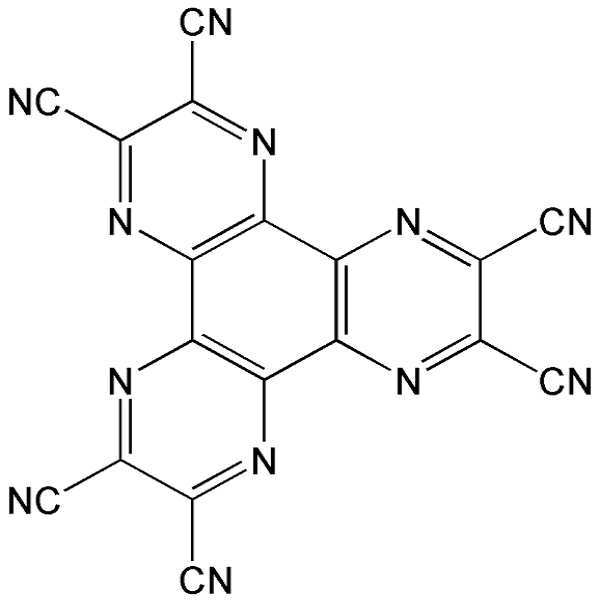

상기 정공 수송 영역이 전하-생성 물질을 더 포함할 경우, 상기 전하-생성 물질은 상기 정공 수송 영역에 균일하게(homogeneous) 분산되거나, 또는 불균일하게 분포될 수 있는 등, 다양한 변형이 가능하다.When the hole transport region further includes a charge-generating material, the charge-generating material may be homogeneous or distributed unevenly in the hole transport region, and various modifications are possible.
상기 정공 수송 영역은, 정공 수송층과 발광층 사이(또는, H-기능층과 발광층 사이)에 버퍼층을 더 포함할 수 있다. The hole transport region may further include a buffer layer between the hole transport layer and the emission layer (or between the H-functional layer and the emission layer).
상기 버퍼층은 발광층에서 방출되는 광의 파장에 따른 광학적 공진 거리를 보상하여 효율을 증가시키는 역할을 수 있다. 상기 버퍼층은 공지된 정공 주입 재료, 정공 수송 재료를 포함할 수 있다. 또는, 상기 버퍼층은 버퍼층 하부에 형성된 정공 수송층(또는 H-기능층)에 포함된 물질 중 하나와 동일한 물질을 포함할 수 있다. The buffer layer may serve to increase efficiency by compensating for an optical resonance distance according to a wavelength of light emitted from the emission layer. The buffer layer may include a known hole injection material or a hole transport material. Alternatively, the buffer layer may include the same material as one of the materials included in the hole transport layer (or H-functional layer) formed under the buffer layer.
상기 정공 수송 영역은 상기 화학식 1로 표시되는 축합환 화합물을 포함할 수 있다. 예를 들어, 상기 정공 수송 영역 중 정공 주입층은 상기 화학식 1로 표시되는 축합환 화합물을 포함할 수 있다. The hole transport region may include a condensed cyclic compound represented by Formula 1 above. For example, the hole injection layer in the hole transport region may include a condensed cyclic compound represented by Formula 1 above.
이어서, 상기 정공 수송 영역 상부에 진공 증착법, 스핀 코팅법, 캐스트법, LB법 등과 같은 방법을 이용하여 발광층(EML)을 형성할 수 있다. 진공증착법 및 스핀코팅법에 의해 발광층을 형성하는 경우, 그 증착조건은 사용하는 화합물에 따라 다르지만, 일반적으로 정공 주입층의 형성과 거의 동일한 조건범위 중에서 선택될 수 있다.Subsequently, an emission layer EML may be formed on the hole transport region by using a method such as a vacuum deposition method, a spin coating method, a cast method, or an LB method. In the case of forming the light emitting layer by vacuum evaporation and spin coating, the evaporation conditions vary depending on the compound to be used, but may generally be selected from a range of conditions substantially the same as the formation of the hole injection layer.
상기 발광층은 호스트 및 도펀트를 포함할 수 있다. The emission layer may include a host and a dopant.
상기 호스트로서, Alq3, CBP(4,4'-N,N'-디카바졸-비페닐), PVK(폴리(n-비닐카바졸)), 9,10-디(나프탈렌-2-일)안트라센(DNA), TCTA, TPBI(1,3,5-트리스(N-페닐벤즈이미다졸-2-일)벤젠(1,3,5-tris(N-phenylbenzimidazole-2-yl)benzene)), TBADN(3-tert-부틸-9,10-디(나프트-2-일) 안트라센), E3, DSA(디스티릴아릴렌), dmCBP(하기 화학식 참조), 하기 화합물 501 내지 509 등을 사용할 수 있으나, 이에 한정되는 것은 아니다.As the host, Alq 3 , CBP (4,4'-N,N'-dicarbazole-biphenyl), PVK (poly (n-vinylcarbazole)), 9,10-di (naphthalen-2-yl) Anthracene (DNA), TCTA, TPBI (1,3,5-tris (N-phenylbenzimidazol-2-yl) benzene (1,3,5-tris (N-phenylbenzimidazole-2-yl) benzene)), TBADN (3-tert-butyl-9,10-di (naphth-2-yl) anthracene), E3, DSA (distyryl arylene), dmCBP (see the following formula), the following compounds 501 to 509, etc. can be used. However, it is not limited thereto.


PVK DNAPVK DNA


또는, 상기 호스트로서, 하기 화학식 400으로 표시되는 안트라센계 화합물을 사용할 수 있다:Alternatively, as the host, an anthracene compound represented by the following Formula 400 may be used:
<화학식 400> <Formula 400>

상기 화학식 400 중, Ar111 및 Ar112는 서로 독립적으로, 치환 또는 비치환된 C6-C60아릴렌기이고; 상기 Ar113 내지 Ar116은 서로 독립적으로, 치환 또는 비치환된 C1-C10알킬기 및 치환 또는 비치환된 C6-C60아릴기 중에서 선택되고; g, h, i 및 j는 서로 독립적으로 0 내지 4의 정수일 수 있다.In Formula 400, Ar 111 and Ar 112 are each independently a substituted or unsubstituted C 6 -C 60 arylene group; Ar 113 to Ar 116 are each independently selected from a substituted or unsubstituted C 1 -C 10 alkyl group and a substituted or unsubstituted C 6 -C 60 aryl group; g, h, i, and j may each independently be an integer of 0 to 4.
예를 들어, 상기 화학식 400 중, Ar111 및 Ar112는 페닐렌기, 나프틸렌기, 페난트레닐렌기 및 파이레닐렌기; 및 페닐기, 나프틸기 및 안트라세닐기 중 하나 이상으로 치환된 페닐렌기, 나프틸렌기, 페난트레닐렌기, 플루오레닐기, 및 파이레닐렌기; 중에서 선택될 수 있으나, 이에 한정되는 것은 아니다. For example, in Formula 400, Ar 111 and Ar 112 may be selected from a phenylene group, a naphthylene group, a phenanthrenylene group, and a pyrenylene group; And a phenylene group, a naphthylene group, a phenanthrenylene group, a fluorenyl group, and a pyrenylene group substituted with one or more of a phenyl group, a naphthyl group, and an anthracenyl group. It may be selected from, but is not limited thereto.
상기 화학식 400 중 g, h, i 및 j는 서로 독립적으로, 0, 1 또는 2일 수 있다.In Formula 400, g, h, i, and j may be each independently 0, 1, or 2.
상기 화학식 400 중, Ar113 내지 Ar116은 서로 독립적으로, In Formula 400, Ar 113 to Ar 116 are independently of each other,
페닐기, 나프틸기 및 안트라세닐기 중 하나 이상으로 치환된, C1-C10알킬기; A C 1 -C 10 alkyl group substituted with one or more of a phenyl group, a naphthyl group and an anthracenyl group;
페닐기, 나프틸기, 안트라세닐기, 파이레닐기, 페난트레닐기 및 플루오레닐기; A phenyl group, a naphthyl group, an anthracenyl group, a pyrenyl group, a phenanthrenyl group, and a fluorenyl group;
중수소, 할로겐 원자, 히드록실기, 시아노기, 니트로기, 아미노기, 아미디노기, 히드라진, 히드라존, 카르복실기나 이의 염, 술폰산기나 이의 염, 인산이나 이의 염, C1-C60알킬기, C2-C60알케닐기, C2-C60알키닐기, C1-C60알콕시기, 페닐기, 나프틸기, 안트라세닐기, 파이레닐기, 페난트레닐기 및 플루오레닐기 중 하나 이상으로 치환된, 페닐기, 나프틸기, 안트라세닐기, 파이레닐기, 페난트레닐기 및 플루오레닐기; 및Deuterium, halogen atom, hydroxyl group, cyano group, nitro group, amino group, amidino group, hydrazine, hydrazone, carboxyl group or salt thereof, sulfonic acid group or salt thereof, phosphoric acid or salt thereof, C 1 -C 60 alkyl group, C 2 -C 60 alkenyl group, C 2 -C 60 alkynyl group, C 1 -C 60 alkoxy group, phenyl group, naphthyl group, anthracenyl group, pyrenyl group, phenyl group substituted with one or more of phenanthrenyl group and fluorenyl group , Naphthyl group, anthracenyl group, pyrenyl group, phenanthrenyl group and fluorenyl group; And

예를 들어, 상기 화학식 400으로 표시된 안트라센계 화합물은 하기 화합물들 중 하나일 수 있으나, 이에 한정되는 것은 아니다:For example, the anthracene compound represented by Formula 400 may be one of the following compounds, but is not limited thereto:


또는, 상기 호스트로서, 하기 화학식 401으로 표시되는 안트라센계 화합물을 사용할 수 있다:Alternatively, as the host, an anthracene compound represented by the following formula 401 may be used:
<화학식 401><Formula 401>

상기 화학식 401 중 Ar122 내지 Ar125에 대한 상세한 설명은 상기 화학식 400의 Ar113에 대한 설명을 참조한다.Ar 122 in Formula 401 For a detailed description of Ar 125 , refer to the description of Ar 113 of Chemical Formula 400.
상기 화학식 401 중 Ar126 및 Ar127은 서로 독립적으로, C1-C10알킬기(예를 들면, 메틸기, 에틸기 또는 프로필기)일 수 있다.In Formula 401, Ar 126 and Ar 127 may each independently be a C 1 -C 10 alkyl group (eg, a methyl group, an ethyl group, or a propyl group).
상기 화학식 401 중 k 및 l은 서로 독립적으로 0 내지 4의 정수일 수 있다. 예를 들어, 상기 k 및 l은 0, 1 또는 2일 수 있다.In Formula 401, k and l may be integers of 0 to 4 independently of each other. For example, k and l may be 0, 1 or 2.
예를 들어, 상기 화학식 401로 표시된 안트라센계 화합물은 하기 화합물들 중 하나일 수 있으나, 이에 한정되는 것은 아니다:For example, the anthracene-based compound represented by Formula 401 may be one of the following compounds, but is not limited thereto:

상기 유기 발광 소자가 풀 컬러 유기 발광 소자일 경우, 발광층은 적색 발광층, 녹색 발광층 및 청색 발광층으로 패터닝될 수 있다. 또는, 상기 발광층은 적색 발광층, 녹색 발광층 및/또는 청색 발광층이 적층된 구조를 가짐으로써, 백색광을 방출할 수 있는 등 다양한 변형예가 가능하다.When the organic light-emitting device is a full-color organic light-emitting device, the emission layer may be patterned into a red emission layer, a green emission layer, and a blue emission layer. Alternatively, the emission layer may have a structure in which a red emission layer, a green emission layer, and/or a blue emission layer are stacked, thereby emitting white light, and various modifications are possible.
상기 발광층 중 도펀트는 상기 화학식 1로 표시되는 축합환 화합물일 수 있다. 이 때, 상기 축합환 화합물은 형광 방출 메커니즘에 따라 광을 방출하는 형광 도펀트로서의 역할을 할 수 있다. 예를 들어, 상기 축합환 화합물은 청색광을 방출하는 형광 도펀트의 역할을 수 있으나, 이에 한정되는 것은 아니다.The dopant of the emission layer may be a condensed cyclic compound represented by Formula 1. In this case, the condensed cyclic compound may serve as a fluorescent dopant emitting light according to a fluorescence emission mechanism. For example, the condensed cyclic compound may serve as a fluorescent dopant that emits blue light, but is not limited thereto.
한편, 상기 발광층은 상기 화학식 1로 표시되는 축합환 화합물 외에, 공지의 도펀트로서, 후술하는 바와 같은 도펀트를 더 포함할 수 있다.Meanwhile, the emission layer may further include, as a known dopant, a dopant as described below, in addition to the condensed cyclic compound represented by Formula 1 above.
에를 들어, 청색 도펀트로서는 하기 화합물들 사용할 수 있으나, 이에 한정되는 것은 아니다.For example, the following compounds may be used as the blue dopant, but the present invention is not limited thereto.


DPAVBi DPAVBi

TBPe TBPe
에를 들어, 적색 도펀트로서는 하기 화합물들 사용할 수 있으나, 이에 한정되는 것은 아니다. 또는, 상기 적색 도펀트로서, 후술한 DCM 또는 DCJTB를 사용할 수도 있다.For example, the following compounds may be used as the red dopant, but the present invention is not limited thereto. Alternatively, as the red dopant, DCM or DCJTB described below may be used.


에를 들어, 녹색 도펀트로서는 하기 화합물들 사용할 수 있으나, 이에 한정되는 것은 아니다. 또는 녹색 도펀트로서, 하기 C545T를 사용할 수 있다.For example, the following compounds may be used as the green dopant, but are not limited thereto. Alternatively, as a green dopant, the following C545T may be used.
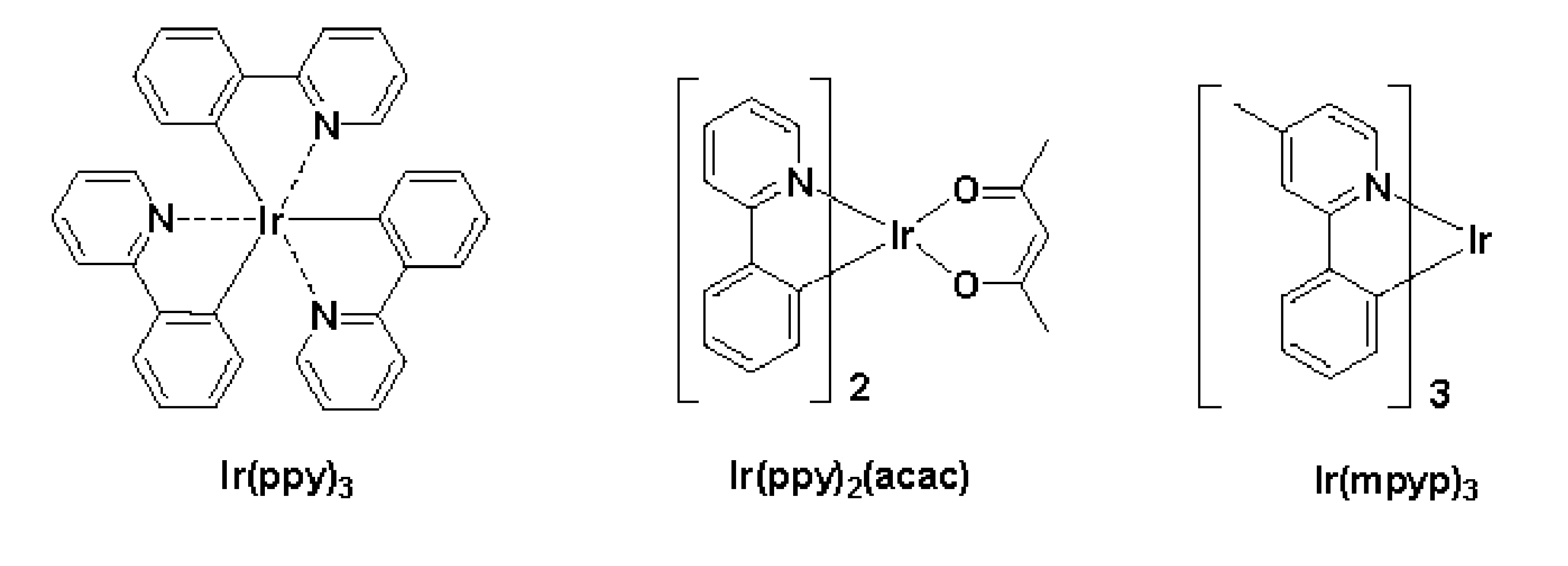

한편, 상기 발광층에 포함될 수 있는 도펀트는 후술하는 바와 같은 착체일 수 있으나, 이에 한정되는 것은 아니다:Meanwhile, the dopant that may be included in the emission layer may be a complex as described below, but is not limited thereto:


또한, 상기 발광층에 포함될 수 있는 도펀트는 후술하는 바와 같은 Os-착체일 수 있으나, 이에 한정되는 것은 아니다:In addition, the dopant that may be included in the light emitting layer may be an Os-complex as described below, but is not limited thereto:

상기 발광층이 호스트 및 도펀트를 포함할 경우, 도펀트의 함량은 통상적으로 호스트 약 100 중량부를 기준으로 하여 약 0.01 내지 약 15 중량부의 범위에서 선택될 수 있으며, 이에 한정되는 것은 아니다.When the emission layer includes a host and a dopant, the content of the dopant may be generally selected from about 0.01 to about 15 parts by weight based on about 100 parts by weight of the host, but is not limited thereto.
상기 발광층의 두께는 약 100Å 내지 약 1000Å, 예를 들면 약 200Å 내지 약 600Å일 수 있다. 상기 발광층의 두께가 전술한 바와 같은 범위를 만족할 경우, 실질적인 구동 전압 상승없이 우수한 발광 특성을 나타낼 수 있다.The thickness of the emission layer may be about 100 Å to about 1000 Å, for example, about 200 Å to about 600 Å. When the thickness of the emission layer satisfies the above-described range, excellent emission characteristics may be exhibited without a substantial increase in driving voltage.
다음으로 발광층 상부에 전자 수송층(ETL)을 진공증착법, 또는 스핀코팅법, 캐스트법 등의 다양한 방법을 이용하여 형성한다. 진공증착법 및 스핀코팅법에 의해 전자 수송층을 형성하는 경우, 그 조건은 사용하는 화합물에 따라 다르지만, 일반적으로 정공주입층의 형성과 거의 동일한 조건범위 중에서 선택될 수 있다.Next, an electron transport layer (ETL) is formed on the light emitting layer by various methods such as vacuum deposition, spin coating, and casting. In the case of forming the electron transport layer by the vacuum evaporation method and the spin coating method, the conditions vary depending on the compound to be used, but in general, it may be selected from a range of conditions substantially the same as the formation of the hole injection layer.
상기 전자 수송층 재료로는 제2전극으로부터 주입된 전자를 안정하게 수송하는 기능을 하는 것으로서 공지의 전자 수송 물질을 이용할 수 있다. 공지의 전자 수송 물질의 예로는, 퀴놀린 유도체, 특히 트리스(8-퀴놀리노레이트)알루미늄(Alq3), TAZ, Balq, 베릴륨 비스(벤조퀴놀리-10-노에이트)(beryllium bis(benzoquinolin-10-olate: Bebq2), ADN, 화합물 201, 화합물 202, TmPyPB 등과 같은 재료를 사용할 수도 있으나, 이에 한정되는 것은 아니다.As the material for the electron transport layer, a known electron transport material may be used as it functions to stably transport electrons injected from the second electrode. Examples of known electron transport materials include quinoline derivatives, in particular tris(8-quinolinorate)aluminum (Alq3), TAZ, Balq, beryllium bis(benzoquinolin-10-noate) (beryllium bis(benzoquinolin-10-). olate: Bebq 2 ), ADN, compound 201, compound 202, TmPyPB, and the like may be used, but is not limited thereto.


<화합물 201> <화합물 202><Compound 201> <Compound 202>


BCP BCP
<TmPyPB><TmPyPB>

상기 전자 수송층의 두께는 약 100Å 내지 약 1000Å, 예를 들면 약 150Å 내지 약 500Å일 수 있다. 상기 전자 수송층의 두께가 전술한 바와 같은 범위를 만족할 경우, 실질적인 구동 전압 상승없이 만족스러운 정도의 전자 수송 특성을 얻을 수 있다.The electron transport layer may have a thickness of about 100 Å to about 1000 Å, for example, about 150 Å to about 500 Å. When the thickness of the electron transport layer satisfies the above-described range, satisfactory electron transport characteristics can be obtained without a substantial increase in driving voltage.
상기 전자 수송층은 상기 외에, 금속-함유 물질을 더 포함할 수 있다. In addition to the above, the electron transport layer may further include a metal-containing material.
상기 상기 금속-함유 물질은 Li 착체를 포함할 수 있다. 상기 Li 착체의 비제한적인 예로는, 리튬 퀴놀레이트(LiQ) 또는 하기 화합물 203 등을 들 수 있다:The metal-containing material may include a Li complex. Non-limiting examples of the Li complex include lithium quinolate (LiQ) or Compound 203 below:
<화합물 203><Compound 203>

또한 전자 수송층 상부에 제2전극으로부터 전자의 주입을 용이하게 하는 기능을 가지는 물질인 전자 주입층(EIL)이 적층될 수 있으며 이는 특별히 재료를 제한하지 않는다.Also, an electron injection layer (EIL), which is a material having a function of facilitating injection of electrons from the second electrode, may be stacked on the electron transport layer, and this material is not particularly limited.
상기 전자 주입층 형성 재료로는 LiF, NaCl, CsF, Li2O, BaO 등과 같은 전자주입층 형성 재료로서 공지된 임의의 물질을 이용할 수 있다. 상기 전자주입층의 증착조건은 사용하는 화합물에 따라 다르지만, 일반적으로 정공 주입층의 형성과 거의 동일한 조건범위 중에서 선택될 수 있다.As the material for forming the electron injection layer, any material known as the material for forming the electron injection layer such as LiF, NaCl, CsF, Li 2 O, and BaO may be used. The deposition conditions of the electron injection layer vary depending on the compound to be used, but may generally be selected from a range of conditions substantially the same as the formation of the hole injection layer.
상기 전자 주입층의 두께는 약 1Å 내지 약 100Å, 약 3Å 내지 약 90Å일 수 있다. 상기 전자 주입층의 두께가 전술한 바와 같은 범위를 만족할 경우, 실질적인 구동 전압 상승없이 만족스러운 정도의 전자 주입 특성을 얻을 수 있다.The electron injection layer may have a thickness of about 1 Å to about 100 Å, and about 3 Å to about 90 Å. When the thickness of the electron injection layer satisfies the above-described range, satisfactory electron injection characteristics may be obtained without a substantial increase in driving voltage.
이와 같은 유기층(15) 상부로는 제2전극(17)이 구비되어 있다. 상기 제2전극은 전자 주입 전극인 캐소드(Cathode)일 수 있는데, 이 때, 상기 제2전극 형성용 물질로는 낮은 일함수를 가지는 금속, 합금, 전기전도성 화합물 및 이들의 혼합물을 사용할 수 있다. 구체적인 예로서는 리튬(Li), 마그네슘(Mg), 알루미늄(Al), 알루미늄-리튬(Al-Li), 칼슘(Ca), 마그네슘-인듐(Mg-In), 마그네슘-은(Mg-Ag)등을 박막으로 형성하여 투과형 전극을 얻을 수 있다. 한편, 전면 발광 소자를 얻기 위하여 ITO, IZO를 이용한 투과형 전극을 형성할 수 있는 등, 다양한 변형이 가능하다.A
이상, 상기 유기 발광 소자를 도 1을 참조하여 설명하였으나, 이에 한정되는 것은 아니다. In the above, the organic light-emitting device has been described with reference to FIG. 1, but is not limited thereto.
또한, 발광층에 인광 도펀트를 사용할 경우에는 삼중항 여기자 또는 정공이 전자 수송층으로 확산되는 현상을 방지하기 위하여, 상기 정공 수송층과 발광층 사이 또는 H-기능층과 발광층 사이에에 진공증착법, 스핀코팅법, 캐스트법, LB법 등과 같은 방법을 이용하여 정공 저지층(HBL)을 형성할 수 있다. 진공증착법 및 스핀코팅법에 의해 정공 저지층을 형성하는 경우, 그 조건은 사용하는 화합물에 따라 다르지만, 일반적으로 정공 주입층의 형성과 거의 동일한 조건범위 중에서 될 수 있다. 공지의 정공 저지 재료도 사용할 수 있는데, 이의 예로는, 옥사디아졸 유도체나 트리아졸 유도체, 페난트롤린 유도체 등을 들 수 있다. 예를 들면, 하기와 같은 BCP를 정공 저지층 재료로 사용할 수 있다.In addition, in the case of using a phosphorescent dopant for the light emitting layer, in order to prevent the diffusion of triplet excitons or holes into the electron transport layer, vacuum deposition method, spin coating method, between the hole transport layer and the light emitting layer or between the H-functional layer and the light emitting layer, A hole blocking layer (HBL) may be formed using a method such as a cast method or an LB method. In the case of forming the hole blocking layer by vacuum evaporation and spin coating, the conditions vary depending on the compound to be used, but may generally be within the same range of conditions as the formation of the hole injection layer. A known hole-blocking material can also be used, and examples thereof include an oxadiazole derivative, a triazole derivative, and a phenanthroline derivative. For example, the following BCP can be used as the hole blocking layer material.

상기 정공 저지층의 두께는 약 20Å 내지 약 1000Å, 예를 들면 약 30Å 내지 약 300Å일 수 있다. 상기 정공저지층의 두께가 전술한 바와 같은 범위를 만족할 경우, 실질적인 구동 전압 상승없이 우수한 정공 저지 특성을 얻을 수 있다. The hole blocking layer may have a thickness of about 20 Å to about 1000 Å, for example, about 30 Å to about 300 Å. When the thickness of the hole blocking layer satisfies the above-described range, excellent hole blocking characteristics may be obtained without a substantial increase in driving voltage.
상기 유기 발광 소자는 유기 발광 장치에 포함될 수 있다. 따라서, 또 다른 측면에 따르면, 상기 유기 발광 소자 및 트랜지스터를 포함한 유기 발광 장치가 제공될 수 있다. 상기 트랜지스터는 활성층, 소스 및 드레인 전극, 게이트 전극 및 게이트 절연막을 포함할 수 있고, 상기 유기 발광 소자의 제1전극 및 제2전극 중 적어도 하나는 상기 트랜지스터의 소스 및 드레인 전극 중 하나와 전기적으로 연결될 수 있다. 상기 트랜지스터의 활성층은 비정질 실리콘, 결정질 실리콘, 산화물 반도체, 유기 화합물 반도체 등 공지된 임의의 활성층 중에서 다양하게 선택될 수 있다. The organic light emitting device may be included in an organic light emitting device. Accordingly, according to another aspect, an organic light emitting device including the organic light emitting device and the transistor may be provided. The transistor may include an active layer, a source and drain electrodes, a gate electrode, and a gate insulating layer, and at least one of the first electrode and the second electrode of the organic light emitting device is electrically connected to one of the source and drain electrodes of the transistor. I can. The active layer of the transistor may be variously selected from any known active layer such as amorphous silicon, crystalline silicon, oxide semiconductor, and organic compound semiconductor.
본 명세서 중, 비치환된 C1-C60알킬기(또는 C1-C60알킬기)의 구체적인 예로는 메틸, 에틸, 프로필, 이소부틸, sec-부틸, 펜틸, iso-아밀, 헥실 등과 같은 탄소수 1 내지 60의 선형 또는 분지형 알킬기를 들 수 있고, 치환된 C1-C60알킬기의 적어도 하나의 치환기는, 중수소, 할로겐 원자, 히드록실기, 시아노기, 니트로기, 아미노기, 아미디노기, 히드라진, 히드라존, 카르복실기나 이의 염, 술폰산기나 이의 염, 인산이나 이의 염, C1-C60알킬기, C2-C60알케닐기, C2-C60알키닐기 및 C1-C60알콕시기; 중수소, 할로겐 원자, 히드록실기, 시아노기, 니트로기, 아미노기, 아미디노기, 히드라진, 히드라존, 카르복실기나 이의 염, 술폰산기나 이의 염 및 인산이나 이의 염 중 적어도 하나로 치환된 C1-C60알킬기, C2-C60알케닐기, C2-C60알키닐기 및 C1-C60알콕시기; C3-C10시클로알킬기, C3-C10헤테로시클로알킬기, C3-C10시클로알케닐기, C3-C10헤테로시클로알케닐기, C6-C60아릴기, C6-C60아릴옥시기, C6-C60아릴싸이오기 및 C2-C60헤테로아릴기; 중수소, 할로겐 원자, 히드록실기, 시아노기, 니트로기, 아미노기, 아미디노기, 히드라진, 히드라존, 카르복실기나 이의 염, 술폰산기나 이의 염, 인산이나 이의 염, C1-C60알킬기, C2-C60알케닐기, C2-C60알키닐기, C1-C60알콕시기, 페닐기, 나프틸기, 안트라세닐기, 플루오레닐기, 디메틸플루오레닐기, 디페닐플루오레닐기, 카바졸일기, 페닐카바졸일기, 피리디닐기, 피리미디닐기, 피라지닐기, 피리다지닐기, 트리아지닐기, 퀴놀일기, 및 이소퀴놀일기 중 적어도 하나로 치환된 C3-C10시클로알킬기, C3-C10헤테로시클로알킬기, C3-C10시클로알케닐기, C3-C10헤테로시클로알케닐기, C6-C60아릴기, C6-C60아릴옥시기, C6-C60아릴싸이오기 및 C2-C60헤테로아릴기; 및 -N(Q11)(Q12); 및 -Si(Q11)(Q12)(Q13) (여기서, 상기 Q11 및 Q12는 서로 독립적으로, C6-C60아릴기, 또는 C2-C60헤테로아릴기이고, Q13 내지 Q15는 서로 독립적으로, C1-C60알킬기, C1-C60알콕시기, C6-C60아릴기, 또는 C2-C60헤테로아릴기임); 중에서 선택될 수 있으나, 이에 한정되는 것은 아니다. In the present specification, specific examples of an unsubstituted C 1 -C 60 alkyl group (or C 1 -C 60 alkyl group) include 1 carbon number such as methyl, ethyl, propyl, isobutyl, sec-butyl, pentyl, iso-amyl, hexyl, etc. To 60 linear or branched alkyl groups, and at least one substituent of the substituted C 1 -C 60 alkyl group is deuterium, a halogen atom, a hydroxyl group, a cyano group, a nitro group, an amino group, an amidino group, a hydrazine , Hydrazone, carboxyl groups or salts thereof, sulfonic acid groups or salts thereof, phosphoric acid or salts thereof, C 1 -C 60 alkyl groups, C 2 -C 60 alkenyl groups, C 2 -C 60 alkynyl groups and C 1 -C 60 alkoxy groups; C 1 -C 60 substituted with at least one of deuterium, halogen atom, hydroxyl group, cyano group, nitro group, amino group, amidino group, hydrazine, hydrazone, carboxyl group or salt thereof, sulfonic acid group or salt thereof, and phosphoric acid or salt thereof An alkyl group, a C 2 -C 60 alkenyl group, a C 2 -C 60 alkynyl group and a C 1 -C 60 alkoxy group; C 3 -C 10 cycloalkyl group, C 3 -C 10 heterocycloalkyl group, C 3 -C 10 cycloalkenyl group, C 3 -C 10 heterocycloalkenyl group, C 6 -C 60 aryl group, C 6 -C 60 aryl An oxy group, a C 6 -C 60 arylthio group and a C 2 -C 60 heteroaryl group; Deuterium, halogen atom, hydroxyl group, cyano group, nitro group, amino group, amidino group, hydrazine, hydrazone, carboxyl group or salt thereof, sulfonic acid group or salt thereof, phosphoric acid or salt thereof, C 1 -C 60 alkyl group, C 2 -C 60 alkenyl group, C 2 -C 60 alkynyl group, C 1 -C 60 alkoxy group, phenyl group, naphthyl group, anthracenyl group, fluorenyl group, dimethylfluorenyl group, diphenylfluorenyl group, carbazolyl group, C 3 -C 10 cycloalkyl group substituted with at least one of phenylcarbazolyl group, pyridinyl group, pyrimidinyl group, pyrazinyl group, pyridazinyl group, triazinyl group, quinolyl group, and isoquinolyl group, C 3 -C 10 come heterocycloalkyl group, C 3 -C 10 cycloalkenyl group, C 3 -C 10 hetero cycloalkenyl group, C 6 -C 60 aryl group, C 6 -C 60 aryloxy, C 6 -C 60 aryl and Im C 2 -C 60 heteroaryl group; And -N(Q 11 )(Q 12 ); And -Si(Q 11 )(Q 12 )(Q 13 ) (wherein, Q 11 and Q 12 are each independently a C 6 -C 60 aryl group, or a C 2 -C 60 heteroaryl group, and Q 13 To Q 15 are each independently a C 1 -C 60 alkyl group, a C 1 -C 60 alkoxy group, a C 6 -C 60 aryl group, or a C 2 -C 60 heteroaryl group; It may be selected from, but is not limited thereto.
본 명세서 중 비치환된 C1-C60알콕시기(또는 C1-C60알콕시기)는 -OA(단, A는 상술한 바와 같은 비치환된 C1-C60알킬기임)의 화학식을 가지며, 이의 구체적인 예로서, 메톡시, 에톡시, 이소프로필옥시, 등이 있고, 이들 알콕시기 중 적어도 하나 이상의 수소원자는 상술한 치환된 C1-C60알킬기의 경우와 마찬가지의 치환기로 치환 가능하다. In the present specification, an unsubstituted C 1 -C 60 alkoxy group (or C 1 -C 60 alkoxy group) has a formula of -OA (wherein A is an unsubstituted C 1 -C 60 alkyl group as described above) , As specific examples thereof, there are methoxy, ethoxy, isopropyloxy, and the like, and at least one hydrogen atom among these alkoxy groups may be substituted with the same substituent as in the case of the substituted C 1 -C 60 alkyl group described above. .
본 명세서 중 비치환된 C2-C60알케닐기(또는 C2-C60알케닐기)는 상기 비치환된 C2-C60알킬기의 중간이나 맨 끝단에 하나 이상의 탄소 이중결합을 함유하고 있는 것을 의미한다. 예로서는 에테닐, 프로페닐, 부테닐 등이 있다. 이들 비치환된 C2-C60알케닐기 중 적어도 하나 이상의 수소원자는 상술한 치환된 C1-C60알킬기의 경우와 마찬가지의 치환기로 치환가능하다. In the present specification, the unsubstituted C 2 -C 60 alkenyl group (or C 2 -C 60 alkenyl group) contains one or more carbon double bonds in the middle or end of the unsubstituted C 2 -C 60 alkyl group. it means. Examples include ethenyl, propenyl, butenyl and the like. At least one hydrogen atom among these unsubstituted C 2 -C 60 alkenyl groups may be substituted with the same substituent as in the case of the above-described substituted C 1 -C 60 alkyl group.
본 명세서 중 비치환된 C2-C60알키닐기(또는 C2-C60알키닐기)는 상기 정의된 바와 같은 C2-C60알킬기의 중간이나 맨 끝단에 하나 이상의 탄소 삼중결합을 함유하고 있는 것을 의미한다. 예로서는 에티닐(ethynyl), 프로피닐(propynyl), 등이 있다. 이들 알키닐기 중 적어도 하나 이상의 수소원자는 상술한 치환된 C1-C60알킬기의 경우와 마찬가지의 치환기로 치환가능하다. In the present specification, an unsubstituted C 2 -C 60 alkynyl group (or C 2 -C 60 alkynyl group) contains one or more carbon triple bonds in the middle or end of the C 2 -C 60 alkyl group as defined above. Means that. Examples include ethynyl, propynyl, and the like. At least one hydrogen atom among these alkynyl groups may be substituted with the same substituent as in the case of the above-described substituted C 1 -C 60 alkyl group.
본 명세서 중 비치환된 C6-C60아릴기는 하나 이상의 방향족 고리를 포함하는 탄소 원자수 6 내지 60개의 카보사이클릭 방향족 시스템을 갖는 1가(monovalent) 그룹을 의미하며, 비치환된 C6-C60아릴렌기는 하나 이상의 방향족 고리를 포함하는 탄소 원자수 6 내지 60개의 카보사이클릭 방향족 시스템을 갖는 2가(divalent) 그룹을 의미한다. 상기 아릴기 및 아릴렌기가 2 이상의 고리를 포함할 경우, 2 이상의 고리들은 서로 융합될 수 있다. 상기 아릴기 및 아릴렌기 중 하나 이상의 수소 원자는 상술한 치환된 C1-C60알킬기의 경우와 마찬가지의 치환기로 치환가능하다.In the present specification, an unsubstituted C 6 -C 60 aryl group refers to a monovalent group having a carbocyclic aromatic system having 6 to 60 carbon atoms including at least one aromatic ring, and an unsubstituted C 6- C 60 arylene group refers to a divalent group having a carbocyclic aromatic system having 6 to 60 carbon atoms including at least one aromatic ring. When the aryl group and the arylene group include two or more rings, the two or more rings may be fused to each other. At least one hydrogen atom of the aryl group and the arylene group may be substituted with the same substituent as in the case of the substituted C 1 -C 60 alkyl group described above.
상기 치환 또는 비치환된 C6-C60아릴기의 예로는 페닐기, C1-C10알킬페닐기(예를 들면, 에틸페닐기), C1-C10알킬비페닐기(예를 들면, 에틸비페닐기), 할로페닐기(예를 들면, o-, m- 및 p-플루오로페닐기, 디클로로페닐기), 디시아노페닐기, 트리플루오로메톡시페닐기, o-, m-, 및 p-토릴기, o-, m- 및 p-쿠메닐기, 메시틸기, 페녹시페닐기, (α,α-디메틸벤젠)페닐기, (N,N'-디메틸)아미노페닐기, (N,N'-디페닐)아미노페닐기, 펜탈레닐기, 인데닐기, 나프틸기, 할로나프틸기(예를 들면, 플루오로나프틸기), C1-C10알킬나프틸기(예를 들면, 메틸나프틸기), C1-C10알콕시나프틸기(예를 들면, 메톡시나프틸기), 안트라세닐기, 아즈레닐기, 헵타레닐기, 아세나프틸레닐기, 페나레닐기, 플루오레닐기, 안트라퀴놀일기, 메틸안트라세닐기, 페난트릴기, 트리페닐레닐기, 피레닐기, 크리세닐기, 에틸-크리세닐기, 피세닐기, 페릴레닐기, 클로로페릴레닐기, 펜타페닐기, 펜타세닐기, 테트라페닐레닐기, 헥사페닐기, 헥사세닐기, 루비세닐기, 코로네릴기, 트리나프틸레닐기, 헵타페닐기, 헵타세닐기, 피란트레닐기, 오바레닐기 등을 들 수 있으며, 치환된 C6-C60아릴기의 예는 상술한 바와 같은 비치환된 C6-C60아릴기의 예와 상기 치환된 C1-C60알킬기의 치환기를 참조하여 용이하게 인식할 수 있다. 상기 치환 또는 비치환된 C6-C60아릴렌기의 예는 상기 치환 또는 비치환된 C6-C60아릴기의 예를 참조하여 용이하게 인식될 수 있다.Examples of the substituted or unsubstituted C 6 -C 60 aryl group include a phenyl group, a C 1 -C 10 alkylphenyl group (e.g., ethylphenyl group), a C 1 -C 10 alkylbiphenyl group (e.g., ethylbiphenyl group ), halophenyl group (e.g., o-, m- and p-fluorophenyl group, dichlorophenyl group), dicyanophenyl group, trifluoromethoxyphenyl group, o-, m-, and p-tolyl group, o-, m- and p-cumenyl group, mesityl group, phenoxyphenyl group, (α,α-dimethylbenzene) phenyl group, (N,N'-dimethyl) aminophenyl group, (N,N'-diphenyl) aminophenyl group, pentale Nil group, indenyl group, naphthyl group, halonaphthyl group (e.g., fluoronaphthyl group), C 1 -C 10 alkylnaphthyl group (e.g. methylnaphthyl group), C 1 -C 10 alkoxynaphthyl group (e.g. For example, methoxynaphthyl group), anthracenyl group, azrenyl group, heptarenyl group, acenaphthylenyl group, phenalenyl group, fluorenyl group, anthraquinolyl group, methylanthracenyl group, phenanthryl group, triphenyle Nyl group, pyrenyl group, chrysenyl group, ethyl-chrycenyl group, pisenyl group, perylenyl group, chloroperylenyl group, pentaphenyl group, pentacenyl group, tetraphenylenyl group, hexaphenyl group, hexaenyl group, rubisenyl group , A coroneryl group, a trinaphthylenyl group, a heptaphenyl group, a heptacenyl group, a pyrantrenyl group, an ovarenyl group, and the like, and examples of the substituted C 6 -C 60 aryl group are unsubstituted C as described above. It can be easily recognized by referring to the example of the 6 -C 60 aryl group and the substituent of the substituted C 1 -C 60 alkyl group. Examples of the substituted or unsubstituted C 6 -C 60 arylene group may be easily recognized with reference to the examples of the substituted or unsubstituted C 6 -C 60 aryl group.
본 명세서 중 비치환된 C2-C60헤테로아릴기는 N, O, P, Si 또는 S 중에서 선택된 1 개 이상의 헤테로원자를 포함하고 나머지 고리원자가 C인 하나 이상의 방향족 고리로 이루어진 시스템을 갖는 1가 그룹을 의미하고, 비치환된 C2-C60헤테로아릴렌기는 N, O, P, Si 또는 S 중에서 선택된 1 개 이상의 헤테로원자를 포함하고 나머지 고리원자가 C인 하나 이상의 방향족 고리로 이루어진 시스템을 갖는 2가 그룹을 의미한다. 여기서, 상기 헤테로아릴기 및 헤테로아릴렌기가 2 이상의 고리를 포함할 경우, 2 이상의 고리는 서로 융합될 수 있다. 상기 헤테로아릴기 및 헤테로아릴렌기 중 하나 이상의 수소원자는 상술한 C1-C60알킬기의 경우와 마찬가지의 치환기로 치환가능하다.In the present specification, the unsubstituted C 2 -C 60 heteroaryl group contains one or more heteroatoms selected from N, O, P, Si, or S, and the remaining ring atoms are C. A monovalent group having a system consisting of one or more aromatic rings Means, and the unsubstituted C 2 -C 60 heteroarylene group contains at least one heteroatom selected from N, O, P, Si or S, and the remaining ring atoms are C 2 having a system consisting of at least one aromatic ring Means group. Here, when the heteroaryl group and the heteroarylene group include two or more rings, the two or more rings may be fused to each other. At least one hydrogen atom among the heteroaryl group and the heteroarylene group may be substituted with the same substituent as in the case of the C 1 -C 60 alkyl group described above.
상기 비치환된 C2-C60헤테로아릴기의 예에는, 피라졸일기, 이미다졸일기, 옥사졸일기, 티아졸일기, 트리아졸일기, 테트라졸일기, 옥사디아졸일기, 피리디닐기, 피리다지닐기, 피리미디닐기, 트리아지닐기, 카바졸일기, 인돌일기, 퀴놀리닐기, 이소퀴놀리닐기, 벤조이미다졸일기, 이미다조피리디닐기, 이미다조피리미디닐기 등을 들 수 있다. 상기 비치환된 C2-C60헤테로아릴렌기의 예는 상기 치환 또는 비치환된 C2-C60아릴렌기의 예를 참조하여 용이하게 인식될 수 있다.Examples of the unsubstituted C 2 -C 60 heteroaryl group include pyrazolyl group, imidazolyl group, oxazolyl group, thiazolyl group, triazolyl group, tetrazolyl group, oxadiazolyl group, pyridinyl group, and pyri Dazinyl group, pyrimidinyl group, triazinyl group, carbazolyl group, indolyl group, quinolinyl group, isoquinolinyl group, benzoimidazolyl group, imidazopyridinyl group, imidazopyrimidinyl group, and the like. Examples of the unsubstituted C 2 -C 60 hetero arylene groups may be easily recognized with reference to the examples of the substituted or unsubstituted C 2 -C 60 arylene group.
상기 치환 또는 비치환된 C6-C60아릴옥시기는 -OA2(여기서, A2는 상기 치환 또는 비치환된 C6-C60아릴기임)를 가리키고, 상기 치환 또는 비치환된 C5-C60아릴싸이오기는 -SA3(여기서, A3는 상기 치환 또는 비치환된 C6-C60아릴기임)를 가리킨다.The substituted or unsubstituted C 6 -C 60 aryloxy group refers to -OA 2 (wherein, A 2 is the substituted or unsubstituted C 6 -C 60 aryl group), and the substituted or unsubstituted C 5 -C 60 arylthio group refers to -SA 3 (wherein, A 3 is the above substituted or unsubstituted C 6 -C 60 aryl group).
이하에서, 합성예 및 실시예를 들어, 본 발명의 일 구현예를 따르는 유기 발광 소자에 대하여 보다 구체적으로 설명하나, 본 발명이 하기의 합성예 및 실시예로 한정되는 것은 아니다. 하기 합성예 중 "'A' 대신 'B'를 사용하였다"란 표현 중 'B'의 사용량과 'A'의 사용량은 몰당량 기준으로 동일하다.Hereinafter, the organic light emitting device according to an embodiment of the present invention will be described in more detail by way of Synthesis Examples and Examples, but the present invention is not limited to the following Synthesis Examples and Examples. In the following synthesis examples, in the expression "'B' was used instead of'A'", the amount of use of'B' and the amount of use of'A' are the same on a molar equivalent basis.
[실시예] [Example]
합성예 1 : 화합물 2의 합성Synthesis Example 1: Synthesis of Compound 2

중간체 2-1의 합성Synthesis of Intermediate 2-1
1-브로모-4-클로로-2-니트로벤젠 5.96(23.6mmol)을 THF 100ml에 녹인 후 -78℃에서 n-BuLi 10ml (25.0 mmol, 2.5M in Hexane)을 천천히 적가하고 상기 온도를 유지하면서 1시간 동안 교반한 후, 2-이소프로폭시-4,4,5,5-테트라메틸-1,3,2-디옥시보로란(2-isopropoxy-4,4,5,5-tetramethyl-1,3,2-dioxaborolane) 9.3ml (50mmol)을 천천히 적가하고, -78℃에서 1시간 동안 교반한 다음, 추가로 24시간동안 실온에서 교반하였다. 반응 종결 후, 10% HCl 수용액 50ml와 H2O 50ml를 첨가하고 디에틸에테르 80mL로 3회 추출하였다. 이로부터 수득한 유기층을 마그네슘설페이트로 건조시키고 용매를 증발시켜 수득한 잔류물을 실리카겔관 크로마토그래피로 분리 정제하여 중간체 2-1 6.36g (수율 90%)을 수득하였다. 생성된 화합물은 LC-MS를 통해 확인하였다.After dissolving 1-bromo-4-chloro-2-nitrobenzene 5.96 (23.6 mmol) in THF 100 ml, n-
C13H19BClNO4 : M+ 299.5C 13 H 19 BClNO 4 : M + 299.5
중간체 2-2의 합성Synthesis of Intermediate 2-2
중간체 2-1 6.59g (22.0 mmol), 1,4-디브로모나프탈렌 12.4g (44.0 mmol) Pd(PPh3)4 (테트라키스(트리페닐포스핀)팔라듐) 1.27g (1.1mmol) 및 K2CO3 4.5g (33mmol) 을 THF/H2O (2/1 부피비) 혼합용액 200ml에 녹인 후, 70℃에서 5시간 동안 교반한 다음, 실온으로 식힌 후 물 60ml를 가하고 에틸에테르 60ml로 3회 추출하였다. 이로부터 수득한 유기층을 마그네슘설페이트로 건조시키고 용매를 증발시켜 수득한 잔류물을 실리카겔관 크로마토그래피로 분리 정제하여 중간체 2-2 5.98g (수율 75%)을 수득하였다. 생성된 화합물은 LC-MS를 통해 확인하였다.Intermediate 2-1 6.59g (22.0 mmol), 1,4-dibromonaphthalene 12.4g (44.0 mmol) Pd(PPh 3 ) 4 (tetrakis (triphenylphosphine) palladium) 1.27g (1.1mmol) and K 2 CO 3 4.5 g (33 mmol) was dissolved in 200 ml of THF/H 2 O (2/1 volume ratio) mixed solution, stirred at 70° C. for 5 hours, cooled to room temperature, 60 ml of water was added, and 3 with 60 ml of ethyl ether. Extracted twice. The organic layer obtained therefrom was dried over magnesium sulfate, and the residue obtained by evaporating the solvent was separated and purified by silica gel column chromatography to obtain 5.98 g (yield 75%) of Intermediate 2-2. The resulting compound was confirmed by LC-MS.
C16H9BrClNO2 : M+ 362.4C 16 H 9 BrClNO 2 : M + 362.4
중간체 2-3의 합성Synthesis of Intermediate 2-3
중간체 2-2 7.25g (20mmol), 중간체 2-A 8.77g (40.0mmol), Pd2(dba)3 0.37g (0.4mmol), P(tBu)3 0.08g (0.4mmol) 및 KOtBu 5.76g (60mmol)을 톨루엔 90ml에 녹인 후 85℃에서 4시간 동안 교반한 다음, 상온으로 냉각시킨 후, 물 50ml와 디에틸에테르 50ml로 3회 추출하였다. 이로부터 수득한 유기층을 마그네슘설페이트로 건조시키고 용매를 증발시켜 수득한 잔류물을 실리카겔관 크로마토그래피로 분리정제하여 중간체 2-3 10.9g (수율 80%)을 수득하였다. 생성된 화합물은 LC-MS를 통해 확인하였다Intermediate 2-2 7.25g (20mmol), Intermediate 2-A 8.77g (40.0mmol), Pd 2 (dba) 3 0.37g (0.4mmol), P(tBu) 3 0.08g (0.4mmol) and KOtBu 5.76g ( 60 mmol) was dissolved in 90 ml of toluene, stirred at 85° C. for 4 hours, cooled to room temperature, and extracted three times with 50 ml of water and 50 ml of diethyl ether. The organic layer obtained therefrom was dried over magnesium sulfate, and the residue obtained by evaporating the solvent was separated and purified by silica gel column chromatography to obtain 10.9 g (yield 80%) of Intermediate 2-3. The resulting compound was confirmed through LC-MS.
C48H33N3O2 : M+ 683.2C 48 H 33 N 3 O 2 : M + 683.2
중간체 2-4의 합성Synthesis of Intermediate 2-4
중간체 2-3 6.85g (10.00mmol)과 트리에틸포스파이트 8.3g (50mmol)을 큐멘 250ml에 녹인 후 질소 분위기에서 24시간 동안 환류 교반하였다. 반응종료 후 고진공을 이용하여 감압 농축하여 얻은 유기층을 실리카겔관 크로마토그래피로 분리정제하여 중간체 2-4 4.04g (수율 62%)을 수득하였다. 생성된 화합물은 LC-MS를 통해 확인하였다. Intermediate 2-3 6.85g (10.00mmol) and triethylphosphite 8.3g (50mmol) were dissolved in 250ml cumene and stirred under reflux for 24 hours in a nitrogen atmosphere. After completion of the reaction, the organic layer obtained by concentrating under reduced pressure using high vacuum was separated and purified by silica gel column chromatography to obtain 4.04 g (62% yield) of Intermediate 2-4. The resulting compound was confirmed by LC-MS.
C48H33N3 : M+ 651.3C 48 H 33 N 3 : M + 651.3
화합물 2의 합성Synthesis of compound 2
중간체 2-4 3.25g (5.00mmol), 중간체 2-C (브로모벤젠) 0.95g (6mmol), Pd(OAc)2 0.003g (0.1mmol), P(tBu)3 0.1g (0.5mmol), KOtBu 0.84g (7.5mmol)을 톨루엔 200ml에 녹인 후 질소 분위기에서 24시간 동안 환류 교반한 다음, 상온으로 식힌 후, 물 50ml와 디에틸에테르 50ml로 3회 추출하였다. 이로부터 수득한 유기층을 마그네슘설페이트로 건조시키고 용매를 증발시켜 수득한 잔류물을 실리카겔관 크로마토그래피로 분리정제하여 화합물 2 3.02g (수율 83%)을 얻었다. 생성된 화합물은 LC-MS 및 NMR을 통해 확인하였다.Intermediate 2-4 3.25g (5.00mmol), Intermediate 2-C (bromobenzene) 0.95g (6mmol), Pd(OAc) 2 0.003g (0.1mmol), P(tBu) 3 0.1g (0.5mmol), After dissolving 0.84 g (7.5 mmol) of KOtBu in 200 ml of toluene, the mixture was stirred under reflux for 24 hours in a nitrogen atmosphere, cooled to room temperature, and extracted three times with 50 ml of water and 50 ml of diethyl ether. The organic layer obtained therefrom was dried over magnesium sulfate and the residue obtained by evaporating the solvent was separated and purified by silica gel column chromatography to obtain 3.02 g (yield 83%) of compound 2. The resulting compound was confirmed through LC-MS and NMR.
C54H37N3 : M+ 727.3C 54 H 37 N 3 : M + 727.3
1H NMR (CDCl3, 400MHz) δ 8.12-8.10 (d,1H), 8.07-8.05 (d, 2H), 8.00-7.96(m, 2H), 7.90-7.86(m, 4H), 7.82-7.80 (m, 2H), 7.75-7.72 (m, 2H), 7.65-7.63(ss, 2H), 7.61-7.59(ss, 1H), 7.48-7.41(m, 8H), 7.35-7.33(m, 1H), 7.29-7.27(ss, 1H), 7.23-7.18 (m, 3H), 7.10-7.00 (m, 7H), 6.98-6.96(m, 1H)
1H NMR (CDCl 3 , 400MHz) δ 8.12-8.10 (d,1H), 8.07-8.05 (d, 2H), 8.00-7.96 (m, 2H), 7.90-7.86 (m, 4H), 7.82-7.80 (m , 2H), 7.75-7.72 (m, 2H), 7.65-7.63 (ss, 2H), 7.61-7.59 (ss, 1H), 7.48-7.41 (m, 8H), 7.35-7.33 (m, 1H), 7.29 -7.27(ss, 1H), 7.23-7.18 (m, 3H), 7.10-7.00 (m, 7H), 6.98-6.96(m, 1H)
합성예 2 : 화합물 3의 합성Synthesis Example 2: Synthesis of Compound 3

중간체 3-3의 합성Synthesis of Intermediate 3-3
중간체 2-A 대신 중간체 3-A (Phenyl-(4-trimethylsilanyl-phenyl)-amine)을 사용하였다는 점을 제외하고는, 합성예 1의 중간체 2-3의 합성 방법과 동일한 방법을 이용하여 중간체 3-3을 합성하였다. 생성된 화합물은 LC-MS를 통해 확인하였다.An intermediate using the same method as the synthesis method of Intermediate 2-3 of Synthesis Example 1, except that intermediate 3-A (Phenyl-(4-trimethylsilanyl-phenyl)-amine) was used instead of intermediate 2-A. 3-3 was synthesized. The resulting compound was confirmed by LC-MS.
C46H45N3O2Si2 : M+ 728.1C 46 H 45 N 3 O 2 Si 2 : M + 728.1
중간체 3-4의 합성Synthesis of Intermediate 3-4
중간체 2-3 대신 중간체 3-3을 사용하였다는 점을 제외하고는, 합성예 1의 중간체 2-4의 합성 방법과 동일한 방법을 이용하여 중간체 3-4를 합성하였다. 생성된 화합물은 LC-MS를 통해 확인하였다Intermediate 3-4 was synthesized using the same method as the synthesis method of Intermediate 2-4 of Synthesis Example 1, except that Intermediate 3-3 was used instead of Intermediate 2-3. The resulting compound was confirmed through LC-MS.
C46H45N3Si2 : M+ 696.2C 46 H 45 N 3 Si 2 : M + 696.2
화합물 3의 합성Synthesis of compound 3
중간체 2-4 대신 중간체 3-4를 사용하였다는 점을 제외하고는, 합성예 1의 화합물 2의 합성 방법과 동일한 방법을 이용하여 화합물 3 (2.89g, 수율=75%)을 합성하였다. 생성된 화합물은 LC-MS 및 NMR을 통해 확인하였다. Compound 3 (2.89g, yield = 75%) was synthesized using the same method as the synthesis method of Compound 2 of Synthesis Example 1, except that the intermediate 3-4 was used instead of the intermediate 2-4. The resulting compound was confirmed through LC-MS and NMR.
C52H49N3Si2 : M+ 772.14C 52 H 49 N 3 Si 2 : M + 772.14
1H NMR (CDCl3, 400MHz) δ 8.12-8.10 (d,1H), 7.85-7.75 (m, 6H), 7.68-7.66(d, 1H), 7.62-7.53(m, 7H), 7.50-7.48 (m, 1H), 7.38-7.30 (m, 5H), 7.28-7.20(m, 2H), 7.18-7.16(m, 1H), 7.14-7.12(m, 2H), 7.10-7.08(m, 4H), 7.06-7.04(d, 1H), 0.24 (s, 18H)
1H NMR (CDCl 3 , 400MHz) δ 8.12-8.10 (d,1H), 7.85-7.75 (m, 6H), 7.68-7.66 (d, 1H), 7.62-7.53 (m, 7H), 7.50-7.48 (m , 1H), 7.38-7.30 (m, 5H), 7.28-7.20 (m, 2H), 7.18-7.16 (m, 1H), 7.14-7.12 (m, 2H), 7.10-7.08 (m, 4H), 7.06 -7.04 (d, 1H), 0.24 (s, 18H)
합성예 3 : 화합물 8의 합성Synthesis Example 3: Synthesis of Compound 8

중간체 8-3의 합성Synthesis of Intermediate 8-3
중간체 2-A 대신 중간체 8-A ((5'-Fluoro-[1,1';3',1'']terphenyl-4'-yl)-phenyl-amine)을 사용하였다는 점을 제외하고는, 합성예 1의 중간체 2-3의 합성 방법과 동일한 방법을 이용하여 중간체 8-3을 합성하였다. 생성된 화합물은 LC-MS를 통해 확인하였다Except that intermediate 8-A ((5'-Fluoro-[1,1';3',1'']terphenyl-4'-yl)-phenyl-amine) was used instead of intermediate 2-A , Intermediate 8-3 was synthesized using the same method as the synthesis method of intermediate 2-3 of Synthesis Example 1. The resulting compound was confirmed through LC-MS.
C64H43F2N3O2 : M+ 924.0C 64 H 43 F 2 N 3 O 2 : M + 924.0
중간체 8-4의 합성Synthesis of Intermediate 8-4
중간체 2-3 대신 중간체 8-3을 사용하였다는 점을 제외하고는, 합성예 1의 중간체 2-4의 합성 방법과 동일한 방법을 이용하여 중간체 8-4를 합성하였다. 생성된 화합물은 LC-MS를 통해 확인하였다 Intermediate 8-4 was synthesized using the same method as the synthesis method of Intermediate 2-4 of Synthesis Example 1, except that Intermediate 8-3 was used instead of Intermediate 2-3. The resulting compound was confirmed through LC-MS.
C64H43F2N3 : M+ 892.04C 64 H 43 F 2 N 3 : M + 892.04
화합물 8의 합성Synthesis of compound 8
중간체 2-4 대신 중간체 8-4를 사용하였다는 점을 제외하고는, 합성예 1의 화합물 2의 합성과 동일한 방법을 이용하여 화합물 8 (3.78g, 수율=78%)을 합성하였다. 생성된 화합물은 LC-MS 및 NMR을 통해 확인하였다. Compound 8 (3.78g, yield = 78%) was synthesized using the same method as the synthesis of compound 2 of Synthesis Example 1, except that intermediate 8-4 was used instead of intermediate 2-4. The resulting compound was confirmed through LC-MS and NMR.
C70H47F2N3 : M+ 968.14C 70 H 47 F 2 N 3 : M + 968.14
1H NMR (CDCl3, 400MHz ) δ 8.12-8.10 (d,1H), 8.06-8.04 (m, 5H), 7.94-7.91(m, 16H), 7.87-7.74(m, 3H), 7.70-7.60 (m, 11H), 7.52-7.48 (m,4H), 7.42-7.40(m, 1H), 7.27-7.22(m, 4H), 7.15-7.12(m, 2H)
1H NMR (CDCl 3 , 400MHz) δ 8.12-8.10 (d,1H), 8.06-8.04 (m, 5H), 7.94-7.91 (m, 16H), 7.87-7.74 (m, 3H), 7.70-7.60 (m , 11H), 7.52-7.48 (m,4H), 7.42-7.40 (m, 1H), 7.27-7.22 (m, 4H), 7.15-7.12 (m, 2H)
합성예 4 : 화합물 4의 합성Synthesis Example 4: Synthesis of Compound 4
중간체 2-3 합성시 중간체 2-A 대신 비페닐-2-일-디벤조퓨란-4-일-아민(Biphenyl-2-yl-dibenzofuran-4-yl-amine)을 사용하였다는 점을 제외하고는, 합성예 1과 동일한 방법을 이용하여 화합물 4(3.36g, 수율=70%)를 합성하였다. 생성된 화합물은 LC-MS 및 NMR을 통해 확인하였다. Except for the use of biphenyl-2-yl-dibenzofuran-4-yl-amine (Biphenyl-2-yl-dibenzofuran-4-yl-amine) instead of Intermediate 2-A in the synthesis of Intermediate 2-3 Was synthesized using the same method as in Synthesis Example 1, compound 4 (3.36g, yield = 70%). The resulting compound was confirmed through LC-MS and NMR.
C70H45N3O2 : M+ 959.55C 70 H 45 N 3 O 2 : M + 959.55
1H NMR (CDCl3, 400MHz ) δ 8.14-8.12 (m, 2H), 7.95-7.90(m, 3H), 7.86-7.79 (m, 10H), 7.75-7.62(m, 5H), 7.60-7.54 (m, 3H), 7.42-7.38 (m, 7H), 7.32-7.22(m, 9H), 7.10-7.08(m, 2H), 6.95-6.93(d, 1H), 6.88-6.85(m, 3H)
1H NMR (CDCl 3 , 400MHz) δ 8.14-8.12 (m, 2H), 7.95-7.90 (m, 3H), 7.86-7.79 (m, 10H), 7.75-7.62 (m, 5H), 7.60-7.54 (m , 3H), 7.42-7.38 (m, 7H), 7.32-7.22 (m, 9H), 7.10-7.08 (m, 2H), 6.95-6.93 (d, 1H), 6.88-6.85 (m, 3H)
합성예 5 : 화합물 6의 합성Synthesis Example 5: Synthesis of Compound 6
중간체 2-3 합성시, 중간체 2-A 대신 (9,9-디메틸-9H-플루오렌-2-일)-나프탈렌-2-일-아민((9,9-Dimethyl-9H-fluoren-2-yl)-naphthalen-2-yl-amine)을 사용하였다는 점을 제외하고는, 합성예 1과 동일한 방법을 이용하여 화합물 6 (3.31g, 수율=69%)을 합성하였다. 생성된 화합물은 LC-MS 및 NMR을 통해 확인하였다. In the synthesis of Intermediate 2-3, (9,9-dimethyl-9H-fluoren-2-yl)-naphthalen-2-yl-amine ((9,9-Dimethyl-9H-fluoren-2- Compound 6 (3.31g, yield = 69%) was synthesized using the same method as in Synthesis Example 1, except that yl)-naphthalen-2-yl-amine) was used. The resulting compound was confirmed through LC-MS and NMR.
C72H53N3 : M+ 960.3C 72 H 53 N 3 : M + 960.3
1H NMR (CDCl3, 400MHz ) δ 8.11-8.09 (d,1H), 8.03-8.00 (m, 4H), 7.96-7.94(m, 3H), 7.89-7.85(m, 7H), 7.82-7.80 (d, 1H), 7.72-7.68 (m,6H), 7.62-7.60(d, 1H), 7.52-7.42(m, 8H), 7.28-7.26(d, 1H), 7.24-7.22(d, 1H), 7.18-7.15(m, 3H), 7.10-7.08(d, 2H), 7.06-7.04(d, 1H), 7.00-6.98(m, 2H), 1.60(s, 12H)
1H NMR (CDCl 3 , 400MHz) δ 8.11-8.09 (d,1H), 8.03-8.00 (m, 4H), 7.96-7.94 (m, 3H), 7.89-7.85 (m, 7H), 7.82-7.80 (d) , 1H), 7.72-7.68 (m,6H), 7.62-7.60 (d, 1H), 7.52-7.42 (m, 8H), 7.28-7.26 (d, 1H), 7.24-7.22 (d, 1H), 7.18 -7.15(m, 3H), 7.10-7.08(d, 2H), 7.06-7.04(d, 1H), 7.00-6.98(m, 2H), 1.60(s, 12H)
합성예 6 : 화합물 11의 합성Synthesis Example 6: Synthesis of
중간체 2-3 합성시, 중간체 2-A 대신 비페닐-4-일-(2-플루오로-페닐)-아민(Biphenyl-4-yl-(2-fluoro-phenyl)-amine)을 사용하였다는 점을 제외하고는, 합성예 1과 동일한 방법을 이용하여 화합물 11(3.06g, 수율=75%)을 합성하였다. 생성된 화합물은 LC-MS 및 NMR을 통해 확인하였다. In the synthesis of Intermediate 2-3, biphenyl-4-yl-(2-fluoro-phenyl)-amine (Biphenyl-4-yl-(2-fluoro-phenyl)-amine) was used instead of Intermediate 2-A. Except for the point, using the same method as in Synthesis Example 1, compound 11 (3.06g, yield = 75%) was synthesized. The resulting compound was confirmed through LC-MS and NMR.
C58H39F2N3 : M+ 815.12C 58 H 39 F 2 N 3 : M + 815.12
1H NMR (CDCl3, 400MHz ) δ 7.88-7.84 (m,4H), 7.78-7.68 (m, 12H), 7.57-7.55(d, 1H), 7.52-7.48(m, 6H), 7.40-7.36 (m, 4H), 7.30-7.26 (m,2H), 7.20-7.18(d, 1H), 7.12-7.08(m, 4H), 7.05-7.03(m, 2H), 6.98-6.96(m, 2H), 6.95-6.93(d, 1H)
1H NMR (CDCl 3 , 400MHz) δ 7.88-7.84 (m,4H), 7.78-7.68 (m, 12H), 7.57-7.55 (d, 1H), 7.52-7.48 (m, 6H), 7.40-7.36 (m , 4H), 7.30-7.26 (m,2H), 7.20-7.18 (d, 1H), 7.12-7.08 (m, 4H), 7.05-7.03 (m, 2H), 6.98-6.96 (m, 2H), 6.95 -6.93(d, 1H)
합성예 7 : 화합물 12의 합성 Synthesis Example 7: Synthesis of Compound 12
중간체 2-3 합성시, 중간체 2-A 대신 4-(9,9-디메틸-9H-플루오렌-2-일아미노)-벤조니트릴(4-(9,9-Dimethyl-9H-fluoren-2-ylamino)-benzonitrile)을 사용하였다는 점을 점을 제외하고는, 합성예 1과 동일한 방법을 이용하여 화합물 12(2.95g, 수율=65%)을 합성하였다. 생성된 화합물은 LC-MS 및 NMR을 통해 확인하였다. In the synthesis of Intermediate 2-3, 4-(9,9-dimethyl-9H-fluoren-2-ylamino)-benzonitrile (4-(9,9-Dimethyl-9H-fluoren-2- Compound 12 (2.95g, yield = 65%) was synthesized using the same method as in Synthesis Example 1, except that ylamino)-benzonitrile) was used. The resulting compound was confirmed through LC-MS and NMR.
C66H47N5 : M+ 909.22C 66 H 47 N 5 : M + 909.22
1H NMR (CDCl3, 400MHz ) δ 8.14-8.12 (d,1H), 8.10-8.08 (d, 2H), 7.87-7.85(d, 1H), 7.82-7.80(d, 1H), 7.75-7.68(m, 8H), 7.62-7.60 (d,1H), 7.54-7.50(m, 8H), 7.38-7.36(m, 2H), 7.30-7.20(m, 6H), 7.12-7.10(m, 2H) 7.07-7.05(d, 1H) 6.95-6.93(m, 2H, 1.60(s, 12H)
1H NMR (CDCl 3 , 400MHz) δ 8.14-8.12 (d,1H), 8.10-8.08 (d, 2H), 7.87-7.85 (d, 1H), 7.82-7.80 (d, 1H), 7.75-7.68 (m , 8H), 7.62-7.60 (d,1H), 7.54-7.50 (m, 8H), 7.38-7.36 (m, 2H), 7.30-7.20 (m, 6H), 7.12-7.10 (m, 2H) 7.07- 7.05(d, 1H) 6.95-6.93(m, 2H, 1.60(s, 12H)
합성예 8 : 화합물 14의 합성Synthesis Example 8: Synthesis of Compound 14

중간체 14-3의 합성Synthesis of Intermediate 14-3
중간체 2-A의 사용량을 40mmol에서 20mmol로 변경하였다는 점을 제외하고는, 합성예 1의 중간체 2-3의 합성 방법과 동일한 방법을 이용하여 중간체 14-3을 합성하였다. 생성된 화합물은 LC-MS를 통해 확인하였다.Intermediate 14-3 was synthesized using the same method as the synthesis method of Intermediate 2-3 of Synthesis Example 1, except that the amount of Intermediate 2-A was changed from 40 mmol to 20 mmol. The resulting compound was confirmed by LC-MS.
C32H21ClN2O2 : M+ 500.5C 32 H 21 ClN 2 O 2 : M + 500.5
중간체 14-4의 합성Synthesis of Intermediate 14-4
중간체 2-2 대신 중간체 14-3을 사용하고, 40mmol의 중간체 2-A 대신 20mmol의 중간체 14-B를 사용하였다는 점을 제외하고는, 합성예 1의 중간체 2-3의 합성 방법과 동일한 방법을 이용하여 중간체 14-4를 합성하였다. 생성된 화합물은 LC-MS를 통해 확인하였다 The same method as the synthesis method of Intermediate 2-3 of Synthesis Example 1, except that intermediate 14-3 was used instead of intermediate 2-2, and 20 mmol of intermediate 14-B was used instead of 40 mmol of intermediate 2-A. Intermediate 14-4 was synthesized using. The resulting compound was confirmed through LC-MS.
C53H39N3O2 : M+ 749.2C 53 H 39 N 3 O 2 : M + 749.2
중간체 14-5의 합성Synthesis of Intermediate 14-5
중간체 2-3 대신 중간체 14-4를 사용하였다는 점을 제외하고는, 합성예 1의 중간체 2-4의 합성 방법과 동일한 방법을 이용하여 중간체 14-5를 합성하였다. 생성된 화합물은 LC-MS를 통해 확인하였다Intermediate 14-5 was synthesized using the same method as the synthesis method of Intermediate 2-4 of Synthesis Example 1, except that Intermediate 14-4 was used instead of Intermediate 2-3. The resulting compound was confirmed through LC-MS.
C53H39N3 : M+ 717.7C 53 H 39 N 3 : M + 717.7
화합물 14의 합성Synthesis of compound 14
중간체 2-4 대신 중간체 14-5를 사용하였다는 점을 제외하고는, 합성예 1의 화합물 2의 합성 방법과 동일한 방법을 이용하여 화합물 14(2.78g, 수율=70%)를 합성하였다. 생성된 화합물은 LC-MS 및 NMR을 통해 확인하였다.Compound 14 (2.78g, yield = 70%) was synthesized using the same method as the synthesis method of compound 2 of Synthesis Example 1, except that intermediate 14-5 was used instead of intermediate 2-4. The resulting compound was confirmed through LC-MS and NMR.
C59H43N3 : M+ 794.3C 59 H 43 N 3 : M + 794.3
1H NMR (CDCl3, 400MHz ) δ 8.12-8.10 (d,1H), 8.05-8.02 (m, 2H), 7.94-7.92(ss, 1H), 7.88-7.85(m, 3H), 7.83-7.81(d, 1H), 7.80-7.62 (m, 5H), 7.54-7.44 (m,10H), 7.33-7.23(m, 6H), 7.15-7.01(m, 1H), 6.98-6.96(m, 7H), 1.6(s, 6H)
1H NMR (CDCl 3 , 400MHz) δ 8.12-8.10 (d,1H), 8.05-8.02 (m, 2H), 7.94-7.92 (ss, 1H), 7.88-7.85 (m, 3H), 7.83-7.81 (d) , 1H), 7.80-7.62 (m, 5H), 7.54-7.44 (m,10H), 7.33-7.23 (m, 6H), 7.15-7.01 (m, 1H), 6.98-6.96 (m, 7H), 1.6 (s, 6H)
합성예 9 : 화합물 23의 합성Synthesis Example 9: Synthesis of Compound 23

중간체 23-3의 합성Synthesis of Intermediate 23-3
중간체 2-A 대신 중간체 23-A를 사용하였다는 점을 제외하고는, 합성예 8의 중간체 14-3의 합성 방법과 동일한 방법을 이용하여 중간체 23-3을 합성하였다. 생성된 화합물은 LC-MS를 통해 확인하였다. Intermediate 23-3 was synthesized using the same method as the synthesis method of Intermediate 14-3 of Synthesis Example 8, except that Intermediate 23-A was used instead of Intermediate 2-A. The resulting compound was confirmed by LC-MS.
C32H21ClN2O2 : M+ 500.4C 32 H 21 ClN 2 O 2 : M + 500.4
중간체 23-4의 합성Synthesis of Intermediate 23-4
중간체 14-3 대신 중간체 23-3을 사용하고, 중간체 14-B 대신 중간체 23-B를 사용하였다는 점을 제외하고는, 합성예 8의 중간체 14-4의 합성 방법과 동일한 방법을 이용하여 중간체 23-4를 합성하였다. 생성된 화합물은 LC-MS를 통해 확인하였다 An intermediate using the same method as the synthesis method of Intermediate 14-4 of Synthesis Example 8, except that Intermediate 23-3 was used instead of Intermediate 14-3, and Intermediate 23-B was used instead of Intermediate 14-B. 23-4 was synthesized. The resulting compound was confirmed through LC-MS.
C56H33D5FN3O2 : M+ 808.7C 56 H 33 D 5 FN 3 O 2 : M + 808.7
중간체 23-5의 합성Synthesis of Intermediate 23-5
중간체 14-4 대신 중간체 23-4를 사용하였다는 점을 제외하고는, 합성예 8의 중간체 14-5의 합성과 동일한 방법을 이용하여 중간체 23-5를 합성하였다. 생성된 화합물은 LC-MS를 통해 확인하였다. Intermediate 23-5 was synthesized using the same method as the synthesis of Intermediate 14-5 of Synthesis Example 8, except that Intermediate 23-4 was used instead of Intermediate 14-4. The resulting compound was confirmed by LC-MS.
C56H33D5FN3 : M+ 776.8C 56 H 33 D 5 FN 3 : M + 776.8
화합물 23의 합성Synthesis of compound 23
중간체 14-5 대신 중간체 23-5를 사용하였다는 점을 제외하고는, 합성예 8의 화합물 14의 합성과 동일한 방법을 이용하여 화합물 23 (2.90g, y=68%)을 합성하였다. 생성된 화합물은 LC-MS 및 NMR을 통해 확인하였다. Compound 23 (2.90g, y=68%) was synthesized using the same method as the synthesis of compound 14 of Synthesis Example 8, except that intermediate 23-5 was used instead of intermediate 14-5. The resulting compound was confirmed through LC-MS and NMR.
C62H37D5FN3 : M+ 853.1C 62 H 37 D 5 FN 3 : M + 853.1
1H NMR (CDCl3, 400MHz ) δ 8.18-8.16 (m,1H), 8.12-8.10 (m, 1H), 8.08-8.06(d,1H), 7.96-7.94(m, 2H), 7.90-7.86(m, 3H), 7.82-7.62 (m, 10H), 7.50-7.32 (m,10H), 7.28-7.22(m, 4H), 7.20(d, 1H), 7.16-7.12(m, 2H), 6.96-6.94(m, 2H)
1H NMR (CDCl 3 , 400MHz) δ 8.18-8.16 (m,1H), 8.12-8.10 (m, 1H), 8.08-8.06 (d,1H), 7.96-7.94 (m, 2H), 7.90-7.86 (m , 3H), 7.82-7.62 (m, 10H), 7.50-7.32 (m,10H), 7.28-7.22 (m, 4H), 7.20 (d, 1H), 7.16-7.12 (m, 2H), 6.96-6.94 (m, 2H)
합성예 10 : 화합물 13의 합성Synthesis Example 10: Synthesis of
중간체 14-4 합성시, 중간체 14-B 대신 페닐-페닐(d5)-아민을 사용하였다는 점을 제외하고는, 합성예 8과 동일한 방법을 이용하여 화합물 13(2.46g, 수율=72%)을 합성하였다. 생성된 화합물은 LC-MS 및 NMR을 통해 확인하였다.In the synthesis of Intermediate 14-4, Compound 13 (2.46g, yield = 72%) was used in the same manner as in Synthesis Example 8, except that phenyl-phenyl (d5)-amine was used instead of Intermediate 14-B. Was synthesized. The resulting compound was confirmed through LC-MS and NMR.
C50H30D5N3: M+ 682.11 C 50 H 30 D 5 N 3 : M + 682.11
1H NMR (CDCl3, 400MHz ) δ 8.12-8.10 (d,1H), 8.08-8.06 (d, 1H), 7.98-7.96(d, 1H), 7.90-7.86(m, 2H), 7.82-7.80(d, 1H), 7.76-7.70 (m, 3H), 7.66-7.64 (d, 1H), 7.58-7.50(m, 8H), 7.35-7.33(d, 1H), 7.30-7.28(m, 3H), 7.24-7.22(dd, 1H), 7.18-7.14(m, 6H), 7.08-7.06(d, 1H)
1H NMR (CDCl 3 , 400MHz) δ 8.12-8.10 (d,1H), 8.08-8.06 (d, 1H), 7.98-7.96 (d, 1H), 7.90-7.86 (m, 2H), 7.82-7.80 (d) , 1H), 7.76-7.70 (m, 3H), 7.66-7.64 (d, 1H), 7.58-7.50 (m, 8H), 7.35-7.33 (d, 1H), 7.30-7.28 (m, 3H), 7.24 -7.22(dd, 1H), 7.18-7.14(m, 6H), 7.08-7.06(d, 1H)
합성예 11 : 화합물 18의 합성Synthesis Example 11: Synthesis of Compound 18
중간체 14-3 합성시 중간체 2-A 대신 (5'-플루오로-[1,1';3',1'']터페닐-4'-일)-페닐-아민을 사용하고, 중간체 14-4 합성시 중간체 14-B 대신 (3-플루오로-5-나프탈렌-1-일-페닐)-페닐-아민을 사용하였다는 점을 제외하고는, 합성예 8과 동일한 방법을 이용하여 화합물 18(3.20g, 수율=68%)을 합성하였다. 생성된 화합물은 LC-MS 및 NMR을 통해 확인하였다.In the synthesis of Intermediate 14-3, (5'-fluoro-[1,1';3',1'']terphenyl-4'-yl)-phenyl-amine was used instead of Intermediate 2-A, and Intermediate 14- 4 Using the same method as in Synthesis Example 8, except that (3-fluoro-5-naphthalen-1-yl-phenyl)-phenyl-amine was used instead of the intermediate 14-B, compound 18 ( 3.20g, yield = 68%) was synthesized. The resulting compound was confirmed through LC-MS and NMR.
C68H45F2N3 : M+ 941.42C 68 H 45 F 2 N 3 : M + 941.42
1H NMR (CDCl3, 400MHz ) δ 8.13-8.11 (d,1H), 8.08-8.05 (m, 2H), 8.00-7.96(m, 4H), 7.90-7.81(m, 10H), 7.76-7.72(m, 3H), 7.68-7.64 (m, 1H), 7.60-7.58 (m,1H), 7.56-7.49(m, 10H), 7.44-7.42(m, 1H), 7.30-7.24(m, 3H), 7.20-7.16(m, 4H), 7.10-7.08(m, 2H), 7.04-7.00(m, 3H)
1H NMR (CDCl 3 , 400MHz) δ 8.13-8.11 (d,1H), 8.08-8.05 (m, 2H), 8.00-7.96 (m, 4H), 7.90-7.81 (m, 10H), 7.76-7.72 (m , 3H), 7.68-7.64 (m, 1H), 7.60-7.58 (m,1H), 7.56-7.49 (m, 10H), 7.44-7.42 (m, 1H), 7.30-7.24 (m, 3H), 7.20 -7.16(m, 4H), 7.10-7.08(m, 2H), 7.04-7.00(m, 3H)
합성예 12 : 화합물 21의 합성Synthesis Example 12: Synthesis of Compound 21
중간체 14-3 합성시 중간체 2-A 대신 (5'-플루오로-[1,1';3',1'']터페닐-4'-일)-나프탈렌-2-일-아민을 사용하고, 중간체 14-4 합성시 중간체 14-B 대신 페닐-(4-트리메틸실라닐-페닐)-아민을 사용하였다는 점을 제외하고는, 합서예 8과 동일한 방법을 이용하여 화합물 21(3.08g, 수율=67%)을 합성하였다. 생성된 화합물은 LC-MS 및 NMR을 통해 확인하였다.In the synthesis of Intermediate 14-3, (5'-fluoro-[1,1';3',1'']terphenyl-4'-yl)-naphthalen-2-yl-amine was used instead of Intermediate 2-A. , Compound 21 (3.08g, using the same method as in Synthesis Example 8, except that phenyl-(4-trimethylsilanyl-phenyl)-amine was used instead of Intermediate 14-B when synthesizing Intermediate 14-4, Yield = 67%) was synthesized. The resulting compound was confirmed through LC-MS and NMR.
C65H50FN3Si : M+ 919.50C 65 H 50 FN 3 Si: M + 919.50
1H NMR (CDCl3, 400MHz ) δ 8.08-8.06 (d,1H), 8.03-8.01 (d, 1H), 7.98-7.96(m, 2H), 7.92-7.89(m, 3H), 7.85-7.80(m, 8H), 7.75-7.73 (m, 2H), 7.68-7.62 (m, 5H), 7.48-7.46(d, 1H), 7.40-7.36(m, 8H), 7.20-7.14(m, 4H), 7.10-7.08(dd, 1H), 7.06-7.04(m, 2H), 7.02-7.00(m, 2H), 6.98-6.96(d, 1H), 0.24(s, 9H)
1H NMR (CDCl 3 , 400MHz) δ 8.08-8.06 (d,1H), 8.03-8.01 (d, 1H), 7.98-7.96 (m, 2H), 7.92-7.89 (m, 3H), 7.85-7.80 (m , 8H), 7.75-7.73 (m, 2H), 7.68-7.62 (m, 5H), 7.48-7.46 (d, 1H), 7.40-7.36 (m, 8H), 7.20-7.14 (m, 4H), 7.10 -7.08(dd, 1H), 7.06-7.04(m, 2H), 7.02-7.00(m, 2H), 6.98-6.96(d, 1H), 0.24(s, 9H)
합성예 13 : 화합물 24의 합성Synthesis Example 13: Synthesis of Compound 24
중간체 14-3 합성시 중간체 2-A 대신 (5'-플루오로-[1,1';3',1'']터페닐-4'-일)-페닐-아민을 사용하고, 중간체 14-4 합성시 중간체 14-B 대신 비페닐-4-일-페닐-아민을 사용하였다는 점을 제외하고는, 합성예 8과 동일한 방법을 이용하여 화합물 24 (3.06g, y=70%)를 합성하였다. 생성된 화합물은 LC-MS 및 NMR을 통해 확인하였다. In the synthesis of Intermediate 14-3, (5'-fluoro-[1,1';3',1'']terphenyl-4'-yl)-phenyl-amine was used instead of Intermediate 2-A, and Intermediate 14- 4 Compound 24 (3.06g, y=70%) was synthesized using the same method as in Synthesis Example 8, except that biphenyl-4-yl-phenyl-amine was used instead of the intermediate 14-B during synthesis. I did. The resulting compound was confirmed through LC-MS and NMR.
C64H44FN3 : M+ 873.51C 64 H 44 FN 3 : M + 873.51
1H NMR (CDCl3, 400MHz ) δ 8.00-7.98. (d,1H), 7.92-7.89 (m, 3H), 7.85-7.81(m, 5H), 7.78-7.72(m, 7H), 7.70-7.68(m, 2H), 7.66-7.64 (m, 2H), 7.62-7.60 (m, 2H), 7.52-7.47(m, 9H), 7.38-7.35(m, 3H), 7.30-7.27(m, 2H), 7.18-7.14(dd, 1H), 7.12-7.10(m, 2H), 7.08-7.06(m, 2H), 7.04-7.02(m, 3H)
1 H NMR (CDCl 3 , 400 MHz) δ 8.00-7.98. (d,1H), 7.92-7.89 (m, 3H), 7.85-7.81 (m, 5H), 7.78-7.72 (m, 7H), 7.70-7.68 (m, 2H), 7.66-7.64 (m, 2H) , 7.62-7.60 (m, 2H), 7.52-7.47 (m, 9H), 7.38-7.35 (m, 3H), 7.30-7.27 (m, 2H), 7.18-7.14 (dd, 1H), 7.12-7.10 ( m, 2H), 7.08-7.06 (m, 2H), 7.04-7.02 (m, 3H)
합성예 14 : 화합물 30의 합성Synthesis Example 14: Synthesis of Compound 30

중간체 30-1의 합성Synthesis of Intermediate 30-1
40mmol의 중간체 2-A 및 20mmol의 중간체 2-2 대신 20mmol의 디페닐아민 및 20mmol의 2,5-디브로모싸이오펜을 각각 사용하였다는 점을 제외하고는, 합성예 1의 중간체 2-3의 합성 방법과 동일한 방법을 이용하여 중간체 30-1을 합성하였다. 생성된 화합물은 LC-MS 및 NMR을 통해 확인하였다. Intermediate 2-3 of Synthesis Example 1, except that 20 mmol of diphenylamine and 20 mmol of 2,5-dibromothiophene were used instead of 40 mmol of intermediate 2-A and 20 mmol of intermediate 2-2. Intermediate 30-1 was synthesized using the same method as the synthesis method of. The resulting compound was confirmed through LC-MS and NMR.
C16H12BrNS : M+ 330.1C 16 H 12 BrNS: M + 330.1
중간체 30-B의 합성Synthesis of Intermediate 30-B
1-브로모-4-클로로-2-니트로벤젠 대신 중간체 30-1을 사용했다는 점을 제외하고는, 합성예 1의 중간체 2-1의 합성 방법과 동일한 방법을 이용하여, 중간체 30-B를 합성하였다. 생성된 화합물은 LC-MS 를 통해 확인하였다. Using the same method as the synthesis method of Intermediate 2-1 of Synthesis Example 1, except that Intermediate 30-1 was used instead of 1-bromo-4-chloro-2-nitrobenzene, Intermediate 30-B was Synthesized. The resulting compound was confirmed by LC-MS.
C22H24BNO2S : M+ 377.2C 22 H 24 BNO 2 S: M + 377.2
중간체 30-2의 합성Synthesis of Intermediate 30-2
중간체 30-B 7.55g(20mmol), 중간체 2-2 6.95g (20.0mmol), Pd(OAc) 0.22g (1.0mmol) 및 CsCO3 11.4g(35mmol)을 THF/H2O (2/1 부피비) 혼합용액 200ml에 녹인 후, 70℃에서 5시간 동안 교반한 다음, 실온으로 식힌 후 물 60ml를 가하고 에틸에테르 60ml로 3회 추출하였다. 이로부터 수득한 유기층을 마그네슘설페이트로 건조시키고 용매를 증발시켜 수득한 잔류물을 실리카겔관 크로마토그래피로 분리 정제하여 중간체 30-2 8.55g (수율 74%)를 수득하였다. 생성된 화합물은 LC-MS를 통해 확인하였다 Intermediate 30-B 7.55g (20mmol), Intermediate 2-2 6.95g (20.0mmol), Pd (OAc) 0.22g (1.0mmol) and CsCO 3 11.4g (35mmol) THF/H 2 O (2/1 volume ratio) ) After dissolving in 200 ml of the mixed solution, the mixture was stirred at 70° C. for 5 hours, cooled to room temperature, added 60 ml of water, and extracted three times with 60 ml of ethyl ether. The organic layer obtained therefrom was dried over magnesium sulfate, and the residue obtained by evaporating the solvent was separated and purified by silica gel column chromatography to give 8.55 g (yield 74%) of the intermediate 30-2. The resulting compound was confirmed through LC-MS.
C32H21BrN2O2S : M+ 577.2C 32 H 21 BrN 2 O 2 S: M + 577.2
중간체 30-3의 합성Synthesis of Intermediate 30-3
중간체 2-2 대신 중간체 30-2를 사용하고, 40mmol의 중간체 2-A 대신 20mmol의 중간체 30-A (디페닐아민)을 사용하였다는 점을 제외하고는, 합성예 1의 중간체 2-3의 합성 방법과 동일한 방법을 이용하여 중간체 30-3을 합성하였다. 생성된 화합물은 LC-MS를 통해 확인하였다 Except that intermediate 30-2 was used instead of intermediate 2-2 and 20 mmol of intermediate 30-A (diphenylamine) was used instead of intermediate 2-A of 40 mmol, the intermediate 2-3 of Synthesis Example 1 Intermediate 30-3 was synthesized using the same method as the synthesis method. The resulting compound was confirmed through LC-MS.
C44H31N3O2S : M+ 665.5C 4 4 H 31 N 3 O 2 S: M + 665.5
중간체 30-4의 합성Synthesis of Intermediate 30-4
중간체 2-3 대신 중간체 30-3을 사용하였다는 점을 제외하고는, 합성예 1의 중간체 2-4의 합성 방법과 동일한 방법을 이용하여 중간체 30-4를 합성하였다. 생성된 화합물은 LC-MS를 통해 확인하였다. Intermediate 30-4 was synthesized using the same method as the synthesis method of Intermediate 2-4 of Synthesis Example 1, except that Intermediate 30-3 was used instead of Intermediate 2-3. The resulting compound was confirmed by LC-MS.
C44H31N3S : M+ 633.6C 4 4 H 31 N 3 S: M + 633.6
화합물 30의 합성Synthesis of compound 30
중간체 2-4 대신 중간체 30-4를 사용하고, 중간체 2-C (브로모벤젠) 대신 중간체 30-C (1-브로모-9,9-디메틸-9H-플루오렌)을 사용하였다는 점을 제외하고는, 합성예 1의 화합물 2의 합성 방법과 동일한 방법을 이용하여 화합물 30 (2.93g, 수율=71%)을 합성하였다. 생성된 화합물은 LC-MS 및 NMR을 통해 확인하였다. Intermediate 30-4 was used instead of intermediate 2-4, and intermediate 30-C (1-bromo-9,9-dimethyl-9H-fluorene) was used instead of intermediate 2-C (bromobenzene). Except, compound 30 (2.93g, yield = 71%) was synthesized using the same method as the synthesis method of compound 2 of Synthesis Example 1. The resulting compound was confirmed through LC-MS and NMR.
C59H43N3S : M+ 826.3C 59 H 43 N 3 S: M + 826.3
1H NMR (CDCl3, 400MHz ) δ 8.12-8.10 (d,1H), 8.07-8.02 (m, 2H), 7.96-7.94(ss, 1H), 7.89-7.87(m, 1H), 7.81-7.65 (m, 9H), 7.58-7.40 (m,14H), 7.35-7.33(m, 1H), 7.28-7.26(m, 3H), 7.20-7.18(d, 1H), 7.05-7.03(m, 4H), 1.72 (s, 6H)
1H NMR (CDCl 3 , 400MHz) δ 8.12-8.10 (d,1H), 8.07-8.02 (m, 2H), 7.96-7.94 (ss, 1H), 7.89-7.87 (m, 1H), 7.81-7.65 (m , 9H), 7.58-7.40 (m,14H), 7.35-7.33 (m, 1H), 7.28-7.26 (m, 3H), 7.20-7.18 (d, 1H), 7.05-7.03 (m, 4H), 1.72 (s, 6H)
합성예 15 : 화합물 25의 합성Synthesis Example 15: Synthesis of Compound 25
중간체 30-B 합성시 중간체 30-1 대신 (4-브로모-페닐)-디페닐-아민을 사용하고, 화합물 30 합성시 중간체 30-C 대신 중간체 2-C를 사용하였다는 점을 제외하고는, 합성예 14와 동일한 방법을 이용하여 화합물 25 (2.64g, 수율=75%)를 합성하였다. 생성된 화합물은 LC-MS 및 NMR을 통해 확인하였다. Except that (4-bromo-phenyl)-diphenyl-amine was used instead of intermediate 30-1 in the synthesis of intermediate 30-B, and intermediate 2-C was used instead of intermediate 30-C in the synthesis of compound 30 , Compound 25 (2.64g, yield = 75%) was synthesized using the same method as in Synthesis Example 14. The resulting compound was confirmed through LC-MS and NMR.
C52H37N3: M+ 703.41C 52 H 37 N 3 : M + 703.41
1H NMR (CDCl3, 400MHz ) δ 8.05-8.03 (d,1H), 8.01-7.99 (d, 1H), 7.95-7.92(m, 1H), 7.88-7.86(d, 1H), 7.65-7.63 (m, 1H), 7.60-7.58 (m, 2H), 7.54-7.52(m, 1H), 7.38-7.36(m, 1H), 7.34-7.27(m, 10H), 7.14-7.12(d, 1H), 7.08-7.00(m, 5H), 6.90-6.80(m, 4H), 6.78-6.72(m, 8H)
1H NMR (CDCl 3 , 400MHz) δ 8.05-8.03 (d,1H), 8.01-7.99 (d, 1H), 7.95-7.92 (m, 1H), 7.88-7.86 (d, 1H), 7.65-7.63 (m , 1H), 7.60-7.58 (m, 2H), 7.54-7.52 (m, 1H), 7.38-7.36 (m, 1H), 7.34-7.27 (m, 10H), 7.14-7.12 (d, 1H), 7.08 -7.00(m, 5H), 6.90-6.80(m, 4H), 6.78-6.72(m, 8H)
합성예 16 : 화합물 29의 합성Synthesis Example 16: Synthesis of Compound 29
중간체 30-B 합성시 중간체 30-1 대신 (7-브로모-9,9-디메틸-9H-플루오렌-2-일)-디페닐-아민을 사용하고, 화합물 30 합성시 중간체 30-C 대신 중간체 2-C를 사용하였다는 점을 제외하고는, 합성예 14와 동일한 방법을 이용하여 화합물 29 (2.95g, 수율=72%)를 합성하였다. 생성된 화합물은 LC-MS 및 NMR을 통해 확인하였다. In the synthesis of Intermediate 30-B, instead of Intermediate 30-1 (7-bromo-9,9-dimethyl-9H-fluoren-2-yl)-diphenyl-amine was used, and in the synthesis of Compound 30, instead of Intermediate 30-C Compound 29 (2.95g, yield = 72%) was synthesized in the same manner as in Synthesis Example 14, except that Intermediate 2-C was used. The resulting compound was confirmed through LC-MS and NMR.
C61H45N3: M+ 819.51C 61 H 45 N 3 : M + 819.51
1H NMR (CDCl3, 400MHz ) δ 8.05-8.03 (d,1H), 7.98-7.96 (d, 1H), 7.90-7.85(m, 3H), 7.75-7.73(d, 1H), 7.68-7.63 (m, 2H), 7.58-7.52 (m, 2H), 7.48-7.38(m, 11H), 7.30-7.28(d, 1H), 7.22-7.18(m, 6H), 7.15-7.13(m, 2H), 7.09-7.07(d, 1H), 6.98-6.93(m, 8H), 1.63(s, 6H)
1H NMR (CDCl 3 , 400MHz) δ 8.05-8.03 (d,1H), 7.98-7.96 (d, 1H), 7.90-7.85 (m, 3H), 7.75-7.73 (d, 1H), 7.68-7.63 (m , 2H), 7.58-7.52 (m, 2H), 7.48-7.38 (m, 11H), 7.30-7.28 (d, 1H), 7.22-7.18 (m, 6H), 7.15-7.13 (m, 2H), 7.09 -7.07(d, 1H), 6.98-6.93(m, 8H), 1.63(s, 6H)
합성예 17 : 화합물 31의 합성Synthesis Example 17: Synthesis of Compound 31
중간체 30-B 합성시 중간체 30-1 대신 (4-브로모-페닐)-(9,9-디메틸-9H-플루오렌-2-일)-페닐-아민을 사용하고, 중간체 30-3 합성시 중간체 30-A 대신 나프탈렌-2-일-페닐-아민을 사용하고, 화합물 30 합성시 중간체 30-C 대신 중간체 2-C를 사용하였다는 점을 제외하고는, 합성예 14와 동일한 방법을 이용하여 화합물 31 (3.09g, 수율=71%)을 합성하였다. 생성된 화합물은 LC-MS 및 NMR을 통해 확인하였다. In the synthesis of intermediate 30-B, (4-bromo-phenyl)-(9,9-dimethyl-9H-fluoren-2-yl)-phenyl-amine was used instead of intermediate 30-1, and when intermediate 30-3 was synthesized Using the same method as in Synthesis Example 14, except that naphthalen-2-yl-phenyl-amine was used instead of Intermediate 30-A, and Intermediate 2-C was used instead of Intermediate 30-C when synthesizing Compound 30. Compound 31 (3.09g, yield = 71%) was synthesized. The resulting compound was confirmed through LC-MS and NMR.
C65H47N3: M+ 869.42C 65 H 47 N 3 : M + 869.42
1H NMR (CDCl3, 400MHz ) δ 8.15-8.11 (m, 2H), 8.08-8.05(m, 3H), 7.98-7.96(d, 1H), 7.92-7.90(d, 1H), 7.84-7.80 (m, 3H), 7.74-7.72 (d, 1H), 7.68-7.64(m, 4H), 7.58-7.54(m, 2H), 7.41-7.29(m, 10H), 7.12-7.08(m, 5H), 7.06-7.02(m, 4H), 6.95-6.93(d, 1H), 6.88-6.84(m, 4H), 1.61(s, 6H)
1H NMR (CDCl 3 , 400MHz) δ 8.15-8.11 (m, 2H), 8.08-8.05 (m, 3H), 7.98-7.96 (d, 1H), 7.92-7.90 (d, 1H), 7.84-7.80 (m , 3H), 7.74-7.72 (d, 1H), 7.68-7.64 (m, 4H), 7.58-7.54 (m, 2H), 7.41-7.29 (m, 10H), 7.12-7.08 (m, 5H), 7.06 -7.02(m, 4H), 6.95-6.93(d, 1H), 6.88-6.84(m, 4H), 1.61(s, 6H)
합성예 18 : 화합물 42의 합성Synthesis Example 18: Synthesis of Compound 42

중간체 42-3의 합성Synthesis of Intermediate 42-3
중간체 2-1 및 1,4-디브로모나프탈렌 대신 중간체 42-A 및 중간체 2-2를 사용하였다는 점을 제외하고는, 합성예 1의 중간체 2-2의 합성 방법과 동일한 방법을 이용하여 중간체 42-3을 합성하였다. 생성된 화합물은 LC-MS 및 NMR을 통해 확인하였다. Using the same method as the synthesis method of Intermediate 2-2 of Synthesis Example 1, except that Intermediate 42-A and Intermediate 2-2 were used instead of Intermediate 2-1 and 1,4-dibromonaphthalene. Intermediate 42-3 was synthesized. The resulting compound was confirmed through LC-MS and NMR.
C43H31ClN2O2 : M+ 643.2C 43 H 31 ClN 2 O 2 : M + 643.2
중간체 42-4의 합성Synthesis of Intermediate 42-4
40mmol의 중간체 2-A 대신 20mmol의 중간체 42-B (디페닐아민)를 사용하고, 중간체 2-2 대신 중간체 42-3을 각각 사용하였다는 점을 제외하고는, 합성예 1의 중간체 2-3의 합성방법과 동일한 방법을 사용하여 중간체 42-4를 합성하였다. 생성된 화합물은 LC-MS를 통해 확인하였다. Intermediate 2-3 of Synthesis Example 1, except that 20 mmol of intermediate 42-B (diphenylamine) was used instead of 40 mmol of intermediate 2-A, and intermediate 42-3 was used instead of intermediate 2-2, respectively. Intermediate 42-4 was synthesized using the same method as the synthesis method of. The resulting compound was confirmed by LC-MS.
C55H41N3O2 : M+ 775.5C 55 H 41 N 3 O 2 : M + 775.5
중간체 42-5의 합성Synthesis of Intermediate 42-5
중간체 2-3 대신 중간체 42-4을 사용하였다는 점을 제외하고는, 합성예 1의 중간체 2-4의 합성 방법과 동일한 방법을 이용하여 중간체 42-5를 합성하였다. 생성된 화합물은 LC-MS를 통해 확인하였다. Intermediate 42-5 was synthesized using the same method as the synthesis method of Intermediate 2-4 of Synthesis Example 1, except that Intermediate 42-4 was used instead of Intermediate 2-3. The resulting compound was confirmed by LC-MS.
C55H41N3 : M+ 743.8C 55 H 41 N 3 : M + 743.8
화합물 42의 합성Synthesis of compound 42
중간체 2-4 대신 중간체 42-5를 사용하였다는 점을 제외하고는, 합성예 1의 화합물 2의 합성 방법과 동일한 방법을 이용하여 화합물 42 (2.79g, 수율=68%)를 합성하였다. 생성된 화합물은 LC-MS 및 NMR을 통해 확인하였다. Compound 42 (2.79g, yield = 68%) was synthesized using the same method as the synthesis method of compound 2 of Synthesis Example 1, except that intermediate 42-5 was used instead of intermediate 2-4. The resulting compound was confirmed through LC-MS and NMR.
C61H45N3 : M+ 820.1C 61 H 45 N 3 : M + 820.1
1H NMR (CDCl3, 400MHz ) δ 8.18-8.16 (d,1H), 8.12-8.10 (d, 1H), 8.05-8.00(d, 1H), 7.96-7.94(m, 2H), 7.88-7.84 (m, 2H), 7.72-7.70 (m,1H), 7.68-7.66(m, 1H), 7.60-7.54(m, 10H), 7.50-7.48(m, 1H), 7.37-7.30(m, 6H), 7.28-7.26(m, 1H),7.20-7.18(d, 1H), 7.04-6.94(m, 10H), 6.88-6.86(m, 1H), 1.63 (s, 6H)
1H NMR (CDCl 3 , 400MHz) δ 8.18-8.16 (d,1H), 8.12-8.10 (d, 1H), 8.05-8.00 (d, 1H), 7.96-7.94 (m, 2H), 7.88-7.84 (m , 2H), 7.72-7.70 (m,1H), 7.68-7.66 (m, 1H), 7.60-7.54 (m, 10H), 7.50-7.48 (m, 1H), 7.37-7.30 (m, 6H), 7.28 -7.26(m, 1H),7.20-7.18(d, 1H), 7.04-6.94(m, 10H), 6.88-6.86(m, 1H), 1.63 (s, 6H)
합성예 19 : 화합물 46의 합성Synthesis Example 19: Synthesis of Compound 46

중간체 46-3의 합성Synthesis of Intermediate 46-3
중간체 42-3 합성시 중간체 42-A 대신 중간체 46-A를 사용하였다는 점을 제외하고는, 합성예 18의 중간체 42-3의 합성 방법과 동일한 방법을 이용하여 중간체 46-3을 합성하였다. 생성된 화합물은 LC-MS 및 NMR을 통해 확인하였다. Intermediate 46-3 was synthesized using the same method as the synthesis method of Intermediate 42-3 of Synthesis Example 18, except that Intermediate 46-A was used instead of Intermediate 42-A when synthesizing Intermediate 42-3. The resulting compound was confirmed through LC-MS and NMR.
C43H31ClN2O2 : M+ 546.2C 43 H 31 ClN 2 O 2 : M + 546.2
중간체 46-4의 합성Synthesis of Intermediate 46-4
중간체 42-4 합성시 중간체 42-3 및 중간체 42-B 대신 중간체 46-3 및 중간체 46-B를 각각 사용하였다는 점을 제외하고는, 합성예 18의 중간체 42-4의 합성 방법과 동일한 방법을 이용하여 중간체 46-4를 합성하였다.The same method as the synthesis method of Intermediate 42-4 of Synthesis Example 18, except that Intermediate 46-3 and Intermediate 46-B were used instead of Intermediate 42-3 and Intermediate 42-B in the synthesis of Intermediate 42-4. Intermediate 46-4 was synthesized using.
C51H33FN4O3 : M+ 768.9C 51 H 33 FN 4 O 3 : M + 768.9
중간체 46-5의 합성Synthesis of Intermediate 46-5
중간체 42-4 대신 중간체 46-4를 사용하였다는 점을 제외하고는, 합성예 18의 중간체 42-5의 합성 방법과 동일한 방법을 이용하여 중간체 46-5를 합성하였다. 생성된 화합물은 LC-MS를 통해 확인하였다. Intermediate 46-5 was synthesized using the same method as the synthesis method of Intermediate 42-5 of Synthesis Example 18, except that Intermediate 46-4 was used instead of Intermediate 42-4. The resulting compound was confirmed by LC-MS.
C51H33FN4O : M+ 736.9C 51 H 33 FN 4 O: M + 736.9
화합물 46의 합성Synthesis of compound 46
중간체 42-5 대신 중간체 46-5를 사용하였다는 점을 제외하고는, 합성예 18의 화합물 42의 합성 방법과 동일한 방법을 이용하여 화합물 46(2.80g, 수율=69%)을 합성하였다. 생성된 화합물은 LC-MS 및 NMR을 통해 확인하였다. Compound 46 (2.80g, yield = 69%) was synthesized using the same method as the synthesis method of compound 42 of Synthesis Example 18, except that intermediate 46-5 was used instead of intermediate 42-5. The resulting compound was confirmed through LC-MS and NMR.
C57H37FN4O : M+ 812.8C 57 H 37 FN 4 O: M + 812.8
1H NMR (CDCl3, 400MHz ) δ 8.65-8.63 (d,1H), 8.48-8.46 (ss, 1H), 8.34-8.32(ss, 1H), 8.20-8.18 (m,1H), 8.15-8.13 (m,1H), 8.06-8.04(m, 1H), 8.00-7.81(m, 5H), 7.68-7.45(m, 13H), 7.32-7.30(ss, 1H), 7.26-7.16(m, 7H), 7.13-7.11(d, 1H), 7.02-7.00(m, 2H), 6.95-6.93(m, 2H)
1H NMR (CDCl 3 , 400MHz) δ 8.65-8.63 (d,1H), 8.48-8.46 (ss, 1H), 8.34-8.32 (ss, 1H), 8.20-8.18 (m,1H), 8.15-8.13 (m ,1H), 8.06-8.04(m, 1H), 8.00-7.81(m, 5H), 7.68-7.45(m, 13H), 7.32-7.30(ss, 1H), 7.26-7.16(m, 7H), 7.13 -7.11(d, 1H), 7.02-7.00(m, 2H), 6.95-6.93(m, 2H)
합성예 20 : 화합물 37의 합성Synthesis Example 20: Synthesis of Compound 37
중간체 42-3 합성시 중간체 42-A 대신 디페닐-[5-(4,4,5,5-테트라메틸-[1,3,2]디옥사보로란-2-일)-피리딘-2-일]-아민을 사용하였다는 점을 제외하고는, 합성예 18과 동일한 방법을 이용하여 화합물 37 (2.36g, 수율=67%)을 합성하였다. 생성된 화합물은 LC-MS 및 NMR을 통해 확인하였다. In the synthesis of intermediate 42-3, instead of intermediate 42-A, diphenyl-[5-(4,4,5,5-tetramethyl-[1,3,2]dioxaborolan-2-yl)-pyridin-2 Compound 37 (2.36g, yield = 67%) was synthesized using the same method as in Synthesis Example 18, except that -yl]-amine was used. The resulting compound was confirmed through LC-MS and NMR.
C51H36N4 : M+ 704.35C 51 H 36 N 4 : M + 704.35
1H NMR (CDCl3, 400MHz ) δ 8.65-8.63 (d,1H), 8.45-8.43 (d, 1H), 8.38-8.36(d, 1H), 8.02-8.00(m, 1H), 7.94-7.92 (m, 2H), 7.82-7.78 (m, 4H), 7.76-7.74(d, 1H), 7.70-7.66(m, 6H), 7.62-7.58(m, 4H), 7.48-7.40(m, 8H), 7.32-7.30(m, 6H), 7.21-7.19(d, 1H)
1H NMR (CDCl 3 , 400MHz) δ 8.65-8.63 (d,1H), 8.45-8.43 (d, 1H), 8.38-8.36 (d, 1H), 8.02-8.00 (m, 1H), 7.94-7.92 (m , 2H), 7.82-7.78 (m, 4H), 7.76-7.74 (d, 1H), 7.70-7.66 (m, 6H), 7.62-7.58 (m, 4H), 7.48-7.40 (m, 8H), 7.32 -7.30(m, 6H), 7.21-7.19(d, 1H)
합성예 21 : 화합물 38의 합성Synthesis Example 21: Synthesis of Compound 38
중간체 42-3 합성시 중간체 42-A 대신 나프탈렌-2-일-페닐-[4-(4,4,5,5-테트라메틸-[1,3,2]디옥사보로란-2-일)-페닐]-아민을 사용하고, 중간체 42-4 합성시 중간체 42-B 대신 나프탈렌-2-일-페닐-아민을 사용하였다는 점을 제외하고는, 합성예 18과 동일한 방법을 이용하여 화합물 38 (2.81g, 수율=70%)을 합성하였다. 생성된 화합물은 LC-MS 및 NMR을 통해 확인하였다. In the synthesis of intermediate 42-3, instead of intermediate 42-A, naphthalen-2-yl-phenyl-[4-(4,4,5,5-tetramethyl-[1,3,2]dioxaborolan-2-yl )-Phenyl]-amine, and in the synthesis of Intermediate 42-4, a compound using the same method as Synthesis Example 18, except that naphthalen-2-yl-phenyl-amine was used instead of Intermediate 42-B. 38 (2.81g, yield=70%) was synthesized. The resulting compound was confirmed through LC-MS and NMR.
C60H41N3 : M+ 803.51C 60 H 41 N 3 : M + 803.51
1H NMR (CDCl3, 400MHz ) δ 8.35-8.33 (d,1H), 7.98.-7.96 (d, 1H), 7.92-7.90(d, 1H), 7.82(s, 1H), 7.78-7.76(m, 2H), 7.65-7.62(m, 4H), 7.57-7.55(m, 2H), 7.52-7.50 (m, 3H), 7.42-7.36 (m, 3H), 7.22-7.14(m, 9H), 7.08-7.06(m, 2H), 7.04-7.02(m, 1H), 6.91-6.85(m, 3H), 6.74-6.67(m, 7H), 6.64(d, 1H)
1H NMR (CDCl 3 , 400MHz) δ 8.35-8.33 (d,1H), 7.98.-7.96 (d, 1H), 7.92-7.90 (d, 1H), 7.82 (s, 1H), 7.78-7.76 (m, 2H), 7.65-7.62 (m, 4H), 7.57-7.55 (m, 2H), 7.52-7.50 (m, 3H), 7.42-7.36 (m, 3H), 7.22-7.14 (m, 9H), 7.08- 7.06(m, 2H), 7.04-7.02(m, 1H), 6.91-6.85(m, 3H), 6.74-6.67(m, 7H), 6.64(d, 1H)
합성예 22 : 화합물 39의 합성Synthesis Example 22: Synthesis of Compound 39
중간체 42-3 합성시 중간체 42-A 대신 (9,9-디메틸-9H-플루오렌-2-일)-페닐l-[4-(4,4,5,5-테트라메틸-[1,3,2]디옥사보로란-2-일-나프탈렌-1-일]-아민을 사용하고, 중간체 42-4 합성시 중간체 42-B 대신 (9,9-디메틸-9H-플루오렌-2-일)-페닐-아민을 사용하였다는 점을 제외하고는, 합성예 18과 동일한 방법을 이용하여 화합물 39 (3.21.g, 수율=65%)를 합성하였다. 생성된 화합물은 LC-MS 및 NMR을 통해 확인하였다. In the synthesis of intermediate 42-3, instead of intermediate 42-A (9,9-dimethyl-9H-fluoren-2-yl)-phenyll-[4-(4,4,5,5-tetramethyl-[1,3 ,2]dioxaborolan-2-yl-naphthalen-1-yl]-amine was used, and when intermediate 42-4 was synthesized, (9,9-dimethyl-9H-fluorene-2- Compound 39 (3.21.g, yield = 65%) was synthesized in the same manner as in Synthesis Example 18, except that i)-phenyl-amine was used, and the resulting compound was LC-MS and NMR. It was confirmed through.
C74H55N3 : M+ 985.57C 74 H 55 N 3 : M + 985.57
1H NMR (CDCl3, 400MHz ) δ 8.34-8.32 (d,1H), 8.15.-8.13 (d, 1H), 8.02-8.00(d, 1H), 7.98-7.96(d, 1H), 7.88-7.86(m, 1H), 7.80-7.78(m, 1H), 7.74-7.70(m, 4H), 7.62-7.58(m, 2H), 7.50-7.48(m, 2H), 7.46-7.32(m, 13H), 7.12-7.08 (m, 6H), 7.06-7.04 (d, 1H), 7.00-6.98(d, 1H), 6.96-6.94(d, 1H), 6.92-6.90(d, 1H), 6.88-6.86(m, 2H), 6.83-6.81(m, 2H), 6.79-6.77(m, 2H), 1.61(s, 12H)
1H NMR (CDCl 3 , 400MHz) δ 8.34-8.32 (d,1H), 8.15.-8.13 (d, 1H), 8.02-8.00 (d, 1H), 7.98-7.96 (d, 1H), 7.88-7.86 ( m, 1H), 7.80-7.78 (m, 1H), 7.74-7.70 (m, 4H), 7.62-7.58 (m, 2H), 7.50-7.48 (m, 2H), 7.46-7.32 (m, 13H), 7.12-7.08 (m, 6H), 7.06-7.04 (d, 1H), 7.00-6.98 (d, 1H), 6.96-6.94 (d, 1H), 6.92-6.90 (d, 1H), 6.88-6.86 (m , 2H), 6.83-6.81(m, 2H), 6.79-6.77(m, 2H), 1.61(s, 12H)
합성예 23 : 화합물 50의 합성Synthesis Example 23: Synthesis of Compound 50

중간체 50-3의 합성Synthesis of Intermediate 50-3
중간체 2-1 및 1,4-디브로모나프탈렌 대신 중간체 50-A 및 중간체 2-2를 사용하였다는 점을 제외하고는, 합성예 1의 중간체 2-2의 합성 방법과 동일한 방법을 이용하여 중간체 50-3을 합성하였다. 생성된 화합물은 LC-MS 및 NMR을 통해 확인하였다. Using the same method as the synthesis method of Intermediate 2-2 of Synthesis Example 1, except that Intermediate 50-A and Intermediate 2-2 were used instead of Intermediate 2-1 and 1,4-dibromonaphthalene. Intermediate 50-3 was synthesized. The resulting compound was confirmed through LC-MS and NMR.
C38H25ClN2O2 : M+ 577.5C 38 H 25 ClN 2 O 2 : M + 577.5
중간체 50-4의 합성Synthesis of Intermediate 50-4
중간체 30-B와 중간체 2-2 대신 중간체 50-B 및 중간체 50-3을 사용하였다는 점을 제외하고는, 합성예 14의 중간체 30-2의 합성 방법과 동일한 방법을 이용하여 중간체 50-4를 합성하였다. 생성된 화합물은 LC-MS를 통해 확인하였다.Intermediate 50-4 using the same method as the synthesis method of Intermediate 30-2 of Synthesis Example 14, except that intermediate 50-B and Intermediate 50-3 were used instead of Intermediate 30-B and Intermediate 2-2. Was synthesized. The resulting compound was confirmed by LC-MS.
C60H41N3O2 : M+ 836.3C 60 H 41 N 3 O 2 : M + 836.3
중간체 50-5의 합성Synthesis of Intermediate 50-5
중간체 2-3 대신 중간체 50-4를 사용하였다는 점을 제외하고는, 합성예 1의 중간체 2-4의 합성 방법과 동일한 방법을 이용하여 중간체 50-5를 합성하였다. 생성된 화합물은 LC-MS를 통해 확인하였다. Intermediate 50-5 was synthesized using the same method as the synthesis method of Intermediate 2-4 of Synthesis Example 1, except that Intermediate 50-4 was used instead of Intermediate 2-3. The resulting compound was confirmed by LC-MS.
C60H41N3 : M+ 804.2C 60 H 41 N 3 : M + 804.2
화합물 50의 합성Synthesis of compound 50
중간체 2-4 대신 중간체 50-5를 사용하였다는 점을 제외하고는, 합성예 1의 화합물 2의 합성 방법과 동일한 방법을 이용하여 화합물 50 (2.86g, 수율=65%)을 합성하였다. 생성된 화합물은 LC-MS 및 NMR을 통해 확인하였다. Compound 50 (2.86g, yield = 65%) was synthesized using the same method as the synthesis method of compound 2 of Synthesis Example 1, except that intermediate 50-5 was used instead of intermediate 2-4. The resulting compound was confirmed through LC-MS and NMR.
C66H45N3 : M+ 880.4C 66 H 45 N 3 : M + 880.4
1H NMR (CDCl3, 400MHz ) δ 8.10-8.05 (m,2H), 8.01-7.96 (m, 3H), 7.88-7.80(m, 3H), 7.67-7.48(m, 14H), 7.40-7.38 (m, 1H), 7.24-7.12 (m, 9H), 7.08-7.04(m, 2H), 7.02-6.95(m, 7H), 6.88-6.84 (m, 4H)
1H NMR (CDCl 3 , 400MHz) δ 8.10-8.05 (m,2H), 8.01-7.96 (m, 3H), 7.88-7.80 (m, 3H), 7.67-7.48 (m, 14H), 7.40-7.38 (m , 1H), 7.24-7.12 (m, 9H), 7.08-7.04 (m, 2H), 7.02-6.95 (m, 7H), 6.88-6.84 (m, 4H)
합성예 24 : 화합물 51의 합성Synthesis Example 24: Synthesis of Compound 51

중간체 51-3의 합성Synthesis of Intermediate 51-3
중간체 2-1 및 1,4-디브로모나프탈렌 대신 중간체 51-A 및 중간체 2-2를 사용하였다는 점을 제외하고는, 합성예 1의 중간체 2-2의 합성 방법과 동일한 방법을 이용하여 중간체 51-3을 합성하였다. 생성된 화합물은 LC-MS 및 NMR을 통해 확인하였다. Using the same method as the synthesis method of Intermediate 2-2 of Synthesis Example 1, except that Intermediate 51-A and Intermediate 2-2 were used instead of Intermediate 2-1 and 1,4-dibromonaphthalene. Intermediate 51-3 was synthesized. The resulting compound was confirmed through LC-MS and NMR.
C37H31ClN2O2Si : M+ 599.5C 37 H 31 ClN 2 O 2 Si: M + 599.5
중간체 51-4의 합성Synthesis of Intermediate 51-4
중간체 30-B와 중간체 2-2 대신 중간체 51-B 및 중간체 51-3을 사용하였다는 점을 제외하고는, 합성예 14의 중간체 30-2의 합성 방법과 동일한 방법을 이용하여 중간체 51-4를 합성하였다. 생성된 화합물은 LC-MS를 통해 확인하였다.Intermediate 51-4 using the same method as the synthesis method of Intermediate 30-2 of Synthesis Example 14, except that Intermediate 51-B and Intermediate 51-3 were used instead of Intermediate 30-B and Intermediate 2-2. Was synthesized. The resulting compound was confirmed by LC-MS.
C58H53N3O2Si2 : M+ 880.6C 58 H 53 N 3 O 2 Si 2 : M + 880.6
중간체 51-5의 합성Synthesis of Intermediate 51-5
중간체 2-3 대신 중간체 51-4를 사용하였다는 점을 제외하고는, 합성예 1의 중간체 2-4의 합성 방법과 동일한 방법을 이용하여 중간체 51-5를 합성하였다. 생성된 화합물은 LC-MS를 통해 확인하였다. Intermediate 51-5 was synthesized using the same method as the synthesis method of Intermediate 2-4 of Synthesis Example 1, except that Intermediate 51-4 was used instead of Intermediate 2-3. The resulting compound was confirmed by LC-MS.
C58H53N3Si2 : M+ 848.4C 58 H 53 N 3 Si 2 : M + 848.4
화합물 51의 합성Synthesis of compound 51
중간체 2-4 대신 중간체 51-5를 사용하였다는 점을 제외하고는, 합성예 1의 화합물 2의 합성 방법과 동일한 방법을 이용하여 화합물 51(3.05g, 수율=66%)을 합성하였다. 생성된 화합물은 LC-MS 및 NMR을 통해 확인하였다. Compound 51 (3.05g, yield = 66%) was synthesized using the same method as the synthesis method of compound 2 of Synthesis Example 1, except that intermediate 51-5 was used instead of intermediate 2-4. The resulting compound was confirmed through LC-MS and NMR.
C64H57N3Si2 : M+ 924.3C 64 H 57 N 3 Si 2 : M + 924.3
1H NMR (CDCl3, 400MHz ) δ 8.15-8.12 (m,2H), 8.08-8.06 (d, 1H), 8.02-8.00(ss, 1H), 7.92-7.78(m, 11H), 7.72-7.70 (m, 1H), 7.62-7.58 (m,6H), 7.50-7.48(m, 2H), 7.35-7.22(m, 3H), 7.18-7.01(m, 8H), 6.92-6.88(m, 4H), 0.24 (s, 18H)
1H NMR (CDCl 3 , 400MHz) δ 8.15-8.12 (m,2H), 8.08-8.06 (d, 1H), 8.02-8.00 (ss, 1H), 7.92-7.78 (m, 11H), 7.72-7.70 (m , 1H), 7.62-7.58 (m,6H), 7.50-7.48 (m, 2H), 7.35-7.22 (m, 3H), 7.18-7.01 (m, 8H), 6.92-6.88 (m, 4H), 0.24 (s, 18H)
합성예 25 : 화합물 49의 합성Synthesis Example 25: Synthesis of Compound 49
중간체 50-3 합성시 중간체 50-A 대신 디페닐-[4-(4,4,5,5-테트라메틸-[1,3,2]디옥사보보란-2-일)-페닐]-아민을 사용하고, 중간체 50-4 합성시 중간체 50-B 대신 디페닐-[4-(4,4,5,5-테트라메틸-[1,3,2]디옥사보보란-2-일)-페닐]-아민을 사용하였다는 점을 제외하고는, 합성예 23과 동일한 방법을 이용하여 화합물 49 (2.50g, 수율=64%)을 합성하였다. 생성된 화합물은 LC-MS 및 NMR을 통해 확인하였다. Diphenyl-[4-(4,4,5,5-tetramethyl-[1,3,2]dioxaboran-2-yl)-phenyl]-amine in the synthesis of Intermediate 50-3 instead of Intermediate 50-A And diphenyl-[4-(4,4,5,5-tetramethyl-[1,3,2]dioxaboran-2-yl)- instead of intermediate 50-B when synthesizing intermediate 50-4 Compound 49 (2.50g, yield = 64%) was synthesized using the same method as in Synthesis Example 23, except that phenyl]-amine was used. The resulting compound was confirmed through LC-MS and NMR.
C58H41N3: M+ 779.12C 58 H 41 N 3 : M + 779.12
1H NMR (CDCl3, 400MHz ) δ 8.18-8.13 (m, 2H), 8.09-8.07 (m, 1H), 8.03-8.01(m, 1H), 7.85-7.80(m, 6H), 7.75-7.73 (m, 1H), 7.65-7.63 (m, 1H), 7.58-7.53(m, 10H), 7.41-7.36(m, 2H), 7.14-7.10 (m, 5H), 7.05-7.01 (m, 4H),6.97-6.95 (m, 8H)
1H NMR (CDCl 3 , 400MHz) δ 8.18-8.13 (m, 2H), 8.09-8.07 (m, 1H), 8.03-8.01 (m, 1H), 7.85-7.80 (m, 6H), 7.75-7.73 (m , 1H), 7.65-7.63 (m, 1H), 7.58-7.53 (m, 10H), 7.41-7.36 (m, 2H), 7.14-7.10 (m, 5H), 7.05-7.01 (m, 4H),6.97 -6.95 (m, 8H)
합성예 26 : 화합물 55의 합성Synthesis Example 26: Synthesis of Compound 55
중간체 50-3 합성시 중간체 50-A 대신 디페닐-[4-(4,4,5,5-테트라메틸-[1,3,2]디옥사보보란-2-일)-페닐]-아민을 사용하고, 중간체 50-4 합성시 중간체 50-B 대신 디페닐-[6-(4,4,5,5-테트라메틸-[1,3,2]디옥사보로란-2-일)-나프탈렌-2-일]-아민을 사용하였다는 점을 제외하고는, 합성예 23과 동일한 방법을 이용하여 화합물 55 (2.57g, 수율=62%)를 합성하였다. 생성된 화합물은 LC-MS 및 NMR을 통해 확인하였다. Diphenyl-[4-(4,4,5,5-tetramethyl-[1,3,2]dioxaboran-2-yl)-phenyl]-amine in the synthesis of Intermediate 50-3 instead of Intermediate 50-A In the synthesis of intermediate 50-4, instead of intermediate 50-B, diphenyl-[6-(4,4,5,5-tetramethyl-[1,3,2]dioxaborolan-2-yl) Compound 55 (2.57g, yield=62%) was synthesized using the same method as Synthesis Example 23, except that -naphthalen-2-yl]-amine was used. The resulting compound was confirmed through LC-MS and NMR.
C62H43N3: M+ 829.15C 62 H 43 N 3 : M + 829.15
1H NMR (CDCl3, 400MHz ) δ 8.09-8.07 (d, 1H), 8.00-7.98 (d, 1H), 7.98-7.96 (d, 1H), 7.90-7.88(m, 2H), 7.80-7.76(m, 2H), 7.70-7.68 (m, 1H), 7.60-7.55 (m, 5H), 7.49-7.47(m, 1H), 7.37-7.35(m, 1H), 7.30-7.25 (m, 10H), 7.24-7.20 (m, 3H),7.05-7.00 (m, 5H), 6.98-6.96 (m, 2H), 6.85-6.82 (m, 8H)
1H NMR (CDCl 3 , 400MHz) δ 8.09-8.07 (d, 1H), 8.00-7.98 (d, 1H), 7.98-7.96 (d, 1H), 7.90-7.88 (m, 2H), 7.80-7.76 (m , 2H), 7.70-7.68 (m, 1H), 7.60-7.55 (m, 5H), 7.49-7.47 (m, 1H), 7.37-7.35 (m, 1H), 7.30-7.25 (m, 10H), 7.24 -7.20 (m, 3H),7.05-7.00 (m, 5H), 6.98-6.96 (m, 2H), 6.85-6.82 (m, 8H)
합성예 27 : 화합물 58의 합성Synthesis Example 27: Synthesis of Compound 58
중간체 50-3 합성시 중간체 50-A 대신 (4-플루오로-페닐)-페닐-[4-(4,4,5,5-테트라메틸-[1,3,2]디옥사보로란-2-일)-페닐]-아민을 사용하고, 중간체 50-4 합성시 중간체 50-B 대신 [5-(4,4,5,5-테트라메틸-[1,3,2]디옥사보로란-2-일)-피리딘-2-일]-디-o-톨릴-아민을 사용하였다는 점을 제외하고는, 합성예 23과 동일한 방법을 이용하여 화합물 58 (2.81g, 수율=68%)을 합성하였다. 생성된 화합물은 LC-MS 및 NMR을 통해 확인하였다. In the synthesis of Intermediate 50-3, instead of Intermediate 50-A (4-fluoro-phenyl)-phenyl-[4-(4,4,5,5-tetramethyl-[1,3,2]dioxaborolane- 2-yl)-phenyl]-amine is used, and in the synthesis of intermediate 50-4, instead of intermediate 50-B, [5-(4,4,5,5-tetramethyl-[1,3,2]dioxaboro) Compound 58 (2.81g, yield = 68%) using the same method as Synthesis Example 23, except that ran-2-yl)-pyridin-2-yl]-di-o-tolyl-amine was used. ) Was synthesized. The resulting compound was confirmed through LC-MS and NMR.
C59H43FN4: M+ 826.54C 59 H 43 FN 4 : M + 826.54
1H NMR (CDCl3, 400MHz ) δ 8.50-8.48 (d, 1H), 8.14-8.04 (m, 3H), 7.95-7.93 (dd, 1H), 7.78-7.76(dd, 1H), 7.70-7.66(m, 4H), 7.60-7.58 (d, 1H), 7.55-7.53 (m, 1H), 7.50-7.45(m, 8H), 7.42-7.38(m, 6H), 7.29-7.25 (m, 3H), 7.23-7.20 (m, 2H),7.18-7.14 (m, 2H), 7.12-7.10 (m, 2H), 6.98-6.96 (m, 2H), 1.93(s, 6H)
1H NMR (CDCl 3 , 400MHz) δ 8.50-8.48 (d, 1H), 8.14-8.04 (m, 3H), 7.95-7.93 (dd, 1H), 7.78-7.76 (dd, 1H), 7.70-7.66 (m , 4H), 7.60-7.58 (d, 1H), 7.55-7.53 (m, 1H), 7.50-7.45 (m, 8H), 7.42-7.38 (m, 6H), 7.29-7.25 (m, 3H), 7.23 -7.20 (m, 2H), 7.18-7.14 (m, 2H), 7.12-7.10 (m, 2H), 6.98-6.96 (m, 2H), 1.93 (s, 6H)
실시예 1Example 1
애노드로서 코닝 15Ω/cm2 (1200Å) ITO 유리 기판을 50mm x 50mm x 0.7mm크기로 잘라서 이소프로필 알코올과 순수를 이용하여 각 5분 동안 초음파 세정한 후, 30분 동안 자외선을 조사하고 오존에 노출시켜 세정하고 진공증착장치에 이 유리기판을 설치하였다. As an anode, a Corning 15Ω/cm 2 (1200Å) ITO glass substrate was cut into 50mm x 50mm x 0.7mm size and ultrasonically cleaned for 5 minutes each using isopropyl alcohol and pure water, and then irradiated with ultraviolet rays for 30 minutes and exposed to ozone. Then, the glass substrate was installed in a vacuum deposition apparatus.
상기 ITO층(애노드) 상부에 2-TNATA를 증착하여 600Å 두께의 정공 주입층을 형성한 후, 상기 정공 주입층 상부에 NPB를 증착하여 300Å 두께의 정공 수송층을 형성하였다.After 2-TNATA was deposited on the ITO layer (anode) to form a hole injection layer having a thickness of 600 Å, NPB was deposited on the hole injection layer to form a hole transport layer having a thickness of 300 Å.
이어서, 상기 정공 수송층 상부에 9,10-디-나프탈렌-2-일-안트라센(DNA, 호스트) 및 하기 화합물 2(도판트)를 중량비 98:2로 공증착하여 300Å 두께의 발광층을 형성하였다.Then, 9,10-di-naphthalen-2-yl-anthracene (DNA, host) and the following compound 2 (dopant) were co-deposited at a weight ratio of 98:2 on the hole transport layer to form a light emitting layer having a thickness of 300 Å.
이 후, 상기 발광층 상부에 Alq3를 증착하여 300Å 두께의 전자 수송층을 형성하고, 상기 전자 수송층 상부에 LiF를 증착하여 10Å 두께의 전자 주입층을 형성하고, 상기 전자 주입층 상부에 Al을 증착하여 3000Å 두께의 제2전극(캐소드)을 형성함으로써 유기 발광 소자를 제조하였다. Thereafter, Alq 3 was deposited on the emission layer to form an electron transport layer having a thickness of 300 Å, LiF was deposited on the electron transport layer to form an electron injection layer having a thickness of 10 Å, and Al was deposited on the electron injection layer. An organic light emitting device was manufactured by forming a second electrode (cathode) having a thickness of 3000 Å.

실시예 2Example 2
발광층 형성시 화합물 2 대신 화합물 3을 이용하였다는 점을 제외하고는, 실시예 1과 동일한 방법을 이용하여 유기 발광 소자를 제작하였다.
An organic light emitting device was manufactured in the same manner as in Example 1, except that Compound 3 was used instead of Compound 2 when forming the emission layer.
실시예 3Example 3
발광층 형성시 화합물 2 대신 화합물 8을 이용하였다는 점을 제외하고는, 실시예 1과 동일한 방법을 이용하여 유기 발광 소자를 제작하였다.
An organic light-emitting device was manufactured using the same method as in Example 1, except that Compound 8 was used instead of Compound 2 when forming the emission layer.
실시예 4Example 4
발광층 형성시 화합물 2 대신 화합물 14를 이용하였다는 점을 제외하고는, 실시예 1과 동일한 방법을 이용하여 유기 발광 소자를 제작하였다.
An organic light-emitting device was manufactured using the same method as in Example 1, except that Compound 14 was used instead of Compound 2 when forming the emission layer.
실시예 5Example 5
발광층 형성시 화합물 2 대신 화합물 23을 이용하였다는 점을 제외하고는, 실시예 1과 동일한 방법을 이용하여 유기 발광 소자를 제작하였다.
An organic light-emitting device was manufactured using the same method as in Example 1, except that Compound 23 was used instead of Compound 2 when forming the emission layer.
실시예 6Example 6
발광층 형성시 화합물 2 대신 화합물 30을 이용하였다는 점을 제외하고는, 실시예 1과 동일한 방법을 이용하여 유기 발광 소자를 제작하였다.
An organic light emitting device was manufactured using the same method as in Example 1, except that Compound 30 was used instead of Compound 2 when forming the emission layer.
실시예 7Example 7
발광층 형성시 화합물 2 대신 화합물 42를 이용하였다는 점을 제외하고는, 실시예 1과 동일한 방법을 이용하여 유기 발광 소자를 제작하였다.
An organic light emitting device was manufactured using the same method as in Example 1, except that Compound 42 was used instead of Compound 2 when forming the emission layer.
실시예 8Example 8
발광층 형성시 화합물 2 대신 화합물 46을 이용하였다는 점을 제외하고는, 실시예 1과 동일한 방법을 이용하여 유기 발광 소자를 제작하였다.
An organic light-emitting device was manufactured using the same method as in Example 1, except that Compound 46 was used instead of Compound 2 when forming the emission layer.
실시예 9Example 9
발광층 형성시 화합물 2 대신 화합물 50을 이용하였다는 점을 제외하고는, 실시예 1과 동일한 방법을 이용하여 유기 발광 소자를 제작하였다.
An organic light emitting device was manufactured using the same method as in Example 1, except that Compound 50 was used instead of Compound 2 when forming the emission layer.
실시예 10Example 10
발광층 형성시 화합물 2 대신 화합물 51을 이용하였다는 점을 제외하고는, 실시예 1과 동일한 방법을 이용하여 유기 발광 소자를 제작하였다.
An organic light emitting device was manufactured using the same method as in Example 1, except that Compound 51 was used instead of Compound 2 when forming the emission layer.
실시예 11Example 11
정공 주입층 형성시 2-TNATA 대신 화합물 2를 사용하고, 발광층 형성시 화합물 2 대신 화합물 A를 이용하였다는 점을 제외하고는, 실시예 1과 동일한 방법을 이용하여 유기 발광 소자를 제작하였다.An organic light-emitting device was manufactured in the same manner as in Example 1, except that Compound 2 was used instead of 2-TNATA when forming the hole injection layer, and Compound A was used instead of Compound 2 when forming the emission layer.
<화합물 A><Compound A>

실시예 12Example 12
정공 주입층 형성시 화합물 2 대신 화합물 50을 이용하였다는 점을 제외하고는, 실시예 11과 동일한 방법을 이용하여 유기 발광 소자를 제작하였다.
An organic light-emitting device was manufactured in the same manner as in Example 11, except that Compound 50 was used instead of Compound 2 when forming the hole injection layer.
비교예 1Comparative Example 1
발광층 형성시 화합물 2 대신 상기 화합물 A를 이용하였다는 점을 제외하고는, 실시예 1과 동일한 방법을 이용하여 유기 발광 소자를 제작하였다.
An organic light emitting device was manufactured using the same method as in Example 1, except that Compound A was used instead of Compound 2 when forming the emission layer.
비교예 2Comparative Example 2
발광층 형성시 화합물 2 대신 상기 화합물 B를 이용하였다는 점을 제외하고는, 실시예 1과 동일한 방법을 이용하여 유기 발광 소자를 제작하였다.An organic light emitting device was manufactured using the same method as in Example 1, except that Compound B was used instead of Compound 2 when forming the emission layer.
<화합물 B><Compound B>

비교예 3Comparative Example 3
발광층 형성시 화합물 2 대신 상기 화합물 C를 이용하였다는 점을 제외하고는, 실시예 1과 동일한 방법을 이용하여 유기 발광 소자를 제작하였다.An organic light emitting device was manufactured using the same method as in Example 1, except that Compound C was used instead of Compound 2 when forming the emission layer.
<화합물 C><Compound C>

평가예Evaluation example 1 One
실시예 1 내지 12와 비교예 1 내지 3의 유기 발광 소자의 구동 전압, 전류 밀도, 휘도, 발광색, 효율 및 반감 수명(@50㎃/㎠)을 PR650 Spectroscan Source Measurement Unit.(PhotoResearch사 제품임)을 이용하여 평가하였다. 그 결과는 하기 표 2와 같다.PR650 Spectroscan Source Measurement Unit.(Product of PhotoResearch) It was evaluated using. The results are shown in Table 2 below.
전압
(V)Driving
Voltage
(V)
밀도
(mA/cm2)electric current
density
(mA/cm 2 )
(cd/m2)Luminance
(cd/m 2 )
(cd/A)efficiency
(cd/A)
수명
(hr)antipathy
life span
(hr)
표 2로부터, 실시예 1 내지 12의 유기 발광 소자는 비교예 1 내지 3의 유기 발광 소자에 비하여 우수한 구동 전압, 휘도, 효율, 색순도 및 수명 특성을 가짐을 확인할 수 있다.From Table 2, it can be seen that the organic light emitting devices of Examples 1 to 12 have superior driving voltage, luminance, efficiency, color purity, and lifetime characteristics compared to the organic light emitting devices of Comparative Examples 1 to 3.
Claims (20)
<화학식 1>

상기 화학식 1 중,
L1 및 L2는 서로 독립적으로, 하기 화학식 2-1 내지 2-28 중 하나로 표시되고;
a1 및 a2는 서로 독립적으로, 0 내지 3의 정수이고;
Ar1 내지 Ar4는 서로 독립적으로, 하기 화학식 5-1 내지 5-14 중에서 선택되고;
R1 및 R2는 서로 독립적으로, 수소, 중수소, 할로겐 원자, 히드록실기, 시아노기, 니트로기, 아미노기, 아미디노기, 히드라진, 히드라존, 카르복실기나 이의 염, 술폰산기나 이의 염, 인산이나 이의 염, C1-C20알킬기, 페닐기, 나프틸기 및 안트라세닐기 중에서 선택되고;
R3는, 페닐기, 나프틸기, 안트라세닐기, 플루오레닐기, 피리디닐기, 피리미디닐기, 퀴놀리닐기, 이소퀴놀리닐기 및 트리아지닐기; 및
중수소, 할로겐 원자, 히드록실기, 시아노기, 니트로기, 아미노기, 아미디노기, 히드라진, 히드라존, 카르복실기나 이의 염, 술폰산기나 이의 염, 인산이나 이의 염, C1-C20알킬기, C1-C20알콕시기, 페닐기, 나프틸기, 안트라세닐기, 플루오레닐기, 피리디닐기, 피리미디닐기, 퀴놀리닐기, 이소퀴놀리닐기 및 트리아지닐 중에서 선택된 적어도 하나로 치환된, 페닐기, 나프틸기, 안트라세닐기, 플루오레닐기, 피리디닐기, 피리미디닐기, 퀴놀리닐기, 이소퀴놀리닐기 및 트리아지닐기; 중에서 선택되고;
b1은 1 내지 3의 정수이고;
b2는 1 내지 5의 정수이다:


상기 화학식 2-1 내지 2-28 중,
Y1은 O, S, C(Z3)(Z4), N(Z5) 또는 Si(Z6)(Z7)이고;
Z1 내지 Z7은 서로 독립적으로,
수소, 중수소, 할로겐 원자, 히드록실기, 시아노기, 니트로기, 아미노기, 아미디노기, 히드라진, 히드라존, 카르복실기나 이의 염, 술폰산기나 이의 염, 인산이나 이의 염, C1-C20알킬기 및 C1-C20알콕시기;
중수소, 할로겐 원자, 히드록실기, 시아노기, 니트로기, 아미노기, 아미디노기, 히드라진, 히드라존, 카르복실기나 이의 염, 술폰산기나 이의 염 및 인산이나 이의 염 중 적어도 하나로 치환된, C1-C20알킬기 및 C1-C20알콕시기;
C6-C20아릴기 및 C2-C20헤테로아릴기; 및
중수소, 할로겐 원자, 히드록실기, 시아노기, 니트로기, 아미노기, 아미디노기, 히드라진, 히드라존, 카르복실기나 이의 염, 술폰산기나 이의 염, 인산이나 이의 염, C1-C60알킬기, C2-C60알케닐기, C2-C60알키닐기, C1-C60알콕시기, 페닐기, 나프틸기, 안트라세닐기, 플루오레닐기, 디메틸플루오레닐기, 디페닐플루오레닐기, 카바졸일기, 페닐카바졸일기, 피리디닐기, 피리미디닐기, 피라지닐기, 피리다지닐기, 트리아지닐기, 퀴놀일기, 및 이소퀴놀일기 중 적어도 하나로 치환된, C6-C20아릴기 및 C2-C20헤테로아릴기; 중에서 선택되고;
d1은 1 내지 4의 정수이고;
d2는 1 내지 3의 정수이고;
d3는 1 내지 6의 정수이고;
d4는 1 내지 8의 정수이고;
d5는 1 또는 2이고;
d6는 1 내지 5의 정수이고;
* 및 *"는 이웃한 원자와의 결합 사이트이고;

상기 화학식 5-1 내지 5-14 중,
Y31은 O, S, C(Z33)(Z34) 또는 N(Z35)이고;
Z31 내지 Z35는 서로 독립적으로,
수소, 중수소, 할로겐 원자, 히드록실기, 시아노기, 니트로기, 아미노기, 아미디노기, 히드라진, 히드라존, 카르복실기나 이의 염, 술폰산기나 이의 염, 인산이나 이의 염, C1-C20알킬기 및 C1-C20알콕시기;
중수소, 할로겐 원자, 히드록실기, 시아노기, 니트로기, 아미노기, 아미디노기, 히드라진, 히드라존, 카르복실기나 이의 염, 술폰산기나 이의 염 및 인산이나 이의 염 중 적어도 하나로 치환된, C1-C20알킬기 및 C1-C20알콕시기;
C6-C20아릴기 및 C2-C20헤테로아릴기;
중수소, 할로겐 원자, 히드록실기, 시아노기, 니트로기, 아미노기, 아미디노기, 히드라진, 히드라존, 카르복실기나 이의 염, 술폰산기나 이의 염, 인산이나 이의 염, C1-C60알킬기, C2-C60알케닐기, C2-C60알키닐기, C1-C60알콕시기, 페닐기, 나프틸기, 안트라세닐기, 플루오레닐기, 디메틸플루오레닐기, 디페닐플루오레닐기, 카바졸일기, 페닐카바졸일기, 피리디닐기, 피리미디닐기, 피라지닐기, 피리다지닐기, 트리아지닐기, 퀴놀일기, 및 이소퀴놀일기 중 적어도 하나로 치환된, C6-C20아릴기 및 C2-C20헤테로아릴기; 및
Si(Q11)(Q12)(Q13)(여기서, Q11 내지 Q13은 서로 독립적으로 C1-C20알킬기, 페닐기, 나프틸기 또는 안트라세닐기임); 중에서 선택되고;
e1은 1 내지 5의 정수이고;
e2는 1 내지 7의 정수이고;
e3는 1 내지 3의 정수이고;
e4는 1 내지 4의 정수이고;
e5는 1 또는 2이고;
*는 이웃한 원자와의 결합 사이트이다. Condensed cyclic compound represented by the following formula (1):
<Formula 1>
In Formula 1,
L 1 and L 2 are each independently represented by one of the following Formulas 2-1 to 2-28;
a1 and a2 are each independently an integer of 0 to 3;
Ar 1 to Ar 4 are each independently selected from Formulas 5-1 to 5-14;
R 1 and R 2 are independently of each other, hydrogen, deuterium, halogen atom, hydroxyl group, cyano group, nitro group, amino group, amidino group, hydrazine, hydrazone, carboxyl group or salt thereof, sulfonic acid group or salt thereof, phosphoric acid or A salt thereof, a C 1 -C 20 alkyl group, a phenyl group, a naphthyl group and an anthracenyl group;
R 3 is a phenyl group, a naphthyl group, an anthracenyl group, a fluorenyl group, a pyridinyl group, a pyrimidinyl group, a quinolinyl group, an isoquinolinyl group, and a triazinyl group; And
Deuterium, halogen atom, hydroxyl group, cyano group, nitro group, amino group, amidino group, hydrazine, hydrazone, carboxyl group or salt thereof, sulfonic acid group or salt thereof, phosphoric acid or salt thereof, C 1 -C 20 alkyl group, C 1 -C 20 alkoxy group, phenyl group, naphthyl group, anthracenyl group, fluorenyl group, pyridinyl group, pyrimidinyl group, quinolinyl group, isoquinolinyl group and triazinyl substituted with at least one selected from, phenyl group, naphthyl group, Anthracenyl group, fluorenyl group, pyridinyl group, pyrimidinyl group, quinolinyl group, isoquinolinyl group and triazinyl group; Is selected from;
b1 is an integer from 1 to 3;
b2 is an integer from 1 to 5:
In Formulas 2-1 to 2-28,
Y 1 is O, S, C(Z 3 )(Z 4 ), N(Z 5 ) or Si(Z 6 )(Z 7 );
Z 1 to Z 7 are independently of each other,
Hydrogen, deuterium, halogen atom, hydroxyl group, cyano group, nitro group, amino group, amidino group, hydrazine, hydrazone, carboxyl group or salt thereof, sulfonic acid group or salt thereof, phosphoric acid or salt thereof, C 1 -C 20 alkyl group and C 1 -C 20 alkoxy group;
C 1 -C substituted with at least one of deuterium, halogen atom, hydroxyl group, cyano group, nitro group, amino group, amidino group, hydrazine, hydrazone, carboxyl group or salt thereof, sulfonic acid group or salt thereof, and phosphoric acid or salt thereof 20 alkyl group and C 1 -C 20 alkoxy group;
C 6 -C 20 aryl group and C 2 -C 20 heteroaryl group; And
Deuterium, halogen atom, hydroxyl group, cyano group, nitro group, amino group, amidino group, hydrazine, hydrazone, carboxyl group or salt thereof, sulfonic acid group or salt thereof, phosphoric acid or salt thereof, C 1 -C 60 alkyl group, C 2 -C 60 alkenyl group, C 2 -C 60 alkynyl group, C 1 -C 60 alkoxy group, phenyl group, naphthyl group, anthracenyl group, fluorenyl group, dimethylfluorenyl group, diphenylfluorenyl group, carbazolyl group, C 6 -C 20 aryl group and C 2 -substituted with at least one of phenylcarbazolyl group, pyridinyl group, pyrimidinyl group, pyrazinyl group, pyridazinyl group, triazinyl group, quinolyl group, and isoquinolyl group C 20 heteroaryl group; Is selected from;
d1 is an integer from 1 to 4;
d2 is an integer from 1 to 3;
d3 is an integer from 1 to 6;
d4 is an integer from 1 to 8;
d5 is 1 or 2;
d6 is an integer from 1 to 5;
* And *" are bonding sites with neighboring atoms;
In Formulas 5-1 to 5-14,
Y 31 is O, S, C(Z 33 )(Z 34 ) or N(Z 35 );
Z 31 to Z 35 are independently of each other,
Hydrogen, deuterium, halogen atom, hydroxyl group, cyano group, nitro group, amino group, amidino group, hydrazine, hydrazone, carboxyl group or salt thereof, sulfonic acid group or salt thereof, phosphoric acid or salt thereof, C 1 -C 20 alkyl group and C 1 -C 20 alkoxy group;
C 1 -C substituted with at least one of deuterium, halogen atom, hydroxyl group, cyano group, nitro group, amino group, amidino group, hydrazine, hydrazone, carboxyl group or salt thereof, sulfonic acid group or salt thereof, and phosphoric acid or salt thereof 20 alkyl group and C 1 -C 20 alkoxy group;
C 6 -C 20 aryl group and C 2 -C 20 heteroaryl group;
Deuterium, halogen atom, hydroxyl group, cyano group, nitro group, amino group, amidino group, hydrazine, hydrazone, carboxyl group or salt thereof, sulfonic acid group or salt thereof, phosphoric acid or salt thereof, C 1 -C 60 alkyl group, C 2 -C 60 alkenyl group, C 2 -C 60 alkynyl group, C 1 -C 60 alkoxy group, phenyl group, naphthyl group, anthracenyl group, fluorenyl group, dimethylfluorenyl group, diphenylfluorenyl group, carbazolyl group, C 6 -C 20 aryl group and C 2 -substituted with at least one of phenylcarbazolyl group, pyridinyl group, pyrimidinyl group, pyrazinyl group, pyridazinyl group, triazinyl group, quinolyl group, and isoquinolyl group C 20 heteroaryl group; And
Si(Q 11 )(Q 12 )(Q 13 ) (wherein Q 11 to Q 13 are each independently a C 1 -C 20 alkyl group, a phenyl group, a naphthyl group, or an anthracenyl group); Is selected from;
e1 is an integer from 1 to 5;
e2 is an integer from 1 to 7;
e3 is an integer from 1 to 3;
e4 is an integer from 1 to 4;
e5 is 1 or 2;
* Is the bonding site with neighboring atoms.
Z1 내지 Z7은 서로 독립적으로, 수소, 중수소, 할로겐 원자, 히드록실기, 시아노기, 니트로기, 아미노기, 아미디노기, 히드라진, 히드라존, 카르복실기나 이의 염, 술폰산기나 이의 염, 인산이나 이의 염, 메틸기, 에틸기, 프로필기, 부틸기, 펜틸기, 헥실기, 헵틸기 및 옥틸기 중에서 선택된, 축합환 화합물. The method of claim 1,
Z 1 to Z 7 are independently of each other, hydrogen, deuterium, halogen atom, hydroxyl group, cyano group, nitro group, amino group, amidino group, hydrazine, hydrazone, carboxyl group or salt thereof, sulfonic acid group or salt thereof, phosphoric acid or A condensed cyclic compound selected from a salt thereof, a methyl group, an ethyl group, a propyl group, a butyl group, a pentyl group, a hexyl group, a heptyl group and an octyl group.
상기 L1 및 L2가 서로 독립적으로, 하기 화학식 3-1 내지 3-21 중 하나로 표시되는, 축합환 화합물:


상기 화학식 3-1 내지 3-21 중 * 및 *'은 이웃한 원자와의 결합 사이트이다. The method of claim 1,
The L 1 and L 2 are each independently a condensed cyclic compound represented by one of the following Formulas 3-1 to 3-21:
In Formulas 3-1 to 3-21, * and *'are bonding sites with neighboring atoms.
a1은 0이고, a2는 0이거나;
a1은 0이고, a2는 1이거나;
a1은 0이고, a2는 2이거나;
a1은 0이고, a2는 3이거나;
a1은 1이고, a2는 0이거나;
a1은 1이고, a2는 1이거나;
a1은 1이고, a2는 2이거나;
a1은 1이고, a2는 3이거나;
a1은 2이고, a2는 0이거나;
a1은 2이고, a2는 1이거나; 또는
a1은 2이고, a2는 2이거나, 축합환 화합물.The method of claim 1,
a1 is 0 and a2 is 0;
a1 is 0 and a2 is 1;
a1 is 0 and a2 is 2;
a1 is 0 and a2 is 3;
a1 is 1 and a2 is 0;
a1 is 1 and a2 is 1;
a1 is 1 and a2 is 2;
a1 is 1 and a2 is 3;
a1 is 2 and a2 is 0;
a1 is 2 and a2 is 1; or
a1 is 2, a2 is 2, or a condensed cyclic compound.
Z31 내지 Z35는 서로 독립적으로,
수소, 중수소, 할로겐 원자, 히드록실기, 시아노기, 니트로기, 아미노기, 아미디노기, 히드라진, 히드라존, 카르복실기나 이의 염, 술폰산기나 이의 염, 인산이나 이의 염, 메틸기, 에틸기, 프로필기, 부틸기, 펜틸기, 헥실기, 헵틸기, 옥틸기, 메톡시기, 에톡시기, 프로폭시기, 부톡시기 및 펜톡시기;
중수소, 할로겐 원자, 히드록실기, 시아노기, 니트로기, 아미노기, 아미디노기, 히드라진, 히드라존, 카르복실기나 이의 염, 술폰산기나 이의 염 및 인산이나 이의 염 중 적어도 하나로 치환된, 메틸기, 에틸기, 프로필기, 부틸기, 펜틸기, 헥실기, 헵틸기, 옥틸기, 메톡시기, 에톡시기, 프로폭시기, 부톡시기 및 펜톡시기;
페닐기, 나프틸기, 안트라세닐기, 페난쓰레닐기, 피리디닐기, 피리미디닐기, 피리다지닐기, 트리아지닐기, 퀴놀리닐기 및 이소퀴놀리닐기; 및
Si(Q11)(Q12)(Q13)(여기서, Q11 내지 Q13은 서로 독립적으로 C1-C20알킬기, 페닐기, 나프틸기 또는 안트라세닐기임); 중에서 선택된, 축합환 화합물.The method of claim 1,
Z 31 to Z 35 are independently of each other,
Hydrogen, deuterium, halogen atom, hydroxyl group, cyano group, nitro group, amino group, amidino group, hydrazine, hydrazone, carboxyl group or salt thereof, sulfonic acid group or salt thereof, phosphoric acid or salt thereof, methyl group, ethyl group, propyl group, Butyl group, pentyl group, hexyl group, heptyl group, octyl group, methoxy group, ethoxy group, propoxy group, butoxy group and pentoxy group;
Deuterium, halogen atom, hydroxyl group, cyano group, nitro group, amino group, amidino group, hydrazine, hydrazone, carboxyl group or salt thereof, a sulfonic acid group or a salt thereof, and a methyl group, ethyl group, substituted with at least one of phosphoric acid or salts thereof Propyl group, butyl group, pentyl group, hexyl group, heptyl group, octyl group, methoxy group, ethoxy group, propoxy group, butoxy group and pentoxy group;
Phenyl group, naphthyl group, anthracenyl group, phenanthrenyl group, pyridinyl group, pyrimidinyl group, pyridazinyl group, triazinyl group, quinolinyl group, and isoquinolinyl group; And
Si(Q 11 )(Q 12 )(Q 13 ) (wherein Q 11 to Q 13 are each independently a C 1 -C 20 alkyl group, a phenyl group, a naphthyl group, or an anthracenyl group); A condensed cyclic compound selected from among.
상기 Ar1 내지 Ar4가 서로 독립적으로, 하기 화학식 6-1 내지 6-24 중에서 선택된, 축합환 화합물:


상기 화학식 6-1 내지 6-24 중 *는 이웃한 원자와의 결합 사이트이다. The method of claim 1,
Ar 1 to Ar 4 are each independently a condensed cyclic compound selected from Formulas 6-1 to 6-24:
In Formulas 6-1 to 6-24, * is a bonding site with neighboring atoms.
Ar1 = Ar2 = Ar3 = Ar4이거나,
Ar1 ≠ Ar2 이고, Ar1 = Ar3 이고, Ar2 = Ar4이거나,
Ar1 ≠ Ar2 이고, Ar1 = Ar3 이고, Ar2 ≠ Ar4이거나,
Ar1 ≠ Ar2 ≠ Ar3 ≠ Ar4인, 축합환 화합물.The method of claim 1,
Ar 1 = Ar 2 = Ar 3 = Ar 4 or
Ar 1 ≠ Ar 2 , Ar 1 = Ar 3 , Ar 2 = Ar 4, or
Ar 1 ≠ Ar 2 , Ar 1 = Ar 3 , Ar 2 ≠ Ar 4, or
Ar 1 ≠ Ar 2 ≠ Ar 3 ≠ Ar 4 Condensed cyclic compound.
하기 화학식 1A 내지 1D 중 하나로 표시되는, 축합환 화합물:
<화학식 1A> <화학식 1B>


<화학식 1C> <화학식 1D>


상기 화학식 1A 내지 1D 중,
R1 내지 R3에 대한 설명은 각각 제1항에 기재된 바를 참조하고,
L1 및 L2는 서로 독립적으로, 하기 화학식 2-1 내지 2-28 중 하나로 표시되고;
Ar1 내지 Ar4는 서로 독립적으로, 하기 화학식 5-1 내지 5-14 중에서 선택되고;
b1 및 b2는 서로 독립적으로 1 또는 2이다:


상기 화학식 2-1 내지 2-28 중,
Y1은 O, S, C(Z3)(Z4), N(Z5) 또는 Si(Z6)(Z7)이고;
Z1 내지 Z7은 서로 독립적으로, 수소, 중수소, 할로겐 원자, 히드록실기, 시아노기, 니트로기, 아미노기, 아미디노기, 히드라진, 히드라존, 카르복실기나 이의 염, 술폰산기나 이의 염, 인산이나 이의 염, 메틸기, 에틸기, 프로필기, 부틸기, 펜틸기, 헥실기, 헵틸기 및 옥틸기 중에서 선택되고;
d1은 1 내지 4의 정수이고;
d2는 1 내지 3의 정수이고;
d3는 1 내지 6의 정수이고;
d4는 1 내지 8의 정수이고;
d5는 1 또는 2이고;
d6는 1 내지 5의 정수이고;
* 및 *"는 이웃한 원자와의 결합 사이트이고;

상기 화학식 5-1 내지 5-14 중,
Y31은 O, S, C(Z33)(Z34) 또는 N(Z35)이고;
Z31 내지 Z35는 서로 독립적으로,
수소, 중수소, 할로겐 원자, 히드록실기, 시아노기, 니트로기, 아미노기, 아미디노기, 히드라진, 히드라존, 카르복실기나 이의 염, 술폰산기나 이의 염, 인산이나 이의 염, 메틸기, 에틸기, 프로필기, 부틸기, 펜틸기, 헥실기, 헵틸기, 옥틸기, 메톡시기, 에톡시기, 프로폭시기, 부톡시기 및 펜톡시기;
중수소, 할로겐 원자, 히드록실기, 시아노기, 니트로기, 아미노기, 아미디노기, 히드라진, 히드라존, 카르복실기나 이의 염, 술폰산기나 이의 염 및 인산이나 이의 염 중 적어도 하나로 치환된, 메틸기, 에틸기, 프로필기, 부틸기, 펜틸기, 헥실기, 헵틸기, 옥틸기, 메톡시기, 에톡시기, 프로폭시기, 부톡시기 및 펜톡시기;
페닐기, 나프틸기, 안트라세닐기, 페난쓰레닐기, 피리디닐기, 피리미디닐기, 피리다지닐기, 트리아지닐기, 퀴놀리닐기 및 이소퀴놀리닐기; 및
Si(Q11)(Q12)(Q13)(여기서, Q11 내지 Q13은 서로 독립적으로 C1-C20알킬기, 페닐기, 나프틸기 또는 안트라세닐기임); 중에서 선택되고;
e1은 1 내지 5의 정수이고;
e2는 1 내지 7의 정수이고;
e3는 1 내지 3의 정수이고;
e4는 1 내지 4의 정수이고;
e5는 1 또는 2이고;
*는 이웃한 원자와의 결합 사이트이다. The method of claim 1,
Condensed cyclic compound represented by one of the following formulas 1A to 1D:
<Formula 1A><Formula1B>
<Formula 1C><Formula1D>
In Formulas 1A to 1D,
For the description of R 1 to R 3 , respectively, refer to the bar described in claim 1,
L 1 and L 2 are each independently represented by one of the following Formulas 2-1 to 2-28;
Ar 1 to Ar 4 are independently of each other, It is selected from the following Formulas 5-1 to 5-14;
b1 and b2 are independently of each other 1 or 2:
In Formulas 2-1 to 2-28,
Y 1 is O, S, C(Z 3 )(Z 4 ), N(Z 5 ) or Si(Z 6 )(Z 7 );
Z 1 to Z 7 are independently of each other, hydrogen, deuterium, halogen atom, hydroxyl group, cyano group, nitro group, amino group, amidino group, hydrazine, hydrazone, carboxyl group or salt thereof, sulfonic acid group or salt thereof, phosphoric acid or A salt thereof, a methyl group, an ethyl group, a propyl group, a butyl group, a pentyl group, a hexyl group, a heptyl group and an octyl group;
d1 is an integer from 1 to 4;
d2 is an integer from 1 to 3;
d3 is an integer from 1 to 6;
d4 is an integer from 1 to 8;
d5 is 1 or 2;
d6 is an integer from 1 to 5;
* And *" are bonding sites with neighboring atoms;
In Formulas 5-1 to 5-14,
Y 31 is O, S, C(Z 33 )(Z 34 ) or N(Z 35 );
Z 31 to Z 35 are independently of each other,
Hydrogen, deuterium, halogen atom, hydroxyl group, cyano group, nitro group, amino group, amidino group, hydrazine, hydrazone, carboxyl group or salt thereof, sulfonic acid group or salt thereof, phosphoric acid or salt thereof, methyl group, ethyl group, propyl group, Butyl group, pentyl group, hexyl group, heptyl group, octyl group, methoxy group, ethoxy group, propoxy group, butoxy group and pentoxy group;
Deuterium, halogen atom, hydroxyl group, cyano group, nitro group, amino group, amidino group, hydrazine, hydrazone, carboxyl group or salt thereof, a sulfonic acid group or a salt thereof, and a methyl group, ethyl group, substituted with at least one of phosphoric acid or salts thereof, Propyl group, butyl group, pentyl group, hexyl group, heptyl group, octyl group, methoxy group, ethoxy group, propoxy group, butoxy group and pentoxy group;
Phenyl group, naphthyl group, anthracenyl group, phenanthrenyl group, pyridinyl group, pyrimidinyl group, pyridazinyl group, triazinyl group, quinolinyl group, and isoquinolinyl group; And
Si(Q 11 )(Q 12 )(Q 13 ) (wherein Q 11 to Q 13 are each independently a C 1 -C 20 alkyl group, a phenyl group, a naphthyl group, or an anthracenyl group); Is selected from;
e1 is an integer from 1 to 5;
e2 is an integer from 1 to 7;
e3 is an integer from 1 to 3;
e4 is an integer from 1 to 4;
e5 is 1 or 2;
* Is the bonding site with neighboring atoms.
하기 화합물 1 내지 21 및 23 내지 60 중 하나인, 축합환 화합물:


One of the following compounds 1 to 21 and 23 to 60, a condensed cyclic compound:
상기 정공 수송 영역이 정공 주입층, 정공 수송층, 정공 주입 기능 및 정공 수송 기능을 동시에 갖는 기능층, 버퍼층 및 전자 저지층 중 적어도 하나의 층을 포함하고, 상기 전자 수송 영역이 정공 저지층, 전자 수송층 및 전자 주입층 중 적어도 하나의 층을 포함한, 유기 발광 소자. The method of claim 16,
The hole transport region includes at least one of a hole injection layer, a hole transport layer, a functional layer having a hole injection function and a hole transport function at the same time, a buffer layer, and an electron blocking layer, and the electron transport region is a hole blocking layer and an electron transport layer. And at least one of an electron injection layer.
상기 축합환 화합물이 상기 발광층에 포함되어 있고, 상기 발광층 중 축합환 화합물이 도펀트의 역할을 하고, 상기 발광층이 호스트를 더 포함한, 유기 발광 소자. The method of claim 16,
The condensed cyclic compound is included in the emission layer, the condensed cyclic compound of the emission layer serves as a dopant, and the emission layer further includes a host.
상기 축합환 화합물이 상기 정공 수송 영역에 포함되어 있는, 유기 발광 소자. The method of claim 16,
The organic light-emitting device, wherein the condensed cyclic compound is contained in the hole transport region.
상기 정공 수송 영역이 하기 화학식 300으로 표시되는 화합물 및 하기 화학식 301로 표시되는 화합물 중 적어도 하나를 포함한, 유기 발광 소자:
<화학식 300>

<화학식 301>

상기 화학식 300 중, Ar101 및 Ar102는 서로 독립적으로,
페닐렌기, 펜타레닐렌기, 인데닐렌기, 나프틸렌기, 아줄레닐렌기, 헵탈레닐렌기, 아세나프틸렌기, 플루오레닐렌기, 페나레닐렌기, 페난트레닐렌기, 안트릴렌기, 플루오란테닐렌기, 트리페닐레닐렌기, 파이레닐렌기, 크라이세닐레닐렌기, 나프타세닐렌기, 피세닐렌기, 페릴레닐렌기 및 펜타세닐렌기; 및
중수소, 할로겐 원자, 히드록실기, 시아노기, 니트로기, 아미노기, 아미디노기, 히드라진, 히드라존, 카르복실기나 이의 염, 술폰산기나 이의 염, 인산이나 이의 염, C1-C60알킬기, C2-C60알케닐기, C2-C60알키닐기, C1-C60알콕시기, C3-C10시클로알킬기, C3-C10시클로알케닐기, C3-C10헤테로시클로알킬기, C3-C10헤테로시클로알케닐기, C6-C60아릴기, C6-C60아릴옥시기, C6-C60아릴싸이오기 및 C2-C60헤테로아릴기 중 적어도 하나로 치환된, 페닐렌기, 펜타레닐렌기, 인데닐렌기, 나프틸렌기, 아줄레닐렌기, 헵탈레닐렌기, 아세나프틸렌기, 플루오레닐렌기, 페나레닐렌기, 페난트레닐렌기, 안트릴렌기, 플루오란테닐렌기, 트리페닐레닐렌기, 파이레닐렌기, 크라이세닐레닐렌기, 나프타세닐렌기, 피세닐렌기, 페릴레닐렌기 및 펜타세닐렌기; 중에서 선택되고,
상기 화학식 300 중, 상기 xa 및 xb는 서로 독립적으로 0, 1 또는 2이고;
상기 화학식 300 및 301 중, 상기 R101 내지 R108, R111 내지 R119 및 R121 내지 R124는 서로 독립적으로,
수소, 중수소, 할로겐 원자, 히드록실기, 시아노기, 니트로기, 아미노기, 아미디노기, 히드라진, 히드라존, 카르복실기나 이의 염, 술폰산기나 이의 염, 인산이나 이의 염, C1-C10알킬기 및 C1-C10알콕시기;
중수소, 할로겐 원자, 히드록실기, 시아노기, 니트로기, 아미노기, 아미디노기, 히드라진, 히드라존, 카르복실기나 이의 염, 술폰산기나 이의 염 및 인산이나 이의 염 중 하나 이상으로 치환된, C1-C10알킬기 및 C1-C10알콕시기;
페닐기, 나프틸기, 안트릴기, 플루오레닐기 및 파이레닐기; 및
중수소, 할로겐 원자, 히드록실기, 시아노기, 니트로기, 아미노기, 아미디노기, 히드라진, 히드라존, 카르복실기나 이의 염, 술폰산기나 이의 염, 인산이나 이의 염, C1-C10알킬기 및 C1-C10알콕시기 중 하나 이상으로 치환된, 페닐기, 나프틸기, 안트릴기, 플루오레닐기 및 파이레닐기; 중에서 선택되고;
상기 화학식 300 중, R109는, 페닐기, 나프틸기, 안트릴기, 바이페닐기 및 피리딜기; 및 중수소, 할로겐 원자, 히드록실기, 시아노기, 니트로기, 아미노기, 아미디노기, 히드라진, 히드라존, 카르복실기나 이의 염, 술폰산기나 이의 염, 인산이나 이의 염, C1-C20알킬기, 및 C1-C20알콕시기 중 하나 이상으로 치환된, 페닐기, 나프틸기, 안트릴기, 바이페닐기 및 피리딜기; 중에서 선택된다.The method of claim 16,
An organic light-emitting device, wherein the hole transport region includes at least one of a compound represented by the following formula 300 and a compound represented by the following formula 301:
<Formula 300>
<Formula 301>
In Formula 300, Ar 101 and Ar 102 are independently of each other,
Phenylene group, pentarenylene group, indenylene group, naphthylene group, azulenylene group, heptalenylene group, acenaphthylene group, fluorenylene group, phenalenylene group, phenanthrenylene group, anthrylene group, fluoranthenyl A ene group, a triphenylenylene group, a pyrenylene group, a chrysenylene group, a naphthacenylene group, a picenylene group, a perylenylene group, and a pentacenylene group; And
Deuterium, halogen atom, hydroxyl group, cyano group, nitro group, amino group, amidino group, hydrazine, hydrazone, carboxyl group or salt thereof, sulfonic acid group or salt thereof, phosphoric acid or salt thereof, C 1 -C 60 alkyl group, C 2 -C 60 alkenyl group, C 2 -C 60 alkynyl group, C 1 -C 60 alkoxy group, C 3 -C 10 cycloalkyl group, C 3 -C 10 cycloalkenyl group, C 3 -C 10 heterocycloalkyl group, C 3 -C 10 hetero cycloalkenyl group, C 6 -C 60 aryl group, C 6 -C 60 aryloxy, C 6 -C 60 aryl Im import and C 2 -C 60 heteroaryl group, at least one of the substituted phenyl group , Pentarenylene group, indenylene group, naphthylene group, azulenylene group, heptalenylene group, acenaphthylene group, fluorenylene group, phenalenylene group, phenanthrenylene group, anthrylene group, fluoranthenylene group, Triphenylenylene group, pyrenylene group, chrysenylenylene group, naphthacenylene group, picenylene group, perylenylene group, and pentacenylene group; Is selected from,
In Formula 300, xa and xb are each independently 0, 1, or 2;
In Formulas 300 and 301, R 101 to R 108 , R 111 to R 119 and R 121 to R 124 are independently of each other,
Hydrogen, deuterium, halogen atom, hydroxyl group, cyano group, nitro group, amino group, amidino group, hydrazine, hydrazone, carboxyl group or salt thereof, sulfonic acid group or salt thereof, phosphoric acid or salt thereof, C 1 -C 10 alkyl group and C 1 -C 10 alkoxy group;
C 1 -substituted with one or more of deuterium, halogen atom, hydroxyl group, cyano group, nitro group, amino group, amidino group, hydrazine, hydrazone, carboxyl group or salt thereof, sulfonic acid group or salt thereof, and phosphoric acid or salt thereof. A C 10 alkyl group and a C 1 -C 10 alkoxy group;
A phenyl group, a naphthyl group, an anthryl group, a fluorenyl group, and a pyrenyl group; And
Deuterium, halogen atom, hydroxyl group, cyano group, nitro group, amino group, amidino group, hydrazine, hydrazone, carboxyl group or salt thereof, sulfonic acid group or salt thereof, phosphoric acid or salt thereof, C 1 -C 10 alkyl group and C 1 A phenyl group, a naphthyl group, an anthryl group, a fluorenyl group and a pyrenyl group substituted with one or more of -C 10 alkoxy groups; Is selected from;
In Formula 300, R 109 is a phenyl group, a naphthyl group, an anthryl group, a biphenyl group, and a pyridyl group; And deuterium, halogen atom, hydroxyl group, cyano group, nitro group, amino group, amidino group, hydrazine, hydrazone, carboxyl group or salt thereof, sulfonic acid group or salt thereof, phosphoric acid or salt thereof, C 1 -C 20 alkyl group, and A phenyl group, a naphthyl group, an anthryl group, a biphenyl group, and a pyridyl group substituted with one or more of C 1 -C 20 alkoxy groups; It is chosen from among.
Priority Applications (2)
| Application Number | Priority Date | Filing Date | Title |
|---|---|---|---|
| KR1020130096187A KR102203099B1 (en) | 2013-08-13 | 2013-08-13 | Condensed compound and organic light emitting diode comprising the same |
| US14/258,297 US9564601B2 (en) | 2013-08-13 | 2014-04-22 | Condensed-cyclic compound and organic light-emitting device including the same |
Applications Claiming Priority (1)
| Application Number | Priority Date | Filing Date | Title |
|---|---|---|---|
| KR1020130096187A KR102203099B1 (en) | 2013-08-13 | 2013-08-13 | Condensed compound and organic light emitting diode comprising the same |
Publications (2)
| Publication Number | Publication Date |
|---|---|
| KR20150019391A KR20150019391A (en) | 2015-02-25 |
| KR102203099B1 true KR102203099B1 (en) | 2021-01-15 |
Family
ID=52466183
Family Applications (1)
| Application Number | Title | Priority Date | Filing Date |
|---|---|---|---|
| KR1020130096187A Active KR102203099B1 (en) | 2013-08-13 | 2013-08-13 | Condensed compound and organic light emitting diode comprising the same |
Country Status (2)
| Country | Link |
|---|---|
| US (1) | US9564601B2 (en) |
| KR (1) | KR102203099B1 (en) |
Families Citing this family (7)
| Publication number | Priority date | Publication date | Assignee | Title |
|---|---|---|---|---|
| KR102250186B1 (en) * | 2014-05-19 | 2021-05-10 | 삼성전자주식회사 | Condensed cyclic compound and organic light emitting device including the same |
| KR102277659B1 (en) * | 2014-07-03 | 2021-07-15 | 덕산네오룩스 주식회사 | Compound for organic electronic element, organic electronic element using the same, and an electronic device thereof |
| KR102238701B1 (en) * | 2015-02-03 | 2021-04-08 | 주식회사 엘지화학 | Electroactive material |
| KR102562893B1 (en) | 2015-11-03 | 2023-08-04 | 삼성디스플레이 주식회사 | Condensed compound and organic light emitting diode comprising the same |
| KR102698887B1 (en) * | 2016-05-04 | 2024-08-28 | 삼성디스플레이 주식회사 | An organic light emitting device |
| KR102600472B1 (en) | 2016-09-13 | 2023-11-13 | 삼성디스플레이 주식회사 | Condensed cyclic compound and organic light emitting device comprising the same |
| CN112430190B (en) * | 2019-08-26 | 2023-04-18 | 北京夏禾科技有限公司 | Aromatic amine derivative and organic electroluminescent device comprising same |
Citations (1)
| Publication number | Priority date | Publication date | Assignee | Title |
|---|---|---|---|---|
| JP2012106995A (en) | 2010-10-25 | 2012-06-07 | Sumitomo Chemical Co Ltd | Amine-containing phosphine compound |
Family Cites Families (15)
| Publication number | Priority date | Publication date | Assignee | Title |
|---|---|---|---|---|
| US7053255B2 (en) | 2000-11-08 | 2006-05-30 | Idemitsu Kosan Co., Ltd. | Substituted diphenylanthracene compounds for organic electroluminescence devices |
| US7571894B2 (en) | 2003-04-28 | 2009-08-11 | Fuji Photo Film Co., Ltd. | Organic electroluminescence element |
| US7233019B2 (en) | 2004-04-26 | 2007-06-19 | E. I. Du Pont De Nemours And Company | Electroluminescent silylated pyrenes, and devices made with such compounds |
| JP4734921B2 (en) | 2004-11-30 | 2011-07-27 | Tdk株式会社 | COMPOUND FOR ORGANIC EL ELEMENT AND ORGANIC EL ELEMENT |
| KR100701143B1 (en) | 2005-04-04 | 2007-03-29 | 후지필름 가부시키가이샤 | Organic electroluminescent element |
| JP2007123863A (en) | 2005-09-30 | 2007-05-17 | Chisso Corp | Material for light emitting device and organic electroluminescent device using the same |
| JP2007119454A (en) | 2005-09-30 | 2007-05-17 | Chisso Corp | Phenalene compound |
| KR20120081539A (en) | 2011-01-11 | 2012-07-19 | (주)씨에스엘쏠라 | Organic light compound and organic light device using the same |
| KR101701246B1 (en) * | 2011-08-05 | 2017-02-03 | 삼성디스플레이 주식회사 | A carbazole-based compound and an organic light emitting diode comprising the same |
| KR20130049075A (en) * | 2011-11-03 | 2013-05-13 | 삼성디스플레이 주식회사 | Novel heterocyclic compound and organic light emitting device containing same |
| CN103589421B (en) * | 2013-11-08 | 2015-05-20 | 吉林奥来德光电材料股份有限公司 | Organic electroluminescent material and preparation method thereof |
| CN103614134B (en) * | 2013-11-08 | 2014-11-05 | 吉林奥来德光电材料股份有限公司 | Organic electroluminescent material and preparation method thereof |
| CN103614133B (en) * | 2013-11-08 | 2014-11-05 | 吉林奥来德光电材料股份有限公司 | Organic electroluminescent material and preparation method thereof |
| CN103589420B (en) * | 2013-11-08 | 2015-04-15 | 吉林奥来德光电材料股份有限公司 | Green organic electroluminescent material and preparation method thereof |
| CN103951694A (en) * | 2014-04-14 | 2014-07-30 | 上海大学 | Acridine or benzacridine derivative and synthesis method thereof |
-
2013
- 2013-08-13 KR KR1020130096187A patent/KR102203099B1/en active Active
-
2014
- 2014-04-22 US US14/258,297 patent/US9564601B2/en active Active
Patent Citations (1)
| Publication number | Priority date | Publication date | Assignee | Title |
|---|---|---|---|---|
| JP2012106995A (en) | 2010-10-25 | 2012-06-07 | Sumitomo Chemical Co Ltd | Amine-containing phosphine compound |
Also Published As
| Publication number | Publication date |
|---|---|
| US20150048323A1 (en) | 2015-02-19 |
| KR20150019391A (en) | 2015-02-25 |
| US9564601B2 (en) | 2017-02-07 |
Similar Documents
| Publication | Publication Date | Title |
|---|---|---|
| KR102184674B1 (en) | Anthracene-based compounds and Organic light emitting device comprising the same | |
| KR102107106B1 (en) | Styryl-based compound and organic light emitting diode comprising the same | |
| KR102194819B1 (en) | Organic light emitting diode comprising the same | |
| KR102086547B1 (en) | Organic light emitting diode comprising the same | |
| KR102090707B1 (en) | Pyrene-based compound and organic light emitting diode comprising the same | |
| KR20140101225A (en) | Organic light emitting diode comprising the same | |
| KR102147840B1 (en) | Amined-basd compound and organic light emitting diode including the same | |
| KR102052070B1 (en) | Amine-based compound and organic light emitting diode comprising the same | |
| KR101511169B1 (en) | Amine-based compound and organic light emitting diode comprising the same | |
| KR101821256B1 (en) | Heterocyclic compound and organic light-emitting diode comprising the same | |
| KR102203099B1 (en) | Condensed compound and organic light emitting diode comprising the same | |
| KR102083984B1 (en) | Silicon-based compound and Organic light emitting diode comprising the same | |
| KR102145886B1 (en) | Heterocyclic compounds and Organic light emitting device comprising the same | |
| KR20150026114A (en) | Indenopyridine-based compounds and organic light emitting diodes includiing the same | |
| KR20140142088A (en) | Aryl amine-based compound and Organic light emitting diode comprising the same | |
| KR102191995B1 (en) | Condensed compound and organic light emitting diode comprising the same | |
| KR102134844B1 (en) | Amine-based compound and organic light emitting diode comprising the same | |
| JP2019069976A (en) | Condensed ring compound and organic light emitting element containing the same | |
| KR20140142628A (en) | Condensed cyclic compound and organic light-emitting diode comprising the same | |
| KR20150000366A (en) | Amined-basd compound and organic light emitting diode including the same | |
| KR102134843B1 (en) | Carbazole-based compound and organic light emitting diode comprising the same | |
| KR20140101224A (en) | Organic light emitting diode comprising the same | |
| KR102116494B1 (en) | Organic light emitting diode | |
| KR102367991B1 (en) | Amine-based compound and organic light emitting device comprising the same | |
| KR102314468B1 (en) | Condensed-cyclic compound and organic light emitting device comprising the same |
Legal Events
| Date | Code | Title | Description |
|---|---|---|---|
| PA0109 | Patent application |
St.27 status event code: A-0-1-A10-A12-nap-PA0109 |
|
| PG1501 | Laying open of application |
St.27 status event code: A-1-1-Q10-Q12-nap-PG1501 |
|
| R18-X000 | Changes to party contact information recorded |
St.27 status event code: A-3-3-R10-R18-oth-X000 |
|
| A201 | Request for examination | ||
| PA0201 | Request for examination |
St.27 status event code: A-1-2-D10-D11-exm-PA0201 |
|
| R18-X000 | Changes to party contact information recorded |
St.27 status event code: A-3-3-R10-R18-oth-X000 |
|
| E902 | Notification of reason for refusal | ||
| PE0902 | Notice of grounds for rejection |
St.27 status event code: A-1-2-D10-D21-exm-PE0902 |
|
| E13-X000 | Pre-grant limitation requested |
St.27 status event code: A-2-3-E10-E13-lim-X000 |
|
| P11-X000 | Amendment of application requested |
St.27 status event code: A-2-2-P10-P11-nap-X000 |
|
| P13-X000 | Application amended |
St.27 status event code: A-2-2-P10-P13-nap-X000 |
|
| E701 | Decision to grant or registration of patent right | ||
| PE0701 | Decision of registration |
St.27 status event code: A-1-2-D10-D22-exm-PE0701 |
|
| GRNT | Written decision to grant | ||
| PR0701 | Registration of establishment |
St.27 status event code: A-2-4-F10-F11-exm-PR0701 |
|
| PR1002 | Payment of registration fee |
St.27 status event code: A-2-2-U10-U11-oth-PR1002 Fee payment year number: 1 |
|
| PG1601 | Publication of registration |
St.27 status event code: A-4-4-Q10-Q13-nap-PG1601 |
|
| P22-X000 | Classification modified |
St.27 status event code: A-4-4-P10-P22-nap-X000 |
|
| P22-X000 | Classification modified |
St.27 status event code: A-4-4-P10-P22-nap-X000 |
|
| PR1001 | Payment of annual fee |
St.27 status event code: A-4-4-U10-U11-oth-PR1001 Fee payment year number: 4 |
|
| PR1001 | Payment of annual fee |
St.27 status event code: A-4-4-U10-U11-oth-PR1001 Fee payment year number: 5 |
|
| PR1001 | Payment of annual fee |
St.27 status event code: A-4-4-U10-U11-oth-PR1001 Fee payment year number: 6 |
|
| U11 | Full renewal or maintenance fee paid |
Free format text: ST27 STATUS EVENT CODE: A-4-4-U10-U11-OTH-PR1001 (AS PROVIDED BY THE NATIONAL OFFICE) Year of fee payment: 6 |