KR102200212B1 - Apparatus and Method for Generating Sampling Model for Uncertainty Prediction, Apparatus for Predicting Uncertainty - Google Patents
Apparatus and Method for Generating Sampling Model for Uncertainty Prediction, Apparatus for Predicting Uncertainty Download PDFInfo
- Publication number
- KR102200212B1 KR102200212B1 KR1020180157352A KR20180157352A KR102200212B1 KR 102200212 B1 KR102200212 B1 KR 102200212B1 KR 1020180157352 A KR1020180157352 A KR 1020180157352A KR 20180157352 A KR20180157352 A KR 20180157352A KR 102200212 B1 KR102200212 B1 KR 102200212B1
- Authority
- KR
- South Korea
- Prior art keywords
- uncertainty
- neural network
- artificial neural
- output
- sampling
- Prior art date
- Legal status (The legal status is an assumption and is not a legal conclusion. Google has not performed a legal analysis and makes no representation as to the accuracy of the status listed.)
- Active
Links
Images


Classifications
-
- G—PHYSICS
- G06—COMPUTING OR CALCULATING; COUNTING
- G06N—COMPUTING ARRANGEMENTS BASED ON SPECIFIC COMPUTATIONAL MODELS
- G06N3/00—Computing arrangements based on biological models
- G06N3/02—Neural networks
- G06N3/08—Learning methods
- G06N3/082—Learning methods modifying the architecture, e.g. adding, deleting or silencing nodes or connections
-
- G—PHYSICS
- G06—COMPUTING OR CALCULATING; COUNTING
- G06N—COMPUTING ARRANGEMENTS BASED ON SPECIFIC COMPUTATIONAL MODELS
- G06N3/00—Computing arrangements based on biological models
- G06N3/02—Neural networks
- G06N3/04—Architecture, e.g. interconnection topology
- G06N3/043—Architecture, e.g. interconnection topology based on fuzzy logic, fuzzy membership or fuzzy inference, e.g. adaptive neuro-fuzzy inference systems [ANFIS]
-
- G—PHYSICS
- G06—COMPUTING OR CALCULATING; COUNTING
- G06N—COMPUTING ARRANGEMENTS BASED ON SPECIFIC COMPUTATIONAL MODELS
- G06N3/00—Computing arrangements based on biological models
- G06N3/02—Neural networks
- G06N3/04—Architecture, e.g. interconnection topology
-
- G—PHYSICS
- G06—COMPUTING OR CALCULATING; COUNTING
- G06N—COMPUTING ARRANGEMENTS BASED ON SPECIFIC COMPUTATIONAL MODELS
- G06N3/00—Computing arrangements based on biological models
- G06N3/02—Neural networks
- G06N3/04—Architecture, e.g. interconnection topology
- G06N3/042—Knowledge-based neural networks; Logical representations of neural networks
-
- G—PHYSICS
- G06—COMPUTING OR CALCULATING; COUNTING
- G06N—COMPUTING ARRANGEMENTS BASED ON SPECIFIC COMPUTATIONAL MODELS
- G06N3/00—Computing arrangements based on biological models
- G06N3/02—Neural networks
- G06N3/04—Architecture, e.g. interconnection topology
- G06N3/0499—Feedforward networks
-
- G—PHYSICS
- G06—COMPUTING OR CALCULATING; COUNTING
- G06N—COMPUTING ARRANGEMENTS BASED ON SPECIFIC COMPUTATIONAL MODELS
- G06N3/00—Computing arrangements based on biological models
- G06N3/02—Neural networks
- G06N3/08—Learning methods
-
- G—PHYSICS
- G06—COMPUTING OR CALCULATING; COUNTING
- G06N—COMPUTING ARRANGEMENTS BASED ON SPECIFIC COMPUTATIONAL MODELS
- G06N3/00—Computing arrangements based on biological models
- G06N3/02—Neural networks
- G06N3/08—Learning methods
- G06N3/09—Supervised learning
-
- G—PHYSICS
- G06—COMPUTING OR CALCULATING; COUNTING
- G06N—COMPUTING ARRANGEMENTS BASED ON SPECIFIC COMPUTATIONAL MODELS
- G06N5/00—Computing arrangements using knowledge-based models
- G06N5/04—Inference or reasoning models
- G06N5/045—Explanation of inference; Explainable artificial intelligence [XAI]; Interpretable artificial intelligence
-
- G—PHYSICS
- G06—COMPUTING OR CALCULATING; COUNTING
- G06N—COMPUTING ARRANGEMENTS BASED ON SPECIFIC COMPUTATIONAL MODELS
- G06N3/00—Computing arrangements based on biological models
- G06N3/02—Neural networks
- G06N3/04—Architecture, e.g. interconnection topology
- G06N3/047—Probabilistic or stochastic networks
-
- G—PHYSICS
- G06—COMPUTING OR CALCULATING; COUNTING
- G06N—COMPUTING ARRANGEMENTS BASED ON SPECIFIC COMPUTATIONAL MODELS
- G06N7/00—Computing arrangements based on specific mathematical models
- G06N7/01—Probabilistic graphical models, e.g. probabilistic networks
Landscapes
- Engineering & Computer Science (AREA)
- Physics & Mathematics (AREA)
- Theoretical Computer Science (AREA)
- General Physics & Mathematics (AREA)
- Software Systems (AREA)
- Artificial Intelligence (AREA)
- Mathematical Physics (AREA)
- General Engineering & Computer Science (AREA)
- Computing Systems (AREA)
- Evolutionary Computation (AREA)
- Data Mining & Analysis (AREA)
- Computational Linguistics (AREA)
- Biophysics (AREA)
- General Health & Medical Sciences (AREA)
- Life Sciences & Earth Sciences (AREA)
- Health & Medical Sciences (AREA)
- Biomedical Technology (AREA)
- Molecular Biology (AREA)
- Pure & Applied Mathematics (AREA)
- Mathematical Optimization (AREA)
- Mathematical Analysis (AREA)
- Fuzzy Systems (AREA)
- Computational Mathematics (AREA)
- Automation & Control Theory (AREA)
- Probability & Statistics with Applications (AREA)
- Medical Informatics (AREA)
- Image Analysis (AREA)
- Management, Administration, Business Operations System, And Electronic Commerce (AREA)
Abstract
본 발명은 불확실성 예측 장치로, 딥러닝 기반으로 학습된 인공 신경망 모델과, 인공 신경망 모델의 학습 과정에서 샘플링된 적어도 둘 이상의 가중치들 각각에 의해 모델링된 샘플링 모델들과, 인공 신경망 모델 및 샘플링 모델들 각각에 동일한 하나의 데이터가 입력된 후, 각각으로부터 출력되는 출력값들을 종합하여 불확실성가 반영된 결과값을 생성하는 출력 생성부를 포함한다.
The present invention is an uncertainty prediction apparatus, comprising: an artificial neural network model trained based on deep learning, sampling models modeled by each of at least two weights sampled in the learning process of the artificial neural network model, artificial neural network model and sampling models And an output generator configured to generate a result value reflecting uncertainty by synthesizing output values output from each of the same data after being inputted to each.

Description
본 발명은 딥러닝 기술에 관한 것으로, 특히 불확실성을 예측할 수 있는 딥러닝 기반 장치 및 방법에 관한 것이다. The present invention relates to a deep learning technology, and in particular, to a deep learning-based apparatus and method capable of predicting uncertainty.
최근 딥 러닝(Deep learning) 모델들은 컴퓨터 비전, 자연 언어 처리, 기계 제어 등 다양한 분야에서 사람을 능가하는 성능을 보인다. 하지만 현재 모델들은 불확실성을 예측하지 못하는 한계가 있다. Recent deep learning models outperform humans in various fields such as computer vision, natural language processing, and machine control. However, current models have limitations in that they cannot predict uncertainty.
그런데, 이러한 불확실성을 예측하는 것은 의학 진단이나 자율 주행 자동차와 같은 분야에서 매우 중요하다. 즉, 딥 러닝 모델이 정답을 예측함과 아울러 자신이 예측한 정답에 대한 불확실성에 대한 정보까지 제공해준다면, 의료 진단 전문가 또는 자율 주행 전문가가 불확실성을 기반으로 더 정확한 판단을 할 수 있을 것이다. However, predicting this uncertainty is very important in fields such as medical diagnosis and autonomous vehicles. In other words, if the deep learning model predicts the correct answer and provides information on the uncertainty about the correct answer predicted by itself, a medical diagnosis expert or an autonomous driving expert will be able to make more accurate judgments based on the uncertainty.
본 발명은 확률적 그래디언트(stochastic gradient)를 이용하여 신경망 가중치(Neural Network weight)의 근사 사후 분포(approximate posterior distribution)를 탐색하는 불확실성 예측을 위한 샘플링 모델 생성 장치 및 방법을 제시한다. The present invention proposes an apparatus and method for generating a sampling model for uncertainty prediction that searches for an approximate posterior distribution of a neural network weight using a stochastic gradient.
본 발명은 샘플링 모델들을 이용하여 인공 신경망의 정답 추정값에 대한 불확실성 정보를 제공하는 불확실성 예측 장치를 제공한다. The present invention provides an uncertainty prediction apparatus that provides uncertainty information on an estimated value of a correct answer of an artificial neural network using sampling models.
본 발명은 불확실성 예측 장치로, 딥러닝 기반으로 학습된 인공 신경망 모델과, 인공 신경망 모델의 학습 과정에서 샘플링된 적어도 둘 이상의 가중치들 각각에 의해 모델링된 샘플링 모델들과, 인공 신경망 모델 및 샘플링 모델들 각각에 동일한 하나의 데이터가 입력된 후, 각각으로부터 출력되는 출력값들을 종합하여 불확실성가 반영된 결과값을 생성하는 출력 생성부를 포함한다. The present invention is an uncertainty prediction apparatus, comprising: an artificial neural network model trained based on deep learning, sampling models modeled by each of at least two weights sampled in the learning process of the artificial neural network model, artificial neural network model and sampling models And an output generator configured to generate a result value reflecting uncertainty by synthesizing output values output from each of the same data after being inputted to each.
본 발명은 불확실성 예측을 위한 샘플링 모델 생성 방법으로, 인공 신경망에 훈련 데이터들 중 해당 순번의 미니 배치 데이터를 입력하는 단계와, 인공 신경망의 출력값으로부터 가중치의 국소 최소(local minimum) 근접 여부를 판단하는 단계와, 가중치가 국소 최소에 근접한 것으로 판단될 경우, 해당 가중치로 모델링된 샘플링 모델을 생성하고, 가우시안 노이즈를 추가하여 가중치를 업데이트시키는 단계와, 가중치가 국소 최소에 근접한 것이 아닌 것으로 판단될 경우, 가중치를 업데이트시키는 단계를 포함하되, 상기 단계들을 순차적으로 반복한다. The present invention is a method of generating a sampling model for predicting uncertainty, including inputting mini-batch data of a corresponding order among training data to an artificial neural network, and determining whether a weight is close to a local minimum from an output value of the artificial neural network. Step and, when it is determined that the weight is close to the local minimum, generating a sampling model modeled with the corresponding weight, adding Gaussian noise to update the weight, and when it is determined that the weight is not close to the local minimum, Including updating the weights, and sequentially repeating the above steps.
본 발명에 따라 확률적 그래디언트(stochastic gradient)를 이용하여 신경망 가중치(Neural Network weight)의 근사 사후 분포(approximate posterior distribution)를 표현해 줄 수 있는 샘플링 모델을 통해, 인공 신경망의 정답 추정값에 대한 불확실성 정보를 제공해 줄 수 있다. According to the present invention, uncertainty information about the estimated value of the correct answer of the artificial neural network is obtained through a sampling model capable of expressing the approximate posterior distribution of the neural network weight using a stochastic gradient. Can provide.
도 1은 본 발명의 일 실시 예에 따른 불확실성 예측 모델 생성 장치를 설명하기 위한 블록 구성도이다.
도 2는 본 발명의 일 실시 예에 따른 불확실성 예측 모델 생성 방법을 설명하기 위한 순서도이다.
도 3은 본 발명의 일 실시 예에 따른 불확실성 예측 장치의 블록 구성도이다.
도 4는 본 발명의 다른 실시 예에 따른 불확실성 예측 장치의 블록 구성도이다.
도 5는 판단하기 애매한 MNIST 데이터에 대한 불확실성 테스트 결과 도면이다.
도 6은 notMNIST 데이터에 대한 불확실성 테스트 결과 도면이다. 1 is a block diagram illustrating an apparatus for generating an uncertainty prediction model according to an embodiment of the present invention.
2 is a flowchart illustrating a method of generating an uncertainty prediction model according to an embodiment of the present invention.
3 is a block diagram of an apparatus for predicting uncertainty according to an embodiment of the present invention.
4 is a block diagram of an apparatus for predicting uncertainty according to another embodiment of the present invention.
5 is a diagram illustrating an uncertainty test result for MNIST data that is ambiguous to determine.
6 is a diagram showing results of an uncertainty test for notMNIST data.
이하 첨부된 도면을 참조하여, 바람직한 실시 예에 따른 불확실성 예측을 위한 샘플링 모델 생성 장치 및 방법, 불확실성 예측 장치에 대해 상세히 설명하면 다음과 같다. 여기서, 동일한 구성에 대해서는 동일부호를 사용하며, 반복되는 설명, 발명의 요지를 불필요하게 흐릴 수 있는 공지 기능 및 구성에 대한 상세한 설명은 생략한다. 발명의 실시형태는 당업계에서 평균적인 지식을 가진 자에게 본 발명을 보다 완전하게 설명하기 위해서 제공되는 것이다. 따라서, 도면에서의 요소들의 형상 및 크기 등은 보다 명확한 설명을 위해 과장될 수 있다.Hereinafter, an apparatus and method for generating a sampling model and an apparatus for predicting uncertainty for predicting uncertainty according to an exemplary embodiment will be described in detail with reference to the accompanying drawings. Here, the same symbols are used for the same configuration, and detailed descriptions of repetitive descriptions and known functions and configurations that may unnecessarily obscure the subject matter of the invention are omitted. Embodiments of the invention are provided to more completely explain the invention to those with average knowledge in the art. Accordingly, the shapes and sizes of elements in the drawings may be exaggerated for clearer explanation.
첨부된 블록도의 각 블록과 흐름도의 각 단계의 조합들은 컴퓨터 프로그램인스트럭션들(실행 엔진)에 의해 수행될 수도 있으며, 이들 컴퓨터 프로그램 인스트럭션들은 범용 컴퓨터, 특수용 컴퓨터 또는 기타 프로그램 가능한 데이터 프로세싱 장비의 프로세서에 탑재될 수 있으므로, 컴퓨터 또는 기타 프로그램 가능한 데이터 프로세싱 장비의 프로세서를 통해 수행되는 그 인스트럭션들이 블록도의 각 블록 또는 흐름도의 각 단계에서 설명된 기능들을 수행하는 수단을 생성하게 된다.Combinations of each block of the attached block diagram and each step of the flowchart may be executed by computer program instructions (execution engine), and these computer program instructions are executed on a processor of a general purpose computer, special purpose computer or other programmable data processing equipment. As it may be mounted, its instructions executed by the processor of a computer or other programmable data processing equipment generate means for performing the functions described in each block of the block diagram or each step of the flowchart.
이들 컴퓨터 프로그램 인스트럭션들은 특정 방식으로 기능을 구현하기 위해 컴퓨터 또는 기타 프로그램 가능한 데이터 프로세싱 장비를 지향할 수 있는 컴퓨터 이용가능 또는 컴퓨터 판독 가능 메모리에 저장되는 것도 가능하므로, 그 컴퓨터 이용가능 또는 컴퓨터 판독 가능 메모리에 저장된 인스트럭션들은 블록도의 각 블록 또는 흐름도의 각 단계에서 설명된 기능을 수행하는 인스트럭션 수단을 내포하는 제조 품목을 생산하는 것도 가능하다.These computer program instructions may also be stored in computer-usable or computer-readable memory that can be directed to a computer or other programmable data processing equipment to implement a function in a particular manner, so that the computer-usable or computer-readable memory It is also possible to produce an article of manufacture containing instruction means for performing the functions described in each block of the block diagram or each step of the flow chart.
그리고 컴퓨터 프로그램 인스트럭션들은 컴퓨터 또는 기타 프로그램 가능한 데이터 프로세싱 장비 상에 탑재되는 것도 가능하므로, 컴퓨터 또는 기타 프로그램 가능한 데이터 프로세싱 장비 상에서 일련의 동작 단계들이 수행되어 컴퓨터로 실행되는 프로세스를 생성해서 컴퓨터 또는 기타 프로그램 가능한 데이터 프로세싱 장비를 수행하는 인스트럭션들은 블록도의 각 블록 및 흐름도의 각 단계에서 설명되는 기능들을 실행하기 위한 단계들을 제공하는 것도 가능하다.In addition, since computer program instructions can be mounted on a computer or other programmable data processing equipment, a series of operation steps are performed on a computer or other programmable data processing equipment to create a computer-executable process. It is also possible for the instructions to perform the data processing equipment to provide steps for executing the functions described in each block of the block diagram and each step of the flowchart.
또한, 각 블록 또는 각 단계는 특정된 논리적 기능들을 실행하기 위한 하나 이상의 실행 가능한 인스트럭션들을 포함하는 모듈, 세그먼트 또는 코드의 일부를 나타낼 수 있으며, 몇 가지 대체 실시 예들에서는 블록들 또는 단계들에서 언급된 기능들이 순서를 벗어나서 발생하는 것도 가능함을 주목해야 한다. 예컨대, 잇달아 도시되어 있는 두 개의 블록들 또는 단계들은 사실 실질적으로 동시에 수행되는 것도 가능하며, 또한 그 블록들 또는 단계들이 필요에 따라 해당하는 기능의 역순으로 수행되는 것도 가능하다.In addition, each block or each step may represent a module, segment, or part of code containing one or more executable instructions for executing specified logical functions, and in some alternative embodiments mentioned in the blocks or steps. It should be noted that it is also possible for functions to occur out of order. For example, two blocks or steps shown in succession may in fact be performed substantially simultaneously, and the blocks or steps may be performed in the reverse order of a corresponding function as necessary.
이하, 첨부 도면을 참조하여 본 발명의 실시 예를 상세하게 설명한다. 그러나 다음에 예시하는 본 발명의 실시 예는 여러 가지 다른 형태로 변형될 수 있으며, 본 발명의 범위가 다음에 상술하는 실시 예에 한정되는 것은 아니다. 본 발명의 실시 예는 당업계에서 통상의 지식을 가진 자에게 본 발명을 보다 완전하게 설명하기 위하여 제공된다.Hereinafter, exemplary embodiments of the present invention will be described in detail with reference to the accompanying drawings. However, the embodiments of the present invention exemplified below may be modified in various other forms, and the scope of the present invention is not limited to the embodiments described below. Embodiments of the present invention are provided to more completely describe the present invention to those of ordinary skill in the art.
딥 러닝 모델에서 불확실성을 표현하는 방법으로 네트워크의 변수를 결정론적인 값(deterministic value)이 아닌 확률론적인 값(stochastic value)로 바라보는 베이지안 신경망(Bayesian Neural Network)이 있다. 이러한 베이지안 딥 러닝 방법은 크게 두 가지가 존재하는데, 하나는 variational Bayesian 방법이고, 다른 하나는 MCMC(Markov Chain Monte Carlo) 방법을 신경망에 적용한 방법이다. As a method of expressing uncertainty in a deep learning model, there is a Bayesian Neural Network that views network variables as stochastic values rather than deterministic values. There are two major Bayesian deep learning methods, one is the variational Bayesian method, and the other is a method that applies the MCMC (Markov Chain Monte Carlo) method to a neural network.
여기서, MCMC 방법은 샘플링 방법의 일종으로, 이를 통해 점진적으로 정확한 사후 분포(posterior distribution)를 알아낼 수 있다. 해당 샘플들을 이용하여 분포의 평균, 분산과 같이 정확한 사후 분포(posterior distribution)에 대한 대표 값들을 대략적으로 알 수 있다. 하지만 MCMC 방법은 대표값들을 얻기 위해 전체 데이터를 봐야하고, 수용 확률(acceptance probability)이 존재하여 데이터 셋이 클 경우 시간이 오래 걸린다는 단점이 존재한다.Here, the MCMC method is a type of sampling method, through which it is possible to gradually find out an accurate posterior distribution. By using the samples, representative values for an accurate posterior distribution, such as the mean and variance of the distribution, can be roughly known. However, the MCMC method has a disadvantage in that it takes a long time when the data set is large because the entire data must be viewed in order to obtain representative values, and there is an acceptance probability.
이러한 종래의 MCMC의 단점을 보완하기 위한 방법으로 SG-MCMC(Stochastic Gradient MCMC)이 제안되었는데, 이는 샘플링을 위해 일부 데이터만을 사용하고 수용 단계(acceptance step)가 존재하지 않는다. 이 방법을 이용하여 큰 데이터 셋에 대하여도 사후 분포(posterior distribution)을 효율적으로 얻을 수 있는데, 대표적으로 SGlD(Stochastic-Gradient langevin Dynamics) 방법이 있다. SGlD는 확률적 최적화(stochastic optimization)에 langevin dynamics 개념을 접목한 방법으로 네트워크를 학습시킬 때 그래디언트(gradient)에 가우시안 노이즈(Gaussian noise)를 추가하는 방법으로, 이는 확률적 그래디언트(stochastic gradient)를 이용한 첫 번째 샘플링 알고리즘이다. SG-MCMC (Stochastic Gradient MCMC) has been proposed as a method to compensate for the disadvantages of the conventional MCMC, which uses only some data for sampling and does not have an acceptance step. Using this method, the posterior distribution can be efficiently obtained even for a large data set, and a representative method is SGlD (Stochastic-Gradient langevin Dynamics). SGlD is a method that combines the concept of langevin dynamics with stochastic optimization. It is a method of adding Gaussian noise to the gradient when training a network. This is a method that uses a stochastic gradient. This is the first sampling algorithm.
본 발명은 이러한 확률적 그래디언트(stochastic gradient)를 응용한 불확실성 예측을 위한 샘플링 모델 생성 장치 및 방법, 불확실성 예측 장치를 제안한다. 이때, 본 발명에서 신경망(Neural Network)을 학습하면서 국소 최소(local minimum) 근접 여부 판단을 위한 그래디언트 확실성(gradient certainty)값을 기준으로 가중치(weight)를 샘플링하여 근사 사후 분포(approximate posterior distribution)를 구하는 새로운 방식이 적용된다.The present invention proposes an apparatus and method for generating a sampling model and an apparatus for predicting uncertainty for predicting uncertainty by applying such a stochastic gradient. In this case, while learning a neural network in the present invention, an approximate posterior distribution is obtained by sampling a weight based on a gradient certainty value for determining whether or not a local minimum is close. A new way of finding is applied.
도 1은 본 발명의 일 실시 예에 따른 불확실성 예측을 위한 샘플링 모델 생성 장치를 설명하기 위한 블록 구성도이고, 도 2는 본 발명의 일 실시 예에 따른 불확실성 예측을 위한 샘플링 모델 생성 방법을 설명하기 위한 순서도이다. 1 is a block diagram illustrating an apparatus for generating a sampling model for predicting uncertainty according to an embodiment of the present invention, and FIG. 2 is a block diagram illustrating a method of generating a sampling model for predicting uncertainty according to an embodiment of the present invention. It is a flow chart for.
도 1 및 2를 참조하면, 학습 제어부(20)는 인공 신경망 모델(10)의 가중치 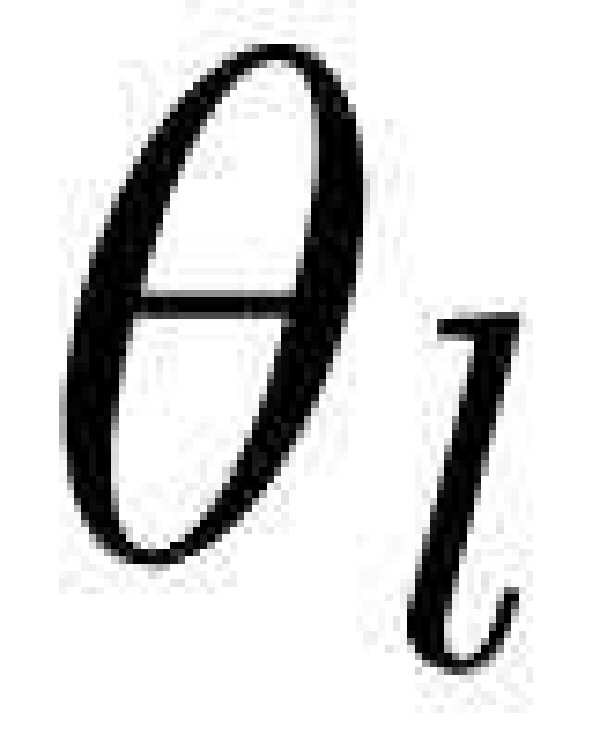
그런 후, 학습 제어부(20)는 인공 신경망 모델(10)의 출력값으로부터 l번째 미니 배치에 포함된 데이터들 각각에 대한 가중치의 그래디언트 벡터(gradient vector) 시퀀스를 산출한다(S230). 이는 다음의 <수학식 1>과 같이 표현된다. Then, the

<수학식 1>에서 l은 미니 배치의 순번을 의미하고, m은 미니 배치 사이즈(mini-batch size)를 의미한다. 또한, 가중치의 그래디언트 벡터는 <수학식 2>와 같이 산출된다. In <

그런 후, 국소 최소 근접 산출부(30)는 다음의 <수학식 3>과 같이 정의된 그래디언트 확실성(Gradient Certainty) 값을 산출한다(S240).Then, the local

<수학식 3>에서 
따라서, 본 발명에 따라, 국소 모드(local mode)에 도달된 가중치를 샘플링하기 위해, 가중치 샘플링부(40)는 그래디언트 확실성 값이 소정 임계치 미만인지를 판단한다(S250). Accordingly, according to the present invention, in order to sample the weights that have reached the local mode, the
즉, S235에서 그래디언트 불확실 값이 소정 임계치 미만일 경우, 즉 해당 가중치(weight)가 국소 모드(local mode)에 도달했다고 판단될 경우에만 가중치 샘플링부(40)는 해당 가중치를 샘플링한다(S240). That is, only when the gradient uncertainty value is less than a predetermined threshold value in S235, that is, when it is determined that the corresponding weight has reached the local mode, the
그러면, 학습 제어부(20)는 가중치 샘플링부(20)로부터의 전달되는 샘플링 여부에 따라 가중치를 업데이트를 다르게 한다. 즉, 가중치가 샘플링된 경우, 학습 제어부(20)는 국소 모드(local mode)에서 빠져나오도록 다음의 <수학식 4>와 같이 그래디언트(gradient)에 가우시안 노이즈(Gaussian noise)를 가산하여 가중치를 업데이트한다(S270). Then, the

반면, 가중치가 샘플링되지 않은 경우, 즉 S250에서 그래디언트 불확실 값이 소정 임계치 미만이 아닐 경우, 학습 제어부(20)는 다음의 <수학식 5>와 같이 가중치를 업데이트한다(S280). On the other hand, when the weight is not sampled, that is, when the gradient uncertainty value is not less than a predetermined threshold in S250, the

<수학식 4> 및 <수학식 5>에서 

그런 후, 학습 제어부(20)는 미니 배치 순번 l이 마지막 T개에 도달하는지의 여부를 판단(S290)하고, 훈련할 미니배치 데이터가 더 있을 경우, S320을 수행한 후, S220으로 되돌아가서 인공 신경망 모델(10)의 학습을 진행하여 새로운 국소 모드(local mode)를 찾아나선다. Thereafter, the
전술한 바와 같은 과정에 의해 샘플링된 가중치들은 DB(50)에 저장되고, 샘플링 모델 생성부(60)는 샘플링된 가중치들 각각에 상응하는 인공 신경망 모델(10)과 동일한 구조의 샘플링 모델들(110-1, 110-2,...., 110-K)을 생성한다. The weights sampled by the above-described process are stored in the
이와 같이 본 발명에서 생성된 샘플링 모델들(110-1, 110-2,...., 110-K) 각각에서의 출력값들을 통해 가중치(weight)의 사후 분포(posterior distribution) 및 인공 신경망 모델(10)의 불확실성을 표현해낼 수 있다. 그러면, 이러한 샘플링 모델들(110-1, 110-2,...., 110-K)을 이용한 불확실성 예측 장치에 대해 도 3 및 도 5를 참조하여 살펴보기로 한다. The posterior distribution of the weight and the artificial neural network model through the output values of each of the sampling models 110-1, 110-2, ...., 110-K generated in the present invention as described above ( The uncertainty of 10) can be expressed. Then, an apparatus for predicting uncertainty using the sampling models 110-1, 110-2,..., 110-K will be described with reference to FIGS. 3 and 5.
도 3는 본 발명의 일 실시 예에 따른 불확실성 예측 장치의 블록 구성도이고, 도 4는 본 발명의 다른 실시 예에 따른 불확실성 예측 장치의 블록 구성도이다. 3 is a block diagram of an apparatus for predicting uncertainty according to an embodiment of the present invention, and FIG. 4 is a block diagram of an apparatus for predicting uncertainty according to another embodiment of the present invention.
도 3 및 도 4를 참조하면, 불확실성 예측 장치(100)는 인공 신경망 모델(10), 적어도 둘 이상의 샘플링 모델들(110-1, 110-2,...., 110-K) 및 출력 생성부(120)를 포함한다. 3 and 4, the uncertainty prediction apparatus 100 generates an artificial
인공 신경망 모델(10)은 라벨링된 훈련 데이터를 입력받아 레이블값에 근접한 출력값을 생성하도록 훈련되어 생성된 딥러닝 기반 인공 지능 학습 모델이다. 예컨대, 인공 신경망 모델(10)은 숫자 '4'의 형상 이미지 데이터가 입력됨에 따라, 훈련 데이터 셋의 레이블들 중 하나의 값 또는 레이블값이 나올 확률 벡터값을 출력하도록 훈련된 분류 모델일 수 있다. The artificial
샘플링 모델들(110-1, 110-2,...., 110-K)은 인공 신경망 모델(10)의 학습 과정에서 샘플링된 적어도 둘 이상의 가중치들 각각에 의해 모델링된 인공 신경망 모델일 수 있다. 즉, 전술한 바와 같이, 샘플링 모델들(110-1, 110-2,...., 110-K)은 인공 신경망 모델(10)의 불확실성을 나타내 줄 수 있는 것으로, 가중치의 근사 사후 분포(approximate posterior distribution)를 표현하기 위해 구현된 모델들이다. 여기서, 샘플링된 적어도 둘 이상의 가중치들은 국소 최소(local minimum)에 근접한 것으로 판단된 것일 수 있다. 더 상세하게는, 도 1 및 도 2을 참조하여 전술한 바와 같이, 샘플링된 적어도 둘 이상의 가중치들은 인공 신경망 모델의 훈련 데이터들 중 미니 배치의 데이터들 각각 대한 가중치의 그래디언트 벡터들 간 내적값들의 합산값이 소정 임계치 이하일 때 샘플링된 것일 수 있다. The sampling models 110-1, 110-2, ..., 110-K may be an artificial neural network model modeled by each of at least two or more weights sampled in the learning process of the artificial
출력 생성부(120)는 인공 신경망 모델(10) 및 샘플링 모델들(110-1, 110-2,...., 110-K) 각각에 동일한 하나의 데이터를 입력시킨 후, 각각으로부터 출력되는 출력값들을 종합하여 가중치 사후 분포로 표현되는 불확실성가 반영된 결과값을 출력한다. 이를 위해, 출력 생성부(120)는 샘플링 모델들(110-1, 110-2,...., 110-K) 각각으로부터 출력값들을 취합하는 불확실성 산출부(121)를 포함한다. The
여기서, 인공 신경망 모델(10)이 N개의 레이블들 중 하나로 라벨링된 훈련 데이터들에 의해 학습되고, 샘플링 모델들(110-1, 110-2,...., 110-K) 각각의 출력값은 N개의 레이블들 각각에 대해 상응하는 확률값들인 N차원 정보일 수 있다. Here, the artificial
이럴 경우, 일 양상에 따라, 불확실성 산출부(121)는 샘플링 모델들(110-1, 110-2,...., 110-K) 각각으로부터 산출된 N차원 정보들 각각으로부터 샘플링 모델들 각각으로부터 산출된 N차원 정보들을 합산한 하나의 N차원 정보를 출력할 수 있다. 예컨대, 인공 신경망 모델(10)이 '0'에서 '9'로 라벨링된 MNIST 데이터들로 학습된 모델일 경우, 샘플링 모델들(110-1, 110-2,...., 110-K) 각각은 입력된 데이터가 '0'에서 '9'까지의 레이블들 각각에 대한 유사도를 확률값으로 출력해낼 수 있다. 즉, 샘플링 모델들(110-1, 110-2,...., 110-K) 각각은 10차원 확률 정보를 출력할 수 있다. 그러면, 불확실성 산출부(121)는 K 개의 10차원 확률 정보들을 합산하여 출력한다. In this case, according to an aspect, the
다른 양상에 따라, 불확실성 산출부(121)는 샘플링 모델들(110-1, 110-2,...., 110-K) 각각으로부터 산출된 N차원 정보들 각각으로부터 샘플링 모델들 각각으로부터 산출된 N차원 정보들 각각으로부터 최대 확률값을 가지는 하나의 레이블을 선별하고, 레이블들 별로 선별된 갯수를 카운팅한 값인 N차원 정보를 출력할 수 있다. According to another aspect, the
출력 생성부(120)는 이러한 불확실성 산출부(121)에 의해 출력된 불확실성가 반영된 결과값을 생성하여 출력하는데 다양한 실시 예들이 가능하다. The
일 실시 예에 따라, 도 3에 도시된 바와 같이, 출력 생성부(120)는 불확실성가 반영된 결과값으로 인공 신경망 모델(10)로부터 출력된 정답 추정값 및 불확실성 산출부(121)로부터 출력된 정답 추정값에 대한 불확실성을 별개로 출력할 수 있다. 예컨대, 도 3에 도시된 입력 데이터에 대해 '7'이라는 정답 추정값과 아울러 '0'에서 '9'까지의 레이블들 각각에 대한 확률 분포도를 출력할 수 있다. 그러면, 비록 인공 신경망 모델(10)이 '7'이라고 정답 추정값을 출력하였으나, 입력된 데이터는 사람이 인식하는 것처럼 '3' 또는 '7' 로 판단될 확률이 엇비슷하므로, 정답 추정값에 대한 불확실성가 크다고 짐작해 볼 수 있다. According to an embodiment, as shown in FIG. 3, the
다른 실시 예에 따라, 도 4에 도시된 바와 같이, 출력 생성부(120)는 결과값 조합부(122)를 더 포함하여, 인공 신경망 모델(10)로부터 출력된 정답 추정값 및 불확실성 산출부(121)로부터 출력된 정답 추정값에 대한 불확실성을 기반으로 하나의 불확실성가 반영된 정답 추정값을 출력할 수도 있다. 예컨대, 인공 신경망 모델(10) 및 불확실성 산출부(121)로부터 출력된 N차원 확률 정보들을 합산하여 출력할 수도 있고, 합산된 N차원 확률 정보로부터 상위 복수의 정답값들을 출력할 수도 있다. 즉, 사람이 인식하는 것과 같이 '입력 이미지가 '3'인것 같기도 하고 '7'인것 같기도 하다'는 의미의 결과값을 출력할 수도 있다. According to another embodiment, as shown in FIG. 4, the
전술한 바와 같은 불확실성 예측 장치의 성능 평가를 위한 테스트 결과에 대해 다음의 도 5 내지 6을 참조하여 설명하기로 한다. 여기서, 가중치(weight)의 사후 분포(Posterior distribution)을 대략적으로 나타내고 불확실성을 잘 표현하는지 확인하기 위해, 숫자 이미지인 MNIST 데이터 셋을 사용하여 인공 신경망 모델(10)을 학습하고, 판단하기 애매한 MNIST 데이터 및 숫자 이미지가 아닌 notMNIST 데이터 셋을 사용하여 불확실성 예측 장치의 성능을 평가하였다. The test results for evaluating the performance of the uncertainty prediction apparatus as described above will be described with reference to FIGS. 5 to 6 below. Here, in order to approximate the posterior distribution of the weight and check whether the uncertainty is well expressed, the artificial
도 5는 판단하기 애매한 MNIST 데이터에 대한 불확실성 테스트 결과 도면이고, 도 6는 notMNIST 데이터에 대한 불확실성 테스트 결과 도면이다. 5 is a diagram illustrating an uncertainty test result for MNIST data that is ambiguous to determine, and FIG. 6 is a diagram illustrating an uncertainty test result for notMNIST data.
도 5 및 도 6을 참조하면, MNIST 데이터 셋은 28*28 흑백 이미지로 손으로 작성한 숫자(0-9)가 적혀 있다. notMNIST 데이터 셋은 MNIST와 동일하게 28*28 흑백 이미지이지만 다양한 형태의 알파벳(A-J)이 그려져 있다. 그리고, 기존에 존재하는 SGLD(도 5 및 도 6의 (a)), Dropout(도 5 및 도 6의 (b))에 의해 생성된 모델에 의한 결과값과, 본 발명에서 제안하는 방법((도 5 및 도 6의 (c))의 결과값과 비교하였다.5 and 6, the MNIST data set is a 28*28 black and white image, and numbers (0-9) written by hand are written. The notMNIST data set is a 28*28 black and white image similar to MNIST, but various types of alphabets (A-J) are drawn. And, the result value of the model generated by the existing SGLD (Fig. 5 and Fig. 6 (a)), Dropout (Fig. 5 and Fig. 6 (b)), and the method proposed by the present invention (( It was compared with the results of Figures 5 and 6 (c)).
MNIST 테스트 데이터중에서 하나의 숫자라고 판단하기 애매한 데이터에 대하여 실험해보았다. 도 5에서와 같이 MNIST 데이터 중에서 하나의 숫자로 판단하기 애매한 그림들에 대해서 각각의 알고리즘을 실험해보았다. 첫 번째 그림의 경우 정답 숫자는 '4'이지만 '9'처럼 보이기도 한다. 두 번째 그림의 경우 정답 숫자는 '7'이지만 '3'처럼 보이기도 한다. 두 데이터에 대해서 본 발명은 숫자 정답을 맞추었을 뿐만 아니라 불확실성을 잘 표현하였다. 반면에 SGlD와 MNIST 데이터로 학습한 모델에 notMNIST 데이터로 테스트한 경우, Dropout 알고리즘의 경우 정답을 맞추지 못하거나, 맞추더라도 큰 확신을 가지고 정답을 맞추었기 때문에 불확실을 잘 표현하지 못한 것으로 판단된다.Among the MNIST test data, we experimented on data that was ambiguous to judge as one number. As shown in FIG. 5, each algorithm was tested for figures that are ambiguous to determine as one number among MNIST data. In the case of the first picture, the correct answer number is '4', but it also looks like '9'. In the case of the second picture, the correct answer number is '7', but it also looks like '3'. For both data, the present invention not only corrects the numerical answers, but also expresses the uncertainty well. On the other hand, in the case of testing with notMNIST data on a model trained with SGlD and MNIST data, it is judged that the Dropout algorithm did not fit the correct answer, or even if it did, because the correct answer was answered with great confidence.
다음으로, MNIST로 학습한 모델에 notMNIST 데이터로 테스트한 경우를 살펴보았다. 도 6에 도시된 바와 같이, SGlD와 Dropout의 경우 A와 H에 대해서 특정 숫자를 나타낸다고 확신하는 반면, 본 발명에서는 0-9까지 여러 개의 결과를 나타냄으로써 데이터에 대한 정답이 불확실함을 표현해줄 수 있다.Next, the case of testing with notMNIST data on the model trained with MNIST was examined. As shown in Fig. 6, in the case of SGlD and Dropout, it is convinced that specific numbers are represented for A and H, whereas in the present invention, the correct answer to the data is uncertain by displaying several results from 0-9. have.
Claims (10)
인공 신경망 모델의 학습 과정에서 샘플링된 적어도 둘 이상의 가중치들 각각에 의해 모델링된 샘플링 모델들과,
인공 신경망 모델 및 샘플링 모델들 각각에 동일한 하나의 데이터가 입력된 후, 각각으로부터 출력되는 출력값들을 종합하여 불확실성 정도가 반영된 결과값을 생성하는 출력 생성부를 포함하되,
샘플링된 적어도 둘 이상의 가중치들은 국소 최소(local minimum)에 근접한 것인 불확실성 예측 장치.
An artificial neural network model trained based on deep learning,
Sampling models modeled by each of at least two or more weights sampled in the learning process of the artificial neural network model,
After the same one data is input to each of the artificial neural network model and the sampling models, including an output generator that synthesizes the output values output from each to generate a result value reflecting the degree of uncertainty,
The apparatus for predicting uncertainty in which the sampled at least two or more weights are close to a local minimum.
인공 신경망 모델의 학습 과정에서 샘플링된 적어도 둘 이상의 가중치들 각각에 의해 모델링된 샘플링 모델들과,
인공 신경망 모델 및 샘플링 모델들 각각에 동일한 하나의 데이터가 입력된 후, 각각으로부터 출력되는 출력값들을 종합하여 불확실성 정도가 반영된 결과값을 생성하는 출력 생성부를 포함하되,
샘플링된 적어도 둘 이상의 가중치들은 인공 신경망 모델의 훈련 데이터들 중 미니 배치의 데이터들 각각 대한 가중치의 경사 벡터들 간 내적값들의 합산값이 소정 임계치 이하일 때 샘플링된 것인 불확실성 예측 장치.
An artificial neural network model trained based on deep learning,
Sampling models modeled by each of at least two or more weights sampled in the learning process of the artificial neural network model,
After the same one data is input to each of the artificial neural network model and the sampling models, including an output generator that synthesizes the output values output from each to generate a result value reflecting the degree of uncertainty,
The sampled at least two weights are sampled when the sum of inner product values between gradient vectors of weights for each of mini-batch data among training data of the artificial neural network model is less than or equal to a predetermined threshold.
N개의 레이블들 중 하나로 라벨링된 훈련 데이터들에 의해 학습되고,
샘플링 모델들 각각의 출력값은
N개의 레이블들 각각에 대해 상응하는 확률값들인 N차원 정보이되,
출력 생성부는
샘플링 모델들 각각으로부터 산출된 N차원 정보들을 합산한 하나의 N차원 정보를 출력하는 불확실성 정도 산출부를 포함하는 불확실성 예측 장치.
The method of claim 2, wherein the artificial neural network model
Learned by training data labeled with one of the N labels,
The output value of each of the sampling models is
N-dimensional information, which is the corresponding probability values for each of the N labels,
The output generator
An uncertainty prediction apparatus including an uncertainty degree calculator that outputs one N-dimensional information obtained by summing the N-dimensional information calculated from each of the sampling models.
N개의 레이블들 중 하나로 라벨링된 훈련 데이터들에 의해 학습되고,
샘플링 모델들 각각의 출력값은
N개의 레이블들 각각에 대해 상응하는 확률값들인 N차원 정보이되,
출력 생성부는
샘플링 모델들 각각으로부터 산출된 N차원 정보들 각각으로부터 최대 확률값을 가지는 하나의 레이블을 선별하고, 레이블들 별로 선별된 갯수를 카운팅한 값인 N차원 정보를 출력하는 불확실성 정도 산출부를 포함하는 불확실성 예측 장치.
The method of claim 2, wherein the artificial neural network model
Learned by training data labeled with one of the N labels,
The output value of each of the sampling models is
N-dimensional information, which is the corresponding probability values for each of the N labels,
The output generator
An uncertainty prediction apparatus comprising an uncertainty degree calculation unit that selects one label having a maximum probability value from each of the N-dimensional information calculated from each of the sampling models, and outputs N-dimensional information, which is a value obtained by counting the number of selected labels.
인공 신경망 모델로부터 출력된 정답 추정값와 함께 불확실성 정도 산출부로부터 출력된 정답 추정값에 대한 불확실성 정도를 별개로 출력하는 불확실성 예측 장치.
The method of claim 4 or 5, wherein the output generator
An uncertainty prediction device that separately outputs an uncertainty degree for the correct answer estimate output from the uncertainty degree calculation unit together with the correct answer estimate output from the artificial neural network model.
인공 신경망 모델로부터 출력된 정답 추정값 및 불확실성 정도 산출부로부터 출력된 불확실성 정도를 기반으로 하나의 불확실성 반영된 정답 추정값을 산출하는 결과값 조합부를 더 포함하는 불확실성 예측 장치.
The method of claim 4 or 5, wherein the output generator
An uncertainty prediction apparatus further comprising a result value combination unit that calculates a correct answer estimate value reflecting one uncertainty based on the correct answer estimate output from the artificial neural network model and the uncertainty degree output from the uncertainty degree calculation unit.
인공 신경망에 훈련 데이터들 중 해당 순번의 미니 배치 데이터를 입력하는 단계와,
인공 신경망의 출력값으로부터 가중치의 국소 최소(local minimum) 근접 여부를 판단하는 단계와,
가중치가 국소 최소에 근접한 것으로 판단될 경우, 해당 가중치로 모델링된 샘플링 모델을 생성하고, 가우시안 노이즈를 추가하여 가중치를 업데이트시키는 단계와,
가중치가 국소 최소에 근접한 것이 아닌 것으로 판단될 경우, 가중치를 업데이트시키는 단계를 포함하되,
상기 단계들을 순차적으로 반복하는 불확실성 예측을 위한 샘플링 모델 생성 방법.
In the method of generating a sampling model for predicting uncertainty that each step is implemented by program instructions executed in a computer and executed by a computer,
Inputting mini-batch data of a corresponding sequence among training data to an artificial neural network,
Determining whether the weight is close to a local minimum from the output value of the artificial neural network; and
When it is determined that the weight is close to the local minimum, generating a sampling model modeled with the weight and adding Gaussian noise to update the weight,
If it is determined that the weight is not close to the local minimum, including the step of updating the weight,
A method of generating a sampling model for predicting uncertainty by sequentially repeating the above steps.
미니 배치의 데이터들 각각 대한 가중치의 경사 벡터를 산출하는 단계와,
경사 벡터들 간의 내적값들의 합산값을 산출하는 단계와,
합산값이 소정 임계치 이하인지를 판단하는 단계를 포함하는 불확실성 예측을 위한 샘플링 모델 생성 방법.
The method of claim 8, wherein the determining step
Calculating a gradient vector of weights for each of the mini-batch data,
Calculating a sum value of dot product values between gradient vectors,
A method of generating a sampling model for predicting uncertainty comprising determining whether the sum value is less than or equal to a predetermined threshold.
Priority Applications (2)
| Application Number | Priority Date | Filing Date | Title |
|---|---|---|---|
| KR1020180157352A KR102200212B1 (en) | 2018-12-07 | 2018-12-07 | Apparatus and Method for Generating Sampling Model for Uncertainty Prediction, Apparatus for Predicting Uncertainty |
| US16/706,679 US11610097B2 (en) | 2018-12-07 | 2019-12-07 | Apparatus and method for generating sampling model for uncertainty prediction, and apparatus for predicting uncertainty |
Applications Claiming Priority (1)
| Application Number | Priority Date | Filing Date | Title |
|---|---|---|---|
| KR1020180157352A KR102200212B1 (en) | 2018-12-07 | 2018-12-07 | Apparatus and Method for Generating Sampling Model for Uncertainty Prediction, Apparatus for Predicting Uncertainty |
Publications (2)
| Publication Number | Publication Date |
|---|---|
| KR20200075071A KR20200075071A (en) | 2020-06-26 |
| KR102200212B1 true KR102200212B1 (en) | 2021-01-08 |
Family
ID=70970242
Family Applications (1)
| Application Number | Title | Priority Date | Filing Date |
|---|---|---|---|
| KR1020180157352A Active KR102200212B1 (en) | 2018-12-07 | 2018-12-07 | Apparatus and Method for Generating Sampling Model for Uncertainty Prediction, Apparatus for Predicting Uncertainty |
Country Status (2)
| Country | Link |
|---|---|
| US (1) | US11610097B2 (en) |
| KR (1) | KR102200212B1 (en) |
Cited By (3)
| Publication number | Priority date | Publication date | Assignee | Title |
|---|---|---|---|---|
| KR20230046516A (en) | 2021-09-30 | 2023-04-06 | 서울여자대학교 산학협력단 | Method, apparatus and program to estimate uncertainty based on test-time mixup augmentation |
| KR20250029622A (en) | 2023-08-23 | 2025-03-05 | 경희대학교 산학협력단 | Apparatus and method for predicting uncertainty of deep neural network |
| KR20250082869A (en) | 2023-11-30 | 2025-06-09 | 삼성에스디에스 주식회사 | Method for measuring uncertainty and system therefor |
Families Citing this family (12)
| Publication number | Priority date | Publication date | Assignee | Title |
|---|---|---|---|---|
| US11099108B2 (en) * | 2018-11-21 | 2021-08-24 | Qc Labs | Systems and method for providing a graphical user interface for automated determination of randomized representative sampling |
| KR102590113B1 (en) * | 2020-12-02 | 2023-10-18 | 한국과학기술원 | Computer system for inferring uncertainty of human and method thereof |
| US20240071070A1 (en) * | 2020-12-31 | 2024-02-29 | Seoul National University R&Db Foundation | Algorithm and method for dynamically changing quantization precision of deep-learning network |
| CN112836050B (en) * | 2021-02-04 | 2022-05-17 | 山东大学 | Citation network node classification method and system aiming at relation uncertainty |
| CN117063208A (en) * | 2021-03-17 | 2023-11-14 | 华为云计算技术有限公司 | Unsupervised multi-model joint inference system and method |
| CN113127624B (en) * | 2021-06-16 | 2021-11-16 | 北京金山数字娱乐科技有限公司 | Question answering model training method and device |
| CN113487617A (en) * | 2021-07-26 | 2021-10-08 | 推想医疗科技股份有限公司 | Data processing method, data processing device, electronic equipment and storage medium |
| KR20230049275A (en) * | 2021-10-06 | 2023-04-13 | 삼성전자주식회사 | Training method, electronic apparatus, and operating method of the electronic apparatus |
| CN114462581B (en) * | 2022-02-24 | 2025-04-18 | 京东科技信息技术有限公司 | Network structure search method and device |
| CN114936561B (en) * | 2022-04-11 | 2025-01-07 | 阿里巴巴(中国)有限公司 | Speech text processing method and device, storage medium and processor |
| CN115430347B (en) * | 2022-07-14 | 2024-04-19 | 上海荣美农业科技有限公司 | Controller, stirring apparatus, control method, and computer-readable storage medium |
| CN115964785B (en) * | 2022-12-26 | 2025-05-02 | 高速铁路建造技术国家工程研究中心 | Importance sampling method for reliability calculation of high-speed railway bridges based on deep generative network |
Family Cites Families (4)
| Publication number | Priority date | Publication date | Assignee | Title |
|---|---|---|---|---|
| US20180240031A1 (en) * | 2017-02-17 | 2018-08-23 | Twitter, Inc. | Active learning system |
| US11676296B2 (en) * | 2017-08-11 | 2023-06-13 | Sri International | Augmenting reality using semantic segmentation |
| US11995538B2 (en) * | 2018-05-10 | 2024-05-28 | Microsoft Technology Licensing, Llc | Selecting a neural network architecture for a supervised machine learning problem |
| US12001949B2 (en) * | 2018-09-05 | 2024-06-04 | Sartorius Stedim Data Analytics Ab | Computer-implemented method, computer program product and system for data analysis |
-
2018
- 2018-12-07 KR KR1020180157352A patent/KR102200212B1/en active Active
-
2019
- 2019-12-07 US US16/706,679 patent/US11610097B2/en active Active
Non-Patent Citations (1)
| Title |
|---|
| Uncertainty in Neural Networks: Bayesian Ensembling. Tim Pearce et al. arXiv. 2018.10.22.* |
Cited By (3)
| Publication number | Priority date | Publication date | Assignee | Title |
|---|---|---|---|---|
| KR20230046516A (en) | 2021-09-30 | 2023-04-06 | 서울여자대학교 산학협력단 | Method, apparatus and program to estimate uncertainty based on test-time mixup augmentation |
| KR20250029622A (en) | 2023-08-23 | 2025-03-05 | 경희대학교 산학협력단 | Apparatus and method for predicting uncertainty of deep neural network |
| KR20250082869A (en) | 2023-11-30 | 2025-06-09 | 삼성에스디에스 주식회사 | Method for measuring uncertainty and system therefor |
Also Published As
| Publication number | Publication date |
|---|---|
| US20200184312A1 (en) | 2020-06-11 |
| KR20200075071A (en) | 2020-06-26 |
| US11610097B2 (en) | 2023-03-21 |
Similar Documents
| Publication | Publication Date | Title |
|---|---|---|
| KR102200212B1 (en) | Apparatus and Method for Generating Sampling Model for Uncertainty Prediction, Apparatus for Predicting Uncertainty | |
| US11681921B2 (en) | Method of outputting prediction result using neural network, method of generating neural network, and apparatus therefor | |
| US11475180B2 (en) | System and method for determination of air entrapment in ladles | |
| EP3671555A1 (en) | Object shape regression using wasserstein distance | |
| KR20240034804A (en) | Evaluating output sequences using an autoregressive language model neural network | |
| US11983245B2 (en) | Unmanned driving behavior decision-making and model training | |
| US20190385055A1 (en) | Method and apparatus for artificial neural network learning for data prediction | |
| JPH08329031A (en) | Hypothesis generation device, hypothesis generation method, and classification device | |
| KR102011788B1 (en) | Visual Question Answering Apparatus Using Hierarchical Visual Feature and Method Thereof | |
| US20250014698A1 (en) | Method and system for analysing medical images to generate a medical report | |
| CN112686317B (en) | Neural network training method, device, electronic device and storage medium | |
| JP6955233B2 (en) | Predictive model creation device, predictive model creation method, and predictive model creation program | |
| US11816186B2 (en) | Architecture for dynamic ML model drift evaluation and visualization on a GUI | |
| US20210056675A1 (en) | Image generation device, image generation method, and image generation program | |
| CN118861693A (en) | A model training method, device, equipment and medium | |
| CN119885204A (en) | Static code analysis system and method based on stain analysis | |
| KR20190141581A (en) | Method and apparatus for learning artificial neural network for data prediction | |
| CN114283843B (en) | Neural network model fusion monitoring method and device | |
| WO2025265056A1 (en) | Weight averaged rewarded policy training for machine learning models | |
| CN119541552A (en) | A complex emotion representation and perception method based on emotion vector | |
| KR102731304B1 (en) | Apparatus, method and recording medium storing instructions for optimizing hyperparameter | |
| WO2025059913A1 (en) | Method and apparatus for calibrating a language model | |
| Rguibi et al. | Explaining Deep Neural Networks in medical imaging context | |
| CN116629363A (en) | A method for evaluating the generalization ability of model abstract reasoning based on deep network | |
| Scemama et al. | On the out-of-distribution coverage of combining split conformal prediction and bayesian deep learning |
Legal Events
| Date | Code | Title | Description |
|---|---|---|---|
| PA0109 | Patent application |
St.27 status event code: A-0-1-A10-A12-nap-PA0109 |
|
| PA0201 | Request for examination |
St.27 status event code: A-1-2-D10-D11-exm-PA0201 |
|
| R18-X000 | Changes to party contact information recorded |
St.27 status event code: A-3-3-R10-R18-oth-X000 |
|
| R18-X000 | Changes to party contact information recorded |
St.27 status event code: A-3-3-R10-R18-oth-X000 |
|
| PN2301 | Change of applicant |
St.27 status event code: A-3-3-R10-R13-asn-PN2301 St.27 status event code: A-3-3-R10-R11-asn-PN2301 |
|
| PN2301 | Change of applicant |
St.27 status event code: A-3-3-R10-R13-asn-PN2301 St.27 status event code: A-3-3-R10-R11-asn-PN2301 |
|
| E902 | Notification of reason for refusal | ||
| PE0902 | Notice of grounds for rejection |
St.27 status event code: A-1-2-D10-D21-exm-PE0902 |
|
| P22-X000 | Classification modified |
St.27 status event code: A-2-2-P10-P22-nap-X000 |
|
| PG1501 | Laying open of application |
St.27 status event code: A-1-1-Q10-Q12-nap-PG1501 |
|
| E13-X000 | Pre-grant limitation requested |
St.27 status event code: A-2-3-E10-E13-lim-X000 |
|
| P11-X000 | Amendment of application requested |
St.27 status event code: A-2-2-P10-P11-nap-X000 |
|
| P13-X000 | Application amended |
St.27 status event code: A-2-2-P10-P13-nap-X000 |
|
| E90F | Notification of reason for final refusal | ||
| PE0902 | Notice of grounds for rejection |
St.27 status event code: A-1-2-D10-D21-exm-PE0902 |
|
| P11-X000 | Amendment of application requested |
St.27 status event code: A-2-2-P10-P11-nap-X000 |
|
| P13-X000 | Application amended |
St.27 status event code: A-2-2-P10-P13-nap-X000 |
|
| PN2301 | Change of applicant |
St.27 status event code: A-3-3-R10-R13-asn-PN2301 St.27 status event code: A-3-3-R10-R11-asn-PN2301 |
|
| E701 | Decision to grant or registration of patent right | ||
| PE0701 | Decision of registration |
St.27 status event code: A-1-2-D10-D22-exm-PE0701 |
|
| GRNT | Written decision to grant | ||
| PR0701 | Registration of establishment |
St.27 status event code: A-2-4-F10-F11-exm-PR0701 |
|
| PR1002 | Payment of registration fee |
St.27 status event code: A-2-2-U10-U11-oth-PR1002 Fee payment year number: 1 |
|
| PG1601 | Publication of registration |
St.27 status event code: A-4-4-Q10-Q13-nap-PG1601 |
|
| P14-X000 | Amendment of ip right document requested |
St.27 status event code: A-5-5-P10-P14-nap-X000 |
|
| R18-X000 | Changes to party contact information recorded |
St.27 status event code: A-5-5-R10-R18-oth-X000 |
|
| R18-X000 | Changes to party contact information recorded |
St.27 status event code: A-5-5-R10-R18-oth-X000 |
|
| R18-X000 | Changes to party contact information recorded |
St.27 status event code: A-5-5-R10-R18-oth-X000 |
|
| R18-X000 | Changes to party contact information recorded |
St.27 status event code: A-5-5-R10-R18-oth-X000 |
|
| PR1001 | Payment of annual fee |
St.27 status event code: A-4-4-U10-U11-oth-PR1001 Fee payment year number: 4 |
|
| P22-X000 | Classification modified |
St.27 status event code: A-4-4-P10-P22-nap-X000 |
|
| R18-X000 | Changes to party contact information recorded |
St.27 status event code: A-5-5-R10-R18-oth-X000 |
|
| R18-X000 | Changes to party contact information recorded |
St.27 status event code: A-5-5-R10-R18-oth-X000 |
|
| R18 | Changes to party contact information recorded |
Free format text: ST27 STATUS EVENT CODE: A-5-5-R10-R18-OTH-X000 (AS PROVIDED BY THE NATIONAL OFFICE) |
|
| R18-X000 | Changes to party contact information recorded |
St.27 status event code: A-5-5-R10-R18-oth-X000 |
|
| R18 | Changes to party contact information recorded |
Free format text: ST27 STATUS EVENT CODE: A-5-5-R10-R18-OTH-X000 (AS PROVIDED BY THE NATIONAL OFFICE) |
|
| R18-X000 | Changes to party contact information recorded |
St.27 status event code: A-5-5-R10-R18-oth-X000 |