KR101618023B1 - Systems and methods for sparse code multiple access - Google Patents
Systems and methods for sparse code multiple access Download PDFInfo
- Publication number
- KR101618023B1 KR101618023B1 KR1020157015721A KR20157015721A KR101618023B1 KR 101618023 B1 KR101618023 B1 KR 101618023B1 KR 1020157015721 A KR1020157015721 A KR 1020157015721A KR 20157015721 A KR20157015721 A KR 20157015721A KR 101618023 B1 KR101618023 B1 KR 101618023B1
- Authority
- KR
- South Korea
- Prior art keywords
- multiplexed
- codeword
- codewords
- binary
- rti
- Prior art date
- Legal status (The legal status is an assumption and is not a legal conclusion. Google has not performed a legal analysis and makes no representation as to the accuracy of the status listed.)
- Expired - Fee Related
Links
Images


Classifications
-
- H—ELECTRICITY
- H04—ELECTRIC COMMUNICATION TECHNIQUE
- H04L—TRANSMISSION OF DIGITAL INFORMATION, e.g. TELEGRAPHIC COMMUNICATION
- H04L27/00—Modulated-carrier systems
- H04L27/32—Carrier systems characterised by combinations of two or more of the types covered by groups H04L27/02, H04L27/10, H04L27/18 or H04L27/26
- H04L27/34—Amplitude- and phase-modulated carrier systems, e.g. quadrature-amplitude modulated carrier systems
- H04L27/36—Modulator circuits; Transmitter circuits
- H04L27/362—Modulation using more than one carrier, e.g. with quadrature carriers, separately amplitude modulated
-
- H—ELECTRICITY
- H04—ELECTRIC COMMUNICATION TECHNIQUE
- H04B—TRANSMISSION
- H04B7/00—Radio transmission systems, i.e. using radiation field
- H04B7/02—Diversity systems; Multi-antenna system, i.e. transmission or reception using multiple antennas
- H04B7/04—Diversity systems; Multi-antenna system, i.e. transmission or reception using multiple antennas using two or more spaced independent antennas
- H04B7/0413—MIMO systems
-
- H—ELECTRICITY
- H04—ELECTRIC COMMUNICATION TECHNIQUE
- H04J—MULTIPLEX COMMUNICATION
- H04J13/00—Code division multiplex systems
-
- H—ELECTRICITY
- H04—ELECTRIC COMMUNICATION TECHNIQUE
- H04B—TRANSMISSION
- H04B1/00—Details of transmission systems, not covered by a single one of groups H04B3/00 - H04B13/00; Details of transmission systems not characterised by the medium used for transmission
- H04B1/69—Spread spectrum techniques
- H04B1/707—Spread spectrum techniques using direct sequence modulation
-
- H—ELECTRICITY
- H04—ELECTRIC COMMUNICATION TECHNIQUE
- H04B—TRANSMISSION
- H04B7/00—Radio transmission systems, i.e. using radiation field
- H04B7/02—Diversity systems; Multi-antenna system, i.e. transmission or reception using multiple antennas
- H04B7/04—Diversity systems; Multi-antenna system, i.e. transmission or reception using multiple antennas using two or more spaced independent antennas
- H04B7/0413—MIMO systems
- H04B7/0456—Selection of precoding matrices or codebooks, e.g. using matrices antenna weighting
- H04B7/046—Selection of precoding matrices or codebooks, e.g. using matrices antenna weighting taking physical layer constraints into account
- H04B7/0473—Selection of precoding matrices or codebooks, e.g. using matrices antenna weighting taking physical layer constraints into account taking constraints in layer or codeword to antenna mapping into account
-
- H—ELECTRICITY
- H04—ELECTRIC COMMUNICATION TECHNIQUE
- H04J—MULTIPLEX COMMUNICATION
- H04J13/00—Code division multiplex systems
- H04J13/0003—Code application, i.e. aspects relating to how codes are applied to form multiplexed channels
-
- H—ELECTRICITY
- H04—ELECTRIC COMMUNICATION TECHNIQUE
- H04J—MULTIPLEX COMMUNICATION
- H04J13/00—Code division multiplex systems
- H04J13/0074—Code shifting or hopping
-
- H—ELECTRICITY
- H04—ELECTRIC COMMUNICATION TECHNIQUE
- H04L—TRANSMISSION OF DIGITAL INFORMATION, e.g. TELEGRAPHIC COMMUNICATION
- H04L27/00—Modulated-carrier systems
- H04L27/32—Carrier systems characterised by combinations of two or more of the types covered by groups H04L27/02, H04L27/10, H04L27/18 or H04L27/26
- H04L27/34—Amplitude- and phase-modulated carrier systems, e.g. quadrature-amplitude modulated carrier systems
- H04L27/345—Modifications of the signal space to allow the transmission of additional information
-
- H—ELECTRICITY
- H04—ELECTRIC COMMUNICATION TECHNIQUE
- H04L—TRANSMISSION OF DIGITAL INFORMATION, e.g. TELEGRAPHIC COMMUNICATION
- H04L5/00—Arrangements affording multiple use of the transmission path
- H04L5/0001—Arrangements for dividing the transmission path
- H04L5/0014—Three-dimensional division
- H04L5/0016—Time-frequency-code
- H04L5/0021—Time-frequency-code in which codes are applied as a frequency-domain sequences, e.g. MC-CDMA
Landscapes
- Engineering & Computer Science (AREA)
- Signal Processing (AREA)
- Computer Networks & Wireless Communication (AREA)
- Mobile Radio Communication Systems (AREA)
- Compression, Expansion, Code Conversion, And Decoders (AREA)
- Digital Transmission Methods That Use Modulated Carrier Waves (AREA)
- Error Detection And Correction (AREA)
- Radio Transmission System (AREA)
Abstract
이진 데이터를 직접 다차원 코드워드들로 인코딩함으로써 코딩 이득들이 달성될 수 있는데, 이는 종래의 CDMA 인코딩 기법들에 의해 채용되는 QAM 심볼 맵핑을 피할 수 있다. 또한, 상이한 다중화된 계층들에 상이한 코드북들을 배정함으로써 다중 액세스가 달성될 수 있다. 게다가, 메시지 전달 알고리즘(message passing algorithm; MPA)들에 따라 다중화된 코드워드들 내에서 희소 코드워드들이 검출될 수 있기 때문에, 희소 코드워드들이 네트워크의 수신기 측에서 기저대역 처리 복잡도를 감소시키기 위해 사용될 수 있다.Coding gains can be achieved by encoding binary data directly into multidimensional codewords, which can avoid QAM symbol mapping employed by conventional CDMA encoding schemes. Multiple accesses can also be achieved by assigning different codebooks to different multiplexed layers. In addition, since sparse codewords can be detected in codewords multiplexed according to message passing algorithms (MPAs), sparse codewords can be used to reduce baseband processing complexity at the receiver side of the network .
Description
이 출원은, 본 명세서에 그 전체가 마치 복사된 것처럼 참고로 포함되는, 2012년 11월 16일 출원되고 발명의 명칭이 "Systems and Methods for Sparse Code Multiple Access"인 미국 가특허 출원 제61/727,486호 및 2012년 12월 28일 출원되고 발명의 명칭이 "Systems and Methods for Sparse Code Multiple Access"인 미국 특허 제13/730,355호의 이익을 주장한다.This application is related to US Provisional Patent Application No. 61 / 727,486, entitled " Systems and Methods for Sparse Code Multiple Access, " filed on November 16, 2012, the entirety of which is incorporated herein by reference in its entirety. No. 13 / 730,355, filed December 28, 2012, entitled " Systems and Methods for Sparse Code Multiple Access ".
본 발명은 통신들에 관한 것이며, 특정 실시예들에서, 희소 코드 다중 액세스(sparse code multiple access)를 위한 시스템들 및 방법들에 관한 것이다.The present invention relates to communications, and in particular embodiments, systems and methods for sparse code multiple access.
코드 분할 다중 액세스(CDMA; code division multiple access)는 데이터 심볼들이 직교 또는 근직교 코드 시퀀스들(orthogonal or near orthogonal code sequences)에 걸쳐 확산되는 다중 액세스 기법이다. 전통적인 CDMA 인코딩은 확산 시퀀스(spreading sequence)가 적용되기 전에 이진 코드가 직각 진폭 변조(quadrature amplitude modulation; QAM) 심볼에 맵핑되는 2단계 프로세스이다. 종래의 CDMA 인코딩은 비교적 높은 코딩 레이트(coding rate)들을 제공할 수 있지만, 차세대 무선 네트워크들의 계속 늘어나는 요구를 충족하도록 훨씬 더 높은 코딩 레이트를 달성하기 위한 새로운 기법들/메커니즘들이 필요하다.Code division multiple access (CDMA) is a multiple access scheme in which data symbols are spread over orthogonal or near orthogonal code sequences. Traditional CDMA encoding is a two-step process in which a binary code is mapped to a quadrature amplitude modulation (QAM) symbol before a spreading sequence is applied. While conventional CDMA encoding can provide relatively high coding rates, new techniques / mechanisms are needed to achieve a much higher coding rate to meet the ever-increasing demands of next generation wireless networks.
희소 코드 다중 액세스를 위한 시스템들 및 방법들을 설명하는 이 개시 내용의 실시예들에 의해, 기술적 이점들이 일반적으로 달성된다.Technical advantages are generally achieved by the embodiments of this disclosure which describe systems and methods for sparse code multiple access.
일 실시예에 따르면, 데이터를 다중화(multiplexing)하는 방법이 제공된다. 이 예에서, 이 방법은 제1 다중화된 계층과 연관되는 제1 이진 데이터를 수신하는 단계, 제1 코드북(codebook)으로부터 제1 코드워드를 선택함으로써 제1 이진 데이터를 인코딩하는 단계, 및 제1 코드워드와 제2 코드북으로부터의 적어도 제2 코드워드를 다중화하여 다중화된 코드워드들을 획득하는 단계를 포함한다. 제1 코드북은 제1 다중화된 계층에 배타적으로(exclusively) 배정되고, 제2 코드북은 제2 다중화된 계층에 배타적으로 배정된다. 이 방법은 네트워크의 공유된 자원들을 통해 다중화된 코드워드들을 송신하는 단계를 더 포함한다. 이 방법을 수행하기 위한 장치가 또한 제공된다.According to one embodiment, a method of multiplexing data is provided. In this example, the method comprises the steps of receiving first binary data associated with a first multiplexed layer, encoding first binary data by selecting a first code word from a first codebook, And multiplexing at least a second codeword from the codeword and the second codeword to obtain multiplexed codewords. The first codebook is exclusively allocated to the first multiplexed layer and the second codebook is exclusively allocated to the second multiplexed layer. The method further comprises transmitting multiplexed codewords through shared resources of the network. An apparatus for performing this method is also provided.
다른 실시예에 따르면, 데이터를 수신하는 방법이 제공된다. 이 예에서, 방법은 다중화된 코드워드들을 운반하는 신호를 수신하는 단계를 포함한다. 다중화된 코드워드들은 다수의 코드북들에 속하는 코드워드들을 포함하고, 각 코드북은 상이한 다중화된 계층에 배정된다. 방법은 제1 다중화된 계층과 연관되는 수신기에 의해 다중화된 코드워드들 내에서 제1 코드워드를 식별하는 단계를 더 포함한다. 제1 코드워드는 제1 다중화된 계층에 배타적으로 배정되는 코드북에 속한다. 방법은 제1 코드워드를 디코딩하여 제1 이진수를 획득하는 단계를 더 포함한다. 이 방법을 수행하기 위한 장치가 또한 제공된다.According to another embodiment, a method of receiving data is provided. In this example, the method includes receiving a signal carrying multiplexed codewords. The multiplexed code words include code words belonging to a plurality of codebooks, and each codebook is assigned to a different multiplexed layer. The method further includes identifying a first codeword in codewords multiplexed by a receiver associated with the first multiplexed layer. The first codeword belongs to a codebook that is exclusively assigned to the first multiplexed layer. The method further comprises decoding the first codeword to obtain a first binary number. An apparatus for performing this method is also provided.
또 다른 실시예에 따르면, 희소 코드 다중 액세스(SCMA; Sparse Code Multiple Access) 코드를 설계하는 방법이 제공된다. 이 예에서, 방법은 복수의 다차원 변조 코드북들(multi-dimensional modulation codebooks)을 생성하는 단계, 및 복수의 다차원 변조 코드북들로부터 복수의 희소 코드북들을 생성하는 단계를 포함한다. 저밀도 시그니처(LDS; Low Density Signature)들을 설계하는 방법이 또한 제공된다.According to yet another embodiment, a method of designing a sparse code multiple access (SCMA) code is provided. In this example, the method includes generating a plurality of multi-dimensional modulation codebooks, and generating a plurality of sparse codebooks from the plurality of multi-dimensional modulation codebooks. Methods for designing low density signatures (LDS) are also provided.
이 개시 내용 및 그의 이점들을 더욱 완전히 이해시키기 위해, 첨부 도면과 함께 취해지는 하기 설명들이 이제 참조된다:
도 1은 종래의 CDMA 인코더의 다이어그램을 예시한다;
도 2는 종래의 CDMA 인코딩 아키텍처의 다이어그램을 예시한다;
도 3은 실시예 SCMA 인코더의 다이어그램을 예시한다;
도 4는 실시예 SCMA 인코딩 아키텍처의 다이어그램을 예시한다;
도 5는 데이터를 인코딩하는 실시예 방법의 플로차트를 예시한다;
도 6은 데이터를 디코딩하는 실시예 방법의 플로차트를 예시한다;
도 7은 차선의(sub-optimal) SCMA 코드북을 설계하는 실시예 방법론의 다이어그램을 예시한다;
도 8은 LDS 시그니처들(signatures)을 설계하는 실시예 방법론의 다이어그램을 예시한다;
도 9는 BLER 성능을 나타내는 그래프를 예시한다;
도 10은 SCMA 코드의 팩터 그래프(factor graph) 표현의 다이어그램을 예시한다;
도 11은 SCMA 코드의 다른 팩터 그래프 표현의 다이어그램을 예시한다;
도 12는 위상 회전들의 그래프의 다이어그램을 예시한다;
도 13은 LDS에서의 자원 및 계층 노드들에 대해 외적 정보 전달 함수(extrinsic information transfer function)를 나타내는 차트를 예시한다;
도 14는 LDS의 자원 노드들에 대해 출력 계층 정보 대 입력 외적 정보를 나타내는 차트를 예시한다;
도 15는 시그니처 S 2 를 갖는 LDS에 대한 외적 정보 전달 함수들을 나타내는 차트를 예시한다;
도 16은 LDS 시그니처 S 2 에 대한 출력 정보를 나타내는 차트를 예시한다;
도 17은 위상/공액 최적화(phase/conjugate optimization)가 없는 SCMA 코드의 4개의 자원 노드들에 대한 외적 정보 전달 함수를 나타내는 차트를 예시한다;
도 18은 위상/공액 최적화를 갖는 SCMA 코드의 4개의 자원 노드들에 대한 외적 정보 전달 함수를 나타내는 차트를 예시한다;
도 19a는 SCMA 코드의 성능에 대한 다차원 성상(multi-dimensional constellation)의 차원 전력 변화(dimensional power variation)의 영향을 나타내는 차트를 예시한다;
도 19b는 다른 SCMA 코드의 성능에 대한 다차원 성상의 차원 전력 변화의 영향을 나타내는 차트를 예시한다;
도 20a는 SCMA 코드의 성능에 대한 순열 연산자(permutation operator)의 영향을 나타내는 차트를 예시한다;
도 20b는 다른 SCMA 코드의 성능에 대한 순열 연산자의 영향을 나타내는 차트를 예시한다;
도 21a는 SCMA 코드의 성능에 대한 위상/공액 연산자들의 영향을 나타내는 차트를 예시한다;
도 21b는 다른 SCMA 코드의 성능에 대한 위상/공액 연산자들의 영향을 나타내는 차트를 예시한다;
도 22a는 SCMA 코드의 위상/공액 연산자들에 대한 2개의 상이한 최적화 기준의 비교를 나타내는 차트를 예시한다;
도 22b는 다른 SCMA 코드의 위상/공액 연산자들에 대한 2개의 상이한 최적화 기준의 비교를 나타내는 차트를 예시한다;
도 23은 SCMA 코드의 성능에 대한 연산자 할당의 영향을 나타내는 차트를 예시한다;
도 24a는 SCMA 코드의 성능에 대한 실수 도메인 유니터리 연산자(real domain unitary operator)의 영향을 나타내는 차트를 예시한다;
도 24b는 다른 SCMA 코드의 성능에 대한 실수 도메인 유니터리 연산자의 영향을 나타내는 차트를 예시한다;
도 25는 SCMA 코드들의 총 굿풋(total goodput) 및 설계 파라미터들의 영향을 나타내는 차트를 예시한다;
도 26은 상이한 시그니처 행렬들에 대해 LDS 성능을 나타내는 차트를 예시한다;
도 27a는 LDS 시그니처들의 세트의 성능을 나타내는 차트를 예시한다;
도 27b는 LDS 시그니처들의 다른 세트의 성능을 나타내는 차트를 예시한다;
도 28a는 위상 연산자들의 페어와이즈 최적화(pair-wise optimization)에 대해 LDS 시그니처들의 세트의 성능을 나타내는 차트를 예시한다;
도 28b는 위상 연산자들의 상이한 페어와이즈 최적화에 대해 LDS 시그니처들의 다른 세트의 성능을 나타내는 차트를 예시한다;
도 29는 SCMA 대 LDS의 성능을 나타내는 차트를 예시한다;
도 30은 컴퓨팅 플랫폼을 예시하는 블록도이다; 그리고
도 31은 실시예 통신 디바이스의 블록도를 예시한다.
달리 표시가 없으면 상이한 도면들에서의 대응하는 수치들 및 심볼들은 일반적으로 대응하는 부분들을 지칭한다. 도면들은 실시예들의 관련 양태들을 분명히 예시하기 위해 묘사되고, 반드시 일정한 비율로 묘사되지는 않는다.To more fully understand this disclosure and its advantages, reference is now made to the following descriptions taken in conjunction with the accompanying drawings, in which:
Figure 1 illustrates a diagram of a conventional CDMA encoder;
Figure 2 illustrates a diagram of a conventional CDMA encoding architecture;
Figure 3 illustrates a diagram of an exemplary SCMA encoder;
Figure 4 illustrates a diagram of an exemplary SCMA encoding architecture;
Figure 5 illustrates a flowchart of an exemplary method of encoding data;
Figure 6 illustrates a flowchart of an exemplary method of decoding data;
Figure 7 illustrates a diagram of an exemplary methodology for designing a sub-optimal SCMA codebook;
Figure 8 illustrates a diagram of an exemplary methodology for designing LDS signatures;
Figure 9 illustrates a graph illustrating BLER performance;
10 illustrates a diagram of a factor graph representation of an SCMA code;
Figure 11 illustrates a diagram of another factor graph representation of the SCMA code;
Figure 12 illustrates a diagram of a graph of phase rotations;
13 illustrates a chart representing extrinsic information transfer functions for resource and layer nodes in the LDS;
14 illustrates a chart illustrating output layer information versus input extrinsic information for resource nodes of the LDS;
15 illustrates a chart representing extrinsic information transfer functions for an LDS with signature S 2 ;
16 illustrates a chart showing output information for LDS signature S 2 ;
17 illustrates a chart representing an outer information transfer function for four resource nodes of an SCMA code without phase / conjugate optimization;
Figure 18 illustrates a chart representing an extrinsic information transfer function for four resource nodes of the SCMA code with phase / conjugate optimization;
Figure 19A illustrates a chart showing the effect of dimensional power variation of multi-dimensional constellation on the performance of SCMA codes;
Figure 19b illustrates a chart illustrating the effect of dimensional power variations of multidimensional constellations on performance of other SCMA codes;
Figure 20A illustrates a chart showing the effect of a permutation operator on the performance of the SCMA code;
Figure 20b illustrates a chart illustrating the influence of permutation operators on the performance of other SCMA codes;
Figure 21A illustrates a chart illustrating the effect of phase / conjugate operators on the performance of the SCMA code;
Figure 21B illustrates a chart illustrating the effect of phase / conjugate operators on the performance of other SCMA codes;
Figure 22A illustrates a chart illustrating a comparison of two different optimization criteria for phase / conjugate operators of the SCMA code;
Figure 22B illustrates a chart showing a comparison of two different optimization criteria for the phase / conjugate operators of different SCMA codes;
Figure 23 illustrates a chart illustrating the impact of operator assignment on the performance of the SCMA code;
24A illustrates a chart illustrating the effect of a real domain unitary operator on the performance of an SCMA code;
24B illustrates a chart illustrating the effect of real-domain unitary operators on the performance of other SCMA codes;
25 illustrates a chart illustrating the effect of total goodput and design parameters of the SCMA codes;
Figure 26 illustrates a chart illustrating LDS performance for different signature matrices;
Figure 27A illustrates a chart illustrating the performance of a set of LDS signatures;
Figure 27B illustrates a chart illustrating performance of another set of LDS signatures;
Figure 28A illustrates a chart illustrating the performance of a set of LDS signatures for pair-wise optimization of phase operators;
Figure 28B illustrates a chart illustrating performance of another set of LDS signatures for different pairwise optimization of phase operators;
29 illustrates a chart illustrating the performance of an SCMA versus an LDS;
30 is a block diagram illustrating a computing platform; And
31 illustrates a block diagram of an example communication device.
Unless otherwise indicated, corresponding numerals and symbols in different drawings generally refer to corresponding parts. The drawings are depicted to clearly illustrate the relevant aspects of the embodiments, and are not necessarily drawn to scale.
본 명세서에 개시되는 실시예들의 형성 및 이용이 아래에 상세하게 서술된다. 그러나, 본 개시 내용이 매우 다양한 특정 맥락에서 실시될 수 있는 많은 적용 가능한 발명의 개념들을 제공한다는 것을 이해해야 한다. 서술되는 특정 실시예들은 본 발명을 형성하고 이용하기 위한 특정 방식의 예시일 뿐이고, 본 발명의 범주를 제한하지 않는다.The formation and use of the embodiments disclosed herein are described in detail below. It should be understood, however, that the present disclosure provides many applicable inventive concepts that may be practiced in a wide variety of specific contexts. The particular embodiments described are merely illustrative of specific ways of forming and utilizing the invention, and are not intended to limit the scope of the invention.
본 명세서에는 이진 데이터 스트림들을 직접 다차원 코드워드들(multi-dimensional codewords)로 인코딩하는 희소 코드 다중 액세스(SCMA) 인코딩 기법이 개시된다. 이진 데이터를 다차원 코드워드들로 직접 인코딩함으로써, 본 명세서에 설명되는 SCMA 인코딩 기법들은 QAM 심볼 맵핑을 피할 수 있어, 종래의 CDMA 인코딩보다 큰 코딩 이득을 달성한다. 특히, 본 명세서에 설명되는 SCMA 인코딩 기법들은 QAM 심볼보다는 다차원 코드워드를 사용하여 이진 데이터를 전달한다. 또한, 이 개시 내용의 SCMA 인코딩 기법들은, 종래의 CDMA 인코딩에서 일반적인 것처럼 고유 확산 시퀀스(unique spreading sequence)(예컨대, LDS 시그니처 등)를 사용하는 것과는 대조적으로, 각각의 다중화된 계층에 대해 상이한 코드북을 배정함으로써 다중 액세스를 제공한다. 게다가, SCMA 코드북들은 수신기들이 낮은 복잡도의 메시지 전달 알고리즘(message passing algorithm; MPA)들을 이용하여 다중화된 코드워드들 중에서 그들 각각의 코드워드들을 검출할 수 있도록 하는 희소 코드워드들을 포함하고, 이는 수신기 측에서 기저대역 처리 복잡도를 감소시킨다. 이 개시 내용의 대부분은 이진 데이터의 맥락에서 서술되어 있을 수도 있지만, 이 개시 내용의 양태들은 M진 데이터와 같은 다른 종류의 데이터에 동일하게 적용 가능하다.A sparse code multiple access (SCMA) encoding technique is disclosed herein that encodes binary data streams directly into multi-dimensional codewords. By directly encoding binary data into multidimensional codewords, the SCMA encoding schemes described herein can avoid QAM symbol mapping, resulting in greater coding gain than conventional CDMA encoding. In particular, the SCMA encoding schemes described herein carry binary data using multidimensional codewords rather than QAM symbols. In addition, the SCMA encoding schemes of this disclosure have a different codebook for each multiplexed layer, as opposed to using a unique spreading sequence (e.g., LDS signature, etc.) as is common in conventional CDMA encoding Thereby providing multiple access. In addition, the SCMA codebooks contain sparse codewords that allow receivers to detect their respective codewords among the multiplexed codewords using message passing algorithms (MPAs) of low complexity, Thereby reducing baseband processing complexity. Although most of this disclosure may be described in the context of binary data, aspects of this disclosure are equally applicable to other types of data, such as M-ary data.
도 1은 데이터를 인코딩하기 위한 전통적인 CDMA 인코더(100)를 예시한다. 도시되는 바와 같이, CDMA 인코더(100)는 FEC 인코더로부터 수신되는 이진 데이터를 QAM 심볼들에 맵핑시킨 후에, 확산 시그니처들(s1, s2, s3, s4)을 적용하여 인코딩된 데이터 스트림(qs1, qs2, qs3, qs4)을 획득한다. 특히, 확산 시그니처들(s1, s2, s3, s4)은 다중 액세스를 달성하기 위해서 상이한 다중화된 계층들에 배정되는 CDMA 확산 시퀀스들(예컨대, LDS 시그니처들 등)이다.Figure 1 illustrates a
도 2는 종래의 CDMA 인코더(100)에 의해 수행되었을 수도 있는 바와 같이, 이진 데이터 스트림들(201 내지 204)을 네트워크(260)를 통해 복수의 사용자(231 내지 234)로 통신하기 위한 종래의 CDMA 인코딩 아키텍처(200)의 예를 도시하고 있다. 도시되는 바와 같이, 각 이진 데이터 스트림(201 내지 204)은 QAM과 이진수의 관계(QAM-to-binary relationship)(270)에 따라 QAM 심볼들(211 내지 214)에 맵핑된다. 예로서, QAM 심볼(211)은 이진값 '00'과 연관되고, QAM 심볼(212)은 이진값 '01'과 연관되고, QAM 심볼(213)은 이진값 '10'과 연관되고, QAM 심볼(214)은 이진값 '11'과 연관된다. 따라서, QAM 심볼(211)은 이진 데이터 스트림(201)에 맵핑되고, QAM 심볼(212)은 이진 데이터 스트림들(202 및 204)에 맵핑되고, QAM 심볼(213)은 이진 데이터 스트림(203)에 맵핑된다.2 is a block diagram of a
이진수-QAM 맵핑(binary-to-QAM mapping)에 이어서, QAM 심볼들(211 내지 214)은 LDS 시그니처들(221 내지 224)에 따라 함께 다중화된다. 특히, LDS 시그니처들(221 내지 224) 각각은 상이한 다중화된 계층들에 맵핑되는데, 상이한 다중화된 계층들은 사용자들(231 내지 234) 중 상이한 사용자들에 배정되어 다중 액세스를 달성한다. 그리하여, LDS 시그니처들(221 내지 224)은 고정되어 있다(즉, 이진 데이터 스트림들(201 내지 204)에서의 이진값들에 기초하여 변화하지 않는다). 그 후에, 결과적인 일차원 코드워드들(241 내지 244)은 함께 다중화되어, 다중화된 코드워드들(280)을 형성하고, 다중화된 코드워드들(280)은 네트워크(260)를 통해 송신된다. 수신시에, 다중화된 코드워드들(280)은 LDS 시그니처들(221 내지 224)에 따라 역다중화(de-multiplex)되어 QAM 심볼들(211 내지 214)을 획득하는데, 이 QAM 심볼들(211 내지 214)은 QAM과 이진수의 관계(270)에 따라 이진 데이터 스트림들(201 내지 204)을 획득하기 위해 사용된다.Following the binary-to-QAM mapping, the
도 3은 이 개시 내용의 양태들에 따라 데이터를 인코딩하기 위한 SCMA 인코더(300)를 예시한다. 도시되는 바와 같이, SCMA 인코더(300)는 FEC 인코더로부터 수신되는 이진 데이터를 직접 다차원 코드워드들에 맵핑시켜 인코딩된 데이터 스트림(x1, x2, x3, x4)을 획득한다. 다차원 코드워드들은 상이한 다차원 코드북들에 속할 수도 있고, 각 코드북은 상이한 다중화된 계층과 연관된다. 본 명세서에 서술되는 바와 같이, 다중화된 계층들은 다중 데이터 스트림들이 네트워크의 공유된 자원들을 통해 통신될 수도 있는 임의의 계층을 포함할 수도 있다. 예를 들어, 다중화된 계층들은 다중 입력 다중 출력(MIMO; multiple-input-multiple-output) 공간 계층들, 직교 주파수 분할 다중 액세스(OFDMA; Orthogonal Frequency-Division Multiple Access) 톤들, 시분할 다중 액세스(TDMA; time division multiple access) 계층들 및 기타를 포함할 수 있다.FIG. 3 illustrates an
도 4는 이 개시 내용의 양태들에 따라 데이터를 인코딩하기 위한 SCMA 다중화 방식(400)의 예를 나타낸다. 도시되는 바와 같이, SCMA 다중화 방식(400)은 복수의 코드북(410, 420, 430, 440, 450 및 460)을 활용할 수 있는데, 코드북들 각각은 상이한 다중화된 계층에 배정되고 복수의 다차원 코드워드를 포함한다. 더욱 구체적으로, 코드북(410)은 코드워드들(411 내지 414)을 포함하고, 코드북(420)은 코드워드들(421 내지 424)을 포함하고, 코드북(430)은 코드워드들(431 내지 434)을 포함하고, 코드북(440)은 코드워드들(441 내지 444)을 포함하고, 코드북(450)은 코드워드들(451 내지 454)을 포함하고, 코드북(460)은 코드워드들(461 내지 464)을 포함한다. 각각의 코드북의 각 코드워드는 상이한 이진값에 맵핑된다. 이 예에서, 코드워드들(411, 421, 431, 441, 451 및 461)은 이진값 '00'에 맵핑되고, 코드워드들(412, 422, 432, 442, 452 및 462)은 이진값 '01'에 맵핑되고, 코드워드들(413, 423, 433, 443, 453 및 463)은 이진값 '10'에 맵핑되고, 코드워드들(414, 424, 434, 444, 454 및 464)은 이진값 '11'에 맵핑된다. 비록 도 4에서의 코드북들이 각각 4개의 코드워드를 갖는 것으로 도시되어 있지만, SMAC 코드북들은 임의의 개수의 코드워드들을 가질 수 있다. 예를 들어, SMAC 코드북들은 9개의 코드워드(예컨대, 이진값들 '000' … '111'에 맵핑됨), 16개의 코드워드(예컨대, 이진값들'0000' … '1111'에 맵핑됨), 또는 그보다 더 많은 개수의 코드워드를 가질 수도 있다. FIG. 4 shows an example of an SCMA multiplexing scheme 400 for encoding data in accordance with aspects of this disclosure. As shown, the SCMA multiplexing scheme 400 may utilize a plurality of codebooks 410, 420, 430, 440, 450 and 460, each of which is assigned to a different multiplexed layer and a plurality of multi- . More specifically, the codebook 410 includes
도시되는 바와 같이, 다중화된 계층을 통해 송신되는 이진 데이터에 의존하여 다양한 코드북들(410, 420, 430, 440, 450 및 460)로부터 상이한 코드워드들이 선택된다. 이 예에서, 이진값 '11'이 제1 다중화된 계층을 통해 송신되고 있기 때문에 코드워드(414)가 코드북(410)으로부터 선택되고, 이진값 '01'이 제2 다중화된 계층을 통해 송신되고 있기 때문에 코드워드(422)가 코드북(420)으로부터 선택되고, 이진값 '10'이 제3 다중화된 계층을 통해 송신되고 있기 때문에 코드워드(433)가 코드북(430)으로부터 선택되고, 이진값 '01'이 제4 다중화된 계층을 통해 송신되고 있기 때문에 코드워드(442)가 코드북(440)으로부터 선택되고, 이진값 '01'이 제5 다중화된 계층을 통해 송신되고 있기 때문에 코드워드(452)가 코드북(450)으로부터 선택되고, 이진값 '11'이 제6 다중화된 계층을 통해 송신되고 있기 때문에 코드워드(464)가 코드북(460)으로부터 선택된다. 이어서, 코드워드들(414, 422, 433, 442, 452 및 464)은 함께 다중화되어 다중화된 데이터 스트림(480)을 형성하고, 다중화된 데이터 스트림(480)은 네트워크의 공유된 자원들을 통해 송신된다. 특히, 코드워드들(414, 422, 433, 442, 452 및 464)은 희소 코드워드들이므로, MPA를 사용하여 다중화된 데이터 스트림(480)의 수신시에 식별될 수 있다.As shown, different code words are selected from the various codebooks 410, 420, 430, 440, 450 and 460 depending on the binary data transmitted via the multiplexed layer. In this example, the
도 5는 송신기에 의해 수행될 수도 있는 바와 같이, 이 개시 내용의 양태들에 따라 네트워크를 통해 데이터를 통신하는 방법(500)을 예시한다. 방법(500)은 송신기가 제1 이진 데이터 및 제2 이진 데이터를 포함하는 입력 데이터를 수신하는 단계 510에서 시작한다. 다음으로, 방법(500)은 송신기가 제1 다중화된 계층에 배정되는 제1 코드북으로부터 제1 코드워드를 선택함으로써 제1 이진 데이터 스트림을 인코딩하는 단계 520으로 진행한다. 그 후에, 방법(500)은 송신기가 제2 다중화된 계층에 배정되는 제2 코드북으로부터 제2 코드워드를 선택함으로써 제2 이진 데이터 스트림을 인코딩하는 단계 530으로 진행한다. 후속하여, 방법(500)은 송신기가 제1 코드워드와 제2 코드워드를 다중화하여 다중화된 코드워드들을 획득하는 단계 540으로 진행한다. 마지막으로, 방법(500)은 송신기가 다중화된 코드워드들을 네트워크의 공유된 자원들을 통해 송신하는 단계 550으로 진행한다.5 illustrates a
도 6은 제1 다중화된 계층과 연관되는 수신기에 의해 수행될 수도 있는 바와 같이, 이 개시 내용의 양태들에 따라 다중화되는 데이터를 수신하는 방법(600)을 예시한다. 방법(600)은 수신기가 다중화된 코드워드들을 운반하는 신호를 수신하는 단계 610에서 시작한다. 다음으로, 방법(600)은 수신기가 다중화된 코드워드들 내에서 제1 코드워드를 식별하는 단계 620으로 진행한다. 제1 코드워드는 제1 다중화된 계층과 연관되는 제1 코드북에서 유래하고, MPA에 따라 수신기에 의해 식별될 수도 있다. 그 후에, 방법(600)은 수신기가 제1 코드북에 따라 제1 코드워드를 디코딩하여 제1 이진 데이터를 획득하는 단계 630으로 진행한다.6 illustrates a
이 개시 내용의 양태들은 하기 특징들: 다중 액세스 방식; 코딩 이득; 및 희소 코드워드들을 갖는 희소 코드 다중 액세스(SCMA)를 제공한다. 도 7은 차선의 SCMA 코드북(760)을 설계하는 방법론(700)을 예시한다. 도시된 바와 같이, 방법론(700)은 맵핑 행렬(mapping matrix)(710), 실수 다차원 성상(real multi-dimensional constellation)(720), 실수 유니터리 행렬(real unitary matrix)(730), 복소 다차원 성상(complex multi-dimensional constellation)(740), 순열 연산자(750), 그리고 위상 및 공액 연산자들(755)을 포함하는 파라미터들(710 내지 755)을 선택하는 것을 포함한다. 몇몇 실시예들에서, SCMA 코드북들을 설계하기 위해 다중 마더 성상들(mother constellations)이 사용될 수 있다. 추가로, 방법론(700)은 자원 노드의 인입 분기(incoming branch)들에 위상 공액 연산자들을 할당하는 추가적인 단계를 포함할 수 있다. 코드북(760)은 도 7에 나타낸 방식으로 파라미터들(710 내지 755)을 조합함으로써 획득된다.Aspects of this disclosure may include the following features: multiple access schemes; Coding gain; And sparse code multiple access (SCMA) with sparse code words. FIG. 7 illustrates a
실시예에서, LDS가 SCMA의 유사-파생물(quasi-derivative)인 것으로 고려될 수 있다. 도 8은 이 개시 내용의 양태들에 따라 LDS 시그니처들을 설계하는 방법론(800)을 예시한다. 이 개시 내용의 실시예들에서, LDS 시그니처들을 설계하는 방법론(800)은 SCMA 설계의 단순화된 버전과 일치할 수 있고, (일반적으로 SCMA 설계에 포함될 수 있는) 마더 다차원 성상 설계에 관련되는 단계들을 배제할 수 있다. 예를 들어, 마더 성상은 일차원 QAM 성상의 반복으로 고려될 수 있다(예컨대, QAM 성상이 QPSK와 같이 주어진다고 가정함). 추가적으로, 연산자들은 공액 연산자들이 배제되도록 위상 연산자들로 한정될 수 있다. 또한, 방법론(800)은 자원 노드의 위상 연산자들을 그의 인입 분기들에 할당하는 단계를 포함할 수 있다. 방법론(800)의 양태들은 LDS 시그니처 설계를 위해 특정적으로 설계되는 선형 행렬 연산(linear matrix operation)에 기초할 수 있다. 이러한 선형 행렬 연산은 SCMA 코드북들을 설계할 때에 적용되지 않을 수 있다.In an embodiment, the LDS can be considered to be a quasi-derivative of SCMA. FIG. 8 illustrates a
도 9는 BLER 성능을 나타내는 그래프를 예시하며, 이는 본 명세서에 개시되는 SCMA 및 LDS 시그니처 세트들(signature sets)이 종래의 LDS 시그니처 세트들을 얼마나 능가하는지를 나타낸다. 표 1은 SCMA와 LDS 간의 몇 가지의 차이점들을 나타낸다.Figure 9 illustrates a graph illustrating BLER performance, which illustrates how the SCMA and LDS signature sets disclosed herein outperform conventional LDS signature sets. Table 1 shows some differences between SCMA and LDS.

이 개시 내용의 양태들은 다중 액세스 방식의 새로운 부류, 즉 희소 코드 다중 액세스(SCMA)를 도입한다. 이 개시 내용의 양태들은 희소 코드 다중 액세스 (SCMA)의 정의, SCMA에 대한 차선의 다단계 설계 방법론, LDS 시그니처들에 대한 설계 방법론, SCMA 검출을 위한 심볼 기반 메시지 전달 알고리즘을 제공한다. SCMA 및 LDS 구조들에 채용되는 EXIT 차트(EXIT chart) 평가 방법론을 포함하는, 이 개시 내용의 양태들은 수많은 이익들 및/또는 이점들을 제공하고, SCMA는 5G 표준에 대한 유망한 파형/액세스 기술로서 이용될 수 있는 새로운 다중 액세스 방식이고, SCMA는 LDS를 능가하는 잠재적인 이익을 가지며, 그리고 SCMA는 승인이 없는(grant-less) UL, DL, D2D 또는 M2M 송신을 인에이블(enable)시키거나 또는 무선 네트워크의 스루풋(throughput)을 향상시킬 잠재성을 갖는다. 이 개시 내용으로부터 도출되는 이점들은 네트워크에서의 엄청난 양의 기지국들 및 단말기들로 인해 중요할 수도 있다.Aspects of this disclosure introduce a new class of multiple access schemes, i.e., sparse code multiple access (SCMA). Modes of this disclosure provide definitions of sparse code multiple access (SCMA), lane multi-level design methodology for SCMA, design methodology for LDS signatures, and symbol-based message delivery algorithms for SCMA detection. The aspects of this disclosure, including the EXIT chart evaluation methodology employed in SCMA and LDS architectures, provide numerous advantages and / or advantages, and SCMA can be used as a promising waveform / access technology for the 5G standard. SCMA has the potential benefit of surpassing the LDS, and the SCMA can enable grant-less UL, DL, D2D, or M2M transmissions, And has the potential to improve the throughput of the network. The benefits derived from this disclosure may be significant due to the huge amount of base stations and terminals in the network.
희소 코드 다중 액세스: 희소 코드 다중 액세스(SCMA)는 하기 특성들을 갖는 제안된 다중 액세스/코딩 방식이다: (i) 이진 도메인 데이터가 직접 다차원 복소 도메인 코드워드들로 인코딩된다; (ii) 다중 코드북들을 각 층에 대해 하나씩 생성함으로써 다중 액세스가 달성 가능하다; 그리고 (iii) 코드북들의 코드워드들이 희소하므로, 적정한 복잡도로 다중화된 코드워드들을 검출하기 위해 MPA 다중 사용자 검출 기법이 적용 가능하도록 한다.Scarce code multiple access: Scattered code multiple access (SCMA) is a proposed multiple access / coding scheme with the following characteristics: (i) binary domain data is directly encoded into multi-dimensional complex domain code words; (ii) multiple accesses are achievable by generating multiple codebooks, one for each layer; And (iii) the codewords of the codebooks are scarce, so that the MPA multi-user detection technique can be applied to detect codewords multiplexed with an appropriate complexity.
이 개시 내용에서, 하기 표기들 및 변수들이 사용된다. 이진수, 자연수, 정수, 실수 및 복소수의 세트들은 각각 


이하의 개시 내용은 SCMA 코드 구조, SCMA에 대한 MPA 검출을 위한 기법들 및 메커니즘들, SCMA 코드 설계에 대한 최적화 문제점들/문제들의 논의들, 그리고 다단계 차선의 SCMA 코드 설계의 절차들에 대한 설명들을 포함한다. 추가적인 개시 내용들은 SCMA 코드들이 어떻게 링크-레벨 및 EXIT 차트 평가 방법론들에 기초하여 평가될 수 있는지를 설명한다.The following disclosures describe SCMA code structures, techniques and mechanisms for MPA detection for SCMA, discussions of optimization problems / problems with SCMA code design, and procedures for multi-stage lane SCMA code design . Additional disclosures describe how SCMA codes can be evaluated based on link-level and EXIT chart evaluation methodologies.
SCMA 인코더는 다음과 같이 정의될 수도 있다: 


SCMA 인코더는 


자원 k에서의 수신 신호는 


SCMA 수신기에 의해 수행될 수도 있는 바와 같은 하기 설명되는 MAP 검출은, 본 명세서에 그 전체가 마치 복사된 것처럼 참고로 포함되는 문헌[Reza Hoshyar, Ferry P. Wathan, Rahim Tafazolli, "Novel Low-Density Signature for Synchronous CDMA Systems Over AWGN Channel," IEEE trans. on signal processing, vol. 56, No. 4, pp. 1616, Apr. 2008]에 논의되어 있다. 수신 신호 y 및 채널 지식 


베이즈 규칙(Bays' rule)에 따르면, 위의 조건부 확률(conditional probability)은 


상기 방정식은 원래의 공동 MAP 검출 문제를, 해결하기가 훨씬 더 간단한 문제인 함수들의 마지널라이즈 곱(marginalize product)으로 전환한다.The above equation translates the original coarse-MAP detection problem into a marginalized product of functions, which is a much simpler problem to solve.
MPF 문제는 적정한 복잡도를 갖는 무작위 대입(brute-force) 솔루션을 갖지 않을 수도 있지만, 근원적인 팩터 그래프에 걸쳐 메시지 전달 알고리즘 MPA를 반복적으로 적용함으로써 그 문제의 준최적 솔루션이 발견될 수 있다.The MPF problem may not have a brute-force solution with the right complexity, but a suboptimal solution to the problem can be found by repeatedly applying the message transfer algorithm MPA across the underlying factor graph.
자원 노드에서 메시지 업데이트: 


수신기의 복잡도는 주로 상기 방정식에서의 조합들의 수에 의존한다. 자원 노드 k에서의 조합들의 수는 


계층 노드에서 메시지 업데이트. 계층 j의 코드워드들에 관한 선험적인 정보는 

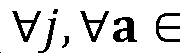


코드워드들의 출력 확률: 메시지들이 계층과 자원 노드들 사이에서 반복적으로 전달되고, 수렴 후에 각 계층의 코드워드들의 외적 확률은 다음과 같이 계산된다: 


일반적인 다단계 설계 방법론으로서, 먼저 다차원 변조 성상(들)을 생성하고; 이어서 성상(들)을 다중 희소 코드북들로 전이(transferring)함으로써 희소 코드북이 생성된다. 이상의 2개의 주요한 단계들에 이어서, 이하에서는 SCMA에 대한 설계 방법론이 상세하게 설명된다:As a general multistage design methodology, it first generates multidimensional modulation constellation (s); The rare codebook is then generated by transferring the constellation (s) to the multiple sparse codebooks. Following the above two major steps, the design methodology for SCMA is described in detail below:
앞서 설명한 바와 같이, 맵핑 행렬들 


상기 문제에 대한 고유한 솔루션 


예로서, 복잡도를 고려할 때에, N은 합리적인 수준의 희소성을 유지하기 위해 K에 비교해서 충분히 작아야 한다. 특히, N=2이면, 2차원 성상 포인트들은 최소 간섭 계층 노드들로 SCMA 코드워드들을 구성하기 위해 K>2 자원들에 걸쳐 맵핑될 수 있다. 맵핑 특성들은 다음과 같다: 


도 10은 성상 포인트들과 관련하여 


하나의 문제는 M개의 포인트들을 각각 포함하는 


일반적으로, 하나 대신에 다수의 마더 성상들: 


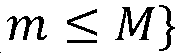
마더 다차원 성상에 대해, 실수 도메인 성상의 설계는 다음과 같이 설명될 수도 있다. 그 목표는 성상 포인트들 사이의 소정의 최소 유클리드 거리(Euclidian distance)에 대해 평균 알파벳 에너지(average alphabet energy)를 최소화하는 다차원 콤팩트 성상을 설계하는 것일 수도 있다. 우리는 먼저 2N-차원 실수 값의 AWGN 채널을 고려한다. 2N의 짝수 값에 의하면, 결과들은 N-차원 복소수 값의 AWGN 채널로 쉽게 전이될 수 있다. 소정의 쌍(2N, M)에 대해, 목표는 상이한 포인트들(알파벳들) 사이의 유클리드 거리를 특정 임계치 




심볼들 

본 명세서에 그 전체가 마치 복사된 것처럼 참고로 포함되는, 문헌[Marko Beko and Rui Dinis, "Designing Good Multi-Dimensional Constellation," IEEE wireless communications letters, vol. 1, No. 3, pp. 221-224, June 2012]에 차선의 솔루션이 제안되어 있다. 상기 언급된 참고문헌에 의해 제안되는 차선의 솔루션은 CCP(Convex-Concave Procedure)로서 또한 알려진 재공식화/선형화 기반 방법들(reformulation/linearization-based methods)에 기초한다. 공식화된 논컨벡스 최적화 문제는 컨벡스 최적화 문제들의 시퀀스(a sequence of convex optimization problems)를 해결함으로써 다뤄지고, 여기서 그것은 선형 부등식들의 세트를 조건으로 컨벡스 2차 목적 함수(convex quadratic objective function)를 최소화한다.See, for example, Marko Beko and Rui Dinis, " Designing Good Multi-Dimensional Constellation ," IEEE wireless communications letters, vol. 1, No. 3, pp. 221-224, June 2012] has proposed a second-best solution. The solution of the lane proposed by the above-mentioned references is based on reformulation / linearization-based methods, also known as Convex-Concave Procedure (CCP). The formalized nonconvex optimization problem is addressed by solving a sequence of convex optimization problems, where it minimizes the convex quadratic objective function, subject to a set of linear inequalities.
실수 도메인 성상에 대한 유니터리 연산들(unitary operations)에 관하여; 일단 마더 실수 성상이 알려지면, SCMA 코드를 구성하기 위해 마더 성상에 대해 유니터리 연산들이 직접 적용될 수 있다. 설계 문제는 다음과 같이 표현될 수 있다: 


SCMA 코드 설계의 나머지는, 현실적으로 알맞은 가격인 동시에 미지의 최적 솔루션으로부터 멀지 않은 차선의 접근법에 전용될 수도 있다. 준최적의 솔루션의 기본적인 생각은 다음과 같다: (1) 실수 도메인 성상은 소정의 기준에 기초하여 복소 도메인으로 전이된다. 복소 도메인 성상은 마더 성상으로서 사용되고; 그리고 (2) 각 계층의 성상은 마더 성상에 적용되는 몇몇 직렬 연접 연산자들에 기초하여 구성된다.The remainder of the SCMA code design may be dedicated to a lane approach that is realistically reasonable and not far from an unknown optimal solution. The basic idea of a suboptimal solution is as follows: (1) Real domain domain properties are transferred to the complex domain based on a predetermined criterion. The complex domain property is used as the mother constellation; And (2) the constellation of each layer is constructed based on some serial concatenation operators applied to the mother constellation.
복소 도메인 성상: 실수 성상 


예를 들어, 


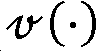

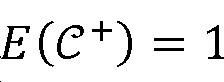




성상 세트 

성상 함수 연산자들: 마더 성상(


성상 연산자들에 관하여, 


벡터 순열은 간단히 


연산자들이 성상 함수 생성기 


앞서 언급된 바와 같이, 상이한 SCMA 계층들의 성상은 마더 성상 


성상 연산자들의 최적화에 관하여, 상기와 같이 성상 연산자들을 모델링할 때에, SCMA 코드의 최적화 문제는 다음과 같이 다시 쓸 수 있다.As for the optimization of the constellation operators, when modeling the constellation operators as described above, the optimization problem of the SCMA code can be rewritten as follows.


간섭 다항식 
이러한 추론에 기초하여, 마더 성상은 성상 차원들에 걸쳐 다양한 평균 전력 레벨(diverse average power level)을 가져야 하고, 즉, 


순열 세트의 설계 기준은 다음과 같이 정의된다: 


상기 모델의 물리적인 해석은 자원 노드 k의 


상기 문제에 대한 솔루션은 모든 가능한 연산자 조합들에 걸친 완전 탐색에서 발견된다. 


상기 파라미터들에 기초하여, 완전 탐색 최적화의 복잡도 비용 

예로써, 


최상의 순열 세트는 하기 기준에 기초하여 쉽게 선택될 수 있고: 


상기 언급되는 페어와이즈 연산자 최적화 기준에 대한 대안으로서, 중첩(superposition) 기준이 연산자 최적화를 위해 또한 도입된다. 중첩 기준은 이하와 같이 정의되고: 


연산자들을 최적화하고 최적의 


일반적인 규칙으로서, 형태 


몇몇 사례들에서, SCMA의 특별한 경우로서의 LDS. LDS 변조기는 그의 시그니처 행렬 


SCMA 코드와 유사하게, 자원 노드의 연산자들은 


모든 자원 노드는 간섭 계층들에 위상들을 할당하는 
LDS 시스템은 


상기에서, 


SCMA 성능에 관하여, SCMA 코드의 성능은 링크-레벨 시뮬레이션을 통해 평가될 수 있다. 그러나, 대안적인 접근법으로서, EXIT 차트 기법이 SCMA 코드 평가를 위해 또한 채용된다. EXIT 차트는 또한 SCMA 코드들에 대해 제안된 설계 방법론의 타당성을 확인시키기 위해 사용된다. EXIT 차트는 SCMA 코드들의 상대적인 성능 예측 및 설계 툴로서 사용된다.For SCMA performance, the performance of the SCMA code can be evaluated through link-level simulation. However, as an alternative approach, the EXIT chart technique is also employed for SCMA code evaluation. The EXIT chart is also used to verify the validity of the proposed design methodology for SCMA codes. The EXIT chart is used as a relative performance prediction and design tool for SCMA codes.
EXIT 차트 평가 방법론에 관하여. 신뢰 전파(belief propagation) 알고리즘들은 최적의 디코더가 현실적으로 불가능한 상이한 노드들 간에서 지혜로운 수렴(convergence of wisdom)에 의존한다. LDPC, 터보 코드(turbo code)들, LDS 및 SCMA는 신뢰 전파가 디코딩을 위한 유일한 실행 가능한 솔루션인, 시스템들의 예들이다. 그들 시스템들은, 정보를 교환하고 각 반복에서 근원적인 코드 특성들을 활용하려고 하는 동일 또는 상이한 유형들로부터의 다중 노드들에 의해 설명된다. 예를 들어, 터보 코드는 정보의 큰 세트를 교환하는 2개의 컴포넌트 코드들에 의해 모델링된다. 인접한 위치들 간의 어느 정도의 독립성을 유지하기 위해 정보가 인터리빙/디-인터리빙된다. LDPC에 대해, 그 코드는 이분할 그래프(bipartite graph)에 의해 설명되고, 여기서 체크 노드들 및 변수 노드들이 정보를 교환하고, 그 그래프는 동일한 노드에 접속되는 에지들 간의 정보 독립성을 유지하기 위해 단 루프(short loop)들이 드물거나/존재하지 않도록 설계된다.EXIT Chart Evaluation Methodology. Belief propagation algorithms rely on a convergence of wisdom between different nodes where an optimal decoder is practically impossible. LDPC, turbo codes, LDS and SCMA are examples of systems where trust propagation is the only feasible solution for decoding. Their systems are described by multiple nodes from the same or different types that exchange information and try to take advantage of the underlying code properties in each iteration. For example, a turbo code is modeled by two component codes that exchange a large set of information. Information is interleaved / de-interleaved to maintain some degree of independence between adjacent locations. For LDPC, the code is described by this bipartite graph, in which check nodes and variable nodes exchange information, and the graphs are used to maintain information independence between edges connected to the same node. Short loops are designed to be infrequent / nonexistent.
EXIT 차트는 이러한 코드들의 성능을 설계하고 예측하기 위한 매우 흥미롭고 강력한 툴이다. 각 노드에서의 정보 독립성을 가지며 매우 긴 코드에 대해, 각 컴포넌트를, 다른 노드들에 의해 주어지는 정보를 그의 내재적 정보(intrinsic information)와 조합하고 그 정보를 그들 노드들로 다시 돌려주는 함수로서 모델링할 수 있다. 각 노드는 평균 외적 출력 정보가 그의 평균 외적 입력 정보의 함수인 전달 함수에 의해 설명될 수 있다. 그때, EXIT 차트는 디코더가 2개의 노드들 간의 합리적인 수의 반복들 이후에 수렴할 가능성이 있는지를 예측한다. 하나의 노드의 전달 함수 및 다른 노드의 미러(mirrored) 전달 함수를 Y = X 라인에 대하여 표시함으로써, 2개의 전달 함수들이 충돌하지 않는다면 코드는 수렴할 가능성이 있다. 또한 전체적으로 2개의 곡선들 사이의 갭이 더 넓어질수록, 디코더의 수렴이 더 빨라지고 더 가능성이 커진다.The EXIT chart is a very exciting and powerful tool for designing and predicting the performance of these codes. For very long code with information independence at each node, model each component as a function that combines the information given by the other nodes with its intrinsic information and returns that information back to those nodes . Each node can be described by a transfer function where the average external output information is a function of its average external input information. The EXIT chart then predicts whether the decoder is likely to converge after a reasonable number of iterations between the two nodes. By marking the transfer function of one node and the mirrored transfer function of another node for the Y = X line, the code is likely to converge if the two transfer functions do not collide. Also, the wider the gap between the two curves as a whole, the faster and more likely the convergence of the decoder.
SCMA는 계층 노드들이 자원 노드들과 정보를 교환하는 이분할 그래프에 의해 표현될 수 있는 그러한 코드들의 예이다. 이 코드에 대해, 우리는 설계 기준들을 검토하고 성능을 예측하기 위해 그의 EXIT 차트를 검토한다. 불행하게도, 코드 그래프는 그의 LDPC 상대(counterpart)들에 비교해서 매우 작기 때문에, (i) 정보가 단 루프 크기들로 인해 전체적으로 독립적이지 않고 그리고 (ii) 코드 길이가 작고 큰 수들의 법칙이 적용되지 않을 때 EXIT 차트는 수렴을 예측하는 데 있어서 별로 정확하지 않다. 그러나, 이들 코드들에 대해 EXIT 차트를 검토하는 것은, 우리에게 상이한 설계들을 비교하는 것에 대해 안내할 뿐만 아니라 그러한 코드들을 설계하기 위한 일부 툴도 안내할 수 있다.SCMA is an example of such codes that hierarchical nodes can be represented by this partitioning graph where information is exchanged with resource nodes. For this code, we review its EXIT chart to review design criteria and predict performance. Unfortunately, because the code graph is very small compared to its LDPC counterparts, (i) the information is not entirely independent due to the single loop sizes, and (ii) the code length is small and the large number of laws is not applied The EXIT chart when not in use is not very accurate in predicting convergence. However, reviewing the EXIT chart for these codes not only guides us to comparing different designs, but it can also guide some tools for designing such codes.
SCMA에 대한 EXIT 차트에 관하여. SCMA는 2개의 컴포넌트 노드들, 계층 노드 및 자원 노드들로 이루어진다. 각 계층 노드에서, 운반된 정보는 동일한 성상 노드를 나타내고, 각 자원 노드에서, 다중 계층들과 연관되는 성상 포인트들은 서로 간섭하고 있다. 자원 노드는 다른 계층들에 대해 그의 외적 정보와 수신된 복소 신호인 그의 내재적 정보를 활용하여 계층들의 각각에 대해 출력 외적 정보를 추정한다. 계층 노드에서, 외부 루프 디코더로부터 또는 인코더에 의해 설정되는 계층들에 관한 선험적인 정보인 내재적 정보는, 외적 정보와 조합되어 계층에 관한 정보를 결정할 뿐만 아니라 자원 노드들에 대해 다시 외적 정보를 결정할 수 있다. 별지에서, 입력 및 출력 정보를 어떻게 모델링하는지가 설명된다. 이러한 모델링은 고유하지 않고, 현명한 선택은 코드에서의 정보 교환의 동역학을 모방해야 한다. SCMA에서의 각 링크는, 우리의 검토에서 2 비트로 설정되는 성상에서의 최대 정보까지 운반할 수 있다. 코드의 역할이 모든 정보 비트들의 수렴을 확실히 하는 것인 LDPC 및 터보 코드들과 달리, SCMA는 그렇게 하도록 요구되지도 않고 그렇게 할 수도 없음에 주목할 수도 있다. 그 이유는, 각 자원 노드에서, 모든 다른 에지들에 대해 전체 2-비트 외적 정보가 있더라도, 잡음이 여전히 존재하며 자원 노드들의 출력에서 완벽한 외적 정보보다 적게 초래하기 때문이다. 그러나, 이것은, SCMA 디코더 다음에 FEC 디코더(들)가 뒤따르고 그것은 그의 코드 레이트보다 약간 더 높은 입력 정보를 요구하기 때문에 문제가 되지 않는다. 예를 들어, 1/2의 코드 레이트에 대해, FEC 디코더를 만족시키기 위해 출력에서 계층 노드 정보마다 1 비트만을 요구한다.About EXIT chart for SCMA. The SCMA consists of two component nodes, a layer node and resource nodes. At each layer node, the conveyed information represents the same constellation node, and at each resource node, the constellation points associated with the multiple layers are interfering with each other. The resource node utilizes its extrinsic information for the different layers and its implicit information, which is the received complex signal, to estimate the out-of-plane information for each of the layers. At the layer node, the implicit information, which is a priori information about the layers set by the outer loop decoder or by the encoder, is combined with extrinsic information to determine information about the layer as well as to determine the extrinsic information for the resource nodes again have. In the appendix, how to model input and output information is explained. This modeling is not unique, and smart choices should mimic the dynamics of information exchange in code. Each link in the SCMA can carry up to the maximum information in the constellation that is set to 2 bits in our review. Note that, unlike LDPC and turbo codes, where the role of the code is to ensure convergence of all information bits, the SCMA may or may not be required to do so. This is because, at each resource node, even if there is full 2-bit extrinsic information for all other edges, noise still exists and results in less than perfect outer information at the output of the resource nodes. However, this is not a problem since the FEC decoder (s) follows the SCMA decoder and it requires input information that is slightly higher than its code rate. For example, for a code rate of 1/2, only one bit is required per layer node information at the output to satisfy the FEC decoder.
이것을 달성하기 위해, 3개의 컴포넌트들이 사용될 수도 있다: (i) 계층 노드에서의 EXIT 전달(EXIT transfer), (ii) 자원 노드에서의 EXIT 전달, 및 (iii) 각 계층에서의 출력 정보를 모델링하는 것. 여기서, 앞서 언급한 정보를 생성하고 코드의 성능을 예측하기 위해 알고리즘이 제공된다.To accomplish this, three components may be used: (i) an EXIT transfer at a layer node, (ii) an EXIT transfer at a resource node, and (iii) an output information model at each layer that. Here, an algorithm is provided to generate the aforementioned information and to predict the performance of the code.
다음은 SCMA에 대한 EXIT 차트를 생성하는 것에 관련된다. 알고리즘의 일반성을 유지하면서, 우리는 4개의 자원들 및 6개의 계층들을 갖는 SCMA의 예를 사용하고, 여기서 각 계층은 2개의 자원 노드들에 접속되고 각 자원 노드는 4개의 계층들의 중첩이다. 우리는, 성상에서의 포인트들의 수가 4개(이는 에지마다 2 비트까지의 정보가 운반되는 것을 의미함)라고 가정한다. 우리는 자원 노드들에 대한 EXIT 차트를 생성하기 위해 SISO AWGN 채널을 사용한다. 소정의 팩터 그래프, 성상 세트 및 연산자 세트를 갖는 소정의 SCMA에 대해, 자원 노드들에 대한 EXIT 차트를 생성하기 위한 절차는 다음과 같다: (1) 작업하는 SNR 값(working SNR value)에 따라 자원 노드 잡음 레벨(


X에 대한 Y의 값들은 자원 노드가 외적 정보를 어떻게 활용할 수 있는지를 나타낸다. 더 높은 곡선은 정보의 더 빠르고 더욱 신뢰할 수 있는 수렴을 예측한다. Z 값들은 MPA 알고리즘이 수렴할 때에 상이한 계층들이 어떻게 거동하는지를 예측한다.The values of Y for X indicate how the resource node can utilize extrinsic information. A higher curve predicts faster and more reliable convergence of information. The Z values predict how the different layers will behave when the MPA algorithm converges.
다음 절차는 계층 노드들에 대한 전달 함수들을 추정하기 위해 사용될 수 있다. 2개의 노드들을 가지고 어떠한 선험적인 정보도 없는 계층 노드들의 쉬운 예에서, 전달 함수는 단지 Y = X 라인이다: (1) 계층 노드들(이 예에서는 6개)의 각각에서, 그 자원 노드에 링크되는 계층 노드의 전력 설정에 기초하여, 팩터 그래프에서 각 에지에 대한 전력 레벨을 설정한다. 전력 레벨들을 어떻게 설정하는지에 대한 상세 사항은 별지에서 설명된다; (2) 보조 잡음 레벨 범위(


X에 대한 Y의 값들은 계층 노드가 동일한 계층 노드에서의 에지들 간에 정보를 어떻게 교환하는지를 나타낸다. 더 높은 곡선은 정보의 더 빠르고 더욱 신뢰할 수 있는 수렴을 예측한다. 계층 노드에 대한 입력 외적 정보가 자원 노드의 출력이고 그 반대도 그렇기 때문에, 통상적으로 이들 노드들에 대한 EXIT 차트는 Y = X 라인을 따라 미러링된다.The values of Y for X indicate how the layer nodes exchange information between edges at the same layer node. A higher curve predicts faster and more reliable convergence of information. Since the input extrinsic information for the hierarchical node is the output of the resource node and vice versa, an EXIT chart for these nodes is typically mirrored along the Y = X line.
EXIT 차트 평가 및 성능 예측에 관하여. 하기 설명은 EXIT 차트 평가 방법론에 관한 것이고, 그리고 몇몇 사례들에서 예시 팩터 그래프를 갖는 간단한 코드에 대한 EXIT 차트 평가 방법론에 관한 것이다. 하기에서, 채널은 8 dB의 SNR을 갖는 SISO AWGN이라고 가정된다.EXIT Chart Evaluation and Performance Prediction. The following description relates to the EXIT chart evaluation methodology, and in some instances to the EXIT chart evaluation methodology for simple codes with example factor graphs. In the following, it is assumed that the channel is a SISO AWGN with an SNR of 8 dB.
LDS에 대한 EXIT 차트에 관하여. LDS에서, 성상 포인트들은 QPSK 포인트들로부터 간단히 취해지고, 시그니처들은 다음과 같다:About the EXIT chart for LDS. In the LDS, the constellation points are simply taken from the QPSK points, and the signatures are as follows:

코드 시그니처 1에 대해, LDS의 자원 노드들에 대한 외적 전달 함수들은 다음의 곡선들로 나타내진다. 도 13에서 알 수 있듯이, 모든 노드에서의 출력 정보는 동일하다. LDS에서의 모든 에지가 동일한 성상 및 전력 레벨을 경험하기 때문에 이것은 놀랍지 않다. 앞서 언급된 바와 같이, 2개의 에지를 갖는 계층 노드에 대한 전달 함수는 단지 정보를 교환하고 있다(즉, Y = X 라인). 이 곡선은 약 1.2 비트에서 Y = X 라인과 충돌하며, 이는 매우 큰 LDS에 대해, 코드가 에지마다 정보의 약 1.2 비트로 수렴할 것임을 제안한다. 정보의 수렴은 정보가 함수와 계층 노드들 사이에서 교환될 때 EXIT 차트에서의 화살표들에 의해 나타내진다. 이러한 가정이 4개의 자원 및 6개의 계층만으로 이루어진 코드에 대해서는 적용되지 않음에 유의해야 한다. 도 14는 동일한 외적 정보에 대한 출력 정보를 도시한다.For
도 14는 계층 노드들의 출력에서의 출력 정보를 도시한다. 매우 큰 LDS에 대해, 에지들에서의 외적 정보가 1.2 비트까지 증가했을 것이고, 이는 출력에서의 정보가 8 dB의 SNR에 대해 1.6 비트만큼 높을 것이므로 0.8 미만의 코드 레이트가 디코딩을 위해 충분해야 함을 제안한다. 8 dB의 SNR에서 각 링크에 대한 용량은, EXIT 차트에 의해 예측된 레이트보다 오직 20% 더 높은 1.9132 비트이다. 또 다시, 그러한 가정이 여기에는 적용되지 않는다.Figure 14 shows output information at the output of layer nodes. For very large LDSs, the extrinsic information at the edges would have increased to 1.2 bits, which means that a code rate of less than 0.8 should be sufficient for decoding, since the information at the output will be as high as 1.6 bits for an SNR of 8 dB I suggest. At an SNR of 8 dB, the capacity for each link is 1.9132 bits, which is 20% higher than the rate predicted by the EXIT chart. Again, such assumptions do not apply here.
다음과 같은 시그니처 2를 갖는 LDS에 대해: 
도 15 및 도 16에서의 곡선들은 EXIT 차트들을 표현한다. EXIT 차트는 외적 정보가 에지마다 약 1.5 비트로 커지고 출력 정보가 약 1.8 비트로 커지는 것 - 이는 용량으로부터 6% 떨어짐 - 을 예측함에 유의할 수 있다. 앞서 언급된 바와 같이, 큰 코드 및 독립 스트림들의 가정들이 여기에는 적용되지 않는다.The curves in Figs. 15 and 16 represent EXIT charts. It can be noted that the EXIT chart predicts that the extrinsic information grows to about 1.5 bits per edge and that the output information grows to about 1.8 bits - which is 6% less than the capacity. As mentioned above, the assumptions of large code and independent streams do not apply here.
SCMA에 대한 EXIT 차트에 관하여. SCMA의 성능에 영향을 미치는 많은 파라미터들이 있다. 그들은 복소 성상 선택, 위상 최적화의 영향, 올바른 순열을 선택하는 것, 계층 노드들에 상이한 자원 노드들을 배정하는 것 등을 포함한다. 이하에서, 우리는 그들 요소들의 영향을 검토한다.About EXIT chart for SCMA. There are many parameters that affect the performance of the SCMA. They include complexity selection, effect of topology optimization, choosing the correct permutation, assigning different resource nodes to layer nodes, and so on. In the following, we examine the influence of these factors.
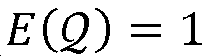
위상 및 공액 연산자들의 영향에 관하여. 하기는 EXIT 차트를 평가하기 위해 최적화된 다차원 성상을 사용한다. 3개의 에지들을 갖는 각 자원 노드에 대해, 4개의 옵션들이 가능하다: (i) 성상 행렬에서의 제1 행으로부터 3개의 에지들 모두가 선택됨, (ii) 제1 행으로부터 2개의 에지들 및 제2 행으로부터 1개의 에지가 선택됨, (iii) 제2 행으로부터 2개의 에지들 및 제1 행으로부터 1개의 에지가 선택됨, 및 (iv) 제2 행으로부터 3개의 에지들 모두가 선택됨. 여기서 우리는 유형들 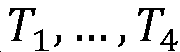
위상/공액 최적화들을 갖지 않거나 또는 갖는 이들 4개의 유형의 자원 노드들에 대한 외적 정보 전달 함수가 각각 도 17 및 도 18에 도시되어 있다.External information transfer functions for these four types of resource nodes with or without phase / conjugate optimizations are shown in Figures 17 and 18, respectively.
이들 도면들로부터, 하기 결론들이 도출될 수 있다: (1) 위상/공액 연산자들이 최적화될 때 자원 노드들의 출력에서의 출력 외적 정보는 더 높다. 이것은 다른 계층들에 대해 이용 가능한 외적 정보가 거의 없을 때(즉, 곡선들의 좌측 부분) 훨씬 더 많이 관찰 가능하고; (2) 이것은 최적화된 위상 및 공액을 갖는 MPA 알고리즘의 더 양호한 수렴을 초래하고; (3) 모든 성상 포인트들이 동일한 행으로부터 유래하는 노드들(즉, 유형 T1 및 유형 T4)에 대해, 그 차이가 더 높다; (4) 성상들의 제1 행을 사용한 에지들에 대한 출력 외적 정보는 다른 것들보다 더 높다. 이것은 그들 링크들을 통해 더 많은 전력이 송신된다는 사실 때문이고; (5) 자원 노드에서의 간섭에 관한 완벽한 정보가 있는, 곡선들의 우측에서, 중요한 것은 그 링크에 배정되는 전력이다.From these figures, the following conclusions can be drawn: (1) The output outer information at the output of the resource nodes is higher when the phase / conjugate operators are optimized. This is much more observable when there is little external information available to other layers (i. E., The left part of the curves); (2) this leads to better convergence of the MPA algorithm with optimized phase and conjugation; (3) for the nodes from which all the constellation points originate from the same row (i.e., type T 1 and type T 4 ), the difference is higher; (4) Output outlier information for edges using the first row of constellations is higher than others. This is due to the fact that more power is transmitted over the links; (5) On the right side of the curves, where there is complete information about the interference at the resource node, the important thing is the power allocated to that link.
링크-레벨 평가에 관하여. 링크-레벨 시뮬레이션 결과들은 SCMA 및 LDS에 대한 제안된 설계 방법론의 타당성을 보여주기 위해 나타나 있다. 또한, 설계된 SCMA 및 LDS 코드들의 성능은 이미 존재하는 최상의 LDS 시그니처들과 비교된다. 이하에 제시되는 전체적인 시뮬레이션 결과들 전체에 걸쳐, 기본적인 파라미터들은 다음과 같이 설정된다: N = 2, K = 4, J = 6, df = 3.About link-level evaluation. Link-level simulation results are shown to demonstrate the validity of the proposed design methodology for SCMA and LDS. In addition, the performance of the designed SCMA and LDS codes is compared with the best LDS signatures that already exist. Throughout the overall simulation results presented below, the basic parameters are set as follows: N = 2, K = 4, J = 6, df = 3.
SCMA에 대한 성상의 영향에 관하여. 소정 실수 도메인 다차원 성상에 대해, 복소 도메인 성상의 차원 전력 변화의 영향은 도 19a 및 도 19b에 도시된다. 도 19a 및 도 19b에 도시된 바와 같이, 더 높은 전력 변화는 전체적인 성능을 향상시킨다.On the Influence of Properties on SCMA. For a given real number domain multidimensional constellation, the influence of the dimensional power change of the complex domain constellation is shown in Figs. 19A and 19B. As shown in Figs. 19A and 19B, a higher power change improves overall performance.
SCMA에 대한 순열 연산자의 영향에 관하여. SCMA 코드의 성능에 대한 순열 연산자의 영향은 도 20에 제시된다. 이들 결과들은, 간섭 다항식들이 자원 노드들에서 근원 영향(near-far effect)을 증가시킴으로써 마더 성상의 차원 전력 변화를 이용하기 위해 가능한 한 많은 수의 단항식들을 가져야 함을 확인시킨다.On the Effect of Permutation Operators on SCMA. The influence of the permutation operator on the performance of the SCMA code is shown in FIG. These results confirm that the interference polynomials should have as many monomials as possible to take advantage of the dimensional power changes of the mother constellations by increasing the near-far effect at the resource nodes.
SCMA에 대한 위상/공액 연산자들의 영향에 관하여. 도 21은 SCMA 코드의 성능에 대한 위상/공액 연산자들의 영향을 예시한다. 일반적으로, 연산자 최적화의 영향은 긍정적이지만, 이 특정한 경우에 대해 이득은 크게 높지 않다.On the Effect of Phase / Conjugate Operators on SCMA. Figure 21 illustrates the effect of phase / conjugate operators on the performance of the SCMA code. In general, the effect of operator optimization is positive, but for this particular case the gain is not very high.
앞서 설명된 바와 같이, 위상/공액 연산자들을 최적화하기 위한 2개의 접근법들이 있다: (i) 페어와이즈 최적화 및 (ii) 중첩 최적화. 도 22는 이들 2개의 기준들을 비교한다. 이 도면에 따르면, 2개의 접근법들은 설계된 코드들의 상이한 거동을 보이는 경향이 있을 수도 있다. 페어와이즈 기준에 기초하여 설계되는 코드는 상이한 다중화된 사용자들에 걸쳐서 더욱 균일한 성능을 나타낸다.As described above, there are two approaches for optimizing the phase / conjugate operators: (i) Fairwise optimization and (ii) nested optimization. Figure 22 compares these two criteria. According to this figure, the two approaches may tend to show different behaviors of the designed codes. The code designed based on fair-wise criteria exhibits a more uniform performance across different multiplexed users.
SCMA에 대한 연산자 할당의 영향에 관하여. 자원 노드의 간섭 계층들로의 최적화된 연산자들의 할당은 명확히 해결될 수 없는 문제이다. 하부 SCMA 코드에 대하여, 16개의 상이한 할당 옵션이 있다. 도 23은 전체적인 굿풋의 관점에서 16개의 옵션의 성능을 비교한다. 다행히도, 연산자 할당은 SCMA 코드의 궁극적인 성능에 무시할 만한 영향을 나타낸다. 앞서 언급된 바와 같이, 최적화된 위상/공액 연산자들은 랜덤하게 또는 수동 방식으로 간섭 계층들에 할당될 수 있다.On the Effect of Operator Assignment on SCMA. The allocation of optimized operators to the interference layers of the resource node is a problem that can not be clearly solved. For the lower SCMA code, there are 16 different allocation options. Figure 23 compares the performance of 16 options in terms of overall goodput. Fortunately, operator assignment has negligible impact on the ultimate performance of the SCMA code. As noted above, the optimized phase / conjugate operators may be assigned to the interference layers in a random or passive manner.
SCMA에 대한 실수 도메인 유니터리 연산의 영향에 관하여. 성상의 (성상 포인트들의 최소 거리와 같은) 다차원 특성들이 변하지 않게 유지하면서 포인트들의 차원 특성들을 변화시키기 위해 유니터리 행렬이 실수 도메인 다차원 성상에 적용될 수 있다. 차원 전력 변화는 다차원 성상의 차원 특성의 일례이다. 또한, 각 차원 세트를 통한 포인트들의 최소 거리는 또 다른 차원 특성이다. 도 24에 도시된 예에서, 각 차원 세트의 최소 거리를 0.1 초과로 유지하면서 각 차원 세트에서의 포인트들의 최대 거리를 최대화하기 위해 실수 유니터리 행렬이 실수 도메인 다차원 성상에 적용된다. 유니터리 행렬은 랜덤 탐색에 의해 최적화된다. 분명하게, 실수 도메인 유니터리 행렬 연산자는 SCMA 코드의 전체적인 성능을 향상시킬 수 있다.On the Effect of Real - Domain Unitary Operations on SCMA. A unitary matrix can be applied to the real-domain multidimensional constellation to change the dimensional properties of points (such as the minimum distance of constellation points) while keeping the multidimensional properties unchanged. Dimensional power variation is an example of dimensionality of multidimensional constellation. In addition, the minimum distance of points through each set of dimensions is another dimension characteristic. In the example shown in FIG. 24, a real unitary matrix is applied to the real-valued multidimensional constellation to maximize the maximum distance of points in each set of dimensions while keeping the minimum distance of each set of dimensions greater than 0.1. The unitary matrix is optimized by random search. Obviously, the real domain domain unit matrix operator can improve the overall performance of the SCMA code.
전체적인 굿풋의 관점에서 SCMA 코드들의 비교에 관하여. SCMA 코드들의 전체적인 합계 굿풋 및 상이한 최적화 파라미터들의 영향이 도 25에 도시된다. 굿풋 곡선들의 비교는 이 리포트에서 제안되는 다단계 최적화 접근법의 효율을 확인시켜 준다.On the comparison of SCMA codes in terms of overall goodput. The effect of the overall sum goodput of the SCMA codes and the different optimization parameters is shown in Fig. A comparison of the goodput curves confirms the efficiency of the proposed multistage optimization approach in this report.
LDS에 대한 시그니처 최적화에 관하여. 종래의 LDS 시그니처들의 하나의 예는, 본 명세서에 그 전체가 마치 복사된 것처럼 참고로 포함되는, 문헌["Multiple Access with Low-Density Signatures," Huawei Technologies Sweden, IEEE GLOBECOM 2009]에서 발견될 수 있다. (이 개시 내용의) 최적화된 LDS 시그니처들 및 (상기 언급된 IEEE 아티클에서 발견되는) 종래의 LDS 시그니처들의 굿풋 성능이 도 26에서 비교되어 있다. SCMA와는 대조적으로, 위상 할당의 영향은 페어와이즈 최적화된 위상들에 대한 할당 영향을 비교할 때 분명히 엄청나다. 양호한 연산자 할당에 대해, 중첩 및 페어와이즈 최적화 기준들 양자는 거의 동일하게 수행한다.About signature optimization for LDS. One example of conventional LDS signatures can be found in Huawei Technologies Sweden, IEEE GLOBECOM 2009, entitled " Multiple Access with Low-Density Signatures , " which is hereby incorporated by reference in its entirety . The optimized LDS signatures (of this disclosure) and the goodput performance of conventional LDS signatures (found in the above-mentioned IEEE article) are compared in FIG. In contrast to SCMA, the effect of phase assignment is clearly enormous when comparing the effect of assigning on phase-wise optimized phases. For good operator assignment, both the overlapping and fairness optimization criteria are performed substantially the same.

시그니처들의 거동 이면의 이유는 표 3에 열거되는 바와 같이 그들의 대응하는 잡음/신호 처리에 기초하여 설명될 수 있다. 이 표는 시그니처 행렬의 사용자들의 상대적인 성능을 예측할 수 있다. 예를 들어, 불량한 성능을 갖는 제1 시그니처 세트에 대해, 잡음/신호 분석은 UE2 및 UE5가 최고의 후처리 신호 전력 및 최저의 잡음 전력을 갖는 최상의 성능을 갖는다고 예측한다. 한편, UE1 및 UE6은 그들의 최저 후처리 SINR로 인해 부족한 성능을 가져야 한다. 이러한 예측은 도 27a에 도시되는 링크-레벨 시뮬레이션 결과들에 의해 확인될 수 있다.The reason behind the behavior of the signatures can be explained on the basis of their corresponding noise / signal processing as listed in Table 3. This table can predict the relative performance of users of the signature matrix. For example, for a first signature set with poor performance, noise / signal analysis predicts that UE2 and UE5 have the best performance with the best post-processing signal power and lowest noise power. On the other hand, UE1 and UE6 should have poor performance due to their lowest post-processing SINR. This prediction can be confirmed by the link-level simulation results shown in Fig. 27A.
이 표에 따르면, 브라니슬라브(Branislav) 시그니처들은 계층들에 걸쳐서 보다 균일한 신호/잡음 분포를 갖지만 여전히 UE3은 도 27b에서 또한 알 수 있듯이 다른 UE들을 능가한다. 이들 2개의 시그니처 세트들을 비교함으로써, 계층들의 신호/잡음 전력 레벨들 간의 큰 차이가 없는 경우에 시그니처 세트가 더 양호한 굿풋 성능을 제공한다고 결론을 내릴 수 있다. SIC 검출의 일반적인 개념으로서, 계층들 간의 작은 차이는 SIC 검출의 성능을 향상시키도록 도울 수 있지만 큰 차이는 제1 시그니처 세트에 대해 나타내는 바와 같이 성능 손실을 보이는 경향이 있다.According to this table, the Branislav signatures have a more uniform signal / noise distribution across the layers, but UE3 still outperforms other UEs, as can also be seen in FIG. 27b. By comparing these two signature sets, it can be concluded that the signature set provides better goodput performance in the absence of significant differences between the signal / noise power levels of the layers. As a general concept of SIC detection, small differences between layers can help to improve the performance of SIC detection, but large differences tend to show performance losses as shown for the first signature set.
LDS의 성능의 위상 할당의 영향은 페어와이즈 최적화된 위상들에 대한 도 28a 및 도 28b 그리고 표 3에서 알 수 있다. 양호한 위상 연산자 할당에 의하면, 시그니처 세트의 후처리 신호/잡음 전력 레벨들은 균형잡혀 있으므로 전체적인 성능이 향상된다.The effect of the phase assignment of the performance of the LDS can be seen in Figures 28a and 28b and Table 3 for the pair-wise optimized phases. With good phase operator assignment, the post-processing signal / noise power levels of the signature set are balanced, thus improving overall performance.
SCMA 대 LDS의 성능에 관하여. 이론상으로는, SCMA는 다차원 성상의 성형 이득(shaping gain)으로 인해 LDS를 능가해야 한다. 그러나, 최적 또는 준최적 SCMA 코드가 합리적인 설계 접근법으로 실현 가능한 경우 잠재적인 이득이 실현 가능하다. 도 29는 기준치로서의 브라니슬라브 LDS의 성능과 우리의 최상의 SCMA 및 최상의 LDS를 비교한다. 이 특정한 예의 경우, 우리의 LDS 및 SCMA 솔루션 둘 모두는 기준치를 능가하지만, 최상의 LDS에 비해서는 SCMA의 이득이 현저하지 않다. 복소 도메인 코딩 이득의 일부 잠재적인 이득뿐만 아니라 CDMA 및 LDS의 이점들을 갖는 새로운 다중 액세스 변조 접근법으로서의 SCMA가 버티고 있다. 비록 코드의 구조는 잘 정의되어 있더라도, 코드의 설계 및 최적화는 채널링 부분(channeling part)이다. 다단계 최적화 접근법에 기초한 차선의 설계 방법론이 여기에 제안된다. 또한, SCMA 코드들을 설계하기 위해 EXIT 차트 기법에 기초하여 빠르고 효율적인 평가 방법론이 개발된다.On the Performance of SCMA versus LDS. In theory, the SCMA should outperform the LDS due to the shaping gain of the multidimensional constellation. However, potential benefits are feasible if optimal or suboptimal SCMA codes can be realized with a reasonable design approach. Figure 29 compares the performance of the Brinislav LDS as a reference with our best SCMA and best LDS. In this particular case, both our LDS and SCMA solutions outperform the baseline, but the gain of the SCMA is not significant compared to the best LDS. SCMA stands as a new multiple access modulation approach with some potential benefits of complex domain coding gain as well as CDMA and LDS benefits. Although the structure of the code is well defined, the design and optimization of the code is a channeling part. A second-line design methodology based on a multistage optimization approach is proposed here. In addition, a fast and efficient evaluation methodology is developed based on the EXIT charting technique to design SCMA codes.
LDS는 SCMA 구조의 특별히 단순화된 경우라는 것을 보여준다. 따라서, SCMA의 개발된 설계 방법론은 체계적인 방식으로 LDS 시그니처들을 설계하기 위해 재사용된다. 제공된 시뮬레이션 결과들은 SCMA 및 LDS 둘 모두에 대한 설계 접근법의 효율을 예시한다.The LDS shows that the SCMA structure is a particularly simplified case. Thus, SCMA's developed design methodology is reused to design LDS signatures in a systematic way. The simulation results provided illustrate the efficiency of the design approach for both SCMA and LDS.
EXIT 차트 모델링에 관하여. 신뢰 전파 알고리즘은, LDPC, 터보 코드, LDS 등과 같이 그래프에서의 노드들 사이에서 앞뒤로 정보가 전달될 때 노드들 간의 신뢰의 수렴에 의존한다. 외적 정보 전달(extrinsic information transfer; EXIT) 차트가 스티븐 텐 브링크(Stephen ten Brink) (2001)에 의해 도입되어 있고, 그리고 성능을 설계하고, 예측하고, 상이한 코드들을 비교하기 위해 많은 다른 이들에 의해 개발되어 있다. EXIT 차트에서, 소정의 내재적 정보에 대해 동일 노드로 진입하는 평균 신뢰의 함수로서의 각 노드 후의 평균 신뢰가 기술되고, 반복이 인코딩된 정보의 더 양호한 이해를 초래하는지의 여부를 예측한다.EXIT About chart modeling. The trust propagation algorithm relies on the convergence of trust between nodes when forward and backward information is conveyed between nodes in the graph, such as LDPC, Turbo code, LDS, and so on. Extrinsic information transfer (EXIT) charts have been introduced by Stephen ten Brink (2001) and have been used by many others to design, predict, and compare different codes Has been developed. In the EXIT chart, the average confidence after each node as a function of the average confidence of entering the same node for given implicit information is described, and it is predicted whether the iteration results in a better understanding of the encoded information.
EXIT 차트 모델링에 관하여, 임의 노드에 대한 전달 함수를 발견하기 위해, 합리적인 통계적 모델로 노드로 전달되는 외적 정보를 모델링한 후에 노드의 출력에서 출력 정보의 통계 자료를 조사할 필요가 있다. SCMA 디코더는 계층 노드들 및 자원 노드들로 이루어진다. 자원 노드들은 또한 채널을 통해 전달되는 수신 복소 신호로 인해 내재적 정보를 수신한다. 계층 노드 및 자원 노드 둘 모두에 대해 각 노드로 전달되는 외적 정보는 N-투플들의 확률들로 이루어진다(여기서 2-비트 노드들에 대해 N=4). 출력들은 또한 동일한 구조를 가지며, (많은 N-투플들을 통한) 이들 확률들에 의해 운반되는 정보는 간단히 이들 확률들에 의해 정의되는 엔트로피이다. 이하에서, 각 컴포넌트에 대한 EXIT 차트를 추출하는 절차가 조사된다. 간단함을 위해, 우리는 4개의 자원 노드들 및 6개의 계층 노드들로 이루어지는 SCMA 행렬에 중점을 둔다. 우리는 각 자원 노드가 3개의 심볼들을 포함하고 각 계층 노드가 2개의 자원 노드들에 접속한다고 가정한다. 우리는 또한 EXIT 차트 추출을 AWGN SISO 채널로 제한한다. 이러한 제약들은 이 접근법의 일반성을 제한하지 않는다.EXIT In regard to chart modeling, it is necessary to examine the statistics of the output information at the output of the node after modeling the extrinsic information delivered to the node with a reasonable statistical model to find the transfer function for any node. The SCMA decoder consists of layer nodes and resource nodes. The resource nodes also receive the implicit information due to the received complex signal transmitted over the channel. The extrinsic information delivered to each node for both the hierarchical node and the resource node consists of the probabilities of N-tuples (where N = 4 for 2-bit nodes). The outputs also have the same structure, and the information carried by these probabilities (through many N-tuples) is simply the entropy defined by these probabilities. In the following, the procedure for extracting an EXIT chart for each component is examined. For simplicity, we focus on the SCMA matrix consisting of four resource nodes and six hierarchical nodes. We assume that each resource node contains three symbols and each layer node connects to two resource nodes. We also limit EXIT chart extraction to AWGN SISO channels. These constraints do not limit the generality of this approach.
자원 노드들에서 내재적 정보를 모델링하는 것에 관하여, 외적 정보로서의 자원 노드로의 입력은 AWGN + 3개의 송신된 신호의 중첩을 포함하는 수신 복소 신호이다. 그것을 모델링하기 위해, 각 입력 사례에 대해, 크기 2 비트의 3개의 입력 투플들이 랜덤하게 생성된다. 그 후에 소정의 SNR을 가정하여 수신 신호가 계산된다. 잡음의 변동은 
자원 노드들에 대한 4-투플들 외적 확률들의 EXIT 차트 모델링에 관하여, 자원 노드들에 대한 외적 정보는, 합산 1로 제약되고 실제로 송신된 포인트와 상관되는 4개의 확률들로 이루어진다. 여기서, 성상에서의 각 포인트에 대해, 우리는 그의 확률을, AWGN 모델을 통해 BPSK 송신으로부터의 확률로 모델링한다. 이러한 목적을 위해, 우리는 잡음 전력 N1 및 도달하는 외적 정보의 전력과 연관되는 송신 전력 P를 갖는 AWGN 채널을 갖는다고 가정한다. N1의 값이 채널에서의 실제 잡음 전력과는 전혀 관계가 없고 상이한 레벨의 정보를 갖는 N-투플의 SNR을 생성하기 위한 툴일 뿐임에 주목해야 한다. 송신된 전력 P에 대해, 우리는 이것을 나중에 서술할 것이다. 모델에서 잡음 전력이 커질수록 입력에서의 더 낮은 레벨의 정보를 초래하며 그 반대도 그렇다.With respect to EXIT chart modeling of the 4-tuples external probabilities for the resource nodes, the extrinsic information for the resource nodes consists of four probabilities constrained to a sum of 1 and correlated with the actually transmitted point. Here, for each point in the constellation, we model its probability as a probability from the BPSK transmission through the AWGN model. For this purpose, we assumed to have an AWGN channel with the transmission power P is associated with the power of the extrinsic information for the noise power N 1 and reach. It should be noted that the value of N 1 is nothing to do with the actual noise power in the channel and is only a tool for generating the SNR of N-tuples with different levels of information. For transmitted power P, we will describe this later. The larger the noise power in the model, the lower the level of information on the input, and vice versa.
성상에서 N개의 포인트들 모두에 대해, 우리는 AWGN 채널을 통해 이진 송신을 생성한다. 실제 송신된 포인트(내재적 정보를 모델링할 때 송신되는 하나의 포인트)에 대해, 우리는 +1이 송신된다고 가정하고, 모든 다른 N-1개의 포인트들에 대해, 우리는 -1이 송신된다고 가정한다. 따라서, 실제 송신된 포인트로부터 초래되는 LLR은 


계층 노드들에 대한 4-투플들 외적 확률들의 EXIT 차트 모델링에 관하여. 불균일한 성상 확률 분포가 사용되지 않는다면 SCMA에서의 계층 노드들은 내재적 정보를 갖지 않는다. 그것 이외에, 입력 정보의 생성은 자원 노드들에 대해 방금 설명한 것과 동일하다. 그러나, 계층 노드들의 바로 그 구조는 거동의 예측을 더 쉽게 만든다. M개의 링크들을 갖는 계층 노드에서, 출력에서의 각 링크는 모든 다른 링크들의 입력에서 정보를 조합한다. 가우시안 입력에 대해, 그것은 각 링크에서의 출력 SNR이 각 링크에서의 입력 SNR의 합계임을 의미하는 MRC로 단지 축소시킨다. 다시 말해, 모든 다른 노드들에 대해 각 노드의 출력에서의 전력은 입력 전력의 합산이라고 가정할 수 있다. 이러한 현상은 자원 노드들에 대해 모델의 입력에서 전력을 배정하기 위해 이용된다.On the EXIT chart modeling of 4-tuples external probabilities for hierarchical nodes. Hierarchical nodes in the SCMA have no implicit information unless a non-uniform stochastic distribution is used. In addition to this, the generation of the input information is the same as that just described for the resource nodes. However, the very structure of layer nodes makes the prediction of behavior easier. At the hierarchical node with M links, each link at the output combines the information at the input of all other links. For a Gaussian input, it only reduces to MRC, which means that the output SNR at each link is the sum of the input SNRs at each link. In other words, for all other nodes, the power at the output of each node can be assumed to be the sum of the input power. This phenomenon is used to allocate power at the input of the model to the resource nodes.
이 모델에 의하면, 우리는 계층 노드의 EXIT 차트를 명시적으로 설명할 필요가 없으며, 2-링크 계층 노드에 대해, 각 노드에 대한 출력 외적 정보는 다른 하나의 노드에 대한 입력 외적 정보이고 그 반대도 그렇다.According to this model, we do not need to explicitly describe the EXIT chart of the hierarchical node, and for the two-link hierarchical node, the out-of-extrinsic information for each node is the input extrinsic information for the other node, That is also true.
자원 노드 입력에 대한 전력 배정을 위한 모델에 관하여. 앞서 설명한 바와 같이, 각 노드에 대한 완벽한 EXIT 차트는 다차원 함수이다. 그것을 일차원 함수에 의해 표현하기 위해서, 노드로의 상이한 입력들 사이의 관계를 가정해야 한다. 여기서, 우리는 상이한 링크들에 대한 전력 배정을 이용하여 그들 사이를 구별한다. 예를 들어, 상이한 사용자들이 상이한 신호 전력들을 갖는 경우, 이것은 자원 노드로의 입력들에 대한 전력 배정에 반영될 수 있다. 자원 노드로의 입력이 계층 노드들의 출력이고 그것에 대한 EXIT 함수가 그 사용자에 대해 시그니처에서의 모든 다른 컴포넌트들에 대한 전력의 합계라고 앞서 언급하였다. 따라서, (논의 중인 것을 포함하지 않는) 그 스트림에 대한 모든 다른 성상 포인트들에 대해 할당되는 전력에 기초하여 상이한 입력들에 대한 송신 전력을 배정할 수 있고, 동일한 자원 노드에서의 사용자들 사이를 구별할 수 있다.On the Model for Power Allocation to Resource Node Inputs. As mentioned earlier, the complete EXIT chart for each node is a multidimensional function. To express it by a one-dimensional function, we must assume the relationship between the different inputs to the node. Here, we distinguish between them using power allocation for different links. For example, if different users have different signal powers, this may be reflected in the power allocation to inputs to the resource node. The input to the resource node is the output of the layer nodes and the EXIT function for it is the sum of the power for all other components in the signature for that user. Thus, it is possible to assign transmit power for different inputs based on the power allocated for all other constellation points for that stream (not including that being discussed), and to distinguish between users at the same resource node can do.
계층 노드 입력에 대한 전력 배정을 위한 모델에 관하여. 자원 노드에서 나오는 외적 정보는 많은 것들의 함수이지만, 가장 중요한 인자는 그 자원에서의 그 층마다의 그의 전력이다. 따라서, 계층 노드의 입력에 대한 전력 할당은 간단히 대응하는 자원에서의 그 계층의 전력에 비례한다.On the Model for Power Assignment to Hierarchical Node Inputs. The extrinsic information from a resource node is a function of many, but the most important factor is its power per layer in that resource. Thus, the power allocation for the input of a layer node is simply proportional to the power of that layer in the corresponding resource.
계층 노드들에서 확률 조합에 관하여. SCMA에 대한 MPA의 결과는 계층 노드들에서 N-투플 확률들이다. 이것은 계층 노드에서 외적 정보 확률들 모두를 곱셈하고 그것을 합계 1로 정규화함으로써 행해진다. 이것을 모델링하기 위해, 우리는 병렬 이진 대칭 채널들(parallel binary symmetric channels)로 시스템을 모델링한다. 계층 노드에 대한 각 링크에 대해, 외적 정보는 


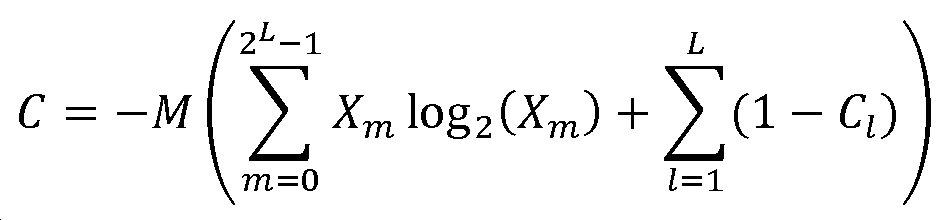
여기서 here




도 30은 본 명세서에 개시되는 디바이스들 및 방법들을 구현하기 위해 사용될 수도 있는 처리 시스템의 블록도이다. 특정 디바이스들은 도시된 컴포넌트들 모두 또는 컴포넌트들의 서브세트만을 활용할 수도 있고, 집적의 정도는 디바이스마다 다를 수도 있다. 또한, 디바이스는 다수의 처리 유닛들, 프로세서들, 메모리들, 송신기들, 수신기들 등과 같은, 컴포넌트의 다수의 예들을 포함할 수도 있다. 처리 시스템은 스피커, 마이크로폰, 마우스, 터치스크린, 키패드, 키보드, 프린터, 디스플레이 등과 같은, 하나 이상의 입력/출력 디바이스들을 갖춘 처리 유닛을 포함할 수도 있다. 처리 유닛은 버스에 접속되는 중앙 처리 장치(CPU), 메모리, 대용량 저장 디바이스, 비디오 어댑터 및 I/O 인터페이스를 포함할 수도 있다.30 is a block diagram of a processing system that may be used to implement the devices and methods disclosed herein. Certain devices may utilize all of the components shown or only a subset of components, and the degree of integration may vary from device to device. A device may also include multiple instances of components, such as multiple processing units, processors, memories, transmitters, receivers, and the like. The processing system may include a processing unit with one or more input / output devices, such as a speaker, microphone, mouse, touch screen, keypad, keyboard, printer, The processing unit may include a central processing unit (CPU) connected to the bus, a memory, a mass storage device, a video adapter, and an I / O interface.
버스는 메모리 버스 또는 메모리 제어기, 주변장치 버스, 비디오 버스 등을 포함하는 임의 유형의 수개의 버스 아키텍처들 중 하나 이상일 수도 있다. CPU는 임의 유형의 전자 데이터 프로세서를 포함할 수도 있다. 메모리는 정적 랜덤 액세스 메모리(SRAM), 동적 랜덤 액세스 메모리(DRAM), 동기 DRAM(SDRAM), 판독-전용 메모리(ROM), 이들의 조합 등과 같은, 임의 유형의 시스템 메모리를 포함할 수도 있다. 실시예에서, 메모리는 시동시에 사용하기 위한 ROM, 및 프로그램들을 실행하는 동안 사용하기 위한 프로그램 및 데이터 저장을 위한 DRAM을 포함할 수도 있다.The bus may be one or more of several types of bus architectures of any type, including memory bus or memory controller, peripheral bus, video bus, and the like. The CPU may include any type of electronic data processor. The memory may include any type of system memory, such as static random access memory (SRAM), dynamic random access memory (DRAM), synchronous DRAM (SDRAM), read-only memory (ROM), combinations thereof, In an embodiment, the memory may include a ROM for use at startup and a program for use during execution of programs and a DRAM for data storage.
대용량 저장 디바이스는 데이터, 프로그램들 및 다른 정보를 저장하고 그리고 그 데이터, 프로그램들 및 다른 정보를 버스를 통해 액세스 가능하게 만들도록 구성되는 임의 유형의 저장 디바이스를 포함할 수도 있다. 대용량 저장 디바이스는, 예를 들어, 고체 상태 드라이브, 하드 디스크 드라이브, 자기 디스크 드라이브, 광학 디스크 드라이브 등 중 하나 이상을 포함할 수도 있다.The mass storage device may include any type of storage device configured to store data, programs and other information, and to make the data, programs, and other information accessible via the bus. The mass storage device may include, for example, one or more of a solid state drive, a hard disk drive, a magnetic disk drive, an optical disk drive, and the like.
비디오 어댑터 및 I/O 인터페이스는 외부 입력 및 출력 디바이스들을 처리 유닛에 결합하기 위한 인터페이스들을 제공한다. 예시되는 바와 같이, 입력 및 출력 디바이스들의 예들은 비디오 어댑터에 결합되는 디스플레이 및 I/O 인터페이스에 결합되는 마우스/키보드/프린터를 포함한다. 다른 디바이스들이 처리 유닛에 결합될 수도 있고, 추가적인 또는 더 적은 인터페이스 카드들이 활용될 수도 있다. 예를 들어, 프린터에 대한 인터페이스를 제공하기 위해 USB(Universal Serial Bus)(도시 생략)와 같은 직렬 인터페이스가 사용될 수도 있다.The video adapter and I / O interface provide interfaces for coupling external input and output devices to the processing unit. As illustrated, examples of input and output devices include a display coupled to a video adapter and a mouse / keyboard / printer coupled to an I / O interface. Other devices may be coupled to the processing unit, and additional or fewer interface cards may be utilized. For example, a serial interface such as a Universal Serial Bus (USB) (not shown) may be used to provide an interface to the printer.
처리 유닛은 또한 하나 이상의 네트워크 인터페이스들을 포함하는데, 네트워크 인터페이스들은 노드들 또는 상이한 네트워크들에 액세스하기 위한 무선 링크들, 및/또는 이더넷(Ethernet) 케이블 등과 같은 유선 링크들을 포함할 수도 있다. 네트워크 인터페이스는 처리 유닛이 네트워크들을 통해 원격 유닛들과 통신할 수 있도록 한다. 예를 들어, 네트워크 인터페이스는 하나 이상의 송신기들/송신 안테나들 및 하나 이상의 수신기들/수신 안테나들을 통해 무선 통신을 제공할 수도 있다. 일 실시예에서, 처리 유닛은, 다른 처리 유닛들, 인터넷, 원격 저장 설비들 등과 같은, 원격 디바이스들과의 통신 및 데이터 처리를 위해 근거리 네트워크 또는 광역 네트워크에 결합된다.The processing unit also includes one or more network interfaces, which may include wired links, such as wireless links for accessing nodes or different networks, and / or Ethernet cables. The network interface allows the processing unit to communicate with remote units via networks. For example, the network interface may provide wireless communication via one or more transmitters / transmit antennas and one or more receivers / receive antennas. In one embodiment, the processing unit is coupled to a local or wide area network for communication and data processing with remote devices, such as other processing units, the Internet, remote storage facilities, and the like.
도 31은 상기 서술된 하나 이상의 디바이스들(예컨대, UE들, NB들 등)에 상당할 수 있는, 통신 디바이스(3100)의 일 실시예의 블록도를 예시한다. 통신 디바이스(3100)는 프로세서(3104), 메모리(3106), 셀룰러 인터페이스(3110), 보충 무선 인터페이스(3112) 및 보충 인터페이스(3114)를 포함할 수도 있는데, 이들은 도 31에 도시되는 바와 같이 배열될 수 있다(또는 배열되지 않을 수 있다). 프로세서(3104)는 계산들 및/또는 다른 처리 관련 태스크들을 수행할 수 있는 임의의 컴포넌트일 수도 있고, 메모리(3106)는 프로세서(3104)에 대해 프로그래밍 및/또는 명령들을 저장할 수 있는 임의의 컴포넌트일 수도 있다. 셀룰러 인터페이스(3110)는 통신 디바이스(3100)가 셀룰러 신호를 사용하여 통신할 수 있도록 하는 임의의 컴포넌트 또는 컴포넌트들의 집합일 수도 있고, 셀룰러 네트워크의 셀룰러 접속을 통해 정보를 수신 및/또는 송신하기 위해 사용될 수도 있다. 보충 무선 인터페이스(3112)는 통신 디바이스(3100)가 제어 프로토콜, 또는 Wi-Fi 또는 블루투스(Bluetooth) 프로토콜과 같은 비-셀룰러 무선 프로토콜을 통해 통신할 수 있도록 하는 임의의 컴포넌트 또는 컴포넌트들의 집합일 수도 있다. 디바이스(3100)는 셀룰러 인터페이스(3110) 및/또는 보충 무선 인터페이스(3112)를 사용하여 임의의 무선으로 활성화된 컴포넌트, 예컨대 기지국, 중계기, 이동 디바이스 등과 통신할 수도 있다. 보충 인터페이스(3114)는 통신 디바이스(3100)가 유선(wire-line) 프로토콜들을 포함하는, 보충 프로토콜을 통해 통신할 수 있도록 하는 임의의 컴포넌트 또는 컴포넌트들의 집합일 수도 있다. 실시예들에서, 보충 인터페이스(3114)는 디바이스(3100)가 백홀(backhaul) 네트워크 컴포넌트와 같은 또 다른 컴포넌트와 통신할 수 있도록 할 수도 있다.
본 개시내용은 또한 다음의 예들을 설명한다.
예 1: 희소 코드 다중 액세스(SCMA) 코드를 설계하는 방법으로서,
복수의 다차원 변조 코드북들을 생성하는 단계; 및
상기 복수의 다차원 변조 코드북들로부터 복수의 희소 코드북들을 생성하는 단계를 포함하는 방법.
예 2: 예 1에 있어서, 상기 복수의 희소 코드북들의 각각의 희소 코드북은 복수의 희소 코드워드들을 포함하고, 희소 코드북 내의 상이한 희소 코드워드들은 상이한 이진 값들과 연관되는 방법.
예 3: 예 1에 있어서, 상기 복수의 희소 코드북들에서의 각각의 코드워드는, 대응하는 코드워드가 메시지 전달 알고리즘(MPA)에 따라 다중화된 코드워드들 내에서 검출될 수 있도록 저밀도의 논-제로 값들을 포함하는 방법.
예 4: 예 1에 있어서, 상기 복수의 다차원 변조 코드북들의 각각의 다차원 변조 코드북은 상이한 다중화된 계층에 배정되는 방법.
예 5: 희소 코드 다중 액세스(SCMA) 코드를 설계하는 방법으로서,
복수의 맵핑 행렬들을 생성하는 단계;
적어도 하나의 다차원 성상을 생성하는 단계;
순열, 위상 연산자 및 공액 연산자 중 하나 이상을 최적화하는 단계; 및
상기 맵핑 행렬들, 상기 적어도 하나의 다차원 성상, 그리고 상기 순열, 상기 위상 연산자 및 상기 공액 연산자 중 하나 이상에 따라 SCMA 코드워드들을 생성하는 단계를 포함하는 방법.
예 6: 저밀도 시그니처(LDS; low density signature) 코드를 설계하는 방법으로서,
복수의 맵핑 행렬들을 생성하는 단계;
하나 이상의 위상 연산자들을 최적화하는 단계; 및
상기 맵핑 행렬들, 상기 하나 이상의 위상 연산자들 및 성상에 따라 LDS 시그니처들을 생성하는 단계를 포함하는 방법.
예 7: 예 6에 있어서, 상기 LDS 시그니처들의 각각의 LDS 시그니처는 상이한 다중화된 계층에 배정되는 방법.31 illustrates a block diagram of one embodiment of a
The present disclosure also describes the following examples.
Example 1: As a method for designing a sparse code multiple access (SCMA) code,
Generating a plurality of multidimensional modulation codebooks; And
And generating a plurality of spurious codebooks from the plurality of multi-dimensional modulation codebooks.
Example 2: The method of Example 1 wherein the sparse codebook of each of the plurality of sparse codebooks comprises a plurality of sparse code words and the different sparse code words in the sparse codebook are associated with different binary values.
Example 3: In Example 1, each codeword in the plurality of sparse codebooks is a low-density non-clone codeword so that the corresponding codeword can be detected in codewords multiplexed according to a message delivery algorithm (MPA) And zero values.
Example 4: The method of Example 1 wherein each multidimensional modulation codebook of the plurality of multidimensional modulation codebooks is assigned to a different multiplexed layer.
Example 5: A method for designing sparse code multiple access (SCMA) code,
Generating a plurality of mapping matrices;
Generating at least one multidimensional constellation;
Optimizing at least one of a permutation, a topological operator and a conjugate operator; And
Generating the mapping matrices, the at least one multidimensional constellation, and the SCMA codewords according to at least one of the permutation, the topological operator and the conjugate operator.
Example 6: A method for designing a low density signature (LDS) code,
Generating a plurality of mapping matrices;
Optimizing one or more topological operators; And
Generating the LDS signatures according to the mapping matrices, the one or more phase operators, and the constellation.
Example 7: The method of Example 6 wherein each LDS signature of the LDS signatures is assigned to a different multiplexed layer.
이 개시 내용의 실시예들은 예시적인 실시예들을 참조하여 설명되었지만, 이러한 설명은 한정의 의미로 해석되도록 의도된 것이 아니다. 이 개시 내용의 예시적인 실시예들뿐만 아니라 다른 실시예들의 다양한 수정들 및 조합들은, 그 설명을 참조할 때 관련 기술분야에서의 통상의 기술자에게 명백할 것이다. 따라서, 첨부된 청구범위는 임의의 이러한 수정들 또는 실시예들을 포괄하도록 의도된다.While the embodiments of this disclosure have been described with reference to illustrative embodiments, this description is not intended to be construed in a limiting sense. Various modifications and combinations of the exemplary embodiments of this disclosure as well as other embodiments will be readily apparent to those skilled in the relevant arts with reference to the description. Accordingly, the appended claims are intended to cover any such modifications or embodiments.
Claims (21)
제1 다중화된 계층과 연관되는 제1 이진 또는 M진 데이터를 수신하는 단계;
제1 변조 코드북으로부터 제1 코드워드를 선택함으로써 상기 제1 이진 또는 M진 데이터를 인코딩하는 단계 - 상기 제1 변조 코드북은 상기 제1 다중화된 계층에 배타적으로 배정되고, 상기 제1 코드워드는 네트워크의 복수의 공유된 자원들을 통해 상기 제1 이진 또는 M진 데이터의 변조된 벡터를 나타냄 - ;
상기 제1 코드워드와 제2 변조 코드북으로부터의 적어도 제2 코드워드를 다중화하여 다중화된 코드워드들을 획득하는 단계 - 상기 제2 변조 코드북은 제2 다중화된 계층에 배타적으로 배정됨 - ; 및
상기 네트워크의 상기 공유된 자원들을 통해 상기 다중화된 코드워드들을 송신하는 단계
를 포함하는 방법.A method for multiplexing data,
Receiving first binary or M-ary data associated with a first multiplexed layer;
Encoding the first binary or M-ary data by selecting a first codeword from a first modulation codebook, the first modulation codebook being exclusively assigned to the first multiplexed layer, A modulated vector of the first binary or M-ary data through a plurality of shared resources of the first binary or M-ary data;
Multiplexing at least a second codeword from the first codeword and a second codeword to obtain multiplexed codewords, the second codeword being exclusively assigned to a second multiplexed layer; And
Transmitting the multiplexed codewords through the shared resources of the network
≪ / RTI >
상기 제1 이진 또는 M진 데이터의 이진 또는 M진 값에 따라 상기 제1 변조 코드북에서의 코드워드들의 제1 세트로부터 상기 제1 코드워드를 선택하는 단계를 포함하고, 상기 코드워드들의 제1 세트에서의 각각의 코드워드는 상이한 이진 또는 M진 값과 연관되는 방법.2. The method of claim 1, wherein encoding the first binary or M-ary data by selecting the first codeword comprises:
Selecting the first codeword from a first set of codewords in the first modulation codebook according to a binary or M-ary value of the first binary or M-ary data, Wherein each codeword in the second codeword is associated with a different binary or M-ary value.
프로세서; 및
상기 프로세서에 의해 실행하기 위한 프로그래밍을 저장하는 컴퓨터 판독가능 저장 매체
를 포함하고, 상기 프로그래밍은
제1 다중화된 계층과 연관되는 제1 이진 또는 M진 데이터를 수신하고;
제1 변조 코드북으로부터 제1 코드워드를 선택함으로써 상기 제1 이진 또는 M진 데이터를 인코딩하고 - 상기 제1 변조 코드북은 상기 제1 다중화된 계층에 배타적으로 배정되고, 상기 제1 코드워드는 네트워크의 복수의 공유된 자원들을 통해 상기 제1 이진 또는 M진 데이터의 변조된 벡터를 나타냄 - ;
상기 제1 코드워드와 제2 변조 코드북으로부터의 적어도 제2 코드워드를 다중화하여 다중화된 코드워드들을 획득하고 - 상기 제2 변조 코드북은 제2 다중화된 계층에 배타적으로 배정됨 - ; 및
네트워크의 공유된 자원들을 통해 상기 다중화된 코드워드들을 송신하는
명령들을 포함하는 송신기.As a transmitter,
A processor; And
A computer-readable storage medium having stored thereon a program for execution by the processor,
Wherein the programming comprises:
Receiving first binary or M-ary data associated with a first multiplexed layer;
Encoding the first binary or M-ary data by selecting a first codeword from a first modulation codebook, the first modulated codebook being exclusively assigned to the first multiplexed layer, Representing a modulated vector of the first binary or M-ary data through a plurality of shared resources;
Multiplexing at least a second codeword from the first codeword and a second codeword to obtain multiplexed codewords, the second codeword being exclusively assigned to a second multiplexed layer; And
And transmitting the multiplexed codewords through shared resources of the network
≪ / RTI >
다중화된 코드워드들을 운반하는 신호를 수신하는 단계 - 상기 다중화된 코드워드들은 네트워크의 공유된 자원들을 통해 통신되는 복수의 코드워드를 포함하고, 상기 복수의 코드워드 각각은 복수의 변조 코드북 중 상이한 변조 코드북에 속하고, 상기 복수의 변조 코드북 각각은 복수의 다중화된 계층 중 상이한 다중화된 계층과 연관됨 - ;
수신기에 의해, 상기 다중화된 코드워드들 내에서 상기 복수의 코드워드 중 제1 코드워드를 식별하는 단계 - 상기 제1 코드워드는 상기 복수의 다중화된 계층 중 제1 다중화된 계층에 배타적으로 배정되는, 상기 복수의 변조 코드북 중 제1 변조 코드북에 속하고, 상기 수신기는 상기 제1 다중화된 계층과 연관되고, 상기 제1 코드워드는 네트워크의 복수의 공유된 자원들을 통해 제1 이진 또는 M진 데이터의 변조된 벡터를 나타냄 - ; 및
상기 제1 코드워드를 디코딩하여 제1 이진 또는 M진 데이터를 획득하는 단계
를 포함하는 방법.A method for receiving data,
The method comprising: receiving a signal carrying multiplexed codewords, the multiplexed codewords comprising a plurality of codewords communicated over shared resources of the network, each of the plurality of codewords comprising a plurality of modulation codewords, Wherein each of the plurality of modulation codebooks is associated with a different one of the plurality of multiplexed layers;
Identifying, by a receiver, a first one of the plurality of codewords in the multiplexed codewords, the first codeword being exclusively assigned to a first multiplexed layer of the plurality of multiplexed layers , The first codeword among the plurality of modulation codebooks, the receiver being associated with the first multiplexed layer, the first codeword being associated with a first binary or M- ≪ / RTI > And
Decoding the first codeword to obtain first binary or M-ary data
≪ / RTI >
상기 제1 코드워드를 직접 상기 제1 이진 또는 M진 데이터의 이진 또는 M진 값에 맵핑(mapping)시키는 단계를 포함하고, 상기 제1 변조 코드북에서의 각각의 코드워드는 상이한 이진 또는 M진 값과 연관되는 방법.10. The method of claim 9, wherein decoding the first codeword to obtain the first binary or M-
Mapping the first codeword directly to a binary or M-ary value of the first binary or M-ary data, wherein each codeword in the first modulation codebook has a different binary or M-ary value ≪ / RTI >
프로세서; 및
상기 프로세서에 의해 실행하기 위한 프로그래밍을 저장하는 컴퓨터 판독가능 저장 매체
를 포함하고, 상기 프로그래밍은
다중화된 코드워드들을 운반하는 신호를 수신하고 - 상기 다중화된 코드워드들은 네트워크의 공유된 자원들을 통해 통신되는 복수의 코드워드를 포함하고, 상기 복수의 코드워드 각각은 복수의 변조 코드북 중 상이한 변조 코드북에 속하고, 상기 복수의 변조 코드북 각각은 복수의 다중화된 계층 중 상이한 다중화된 계층과 연관됨 - ;
상기 다중화된 코드워드들 내에서 상기 복수의 코드워드 중 제1 코드워드를 식별하고 - 상기 제1 코드워드는 상기 복수의 다중화된 계층 중 제1 다중화된 계층에 배타적으로 배정되는, 상기 복수의 변조 코드북 중 제1 변조 코드북에 속하고, 상기 수신기는 상기 제1 다중화된 계층과 연관되고, 상기 제1 코드워드는 네트워크의 복수의 공유된 자원들을 통해 제1 이진 또는 M진 데이터의 변조된 벡터를 나타냄 - ; 및
상기 제1 코드워드를 디코딩하여 제1 이진 또는 M진 데이터를 획득하는
명령들을 포함하는 수신기.As a receiver,
A processor; And
A computer-readable storage medium having stored thereon a program for execution by the processor,
Wherein the programming comprises:
And wherein the multiplexed codewords comprise a plurality of codewords communicated over shared resources of the network and each of the plurality of codewords comprises a different modulation codebook among the plurality of modulation codebooks, Wherein each of the plurality of modulation codebooks is associated with a different one of the plurality of multiplexed layers;
Identifying a first one of the plurality of codewords in the multiplexed codewords, the first codeword being exclusively assigned to a first one of the plurality of multiplexed layers; Wherein the receiver is associated with the first multiplexed layer and the first codeword is transmitted through a plurality of shared resources of the network to a modulated vector of first binary or M- Indicates -; And
And decoding the first codeword to obtain first binary or M-ary data
≪ / RTI >
Applications Claiming Priority (4)
| Application Number | Priority Date | Filing Date | Title |
|---|---|---|---|
| US201261727486P | 2012-11-16 | 2012-11-16 | |
| US61/727,486 | 2012-11-16 | ||
| US13/730,355 | 2012-12-28 | ||
| US13/730,355 US9240853B2 (en) | 2012-11-16 | 2012-12-28 | Systems and methods for sparse code multiple access |
Related Child Applications (1)
| Application Number | Title | Priority Date | Filing Date |
|---|---|---|---|
| KR1020167010951A Division KR101719969B1 (en) | 2012-11-16 | 2013-11-18 | Systems and methods for sparse code multiple access |
Publications (2)
| Publication Number | Publication Date |
|---|---|
| KR20150085026A KR20150085026A (en) | 2015-07-22 |
| KR101618023B1 true KR101618023B1 (en) | 2016-05-03 |
Family
ID=50727888
Family Applications (2)
| Application Number | Title | Priority Date | Filing Date |
|---|---|---|---|
| KR1020167010951A Expired - Fee Related KR101719969B1 (en) | 2012-11-16 | 2013-11-18 | Systems and methods for sparse code multiple access |
| KR1020157015721A Expired - Fee Related KR101618023B1 (en) | 2012-11-16 | 2013-11-18 | Systems and methods for sparse code multiple access |
Family Applications Before (1)
| Application Number | Title | Priority Date | Filing Date |
|---|---|---|---|
| KR1020167010951A Expired - Fee Related KR101719969B1 (en) | 2012-11-16 | 2013-11-18 | Systems and methods for sparse code multiple access |
Country Status (12)
| Country | Link |
|---|---|
| US (3) | US9240853B2 (en) |
| EP (1) | EP2912782B1 (en) |
| JP (1) | JP6086408B2 (en) |
| KR (2) | KR101719969B1 (en) |
| CN (2) | CN104798317B (en) |
| AU (1) | AU2013347359B2 (en) |
| BR (1) | BR112015011205A8 (en) |
| CA (1) | CA2891623C (en) |
| MY (1) | MY178717A (en) |
| RU (1) | RU2603280C1 (en) |
| SG (1) | SG11201503865SA (en) |
| WO (1) | WO2014075637A1 (en) |
Families Citing this family (127)
| Publication number | Priority date | Publication date | Assignee | Title |
|---|---|---|---|---|
| US9166663B2 (en) | 2012-12-14 | 2015-10-20 | Futurewei Technologies, Inc. | System and method for open-loop MIMO communications in a SCMA communications system |
| US9509379B2 (en) * | 2013-06-17 | 2016-11-29 | Huawei Technologies Co., Ltd. | System and method for designing and using multidimensional constellations |
| KR101926005B1 (en) * | 2013-08-07 | 2018-12-06 | 후아웨이 테크놀러지 컴퍼니 리미티드 | System and method for scalable digital communications with adaptive system parameters |
| US9641303B2 (en) * | 2013-09-09 | 2017-05-02 | Huawei Technologies Co., Ltd. | System and method for increasing low density signature space |
| KR101879963B1 (en) | 2013-09-27 | 2018-07-18 | 후아웨이 테크놀러지 컴퍼니 리미티드 | Data transmission method and device |
| CN106664267B (en) * | 2014-06-30 | 2020-07-24 | 华为技术有限公司 | Method and apparatus for decoding |
| US9793243B2 (en) | 2014-08-13 | 2017-10-17 | Taiwan Semiconductor Manufacturing Company, Ltd. | Buffer layer(s) on a stacked structure having a via |
| US10523383B2 (en) * | 2014-08-15 | 2019-12-31 | Huawei Technologies Co., Ltd. | System and method for generating waveforms and utilization thereof |
| US10700803B2 (en) | 2014-08-15 | 2020-06-30 | Huawei Technologies Co., Ltd. | System and method for generating codebooks with small projections per complex dimension and utilization thereof |
| WO2016044848A1 (en) * | 2014-09-19 | 2016-03-24 | Huawei Technologies Co., Ltd. | System and method for downlink open-loop multi-user coordinated multipoint transmission using sparse code multiple access |
| CN106797567B (en) * | 2014-09-30 | 2020-09-11 | 华为技术有限公司 | Data transmission method and related equipment |
| US20160105896A1 (en) * | 2014-10-10 | 2016-04-14 | Huawei Technologies Co., Ltd. | System and Method for Link Adaptation |
| US9577779B2 (en) * | 2014-10-22 | 2017-02-21 | Huawei Technologies Co., Ltd. | System and method for low peak to average power ratio multiple access communications |
| US9735931B2 (en) * | 2014-10-30 | 2017-08-15 | Huawei Technologies Co., Ltd. | System and method for detecting active user equipments |
| KR102031597B1 (en) * | 2014-12-11 | 2019-10-14 | 후아웨이 테크놀러지 컴퍼니 리미티드 | Data transmission method, transmit end device and receive end device |
| WO2016098413A1 (en) * | 2014-12-17 | 2016-06-23 | ソニー株式会社 | Device and method |
| CN107113784B (en) * | 2014-12-22 | 2020-12-15 | 华为技术有限公司 | Method and apparatus for transmitting indication information |
| BR112017013447A2 (en) | 2014-12-22 | 2018-04-10 | Huawei Technologies Co., Ltd. | method and apparatus for transmitting indication information. |
| US10477555B2 (en) * | 2014-12-25 | 2019-11-12 | Sony Corporation | Device and method for non-orthogonal multiplexing |
| WO2016115531A1 (en) * | 2015-01-15 | 2016-07-21 | Huawei Technologies Co., Ltd. | System and method for a message passing algorithm |
| US9948430B2 (en) * | 2015-03-17 | 2018-04-17 | Huawei Technologies Co., Ltd. | Method and apparatus for combining data and retransmission data in layer domain |
| CN106464455B (en) | 2015-03-19 | 2019-11-29 | 华为技术有限公司 | Transmit method, terminal device, the network equipment and the device of information |
| US10090964B2 (en) | 2015-04-28 | 2018-10-02 | Intel IP Corporation | Apparatus, computer readable medium, and method for an interleaver for higher quadrature amplitude modulation (QAM) in a high efficiency wireless local-area network |
| CN106416307B (en) * | 2015-04-29 | 2020-01-03 | 华为技术有限公司 | Information transmission method, network equipment and terminal equipment |
| US10218763B2 (en) * | 2015-05-08 | 2019-02-26 | Huawei Technologies Co., Ltd. | Method and system for low data rate transmission |
| WO2016185749A1 (en) * | 2015-05-15 | 2016-11-24 | ソニー株式会社 | Device, method, and program |
| US10158458B2 (en) | 2015-05-29 | 2018-12-18 | Huawei Technologies Co., Ltd. | Systems and methods for partial collision multiple access |
| US10917167B2 (en) * | 2015-05-29 | 2021-02-09 | Huawei Technologies Co., Ltd. | MC-CDMA with low peak-to-average power ratio multi-carrier waveform |
| US9742608B2 (en) * | 2015-05-29 | 2017-08-22 | Huawei Technologies Co., Ltd. | Low PAPR waveform for mmW |
| CN107710846A (en) * | 2015-06-23 | 2018-02-16 | 华为技术有限公司 | The Poewr control method and device of data transfer |
| EP3306994B1 (en) * | 2015-06-30 | 2020-02-19 | Huawei Technologies Co., Ltd. | Grant-free data transmission method and apparatuses |
| CN107750435B (en) * | 2015-07-01 | 2019-06-11 | 华为技术有限公司 | Apparatus and method for non-orthogonal transmission |
| US10326564B2 (en) * | 2015-07-13 | 2019-06-18 | Huawei Technologies Co., Ltd. | Method of reduced state decoding and decoder thereof |
| CN106385712B (en) * | 2015-07-27 | 2021-07-23 | 中兴通讯股份有限公司 | A data transmission method and system |
| KR102378790B1 (en) * | 2015-07-31 | 2022-03-28 | 삼성전자주식회사 | A method and apparatus for transmitting a signal in a communicaton system supporting multiple users access |
| US10574315B2 (en) * | 2015-08-07 | 2020-02-25 | Lg Electronics Inc. | Method for transmitting and receiving signal based on non-orthogonal multiple access scheme and apparatus therefor |
| ES2912249T3 (en) | 2015-09-21 | 2022-05-25 | hyPHY USA Inc | System for transporting sampled signals through imperfect electromagnetic paths |
| CN105356971B (en) * | 2015-10-27 | 2019-01-11 | 电子科技大学 | A kind of SCMA decoder based on probability calculation |
| WO2017071586A1 (en) * | 2015-10-30 | 2017-05-04 | Huawei Technologies Co., Ltd. | System and method for high-rate sparse code multiple access in downlink |
| CN105554865B (en) * | 2015-11-09 | 2018-12-07 | 哈尔滨工业大学 | A kind of MIMO-SCMA system down link design method based on STBC |
| CN105610560B (en) * | 2015-12-28 | 2018-09-07 | 哈尔滨工业大学 | A kind of construction method of the full duplex relaying system based on the access of Sparse Code multiple access |
| CN105681235B (en) * | 2015-12-28 | 2019-03-26 | 哈尔滨工业大学 | A 64-point SCMA Codebook Design Method Based on Maximizing Least Product Distance Criterion |
| CN105553913B (en) * | 2015-12-28 | 2018-04-24 | 哈尔滨工业大学 | A kind of SCMA code book method for searching based on the minimum product distance criterion of maximization |
| CN105634672B (en) * | 2015-12-28 | 2018-03-30 | 哈尔滨工业大学 | Adaptive coding and modulating and resource regulating method based on Sparse Code multiple access system |
| CN105721106B (en) * | 2016-01-27 | 2018-12-18 | 电子科技大学 | SCMA ascending communication system multi-user test method based on serial strategy |
| CN107041007A (en) * | 2016-02-04 | 2017-08-11 | 华为技术有限公司 | Method for transmitting signals and device |
| US10098121B2 (en) * | 2016-02-26 | 2018-10-09 | Huawei Technologies Co., Ltd. | Iterative receiver and methods for decoding uplink wireless communications |
| US9807589B2 (en) | 2016-02-29 | 2017-10-31 | Huawei Technologies Co., Ltd. | Mobility indicator for UE transmission |
| CN107295673A (en) * | 2016-04-01 | 2017-10-24 | 索尼公司 | Electronic equipment and communication means in wireless communication system |
| US11588522B2 (en) * | 2016-04-08 | 2023-02-21 | Qualcomm Incorporated | Techniques for sparse code multiple access (SCMA) codebook design |
| WO2017177899A1 (en) * | 2016-04-12 | 2017-10-19 | Huawei Technologies Co., Ltd. | Methods and apparatus for signal spreading and multiplexing |
| CN105933090B (en) * | 2016-04-14 | 2019-07-16 | 电子科技大学 | A Multi-core Parallel SCMA Decoding System |
| US10736134B2 (en) * | 2016-04-19 | 2020-08-04 | Lg Electronics Inc. | NCMA-based uplink communication method and device therefor |
| KR20180133912A (en) * | 2016-05-17 | 2018-12-17 | 후아웨이 테크놀로지스 캐나다 컴퍼니, 리미티드 | Method and apparatus for multiple access transmission |
| CN106027203A (en) * | 2016-05-20 | 2016-10-12 | 电子科技大学 | Multi-user detection method for SCMA (Sparse code multiple access) communication system for dynamic message scheduling |
| EP3434000B1 (en) * | 2016-05-20 | 2020-09-16 | Huawei Technologies Co., Ltd. | Method for flexible sparse code multiple access codebook design, transmission and detection |
| CN106130688B (en) * | 2016-06-13 | 2019-06-21 | 电子科技大学 | A low-complexity sparse code multiple access detection method |
| CN106160815B (en) * | 2016-06-15 | 2019-09-24 | 西北工业大学 | Non-orthogonal multiple cut-in method based on space-time frequency code jump |
| CN106059970B (en) * | 2016-06-29 | 2019-06-21 | 上海交通大学 | Design method of sparse coding multiple access codebook based on capacity maximization |
| US10425198B2 (en) * | 2016-07-07 | 2019-09-24 | Huawei Technologies Co., Ltd. | System and method for communicating using SCMA |
| US10326565B2 (en) * | 2016-07-08 | 2019-06-18 | Huawei Technologies Co., Ltd. | Simultaneous transmission and reception of an orthogonal multiplexed signal and a non-orthogonal multiplexed signal |
| CN106301683B (en) * | 2016-08-04 | 2019-07-12 | 东南大学 | A kind of DMPA interpretation method and decoder based on SCMA system |
| US10263660B2 (en) * | 2016-08-11 | 2019-04-16 | Qualcomm Incorporated | Methods and apparatus for construction of SCMA codebooks |
| CN107733552B (en) * | 2016-08-12 | 2020-04-03 | 华为技术有限公司 | Data transmission method and device |
| WO2018034585A1 (en) | 2016-08-17 | 2018-02-22 | Huawei Technologies Co., Ltd | Techniques for data transmission based on irregular connection graphs |
| US10277429B2 (en) | 2016-08-19 | 2019-04-30 | Qualcomm Incorporated | Codebook including phase rotation between layers |
| CN107846377B (en) | 2016-09-19 | 2021-08-03 | 华为技术有限公司 | Method and apparatus for transmitting data |
| US20180083666A1 (en) * | 2016-09-21 | 2018-03-22 | Huawei Technologies Co., Ltd. | Methods for multiple access transmission |
| US10218608B2 (en) * | 2016-09-30 | 2019-02-26 | Qualcomm Incorporated | Tree structured spreading codes |
| US10236989B2 (en) * | 2016-10-10 | 2019-03-19 | Nec Corporation | Data transport using pairwise optimized multi-dimensional constellation with clustering |
| US10959233B2 (en) * | 2016-11-13 | 2021-03-23 | Qualcomm Incorporated | Method to enable iterative processing and perform closer to constrained capacity |
| CN107070830B (en) * | 2016-11-30 | 2020-09-08 | 广东工业大学 | Encryption transmission method based on sparse code multiple access system |
| KR102639615B1 (en) | 2017-02-07 | 2024-02-22 | 삼성전자주식회사 | Apparatus and method for supporting multiple access in wireless communication system |
| CN106911431B (en) * | 2017-03-13 | 2020-11-03 | 哈尔滨工业大学 | Improved partial edge information transmission method applied to demodulation process of sparse code multiple access system |
| CN113708882B (en) | 2017-03-20 | 2024-03-29 | Hyphy美国有限公司 | Transmitting sampled signals through multiple electromagnetic paths |
| KR102111975B1 (en) | 2017-04-18 | 2020-05-18 | 서울대학교산학협력단 | Apparatus and method for transmitting information using sparse coding |
| WO2018194365A1 (en) * | 2017-04-18 | 2018-10-25 | 서울대학교산학협력단 | Method and device for transmitting information by using sparse coding |
| CN110582954A (en) * | 2017-05-02 | 2019-12-17 | Lg电子株式会社 | Method and device for performing MM-based NOMA communication |
| CN108882243A (en) * | 2017-05-10 | 2018-11-23 | 索尼公司 | For the electronic equipment of wireless communication system, method and storage medium |
| US10567116B2 (en) * | 2017-05-12 | 2020-02-18 | Mediatek Inc. | Wireless communication using codebooks from a QC-LDPC code for shorter processing latency and improved decoder throughput efficiency |
| US11336343B2 (en) | 2017-06-13 | 2022-05-17 | Lg Electronics Inc. | Method and device for performing communication using orthogonal or nonorthogonal code multiple access scheme in wireless communication system |
| CN109150264A (en) * | 2017-06-15 | 2019-01-04 | 索尼公司 | Electronic equipment and wireless communications method |
| US11140705B2 (en) * | 2017-07-14 | 2021-10-05 | Apple Inc. | Configuration of grant-less uplink transmissions for a user equipment |
| CN107508775B (en) * | 2017-07-27 | 2020-03-20 | 北京邮电大学 | Decoding method and device in sparse code multiple access system |
| CN107707329B (en) * | 2017-08-28 | 2020-07-28 | 中南民族大学 | Sparse code multiple access system and multi-user detection method thereof |
| US10735143B2 (en) * | 2017-11-07 | 2020-08-04 | Huawei Technologies Co., Ltd. | System and method for bit mapping in multiple access |
| US10666437B2 (en) * | 2017-11-07 | 2020-05-26 | Harris Solutions NY, Inc. | Customizable encryption/decryption algorithm |
| US10447518B2 (en) | 2017-12-15 | 2019-10-15 | Huawei Technologies Co., Ltd. | Methods for configurable non-orthogonal multiple access transmission |
| CN108270474B (en) * | 2018-01-08 | 2020-07-28 | 西安电子科技大学 | MIMO-SCMA system codebook design method based on genetic algorithm |
| CN108199805A (en) * | 2018-01-09 | 2018-06-22 | 电子科技大学 | A kind of method for reducing Sparse Code multi-address system decoding complexity |
| CN110138702B (en) * | 2018-02-08 | 2021-03-05 | 中国移动通信有限公司研究院 | Data transmission method and equipment |
| KR102586755B1 (en) | 2018-06-11 | 2023-10-10 | 삼성전자 주식회사 | Method and apparatus for determining a codebook in non-orthogonal multiple access system |
| US11212158B2 (en) * | 2018-07-27 | 2021-12-28 | Sony Corporation | Coding and modulation apparatus using multi-dimensional non-uniform constellation |
| CN109150401B (en) * | 2018-08-21 | 2021-01-29 | 哈尔滨工业大学 | Multi-antenna multiplexing transmission method based on time resource SCMA and MPA iterative detection |
| CN109347604B (en) * | 2018-10-26 | 2021-01-19 | 香港中文大学(深圳) | Multi-hop network communication method and system based on batched sparse codes |
| CN109586838B (en) * | 2018-11-22 | 2020-11-03 | 东南大学 | Efficient factor matrix design method for large-scale SCMA system and hardware architecture thereof |
| KR102195148B1 (en) * | 2018-12-07 | 2020-12-28 | 서울대학교산학협력단 | Apparatus and method for transmitting and receiving packet using sparse vector coding |
| WO2020242898A1 (en) | 2019-05-26 | 2020-12-03 | Genghiscomm Holdings, LLC | Non-orthogonal multiple access |
| CN110365377B (en) * | 2019-07-15 | 2021-11-23 | 电子科技大学 | Multi-antenna space division multiple access and SCMA non-orthogonal multiple access combined downlink transmission method |
| CN111082894A (en) * | 2019-10-24 | 2020-04-28 | 新疆大学 | Method for low-complexity high-decoding performance of MIMO-SCMA system |
| CN111082842A (en) * | 2019-12-26 | 2020-04-28 | 上海无线通信研究中心 | Uplink SCMA transmitting method and receiving method based on codebook multiplexing |
| CN111756666B (en) * | 2020-06-19 | 2021-06-04 | 山东大学 | A working method of equal gain combining system based on constellation rotation |
| CN111935041A (en) * | 2020-07-10 | 2020-11-13 | 北京航空航天大学杭州创新研究院 | A method for implementing high-order SCMA system with layered hybrid modulation in downlink scenario |
| CN111884692B (en) * | 2020-07-28 | 2021-06-25 | 西安邮电大学 | A radio frequency mirror enabled transceiver joint spatial modulation transmission method |
| CN112383385B (en) * | 2020-09-30 | 2021-09-21 | 北京邮电大学 | Codebook processing method and device |
| CN114362793B (en) * | 2020-10-13 | 2024-06-14 | 中兴通讯股份有限公司 | Signal processing device and signal processing method |
| CN112543163B (en) * | 2020-10-29 | 2023-04-14 | 沈阳理工大学 | SCMA Mother Codebook Design Method Based on Constellation Derivation |
| US11716114B2 (en) | 2020-11-25 | 2023-08-01 | Hyphy Usa Inc. | Encoder and decoder circuits for the transmission of video media using spread spectrum direct sequence modulation |
| CN114696946B (en) * | 2020-12-28 | 2023-07-14 | 郑州大学 | Data encoding and decoding method, device, electronic device and storage medium |
| WO2022178886A1 (en) * | 2021-02-27 | 2022-09-01 | 华为技术有限公司 | Codeword mapping method and device |
| CN115514450B (en) * | 2021-06-22 | 2024-06-04 | 中国联合网络通信集团有限公司 | Decoding method and device for sparse code division multiple access system |
| US12335086B2 (en) | 2021-07-12 | 2025-06-17 | Hyphy Usa Inc. | Spread-spectrum video transport with quadrature amplitude modulation |
| EP4367876A4 (en) | 2021-08-12 | 2025-06-04 | HYPHY USA Inc. | DISTRIBUTION OF STAGED SAMPLED SIGNALS AND TRANSPORT OVER ELECTROMAGNETIC PATHWAYS |
| US11997415B2 (en) | 2021-08-17 | 2024-05-28 | Hyphy Usa Inc. | Sampled analog storage system |
| US12531007B2 (en) | 2023-02-21 | 2026-01-20 | Hyphy Usa Inc. | Analog video transport to a display panel and source driver integration with display panel |
| US12039951B2 (en) | 2021-09-03 | 2024-07-16 | Hyphy Usa Inc. | Spread-spectrum video transport integration with display drivers |
| CN113765554B (en) * | 2021-09-17 | 2022-06-03 | 电子科技大学 | SCMA codebook design method based on moth fire-fighting algorithm |
| US12148354B2 (en) | 2021-09-17 | 2024-11-19 | Hyphy Usa Inc. | Spread-spectrum video transport integration with virtual reality headset |
| US11769468B2 (en) | 2022-01-19 | 2023-09-26 | Hyphy Usa Inc. | Spread-spectrum video transport integration with timing controller |
| US11842671B2 (en) | 2022-03-07 | 2023-12-12 | Hyphy Usa Inc. | Spread-spectrum video transport source driver integration with display panel |
| CN114337933B (en) * | 2022-03-16 | 2022-06-24 | 南昌大学 | SCMA-based high-speed visible light communication system and adaptive codec method |
| CN119923854A (en) | 2022-08-16 | 2025-05-02 | Hyphy美国有限公司 | Spread spectrum video transmission with Orthogonal Frequency Division Multiplexing and OFDM video transmission |
| CN115550934B (en) * | 2022-11-29 | 2023-04-07 | 安徽电信规划设计有限责任公司 | Hybrid multiple access heterogeneous network multi-user detection method based on deep learning |
| CN115865197B (en) * | 2023-02-20 | 2023-06-06 | 南昌大学 | Visible light communication SCMA real codebook optimization method and system under shot noise |
| WO2025008676A1 (en) * | 2023-07-06 | 2025-01-09 | Robert Buckle | Code modulated spread spectrum communications systems and methods |
| KR102849509B1 (en) * | 2023-11-21 | 2025-08-22 | 한국에너지기술연구원 | Renewable electricity 100 virtual power plant control device and control method |
| WO2025192869A1 (en) * | 2024-03-13 | 2025-09-18 | 삼성전자 주식회사 | Method and apparatus for decoding block orthogonal sparse superposition code |
Citations (1)
| Publication number | Priority date | Publication date | Assignee | Title |
|---|---|---|---|---|
| US20110274123A1 (en) * | 2010-05-10 | 2011-11-10 | David Hammarwall | System and method for allocating transmission resources |
Family Cites Families (39)
| Publication number | Priority date | Publication date | Assignee | Title |
|---|---|---|---|---|
| US5516876A (en) | 1983-09-27 | 1996-05-14 | The Boeing Company | Polyimide oligomers and blends |
| JPH098696A (en) * | 1995-06-16 | 1997-01-10 | Toshiba Corp | Spread spectrum communication system and spread spectrum modulator and demodulator used in this system |
| FR2742611B1 (en) * | 1995-12-19 | 1998-01-16 | Alcatel Telspace | CODING / DECODING SYSTEM USING MAQ-16 MODULATION CODED IN MULTILEVEL BLOCKS |
| US5894473A (en) * | 1996-02-29 | 1999-04-13 | Ericsson Inc. | Multiple access communications system and method using code and time division |
| US6404732B1 (en) | 1996-07-30 | 2002-06-11 | Agere Systems Guardian Corp. | Digital modulation system using modified orthogonal codes to reduce autocorrelation |
| US6404755B1 (en) * | 1996-11-07 | 2002-06-11 | Harris Broadband Wireless Access, Inc. | Multi-level information mapping system and method |
| FI105760B (en) * | 1997-10-30 | 2000-09-29 | Nokia Mobile Phones Ltd | A subnetwork-dependent convergence protocol for a mobile network |
| US6563808B1 (en) | 1998-03-04 | 2003-05-13 | Stanford Telecommunications, Inc. | Apparatus for incorporating multiple data rates in an orthogonal direct sequence code division multiple access (ODS-CDMA) communications system |
| US6952439B1 (en) * | 2000-10-13 | 2005-10-04 | The Titan Corporation | System for, and method of, transmitting data from a transmitter to a receiver and recovering the data at the receiver |
| WO2003017499A2 (en) * | 2001-08-20 | 2003-02-27 | Koninklijke Philips Electronics N.V. | Enhanced coding for informed decoders |
| US8208364B2 (en) | 2002-10-25 | 2012-06-26 | Qualcomm Incorporated | MIMO system with multiple spatial multiplexing modes |
| US7657429B2 (en) * | 2003-06-16 | 2010-02-02 | Panasonic Corporation | Coding apparatus and coding method for coding with reference to a codebook |
| US7583766B2 (en) | 2005-06-10 | 2009-09-01 | Nokia Corporation | System, and associated method, for utilizing block BLAST with PPIC in a MIMO multicode MC-CDMA system |
| WO2007000180A1 (en) * | 2005-06-29 | 2007-01-04 | Matsushita Electric Industrial Co., Ltd. | Method for using a symbol mapper using a symbol mapping scheme to generate modulation symbols according to a different symbol mapping scheme and a method for generating a symbol mapping scheme |
| EP1932148A1 (en) | 2005-09-09 | 2008-06-18 | Telefonaktiebolaget LM Ericsson (publ) | Method and apapratus for sending control information in a communications network |
| US7831895B2 (en) * | 2006-07-25 | 2010-11-09 | Communications Coding Corporation | Universal error control coding system for digital communication and data storage systems |
| US8116399B2 (en) * | 2008-01-31 | 2012-02-14 | Hui Long Fund Limited Liability Company | Multiple-input multiple-output signal detectors based on relaxed lattice reduction |
| US20090285122A1 (en) * | 2008-04-21 | 2009-11-19 | Texas Instruments Incorporated | Uplink control for time-division duplex with asymmetric assignment |
| US8059697B2 (en) | 2008-07-02 | 2011-11-15 | Telefonaktiebolaget L M Ericsson (Publ) | Reduced peak-to-RMS ratio multicode signal |
| US8219873B1 (en) * | 2008-10-20 | 2012-07-10 | Link—A—Media Devices Corporation | LDPC selective decoding scheduling using a cost function |
| US8245092B2 (en) * | 2008-11-03 | 2012-08-14 | Apple Inc. | Method for efficient control signaling of two codeword to one codeword transmission |
| US8737509B2 (en) * | 2009-01-07 | 2014-05-27 | Panasonic Corporation | Wireless communication apparatus, wireless communication system and wireless communication method |
| WO2010102435A1 (en) * | 2009-03-09 | 2010-09-16 | Huawei Technologies Co., Ltd. | Method and apparatus of a multiple-access communication system |
| KR101649458B1 (en) * | 2009-03-16 | 2016-08-19 | 인터디지탈 패튼 홀딩스, 인크 | Data and control multiplexing for uplink mimo with carrier aggregation and clustered-dft |
| CN101860386B (en) | 2009-04-13 | 2014-01-01 | 中兴通讯股份有限公司 | Multi-user random beam forming method and system |
| CN101646175B (en) * | 2009-08-07 | 2012-05-30 | 重庆邮电大学 | Method and system for inhibiting overlapping interference between wave beams in multiple address system |
| US8438461B2 (en) | 2009-10-12 | 2013-05-07 | Marvell World Trade Ltd. | Power consumption in LDPC decoder for low-power applications |
| KR20110048398A (en) * | 2009-11-02 | 2011-05-11 | 주식회사 팬택 | Apparatus and method for allocating layers in a wireless communication system |
| WO2011079429A1 (en) * | 2009-12-28 | 2011-07-07 | 富士通株式会社 | Method and device for generating precoding matrix codebook |
| US8331478B2 (en) * | 2010-01-08 | 2012-12-11 | Research In Motion Limited | Transmit diversity using low code rate spatial multiplexing |
| CN101800622B (en) * | 2010-01-08 | 2015-10-21 | 中兴通讯股份有限公司 | The signaling configuration method of Physical Uplink Shared Channel and system |
| US9270427B2 (en) | 2010-01-11 | 2016-02-23 | Futurewei Technologies, Inc. | System and method for multiplexing control and data channels in a multiple input, multiple output communications system |
| WO2011162541A2 (en) * | 2010-06-22 | 2011-12-29 | 엘지전자 주식회사 | Method and device for determining precoding information for uplink multi-antenna transmission |
| WO2012019781A1 (en) * | 2010-08-12 | 2012-02-16 | Telefonaktiebolaget L M Ericsson (Publ) | Precoding technique |
| US20120076204A1 (en) | 2010-09-23 | 2012-03-29 | Qualcomm Incorporated | Method and apparatus for scalable multimedia broadcast using a multi-carrier communication system |
| EP2625807B1 (en) | 2010-10-07 | 2024-05-08 | Malikie Innovations Limited | Sparse codes for mimo channel and detector alternatives for sparse code |
| US8553792B2 (en) * | 2011-01-14 | 2013-10-08 | Mitsubishi Electric Research Laboratories, Inc. | Non-coherent space-time trellis-coded modulations for network-coded wireless relay communications |
| CN103650404B (en) * | 2011-06-29 | 2016-09-07 | 富士通株式会社 | Method, subscriber equipment, base station and the system that multiple transport layers are communicated |
| US9407398B2 (en) * | 2013-09-08 | 2016-08-02 | Tyco Electronics Subsea Communications Llc | System and method using cascaded single partity check coding |
-
2012
- 2012-12-28 US US13/730,355 patent/US9240853B2/en not_active Expired - Fee Related
-
2013
- 2013-11-18 EP EP13855651.9A patent/EP2912782B1/en active Active
- 2013-11-18 KR KR1020167010951A patent/KR101719969B1/en not_active Expired - Fee Related
- 2013-11-18 RU RU2015122936/07A patent/RU2603280C1/en active
- 2013-11-18 WO PCT/CN2013/087311 patent/WO2014075637A1/en not_active Ceased
- 2013-11-18 SG SG11201503865SA patent/SG11201503865SA/en unknown
- 2013-11-18 CN CN201380059380.XA patent/CN104798317B/en not_active Expired - Fee Related
- 2013-11-18 KR KR1020157015721A patent/KR101618023B1/en not_active Expired - Fee Related
- 2013-11-18 CN CN201711182590.4A patent/CN108075857B/en active Active
- 2013-11-18 AU AU2013347359A patent/AU2013347359B2/en not_active Ceased
- 2013-11-18 BR BR112015011205A patent/BR112015011205A8/en not_active IP Right Cessation
- 2013-11-18 JP JP2015542153A patent/JP6086408B2/en not_active Expired - Fee Related
- 2013-11-18 CA CA2891623A patent/CA2891623C/en not_active Expired - Fee Related
- 2013-11-18 MY MYPI2015001313A patent/MY178717A/en unknown
-
2015
- 2015-11-02 US US14/930,477 patent/US10291459B2/en not_active Expired - Fee Related
-
2019
- 2019-03-18 US US16/356,626 patent/US10771305B2/en active Active
Patent Citations (1)
| Publication number | Priority date | Publication date | Assignee | Title |
|---|---|---|---|---|
| US20110274123A1 (en) * | 2010-05-10 | 2011-11-10 | David Hammarwall | System and method for allocating transmission resources |
Also Published As
| Publication number | Publication date |
|---|---|
| RU2603280C1 (en) | 2016-11-27 |
| BR112015011205A8 (en) | 2019-10-01 |
| CA2891623A1 (en) | 2014-05-22 |
| EP2912782A4 (en) | 2015-10-21 |
| KR20150085026A (en) | 2015-07-22 |
| CN108075857B (en) | 2020-09-04 |
| BR112015011205A2 (en) | 2017-07-11 |
| CN104798317B (en) | 2017-11-28 |
| US9240853B2 (en) | 2016-01-19 |
| KR101719969B1 (en) | 2017-03-24 |
| EP2912782B1 (en) | 2020-04-08 |
| EP2912782A1 (en) | 2015-09-02 |
| CN108075857A (en) | 2018-05-25 |
| US20140140360A1 (en) | 2014-05-22 |
| WO2014075637A1 (en) | 2014-05-22 |
| CN104798317A (en) | 2015-07-22 |
| CA2891623C (en) | 2018-11-13 |
| US20160072660A1 (en) | 2016-03-10 |
| JP2016501470A (en) | 2016-01-18 |
| US10291459B2 (en) | 2019-05-14 |
| AU2013347359B2 (en) | 2016-05-19 |
| US20190260629A1 (en) | 2019-08-22 |
| JP6086408B2 (en) | 2017-03-01 |
| AU2013347359A1 (en) | 2015-06-11 |
| MY178717A (en) | 2020-10-20 |
| US10771305B2 (en) | 2020-09-08 |
| SG11201503865SA (en) | 2015-06-29 |
| KR20160052781A (en) | 2016-05-12 |
Similar Documents
| Publication | Publication Date | Title |
|---|---|---|
| KR101618023B1 (en) | Systems and methods for sparse code multiple access | |
| US10320456B2 (en) | System and method for designing and using multidimensional constellations | |
| CN106953671B (en) | Multi-address access method and device for signal in mobile communication | |
| Wei et al. | Toward 5G wireless interface technology: Enabling nonorthogonal multiple access in the sparse code domain | |
| Ma et al. | Sparse code multiple access (SCMA) | |
| EP3797480B1 (en) | Transmitter device and receiver device for efficient transmission of information messages | |
| Wang et al. | A partial Gaussian tree approximation (PGTA) detector for random multiple access oriented SCMA uplink with codebook collisions | |
| Sharma et al. | SCMA codebook based on optimization of mutual information and shaping gain | |
| Alam et al. | A survey: Nonorthogonal multiple access with compressed sensing multiuser detection for mMTC | |
| Jamali et al. | A low-complexity recursive approach toward code-domain NOMA for massive communications | |
| KR20180042373A (en) | A receiver, a plurality of transmitters, a method of receiving user data from a plurality of transmitters, and a method of transmitting user data | |
| Chaturvedi et al. | A tutorial to sparse code multiple access | |
| Dong et al. | An efficient SCMA codebook optimization algorithm based on mutual information maximization | |
| CN114844754A (en) | Massive Terminal Multiple Access Method Based on Packet Sequence Codebook Set | |
| Chen et al. | Performance evaluation of low‐density spreading multiple access | |
| Wu et al. | Cross-layer collision-tolerant MAC with message passing detection | |
| Shalin et al. | Adaptation of Polar Codes to Enhance BER Performance in Next-Generation Communication Systems | |
| Press | Channel performance estimation for massive multiple input multiple output | |
| Zhang et al. | A Novel SCMA Codebook Design Method Based on Low Error Probability Criteria | |
| Silva | Strategies for multistage design of sparse code multiple access systems | |
| Loskot | Efficient performance evaluation techniques for design of wireless communications systems |
Legal Events
| Date | Code | Title | Description |
|---|---|---|---|
| A201 | Request for examination | ||
| E13-X000 | Pre-grant limitation requested |
St.27 status event code: A-2-3-E10-E13-lim-X000 |
|
| P11-X000 | Amendment of application requested |
St.27 status event code: A-2-2-P10-P11-nap-X000 |
|
| P13-X000 | Application amended |
St.27 status event code: A-2-2-P10-P13-nap-X000 |
|
| PA0105 | International application |
St.27 status event code: A-0-1-A10-A15-nap-PA0105 |
|
| PA0201 | Request for examination |
St.27 status event code: A-1-2-D10-D11-exm-PA0201 |
|
| PG1501 | Laying open of application |
St.27 status event code: A-1-1-Q10-Q12-nap-PG1501 |
|
| E902 | Notification of reason for refusal | ||
| PE0902 | Notice of grounds for rejection |
St.27 status event code: A-1-2-D10-D21-exm-PE0902 |
|
| E13-X000 | Pre-grant limitation requested |
St.27 status event code: A-2-3-E10-E13-lim-X000 |
|
| P11-X000 | Amendment of application requested |
St.27 status event code: A-2-2-P10-P11-nap-X000 |
|
| P13-X000 | Application amended |
St.27 status event code: A-2-2-P10-P13-nap-X000 |
|
| E701 | Decision to grant or registration of patent right | ||
| PE0701 | Decision of registration |
St.27 status event code: A-1-2-D10-D22-exm-PE0701 |
|
| A107 | Divisional application of patent | ||
| PA0104 | Divisional application for international application |
St.27 status event code: A-0-1-A10-A18-div-PA0104 St.27 status event code: A-0-1-A10-A16-div-PA0104 |
|
| GRNT | Written decision to grant | ||
| PR0701 | Registration of establishment |
St.27 status event code: A-2-4-F10-F11-exm-PR0701 |
|
| PR1002 | Payment of registration fee |
St.27 status event code: A-2-2-U10-U12-oth-PR1002 Fee payment year number: 1 |
|
| PG1601 | Publication of registration |
St.27 status event code: A-4-4-Q10-Q13-nap-PG1601 |
|
| R18-X000 | Changes to party contact information recorded |
St.27 status event code: A-5-5-R10-R18-oth-X000 |
|
| P22-X000 | Classification modified |
St.27 status event code: A-4-4-P10-P22-nap-X000 |
|
| PR1001 | Payment of annual fee |
St.27 status event code: A-4-4-U10-U11-oth-PR1001 Fee payment year number: 4 |
|
| PR1001 | Payment of annual fee |
St.27 status event code: A-4-4-U10-U11-oth-PR1001 Fee payment year number: 5 |
|
| PC1903 | Unpaid annual fee |
St.27 status event code: A-4-4-U10-U13-oth-PC1903 Not in force date: 20210428 Payment event data comment text: Termination Category : DEFAULT_OF_REGISTRATION_FEE |
|
| PC1903 | Unpaid annual fee |
St.27 status event code: N-4-6-H10-H13-oth-PC1903 Ip right cessation event data comment text: Termination Category : DEFAULT_OF_REGISTRATION_FEE Not in force date: 20210428 |