KR101318383B1 - Hot rolled steel sheet and methdo for manufacturing the same - Google Patents
Hot rolled steel sheet and methdo for manufacturing the same Download PDFInfo
- Publication number
- KR101318383B1 KR101318383B1 KR1020110052807A KR20110052807A KR101318383B1 KR 101318383 B1 KR101318383 B1 KR 101318383B1 KR 1020110052807 A KR1020110052807 A KR 1020110052807A KR 20110052807 A KR20110052807 A KR 20110052807A KR 101318383 B1 KR101318383 B1 KR 101318383B1
- Authority
- KR
- South Korea
- Prior art keywords
- steel sheet
- rolled steel
- hot rolled
- less
- hot
- Prior art date
- Legal status (The legal status is an assumption and is not a legal conclusion. Google has not performed a legal analysis and makes no representation as to the accuracy of the status listed.)
- Active
Links
Images



Classifications
-
- C—CHEMISTRY; METALLURGY
- C22—METALLURGY; FERROUS OR NON-FERROUS ALLOYS; TREATMENT OF ALLOYS OR NON-FERROUS METALS
- C22C—ALLOYS
- C22C38/00—Ferrous alloys, e.g. steel alloys
- C22C38/18—Ferrous alloys, e.g. steel alloys containing chromium
- C22C38/24—Ferrous alloys, e.g. steel alloys containing chromium with vanadium
-
- C—CHEMISTRY; METALLURGY
- C21—METALLURGY OF IRON
- C21D—MODIFYING THE PHYSICAL STRUCTURE OF FERROUS METALS; GENERAL DEVICES FOR HEAT TREATMENT OF FERROUS OR NON-FERROUS METALS OR ALLOYS; MAKING METAL MALLEABLE, e.g. BY DECARBURISATION OR TEMPERING
- C21D8/00—Modifying the physical properties of ferrous metals or ferrous alloys by deformation combined with, or followed by, heat treatment
- C21D8/02—Modifying the physical properties of ferrous metals or ferrous alloys by deformation combined with, or followed by, heat treatment during manufacturing of plates or strips
- C21D8/0221—Modifying the physical properties of ferrous metals or ferrous alloys by deformation combined with, or followed by, heat treatment during manufacturing of plates or strips characterised by the working steps
- C21D8/0226—Hot rolling
-
- C—CHEMISTRY; METALLURGY
- C21—METALLURGY OF IRON
- C21D—MODIFYING THE PHYSICAL STRUCTURE OF FERROUS METALS; GENERAL DEVICES FOR HEAT TREATMENT OF FERROUS OR NON-FERROUS METALS OR ALLOYS; MAKING METAL MALLEABLE, e.g. BY DECARBURISATION OR TEMPERING
- C21D8/00—Modifying the physical properties of ferrous metals or ferrous alloys by deformation combined with, or followed by, heat treatment
- C21D8/02—Modifying the physical properties of ferrous metals or ferrous alloys by deformation combined with, or followed by, heat treatment during manufacturing of plates or strips
- C21D8/0247—Modifying the physical properties of ferrous metals or ferrous alloys by deformation combined with, or followed by, heat treatment during manufacturing of plates or strips characterised by the heat treatment
- C21D8/0263—Modifying the physical properties of ferrous metals or ferrous alloys by deformation combined with, or followed by, heat treatment during manufacturing of plates or strips characterised by the heat treatment following hot rolling
-
- C—CHEMISTRY; METALLURGY
- C22—METALLURGY; FERROUS OR NON-FERROUS ALLOYS; TREATMENT OF ALLOYS OR NON-FERROUS METALS
- C22C—ALLOYS
- C22C38/00—Ferrous alloys, e.g. steel alloys
- C22C38/001—Ferrous alloys, e.g. steel alloys containing N
-
- C—CHEMISTRY; METALLURGY
- C22—METALLURGY; FERROUS OR NON-FERROUS ALLOYS; TREATMENT OF ALLOYS OR NON-FERROUS METALS
- C22C—ALLOYS
- C22C38/00—Ferrous alloys, e.g. steel alloys
- C22C38/02—Ferrous alloys, e.g. steel alloys containing silicon
-
- C—CHEMISTRY; METALLURGY
- C22—METALLURGY; FERROUS OR NON-FERROUS ALLOYS; TREATMENT OF ALLOYS OR NON-FERROUS METALS
- C22C—ALLOYS
- C22C38/00—Ferrous alloys, e.g. steel alloys
- C22C38/04—Ferrous alloys, e.g. steel alloys containing manganese
-
- C—CHEMISTRY; METALLURGY
- C22—METALLURGY; FERROUS OR NON-FERROUS ALLOYS; TREATMENT OF ALLOYS OR NON-FERROUS METALS
- C22C—ALLOYS
- C22C38/00—Ferrous alloys, e.g. steel alloys
- C22C38/06—Ferrous alloys, e.g. steel alloys containing aluminium
-
- C—CHEMISTRY; METALLURGY
- C22—METALLURGY; FERROUS OR NON-FERROUS ALLOYS; TREATMENT OF ALLOYS OR NON-FERROUS METALS
- C22C—ALLOYS
- C22C38/00—Ferrous alloys, e.g. steel alloys
- C22C38/18—Ferrous alloys, e.g. steel alloys containing chromium
- C22C38/22—Ferrous alloys, e.g. steel alloys containing chromium with molybdenum or tungsten
-
- C—CHEMISTRY; METALLURGY
- C21—METALLURGY OF IRON
- C21D—MODIFYING THE PHYSICAL STRUCTURE OF FERROUS METALS; GENERAL DEVICES FOR HEAT TREATMENT OF FERROUS OR NON-FERROUS METALS OR ALLOYS; MAKING METAL MALLEABLE, e.g. BY DECARBURISATION OR TEMPERING
- C21D2211/00—Microstructure comprising significant phases
- C21D2211/005—Ferrite
-
- C—CHEMISTRY; METALLURGY
- C21—METALLURGY OF IRON
- C21D—MODIFYING THE PHYSICAL STRUCTURE OF FERROUS METALS; GENERAL DEVICES FOR HEAT TREATMENT OF FERROUS OR NON-FERROUS METALS OR ALLOYS; MAKING METAL MALLEABLE, e.g. BY DECARBURISATION OR TEMPERING
- C21D2211/00—Microstructure comprising significant phases
- C21D2211/009—Pearlite
Landscapes
- Chemical & Material Sciences (AREA)
- Engineering & Computer Science (AREA)
- Materials Engineering (AREA)
- Mechanical Engineering (AREA)
- Metallurgy (AREA)
- Organic Chemistry (AREA)
- Physics & Mathematics (AREA)
- Thermal Sciences (AREA)
- Crystallography & Structural Chemistry (AREA)
- Heat Treatment Of Sheet Steel (AREA)
Abstract
열연 강판 및 그의 제조방법이 개시된다. 본 발명에 의한 열연 강판의 제조방법은 중량 퍼센트(wt%)로 탄소(C):0.45~0.55, 망간(Mn):0.65~0.95, 실리콘(Si):0.15~0.35, 인(P):0보다 크며 0.02% 이하, 황(S):0보다 크고 0.02이하, 알루미늄(Al):0.001~0.030, 크롬(Cr):0.80~1.10, 몰리브덴(Mo):0.40~0.60, 바나듐(V):0.15~0.25, 질소(N):0보다 크고 0.007이하, 나머지 철(Fe) 및 불가피 불순물을 포함하는 강 슬래브를 제공하는 단계, 상기 강 슬래브를 가열 후 압연 종료온도 850~890℃에서 열간 압연하는 단계, 상기 강 슬래브를 냉각속도 5~8℃/sec로 냉각하는 단계, 및 상기 강 슬래브를 680~710℃에서 권취하는 단계를 포함한다. A hot rolled steel sheet and a method of manufacturing the same are disclosed. The method for producing a hot rolled steel sheet according to the present invention includes carbon (C): 0.45 to 0.55, manganese (Mn): 0.65 to 0.95, silicon (Si): 0.15 to 0.35, and phosphorus (P): 0 by weight percent (wt%). Greater than 0.02%, sulfur (S): greater than 0 and less than 0.02, aluminum (Al): 0.001 to 0.030, chromium (Cr): 0.80 to 1.10, molybdenum (Mo): 0.40 to 0.60, vanadium (V): 0.15 ~ 0.25, nitrogen (N): greater than 0 and less than 0.007, providing a steel slab containing the remaining iron (Fe) and unavoidable impurities, the step of hot rolling the steel slab at the end of rolling temperature 850 ~ 890 ℃ after heating Cooling the steel slab at a cooling rate of 5 ~ 8 ℃ / sec, and winding the steel slab at 680 ~ 710 ℃.
Description
본 발명은 열연 강판에 관한 것으로, 보다 상세하게는 고탄소 고합금 성분의 열연 강판 및 그 제조방법에 관한 것이다.The present invention relates to a hot rolled steel sheet, and more particularly, to a hot rolled steel sheet of a high carbon high alloy component and a method of manufacturing the same.
일반적으로 고탄소 고합금강은 소재의 용도를 고려하여 강재의 경화능(hardenability)를 확보하기 위하여 합금원소들을 첨가하게 된다.In general, high carbon high alloy steel is added to the alloying elements to secure the hardenability (steel) of the steel in consideration of the use of the material.
고탄소 고합금 강재를 주조후 열연강판으로 제조한 후 원하는 용도의 최종 제품을 제조하기 위하여 재압연 업체에서 소둔, 열처리, 재압연 제품 소둔등의 가공을 하게 된다.After the high-carbon high alloy steel is manufactured into hot rolled steel sheet after casting, it is processed by re-rolling company, annealing, heat treatment, re-rolling product annealing in order to manufacture the final product for the intended use.
그러나, 종래의 열연강판 제조공정에서는 사상압연후 냉각대(ROT;Run Out Table)에서 냉각시 형상불량이 발생하게 되고 재압연 업체에서는 제품을 눕힌후, 상자소둔로(BAF; Box Annealing Furnace)에서 소둔 및 가역 압연을 실시하게 되는 데 이러한 공정에서 제품의 불량이 발생하는 경우가 있게 된다.However, in the conventional hot rolled steel sheet manufacturing process, a shape defect occurs when cooling in a run out table (ROT) after finishing rolling, and in a reannealing company, the product is laid down and then in a box annealing furnace (BAF). Annealing and reversible rolling are performed, which may result in product defects.
본 발명에서는 상기 문제를 해결하기 위하여 열연코일의 평탄도가개선되고 제어냉각(controlled cooling)에 의한 미세조직 제어가 가능하며 열연강판의 강도를 완화시킴으로써 재압연 업체에서의 2차 가공이 용이한 고탄소 고합금 열연 강판 및 그의 제조방법을 제공하는 것을 목적으로 한다.In the present invention, in order to solve the above problems, the flatness of the hot rolled coil is improved, microstructure control by controlled cooling is possible, and the high-carbon processing is easy for secondary processing in the re-rolling company by relieving the strength of the hot rolled steel sheet. An object of the present invention is to provide a high alloy hot rolled steel sheet and a method of manufacturing the same.
상기 목적을 달성하기 위한 본 발명의 바람직한 실시예에 의한 열연 강판은 중량 퍼센트(wt%)로 탄소(C):0.45~0.55, 망간(Mn):0.65~0.95, 실리콘(Si):0.15~0.35, 인(P):0보다 크며 0.02% 이하, 황(S):0보다 크며 0.02이하, 알루미늄(Al):0.001~0.030, 크롬(Cr):0.80~1.10, 몰리브덴(Mo):0.40~0.60, 바나듐(V):0.15~0.25, 질소(N):0보다 크며 0.007이하, 나머지 철(Fe) 및 불가피 불순물을 포함하며, 펄라이트 분율이 60~70 퍼센트, 페라이트 분율이 30~40 퍼센트이며, 상기 페라이트 기지내 구상화된 탄화물을 포함하는 것을 특징으로 한다.Hot-rolled steel sheet according to a preferred embodiment of the present invention for achieving the above object by weight percent (wt%) carbon (C): 0.45 ~ 0.55, manganese (Mn): 0.65 ~ 0.95, silicon (Si): 0.15 ~ 0.35 , Phosphorus (P): greater than 0 and less than 0.02%, sulfur (S): greater than 0 and less than 0.02, aluminum (Al): 0.001 to 0.030, chromium (Cr): 0.80 to 1.10, molybdenum (Mo): 0.40 to 0.60 Vanadium (V): 0.15 to 0.25, nitrogen (N): greater than 0 and less than 0.007, containing the remaining iron (Fe) and inevitable impurities, the pearlite fraction is 60-70 percent, the ferrite fraction is 30-40 percent, And characterized in that it comprises a spheroidized carbide in the ferrite matrix.
상기 페라이트 결정립 크기는 5~15㎛이며, 상기 페라이트 기지내 구상화된 탄화물(Fe3C)의 평균 입자크기는 0.5~1.5㎛인 것을 특징으로 한다. The ferrite grain size is 5 ~ 15㎛, characterized in that the average particle size of the spheroidized carbide (Fe 3 C) in the ferrite matrix is 0.5 ~ 1.5㎛.
상기 열연 강판의 항복강도는 700MPa 내지 1,100MPa 인 것을 특징으로 한다.The yield strength of the hot rolled steel sheet is characterized in that 700MPa to 1,100MPa.
상기 열연 강판의 연신율은 7% 내지 20% 인 것을 특징으로 한다.Elongation of the hot rolled steel sheet is characterized in that 7% to 20%.
상기 목적을 달성하기 위한 본 발명의 바람직한 다른 실시예에 의한 열연 강판의 제조방법은 중량 퍼센트(wt%)로 탄소(C):0.45~0.55, 망간(Mn):0.65~0.95, 실리콘(Si):0.15~0.35, 인(P):0보다 크며 0.02% 이하, 황(S):0보다 크며 0.02이하, 알루미늄(Al):0.001~0.030, 크롬(Cr):0.80~1.10, 몰리브덴(Mo):0.40~0.60, 바나듐(V):0.15~0.25, 질소(N):0보다 크며 0.007이하, 나머지 철(Fe) 및 불가피 불순물을 포함하는 강 슬래브를 제공하는 단계, 상기 강 슬래브를 가열 후 압연 종료온도 850~890℃에서 열간 압연하는 단계, 상기 강 슬래브를 냉각속도 5~8℃/sec로 냉각하는 단계, 및 상기 강 슬래브를 680~710℃에서 권취하는 단계를 포함한다. Method for producing a hot rolled steel sheet according to another preferred embodiment of the present invention for achieving the above object by weight percent (wt%) carbon (C): 0.45 ~ 0.55, manganese (Mn): 0.65 ~ 0.95, silicon (Si) : 0.15 to 0.35, phosphorus (P): greater than 0 and less than 0.02%, sulfur (S): greater than 0 and less than 0.02, aluminum (Al): 0.001 to 0.030, chromium (Cr): 0.80 to 1.10, molybdenum (Mo) : 0.40 to 0.60, vanadium (V): 0.15 to 0.25, nitrogen (N): greater than 0 and less than 0.007, providing a steel slab containing the remaining iron (Fe) and inevitable impurities, the steel slab is heated and rolled Hot rolling at an end temperature of 850 to 890 ° C, cooling the steel slab at a cooling rate of 5 to 8 ° C / sec, and winding the steel slab at 680 to 710 ° C.
본 발명에 의하면, 평탄도가 개선되고 제어냉각(controlled cooling)에 의한 미세조직 제어가 가능하며 강도 완화에 의해 2차 가공이 용이한 고탄소 고합금 열연 강판을 제공할 수 있다. According to the present invention, it is possible to provide a high-carbon high-alloy hot rolled steel sheet having improved flatness, control of microstructure by controlled cooling, and easy secondary processing by relaxation of strength.
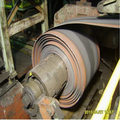
도 1은 종래기술에 의해 제조된 열연 강판을 나타낸 도면이다.
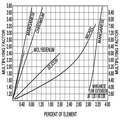
도 2는 강의 경화능(hardenability)을 평가하는 데 필요한 각종 합금원소의 소입성 배수(multiplying factor)를 도시한 그래프이다.
도 3은 본 발명에 의한 열연 강판의 등온변태도(TTT; Time Temperature Transformation)이다.
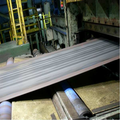
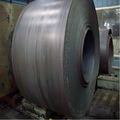
도 4 및 도 5는 각각 본 발명에 의해 제조되는 열연 강판의 표면형상 및 열연코일 형태로 권취된 것을 나타낸 도면이다.
도 6은 종래 기술에 의한 제조방법에 의해 제조된 열연강판의 미세조직을 나타낸 도면이다.
도 7은 본원발명에 의한 제조방법에 의해 제조된 열연강판의 미세조직을 나타낸 도면이다.1 is a view showing a hot rolled steel sheet manufactured by the prior art.
2 is a graph showing the multiplying factor of various alloying elements required to evaluate the hardenability of steel.
3 is an isothermal transformation diagram (TTT) of a hot rolled steel sheet according to the present invention.
4 and 5 are views showing the wound in the shape of the surface and hot rolled coil of the hot rolled steel sheet produced by the present invention, respectively.
6 is a view showing the microstructure of a hot rolled steel sheet manufactured by a manufacturing method according to the prior art.
7 is a view showing the microstructure of the hot rolled steel sheet produced by the manufacturing method according to the present invention.
본 발명의 이점 및 특징, 그리고 그것들을 달성하는 방법은 첨부되는 도면과 함께 상세하게 후술되어 있는 실시예들을 참조하면 명확해질 것이다. 그러나, 본 발명은 이하에서 개시되는 실시예들에 한정되는 것이 아니라 서로 다른 다양한 형태로 구현될 수 있으며, 단지 본 실시예들은 본 발명의 개시가 완전하도록 하고, 본 발명이 속하는 기술분야에서 통상의 지식을 가진 자에게 발명의 범주를 완전하게 알려주기 위해 제공되는 것이며, 본 발명은 청구항의 범주에 의해 정의될 뿐이다. 명세서 전체에 걸쳐 동일 참조 부호는 동일 구성요소를 지칭한다.Advantages and features of the present invention and methods for achieving them will be apparent with reference to the embodiments described below in detail with the accompanying drawings. However, it is to be understood that the present invention is not limited to the disclosed embodiments, but may be embodied in many different forms and should not be construed as limited to the embodiments set forth herein. It is intended that the disclosure of the present invention be limited only by the terms of the appended claims. Like reference numerals refer to like elements throughout the specification.
이하, 첨부된 도면을 참조하여 본 발명의 바람직한 실시예에 의한 열연 강판 및 그의 제조방법에 대하여 설명하기로 한다. 참고로 본 발명을 설명함에 있어서 관련된 공지 기능 혹은 구성에 대한 구체적인 설명이 본 발명의 요지를 불필요하게 흐릴 수 있다고 판단되는 경우 그 상세한 설명을 생략한다.Hereinafter, a hot rolled steel sheet and a method of manufacturing the same according to preferred embodiments of the present invention will be described with reference to the accompanying drawings. In the following description, well-known functions or constructions are not described in detail to avoid unnecessarily obscuring the subject matter of the present invention.
도 1은 종래기술에 의한 제조방법에 의해 제조된 열연강판의 권취상태를 나타낸 도면으로, 강판 표면의 평탄도 불량으로 인하여 코일링된 열연 강판의 권취상태가 불량한 것을 나타내고 있다.1 is a view showing a wound state of a hot rolled steel sheet manufactured by a manufacturing method according to the prior art, it shows that the wound state of the coiled hot rolled steel sheet is poor due to poor flatness of the steel sheet surface.
본 발명의 바람직한 일 실시예에 의한 열연 강판은 중량 퍼센트(wt%)로 탄소(C):0.45~0.55, 망간(Mn):0.65~0.95, 실리콘(Si):0.15~0.35, 황(S):0.02이하, 알루미늄(Al):0.001~0.030, 크롬(Cr):0.80~1.10, 몰리브덴(Mo):0.40~0.60, 바나듐(V):0.15~0.25, 질소(N):0.007이하, 나머지 철(Fe) 및 불가피 불순물을 포함하며, 펄라이트 분율이 60~70 퍼센트, 페라이트 분율이 30~40 퍼센트이며, 상기 페라이트 기지내 구상화된 탄화물을 포함하는 것을 특징으로 한다. Hot rolled steel sheet according to a preferred embodiment of the present invention by weight percent (wt%) carbon (C): 0.45 ~ 0.55, manganese (Mn): 0.65 ~ 0.95, silicon (Si): 0.15 ~ 0.35, sulfur (S) : 0.02 or less, aluminum (Al): 0.001 to 0.030, chromium (Cr): 0.80 to 1.10, molybdenum (Mo): 0.40 to 0.60, vanadium (V): 0.15 to 0.25, nitrogen (N): 0.007 or less, remaining iron (Fe) and unavoidable impurities, the pearlite fraction is 60-70 percent, the ferrite fraction is 30-40 percent, and is characterized in that it contains a spheroidized carbide in the ferrite matrix.
탄소(C)의 양은 0.45wt% ~ 0.55wt% 이다. 탄소(C)는 강의 오스테나이트 조직을 안정화시킬 뿐만 아니라 시멘타이트에 의한 분산강화 작용을 한다. 그러나, 과잉으로 포함하게 되면 강의 연신율을 저하시켜 제품의 가공성을 현저히 저하시키기 때문에 전술한 범위로 제한한다.The amount of carbon (C) is 0.45 wt% to 0.55 wt%. Carbon (C) not only stabilizes the austenite structure of the steel but also strengthens the dispersion by cementite. However, when included excessively, the elongation of the steel is lowered and the workability of the product is remarkably lowered.
망간(Mn)의 양은 0.65wt% ~ 0.95wt%이다. 망간(Mn)은 강의 경화능을 증가시키고 펄라이트를 미세화시키며 페라이트의 고용강화를 일으켜 항복강도를 증가시킨다. 하지만 다량으로 포함될 경우 용접시 망간계 퓸이 발생하며 MnS상 석출의 원인이 되어 연신율을 저하시키기 때문에 그 함유량을 전술한 범위로 제한한다.The amount of manganese (Mn) is 0.65 wt% to 0.95 wt%. Manganese (Mn) increases the hardenability of the steel, refines the pearlite, and increases the yield strength by increasing the solid solution of the ferrite. However, when included in a large amount, the manganese fume is generated during welding, which causes the MnS phase precipitation, thereby lowering the elongation, so the content is limited to the aforementioned range.
실리콘(Si)의 양은 0.15wt% ~ 0.35wt%이다. 실리콘은 강중에 포함되는 불가피한 불순물이지만 제강시 탈산제 역할로 첨가되는 원소로 페라이트 안정화 원소이다. 강내에 다량 함유되면 재질의 경화를 일으켜서 연성을 저하시키기 때문에 그 함유량을 전술한 범위로 제한한다.The amount of silicon (Si) is 0.15wt%-0.35wt%. Silicon is an inevitable impurity contained in steel, but is an element added as a deoxidizer during steelmaking and is a ferrite stabilizing element. If it contains a large amount in steel, hardening of a material will cause hardening and ductility will fall, and its content is restrict | limited to the above-mentioned range.
인(P)의 양은 0보다 크고 0.02wt% 이하이다. 인(P)은 강중에 포함되는 불가피한 불순물로 산세시 입계 부식을 일으키거나 열간 가공성을 저해시킬 수 이 있다. 또한, 과잉으로 첨가되면 신장 플랜지성이 저하되고 균열이 발생하기 쉬우므로 그 함유량을 전술한 범위로 조절한다.The amount of phosphorus (P) is greater than 0 and less than or equal to 0.02 wt%. Phosphorus (P) is an unavoidable impurity contained in steel and may cause grain boundary corrosion during pickling or impair hot workability. Moreover, when it adds excessively, extension | stretching flange property will fall and a crack will be easy to produce, and its content is adjusted to the above-mentioned range.
황(S)의 양은 0보다 크고 0.02wt% 이하이다. 황(S)은 강중에 포함되는 불가피한 불순물로 결정 입계에 편석되어 열간 가공성을 저해시키기 때문에 그 함유량을 전술한 범위로 제한한다.The amount of sulfur (S) is greater than zero and less than 0.02 wt%. Sulfur (S) is an unavoidable impurity contained in the steel and segregates at the grain boundaries and impairs hot workability. Therefore, the content of sulfur (S) is limited to the aforementioned range.
알루미늄(Al)의 양은 0.001wt% ~ 0.030wt%이다. 알루미늄(Al)은 제강시 탈산제로 첨가되는 합금 성분이지만 다량 첨가시 비금속개재물로 존재하여 냉연 스트립의 슬리브(sliver) 결함의 원인이 되며 용접성 저하를 일으키기 때문에 그 함유량을 전술한 범위로 제한한다.The amount of aluminum (Al) is 0.001 wt% to 0.030 wt%. Aluminum (Al) is an alloy component added as a deoxidizer during steelmaking, but when a large amount is added, it exists as a non-metallic inclusion, which causes a sleeve defect in the cold rolled strip and causes a decrease in weldability, thereby limiting its content to the aforementioned range.
크롬(Cr)의 양은 0.80wt% ~ 1.10wt%이다. 크롬(Cr)은 페라이트 안정화 원소로서 강의 오스테나이트 조직이 펄라이트나 페라이트로 변태되는 것을 지연시킨다. 또한, 크롬은 2상 영역 공냉 후 오스테나이트가 상온에서 베이나이트나 마르텐사이트로 변태되게 하고 강도를 향상시키는 역할을 하나 1.10wt%을 초과하여 첨가하면 연성 및 용접성을 저하시키며 제품 제조단가를 증가시키므로 그 함유량을 전술한 범위로 제한한다.The amount of chromium (Cr) is between 0.80 wt% and 1.10 wt%. Chromium (Cr) is a ferrite stabilizing element that delays the transformation of the austenite structure of steel into pearlite or ferrite. In addition, chromium causes austenite to be transformed into bainite or martensite at room temperature after two-phase air cooling, and improves its strength. However, when chromium is added in excess of 1.10 wt%, ductility and weldability are increased and product manufacturing cost is increased. The content is limited to the above-mentioned range.
몰리브덴(Mo)의 양은 0.40wt% ~ 0.60wt%이다. 몰리브덴은 미세한 탄화물의 형태로 강중에 존재해서 강도를 높이는 효과가 있으며, 강의 경화능을 증가시켜 상온 강도를 증가시키는데 유효하다. 또한, 몰리브덴은 제어 압연시에 오스테나이트의 재결정을 억제하여 오스테나이트 조직을 미세화하여 저온 인성을 향상시키는 효과가 있다. 몰리브덴은 0.6wt%를 초과하면 용접성이 열화되므로 적절한 강도 확보와 용접성을 고려하여 그 함유량을 전술한 범위로 제한한다.The amount of molybdenum (Mo) is 0.40wt%-0.60wt%. Molybdenum is present in steel in the form of fine carbides to increase the strength, and is effective for increasing the strength at room temperature by increasing the hardenability of the steel. In addition, molybdenum has an effect of suppressing recrystallization of austenite at the time of controlled rolling to refine the austenite structure to improve low temperature toughness. When molybdenum exceeds 0.6 wt%, weldability is deteriorated, so that the content is limited to the above-described range in consideration of securing appropriate strength and weldability.
바나듐(V)의 양은 0.15wt% ~ 0.25wt%이다. 바나듐은 권취 공정에서 강중에 미세한 탄질화물을 생성하고 그 석출강화에 의하여 강의 상온 강도 및 고온 강도를 증가시키는 원소이나 함유량이 0.25wt%를 초과하는 경우에는 용접성이 현저히 저하되므로 그 함유량을 전술한 범위로 제한한다.The amount of vanadium (V) is 0.15 wt%-0.25 wt%. Vanadium produces fine carbonitrides in the steel during the winding process and when the element or content that increases the room temperature strength and the high temperature strength of the steel by precipitation strengthening is significantly lower than 0.25wt%, the weldability is significantly lowered. Limited to
질소(N)의 양은 0보다 크고 0.007wt% 이하이다. 강중 질소(N)는 탄소(C)와 동등하게 불순물 원소로 존재하며 오스테나이트 분율을 증가시키는 역할을 하여 열간 압연시에 오스테나이트상을 석출시켜 재결정을 촉진시키는 역할을 하나 다량의 첨가는 가공성을 저해시킬 뿐만 아니라 냉연제품의 스트레처 스트레인의 원인이 되기 때문에 그 함유량을 전술한 범위로 제한한다.The amount of nitrogen (N) is greater than zero and less than 0.007 wt%. Nitrogen (N) in the steel is present as an impurity element in the same way as carbon (C) and serves to increase the austenite fraction to precipitate the austenite phase during hot rolling to promote recrystallization. It not only inhibits but also causes strainer strain of cold-rolled products, so the content is limited to the above-mentioned range.
전술한 원소들을 제외한 열연 강판의 나머지 성분들은 철(Fe) 및 기타 제선, 제강공정에서 발생하는 불가피한 불순물로 이루어진다.Except for the aforementioned elements, the remaining components of the hot rolled steel sheet are made of iron (Fe) and other inevitable impurities generated in iron making and steelmaking processes.
도 2는 강의 경화능(hardenability)을 평가하는 데 필요한 각종 합금원소의 소입성 배수(multiplying factor)를 도시한 그래프이며, 본원발명에 첨가된 주요 합금원소인 크롬, 몰리브덴, 망간 등의 첨가량에 따른 소입성 배수가 급격히 증가함을 알 수 있다.Figure 2 is a graph showing the multiplying factor of various alloying elements required to evaluate the hardenability of the steel, according to the addition amount of the main alloying elements chromium, molybdenum, manganese, etc. added to the present invention It can be seen that the quenchable drainage increases rapidly.
경화능이란 소입경화하기 쉬운 정도, 즉 강재를 급냉할 경우 마르텐사이트(martensite) 조직을 얻기 쉬운 성질을 나타내는 척도라 할 수 있다. The hardenability is a measure of the tendency of small particle hardening, that is, a property of easily obtaining martensite structure when quenching steel.
상기 도 2에 도시된 바와 같이, 몰리브덴, 크롬, 망간 등의 합금원소를 첨가함에 의해 본원발명의 고탄소 고합금 강재의 등온변태도(TTT; Time Temperature Transformation)의 펄라이트 변태의 시작점인 노즈(nose)가 시간축에서 오른쪽으로 이동(shift)함에 따라, 급냉시 강재의 마르텐사이트 변태를 위한 임계 냉각속도가 낮아질 수 있다.As shown in FIG. 2, by adding alloying elements such as molybdenum, chromium, and manganese, the nose, which is the starting point of the pearlite transformation of TTT (Time Temperature Transformation) of the high carbon high alloy steel of the present invention As the c shifts to the right in the time axis, the critical cooling rate for the martensite transformation of the steel during quenching can be lowered.
도 2를 참조하면, 본원발명의 강재의 경우, 800℃ 이상의 오스테나이트 영역으로 가열한 후 약 800℃ 부근의 Ar3 변태구간으로부터 냉각을 시킬 경우, 약 2~3분 이내에, 펄라이트 변태가 빠르게 시작되는 온도범위인 약 680℃ 부근까지 냉각한 후 등온변태를 시키게 되면 15분 이내에 펄라이트 변태가 종료될 수 있다. Referring to Figure 2, in the case of the steel material of the present invention, after cooling to an austenite region of 800 ℃ or more after cooling from the Ar3 transformation zone of about 800 ℃, within about 2 to 3 minutes, the pearlite transformation starts quickly If the isothermal transformation after cooling to about 680 ℃ temperature range can be completed in about 15 minutes perlite transformation.
본원발명의 경우, 상기 열연 강판의 페라이트(ferrite) 결정립 크기는 5~15㎛이며, 상기 페라이트 기지(matrix)내 구상화된 탄화물(Fe3C)의 평균 입자크기는 0.5~1.5㎛ 범위를 갖는다.In the present invention, the ferrite grain size of the hot-rolled steel sheet is 5 ~ 15㎛, the average particle size of the spheroidized carbide (Fe 3 C) in the ferrite matrix (Matrix) has a range of 0.5 ~ 1.5㎛.
상기 탄화물의 구상화는 강재를 비교적 낮은 냉각속도로 제어냉각(controlled cooling) 시킴에 따라, 변태시의 발열에 의해 초기에 변태가 완료된 펄라이트가 재가열됨으로써 탄소의 확산에 의한 페라이트(ferrite)와 시멘타이트(Fe3C) 계면에너지 감소에 기인한 것이라 할 수 있다. As the spheroidization of carbides is controlled cooling of steel materials at a relatively low cooling rate, ferrite and cementite due to the diffusion of carbon are reheated by the initial transformation of perlite by the heat of transformation. 3 C) This may be due to the reduction of interfacial energy.
또한, 상기 열연 강판은 항복강도가 700MPa 내지 1,100MPa 인 것을특징으로 한다. 열연 강판의 항복강도는 탄소 함량, 크롬, 바나듐 등의 합금원소 첨가로 인하여 적어도 700MPa 이상의 강도가 유지되어야 하며 1,100MPa 을 초과하는 경우는 열연 강판의 재압연을 위한 언코일링(uncoiling)시 평탄도 유지가 어려우며 열연 조질압연(skin pass mill)에 의한 형상 교정이 곤란하기 때문이다.In addition, the hot rolled steel sheet is characterized in that the yield strength is 700MPa to 1,100MPa. The yield strength of hot rolled steel sheet should be maintained at least 700MPa due to the addition of alloying elements such as carbon content, chromium, vanadium, etc., and if it exceeds 1,100MPa, the flatness during uncoiling for re-rolling the hot rolled steel sheet This is because it is difficult to maintain and shape correction by a hot rolled skin pass mill is difficult.
또한, 상기 열연 강판은 연신율이 7% 내지 20% 인 것을 특징으로 한다. 연신율이 7% 미만인 경우는 가공성 저하로 인하여 열연 강판을 재압연을 통해 최종 제품을 생산하는 경우 수율이 저하되며, 20% 초과인 경우는 가공은 용이하지만 적정한 강도를 확보하기가 어렵기 때문이다.In addition, the hot rolled steel sheet is characterized in that the elongation is 7% to 20%. If the elongation is less than 7% yield is reduced when the final product is produced by re-rolling the hot-rolled steel sheet due to workability deterioration, if the elongation is greater than 20% is easy to process but difficult to secure adequate strength.
본 발명의 바람직한 다른 실시예에 의한 열연 강판의 제조방법은 중량 퍼센트(wt%)로 탄소(C):0.45~0.55, 망간(Mn):0.65~0.95, 실리콘(Si):0.15~0.35, 인(P):0보다 크며 0.02% 이하, 황(S):0.02이하, 알루미늄(Al):0.001~0.030, 크롬(Cr):0.80~1.10, 몰리브덴(Mo):0.40~0.60, 바나듐(V):0.15~0.25, 질소(N):0.007이하, 나머지 철(Fe) 및 불가피 불순물을 포함하는 강 슬래브를 제공하는 단계, 상기 강 슬래브를 가열 후 압연 종료온도 850~890℃에서 열간 압연하는 단계, 상기 강 슬래브를 냉각속도 5~8℃/sec로 냉각하는 단계, 및 상기 강 슬래브를 680~710℃에서 권취하는 단계를 포함한다.Method for producing a hot rolled steel sheet according to another preferred embodiment of the present invention in the weight percent (wt%) carbon (C): 0.45 ~ 0.55, manganese (Mn): 0.65 ~ 0.95, silicon (Si): 0.15 ~ 0.35, phosphorus (P): greater than 0, 0.02% or less, sulfur (S): 0.02 or less, aluminum (Al): 0.001 to 0.030, chromium (Cr): 0.80 to 1.10, molybdenum (Mo): 0.40 to 0.60, vanadium (V) : 0.15 ~ 0.25, nitrogen (N): 0.007 or less, providing a steel slab containing the remaining iron (Fe) and unavoidable impurities, hot rolling the steel slab at the end of the rolling temperature 850 ~ 890 ℃ after heating, Cooling the steel slab at a cooling rate of 5 ~ 8 ℃ / sec, and winding the steel slab at 680 ~ 710 ℃.
상기 강 슬래브는 전술한 본 발명의 바람직한 일 실시예에 의한 열연 강판과 동일한 성분을 갖는 용강(molten steel)을 연속주조 공정에 의해 제조하여 제공될 수 있다.The steel slab may be provided by manufacturing molten steel having the same component as the hot rolled steel sheet according to the preferred embodiment of the present invention by a continuous casting process.
상기 강 슬래브는 1,000~1,250℃ 범위로 가열된 후 850~890℃에서 열간 압연을 하며 열간 압연 후 냉각속도 5~8℃/sec로 냉각을 시키게 된다.The steel slab is heated in the range of 1,000 ~ 1,250 ℃ and hot rolling at 850 ~ 890 ℃ and after the hot rolling is cooled to a cooling rate of 5 ~ 8 ℃ / sec.
본원발명의 열간압연 강판은 소재의 상변태 시험결과 Ar3 변태 온도가 800℃ 부근이며 이에 의해 사상압연(finish mill) 출측 온도를 낮추는 것이 가능하다. 사상압연 출측온도를 낮추는 것이 가능함에 따라 냉각속도의 제어도 가능하게 된다. 이에 의해 가열온도를 1,000~1,250℃ 범위, 바람직하게는 1,180℃ 부근으로 설정하고 사상압연 출측온도를 850~890℃로 저온압연이 가능하다. 즉, 사상압연 출측온도를 저하시킴으로 인하여 저온 압연이 가능하다.In the hot-rolled steel sheet of the present invention, as a result of the phase transformation test of the material, the Ar3 transformation temperature is around 800 ° C., thereby lowering the exit temperature of the finish mill. As the finishing rolling exit temperature can be lowered, the cooling rate can be controlled. As a result, the heating temperature is set in the range of 1,000 to 1,250 ° C, preferably around 1,180 ° C, and the cold rolling exit temperature is 850 to 890 ° C. That is, low temperature rolling is possible by lowering the finishing rolling exit temperature.
또한, 냉각속도와 관련하여 종래의 경우, 강재의 변태율의 향상 및 조직제어 실시의 기능을 고려하여 20~25℃/sec 의 비교적 높은 냉각속도가 요구되나 본원의 경우는 냉각대(ROT; Run Out Table) 상에서의 변태를 유도하기 보다는 안정적인 형상 확보를 위하여 냉각속도를 5~8℃/sec로 유지하여 공냉에 가까운 냉각속도로 제어하게 된다. In addition, in the related art, in the related art, a relatively high cooling rate of 20-25 ° C./sec is required in consideration of the improvement of the transformation rate of the steel and the function of the organization control. Rather than inducing transformation on the Out Table, the cooling rate is maintained at 5 ~ 8 ℃ / sec to ensure a stable shape.
냉각속도를 5~8℃/sec로 유지함에 의하여, 고온 압연 저온 권취에서 발생할 수 있는 냉각에 의한 변형에 의한 형상 불량 방지 및 냉각속도 제어를 통한 몰리브덴(Mo) 등의 합금 첨가강에 대한 냉각조건 도출이 가능할 수 있다.By maintaining the cooling rate at 5 ~ 8 ℃ / sec, cooling conditions for the alloying steel, such as molybdenum (Mo) through the prevention of shape defects due to the deformation caused by cooling that can occur in hot rolling cold winding and the cooling rate control Derivation may be possible.
이후 냉각과 함께 또는 냉각후에 680~710℃에서 권취하는 단계를 거치게 된다. 종래의 경우는 권취 온도의 제어와 관련하여 사상압연후 권취단계까지의 공정에서 공정 초기의 냉각(전단 냉각)을 통한 강재(강판)의 등온변태도(TTT; Time Temperature Transformation)의 노즈(nose) 통과 및 변태 과정에서의 발열을 고려하여 권취 온도를 도출하였으나 본원의 경우는 공냉 구간을 설정함으로써 자연 냉각이 될 수 있도록 하였고 그 결과 상기 냉각 속도를 고려하여 권취 온도를 680~710℃ 범위로 설정할 수 있다.Thereafter, the step of winding at 680 ~ 710 ℃ with or after cooling. In the related art, in the process from finishing rolling after finishing rolling in relation to the control of the winding temperature, the nose of time temperature transformation (TTT) of steel (steel plate) through cooling (shear cooling) at the beginning of the process Although the coiling temperature was derived in consideration of the heat generation in the passage and transformation process, in the case of the present application, the natural cooling can be achieved by setting the air cooling section. As a result, the coiling temperature can be set in the range of 680 to 710 ° C in consideration of the cooling rate. have.
본원발명의 열간압연 강판은 열간압연 및 권취 과정에서의 냉각 속도 제어를 통해 냉각 편차를 제거할 수 있으며, 권취 이후 변태과정에서 고온 변태 구간을 통과시키게 되면 변태에 의한 발열과정에서 생성된 조직을 일부 구상화시키는 것이 가능하다. 이에 의해, 열연 공정에서의 조질 압연기(SPM, Skin Pass Mill) 및 형상 제어시 소재 강도를 하향시키는 효과를 얻을 수 있다. The hot rolled steel sheet of the present invention can remove the cooling deviation by controlling the cooling rate in the hot rolling and winding process, and when passing the high temperature transformation section in the transformation process after winding, it partially removes the tissue generated during the exothermic process by transformation. It is possible to visualize. As a result, it is possible to obtain an effect of lowering the strength of the raw material during the shape rolling mill (SPM, Skin Pass Mill) and shape control in the hot rolling process.
이하, 본원발명의 열간압연 강판 및 그 제조방법을 실시예를 통해 상세히 설명하기로 한다.Hereinafter, the hot rolled steel sheet and a method for manufacturing the same of the present invention will be described in detail by examples.
표 1은 본 발명의 실시예 및 비교예에 따른 열간압연 강판의 합금 성분비를 나타낸 것이고, 표 2는 표 1의 열간압연 강판의 제조 조건 및 기계적 성질을 나타낸 것이다.
Table 1 shows the alloy composition ratio of the hot rolled steel sheet according to the Examples and Comparative Examples of the present invention, Table 2 shows the manufacturing conditions and mechanical properties of the hot rolled steel sheet of Table 1.
<실시예><Examples>
하기의 표 1과 같은 조성을 가진 슬라브(Slab)를 1,180℃ 온도 부근에서 각각 한 시간 유지하여 균질화 처리한 후 표 2에 기재된 마무리 열간압연 온도(FDT)에서 열간 압연하고 권취온도(CT)에서 권취하였다. The slabs having the composition shown in Table 1 below were homogenized by maintaining at about 1,180 ° C. for one hour, and then hot rolled at the finish hot rolling temperature (FDT) shown in Table 2 and wound at the coiling temperature (CT). .
(wt%)content
(wt%)
도 4은 상기 실시예 1 내지 3에 의해 제조된 열연 강판의 표면을 나타낸 사진으로 강판의 표면이 평탄한 형상을 가지고 있음을 알 수 있다.Figure 4 is a photograph showing the surface of the hot rolled steel sheet prepared in Examples 1 to 3 it can be seen that the surface of the steel sheet has a flat shape.
도 5은 강판의 표면이 우수한 평탄도를 가짐으로 인하여 권취한 상태에서도 양호한 코일형태를 유지함을 보여주고 있다.5 shows that the surface of the steel sheet maintains a good coil shape even in a wound state due to its excellent flatness.
도 6은 비교예에 의한 열연 강판의 미세조직을 나타낸 도면으로, 강재의 미세조직은 베이나이트(bainite) 조직을 타내며, 구형의 탄화물 조직은 관찰되지 않음을 알 수 있다.6 is a view showing the microstructure of the hot rolled steel sheet according to the comparative example, it can be seen that the microstructure of the steel represents bainite (bainite) structure, spherical carbide structure is not observed.
도 7은 본원발명의 실시예들의 강판의 미세조직을 나타낸 것으로 페라이트 조직내 구상화된 탄화물이 존재함을 알 수 있다.
Figure 7 shows the microstructure of the steel sheet of the embodiments of the present invention can be seen that there is a spheroidized carbide in the ferrite tissue.
이상 첨부된 도면을 참조하여 본 발명의 실시예를 설명하였지만, 본 발명이 속하는 기술분야에서 통상의 지식을 가진 자는 본 발명이 그 기술적 사상이나 필수적인 특징을 변경하지 않고서 다른 구체적인 형태로 실시될 수 있다는 것을 이해할 수 있을 것이다.While the present invention has been described in connection with what is presently considered to be practical exemplary embodiments, it is to be understood that the invention is not limited to the disclosed embodiments, but, on the contrary, You will understand.
그러므로 이상에서 기술한 실시예들은 모든 면에서 예시적인 것이며 한정적이 아닌 것으로 이해해야만 한다. 본 발명의 범위는 상기 상세한 설명보다는 후술하는 특허청구범위에 의하여 나타내어지며, 특허청구범위의 의미 및 범위 그리고 그 균등 개념으로부터 도출되는 모든 변경 또는 변경된 형태가 본 발명의 범위에 포함되는 것으로 해석되어야 한다.It is therefore to be understood that the above-described embodiments are illustrative in all aspects and not restrictive. The scope of the present invention is defined by the appended claims rather than the detailed description, and all changes or modifications derived from the meaning and scope of the claims and their equivalents should be interpreted as being included in the scope of the present invention .
Claims (5)
펄라이트 분율이 60~70 퍼센트, 페라이트 분율이 30~40 퍼센트이며,
상기 페라이트 기지내 구상화된 탄화물을 포함하며,
연신율이 7% 내지 20% 인 것을 특징으로 하는 열연 강판.By weight percent (wt%), carbon (C): 0.45 to 0.55, manganese (Mn): 0.65 to 0.95, silicon (Si): 0.15 to 0.35, phosphorus (P): greater than 0, 0.02% or less, sulfur (S) : Greater than 0 and less than 0.02, aluminum (Al): 0.001 to 0.030, chromium (Cr): 0.80 to 1.10, molybdenum (Mo): 0.40 to 0.60, vanadium (V): 0.15 to 0.25, nitrogen (N): more than 0 Large and less than 0.007, consisting of the remaining iron (Fe) and inevitable impurities,
The pearlite fraction is 60-70 percent, the ferrite fraction is 30-40 percent,
Includes a carbide in the ferrite matrix,
Hot-rolled steel sheet, characterized in that the elongation is 7% to 20%.
상기 페라이트 결정립 크기는 5~15㎛이며, 상기 페라이트 기지내 구상화된 탄화물(Fe3C)의 평균 입자크기는 0.5~1.5㎛인 것을 특징으로 하는 열연 강판. The method of claim 1,
The ferrite grain size is 5 ~ 15㎛, Hot rolled steel sheet, characterized in that the average particle size of the spheroidized carbide (Fe 3 C) in the ferrite matrix is 0.5 ~ 1.5㎛.
항복강도가 700MPa 내지 1,100MPa 인 것을 특징으로 하는 열연 강판.3. The method according to claim 1 or 2,
Hot rolled steel sheet, characterized in that the yield strength is 700MPa to 1,100MPa.
상기 강 슬래브를 가열 후 압연 종료온도 850~890℃에서 열간 압연하는 단계;
상기 강 슬래브를 냉각속도 5~8℃/sec로 냉각하는 단계; 및
상기 강 슬래브를 680~710℃에서 권취하는 단계를 포함하는 열연 강판의 제조방법.By weight percent (wt%), carbon (C): 0.45 to 0.55, manganese (Mn): 0.65 to 0.95, silicon (Si): 0.15 to 0.35, phosphorus (P): greater than 0, 0.02% or less, sulfur (S) : Greater than 0 and less than 0.02, aluminum (Al): 0.001 to 0.030, chromium (Cr): 0.80 to 1.10, molybdenum (Mo): 0.40 to 0.60, vanadium (V): 0.15 to 0.25, nitrogen (N): than 0 Providing a steel slab that is greater than or equal to 0.007 and consisting of the remaining iron (Fe) and unavoidable impurities;
Hot rolling the steel slab at a rolling end temperature of 850 to 890 ° C. after heating;
Cooling the steel slab at a cooling rate of 5 to 8 ° C./sec; And
The method of manufacturing a hot rolled steel sheet comprising the step of winding the steel slab at 680 ~ 710 ℃.
Priority Applications (1)
| Application Number | Priority Date | Filing Date | Title |
|---|---|---|---|
| KR1020110052807A KR101318383B1 (en) | 2011-06-01 | 2011-06-01 | Hot rolled steel sheet and methdo for manufacturing the same |
Applications Claiming Priority (1)
| Application Number | Priority Date | Filing Date | Title |
|---|---|---|---|
| KR1020110052807A KR101318383B1 (en) | 2011-06-01 | 2011-06-01 | Hot rolled steel sheet and methdo for manufacturing the same |
Publications (2)
| Publication Number | Publication Date |
|---|---|
| KR20120133895A KR20120133895A (en) | 2012-12-11 |
| KR101318383B1 true KR101318383B1 (en) | 2013-10-15 |
Family
ID=47517191
Family Applications (1)
| Application Number | Title | Priority Date | Filing Date |
|---|---|---|---|
| KR1020110052807A Active KR101318383B1 (en) | 2011-06-01 | 2011-06-01 | Hot rolled steel sheet and methdo for manufacturing the same |
Country Status (1)
| Country | Link |
|---|---|
| KR (1) | KR101318383B1 (en) |
Families Citing this family (4)
| Publication number | Priority date | Publication date | Assignee | Title |
|---|---|---|---|---|
| KR101639846B1 (en) * | 2013-12-25 | 2016-07-22 | 주식회사 포스코 | Spheroidization annealing method for manufacuring high carbon steel sheet having exceelent farmability and high carbon steel sheet produced by the same |
| KR101830551B1 (en) * | 2016-12-14 | 2018-02-20 | 주식회사 포스코 | High-carbon hot-rolled steel sheet having excellent surface quality and method for manufacturing same |
| KR102012100B1 (en) * | 2017-11-22 | 2019-08-19 | 현대제철 주식회사 | Steel and method of manufacturing the same |
| KR102438479B1 (en) * | 2020-12-21 | 2022-08-31 | 주식회사 포스코 | Spheroidized cold-rolled steel sheet with excellent heat treatment properties and manufacturing method thereof |
Citations (2)
| Publication number | Priority date | Publication date | Assignee | Title |
|---|---|---|---|---|
| JP2010043323A (en) * | 2008-08-12 | 2010-02-25 | Sumitomo Metal Ind Ltd | Hot rolled steel sheet for hot press, method for producing the same, and method for producing hot pressed steel sheet member |
| JP2010144226A (en) * | 2008-12-19 | 2010-07-01 | Sumitomo Metal Ind Ltd | Rolled steel material to be induction-hardened and method for manufacturing the same |
-
2011
- 2011-06-01 KR KR1020110052807A patent/KR101318383B1/en active Active
Patent Citations (2)
| Publication number | Priority date | Publication date | Assignee | Title |
|---|---|---|---|---|
| JP2010043323A (en) * | 2008-08-12 | 2010-02-25 | Sumitomo Metal Ind Ltd | Hot rolled steel sheet for hot press, method for producing the same, and method for producing hot pressed steel sheet member |
| JP2010144226A (en) * | 2008-12-19 | 2010-07-01 | Sumitomo Metal Ind Ltd | Rolled steel material to be induction-hardened and method for manufacturing the same |
Also Published As
| Publication number | Publication date |
|---|---|
| KR20120133895A (en) | 2012-12-11 |
Similar Documents
| Publication | Publication Date | Title |
|---|---|---|
| JP6893560B2 (en) | Tempered martensitic steel with low yield ratio and excellent uniform elongation and its manufacturing method | |
| JP6383808B2 (en) | High-strength cold-rolled steel sheet having excellent ductility, hot-dip galvanized steel sheet, and production methods thereof | |
| KR20110013889A (en) | High toughness non-rolled rolled material, drawing material and manufacturing method thereof | |
| JP3554506B2 (en) | Manufacturing method of hot-rolled wire and bar for machine structure | |
| US9394580B2 (en) | High-toughness cold-drawn non-heat-treated wire rod, and method for manufacturing same | |
| KR101318383B1 (en) | Hot rolled steel sheet and methdo for manufacturing the same | |
| JP5280795B2 (en) | Method for producing high-strength cold-rolled steel sheet with excellent mechanical property stability | |
| JP5206056B2 (en) | Manufacturing method of non-tempered steel | |
| KR101518571B1 (en) | Non heat treated wire rod having excellent high strength and impact toughness and method for manafacturing the same | |
| JP3422864B2 (en) | Stainless steel with excellent workability and method for producing the same | |
| KR20220074475A (en) | Non-heat treated steel with improved machinability and toughness and the method for manufacturing the same | |
| KR101344651B1 (en) | Manufacturing method of steel-sheet | |
| KR101736590B1 (en) | Non heat treated wire rod having excellent high strength and method for manafacturing thereof | |
| KR101505299B1 (en) | Steel and method of manufacturing the same | |
| KR101143086B1 (en) | Manufacturing Method of High Strength Steel Sheet Having Excellent Bake-Hardenability | |
| KR100435467B1 (en) | A method for manufacturing high strength cold rolled steel sheet having superior ductility by continuous annealing | |
| US20240141454A1 (en) | Ultra high strength steel sheet having high yield ratio and excellent bendability and method of manufacturing same | |
| KR101153659B1 (en) | A cold rolled steel sheet having excellent formability and coatability, and A method for manufacturing the same | |
| KR100544539B1 (en) | High strength high toughness coil binding band steel and manufacturing method | |
| KR20240044568A (en) | Cold rolled steel sheet having excellent strength and formability and method of manufacturing the same | |
| KR20250161732A (en) | High-strength wire rod and fastening parts with excellent hydrogen delayed destruction characteristics and methods of manufacturing thereof | |
| KR101696097B1 (en) | Non heat treated wire rod having excellent high strength and impact toughness and method for manafacturing the same | |
| KR20140118314A (en) | High carbon steel and method of manufacturing the carbon steel | |
| KR101298699B1 (en) | High strength steel and method for manufacturing the same | |
| KR101372700B1 (en) | High carbon rolled steel sheet having excellent uniformity and mehtod for production thereof |
Legal Events
| Date | Code | Title | Description |
|---|---|---|---|
| A201 | Request for examination | ||
| PA0109 | Patent application |
St.27 status event code: A-0-1-A10-A12-nap-PA0109 |
|
| PA0201 | Request for examination |
St.27 status event code: A-1-2-D10-D11-exm-PA0201 |
|
| PG1501 | Laying open of application |
St.27 status event code: A-1-1-Q10-Q12-nap-PG1501 |
|
| D13-X000 | Search requested |
St.27 status event code: A-1-2-D10-D13-srh-X000 |
|
| D14-X000 | Search report completed |
St.27 status event code: A-1-2-D10-D14-srh-X000 |
|
| E902 | Notification of reason for refusal | ||
| PE0902 | Notice of grounds for rejection |
St.27 status event code: A-1-2-D10-D21-exm-PE0902 |
|
| E13-X000 | Pre-grant limitation requested |
St.27 status event code: A-2-3-E10-E13-lim-X000 |
|
| P11-X000 | Amendment of application requested |
St.27 status event code: A-2-2-P10-P11-nap-X000 |
|
| P13-X000 | Application amended |
St.27 status event code: A-2-2-P10-P13-nap-X000 |
|
| E701 | Decision to grant or registration of patent right | ||
| PE0701 | Decision of registration |
St.27 status event code: A-1-2-D10-D22-exm-PE0701 |
|
| GRNT | Written decision to grant | ||
| PR0701 | Registration of establishment |
St.27 status event code: A-2-4-F10-F11-exm-PR0701 |
|
| PR1002 | Payment of registration fee |
St.27 status event code: A-2-2-U10-U11-oth-PR1002 Fee payment year number: 1 |
|
| PG1601 | Publication of registration |
St.27 status event code: A-4-4-Q10-Q13-nap-PG1601 |
|
| FPAY | Annual fee payment |
Payment date: 20161005 Year of fee payment: 4 |
|
| PR1001 | Payment of annual fee |
St.27 status event code: A-4-4-U10-U11-oth-PR1001 Fee payment year number: 4 |
|
| FPAY | Annual fee payment |
Payment date: 20170824 Year of fee payment: 5 |
|
| PR1001 | Payment of annual fee |
St.27 status event code: A-4-4-U10-U11-oth-PR1001 Fee payment year number: 5 |
|
| R18-X000 | Changes to party contact information recorded |
St.27 status event code: A-5-5-R10-R18-oth-X000 |
|
| FPAY | Annual fee payment |
Payment date: 20180814 Year of fee payment: 6 |
|
| PR1001 | Payment of annual fee |
St.27 status event code: A-4-4-U10-U11-oth-PR1001 Fee payment year number: 6 |
|
| FPAY | Annual fee payment |
Payment date: 20190829 Year of fee payment: 7 |
|
| PR1001 | Payment of annual fee |
St.27 status event code: A-4-4-U10-U11-oth-PR1001 Fee payment year number: 7 |
|
| R18-X000 | Changes to party contact information recorded |
St.27 status event code: A-5-5-R10-R18-oth-X000 |
|
| R18-X000 | Changes to party contact information recorded |
St.27 status event code: A-5-5-R10-R18-oth-X000 |
|
| PR1001 | Payment of annual fee |
St.27 status event code: A-4-4-U10-U11-oth-PR1001 Fee payment year number: 8 |
|
| PR1001 | Payment of annual fee |
St.27 status event code: A-4-4-U10-U11-oth-PR1001 Fee payment year number: 9 |
|
| R18-X000 | Changes to party contact information recorded |
St.27 status event code: A-5-5-R10-R18-oth-X000 |
|
| PN2301 | Change of applicant |
St.27 status event code: A-5-5-R10-R11-asn-PN2301 |
|
| PN2301 | Change of applicant |
St.27 status event code: A-5-5-R10-R14-asn-PN2301 |
|
| PR1001 | Payment of annual fee |
St.27 status event code: A-4-4-U10-U11-oth-PR1001 Fee payment year number: 10 |
|
| R18-X000 | Changes to party contact information recorded |
St.27 status event code: A-5-5-R10-R18-oth-X000 |
|
| PR1001 | Payment of annual fee |
St.27 status event code: A-4-4-U10-U11-oth-PR1001 Fee payment year number: 11 |
|
| R18-X000 | Changes to party contact information recorded |
St.27 status event code: A-5-5-R10-R18-oth-X000 |
|
| PR1001 | Payment of annual fee |
St.27 status event code: A-4-4-U10-U11-oth-PR1001 Fee payment year number: 12 |
|
| R18 | Changes to party contact information recorded |
Free format text: ST27 STATUS EVENT CODE: A-5-5-R10-R18-OTH-X000 (AS PROVIDED BY THE NATIONAL OFFICE) |
|
| R18-X000 | Changes to party contact information recorded |
St.27 status event code: A-5-5-R10-R18-oth-X000 |