KR101270122B1 - Amine derivative compounds for treating ophthalmic diseases and disorders - Google Patents
Amine derivative compounds for treating ophthalmic diseases and disorders Download PDFInfo
- Publication number
- KR101270122B1 KR101270122B1 KR1020107012034A KR20107012034A KR101270122B1 KR 101270122 B1 KR101270122 B1 KR 101270122B1 KR 1020107012034 A KR1020107012034 A KR 1020107012034A KR 20107012034 A KR20107012034 A KR 20107012034A KR 101270122 B1 KR101270122 B1 KR 101270122B1
- Authority
- KR
- South Korea
- Prior art keywords
- alkyl
- hydrogen
- delete delete
- compound
- independently selected
- Prior art date
- Legal status (The legal status is an assumption and is not a legal conclusion. Google has not performed a legal analysis and makes no representation as to the accuracy of the status listed.)
- Expired - Fee Related
Links
- 0 *c1nc(CCc2cccc(CCN)c2)c[s]1 Chemical compound *c1nc(CCc2cccc(CCN)c2)c[s]1 0.000 description 6
- MIAHBTSKOABILA-UHFFFAOYSA-N CC(C)(CCN)c1cc(CCC(CC(C2)=O)(C3CCCC3)OC2=O)ccc1 Chemical compound CC(C)(CCN)c1cc(CCC(CC(C2)=O)(C3CCCC3)OC2=O)ccc1 MIAHBTSKOABILA-UHFFFAOYSA-N 0.000 description 2
- IQLYNGVAXYMOPL-UHFFFAOYSA-N CC(Cc1cc(CCCSC(CC(N2CCC(NCC(CNC(CCN(C(C=C3)=O)C3=O)=O)O)=O)=O)C2=O)ccc1)N Chemical compound CC(Cc1cc(CCCSC(CC(N2CCC(NCC(CNC(CCN(C(C=C3)=O)C3=O)=O)O)=O)=O)C2=O)ccc1)N IQLYNGVAXYMOPL-UHFFFAOYSA-N 0.000 description 2
- RQSHCDLJHVGIDH-UHFFFAOYSA-N CCCC(CCC)(CCc1cccc(C(CCN)O)c1)O Chemical compound CCCC(CCC)(CCc1cccc(C(CCN)O)c1)O RQSHCDLJHVGIDH-UHFFFAOYSA-N 0.000 description 2
- KRPBNLVRRCEAGH-UHFFFAOYSA-N NCCCc1cc(CCCC(Cc2ccc(ccc(C(O)=O)c3)c3c2)=O)ccc1 Chemical compound NCCCc1cc(CCCC(Cc2ccc(ccc(C(O)=O)c3)c3c2)=O)ccc1 KRPBNLVRRCEAGH-UHFFFAOYSA-N 0.000 description 2
- AHTLPHKVBGUXAL-UHFFFAOYSA-N NCCNc1cc(CCc(cc2)ccc2S(CC(CC(O)=O)c2ccccc2)(=O)=O)ccc1 Chemical compound NCCNc1cc(CCc(cc2)ccc2S(CC(CC(O)=O)c2ccccc2)(=O)=O)ccc1 AHTLPHKVBGUXAL-UHFFFAOYSA-N 0.000 description 2
- VFDFRUBVPKQVDS-UHFFFAOYSA-N CCCC(CCC)(C#Cc1cccc(C(CC#N)O)c1)O Chemical compound CCCC(CCC)(C#Cc1cccc(C(CC#N)O)c1)O VFDFRUBVPKQVDS-UHFFFAOYSA-N 0.000 description 1
- FYHKWQFEBNJACL-UHFFFAOYSA-N CCCC(CCC)(C#Cc1cccc(C(CCNC(C(F)(F)F)=O)O)c1)O Chemical compound CCCC(CCC)(C#Cc1cccc(C(CCNC(C(F)(F)F)=O)O)c1)O FYHKWQFEBNJACL-UHFFFAOYSA-N 0.000 description 1
- ZYBZCZDMTHAIMK-UHFFFAOYSA-N CCCC(CCC)(CCc1cc(C(CC#N)O)ccc1)O Chemical compound CCCC(CCC)(CCc1cc(C(CC#N)O)ccc1)O ZYBZCZDMTHAIMK-UHFFFAOYSA-N 0.000 description 1
- UJNOUTDVDXLIAU-UHFFFAOYSA-N CCCC(CCC)(CCc1cc(C(CCNC(C(F)(F)F)=O)O)ccc1)O Chemical compound CCCC(CCC)(CCc1cc(C(CCNC(C(F)(F)F)=O)O)ccc1)O UJNOUTDVDXLIAU-UHFFFAOYSA-N 0.000 description 1
- KSGKWFVMAFBTNO-UHFFFAOYSA-N CCCC(CCC)(CCc1cc(C(CCNC(OC(C)(C)C)=O)=C)ccc1)O Chemical compound CCCC(CCC)(CCc1cc(C(CCNC(OC(C)(C)C)=O)=C)ccc1)O KSGKWFVMAFBTNO-UHFFFAOYSA-N 0.000 description 1
- UXACOEYGDVLERX-UHFFFAOYSA-N CCCC(CCC)(CCc1cccc(C(C)CCNC(OC(C)(C)C)=O)c1)O Chemical compound CCCC(CCC)(CCc1cccc(C(C)CCNC(OC(C)(C)C)=O)c1)O UXACOEYGDVLERX-UHFFFAOYSA-N 0.000 description 1
- PGORLBZHTGXQTN-UHFFFAOYSA-N CCCC(CCC)(CCc1cccc(C(CC(N)=N)O)c1)O Chemical compound CCCC(CCC)(CCc1cccc(C(CC(N)=N)O)c1)O PGORLBZHTGXQTN-UHFFFAOYSA-N 0.000 description 1
- IXSRFVSRLJJTIL-UHFFFAOYSA-N CCCC(CCC)(CCc1cccc(C(CCNC(OC(C)(C)C)=O)=O)c1)O Chemical compound CCCC(CCC)(CCc1cccc(C(CCNC(OC(C)(C)C)=O)=O)c1)O IXSRFVSRLJJTIL-UHFFFAOYSA-N 0.000 description 1
- BQIFVMJLYCCQRQ-UHFFFAOYSA-N CCCC(CCc1cccc(C(CCN)O)c1)O Chemical compound CCCC(CCc1cccc(C(CCN)O)c1)O BQIFVMJLYCCQRQ-UHFFFAOYSA-N 0.000 description 1
- DMEFESCAGZWAPZ-UHFFFAOYSA-N COc1c(CCc2cccc(OCCN)c2)cccc1 Chemical compound COc1c(CCc2cccc(OCCN)c2)cccc1 DMEFESCAGZWAPZ-UHFFFAOYSA-N 0.000 description 1
- QECINZIVUJFZFO-UHFFFAOYSA-N N#CCC(c1cccc(Br)c1)O Chemical compound N#CCC(c1cccc(Br)c1)O QECINZIVUJFZFO-UHFFFAOYSA-N 0.000 description 1
- IPXHDZGCJJOHQI-UHFFFAOYSA-N NCCC(c1cc(Br)ccc1)O Chemical compound NCCC(c1cc(Br)ccc1)O IPXHDZGCJJOHQI-UHFFFAOYSA-N 0.000 description 1
- DWLXIHPVABSFNF-UHFFFAOYSA-N OC(CCNC(C(F)(F)F)=O)c1cc(Br)ccc1 Chemical compound OC(CCNC(C(F)(F)F)=O)c1cc(Br)ccc1 DWLXIHPVABSFNF-UHFFFAOYSA-N 0.000 description 1
Images


Classifications
-
- A—HUMAN NECESSITIES
- A61—MEDICAL OR VETERINARY SCIENCE; HYGIENE
- A61K—PREPARATIONS FOR MEDICAL, DENTAL OR TOILETRY PURPOSES
- A61K31/00—Medicinal preparations containing organic active ingredients
- A61K31/13—Amines
- A61K31/135—Amines having aromatic rings, e.g. ketamine, nortriptyline
- A61K31/137—Arylalkylamines, e.g. amphetamine, epinephrine, salbutamol, ephedrine or methadone
-
- A—HUMAN NECESSITIES
- A61—MEDICAL OR VETERINARY SCIENCE; HYGIENE
- A61K—PREPARATIONS FOR MEDICAL, DENTAL OR TOILETRY PURPOSES
- A61K31/00—Medicinal preparations containing organic active ingredients
- A61K31/33—Heterocyclic compounds
- A61K31/38—Heterocyclic compounds having sulfur as a ring hetero atom
- A61K31/382—Heterocyclic compounds having sulfur as a ring hetero atom having six-membered rings, e.g. thioxanthenes
-
- A—HUMAN NECESSITIES
- A61—MEDICAL OR VETERINARY SCIENCE; HYGIENE
- A61P—SPECIFIC THERAPEUTIC ACTIVITY OF CHEMICAL COMPOUNDS OR MEDICINAL PREPARATIONS
- A61P9/00—Drugs for disorders of the cardiovascular system
- A61P9/10—Drugs for disorders of the cardiovascular system for treating ischaemic or atherosclerotic diseases, e.g. antianginal drugs, coronary vasodilators, drugs for myocardial infarction, retinopathy, cerebrovascula insufficiency, renal arteriosclerosis
-
- A—HUMAN NECESSITIES
- A61—MEDICAL OR VETERINARY SCIENCE; HYGIENE
- A61K—PREPARATIONS FOR MEDICAL, DENTAL OR TOILETRY PURPOSES
- A61K31/00—Medicinal preparations containing organic active ingredients
- A61K31/13—Amines
- A61K31/135—Amines having aromatic rings, e.g. ketamine, nortriptyline
- A61K31/138—Aryloxyalkylamines, e.g. propranolol, tamoxifen, phenoxybenzamine
-
- A—HUMAN NECESSITIES
- A61—MEDICAL OR VETERINARY SCIENCE; HYGIENE
- A61K—PREPARATIONS FOR MEDICAL, DENTAL OR TOILETRY PURPOSES
- A61K31/00—Medicinal preparations containing organic active ingredients
- A61K31/13—Amines
- A61K31/155—Amidines (), e.g. guanidine (H2N—C(=NH)—NH2), isourea (N=C(OH)—NH2), isothiourea (—N=C(SH)—NH2)
-
- A—HUMAN NECESSITIES
- A61—MEDICAL OR VETERINARY SCIENCE; HYGIENE
- A61K—PREPARATIONS FOR MEDICAL, DENTAL OR TOILETRY PURPOSES
- A61K31/00—Medicinal preparations containing organic active ingredients
- A61K31/16—Amides, e.g. hydroxamic acids
- A61K31/165—Amides, e.g. hydroxamic acids having aromatic rings, e.g. colchicine, atenolol, progabide
-
- A—HUMAN NECESSITIES
- A61—MEDICAL OR VETERINARY SCIENCE; HYGIENE
- A61K—PREPARATIONS FOR MEDICAL, DENTAL OR TOILETRY PURPOSES
- A61K31/00—Medicinal preparations containing organic active ingredients
- A61K31/21—Esters, e.g. nitroglycerine, selenocyanates
- A61K31/215—Esters, e.g. nitroglycerine, selenocyanates of carboxylic acids
- A61K31/22—Esters, e.g. nitroglycerine, selenocyanates of carboxylic acids of acyclic acids, e.g. pravastatin
- A61K31/222—Esters, e.g. nitroglycerine, selenocyanates of carboxylic acids of acyclic acids, e.g. pravastatin with compounds having aromatic groups, e.g. dipivefrine, ibopamine
-
- A—HUMAN NECESSITIES
- A61—MEDICAL OR VETERINARY SCIENCE; HYGIENE
- A61K—PREPARATIONS FOR MEDICAL, DENTAL OR TOILETRY PURPOSES
- A61K31/00—Medicinal preparations containing organic active ingredients
- A61K31/33—Heterocyclic compounds
- A61K31/335—Heterocyclic compounds having oxygen as the only ring hetero atom, e.g. fungichromin
- A61K31/35—Heterocyclic compounds having oxygen as the only ring hetero atom, e.g. fungichromin having six-membered rings with one oxygen as the only ring hetero atom
- A61K31/351—Heterocyclic compounds having oxygen as the only ring hetero atom, e.g. fungichromin having six-membered rings with one oxygen as the only ring hetero atom not condensed with another ring
-
- A—HUMAN NECESSITIES
- A61—MEDICAL OR VETERINARY SCIENCE; HYGIENE
- A61K—PREPARATIONS FOR MEDICAL, DENTAL OR TOILETRY PURPOSES
- A61K31/00—Medicinal preparations containing organic active ingredients
- A61K31/33—Heterocyclic compounds
- A61K31/38—Heterocyclic compounds having sulfur as a ring hetero atom
- A61K31/381—Heterocyclic compounds having sulfur as a ring hetero atom having five-membered rings
-
- A—HUMAN NECESSITIES
- A61—MEDICAL OR VETERINARY SCIENCE; HYGIENE
- A61K—PREPARATIONS FOR MEDICAL, DENTAL OR TOILETRY PURPOSES
- A61K31/00—Medicinal preparations containing organic active ingredients
- A61K31/33—Heterocyclic compounds
- A61K31/395—Heterocyclic compounds having nitrogen as a ring hetero atom, e.g. guanethidine or rifamycins
- A61K31/435—Heterocyclic compounds having nitrogen as a ring hetero atom, e.g. guanethidine or rifamycins having six-membered rings with one nitrogen as the only ring hetero atom
- A61K31/44—Non condensed pyridines; Hydrogenated derivatives thereof
- A61K31/4402—Non condensed pyridines; Hydrogenated derivatives thereof only substituted in position 2, e.g. pheniramine, bisacodyl
-
- A—HUMAN NECESSITIES
- A61—MEDICAL OR VETERINARY SCIENCE; HYGIENE
- A61K—PREPARATIONS FOR MEDICAL, DENTAL OR TOILETRY PURPOSES
- A61K31/00—Medicinal preparations containing organic active ingredients
- A61K31/33—Heterocyclic compounds
- A61K31/395—Heterocyclic compounds having nitrogen as a ring hetero atom, e.g. guanethidine or rifamycins
- A61K31/435—Heterocyclic compounds having nitrogen as a ring hetero atom, e.g. guanethidine or rifamycins having six-membered rings with one nitrogen as the only ring hetero atom
- A61K31/44—Non condensed pyridines; Hydrogenated derivatives thereof
- A61K31/4406—Non condensed pyridines; Hydrogenated derivatives thereof only substituted in position 3, e.g. zimeldine
-
- A—HUMAN NECESSITIES
- A61—MEDICAL OR VETERINARY SCIENCE; HYGIENE
- A61P—SPECIFIC THERAPEUTIC ACTIVITY OF CHEMICAL COMPOUNDS OR MEDICINAL PREPARATIONS
- A61P11/00—Drugs for disorders of the respiratory system
- A61P11/06—Antiasthmatics
-
- A—HUMAN NECESSITIES
- A61—MEDICAL OR VETERINARY SCIENCE; HYGIENE
- A61P—SPECIFIC THERAPEUTIC ACTIVITY OF CHEMICAL COMPOUNDS OR MEDICINAL PREPARATIONS
- A61P27/00—Drugs for disorders of the senses
- A61P27/02—Ophthalmic agents
-
- A—HUMAN NECESSITIES
- A61—MEDICAL OR VETERINARY SCIENCE; HYGIENE
- A61P—SPECIFIC THERAPEUTIC ACTIVITY OF CHEMICAL COMPOUNDS OR MEDICINAL PREPARATIONS
- A61P29/00—Non-central analgesic, antipyretic or antiinflammatory agents, e.g. antirheumatic agents; Non-steroidal antiinflammatory drugs [NSAID]
-
- C—CHEMISTRY; METALLURGY
- C07—ORGANIC CHEMISTRY
- C07C—ACYCLIC OR CARBOCYCLIC COMPOUNDS
- C07C211/00—Compounds containing amino groups bound to a carbon skeleton
- C07C211/01—Compounds containing amino groups bound to a carbon skeleton having amino groups bound to acyclic carbon atoms
- C07C211/26—Compounds containing amino groups bound to a carbon skeleton having amino groups bound to acyclic carbon atoms of an unsaturated carbon skeleton containing at least one six-membered aromatic ring
- C07C211/27—Compounds containing amino groups bound to a carbon skeleton having amino groups bound to acyclic carbon atoms of an unsaturated carbon skeleton containing at least one six-membered aromatic ring having amino groups linked to the six-membered aromatic ring by saturated carbon chains
-
- C—CHEMISTRY; METALLURGY
- C07—ORGANIC CHEMISTRY
- C07C—ACYCLIC OR CARBOCYCLIC COMPOUNDS
- C07C213/00—Preparation of compounds containing amino and hydroxy, amino and etherified hydroxy or amino and esterified hydroxy groups bound to the same carbon skeleton
-
- C—CHEMISTRY; METALLURGY
- C07—ORGANIC CHEMISTRY
- C07C—ACYCLIC OR CARBOCYCLIC COMPOUNDS
- C07C215/00—Compounds containing amino and hydroxy groups bound to the same carbon skeleton
- C07C215/02—Compounds containing amino and hydroxy groups bound to the same carbon skeleton having hydroxy groups and amino groups bound to acyclic carbon atoms of the same carbon skeleton
- C07C215/04—Compounds containing amino and hydroxy groups bound to the same carbon skeleton having hydroxy groups and amino groups bound to acyclic carbon atoms of the same carbon skeleton the carbon skeleton being saturated
- C07C215/20—Compounds containing amino and hydroxy groups bound to the same carbon skeleton having hydroxy groups and amino groups bound to acyclic carbon atoms of the same carbon skeleton the carbon skeleton being saturated the carbon skeleton being saturated and containing rings
-
- C—CHEMISTRY; METALLURGY
- C07—ORGANIC CHEMISTRY
- C07C—ACYCLIC OR CARBOCYCLIC COMPOUNDS
- C07C215/00—Compounds containing amino and hydroxy groups bound to the same carbon skeleton
- C07C215/02—Compounds containing amino and hydroxy groups bound to the same carbon skeleton having hydroxy groups and amino groups bound to acyclic carbon atoms of the same carbon skeleton
- C07C215/22—Compounds containing amino and hydroxy groups bound to the same carbon skeleton having hydroxy groups and amino groups bound to acyclic carbon atoms of the same carbon skeleton the carbon skeleton being unsaturated
- C07C215/28—Compounds containing amino and hydroxy groups bound to the same carbon skeleton having hydroxy groups and amino groups bound to acyclic carbon atoms of the same carbon skeleton the carbon skeleton being unsaturated and containing six-membered aromatic rings
-
- C—CHEMISTRY; METALLURGY
- C07—ORGANIC CHEMISTRY
- C07C—ACYCLIC OR CARBOCYCLIC COMPOUNDS
- C07C215/00—Compounds containing amino and hydroxy groups bound to the same carbon skeleton
- C07C215/02—Compounds containing amino and hydroxy groups bound to the same carbon skeleton having hydroxy groups and amino groups bound to acyclic carbon atoms of the same carbon skeleton
- C07C215/22—Compounds containing amino and hydroxy groups bound to the same carbon skeleton having hydroxy groups and amino groups bound to acyclic carbon atoms of the same carbon skeleton the carbon skeleton being unsaturated
- C07C215/28—Compounds containing amino and hydroxy groups bound to the same carbon skeleton having hydroxy groups and amino groups bound to acyclic carbon atoms of the same carbon skeleton the carbon skeleton being unsaturated and containing six-membered aromatic rings
- C07C215/30—Compounds containing amino and hydroxy groups bound to the same carbon skeleton having hydroxy groups and amino groups bound to acyclic carbon atoms of the same carbon skeleton the carbon skeleton being unsaturated and containing six-membered aromatic rings containing hydroxy groups and carbon atoms of six-membered aromatic rings bound to the same carbon atom of the carbon skeleton
-
- C—CHEMISTRY; METALLURGY
- C07—ORGANIC CHEMISTRY
- C07C—ACYCLIC OR CARBOCYCLIC COMPOUNDS
- C07C215/00—Compounds containing amino and hydroxy groups bound to the same carbon skeleton
- C07C215/42—Compounds containing amino and hydroxy groups bound to the same carbon skeleton having amino groups or hydroxy groups bound to carbon atoms of rings other than six-membered aromatic rings of the same carbon skeleton
-
- C—CHEMISTRY; METALLURGY
- C07—ORGANIC CHEMISTRY
- C07C—ACYCLIC OR CARBOCYCLIC COMPOUNDS
- C07C217/00—Compounds containing amino and etherified hydroxy groups bound to the same carbon skeleton
- C07C217/02—Compounds containing amino and etherified hydroxy groups bound to the same carbon skeleton having etherified hydroxy groups and amino groups bound to acyclic carbon atoms of the same carbon skeleton
- C07C217/04—Compounds containing amino and etherified hydroxy groups bound to the same carbon skeleton having etherified hydroxy groups and amino groups bound to acyclic carbon atoms of the same carbon skeleton the carbon skeleton being acyclic and saturated
- C07C217/06—Compounds containing amino and etherified hydroxy groups bound to the same carbon skeleton having etherified hydroxy groups and amino groups bound to acyclic carbon atoms of the same carbon skeleton the carbon skeleton being acyclic and saturated having only one etherified hydroxy group and one amino group bound to the carbon skeleton, which is not further substituted
- C07C217/08—Compounds containing amino and etherified hydroxy groups bound to the same carbon skeleton having etherified hydroxy groups and amino groups bound to acyclic carbon atoms of the same carbon skeleton the carbon skeleton being acyclic and saturated having only one etherified hydroxy group and one amino group bound to the carbon skeleton, which is not further substituted the oxygen atom of the etherified hydroxy group being further bound to an acyclic carbon atom
- C07C217/10—Compounds containing amino and etherified hydroxy groups bound to the same carbon skeleton having etherified hydroxy groups and amino groups bound to acyclic carbon atoms of the same carbon skeleton the carbon skeleton being acyclic and saturated having only one etherified hydroxy group and one amino group bound to the carbon skeleton, which is not further substituted the oxygen atom of the etherified hydroxy group being further bound to an acyclic carbon atom to an acyclic carbon atom of a hydrocarbon radical containing six-membered aromatic rings
-
- C—CHEMISTRY; METALLURGY
- C07—ORGANIC CHEMISTRY
- C07C—ACYCLIC OR CARBOCYCLIC COMPOUNDS
- C07C217/00—Compounds containing amino and etherified hydroxy groups bound to the same carbon skeleton
- C07C217/02—Compounds containing amino and etherified hydroxy groups bound to the same carbon skeleton having etherified hydroxy groups and amino groups bound to acyclic carbon atoms of the same carbon skeleton
- C07C217/04—Compounds containing amino and etherified hydroxy groups bound to the same carbon skeleton having etherified hydroxy groups and amino groups bound to acyclic carbon atoms of the same carbon skeleton the carbon skeleton being acyclic and saturated
- C07C217/06—Compounds containing amino and etherified hydroxy groups bound to the same carbon skeleton having etherified hydroxy groups and amino groups bound to acyclic carbon atoms of the same carbon skeleton the carbon skeleton being acyclic and saturated having only one etherified hydroxy group and one amino group bound to the carbon skeleton, which is not further substituted
- C07C217/14—Compounds containing amino and etherified hydroxy groups bound to the same carbon skeleton having etherified hydroxy groups and amino groups bound to acyclic carbon atoms of the same carbon skeleton the carbon skeleton being acyclic and saturated having only one etherified hydroxy group and one amino group bound to the carbon skeleton, which is not further substituted the oxygen atom of the etherified hydroxy group being further bound to a carbon atom of a six-membered aromatic ring
- C07C217/16—Compounds containing amino and etherified hydroxy groups bound to the same carbon skeleton having etherified hydroxy groups and amino groups bound to acyclic carbon atoms of the same carbon skeleton the carbon skeleton being acyclic and saturated having only one etherified hydroxy group and one amino group bound to the carbon skeleton, which is not further substituted the oxygen atom of the etherified hydroxy group being further bound to a carbon atom of a six-membered aromatic ring the six-membered aromatic ring or condensed ring system containing that ring not being further substituted
-
- C—CHEMISTRY; METALLURGY
- C07—ORGANIC CHEMISTRY
- C07C—ACYCLIC OR CARBOCYCLIC COMPOUNDS
- C07C217/00—Compounds containing amino and etherified hydroxy groups bound to the same carbon skeleton
- C07C217/02—Compounds containing amino and etherified hydroxy groups bound to the same carbon skeleton having etherified hydroxy groups and amino groups bound to acyclic carbon atoms of the same carbon skeleton
- C07C217/04—Compounds containing amino and etherified hydroxy groups bound to the same carbon skeleton having etherified hydroxy groups and amino groups bound to acyclic carbon atoms of the same carbon skeleton the carbon skeleton being acyclic and saturated
- C07C217/06—Compounds containing amino and etherified hydroxy groups bound to the same carbon skeleton having etherified hydroxy groups and amino groups bound to acyclic carbon atoms of the same carbon skeleton the carbon skeleton being acyclic and saturated having only one etherified hydroxy group and one amino group bound to the carbon skeleton, which is not further substituted
- C07C217/14—Compounds containing amino and etherified hydroxy groups bound to the same carbon skeleton having etherified hydroxy groups and amino groups bound to acyclic carbon atoms of the same carbon skeleton the carbon skeleton being acyclic and saturated having only one etherified hydroxy group and one amino group bound to the carbon skeleton, which is not further substituted the oxygen atom of the etherified hydroxy group being further bound to a carbon atom of a six-membered aromatic ring
- C07C217/18—Compounds containing amino and etherified hydroxy groups bound to the same carbon skeleton having etherified hydroxy groups and amino groups bound to acyclic carbon atoms of the same carbon skeleton the carbon skeleton being acyclic and saturated having only one etherified hydroxy group and one amino group bound to the carbon skeleton, which is not further substituted the oxygen atom of the etherified hydroxy group being further bound to a carbon atom of a six-membered aromatic ring the six-membered aromatic ring or condensed ring system containing that ring being further substituted
-
- C—CHEMISTRY; METALLURGY
- C07—ORGANIC CHEMISTRY
- C07C—ACYCLIC OR CARBOCYCLIC COMPOUNDS
- C07C217/00—Compounds containing amino and etherified hydroxy groups bound to the same carbon skeleton
- C07C217/02—Compounds containing amino and etherified hydroxy groups bound to the same carbon skeleton having etherified hydroxy groups and amino groups bound to acyclic carbon atoms of the same carbon skeleton
- C07C217/48—Compounds containing amino and etherified hydroxy groups bound to the same carbon skeleton having etherified hydroxy groups and amino groups bound to acyclic carbon atoms of the same carbon skeleton the carbon skeleton being unsaturated and containing rings
-
- C—CHEMISTRY; METALLURGY
- C07—ORGANIC CHEMISTRY
- C07C—ACYCLIC OR CARBOCYCLIC COMPOUNDS
- C07C217/00—Compounds containing amino and etherified hydroxy groups bound to the same carbon skeleton
- C07C217/52—Compounds containing amino and etherified hydroxy groups bound to the same carbon skeleton having etherified hydroxy groups or amino groups bound to carbon atoms of rings other than six-membered aromatic rings of the same carbon skeleton
-
- C—CHEMISTRY; METALLURGY
- C07—ORGANIC CHEMISTRY
- C07C—ACYCLIC OR CARBOCYCLIC COMPOUNDS
- C07C217/00—Compounds containing amino and etherified hydroxy groups bound to the same carbon skeleton
- C07C217/54—Compounds containing amino and etherified hydroxy groups bound to the same carbon skeleton having etherified hydroxy groups bound to carbon atoms of at least one six-membered aromatic ring and amino groups bound to acyclic carbon atoms or to carbon atoms of rings other than six-membered aromatic rings of the same carbon skeleton
-
- C—CHEMISTRY; METALLURGY
- C07—ORGANIC CHEMISTRY
- C07C—ACYCLIC OR CARBOCYCLIC COMPOUNDS
- C07C217/00—Compounds containing amino and etherified hydroxy groups bound to the same carbon skeleton
- C07C217/54—Compounds containing amino and etherified hydroxy groups bound to the same carbon skeleton having etherified hydroxy groups bound to carbon atoms of at least one six-membered aromatic ring and amino groups bound to acyclic carbon atoms or to carbon atoms of rings other than six-membered aromatic rings of the same carbon skeleton
- C07C217/64—Compounds containing amino and etherified hydroxy groups bound to the same carbon skeleton having etherified hydroxy groups bound to carbon atoms of at least one six-membered aromatic ring and amino groups bound to acyclic carbon atoms or to carbon atoms of rings other than six-membered aromatic rings of the same carbon skeleton with amino groups linked to the six-membered aromatic ring, or to the condensed ring system containing that ring, by carbon chains further substituted by singly-bound oxygen atoms
- C07C217/66—Compounds containing amino and etherified hydroxy groups bound to the same carbon skeleton having etherified hydroxy groups bound to carbon atoms of at least one six-membered aromatic ring and amino groups bound to acyclic carbon atoms or to carbon atoms of rings other than six-membered aromatic rings of the same carbon skeleton with amino groups linked to the six-membered aromatic ring, or to the condensed ring system containing that ring, by carbon chains further substituted by singly-bound oxygen atoms with singly-bound oxygen atoms and six-membered aromatic rings bound to the same carbon atom of the carbon chain
- C07C217/72—Compounds containing amino and etherified hydroxy groups bound to the same carbon skeleton having etherified hydroxy groups bound to carbon atoms of at least one six-membered aromatic ring and amino groups bound to acyclic carbon atoms or to carbon atoms of rings other than six-membered aromatic rings of the same carbon skeleton with amino groups linked to the six-membered aromatic ring, or to the condensed ring system containing that ring, by carbon chains further substituted by singly-bound oxygen atoms with singly-bound oxygen atoms and six-membered aromatic rings bound to the same carbon atom of the carbon chain linked by carbon chains having at least three carbon atoms between the amino groups and the six-membered aromatic ring or the condensed ring system containing that ring
-
- C—CHEMISTRY; METALLURGY
- C07—ORGANIC CHEMISTRY
- C07C—ACYCLIC OR CARBOCYCLIC COMPOUNDS
- C07C217/00—Compounds containing amino and etherified hydroxy groups bound to the same carbon skeleton
- C07C217/54—Compounds containing amino and etherified hydroxy groups bound to the same carbon skeleton having etherified hydroxy groups bound to carbon atoms of at least one six-membered aromatic ring and amino groups bound to acyclic carbon atoms or to carbon atoms of rings other than six-membered aromatic rings of the same carbon skeleton
- C07C217/74—Compounds containing amino and etherified hydroxy groups bound to the same carbon skeleton having etherified hydroxy groups bound to carbon atoms of at least one six-membered aromatic ring and amino groups bound to acyclic carbon atoms or to carbon atoms of rings other than six-membered aromatic rings of the same carbon skeleton with rings other than six-membered aromatic rings being part of the carbon skeleton
-
- C—CHEMISTRY; METALLURGY
- C07—ORGANIC CHEMISTRY
- C07C—ACYCLIC OR CARBOCYCLIC COMPOUNDS
- C07C217/00—Compounds containing amino and etherified hydroxy groups bound to the same carbon skeleton
- C07C217/76—Compounds containing amino and etherified hydroxy groups bound to the same carbon skeleton having amino groups bound to carbon atoms of six-membered aromatic rings and etherified hydroxy groups bound to acyclic carbon atoms or to carbon atoms of rings other than six-membered aromatic rings of the same carbon skeleton
-
- C—CHEMISTRY; METALLURGY
- C07—ORGANIC CHEMISTRY
- C07C—ACYCLIC OR CARBOCYCLIC COMPOUNDS
- C07C219/00—Compounds containing amino and esterified hydroxy groups bound to the same carbon skeleton
- C07C219/02—Compounds containing amino and esterified hydroxy groups bound to the same carbon skeleton having esterified hydroxy groups and amino groups bound to acyclic carbon atoms of the same carbon skeleton
- C07C219/20—Compounds containing amino and esterified hydroxy groups bound to the same carbon skeleton having esterified hydroxy groups and amino groups bound to acyclic carbon atoms of the same carbon skeleton the carbon skeleton being unsaturated
- C07C219/22—Compounds containing amino and esterified hydroxy groups bound to the same carbon skeleton having esterified hydroxy groups and amino groups bound to acyclic carbon atoms of the same carbon skeleton the carbon skeleton being unsaturated and containing six-membered aromatic rings
-
- C—CHEMISTRY; METALLURGY
- C07—ORGANIC CHEMISTRY
- C07C—ACYCLIC OR CARBOCYCLIC COMPOUNDS
- C07C225/00—Compounds containing amino groups and doubly—bound oxygen atoms bound to the same carbon skeleton, at least one of the doubly—bound oxygen atoms not being part of a —CHO group, e.g. amino ketones
- C07C225/02—Compounds containing amino groups and doubly—bound oxygen atoms bound to the same carbon skeleton, at least one of the doubly—bound oxygen atoms not being part of a —CHO group, e.g. amino ketones having amino groups bound to acyclic carbon atoms of the carbon skeleton
- C07C225/14—Compounds containing amino groups and doubly—bound oxygen atoms bound to the same carbon skeleton, at least one of the doubly—bound oxygen atoms not being part of a —CHO group, e.g. amino ketones having amino groups bound to acyclic carbon atoms of the carbon skeleton the carbon skeleton being unsaturated
- C07C225/16—Compounds containing amino groups and doubly—bound oxygen atoms bound to the same carbon skeleton, at least one of the doubly—bound oxygen atoms not being part of a —CHO group, e.g. amino ketones having amino groups bound to acyclic carbon atoms of the carbon skeleton the carbon skeleton being unsaturated and containing six-membered aromatic rings
-
- C—CHEMISTRY; METALLURGY
- C07—ORGANIC CHEMISTRY
- C07C—ACYCLIC OR CARBOCYCLIC COMPOUNDS
- C07C225/00—Compounds containing amino groups and doubly—bound oxygen atoms bound to the same carbon skeleton, at least one of the doubly—bound oxygen atoms not being part of a —CHO group, e.g. amino ketones
- C07C225/02—Compounds containing amino groups and doubly—bound oxygen atoms bound to the same carbon skeleton, at least one of the doubly—bound oxygen atoms not being part of a —CHO group, e.g. amino ketones having amino groups bound to acyclic carbon atoms of the carbon skeleton
- C07C225/14—Compounds containing amino groups and doubly—bound oxygen atoms bound to the same carbon skeleton, at least one of the doubly—bound oxygen atoms not being part of a —CHO group, e.g. amino ketones having amino groups bound to acyclic carbon atoms of the carbon skeleton the carbon skeleton being unsaturated
- C07C225/16—Compounds containing amino groups and doubly—bound oxygen atoms bound to the same carbon skeleton, at least one of the doubly—bound oxygen atoms not being part of a —CHO group, e.g. amino ketones having amino groups bound to acyclic carbon atoms of the carbon skeleton the carbon skeleton being unsaturated and containing six-membered aromatic rings
- C07C225/18—Compounds containing amino groups and doubly—bound oxygen atoms bound to the same carbon skeleton, at least one of the doubly—bound oxygen atoms not being part of a —CHO group, e.g. amino ketones having amino groups bound to acyclic carbon atoms of the carbon skeleton the carbon skeleton being unsaturated and containing six-membered aromatic rings the carbon skeleton containing also rings other than six-membered aromatic rings
-
- C—CHEMISTRY; METALLURGY
- C07—ORGANIC CHEMISTRY
- C07C—ACYCLIC OR CARBOCYCLIC COMPOUNDS
- C07C233/00—Carboxylic acid amides
- C07C233/01—Carboxylic acid amides having carbon atoms of carboxamide groups bound to hydrogen atoms or to acyclic carbon atoms
- C07C233/16—Carboxylic acid amides having carbon atoms of carboxamide groups bound to hydrogen atoms or to acyclic carbon atoms having the nitrogen atom of at least one of the carboxamide groups bound to a carbon atom of a hydrocarbon radical substituted by singly-bound oxygen atoms
- C07C233/17—Carboxylic acid amides having carbon atoms of carboxamide groups bound to hydrogen atoms or to acyclic carbon atoms having the nitrogen atom of at least one of the carboxamide groups bound to a carbon atom of a hydrocarbon radical substituted by singly-bound oxygen atoms with the substituted hydrocarbon radical bound to the nitrogen atom of the carboxamide group by an acyclic carbon atom
- C07C233/18—Carboxylic acid amides having carbon atoms of carboxamide groups bound to hydrogen atoms or to acyclic carbon atoms having the nitrogen atom of at least one of the carboxamide groups bound to a carbon atom of a hydrocarbon radical substituted by singly-bound oxygen atoms with the substituted hydrocarbon radical bound to the nitrogen atom of the carboxamide group by an acyclic carbon atom having the carbon atom of the carboxamide group bound to a hydrogen atom or to a carbon atom of an acyclic saturated carbon skeleton
-
- C—CHEMISTRY; METALLURGY
- C07—ORGANIC CHEMISTRY
- C07C—ACYCLIC OR CARBOCYCLIC COMPOUNDS
- C07C235/00—Carboxylic acid amides, the carbon skeleton of the acid part being further substituted by oxygen atoms
- C07C235/02—Carboxylic acid amides, the carbon skeleton of the acid part being further substituted by oxygen atoms having carbon atoms of carboxamide groups bound to acyclic carbon atoms and singly-bound oxygen atoms bound to the same carbon skeleton
- C07C235/32—Carboxylic acid amides, the carbon skeleton of the acid part being further substituted by oxygen atoms having carbon atoms of carboxamide groups bound to acyclic carbon atoms and singly-bound oxygen atoms bound to the same carbon skeleton the carbon skeleton containing six-membered aromatic rings
- C07C235/34—Carboxylic acid amides, the carbon skeleton of the acid part being further substituted by oxygen atoms having carbon atoms of carboxamide groups bound to acyclic carbon atoms and singly-bound oxygen atoms bound to the same carbon skeleton the carbon skeleton containing six-membered aromatic rings having the nitrogen atoms of the carboxamide groups bound to hydrogen atoms or to acyclic carbon atoms
-
- C—CHEMISTRY; METALLURGY
- C07—ORGANIC CHEMISTRY
- C07C—ACYCLIC OR CARBOCYCLIC COMPOUNDS
- C07C235/00—Carboxylic acid amides, the carbon skeleton of the acid part being further substituted by oxygen atoms
- C07C235/42—Carboxylic acid amides, the carbon skeleton of the acid part being further substituted by oxygen atoms having carbon atoms of carboxamide groups bound to carbon atoms of six-membered aromatic rings and singly-bound oxygen atoms bound to the same carbon skeleton
- C07C235/44—Carboxylic acid amides, the carbon skeleton of the acid part being further substituted by oxygen atoms having carbon atoms of carboxamide groups bound to carbon atoms of six-membered aromatic rings and singly-bound oxygen atoms bound to the same carbon skeleton with carbon atoms of carboxamide groups and singly-bound oxygen atoms bound to carbon atoms of the same non-condensed six-membered aromatic ring
- C07C235/54—Carboxylic acid amides, the carbon skeleton of the acid part being further substituted by oxygen atoms having carbon atoms of carboxamide groups bound to carbon atoms of six-membered aromatic rings and singly-bound oxygen atoms bound to the same carbon skeleton with carbon atoms of carboxamide groups and singly-bound oxygen atoms bound to carbon atoms of the same non-condensed six-membered aromatic ring having the nitrogen atom of at least one of the carboxamide groups bound to a carbon atom of a ring other than a six-membered aromatic ring
-
- C—CHEMISTRY; METALLURGY
- C07—ORGANIC CHEMISTRY
- C07C—ACYCLIC OR CARBOCYCLIC COMPOUNDS
- C07C237/00—Carboxylic acid amides, the carbon skeleton of the acid part being further substituted by amino groups
- C07C237/02—Carboxylic acid amides, the carbon skeleton of the acid part being further substituted by amino groups having the carbon atoms of the carboxamide groups bound to acyclic carbon atoms of the carbon skeleton
- C07C237/20—Carboxylic acid amides, the carbon skeleton of the acid part being further substituted by amino groups having the carbon atoms of the carboxamide groups bound to acyclic carbon atoms of the carbon skeleton the carbon skeleton containing six-membered aromatic rings
-
- C—CHEMISTRY; METALLURGY
- C07—ORGANIC CHEMISTRY
- C07C—ACYCLIC OR CARBOCYCLIC COMPOUNDS
- C07C237/00—Carboxylic acid amides, the carbon skeleton of the acid part being further substituted by amino groups
- C07C237/28—Carboxylic acid amides, the carbon skeleton of the acid part being further substituted by amino groups having the carbon atom of at least one of the carboxamide groups bound to a carbon atom of a non-condensed six-membered aromatic ring of the carbon skeleton
- C07C237/38—Carboxylic acid amides, the carbon skeleton of the acid part being further substituted by amino groups having the carbon atom of at least one of the carboxamide groups bound to a carbon atom of a non-condensed six-membered aromatic ring of the carbon skeleton having the nitrogen atom of the carboxamide group bound to a carbon atom of a ring other than a six-membered aromatic ring
-
- C—CHEMISTRY; METALLURGY
- C07—ORGANIC CHEMISTRY
- C07C—ACYCLIC OR CARBOCYCLIC COMPOUNDS
- C07C237/00—Carboxylic acid amides, the carbon skeleton of the acid part being further substituted by amino groups
- C07C237/28—Carboxylic acid amides, the carbon skeleton of the acid part being further substituted by amino groups having the carbon atom of at least one of the carboxamide groups bound to a carbon atom of a non-condensed six-membered aromatic ring of the carbon skeleton
- C07C237/40—Carboxylic acid amides, the carbon skeleton of the acid part being further substituted by amino groups having the carbon atom of at least one of the carboxamide groups bound to a carbon atom of a non-condensed six-membered aromatic ring of the carbon skeleton having the nitrogen atom of the carboxamide group bound to a carbon atom of a six-membered aromatic ring
-
- C—CHEMISTRY; METALLURGY
- C07—ORGANIC CHEMISTRY
- C07C—ACYCLIC OR CARBOCYCLIC COMPOUNDS
- C07C257/00—Compounds containing carboxyl groups, the doubly-bound oxygen atom of a carboxyl group being replaced by a doubly-bound nitrogen atom, this nitrogen atom not being further bound to an oxygen atom, e.g. imino-ethers, amidines
- C07C257/10—Compounds containing carboxyl groups, the doubly-bound oxygen atom of a carboxyl group being replaced by a doubly-bound nitrogen atom, this nitrogen atom not being further bound to an oxygen atom, e.g. imino-ethers, amidines with replacement of the other oxygen atom of the carboxyl group by nitrogen atoms, e.g. amidines
- C07C257/14—Compounds containing carboxyl groups, the doubly-bound oxygen atom of a carboxyl group being replaced by a doubly-bound nitrogen atom, this nitrogen atom not being further bound to an oxygen atom, e.g. imino-ethers, amidines with replacement of the other oxygen atom of the carboxyl group by nitrogen atoms, e.g. amidines having carbon atoms of amidino groups bound to acyclic carbon atoms
-
- C—CHEMISTRY; METALLURGY
- C07—ORGANIC CHEMISTRY
- C07C—ACYCLIC OR CARBOCYCLIC COMPOUNDS
- C07C279/00—Derivatives of guanidine, i.e. compounds containing the group, the singly-bound nitrogen atoms not being part of nitro or nitroso groups
- C07C279/04—Derivatives of guanidine, i.e. compounds containing the group, the singly-bound nitrogen atoms not being part of nitro or nitroso groups having nitrogen atoms of guanidine groups bound to acyclic carbon atoms of a carbon skeleton
- C07C279/08—Derivatives of guanidine, i.e. compounds containing the group, the singly-bound nitrogen atoms not being part of nitro or nitroso groups having nitrogen atoms of guanidine groups bound to acyclic carbon atoms of a carbon skeleton being further substituted by singly-bound oxygen atoms
-
- C—CHEMISTRY; METALLURGY
- C07—ORGANIC CHEMISTRY
- C07C—ACYCLIC OR CARBOCYCLIC COMPOUNDS
- C07C317/00—Sulfones; Sulfoxides
- C07C317/26—Sulfones; Sulfoxides having sulfone or sulfoxide groups and nitrogen atoms, not being part of nitro or nitroso groups, bound to the same carbon skeleton
- C07C317/28—Sulfones; Sulfoxides having sulfone or sulfoxide groups and nitrogen atoms, not being part of nitro or nitroso groups, bound to the same carbon skeleton with sulfone or sulfoxide groups bound to acyclic carbon atoms of the carbon skeleton
-
- C—CHEMISTRY; METALLURGY
- C07—ORGANIC CHEMISTRY
- C07C—ACYCLIC OR CARBOCYCLIC COMPOUNDS
- C07C317/00—Sulfones; Sulfoxides
- C07C317/26—Sulfones; Sulfoxides having sulfone or sulfoxide groups and nitrogen atoms, not being part of nitro or nitroso groups, bound to the same carbon skeleton
- C07C317/30—Sulfones; Sulfoxides having sulfone or sulfoxide groups and nitrogen atoms, not being part of nitro or nitroso groups, bound to the same carbon skeleton with sulfone or sulfoxide groups bound to carbon atoms of rings other than six-membered aromatic rings of the carbon skeleton
-
- C—CHEMISTRY; METALLURGY
- C07—ORGANIC CHEMISTRY
- C07C—ACYCLIC OR CARBOCYCLIC COMPOUNDS
- C07C317/00—Sulfones; Sulfoxides
- C07C317/26—Sulfones; Sulfoxides having sulfone or sulfoxide groups and nitrogen atoms, not being part of nitro or nitroso groups, bound to the same carbon skeleton
- C07C317/32—Sulfones; Sulfoxides having sulfone or sulfoxide groups and nitrogen atoms, not being part of nitro or nitroso groups, bound to the same carbon skeleton with sulfone or sulfoxide groups bound to carbon atoms of six-membered aromatic rings of the carbon skeleton
-
- C—CHEMISTRY; METALLURGY
- C07—ORGANIC CHEMISTRY
- C07C—ACYCLIC OR CARBOCYCLIC COMPOUNDS
- C07C323/00—Thiols, sulfides, hydropolysulfides or polysulfides substituted by halogen, oxygen or nitrogen atoms, or by sulfur atoms not being part of thio groups
- C07C323/23—Thiols, sulfides, hydropolysulfides or polysulfides substituted by halogen, oxygen or nitrogen atoms, or by sulfur atoms not being part of thio groups containing thio groups and nitrogen atoms, not being part of nitro or nitroso groups, bound to the same carbon skeleton
- C07C323/24—Thiols, sulfides, hydropolysulfides or polysulfides substituted by halogen, oxygen or nitrogen atoms, or by sulfur atoms not being part of thio groups containing thio groups and nitrogen atoms, not being part of nitro or nitroso groups, bound to the same carbon skeleton having the sulfur atoms of the thio groups bound to acyclic carbon atoms of the carbon skeleton
- C07C323/25—Thiols, sulfides, hydropolysulfides or polysulfides substituted by halogen, oxygen or nitrogen atoms, or by sulfur atoms not being part of thio groups containing thio groups and nitrogen atoms, not being part of nitro or nitroso groups, bound to the same carbon skeleton having the sulfur atoms of the thio groups bound to acyclic carbon atoms of the carbon skeleton the carbon skeleton being acyclic and saturated
-
- C—CHEMISTRY; METALLURGY
- C07—ORGANIC CHEMISTRY
- C07C—ACYCLIC OR CARBOCYCLIC COMPOUNDS
- C07C323/00—Thiols, sulfides, hydropolysulfides or polysulfides substituted by halogen, oxygen or nitrogen atoms, or by sulfur atoms not being part of thio groups
- C07C323/23—Thiols, sulfides, hydropolysulfides or polysulfides substituted by halogen, oxygen or nitrogen atoms, or by sulfur atoms not being part of thio groups containing thio groups and nitrogen atoms, not being part of nitro or nitroso groups, bound to the same carbon skeleton
- C07C323/24—Thiols, sulfides, hydropolysulfides or polysulfides substituted by halogen, oxygen or nitrogen atoms, or by sulfur atoms not being part of thio groups containing thio groups and nitrogen atoms, not being part of nitro or nitroso groups, bound to the same carbon skeleton having the sulfur atoms of the thio groups bound to acyclic carbon atoms of the carbon skeleton
- C07C323/29—Thiols, sulfides, hydropolysulfides or polysulfides substituted by halogen, oxygen or nitrogen atoms, or by sulfur atoms not being part of thio groups containing thio groups and nitrogen atoms, not being part of nitro or nitroso groups, bound to the same carbon skeleton having the sulfur atoms of the thio groups bound to acyclic carbon atoms of the carbon skeleton the carbon skeleton containing six-membered aromatic rings
-
- C—CHEMISTRY; METALLURGY
- C07—ORGANIC CHEMISTRY
- C07C—ACYCLIC OR CARBOCYCLIC COMPOUNDS
- C07C323/00—Thiols, sulfides, hydropolysulfides or polysulfides substituted by halogen, oxygen or nitrogen atoms, or by sulfur atoms not being part of thio groups
- C07C323/23—Thiols, sulfides, hydropolysulfides or polysulfides substituted by halogen, oxygen or nitrogen atoms, or by sulfur atoms not being part of thio groups containing thio groups and nitrogen atoms, not being part of nitro or nitroso groups, bound to the same carbon skeleton
- C07C323/30—Thiols, sulfides, hydropolysulfides or polysulfides substituted by halogen, oxygen or nitrogen atoms, or by sulfur atoms not being part of thio groups containing thio groups and nitrogen atoms, not being part of nitro or nitroso groups, bound to the same carbon skeleton having the sulfur atom of at least one of the thio groups bound to a carbon atom of a ring other than a six-membered aromatic ring of the carbon skeleton
-
- C—CHEMISTRY; METALLURGY
- C07—ORGANIC CHEMISTRY
- C07C—ACYCLIC OR CARBOCYCLIC COMPOUNDS
- C07C323/00—Thiols, sulfides, hydropolysulfides or polysulfides substituted by halogen, oxygen or nitrogen atoms, or by sulfur atoms not being part of thio groups
- C07C323/23—Thiols, sulfides, hydropolysulfides or polysulfides substituted by halogen, oxygen or nitrogen atoms, or by sulfur atoms not being part of thio groups containing thio groups and nitrogen atoms, not being part of nitro or nitroso groups, bound to the same carbon skeleton
- C07C323/31—Thiols, sulfides, hydropolysulfides or polysulfides substituted by halogen, oxygen or nitrogen atoms, or by sulfur atoms not being part of thio groups containing thio groups and nitrogen atoms, not being part of nitro or nitroso groups, bound to the same carbon skeleton having the sulfur atom of at least one of the thio groups bound to a carbon atom of a six-membered aromatic ring of the carbon skeleton
- C07C323/32—Thiols, sulfides, hydropolysulfides or polysulfides substituted by halogen, oxygen or nitrogen atoms, or by sulfur atoms not being part of thio groups containing thio groups and nitrogen atoms, not being part of nitro or nitroso groups, bound to the same carbon skeleton having the sulfur atom of at least one of the thio groups bound to a carbon atom of a six-membered aromatic ring of the carbon skeleton having at least one of the nitrogen atoms bound to an acyclic carbon atom of the carbon skeleton
-
- C—CHEMISTRY; METALLURGY
- C07—ORGANIC CHEMISTRY
- C07D—HETEROCYCLIC COMPOUNDS
- C07D213/00—Heterocyclic compounds containing six-membered rings, not condensed with other rings, with one nitrogen atom as the only ring hetero atom and three or more double bonds between ring members or between ring members and non-ring members
- C07D213/02—Heterocyclic compounds containing six-membered rings, not condensed with other rings, with one nitrogen atom as the only ring hetero atom and three or more double bonds between ring members or between ring members and non-ring members having three double bonds between ring members or between ring members and non-ring members
- C07D213/04—Heterocyclic compounds containing six-membered rings, not condensed with other rings, with one nitrogen atom as the only ring hetero atom and three or more double bonds between ring members or between ring members and non-ring members having three double bonds between ring members or between ring members and non-ring members having no bond between the ring nitrogen atom and a non-ring member or having only hydrogen or carbon atoms directly attached to the ring nitrogen atom
- C07D213/24—Heterocyclic compounds containing six-membered rings, not condensed with other rings, with one nitrogen atom as the only ring hetero atom and three or more double bonds between ring members or between ring members and non-ring members having three double bonds between ring members or between ring members and non-ring members having no bond between the ring nitrogen atom and a non-ring member or having only hydrogen or carbon atoms directly attached to the ring nitrogen atom with substituted hydrocarbon radicals attached to ring carbon atoms
- C07D213/28—Radicals substituted by singly-bound oxygen or sulphur atoms
- C07D213/30—Oxygen atoms
-
- C—CHEMISTRY; METALLURGY
- C07—ORGANIC CHEMISTRY
- C07D—HETEROCYCLIC COMPOUNDS
- C07D213/00—Heterocyclic compounds containing six-membered rings, not condensed with other rings, with one nitrogen atom as the only ring hetero atom and three or more double bonds between ring members or between ring members and non-ring members
- C07D213/02—Heterocyclic compounds containing six-membered rings, not condensed with other rings, with one nitrogen atom as the only ring hetero atom and three or more double bonds between ring members or between ring members and non-ring members having three double bonds between ring members or between ring members and non-ring members
- C07D213/04—Heterocyclic compounds containing six-membered rings, not condensed with other rings, with one nitrogen atom as the only ring hetero atom and three or more double bonds between ring members or between ring members and non-ring members having three double bonds between ring members or between ring members and non-ring members having no bond between the ring nitrogen atom and a non-ring member or having only hydrogen or carbon atoms directly attached to the ring nitrogen atom
- C07D213/24—Heterocyclic compounds containing six-membered rings, not condensed with other rings, with one nitrogen atom as the only ring hetero atom and three or more double bonds between ring members or between ring members and non-ring members having three double bonds between ring members or between ring members and non-ring members having no bond between the ring nitrogen atom and a non-ring member or having only hydrogen or carbon atoms directly attached to the ring nitrogen atom with substituted hydrocarbon radicals attached to ring carbon atoms
- C07D213/36—Radicals substituted by singly-bound nitrogen atoms
- C07D213/38—Radicals substituted by singly-bound nitrogen atoms having only hydrogen or hydrocarbon radicals attached to the substituent nitrogen atom
-
- C—CHEMISTRY; METALLURGY
- C07—ORGANIC CHEMISTRY
- C07D—HETEROCYCLIC COMPOUNDS
- C07D309/00—Heterocyclic compounds containing six-membered rings having one oxygen atom as the only ring hetero atom, not condensed with other rings
- C07D309/02—Heterocyclic compounds containing six-membered rings having one oxygen atom as the only ring hetero atom, not condensed with other rings having no double bonds between ring members or between ring members and non-ring members
- C07D309/04—Heterocyclic compounds containing six-membered rings having one oxygen atom as the only ring hetero atom, not condensed with other rings having no double bonds between ring members or between ring members and non-ring members with only hydrogen atoms, hydrocarbon or substituted hydrocarbon radicals, directly attached to ring carbon atoms
- C07D309/06—Radicals substituted by oxygen atoms
-
- C—CHEMISTRY; METALLURGY
- C07—ORGANIC CHEMISTRY
- C07D—HETEROCYCLIC COMPOUNDS
- C07D333/00—Heterocyclic compounds containing five-membered rings having one sulfur atom as the only ring hetero atom
- C07D333/02—Heterocyclic compounds containing five-membered rings having one sulfur atom as the only ring hetero atom not condensed with other rings
- C07D333/04—Heterocyclic compounds containing five-membered rings having one sulfur atom as the only ring hetero atom not condensed with other rings not substituted on the ring sulphur atom
- C07D333/06—Heterocyclic compounds containing five-membered rings having one sulfur atom as the only ring hetero atom not condensed with other rings not substituted on the ring sulphur atom with only hydrogen atoms, hydrocarbon or substituted hydrocarbon radicals, directly attached to the ring carbon atoms
- C07D333/14—Radicals substituted by singly bound hetero atoms other than halogen
- C07D333/16—Radicals substituted by singly bound hetero atoms other than halogen by oxygen atoms
-
- C—CHEMISTRY; METALLURGY
- C07—ORGANIC CHEMISTRY
- C07D—HETEROCYCLIC COMPOUNDS
- C07D333/00—Heterocyclic compounds containing five-membered rings having one sulfur atom as the only ring hetero atom
- C07D333/02—Heterocyclic compounds containing five-membered rings having one sulfur atom as the only ring hetero atom not condensed with other rings
- C07D333/04—Heterocyclic compounds containing five-membered rings having one sulfur atom as the only ring hetero atom not condensed with other rings not substituted on the ring sulphur atom
- C07D333/06—Heterocyclic compounds containing five-membered rings having one sulfur atom as the only ring hetero atom not condensed with other rings not substituted on the ring sulphur atom with only hydrogen atoms, hydrocarbon or substituted hydrocarbon radicals, directly attached to the ring carbon atoms
- C07D333/14—Radicals substituted by singly bound hetero atoms other than halogen
- C07D333/20—Radicals substituted by singly bound hetero atoms other than halogen by nitrogen atoms
-
- C—CHEMISTRY; METALLURGY
- C07—ORGANIC CHEMISTRY
- C07D—HETEROCYCLIC COMPOUNDS
- C07D335/00—Heterocyclic compounds containing six-membered rings having one sulfur atom as the only ring hetero atom
- C07D335/02—Heterocyclic compounds containing six-membered rings having one sulfur atom as the only ring hetero atom not condensed with other rings
-
- C—CHEMISTRY; METALLURGY
- C07—ORGANIC CHEMISTRY
- C07C—ACYCLIC OR CARBOCYCLIC COMPOUNDS
- C07C2601/00—Systems containing only non-condensed rings
- C07C2601/02—Systems containing only non-condensed rings with a three-membered ring
-
- C—CHEMISTRY; METALLURGY
- C07—ORGANIC CHEMISTRY
- C07C—ACYCLIC OR CARBOCYCLIC COMPOUNDS
- C07C2601/00—Systems containing only non-condensed rings
- C07C2601/04—Systems containing only non-condensed rings with a four-membered ring
-
- C—CHEMISTRY; METALLURGY
- C07—ORGANIC CHEMISTRY
- C07C—ACYCLIC OR CARBOCYCLIC COMPOUNDS
- C07C2601/00—Systems containing only non-condensed rings
- C07C2601/06—Systems containing only non-condensed rings with a five-membered ring
- C07C2601/08—Systems containing only non-condensed rings with a five-membered ring the ring being saturated
-
- C—CHEMISTRY; METALLURGY
- C07—ORGANIC CHEMISTRY
- C07C—ACYCLIC OR CARBOCYCLIC COMPOUNDS
- C07C2601/00—Systems containing only non-condensed rings
- C07C2601/12—Systems containing only non-condensed rings with a six-membered ring
- C07C2601/14—The ring being saturated
-
- C—CHEMISTRY; METALLURGY
- C07—ORGANIC CHEMISTRY
- C07C—ACYCLIC OR CARBOCYCLIC COMPOUNDS
- C07C2601/00—Systems containing only non-condensed rings
- C07C2601/18—Systems containing only non-condensed rings with a ring being at least seven-membered
Landscapes
- Chemical & Material Sciences (AREA)
- Organic Chemistry (AREA)
- Health & Medical Sciences (AREA)
- Animal Behavior & Ethology (AREA)
- Pharmacology & Pharmacy (AREA)
- Veterinary Medicine (AREA)
- Public Health (AREA)
- Medicinal Chemistry (AREA)
- General Health & Medical Sciences (AREA)
- Life Sciences & Earth Sciences (AREA)
- Epidemiology (AREA)
- Bioinformatics & Cheminformatics (AREA)
- Engineering & Computer Science (AREA)
- Nuclear Medicine, Radiotherapy & Molecular Imaging (AREA)
- General Chemical & Material Sciences (AREA)
- Chemical Kinetics & Catalysis (AREA)
- Emergency Medicine (AREA)
- Pulmonology (AREA)
- Pain & Pain Management (AREA)
- Rheumatology (AREA)
- Ophthalmology & Optometry (AREA)
- Urology & Nephrology (AREA)
- Vascular Medicine (AREA)
- Cardiology (AREA)
- Heart & Thoracic Surgery (AREA)
- Pharmaceuticals Containing Other Organic And Inorganic Compounds (AREA)
- Acyclic And Carbocyclic Compounds In Medicinal Compositions (AREA)
- Organic Low-Molecular-Weight Compounds And Preparation Thereof (AREA)
- Pyridine Compounds (AREA)
- Heterocyclic Compounds Containing Sulfur Atoms (AREA)
- Pyrane Compounds (AREA)
- Medicines Containing Material From Animals Or Micro-Organisms (AREA)
Abstract
아민 유도체 화합물, 이의 약학 조성물, 상기 화합물 및 조성물을 이용하여 노인성 황반 변성 및 스타가르트 질환과 같은 안과 질환 및 장애를 치료하는 방법을 제공한다. Amine derivative compounds, pharmaceutical compositions thereof, and methods of treating the ocular diseases and disorders, such as senile macular degeneration and Stargard disease, are provided using the compounds and compositions.
Description
본원은 미국 가출원 제 60/984,667 호 (2007년 11월 1일 출원)의 이점을 주장하며, 이 전문이 본원에 참고문헌으로 포함된다.This application claims the benefit of US Provisional Application No. 60 / 984,667, filed Nov. 1, 2007, which is incorporated herein by reference in its entirety.
신경변성 질환, 예컨대 녹내장, 황반 변성 및 알츠하이머 질환은 전세계 수백만 환자에게 영향을 주고 있다. 이러한 질환과 연관될 경우, 삶의 질이 상당히 떨어지기 때문에, 이 분야에서의 약물 연구 및 개발은 매우 중요하다.Neurodegenerative diseases such as glaucoma, macular degeneration and Alzheimer's disease affect millions of patients worldwide. Drug quality research and development in this area is very important because of poor quality of life when associated with these diseases.
미국에서는 노인성 (age-related) 황반 변성 (AMD)이 천만 내지 천오백만명의 환자에게 영향을 미치고 있는데, 이는 세계 고령 인구에서 실명의 첫 번째 원인이다. AMD는 중심 시력에 영향을 주며, 황반이라 불리는 망막의 중심부에서 광수용체 세포의 손실을 야기한다. 황반 변성은 두 유형으로 분류될 수 있다: 건성-형태 및 습성-형태. 건성 형태가 습성보다 더 흔하며, 노인성 황반 변성 (AMD) 환자의 약 90%가 건성-형태로 진단받는다. 건성 AMD의 말기 표현형인, 지도형 위축 및 질환의 습성-형태는 가장 심각한 시력 손실을 초래한다. 습성-형태 AMD가 발병된 모든 환자는 이미 장기간 동안 건성-형태 AMD가 진행되었다고 여겨진다. 노인성 황반 변성의 정확한 원인은 여전히 알려져 있지 않다. AMD의 건성-형태는 황반 망막 색소 상피에서 색소의 침착과 연관된 황반 조직의 노쇄 및 얇아짐으로부터 야기될 수 있다. 습성 AMD에서, 새로운 혈관이 망막의 바로 밑에 자라고, 흉터 조직을 형성하고, 출혈을 일으키며, 체액을 누출시킨다. 피개 (overlying) 망막이 심각하게 손상되어, 중심 시력에서 "블라인드" 영역을 생성시킬 수 있다.In the United States, age-related macular degeneration (AMD) affects 10 million to 15 million patients, the first cause of blindness in the world's elderly population. AMD affects central vision and causes the loss of photoreceptor cells in the center of the retina, called the macula. Macular degeneration can be classified into two types: dry-form and wet-form. Dry form is more common than wet, and about 90% of patients with senile macular degeneration (AMD) are diagnosed as dry-form. Leaded atrophy, the late phenotype of dry AMD, and the wet-form of disease result in the most severe vision loss. All patients who develop wet-form AMD are already believed to have developed dry-form AMD for a long time. The exact cause of senile macular degeneration is still unknown. The dry-form of AMD can result from the thinning and thinning of the macular tissue associated with the deposition of pigment in the macular retinal pigment epithelium. In wet AMD, new blood vessels grow just under the retina, form scar tissue, cause bleeding, and leak fluid. The overlying retina can be severely damaged, creating a “blind” area in central vision.
AMD의 건성-형태를 갖는 대다수의 환자에게 있어서, 이용가능한 효과적 치료는 아직 없다. AMD의 습성-형태 발병에 앞서 AMD의 건성-형태가 선행되므로, 건성-형태 AMD에서의 질환 진행을 예방 또는 지연시키는 치료적 시술은 건성-형태 AMD 환자에게 유익할 것이며, 습성-형태 AMD의 발생을 감소시킬 수 있다.For the majority of patients with dry-form of AMD, no effective treatment is available yet. Since the dry-form of AMD precedes the wet-form onset of AMD, a therapeutic procedure that prevents or delays disease progression in dry-form AMD will be beneficial for patients with dry-type AMD, and the occurrence of wet-form AMD Can be reduced.
환자에게 감지되는 시력 저하 또는 정기적 안구 검사 동안 안과의사에게 검출되는 특유의 특징은 AMD의 첫 번째 지표일 수 있다. 황반의 망막 색소 상피 바로 아래에서의 막 조각 또는 "드루젠"의 형성은 흔히 AMD 진행의 첫 번째 물리적 징후이다. 만기 징후에는 직선의 왜곡된 인식이 포함되며, 진행된 사례에서는, 시각의 중심에서 어둡고, 흐릿한 영역 또는 보이지 않는 영역이 나타나고; 및/또는 색각 변화가 있을 수 있다.Decreased visual acuity perceived by the patient or the peculiar feature detected by the ophthalmologist during regular eye examination may be the first indicator of AMD. The formation of a film fragment or “drusen” just below the retinal pigment epithelium of the macula is often the first physical sign of AMD progression. Signs of expiration include distorted perception of straight lines, in advanced cases, dark, blurred or invisible areas appear in the center of vision; And / or color vision changes.
다양한 형태의 유전적으로-연관된 황반 변성이 또한 어린 환자에게서 나타날 수 있다. 기타 황반병증에서, 질환에서의 인자는 유전, 영양, 외상, 감염 또는 기타 환경적 인자이다.Various forms of genetically-related macular degeneration may also appear in young patients. In other maculopathy, the factors in the disease are heredity, nutrition, trauma, infection or other environmental factors.
녹내장은, 통상 무증상적으로, 서서히 진행되는 시야 감소를 초래하는 질환의 군을 기술하는데 사용되는 광의어이다. 증상의 결여는 질환의 말기까지 녹내장 진단을 지연시킬 수 있다. 녹내장의 유병률은 미국에서 이백이십만으로 추정되며, 약 120,000 사례의 실명이 이 상태에 기인했다. 상기 질환은 특히 일본에서 일반적이어서, 4백만건의 사례가 보고되었다. 미국 및 일본을 제외한 세계 많은 곳에서 치료가 용이치 않아서, 녹내장은 세계적으로 실명의 주요 원인으로 분류된다. 녹내장을 앓고 있는 환자가 맹인이 되지 않는 경우에도 이들의 시력은 흔히 심각한 손상을 입는다.Glaucoma is a broad term used to describe a group of diseases that usually result in a progressive slowing of vision, asymptomatically. Lack of symptoms may delay diagnosis of glaucoma until the end of the disease. The prevalence of glaucoma is estimated at 2,200,000 in the United States, with about 120,000 blindnesses attributed to this condition. The disease is particularly common in Japan, with 4 million cases reported. Glaucoma is classified as a leading cause of blindness worldwide because treatment is not easy in many parts of the world except the United States and Japan. Even if a patient with glaucoma is not blind, their vision is often severely damaged.
녹내장에서 주변 시야의 진행성 손실은 망막에서의 신경절 세포의 사멸에 의해 야기된다. 신경절 세포는 안구를 뇌에 연결시키는 투사 신경세포성의 특이적 유형이다. 녹내장은 통상 안구내압의 상승에 수반된다. 현재의 치료는 안구내압을 저하시키는 약물의 사용을 포함하지만; 안구내압을 저하시키는 현대의 방법은 질환 진행을 완전히 정지시키기에는 종종 불충분하다. 신경절 세포는 압력에 민감하다고 여겨지며, 안구 내압의 저하 이전에 영구 변성을 겪을 수 있다. 정상안압 녹내장 사례의 수가 증가하고 있다고 관찰되는데, 여기서는 안구내압의 증가가 관찰되지 않아도 신경절 세포가 퇴화된다. 현재의 녹내장 약물은 오직 안구내압만을 치료하며, 신경절 세포의 변성을 예방하거나 또는 복귀시키기에 비효과적이다.Progressive loss of peripheral vision in glaucoma is caused by the death of ganglion cells in the retina. Ganglion cells are a specific type of projective neuronality that links the eye to the brain. Glaucoma is usually accompanied by an increase in intraocular pressure. Current treatments include the use of drugs that lower ocular pressure; Modern methods of reducing ocular pressure are often insufficient to completely stop disease progression. Ganglion cells are considered to be pressure sensitive and may undergo permanent degeneration before lowering intraocular pressure. It is observed that the number of cases of normal tension glaucoma is increasing. In this case, ganglion cells are degenerated even if the increase of ocular pressure is not observed. Current glaucoma medications only treat intraocular pressure and are ineffective in preventing or reversing the degeneration of ganglion cells.
최근의 보고는 녹내장이 망막 뉴런에 특이적으로 영향을 준다는 것을 제외하고는 뇌에서의 알츠하이머 질환 및 파킨슨 질환과 유사한 신경변성 질환이라는 것을 제안한다. 안구의 망막 뉴런은 뇌의 간뇌 뉴런에서 기원된다. 망막 뉴런은 종종 뇌의 부분이 아니라고 잘못 생각되는데, 망막 세포는 광감각 세포 (light-sensing cell)로부터의 신호를 방해하는 중추신경계의 핵심 성분이다.Recent reports suggest that glaucoma is a neurodegenerative disease similar to Alzheimer's disease and Parkinson's disease in the brain, except that glaucoma specifically affects retinal neurons. The retinal neurons of the eye originate from the cerebral neurons of the brain. Retinal neurons are often mistaken for not being part of the brain. Retinal cells are key components of the central nervous system that interfere with signals from light-sensing cells.
알츠하이머 질환 (AD)은 노령인구 사이에서의 치매의 가장 흔한 형태이다. 치매는 일상 생활을 수행하는 인간의 능력에 심각한 영향을 주는 뇌 장애이다. 알츠하이머는 미국에서만 4백만명에게 영향을 미치는 질환이다. 이는 기억 및 기타 정신 기능에 치명적인 뇌 영역에서의 신경 세포의 손실을 특징으로 한다. 현재 이용가능한 약물은 비례적인 기간 동안 AD 증상을 개선할 수 있지만, 질환을 치료하거나 또는 정신 기능의 진행적 감퇴를 완전히 정지시킬 수 있는 약물은 없다. 최근의 연구는 뉴런 또는 신경 세포를 지지하는 아교 세포가 AD 환자에서 결함을 가질 수 있지만, AD의 원인이 밝혀지지는 않은 채로 남아있다고 제안한다. AD가 있는 개인에게서는 녹내장 및 노인성 황반 변성의 발생이 더 높은 것으로 보이는데, 이는 유사한 발병기전이 상기 안구 및 뇌에서의 신경변성 질환의 기초가 될 수 있음을 나타낸다 (Giasson 등, Free Radic. Biol. Med. 32:1264-75 (2002); Johnson 등, Proc. Natl. Acad. Sci. USA 99:11830-35 (2002); Dentchev 등, Mol. Vis. 9:184-90 (2003) 참조).Alzheimer's disease (AD) is the most common form of dementia among older people. Dementia is a brain disorder that severely affects human ability to perform everyday life. Alzheimer's is a disease affecting 4 million people in the United States alone. This is characterized by loss of neurons in the brain area that is fatal to memory and other mental functions. Currently available drugs can ameliorate AD symptoms over a proportional period, but no drug can cure the disease or stop the progressive decline in mental function. Recent studies suggest that glial cells that support neurons or neurons may have defects in AD patients, but the cause of AD remains unknown. In individuals with AD, glaucoma and senile macular degeneration appear to be higher, indicating that similar pathogenesis may be the basis of neurodegenerative diseases in the eye and brain (Giasson et al., Free Radic. Biol. Med 32: 1264-75 (2002); see Johnson et al., Proc. Natl. Acad. Sci. USA 99: 11830-35 (2002); Dentchev et al., Mol. Vis. 9: 184-90 (2003)).
뉴런 세포사는 이들 질환의 병리학의 기초가 되고 있다. 불행히도, 망막 뉴런 세포 생존, 특히 광수용체 세포 생존을 증강시키는 조성물 및 방법이 거의 발견되지 않았다. 그러므로, 뉴런 세포사를 이의 발병기전에서 1차 또는 관련 요소로서 갖는 수많은 망막 질환 및 장애의 치료 및 예방에 사용될 수 있는 조성물의 확인 및 개발에 대한 요구가 남아 있다.Neuronal cell lines are the basis of pathology of these diseases. Unfortunately, few compositions and methods have been found to enhance retinal neuronal cell survival, particularly photoreceptor cell survival. Therefore, there remains a need for the identification and development of compositions that can be used for the treatment and prevention of numerous retinal diseases and disorders that have neuronal cell death as their primary or related factor in their pathogenesis.
척추동물 광수용체 세포에서는, 광자의 발광이 11-시스-레티닐리덴 발색단의 모든-트랜스-레티닐리덴으로의 이성질체화 및 시각 옵신 수용체로부터의 짝풀림을 야기한다. 이러한 광이성질체화는 옵신의 구조 변화를 야기하고, 이는 이어서 광변환이라 칭하는 반응의 생화학 사슬을 개시한다 (Filipek 등, Annu. Rev. Physiol. 65:851-79 (2003)). 시색소의 재생은, 레티노이드 (시각) 주기라 총칭되는 공정에서 발색단이 11-시스-배열로 다시 전환되는 것을 필요로 한다 (예를 들어, McBee 등, Prog. Retin. Eye Res. 20:469-52 (2001) 참조). 우선, 발색단이 옵신으로부터 방출되고, 레티놀 탈수소효소에 의해 광수용체에서 환원된다. 생성물인 모든-트랜스-레티놀은 레티노솜이라 알려진 세포하 구조에서 불용성 지방산 에스테르의 형태로 인접한 망막 색소 상피 (RPE) 내에 트래핑된다 (Imanishi 등, J. Cell Biol. 164:373-87 (2004)).In vertebrate photoreceptor cells, luminescence results in isomerization of the 11-cis-retinylidene chromophore to all-trans-retinylidene and unpairing from the visual opsin receptor. This photoisomerization results in a structural change of the opsin, which in turn initiates the biochemical chain of the reaction called photoconversion (Filipek et al., Annu. Rev. Physiol. 65: 851-79 (2003)). Regeneration of the visual pigment requires the chromophore to be converted back to the 11-cis-array in a process collectively referred to as a retinoid (visual) cycle (eg McBee et al., Prog. Retin.Eye Res. 20: 469-52 (2001). First, the chromophore is released from opsin and reduced at the photoreceptor by retinol dehydrogenase. The product all-trans-retinol is trapped in adjacent retinal pigment epithelium (RPE) in the form of insoluble fatty acid esters in the subcellular structure known as retinosomes (Imanishi et al., J. Cell Biol. 164: 373-87 (2004)). .
플립파아제로서 작용하는 ABCR 전달체에서의 돌연변이와 연관된 질환인 스타가르트 질환 (Allikmets 등, Nat. Genet. 15:236-46 (1997))에서, 모든-트랜스-레티날의 축적은 망막 색소 상피 세포에 대해 독성을 가지며 진행성 망막 변성을 야기하는 리포푸신 색소, A2E의 형성의 원인이 되고, 결과적으로 시력이 손실될 수 있다 (Mata 등, Proc. Natl. Acad. Sci. USA 97:7154-59 (2000); Weng 등, Cell 98:13-23 (1999)). 레티놀 탈수소효소, 13-시스-RA (Isotretinoin, Accutane
발명의 요약Summary of the Invention
상기 기술된 것들을 포함하는, 안과 기능장애를 야기하는 안과 질환 및 장애를 치료하기 위한 효과적 치료가 당업계에 요구된다. 특히, 추가적인 원치않는 부작용, 예컨대 진행성 망막 변성, LCA-형 상태, 야맹증 또는 전신성 비타민 A 결핍을 일으키지 않으면서, 스타가르트 질환 및 노인성 황반 변성 (AMD)을 치료하기 위한 조성물 및 방법이 절박하게 필요하다. 또한 당업계에서는 망막에 부정적 영향을 미치는 기타 안과 질환 및 장애를 위한 효과적 치료가 필요하다.There is a need in the art for effective treatment to treat ocular diseases and disorders that cause ocular dysfunction, including those described above. In particular, there is an urgent need for compositions and methods for treating Stagart's disease and macular degeneration (AMD) without causing additional unwanted side effects such as progressive retinal degeneration, LCA-type condition, night blindness or systemic vitamin A deficiency. Do. There is also a need in the art for effective treatment for other eye diseases and disorders that negatively affect the retina.
본 발명은 레티노이드 주기의 이성질체화 단계의 억제제이면서 안과 질환 및 장애를 치료하는데 유용한 아민 유도체 화합물에 관한 것이다. 또한 아민 유도체 화합물을 포함하는 약학적 조성물 및 이러한 화합물을 사용하는 다양한 안과 질환의 치료 방법을 제공한다. The present invention relates to amine derivative compounds which are inhibitors of the isomerization stage of the retinoid cycle and which are useful for treating ophthalmic diseases and disorders. Also provided are pharmaceutical compositions comprising amine derivative compounds and methods of treating various ophthalmic diseases using such compounds.
따라서, 한 구현예에서는, 하기 화학식 (A)의 화합물 또는 이의 호변이성질체, 입체이성질체, 기하이성질체 또는 약학적으로 허용 가능한 용매화물, 수화물, 염, N-산화물 또는 전구약물을 제공한다:Thus, in one embodiment, there is provided a compound of formula (A) or a tautomer, stereoisomer, geometric isomer, or pharmaceutically acceptable solvate, hydrate, salt, N -oxide or prodrug thereof:

[식 중, [Wherein,
Z 는 결합, -C(R1)(R2)-, -C(R9)(R10)-C(R1)(R2)-, -X-C(R31)(R32)-, -C(R9)(R10)-C(R1)(R2)-C(R36)(R37)- 또는 -X-C(R31)(R32)-C(R1)(R2)- 이고;Z is a bond, -C (R 1 ) (R 2 )-, -C (R 9 ) (R 10 ) -C (R 1 ) (R 2 )-, -XC (R 31 ) (R 32 )-, -C (R 9 ) (R 10 ) -C (R 1 ) (R 2 ) -C (R 36 ) (R 37 )-or -XC (R 31 ) (R 32 ) -C (R 1 ) (R 2 )-;
X 는 -O-, -S-, -S(=O)-, -S(=O)2-, -N(R30)-, -C(=O)-, -C(=CH2)-, -C(=N-NR35)-, 또는 -C(=N-OR35)- 이며;X is -O-, -S-, -S (= O)-, -S (= O) 2- , -N (R 30 )-, -C (= O)-, -C (= CH 2 ) -, -C (= N-NR 35 )-, or -C (= N-OR 35 )-;
G 는 -C(R41)2-C(R41)2-R40, -C(R42)2-S-R40, -C(R42)2-SO-R40, -C(R42)2-SO2-R40, -C(R42)2-O-R40, -C(R42)2-N(R42)-R40, -C(=O)-N(R42)-R40 으로부터 선택되고;G is -C (R 41 ) 2 -C (R 41 ) 2 -R 40 , -C (R 42 ) 2 -SR 40 , -C (R 42 ) 2 -SO-R 40 , -C (R 42 ) 2 -SO 2 -R 40 , -C (R 42 ) 2 -OR 40 , -C (R 42 ) 2 -N (R 42 ) -R 40 , -C (= O) -N (R 42 ) -R Selected from 40 ;
R40 은 -C(R16)(R17)(R18), 아릴, 또는 헤테로아릴로부터 선택되며;R 40 is selected from —C (R 16 ) (R 17 ) (R 18 ), aryl, or heteroaryl;
각 R41 은 독립적으로 수소, 히드록시, OR6, 알킬로부터 선택되거나; 두 개의 R41 기는 함께 옥소를 형성할 수 있고;Each R 41 is independently selected from hydrogen, hydroxy, OR 6 , alkyl; Two R 41 groups together may form oxo;
각 R42 는 독립적으로 수소 또는 알킬로부터 선택되며;Each R 42 is independently selected from hydrogen or alkyl;
R1 및 R2 는 각각 독립적으로 수소, 할로겐, C1-C5 알킬, 플루오로알킬, -OR6 또는 -NR7R8 로부터 선택되거나; R1 및 R2 는 함께 옥소를 형성하고;R 1 and R 2 are each independently selected from hydrogen, halogen, C 1 -C 5 alkyl, fluoroalkyl, -OR 6 or -NR 7 R 8 ; R 1 and R 2 together form an oxo;
R31 및 R32 는 각각 독립적으로 수소, C1-C5 알킬, 또는 플루오로알킬로부터 선택되며;R 31 and R 32 are each independently selected from hydrogen, C 1 -C 5 alkyl, or fluoroalkyl;
R36 및 R37 은 각각 독립적으로 수소, 할로겐, C1-C5 알킬, 플루오로알킬, -OR6 또는 -NR7R8 로부터 선택되거나; R36 및 R37 은 함께 옥소를 형성하거나; 임의로, R36 및 R1 은 함께 직접 결합을 형성하여 이중 결합을 제공하거나; 임의로, R36 및 R1 은 함께 직접 결합을 형성하고, R37 및 R2 는 함께 직접 결합을 형성하여 삼중 결합을 제공하며;R 36 and R 37 are each independently selected from hydrogen, halogen, C 1 -C 5 alkyl, fluoroalkyl, -OR 6 or -NR 7 R 8 ; R 36 and R 37 together form oxo; Optionally, R 36 and R 1 together form a direct bond to provide a double bond; Optionally, R 36 and R 1 together form a direct bond and R 37 and R 2 together form a direct bond to provide a triple bond;
R3 및 R4 는 각각 독립적으로 수소, 알킬, 알케닐, 플루오로알킬, 아릴, 헤테로아릴, 카르보시클릴 또는 C-부착된 헤테로시클릴로부터 선택되고; 또는 R3 및 R4 는 부착된 탄소 원자와 함께 카르보시클릴 또는 헤테로시클릴을 형성하거나; R3 및 R4 는 함께 이미노를 형성하고;R 3 and R 4 are each independently selected from hydrogen, alkyl, alkenyl, fluoroalkyl, aryl, heteroaryl, carbocyclyl or C -attached heterocyclyl; Or R 3 and R 4 together with the carbon atom to which they are attached form carbocyclyl or heterocyclyl; R 3 and R 4 together form an imino;
R7 및 R8 은 각각 독립적으로 수소, 알킬, 카르보시클릴, 헤테로시클릴, -C(=O)R13, SO2R13, CO2R13 또는 SO2NR24R25 로부터 선택되거나; R7 및 R8 은 부착된 질소 원자와 함께 N-헤테로시클릴을 형성하며;R 7 and R 8 are each independently hydrogen, alkyl, carbocyclyl, heterocyclyl, —C (═O) R 13 , SO 2 R 13 , CO 2 R 13 Or SO 2 NR 24 R 25 ; R 7 and R 8 Together with the attached nitrogen atom forms N -heterocyclyl;
R9 및 R10 은 각각 독립적으로 수소, 할로겐, 알킬, 플루오로알킬, -OR19, -NR20R21 또는 카르보시클릴로부터 선택되거나; R9 및 R10 은 옥소를 형성하거나; 임의로, R9 및 R1 은 함께 직접 결합을 형성하여 이중 결합을 제공하거나; 임의로, R9 및 R1 은 함께 직접 결합을 형성하며, R10 및 R2 는 함께 직접 결합을 형성하여 삼중 결합을 제공하고;R 9 and R 10 are each independently selected from hydrogen, halogen, alkyl, fluoroalkyl, -OR 19 , -NR 20 R 21 or carbocyclyl; R 9 and R 10 form oxo; Optionally, R 9 and R 1 together form a direct bond to provide a double bond; Optionally, R 9 and R 1 together form a direct bond and R 10 and R 2 together form a direct bond to provide a triple bond;
R11 및 R12 는 각각 독립적으로 수소, 알킬, 카르보시클릴, -C(=O)R23, -C(NH)NH2, SO2R23, CO2R23 또는 SO2NR28R29 로부터 선택되거나; R11 및 R12 는 부착된 질소 원자와 함께 N-헤테로시클릴을 형성하며;R 11 and R 12 Are each independently hydrogen, alkyl, carbocyclyl, -C (= 0) R 23 , -C (NH) NH 2 , SO 2 R 23 , CO 2 R 23 Or SO 2 NR 28 R 29 ; R 11 and R 12 together with the nitrogen atom to which they are attached form N -heterocyclyl;
각 R13, R22 및 R23 은 독립적으로 알킬, 헤테로알킬, 알케닐, 아릴, 아르알킬, 카르보시클릴, 헤테로아릴 또는 헤테로시클릴로부터 선택되고;Each R 13 , R 22 and R 23 Is independently selected from alkyl, heteroalkyl, alkenyl, aryl, aralkyl, carbocyclyl, heteroaryl or heterocyclyl;
R6, R19, R30, R34 및 R35 는 각각 독립적으로 수소 또는 알킬이며;R 6 , R 19 , R 30 , R 34 and R 35 are each independently hydrogen or alkyl;
R20 및 R21 은 각각 독립적으로 수소, 알킬, 카르보시클릴, 헤테로시클릴, -C(=O)R22, SO2R22, CO2R22 또는 SO2NR26R27 로부터 선택되거나; R20 및 R21 은 부착된 질소 원자와 함께 N-헤테로시클릴을 형성하고;R 20 and R 21 Are each independently selected from hydrogen, alkyl, carbocyclyl, heterocyclyl, -C (= 0) R 22 , SO 2 R 22 , CO 2 R 22 or SO 2 NR 26 R 27 ; R 20 and R 21 together with the nitrogen atom to which they are attached form N -heterocyclyl;
각 R24, R25, R26, R27, R28 및 R29 는 독립적으로 수소, 알킬, 알케닐, 플루오로알킬, 아릴, 헤테로아릴, 카르보시클릴 또는 헤테로시클릴로부터 선택되며;Each R 24 , R 25 , R 26 , R 27 , R 28 and R 29 is independently selected from hydrogen, alkyl, alkenyl, fluoroalkyl, aryl, heteroaryl, carbocyclyl or heterocyclyl;
R16 및 R17 은 각각 독립적으로 수소, 알킬, 할로, 아릴, 헤테로아릴, 아르알킬, 헤테로아리알킬 또는 플루오로알킬로부터 선택되거나; R16 및 R17 은 부착된 탄소 원자와 함께 카르보시클릴 또는 헤테로사이클을 형성하며;R 16 and R 17 are each independently selected from hydrogen, alkyl, halo, aryl, heteroaryl, aralkyl, heteroarialkyl or fluoroalkyl; R 16 and R 17 Together with the attached carbon atom forms a carbocyclyl or heterocycle;
R18 은 수소, 알킬, 알콕시, 히드록시, 할로 또는 플루오로알킬로부터 선택되고;R 18 is selected from hydrogen, alkyl, alkoxy, hydroxy, halo or fluoroalkyl;
각 R33 은 독립적으로 할로겐, OR34, 알킬, 또는 플루오로알킬로부터 선택되며; n 은 0, 1, 2, 3, 또는 4 이고; 단, G 는 비치환 노르말 알킬이 아니고, 화학식 A 의 화합물은 하기의 것이 아니다:Each R 33 is independently selected from halogen, OR 34 , alkyl, or fluoroalkyl; n is 0, 1, 2, 3, or 4; Provided that G is not unsubstituted normal alkyl and the compound of Formula A is not


다른 구현예에서, 하기와 같은 화학식 (A) 의 화합물을 제공한다:In another embodiment, provided is a compound of Formula (A):
[식 중,[Wherein,
Z 는 결합, -C(R1)(R2)-, -C(R9)(R10)-C(R1)(R2)-, -X-C(R31)(R32)-, -C(R9)(R10)-C(R1)(R2)-C(R36)(R37)- 또는 -X-C(R31)(R32)-C(R1)(R2)- 이고;Z is a bond, -C (R 1 ) (R 2 )-, -C (R 9 ) (R 10 ) -C (R 1 ) (R 2 )-, -XC (R 31 ) (R 32 )-, -C (R 9 ) (R 10 ) -C (R 1 ) (R 2 ) -C (R 36 ) (R 37 )-or -XC (R 31 ) (R 32 ) -C (R 1 ) (R 2 )-;
X 는 -O-, -S-, -S(=O)-, -S(=O)2-, -N(R30)-, -C(=O)-, -C(=CH2)-, -C(=N-NR35)-, 또는 -C(=N-OR35)- 이며;X is -O-, -S-, -S (= O)-, -S (= O) 2- , -N (R 30 )-, -C (= O)-, -C (= CH 2 ) -, -C (= N-NR 35 )-, or -C (= N-OR 35 )-;
R1 및 R2 는 각각 독립적으로 수소, 할로겐, C1-C5 알킬, 플루오로알킬, -OR6 또는 -NR7R8 로부터 선택되거나; R1 및 R2 는 함께 옥소를 형성하고;R 1 and R 2 are each independently selected from hydrogen, halogen, C 1 -C 5 alkyl, fluoroalkyl, -OR 6 or -NR 7 R 8 ; R 1 and R 2 together form an oxo;
R31 및 R32 는 각각 독립적으로 수소, C1-C5 알킬, 또는 플루오로알킬로부터 선택되며;R 31 and R 32 are each independently selected from hydrogen, C 1 -C 5 alkyl, or fluoroalkyl;
R36 및 R37 은 각각 독립적으로 수소, 할로겐, C1-C5 알킬, 플루오로알킬, -OR6 또는 -NR7R8 로부터 선택되거나; R36 및 R37 은 함께 옥소를 형성하고;R 36 and R 37 are each independently selected from hydrogen, halogen, C 1 -C 5 alkyl, fluoroalkyl, -OR 6 or -NR 7 R 8 ; R 36 and R 37 together form oxo;
R3 및 R4 는 각각 독립적으로 수소, 알킬, 알케닐, 플루오로알킬, 아릴, 헤테로아릴, 카르보시클릴 또는 C-부착된 헤테로시클릴로부터 선택되거나; R3 및 R4 는 부착된 탄소 원자와 함께, 카르보시클릴 또는 헤테로시클릴을 형성하거나; R3 및 R4 는 함께 이미노를 형성하고;R 3 and R 4 are each independently selected from hydrogen, alkyl, alkenyl, fluoroalkyl, aryl, heteroaryl, carbocyclyl or C- attached heterocyclyl; R 3 and R 4 together with the carbon atom to which they are attached form a carbocyclyl or heterocyclyl; R 3 and R 4 together form an imino;
R7 및 R8 은 각각 독립적으로 수소, 알킬, 카르보시클릴, 헤테로시클릴, -C(=O)R13, SO2R13, CO2R13 또는 SO2NR24R25 로부터 선택되거나; R7 및 R8 은 부착된 질소 원자와 함께, N-헤테로시클릴을 형성하며;R 7 and R 8 are each independently hydrogen, alkyl, carbocyclyl, heterocyclyl, —C (═O) R 13 , SO 2 R 13 , CO 2 R 13 Or SO 2 NR 24 R 25 ; R 7 and R 8 Together with the nitrogen atom to which it is attached, form N -heterocyclyl;
R9 및 R10 은 각각 독립적으로 수소, 할로겐, 알킬, 플루오로알킬, -OR19, -NR20R21 또는 카르보시클릴로부터 선택되거나; R9 및 R10 은 옥소를 형성하고;R 9 and R 10 Are each independently selected from hydrogen, halogen, alkyl, fluoroalkyl, -OR 19 , -NR 20 R 21 or carbocyclyl; R 9 and R 10 form oxo;
R11 및 R12 는 각각 독립적으로 수소, 알킬, 카르보시클릴, -C(=O)R23, SO2R23, CO2R23 또는 SO2NR28R29 로부터 선택되거나; R11 및 R12 는 부착된 질소 원자와 함께, N-헤테로시클릴을 형성하며; R 11 and R 12 are each independently selected from hydrogen, alkyl, carbocyclyl, —C (═O) R 23 , SO 2 R 23 , CO 2 R 23 or SO 2 NR 28 R 29 ; R 11 and R 12 Together with the attached nitrogen atom forms N -heterocyclyl;
각 R13, R22 및 R23 은 독립적으로 알킬, 헤테로알킬, 알케닐, 아릴, 아르알킬, 카르보시클릴, 헤테로아릴 또는 헤테로시클릴로부터 선택되고;Each R 13 , R 22 and R 23 is independently selected from alkyl, heteroalkyl, alkenyl, aryl, aralkyl, carbocyclyl, heteroaryl or heterocyclyl;
R6, R19, R30, R34 및 R35 는 각각 독립적으로 수소 또는 알킬이며;R 6 , R 19 , R 30 , R 34 and R 35 are each independently hydrogen or alkyl;
R20 및 R21 은 각각 독립적으로 수소, 알킬, 카르보시클릴, 헤테로시클릴, -C(=O)R22, SO2R22, CO2R22 또는 SO2NR26R27 로부터 선택되거나; R20 및 R21 은 부착된 질소 원자와 함께, N-헤테로시클릴을 형성하고;R 20 and R 21 are each independently selected from hydrogen, alkyl, carbocyclyl, heterocyclyl, —C (═O) R 22 , SO 2 R 22 , CO 2 R 22 or SO 2 NR 26 R 27 ; R 20 and R 21 together with the nitrogen atom to which they are attached form N -heterocyclyl;
각 R24, R25, R26, R27, R28 및 R29 는 독립적으로 수소, 알킬, 알케닐, 플루오로알킬, 아릴, 헤테로아릴, 카르보시클릴 또는 헤테로시클릴로부터 선택되며;Each R 24 , R 25 , R 26 , R 27 , R 28 and R 29 is independently selected from hydrogen, alkyl, alkenyl, fluoroalkyl, aryl, heteroaryl, carbocyclyl or heterocyclyl;
각 R33 은 독립적으로 할로겐, OR34, 알킬, 또는 플루오로알킬로부터 선택되고; n 은 0, 1, 2, 3, 또는 4 임].Each R 33 Is independently selected from halogen, OR 34 , alkyl, or fluoroalkyl; n is 0, 1, 2, 3, or 4;
다른 구현예에서, 화학식 (A) 의 화합물은 하기 화학식 (B) 의 구조를 갖는다:In another embodiment, the compound of formula (A) has the structure of formula (B):

[식 중,[Wherein,
Z 는 -C(R9)(R10)-C(R1)(R2)- 또는 -O-C(R31)(R32)- 이고;Z is -C (R 9 ) (R 10 ) -C (R 1 ) (R 2 ) - or -OC (R 31 ) (R 32 ) -;
R1 및 R2 는 각각 독립적으로 수소, 할로겐, C1-C5 알킬, 플루오로알킬, -OR6 또는 -NR7R8 로부터 선택되거나; R1 및 R2 는 함께 옥소를 형성하며;R 1 and R 2 are each independently selected from hydrogen, halogen, C 1 -C 5 alkyl, fluoroalkyl, -OR 6 or -NR 7 R 8 ; R 1 and R 2 together form oxo;
R31 및 R32 는 각각 독립적으로 수소, C1-C5 알킬, 또는 플루오로알킬로부터 선택되고;R 31 and R 32 are each independently selected from hydrogen, C 1 -C 5 alkyl, or fluoroalkyl;
R3 및 R4 는 각각 독립적으로 수소 또는 알킬로부터 선택되거나; R3 및 R4 는 함께 이미노를 형성하며;R 3 and R 4 are each independently selected from hydrogen or alkyl; R 3 and R 4 together form an imino;
R7 및 R8 은 각각 독립적으로 수소, 알킬, 카르보시클릴 또는 -C(=O)R13 으로부터 선택되거나; R7 및 R8 은 부착된 질소 원자와 함께 N-헤테로시클릴을 형성하고;R 7 and R 8 are each independently selected from hydrogen, alkyl, carbocyclyl or -C (= O) R 13 ; R 7 and R 8 together with the nitrogen atom to which they are attached form N -heterocyclyl;
R9 및 R10 은 각각 독립적으로 수소, 할로겐, 알킬, 플루오로알킬, -OR19, -NR20R21 또는 카르보시클릴로부터 선택되거나; R9 및 R10 은 함께 옥소를 형성하거나; 임의로, R9 및 R1 은 함께 직접 결합을 형성하여 이중 결합을 제공하거나; 임의로, R9 및 R1 은 함께 직접 결합을 형성하고, R10 및 R2 는 함께 직접 결합을 형성하여 삼중 결합을 제공하고;R 9 and R 10 are each independently selected from hydrogen, halogen, alkyl, fluoroalkyl, -OR 19 , -NR 20 R 21 or carbocyclyl; R 9 and R 10 together form oxo; Optionally, R 9 and R 1 Together form a direct bond to provide a double bond; Optionally, R 9 and R 1 Silver together form a direct bond, and R 10 and R 2 together form a direct bond to provide a triple bond;
R11 및 R12 는 각각 독립적으로 수소, 알킬, 카르보시클릴 또는 -C(=O)R23 으로부터 선택되거나; R11 및 R12 는 부착된 질소 원자와 함께 N-헤테로시클릴을 형성하며;R 11 and R 12 Are each independently selected from hydrogen, alkyl, carbocyclyl or -C (= 0) R 23 ; R 11 and R 12 Together with the attached nitrogen atom forms N -heterocyclyl;
각 R13, R22 및 R23 은 독립적으로 알킬, 알케닐, 아릴, 아르알킬, 카르보시클릴, 헤테로아릴 또는 헤테로시클릴로부터 선택되고;Each R 13 , R 22 and R 23 is independently selected from alkyl, alkenyl, aryl, aralkyl, carbocyclyl, heteroaryl or heterocyclyl;
R6, R19, 및 R34 는 각각 독립적으로 수소 또는 알킬이며;R 6 , R 19 , and R 34 are each independently hydrogen or alkyl;
각 R33 은 독립적으로 할로겐, OR34, 알킬, 또는 플루오로알킬로부터 선택되고; n 은 0, 1, 2, 3, 또는 4 이며;Each R 33 is independently selected from halogen, OR 34 , alkyl, or fluoroalkyl; n is 0, 1, 2, 3, or 4;
R20 및 R21 은 각각 독립적으로 수소, 알킬, 카르보시클릴, -C(=O)R22 로부터 선택되거나; R20 및 R21 은 부착된 질소 원자와 함께 N-헤테로시클릴을 형성하고;R 20 and R 21 are each independently selected from hydrogen, alkyl, carbocyclyl, -C (= 0) R 22 ; R 20 and R 21 Together with the attached nitrogen atom forms N -heterocyclyl;
각 R24, R25, R26, R27, R28 및 R29 는 독립적으로 수소, 알킬, 알케닐, 플루오로알킬, 아릴, 헤테로아릴, 카르보시클릴 또는 헤테로시클릴로부터 선택됨].Each R 24 , R 25 , R 26 , R 27 , R 28 and R 29 is independently selected from hydrogen, alkyl, alkenyl, fluoroalkyl, aryl, heteroaryl, carbocyclyl or heterocyclyl.
다른 구현예에서는, 하기와 같은 화학식 (B) 의 화합물을 제공한다:In another embodiment, the compounds of formula (B) are provided as follows:
[식 중, [Wherein,
Z 는 -C(R9)(R10)-C(R1)(R2)- 또는 -O-C(R31)(R32)- 이고;Z is -C (R 9 ) (R 10 ) -C (R 1 ) (R 2 ) - or -OC (R 31 ) (R 32 ) -;
R1 및 R2 는 각각 독립적으로 수소, 할로겐, C1-C5 알킬, 플루오로알킬, -OR6 또는 -NR7R8 로부터 선택되거나; R1 및 R2 는 함께 옥소를 형성하며;R 1 and R 2 are each independently selected from hydrogen, halogen, C 1 -C 5 alkyl, fluoroalkyl, -OR 6 or -NR 7 R 8 ; R 1 and R 2 together form oxo;
R31 및 R32 는 각각 독립적으로 수소, C1-C5 알킬, 또는 플루오로알킬로부터 선택되고;R 31 and R 32 are each independently selected from hydrogen, C 1 -C 5 alkyl, or fluoroalkyl;
R3 및 R4 는 각각 독립적으로 수소 또는 알킬로부터 선택되거나; R3 및 R4 는 함께 이미노를 형성하며;R 3 and R 4 are each independently selected from hydrogen or alkyl; R 3 and R 4 together form an imino;
R7 및 R8 은 각각 독립적으로 수소, 알킬, 카르보시클릴 또는 -C(=O)R13 으로부터 선택되거나; R7 및 R8 은 부착된 질소 원자와 함께 N-헤테로시클릴을 형성하고;R 7 and R 8 Are each independently selected from hydrogen, alkyl, carbocyclyl or -C (= 0) R 13 ; R 7 and R 8 Together with the attached nitrogen atom forms N -heterocyclyl;
R9 및 R10 은 각각 독립적으로 수소, 할로겐, 알킬, 플루오로알킬, -OR19, -NR20R21 또는 카르보시클릴로부터 선택되거나; R9 및 R10 은 함께 옥소를 형성하며;R 9 and R 10 are each independently selected from hydrogen, halogen, alkyl, fluoroalkyl, -OR 19 , -NR 20 R 21 or carbocyclyl; R 9 and R 10 together form oxo;
R11 및 R12 는 각각 독립적으로 수소, 알킬, 카르보시클릴 또는 -C(=O)R23 으로부터 선택되거나; R11 및 R12 는 부착된 질소 원자와 함께 N-헤테로시클릴을 형성하고;R 11 and R 12 Are each independently selected from hydrogen, alkyl, carbocyclyl or -C (= 0) R 23 ; R 11 and R 12 Together with the attached nitrogen atom forms N -heterocyclyl;
각 R13, R22 및 R23 은 독립적으로 알킬, 알케닐, 아릴, 아르알킬, 카르보시클릴, 헤테로아릴 또는 헤테로시클릴로부터 선택되며;Each R 13 , R 22 and R 23 is independently selected from alkyl, alkenyl, aryl, aralkyl, carbocyclyl, heteroaryl or heterocyclyl;
R6, R19, 및 R34 는 각각 독립적으로 수소 또는 알킬이고;R 6 , R 19 , and R 34 are each independently hydrogen or alkyl;
각 R33 은 독립적으로 할로겐, OR34, 알킬, 또는 플루오로알킬로부터 선택되며; n 은 0, 1, 2, 3, 또는 4 이고;Each R 33 is independently selected from halogen, OR 34 , alkyl, or fluoroalkyl; n is 0, 1, 2, 3, or 4;
R20 및 R21 은 각각 독립적으로 수소, 알킬, 카르보시클릴, -C(=O)R22 로부터 선택되거나; R20 및 R21 은 부착된 질소 원자와 함께 N-헤테로시클릴을 형성하며;R 20 and R 21 are each independently selected from hydrogen, alkyl, carbocyclyl, -C (= 0) R 22 ; R 20 and R 21 Together with the attached nitrogen atom forms N -heterocyclyl;
각 R24, R25, R26, R27, R28 및 R29 는 독립적으로 수소, 알킬, 알케닐, 플루오로알킬, 아릴, 헤테로아릴, 카르보시클릴 또는 헤테로시클릴로부터 선택됨].Each R 24 , R 25 , R 26 , R 27 , R 28 and R 29 Is independently selected from hydrogen, alkyl, alkenyl, fluoroalkyl, aryl, heteroaryl, carbocyclyl or heterocyclyl.
다른 구현예에서, 하기와 같은 화학식 (B) 의 화합물을 제공한다:In another embodiment, provided is a compound of Formula (B):
[식 중, [Wherein,
G 는 -C(R41)2-C(R41)2-R40 으로부터 선택되고;G is selected from -C (R 41 ) 2 -C (R 41 ) 2 -R 40 ;
R40 은 -C(R16)(R17)(R18), 아릴, 또는 헤테로아릴로부터 선택되며;R 40 is selected from —C (R 16 ) (R 17 ) (R 18 ), aryl, or heteroaryl;
각 R41 은 독립적으로 수소, 히드록시, OR6, 알킬로부터 선택되거나; 두 개의 R41 기는 함께 옥소를 형성할 수 있음].Each R 41 is independently selected from hydrogen, hydroxy, OR 6 , alkyl; Two R 41 groups together may form oxo].
다른 구현예에서, 하기와 같은 화학식 (B) 의 화합물을 제공한다:In another embodiment, provided is a compound of Formula (B):
[식 중,[Wherein,
G 는 -C(R41)2-C(R41)2-R40 으로부터 선택되고;G is selected from -C (R 41 ) 2 -C (R 41 ) 2 -R 40 ;
R40 은 -C(R16)(R17)(R18), 아릴, 또는 헤테로아릴로부터 선택되며;R 40 is selected from —C (R 16 ) (R 17 ) (R 18 ), aryl, or heteroaryl;
각 R41 은 독립적으로 수소, 히드록시, OR6, 알킬로부터 선택되거나; 두 개의 R41 기는 함께 옥소를 형성할 수 있음].Each R 41 is independently selected from hydrogen, hydroxy, OR 6 , alkyl; Two R 41 groups together may form oxo].
다른 구현예에서, 화학식 (B) 의 화합물은 하기 화학식 (C) 의 구조를 갖는다:In another embodiment, the compound of formula (B) has the structure of formula (C):

[식 중, [Wherein,
Z 는 -C(R9)(R10)-C(R1)(R2)- 또는 -O-C(R31)(R32)- 이고;Z is -C (R 9 ) (R 10 ) -C (R 1 ) (R 2 ) - or -OC (R 31 ) (R 32 ) -;
R40 은 -C(R16)(R17)(R18), 아릴, 또는 헤테로아릴로부터 선택되며;R 40 is selected from —C (R 16 ) (R 17 ) (R 18 ), aryl, or heteroaryl;
R16 및 R17 은 각각 독립적으로 수소, 알킬, 할로, 아릴, 헤테로아릴, 아르알킬, 헤테로아리알킬 또는 플루오로알킬로부터 선택되거나; R16 및 R17 은 부착된 탄소 원자와 함께 카르보시클릴 또는 헤테로사이클을 형성하고;R 16 and R 17 are each independently selected from hydrogen, alkyl, halo, aryl, heteroaryl, aralkyl, heteroarialkyl or fluoroalkyl; R 16 and R 17 together with the carbon atom to which they are attached form a carbocyclyl or heterocycle;
R18 은 수소, 알킬, 알콕시, 히드록시, 할로 또는 플루오로알킬로부터 선택되며;R 18 is selected from hydrogen, alkyl, alkoxy, hydroxy, halo or fluoroalkyl;
R1 및 R2 는 각각 독립적으로 수소, 할로겐, C1-C5 알킬, 플루오로알킬, -OR6 또는 -NR7R8 로부터 선택되거나; R1 및 R2 는 함께 옥소를 형성하고;R 1 and R 2 are each independently selected from hydrogen, halogen, C 1 -C 5 alkyl, fluoroalkyl, -OR 6 or -NR 7 R 8 ; R 1 and R 2 together form an oxo;
R31 및 R32 는 각각 독립적으로 수소, C1-C5 알킬, 또는 플루오로알킬로부터 선택되며;R 31 and R 32 are each independently selected from hydrogen, C 1 -C 5 alkyl, or fluoroalkyl;
R3 및 R4 는 각각 독립적으로 수소 또는 알킬로부터 선택되거나; R3 및 R4 는 함께 이미노를 형성하고;R 3 and R 4 are each independently selected from hydrogen or alkyl; R 3 and R 4 together form an imino;
R7 및 R8 은 각각 독립적으로 수소, 알킬, 카르보시클릴 또는 -C(=O)R13 으로부터 선택되거나; R7 및 R8 은 부착된 질소 원자와 함께 N-헤테로시클릴을 형성하며;R 7 and R 8 are each independently selected from hydrogen, alkyl, carbocyclyl or -C (= O) R 13 ; R 7 and R 8 together with the nitrogen atom to which they are attached form N -heterocyclyl;
R9 및 R10 은 각각 독립적으로 수소, 할로겐, 알킬, 플루오로알킬, -OR19, -NR20R21 또는 카르보시클릴로부터 선택되거나; R9 및 R10 은 함께 옥소를 형성하거나; 임의로, R9 및 R1 은 함께 직접 결합을 형성하여 이중 결합을 제공하거나; 임의로, R9 및 R1 은 함께 직접 결합을 형성하며, R10 및 R2 는 함께 직접 결합을 형성하여 삼중 결합을 제공하고;R 9 and R 10 are each independently selected from hydrogen, halogen, alkyl, fluoroalkyl, -OR 19 , -NR 20 R 21 or carbocyclyl; R 9 and R 10 together form oxo; Optionally, R 9 and R 1 together form a direct bond to provide a double bond; Optionally, R 9 and R 1 together form a direct bond and R 10 and R 2 together form a direct bond to provide a triple bond;
R11 및 R12 는 각각 독립적으로 수소, 알킬, 카르보시클릴 또는 -C(=O)R23 으로부터 선택되거나; R11 및 R12 는 부착된 질소 원자와 함께 N-헤테로시클릴을 형성하며;R 11 and R 12 are each independently selected from hydrogen, alkyl, carbocyclyl or -C (= 0) R 23 ; R 11 and R 12 Together with the attached nitrogen atom forms N -heterocyclyl;
각 R13, R22 및 R23 은 독립적으로 알킬, 알케닐, 아릴, 아르알킬, 카르보시클릴, 헤테로아릴 또는 헤테로시클릴로부터 선택되고;Each R 13 , R 22 and R 23 is independently selected from alkyl, alkenyl, aryl, aralkyl, carbocyclyl, heteroaryl or heterocyclyl;
R6, R19, 및 R34 는 각각 독립적으로 수소 또는 알킬로부터 선택되며;R 6 , R 19 , and R 34 are each independently selected from hydrogen or alkyl;
각 R33 은 독립적으로 할로겐, OR34, 알킬, 또는 플루오로알킬로부터 선택되고; n 은 0, 1, 2, 3, 또는 4 이며;Each R 33 is independently selected from halogen, OR 34 , alkyl, or fluoroalkyl; n is 0, 1, 2, 3, or 4;
R20 및 R21 은 각각 독립적으로 수소, 알킬, 카르보시클릴, -C(=O)R22 로부터 선택되거나; R20 및 R21 은 부착된 질소 원자와 함께 N-헤테로시클릴을 형성하고; R 20 and R 21 are each independently selected from hydrogen, alkyl, carbocyclyl, -C (= 0) R 22 ; R 20 and R 21 together with the nitrogen atom to which they are attached form N -heterocyclyl;
각 R24, R25, R26, R27, R28 및 R29 는 독립적으로 수소, 알킬, 알케닐, 플루오로알킬, 아릴, 헤테로아릴, 카르보시클릴 또는 헤테로시클릴로부터 선택됨].Each R 24 , R 25 , R 26 , R 27 , R 28 and R 29 is independently selected from hydrogen, alkyl, alkenyl, fluoroalkyl, aryl, heteroaryl, carbocyclyl or heterocyclyl.
다른 구현예에서, 하기와 같은 화학식 (C) 의 화합물을 제공한다:In another embodiment, provided is a compound of Formula (C):
[식 중,[Wherein,
R9 및 R10 은 각각 독립적으로 수소, 할로겐, 알킬, 플루오로알킬, -OR19, -NR20R21 또는 카르보시클릴로부터 선택되거나; R9 및 R10 은 함께 옥소를 형성함].R 9 and R 10 are each independently selected from hydrogen, halogen, alkyl, fluoroalkyl, -OR 19 , -NR 20 R 21 or carbocyclyl; R 9 and R 10 together form oxo.
다른 구현예에서, 화학식 (C) 의 화합물은 하기 화학식 (D) 의 구조를 가진다:In another embodiment, the compound of formula (C) has the structure of formula (D):

[식 중, [Wherein,
R1 및 R2 는 각각 독립적으로 수소, 할로겐, C1-C5 알킬, 플루오로알킬, -OR6 또는 -NR7R8 로부터 선택되거나; R1 및 R2 는 함께 옥소를 형성하고;R 1 and R 2 are each independently selected from hydrogen, halogen, C 1 -C 5 alkyl, fluoroalkyl, -OR 6 or -NR 7 R 8 ; R 1 and R 2 together form an oxo;
R3 및 R4 는 각각 독립적으로 수소 또는 알킬로부터 선택되거나; R3 및 R4 는 함께 이미노를 형성하며;R 3 and R 4 are each independently selected from hydrogen or alkyl; R 3 and R 4 together form an imino;
R7 및 R8 은 각각 독립적으로 수소, 알킬, 카르보시클릴 또는 -C(=O)R13 으로부터 선택되거나; R7 및 R8 은 부착된 질소 원자와 함께 N-헤테로시클릴을 형성하고; R 7 and R 8 are each independently selected from hydrogen, alkyl, carbocyclyl or -C (= O) R 13 ; R 7 and R 8 together with the nitrogen atom to which they are attached form N -heterocyclyl;
R9 및 R10 은 각각 독립적으로 수소, 할로겐, 알킬, 플루오로알킬, -OR19, -NR20R21 또는 카르보시클릴로부터 선택되거나; R9 및 R10 은 함께 옥소를 형성하고;R 9 and R 10 are each independently selected from hydrogen, halogen, alkyl, fluoroalkyl, -OR 19 , -NR 20 R 21 or carbocyclyl; R 9 and R 10 together form oxo;
R11 및 R12 는 각각 독립적으로 수소, 알킬, 카르보시클릴 또는 -C(=O)R23 으로부터 선택되거나; R11 및 R12 는 부착된 질소 원자와 함께 N-헤테로시클릴을 형성하며;R 11 and R 12 are each independently selected from hydrogen, alkyl, carbocyclyl or -C (= 0) R 23 ; R 11 and R 12 together with the nitrogen atom to which they are attached form N -heterocyclyl;
각 R13, R22 및 R23 은 독립적으로 알킬, 알케닐, 아릴, 아르알킬, 카르보시클릴, 헤테로아릴 또는 헤테로시클릴로부터 선택되고;Each R 13 , R 22 and R 23 is independently selected from alkyl, alkenyl, aryl, aralkyl, carbocyclyl, heteroaryl or heterocyclyl;
R6, R19 및 R34 는 각각 독립적으로 수소 또는 알킬이며;R 6 , R 19 and R 34 are each independently hydrogen or alkyl;
R20 및 R21 은 각각 독립적으로 수소, 알킬, 카르보시클릴, -C(=O)R22 로부터 선택되거나; R20 및 R21 은 부착된 질소 원자와 함께 N-헤테로시클릴을 형성하고;R 20 and R 21 are each independently selected from hydrogen, alkyl, carbocyclyl, -C (= 0) R 22 ; R 20 and R 21 Together with the attached nitrogen atom forms N -heterocyclyl;
각 R24, R25, R26, R27, R28 및 R29 는 독립적으로 수소, 알킬, 알케닐, 플루오로알킬, 아릴, 헤테로아릴, 카르보시클릴 또는 헤테로시클릴로부터 선택되며;Each R 24 , R 25 , R 26 , R 27 , R 28 and R 29 is independently selected from hydrogen, alkyl, alkenyl, fluoroalkyl, aryl, heteroaryl, carbocyclyl or heterocyclyl;
R16 및 R17 은 각각 독립적으로 수소, C1-C13 알킬, 할로 또는 플루오로알킬로부터 선택되거나; R16 및 R17 은 부착된 탄소 원자와 함께 카르보시클릴 또는 헤테로사이클을 형성하고;R 16 and R 17 are each independently selected from hydrogen, C 1 -C 13 alkyl, halo or fluoroalkyl; R 16 and R 17 together with the carbon atom to which they are attached form a carbocyclyl or heterocycle;
각 R33 은 독립적으로 할로겐, OR34, 알킬, 또는 플루오로알킬로부터 선택되고; n 은 0, 1, 2, 3, 또는 4 이며; Each R 33 is independently selected from halogen, OR 34 , alkyl, or fluoroalkyl; n is 0, 1, 2, 3, or 4;
R18 은 수소, 알킬, 알콕시, 히드록시, 할로 또는 플루오로알킬로부터 선택됨].R 18 is selected from hydrogen, alkyl, alkoxy, hydroxy, halo or fluoroalkyl.
다른 구현예에서, 화학식 (D) 의 화합물에서 n 이 0 이고, 각 R11 및 R12 가 수소인 화합물을 제공한다. 추가 구현예에서, 각 R3, R4, R14 및 R15 가 수소인 화합물을 제공한다. 추가 구현예에서, 하기와 같은 화합물을 제공한다:In another embodiment, provided is a compound of Formula (D) wherein n is 0 and each of R 11 and R 12 is hydrogen. In further embodiments, compounds are provided wherein each of R 3 , R 4 , R 14 and R 15 is hydrogen. In further embodiments, the following compounds are provided:
[식 중,[Wherein,
R1 및 R2 는 각각 독립적으로 수소, 할로겐, C1-C5 알킬, 또는 -OR6 으로부터 선택되고;R 1 and R 2 are each independently selected from hydrogen, halogen, C 1 -C 5 alkyl, or —OR 6 ;
R9 및 R10 은 각각 독립적으로 수소, 할로겐, 알킬, 또는 -OR19 로부터 선택되거나; R9 및 R10 은 함께 옥소를 형성하며;R 9 and R 10 are each independently selected from hydrogen, halogen, alkyl, or —OR 19 ; R 9 and R 10 together form oxo;
R6 및 R19 는 각각 독립적으로 수소 또는 알킬이고;R 6 and R 19 are each independently hydrogen or alkyl;
R16 및 R17 은 부착된 탄소 원자와 함께 카르보시클릴 또는 헤테로사이클을 형성하며;R 16 and R 17 together with the carbon atom to which they are attached form a carbocyclyl or heterocycle;
R18 은 수소, 알콕시 또는 히드록시로부터 선택됨].R 18 Is selected from hydrogen, alkoxy or hydroxy.
추가 구현예에서, 하기와 같은 화합물을 제공한다:In further embodiments, the following compounds are provided:
[식 중, [Wherein,
R16 및 R17 은 부착된 탄소 원자와 함께 시클로프로필, 시클로부틸, 시클로펜틸, 시클로헥실, 시클로헵틸, 또는 시클로옥틸을 형성하고, R18 은 수소 또는 히드록시임]. R 16 and R 17 together with the carbon atom to which they are attached form cyclopropyl, cyclobutyl, cyclopentyl, cyclohexyl, cycloheptyl, or cyclooctyl, and R 18 is hydrogen or hydroxy.
다른 구현예에서, 하기와 같은 화학식 (D) 의 화합물을 제공한다:In another embodiment, provided is a compound of Formula (D):
[식 중, R11 은 수소이고 R12 가 -C(=O)R23 이며, R23 은 알킬인 화합물을 제공한다.[Wherein, R 11 is hydrogen, R 12 is —C (═O) R 23 , and R 23 is alkyl.
추가 구현예에서, 하기와 같은 화학식 (D) 의 화합물을 제공한다:In a further embodiment, there is provided a compound of formula (D):
[식 중, [Wherein,
R1 및 R2 는 각각 독립적으로 수소, 할로겐, C1-C5 알킬, 또는 -OR6 으로부터 선택되고;R 1 and R 2 are each independently selected from hydrogen, halogen, C 1 -C 5 alkyl, or —OR 6 ;
R9 및 R10 은 각각 독립적으로 수소, 할로겐, 알킬, 또는 -OR19 로부터 선택되거나; R9 및 R10 은 함께 옥소를 형성하고;R 9 and R 10 are each independently selected from hydrogen, halogen, alkyl, or —OR 19 ; R 9 and R 10 together form oxo;
R6 및 R19 는 각각 독립적으로 수소 또는 알킬로부터 선택되며;R 6 and R 19 are each independently selected from hydrogen or alkyl;
R16 및 R17 은 부착된 탄소 원자와 함께 카르보시클릴을 형성하고;R 16 and R 17 together with the carbon atom to which they are attached form carbocyclyl;
R18 은 수소, 히드록시 또는 알콕시임].R 18 is hydrogen, hydroxy or alkoxy.
추가 구현예에서, 하기와 같은 화학식 (D) 의 화합물을 제공한다:In a further embodiment, there is provided a compound of formula (D):
[식 중,[Wherein,
n 이 0 이고;n is 0;
R16 및 R17 은 부착된 탄소 원자와 함께 시클로펜틸, 시클로헥실 또는 시클로헥실을 형성하며;R 16 and R 17 together with the carbon atom to which they are attached form cyclopentyl, cyclohexyl or cyclohexyl;
R18 은 수소 또는 히드록시임].R 18 is hydrogen or hydroxy.
추가 구현예에서, 하기와 같은 화학식 (D) 의 화합물을 제공한다:In a further embodiment, there is provided a compound of formula (D):
[식 중,[Wherein,
R1 및 R2 는 각각 독립적으로 수소, 할로겐, C1-C5 알킬 또는 -OR6 으로부터 선택되고;R 1 and R 2 are each independently selected from hydrogen, halogen, C 1 -C 5 alkyl or —OR 6 ;
R9 및 R10 은 각각 독립적으로 수소, 할로겐, 알킬, 또는 -OR19 로부터 선택되거나; R9 및 R10 은 함께 옥소를 형성하며;R 9 and R 10 Are each independently selected from hydrogen, halogen, alkyl, or -OR 19 ; R 9 and R 10 together form oxo;
R6 및 R19 는 각각 독립적으로 수소 또는 알킬이고;R 6 and R 19 are each independently hydrogen or alkyl;
R16 및 R17 은 독립적으로 C1-C13 알킬로부터 선택되며;R 16 and R 17 are independently selected from C 1 -C 13 alkyl;
R18 은 수소, 히드록시 또는 알콕시임].R 18 is hydrogen, hydroxy or alkoxy.
다른 구현예에서, 화학식 (C) 의 화합물은 하기 화학식 (E) 의 구조를 가진다:In another embodiment, the compound of formula (C) has the structure of formula (E):

[식 중,[Wherein,
R31 및 R32 는 각각 독립적으로 수소, C1-C5 알킬, 또는 플루오로알킬로부터 선택되고;R 31 and R 32 are each independently selected from hydrogen, C 1 -C 5 alkyl, or fluoroalkyl;
R3 및 R4 는 각각 독립적으로 수소 또는 알킬로부터 선택되거나; R3 및 R4 는 함께 이미노를 형성하며;R 3 and R 4 are each independently selected from hydrogen or alkyl; R 3 And R 4 together form an imino;
R11 및 R12 는 각각 독립적으로 수소, 알킬, 카르보시클릴, 또는 -C(=O)R23 으로부터 선택되거나; R11 및 R12 는 부착된 질소 원자와 함께 N-헤테로시클릴을 형성하고;R 11 and R 12 Are each independently selected from hydrogen, alkyl, carbocyclyl, or -C (= 0) R 23 ; R 11 and R 12 together with the nitrogen atom to which they are attached form N -heterocyclyl;
R23 은 알킬, 알케닐, 아릴, 카르보시클릴, 헤테로아릴 또는 헤테로시클릴로부터 선택되며;R 23 is selected from alkyl, alkenyl, aryl, carbocyclyl, heteroaryl or heterocyclyl;
R14 및 R15 는 각각 독립적으로 수소 또는 알킬로부터 선택되고;R 14 and R 15 are each independently selected from hydrogen or alkyl;
R16 및 R17 은 각각 독립적으로 수소, C1-C13 알킬, 할로 또는 플루오로알킬로부터 선택되거나; R16 및 R17 은 부착된 탄소 원자와 함께 카르보시클릴 또는 헤테로사이클을 형성하며;R 16 and R 17 are each independently selected from hydrogen, C 1 -C 13 alkyl, halo or fluoroalkyl; R 16 and R 17 together with the carbon atom to which they are attached form a carbocyclyl or heterocycle;
R18 은 수소, 알킬, 알콕시, 히드록시, 할로 또는 플루오로알킬로부터 선택되고;R 18 is selected from hydrogen, alkyl, alkoxy, hydroxy, halo or fluoroalkyl;
R34 는 수소 또는 알킬이며;R 34 is hydrogen or alkyl;
각 R33 은 독립적으로 할로겐, OR34, 알킬, 또는 플루오로알킬로부터 선택되고; n 은 0, 1, 2, 3, 또는 4 임].Each R 33 is independently selected from halogen, OR 34 , alkyl, or fluoroalkyl; n is 0, 1, 2, 3, or 4;
다른 구현예에서. 하기와 같은 화학식 (E) 의 화합물을 제공한다:In another embodiment. There is provided a compound of formula (E):
[식 중, n 이 0 이고, 각 R11 및 R12 가 수소임]. [Wherein n is 0 and each of R 11 and R 12 is hydrogen].
추가 구현예에서, 하기와 같은 화학식 (E) 의 화합물을 제공한다:In a further embodiment, there is provided a compound of formula (E):
[식 중, 각 R3, R4, R14 및 R15 가 수소임].[Wherein each R 3 , R 4 , R 14 and R 15 are hydrogen].
추가 구현예에서, 하기와 같은 화학식 (E) 의 화합물을 제공한다:In a further embodiment, there is provided a compound of formula (E):
[식 중,[Wherein,
R31 및 R32 는 각각 독립적으로 수소, 또는 C1-C5 알킬이고;R 31 and R 32 are each independently hydrogen or C 1 -C 5 alkyl;
R16 및 R17 은 부착된 탄소 원자와 함께 카르보시클릴을 형성하며;R 16 and R 17 together with the carbon atom to which they are attached form carbocyclyl;
R18 은 수소, 히드록시, 또는 알콕시임].R 18 Is hydrogen, hydroxy, or alkoxy.
추가 구현예에서, 하기와 같은 화학식 (E) 의 화합물을 제공한다:In a further embodiment, there is provided a compound of formula (E):
[식 중, R16 및 R17 은 부착된 탄소 원자와 함께 시클로프로필, 시클로부틸, 시클로펜틸, 시클로헥실, 시클로헵틸 또는 시클로옥틸을 형성하고, R18 은 수소 또는 히드록시임].Wherein R 16 and R 17 together with the carbon atom to which they are attached form cyclopropyl, cyclobutyl, cyclopentyl, cyclohexyl, cycloheptyl or cyclooctyl, and R 18 is hydrogen or hydroxy.
추가 구현예에서, 하기와 같은 화학식 (E) 의 화합물을 제공한다:In a further embodiment, there is provided a compound of formula (E):
[식 중, R31 및 R32 는 각각 독립적으로 수소 또는 C1-C5 알킬로부터 선택되고; R18 가 수소, 히드록시 또는 알콕시임].[Wherein R 31 and R 32 are each independently selected from hydrogen or C 1 -C 5 alkyl; R 18 is hydrogen, hydroxy or alkoxy.
추가 구현예에서, 하기와 같은 화학식 (E) 의 화합물을 제공한다:In a further embodiment, there is provided a compound of formula (E):
[식 중, [Wherein,
R31 및 R32 는 각각 독립적으로 수소, 또는 C1-C5 알킬이고;R 31 and R 32 are each independently hydrogen or C 1 -C 5 alkyl;
R6 및 R19 는 각각 독립적으로 수소 또는 알킬이며;R 6 and R 19 are each independently hydrogen or alkyl;
R16 및 R17 은 독립적으로 C1-C13 알킬로부터 선택되고;R 16 and R 17 are independently selected from C 1 -C 13 alkyl;
R18 은 수소, 히드록시 또는 알콕시임].R 18 is hydrogen, hydroxy or alkoxy.
다른 구현예에서, 하기와 같은 화학식 (A) 의 화합물을 제공한다:In another embodiment, provided is a compound of Formula (A):
[식 중, [Wherein,
Z 는 결합, -X-C(R31)(R32)-, 또는 -X-C(R31)(R32)-C(R1)(R2)- 이고;Z is a bond, -XC (R 31 ) (R 32 )-, or -XC (R 31 ) (R 32 ) -C (R 1 ) (R 2 )-;
X 는 -S-, -S(=O)-, -S(=O)2-, -N(R30)-, -C(=O)-, -C(=CH2)-, -C(=N-NR35)-, 또는 -C(=N-OR35)- 임].X is -S-, -S (= O)-, -S (= O) 2- , -N (R 30 )-, -C (= O)-, -C (= CH 2 )-, -C (= N-NR 35 )-, or -C (= N-OR 35 )-.
추가 구현예에서, 하기와 같은 화학식 (A) 의 화합물을 제공한다:In a further embodiment, there is provided a compound of formula (A):
[식 중, [Wherein,
G 는 -C(R41)2-C(R41)2-R40 으로부터 선택되고, G is selected from -C (R 41 ) 2 -C (R 41 ) 2 -R 40 ,
R40 은 -C(R16)(R17)(R18), 아릴, 또는 헤테로아릴로부터 선택되며;R 40 is selected from —C (R 16 ) (R 17 ) (R 18 ), aryl, or heteroaryl;
각 R41 은 독립적으로 수소, 히드록시, OR6, 알킬로부터 선택되거나; 두 개의 R41 기는 함께 옥소를 형성할 수 있음].Each R 41 is independently selected from hydrogen, hydroxy, OR 6 , alkyl; Two R 41 groups together may form oxo].
다른 구현예에서, 화학식 (A) 의 화합물은 하기 화학식 (F) 의 구조를 갖는다:In another embodiment, the compound of formula (A) has the structure of formula (F):

[식 중, [Wherein,
X 는 -S-, -S(=O)-, -S(=O)2-, -N(R30)-, -C(=O)-, -C(=CH2)-, -C(=N-NR35)-, 또는 -C(=N-OR35)- 이고;X is -S-, -S (= O) - , -S (= O) 2 -, -N (R 30) -, -C (= O) -, -C (= CH 2) -, -C (= N-NR 35 ) -, or -C (= N-OR 35 ) -;
R31 및 R32 는 각각 독립적으로 수소, C1-C5 알킬, 또는 플루오로알킬로부터 선택되며;R 31 and R 32 are each independently selected from hydrogen, C 1 -C 5 alkyl, or fluoroalkyl;
R3 및 R4 는 각각 독립적으로 수소 또는 알킬로부터 선택되거나; R3 및 R4 는 함께 이미노를 형성하고;R 3 and R 4 are each independently selected from hydrogen or alkyl; R 3 and R 4 together form an imino;
R11 및 R12 는 각각 독립적으로 수소, 알킬, 카르보시클릴, 또는 -C(=O)R23 으로부터 선택되거나; R11 및 R12 는 부착된 질소 원자와 함께 N-헤테로시클릴을 형성하며;R 11 and R 12 are each independently selected from hydrogen, alkyl, carbocyclyl, or —C (═O) R 23 ; R 11 and R 12 Together with the attached nitrogen atom forms N -heterocyclyl;
R23 은 알킬, 알케닐, 아릴, 카르보시클릴, 헤테로아릴 또는 헤테로시클릴로부터 선택되고;R 23 is selected from alkyl, alkenyl, aryl, carbocyclyl, heteroaryl or heterocyclyl;
R16 및 R17 은 각각 독립적으로 수소, C1-C13 알킬, 할로 또는 플루오로알킬로부터 선택되거나; R16 및 R17 은 부착된 탄소 원자와 함께 카르보시클릴 또는 헤테로사이클을 형성하며;R 16 and R 17 are each independently selected from hydrogen, C 1 -C 13 alkyl, halo or fluoroalkyl; R 16 and R 17 together with the carbon atom to which they are attached form a carbocyclyl or heterocycle;
R30, R34 및 R35 는 각각 독립적으로 수소 또는 알킬이고;R 30 , R 34 And R 35 are each independently hydrogen or alkyl;
R18 은 수소, 알킬, 알콕시, 히드록시, 할로 또는 플루오로알킬로부터 선택되며;R 18 is selected from hydrogen, alkyl, alkoxy, hydroxy, halo or fluoroalkyl;
각 R33 은 독립적으로 할로겐, OR34, 알킬, 또는 플루오로알킬로부터 선택되고; n 은 0, 1, 2, 3, 또는 4 임].Each R 33 is independently selected from halogen, OR 34 , alkyl, or fluoroalkyl; n is 0, 1, 2, 3, or 4;
추가 구현예에서, 하기와 같은 화학식 (F) 의 화합물을 제공한다:In a further embodiment, there is provided a compound of formula (F):
[식 중, n 이 0 이고, 각 R11 및 R12 는 수소임].[Wherein n is 0 and each of R 11 and R 12 is hydrogen].
추가 구현예에서, 하기와 같은 화학식 (F) 의 화합물을 제공한다:In a further embodiment, there is provided a compound of formula (F):
[식 중, 각 R3, R4, R14 및 R15 가 수소임]. [Wherein each R 3 , R 4 , R 14 and R 15 are hydrogen].
추가 구현예에서, 하기와 같은 화학식 (F) 의 화합물을 제공한다:In a further embodiment, there is provided a compound of formula (F):
[식 중, R31 및 R32 는 각각 독립적으로 수소, 또는 C1-C5 알킬이고;[Wherein, R 31 and R 32 are each independently hydrogen or C 1 -C 5 alkyl;
R16 및 R17 은 부착된 탄소 원자와 함께 카르보시클릴 또는 헤테로사이클을 형성하고;R 16 and R 17 together with the carbon atom to which they are attached form a carbocyclyl or heterocycle;
R18 은 수소, 히드록시, 또는 알콕시임].R 18 is hydrogen, hydroxy, or alkoxy.
추가 구현예에서, 하기와 같은 화학식 (F) 의 화합물을 제공한다:In a further embodiment, there is provided a compound of formula (F):
[식 중, R16 및 R17 은 부착된 탄소 원자와 함께 시클로프로필, 시클로부틸, 시클로펜틸, 시클로헥실, 시클로헵틸 또는 시클로옥틸을 형성하고, R18 은 수소 또는 히드록시임].Wherein R 16 and R 17 together with the carbon atom to which they are attached form cyclopropyl, cyclobutyl, cyclopentyl, cyclohexyl, cycloheptyl or cyclooctyl, and R 18 is hydrogen or hydroxy.
추가 구현예에서, 하기와 같은 화학식 (F) 의 화합물을 제공한다:In a further embodiment, there is provided a compound of formula (F):
[식 중, R31 및 R32 는 각각 독립적으로 수소, 또는 C1-C5 알킬로부터 선택되고; R16 및 R17 은 독립적으로 C1-C13 알킬로부터 선택되며; R18 은 수소, 히드록시 또는 알콕시임].[Wherein R 31 and R 32 are each independently selected from hydrogen or C 1 -C 5 alkyl; R 16 and R 17 are independently selected from C 1 -C 13 alkyl; R 18 is hydrogen, hydroxy or alkoxy.
하나의 구현예에서, 하기 화학식 (I) 의 구조를 갖는 화합물을 호변이성질체 또는 호변이성질체의 혼합물, 또는 약학적으로 허용 가능한 염, 수화물, 용매화물, N-산화물 또는 전구약물로서 제공한다:In one embodiment, the compounds having structures of formula (I) are provided as tautomers or mixtures of tautomers, or as pharmaceutically acceptable salts, hydrates, solvates, N -oxides or prodrugs:

[식 중, [Wherein,
R1 및 R2 는 각각 동일하거나 상이하고, 독립적으로 수소, 할로겐, C1-C5 알킬, 플루오로알킬, -OR6, 또는 -NR7R8 이거나; R1 및 R2 는 옥소를 형성하고;R 1 and R 2 Are the same or different and are each independently hydrogen, halogen, C 1 -C 5 alkyl, fluoroalkyl, —OR 6 , or —NR 7 R 8 ; R 1 And R 2 forms oxo;
R3 및 R4 는 각각 동일하거나 상이하고, 독립적으로 수소 또는 알킬이며;R 3 And R 4 Are the same or different and are each independently hydrogen or alkyl;
R5 는 C5-C15 알킬, 아르알킬, 헤테로시클릴알킬, 헤테로아릴알킬 또는 카르보시클릴알킬이고;R 5 is C 5 -C 15 Alkyl, aralkyl, heterocyclylalkyl, heteroarylalkyl or carbocyclylalkyl;
R6 은 수소 또는 알킬이며;R 6 Is hydrogen or alkyl;
R7 및 R8 은 각각 동일하거나 상이하고, 독립적으로 수소, 알킬, 카르보시클릴, 또는 -C(=O)R13 이거나;R 7 And R 8 Are the same or different and are each independently hydrogen, alkyl, carbocyclyl, or -C (= 0) R 13 ;
R7 및 R8 은 부착된 질소 원자와 함께 N-헤테로시클릴을 형성하고;R 7 and R 8 together with the nitrogen atom to which they are attached form N -heterocyclyl;
X 는 -C(R9)(R10)- 또는 -O- 이며;X is -C (R 9 ) (R 10 )-or -O-;
R9 및 R10 은 각각 동일하거나 상이하고, 독립적으로 수소, 할로겐, 알킬, 플루오로알킬, -OR6, -NR7R8 또는 카르보시클릴이거나; R9 및 R10 은 옥소를 형성하고;R 9 and R 10 are the same or different and are each independently hydrogen, halogen, alkyl, fluoroalkyl, —OR 6 , —NR 7 R 8 or carbocyclyl; R 9 And R 10 forms oxo;
R11 및 R12 는 각각 동일하거나 상이하고, 독립적으로 수소, 알킬, 또는 -C(=O)R13 이거나;R 11 and R 12 are the same or different and are each independently hydrogen, alkyl, or —C (═O) R 13 ;
R11 및 R12 는 부착된 질소 원자와 함께 N-헤테로시클릴을 형성하고;R 11 And R 12 together with the nitrogen atom to which it is attached form N -heterocyclyl;
R13 은 알킬, 알케닐, 아릴, 카르보시클릴, 헤테로아릴 또는 헤테로시클릴임].R 13 is alkyl, alkenyl, aryl, carbocyclyl, heteroaryl or heterocyclyl.
다른 구현예에서, 하기 화학식 (Ia) 의 구조를 갖는 화학식 (I) 의 화합물을 이의 호변이성질체 또는 호변이성질체의 혼합물, 또는 약학적으로 허용 가능한 염, 수화물, 용매화물, N-산화물 또는 전구약물로서 제공한다:In another embodiment, the compound of formula (I) having the structure of formula (Ia) as its tautomer or mixture of tautomers, or as a pharmaceutically acceptable salt, hydrate, solvate, N -oxide or prodrug to provide:

[식 중, [Wherein,
R1 및 R2 는 각각 동일하거나 상이하고, 독립적으로 수소, 할로겐, C1-C5 알킬, 플루오로알킬, -OR6, 또는 -NR7R8 이거나; R1 및 R2 는 옥소를 형성하고;R 1 and R 2 are the same or different and are each independently hydrogen, halogen, C 1 -C 5 alkyl, fluoroalkyl, —OR 6 , or —NR 7 R 8 ; R 1 And R 2 forms oxo;
R3 및 R4 는 각각 동일하거나 상이하고, 독립적으로 수소 또는 알킬이며;R 3 And R 4 Are the same or different and are each independently hydrogen or alkyl;
R5 은 C5-C15 알킬, 아르알킬, 헤테로시클릴알킬, 헤테로아릴알킬 또는 카르보시클릴알킬이고;R 5 is C 5 -C 15 Alkyl, aralkyl, heterocyclylalkyl, heteroarylalkyl or carbocyclylalkyl;
R6 은 수소 또는 알킬이며;R 6 Is hydrogen or alkyl;
R7 및 R8 은 각각 동일하거나 상이하고, 독립적으로 수소, 알킬, 카르보시클릴, 또는 -C(=O)R13 이거나;R 7 And R 8 Are the same or different and are each independently hydrogen, alkyl, carbocyclyl, or -C (= 0) R 13 ;
R7 및 R8 은 부착된 질소 원자와 함께 N-헤테로시클릴을 형성하고;R 7 and R 8 together with the nitrogen atom to which they are attached form N -heterocyclyl;
R9 및 R10 은 각각 동일하거나 상이하고, 독립적으로 수소, 할로겐, 알킬, 플루오로알킬, -OR6, 또는 -NR7R8 또는 카르보시클릴이거나; R9 및 R10 은 옥소를 형성하고;R 9 and R 10 are the same or different and are each independently hydrogen, halogen, alkyl, fluoroalkyl, —OR 6 , or —NR 7 R 8 or carbocyclyl; R 9 And R 10 forms oxo;
R11 및 R12 는 각각 동일하거나 상이하고, 독립적으로 수소, 알킬, 또는 -C(=O)R13 이거나;R 11 and R 12 are the same or different and are each independently hydrogen, alkyl, or —C (═O) R 13 ;
R11 및 R12 는 부착된 질소 원자와 함께 N-헤테로시클릴을 형성하고;R 11 And R 12 together with the nitrogen atom to which it is attached form N -heterocyclyl;
R13 은 알킬, 알케닐, 아릴, 카르보시클릴, 헤테로아릴 또는 헤테로시클릴임].R 13 is alkyl, alkenyl, aryl, carbocyclyl, heteroaryl or heterocyclyl.
추가 구현예에서, 하기와 같은 화학식 (Ia) 의 화합물을 제공한다:In a further embodiment, there is provided a compound of formula (la):
[식 중, 각 R11 및 R12 는 수소임].[Wherein each R 11 and R 12 are hydrogen].
추가 구현예에서, 하기와 같은 화학식 (Ia) 의 화합물을 제공한다:In a further embodiment, there is provided a compound of formula (la):
[식 중, 각 R9 및 R10 은 독립적으로 수소, 할로겐, 알킬 또는 OR6 이고, R6 은 수소 또는 알킬임].Wherein each R 9 and R 10 are independently hydrogen, halogen, alkyl or OR 6 , and R 6 is hydrogen or alkyl.
추가 구현예에서, 하기와 같은 화학식 (Ia) 의 화합물을 제공한다:In a further embodiment, there is provided a compound of formula (la):
[식 중, R5 는 C5-C9 알킬, 아르알킬, 또는 카르보시클릴알킬임].Wherein R 5 is C 5 -C 9 alkyl, aralkyl, or carbocyclylalkyl.
추가 구현예에서, 하기와 같은 화학식 (Ia) 의 화합물을 제공한다:In a further embodiment, there is provided a compound of formula (la):
[식 중, 각 R1, R2, R3 및 R4 는 수소이고;[Wherein each R 1 , R 2 , R 3 and R 4 are hydrogen;
각 R9 및 R10 은 독립적으로 수소 또는 -OR6 이고, R6 은 수소 또는 알킬이고;Each R 9 and R 10 is independently hydrogen or —OR 6 , and R 6 is hydrogen or alkyl;
R5 는 C5-C9 알킬임].R 5 is C 5 -C 9 alkyl.
추가 구현예에서, 하기와 같은 화학식 (Ia) 의 화합물을 제공한다:In a further embodiment, there is provided a compound of formula (la):
[식 중, R5 는 -OR6 으로 치환된 C5-C9 알킬이고, R6 은 수소 또는 알킬임].[Wherein R 5 is C 5 -C 9 alkyl substituted with —OR 6 and R 6 Is hydrogen or alkyl.
추가 구현예에서, 하기와 같은 화학식 (Ia) 의 화합물을 제공한다:In a further embodiment, there is provided a compound of formula (la):
[식 중, 각 R1, R2, R3 및 R4 는 수소이고;[Wherein each R 1 , R 2 , R 3 and R 4 are hydrogen;
각 R9 및 R10 은 독립적으로 수소 또는 -OR6 이고, R6 은 수소 또는 알킬이며;Each R 9 and R 10 is independently hydrogen or —OR 6 , and R 6 is hydrogen or alkyl;
R5 는 아르알킬임].R 5 is aralkyl.
추가 구현예에서, 하기와 같은 화학식 (Ia) 의 화합물을 제공한다:In a further embodiment, there is provided a compound of formula (la):
[식 중, 각 R1, R2, R3 및 R4 는 수소이고;[Wherein each R 1 , R 2 , R 3 and R 4 are hydrogen;
각 R9 및 R10 은 독립적으로 수소 또는 -OR6 이며, R6 은 수소 또는 알킬이고;Each R 9 and R 10 is independently hydrogen or -OR 6 R 6 is hydrogen or alkyl;
R5 는 카르보시클릴알킬임].R 5 is carbocyclylalkyl.
다른 구현예에서, 화학식 (Ib) 의 구조를 갖는 화학식 (I) 의 화합물을 이의 호변이성질체 또는 호변이성질체의 혼합물, 또는 약학적으로 허용 가능한 염, 수화물, 용매화물, N-산화물 또는 전구약물로서 제공한다:In another embodiment, the compound of formula (I) having the structure of formula (Ib) is provided as its tautomer or mixture of tautomers or as a pharmaceutically acceptable salt, hydrate, solvate, N -oxide or prodrug do:

[식 중, [Wherein,
R1 및 R2 는 각각 동일하거나 상이하고, 독립적으로 수소, C1-C5 알킬, 또는 플루오로알킬이고;R 1 and R 2 are the same or different and are each independently hydrogen, C 1 -C 5 alkyl, or fluoroalkyl;
R3 및 R4 는 각각 동일하거나 상이하고, 독립적으로 수소 또는 알킬이며;R 3 And R 4 Are the same or different and are each independently hydrogen or alkyl;
R5 는 C5-C15 알킬, 아르알킬, 헤테로시클릴알킬, 헤테로아릴알킬 또는 카르보시클릴알킬이고;R 5 is C 5 -C 15 Alkyl, aralkyl, heterocyclylalkyl, heteroarylalkyl or carbocyclylalkyl;
R11 및 R12 는 각각 동일하거나 상이하고, 독립적으로 수소, 알킬, 또는 -C(=O)R13 이며;R 11 and R 12 are the same or different and are each independently hydrogen, alkyl, or —C (═O) R 13 ;
R11 및 R12 는 부착된 질소 원자와 함께 N-헤테로시클릴을 형성하고; R13 은 알킬, 알케닐, 아릴, 카르보시클릴, 헤테로아릴 또는 헤테로시클릴임].R 11 And R 12 Together with the attached nitrogen atom forms N -heterocyclyl; R 13 is alkyl, alkenyl, aryl, carbocyclyl, heteroaryl or heterocyclyl.
다른 구현예에서, 하기와 같은 화학식 (Ib) 의 화합물을 제공한다:In another embodiment, the compounds of formula (lb) are provided as follows:
[식 중, R11 및 R12 는 수소임].Wherein R 11 and R 12 are hydrogen.
다른 구현예에서, 하기와 같은 화학식 (Ib) 의 화합물을 제공한다:In another embodiment, the compounds of formula (lb) are provided as follows:
[식 중, 각 R3 및 R4 는 수소임].[Wherein, each of R 3 and R 4 is hydrogen].
다른 구현예에서. 하기와 같은 화학식 (Ib) 의 화합물을 제공한다:In another embodiment. There is provided a compound of formula (Ib):
[식 중, [Wherein,
각 R1, R2, R3 및 R4 는 수소이고,Each R 1 , R 2 , R 3 and R 4 is hydrogen,
R5 는 C5-C9 알킬, 카르보시클릴알킬, 헤테로아릴알킬, 또는 헤테로시클릴알킬임].R 5 is C 5 -C 9 alkyl, carbocyclylalkyl, heteroarylalkyl, or heterocyclylalkyl.
추가 구현예에서, 화학식 (I) 의 화합물은 하기로 이루어진 군으로부터 선택된다:In further embodiments, the compound of formula (I) is selected from the group consisting of:
3-(3-펜틸페닐)프로판-1-아민;3- (3-pentylphenyl) propan-1-amine;
3-(3-헥실페닐)프로판-1-아민;3- (3-hexylphenyl) propan-1-amine;
3-(3-(3,3-디메틸부틸)페닐)프로판-1-아민;3- (3- (3,3-dimethylbutyl) phenyl) propan-1-amine;
3-(3-(옥탄-4-일)페닐)프로판-1-아민;3- (3- (octan-4-yl) phenyl) propan-1-amine;
4-(3-(3-아미노프로필)페닐)부탄-1-올;4- (3- (3-aminopropyl) phenyl) butan-1-ol;
6-(3-(3-아미노프로필)페닐)헥산-1-올;6- (3- (3-aminopropyl) phenyl) hexan-1-ol;
3-(3-(6-메톡시헥실)페닐)프로판-1-아민;3- (3- (6-methoxyhexyl) phenyl) propan-1-amine;
4-(3-(3-아미노프로필)페네틸)헵탄-4-올;4- (3- (3-aminopropyl) phenethyl) heptan-4-ol;
1-(3-(3-아미노프로필)페닐)-3-에틸펜탄-3-올;1- (3- (3-aminopropyl) phenyl) -3-ethylpentan-3-ol;
4-(3-(3-아미노프로필)페닐)-2-메틸부탄-2-올;4- (3- (3-aminopropyl) phenyl) -2-methylbutan-2-ol;
3-(3-(3-아미노프로필)페닐)프로판-1-올;3- (3- (3-aminopropyl) phenyl) propan-1-ol;
3-(3-(3-메톡시프로필)페닐)프로판-1-아민;3- (3- (3-methoxypropyl) phenyl) propan-1-amine;
1-(3-(3-아미노프로필)페닐)헥산-3-올;1- (3- (3-aminopropyl) phenyl) hexan-3-ol;
4-(3-(3-아미노-1-히드록시프로필)페네틸)헵탄-4-올;4- (3- (3-amino-1-hydroxypropyl) phenethyl) heptan-4-ol;
3-(3-(2,6-디메틸페네틸)페닐)프로판-1-아민;3- (3- (2,6-dimethylphenethyl) phenyl) propan-1-amine;
3-(3-페네틸페닐)프로판-1-아민;3- (3-phenethylphenyl) propan-1-amine;
3-(3-(3-페닐프로필)페닐)프로판-1-아민;3- (3- (3-phenylpropyl) phenyl) propan-1-amine;
3-아미노-1-(3-(3-페닐프로필)페닐)프로판-1-올;3-amino-1- (3- (3-phenylpropyl) phenyl) propan-1-ol;
3-(3-(2-메틸페네틸)페닐)프로판-1-아민;3- (3- (2-methylphenethyl) phenyl) propan-1-amine;
3-(3-(2-(바이페닐-3-일)에틸)페닐)프로판-1-아민;3- (3- (2- (biphenyl-3-yl) ethyl) phenyl) propan-1-amine;
3-(3-(4-페닐부틸)페닐)프로판-1-아민;3- (3- (4-phenylbutyl) phenyl) propan-1-amine;
3-(3-(2-(나프탈렌-2-일)에틸)페닐)프로판-1-아민;3- (3- (2- (naphthalen-2-yl) ethyl) phenyl) propan-1-amine;
3-(3-(2-시클로헥실에틸)페닐)프로판-1-아민;3- (3- (2-cyclohexylethyl) phenyl) propan-1-amine;
3-(3-(2-시클로펜틸에틸)페닐)프로판-1-아민;3- (3- (2-cyclopentylethyl) phenyl) propan-1-amine;
3-아미노-1-(3-(2-시클로펜틸에틸)페닐)프로판-1-올;3-amino-1- (3- (2-cyclopentylethyl) phenyl) propan-1-ol;
1-(3-(3-아미노프로필)페네틸)시클로헥산올;1- (3- (3-aminopropyl) phenethyl) cyclohexanol;
1-(3-(3-아미노-1-히드록시프로필)페네틸)시클로헥산올;1- (3- (3-amino-1-hydroxypropyl) phenethyl) cyclohexanol;
1-(3-(3-아미노프로필)페네틸)시클로헵탄올;1- (3- (3-aminopropyl) phenethyl) cycloheptanol;
1-(3-(3-아미노-1-히드록시프로필)페네틸)시클로헵탄올;1- (3- (3-amino-1-hydroxypropyl) phenethyl) cycloheptanol;
4-(3-(2-아미노에톡시)페네틸)헵탄-4-올;4- (3- (2-aminoethoxy) phenethyl) heptan-4-ol;
1-(3-(2-아미노에톡시)페네틸)시클로헥산올;1- (3- (2-aminoethoxy) phenethyl) cyclohexanol;
1-(3-(2-아미노에톡시)페네틸)시클로헵탄올;1- (3- (2-aminoethoxy) phenethyl) cycloheptanol;
4-(3-(2-아미노에톡시)페네틸)테트라히드로-2H-티오피란-4-올;4- (3- (2-aminoethoxy) phenethyl) tetrahydro-2H-thiopyran-4-ol;
6-(3-(2-아미노에톡시)페닐)헥산-1-올;6- (3- (2-aminoethoxy) phenyl) hexan-1-ol;
2-(3-(3-시클로펜틸프로필)페녹시)에탄아민;2- (3- (3-cyclopentylpropyl) phenoxy) ethanamine;
2-(3-(2-(피리딘-3-일)에틸)페녹시)에탄아민;2- (3- (2- (pyridin-3-yl) ethyl) phenoxy) ethanamine;
2-(3-(2-(피리딘-2-일)에틸)페녹시)에탄아민; 및2- (3- (2- (pyridin-2-yl) ethyl) phenoxy) ethanamine; And
2-(3-(2-(티오펜-2-일)에틸)페녹시)에탄아민.2- (3- (2- (thiophen-2-yl) ethyl) phenoxy) ethanamine.
다른 구현예에서, 하기와 같은 화학식 (B) 의 화합물을 제공한다:In another embodiment, provided is a compound of Formula (B):
[식 중, [Wherein,
G 는 -C(R42)2-S-R40, -C(R42)2-SO-R40, -C(R42)2-SO2-R40, -C(R42)2-O-R40, -C(R42)2-N(R42)-R40, -C(=O)-N(R42)-R40 으로부터 선택되고;G is -C (R 42 ) 2 -SR 40 , -C (R 42 ) 2 -SO-R 40 , -C (R 42 ) 2 -SO 2 -R 40 , -C (R 42 ) 2 -OR 40 , -C (R 42 ) 2 -N (R 42 ) -R 40 , -C (= 0) -N (R 42 ) -R 40 ;
R40 은 -C(R16)(R17)(R18), 아릴, 또는 헤테로아릴로부터 선택되며;R 40 is selected from —C (R 16 ) (R 17 ) (R 18 ), aryl, or heteroaryl;
R42 는 수소 또는 알킬로부터 선택됨].R 42 is selected from hydrogen or alkyl.
다른 구현예에서, 하기와 같은 화학식 (B) 의 화합물을 제공한다:In another embodiment, provided is a compound of Formula (B):
[식 중,[Wherein,
G 는 -C(R42)2-S-R40, -C(R42)2-SO-R40, -C(R42)2-SO2-R40, -C(R42)2-O-R40, -C(R42)2-N(R42)-R40, -C(=O)-N(R42)-R40 으로부터 선택되고;G is -C (R 42 ) 2 -SR 40 , -C (R 42 ) 2 -SO-R 40 , -C (R 42 ) 2 -SO 2 -R 40 , -C (R 42 ) 2 -OR 40 , -C (R 42 ) 2 -N (R 42 ) -R 40 , -C (= 0) -N (R 42 ) -R 40 ;
R40 은 -C(R16)(R17)(R18), 아릴, 또는 헤테로아릴로부터 선택되며;R 40 is selected from —C (R 16 ) (R 17 ) (R 18 ), aryl, or heteroaryl;
R42 는 수소 또는 알킬로부터 선택됨].R 42 is selected from hydrogen or alkyl.
다른 구현예에서, 하기와 같은 화학식 (B) 의 화합물을 제공한다:In another embodiment, provided is a compound of Formula (B):
[식 중, [Wherein,
G 는 -C(R42)2-S-R40, -C(R42)2-SO-R40, -C(R42)2-SO2-R40, -C(R42)2-O-R40 으로부터 선택됨].G is -C (R 42 ) 2 -SR 40 , -C (R 42 ) 2 -SO-R 40 , -C (R 42 ) 2 -SO 2 -R 40 , -C (R 42 ) 2 -OR 40 Selected from].
다른 구현예에서, 하기와 같은 화학식 (B) 의 화합물을 제공한다:In another embodiment, provided is a compound of Formula (B):
[식 중, G 는 -C(R42)2-N(R42)-R40, -C(=O)-N(R42)-R40 으로부터 선택됨].Wherein G is selected from -C (R 42 ) 2 -N (R 42 ) -R 40 , -C (= 0) -N (R 42 ) -R 40 .
다른 구현예에서, 하기와 같은 화학식 (B) 의 화합물을 제공한다:In another embodiment, provided is a compound of Formula (B):
[식 중, G 는 -C(R42)2-N(R42)-R40, -C(=O)-N(R42)-R40 으로부터 선택됨].Wherein G is selected from -C (R 42 ) 2 -N (R 42 ) -R 40 , -C (= 0) -N (R 42 ) -R 40 .
다른 구현예에서, 하기와 같은 화학식 (B) 의 화합물을 제공한다:In another embodiment, provided is a compound of Formula (B):
[식 중, R42 는 수소 또는 C1-C3 알킬이고; [Wherein, R 42 is hydrogen or C 1 -C 3 Alkyl;
R40 은 아릴 또는 헤테로아릴임].R 40 is aryl or heteroaryl.
다른 구현예에서, 하기와 같은 화학식 (B) 의 화합물을 제공한다:In another embodiment, provided is a compound of Formula (B):
[식 중, R40 은 -C(R16)(R17)(R18) 로부터 선택되고;[Wherein, R 40 is selected from —C (R 16 ) (R 17 ) (R 18 );
R16 및 R17 은 각각 독립적으로 수소, 알킬, 할로, 아릴, 헤테로아릴, 아르알킬, 헤테로아리알킬 또는 플루오로알킬로부터 선택되며; R 16 and R 17 are each independently selected from hydrogen, alkyl, halo, aryl, heteroaryl, aralkyl, heteroarialkyl or fluoroalkyl;
R18 은 수소, 알킬, 알콕시, 히드록시, 할로 또는 플루오로알킬로부터 선택됨].R 18 is selected from hydrogen, alkyl, alkoxy, hydroxy, halo or fluoroalkyl.
다른 구현예에서, 하기와 같은 화학식 (B) 의 화합물을 제공한다:In another embodiment, provided is a compound of Formula (B):
[식 중, R40 은 -C(R16)(R17)(R18) 로부터 선택되고;[Wherein, R 40 is selected from —C (R 16 ) (R 17 ) (R 18 );
R16 및 R17 은 각각 독립적으로 수소, 알킬, 할로, 아릴, 헤테로아릴, 아르알킬, 헤테로아리알킬 또는 플루오로알킬로부터 선택되거나; R16 및 R17 은 부착된 탄소 원자와 함께 카르보시클릴 또는 헤테로사이클을 형성하며;R 16 and R 17 are each independently selected from hydrogen, alkyl, halo, aryl, heteroaryl, aralkyl, heteroarialkyl or fluoroalkyl; R 16 and R 17 together with the carbon atom to which they are attached form a carbocyclyl or heterocycle;
R18 은 수소, 알킬, 알콕시, 히드록시, 할로 또는 플루오로알킬로부터 선택됨].R 18 is selected from hydrogen, alkyl, alkoxy, hydroxy, halo or fluoroalkyl.
추가 구현예에서, 하기와 같은 화학식 (A) 의 화합물을 제공한다:In a further embodiment, there is provided a compound of formula (A):
[식 중, 교환불가능한 1H 원자 중 하나, 하나 초과, 또는 모두가 2H 원자로 치환됨].Wherein one, more than one, or both of the unexchangeable 1 H atoms are replaced with 2 H atoms.
추가 구현예에서, 하기로 이루어진 군으로부터 선택되는 화학식 (A) 의 화합물을 제공한다:In a further embodiment, there is provided a compound of formula (A) selected from the group consisting of:


한 구현예에서, 약학적으로 허용 가능한 담체 및 하기 화학식 (A)의 화합물 또는 이의 호변이성질체, 입체이성질체, 기하이성질체 또는 약학적으로 허용 가능한 용매화물, 수화물, 염, N-산화물 또는 전구약물을 포함하는 약학적 조성물을 제공한다: In one embodiment, a pharmaceutically acceptable carrier and a compound of formula (A) or a tautomer, stereoisomer, geometric isomer, or pharmaceutically acceptable solvate, hydrate, salt, N -oxide or prodrug thereof Provided are pharmaceutical compositions:

[식 중, [Wherein,
Z 는 결합, -C(R1)(R2)-, -C(R9)(R10)-C(R1)(R2)-, -X-C(R31)(R32)-, -C(R9)(R10)-C(R1)(R2)-C(R36)(R37)- 또는 -X-C(R31)(R32)-C(R1)(R2)- 이고;Z is a bond, -C (R 1 ) (R 2 )-, -C (R 9 ) (R 10 ) -C (R 1 ) (R 2 )-, -XC (R 31 ) (R 32 )-, -C (R 9 ) (R 10 ) -C (R 1 ) (R 2 ) -C (R 36 ) (R 37 )-or -XC (R 31 ) (R 32 ) -C (R 1 ) (R 2 )-;
X 는 -O-, -S-, -S(=O)-, -S(=O)2-, -N(R30)-, -C(=O)-, -C(=CH2)-, -C(=N-NR35)-, 또는 -C(=N-OR35)- 이며;X is -O-, -S-, -S (= O)-, -S (= O) 2- , -N (R 30 )-, -C (= O)-, -C (= CH 2 ) -, -C (= N-NR 35 )-, or -C (= N-OR 35 )-;
G 는 -C(R41)2-C(R41)2-R40, -C(R42)2-S-R40, -C(R42)2-SO-R40, -C(R42)2-SO2-R40, -C(R42)2-O-R40, -C(R42)2-N(R42)-R40, -C(=O)-N(R42)-R40 으로부터 선택되고;G is -C (R 41 ) 2 -C (R 41 ) 2 -R 40 , -C (R 42 ) 2 -SR 40 , -C (R 42 ) 2 -SO-R 40 , -C (R 42 ) 2 -SO 2 -R 40 , -C (R 42 ) 2 -OR 40 , -C (R 42 ) 2 -N (R 42 ) -R 40 , -C (= O) -N (R 42 ) -R Selected from 40 ;
R40 은 -C(R16)(R17)(R18), 아릴, 또는 헤테로아릴로부터 선택되며;R 40 is selected from —C (R 16 ) (R 17 ) (R 18 ), aryl, or heteroaryl;
각 R41 은 독립적으로 수소, 히드록시, OR6, 알킬로부터 선택되거나; 두 개의 R41 기는 함께 옥소를 형성할 수 있고;Each R 41 is independently selected from hydrogen, hydroxy, OR 6 , alkyl; Two R 41 groups together may form oxo;
각 R42 는 독립적으로 수소 또는 알킬로부터 선택되며;Each R 42 is independently selected from hydrogen or alkyl;
R1 및 R2 는 각각 독립적으로 수소, 할로겐, C1-C5 알킬, 플루오로알킬, -OR6 또는 -NR7R8 으로부터 선택되거나; R1 및 R2 는 함께 옥소를 형성하고;R 1 and R 2 are each independently selected from hydrogen, halogen, C 1 -C 5 alkyl, fluoroalkyl, —OR 6 or —NR 7 R 8 ; R 1 and R 2 together form an oxo;
R31 및 R32 는 각각 독립적으로 수소, C1-C5 알킬, 또는 플루오로알킬로부터 선택되며;R 31 and R 32 are each independently selected from hydrogen, C 1 -C 5 alkyl, or fluoroalkyl;
R36 및 R37 은 각각 독립적으로 수소, 할로겐, C1-C5 알킬, 플루오로알킬, -OR6 또는 -NR7R8 로부터 선택되거나; R36 및 R37 은 함께 옥소를 형성하거나; 임의로, R36 및 R1 은 함께 직접 결합을 형성하여 이중 결합을 제공하거나; 임의로, R36 및 R1 은 함께 직접 결합을 형성하고, R37 및 R2 는 함께 직접 결합을 형성하여 삼중 결합을 제공하며;R 36 and R 37 are each independently selected from hydrogen, halogen, C 1 -C 5 alkyl, fluoroalkyl, -OR 6 or -NR 7 R 8 ; R 36 and R 37 together form oxo; Optionally, R 36 and R 1 together form a direct bond to provide a double bond; Optionally, R 36 and R 1 together form a direct bond and R 37 and R 2 together form a direct bond to provide a triple bond;
R3 및 R4 는 각각 독립적으로 수소, 알킬, 알케닐, 플루오로알킬, 아릴, 헤테로아릴, 카르보시클릴 또는 C-부착된 헤테로시클릴로부터 선택되거나; R3 및 R4 는 부착된 탄소 원자와 함께 카르보시클릴 또는 헤테로시클릴을 형성하거나; R3 및 R4 는 함께 이미노를 형성하고;R 3 and R 4 are each independently selected from hydrogen, alkyl, alkenyl, fluoroalkyl, aryl, heteroaryl, carbocyclyl or C -attached heterocyclyl; R 3 and R 4 together with the carbon atom to which they are attached form carbocyclyl or heterocyclyl; R 3 and R 4 together form an imino;
R7 및 R8 은 각각 독립적으로 수소, 알킬, 카르보시클릴, 헤테로시클릴, -C(=O)R13, SO2R13, CO2R13 또는 SO2NR24R25 로부터 선택되거나; R7 및 R8 은 부착된 질소 원자와 함께 N-헤테로시클릴을 형성하며;R 7 and R 8 are each independently hydrogen, alkyl, carbocyclyl, heterocyclyl, —C (═O) R 13 , SO 2 R 13 , CO 2 R 13 Or SO 2 NR 24 R 25 ; R 7 and R 8 Together with the attached nitrogen atom forms N -heterocyclyl;
R9 및 R10 은 각각 독립적으로 수소, 할로겐, 알킬, 플루오로알킬, -OR19, -NR20R21 또는 카르보시클릴로부터 선택되거나; R9 및 R10 은 옥소를 형성하거나; 임의로, R9 및 R1 은 함께 직접 결합을 형성하여 이중 결합을 제공하거나; 임의로, R9 및 R1 은 함께 직접 결합을 형성하며, R10 및 R2 는 함께 직접 결합을 형성하여 삼중 결합을 제공하고;R 9 and R 10 are each independently selected from hydrogen, halogen, alkyl, fluoroalkyl, -OR 19 , -NR 20 R 21 or carbocyclyl; R 9 and R 10 form oxo; Optionally, R 9 and R 1 together form a direct bond to provide a double bond; Optionally, R 9 and R 1 together form a direct bond and R 10 and R 2 together form a direct bond to provide a triple bond;
R11 및 R12 는 각각 독립적으로 수소, 알킬, 카르보시클릴, -C(=O)R23, -C(NH)NH2, SO2R23, CO2R23 또는 SO2NR28R29 로부터 선택되거나; R11 및 R12 는 부착된 질소 원자와 함께 N-헤테로시클릴을 형성하며;R 11 and R 12 Are each independently hydrogen, alkyl, carbocyclyl, -C (= 0) R 23 , -C (NH) NH 2 , SO 2 R 23 , CO 2 R 23 Or SO 2 NR 28 R 29 ; R 11 and R 12 together with the nitrogen atom to which they are attached form N -heterocyclyl;
각 R13, R22 및 R23 은 독립적으로 알킬, 헤테로알킬, 알케닐, 아릴, 아르알킬, 카르보시클릴, 헤테로아릴 또는 헤테로시클릴로부터 선택되고;Each R 13 , R 22 and R 23 Is independently selected from alkyl, heteroalkyl, alkenyl, aryl, aralkyl, carbocyclyl, heteroaryl or heterocyclyl;
R6, R19, R30, R34 및 R35 는 각각 독립적으로 수소 또는 알킬이며;R 6 , R 19 , R 30 , R 34 and R 35 are each independently hydrogen or alkyl;
R20 및 R21 은 각각 독립적으로 수소, 알킬, 카르보시클릴, 헤테로시클릴, -C(=O)R22, SO2R22, CO2R22 또는 SO2NR26R27 로부터 선택되거나; R20 및 R21 은 부착된 질소 원자와 함께 N-헤테로시클릴을 형성하고;R 20 and R 21 Are each independently selected from hydrogen, alkyl, carbocyclyl, heterocyclyl, -C (= 0) R 22 , SO 2 R 22 , CO 2 R 22 or SO 2 NR 26 R 27 ; R 20 and R 21 together with the nitrogen atom to which they are attached form N -heterocyclyl;
각 R24, R25, R26, R27, R28 및 R29 는 독립적으로 수소, 알킬, 알케닐, 플루오로알킬, 아릴, 헤테로아릴, 카르보시클릴 또는 헤테로시클릴로부터 선택되며;Each R 24 , R 25 , R 26 , R 27 , R 28 and R 29 is independently selected from hydrogen, alkyl, alkenyl, fluoroalkyl, aryl, heteroaryl, carbocyclyl or heterocyclyl;
R16 및 R17 은 각각 독립적으로 수소, 알킬, 할로, 아릴, 헤테로아릴, 아르알킬, 헤테로아리알킬 또는 플루오로알킬로부터 선택되거나; R16 및 R17 은 부착된 탄소 원자와 함께 카르보시클릴 또는 헤테로사이클을 형성하며;R 16 and R 17 are each independently selected from hydrogen, alkyl, halo, aryl, heteroaryl, aralkyl, heteroarialkyl or fluoroalkyl; R 16 and R 17 Together with the attached carbon atom forms a carbocyclyl or heterocycle;
R18 은 수소, 알킬, 알콕시, 히드록시, 할로 또는 플루오로알킬로부터 선택되고;R 18 is selected from hydrogen, alkyl, alkoxy, hydroxy, halo or fluoroalkyl;
각 R33 은 독립적으로 할로겐, OR34, 알킬, 또는 플루오로알킬로부터 선택되며; n 은 0, 1, 2, 3, 또는 4 이고; 단, G 는 비치환 노르말 알킬이 아니고, 화학식 A 의 화합물은 하기의 것이 아니다:Each R 33 is independently selected from halogen, OR 34 , alkyl, or fluoroalkyl; n is 0, 1, 2, 3, or 4; Provided that G is not unsubstituted normal alkyl and the compound of Formula A is not


부가적인 구현예에서는, 11-시스 레티놀의 생성을 일으키는 이성화효소 반응을 억제하는 비-레티노이드 화합물 (여기서, 상기 이성화효소 반응은 RPE에서 일어나고, 상기 화합물은 대상에 투여시 1 ㎎/㎏ 이하의 ED50 값을 가짐)이다. 추가적인 구현예에서는, 상기 ED50 값이 상기 화합물의 단일 용량이 약 2시간 이상 동안 상기 대상에게 투여된 후 측정되는 값인 비-레티노이드 화합물이다. 추가적인 구현예에서는, 알콕실 화합물인 비-레티노이드 화합물이다. 부가적인 구현예에서는, 약학적으로 허용 가능한 담체 및 본원에서 기술한 바와 같은 비-레티노이드 화합물을 포함하는 약학 조성물이다. 부가적인 구현예에서는, 약학적으로 허용 가능한 담체 및 본원에 기술한 바와 같은 비-레티노이드 화합물을 포함하는 약학 조성물을 대상에게 투여하는 것을 포함하는, 대상에서의 안과 질환 또는 장애를 치료하는 방법이다.In an additional embodiment, a non-retinoid compound that inhibits the isomerase reaction that results in the production of 11-cis retinol, wherein the isomerase reaction occurs in RPE, wherein the compound has an ED of 1 mg / kg or less when administered to a subject. Having a value of 50 ). In further embodiments, the ED 50 value is a non-retinoid compound that is the value measured after a single dose of the compound is administered to the subject for at least about 2 hours. In a further embodiment, it is a non-retinoid compound that is an alkoxyl compound. In a further embodiment, there is a pharmaceutical composition comprising a pharmaceutically acceptable carrier and a non-retinoid compound as described herein. In an additional embodiment, a method of treating an ocular disease or disorder in a subject comprising administering to the subject a pharmaceutical composition comprising a pharmaceutically acceptable carrier and a non-retinoid compound as described herein.
부가적인 구현예에서는, RPE65 및 LRAT를 발현하는 세포의 추출물을 이용하는, 시험관내 검정시 약 1 μM 이하의 IC50으로 11-시스-레티놀 생성을 억제하는 화합물이다 (여기서, 추출물은 CRALBP를 추가 포함하고, 화합물은 용액 중에서 약 1주일 이상 동안 실온에서 안정함). 추가적인 구현예에서, 화합물은 약 0.1 μM 이하의 IC50으로 11-시스-레티놀 생성을 억제한다. 추가적인 구현예에서, 화합물은 약 0.01 μM 이하의 IC50으로 11-시스-레티놀 생성을 억제한다. 추가적인 구현예에서, 11-시스-레티놀 생성을 억제하는 화합물은 비-레티노이드 화합물이다. 부가적인 구현예에서는, 약학적으로 허용 가능한 담체 및 본원에 기술된 바와 같이 11-시스-레티놀 생성을 억제하는 화합물을 포함하는 약학 조성물이다. 부가적인 구현예에서는, 약학적으로 허용 가능한 담체 및 본원에서 기술된 바와 같이 11-시스 레티놀 생성을 억제하는 화합물을 포함하는 약학 조성물을 대상에게 투여하는 것을 포함하는, 대상에서의 안과 질환 또는 장애를 치료하는 방법이다. 부가적인 구현예에서는, 본원에서 기술된 바와 같이 11-시스-레티놀 생성을 억제하는 화합물을 대상에게 도입하는 것을 포함하는, 레티노이드 주기에서의 발색단 플럭스를 조정하는 방법이다. In an additional embodiment, a compound that inhibits 11-cis-retinol production with an IC 50 of about 1 μM or less in an in vitro assay using extracts of cells expressing RPE65 and LRAT, wherein the extract further comprises CRALBP. And the compound is stable at room temperature for at least about 1 week in solution). In further embodiments, the compound inhibits 11-cis-retinol production with an IC 50 of about 0.1 μM or less. In further embodiments, the compound inhibits 11-cis-retinol production with an IC 50 of about 0.01 μM or less. In further embodiments, the compound that inhibits 11-cis-retinol production is a non-retinoid compound. In a further embodiment, there is a pharmaceutical composition comprising a pharmaceutically acceptable carrier and a compound that inhibits 11-cis-retinol production as described herein. In an additional embodiment, an ophthalmic disease or disorder in a subject, comprising administering to the subject a pharmaceutical composition comprising a pharmaceutically acceptable carrier and a compound that inhibits 11-cis retinol production as described herein How to treat it. In an additional embodiment, a method of modulating chromophore flux in a retinoid cycle, comprising introducing into a subject a compound that inhibits 11-cis-retinol production as described herein.
부가적인 구현예에서는, 화학식 (G) 의 화합물 또는 이의 호변이성질체, 입체이성질체, 기하이성질체 또는 약학적으로 허용 가능한 용매화물, 수화물, 염, N-산화물 또는 전구약물을 대상에게 투여하는 것을 포함하는, 대상에서의 안과 질환 또는 장애를 치료하는 방법을 제공한다:In a further embodiment, comprising administering to a subject a compound of Formula (G) or a tautomer, stereoisomer, geometric isomer, or pharmaceutically acceptable solvate, hydrate, salt, N -oxide or prodrug thereof, Provided are methods of treating an ocular disease or disorder in a subject:

[식 중,[Wherein,
Z 는 결합, -C(R1)(R2)-, -C(R9)(R10)-C(R1)(R2)-, -X-C(R31)(R32)-, -C(R9)(R10)-C(R1)(R2)-C(R36)(R37)- 또는 -X-C(R31)(R32)-C(R1)(R2)- 이고;Z is a bond, -C (R 1 ) (R 2 )-, -C (R 9 ) (R 10 ) -C (R 1 ) (R 2 )-, -XC (R 31 ) (R 32 )-, -C (R 9 ) (R 10 ) -C (R 1 ) (R 2 ) -C (R 36 ) (R 37 )-or -XC (R 31 ) (R 32 ) -C (R 1 ) (R 2 )-;
X 는 -O-, -S-, -S(=O)-, -S(=O)2-, -N(R30)-, -C(=O)-, -C(=CH2)-, -C(=N-NR35)-, 또는 -C(=N-OR35)- 이며;X is -O-, -S-, -S (= O)-, -S (= O) 2- , -N (R 30 )-, -C (= O)-, -C (= CH 2 ) -, -C (= N-NR 35 )-, or -C (= N-OR 35 )-;
G 는 -C(R41)2-C(R41)2-R40, -C(R42)2-S-R40, -C(R42)2-SO-R40, -C(R42)2-SO2-R40, -C(R42)2-O-R40, -C(R42)2-N(R42)-R40, -C(=O)-N(R42)-R40 으로부터 선택되고;G is -C (R 41 ) 2 -C (R 41 ) 2 -R 40 , -C (R 42 ) 2 -SR 40 , -C (R 42 ) 2 -SO-R 40 , -C (R 42 ) 2 -SO 2 -R 40 , -C (R 42 ) 2 -OR 40 , -C (R 42 ) 2 -N (R 42 ) -R 40 , -C (= O) -N (R 42 ) -R Selected from 40 ;
R40 은 -C(R16)(R17)(R18), 아릴, 또는 헤테로아릴로부터 선택되며;R 40 is selected from —C (R 16 ) (R 17 ) (R 18 ), aryl, or heteroaryl;
각 R41 은 독립적으로 수소, 히드록시, OR6, 알킬로부터 선택되거나; 두 개의 R41 기는 함께 옥소를 형성할 수 있고;Each R 41 is independently selected from hydrogen, hydroxy, OR 6 , alkyl; Two R 41 groups together may form oxo;
각 R42 는 독립적으로 수소 또는 알킬로부터 선택되며;Each R 42 is independently selected from hydrogen or alkyl;
R1 및 R2 는 각각 독립적으로 수소, 할로겐, C1-C5 알킬, 플루오로알킬, -OR6 또는 -NR7R8 로부터 선택되거나; R1 및 R2 는 함께 옥소를 형성하고;R 1 and R 2 are each independently selected from hydrogen, halogen, C 1 -C 5 alkyl, fluoroalkyl, -OR 6 or -NR 7 R 8 ; R 1 and R 2 together form an oxo;
R31 및 R32 는 각각 독립적으로 수소, C1-C5 알킬, 또는 플루오로알킬로부터 선택되며;R 31 and R 32 are each independently selected from hydrogen, C 1 -C 5 alkyl, or fluoroalkyl;
R36 및 R37 은 각각 독립적으로 수소, 할로겐, C1-C5 알킬, 플루오로알킬, -OR6 또는 -NR7R8 로부터 선택되거나; R36 및 R37 은 함께 옥소를 형성하거나; 임의로, R36 및 R1 은 함께 직접 결합을 형성하여 이중 결합을 제공하거나; 임의로, R36 및 R1 은 함께 직접 결합을 형성하고, R37 및 R2 는 함께 직접 결합을 형성하여 삼중 결합을 제공하고;R 36 and R 37 are each independently selected from hydrogen, halogen, C 1 -C 5 alkyl, fluoroalkyl, -OR 6 or -NR 7 R 8 ; R 36 and R 37 together form oxo; Optionally, R 36 and R 1 Together form a direct bond to provide a double bond; Optionally, R 36 and R 1 Silver together form a direct bond, and R 37 and R 2 together form a direct bond to provide a triple bond;
R3 및 R4 는 각각 독립적으로 수소, 알킬, 알케닐, 플루오로알킬, 아릴, 헤테로아릴, 카르보시클릴 또는 C-부착된 헤테로시클릴로부터 선택되거나; R3및 R4 는 부착된 탄소 원자와 함께 카르보시클릴 또는 헤테로시클릴을 형성하거나; R3 및 R4 는 함께 이미노를 형성하며;R 3 and R 4 are each independently selected from hydrogen, alkyl, alkenyl, fluoroalkyl, aryl, heteroaryl, carbocyclyl or C- attached heterocyclyl; R 3 and R 4 together with the carbon atom to which they are attached form carbocyclyl or heterocyclyl; R 3 and R 4 together form an imino;
R5 는 C5-C15 알킬 또는 카르보시클릴알킬이고;R 5 is C 5 -C 15 alkyl or carbocyclylalkyl;
R7 및 R8 은 각각 독립적으로 수소, 알킬, 카르보시클릴, 헤테로시클릴, -C(=O)R13, SO2R13, CO2R13 또는 SO2NR24R25 로부터 선택되거나; R7 및 R8 은 부착된 질소 원자와 함께 N-헤테로시클릴을 형성하며; R 7 and R 8 are each independently hydrogen, alkyl, carbocyclyl, heterocyclyl, —C (═O) R 13 , SO 2 R 13 , CO 2 R 13 Or SO 2 NR 24 R 25 ; R 7 and R 8 Together with the attached nitrogen atom forms N -heterocyclyl;
R9 및 R10 은 각각 독립적으로 수소, 할로겐, 알킬, 플루오로알킬, -OR19, -NR20R21 또는 카르보시클릴로부터 선택되거나; R9 및 R10 옥소를 형성하거나; 임의로, R9 및 R1 은 함께 직접 결합을 형성하여 이중 결합을 제공하거나; 임의로, R9 및 R1 은 함께 직접 결합을 형성하고, R10 및 R2 는 함께 직접 결합을 형성하여 삼중 결합을 제공하고; R 9 and R 10 are each independently selected from hydrogen, halogen, alkyl, fluoroalkyl, -OR 19 , -NR 20 R 21 or carbocyclyl; To form R 9 and R 10 oxo; Optionally, R 9 and R 1 Together form a direct bond to provide a double bond; Optionally, R 9 and R 1 together form a direct bond and R 10 and R 2 together form a direct bond to provide a triple bond;
R11 및 R12 는 각각 독립적으로 수소, 알킬, 카르보시클릴, -C(=O)R23, -C(NH)NH2, SO2R23, CO2R23 또는 SO2NR28R29 로부터 선택되거나; R11 및 R12 는 부착된 질소 원자와 함께 N-헤테로시클릴을 형성하며;R 11 and R 12 Are each independently hydrogen, alkyl, carbocyclyl, -C (= 0) R 23 , -C (NH) NH 2 , SO 2 R 23 , CO 2 R 23 Or SO 2 NR 28 R 29 ; R 11 and R 12 together with the nitrogen atom to which they are attached form N -heterocyclyl;
각 R13, R22 및 R23 은 독립적으로 알킬, 헤테로알킬, 알케닐, 아릴, 아르알킬, 카르보시클릴, 헤테로아릴 또는 헤테로시클릴로부터 선택되고;Each R 13 , R 22 and R 23 is independently selected from alkyl, heteroalkyl, alkenyl, aryl, aralkyl, carbocyclyl, heteroaryl or heterocyclyl;
R6, R19, R30, R34 및 R35 는 각각 독립적으로 수소 또는 알킬이며;R 6 , R 19 , R 30 , R 34 and R 35 are each independently hydrogen or alkyl;
R20 및 R21 은 각각 독립적으로 수소, 알킬, 카르보시클릴, 헤테로시클릴, -C(=O)R22, SO2R22, CO2R22 또는 SO2NR26R27 로부터 선택되거나; R20 및 R21 은 부착된 질소 원자와 함께 N-헤테로시클릴을 형성하고;R 20 and R 21 are each independently selected from hydrogen, alkyl, carbocyclyl, heterocyclyl, —C (═O) R 22 , SO 2 R 22 , CO 2 R 22 or SO 2 NR 26 R 27 ; R 20 and R 21 together with the nitrogen atom to which they are attached form N -heterocyclyl;
각 R24, R25, R26, R27, R28 및 R29 는 독립적으로 수소, 알킬, 알케닐, 플루오로알킬, 아릴, 헤테로아릴, 카르보시클릴 또는 헤테로시클릴로부터 선택되며;Each R 24 , R 25 , R 26 , R 27 , R 28 and R 29 is independently selected from hydrogen, alkyl, alkenyl, fluoroalkyl, aryl, heteroaryl, carbocyclyl or heterocyclyl;
R16 및 R17 은 각각 독립적으로 수소, 알킬, 할로, 아릴, 헤테로아릴, 아르알킬, 헤테로아리알킬 또는 플루오로알킬로부터 선택되거나; R16 및 R17 은 부착된 탄소 원자와 함께 카르보시클릴 또는 헤테로사이클을 형성하고; R 16 and R 17 are each independently selected from hydrogen, alkyl, halo, aryl, heteroaryl, aralkyl, heteroarialkyl or fluoroalkyl; R 16 and R 17 together with the carbon atom to which they are attached form a carbocyclyl or heterocycle;
R18 은 수소, 알킬, 알콕시, 히드록시, 할로 또는 플루오로알킬로부터 선택되며; R 18 is selected from hydrogen, alkyl, alkoxy, hydroxy, halo or fluoroalkyl;
각 R33 은 독립적으로 할로겐, OR34, 알킬, 또는 플루오로알킬로부터 선택되고; n 은 0, 1, 2, 3, 또는 4 임].Each R 33 is independently selected from halogen, OR 34 , alkyl, or fluoroalkyl; n is 0, 1, 2, 3, or 4;
부가적인 구현예에서는, 화학식 (G) 의 화합물을 대상에게 도입하는 것을 포함하는, 레티노이드 주기에서의 발색단 플럭스를 조정하는 방법이다. 추가적인 구현예에서는, 대상의 안구에서의 리포푸신 색소 축적을 감소시키는 방법이다. 추가적인 구현예에서는, 리포푸신 색소가 N-레티닐리덴-N-레티닐-에탄올아민 (A2E)인, 대상의 안구에서의 리포푸신 색소 축적을 감소시키는 방법이다.In a further embodiment, a method of adjusting the chromophore flux in a retinoid cycle, comprising introducing a compound of formula (G) to a subject. In further embodiments, the method is a method for reducing lipofuscin pigment accumulation in an eye of a subject. In a further embodiment, the method of reducing lipofuscin pigment accumulation in the eye of a subject, wherein the lipofuscin pigment is N -retinylidene- N -retinyl-ethanolamine (A2E).
추가적인 구현예에서는, 대상의 안구에서의 리포푸신 색소 축적을 감소시키는, 본원에서 기술된 바와 같이 대상에서의 안과 질환 또는 장애를 치료하는 방법이다. 추가적인 구현예에서는, 리포푸신 색소가 N-레티닐리덴-N-레티닐-에탄올아민 (A2E)인, 대상의 안구에서의 리포푸신 색소 축적을 감소시키는, 본원에서 기술된 바와 같이 대상에서의 안과 질환 또는 장애를 치료하는 방법이다. In a further embodiment, a method of treating an ocular disease or disorder in a subject as described herein, which reduces the accumulation of lipofuscin pigment in the eye of the subject. In a further embodiment, the ophthalmology in the subject as described herein, reducing lipofucin pigment accumulation in the eye of the subject, wherein the lipofuscin pigment is N -retinylidene- N -retinyl-ethanolamine (A2E). A method of treating a disease or disorder.
추가적인 구현예에서는, 본원에서 기술된 바와 같이 대상에서의 안과 질환 또는 장애를 치료하는 방법으로서, 상기 안과 질환 또는 장애가 노인성 황반 변성 또는 스타가르트 황반 이양증인 방법이다. 추가적인 구현예에서는, 본원에서 기술된 바와 같이 대상에서의 안과 질환 또는 장애를 치료하는 방법으로서, 상기 안과 질환 또는 장애가 망막 박리, 출혈 망막병증, 색소성 망막염, 추체간체 이영양증, 소르비 안저 이상증, 시각 신경병증, 염증성 망막 질환, 당뇨 망막병증, 당뇨 황반병증, 망막 혈관 폐쇄, 미숙 망막병증, 또는 허혈 재관류 관련 망막 손상, 증식 유리체망막병증, 망막 이영양증, 선천성 시각 신경병증, 소르비 안저 이상증, 포도막염, 망막 손상, 알츠하이머 질환 관련 망막 장애, 다발성 경화증 관련 망막 장애, 파킨슨 질환 관련 망막 장애, 바이러스성 감염 관련 망막 장애, 광 과다노출 관련 망막 장애, 근시 및 AIDS 관련 망막 장애에서 선택되는 방법이다. 추가적인 구현예에서는, 대상의 안구에서의 리포푸신 색소의 축적을 감소시키는, 본원에서 기술된 바와 같이 대상에서의 안과 질환 또는 장애를 치료하는 방법이다. 추가적인 구현예에서는, 대상의 안구에서의 리포푸신 색소의 축적을 감소시키는, 본원에서 기술된 바와 같이 대상에서의 안과 질환 또는 장애를 치료하는 방법으로서, 여기서 리포푸신 색소가 N-레티닐리덴-N-레티닐-에탄올아민 (A2E)인 방법이다.In a further embodiment, a method of treating an ocular disease or disorder in a subject as described herein, wherein the ocular disease or disorder is senile macular degeneration or Stargard's macular dysplasia. In a further embodiment, a method of treating an ocular disease or disorder in a subject as described herein, wherein the ocular disease or disorder is retinal detachment, hemorrhagic retinopathy, retinitis pigmentosa, interstitial dystrophy, sorboid fundus dystrophy, vision Neuropathy, inflammatory retinopathy, diabetic retinopathy, diabetic maculopathy, retinal vascular occlusion, immature retinopathy, or ischemic reperfusion-related retinal damage, proliferative vitreoretinopathy, retinal dystrophy, congenital optic neuropathy, sorboid fundus dystrophy, uveitis, Retinal damage, Alzheimer's disease-related retinal disorders, multiple sclerosis-related retinal disorders, Parkinson's disease-related retinal disorders, viral infection-related retinal disorders, light overexposure-related retinal disorders, myopia and AIDS-related retinal disorders. In a further embodiment, a method of treating an ocular disease or disorder in a subject as described herein, which reduces the accumulation of lipofuscin pigment in the eye of the subject. In a further embodiment, a method of treating an ocular disease or disorder in a subject as described herein, which reduces the accumulation of a lipofuscin pigment in the eye of the subject, wherein the lipofuscin pigment is N -retinylidene- N -Retinyl-ethanolamine (A2E).
또 다른 구현예에서는, 화학식 (G) 의 화합물을 망막과 접촉시키는 것을 포함하는, 망막의 막대 광수용체 세포의 암순응을 억제하는 방법이다. 또 다른 구현예에서는, 본원에서 기술된 바와 같이 비-레티노이드 화합물과 망막을 접촉시키는 것을 포함하는, 망막의 막대 광수용체 세포의 암순응을 억제하는 방법이다. 또 다른 구현예에서는, 본원에서 기술된 바와 같이 11-시스-레티놀 생성을 억제하는 화합물과 망막을 접촉시키는 것을 포함하는, 망막의 막대 광수용체 세포의 암순응을 억제하는 방법이다. In another embodiment, a method of inhibiting dark adaptation of rod photoreceptor cells of the retina, comprising contacting the compound of Formula (G) with the retina. In another embodiment, a method of inhibiting dark adaptation of rod photoreceptor cells of the retina, comprising contacting the retina with a non-retinoid compound as described herein. In another embodiment, a method of inhibiting dark adaptation of rod photoreceptor cells of the retina, comprising contacting the retina with a compound that inhibits 11-cis-retinol production, as described herein.
또 다른 구현예에서는, 화학식 (G) 의 화합물을 망막과 접촉시키는 것을 포함하는, 망막의 막대 광수용체 세포에서의 로돕신의 재생을 억제하는 방법이다. 또 다른 구현예에서는, 본원에서 기술된 바와 같이 비-레티노이드 화합물을 망막과 접촉시키는 것을 포함하는, 망막의 막대 광수용체 세포에서의 로돕신의 재생을 억제하는 방법이다. 또 다른 구현예에서는, 본원에서 기술된 바와 같이 11-시스-레티놀 생성을 억제하는 화합물과 망막을 접촉시키는 것을 포함하는, 망막의 막대 광수용체 세포에서의 로돕신의 재생을 억제하는 방법이다. In another embodiment, a method of inhibiting regeneration of rhodopsin in rod photoreceptor cells of the retina, comprising contacting the compound of Formula (G) with the retina. In another embodiment is a method of inhibiting regeneration of rhodopsin in rod photoreceptor cells of the retina, comprising contacting the non-retinoid compound with the retina as described herein. In another embodiment, a method of inhibiting regeneration of rhodopsin in rod photoreceptor cells of the retina, comprising contacting the retina with a compound that inhibits 11-cis-retinol production as described herein.
또 다른 구현예에서는, 약학적으로 허용 가능한 담체 및 화학식 (G) 의 화합물을 포함하는 약학 조성물을 대상에게 투여하는 것을 포함하는, 대상의 안구에서의 허혈을 감소시키는 방법이다.In another embodiment is a method of reducing ischemia in an eye of a subject comprising administering to the subject a pharmaceutical composition comprising a pharmaceutically acceptable carrier and a compound of formula (G).
부가적인 구현예에서는, 약학적으로 허용 가능한 담체 및 본원에 기술된 바와 같은 비-레티노이드 화합물을 포함하는 약학 조성물을 대상에게 투여하는 것을 포함하는, 대상의 안구에서의 허혈을 감소시키는 방법이다. 부가적인 구현예에서는, 약학적으로 허용 가능한 담체 및 본원에 기술된 바와 같이 11-시스-레티놀 생성을 억제하는 화합물을 포함하는 약학 조성물을 대상에게 투여하는 것을 포함하는, 대상의 안구에서의 허혈을 감소시키는 방법이다. 추가적인 구현예에서는, 약학 조성물을 막대 광수용체 세포의 암순응을 억제하기에 충분한 시간 및 조건 하에 투여함으로써 안구에서의 허혈을 감소시키는, 대상의 안구에서의 허혈을 감소시키는 방법이다.In an additional embodiment, a method of reducing ischemia in an eye of a subject, comprising administering to the subject a pharmaceutical composition comprising a pharmaceutically acceptable carrier and a non-retinoid compound as described herein. In an additional embodiment, ischemia in the eye of a subject, comprising administering to the subject a pharmaceutical composition comprising a pharmaceutically acceptable carrier and a compound that inhibits 11-cis-retinol production as described herein How to reduce. In a further embodiment, the method is a method of reducing ischemia in the eye of a subject by reducing the ischemia in the eye by administering the pharmaceutical composition under a time and condition sufficient to inhibit dark adaptation of the rod photoreceptor cells.
부가적인 구현예에서는, 약학적으로 허용 가능한 담체 및 본원에 기술된 바와 같은 비-레티노이드 화합물을 포함하는 약학 조성물을 대상에게 투여하는 것을 포함하는, 대상의 안구의 망막에서의 신생혈관증식을 억제하는 방법이다. 부가적인 구현예에서는, 약학적으로 허용 가능한 담체 및 본원에 기술된 바와 같이 11-시스-레티놀 생성을 억제하는 화합물을 포함하는 약학 조성물을 대상에게 투여하는 것을 포함하는, 대상의 안구의 망막에서의 신생혈관증식을 억제하는 방법이다. 추가적인 구현예에서는, 약학 조성물을 막대 광수용체 세포의 암순응을 억제하기에 충분한 시간 및 조건 하에 투여함으로써 망막에서의 신생혈관증식을 억제하는, 대상의 안구의 망막에서의 신생혈관증식을 억제하는 방법이다. In an additional embodiment, a method of inhibiting neovascularization in the retina of an eyeball of a subject, comprising administering to the subject a pharmaceutical composition comprising a pharmaceutically acceptable carrier and a non-retinoid compound as described herein. Way. In a further embodiment, in a subject's eye retina comprising administering to the subject a pharmaceutical composition comprising a pharmaceutically acceptable carrier and a compound that inhibits 11-cis-retinol production as described herein. It is a method of suppressing neovascularization. In a further embodiment, the method is a method for inhibiting neovascularization in the eye's retina by inhibiting neovascularization in the retina by administering the pharmaceutical composition under a time and condition sufficient to inhibit dark adaptation of the rod photoreceptor cells. .
부가적인 구현예에서는, 화학식 (G) 의 화합물과 망막을 접촉시키는 것을 포함하는, 망막에서의 망막 세포의 변성을 억제하는 방법이다. 부가적인 구현예에서는, 본원에 기술된 바와 같은 비-레티노이드 화합물과 망막을 접촉시키는 것을 포함하는, 망막에서의 망막 세포의 변성을 억제하는 방법이다. 부가적인 구현예에서는, 본원에 기술된 바와 같이 11-시스-레티놀 생성을 억제하는 화합물과 망막을 접촉시키는 것을 포함하는, 망막에서의 망막 세포의 변성을 억제하는 방법이다. In a further embodiment, a method of inhibiting degeneration of retinal cells in the retina, comprising contacting the retina with a compound of formula (G). In a further embodiment, a method of inhibiting degeneration of retinal cells in the retina, comprising contacting the retina with a non-retinoid compound as described herein. In a further embodiment, a method of inhibiting degeneration of retinal cells in the retina, comprising contacting the retina with a compound that inhibits 11-cis-retinol production as described herein.
추가적인 구현예에서는, 망막 세포가 망막 뉴런 세포인, 망막에서의 망막 세포의 변성을 억제하는 방법이다. 추가적인 구현예에서는, 망막 뉴런 세포가 광수용체 세포인, 망막에서의 망막 세포의 변성을 억제하는 방법이다.In a further embodiment, the method is a method for inhibiting degeneration of retinal cells in the retina, wherein the retinal cells are retinal neuronal cells. In a further embodiment, the method is to inhibit degeneration of retinal cells in the retina, wherein the retinal neuronal cells are photoreceptor cells.
또 다른 구현예에서는, 약학적으로 허용 가능한 담체 및 화학식 (G) 의 화합물을 포함하는 약학 조성물을 대상에게 투여하는 것을 포함하는, 대상의 망막에서의 리포푸신 색소의 축적을 감소시키는 방법이다. 부가적인 구현예에서는, 리포푸신이 N-레티닐리덴-N-레티닐-에탄올아민 (A2E)인, 대상의 망막에서의 리포푸신 색소의 축적을 감소시키는 방법이다.In another embodiment is a method of reducing accumulation of lipofuscin pigment in a retina of a subject, comprising administering to the subject a pharmaceutical composition comprising a pharmaceutically acceptable carrier and a compound of formula (G). In an additional embodiment, a method of reducing the accumulation of lipofuscin pigments in a retina of a subject, wherein lipofucin is N -retinylidene- N -retinyl-ethanolamine (A2E).
부가적인 구현예에서는, 약학적으로 허용 가능한 담체 및 본원에 기술된 바와 같은 비-레티노이드 화합물을 포함하는 약학 조성물을 대상에게 투여하는 것을 포함하는, 대상의 망막에서의 리포푸신 색소의 축적을 감소시키는 방법이다. 부가적인 구현예에서는, 약학적으로 허용 가능한 담체 및 본원에 기술된 바와 같이 11-시스-레티놀 생성을 억제하는 화합물을 포함하는 약학 조성물을 대상에게 투여하는 것을 포함하는, 대상의 망막에서의 리포푸신 색소의 축적을 감소시키는 방법이다. 부가적인 구현예에서는, 리포푸신이 N-레티닐리덴-N-레티닐-에탄올아민 (A2E)인, 대상의 망막에서의 리포푸신 색소의 축적을 감소시키는 방법이다.In an additional embodiment, a method for reducing the accumulation of lipofuscin pigments in a retina of a subject, comprising administering to the subject a pharmaceutical composition comprising a pharmaceutically acceptable carrier and a non-retinoid compound as described herein. It is a way. In a further embodiment, lipofuscin in the retina of the subject, comprising administering to the subject a pharmaceutical composition comprising a pharmaceutically acceptable carrier and a compound that inhibits 11-cis-retinol production as described herein It is a method to reduce the accumulation of pigments. In an additional embodiment, a method of reducing the accumulation of lipofuscin pigments in a retina of a subject, wherein lipofucin is N -retinylidene- N -retinyl-ethanolamine (A2E).
추가 구현예에서는, 화학식 (G) 의 화합물 또는 이의 호변이성질체, 입체이성질체, 기하이성질체 또는 약학적으로 허용 가능한 용매화물, 수화물, 염, N-산화물 또는 전구약물을 대상에 도입하는 것을 포함하는, 레티노이드 주기에서의 발색단 플럭스를 조정하는 방법을 제공한다:In a further embodiment, a retinoid comprising introducing a compound of formula (G) or a tautomer, stereoisomer, geometric isomer or pharmaceutically acceptable solvate, hydrate, salt, N -oxide or prodrug thereof to a subject Provides a way to adjust the chromophore flux in the cycle:

[식 중,[Wherein,
Z 는 결합, -C(R1)(R2)-, -C(R9)(R10)-C(R1)(R2)-, -X-C(R31)(R32)-, -C(R9)(R10)-C(R1)(R2)-C(R36)(R37)- 또는 -X-C(R31)(R32)-C(R1)(R2)- 이고;Z is a bond, -C (R 1 ) (R 2 )-, -C (R 9 ) (R 10 ) -C (R 1 ) (R 2 )-, -XC (R 31 ) (R 32 )-, -C (R 9 ) (R 10 ) -C (R 1 ) (R 2 ) -C (R 36 ) (R 37 )-or -XC (R 31 ) (R 32 ) -C (R 1 ) (R 2 )-;
X 는 -O-, -S-, -S(=O)-, -S(=O)2-, -N(R30)-, -C(=O)-, -C(=CH2)-, -C(=N-NR35)-, 또는 -C(=N-OR35)- 이며;X is -O-, -S-, -S (= O)-, -S (= O) 2- , -N (R 30 )-, -C (= O)-, -C (= CH 2 ) -, -C (= N-NR 35 )-, or -C (= N-OR 35 )-;
G 는 -C(R41)2-C(R41)2-R40, -C(R42)2-S-R40, -C(R42)2-SO-R40, -C(R42)2-SO2-R40, -C(R42)2-O-R40, -C(R42)2-N(R42)-R40, -C(=O)-N(R42)-R40 으로부터 선택되고;G is -C (R 41 ) 2 -C (R 41 ) 2 -R 40 , -C (R 42 ) 2 -SR 40 , -C (R 42 ) 2 -SO-R 40 , -C (R 42 ) 2 -SO 2 -R 40 , -C (R 42 ) 2 -OR 40 , -C (R 42 ) 2 -N (R 42 ) -R 40 , -C (= O) -N (R 42 ) -R Selected from 40 ;
R40 은 -C(R16)(R17)(R18), 아릴, 또는 헤테로아릴로부터 선택되며;R 40 is selected from —C (R 16 ) (R 17 ) (R 18 ), aryl, or heteroaryl;
각 R41 은 독립적으로 수소, 히드록시, OR6, 알킬로부터 선택되거나; 두 개의 R41 기는 함께 옥소를 형성할 수 있고;Each R 41 is independently selected from hydrogen, hydroxy, OR 6 , alkyl; Two R 41 groups together may form oxo;
각 R42 는 독립적으로 수소 또는 알킬로부터 선택되며;Each R 42 is independently selected from hydrogen or alkyl;
R1 및 R2 는 각각 독립적으로 수소, 할로겐, C1-C5 알킬, 플루오로알킬, -OR6 또는 -NR7R8 로부터 선택되거나; R1 및 R2 는 함께 옥소를 형성하고;R 1 and R 2 are each independently selected from hydrogen, halogen, C 1 -C 5 alkyl, fluoroalkyl, -OR 6 or -NR 7 R 8 ; R 1 and R 2 together form an oxo;
R31 및 R32 는 각각 독립적으로 수소, C1-C5 알킬, 또는 플루오로알킬로부터 선택되며;R 31 and R 32 are each independently selected from hydrogen, C 1 -C 5 alkyl, or fluoroalkyl;
R36 및 R37 은 각각 독립적으로 수소, 할로겐, C1-C5 알킬, 플루오로알킬, -OR6 또는 -NR7R8 로부터 선택되거나; R36 및 R37 은 함께 옥소를 형성하거나; 임의로, R36 및 R1 은 함께 직접 결합을 형성하여 이중 결합을 제공하거나; 임의로, R36 및 R1 은 함께 직접 결합을 형성하고, R37 및 R2 는 함께 직접 결합을 형성하여 삼중 결합을 제공하고;R 36 and R 37 are each independently selected from hydrogen, halogen, C 1 -C 5 alkyl, fluoroalkyl, -OR 6 or -NR 7 R 8 ; R 36 and R 37 together form oxo; Optionally, R 36 and R 1 Together form a direct bond to provide a double bond; Optionally, R 36 and R 1 Silver together form a direct bond, and R 37 and R 2 together form a direct bond to provide a triple bond;
R3 및 R4 는 각각 독립적으로 수소, 알킬, 알케닐, 플루오로알킬, 아릴, 헤테로아릴, 카르보시클릴 또는 C-부착된 헤테로시클릴로부터 선택되거나; R3및 R4 는 부착된 탄소 원자와 함께 카르보시클릴 또는 헤테로시클릴을 형성하거나; R3 및 R4 는 함께 이미노를 형성하며;R 3 and R 4 are each independently selected from hydrogen, alkyl, alkenyl, fluoroalkyl, aryl, heteroaryl, carbocyclyl or C- attached heterocyclyl; R 3 and R 4 together with the carbon atom to which they are attached form carbocyclyl or heterocyclyl; R 3 and R 4 together form an imino;
R5 는 C5-C15 알킬 또는 카르보시클릴알킬이고;R 5 is C 5 -C 15 alkyl or carbocyclylalkyl;
R7 및 R8 은 각각 독립적으로 수소, 알킬, 카르보시클릴, 헤테로시클릴, -C(=O)R13, SO2R13, CO2R13 또는 SO2NR24R25 로부터 선택되거나; R7 및 R8 은 부착된 질소 원자와 함께 N-헤테로시클릴을 형성하며; R 7 and R 8 are each independently hydrogen, alkyl, carbocyclyl, heterocyclyl, —C (═O) R 13 , SO 2 R 13 , CO 2 R 13 Or SO 2 NR 24 R 25 ; R 7 and R 8 Together with the attached nitrogen atom forms N -heterocyclyl;
R9 및 R10 은 각각 독립적으로 수소, 할로겐, 알킬, 플루오로알킬, -OR19, -NR20R21 또는 카르보시클릴로부터 선택되거나; R9 및 R10 옥소를 형성하거나; 임의로, R9 및 R1 은 함께 직접 결합을 형성하여 이중 결합을 제공하거나; 임의로, R9 및 R1 은 함께 직접 결합을 형성하고, R10 및 R2 는 함께 직접 결합을 형성하여 삼중 결합을 제공하고; R 9 and R 10 are each independently selected from hydrogen, halogen, alkyl, fluoroalkyl, -OR 19 , -NR 20 R 21 or carbocyclyl; To form R 9 and R 10 oxo; Optionally, R 9 and R 1 Together form a direct bond to provide a double bond; Optionally, R 9 and R 1 together form a direct bond and R 10 and R 2 together form a direct bond to provide a triple bond;
R11 및 R12 는 각각 독립적으로 수소, 알킬, 카르보시클릴, -C(=O)R23, -C(NH)NH2, SO2R23, CO2R23 또는 SO2NR28R29 로부터 선택되거나; R11 및 R12 는 부착된 질소 원자와 함께 N-헤테로시클릴을 형성하며;R 11 and R 12 Are each independently hydrogen, alkyl, carbocyclyl, -C (= 0) R 23 , -C (NH) NH 2 , SO 2 R 23 , CO 2 R 23 Or SO 2 NR 28 R 29 ; R 11 and R 12 together with the nitrogen atom to which they are attached form N -heterocyclyl;
각 R13, R22 및 R23 은 독립적으로 알킬, 헤테로알킬, 알케닐, 아릴, 아르알킬, 카르보시클릴, 헤테로아릴 또는 헤테로시클릴로부터 선택되고;Each R 13 , R 22 and R 23 is independently selected from alkyl, heteroalkyl, alkenyl, aryl, aralkyl, carbocyclyl, heteroaryl or heterocyclyl;
R6, R19, R30, R34 및 R35 는 각각 독립적으로 수소 또는 알킬이며;R 6 , R 19 , R 30 , R 34 and R 35 are each independently hydrogen or alkyl;
R20 및 R21 은 각각 독립적으로 수소, 알킬, 카르보시클릴, 헤테로시클릴, -C(=O)R22, SO2R22, CO2R22 또는 SO2NR26R27 로부터 선택되거나; R20 및 R21 은 부착된 질소 원자와 함께 N-헤테로시클릴을 형성하고;R 20 and R 21 are each independently selected from hydrogen, alkyl, carbocyclyl, heterocyclyl, —C (═O) R 22 , SO 2 R 22 , CO 2 R 22 or SO 2 NR 26 R 27 ; R 20 and R 21 together with the nitrogen atom to which they are attached form N -heterocyclyl;
각 R24, R25, R26, R27, R28 및 R29 는 독립적으로 수소, 알킬, 알케닐, 플루오로알킬, 아릴, 헤테로아릴, 카르보시클릴 또는 헤테로시클릴로부터 선택되며;Each R 24 , R 25 , R 26 , R 27 , R 28 and R 29 is independently selected from hydrogen, alkyl, alkenyl, fluoroalkyl, aryl, heteroaryl, carbocyclyl or heterocyclyl;
R16 및 R17 은 각각 독립적으로 수소, 알킬, 할로, 아릴, 헤테로아릴, 아르알킬, 헤테로아리알킬 또는 플루오로알킬로부터 선택되거나; R16 및 R17 은 부착된 탄소 원자와 함께 카르보시클릴 또는 헤테로사이클을 형성하고; R 16 and R 17 are each independently selected from hydrogen, alkyl, halo, aryl, heteroaryl, aralkyl, heteroarialkyl or fluoroalkyl; R 16 and R 17 together with the carbon atom to which they are attached form a carbocyclyl or heterocycle;
R18 은 수소, 알킬, 알콕시, 히드록시, 할로 또는 플루오로알킬로부터 선택되며; R 18 is selected from hydrogen, alkyl, alkoxy, hydroxy, halo or fluoroalkyl;
각 R33 은 독립적으로 할로겐, OR34, 알킬, 또는 플루오로알킬로부터 선택되고; n 은 0, 1, 2, 3, 또는 4 임].Each R 33 is independently selected from halogen, OR 34 , alkyl, or fluoroalkyl; n is 0, 1, 2, 3, or 4;
추가 구현예에서는, 하기로 이루어진 군으로부터 선택되는 화학식 (G) 의 화합물을 대상에게 투여하는 것을 포함하는, 대상에서의 안과 질환 또는 장애를 치료하는 방법이다:In a further embodiment, a method of treating an ocular disease or disorder in a subject comprising administering to the subject a compound of Formula (G) selected from the group consisting of:


참고문헌references
본 명세서에 언급되는 모든 발행물, 특허 및 특허 출원은, 각각의 개별 발행물, 특허 또는 특허 출원이 참고문헌으로 포함되기 위해 명확하게 및 개별적으로 명시되는 바와 동일한 정도로 본원에 참고문헌으로 포함된다.All publications, patents, and patent applications mentioned in this specification are herein incorporated by reference to the same extent as each individual publication, patent or patent application is expressly and individually stated to be incorporated by reference.
발명의 상세한 설명DETAILED DESCRIPTION OF THE INVENTION
레티노이드 주기의 이성질체화 단계를 억제하는 아민 유도체 화합물이 본원에 기술된다. 이들 화합물, 및 이들 화합물을 포함하는 조성물은 망막 세포의 변성 억제 또는 망막 세포 생존 증강에 유용하다. 그러므로, 본원에 기술된 화합물은, 망막 질환 또는 장애, 예컨대 노인성 황반 변성 및 스타가르트 질환을 포함하는 안과 질환 및 장애 치료에 유용하다.Described herein are amine derivative compounds that inhibit the isomerization step of the retinoid cycle. These compounds, and compositions comprising these compounds, are useful for inhibiting degeneration of retinal cells or enhancing retinal cell survival. Therefore, the compounds described herein are useful for treating ocular diseases and disorders, including retinal diseases or disorders, such as senile macular degeneration and Stagart's disease.
I. 아민 유도체 화합물 I. Amine Derivative Compounds
특정 구현예에서, 질소-함유 부분으로 종결되는 메타-치환된 연결부를 포함하는 아민 유도체 화합물을 제공한다. 상기 질소-함유 부분은 예를 들어, 아민, 아미드 또는 N-헤테로시클릴일 수 있다. 상기 연결부는, 둘 이상의 탄소 원자 및 하나 이하의 헤테로원자, 예컨대 황, 산소 또는 질소를 포함하는 세 개의 연결 원자를 포함한다. 이들 연결 원자는 단일, 이중 또는 삼중 탄소-탄소 결합, 탄소-질소 결합, 질소-질소 결합, 탄소-산소 결합, 탄소-황 결합 등을 포함하는, 선형으로 구조화된 안정한 화학적 결합의 조합을 형성한다. In certain embodiments, an amine derivative compound is provided that includes a meta-substituted linkage terminated with a nitrogen-containing moiety. The nitrogen-containing moiety can be, for example, an amine, amide or N -heterocyclyl. The linkage comprises three linking atoms comprising at least two carbon atoms and at most one heteroatom such as sulfur, oxygen or nitrogen. These linking atoms form a combination of linearly structured stable chemical bonds, including single, double or triple carbon-carbon bonds, carbon-nitrogen bonds, nitrogen-nitrogen bonds, carbon-oxygen bonds, carbon-sulfur bonds, and the like. .
따라서, 한 구현예에서 화학식 (A) 의 화합물 또는 이의 호변이성질체, 입체이성질체, 기하이성질체 또는 약학적으로 허용 가능한 용매화물, 수화물, 염, N-산화물 또는 전구약물을 제공한다:Thus, in one embodiment there is provided a compound of formula (A) or a tautomer, stereoisomer, geometric isomer or pharmaceutically acceptable solvate, hydrate, salt, N -oxide or prodrug thereof:

[식 중, [Wherein,
Z 는 결합, -C(R1)(R2)-, -C(R9)(R10)-C(R1)(R2)-, -X-C(R31)(R32)-, -C(R9)(R10)-C(R1)(R2)-C(R36)(R37)- 또는 -X-C(R31)(R32)-C(R1)(R2)- 이고;Z is a bond, -C (R 1 ) (R 2 )-, -C (R 9 ) (R 10 ) -C (R 1 ) (R 2 )-, -XC (R 31 ) (R 32 )-, -C (R 9 ) (R 10 ) -C (R 1 ) (R 2 ) -C (R 36 ) (R 37 )-or -XC (R 31 ) (R 32 ) -C (R 1 ) (R 2 )-;
X 는 -O-, -S-, -S(=O)-, -S(=O)2-, -N(R30)-, -C(=O)-, -C(=CH2)-, -C(=N-NR35)-, 또는 -C(=N-OR35)- 이며;X is -O-, -S-, -S (= O)-, -S (= O) 2- , -N (R 30 )-, -C (= O)-, -C (= CH 2 ) -, -C (= N-NR 35 )-, or -C (= N-OR 35 )-;
G 는 -C(R41)2-C(R41)2-R40, -C(R42)2-S-R40, -C(R42)2-SO-R40, -C(R42)2-SO2-R40, -C(R42)2-O-R40, -C(R42)2-N(R42)-R40, -C(=O)-N(R42)-R40 으로부터 선택되고;G is -C (R 41 ) 2 -C (R 41 ) 2 -R 40 , -C (R 42 ) 2 -SR 40 , -C (R 42 ) 2 -SO-R 40 , -C (R 42 ) 2 -SO 2 -R 40 , -C (R 42 ) 2 -OR 40 , -C (R 42 ) 2 -N (R 42 ) -R 40 , -C (= O) -N (R 42 ) -R Selected from 40 ;
R40 은 -C(R16)(R17)(R18), 아릴, 또는 헤테로아릴로부터 선택되며;R 40 is selected from —C (R 16 ) (R 17 ) (R 18 ), aryl, or heteroaryl;
각 R41 은 독립적으로 수소, 히드록시, OR6, 알킬로부터 선택되거나; 두 개의 R41 기는 함께 옥소를 형성할 수 있고;Each R 41 is independently selected from hydrogen, hydroxy, OR 6 , alkyl; Two R 41 groups together may form oxo;
각 R42 는 독립적으로 수소 또는 알킬로부터 선택되며;Each R 42 is independently selected from hydrogen or alkyl;
R1 및 R2 는 각각 독립적으로 수소, 할로겐, C1-C5 알킬, 플루오로알킬, -OR6 또는 -NR7R8 으로부터 선택되거나; R1 및 R2 는 함께 옥소를 형성하고;R 1 and R 2 are each independently selected from hydrogen, halogen, C 1 -C 5 alkyl, fluoroalkyl, —OR 6 or —NR 7 R 8 ; R 1 and R 2 together form an oxo;
R31 및 R32 는 각각 독립적으로 수소, C1-C5 알킬, 또는 플루오로알킬로부터 선택되며;R 31 and R 32 are each independently selected from hydrogen, C 1 -C 5 alkyl, or fluoroalkyl;
R36 및 R37 은 각각 독립적으로 수소, 할로겐, C1-C5 알킬, 플루오로알킬, -OR6 또는 -NR7R8 로부터 선택되거나; R36 및 R37 은 함께 옥소를 형성하거나; 임의로, R36 및 R1 은 함께 직접 결합을 형성하여 이중 결합을 제공하거나; 임의로, R36 및 R1 은 함께 직접 결합을 형성하고, R37 및 R2 는 함께 직접 결합을 형성하여 삼중 결합을 제공하며;R 36 and R 37 are each independently selected from hydrogen, halogen, C 1 -C 5 alkyl, fluoroalkyl, -OR 6 or -NR 7 R 8 ; R 36 and R 37 together form oxo; Optionally, R 36 and R 1 together form a direct bond to provide a double bond; Optionally, R 36 and R 1 together form a direct bond and R 37 and R 2 together form a direct bond to provide a triple bond;
R3 및 R4 는 각각 독립적으로 수소, 알킬, 알케닐, 플루오로알킬, 아릴, 헤테로아릴, 카르보시클릴 또는 C-부착된 헤테로시클릴로부터 선택되거나; R3 및 R4 는 부착된 탄소 원자와 함께 카르보시클릴 또는 헤테로시클릴을 형성하거나; R3 및 R4 는 함께 이미노를 형성하고;R 3 and R 4 are each independently selected from hydrogen, alkyl, alkenyl, fluoroalkyl, aryl, heteroaryl, carbocyclyl or C -attached heterocyclyl; R 3 and R 4 together with the carbon atom to which they are attached form carbocyclyl or heterocyclyl; R 3 and R 4 together form an imino;
R7 및 R8 은 각각 독립적으로 수소, 알킬, 카르보시클릴, 헤테로시클릴, -C(=O)R13, SO2R13, CO2R13 또는 SO2NR24R25 로부터 선택되거나; R7 및 R8 은 부착된 질소 원자와 함께 N-헤테로시클릴을 형성하며;R 7 and R 8 are each independently hydrogen, alkyl, carbocyclyl, heterocyclyl, —C (═O) R 13 , SO 2 R 13 , CO 2 R 13 Or SO 2 NR 24 R 25 ; R 7 and R 8 Together with the attached nitrogen atom forms N -heterocyclyl;
R9 및 R10 은 각각 독립적으로 수소, 할로겐, 알킬, 플루오로알킬, -OR19, -NR20R21 또는 카르보시클릴로부터 선택되거나; R9 및 R10 은 옥소를 형성하거나; 임의로, R9 및 R1 은 함께 직접 결합을 형성하여 이중 결합을 제공하거나; 임의로, R9 및 R1 은 함께 직접 결합을 형성하며, R10 및 R2 는 함께 직접 결합을 형성하여 삼중 결합을 제공하고;R 9 and R 10 are each independently selected from hydrogen, halogen, alkyl, fluoroalkyl, -OR 19 , -NR 20 R 21 or carbocyclyl; R 9 and R 10 form oxo; Optionally, R 9 and R 1 together form a direct bond to provide a double bond; Optionally, R 9 and R 1 together form a direct bond and R 10 and R 2 together form a direct bond to provide a triple bond;
R11 및 R12 는 각각 독립적으로 수소, 알킬, 카르보시클릴, -C(=O)R23, -C(NH)NH2, SO2R23, CO2R23 또는 SO2NR28R29 로부터 선택되거나; R11 및 R12 는 부착된 질소 원자와 함께 N-헤테로시클릴을 형성하며;R 11 and R 12 Are each independently hydrogen, alkyl, carbocyclyl, -C (= 0) R 23 , -C (NH) NH 2 , SO 2 R 23 , CO 2 R 23 Or SO 2 NR 28 R 29 ; R 11 and R 12 together with the nitrogen atom to which they are attached form N -heterocyclyl;
각 R13, R22 및 R23 은 독립적으로 알킬, 헤테로알킬, 알케닐, 아릴, 아르알킬, 카르보시클릴, 헤테로아릴 또는 헤테로시클릴로부터 선택되고;Each R 13 , R 22 and R 23 Is independently selected from alkyl, heteroalkyl, alkenyl, aryl, aralkyl, carbocyclyl, heteroaryl or heterocyclyl;
R6, R19, R30, R34 및 R35 는 각각 독립적으로 수소 또는 알킬이며;R 6 , R 19 , R 30 , R 34 and R 35 are each independently hydrogen or alkyl;
R20 및 R21 은 각각 독립적으로 수소, 알킬, 카르보시클릴, 헤테로시클릴, -C(=O)R22, SO2R22, CO2R22 또는 SO2NR26R27 로부터 선택되거나; R20 및 R21 은 부착된 질소 원자와 함께 N-헤테로시클릴을 형성하고;R 20 and R 21 Are each independently selected from hydrogen, alkyl, carbocyclyl, heterocyclyl, -C (= 0) R 22 , SO 2 R 22 , CO 2 R 22 or SO 2 NR 26 R 27 ; R 20 and R 21 together with the nitrogen atom to which they are attached form N -heterocyclyl;
각 R24, R25, R26, R27, R28 및 R29 는 독립적으로 수소, 알킬, 알케닐, 플루오로알킬, 아릴, 헤테로아릴, 카르보시클릴 또는 헤테로시클릴로부터 선택되며;Each R 24 , R 25 , R 26 , R 27 , R 28 and R 29 is independently selected from hydrogen, alkyl, alkenyl, fluoroalkyl, aryl, heteroaryl, carbocyclyl or heterocyclyl;
R16 및 R17 은 각각 독립적으로 수소, 알킬, 할로, 아릴, 헤테로아릴, 아르알킬, 헤테로아리알킬 또는 플루오로알킬로부터 선택되거나; R16 및 R17 은 부착된 탄소 원자와 함께 카르보시클릴 또는 헤테로사이클을 형성하며;R 16 and R 17 are each independently selected from hydrogen, alkyl, halo, aryl, heteroaryl, aralkyl, heteroarialkyl or fluoroalkyl; R 16 and R 17 Together with the attached carbon atom forms a carbocyclyl or heterocycle;
R18 은 수소, 알킬, 알콕시, 히드록시, 할로 또는 플루오로알킬로부터 선택되고;R 18 is selected from hydrogen, alkyl, alkoxy, hydroxy, halo or fluoroalkyl;
각 R33 은 독립적으로 할로겐, OR34, 알킬, 또는 플루오로알킬로부터 선택되며; n 은 0, 1, 2, 3, 또는 4 이고; 단, G 는 비치환 노르말 알킬이 아니고, 화학식 A 의 화합물은 하기의 것이 아니다:Each R 33 is independently selected from halogen, OR 34 , alkyl, or fluoroalkyl; n is 0, 1, 2, 3, or 4; Provided that G is not unsubstituted normal alkyl and the compound of Formula A is not


다른 구현예에서, 하기와 같은 화학식 (A) 의 화합물을 제공한다:In another embodiment, provided is a compound of Formula (A):
[식 중,[Wherein,
Z 는 결합, -C(R1)(R2)-, -C(R9)(R10)-C(R1)(R2)-, -X-C(R31)(R32)-, -C(R9)(R10)-C(R1)(R2)-C(R36)(R37)- 또는 -X-C(R31)(R32)-C(R1)(R2)- 이고;Z is a bond, -C (R 1 ) (R 2 )-, -C (R 9 ) (R 10 ) -C (R 1 ) (R 2 )-, -XC (R 31 ) (R 32 )-, -C (R 9 ) (R 10 ) -C (R 1 ) (R 2 ) -C (R 36 ) (R 37 )-or -XC (R 31 ) (R 32 ) -C (R 1 ) (R 2 )-;
X 는 -O-, -S-, -S(=O)-, -S(=O)2-, -N(R30)-, -C(=O)-, -C(=CH2)-, -C(=N-NR35)-, 또는 -C(=N-OR35)- 이며;X is -O-, -S-, -S (= O)-, -S (= O) 2- , -N (R 30 )-, -C (= O)-, -C (= CH 2 ) -, -C (= N-NR 35 )-, or -C (= N-OR 35 )-;
R1 및 R2 는 각각 독립적으로 수소, 할로겐, C1-C5 알킬, 플루오로알킬, -OR6 또는 -NR7R8 로부터 선택되거나; R1 및 R2 는 함께 옥소를 형성하고;R 1 and R 2 are each independently selected from hydrogen, halogen, C 1 -C 5 alkyl, fluoroalkyl, -OR 6 or -NR 7 R 8 ; R 1 and R 2 together form an oxo;
R31 및 R32 는 각각 독립적으로 수소, C1-C5 알킬, 또는 플루오로알킬로부터 선택되며;R 31 and R 32 are each independently selected from hydrogen, C 1 -C 5 alkyl, or fluoroalkyl;
R36 및 R37 은 각각 독립적으로 수소, 할로겐, C1-C5 알킬, 플루오로알킬, -OR6 또는 -NR7R8 로부터 선택되거나; R36 및 R37 은 함께 옥소를 형성하고;R 36 and R 37 are each independently selected from hydrogen, halogen, C 1 -C 5 alkyl, fluoroalkyl, -OR 6 or -NR 7 R 8 ; R 36 and R 37 together form oxo;
R3 및 R4 는 각각 독립적으로 수소, 알킬, 알케닐, 플루오로알킬, 아릴, 헤테로아릴, 카르보시클릴 또는 C-부착된 헤테로시클릴로부터 선택되거나; R3 및 R4 는 부착된 탄소 원자와 함께, 카르보시클릴 또는 헤테로시클릴을 형성하거나; R3 및 R4 는 함께 이미노를 형성하고;R 3 and R 4 are each independently selected from hydrogen, alkyl, alkenyl, fluoroalkyl, aryl, heteroaryl, carbocyclyl or C- attached heterocyclyl; R 3 and R 4 together with the carbon atom to which they are attached form a carbocyclyl or heterocyclyl; R 3 and R 4 together form an imino;
R7 및 R8 은 각각 독립적으로 수소, 알킬, 카르보시클릴, 헤테로시클릴, -C(=O)R13, SO2R13, CO2R13 또는 SO2NR24R25 로부터 선택되거나; R7 및 R8 은 부착된 질소 원자와 함께, N-헤테로시클릴을 형성하며;R 7 and R 8 are each independently hydrogen, alkyl, carbocyclyl, heterocyclyl, —C (═O) R 13 , SO 2 R 13 , CO 2 R 13 Or SO 2 NR 24 R 25 ; R 7 and R 8 Together with the nitrogen atom to which it is attached, form N -heterocyclyl;
R9 및 R10 은 각각 독립적으로 수소, 할로겐, 알킬, 플루오로알킬, -OR19, -NR20R21 또는 카르보시클릴로부터 선택되거나; R9 및 R10 은 옥소를 형성하고;R 9 and R 10 Are each independently selected from hydrogen, halogen, alkyl, fluoroalkyl, -OR 19 , -NR 20 R 21 or carbocyclyl; R 9 and R 10 form oxo;
R11 및 R12 는 각각 독립적으로 수소, 알킬, 카르보시클릴, -C(=O)R23, SO2R23, CO2R23 또는 SO2NR28R29 로부터 선택되거나; R11 및 R12 는 부착된 질소 원자와 함께, N-헤테로시클릴을 형성하며; R 11 and R 12 are each independently selected from hydrogen, alkyl, carbocyclyl, —C (═O) R 23 , SO 2 R 23 , CO 2 R 23 or SO 2 NR 28 R 29 ; R 11 and R 12 Together with the attached nitrogen atom forms N -heterocyclyl;
각 R13, R22 및 R23 은 독립적으로 알킬, 헤테로알킬, 알케닐, 아릴, 아르알킬, 카르보시클릴, 헤테로아릴 또는 헤테로시클릴로부터 선택되고;Each R 13 , R 22 and R 23 is independently selected from alkyl, heteroalkyl, alkenyl, aryl, aralkyl, carbocyclyl, heteroaryl or heterocyclyl;
R6, R19, R30, R34 및 R35 는 각각 독립적으로 수소 또는 알킬이며;R 6 , R 19 , R 30 , R 34 and R 35 are each independently hydrogen or alkyl;
R20 및 R21 은 각각 독립적으로 수소, 알킬, 카르보시클릴, 헤테로시클릴, -C(=O)R22, SO2R22, CO2R22 또는 SO2NR26R27 로부터 선택되거나; R20 및 R21 은 부착된 질소 원자와 함께, N-헤테로시클릴을 형성하고;R 20 and R 21 are each independently selected from hydrogen, alkyl, carbocyclyl, heterocyclyl, —C (═O) R 22 , SO 2 R 22 , CO 2 R 22 or SO 2 NR 26 R 27 ; R 20 and R 21 together with the nitrogen atom to which they are attached form N -heterocyclyl;
각 R24, R25, R26, R27, R28 및 R29 는 독립적으로 수소, 알킬, 알케닐, 플루오로알킬, 아릴, 헤테로아릴, 카르보시클릴 또는 헤테로시클릴로부터 선택되며;Each R 24 , R 25 , R 26 , R 27 , R 28 and R 29 is independently selected from hydrogen, alkyl, alkenyl, fluoroalkyl, aryl, heteroaryl, carbocyclyl or heterocyclyl;
각 R33 은 독립적으로 할로겐, OR34, 알킬, 또는 플루오로알킬로부터 선택되고; n 은 0, 1, 2, 3, 또는 4 임].Each R 33 Is independently selected from halogen, OR 34 , alkyl, or fluoroalkyl; n is 0, 1, 2, 3, or 4;
다른 구현예에서, 화학식 (A) 의 화합물은 하기 화학식 (B) 의 구조를 갖는다:In another embodiment, the compound of formula (A) has the structure of formula (B):

[식 중,[Wherein,
Z 는 -C(R9)(R10)-C(R1)(R2)- 또는 -O-C(R31)(R32)- 이고;Z is -C (R 9 ) (R 10 ) -C (R 1 ) (R 2 ) - or -OC (R 31 ) (R 32 ) -;
R1 및 R2 는 각각 독립적으로 수소, 할로겐, C1-C5 알킬, 플루오로알킬, -OR6 또는 -NR7R8 로부터 선택되거나; R1 및 R2 는 함께 옥소를 형성하며;R 1 and R 2 are each independently selected from hydrogen, halogen, C 1 -C 5 alkyl, fluoroalkyl, -OR 6 or -NR 7 R 8 ; R 1 and R 2 together form oxo;
R31 및 R32 는 각각 독립적으로 수소, C1-C5 알킬, 또는 플루오로알킬로부터 선택되고;R 31 and R 32 are each independently selected from hydrogen, C 1 -C 5 alkyl, or fluoroalkyl;
R3 및 R4 는 각각 독립적으로 수소 또는 알킬로부터 선택되거나; R3 및 R4 는 함께 이미노를 형성하며;R 3 and R 4 are each independently selected from hydrogen or alkyl; R 3 and R 4 together form an imino;
R7 및 R8 은 각각 독립적으로 수소, 알킬, 카르보시클릴 또는 -C(=O)R13 으로부터 선택되거나; R7 및 R8 은 부착된 질소 원자와 함께 N-헤테로시클릴을 형성하고;R 7 and R 8 are each independently selected from hydrogen, alkyl, carbocyclyl or -C (= O) R 13 ; R 7 and R 8 together with the nitrogen atom to which they are attached form N -heterocyclyl;
R9 및 R10 은 각각 독립적으로 수소, 할로겐, 알킬, 플루오로알킬, -OR19, -NR20R21 또는 카르보시클릴로부터 선택되거나; R9 및 R10 은 함께 옥소를 형성하거나; 임의로, R9 및 R1 은 함께 직접 결합을 형성하여 이중 결합을 제공하거나; 임의로, R9 및 R1 은 함께 직접 결합을 형성하고, R10 및 R2 는 함께 직접 결합을 형성하여 삼중 결합을 제공하고;R 9 and R 10 are each independently selected from hydrogen, halogen, alkyl, fluoroalkyl, -OR 19 , -NR 20 R 21 or carbocyclyl; R 9 and R 10 together form oxo; Optionally, R 9 and R 1 Together form a direct bond to provide a double bond; Optionally, R 9 and R 1 Silver together form a direct bond, and R 10 and R 2 together form a direct bond to provide a triple bond;
R11 및 R12 는 각각 독립적으로 수소, 알킬, 카르보시클릴 또는 -C(=O)R23 으로부터 선택되거나; R11 및 R12 는 부착된 질소 원자와 함께 N-헤테로시클릴을 형성하며;R 11 and R 12 Are each independently selected from hydrogen, alkyl, carbocyclyl or -C (= 0) R 23 ; R 11 and R 12 Together with the attached nitrogen atom forms N -heterocyclyl;
각 R13, R22 및 R23 은 독립적으로 알킬, 알케닐, 아릴, 아르알킬, 카르보시클릴, 헤테로아릴 또는 헤테로시클릴로부터 선택되고;Each R 13 , R 22 and R 23 is independently selected from alkyl, alkenyl, aryl, aralkyl, carbocyclyl, heteroaryl or heterocyclyl;
R6, R19, 및 R34 는 각각 독립적으로 수소 또는 알킬이며;R 6 , R 19 , and R 34 are each independently hydrogen or alkyl;
각 R33 은 독립적으로 할로겐, OR34, 알킬, 또는 플루오로알킬로부터 선택되고; n 은 0, 1, 2, 3, 또는 4 이며;Each R 33 is independently selected from halogen, OR 34 , alkyl, or fluoroalkyl; n is 0, 1, 2, 3, or 4;
R20 및 R21 은 각각 독립적으로 수소, 알킬, 카르보시클릴, -C(=O)R22 로부터 선택되거나; R20 및 R21 은 부착된 질소 원자와 함께 N-헤테로시클릴을 형성하고;R 20 and R 21 are each independently selected from hydrogen, alkyl, carbocyclyl, -C (= 0) R 22 ; R 20 and R 21 Together with the attached nitrogen atom forms N -heterocyclyl;
각 R24, R25, R26, R27, R28 및 R29 는 독립적으로 수소, 알킬, 알케닐, 플루오로알킬, 아릴, 헤테로아릴, 카르보시클릴 또는 헤테로시클릴로부터 선택됨].Each R 24 , R 25 , R 26 , R 27 , R 28 and R 29 is independently selected from hydrogen, alkyl, alkenyl, fluoroalkyl, aryl, heteroaryl, carbocyclyl or heterocyclyl.
다른 구현예에서, 하기와 같은 화학식 (B) 의 화합물을 제공한다:In another embodiment, provided is a compound of Formula (B):
[식 중, [Wherein,
Z 는 -C(R9)(R10)-C(R1)(R2)- 또는 -O-C(R31)(R32)- 이고;Z is -C (R 9 ) (R 10 ) -C (R 1 ) (R 2 ) - or -OC (R 31 ) (R 32 ) -;
R1 및 R2 는 각각 독립적으로 수소, 할로겐, C1-C5 알킬, 플루오로알킬, -OR6 또는 -NR7R8 로부터 선택되거나; R1 및 R2 는 함께 옥소를 형성하며;R 1 and R 2 are each independently selected from hydrogen, halogen, C 1 -C 5 alkyl, fluoroalkyl, -OR 6 or -NR 7 R 8 ; R 1 and R 2 together form oxo;
R31 및 R32 는 각각 독립적으로 수소, C1-C5 알킬, 또는 플루오로알킬로부터 선택되고;R 31 and R 32 are each independently selected from hydrogen, C 1 -C 5 alkyl, or fluoroalkyl;
R3 및 R4 는 각각 독립적으로 수소 또는 알킬로부터 선택되거나; R3 및 R4 는 함께 이미노를 형성하며;R 3 and R 4 are each independently selected from hydrogen or alkyl; R 3 and R 4 together form an imino;
R7 및 R8 은 각각 독립적으로 수소, 알킬, 카르보시클릴 또는 -C(=O)R13 으로부터 선택되거나; R7 및 R8 은 부착된 질소 원자와 함께 N-헤테로시클릴을 형성하고;R 7 and R 8 Are each independently selected from hydrogen, alkyl, carbocyclyl or -C (= 0) R 13 ; R 7 and R 8 Together with the attached nitrogen atom forms N -heterocyclyl;
R9 및 R10 은 각각 독립적으로 수소, 할로겐, 알킬, 플루오로알킬, -OR19, -NR20R21 또는 카르보시클릴로부터 선택되거나; R9 및 R10 은 함께 옥소를 형성하며;R 9 and R 10 are each independently selected from hydrogen, halogen, alkyl, fluoroalkyl, -OR 19 , -NR 20 R 21 or carbocyclyl; R 9 and R 10 together form oxo;
R11 및 R12 는 각각 독립적으로 수소, 알킬, 카르보시클릴 또는 -C(=O)R23 으로부터 선택되거나; R11 및 R12 는 부착된 질소 원자와 함께 N-헤테로시클릴을 형성하고;R 11 and R 12 Are each independently selected from hydrogen, alkyl, carbocyclyl or -C (= 0) R 23 ; R 11 and R 12 Together with the attached nitrogen atom forms N -heterocyclyl;
각 R13, R22 및 R23 은 독립적으로 알킬, 알케닐, 아릴, 아르알킬, 카르보시클릴, 헤테로아릴 또는 헤테로시클릴로부터 선택되며;Each R 13 , R 22 and R 23 is independently selected from alkyl, alkenyl, aryl, aralkyl, carbocyclyl, heteroaryl or heterocyclyl;
R6, R19, 및 R34 는 각각 독립적으로 수소 또는 알킬이고;R 6 , R 19 , and R 34 are each independently hydrogen or alkyl;
각 R33 은 독립적으로 할로겐, OR34, 알킬, 또는 플루오로알킬로부터 선택되며; n 은 0, 1, 2, 3, 또는 4 이고;Each R 33 is independently selected from halogen, OR 34 , alkyl, or fluoroalkyl; n is 0, 1, 2, 3, or 4;
R20 및 R21 은 각각 독립적으로 수소, 알킬, 카르보시클릴, -C(=O)R22 로부터 선택되거나; R20 및 R21 은 부착된 질소 원자와 함께 N-헤테로시클릴을 형성하며;R 20 and R 21 are each independently selected from hydrogen, alkyl, carbocyclyl, -C (= 0) R 22 ; R 20 and R 21 Together with the attached nitrogen atom forms N -heterocyclyl;
각 R24, R25, R26, R27, R28 및 R29 는 독립적으로 수소, 알킬, 알케닐, 플루오로알킬, 아릴, 헤테로아릴, 카르보시클릴 또는 헤테로시클릴로부터 선택됨].Each R 24 , R 25 , R 26 , R 27 , R 28 and R 29 Is independently selected from hydrogen, alkyl, alkenyl, fluoroalkyl, aryl, heteroaryl, carbocyclyl or heterocyclyl.
다른 구현예에서, 하기와 같은 화학식 (B) 의 화합물을 제공한다:In another embodiment, provided is a compound of Formula (B):
[식 중,[Wherein,
G 는 -C(R41)2-C(R41)2-R40 으로부터 선택되고;G is selected from -C (R 41 ) 2 -C (R 41 ) 2 -R 40 ;
R40 은 -C(R16)(R17)(R18), 아릴, 또는 헤테로아릴로부터 선택되며;R 40 is selected from —C (R 16 ) (R 17 ) (R 18 ), aryl, or heteroaryl;
각 R41 은 독립적으로 수소, 히드록시, OR6, 알킬로부터 선택되거나; 두 개의 R41 기는 함께 옥소를 형성할 수 있음].Each R 41 is independently selected from hydrogen, hydroxy, OR 6 , alkyl; Two R 41 groups together may form oxo].
다른 구현예에서, 하기와 같은 화학식 (B) 의 화합물을 제공한다:In another embodiment, provided is a compound of Formula (B):
[식 중,[Wherein,
G 는 -C(R41)2-C(R41)2-R40 으로부터 선택되고;G is selected from -C (R 41 ) 2 -C (R 41 ) 2 -R 40 ;
R40 은 -C(R16)(R17)(R18), 아릴, 또는 헤테로아릴로부터 선택되며;R 40 is selected from —C (R 16 ) (R 17 ) (R 18 ), aryl, or heteroaryl;
각 R41 은 독립적으로 수소, 히드록시, OR6, 알킬로부터 선택되거나; 두 개의 R41 기는 함께 옥소를 형성할 수 있음].Each R 41 is independently selected from hydrogen, hydroxy, OR 6 , alkyl; Two R 41 groups together may form oxo].
다른 구현예에서, 화학식 (B) 의 화합물은 하기 화학식 (C) 의 구조를 갖는다:In another embodiment, the compound of formula (B) has the structure of formula (C):

[식 중, [Wherein,
Z 는 -C(R9)(R10)-C(R1)(R2)- 또는 -O-C(R31)(R32)- 이고;Z is -C (R 9 ) (R 10 ) -C (R 1 ) (R 2 ) - or -OC (R 31 ) (R 32 ) -;
R40 은 -C(R16)(R17)(R18), 아릴, 또는 헤테로아릴로부터 선택되며;R 40 is selected from —C (R 16 ) (R 17 ) (R 18 ), aryl, or heteroaryl;
R16 및 R17 은 각각 독립적으로 수소, 알킬, 할로, 아릴, 헤테로아릴, 아르알킬, 헤테로아리알킬 또는 플루오로알킬로부터 선택되거나; R16 및 R17 은 부착된 탄소 원자와 함께 카르보시클릴 또는 헤테로사이클을 형성하고;R 16 and R 17 are each independently selected from hydrogen, alkyl, halo, aryl, heteroaryl, aralkyl, heteroarialkyl or fluoroalkyl; R 16 and R 17 together with the carbon atom to which they are attached form a carbocyclyl or heterocycle;
R18 은 수소, 알킬, 알콕시, 히드록시, 할로 또는 플루오로알킬로부터 선택되며;R 18 is selected from hydrogen, alkyl, alkoxy, hydroxy, halo or fluoroalkyl;
R1 및 R2 는 각각 독립적으로 수소, 할로겐, C1-C5 알킬, 플루오로알킬, -OR6 또는 -NR7R8 로부터 선택되거나; R1 및 R2 는 함께 옥소를 형성하고;R 1 and R 2 are each independently selected from hydrogen, halogen, C 1 -C 5 alkyl, fluoroalkyl, -OR 6 or -NR 7 R 8 ; R 1 and R 2 together form an oxo;
R31 및 R32 는 각각 독립적으로 수소, C1-C5 알킬, 또는 플루오로알킬로부터 선택되며;R 31 and R 32 are each independently selected from hydrogen, C 1 -C 5 alkyl, or fluoroalkyl;
R3 및 R4 는 각각 독립적으로 수소 또는 알킬로부터 선택되거나; R3 및 R4 는 함께 이미노를 형성하고;R 3 and R 4 are each independently selected from hydrogen or alkyl; R 3 and R 4 together form an imino;
R7 및 R8 은 각각 독립적으로 수소, 알킬, 카르보시클릴 또는 -C(=O)R13 으로부터 선택되거나; R7 및 R8 은 부착된 질소 원자와 함께 N-헤테로시클릴을 형성하며;R 7 and R 8 are each independently selected from hydrogen, alkyl, carbocyclyl or -C (= O) R 13 ; R 7 and R 8 together with the nitrogen atom to which they are attached form N -heterocyclyl;
R9 및 R10 은 각각 독립적으로 수소, 할로겐, 알킬, 플루오로알킬, -OR19, -NR20R21 또는 카르보시클릴로부터 선택되거나; R9 및 R10 은 함께 옥소를 형성하거나; 임의로, R9 및 R1 은 함께 직접 결합을 형성하여 이중 결합을 제공하거나; 임의로, R9 및 R1 은 함께 직접 결합을 형성하며, R10 및 R2 는 함께 직접 결합을 형성하여 삼중 결합을 제공하고;R 9 and R 10 are each independently selected from hydrogen, halogen, alkyl, fluoroalkyl, -OR 19 , -NR 20 R 21 or carbocyclyl; R 9 and R 10 together form oxo; Optionally, R 9 and R 1 together form a direct bond to provide a double bond; Optionally, R 9 and R 1 together form a direct bond and R 10 and R 2 together form a direct bond to provide a triple bond;
R11 및 R12 는 각각 독립적으로 수소, 알킬, 카르보시클릴 또는 -C(=O)R23 으로부터 선택되거나; R11 및 R12 는 부착된 질소 원자와 함께 N-헤테로시클릴을 형성하며;R 11 and R 12 are each independently selected from hydrogen, alkyl, carbocyclyl or -C (= 0) R 23 ; R 11 and R 12 Together with the attached nitrogen atom forms N -heterocyclyl;
각 R13, R22 및 R23 은 독립적으로 알킬, 알케닐, 아릴, 아르알킬, 카르보시클릴, 헤테로아릴 또는 헤테로시클릴로부터 선택되고;Each R 13 , R 22 and R 23 is independently selected from alkyl, alkenyl, aryl, aralkyl, carbocyclyl, heteroaryl or heterocyclyl;
R6, R19, 및 R34 는 각각 독립적으로 수소 또는 알킬로부터 선택되며;R 6 , R 19 , and R 34 are each independently selected from hydrogen or alkyl;
각 R33 은 독립적으로 할로겐, OR34, 알킬, 또는 플루오로알킬로부터 선택되고; n 은 0, 1, 2, 3, 또는 4 이며;Each R 33 is independently selected from halogen, OR 34 , alkyl, or fluoroalkyl; n is 0, 1, 2, 3, or 4;
R20 및 R21 은 각각 독립적으로 수소, 알킬, 카르보시클릴, -C(=O)R22 로부터 선택되거나; R20 및 R21 은 부착된 질소 원자와 함께 N-헤테로시클릴을 형성하고; R 20 and R 21 are each independently selected from hydrogen, alkyl, carbocyclyl, -C (= 0) R 22 ; R 20 and R 21 together with the nitrogen atom to which they are attached form N -heterocyclyl;
각 R24, R25, R26, R27, R28 및 R29 는 독립적으로 수소, 알킬, 알케닐, 플루오로알킬, 아릴, 헤테로아릴, 카르보시클릴 또는 헤테로시클릴로부터 선택됨].Each R 24 , R 25 , R 26 , R 27 , R 28 and R 29 is independently selected from hydrogen, alkyl, alkenyl, fluoroalkyl, aryl, heteroaryl, carbocyclyl or heterocyclyl.
다른 구현예에서, 하기와 같은 화학식 (C) 의 화합물을 제공한다:In another embodiment, provided is a compound of Formula (C):
[식 중,[Wherein,
R9 및 R10 은 각각 독립적으로 수소, 할로겐, 알킬, 플루오로알킬, -OR19, -NR20R21 또는 카르보시클릴로부터 선택되거나; R9 및 R10 은 함께 옥소를 형성함].R 9 and R 10 are each independently selected from hydrogen, halogen, alkyl, fluoroalkyl, -OR 19 , -NR 20 R 21 or carbocyclyl; R 9 and R 10 together form oxo.
다른 구현예에서, 화학식 (C) 의 화합물은 하기 화학식 (D) 의 구조를 가진다:In another embodiment, the compound of formula (C) has the structure of formula (D):

[식 중, [Wherein,
R1 및 R2 는 각각 독립적으로 수소, 할로겐, C1-C5 알킬, 플루오로알킬, -OR6 또는 -NR7R8 로부터 선택되거나; R1 및 R2 는 함께 옥소를 형성하고;R 1 and R 2 are each independently selected from hydrogen, halogen, C 1 -C 5 alkyl, fluoroalkyl, -OR 6 or -NR 7 R 8 ; R 1 and R 2 together form an oxo;
R3 및 R4 는 각각 독립적으로 수소 또는 알킬로부터 선택되거나; R3 및 R4 는 함께 이미노를 형성하며;R 3 and R 4 are each independently selected from hydrogen or alkyl; R 3 and R 4 together form an imino;
R7 및 R8 은 각각 독립적으로 수소, 알킬, 카르보시클릴 또는 -C(=O)R13 으로부터 선택되거나; R7 및 R8 은 부착된 질소 원자와 함께 N-헤테로시클릴을 형성하고; R 7 and R 8 are each independently selected from hydrogen, alkyl, carbocyclyl or -C (= O) R 13 ; R 7 and R 8 together with the nitrogen atom to which they are attached form N -heterocyclyl;
R9 및 R10 은 각각 독립적으로 수소, 할로겐, 알킬, 플루오로알킬, -OR19, -NR20R21 또는 카르보시클릴로부터 선택되거나; R9 및 R10 은 함께 옥소를 형성하고;R 9 and R 10 are each independently selected from hydrogen, halogen, alkyl, fluoroalkyl, -OR 19 , -NR 20 R 21 or carbocyclyl; R 9 and R 10 together form oxo;
R11 및 R12 는 각각 독립적으로 수소, 알킬, 카르보시클릴 또는 -C(=O)R23 으로부터 선택되거나; R11 및 R12 는 부착된 질소 원자와 함께 N-헤테로시클릴을 형성하며;R 11 and R 12 are each independently selected from hydrogen, alkyl, carbocyclyl or -C (= 0) R 23 ; R 11 and R 12 together with the nitrogen atom to which they are attached form N -heterocyclyl;
각 R13, R22 및 R23 은 독립적으로 알킬, 알케닐, 아릴, 아르알킬, 카르보시클릴, 헤테로아릴 또는 헤테로시클릴로부터 선택되고;Each R 13 , R 22 and R 23 is independently selected from alkyl, alkenyl, aryl, aralkyl, carbocyclyl, heteroaryl or heterocyclyl;
R6, R19 및 R34 는 각각 독립적으로 수소 또는 알킬이며;R 6 , R 19 and R 34 are each independently hydrogen or alkyl;
R20 및 R21 은 각각 독립적으로 수소, 알킬, 카르보시클릴, -C(=O)R22 로부터 선택되거나; R20 및 R21 은 부착된 질소 원자와 함께 N-헤테로시클릴을 형성하고;R 20 and R 21 are each independently selected from hydrogen, alkyl, carbocyclyl, -C (= 0) R 22 ; R 20 and R 21 Together with the attached nitrogen atom forms N -heterocyclyl;
각 R24, R25, R26, R27, R28 및 R29 는 독립적으로 수소, 알킬, 알케닐, 플루오로알킬, 아릴, 헤테로아릴, 카르보시클릴 또는 헤테로시클릴로부터 선택되며;Each R 24 , R 25 , R 26 , R 27 , R 28 and R 29 is independently selected from hydrogen, alkyl, alkenyl, fluoroalkyl, aryl, heteroaryl, carbocyclyl or heterocyclyl;
R16 및 R17 은 각각 독립적으로 수소, C1-C13 알킬, 할로 또는 플루오로알킬로부터 선택되거나; R16 및 R17 은 부착된 탄소 원자와 함께 카르보시클릴 또는 헤테로사이클을 형성하고;R 16 and R 17 are each independently selected from hydrogen, C 1 -C 13 alkyl, halo or fluoroalkyl; R 16 and R 17 together with the carbon atom to which they are attached form a carbocyclyl or heterocycle;
각 R33 은 독립적으로 할로겐, OR34, 알킬, 또는 플루오로알킬로부터 선택되고; n 은 0, 1, 2, 3, 또는 4 이며; Each R 33 is independently selected from halogen, OR 34 , alkyl, or fluoroalkyl; n is 0, 1, 2, 3, or 4;
R18 은 수소, 알킬, 알콕시, 히드록시, 할로 또는 플루오로알킬로부터 선택됨].R 18 is selected from hydrogen, alkyl, alkoxy, hydroxy, halo or fluoroalkyl.
다른 구현예에서, 화학식 (D) 의 화합물은 n 이 0 이고, 각 R11 및 R12 가 수소인 화합물을 제공한다. 추가 구현예에서, 각 R3, R4, R14 및 R15 가 수소인 화합물을 제공한다. 추가 구현예에서, 하기와 같은 화합물을 제공한다:In another embodiment, compounds of Formula (D) provide compounds wherein n is 0 and each of R 11 and R 12 is hydrogen. In further embodiments, compounds are provided wherein each of R 3 , R 4 , R 14 and R 15 is hydrogen. In further embodiments, the following compounds are provided:
[식 중,[Wherein,
R1 및 R2 가 각각 독립적으로 수소, 할로겐, C1-C5 알킬, 또는 -OR6 으로부터 선택되고;R 1 and R 2 are each independently selected from hydrogen, halogen, C 1 -C 5 alkyl, or -OR 6 ;
R9 및 R10 은 각각 독립적으로 수소, 할로겐, 알킬, 또는 -OR19 로부터 선택되거나; R9 및 R10 은 함께 옥소를 형성하며;R 9 and R 10 are each independently selected from hydrogen, halogen, alkyl, or —OR 19 ; R 9 and R 10 together form oxo;
R6 및 R19 가 각각 독립적으로 수소 또는 알킬이고;R 6 and R 19 are each independently hydrogen or alkyl;
R16 및 R17 은 부착된 탄소 원자와 함께 카르보시클릴 또는 헤테로사이클을 형성하며;R 16 and R 17 together with the carbon atom to which they are attached form a carbocyclyl or heterocycle;
R18 은 수소, 알콕시 또는 히드록시로부터 선택됨].R 18 Is selected from hydrogen, alkoxy or hydroxy.
추가 구현예에서, 하기와 같은 화합물을 제공한다:In further embodiments, the following compounds are provided:
[식 중, R16 및 R17 은 부착된 탄소 원자와 함께 시클로프로필, 시클로부틸, 시클로펜틸, 시클로헥실, 시클로헵틸, 또는 시클로옥틸을 형성하고, R18 은 수소 또는 히드록시임]. Wherein R 16 and R 17 together with the carbon atom to which they are attached form cyclopropyl, cyclobutyl, cyclopentyl, cyclohexyl, cycloheptyl, or cyclooctyl, and R 18 is hydrogen or hydroxy.
다른 구현예에서, 하기와 같은 화학식 (D) 의 화합물을 제공한다:In another embodiment, provided is a compound of Formula (D):
[식 중, R11 이 수소이고 R12 가 -C(=O)R23 이고, R23 은 알킬인 화합물을 제공한다.[Wherein R 11 is hydrogen, R 12 is —C (═O) R 23 , and R 23 is alkyl.
추가 구현예에서, 하기와 같은 화학식 (D) 의 화합물을 제공한다: In a further embodiment, there is provided a compound of formula (D):
[식 중,[Wherein,
R1 및 R2 는 각각 독립적으로 수소, 할로겐, C1-C5 알킬, 또는 -OR6 으로부터 선택되고;R 1 and R 2 are each independently selected from hydrogen, halogen, C 1 -C 5 alkyl, or —OR 6 ;
R9 및 R10 은 각각 독립적으로 수소, 할로겐, 알킬, 또는 -OR19 로부터 선택되거나; R9 및 R10 은 함께 옥소를 형성하고;R 9 and R 10 are each independently selected from hydrogen, halogen, alkyl, or —OR 19 ; R 9 and R 10 together form oxo;
R6 및 R19 는 각각 독립적으로 수소 또는 알킬로부터 선택되며;R 6 and R 19 are each independently selected from hydrogen or alkyl;
R16 및 R17 은 부착된 탄소 원자와 함께 카르보시클릴을 형성하고;R 16 and R 17 together with the carbon atom to which they are attached form carbocyclyl;
R18 은 수소, 히드록시 또는 알콕시임].R 18 is hydrogen, hydroxy or alkoxy.
추가 구현예에서, 하기와 같은 화학식 (D) 의 화합물을 제공한다:In a further embodiment, there is provided a compound of formula (D):
[식 중,[Wherein,
n 이 0 이고;n is 0;
R16 및 R17 은 부착된 탄소 원자와 함께 시클로펜틸, 시클로헥실 또는 시클로헥실을 형성하며;R 16 and R 17 together with the carbon atom to which they are attached form cyclopentyl, cyclohexyl or cyclohexyl;
R18 은 수소 또는 히드록시임].R 18 is hydrogen or hydroxy.
추가 구현예에서, 하기와 같은 화학식 (D) 의 화합물을 제공한다:In a further embodiment, there is provided a compound of formula (D):
[식 중,[Wherein,
R1 및 R2 는 각각 독립적으로 수소, 할로겐, C1-C5 알킬 또는 -OR6 으로부터 선택되고;R 1 and R 2 are each independently selected from hydrogen, halogen, C 1 -C 5 alkyl or —OR 6 ;
R9 및 R10 은 각각 독립적으로 수소, 할로겐, 알킬, 또는 -OR19 로부터 선택되거나; R9 및 R10 은 함께 옥소를 형성하며;R 9 and R 10 Are each independently selected from hydrogen, halogen, alkyl, or -OR 19 ; R 9 and R 10 together form oxo;
R6 및 R19 는 각각 독립적으로 수소 또는 알킬이고;R 6 and R 19 are each independently hydrogen or alkyl;
R16 및 R17 은 독립적으로 C1-C13 알킬로부터 선택되며;R 16 and R 17 are independently selected from C 1 -C 13 alkyl;
R18 은 수소, 히드록시 또는 알콕시임].R 18 is hydrogen, hydroxy or alkoxy.
다른 구현예에서, 화학식 (C) 의 화합물은 하기 화학식 (E) 의 구조를 가진다:In another embodiment, the compound of formula (C) has the structure of formula (E):

[식 중,[Wherein,
R31 및 R32 는 각각 독립적으로 수소, C1-C5 알킬, 또는 플루오로알킬로부터 선택되고;R 31 and R 32 are each independently selected from hydrogen, C 1 -C 5 alkyl, or fluoroalkyl;
R3 및 R4 는 각각 독립적으로 수소 또는 알킬로부터 선택되거나; R3 및 R4 는 함께 이미노를 형성하며;R 3 and R 4 are each independently selected from hydrogen or alkyl; R 3 And R 4 together form an imino;
R11 및 R12 는 각각 독립적으로 수소, 알킬, 카르보시클릴, 또는 -C(=O)R23 으로부터 선택되거나; R11 및 R12 는 부착된 질소 원자와 함께 N-헤테로시클릴을 형성하고;R 11 and R 12 Are each independently selected from hydrogen, alkyl, carbocyclyl, or -C (= 0) R 23 ; R 11 and R 12 together with the nitrogen atom to which they are attached form N -heterocyclyl;
R23 은 알킬, 알케닐, 아릴, 카르보시클릴, 헤테로아릴 또는 헤테로시클릴로부터 선택되며;R 23 is selected from alkyl, alkenyl, aryl, carbocyclyl, heteroaryl or heterocyclyl;
R14 및 R15 는 각각 독립적으로 수소 또는 알킬로부터 선택되고;R 14 and R 15 are each independently selected from hydrogen or alkyl;
R16 및 R17 은 각각 독립적으로 수소, C1-C13 알킬, 할로 또는 플루오로알킬로부터 선택되거나; R16 및 R17 은 부착된 탄소 원자와 함께 카르보시클릴 또는 헤테로사이클을 형성하며;R 16 and R 17 are each independently selected from hydrogen, C 1 -C 13 alkyl, halo or fluoroalkyl; R 16 and R 17 together with the carbon atom to which they are attached form a carbocyclyl or heterocycle;
R18 은 수소, 알킬, 알콕시, 히드록시, 할로 또는 플루오로알킬로부터 선택되고;R 18 is selected from hydrogen, alkyl, alkoxy, hydroxy, halo or fluoroalkyl;
R34 는 수소 또는 알킬이며;R 34 is hydrogen or alkyl;
각 R33 은 독립적으로 할로겐, OR34, 알킬, 또는 플루오로알킬로부터 선택되고; n 은 0, 1, 2, 3, 또는 4 임].Each R 33 is independently selected from halogen, OR 34 , alkyl, or fluoroalkyl; n is 0, 1, 2, 3, or 4;
다른 구현예에서. 하기와 같은 화학식 (E) 의 화합물을 제공한다:In another embodiment. There is provided a compound of formula (E):
[식 중, n 이 0 이고 각 R11 및 R12 가 수소임]. [Wherein n is 0 and each of R 11 and R 12 is hydrogen].
추가 구현예에서, 하기와 같은 화학식 (E) 의 화합물을 제공한다:In a further embodiment, there is provided a compound of formula (E):
[식 중, 각 R3, R4, R14 및 R15 가 수소임].[Wherein each R 3 , R 4 , R 14 and R 15 are hydrogen].
추가 구현예에서, 하기와 같은 화학식 (E) 의 화합물을 제공한다:In a further embodiment, there is provided a compound of formula (E):
[식 중,[Wherein,
R31 및 R32 가 각각 독립적으로 수소, 또는 C1-C5 알킬이고;R 31 and R 32 are each independently hydrogen or C 1 -C 5 alkyl;
R16 및 R17 은 부착된 탄소 원자와 함께 카르보시클릴을 형성하며;R 16 and R 17 together with the carbon atom to which they are attached form carbocyclyl;
R18 은 수소, 히드록시, 또는 알콕시임].R 18 Is hydrogen, hydroxy, or alkoxy.
추가 구현예에서, 하기와 같은 화학식 (E) 의 화합물을 제공한다:In a further embodiment, there is provided a compound of formula (E):
[식 중, R16 및 R17 이 부착된 탄소 원자와 함께 시클로프로필, 시클로부틸, 시클로펜틸, 시클로헥실, 시클로헵틸 또는 시클로옥틸을 형성하고, R18 이 수소 또는 히드록시임].Wherein, together with the carbon atom to which R 16 and R 17 are attached, forms cyclopropyl, cyclobutyl, cyclopentyl, cyclohexyl, cycloheptyl or cyclooctyl, and R 18 is hydrogen or hydroxy.
추가 구현예에서, 하기와 같은 화학식 (E) 의 화합물을 제공한다:In a further embodiment, there is provided a compound of formula (E):
[식 중, R31 및 R32 가 각각 독립적으로 수소 또는 C1-C5 알킬로부터 선택되고; R18 가 수소, 히드록시 또는 알콕시임].[Wherein R 31 and R 32 are each independently selected from hydrogen or C 1 -C 5 alkyl; R 18 is hydrogen, hydroxy or alkoxy.
추가 구현예에서, 하기와 같은 화학식 (E) 의 화합물을 제공한다:In a further embodiment, there is provided a compound of formula (E):
[식 중, [Wherein,
R31 및 R32 는 각각 독립적으로 수소, 또는 C1-C5 알킬이고;R 31 and R 32 are each independently hydrogen or C 1 -C 5 alkyl;
R6 및 R19 는 각각 독립적으로 수소 또는 알킬이며;R 6 and R 19 are each independently hydrogen or alkyl;
R16 및 R17 은 독립적으로 C1-C13 알킬로부터 선택되고;R 16 and R 17 are independently selected from C 1 -C 13 alkyl;
R18 은 수소, 히드록시 또는 알콕시임].R 18 is hydrogen, hydroxy or alkoxy.
다른 구현예에서, 하기와 같은 화학식 (A) 의 화합물을 제공한다:In another embodiment, provided is a compound of Formula (A):
[식 중, [Wherein,
Z 는 결합, -X-C(R31)(R32)-, 또는 -X-C(R31)(R32)-C(R1)(R2)- 이고;Z is a bond, -XC (R 31 ) (R 32 )-, or -XC (R 31 ) (R 32 ) -C (R 1 ) (R 2 )-;
X 는 -S-, -S(=O)-, -S(=O)2-, -N(R30)-, -C(=O)-, -C(=CH2)-, -C(=N-NR35)-, 또는 -C(=N-OR35)- 임].X is -S-, -S (= O)-, -S (= O) 2- , -N (R 30 )-, -C (= O)-, -C (= CH 2 )-, -C (= N-NR 35 )-, or -C (= N-OR 35 )-.
추가 구현예에서, 하기와 같은 화학식 (A) 의 화합물을 제공한다:In a further embodiment, there is provided a compound of formula (A):
[식 중, [Wherein,
G 는 -C(R41)2-C(R41)2-R40 으로부터 선택되고, G is selected from -C (R 41 ) 2 -C (R 41 ) 2 -R 40 ,
R40 은 -C(R16)(R17)(R18), 아릴, 또는 헤테로아릴로부터 선택되며;R 40 is selected from —C (R 16 ) (R 17 ) (R 18 ), aryl, or heteroaryl;
각 R41 은 독립적으로 수소, 히드록시, OR6, 알킬로부터 선택되거나; 두 개의 R41 기는 함께 옥소를 형성할 수 있음].Each R 41 is independently selected from hydrogen, hydroxy, OR 6 , alkyl; Two R 41 groups together may form oxo].
다른 구현예에서, 화학식 (A) 의 화합물은 하기 화학식 (F) 의 구조를 갖는다:In another embodiment, the compound of formula (A) has the structure of formula (F):

[식 중, [Wherein,
X 는 -S-, -S(=O)-, -S(=O)2-, -N(R30)-, -C(=O)-, -C(=CH2)-, -C(=N-NR35)-, 또는 -C(=N-OR35)- 이고;X is -S-, -S (= O) - , -S (= O) 2 -, -N (R 30) -, -C (= O) -, -C (= CH 2) -, -C (= N-NR 35 ) -, or -C (= N-OR 35 ) -;
R31 및 R32 는 각각 독립적으로 수소, C1-C5 알킬, 또는 플루오로알킬로부터 선택되며;R 31 and R 32 are each independently selected from hydrogen, C 1 -C 5 alkyl, or fluoroalkyl;
R3 및 R4 는 각각 독립적으로 수소 또는 알킬로부터 선택되거나; R3 및 R4 는 함께 이미노를 형성하고;R 3 and R 4 are each independently selected from hydrogen or alkyl; R 3 and R 4 together form an imino;
R11 및 R12 는 각각 독립적으로 수소, 알킬, 카르보시클릴, 또는 -C(=O)R23 으로부터 선택되거나; R11 및 R12 는 부착된 질소 원자와 함께 N-헤테로시클릴을 형성하며;R 11 and R 12 are each independently selected from hydrogen, alkyl, carbocyclyl, or —C (═O) R 23 ; R 11 and R 12 Together with the attached nitrogen atom forms N -heterocyclyl;
R23 은 알킬, 알케닐, 아릴, 카르보시클릴, 헤테로아릴 또는 헤테로시클릴로부터 선택되고;R 23 is selected from alkyl, alkenyl, aryl, carbocyclyl, heteroaryl or heterocyclyl;
R16 및 R17 은 각각 독립적으로 수소, C1-C13 알킬, 할로 또는 플루오로알킬로부터 선택되거나; R16 및 R17 은 부착된 탄소 원자와 함께 카르보시클릴 또는 헤테로사이클을 형성하며;R 16 and R 17 are each independently selected from hydrogen, C 1 -C 13 alkyl, halo or fluoroalkyl; R 16 and R 17 together with the carbon atom to which they are attached form a carbocyclyl or heterocycle;
R30, R34 및 R35 는 각각 독립적으로 수소 또는 알킬이고;R 30 , R 34 And R 35 are each independently hydrogen or alkyl;
R18 은 수소, 알킬, 알콕시, 히드록시, 할로 또는 플루오로알킬로부터 선택되며;R 18 is selected from hydrogen, alkyl, alkoxy, hydroxy, halo or fluoroalkyl;
각 R33 은 독립적으로 할로겐, OR34, 알킬, 또는 플루오로알킬로부터 선택되고; n 은 0, 1, 2, 3, 또는 4 임].Each R 33 is independently selected from halogen, OR 34 , alkyl, or fluoroalkyl; n is 0, 1, 2, 3, or 4;
추가 구현예에서, 하기와 같은 화학식 (F) 의 화합물을 제공한다:In a further embodiment, there is provided a compound of formula (F):
[식 중, n 이 0 이고, 각 R11 및 R12 는 수소임].[Wherein n is 0 and each of R 11 and R 12 is hydrogen].
추가 구현예에서, 하기와 같은 화학식 (F) 의 화합물을 제공한다:In a further embodiment, there is provided a compound of formula (F):
[식 중, 각 R3, R4, R14 및 R15 가 수소임]. [Wherein each R 3 , R 4 , R 14 and R 15 are hydrogen].
추가 구현예에서, 하기와 같은 화학식 (F) 의 화합물을 제공한다:In a further embodiment, there is provided a compound of formula (F):
[식 중, R31 및 R32 는 각각 독립적으로 수소, 또는 C1-C5 알킬이고;[Wherein, R 31 and R 32 are each independently hydrogen or C 1 -C 5 alkyl;
R16 및 R17 은 부착된 탄소 원자와 함께 카르보시클릴 또는 헤테로사이클을 형성하고;R 16 and R 17 together with the carbon atom to which they are attached form a carbocyclyl or heterocycle;
R18 이 수소, 히드록시, 또는 알콕시임].R 18 is hydrogen, hydroxy, or alkoxy.
추가 구현예에서, 하기와 같은 화학식 (F) 의 화합물을 제공한다:In a further embodiment, there is provided a compound of formula (F):
[식 중, R16 및 R17 은 부착된 탄소 원자와 함께 시클로프로필, 시클로부틸, 시클로펜틸, 시클로헥실, 시클로헵틸 또는 시클로옥틸을 형성하고, R18 은 수소 또는 히드록시임].Wherein R 16 and R 17 together with the carbon atom to which they are attached form cyclopropyl, cyclobutyl, cyclopentyl, cyclohexyl, cycloheptyl or cyclooctyl, and R 18 is hydrogen or hydroxy.
추가 구현예에서, 하기와 같은 화학식 (F) 의 화합물을 제공한다:In a further embodiment, there is provided a compound of formula (F):
[식 중, R31 및 R32 는 각각 독립적으로 수소, 또는 C1-C5 알킬로부터 선택되고; R16 및 R17 은 독립적으로 C1-C13 알킬로부터 선택되며; R18 은 수소, 히드록시 또는 알콕시임].[Wherein R 31 and R 32 are each independently selected from hydrogen or C 1 -C 5 alkyl; R 16 and R 17 are independently selected from C 1 -C 13 alkyl; R 18 is hydrogen, hydroxy or alkoxy.
하나의 구현예에서, 하기 화학식 (I) 의 구조를 갖는 화합물은 이의 호변이성질체 또는 호변이성질체의 혼합물, 또는 약학적으로 허용 가능한 염, 수화물, 용매화물, N-산화물 또는 전구약물로서 제공한다:In one embodiment, the compound having the structure of formula (I) is provided as a tautomer or mixture of tautomers thereof, or as a pharmaceutically acceptable salt, hydrate, solvate, N -oxide or prodrug:

[식 중, [Wherein,
R1 및 R2 는 각각 동일하거나 상이하고, 독립적으로 수소, 할로겐, C1-C5 알킬, 플루오로알킬, -OR6, 또는 -NR7R8 이거나; R1 및 R2 는 옥소를 형성하고;R 1 and R 2 Are the same or different and are each independently hydrogen, halogen, C 1 -C 5 alkyl, fluoroalkyl, —OR 6 , or —NR 7 R 8 ; R 1 And R 2 forms oxo;
R3 및 R4 는 각각 동일하거나 상이하고, 독립적으로 수소 또는 알킬이며;R 3 And R 4 Are the same or different and are each independently hydrogen or alkyl;
R5 는 C5-C15 알킬, 아르알킬, 헤테로시클릴알킬, 헤테로아릴알킬 또는 카르보시클릴알킬이고;R 5 is C 5 -C 15 Alkyl, aralkyl, heterocyclylalkyl, heteroarylalkyl or carbocyclylalkyl;
R6 은 수소 또는 알킬이며;R 6 Is hydrogen or alkyl;
R7 및 R8 은 각각 동일하거나 상이하고, 독립적으로 수소, 알킬, 카르보시클릴, 또는 -C(=O)R13 이거나;R 7 And R 8 Are the same or different and are each independently hydrogen, alkyl, carbocyclyl, or -C (= 0) R 13 ;
R7 및 R8 은 부착된 질소 원자와 함께 N-헤테로시클릴을 형성하고;R 7 and R 8 together with the nitrogen atom to which they are attached form N -heterocyclyl;
X 는 -C(R9)(R10)- 또는 -O- 이며;X is -C (R 9 ) (R 10 )-or -O-;
R9 및 R10 은 각각 동일하거나 상이하고, 독립적으로 수소, 할로겐, 알킬, 플루오로알킬, -OR6, -NR7R8 또는 카르보시클릴이거나; R9 및 R10 은 옥소를 형성하고;R 9 and R 10 are the same or different and are each independently hydrogen, halogen, alkyl, fluoroalkyl, —OR 6 , —NR 7 R 8 or carbocyclyl; R 9 And R 10 forms oxo;
R11 및 R12 는 각각 동일하거나 상이하고, 독립적으로 수소, 알킬, 또는 -C(=O)R13 이거나;R 11 and R 12 are the same or different and are each independently hydrogen, alkyl, or —C (═O) R 13 ;
R11 및 R12 는 부착된 질소 원자와 함께 N-헤테로시클릴을 형성하고;R 11 And R 12 together with the nitrogen atom to which it is attached form N -heterocyclyl;
R13 은 알킬, 알케닐, 아릴, 카르보시클릴, 헤테로아릴 또는 헤테로시클릴임].R 13 is alkyl, alkenyl, aryl, carbocyclyl, heteroaryl or heterocyclyl.
다른 구현예에서, 하기 화학식 (Ia) 의 구조를 갖는 화학식 (I) 의 화합물을 이의 호변이성질체 또는 호변이성질체의 혼합물, 또는 약학적으로 허용 가능한 염, 수화물, 용매화물, N-산화물 또는 전구약물로서 제공한다:In another embodiment, the compound of formula (I) having the structure of formula (Ia) as its tautomer or mixture of tautomers, or as a pharmaceutically acceptable salt, hydrate, solvate, N -oxide or prodrug to provide:

[식 중, [Wherein,
R1 및 R2 는 각각 동일하거나 상이하고, 독립적으로 수소, 할로겐, C1-C5 알킬, 플루오로알킬, -OR6, 또는 -NR7R8 이거나; R1 및 R2 는 옥소를 형성하고;R 1 and R 2 are the same or different and are each independently hydrogen, halogen, C 1 -C 5 alkyl, fluoroalkyl, —OR 6 , or —NR 7 R 8 ; R 1 And R 2 forms oxo;
R3 및 R4 는 각각 동일하거나 상이하고, 독립적으로 수소 또는 알킬이며;R 3 And R 4 Are the same or different and are each independently hydrogen or alkyl;
R5 은 C5-C15 알킬, 아르알킬, 헤테로시클릴알킬, 헤테로아릴알킬 또는 카르보시클릴알킬이고;R 5 is C 5 -C 15 Alkyl, aralkyl, heterocyclylalkyl, heteroarylalkyl or carbocyclylalkyl;
R6 은 수소 또는 알킬이며;R 6 Is hydrogen or alkyl;
R7 및 R8 은 각각 동일하거나 상이하고, 독립적으로 수소, 알킬, 카르보시클릴, 또는 -C(=O)R13 이거나;R 7 And R 8 Are the same or different and are each independently hydrogen, alkyl, carbocyclyl, or -C (= 0) R 13 ;
R7 및 R8 은 부착된 질소 원자와 함께 N-헤테로시클릴을 형성하고;R 7 and R 8 together with the nitrogen atom to which they are attached form N -heterocyclyl;
R9 및 R10 은 각각 동일하거나 상이하고, 독립적으로 수소, 할로겐, 알킬, 플루오로알킬, -OR6, 또는 -NR7R8 또는 카르보시클릴이거나; R9 및 R10 은 옥소를 형성하고;R 9 and R 10 are the same or different and are each independently hydrogen, halogen, alkyl, fluoroalkyl, —OR 6 , or —NR 7 R 8 or carbocyclyl; R 9 And R 10 forms oxo;
R11 및 R12 는 각각 동일하거나 상이하고, 독립적으로 수소, 알킬, 또는 -C(=O)R13 이거나;R 11 and R 12 are the same or different and are each independently hydrogen, alkyl, or —C (═O) R 13 ;
R11 및 R12 는 부착된 질소 원자와 함께 N-헤테로시클릴을 형성하고;R 11 And R 12 together with the nitrogen atom to which it is attached form N -heterocyclyl;
R13 은 알킬, 알케닐, 아릴, 카르보시클릴, 헤테로아릴 또는 헤테로시클릴임].R 13 is alkyl, alkenyl, aryl, carbocyclyl, heteroaryl or heterocyclyl.
추가 구현예에서, 하기와 같은 화학식 (Ia) 의 화합물을 제공한다:In a further embodiment, there is provided a compound of formula (la):
[식 중, 각 R11 및 R12 는 수소임].[Wherein each R 11 and R 12 are hydrogen].
추가 구현예에서, 하기와 같은 화학식 (Ia) 의 화합물을 제공한다:In a further embodiment, there is provided a compound of formula (la):
[식 중, 각 R9 및 R10 은 독립적으로 수소, 할로겐, 알킬 또는 OR6 이고, R6 은 수소 또는 알킬임].Wherein each R 9 and R 10 are independently hydrogen, halogen, alkyl or OR 6 , and R 6 is hydrogen or alkyl.
추가 구현예에서, 하기와 같은 화학식 (Ia) 의 화합물을 제공한다:In a further embodiment, there is provided a compound of formula (la):
[식 중, R5 는 C5-C9 알킬, 아르알킬, 또는 카르보시클릴알킬임].Wherein R 5 is C 5 -C 9 alkyl, aralkyl, or carbocyclylalkyl.
추가 구현예에서, 하기와 같은 화학식 (Ia) 의 화합물을 제공한다:In a further embodiment, there is provided a compound of formula (la):
[식 중, 각 R1, R2, R3 및 R4 는 수소이고;[Wherein each R 1 , R 2 , R 3 and R 4 are hydrogen;
각 R9 및 R10 은 독립적으로 수소 또는 -OR6 이고, R6 은 수소 또는 알킬이고;Each R 9 and R 10 is independently hydrogen or —OR 6 , and R 6 is hydrogen or alkyl;
R5 는 C5-C9 알킬임].R 5 is C 5 -C 9 alkyl.
추가 구현예에서, 하기와 같은 화학식 (Ia) 의 화합물을 제공한다:In a further embodiment, there is provided a compound of formula (la):
[식 중, R5 는 -OR6 으로 치환된 C5-C9 알킬이고, R6 은 수소 또는 알킬임.[Wherein R 5 is C 5 -C 9 alkyl substituted with —OR 6 and R 6 Is hydrogen or alkyl.
추가 구현예에서, 하기와 같은 화학식 (Ia) 의 화합물을 제공한다:In a further embodiment, there is provided a compound of formula (la):
[식 중, [Wherein,
각 R1, R2, R3 및 R4 는 수소이고;Each R 1 , R 2 , R 3 and R 4 is hydrogen;
각 R9 및 R10 은 독립적으로 수소 또는 -OR6 이고, R6 은 수소 또는 알킬이며;Each R 9 and R 10 is independently hydrogen or —OR 6 , and R 6 is hydrogen or alkyl;
R5 는 아르알킬임].R 5 is aralkyl.
추가 구현예에서, 하기와 같은 화학식 (Ia) 의 화합물을 제공한다:In a further embodiment, there is provided a compound of formula (la):
[식 중, 각 R1, R2, R3 및 R4 는 수소이고;[Wherein each R 1 , R 2 , R 3 and R 4 are hydrogen;
각 R9 및 R10 은 독립적으로 수소 또는 -OR6 이며, R6 은 수소 또는 알킬이고;Each R 9 and R 10 is independently hydrogen or -OR 6 R 6 is hydrogen or alkyl;
R5 는 카르보시클릴알킬임].R 5 is carbocyclylalkyl.
다른 구현예에서, 화학식 (Ib) 의 구조를 갖는 화학식 (I) 의 화합물을 이의 호변이성질체 또는 호변이성질체의 혼합물, 또는 약학적으로 허용 가능한 염, 수화물, 용매화물, N-산화물 또는 전구약물로서 제공한다:In another embodiment, the compound of formula (I) having the structure of formula (Ib) is provided as its tautomer or mixture of tautomers or as a pharmaceutically acceptable salt, hydrate, solvate, N -oxide or prodrug do:

[식 중, [Wherein,
R1 및 R2 는 각각 동일하거나 상이하고, 독립적으로 수소, C1-C5 알킬, 또는 플루오로알킬이고;R 1 and R 2 are the same or different and are each independently hydrogen, C 1 -C 5 alkyl, or fluoroalkyl;
R3 및 R4 는 각각 동일하거나 상이하고, 독립적으로 수소 또는 알킬이며;R 3 And R 4 Are the same or different and are each independently hydrogen or alkyl;
R5 는 C5-C15 알킬, 아르알킬, 헤테로시클릴알킬, 헤테로아릴알킬 또는 카르보시클릴알킬이고;R 5 is C 5 -C 15 Alkyl, aralkyl, heterocyclylalkyl, heteroarylalkyl or carbocyclylalkyl;
R11 및 R12 는 각각 동일하거나 상이하고, 독립적으로 수소, 알킬, 또는 -C(=O)R13 이며;R 11 and R 12 are the same or different and are each independently hydrogen, alkyl, or —C (═O) R 13 ;
R11 및 R12 는 부착된 질소 원자와 함께 N-헤테로시클릴을 형성하고; R13 은 알킬, 알케닐, 아릴, 카르보시클릴, 헤테로아릴 또는 헤테로시클릴임].R 11 And R 12 Together with the attached nitrogen atom forms N -heterocyclyl; R 13 is alkyl, alkenyl, aryl, carbocyclyl, heteroaryl or heterocyclyl.
다른 구현예에서, 하기와 같은 화학식 (Ib) 의 화합물을 제공한다:In another embodiment, the compounds of formula (lb) are provided as follows:
[식 중, R11 및 R12 는 수소임].Wherein R 11 and R 12 are hydrogen.
다른 구현예에서, 하기와 같은 화학식 (Ib) 의 화합물을 제공한다:In another embodiment, the compounds of formula (lb) are provided as follows:
[식 중, 각 R3 및 R4 는 수소임].[Wherein, each of R 3 and R 4 is hydrogen].
다른 구현예에서. 하기와 같은 화학식 (Ib) 의 화합물을 제공한다:In another embodiment. There is provided a compound of formula (Ib):
[식 중, [Wherein,
각 R1, R2, R3 및 R4 는 수소이고,Each R 1 , R 2 , R 3 and R 4 is hydrogen,
R5 는 C5-C9 알킬, 카르보시클릴알킬, 헤테로아릴알킬, 또는 헤테로시클릴알킬임].R 5 is C 5 -C 9 alkyl, carbocyclylalkyl, heteroarylalkyl, or heterocyclylalkyl.
추가 구현예에서, 화학식 (I) 의 화합물은 하기로 이루어진 군으로부터 선택된다:In further embodiments, the compound of formula (I) is selected from the group consisting of:
3-(3-펜틸페닐)프로판-1-아민;3- (3-pentylphenyl) propan-1-amine;
3-(3-헥실페닐)프로판-1-아민;3- (3-hexylphenyl) propan-1-amine;
3-(3-(3,3-디메틸부틸)페닐)프로판-1-아민;3- (3- (3,3-dimethylbutyl) phenyl) propan-1-amine;
3-(3-(옥탄-4-일)페닐)프로판-1-아민;3- (3- (octan-4-yl) phenyl) propan-1-amine;
4-(3-(3-아미노프로필)페닐)부탄-1-올;4- (3- (3-aminopropyl) phenyl) butan-1-ol;
6-(3-(3-아미노프로필)페닐)헥산-1-올;6- (3- (3-aminopropyl) phenyl) hexan-1-ol;
3-(3-(6-메톡시헥실)페닐)프로판-1-아민;3- (3- (6-methoxyhexyl) phenyl) propan-1-amine;
4-(3-(3-아미노프로필)페네틸)헵탄-4-올;4- (3- (3-aminopropyl) phenethyl) heptan-4-ol;
1-(3-(3-아미노프로필)페닐)-3-에틸펜탄-3-올;1- (3- (3-aminopropyl) phenyl) -3-ethylpentan-3-ol;
4-(3-(3-아미노프로필)페닐)-2-메틸부탄-2-올;4- (3- (3-aminopropyl) phenyl) -2-methylbutan-2-ol;
3-(3-(3-아미노프로필)페닐)프로판-1-올;3- (3- (3-aminopropyl) phenyl) propan-1-ol;
3-(3-(3-메톡시프로필)페닐)프로판-1-아민;3- (3- (3-methoxypropyl) phenyl) propan-1-amine;
1-(3-(3-아미노프로필)페닐)헥산-3-올;1- (3- (3-aminopropyl) phenyl) hexan-3-ol;
4-(3-(3-아미노-1-히드록시프로필)페네틸)헵탄-4-올;4- (3- (3-amino-1-hydroxypropyl) phenethyl) heptan-4-ol;
3-(3-(2,6-디메틸페네틸)페닐)프로판-1-아민;3- (3- (2,6-dimethylphenethyl) phenyl) propan-1-amine;
3-(3-페네틸페닐)프로판-1-아민;3- (3-phenethylphenyl) propan-1-amine;
3-(3-(3-페닐프로필)페닐)프로판-1-아민;3- (3- (3-phenylpropyl) phenyl) propan-1-amine;
3-아미노-1-(3-(3-페닐프로필)페닐)프로판-1-올;3-amino-1- (3- (3-phenylpropyl) phenyl) propan-1-ol;
3-(3-(2-메틸페네틸)페닐)프로판-1-아민;3- (3- (2-methylphenethyl) phenyl) propan-1-amine;
3-(3-(2-(바이페닐-3-일)에틸)페닐)프로판-1-아민;3- (3- (2- (biphenyl-3-yl) ethyl) phenyl) propan-1-amine;
3-(3-(4-페닐부틸)페닐)프로판-1-아민;3- (3- (4-phenylbutyl) phenyl) propan-1-amine;
3-(3-(2-(나프탈렌-2-일)에틸)페닐)프로판-1-아민;3- (3- (2- (naphthalen-2-yl) ethyl) phenyl) propan-1-amine;
3-(3-(2-시클로헥실에틸)페닐)프로판-1-아민;3- (3- (2-cyclohexylethyl) phenyl) propan-1-amine;
3-(3-(2-시클로펜틸에틸)페닐)프로판-1-아민;3- (3- (2-cyclopentylethyl) phenyl) propan-1-amine;
3-아미노-1-(3-(2-시클로펜틸에틸)페닐)프로판-1-올;3-amino-1- (3- (2-cyclopentylethyl) phenyl) propan-1-ol;
1-(3-(3-아미노프로필)페네틸)시클로헥산올;1- (3- (3-aminopropyl) phenethyl) cyclohexanol;
1-(3-(3-아미노-1-히드록시프로필)페네틸)시클로헥산올;1- (3- (3-amino-1-hydroxypropyl) phenethyl) cyclohexanol;
1-(3-(3-아미노프로필)페네틸)시클로헵탄올;1- (3- (3-aminopropyl) phenethyl) cycloheptanol;
1-(3-(3-아미노-1-히드록시프로필)페네틸)시클로헵탄올;1- (3- (3-amino-1-hydroxypropyl) phenethyl) cycloheptanol;
4-(3-(2-아미노에톡시)페네틸)헵탄-4-올;4- (3- (2-aminoethoxy) phenethyl) heptan-4-ol;
1-(3-(2-아미노에톡시)페네틸)시클로헥산올;1- (3- (2-aminoethoxy) phenethyl) cyclohexanol;
1-(3-(2-아미노에톡시)페네틸)시클로헵탄올;1- (3- (2-aminoethoxy) phenethyl) cycloheptanol;
4-(3-(2-아미노에톡시)페네틸)테트라히드로-2H-티오피란-4-올;4- (3- (2-aminoethoxy) phenethyl) tetrahydro-2H-thiopyran-4-ol;
6-(3-(2-아미노에톡시)페닐)헥산-1-올;6- (3- (2-aminoethoxy) phenyl) hexan-1-ol;
2-(3-(3-시클로펜틸프로필)페녹시)에탄아민;2- (3- (3-cyclopentylpropyl) phenoxy) ethanamine;
2-(3-(2-(피리딘-3-일)에틸)페녹시)에탄아민;2- (3- (2- (pyridin-3-yl) ethyl) phenoxy) ethanamine;
2-(3-(2-(피리딘-2-일)에틸)페녹시)에탄아민; 및2- (3- (2- (pyridin-2-yl) ethyl) phenoxy) ethanamine; And
2-(3-(2-(티오펜-2-일)에틸)페녹시)에탄아민.2- (3- (2- (thiophen-2-yl) ethyl) phenoxy) ethanamine.
다른 구현예에서, 하기와 같은 화학식 (B) 의 화합물을 제공한다:In another embodiment, provided is a compound of Formula (B):
[식 중, G 는 -C(R42)2-S-R40, -C(R42)2-SO-R40, -C(R42)2-SO2-R40, -C(R42)2-O-R40, -C(R42)2-N(R42)-R40, -C(=O)-N(R42)-R40 로부터 선택되고;[Wherein G is -C (R 42 ) 2 -SR 40 , -C (R 42 ) 2 -SO-R 40 , -C (R 42 ) 2 -SO 2 -R 40 , -C (R 42 ) 2 -OR 40 , -C (R 42 ) 2 -N (R 42 ) -R 40 , -C (= 0) -N (R 42 ) -R 40 ;
R40 은 -C(R16)(R17)(R18), 아릴, 또는 헤테로아릴로부터 선택되며;R 40 is selected from —C (R 16 ) (R 17 ) (R 18 ), aryl, or heteroaryl;
R42 는 수소 또는 알킬로부터 선택됨].R 42 is selected from hydrogen or alkyl.
다른 구현예에서, 하기와 같은 화학식 (B) 의 화합물을 제공한다:In another embodiment, provided is a compound of Formula (B):
[식 중,[Wherein,
G 는 -C(R42)2-S-R40, -C(R42)2-SO-R40, -C(R42)2-SO2-R40, -C(R42)2-O-R40, -C(R42)2-N(R42)-R40, -C(=O)-N(R42)-R40 으로부터 선택되고;G is -C (R 42 ) 2 -SR 40 , -C (R 42 ) 2 -SO-R 40 , -C (R 42 ) 2 -SO 2 -R 40 , -C (R 42 ) 2 -OR 40 , -C (R 42 ) 2 -N (R 42 ) -R 40 , -C (= 0) -N (R 42 ) -R 40 ;
R40 은 -C(R16)(R17)(R18), 아릴, 또는 헤테로아릴로부터 선택되며;R 40 is selected from —C (R 16 ) (R 17 ) (R 18 ), aryl, or heteroaryl;
R42 는 수소 또는 알킬로부터 선택됨].R 42 is selected from hydrogen or alkyl.
다른 구현예에서, 하기와 같은 화학식 (B) 의 화합물을 제공한다:In another embodiment, provided is a compound of Formula (B):
[식 중, G 는 -C(R42)2-S-R40, -C(R42)2-SO-R40, -C(R42)2-SO2-R40, -C(R42)2-O-R40 으로부터 선택됨].[Wherein G is -C (R 42 ) 2 -SR 40 , -C (R 42 ) 2 -SO-R 40 , -C (R 42 ) 2 -SO 2 -R 40 , -C (R 42 ) 2 -OR 40 .
다른 구현예에서, 하기와 같은 화학식 (B) 의 화합물을 제공한다:In another embodiment, provided is a compound of Formula (B):
[식 중, G 는 -C(R42)2-N(R42)-R40, -C(=O)-N(R42)-R40 으로부터 선택됨].Wherein G is selected from -C (R 42 ) 2 -N (R 42 ) -R 40 , -C (= 0) -N (R 42 ) -R 40 .
다른 구현예에서, 하기와 같은 화학식 (B) 의 화합물을 제공한다:In another embodiment, provided is a compound of Formula (B):
[식 중, G 는 -C(R42)2-N(R42)-R40, -C(=O)-N(R42)-R40 으로부터 선택됨].Wherein G is selected from -C (R 42 ) 2 -N (R 42 ) -R 40 , -C (= 0) -N (R 42 ) -R 40 .
다른 구현예에서, 하기와 같은 화학식 (B) 의 화합물을 제공한다:In another embodiment, provided is a compound of Formula (B):
[식 중, R42 는 수소 또는 C1-C3 알킬이고; [Wherein, R 42 is hydrogen or C 1 -C 3 Alkyl;
R40 은 아릴 또는 헤테로아릴임].R 40 is aryl or heteroaryl.
다른 구현예에서, 하기와 같은 화학식 (B) 의 화합물을 제공한다:In another embodiment, provided is a compound of Formula (B):
[식 중, R40 은 -C(R16)(R17)(R18) 로부터 선택되고;[Wherein, R 40 is selected from —C (R 16 ) (R 17 ) (R 18 );
R16 및 R17 은 각각 독립적으로 수소, 알킬, 할로, 아릴, 헤테로아릴, 아르알킬, 헤테로아리알킬 또는 플루오로알킬로부터 선택되며; R 16 and R 17 are each independently selected from hydrogen, alkyl, halo, aryl, heteroaryl, aralkyl, heteroarialkyl or fluoroalkyl;
R18 은 수소, 알킬, 알콕시, 히드록시, 할로 또는 플루오로알킬로부터 선택됨].R 18 is selected from hydrogen, alkyl, alkoxy, hydroxy, halo or fluoroalkyl.
다른 구현예에서, 하기와 같은 화학식 (B) 의 화합물을 제공한다:In another embodiment, provided is a compound of Formula (B):
[식 중, R40 은 -C(R16)(R17)(R18) 로부터 선택되고;[Wherein, R 40 is selected from —C (R 16 ) (R 17 ) (R 18 );
R16 및 R17 은 각각 독립적으로 수소, 알킬, 할로, 아릴, 헤테로아릴, 아르알킬, 헤테로아리알킬 또는 플루오로알킬로부터 선택되거나; R16 및 R17 은 부착된 탄소 원자와 함께 카르보시클릴 또는 헤테로사이클을 형성하며;R 16 and R 17 are each independently selected from hydrogen, alkyl, halo, aryl, heteroaryl, aralkyl, heteroarialkyl or fluoroalkyl; R 16 and R 17 together with the carbon atom to which they are attached form a carbocyclyl or heterocycle;
R18 은 수소, 알킬, 알콕시, 히드록시, 할로 또는 플루오로알킬로부터 선택됨].R 18 is selected from hydrogen, alkyl, alkoxy, hydroxy, halo or fluoroalkyl.
추가 구현예에서, 하기와 같은 화학식 (A) 의 화합물을 제공한다:In a further embodiment, there is provided a compound of formula (A):
[식 중, 교환불가능한 1H 원자 중 하나, 하나 초과, 또는 모두가 2H 원자로 치환됨].Wherein one, more than one, or both of the unexchangeable 1 H atoms are replaced with 2 H atoms.
추가 구현예에서, 하기로 이루어진 군으로부터 선택되는 화학식 (A) 의 화합물을 제공한다:In a further embodiment, there is provided a compound of formula (A) selected from the group consisting of:


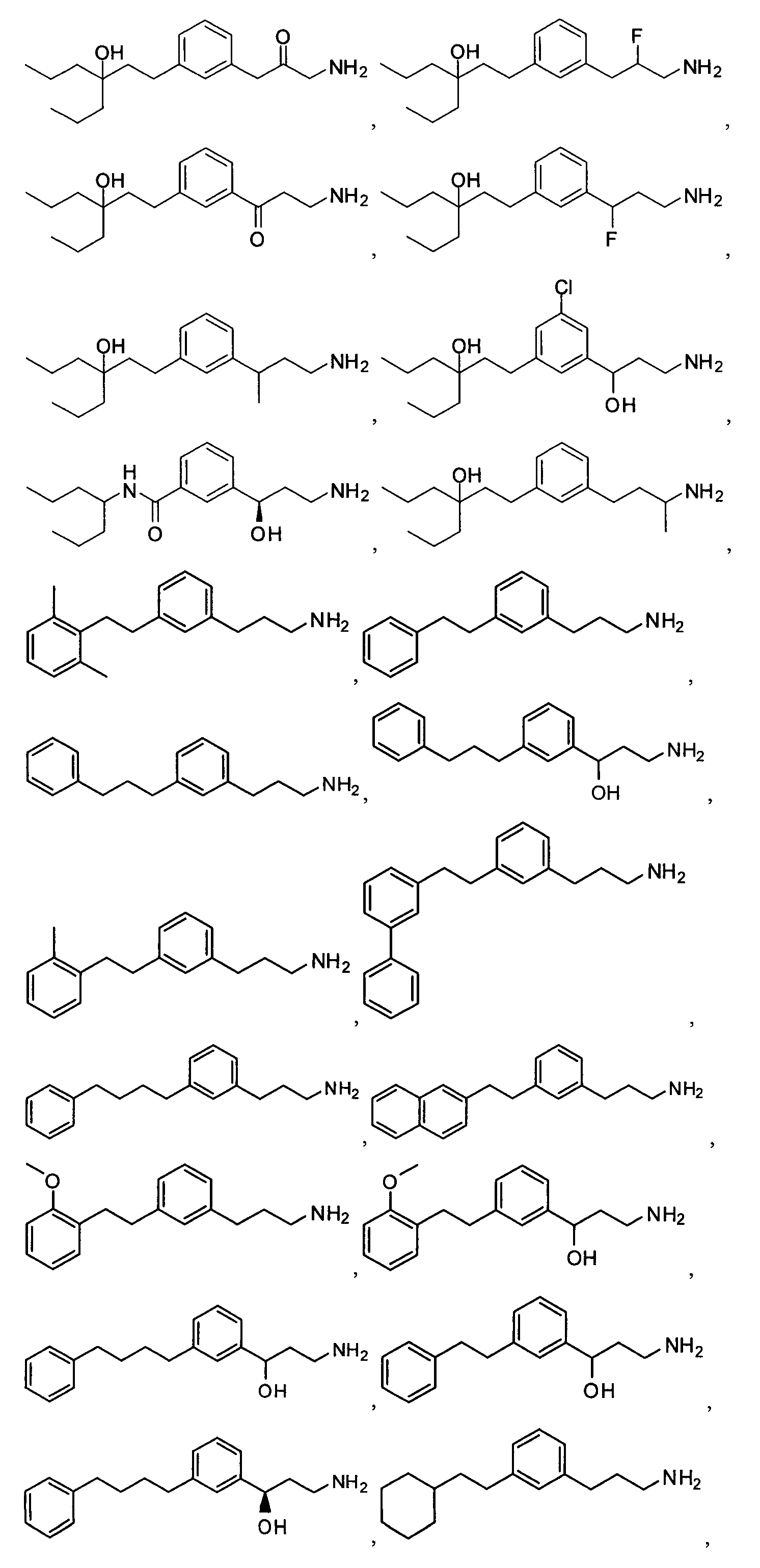


한 구현예에서, 약학적으로 허용 가능한 담체 및 하기 화학식 (A)의 화합물 또는 이의 호변이성질체, 입체이성질체, 기하이성질체 또는 약학적으로 허용 가능한 용매화물, 수화물, 염, N-산화물 또는 전구약물을 포함하는 약학 조성물을 제공한다: In one embodiment, a pharmaceutically acceptable carrier and a compound of formula (A) or a tautomer, stereoisomer, geometric isomer, or pharmaceutically acceptable solvate, hydrate, salt, N -oxide or prodrug thereof It provides a pharmaceutical composition to:

[식 중, [Wherein,
Z 는 결합, -C(R1)(R2)-, -C(R9)(R10)-C(R1)(R2)-, -X-C(R31)(R32)-, -C(R9)(R10)-C(R1)(R2)-C(R36)(R37)- 또는 -X-C(R31)(R32)-C(R1)(R2)- 이고;Z is a bond, -C (R 1 ) (R 2 )-, -C (R 9 ) (R 10 ) -C (R 1 ) (R 2 )-, -XC (R 31 ) (R 32 )-, -C (R 9 ) (R 10 ) -C (R 1 ) (R 2 ) -C (R 36 ) (R 37 )-or -XC (R 31 ) (R 32 ) -C (R 1 ) (R 2 )-;
X 는 -O-, -S-, -S(=O)-, -S(=O)2-, -N(R30)-, -C(=O)-, -C(=CH2)-, -C(=N-NR35)-, 또는 -C(=N-OR35)- 이며;X is -O-, -S-, -S (= O)-, -S (= O) 2- , -N (R 30 )-, -C (= O)-, -C (= CH 2 ) -, -C (= N-NR 35 )-, or -C (= N-OR 35 )-;
G 는 -C(R41)2-C(R41)2-R40, -C(R42)2-S-R40, -C(R42)2-SO-R40, -C(R42)2-SO2-R40, -C(R42)2-O-R40, -C(R42)2-N(R42)-R40, -C(=O)-N(R42)-R40 으로부터 선택되고;G is -C (R 41 ) 2 -C (R 41 ) 2 -R 40 , -C (R 42 ) 2 -SR 40 , -C (R 42 ) 2 -SO-R 40 , -C (R 42 ) 2 -SO 2 -R 40 , -C (R 42 ) 2 -OR 40 , -C (R 42 ) 2 -N (R 42 ) -R 40 , -C (= O) -N (R 42 ) -R Selected from 40 ;
R40 은 -C(R16)(R17)(R18), 아릴, 또는 헤테로아릴로부터 선택되며;R 40 is selected from —C (R 16 ) (R 17 ) (R 18 ), aryl, or heteroaryl;
각 R41 은 독립적으로 수소, 히드록시, OR6, 알킬로부터 선택되거나; 두 개의 R41 기는 함께 옥소를 형성할 수 있고;Each R 41 is independently selected from hydrogen, hydroxy, OR 6 , alkyl; Two R 41 groups together may form oxo;
각 R42 는 독립적으로 수소 또는 알킬로부터 선택되며;Each R 42 is independently selected from hydrogen or alkyl;
R1 및 R2 는 각각 독립적으로 수소, 할로겐, C1-C5 알킬, 플루오로알킬, -OR6 또는 -NR7R8 으로부터 선택되거나; R1 및 R2 는 함께 옥소를 형성하고;R 1 and R 2 are each independently selected from hydrogen, halogen, C 1 -C 5 alkyl, fluoroalkyl, —OR 6 or —NR 7 R 8 ; R 1 and R 2 together form an oxo;
R31 및 R32 는 각각 독립적으로 수소, C1-C5 알킬, 또는 플루오로알킬로부터 선택되며;R 31 and R 32 are each independently selected from hydrogen, C 1 -C 5 alkyl, or fluoroalkyl;
R36 및 R37 은 각각 독립적으로 수소, 할로겐, C1-C5 알킬, 플루오로알킬, -OR6 또는 -NR7R8 로부터 선택되거나; R36 및 R37 은 함께 옥소를 형성하거나; 임의로, R36 및 R1 은 함께 직접 결합을 형성하여 이중 결합을 제공하거나; 임의로, R36 및 R1 은 함께 직접 결합을 형성하고, R37 및 R2 는 함께 직접 결합을 형성하여 삼중 결합을 제공하며;R 36 and R 37 are each independently selected from hydrogen, halogen, C 1 -C 5 alkyl, fluoroalkyl, -OR 6 or -NR 7 R 8 ; R 36 and R 37 together form oxo; Optionally, R 36 and R 1 together form a direct bond to provide a double bond; Optionally, R 36 and R 1 together form a direct bond and R 37 and R 2 together form a direct bond to provide a triple bond;
R3 및 R4 는 각각 독립적으로 수소, 알킬, 알케닐, 플루오로알킬, 아릴, 헤테로아릴, 카르보시클릴 또는 C-부착된 헤테로시클릴로부터 선택되거나; R3 및 R4 는 부착된 탄소 원자와 함께 카르보시클릴 또는 헤테로시클릴을 형성하거나; R3 및 R4 는 함께 이미노를 형성하고;R 3 and R 4 are each independently selected from hydrogen, alkyl, alkenyl, fluoroalkyl, aryl, heteroaryl, carbocyclyl or C -attached heterocyclyl; R 3 and R 4 together with the carbon atom to which they are attached form carbocyclyl or heterocyclyl; R 3 and R 4 together form an imino;
R7 및 R8 은 각각 독립적으로 수소, 알킬, 카르보시클릴, 헤테로시클릴, -C(=O)R13, SO2R13, CO2R13 또는 SO2NR24R25 로부터 선택되거나; R7 및 R8 은 부착된 질소 원자와 함께 N-헤테로시클릴을 형성하며;R 7 and R 8 are each independently hydrogen, alkyl, carbocyclyl, heterocyclyl, —C (═O) R 13 , SO 2 R 13 , CO 2 R 13 Or SO 2 NR 24 R 25 ; R 7 and R 8 Together with the attached nitrogen atom forms N -heterocyclyl;
R9 및 R10 은 각각 독립적으로 수소, 할로겐, 알킬, 플루오로알킬, -OR19, -NR20R21 또는 카르보시클릴로부터 선택되거나; R9 및 R10 은 옥소를 형성하거나; 임의로, R9 및 R1 은 함께 직접 결합을 형성하여 이중 결합을 제공하거나; 임의로, R9 및 R1 은 함께 직접 결합을 형성하며, R10 및 R2 는 함께 직접 결합을 형성하여 삼중 결합을 제공하고;R 9 and R 10 are each independently selected from hydrogen, halogen, alkyl, fluoroalkyl, -OR 19 , -NR 20 R 21 or carbocyclyl; R 9 and R 10 form oxo; Optionally, R 9 and R 1 together form a direct bond to provide a double bond; Optionally, R 9 and R 1 together form a direct bond and R 10 and R 2 together form a direct bond to provide a triple bond;
R11 및 R12 는 각각 독립적으로 수소, 알킬, 카르보시클릴, -C(=O)R23, -C(NH)NH2, SO2R23, CO2R23 또는 SO2NR28R29 로부터 선택되거나; R11 및 R12 는 부착된 질소 원자와 함께 N-헤테로시클릴을 형성하며;R 11 and R 12 Are each independently hydrogen, alkyl, carbocyclyl, -C (= 0) R 23 , -C (NH) NH 2 , SO 2 R 23 , CO 2 R 23 Or SO 2 NR 28 R 29 ; R 11 and R 12 together with the nitrogen atom to which they are attached form N -heterocyclyl;
각 R13, R22 및 R23 은 독립적으로 알킬, 헤테로알킬, 알케닐, 아릴, 아르알킬, 카르보시클릴, 헤테로아릴 또는 헤테로시클릴로부터 선택되고;Each R 13 , R 22 and R 23 Is independently selected from alkyl, heteroalkyl, alkenyl, aryl, aralkyl, carbocyclyl, heteroaryl or heterocyclyl;
R6, R19, R30, R34 및 R35 는 각각 독립적으로 수소 또는 알킬이며;R 6 , R 19 , R 30 , R 34 and R 35 are each independently hydrogen or alkyl;
R20 및 R21 은 각각 독립적으로 수소, 알킬, 카르보시클릴, 헤테로시클릴, -C(=O)R22, SO2R22, CO2R22 또는 SO2NR26R27 로부터 선택되거나; R20 및 R21 은 부착된 질소 원자와 함께 N-헤테로시클릴을 형성하고;R 20 and R 21 Are each independently selected from hydrogen, alkyl, carbocyclyl, heterocyclyl, -C (= 0) R 22 , SO 2 R 22 , CO 2 R 22 or SO 2 NR 26 R 27 ; R 20 and R 21 together with the nitrogen atom to which they are attached form N -heterocyclyl;
각 R24, R25, R26, R27, R28 및 R29 는 독립적으로 수소, 알킬, 알케닐, 플루오로알킬, 아릴, 헤테로아릴, 카르보시클릴 또는 헤테로시클릴로부터 선택되며;Each R 24 , R 25 , R 26 , R 27 , R 28 and R 29 is independently selected from hydrogen, alkyl, alkenyl, fluoroalkyl, aryl, heteroaryl, carbocyclyl or heterocyclyl;
R16 및 R17 은 각각 독립적으로 수소, 알킬, 할로, 아릴, 헤테로아릴, 아르알킬, 헤테로아리알킬 또는 플루오로알킬로부터 선택되거나; R16 및 R17 은 부착된 탄소 원자와 함께 카르보시클릴 또는 헤테로사이클을 형성하며;R 16 and R 17 are each independently selected from hydrogen, alkyl, halo, aryl, heteroaryl, aralkyl, heteroarialkyl or fluoroalkyl; R 16 and R 17 Together with the attached carbon atom forms a carbocyclyl or heterocycle;
R18 은 수소, 알킬, 알콕시, 히드록시, 할로 또는 플루오로알킬로부터 선택되고;R 18 is selected from hydrogen, alkyl, alkoxy, hydroxy, halo or fluoroalkyl;
각 R33 은 독립적으로 할로겐, OR34, 알킬, 또는 플루오로알킬로부터 선택되며; n 은 0, 1, 2, 3, 또는 4 이고; 단, G 는 비치환 노르말 알킬이 아니고, 화학식 A 의 화합물은 하기의 것이 아니다:Each R 33 is independently selected from halogen, OR 34 , alkyl, or fluoroalkyl; n is 0, 1, 2, 3, or 4; Provided that G is not unsubstituted normal alkyl and the compound of Formula A is not


부가적인 구현예에서는, 11-시스 레티놀의 생성을 일으키는 이성화효소 반응을 억제하는 비-레티노이드 화합물 (여기서, 상기 이성화효소 반응은 RPE에서 일어나고, 상기 화합물은 대상에 투여시 1 ㎎/㎏ 이하의 ED50 값을 가짐)이다. 추가적인 구현예에서는, 상기 ED50 값이 상기 화합물의 단일 용량이 약 2시간 이상 동안 상기 대상에게 투여된 후 측정되는 값인 비-레티노이드 화합물이다. 추가적인 구현예에서는, 알콕실 화합물인 비-레티노이드 화합물이다. 부가적인 구현예에서는, 약학적으로 허용 가능한 담체 및 본원에서 기술한 바와 같은 비-레티노이드 화합물을 포함하는 약학 조성물이다. 부가적인 구현예에서는, 약학적으로 허용 가능한 담체 및 본원에 기술한 바와 같은 비-레티노이드 화합물을 포함하는 약학 조성물을 대상에게 투여하는 것을 포함하는, 대상에서의 안과 질환 또는 장애를 치료하는 방법이다.In an additional embodiment, a non-retinoid compound that inhibits the isomerase reaction that results in the production of 11-cis retinol, wherein the isomerase reaction occurs in RPE, wherein the compound has an ED of 1 mg / kg or less when administered to a subject. Having a value of 50 ). In further embodiments, the ED 50 value is a non-retinoid compound that is the value measured after a single dose of the compound is administered to the subject for at least about 2 hours. In a further embodiment, it is a non-retinoid compound that is an alkoxyl compound. In a further embodiment, there is a pharmaceutical composition comprising a pharmaceutically acceptable carrier and a non-retinoid compound as described herein. In an additional embodiment, a method of treating an ocular disease or disorder in a subject comprising administering to the subject a pharmaceutical composition comprising a pharmaceutically acceptable carrier and a non-retinoid compound as described herein.
부가적인 구현예에서는, RPE65 및 LRAT를 발현하는 세포의 추출물을 이용하는, 시험관내 검정시 약 1 μM 이하의 IC50으로 11-시스-레티놀 생성을 억제하는 화합물이다 (여기서, 추출물은 CRALBP를 추가 포함하고, 화합물은 용액 중에서 약 1주일 이상 동안 실온에서 안정함). 추가적인 구현예에서, 화합물은 약 0.1 μM 이하의 IC50으로 11-시스-레티놀 생성을 억제한다. 추가적인 구현예에서, 화합물은 약 0.01 μM 이하의 IC50으로 11-시스-레티놀 생성을 억제한다. 추가적인 구현예에서, 11-시스-레티놀 생성을 억제하는 화합물은 비-레티노이드 화합물이다. 부가적인 구현예에서는, 약학적으로 허용 가능한 담체 및 본원에 기술된 바와 같이 11-시스-레티놀 생성을 억제하는 화합물을 포함하는 약학 조성물이다. 부가적인 구현예에서는, 약학적으로 허용 가능한 담체 및 본원에서 기술된 바와 같이 11-시스 레티놀 생성을 억제하는 화합물을 포함하는 약학 조성물을 대상에게 투여하는 것을 포함하는, 대상에서의 안과 질환 또는 장애를 치료하는 방법이다. 부가적인 구현예에서는, 본원에서 기술된 바와 같이 11-시스-레티놀 생성을 억제하는 화합물을 대상에게 도입하는 것을 포함하는, 레티노이드 주기에서의 발색단 플럭스를 조정하는 방법이다.In an additional embodiment, a compound that inhibits 11-cis-retinol production with an IC 50 of about 1 μM or less in an in vitro assay using extracts of cells expressing RPE65 and LRAT, wherein the extract further comprises CRALBP. And the compound is stable at room temperature for at least about 1 week in solution). In further embodiments, the compound inhibits 11-cis-retinol production with an IC 50 of about 0.1 μM or less. In further embodiments, the compound inhibits 11-cis-retinol production with an IC 50 of about 0.01 μM or less. In further embodiments, the compound that inhibits 11-cis-retinol production is a non-retinoid compound. In a further embodiment, there is a pharmaceutical composition comprising a pharmaceutically acceptable carrier and a compound that inhibits 11-cis-retinol production as described herein. In an additional embodiment, an ophthalmic disease or disorder in a subject, comprising administering to the subject a pharmaceutical composition comprising a pharmaceutically acceptable carrier and a compound that inhibits 11-cis retinol production as described herein How to treat it. In an additional embodiment, a method of modulating chromophore flux in a retinoid cycle, comprising introducing into a subject a compound that inhibits 11-cis-retinol production as described herein.
부가적인 구현예에서는, 화학식 (G) 의 화합물 또는 이의 호변이성질체, 입체이성질체, 기하이성질체 또는 약학적으로 허용 가능한 용매화물, 수화물, 염, N-산화물 또는 전구약물을 대상에게 투여하는 것을 포함하는, 대상에서의 안과 질환 또는 장애를 치료하는 방법을 제공한다:In a further embodiment, comprising administering to a subject a compound of Formula (G) or a tautomer, stereoisomer, geometric isomer, or pharmaceutically acceptable solvate, hydrate, salt, N -oxide or prodrug thereof, Provided are methods of treating an ocular disease or disorder in a subject:

[식 중,[Wherein,
Z 는 결합, -C(R1)(R2)-, -C(R9)(R10)-C(R1)(R2)-, -X-C(R31)(R32)-, -C(R9)(R10)-C(R1)(R2)-C(R36)(R37)- 또는 -X-C(R31)(R32)-C(R1)(R2)- 이고;Z is a bond, -C (R 1 ) (R 2 )-, -C (R 9 ) (R 10 ) -C (R 1 ) (R 2 )-, -XC (R 31 ) (R 32 )-, -C (R 9 ) (R 10 ) -C (R 1 ) (R 2 ) -C (R 36 ) (R 37 )-or -XC (R 31 ) (R 32 ) -C (R 1 ) (R 2 )-;
X 는 -O-, -S-, -S(=O)-, -S(=O)2-, -N(R30)-, -C(=O)-, -C(=CH2)-, -C(=N-NR35)-, 또는 -C(=N-OR35)- 이며;X is -O-, -S-, -S (= O)-, -S (= O) 2- , -N (R 30 )-, -C (= O)-, -C (= CH 2 ) -, -C (= N-NR 35 )-, or -C (= N-OR 35 )-;
G 는 -C(R41)2-C(R41)2-R40, -C(R42)2-S-R40, -C(R42)2-SO-R40, -C(R42)2-SO2-R40, -C(R42)2-O-R40, -C(R42)2-N(R42)-R40, -C(=O)-N(R42)-R40 으로부터 선택되고;G is -C (R 41 ) 2 -C (R 41 ) 2 -R 40 , -C (R 42 ) 2 -SR 40 , -C (R 42 ) 2 -SO-R 40 , -C (R 42 ) 2 -SO 2 -R 40 , -C (R 42 ) 2 -OR 40 , -C (R 42 ) 2 -N (R 42 ) -R 40 , -C (= O) -N (R 42 ) -R Selected from 40 ;
R40 은 -C(R16)(R17)(R18), 아릴, 또는 헤테로아릴로부터 선택되며;R 40 is selected from —C (R 16 ) (R 17 ) (R 18 ), aryl, or heteroaryl;
각 R41 은 독립적으로 수소, 히드록시, OR6, 알킬로부터 선택되거나; 두 개의 R41 기는 함께 옥소를 형성할 수 있고;Each R 41 is independently selected from hydrogen, hydroxy, OR 6 , alkyl; Two R 41 groups together may form oxo;
각 R42 는 독립적으로 수소 또는 알킬로부터 선택되며;Each R 42 is independently selected from hydrogen or alkyl;
R1 및 R2 는 각각 독립적으로 수소, 할로겐, C1-C5 알킬, 플루오로알킬, -OR6 또는 -NR7R8 로부터 선택되거나; R1 및 R2 는 함께 옥소를 형성하고;R 1 and R 2 are each independently selected from hydrogen, halogen, C 1 -C 5 alkyl, fluoroalkyl, -OR 6 or -NR 7 R 8 ; R 1 and R 2 together form an oxo;
R31 및 R32 는 각각 독립적으로 수소, C1-C5 알킬, 또는 플루오로알킬로부터 선택되며;R 31 and R 32 are each independently selected from hydrogen, C 1 -C 5 alkyl, or fluoroalkyl;
R36 및 R37 은 각각 독립적으로 수소, 할로겐, C1-C5 알킬, 플루오로알킬, -OR6 또는 -NR7R8 로부터 선택되거나; R36 및 R37 은 함께 옥소를 형성하거나; 임의로, R36 및 R1 은 함께 직접 결합을 형성하여 이중 결합을 제공하거나; 임의로, R36 및 R1 은 함께 직접 결합을 형성하고, R37 및 R2 는 함께 직접 결합을 형성하여 삼중 결합을 제공하고;R 36 and R 37 are each independently selected from hydrogen, halogen, C 1 -C 5 alkyl, fluoroalkyl, -OR 6 or -NR 7 R 8 ; R 36 and R 37 together form oxo; Optionally, R 36 and R 1 Together form a direct bond to provide a double bond; Optionally, R 36 and R 1 Silver together form a direct bond, and R 37 and R 2 together form a direct bond to provide a triple bond;
R3 및 R4 는 각각 독립적으로 수소, 알킬, 알케닐, 플루오로알킬, 아릴, 헤테로아릴, 카르보시클릴 또는 C-부착된 헤테로시클릴로부터 선택되거나; R3및 R4 는 부착된 탄소 원자와 함께 카르보시클릴 또는 헤테로시클릴을 형성하거나; R3 및 R4 는 함께 이미노를 형성하며;R 3 and R 4 are each independently selected from hydrogen, alkyl, alkenyl, fluoroalkyl, aryl, heteroaryl, carbocyclyl or C- attached heterocyclyl; R 3 and R 4 together with the carbon atom to which they are attached form carbocyclyl or heterocyclyl; R 3 and R 4 together form an imino;
R5 는 C5-C15 알킬 또는 카르보시클릴알킬이고;R 5 is C 5 -C 15 alkyl or carbocyclylalkyl;
R7 및 R8 은 각각 독립적으로 수소, 알킬, 카르보시클릴, 헤테로시클릴, -C(=O)R13, SO2R13, CO2R13 또는 SO2NR24R25 로부터 선택되거나; R7 및 R8 은 부착된 질소 원자와 함께 N-헤테로시클릴을 형성하며; R 7 and R 8 are each independently hydrogen, alkyl, carbocyclyl, heterocyclyl, —C (═O) R 13 , SO 2 R 13 , CO 2 R 13 Or SO 2 NR 24 R 25 ; R 7 and R 8 Together with the attached nitrogen atom forms N -heterocyclyl;
R9 및 R10 은 각각 독립적으로 수소, 할로겐, 알킬, 플루오로알킬, -OR19, -NR20R21 또는 카르보시클릴로부터 선택되거나; R9 및 R10 옥소를 형성하거나; 임의로, R9 및 R1 은 함께 직접 결합을 형성하여 이중 결합을 제공하거나; 임의로, R9 및 R1 은 함께 직접 결합을 형성하고, R10 및 R2 는 함께 직접 결합을 형성하여 삼중 결합을 제공하고; R 9 and R 10 are each independently selected from hydrogen, halogen, alkyl, fluoroalkyl, -OR 19 , -NR 20 R 21 or carbocyclyl; To form R 9 and R 10 oxo; Optionally, R 9 and R 1 Together form a direct bond to provide a double bond; Optionally, R 9 and R 1 together form a direct bond and R 10 and R 2 together form a direct bond to provide a triple bond;
R11 및 R12 는 각각 독립적으로 수소, 알킬, 카르보시클릴, -C(=O)R23, -C(NH)NH2, SO2R23, CO2R23 또는 SO2NR28R29 로부터 선택되거나; R11 및 R12 는 부착된 질소 원자와 함께 N-헤테로시클릴을 형성하며;R 11 and R 12 Are each independently hydrogen, alkyl, carbocyclyl, -C (= 0) R 23 , -C (NH) NH 2 , SO 2 R 23 , CO 2 R 23 Or SO 2 NR 28 R 29 ; R 11 and R 12 together with the nitrogen atom to which they are attached form N -heterocyclyl;
각 R13, R22 및 R23 은 독립적으로 알킬, 헤테로알킬, 알케닐, 아릴, 아르알킬, 카르보시클릴, 헤테로아릴 또는 헤테로시클릴로부터 선택되고;Each R 13 , R 22 and R 23 is independently selected from alkyl, heteroalkyl, alkenyl, aryl, aralkyl, carbocyclyl, heteroaryl or heterocyclyl;
R6, R19, R30, R34 및 R35 는 각각 독립적으로 수소 또는 알킬이며;R 6 , R 19 , R 30 , R 34 and R 35 are each independently hydrogen or alkyl;
R20 및 R21 은 각각 독립적으로 수소, 알킬, 카르보시클릴, 헤테로시클릴, -C(=O)R22, SO2R22, CO2R22 또는 SO2NR26R27 로부터 선택되거나; R20 및 R21 은 부착된 질소 원자와 함께 N-헤테로시클릴을 형성하고;R 20 and R 21 are each independently selected from hydrogen, alkyl, carbocyclyl, heterocyclyl, —C (═O) R 22 , SO 2 R 22 , CO 2 R 22 or SO 2 NR 26 R 27 ; R 20 and R 21 together with the nitrogen atom to which they are attached form N -heterocyclyl;
각 R24, R25, R26, R27, R28 및 R29 는 독립적으로 수소, 알킬, 알케닐, 플루오로알킬, 아릴, 헤테로아릴, 카르보시클릴 또는 헤테로시클릴로부터 선택되며;Each R 24 , R 25 , R 26 , R 27 , R 28 and R 29 is independently selected from hydrogen, alkyl, alkenyl, fluoroalkyl, aryl, heteroaryl, carbocyclyl or heterocyclyl;
R16 및 R17 은 각각 독립적으로 수소, 알킬, 할로, 아릴, 헤테로아릴, 아르알킬, 헤테로아리알킬 또는 플루오로알킬로부터 선택되거나; R16 및 R17 은 부착된 탄소 원자와 함께 카르보시클릴 또는 헤테로사이클을 형성하고; R 16 and R 17 are each independently selected from hydrogen, alkyl, halo, aryl, heteroaryl, aralkyl, heteroarialkyl or fluoroalkyl; R 16 and R 17 together with the carbon atom to which they are attached form a carbocyclyl or heterocycle;
R18 은 수소, 알킬, 알콕시, 히드록시, 할로 또는 플루오로알킬로부터 선택되며; R 18 is selected from hydrogen, alkyl, alkoxy, hydroxy, halo or fluoroalkyl;
각 R33 은 독립적으로 할로겐, OR34, 알킬, 또는 플루오로알킬로부터 선택되고; n 은 0, 1, 2, 3, 또는 4 임].Each R 33 is independently selected from halogen, OR 34 , alkyl, or fluoroalkyl; n is 0, 1, 2, 3, or 4;
부가적인 구현예에서는, 화학식 (G) 의 화합물을 대상에게 도입하는 것을 포함하는, 레티노이드 주기에서의 발색단 플럭스를 조정하는 방법이다. 추가적인 구현예에서는, 대상의 안구에서의 리포푸신 색소 축적을 감소시키는 방법이다. 추가적인 구현예에서는, 리포푸신 색소가 N-레티닐리덴-N-레티닐-에탄올아민 (A2E)인, 대상의 안구에서의 리포푸신 색소 축적을 감소시키는 방법이다.In a further embodiment, a method of adjusting the chromophore flux in a retinoid cycle, comprising introducing a compound of formula (G) to a subject. In further embodiments, the method is a method for reducing lipofuscin pigment accumulation in an eye of a subject. In a further embodiment, the method of reducing lipofuscin pigment accumulation in the eye of a subject, wherein the lipofuscin pigment is N -retinylidene- N -retinyl-ethanolamine (A2E).
추가적인 구현예에서는, 대상의 안구에서의 리포푸신 색소 축적을 감소시키는, 본원에서 기술된 바와 같이 대상에서의 안과 질환 또는 장애를 치료하는 방법이다. 추가적인 구현예에서는, 리포푸신 색소가 N-레티닐리덴-N-레티닐-에탄올아민 (A2E)인, 대상의 안구에서의 리포푸신 색소 축적을 감소시키는, 본원에서 기술된 바와 같이 대상에서의 안과 질환 또는 장애를 치료하는 방법이다. In a further embodiment, a method of treating an ocular disease or disorder in a subject as described herein, which reduces the accumulation of lipofuscin pigment in the eye of the subject. In a further embodiment, the ophthalmology in the subject as described herein, reducing lipofucin pigment accumulation in the eye of the subject, wherein the lipofuscin pigment is N -retinylidene- N -retinyl-ethanolamine (A2E). A method of treating a disease or disorder.
추가적인 구현예에서는, 본원에서 기술된 바와 같이 대상에서의 안과 질환 또는 장애를 치료하는 방법으로서, 상기 안과 질환 또는 장애가 노인성 황반 변성 또는 스타가르트 황반 이양증인 방법이다. 추가적인 구현예에서는, 본원에서 기술된 바와 같이 대상에서의 안과 질환 또는 장애를 치료하는 방법으로서, 상기 안과 질환 또는 장애가 망막 박리, 출혈 망막병증, 색소성 망막염, 추체간체 이영양증, 소르비 안저 이상증, 시각 신경병증, 염증성 망막 질환, 당뇨 망막병증, 당뇨 황반병증, 망막 혈관 폐쇄, 미숙 망막병증, 또는 허혈 재관류 관련 망막 손상, 증식 유리체망막병증, 망막 이영양증, 선천성 시각 신경병증, 소르비 안저 이상증, 포도막염, 망막 손상, 알츠하이머 질환 관련 망막 장애, 다발성 경화증 관련 망막 장애, 파킨슨 질환 관련 망막 장애, 바이러스성 감염 관련 망막 장애, 광 과다노출 관련 망막 장애, 근시 및 AIDS 관련 망막 장애에서 선택되는 방법이다. 추가적인 구현예에서는, 대상의 안구에서의 리포푸신 색소의 축적을 감소시키는, 본원에서 기술된 바와 같이 대상에서의 안과 질환 또는 장애를 치료하는 방법이다. 추가적인 구현예에서는, 대상의 안구에서의 리포푸신 색소의 축적을 감소시키는, 본원에서 기술된 바와 같이 대상에서의 안과 질환 또는 장애를 치료하는 방법으로서, 여기서 리포푸신 색소가 N-레티닐리덴-N-레티닐-에탄올아민 (A2E)인 방법이다.In a further embodiment, a method of treating an ocular disease or disorder in a subject as described herein, wherein the ocular disease or disorder is senile macular degeneration or Stargard's macular dysplasia. In a further embodiment, a method of treating an ocular disease or disorder in a subject as described herein, wherein the ocular disease or disorder is retinal detachment, hemorrhagic retinopathy, retinitis pigmentosa, interstitial dystrophy, sorboid fundus dystrophy, vision Neuropathy, inflammatory retinopathy, diabetic retinopathy, diabetic maculopathy, retinal vascular occlusion, immature retinopathy, or ischemic reperfusion-related retinal damage, proliferative vitreoretinopathy, retinal dystrophy, congenital optic neuropathy, sorboid fundus dystrophy, uveitis, Retinal damage, Alzheimer's disease-related retinal disorders, multiple sclerosis-related retinal disorders, Parkinson's disease-related retinal disorders, viral infection-related retinal disorders, light overexposure-related retinal disorders, myopia and AIDS-related retinal disorders. In a further embodiment, a method of treating an ocular disease or disorder in a subject as described herein, which reduces the accumulation of lipofuscin pigment in the eye of the subject. In a further embodiment, a method of treating an ocular disease or disorder in a subject as described herein, which reduces the accumulation of a lipofuscin pigment in the eye of the subject, wherein the lipofuscin pigment is N -retinylidene- N -Retinyl-ethanolamine (A2E).
또 다른 구현예에서는, 화학식 (G) 의 화합물을 망막과 접촉시키는 것을 포함하는, 망막의 막대 광수용체 세포의 암순응을 억제하는 방법이다. 또 다른 구현예에서는, 본원에서 기술된 바와 같이 비-레티노이드 화합물과 망막을 접촉시키는 것을 포함하는, 망막의 막대 광수용체 세포의 암순응을 억제하는 방법이다. 또 다른 구현예에서는, 본원에서 기술된 바와 같이 11-시스-레티놀 생성을 억제하는 화합물과 망막을 접촉시키는 것을 포함하는, 망막의 막대 광수용체 세포의 암순응을 억제하는 방법이다. In another embodiment, a method of inhibiting dark adaptation of rod photoreceptor cells of the retina, comprising contacting the compound of Formula (G) with the retina. In another embodiment, a method of inhibiting dark adaptation of rod photoreceptor cells of the retina, comprising contacting the retina with a non-retinoid compound as described herein. In another embodiment, a method of inhibiting dark adaptation of rod photoreceptor cells of the retina, comprising contacting the retina with a compound that inhibits 11-cis-retinol production, as described herein.
또 다른 구현예에서는, 화학식 (G) 의 화합물을 망막과 접촉시키는 것을 포함하는, 망막의 막대 광수용체 세포에서의 로돕신의 재생을 억제하는 방법이다. 또 다른 구현예에서는, 본원에서 기술된 바와 같이 비-레티노이드 화합물을 망막과 접촉시키는 것을 포함하는, 망막의 막대 광수용체 세포에서의 로돕신의 재생을 억제하는 방법이다. 또 다른 구현예에서는, 본원에서 기술된 바와 같이 11-시스-레티놀 생성을 억제하는 화합물과 망막을 접촉시키는 것을 포함하는, 망막의 막대 광수용체 세포에서의 로돕신의 재생을 억제하는 방법이다. In another embodiment, a method of inhibiting regeneration of rhodopsin in rod photoreceptor cells of the retina, comprising contacting the compound of Formula (G) with the retina. In another embodiment is a method of inhibiting regeneration of rhodopsin in rod photoreceptor cells of the retina, comprising contacting the non-retinoid compound with the retina as described herein. In another embodiment, a method of inhibiting regeneration of rhodopsin in rod photoreceptor cells of the retina, comprising contacting the retina with a compound that inhibits 11-cis-retinol production as described herein.
또 다른 구현예에서는, 약학적으로 허용 가능한 담체 및 화학식 (G) 의 화합물을 포함하는 약학 조성물을 대상에게 투여하는 것을 포함하는, 대상의 안구에서의 허혈을 감소시키는 방법이다.In another embodiment is a method of reducing ischemia in an eye of a subject comprising administering to the subject a pharmaceutical composition comprising a pharmaceutically acceptable carrier and a compound of formula (G).
부가적인 구현예에서는, 약학적으로 허용 가능한 담체 및 본원에 기술된 바와 같은 비-레티노이드 화합물을 포함하는 약학 조성물을 대상에게 투여하는 것을 포함하는, 대상의 안구에서의 허혈을 감소시키는 방법이다. 부가적인 구현예에서는, 약학적으로 허용 가능한 담체 및 본원에 기술된 바와 같이 11-시스-레티놀 생성을 억제하는 화합물을 포함하는 약학 조성물을 대상에게 투여하는 것을 포함하는, 대상의 안구에서의 허혈을 감소시키는 방법이다. 추가적인 구현예에서는, 약학 조성물을 막대 광수용체 세포의 암순응을 억제하기에 충분한 시간 및 조건 하에 투여함으로써 안구에서의 허혈을 감소시키는, 대상의 안구에서의 허혈을 감소시키는 방법이다.In an additional embodiment, a method of reducing ischemia in an eye of a subject, comprising administering to the subject a pharmaceutical composition comprising a pharmaceutically acceptable carrier and a non-retinoid compound as described herein. In an additional embodiment, ischemia in the eye of a subject, comprising administering to the subject a pharmaceutical composition comprising a pharmaceutically acceptable carrier and a compound that inhibits 11-cis-retinol production as described herein How to reduce. In a further embodiment, the method is a method of reducing ischemia in the eye of a subject by reducing the ischemia in the eye by administering the pharmaceutical composition under a time and condition sufficient to inhibit dark adaptation of the rod photoreceptor cells.
부가적인 구현예에서는, 약학적으로 허용 가능한 담체 및 본원에 기술된 바와 같은 비-레티노이드 화합물을 포함하는 약학 조성물을 대상에게 투여하는 것을 포함하는, 대상의 안구의 망막에서의 신생혈관증식을 억제하는 방법이다. 부가적인 구현예에서는, 약학적으로 허용 가능한 담체 및 본원에 기술된 바와 같이 11-시스-레티놀 생성을 억제하는 화합물을 포함하는 약학 조성물을 대상에게 투여하는 것을 포함하는, 대상의 안구의 망막에서의 신생혈관증식을 억제하는 방법이다. 추가적인 구현예에서는, 약학 조성물을 막대 광수용체 세포의 암순응을 억제하기에 충분한 시간 및 조건 하에 투여함으로써 망막에서의 신생혈관증식을 억제하는, 대상의 안구의 망막에서의 신생혈관증식을 억제하는 방법이다. In an additional embodiment, a method of inhibiting neovascularization in the retina of an eyeball of a subject, comprising administering to the subject a pharmaceutical composition comprising a pharmaceutically acceptable carrier and a non-retinoid compound as described herein. Way. In a further embodiment, in a subject's eye retina comprising administering to the subject a pharmaceutical composition comprising a pharmaceutically acceptable carrier and a compound that inhibits 11-cis-retinol production as described herein. It is a method of suppressing neovascularization. In a further embodiment, the method is a method for inhibiting neovascularization in the eye's retina by inhibiting neovascularization in the retina by administering the pharmaceutical composition under a time and condition sufficient to inhibit dark adaptation of the rod photoreceptor cells. .
부가적인 구현예에서는, 화학식 (G) 의 화합물과 망막을 접촉시키는 것을 포함하는, 망막에서의 망막 세포의 변성을 억제하는 방법이다. 부가적인 구현예에서는, 본원에 기술된 바와 같은 비-레티노이드 화합물과 망막을 접촉시키는 것을 포함하는, 망막에서의 망막 세포의 변성을 억제하는 방법이다. 부가적인 구현예에서는, 본원에 기술된 바와 같이 11-시스-레티놀 생성을 억제하는 화합물과 망막을 접촉시키는 것을 포함하는, 망막에서의 망막 세포의 변성을 억제하는 방법이다. In a further embodiment, a method of inhibiting degeneration of retinal cells in the retina, comprising contacting the retina with a compound of formula (G). In a further embodiment, a method of inhibiting degeneration of retinal cells in the retina, comprising contacting the retina with a non-retinoid compound as described herein. In a further embodiment, a method of inhibiting degeneration of retinal cells in the retina, comprising contacting the retina with a compound that inhibits 11-cis-retinol production as described herein.
추가적인 구현예에서는, 망막 세포가 망막 뉴런 세포인, 망막에서의 망막 세포의 변성을 억제하는 방법이다. 추가적인 구현예에서는, 망막 뉴런 세포가 광수용체 세포인, 망막에서의 망막 세포의 변성을 억제하는 방법이다.In a further embodiment, the method is a method for inhibiting degeneration of retinal cells in the retina, wherein the retinal cells are retinal neuronal cells. In a further embodiment, the method is to inhibit degeneration of retinal cells in the retina, wherein the retinal neuronal cells are photoreceptor cells.
또 다른 구현예에서는, 약학적으로 허용 가능한 담체 및 화학식 (G) 의 화합물을 포함하는 약학 조성물을 대상에게 투여하는 것을 포함하는, 대상의 망막에서의 리포푸신 색소의 축적을 감소시키는 방법이다. 부가적인 구현예에서는, 리포푸신이 N-레티닐리덴-N-레티닐-에탄올아민 (A2E)인, 대상의 망막에서의 리포푸신 색소의 축적을 감소시키는 방법이다.In another embodiment is a method of reducing accumulation of lipofuscin pigment in a retina of a subject, comprising administering to the subject a pharmaceutical composition comprising a pharmaceutically acceptable carrier and a compound of formula (G). In an additional embodiment, a method of reducing the accumulation of lipofuscin pigments in a retina of a subject, wherein lipofucin is N -retinylidene- N -retinyl-ethanolamine (A2E).
부가적인 구현예에서는, 약학적으로 허용 가능한 담체 및 본원에 기술된 바와 같은 비-레티노이드 화합물을 포함하는 약학 조성물을 대상에게 투여하는 것을 포함하는, 대상의 망막에서의 리포푸신 색소의 축적을 감소시키는 방법이다. 부가적인 구현예에서는, 약학적으로 허용 가능한 담체 및 본원에 기술된 바와 같이 11-시스-레티놀 생성을 억제하는 화합물을 포함하는 약학 조성물을 대상에게 투여하는 것을 포함하는, 대상의 망막에서의 리포푸신 색소의 축적을 감소시키는 방법이다. 부가적인 구현예에서는, 리포푸신이 N-레티닐리덴-N-레티닐-에탄올아민 (A2E)인, 대상의 망막에서의 리포푸신 색소의 축적을 감소시키는 방법이다.In an additional embodiment, a method for reducing the accumulation of lipofuscin pigments in a retina of a subject, comprising administering to the subject a pharmaceutical composition comprising a pharmaceutically acceptable carrier and a non-retinoid compound as described herein. It is a way. In a further embodiment, lipofuscin in the retina of the subject, comprising administering to the subject a pharmaceutical composition comprising a pharmaceutically acceptable carrier and a compound that inhibits 11-cis-retinol production as described herein It is a method to reduce the accumulation of pigments. In an additional embodiment, a method of reducing the accumulation of lipofuscin pigments in a retina of a subject, wherein lipofucin is N -retinylidene- N -retinyl-ethanolamine (A2E).
추가 구현예에서는, 화학식 (G) 의 화합물 또는 이의 호변이성질체, 입체이성질체, 기하이성질체 또는 약학적으로 허용 가능한 용매화물, 수화물, 염, N-산화물 또는 전구약물을 대상에 도입하는 것을 포함하는, 레티노이드 주기에서의 발색단 플럭스를 조정하는 방법을 제공한다:In a further embodiment, a retinoid comprising introducing a compound of formula (G) or a tautomer, stereoisomer, geometric isomer or pharmaceutically acceptable solvate, hydrate, salt, N -oxide or prodrug thereof to a subject Provides a way to adjust the chromophore flux in the cycle:

[식 중,[Wherein,
Z 는 결합, -C(R1)(R2)-, -C(R9)(R10)-C(R1)(R2)-, -X-C(R31)(R32)-, -C(R9)(R10)-C(R1)(R2)-C(R36)(R37)- 또는 -X-C(R31)(R32)-C(R1)(R2)- 이고;Z is a bond, -C (R 1 ) (R 2 )-, -C (R 9 ) (R 10 ) -C (R 1 ) (R 2 )-, -XC (R 31 ) (R 32 )-, -C (R 9 ) (R 10 ) -C (R 1 ) (R 2 ) -C (R 36 ) (R 37 )-or -XC (R 31 ) (R 32 ) -C (R 1 ) (R 2 )-;
X 는 -O-, -S-, -S(=O)-, -S(=O)2-, -N(R30)-, -C(=O)-, -C(=CH2)-, -C(=N-NR35)-, 또는 -C(=N-OR35)- 이며;X is -O-, -S-, -S (= O)-, -S (= O) 2- , -N (R 30 )-, -C (= O)-, -C (= CH 2 ) -, -C (= N-NR 35 )-, or -C (= N-OR 35 )-;
G 는 -C(R41)2-C(R41)2-R40, -C(R42)2-S-R40, -C(R42)2-SO-R40, -C(R42)2-SO2-R40, -C(R42)2-O-R40, -C(R42)2-N(R42)-R40, -C(=O)-N(R42)-R40 으로부터 선택되고;G is -C (R 41 ) 2 -C (R 41 ) 2 -R 40 , -C (R 42 ) 2 -SR 40 , -C (R 42 ) 2 -SO-R 40 , -C (R 42 ) 2 -SO 2 -R 40 , -C (R 42 ) 2 -OR 40 , -C (R 42 ) 2 -N (R 42 ) -R 40 , -C (= O) -N (R 42 ) -R Selected from 40 ;
R40 은 -C(R16)(R17)(R18), 아릴, 또는 헤테로아릴로부터 선택되며;R 40 is selected from —C (R 16 ) (R 17 ) (R 18 ), aryl, or heteroaryl;
각 R41 은 독립적으로 수소, 히드록시, OR6, 알킬로부터 선택되거나; 두 개의 R41 기는 함께 옥소를 형성할 수 있고;Each R 41 is independently selected from hydrogen, hydroxy, OR 6 , alkyl; Two R 41 groups together may form oxo;
각 R42 는 독립적으로 수소 또는 알킬로부터 선택되며;Each R 42 is independently selected from hydrogen or alkyl;
R1 및 R2 는 각각 독립적으로 수소, 할로겐, C1-C5 알킬, 플루오로알킬, -OR6 또는 -NR7R8 로부터 선택되거나; R1 및 R2 는 함께 옥소를 형성하고;R 1 and R 2 are each independently selected from hydrogen, halogen, C 1 -C 5 alkyl, fluoroalkyl, -OR 6 or -NR 7 R 8 ; R 1 and R 2 together form an oxo;
R31 및 R32 는 각각 독립적으로 수소, C1-C5 알킬, 또는 플루오로알킬로부터 선택되며;R 31 and R 32 are each independently selected from hydrogen, C 1 -C 5 alkyl, or fluoroalkyl;
R36 및 R37 은 각각 독립적으로 수소, 할로겐, C1-C5 알킬, 플루오로알킬, -OR6 또는 -NR7R8 로부터 선택되거나; R36 및 R37 은 함께 옥소를 형성하거나; 임의로, R36 및 R1 은 함께 직접 결합을 형성하여 이중 결합을 제공하거나; 임의로, R36 및 R1 은 함께 직접 결합을 형성하고, R37 및 R2 는 함께 직접 결합을 형성하여 삼중 결합을 제공하고;R 36 and R 37 are each independently selected from hydrogen, halogen, C 1 -C 5 alkyl, fluoroalkyl, -OR 6 or -NR 7 R 8 ; R 36 and R 37 together form oxo; Optionally, R 36 and R 1 Together form a direct bond to provide a double bond; Optionally, R 36 and R 1 Silver together form a direct bond, and R 37 and R 2 together form a direct bond to provide a triple bond;
R3 및 R4 는 각각 독립적으로 수소, 알킬, 알케닐, 플루오로알킬, 아릴, 헤테로아릴, 카르보시클릴 또는 C-부착된 헤테로시클릴로부터 선택되거나; R3및 R4 는 부착된 탄소 원자와 함께 카르보시클릴 또는 헤테로시클릴을 형성하거나; R3 및 R4 는 함께 이미노를 형성하며;R 3 and R 4 are each independently selected from hydrogen, alkyl, alkenyl, fluoroalkyl, aryl, heteroaryl, carbocyclyl or C- attached heterocyclyl; R 3 and R 4 together with the carbon atom to which they are attached form carbocyclyl or heterocyclyl; R 3 and R 4 together form an imino;
R5 는 C5-C15 알킬 또는 카르보시클릴알킬이고;R 5 is C 5 -C 15 alkyl or carbocyclylalkyl;
R7 및 R8 은 각각 독립적으로 수소, 알킬, 카르보시클릴, 헤테로시클릴, -C(=O)R13, SO2R13, CO2R13 또는 SO2NR24R25 로부터 선택되거나; R7 및 R8 은 부착된 질소 원자와 함께 N-헤테로시클릴을 형성하며; R 7 and R 8 are each independently hydrogen, alkyl, carbocyclyl, heterocyclyl, —C (═O) R 13 , SO 2 R 13 , CO 2 R 13 Or SO 2 NR 24 R 25 ; R 7 and R 8 Together with the attached nitrogen atom forms N -heterocyclyl;
R9 및 R10 은 각각 독립적으로 수소, 할로겐, 알킬, 플루오로알킬, -OR19, -NR20R21 또는 카르보시클릴로부터 선택되거나; R9 및 R10 옥소를 형성하거나; 임의로, R9 및 R1 은 함께 직접 결합을 형성하여 이중 결합을 제공하거나; 임의로, R9 및 R1 은 함께 직접 결합을 형성하고, R10 및 R2 는 함께 직접 결합을 형성하여 삼중 결합을 제공하고; R 9 and R 10 are each independently selected from hydrogen, halogen, alkyl, fluoroalkyl, -OR 19 , -NR 20 R 21 or carbocyclyl; To form R 9 and R 10 oxo; Optionally, R 9 and R 1 Together form a direct bond to provide a double bond; Optionally, R 9 and R 1 together form a direct bond and R 10 and R 2 together form a direct bond to provide a triple bond;
R11 및 R12 는 각각 독립적으로 수소, 알킬, 카르보시클릴, -C(=O)R23, -C(NH)NH2, SO2R23, CO2R23 또는 SO2NR28R29 로부터 선택되거나; R11 및 R12 는 부착된 질소 원자와 함께 N-헤테로시클릴을 형성하며;R 11 and R 12 Are each independently hydrogen, alkyl, carbocyclyl, -C (= 0) R 23 , -C (NH) NH 2 , SO 2 R 23 , CO 2 R 23 Or SO 2 NR 28 R 29 ; R 11 and R 12 together with the nitrogen atom to which they are attached form N -heterocyclyl;
각 R13, R22 및 R23 은 독립적으로 알킬, 헤테로알킬, 알케닐, 아릴, 아르알킬, 카르보시클릴, 헤테로아릴 또는 헤테로시클릴로부터 선택되고;Each R 13 , R 22 and R 23 is independently selected from alkyl, heteroalkyl, alkenyl, aryl, aralkyl, carbocyclyl, heteroaryl or heterocyclyl;
R6, R19, R30, R34 및 R35 는 각각 독립적으로 수소 또는 알킬이며;R 6 , R 19 , R 30 , R 34 and R 35 are each independently hydrogen or alkyl;
R20 및 R21 은 각각 독립적으로 수소, 알킬, 카르보시클릴, 헤테로시클릴, -C(=O)R22, SO2R22, CO2R22 또는 SO2NR26R27 로부터 선택되거나; R20 및 R21 은 부착된 질소 원자와 함께 N-헤테로시클릴을 형성하고;R 20 and R 21 are each independently selected from hydrogen, alkyl, carbocyclyl, heterocyclyl, —C (═O) R 22 , SO 2 R 22 , CO 2 R 22 or SO 2 NR 26 R 27 ; R 20 and R 21 together with the nitrogen atom to which they are attached form N -heterocyclyl;
각 R24, R25, R26, R27, R28 및 R29 는 독립적으로 수소, 알킬, 알케닐, 플루오로알킬, 아릴, 헤테로아릴, 카르보시클릴 또는 헤테로시클릴로부터 선택되며;Each R 24 , R 25 , R 26 , R 27 , R 28 and R 29 is independently selected from hydrogen, alkyl, alkenyl, fluoroalkyl, aryl, heteroaryl, carbocyclyl or heterocyclyl;
R16 및 R17 은 각각 독립적으로 수소, 알킬, 할로, 아릴, 헤테로아릴, 아르알킬, 헤테로아리알킬 또는 플루오로알킬로부터 선택되거나; R16 및 R17 은 부착된 탄소 원자와 함께 카르보시클릴 또는 헤테로사이클을 형성하고; R 16 and R 17 are each independently selected from hydrogen, alkyl, halo, aryl, heteroaryl, aralkyl, heteroarialkyl or fluoroalkyl; R 16 and R 17 together with the carbon atom to which they are attached form a carbocyclyl or heterocycle;
R18 은 수소, 알킬, 알콕시, 히드록시, 할로 또는 플루오로알킬로부터 선택되며; R 18 is selected from hydrogen, alkyl, alkoxy, hydroxy, halo or fluoroalkyl;
각 R33 은 독립적으로 할로겐, OR34, 알킬, 또는 플루오로알킬로부터 선택되고; n 은 0, 1, 2, 3, 또는 4 임].Each R 33 is independently selected from halogen, OR 34 , alkyl, or fluoroalkyl; n is 0, 1, 2, 3, or 4;
추가 구현예에서는, 하기로 이루어진 군으로부터 선택되는 화학식 (G) 의 화합물을 대상에게 투여하는 것을 포함하는, 대상에서의 안과 질환 또는 장애를 치료하는 방법을 제공한다:In a further embodiment, there is provided a method of treating an ocular disease or disorder in a subject comprising administering to the subject a compound of formula (G) selected from the group consisting of:


특정 구현예에서, 질소-함유 부분으로 종결하는 메타-치환된 연결부를 포함하는 아민 유도체 화합물을 제공한다. 상기 질소-함유 부분은 예를 들어, 아민, 아미드 또는 N-헤테로시클릴일 수 있다. 상기 연결부는, 둘 이상의 탄소 원자 및 하나 이하의 헤테로원자, 예컨대 황, 산소 또는 질소를 포함하는 세 개의 연결 원자를 포함한다. 이들 연결 원자는 단일, 이중 또는 삼중 탄소-탄소 결합, 탄소-질소 결합, 질소-질소 결합, 탄소-산소 결합, 탄소-황 결합 등을 포함하는, 선형으로 구조화된 안정한 화학적 결합의 조합을 형성한다.In certain embodiments, an amine derivative compound is provided comprising a meta-substituted linkage terminated with a nitrogen-containing moiety. The nitrogen-containing moiety can be, for example, an amine, amide or N -heterocyclyl. The linkage comprises three linking atoms comprising at least two carbon atoms and at most one heteroatom such as sulfur, oxygen or nitrogen. These linking atoms form a combination of linearly structured stable chemical bonds, including single, double or triple carbon-carbon bonds, carbon-nitrogen bonds, nitrogen-nitrogen bonds, carbon-oxygen bonds, carbon-sulfur bonds, and the like. .
따라서, 상기 화합물은 이의 호변이성질체 또는 호변이성질체의 혼합물, 또는 약학적으로 허용 가능한 염, 수화물, 용매화물, N-산화물 또는 전구약물로서 하기 화학식 (I) 로 나타낼 수 있다:Thus, the compounds may be represented by the following formula (I) as their tautomers or mixtures of tautomers, or as pharmaceutically acceptable salts, hydrates, solvates, N -oxides or prodrugs:

[식 중, [Wherein,
R1 및 R2 는 각각 동일하거나 상이하고, 독립적으로 수소, 할로겐, C1-C5 알킬, 플루오로알킬, -OR6, 또는 -NR7R8 이거나; R1 및 R2 는 옥소를 형성하고;R 1 and R 2 Are the same or different and are each independently hydrogen, halogen, C 1 -C 5 alkyl, fluoroalkyl, —OR 6 , or —NR 7 R 8 ; R 1 And R 2 forms oxo;
R3 및 R4 는 각각 동일하거나 상이하고, 독립적으로 수소 또는 알킬이며;R 3 And R 4 Are the same or different and are each independently hydrogen or alkyl;
R5 는 C5-C15 알킬, 아르알킬, 헤테로시클릴알킬, 헤테로아릴알킬 또는 카르보시클릴알킬이고;R 5 is C 5 -C 15 Alkyl, aralkyl, heterocyclylalkyl, heteroarylalkyl or carbocyclylalkyl;
R6 은 수소 또는 알킬이며;R 6 Is hydrogen or alkyl;
R7 및 R8 은 각각 동일하거나 상이하고, 독립적으로 수소, 알킬, 카르보시클릴, 또는 -C(=O)R13 이거나;R 7 And R 8 Are the same or different and are each independently hydrogen, alkyl, carbocyclyl, or -C (= 0) R 13 ;
R7 및 R8 은 부착된 질소 원자와 함께 N-헤테로시클릴을 형성하고;R 7 and R 8 together with the nitrogen atom to which they are attached form N -heterocyclyl;
X 는 -C(R9)(R10)- 또는 -O- 이며;X is -C (R 9 ) (R 10 )-or -O-;
R9 및 R10 은 각각 동일하거나 상이하고, 독립적으로 수소, 할로겐, 알킬, 플루오로알킬, -OR6, -NR7R8 또는 카르보시클릴이거나; R9 및 R10 은 옥소를 형성하고;R 9 and R 10 are the same or different and are each independently hydrogen, halogen, alkyl, fluoroalkyl, —OR 6 , —NR 7 R 8 or carbocyclyl; R 9 And R 10 forms oxo;
R11 및 R12 는 각각 동일하거나 상이하고, 독립적으로 수소, 알킬, 또는 -C(=O)R13 이거나;R 11 and R 12 are the same or different and are each independently hydrogen, alkyl, or —C (═O) R 13 ;
R11 및 R12 는 부착된 질소 원자와 함께 N-헤테로시클릴을 형성하고;R 11 And R 12 together with the nitrogen atom to which it is attached form N -heterocyclyl;
R13 은 알킬, 알케닐, 아릴, 카르보시클릴, 헤테로아릴 또는 헤테로시클릴임].R 13 is alkyl, alkenyl, aryl, carbocyclyl, heteroaryl or heterocyclyl.
특정 구현예에서, 각 R11 및 R12 가 수소이다. In certain embodiments, each R 11 and R 12 is hydrogen.
다른 구현예에서, R11 이 수소이고, R12 가 -C(=O)R13 이고, R13 이 알킬이다. In other embodiments, R 11 is hydrogen, R 12 is —C (═O) R 13 and R 13 is alkyl.
다른 구현예에서, 각 R3 및 R4 가 수소이다.In other embodiments, each R 3 and R 4 is hydrogen.
특정 구현예에서, 각 R1 및 R2 는 독립적으로 수소, 할로겐, C1-C5 알킬 또는 -OR6 이고, R6 은 수소 또는 알킬이다.In certain embodiments, each R 1 and R 2 is independently hydrogen, halogen, C 1 -C 5 alkyl or —OR 6 , and R 6 is hydrogen or alkyl.
다른 구현예에서, R9 및 R10 은 각각 독립적으로 수소, 할로겐, 알킬 또는 -OR6 이고, R6 은 수소 또는 알킬이다.In other embodiments, R 9 and R 10 are each independently hydrogen, halogen, alkyl or -OR 6 , and R 6 is hydrogen or alkyl.
다른 특정 구현예에서, 각 R1, R2, R9 및 R10 은 독립적으로 수소, 또는 -OR6 이고, R6 은 수소 또는 알킬이다.In other specific embodiments, each R 1 , R 2 , R 9 and R 10 Is independently hydrogen or -OR 6 , and R 6 is hydrogen or alkyl.
특정 구현예에서, R9 및 R10 은 함께 옥소를 형성한다. In certain embodiments, R 9 and R 10 Together form oxo.
다른 특정 구현예에서, R5 가 C5-C9 알킬이다. In other specific embodiments, R 5 is C 5 -C 9 alkyl.
또 다른 구현예에서, R5 가 아르알킬이다. In yet other embodiments, R 5 is aralkyl.
또 다른 구현예에서, R5 가 헤테로아릴알킬이다.In yet other embodiments, R 5 is heteroarylalkyl.
또 다른 구현예에서, R5 가 헤테로시클릴알킬이다. In yet other embodiments, R 5 is heterocyclylalkyl.
또 다른 특정 구현예에서, R5 가 카르보시클릴알킬이다. In another specific embodiment, R 5 is carbocyclylalkyl.
하나의 구현예에서, X 가 -C(R9)(R10)- 인 하기 화학식 (I) 의 화합물을 이의 호변이성질체 또는 호변이성질체의 혼합물, 또는 약학적으로 허용 가능한 염, 수화물, 용매화물, N-산화물 또는 전구약물로서 하기 화학식 (Ia) 의 구조로 나타낼 수 있다:In one embodiment, a compound of formula (I) wherein X is -C (R 9 ) (R 10 )-is a tautomer or mixture of tautomers thereof, or a pharmaceutically acceptable salt, hydrate, solvate, As an N -oxide or prodrug it may be represented by the structure of formula (la):

[식 중, [Wherein,
R1 및 R2 는 각각 동일하거나 상이하고, 독립적으로 수소, 할로겐, C1-C5 알킬, 플루오로알킬, -OR6, 또는 -NR7R8 이거나; R1 및 R2 는 옥소를 형성하고;R 1 and R 2 are the same or different and are each independently hydrogen, halogen, C 1 -C 5 alkyl, fluoroalkyl, —OR 6 , or —NR 7 R 8 ; R 1 And R 2 forms oxo;
R3 및 R4 는 각각 동일하거나 상이하고, 독립적으로 수소 또는 알킬이며;R 3 And R 4 Are the same or different and are each independently hydrogen or alkyl;
R5 은 C5-C15 알킬, 아르알킬, 헤테로시클릴알킬, 헤테로아릴알킬 또는 카르보시클릴알킬이고;R 5 is C 5 -C 15 Alkyl, aralkyl, heterocyclylalkyl, heteroarylalkyl or carbocyclylalkyl;
R6 은 수소 또는 알킬이며;R 6 Is hydrogen or alkyl;
R7 및 R8 은 각각 동일하거나 상이하고, 독립적으로 수소, 알킬, 카르보시클릴, 또는 -C(=O)R13 이거나;R 7 And R 8 Are the same or different and are each independently hydrogen, alkyl, carbocyclyl, or -C (= 0) R 13 ;
R7 및 R8 은 부착된 질소 원자와 함께 N-헤테로시클릴을 형성하고;R 7 and R 8 together with the nitrogen atom to which they are attached form N -heterocyclyl;
R9 및 R10 은 각각 동일하거나 상이하고, 독립적으로 수소, 할로겐, 알킬, 플루오로알킬, -OR6, 또는 -NR7R8 또는 카르보시클릴이거나; R9 및 R10 은 옥소를 형성하고;R 9 and R 10 are the same or different and are each independently hydrogen, halogen, alkyl, fluoroalkyl, —OR 6 , or —NR 7 R 8 or carbocyclyl; R 9 And R 10 forms oxo;
R11 및 R12 는 각각 동일하거나 상이하고, 독립적으로 수소, 알킬, 또는 -C(=O)R13 이거나;R 11 and R 12 are the same or different and are each independently hydrogen, alkyl, or —C (═O) R 13 ;
R11 및 R12 는 부착된 질소 원자와 함께 N-헤테로시클릴을 형성하고;R 11 And R 12 together with the nitrogen atom to which it is attached form N -heterocyclyl;
R13 은 알킬, 알케닐, 아릴, 카르보시클릴, 헤테로아릴 또는 헤테로시클릴임].
R 13 is alkyl, alkenyl, aryl, carbocyclyl, heteroaryl or heterocyclyl.
특정 구현예에서, 각 R11 및 R12 가 수소인 화학식 (Ia) 로 나타내는 구조를 갖는 화합물을 제공한다. In certain embodiments, provided is a compound having a structure represented by Formula (Ia) wherein each R 11 and R 12 is hydrogen.
다른 구현예에서, R11 이 수소이고, R12 가 -C(=O)R13 이고, R13 이 알킬이다. In other embodiments, R 11 is hydrogen, R 12 is —C (═O) R 13 and R 13 is alkyl.
다른 구현예에서, 각 R3 및 R4 가 수소이다.In other embodiments, each R 3 and R 4 is hydrogen.
특정 구현예에서, 각 R9 및 R10 은 독립적으로 수소, 할로겐, 알킬 또는 -OR6 이고, R6 은 수소 또는 알킬이다.In certain embodiments, each R 9 and R 10 is independently hydrogen, halogen, alkyl or -OR 6 and R 6 is hydrogen or alkyl.
특정 구현예에서, R5 가 C5-C9 알킬이다. In certain embodiments, R 5 is C 5 -C 9 alkyl.
다른 특정 구현예에서, R5 가 아르알킬이다. In other specific embodiments, R 5 is aralkyl.
또 다른 특정 구현예에서, R5 가 카르보시클릴알킬이다. In another specific embodiment, R 5 is carbocyclylalkyl.
추가 구현예에서, 각 R11 및 R12 가 수소이고, 각 R1, R2, R3 및 R4 는 수소이며, 각 R9 및 R10 은 독립적으로 수소 또는 -OR6 이고, R6 은 수소 또는 알킬이며, R5 는 C5-C9 알킬이다.In further embodiments, each R 11 and R 12 is hydrogen, each R 1 , R 2 , R 3 and R 4 is hydrogen, each R 9 and R 10 are independently hydrogen or —OR 6 , and R 6 is Hydrogen or alkyl, and R 5 is C 5 -C 9 alkyl.
특정 특이 구현예에서, R5 는 -OR6 으로 치환된 C5-C9 알킬이고, R6 은 수소 또는 알킬이다. In certain specific embodiments, R 5 is C 5 -C 9 alkyl substituted with -OR 6 , and R 6 Is hydrogen or alkyl.
본원에 개시된 특정 화합물은 하기 표 1 에 나타낸 구조를 갖는다. 실시예 번호는 제시된 구조/명칭의 화합물의 제조를 기재한 본원의 특정 실시예를 지칭한다.Certain compounds disclosed herein have the structure shown in Table 1 below. Example numbers refer to specific examples herein that describe the preparation of compounds of the structures / names given.


추가 구현예에서, 각 R11 및 R12 가 수소이고, 각 R1 , R2, R3 및 R4 는 수소이며, 각 R9 및 R10 은 독립적으로 수소 또는 -OR6 이고, R6 은 수소 또는 알킬이며, R5 는 아르알킬이다.In further embodiments, each R 11 And R 12 is hydrogen, each R 1 , R 2 , R 3 and R 4 are hydrogen, and each R 9 and R 10 are independently hydrogen or —OR 6 R 6 is hydrogen or alkyl and R 5 is aralkyl.
특정 특이 구현예에서, R5 의 알킬렌 부분은 에틸렌, 프로필렌, 또는 부틸렌이다.In certain specific embodiments, the alkylene moiety of R 5 is ethylene, propylene, or butylene.
특정 구현예에서, R5 의 아릴 부분은 페닐, 톨릴, 자일레닐, 바이페닐, 또는 나프틸이다.In certain embodiments, the aryl portion of R 5 is phenyl, tolyl, xenyl, biphenyl, or naphthyl.
본원에 개시된 특정 화합물은 하기 표 2 에 나타낸 구조를 갖는다. 실시예 번호는 제시된 구조/명칭의 화합물의 제조를 기재한 본원의 특정 실시예를 지칭한다. Certain compounds disclosed herein have the structure shown in Table 2 below. Example numbers refer to specific examples herein that describe the preparation of compounds of the structures / names given.


추가 구현예에서, 각 R11 및 R12 는 수소이고, 각 R1 , R2, R3 및 R4 는 수소이며, 각 R9 및 R10 은 독립적으로 수소 또는 -OR6 이고, R6 은 수소 또는 알킬이며, R5 는 카르보시클릴알킬이다. 특정 구현예에서, 카르보시클릴알킬은 -OR6 으로 추가 치환될 수 있고, R6 은 수소 또는 알킬이다.In further embodiments, each R 11 And R 12 is hydrogen, each R 1 , R 2 , R 3 and R 4 are hydrogen, and each R 9 and R 10 are independently hydrogen or —OR 6 R 6 is hydrogen or alkyl and R 5 is carbocyclylalkyl. In certain embodiments, carbocyclylalkyl may be further substituted with -OR 6 , and R 6 is hydrogen or alkyl.
특정 특이 구현예에서, R5 의 알킬렌 부분은 에틸렌, 프로필렌. 또는 부틸렌이다.In certain specific embodiments, the alkylene moiety of R 5 is ethylene, propylene. Or butylene.
특정 구현예에서, R5 의 카르보시클릴 부분은 시클로헥실, 시클로펜틸 또는 시클로헵틸이다.In certain embodiments, the carbocyclyl portion of R 5 is cyclohexyl, cyclopentyl or cycloheptyl.
본원에 개시된 특정 화합물은 하기 표 3 에 나타낸 구조를 갖는다. 실시예 번호는 제시된 구조/명칭의 화합물의 제조를 기재한 본원의 특정 실시예를 지칭한다. Certain compounds disclosed herein have the structure shown in Table 3 below. Example numbers refer to specific examples herein that describe the preparation of compounds of the structures / names given.


다른 구현예에서, X 가 -O- 인 화학식 (I) 의 화합물은 이의 호변이성질체 또는 호변이성질체의 혼합물, 또는 약학적으로 허용 가능한 염, 수화물, 용매화물, N-산화물 또는 전구약물로서 화학식 (Ib) 의 구조로 나타낼 수 있다:In another embodiment, the compound of formula (I), wherein X is -O-, is a tautomer or mixture of tautomers thereof, or a pharmaceutically acceptable salt, hydrate, solvate, N -oxide or prodrug as ) Can be represented as:

[식 중, [Wherein,
R1 및 R2 는 각각 동일하거나 상이하고, 독립적으로 수소, C1-C5 알킬, 또는 플루오로알킬이고;R 1 and R 2 are the same or different and are each independently hydrogen, C 1 -C 5 alkyl, or fluoroalkyl;
R3 및 R4 는 각각 동일하거나 상이하고, 독립적으로 수소 또는 알킬이며;R 3 And R 4 Are the same or different and are each independently hydrogen or alkyl;
R5 는 C5-C15 알킬, 아르알킬, 헤테로시클릴알킬, 헤테로아릴알킬 또는 카르보시클릴알킬이고;R 5 is C 5 -C 15 Alkyl, aralkyl, heterocyclylalkyl, heteroarylalkyl or carbocyclylalkyl;
R11 및 R12 는 각각 동일하거나 상이하고, 독립적으로 수소, 알킬, 또는 -C(=O)R13 이며;R 11 and R 12 are the same or different and are each independently hydrogen, alkyl, or —C (═O) R 13 ;
R11 및 R12 는 부착된 질소 원자와 함께 N-헤테로시클릴을 형성하고; R13 은 알킬, 알케닐, 아릴, 카르보시클릴, 헤테로아릴 또는 헤테로시클릴임].R 11 And R 12 Together with the attached nitrogen atom forms N -heterocyclyl; R 13 is alkyl, alkenyl, aryl, carbocyclyl, heteroaryl or heterocyclyl.
특정 구현예에서, 화학식 (Ib) 로 나타내는 구조에서 각 R11 및 R12 가 수소인 화합물을 제공한다.In certain embodiments, each R 11 in the structure represented by formula (Ib) And R 12 It provides a compound wherein is hydrogen.
다른 구현예에서, R11 은 수소이고, R12 는 -C(=O)R13 이며, R13 은 알킬이다. In other embodiments, R 11 is hydrogen, R 12 is -C (= 0) R 13 and R 13 is alkyl.
다른 구현예에서, 각 R3 및 R4 는 수소이다.In other embodiments, each R 3 and R 4 is hydrogen.
특정 구현예에서, R5 는 C5-C9 알킬이다. In certain embodiments, R 5 is C 5 -C 9 alkyl.
다른 특정 구현예에서, R5 는 카르보시클릴알킬이다.In other specific embodiments, R 5 is carbocyclylalkyl.
다른 특정 구현예에서, R5 는 헤테로아릴알킬이다.In other specific embodiments, R 5 is heteroarylalkyl.
또다른 특정 구현예에서, R5 는 헤테로시클릴알킬이다.In another specific embodiment, R 5 is heterocyclylalkyl.
추가 구현예에서, 각 R11 및 R12 는 수소이고, 각 R1 , R2, R3 및 R4 는 수소이며, R5 는 C5-C9 알킬이다. 특정 특이 구현예에서, R5 는 -OR6 으로 치환된 C5-C9 알킬이고, R6 은 수소 또는 알킬이다. In further embodiments, each R 11 And R 12 is hydrogen, each of R 1 , R 2 , R 3 and R 4 is hydrogen, and R 5 is C 5 -C 9 alkyl. In certain specific embodiments, R 5 is C 5 -C 9 alkyl substituted with —OR 6 and R 6 is hydrogen or alkyl.
다른 구현예에서, 각 R11 및 R12 는 수소이고, 각 R1 , R2, R3 및 R4 는 수소이며, R5 는 헤테로아릴알킬이고, R5 의 알킬렌 부분이 에틸렌, 프로필렌, 또는 부틸렌이다. In other embodiments, each R 11 And R 12 is hydrogen, each of R 1 , R 2 , R 3 and R 4 is hydrogen, R 5 is heteroarylalkyl, and the alkylene portion of R 5 is ethylene, propylene, or butylene.
다른 구현예에서, 각 R11 및 R12 가 수소이고, 각 R1 , R2, R3 및 R4 는 수소이며, R5 가 헤테로시클릴알킬이고, R5 의 알킬렌 부분이 에틸렌, 프로필렌, 또는 부틸렌이다. In other embodiments, each R 11 And R 12 is hydrogen, each of R 1 , R 2 , R 3 and R 4 is hydrogen, R 5 is heterocyclylalkyl, and the alkylene portion of R 5 is ethylene, propylene, or butylene.
다른 구현예에서, 각 R11 및 R12 가 수소이고, 각 R1 , R2, R3 및 R4 는 수소이고, R5 는 카르보시클릴알킬, R5 의 알킬렌 부분이 에틸렌, 프로필렌, 또는 부틸렌이다. In other embodiments, each R 11 And R 12 is hydrogen, each of R 1 , R 2 , R 3 and R 4 is hydrogen, R 5 is carbocyclylalkyl, the alkylene portion of R 5 is ethylene, propylene, or butylene.
본원에 개시된 특정 화합물은 하기 표 4 에 나타낸 구조를 갖는다. 실시예 번호는 제시된 구조/명칭의 화합물의 제조를 기재한 본원의 특정 실시예를 지칭한다. Certain compounds disclosed herein have the structure shown in Table 4 below. Example numbers refer to specific examples herein that describe the preparation of compounds of the structures / names given.


본원에 개시된 특정 화합물은 하기 표 5 에 나타낸 구조를 갖는다. 실시예 번호는 제시된 구조/명칭의 화합물의 제조를 기재한 본원의 특정 실시예를 지칭한다. Certain compounds disclosed herein have the structure shown in Table 5 below. Example numbers refer to specific examples herein that describe the preparation of compounds of the structures / names given.


II. 정의 II. Justice
본원 및 첨부된 청구항에서 사용되는 바와 같이, 단수 표현은, 달리 명백히 명시되지 않는 한, 복수의 지시대상을 포함한다. 따라서, 예를 들어, "화합물"이란 언급은 복수의 상기 화합물을 포함하고, "세포"란 언급은 하나 이상의 세포 (또는 복수의 세포) 및 당업자에게 공지된 이의 동등물 등의 언급을 포함한다. 본원에서 물리적 성질, 예컨대 분자량 또는 화학적 성질, 예컨대 화학적 화학식에 대하여 범위가 사용될 경우, 범위의 모든 조합 및 하위 조합 및 이의 구체적 구현예가 포함되는 것으로 의도된다. 수 또는 수치 범위를 나타낼 경우의 용어 "약"은 언급된 수 또는 수치 범위가 실험 변화성 이내 (또는 통계적 실험 오차 이내)의 근사치임을 의미하며, 따라서, 수 또는 수치 범위는 언급된 수 또는 수치 범위의 1% 내지 15%로 가변적일 수 있다. 용어 "포함하는" (및 관련 용어, 예컨대 "포함한다" 또는 "포함하다" 또는 "갖는" 또는 "포함되는")은, 기타 특정 구현예, 예를 들어, 본원에 기술되는 임의 조성의 물질, 조성물, 방법 또는 프로세스 등의 구현예에서 기술된 특징으로 "이루어지는" 또는 "본질적으로 이루어지는" 일 수 있음을 배제하는 것으로 의도되지 않는다.As used in this specification and the appended claims, the singular forms “a,” “an,” and “the” include plural referents unless the context clearly dictates otherwise. Thus, for example, reference to "a compound" includes a plurality of said compounds, and reference to "a cell" includes reference to one or more cells (or a plurality of cells) and their equivalents known to those skilled in the art. Where ranges are used herein for physical properties such as molecular weight or chemical properties such as chemical formula, it is intended to include all combinations and subcombinations of the range and specific embodiments thereof. The term “about” when referring to a number or numerical range means that the stated number or numerical range is an approximation within experimental variability (or within a statistical experimental error), so that the number or numerical range is the stated number or numerical range It can vary from 1% to 15% of. The term "comprising" (and related terms, such as "comprises" or "comprises" or "includes" or "having" or "included") refers to other specific embodiments, for example, materials of any composition described herein, It is not intended to exclude that the features described in embodiments such as compositions, methods or processes may be “consisting of” or “consisting essentially of”.
"술파닐" 은 -S- 라디칼을 지칭한다."Sulfanyl" refers to the -S- radical.
"술피닐" 은 -S(=O)- 라디칼을 지칭한다."Sulfinyl" refers to the -S (= 0)-radical.
"술포닐" 은 -S(=O)2- 라디칼을 지칭한다."Sulfonyl" refers to the -S (= 0) 2 -radical.
"아미노" 는 -NH2 라디칼을 지칭한다."Amino" means -NH 2 Refers to a radical.
"시아노" 는 -CN 라디칼을 지칭한다."Cyano" refers to a -CN radical.
"니트로" 는 -NO2 라디칼을 지칭한다."Nitro" refers to the -NO 2 radical.
"옥사" 는 -O- 라디칼을 지칭한다."Oxa" refers to the -O-radical.
"옥소" 는 =O 라디칼을 지칭한다."Oxo" refers to the = O radical.
"이미노" 는 =NH 라디칼을 지칭한다."Imino" refers to = NH radical.
"티옥소" 는 =S 라디칼을 지칭한다."Thioxo" refers to the = S radical.
"알킬"은 오직 탄소 및 수소 원자로 이루어지는 선형 또는 분지형 탄화수소 사슬 라디칼을 지칭하는 것으로서, 불포화를 포함하지 않고, 1 내지 15개의 탄소 원자를 갖는 것이다 (예를 들어 C1-C15 알킬). 특정 구현예에서, 알킬은 1 내지 13개의 탄소 원자를 포함한다 (예를 들어 C1-C13 알킬). 특정 구현예에서, 알킬은 1 내지 8개의 탄소 원자를 포함한다 (예를 들어 C1-C8 알킬). 다른 구현에에서, 알킬은 5 내지 15개 탄소 원자를 포함한다 (예를 들어 C5-C15 알킬). 다른 구현예에서, 알킬은 5 내지 8개 탄소 원자를 포함한다 (예를 들어 C5-C8 알킬). 알킬은 단일 결합에 의해 분자의 나머지에 결합되며, 예를 들어, 메틸 (Me), 에틸 (Et), n-프로필, 1-메틸에틸 (이소-프로필), n-부틸, n-펜틸, 1,1-디메틸에틸 (t-부틸), 3-메틸헥실, 2-메틸헥실 등이다. 본 명세서에서 달리 상세히 명시되지 않는 한, 알킬기는 하기 치환기 중 하나 이상에 의해 임의 치환된다: 할로, 시아노, 니트로, 옥소, 티옥소, 트리메틸실라닐, -ORa, -SRa, -OC(O)-Ra, -N(Ra)2, -C(O)Ra, -C(O)ORa, -C(O)N(Ra)2, -N(Ra)C(O)ORa, -N(Ra)C(O)Ra, -N(Ra)S(O)tRa (여기서, t는 1 또는 2임), -S(O)tORa (여기서, t는 1 또는 2임) 및 -S(O)tN(Ra)2 (여기서, t는 1 또는 2임) (여기서, 각각의 Ra는 독립적으로 수소, 알킬, 플루오로알킬, 카르보시클릴 카르보시클릴알킬, 아릴, 아르알킬, 헤테로시클릴, 헤테로시클릴알킬, 헤테로아릴 또는 헤테로아릴알킬임)."Alkyl" refers to a linear or branched hydrocarbon chain radical consisting solely of carbon and hydrogen atoms, containing no unsaturation, having 1 to 15 carbon atoms (eg C 1 -C 15 alkyl). In certain embodiments, alkyl comprises 1 to 13 carbon atoms (eg C 1 -C 13 alkyl). In certain embodiments, alkyl comprises 1 to 8 carbon atoms (eg C 1 -C 8 alkyl). In another embodiment, alkyl comprises 5 to 15 carbon atoms (eg C 5 -C 15 alkyl). In other embodiments, alkyl comprises 5 to 8 carbon atoms (eg C 5 -C 8 alkyl). Alkyl is bonded to the rest of the molecule by a single bond, for example methyl (Me), ethyl (Et), n-propyl, 1-methylethyl (iso-propyl), n-butyl, n-pentyl, 1 , 1-dimethylethyl (t-butyl), 3-methylhexyl, 2-methylhexyl and the like. Unless stated otherwise specifically in the specification, an alkyl group is optionally substituted by one or more of the following substituents: halo, cyano, nitro, oxo, thioxo, trimethylsilanyl, -OR a , -SR a , -OC ( O) -R a , -N (R a ) 2 , -C (O) R a , -C (O) OR a , -C (O) N (R a ) 2 , -N (R a ) C ( O) OR a , -N (R a ) C (O) R a , -N (R a ) S (O) t R a , where t is 1 or 2, -S (O) t OR a Where t is 1 or 2 and -S (O) t N (R a ) 2 , where t is 1 or 2, wherein each R a is independently hydrogen, alkyl, fluoroalkyl , Carbocyclyl carbocyclylalkyl, aryl, aralkyl, heterocyclyl, heterocyclylalkyl, heteroaryl or heteroarylalkyl.
"알케닐"은 오직 탄소 및 수소 원자로 이루어지는 선형 또는 분지형 탄화수소 사슬 라디칼기를 지칭하는 것으로서, 하나 이상의 이중 결합을 포함하고, 2 내지 12개의 탄소 원자를 갖는 것이다. 특정 구현예에서, 알케닐은 2 내지 8개의 탄소 원자를 포함한다. 다른 구현예에서는, 알케닐은 2 내지 4개의 탄소 원자를 포함한다. 알케닐은 단일 결합에 의해 분자의 나머지에 결합되고, 예를 들어, 에테닐 (즉, 비닐), 프로프-1-에닐 (즉, 알릴), 부트-1-에닐, 펜트-1-에닐, 펜타-1,4-디에닐 등이다. 본 명세서에서 달리 상세히 명시되지 않는 한, 알케닐기는 하기 치환기 중 하나 이상에 의해 임의 치환된다: 할로, 시아노, 니트로, 옥소, 티옥소, 트리메틸실라닐, -ORa, -SRa, -OC(O)-Ra, -N(Ra)2, -C(O)Ra, -C(O)ORa, -C(O)N(Ra)2, -N(Ra)C(O)ORa, -N(Ra)C(O)Ra, -N(Ra)S(O)tRa (여기서, t는 1 또는 2임), -S(O)tORa (여기서, t는 1 또는 2임) 및 -S(O)tN(Ra)2 (여기서, t는 1 또는 2임) (여기서, 각각의 Ra는 독립적으로 수소, 알킬, 플루오로알킬, 카르보시클릴, 카르보시클릴알킬, 아릴, 아르알킬, 헤테로시클릴, 헤테로시클릴알킬, 헤테로아릴 또는 헤테로아릴알킬임)."Alkenyl" refers to a linear or branched hydrocarbon chain radical group consisting solely of carbon and hydrogen atoms, including one or more double bonds, having from 2 to 12 carbon atoms. In certain embodiments, alkenyl comprises 2 to 8 carbon atoms. In other embodiments, alkenyl comprises 2 to 4 carbon atoms. Alkenyl is bonded to the rest of the molecule by a single bond, for example ethenyl (ie vinyl), prop-1-enyl (ie allyl), but-1-enyl, pent-1-enyl, Penta-1,4-dienyl and the like. Unless stated otherwise specifically in the specification, an alkenyl group is optionally substituted by one or more of the following substituents: halo, cyano, nitro, oxo, thioxo, trimethylsilanyl, -OR a , -SR a , -OC (O) -R a , -N (R a ) 2 , -C (O) R a , -C (O) OR a , -C (O) N (R a ) 2 , -N (R a ) C (O) OR a , -N (R a ) C (O) R a , -N (R a ) S (O) t R a , where t is 1 or 2, -S (O) t OR a (where t is 1 or 2) and -S (O) t N (R a ) 2 , where t is 1 or 2, wherein each R a is independently hydrogen, alkyl, fluoro Alkyl, carbocyclyl, carbocyclylalkyl, aryl, aralkyl, heterocyclyl, heterocyclylalkyl, heteroaryl or heteroarylalkyl.
"알키닐"은 오직 탄소 및 수소 원자로 이루어지는 선형 또는 분지형 탄화수소 사슬 라디칼기를 지칭하는 것으로서, 하나 이상의 삼중 결합을 포함하고, 2 내지 12개의 탄소 원자를 갖는 것이다. 특정 구현예에서, 알키닐은 2 내지 8개의 탄소 원자를 포함한다. 다른 구현예에서는, 알키닐은 2 내지 4개의 탄소 원자를 갖는다. 알키닐은 단일 결합에 의해 분자의 나머지에 결합되고, 예를 들어, 에티닐, 프로피닐, 부티닐, 펜티닐, 헥시닐 등이다. 본 명세서에서 달리 상세히 명시되지 않는 한, 알키닐기는 하기 치환기 중 하나 이상에 의해 임의 치환된다: 할로, 시아노, 니트로, 옥소, 티옥소, 트리메틸실라닐, -ORa, -SRa, -OC(O)-Ra, -N(Ra)2, -C(O)Ra, -C(O)ORa, -C(O)N(Ra)2, -N(Ra)C(O)ORa, -N(Ra)C(O)Ra, -N(Ra)S(O)tRa (여기서, t는 1 또는 2임), -S(O)tORa (여기서, t는 1 또는 2임) 및 -S(O)tN(Ra)2 (여기서, t는 1 또는 2임) (여기서, 각각의 Ra는 독립적으로 수소, 알킬, 플루오로알킬, 카르보시클릴 카르보시클릴알킬, 아릴, 아르알킬, 헤테로시클릴, 헤테로시클릴알킬, 헤테로아릴 또는 헤테로아릴알킬임)."Alkynyl" refers to a linear or branched hydrocarbon chain radical group consisting solely of carbon and hydrogen atoms, including one or more triple bonds, having from 2 to 12 carbon atoms. In certain embodiments, alkynyl includes 2 to 8 carbon atoms. In other embodiments, alkynyl has 2 to 4 carbon atoms. Alkynyl is bound to the rest of the molecule by a single bond, for example ethynyl, propynyl, butynyl, pentynyl, hexynyl and the like. Unless stated otherwise specifically in the specification, an alkynyl group is optionally substituted by one or more of the following substituents: halo, cyano, nitro, oxo, thioxo, trimethylsilanyl, -OR a , -SR a , -OC (O) -R a , -N (R a ) 2 , -C (O) R a , -C (O) OR a , -C (O) N (R a ) 2 , -N (R a ) C (O) OR a , -N (R a ) C (O) R a , -N (R a ) S (O) t R a , where t is 1 or 2, -S (O) t OR a (where t is 1 or 2) and -S (O) t N (R a ) 2 , where t is 1 or 2, wherein each R a is independently hydrogen, alkyl, fluoro Alkyl, carbocyclyl carbocyclylalkyl, aryl, aralkyl, heterocyclyl, heterocyclylalkyl, heteroaryl or heteroarylalkyl.
"알킬렌" 또는 "알킬렌 사슬"은 오직 탄소 및 수소 원자로 이루어지는, 분자의 나머지와 라디칼기를 연결시키는 선형 또는 분지형 2가 탄화수소 사슬을 지칭하는 것으로서, 불포화를 포함하지 않고, 1 내지 12개의 탄소 원자를 가지며, 예를 들어, 메틸렌, 에틸렌, 프로필렌, n-부틸렌 등을 지칭한다. 알킬렌 사슬은 단일 결합을 통해 분자의 나머지에 부착되고, 단일 결합을 통해 라디칼기에 부착된다. 분자의 나머지 및 라디칼기에 대한 알킬렌 사슬의 부착 위치는 알킬렌 사슬 내 하나의 탄소를 통한 것일 수 있고 또는 사슬 내 임의의 두 탄소를 통한 것일 수 있다. 본 명세서에서 달리 상세히 명시되지 않는 한, 알킬렌 사슬은 하기 치환기 중 하나 이상에 의해 임의 치환된다: 할로, 시아노, 니트로, 아릴, 시클로알킬, 헤테로시클릴, 헤테로아릴, 옥소, 티옥소, 트리메틸실라닐, -ORa, -SRa, -OC(O)-Ra, -N(Ra)2, -C(O)Ra, -C(O)ORa, -C(O)N(Ra)2, -N(Ra)C(O)ORa, -N(Ra)C(O)Ra, -N(Ra)S(O)tRa (여기서, t는 1 또는 2임), -S(O)tORa (여기서, t는 1 또는 2임) 및 -S(O)tN(Ra)2 (여기서, t는 1 또는 2임) (여기서, 각각의 Ra는 독립적으로 수소, 알킬, 플루오로알킬, 카르보시클릴, 카르보시클릴알킬, 아릴, 아르알킬, 헤테로시클릴, 헤테로시클릴알킬, 헤테로아릴 또는 헤테로아릴알킬임)."Alkylene" or "alkylene chain" refers to a linear or branched divalent hydrocarbon chain connecting radicals with the rest of the molecule, consisting of only carbon and hydrogen atoms, containing no unsaturation, and containing from 1 to 12 carbons Having atoms, for example, methylene, ethylene, propylene, n-butylene and the like. The alkylene chain is attached to the rest of the molecule via a single bond and to the radical group via a single bond. The position of attachment of the alkylene chain to the rest of the molecule and to the radical group may be through one carbon in the alkylene chain or through any two carbons in the chain. Unless stated otherwise specifically in the specification, an alkylene chain is optionally substituted by one or more of the following substituents: halo, cyano, nitro, aryl, cycloalkyl, heterocyclyl, heteroaryl, oxo, thioxo, trimethyl Silanyl, -OR a , -SR a , -OC (O) -R a , -N (R a ) 2 , -C (O) R a , -C (O) OR a , -C (O) N (R a ) 2 , -N (R a ) C (O) OR a , -N (R a ) C (O) R a , -N (R a ) S (O) t R a (where t is 1 or 2), -S (O) t OR a (where t is 1 or 2) and -S (O) t N (R a ) 2 , where t is 1 or 2 Each R a is independently hydrogen, alkyl, fluoroalkyl, carbocyclyl, carbocyclylalkyl, aryl, aralkyl, heterocyclyl, heterocyclylalkyl, heteroaryl or heteroarylalkyl.
"알케닐렌" 또는 "알케닐렌 사슬"은 오직 탄소 및 수소로 이루어지는, 분자의 나머지와 라디칼기를 연결시키는 선형 또는 분지형 2가 탄화수소 사슬을 지칭하는 것으로서, 하나 이상의 이중 결합을 포함하고, 2 내지 12개의 탄소 원자를 가지며, 예를 들어, 에테닐렌, 프로페닐렌, n-부테닐렌 등이다. 알케닐렌 사슬은 이중 결합 또는 단일 결합을 통해 분자의 나머지에 부착되고, 이중 결합 또는 단일 결합을 통해 라디칼기에 부착된다. 분자의 나머지 및 라디칼기에 대한 알케닐렌 사슬의 부착 위치는 사슬 내 하나의 탄소 또는 임의의 두 탄소를 통한 것일 수 있다. 본 명세서에서 달리 상세히 명시되지 않는 한, 알케닐렌 사슬은 하기 치환기 중 하나 이상에 의해 임의 치환된다: 할로, 시아노, 니트로, 아릴, 시클로알킬, 헤테로시클릴, 헤테로아릴, 옥소, 티옥소, 트리메틸실라닐, -ORa, -SRa, -OC(O)-Ra, -N(Ra)2, -C(O)Ra, -C(O)ORa, -C(O)N(Ra)2, -N(Ra)C(O)ORa, -N(Ra)C(O)Ra, -N(Ra)S(O)tRa (여기서, t 는 1 또는 2임), -S(O)tORa (여기서, t 는 1 또는 2임) 및 -S(O)tN(Ra)2 (여기서, t 는 1 또는 2 임) (여기서, 각각의 Ra 는 독립적으로 수소, 알킬, 플루오로알킬, 시클로알킬, 시클로알킬알킬, 아릴 (하나 이상의 할로기로 임의 치환됨), 아르알킬, 헤테로시클릴, 헤테로시클릴알킬, 헤테로아릴 또는 헤테로아릴알킬이고, 여기서, 상기 치환기의 각각은 달리 명시되지 않는 한, 비치환된 것임)."Alkenylene" or "alkenylene chain" refers to a linear or branched divalent hydrocarbon chain connecting radicals with the rest of the molecule, consisting of only carbon and hydrogen, comprising one or more double bonds, from 2 to 12 Having 3 carbon atoms, for example, ethenylene, propenylene, n-butenylene and the like. Alkenylene chains are attached to the rest of the molecule via double bonds or single bonds, and to radical groups via double bonds or single bonds. The position of attachment of the alkenylene chain to the rest of the molecule and to the radical group may be through one carbon or any two carbons in the chain. Unless stated otherwise specifically in the specification, an alkenylene chain is optionally substituted by one or more of the following substituents: halo, cyano, nitro, aryl, cycloalkyl, heterocyclyl, heteroaryl, oxo, thioxo, trimethyl Silanyl, -OR a , -SR a , -OC (O) -R a , -N (R a ) 2 , -C (O) R a , -C (O) OR a , -C (O) N (R a ) 2 , -N (R a ) C (O) OR a , -N (R a ) C (O) R a , -N (R a ) S (O) t R a (where t is 1 or 2), -S (O) t OR a , where t is 1 or 2, and -S (O) t N (R a ) 2 , where t is 1 or 2 Each R a Is independently hydrogen, alkyl, fluoroalkyl, cycloalkyl, cycloalkylalkyl, aryl (optionally substituted with one or more halo groups), aralkyl, heterocyclyl, heterocyclylalkyl, heteroaryl or heteroarylalkyl, wherein And each of the substituents is unsubstituted unless otherwise specified.
"아릴"은 고리 탄소 원자로부터 수소 원자를 제거하여 방향족 단일환형 또는 다환형 탄화수소 고리 시스템으로부터 유도한 라디칼을 지칭한다. 방향족 단일환형 또는 다환형 탄화수소 고리 시스템은 오직 수소 및 6 내지 18개의 탄소 원자로부터의 탄소를 포함하며, 여기서, 고리 시스템 내 고리 중 하나 이상은 완전히 불포화이며, 즉, 이는 Huckel 이론에 따라 환형, 비편재화 (4n+2) π-전자 시스템을 포함한다. 아릴기는 비제한적으로 페닐, 플루오레닐 및 나프틸과 같은 기를 포함한다. 본 명세서에서 달리 상세히 명시되지 않는 한, 용어 "아릴" 또는 접두사 "아르-" (예컨대 "아르알킬" 중에서)는 하기로부터 독립적으로 선택되는 하나 이상의 치환기로 임의 치환되는 아릴 라디칼을 포함하는 것을 의미한다: 알킬, 알케닐, 알키닐, 할로, 플루오로알킬, 시아노, 니트로, 임의 치환된 아릴, 임의 치환된 아르알킬, 임의 치환된 아르알케닐, 임의 치환된 아르알키닐, 임의 치환된 카르보시클릴, 임의 치환된 카르보시클릴알킬, 임의 치환된 헤테로시클릴, 임의 치환된 헤테로시클릴알킬, 임의 치환된 헤테로아릴, 임의 치환된 헤테로아릴알킬, -Rb-ORa, -Rb-OC(O)-Ra, -Rb-N(Ra)2, -Rb-C(O)Ra, -Rb-C(O)ORa, -Rb-C(O)N(Ra)2, -Rb-O-Rc-C(O)N(Ra)2, -Rb-N(Ra)C(O)ORa, -Rb-N(Ra)C(O)Ra, -Rb-N(Ra)S(O)tRa (여기서, t는 1 또는 2임), -Rb-S(O)tORa (여기서, t는 1 또는 2임) 및 -Rb-S(O)tN(Ra)2 (여기서, t는 1 또는 2임), 여기서 각각의 Ra는 독립적으로 수소, 알킬, 플루오로알킬, 시클로알킬, 시클로알킬알킬, 아릴 (하나 이상의 할로기로 임의 치환됨), 아르알킬, 헤테로시클릴, 헤테로시클릴알킬, 헤테로아릴 또는 헤테로아릴알킬이고, 각각의 Rb는 독립적으로 직접 결합 또는 선형 또는 분지형 알킬렌 또는 알케닐렌 사슬이고, Rc는 선형 또는 분지형 알킬렌 또는 알케닐렌 사슬이고, 여기서, 상기 치환기의 각각은 달리 명시되지 않는 한 치환되지 않음."Aryl" refers to a radical derived from an aromatic monocyclic or polycyclic hydrocarbon ring system by removing a hydrogen atom from a ring carbon atom. Aromatic monocyclic or polycyclic hydrocarbon ring systems contain only hydrogen and carbon from 6 to 18 carbon atoms, wherein at least one of the rings in the ring system is completely unsaturated, ie it is cyclic, non-slice according to Huckel theory Goods (4n + 2) π-electronic system. Aryl groups include, but are not limited to, groups such as phenyl, fluorenyl and naphthyl. Unless stated otherwise specifically in the specification, the term "aryl" or the prefix "ar-" (such as among "aralkyl") means to include an aryl radical optionally substituted with one or more substituents independently selected from: : Alkyl, alkenyl, alkynyl, halo, fluoroalkyl, cyano, nitro, optionally substituted aryl, optionally substituted aralkyl, optionally substituted aralkenyl, optionally substituted aralkynyl, optionally substituted carbosi Klylic, optionally substituted carbocyclylalkyl, optionally substituted heterocyclyl, optionally substituted heterocyclylalkyl, optionally substituted heteroaryl, optionally substituted heteroarylalkyl, -R b -OR a , -R b -OC (O) -R a , -R b -N (R a ) 2 , -R b -C (O) R a , -R b -C (O) OR a , -R b -C (O) N ( R a ) 2 , -R b -OR c -C (O) N (R a ) 2 , -R b -N (R a ) C (O) OR a , -R b -N (R a ) C ( O) R a, -R b -N (R a) S (O) t R a ( wherein, t is 1 or 2), -R b -S (O) t oR a ( wherein, t 1 or 2) and -R b -S (O) t N (R a) 2 ( wherein, t is 1 or 2) where each R a is independently an alkyl of hydrogen, alkyl, fluoroalkyl, cycloalkyl , Cycloalkylalkyl, aryl (optionally substituted with one or more halo groups), aralkyl, heterocyclyl, heterocyclylalkyl, heteroaryl or heteroarylalkyl, each R b is independently directly bonded or linear or branched Alkylene or alkenylene chain, R c is a linear or branched alkylene or alkenylene chain, wherein each of the substituents is unsubstituted unless otherwise specified.
"아르알킬"은 화학식 -Rc-아릴 (식 중, Rc는 상기 정의된 바와 같은 알킬렌 사슬임)의 라디칼을 지칭하는 것으로서, 예를 들어, 벤질, 디페닐메틸 등이다. 아르알킬 라디칼의 알킬렌 사슬 부분은 알킬렌 사슬에 대해 상기 기술된 바와 같이 임의 치환된다. 아르알킬 라디칼의 아릴 부분은 아릴기에 대해 상기 기술된 바와 같이 임의 치환된다."Aralkyl" refers to a radical of the formula -R c -aryl, wherein R c is an alkylene chain as defined above, for example benzyl, diphenylmethyl and the like. The alkylene chain portion of the aralkyl radical is optionally substituted as described above for the alkylene chain. The aryl portion of the aralkyl radical is optionally substituted as described above for the aryl group.
"아르알케닐"은 화학식 -Rd-아릴 (식 중, Rd는 상기 기술된 바와 같은 알케닐렌 사슬임)의 라디칼을 지칭한다. 아르알케닐 라디칼의 아릴 부분은 아릴기에 대해 상기 기술된 바와 같이 임의 치환된다. 아르알케닐 라디칼의 알케닐렌 사슬 부분은 알케닐렌기에 대해 앞서 정의된 바와 같이 임의 치환된다."Aralkenyl" refers to a radical of the formula -R d -aryl, wherein R d is an alkenylene chain as described above. The aryl portion of the aralkenyl radical is optionally substituted as described above for the aryl group. The alkenylene chain portion of the aralkenyl radical is optionally substituted as previously defined for the alkenylene group.
"아르알키닐"은 화학식 -Re-아릴 (식 중, Re는 상기 정의된 바와 같은 알키닐렌 사슬임)의 라디칼을 지칭한다. 아르알키닐 라디칼의 아릴 부분은 아릴기에 대해 상기 기술된 바와 같이 임의 치환된다. 아르알키닐 라디칼의 알키닐렌 사슬 부분은 알키닐렌 사슬에 대해 상기 정의된 바와 같이 임의 치환된다."Aralkynyl" refers to a radical of the formula -R e -aryl, wherein R e is an alkynylene chain as defined above. The aryl portion of the aralkynyl radical is optionally substituted as described above for the aryl group. The alkynylene chain portion of the aralkynyl radical is optionally substituted as defined above for the alkynylene chain.
"카르보시클릴"은 오직 탄소 및 수소 원자로 이루어지는 안정한 비-방향족 단일환형 또는 다환형 탄화수소 라디칼을 지칭하는 것으로서 융합 또는 교상 고리 시스템을 포함하고, 3 내지 15개의 탄소 원자를 갖는다. 특정 구현예에서, 카르보시클릴은 3 내지 10개의 탄소 원자를 포함한다. 다른 구현예에서는, 카르보시클릴은 5 내지 7개의 탄소 원자를 포함한다. 카르보시클릴은 단일 결합에 의해 분자의 나머지에 부착된다. 카르보시클릴은 임의로 포화 (즉, 오직 단일 C-C 결합 포함) 또는 불포화 (즉, 하나 이상의 이중 결합 또는 삼중 결합 포함)될 수 있다. 완전한 포화 카르보시클릴 라디칼은 또한 "시클로알킬"이라 칭한다. 단일환형 시클로알킬의 예는, 예를 들어, 시클로프로필, 시클로부틸, 시클로펜틸, 시클로헥실, 시클로헵틸 및 시클로옥틸을 포함한다. 불포화 카르보시클릴은 또한 "시클로알케닐"이라 칭한다. 단일환형 시클로알케닐의 예는, 예를 들어, 시클로펜테닐, 시클로헥세닐, 시클로헵테닐 및 시클로옥테닐을 포함한다. 다환형 카르보시클릴 라디칼은, 예를 들어, 아다만틸, 노르보르닐 (즉, 바이시클로[2.2.1]헵탄일), 노르보르넨일, 데칼리닐, 7,7-디메틸-바이시클로[2.2.1]헵탄일 등을 포함한다. 본원에서 달리 상세히 명시되지 않는 한, 용어 "카르보시클릴"은 하기로부터 독립적으로 선택되는 하나 이상의 치환기로 임의 치환되는 카르보시클릴 라디칼을 포함하는 것을 의미한다: 알킬, 알케닐, 알키닐, 할로, 플루오로알킬, 옥소, 티옥소, 시아노, 니트로, 임의 치환된 아릴, 임의 치환된 아르알킬, 임의 치환된 아르알케닐, 임의 치환된 아르알키닐, 임의 치환된 카르보시클릴, 임의 치환된 카르보시클릴알킬, 임의 치환된 헤테로시클릴, 임의 치환된 헤테로시클릴알킬, 임의 치환된 헤테로아릴, 임의 치환된 헤테로아릴알킬, -Rb-ORa, -Rb-SRa, -Rb-OC(O)-Ra, -Rb-N(Ra)2, -Rb-C(O)Ra, -Rb-C(O)ORa, -Rb-C(O)N(Ra)2, -Rb-O-Rc-C(O)N(Ra)2, -Rb-N(Ra)C(O)ORa, -Rb-N(Ra)C(O)Ra, -Rb-N(Ra)S(O)tRa (여기서, t는 1 또는 2임), -Rb-S(O)tORa (여기서, t는 1 또는 2임) 및 -Rb-S(O)tN(Ra)2 (여기서, t는 1 또는 2임), 여기서 각각의 Ra는 독립적으로 수소, 알킬, 플루오로알킬, 시클로알킬, 시클로알킬알킬, 아릴, 아르알킬, 헤테로시클릴, 헤테로시클릴알킬, 헤테로아릴 또는 헤테로아릴알킬이고, 각각의 Rb는 독립적으로 직접 결합 또는 선형 또는 분지형 알킬렌 또는 알케닐렌 사슬이고, Rc는 선형 또는 분지형 알킬렌 또는 알케닐렌 사슬이고, 여기서, 상기 치환기의 각각은 달리 명시되지 않는 한 치환되지 않음."Carbocyclyl" refers to a stable non-aromatic monocyclic or polycyclic hydrocarbon radical consisting solely of carbon and hydrogen atoms and includes fused or alternating ring systems and has 3 to 15 carbon atoms. In certain embodiments, carbocyclyl includes 3 to 10 carbon atoms. In other embodiments, carbocyclyl includes 5 to 7 carbon atoms. Carbocyclyl is attached to the rest of the molecule by a single bond. Carbocyclyl may optionally be saturated (ie, including only a single CC bond) or unsaturated (ie, including one or more double or triple bonds). Fully saturated carbocyclyl radicals are also referred to as "cycloalkyls". Examples of monocyclic cycloalkyls include, for example, cyclopropyl, cyclobutyl, cyclopentyl, cyclohexyl, cycloheptyl and cyclooctyl. Unsaturated carbocyclyl is also referred to as "cycloalkenyl". Examples of monocyclic cycloalkenyl include, for example, cyclopentenyl, cyclohexenyl, cycloheptenyl and cyclooctenyl. Polycyclic carbocyclyl radicals include, for example, adamantyl, norbornyl (ie bicyclo [2.2.1] heptanyl), norbornenyl, decalinyl, 7,7-dimethyl-bicyclo [ 2.2.1] heptanyl and the like. Unless otherwise specified herein, the term "carbocyclyl" is meant to include carbocyclyl radicals, optionally substituted with one or more substituents independently selected from: alkyl, alkenyl, alkynyl, halo, Fluoroalkyl, oxo, thioxo, cyano, nitro, optionally substituted aryl, optionally substituted aralkyl, optionally substituted aralkenyl, optionally substituted aralkynyl, optionally substituted carbocyclyl, optionally substituted carr Bocyclylalkyl, optionally substituted heterocyclyl, optionally substituted heterocyclylalkyl, optionally substituted heteroaryl, optionally substituted heteroarylalkyl, -R b -OR a , -R b -SR a , -R b- OC (O) -R a , -R b -N (R a ) 2 , -R b -C (O) R a , -R b -C (O) OR a , -R b -C (O) N (R a ) 2 , -R b -OR c -C (O) N (R a ) 2 , -R b -N (R a ) C (O) OR a , -R b -N (R a ) C (O) R a , -R b -N (R a ) S (O) t R a , where t is 1 or 2, -R b -S (O) t OR a , where t is 1 Or 2 ) And -R b -S (O) t N (R a) 2 ( wherein, t is 1 or 2) where each R a is independently an alkyl of hydrogen, alkyl, fluoroalkyl, cycloalkyl, cycloalkylalkyl , Aryl, aralkyl, heterocyclyl, heterocyclylalkyl, heteroaryl or heteroarylalkyl, each R b is independently a direct bond or a linear or branched alkylene or alkenylene chain, and R c is linear or Branched alkylene or alkenylene chain, wherein each of said substituents is unsubstituted unless otherwise specified.
"카르보시클릴알킬"은 화학식 -Rc-카르보시클릴 (식 중, Rc는 상기 정의된 바와 같은 알킬렌 사슬임)의 라디칼을 지칭한다. 알킬렌 사슬 및 카르보시클릴 라디칼은 상기 정의된 바와 같이 임의 치환된다."Carbocyclylalkyl" refers to a radical of the formula -R c -carbocyclyl, wherein R c is an alkylene chain as defined above. The alkylene chain and the carbocyclyl radical are optionally substituted as defined above.
"할로" 또는 "할로겐"은 브로모, 클로로, 플루오로 또는 요오도 치환기를 지칭한다."Halo" or "halogen" refers to a bromo, chloro, fluoro or iodo substituent.
"플루오로알킬"은 상기 정의된 바와 같은 하나 이상의 플루오로 라디칼에 의해 치환된 상기 정의된 바와 같은 알킬 라디칼을 지칭하며, 예를 들어, 트리플루오로메틸, 디플루오로메틸, 2,2,2-트리플루오로에틸, 1-플루오로메틸-2-플루오로에틸 등이다. 플루오로알킬 라디칼의 알킬 부분은 알킬기에 대해 상기 정의된 바와 같이 임의 치환된다."Fluoroalkyl" refers to an alkyl radical as defined above substituted by one or more fluoro radicals as defined above, for example trifluoromethyl, difluoromethyl, 2,2,2 -Trifluoroethyl, 1-fluoromethyl-2-fluoroethyl, and the like. The alkyl portion of the fluoroalkyl radical is optionally substituted as defined above for the alkyl group.
"헤테로시클릴"은 안정한 3- 내지 18-원 비-방향족 고리 라디칼을 지칭하는 것으로서, 2 내지 12개의 탄소 원자 및 1 내지 6개의 헤테로원자 (질소, 산소 및 황으로부터 선택됨)를 포함한다. 본 명세서에서 달리 상세히 명시되지 않는 한, 헤테로시클릴 라디칼은 단일환형, 이중환형, 삼중환형 또는 사중환형 고리 시스템이며, 이는 융합 또는 가교 고리 시스템을 포함한다. 헤테로시클릴 라디칼 내 헤테로원자(들)는 임의 산화된다. 하나 이상의 질소 원자가, 존재하는 경우, 임의 4차화된다. 헤테로시클릴 라디칼은 부분 또는 완전 포화이다. 헤테로시클릴은 고리(들)의 임의의 원자를 통해 분자의 나머지에 부착된다. 이러한 헤테로시클릴 라디칼의 예는 비제한적으로 디옥솔라닐, 티에닐[1,3]디티아닐, 데카하이드로이소퀴놀릴, 이미다졸리닐, 이미다졸리디닐, 이소티아졸리디닐, 이속사졸리디닐, 모르폴리닐, 옥타하이드로인돌릴, 옥타하이드로이소인돌릴, 2-옥소피페라지닐, 2-옥소피페리디닐, 2-옥소피롤리디닐, 옥사졸리디닐, 피페리디닐, 피페라지닐, 4-피페리도닐, 피롤리디닐, 피라졸리디닐, 퀴누클리디닐, 티아졸리디닐, 테트라하이드로푸릴, 트리티아닐, 테트라하이드로피라닐, 티오모르폴리닐, 티아모르폴리닐, 1-옥소-티오모르폴리닐 및 1,1-디옥소-티오모르폴리닐을 포함한다. 본 명세서에서 달리 상세히 명시되지 않는 한, 용어 "헤테로시클릴"은 하기로부터 선택되는 하나 이상의 치환기로 임의 치환되는 상기 정의된 바와 같은 헤테로시클릴 라디칼을 포함하는 것을 의미한다: 알킬, 알케닐, 알키닐, 할로, 플루오로알킬, 옥소, 티옥소, 시아노, 니트로, 임의 치환된 아릴, 임의 치환된 아르알킬, 임의 치환된 아르알케닐, 임의 치환된 아르알키닐, 임의 치환된 카르보시클릴, 임의 치환된 카르보시클릴알킬, 임의 치환된 헤테로시클릴, 임의 치환된 헤테로시클릴알킬, 임의 치환된 헤테로아릴, 임의 치환된 헤테로아릴알킬, -Rb-ORa, -Rb-SRa, -Rb-OC(O)-Ra, -Rb-N(Ra)2, -Rb-C(O)Ra, -Rb-C(O)ORa, -Rb-C(O)N(Ra)2, -Rb-O-Rc-C(O)N(Ra)2, -Rb-N(Ra)C(O)ORa, -Rb-N(Ra)C(O)Ra, -Rb-N(Ra)S(O)tRa (여기서, t는 1 또는 2임), -Rb-S(O)tORa (여기서, t는 1 또는 2임) 및 -Rb-S(O)tN(Ra)2 (여기서, t는 1 또는 2임), 여기서, 각각의 Ra는 독립적으로 수소, 알킬, 플루오로알킬, 시클로알킬, 시클로알킬알킬, 아릴, 아르알킬, 헤테로시클릴, 헤테로시클릴알킬, 헤테로아릴 또는 헤테로아릴알킬이고, 각각의 Rb는 독립적으로 직접 결합 또는 선형 또는 분지형 알킬렌 또는 알케닐렌 사슬이고, Rc는 선형 또는 분지형 알킬렌 또는 알케닐렌 사슬이고, 상기 치환기 중 각각은 달리 명시되지 않는 한 치환되지 않음."Heterocyclyl" refers to a stable 3- to 18-membered non-aromatic ring radical and includes 2 to 12 carbon atoms and 1 to 6 heteroatoms (selected from nitrogen, oxygen, and sulfur). Unless stated otherwise specifically in the specification, a heterocyclyl radical is a monocyclic, bicyclic, tricyclic or tetracyclic ring system, which includes fused or bridged ring systems. The heteroatom (s) in the heterocyclyl radical is optionally oxidized. One or more nitrogen atoms, if present, are optionally quaternized. Heterocyclyl radicals are partially or fully saturated. Heterocyclyl is attached to the rest of the molecule via any atom of the ring (s). Examples of such heterocyclyl radicals include, but are not limited to, dioxolanyl, thienyl [1,3] ditianyl, decahydroisoquinolyl, imidazolinyl, imidazolidinyl, isothiazolidinyl, isoxazolidinyl , Morpholinyl, octahydroindolyl, octahydroisoindolyl, 2-oxopiperazinyl, 2-oxopiperidinyl, 2-oxopyrrolidinyl, oxazolidinyl, piperidinyl, piperazinyl, 4- Piperidonyl, pyrrolidinyl, pyrazolidinyl, quinuclidinyl, thiazolidinyl, tetrahydrofuryl, tritianyl, tetrahydropyranyl, thiomorpholinyl, thiamorpholinyl, 1-oxo-thiomorpholi Nil and 1,1-dioxo-thiomorpholinyl. Unless stated otherwise specifically in the specification, the term "heterocyclyl" is meant to include heterocyclyl radicals as defined above optionally substituted with one or more substituents selected from: alkyl, alkenyl, alky Nil, halo, fluoroalkyl, oxo, thioxo, cyano, nitro, optionally substituted aryl, optionally substituted aralkyl, optionally substituted aralkenyl, optionally substituted aralkynyl, optionally substituted carbocyclyl, Optionally substituted carbocyclylalkyl, optionally substituted heterocyclyl, optionally substituted heterocyclylalkyl, optionally substituted heteroaryl, optionally substituted heteroarylalkyl, -R b -OR a , -R b -SR a , -R b -OC (O) -R a , -R b -N (R a ) 2 , -R b -C (O) R a , -R b -C (O) OR a , -R b -C (O) N (R a ) 2 , -R b -OR c -C (O) N (R a ) 2 , -R b -N (R a ) C (O) OR a , -R b -N ( R a ) C (O) R a , -R b -N (R a ) S (O) t R a (where t is 1 or 2), -R b -S (O) t OR a (here Wherein t is 1 or 2 and -R b -S (O) t N (R a ) 2 , where t is 1 or 2, wherein each R a is independently hydrogen, alkyl, fluorine Is roalkyl, cycloalkyl, cycloalkylalkyl, aryl, aralkyl, heterocyclyl, heterocyclylalkyl, heteroaryl or heteroarylalkyl, each R b is independently a direct bond or a linear or branched alkylene or alke Nylene chain, R c is a linear or branched alkylene or alkenylene chain, each of which is unsubstituted unless otherwise specified.
"N-헤테로시클릴" 또는 "N-부착된 헤테로시클릴"은 하나 이상의 질소를 포함하는 상기 정의된 바와 같은 헤테로시클릴 라디칼을 지칭하며, 헤테로시클릴 라디칼의 분자의 나머지에의 부착점은 헤테로시클릴 라디칼 내 질소 원자를 통한 것이다. N-헤테로시클릴 라디칼은 헤테로시클릴 라디칼에 대해 상기 기술된 바와 같이 임의 치환된다. 이러한 N-헤테로시클릴 라디칼의 예는 비제한적으로 1-모르폴리닐, 1-피페리디닐, 1-피페라지닐, 1-피롤리디닐, 피라졸리디닐, 이미다졸리닐 및 이미다졸리디닐을 포함한다." N -heterocyclyl" or "N-attached heterocyclyl" refers to a heterocyclyl radical as defined above comprising one or more nitrogens, wherein the point of attachment of the heterocyclyl radical to the rest of the molecule is Through a nitrogen atom in a heterocyclyl radical. The N -heterocyclyl radical is optionally substituted as described above for the heterocyclyl radical. Examples of such N -heterocyclyl radicals include, but are not limited to, 1-morpholinyl, 1-piperidinyl, 1-piperazinyl, 1-pyrrolidinyl, pyrazolidinyl, imidazolinyl and imidazolidinyl It includes.
"C-헤테로시클릴" 또는 "C-부착된 헤테로시클릴"은 하나 이상의 헤테로원자를 포함하는 상기 정의된 바와 같은 헤테로시클릴 라디칼을 지칭하며, 헤테로시클릴 라디칼의 분자 나머지에의 부착점은 헤테로시클릴 라디칼 내 탄소 원자를 통한 것이다. C-헤테로시클릴 라디칼은 헤테로시클릴 라디칼에 대해 상기 기술된 바와 같이 임의 치환된다. 이러한 C-헤테로시클릴 라디칼의 예는 비제한적으로 2-모르폴리닐, 2- 또는 3- 또는 4-피페리디닐, 2-피페라지닐, 2- 또는 3-피롤리디닐 등을 포함한다." C -heterocyclyl" or "C-attached heterocyclyl" refers to a heterocyclyl radical as defined above comprising one or more heteroatoms, wherein the point of attachment of the heterocyclyl radical to the rest of the molecule is Through a carbon atom in a heterocyclyl radical. The C -heterocyclyl radical is optionally substituted as described above for the heterocyclyl radical. Examples of such C -heterocyclyl radicals include, but are not limited to, 2-morpholinyl, 2- or 3- or 4-piperidinyl, 2-piperazinyl, 2- or 3-pyrrolidinyl, and the like.
"헤테로시클릴알킬"은 화학식 -Rc-헤테로시클릴 (식 중, Rc는 상기 정의된 바와 같은 알킬렌 사슬임)의 라디칼을 지칭한다. 헤테로시클릴이 질소-함유 헤테로시클릴인 경우, 헤테로시클릴은 질소 원자에서 알킬 라디칼에 임의 부착된다. 헤테로시클릴알킬 라디칼의 알킬렌 사슬은 알킬렌 사슬에 대해 상기 정의된 바와 같이 임의 치환된다. 헤테로시클릴알킬 라디칼의 헤테로시클릴 부분은 헤테로시클릴기에 대해 상기 정의된 바와 같이 임의 치환된다."Heterocyclylalkyl" refers to a radical of the formula -R c -heterocyclyl, wherein R c is an alkylene chain as defined above. If the heterocyclyl is a nitrogen-containing heterocyclyl, the heterocyclyl is optionally attached to the alkyl radical at the nitrogen atom. The alkylene chain of the heterocyclylalkyl radical is optionally substituted as defined above for the alkylene chain. The heterocyclyl moiety of the heterocyclylalkyl radical is optionally substituted as defined above for the heterocyclyl group.
"헤테로아릴"은 3- 내지 18-원 방향족 고리 라디칼로부터 유도된 라디칼을 지칭하는 것으로서, 2 내지 17개의 탄소 원자 및 1 내지 6개의 헤테로원자 (질소, 산소 및 황으로부터 선택됨)를 포함한다. 본원에서 사용되는 바와 같이, 헤테로아릴 라디칼은 단일환형, 이중환형, 삼중환형 또는 사중환형 고리 시스템이며, 여기서 상기 고리 시스템 내 고리 중 하나 이상은 완전 불포화이어서, 즉, Huckel 이론에 따른 환형, 비편재화 (4n+2) π-전자 시스템을 포함한다. 헤테로아릴기는 융합 또는 가교 고리 시스템을 포함한다. 헤테로아릴 라디칼 내 헤테로원자(들)는 임의 산화된다. 하나 이상의 질소 원자가, 존재하는 경우, 임의 4차화된다. 헤테로아릴은 고리(들)의 임의의 원자에 의해 분자의 나머지에 부착된다. 헤테로아릴의 예는 비제한적으로 아제피닐, 아크리디닐, 벤즈이미다졸릴, 벤즈인돌릴, 1,3-벤조디옥솔릴, 벤조푸라닐, 벤조옥사졸릴, 벤조[d]티아졸릴, 벤조티아디아졸릴, 벤조[b][1,4]디옥세피닐, 벤조[b][1,4]옥사지닐, 1,4-벤조디옥사닐, 벤조나프토푸라닐, 벤즈옥사졸릴, 벤조디옥솔릴, 벤조디옥시닐, 벤조피라닐, 벤조피라노닐, 벤조푸라닐, 벤조푸라노닐, 벤조티에닐 (벤조티오페닐), 벤조티에노[3,2-d]피리미디닐, 벤조트리아졸릴, 벤조[4,6]이미다조[1,2-a]피리디닐, 카르바졸릴, 신놀리닐, 시클로펜타[d]피리미디닐, 6,7-디하이드로-5H-시클로펜타[4,5]티에노[2,3-d]피리미디닐, 5,6-디하이드로벤조[h]퀴나졸리닐, 5,6-디하이드로벤조[h]신놀리닐, 6,7-디하이드로-5H-벤조[6,7]시클로헵타[1,2-c]피리다지닐, 디벤조푸라닐, 디벤조티오페닐, 푸라닐, 푸라노닐, 푸로[3,2-c]피리디닐, 5,6,7,8,9,10-헥사하이드로시클로옥타[d]피리미디닐, 5,6,7,8,9,10-헥사하이드로시클로옥타[d]피리다지닐, 5,6,7,8,9,10-헥사하이드로시클로옥타[d]피리디닐, 이소티아졸릴, 이미다졸릴, 인다졸릴, 인돌릴, 인다졸릴, 이소인돌릴, 인돌리닐, 이소인돌리닐, 이소퀴놀릴, 인돌리지닐, 이속사졸릴, 5,8-메타노-5,6,7,8-테트라하이드로퀴나졸리닐, 나프티리디닐, 1,6-나프티리디노닐, 옥사디아졸릴, 2-옥소아제피닐, 옥사졸릴, 옥시라닐, 5,6,6a,7,8,9,10,10a-옥타하이드로벤조[h]퀴나졸리닐, 1-페닐-1H-피롤릴, 페나지닐, 페노티아지닐, 페녹사지닐, 프탈라지닐, 프테리디닐, 푸리닐, 피롤릴, 피라졸릴, 피라졸로[3,4-d]피리미디닐, 피리디닐, 피리도[3,2-d]피리미디닐, 피리도[3,4-d]피리미디닐, 피라지닐, 피리미디닐, 피리다지닐, 피롤릴, 퀴나졸리닐, 퀴녹살리닐, 퀴놀리닐, 이소퀴놀리닐, 테트라하이드로퀴놀리닐, 5,6,7,8-테트라하이드로퀴나졸리닐, 5,6,7,8-테트라하이드로벤조[4,5]티에노[2,3-d]피리미디닐, 6,7,8,9-테트라하이드로-5H-시클로헵타[4,5]티에노[2,3-d]피리미디닐, 5,6,7,8-테트라하이드로피리도[4,5-c]피리다지닐, 티아졸릴, 티아디아졸릴, 트리아졸릴, 테트라졸릴, 트리아지닐, 티에노[2,3-d]피리미디닐, 티에노[3,2-d]피리미디닐, 티에노[2,3-c]프리디닐 및 티오페닐 (즉, 티에닐)을 포함한다. 본 명세서에서 달리 상세히 명시되지 않는 한, 용어 "헤테로아릴"은 하기로부터 선택되는 하나 이상의 치환기에 의해 임의 치환되는 상기 정의된 바와 같은 헤테로아릴 라디칼을 포함하는 것을 의미한다: 알킬, 알케닐, 알키닐, 할로, 플루오로알킬, 할로알케닐, 할로알키닐, 옥소, 티옥소, 시아노, 니트로, 임의 치환된 아릴, 임의 치환된 아르알킬, 임의 치환된 아르알케닐, 임의 치환된 아르알키닐, 임의 치환된 카르보시클릴, 임의 치환된 카르보시클릴알킬, 임의 치환된 헤테로시클릴, 임의 치환된 헤테로시클릴알킬, 임의 치환된 헤테로아릴, 임의 치환된 헤테로아릴알킬, -Rb-ORa, -Rb-SRa, -Rb-OC(O)-Ra, -Rb-N(Ra)2, -Rb-C(O)Ra, -Rb-C(O)ORa, -Rb-C(O)N(Ra)2, -Rb-O-Rc-C(O)N(Ra)2, -Rb-N(Ra)C(O)ORa, -Rb-N(Ra)C(O)Ra, -Rb-N(Ra)S(O)tRa (여기서, t 는 1 또는 2 임), -Rb-S(O)tORa (여기서, t 는 1 또는 2 임) 및 -Rb-S(O)tN(Ra)2 (여기서, t 는 1 또는 2 임), 여기서 각각의 Ra는 독립적으로 수소, 알킬, 플루오로알킬, 시클로알킬, 시클로알킬알킬, 아릴, 아르알킬, 헤테로시클릴, 헤테로시클릴알킬, 헤테로아릴 또는 헤테로아릴알킬이고, 각각의 Rb는 독립적으로 직접 결합 또는 선형 또는 분지형 알킬렌 또는 알케닐렌 사슬이고, Rc는 선형 또는 분지형 알킬렌 또는 알케닐렌 사슬이고, 여기서 상기 치환기의 각각은 달리 명시되지 않는 한 치환되지 않음."Heteroaryl" refers to a radical derived from a 3- to 18-membered aromatic ring radical and includes 2 to 17 carbon atoms and 1 to 6 heteroatoms (selected from nitrogen, oxygen and sulfur). As used herein, a heteroaryl radical is a monocyclic, bicyclic, tricyclic or tetracyclic ring system wherein at least one of the rings in the ring system is fully unsaturated, ie cyclic, delocalized according to Huckel's theory. And (4n + 2) π-electronic systems. Heteroaryl groups include fused or bridged ring systems. The heteroatom (s) in the heteroaryl radical is optionally oxidized. One or more nitrogen atoms, if present, are optionally quaternized. Heteroaryl is attached to the rest of the molecule by any atom of the ring (s). Examples of heteroaryls include, but are not limited to, azepinyl, acridinyl, benzimidazolyl, benzindolyl, 1,3-benzodioxolyl, benzofuranyl, benzooxazolyl, benzo [d] thiazolyl, benzothia Diazolyl, benzo [b] [1,4] dioxepinyl, benzo [b] [1,4] oxazinyl, 1,4-benzodioxanyl, benzonaphthofuranyl, benzoxazolyl, benzodioxolyl , Benzodioxyyl, benzopyranyl, benzopyranonyl, benzofuranyl, benzofuranyl, benzothienyl (benzothiophenyl), benzothieno [3,2-d] pyrimidinyl, benzotriazolyl, Benzo [4,6] imidazo [1,2-a] pyridinyl, carbazolyl, cinnolinyl, cyclopenta [d] pyrimidinyl, 6,7-dihydro-5H-cyclopenta [4,5 ] Thieno [2,3-d] pyrimidinyl, 5,6-dihydrobenzo [h] quinazolinyl, 5,6-dihydrobenzo [h] cinnolinyl, 6,7-dihydro-5H -Benzo [6,7] cyclohepta [1,2-c] pyridazinyl, dibenzofuranyl, dibenzothiophenyl, furanyl, furanyl, furo [3,2-c] pi Diyl, 5,6,7,8,9,10-hexahydrocycloocta [d] pyrimidinyl, 5,6,7,8,9,10-hexahydrocycloocta [d] pyridazinyl, 5, 6,7,8,9,10-hexahydrocycloocta [d] pyridinyl, isothiazolyl, imidazolyl, indazolyl, indolyl, indazolyl, isoindolinyl, indolinyl, isoindolinyl, iso Quinolyl, indolinyl, isoxazolyl, 5,8-methano-5,6,7,8-tetrahydroquinazolinyl, naphthyridinyl, 1,6-naphthyridinyl, oxadizolyl, 2 Oxoazinyl, oxazolyl, oxiranyl, 5,6,6a, 7,8,9,10,10a-octahydrobenzo [h] quinazolinyl, 1-phenyl-1H-pyrrolyl, phenazinyl, Phenothiazinyl, phenoxazinyl, phthalazinyl, pterridinyl, furinyl, pyrrolyl, pyrazolyl, pyrazolo [3,4-d] pyrimidinyl, pyridinyl, pyrido [3,2-d] Pyrimidinyl, pyrido [3,4-d] pyrimidinyl, pyrazinyl, pyrimidinyl, pyridazinyl, pyrrolyl, quinazolinyl, quinoxalinyl, quinolinyl, isoqui Nolinyl, tetrahydroquinolinyl, 5,6,7,8-tetrahydroquinazolinyl, 5,6,7,8-tetrahydrobenzo [4,5] thieno [2,3-d] pyrimidy Nyl, 6,7,8,9-tetrahydro-5H-cyclohepta [4,5] thieno [2,3-d] pyrimidinyl, 5,6,7,8-tetrahydropyrido [4, 5-c] pyridazinyl, thiazolyl, thiadiazolyl, triazolyl, tetrazolyl, triazinyl, thieno [2,3-d] pyrimidinyl, thieno [3,2-d] pyrimidinyl, Thieno [2,3-c] pridinyl and thiophenyl (ie thienyl). Unless stated otherwise specifically in the specification, the term "heteroaryl" is meant to include heteroaryl radicals as defined above optionally substituted by one or more substituents selected from: alkyl, alkenyl, alkynyl , Halo, fluoroalkyl, haloalkenyl, haloalkynyl, oxo, thioxo, cyano, nitro, optionally substituted aryl, optionally substituted aralkyl, optionally substituted aralkenyl, optionally substituted aralkynyl, Optionally substituted carbocyclyl, optionally substituted carbocyclylalkyl, optionally substituted heterocyclyl, optionally substituted heterocyclylalkyl, optionally substituted heteroaryl, optionally substituted heteroarylalkyl, -R b -OR a , -R b -SR a , -R b -OC (O) -R a , -R b -N (R a ) 2 , -R b -C (O) R a , -R b -C (O) OR a , -R b -C (O) N (R a ) 2 , -R b -OR c -C (O) N (R a ) 2 , -R b -N (R a ) C (O) OR a , -R b -N (R a ) C (O) R a , -R b -N (R a ) S (O) t R a (where t is 1 or Is 2, -R b -S (O) t OR a (where t is 1 or 2) and -R b -S (O) t N (R a ) 2 , where t is 1 or 2 Wherein each R a is independently hydrogen, alkyl, fluoroalkyl, cycloalkyl, cycloalkylalkyl, aryl, aralkyl, heterocyclyl, heterocyclylalkyl, heteroaryl or heteroarylalkyl, each of R b is independently a direct bond or a linear or branched alkylene or alkenylene chain, and R c is a linear or branched alkylene or alkenylene chain, wherein each of said substituents is unsubstituted unless otherwise specified.
"N-헤테로아릴"은 하나 이상의 질소를 포함하는 상기 정의된 바와 같은 헤테로아릴 라디칼을 지칭하는 것으로서, 여기서, 헤테로아릴 라디칼의 분자의 나머지에의 부착점은 헤테로아릴 라디칼 내 질소 원자를 통한 것이다. N-헤테로아릴 라디칼은 헤테로아릴 라디칼에 대해 상기 기술된 바와 같이 임의 치환된다."N-heteroaryl" refers to a heteroaryl radical as defined above comprising one or more nitrogens, wherein the point of attachment of the heteroaryl radical to the rest of the molecule is through a nitrogen atom in the heteroaryl radical. N-heteroaryl radicals are optionally substituted as described above for heteroaryl radicals.
"C-헤테로아릴"은 상기 정의된 바와 같은 헤테로아릴 라디칼을 지칭하는 것으로서, 여기서, 헤테로아릴 라디칼의 분자의 나머지에의 부착점은 헤테로아릴 라디칼 내 탄소 원자를 통한 것이다. C-헤테로아릴 라디칼은 헤테로아릴 라디칼에 대해 상기 기술된 바와 같이 임의 치환된다. "C-heteroaryl" refers to a heteroaryl radical as defined above, wherein the point of attachment of the heteroaryl radical to the rest of the molecule is through a carbon atom in the heteroaryl radical. C-heteroaryl radicals are optionally substituted as described above for heteroaryl radicals.
"헤테로아릴알킬"은 화학식 -Rc-헤테로아릴 (식 중, Rc는 상기 정의된 바와 같은 알킬렌 사슬임)의 라디칼을 지칭한다. 헤테로아릴이 질소-함유 헤테로아릴인 경우, 헤테로아릴은 질소 원자에서 알킬 라디칼에 부착된다. 헤테로아릴알킬 라디칼의 알킬렌 사슬은 알킬렌 사슬에 대해 상기 정의된 바와 같이 임의 치환된다. 헤테로아릴알킬 라디칼의 헤테로아릴 부분은 헤테로아릴기에 대해 상기 정의된 바와 같이 임의 치환된다."Heteroarylalkyl" refers to a radical of the formula -R c -heteroaryl, wherein R c is an alkylene chain as defined above. If the heteroaryl is a nitrogen-containing heteroaryl, the heteroaryl is attached to the alkyl radical at the nitrogen atom. The alkylene chain of the heteroarylalkyl radical is optionally substituted as defined above for the alkylene chain. The heteroaryl portion of the heteroarylalkyl radical is optionally substituted as defined above for the heteroaryl group.
화합물 또는 이의 약학적으로 허용 가능한 염은 하나 이상의 비대칭 중심을 포함할 수 있고, 따라서, 거울상이성질체, 부분입체이성질체 및 기타 입체이성질체 형태 (절대 입체화학의 관점에서, 아미노산에 대해 (R)- 또는 (S)- 로서 또는 (D)- 또는 (L)- 로서 정의될 수 있음)가 발생될 수 있다. 본원에 기술된 화합물이 올레핀성 이중 결합 또는 기타 기하 비대칭의 중심을 포함하고, 달리 명시되지 않은 경우, 이는 화합물이 E 및 Z 기하 이성질체 (예를 들어, 시스 또는 트랜스)의 둘 다를 포함하는 것으로 의도된다. 마찬가지로, 모든 가능한 이성질체뿐 아니라 이의 라세미체 및 임의로는 순수한 형태, 및 모든 호변이성질체 형태가 또한 포함되는 것으로 의도된다.The compound or pharmaceutically acceptable salt thereof may comprise one or more asymmetric centers and, thus, enantiomers, diastereomers and other stereoisomeric forms (in terms of absolute stereochemistry, (R)-or ( May be defined as S)-or as (D)-or (L)-. If a compound described herein comprises an olefinic double bond or other center of geometric asymmetry, and unless otherwise specified, it is intended that the compound includes both E and Z geometric isomers (eg, cis or trans) do. Likewise, it is intended to include all possible isomers as well as racemates and optionally pure forms thereof, and all tautomeric forms.
"입체이성질체"는, 동일한 결합에 의해 결합된 동일한 원자로 만들어졌으나 교환불가능한 상이한 3-차원 구조를 갖는 화합물을 지칭한다. 그러므로, 다양한 입체이성질체 및 이의 혼합물이 예측되며, "거울상이성질체" (이는 이의 분자가 서로 포개어지지 않는 거울상을 갖는 두 입체이성질체를 지칭함)가 포함된다."Stereoisomers" refer to compounds made of the same atom bonded by the same bond, but having different three-dimensional structures that are not interchangeable. Therefore, various stereoisomers and mixtures thereof are contemplated and include "enantiomers" (which refer to two stereoisomers whose mirrors do not superimpose their molecules).
달리 언급되지 않는 한, 본원에 나타낸 구조는 또한 하나 이상의 동원원소가 풍부한 원자의 존재하에서 오직 상이한 화합물을 포함하는 것을 의미한다. 예를 들어, 중수소 또는 삼중수소에 의한 수소의 대체, 또는 13C- 또는 14C-풍부 탄소에 의한 탄소의 대체를 제외한 본 구조를 갖는 화합물은 본 발명의 범주 내에 포함된다. Unless stated otherwise, the structures shown herein also mean including only different compounds in the presence of one or more isotope-rich atoms. For example, compounds having the present structure except for replacement of hydrogen by deuterium or tritium, or carbon by 13 C- or 14 C-rich carbon are included within the scope of the present invention.
본 발명의 화합물은 또한 화합물을 구성하는 하나 이상의 원자에 원자 동위원소의 비정상적인 부분을 함유할 수 있다. 예를 들어, 화합물은 예를 들어 중수소 (2H), 삼중수소 (3H), 아이오딘-125 (125I) 또는 탄소-14(14C) 와 같은 동위원소로 표지될 수 있다. 2H, 11C, 13C, 14C, 15C, 12N, 13N, 15N, 16N, 16O, 17O, 14F, 15F, 16F, 17F, 18F, 33S, 34S, 35S, 36S, 35Cl, 37Cl, 79Br, 81Br, 125I 을 이용한 동워원소 치환 모두가 고려된다. 본 발명의 화합물의 방사성 또는 비방사성인 모든 동위원소 변이는 본 발명의 범주 내에 포함된다. Compounds of the invention may also contain abnormal portions of atomic isotopes in one or more atoms that make up the compound. For example, the compound may be labeled with isotopes such as, for example, deuterium ( 2 H), tritium ( 3 H), iodine-125 ( 125 I) or carbon-14 ( 14 C). 2 H, 11 C, 13 C, 14 C, 15 C, 12 N, 13 N, 15 N, 16 N, 16 O, 17 O, 14 F, 15 F, 16 F, 17 F, 18 F, 33 S All of the sibling element substitutions with, 34 S, 35 S, 36 S, 35 Cl, 37 Cl, 79 Br, 81 Br, 125 I are contemplated. All isotopic variations, radioactive or non-radioactive, of the compounds of the invention are included within the scope of the invention.
특정 구현예에서, 본원에 개시된 아민 유도체 화합물은 2H 원자로 대체된 1H 원자의 일부 또는 모두를 갖는다. 중수소-함유 아민 유도체 화합물의 합성 방법은 당업계에 공지되어 있고, 비제한적인 예로서 하기 합성 방법을 포함한다. In certain embodiments, amine derivative compounds disclosed herein have some or all of 1 H atom the substituted 2 H atoms. Methods of synthesizing deuterium-containing amine derivative compounds are known in the art and include the following synthetic methods as non-limiting examples.
산 i 및 산 ii 와 같은 중수소화 출발 물질은 쉽게 이용가능하고, 아민 유도체 화합물의 합성을 위한 본원에 기재된 합성 방법에 사용된다. Mountain i and mountain ii Deuterated starting materials such as are readily available and used in the synthetic methods described herein for the synthesis of amine derivative compounds.

다른 중수소화 출발 물질은 또한 비제한적인 예로서 하기 반응식에 제시된 중수소-함유 아민 유도체 화합물의 합성에 사용된다. 많은 중수소-함유 시약 및 구성 요소는 Aldrich Chemical Co 와 같은 화학물질 판매회사로부터 입수가능하다. Other deuterated starting materials are also used in the synthesis of deuterium-containing amine derivative compounds set forth in the following scheme as non-limiting examples. Many deuterium-containing reagents and components are available from chemical distributors such as Aldrich Chemical Co.

환원 조건하에서 반응 기질에 중수소를 전이하기 위해 중수소화알루미늄리튬 (LiAlD4) 과 같은 중수소-전이 시약이 사용된다. LiAlD4 의 사용이 하기 반응식에 오직 예로서 나타내었다. Deuterium-transfer reagents such as lithium aluminum deuterated (LiAlD 4 ) are used to transfer deuterium to the reaction substrate under reducing conditions. The use of LiAlD 4 is shown by way of example only in the schemes below.

하기 반응식에서 오직 예로서 설명되는 바와 같이 불포화 탄소-탄소 연결을 환원시키고, 아릴 탄소-할로겐 결합의 환원 치환을 수행하기 위해 중수소 기체 및 팔라듐 촉매가 사용된다.Deuterium gas and a palladium catalyst are used to reduce the unsaturated carbon-carbon linkages and to perform the reduction substitution of the aryl carbon-halogen bonds, as described by way of example only in the schemes below.

하나의 구현예에서, 아민 유도체 화합물은 하나의 중수소 원자를 함유한다. 다른 구현예에서, 아민 유도체 화합물은 두 개의 중수소 원자를 함유한다. 다른 구현예에서, 아민 유도체 화합물은 세 개의 중수소 원자를 함유한다. 다른 구현예에서, 아민 유도체 화합물은 네 개의 중수소 원자를 함유한다. 다른 구현예에서, 아민 유도체 화합물은 다섯 개의 중수소 원자를 함유한다. 다른 구현예에서, 아민 유도체 화합물은 여섯 개의 중수소 원자를 함유한다. 다른 구현예에서, 아민 유도체 화합물은 완전히 중수소 원자로 치환되고, 교환불가능한 1H 수소 원자를 함유하지 않는다.In one embodiment, the amine derivative compound contains one deuterium atom. In another embodiment, the amine derivative compound contains two deuterium atoms. In another embodiment, the amine derivative compound contains three deuterium atoms. In another embodiment, the amine derivative compound contains four deuterium atoms. In another embodiment, the amine derivative compound contains five deuterium atoms. In another embodiment, the amine derivative compound contains six deuterium atoms. In other embodiments, the amine derivative compound is completely substituted with deuterium atoms and does not contain unexchangeable 1 H hydrogen atoms.
"호변이성질체"는 분자의 한 원자로부터 동일한 분자의 또 다른 원자로 양성자가 시프트된 것을 지칭한다. 본원에 제시되는 화합물은 호변이성질체로서 존재할 수 있다. 호변이성질체는 단일 결합 및 인접한 이중 결합의 전환에 수반되는 수소 원자의 이동에 의해 상호전환되는 화합물이다. 호변이성화가 가능한 용액에서, 호변이성질체의 화학적 평형이 존재할 것이다. 호변이성질체의 정확한 비율은 온도, 용매 및 pH를 포함하는 여러 인자에 좌우된다. 호변이성질체 쌍의 일부 예는 하기를 포함한다:"Tautomers" refer to shifted protons from one atom of a molecule to another atom of the same molecule. The compounds presented herein may exist as tautomers. Tautomers are compounds which are interconverted by the migration of hydrogen atoms involved in the conversion of single bonds and adjacent double bonds. In tautomerizable solutions, there will be a chemical equilibrium of the tautomers. The exact ratio of tautomers depends on several factors, including temperature, solvent and pH. Some examples of tautomeric pairs include:

"임의적" 또는 "임의로는"이란 후술되는 사건 또는 상황이 일어날 수도 있고 또는 일어나지 않을 수도 있음을 의미하며, 이는 사건 또는 상황이 일어나는 경우와 일어나지 않는 경우를 다 포함한다. 예를 들어, "임의 치환되는 아릴"이란 아릴 라디칼이 치환될 수도 있고 또는 치환되지 않을 수도 있음을 의미하며, 상기 기술은 치환된 아릴 라디칼 및 치환되지 않은 아릴 라디칼의 둘 다를 포함한다.“Arbitrarily” or “optionally” means that an event or situation described below may or may not occur, including both cases of events and situations that do not occur. For example, "optionally substituted aryl" means that the aryl radical may or may not be substituted, and the technique includes both substituted and unsubstituted aryl radicals.
"약학적으로 허용 가능한 염"은 산 및 염기 부가 염의 둘 다를 포함한다. 본원에 기술된 아민 유도체 화합물 중 임의의 하나의 약학적으로 허용 가능한 염은 임의의 및 모든 약학적으로 적합한 염 형태를 포함하는 것으로 의도된다. 본원에 기술된 화합물의 바람직한 약학적으로 허용 가능한 염은 약학적으로 허용 가능한 산 부가 염 및 약학적으로 허용 가능한 염기 부가 염이다."Pharmaceutically acceptable salts" include both acid and base addition salts. Pharmaceutically acceptable salts of any one of the amine derivative compounds described herein are intended to include any and all pharmaceutically suitable salt forms. Preferred pharmaceutically acceptable salts of the compounds described herein are pharmaceutically acceptable acid addition salts and pharmaceutically acceptable base addition salts.
"약학적으로 허용 가능한 산 부가 염"은 생물학적 유효성 및 유리 염기의 특성을 보유하고, 생물학적으로 또는 달리 바람직하지 않지 않으며, 무기산, 예컨대 염산, 브롬화수소산, 황산, 질산, 인산, 요오드화수소산, 불소화수소산, 아인산 등에 의해 형성되는 염을 지칭한다. 또한 유기산, 예컨대 지방족 모노- 및 디카르복실산, 페닐-치환 알칸산, 하이드록시 알칸산, 알칸디오 산, 방향족 산, 지방족 및 방향족 설폰산 등 (예를 들어, 아세트산, 트리플루오로아세트산, 프로피온산, 글리콜산, 피루브산, 옥살산, 말레산, 말론산, 숙신산, 푸마르산, 타르타르산, 시트르산, 벤조산, 신남산, 만델산, 메탄설폰산, 에탄설폰산, p-톨루엔설폰산, 살리실산 등 포함)으로 형성된 염을 포함한다. 따라서, 예시적 염은 설페이트, 파이로설페이트, 바이설페이트, 설파이트, 바이설파이트, 니트레이트, 포스페이트, 모노수소포스페이트, 디수소포스페이트, 메타포스페이트, 파이로포스페이트, 클로라이드, 브로마이드, 요오다이드, 아세테이트, 트리플루오로아세테이트, 프로피오네이트, 카프릴레이트, 이소부티레이트, 옥살레이트, 말로네이트, 숙시네이트 수베레이트, 세바케이트, 푸마레이트, 말레레이트, 만델레이트, 벤조에이트, 클로로벤조에이트, 메틸벤조에이트, 디니트로벤조에이트, 프탈레이트, 벤젠설포네이트, 톨루엔설포네이트, 페닐아세테이트, 시트레이트, 락테이트, 말레이트, 타르트레이트, 메탄설포네이트 등을 포함한다. 또한 아미노 산의 염, 예컨대 아르기네이트, 글루코네이트 및 갈락투로네이트가 예측된다 (예를 들어, Berge S.M. 등, "Pharmaceutical Salts," Journal of Pharmaceutical Science, 66:1-19 (1997) 참조, 이는 그 전문이 본원에 참고문헌으로 포함됨). 염기성 화합물의 산 부가 염은 당업자에게 친숙한 방법 및 기술에 따라 유리 염기 형태를 충분량의 바람직한 산과 접촉시켜 염을 생성시킴으로써 제조될 수 있다."Pharmaceutically acceptable acid addition salts" possess the properties of biological effectiveness and free base, and are not biologically or otherwise undesirable and include inorganic acids such as hydrochloric acid, hydrobromic acid, sulfuric acid, nitric acid, phosphoric acid, hydroiodic acid, hydrofluoric acid. And salts formed by phosphorous acid or the like. Organic acids such as aliphatic mono- and dicarboxylic acids, phenyl-substituted alkanoic acids, hydroxy alkanoic acids, alkanedioic acids, aromatic acids, aliphatic and aromatic sulfonic acids and the like (e.g. acetic acid, trifluoroacetic acid, propionic acid) , Glycolic acid, pyruvic acid, oxalic acid, maleic acid, malonic acid, succinic acid, fumaric acid, tartaric acid, citric acid, benzoic acid, cinnamic acid, mandelic acid, methanesulfonic acid, ethanesulfonic acid, p-toluenesulfonic acid, salicylic acid, etc.) Salts. Thus, exemplary salts include sulfates, pyrosulfates, bisulfates, sulfites, bisulfites, nitrates, phosphates, monohydrogenphosphates, dihydrophosphates, metaphosphates, pyrophosphates, chlorides, bromides, iodides, Acetate, trifluoroacetate, propionate, caprylate, isobutyrate, oxalate, malonate, succinate suverate, sebacate, fumarate, maleate, mandelate, benzoate, chlorobenzoate, methylbenzo Ate, dinitrobenzoate, phthalate, benzenesulfonate, toluenesulfonate, phenylacetate, citrate, lactate, malate, tartrate, methanesulfonate and the like. Also salts of amino acids such as arginate, gluconate and galacturonate are predicted (see, eg, Berge SM et al., "Pharmaceutical Salts," Journal of Pharmaceutical Science, 66: 1-19 (1997), Which is hereby incorporated by reference in its entirety). Acid addition salts of basic compounds can be prepared by contacting the free base form with a sufficient amount of the desired acid to produce a salt, according to methods and techniques familiar to those skilled in the art.
"약학적으로 허용 가능한 염기 부가 염"은 생물학적 유효성 및 유리 산의 특성을 보유하고, 생물학적으로 또는 달리 바람직하지 않지 않은 염을 지칭한다. 이들 염은 무기 염기 또는 유기 염기의 유리산으로의 첨가로부터 제조된다. 약학적으로 허용 가능한 염기 부가 염은 금속 또는 아민, 예컨대 알칼리 및 알칼리 토금속 또는 유기 아민으로 형성될 수 있다. 무기 염기 유래의 염은 비제한적으로 나트륨, 칼륨, 리튬, 암모늄, 칼슘, 마그네슘, 철, 아연, 구리, 망간, 알루미늄 염 등을 포함한다. 유기 염기 유래의 염은 비제한적으로 1차, 2차 및 3차 아민, 자연 발생 치환 아민을 포함하는 치환 아민, 환형 아민 및 염기성 이온 교환 수지, 예를 들어, 이소프로필아민, 트리메틸아민, 디에틸아민, 트리에틸아민, 트리프로필아민, 에탄올아민, 디에탄올아민, 2-디메틸아미노에탄올, 2-디에틸아미노에탄올, 디시클로헥실아민, 리신, 아르기닌, 히스티딘, 카페인, 프로카인, N,N-디벤질에틸렌디아민, 클로로프로카인, 하이드라바민, 콜린, 베타인, 에틸렌디아민, 에틸렌디아닐린, N-메틸글루카민, 글루코사민, 메틸글루카민, 테오브로민, 퓨린, 피페라진, 피페리딘, N-에틸피페리딘, 폴리아민 수지 등의 염을 포함한다. 상기 Berge 등 참조."Pharmaceutically acceptable base addition salt" refers to salts that retain the biological effectiveness and properties of the free acid and are not biologically or otherwise undesirable. These salts are prepared from the addition of an inorganic base or an organic base to the free acid. Pharmaceutically acceptable base addition salts may be formed with metals or amines such as alkali and alkaline earth metals or organic amines. Salts derived from inorganic bases include, but are not limited to, sodium, potassium, lithium, ammonium, calcium, magnesium, iron, zinc, copper, manganese, aluminum salts and the like. Salts derived from organic bases include, but are not limited to, primary, secondary and tertiary amines, substituted amines including naturally occurring substituted amines, cyclic amines and basic ion exchange resins such as isopropylamine, trimethylamine, diethyl Amine, triethylamine, tripropylamine, ethanolamine, diethanolamine, 2-dimethylaminoethanol, 2-diethylaminoethanol, dicyclohexylamine, lysine, arginine, histidine, caffeine, procaine, N, N- Dibenzylethylenediamine, chloroprocaine, hydravamin, choline, betaine, ethylenediamine, ethylenedianiline, N-methylglucamine, glucosamine, methylglucamine, theobromine, purine, piperazine, piperidine, N- Salts such as ethyl piperidine and polyamine resin. See Berge et al., Supra.
달리 언급되지 않는 한, 본원에 나타낸 구조는 또한 하나 이상의 동원원소가 풍부한 원자의 존재하에서 오직 상이한 화합물을 포함하는 것을 의미한다. 예를 들어, 중수소 또는 삼중수소에 의한 수소의 대체, 또는 13C- 또는 14C-풍부 탄소에 의한 탄소의 대체를 제외한 본 구조를 갖는 화합물이 본 발명의 범주 내에 포함된다. Unless stated otherwise, the structures shown herein also mean including only different compounds in the presence of one or more isotope-rich atoms. For example, compounds having the present structure except for replacement of hydrogen by deuterium or tritium, or carbon by 13 C- or 14 C-rich carbon are included within the scope of the present invention.
본 발명의 화합물은 또한 상기 화합물을 구성하는 하나 이상의 원자에서 원자 동위원소의 비정상적인 부분을 함유할 수 있다. 예를 들어, 화합물은 예를 들어 중수소 (2H), 삼중수소 (3H), 아이오딘-125 (125I) 또는 탄소-14(14C) 와 같은 동위원소로 표지될 수 있다. 본 발명의 화합물의 방사성 또는 비방사성인 모든 동위원소 변이는 본 발명의 범주 내에 포함된다.The compounds of the present invention may also contain an abnormal portion of an atomic isotope at one or more of the atoms making up the compound. For example, the compound may be labeled with isotopes such as, for example, deuterium ( 2 H), tritium ( 3 H), iodine-125 ( 125 I) or carbon-14 ( 14 C). All isotopic variations, radioactive or non-radioactive, of the compounds of the invention are included within the scope of the invention.
"비-레티노이드 화합물"은 레티노이드가 아닌 임의의 화합물을 지칭한다. 레티노이드는 극성 말단기로 종결된 폴리엔 사슬 및 트리메틸시클로헥세닐 고리를 포함하는 디테르펜 골격을 갖는 화합물이다. 레티노이드의 예는 레틴알데히드 및 유래된 이민/하이드라지드/옥심, 레티놀 및 임의 유래된 에스테르, 레티닐 아민 및 임의 유래된 아미드, 레티노산 및 임의 유래된 에스테르 또는 아미드를 포함한다. 비-레티노이드 화합물은 내부 환형기 (예를 들어, 방향족기)를 포함할 수는 있지만, 이를 필요로 하지는 않는다. 비-레티노이드 화합물은 아민 유도체기를 포함할 수 있지만, 이를 필요로 하지는 않는다."Non-retinoid compound" refers to any compound that is not a retinoid. Retinoids are compounds having a diterpene skeleton containing a polyene chain and a trimethylcyclohexenyl ring terminated with a polar end group. Examples of retinoids include retinaldehyde and derived imines / hydrazide / oximes, retinol and any derived esters, retinyl amines and any derived amides, retinoic acid and any derived esters or amides. Non-retinoid compounds may include, but do not require, internal cyclic groups (eg, aromatic groups). Non-retinoid compounds may include, but do not require, amine derivative groups.
본원에서 사용되는 바와 같이, "치료" 또는 "치료함" 또는 "경감" 또는 "개선"은 본원에서 상호교환가능하게 사용된다. 이들 용어는 치료 이득 및/또는 예방 이득을 비제한적으로 포함하는, 유익하거나 또는 원하는 결과를 얻기 위한 접근을 지칭한다. "치료 이득"이란 치료될 근원적 장애의 근절 또는 개선을 의미한다. 또한, 치료 이득, 환자가 여전히 근원적 장애를 앓고 있다 할지라도, 근원적 장애와 관련된 생리학적 증상 중 하나 이상의 개선이 환자에게 관찰되도록 하는 이의 근절 또는 개선에 의해 달성된다. 특정 질환의 진단이 아직 이루어지지 않은 경우에도, 예방 이득을 위하여, 이 질환의 발병 위험이 있는 환자에게 또는 질환의 생리학적 증상 중 하나 이상을 보고하는 환자에게 조성물이 투여될 수 있다.As used herein, "treatment" or "treating" or "mitigate" or "improvement" is used interchangeably herein. These terms refer to an approach to obtaining beneficial or desired results, including, but not limited to, therapeutic benefit and / or prevention benefit. "Therapeutic benefit" means eradication or amelioration of the underlying disorder to be treated. It is also achieved by the elimination or elimination of the treatment benefit, which allows one or more of the physiological symptoms associated with the underlying disorder to be observed in the patient, even if the patient is still suffering from the underlying disorder. The composition may be administered to a patient at risk of developing the disease, or to a patient reporting one or more of the physiological symptoms of the disease, for prevention benefit, even if the diagnosis of the particular disease has not yet been made.
"전구약물"은 생리학적 조건 하에서 또는 본원에 기술된 생물학적 활성 화합물의 용매화분해에 의해 전환될 수 있는 화합물을 나타내는 것을 의미한다. 따라서, 용어 "전구약물"은 약학적으로 허용 가능한 생물학적 활성 화합물의 전구체를 지칭한다. 전구약물은 대상에 투여될 때 비활성일 수 있지만, 생체내에서, 예를 들어, 가수분해에 의해 활성 화합물로 전환된다. 전구약물 화합물은 포유류 유기체에서 종종 용해도, 조직 친화성 또는 지연 방출의 장점을 제공한다 (예를 들어, Bundgard,시간, Desymptom of Prodrugs (1985), pp. 7~9, 21~24 (Elsevier, Amsterdam) 참조)."Prodrug" is meant to denote a compound that can be converted under physiological conditions or by solvation of the biologically active compounds described herein. Thus, the term “prodrug” refers to a precursor of a pharmaceutically acceptable biologically active compound. Prodrugs may be inactive when administered to a subject, but are converted to the active compound in vivo, for example by hydrolysis. Prodrug compounds often provide the advantages of solubility, tissue affinity, or delayed release in mammalian organisms (eg, Bundgard, Time, Desymptom of Prodrugs (1985), pp. 7-9, 21-24 (Elsevier, Amsterdam ) Reference).
전구약물의 논의는 문헌 [Higuchi, T., 등, "Pro-drugs as Novel Delivery Systems," A.C.S. Symposium Series, Vol. 14], 및 [Bioreversible Carriers in Drug Desymptom, ed. Edward B. Roche, American Pharmaceutical Association and Pergamon Press, 1987]에 제공되며, 이 두 가지 모두 본원에 그 전문이 참고문헌으로 포함된다.A discussion of prodrugs is provided in Higuchi, T., et al., "Pro-drugs as Novel Delivery Systems," Symposium Series, Vol. 14, and Bioreversible Carriers in Drug Desymptom, ed. Edward B. Roche, American Pharmaceutical Association and Pergamon Press, 1987, both of which are incorporated herein by reference in their entirety.
용어 "전구약물"은 또한, 이러한 전구약물이 포유류 대상에 투여될 때 활성 화합물을 생체내에 방출시키는, 임의의 공유 결합된 담체를 포함하는 것을 의미한다. 본원에 기술된 바와 같은, 활성 화합물의 전구약물은, 활성 화합물에 존재하는 관능기가 통상적 조작에서 또는 생체내에서 모체 활성 화합물로 쪼개지도록 이를 개질함으로써 제조될 수 있다. 전구약물은 하이드록시, 아미노 또는 메르캅토기가 임의의 기에 결합되어 있는 화합물로서, 활성 화합물의 전구약물이 포유류 대상에 투여되었을 때, 쪼개져 각각 유리 하이드록시, 유리 아미노 또는 유리 메르캅토기를 형성하는 것을 포함한다. 전구약물의 예는 활성 화합물들 내 알코올의 아세테이트, 포르메이트 및 벤조에이트 유도체 또는 아민 관능기의 아세트아미드, 포름아미드 및 벤자미드 유도체 등을 비제한적으로 포함한다. The term “prodrug” is also meant to include any covalently bonded carrier which releases the active compound in vivo when such prodrug is administered to a mammalian subject. Prodrugs of the active compounds, as described herein, can be prepared by modifying the functional groups present in the active compound to break it up into the parent active compound in routine operation or in vivo. Prodrugs are compounds in which a hydroxy, amino or mercapto group is bound to any group, and when the prodrug of the active compound is administered to a mammalian subject, it breaks down to form free hydroxy, free amino or free mercapto groups, respectively. It includes. Examples of prodrugs include, but are not limited to, acetate, formate and benzoate derivatives of alcohols in the active compounds or acetamide, formamide and benzamide derivatives of amine functional groups and the like.
본 발명의 화합물은 일반적으로 널리 공지된 합성 방법의 적절한 조합으로 합성된다. 본 발명의 화합물을 합성하는데 유용한 기술은 당업자에게 매우 명백하고 접근가능한 기술이다. The compounds of the invention are generally synthesized in suitable combinations of well-known synthetic methods. Techniques useful for synthesizing the compounds of the present invention are very obvious and accessible to those skilled in the art.
원칙적으로 본 발명에서 청구되는 화합물에 접근하고, 본 발명의 화합물을 수집하는데 이용가능한 다양한 특정 방법에 대한 세부내용을 제공하는 방법을 설명하기 위한 논의가 하기에 제안된다. 그러나, 논의는 본 발명의 화합물을 제조하는데 유용한 반응 또는 반응 순서의 범주를 한정하거나 제한하는 것으로 의도되지 않는다. 본 발명의 화합물은 하기 실시예 부분에 개시된 절차 및 기술뿐만 아니라 공지된 유기 합성 기술에 의해 제조될 수 있다. In the following, a discussion is presented below to illustrate how to approach the compounds claimed in the present invention and provide details of the various specific methods available for collecting the compounds of the present invention. However, the discussion is not intended to limit or limit the scope of reactions or reaction sequences useful in preparing the compounds of the present invention. The compounds of the present invention can be prepared by known organic synthesis techniques as well as the procedures and techniques disclosed in the Examples section below.
III. 아민 유도체 화합물의 제조 III. Preparation of Amine Derivative Compound
일반적으로, 본원에 기술된 반응에 사용되는 화합물은 화학 문헌에 기재된 화합물 및/또는 시판 화학물질로부터 출발하여 당업자에게 공지된 유기 합성 기술에 따라 제조될 수 있다. "시판되는 화학물질"은 Acros Organics (Pittsburgh PA), Aldrich Chemical (Sigma Chemical 및 Fluka를 포함하는 Milwaukee WI), Apin Chemicals Ltd. (Milton Park UK), Avocado Research (Lancashire U.K.), BDH Inc. (Toronto, Canada), Bionet (Cornwall, U.K.), Chemservice Inc. (West Chester PA), Crescent Chemical Co. (Hauppauge NY), Eastman Organic Chemicals, Eastman Kodak Company (Rochester NY), Fisher Scientific Co. (Pittsburgh PA), Fisons Chemicals (Leicestershire UK), Frontier Scientific (Logan UT), ICN Biomedicals, Inc. (Costa Mesa CA), Key Organics (Cornwall U.K.), Lancaster Synthesis (Windham NH), Maybridge Chemical Co. Ltd. (Cornwall U.K.), Parish Chemical Co. (Orem UT), Pfaltz & Bauer, Inc. (Waterbury CN), Polyorganix (Houston TX), Pierce Chemical Co. (Rockford IL), Riedel de Haen AG (Hanover, Germany), Spectrum Quality Product, Inc. (New Brunswick, NJ), TCI America (Portland OR), Trans World Chemicals, Inc. (Rockville MD), 및 Wako Chemicals USA, Inc. (Richmond VA)를 포함하는 표준 상업적 공급원으로부터 수득될 수 있다.In general, the compounds used in the reactions described herein can be prepared according to organic synthesis techniques known to those skilled in the art starting from the compounds described in the chemical literature and / or commercial chemicals. "Commercial chemicals" include Acros Organics (Pittsburgh PA), Aldrich Chemical (Milwukee WI, including Sigma Chemical and Fluka), Apin Chemicals Ltd. (Milton Park UK), Avocado Research (Lancashire U.K.), BDH Inc. (Toronto, Canada), Bionet (Cornwall, U.K.), Chemservice Inc. (West Chester PA), Crescent Chemical Co. (Hauppauge NY), Eastman Organic Chemicals, Eastman Kodak Company (Rochester NY), Fisher Scientific Co. (Pittsburgh PA), Fisons Chemicals (Leicestershire UK), Frontier Scientific (Logan UT), ICN Biomedicals, Inc. (Costa Mesace), Key Organics (Cornwall U.K.), Lancaster Synthesis (Windham NH), Maybridge Chemical Co. Ltd. (Cornwall U.K.), Parish Chemical Co. (Orem UT), Pfaltz® & Bauer, Inc. (Waterbury CN), Polyorganix (Houston TX), Pierce Chemical Co. (Rockford IL), Riedel de Haen AG (Hanover, Germany), Spectrum Quality Product, Inc. (New Brunswick, NJ), TCI America (Portland OR), Trans World Chemicals, Inc. (Rockville MD), and Wako Chemicals USA, Inc. (Richmond VA) can be obtained from standard commercial sources.
당업자에게 공지된 방법은 다양한 참고 서적 및 데이터베이스를 통해 확인될 수 있다. 본원에 기술된 화합물의 제조에 유용한 반응물의 합성을 상세히 제공하거나, 또는 그 제조를 기술하는 논문에 대한 참조를 제공하는 적절한 참고 서적 및 전문 서적은, 예를 들어, 문헌 ["Synthetic Organic Chemistry", John Wiley & Sons, Inc., New York; S. R. Sandler 등, "Organic Functional Group Preparations," 2nd Ed., Academic Press, New York, 1983;시간 O. House, "Modern Synthetic Reactions", 2nd Ed., W. A. Benjamin, Inc. Menlo Park, Calif. 1972; T. L. Gilchrist, "Heterocyclic Chemistry", 2nd Ed., John Wiley & Sons, New York, 1992; J. March, "Advanced Organic Chemistry: Reactions, Mechanisms and Structure", 4th Ed., Wiley-Interscience, New York, 1992]을 포함한다. 본원에 기술된 화합물의 제조에 유용한 반응물의 합성을 상세히 제공하거나, 또는 그 제조를 기술하는 논문에 대한 참조를 제공하는 적절한 추가적 참고 서적 및 전문 서적은, 예를 들어, 문헌 [Fuhrhop, J. and Penzlin G. "Organic Synthesis: Concepts, Methods, Starting Materials", Second, Revised and Enlarged Edition (1994) John Wiley & Sons ISBN: 3-527-29074-5; Hoffman, R.V. "Organic Chemistry, An Intermediate Text" (1996) Oxford University Press, ISBN 0-19-509618-5; Larock, R. C. "Comprehensive Organic Transformations: A Guide to Functional Group Preparations" 2nd Edition (1999) Wiley-VCH, ISBN: 0-471-19031-4; March, J. "Advanced Organic Chemistry: Reactions, Mechanisms, and Structure" 4th Edition (1992) John Wiley & Sons, ISBN: 0-471-60180-2; Otera, J. (editor) "Modern Carbonyl Chemistry" (2000) Wiley-VCH, ISBN: 3-527-29871-1; Patai, S. "Patai's 1992 Guide to the Chemistry of Functional Groups" (1992) Interscience ISBN: 0-471-93022-9; Quin, L.D. 등 "A Guide to Organophosphorus Chemistry" (2000) Wiley-Interscience, ISBN: 0-471-31824-8; Solomons, T. W. G. "Organic Chemistry" 7th Edition (2000) John Wiley & Sons, ISBN: 0-471-19095-0; Stowell, J.C., "Intermediate Organic Chemistry" 2nd Edition (1993) Wiley-Interscience, ISBN: 0-471-57456-2; "Industrial Organic Chemicals: Starting Materials and Intermediates: An Ullmann's Encyclopedia" (1999) John Wiley & Sons, ISBN: 3-527-29645-X, in 8 volumes; "Organic Reactions" (1942-2000) John Wiley & Sons, in over 55 volumes; 및 "Chemistry of Functional Groups" John Wiley & Sons, in 73 volumes]를 포함한다. Methods known to those skilled in the art can be identified through various reference books and databases. Suitable reference books and technical books that provide details on the synthesis of reactants useful for the preparation of the compounds described herein, or which provide references to papers describing the preparation, are described, for example, in "Synthetic Organic Chemistry", John Wiley & Sons, Inc., New York; S. R. Sandler et al., "Organic Functional Group Preparations," 2nd Ed., Academic Press, New York, 1983; O. House, "Modern Synthetic Reactions", 2nd Ed., W. A. Benjamin, Inc. Menlo Park, Calif. 1972; T. L. Gilchrist, "Heterocyclic Chemistry ", 2nd Ed., John Wiley & Sons, New York, 1992; J. March, "Advanced Organic Chemistry: Reactions, Mechanisms and Structure", 4th Ed., Wiley-Interscience, New York, 1992. Suitable additional reference and full text books that provide details on the synthesis of reactants useful for the preparation of the compounds described herein, or which provide references to papers describing the preparation, are described, for example, in Fuhrhop, J. and Penzlin G. "Organic Synthesis: Concepts, Methods, Starting Materials", Second, Revised and Enlarged Edition (1994) John Wiley & Sons ISBN: 3-527-29074-5; Hoffman, R.V. "Organic Chemistry, An Intermediate Text" (1996) Oxford University Press, ISBN 0-19-509618-5; Larock, R. C. "Comprehensive Organic Transformations: A Guide to Functional Group Preparations" 2nd Edition (1999) Wiley-VCH, ISBN: 0-471-19031-4; March, J. "Advanced Organic Chemistry: Reactions, Mechanisms, and Structure" 4th Edition (1992) John Wiley & Sons, ISBN: 0-471-60180-2; Otera, J. (editor) "Modern Carbonyl Chemistry" (2000) Wiley-VCH, ISBN: 3-527-29871-1; Patai, S. "Patai ' s 1992 Guide to the Chemistry of Functional Groups" (1992) Interscience ISBN: 0-471-93022-9; Quin, L.D. Et al. "A Guide to Organophosphorus Chemistry" (2000) Wiley-Interscience, ISBN: 0-471-31824-8; Solomons, T. W. G. "Organic Chemistry" 7th Edition (2000) John Wiley & Sons, ISBN: 0-471-19095-0; Stowell, J.C., "Intermediate Organic Chemistry" 2nd Edition (1993) Wiley-Interscience, ISBN: 0-471-57456-2; "Industrial Organic Chemicals: Starting Materials and Intermediates: An Ullmann's Encyclopedia" (1999) John Wiley & Sons, ISBN: 3-527-29645-X, in 8 volumes; "Organic Reactions" (1942-2000) John Wiley & Sons, in over 55 volumes; And "Chemistry of Functional Groups" John Wiley & Sons, in 73 volumes.
특정 및 유사 반응물을 또한 대부분의 공공 및 대학 도서관에서 이용가능한, "Chemical Abstract Service of the American Chemical Society"에 의해 제조된 공지 화합물의 색인을 통해서 뿐 아니라 온라인 데이타베이스를 통해 확인할 수 있다 (더 자세한 사항에 관해서는 American Chemical Society, Washington, D.C. 에 문의할 수 있음). 공지된 것이지만, 카탈로그를 통한 시판되지 않는 화학물은 맞춤식 화학물질 합성 하우스 (synthesis house)에 의해 제조될 수 있는데, 표준 화학물 공급 하우스 (예를 들어, 앞서 열거된 것들) 중 상당수가 맞춤식 합성 서비스를 제공한다. 본원에 기술된 아민 유도체 화합물의 약학적 염의 제조 및 선별에 관한 참고문헌은 문헌 [P. H. Stahl & C. G. Wermuth "Handbook of Pharmaceutical Salts", Verlag Helvetica Chimica Acta, Zurich, 2002]이다. Specific and similar reactants can also be identified through an online database as well as through an index of known compounds made by the "Chemical Abstract Service of the American Chemical Society," available from most public and university libraries (more details) Can be contacted at the American Chemical Society, Washington, DC). As is known, non-commercial chemicals in the catalog can be manufactured by custom chemical synthesis houses, with many of the standard chemical supply houses (eg, those listed above) custom synthesis services. To provide. References to the preparation and selection of pharmaceutical salts of amine derivative compounds described herein are described in P. H. Stahl & C. G. Wermuth "Handbook of Pharmaceutical Salts", Verlag Helvetica Chimica Acta, Zurich, 2002.
용어 "보호기" 는 화합물의 일부 또는 모든 반응성 부분들을 차단하고, 보호기가 제거될 때까지 화학 반응에 참가하는 화학반응 부분을 막는 화학반응 부분, 예를 들어 [T.W. Greene, P.G.M. Wuts, protective groups in Organic Synthesis, 3rd ed. John Wiley & Sons (1999)] 에 기재되고 나열된 화학반응 부분을 지칭한다. 상이한 보호기가 이용될 때, 각 (상이한) 보호기가 상이한 수단에 의해 제거가능하다는 것이 유리할 수 있다. 완전히 이질적인 반응 조건하에서 잘라지는 보호기는 상기 보호기의 상이한 제거를 가능하게 한다. 예를 들어, 보호기는 산, 염기, 및 수소화분해에 의해 제거될 수 있다. 트리틸, 디메톡시트리틸, 아세탈 및 tert-부틸디메틸실릴과 같은 기는 산에 불안정하고, 수소화분해로 제거가능한 Cbz 기, 및 염기에 불안정한 Fmoc 기로 보호된 아미노 기의 존재하에서, 카르복시 및 히드록시 반응성 부분을 보호하기 위해 사용될 수 있다. 카르복실산 부분은 한정없이 메틸, 또는 에틸와 같은 염기에 불안정한 기로 차단될 수 있고, 히드록시반응성 부분은 산 및 염기 모두에 안정하지만 가수분해로 제거가능한 tert-부틸 카르바메이트 또는 카르바메이트와 같은 산에 불안정한 기로 차단된 아민의 존재하에서 아세틸과 같은 염기에 불안정한 기로 차단될 수 있다.The term "protecting group" refers to a chemically reactive moiety, such as TW Greene, PGM Wuts, protective groups in Organic, which blocks some or all reactive moieties of the compound and blocks the chemically reactive moieties that participate in the chemical reaction until the protecting group is removed. Synthesis, 3rd ed. John Wiley & Sons (1999). When different protecting groups are used, it may be advantageous that each (different) protecting group is removable by different means. Protecting groups that are cut under completely heterogeneous reaction conditions allow for different removal of such protecting groups. For example, protecting groups can be removed by acid, base, and hydrocracking. Groups such as trityl, dimethoxytrityl, acetal and tert -butyldimethylsilyl are carboxy and hydroxy reactive in the presence of an amino group protected with an acid labile, hydrocrackable Cbz group, and a base labile Fmoc group Can be used to protect the part. The carboxylic acid moiety may be blocked with base labile groups such as, but not limited to, methyl, or ethyl, and the hydroxyreactive moiety is stable to both acids and bases, but is hydrolytically removable, such as tert -butyl carbamate or carbamate. In the presence of an amine blocked with an acid labile group, it may be blocked with a base labile group such as acetyl.
카르복실산 및 히드록시 반응성 부분은 또한 벤질기와 같은 가수분해로 제거가능한 보호기로 차단될 수 있고, 반면, 아민기는 Fmoc 와 같은 염기에 불안정한 기로 차단될 수 있다. 카르복실산 반응성 부분은 2,4-디메톡시벤질과 같은 산화로 제거가능한 보호기로 차단될 수 있고, 반면 공존하는 아미노기는 불소에 불안정한 실릴 카르바메이트로 차단될 수 있다. Carboxylic acid and hydroxy reactive moieties may also be blocked with hydrolytically removable protecting groups such as benzyl groups, while amine groups may be blocked with groups labile to bases such as Fmoc. The carboxylic acid reactive moiety can be blocked with an oxidatively removable protecting group such as 2,4-dimethoxybenzyl, while the co-existing amino groups can be blocked with silyl carbamate which is unstable with fluorine.
알릴 차단기가 안정하고 이어서 금속 또는 pi-산 촉매로 제거될 수 있기 때문에 산- 및 염기-보호기의 존재하에 유용하다. 예를 들어, 알릴-차단 카르복실산은 산에 불안정한 t-부틸 카르바메이트 또는 염기에 불안정한 아세테이트 아민 보호기의 존재하에서 팔라듐(0)-촉매화 반응으로 탈보호될 수 있다. 또다른 형태의 보호기는, 화합물 도는 중간체가 부착될 수 있는 수지이다. 잔기가 수지에 부착되는 한, 관능기는 블록화되고 반응할 수 없다. 수지로부터 해방되면, 관능기는 반응할 수 있다. It is useful in the presence of acid- and base-protecting groups because allyl blockers are stable and can then be removed with a metal or pi-acid catalyst. For example, the allyl-blocking carboxylic acid can be deprotected with a palladium (0) -catalyzed reaction in the presence of acid labile t-butyl carbamate or base labile acetate amine protecting group. Another form of protecting group is a resin to which a compound or intermediate may be attached. As long as the residue is attached to the resin, the functional groups are blocked and cannot react. When released from the resin, the functional group can react.
전형적인 차단/보호기 당업계에 공지되어 있고, 하기 부분을 포함하나 이에 한정되지 않는다:Typical blocking / protecting groups are known in the art and include, but are not limited to:

일반적으로, 화학식 (I) 의 화합물은 초기 아세틸렌, 또는 페닐에 알킬 치환을 제공하기 위해 수소화에 의해 올레핀 형성을 포함하는 단계적 방식으로 제조될 수 있다. 질소-함유 부분은 알카닐의 메타-위치에서 측쇄의 형성 및 변형을 통해 페닐에 연결될 수 있다.In general, the compounds of formula (I) may be prepared in a stepwise manner including olefin formation by hydrogenation to provide alkyl substitutions to initial acetylene or phenyl. The nitrogen-containing moiety can be linked to phenyl through the formation and modification of side chains at the meta-position of the alkanyl.
1. 알카닐 형성 1. Alkanyl Formation
하기 방법 A-C 에는 페닐 고리에서의 알카닐 형성에 대해 다양하게 기재되어 있다. Methods A-C below describe variously the formation of alkanyls in the phenyl ring.
더욱 구체적으로는, 방법 A 는 알킨의 수소화를 통한 알칸의 형성을 나타낸다. 방법 B 는 시스 또는 트랜스 올레핀의 수소화를 통한 알칸 중간체의 구조를 보여준다. More specifically, method A represents the formation of alkanes through hydrogenation of alkyne. Method B is Sheath Or trans The structure of the alkane intermediates through hydrogenation of olefins is shown.
수소화 반응에 적합한 촉매는 당업자에게 공지되어 있다. 촉매의 에는 예를 들어, 목탄상의 팔라듐, 수산화팔라듐, 백금, 산화백금, 레이니 니켈, 로듐, 윌킨슨 (Wilkinson) 촉매 (클로로 트리스(트리페닐포스핀)로듐), 및 린들라(Lindlar) 촉매 (Pd-CaCO3-PbO) 를 포함한다.Suitable catalysts for the hydrogenation reaction are known to those skilled in the art. Examples of catalysts include, for example, palladium on charcoal, palladium hydroxide, platinum, platinum oxide, Raney nickel, rhodium, Wilkinson catalyst (chloro tris (triphenylphosphine) rhodium), and Lindlar catalyst (Pd). -CaCO 3 -PbO).
수소화를 통한 알킨을 알칸으로 환원시키기에 적합한 수소 원료는 당업자에게 공지되어 있다. 수소 원료의 예는 예를 들어, 수소 기체, 포름산 암모늄, 수소화붕소나트륨, 시클로헥센, 시클로헥사디엔 및 히드라진을 포함한다.Suitable hydrogen sources for reducing alkynes to alkanes via hydrogenation are known to those skilled in the art. Examples of hydrogen raw materials include, for example, hydrogen gas, ammonium formate, sodium borohydride, cyclohexene, cyclohexadiene and hydrazine.

방법 B 는 시스 또는 트랜스 올레핀의 수소화를 통한 알칸 중간체의 구조를 보여준다. Method B is Sheath Or trans The structure of the alkane intermediates through hydrogenation of olefins is shown.

알킨 (A-1) 및 올레핀 (A-3) 은 당업계의 공지된 방법을 따라 제조될 수 있다 (예를 들어, 방법 C-G 참조). Alkynes ( A-1 ) and olefins ( A-3 ) can be prepared according to methods known in the art (see for example method CG).
방법 C-G 는 (Ar 로 표시된) 페닐에 알킨 또는 올레핀 측쇄의 형성을 나타낸다. 더욱 구체적으로, 방법 C 는 소노가시라 (Sonogashira) 반응에 기초한 페닐과의 삼중 결합의 커플링을 보여준다. 전형적으로, 아릴 할라이드와 아세틸렌 유도체를 커플링시키기 위해 염기와 조합하여 팔라듐(0) 촉매가 사용된다. R' 는 예를 들어, 알킬, 아릴, 헤테로시클릴, 헤테로아릴, 카르보시클릴, 또는 이들의 유도체일 수 있고, 이는 본원에 기재된 바와 같이 추가 변형될 수 있다. Method C-G represents the formation of alkyne or olefin side chains in phenyl (denoted Ar). More specifically, Method C shows the coupling of triple bonds with phenyl based on Sonogashira reaction. Typically, a palladium (0) catalyst is used in combination with a base to couple the aryl halide and acetylene derivative. R 'may be, for example, alkyl, aryl, heterocyclyl, heteroaryl, carbocyclyl, or derivatives thereof, which may be further modified as described herein.
2. 알카닐 형성 2. Alkanyl Formation

방법 D 는 말단 알킨의 형성을 보여준다. 전형적으로 2-메틸-3-부틴-2-올과 같은 아세틸렌 유도체에 아릴 할라이드를 연결하는데 소노가시라 반응이 사용된다. 후속 단계에서, 염기는 말단 알킨을 드러내는데 사용된다. 상기 알킨은 후속의 소노가시라 유형 반응에서 추가로 변형될 수 있다.Method D shows the formation of terminal alkynes. Typically the sonogashira reaction is used to link aryl halides to acetylene derivatives such as 2-methyl-3-butyn-2-ol. In subsequent steps, the base is used to reveal the terminal alkyne. The alkyne may be further modified in subsequent Sonogashira type reactions.

방법 E 는 Heck 반응에 기초한 페닐과 올레핀과의 커플링을 보여준다. 전형적으로, 아릴 할라이드와 비닐 유도체를 커플링 시키기 위해 염기와 조합하여 팔라듐(0) 촉매가 사용된다. R' 는 본원에 기재된 바와 같이 추가 변형될 수 있다. Method E shows the coupling of phenyl with olefins based on the Heck reaction. Typically, a palladium (0) catalyst is used in combination with a base to couple the aryl halide and vinyl derivative. R 'may be further modified as described herein.

방법 F 는 Wittig 반응에 기초한 올레핀 결합의 형성을 보여준다. 전형적으로, 포스포늄 염은 트리아릴포스핀 옥시드 분자가 제거되는 동안 적합한 염기의 존재하에서 알데히드와 커플링된다.Method F shows the formation of olefin bonds based on the Wittig reaction. Typically, the phosphonium salt is coupled with the aldehyde in the presence of a suitable base while the triarylphosphine oxide molecule is removed.

방법 G 는 산의 존재하에서 H2O 의 제거를 통해 올레핀 결합의 형성을 보여준다. Method G shows the formation of olefin bonds through the removal of H 2 O in the presence of an acid.

게다가, 페닐기의 직접 알킬화는 예를 들어, Pd-계 촉매의 존재하에서 알킬 보로네이트와 페닐 할라이드의 결합으로 수행될 수 있다. 페닐 고리의 직접 알킬화의 다른 방법은 예를 들어, 아르알킬 또는 알킬 Grignards 시약과 페닐 고리의 커플링을 포함한다. In addition, the direct alkylation of the phenyl group can be carried out by the combination of alkyl boronate and phenyl halide, for example in the presence of a Pd-based catalyst. Other methods of direct alkylation of phenyl rings include, for example, coupling of phenyl rings with aralkyl or alkyl Grignards reagents.
질소-함유 Nitrogen-containing 측쇄chain 형성 및 변형 Formation and deformation
하기 방법 H-T 에는 측쇄 형성 및 변형에 대해 다양하게 기재되어 있다. The following method H-T describes various aspects of side chain formation and modification.
일반적으로, 적합하게 치환된 페닐 유도체는 화학식 (I) 의 화합물의 질소-함유 부분 및 최종 연결부를 제공하기 위해 추가 변형될 수 있는, 다양한 범위의 측쇄와 커플링될 수 있다. In general, suitably substituted phenyl derivatives may be coupled with a wide range of side chains, which may be further modified to provide the nitrogen-containing portion and the final linkage of the compound of formula (I).
방법 H 는 팔라듐(0) 촉매의 존재하에서 알릴 알코올과 커플링되는 아릴 할라이드를 설명한다. 알릴 알코올의 말단 알코올기는 동시에 알데히드기로 산화되고, 이는 환원성 아민화를 통해 아민 (-NR11R12) 으로 추가 변형될 수 있다.Method H describes an aryl halide that is coupled with allyl alcohol in the presence of a palladium (0) catalyst. Terminal alcohol groups of the allyl alcohol are simultaneously oxidized to aldehyde groups, which can be further modified to amines (-NR 11 R 12 ) via reductive amination.

방법 I 은 하나 이상의 α-수소를 포함하는 니트릴 시약을 이용한 아릴 알데히드 또는 아릴 케톤 사이의 알돌 축합을 설명한다. 생성되는 축합 중간체는 아민 (-NR11R12)으로 추가 환원될 수 있다.Method I describes aldol condensation between aryl aldehydes or aryl ketones using a nitrile reagent comprising at least one α-hydrogen. The resulting condensation intermediate can be further reduced with amine (-NR 11 R 12 ).

방법 J 는 케톤계 연결부를 형성하기 위한 아실화 반응을 보여준다. 당업자는 R' 기가 추가 변형될 수 있는 관능기를 포함할 수 있는 것으로 인지할 것이다. Method J shows an acylation reaction to form ketone based connections. Those skilled in the art will appreciate that the R ′ group may include functional groups that may be further modified.

방법 K 는 H2O 분자가 제거되는 축합 반응에서 산소 원자를 통해 아릴 유도체에 부착된 측쇄 전구체 (R'OH) 를 보여준다. R' 는 화학식 (I) 의 화합물의 연결부 및 질소-함유 부분을 제조하기 위해 추가 변형될 수 있는 관능기를 포함할 수 있다.Method K shows the side chain precursor (R'OH) attached to the aryl derivative via the oxygen atom in the condensation reaction in which the H 2 O molecule is removed. R 'may comprise functional groups which may be further modified to prepare the linking and nitrogen-containing portions of the compound of formula (I).

추가로, 알킨 또는 올레핀 유도체에 기초한 측쇄는 상기 기재된 바와 같은 방법 C-G 에 따라 우선 제조될 수 있다. 알킨 또는 올레핀 유도체는 추가로 수소화 및 변형되어 말단 질소-함유 부분을 제공할 수 있다. In addition, side chains based on alkyne or olefin derivatives may be prepared first according to Method C-G as described above. Alkynes or olefin derivatives may be further hydrogenated and modified to provide terminal nitrogen-containing moieties.
하기 방법은 환원, 산화, 친핵성 또는 친전자성 치환, 아실화 등에 의한 측쇄 부분을 변형시키거나 조정하기 위해서 다양한 합성 경로를 설명한다. 결과적으로, 연결부의 다양한 기가 합성될 수 있다.The following methods describe various synthetic routes for modifying or modifying side chain moieties by reduction, oxidation, nucleophilic or electrophilic substitution, acylation, and the like. As a result, various groups of the connecting portion can be synthesized.
방법 L 은 카르복실산이 아민으로 전환될 수 있는 아민화 과정을 설명한다. 전형적으로, 카르복실산 (또는 에스테르) 는 우선 일차 알코올로 환원될 수 있고, 이어서 메실레이트, 할라이드, 아지드, 프탈이미드, 또는 미츠노부 (Mitsunobu) 반응 등을 통해 아민으로 전환될 수 있다. 적합한 환원제는 예를 들어, 수소화붕소나트륨 (NaBH4), 시아노수소화붕소나트륨 (NaBH3CN), 트리아세톡시수소화붕소나트륨 (NaBH(OCOCH3)3), 수소화알루미늄리튬 (LiAlH4) 등을 포함한다. 보여지는 바와 같이, 생성되는 아민은 당업자에게 공지된 방법에 의해서 추가로 관능화될 수 있다.Method L describes the amination process in which carboxylic acids can be converted to amines. Typically, the carboxylic acid (or ester) may first be reduced to primary alcohol and then converted to amine via mesylate, halide, azide, phthalimide, Mitsunobu reaction or the like. Suitable reducing agents include, for example, sodium borohydride (NaBH 4 ), sodium cyanoborohydride (NaBH 3 CN), sodium triacetoxyborohydride (NaBH (OCOCH 3 ) 3 ), lithium aluminum hydride (LiAlH 4 ), and the like. Include. As can be seen, the resulting amines can be further functionalized by methods known to those skilled in the art.

카르복실산이 우선 산 염화물로 전환되고, 할라이드가 적합한 아민 신톤 (synthon) 에 의해 대체되는 아민화 과정은 방법 M 에 설명되어 있다. 생성되는 아미드는 당업자에게 공지된 방법에 의해서 환원 및/또는 추가 관능화될 수 있다. The amination process in which the carboxylic acid is first converted to an acid chloride and the halide is replaced by a suitable amine synthon is described in Method M. The resulting amides can be reduced and / or further functionalized by methods known to those skilled in the art.

추가 또는 대안적인 변형은 하기 설명된 방법에 따라 수행될 수 있다. Additional or alternative modifications can be made according to the methods described below.

반응식 I 은 화학식 (I) 의 화합물을 제조하기 위한 완전한 합성 순서를 나타낸다.Scheme I represents the complete synthetic sequence for preparing compounds of formula (I).
반응식 IScheme I
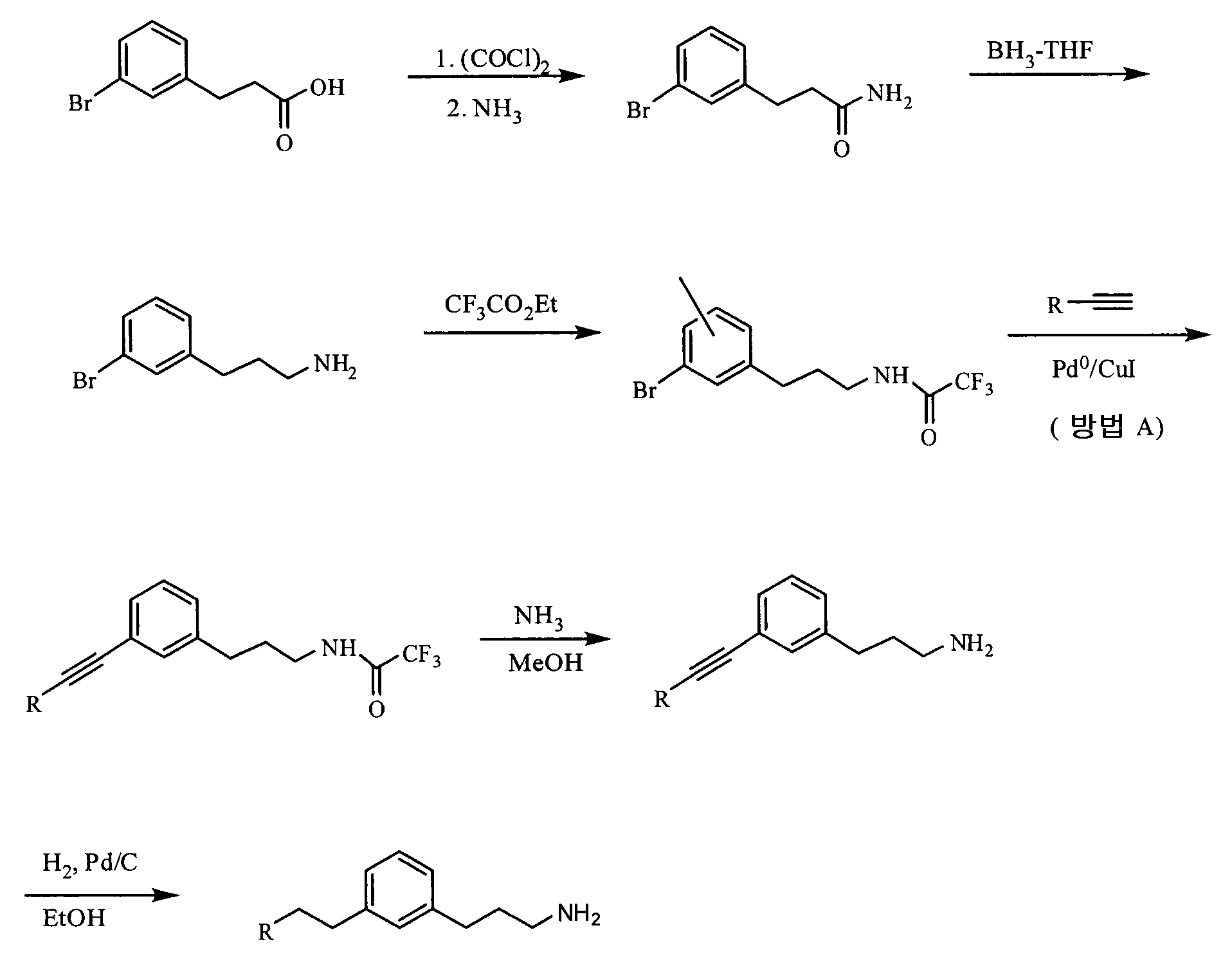
반응식 I 에서, 측쇄 부분이 우선 구축되고, 아민이 보호된다. 그 후, 아세틸렌 부분이 방법 C 에 따라 말단 아세틸렌과의 커플링을 통해 형성된다. 그리고 나서 커플링 생성물이 탈보호되어 알킨을 생성한다. 알카닐 연결부는 알킨의 수소화를 통해 형성된다 (예를 들어, 방법 A 참조). 다른 질소-함유 부분은 당업계에 공지된 방법에 따라 말단 아민으로부터 추가 유도될 수 있다.In Scheme I, the side chain portion is first constructed and the amine is protected. The acetylene moiety is then formed via coupling with terminal acetylene according to Method C. The coupling product is then deprotected to produce alkyne. Alkanyl linkages are formed through hydrogenation of alkyne (see, eg, method A). Other nitrogen-containing moieties can be further derived from terminal amines according to methods known in the art.
상기 논의된 일반 반응식 및 방법 이외에, 다른 예시적인 반응식이 또한, 화학식 (Ia) 및 (Ib) 을 비롯하여 화학식 (I) 의 구조 또는 이의 임의의 아속 구조를 갖는 임의의 화합물을 제조하는 방법을 설명하기 위해 제공된다.In addition to the general schemes and methods discussed above, other exemplary schemes also describe methods of making any compound having the structure of Formula (I) or any sub-substructure thereof, including Formulas (Ia) and (Ib). Is provided for.
IV. 안과 질환 및 장애의 치료 IV. Treatment of eye diseases and disorders
화학식 (I) 의 구조 및 이의 하부구조를 갖는 화합물을 비롯하여, 본원에 기재된 아민 유도체 화합물은 시각 주기에서 하나 이상의 단계를 억제함으로써 안과 질병 및 장애를 치료하는데 유용하다. Amine derivative compounds described herein, including compounds having the structure of Formula (I) and substructures thereof, are useful for treating ophthalmic diseases and disorders by inhibiting one or more steps in the visual cycle.
부가적인 구현예에서는, 11-시스 레티놀의 생성을 일으키는 이성화효소 반응을 억제하는 비-레티노이드 화합물 (여기서, 상기 이성화효소 반응은 RPE에서 일어나고, 상기 화합물은 대상에 투여시 1 ㎎/㎏ 이하의 ED50 값을 가짐)이다. 추가적인 구현예에서는, 상기 ED50 값이 상기 화합물의 단일 용량이 약 2시간 이상 동안 상기 대상에게 투여된 후 측정되는 값인 비-레티노이드 화합물이다. 추가적인 구현예에서는, 알콕실 화합물인 비-레티노이드 화합물이다. 부가적인 구현예에서는, 약학적으로 허용 가능한 담체 및 본원에서 기술한 바와 같은 비-레티노이드 화합물을 포함하는 약학 조성물이다. 부가적인 구현예에서는, 약학적으로 허용 가능한 담체 및 본원에 기술한 바와 같은 비-레티노이드 화합물을 포함하는 약학 조성물을 대상에게 투여하는 것을 포함하는, 대상에서의 안과 질환 또는 장애를 치료하는 방법이다.In an additional embodiment, a non-retinoid compound that inhibits the isomerase reaction that results in the production of 11-cis retinol, wherein the isomerase reaction occurs in RPE, wherein the compound has an ED of 1 mg / kg or less when administered to a subject. Having a value of 50 ). In further embodiments, the ED 50 value is a non-retinoid compound that is the value measured after a single dose of the compound is administered to the subject for at least about 2 hours. In a further embodiment, it is a non-retinoid compound that is an alkoxyl compound. In a further embodiment, there is a pharmaceutical composition comprising a pharmaceutically acceptable carrier and a non-retinoid compound as described herein. In an additional embodiment, a method of treating an ocular disease or disorder in a subject comprising administering to the subject a pharmaceutical composition comprising a pharmaceutically acceptable carrier and a non-retinoid compound as described herein.
부가적인 구현예에서는, RPE65 및 LRAT를 발현하는 세포의 추출물을 이용하는, 시험관내 검정시 약 1 μM 이하의 IC50으로 11-시스-레티놀 생성을 억제하는 화합물이다 (여기서, 추출물은 CRALBP를 추가 포함하고, 화합물은 용액 중에서 약 1주일 이상 동안 실온에서 안정함). 추가적인 구현예에서, 화합물은 약 0.1 μM 이하의 IC50으로 11-시스-레티놀 생성을 억제한다. 추가적인 구현예에서, 화합물은 약 0.01 μM 이하의 IC50으로 11-시스-레티놀 생성을 억제한다. 추가적인 구현예에서, 11-시스-레티놀 생성을 억제하는 화합물은 비-레티노이드 화합물이다. 부가적인 구현예에서는, 약학적으로 허용 가능한 담체 및 본원에 기술된 바와 같이 11-시스-레티놀 생성을 억제하는 화합물을 포함하는 약학 조성물이다. 부가적인 구현예에서는, 약학적으로 허용 가능한 담체 및 본원에서 기술된 바와 같이 11-시스 레티놀 생성을 억제하는 화합물을 포함하는 약학 조성물을 대상에게 투여하는 것을 포함하는, 대상에서의 안과 질환 또는 장애를 치료하는 방법이다. 부가적인 구현예에서는, 본원에서 기술된 바와 같이 11-시스-레티놀 생성을 억제하는 화합물을 대상에게 도입하는 것을 포함하는, 레티노이드 주기에서의 발색단 플럭스를 조정하는 방법이다.In an additional embodiment, a compound that inhibits 11-cis-retinol production with an IC 50 of about 1 μM or less in an in vitro assay using extracts of cells expressing RPE65 and LRAT, wherein the extract further comprises CRALBP. And the compound is stable at room temperature for at least about 1 week in solution). In further embodiments, the compound inhibits 11-cis-retinol production with an IC 50 of about 0.1 μM or less. In further embodiments, the compound inhibits 11-cis-retinol production with an IC 50 of about 0.01 μM or less. In further embodiments, the compound that inhibits 11-cis-retinol production is a non-retinoid compound. In a further embodiment, there is a pharmaceutical composition comprising a pharmaceutically acceptable carrier and a compound that inhibits 11-cis-retinol production as described herein. In an additional embodiment, an ophthalmic disease or disorder in a subject, comprising administering to the subject a pharmaceutical composition comprising a pharmaceutically acceptable carrier and a compound that inhibits 11-cis retinol production as described herein How to treat it. In an additional embodiment, a method of modulating chromophore flux in a retinoid cycle, comprising introducing into a subject a compound that inhibits 11-cis-retinol production as described herein.
부가적인 구현예에서는, 화학식 (G) 의 화합물 또는 이의 호변이성질체, 입체이성질체, 기하이성질체 또는 약학적으로 허용 가능한 용매화물, 수화물, 염, N-산화물 또는 전구약물을 대상에게 투여하는 것을 포함하는, 대상에서의 안과 질환 또는 장애를 치료하는 방법을 제공한다:In a further embodiment, comprising administering to a subject a compound of Formula (G) or a tautomer, stereoisomer, geometric isomer, or pharmaceutically acceptable solvate, hydrate, salt, N -oxide or prodrug thereof, Provided are methods of treating an ocular disease or disorder in a subject:

[식 중,[Wherein,
Z 는 결합, -C(R1)(R2)-, -C(R9)(R10)-C(R1)(R2)-, -X-C(R31)(R32)-, -C(R9)(R10)-C(R1)(R2)-C(R36)(R37)- 또는 -X-C(R31)(R32)-C(R1)(R2)- 이고;Z is a bond, -C (R 1 ) (R 2 )-, -C (R 9 ) (R 10 ) -C (R 1 ) (R 2 )-, -XC (R 31 ) (R 32 )-, -C (R 9 ) (R 10 ) -C (R 1 ) (R 2 ) -C (R 36 ) (R 37 )-or -XC (R 31 ) (R 32 ) -C (R 1 ) (R 2 )-;
X 는 -O-, -S-, -S(=O)-, -S(=O)2-, -N(R30)-, -C(=O)-, -C(=CH2)-, -C(=N-NR35)-, 또는 -C(=N-OR35)- 이며;X is -O-, -S-, -S (= O)-, -S (= O) 2- , -N (R 30 )-, -C (= O)-, -C (= CH 2 ) -, -C (= N-NR 35 )-, or -C (= N-OR 35 )-;
G 는 -C(R41)2-C(R41)2-R40, -C(R42)2-S-R40, -C(R42)2-SO-R40, -C(R42)2-SO2-R40, -C(R42)2-O-R40, -C(R42)2-N(R42)-R40, -C(=O)-N(R42)-R40 으로부터 선택되고;G is -C (R 41 ) 2 -C (R 41 ) 2 -R 40 , -C (R 42 ) 2 -SR 40 , -C (R 42 ) 2 -SO-R 40 , -C (R 42 ) 2 -SO 2 -R 40 , -C (R 42 ) 2 -OR 40 , -C (R 42 ) 2 -N (R 42 ) -R 40 , -C (= O) -N (R 42 ) -R Selected from 40 ;
R40 은 -C(R16)(R17)(R18), 아릴, 또는 헤테로아릴로부터 선택되며;R 40 is selected from —C (R 16 ) (R 17 ) (R 18 ), aryl, or heteroaryl;
각 R41 은 독립적으로 수소, 히드록시, OR6, 알킬로부터 선택되거나; 두 개의 R41 기는 함께 옥소를 형성할 수 있고;Each R 41 is independently selected from hydrogen, hydroxy, OR 6 , alkyl; Two R 41 groups together may form oxo;
각 R42 는 독립적으로 수소 또는 알킬로부터 선택되며;Each R 42 is independently selected from hydrogen or alkyl;
R1 및 R2 는 각각 독립적으로 수소, 할로겐, C1-C5 알킬, 플루오로알킬, -OR6 또는 -NR7R8 로부터 선택되거나; R1 및 R2 는 함께 옥소를 형성하고;R 1 and R 2 are each independently selected from hydrogen, halogen, C 1 -C 5 alkyl, fluoroalkyl, -OR 6 or -NR 7 R 8 ; R 1 and R 2 together form an oxo;
R31 및 R32 는 각각 독립적으로 수소, C1-C5 알킬, 또는 플루오로알킬로부터 선택되며;R 31 and R 32 are each independently selected from hydrogen, C 1 -C 5 alkyl, or fluoroalkyl;
R36 및 R37 은 각각 독립적으로 수소, 할로겐, C1-C5 알킬, 플루오로알킬, -OR6 또는 -NR7R8 로부터 선택되거나; R36 및 R37 은 함께 옥소를 형성하거나; 임의로, R36 및 R1 은 함께 직접 결합을 형성하여 이중 결합을 제공하거나; 임의로, R36 및 R1 은 함께 직접 결합을 형성하고, R37 및 R2 는 함께 직접 결합을 형성하여 삼중 결합을 제공하고;R 36 and R 37 are each independently selected from hydrogen, halogen, C 1 -C 5 alkyl, fluoroalkyl, -OR 6 or -NR 7 R 8 ; R 36 and R 37 together form oxo; Optionally, R 36 and R 1 Together form a direct bond to provide a double bond; Optionally, R 36 and R 1 Silver together form a direct bond, and R 37 and R 2 together form a direct bond to provide a triple bond;
R3 및 R4 는 각각 독립적으로 수소, 알킬, 알케닐, 플루오로알킬, 아릴, 헤테로아릴, 카르보시클릴 또는 C-부착된 헤테로시클릴로부터 선택되거나; R3및 R4 는 부착된 탄소 원자와 함께 카르보시클릴 또는 헤테로시클릴을 형성하거나; R3 및 R4 는 함께 이미노를 형성하며;R 3 and R 4 are each independently selected from hydrogen, alkyl, alkenyl, fluoroalkyl, aryl, heteroaryl, carbocyclyl or C- attached heterocyclyl; R 3 and R 4 together with the carbon atom to which they are attached form carbocyclyl or heterocyclyl; R 3 and R 4 together form an imino;
R5 는 C5-C15 알킬 또는 카르보시클릴알킬이고;R 5 is C 5 -C 15 alkyl or carbocyclylalkyl;
R7 및 R8 은 각각 독립적으로 수소, 알킬, 카르보시클릴, 헤테로시클릴, -C(=O)R13, SO2R13, CO2R13 또는 SO2NR24R25 로부터 선택되거나; R7 및 R8 은 부착된 질소 원자와 함께 N-헤테로시클릴을 형성하며; R 7 and R 8 are each independently hydrogen, alkyl, carbocyclyl, heterocyclyl, —C (═O) R 13 , SO 2 R 13 , CO 2 R 13 Or SO 2 NR 24 R 25 ; R 7 and R 8 Together with the attached nitrogen atom forms N -heterocyclyl;
R9 및 R10 은 각각 독립적으로 수소, 할로겐, 알킬, 플루오로알킬, -OR19, -NR20R21 또는 카르보시클릴로부터 선택되거나; R9 및 R10 옥소를 형성하거나; 임의로, R9 및 R1 은 함께 직접 결합을 형성하여 이중 결합을 제공하거나; 임의로, R9 및 R1 은 함께 직접 결합을 형성하고, R10 및 R2 는 함께 직접 결합을 형성하여 삼중 결합을 제공하고; R 9 and R 10 are each independently selected from hydrogen, halogen, alkyl, fluoroalkyl, -OR 19 , -NR 20 R 21 or carbocyclyl; To form R 9 and R 10 oxo; Optionally, R 9 and R 1 Together form a direct bond to provide a double bond; Optionally, R 9 and R 1 together form a direct bond and R 10 and R 2 together form a direct bond to provide a triple bond;
R11 및 R12 는 각각 독립적으로 수소, 알킬, 카르보시클릴, -C(=O)R23, -C(NH)NH2, SO2R23, CO2R23 또는 SO2NR28R29 로부터 선택되거나; R11 및 R12 는 부착된 질소 원자와 함께 N-헤테로시클릴을 형성하며;R 11 and R 12 Are each independently hydrogen, alkyl, carbocyclyl, -C (= 0) R 23 , -C (NH) NH 2 , SO 2 R 23 , CO 2 R 23 Or SO 2 NR 28 R 29 ; R 11 and R 12 together with the nitrogen atom to which they are attached form N -heterocyclyl;
각 R13, R22 및 R23 은 독립적으로 알킬, 헤테로알킬, 알케닐, 아릴, 아르알킬, 카르보시클릴, 헤테로아릴 또는 헤테로시클릴로부터 선택되고;Each R 13 , R 22 and R 23 is independently selected from alkyl, heteroalkyl, alkenyl, aryl, aralkyl, carbocyclyl, heteroaryl or heterocyclyl;
R6, R19, R30, R34 및 R35 는 각각 독립적으로 수소 또는 알킬이며;R 6 , R 19 , R 30 , R 34 and R 35 are each independently hydrogen or alkyl;
R20 및 R21 은 각각 독립적으로 수소, 알킬, 카르보시클릴, 헤테로시클릴, -C(=O)R22, SO2R22, CO2R22 또는 SO2NR26R27 로부터 선택되거나; R20 및 R21 은 부착된 질소 원자와 함께 N-헤테로시클릴을 형성하고;R 20 and R 21 are each independently selected from hydrogen, alkyl, carbocyclyl, heterocyclyl, —C (═O) R 22 , SO 2 R 22 , CO 2 R 22 or SO 2 NR 26 R 27 ; R 20 and R 21 together with the nitrogen atom to which they are attached form N -heterocyclyl;
각 R24, R25, R26, R27, R28 및 R29 는 독립적으로 수소, 알킬, 알케닐, 플루오로알킬, 아릴, 헤테로아릴, 카르보시클릴 또는 헤테로시클릴로부터 선택되며;Each R 24 , R 25 , R 26 , R 27 , R 28 and R 29 is independently selected from hydrogen, alkyl, alkenyl, fluoroalkyl, aryl, heteroaryl, carbocyclyl or heterocyclyl;
R16 및 R17 은 각각 독립적으로 수소, 알킬, 할로, 아릴, 헤테로아릴, 아르알킬, 헤테로아리알킬 또는 플루오로알킬로부터 선택되거나; R16 및 R17 은 부착된 탄소 원자와 함께 카르보시클릴 또는 헤테로사이클을 형성하고; R 16 and R 17 are each independently selected from hydrogen, alkyl, halo, aryl, heteroaryl, aralkyl, heteroarialkyl or fluoroalkyl; R 16 and R 17 together with the carbon atom to which they are attached form a carbocyclyl or heterocycle;
R18 은 수소, 알킬, 알콕시, 히드록시, 할로 또는 플루오로알킬로부터 선택되며; R 18 is selected from hydrogen, alkyl, alkoxy, hydroxy, halo or fluoroalkyl;
각 R33 은 독립적으로 할로겐, OR34, 알킬, 또는 플루오로알킬로부터 선택되고; n 은 0, 1, 2, 3, 또는 4 임].Each R 33 is independently selected from halogen, OR 34 , alkyl, or fluoroalkyl; n is 0, 1, 2, 3, or 4;
부가적인 구현예에서는, 화학식 (G) 의 화합물을 대상에게 도입하는 것을 포함하는, 레티노이드 주기에서의 발색단 플럭스를 조정하는 방법이다. 추가적인 구현예에서는, 대상의 안구에서의 리포푸신 색소 축적을 감소시키는 방법이다. 추가적인 구현예에서는, 리포푸신 색소가 N-레티닐리덴-N-레티닐-에탄올아민 (A2E)인, 대상의 안구에서의 리포푸신 색소 축적을 감소시키는 방법이다.In a further embodiment, a method of adjusting the chromophore flux in a retinoid cycle, comprising introducing a compound of formula (G) to a subject. In further embodiments, the method is a method for reducing lipofuscin pigment accumulation in an eye of a subject. In a further embodiment, the method of reducing lipofuscin pigment accumulation in the eye of a subject, wherein the lipofuscin pigment is N -retinylidene- N -retinyl-ethanolamine (A2E).
추가적인 구현예에서는, 대상의 안구에서의 리포푸신 색소 축적을 감소시키는, 본원에서 기술된 바와 같이 대상에서의 안과 질환 또는 장애를 치료하는 방법이다. 추가적인 구현예에서는, 리포푸신 색소가 N-레티닐리덴-N-레티닐-에탄올아민 (A2E)인, 대상의 안구에서의 리포푸신 색소 축적을 감소시키는, 본원에서 기술된 바와 같이 대상에서의 안과 질환 또는 장애를 치료하는 방법이다. In a further embodiment, a method of treating an ocular disease or disorder in a subject as described herein, which reduces the accumulation of lipofuscin pigment in the eye of the subject. In a further embodiment, the ophthalmology in the subject as described herein, reducing lipofucin pigment accumulation in the eye of the subject, wherein the lipofuscin pigment is N -retinylidene- N -retinyl-ethanolamine (A2E). A method of treating a disease or disorder.
추가적인 구현예에서는, 본원에서 기술된 바와 같이 대상에서의 안과 질환 또는 장애를 치료하는 방법으로서, 상기 안과 질환 또는 장애가 노인성 황반 변성 또는 스타가르트 황반 이양증인 방법이다. 추가적인 구현예에서는, 본원에서 기술된 바와 같이 대상에서의 안과 질환 또는 장애를 치료하는 방법으로서, 상기 안과 질환 또는 장애가 망막 박리, 출혈 망막병증, 색소성 망막염, 추체간체 이영양증, 소르비 안저 이상증, 시각 신경병증, 염증성 망막 질환, 당뇨 망막병증, 당뇨 황반병증, 망막 혈관 폐쇄, 미숙 망막병증, 또는 허혈 재관류 관련 망막 손상, 증식 유리체망막병증, 망막 이영양증, 선천성 시각 신경병증, 소르비 안저 이상증, 포도막염, 망막 손상, 알츠하이머 질환 관련 망막 장애, 다발성 경화증 관련 망막 장애, 파킨슨 질환 관련 망막 장애, 바이러스성 감염 관련 망막 장애, 광 과다노출 관련 망막 장애, 근시 및 AIDS 관련 망막 장애에서 선택되는 방법이다. 추가적인 구현예에서는, 대상의 안구에서의 리포푸신 색소의 축적을 감소시키는, 본원에서 기술된 바와 같이 대상에서의 안과 질환 또는 장애를 치료하는 방법이다. 추가적인 구현예에서는, 대상의 안구에서의 리포푸신 색소의 축적을 감소시키는, 본원에서 기술된 바와 같이 대상에서의 안과 질환 또는 장애를 치료하는 방법으로서, 여기서 리포푸신 색소가 N-레티닐리덴-N-레티닐-에탄올아민 (A2E)인 방법이다.In a further embodiment, a method of treating an ocular disease or disorder in a subject as described herein, wherein the ocular disease or disorder is senile macular degeneration or Stargard's macular dysplasia. In a further embodiment, a method of treating an ocular disease or disorder in a subject as described herein, wherein the ocular disease or disorder is retinal detachment, hemorrhagic retinopathy, retinitis pigmentosa, interstitial dystrophy, sorboid fundus dystrophy, vision Neuropathy, inflammatory retinopathy, diabetic retinopathy, diabetic maculopathy, retinal vascular occlusion, immature retinopathy, or ischemic reperfusion-related retinal damage, proliferative vitreoretinopathy, retinal dystrophy, congenital optic neuropathy, sorboid fundus dystrophy, uveitis, Retinal damage, Alzheimer's disease-related retinal disorders, multiple sclerosis-related retinal disorders, Parkinson's disease-related retinal disorders, viral infection-related retinal disorders, light overexposure-related retinal disorders, myopia and AIDS-related retinal disorders. In a further embodiment, a method of treating an ocular disease or disorder in a subject as described herein, which reduces the accumulation of lipofuscin pigment in the eye of the subject. In a further embodiment, a method of treating an ocular disease or disorder in a subject as described herein, which reduces the accumulation of a lipofuscin pigment in the eye of the subject, wherein the lipofuscin pigment is N -retinylidene- N -Retinyl-ethanolamine (A2E).
또 다른 구현예에서는, 화학식 (G) 의 화합물을 망막과 접촉시키는 것을 포함하는, 망막의 막대 광수용체 세포의 암순응을 억제하는 방법이다. 또 다른 구현예에서는, 본원에서 기술된 바와 같이 비-레티노이드 화합물과 망막을 접촉시키는 것을 포함하는, 망막의 막대 광수용체 세포의 암순응을 억제하는 방법이다. 또 다른 구현예에서는, 본원에서 기술된 바와 같이 11-시스-레티놀 생성을 억제하는 화합물과 망막을 접촉시키는 것을 포함하는, 망막의 막대 광수용체 세포의 암순응을 억제하는 방법이다. In another embodiment, a method of inhibiting dark adaptation of rod photoreceptor cells of the retina, comprising contacting the compound of Formula (G) with the retina. In another embodiment, a method of inhibiting dark adaptation of rod photoreceptor cells of the retina, comprising contacting the retina with a non-retinoid compound as described herein. In another embodiment, a method of inhibiting dark adaptation of rod photoreceptor cells of the retina, comprising contacting the retina with a compound that inhibits 11-cis-retinol production, as described herein.
또 다른 구현예에서는, 화학식 (G) 의 화합물을 망막과 접촉시키는 것을 포함하는, 망막의 막대 광수용체 세포에서의 로돕신의 재생을 억제하는 방법이다. 또 다른 구현예에서는, 본원에서 기술된 바와 같이 비-레티노이드 화합물을 망막과 접촉시키는 것을 포함하는, 망막의 막대 광수용체 세포에서의 로돕신의 재생을 억제하는 방법이다. 또 다른 구현예에서는, 본원에서 기술된 바와 같이 11-시스-레티놀 생성을 억제하는 화합물과 망막을 접촉시키는 것을 포함하는, 망막의 막대 광수용체 세포에서의 로돕신의 재생을 억제하는 방법이다. In another embodiment, a method of inhibiting regeneration of rhodopsin in rod photoreceptor cells of the retina, comprising contacting the compound of Formula (G) with the retina. In another embodiment is a method of inhibiting regeneration of rhodopsin in rod photoreceptor cells of the retina, comprising contacting the non-retinoid compound with the retina as described herein. In another embodiment, a method of inhibiting regeneration of rhodopsin in rod photoreceptor cells of the retina, comprising contacting the retina with a compound that inhibits 11-cis-retinol production as described herein.
또 다른 구현예에서는, 약학적으로 허용 가능한 담체 및 화학식 (G) 의 화합물을 포함하는 약학 조성물을 대상에게 투여하는 것을 포함하는, 대상의 안구에서의 허혈을 감소시키는 방법이다.In another embodiment is a method of reducing ischemia in an eye of a subject comprising administering to the subject a pharmaceutical composition comprising a pharmaceutically acceptable carrier and a compound of formula (G).
부가적인 구현예에서는, 약학적으로 허용 가능한 담체 및 본원에 기술된 바와 같은 비-레티노이드 화합물을 포함하는 약학 조성물을 대상에게 투여하는 것을 포함하는, 대상의 안구에서의 허혈을 감소시키는 방법이다. 부가적인 구현예에서는, 약학적으로 허용 가능한 담체 및 본원에 기술된 바와 같이 11-시스-레티놀 생성을 억제하는 화합물을 포함하는 약학 조성물을 대상에게 투여하는 것을 포함하는, 대상의 안구에서의 허혈을 감소시키는 방법이다. 추가적인 구현예에서는, 약학 조성물을 막대 광수용체 세포의 암순응을 억제하기에 충분한 시간 및 조건 하에 투여함으로써 안구에서의 허혈을 감소시키는, 대상의 안구에서의 허혈을 감소시키는 방법이다.In an additional embodiment, a method of reducing ischemia in an eye of a subject, comprising administering to the subject a pharmaceutical composition comprising a pharmaceutically acceptable carrier and a non-retinoid compound as described herein. In an additional embodiment, ischemia in the eye of a subject, comprising administering to the subject a pharmaceutical composition comprising a pharmaceutically acceptable carrier and a compound that inhibits 11-cis-retinol production as described herein How to reduce. In a further embodiment, the method is a method of reducing ischemia in the eye of a subject by reducing the ischemia in the eye by administering the pharmaceutical composition under a time and condition sufficient to inhibit dark adaptation of the rod photoreceptor cells.
부가적인 구현예에서는, 약학적으로 허용 가능한 담체 및 본원에 기술된 바와 같은 비-레티노이드 화합물을 포함하는 약학 조성물을 대상에게 투여하는 것을 포함하는, 대상의 안구의 망막에서의 신생혈관증식을 억제하는 방법이다. 부가적인 구현예에서는, 약학적으로 허용 가능한 담체 및 본원에 기술된 바와 같이 11-시스-레티놀 생성을 억제하는 화합물을 포함하는 약학 조성물을 대상에게 투여하는 것을 포함하는, 대상의 안구의 망막에서의 신생혈관증식을 억제하는 방법이다. 추가적인 구현예에서는, 약학 조성물을 막대 광수용체 세포의 암순응을 억제하기에 충분한 시간 및 조건 하에 투여함으로써 망막에서의 신생혈관증식을 억제하는, 대상의 안구의 망막에서의 신생혈관증식을 억제하는 방법이다. In an additional embodiment, a method of inhibiting neovascularization in the retina of an eyeball of a subject, comprising administering to the subject a pharmaceutical composition comprising a pharmaceutically acceptable carrier and a non-retinoid compound as described herein. Way. In a further embodiment, in a subject's eye retina comprising administering to the subject a pharmaceutical composition comprising a pharmaceutically acceptable carrier and a compound that inhibits 11-cis-retinol production as described herein. It is a method of suppressing neovascularization. In a further embodiment, the method is a method for inhibiting neovascularization in the eye's retina by inhibiting neovascularization in the retina by administering the pharmaceutical composition under a time and condition sufficient to inhibit dark adaptation of the rod photoreceptor cells. .
부가적인 구현예에서는, 화학식 (G) 의 화합물과 망막을 접촉시키는 것을 포함하는, 망막에서의 망막 세포의 변성을 억제하는 방법이다. 부가적인 구현예에서는, 본원에 기술된 바와 같은 비-레티노이드 화합물과 망막을 접촉시키는 것을 포함하는, 망막에서의 망막 세포의 변성을 억제하는 방법이다. 부가적인 구현예에서는, 본원에 기술된 바와 같이 11-시스-레티놀 생성을 억제하는 화합물과 망막을 접촉시키는 것을 포함하는, 망막에서의 망막 세포의 변성을 억제하는 방법이다. In a further embodiment, a method of inhibiting degeneration of retinal cells in the retina, comprising contacting the retina with a compound of formula (G). In a further embodiment, a method of inhibiting degeneration of retinal cells in the retina, comprising contacting the retina with a non-retinoid compound as described herein. In a further embodiment, a method of inhibiting degeneration of retinal cells in the retina, comprising contacting the retina with a compound that inhibits 11-cis-retinol production as described herein.
추가적인 구현예에서는, 망막 세포가 망막 뉴런 세포인, 망막에서의 망막 세포의 변성을 억제하는 방법이다. 추가적인 구현예에서는, 망막 뉴런 세포가 광수용체 세포인, 망막에서의 망막 세포의 변성을 억제하는 방법이다.In a further embodiment, the method is a method for inhibiting degeneration of retinal cells in the retina, wherein the retinal cells are retinal neuronal cells. In a further embodiment, the method is to inhibit degeneration of retinal cells in the retina, wherein the retinal neuronal cells are photoreceptor cells.
또 다른 구현예에서는, 약학적으로 허용 가능한 담체 및 화학식 (G) 의 화합물을 포함하는 약학 조성물을 대상에게 투여하는 것을 포함하는, 대상의 망막에서의 리포푸신 색소의 축적을 감소시키는 방법이다. 부가적인 구현예에서는, 리포푸신이 N-레티닐리덴-N-레티닐-에탄올아민 (A2E)인, 대상의 망막에서의 리포푸신 색소의 축적을 감소시키는 방법이다.In another embodiment is a method of reducing accumulation of lipofuscin pigment in a retina of a subject, comprising administering to the subject a pharmaceutical composition comprising a pharmaceutically acceptable carrier and a compound of formula (G). In an additional embodiment, a method of reducing the accumulation of lipofuscin pigments in a retina of a subject, wherein lipofucin is N -retinylidene- N -retinyl-ethanolamine (A2E).
부가적인 구현예에서는, 약학적으로 허용 가능한 담체 및 본원에 기술된 바와 같은 비-레티노이드 화합물을 포함하는 약학 조성물을 대상에게 투여하는 것을 포함하는, 대상의 망막에서의 리포푸신 색소의 축적을 감소시키는 방법이다. 부가적인 구현예에서는, 약학적으로 허용 가능한 담체 및 본원에 기술된 바와 같이 11-시스-레티놀 생성을 억제하는 화합물을 포함하는 약학 조성물을 대상에게 투여하는 것을 포함하는, 대상의 망막에서의 리포푸신 색소의 축적을 감소시키는 방법이다. 부가적인 구현예에서는, 리포푸신이 N-레티닐리덴-N-레티닐-에탄올아민 (A2E)인, 대상의 망막에서의 리포푸신 색소의 축적을 감소시키는 방법이다.In an additional embodiment, a method for reducing the accumulation of lipofuscin pigments in a retina of a subject, comprising administering to the subject a pharmaceutical composition comprising a pharmaceutically acceptable carrier and a non-retinoid compound as described herein. It is a way. In a further embodiment, lipofuscin in the retina of the subject, comprising administering to the subject a pharmaceutical composition comprising a pharmaceutically acceptable carrier and a compound that inhibits 11-cis-retinol production as described herein It is a method to reduce the accumulation of pigments. In an additional embodiment, a method of reducing the accumulation of lipofuscin pigments in a retina of a subject, wherein lipofucin is N -retinylidene- N -retinyl-ethanolamine (A2E).
추가 구현예에서는, 화학식 (G) 의 화합물 또는 이의 호변이성질체, 입체이성질체, 기하이성질체 또는 약학적으로 허용 가능한 용매화물, 수화물, 염, N-산화물 또는 전구약물을 대상에 도입하는 것을 포함하는, 레티노이드 주기에서의 발색단 플럭스를 조정하는 방법을 제공한다:In a further embodiment, a retinoid comprising introducing a compound of formula (G) or a tautomer, stereoisomer, geometric isomer or pharmaceutically acceptable solvate, hydrate, salt, N -oxide or prodrug thereof to a subject Provides a way to adjust the chromophore flux in the cycle:

[식 중,[Wherein,
Z 는 결합, -C(R1)(R2)-, -C(R9)(R10)-C(R1)(R2)-, -X-C(R31)(R32)-, -C(R9)(R10)-C(R1)(R2)-C(R36)(R37)- 또는 -X-C(R31)(R32)-C(R1)(R2)- 이고;Z is a bond, -C (R 1 ) (R 2 )-, -C (R 9 ) (R 10 ) -C (R 1 ) (R 2 )-, -XC (R 31 ) (R 32 )-, -C (R 9 ) (R 10 ) -C (R 1 ) (R 2 ) -C (R 36 ) (R 37 )-or -XC (R 31 ) (R 32 ) -C (R 1 ) (R 2 )-;
X 는 -O-, -S-, -S(=O)-, -S(=O)2-, -N(R30)-, -C(=O)-, -C(=CH2)-, -C(=N-NR35)-, 또는 -C(=N-OR35)- 이며;X is -O-, -S-, -S (= O)-, -S (= O) 2- , -N (R 30 )-, -C (= O)-, -C (= CH 2 ) -, -C (= N-NR 35 )-, or -C (= N-OR 35 )-;
G 는 -C(R41)2-C(R41)2-R40, -C(R42)2-S-R40, -C(R42)2-SO-R40, -C(R42)2-SO2-R40, -C(R42)2-O-R40, -C(R42)2-N(R42)-R40, -C(=O)-N(R42)-R40 으로부터 선택되고;G is -C (R 41 ) 2 -C (R 41 ) 2 -R 40 , -C (R 42 ) 2 -SR 40 , -C (R 42 ) 2 -SO-R 40 , -C (R 42 ) 2 -SO 2 -R 40 , -C (R 42 ) 2 -OR 40 , -C (R 42 ) 2 -N (R 42 ) -R 40 , -C (= O) -N (R 42 ) -R Selected from 40 ;
R40 은 -C(R16)(R17)(R18), 아릴, 또는 헤테로아릴로부터 선택되며;R 40 is selected from —C (R 16 ) (R 17 ) (R 18 ), aryl, or heteroaryl;
각 R41 은 독립적으로 수소, 히드록시, OR6, 알킬로부터 선택되거나; 두 개의 R41 기는 함께 옥소를 형성할 수 있고;Each R 41 is independently selected from hydrogen, hydroxy, OR 6 , alkyl; Two R 41 groups together may form oxo;
각 R42 는 독립적으로 수소 또는 알킬로부터 선택되며;Each R 42 is independently selected from hydrogen or alkyl;
R1 및 R2 는 각각 독립적으로 수소, 할로겐, C1-C5 알킬, 플루오로알킬, -OR6 또는 -NR7R8 로부터 선택되거나; R1 및 R2 는 함께 옥소를 형성하고;R 1 and R 2 are each independently selected from hydrogen, halogen, C 1 -C 5 alkyl, fluoroalkyl, -OR 6 or -NR 7 R 8 ; R 1 and R 2 together form an oxo;
R31 및 R32 는 각각 독립적으로 수소, C1-C5 알킬, 또는 플루오로알킬로부터 선택되며;R 31 and R 32 are each independently selected from hydrogen, C 1 -C 5 alkyl, or fluoroalkyl;
R36 및 R37 은 각각 독립적으로 수소, 할로겐, C1-C5 알킬, 플루오로알킬, -OR6 또는 -NR7R8 로부터 선택되거나; R36 및 R37 은 함께 옥소를 형성하거나; 임의로, R36 및 R1 은 함께 직접 결합을 형성하여 이중 결합을 제공하거나; 임의로, R36 및 R1 은 함께 직접 결합을 형성하고, R37 및 R2 는 함께 직접 결합을 형성하여 삼중 결합을 제공하고;R 36 and R 37 are each independently selected from hydrogen, halogen, C 1 -C 5 alkyl, fluoroalkyl, -OR 6 or -NR 7 R 8 ; R 36 and R 37 together form oxo; Optionally, R 36 and R 1 Together form a direct bond to provide a double bond; Optionally, R 36 and R 1 Silver together form a direct bond, and R 37 and R 2 together form a direct bond to provide a triple bond;
R3 및 R4 는 각각 독립적으로 수소, 알킬, 알케닐, 플루오로알킬, 아릴, 헤테로아릴, 카르보시클릴 또는 C-부착된 헤테로시클릴로부터 선택되거나; R3및 R4 는 부착된 탄소 원자와 함께 카르보시클릴 또는 헤테로시클릴을 형성하거나; R3 및 R4 는 함께 이미노를 형성하며;R 3 and R 4 are each independently selected from hydrogen, alkyl, alkenyl, fluoroalkyl, aryl, heteroaryl, carbocyclyl or C- attached heterocyclyl; R 3 and R 4 together with the carbon atom to which they are attached form carbocyclyl or heterocyclyl; R 3 and R 4 together form an imino;
R5 는 C5-C15 알킬 또는 카르보시클릴알킬이고;R 5 is C 5 -C 15 alkyl or carbocyclylalkyl;
R7 및 R8 은 각각 독립적으로 수소, 알킬, 카르보시클릴, 헤테로시클릴, -C(=O)R13, SO2R13, CO2R13 또는 SO2NR24R25 로부터 선택되거나; R7 및 R8 은 부착된 질소 원자와 함께 N-헤테로시클릴을 형성하며; R 7 and R 8 are each independently hydrogen, alkyl, carbocyclyl, heterocyclyl, —C (═O) R 13 , SO 2 R 13 , CO 2 R 13 Or SO 2 NR 24 R 25 ; R 7 and R 8 Together with the attached nitrogen atom forms N -heterocyclyl;
R9 및 R10 은 각각 독립적으로 수소, 할로겐, 알킬, 플루오로알킬, -OR19, -NR20R21 또는 카르보시클릴로부터 선택되거나; R9 및 R10 옥소를 형성하거나; 임의로, R9 및 R1 은 함께 직접 결합을 형성하여 이중 결합을 제공하거나; 임의로, R9 및 R1 은 함께 직접 결합을 형성하고, R10 및 R2 는 함께 직접 결합을 형성하여 삼중 결합을 제공하고; R 9 and R 10 are each independently selected from hydrogen, halogen, alkyl, fluoroalkyl, -OR 19 , -NR 20 R 21 or carbocyclyl; To form R 9 and R 10 oxo; Optionally, R 9 and R 1 Together form a direct bond to provide a double bond; Optionally, R 9 and R 1 together form a direct bond and R 10 and R 2 together form a direct bond to provide a triple bond;
R11 및 R12 는 각각 독립적으로 수소, 알킬, 카르보시클릴, -C(=O)R23, -C(NH)NH2, SO2R23, CO2R23 또는 SO2NR28R29 로부터 선택되거나; R11 및 R12 는 부착된 질소 원자와 함께 N-헤테로시클릴을 형성하며;R 11 and R 12 Are each independently hydrogen, alkyl, carbocyclyl, -C (= 0) R 23 , -C (NH) NH 2 , SO 2 R 23 , CO 2 R 23 Or SO 2 NR 28 R 29 ; R 11 and R 12 together with the nitrogen atom to which they are attached form N -heterocyclyl;
각 R13, R22 및 R23 은 독립적으로 알킬, 헤테로알킬, 알케닐, 아릴, 아르알킬, 카르보시클릴, 헤테로아릴 또는 헤테로시클릴로부터 선택되고;Each R 13 , R 22 and R 23 is independently selected from alkyl, heteroalkyl, alkenyl, aryl, aralkyl, carbocyclyl, heteroaryl or heterocyclyl;
R6, R19, R30, R34 및 R35 는 각각 독립적으로 수소 또는 알킬이며;R 6 , R 19 , R 30 , R 34 and R 35 are each independently hydrogen or alkyl;
R20 및 R21 은 각각 독립적으로 수소, 알킬, 카르보시클릴, 헤테로시클릴, -C(=O)R22, SO2R22, CO2R22 또는 SO2NR26R27 로부터 선택되거나; R20 및 R21 은 부착된 질소 원자와 함께 N-헤테로시클릴을 형성하고;R 20 and R 21 are each independently selected from hydrogen, alkyl, carbocyclyl, heterocyclyl, —C (═O) R 22 , SO 2 R 22 , CO 2 R 22 or SO 2 NR 26 R 27 ; R 20 and R 21 together with the nitrogen atom to which they are attached form N -heterocyclyl;
각 R24, R25, R26, R27, R28 및 R29 는 독립적으로 수소, 알킬, 알케닐, 플루오로알킬, 아릴, 헤테로아릴, 카르보시클릴 또는 헤테로시클릴로부터 선택되며;Each R 24 , R 25 , R 26 , R 27 , R 28 and R 29 is independently selected from hydrogen, alkyl, alkenyl, fluoroalkyl, aryl, heteroaryl, carbocyclyl or heterocyclyl;
R16 및 R17 은 각각 독립적으로 수소, 알킬, 할로, 아릴, 헤테로아릴, 아르알킬, 헤테로아리알킬 또는 플루오로알킬로부터 선택되거나; R16 및 R17 은 부착된 탄소 원자와 함께 카르보시클릴 또는 헤테로사이클을 형성하고; R 16 and R 17 are each independently selected from hydrogen, alkyl, halo, aryl, heteroaryl, aralkyl, heteroarialkyl or fluoroalkyl; R 16 and R 17 together with the carbon atom to which they are attached form a carbocyclyl or heterocycle;
R18 은 수소, 알킬, 알콕시, 히드록시, 할로 또는 플루오로알킬로부터 선택되며; R 18 is selected from hydrogen, alkyl, alkoxy, hydroxy, halo or fluoroalkyl;
각 R33 은 독립적으로 할로겐, OR34, 알킬, 또는 플루오로알킬로부터 선택되고; n 은 0, 1, 2, 3, 또는 4 임].Each R 33 is independently selected from halogen, OR 34 , alkyl, or fluoroalkyl; n is 0, 1, 2, 3, or 4;
추가 구현예에서, 하기로 이루어진 군으로부터 선택되는 화학식 (G) 의 화합물을 대상에 투여하는 것을 포함하는, 대상에서의 안과 질환 또는 장애를 치료하는 방법을 제공한다:In a further embodiment, there is provided a method of treating an ocular disease or disorder in a subject comprising administering to the subject a compound of formula (G) selected from the group consisting of:


일부 구현예에서, 본원에 개시된 화합물은 시각 주기 트랜스-시스 이성화효소의 활성을 억제 또는 차단하는 기능을 한다. 본원에 기술된 화합물은 시각 주기에서 이성질체화 단계를 억제, 차단하거나 또는 일부 방식으로 방해할 수 있다. 특정 구현예에서, 당해 화합물은 모든-트랜스-레티닐 에스테르의 이성질체화를 억제하며; 특정 구현예에서, 모든-트랜스-레티닐 에스테르는 모든-트랜스-레티놀의 지방산 에스테르이며, 당해 화합물은 모든-트랜스-레티놀의 11-시스-레티놀로의 이성질체화를 억제한다. 당해 화합물은 하나 이상의 시각 주기 이성화효소 (이는 또한 본원 및 당업계에서 망막 이성화효소 또는 아이소메로하이드롤라아제라고 칭해질 수 있음)로 결합되거나 또는 일부 방식으로 이의 이성화효소 활성과 반응 및 이를 억제할 수 있다. 당해 화합물은 모든-트랜스-레티닐 에스테르 기질의 이성화효소로의 결합을 차단 또는 억제시킬 수 있다. 대안적으로는 또는 부가적으로, 당해 화합물이 이성화효소의 촉매 부위 또는 영역에 결합되어, 모든-트랜스-레티닐 에스테르 기질의 이성질체화에 대해 촉매 작용하는 촉매의 능력을 억제시킬 수 있다. 현재까지의 과학적 데이터를 근간으로, 모든-트랜스-레티닐 에스테르의 이성질체화에 대해 촉매작용하는 하나 이상의 이성화효소가 RPE 세포의 세포질에 위치한다고 여겨진다. 본원에서 토의된 바와 같이, 시각 주기의 각각의 단계, 효소, 기질, 중간체 및 생성물은 아직 밝혀지지 않았다 (예를 들어, Moiseyev 등, Proc . Natl . Acad . Sci . USA 102:12413-18 (2004); Chen 등, Invest . Ophthalmol . Vis . Sci . 47:1177-84 (2006); 상기 Lamb 등 참조).In some embodiments, the compounds disclosed herein function to inhibit or block the activity of visual cycle trans-cis isomerase. The compounds described herein may inhibit, block or interfere in some way with the isomerization step in the visual cycle. In certain embodiments, the compounds inhibit the isomerization of all-trans-retinyl esters; In certain embodiments, all-trans-retinyl esters are fatty acid esters of all-trans-retinol, and the compounds inhibit the isomerization of all-trans-retinol to 11-cis-retinol. The compound may be bound to or inhibit and react with its isomerase activity in one way or more than one visual cycle isomerase (which may also be referred to herein and as retinal isomerase or isomerohydrolase in the art). have. The compound may block or inhibit binding of the all-trans-retinyl ester substrate to the isomerase. Alternatively or additionally, the compound may be bound to the catalytic site or region of the isomerase, thereby inhibiting the ability of the catalyst to catalyze the isomerization of all-trans-retinyl ester substrate. Based on the scientific data to date, it is believed that at least one isomerase is located in the cytoplasm of RPE cells that catalyzes the isomerization of all-trans-retinyl esters. As discussed herein, each step, enzyme, substrate, intermediate, and product of the visual cycle has not yet been identified (eg , Moiseyev et al . , Proc . Natl . Acad . Sci . USA 102: 12413-18 (2004). Chen et al . , Invest . Ophthalmol . Vis . Sci . 47: 1177-84 (2006); see Lamb et al.).
이성질체화 활성에 대한 화합물의 효과를 측정하기 위한 방법은 본원 및 당업계에 기술된 바와 같이 시험관내에서 수행될 수 있다 (Stecher 등, J Biol Chem 274:8577-85 (1999); 또한 Golczak 등, Proc. Natl. Acad. Sci. USA 102:8162-67 (2005) 참조). 동물 (예컨대 소, 돼지, 인간)로부터 단리된 망막 색소 상피 (RPE) 마이크로좀 멤브레인은 이성화효소의 공급원으로서 역할할 수 있다. 아민 유도체 화합물의 이성화효소 억제 능력은 또한 생체내 생쥐 이성화효소 검정에 의해 측정될 수 있다. 안구의 강한 빛으로의 단기 노출 (시색소의 "광표백" 또는 단순히 "표백")은 망막에서 거의 모든 11-시스-레티날을 광-이성화하는 것으로 알려져 있다. 표백 이후의 11-시스-레티날의 회수는 이성화효소의 생체내 활성의 추정에 사용될 수 있다 (예를 들어, Maeda 등, J. Neurochem 85:944-956 (2003); Van Hooser 등, J Biol Chem 277:19173-82, 2002 참조). 망막 전기 측정 (ERG) 기록이 상기 기술된 바와 같이 수행될 수 있다 (Haeseleer 등, Nat. Neurosci. 7:1079-87 (2004); Sugitomo 등, J. Toxicol. Sci. 22 Suppl 2:315-25 (1997); Keating 등, Documenta Ophthalmologica 100:77-92 (2000)). 또한 Deigner 등, Science, 244: 968-971 (1989); Gollapalli 등, Biochim Biophys Acta. 1651: 93-101 (2003); Parish, 등, Proc. Natl. Acad. Sci. USA 95:14609-13 (1998); Radu, 등, Proc Natl Acad Sci USA 101: 5928-33 (2004)을 참조한다. 특정 구현예에서, 본원에 기술된 안과 및 망막 질환 또는 장애 중 어느 하나를 갖거나 또는 이의 진행의 위험이 있는 대상의 치료에 유용한 화합물은, 본원에 기술되거나 또는 당업계에 알려진 이성화효소 검정에서 측정되는 바 IC50 수준 (이성화효소 활성도의 50%가 억제되는 화합물 농도)이 약 1 μM 미만이고; 다른 구현예에서는, 측정된 IC50 수준이 약 10 nM 미만이고; 다른 구현예에서는, 측정된 IC50 수준이 약 50 nM 미만이고; 특정 다른 구현예에서는, 측정된 IC50 수준이 약 100 nM 미만이고; 다른 특정 구현예에서는, 측정된 IC50 수준이 약 10 μM 미만이고; 다른 구현예에서는, 측정된 IC50 수준이 약 50 μM 미만이고; 다른 특정 구현예에서는, 측정된 IC50 수준이 약 100 μM 또는 약 500 μM 미만이고; 다른 구현예에서는, 측정된 IC50 수준이 약 1 μM 내지 10 μM이고; 다른 구현예에서는, 측정된 IC50 수준이 약 1 nM 내지 10 nM이다. 대상으로의 투여시, 본 발명의 하나 이상의 화합물은 11-시스 레티놀의 생성을 일으키는 이성화효소 반응의 억제에 의해 확인되는 바와 같이 약 5 ㎎/㎏, 5 ㎎/㎏ 이하의 ED50 값을 나타낸다. 일부 구현예에서, 본 발명의 화합물은 대상에 투여시 약 1 ㎎/㎏의 ED50 값을 갖는다. 다른 구현예에서는, 본 발명의 화합물이 대상에 투여시 약 0.1 ㎎/㎏의 ED50 값을 갖는다. ED50 값은 당해 화합물 또는 이의 약학 조성물의 투여의 약 2시간, 4시간, 6시간, 8시간 이상 이후 측정될 수 있다.Methods for determining the effect of compounds on isomerization activity can be performed in vitro as described herein and in the art (Stecher et al., J Biol Chem 274: 8577-85 (1999); see also Golczak et al., Proc. Natl. Acad. Sci. USA 102: 8162-67 (2005). Retinal pigment epithelial (RPE) microsome membranes isolated from animals (eg cattle, pigs, humans) can serve as a source of isomerase. The isomerase inhibitory ability of the amine derivative compound can also be measured by the mouse isomerase assay in vivo. Short-term exposure of the eye to strong light (“photobleaching” or simply “bleaching” of the dye) is known to photo-isomerize almost all 11-cis-retinal in the retina. Recovery of 11-cis-retinal after bleaching can be used to estimate the in vivo activity of isomerase (eg, Maeda et al., J. Neurochem 85: 944-956 (2003); Van Hooser et al., J Biol) Chem 277: 19173-82, 2002). Retinal electrical measurements (ERG) recordings can be performed as described above (Haeseleer et al., Nat. Neurosci. 7: 1079-87 (2004); Sugitomo et al., J. Toxicol. Sci. 22 Suppl 2: 315-25 (1997); Keating et al., Documenta Ophthalmologica 100: 77-92 (2000)). See also Deigner et al., Science, 244: 968-971 (1989); Gollapalli et al., Biochim Biophys Acta. 1651: 93-101 (2003); Parish, et al., Proc. Natl. Acad. Sci. USA 95: 14609-13 (1998); See Radu, et al., Proc Natl Acad Sci USA 101: 5928-33 (2004). In certain embodiments, compounds useful in the treatment of a subject having or at risk of progressing any of the ophthalmic and retinal diseases or disorders described herein are measured in an isomerase assay described herein or known in the art. The IC 50 level (compound concentration at which 50% of the isomerase activity is inhibited) is less than about 1 μM; In other embodiments, the measured IC 50 level is less than about 10 nM; In other embodiments, the measured IC 50 level is less than about 50 nM; In certain other embodiments, the IC 50 level measured is less than about 100 nM; In other specific embodiments, the IC 50 level measured is less than about 10 μM; In other embodiments, the IC 50 level measured is less than about 50 μΜ; In other specific embodiments, the measured IC 50 level is less than about 100 μM or about 500 μM; In other embodiments, the IC 50 level measured is about 1 μM to 10 μM; In another embodiment, the IC 50 level measured is about 1 nM to 10 nM. When administered to a subject, one or more compounds of the present invention exhibit an ED 50 value of about 5 mg / kg, not more than 5 mg / kg, as confirmed by inhibition of the isomerase reaction that results in the production of 11-cis retinol. In some embodiments, the compound of the present invention has an ED 50 of about 1 mg / kg when administered to a subject Has a value. In another embodiment, the compound of the present invention has an ED 50 value of about 0.1 mg / kg when administered to a subject. The ED 50 value can be measured after at least about 2 hours, 4 hours, 6 hours, 8 hours of administration of the compound or pharmaceutical composition thereof.
본원에 기술된 화합물은 안과 질환 또는 장애 특히 망막 질환 또는 장애 예컨대 노인성 황반 변성 또는 스타가르트 황반 이양증을 갖는 대상의 치료에 유용할 수 있다. 한 구현예에서, 본원에 기술된 화합물은 리포푸신 색소 및 안구에서의 리포푸신-관련 및/또는 관련 분자의 축적을 억제 (즉 방지, 감소, 지연, 폐지 또는 최소화)할 수 있다. 또 다른 구현예에서, 화합물은 안구에서의 N-레티닐리덴-N-레티닐에탄올아민 (A2E) 축적을 억제 (즉 방지, 감소, 지연, 폐지 또는 최소화)할 수 있다. 안과 질환은 적어도 부분적으로는 안구에서의 리포푸신 색소 축적 및/또는 A2E의 축적에 기인할 수 있다. 따라서, 특정 구현예에서는, 대상의 안구에서의 리포푸신 색소 및/또는 A2E의 축적을 억제 또는 방지하기 위한 방법이 제공된다. 이러한 방법은 약학적으로 허용 가능한 또는 적합한 부형제 (즉, 약학적으로 허용 가능한 또는 적합한 담체) 및 본원에 상세히 기술되는 바와 같은 아민 유도체 화합물 (화학식 (I) 에서 설명된 바와 같은 구조 및 이의 하위 구조를 갖는 화합물 및 본원에 기술된 특정 아민 유도체 화합물을 포함)을 포함하는 조성물을 대상에 투여하는 것을 포함한다. The compounds described herein may be useful for the treatment of ocular diseases or disorders, in particular subjects with retinal diseases or disorders such as senile macular degeneration or Stargard macular dysplasia. In one embodiment, the compounds described herein can inhibit (ie, prevent, reduce, delay, abolish or minimize) the accumulation of lipofuscin pigments and / or related molecules in the eye. In another embodiment, the compound may inhibit (ie prevent, reduce, delay, abrogate or minimize) N-retinylidene-N-retinylethanolamine (A2E) accumulation in the eye. Ophthalmic diseases may be due, at least in part, to the accumulation of lipofuscin pigment and / or A2E in the eye. Thus, in certain embodiments, methods are provided for inhibiting or preventing accumulation of lipofuscin pigments and / or A2E in an eye of a subject. Such methods include pharmaceutically acceptable or suitable excipients (ie, pharmaceutically acceptable or suitable carriers) and amine derivative compounds as described in detail herein (structures as described in formula (I) and substructures thereof). Administering to the subject a composition comprising a compound having) and a specific amine derivative compound described herein).
망막 색소 상피 (RPE) 세포에서의 리포푸신 색소의 축적은 노인성 황반 변성을 포함하는, 실명을 초래하는 망막 질환의 진행과 연관되어왔다 (De Laey 등, Retina 15:399-406 (1995)). 리포푸신 과립은 자가형광 라이소좀 잔류체 (또한 노화 색소라 칭함)이다. 리포푸신의 주요 형광종은 A2E (오랜지색-방출 플루오로포어)이며, 이는 모든-트랜스 레틴알데히드와 포스파티딜에탄올아민 (2:1 비율)에 의해 형성된, 양으로 하전된 쉬프-베이스 축합-생성물이다 (예를 들어, Eldred 등, Nature 361:724-6 (1993) 참조; 또한, Sparrow, Proc. Natl. Acad. Sci. USA 100:4353-54 (2003) 참조). 소화되지 않는 리포푸신 색소 중 다수가 광수용체 세포에 기인하며; RPE에서의 침착은 RPE가 광수용체 세포에 의해 매일 배출되는 멤브레인 조각을 흡수하기 때문에 일어난다고 여겨진다. 이 화합물의 형성은 임의의 효소에 의한 촉매작용에 의해 일어나는 것이라 여겨지지 않으며, 오히려 A2E는 자발적 환형화 반응에 의해 형성된다. 또한, A2E는 피리디늄 비스레티노이드 구조를 갖는데, 이는 일단 형성되면, 효소적으로 분해될 수 없다. 리포푸신, 및 이에 따라 A2E는 인간 안구의 노화에 따라 축적되며, 또한 스타가르트 질환이라 칭하는 황반 변성의 소아 형태로, 및 몇몇 기타 선천 망막 이영양증으로 축적된다.Accumulation of lipofuscin pigment in retinal pigment epithelial (RPE) cells has been associated with progression of blindness-causing retinal disease, including senile macular degeneration (De Laey et al., Retina 15: 399-406 (1995)). Lipofuscin granules are autofluorescent lysosomal residues (also called aging pigments). The main fluorophore of lipofucin is A2E (orange-emitting fluoropores), which is a positively charged Schiff-base condensation-product formed by all-trans retinaldehyde and phosphatidylethanolamine (2: 1 ratio) ( See, eg, Eldred et al., Nature 361: 724-6 (1993); see also Sparrow, Proc. Natl. Acad. Sci. USA 100: 4353-54 (2003). Many of the undigested lipofucin pigments are due to photoreceptor cells; Deposition in RPE is believed to occur because the RPE absorbs fragments of membranes that are released daily by photoreceptor cells. The formation of this compound is not considered to occur by catalysis by any enzyme, but rather A2E is formed by spontaneous cyclization reaction. A2E also has a pyridinium bisretinoid structure that, once formed, cannot be enzymatically degraded. Lipofuscin, and thus A2E, accumulates upon aging of the human eye, and in a pediatric form of macular degeneration, also called Stargard disease, and some other congenital retinal dystrophy.
A2E는 몇몇 상이한 메카니즘을 통해 망막에 손상을 유도할 수 있다. 저 농도에서, A2E는 라이소좀에서 정상 단백질 분해를 억제한다 (Holz 등, Invest. Ophthalmol. Vis. Sci. 40:737-43 (1999)). 더 높은, 충분한 농도에서는, A2E가 양으로 하전된 라이소좀 세제 (lysosomotropic detergent)로서 작용하여, 세포성 멤브레인을 용해시킬 수 있고, 라이소좀 기능을 대체하여, 미토콘드리아로부터 전구 세포자멸사 단백질을 방출시킬 수 있고, 궁극적으로 RPE 세포를 죽인다 (예를 들어, 상기 Eldred 등; Sparrow 등, Invest. Ophthalmol. Vis. Sci. 40:2988-95 (1999); 상기 Holz 등; Finneman 등, Proc. Natl. Acad. Sci. USA 99:3842-347 (2002); Suter 등, J. Biol. Chem. 275:39625-30 (2000) 참조). A2E는 광독성이며, RPE 세포에서 청색광-유도 세포자멸사를 개시한다 (예를 들어, Sparrow 등, Invest. Ophthalmol. Vis. Sci. 43:1222-27 (2002) 참조). 청색광에 노출시, A2E의 광산화성 생성물이 형성되며 (예를 들어, 에폭사이드), 이는 DNA를 포함하는 세포 거대분자를 손상시킨다 (Sparrow 등, J. Biol. Chem. 278(20):18207-13 (2003)). A2E는 A2E와 반응하는 단일항 산소를 자가-생성시켜, 탄소-탄소 이중 결합에서 에폭사이드를 생성시킨다 (상기 Sparrow 등). A2E의 광여기 (photoexcitation) 시 산소 반응성 종의 생성은 세포에 산화적 손상을 야기하고, 종종 세포사를 일으킨다. A2E의 직접적 전구체인, 모든-트랜스-레티날의 생합성을 억제함으로써, A2E의 형성을 차단하는 간접적 방법이 기술되어 있다 (미국 특허 출원 공개 번호 2003/0032078 참조). 그러나, 거기에 기술된 방법의 유용성은 제한적인데, 이는 모든-트랜스 레티날의 생성이 시각 주기의 중요한 성분이기 때문이다. 기술된 기타 치료법에는 슈퍼옥사이드-디스뮤타아제 유사성을 이용하여 산화 라디칼 종에 의해 야기되는 손상을 중성화시키는 것 (예를 들어, 미국 특허 출원 공개 번호 2004/0116403 참조) 및 음으로 하전된 인지질로 망막 세포 내 A2E-유도 시토크롬 C 옥시다아제를 억제시키는 것 (예를 들어, 미국 특허 출원 공개 번호 2003/0050283 참조)이 포함된다.A2E can induce damage to the retina through several different mechanisms. At low concentrations, A2E inhibits normal protein degradation in lysosomes (Holz et al., Invest. Ophthalmol. Vis. Sci. 40: 737-43 (1999)). At higher, sufficient concentrations, A2E can act as a positively charged lysosomotropic detergent to dissolve cellular membranes and replace lysosomal function, releasing progenitor apoptosis proteins from mitochondria. And ultimately kill RPE cells (eg, Eldred et al .; Sparrow et al., Invest. Ophthalmol. Vis. Sci. 40: 2988-95 (1999); Holz et al., Finneman et al., Proc. Natl. Acad. Sci. USA 99: 3842-347 (2002); see Suter et al., J. Biol. Chem. 275: 39625-30 (2000)). A2E is phototoxic and initiates blue light-induced apoptosis in RPE cells (see, eg, Sparrow et al., Invest. Ophthalmol. Vis. Sci. 43: 1222-27 (2002)). Upon exposure to blue light, a photocatalytic product of A2E is formed (eg epoxide), which damages the cell macromolecules including DNA (Sparrow et al., J. Biol. Chem. 278 (20): 18207- 13 (2003). A 2 E self-generates singlet oxygen that reacts with A 2 E to produce epoxides at carbon-carbon double bonds (Sparrow et al.). The generation of oxygen reactive species upon photoexcitation of A2E causes oxidative damage to the cell and often causes cell death. An indirect method of blocking the formation of A2E by inhibiting the biosynthesis of all-trans-retinal, a direct precursor of A2E, is described (see US Patent Application Publication No. 2003/0032078). However, the usefulness of the method described there is limited because the generation of all-trans retinals is an important component of the visual cycle. Other therapies described include using superoxide-dismutase similarity to neutralize damage caused by oxidative radical species (see, eg, US Patent Application Publication No. 2004/0116403) and negatively charged phospholipids. Inhibiting intracellular A2E-induced cytochrome C oxidase (see, eg, US Patent Application Publication No. 2003/0050283).
본원에 기술된 아민 유도체 화합물은 RPE 내 A2E 및 A2E-관련 및/또는 유래 분자의 축적을 방지, 감소, 억제 또는 저하시키는데 유용할 수 있다. 이론에 구애됨 없이, RPE는 광수용체 세포의 완전성의 유지에 중요하기 때문에, RPE에 대한 손상을 방지, 감소 또는 억제시키는 것은 망막 뉴런 세포, 특히, 광수용체 세포의 변성 (즉, 생존을 증강시키거나 또는 세포 생존성을 증가시킴)을 억제시킬 수 있다. A2E, A2E-관련 및/또는 유래 분자에 특이적으로 결합하거나 또는 반응하거나, 또는 A2E 형성 또는 축적에 영향을 주는 화합물은 또한 망막 뉴런 세포 (광수용체 세포 포함)에 손상, 손실 또는 신경변성을 초래하는 A2E 또는 A2E-관련 및/또는 유래 분자의 하나 이상의 독성 효과를 감소, 억제, 방지 또는 저하시키거나, 또는 일부 방식으로 망막 뉴런 세포 생존성을 저하시킬 수 있다. 이러한 독성 효과는 세포자멸사의 유도, 단일항 산소의 자가-생성 및 산소 반응성 종의 생성; DNA 병변을 유도하는 A2E-에폭사이드를 형성시키는 단일항 산소의 자가-생성, 이에 따른 세포성 DNA의 손상 및 세포성 손상의 유도; 세포성 멤브레인의 용해; 라이소좀 기능의 변경; 및 미토콘드리아로부터 전구 세포자멸사 단백질 방출의 초래를 포함한다.The amine derivative compounds described herein can be useful for preventing, reducing, inhibiting or reducing the accumulation of A2E and A2E-related and / or derived molecules in RPE. Without being bound by theory, since RPE is important for maintaining the integrity of photoreceptor cells, preventing, reducing or inhibiting damage to RPE can lead to denaturation of retinal neuronal cells, particularly photoreceptor cells (ie, to enhance survival). Or increase cell viability). Compounds that specifically bind or respond to A2E, A2E-related and / or derived molecules, or affect A2E formation or accumulation, also cause damage, loss or neurodegeneration in retinal neuronal cells (including photoreceptor cells). To reduce, inhibit, prevent or reduce one or more toxic effects of A2E or A2E-related and / or derived molecules, or in some ways reduce retinal neuronal cell viability. These toxic effects include induction of apoptosis, self-generation of singlet oxygen and generation of oxygen reactive species; Self-generation of singlet oxygen to form A2E-epoxides that induce DNA lesions, thereby damaging cellular DNA and inducing cellular damage; Lysis of cellular membranes; Alteration of lysosomal function; And causing progenitor apoptosis protein release from mitochondria.
다른 구현예에서, 본원에 기술된 화합물은 기타 안과 질환 또는 장애, 예를 들어, 녹내장, 추체간체 이영양증, 망막 박리, 출혈 또는 고혈압 망막병증, 색소성 망막염, 시각 신경병증, 염증성 망막 질환, 증식 유리체망막병증, 유전 망막 이영양증, 시신경에 대한 외관 손상 (예컨대 물리적 손상, 과량의 빛 노출 또는 레이저 광원에 의함), 선천성 시각 신경병증, 독성 제제에 기인하거나 또는 약물 역반응 또는 비타민 결핍에 의해 야기되는 신경병증, 소르비 안저 이상증, 포도막염, 알츠하이머 질환 관련 망막 장애, 다발성 경화증 관련 망막 장애; 바이러스성 감염 (거대세포바이러스 또는 단순 헤르페스 바이러스) 관련 망막 장애, 파킨슨 질환 관련 망막 장애, AIDS 관련 망막 장애 또는 임의 형태의 진행성 망막 위축증 또는 변성의 치료에 유용할 수 있다. 또 다른 특정 구현예에서는, 질환 또는 장애가 기계적 손상, 화학적 또는 약물-유도 손상, 열적 손상, 복사 손상, 빛 손상, 레이저 손상에서 야기된다. 당해 화합물은 선천성 및 비-선천성 망막 이영양증의 둘 다의 치료에 유용하다. 이러한 방법은 또한 환경적 인자, 예컨대 광원-유도 산화적 망막 손상, 레이저-유도 망막 손상, "플래시 폭탄 손상," 또는 "빛 다즐 (dazzle)" 굴절 이상 (비제한적으로, 근시 포함)으로부터의 안과 손상의 방지에 유용하다 (예를 들어, Quinn GE 등, Nature 1999;399:113-114; Zadnik K 등, Nature 2000;404:143-144; Gwiazda J 등, Nature 2000;404: 144 참조).In other embodiments, the compounds described herein include other eye diseases or disorders, such as glaucoma, interbody dystrophy, retinal detachment, bleeding or hypertensive retinopathy, pigmented retinopathy, visual neuropathy, inflammatory retinal disease, proliferative vitreous Retinopathy, hereditary retinal dystrophy, visual damage to the optic nerve (e.g., physical damage, excessive light exposure or laser light source), congenital optic neuropathy, neuropathy caused by toxic agents or by adverse drug reactions or vitamin deficiency , Sorbi fundus dystrophy, uveitis, retinal disorders associated with Alzheimer's disease, multiple sclerosis related retinal disorders; It may be useful in the treatment of retinal disorders associated with viral infections (macrophage or simple herpes virus), Parkinson's disease related retinal disorders, AIDS related retinal disorders or any form of progressive retinal atrophy or degeneration. In another specific embodiment, the disease or disorder results from mechanical damage, chemical or drug-induced damage, thermal damage, radiation damage, light damage, laser damage. The compounds are useful for the treatment of both congenital and non-congenital retinal dystrophy. This method also provides an ophthalmology from environmental factors such as light source-induced oxidative retinal damage, laser-induced retinal damage, “flash bomb damage,” or “light dazzle” refractive abnormalities (including but not limited to myopia). Useful for preventing damage (see, eg, Quinn GE et al., Nature 1999; 399: 113-114; Zadnik K et al., Nature 2000; 404: 143-144; Gwiazda J et al., Nature 2000; 404: 144).
다른 구현예에서, 화학식 (I) 에서 설명된 바와 같은 구조 및 이의 하위 구조를 갖는 화합물을 포함하는, 본원에 상세히 기술된 바와 같은 임의 하나 이상의 아민 유도체 화합물 및 본원에 기술된 특정 아민 유도체 화합물을 사용하여 망막에서의 신생혈관증 (비제한적으로, 신생혈관 녹내장 포함)을 억제하는 방법이 본원에 제공된다. 다른 특정 구현예에서는, 본원에 기술된 화합물을 사용하여 망막에서 저산소증을 감소시키는 방법이 제공된다. 이러한 방법은 약학적으로 허용 가능한 또는 적합한 부형제 (즉, 약학적으로 허용 가능한 또는 적합한 담체) 및 본원에 상세히 기술된 바와 같은 아민 유도체 화합물 (화학식 (I) 에 설명한 바와 같은 구조 및 이의 하위 구조를 갖는 화합물, 및 본원에 기술된 특정 아민 유도체 화합물 포함)을 포함하는 조성물을 이를 필요로 하는 대상에게 투여하는 것을 포함한다.In another embodiment, use of any one or more amine derivative compounds as described in detail herein and certain amine derivative compounds described herein, including compounds having a structure as described in Formula (I) and substructures thereof Provided herein are methods of inhibiting neovascularization (including but not limited to neovascular glaucoma) in the retina. In another specific embodiment, a method of reducing hypoxia in the retina is provided using the compounds described herein. Such methods have pharmaceutically acceptable or suitable excipients (ie, pharmaceutically acceptable or suitable carriers) and amine derivative compounds as described in detail herein (having the structure as described in formula (I) and substructures thereof) And a composition comprising a compound, and certain amine derivative compounds described herein, to a subject in need thereof.
단지 설명으로써, 이론에 구애됨 없이, 또한 본원에 상세히 토의되는 바와 같이, 암순응된 막대 광수용체는 매우 높은 대사 수요 (즉, 에너지 낭비 (ATP 소비) 및 산소의 소비)를 발생시킨다. 결과적인 저산소증은 망막 변성을 야기 및/또는 악화시킬 수 있는데, 이는 망막 혈관계가 이미 절충되는 상태 (이러한 상태에는 당뇨 망막병증, 황반 부종, 당뇨 황반병증, 망막 혈관 폐쇄 (이는 망막 정맥 폐쇄 및 망막 동맥 폐쇄 포함), 미숙 망막병증, 허혈 재관류 관련 망막 손상 뿐 아니라 노인성 황반 변성 (AMD)의 습성 형태가 비제한적으로 포함됨) 하에서 악화될 수 있다. 더욱이, 망막 변성 및 저산소증은 신생혈관증식을 야기할 수 있고, 이는 결과적으로 망막 변성의 정도를 악화시킬 수 있다. 시각 주기를 조정하는 본원에 기술된 아민 유도체 화합물은 막대 광수용체 세포의 암순응을 방지, 억제 및/또는 지연시키기 위해 투여될 수 있고, 그러므로 대사 수요를 저하시켜, 저산소증을 약화시키고, 신생혈관증식을 억제할 수 있다.By way of explanation only, without being bound by theory, and as discussed in detail herein, dark-adapted rod photoreceptors generate very high metabolic demands (ie, energy waste (ATP consumption) and oxygen consumption). The resulting hypoxia can cause and / or worsen retinal degeneration, which is a condition in which the retinal vascular system is already compromised (such as diabetic retinopathy, macular edema, diabetic macular disease, retinal vein occlusion and retinal artery) Obstruction, including but not limited to immature retinopathy, ischemic reperfusion-related retinal damage, as well as wet forms of senile macular degeneration (AMD). Moreover, retinal degeneration and hypoxia can lead to neovascularization, which in turn can exacerbate the degree of retinal degeneration. The amine derivative compounds described herein that modulate the visual cycle can be administered to prevent, inhibit and / or delay dark adaptation of rod photoreceptor cells, thus lowering metabolic demand, weakening hypoxia, and preventing neovascularization. It can be suppressed.
근거로서, 산소는 포유류에서 망막 기능의 보존을 위한 중요 분자이고, 망막 저산소증은 허혈을 요소로서 갖는 많은 망막 질환 및 장애에서의 요인일 수 있다. 망막으로의 이중 혈관 공급을 갖는 대부분의 포유류 (인간 포함)에서 내부 망막의 산소화는 RPE 및 광수용체에 산소를 공급하는 맥락막모세혈관층과 비교시 희박한, 망막내 미세혈관계를 통해 획득된다. 상이한 혈관 공급 네트워크는 망막의 두께를 따라 고르지 못한 산소 분압을 야기한다 (Cringle 등, Invest. Ophthalmol. Vis. Sci. 43:1922-27 (2002)). 망막 층을 가로지르는 산소 변동은, 다양한 망막 뉴런 및 아교세포에 의한 산소 소비에서의 불균형 및 모세관 밀도의 상이함 둘 다와 관련된다.As a basis, oxygen is an important molecule for the preservation of retinal function in mammals, and retinal hypoxia can be a factor in many retinal diseases and disorders with ischemia as a factor. In most mammals (including humans) with dual vascular supply to the retina, oxygenation of the internal retina is obtained through a thinner, intraretinal microvascular system as compared to the choriocapillaris layer that supplies oxygen to the RPE and photoreceptors. Different vascular supply networks cause uneven oxygen partial pressure along the thickness of the retina (Cringle et al., Invest. Ophthalmol. Vis. Sci. 43: 1922-27 (2002)). Oxygen fluctuations across the retinal layer are associated with both imbalances and differences in capillary density in oxygen consumption by various retinal neurons and glial cells.
국소 산소 분압은, 예를 들어, 혈관 내피 성장 인자 (VEGF)를 포함하는, 혈관 작용제 정렬의 제어에 의해 망막 및 이의 미세혈관계에 유의한 영향을 미칠 수 있다. (예를 들어, Werdich 등, Exp. Eye Res. 79:623 (2004); Arden 등, Br. J. Ophthalmol. 89:764 (2005) 참조). 막대 광수용체는 체내 임의 세포 중 최고 대사율을 갖는 것으로 여겨진다 (예를 들어, 상기 Arden 등 참조). 암순응 동안, 막대 광수용체는 cGMP-게이트화 칼슘 채널을 통해 이들의 높은 세포질 칼슘 수준을 회수하고, 동시에 나트륨 이온 및 물을 압출한다. 세포로부터의 나트륨의 유출은, 명순응 (즉, 명환경 순응) 조건과 비교시, 암순응 (즉, 암환경 순응) 하에서 약 5배가 넘는 산소를 소비시키도록 하는 ATP-의존성 과정이다. 따라서, 광수용체의 특징적 암순응 동안, 높은 대사 수요가 암순응된 망막에서 산소 수준의 유의한 국소적 감소를 야기한다 (Ahmed 등, Invest. Ophthalmol. Vis. Sci. 34:516 (1993)).Local oxygen partial pressure can have a significant effect on the retina and its microvascular system by control of vascular agent alignment, including, for example, vascular endothelial growth factor (VEGF). (See, eg, Werdich et al., Exp. Eye Res. 79: 623 (2004); Arden et al., Br. J. Ophthalmol. 89: 764 (2005)). Rod photoreceptors are believed to have the highest metabolic rate of any cell in the body (see, eg, Arden et al., Supra). During dark adaptation, the rod photoreceptors recover their high cellular calcium levels through cGMP-gated calcium channels and simultaneously extrude sodium ions and water. The outflow of sodium from cells is an ATP-dependent process that causes about five times more oxygen to be consumed under dark acclimatization (ie, dark acclimatization) compared to light acclimatization (ie, acclimatization) conditions. Thus, during characteristic dark adaptation of the photoreceptor, high metabolic demand results in a significant local decrease in oxygen levels in the dark adapted retina (Ahmed et al., Invest. Ophthalmol. Vis. Sci. 34: 516 (1993)).
어떠한 이론에도 구애됨 없이, 망막 저산소증은, 예를 들어, 망막 혈관계가 이미 절충된 망막 중심 정맥 폐쇄와 같은 질환 또는 상태를 갖는 대상의 망막에서 더 증가될 수 있다. 저산소증의 증가는 시력-위협적, 망막 신생혈관증식에 대한 감수성을 증가시킬 수 있다. 신생혈관증식은 적혈구 관류가 있는 새로운 기능적 미세혈관 네트워크의 형성이며, 당뇨 망막병증, 미숙 망막병증, 습성 AMD 및 망막 중심 정맥 폐쇄를 비제한적으로 포함하는 망막 변성 장애의 특징이다. 막대 광수용체 세포의 암순응을 방지 또는 억제하여, 에너지의 낭비 및 산소의 소비를 감소시키는 것 (즉, 대사 수요 저하)은 망막 변성을 억제 또는 지연시킬 수 있고/있거나, 막대 광수용체 세포 및 망막 색소 상피 (RPE) 세포를 포함하는 망막 세포의 재생을 촉진할 수 있고, 저산소증을 감소시킬 수 있고, 신생혈관증식을 억제시킬 수 있다.Without being bound by any theory, retinal hypoxia can be further increased in the retina of a subject with a disease or condition, such as, for example, central retinal vein occlusion in which the retinal vascular system is already compromised. Increasing hypoxia may increase susceptibility to vision-threatening, retinal neovascularization. Angiogenesis is the formation of new functional microvascular networks with erythrocyte perfusion and is characteristic of retinal degeneration disorders including, but not limited to, diabetic retinopathy, immature retinopathy, wet AMD and central retinal vein occlusion. Preventing or inhibiting dark adaptation of rod photoreceptor cells, thereby reducing energy waste and oxygen consumption (ie, lowering metabolic demand) may inhibit or delay retinal degeneration and / or rod photoreceptor cells and retinal pigment It may promote regeneration of retinal cells, including epithelial (RPE) cells, reduce hypoxia, and inhibit neovascularization.
망막 세포 (본원에 기술된 망막 뉴런 세포 및 RPE 세포 포함)의 변성을 억제 (즉, 생물학적으로 또는 통계적으로 유의한 방식으로 감소, 방지, 저속화 또는 지연)시키고/시키거나, 망막 허혈을 감소 (즉, 생물학적으로 또는 통계적으로 유의한 방식으로 방지 또는 저속화, 억제, 제거)시키기 위한 방법이 본원에 기술된다. 안구에서, 특히 망막에서 신생혈관증식을 억제 (즉, 생물학적으로 또는 통계적으로 유의한 방식으로 감소, 방지, 저속화 또는 지연)시키기 위한 방법이 또한 제공된다. 이러한 방법은, 망막에서 막대 광수용체 세포의 암순응을 방지, 억제 또는 지체시킬 수 있는 시점 및 조건 하에, 하나 이상의 시각 주기 트랜스-시스 이성화효소를 억제 (이는 모든-트랜스-레티닐 에스테르의 이성질체화의 억제를 포함할 수 있음)하는 본원에 기술된 아민 유도체 화합물 중 하나 이상을 망막과 접촉시키는 것, 이에 따라, 망막 세포 (망막 뉴런 세포 예컨대 막대 광수용체 세포 및 RPE 세포 포함)와 접촉시키는 것을 포함한다. 본원에 더 상세히 설명되는 바와 같이, 특정 구현예에서, 망막과 접촉한 화합물은 망막 내 RPE 세포에서 이성화효소 효소 또는 효소성 복합체와 상호작용하고, 이성화효소의 촉매적 활성을 억제, 차단 또는, 일부 방식으로 방해한다. 따라서, 모든-트랜스-레티닐 에스테르의 이성질체화가 억제 또는 감소된다. 본원에 기재된 아민 유도체 화합물 또는 상기 화합물을 포함하는 조성물이, 발병 및 소견된 안과 질환 또는 장애를 갖거나 또는 안과 질환 또는 장애의 발병의 위험이 있는 대상 또는 망막 신생혈관증식 또는 망막 허혈과 같은 상태를 나타내거나 또는 나타낼 위험이 있는 대상에 투여될 수 있다.Inhibit (ie, reduce, prevent, slow or delay) retinal cells (including retinal neuronal cells and RPE cells described herein) and / or reduce retinal ischemia (in a biologically or statistically significant manner) That is, described herein are methods for preventing or slowing, inhibiting, eliminating) in a biological or statistically significant manner. Also provided are methods for inhibiting (ie, reducing, preventing, slowing or delaying neovascularization in the eye, particularly in the retina) in a biological or statistically significant manner. This method inhibits one or more visual cycle trans-cis isomerases under conditions and at times and conditions that may prevent, inhibit or retard dark adaptation of rod photoreceptor cells in the retina (which is due to the isomerization of all-trans-retinyl esters). Contacting one or more of the amine derivative compounds described herein with the retina, thereby contacting the retinal cells (including retinal neuronal cells such as rod photoreceptor cells and RPE cells). . As described in more detail herein, in certain embodiments, the compound in contact with the retina interacts with isomerase enzyme or enzymatic complex in RPE cells in the retina, inhibits, blocks, or partially inhibits, the catalytic activity of the isomerase. In a way. Thus, isomerization of all-trans-retinyl esters is inhibited or reduced. The amine derivative compound or composition comprising the compound described herein may have a condition such as retinal neovascularization or retinal ischemia that has or has been found and is at risk of developing an ocular disease or disorder. It may be administered to a subject that is or is at risk of appearing.
배경지식으로서, 시각 주기 (또한 레티노이드 주기라 칭함)는 안구의 망막 색소 상피 (RPE) 세포 및 광수용체에서 일어나는 레티놀/레티날의 11-시스 및 모든-트랜스 형태 사이의 일련의 효소 및 광원-매개 전환을 칭한다. 척추동물 광수용체 세포에서, 광자는 시각 옵신 수용체에 커플링되는 모든-트랜스-레티닐리덴으로의 11-시스-레티닐리덴 발색단의 이성질체화를 야기한다. 이러한 광이성질체화는 옵신의 구조 변화를 유발하고, 이는, 차례로, 광변환이라 칭하는 반응의 생화학적 사슬을 개시한다 (Filipek 등, Annu. Rev. Physiol. 65 851-79 (2003)). 빛의 흡수 및 모든-트랜스 레티날로의 11-시스-레티날의 광이성질체화 이후, 시각 발색단의 재생은 이의 암순응 상태에 대한 광수용체의 회복에서 중요 단계이다. 시색소의 재생은 발색단이 다시 11-시스-배열로 전환될 것을 요구한다 (McBee 등, Prog. Retin Eye Res. 20:469-52 (2001)에서 검토됨). 발색단은 옵신으로부터 방출되며, 레티놀 탈수소효소에 의해 광수용체에서 환원된다. 생성물인 모든-트랜스-레티놀은 레티노솜으로 알려진 세포하 구조에서 불용성 지방산 에스테르의 형태로 인접 망막 색소 상피 (RPE)에서 트래핑된다 (Imanishi 등, J. Cell Biol. 164:373-78 (2004)).As background, the visual cycle (also called the retinoid cycle) is a series of enzyme and light source-mediated between the 11-cis and all-trans forms of retinol / retinal that occur in ocular retinal pigment epithelial (RPE) cells and photoreceptors. Call the transition. In vertebrate photoreceptor cells, photons cause isomerization of the 11-cis-retinylidene chromophore to all-trans-retinylidene coupled to the visual opsin receptor. This photoisomerization leads to a change in the structure of the opsin, which in turn initiates the biochemical chain of the reaction called phototransformation (Filipek et al., Annu. Rev. Physiol. 65 851-79 (2003)). After light absorption and photoisomerization of 11-cis-retinal to all-trans retinal, regeneration of visual chromophores is an important step in the recovery of photoreceptors to their dark conformation state. Regeneration of the chromatin requires that the chromophore be converted back to the 11-cis-array (reviewed in McBee et al., Prog. Retin Eye Res. 20: 469-52 (2001)). Chromophore is released from opsin and reduced in photoreceptors by retinol dehydrogenase. The product all-trans-retinol is trapped in adjacent retinal pigment epithelium (RPE) in the form of insoluble fatty acid esters in the subcellular structure known as retinosomes (Imanishi et al., J. Cell Biol. 164: 373-78 (2004)). .
막대 수용체 세포의 시각 주기 동안, 로돕신이라 칭하는, 시색소 분자 내 11-시스 레티날 발색단은 빛의 광자를 흡수하고, 모든-트랜스 배열로 이성질체화되어, 광변환 캐스캐이드를 활성화시킨다. 로돕신은 세포외 및 세포질 루프에 의해 상호 연결되는 7개의 멤브레인-스패닝 헬릭스로 이루어지는 G-단백질 커플링된 수용체 (GPCR)이다. 레티노이드의 모든-트랜스 형태가 여전히 색소 분자에 공유 결합된 경우, 색소는 상이한 형태 (예를 들어, 메타로돕신 I 및 메타로돕신 II)로 존재하는 메타로돕신을 지칭한다. 이후, 모든-트랜스 레티노이드는 가수분해되고, 시색소는 아포단백질, 옵신 (이는 또한 당업계 및 본원에서 아포-로돕신이라 칭함)의 형태이다. 이러한 모든-트랜스 레티노이드는 광수용체 세포 외부로 전달 또는 샤프롱 (chaperoned)되고, RPE 세포로의 세포외 공간을 가로지르고, 여기서, 레티노이드는 11-시스 이성질체로 전환된다. RPE 및 광수용체 세포 사이의 레티노이드의 이동은 각각의 세포 유형에서 상이한 샤프롱 폴리펩티드에 의해 달성된다고 여겨진다. Lamb 등, Progress in Retinal and Eye Research 23:307-80 (2004)를 참조한다.During the visual cycle of rod receptor cells, the 11-cis retinal chromophore in the chromatin molecule, called rhodopsin, absorbs photons of light and isomerizes into an all-trans configuration, activating the photoconversion cascade. Rhodopsin is a G-protein coupled receptor (GPCR) consisting of seven membrane-spanning helices interconnected by extracellular and cytoplasmic loops. When the all-trans form of the retinoid is still covalently attached to the pigment molecule, the pigment refers to metadodocin which exists in different forms (eg, metadodocin I and metadodocin II). The all-trans retinoids are then hydrolyzed and the dyes are in the form of apoproteins, opsin (also referred to in the art and herein as apo-rhodoxin). These all-trans retinoids are delivered or chaperoned out of photoreceptor cells and traverse the extracellular space to RPE cells, where the retinoids are converted into 11-cis isomers. It is believed that the migration of retinoids between RPE and photoreceptor cells is achieved by different chaperone polypeptides in each cell type. See Lamb et al., Progress in Retinal and Eye Research 23: 307-80 (2004).
빛 조건 하에서, 로돕신은 세 가지 형태, 로돕신, 메타로돕신 및 아포-로돕신을 통해 연속적으로 전이된다. 대부분의 시색소가 로돕신 형태 (즉, 11-시스 레티날과 결합)인 경우, 막대 광수용체 세포는 "암순응" 상태에 있다. 시색소가 주로 메타로돕신 형태 (즉, 모든-트랜스-레티날과 결합)인 경우, 광수용체 세포의 상태를 "명순응"이라 칭하고, 시색소가 아포-로돕신 (또는 옵신)이면서 더 이상 결합된 발색단을 갖지 않는 경우, 광수용체 세포의 상태를 "로돕신-제거된"이라 칭한다. 광수용체 세포의 세 가지 상태의 각각은 상이한 에너지 요건을 가지며, 상이한 수준의 ATP 및 산소가 소비된다. 암순응 상태에서, 로돕신은 열려 있는, 양이온 (Na+ / K+ 및 Ca2 +)의 유입을 야기하는 양이온 채널에 대해 조절 효과를 갖지 않는다. 어두운 상태 동안 세포에서 이들 양이온의 적정한 수준을 유지시키기 위해, 광수용체 세포는 ATP-의존성 펌프를 통해 세포 외로 양이온을 활발히 운반한다. 따라서, 이러한 "암전류"의 유지는 다량의 에너지를 필요로 하며, 높은 대사 수요를 초래한다. 명순응 상태에서, 메타로돕신은 효소 캐스케이드 과정을 유발하여, GMP의 가수분해를 일으키고, 이어서, 광수용체 세포 멤브레인에서 양이온-특이적 채널을 닫는다. 로돕신-제거 상태에서, 발색단은 메타로돕신으로부터 가수분해되어, 아포단백질, 옵신 (아포-로돕신)을 형성하고, 이는 막대 광수용체 세포가 암순응 상태에서 광수용체와 비교시 약화된 전류를 나타내어 중간 수준의 대사 수요를 초래하도록 양이온 채널을 부분적으로 제어한다.Under light conditions, rhodopsin is successively metastasized through three forms: rhodopsin, metalodocin and apo-rhodoxin. When most of the pigments are in the rhodopsin form (ie, in combination with 11-cis retinal), the rod photoreceptor cells are in a "dark adaptation" state. When the dye is primarily in the metadodocin form (ie, combined with all-trans-retinal), the state of the photoreceptor cells is called "light adaptation," and the dye is apo-rhodosin (or opsin) and is no longer bound. In the absence of, the state of the photoreceptor cells is referred to as "rhodoxin-depleted". Each of the three states of photoreceptor cells has different energy requirements, and different levels of ATP and oxygen are consumed. In the dark-adapted state, rhodopsin is open and does not have a regulatory effect on cation channels, which cause an influx of cations (Na + / K + and Ca 2 +). To maintain adequate levels of these cations in the cells during dark conditions, photoreceptor cells actively transport cations extracellularly through an ATP-dependent pump. Thus, the maintenance of this "dark current" requires a large amount of energy, resulting in high metabolic demand. In the acclimatized state, metadodocin triggers an enzyme cascade process, causing hydrolysis of GMP, which then closes the cation-specific channel at the photoreceptor cell membrane. In the rhodopsin-removed state, chromophores are hydrolyzed from metarodosin to form the apoprotein, opsin (apo-rhodosin), which shows a moderate current when rod photoreceptor cells exhibit a weakened current compared to the photoreceptor in the dark state. The cation channel is partially controlled to result in metabolic demand.
정상광 조건 하에서, 암순응 상태에서의 막대 광수용체의 발생율이 작고 (일반적으로, 2% 이하), 세포는 우선 명순응 또는 로돕신-제거 상태이고, 이는 전반적으로, 암순응 상태에서의 세포와 비교시 상대적으로 낮은 대사 수요를 초래한다. 그러나, 밤에는 암순응 광수용체 상태의 상대적 발생율이 매우 증가하는데, 이는 명순응의 부재 및 RPE 세포에서의 "암" 시각 주기의 연속 작업에 기인하며, 이는 막대 광수용체 세포에 11-시스-레티날을 보충시킨다. 막대 광수용체의 암순응에 대한 이러한 이동은 대사 수요의 증가 (즉, 증가된 ATP 및 산소 소비)를 야기하고, 궁극적으로 망막 저산소증 및 이어서 혈관신생의 개시를 일으킨다. 대부분의 허혈성은 망막에 손상을 주므로, 어두운 상태, 예를 들어, 밤에 수면 동안 일어난다.Under normal light conditions, the incidence of rod photoreceptors in the dark compliant state is small (typically 2% or less), and the cells are first in the bright or rhodopsin-removed state, which is generally relative to the cells in the dark compliant state. Results in low metabolic demand. However, at night the relative incidence of dark adaptive photoreceptor states is greatly increased, due to the absence of bright adaptation and the continuous operation of the "cancer" visual cycle in RPE cells, which implies 11-cis-retinal on rod photoreceptor cells. Replenish This shift to dark adaptation of rod photoreceptors leads to an increase in metabolic demand (ie, increased ATP and oxygen consumption), and ultimately to retinal hypoxia and then onset of angiogenesis. Most ischemia damages the retina and therefore occurs during sleep at night, for example at night.
어떠한 이론에도 구애됨 없이, "암" 시각 주기 동안의 치료적 시술은, 암순응 막대 광수용체 세포에서 높은 대사 활성도에 의해 야기되는 망막 저산소증 및 신생혈관증식을 방지할 수 있다. 단지 하나의 예로서, 이성화효소 억제제, 로돕신 (즉, 결합된 11-시스 레티날)인 본원에 기술된 화합물 중 임의의 하나를 투여함으로써, "암" 시각 주기를 변경시키는 것은 막대 광수용체의 암순응을 감소 또는 제거, 방지 또는 억제시킬 수 있다. 이는 결국 망막 대사 수요를 감소시킬 수 있고, 야간의 망막 허혈 및 신생혈관증식의 위험을 약화시킴으로써, 망막 변성을 억제 또는 저속화시킬 수 있다.Without being bound by any theory, therapeutic procedures during the "cancer" visual cycle can prevent retinal hypoxia and neovascularization caused by high metabolic activity in dark adaptive rod photoreceptor cells. As just one example, altering the “cancer” visual cycle by administering any one of the compounds described herein, the isomerase inhibitor, rhodopsin (ie, bound 11-cis retinal), may result in dark adaptation of the rod photoreceptor. Can be reduced or eliminated, prevented or suppressed. This in turn can reduce the retinal metabolic demand and can weaken or slow retinal degeneration by reducing the risk of nocturnal retinal ischemia and neovascularization.
한 구현예에서는, 예를 들어, 시각 주기 이성화효소의 촉매적 활성을 통계적으로 또는 생물학적으로 유의한 방식으로 차단, 감소, 억제 또는 일부 방식으로 약화시키는, 본원에 기술된 하나 이상의 화합물 (즉, 본원에 기재된 화학식 (I) 에서 설명된 바와 같은 구조 및 이의 하위 구조를 갖는 화합물)은 막대 광수용체 세포의 암순응을 방지, 억제 또는 지체시켜, 안구의 망막의 망막 세포의 변성을 억제 (즉, 망막 세포의 변성의 진행을 저하, 제거, 방지, 저속화시키거나, 또는 통계적으로 또는 생물학적으로 유의한 방식으로 감소) (또는 망막 세포의 생존을 증강)시킬 수 있다. 또 다른 구현예에서, 아민 유도체 화합물이 막대 광수용체 세포의 암순응을 방지 또는 억제하여, 허혈을 저하 (즉, 통계적으로 또는 생물학적으로 유의한 방식으로 허혈의 진행을 감소, 방지, 억제, 저속화)시킬 수 있다. 또 다른 구현예에서, 본원에 기술된 아민 유도체 화합물 중 임의 하나는 막대 광수용체 세포의 암순응을 방지하여, 안구의 망막에서 신생혈관증식을 억제할 수 있다. 따라서, 본원에서는 망막 세포 변성의 억제, 대상의 안구의 망막에서의 신생혈관증식의 억제, 대상의 안구 내 허혈의 저하를 위한 방법으로서, 막대 광수용체 세포의 암순응을 방지, 억제 또는 지체시키는 데 충분한 시간 및 조건 하에서 본원에 기술된 하나 이상의 아민 유도체 화합물을 투여하는 것을 포함하는 방법이 제공된다. 그러므로, 이 방법 및 조성물은, 당뇨 망막병증, 당뇨 황반병증, 망막 혈관 폐쇄, 미숙 망막병증 또는 허혈 재관류 관련 망막 손상을 비제한적으로 포함하는 안과 질환 또는 장애의 치료에 유용하다.In one embodiment, one or more compounds described herein (ie, herein disclosed) that, for example, block, reduce, inhibit or attenuate, in some way, the catalytic activity of visual cycle isomerase in a statistically or biologically significant manner. Compounds having a structure as described in formula (I) and substructures thereof) prevent, inhibit or retard dark adaptation of rod photoreceptor cells, thereby inhibiting degeneration of the retinal cells of the eye retina (ie, retinal cells). May reduce, eliminate, prevent, slow down, or reduce (or enhance survival of retinal cells) statistically or biologically significant ways. In another embodiment, the amine derivative compound prevents or inhibits dark adaptation of rod photoreceptor cells, thereby lowering ischemia (ie, reducing, preventing, inhibiting, slowing the progression of ischemia in a statistically or biologically significant manner). You can. In another embodiment, any one of the amine derivative compounds described herein can prevent dark adaptation of rod photoreceptor cells, thereby inhibiting neovascularization in the retina of the eye. Accordingly, the present application is sufficient to prevent, inhibit or retard dark adaptation of rod photoreceptor cells as a method for suppressing retinal cell degeneration, suppressing neovascularization in the subject's eye retina, and reducing intraocular ischemia. Provided are methods comprising administering one or more amine derivative compounds described herein under time and conditions. Therefore, the methods and compositions are useful for the treatment of eye diseases or disorders including, but not limited to, diabetic retinopathy, diabetic maculopathy, retinal vessel occlusion, immature retinopathy, or ischemic reperfusion-related retinal damage.
본원에 기술된 아민 유도체 화합물 (즉, 화학식 (I) 에서 설명된 바와 같은 구조 및 이의 하위 구조를 갖는 화합물 및 본원에 기술된 특정 아민 유도체 화합물을 포함하는, 본원에 상세히 기술된 바와 같은 아민 유도체 화합물)은 시색소 발색단의 회수를 방지 (즉, 지체, 저속화, 억제 또는 감소)시킬 수 있고, 이는 레티날의 형성을 방지 또는 억제 또는 지연시킬 수 있고, 레티닐 에스테르의 수준을 증가시킬 수 있고, 시각 주기를 교란시키고, 로돕신의 재생을 억제하고, 막대 광수용체 세포의 암순응을 방지, 저속화, 지체 또는 억제한다. 특정 구현예에서, 막대 광수용체 세포의 암순응이 화합물의 존재 하에 방지되는 경우, 암순응이 실질적으로 방지되고, 로돕신-제거되거나 또는 명순응된 막대 광수용체 세포의 수 또는 백분율이, 화합물의 부재 하에 로돕신-제거되거나 또는 명순응된 세포의 수 또는 백분율과 비교시, 증가한다. 따라서, 특정 구현예에서, 막대 광수용체 세포의 암순응이 방지되는 경우 (즉, 실질적으로 방지), 정상광 조건 동안 암순응 상태에 있는 세포의 백분율 또는 수와 유사하게, 막대 광수용체 세포의 오직 2% 이상이 암순응된다. 기타 구현예에서, 막대 광수용체 세포의 적어도 5~10%, 10~20%, 20~30%, 30~40%, 40~50%, 50~60% 또는 60~70%가 제제의 투여 후 암순응된다. 다른 구현예에서는, 화합물이 암순응을 지체시키는 작용을 하고, 화합물의 존재 하에서의 막대 광수용체 세포의 암순응은, 화합물의 부재 하에서의 막대 광수용체의 암순응과 비교시, 30분, 1시간, 2시간, 3시간 또는 4시간 지체될 수 있다. 대조적으로, 아민 유도체 화합물이 명순응 조건 동안 기질의 이성질체화를 효과적으로 억제하도록 투여되는 경우, 화합물은 암순응되는 막대 광수용체 세포의 백분율이 최소화되는 방식으로, 예를 들어, 막대 광수용체의 오직 2%, 5%, 10%, 20% 또는 25%가 암순응되도록, 투여된다 (예를 들어, 미국 특허 출원 공개 번호 2006/0069078; 특허 출원 번호 PCT/US2007/002330 참조).Amine derivative compounds as described in detail herein, including amine derivative compounds described herein (ie, compounds having a structure as described in formula (I) and substructures thereof and certain amine derivative compounds described herein) ) Can prevent (ie, retard, slow, slow, inhibit or reduce) recovery of chromophore, which can prevent or inhibit or delay the formation of retinal and increase the level of retinyl ester Disturbs the visual cycle, inhibits the regeneration of rhodopsin and prevents, slows, retards or inhibits dark adaptation of rod photoreceptor cells. In certain embodiments, where dark adaptation of rod photoreceptor cells is prevented in the presence of the compound, dark adaptation is substantially prevented and the number or percentage of rodopsin-removed or brightly acclimatized rod photoreceptor cells is absent from the compound When compared to the number or percentage of cells removed or acclimatized. Thus, in certain embodiments, when dark adaptation of rod photoreceptor cells is prevented (ie, substantially prevented), only 2% of rod photoreceptor cells, similar to the percentage or number of cells that are in dark compliance during normal light conditions. The above is dark adaptation. In other embodiments, at least 5-10%, 10-20%, 20-30%, 30-40%, 40-50%, 50-60%, or 60-70% of the rod photoreceptor cells are administered after administration of the agent. Dark adaptation. In another embodiment, the compound acts to retard dark adaptation, and the dark adaptation of rod photoreceptor cells in the presence of the compound is 30 minutes, 1 hour, 2 hours, 3 when compared to the dark adaptation of rod photoreceptors in the absence of the compound. There may be a time or four hour delay. In contrast, when the amine derivative compound is administered to effectively inhibit isomerization of the substrate during bright acclimation conditions, the compound is administered in such a way that the percentage of rod photoreceptor cells that are dark acclimatized is minimized, e.g., only 2% of the rod photoreceptor, 5%, 10%, 20% or 25% is administered to be dark compliant (see, eg, US Patent Application Publication No. 2006/0069078; Patent Application No. PCT / US2007 / 002330).
하나 이상의 아민 유도체 화합물의 존재 하 망막에서, 레티날의 형성의 방지, 레티날의 수준의 저하, 및/또는 레티닐 에스테르의 수준의 증가에 의해, 적어도 부분적으로는, 막대 광수용체 세포 내 로돕신의 재생은 억제될 수 있고, 또는 재생율이 저하 (즉, 통계적으로 또는 생물학적으로 유의한 방식으로 억제, 저하 또는 감소)될 수 있다. 막대 광수용체 세포 내 로돕신의 재생 수준을 측정하기 위해, 로돕신의 재생의 수준 (이는 제 1 수준이라 칭할 수 있음)은 망막 및 화합물 사이의 접촉을 허용하기 전에 측정될 수 있다 (즉, 작용제의 투여 전). 화합물 및 망막 및 망막의 세포가 상호 작용하기에 충분한 시간 이후 (즉, 화합물의 투여 후), 로돕신의 재생의 수준 (이는 제 2 수준이라 칭할 수 있음)이 측정될 수 있다. 제 1 수준과 비교시 제 2 수준의 감소는 화합물이 로돕신의 재생을 억제했음을 나타낸다. 로돕신 생성의 수준은 각각의 용량 후, 또는 임의 수의 용량 후 측정될 수 있고, 로돕신의 재생에 대한 작용제의 효과를 분석하기 위해 치료 요법 내내 진행할 수 있다.In the retina in the presence of one or more amine derivative compounds, at least in part, of rodopsin in rod photoreceptor cells, by preventing the formation of retinal, lowering the level of retinal, and / or increasing the level of retinyl ester. Regeneration may be inhibited, or the regeneration rate may be lowered (ie, inhibited, lowered or reduced in a statistically or biologically significant manner). To determine the regeneration level of rhodopsin in rod photoreceptor cells, the level of rhodopsin regeneration (which may be referred to as the first level) may be measured prior to allowing contact between the retina and the compound (ie, administration of the agent). I'm). After a time sufficient for the compound and the cells of the retina and the retina to interact (ie, after administration of the compound), the level of regeneration of rhodopsin, which may be termed a second level, may be measured. Reduction of the second level when compared to the first level indicates that the compound inhibited the regeneration of rhodopsin. The level of rhodopsin production can be measured after each dose, or after any number of doses, and can proceed throughout the treatment regimen to analyze the effect of the agent on the regeneration of rhodopsin.
특정 구현예에서, 본원에 기술된 치료를 필요로 하는 대상은 망막에서 로돕신을 재생하는 막대 광수용체의 능력의 결함을 일으키거나 또는 유발하는 질환 또는 장애를 가질 수 있다. 예로서, 로돕신 재생의 억제 (또는 로돕신 재생율의 저하)는 당뇨병 환자에서의 증상일 수 있다. 본원에 기술된 아민 유도체 화합물의 투여 이전 및 이후 당뇨병을 갖는 대상에서의 로돕신의 재생의 수준을 측정하는 것에 더하여, 화합물의 효과는 또한, 작용제를 받지 못한 당뇨병 환자인 제 2 대상 (또는 제 2 군 또는 복수의 대상)에 대하여, 화합물이 투여된 제 1 대상 (또는 제 1 군 또는 복수의 대상)에서의 로돕신 재생의 억제를 비교함으로써 분석될 수 있다.In certain embodiments, a subject in need of treatment described herein may have a disease or disorder that causes or causes a deficiency of the rod photoreceptor's ability to regenerate rhodopsin in the retina. As an example, inhibition of rhodopsin regeneration (or lowering rhodopsin regeneration rate) may be a symptom in diabetic patients. In addition to determining the level of regeneration of rhodopsin in subjects with diabetes before and after administration of the amine derivative compounds described herein, the effect of the compound is also a second subject (or group 2) who is a diabetic patient who has not received an agent. Or a plurality of subjects), by comparing the inhibition of rhodopsin regeneration in the first subject (or first group or a plurality of subjects) to which the compound was administered.
또 다른 구현예에서는, 망막에서 막대 광수용체 세포 (또는 복수의 막대 광수용체 세포)의 암순응을 방지 또는 억제하기 위한 방법으로서, 본원에 기술된 하나 이상의 아민 유도체 화합물 (즉, 화학식 (I) 에서 설명된 바와 같은 구조 및 이의 하위 구조를 갖는 화합물 및 본원에 기술된 특정 아민 화합물을 포함하는, 본원에 상세히 기술된 바와 같은 화합물)을, 망막 세포 (예컨대 RPE 세포)에 존재하는 이성화효소 및 작용제 사이의 상호작용을 허용하기에 충분한 시간 및 조건 하에 망막과 접촉시키는 것을 포함하는 방법이 제공된다. 화합물의 존재 하에서의 막대 광수용체 세포 내 11-시스-레티날의 제 1 수준이 측정될 수 있고, 화합물의 부재 하에서의 막대 광수용체 세포의 11-시스-레티날의 제 2 수준과 비교될 수 있다. 11-시스-레티날의 제 1 수준이 11-시스-레티날의 제 2 수준보다 적을 경우, 막대 광수용체 세포의 암순응의 방지 또는 억제가 나타난다.In another embodiment, a method for preventing or inhibiting dark adaptation of rod photoreceptor cells (or a plurality of rod photoreceptor cells) in the retina, as described herein in one or more amine derivative compounds (ie, formula (I)) Compounds as described in detail herein, including compounds having a structure as described above and substructures thereof, and certain amine compounds described herein, may be prepared between an isomerase and an agent present in retinal cells (such as RPE cells). A method is provided that includes contacting the retina under a time and condition sufficient to allow for interaction. The first level of 11-cis-retinal in rod photoreceptor cells in the presence of the compound can be measured and compared to the second level of 11-cis-retinal in rod photoreceptor cells in the absence of compound. If the first level of 11-cis-retinal is less than the second level of 11-cis-retinal, prevention or inhibition of dark adaptation of rod photoreceptor cells appears.
로돕신의 재생의 억제는 또한, 화합물의 부재 하에서의 (즉, 작용제의 투여 이전) RPE 세포에 존재하는 11-시스-레티닐 에스테르의 수준과 비교시, 화합물의 존재 하에서의 RPE 세포에 존재하는 11-시스-레티닐 에스테르의 수준의 증가를 포함할 수 있다. 2-광자 이미지화 기술은 RPE에서의 레티노솜 구조를 보고, 구조화하는데 사용될 수 있는데, 이 구조는 레티닐 에스테르를 저장하는 것으로 여겨진다 (예를 들어, Imanishi 등, J. Cell Biol. 164:373-83 (2004), Epub 2004 January 26 참조). 레티닐 에스테르의 제 1 수준은 화합물의 투여 전 측정될 수 있고, 레티닐 에스테르의 제 2 수준은 제 1 용량 또는 임의의 후속 용량 후 측정될 수 있으며, 여기서, 제 1 수준과 비교시 제 2 수준의 증가는 화합물이 로돕신의 재생을 억제함을 나타낸다.Inhibition of regeneration of rhodopsin is also found in 11-cis present in RPE cells in the presence of the compound, as compared to the level of 11-cis-retinyl ester present in RPE cells in the absence of the compound (ie, prior to administration of the agent). Increasing levels of retinyl esters. Two-photon imaging techniques can be used to view and structure the retinosome structure in RPE, which is believed to store retinyl esters (eg, Imanishi et al., J. Cell Biol. 164: 373-83). (2004), Epub 2004 January 26). The first level of retinyl ester can be measured before administration of the compound, and the second level of retinyl ester can be measured after the first dose or any subsequent dose, wherein the second level compared to the first level An increase of indicates that the compound inhibits the regeneration of rhodopsin.
레티닐 에스테르는 당업계에서 수행되는 방법에 따라 구배 HPLC에 의해 분석될 수 있다 (예를 들어, Mata 등, Neuron 36:69-80 (2002); Trevino 등 J. Exp. Biol. 208:4151-57 (2005) 참조). 11-시스 및 모든-트랜스 레티날의 측정을 위해, 레티노이드는 포름알데히드 방법에 의하거나 (예를 들어, Suzuki 등, Vis. Res. 28:1061-70 (1988); Okajima 및 Pepperberg, Exp. Eye Res. 65:331-40 (1997) 참조) 또는 하이드록실아민 방법에 의해 (예를 들어, Groenendijk 등, Biochim. Biophys. Acta. 617:430-38 (1980) 참조) 추출된 후, 정조성 HPLC에서 분석될 수 있다 (예를 들어, 상기 Trevino 등, 참조). 레티노이드는 분광광도법에 의해 모니터링될 수 있다 (예를 들어, Maeda 등, J. Neurochem. 85:944-956 (2003); Van Hooser 등, J. Biol. Chem. 277:19173-82 (2002) 참조).Retinyl esters can be analyzed by gradient HPLC according to methods performed in the art (eg, Mata et al., Neuron 36: 69-80 (2002); Trevino et al. J. Exp. Biol. 208: 4151-). 57 (2005)). For the determination of 11-cis and all-trans retinal, the retinoid can be determined by the formaldehyde method (e.g., Suzuki et al., Vis. Res. 28: 1061-70 (1988); Okajima and Pepperberg, Exp. Eye). Res. 65: 331-40 (1997)) or by the hydroxylamine method (see, e.g., Groenendijk et al., Biochim. Biophys. Acta. 617: 430-38 (1980)) and then purified HPLC Can be analyzed (see, eg Trevino et al., Supra). Retinoids can be monitored by spectrophotometry (see, eg, Maeda et al., J. Neurochem. 85: 944-956 (2003); Van Hooser et al., J. Biol. Chem. 277: 19173-82 (2002)). ).
안과 질환 또는 장애의 치료, 망막 세포 변성의 억제 (또는 망막 세포 생존의 증강), 신생혈관증식의 억제, 및 망막에서의 허혈의 저하를 위한 본원에 기술된 방법의 또 다른 구현예에서, 망막 내 막대 광수용체 세포의 암순응의 방지 또는 억제는 광수용체 세포 내 아포-로돕신 (또한 옵신이라 칭함)의 수준의 증가를 포함한다. 시색소의 총 수준은 로돕신 및 아포-로돕신의 합과 비슷하고, 총 수준은 일정하게 남는다. 그러므로, 막대 광수용체 세포의 암순응의 방지, 지체 또는 억제는 로돕신에 대한 아포-로돕신의 비율을 변경시킬 수 있다. 특정 구현예에서, 본원에 기술된 아민 유도체 화합물의 투여에 의해 암순응을 방지, 지체 또는 억제하면, 작용제의 부재 하에서의 (예를 들어, 작용제의 투여 이전) 비율에 비하여, 로돕신의 수준에 대한 아포-로돕신의 수준의 비율을 증가시킬 수 있다. 로돕신에 대한 아포-로돕신의 비율의 증가 (즉, 통계적으로 또는 생물학적으로 유의한 증가)는 로돕신-제거된 막대 광수용체 세포의 백분율 또는 수가 증가하고, 암순응된 막대 광수용체 세포의 백분율 또는 수가 감소함을 나타낸다. 로돕신에 대한 아포-로돕신의 비율이 작용제의 효과에 대한 모니터링을 위해 치료법 내내 측정될 수 있다.In another embodiment of the methods described herein for the treatment of an ocular disease or disorder, inhibition of retinal cell degeneration (or enhancement of retinal cell survival), inhibition of neovascularization, and reduction of ischemia in the retina, Prevention or inhibition of dark adaptation of rod photoreceptor cells involves an increase in the level of apo-rhodoxin (also called opsin) in the photoreceptor cells. The total level of pigment is comparable to the sum of rhodopsin and apo-rhodoxin, and the total level remains constant. Therefore, the prevention, retardation or inhibition of dark adaptation of rod photoreceptor cells can alter the ratio of apo-rhodoxin to rhodopsin. In certain embodiments, preventing, retarding, or inhibiting dark adaptation by administration of an amine derivative compound described herein results in apo- with respect to the level of rhodopsin relative to the ratio in the absence of the agent (eg, prior to administration of the agent). May increase the rate of rhodopsin levels. Increasing the ratio of apo-rhodogsin to rhodopsin (ie, a statistically or biologically significant increase) increases the percentage or number of rhodopsin-depleted rod photoreceptor cells and decreases the percentage or number of rod-adapted rod photoreceptor cells. Indicates. The ratio of apo-rhodopsin to rhodopsin can be measured throughout the therapy for monitoring the effect of the agent.
막대 광수용체 세포의 암순응을 방지, 지체 또는 억제하는 화합물의 능력을 측정 또는 분석하는 것은 동물 모델 연구에서 측정될 수 있다. 로돕신의 수준 및 로돕신에 대한 아포-로돕신의 비율은 작용제의 투여 이전 (이는 각각 제 1 수준 또는 제 1 비율이라 칭할 수 있음) 및 이후 작용제의 제 1 또는 임의의 후속 용량의 투여 이후 (이는 각각 제 2 수준 또는 제 2 비율이라 칭할 수 있음) 측정되어, 아포-로돕신의 수준이, 작용제를 받지 못한 동물의 망막 내 아포-로돕신의 수준보다 더 크다는 것이 측정 및 증명될 수 있다. 막대 광수용체 세포 내 로돕신의 수준은 당업계에서 수행되고 본원에 제공된 방법에 따라 수행될 수 있다 (예를 들어, Yan 등 J. Biol . Chem . 279:48189-96 (2004) 참조).Measuring or analyzing the ability of compounds to prevent, retard or inhibit dark adaptation of rod photoreceptor cells can be measured in animal model studies. The level of rhodopsin and the ratio of apo-rhodopsin to rhodopsin may be referred to before administration of the agent (which may be referred to as the first level or first ratio respectively) and after administration of the first or any subsequent dose of the agent (which is respectively the first agent). Can be measured and demonstrated that the level of apo-rhodoxin is greater than the level of apo-dodoxin in the retina of an animal that has not received an agent. Levels of rhodopsin in rod photoreceptor cells can be performed in the art and according to the methods provided herein (see, eg, Yan et al . J. Biol . Chem . 279: 48189-96 (2004)).
이러한 치료가 필요한 대상은, 안과 질환 또는 장애의 증상이 발병되었거나 또는 안과 질환 또는 장애 발병의 위험이 있는 인간, 또는 비-인간 영장류 또는 기타 동물 (즉 수의학 용도)일 수 있다. 비-인간 영장류 및 기타 동물의 예에는 비제한적으로 농장 동물, 애완 동물 및 동물원 동물 (예를 들어, 말, 소, 버팔로, 라마, 염소, 래빗, 고양이, 개, 침팬지, 오랑우탄, 고릴라, 원숭이, 코끼리, 곰, 대형 고양이류 등)이 포함된다.Subjects in need of such treatment may be humans or non-human primates or other animals (ie veterinary use) who have developed symptoms of an ocular disease or disorder or are at risk of developing an ocular disease or disorder. Examples of non-human primates and other animals include, but are not limited to, farm animals, pets, and zoo animals (eg, horses, cows, buffalos, llamas, goats, rabbits, cats, dogs, chimpanzees, orangutans, gorillas, monkeys, Elephants, bears, large cats, etc.).
또한, 본원에서는, 망막 뉴런 세포 생존의 증강 (또는 연장된 세포 생존성) 및 변성의 억제 (저하, 저속화, 방지)를 위한 방법으로서, 약학적으로 허용 가능한 담체 및 본원에 상세히 기술된 아민 유도체 화합물 (화학식 (I) 에서 설명된 구조 및 이의 하위 구조 중 임의 하나를 갖는 화합물 및 본원에 기술된 특정 아민 유도체 화합물을 포함하는 화합물)을 포함하는 조성물을 대상에게 투여하는 것을 포함하는 방법이 제공된다. 망막 뉴런 세포는 광수용체 세포, 이극성 세포, 수평 세포, 신경절 세포 및 무축삭 세포를 포함한다. 또 다른 구현예에서, 성숙 망막 세포 예컨대 RPE 세포 또는 뮬러 아교 세포의 변성을 억제하거나 이의 생존을 증강시키는 방법이 제공된다. 또 다른 구현예에서, 대상의 안구에서 광수용체 변성을 방지 또는 억제하기 위한 방법이 제공된다. 광수용체 변성을 방지 또는 억제하는 방법에는 대상의 안구의 광수용체 기능을 회복시키기 위한 방법이 포함될 수 있다. 이러한 방법은 본원에 기술된 바와 같은 아민 유도체 화합물 및 약학적으로 또는 허용 가능한 담체 (즉, 부형제 또는 비히클)를 포함하는 조성물을 대상에 투여하는 것을 포함한다. 보다 상세하게는, 이러한 방법은 약학적으로 허용 가능한 부형제 및 본원에 기술된 아민 유도체 화합물 (본원에 기술된, 화학식 (I) 에서 설명된 구조 및 이의 하위 구조 중 임의 하나를 갖는 화합물을 포함)을 대상에 투여하는 것을 포함한다. 이론에 구애됨 없이, 본원에 기술된 화합물은 레티노이드 주기 (즉, 시각 주기)의 이성질체화 단계를 억제할 수 있고/있거나, 안구 내 레티노이드 주기에서의 발색단 플럭스를 저속화시킬 수 있다.Also, herein, as methods for enhancing (or prolonged cell viability) and inhibiting (lowering, slowing, preventing) degeneration of retinal neuronal cell survival, pharmaceutically acceptable carriers and amine derivatives described in detail herein Provided is a method comprising administering to a subject a composition comprising a compound (compound comprising any of the structures described in Formula (I) and substructures thereof and certain amine derivative compounds described herein) . Retinal neuronal cells include photoreceptor cells, bipolar cells, horizontal cells, ganglion cells and amacrine cells. In another embodiment, a method of inhibiting degeneration or enhancing the survival of mature retinal cells such as RPE cells or Muller glial cells is provided. In another embodiment, a method for preventing or inhibiting photoreceptor degeneration in an eye of a subject is provided. Methods for preventing or inhibiting photoreceptor degeneration may include methods for restoring photoreceptor function of the eye of a subject. Such methods include administering to a subject a composition comprising an amine derivative compound as described herein and a pharmaceutically or acceptable carrier (ie, excipient or vehicle). More specifically, such methods include pharmaceutically acceptable excipients and amine derivative compounds described herein, including compounds having any one of the structures described in Formula (I) and substructures thereof described herein. Administering to the subject. Without being bound by theory, the compounds described herein can inhibit the isomerization step of the retinoid cycle (ie, the visual cycle) and / or slow down the chromophore flux in the intraocular retinoid cycle.
안과 질환은, 적어도 부분적으로는, 안구에서의 N-레티닐리덴-N-레티닐에탄올아민 (A2E)의 축적으로부터 및/또는 리포푸신 색소(들) 축적으로부터 야기될 수 있다. 따라서, 특정 구현예에서는, 대상의 안구에서 리포푸신 색소(들) 및/또는 A2E의 축적을 억제 또는 방지하기 위한 방법이 제공된다. 이러한 방법은 약학적으로 허용 가능한 담체 및 본원에 상세히 기술된 바와 같은 아민 화합물 (화학식 (I) 에서 설명된 바와 같은 구조 또는 이의 하위 구조를 갖는 화합물 포함)을 포함하는 조성물을 대상에 투여하는 것을 포함한다.Ophthalmic diseases can result, at least in part, from the accumulation of N-retinylidene-N-retinylethanolamine (A2E) in the eye and / or from the accumulation of lipofucin pigment (s). Thus, in certain embodiments, methods are provided for inhibiting or preventing accumulation of lipofuscin pigment (s) and / or A2E in the eye of a subject. Such methods include administering to a subject a composition comprising a pharmaceutically acceptable carrier and an amine compound as described in detail herein, including a compound having a structure as described in Formula (I) or a substructure thereof. do.
아민 유도체 화합물은 안구 내 과량의 레티노이드 (예를 들어, 과량의 11-시스-레티놀 또는 11-시스-레티날), 모든-트랜스-레티날의 리사이클링에서의 과량의 레티노이드 폐기물 또는 중간체 등을 갖는 대상에 투여될 수 있다. 본원에 기술되며 당업계에서 실행되는 방법은 본원에 기술된 화합물 중 임의의 하나의 투여 동안 또는 이후 대상에서의 하나 이상의 내인성 레티노이드의 수준의 변화 (통계적으로 유의한 또는 생물학적으로 유의한 방식으로 증가 또는 감소) 여부를 측정하기 위해 사용될 수 있다. 단백질 옵신 및 레티날 (비타민 A 형태)로 이루어지는 로돕신은 안구의 망막 내 광수용체 세포의 멤브레인에 위치하며, 시력에서 오직 감광 단계에 촉매작용한다. 11-시스-레티날 발색단은 단백질의 포켓에 위치하고, 빛이 흡수될 경우, 모든-트랜스 레티날로 이성질체화된다. 레티날의 이성질체화는 로돕신의 형상의 변화를 일으키고, 이는 시신경에 의해 뇌로 전달되는 신경 자극을 인도하는 반응의 캐스캐이드를 유발한다.An amine derivative compound is a subject having an excess of retinoids in the eye (e.g., excess 11-cis-retinol or 11-cis-retinal), excess retinoid waste or intermediates in the recycling of all-trans-retinal, and the like. May be administered. The methods described herein and practiced in the art can be used to vary the level of one or more endogenous retinoids in a subject during or after administration of any one of the compounds described herein (increased or in a statistically significant or biologically significant manner). Decrease). Rhodopsin, consisting of protein opsin and retinal (vitamin A form), is located on the membrane of photoreceptor cells in the eye's retina and catalyzes only the photosensitive step in vision. 11-cis-retinal chromophore is located in the pocket of the protein and isomerized to all-trans retinal when light is absorbed. Isomerization of the retinal causes a change in the shape of rhodopsin, which leads to a cascade of responses leading to neural stimulation delivered to the brain by the optic nerve.
척추동물 안구 내 내인성 레티노이드 수준, 및 이러한 레티노이드의 과량 또는 결핍의 측정 방법이, 예를 들어, 미국 특허 출원 공개 번호: 2005/0159662 (이의 내용은 그 전문이 본원에 참고문헌으로 포함됨)에 개시되어 있다. 이러한 레티노이드의 수준이 정상 범위를 넘는지의 여부를 측정하는데 유용한, 대상에서의 내인성 레티노이드 수준의 기타 측정 방법에는, 예를 들어, 대상으로부터의 생물학적 샘플 내 레티노이드의 고압 액체 크로마토그래피 (HPLC)에 의한 분석이 포함된다. 예를 들어, 레티노이드 수준은 대상으로부터의 혈액 샘플 (이는 혈청 또는 혈장을 포함)인 생물학적 샘플에서 측정될 수 있다. 생물학적 샘플은 또한 초자체액, 눈방수, 안구내액, 망막하액 또는 눈물을 포함할 수 있다.Endogenous retinoid levels in vertebrate eyes, and methods of measuring excess or deficiency of such retinoids are disclosed, for example, in US Patent Application Publication No. 2005/0159662, the contents of which are incorporated herein by reference in their entirety. have. Other methods of measuring endogenous retinoid levels in a subject that are useful for determining whether such levels of retinoids are beyond the normal range include, for example, analysis by high pressure liquid chromatography (HPLC) of the retinoids in biological samples from the subject. This includes. For example, retinoid levels can be measured in biological samples, which are blood samples from the subject, including serum or plasma. Biological samples may also include vitreous fluid, eye waterproofing, intraocular fluid, subretinal fluid, or tears.
예를 들어, 혈액 샘플은 대상으로부터 수득될 수 있고, 상이한 레티노이드 화합물 및 샘플 내 레티노이드 화합물 중 하나 이상의 수준이 정상상 고압 액체 크로마토그래피 (HPLC) (예를 들어, HP1100 HPLC 및 Beckman, Ultrasphere-Si, 4.6 mm x 250 mm 컬럼, 1.4 ml/분의 유속의 10% 에틸 아세테이트/90% 헥산 이용)에 의해 분리 및 분석될 수 있다. 레티노이드는, 예를 들어, 다이오드-정렬 검출기 및 HP Chemstation A.03.03 소프트웨어를 이용하여 325 nm에서 검출할 수 있다. 과량의 레티노이드는, 예를 들어, 정상 대상으로부터의 샘플을 이용하여 샘플 내 레티노이드의 프로필을 비교함으로써 (즉, 정성적, 예를 들어, 특정 화합물의 정체, 및 정량적, 예를 들어, 각 특정 화합물의 수준), 측정될 수 있다. 당업자는 이러한 분석 및 기술에 익숙하고, 적절한 조정이 포함된다는 것이 쉽게 이해될 것이다.For example, a blood sample can be obtained from a subject, and the level of one or more of the different retinoid compounds and the retinoid compounds in the sample is normal phase high pressure liquid chromatography (HPLC) (eg, HP1100 HPLC and Beckman, Ultrasphere-Si, And 4.6 mm x 250 mm column, with 10% ethyl acetate / 90% hexane at a flow rate of 1.4 ml / min). Retinoids can be detected at 325 nm, for example, using a diode-aligned detector and HP Chemstation A.03.03 software. Excess retinoid can be determined, for example, by comparing the profile of the retinoid in the sample using a sample from a normal subject (ie, qualitative, eg, identity of a particular compound, and quantitative, eg, for each particular compound). Level), can be measured. Those skilled in the art will be readily understood that such analysis and techniques are familiar and that appropriate adjustments are included.
본원에서 사용되는 바와 같이, 내인성 레티노이드, 예컨대 11-시스-레티놀 또는 11-시스-레티날의 증가된 또는 과량의 수준이란, 동일한 종의 어린 척추 동물의 건강한 안구에서 발견되는 것보다 더 높은 내인성 레티노이드의 수준을 지칭한다. 아민 유도체 화합물을 투여하면, 내인성 레티노이드에 대한 필요성이 저하되거나 또는 제거될 수 있다. 특정 구현예에서는, 내인성 레티노이드의 수준이, 아민 화합물의 임의 1회 이상의 용량이 대상에게 투여되기 전 및 후에 비교되어, 대상에서의 내인성 레티노이드의 수준에 대한 상기 화합물의 효과가 측정될 수 있다.As used herein, increased or excessive levels of endogenous retinoids, such as 11-cis-retinol or 11-cis-retinal, are higher endogenous retinoids than are found in healthy eyes of young vertebrates of the same species. Refers to the level of. Administration of an amine derivative compound may reduce or eliminate the need for endogenous retinoids. In certain embodiments, the levels of endogenous retinoids are compared before and after any one or more doses of the amine compound are administered to the subject so that the effect of the compound on the level of endogenous retinoids in the subject can be determined.
또 다른 구현예에서, 안과 질환 또는 장애의 치료, 신생혈관증식의 억제, 및 망막에서의 허혈의 저하를 위한 본원에 기술된 방법은 본원에 기술된 아민 유도체 화합물 중 하나 이상을 투여하여 대사 수요를 감소시키는 것 (이는 막대 광수용체 세포에서의 ATP 소비 및 산소 소비를 저하시키는 것을 포함)을 포함한다. 본원에서 기술되는 바와 같이, 암순응된 막대 광수용체 세포에서의 ATP 및 산소의 소비는 명순응 또는 로돕신-제거된 막대 광수용체 세포에서보다 더 크다; 따라서, 본원에 기술된 방법으로 화합물을 사용하면, 암순응된 막대 광수용체 세포 (예컨대 화합물에 결코 노출되지 않은 세포 또는 화합물과 접촉하거나 또는 투여되기 전 세포)와 비교시, 암순응으로부터 방지, 억제 또는 지체된 막대 광수용체 세포에서의 ATP의 소비를 감소시킬 수 있다.In another embodiment, the methods described herein for the treatment of ophthalmic diseases or disorders, inhibition of neovascularization, and lowering ischemia in the retina are administered by administering one or more of the amine derivative compounds described herein to meet metabolic demand. Reducing, including lowering ATP consumption and oxygen consumption in rod photoreceptor cells. As described herein, the consumption of ATP and oxygen in dark acclimatized rod photoreceptor cells is greater than in light acclimatized or rhodopsin-depleted rod photoreceptor cells; Thus, the use of a compound in the methods described herein prevents, inhibits or delays from dark adaptation as compared to dark acclimatized rod photoreceptor cells (such as cells that have never been exposed to the compound or cells prior to contact with or administered to the compound). Can reduce the consumption of ATP in isolated rod photoreceptor cells.
그러므로, 막대 광수용체 세포의 암순응을 방지 또는 억제할 수 있는 본원에 기술된 방법은 망막에서 저산소증을 저하시킬 수 있다 (즉, 통계적으로 또는 생물학적으로 유의한 방식으로 저하). 예를 들어, 저산소증의 수준 (제 1 수준)이 치료 요법의 개시 전, 즉, 화합물 (또는 화합물을 포함하는, 본원에 기술된 바와 같은 조성물)의 제 1 용량 이전에 측정될 수 있다. 저산소증의 수준 (예를 들어, 제 2 수준)은 제 1 용량 이후, 및/또는 임의의 제 2의 또는 후속 용량 이후, 측정되어, 치료 요법 내내 저산소증이 모니터링 및 분석될 수 있다. 초기 투여 이전의 저산소증의 수준과 비교시 제 2의 (또는 임의의 후속) 저산소증의 수준의 감소 (저하)는 화합물 및 치료 요법이 막대 광수용체 세포의 암순응을 방지하고, 안과 질환 및 장애의 치료에 사용될 수 있음을 시사한다. 산소의 소비, 망막의 산소화, 및/또는 망막에서의 저산소증은 당업계에서 수행되는 방법을 이용하여 측정할 수 있다. 예를 들어, 망막의 산소화는 망막 내 플라빈단백질의 형광을 측정하여 결정할 수 있다 (예를 들어, 미국 특허 번호 4,569,354 참조). 또 다른 예시적 방법은 시각 신경 유두 근처의 망막의 대혈관 내 혈액 산소 포화를 측정하는 망막 산소측정기이다. 상기 방법은 망막 혈관 구조의 변화가 검출될 수 있기 전 망막 저산소증의 정도를 확인 및 측정하는데 사용될 수 있다.Therefore, the methods described herein that can prevent or inhibit dark adaptation of rod photoreceptor cells can lower hypoxia in the retina (ie, decrease in a statistically or biologically significant manner). For example, the level of hypoxia (first level) can be measured before the start of the treatment regimen, ie, before the first dose of the compound (or composition as described herein comprising the compound). The level of hypoxia (eg, the second level) can be measured after the first dose and / or after any second or subsequent dose so that hypoxia can be monitored and analyzed throughout the treatment regimen. Reduction (decrease) in the level of second (or any subsequent) hypoxia compared to the level of hypoxia prior to initial administration is indicated that the compounds and treatment regimens prevent dark adaptation of rod photoreceptor cells and to the treatment of eye diseases and disorders. Suggests that it can be used. Consumption of oxygen, oxygenation of the retina, and / or hypoxia in the retina can be measured using methods performed in the art. For example, oxygenation of the retina can be determined by measuring the fluorescence of the flavin protein in the retina (see, eg, US Pat. No. 4,569,354). Another exemplary method is the retinal oximeter, which measures blood oxygen saturation in the large vessels of the retina near the optic nerve papilla. The method can be used to identify and measure the degree of retinal hypoxia before a change in retinal vascular structure can be detected.
생물학적 샘플은 혈액 샘플 (제조될 수 있는 혈청 또는 혈장으로부터의), 생검 표본, 체액 (예를 들어, 초자체액, 눈방수, 안구내액, 망막하액 또는 눈물), 조직 이식체, 기관 배양물, 또는 대상 또는 생물학적 공급원으로부터의 임의 기타 조직 또는 세포 제조물일 수 있다. 샘플은 또한 형태학적 무결성 또는 물리적 상태가, 예를 들어 해부, 해리, 가용화, 분획화, 균질화, 생화학적 또는 화학적 추출, 분말화, 동결건조, 고주파 분해, 또는 대상 또는 생물학적 공급원 유래의 샘플을 가공하기 위한 임의 기타 수단에 의해 붕괴된 조직 또는 세포 제조물을 지칭할 수 있다. 대상 또는 생물학적 공급원은 인간 또는 비-인간 동물, 1차 세포 배양물 (예를 들어 망막 세포 배양물), 또는 배양 적합화된 세포주 (비제한적으로, 염색체적으로 통합된 또는 에피솜 재조합 핵산 서열을 함유할 수 있는 유전학적으로 가공된 세포주, 무한증식화 또는 무한증식가능 세포주, 체세포 하이브리드 세포주, 분화된 또는 분화가능 세포주, 형질전환된 세포주 등을 포함)일 수 있다. 망막 뉴런 세포, RPE 세포 및 뮬러 아교 세포를 포함하는 성숙 망막 세포는 본원에 기술된 바와 같은 생물학적 샘플로부터 단리되거나 이에 존재할 수 있다. 예를 들어, 상기 성숙 망막 세포는 1차 또는 장기간 세포 배양물로부터 수득할 수 있거나, 또는 대상 (인간 또는 비-인간 동물)에서 수득한 생물학적 샘플로부터 단리되거나 또는 이에 존재할 수 있다.Biological samples include blood samples (from serum or plasma that can be made), biopsy samples, body fluids (eg , vitreous fluid, eye waterproofing, intraocular fluid, subretinal fluid, or tear), tissue transplants, organ cultures, or Or any other tissue or cell product from a subject or biological source. The sample may also have a morphological integrity or physical state, for example dissecting, dissociating, solubilizing, fractionating, homogenizing, biochemical or chemical extraction, powdering, lyophilization, high frequency degradation, or processing a sample from a subject or biological source. It may refer to a tissue or cell preparation that has been disrupted by any other means to. The subject or biological source may comprise human or non-human animals, primary cell cultures (eg, retinal cell cultures), or culture-adapted cell lines (including but not limited to chromosomalally integrated or episomal recombinant nucleic acid sequences). Genetically engineered cell lines, including endogenous or infinitely proliferative cell lines, somatic hybrid cell lines, differentiated or differentiateable cell lines, transformed cell lines, and the like). Mature retinal cells, including retinal neuronal cells, RPE cells, and Muller glial cells, can be isolated from or present in a biological sample as described herein. For example, the mature retinal cells can be obtained from primary or long term cell cultures or can be isolated from or present in biological samples obtained from a subject (human or non-human animal).
3. 망막 세포 3. Retinal Cells
안구의 망막은 안구의 맥락막과 유리체 사이에 위치한 신경 조직의 얇은 층이다. 망막의 주요 기준점은 중심와 (fovea), 황반 및 시신경 원판이다. 망막은 뒷쪽 구역 근처에서 가장 두껍고, 주변부 근처에서 더 얇게 된다. 황반은 뒷쪽 망막에 위치하고, 오목 (fovea) 및 속오목 (foveola)을 포함한다. 속오목은 최대 원뿔 밀도의 영역을 포함하고, 따라서, 망막에서 최고 시력을 부여한다. 속오목은 오목 내에 포함되고, 이는 황반 내에 포함된다.The eye retina is a thin layer of nerve tissue located between the eye's choroid and the vitreous. The main reference points of the retina are the fovea, macula, and optic disc. The retina is thickest near the posterior region and thinner near the periphery. The macula is located in the posterior retina, and includes a fovea and a foveola. The genus concave contains the region of maximum cone density and thus gives the best visual acuity in the retina. The genus concave is contained in the concave, which is contained within the macula.
망막의 말초 부분은 시야를 증가시킨다. 말초 망막은 모양체에 대해 앞쪽으로 연장되고, 네 부위로 나뉜다: 근처 주변부 (가장 뒷쪽), 중간-주변부, 먼 주변부, 및 톱니 둘레 (가장 앞쪽). 톱니 둘레는 망막의 말단을 의미한다.The peripheral part of the retina increases vision. The peripheral retina extends anteriorly with respect to the ciliary body and is divided into four regions: the near periphery (the backmost), the mid-periphery, the far periphery, and the cogs (the foremost). Cogging refers to the end of the retina.
당업계에서 이해되며, 본원에서 사용되는 바와 같은 용어 뉴런 (또는 신경 세포)은 신경상피 세포 전구체로부터 유래되는 세포를 의미한다. 성숙 뉴런 (즉, 완전 분화된 세포)은 몇몇 특이적 항원 마커를 표시한다. 뉴런은 기능적으로 네 가지 군으로 분류될 수 있다: (1) 의식 인식 및 운동 협음을 위해 뇌로 정보를 전달하는 들 (afferent) 뉴런 (또는 감각 뉴런); (2) 근육 및 샘으로 명령을 전달하는 운동 뉴런; (3) 국소 회로를 책임지는 중간뉴런; 및 (4) 뇌의 한 부위로부터 또 다른 부위로 정보를 중계하고, 따라서 긴 엑손을 갖는 투사 중간뉴런. 중간뉴런은 뇌의 특정 하위부위 내에서 정보를 처리하고, 상대적으로 짧은 엑손을 갖는다. 뉴런은 전형적으로 네 가지 한정된 부위를 갖는다: 세포 바디 (또는 세포체); 엑손; 가지돌기; 및 연접전 말단. 가지돌기는 다른 신경 세포로부터의 정보의 1차 입력으로서 역할한다. 엑손은 세포 바디에서 시작되는 전기적 신호를 기타 뉴런 또는 효과 기관으로 운반한다. 연접전 말단에서, 뉴런은 또 다른 뉴런일 수 있는 또 다른 세포 (연접후 세포), 근육 세포 또는 분비 세포로 정보를 전달한다.As understood in the art and as used herein, the term neuron (or nerve cell) refers to a cell derived from a neuroepithelial cell precursor. Mature neurons (ie, fully differentiated cells) display several specific antigen markers. Neurons can be functionally classified into four groups: (1) afferent neurons (or sensory neurons) that transmit information to the brain for conscious awareness and motor narrowing; (2) motor neurons that transmit commands to muscles and fountains; (3) intermediate neurons responsible for local circuits; And (4) projecting middle neurons that relay information from one part of the brain to another and thus have a long exon. The intermediate neurons process information within specific sub-regions of the brain and have relatively short exons. Neurons typically have four defined sites: cell body (or cell body); Exon; Bifurcation; And pre-synaptic ends. The bifurcation serves as the primary input of information from other neurons. Exons carry electrical signals originating in the cell body to other neurons or effect organs. At the pre-synaptic end, neurons transmit information to another cell (synaptic cell), muscle cell or secretory cell, which may be another neuron.
망막은 여러 유형의 뉴런 세포로 이루어진다. 본원에 기술된 바와 같이, 이 방법에 의해 시험관내 배양될 수 있는 망막 뉴런 세포의 유형은 광수용체 세포, 신경절 세포, 및 중간뉴런 예컨대 이극성 세포, 수평 세포, 및 무축삭 세포를 포함한다. 광수용체는 특수화된 광-반응성 신경 세포이며, 두 가지 주요 부류, 막대 및 원뿔을 포함한다. 막대는 암순응 또는 어둑한 빛 시력에 관계되고, 반면 명순응 또는 밝은 빛 시력은 원뿔에서 비롯된다. 실명을 초래하는 많은 신경변성 질환, 예컨대 AMD는 광수용체에 영향을 준다.The retina consists of several types of neuronal cells. As described herein, the types of retinal neuronal cells that can be cultured in vitro by this method include photoreceptor cells, ganglion cells, and mesoneurons such as bipolar cells, horizontal cells, and amacrine cells. Photoreceptors are specialized photo-reactive neurons and include two major classes, rods and cones. The bar is associated with dark or dim light vision, whereas bright light or bright light vision comes from the cone. Many neurodegenerative disorders leading to blindness, such as AMD, affect photoreceptors.
이의 세포 바디로부터 연장되어, 광수용체는 형태학적으로 구별된 두 가지 부위, 내부 및 외부 분절을 갖는다. 외부 분절은 광수용체 세포 바디로부터 가장 멀리 위치하고, 들어오는 빛 에너지를 전기 임펄스로 변환시키는 (광변환) 원판을 포함한다. 외부 분절은 매우 작고 연약한 속눈썹을 갖는 내부 분절에 부착된다. 외부 분절의 크기 및 형상은 막대 및 원뿔 사이에서 다양하고, 망막 내 위치에 의존한다. Hogan, "Retina" in Histology of the Human Eye: Atlas and Text Book (Hogan 등 (eds). WB Saunders; Philadelphia, PA (1971)); Eye and Orbit, 8th Ed., Bron 등 (Chapman and Hall, 1997)을 참조한다.Extending from its cell body, the photoreceptor has two morphologically distinct sites, internal and external segments. The outer segment is located farthest from the photoreceptor cell body and includes a (photoconversion) disc that converts incoming light energy into electric impulses. The outer segment is attached to the inner segment with very small and fragile eyelashes. The size and shape of the outer segments vary between rods and cones, and depend on the location in the retina. Hogan, "Retina" in Histology of the Human Eye: Atlas and Text Book (Hogan et al. (Eds.) WB Saunders; Philadelphia, PA (1971)); See Eye and Orbit, 8th Ed., Bron et al. (Chapman and Hall, 1997).
신경절 세포는 망막 중간뉴런 (수평 세포, 이극성 세포, 무축삭 세포 포함)으로부터 뇌로 정보를 이송하는 출력 뉴런이다. 이극성 세포는 이의 형태에 따라 명명되고, 광수용체로부터 입력을 받고, 무축삭 세포와 연결되어, 신경절 세포로 방사상으로 출력을 보낸다. 무축삭 세포는 망막의 평면에 평행한 프로세스를 갖고, 신경절 세포에 대해 전형적으로 억제성 출력을 갖는다. 무축삭 세포는 종종 신경전달물질 또는 신경조절물질 또는 펩티드 (예컨대 칼레티닌 또는 칼빈딘)로 하위분류되고, 서로, 이극성 세포와, 및 광수용체와 상호작용한다. 이극성 세포는 이의 형태에 따라 명명되는 망막 중간뉴런이며; 이극성 세포는 광수용체로부터 입력을 받아 입력을 신경절 세포로 보낸다. 수평 세포는 다수의 광수용체로부터의 시각 정보를 조정 및 변환시키고, 수평 통합을 갖는다 (한편, 이극성 세포는 망막을 통해 방사상으로 정보를 중계함).Ganglion cells are output neurons that carry information from the retinal interneurons (including horizontal cells, bipolar cells, amacrine cells) to the brain. Bipolar cells are named according to their form, receive input from photoreceptors, connect with amacrine cells, and send radial output to ganglion cells. The amacrine cells have a process parallel to the plane of the retina, and typically have an inhibitory output on ganglion cells. Amacrine cells are often subclassed as neurotransmitters or neuromodulators or peptides (such as caletinine or calvindine) and interact with each other, with bipolar cells, and with photoreceptors. Bipolar cells are retinal interneurons named according to their form; Bipolar cells take input from photoreceptors and send the input to ganglion cells. Horizontal cells coordinate and transform visual information from multiple photoreceptors and have horizontal integration (while bipolar cells relay information radially through the retina).
본원에 기술되는 망막 세포 배양액에 존재할 수 있는 기타 망막 세포는 아교 세포, 예컨대 뮬러 아교 세포 및 망막 색소 상피 세포 (RPE)를 포함한다. 아교 세포는 신경 세포 바디 및 엑손을 둘러싼다. 아교 세포는 전기 임펄스를 운반하지 않지만, 정상 뇌 기능의 유지에 기여한다. 망막 내 아교 세포의 주요 유형인 뮬러 아교는 망막의 구조적 지지체를 제공하고, 망막의 대사에 관여된다 (예를 들어, 이온 농도의 제어, 신경전달물질의 분해 및 특정 대사물의 제거에 기여함 (예를 들어, Kljavin 등, J. Neurosci. 11:2985 (1991) 참조)). 뮬러의 섬유 (또한, 망막의 버팀 섬유라 알려짐)는 망막의 버팀 신경아교 세포로서, 이는 내부 경계 멤브레인으로부터, 한줄의 연접복합체를 형성하는 막대 및 원뿔의 기저로 망막의 두께를 관통한다. Other retinal cells that may be present in the retinal cell culture described herein include glial cells such as Muller glial cells and retinal pigment epithelial cells (RPE). Glue cells surround the nerve cell body and exons. The glial cells do not carry an electrical impulse, but contribute to the maintenance of normal brain function. Muller glue, the main type of glial cell in the retina, provides the structural support of the retina and is involved in metabolism of the retina (eg, contributes to the control of ion concentrations, the degradation of neurotransmitters and the removal of certain metabolites (eg For example, see Kljavin et al., J. Neurosci. 11: 2985 (1991)). Muller's fibers (also known as reinforcement fibers of the retina) are the reinforcement glial cells that penetrate the thickness of the retina from the inner boundary membrane to the base of the rods and cones that form a row of synapses.
망막 색소 상피 (RPE) 세포는 브루크 멤브레인에 의해 혈관-풍부 맥락막으로부터 분리된, 망막의 최외부층을 형성한다. RPE 세포는 일종의 식세포성 상피 세포이며, 포식세포-형 일부 기능을 갖고, 망막 광수용체의 바로 아래에 위치한다. RPE 세포의 등쪽면이 막대의 말단에 근접하게 나란히 놓아지고, 원판이 막대 외부 분절로부터 방출됨에 따라, 이는 RPE 세포에 의해 흡수 및 소화된다. 유사한 과정이 원뿔의 원판으로도 발생한다. RPE 세포는 또한 광수용체의 생존 및 정상 기능에 기여하는 다양한 인자를 생성, 저장 및 이송한다. RPE 세포의 또다른 기능은, 시각 주기라고 알려진 과정에서 명순응 및 암순응 동안 광수용체와 RPE 사이를 움직이면서 비타민 A를 재순환시키는 것이다.Retinal pigment epithelial (RPE) cells form the outermost layer of the retina, separated from the vascular-rich choroid by the Brooke membrane. RPE cells are a type of phagocytic epithelial cell, have some phagocytic-type function and are located just below the retinal photoreceptor. As the dorsal surface of the RPE cells is placed close to the end of the rod and the disc is released from the rod outer segment, it is absorbed and digested by the RPE cells. A similar process occurs with the cone disc. RPE cells also produce, store and transport a variety of factors that contribute to the survival and normal function of photoreceptors. Another function of RPE cells is to recycle vitamin A as it moves between the photoreceptor and RPE during light and dark adaptation in a process known as the visual cycle.
본원에서는 예시적 장기간 시험관내 세포 배양 시스템이 성숙 망막 세포 (망막 뉴런 포함)의 배양에서의 생존을 적어도 2~4주, 2개월에 걸쳐 또는 6개월 정도 동안 허용 및 촉진한다는 것이 기술된다. 세포 배양 시스템을 사용하여, 안과 질환 또는 장애를 치료 및/또는 방지하거나, 또는 리포푸신(들) 및/또는 A2E의 안구에서의 축적을 방지 또는 억제하기 위해 본원에 기술된 방법에서 유용한 아민 유도체 화합물을 확인 및 분석할 수 있다. 망막 세포는 비-배아, 비-종양형성 조직으로부터 단리되고, 임의의 방법, 예를 들어, 암유발 바이러스에 의한 감염 또는 변형에 의해 무한증식되지 않는다. 세포 배양 시스템은 모든 주요 망막 뉴런 세포 유형 (광수용체, 이극성 세포, 수평 세포, 무축삭 세포, 및 신경절 세포)을 포함하고, 또한 기타 성숙 망막 세포 예컨대 망막 색소 상피 세포 및 뮬러 아교 세포를 포함할 수 있다.It is described herein that an exemplary long-term in vitro cell culture system permits and promotes survival in culture of mature retinal cells (including retinal neurons) for at least 2-4 weeks, over 2 months, or for about 6 months. Amine derivative compounds useful in the methods described herein using cell culture systems to treat and / or prevent ophthalmic diseases or disorders, or to prevent or inhibit the accumulation in the eye of lipofucin (s) and / or A2E. Can be identified and analyzed. Retinal cells are isolated from non-embryonic, non-tumorigenic tissue and are not infinitely proliferated by any method, e. G. Infection or transformation by cancer-causing virus. Cell culture systems include all major retinal neuronal cell types (photoreceptors, bipolar cells, horizontal cells, amacrine cells, and ganglion cells), and may also include other mature retinal cells such as retinal pigment epithelial cells and muller glial cells. Can be.
예를 들어, 혈액 샘플은 대상으로부터 수득될 수 있고, 상이한 레티노이드 화합물 및 샘플 내 레티노이드 화합물 중 하나 이상의 수준이 정상상 고압 액체 크로마토그래피 (HPLC) (예를 들어, HP1100 HPLC 및 Beckman, Ultrasphere-Si, 4.6 mm x 250 mm 컬럼, 1.4 ml/분의 유속의 10% 에틸 아세테이트/90% 헥산 이용)에 의해 분리 및 분석될 수 있다. 레티노이드는, 예를 들어, 다이오드-정렬 검출기 및 HP Chemstation A.03.03 소프트웨어를 이용하여 325 nm에서의 검출에 의해 검출될 수 있다. 예를 들어, 정상 대상으로부터의 샘플과, 상기 샘플 내 레티노이드의 프로필 (즉, 정성적, 예를 들어, 특정 화합물의 정체, 및 정량적, 예를 들어, 각 특정 화합물의 수준)을 비교함으로써 과량의 레티노이드를 측정할 수 있다. 당업자는 상기 검정 및 기술에 친숙하고, 적절한 조정이 포함됨을 쉽게 이해할 것이다.For example, a blood sample can be obtained from a subject, and the level of one or more of the different retinoid compounds and the retinoid compounds in the sample is normal phase high pressure liquid chromatography (HPLC) (eg, HP1100 HPLC and Beckman, Ultrasphere-Si, And 4.6 mm x 250 mm column, with 10% ethyl acetate / 90% hexane at a flow rate of 1.4 ml / min). Retinoids can be detected, for example, by detection at 325 nm using a diode-aligned detector and HP Chemstation A.03.03 software. For example, by comparing a sample from a normal subject with the profile of the retinoid in the sample (ie, qualitative, eg, identity of a particular compound, and quantitative, eg, the level of each particular compound), Retinoids can be measured. Those skilled in the art will readily understand that the assays and techniques are familiar and include appropriate adjustments.
본원에서 사용되는 바와 같이, 내인성 레티노이드, 예컨대 11-시스-레티놀 또는 11-시스-레티날의 증가된 또는 과도한 수준은, 동일한 종의 젊은 척추동물의 건강한 안구에서 발견되는 것보다 더 높은 내인성 레티노이드의 수준을 나타낸다. 아민 유도체 화합물이 투여되면, 내인성 레티노이드에 대한 필요성이 저하되거나 또는 없어진다.As used herein, increased or excessive levels of endogenous retinoids, such as 11-cis-retinol or 11-cis-retinal, are higher than those found in healthy eyes of young vertebrates of the same species. Indicates level. When administered with an amine derivative compound, the need for endogenous retinoids is reduced or eliminated.
4. 화합물의 치료적 유효성을 측정하기 위한 생체내 및 시험관내 방법 4. In Vivo and In Vitro Methods for Measuring Therapeutic Effectiveness of Compounds
한 구현예에서는, 망막 뉴런 세포 생존 및 RPE 세포 생존을 포함하는 망막 세포 생존을 증강 또는 연장시키기 위해 본원에 기술된 화합물을 이용하는 방법이 제공된다. 또한, 본원에서는, 본원에 기술된 화합물을 이용하여, 망막 뉴런 세포 (예를 들어, 광수용체 세포, 무축삭 세포, 수평 세포, 이극성 세포, 및 신경절 세포) 및 기타 성숙 망막 세포 예컨대 망막 색소 상피 세포 및 뮬러 아교 세포를 포함하는 망막 세포의 변성을 억제 또는 방지하기 위한 방법이 제공된다. 이 방법은, 특정 구현예에서, 본원에 기술된 바와 같은 아민 유도체 화합물의 투여를 포함한다. 이러한 화합물은 광수용체 세포 생존 및 망막 색소 상피 생존을 포함하는 망막 세포 생존을 증강시키고, 망막 세포의 변성을 억제 또는 저속화시켜, 망막 세포 생존성을 증가시키는 것에 유용하며, 본원에 기술된, 안과 질환 또는 장애 또는 망막 손상의 진행을 저속화 또는 중지시킬 수 있다.In one embodiment, a method of using a compound described herein to enhance or prolong retinal cell survival, including retinal neuronal cell survival and RPE cell survival, is provided. Also, herein, using the compounds described herein, retinal neuronal cells (eg, photoreceptor cells, amacrine cells, horizontal cells, bipolar cells, and ganglion cells) and other mature retinal cells such as retinal pigment epithelium Methods are provided for inhibiting or preventing denaturation of retinal cells, including cells and Muller glial cells. This method, in certain embodiments, comprises administration of an amine derivative compound as described herein. Such compounds are useful for enhancing retinal cell viability, including photoreceptor cell survival and retinal pigment epithelial survival, and for inhibiting or slowing degeneration of retinal cells to increase retinal cell viability, as described herein. Slowing or stopping the progression of the disease or disorder or retinal damage.
망막 세포 생존 (및/또는 망막 세포 변성)에 대한 아민 유도체 화합물의 효과는 세포 배양 모델, 동물 모델을 이용하여 측정할 수 있고, 본원에 기술되고 당업자에게 수행되는 기타 방법에 따라 측정할 수 있다. 예로서, 이러한 방법 및 검정에는 비제한적으로 Oglivie 등, Exp. Neurol. 161:675-856 (2000); 미국 특허 번호 6,406,840; WO 01/81551; WO 98/12303; 미국 특허 출원 번호 2002/0009713; WO 00/40699; 미국 특허 번호 6,117,675; 미국 특허 번호 5,736,516; WO 99/29279; WO 01/83714; WO 01/42784; 미국 특허 번호 6,183,735; 미국 특허 번호 6,090,624; WO 01/09327; 미국 특허 번호 5,641,750; 미국 특허 출원 공개 번호 2004/0147019; 및 미국 특허 출원 공개 번호 2005/0059148 에 기술된 것들이 포함된다. The effect of the amine derivative compound on retinal cell survival (and / or retinal cell degeneration) can be measured using cell culture models, animal models, and according to other methods described herein and performed by those skilled in the art. By way of example, such methods and assays include, but are not limited to, Oglivie et al., Exp. Neurol. 161: 675-856 (2000); US Patent No. 6,406,840; WO 01/81551; WO 98/12303; US Patent Application No. 2002/0009713; WO 00/40699; US Patent No. 6,117,675; US Patent No. 5,736,516; WO 99/29279; WO 01/83714; WO 01/42784; US Patent No. 6,183,735; US Patent No. 6,090,624; WO 01/09327; US Patent No. 5,641,750; US Patent Application Publication No. 2004/0147019; And those described in US Patent Application Publication No. 2005/0059148.
안과 질환 또는 장애 (망막 질환 또는 장애를 포함)를 치료하는데 유용할 수 있는 본원에 기술된 화합물은 시각 주기 (또한 본원 및 당업계에서 레티노이드 주기로 칭함)에서 하나 이상의 단계를 억제, 차단, 또는 일부 방식으로 방해할 수 있다. 특정 이론에 구애됨 없이, 아민 유도체 화합물은, 예를 들어 시각 주기 트랜스-시스 이성화효소의 관능적 활성을 억제 또는 차단함으로써 시각 주기에서의 이성질체화 단계를 억제 또는 차단할 수 있다. 본원 기술된 화합물은 모든-트랜스-레티놀의 11-시스-레티놀로의 이성질체화를 직접적으로 또는 간접적으로 억제할 수 있다. 상기 화합물은 망막 세포에서의 하나 이상의 이성화효소에 결합, 또는 일부 방식으로 이와 반응하고, 이성화효소 활성을 억제할 수 있다. 본원에 기술된 화합물 중 임의 하나는 또한, 시각 주기에 관여하는 이성화효소의 활성을 직접적으로 또는 간접적으로 억제 또는 감소시킬 수 있다. 상기 화합물은 하나 이상의 기질 (비제한적으로, 모든-트랜스-레티닐 에스테르 기질 또는 모든-트랜스-레티놀을 포함)에 이성화효소가 결합하는 능력을 차단 또는 억제할 수 있다. 대안적으로, 또는 부가적으로, 화합물은 이성화효소의 촉매 부위 또는 영역에 결합함으로써 하나 이상의 기질의 이성질체화에 대해 촉매 작용하는 효소의 능력을 억제할 수 있다. 현재까지의 과학적 데이터를 근간으로, 시각 주기 동안 기질의 이성질체화에 대해 촉매 작용하는 하나 이상의 이성화효소가 RPE 세포의 세포질에 위치한다고 여겨진다. 본원에서 토의된 바와 같이, 시각 주기의 각각의 단계, 효소, 기질, 중간체 및 생성물은 아직 밝혀지지 않았다. RPE 세포에서 결합된 멤브레인 및 세포질에서 발견된, RPE65로 지칭되는 폴리펩티드가 이성화효소 활성을 갖는 (및 아이소메로하이드롤라아제 활성을 갖는 것으로서 당업계에서 또한 지칭됨) 것으로 가정되지만 (예를 들어 Moiseyev 등, Proc . Natl . Acad. Sci . USA 102:12413-18 (2004); Chen 등, Invest . Ophthalmol . Vis . Sci . 47:1177-84 (2006) 참조), 다른 당업자들은 RPE65가 모든-트랜스-레티날 에스테르에 대한 샤프롱으로서 주로 작용한다고 여긴다 (예를 들어 상기 Lamb 등 참조). Compounds described herein that can be useful for treating ophthalmic diseases or disorders (including retinal diseases or disorders) inhibit, block, or in some manner inhibit one or more steps in the visual cycle (also referred to herein and in the art as retinoid cycles). Can interfere with. Without wishing to be bound by particular theory, amine derivative compounds may inhibit or block the isomerization step in the visual cycle, for example by inhibiting or blocking the organoleptic activity of the visual cycle trans-cis isomerase. The compounds described herein can directly or indirectly inhibit the isomerization of all-trans-retinol to 11-cis-retinol. The compound may bind to, or react in some way with, one or more isomerases in retinal cells and inhibit isomerase activity. Any one of the compounds described herein can also directly or indirectly inhibit or reduce the activity of the isomerase involved in the visual cycle. The compound may block or inhibit the ability of the isomerase to bind to one or more substrates (including but not limited to all-trans-retinyl ester substrates or all-trans-retinol). Alternatively, or in addition, the compound may inhibit the ability of the enzyme to catalyze the isomerization of one or more substrates by binding to the catalytic sites or regions of the isomerase. Based on the scientific data to date, it is believed that one or more isomerases are located in the cytoplasm of RPE cells that catalyze the isomerization of the substrate during the visual cycle. As discussed herein, each step, enzyme, substrate, intermediate, and product of the visual cycle has not yet been identified. Polypeptides referred to as RPE65, found in membranes and cytoplasm bound in RPE cells, are assumed to have isomerase activity (and also referred to in the art as having isomererohydrolase activity) (eg Moiseyev et al. ........ , Proc Natl Acad Sci USA 102: 12413-18 (2004); Chen , etc., Invest Ophthalmol Vis Sci 47: 1177-84, see (2006)), other those of ordinary skill in the art RPE65 all-trans- It is believed to act primarily as a chaperone for retinal esters (see for example Lamb, supra).
본원에 예시적 방법이 기술되며, 본원에 기술된 화합물 중 임의의 하나의 존재 하에 시각 주기 이성화효소의 효소적 활성의 수준을 측정하기 위해 당업자에 의해 수행된다. 이성화효소 활성을 감소시키는 화합물은 안과 질환 또는 장애의 치료에 유용할 수 있다. 따라서, 이성화효소를 포함하는 생물학적 샘플을 본원에 기술된 아민 유도체 화합물과 접촉 (즉, 화합물 및 이성화효소가 상호작용하도록 혼합, 조합 또는 일부 면에서 허용)시킨 후, 이성화효소의 효소적 활성 수준을 측정하는 것을 포함하는, 이성화효소 활성도의 억제를 검출하기 위한 방법이 본원에 제공된다. 당업자는, 대조군으로서, 이성화효소의 효소적 활성을 변화시키지 않는 것으로 알려진 화합물의 존재 하 또는 화합물의 부재 하에서의 이성화효소 활성 수준을 측정하여, 화합물의 존재 하에서의 활성 수준과 비교할 수 있음을 이해할 것이다. 화합물의 부재 하에서의 이성화효소 활성 수준과 비교시 화합물의 존재 하에서의 이성화효소 활성 수준의 감소는 화합물이 안과 질환 또는 장애, 예컨대 노인성 황반 변성 또는 스타가르트 질환의 치료에 유용할 수 있음을 나타낸다. 화합물의 부재 하에서의 이성화효소 활성 수준과 비교시 화합물의 존재 하에서의 이성화효소 활성 수준의 감소는 화합물이 또한 본원에 기술된 방법에서 암순응의 억제 또는 방지, 신생혈관증식의 억제 및 저산소증의 저하를 위해 유용할 수 있고, 이에 따라 안과 질환 또는 장애, 예를 들어, 당뇨 망막병증, 당뇨 황반병증, 망막 혈관 폐쇄, 미숙 망막병증 또는 허혈 재관류 관련 망막 손상의 치료에 유용할 수 있음을 시사한다.Exemplary methods are described herein and are performed by one of skill in the art to determine the level of enzymatic activity of visual cycle isomerase in the presence of any one of the compounds described herein. Compounds that reduce isomerase activity may be useful for the treatment of ocular diseases or disorders. Thus, a biological sample comprising an isomerase is contacted (ie, mixed, combined or in some respects allowed to interact with the compound and isomerase) described herein before the enzymatic activity level of the isomerase is adjusted. Provided herein are methods for detecting inhibition of isomerase activity, including measuring. One skilled in the art will understand that, as a control, isomerase activity levels in the presence or absence of a compound known to not change the enzymatic activity of the isomerase can be measured and compared with the activity level in the presence of the compound. Reduction of the isomerase activity level in the presence of the compound as compared to the isomerase activity level in the absence of the compound indicates that the compound may be useful for the treatment of ophthalmic diseases or disorders such as senile macular degeneration or Stargard disease. Reduction of the isomerase activity level in the presence of the compound as compared to the isomerase activity level in the absence of the compound would also be useful for the compounds described herein to inhibit or prevent dark adaptation, inhibit angiogenesis and reduce hypoxia. And thus may be useful for the treatment of ophthalmic diseases or disorders, such as diabetic retinopathy, diabetic macular disease, retinal vascular occlusion, immature retinopathy or ischemic reperfusion-related retinal damage.
로돕신의 재생의 억제에 의해 막대 광수용체 세포의 암순응을 억제 또는 방지하는, 본원에 기술된 아민 유도체 화합물의 능력은 시험관내 검정 및/또는 생체내 동물 모델에 의해 측정될 수 있다. 예로서, 재생의 억제는 당뇨병-형 상태가 화학적으로 유도된 마우스 모델 또는 당뇨병 마우스 모델에서 측정될 수 있다 (예를 들어, Phipps 등, Invest. Ophthalmol. Vis. Sci. 47:3187-94 (2006); Ramsey 등, Invest. Ophthalmol. Vis. Sci. 47:5116-24 (2006) 참조). 로돕신의 수준 (제 1 수준)은 작용제의 투여 전에 동물의 망막에서 (예를 들어, 분광학적으로) 측정될 수 있고, 작용제의 투여 이후의 동물의 망막에서 측정된 로돕신의 수준 (제 2 수준)과 비교된다. 로돕신의 제 1 수준과 비교시 로돕신의 제 2 수준의 감소는 제제가 로돕신의 재생을 억제함을 시사한다. 로돕신의 재생이 통계적으로 유의한 또는 생물학적으로 유의한 방식으로 억제되는지의 여부를 측정하기 위한 적절한 대조군 및 연구 계획은 당업자에 의해 쉽게 결정되고 수행될 수 있다.The ability of the amine derivative compounds described herein to inhibit or prevent dark adaptation of rod photoreceptor cells by inhibiting regeneration of rhodopsin can be measured by in vitro assays and / or in vivo animal models. By way of example, inhibition of regeneration can be measured in a diabetic mouse model or in a diabetic mouse model in which the diabetic-type state is chemically induced (eg, Phipps et al., Invest. Ophthalmol. Vis. Sci. 47: 3187-94 (2006) Ramsey et al., Invest.Ophthalmol.Vis.Sci. 47: 5116-24 (2006)). The level of rhodopsin (first level) can be measured (eg spectroscopically) in the animal's retina before administration of the agent, and the level of rhodopsin measured in the animal's retina after administration of the agent (second level) Is compared with Reduction of the second level of rhodopsin compared to the first level of rhodopsin suggests that the agent inhibits the regeneration of rhodopsin. Appropriate controls and study plans for determining whether regeneration of rhodopsin is inhibited in a statistically or biologically significant manner can be readily determined and performed by those skilled in the art.
인간을 포함하는 포유류에서 막대 광수용체 세포 내 로돕신 재생 및 암순응에 대한, 본원에 기술된 화합물 중 임의의 하나의 효과를 측정 또는 분석하기 위한 방법 및 기술은 본원에 기술되고 당업계에서 수행되는 절차에 따라 수행될 수 있다. 예를 들어, 암흑에서의 시간 대 빛에 대한 노출 (즉, 광표백) 후 시각 자극의 검출은 화합물의 제 1 용량의 투여 이전 및 제 1 용량 및/또는 임의의 후속 용량 이후의 시점에 측정될 수 있다. 막대 광수용체 세포에 의한 암순응의 방지 또는 억제를 측정하기 위한 제 2의 방법은 하나 이상의, 적어도 둘, 적어도 셋 이상의 망막전도 성분의 진폭의 측정을 포함하고, 예를 들어, a-파 및 b-파를 포함한다. 예를 들어, 상기 Lamb 등; Asi 등, Documenta Ophthalmologica 79:125-39 (1992)를 참조한다.Methods and techniques for measuring or analyzing the effects of any one of the compounds described herein on rodopsin regeneration and adaptation in rod photoreceptor cells in mammals, including humans, are described in the procedures described herein and performed in the art. Can be performed accordingly. For example, detection of visual stimulation after exposure to light (ie photobleaching) versus time in darkness can be measured before and after the first dose and / or any subsequent dose of the first dose of the compound. have. A second method for measuring the prevention or inhibition of dark adaptation by rod photoreceptor cells includes the measurement of the amplitude of one or more, at least two, at least three or more retinal conduction components, eg, a-wave and b- Contains wave For example, the Lamb and the like; See Asi et al., Documenta Ophthalmologica 79: 125-39 (1992).
본원에 기술된 아민 유도체 화합물에 의한 로돕신의 재생의 억제는 RPE 세포에서 생성되어 존재하는 발색단, 11-시스-레티날의 수준을 저하시키는 것을 포함하고, 결과적으로 광수용체 세포에 존재하는 11-시스-레티날의 수준을 저하시킬 수 있다. 따라서, 막대 광수용체 세포에서 로돕신의 재생을 억제하고, 막대 광수용체 세포의 암순응을 방지하기에 충분한 시간에서 및 적절한 조건 하에서 화합물이 망막과 접촉될 경우, 막대 광수용체 세포에서 11-시스-레티날의 수준이 저하된다 (즉, 통계적으로 유의한 또는 생물학적으로 유의한 감소). 즉, 화합물의 투여 이전의 막대 광수용체 세포 내 11-시스 레티날의 수준은, 화합물의 제 1 및/또는 임의의 후속 투여 이후의 광수용체 세포 내 11-시스-레티날의 수준과 비교시, 더 크다. 11-시스-레티날의 제 1 수준은 화합물의 투여 이전 측정될 수 있고, 11-시스-레티날의 제 2 수준은 제 1 용량 또는 임의의 후속 용량의 투여 이후 측정되어, 화합물의 효과가 모니터링될 수 있다. 제 1 수준과 비교시 제 2 수준의 감소는 화합물이 로돕신의 재생을 억제하고, 이에 따라 막대 광수용체 세포의 암순응을 억제 또는 방지함을 시사한다.Inhibition of rhodopsin regeneration by the amine derivative compounds described herein involves lowering the levels of chromophores, 11-cis-retinal, produced and present in RPE cells, and consequently 11-cis present in photoreceptor cells. May decrease retinal levels Thus, 11-cis-retinal in rod photoreceptor cells when the compound is contacted with the retina at a time sufficient to inhibit regeneration of rhodopsin in rod photoreceptor cells and to prevent dark adaptation of the rod photoreceptor cells and under appropriate conditions. Levels are lowered (ie, statistically significant or biologically significant). That is, the level of 11-cis retinal in rod photoreceptor cells prior to administration of the compound is compared to the level of 11-cis-retinal in photoreceptor cells after the first and / or any subsequent administration of the compound, Is bigger. The first level of 11-cis-retinal can be measured prior to administration of the compound, and the second level of 11-cis-retinal is measured after administration of the first dose or any subsequent dose such that the effect of the compound is monitored. Can be. Reduction of the second level when compared to the first level suggests that the compound inhibits the regeneration of rhodopsin and thus inhibits or prevents dark adaptation of rod photoreceptor cells.
망막 저산소증을 저하시키는 아민 화합물의 능력을 측정 또는 분석하기 위한 예시적 방법은, 예를 들어, 자기 공명 영상 (MRI)에 의해 산소압의 변화를 측정하여, 망막 산소화의 수준을 측정하는 것을 포함한다 (예를 들어, Luan 등, Invest. Ophthalmol. Vis. Sci. 47:320-28 (2006) 참조). 망막 세포의 재생을 억제하기 위한 본원에 기술된 화합물의 능력을 측정 또는 분석하기 위한 방법이 또한 활용가능하고 당업계에서 일상적으로 실행된다 (예를 들어 Wenzel 등, Prog. Retin . Eye Res . 24:275-306 (2005) 참조).Exemplary methods for measuring or analyzing the ability of an amine compound to lower retinal hypoxia include measuring the level of retinal oxygenation by measuring changes in oxygen pressure, for example by magnetic resonance imaging (MRI). (See, eg, Luan et al., Invest.Ophthalmol. Vis. Sci. 47: 320-28 (2006)). Methods for measuring or analyzing the ability of a compound described herein to inhibit regeneration of retinal cells are also available and routinely practiced in the art (eg, Wenzel et al . , Prog. Retin . Eye Res . 24: 275-306 (2005)).
동물 모델을 사용하여, 망막 질환 및 장애의 치료에 사용될 수 있는 화합물을 분석 및 확인할 수 있다. 최근 개발된 동물 모델은 황반 변성에 대한 치료의 평가에 유용할 수 있고, Ambati 등 (Nat. Med. 9:1390-97 (2003); Epub 2003 Oct 19)에 기재되어 있다. 이 동물 모델은, 망막 질환 또는 장애의 진행 또는 발병을 치료 (방지 포함)하는데 사용되는 화합물 또는 임의의 분자의 평가에 현재 사용가능한 오직 소수의 예시적 동물 모델 중 하나이다. ATP-결합 카세트 전달체를 인코딩하는 ABCR 유전자가 광수용체 외부 분절 디스크의 가장자리 부근에 위치하는 동물 모델이 화합물의 효과 평가에 사용될 수 있다. ABCR 유전자에서의 돌연변이는 스타가르트 질환과 관련되며, ABCR에서의 이형접합체 돌연변이는 AMD 와 관련된다. 따라서, ABCR 기능이 부분적 또는 전체적으로 손실된 동물이 생성되었고, 본원에 기술된 아민 화합물의 분석에 사용될 수 있다 (예를 들어, Mata 등, Invest. Ophthalmol. Sci. 42:1685-90 (2001); Weng 등, Cell 98:13-23 (1999); Mata 등, Proc. Natl. Acad. Sci. USA 97:7154-49 (2000); US 2003/0032078; 미국 특허 번호 6,713,300 참조). 기타 동물 모델에는, 리포푸신 축적, 전기생리, 및 광수용체 변성, 또는 이의 방지 또는 억제를 측정하기 위한 돌연변이 ELOVL4 유전자이식 마우스의 사용이 포함된다 (예를 들어 Karan 등, Proc. Natl . Acad . Sci . USA 102:4164-69 (2005) 참조).Animal models can be used to analyze and identify compounds that can be used to treat retinal diseases and disorders. Recently developed animal models can be useful for the evaluation of treatments for macular degeneration and are described in Ambati et al. (Nat. Med. 9: 1390-97 (2003); Epub 2003 Oct 19). This animal model is one of only a few exemplary animal models currently available for the evaluation of compounds or any molecules used to treat (including prevent) the progression or development of a retinal disease or disorder. Animal models in which the ABCR gene encoding the ATP-binding cassette transporter is located near the edge of the photoreceptor outer segmented disk can be used to assess the effect of the compound. Mutations in the ABCR gene are associated with Stargard disease, and heterozygous mutations in ABCR are associated with AMD. Thus, animals with partial or total loss of ABCR function have been generated and can be used for the analysis of the amine compounds described herein (eg, Mata et al., Invest. Ophthalmol. Sci. 42: 1685-90 (2001); Weng et al., Cell 98: 13-23 (1999); Mata et al., Proc. Natl. Acad. Sci. USA 97: 7154-49 (2000); US 2003/0032078; US Pat. No. 6,713,300). Other animal models include the use of mutant ELOVL4 transgenic mice to measure lipofucin accumulation, electrophysiology, and photoreceptor degeneration, or prevention or inhibition thereof (see, eg, Karan et al . , Proc. Natl . Acad . Sci) . . USA 102: 4164-69 see (2005)).
본원에 기술된 화합물 중 임의의 하나의 효과는 당뇨 망막병증 동물 모델 (예컨대 Luan 등에 기술됨)로 측정될 수 있거나, 또는 동물이 본원에 기술된 화합물 중 임의의 하나의 존재 및 부재 하에서 명순응 또는 암순응되는 정상 동물 모델에서 측정될 수 있다. 망막 저산소증을 저하시키는 작용제의 능력을 측정하기 위한 또 다른 예시적 방법은 하이드록시프로브의 침착에 의한 망막 저산소증을 측정한다 (예를 들어, de Gooyer 등 (Invest. Ophthalmol. Vis. Sci. 47:5553-60 (2006) 참조). 이 기술은, 본원에 기술된 하나 이상의 화합물이 하나 이상의 화합물의 존재 및 부재 하에서 동물의 군(들)에 투여되는 Rho-/Rho- 녹아웃 (knockout) 마우스 (상기 de Gooyer 등, 참조)를 이용하는 동물 모델에서 수행될 수 있고, 또는 본원에 기술된 하나 이상의 화합물이 하나 이상의 화합물의 존재 및 부재 하에서 동물의 군(들)에 투여되는 정상, 야생형 동물에서 수행될 수 있다. 기타 동물 모델은, 망막 전기 측정 (ERG) 진동 전위를 측정하는 랫트 모델과 같은 광수용체 기능 측정용 모델을 포함한다 (예를 들어, Liu 등, Invest. Ophthalmol. Vis. Sci. 47:5447-52 (2006); Akula 등, Invest. Ophthalmol. Vis. Sci. 48:4351-59 (2007); Liu 등, Invest. Ophthalmol. Vis. Sci. 47:2639-47 (2006); Dembinska 등, Invest. Ophthalmol. Vis. Sci. 43:2481-90 (2002); Penn 등, Invest. Ophthalmol. Vis. Sci. 35:3429-35 (1994); Hancock 등, Invest. Ophthalmol. Vis. Sci. 45:1002-1008 (2004) 참조).The effect of any one of the compounds described herein can be measured in a diabetic retinopathy animal model (such as described in Luan et al.), Or the animal is light acclimatized or dark acclimatized in the presence and absence of any one of the compounds described herein. Can be measured in normal animal models. Another exemplary method for measuring the ability of an agent to lower retinal hypoxia measures retinal hypoxia by deposition of hydroxyprobes (eg, de Gooyer et al. (Invest. Ophthalmol. Vis. Sci. 47: 5553). Referring -60 (2006)) this technique, Rho is administered to the animal (s) in the presence and absence of one or more compound is one or more compounds described herein - / Rho - knockout (knockout) mice (the de Gooyer et al., Reference), or one or more compounds described herein can be performed in normal, wild-type animals administered to a group (s) of animals in the presence and absence of one or more compounds. Other animal models include models for measuring photoreceptor function, such as rat models for measuring retinal electrical measurements (ERG) oscillation potentials (see, for example, Liu et al., Invest. Ophthalmol. Vis. Sci. 47: 5447-). 52 (2006); Akula et al., Invest.Ophthalmol.Vis.Sci. 48: 4351-59 (2007); Liu et al., Invest.Ophthalmol.Vis.Sci. 47: 2639-47 (2006); Dembinska et al., Invest.Ophthalmol Vis. Sci. 43: 2481-90 (2002); Penn et al., Invest.Ophthalmol.Vis.Sci. 35: 3429-35 (1994); Hancock et al., Invest.Ophthalmol.Vis.Sci. 45: 1002-1008. (2004)).
이성화효소 활성에 대한 화합물의 효과를 측정하기 위한 방법은, 본원 및 당업계에 기술된 바와 같이 시험관내에서 수행될 수 있다 (Stecher 등, J. Biol . Chem. 274:8577-85 (1999); 또한 Golczak 등, Proc . Natl . Acad . Sci . USA 102:8162-67 (2005) 참조). 동물 (예컨대 소, 돼지, 인간)에서 단리된 망막 색소 상피 (RPE) 마이크로좀 멤브레인은 이성화효소의 공급원으로서 역할할 수 있다. 이성화효소를 억제하는 아민 유도체 화합물의 능력은 또한 생체내 생쥐 이성화효소 검정에 의해 측정될 수 있다. 강렬한 빛에 대한 눈의 단시간 노출 (시색소의 "광표백" 또는 단순히 "표백")은 망막 내 거의 모든 11-시스-레티날을 광-이성질체화시키는 것으로 알려져 있다. 표백 후 11-시스-레티날의 회수는 생체내 이성화쇼소의 활성을 추측하는데 사용될 수 있다 (예를 들어 Maeda 등, J. Neurochem . 85:944-956 (2003); Van Hooser 등, J. Biol . Chem . 277:19173-82, 2002 참조). 망막전위도 (ERG) 기록이 또한 이미 기술된 바와 같이 수행될 수 있다 (Haeseleer 등, Nat . Neurosci . 7:1079-87 (2004); Sugitomo 등, J. Toxicol . Sci . 22 Suppl 2:315-25 (1997); Keating 등, Documenta Ophthalmologica 100:77-92 (2000)). 또한, [Deigner 등, Science, 244: 968-971 (1989); Gollapalli 등, Biochim . Biophys . Acta 1651: 93-101 (2003); Parish, 등, Proc . Natl . Acad . Sci . USA 95:14609-13 (1998); Radu 등, Proc Natl Acad Sci USA 101: 5928-33 (2004)]을 참조한다.Methods for determining the effect of a compound on isomerase activity can be performed in vitro as described herein and in the art (Stecher et al. , J. Biol . Chem. 274: 8577-85 (1999); See also Golczak et al., Proc . Natl . Acad . Sci . USA 102: 8162-67 (2005)). Retinal pigment epithelial (RPE) microsome membranes isolated from animals (eg cattle, pigs, humans) can serve as a source of isomerase. The ability of amine derivative compounds to inhibit isomerase can also be measured by the mouse isomerase assay in vivo. Short exposure of the eye to intense light (“photobleaching” or simply “bleaching” of the dye) is known to photo-isomerize almost all 11-cis-retinal in the retina. Recovery of 11-cis-retinal after bleaching can be used to estimate the activity of isomerization in vivo (eg, Maeda et al., J. Neurochem . 85: 944-956 (2003); Van Hooser et al., J. Biol) . Chem 277:. 19173-82, see 2002). Retinal potential (ERG) recordings can also be performed as previously described (Haeseleer et al., Nat . Neurosci . 7: 1079-87 (2004); Sugitomo et al . , J. Toxicol . Sci . 22 Suppl 2: 315- 25 (1997); Keating et al., Documenta Ophthalmologica 100: 77-92 (2000)). See, also, Deigner et al., Science , 244: 968-971 (1989); Gollapalli et al., Biochim . Biophys . Acta 1651: 93-101 (2003); Parish, et al . , Proc . Natl . Acad . Sci . USA 95: 14609-13 (1998); Radu et al., Proc Natl Acad Sci USA 101: 5928-33 (2004).
세포 배양 방법, 예컨대 본원에 기술된 방법은 또한 망막 뉴런 세포 생존에 대한 본원에 기술된 화합물의 효과를 측정하는데 유용하다. 예시적 세포 배양 모델이 본원에 기술되며, 미국 특허 출원 공개 번호 US 2005-0059148 및 미국 특허 출원 공개 번호 US2004-0147019 (이는 그 전문이 참고문헌으로 포함됨)에 상세히 기재되어 있는데, 이는 뉴런 세포, 특히 망막 뉴런 세포, 및 망막 색소 상피 세포의 생존을 증강 또는 연장시키고, 안구 또는 망막 또는 이의 망막 세포 또는 RPE의 변성을 억제, 방지, 저속솨 또는 지연시키는, 본원에 기술된 바와 같은 아민 유도체 화합물의 능력을 측정하는데 유용하며, 이 화합물은 안과 질환 및 장애의 치료에 유용하다.Cell culture methods, such as the methods described herein, are also useful for measuring the effects of compounds described herein on retinal neuronal cell survival. Exemplary cell culture models are described herein and are described in detail in US Patent Application Publication No. US 2005-0059148 and US Patent Application Publication No. US2004-0147019, which is incorporated by reference in its entirety, in particular neuronal cells, in particular Ability of amine derivative compounds as described herein to enhance or prolong the survival of retinal neuronal cells, and retinal pigment epithelial cells, and to inhibit, prevent, slow down or delay degeneration of the eye or retina or its retinal cells or RPE. Is useful for the treatment of ophthalmic diseases and disorders.
세포 배양 모델은 망막 뉴런 세포 (예를 들어, 광수용체 세포, 무축삭 세포, 신경절 세포, 수평 세포 및 이극성 세포)를 포함하는 성숙 망막 세포의 장기간 또는 연장된 배양을 포함한다. 세포 배양 시스템, 및 세포 배양 시스템의 제조를 위한 방법은 광수용체 세포의 연장된 배양을 제공한다. 세포 배양 시스템은 또한 망막 색소 상피 (RPE) 세포 및 뮬러 아교 세포를 포함할 수 있다. Cell culture models include prolonged or prolonged culture of mature retinal cells, including retinal neuronal cells (eg, photoreceptor cells, amacrine cells, ganglion cells, horizontal cells, and bipolar cells). Cell culture systems, and methods for making cell culture systems, provide for extended culture of photoreceptor cells. The cell culture system can also include retinal pigment epithelial (RPE) cells and Muller glial cells.
망막 세포 배양 시스템은 또한 세포 스트레스인자를 포함할 수 있다. 스트레스인자의 적용 또는 존재는 망막 뉴런 세포를 포함하는 성숙 망막 세포에, 시험관내에서, 망막 질환 또는 장애에서 관찰되는 질환 병리학의 연구에 유용한 방식으로, 영향을 준다. 세포 배양 모델은, 일반적으로 신경계 질환 또는 장애의 치료에 적합하고, 특히, 안구 및 뇌의 퇴행 질환의 치료에 적합한 아민 유도체 화합물의 확인 및 생물학적 시험에 유용할 시험관내 뉴런 세포 배양 시스템을 제공한다. 망막 뉴런을 포함하는 성숙 망막 조직으로부터의 1차, 시험관내-배양된 세포를 스트레스인자의 존재 하에서 연장된 기간에 걸쳐 유지시키는 능력은 세포-대-세포 상호작용의 시험, 신경활성 화합물 및 물질의 선별 및 분석, 안과 시험 및 시험관내 CNS를 위한 제어되는 세포 배양 시스템의 용도, 및 일관된 망막 세포 모집단으로부터의 단일 세포에 대한 효과의 분석을 가능하게 한다. Retinal cell culture systems can also include cellular stressors. The application or presence of stressors affects mature retinal cells, including retinal neuronal cells, in vitro, in a manner useful for the study of disease pathology observed in retinal diseases or disorders. The cell culture model provides an in vitro neuronal cell culture system that is generally suitable for the treatment of neurological diseases or disorders, and particularly for the identification and biological testing of amine derivative compounds suitable for the treatment of degenerative diseases of the eye and brain. The ability to maintain primary, in vitro-cultured cells from mature retinal tissue, including retinal neurons, over an extended period of time in the presence of stressors, allows for testing of cell-to-cell interactions, neuroactive compounds and substances. The use of controlled cell culture systems for selection and analysis, ophthalmic testing and in vitro CNS, and analysis of effects on a single cell from a consistent retinal cell population.
세포 배양 시스템 및 망막 세포 스트레스 모델은 배양된 성숙 망막 세포, 망막 뉴런 및 망막 세포 스트레스인자를 포함하고, 이는 질환에 의해 손상된 CNS 조직의 재생을 유도 또는 자극할 수 있는 아민 유도체 화합물의 스크리닝 및 분석에 사용될 수 있다. 세포 배양 시스템은 성숙 망막 뉴런 세포 및 비-뉴런 망막 세포의 혼합물인 성숙 망막 세포 배양액을 제공한다. 세포 배양 시스템은 모든 주요 망막 뉴런 세포 유형 (광수용체, 이극성 세포, 수평 세포, 무축삭 세포 및 신경절 세포)을 포함하고, 또한 기타 성숙 망막 세포 예컨대 RPE 및 뮬러 아교 세포를 포함할 수 있다. 이러한 상이한 유형의 세포를 시험관내 배양 시스템에 혼입시킴으로써, 시스템은 망막의 천연 생체내 상태에 더 유사한 "인공 장기"를 본질적으로 닮는다.Cell culture systems and retinal cell stress models include cultured mature retinal cells, retinal neurons, and retinal cell stress factors, which are useful for screening and analyzing amine derivative compounds that can induce or stimulate regeneration of CNS tissue damaged by disease. Can be used. The cell culture system provides a mature retinal cell culture that is a mixture of mature retinal neuronal cells and non-neuronal retinal cells. Cell culture systems include all major retinal neuronal cell types (photoreceptors, bipolar cells, horizontal cells, amacrine cells and ganglion cells), and may also include other mature retinal cells such as RPE and Muller glial cells. By incorporating these different types of cells into an in vitro culture system, the system essentially resembles "artificial organs" more similar to the natural in vivo state of the retina.
망막 조직으로부터 단리 (수확)되어 조직 배양을 위해 플레이팅된 성숙 망막 세포 유형 중 하나 이상의 생존성은 연장된 기간 동안, 예를 들어, 2주 내지 6개월 동안 유지될 수 있다. 망막 세포의 생존성은 본원에 기술되며 당업계에 공지된 방법에 따라 측정될 수 있다. 일반적으로 뉴런 세포와 유사한 망막 뉴런 세포는 생체내에서 세포를 활발하게 분할시키지 않으므로, 망막 뉴런 세포의 세포 분열이 반드시 생존성의 지표가 되지는 않는다. 세포 배양 시스템의 장점은 연장된 기간 동안 무축삭 세포, 광수용체, 및 관련된 신경절 투사 뉴런 및 기타 성숙 망막 세포를 배양시킴으로써, 망막 질환의 치료를 위한 본원에 기술된 아민 유도체 화합물의 유효성을 측정할 기회를 제공하는 능력이다.The viability of one or more of the mature retinal cell types isolated (harvested) from retinal tissue and plated for tissue culture can be maintained for extended periods of time, for example, from two weeks to six months. Viability of retinal cells can be measured according to methods described herein and known in the art. In general, retinal neuronal cells similar to neuronal cells do not actively divide cells in vivo, so cell division of retinal neuronal cells is not necessarily an indicator of viability. An advantage of the cell culture system is the opportunity to measure the effectiveness of the amine derivative compounds described herein for the treatment of retinal disease by culturing amacrine cells, photoreceptors, and related ganglion projection neurons and other mature retinal cells for an extended period of time. Is the ability to provide.
망막 세포 또는 망막 조직의 생물학적 공급원은 포유류 (예를 들어, 인간, 비-인간 영장류, 유제동물, 설치류, 개, 돼지, 소 또는 기타 포유류 공급원), 조류 또는 기타 속(屬)일 수 있다. 출산후 비-인간 영장류, 출산후 돼지 또는 출산후 닭으로부터의 망막 뉴런을 포함하는 망막 세포가 사용될 수 있지만, 임의의 성인 또는 출산후 망막 조직이 상기 망막 세포 배양 시스템에서의 용도에 적절할 수 있다.Biological sources of retinal cells or retinal tissue can be mammals (eg, humans, non-human primates, ungulates, rodents, dogs, pigs, cattle or other mammalian sources), birds or other genera. Retinal cells, including retinal neurons from post-natal non-human primates, post-birth pigs or post-birth chickens can be used, but any adult or post-retinal retinal tissue may be suitable for use in the retinal cell culture system.
특정 예에서, 세포 배양 시스템은 비-망막 조직으로부터 유래 또는 단리 또는 정제된 세포의 산입 (inclusion) 없이, 망막 세포의 건강한 장기 생존을 제공할 수 있다. 이러한 세포 배양 시스템은 오직 안구의 망막으로부터 단리된 세포를 포함하며, 따라서, 실질적으로 망막과 별도의 안구의 기타 부분 또는 부위, 예컨대 섬모체, 홍채, 맥락막 및 유리체로부터의 세포 유형을 포함하지 않는다. 기타 세포 배양 방법은 비-망막 세포, 예컨대 섬모체 세포 및/또는 줄기 세포 (이는 망막 줄기 세포이거나 또는 아닐 수 있음) 및/또는 추가적 정제 아교 세포의 첨가를 포함한다.In certain instances, the cell culture system can provide healthy long term survival of retinal cells without inclusion of isolated or purified cells from non-retinal tissue. Such cell culture systems include cells isolated only from the eye's retina, and therefore substantially free of cell types from other parts or sites of the eye separate from the retina, such as the ciliary, iris, choroid and vitreous. Other cell culture methods include the addition of non-retinal cells such as ciliary cells and / or stem cells (which may or may not be retinal stem cells) and / or additional purified glial cells.
본원에 기술된 시험관내 망막 세포 배양 시스템은 망막의 생리학적 면의 분석에 사용될 수 있는 생리학적 망막 모델로서 역할할 수 있다. 이 생리학적 망막 모델은 또한 더 넓고 일반적인 신경생물학 모델로서 사용될 수 있다. 세포 스트레스인자가 모델 세포 배양 시스템에 포함될 수 있다. 본원에 기술된 바와 같이 망막 세포 스트레스인자인 세포 스트레스인자는 세포 배양 시스템 내에서 망막 뉴런 세포의 유형을 포함하는 여러 망막 세포 유형 중 하나 이상의 생존성을 저하시키거나 또는 생존성에 부정적 영향을 준다. 본원에 기술된 바와 같이, 감소된 생존성을 나타내는 망막 세포는, 적절한 대조군 세포 시스템 (예를 들어, 세포 스트레스인자의 부재 하에서의 본원에 기술된 세포 배양 시스템) 내에서 배양된 망막 세포와 비교시, 망막 세포가 세포 배양 시스템에서 생존하는 시간의 길이가 줄거나 또는 감소되고 (감소된 존속기간) 및/또는 망막 세포가 생물학적 또는 생화학적 기능의 감소, 억제 또는 부작용 (예를 들어, 감소된 또는 비정상 대사; 세포자멸사의 개시; 등)을 나타냄을 의미한다는 것을 당업자는 쉽게 이해하고 인정할 것이다. 망막 세포의 감소된 생존성은 세포사; 세포 구조 또는 형태의 변화 또는 변경; 세포자멸사의 유도 및/또는 진행; 망막 뉴런 세포 신경변성 (또는 뉴런 세포 손상)의 개시, 증강 및/또는 가속화에 의해 나타내어질 수 있다.The in vitro retinal cell culture system described herein can serve as a physiological retinal model that can be used for the analysis of the physiological aspects of the retina. This physiological retinal model can also be used as a wider and more common neurobiological model. Cell stressors may be included in the model cell culture system. Cell stress factors, which are retinal cell stress factors, as described herein, reduce the viability or negatively affect the viability of one or more of the various retinal cell types, including the type of retinal neuronal cells, in a cell culture system. As described herein, retinal cells that exhibit reduced viability, when compared to retinal cells cultured in an appropriate control cell system (eg, the cell culture system described herein in the absence of cell stressors), The length of time the retinal cells survive in the cell culture system is reduced or reduced (reduced duration) and / or the retinal cells are reduced, inhibited or adversely affected (eg, reduced or abnormal) in biological or biochemical functions. Those skilled in the art will readily understand and appreciate the meaning of metabolic; initiation of apoptosis; and the like. Reduced viability of retinal cells is cell death; Alteration or alteration of cellular structure or morphology; Induction and / or progression of apoptosis; Retinal neuronal cell neurodegeneration (or neuronal cell damage).
세포 생존성의 측정 방법 및 기술은 본원에 상세히 기술되며, 이는 당업자에게 친숙한 것이다. 이러한 세포 생존성 측정 방법 및 기술은 세포 배양 시스템 내 망막 세포의 상태 및 건강을 모니터링하고, 망막 세포 또는 망막 색소 상피 세포 생존성 또는 망막 세포 생존을 변경 (바람직하게는 증가, 연장, 증강, 개선)시키는 본원에 기술된 아민 유도체 화합물의 능력을 측정하기 위해 사용될 수 있다. Methods and techniques for measuring cell viability are described in detail herein and are familiar to those skilled in the art. These methods and techniques for measuring cell viability monitor the condition and health of retinal cells in cell culture systems and alter (preferably increase, prolong, enhance, improve) retinal cells or retinal pigment epithelial cell viability or retinal cell survival. Can be used to determine the ability of the amine derivative compounds described herein.
세포 배양 시스템에 대한 세포 스트레스인자의 첨가는 스트레스인자의 효과를 폐지, 억제, 제거, 약화시키는 아민 유도체 화합물의 능력의 측정에 유용하다. 망막 세포 배양 시스템은 세포 스트레스인자, 즉 화학적 세포 스트레스인자 (예를 들어, A2E, 담배 연기 농축물); 생물학적 세포 스트레스인자 (예를 들어, 독소 노출; 베타-아밀로이드; 리포폴리사카라이드); 또는 비-화학적, 예컨대 물리적 스트레스인자, 환경적 스트레스인자 또는 기계적 힘 (예를 들어, 증가된 압력 또는 빛 노출)을 포함할 수 있다 (예를 들어, US 2005-0059148 참조). The addition of cellular stressors to cell culture systems is useful for determining the ability of amine derivative compounds to abrogate, inhibit, eliminate, and attenuate the effects of stressors. Retinal cell culture systems include cell stressors, ie chemical cell stressors (eg, A2E, tobacco smoke concentrate); Biological cell stressors (eg, toxin exposure; beta-amyloid; lipopolysaccharide); Or non-chemical, such as physical stressors, environmental stressors or mechanical forces (eg, increased pressure or light exposure) (see, eg US 2005-0059148).
망막 세포 스트레스인자 모델 시스템은 또한 세포 스트레스인자 예컨대, 그러나 비제한적으로, 질환 또는 장애에서 위험 인자일 수 있고 또는 질환 또는 장애의 발병 또는 진행에 기여할 수 있는 스트레스 인자 (비제한적으로 하기를 포함함: 다양한 파장 및 강도의 빛; A2E; 담배 연기 농축물 노출; 산화적 스트레스 (예를 들어, 과산화 수소, 니트로프루스사이드, Zn++ 또는 Fe++에 대한 노출 또는 이의 존재와 관련된 스트레스); 가압 (예를 들어, 대기압 또는 정수압), 글루타메이트 또는 글루타메이트 아고니스트 (예를 들어, N-메틸-D-아스파르테이트 (NMDA); 알파-아미노-3-하이드록시-5-메틸이소옥사졸-4-프로피오네이트 (AMPA); 카인산; 퀴스쿠알산; 이보텐산; 퀴놀린산; 아스파르테이트; 트랜스-1-아미노시클로펜틸-1,3-디카르복실레이트 (ACPD)); 아미노산 (예를 들어, 아스파르테이트, L-시스테인; 베타-N-메틸아민-L-알라닌); 중금속 (예컨대 납); 다양한 독소 (예를 들어, 미토콘드리아 독소 (예를 들어, 말로네이트, 3-니트로프로프리온산; 로테논, 시아나이드); MPTP (1-메틸-4-페닐-1,2,3,6,-테트라하이드로피리딘), 이는 이의 활성, 독성 대사물 MPP+(1-메틸-4-페닐프리딘))으로 신진대사됨; 6-하이드록시도파민; 알파-시누클레인; 단백질 키나아제 C 활성화제 (예를 들어, 포르볼 미리스테이트 아세테이트); 생체 아미노 자극제 (예를 들어, 메트암페타민, MDMA (3-4 메틸렌디옥시메트암페타민)); 또는 하나 이상의 스트레스인자의 조합)을 포함할 수 있다. 유용한 망막 세포 스트레스인자는 본원에 기술된 성숙 망막 세포 중 임의의 하나 이상에 영향을 주는 신경변성 질환을 모방하는 것들을 포함한다. 만성적 질환 모델이 특히 중요한데, 이는 대부분의 신경변성 질환이 만성적이기 때문이다. 이러한 시험관내 세포 배양 시스템의 이용을 통해, 장기간 질환 발병 과정에서의 최초 사건이 확인될 수 있는데, 이는 세포성 분석을 위한 기간의 연장이 가능하기 때문이다.Retinal cell stress factor model systems may also be cellular stressors such as, but not limited to, stressors that may be risk factors in a disease or disorder or may contribute to the onset or progression of the disease or disorder (including but not limited to: Light of various wavelengths and intensities; A2E; tobacco smoke concentrate exposure; oxidative stress (eg, stress associated with exposure to or presence of hydrogen peroxide, nitroprusside, Zn ++ or Fe ++); pressurization (eg , Atmospheric or hydrostatic pressure), glutamate or glutamate agonists (eg, N-methyl-D-aspartate (NMDA); alpha-amino-3-hydroxy-5-methylisoxazole-4-propionate ( AMPA); Carnoic acid; Quisqualic acid; Ibothenic acid; Quinoline acid; Aspartate; Trans-1-aminocyclopentyl-1,3-dicarboxylate (ACPD)); Amino acid (e.g. Er, aspartate, L-cysteine; beta-N-methylamine-L-alanine); heavy metals such as lead; various toxins (eg mitochondrial toxins (eg malonate, 3-nitroproprione) Acid; rotenone, cyanide); MPTP (1-methyl-4-phenyl-1,2,3,6, -tetrahydropyridine), which is an active, toxic metabolite MPP + (1-methyl-4-phenylfree Dean)); 6-hydroxydopamine; alpha-synuclein; protein kinase C activator (e.g. phorbol myristate acetate); bio amino stimulant (e.g. methamphetamine, MDMA (3 -4 methylenedioxymethamphetamine)); or a combination of one or more stressors). Useful retinal cell stressors include those that mimic neurodegenerative diseases that affect any one or more of the mature retinal cells described herein. Chronic disease models are particularly important because most neurodegenerative diseases are chronic. Through the use of this in vitro cell culture system, the first event in the course of long-term disease development can be identified because of the prolonged period for cellular analysis.
망막 세포 스트레스인자는, 예를 들어, 망막 뉴런 세포 및 RPE 세포를 포함하는 망막 세포의 생존을 변경시킴으로서, 또는 망막 뉴런 세포 및/또는 RPE 세포의 신경변성을 변경시킴으로써, 망막 세포의 생존성을 변경 (즉, 통계적으로 유의한 방식으로 증가 또는 감소)시킬 수 있다. 바람직하게는, 망막 뉴런 세포 또는 RPE 세포의 생존이 감소 또는 악영항을 받거나 (즉, 세포가 생존가능한 시간의 길이가 스트레스인자의 존재 하에서 감소됨) 또는 세포의 신경변성 (또는 뉴런 세포 손상)이 증가되거나 또는 증강되도록 망막 세포 스트레스인자가 망막 뉴런 세포 또는 RPE 세포에 부정적 영향을 준다. 스트레스인자는 망막 세포 배양 내에서 오직 하나의 망막 세포 유형에 영항을 줄 수 있거나, 또는 스트레스인자가 둘, 셋, 넷 이상의 상이한 세포 유형에 영향을 줄 수 있다. 예를 들어, 스트레스인자는 광수용체 세포의 생존 및 생존성을 변경시킬 수 있지만, 모든 기타 주요 세포 유형 (예를 들어, 신경절 세포, 무축삭 세포, 수평 세포, 이극성 세포, RPE 및 뮬러 아교세포)에 영향을 주는 것은 아니다. 스트레스인자는 망막 세포의 생존 기간을 단축시킬 수 있고 (생체내 또는 시험관내), 망막 세포의 신경 변성의 신속성 및 정도를 증가시킬 수 있고, 또는 일부 다른 면으로는 망막 세포의 생존성, 형태, 성숙도 또는 존속기간에 부정적 영향을 줄 수 있다.Retinal cell stressors alter the viability of retinal cells, for example, by altering the survival of retinal cells, including retinal neuronal cells and RPE cells, or by altering neurodegeneration of retinal neuronal cells and / or RPE cells. (Ie, increase or decrease in a statistically significant manner). Preferably, the survival of retinal neuronal cells or RPE cells is reduced or adversely affected (ie, the length of time the cells are viable is reduced in the presence of stressors) or the neurodegeneration of cells (or neuronal cell damage) is increased. Retinal cell stressors negatively affect retinal neuronal cells or RPE cells to be enhanced or enhanced. The stressor may affect only one retinal cell type in retinal cell culture, or the stressor may affect two, three, four or more different cell types. For example, stressors can alter the survival and viability of photoreceptor cells, but all other major cell types (eg ganglion cells, amacrine cells, horizontal cells, bipolar cells, RPE and muller glial cells). Does not affect). Stress factors can shorten the survival of retinal cells (in vivo or in vitro), increase the rapidity and extent of neuronal degeneration of retinal cells, or in some other ways, the viability, form, May have a negative impact on maturity or duration.
세포 배양 시스템에서 망막 세포의 생존성에 대한 세포 스트레스인자의 효과 (아민 유도체 화합물의 존재 및 부재 하)는 상이한 망막 세포 유형 중 하나 이상에 대해 측정될 수 있다. 세포 생존성의 측정은 망막 세포 배양액이 제조된 후 특정 시점에서 또는 시간의 흐름에 따라 연속적으로 간격을 두어 망막 세포의 기능 및/또는 구조를 평가하는 것을 포함할 수 있다. 하나 이상의 상이한 망막 세포 유형 또는 하나 이상의 상이한 망막 뉴런 세포 유형의 장기 생존 또는 생존성은, 형태학적 또는 구조적 변경이 관찰되기에 앞서, 저하된 생존성, 예컨대 세포자멸사 또는 대사 기능의 감소의 지표인 하나 이상의 생화학적 또는 생물학적 매개변수에 따라 시험될 수 있다.The effect of cell stressors on the viability of retinal cells in the cell culture system (with and without amine derivative compounds) can be measured for one or more of the different retinal cell types. Determination of cell viability may include assessing the function and / or structure of retinal cells at specific time points after the retinal cell culture has been prepared or at regular intervals over time. Long-term survival or viability of one or more different retinal cell types or one or more different retinal neuronal cell types is one or more indicators of reduced viability, such as apoptosis or a decrease in metabolic function, before morphological or structural alterations are observed. It can be tested according to biochemical or biological parameters.
화학적, 생물학적 또는 물리적 세포 스트레스인자는, 장기 세포 배양액의 유지를 위한 본원에 기술된 조건 하에서, 세포 배양에 첨가되는 경우 세포 배양 시스템에 존재하는 망막 세포 유형 중 하나 이상의 생존성을 저하시킬 수 있다. 대안적으로는, 망막 세포 상에서의 스트레스인자의 효과가 더욱 쉽게 관찰될 수 있도록 하나 이상의 배양 조건이 조정될 수 있다. 예를 들어, 세포가 특정 세포 스트레스인자에 노출될 경우, 소 태아 혈청의 농도 또는 백분율을 세포 배양액으로부터 줄이거나 또는 제거할 수 있다 (예를 들어, US 2005-0059148 참조). 대안적으로는, 세포의 유지를 위해 특정 농도로 혈청을 포함하는 배지 내에서 배양된 망막 세포가 임의 수준의 혈정을 포함하지 않는 배지에 갑자기 노출될 수 있다.Chemical, biological or physical cell stressors, under the conditions described herein for the maintenance of organ cell cultures, can reduce the viability of one or more of the retinal cell types present in the cell culture system when added to the cell culture. Alternatively, one or more culture conditions can be adjusted so that the effect of stressors on retinal cells can be more easily observed. For example, when cells are exposed to certain cellular stressors, the concentration or percentage of fetal bovine serum can be reduced or eliminated from the cell culture (see, eg US 2005-0059148). Alternatively, retinal cells cultured in a medium containing serum at specific concentrations for maintenance of the cells may be suddenly exposed to a medium that does not contain any level of blood serum.
망막 세포 배양액은 세포 스트레스인자에 노출될 수 있고, 이 기간 동안 망막 세포 배양 시스템에서 하나 이상의 망막 세포 유형의 생존성의 저하가 측정될 수 있다. 세포는 망막 조직으로부터의 단리 후 망막 세포의 플레이팅시 즉시 세포 스트레스인자에 노출될 수 있다. 대안적으로는, 망막 세포 배양액이 확립된 후 또는 이후의 임의의 시점에 스트레스인자에 노출될 수 있다. 둘 이상의 세포 스트레스인자가 망막 세포 배양 시스템에 포함되는 경우, 각 스트레스인자가 세포 배양 시스템에 동시에 동일한 시간 동안 첨가될 수 있고, 또는 별도로 망막 세포 시스템의 배양 동안 상이한 시점에 동일한 시간 동안, 또는 상이한 시간 동안 첨가될 수 있다. 아민 유도체 화합물은 망막 세포 배양액이 세포 스트레스인자에 노출되기 이전 첨가될 수 있고, 세포 스트레스인자와 동시에 첨가될 수 있고, 또는 망막 세포 배양액의 스트레스인자로의 노출 후 첨가될 수 있다. Retinal cell cultures may be exposed to cellular stressors, during which periods of degradation of one or more retinal cell types in the retinal cell culture system may be measured. The cells may be exposed to cellular stressors immediately upon plating of retinal cells after isolation from retinal tissue. Alternatively, the retinal cell culture may be exposed to stressors at any time after or after establishment. When two or more cellular stressors are included in the retinal cell culture system, each stressor may be added to the cell culture system at the same time for the same time, or separately for the same time or at different times during different cultures of the retinal cell system. May be added during. The amine derivative compound may be added before the retinal cell culture is exposed to the cell stress factor, may be added simultaneously with the cell stress factor, or may be added after exposure of the retinal cell culture to the stress factor.
광수용체는 옵신, 페리페린, 등과 같은 광수용체-특이적 단백질에 특이적으로 결합하는 항체를 사용하여 확인될 수 있다. 세포 배양액 내 광수용체는 또한 판(pan)-뉴런 마커의 사용에 의해 면역세포화학적으로 표지된 세포의 형태학적 부분집합으로서 확인될 수 있고, 또는 살아 있는 배양액의 증강된 콘트라스트 이미지에서 형태학적으로 확인될 수 있다. 외부 분절은 광수용체에 대한 부착물로서 형태학적으로 검출될 수 있다.Photoreceptors can be identified using antibodies that specifically bind to photoreceptor-specific proteins such as opsin, ferriferin, and the like. Photoreceptors in cell culture can also be identified as morphological subsets of immunocytochemically labeled cells by the use of pan-neuron markers, or morphologically confirmed in enhanced contrast images of live cultures. Can be. Outer segments can be detected morphologically as attachments to photoreceptors.
광수용체를 포함하는 망막 세포는 또한 기능적 분석에 의해 검출될 수 있다. 예를 들어, 빛에 대한 광수용체의 반응을 측정하기 위해 전기생리학 방법 및 기술이 사용될 수 있다. 광수용체는 빛에 대해 등급화된 반응으로 특이적 동역학을 나타낸다. 칼슘-민감성 염료는 또한 활성 광수용체를 포함하는 배양액 내에서 빛에 대해 등급화된 반응을 검출하는데 사용될 수 있다. 스트레스-유도 화합물 또는 전위 신경치료의 분석을 위해, 망막 세포 배양액이 면역세포화학에 대해 가공될 수 있고, 광수용체 및/또는 기타 망막 세포가 수동으로 또는 사진용현미경 및 영상화 기술을 이용하는 컴퓨터 소프트웨어에 의해 계수될 수 있다. 당업계에 공지된 기타 면역검정 (예를 들어, ELISA, 면역블로팅, 흐름세포측정)이 또한 본원에 기술된 세포 배양 모델 시스템의 망막 세포 및 망막 뉴런 세포의 확인 및 분석에 유용할 수 있다.Retinal cells comprising photoreceptors can also be detected by functional assays. For example, electrophysiology methods and techniques can be used to measure the photoreceptor's response to light. Photoreceptors exhibit specific kinetics with graded responses to light. Calcium-sensitive dyes can also be used to detect graded responses to light in cultures containing active photoreceptors. For analysis of stress-induced compounds or dislocation neurotherapy, retinal cell cultures can be processed for immunocytochemistry and photoreceptors and / or other retinal cells can be manually or in computer software using photomicroscopy and imaging techniques. Can be counted by Other immunoassays (eg, ELISA, immunoblotting, flow cytometry) known in the art may also be useful for the identification and analysis of retinal cells and retinal neuronal cells of the cell culture model system described herein.
망막 세포 배양 스트레스 모델은 또한 관심의 생물활성제, 예컨대 본원에 기술된 바와 같은 아민 유도체 화합물에 의한 직접 및 간접적 약리작용제 효과의 둘 다의 확인에 유용할 수 있다. 예를 들어, 하나 이상의 망막 세포 스트레스인자의 존재 하에서 세포 배양 시스템에 첨가되는 생물활성제는 기타 세포 유형의 생존을 증강 또는 감소시키는 방식으로 하나의 세포 유형을 자극할 수 있다. 세포/세포 상호작용 및 세포/세포외 성분 상호작용은 질환의 메카니즘 및 약물 기능의 이해에서 중요할 수 있다. 예를 들어, 하나의 뉴런 세포 유형은 또 다른 뉴런 세포 유형의 생존 또는 성장에 영향을 주는 영양 인자를 분비할 수 있다 (예를 들어, WO 99/29279 참조).Retinal cell culture stress models may also be useful for the identification of both direct and indirect pharmacological effect by bioactive agents of interest, such as amine derivative compounds as described herein. For example, a bioactive agent added to a cell culture system in the presence of one or more retinal cell stressors can stimulate one cell type in a manner that enhances or reduces the survival of other cell types. Cell / cell interactions and cell / extracellular component interactions may be important in understanding the mechanisms and drug functions of the disease. For example, one neuronal cell type can secrete trophic factors that affect the survival or growth of another neuronal cell type (see, eg, WO 99/29279).
또 다른 구현예에서, 아민 유도체 화합물은 본원에 기술된 망막 세포 배양 스트레스 모델 시스템을 포함하는 스크리닝 검정에 혼입되어, 화합물이 복수의 망막 세포의 생존성을 증가 또는 연장 (즉, 통계적으로 유의한 또는 생물학적으로 유의한 방식으로의 증가)시키는지의 여부 및/또는 그 수준 또는 정도를 측정한다. 당업자는 하기를 쉽게 이해하고 인식할 것이다: 본원에 기술된 바와 같이, 증가된 생존성을 나타내는 망막 세포는, 적당한 대조군 세포 시스템 (예를 들어, 화합물의 부재 하에서의 본원에 기술된 세포 배양 시스템)에서 배양된 망막 세포와 비교시, 망막 세포가 세포 배양 시스템에서 생존하는 시간의 길이가 증가하고 (증가된 존속기간) 및/또는 망막 세포가 생물학적 또는 생화학적 기능 (정상 대사 및 소기관 기능; 세포자멸사의 부족; 등)을 유지함을 의미한다. 망막 세포의 증가된 생존성은 지체되는 세포사 또는 죽은 세포 또는 죽어가는 세포의 수 저하; 구조 및/또는 형태의 유지; 세포자멸사의 개시 지체 또는 결여; 망막 뉴런 세포 신경변성의 지체 억제, 저속화된 진행 및/또는 폐기, 또는 뉴런 세포 손상의 효과의 지체 또는 폐기 또는 방지에 의해 나타내어진다. 망막 세포의 생존성을 측정하고, 이에 따라 망막 세포가 증가된 생존성을 나타내는지의 여부를 측정하기 위한 방법 및 기술이 본원에 더욱 상세히 기술되어 있으며, 당업자에게 공지되어 있다.In another embodiment, the amine derivative compound is incorporated into a screening assay comprising a retinal cell culture stress model system described herein such that the compound increases or prolongs the viability of the plurality of retinal cells (ie, is statistically significant or Increase in a biologically significant manner) and / or the level or extent thereof. Those skilled in the art will readily understand and appreciate the following: As described herein, retinal cells exhibiting increased viability are expressed in a suitable control cell system (eg, the cell culture system described herein in the absence of compound). Compared to cultured retinal cells, the length of time the retinal cells survive in the cell culture system is increased (increased duration) and / or the retinal cells have biological or biochemical functions (normal metabolic and organelle function; apoptosis). Deficiency; etc.). Increased viability of retinal cells leads to retarded cell death or decreased number of dead or dying cells; Maintenance of structure and / or form; Initiation or absence of apoptosis; Delayed retardation of retinal neuronal cell neuron degeneration, slowed progression and / or disruption, or neuronal cell damage. Methods and techniques for measuring the viability of retinal cells and thus for determining whether the retinal cells exhibit increased viability are described in more detail herein and are known to those skilled in the art.
특정 구현예에서는, 아민 유도체 화합물이 광수용체 세포의 생존을 증강시키는지의 여부를 측정하기 위한 방법이 제공된다. 한 방법은, 본원에 기술된 바와 같은 망막 세포 배양 시스템과 아민 화합물을, 망막 뉴런 세포 및 화합물이 상호작용하기에 충분한 시간 동안 및 조건 하에서 접촉시키는 것을 포함한다. 증가된 생존 (연장된 생존)이 본원에 기술되고 당업계에 공지된 방법 (로돕신의 발현 검출을 포함)에 따라 측정될 수 있다.In certain embodiments, a method is provided for determining whether an amine derivative compound enhances the survival of photoreceptor cells. One method includes contacting the retinal cell culture system with an amine compound as described herein for a time and under conditions sufficient for the retinal neuronal cells and compound to interact. Increased survival (extended survival) can be measured according to methods described herein and known in the art, including detection of expression of rhodopsin.
망막 세포 생존성을 증가시키고 및/또는 세포 생존을 증강, 촉진 또는 연장 (즉, 망막 뉴런 세포를 포함하는 망막 세포가 생존가능한 기간을 연장)시키고, 및/또는 본원에 기술된 스트레스의 직접 또는 간접적 결과로서의 변성을 약화, 억제 또는 훼방하는 아민 유도체 화합물의 능력이 당업자에게 공지된 여러 방법 중 임의의 하나에 의해 측정될 수 있다. 예를 들어, 화합물의 부재 또는 존재 하에서의 세포 형태의 변화는 시각적 검사, 예컨대 당업계에 공지된 광 현미경검사, 공초점 (confocal) 현미경검사 또는 기타 현미경검사 방법에 의해 측정될 수 있다. 세포의 생존은 또한, 예를 들어, 생존가능한 세포 및/또는 생존불가능한 세포의 계수에 의해 측정될 수 있다. 면역화학적 또는 면역조직학적 기술 (예컨대 고정 세포 염색 또는 흐름세포측정)은 세포골격 구조의 확인 및 평가 (예를 들어, 세포골격 단백질, 예컨대 아교세포 원섬유 산성 단백질, 피브로넥틴, 액틴, 비멘틴, 튜불린 등에 특이적인 항체의 사용에 의해) 또는 본원에 기술된 바와 같은 세포 마커의 발현의 평가에 사용될 수 있다. 세포 무결성, 형태 및/또는 생존에 대한 아민 유도체 화합물의 효과는 또한 뉴런 세포 폴리펩티드, 예를 들어, 세포골격 폴리펩티드의 인산화반응 상태의 측정에 의해 측정될 수 있다 (예를 들어, Sharma 등, J. Biol. Chem. 274:9600-06 (1999); Li 등, J. Neurosci. 20:6055-62 (2000) 참조). 세포 생존 또는, 대안적으로는 세포사는 또한 세포자멸사 측정을 위해 당업계에 공지되고 본원에 기술된 방법 (예를 들어, 아넥신 V 결합, DNA 분절 검정, 카스파아제 (caspase) 활성화, 마커 분석, 예를 들어, 폴리(ADP-리보오스) 폴리머라아제 (PARP) 등)에 따라 측정될 수 있다.Increase retinal cell viability and / or enhance, promote or prolong cell survival (ie, extend the period of time that retinal cells, including retinal neuronal cells, are viable), and / or direct or indirect of the stresses described herein. The ability of the amine derivative compounds to attenuate, inhibit or interfere with the resulting denaturation can be measured by any one of several methods known to those skilled in the art. For example, changes in cell morphology in the absence or presence of a compound can be measured by visual inspection such as light microscopy, confocal microscopy or other microscopy methods known in the art. Survival of cells can also be measured by counting, for example, viable cells and / or nonviable cells. Immunohistochemical or immunohistochemical techniques (such as fixed cell staining or flow cytometry) can be used to identify and evaluate cytoskeletal structures (eg, cytoskeletal proteins such as glial fibrous acidic proteins, fibronectin, actin, bimentin, tutu). By the use of antibodies specific to booleans and the like) or for the evaluation of expression of cellular markers as described herein. The effect of amine derivative compounds on cell integrity, morphology and / or survival can also be determined by measuring the phosphorylation status of neuronal cell polypeptides, eg, cytoskeleton polypeptides (eg, Sharma et al., J. Biol. Chem. 274: 9600-06 (1999); see Li et al., J. Neurosci. 20: 6055-62 (2000)). Cell viability or, alternatively, cell death is also known in the art for measuring apoptosis and described herein (eg, annexin V binding, DNA segmentation assays, caspase activation, marker assays, For example poly (ADP-ribose) polymerase (PARP) and the like).
척추동물 안구, 예를 들어, 포유류 안구에서, A2E의 형성은 광-의존성 과정이며, 이의 축적은 안구에서 수많은 부정적 효과를 야기한다. 이는 망막 색소 상피 (RPE) 멤브레인의 불안정화, 청색-빛 손상에 대한 세포의 민감화 및 인지질의 부전분해를 포함한다. 분자 산소 (옥시란)에 의한 A2E (및 A2E 관련 분자)의 산화 생성물은 배양된 RPE 세포에서 DNA 손상을 유도하는 것으로 보여졌다. 이들 인자 모두는 점차적인 시력 감소를 초래하고, 결과적으로 시력 손실을 초래한다. 시력 프로세스 동안 망막 형성의 감소가 가능하면, 이러한 감소는 안구에서 A2E의 양을 감소시킬 것이다. 이론에 구애됨 없이, A2E의 감소된 축적은 RPE 및 망막에서 퇴행 과정을 감소 또는 지체시킬 수 있고, 이에 따라, 건성 AMD 및 스타가르트 질환에서 시력 손실을 저속화 또는 방지할 수 있다.In vertebrate eyes, for example mammalian eyes, the formation of A2E is a light-dependent process, and its accumulation causes numerous negative effects in the eye. This includes destabilization of the retinal pigment epithelial (RPE) membrane, sensitization of cells to blue-light damage, and poor degradation of phospholipids. Oxidation products of A2E (and A2E related molecules) by molecular oxygen (oxirane) have been shown to induce DNA damage in cultured RPE cells. All of these factors lead to gradual loss of vision and consequently loss of vision. If a reduction in retinal formation is possible during the vision process, this reduction will reduce the amount of A2E in the eye. Without being bound by theory, reduced accumulation of A2E can reduce or delay the degeneration process in the RPE and retina, thus slowing or preventing vision loss in dry AMD and Stargard disease.
또 다른 구현예에서는, 본원에 기술된 바와 같은 신경변성 망막 질환 및 안과 질환, 및 망막 질환 및 장애를 포함하는 퇴행 질환 및 장애를 치료 및/또는 방지하기 위한 방법이 제공된다. 이러한 치료가 필요한 대상은, 퇴행 망막 질환의 진행된 증상을 갖거나 또는 퇴행 망막 질환의 진행의 위험이 있는 인간 또는 비-인간 영장류 또는 기타 동물일 수 있다. 본원에 기술된 바와 같이, 약학적으로 허용 가능한 담체 및 아민 유도체 화합물 (예를 들어, 화학식 (I) 의 구조 및 이의 하위 구조를 갖는 화합물)을 포함하는 조성물을 대상에 투여함으로써 안과 질환 또는 장애를 치료 (이는 방지 또는 예방을 포함)하는 방법이 제공된다. 본원에 기술된 바와 같이, 아민 유도체 화합물을 포함하는 본원에 기술된 약학 조성물을 투여함으로써 뉴런 세포 예컨대 광수용체 세포를 포함하는 망막 뉴런 세포의 생존을 증강시키고, 및/또는 망막 뉴런 세포의 변성을 억제하는 방법이 제공된다.In another embodiment, methods are provided for treating and / or preventing degenerative diseases and disorders, including neurodegenerative retinal diseases and ocular diseases as described herein, and retinal diseases and disorders. Subjects in need of such treatment may be humans or non-human primates or other animals with advanced symptoms of degenerative retinal disease or at risk of developing degenerative retinal disease. As described herein, an ocular disease or disorder is administered by administering to a subject a composition comprising a pharmaceutically acceptable carrier and an amine derivative compound (e.g., a compound having the structure of Formula (I) and substructures thereof). Methods of treating (including preventing or preventing) are provided. As described herein, administration of a pharmaceutical composition described herein comprising an amine derivative compound enhances the survival of retinal neuronal cells, including neuronal cells such as photoreceptor cells, and / or inhibits degeneration of retinal neuronal cells. A method is provided.
아민 유도체 화합물의 존재 하에서의 하나 이상의 망막 세포 유형의 증강된 생존 (또는 연장된 또는 확대된 생존)은, 화합물이 퇴행 질환, 특히 망막 질환 또는 장애 (신경변성 망막 질환 또는 장애 포함)의 치료용으로 효과적인 작용제일 수 있음을 시사한다. 세포 생존 및 증강된 세포 생존은, 생존성 검정 및 망막 세포 마커 단백질의 발현 검출용 검정을 포함하는 당업계에 공지되고 본원에 기술된 방법에 따라 측정될 수 있다. 광수용체 세포의 증강된 생존의 측정을 위해, 예를 들어, 막대에 의해 발현되는 단백질 로돕신을 포함하는 옵신을 검출할 수 있다.Enhanced survival (or prolonged or extended survival) of one or more retinal cell types in the presence of an amine derivative compound is effective for the treatment of degenerative diseases, particularly retinal diseases or disorders (including neurodegenerative retinal diseases or disorders). It may be an agent. Cell survival and enhanced cell survival can be measured according to methods known in the art and described herein, including assays for viability and for detecting expression of retinal cell marker proteins. For the measurement of enhanced survival of photoreceptor cells, opsin can be detected, including, for example, the protein rhodopsin expressed by a rod.
또 다른 구현예에서, 대상은 스타가르트 질환 또는 스타르가르트 황반 변성에 대해 치료된다. ABCA4 (또한 ABCR이라 칭함) 전달체에서의 돌연변이와 관련된 스타가르트 질환에서는, 모든-트랜스-레티날의 축적이 망막 세포에 대하여 독성인 리포푸신 색소, A2E의 형성에 기여하고, 망막 변성을 일으켜, 시력 손실을 야기한다고 제안되었다.In another embodiment, the subject is treated for Stargard disease or Stargard macular degeneration. In Stargard disease associated with mutations in the ABCA4 (also called ABCR) transporter, accumulation of all-trans-retinal contributes to the formation of the lipofucin pigment, A2E, which is toxic to retinal cells, resulting in retinal degeneration, It has been suggested to cause vision loss.
또 다른 구현예에서, 대상은 노인성 황반 변성 (AMD)에 대하여 치료된다. 다양한 구현예에서, AMD는 습성 또는 건성 형태일 수 있다. AMD에서, 시력 손실은 상기 질환에서 만기 합병증이 신규 혈관을 황반 또는 황반 위축 하에서 성장시킬 경우 우선적으로 발생한다. 어떠한 특정 이론에도 구애됨 없이, 모든-트랜스-레티날의 축적은, RPE 및 망막 세포에 대하여 독성이며, 망막 변성을 일으켜, 시력 손실을 야기하는 리포푸신 색소, N-레티닐리덴-N-레티닐에탄올아민 (A2E) 및 A2E 관련 분자의 형성에 기여한다고 제안되어 왔다.In another embodiment, the subject is treated for senile macular degeneration (AMD). In various embodiments, AMD can be in wet or dry form. In AMD, vision loss occurs preferentially when late complications in the disease grow new blood vessels under macular or macular atrophy. Without being bound by any particular theory, the accumulation of all-trans-retinal is toxic to RPE and retinal cells, a lipofucin pigment, N-retinylidene-N-reti, which causes retinal degeneration, resulting in vision loss. It has been suggested to contribute to the formation of niethanethanolamine (A2E) and A2E related molecules.
본원에 기술된 화합물 및 방법이 증상의 치료, 고침, 방지, 약화에 사용될 수 있거나 또는 진행의 저속화, 억제 또는 정지에 사용될 수 있는 신경변성 망막 질환 또는 장애는, 시각 결함의 원인인, 망막 뉴런 세포 손실로 특징지어지거나 또는 이를 야기하는 질환 또는 장애이다. 이러한 질환 또는 장애는 비제한적으로 노인성 황반 변성 (황반 변성의 건성-형태 및 습성-형태 포함) 및 스타가르트 황반 이양증을 포함한다.Neurodegenerative retinal diseases or disorders in which the compounds and methods described herein can be used for the treatment, healing, prevention, attenuation of symptoms or for slowing, inhibiting or arresting progression, retinal neurons, which are the cause of visual defects. A disease or disorder characterized by or causing cell loss. Such diseases or disorders include, but are not limited to, age-related macular degeneration (including dry- and wet-forms of macular degeneration) and Stargard macular dysplasia.
본원에 기술된 바와 같은 노인성 황반 변성은 황반 (망막의 중앙 부위)에 영향을 주는 장애이며, 중심 시력의 손실 및 감퇴를 야기한다. 노인성 황반 변성은 전형적으로 55세를 넘는 개인에서 나타난다. 노인성 황반 변성의 병인론은 환경적 영향 및 유전 요소의 둘 다를 포함할 수 있다 (예를 들어, Lyengar 등, Am. J. Hum. Genet. 74:20-39 (2004) (Epub 2003 December 19); Kenealy 등, Mol. Vis. 10:57-61 (2004); Gorin 등, Mol. Vis. 5:29 (1999) 참조). 보다 드물게는, 황반 변성이 어린이 및 유아를 포함하는 젊은 개인에서 발생되는데, 이 장애는 일반적으로 유전 돌연변이로부터 야기된다. 소아 황반 변성의 유형은 스타가르트 질환 (예를 들어, Glazer 등, Ophthalmol. Clin. North Am. 15:93-100, viii (2002); Weng 등, Cell 98:13-23 (1999) 참조); 도인 (Doyne) 벌집 망막 이영양증 (예를 들어, Kermani 등, Hum. Genet. 104:77-82 (1999) 참조); 소르비 안저 이상증, 말라티아 레빈티네즈 (Malattia Levintinese), 노란점안저 및 보통염색체 우성 출혈 황반 퇴행위축 (또한 Seddon 등, Ophthalmology 108:2060-67 (2001); Yates 등, J. Med. Genet. 37:83-7 (2000); Jaakson 등, Hum. Mutat. 22:395-403 (2003) 참조)을 포함한다. RPE의 지도형 위축은 비-신생혈관 건성-유형 노인성 황반 변성의 진행된 형태이며, 맥락막모세혈관층, RPE, 및 망막의 위축증과 연관된다.Age-related macular degeneration as described herein is a disorder affecting the macula (the central region of the retina) and causes loss and decline of central vision. Age-related macular degeneration typically occurs in individuals over 55 years old. The etiology of senile macular degeneration may include both environmental effects and genetic factors (eg, Lyengar et al., Am. J. Hum. Genet. 74: 20-39 (2004) (Epub 2003 December 19); Kenealy et al., Mol. Vis. 10: 57-61 (2004); Gorin et al., Mol. Vis. 5:29 (1999)). More rarely, macular degeneration occurs in young individuals, including children and infants, which disorder generally results from genetic mutations. Types of pediatric macular degeneration are described in Stagart disease (see, eg, Glazer et al., Ophthalmol. Clin. North Am. 15: 93-100, viii (2002); Weng et al., Cell 98: 13-23 (1999)). ; Doyne honeycomb retinal dystrophy (see, eg, Kermani et al., Hum. Genet. 104: 77-82 (1999)); Sorbitan dyskinesia, Malattia Levintinese, Yellow eye fundus and autosomal dominant bleeding macular degeneration axis (also Seddon et al., Ophthalmology 108: 2060-67 (2001); Yates et al., J. Med. Genet. 37: 83-7 (2000); see Jaakson et al., Hum. Mutat. 22: 395-403 (2003). Leaded atrophy of RPE is an advanced form of non-neovascular dry-type senile macular degeneration and is associated with choriocapillaris, RPE, and retinal atrophy.
스타르가르트 황반 변성 (열성 유전된 질환)은 어린이의 유전된 맹 (blinding) 질환이다. 스타가르트 질환에서 1차적 병적 결손이 또한 망막 색소 상피 (RPE)의 세포 내 독성 리포푸신 색소 예컨대 A2E의 축적이다. 이 축적은 스타르가르트 환자에서 발견되는 광수용체 사멸 및 심각한 시각 상실에 기여하는 것으로 보인다. 본원에 기술된 화합물은 시각 주기에서 이성화효소를 억제함으로써 11-시스-레틴알데히드 (11cRAL 또는 망막)의 합성 및 로돕신의 재생을 저속화시킬 수 있다. 로돕신의 광 활성화는 이의 모든-트랜스-레티날의 방출을 초래하는데, 이는 A2E 생합성에서 제 1 반응물을 구성하는 것이다. 아민 유도체 화합물을 이용한 치료는 리포푸신 축적을 억제하여, 스타르가르트 및 AMD 환자에서 시각 상실의 발생을 지체시킬 수 있으며, 이는 아민 유도체 화합물을 이용한 치료를 배제시킬 독성 효과를 갖지 않는다. 본원에 기술된 화합물은 리포푸신 축적과 연관된 망막 또는 황반 변성의 기타 형태의 효과적 치료에 사용될 수 있다.Stargardt macular degeneration (recessive inherited disease) is an inherited blinding disease in children. The primary pathological defect in Stagart's disease is also the accumulation of intracellular toxic lipofuscin pigments such as A2E in the retinal pigment epithelium (RPE). This accumulation appears to contribute to photoreceptor killing and severe vision loss found in Stargardt patients. The compounds described herein can slow down the synthesis of 11-cis-retinaldehyde (11cRAL or retina) and regeneration of rhodopsin by inhibiting isomerase in the visual cycle. Photoactivation of rhodopsin results in the release of its all-trans-retinal, which constitutes the first reactant in A2E biosynthesis. Treatment with amine derivative compounds can inhibit lipofucin accumulation, retarding the occurrence of vision loss in Stargardt and AMD patients, which has no toxic effect to preclude treatment with amine derivative compounds. The compounds described herein can be used for the effective treatment of other forms of retina or macular degeneration associated with lipofucin accumulation.
아민 유도체 화합물의 대상으로의 투여는, 리포푸신 색소, A2E (및 A2E 관련 분자) (이는 망막 세포에 대하여 독성을 가지며 망막 변성을 야기함)의 형성을 방지할 수 있다. 특정 구현예에서, 아민 유도체 화합물의 투여는 폐생성물, 예를 들어, 리포푸신 색소, A2E (및 A2E 관련 분자)의 생성을 줄이고, AMD (예를 들어, 건성-형태) 및 스타가르트 질환의 진행을 개선하고, 시력 손실 (예를 들어, 맥락막 신생혈관증식 및/또는 맥락망막 위축증)을 저하 또는 저속화시킬 수 있다. 이전의 연구에서는, 13-시스-레티노산 (Accutane
기타 구현예에서, 아민 유도체 화합물은 대상, 예컨대 안구 내 ABCA4 전달체에 돌연변이를 갖는 인간에게 투여된다. 아민 유도체 화합물은 또한 노화 대상에게 투여될 수 있다. 본원에서 사용되는 바, 노화 인간 대상은 전형적으로 45세 이상 또는 50세 이상 또는 60세 이상 또는 65세 이상이다. ABCA4 전달체에서의 돌연변이와 관련되는 스타가르트 질환에서, 모든-트랜스-레티날의 축적은, 망막 세포에 대하여 독성을 가지며 망막 변성을 야기하여 시력을 손실시키는 리포푸신 색소, A2E (및 A2E 관련 분자)의 형성에 기여한다고 제안되어 왔다. 이론에 구애됨 없이, 본원에 기술된 아민 유도체 화합물은 시각 주기에 관여되는 이성화효소의 강력한 억제제일 수 있다. 본원에 기술된 바와 같은 아민 유도체 화합물을 이용한 환자의 치료는 A2E (및 A2E 관련 분자)의 형성을 방지 또는 저속화시킬 수 있고, 정상 시력을 보호하는 성질을 가질 수 있다.In other embodiments, the amine derivative compound is administered to a subject, such as a human having a mutation in an ABCA4 transporter in the eye. Amine derivative compounds may also be administered to aging subjects. As used herein, aging human subjects are typically at least 45 years old or at least 50 years old or at least 60 years old or at least 65 years old. In Stagart's disease, which involves mutations in the ABCA4 transporter, accumulation of all-trans-retinal is lipofucin pigment, A2E (and A2E related molecules), which is toxic to retinal cells and causes retinal degeneration resulting in loss of vision. It has been proposed to contribute to the formation of. Without being bound by theory, the amine derivative compounds described herein can be potent inhibitors of isomerases involved in the visual cycle. Treatment of patients with amine derivative compounds as described herein can prevent or slow the formation of A2E (and A2E related molecules) and have properties that protect normal vision.
기타 특정 구현예에서, 본원에 기술된 화합물 중 하나 이상은 기타 안과 질환 또는 장애, 예를 들어, 녹내장, 망막 박리, 출혈 망막병증, 색소성 망막염, 염증성 망막 질환, 증식 유리체망막병증, 망막 이영양증, 선천성 시각 신경병증, 소르비 안저 이상증, 포도막염, 망막 손상, 눈 신경병증, 기타 신경변성 질환 예컨대 알츠하이머 질환, 다발성 경화증, 파킨슨 질환 또는 뇌세포에 영향을 주는 기타 신경변성 질환, 바이러스성 감염 관련 망막 장애 또는 AIDS와 같은 기타 상태 관련 망막 장애의 치료에 사용될 수 있다. 망막 장애는 또한 하기와 같은 증가된 빛 노출 (즉, 빛에 대한 과다노출)에 관련되는, 망막에 대한 빛 손상을 포함한다: 예를 들어, 수술 중 사고성 (accidental)의 강하거나 또는 강렬한 빛 노출; 강하거나, 강렬하거나 또는 장기간의 태양광 노출, 예컨대 사막 또는 눈 덮인 지대에서; 전쟁 도중, 예를 들어, 레이저 장치 등으로부터의 또는 폭발 또는 플레어 관찰 시. 망막 질환은 퇴행 또는 비-퇴행 성질을 가질 수 있다. 퇴행 망막 질환의 비제한적 예는 노인성 황반 변성 및 스타가르트 황반 이양증을 포함한다. 비-퇴행 망막 질환의 예는 비제한적으로 출혈 망막병증, 색소성 망막염, 시각 신경병증, 염증성 망막 질환, 당뇨 망막병증, 당뇨 황반병증, 망막 혈관 폐쇄, 미숙 망막병증 또는 허혈 재관류 관련 망막 손상, 증식 유리체망막병증, 망막 이영양증, 선천성 시각 신경병증, 소르비 안저 이상증, 포도막염, 망막 손상, 알츠하이머 질환 관련 망막 장애, 다발성 경화증 관련 망막 장애, 파킨슨 질환 관련 망막 장애, 바이러스성 감염 관련 망막 장애, 광 과다노출 관련 망막 장애 및 AIDS 관련 망막 장애를 포함한다.In other specific embodiments, one or more of the compounds described herein is useful for treating other eye diseases or disorders, such as glaucoma, retinal detachment, bleeding retinopathy, retinitis pigmentosa, inflammatory retinal disease, proliferative vitreoretinopathy, retinal dystrophy, Congenital visual neuropathy, Sorbitan dystrophy, uveitis, retinal damage, eye neuropathy, other neurodegenerative diseases such as Alzheimer's disease, multiple sclerosis, Parkinson's disease or other neurodegenerative diseases affecting brain cells, retinal disorders associated with viral infections Or in other condition related retinal disorders such as AIDS. Retinal disorders also include light damage to the retina, which is associated with increased light exposure (i.e., overexposure to light), such as: for example, accidental intense or intense light exposure; Strong, intense or prolonged solar exposure, such as in a desert or snowy area; During a war, for example from a laser device or the like or when an explosion or flare is observed. Retinal disease can have degenerative or non-degenerative properties. Non-limiting examples of degenerative retinal disease include senile macular degeneration and Stargard's macular dysplasia. Examples of non-degenerative retinal diseases include, but are not limited to, bleeding retinopathy, retinitis pigmentosa, optic neuropathy, inflammatory retinopathy, diabetic retinopathy, diabetic maculopathy, retinal vascular obstruction, immature retinopathy or ischemic reperfusion-related retinal damage, proliferation Vitreoretinopathy, Retinal dystrophy, Congenital optic neuropathy, Sorbitan dystrophy, Uveitis, Retinal damage, Retinal disorder related to Alzheimer's disease, Retinal disorder related to multiple sclerosis, Retinal disorder related to Parkinson's disease, Retinal disorder related to viral infection, Light overexposure Related retinal disorders and AIDS related retinal disorders.
다른 특정 구현예에서, 본원에 기술된 하나 이상의 화합물은, 비제한적으로 당뇨 망막병증, 당뇨 황반병증, 당뇨 황반 부종, 망막 허혈, 허혈-재관류 관련 망막 손상 및 망막 혈관 폐쇄 (정맥 폐쇄 및 동맥 폐쇄 포함)를 포함하는 특정 안과 질환 및 장애의 증상의 치료, 고침, 방지, 개선을 위해 또는 이의 진행의 저속화, 억제 또는 정지를 위해 사용될 수 있다.In other specific embodiments, one or more compounds described herein include, but are not limited to, diabetic retinopathy, diabetic maculopathy, diabetic macular edema, retinal ischemia, ischemia-reperfusion-related retinal damage and retinal vascular obstruction (including venous obstruction and arterial obstruction). Can be used to treat, heal, prevent, ameliorate the symptoms of certain ocular diseases and disorders, or to slow, inhibit or stop their progression.
당뇨 망막병증은 인간에서 실명의 주요 원인이며, 당뇨병의 합병증이다. 당뇨 망막병증은 당뇨병이 망막 내 혈관을 손상시키는 경우 발생한다. 비-증식성 망막병증은 흔하고, 통상, 일반적으로 시각에 지장을 주지 않는 경미한 형태이다. 이상은 망막에만 제한되며, 시각은 황반이 관여되는 경우에만 악화된다. 치료되지 않은 채 방치되는 경우, 망막병증은 당뇨 망막병증의 보다 심각한 형태인 증식성 망막병증으로 진행될 수 있다. 증식성 망막병증은 신규 혈관이 망막 내 및 주위로 증식하는 경우 일어난다. 결과적으로, 실명을 야기하는 유리체로의 출혈, 망막의 부기 및/또는 망막 박리가 일어날 수 있다.Diabetic retinopathy is a major cause of blindness in humans and is a complication of diabetes. Diabetic retinopathy occurs when diabetes damages blood vessels in the retina. Non-proliferative retinopathy is common, and usually is a mild form that generally does not interfere with vision. Abnormalities are limited only to the retina, and vision is only worsened when the macula is involved. If left untreated, retinopathy can progress to proliferative retinopathy, a more severe form of diabetic retinopathy. Proliferative retinopathy occurs when new blood vessels multiply in and around the retina. As a result, hemorrhage to the vitreous body causing blindness, retinopathy and / or retinal detachment may occur.
본원에 기술된 방법 및 조성물을 사용하여 치료할 수 있는 기타 안과 질환 및 장애는 망막에서의 허혈에 의해 가속화되거나 또는 야기되거나 또는 이와 연관된 질환, 장애 및 상태를 포함한다. 망막 허혈은 내부 망막 및 외부 망막의 허혈을 포함한다. 망막 허혈은 맥락막 또는 망막 혈관 질환, 예컨대 중심 또는 분지 망막 시력 폐쇄, 콜라겐 혈관 질환 및 혈소판 감소성 자반증에서 일어날 수 있다. 망막 혈관염 및 폐쇄는 일스 질환 및 전신 홍반 루푸스로 나타난다.Other eye diseases and disorders that can be treated using the methods and compositions described herein include diseases, disorders, and conditions that are accelerated or caused by, or associated with, ischemia in the retina. Retinal ischemia includes ischemia of the inner and outer retinas. Retinal ischemia may occur in choroid or retinal vascular diseases such as central or branched retinal vision obstruction, collagen vascular disease and thrombocytopenic purpura. Retinal vasculitis and obstruction are manifested as illness and systemic lupus erythematosus.
망막 허혈은 망막 혈관 폐쇄와 연관될 수 있다. 미국에서는, 분지 및 망막 중심 정맥 폐쇄의 두 가지가 당뇨 망막병증 이후 두 번째로 흔한 망막 혈관 질환이다. 한 안구에 망막 정맥 폐쇄 질환을 갖는 환자의 약 7% 내지 10%가 결국 양측성 질환을 갖는다. 시야 감소는 통상 황반 부종, 허혈 또는 유리체 속발출혈로부터 혈관 내피 성장 인자의 방출에 의해 유도되는 원판 또는 망막 신생혈관증식으로 일어난다.Retinal ischemia can be associated with retinal vascular occlusion. In the United States, two branches, central retinal vein occlusion, are the second most common retinal vascular disease after diabetic retinopathy. About 7% to 10% of patients with retinal vein occlusive disease in one eye eventually have bilateral disease. Visual field reduction usually occurs with a disc or retinal neovascularization induced by the release of vascular endothelial growth factor from macular edema, ischemia or vitreous hemorrhage.
망막 동정맥 교차 부위 (동맥 및 정맥이 공통의 외막집 (adventitial sheath)을 공유하는 영역)에서의 세동맥경화증은 교차 동맥에 의해 망막 정맥의 벽의 협착을 야기한다. 협착은 혈전 형성 및 이에 후속되는 정맥 폐쇄를 야기한다. 차단된 정맥은, 정맥에 의해 배출되는 영역에서 혈액-망막 차단벽을 파괴하는 속발 출혈 및 황반 부종, 정맥 흐름에서의 와류로 인한 순환 파괴, 내피 손상 및 허혈을 야기할 수 있다. 임상적으로, 허혈 망막의 영역은 면화반이라 불리는 털이 있는 백색 패치로서 나타난다.Arteriosclerosis at the retinal arteriovenous crossing site (area where the arteries and veins share a common adventitial sheath) causes stenosis of the wall of the retinal vein by the cross artery. Stenosis causes thrombus formation and subsequent venous occlusion. Blocked veins can cause sequestering and macular edema, destruction of the blood-retinal barrier in areas excreted by vein, circulatory failure due to edema in vein flow, endothelial damage and ischemia. Clinically, the area of the ischemic retina appears as a hairy white patch called the cotton half.
심한 허혈을 갖는 분지 망막 정맥 폐쇄는 관련된 망막 사분역의 위치에 해당하는 급성 중심 및 중심주위 시야 감소를 야기한다. 허혈로 인한 망막 신생혈관증식은 유리체 출혈 및 아급성 또는 급성 시력 손실을 야기할 수 있다.Branch retinal vein occlusion with severe ischemia causes acute center and perimetric visual field reduction corresponding to the location of the associated retinal quadrant. Retinal neovascularization due to ischemia can cause vitreous hemorrhage and subacute or acute visual loss.
망막 중심 정맥 폐쇄, 허혈 및 비허혈 중 두 유형이 일반적 망막 허혈이 존재하는지의 여부에 의존하여 일어날 수 있다. 비허혈 유형에서 조차, 황반은 여전히 허혈일 수 있다. 대략 25%의 망막 중심 정맥 폐쇄가 허혈이다. 망막 중심 정맥 폐쇄의 진단은 통상, 모든 사분역에서의 망막 출혈, 확장 및 사행 정맥, 및 면화반을 포함하는 특징적 검안경 발견을 근거로 이루어질 수 있다. 황반 부종 및 중심와 허혈은 시력 손실을 일으킬 수 있다. 세포외 유체는 간질 압력을 증가시키고, 망막 모세관 닫힘 (즉, 반점형 허혈 망막 백화) 또는 모양체망막 동맥의 폐쇄의 영역을 야기할 수 있다.Two types of central retinal vein occlusion, ischemia and non-ischemia may occur depending on whether general retinal ischemia is present. Even in non-ischemic types, the macula can still be ischemic. Approximately 25% of central retinal vein occlusion is ischemic. Diagnosis of central retinal vein occlusion can usually be based on characteristic ophthalmoscope findings, including retinal hemorrhage in all quadrants, dilatation and venereal veins, and cotton swabs. Macular edema and central ischemia can cause vision loss. Extracellular fluid may increase the pressure of the epilepsy and cause areas of retinal capillary closure (i.e., spotty ischemic retinal bleeding) or occlusion of the ciliary retinal artery.
허혈 망막 중심 정맥 폐쇄를 갖는 환자는 갑작스런 시력 손실을 갖기가 더욱 쉽고, 20/200 미만의 시력, (반대편 눈의) 구심성 동공 이상, 풍부한 망막내 출혈, 및 형광안저조영술 상에서의 광범위 비관류를 갖는다. 허혈 망막 중심 정맥 폐쇄의 자연적 이력은 불량한 결과와 연관된다: 결국, 허혈 망막 중심 정맥 폐쇄를 갖는 환자의 대략 2/3이 안구 신생혈관증식을 가질 것이고, 1/3이 신생혈관 녹내장을 가질 것이다. 후자의 상태는 급속한 시야 및 시력 손실, 이차성 상피 미란 및 세균각막염에 대한 소인을 갖는 각막의 상피 부종, 심각한 통증, 구역 및 구토, 및, 결국, 안구위축 (빛 인식이 없는 안구 위축증)을 야기할 수 있는 녹내장의 심각한 유형이다.Patients with ischemic retinal central vein occlusion are more likely to have sudden loss of vision and have less than 20/200 visual acuity, afferent pupillary aberration (opposite eye), abundant intraretinal hemorrhage, and extensive nonperfusion on fluorescein angiography. Have The natural history of ischemic retinal vein occlusion is associated with poor outcomes: Eventually, approximately two thirds of patients with ischemic retinal vein occlusion will have ocular neovascularization and one third will have neovascular glaucoma. The latter condition may cause epithelial edema, severe pain, nausea and vomiting of the cornea with predisposition to rapid visual field and loss of vision, secondary epithelial erosion and bacterial keratitis, and eventually ocular atrophy (ocular atrophy without light perception). It is a serious type of glaucoma that can.
본원에서 사용되는 바와 같이, 환자 (또는 대상)는 안과 질환 또는 장애를 포함하는 신경변성 질환 또는 상태로 인해 고통받거나 또는 이를 가질 수 있거나, 또는 검출가능한 질환을 갖지 않을 수 있는 인간을 포함하는 임의의 포유류일 수 있다. 따라서, 치료는 이미 질환을 갖고 있는 대상에게 투여될 수 있고, 또는 질환 또는 상태의 진행 위험이 있는 대상에게 예방적으로 투여될 수 있다. 치료함 또는 치료란 임의의 목적 또는 자각적 매개변수를 포함하는 손상, 병리학 또는 상태의 치료 또는 개선에서의 성공의 임의의 지표, 예컨대 증상감소; 완화; 증상의 감소 또는 환자에게 손상, 병리 또는 상태가 더욱 참아질 수 있도록 만드는 것; 변성 또는 감퇴 속도의 저속화; 변성의 최종점이 덜 쇠약해지도록 만드는 것; 또는 대상의 물리적 또는 정신적 웰빙 (well-being)을 향상시키는 것을 지칭한다.As used herein, a patient (or subject) is any person, including a human, who may suffer from or have a neurodegenerative disease or condition, including an ocular disease or disorder, or may not have a detectable disease. It may be a mammal. Thus, the treatment may be administered to a subject who already has a disease, or prophylactically to a subject at risk of developing the disease or condition. Treatment or treatment refers to any indication of success in the treatment or amelioration of an injury, pathology, or condition, including any objective or subjective parameter, such as symptom reduction; ease; Reducing the symptoms or making the patient more vulnerable to damage, pathology or condition; Slowing down the rate of denaturation or decay; Making the end point of denaturation less debilitating; Or improving the physical or mental well-being of the subject.
증상의 치료 또는 개선은 물리적 시험의 결과를 포함하여, 목적 또는 자각적 매개변수에 근거한 것일 수 있다. 따라서, 용어 "치료함"은 통증, 통각 과민, 이질통 또는 침해 사건을 치료하고, 통증, 통각 과민, 이질통, 침해 사건 또는 기타 장애를 방지 또는 지연하고, 완화시키거나, 또는 이와 관련된 증상 또는 상태의 발병을 저지 또는 억제하기 위한 본원에 기술된 화합물 또는 작용제의 투여를 포함한다. 용어 "치료 효과"는 대상에서의 질환, 질환의 증상 또는 질환의 후유증의 저하, 제거 또는 예방을 지칭한다. 치료는 또한 척추동물 시각 시스템에서의 망막 뉴런 세포 기능 (광수용체 기능 포함), 예를 들어, 시간에 걸쳐 측정되는 (예를 들어, 주 또는 개월로 측정됨) 시력 및 시야 시험 등에서의 회복 또는 향상을 포함한다. 치료는 또한 질환 진행의 안정화 (즉, 안과 질환 및 관련 증상의 진행을 저속화, 최소화 또는 정지시킴) 및 척추동물 시각 시스템의 추가적 변성의 최소화를 포함한다. 치료는 또한 예방을 포함하고, 대상의 척추동물 시각 시스템의 변성 또는 추가적 변성 또는 악화 또는 추가적 악화를 방지하고, 질환 및/또는 관련 증상 및 후유증의 진행을 방지 또는 억제하기 위해 대상에게 아민 유도체 화합물을 투여하는 것을 말한다.Treatment or amelioration of symptoms may be based on objective or subjective parameters, including the results of physical tests. Thus, the term “treating” is used to treat pain, hyperalgesia, allodynia or invasive events, and to prevent or delay, alleviate, or otherwise relate to pain, hyperalgesia, allodynia, invasive events, or other disorders. Administration of a compound or agent described herein to arrest or inhibit the onset. The term “therapeutic effect” refers to the reduction, elimination or prevention of a disease, symptoms of a disease or sequelae of a disease in a subject. Treatment may also include retinal neuronal cell function (including photoreceptor function) in the vertebrate vision system, for example, recovery or improvement in visual and visual field tests, such as measured over time (eg, measured in weeks or months). It includes. Treatment also includes stabilizing disease progression (ie, slowing, minimizing or stopping the progression of eye disease and related symptoms) and minimizing further degeneration of the vertebrate visual system. Treatment also includes prevention of the amine derivative compound to the subject to prevent degeneration or further degeneration or worsening or further deterioration of the subject's vertebrate visual system and to prevent or inhibit the progression of the disease and / or related symptoms and sequelae. It means to administer.
질환 상태의 측정 및 평가, 및/또는 치료 요법의 모니터링 및 평가를 위해, 의학계 및 안과계에서 당업자에게 실행되는 다양한 방법 및 기술은, 예를 들어, 형광안저조영술, 안저촬영, 맥락막 순환계의 인도싸이아닌 그린 염료 추적, 검안경측정, 안과광학단층촬영기 (OCT) 및 시력 시험을 포함한다. Various methods and techniques practiced by those skilled in the medical and ophthalmologic fields for the measurement and evaluation of disease states and / or monitoring and evaluation of therapeutic regimens are well known in the art, including, for example, fluorescein angiography, fundus photography, Non-green dye tracking, ophthalmoscopy, ophthalmic optics (OCT), and visual acuity testing.
형광안저조영술은 형광물질 염료를 정맥내 주입한 후, 염료가 안구를 통해 순환할 때 이의 임의의 누출을 관찰하는 것을 포함한다. 인도싸이아닌 그린 염료의 정맥내 주입은 또한 안구 내 맥락이 특히 망막의 바로 뒤에 있는 맥락막 순환계에서 손상되었는지를 측정하기 위해 사용될 수 있다. 안저촬영은 시신경, 황반, 혈관, 망막 및 유리체의 측정에 사용될 수 있다. 미세동맥류는 질환 초기 디지털 안저 영상에서 검출될 수 있는 당뇨 망막병증의 가시적 병변이다 (예를 들어, 미국 특허 출원 공개 번호 2007/0002275 참조). 검안경이 망막 및 유리체의 측정에 사용될 수 있다. 안구의 내부를 가장 잘 보기 위해서 통상 확장형 동공을 이용해 검안경측정을 수행한다. 두 가지 유형의 검안경이 사용될 수 있다: 직상 및 도상. 직상검안경이 일반적으로 시신경 및 중심 망막의 관찰에 사용된다. 주변부 또는 전체 망막이 도상검안경에 의해 관찰될 수 있다. 안과광학단층촬영기 (OCT)는 신체 조직의 고해상도, 고속도, 비-침습적, 단면 이미지를 생성한다. OCT는 비침습적이며, 조직 붕괘의 현미경적 초기 징후의 검출을 제공한다.Fluorescent angiography involves intravenous infusion of a fluorescent dye followed by observation of any leakage of the dye as it circulates through the eye. Intravenous infusion of indocyanine green dye can also be used to determine if the intraocular context is impaired, particularly in the choroid circulatory system directly behind the retina. Fundus photography can be used to measure optic nerve, macula, blood vessels, retina, and vitreous. Microaneurysms are visible lesions of diabetic retinopathy that can be detected in disease early digital fundus images (see, eg, US Patent Application Publication No. 2007/0002275). Ophthalmoscopes can be used to measure retina and vitreous. To best see the interior of the eyeball, an ophthalmoscope is usually measured using an expandable pupil. Two types of ophthalmoscope can be used: direct and imaginary. A direct ophthalmoscope is commonly used to observe the optic nerve and central retina. The periphery or the entire retina can be observed by an ophthalmoscope. Ophthalmic optical tomography (OCT) produces high resolution, high speed, non-invasive, cross-sectional images of body tissues. OCT is non-invasive and provides for the detection of microscopic early signs of tissue blight.
대상 또는 환자란 본원에 기술된 조성물이 투여될 수 있는 임의의 척추동물 또는 포유류 환자 또는 대상을 지칭한다. 용어 "척추동물" 또는 "포유류"는 인간 및 비-인간 영장류 뿐 아니라 실험 동물 예컨대 래빗, 랫트 및 마우스, 및 기타 동물, 예컨대 가내 애완동물 (예컨대 고양이, 개, 말), 농장 동물 및 동물원 동물을 포함한다. 본원에 기술된 방법을 이용한 치료를 필요로 하는 대상은 대상에 존재하는 안과 질환 또는 병상의 상태 측정을 위해, 또는 본원에 기술된 안과 질환 또는 병상에 관련한 위험 인자 또는 증상의 측정을 위해 사용되는, 의료계에서 허용되는 스크리닝 방법에 따라 확인될 수 있다. 임상의는 본원에 기술된 방법 및 제형을 이용하는 치료법을 필요로 하는 환자의 선별에 상기 및 기타 일상적 방법을 사용할 수 있다.A subject or patient refers to any vertebrate or mammalian patient or subject to which a composition described herein can be administered. The term "vertebrate" or "mammal" refers to human and non-human primates as well as experimental animals such as rabbits, rats and mice, and other animals such as domestic pets (such as cats, dogs, horses), farm animals and zoo animals. Include. Subjects in need of treatment using the methods described herein are used to determine the condition of an ocular disease or condition present in the subject, or for the determination of risk factors or symptoms associated with the ocular disease or condition described herein, It can be confirmed according to the screening method accepted by the medical community. Clinicians can use these and other routine methods for the selection of patients in need of treatment using the methods and formulations described herein.
V. 약학 조성물 V. Pharmaceutical Compositions
특정 구현예에서, 아민 유도체 화합물은 순수한 화합물로서 투여될 수 있다. 다른 구현예에서, 아민 유도체 화합물은, 예를 들어 [Remington: The Science and Practice of Pharmacy (Gennaro, 21st Ed. Mack Pub. Co., Easton, PA (2005))] (이는 그 전문이 본원에 참고문헌으로 포함됨)에 기술된 표준 약학 관례 및 선택된 투여 경로를 근거로 하여 선별된 약학적으로 허용 가능한 부형제 (즉, 활성 성분의 활성을 방해하지 않은 비독성, 비활성 물질인, 약학적으로 적합하고 허용 가능한 담체, 희석제 등) 와 조합될 수 있다. In certain embodiments, the amine derivative compound can be administered as a pure compound. In other embodiments, amine derivative compounds are described, for example, in Remington: The Science and Practice of Pharmacy (Gennaro, 21 st Ed. Mack Pub. Co., Easton, PA (2005)), which is incorporated herein in its entirety. Pharmaceutically acceptable excipients (i.e., non-toxic, inert substances that do not interfere with the activity of the active ingredient) selected based on the standard pharmaceutical practices described in the references and selected routes of administration, Acceptable carriers, diluents, and the like).
따라서, 본원에 기술된 화합물 중 하나 이상의 아민 유도체 화합물, 또는 이의 입체이성질체, 호변이성질체, 전구약물, 약학적으로 허용 가능한 염, 수화물, 용매화물, 산 염 수화물, N-산화물 또는 등정형의 결정성 형태를 하나 이상의 약학적으로 허용 가능한 담체, 및, 임의로는, 기타 치료 및/또는 예방 성분과 함께 포함하는 약학 조성물이 본원에 제공된다. 담체(들) (또는 부형제(들))는 조성물의 기타 성분과 상용화가 가능하고, 조성물의 수용자 (즉, 대상)에게 해롭지 않은 경우, 허용 가능하거나 또는 적합하다. 약학적으로 허용 가능한 또는 적합한 조성물은 안과적으로 적합한 또는 허용 가능한 조성물을 포함한다.Thus, one or more amine derivative compounds of the compounds described herein, or stereoisomers, tautomers, prodrugs, pharmaceutically acceptable salts, hydrates, solvates, acid salt hydrates, N-oxides or isocrystalline forms thereof Provided herein are pharmaceutical compositions comprising a form together with one or more pharmaceutically acceptable carriers, and, optionally, other therapeutic and / or prophylactic components. The carrier (s) (or excipient (s)) are compatible with the other ingredients of the composition and are acceptable or suitable if they are not harmful to the recipient (ie, the subject) of the composition. Pharmaceutically acceptable or suitable compositions include ophthalmicly suitable or acceptable compositions.
한 구현예에서는, 약학적으로 허용 가능한 담체 및 하기 화학식 (A)의 화합물 또는 이의 호변이성질체, 입체이성질체, 기하이성질체 또는 약학적으로 허용 가능한 용매화물, 수화물, 염, N-산화물 또는 전구약물을 포함하는 약학 조성물을 제공한다:In one embodiment, a pharmaceutically acceptable carrier and a compound of formula (A) or a tautomer, stereoisomer, geometric isomer, or pharmaceutically acceptable solvate, hydrate, salt, N -oxide or prodrug thereof It provides a pharmaceutical composition to:

[식 중, [Wherein,
Z 는 결합, -C(R1)(R2)-, -C(R9)(R10)-C(R1)(R2)-, -X-C(R31)(R32)-, -C(R9)(R10)-C(R1)(R2)-C(R36)(R37)- 또는 -X-C(R31)(R32)-C(R1)(R2)- 이고;Z is a bond, -C (R 1 ) (R 2 )-, -C (R 9 ) (R 10 ) -C (R 1 ) (R 2 )-, -XC (R 31 ) (R 32 )-, -C (R 9 ) (R 10 ) -C (R 1 ) (R 2 ) -C (R 36 ) (R 37 )-or -XC (R 31 ) (R 32 ) -C (R 1 ) (R 2 )-;
X 는 -O-, -S-, -S(=O)-, -S(=O)2-, -N(R30)-, -C(=O)-, -C(=CH2)-, -C(=N-NR35)-, 또는 -C(=N-OR35)- 이며;X is -O-, -S-, -S (= O)-, -S (= O) 2- , -N (R 30 )-, -C (= O)-, -C (= CH 2 ) -, -C (= N-NR 35 )-, or -C (= N-OR 35 )-;
G 는 -C(R41)2-C(R41)2-R40, -C(R42)2-S-R40, -C(R42)2-SO-R40, -C(R42)2-SO2-R40, -C(R42)2-O-R40, -C(R42)2-N(R42)-R40, -C(=O)-N(R42)-R40 으로부터 선택되고;G is -C (R 41 ) 2 -C (R 41 ) 2 -R 40 , -C (R 42 ) 2 -SR 40 , -C (R 42 ) 2 -SO-R 40 , -C (R 42 ) 2 -SO 2 -R 40 , -C (R 42 ) 2 -OR 40 , -C (R 42 ) 2 -N (R 42 ) -R 40 , -C (= O) -N (R 42 ) -R Selected from 40 ;
R40 은 -C(R16)(R17)(R18), 아릴, 또는 헤테로아릴로부터 선택되며;R 40 is selected from —C (R 16 ) (R 17 ) (R 18 ), aryl, or heteroaryl;
각 R41 은 독립적으로 수소, 히드록시, OR6, 알킬로부터 선택되거나, 두 개의 R41 기는 함께 옥소를 형성할 수 있고;Each R 41 is independently selected from hydrogen, hydroxy, OR 6 , alkyl, or two R 41 groups can together form oxo;
각 R42 는 독립적으로 수소 또는 알킬로부터 선택되며;Each R 42 is independently selected from hydrogen or alkyl;
R1 및 R2 는 각각 독립적으로 수소, 할로겐, C1-C5 알킬, 플루오로알킬, -OR6 또는 -NR7R8 으로부터 선택되거나; R1 및 R2 는 함께 옥소를 형성하고;R 1 and R 2 are each independently selected from hydrogen, halogen, C 1 -C 5 alkyl, fluoroalkyl, —OR 6 or —NR 7 R 8 ; R 1 and R 2 together form an oxo;
R31 및 R32 는 각각 독립적으로 수소, C1-C5 알킬, 또는 플루오로알킬로부터 선택되며;R 31 and R 32 are each independently selected from hydrogen, C 1 -C 5 alkyl, or fluoroalkyl;
R36 및 R37 은 각각 독립적으로 수소, 할로겐, C1-C5 알킬, 플루오로알킬, -OR6 또는 -NR7R8 로부터 선택되거나; R36 및 R37 은 함께 옥소를 형성하거나; 임의로, R36 및 R1 은 함께 직접 결합을 형성하여 이중 결합을 제공하거나; 임의로, R36 및 R1 은 함께 직접 결합을 형성하고, R37 및 R2 는 함께 직접 결합을 형성하여 삼중 결합을 제공하며;R 36 and R 37 are each independently selected from hydrogen, halogen, C 1 -C 5 alkyl, fluoroalkyl, -OR 6 or -NR 7 R 8 ; R 36 and R 37 together form oxo; Optionally, R 36 and R 1 together form a direct bond to provide a double bond; Optionally, R 36 and R 1 together form a direct bond and R 37 and R 2 together form a direct bond to provide a triple bond;
R3 및 R4 는 각각 독립적으로 수소, 알킬, 알케닐, 플루오로알킬, 아릴, 헤테로아릴, 카르보시클릴 또는 C-부착된 헤테로시클릴로부터 선택되거나; R3 및 R4 는 부착된 탄소 원자와 함께 카르보시클릴 또는 헤테로시클릴을 형성하거나; R3 및 R4 는 함께 이미노를 형성하고;R 3 and R 4 are each independently selected from hydrogen, alkyl, alkenyl, fluoroalkyl, aryl, heteroaryl, carbocyclyl or C -attached heterocyclyl; R 3 and R 4 together with the carbon atom to which they are attached form carbocyclyl or heterocyclyl; R 3 and R 4 together form an imino;
R7 및 R8 은 각각 독립적으로 수소, 알킬, 카르보시클릴, 헤테로시클릴, -C(=O)R13, SO2R13, CO2R13 또는 SO2NR24R25 로부터 선택되거나; R7 및 R8 은 부착된 질소 원자와 함께 N-헤테로시클릴을 형성하며;R 7 and R 8 are each independently hydrogen, alkyl, carbocyclyl, heterocyclyl, —C (═O) R 13 , SO 2 R 13 , CO 2 R 13 Or SO 2 NR 24 R 25 ; R 7 and R 8 Together with the attached nitrogen atom forms N -heterocyclyl;
R9 및 R10 은 각각 독립적으로 수소, 할로겐, 알킬, 플루오로알킬, -OR19, -NR20R21 또는 카르보시클릴로부터 선택되거나; R9 및 R10 은 옥소를 형성하거나; 임의로, R9 및 R1 은 함께 직접 결합을 형성하여 이중 결합을 제공하거나; 임의로, R9 및 R1 은 함께 직접 결합을 형성하며, R10 및 R2 는 함께 직접 결합을 형성하여 삼중 결합을 제공하고;R 9 and R 10 are each independently selected from hydrogen, halogen, alkyl, fluoroalkyl, -OR 19 , -NR 20 R 21 or carbocyclyl; R 9 and R 10 form oxo; Optionally, R 9 and R 1 together form a direct bond to provide a double bond; Optionally, R 9 and R 1 together form a direct bond and R 10 and R 2 together form a direct bond to provide a triple bond;
R11 및 R12 는 각각 독립적으로 수소, 알킬, 카르보시클릴, -C(=O)R23, -C(NH)NH2, SO2R23, CO2R23 또는 SO2NR28R29 로부터 선택되거나; R11 및 R12 는 부착된 질소 원자와 함께 N-헤테로시클릴을 형성하며;R 11 and R 12 Are each independently hydrogen, alkyl, carbocyclyl, -C (= 0) R 23 , -C (NH) NH 2 , SO 2 R 23 , CO 2 R 23 Or SO 2 NR 28 R 29 ; R 11 and R 12 together with the nitrogen atom to which they are attached form N -heterocyclyl;
각 R13, R22 및 R23 은 독립적으로 알킬, 헤테로알킬, 알케닐, 아릴, 아르알킬, 카르보시클릴, 헤테로아릴 또는 헤테로시클릴로부터 선택되고;Each R 13 , R 22 and R 23 Is independently selected from alkyl, heteroalkyl, alkenyl, aryl, aralkyl, carbocyclyl, heteroaryl or heterocyclyl;
R6, R19, R30, R34 및 R35 는 각각 독립적으로 수소 또는 알킬이며;R 6 , R 19 , R 30 , R 34 and R 35 are each independently hydrogen or alkyl;
R20 및 R21 은 각각 독립적으로 수소, 알킬, 카르보시클릴, 헤테로시클릴, -C(=O)R22, SO2R22, CO2R22 또는 SO2NR26R27 로부터 선택되거나; R20 및 R21 은 부착된 질소 원자와 함께 N-헤테로시클릴을 형성하고;R 20 and R 21 Are each independently selected from hydrogen, alkyl, carbocyclyl, heterocyclyl, -C (= 0) R 22 , SO 2 R 22 , CO 2 R 22 or SO 2 NR 26 R 27 ; R 20 and R 21 together with the nitrogen atom to which they are attached form N -heterocyclyl;
각 R24, R25, R26, R27, R28 및 R29 는 독립적으로 수소, 알킬, 알케닐, 플루오로알킬, 아릴, 헤테로아릴, 카르보시클릴 또는 헤테로시클릴로부터 선택되며;Each R 24 , R 25 , R 26 , R 27 , R 28 and R 29 is independently selected from hydrogen, alkyl, alkenyl, fluoroalkyl, aryl, heteroaryl, carbocyclyl or heterocyclyl;
R16 및 R17 은 각각 독립적으로 수소, 알킬, 할로, 아릴, 헤테로아릴, 아르알킬, 헤테로아리알킬 또는 플루오로알킬로부터 선택되거나; R16 및 R17 은 부착된 탄소 원자와 함께 카르보시클릴 또는 헤테로사이클을 형성하며;R 16 and R 17 are each independently selected from hydrogen, alkyl, halo, aryl, heteroaryl, aralkyl, heteroarialkyl or fluoroalkyl; R 16 and R 17 Together with the attached carbon atom forms a carbocyclyl or heterocycle;
R18 은 수소, 알킬, 알콕시, 히드록시, 할로 또는 플루오로알킬로부터 선택되고;R 18 is selected from hydrogen, alkyl, alkoxy, hydroxy, halo or fluoroalkyl;
각 R33 은 독립적으로 할로겐, OR34, 알킬, 또는 플루오로알킬로부터 선택되며; n 은 0, 1, 2, 3, 또는 4 이고; 단, G 는 비치환 노르말 알킬이 아니고, 화학식 A 의 화합물은 하기의 것이 아니다:Each R 33 is independently selected from halogen, OR 34 , alkyl, or fluoroalkyl; n is 0, 1, 2, 3, or 4; Provided that G is not unsubstituted normal alkyl and the compound of Formula A is not
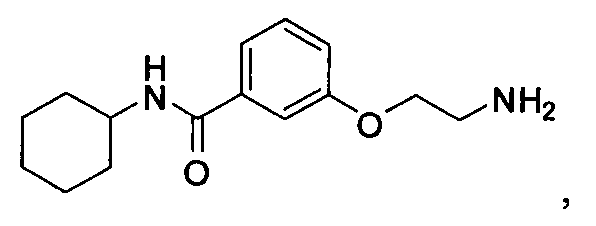

다양한 구현예는 추가로 약학적으로 허용 가능한 부형제 및 하기 화학식 (I) 의 화합물을 이의 호변이성질체 또는 호변이성질체의 혼합물, 또는 약학적으로 허용 가능한 염, 수화물, 용매화물, N-산화물 또는 전구약물로서 포함하는 약학 조성물을 제공한다:Various embodiments further comprise pharmaceutically acceptable excipients and compounds of formula (I) as tautomers or mixtures thereof, or as pharmaceutically acceptable salts, hydrates, solvates, N -oxides or prodrugs It provides a pharmaceutical composition comprising:

[식 중, [Wherein,
R1 및 R2 는 각각 동일하거나 상이하고, 독립적으로 수소, 할로겐, C1-C5 알킬, 플루오로알킬, -OR6, 또는 -NR7R8 이거나; R1 및 R2 는 옥소를 형성하고;R 1 and R 2 Are the same or different and are each independently hydrogen, halogen, C 1 -C 5 alkyl, fluoroalkyl, —OR 6 , or —NR 7 R 8 ; R 1 And R 2 forms oxo;
R3 및 R4 는 각각 동일하거나 상이하고, 독립적으로 수소 또는 알킬이며;R 3 And R 4 Are the same or different and are each independently hydrogen or alkyl;
R5 는 C5-C15 알킬, 아르알킬, 헤테로시클릴알킬, 헤테로아릴알킬 또는 카르보시클릴알킬이고;R 5 is C 5 -C 15 Alkyl, aralkyl, heterocyclylalkyl, heteroarylalkyl or carbocyclylalkyl;
R6 은 수소 또는 알킬이며;R 6 Is hydrogen or alkyl;
R7 및 R8 은 각각 동일하거나 상이하고, 독립적으로 수소, 알킬, 카르보시클릴, 또는 -C(=O)R13 이거나;R 7 And R 8 Are the same or different and are each independently hydrogen, alkyl, carbocyclyl, or -C (= 0) R 13 ;
R7 및 R8 은 부착된 질소 원자와 함께 N-헤테로시클릴을 형성하고;R 7 and R 8 together with the nitrogen atom to which they are attached form N -heterocyclyl;
X 는 -C(R9)(R10)- 또는 -O- 이며;X is -C (R 9 ) (R 10 )-or -O-;
R9 및 R10 은 각각 동일하거나 상이하고, 독립적으로 수소, 할로겐, 알킬, 플루오로알킬, -OR6, -NR7R8 또는 카르보시클릴이거나; R9 및 R10 은 옥소를 형성하고;R 9 and R 10 are the same or different and are each independently hydrogen, halogen, alkyl, fluoroalkyl, —OR 6 , —NR 7 R 8 or carbocyclyl; R 9 And R 10 forms oxo;
R11 및 R12 는 각각 동일하거나 상이하고, 독립적으로 수소, 알킬, 또는 -C(=O)R13 이거나;R 11 and R 12 are the same or different and are each independently hydrogen, alkyl, or —C (═O) R 13 ;
R11 및 R12 는 부착된 질소 원자와 함께 N-헤테로시클릴을 형성하고;R 11 And R 12 together with the nitrogen atom to which it is attached form N -heterocyclyl;
R13 은 알킬, 알케닐, 아릴, 카르보시클릴, 헤테로아릴 또는 헤테로시클릴임].R 13 is alkyl, alkenyl, aryl, carbocyclyl, heteroaryl or heterocyclyl.
약학 조성물 (예를 들어, 경구 투여 또는 주사 전달 또는 조합 장치용 또는 점안액으로서의 적용용)은 액체 또는 고체의 형태일 수 있다. 액체 약학 조성물은, 예를 들어, 하기 중 하나 이상을 포함할 수 있다: 멸균 희석제, 예컨대 주사용수, 식염수, 바람직하게는 생리학적 식염수, 링거 용액, 등장성 염화나트륨, 용매 또는 현탁 매질로서 기능할 수 있는 고정유, 폴리에틸렌 글리콜, 글리세린, 프로필렌 글리콜 또는 기타 용매; 항미생물제; 항산화제; 킬레이트제; 완충액 및 등장성 조정제, 예컨대 염화나트륨 또는 덱스트로오스. 비경구 제제는 유리 또는 플라스틱으로 만들어진 앰풀, 일회용 실린지 또는 다중 용량 바이알에 담겨있을 수 있다. 생리학적 식염수가 부형제로서 흔히 사용되며, 주사가능한 약학 조성물 또는 안구로 전달되는 조성물은 바람직하게는 살균상태이다.Pharmaceutical compositions (eg, for oral administration or for injection delivery or for combination devices or for application as eye drops) may be in the form of liquids or solids. Liquid pharmaceutical compositions may include, for example, one or more of the following: sterile diluents, such as water for injection, saline, preferably physiological saline, Ringer's solution, isotonic sodium chloride, solvents or suspending media. Fixed oils, polyethylene glycol, glycerin, propylene glycol or other solvents; Antimicrobial agents; Antioxidants; Chelating agents; Buffers and isotonicity modifiers such as sodium chloride or dextrose. Parenteral preparations may be contained in ampoules, disposable syringes or multiple dose vials made of glass or plastic. Physiological saline is often used as an excipient, and the injectable pharmaceutical composition or composition delivered to the eye is preferably sterile.
하나 이상의 아민 유도체 화합물은 인간 또는 기타 비인간 척추동물에게 투여될 수 있다. 특정 구현예에서, 화합물은 실질적으로 순수하여, 예를 들어, 합성 방법의 단계 중 하나 이상에서 생성된 부산물 또는 오염성 중간체와 같은 기타 유기 소형 분자를 약 5% 미만, 또는 약 1% 미만, 또는 약 0.1% 미만으로 함유한다. 다른 구현예에서는, 하나 이상의 아민 유도체 화합물의 조합물이 투여될 수 있다.One or more amine derivative compounds can be administered to human or other non-human vertebrates. In certain embodiments, the compound is substantially pure, such as, for example, less than about 5%, or less than about 1%, or about other organic small molecules, such as by-products or contaminating intermediates produced in one or more of the steps of the synthetic method. Less than 0.1%. In other embodiments, a combination of one or more amine derivative compounds may be administered.
아민 유도체 화합물은, 예를 들어, 경구, 비경구, 안내, 정맥내, 복강내, 비내 (또는 예를 들어, 코, 인후 및 기관지 관의 점막 멤브레인으로의 기타 전달 방법)를 포함하는 임의의 적절한 수단에 의해, 또는 안구로의 국부 투여에 의해, 또는 안내 또는 안구주위 장치에 의해 대상에 전달될 수 있다. 국부 투여 양태는, 예를 들어, 점안액, 안내 주입 또는 안구주위 주입을 포함할 수 있다. 안구주위 주입은 전형적으로 합성 이성질체화 억제제, 즉, 본원에 기재된 아민 유도체 화합물의 결막 하 또는 텐논 (Tennon)의 공간 (안구를 덮는 섬유성 조직의 바로 아래)으로의 주입을 포함한다. 안내 주입은 전형적으로 아민 유도체 화합물의 유리체로의 주입을 포함한다. 특정 구현예에서, 투여는, 예컨대 점안액 또는 경구 투약 형태에 의해 또는 조합된 장치로서, 비-침습적이다.The amine derivative compound may be any suitable, including, for example, oral, parenteral, intraocular, intravenous, intraperitoneal, intranasal (or other methods of delivery of the nasal, throat, and bronchial tubes to the mucosal membrane, for example). By means of, or by topical administration to the eye, or by intraocular or perocular devices. Topical administration embodiments may include, for example, eye drops, intraocular infusions or perocular infusions. Perocular injection typically involves the injection of synthetic isomerization inhibitors, ie the amine derivative compounds described herein, under the conjunctival or Tennon into the space (just below the fibrous tissue covering the eye). Intraocular injection typically involves the injection of an amine derivative compound into the vitreous. In certain embodiments, the administration is non-invasive, such as by eye drops or oral dosage forms or as a combined device.
아민 유도체 화합물은 약학적으로 허용 가능한 (적합한) 담체 또는 비히클 뿐 아니라 당업계에서 통상 사용되는 기술을 이용하여 투여용으로 제형화될 수 있다. 약학적으로 허용 가능한 또는 적합한 담체는 안과적으로 적합한 또는 허용 가능한 담체를 포함한다. 담체는 아민 유도체 화합물의 용해도에 따라 선택된다. 적합한 안과적 조성물은, 예컨대 점안액, 주입 등에 의해 안구에 국부적으로 투여가능한 것들을 포함한다. 점안액의 경우, 제형은 또한, 예를 들어, 안과적 상용화제, 예컨대 등장화제, 예컨대 염화나트륨, 농축 글리세린 등; 완충제, 예컨대 나트륨 포스페이트, 나트륨 아세테이트 등; 계면활성제, 예컨대 폴리옥시에틸렌 소르비탄 모노-올레에이트 (또한 폴리소르베이트 80이라 칭함), 폴리옥실 스테아레이트 40, 폴리옥시에틸렌 수소화 피마자유 등; 안정화제, 예컨대 나트륨 시트레이트, 나트륨 에덴테이트 등; 보존제, 예컨대 벤즈알코늄 클로라이드, 파라벤 등; 및 기타 성분을 임의 포함할 수 있다. 보존제는, 예를 들어 약 0.001 내지 약 1.0% 중량/부피의 수준으로 이용될 수 있다. 제형의 pH는 통상 안과적 제형으로 허용 가능한 범위 내, 예컨대 약 pH 4 내지 8, 또는 pH 5 내지 7, 또는 pH 6 내지 7, 또는 pH 4 내지 7, 또는 pH 5 내지 8, 또는 pH 6 내지 8, 또는 pH 4 내지 6, 또는 pH 5 내지 6, 또는 pH 7 내지 8의 범위 내에 있다.Amine derivative compounds may be formulated for administration using pharmaceutically acceptable (suitable) carriers or vehicles as well as techniques commonly used in the art. Pharmaceutically acceptable or suitable carriers include ophthalmically suitable or acceptable carriers. The carrier is selected according to the solubility of the amine derivative compound. Suitable ophthalmic compositions include those that can be administered locally to the eye by, for example, eye drops, infusion, and the like. In the case of eye drops, the formulations may also contain, for example, ophthalmic compatibilizers such as isotonic agents, such as sodium chloride, concentrated glycerin, and the like; Buffering agents such as sodium phosphate, sodium acetate and the like; Surfactants such as polyoxyethylene sorbitan mono-oleate (also referred to as polysorbate 80),
부가적인 구현예에서, 본원에 기재된 조성물은 추가로 시클로덱스트린을 포함한다. 시클로덱스트린은 각각 α-시클로덱스트린, β-시클로덱스트린 또는 γ-시클로덱스트린으로 칭하는, 6, 7 또는 8 개의 글루코피라노스 단위를 함유하는 시클릭 올리고당이다. 시클로덱스트린은 약학 제형에서 특히 유용하다고 발견되어 왔다. 시클로덱스트린은 수용성을 향상시키는 친수성 외피, 및 공동을 형성하는 소수성 내피를 가진다. 수성 환경에서, 기타의 분자의 소수성 부분은 종종 시클로덱스트린의 소수성 공동으로 들어가 내포 화합물을 형성한다. 추가로, 시클로덱스트린은 또한 소수성 공동 내부에 존재하지 않는 분자와 기타 유형의 비결합 상호작용을 할 수 있다. 시클로덱스트린은 각 글루코피라노스 단위에 대해 3 개의 유리 히드록실기, 또는 α-시클로덱스트린 상에 18 개의 히드록실기, β-시클로덱스트린 상에 21 개의 히드록실기, 및 γ-시클로덱스트린 상에 24 개의 히드록실기를 가진다. 이러한 히드록실기 중 하나 이상은 임의의 다수의 시약과 반응하여 매우 다양한 시클로덱스트린 유도체를 형성할 수 있다. 보다 통상적인 시클로덱스트린 유도체 중 일부는 히드록시프로필 에테르, 술포네이트 및 술포알킬에테르이다. β-시클로덱스트린 및 히드록시프로필-β-시클로덱스트린 (HPβCD) 의 구조를 하기에 나타낸다.In additional embodiments, the compositions described herein further comprise cyclodextrins. Cyclodextrins are cyclic oligosaccharides containing 6, 7 or 8 glucopyranose units, referred to as? -Cyclodextrin,? -Cyclodextrin or? -Cyclodextrin, respectively. Cyclodextrins have been found to be particularly useful in pharmaceutical formulations. Cyclodextrins have hydrophilic shells that enhance water solubility, and hydrophobic endothelium that form cavities. In an aqueous environment, the hydrophobic portion of the other molecule often enters the hydrophobic cavity of the cyclodextrin to form a compatible compound. In addition, cyclodextrins may also have other types of non-binding interactions with molecules that are not present in the hydrophobic cavity. Cyclodextrin has three free hydroxyl groups per each glucopyranose unit, or 18 hydroxyl groups on? -Cyclodextrin, 21 hydroxyl groups on? -Cyclodextrin, and 24 hydroxyl groups on? -Cyclodextrin Lt; / RTI > hydroxyl groups. One or more of these hydroxyl groups may react with any of a number of reagents to form a wide variety of cyclodextrin derivatives. Some of the more common cyclodextrin derivatives are hydroxypropyl ethers, sulfonates and sulfoalkyl ethers. The structures of? -cyclodextrin and hydroxypropyl-? -cyclodextrin (HP? CD) are shown below.

시클로덱스트린 및 시클로덱스트린 유도체가 종종 약물의 용해도를 향상시키는데 사용되기 때문에, 약학 조성물에서의 시클로덱스트린의 용도는 당업계에 잘 알려져 있다. 내포 화합물은 용해도가 향상된 다수의 경우에 포함되나; 시클로덱스트린과 불용성 화합물 간의 기타 상호작용은 또한 용해도를 향상시킬 수 있다. 히드록시프로필-β-시클로덱스트린 (HPβCD) 은 피로겐이 없는 제품으로서 시판된다. 이는 물에 용이하게 용해되는 비흡습성 백색 분말이다. HPβCD 는 열적으로 안정하고, 중성 pH 에서 분해되지 않는다.The use of cyclodextrins in pharmaceutical compositions is well known in the art since cyclodextrins and cyclodextrin derivatives are often used to enhance the solubility of the drug. The inclusion compound is included in a number of cases where solubility is improved; Other interactions between the cyclodextrin and insoluble compounds can also improve solubility. Hydroxypropyl -? - cyclodextrin (HPβCD) is marketed as a product free of pyrogen. It is a non-hygroscopic white powder that is readily soluble in water. HPβCD is thermally stable and does not degrade at neutral pH.
시클로덱스트린을 이용하는 안과적 제형이 개시되어 왔다. 예를 들어, US 5,227,372 에는 안구 조직에서 안과적 작용제를 유지하는 방법이 개시되어 있다. 미국 특허 출원 공개공보 2007/0149480 에는 불량한 수용해도를 갖는 소형 분자 키나아제 억제제의 안과적 제형을 제조하기 위한 시클로덱스트린의 용도가 교시되어 있다.Ophthalmic formulations using cyclodextrin have been disclosed. For example, US 5,227,372 discloses a method of retaining ophthalmic agents in ocular tissues. U.S. Patent Application Publication 2007/0149480 teaches the use of cyclodextrins to make ophthalmic formulations of small molecule kinase inhibitors with poor aqueous solubility.
본원에 개시된 조성물 및 방법에서 사용되는 시클로덱스트린의 농도는 생리적 특성, 약동학적 특성, 부작용 또는 역효과, 제형화 요건, 또는 치료적 활성제 또는 이의 염 또는 전구약물과 관련된 기타 인자에 따라 변할 수 있다. 조성물 중 기타 부형제의 특성이 또한 중요할 수 있다. 따라서, 본원에 개시된 조성물 및 방법에 따라 사용되는 시클로덱스트린의 농도 또는 양은 변할 수 있다. 특정 조성물에서, 시클로덱스트린의 농도는 10% 내지 25% 이다.The concentration of cyclodextrin used in the compositions and methods disclosed herein may vary depending on physiological properties, pharmacokinetic properties, side effects or adverse effects, formulation requirements, or other factors associated with the therapeutically active agent or salt or prodrug thereof. The properties of other excipients in the composition may also be important. Thus, the concentration or amount of cyclodextrin used in accordance with the compositions and methods disclosed herein may vary. In certain compositions, the concentration of cyclodextrin is 10% to 25%.
주사용으로, 아민 유도체 화합물은 주사가능 리포좀 용액, 완효성 (slow-release) 중합체 시스템 등의 형태로 주입 등급 식염수 용액 내에 제공될 수 있다. 안내 및 안구주위 주입은 당업자에게 공지되어 있으며, 예를 들어, [Spaeth, Ed., Ophthalmic Surgery: Principles of Practice, W. B. Sanders Co., Philadelphia, Pa., 85-87, 1990]을 포함하는 수많은 문헌에 기재되어 있다.For injection, the amine derivative compound may be provided in an infusion grade saline solution in the form of an injectable liposome solution, a slow-release polymer system or the like. Guidance and peri-eye infusion are well known to those skilled in the art and are described in a number of documents including, for example, [Spaeth, Ed., Ophthalmic Surgery: Principles of Practice, WB Sanders Co., Philadelphia, Pa., 85-87, Lt; / RTI >
비로 (nasal passage), 인후 및 기도로의 전달을 포함하는 점막 경로를 통한, 본원에 기재된 화합물 중 하나 이상을 포함하는 조성물의 전달을 위하여, 조성물은 에어로졸의 형태로 전달될 수 있다. 화합물은 점막내 전달을 위한 분말 형태 또는 액체 형태일 수 있다. 예를 들어, 조성물은 적합한 추진제, 예컨대 탄화수소 추진제 (예를 들어, 프로판, 부탄, 이소부텐)를 갖는 가압 에어로졸 용기를 통해 전달될 수 있다. 조성물은 비-가압 전달 시스템 예컨대 네뷸라이저 또는 분무기를 통해 전달될 수 있다.For delivery of a composition comprising one or more of the compounds described herein, through the mucosal route, including delivery to the nasal passage, throat, and airways, the composition may be delivered in the form of an aerosol. The compound may be in powder form or in liquid form for intratracheal delivery. For example, the composition may be delivered through a pressurized aerosol container having a suitable propellant, such as a hydrocarbon propellant (e.g., propane, butane, isobutene). The composition may be delivered via a non-pressurized delivery system, such as a nebulizer or sprayer.
적합한 경구 투약 형태는, 예를 들어, 정제, 알약, 향낭, 또는 경질 또는 연질 젤라틴 메틸셀룰로오스의 또는 소화관에서 쉽게 용해되는 또 다른 적합한 물질의 캡슐을 포함한다. 적합한 비독성 고체 담체가 사용될 수 있고, 예를 들어, 약품 등급의 만니톨, 락토오스, 전분, 마그네슘 스테아레이트, 나트륨 사카린, 탈쿰, 셀룰로오스, 글루코오스, 수크로오스, 마그네슘 카르보네이트 등이 포함된다. (예를 들어, Remington: The Science and Practice of Pharmacy (Gennaro, 21st Ed. Mack Pub. Co., Easton, PA (2005) 참조).Suitable oral dosage forms include, for example, tablets, pills, sachets, or capsules of hard or soft gelatin methylcellulose or another suitable material that readily dissolves in the digestive tract. Suitable non-toxic solid carriers can be used and include, for example, drug grade mannitol, lactose, starch, magnesium stearate, sodium saccharin, talcum, cellulose, glucose, sucrose, magnesium carbonate and the like. (See, for example, Remington: The Science and Practice of Pharmacy (Gennaro, 21 st Ed., Mack Pub. Co., Easton, PA (2005)).
본원에 기재된 아민 유도체 화합물은 지효성 또는 완효성으로 제형화될 수 있다. 이러한 조성물은 일반적으로 잘 알려진 기술을 이용해 제조할 수 있고, 예를 들어, 경구, 안구주위, 안내, 직장내 또는 피하 이식에 의하거나 또는 원하는 표적 부위에서의 이식에 의해 투여될 수 있다. 지효성 제형은 담체 매트릭스에 분산되어 있고/있거나, 속도 조절 멤브레인에 의해 둘러싸여진 저장소 내에 담겨있는 작용제를 포함할 수 있다. 이러한 제형 내에서의 사용을 위한 부형제는 생체적합성을 가지며, 또한 생분해성일 수 있고; 바람직하게는 제형이 비교적 일정한 수준의 활성 성분 방출을 제공한다. 지효성 제형 내에 담기는 활성 화합물의 양은 이식 부위, 방출의 속도 및 예상 기간, 및 치료 또는 예방될 상태의 특성에 의존한다.The amine derivative compounds described herein may be formulated to be sustained or slow release. Such compositions may be prepared using generally well known techniques and may be administered, for example, by oral, ocular, intravenous, intramuscular or subcutaneous implantation or by implantation at a desired target site. Sustained release formulations may include an agent dispersed in a carrier matrix and / or contained in a reservoir surrounded by a rate controlling membrane. Excipients for use in these formulations are biocompatible and may also be biodegradable; Preferably the formulation provides a relatively constant level of active ingredient release. The amount of active compound added to the sustained release formulation depends on the site of implantation, the rate and duration of release, and the nature of the condition to be treated or prevented.
안구 경로를 통해 투여되는 약물 또는 조성물의 전신 약물 흡수는 당업자에게 알려져 있다 (예를 들어, Lee 등, Int. J. Pharm. 233:1-18 (2002) 참조). 한 구현예에서는, 아민 유도체 화합물은 국소적 안구 전달 방법에 의해 전달된다 (예를 들어, Curr. Drug Metab. 4:213-22 (2003) 참조). 조성물은 점안액, 고약 또는 연고 등, 예컨대, 수성 점안액, 수성 안과 현탁액, 비-수성 점안액, 및 비-수성 안과 현탁액, 겔, 안과 연고 등의 형태일 수 있다. 겔의 제조를 위해, 예를 들어, 카르복시비닐 중합체, 메틸 셀룰로오스, 나트륨 알기네이트, 하이드록시프로필 셀룰로오스, 에틸렌 말레산 무수물 중합체 등이 사용될 수 있다.Systemic drug absorption of drugs or compositions administered through the ocular route is known to those skilled in the art (see, e. G., Lee et al., Int. J. Pharm. 233: 1-18 (2002)). In one embodiment, the amine derivative compound is delivered by a topical ocular delivery method (see, eg, Curr. Drug Metab. 4: 213-22 (2003)). The compositions may be in the form of eye drops, lozenges or ointments, such as aqueous eye drops, aqueous eye drops, non-aqueous eye drops, and non-aqueous eye drops, gels, ophthalmic ointments and the like. For the preparation of gels, for example, carboxyvinyl polymers, methyl cellulose, sodium alginate, hydroxypropyl cellulose, ethylene maleic anhydride polymers and the like can be used.
본원에 기재된 아민 유도체 화합물 중 하나 이상을 포함하는 조성물의 용량은 환자 (예를 들어, 인간)의 상태, 즉, 질환의 단계, 일반적 건강 상태, 연령 및 의료계의 숙련자가 용량 결정에 이용할 기타 인자에 따라 다를 수 있다. 조성물이 점안액으로서 사용되는 경우, 예를 들어, 단위 용량 당 1 내지 수 개의 점적, 바람직하게는 1 또는 2 점적 (1 점적 당 약 50 ㎕)이 매일 약 1 내지 약 6회 적용될 수 있다.The dose of a composition comprising one or more of the amine derivative compounds described herein depends on the condition of the patient (eg, human), ie, the stage of the disease, general state of health, age, and other factors that will be used by the skilled artisan to determine dose. It may vary. When the composition is used as eye drops, for example, one to several drops, preferably one or two drops (about 50 μl per drop) per unit dose may be applied about 1 to about 6 times daily.
약학 조성물은 의료계의 숙련자에 의해 결정되는 바와 같이 치료 (또는 예방)될 질환에 적절한 방식으로 투여될 수 있다. 적절한 용량 및 적합한 기간 및 투여 빈도는 환자의 상태, 환자의 질환의 유형 및 중증도, 특정 형태의 활성 성분, 및 투여 방법과 같은 인자에 의해 결정될 것이다. 일반적으로, 적절한 용량 및 치료 요법은 조성물(들)을 치료적 및/또는 예방적 이득 (예를 들어, 개선된 임상 결과, 예컨대 더욱 빈번한 완전한 또는 부분적 완화, 또는 더욱 오랜 기간의 질환-부재 및/또는 전반적 생존 또는 증상 중증도의 경감)을 제공하기에 충분한 양으로 제공한다. 예방 용도를 위해, 용량은 망막 뉴런 세포의 신경 변성 및/또는 기타 성숙 망막 세포 예컨대 RPE 세포의 변성과 연관된 질환의 발병을 방지, 지체시키거나 또는 중증도를 경감시키기에 충분해야 한다. 최적 용량은 일반적으로 실험 모델 및/또는 임상 시험을 이용하여 결정할 수 있다. 최적 용량은 환자의 체질량, 중량 또는 혈액 부피에 의존할 수 있다.The pharmaceutical composition may be administered in a manner appropriate to the condition to be treated (or prevented), as determined by those skilled in the medical arts. Appropriate doses and suitable duration and frequency of administration will be determined by such factors as the condition of the patient, the type and severity of the disease of the patient, the active form of the particular form, and the method of administration. In general, appropriate dosages and treatment regimens may be achieved by treating the composition (s) with therapeutic and / or prophylactic benefits (eg, improved clinical outcomes, such as more frequent complete or partial relief, or longer duration of disease-free and / or Or a reduction in overall survival or symptom severity). For prophylactic use, the dose should be sufficient to prevent, retard or reduce the severity of a disease associated with neurodegeneration of retinal neuronal cells and / or other mature retinal cells such as RPE cells. Optimal doses can generally be determined using experimental models and / or clinical trials. The optimal dose may depend on the body mass, weight or blood volume of the patient.
아민 유도체 화합물의 용량은 임상 현황, 대상의 상태 및 연령, 투약 형태 등에 따라 적합하게 선택될 수 있다. 점안액의 경우, 아민 유도체 화합물은 단일 용량 당, 예를 들어, 약 0.01 ㎎, 약 0.1 mg 또는 약 1 mg으로부터 약 25 mg까지, 약 50 mg까지, 약 90 mg까지 투여될 수 있다. 점안액은, 필요에 따라, 1일 당 1회 이상 투여될 수 있다. 주사의 경우, 적합한 용량은, 예를 들어, 1주일 당, 약 0.0001 ㎎, 약 0.001 ㎎, 약 0.01 mg 또는 약 0.1 mg 내지 약 10 ㎎, 내지 약 25 ㎎, 내지 약 50 mg 또는 내지 약 90 mg 의 아민 유도체 화합물 1 내지 7회일 수 있다. 다른 구현예에서는, 약 1.0 내지 약 30 mg의 아민 유도체 화합물이 1주일 당 1 내지 7회 투여될 수 있다.The dosage of the amine derivative compound may be appropriately selected depending on the clinical condition, the condition and age of the subject, the dosage form, and the like. For eye drops, the amine derivative compound may be administered per single dose, for example from about 0.01 mg, about 0.1 mg or from about 1 mg to about 25 mg, up to about 50 mg, up to about 90 mg. The eye drops may be administered at least once per day, if necessary. For injection, suitable doses are, for example, about 0.0001 mg, about 0.001 mg, about 0.01 mg or about 0.1 mg to about 10 mg, to about 25 mg, to about 50 mg or to about 90 mg per week. The amine derivative compound of may be 1 to 7 times. In another embodiment, about 1.0 to about 30 mg of the amine derivative compound may be administered 1 to 7 times per week.
경구 복용량은 전형적으로 1.0 내지 1000 mg의 범위로, 1일 당 1 내지 4회 이상의 범위일 수 있다. 경구 투여를 위한 예시적 용량 범위는 1일 당 10 내지 250 mg 1 내지 3회이다. 조성물이 액체 제형인 경우, 조성물은 담체의 단위 부피 당 특정 질량 또는 중량 (예를 들어, 1.0 내지 1000 mg)에서 0.1% 이상, 예를 들어, 약 2% 내지 약 60%의 활성 화합물을 포함한다.Oral dosages typically range from 1.0 to 1000 mg, and can range from 1 to 4 or more times per day. Exemplary dosage ranges for oral administration are 10 to 250 mg 1-3 times per day. If the composition is a liquid formulation, the composition comprises at least 0.1%, for example from about 2% to about 60% of the active compound at a specific mass or weight (eg, 1.0 to 1000 mg) per unit volume of carrier. .
특정 구현예에서, 본원에 기재된 하나 이상의 아민 유도체 화합물은 막대 광수용체 세포의 암순응을 억제 또는 방지하는 시점에서 및 조건 하에서 투여될 수 있다. 특정 구현예에서, 화합물은 수면 시작 적어도 30분 (1/2시간) 이전, 60분 (1시간) 이전, 90분 (1.5시간) 이전 또는 120분 (2시간) 이전에 대상에 투여된다. 특정 구현예에서, 화합물은 밤에 대상의 수면 이전에 투여될 수 있다. 다른 구현예에서는, 낮 동안이나 또는 정상광 조건 하에서도, 대상을 빛이 제거된 환경에 둠으로써, 예컨대 대상을 암실에 두거나 또는 대상의 안구 위에 안구 마스크를 적용시킴으로써, 빛 자극을 차단 또는 제거할 수 있다. 빛 자극이 상기 방식으로 또는 당업계에서 고려되는 기타 방식으로 제거될 때, 작용제가 수면 전에 투여될 수 있다.In certain embodiments, one or more amine derivative compounds described herein can be administered at and under conditions that inhibit or prevent dark adaptation of rod photoreceptor cells. In certain embodiments, the compound is administered to the subject at least 30 minutes (1/2 hour) before the start of sleep, before 60 minutes (1 hour), before 90 minutes (1.5 hours) or 120 minutes (2 hours). In certain embodiments, the compound may be administered at night prior to the subject's sleep. In other embodiments, even during daytime or under normal light conditions, the subject may be blocked or removed by placing the subject in a light-removed environment, such as by placing the subject in a dark room or applying an eye mask over the subject's eye. Can be. When the light stimulus is removed in this manner or in any other manner contemplated in the art, the agent may be administered prior to sleep.
막대 광수용체 세포의 암순응의 방지 또는 억제를 위해 투여될 수 있는 화합물의 용량은 임상 현황, 대상의 상태 및 연령, 투약 형태 등에 따라 적합하게 선택될 수 있다. 점안액의 경우, 화합물 (또는 화합물을 포함하는 조성물)이 단일 용량 당, 예를 들어, 약 0.01 ㎎, 약 0.1 mg 또는 약 1 mg으로부터 약 25 mg까지, 약 50 mg까지, 약 90 mg까지 투여될 수 있다. 주사의 경우, 적합한 용량은, 수면에 앞서 또는 모든 빛 공급원으로부터 대상을 격리시키에 앞서, 1주일 당 1 내지 7일 사이의 임의의 일수에 투여되는, 예를 들어, 약 0.0001 ㎎, 약 0.001 ㎎, 약 0.01 mg 또는 약 0.1 mg 내지 약 10 ㎎, 내지 약 25 ㎎, 내지 약 50 mg 또는 내지 약 90 mg의 화합물일 수 있다. 특정 다른 구현예에서는, 점안액 또는 주사에 의한 화합물의 투여를 위해, 용량이 1~10 mg(화합물)/kg(대상의 체중)이다 (즉, 예를 들어, 체중 80 kg의 대상을 위한 용량 당 총 80~800 mg). 다른 구현예에서는, 약 1.0 내지 약 30 mg의 화합물이 1주일 당 1 내지 7회 투여될 수 있다. 경구 복용량은 전형적으로 1주일 당 1 내지 7일 중 임의의 일수에 투여되는, 약 1.0 내지 약 1000 mg의 범위일 수 있다. 경구 투여를 위한 예시적 용량 범위는 수면 전 1일 당 약 10 내지 약 800 mg 1회이다. 다른 구현예에서는, 조성물이 유리체내 투여로 전달될 수 있다.The dose of compound that can be administered to prevent or inhibit dark adaptation of rod photoreceptor cells may be appropriately selected depending on the clinical situation, the condition and age of the subject, the dosage form, and the like. For eye drops, the compound (or composition comprising the compound) may be administered per single dose, eg, from about 0.01 mg, about 0.1 mg or from about 1 mg to about 25 mg, up to about 50 mg, up to about 90 mg Can be. For injection, a suitable dose is administered, for example, about 0.0001 mg, about 0.001 mg, administered on any number of days between 1 and 7 days per week prior to sleep or prior to isolation of the subject from all light sources. , About 0.01 mg or about 0.1 mg to about 10 mg, to about 25 mg, to about 50 mg or to about 90 mg of the compound. In certain other embodiments, for administration of a compound by eye drops or injection, the dose is 1-10 mg (compound) / kg (body weight of the subject) (ie, per dose for a subject weighing 80 kg, for example). Total 80-800 mg). In another embodiment, about 1.0 to about 30 mg of the compound may be administered 1 to 7 times per week. Oral dosages may range from about 1.0 to about 1000 mg, typically administered on any number of days from 1 to 7 days per week. Exemplary dosage ranges for oral administration range from about 10 to about 800 mg once per day before sleep. In other embodiments, the composition may be delivered by intravenous administration.
또한 본원에 기재된 화합물 및 약학 조성물을 제조하는 방법이 제공된다. 약학적으로 허용 가능한 부형제 또는 담체 및 본원에 기재된 아민 유도체 화합물 중 하나 이상을 포함하는 조성물은, 본원에 기재되거나 또는 당업계에서 수행되는 방법 중 어느 하나에 따라 화합물을 합성한 후, 상기 화합물과 약학적으로 허용 가능한 담체를 제형화하는 것에 의해 제조될 수 있다. 조성물의 제형은 적절할 것이며, 여러 인자 (비제한적으로, 전달 경로, 용량 및 화합물의 안정성 포함)에 의존할 것이다.Also provided are methods of making the compounds and pharmaceutical compositions described herein. A composition comprising a pharmaceutically acceptable excipient or carrier and one or more of the amine derivative compounds described herein may be prepared by synthesizing the compound according to any of the methods described herein or carried out in the art, followed by Alternatively, it may be prepared by formulating an acceptable carrier. The formulation of the composition will be appropriate and will depend on several factors (including but not limited to delivery route, dose and stability of the compound).
본 발명 개시의 견지에서 기타 구현예 및 용도가 당업자에게 명백할 것이다. 하기 실시예는 단지 다양한 구현예에 대한 예시로서 제공되며, 본 발명을 어떠한 방식으로도 제한하는 것으로 해석되어서는 안 된다.Other embodiments and uses will be apparent to those skilled in the art in light of the present disclosure. The following examples are provided as illustrations of various embodiments only and should not be construed as limiting the invention in any way.
본 발명의 바람직한 구현예가 본원에 나타내고 기재되어 있지만, 이러한 구현예가 단지 예로서 제공된다는 것은 당업자에게 명백할 것이다. 이제 당업자는 본 발명을 벗어나지 않으면서 수많은 변화, 변경 및 치환을 일으킬 것이다. 본원에 기재된 본 발명의 구현예에 대한 다양한 대체안이 본 발명을 수행하는데 사용될 수 있다는 것이 이해되어야 한다. 하기 청구범위는 본 발명의 범주를 정의하고, 이러한 청구범위 및 이의 동등물의 범주 내의 방법 및 구조가 이로써 포함된다고 의도된다.While preferred embodiments of the invention are shown and described herein, it will be apparent to those skilled in the art that such embodiments are provided by way of example only. Numerous variations, changes and substitutions will now occur to those skilled in the art without departing from the invention. It should be understood that various alternatives to the embodiments of the invention described herein may be used to carry out the invention. It is intended that the following claims define the scope of the invention and that methods and structures within the scope of such claims and their equivalents be thereby included.
본 발명의 신규한 특징은 첨부된 청구항에서 명확히 개시된다. 본 발명의 원리가 이용되는 예시적 구현예를 개시하는 상기 상세한 설명 및 하기의 첨부 도면을 참고함으로써 본 발명의 특징 및 장점이 더욱 잘 이해될 것이다:
도 1 은 실시예 3 의 화합물 (화합물 3) 의 이성화효소 억제 활성을 설명한다. 동물에 경구 위관으로 1 ㎎/㎏ 화합물을 공급하고, 투여 후 4, 24 및 48 시간에 "광 표백"(10 분 동안 5000 럭스의 백색광) 시키고, 암실로 복귀시켜 눈의 11-시스-레티날 함량을 회복시켰다. 표백된 2 시간 후 마우스를 희생시켜 눈을 적출하고, 레티노이드 함량을 HPLC 로 분석하였다.
도 2 는 실시예 19 의 화합물 (화합물 19) 로 이성화효소 활성의 농도-의존적 억제를 설명한다. 도 2A 는 11-시스 레티날 (옥심) 회복의 농도-의존적 억제를 보여준다. 도 2B 는, 데이타를 정규화하여 이성화효소 활성의 억제를 백분율화 시킨 용량 반응 (log 용량, ㎎/㎖) 을 보여준다. 회복 억제는 0.651 ㎎/㎏ 에서 추정되는 ED50 (11-시스 레티날 (옥심) 회복의 50 % 억제를 제공하는 화합물의 용량) 과 함께 용량과 관련되었다. 각 처리군은 5 마리 동물을 포함하였다. 오차 바 (bar) 는 표준 오차에 상응한다. The novel features of the invention are set forth in the appended claims. BRIEF DESCRIPTION OF THE DRAWINGS The features and advantages of the present invention will be better understood by reference to the above description and the accompanying drawings which disclose exemplary embodiments in which the principles of the invention are utilized:
1 illustrates isomerase inhibitory activity of the compound of Example 3 (Compound 3). Animals are fed 1 mg / kg compound by oral gavage, “light bleached” (5000 lux of white light for 10 minutes) at 4, 24 and 48 hours after administration and return to the dark to return 11-cis-retinal of the eye. The content was restored. After 2 hours of bleaching the mice were sacrificed to remove eyes and the retinoid content was analyzed by HPLC.
2 illustrates the concentration-dependent inhibition of isomerase activity with the compound of Example 19 (Compound 19). 2A shows concentration-dependent inhibition of 11-cis retinal (oxime) recovery. 2B shows the dose response (log dose, mg / ml) that normalized the data to percentage the inhibition of isomerase activity. Recovery inhibition was related to the dose with an ED 50 (dose of the compound providing 50% inhibition of 11-cis retinal (oxime) recovery) estimated at 0.651 mg / kg. Each treatment group included 5 animals. Error bars correspond to standard errors.
실시예Example
달리 명시되지 않는 한, 시약 및 용매를 시중의 공급자로부터 입수하여 사용하였다. 수분 및/또는 산소에 민감한 합성 변형에 대해 무수 용매 및 오븐-건조된 유리제품을 사용하였다 플래시 컬럼 크로마토그래피 및 박막 크로마토그래피 (TLC) 를 달리 명시되지 않는 한 실리카 겔 상에서 수행하였다. 명시된 바와 같이 양성자에 대하여는 400 MHz에서, 그리고 탄소에 대하여는 100 MHz 에서 Varian VnmrS 400, 및 양성자에 대하여는 500 또는 300 MHz에서, 그리고 탄소에 대하여는 125 또는 75 MHz 에서 Bruker AMX 500 또는 300 분광계를 이용하여 양성자 및 탄소 핵 자기 공명 스펙트럼을 수득하였다. 스펙트럼은 ppm (δ)으로 제공되며, 커플링 상수, J는 헤르츠 (Hertz)로 보고된다. 양성자 스펙트럼에 대해서 테트라메틸실란을 내부 표준으로 사용하고, 용매 피크를 참고 피크로 사용하였다. 탄소 스펙트럼에 대해서 용매 피크를 참고로 사용하였다. 다이오드 배열 검출을 갖는 Chiralpak IA 컬럼 (4.6 ㎜ x 250 ㎜, 5 μ) 을 사용하여 키랄 HPLC 분석을 수행하였다. 유속은 1 ㎖/분이었다.Unless otherwise specified, reagents and solvents were obtained from commercial suppliers. Anhydrous solvents and oven-dried glassware were used for synthetic modifications sensitive to moisture and / or oxygen. Flash column chromatography and thin layer chromatography (TLC) were performed on silica gel unless otherwise specified. Varian VnmrS 400 at 400 MHz for protons and 100 MHz for carbon, and 500 or 300 MHz for protons and 125 or 75 MHz for carbon, as specified, using a Bruker AMX 500 or 300 spectrometer And carbon nuclear magnetic resonance spectra were obtained. The spectra are given in ppm (δ) and the coupling constant, J, is reported in Hertz. Tetramethylsilane was used as internal standard for the proton spectra and solvent peak was used as reference peak. Solvent peaks were used as reference for the carbon spectrum. Chiral HPLC analysis was performed using a Chiralpak IA column (4.6 mm × 250 mm, 5 μ) with diode array detection. Flow rate was 1 ml / min.
분석용 HPLC 방법Analytical HPLC Method
표준 용매 구배 프로그램을 사용하는 254 ㎚ 에서의 검출을 갖는 Hypersil BDS C18 컬럼 (250 x 4.6 ㎜, Phenomenex) 을 사용하여 HPLC 분석을 수득하였다 (방법 1).HPLC analysis was obtained using a Hypersil BDS C18 column (250 × 4.6 mm, Phenomenex) with detection at 254 nm using a standard solvent gradient program (Method 1).
분석용 HPLC 방법 1:Analytical HPLC Method 1:

A = 0.05% 트리플루오로아세트산과 물A = 0.05% trifluoroacetic acid and water
B = 0.05% 트리플루오로아세트산과 아세토니트릴B = 0.05% trifluoroacetic acid and acetonitrile
분석용 HPLC 방법 2:Analytical HPLC Method 2:

A = 0.05% 트리플루오로아세트산과 물A = 0.05% trifluoroacetic acid and water
B = 0.05% 트리플루오로아세트산과 아세토니트릴B = 0.05% trifluoroacetic acid and acetonitrile
컬럼 = Gemini C18, 4.6x150 ㎜, 5μColumn = Gemini C18, 4.6x150 mm, 5μ
분취용 HPLC 방법Preparative HPLC Method
5 ㎖ 의 주입 부피와 표준 용매 구배 프로그램을 사용하는 220 ㎚ 에서의 검출을 갖는, 주위 온도에서 YMC ODA-A 컬럼 (500 ㎜ x 30 ㎜ x 10 μ) 을 사용하여 분취용 HPLC 를 수행하였다 (방법 1P 또는 2P).Preparative HPLC was performed using a YMC ODA-A column (500 mm x 30 mm x 10 μ) at ambient temperature, with a 5 mL injection volume and detection at 220 nm using a standard solvent gradient program (method) 1P or 2P).
분취용 HPLC 방법 1P:Preparative HPLC Method 1P:

A = 0.05% 트리플루오로아세트산과 물A = 0.05% trifluoroacetic acid and water
B = 0.05% 트리플루오로아세트산과 아세토니트릴B = 0.05% trifluoroacetic acid and acetonitrile
*분취용 HPLC 방법 2P:Preparative HPLC Method 2P:

A = 물A = water
B = 아세토니트릴B = acetonitrile
분취용 HPLC 방법 3P:Preparative HPLC Method 3P:

A = 0.05% 트리플루오로아세트산과 물A = 0.05% trifluoroacetic acid and water
B = 0.05% 트리플루오로아세트산과 아세토니트릴B = 0.05% trifluoroacetic acid and acetonitrile
시료 제조용 용매: 메탄올, 아세토니트릴, 아세토니트릴:메탄올(1:1)Solvents for sample preparation: methanol, acetonitrile, acetonitrile: methanol (1: 1)
분취용 HPLC 방법 3P:Preparative HPLC Method 3P:

A = 물A = water
B = 아세토니트릴B = acetonitrile
시료 제조용 용매: 메탄올, 아세토니트릴, 아세토니트릴:메탄올(1:1)Solvents for sample preparation: methanol, acetonitrile, acetonitrile: methanol (1: 1)
실시예 1Example 1
3-(3-(2,6-디메틸페네틸)페닐)프로판-1-아민의 제조Preparation of 3- (3- (2,6-dimethylphenethyl) phenyl) propan-1-amine

3-(3-(2,6-디메틸페네틸)페닐)프로판-1-아민을 하기 반응식 1 에 나타낸 방법에 따라 제조하였다.3- (3- (2,6-dimethylphenethyl) phenyl) propan-1-amine was prepared according to the method shown in
반응식 1

단계 1: 0 ℃ 에서 THF (100 ㎖) 중 2,6-디메틸벤조산 (1) (10.0 g, 66.6 mmol) 의 교반 용액에 보란-THF 착물 (THF 중 1M 용액 80 ㎖, 80.0 mmol) 을 20 분에 걸쳐 적가한 다음, 반응 혼합물을 실온으로 가온하였다. 64 시간 후, MeOH (70 ㎖) 을 서서히 첨가하여 반응 혼합물을 켄칭시키고, 생성된 용액을 감압 하에 농축시켰다. 잔류물을 EtOAc (300 ㎖) 에 현탁시키고, 물 및 염수로 세정하였다. 유기층을 Na2SO4 로 건조시키고, 감압 하에 농축시켜 알코올 2 를 백색 고체로서 산출하였다. 수율 (9.10 g, >99%): 1H NMR (500 MHz, CDCl3) δ 7.03-7.13 (m, 3H), 4.74 (d, J = 5.1 Hz, 2H), 2.43 (s, 6H), 1.28 (t, J = 5.2 Hz, 1H); ESI MS m/z 119 [M + H - H2O]+. Step 1 : To a stirred solution of 2,6-dimethylbenzoic acid ( 1 ) (10.0 g, 66.6 mmol) in THF (100 mL) at 0 ° C. was added borane-THF complex (80 mL of 1M solution in THF, 80.0 mmol) for 20 min. After the dropwise addition, the reaction mixture was allowed to warm to room temperature. After 64 h, MeOH (70 mL) was added slowly to quench the reaction mixture and the resulting solution was concentrated under reduced pressure. The residue was suspended in EtOAc (300 mL) and washed with water and brine. The organic layer was dried over Na 2 SO 4 and concentrated under reduced pressure to yield alcohol 2 as a white solid. Yield (9.10 g,> 99%): 1 H NMR (500 MHz, CDCl 3 ) δ 7.03-7.13 (m, 3H), 4.74 (d, J = 5.1 Hz, 2H), 2.43 (s, 6H), 1.28 (t, J = 5.2 Hz, 1H); ESI MS m / z 119 [M + H-H 2 O] + .
단계 2: MeOH (80 ㎖) 중 트리페닐포스핀 히드로브로마이드 (22.0 g, 64.0 mmol) 의 교반 용액에 MeOH (70 ㎖) 중 알코올 2 (8.72 g, 64.0 mmol) 의 용액을 첨가하고, 반응 혼합물을 실온에서 48 시간 동안 교반하였다. 반응 용액을 감압 하에 농축시키고, 잔류물을 아세톤 (20 ㎖) 과 디에틸 에테르 (50 ㎖) 의 혼합물로 분쇄하였다. 침전물을 진공 여과로 수집하고, 디에틸 에테르 (30 ㎖) 및 헥산 (30 ㎖) 으로 세정하고, 감압 하에 농축시켜 트리페닐포스핀 염 3 을 백색 고체로서 산출하였다. 수율 (23.0 g, 78%): 융점 240-246 ℃. 1H NMR (300 MHz, DMSO-d6) δ 7.51-7.95 (m, 15H), 7.15 (dt, J = 7.7, 2.6 Hz, 1H), 6.96 (d, J = 7.7 Hz, 2H), 4.94 (d, J = 14.6 Hz, 2H), 1.76 (s, 6H); ESI MS m/z 381 [M - Br]+; HPLC (방법 1) 97.0% (AUC), tR = 13.78 분. Step 2 : To a stirred solution of triphenylphosphine hydrobromide (22.0 g, 64.0 mmol) in MeOH (80 mL) was added a solution of alcohol 2 (8.72 g, 64.0 mmol) in MeOH (70 mL) and the reaction mixture Stir at room temperature for 48 hours. The reaction solution was concentrated under reduced pressure, and the residue was triturated with a mixture of acetone (20 mL) and diethyl ether (50 mL). The precipitate was collected by vacuum filtration, washed with diethyl ether (30 mL) and hexane (30 mL) and concentrated under reduced pressure to yield triphenylphosphine salt 3 as a white solid. Yield (23.0 g, 78%): Melting point 240-246 ° C. 1 H NMR (300 MHz, DMSO-d 6 ) δ 7.51-7.95 (m, 15H), 7.15 (dt, J = 7.7, 2.6 Hz, 1H), 6.96 (d, J = 7.7 Hz, 2H), 4.94 ( d, J = 14.6 Hz, 2H), 1.76 (s, 6H); ESI MS m / z 381 [M-Br] + ; HPLC (method 1) 97.0% (AUC), t R = 13.78 min.
단계 3: -78 ℃ 에서 THF (60 ㎖) 중 트리페닐포스핀 염 3 (8.76 g, 19.0 mmol) 의 교반 현탁액에 n-부틸 리튬 (7.8 ㎖, 헥산 중 2.5M 용액, 19.5 mmol) 을 첨가하고, 반응 혼합물을 실온으로 가온하였다. 30 분 후, 반응 혼합물을 -78 ℃로 재냉각시키고, THF (15 ㎖) 중 3-요오도벤즈알데히드 (4.41 g, 19.0 mmol) 의 용액을 첨가하고, 반응 혼합물을 실온으로 가온하였다. 1 시간 후, 반응을 포화 수성 NH4Cl (50 ㎖) 로 켄칭시키고, EtOAc 로 추출하였다. 수합된 유기층을 감압 하에 농축시키고, 생성된 잔류물을 MeOH (70 ㎖) 에 용해시켰다. 헥산 및 물을 첨가하여 MeOH 용액을 분액하였다. 수합된 유기물을 70% MeOH-물 (100 ㎖) 로 세정하고, Na2SO4 로 건조시키고 감압 하에 농축시켰다. 잔류물을 플래시 크로마토그래피 (100% 헥산) 로 정제시켜 트랜스-알켄 4 (2.12 g, 33%) 을 백색 고체로서 그리고 시스-알켄 5 (1.15 g, 18%) 을 무색 오일로서 산출하였다. 4: 1H NMR (500 MHz, CDCl3) δ 7.84 (s, 1H), 7.59 (d, J = 7.7 Hz, 1H), 7.44 (d, J = 7.7 Hz, 1H), 7.06-7.10 (m, 5H), 6.49 (d, J = 16.6 Hz, 1H), 2.35 (s, 6H). 5: 1H NMR (500 MHz, CDCl3) δ 7.44 (d, J = 7.8 Hz, 1H), 7.37 (s, 1H), 7.13 (t, J = 7.5 Hz, 1H), 7.04 (d, J = 7.6 Hz, 2H), 6.88 (d, J = 7.9 Hz, 1H), 6.81 (t, J = 7.8 Hz, 1H), 6.59 (d, J = 12.2 Hz, 1H), 6.53 (d, J = 12.2 Hz, 1H), 2.14 (s, 6H). Step 3 : To a stirred suspension of triphenylphosphine salt 3 (8.76 g, 19.0 mmol) in THF (60 mL) at -78 ° C was added n-butyl lithium (7.8 mL, 2.5M solution in hexanes, 19.5 mmol) The reaction mixture was allowed to warm to room temperature. After 30 minutes, the reaction mixture was recooled to -78 ° C, a solution of 3-iodobenzaldehyde (4.41 g, 19.0 mmol) in THF (15 mL) was added and the reaction mixture was allowed to warm to room temperature. After 1 h, the reaction was quenched with saturated aqueous NH 4 Cl (50 mL) and extracted with EtOAc. The combined organic layers were concentrated under reduced pressure and the resulting residue was dissolved in MeOH (70 mL). Hexane and water were added to separate the MeOH solution. The combined organics were washed with 70% MeOH-water (100 mL), dried over Na 2 SO 4 and concentrated under reduced pressure. The residue was purified by flash chromatography (100% hexanes) to yield trans-alkene 4 (2.12 g, 33%) as a white solid and cis-alkene 5 (1.15 g, 18%) as a colorless oil. 4 : 1 H NMR (500 MHz, CDCl 3 ) δ 7.84 (s, 1H), 7.59 (d, J = 7.7 Hz, 1H), 7.44 (d, J = 7.7 Hz, 1H), 7.06-7.10 (m, 5H), 6.49 (d, J = 16.6 Hz, 1H), 2.35 (s, 6H). 5 : 1 H NMR (500 MHz, CDCl 3 ) δ 7.44 (d, J = 7.8 Hz, 1H), 7.37 (s, 1H), 7.13 (t, J = 7.5 Hz, 1H), 7.04 (d, J = 7.6 Hz, 2H), 6.88 (d, J = 7.9 Hz, 1H), 6.81 (t, J = 7.8 Hz, 1H), 6.59 (d, J = 12.2 Hz, 1H), 6.53 (d, J = 12.2 Hz , 1H), 2.14 (s, 6H).
단계 4: DMF (5 ㎖) 중 트랜스-알켄 4 (1.86 g, 5.60 mmol) 의 교반 용액에 NaHCO3 (1.49 g, 17.7 mmol), 테트라부틸암모늄 클로라이드 (1.58 g, 5.70 mmol), 및 알릴 알코올 (0.683 g, 11.8 mmol) 을 첨가하였다. 반응 플라스크를 10 분 동안 질소로 퍼징시킨 다음, Pd(OAc)2 (0.029 g, 0.130 mmol) 을 첨가하였다. 추가 10 분 동안 질소로 퍼징시킨 후, 용액을 질소 하에 실온에서 교반하였다. 18 시간 후, 용액을 EtOAc (50 ㎖) 로 희석시키고, 생성된 혼합물을 물, 5% LiCl 수용액 및 염수로 세정하였다. 유기물을 MgSO4 로 건조시키고, 감압 하에 농축시켜 어두운 오일을 산출하였다. 플래시 크로마토그래피 (0 → 20% EtOAc-헥산 구배) 로 정제시켜, 알데히드 6 을 무색 오일로서 산출하였다. 수율 1.05 g (71%): 1H NMR (500 MHz, CDCl3) δ 9.85 (t, J = 1.1 Hz, 1H), 7.39 (d, J = 7.8 Hz, 1H), 7.29-7.32 (m, 2H), 7.07-7.12 (m, 5H), 6.57 (d, J = 16.6 Hz, 1H), 2.99 (t, J = 7.6 Hz, 2H), 2.38-2.84 (m, 2H), 2.37 (s, 6H). Step 4 : In a stirred solution of trans-alkene 4 (1.86 g, 5.60 mmol) in DMF (5 mL) NaHCO 3 (1.49 g, 17.7 mmol), tetrabutylammonium chloride (1.58 g, 5.70 mmol), and allyl alcohol ( 0.683 g, 11.8 mmol) was added. The reaction flask was purged with nitrogen for 10 minutes, then Pd (OAc) 2 (0.029 g, 0.130 mmol) was added. After purging with nitrogen for an additional 10 minutes, the solution was stirred at room temperature under nitrogen. After 18 h the solution was diluted with EtOAc (50 mL) and the resulting mixture was washed with water, 5% LiCl aqueous solution and brine. The organics were dried over MgSO 4 and concentrated under reduced pressure to yield a dark oil. Purification by flash chromatography (0 → 20% EtOAc-hexane gradient) yielded aldehyde 6 as a colorless oil. Yield 1.05 g (71%): 1 H NMR (500 MHz, CDCl 3 ) δ 9.85 (t, J = 1.1 Hz, 1H), 7.39 (d, J = 7.8 Hz, 1H), 7.29-7.32 (m, 2H ), 7.07-7.12 (m, 5H), 6.57 (d, J = 16.6 Hz, 1H), 2.99 (t, J = 7.6 Hz, 2H), 2.38-2.84 (m, 2H), 2.37 (s, 6H) .
단계 5: Parr 플라스크에서 질소 하에 EtOH (15 ㎖) 중 알데히드 6 (0.200 g, 0.76 mmol) 의 용액에 10% Pd/C (50% 습식, 0.020 g) 을 첨가하였다. 플라스크를 수소 기체를 이용해 30 PSI 로 가압시키고, 혼합물을 1.5 시간 동안 진탕시켰다. 반응 혼합물을 규조토에서 여과시키고, 여과 케이크를 EtOH (50 ㎖) 로 세정하고, 여과액을 황색 잔류물로 감압 하에 농축시켰다. 플래시 크로마토그래피 (0 내지 20% EtOAc-헥산) 로 정제시켜 알데히드 7 을 황색 오일로서 산출하였다. 수율 (0.100 g, 50%): 1H NMR (500 MHz, CDCl3) δ 9.82 (t, J = 1.4 Hz, 1H), 7.23 (d, J = 7.5 Hz, 1H), 7.09 (d, J = 7.6 Hz, 1H), 7.00-7.06 (m, 5H), 2.88-2.95 (m, 4H), 2.71-2.78 (m, 4H), 2.32 (s, 6H). Step 5 : 10% Pd / C (50% wet, 0.020 g) was added to a solution of aldehyde 6 (0.200 g, 0.76 mmol) in EtOH (15 mL) under nitrogen in a Parr flask. The flask was pressurized to 30 PSI with hydrogen gas and the mixture was shaken for 1.5 hours. The reaction mixture was filtered over diatomaceous earth, the filter cake was washed with EtOH (50 mL) and the filtrate was concentrated under reduced pressure with a yellow residue. Purification by flash chromatography (0-20% EtOAc-hexanes) yielded aldehyde 7 as a yellow oil. Yield (0.100 g, 50%): 1 H NMR (500 MHz, CDCl 3 ) δ 9.82 (t, J = 1.4 Hz, 1H), 7.23 (d, J = 7.5 Hz, 1H), 7.09 (d, J = 7.6 Hz, 1H), 7.00-7.06 (m, 5H), 2.88-2.95 (m, 4H), 2.71-2.78 (m, 4H), 2.32 (s, 6H).
단계 6: MeOH (5 ㎖) 중 알데히드 7 (0.100 g, 0.38 mmol) 의 교반 용액에 MeOH (1 ㎖) 중 7M NH3 및 분말화된 분자체 한 숟갈을 첨가하였다. 플라스크를 막고, 1.5 시간 동안 교반하고, 이때 NaBH4 (0.022 g, 0.58 mmol) 를 첨가하였다. 용액을 추가 3 시간 동안 교반하고, 규조토에서 여과시키고, 여과 케이크를 MeOH (50 ㎖) 로 헹구고, 여과액을 감압 하에 농축시켰다. 생성된 잔류물을 플래시 크로마토그래피 (5% MeOH-CH2Cl2 중 7 M NH3) 로 정제시켜 3-(3-(2,6-디메틸페네틸)페닐)프로판-1-아민을 유리 염기로 산출하였다. 수율 (0.050 g, 50%). 유리 염기를 하기 절차에 의해 HCl 염으로 전환시켰다: 디에틸 에테르 (2 ㎖) 중 3-(3-(2,6-디메틸페네틸)페닐)프로판-1-아민 (0.050 g, 0.17 mmol) 의 교반 용액에 에테르 중 1N HCl (0.2 ㎖, 0.2 mmol) 을 첨가하였다. 1 시간 동안 교반한 후, 고체를 여과로 수집하고, 진공 하에 건조시켜 실시예 1 히드로클로라이드를 백색 고체로서 산출하였다. 수율 (0.022 g, 42%): 융점 106-108 ℃; 1H NMR (500 MHz, CD3OD) δ 7.22 (d, J = 7.5 Hz, 1H), 7.06 (d, J = 7.4 Hz, 2H), 6.99-6.96 (m, 4H), 2.89-2.92 (m, 4H), 2.72-2.75 (m, 2H), 2.67 (t, J = 7.5 Hz, 2H), 2.26 (s, 6H), 1.93 (t, J = 7.7 Hz, 2H); 13C NMR (75 MHz, CD3OD) δ 143.8, 141.7, 139.3, 127.1, 129.7, 129.6, 129.1, 127.6, 127.0, 126.9; ESI MS m/z 268 [M + H]+; HPLC (방법 1) 98.9% (AUC), tR = 11.77 분. C19H25N 에 대한 HRMS 계산치 [M + H]: 268.2065, 측정치: 268.2064. Step 6 : To a stirred solution of aldehyde 7 (0.100 g, 0.38 mmol) in MeOH (5 mL) was added 7M NH 3 in MeOH (1 mL) and one spoon of powdered molecular sieve. The flask was blocked and stirred for 1.5 h, at which time NaBH 4 (0.022 g, 0.58 mmol) was added. The solution was stirred for an additional 3 hours, filtered on diatomaceous earth, the filter cake was rinsed with MeOH (50 mL) and the filtrate was concentrated under reduced pressure. The resulting residue was purified by flash chromatography (7
실시예 2Example 2
1-(3-(3-아미노프로필)페닐)-3-에틸펜탄-3-올의 제조Preparation of 1- (3- (3-aminopropyl) phenyl) -3-ethylpentan-3-ol

1-(3-(3-아미노프로필)페닐)-3-에틸펜탄-3-올을 하기 반응식 2 에 나타낸 방법에 따라 제조하였다.1- (3- (3-aminopropyl) phenyl) -3-ethylpentan-3-ol was prepared according to the method shown in Scheme 2 below.
반응식 2Scheme 2

단계 1: CH2Cl2 (150 ㎖) 중 3-(3-브로모페닐)프로판산 (8) (25.0 g, 109.1 mmol) 의 교반 용액에 옥살릴 클로라이드 (27.7 g, 218.3 mmol), 그 다음 DMF (2 방울) 을 첨가하였다. 용액을 실온에서 밤새 교반하였다. 혼합물을 감압 하에 농축시켜 미정제 산 클로라이드를 산출하고, 이를 다음 반응에 바로 사용하였다. Step 1 : Oxalyl chloride (27.7 g, 218.3 mmol) in a stirred solution of 3- (3-bromophenyl) propanoic acid ( 8 ) (25.0 g, 109.1 mmol) in CH 2 Cl 2 (150 mL), then DMF (2 drops) was added. The solution was stirred overnight at room temperature. The mixture was concentrated under reduced pressure to yield crude acid chloride, which was used directly for the next reaction.
단계 2: 미정제 산 클로라이드를 무수 THF (150 ㎖) 에 용해시키고, 빙조에서 냉각시켰다. 암모니아 기체를 3-4 분 동안 용액에 버블링시키고, 혼합물을 실온으로 가온하고, 밤새 교반하였다. 혼합물을 감압 하에 농축시키고, 포화 수성 NaHCO3 및 EtOAc 를 첨가하여 잔류물을 분액하였다. 수합된 유기물을 Na2SO4 로 건조시키고, 감압 하에 농축시켜 아미드 9 를 백색 고체로서 산출하였다. 수율 (23.9 g, 96%): 1H NMR (400 MHz, DMSO-d6) δ 7.40 (s, 1H), 7.35 (dt, J = 6.4, 2.4 Hz, 1H), 7.26 (br s, 1H), 7.18-7.24 (m, 2H), 6.75 (br s, 1H), 2.78 (t, J = 7.6 Hz, 2H), 2.34 (t, J = 7.6 Hz, 2H). Step 2 : Crude acid chloride was dissolved in anhydrous THF (150 mL) and cooled in an ice bath. Ammonia gas was bubbled into the solution for 3-4 minutes and the mixture was allowed to warm to room temperature and stirred overnight. The mixture was concentrated under reduced pressure and the residue was partitioned by addition of saturated aqueous NaHCO 3 and EtOAc. The combined organics were dried over Na 2 SO 4 and concentrated under reduced pressure to yield amide 9 as a white solid. Yield (23.9 g, 96%): 1 H NMR (400 MHz, DMSO-d 6 ) δ 7.40 (s, 1H), 7.35 (dt, J = 6.4, 2.4 Hz, 1H), 7.26 (br s, 1H) , 7.18-7.24 (m, 2H), 6.75 (br s, 1H), 2.78 (t, J = 7.6 Hz, 2H), 2.34 (t, J = 7.6 Hz, 2H).
단계 3: THF (250 ㎖) 중 아미드 9 (23.85 g, 104.6 mmol) 의 빙냉된 교반 용액에 BH3-THF (THF 중 1.0 M 용액 209 ㎖, 209 mmol) 를 첨가하였다. 용액을 실온으로 가온하고, 18 시간 동안 교반하였다. pH 가 1 이 될 때까지 6N HCl 을 서서히 첨가하여 반응을 켄칭시켰다. 용액을 실온에서 4 시간 동안 교반한 다음, 50% 수성 NaOH 의 첨가로 pH 를 >10 으로 조정하였다. 용액을 EtOAc 로 추출하고, 수합된 유기층을 염수로 세정하고, Na2SO4 로 건조시키며 감압 하에 농축시켜 미정제 3-(3-브로모페닐)프로판-1-아민을 산출하고, 이를 다음 반응에 바로 사용하였다. Step 3 : To an ice cold stirred solution of amide 9 (23.85 g, 104.6 mmol) in THF (250 mL) was added BH 3 -THF (209 mL of 1.0 M solution in THF, 209 mmol). The solution was warmed to rt and stirred for 18 h. The reaction was quenched by the slow addition of 6N HCl until pH was 1. The solution was stirred at rt for 4 h, then the pH was adjusted to> 10 with the addition of 50% aqueous NaOH. The solution was extracted with EtOAc, the combined organic layers were washed with brine, dried over Na 2 SO 4 and concentrated under reduced pressure to afford crude 3- (3-bromophenyl) propan-1-amine, which was then reacted. Used immediately.
단계 4: 미정제 3-(3-브로모페닐)프로판-1-아민 (약 104.6 mmol) 을 에틸 트리플루오로아세테이트 (30 ㎖) 와 밤새 교반하였다. 혼합물을 감압 하에 농축시켰다. 플래시 크로마토그래피 (20% EtOAc-헥산) 로 정제시켜 트리플루오로아세트아미드 10 을 산출하였다. 수율 (21.1 g, 62%): 1H NMR (400 MHz, DMSO-d6) δ 9.40 (br s, 1H), 7.43 (s, 1H), 7.36 (dt, J = 7.2, 2.0 Hz, 1H), 7.19-7.25 (m, 2H), 3.16 (q, J = 6.8 Hz, 2H), 2.57 (t, J = 7.6 Hz, 2H), 1.77 (5중항, J = 7.2 Hz, 2H). Step 4 : Crude 3- (3-bromophenyl) propan-1-amine (about 104.6 mmol) was stirred overnight with ethyl trifluoroacetate (30 mL). The mixture was concentrated under reduced pressure. Purification by flash chromatography (20% EtOAc-hexanes) yielded
단계 5: 트리에틸아민 (4 ㎖) 과 DMF (12 ㎖) 중 N-(3-(3-브로모페닐)프로필)-2,2,2-트리플루오로아세트아미드 (10) (0.930 g, 3 mmol) 와 3-에틸펜트-1-인-3-올 (11) (0.670 g, 6 mmol) 의 탈기된 용액에 PdCl2(PPh3)2 (0.053 g, 0.075 mmol), P(o-Tol)3 (0.046 g, 0.15 mmol), 및 CuI (0.014 g, 0.075 mmol) 를 첨가하였다. 생성된 혼합물을 탈기시키고, 아르곤 하에 90 ℃ 에서 6 시간 동안 교반하였다. 혼합물을 실온으로 냉각시킨 다음 감압 하에 농축시키고 EtOAc (100 ㎖) 및 물 (70 ㎖) 로 희석시켰다. 격렬한 진탕 후, 층을 분리시켰다. 유기층을 목탄으로 처리하고, MgSO4 로 건조시키고, 여과시키며, 감압 하에 증발시켰다. 플래시 크로마토그래피 (7 → 60% EtOAc-헥산 구배) 로 정제시켜 N-(3-(3-(3-에틸-3-히드록시펜틸)페닐)프로필)-2,2,2-트리플루오로아세트아미드 (12) 를 황색 오일로서 산출하였다. 수율 (㎖3 g, 65%): 1H NMR (400 MHz, DMSO-d6) δ 9.40 (s, 1H), 7.17-7.28 (m, 4H), 3.16 (q, J = 7.2 Hz, 2H), 2.56 (t, J = 7.2 Hz, 2H), 1.76 (5중항, J = 7.2 Hz, 2H), 1.53-1.67 (m, 4H), 0.97 (t, J = 7.2 Hz, 6H). Step 5 : N- (3- (3-bromophenyl) propyl) -2,2,2-trifluoroacetamide ( 10 ) in triethylamine (4 mL) and DMF (12 mL) (0.930 g, 3 mmol) and degassed solution of 3-ethylpent-1-yn-3-ol ( 11 ) (0.670 g, 6 mmol) in PdCl 2 (PPh 3 ) 2 (0.053 g, 0.075 mmol), P (o- Tol) 3 (0.046 g, 0.15 mmol), and CuI (0.014 g, 0.075 mmol) were added. The resulting mixture was degassed and stirred at 90 ° C. for 6 hours under argon. The mixture was cooled to rt and then concentrated under reduced pressure and diluted with EtOAc (100 mL) and water (70 mL). After vigorous shaking, the layers were separated. The organic layer was treated with charcoal, dried over MgSO 4 , filtered and evaporated under reduced pressure. Purified by flash chromatography (7 → 60% EtOAc-hexane gradient) to give N- (3- (3- (3-ethyl-3-hydroxypentyl) phenyl) propyl) -2,2,2-trifluoroacetyl Amide ( 12 ) was calculated as yellow oil. Yield (ml 3 g, 65%): 1 H NMR (400 MHz, DMSO-d 6 ) δ 9.40 (s, 1H), 7.17-7.28 (m, 4H), 3.16 (q, J = 7.2 Hz, 2H) , 2.56 (t, J = 7.2 Hz, 2H), 1.76 (quintet, J = 7.2 Hz, 2H), 1.53-1.67 (m, 4H), 0.97 (t, J = 7.2 Hz, 6H).
단계 6: N-(3-(3-(3-에틸-3-히드록시펜틸)페닐)프로필)-2,2,2-트리플루오로아세트아미드 (12) (㎖0 g, 1.93 mmol) 를 MeOH (15 ㎖) 에 용해시키고, K2CO3 수용액 (0.42 g/3 ㎖) 을 첨가하였다. 생성된 혼합물을 45 ℃ 에서 4 시간 동안 교반하였다. 실온으로 냉각시킨 후, 반응 혼합물을 감압 하에 농축시킨 다음, EtOAc (50 ㎖) 및 물 (50 ㎖) 을 첨가하여 분액하였다. 수합된 유기물을 Na2SO4 로 건조시키고, 감압 하에 농축시켰다. 플래시 크로마토그래피 (80 내지 100% (9:1 EtOAc: MeOH 중 7M NH3):헥산 구배) 로 정제시켜 1-(3-(3-아미노프로필)페닐)-3-에틸펜트-1-인-3-올 (13) 을 연황색 오일로서 산출하였다. 수율 (0.421 g, 89%): 1H NMR (400 MHz, DMSO-d6) δ 7.15-7.26 (m, 4H), 5.11 (s, 1H), 2.56 (t, J = 7.6 Hz, 2H), 2.47 (t, J = 5.2 Hz, 2H), 1.55-1.65 (m, 6H), 1.39 (br s, 2H), 0.97 (t, J = 7.6 Hz, 6H). Step 6 : N- (3- (3- (3-ethyl-3-hydroxypentyl) phenyl) propyl) -2,2,2-trifluoroacetamide ( 12 ) (ml0 g, 1.93 mmol) was added. It was dissolved in MeOH (15 mL) and K 2 CO 3 aqueous solution (0.42 g / 3 mL) was added. The resulting mixture was stirred at 45 ° C. for 4 hours. After cooling to room temperature, the reaction mixture was concentrated under reduced pressure and then partitioned by addition of EtOAc (50 mL) and water (50 mL). The combined organics were dried over Na 2 SO 4 and concentrated under reduced pressure. Purification by flash chromatography (80-100% (9: 1 EtOAc: 7M NH 3 in MeOH): hexanes gradient) gave 1- (3- (3-aminopropyl) phenyl) -3-ethylpent-1-yne- 3-ol ( 13 ) was calculated as light yellow oil. Yield (0.421 g, 89%): 1 H NMR (400 MHz, DMSO-d 6 ) δ 7.15-7.26 (m, 4H), 5.11 (s, 1H), 2.56 (t, J = 7.6 Hz, 2H), 2.47 (t, J = 5.2 Hz, 2H), 1.55-1.65 (m, 6H), 1.39 (br s, 2H), 0.97 (t, J = 7.6 Hz, 6H).
단계 7: EtOH 중 1-(3-(3-아미노프로필)페닐)-3-에틸펜트-1-인-3-올 (13, 0.130 g, 0.53 mmol) 의 탈기된 용액을 수소 분위기 (대기압) 하에 16 시간 동안 촉매량의 10% Pd/C 와 교반하였다. 0.45 ㎛ 막 여과기로 여과시키고, 감압 하에 농축시켜 실시예 2 를 투명 오일로서 산출하였다. 수율 (0.120 g, 91%): 1H NMR (400 MHz, DMSO-d6) δ 7.13 (t, J = 7.6 Hz, 1H), 6.93-6.99 (m, 3H), 3.91 (br s, 1H), 2.45-2.56 (m, 6H), 1.50-1.62 (m, 4H), 1.40 (br s, 2H), 1.38 (q, J = 7.6 Hz, 4H), 0.79 (t, J = 7.6 Hz, 6H). Step 7 : Degassed solution of 1- (3- (3-aminopropyl) phenyl) -3-ethylpent-1-yn-3-ol ( 13 , 0.130 g, 0.53 mmol) in EtOH was subjected to hydrogen atmosphere (atmospheric pressure) Stirred with 10% Pd / C of catalyst amount for 16 hours. Filtration with a 0.45 μm membrane filter and concentration under reduced pressure yielded Example 2 as a clear oil. Yield (0.120 g, 91%): 1 H NMR (400 MHz, DMSO-d 6 ) δ 7.13 (t, J = 7.6 Hz, 1H), 6.93-6.99 (m, 3H), 3.91 (br s, 1H) , 2.45-2.56 (m, 6H), 1.50-1.62 (m, 4H), 1.40 (br s, 2H), 1.38 (q, J = 7.6 Hz, 4H), 0.79 (t, J = 7.6 Hz, 6H) .
실시예Example 3 3
4-(3-(3-아미노프로필)페네틸)헵탄-4-올의 제조Preparation of 4- (3- (3-aminopropyl) phenethyl) heptan-4-ol

4-(3-(3-아미노프로필)페네틸)헵탄-4-올을 실시예 2 에 사용된 방법에 따라 제조하였다.4- (3- (3-aminopropyl) phenethyl) heptan-4-ol was prepared according to the method used in Example 2.
단계 1: 트리에틸아민 (2 ㎖) 과 DMF (18 ㎖) 중 N-(3-(3-브로모페닐)프로필)-2,2,2-트리플루오로아세트아미드 (10) (2.29 g, 7.4 mmol) 와 4-에티닐헵탄-4-올 (2.4 g, 18.5 mmol) 의 탈기된 용액에 PdCl2(PPh3)2 (0.130 g, 0.185 mmol), P(o-Tol)3 (0.113 g, 0.37 mmol), 및 CuI (0.070 g, 0.37 mmol) 를 첨가하였다. 생성된 혼합물을 탈기시키고, 아르곤 하에 90 ℃ 에서 밤새 교반하였다. 혼합물을 실온으로 냉각시키고, 셀라이트 (Celite) 를 통해 여과시킴으로써 고체를 제거하였다. 디에틸 에테르 및 물을 첨가하여 여과액을 분액하고, 수합된 유기물을 염수로 세정하고, Na2SO4 로 건조시키고 감압 하에 농축시켰다. 플래시 크로마토그래피 (6 → 50% EtOAc-헥산 구배) 로 정제시켜 N-(3-(3-(3-에틸-3-히드록시펜틸)페닐)프로필)-2,2,2-트리플루오로아세트아미드 (12) 를 호박색 오일로서 산출하였다. 수율 (2.6 g, 95%): 1H NMR (400 MHz, DMSO-d6) δ 9.40 (s, 1H), 7.18-7.29 (m, 4H), 3.16 (q, J = 7.2 Hz, 2H), 2.56 (t, J = 7.2 Hz, 2H), 1.76 (5중항, J = 7.2 Hz, 2H), 1.53-1.67 (m, 8H), 0.97 (t, J = 7.2 Hz, 6H). Step 1 : N- (3- (3-bromophenyl) propyl) -2,2,2-trifluoroacetamide ( 10 ) (2.29 g, in triethylamine (2 mL) and DMF (18 mL) 7.4 mmol) and degassed solution of 4-ethynylheptan-4-ol (2.4 g, 18.5 mmol) in PdCl 2 (PPh 3 ) 2 (0.130 g, 0.185 mmol), P (o-Tol) 3 (0.113 g , 0.37 mmol), and CuI (0.070 g, 0.37 mmol) were added. The resulting mixture was degassed and stirred overnight at 90 ° C. under argon. The mixture was cooled to room temperature and the solids were removed by filtration through Celite. The filtrate was separated by addition of diethyl ether and water, and the combined organics were washed with brine, dried over Na 2 SO 4 and concentrated under reduced pressure. Purified by flash chromatography (6 → 50% EtOAc-hexane gradient) to N- (3- (3- (3-ethyl-3-hydroxypentyl) phenyl) propyl) -2,2,2-trifluoroacetyl Amide ( 12 ) was calculated as amber oil. Yield (2.6 g, 95%): 1 H NMR (400 MHz, DMSO-d 6 ) δ 9.40 (s, 1H), 7.18-7.29 (m, 4H), 3.16 (q, J = 7.2 Hz, 2H), 2.56 (t, J = 7.2 Hz, 2H), 1.76 (quintet, J = 7.2 Hz, 2H), 1.53-1.67 (m, 8H), 0.97 (t, J = 7.2 Hz, 6H).
단계 2: MeOH (50 ㎖) 중 2,2,2-트리플루오로-N-(3-(3-(3-히드록시-3-프로필헥스-1-이닐)페닐)프로필)아세트아미드 (2.6 g, 7.0 mmol) 의 용액에 농축된 수성 NH4OH (약 25 ㎖) 을 첨가하고, 용액을 실온에서 밤새 교반하였다. 더욱 농축된 수성 NH4OH (5 ㎖) 를 첨가하고, 혼합물을 밤새 교반하였다. 감압 하에 농축시켜 휘발성 물질을 제거하고, 잔류물을 EtOAc 로 2 회 추출하였다. 유기 용액을 물 및 염수로 세정하고, Na2SO4 로 건조시키고 감압 하에 농축시켰다. 플래시 크로마토그래피 (0 → 20% (20% MeOH-EtOAc 중 7M NH3)-EtOAc 구배) 로 정제시켜 4-((3-(3-아미노프로필)페닐)에티닐)헵탄-4-올을 투명 오일로서 산출하였다. 수율 (1.58 g, 83%): 1H NMR (400 MHz, DMSO-d6) δ 7.14-7.26 (m, 4H), 5.12 (s, 1H), 2.56 (t, J = 7.2 Hz, 2H), 2.47 (t obs, J = 7.2 Hz, 2H), 1.42-1.63 (m, 12H), 0.90 (t, J = 7.2 Hz, 6H). Step 2 : 2,2,2-trifluoro-N- (3- (3- (3-hydroxy-3-propylhex-1-ynyl) phenyl) propyl) acetamide (2.6 in MeOH (50 mL) g, 7.0 mmol) was added concentrated aqueous NH 4 OH (about 25 mL) and the solution was stirred overnight at room temperature. More concentrated aqueous NH 4 OH (5 mL) was added and the mixture was stirred overnight. Concentration under reduced pressure removed the volatiles and the residue was extracted twice with EtOAc. The organic solution was washed with water and brine, dried over Na 2 SO 4 and concentrated under reduced pressure. Purification by flash chromatography (0 → 20% (7M NH 3 ) -EtOAc gradient in 20% MeOH-EtOAc) clears 4-((3- (3-aminopropyl) phenyl) ethynyl) heptan-4-ol Calculated as an oil. Yield (1.58 g, 83%): 1 H NMR (400 MHz, DMSO-d 6 ) δ 7.14-7.26 (m, 4H), 5.12 (s, 1H), 2.56 (t, J = 7.2 Hz, 2H), 2.47 (t obs, J = 7.2 Hz, 2H), 1.42-1.63 (m, 12H), 0.90 (t, J = 7.2 Hz, 6H).
단계 3: 반응을 2 시간에 걸쳐 진행하는 것을 제외하고 실시예 2 에 사용된 방법에 따라 4-(3-(3-아미노프로필)스티릴)헵탄-4-올을 수소화시켜 실시예 3 을 투명 오일로서 산출하였다. 수율 (0.2516 g, 50%): 1H NMR (400 MHz, CD3OD) δ 7.15 (t, J = 7.2 Hz, 1H), 6.98-7.02 (m, 3H), 2.55-2.67 (m, 6H), 1.77 (5중항, J = 7.6 Hz, 2H), 1.67 (dt, J = 8.0, 4.4 Hz, 2H), 1.43-1.49 (m, 4H), 1.31-1.42 (m, 4H), 0.93 (t, J = 7.2, 6H). Step 3 : Example 3 was made clear by hydrogenating 4- (3- (3-aminopropyl) styryl) heptan-4-ol according to the method used in Example 2 except that the reaction proceeded over 2 hours. Calculated as an oil. Yield (0.2516 g, 50%): 1 H NMR (400 MHz, CD 3 OD) δ 7.15 (t, J = 7.2 Hz, 1H), 6.98-7.02 (m, 3H), 2.55-2.67 (m, 6H) , 1.77 (triple term, J = 7.6 Hz, 2H), 1.67 (dt, J = 8.0, 4.4 Hz, 2H), 1.43-1.49 (m, 4H), 1.31-1.42 (m, 4H), 0.93 (t, J = 7.2, 6H).
실시예Example 4 4
4-(3-(3-아미노프로필)페닐)-2-메틸부탄-2-올의 제조Preparation of 4- (3- (3-aminopropyl) phenyl) -2-methylbutan-2-ol

4-(3-(3-아미노프로필)페닐)-2-메틸부탄-2-올을 실시예 2 에 사용된 방법에 따라 제조하였다.4- (3- (3-aminopropyl) phenyl) -2-methylbutan-2-ol was prepared according to the method used in Example 2 .
단계 1: 트리-o-톨릴포스핀을 사용하지 않고 THF 중에 70 ℃ 에서의 2-메틸부트-3-인-2-올과 브로마이드 10 의 커플링으로 2,2,2-트리플루오로-N-(3-(3-(3-히드록시-3-메틸부트-1-이닐)페닐)프로필)아세트아미드를 산출하였다. 수율 (0.5 g, 81%): 1H NMR (400 MHz, DMSO-d6) δ 9.40 (br s, 1H), 7.17-7.28 (m, 4H), 3.16 (q, J = 7.2 Hz, 2H), 2.56 (t, J = 7.2 Hz, 2H), 1.76 (5중항, J = 7.6 Hz, 2H), 1.44 (s, 3H), 1.35 (s, 3H). Step 1 : Coupling of 2-methylbut-3-yn-2-ol and
단계 2: 2,2,2-트리플루오로-N-(3-(3-(3-히드록시-3-메틸부트-1-이닐)페닐)프로필)아세트아미드의 탈보호로 4-(3-(3-아미노프로필)페닐)-2-메틸부트-3-인-2-올을 산출하였다. 플래시 크로마토그래피 (80% → 100% (10% EtOAc 중 7 N NH3-MeOH)-헥산 구배) 로 생성물을 정제시켜 연황색 오일을 산출하였다. 수율 (0.212 g, 62%): 1H NMR (400 MHz, DMSO-d6) δ 7.14-7.26 (m, 4H), 5.41 (br s, 1H), 2.56 (t, J = 7.2 Hz, 2H), 2.47-2.50 (m, 2H), 1.55-1.63 (m, 2H), 1.44 (s, 6H), 1.36 (br s, 2H). Step 2 : Deprotection of 2,2,2-trifluoro-N- (3- (3- (3-hydroxy-3-methylbut-1-ynyl) phenyl) propyl) acetamide 4- (3 -(3-aminopropyl) phenyl) -2-methylbut-3-yn-2-ol was calculated. The product was purified by flash chromatography (80% → 100% (7N NH 3 -MeOH) -hexane gradient in 10% EtOAc) to give a pale yellow oil. Yield (0.212 g, 62%): 1 H NMR (400 MHz, DMSO-d 6 ) δ 7.14-7.26 (m, 4H), 5.41 (br s, 1H), 2.56 (t, J = 7.2 Hz, 2H) , 2.47-2.50 (m, 2H), 1.55-1.63 (m, 2H), 1.44 (s, 6H), 1.36 (br s, 2H).
단계 3: 반응을 3.5 시간 동안 진행하는 것을 제외하고 실시예 2 에 사용된 방법에 따른 4-(3-(3-아미노프로필)페닐)-2-메틸부트-3-인-2-올의 수소화로 실시예 4 를 산출하였다. 수율 (0.0488 g, 80%): 1H NMR (400 MHz, DMSO-d6) δ 7.13 (t, J = 7.6 Hz, 1H), 6.96-6.99 (m, 3H), 4.19 (br s, 1H), 2.45-2.57 (m, 6H), 1.55-1.62 (m, 4H), 1.48 (br s, 2H), 1.12 (s, 6 H). Step 3 : Hydrogenation of 4- (3- (3-aminopropyl) phenyl) -2-methylbut-3-in-2-ol according to the method used in Example 2 except the reaction was run for 3.5 hours Example 4 was calculated as. Yield (0.0488 g, 80%): 1 H NMR (400 MHz, DMSO-d 6 ) δ 7.13 (t, J = 7.6 Hz, 1H), 6.96-6.99 (m, 3H), 4.19 (br s, 1H) , 2.45-2.57 (m, 6H), 1.55-1.62 (m, 4H), 1.48 (br s, 2H), 1.12 (s, 6H).
실시예 5Example 5
3-(3-(3-메톡시프로필)페닐)프로판-1-아민의 제조Preparation of 3- (3- (3-methoxypropyl) phenyl) propan-1-amine

3-(3-(3-메톡시프로필)페닐)프로판-1-아민을 실시예 4 에 사용된 방법에 따라 제조하였다.3- (3- (3-methoxypropyl) phenyl) propan-1-amine was prepared according to the method used in Example 4 .
단계 1: 3-메톡시프로프-1-인과 브로마이드 10 의 커플링으로 2,2,2-트리플루오로-N-(3-(3-(3-메톡시프로프-1-이닐)페닐)-프로필)아세트아미드를 연황색 오일로서 산출하였다. 수율 (0.193 g, 32%): 1H NMR (400 MHz, DMSO-d6) δ 9.40 (br s, 1H), 7.21-7.31 (m, 4 H), 4.30 (s, 2 H), 3.31 (s, 3H), 3.16 (q, J = 7.2 Hz, 2 H), 2.56 (t, J = 7.6 Hz, 2 H), 1.77 (5중항, J = 7.2 Hz, 2 H). Step 1 : 2,2,2-trifluoro-N- (3- (3- (3-methoxyprop-1-ynyl) phenyl by coupling 3-methoxyprop-1-yne with bromide 10 ) -Propyl) acetamide was calculated as pale yellow oil. Yield (0.193 g, 32%): 1 H NMR (400 MHz, DMSO-d 6 ) δ 9.40 (br s, 1H), 7.21-7.31 (m, 4H), 4.30 (s, 2H), 3.31 ( s, 3H), 3.16 (q, J = 7.2 Hz, 2H), 2.56 (t, J = 7.6 Hz, 2H), 1.77 (quintet, J = 7.2 Hz, 2H).
단계 2: 2,2,2-트리플루오로-N-(3-(3-(3-메톡시프로프-1-이닐)페닐)프로필)아세트아미드의 탈보호로 3-(3-(3-메톡시프로프-1-이닐)페닐)프로판-1-아민을 투명 오일로서 산출하였다. 수율 (0.069 g, 54%): 1H NMR (400 MHz, DMSO-d6) δ 7.19-7.28 (m, 4 H), 4.29 (s, 2 H), 3.31 (s, 3H), 2.57 (t, J = 7.6 Hz, 2 H), 2.48-2.51 (m, 2H), 1.56-1.63 (m, 2 H), 1.36 (br s, 2 H). Step 2 : 3- (3- (3) by deprotection of 2,2,2-trifluoro-N- (3- (3- (3-methoxyprop-1-ynyl) phenyl) propyl) acetamide -Methoxyprop-1-ynyl) phenyl) propan-1-amine was calculated as a clear oil. Yield (0.069 g, 54%): 1 H NMR (400 MHz, DMSO-d 6 ) δ 7.19-7.28 (m, 4H), 4.29 (s, 2H), 3.31 (s, 3H), 2.57 (t , J = 7.6 Hz, 2H), 2.48-2.51 (m, 2H), 1.56-1.63 (m, 2H), 1.36 (br s, 2H).
단계 3: 실시예 4 를 제조하는데 사용된 방법에 따른 3-(3-(4-메톡시부트-1-이닐)페닐)프로판-1-아민의 수소화로 실시예 5 를 산출하였다. 수율 (0.018 g): 1H NMR (400 MHz, DMSO-d6) δ 7.15 (t, J = 7.6 Hz, 1H), 6.94-6.99 (m, 3H), 3.28 (t, J = 6.4 Hz, 2H), 3.21 (s, 3H), 2.45-2.57 (m, 6H), 1.71-1.78 (m, 2H), 1.59 (5중항, J = 7.2 Hz, 2H), 1.50 (br s, 2H). Step 3 : Example 5 was calculated by hydrogenation of 3- (3- (4-methoxybut-1-ynyl) phenyl) propan-1-amine according to the method used to prepare Example 4 . Yield (0.018 g): 1 H NMR (400 MHz, DMSO-d 6 ) δ 7.15 (t, J = 7.6 Hz, 1H), 6.94-6.99 (m, 3H), 3.28 (t, J = 6.4 Hz, 2H ), 3.21 (s, 3H), 2.45-2.57 (m, 6H), 1.71-1.78 (m, 2H), 1.59 (triple term, J = 7.2 Hz, 2H), 1.50 (br s, 2H).
실시예Example 6 6
3-(3-(3-아미노프로필)페닐)프로판-1-올의 제조Preparation of 3- (3- (3-aminopropyl) phenyl) propan-1-ol

3-(3-(3-아미노프로필)페닐)프로판-1-올을 실시예 4 에 사용된 방법에 따라 제조하였다.3- (3- (3-aminopropyl) phenyl) propan-1-ol was prepared according to the method used in Example 4 .
단계 1: 프로프-2-인-1-올과 브로마이드 10 의 커플링으로 2,2,2-트리플루오로-N-(3-(3-(3-히드록시프로프-1-이닐)페닐)프로필)아세트아미드를 연황색 오일로서 산출하였다. 수율 (0.148 g, 26%): 1H NMR (400 MHz, DMSO-d6) δ 9.41 (br s, 1H), 7.19-7.29 (m, 4H), 5.28 (t, J = 5.6 Hz, 1H), 4.27 (d, J = 6.4 Hz, 2H), 3.16 (t, J = 7.2 Hz, 2H), 2.56 (t , J = 7.6 Hz, 2H), 1.76 (q, J = 7.6 Hz, 2H). Step 1 : coupling of prop-2-yn-1-ol with
단계 2: 2,2,2-트리플루오로-N-(3-(3-(3-히드록시프로프-1-이닐)페닐)프로필)아세트아미드의 탈보호로 3-(3-(3-아미노프로필)페닐)프로프-2-인-1-올을 투명 오일로서 산출하였다. 수율 (0.073 g, 76%): 1H NMR (400 MHz, DMSO-d6) δ 7.17-7.27 (m, 4H), 5.28 (br s, 1H), 4.27 (d, J = 3.6 Hz, 2H), 2.59 (t, J = 7.6 Hz, 2H), 2.47-2.49 (m, 2H), 1.52-1.63 (m, 4H). Step 2 : Deprotection of 2,2,2-trifluoro-N- (3- (3- (3-hydroxyprop-1-ynyl) phenyl) propyl) acetamide 3- (3- (3 -Aminopropyl) phenyl) prop-2-yn-1-ol was calculated as a clear oil. Yield (0.073 g, 76%): 1 H NMR (400 MHz, DMSO-d 6 ) δ 7.17-7.27 (m, 4H), 5.28 (br s, 1H), 4.27 (d, J = 3.6 Hz, 2H) , 2.59 (t, J = 7.6 Hz, 2H), 2.47-2.49 (m, 2H), 1.52-1.63 (m, 4H).
단계 3: 실시예 4 를 제조하는데 사용된 방법에 따른 3-(3-(3-아미노프로필)페닐)프로프-2-인-1-올의 수소화로 실시예 6 을 투명 오일로서 산출하였다. 수율 (0.018 g): 1H NMR (400 MHz, DMSO-d6) δ 7.14 (t, J = 7.6 Hz, 1H), 6.94-6.99 (m, 3H), 4.41 (br s, 1H), 3.38 (t, J = 6.4 Hz, 2H), 2.45-2.56 (m, 6H), 1.55-1.70 (m, 6H). Step 3 : Hydrogenation of 3- (3- (3-aminopropyl) phenyl) prop-2-yn-1-ol according to the method used to prepare Example 4 yielded Example 6 as a clear oil. Yield (0.018 g): 1 H NMR (400 MHz, DMSO-d 6 ) δ 7.14 (t, J = 7.6 Hz, 1H), 6.94-6.99 (m, 3H), 4.41 (br s, 1H), 3.38 ( t, J = 6.4 Hz, 2H), 2.45-2.56 (m, 6H), 1.55-1.70 (m, 6H).
실시예Example 7 7
1-(3-(3-아미노프로필)페네틸)시클로헥산올의 제조Preparation of 1- (3- (3-aminopropyl) phenethyl) cyclohexanol

아민의 탈보호 전에 수소화를 수행하는 것을 제외하고 실시예 4 에 사용된 방법에 따라 1-(3-(3-아미노프로필)페네틸)시클로헥산올을 제조하였다.1- (3- (3-aminopropyl) phenethyl) cyclohexanol was prepared according to the method used in Example 4 except that hydrogenation was performed before deprotection of the amine.
단계 1: 트리에틸아민 (40 ㎖) 중 브로마이드 10 (2.0 g, 6.45 mmol) 과 1-에티닐시클로헥산올 (1.2 g, 9.67 mmol) 의 용액에 CuI (0.0246 g, 0.129 mmol) 를 첨가하였다. 혼합물을 2-3 분 동안 아르곤으로 탈기시킨 다음, PdCl2(PPh3)2 (0.0905 g, 0.129 mmol) 을 첨가하였다. 반응 혼합물을 아르곤으로 다시 탈기시킨 다음, 70 ℃ 에서 밤새 아르곤 하에 교반하였다. 실온으로 냉각시킨 후, 혼합물을 감압 하에 농축시키고, EtOAc-헥산 (50%, 50 ㎖) 에 현탁시켰다. 고체를 여과로 제거하고, 여과액을 감압 하에 농축시켰다. 플래시 크로마토그래피로 정제시켜 2,2,2-트리플루오로-N-(3-(3-((1-히드록시시클로헥실)에티닐)페닐)프로필)아세트아미드를 투명 오일로서 산출하였다. 수율 (1.74 g, 76%): 1H NMR (400 MHz, DMSO-d6) δ 9.40 (br s, 1H), 7.26 (t, J = 7.6 Hz, 1H), 7.17-7.24 (m, 3H), 5.37 (s, 1H), 3.16 (q, J = 6.8 Hz, 2H), 2.56 (t, J = 7.2 Hz, 2H), 1.15-1.83 (m, 12H). Step 1 : CuI (0.0246 g, 0.129 mmol) was added to a solution of bromide 10 (2.0 g, 6.45 mmol) and 1-ethynylcyclohexanol (1.2 g, 9.67 mmol) in triethylamine (40 mL). The mixture was degassed with argon for 2-3 minutes, then PdCl 2 (PPh 3 ) 2 (0.0905 g, 0.129 mmol) was added. The reaction mixture was degassed again with argon and then stirred at 70 ° C. under argon overnight. After cooling to rt, the mixture was concentrated under reduced pressure and suspended in EtOAc-hexane (50%, 50 mL). The solid was removed by filtration and the filtrate was concentrated under reduced pressure. Purification by flash chromatography yielded 2,2,2-trifluoro-N- (3- (3-((1-hydroxycyclohexyl) ethynyl) phenyl) propyl) acetamide as a clear oil. Yield (1.74 g, 76%): 1 H NMR (400 MHz, DMSO-d 6 ) δ 9.40 (br s, 1H), 7.26 (t, J = 7.6 Hz, 1H), 7.17-7.24 (m, 3H) , 5.37 (s, 1 H), 3.16 (q, J = 6.8 Hz, 2H), 2.56 (t, J = 7.2 Hz, 2H), 1.15-1.83 (m, 12H).
단계 2: MeOH (15 ㎖) 중 2,2,2-트리플루오로-N-(3-(3-((1-히드록시시클로헥실)에티닐)페닐)프로필)아세트아미드 (0.51 g, 1.44 mmol) 의 용액을 2 분 동안 아르곤으로 탈기시켰다. 이 용액에 10% Pd/C (0.075 g) 를 첨가하고, 혼합물을 Parr 진탕기 중에 H2 하에 40 PSI 에서 밤새 두었다. 고체를 여과로 제거하고, 여과액을 감압 하에 농축시켜 미정제 생성물을 투명 오일로서 산출하였다. 이 화합물을 정제 없이 다음 합성 단계에서 사용하였다. 수율 (0.509 g, 99%): 1H NMR (400 MHz, DMSO-d6) δ 9.40 (br s, 1H), 7.14 (t, J = 7.6 Hz, 1H), 6.95-7.00 (m, 3H), 3.96 (s, 1H), 3.18 (q, J = 6.8 Hz, 2H), 2.51-2.57 (m, 4H), 1.72-1.79 (m, 2H), 1.15-1.59 (m, 12H). Step 2 : 2,2,2-trifluoro-N- (3- (3-((1-hydroxycyclohexyl) ethynyl) phenyl) propyl) acetamide (0.51 g, 1.44 in MeOH (15 mL) mmol) was degassed with argon for 2 minutes. 10% Pd / C (0.075 g) was added to this solution and the mixture was left overnight at 40 PSI under H 2 in a Parr shaker. The solid was removed by filtration and the filtrate was concentrated under reduced pressure to yield the crude product as a clear oil. This compound was used in the next synthetic step without purification. Yield (0.509 g, 99%): 1 H NMR (400 MHz, DMSO-d 6 ) δ 9.40 (br s, 1H), 7.14 (t, J = 7.6 Hz, 1H), 6.95-7.00 (m, 3H) , 3.96 (s, 1H), 3.18 (q, J = 6.8 Hz, 2H), 2.51-2.57 (m, 4H), 1.72-1.79 (m, 2H), 1.15-1.59 (m, 12H).
단계 3: 5 당량의 K2CO3 를 사용하고 반응 혼합물을 55 ℃ 에서 3 시간 동안 가열하는 것을 제외하고 2,2,2-트리플루오로-N-(3-(3-((1-히드록시시클로헥실)에티닐)페닐)프로필)아세트아미드를 실시예 2 에 사용된 방법에 따라 탈보호시켰다. 플래시 크로마토그래피 (10% MeOH-CH2Cl2 중 7M NH3) 로 정제시켜 실시예 7 을 백색 고체로서 산출하였다. 수율 (0.840 g, 96%): 1H NMR (400 MHz, DMSO-d6) δ 7.13 (t, J = 7.2 Hz, 1H), 6.93-6.99 (m, 3H), 3.96 (br s, 1H), 2.49-2.57 (m, 4H), 1.16-1.63 (m, 18H). Step 3 : 2,2,2-trifluoro-N- (3- (3-((1-hydr) except using 5 equivalents of K 2 CO 3 and heating the reaction mixture at 55 ° C. for 3 hours. Roxycyclohexyl) ethynyl) phenyl) propyl) acetamide was deprotected according to the method used in Example 2. Purification by flash chromatography (
실시예Example 8 8
1-(3-(3-아미노프로필)페닐)헥산-3-올의 제조Preparation of 1- (3- (3-aminopropyl) phenyl) hexan-3-ol

1-(3-(3-아미노프로필)페닐)헥산-3-올을 실시예 4 에 사용된 방법에 따라 제조하였다.1- (3- (3-aminopropyl) phenyl) hexan-3-ol was prepared according to the method used in Example 4 .
단계 1: 헥스-1-인-3-올과 브로마이드 10 의 커플링으로 2,2,2-트리플루오로-N-(3-(3-(3-히드록시헥스-1-이닐)페닐)프로필)아세트아미드를 갈색 오일로서 산출하였다. 수율 (0.271 g, 41%). Step 1 : 2,2,2-trifluoro-N- (3- (3- (3-hydroxyhex-1-ynyl) phenyl) by coupling hex- 1 -yn-3-ol with
단계 2: 2,2,2-트리플루오로-N-(3-(3-(3-히드록시헥스-1-이닐)페닐)프로필)아세트아미드의 탈보호로 1-(3-(3-아미노프로필)페닐)헥스-1-인-3-올을 산출하였다. 수율 (0.086 g, 45%): 1H NMR (400 MHz, DMSO-d6) δ 7.16-7.26 (m, 4H), 5.36 (t, J = 5.2 Hz, 1H), 4.41 (dt, J = 6.4, 5.2 Hz, 1H), 2.56 (t, J = 7.2 Hz, 2H), 2.47-2.49 (m, 2H), 1.38-1.64 (m, 8H), 0.90 (t, J = 7.2 Hz, 3H). Step 2 : Deprotection of 2,2,2-trifluoro-N- (3- (3- (3-hydroxyhex-1-ynyl) phenyl) propyl) acetamide 1- (3- (3- Aminopropyl) phenyl) hex-1-yn-3-ol was calculated. Yield (0.086 g, 45%): 1 H NMR (400 MHz, DMSO-d 6 ) δ 7.16-7.26 (m, 4H), 5.36 (t, J = 5.2 Hz, 1H), 4.41 (dt, J = 6.4 , 5.2 Hz, 1H), 2.56 (t, J = 7.2 Hz, 2H), 2.47-2.49 (m, 2H), 1.38-1.64 (m, 8H), 0.90 (t, J = 7.2 Hz, 3H).
단계 3: 실시예 4 를 제조하는데 사용된 방법에 따른 1-(3-(3-아미노프로필)페닐)헥스-1-인-3-올의 수소화로 실시예 8 을 산출하였다. 수율 (0.0296 g): 1H NMR (400 MHz, DMSO-d6) δ 7.13 (t, J = 7.6 Hz, 1 H), 6.92-6.99 (m, 3H), 4.33 (d, J = 5.2 Hz, 1H), 3.89 (m, 1H), 2.45-2.67 (m, 6H), 1.23-1.62 (m, 10H), 0.83 (t, J = 7.2 Hz, 3H). Step 3 : Example 8 was produced by hydrogenation of 1- (3- (3-aminopropyl) phenyl) hex-1-yn-3-ol according to the method used to prepare Example 4 . Yield (0.0296 g): 1 H NMR (400 MHz, DMSO-d 6 ) δ 7.13 (t, J = 7.6 Hz, 1 H), 6.92-6.99 (m, 3H), 4.33 (d, J = 5.2 Hz, 1H), 3.89 (m, 1H), 2.45-2.67 (m, 6H), 1.23-1.62 (m, 10H), 0.83 (t, J = 7.2 Hz, 3H).
실시예 9Example 9
4-(3-(2-아미노에톡시)페네틸)헵탄-4-올의 제조Preparation of 4- (3- (2-aminoethoxy) phenethyl) heptan-4-ol

4-(3-(2-아미노에톡시)페네틸)헵탄-4-올을 하기 반응식 3 에 나타낸 방법에 따라 제조하였다.4- (3- (2-aminoethoxy) phenethyl) heptan-4-ol was prepared according to the method shown in Scheme 3 below.
반응식 3Scheme 3

단계 1: 아세톤 (175 ㎖) 중 3-브로모페놀 (14) (36.38 g, 210.3 mmol) 의 용액에 K2CO3 (0.033 g, 237 mmol) 및 2-브로모에탄올 (20 ㎖, 283.3 mmol) 을 첨가하였다. 반응 혼합물을 환류에서 아르곤 하에 4 일 동안 가열하였다. 실온으로 냉각시킨 후, 혼합물을 여과하고, 여과액을 감압 하에 농축시켰다. 잔류물을 디에틸 에테르 (150 ㎖) 에 용해시키고, 용액을 물, 10% 수성 NaOH, 5% 수성 NaOH, 물 및 염수로 연속적으로 세정하였다. 용액을 MgSO4 로 건조시키고, 감압 하에 농축시켜 2-(3-브로모페녹시)에탄올 (15) 을 연갈색 오일로서 산출하였다. 수율 (21.07 g, 46%): 1H NMR (400 MHz, CDCl3) δ 7.14 (t, J = 7.8 Hz, 1H), 7.07-7.12 (m, 2H), 6.85 (ddd, J = 7.8, 2.4, 1.3 Hz, 1H), 4.06 (m, 2H), 3.95 (m, 2H), 2.11 (t, J = 12.3 Hz. 1H). Step 1 : K 2 CO 3 (0.033 g, 237 mmol) and 2-bromoethanol (20 mL, 283.3 mmol) in a solution of 3-bromophenol ( 14 ) (36.38 g, 210.3 mmol) in acetone (175 mL) ) Was added. The reaction mixture was heated at reflux under argon for 4 days. After cooling to room temperature, the mixture was filtered and the filtrate was concentrated under reduced pressure. The residue was dissolved in diethyl ether (150 mL) and the solution was washed successively with water, 10% aqueous NaOH, 5% aqueous NaOH, water and brine. The solution was dried over MgSO 4 and concentrated under reduced pressure to yield 2- (3-bromophenoxy) ethanol ( 15 ) as a light brown oil. Yield (21.07 g, 46%): 1 H NMR (400 MHz, CDCl 3 ) δ 7.14 (t, J = 7.8 Hz, 1H), 7.07-7.12 (m, 2H), 6.85 (ddd, J = 7.8, 2.4 , 1.3 Hz, 1H), 4.06 (m, 2H), 3.95 (m, 2H), 2.11 (t, J = 12.3 Hz. 1H).
단계 2: 아르곤 하에 무수 CH2Cl2 (120 ㎖) 중 2-(3-브로모페녹시)에탄올 (15) (16.06 g, 74.0 mmol) 과 트리에틸아민 (9.12 g, 90.13 ㎖) 의 빙냉 혼합물에 순수한 메탄술포닐 클로라이드 (6 ㎖, 77.2 mmol) 를 서서히 첨가하였다. 반응 혼합물을 0 ℃ 에서 15 분 동안 교반하였다. 혼합물을 감압 하에 농축시키고, EtOAc 및 물을 첨가하여 잔류물을 분액하였다. 수합된 유기물을 물 및 염수로 세정하고, MgSO4 로 건조시키고, 감압 하에 농축시켜 2-(3-브로모페녹시)에틸 메탄술포네이트 (16) 를 약간 갈색의 오일로서 산출하였다. 이 생성물을 다음 단계에 추가의 정제 없이 사용하였다. 수율 (21.32 g, 98 %): 1H NMR (400 MHz, CDCl3) δ 7.16 (t, J = 7.8 Hz, 1H), 7.11-7.14 (m, 1H), 7.07 (m, 1H), 6.39 (ddd, J = 7.6, 2.5, 1.8 Hz, 1H), 4.56 (m, 2H), 4.22 (m, 2H), 3.08 (s, 3H). Step 2 : Ice-cold mixture of 2- (3-bromophenoxy) ethanol ( 15 ) (16.06 g, 74.0 mmol) and triethylamine (9.12 g, 90.13 mL) in anhydrous CH 2 Cl 2 (120 mL) under argon. To the pure methanesulfonyl chloride (6 mL, 77.2 mmol) was added slowly. The reaction mixture was stirred at 0 ° C for 15 minutes. The mixture was concentrated under reduced pressure and the residue was partitioned by addition of EtOAc and water. The combined organics were washed with water and brine, dried over MgSO 4 and concentrated under reduced pressure to yield 2- (3-bromophenoxy) ethyl methanesulfonate ( 16 ) as a slightly brown oil. This product was used in the next step without further purification. Yield (21.32 g, 98%): 1 H NMR (400 MHz, CDCl 3 ) δ 7.16 (t, J = 7.8 Hz, 1H), 7.11-7.14 (m, 1H), 7.07 (m, 1H), 6.39 ( ddd, J = 7.6, 2.5, 1.8 Hz, 1H), 4.56 (m, 2H), 4.22 (m, 2H), 3.08 (s, 3H).
단계 3: 무수 DMF (160 ㎖) 중 메실레이트 16 (24.05 g, 81.5 mmol) 의 용액에 칼륨 프탈이미드 (15.53 g, 83.8 mmol) 를 첨가하고, 반응 혼합물을 60 ℃ 에서 14 시간 동안 교반하였다. 혼합물을 감압 하에 농축시키고, 헥산-EtOAc (7:1) 및 물을 첨가하여 잔류물을 분액하였다. 형성된 침전물을 여과로 수집하고, 과량의 물 및 헥산으로 세정한 다음, 진공에서 건조시켜 N-(2-(3-브로모페녹시)에틸)프탈이미드 (17) 를 백색의 솜털같은 결정으로서 산출하였다 (22.05 g). 2 번째의 결정 무리를 수집하기 위해, 여과액의 유기층을 감압 하에 농축시켰다. 잔류물을 10% EtOAc-헥산에 현탁시켰다. 용액을 물로 세정하고, 침전물을 여과로 수집하고, 과량의 물 및 헥산으로 세정하고, 진공에서 건조시켜 프탈이미드 17 (5.65 g) 를 산출하였다. 수합 수율 (21.18 g, 98%). 1H NMR (400 MHz, CDCl3) δ 7.86 (m, 2H), 7.73 (m, 2H), 7.03-7.12 (m, 3H), 6.80 (ddd, J = 8.0, 2.5, 1.4 Hz, 1H), 4.21 (t, J = 6.9 Hz, 2H), 4.10 (t, J = 6.0 Hz, 2H). Step 3 : Potassium phthalimide (15.53 g, 83.8 mmol) was added to a solution of mesylate 16 (24.05 g, 81.5 mmol) in anhydrous DMF (160 mL) and the reaction mixture was stirred at 60 ° C for 14 h. The mixture was concentrated under reduced pressure and the residue was partitioned by addition of hexane-EtOAc (7: 1) and water. The precipitate formed was collected by filtration, washed with excess water and hexanes, and then dried in vacuo to give N- (2- (3-bromophenoxy) ethyl) phthalimide ( 17 ) as white downy crystals. Calculated (22.05 g). To collect the second bunch of crystals, the organic layer of the filtrate was concentrated under reduced pressure. The residue was suspended in 10% EtOAc-hexanes. The solution was washed with water, the precipitate was collected by filtration, washed with excess water and hexanes and dried in vacuo to yield phthalimide 17 (5.65 g). Yield yield (21.18 g, 98%). 1 H NMR (400 MHz, CDCl 3 ) δ 7.86 (m, 2H), 7.73 (m, 2H), 7.03-7.12 (m, 3H), 6.80 (ddd, J = 8.0, 2.5, 1.4 Hz, 1H), 4.21 (t, J = 6.9 Hz, 2H), 4.10 (t, J = 6.0 Hz, 2H).
단계 4: 무수 EtOH (200 ㎖) 중 프탈이미드 17 (22.82 g, 65.9 mmol) 의 현탁액에 히드라진 수화물 (6 ㎖, 123.7 mmol) 을 첨가하고, 반응 혼합물을 환류에서 아르곤 하에 1.5 시간 동안 가열하였다. 실온으로 냉각시킨 후, 혼합물을 여과하고, 여과액을 감압 하에 농축시켰다. 잔류물을 헥산 (100 ㎖) 에 재현탁시키고, 고체를 여과로 제거하였다. 여과액을 감압 하에 농축시켰다. 이어서, 잔류물을 EtOH 에서 취하고, 감압 하에 농축시켰다. 이 절차를 톨루엔으로 반복하여, 아민 18 을 진한 황색 오일로서 산출하였다. 수율 (10.63 g, 75%): 1H NMR (400 MHz, CDCl3) δ 7.06-7.15 (m, 3H), 6.84 (ddd, J = 8.0, 2.5, 1.2 Hz, 1H), 3.96 (t, J = 5.3 Hz, 2H), 3.07 (t, J = 5.09 Hz, 2H), 1.43 (s, 2H). Step 4 : To a suspension of phthalimide 17 (22.82 g, 65.9 mmol) in anhydrous EtOH (200 mL) was added hydrazine hydrate (6 mL, 123.7 mmol) and the reaction mixture was heated at reflux under argon for 1.5 h. After cooling to room temperature, the mixture was filtered and the filtrate was concentrated under reduced pressure. The residue was resuspended in hexane (100 mL) and the solids were removed by filtration. The filtrate was concentrated under reduced pressure. The residue was then taken up in EtOH and concentrated under reduced pressure. This procedure was repeated with toluene to yield amine 18 as a dark yellow oil. Yield (10.63 g, 75%): 1 H NMR (400 MHz, CDCl 3 ) δ 7.06-7.15 (m, 3H), 6.84 (ddd, J = 8.0, 2.5, 1.2 Hz, 1H), 3.96 (t, J = 5.3 Hz, 2H), 3.07 (t, J = 5.09 Hz, 2H), 1.43 (s, 2H).
단계 5: 무수 THF (80 ㎖) 중 아민 18 (10.63 g, 49.2 mmol) 의 용액에 에틸 트리플루오로아세테이트 (12 ㎖, 100.6 mmol) 를 첨가하고, 반응 혼합물을 실온에서 밤새 교반하였다. 용액을 감압 하에 농축시키고, 잔류물을 50% EtOAc-헥산에 용해시켰다. 실리카 겔 층을 통해 용액을 여과시키고, 50% EtOAc-헥산으로 용출시켰다. 감압 하에 농축시켜 브로마이드 19 를 담황색 오일로서 수득하고, 이를 방치하여 담황색 고체로 결정화시켰다. 수율 (13.69 g, 89%): 1H NMR (400 MHz, CDCl3) δ 7.16 (t, J = 8.0 Hz, 1H), 7.12-7.14 (m, 1H), 7.05-7.07 (m, 1H), 6.83 (ddd, J = 7.6, 2.5, 1.8 Hz, 1H), 6.75 (br s, 1H), 4.09 (t, J = 4.9 Hz, 2H), 3.78 (dt, J = 5.5 Hz , 2H). Step 5 : To a solution of amine 18 (10.63 g, 49.2 mmol) in dry THF (80 mL) was added ethyl trifluoroacetate (12 mL, 100.6 mmol) and the reaction mixture was stirred at rt overnight. The solution was concentrated under reduced pressure and the residue was dissolved in 50% EtOAc-hexanes. The solution was filtered through a silica gel layer and eluted with 50% EtOAc-hexanes. Concentration under reduced pressure gave bromide 19 as a pale yellow oil which was left to crystallize into a pale yellow solid. Yield (13.69 g, 89%): 1 H NMR (400 MHz, CDCl 3 ) δ 7.16 (t, J = 8.0 Hz, 1H), 7.12-7.14 (m, 1H), 7.05-7.07 (m, 1H), 6.83 (ddd, J = 7.6, 2.5, 1.8 Hz, 1H), 6.75 (br s, 1H), 4.09 (t, J = 4.9 Hz, 2H), 3.78 (dt, J = 5.5 Hz, 2H).
단계 6: 반응을 20 시간 동안 진행하는 것을 제외하고 실시예 2 에 기재된 절차에 따라 브로마이드 19 를 알킨올 20 과 커플링시켜, 알킨 21 을 황색 오일로서 산출하였다. 수율 (0.89 g, 73%): 1H NMR (400 MHz, CDCl3) δ 7.22 (t, J = 8.0 Hz, 1H), 7.06 (dt, J = 7.6, 1.0 Hz, 1H), 6.93 (dd, J = 2.5, 1.4 Hz, 1H), 6.85 (ddd, J = 8.4, 2.7, 1.0 Hz, 1H), 6.77 (br s, 1H), 4.09 (t, J = 5.1 Hz, 2H), 3.78 (dt, J = 5.5 Hz, 2H), 2.00 (s, 1H), 1.67-1.73 (m, 4H), 1.57-1.61 (m, 4H), 0.98 (t, J = 7.4 Hz, 6H). Step 6 : The bromide 19 was coupled with
단계 7: 5 당량의 K2CO3 와 반응을 실온에서 7 시간 동안 진행하는 것을 제외하고 실시예 2 에 기재된 절차에 따라 알킨 21 을 탈보호시킨 다음, 플래시 크로마토그래피 (용출액 90% EtOAc: (MeOH 중 7M NH3)) 로 정제시켜 아민 22 트리플루오로아세테이트를 크림색 고체로서 산출하였다. 수율 (5 g, 76%). 1H NMR (400 MHz, DMSO-d6) δ 7.23 (t, J = 7.8 Hz, 1H), 6.92-6.93 (m, 1H), 6.90-6.91 (m, 1H), 6.85-6.86 (m, 1H), 5.13 (br s, 1H), 3.89 (t, J = 5.9 Hz, 2H), 2.83 (t, J = 5.7 Hz, 2H), 1.42-1.60 (m, 10H), 0.89 (t, J = 7.2 Hz, 6H); 13C NMR (100 MHz, DMSO-d6) δ 159.28, 130.47, 124.49, 124.26, 117.34, 115.80, 94.78, 83.15, 71.03, 70.26, 44.86, 41.60, 17.96, 15.01. ESI MS m/z 276.39 [M + H]+, 258.38 [M + H - H2O]+. Step 7 : Deprotection of alkyne 21 according to the procedure described in Example 2 except that the reaction with 5 equivalents of K 2 CO 3 was carried out at room temperature for 7 hours, followed by flash chromatography (
단계 8: 실시예 2 를 제조하는데 사용된 방법에 따라 아민 22 의 수소화를 수행하였다. 10% MeOH-CH2Cl2 (5 ㎖) 중 미정제 생성물의 용액을 셀라이트/실리카/모래를 통해 여과하였다. 깔때기 내 고체를 더욱 많은 10% MeOH-CH2Cl2 로 헹군 다음, 여과액을 감압 하에 농축시켜 실시예 9 를 무색 오일로서 산출하였다. 수율 (0.201 g, 80%): 1H NMR (400 MHz, CDCl3) δ 7.18 (t, J = 8.0 Hz, 1H), 6.72-6.80 (m, 3H), 3.98 (t, J = 5.2 Hz, 2H), 3.07 (t, J = 5.2 Hz, 2H), 2.58-2.62 (m, 2H), 1.70-1.75 (m, 2H), 1.45-1.50 (m, 7H), 1.32-1.37 (m, 4H), 0.94 (t, J = 6.8 Hz, 6H). Step 8 : Hydrogenation of amine 22 was performed according to the method used to prepare Example 2. A solution of the crude product in 10% MeOH-CH 2 Cl 2 (5 mL) was filtered through celite / silica / sand. The solid in the funnel was washed with more 10% MeOH-CH 2 Cl 2 and then the filtrate was concentrated under reduced pressure to yield Example 9 as a colorless oil. Yield (0.201 g, 80%): 1 H NMR (400 MHz, CDCl 3 ) δ 7.18 (t, J = 8.0 Hz, 1H), 6.72-6.80 (m, 3H), 3.98 (t, J = 5.2 Hz, 2H), 3.07 (t, J = 5.2 Hz, 2H), 2.58-2.62 (m, 2H), 1.70-1.75 (m, 2H), 1.45-1.50 (m, 7H), 1.32-1.37 (m, 4H) , 0.94 (t, J = 6.8 Hz, 6H).
실시예Example 10 10
1-(3-(2-아미노에톡시)페네틸)시클로헵탄올의 제조Preparation of 1- (3- (2-aminoethoxy) phenethyl) cycloheptanol

1-(3-(2-아미노에톡시)페네틸)시클로헵탄올을 실시예 9 에 사용된 방법에 따라 제조하였다.1- (3- (2-aminoethoxy) phenethyl) cycloheptanol was prepared according to the method used in Example 9 .
단계 1: 1.5 당량의 알킨 및 트리에틸아민을 사용하고, 반응물을 2 시간 동안 가열하는 것을 제외하고 실시예 2 에 기재된 절차에 따라 브로마이드 19 를 1-에티닐시클로헵탄올과 커플링시켰다. 반응 혼합물을 실온으로 냉각시킨 후, EtOAc 및 물을 첨가하여 이를 분액한 다음, 수합된 유기물을 셀라이트를 통해 여과시켰다. 여과액을 Na2SO4 로 건조시키고, 활성탄으로 처리하였다. 여과한 후, 용액을 감압 하에 농축시켰다. 플래시 크로마토그래피 (10 → 50% EtOAc-헥산 구배) 로 정제시켜 2,2,2-트리플루오로-N-(2-(3-((1-히드록시시클로헵틸)에티닐)페녹시)에틸)아세트아미드를 오렌지색 오일로서 산출하였다. 수율 (1.078 g, 60%): 1H NMR (400 MHz, CDCl3) δ 7.2 (br s, 1H), 7.18 (t, J = 8.0 Hz, 1H), 7.02 (dt, J = 7.2, 0.8 Hz, 1H), 6.90 (dd, J = 2.4, 1.6 Hz, 1H), 6.81 (ddd, J = 8.4, 2.4, 0.8 Hz, 1H), 4.05 (t, J = 5.2 Hz, 2H), 3.72 (q, J = 5.3 Hz, 2H), 2.43 (br s, 1H), 2.05-2.11 (m, 2H), 1.84-1.91 (m, 2H), 1.53-1.70 (m, 8H). Step 1 : Using 1.5 equivalents of alkyne and triethylamine, bromide 19 was coupled with 1-ethynylcycloheptanol according to the procedure described in Example 2 except that the reaction was heated for 2 hours. After cooling the reaction mixture to room temperature, the mixture was partitioned by addition of EtOAc and water, and then the combined organics were filtered through celite. The filtrate was dried over Na 2 S0 4 and treated with activated charcoal. After filtration, the solution was concentrated under reduced pressure. Purified by flash chromatography (10 → 50% EtOAc-hexane gradient) to give 2,2,2-trifluoro-N- (2- (3-((1-hydroxycycloheptyl) ethynyl) phenoxy) ethyl Acetamide was calculated as orange oil. Yield (1.078 g, 60%): 1 H NMR (400 MHz, CDCl 3 ) δ 7.2 (br s, 1H), 7.18 (t, J = 8.0 Hz, 1H), 7.02 (dt, J = 7.2, 0.8 Hz , 1H), 6.90 (dd, J = 2.4, 1.6 Hz, 1H), 6.81 (ddd, J = 8.4, 2.4, 0.8 Hz, 1H), 4.05 (t, J = 5.2 Hz, 2H), 3.72 (q, J = 5.3 Hz, 2H), 2.43 (br s, 1H), 2.05-2.11 (m, 2H), 1.84-1.91 (m, 2H), 1.53-1.70 (m, 8H).
단계 2: MeOH (20 ㎖) 중 2,2,2-트리플루오로-N-(2-(3-((1-히드록시시클로헵틸)에티닐)페녹시)에틸)아세트아미드 (1.07 g, 2.9 mmol) 의 용액에 포화 수성 K2CO3 (약 10 ㎖) 를 첨가하였다. 반응 혼합물을 격렬히 교반하고, 50 ℃ 에서 2 시간 동안 가열하였다. 감압 하에 농축시켜 휘발성 물질을 제거한 후, EtOAc 및 물을 첨가하여 혼합물을 분액하였다. 유기층을 Na2SO4 로 건조시키고, 감압 하에 농축시켰다. 플래시 크로마토그래피 (10% MeOH-EtOAc 중 7M NH3) 로 정제시켜 1-((3-(2-아미노에톡시)페닐)에티닐)시클로헵탄올을 담황색 고체로서 산출하였다. (수율 0.70 g, 88%): 1H NMR (400 MHz, CDCl3) δ 7.19 (t, J = 8.0 Hz, 1H), 7.01 (dt, J = 8.0, 0.8 Hz, 1H), 6.95 (dd, J = 2.8, 1.6 Hz, 1H), 6.85 (ddd, J = 8.4, 2.4, 1.2 Hz, 1H), 3.97 (t, J = 4.8 Hz, 2H), 3.07 (br s, 2H), 2.08-2.13 (m, 2H), 1.87-1.94 (m, 2H), 1.59-1.74 (m, 11H). Step 2 : 2,2,2-trifluoro-N- (2- (3-((1-hydroxycycloheptyl) ethynyl) phenoxy) ethyl) acetamide (1.07 g, in MeOH (20 mL) 2.9 mmol) was added saturated aqueous K 2 CO 3 (ca. 10 mL). The reaction mixture was stirred vigorously and heated at 50 ° C. for 2 hours. After concentration under reduced pressure to remove volatiles, the mixture was partitioned by addition of EtOAc and water. The organic layer is dried over Na 2 SO 4 and concentrated under reduced pressure. Purification by flash chromatography (7M NH 3 in 10% MeOH-EtOAc) yielded 1-((3- (2-aminoethoxy) phenyl) ethynyl) cycloheptanol as a pale yellow solid. (Yield 0.70 g, 88%): 1 H NMR (400 MHz, CDCl 3 ) δ 7.19 (t, J = 8.0 Hz, 1H), 7.01 (dt, J = 8.0, 0.8 Hz, 1H), 6.95 (dd, J = 2.8, 1.6 Hz, 1H), 6.85 (ddd, J = 8.4, 2.4, 1.2 Hz, 1H), 3.97 (t, J = 4.8 Hz, 2H), 3.07 (br s, 2H), 2.08-2.13 ( m, 2H), 1.87-1.94 (m, 2H), 1.59-1.74 (m, 11H).
단계 3: 실시예 2 를 제조하는데 사용된 방법에 따른 1-((3-(2-아미노에톡시)페닐)에티닐)시클로헵탄올의 수소화로 실시예 10 을 무색 오일로서 산출하였다. 수율 (0.186 g, 52%): 1H NMR (400 MHz, CDCl3) δ 7.16 (t, J = 8.0 Hz, 1H), 6.75-6.79 (m, 2H), 6.70 (dd, J = 8.0, 2.0 Hz, 1H), 3.96 (t, J = 5.2 Hz, 2H), 3.04 (t, J = 4.8 Hz, 2H), 2.63-2.67 (m, 2H), 2.10 (br s, 2H), 1.72-1.76 (m, 2H), 1.67-1.69 (m, 4H), 1.36-1.65 (m, 8H). Step 3 : Hydrogenation of 1-((3- (2-aminoethoxy) phenyl) ethynyl) cycloheptanol according to the method used to prepare Example 2 yielded Example 10 as a colorless oil. Yield (0.186 g, 52%): 1 H NMR (400 MHz, CDCl 3 ) δ 7.16 (t, J = 8.0 Hz, 1H), 6.75-6.79 (m, 2H), 6.70 (dd, J = 8.0, 2.0 Hz, 1H), 3.96 (t, J = 5.2 Hz, 2H), 3.04 (t, J = 4.8 Hz, 2H), 2.63-2.67 (m, 2H), 2.10 (br s, 2H), 1.72-1.76 ( m, 2H), 1.67-1.69 (m, 4H), 1.36-1.65 (m, 8H).
실시예Example 11 11
4-(3-(2-아미노에톡시)페네틸)테트라히드로-2H-티오피란-4-올의 제조Preparation of 4- (3- (2-aminoethoxy) phenethyl) tetrahydro-2H-thiopyran-4-ol

4-(3-(2-아미노에톡시)페네틸)테트라히드로-2H-티오피란-4-올을 실시예 2 및 9 에 사용된 방법에 따라 제조하였다.4- (3- (2-aminoethoxy) phenethyl) tetrahydro-2H-thiopyran-4-ol was prepared according to the method used in Examples 2 and 9 .
단계 1: 반응을 THF 중에 60 ℃ 에서 밤새 진행하는 것을 제외하고 실시예 2 에 사용된 방법에 따라 4-에티닐테트라히드로-2H-티오피란-4-올과 브로마이드 19 의 커플링을 수행하였다. 플래시 크로마토그래피 (1:2 EtOAc:헵탄) 로 정제시켜 2,2,2-트리플루오로-N-(3-(3-((4-히드록시테트라히드로-2H-티오피란-4-일)에티닐)페닐)프로필)아세트아미드를 담황색 오일로서 산출하였다. 수율 (0.822 g, 72%): 1H NMR (400 MHz, CDCl3) δ 7.26 (t, J = 4.5 Hz, 1H), 7.07 (dt, J =7.6, 1.2 Hz, 1H), 6.95 (dd, J = 2.5, 1.4 Hz, 1H), 6.87 (ddd, J = 8.2, 2.5, 0.8 Hz, 1H), 4.10 (m, 2H), 3.79 (q, J = 5.5 Hz, 2H), 2.73-2.92 (m, 4H), 2.26-2.31 (m, 2H), 2.01-2.04 (m, 2H). Step 1 : Coupling of 4-ethynyltetrahydro-2H-thiopyran-4-ol with bromide 19 was carried out according to the method used in Example 2 except that the reaction proceeded overnight at 60 ° C. in THF. Purification by flash chromatography (1: 2 EtOAc: heptane) gave 2,2,2-trifluoro-N- (3- (3-((4-hydroxytetrahydro-2H-thiopyran-4-yl) Ethinyl) phenyl) propyl) acetamide was calculated as a pale yellow oil. Yield (0.822 g, 72%): 1 H NMR (400 MHz, CDCl 3 ) δ 7.26 (t, J = 4.5 Hz, 1H), 7.07 (dt, J = 7.6, 1.2 Hz, 1H), 6.95 (dd, J = 2.5, 1.4 Hz, 1H), 6.87 (ddd, J = 8.2, 2.5, 0.8 Hz, 1H), 4.10 (m, 2H), 3.79 (q, J = 5.5 Hz, 2H), 2.73-2.92 (m , 4H), 2.26-2.31 (m, 2H), 2.01-2.04 (m, 2H).
단계 2: 2 당량의 K2CO3 을 사용하고, 반응물을 50 ℃ 에서 2 시간 동안 가열하는 것을 제외하고 실시예 9 의 제조에 사용된 방법에 따라 2,2,2-트리플루오로-N-(3-(3-((4-히드록시테트라히드로-2H-티오피란-4-일)에티닐)페닐)프로필)아세트아미드의 탈보호를 수행하였다. 실온으로 냉각시킨 후, EtOAc 및 물을 첨가하여 반응 혼합물을 분액하였다. 수합된 유기물을 물 및 염수로 세정하고, Na2SO4 로 건조시키고 감압 하에 농축시켰다. 플래시 크로마토그래피 (CH2Cl2/EtOH/NH4OH 85:14:1) 로 정제시켜 4-((3-(2-아미노에톡시)페닐)에티닐)테트라히드로-2H-티오피란-4-올을 백색 비정질 고체로서 산출하였다. 수율 (0.41 g, 68%): 1H NMR (400 MHz, DMSO-d6) δ 7.23-7.28 (m, 1H), 6.93-6.98 (m, 3H), 5.69 (br s, 1H), 3.90 (t, J = 5.8 Hz, 2H), 2.83 (t, J = 5.8 Hz, 2H), 2.69 (t, J = 5.6 Hz, 4H), 2.09 (dt, J = 13.0, 4.6 Hz, 2H), 1.80 (5중항, J = 6.6 Hz, 2H), 1.60 (br s, 2H). Step 2 : 2,2,2-trifluoro-N- according to the method used in the preparation of Example 9 except using 2 equivalents of K 2 CO 3 and heating the reaction at 50 ° C. for 2 hours. Deprotection of (3- (3-((4-hydroxytetrahydro-2H-thiopyran-4-yl) ethynyl) phenyl) propyl) acetamide was performed. After cooling to room temperature, the reaction mixture was partitioned by addition of EtOAc and water. The combined organics were washed with water and brine, dried over Na 2 SO 4 and concentrated under reduced pressure. Purification by flash chromatography (CH 2 Cl 2 / EtOH / NH 4 OH 85: 14: 1) gave 4-((3- (2-aminoethoxy) phenyl) ethynyl) tetrahydro-2H-thiopyran-4 -Ol was calculated as a white amorphous solid. Yield (0.41 g, 68%): 1 H NMR (400 MHz, DMSO-d 6 ) δ 7.23-7.28 (m, 1H), 6.93-6.98 (m, 3H), 5.69 (br s, 1H), 3.90 ( t, J = 5.8 Hz, 2H), 2.83 (t, J = 5.8 Hz, 2H), 2.69 (t, J = 5.6 Hz, 4H), 2.09 (dt, J = 13.0, 4.6 Hz, 2H), 1.80 ( Quintet, J = 6.6 Hz, 2H), 1.60 (br s, 2H).
단계 3: EtOAc-MeOH (90%) 를 반응 용매로서 사용하는 것을 제외하고 실시예 2 를 제조하는데 사용된 방법에 따라 4-((3-(2-아미노에톡시)페닐)에티닐)테트라히드로-2H-티오피란-4-올의 수소화를 수행하였다. 실시예 11 을 무색 오일로서 단리시켰다. 수율 (0.179 g, 98%): 1H NMR (400 MHz, DMSO-d6) δ 7.13 (t, J = 8 Hz, 1H), 6.34-6.88 (m, 3H), 4.26 (br s, 1H), 3.86 (t, J = 6.0 Hz, 2H), 2.57-2.88 (m, 4H), 2.53-2.56 (m, 2H), 2.32-2.37 (m, 2H), 1.73-1.78 (m, 2H), 1.42-1.62 (m, 6H). Step 3 : 4-((3- (2-aminoethoxy) phenyl) ethynyl) tetrahydro according to the method used to prepare Example 2 except using EtOAc-MeOH (90%) as the reaction solvent Hydrogenation of -2H-thiopyran-4-ol was performed. Example 11 was isolated as a colorless oil. Yield (0.179 g, 98%): 1 H NMR (400 MHz, DMSO-d 6 ) δ 7.13 (t, J = 8 Hz, 1H), 6.34-6.88 (m, 3H), 4.26 (br s, 1H) , 3.86 (t, J = 6.0 Hz, 2H), 2.57-2.88 (m, 4H), 2.53-2.56 (m, 2H), 2.32-2.37 (m, 2H), 1.73-1.78 (m, 2H), 1.42 -1.62 (m, 6 H).
실시예Example 12 12
1-(3-(2-아미노에톡시)페네틸)시클로헥산올의 제조Preparation of 1- (3- (2-aminoethoxy) phenethyl) cyclohexanol

1-(3-(2-아미노에톡시)페네틸)시클로헥산올을 하기 반응식 4 에 나타낸 방법에 따라 제조하였다.1- (3- (2-aminoethoxy) phenethyl) cyclohexanol was prepared according to the method shown in Scheme 4 below.
반응식 4Scheme 4

단계 1: 무수 THF (25 ㎖) 중 3-브로모페놀 (14) (2.0 g, 11.56 mmol), N-(2-히드록시에틸)프탈이미드 (2.21 g, 11.6 mmol) 와 트리페닐 포스핀 (3.03 g, 11.6 mmol) 의 빙냉 용액에 디에틸 아조디카르복실레이트 (2.57 g, 12.7 mmol) 를 서서히 첨가하였다. 반응 혼합물을 실온으로 가온하고, 밤새 교반하였다. 감압 하에 농축시킨 후, 50% EtOAc-헥산 (100 ㎖) 을 첨가하고, 혼합물을 60 ℃ 로 가온하였다. 실온으로 냉각시킨 후, 고체를 여과로 제거하고, 여과액을 감압 하에 농축시켰다. 플래시 크로마토그래피 (10% EtOAc-헥산) 로 정제시켜 브로마이드 17 을 백색 고체로서 산출하였다. 수율 (1.92 g, 48%): 1H NMR (400 MHz, DMSO-d6) δ 7.82-7.88 (m, 4H), 7.19 (t, J = 8.4 Hz, 1H), 7.06-7.09 (m, 2H), 6.87-6.90 (m, 1H), 4.22 (t, J = 5.6 Hz, 2H), 3.93 (t, J = 5.6 Hz, 2H). Step 1 : 3-bromophenol ( 14 ) (2.0 g, 11.56 mmol), N- (2-hydroxyethyl) phthalimide (2.21 g, 11.6 mmol) and triphenyl phosphine in dry THF (25 mL) Diethyl azodicarboxylate (2.57 g, 12.7 mmol) was slowly added to (3.03 g, 11.6 mmol) in an ice-cold solution. The reaction mixture was allowed to warm to room temperature and stirred overnight. After concentration under reduced pressure, 50% EtOAc-hexane (100 mL) was added and the mixture was warmed to 60 ° C. After cooling to room temperature, the solids were removed by filtration and the filtrate was concentrated under reduced pressure. Purification by flash chromatography (10% EtOAc-hexanes) yielded bromide 17 as a white solid. Yield (1.92 g, 48%): 1 H NMR (400 MHz, DMSO-d 6 ) δ 7.82-7.88 (m, 4H), 7.19 (t, J = 8.4 Hz, 1H), 7.06-7.09 (m, 2H ), 6.87-6.90 (m, 1 H), 4.22 (t, J = 5.6 Hz, 2H), 3.93 (t, J = 5.6 Hz, 2H).
단계 2: 실시예 7 에 사용된 방법에 따라 브로마이드 17 과 1-에티닐시클로헥산올을 커플링시킨 다음, 플래시 크로마토그래피 (20% EtOAc-헥산) 로 화합물 24 를 담황색 오일로서 산출하였다. 수율 (1.22 g, 57%): 1H NMR (400 MHz, DMSO-d6) δ 7.82-7.88 (m, 4H), 7.21 (t, J =8.0 Hz, 1H), 6.92 (dt, J = 8.0, 0.8 Hz, 1H), 6.84-6.88 (m, 2H), 5.38 (br s, 1H), 4.20 (t, J = 5.6 Hz, 2H), 3.95 (t, J = 5.6 Hz, 2H), 1.78-1.82 (m, 2H), 1.59-1.62 (m, 2H), 1.41-1.53 (m, 4H), 1.22-1.94 (m,1H). Step 2 : The bromide 17 and 1-ethynylcyclohexanol were coupled according to the method used in Example 7 , and then flash chromatography (20% EtOAc-hexane) gave compound 24 as pale yellow oil. Yield (1.22 g, 57%): 1 H NMR (400 MHz, DMSO-d 6 ) δ 7.82-7.88 (m, 4H), 7.21 (t, J = 8.0 Hz, 1H), 6.92 (dt, J = 8.0 , 0.8 Hz, 1H), 6.84-6.88 (m, 2H), 5.38 (br s, 1H), 4.20 (t, J = 5.6 Hz, 2H), 3.95 (t, J = 5.6 Hz, 2H), 1.78- 1.82 (m, 2H), 1.59-1.62 (m, 2H), 1.41-1.53 (m, 4H), 1.22-1.94 (m, 1H).
단계 3: 실시예 7 에 사용된 방법에 따른 화합물 24 의 수소화로 알코올 25 를 산출하였다. 수율 (0.512 g, 정량): 1H NMR (400 MHz, DMSO-d6) δ 7.81-7.88 (m, 4H), 7.10 (t, J = 7.6 Hz, 1H), 6.64-6.71 (m, 3H), 4.16 (t, J = 5.6 Hz, 2H), 3.93 (t, J = 6.8 Hz, 2H), 3.30 (s, 1H), 2.47-2.53 (m, 4H), 1.15-1.56 (m, 10H). Step 3 :
단계 4: 5 당량의 히드라진 수화물을 사용하고 반응물을 70 ℃ 에서 4 시간 동안 가열하는 것을 제외하고 실시예 9 에 사용된 방법에 따라 알코올 25 의 탈보호를 수행하였다. 실온으로 냉각시킨 후, 고체를 여과로 제거하고, 여과액을 감압 하에 농축시켰다. 플래시 크로마토그래피 (10% MeOH-CH2Cl2 중 7M NH3) 로 정제시켜 실시예 12 를 산출하였다. 수율 (0.341, 68%): 1H NMR (400 MHz, DMSO-d6) δ 7.13 (t, J = 8.0 Hz, 1H), 6.73-6.75 (m, 3H), 3.96 (br s, 1H), 3.86 (t, J = 5.6 Hz, 2H), 2.83 (t, J = 6.0 Hz, 2H), 2.52-2.56 (m, 2H), 1.16-1.60 (m, 12H). Step 4 : Deprotection of
실시예Example 13 13
6-(3-(2-아미노에톡시)페닐)헥산-1-올의 제조Preparation of 6- (3- (2-aminoethoxy) phenyl) hexan-1-ol

6-(3-(2-아미노에톡시)페닐)헥산-1-올을 하기 반응식 5 에 나타낸 방법에 따라 제조하였다.6- (3- (2-aminoethoxy) phenyl) hexan-1-ol was prepared according to the method shown in
반응식 5

단계 1: THF (100 ㎖) 중 3-브로모페놀 (14) (5.0 g, 28.9 mmol) 의 용액에 tert-부틸 2-히드록시에틸카르바메이트 (9.3 g, 161 mmol) 및 PPh3 (30 g, 115 mmol) 을 첨가하였다. THF (40 ㎖) 중 디이소프로필 아조디카르복실레이트 (22.6 ㎖, 115.6 mmol) 의 용액을 실온에서 적가하였다. 반응을 50 ℃ 에서 밤새 교반하였다. 실온으로 냉각시킨 후, 혼합물을 감압 하에 농축시켰다. 잔류물을 EtOAc 에 용해시키고, 염수로 세정하고, Na2SO4 로 건조시키고 감압 하에 농축시켰다. 컬럼 크로마토그래피 (6% EtOAc-헥산) 로 정제시켜 브로마이드 26 을 무색 오일로서 산출하였다. 수율 (8.34 g, 91%): 1H NMR (400 MHz, CDCl3) δ 7.14 (t, J = 8.0 Hz, 1H), 7.05-7.11 (m, 2H), 6.81-6.84 (m, 1H), 4.96 (br s, 1H), 4.00 (t, J = 5.2 Hz, 2H), 3.52 (q, J = 4.8 Hz, 2H), 1.45 (s, 9H). Step 1 : tert-butyl 2-hydroxyethylcarbamate (9.3 g, 161 mmol) and PPh 3 (30) in a solution of 3-bromophenol ( 14 ) (5.0 g, 28.9 mmol) in THF (100 mL) g, 115 mmol) was added. A solution of diisopropyl azodicarboxylate (22.6 mL, 115.6 mmol) in THF (40 mL) was added dropwise at room temperature. The reaction was stirred at 50 ° C overnight. After cooling to room temperature, the mixture was concentrated under reduced pressure. The residue was dissolved in EtOAc, washed with brine, dried over Na 2 SO 4 and concentrated under reduced pressure. Purification by column chromatography (6% EtOAc-hexanes) yielded bromide 26 as a colorless oil. Yield (8.34 g, 91%): 1 H NMR (400 MHz, CDCl 3 ) δ 7.14 (t, J = 8.0 Hz, 1H), 7.05-7.11 (m, 2H), 6.81-6.84 (m, 1H), 4.96 (br s, 1 H), 4.00 (t, J = 5.2 Hz, 2H), 3.52 (q, J = 4.8 Hz, 2H), 1.45 (s, 9H).
단계 2: Et3N (20 ㎖) 중 브로마이드 26 (0.600 g, 1.89 mmol) 과 알코올 27 (0.241 ㎖, 2.27 mmol) 의 탈기된 용액 (N2 로 버블링됨) 에 PdCl2(PPh3)2 (0.040 g, 0.056 mmol) 및 CuI (0.011 g, 0.056 mmol) 를 첨가하였다. 혼합물을 70 ℃ 에서 밤새 가열하였다. 실온으로 냉각시킨 후, 혼합물을 감압 하에 농축시키고, EtOAc 에 용해시키고, 여과하였다. 여과액을 물 및 염수로 세정하고, Na2SO4 로 건조시키고 감압 하에 농축시켰다. 플래시 크로마토그래피 (20% EtOAc-헥산) 로 정제시켜 알킨 28 을 갈색 오일로서 산출하였다. 수율 (0.500 g, 79%): 1H NMR (400 MHz, CDCl3) δ 7.17 (t, J = 7.6 Hz, 1H), 6.99 (d, J = 7.6 Hz, 1H), 6.91 (s, 1H), 6.81 (d, J = 8.4 Hz, 1H), 4.72 (br s, 1H), 4.00 (t, J = 4.8 Hz, 2H), 3.72 (m, 2H), 3.48-3.55 (m, 2H), 2.46 (d, J = 6.8 Hz, 2H), 1.66-1.79 (m, 4H), 1.58 (s, 1H), 1.45 (s, 9H). Step 2 : PdCl 2 (PPh 3 ) 2 (bubble with N 2 ) in a degassed solution (broken with N 2 ) of bromide 26 (0.600 g, 1.89 mmol) and alcohol 27 (0.241 mL, 2.27 mmol) in Et 3 N (20 mL) 0.040 g, 0.056 mmol) and CuI (0.011 g, 0.056 mmol) were added. The mixture was heated at 70 ° C overnight. After cooling to rt, the mixture was concentrated under reduced pressure, dissolved in EtOAc and filtered. The filtrate was washed with water and brine, dried over Na 2 SO 4 and concentrated under reduced pressure. Purification by flash chromatography (20% EtOAc-hexanes) yielded alkyne 28 as a brown oil. Yield (0.500 g, 79%): 1 H NMR (400 MHz, CDCl 3 ) δ 7.17 (t, J = 7.6 Hz, 1H), 6.99 (d, J = 7.6 Hz, 1H), 6.91 (s, 1H) , 6.81 (d, J = 8.4 Hz, 1H), 4.72 (br s, 1H), 4.00 (t, J = 4.8 Hz, 2H), 3.72 (m, 2H), 3.48-3.55 (m, 2H), 2.46 (d, J = 6.8 Hz, 2H), 1.66-1.79 (m, 4H), 1.58 (s, 1H), 1.45 (s, 9H).
단계 3: 알킨 28 (500 ㎎, 1.52 mmol) 을 HCl-디옥산 (포화 용액 12 ㎖) 에 용해시키고, 밤새 실온에서 교반하였다. 혼합물을 감압 하에 농축시킨 다음, 방법 2P 를 사용하여 분취용 HPLC 로 정제시켜, 아민 29 히드로클로라이드를 갈색 고체로서 산출하였다. 수율 (0.161 g, 40%): 1H NMR (400 MHz, DMSO-d6) δ 8.15 (br s, 3H), 7.22-7.27 (m, 1H), 6.92-6.97 (m, 3H), 4.14 (t, J = 5.0 Hz, 2H), 3.40 (t, J = 5.8 Hz, 2H), 3.14-3.15 (m, 2H), 2.39 (t, J = 6.6 Hz, 2H), 1.51-1.53 (m, 4H). Step 3 : Alkyne 28 (500 mg, 1.52 mmol) was dissolved in HCl-dioxane (12 mL of saturated solution) and stirred overnight at room temperature. The mixture was concentrated under reduced pressure and then purified by preparative HPLC using Method 2P to afford amine 29 hydrochloride as a brown solid. Yield (0.161 g, 40%): 1 H NMR (400 MHz, DMSO-d 6 ) δ 8.15 (br s, 3H), 7.22-7.27 (m, 1H), 6.92-6.97 (m, 3H), 4.14 ( t, J = 5.0 Hz, 2H), 3.40 (t, J = 5.8 Hz, 2H), 3.14-3.15 (m, 2H), 2.39 (t, J = 6.6 Hz, 2H), 1.51-1.53 (m, 4H ).
단계 4: MeOH 중 아민 29 히드로클로라이드 (0.100 g, 0.42 mmol) 의 교반 용액에 5% Pd/C (30 % w/w, 0.023 g) 를 질소 하에 첨가하였다. 혼합물을 수소로 버블링시킨 다음, 50 ℃ 에서 2 시간 동안 수소 하에 교반하였다. 실온으로 냉각시킨 후, 셀라이트를 통해 여과시켜 고체를 제거하였다. 여과 케이크를 추가의 MeOH 로 헹구고, 여과액을 감압 하에 농축시켰다. 실시예 13 히드로클로라이드를 크림색 고체로서 단리시켰다. 수율 (0.048 g, 47%): 1H NMR (400 MHz, CD3OD) δ 7.18 (t, J = 8.0 Hz, 1H), 6.78-6.83 (m, 3H), 4.19 (t, J = 5.2 Hz, 2H), 3.52 (t, J = 6.6 Hz, 2H), 3.34 (t, J = 5.2 Hz, 2H), 2.59 (t, J = 7.6 Hz, 2H), 1.58-1.63 (m, 2H), 1.43-1.52 (m, 2H), 1.24-1.42 (m, 4H). Step 4 : To a stirred solution of amine 29 hydrochloride (0.100 g, 0.42 mmol) in MeOH was added 5% Pd / C (30% w / w, 0.023 g) under nitrogen. The mixture was bubbled with hydrogen and then stirred at 50 ° C. under hydrogen for 2 hours. After cooling to room temperature, the solids were removed by filtration through celite. The filter cake was rinsed with additional MeOH and the filtrate was concentrated under reduced pressure. Example 13 Hydrochloride was isolated as a cream solid. Yield (0.048 g, 47%): 1 H NMR (400 MHz, CD 3 OD) δ 7.18 (t, J = 8.0 Hz, 1H), 6.78-6.83 (m, 3H), 4.19 (t, J = 5.2 Hz , 2H), 3.52 (t, J = 6.6 Hz, 2H), 3.34 (t, J = 5.2 Hz, 2H), 2.59 (t, J = 7.6 Hz, 2H), 1.58-1.63 (m, 2H), 1.43 -1.52 (m, 2 H), 1.24-1.42 (m, 4 H).
실시예Example 14 14
2-(3-(3-시클로펜틸프로필)페녹시)에탄아민의 제조Preparation of 2- (3- (3-cyclopentylpropyl) phenoxy) ethanamine

2-(3-(3-시클로펜틸프로필)페녹시)에탄아민을 실시예 13 에 사용된 방법에 따라 제조하였다.2- (3- (3-cyclopentylpropyl) phenoxy) ethanamine was prepared according to the method used in Example 13 .
단계 1: 프로프-2-이닐시클로펜탄과 브로마이드 26 을 커플링시키고, 플래시 크로마토그래피 (15% EtOAc-헥산) 로 정제시켜 tert-부틸 2-(3-(3-시클로펜틸프로프-1-이닐)페녹시)에틸카르바메이트를 백색 고체로 산출하였다. 수율 (0.500 g, 77%): 1H NMR (400 MHz, CDCl3) δ 6.91-7.21 (m, 3H), 6.80-6.84 (m, 1H), 4.97 (br s, 1H), 4.00 (t, J = 4.8 Hz, 2H), 3.52 (q, J = 4.4 Hz, 2H), 2.40 (d, J = 6.8 Hz, 2H), 2.07-2.17 (m, 1H), 1.80-1.87 (m, 2H), 1.48-1.70 (m, 4H), 1.45 (s, 9H), 1.29-1.40 (m, 2H). Step 1 : coupling prop-2-ynylcyclopentane and bromide 26 , purifying by flash chromatography (15% EtOAc-hexane), tert-butyl 2- (3- (3-cyclopentylprop-1- Inyl) phenoxy) ethylcarbamate was calculated as a white solid. Yield (0.500 g, 77%): 1 H NMR (400 MHz, CDCl 3 ) δ 6.91-7.21 (m, 3H), 6.80-6.84 (m, 1H), 4.97 (br s, 1H), 4.00 (t, J = 4.8 Hz, 2H), 3.52 (q, J = 4.4 Hz, 2H), 2.40 (d, J = 6.8 Hz, 2H), 2.07-2.17 (m, 1H), 1.80-1.87 (m, 2H), 1.48-1.70 (m, 4H), 1.45 (s, 9H), 1.29-1.40 (m, 2H).
단계 2: 디옥산 중 HCl 로 tert-부틸 2-(3-(3-시클로펜틸프로프-1-이닐)페녹시)에틸카르바메이트를 탈보호시켜 2-(3-(3-시클로펜틸프로프-1-이닐)페녹시)에탄아민을 백색 고체로서 산출하였다. 수율 (0.160 g, 45%): 1H NMR (400 MHz, DMSO-d6) δ 7.20-7.24 (m, 1H), 6.89-6.94 (m, 3H), 4.00 (t, J = 5.0 Hz, 2H), 3.00 (br s, 2H), 3.81 (d, J = 6.8 Hz, 2H), 2.04 (5중항, J = 7.2, 1H), 1.71-1.78 (m, 2H), 1.44-1.62 (m, 4H), 1.20-1.31 (m, 2H). Step 2 : Deprotection of tert-butyl 2- (3- (3-cyclopentylprop-1-ynyl) phenoxy) ethylcarbamate with HCl in dioxane to give 2- (3- (3-cyclopentylprop Ph-1-ynyl) phenoxy) ethanamine was calculated as a white solid. Yield (0.160 g, 45%): 1 H NMR (400 MHz, DMSO-d 6 ) δ 7.20-7.24 (m, 1H), 6.89-6.94 (m, 3H), 4.00 (t, J = 5.0 Hz, 2H ), 3.00 (br s, 2H), 3.81 (d, J = 6.8 Hz, 2H), 2.04 (quintet, J = 7.2, 1H), 1.71-1.78 (m, 2H), 1.44-1.62 (m, 4H ), 1.20-1.31 (m, 2 H).
단계 3: 실시예 13 을 제조하는데 사용된 방법에 따른 2-(3-(3-시클로펜틸프로프-1-이닐)페녹시)에탄아민의 수소화로 실시예 14 트리플루오로아세테이트를 백색 고체로서 산출하였다. 수율 (0.063 g, 68%): 1H NMR (400 MHz, DMSO-d6) δ 7.89 (br s, 3H), 7.18 (t, J = 8.0 Hz, 1H), 6.74-6.79 (m, 3H), 4.09 (t, J = 5.2 Hz, 2H), 3.18 (m, 2H), 2.42-2.53 (m, 2H), 1.62-1.73 (m, 3H), 1.38-1.58 (m, 6H), 1.22-1.28 (m, 2H), 0.92-1.04 (m, 2H). Step 3 : Hydrogenation of 2- (3- (3-cyclopentylprop-1-ynyl) phenoxy) ethanamine according to the method used to prepare Example 13 Example 14 trifluoroacetate as a white solid Calculated. Yield (0.063 g, 68%): 1 H NMR (400 MHz, DMSO-d 6 ) δ 7.89 (br s, 3H), 7.18 (t, J = 8.0 Hz, 1H), 6.74-6.79 (m, 3H) , 4.09 (t, J = 5.2 Hz, 2H), 3.18 (m, 2H), 2.42-2.53 (m, 2H), 1.62-1.73 (m, 3H), 1.38-1.58 (m, 6H), 1.22-1.28 (m, 2 H), 0.92-1.04 (m, 2 H).
실시예 15Example 15
1-(3-(3-아미노-1-히드록시프로필)페네틸)시클로헥산올의 제조Preparation of 1- (3- (3-amino-1-hydroxypropyl) phenethyl) cyclohexanol

1-(3-(3-아미노-1-히드록시프로필)페네틸)시클로헥산올을 하기 반응식 6 에 나타낸 방법에 따라 제조하였다.1- (3- (3-amino-1-hydroxypropyl) phenethyl) cyclohexanol was prepared according to the method shown in Scheme 6 below.
반응식 6Scheme 6

단계 1: 반응물을 2 시간 동안 가열하는 것을 제외하고 실시예 7 에 사용된 방법에 따라 3-브로모벤즈알데히드를 알킨올 23 과 커플링시켰다. 반응 혼합물을 실온으로 냉각시킨 후, 감압 하에 농축시키고, EtOAc 및 물을 첨가하여 분액하였다. 유기물을 Na2SO4 로 건조시키고 감압 하에 농축시켰다. 플래시 크로마토그래피 (30% EtOAc-헥산) 로 정제시켜 알킨 31 을 산출하였다. 수율 (3.52 g, 53%): 1H NMR (400 MHz, DMSO-d6) δ 9.99 (s, 1H), 7.84-7.90 (m, 2H), 7.68-7.71 (m, 1H), 7.58 (t, J = 7.6 Hz, 1H), 5.50 (s, 1H), 1.19-1.87 (m, 10H). Step 1 : 3-bromobenzaldehyde was coupled with alkinol 23 according to the method used in Example 7 except heating the reaction for 2 hours. The reaction mixture was cooled to rt, then concentrated under reduced pressure and partitioned by addition of EtOAc and water. The organics were dried over Na 2 S0 4 and concentrated under reduced pressure. Purification by flash chromatography (30% EtOAc-hexanes) yielded alkyne 31 . Yield (3.52 g, 53%): 1 H NMR (400 MHz, DMSO-d 6 ) δ 9.99 (s, 1H), 7.84-7.90 (m, 2H), 7.68-7.71 (m, 1H), 7.58 (t , J = 7.6 Hz, 1H), 5.50 (s, 1H), 1.19-1.87 (m, 10H).
단계 2: EtOAc 를 용매로 사용하고 반응을 3 시간 동안 진행하는 것을 제외하고 실시예 2 에 사용된 방법에 따라 알킨올 31 을 수소화시켰다. 플래시 크로마토그래피 (20% EtOAc-헥산) 로 정제시켜 알데히드 32 를 무색 오일로서 산출하였다. 수율 (2.82 g, 79%): 1H NMR (400 MHz, DMSO-d6) δ 9.97 (s, 1H), 7.68-7.71 (m, 2H), 7.52-7.54 (m, 1H), 7.48 (t, J = 7.6 Hz, 1H), 4.03 (s, 1H), 2.68-2.72 (m, 2H), 1.19-1.63 (m, 12H). Step 2 : Alkynol 31 was hydrogenated according to the method used in Example 2 except using EtOAc as solvent and the reaction proceeded for 3 hours. Purification by flash chromatography (20% EtOAc-hexanes) yielded aldehyde 32 as a colorless oil. Yield (2.82 g, 79%): 1 H NMR (400 MHz, DMSO-d 6 ) δ 9.97 (s, 1H), 7.68-7.71 (m, 2H), 7.52-7.54 (m, 1H), 7.48 (t , J = 7.6 Hz, 1H), 4.03 (s, 1H), 2.68-2.72 (m, 2H), 1.19-1.63 (m, 12H).
단계 3: 무수 THF (50 ㎖) 중 LDA 의 -78 ℃ 용액 (헵탄/THF/에틸벤젠 중 2M 용액 13.3 ㎖, 26.51 mmol) 에 아세토니트릴 (1.33 ㎖, 25.31 mmol) 을 서서히 첨가하고, 혼합물을 15 분 동안 교반하였다. THF (30 ㎖) 중 알데히드 32 (2.8 g, 12.05 mmol) 의 용액을 시린지를 통해 첨가하였다. 실온으로 서서히 가온한 후, 반응 혼합물을 포화 수성 NH4Cl (30 ㎖) 로 켄칭시켰다. EtOAc 및 물을 첨가하여 혼합물을 분액하고, 유기물을 Na2SO4 로 건조시키고, 용액을 감압 하에 농축시켰다. 플래시 크로마토그래피 (40% EtOAc-헥산) 로 정제시켜 시아노히드린 33 을 담황색 오일로서 산출하였다. 수율 (2.21 g, 67%): 1H NMR (400 MHz, DMSO-d6) δ 7.07-7.24 (m, 4H), 5.86 (d, J = 4.0 Hz, 1H), 4.83 (q, J = 6.0 Hz, 1H), 3.99 (br s, 1H), 2.74-2.88 (m, 2H), 2.57-2.62 (m, 2H), 1.14-1.61 (m, 12H). Step 3 : Acetonitrile (1.33 mL, 25.31 mmol) was slowly added to a -78 ° C solution of LDA in anhydrous THF (50 mL) (13.3 mL of 2M solution in heptane / THF / ethylbenzene, 26.51 mmol) and the mixture was 15 Stir for minutes. A solution of aldehyde 32 (2.8 g, 12.05 mmol) in THF (30 mL) was added via syringe. After slowly warming to room temperature, the reaction mixture was quenched with saturated aqueous NH 4 Cl (30 mL). The mixture was partitioned by addition of EtOAc and water, the organics were dried over Na 2 S0 4 and the solution was concentrated under reduced pressure. Purification by flash chromatography (40% EtOAc-hexanes) yielded cyanohydrin 33 as a pale yellow oil. Yield (2.21 g, 67%): 1 H NMR (400 MHz, DMSO-d 6 ) δ 7.07-7.24 (m, 4H), 5.86 (d, J = 4.0 Hz, 1H), 4.83 (q, J = 6.0 Hz, 1H), 3.99 (br s, 1H), 2.74-2.88 (m, 2H), 2.57-2.62 (m, 2H), 1.14-1.61 (m, 12H).
단계 4: 무수 THF (50 ㎖) 중 시아노히드린 33 (2.2 g, 8.05 mmol) 의 빙냉 용액에 LiAlH4 (THF 중 2M 용액 10.0 ㎖, 20 mmol) 을 시린지를 통해 서서히 첨가하였다. 첨가 동안, 침전물이 형성되고, 추가의 THF (100 ㎖) 를 첨가하였다. 반응 혼합물을 실온으로 서서히 2 시간에 걸쳐 가온한 다음, 기체 발생이 중단될 때까지 고체 Na2SO4ㆍ10H2O 를 서서히 첨가하였다. 고체를 여과로 제거한 다음, 여과액을 Na2SO4 로 건조시키고 감압 하에 농축시켰다. 플래시 크로마토그래피 (10% MeOH-CH2Cl2 중 7M NH3) 로 정제시켜 실시예 15 를 오일로서 수득하고, 방치하여 응고시켰다. 수율 (1.15 g, 52%): 1H NMR (400 MHz, DMSO-d6) δ 7.16 (d, J = 7.6 Hz, 1H), 6.99-7.12 (m, 3H), 4.59-4.62 (m, 1H), 3.98 (br s, 1H), 2.49-2.67 (m, 4H), 1.16-1.63 (m, 17H). Step 4 : To a ice cold solution of cyanohydrin 33 (2.2 g, 8.05 mmol) in dry THF (50 mL) was slowly added LiAlH 4 (10.0 mL, 20 mmol, 2M solution in THF) via syringe. During the addition, a precipitate formed and additional THF (100 mL) was added. The reaction mixture was slowly warmed to room temperature over 2 hours and then slowly added solid Na 2 SO 4 .10H 2 O until gas evolution ceased. The solid was removed by filtration, then the filtrate was dried over Na 2 SO 4 and concentrated under reduced pressure. Purification by flash chromatography (
실시예Example 16 16
1-(3-(3-아미노-1-히드록시프로필)페네틸)시클로헵탄올의 제조Preparation of 1- (3- (3-amino-1-hydroxypropyl) phenethyl) cycloheptanol

1-(3-(3-아미노-1-히드록시프로필)페네틸)시클로헵탄올을 하기 반응식 7 에 나타낸 방법에 따라 제조하였다.1- (3- (3-amino-1-hydroxypropyl) phenethyl) cycloheptanol was prepared according to the method shown in Scheme 7 below.
반응식 7Scheme 7

단계 1: 칼륨 t-부톡시드 (THF 중 1.0 M 용액 703 ㎖, 703 mmol) 의 -50 ℃ 용액에 아세토니트릴 (27.73 g, 675.6 mmol) 을 시린지를 통해 5 분에 걸쳐 첨가하였다. 혼합물을 -50 ℃ 에서 30 분 동안 교반한 다음, THF (50 ㎖) 중 3-브로모벤즈알데히드 (22) (100 g, 540.5 mmol) 의 용액을 5 분에 걸쳐 첨가하였다. 혼합물을 30 분 동안 교반한 다음, 0 ℃ 로 가온하였다. 반응 혼합물을 포화 수성 NH4Cl (250 ㎖) 로 켄칭시키고, 층을 분리하였다. 유기물을 염수로 세정하고, Na2SO4 로 건조시키고, 감압 하에 농축시켜 3-(3-브로모페닐)-3-히드록시프로판니트릴 (34) 을 담황색 오일로서 산출하였다. 이 물질을 추가의 정제 없이 다음 합성 단계에서 사용하였다. 수율 (117.6 g, 96%): 1H NMR (400 MHz, DMSO-d6) δ 7.60 (t, J = 1.6 Hz, 1H), 7.46 (ddd, J = 7.6, 2.0, 1.2 Hz, 1H), 7.40 (dd, J = 7.6, 2.0 Hz, 1H), 7.31 (t, J = 7.6 Hz, 1H), 6.05 (d, J = 4.8 Hz, 1H), 2.80-2.94 (m, 2H). Step 1 : To a -50 ° C solution of potassium t-butoxide (703 mL of 1.0 M solution in THF, 703 mmol) acetonitrile (27.73 g, 675.6 mmol) was added via syringe over 5 minutes. The mixture was stirred at −50 ° C. for 30 minutes, then a solution of 3-bromobenzaldehyde ( 22 ) (100 g, 540.5 mmol) in THF (50 mL) was added over 5 minutes. The mixture was stirred for 30 minutes and then warmed to 0 ° C. The reaction mixture was quenched with saturated aqueous NH 4 Cl (250 mL) and the layers were separated. The organics were washed with brine, dried over Na 2 SO 4 and concentrated under reduced pressure to yield 3- (3-bromophenyl) -3-hydroxypropanenitrile ( 34 ) as a pale yellow oil. This material was used in the next synthetic step without further purification. Yield (117.6 g, 96%): 1 H NMR (400 MHz, DMSO-d 6 ) δ 7.60 (t, J = 1.6 Hz, 1H), 7.46 (ddd, J = 7.6, 2.0, 1.2 Hz, 1H), 7.40 (dd, J = 7.6, 2.0 Hz, 1 H), 7.31 (t, J = 7.6 Hz, 1 H), 6.05 (d, J = 4.8 Hz, 1 H), 2.80-2.94 (m, 2H).
단계 2: 디이소프로필아민 (6 ㎖) 과 디옥산 (30 ㎖) 중 니트릴 34 (2.15 g, 9.5 mmol), 1-에티닐시클로헵탄올 (35) (2.62 g, 19 mmol) 과 P(t-Bu)3 (디옥산 중 1M 용액 0.95 ㎖, 0.95 mmol) 의 용액에 PdCl2(PPh3)2 (0.33 g, 0.47 mmol) 및 CuI (0.090 g, 0.47 mmol) 를 첨가하였다. 혼합물을 탈기 (아르곤/진공) 한 다음, 45 ℃ 에서 밤새 가열하였다. 실온으로 냉각시킨 후, 혼합물을 감압 하에 농축시켰다. 플래시 크로마토그래피 (1:2 내지 1:1 EtOAc-헥산) 로 2 회 정제시켜 알킨 36 을 담황색 오일로서 산출하였다. 수율 (2.35 g, 87%): 1H NMR (400 MHz, CDCl3) δ 7.33-7.46 (m, 4H), 4.99-5.04 (m, 1H), 3.66-3.74 (m, 1H), 2.72-2.78 (m, 2H), 1.56-2.13 (m, 12H). Step 2 : Nitrile 34 (2.15 g, 9.5 mmol), 1-ethynylcycloheptanol ( 35 ) (2.62 g, 19 mmol) and P (t) in diisopropylamine (6 mL) and dioxane (30 mL) To a solution of -Bu) 3 (0.95 mL of 1M solution in dioxane, 0.95 mmol) was added PdCl 2 (PPh 3 ) 2 (0.33 g, 0.47 mmol) and CuI (0.090 g, 0.47 mmol). The mixture was degassed (argon / vacuum) and then heated at 45 ° C. overnight. After cooling to room temperature, the mixture was concentrated under reduced pressure. Purification twice by flash chromatography (1: 2 to 1: 1 EtOAc-hexanes) yielded alkyne 36 as a pale yellow oil. Yield (2.35 g, 87%): 1 H NMR (400 MHz, CDCl 3 ) δ 7.33-7.46 (m, 4H), 4.99-5.04 (m, 1H), 3.66-3.74 (m, 1H), 2.72-2.78 (m, 2 H), 1.56-2.13 (m, 12 H).
단계 3: EtOAc 를 용매로 사용하고 반응을 1.5 시간 동안 교반하는 것을 제외하고 실시예 2 에 사용된 방법에 따라 알킨 36 을 수소화시켰다. 생성물인 디올 37 을 정제 없이 사용하였다. 수율 (1.26 g, 97%): 1H NMR (400 MHz, CDCl3) δ 7.11-7.26 (m, 4H), 4.95 (t, J = 6.4 Hz, 1H), 3.55-3.60 (m, 2H), 2.63-2.71 (m, 4H), 1.32-1.72 (m, 12H). Step 3 : Alkyne 36 was hydrogenated according to the method used in Example 2 except using EtOAc as solvent and stirring the reaction for 1.5 hours. The product diol 37 was used without purification. Yield (1.26 g, 97%): 1 H NMR (400 MHz, CDCl 3 ) δ 7.11-7.26 (m, 4H), 4.95 (t, J = 6.4 Hz, 1H), 3.55-3.60 (m, 2H), 2.63-2.71 (m, 4 H), 1.32-1.72 (m, 12 H).
단계 4: 실시예 15 에 사용된 방법에 따라 디올 37 을 환원시켰다. NaOH (50% w/w 용액 0.3 ㎖) 로 반응을 켄칭시킨 다음, 여과하고 감압 하에 농축시켰다. 플래시 크로마토그래피 (10% MeOH-CH2Cl2, 그 다음 10 내지 20% MeOH/CH2Cl2 중 7M NH3) 로 정제시켜 실시예 16 을 무색 오일로서 산출하고, 이를 방치하여 백색 고체로 응고시켰다. 수율 (약 0.149 g, 67%): 1H NMR (400 MHz, DMSO-d6) δ 7.16 (t, J = 7.6 Hz, 1H), 7.12 (s, 1H), 7.07 (d, J = 7.6 Hz, 1H), 6.99 (t, J = 7.6 Hz, 1H), 4.60 (dd, J = 7.6, 5.6 Hz, 1H), 3.97 (br s, 1H), 3.25 (br s, 2H), 2.56-2.66 (m, 4H), 1.26-1.64 (m, 16H). Step 4 : Diol 37 was reduced according to the method used in Example 15 . The reaction was quenched with NaOH (0.3 mL of 50% w / w solution), then filtered and concentrated under reduced pressure. Purification by flash chromatography (10% MeOH-CH 2 Cl 2 , then 7M NH 3 in 10-20% MeOH / CH 2 Cl 2 ) yielded Example 16 as a colorless oil, which was left to solidify to a white solid. I was. Yield (about 0.149 g, 67%): 1 H NMR (400 MHz, DMSO-d 6 ) δ 7.16 (t, J = 7.6 Hz, 1H), 7.12 (s, 1H), 7.07 (d, J = 7.6 Hz , 1H), 6.99 (t, J = 7.6 Hz, 1H), 4.60 (dd, J = 7.6, 5.6 Hz, 1H), 3.97 (br s, 1H), 3.25 (br s, 2H), 2.56-2.66 ( m, 4H), 1.26-1.64 (m, 16H).
실시예Example 17 17
3-아미노-1-(3-(2-시클로펜틸에틸)페닐)프로판-1-올의 제조Preparation of 3-amino-1- (3- (2-cyclopentylethyl) phenyl) propan-1-ol

3-아미노-1-(3-(2-시클로펜틸에틸)페닐)프로판-1-올을 하기 반응식 8 에 나타낸 방법에 따라 제조하였다.3-Amino-1- (3- (2-cyclopentylethyl) phenyl) propan-1-ol was prepared according to the method shown in Scheme 8 below.
반응식 8Scheme 8

단계 1: 아르곤 하에서 THF (300 ㎖) 중 3-(3-브로모페닐)-3-히드록시프로판니트릴 (34) (117.5 g, 519.8 mmol) 의 용액에 보란-디메틸술피드 착물 (68 ㎖; BH3 중 10.0 M, 675.7 mmol) 을 적가 깔때기를 통해 30 분에 걸쳐 첨가하였다. 반응 혼합물을 환류에서 2.5 시간 동안 가열하였다. 실온으로 냉각시킨 후, HCl-MeOH (1.25 M 용액 350 ㎖) 를 30 분에 걸쳐 첨가하여 반응을 켄칭시켰다. 혼합물을 감압 하에 농축시킨 다음, 물을 첨가하고, 50% NaOH 수용액으로 혼합물을 pH ~12 로 조정하였다. 수성 혼합물을 CH2Cl2 로 추출하고, 수합된 유기물을 Na2SO4 로 건조시키고 감압 하에 농축시켰다. 잔류물을 10% MeOH-CH2Cl2 에 용해시키고, 10% MeOH-CH2Cl2, 그 다음 10% MeOH/CH2Cl2 중 7 M NH3 으로 실리카 패드를 통해 용출시켜 아민 38 을 산출하였다. 이 물질을 추가의 정제 없이 후속 합성 단계에 사용하였다. 수율 (106 g, 87%): 1H NMR (400 MHz, DMSO-d6) δ 7.49 (m, 1H), 7.37 (dt, J = 7.2, 1.6 Hz, 1H), 7.23-7.31 (m, 2H), 4.66 (t, J = 6.8 Hz, 1H), 2.61 (m, 2H), 1.61 (q, J = 6.8 Hz, 2H). Step 1 : Borane-dimethylsulfide complex (68 mL) in a solution of 3- (3-bromophenyl) -3-hydroxypropanenitrile ( 34 ) (117.5 g, 519.8 mmol) in THF (300 mL) under argon; 10.0 M in BH 3 , 675.7 mmol) were added over 30 minutes via a dropping funnel. The reaction mixture was heated at reflux for 2.5 h. After cooling to room temperature, HCl-MeOH (350 mL of 1.25 M solution) was added over 30 minutes to quench the reaction. The mixture was concentrated under reduced pressure, then water was added and the mixture was adjusted to pH ˜12 with 50% aqueous NaOH solution. The aqueous mixture was extracted with CH 2 Cl 2 and the combined organics were dried over Na 2 SO 4 and concentrated under reduced pressure. The residue was dissolved in 10% MeOH-CH 2 Cl 2 and, eluted through a pad of silica with 10% MeOH-CH 2 Cl 2 , 7 of them and then 10% MeOH / CH 2 Cl 2 M NH 3 calculated on the amine 38 It was. This material was used in subsequent synthesis steps without further purification. Yield (106 g, 87%): 1 H NMR (400 MHz, DMSO-d 6 ) δ 7.49 (m, 1H), 7.37 (dt, J = 7.2, 1.6 Hz, 1H), 7.23-7.31 (m, 2H ), 4.66 (t, J = 6.8 Hz, 1H), 2.61 (m, 2H), 1.61 (q, J = 6.8 Hz, 2H).
단계 2: CH2Cl2 (20 ㎖) 중 아민 38 (5.628 g, 26.0 mmol) 의 용액에 Et3N (5.43 ㎖, 39.0 mmol) 및 디-tert-부틸 디카르보네이트 (8.52 g, 39.0 mmol) 를 첨가하였다. 반응 혼합물을 실온에서 밤새 교반한 다음, 감압 하에 농축시켰다. 잔류물을 EtOAc 에 용해시키고, 염수로 세정하고, Na2SO4 로 건조시키고 감압 하에 농축시켰다. 플래시 크로마토그래피 (13% EtOAc-헥산) 로 정제시켜 tert-부틸 3-(3-브로모페닐)-3-히드록시프로필카르바메이트 (39) 를 진한 갈색 오일로서 산출하였다. 수율 (4.0 g, 48%): 1H NMR (400 MHz, CDCl3) δ 7.53 (s, 1H), 7.39 (d, J = 8.0 Hz, 1H), 7.29 (d, J = 7.6 Hz, 1H), 7.20 (t, J = 7.6 Hz, 1H), 4.87 (br s, 1H), 4.71 (d, J = 6.4 Hz, 1H), 3.64 (br s, 1H), 3.50-3.59 (m, 1H), 3.12-3.19 (m, 1H), 1.77-1.87 (m, 2H), 1.46 (s, 9H). Step 2 : Et 3 N (5.43 mL, 39.0 mmol) and di-tert-butyl dicarbonate (8.52 g, 39.0 mmol) in a solution of amine 38 (5.628 g, 26.0 mmol) in CH 2 Cl 2 (20 mL). Was added. The reaction mixture was stirred overnight at room temperature and then concentrated under reduced pressure. The residue was dissolved in EtOAc, washed with brine, dried over Na 2 SO 4 and concentrated under reduced pressure. Purification by flash chromatography (13% EtOAc-hexanes) yielded tert-butyl 3- (3-bromophenyl) -3-hydroxypropylcarbamate ( 39 ) as a dark brown oil. Yield (4.0 g, 48%): 1 H NMR (400 MHz, CDCl 3 ) δ 7.53 (s, 1H), 7.39 (d, J = 8.0 Hz, 1H), 7.29 (d, J = 7.6 Hz, 1H) , 7.20 (t, J = 7.6 Hz, 1H), 4.87 (br s, 1H), 4.71 (d, J = 6.4 Hz, 1H), 3.64 (br s, 1H), 3.50-3.59 (m, 1H), 3.12-3.19 (m, 1 H), 1.77-1.87 (m, 2 H), 1.46 (s, 9H).
단계 3: 실시예 13 의 합성에 사용된 방법에 따른 에티닐시클로펜탄 (40) 과 tert-부틸 3-(3-브로모페닐)-3-히드록시프로필카르바메이트 (39) 의 커플링으로 tert-부틸 3-(3-(시클로펜틸에티닐)페닐)-3-히드록시프로필카르바메이트 (41) 를 갈색 오일로서 산출하였다. 수율 (0.386 g, 92%). Step 3 : Coupling of ethynylcyclopentane ( 40 ) and tert-butyl 3- (3-bromophenyl) -3-hydroxypropylcarbamate ( 39 ) according to the method used for the synthesis of Example 13 tert-butyl 3- (3- (cyclopentylethynyl) phenyl) -3-hydroxypropylcarbamate ( 41 ) was calculated as brown oil. Yield (0.386 g, 92%).
단계 4: 실시예 13 에 사용된 방법에 따라 tert-부틸 3-(3-(시클로펜틸에티닐)페닐)-3-히드록시프로필카르바메이트 (41) 를 탈보호시키고, 분취용 HPLC (방법 1P) 로 정제시켜, 화합물 42 트리플루오로아세테이트를 백색 고체로서 산출하였다. 수율 (0.15 g, 74%): 1H NMR (400 MHz, CDCl3) δ 7.17-7.31 (m, 4H), 4.85 (dd, J = 7.6, 4.0 Hz, 1H), 3.11-3.17 (m, 2H), 2.69 (5중항, J = 7.2 Hz, 1H), 1.56-2.02 (m, 10H). Step 4 : Deprotect tert-butyl 3- (3- (cyclopentylethynyl) phenyl) -3-hydroxypropylcarbamate ( 41 ) according to the method used in Example 13 and preparative HPLC (method) Purification with 1P) gave compound 42 trifluoroacetate as a white solid. Yield (0.15 g, 74%): 1 H NMR (400 MHz, CDCl 3 ) δ 7.17-7.31 (m, 4H), 4.85 (dd, J = 7.6, 4.0 Hz, 1H), 3.11-3.17 (m, 2H ), 2.69 (quintet, J = 7.2 Hz, 1H), 1.56-2.02 (m, 10H).
단계 5: 반응을 실온에서 밤새 진행하는 것을 제외하고 실시예 13 에 사용된 방법에 의해 화합물 42 트리플루오로아세테이트를 수소화시켰다. 실시예 17 트리플루오로아세테이트를 백색의 점성 고체로서 단리시켰다. 수율 (0.094 g, 84%): 1H NMR (400 MHz, DMSO-d6) δ 7.64 (br s, 3H), 7.20 (t, J = 7.6 Hz, 1H), 7.03-7.11 (m, 3H), 5.48 (br s, 1H), 4.61 (t, J = 5.6 Hz, 1H), 2.76-2.87 (m, 2H), 2.54 (t, J = 8.0 Hz, 2H), 1.63-1.84 (m, 5H), 1.38-1.58 (m, 6H), 1.02-1.14 (m, 2H). Step 5 : Compound 42 trifluoroacetate was hydrogenated by the method used in Example 13 except that the reaction proceeds overnight at room temperature. Example 17 Trifluoroacetate was isolated as a white viscous solid. Yield (0.094 g, 84%): 1 H NMR (400 MHz, DMSO-d 6 ) δ 7.64 (br s, 3H), 7.20 (t, J = 7.6 Hz, 1H), 7.03-7.11 (m, 3H) , 5.48 (br s, 1H), 4.61 (t, J = 5.6 Hz, 1H), 2.76-2.87 (m, 2H), 2.54 (t, J = 8.0 Hz, 2H), 1.63-1.84 (m, 5H) , 1.38-1.58 (m, 6H), 1.02-1.14 (m, 2H).
실시예Example 18 18
3-아미노-1-(3-(3-페닐프로필)페닐)프로판-1-올의 제조Preparation of 3-amino-1- (3- (3-phenylpropyl) phenyl) propan-1-ol

3-아미노-1-(3-(3-페닐프로필)페닐)프로판-1-올을 실시예 17 에 사용된 방법에 따라 제조하였다.3-Amino-1- (3- (3-phenylpropyl) phenyl) propan-1-ol was prepared according to the method used in Example 17 .
단계 1: 프로프-2-이닐벤젠과 브로마이드 39 의 커플링으로 tert-부틸 3-히드록시-3-(3-(3-페닐프로프-1-이닐)페닐)프로필카르바메이트를 갈색 오일로서 산출하였다. 수율 (0.404 g, 91%): 1H NMR (400 MHz, CDCl3) δ 7.40-7.45 (m, 3H), 7.32-7.36 (m, 3H), 7.20-7.29 (m, 3H), 4.87 (br s, 1H), 4.72 (br s, 1H), 3.83 (s, 2H), 3.51-3.54 (m, 1H), 3.35 (br s, 1H), 3.12-3.19 (m, 1H), 1.81-1.84 (m, 2H), 1.45 (s, 9H). Step 1 : Coupling prop-2-ynylbenzene and bromide 39 to tert-butyl 3-hydroxy-3- (3- (3-phenylprop-1-ynyl) phenyl) propylcarbamate as brown oil Calculated as Yield (0.404 g, 91%): 1 H NMR (400 MHz, CDCl 3 ) δ 7.40-7.45 (m, 3H), 7.32-7.36 (m, 3H), 7.20-7.29 (m, 3H), 4.87 (br) s, 1H), 4.72 (br s, 1H), 3.83 (s, 2H), 3.51-3.54 (m, 1H), 3.35 (br s, 1H), 3.12-3.19 (m, 1H), 1.81-1.84 ( m, 2H), 1.45 (s, 9H).
단계 2: tert-부틸 3-히드록시-3-(3-(3-페닐프로프-1-이닐)페닐)프로필카르바메이트를 탈보호시킨 다음, 분취용 HPLC (방법 1P) 로 정제시켜, 3-아미노-1-(3-(3-페닐프로프-1-이닐)페닐)프로판-1-올 트리플루오로아세테이트를 백색 고체로서 산출하였다. 수율 (0.114 g, 27%): 1H NMR (400 MHz, CDCl3) δ 7.92 (br s, 2H), 7.26-7.37 (m, 5H), 7.16-7.23 (m, 4H), 4.79 (dd, J = 8.4, 3.6 Hz, 1H), 3.75 (s, 2H), 3.02-3.16 (m, 2H), 1.93-1.98 (m, 2H). Step 2 : Deprotected tert-butyl 3-hydroxy-3- (3- (3-phenylprop-1-ynyl) phenyl) propylcarbamate and then purified by preparative HPLC (Method 1P), 3-amino-1- (3- (3-phenylprop-1-ynyl) phenyl) propan-1-ol trifluoroacetate was calculated as a white solid. Yield (0.114 g, 27%): 1 H NMR (400 MHz, CDCl 3 ) δ 7.92 (br s, 2H), 7.26-7.37 (m, 5H), 7.16-7.23 (m, 4H), 4.79 (dd, J = 8.4, 3.6 Hz, 1H), 3.75 (s, 2H), 3.02-3.16 (m, 2H), 1.93-1.98 (m, 2H).
단계 3: 반응을 50 ℃ 에서 1 시간 동안 수행하는 것을 제외하고 실시예 13 에 사용된 방법에 의해 3-아미노-1-(3-(3-페닐프로프-1-이닐)페닐)프로판-1-올 트리플루오로아세테이트를 수소화시켜 실시예 18 트리플루오로아세테이트를 백색 고체로서 산출하였다. 수율 (33 %): 1H NMR (400 MHz, DMSO-d6) δ 7.76 (br s, 3H), 7.24-7.31 (m, 3H), 7.09-7.21 (m, 6H), 5.52 (br s, 1H), 4.65 (t, J = 5.6 Hz, 1H), 2.67-2.89 (m, 2H), 2.52-2.64 (m, 4H), 1.78-1.91 (m, 4H). Step 3 : 3-Amino-1- (3- (3-phenylprop-1-ynyl) phenyl) propane-1 by the method used in Example 13 except that the reaction was carried out at 50 ° C. for 1 hour. The -ol trifluoroacetate was hydrogenated to yield Example 18 trifluoroacetate as a white solid. Yield (33%): 1 H NMR (400 MHz, DMSO-d 6 ) δ 7.76 (br s, 3H), 7.24-7.31 (m, 3H), 7.09-7.21 (m, 6H), 5.52 (br s, 1H), 4.65 (t, J = 5.6 Hz, 1H), 2.67-2.89 (m, 2H), 2.52-2.64 (m, 4H), 1.78-1.91 (m, 4H).
실시예Example 19 19
4-(3-(3-아미노-1-히드록시프로필)페네틸)헵탄-4-올의 제조Preparation of 4- (3- (3-amino-1-hydroxypropyl) phenethyl) heptan-4-ol

4-(3-(3-아미노-1-히드록시프로필)페네틸)헵탄-4-올을 하기 반응식 9 에 나타낸 방법에 따라 제조하였다.4- (3- (3-amino-1-hydroxypropyl) phenethyl) heptan-4-ol was prepared according to the method shown in Scheme 9 below.
반응식 9Scheme 9

단계 1: EtOH (10 ㎖) 중 아민 38 (1.70 g, 7.39 mmol) 의 용액에 에틸 트리플루오로아세테이트 (10 ㎖) 를 첨가하였다. 혼합물을 4 시간 동안 교반한 다음, 감압 하에 농축시켰다. 플래시 크로마토그래피 (20% EtOAc-헥산) 로 정제시켜 아릴 브로마이드 43 을 투명 오일로서 산출하였다. 수율 (0.820 g, 34%): 1H NMR (400 MHz, DMSO-d6) δ 9.33 (s, 1H), 7.51 (t, J = 2.0 Hz, 1H), 7.41 (dt, J = 7.6, 2.0 Hz, 1H), 7.25-7.32 (m, 2H), 5.46 (d, J = 6.4 Hz, 1H), 4.55-4.60 (m, 1H), 3.20-3.23 (m, 2H), 1.75-1.82 (m, 2H). Step 1 : To a solution of amine 38 (1.70 g, 7.39 mmol) in EtOH (10 mL) was added ethyl trifluoroacetate (10 mL). The mixture was stirred for 4 hours and then concentrated under reduced pressure. Purification by flash chromatography (20% EtOAc-hexanes) yielded aryl bromide 43 as a clear oil. Yield (0.820 g, 34%): 1 H NMR (400 MHz, DMSO-d 6 ) δ 9.33 (s, 1H), 7.51 (t, J = 2.0 Hz, 1H), 7.41 (dt, J = 7.6, 2.0 Hz, 1H), 7.25-7.32 (m, 2H), 5.46 (d, J = 6.4 Hz, 1H), 4.55-4.60 (m, 1H), 3.20-3.23 (m, 2H), 1.75-1.82 (m, 2H).
단계 2: 실시예 7 을 제조하는데 사용된 방법에 따라 4-에티닐헵탄-4-올 (44) 과 브로마이드 43 의 커플링을 수행하였다. 플래시 크로마토그래피 (40% EtOAc-헥산) 로 정제시켜 알킨 45 를 투명 오일로서 산출하였다. 수율 (0.520 g, 54%): 1H NMR (400 MHz, DMSO-d6) δ 9.35 (m, 1H), 7.29-7.34 (m, 3H), 7.22-7.26 (m, 1H), 5.39 (d, J = 4.4 Hz, 1H), 5.12 (s, 1H), 4.59 (dt, J = 8.4, 4.8 Hz, 1H), 3.25 (5중항, J = 7.6 Hz, 2H), 1.80 (5중항, J = 8.0 Hz, 2H), 1.44-1.63 (m, 8H), 0.92 (t, J = 7.2 Hz, 6H). Step 2 : Coupling of 4-ethynylheptan-4-ol ( 44 ) with bromide 43 was carried out according to the method used to prepare Example 7 . Purification by flash chromatography (40% EtOAc-hexanes) yielded
단계 3: 사용된 반응 용매가 EtOAc 이고 반응 시간이 2 시간인 것을 제외하고 실시예 2 에 사용된 방법에 따라 알킨 45 의 수소화를 수행하였다. 알코올 46 을 오일로서 단리시키고, 정제 없이 다음 단계에 사용하였다. 수율 (0.519 g, 정량): 1H NMR (400 MHz, CDCl3) δ 9.29 (t, J = 5.2 Hz, 1H), 7.16 (t, J = 7.2 Hz, 1H), 7.05-7.09 (m, 2H), 6.99 (d, J = 7.2 Hz, 1H), 5.23 (br s, 1H), 4.50 (t, J = 6.0 Hz, 1H), 3.93 (br s, 1H), 3.20 (q, J = 6.8 Hz, 2H), 2.44-2.50 (m, 2H), 1.72-1.77 (m, 2H), 1.19-1.33 (m, 10H), 0.82 (t, J = 6.8 Hz, 6H). Step 3 : Hydrogenation of
단계 4: 10% H2O-MeOH (20 ㎖) 중 알코올 46 (0.510 g, 1.31 mmol) 의 용액에 K2CO3 (0.905 g, 6.55 mmol) 을 첨가하고, 혼합물을 실온에서 밤새 교반하였다. 혼합물을 감압 하에 농축시킨 다음, EtOAc 및 물을 첨가하여 분액하였다. 수합된 유기물을 Na2SO4 로 건조시키고 감압 하에 농축시켰다. 플래시 크로마토그래피 (10% MeOH/CH2Cl2 중 7 M NH3) 로 정제시켜 실시예 19 를 투명 오일로서 산출하였다. 수율 (0.202 g, 53%): 1H NMR (400 MHz, CDCl3) δ 7.17 (t, J = 7.2 Hz, 1H), 7.12 (m, 1H), 7.07-7.09 (m, 1H), 6.98-7.00 (m, 1H), 4.59-4.62 (m, 1H), 3.96 (br s, 1H), 2.57-2.66 (m, 2H), 2.48-2.53 (m, 2H),1.53-1.65 (m, 4H), 1.22-1.36 (m, 10H), 0.84-0.86 (m, 6H). Step 4 : K 2 CO 3 (0.905 g, 6.55 mmol) was added to a solution of alcohol 46 (0.510 g, 1.31 mmol) in 10% H 2 O-MeOH (20 mL) and the mixture was stirred at rt overnight. The mixture was concentrated under reduced pressure and then partitioned between EtOAc and water. The combined organics were dried over Na 2 SO 4 and concentrated under reduced pressure. Purification by flash chromatography (7
실시예Example 20 20
1-(3-(3-아미노프로필)페네틸)시클로헵탄올의 제조Preparation of 1- (3- (3-aminopropyl) phenethyl) cycloheptanol

1-(3-(3-아미노프로필)페네틸)시클로헵탄올을 실시예 7 을 제조하는데 사용된 방법에 따라 제조하였다.1- (3- (3-aminopropyl) phenethyl) cycloheptanol was prepared according to the method used to prepare Example 7 .
단계 1: 실시예 7 을 제조하는데 사용된 방법에 따라 1-에티닐시클로헵탄올과 브로마이드 10 을 커플링시켰다. 플래시 크로마토그래피 (20% EtOAc-헥산) 로 정제시켜 2,2,2-트리플루오로-N-(3-(3-((1-히드록시시클로헵틸)에티닐)페닐)프로필)아세트아미드를 담황색 오일로서 산출하였다. 수율 (1.78 g, 60%): 1H NMR (400 MHz, DMSO-d6) δ 9.40 (s, 1H), 7.26 (t, J =7.6 Hz, 1H), 7.17-7.22 (m, 3H), 5.26 (s, 1H), 3.16 (q, J = 6.0 Hz, 2H), 2.56 (t, J = 7.2 Hz, 2H), 1.91-1.97 (m, 2H), 1.73-1.79 (m, 4H), 1.45-1.63 (m, 8H). Step 1 : 1 -ethynylcycloheptanol and
단계 2: 5 당량의 K2CO3 를 사용하고 반응을 실온에서 밤새 교반하는 것을 제외하고 실시예 2 를 제조하는데 사용된 방법에 따라 2,2,2-트리플루오로-N-(3-(3-((1-히드록시시클로헵틸)에티닐)-페닐)프로필)아세트아미드의 탈보호를 수행하였다. 플래시 크로마토그래피 (10% MeOH/CH2Cl2 중 7M NH3) 로 정제시켜 2,2,2-트리플루오로-N-(3-(3-(2-(1-히드록시시클로헵틸)에틸)페닐)프로필)아세트아미드를 투명 오일로서 산출하였다. 수율 (0.635 g, 86%): 1H NMR (400 MHz, DMSO-d6) δ 7.16-7.32 (m, 4H), 5.13 (s, 1H), 4.65 (t, J = 6.0 Hz, 1H), 2.56-2.64 (m, 2H), 1.44-1.63 (m, 12H), 0.90 (t, J = 7.6 Hz, 6H). Step 2 : 2,2,2-trifluoro-N- (3- (according to the method used to prepare Example 2 except using 5 equivalents of K 2 CO 3 and stirring the reaction overnight at room temperature) Deprotection of 3-((1-hydroxycycloheptyl) ethynyl) -phenyl) propyl) acetamide was performed. Purified by flash chromatography (
단계 3: 실시예 7 을 제조하는데 사용된 방법에 따라 2,2,2-트리플루오로-N-(3-(3-(2-(1-히드록시시클로헵틸)에틸)페닐)프로필)아세트아미드를 수소화시켜 실시예 19 를 무색 오일로서 산출하였다. 수율 (0.305 g, 100%): 1H NMR (400 MHz, DMSO-d6) δ 7.13 (t, J = 7.2 Hz, 1H), 6.94-6.98 (m, 3H), 4.01 (br s, 1H), 2.47-2.58 (m, 4H), 1.32-1.62 (m, 20H). Step 3 : 2,2,2-Trifluoro-N- (3- (3- (2- (1-hydroxycycloheptyl) ethyl) phenyl) propyl) acet according to the method used to prepare Example 7 : The amide was hydrogenated to yield Example 19 as a colorless oil. Yield (0.305 g, 100%): 1 H NMR (400 MHz, DMSO-d 6 ) δ 7.13 (t, J = 7.2 Hz, 1H), 6.94-6.98 (m, 3H), 4.01 (br s, 1H) , 2.47-2.58 (m, 4H), 1.32-1.62 (m, 20H).
실시예Example 21 21
3-(3-(2-(나프탈렌-2-일)에틸)페닐)프로판-1-아민의 제조Preparation of 3- (3- (2- (naphthalen-2-yl) ethyl) phenyl) propan-1-amine

3-(3-(2-(나프탈렌-2-일)에틸)페닐)프로판-1-아민을 하기 반응식 10 에 나타낸 방법에 따라 제조하였다.3- (3- (2- (naphthalen-2-yl) ethyl) phenyl) propan-1-amine was prepared according to the method shown in
반응식 10

단계 1: 트리에틸아민 (25 ㎖) 중 3-(3-브로모페닐)프로판-1-올 (47) (0.95 g, 4.5 mmol) 과 2-메틸-3-부틴-2-올 (48) (1.6 ㎖, 16 mmol) 의 탈기된 용액에 PdCl2(PPh3)3 (0.095 g, 0.14 mmol) 및 CuI (0.027 g, 0.14 mmol) 를 첨가하였다. 생성된 혼합물을 탈기시키고, 아르곤 하에 70 ℃ 에서 15 시간 동안 교반하였다. 실온으로 냉각시킨 후, 반응 혼합물을 감압 하에 농축시키고, EtOAc (50 ㎖) 로 희석시켰다. 여과로 미량의 고체를 제거한 다음, 여과액을 물 및 염수로 세정하고, Na2SO4 로 건조시키고, 감압 하에 농축시켰다. 플래시 크로마토그래피 (10 → 100% EtOAc-헥산 구배) 로 정제시켜 4-(3-(3-히드록시프로필)페닐)-2-메틸부트-3-인-2-올 (49) 을 연갈색 오일로서 산출하였다: 수율 (0.78 g, 80%): 1H NMR (400 MHz, DMSO-d6) δ 7.18-7.29 (m, 4H), 5.46 (s, 1H), 4.48 (t, J = 4.0 Hz, 1H), 3.38 (q, J = 4.0 Hz, 2H), 2.59 (t, J = 6.0 Hz, 2H), 2.46 (m, 2H), 1.46 (s, 6H). Step 1 : 3- (3-bromophenyl) propan-1-ol ( 47 ) (0.95 g, 4.5 mmol) and 2-methyl-3-butyn-2-ol ( 48 ) in triethylamine (25 mL) To the degassed solution of (1.6 mL, 16 mmol) was added PdCl 2 (PPh 3 ) 3 (0.095 g, 0.14 mmol) and CuI (0.027 g, 0.14 mmol). The resulting mixture was degassed and stirred at 70 ° C. for 15 h under argon. After cooling to rt, the reaction mixture was concentrated under reduced pressure and diluted with EtOAc (50 mL). After the traces of solids were removed by filtration, the filtrate was washed with water and brine, dried over Na 2 S0 4 and concentrated under reduced pressure. Purification by flash chromatography (10 → 100% EtOAc-hexane gradient) gave 4- (3- (3-hydroxypropyl) phenyl) -2-methylbut-3-in-2-ol ( 49 ) as light brown oil. Calculated: Yield (0.78 g, 80%): 1 H NMR (400 MHz, DMSO-d 6 ) δ 7.18-7.29 (m, 4H), 5.46 (s, 1H), 4.48 (t, J = 4.0 Hz, 1H), 3.38 (q, J = 4.0 Hz, 2H), 2.59 (t, J = 6.0 Hz, 2H), 2.46 (m, 2H), 1.46 (s, 6H).
단계 2: 톨루엔 (50 ㎖) 중 4-(3-(3-히드록시프로필)페닐)-2-메틸부트-3-인-2-올 (49) (0.750 g, 3.4 mmol) 의 용액에 분말화된 KOH (0.390 g, 7 mmol) 를 첨가하였다. 생성된 혼합물을 환류에서 45 분 동안 가열하였다. 실온으로 냉각시킨 후, 반응 혼합물을 10-15 ㎖ 부피로 감압 하에 농축시키고, EtOAc 및 물을 첨가하여 분액하였다. 수합된 유기물을 물 및 염수로 세정하고, MgSO4 로 건조시키고, 감압 하에 농축시켰다. 플래시 크로마토그래피 (15% EtOAc-헥산) 로 정제시켜 3-(3-에티닐페닐)프로판-1-올 (50) 을 연갈색 오일로서 산출하였다. 수율 (0.272 g, 49%). Step 2 : Powder in a solution of 4- (3- (3-hydroxypropyl) phenyl) -2-methylbut-3-yn-2-ol ( 49 ) (0.750 g, 3.4 mmol) in toluene (50 mL) KOH (0.390 g, 7 mmol) was added. The resulting mixture was heated at reflux for 45 minutes. After cooling to rt, the reaction mixture was concentrated under reduced pressure to a volume of 10-15 mL and partitioned between EtOAc and water. The combined organics were washed with water and brine, dried over MgSO 4 and concentrated under reduced pressure. Purification by flash chromatography (15% EtOAc-hexanes) yielded 3- (3-ethynylphenyl) propan-1-ol ( 50 ) as a light brown oil. Yield (0.272 g, 49%).
단계 3: Et3N (13 ㎖) 중 알코올 50 (0.5 g, 3.12 mmol) 과 2-브로모나프탈렌 (51) (0.54 g, 2.60 mmol) 의 탈기된 용액에 PdCl2(PPh3)2 (0.055 g, 0.078 mmol) 및 CuI (0.015 g, 0.078 mmol) 를 첨가하였다. 반응 혼합물을 70 ℃ 에서 밤새 교반하였다. 실온으로 냉각시킨 후, 혼합물을 감압 하에 농축시켰다. 잔류물을 EtOAc 에 용해시키고, 고체를 여과 제거하였다. 여과액을 물 및 염수로 세정하고, Na2SO4 로 건조시키고 감압 하에 농축시켰다. 플래시 크로마토그래피 (8% EtOAc-헥산) 로 정제시켜 알코올 52 를 갈색 오일로서 산출하였다. 수율 (0.40 g, 45%): 1H NMR (400 MHz, CDCl3) δ 8.06 (br s, 1H), 7.80-7.83 (m, 2H), 7.58 (dd, J =8.8, 2.0 Hz, 1H), 7.47-7.51 (m, 2H), 7.41-7.43 (m, 2H), 7.26-7.31 (m, 2H), 7.18 (d, J = 7.6 Hz, 1H), 4.77 (br s, 1H), 4.11 (t, J = 6.4 Hz, 2H), 2.71 (t, J = 7.6 Hz, 2H), 1.99 (5중항, J = 6.8 Hz, 2H). Step 3 : PdCl 2 (PPh 3 ) 2 (0.055) in a degassed solution of alcohol 50 (0.5 g, 3.12 mmol) and 2-bromonaphthalene ( 51 ) (0.54 g, 2.60 mmol) in Et 3 N (13 mL) g, 0.078 mmol) and CuI (0.015 g, 0.078 mmol) were added. The reaction mixture was stirred at 70 ° C overnight. After cooling to room temperature, the mixture was concentrated under reduced pressure. The residue was dissolved in EtOAc and the solids were filtered off. The filtrate was washed with water and brine, dried over Na 2 SO 4 and concentrated under reduced pressure. Purification by flash chromatography (8% EtOAc-hexanes) yielded alcohol 52 as a brown oil. Yield (0.40 g, 45%): 1 H NMR (400 MHz, CDCl 3 ) δ 8.06 (br s, 1H), 7.80-7.83 (m, 2H), 7.58 (dd, J = 8.8, 2.0 Hz, 1H) , 7.47-7.51 (m, 2H), 7.41-7.43 (m, 2H), 7.26-7.31 (m, 2H), 7.18 (d, J = 7.6 Hz, 1H), 4.77 (br s, 1H), 4.11 ( t, J = 6.4 Hz, 2H), 2.71 (t, J = 7.6 Hz, 2H), 1.99 (quintet, J = 6.8 Hz, 2H).
단계 4: THF (20 ㎖) 중 알코올 52 (0.35 g, 1.22 mmol) 의 용액에 프탈이미드 (0.18 g, 1.28 mmol) 및 PPh3 (0.40 g, 1.52 mmol) 을 첨가하였다. 반응 혼합물을 0 ℃ 로 냉각시키고, THF (5 ㎖) 중 디이소프로필 아조디카르복실레이트 (0.32 g, 1.61 mmol) 의 용액을 적가하였다. 반응을 실온에서 1 시간 동안 교반하였다. 혼합물을 감압 하에 농축시키고, 20% EtOAc-헵탄을 첨가하였다. 혼합물을 10 분 동안 초음파 처리한 다음, 침전물을 여과 제거하였다. 여과액을 감압 하에 농축시켰다. 플래시 크로마토그래피 (10% EtOAc-헥산) 로 정제시켜 알킨 53 을 황색 고체로서 산출하였다. 수율 (0.40 g, 80%): 1H NMR (400 MHz, CDCl3) δ 8.44 (d, J = 8.0 Hz, 1H), 7.82-7.88 (m, 4H), 7.76 (dd, J = 7.2, 1.2 Hz, 1H), 7.70 (dd, J = 5.2, 3.2 Hz, 2H), 7.59-7.64 (m, 1H), 7.52-7.56 (m, 1H), 7.42-7.49 (m, 3H), 7.29 (d, J = 7.6 Hz, 1H), 7.22 (d, J = 8.0 Hz, 1H), 3.79 (t, J = 7.2 Hz, 2H), 2.73 (t, J = 7.2 Hz, 2H), 2.09 (5중항, J = 7.2 Hz, 2H). Step 4 : To a solution of alcohol 52 (0.35 g, 1.22 mmol) in THF (20 mL) was added phthalimide (0.18 g, 1.28 mmol) and PPh 3 (0.40 g, 1.52 mmol). The reaction mixture was cooled to 0 ° C. and a solution of diisopropyl azodicarboxylate (0.32 g, 1.61 mmol) in THF (5 mL) was added dropwise. The reaction was stirred at rt for 1 h. The mixture was concentrated under reduced pressure and 20% EtOAc-heptane was added. The mixture was sonicated for 10 minutes and then the precipitate was filtered off. The filtrate was concentrated under reduced pressure. Purification by flash chromatography (10% EtOAc-hexanes) yielded alkyne 53 as a yellow solid. Yield (0.40 g, 80%): 1 H NMR (400 MHz, CDCl 3 ) δ 8.44 (d, J = 8.0 Hz, 1H), 7.82-7.88 (m, 4H), 7.76 (dd, J = 7.2, 1.2 Hz, 1H), 7.70 (dd, J = 5.2, 3.2 Hz, 2H), 7.59-7.64 (m, 1H), 7.52-7.56 (m, 1H), 7.42-7.49 (m, 3H), 7.29 (d, J = 7.6 Hz, 1H), 7.22 (d, J = 8.0 Hz, 1H), 3.79 (t, J = 7.2 Hz, 2H), 2.73 (t, J = 7.2 Hz, 2H), 2.09 (quintet, J = 7.2 Hz, 2H).
단계 5: EtOH (4 ㎖) 중 알킨 53 (0.40 g, 0.96 mmol) 의 용액에 히드라진 수화물 (0.17 ㎖, 2.89 mmol) 을 첨가하였다. 반응을 실온에서 밤새 교반하였다. 디에틸 에테르를 첨가하고, 고체를 여과로 제거하였다. 여과액을 감압 하에 농축시켰다. 방법 2P 를 사용하는 분취용 HPLC 로 정제시켜 아민 54 를 백색 고체로서 산출하였다. 수율 (0.12 g, 44%): 1H NMR (400 MHz, DMSO-d6) δ 8.18 (s, 1H), 7.80-7.95 (m, 3H), 7.69 (br s, 2H), 7.57-7.62 (m, 3H), 7.45-7.49 (m, 2H), 7.40 (t, J = 7.6 Hz, 1H), 7.30 (d, J = 7.6 Hz, 1H), 2.80 (t, J = 7.2 Hz, 2H), 2.69 (t, J = 7.6 Hz, 2H), 1.87 (5중항, J = 7.6 Hz, 2H). Step 5 : To a solution of alkyne 53 (0.40 g, 0.96 mmol) in EtOH (4 mL) was added hydrazine hydrate (0.17 mL, 2.89 mmol). The reaction was stirred overnight at room temperature. Diethyl ether was added and the solids were removed by filtration. The filtrate was concentrated under reduced pressure. Purification by preparative HPLC using Method 2P yielded amine 54 as a white solid. Yield (0.12 g, 44%): 1 H NMR (400 MHz, DMSO-d 6 ) δ 8.18 (s, 1H), 7.80-7.95 (m, 3H), 7.69 (br s, 2H), 7.57-7.62 ( m, 3H), 7.45-7.49 (m, 2H), 7.40 (t, J = 7.6 Hz, 1H), 7.30 (d, J = 7.6 Hz, 1H), 2.80 (t, J = 7.2 Hz, 2H), 2.69 (t, J = 7.6 Hz, 2H), 1.87 (quintet, J = 7.6 Hz, 2H).
단계 6: 실시예 13 에 사용된 방법에 따른 알킨 54 의 수소화로 실시예 21 트리플루오로아세테이트를 백색 고체로서 산출하였다. 수율 (0.019 g, 23%): 1H NMR (400 MHz, DMSO-d6) δ 7.81-7.88 (m, 3H), 7.71 (s, 1H), 7.68 (br s, 2H), 7.42-7.50 (m, 3H), 7.22 (t, J = 7.4 Hz, 1H), 7.10-7.12 (m, 2H), 7.03 (d, J = 7.6 Hz, 1H), 3.02-3.06 (m, 2H), 2.94-2.98 (m, 2H), 2.78 (t, J = 7.4 Hz, 2H), 2.61 (t, J = 7.6, 2H), 1.81 (5중항, J = 7.6 Hz, 2H). Step 6 : Hydrogenation of alkyne 54 according to the method used in Example 13 yielded Example 21 trifluoroacetate as a white solid. Yield (0.019 g, 23%): 1 H NMR (400 MHz, DMSO-d 6 ) δ 7.81-7.88 (m, 3H), 7.71 (s, 1H), 7.68 (br s, 2H), 7.42-7.50 ( m, 3H), 7.22 (t, J = 7.4 Hz, 1H), 7.10-7.12 (m, 2H), 7.03 (d, J = 7.6 Hz, 1H), 3.02-3.06 (m, 2H), 2.94-2.98 (m, 2H), 2.78 (t, J = 7.4 Hz, 2H), 2.61 (t, J = 7.6, 2H), 1.81 (quintet, J = 7.6 Hz, 2H).
실시예Example 22 22
3-(3-페네틸페닐)프로판-1-아민의 제조Preparation of 3- (3-phenethylphenyl) propan-1-amine

3-(3-페네틸페닐)프로판-1-아민을 하기 반응식 11 에 나타낸 방법에 따라 제조하였다.3- (3-phenethylphenyl) propan-1-amine was prepared according to the method shown in Scheme 11 below.
반응식 11Scheme 11

단계 1: 반응을 실온에서 진행하는 것을 제외하고 실시예 13 에 기재된 절차에 따라 알코올 47 과 프탈이미드의 커플링을 수행하였다. 플래시 크로마토그래피 (6% EtOAc-헥산) 로 정제시켜 프탈이미드 55 를 크림색 고체로서 산출하였다. 수율 (8.6 g, 92%). 1H NMR (400 MHz, DMSO-d6) δ 7.81-7.87 (m, 4H), 7.44 (s, 1H), 7.31-7.33 (m, 1H), 7.19-7.24 (m, 2H), 3.60 (t, J = 6.8 Hz, 2H), 2.63 (t, J = 7.6 Hz, 2H), 1.87-1.94 (m, 2H). Step 1 : Coupling of alcohol 47 and phthalimide was carried out according to the procedure described in Example 13 except that the reaction proceeded at room temperature. Purification by flash chromatography (6% EtOAc-hexanes) yielded phthalimide 55 as a cream solid. Yield (8.6 g, 92%). 1 H NMR (400 MHz, DMSO-d 6 ) δ 7.81-7.87 (m, 4H), 7.44 (s, 1H), 7.31-7.33 (m, 1H), 7.19-7.24 (m, 2H), 3.60 (t , J = 6.8 Hz, 2H), 2.63 (t, J = 7.6 Hz, 2H), 1.87-1.94 (m, 2H).
단계 2: 반응 혼합물을 환류에서 1.5 시간 동안 가열하는 것을 제외하고 실시예 21 에 사용된 방법에 따른 프탈이미드 55 의 탈보호로 아민 56 을 황색 오일로서 산출하였다. 이 화합물을 정제 없이 다음 합성 단계에 취하였다. 수율 (5.4 g, 98%). Step 2 : Deprotection of phthalimide 55 according to the method used in Example 21 yielded amine 56 as a yellow oil except heating the reaction mixture at reflux for 1.5 hours. This compound was taken to the next synthetic step without purification. Yield (5.4 g, 98%).
단계 3: 실시예 17 에 사용된 방법에 따라 아민 56 을 디-tert-부틸 디카르보네이트로 보호시켜 카르바메이트 57 을 연황색 오일로서 산출하였다. 카르바메이트 57 를 추가의 정제 없이 다음 합성 단계에 사용하였다. 수율 (6.97 g, 86%): 1H NMR (400 MHz, DMSO-d6) δ 7.33 (s, 1H), 7.26-7.34 (m, 1H), 7.08-7.20 (m, 2H), 4.55 (br s, 1H), 3.15 (q, J = 6 Hz, 2H), 2.61 (t, J = 8.0 Hz, 2H), 1.79 (5중항, J = 7.6 Hz, 2H), 1.44 (s, 9H). Step 3 : Amine 56 was protected with di-tert-butyl dicarbonate according to the method used in Example 17 to yield carbamate 57 as a pale yellow oil. Carbamate 57 was used in the next synthetic step without further purification. Yield (6.97 g, 86%): 1 H NMR (400 MHz, DMSO-d 6 ) δ 7.33 (s, 1H), 7.26-7.34 (m, 1H), 7.08-7.20 (m, 2H), 4.55 (br) s, 1H), 3.15 (q, J = 6 Hz, 2H), 2.61 (t, J = 8.0 Hz, 2H), 1.79 (quintet, J = 7.6 Hz, 2H), 1.44 (s, 9H).
단계 4: 실시예 13 에 사용된 방법에 따라 페닐아세틸렌 (58) 과 브로마이드 57 의 커플링을 수행하였다. 플래시 크로마토그래피 (5% EtOAc-헥산) 로 정제시켜 tert-부틸 3-(3-(페닐에티닐)페닐)프로필카르바메이트 (59) 를 갈색 오일로서 산출하였다. 수율 (0.32 g, 50%): 1H NMR (400 MHz, CDCl3) δ 7.53 (dd, J = 7.2, 2 Hz, 2H), 7.42-7.47 (m, 1H), 7.36-7.38 (m, 1H), 7.20-7.26 (m, 2H), 7.11 (d, J = 8.0 Hz, 1H), 6.98 (t , J = 7.6 Hz, 1H), 6.86 (m, 1H), 4.54 (br s, 1H), 3.14-3.17 (m, 2H), 2.63 (5중항, J = 7.6 Hz, 2H), 1.76-1.86 (m, 2H), 1.38 (s, 9H). Step 4 : Coupling of phenylacetylene ( 58 ) and bromide 57 was performed according to the method used in Example 13 . Purification by flash chromatography (5% EtOAc-hexanes) yielded tert-butyl 3- (3- (phenylethynyl) phenyl) propylcarbamate ( 59 ) as a brown oil. Yield (0.32 g, 50%): 1 H NMR (400 MHz, CDCl 3 ) δ 7.53 (dd, J = 7.2, 2 Hz, 2H), 7.42-7.47 (m, 1H), 7.36-7.38 (m, 1H ), 7.20-7.26 (m, 2H), 7.11 (d, J = 8.0 Hz, 1H), 6.98 (t, J = 7.6 Hz, 1H), 6.86 (m, 1H), 4.54 (br s, 1H), 3.14-3.17 (m, 2H), 2.63 (quintet, J = 7.6 Hz, 2H), 1.76-1.86 (m, 2H), 1.38 (s, 9H).
단계 5: 실시예 13 의 제조에 사용된 절차에 따라 tert-부틸 3-(3-(페닐에티닐)페닐)프로필카르바메이트 (59) 의 탈보호를 수행하였다. 디에틸 에테르로부터 분쇄하여 3-(3-(페닐에티닐)페닐)프로판-1-아민 히드로클로라이드 (60) 를 회색을 띤 백색 고체로서 산출하였다. 수율 (0.19 g, 73%): 1H NMR (400 MHz, DMSO-d6) δ 8.08 (br s, 2H), 7.55-7.57 (m, 1H), 7.21-7.46 (m, 6H), 7.21-7.30 (m, 2H), 2.77 (q, J = 7.6 Hz, 2H), 2.66 (q, J = 7.6 Hz, 2H), 1.82-1.93 (m, 2H). Step 5 : Deprotection of tert-butyl 3- (3- (phenylethynyl) phenyl) propylcarbamate ( 59 ) was performed according to the procedure used for the preparation of Example 13 . Trituration from diethyl ether gave 3- (3- (phenylethynyl) phenyl) propan-1-amine hydrochloride ( 60 ) as a greyish white solid. Yield (0.19 g, 73%): 1 H NMR (400 MHz, DMSO-d 6 ) δ 8.08 (br s, 2H), 7.55-7.57 (m, 1H), 7.21-7.46 (m, 6H), 7.21- 7.30 (m, 2H), 2.77 (q, J = 7.6 Hz, 2H), 2.66 (q, J = 7.6 Hz, 2H), 1.82-1.93 (m, 2H).
단계 6: 실시예 18 을 제조하는데 사용된 방법에 따라 3-(3-(페닐에티닐)페닐)프로판-1-아민의 수소화를 수행하였다. 방법 1P 를 사용하는 분취용 HPLC 로 이 화합물을 정제시켜 실시예 23 트리플루오로아세테이트를 크림색 고체로서 산출하였다. 수율 (0.080 g, 36%): 1H NMR (400 MHz, CDCl3) δ 7.87 (br s, 2H), 7.24-7.28 (3H), 7.16-7.20 (m, 3H), 6.93-7.03 (m, 3H), 2.85-2.87 (m, 5H (명백한 낮은 통합)), 2.61 (t, J = 7.6 Hz, 2H), 1.94 (5중항, J = 7.6 Hz, 2H); 13C NMR (300 MHz, CDCl3) δ 142.20, 141.71, 139.72, 128.62, 128.46, 128.44, 128.30, 126.55, 125.88, 125.77, 39.35, 37.84, 37.79, 32.28, 28.90. Step 6 : Hydrogenation of 3- (3- (phenylethynyl) phenyl) propan-1-amine was carried out according to the method used to prepare Example 18 . This compound was purified by preparative HPLC using Method 1P to give Example 23 trifluoroacetate as a cream solid. Yield (0.080 g, 36%): 1 H NMR (400 MHz, CDCl 3 ) δ 7.87 (br s, 2H), 7.24-7.28 (3H), 7.16-7.20 (m, 3H), 6.93-7.03 (m, 3H), 2.85-2.87 (m, 5H (apparent low integration)), 2.61 (t, J = 7.6 Hz, 2H), 1.94 (quintet, J = 7.6 Hz, 2H); 13 C NMR (300 MHz, CDCl 3 ) δ 142.20, 141.71, 139.72, 128.62, 128.46, 128.44, 128.30, 126.55, 125.88, 125.77, 39.35, 37.84, 37.79, 32.28, 28.90.
실시예Example 23 23
4-(3-(3-아미노프로필)페닐)부탄-1-올의 제조Preparation of 4- (3- (3-aminopropyl) phenyl) butan-1-ol

4-(3-(3-아미노프로필)페닐)부탄-1-올을 실시예 2 의 제조에 사용된 방법에 따라 제조하였다.4- (3- (3-aminopropyl) phenyl) butan-1-ol was prepared according to the method used in the preparation of Example 2 .
단계 1: 부트-3-인-1-올과 브로마이드 10 의 커플링으로 2,2,2-트리플루오로-N-(3-(3-(4-히드록시부트-1-이닐)페닐)프로필)아세트아미드를 담황색 오일로서 산출하였다. 수율 (0.9 g, 62%): 1H NMR (400 MHz, DMSO-d6) δ 9.40 (br s, 1H), 7.15-7.26 (m, 4H), 4.86 (br s, 1H), 3.56 (app t, J = 6.8 Hz, 2H), 3.16 (q, J = 6.8 Hz, 2H), 2.47-2.56 (m, 4H), 1.76 (5중항, J = 7.6 Hz, 2H). Step 1 : 2,2,2-trifluoro-N- (3- (3- (4-hydroxybut-1-ynyl) phenyl) by coupling of but-3-in- 1 -ol with
단계 2: 생성물을 플래시 크로마토그래피 (CH2Cl2/EtOH/NH4OH 85:14:1) 로 정제시키는 것을 제외하고 실시예 2 에 사용된 방법에 따른 2,2,2-트리플루오로-N-(3-(3-(4-히드록시부트-1-이닐)페닐)프로필)아세트아미드의 탈보호로 4-(3-(3-아미노프로필)페닐)부트-3-인-1-올을 투명 오일로서 산출하였다. 수율 (0.236 g, 65%): 1H NMR (400 MHz, DMSO-d6) δ 7.12-7.24 (m, 4H), 3.56 (t, J = 6.9 Hz, 2H), 2.47-2.57 (m, 6H), 1.59 (5중항, J = 6.9 Hz, 2H). Step 2 : 2,2,2-trifluoro- according to the method used in Example 2 except that the product was purified by flash chromatography (CH 2 Cl 2 / EtOH / NH 4 OH 85: 14: 1). Deprotection of N- (3- (3- (4-hydroxybut-1-ynyl) phenyl) propyl) acetamide 4- (3- (3-aminopropyl) phenyl) but-3-yn-1- Ol was calculated as a clear oil. Yield (0.236 g, 65%): 1 H NMR (400 MHz, DMSO-d 6 ) δ 7.12-7.24 (m, 4H), 3.56 (t, J = 6.9 Hz, 2H), 2.47-2.57 (m, 6H ), 1.59 (pentine, J = 6.9 Hz, 2H).
단계 3: 실시예 18 을 제조하는데 사용된 방법에 따른 4-(3-(3-아미노프로필)페닐)부트-3-인-1-올의 수소화로 실시예 23 트리플루오로아세테이트를 백색 고체로서 산출하였다. 수율 (0.040 g, 56%): 1H NMR (400 MHz, DMSO-d6) δ 7.74 (br s, 3H), 7.20 (t, J = 8.0 Hz, 1H), 7.00-7.06 (m, 3H), 4.37 (m, 1H), 3.27-3.41 (m, 2H), 2.76 (t, J = 7.6 Hz, 2H), 2.45-2.62 (m, 4H), 1.78-1.86 (m, 2H), 1.54-1.61 (m, 2H), 1.39-1.46 (m, 2H). Step 3 : Hydrogenation of 4- (3- (3-aminopropyl) phenyl) but-3-yn-1-ol according to the method used to prepare Example 18 Example 23 trifluoroacetate as a white solid Calculated. Yield (0.040 g, 56%): 1 H NMR (400 MHz, DMSO-d 6 ) δ 7.74 (br s, 3H), 7.20 (t, J = 8.0 Hz, 1H), 7.00-7.06 (m, 3H) , 4.37 (m, 1H), 3.27-3.41 (m, 2H), 2.76 (t, J = 7.6 Hz, 2H), 2.45-2.62 (m, 4H), 1.78-1.86 (m, 2H), 1.54-1.61 (m, 2 H), 1.39-1.46 (m, 2 H).
실시예Example 24 24
3-(3-(2-시클로펜틸에틸)페닐)프로판-1-아민의 제조Preparation of 3- (3- (2-cyclopentylethyl) phenyl) propan-1-amine

3-(3-(2-시클로펜틸에틸)페닐)프로판-1-아민을 실시예 22 의 제조에 사용된 방법에 따라 제조하였다.3- (3- (2-cyclopentylethyl) phenyl) propan-1-amine was prepared according to the method used for the preparation of Example 22 .
단계 1: 실시예 22 에 사용된 방법에 따라 에티닐시클로펜탄과 브로마이드 57 의 커플링을 수행하였다. 플래시 크로마토그래피 (6% EtOAc-헥산) 로 정제시켜 tert-부틸 3-(3-(시클로펜틸에티닐)페닐)프로필카르바메이트를 갈색 오일로서 산출하였다. 수율 (0.70 g, 84%): 1H NMR (400 MHz, DMSO-d6) δ 7.06-7.33 (m, 4H), 2.85 (5중항, J = 7.4 Hz, 1H), 2.57-2.66 (m, 2H), 2.62 (t, J = 8.0 Hz, 2H), 1.93-2.01 (m, 2H), 1.82 (5중항, J = 7.6 Hz, 2H), 1.66-1.75 (m, 2H), 1.55-1.64 (m, 4H), 1.45 (m, 9H). Step 1 : Coupling of ethynylcyclopentane and bromide 57 was performed according to the method used in Example 22 . Purification by flash chromatography (6% EtOAc-hexanes) yielded tert-butyl 3- (3- (cyclopentylethynyl) phenyl) propylcarbamate as a brown oil. Yield (0.70 g, 84%): 1 H NMR (400 MHz, DMSO-d 6 ) δ 7.06-7.33 (m, 4H), 2.85 (triple term, J = 7.4 Hz, 1H), 2.57-2.66 (m, 2H), 2.62 (t, J = 8.0 Hz, 2H), 1.93-2.01 (m, 2H), 1.82 (quintet, J = 7.6 Hz, 2H), 1.66-1.75 (m, 2H), 1.55-1.64 ( m, 4H), 1.45 (m, 9H).
단계 2: 분취용 HPLC (방법 1P) 에 의한 정제에 따른 tert-부틸 3-(3-(시클로펜틸에티닐)페닐)프로필카르바메이트의 탈보호로 3-(3-(시클로펜틸에티닐)페닐)프로판-1-아민 트리플루오로아세테이트를 백색 고체로서 산출하였다. 수율 (0.22 g, 30%): 1H NMR (400 MHz, DMSO-d6) δ 7.68 (br s, 2H), 7.27 (t, J = 7.6 Hz, 1H), 7.16-7.24 (m, 3H), 2.85 (5중항, J = 7.6 Hz, 1H), 2.75 (br s, 2H), 2.62 (t, J = 7.2 Hz, 2H), 1.93-2.01 (m, 2H), 1.82 (5중항, J = 7.6 Hz, 2H), 1.67-1.71 (m, 2H), 1.56-1.66 (m, 4H). Step 2 : Deprotection of tert-butyl 3- (3- (cyclopentylethynyl) phenyl) propylcarbamate according to purification by preparative HPLC (Method 1P) 3- (3- (cyclopentylethynyl) Phenyl) propan-1-amine trifluoroacetate was calculated as a white solid. Yield (0.22 g, 30%): 1 H NMR (400 MHz, DMSO-d 6 ) δ 7.68 (br s, 2H), 7.27 (t, J = 7.6 Hz, 1H), 7.16-7.24 (m, 3H) , 2.85 (quintet, J = 7.6 Hz, 1H), 2.75 (br s, 2H), 2.62 (t, J = 7.2 Hz, 2H), 1.93-2.01 (m, 2H), 1.82 (quintet, J = 7.6 Hz, 2H), 1.67-1.71 (m, 2H), 1.56-1.66 (m, 4H).
단계 3: 실시예 18 을 제조하는데 사용된 방법에 따른 3-(3-(시클로펜틸에티닐)페닐)프로판-1-아민을 수소화시켜 실시예 24 트리플루오로아세테이트를 백색 고체로서 산출하였다. 수율 (80 ㎎, 79%): 1H NMR (400 MHz, DMSO-d6) δ 7.67 (br s, 3H), 7.20 (t, J = 8.0 Hz, 1H), 7.00-7.15 (m, 3H), 2.78 (t, J = 8.4 Hz, 2H), 2.54-2.62 (m, 4H), 1.66-1.85 (m, 4H), 1.42-1.64 (m, 7H), 1.18-1.15 (m, 2H). Step 3 : Example 24 trifluoroacetate was obtained as a white solid by hydrogenation of 3- (3- (cyclopentylethynyl) phenyl) propan-1-amine according to the method used to prepare Example 18 . Yield (80 mg, 79%): 1 H NMR (400 MHz, DMSO-d 6 ) δ 7.67 (br s, 3H), 7.20 (t, J = 8.0 Hz, 1H), 7.00-7.15 (m, 3H) , 2.78 (t, J = 8.4 Hz, 2H), 2.54-2.62 (m, 4H), 1.66-1.85 (m, 4H), 1.42-1.64 (m, 7H), 1.18-1.15 (m, 2H).
실시예Example 25 25
3-(3-(2-시클로헥실에틸)페닐)프로판-1-아민의 제조Preparation of 3- (3- (2-cyclohexylethyl) phenyl) propan-1-amine

3-(3-(2-시클로헥실에틸)페닐)프로판-1-아민을 실시예 22 의 제조에 사용된 방법에 따라 제조하였다.3- (3- (2-cyclohexylethyl) phenyl) propan-1-amine was prepared according to the method used for the preparation of Example 22 .
단계 1: 실시예 22 에 사용된 방법에 따라 에티닐시클로헥산과 브로마이드 57 의 커플링을 수행하였다. 플래시 크로마토그래피 (5% EtOAc-헥산) 로 정제시켜 tert-부틸 3-(3-(시클로헥실에티닐)페닐)프로필카르바메이트를 갈색 오일로서 산출하였다. 수율 (0.50 g, 57%). Step 1 : Coupling of ethynylcyclohexane and bromide 57 was performed according to the method used in Example 22 . Purification by flash chromatography (5% EtOAc-hexanes) yielded tert-butyl 3- (3- (cyclohexylethynyl) phenyl) propylcarbamate as a brown oil. Yield (0.50 g, 57%).
단계 2: tert-부틸 3-(3-(시클로헥실에티닐)페닐)프로필카르바메이트를 탈보호시킨 다음, 분취용 HPLC (방법 1P) 로 정제시켜 3-(3-(시클로헥실에티닐)페닐)프로판-1-아민 트리플루오로아세테이트를 크림색 고체로서 산출하였다. 수율 (0.21 g, 40%): 1H NMR (400 MHz, DMSO-d6) δ 7.67 (br s, 2H), 7.28 (t, J = 7.6 Hz, 1H), 7.17-7.24 (m, 3H), 2.74-2.79 (m, 1H), 2.64 (t, J = 7.6 Hz, 4H), 1.82 (5중항, J = 7.2 Hz, 4H), 1.67-1.68 (m, 2H), 1.32-1.52 (m, 6H). Step 2 : Deprotected tert-butyl 3- (3- (cyclohexylethynyl) phenyl) propylcarbamate and then purified by preparative HPLC (Method 1P) to give 3- (3- (cyclohexylethynyl) Phenyl) propan-1-amine trifluoroacetate was calculated as a cream solid. Yield (0.21 g, 40%): 1 H NMR (400 MHz, DMSO-d 6 ) δ 7.67 (br s, 2H), 7.28 (t, J = 7.6 Hz, 1H), 7.17-7.24 (m, 3H) , 2.74-2.79 (m, 1H), 2.64 (t, J = 7.6 Hz, 4H), 1.82 (quintet, J = 7.2 Hz, 4H), 1.67-1.68 (m, 2H), 1.32-1.52 (m, 6H).
단계 3: 실시예 18 을 제조하는데 사용된 방법에 따라 3-(3-(시클로헥실에티닐)페닐)프로판-1-아민의 수소화를 수행하였다. 방법 1P 를 사용하는 분취용 HPLC 로 정제시켜 실시예 24 트리플루오로아세테이트를 백색 고체로서 산출하였다. 수율 (0.050 g, 33 %): 1H NMR (400 MHz, CDCl3) δ 7.87 (br s, 3H), 7.16 (t, J = 7.6 Hz, 1H), 7.01 (d, J = 7.6 Hz, 1H), 6.92-6.94 (m, 2H), 2.87 (m, 2H), 2.53-2.62 (m, 4H), 1.63-1.76 (m, 5H), 1.43-1.49 (m, 2H), 1.13-1.29 (m, 6H), 0.87-0.96 (m, 2H). Step 3 : Hydrogenation of 3- (3- (cyclohexylethynyl) phenyl) propan-1-amine was carried out according to the method used to prepare Example 18 . Purification by preparative HPLC using Method 1P yielded Example 24 trifluoroacetate as a white solid. Yield (0.050 g, 33%): 1 H NMR (400 MHz, CDCl 3 ) δ 7.87 (br s, 3H), 7.16 (t, J = 7.6 Hz, 1H), 7.01 (d, J = 7.6 Hz, 1H ), 6.92-6.94 (m, 2H), 2.87 (m, 2H), 2.53-2.62 (m, 4H), 1.63-1.76 (m, 5H), 1.43-1.49 (m, 2H), 1.13-1.29 (m , 6H), 0.87-0.96 (m, 2H).
실시예Example 26 26
3-(3-(3-페닐프로필)페닐)프로판-1-아민의 제조Preparation of 3- (3- (3-phenylpropyl) phenyl) propan-1-amine

3-(3-(3-페닐프로필)페닐)프로판-1-아민을 실시예 22 의 제조에 사용된 방법에 따라 제조하였다.3- (3- (3-phenylpropyl) phenyl) propan-1-amine was prepared according to the method used for the preparation of Example 22 .
단계 1: 실시예 22 에 사용된 방법에 따라 프로프-2-이닐벤젠과 브로마이드 57 의 커플링을 수행하였다. 플래시 크로마토그래피 (6% EtOAc-헥산) 로 정제시켜 tert-부틸 3-(3-(3-페닐프로프-1-이닐)페닐)프로필카르바메이트를 갈색 오일로서 산출하였다. 수율 (0.85 g, 73%): 1H NMR (400 MHz, CDCl3) δ 7.41-7.43 (m, 2H), 7.35 (t, J = 8.0 Hz, 2H), 7.10-7.28 (m, 5H), 4.52 (br s, 1H), 3.84 (s, 2H), 3.14-3.16 (m, 2H), 2.61 (t, J = 7.6 Hz, 2H), 1.80 (5중항, J = 7.6 Hz, 2H), 1.48 (s, 9H). Step 1 : Coupling of prop-2-ynylbenzene and bromide 57 was performed according to the method used in Example 22 . Purification by flash chromatography (6% EtOAc-hexane) yielded tert-butyl 3- (3- (3-phenylprop-1-ynyl) phenyl) propylcarbamate as a brown oil. Yield (0.85 g, 73%): 1 H NMR (400 MHz, CDCl 3 ) δ 7.41-7.43 (m, 2H), 7.35 (t, J = 8.0 Hz, 2H), 7.10-7.28 (m, 5H), 4.52 (br s, 1H), 3.84 (s, 2H), 3.14-3.16 (m, 2H), 2.61 (t, J = 7.6 Hz, 2H), 1.80 (quintet, J = 7.6 Hz, 2H), 1.48 (s, 9H).
단계 2: tert-부틸 3-(3-(3-페닐프로프-1-이닐)페닐)프로필카르바메이트를 탈보호시킨 다음 분취용 HPLC (방법 -001P) 로 정제시켜 3-(3-(3-페닐프로프-1-이닐)페닐)프로판-1-아민 트리플루오로아세테이트를 백색 고체로서 산출하였다. 수율 (0.45 g, 51%): 1H NMR (400 MHz, DMSO-d6) δ 7.69 (br s, 2H), 7.35-7.42 (m, 4H), 7.25-7.31 (m, 4H), 7.20-7.22 (m, 1H), 3.89 (s, 2H), 2.76 (t, J = 7.2 Hz, 2H), 2.63 (t, J = 7.6 Hz, 2H), 1.82 (5중항, J = 7.6 Hz, 2H). Step 2 : Deprotected tert-butyl 3- (3- (3-phenylprop-1-ynyl) phenyl) propylcarbamate and then purified by preparative HPLC (method -001P) to give 3- (3- ( 3-phenylprop-1-ynyl) phenyl) propan-1-amine trifluoroacetate was calculated as a white solid. Yield (0.45 g, 51%): 1 H NMR (400 MHz, DMSO-d 6 ) δ 7.69 (br s, 2H), 7.35-7.42 (m, 4H), 7.25-7.31 (m, 4H), 7.20- 7.22 (m, 1H), 3.89 (s, 2H), 2.76 (t, J = 7.2 Hz, 2H), 2.63 (t, J = 7.6 Hz, 2H), 1.82 (quintet, J = 7.6 Hz, 2H) .
단계 3: 실시예 18 을 제조하는데 사용된 방법에 따라 3-(3-(3-페닐프로프-1-이닐)페닐)프로판-1-아민 트리플루오로아세테이트를 수소화시켜 실시예 26 을 산출하고, 이를 방법 1P 를 사용하여 HPLC 정제시켜 실시예 26 트리플루오로아세테이트를 무색 오일로서 산출하였다. 수율 (0.180 g, 88%): 1H NMR (400 MHz, DMSO-d6) δ 7.69 (br s, 3H), 7.29 (t, J = 7.2 Hz, 2H), 7.16-7.24 (m, 4H), 7.01-7.05 (m, 3H), 2.88 (t, J = 8.0 Hz, 2H), 2.56-2.62 (m, 6H), 1.88-1.91 (m, 4H). Step 3 : Example 26 was obtained by hydrogenation of 3- (3- (3-phenylprop-1-ynyl) phenyl) propan-1-amine trifluoroacetate according to the method used to prepare Example 18 and HPLC purification using Method 1P yielded Example 26 trifluoroacetate as a colorless oil. Yield (0.180 g, 88%): 1 H NMR (400 MHz, DMSO-d 6 ) δ 7.69 (br s, 3H), 7.29 (t, J = 7.2 Hz, 2H), 7.16-7.24 (m, 4H) , 7.01-7.05 (m, 3H), 2.88 (t, J = 8.0 Hz, 2H), 2.56-2.62 (m, 6H), 1.88-1.91 (m, 4H).
실시예Example 27 27
3-(3-펜틸페닐)프로판-1-아민의 제조Preparation of 3- (3-pentylphenyl) propan-1-amine

3-(3-펜틸페닐)프로판-1-아민을 실시예 22 의 제조에 사용된 방법에 따라 제조하였다.3- (3-pentylphenyl) propan-1-amine was prepared according to the method used in the preparation of Example 22 .
단계 1: 실시예 22 에 사용된 방법에 따라 1-펜트-1-인과 브로마이드 57 의 커플링을 수행하였다. 플래시 크로마토그래피 (5% EtOAc-헥산) 로 정제시켜 tert-부틸 3-(3-(펜트-1-이닐)페닐)프로필카르바메이트를 갈색 오일로서 산출하였다. 수율 (0.35 g, 58%): 1H NMR (400 MHz, CDCl3) δ 7.07-7.33 (m, 4H), 4.52 (br s, 1H), 3.14-3.15 (m, 2H), 2.58-2.66 (m, 2H), 2.38 (t, J = 7.2 Hz, 2H), 1.79 (5중항, J = 7.6 Hz, 2H), 1.64 (q, J = 7.2 Hz, 2H), 1.45 (s, 9H), 1.05 (t, J = 6.8 Hz, 3H). Step 1 : Coupling of 1-pent-1-yne and bromide 57 was performed according to the method used in Example 22 . Purification by flash chromatography (5% EtOAc-hexane) yielded tert-butyl 3- (3- (pent-1-ynyl) phenyl) propylcarbamate as a brown oil. Yield (0.35 g, 58%): 1 H NMR (400 MHz, CDCl 3 ) δ 7.07-7.33 (m, 4H), 4.52 (br s, 1H), 3.14-3.15 (m, 2H), 2.58-2.66 ( m, 2H), 2.38 (t, J = 7.2 Hz, 2H), 1.79 (quintet, J = 7.6 Hz, 2H), 1.64 (q, J = 7.2 Hz, 2H), 1.45 (s, 9H), 1.05 (t, J = 6.8 Hz, 3H).
단계 2: tert-부틸 3-(3-(펜트-1-이닐)페닐)프로필카르바메이트를 탈보호시킨 다음, 분취용 HPLC (방법 1P) 로 정제시켜 3-(3-(펜트-1-이닐)페닐)프로판-1-아민 트리플루오로아세테이트를 백색 고체로서 산출하였다. 수율 (0.17 g, 32%): 1H NMR (400 MHz, DMSO-d6) δ 7.71 (br s, 2H), 7.28 (t, J = 7.6 Hz, 1H), 7.17-7.25 (m, 3H), 2.76 (t, J = 7.2 Hz, 2H), 2.62 (t, J = 7.2 Hz, 2H), 2.39 (t, J = 6.8 Hz, 2H), 1.82 (5중항, J = 7.6 Hz, 2H), 1.51-1.60 (m, 2H), 1.00 (t, J = 7.6 Hz, 3H). Step 2 : Deprotected tert-butyl 3- (3- (pent-1-ynyl) phenyl) propylcarbamate and then purified by preparative HPLC (Method 1P) to give 3- (3- (pent-1- Inyl) phenyl) propan-1-amine trifluoroacetate was calculated as a white solid. Yield (0.17 g, 32%): 1 H NMR (400 MHz, DMSO-d 6 ) δ 7.71 (br s, 2H), 7.28 (t, J = 7.6 Hz, 1H), 7.17-7.25 (m, 3H) , 2.76 (t, J = 7.2 Hz, 2H), 2.62 (t, J = 7.2 Hz, 2H), 2.39 (t, J = 6.8 Hz, 2H), 1.82 (quintet, J = 7.6 Hz, 2H), 1.51-1.60 (m, 2H), 1.00 (t, J = 7.6 Hz, 3H).
단계 3: 실시예 18 을 제조하는데 사용된 방법에 따른 3-(3-(펜트-1-이닐)페닐)프로판-1-아민 트리플루오로아세테이트의 수소화로 실시예 27 을 산출하고, 이를 HPLC 정제시켜 실시예 27 트리플루오로아세테이트를 크림색 고체로서 산출하였다. 수율 (0.050 g, 20%): 1H NMR (400 MHz, DMSO-d6) δ 7.72 (br s, 3H), 7.20 (t, J = 7.6 Hz, 1H), 7.00-7.03 (m, 3H), 2.88 (m, 2H), 2.60 (t, J = 7.6 Hz, 2H), 2.46-2.56 (m, 2H), 1.78-1.85 (m, 2H), 1.52-1.59 (m, 2H), 1.22-1.34 (m, 4H), 0.86 (t, J = 7.2 Hz, 3H). Step 3 : Example 27 was produced by hydrogenation of 3- (3- (pent-1-ynyl) phenyl) propan-1-amine trifluoroacetate according to the method used to prepare Example 18 , which was purified by HPLC. To give Example 27 trifluoroacetate as a cream solid. Yield (0.050 g, 20%): 1 H NMR (400 MHz, DMSO-d 6 ) δ 7.72 (br s, 3H), 7.20 (t, J = 7.6 Hz, 1H), 7.00-7.03 (m, 3H) , 2.88 (m, 2H), 2.60 (t, J = 7.6 Hz, 2H), 2.46-2.56 (m, 2H), 1.78-1.85 (m, 2H), 1.52-1.59 (m, 2H), 1.22-1.34 (m, 4H), 0.86 (t, J = 7.2 Hz, 3H).
실시예 28Example 28
3-(3-헥실페닐)프로판-1-아민의 제조Preparation of 3- (3-hexylphenyl) propan-1-amine

3-(3-헥실페닐)프로판-1-아민을 실시예 22 의 제조에 사용된 방법에 따라 제조하였다.3- (3-hexylphenyl) propan-1-amine was prepared according to the method used in the preparation of Example 22 .
단계 1: 실시예 22 에 사용된 방법에 따라 헥스-1-인과 브로마이드 57 의 커플링을 수행하였다. 플래시 크로마토그래피 (5% EtOAc-헥산) 로 정제시켜 tert-부틸 3-(3-(헥스-1-이닐)페닐)프로필카르바메이트를 갈색 오일로서 산출하였다. 수율 (0.64 g, 64%). Step 1 : Coupling of hex-1-yne and bromide 57 was performed according to the method used in Example 22 . Purification by flash chromatography (5% EtOAc-hexanes) yielded tert-butyl 3- (3- (hex-1-ynyl) phenyl) propylcarbamate as a brown oil. Yield (0.64 g, 64%).
단계 2: tert-부틸 3-(3-(헥스-1-이닐)페닐)프로필카르바메이트를 탈보호시킨 다음, 분취용 HPLC (방법 4P) 로 정제시켜 3-(3-(헥스-1-이닐)페닐)프로판-1-아민 히드로클로라이드를 백색 고체로서 산출하였다. 수율 (0.17 g, 33%): 1H NMR (400 MHz, DMSO-d6) δ 7.71 (br s, 2H), 7.28 (t, J = 7.2 Hz, 1H), 7.17-7.25 (m, 3H), 2.76 (t, J = 7.6 Hz, 2H), 2.62 (t, J = 7.2 Hz, 2H), 2.42 (t, J = 7.0 Hz, 2H), 1.82 (5중항, J = 7.6 Hz, 2H), 1.52 (5중항, J = 7.0 Hz, 2H), 1.44 (5중항, J = 7.0 Hz, 2H), 0.92 (t, J = 7.6 Hz, 3H). Step 2 : Deprotected tert-butyl 3- (3- (hex-1-ynyl) phenyl) propylcarbamate and then purified by preparative HPLC (Method 4P) to give 3- (3- (hex-1- Inyl) phenyl) propan-1-amine hydrochloride was yielded as a white solid. Yield (0.17 g, 33%): 1 H NMR (400 MHz, DMSO-d 6 ) δ 7.71 (br s, 2H), 7.28 (t, J = 7.2 Hz, 1H), 7.17-7.25 (m, 3H) , 2.76 (t, J = 7.6 Hz, 2H), 2.62 (t, J = 7.2 Hz, 2H), 2.42 (t, J = 7.0 Hz, 2H), 1.82 (quintet, J = 7.6 Hz, 2H), 1.52 (quintet, J = 7.0 Hz, 2H), 1.44 (quintet, J = 7.0 Hz, 2H), 0.92 (t, J = 7.6 Hz, 3H).
단계 3: 실시예 18 를 제조하는데 사용된 방법에 따른 3-(3-(헥스-1-이닐)페닐)프로판-1-아민 히드로클로라이드의 수소화로 실시예 28 히드로클로라이드를 무색 오일로서 산출하였다. 수율 (0.085 g, 98%): 1H NMR (400 MHz, DMSO-d6) δ 7.76 (br s, 3H), 7.20 (t, J = 7.6 Hz, 1H), 7.00-7.03 (m, 3H), 2.78 (t, J = 7.6 Hz, 2H), 2.60 (t, J = 7.6 Hz, 2H), 2.46-2.56 (m, 2H), 1.82 (5중항, J = 7.6 Hz, 2H), 1.51-1.56 (m, 2H), 1.20-1.30 (m, 6H), 0.85 (t, J = 7.2 Hz, 3H). Step 3 : Hydrogenation of 3- (3- (hex-1-ynyl) phenyl) propan-1-amine hydrochloride according to the method used to prepare Example 18 yielded Example 28 hydrochloride as a colorless oil. Yield (0.085 g, 98%): 1 H NMR (400 MHz, DMSO-d 6 ) δ 7.76 (br s, 3H), 7.20 (t, J = 7.6 Hz, 1H), 7.00-7.03 (m, 3H) , 2.78 (t, J = 7.6 Hz, 2H), 2.60 (t, J = 7.6 Hz, 2H), 2.46-2.56 (m, 2H), 1.82 (quintet, J = 7.6 Hz, 2H), 1.51-1.56 (m, 2H), 1.20-1.30 (m, 6H), 0.85 (t, J = 7.2 Hz, 3H).
실시예Example 29 29
3-(3-(3,3-디메틸부틸)페닐)프로판-1-아민의 제조Preparation of 3- (3- (3,3-dimethylbutyl) phenyl) propan-1-amine

3-(3-(3,3-디메틸부틸)페닐)프로판-1-아민을 실시예 22 의 제조에 사용된 방법에 따라 제조하였다.3- (3- (3,3-dimethylbutyl) phenyl) propan-1-amine was prepared according to the method used for the preparation of Example 22 .
단계 1: 실시예 22 에 사용된 방법에 따라 3,3-디메틸부트-1-인과 브로마이드 57 의 커플링을 수행하였다. 플래시 크로마토그래피 (6% EtOAc-헥산) 로 정제시켜 tert-부틸 3-(3-(3,3-디메틸부트-1-이닐)페닐)프로필카르바메이트를 갈색 오일로서 산출하였다. 수율 (0.43 g, 54%). Step 1 : Coupling of 3,3-dimethylbut-1-yne and bromide 57 was performed according to the method used in Example 22 . Purification by flash chromatography (6% EtOAc-hexanes) yielded tert-butyl 3- (3- (3,3-dimethylbut-1-ynyl) phenyl) propylcarbamate as a brown oil. Yield (0.43 g, 54%).
단계 2: tert-부틸 3-(3-(3,3-디메틸부트-1-이닐)페닐)프로필카르바메이트를 탈보호시킨 다음 분취용 HPLC (방법 1P) 로 정제시켜 3-(3-(3,3-디메틸부트-1-이닐)페닐)프로판-1-아민 트리플루오로아세테이트를 담황색 고체로서 산출하였다. 수율 (0.08 g, 18%): 1H NMR (400 MHz, DMSO-d6) δ 7.79 (br s, 2H), 7.27 (t, J = 7.6 Hz, 1H), 7.16-7.22 (m, 3H), 2.75-2.77 (m, 2H), 2.61 (t, J = 7.6 Hz, 2H), 1.82 (5중항, J = 7.2 Hz, 2H), 1.29 (s, 9H). Step 2 : Deprotected tert-butyl 3- (3- (3,3-dimethylbut-1-ynyl) phenyl) propylcarbamate and then purified by preparative HPLC (Method 1P) to give 3- (3- ( 3,3-dimethylbut-1-ynyl) phenyl) propan-1-amine trifluoroacetate was calculated as a pale yellow solid. Yield (0.08 g, 18%): 1 H NMR (400 MHz, DMSO-d 6 ) δ 7.79 (br s, 2H), 7.27 (t, J = 7.6 Hz, 1H), 7.16-7.22 (m, 3H) , 2.75-2.77 (m, 2H), 2.61 (t, J = 7.6 Hz, 2H), 1.82 (quintet, J = 7.2 Hz, 2H), 1.29 (s, 9H).
단계 3: 실시예 18 을 제조하는데 사용된 방법에 따른 3-(3-(헥스-1-이닐)페닐)프로판-1-아민 트리플루오로아세테이트의 수소화로 실시예 29 트리플루오로아세테이트를 크림색 고체로서 산출하였다. 수율 (0.040 g, 50%): 1H NMR (400 MHz, DMSO-d6) δ 7.69 (br s, 3H), 7.18-7.22 (m, 1H), 6.99-7.28 (m, 3H), 2.78 (t, J = 5.2 Hz, 2H), 2.61 (t, J = 5.2 Hz, 2H), 2.50-2.55 (m, 2H), 1.79-1.84 (m, 2H), 1.41-1.46 (m, 2H), 0.95 (s, 9H). Step 3 : Example 29 trifluoroacetate as a cream solid by hydrogenation of 3- (3- (hex-1-ynyl) phenyl) propan-1-amine trifluoroacetate according to the method used to prepare Example 18 Calculated as Yield (0.040 g, 50%): 1 H NMR (400 MHz, DMSO-d 6 ) δ 7.69 (br s, 3H), 7.18-7.22 (m, 1H), 6.99-7.28 (m, 3H), 2.78 ( t, J = 5.2 Hz, 2H), 2.61 (t, J = 5.2 Hz, 2H), 2.50-2.55 (m, 2H), 1.79-1.84 (m, 2H), 1.41-1.46 (m, 2H), 0.95 (s, 9H).
실시예Example 30 30
6-(3-(3-아미노프로필)페닐)헥산-1-올의 제조Preparation of 6- (3- (3-aminopropyl) phenyl) hexan-1-ol

6-(3-(3-아미노프로필)페닐)헥산-1-올을 실시예 22 의 제조에 사용된 방법에 따라 제조하였다.6- (3- (3-aminopropyl) phenyl) hexan-1-ol was prepared according to the method used for the preparation of Example 22 .
단계 1: 실시예 22 에 사용된 방법에 따라 헥스-5-인-1-올과 브로마이드 57 의 커플링을 수행하였다. 플래시 크로마토그래피 (30% EtOAc-헥산) 로 정제시켜 tert-부틸 3-(3-(6-히드록시헥스-1-이닐)페닐)프로필카르바메이트를 백색 고체로서 산출하였다. 수율 (0.350 g, 66%): 1H NMR (400 MHz, CDCl3) δ 7.17-7.23 (m, 3H), 7.07-7.10 (m, 1H), 6.81-6.84 (m, 1H), 4.53 (br s, 1H), 3.72 (q, J = 6.0 Hz, 2H), 3.10-3.18 (m, 2H), 2.60 (t, J = 8.0 Hz, 2H), 2.46 (t, J = 6.8 Hz, 2H), 1.63-1.83 (m, 6H), 1.44 (s, 9H). Step 1 : Coupling of hex-5-in-1-ol and bromide 57 was performed according to the method used in Example 22 . Purification by flash chromatography (30% EtOAc-hexanes) yielded tert-butyl 3- (3- (6-hydroxyhex-1-ynyl) phenyl) propylcarbamate as a white solid. Yield (0.350 g, 66%): 1 H NMR (400 MHz, CDCl 3 ) δ 7.17-7.23 (m, 3H), 7.07-7.10 (m, 1H), 6.81-6.84 (m, 1H), 4.53 (br s, 1H), 3.72 (q, J = 6.0 Hz, 2H), 3.10-3.18 (m, 2H), 2.60 (t, J = 8.0 Hz, 2H), 2.46 (t, J = 6.8 Hz, 2H), 1.63-1.83 (m, 6 H), 1.44 (s, 9 H).
단계 2: tert-부틸 3-(3-(6-히드록시헥스-1-이닐)페닐)프로필카르바메이트를 탈보호시킨 다음, 방법 1P 를 사용하는 분취용 HPLC 로 정제시켜 3-(3-(3,3-디메틸부트-1-이닐)페닐)프로판-1-아민 트리플루오로아세테이트를 백색 고체로서 산출하였다. 수율 (0.140 g, 34%): 1H NMR (400 MHz, CDCl3) δ 7.21 (d, J = 7.6 Hz, 2H), 7.17 (t, J = 7.6 Hz, 1H), 7.07 (dm, J = 7.2 Hz, 1H), 3.68 (t, J = 6.4 Hz, 2H), 2.95 (t, J = 7.6 Hz, 2H), 2.67 (t, J = 7.6, 2H), 2.43 (t, J = 6.4, 2H), 2.06 (5중항, J = 7.6 Hz, 2H), 1.71-1.79 (m, 2H), 1.61-1.68 (m, 2H). Step 2 : Deprotected tert-butyl 3- (3- (6-hydroxyhex-1-ynyl) phenyl) propylcarbamate, then purified by preparative HPLC using Method 1P to give 3- (3- (3,3-dimethylbut-1-ynyl) phenyl) propan-1-amine trifluoroacetate was calculated as a white solid. Yield (0.140 g, 34%): 1 H NMR (400 MHz, CDCl 3 ) δ 7.21 (d, J = 7.6 Hz, 2H), 7.17 (t, J = 7.6 Hz, 1H), 7.07 (dm, J = 7.2 Hz, 1H), 3.68 (t, J = 6.4 Hz, 2H), 2.95 (t, J = 7.6 Hz, 2H), 2.67 (t, J = 7.6, 2H), 2.43 (t, J = 6.4, 2H ), 2.06 (triple term, J = 7.6 Hz, 2H), 1.71-1.79 (m, 2H), 1.61-1.68 (m, 2H).
단계 3: 6-(3-(3-아미노프로필)페닐)헥스-5-인-1-올 트리플루오로아세테이트를 실시예 18 에 사용된 절차에 따라 수소화시켜 실시예 30 트리플루오로아세테이트를 백색 고체로서 산출하였다. 수율 (33%): 1H NMR (400 MHz, DMSO-d6) δ 7.88 (br s, 3H), 7.20 (t, J = 7.6 Hz, 1H), 6.95-7.20 (m, 3H), 4.38 (br s, 1H), 3.37 (t, J = 6.0 Hz, 2H), 2.76 (t, J = 7.6 Hz, 2H), 2.59 (t, J = 7.6 Hz, 2H), 2.54 (t, J = 7.2 Hz, 2H), 1.80-1.87 (m, 2H), 1.53-1.58 (m, 2H), 1.38-1.42 (m, 2H), 1.24-1.32 (m, 4H). Step 3 : Example 30 trifluoroacetate was whitened by hydrogenating 6- (3- (3-aminopropyl) phenyl) hex-5-in-1-ol trifluoroacetate according to the procedure used in Example 18 . Calculated as a solid. Yield (33%): 1 H NMR (400 MHz, DMSO-d 6 ) δ 7.88 (br s, 3H), 7.20 (t, J = 7.6 Hz, 1H), 6.95-7.20 (m, 3H), 4.38 ( br s, 1H), 3.37 (t, J = 6.0 Hz, 2H), 2.76 (t, J = 7.6 Hz, 2H), 2.59 (t, J = 7.6 Hz, 2H), 2.54 (t, J = 7.2 Hz , 2H), 1.80-1.87 (m, 2H), 1.53-1.58 (m, 2H), 1.38-1.42 (m, 2H), 1.24-1.32 (m, 4H).
실시예Example 31 31
3-(3-(2-메틸페네틸)페닐)프로판-1-아민의 제조Preparation of 3- (3- (2-methylphenethyl) phenyl) propan-1-amine

3-(3-(2-메틸페네틸)페닐)프로판-1-아민을 하기 반응식 12 에 나타낸 방법에 따라 제조하였다.3- (3- (2-methylphenethyl) phenyl) propan-1-amine was prepared according to the method shown in Scheme 12 below.
반응식 12Scheme 12

단계 1: 실시예 21 에 기재된 절차에 따른 알코올 50 과 프탈이미드의 커플링으로 알킨 61 을 황색 고체로서 산출하였다. 수율 (6.0 g, 76%): 1H NMR (400 MHz, CDCl3) δ 7.83 (dd, J = 5.2, 2.8 Hz, 2H), 7.70 (dd, J = 5.6, 3.2 Hz, 2H), 7.33 (s, 1H), 7.29-7.24 (m, 1H), 7.16-7.22 (m, 2H), 3.74 (t, J = 7.2 Hz, 2H), 3.04 (s, 1H), 2.66 (t, J = 8.0 Hz, 2H), 2.02 (5중항, J= 7.2 Hz, 2H). Step 1 : Coupling of alcohol 50 and phthalimide according to the procedure described in Example 21 yielded alkyne 61 as a yellow solid. Yield (6.0 g, 76%): 1 H NMR (400 MHz, CDCl 3 ) δ 7.83 (dd, J = 5.2, 2.8 Hz, 2H), 7.70 (dd, J = 5.6, 3.2 Hz, 2H), 7.33 ( s, 1H), 7.29-7.24 (m, 1H), 7.16-7.22 (m, 2H), 3.74 (t, J = 7.2 Hz, 2H), 3.04 (s, 1H), 2.66 (t, J = 8.0 Hz , 2H), 2.02 (pentine, J = 7.2 Hz, 2H).
단계 2: 트리에틸 아민 (25 ㎖) 중 알킨 61 (0.6 g, 2.07 mmol) 과 2-요오도 톨루엔 (0.543 g, 2.49 mmol) 의 탈기된 용액에 PdCl2(PPh3)2 (0.0435 g, 0.062 mmol) 및 CuI (0.0117 g, 0.062 mmol) 를 첨가하였다. 반응을 70 ℃ 에서 밤새 교반하였다. 실온으로 냉각시킨 후, 혼합물을 감압 하에 농축시켰다. 잔류물을 EtOAc 에 용해시키고, 고체를 여과로 제거하였다. 여과액을 물 및 염수로 세정하고, Na2SO4 로 건조시키고 감압 하에 농축시켰다. 플래시 크로마토그래피 (15% EtOAc-헥산) 로 정제시켜 알킨 62 를 갈색 오일로서 산출하였다. 수율 (0.48 g, 61%): 1H NMR (400 MHz, CDCl3) δ 7.83 (dd, J = 5.6, 3.2 Hz, 2H), 7.76 (dd, J = 5.6, 3.2 Hz, 2H), 7.48 (d, J = 7.2 Hz, 1H), 7.37 (m, 1H), 7.31-7.32 (m, 1H), 7.15-7.24 (m, 5H), 3.77 (t, J = 7.2 Hz, 2H), 2.70 (t, J = 7.2 Hz, 2H), 2.50 (s, 3H), 2.02-2.09 (m, 2H). Step 2 : PdCl 2 (PPh 3 ) 2 (0.0435 g, 0.062) in a degassed solution of alkyne 61 (0.6 g, 2.07 mmol) and 2-iodo toluene (0.543 g, 2.49 mmol) in triethyl amine (25 mL) mmol) and CuI (0.0117 g, 0.062 mmol) were added. The reaction was stirred at 70 ° C overnight. After cooling to room temperature, the mixture was concentrated under reduced pressure. The residue was dissolved in EtOAc and the solids were removed by filtration. The filtrate was washed with water and brine, dried over Na 2 SO 4 and concentrated under reduced pressure. Purification by flash chromatography (15% EtOAc-hexanes) yielded alkyne 62 as a brown oil. Yield (0.48 g, 61%): 1 H NMR (400 MHz, CDCl 3 ) δ 7.83 (dd, J = 5.6, 3.2 Hz, 2H), 7.76 (dd, J = 5.6, 3.2 Hz, 2H), 7.48 ( d, J = 7.2 Hz, 1H), 7.37 (m, 1H), 7.31-7.32 (m, 1H), 7.15-7.24 (m, 5H), 3.77 (t, J = 7.2 Hz, 2H), 2.70 (t , J = 7.2 Hz, 2H), 2.50 (s, 3H), 2.02-2.09 (m, 2H).
단계 3: EtOH (25 ㎖) 중 알킨 62 (0.48 g, 1.26 mmol) 에 히드라진 수화물 (0.23 ㎖, 3.79 mmol) 을 첨가하였다. 반응 혼합물을 실온에서 밤새 교반하였다. 디에틸 에테르를 반응 혼합물에 첨가하였다. 형성된 고체를 여과 제거하고, 여과액을 감압 하에 농축시켰다. 분취용 HPLC (방법 2P) 로 정제시켜 아민 63 을 담황색 오일로서 산출하였다. 수율 (80 ㎎, 25%): 1H NMR (400 MHz, DMSO-d6) δ 7.24-7.53 (m, 8H), 2.65 (t, J = 8.0 Hz, 2H), 2.57 (t, J = 6.8 Hz, 2H), 2.49 (s, 3H), 1.65-1.72 (m, 2H). Step 3 : Hydrazine hydrate (0.23 mL, 3.79 mmol) was added to alkyne 62 (0.48 g, 1.26 mmol) in EtOH (25 mL). The reaction mixture was stirred overnight at room temperature. Diethyl ether was added to the reaction mixture. The solid formed was filtered off and the filtrate was concentrated under reduced pressure. Purification by preparative HPLC (Method 2P) yielded amine 63 as a pale yellow oil. Yield (80 mg, 25%): 1 H NMR (400 MHz, DMSO-d 6 ) δ 7.24-7.53 (m, 8H), 2.65 (t, J = 8.0 Hz, 2H), 2.57 (t, J = 6.8 Hz, 2H), 2.49 (s, 3H), 1.65-1.72 (m, 2H).
단계 4: 실시예 17 에 사용된 방법에 따라 3-(3-(o-톨릴에티닐)페닐)프로판-1-아민을 수소화시켜 실시예 31 을 산출하고, 이를 HPLC 정제시켜 실시예 31 트리플루오로아세트아미드를 백색 반고체로서 산출하였다. 수율 (0.021 g, 30%): 1H NMR (400 MHz, DMSO-d6) δ 7.66 (br s, 3H), 7.19 (t, J = 7.6 Hz, 1H), 6.99-7.13 (m, 7H), 2.72-2.83 (m, 6H), 2.57 (t, J = 7.6 Hz, 2H), 2.22 (s, 3H), 1.74-1.81 (m, 2H). Step 4 : Hydrogenation of 3- (3- (o-tolylethynyl) phenyl) propan-1-amine according to the method used in Example 17 yielded Example 31 , which was purified by HPLC to purify Example 31 trifluoro. Loacetamide was calculated as white semisolid. Yield (0.021 g, 30%): 1 H NMR (400 MHz, DMSO-d 6 ) δ 7.66 (br s, 3H), 7.19 (t, J = 7.6 Hz, 1H), 6.99-7.13 (m, 7H) , 2.72-2.83 (m, 6H), 2.57 (t, J = 7.6 Hz, 2H), 2.22 (s, 3H), 1.74-1.81 (m, 2H).
실시예 32Example 32
3-(3-(2-(바이페닐-3-일)에틸)페닐)프로판-1-아민의 제조Preparation of 3- (3- (2- (biphenyl-3-yl) ethyl) phenyl) propan-1-amine

3-(3-(2-(바이페닐-3-일)에틸)페닐)프로판-1-아민을 실시예 21 의 제조에 사용된 방법에 따라 제조하였다.3- (3- (2- (biphenyl-3-yl) ethyl) phenyl) propan-1-amine was prepared according to the method used for the preparation of Example 21 .
단계 1: 실시예 21 에 기재된 방법에 따라 알코올 50 과 3-브로모바이페닐의 커플링을 수행하여, 3-(3-(바이페닐-3-일에티닐)페닐)프로판-1-올을 산출하였다. 플래시 크로마토그래피 (5% EtOAc-헥산) 로 정제시켜 갈색 오일을 산출하였다. 수율 (0.560 g, 67%): 1H NMR (400 MHz, CDCl3) δ 7.78 (br s, 1H), 7.61 (d, J = 7.2 Hz, 2H), 7.56 (d, J = 7.6 Hz, 1H), 7.51 (d, J = 8.0 Hz, 1H), 7.37-7.48 (m, 6H), 7.29 (d, J = 7.6 Hz, 1H), 7.19 (d, J = 7.6 Hz, 1H), 3.70 (dt, J = 6.2, 5.2 Hz, 2H), 2.73 (t, J = 7.6 Hz, 2H), 1.92 (5중항, J = 6.8 Hz, 2H), 1.27 (t, J = 5.2 Hz, 1H). Step 1 : Coupling of alcohol 50 and 3-bromobiphenyl according to the method described in Example 21 yields 3- (3- (biphenyl-3-ylethynyl) phenyl) propan-1-ol It was. Purification by flash chromatography (5% EtOAc-hexanes) yielded a brown oil. Yield (0.560 g, 67%): 1 H NMR (400 MHz, CDCl 3 ) δ 7.78 (br s, 1 H), 7.61 (d, J = 7.2 Hz, 2H), 7.56 (d, J = 7.6 Hz, 1H ), 7.51 (d, J = 8.0 Hz, 1H), 7.37-7.48 (m, 6H), 7.29 (d, J = 7.6 Hz, 1H), 7.19 (d, J = 7.6 Hz, 1H), 3.70 (dt , J = 6.2, 5.2 Hz, 2H), 2.73 (t, J = 7.6 Hz, 2H), 1.92 (quintet, J = 6.8 Hz, 2H), 1.27 (t, J = 5.2 Hz, 1H).
단계 2: 실시예 21 에 기재된 방법에 따라 3-(3-(바이페닐-3-일에티닐)페닐)프로판-1-올과 프탈이미드의 커플링을 수행하였다. 플래시 크로마토그래피 (6% EtOAc-헥산) 로 정제시켜 2-(3-(3-(바이페닐-3-일에티닐)페닐)프로필)이소인돌린-1,3-디온을 산출하였다. 수율 (0.320 g, 42%): 1H NMR (400 MHz, CDCl3) δ 7.84 (dd, J = 5.6, 3.2 Hz, 2H), 7.77 (m, 1H), 7.71 (dd, J = 5.6, 3.2 Hz, 2H), 7.61-7.63 (m, 2H), 7.32-7.57 (m, 8H), 7.18-7.25 (m, 2H), 3.77 (t, J = 7.2 Hz, 2H), 2.70 (t, J = 7.2 Hz, 2H), 2.02-2.09 (m, 2H). Step 2 : Coupling of 3- (3- (biphenyl-3-ylethynyl) phenyl) propan-1-ol with phthalimide was carried out according to the method described in Example 21. Purification by flash chromatography (6% EtOAc-hexanes) yielded 2- (3- (3- (biphenyl-3-ylethynyl) phenyl) propyl) isoindoline-1,3-dione. Yield (0.320 g, 42%): 1 H NMR (400 MHz, CDCl 3 ) δ 7.84 (dd, J = 5.6, 3.2 Hz, 2H), 7.77 (m, 1H), 7.71 (dd, J = 5.6, 3.2 Hz, 2H), 7.61-7.63 (m, 2H), 7.32-7.57 (m, 8H), 7.18-7.25 (m, 2H), 3.77 (t, J = 7.2 Hz, 2H), 2.70 (t, J = 7.2 Hz, 2H), 2.02-2.09 (m, 2H).
단계 3: 실시예 21 에 기재된 방법에 따라 2-(3-(3-(바이페닐-3-일에티닐)페닐)프로필)이소인돌린-1,3-디온을 탈보호시킨 다음 분취용 HPLC (방법 1P) 로 정제시켜 3-(3-(바이페닐-3-일에티닐)페닐)프로판-1-아민 트리플루오로아세테이트를 백색의 점성 고체로서 산출하였다. 수율 (0.16 g, 52%): 1H NMR (400 MHz, DMSO-d6) δ 7.83 (br s, 1H), 7.71-7.15 (m, 3H), 7.67 (br s, 2H), 7.38-7.55 (m, 8H), 7.28-7.30 (m, 1H), 2.77-2.82 (m, 2H), 2.68 (t, J = 7.2 Hz, 2H), 1.86 (5중항, J = 7.6 Hz, 2H). Step 3 : Deprotection of 2- (3- (3- (biphenyl-3-ylethynyl) phenyl) propyl) isoindoline-1,3-dione according to the method described in Example 21 followed by preparative HPLC Purification by (method 1P) yielded 3- (3- (biphenyl-3-ylethynyl) phenyl) propan-1-amine trifluoroacetate as a white viscous solid. Yield (0.16 g, 52%): 1 H NMR (400 MHz, DMSO-d 6 ) δ 7.83 (br s, 1H), 7.71-7.15 (m, 3H), 7.67 (br s, 2H), 7.38-7.55 (m, 8H), 7.28-7.30 (m, 1H), 2.77-2.82 (m, 2H), 2.68 (t, J = 7.2 Hz, 2H), 1.86 (quintet, J = 7.6 Hz, 2H).
단계 4: 3-(3-(바이페닐-3-일에티닐)페닐)프로판-1-아민 트리플루오로아세테이트를 실시예 13 의 방법을 사용하여 수소화시켜 실시예 32 트리플루오로아세테이트를 백색 고체로서 산출하였다. 수율 (0.019 g, 23%): 1H NMR (400 MHz, DMSO-d6) δ 7.58-7.60 (m, 2H), 7.40-7.45 (m, 4H), 7.30-7.34 (m, 4H), 7.12-7.20 (m, 2H), 6.96-7.04 (m, 3H), 2.84-2.93 (m, 6H), 2.48-2.53 (m, 2H), 1.52-1.11 (m, 2H). Step 4 : Example 32 trifluoroacetate as a white solid by hydrogenating 3- (3- (biphenyl-3-ylethynyl) phenyl) propan-1-amine trifluoroacetate using the method of Example 13 . Calculated as Yield (0.019 g, 23%): 1 H NMR (400 MHz, DMSO-d 6 ) δ 7.58-7.60 (m, 2H), 7.40-7.45 (m, 4H), 7.30-7.34 (m, 4H), 7.12 -7.20 (m, 2H), 6.96-7.04 (m, 3H), 2.84-2.93 (m, 6H), 2.48-2.53 (m, 2H), 1.52-1.11 (m, 2H).
실시예Example 33 33
3-(3-(6-메톡시헥실)페닐)프로판-1-아민의 제조Preparation of 3- (3- (6-methoxyhexyl) phenyl) propan-1-amine

3-(3-(6-메톡시헥실)페닐)프로판-1-아민을 실시예 22 의 제조에 사용된 방법에 따라 제조하였다.3- (3- (6-methoxyhexyl) phenyl) propan-1-amine was prepared according to the method used for the preparation of Example 22 .
단계 1: 실시예 13 의 제조에 사용된 방법에 따라 아릴 브로마이드 57 을 6-메톡시헥스-1-인과 커플링시켰다. 플래시 크로마토그래피 (10% EtOAc-헥산) 로 정제시켜 tert-부틸 3-(3-(6-메톡시헥스-1-이닐)페닐)프로필카르바메이트를 갈색 오일로서 산출하였다. 수율 (0.20 g, 36%). Step 1 : Aryl bromide 57 was coupled with 6-methoxyhex-1-yne according to the method used in the preparation of Example 13 . Purification by flash chromatography (10% EtOAc-hexane) yielded tert-butyl 3- (3- (6-methoxyhex-1-ynyl) phenyl) propylcarbamate as a brown oil. Yield (0.20 g, 36%).
단계 2: CH2Cl2 를 반응에 공용매 (HCl-디옥산 용액:CH2Cl2 7:5) 로서 사용하는 것을 제외하고 실시예 13 에 사용된 방법에 따라 tert-부틸 3-(3-(6-메톡시헥스-1-이닐)페닐)프로필카르바메이트를 탈보호시켰다. 분취용 HPLC (방법 2P) 로 정제시켜 3-(3-(6-메톡시헥스-1-이닐)페닐)프로판-1-아민 히드로클로라이드를 회색을 띤 백색 고체로서 산출하였다. 수율 (0.050 g, 30%): 1H NMR (400 MHz, CDCl3) δ 8.37 (br s, 3H), 7.10-7.24 (m, 4H), 4.02 (t, J = 6.4 Hz, 2H), 3.78 (s, 3H), 2.98 (t, J = 7.6 Hz, 2H), 2.69 (t, J = 7.6 Hz, 2H), 2.44 (t, J = 7.6 Hz, 2H), 2.04-2.12 (m, 2H), 1.82-1.89 (m, 2H), 1.63-1.73 (m, 2H). Step 2 : tert-butyl 3- (3- according to the method used in Example 13 except for using CH 2 Cl 2 as a cosolvent (HCl-dioxane solution: CH 2 Cl 2 7: 5) in the reaction. (6-methoxyhex-1-ynyl) phenyl) propylcarbamate was deprotected. Purification by preparative HPLC (Method 2P) yielded 3- (3- (6-methoxyhex-1-ynyl) phenyl) propan-1-amine hydrochloride as a greyish white solid. Yield (0.050 g, 30%): 1 H NMR (400 MHz, CDCl 3 ) δ 8.37 (br s, 3H), 7.10-7.24 (m, 4H), 4.02 (t, J = 6.4 Hz, 2H), 3.78 (s, 3H), 2.98 (t, J = 7.6 Hz, 2H), 2.69 (t, J = 7.6 Hz, 2H), 2.44 (t, J = 7.6 Hz, 2H), 2.04-2.12 (m, 2H) , 1.82-1.89 (m, 2 H), 1.63-1.73 (m, 2 H).
단계 3: 실시예 17 의 방법을 사용하여 3-(3-(6-메톡시헥실)페닐)프로판-1-아민 히드로클로라이드를 수소화시켜 실시예 33 히드로클로라이드를 백색 반고체로서 산출하였다. 수율 (0.025 g, 82 %): 1H NMR (400 MHz, DMSO-d6) δ 7.89 (br s, 3H), 7.16 (t, J = 7.6 Hz, 1H), 6.96-7.01 (m, 3H), 4.02 (t, J = 6.8 Hz, 2H), 3.64 (s, 3H), 2.72 (t, J = 7.6 Hz, 2H), 2.57 (t, J = 7.6 Hz, 2H), 2.50 (t, J = 7.6 Hz, 2H), 1.76-1.83 (m, 2H), 1.48-1.57 (m, 4H), 1.25-1.33 (m, 4H). Step 3 : Hydrogenation of 3- (3- (6-methoxyhexyl) phenyl) propan-1-amine hydrochloride using the method of Example 17 yielded Example 33 hydrochloride as a white semisolid. Yield (0.025 g, 82%): 1 H NMR (400 MHz, DMSO-d 6 ) δ 7.89 (br s, 3H), 7.16 (t, J = 7.6 Hz, 1H), 6.96-7.01 (m, 3H) , 4.02 (t, J = 6.8 Hz, 2H), 3.64 (s, 3H), 2.72 (t, J = 7.6 Hz, 2H), 2.57 (t, J = 7.6 Hz, 2H), 2.50 (t, J = 7.6 Hz, 2H), 1.76-1.83 (m, 2H), 1.48-1.57 (m, 4H), 1.25-1.33 (m, 4H).
실시예Example 34 34
3-(3-(옥탄-4-일)페닐)프로판-1-아민의 제조Preparation of 3- (3- (octan-4-yl) phenyl) propan-1-amine

3-(3-(옥탄-4-일)페닐)프로판-1-아민을 하기 반응식 13 에 나타낸 방법에 따라 제조하였다.3- (3- (octan-4-yl) phenyl) propan-1-amine was prepared according to the method shown in Scheme 13 below.
반응식 13Scheme 13

단계 1: 무수 THF (20 ㎖) 중 화합물 57 (0.650 g, 2.07 mmol, 미정제) 의 -78 ℃ 용액에 MeLi (디에틸 에테르 중 1.6 M 용액 1.36 ㎖, 2.17 mmol) 을 첨가하고, 혼합물을 10 분 동안 교반하였다. tert-부틸 리튬 (펜탄 중 1.7 M 용액 2.5 ㎖, 4.24 mmol) 을 첨가하고, 반응 혼합물을 -78 ℃ 에서 45 분 동안 교반하였다. 5-노나논 (0.324 g, 2.28 mmol) 을 혼합물에 첨가하였다. 혼합물을 실온으로 가온한 후, 포화 수성 NH4Cl (15 ㎖) 을 첨가하여 반응을 켄칭시키고, 1M HCl 로 pH 를 5 로 조정하였다. 혼합물을 EtOAc 로 추출하고, 수합된 유기물을 Na2SO4 로 건조시키고, 감압 하에 농축시켜 알코올 64 를 오일로서 산출하였다. 수율 (0.090 g, 12%): 1H NMR (400 MHz, DMSO-d6) δ 7.14-7.19 (m, 3H), 6.97 (d, J = 8.0 Hz, 1H), 6.87 (t, J = 4.0 Hz, 1H), 4.48 (s, 1H), 2.92 (q, J = 8.0 Hz, 2H), 2.53 (t, J = 8.0 Hz, 2H), 1.59-1.74 (m, 6H), 1.37 (s, 9H), 1.15-1.23 (m, 6H), 0.84-0.91 (m, 2H), 0.77 (t, J = 8.0 Hz. 6H). Step 1 : To a -78 ° C solution of compound 57 (0.650 g, 2.07 mmol, crude) in dry THF (20 mL) was added MeLi (1.36 mL of 1.6 M solution in diethyl ether, 2.17 mmol) and the mixture was 10 Stir for minutes. tert-butyl lithium (2.5 mL of 1.7 M solution in pentane, 4.24 mmol) was added and the reaction mixture was stirred at -78 ° C for 45 min. 5-nonanonon (0.324 g, 2.28 mmol) was added to the mixture. After the mixture was warmed to room temperature, the reaction was quenched by addition of saturated aqueous NH 4 Cl (15 mL) and the pH was adjusted to 5 with 1M HCl. The mixture was extracted with EtOAc and the combined organics were dried over Na 2 S0 4 and concentrated under reduced pressure to yield alcohol 64 as an oil. Yield (0.090 g, 12%): 1 H NMR (400 MHz, DMSO-d 6 ) δ 7.14-7.19 (m, 3H), 6.97 (d, J = 8.0 Hz, 1H), 6.87 (t, J = 4.0 Hz, 1H), 4.48 (s, 1H), 2.92 (q, J = 8.0 Hz, 2H), 2.53 (t, J = 8.0 Hz, 2H), 1.59-1.74 (m, 6H), 1.37 (s, 9H ), 1.15-1.23 (m, 6H), 0.84-0.91 (m, 2H), 0.77 (t, J = 8.0 Hz. 6H).
단계 2: HCl (EtOAc 중 4.2 M 용액 2 ㎖, 8.4 mmol) 중 알코올 64 (0.081 g, 0.215 mmol) 의 용액을 실온에서 밤새 교반하였다. 감압 하에 농축시킨 후, 알켄 65 히드로클로라이드를 오일로서 수득하고, 정제 없이 사용하였다. (수율 0.066 g, 정량): 1H NMR (400 MHz, DMSO-d6) δ 7.94 (br s, 3H), 7.11-7.37 (m, 3H), 7.07 (d, J = 8.0 Hz, 1H), 5.63 (t, J = 8.0 Hz, 1H), 2.77-2.80 (m, 2H), 2.64 (t, J = 8.0 Hz, 2H), 2.47 (t, J = 8.0 Hz, 2H), 2.15 (q, J = 8.0 Hz, 2H), 1.81-1.91 (m, 2H), 1.44 (q, J = 8.0 Hz, 2H), 1.17-1.27 (m, 4H), 0.93 (t, J = 8.0 Hz, 3H), 0.83 (t, J = 8.0 Hz, 3H). Step 2 : A solution of alcohol 64 (0.081 g, 0.215 mmol) in HCl (2 mL of 4.2 M solution in EtOAc, 8.4 mmol) was stirred at rt overnight. After concentration under reduced pressure, alkene 65 hydrochloride was obtained as an oil and used without purification. (Yield 0.066 g, Quantified): 1 H NMR (400 MHz, DMSO-d 6 ) δ 7.94 (br s, 3H), 7.11-7.37 (m, 3H), 7.07 (d, J = 8.0 Hz, 1H), 5.63 (t, J = 8.0 Hz, 1H), 2.77-2.80 (m, 2H), 2.64 (t, J = 8.0 Hz, 2H), 2.47 (t, J = 8.0 Hz, 2H), 2.15 (q, J = 8.0 Hz, 2H), 1.81-1.91 (m, 2H), 1.44 (q, J = 8.0 Hz, 2H), 1.17-1.27 (m, 4H), 0.93 (t, J = 8.0 Hz, 3H), 0.83 (t, J = 8.0 Hz, 3H).
단계 3: EtOAc 를 용매로서 사용하는 것을 제외하고 실시예 2 에 사용된 방법에 따라 화합물 65 의 수소화를 수행하였다. 플래시 크로마토그래피 (10% MeOH-CH2Cl2 중 7M NH3) 로 정제시켜 실시예 34 를 오일로서 산출하였다. 수율 (0.013 g, 30%): 1H NMR (400 MHz, CDCl3) δ 7.21 (t, J = 8.0 Hz, 1H), 6.96-7.03 (m, 3H), 2.75 (t, J = 8.0 Hz, 2H), 2.65 (t, J = 8.0 Hz, 2H), 2.41-2.48 (m, 1H), 1.75-1.84 (m, 2H), 1.48-1.67 (m, 4H), 1.44 (br s, 2H), 1.05-1.34 (m, 8H), 0.84 (t, J = 8.0 Hz, 6H). Step 3 : Hydrogenation of compound 65 was carried out according to the method used in example 2 except using EtOAc as solvent. Purification by flash chromatography (
실시예Example 35 35
3-(3-(4-페닐부틸)페닐)프로판-1-아민의 제조Preparation of 3- (3- (4-phenylbutyl) phenyl) propan-1-amine

3-(3-(4-페닐부틸)페닐)프로판-1-아민을 실시예 22 에 사용된 방법에 따라 제조하였다.3- (3- (4-phenylbutyl) phenyl) propan-1-amine was prepared according to the method used in Example 22 .
단계 1: 실시예 22 에 사용된 방법에 따라 아릴 브로마이드 57 를 부트-3-이닐벤젠과 커플링시켰다. 플래시 크로마토그래피 (10% EtOAc-헥산) 로 정제시켜 tert-부틸 3-(3-(4-페닐부트-1-이닐)페닐)프로필카르바메이트를 갈색 오일로서 산출하였다. 수율 (0.40 g, 82%). Step 1 : Aryl bromide 57 was coupled with but-3-ynylbenzene according to the method used in Example 22 . Purification by flash chromatography (10% EtOAc-hexane) yielded tert-butyl 3- (3- (4-phenylbut-1-ynyl) phenyl) propylcarbamate as a brown oil. Yield (0.40 g, 82%).
단계 2: 실시예 22 에 사용된 방법에 따라 tert-부틸 3-(3-(4-페닐부트-1-이닐)페닐)프로필카르바메이트를 탈보호시켜 3-(3-(4-페닐부트-1-이닐)페닐)프로판-1-아민 히드로클로라이드를 백색 고체로서 산출하였다. 1H NMR (400 MHz, DMSO-d6) δ 7.74 (br s, 3H), 7.14-7.28 (m, 9H), 2.82 (t, J = 7.2 Hz, 2H), 2.71 (t, J = 7.6 Hz, 2H), 2.67 (t, J = 7.2 Hz, 2H), 2.58 (t, J = 7.6 Hz, 2H), 1.78 (5중항, J = 7.6 Hz, 2H). Step 2 : Deprotection of tert-butyl 3- (3- (4-phenylbut-1-ynyl) phenyl) propylcarbamate according to the method used in Example 22 to 3- (3- (4-phenylbut -1-ynyl) phenyl) propan-1-amine hydrochloride was yielded as a white solid. 1 H NMR (400 MHz, DMSO-d 6 ) δ 7.74 (br s, 3H), 7.14-7.28 (m, 9H), 2.82 (t, J = 7.2 Hz, 2H), 2.71 (t, J = 7.6 Hz , 2H), 2.67 (t, J = 7.2 Hz, 2H), 2.58 (t, J = 7.6 Hz, 2H), 1.78 (quintet, J = 7.6 Hz, 2H).
단계 3: 반응 시간이 2 시간인 것을 제외하고 실시예 17 에 사용된 방법에 따라 3-(3-(4-페닐부트-1-이닐)페닐)프로판-1-아민 히드로클로라이드를 수소화시켜, 실시예 35 히드로클로라이드를 백색 고체로서 산출하였다. 수율 (0.040 g, 49%): 1H NMR (400 MHz, DMSO-d6) δ 7.91 (br s, 3H), 7.24 (t, J = 7.6 Hz, 2H), 7.12-7.19 (m, 4H), 6.98-6.99 (m, 3H), 2.73 (t, J = 7.6, 2H), 2.56-2.59 (m, 6H), 1.77-1.84 (m, 2H), 1.54-1.55 (m, 4H). Step 3 : Hydrogenation of 3- (3- (4-phenylbut-1-ynyl) phenyl) propan-1-amine hydrochloride according to the method used in Example 17 except that the reaction time is 2 hours Example 35 Hydrochloride was calculated as a white solid. Yield (0.040 g, 49%): 1 H NMR (400 MHz, DMSO-d 6 ) δ 7.91 (br s, 3H), 7.24 (t, J = 7.6 Hz, 2H), 7.12-7.19 (m, 4H) , 6.98-6.99 (m, 3H), 2.73 (t, J = 7.6, 2H), 2.56-2.59 (m, 6H), 1.77-1.84 (m, 2H), 1.54-1.55 (m, 4H).
실시예Example 36 36
2-(3-(2-(피리딘-3-일)에틸)페녹시)에탄아민의 제조Preparation of 2- (3- (2- (pyridin-3-yl) ethyl) phenoxy) ethanamine

2-(3-(2-(피리딘-3-일)에틸)페녹시)에탄아민을 하기 반응식 14 에 나타낸 방법에 따라 제조하였다.2- (3- (2- (pyridin-3-yl) ethyl) phenoxy) ethanamine was prepared according to the method shown in Scheme 14 below.
반응식 14Scheme 14

단계 1: 실시예 13 에 사용된 방법에 따른 브로마이드 26 과 2-메틸부트-3-인-2-올 (48) 의 커플링으로 알킨 66 을 누런색 고체로서 산출하였다. 수율 (0.90 g, 90%): 1H NMR (400 MHz, CDCl3): δ 7.21 (t, J = 8.0 Hz, 1H), 7.02 (d, J = 7.6 Hz, 1H), 6.93-6.95 (m, 1H), 6.85 (ddd, J = 8.4, 2.8, 0.8 Hz, 1 H), 4.97 (br s, 1H), 4.01 (t, J = 5.2 Hz, 2H), 3.51-3.52 (m, 2H), 1.62 (s, 6H), 1.56 (s, 9H). Step 1 : Coupling of bromide 26 and 2-methylbut-3-yn-2-ol ( 48 ) according to the method used in Example 13 yielded alkyne 66 as a yellow solid. Yield (0.90 g, 90%): 1 H NMR (400 MHz, CDCl 3 ): δ 7.21 (t, J = 8.0 Hz, 1H), 7.02 (d, J = 7.6 Hz, 1H), 6.93-6.95 (m , 1H), 6.85 (ddd, J = 8.4, 2.8, 0.8 Hz, 1H), 4.97 (br s, 1H), 4.01 (t, J = 5.2 Hz, 2H), 3.51-3.52 (m, 2H), 1.62 (s, 6 H), 1.56 (s, 9 H).
단계 2: 실시예 21 에 사용된 방법에 따라 알킨 66 을 KOH 로 처리하여 알킨 67 을 갈색 오일로서 산출하였다. 수율 (0.20 g, 80%): 1H NMR (400 MHz, CDCl3) δ 7.23 (d, J = 8.0 Hz, 1H), 7.10 (dt, J = 7.6, 1.2 Hz, 1H), 7.00-7.02 (m, 1H), 6.90 (ddd, J = 8.4, 2.8, 0.8 Hz, 1H), 4.97 (br s, 1H), 4.01 (t, J = 5.2 Hz, 2H), 3.49-3.54 (m, 2H), 3.06 (s, 1H), 1.45 (s, 9H). Step 2 : Alkyne 66 was treated with KOH according to the method used in Example 21 to yield alkyne 67 as a brown oil. Yield (0.20 g, 80%): 1 H NMR (400 MHz, CDCl 3 ) δ 7.23 (d, J = 8.0 Hz, 1H), 7.10 (dt, J = 7.6, 1.2 Hz, 1H), 7.00-7.02 ( m, 1H), 6.90 (ddd, J = 8.4, 2.8, 0.8 Hz, 1H), 4.97 (br s, 1H), 4.01 (t, J = 5.2 Hz, 2H), 3.49-3.54 (m, 2H), 3.06 (s, 1 H), 1.45 (s, 9 H).
단계 3: 실시예 13 에 사용된 방법에 따른 알킨 67 과 3-브로모피리딘의 커플링으로 알킨 68 을 갈색 오일로서 산출하였다. 수율 (0.340 g, 44%). 1H NMR (400 MHz, CDCl3) δ 8.76 (d, J = 1.4 Hz, 1H), 8.55 (dd, J = 4.8, 1.2 Hz, 1H), 7.81 (dt, J = 8.0, 1.6 Hz, 1H), 7.29 (t, J = 4.4 Hz, 1H), 7.28 (s, 1H), 7.16 (d, J = 8.0 Hz, 1H), 7.06 (br s, 1H), 6.92 (dd, J = 8.4, 2.8 Hz, 1H), 4.05 (t, J = 5.2 Hz, 2H), 3.54 (q, J = 5.2 Hz, 2H), 1.46 (s, 9H) Step 3 : Coupling of alkyne 67 and 3-bromopyridine according to the method used in Example 13 yielded alkyne 68 as a brown oil. Yield (0.340 g, 44%). 1 H NMR (400 MHz, CDCl 3 ) δ 8.76 (d, J = 1.4 Hz, 1H), 8.55 (dd, J = 4.8, 1.2 Hz, 1H), 7.81 (dt, J = 8.0, 1.6 Hz, 1H) , 7.29 (t, J = 4.4 Hz, 1H), 7.28 (s, 1H), 7.16 (d, J = 8.0 Hz, 1H), 7.06 (br s, 1H), 6.92 (dd, J = 8.4, 2.8 Hz , 1H), 4.05 (t, J = 5.2 Hz, 2H), 3.54 (q, J = 5.2 Hz, 2H), 1.46 (s, 9H)
단계 4: 실시예 13 에 사용된 방법에 따라 알킨 68 을 HCl-디옥산으로 탈보호시켜 아민 69 히드로클로라이드를 회색을 띤 백색 고체로서 산출하였다. 수율 (0.230 g, 83%): 1H NMR (400 MHz, DMSO-d6) δ 8.78 (br s, 1H), 8.60 (dd, J = 4.8, 1.6 Hz, 1H), 8.11 (br s, 3H), 8.02-8.04 (m, 1H), 7.51 (dd, J = 8.0, 5.2 Hz, 1H), 7.37 (t, J = 8.0 Hz, 1H), 7.20 (d, J = 8.0 Hz, 1H), 7.18 (d, J = 1.6 Hz, 1H), 7.06 (dd, J = 8.4, 2.4 Hz, 1H), 4.20 (t, J = 4.8 Hz, 2H), 3.19 (dd, J = 10.4, 5.6 Hz, 2H). Step 4 : Alkyne 68 was deprotected with HCl-dioxane according to the method used in Example 13 to yield amine 69 hydrochloride as a greyish white solid. Yield (0.230 g, 83%): 1 H NMR (400 MHz, DMSO-d 6 ) δ 8.78 (br s, 1H), 8.60 (dd, J = 4.8, 1.6 Hz, 1H), 8.11 (br s, 3H ), 8.02-8.04 (m, 1H), 7.51 (dd, J = 8.0, 5.2 Hz, 1H), 7.37 (t, J = 8.0 Hz, 1H), 7.20 (d, J = 8.0 Hz, 1H), 7.18 (d, J = 1.6 Hz, 1H), 7.06 (dd, J = 8.4, 2.4 Hz, 1H), 4.20 (t, J = 4.8 Hz, 2H), 3.19 (dd, J = 10.4, 5.6 Hz, 2H) .
단계 5: 실시예 35 에 사용된 방법에 따라 아민 69 히드로클로라이드의 수소화를 수행하였다. 2 시간 동안 교반한 후, 고체를 여과로 제거하였다. 여과액을 감압 하에 농축시키고, 잔류물을 농축 수산화암모늄에 용해시켰다. 수용액을 CH2Cl2 로 추출하였다. 수합된 유기물을 감압 하에 농축시켜 실시예 36 을 무색 오일로서 산출하였다. 수율 (0.080 g, 39%): 1H NMR (400 MHz, DMSO-d6) δ 8.39 (s, 1H), 8.36 (d, J = 4.4 Hz, 1H), 7.61 (d, J = 7.6 Hz, 1H), 7.26 (dd, J = 7.6, 4.8, 1H), 7.14 (t, J = 8.0, 1H), 6.71-6.77 (m, 3H), 3.85 (t, J = 5.6, 2H), 2.82-2.84 (m, 6H). Step 5 : Hydrogenation of amine 69 hydrochloride was performed according to the method used in Example 35. After stirring for 2 hours, the solids were removed by filtration. The filtrate was concentrated under reduced pressure and the residue was dissolved in concentrated ammonium hydroxide. The aqueous solution was extracted with CH 2 Cl 2 . The combined organics were concentrated under reduced pressure to yield Example 36 as a colorless oil. Yield (0.080 g, 39%): 1 H NMR (400 MHz, DMSO-d 6 ) δ 8.39 (s, 1H), 8.36 (d, J = 4.4 Hz, 1H), 7.61 (d, J = 7.6 Hz, 1H), 7.26 (dd, J = 7.6, 4.8, 1H), 7.14 (t, J = 8.0, 1H), 6.71-6.77 (m, 3H), 3.85 (t, J = 5.6, 2H), 2.82-2.84 (m, 6 H).
실시예Example 37 37
2-(3-(2-(피리딘-2-일)에틸)페녹시)에탄아민의 제조Preparation of 2- (3- (2- (pyridin-2-yl) ethyl) phenoxy) ethanamine

2-(3-(2-(피리딘-2-일)에틸)페녹시)에탄아민을 실시예 36 에 사용된 방법에 따라 제조하였다.2- (3- (2- (pyridin-2-yl) ethyl) phenoxy) ethanamine was prepared according to the method used in Example 36.
단계 1: 실시예 13 에 사용된 방법에 따라 알킨 67 과 2-브로모피리딘의 커플링을 수행하였다. 플래시 크로마토그래피 (20% EtOAc-헥산) 로 정제시켜 tert-부틸 2-(3-(피리딘-2-일에티닐)페녹시)에틸카르바메이트를 황색 오일로서 산출하였다. 수율 (0.50 g, 64%). 1H NMR (400 MHz, CDCl3): δ 8.63 (d, J = 4.0 Hz, 1H), 7.69 (dt, J = 7.6, 1.6 Hz, 1H), 7.53 (d, J = 7.6 Hz, 1H), 7.24-7.26 (m, 2H), 7.21 (dt, J = 8.0, 1.2 Hz, 1H), 7.12-7.13 (m, 1H), 6.93 (ddd, J = 8.0, 2.4, 1.2 Hz, 1H), 4.98 (br s, 1H), 4.03 (t, J = 5.2, 2H), 3.54-3.56 (m, 2H), 1.46 (s, 9H). Step 1 : Coupling of alkyne 67 with 2-bromopyridine was performed according to the method used in Example 13. Purification by flash chromatography (20% EtOAc-hexanes) yielded tert-butyl 2- (3- (pyridin-2-ylethynyl) phenoxy) ethylcarbamate as a yellow oil. Yield (0.50 g, 64%). 1 H NMR (400 MHz, CDCl 3 ): δ 8.63 (d, J = 4.0 Hz, 1H), 7.69 (dt, J = 7.6, 1.6 Hz, 1H), 7.53 (d, J = 7.6 Hz, 1H), 7.24-7.26 (m, 2H), 7.21 (dt, J = 8.0, 1.2 Hz, 1H), 7.12-7.13 (m, 1H), 6.93 (ddd, J = 8.0, 2.4, 1.2 Hz, 1H), 4.98 ( br s, 1H), 4.03 (t, J = 5.2, 2H), 3.54-3.56 (m, 2H), 1.46 (s, 9H).
단계 2: 실시예 13 에 사용된 방법에 따라 tert-부틸 2-(3-(피리딘-2-일에티닐)페녹시)에틸카르바메이트를 HCl-디옥산으로 탈보호시켜 2-(3-(피리딘-2-일에티닐)페녹시)에탄아민 히드로클로라이드를 백색 고체로서 산출하였다. 1H NMR (400 MHz, DMSO-d6) δ 8.61 (dt, J = 5.2, 0.8 Hz, 1H), 8.20 (br s, 3H), 7.92 (dt, J = 8.0, 2.0 Hz, 1H), 7.69 (d, J = 8.0 Hz, 1H), 7.47 (ddd, J = 7.6, 5.2, 1.2 Hz, 1H), 7.39 (t, J = 8.0 Hz, 1H), 7.22 (d, J = 7.6 Hz, 1H), 7.19-7.20 (m, 1H), 7.08 (ddd, J = 8.0, 2.4, 0.8 Hz, 1H), 4.21 (t, J = 5.2 Hz, 2H), 3.18 (dt, J = 5.6, 5.2 Hz, 2H). Step 2 : Determination of tert-butyl 2- (3- (pyridin-2-ylethynyl) phenoxy) ethylcarbamate with HCl-dioxane according to the method used in Example 13 (Pyridin-2-ylethynyl) phenoxy) ethanamine hydrochloride was calculated as a white solid. 1 H NMR (400 MHz, DMSO-d 6 ) δ 8.61 (dt, J = 5.2, 0.8 Hz, 1H), 8.20 (br s, 3H), 7.92 (dt, J = 8.0, 2.0 Hz, 1H), 7.69 (d, J = 8.0 Hz, 1H), 7.47 (ddd, J = 7.6, 5.2, 1.2 Hz, 1H), 7.39 (t, J = 8.0 Hz, 1H), 7.22 (d, J = 7.6 Hz, 1H) , 7.19-7.20 (m, 1H), 7.08 (ddd, J = 8.0, 2.4, 0.8 Hz, 1H), 4.21 (t, J = 5.2 Hz, 2H), 3.18 (dt, J = 5.6, 5.2 Hz, 2H ).
단계 3: 반응 시간이 3 시간인 것을 제외하고 실시예 17 에 사용된 방법에 따른 2-(3-(피리딘-2-일에티닐)페녹시)에탄아민 히드로클로라이드의 수소화로 실시예 37 히드로클로라이드를 백색 고체로서 산출하였다. 수율 (0.150 g, 73%): 1H NMR (400 MHz, DMSO-d6) δ 8.69 (d, J = 5.2 Hz, 1H), 8.26 (br s, 4H), 7.75 (d, J = 7.6 Hz, 1H), 7.69 (t, J = 6.4 Hz, 1H), 7.20 (t, J = 8.0 Hz, 1H), 6.91 (s, 1H), 6.84 (d, J = 7.6, 1H), 6.80 (dd, J = 8.0, 2.0 Hz, 1H), 4.15 (t, J = 4.8 Hz, 2H), 3.27 (t, J = 8.0 Hz, 2H), 3.17 (d, J = 4.4 Hz, 1H), 3.15 (d, J = 4.4 Hz, 1H), 3.03 (t, J = 8.0 Hz, 2H). Step 3 : Example 37 Hydrochloride by Hydrogenation of 2- (3- (pyridin-2-ylethynyl) phenoxy) ethanamine hydrochloride according to the method used in Example 17 except that the reaction time was 3 hours Was calculated as a white solid. Yield (0.150 g, 73%): 1 H NMR (400 MHz, DMSO-d 6 ) δ 8.69 (d, J = 5.2 Hz, 1H), 8.26 (br s, 4H), 7.75 (d, J = 7.6 Hz , 1H), 7.69 (t, J = 6.4 Hz, 1H), 7.20 (t, J = 8.0 Hz, 1H), 6.91 (s, 1H), 6.84 (d, J = 7.6, 1H), 6.80 (dd, J = 8.0, 2.0 Hz, 1H), 4.15 (t, J = 4.8 Hz, 2H), 3.27 (t, J = 8.0 Hz, 2H), 3.17 (d, J = 4.4 Hz, 1H), 3.15 (d, J = 4.4 Hz, 1H), 3.03 (t, J = 8.0 Hz, 2H).
실시예Example 38 38
2-(3-(2-(티오펜-2-일)에틸)페녹시)에탄아민의 제조Preparation of 2- (3- (2- (thiophen-2-yl) ethyl) phenoxy) ethanamine

2-(3-(2-(티오펜-2-일)에틸)페녹시)에탄아민을 실시예 36 에 사용된 방법에 따라 제조하였다.2- (3- (2- (thiophen-2-yl) ethyl) phenoxy) ethanamine was prepared according to the method used in Example 36.
단계 1: 실시예 13 에 사용된 방법에 따라 알킨 67 과 2-브로모티오펜의 커플링을 수행하였다. 플래시 크로마토그래피 (5% EtOAc-헥산) 로 정제시켜 tert-부틸 2-(3-(티오펜-2-일에티닐)페녹시)에틸카르바메이트를 갈색 오일로서 산출하였다. 수율 (0.605 g, 57%). 1H NMR (400 MHz, CDCl3) δ 7.30 (dd, J = 5.2, 1.2 Hz, 1H), 7.28-7.29 (m, 1H), 7.25 (d, J = 8.4 Hz, 1H), 7.12 (dt, J = 7.6, 1.2 Hz, 1H), 7.03-7.04 (m, 1H), 7.02 (dd, J = 5.2, 3.6 Hz, 1H), 6.89 (ddd, J = 8.0, 2.4, 0.8 Hz, 1H), 4.99 (br s, 1H), 4.04 (t, J = 4.8 Hz, 2H), 3.55 (dd, J = 10.0, 5.2 Hz, 2H), 1.46 (s, 9H). Step 1 : Coupling of alkyne 67 with 2-bromothiophene was performed according to the method used in Example 13. Purification by flash chromatography (5% EtOAc-hexanes) yielded tert-butyl 2- (3- (thiophen-2-ylethynyl) phenoxy) ethylcarbamate as a brown oil. Yield (0.605 g, 57%). 1 H NMR (400 MHz, CDCl 3 ) δ 7.30 (dd, J = 5.2, 1.2 Hz, 1H), 7.28-7.29 (m, 1H), 7.25 (d, J = 8.4 Hz, 1H), 7.12 (dt, J = 7.6, 1.2 Hz, 1H), 7.03-7.04 (m, 1H), 7.02 (dd, J = 5.2, 3.6 Hz, 1H), 6.89 (ddd, J = 8.0, 2.4, 0.8 Hz, 1H), 4.99 (br s, 1H), 4.04 (t, J = 4.8 Hz, 2H), 3.55 (dd, J = 10.0, 5.2 Hz, 2H), 1.46 (s, 9H).
단계 2: 실시예 13 에 사용된 방법에 따라 tert-부틸 2-(3-(티오펜-2-일에티닐)페녹시)에틸카르바메이트를 HCl-디옥산으로 탈보호시켜 2-(3-(티오펜-2-일에티닐)페녹시)에탄아민 히드로클로라이드를 백색 고체로서 산출하였다. 1H NMR (400 MHz, DMSO-d6) δ 8.14 (br s, 3H), 7.66 (dd, J = 5.2, 1.2 Hz, 1H), 7.40 (dd, J = 3.6, 1.2 Hz, 1H), 7.14 (dd, J = 7.6, 1.2 Hz, 1H), 7.10-7.12 (m, 2H), 7.03 (ddd, J = 8.4, 2.4, 1.2 Hz, 1H), 4.19 (t, J = 5.2 Hz, 2H), 3.17 (t, J = 5.2, 2H). Step 2 : According to the method used in Example 13, tert-butyl 2- (3- (thiophen-2-ylethynyl) phenoxy) ethylcarbamate was deprotected with HCl-dioxane to give 2- (3 -(Thiophen-2-ylethynyl) phenoxy) ethanamine hydrochloride was calculated as a white solid. 1 H NMR (400 MHz, DMSO-d 6 ) δ 8.14 (br s, 3H), 7.66 (dd, J = 5.2, 1.2 Hz, 1H), 7.40 (dd, J = 3.6, 1.2 Hz, 1H), 7.14 (dd, J = 7.6, 1.2 Hz, 1H), 7.10-7.12 (m, 2H), 7.03 (ddd, J = 8.4, 2.4, 1.2 Hz, 1H), 4.19 (t, J = 5.2 Hz, 2H), 3.17 (t, J = 5.2, 2H).
단계 3: 실시예 13 에 사용된 방법에 따른 2-(3-(티오펜-2-일에티닐)페녹시)에탄아민 히드로클로라이드의 수소화로 실시예 38 히드로클로라이드를 백색 고체로서 산출하였다. 수율 (0.15 g, 95%): 1H NMR (400 MHz, DMSO-d6) δ 8.02 (br s, 3H), 7.27 (dd, J = 5.2, 1.2 Hz, 1H), 7.18 (t, J = 8.0 Hz, 1H), 6.89 (dd, J = 5.2, 3.2 Hz, 1H), 6.81-6.84 (m, 3H), 6.77 (dd, J = 8.4, 1.6 Hz, 1H), 4.11 (t, J = 5.2 Hz, 2H), 3.16 (t, J = 5.2 Hz, 2 H), 3.07 (t, J = 7.6 Hz, 2H), 2.87 (t, J = 7.6 Hz, 2H). Step 3 : Hydrogenation of 2- (3- (thiophen-2-ylethynyl) phenoxy) ethanamine hydrochloride according to the method used in Example 13 yielded Example 38 hydrochloride as a white solid. Yield (0.15 g, 95%): 1 H NMR (400 MHz, DMSO-d 6 ) δ 8.02 (br s, 3H), 7.27 (dd, J = 5.2, 1.2 Hz, 1H), 7.18 (t, J = 8.0 Hz, 1H), 6.89 (dd, J = 5.2, 3.2 Hz, 1H), 6.81-6.84 (m, 3H), 6.77 (dd, J = 8.4, 1.6 Hz, 1H), 4.11 (t, J = 5.2 Hz, 2H), 3.16 (t, J = 5.2 Hz, 2H), 3.07 (t, J = 7.6 Hz, 2H), 2.87 (t, J = 7.6 Hz, 2H).
실시예Example 39 39
5-(3-(3-아미노프로필)페네틸)노난-5-올의 제조Preparation of 5- (3- (3-aminopropyl) phenethyl) nonan-5-ol

5-(3-(3-아미노프로필)페네틸)노난-5-올을 실시예 2 에 사용된 방법에 따라 제조하였다.5- (3- (3-aminopropyl) phenethyl) nonan-5-ol was prepared according to the method used in Example 2 .
단계 1: 3-에티닐노난-5-올과 브로마이드 10 의 커플링으로 N-(3-(3-(3-부틸-3-히드록시헵트-1-이닐)페닐)프로필)-2,2,2-트리플루오로아세트아미드를 갈색 오일로서 산출하였다. 수율 (0.346 g, 22%): 1H NMR (400 MHz, DMSO-d6) δ 9.40 (br s, 1H), 7.14-7.26 (m, 4H), 5.11 (s, 1H), 2.56 (t, J = 7.6 Hz, 2H), 2.47 (m, 2H), 1.43-1.62 (m, 14H), 0.88 (t, J = 7.2 Hz, 6H). Step 1 : N- (3- (3- (3- (3-butyl-3-hydroxyhept-1-ynyl) phenyl) propyl) -2,2 by coupling 3-ethynylnonan-5-ol with
단계 2: N-(3-(3-(3-부틸-3-히드록시헵트-1-이닐)페닐)프로필)-2,2,2-트리플루오로아세트아미드의 탈보호로 5-((3-(3-아미노프로필)페닐)에티닐)노난-5-올을 연황색 오일로서 산출하였다. 수율 (0.219 g, 84%): 1H NMR (400 MHz, DMSO-d6) δ 7.22-7.26 (m, 1H), 7.14-7.17 (m, 3H), 5.11 (s, 1H), 2.56 (t, J = 7.6 Hz, 2H), 2.49 (t, J = 6.8 Hz, 2H), 1.25-1.62 (m, 14H), 0.88 (t, J = 7.2 Hz, 6H). Step 2 : Deprotection of N- (3- (3- (3-butyl-3-hydroxyhept-1-ynyl) phenyl) propyl) -2,2,2-trifluoroacetamide 5-(( 3- (3-aminopropyl) phenyl) ethynyl) nonan-5-ol was calculated as light yellow oil. Yield (0.219 g, 84%): 1 H NMR (400 MHz, DMSO-d 6 ) δ 7.22-7.26 (m, 1H), 7.14-7.17 (m, 3H), 5.11 (s, 1H), 2.56 (t , J = 7.6 Hz, 2H), 2.49 (t, J = 6.8 Hz, 2H), 1.25-1.62 (m, 14H), 0.88 (t, J = 7.2 Hz, 6H).
단계 3: 5-((3-(3-아미노프로필)페닐)에티닐)노난-5-올의 수소화로 실시예 39 를 무색 오일로서 산출하였다. 수율 (0.133 g, 69%): 1H NMR (400 MHz, CDCl3) δ 7.18 (t, J = 8.0 Hz, 1H), 6.97-7.03 (m, 3H), 2.72 (t, J = 5.2 Hz, 2H), 2.56-2.65 (m, 4H), 1.68-1.80 (m, 4H), 1.45-1.52 (m, 4H), 1.24-1.38 (m, 11H), 0.91 (t, J = 6.8 Hz, 6H). ESI MS m/z 306.7 [M + H]+, 288.6 [M + H - H2O]+. Step 3 : Hydrogenation of 5-((3- (3-aminopropyl) phenyl) ethynyl) nonan-5-ol yielded Example 39 as a colorless oil. Yield (0.133 g, 69%): 1 H NMR (400 MHz, CDCl 3 ) δ 7.18 (t, J = 8.0 Hz, 1H), 6.97-7.03 (m, 3H), 2.72 (t, J = 5.2 Hz, 2H), 2.56-2.65 (m, 4H), 1.68-1.80 (m, 4H), 1.45-1.52 (m, 4H), 1.24-1.38 (m, 11H), 0.91 (t, J = 6.8 Hz, 6H) . ESI MS m / z 306.7 [M + H] + , 288.6 [M + H-H 2 O] + .
실시예Example 40 40
3-(3-(3-메톡시-3-프로필헥실)페닐)프로판-1-아민의 제조Preparation of 3- (3- (3-methoxy-3-propylhexyl) phenyl) propan-1-amine

3-(3-(3-메톡시-3-프로필헥실)페닐)프로판-1-아민을 실시예 2 에 사용된 방법에 따라 제조하였다.3- (3- (3-methoxy-3-propylhexyl) phenyl) propan-1-amine was prepared according to the method used in Example 2 .
단계 1: 4-에티닐-4-메톡시헵탄과 브로마이드 10 의 커플링으로 2,2,2-트리플루오로-N-(3-(3-(3-메톡시-3-프로필헥스-1-이닐)페닐)프로필)아세트아미드를 연황색 오일로서 산출하였다. 수율 (0.596 g, 93%): 1H NMR (400 MHz, DMSO-d6) δ 9.40 (br s, 1H), 7.18-7.29 (m, 4H), 3.25 (s, 3H), 3.14-3.20 (m, 2H), 2.56 (t, J = 7.6 Hz, 2H), 1.73-1.80 (m, 2H), 1.64 (t, J = 8.4 Hz, 4H), 1.34-1.44 (m, 4H), 0.88 (t, J = 7.2 Hz, 6H). Step 1 : 2,2,2-trifluoro-N- (3- (3- (3-methoxy-3-propylhex-1) by coupling 4-ethynyl-4-methoxyheptane and bromide 10 -Inyl) phenyl) propyl) acetamide was calculated as light yellow oil. Yield (0.596 g, 93%): 1 H NMR (400 MHz, DMSO-d 6 ) δ 9.40 (br s, 1H), 7.18-7.29 (m, 4H), 3.25 (s, 3H), 3.14-3.20 ( m, 2H), 2.56 (t, J = 7.6 Hz, 2H), 1.73-1.80 (m, 2H), 1.64 (t, J = 8.4 Hz, 4H), 1.34-1.44 (m, 4H), 0.88 (t , J = 7.2 Hz, 6H).
단계 2: 2,2,2-트리플루오로-N-(3-(3-(3-메톡시-3-프로필헥스-1-이닐)페닐)프로필)아세트아미드의 탈보호로 3-(3-(3-메톡시-3-프로필헥스-1-이닐)페닐)프로판-1-아민을 투명 오일로서 산출하였다. 수율 (0.341 g, 93%): 1H NMR (400 MHz, DMSO-d6) δ 7.27-7.18 (m, 4H), 3.25 (s, 3H), 2.56 (t, J = 7.6 Hz, 2H), 2.47 (t, J = 6.8 Hz, 2H), 1.56-1.66 (m, 6H), 1.32-1.44 (m, 6H), 0.88 (t, J = 7.2 Hz, 6H). Step 2 : Deprotection of 2,2,2-trifluoro-N- (3- (3- (3-methoxy-3-propylhex-1-ynyl) phenyl) propyl) acetamide 3- (3 -(3-methoxy-3-propylhex-1-ynyl) phenyl) propan-1-amine was calculated as a clear oil. Yield (0.341 g, 93%): 1 H NMR (400 MHz, DMSO-d 6 ) δ 7.27-7.18 (m, 4H), 3.25 (s, 3H), 2.56 (t, J = 7.6 Hz, 2H), 2.47 (t, J = 6.8 Hz, 2H), 1.56-1.66 (m, 6H), 1.32-1.44 (m, 6H), 0.88 (t, J = 7.2 Hz, 6H).
단계 3: 3-(3-(3-메톡시-3-프로필헥스-1-이닐)페닐)프로판-1-아민의 수소화로 실시예 40 을 무색 오일로서 산출하였다. 수율 (0.188 g, 71%): 1H NMR (400 MHz, CDCl3) δ 7.18 (t, J = 8.0 Hz, 1H), 6.95-7.04 (m, 3H), 3.16 (s, 3H), 2.72 (t, J = 7.2 Hz, 2H), 2.62 (t, J = 8.0 Hz, 2H), 2.48-2.55 (m, 2H), 1.64-1.80 (m, 4H), 1.41-1.48 (m, 4H), 1.24-1.35 (m, 4H), 1.20 (br s, 2H), 0.92 (t, J = 7.2 Hz, 6H). ESI MS m/z 292.5 [M + H]+. Step 3 : Hydrogenation of 3- (3- (3-methoxy-3-propylhex-1-ynyl) phenyl) propan-1-amine yielded Example 40 as a colorless oil. Yield (0.188 g, 71%): 1 H NMR (400 MHz, CDCl 3 ) δ 7.18 (t, J = 8.0 Hz, 1H), 6.95-7.04 (m, 3H), 3.16 (s, 3H), 2.72 ( t, J = 7.2 Hz, 2H), 2.62 (t, J = 8.0 Hz, 2H), 2.48-2.55 (m, 2H), 1.64-1.80 (m, 4H), 1.41-1.48 (m, 4H), 1.24 -1.35 (m, 4H), 1.20 (br s, 2H), 0.92 (t, J = 7.2 Hz, 6H). ESI MS m / z 292.5 [M + H] + .
실시예Example 41 41
1-(3-(3-아미노프로필)페닐)-3-메틸헥산-3-올의 제조Preparation of 1- (3- (3-aminopropyl) phenyl) -3-methylhexan-3-ol

1-(3-(3-아미노프로필)페닐)-3-메틸헥산-3-올을 실시예 2 에 사용된 방법에 따라 제조하였다.1- (3- (3-aminopropyl) phenyl) -3-methylhexan-3-ol was prepared according to the method used in Example 2 .
단계 1: 3-메틸헥스-1-인-3-올과 브로마이드 10 의 커플링으로 알킨 이량체로 오염된 2,2,2-트리플루오로-N-(3-(3-(3-히드록시-3-메틸헥스-1-이닐)페닐)프로필)아세트아미드를 산출하였다. 수율 (0.699 g, >100%): 1H NMR (400 MHz, DMSO-d6) δ 9.40 (br s, 1H), 7.25 (dd, J = 8.8, 7.2 Hz, 1H), 7.17-7.21 (m, 3H), 5.29 (s, 1H), 3.17 (q, J = 6.8 Hz, 2H), 2.56 (t, J = 7.6 Hz, 2H), 1.76 (5중항, J = 7.2 Hz, 2 H), 1.48-1.61 (m, 4H), 1.39 (s, 3H), 0.90 (t, J = 7.6 Hz, 3H). Step 1 : 2,2,2-trifluoro-N- (3- (3- (3-hydroxy) contaminated with alkyne dimer by coupling 3-methylhex-1-yn-3-ol with bromide 10 -3-methylhex-1-ynyl) phenyl) propyl) acetamide was calculated. Yield (0.699 g,> 100%): 1 H NMR (400 MHz, DMSO-d 6 ) δ 9.40 (br s, 1H), 7.25 (dd, J = 8.8, 7.2 Hz, 1H), 7.17-7.21 (m , 3H), 5.29 (s, 1H), 3.17 (q, J = 6.8 Hz, 2H), 2.56 (t, J = 7.6 Hz, 2H), 1.76 (quintet, J = 7.2 Hz, 2H), 1.48 -1.61 (m, 4H), 1.39 (s, 3H), 0.90 (t, J = 7.6 Hz, 3H).
단계 2: 2,2,2-트리플루오로-N-(3-(3-(3-히드록시-3-메틸헥스-1-이닐)페닐)프로필)아세트아미드를 탈보호시킨 다음, 플래시 크로마토그래피 (72:8:20 내지 90:10:0 EtOAc / MeOH 중 7 M NH3 / 헥산) 로 정제시켜 1-(3-(3-아미노프로필)페닐)-3-메틸헥스-1-인-3-올을 황색 오일로서 산출하였다. 수율 (0.371 g, 76%, 두 단계): 1H NMR (400 MHz, DMSO-d6) δ 7.24 (t, J = 8 Hz, 1H), 7.14-7.18 (m, 3H), 5.29 (br s, 1H), 2.56 (t, J = 7.6 Hz, 2H), 2.47 (t, J = 7.2 Hz, 2 H), 1.41-1.62 (m, 6H), 1.39 (s, 3H), 1.34 (br s, 2H), 0.90 (t, J = 7.6 Hz, 3H). Step 2 : Deprotection of 2,2,2-trifluoro-N- (3- (3- (3-hydroxy-3-methylhex-1-ynyl) phenyl) propyl) acetamide followed by flash chromatography Purification by chromatography (72: 8: 20 to 90: 10: 0 EtOAc / 7 M NH 3 / hexane in MeOH) gave 1- (3- (3-aminopropyl) phenyl) -3-methylhex-1-yne- 3-ol was calculated as yellow oil. Yield (0.371 g, 76%, two steps): 1 H NMR (400 MHz, DMSO-d 6 ) δ 7.24 (t, J = 8 Hz, 1H), 7.14-7.18 (m, 3H), 5.29 (br s , 1H), 2.56 (t, J = 7.6 Hz, 2H), 2.47 (t, J = 7.2 Hz, 2H), 1.41-1.62 (m, 6H), 1.39 (s, 3H), 1.34 (br s, 2H), 0.90 (t, J = 7.6 Hz, 3H).
단계 3: 1-(3-(3-아미노프로필)페닐)-3-메틸헥스-1-인-3-올의 수소화로 실시예 41 을 담황색 오일로서 산출하였다. 수율 (0.260 g, 77%): 1H NMR (400 MHz, CDCl3) δ 7.18 (t, J = 8 Hz, 1H), 6.97-7.02 (m, 3H), 2.71 (t, J = 7.2 Hz, 2H), 2.58-2.66 (m, 4H), 1.70-1.80 (m, 4H), 1.44-1.52 (m, 2H), 1.35-1.44 (m, 2H), 1.26-1.35 (br s, 3H), 1.21 (s, 3H), 0.93 (t, J = 7.2 Hz, 3H). ESI MS m/z 250.5 [M + H]+, 232.4 [M + H - H2O]+. Step 3 : Hydrogenation of 1- (3- (3-aminopropyl) phenyl) -3-methylhex-1-yn-3-ol yielded Example 41 as pale yellow oil. Yield (0.260 g, 77%): 1 H NMR (400 MHz, CDCl 3 ) δ 7.18 (t, J = 8 Hz, 1H), 6.97-7.02 (m, 3H), 2.71 (t, J = 7.2 Hz, 2H), 2.58-2.66 (m, 4H), 1.70-1.80 (m, 4H), 1.44-1.52 (m, 2H), 1.35-1.44 (m, 2H), 1.26-1.35 (br s, 3H), 1.21 (s, 3H), 0.93 (t, J = 7.2 Hz, 3H). ESI MS m / z 250.5 [M + H] + , 232.4 [M + H-H 2 O] + .
실시예Example 42 42
1-(3-(3-아미노프로필)페닐)-3,5-디메틸헥산-3-올의 제조Preparation of 1- (3- (3-aminopropyl) phenyl) -3,5-dimethylhexan-3-ol

1-(3-(3-아미노프로필)페닐)-3,5-디메틸헥산-3-올을 실시예 2 및 3 에 사용된 방법에 따라 제조하였다.1- (3- (3-aminopropyl) phenyl) -3,5-dimethylhexan-3-ol was prepared according to the method used in Examples 2 and 3 .
단계 1: 실시예 3 에 기재된 방법 (알킨올을 탈기 후 첨가하는 것을 제외) 에 따른 3,5-디메틸헥스-1-인-3-올과 브로마이드 10 의 커플링으로 2,2,2-트리플루오로-N-(3-(3-(3-히드록시-3,5-디메틸헥스-1-이닐)페닐)프로필)아세트아미드를 갈색 오일로서 산출하였다. 수율 (0.287 g, 40%): 1H NMR (400 MHz, DMSO-d6) δ 9.41 (br s, 1H), 7.26 (t, J = 7.6 Hz, 1H), 7.16-7.20 (m, 3H), 5.25 (s, 1H), 3.16 (q, J = 6.8 Hz, 2H), 2.56 (t, J = 7.2 Hz, 2H), 1.90-1.96 (m, 1H), 1.76 (5중항, J = 7.6 Hz, 2H), 1.53 (m, 2H), 1.42 (s, 3H), 0.96 (d, J = 6.8 Hz, 6H). Step 1 : 2,2,2-Tri by coupling 3,5-dimethylhex-1-yn-3-ol and
단계 2: 반응 혼합물을 실온에서 밤새 교반한 것을 제외하고 실시예 3 의 방법에 따른 2,2,2-트리플루오로-N-(3-(3-(3-히드록시-3,5-디메틸헥스-1-이닐)페닐)프로필)아세트아미드의 탈보호로 1-(3-(3-아미노프로필)페닐)-3,5-디메틸헥스-1-인-3-올을 투명 오일로서 산출하였다. 수율 (0.141 g, 72%): 1H NMR (400 MHz, DMSO-d6) δ 7.14-7.27 (m, 4H), 5.25 (s, 1H), 2.56 (t, J = 7.2 Hz, 2H), 2.47 (t, J = 6.0 Hz, 2H), 1.93 (5중항, J = 6.4 Hz, 1H), 1.60 (q, J = 6.8 Hz, 2H), 1.54 (t, J = 6.0 Hz, 2H), 1.42 (s, 3H), 1.35 (br s, 2H), 0.97 (d, J = 6.4 Hz, 6H). Step 2 : 2,2,2-trifluoro-N- (3- (3- (3-hydroxy-3,5-dimethyl) according to the method of Example 3 except that the reaction mixture was stirred overnight at room temperature Deprotection of hex-1-ynyl) phenyl) propyl) acetamide yielded 1- (3- (3-aminopropyl) phenyl) -3,5-dimethylhex-1-yn-3-ol as a clear oil. . Yield (0.141 g, 72%): 1 H NMR (400 MHz, DMSO-d 6 ) δ 7.14-7.27 (m, 4H), 5.25 (s, 1H), 2.56 (t, J = 7.2 Hz, 2H), 2.47 (t, J = 6.0 Hz, 2H), 1.93 (quintet, J = 6.4 Hz, 1H), 1.60 (q, J = 6.8 Hz, 2H), 1.54 (t, J = 6.0 Hz, 2H), 1.42 (s, 3H), 1.35 (br s, 2H), 0.97 (d, J = 6.4 Hz, 6H).
단계 3: 실시예 2 의 방법에 따라 1-(3-(3-아미노프로필)페닐)-3,5-디메틸헥스-1-인-3-올을 수소화시킨 다음, 플래시 크로마토그래피 (5% (7N NH3/MeOH)/디클로로메탄) 로 정제시켜, 실시예 42 를 무색 오일로서 산출하였다. 수율 (0.048 g, 41%): 1H NMR (400 MHz, CDCl3) δ 7.18 (t, J = 8.0 Hz, 1H), 6.97-7.03 (m, 3H), 2.71 (t, J = 7.2 Hz, 2H), 2.57-2.68 (m, 4H), 1.70-1.88 (m, 5H), 1.36-1.52 (m, 5H), 1.24 (s, 3H), 0.97 (dd, J = 6.4, 2.8 Hz, 6H). ESI MS m/z 264.5 [M + H]+, 246.5 [M + H - H2O]+. Step 3 : The 1- (3- (3-aminopropyl) phenyl) -3,5-dimethylhex-1-yn-3-ol was hydrogenated according to the method of Example 2 , followed by flash chromatography (5% ( Purification with 7N NH 3 / MeOH) / dichloromethane), yielding Example 42 as a colorless oil. Yield (0.048 g, 41%): 1 H NMR (400 MHz, CDCl 3 ) δ 7.18 (t, J = 8.0 Hz, 1H), 6.97-7.03 (m, 3H), 2.71 (t, J = 7.2 Hz, 2H), 2.57-2.68 (m, 4H), 1.70-1.88 (m, 5H), 1.36-1.52 (m, 5H), 1.24 (s, 3H), 0.97 (dd, J = 6.4, 2.8 Hz, 6H) . ESI MS m / z 264.5 [M + H] + , 246.5 [M + H-H 2 O] + .
실시예Example 43 43
1-(3-(3-아미노프로필)페네틸)-2,2,6,6-테트라메틸시클로헥산올의 제조Preparation of 1- (3- (3-aminopropyl) phenethyl) -2,2,6,6-tetramethylcyclohexanol

1-(3-(3-아미노프로필)페네틸)-2,2,6,6-테트라메틸시클로헥산올을 실시예 2 및 4 에 사용된 방법에 따라 제조하였다.1- (3- (3-aminopropyl) phenethyl) -2,2,6,6-tetramethylcyclohexanol was prepared according to the method used in Examples 2 and 4 .
단계 1: 실시예 4 에 사용된 방법에 따른 1-에티닐-2,2,6,6-테트라메틸시클로헥산올과 브로마이드 10 의 커플링으로 2,2,2-트리플루오로-N-(3-(3-((1-히드록시-2,2,6,6-테트라메틸시클로헥실)에티닐)페닐)프로필)아세트아미드를 연갈색 포말로서 산출하였다. 수율 (0.192 g, 84%): 1H NMR (400 MHz, DMSO-d6) δ 9.40 (br s, 1H), 7.27 (t, J = 7.6 Hz, 1H), 7.18-7.23 (m, 3H), 4.92 (s, 1H), 3.18 (q, J = 6.8 Hz, 2H), 2.57 (t, J = 7.2 Hz, 2H), 1.76 (5중항, J = 7.6 Hz, 2H), 1.22-1.50 (m, 6H), 1.14 (s, 6 H), 1.04 (s, 6H). Step 1 : 2,2,2-trifluoro-N- (coupling 1-ethynyl-2,2,6,6-tetramethylcyclohexanol and
단계 2: 생성물을 플래시 크로마토그래피 (10% MeOH-EtOAc 중 7 M NH3) 로 정제시키는 것을 제외하고 실시예 4 에 기재된 방법에 따라 2,2,2-트리플루오로-N-(3-(3-((1-히드록시-2,2,6,6-테트라메틸시클로헥실)에티닐)페닐)프로필)아세트아미드의 탈보호를 수행하여, 1-((3-(3-아미노프로필)-페닐)에티닐)-2,2,6,6-테트라메틸시클로헥산올을 백색 고체로서 산출하였다. 수율 (0.016 g, 73%): 1H NMR (400 MHz, DMSO-d6) δ 7.15-7.27 (m, 4H), 4.92 (s, 1H), 2.57 (t, J = 7.2 Hz, 2H), 2.47 (t, J = 7.2 Hz, 2H), 1.26-1.66 (m, 10H), 1.14 (s, 6H), 1.04 (s, 6H). Step 2 : Purifying the product by flash chromatography (7 M NH 3 in 10% MeOH-EtOAc) according to the method described in Example 4 except 2,2,2-trifluoro-N- (3- ( Deprotection of 3-((1-hydroxy-2,2,6,6-tetramethylcyclohexyl) ethynyl) phenyl) propyl) acetamide was carried out to give 1-((3- (3-aminopropyl) -Phenyl) ethynyl) -2,2,6,6-tetramethylcyclohexanol was calculated as a white solid. Yield (0.016 g, 73%): 1 H NMR (400 MHz, DMSO-d 6 ) δ 7.15-7.27 (m, 4H), 4.92 (s, 1H), 2.57 (t, J = 7.2 Hz, 2H), 2.47 (t, J = 7.2 Hz, 2H), 1.26-1.66 (m, 10H), 1.14 (s, 6H), 1.04 (s, 6H).
단계 3: 실시예 2 에 사용된 방법에 따른 1-((3-(3-아미노프로필)페닐)에티닐)-2,2,6,6-테트라메틸시클로헥산올의 수소화로 실시예 43 을 무색 오일로서 산출하였다. 수율 (0.075 g, 79%): 1H NMR (400 MHz, CDCl3) δ 7.20 (t, J = 8.0 Hz, 1H), 6.97-7.06 (m, 3H), 2.60-2.77 (m, 6H), 1.86-1.92 (m, 2H), 1.73-1.82 (m, 2H), 1.54-1.69 (m, 3H), 1.49 (br s, 3H), 1.36-1.44 (m, 1H), 1.11-1.22 (m, 2H), 1.05 (s, 6H), 1.01 (s, 6H). ESI MS m/z 318.7 [M + H]+, 300.7 [M + H - H2O]+. Step 3 : Example 43 was carried out by hydrogenation of 1-((3- (3-aminopropyl) phenyl) ethynyl) -2,2,6,6-tetramethylcyclohexanol according to the method used in Example 2 . Calculated as a colorless oil. Yield (0.075 g, 79%): 1 H NMR (400 MHz, CDCl 3 ) δ 7.20 (t, J = 8.0 Hz, 1H), 6.97-7.06 (m, 3H), 2.60-2.77 (m, 6H), 1.86-1.92 (m, 2H), 1.73-1.82 (m, 2H), 1.54-1.69 (m, 3H), 1.49 (br s, 3H), 1.36-1.44 (m, 1H), 1.11-1.22 (m, 2H), 1.05 (s, 6H), 1.01 (s, 6H). ESI MS m / z 318.7 [M + H] + , 300.7 [M + H-H 2 O] + .
실시예Example 44 44
4-(3-(3-아미노-2,2-디메틸프로필)페네틸)헵탄-4-올의 제조Preparation of 4- (3- (3-amino-2,2-dimethylpropyl) phenethyl) heptan-4-ol

4-(3-(3-아미노-2,2-디메틸프로필)페네틸)헵탄-4-올을 하기 반응식 15 에 나타낸 방법에 따라 제조하였다.4- (3- (3-amino-2,2-dimethylpropyl) phenethyl) heptan-4-ol was prepared according to the method shown in
반응식 15

단계 1: 아르곤 하에 오븐-건조된 플라스크에 이소부티로니트릴 (2.15 ㎖, 24.0 mmol) 및 무수 THF (60 ㎖) 를 충전하고, -78 ℃ 로 냉각시켰다. 리튬 디이소프로필아미드 (헵탄/THF/에틸벤젠 중 2.0 M 용액 12 ㎖, 24 mmol) 의 용액을 20 분에 걸쳐 분취량으로 첨가한 다음, 반응을 25 분 동안 교반하였다. 3-브로모벤질 브로마이드 (70) (3.98 g, 15.92 mmol) 를 첨가하고, 빙조를 제거하였다. 추가 2 시간 동안 교반한 후, 물을 서서히 첨가하여 반응을 켄칭시킨 다음, EtOAc 를 첨가하였다. 수성층을 염화나트륨으로 부분 포화시켰다. 층을 분리하고, 수성층을 EtOAc 로 2 회 추출하였다. 수합된 유기물을 물 및 염수로 세정하고, Na2SO4 로 건조시키고, 감압 하에 농축시켜 니트릴 71 을 오렌지색 오일로서 산출한 후, 응고시켰다 (4.16 g, 정량 수율). 이 물질을 추가의 정제 없이 다음 합성 단계에 사용하였다. 1H NMR (400 MHz, CDCl3) δ 7.40-7.45 (m, 2H), 7.20-7.25 (m, 2H), 2.78 (s, 2H), 1.36 (s, 6H). Step 1 : An oven-dried flask under argon was charged with isobutyronitrile (2.15 mL, 24.0 mmol) and anhydrous THF (60 mL) and cooled to -78 ° C. A solution of lithium diisopropylamide (12 mL of 2.0 M solution in heptane / THF / ethylbenzene, 24 mmol) was added in aliquots over 20 minutes, then the reaction was stirred for 25 minutes. 3-bromobenzyl bromide ( 70 ) (3.98 g, 15.92 mmol) was added and the ice bath was removed. After stirring for an additional 2 hours, water was added slowly to quench the reaction, then EtOAc was added. The aqueous layer was partially saturated with sodium chloride. The layers were separated and the aqueous layer was extracted twice with EtOAc. The combined organics were washed with water and brine, dried over Na 2 SO 4 , concentrated under reduced pressure to yield nitrile 71 as an orange oil, and then coagulated (4.16 g, quantitative yield). This material was used in the next synthetic step without further purification. 1 H NMR (400 MHz, CDCl 3 ) δ 7.40-7.45 (m, 2H), 7.20-7.25 (m, 2H), 2.78 (s, 2H), 1.36 (s, 6H).
단계 2: 무수 THF (20 ㎖) 중 미정제 3-(3-브로모페닐)-2,2-디메틸프로판니트릴 (71) (3.0 g, 12.6 mmol) 의 빙냉 혼합물에 BH3-THF (THF 중 1M 용액 20 ㎖, 20 mmol) 를 서서히 첨가하였다. 반응물을 서서히 가온하고, 19 시간 동안 교반하였다. 6 M HCl 을 적가하여 반응을 켄칭시킨 다음, 1.5 시간 동안 교반하였다. 휘발성 물질을 감압 하에 제거하였다. 수성층을 디에틸 에테르로 2 회 추출한 다음, EtOAc 를 첨가하고, 혼합물을 5 M 수성 KOH 로 염기성화시켰다. 층을 분리하고, 수성층을 EtOAc 로 2 회 추출하였다. 수합된 유기물을 염수로 세정하고, Na2SO4 로 건조시키고, 감압 하에 농축시켜 3-(3-브로모페닐)-2,2-디메틸프로판-1-아민을 연황색 오일로서 산출하였다 (2.3 g). 이 물질을 추가의 정제 없이 다음 단계에 취하였다. 1H NMR (400 MHz, CDCl3) δ 7.32-7.35 (m, 1H), 7.30 (t, J = 1.7 Hz, 1H), 7.13 (t, J = 7.7 Hz, 1H), 7.06 (dd, J = 7.6, 1.2 Hz, 1H), 2.50 (s, 2H), 2.47 (s, 2H), 0.84 (s, 6H). Step 2 : To an ice cold mixture of crude 3- (3-bromophenyl) -2,2-dimethylpropanenitrile ( 71 ) (3.0 g, 12.6 mmol) in dry THF (20 mL) in BH 3 -THF (in THF) 20 mL of 1M solution, 20 mmol) was added slowly. The reaction was slowly warmed up and stirred for 19 h. The reaction was quenched by the dropwise addition of 6 M HCl and then stirred for 1.5 hours. The volatiles were removed under reduced pressure. The aqueous layer was extracted twice with diethyl ether, then EtOAc was added and the mixture was basified with 5 M aqueous KOH. The layers were separated and the aqueous layer was extracted twice with EtOAc. The combined organics were washed with brine, dried over Na 2 SO 4 and concentrated under reduced pressure to yield 3- (3-bromophenyl) -2,2-dimethylpropan-1-amine as pale yellow oil (2.3 g). This material was taken to the next step without further purification. 1 H NMR (400 MHz, CDCl 3 ) δ 7.32-7.35 (m, 1H), 7.30 (t, J = 1.7 Hz, 1H), 7.13 (t, J = 7.7 Hz, 1H), 7.06 (dd, J = 7.6, 1.2 Hz, 1H), 2.50 (s, 2H), 2.47 (s, 2H), 0.84 (s, 6H).
단계 3: 미정제 3-(3-브로모페닐)-2,2-디메틸프로판-1-아민 (2.3 g) 을 THF (40 ㎖) 에 용해시켰다. 디-tert-부틸 디카르보네이트 (2.3 g, 10.5 mmol), 그 다음 트리에틸아민 (2.8 ㎖, 20.1 mmol) 을 첨가하고, 혼합물을 1.5 시간 동안 교반하였다. 반응 혼합물을 감압 하에 농축시키고, 생성물을 플래시 크로마토그래피 (0-35% EtOAc-헥산 구배) 로 정제시켜 아릴 브로마이드 72 를 무색 오일로서 산출하였다. 수율 (3.3 g, 77%): 1H NMR (400 MHz, CDCl3) δ 7.34 (d, J = 7.6 Hz, 1H), 7.27 (t, J = 1.6 Hz, 1H), 7.14 (t, J = 7.7 Hz, 1H), 7.05 (d, J = 7.8 Hz, 1H), 4.58 (br s, 1H), 2.98 (d, J = 6.5 Hz, 2H), 2.48 (s, 2H), 1.45 (s, 9H), 0.85 (s, 6H). Step 3 : Crude 3- (3-bromophenyl) -2,2-dimethylpropan-1-amine (2.3 g) was dissolved in THF (40 mL). Di-tert-butyl dicarbonate (2.3 g, 10.5 mmol), then triethylamine (2.8 mL, 20.1 mmol) was added and the mixture was stirred for 1.5 hours. The reaction mixture was concentrated under reduced pressure and the product was purified by flash chromatography (0-35% EtOAc-hexane gradient) to yield aryl bromide 72 as colorless oil. Yield (3.3 g, 77%): 1 H NMR (400 MHz, CDCl 3 ) δ 7.34 (d, J = 7.6 Hz, 1H), 7.27 (t, J = 1.6 Hz, 1H), 7.14 (t, J = 7.7 Hz, 1H), 7.05 (d, J = 7.8 Hz, 1H), 4.58 (br s, 1H), 2.98 (d, J = 6.5 Hz, 2H), 2.48 (s, 2H), 1.45 (s, 9H ), 0.85 (s, 6H).
단계 4: tert-부틸 3-(3-브로모페닐)-2,2-디메틸프로필카르바메이트 (72) (3.2 g, 9.35 mmol) 를 EtOAc (55 ㎖) 에 용해시키고, HCl-EtOAc 용액 (~4.2 M, 20 ㎖, 84 mmol) 을 첨가하였다. 반응물을 바늘로 통풍시키고, 실온에서 2.5 시간 동안 교반하였다. 이어서, 반응물을 헥산으로 희석시키고, 백색 고체를 프릿 유리 깔때기 상에 수집하였다. 모 분취액을 감압 하에 농축시키고, ~5-10 % EtOAc-헥산에 현탁시키고, 백색 고체를 수집하고, 1 번째 무리와 수합하였다. 고체를 실온의 진공 오븐에서 밤새 건조시켜 순수한 3-(3-브로모페닐)-2,2-디메틸프로판-1-아민 히드로클로라이드를 백색 고체로서 산출하였다. 수율 (1.52 g): 1H NMR (400 MHz, CDCl3) δ 8.53 (br s, 2H), 7.37 (dq, J = 1.2 및 8.0 Hz, 1H), 7.31 (t, J = 1.6 Hz, 1H), 7.13 (t, J = 7.7 Hz, 1H), 7.08 (dt, J = 8.0, 1.6 Hz, 1H), 2.83-2.84 (m, 2H), 2.67 (s, 2H), 1.09 (s, 6H). Step 4 : tert-Butyl 3- (3-bromophenyl) -2,2-dimethylpropylcarbamate ( 72 ) (3.2 g, 9.35 mmol) was dissolved in EtOAc (55 mL) and the HCl-EtOAc solution ( 4.2 M, 20 mL, 84 mmol) was added. The reaction was vented with a needle and stirred at room temperature for 2.5 hours. The reaction was then diluted with hexanes and the white solid collected on a frit glass funnel. The parent aliquot was concentrated under reduced pressure, suspended in ˜5-10% EtOAc-hexanes, the white solid collected and combined with the first bunch. The solid was dried overnight in a vacuum oven at room temperature to yield pure 3- (3-bromophenyl) -2,2-dimethylpropan-1-amine hydrochloride as a white solid. Yield (1.52 g): 1 H NMR (400 MHz, CDCl 3 ) δ 8.53 (br s, 2H), 7.37 (dq, J = 1.2 and 8.0 Hz, 1H), 7.31 (t, J = 1.6 Hz, 1H) , 7.13 (t, J = 7.7 Hz, 1H), 7.08 (dt, J = 8.0, 1.6 Hz, 1H), 2.83-2.84 (m, 2H), 2.67 (s, 2H), 1.09 (s, 6H).
단계 5: 3-(3-브로모페닐)-2,2-디메틸프로판-1-아민 히드로클로라이드 (1.52 g, 5.45 mmol) 를 무수 THF (50 ㎖) 에 용해시켰다. Et3N (1.5 ㎖, 10.76 mmol) 을 서서히 첨가하여 백색 슬러리를 생성하였다. 에틸 트리플루오로아세테이트 (2 ㎖, 16.8 mmol) 를 첨가하고, 혼합물을 실온에서 15.5 시간 동안 교반하였다. 추가의 에틸 트리플루오로아세테이트 (~0.75 ㎖, 6.2 mmol) 및 트리에틸아민 (0.75 ㎖, 5.4 mmol) 을 첨가하고, 혼합물을 4 시간 동안 교반하였다. 반응 혼합물을 감압 하에 농축시켰다. 생성물을 EtOAc 에 취하고, 용액을 포화 수성 NaHCO3 (2X) 및 염수로 세정하고, Na2SO4 로 건조시키고, 감압 하에 농축시켜 N-(3-(3-브로모페닐)-2,2-디메틸프로필)-2,2,2-트리플루오로아세트아미드 (73) 를 황색 오일로서 산출하였다. 수율 (두 단계에 대한 수율 1.84 g, 58%): 1H NMR (400 MHz, CDCl3) δ 7.39 (ddd, J = 8.0, 2.0, 0.8 Hz, 1H), 7.29 (t, J = 1.6 Hz, 1H), 7.17 (t, J = 7.6 Hz, 1H), 7.05 (dt, J = 7.6, 1.6 Hz, 1H), 6.16 (br s, 1H), 3.24 (d, J = 6.8 Hz, 2H), 2.53 (s, 2H), 0.93 (s, 6H). Step 5 : 3- (3-Bromophenyl) -2,2-dimethylpropan-1-amine hydrochloride (1.52 g, 5.45 mmol) was dissolved in anhydrous THF (50 mL). Et 3 N (1.5 mL, 10.76 mmol) was added slowly to produce a white slurry. Ethyl trifluoroacetate (2 mL, 16.8 mmol) was added and the mixture was stirred at rt for 15.5 h. Additional ethyl trifluoroacetate (˜0.75 mL, 6.2 mmol) and triethylamine (0.75 mL, 5.4 mmol) were added and the mixture was stirred for 4 hours. The reaction mixture was concentrated under reduced pressure. The product was taken up in EtOAc and the solution washed with saturated aqueous NaHCO 3 (2 ×), brine, dried over Na 2 SO 4 , concentrated under reduced pressure to give N- (3- (3-bromophenyl) -2,2- Dimethylpropyl) -2,2,2-trifluoroacetamide ( 73 ) was calculated as a yellow oil. Yield (yield 1.84 g, 58% for two steps): 1 H NMR (400 MHz, CDCl 3 ) δ 7.39 (ddd, J = 8.0, 2.0, 0.8 Hz, 1H), 7.29 (t, J = 1.6 Hz, 1H), 7.17 (t, J = 7.6 Hz, 1H), 7.05 (dt, J = 7.6, 1.6 Hz, 1H), 6.16 (br s, 1H), 3.24 (d, J = 6.8 Hz, 2H), 2.53 (s, 2H), 0.93 (s, 6H).
단계 6: 실시예 16 에 기재된 방법에 따라 N-(3-(3-브로모페닐)-2,2-디메틸프로필)-2,2,2-트리플루오로아세트아미드 (73) (0.489 g, 1.45 mmol) 를 4-에티닐헵탄-4-올 (44) (0.28 g, 2.0 mmol) 과 커플링시키고, 생성물을 플래시 크로마토그래피 (0 → 50% EtOAc-헥산 구배) 로 정제시켜 2,2,2-트리플루오로-N-(3-(3-(3-히드록시-3-프로필헥스-1-이닐)페닐)-2,2-디메틸프로필)아세트아미드 (74) 를 황색 오일로서 산출하였다. 수율 (0.350 g, 61%): 1H NMR (400 MHz, CD3OD) δ 7.20-7.25 (m, 3H), 7.12-7.15 (m, 1H), 3.19 (s, 2H), 2.54 (s, 2H), 1.58-1.71 (m, 8H), 0.98 (t, J = 7.2 Hz, 6H), 0.85 (s, 6H). Step 6 : N- (3- (3-bromophenyl) -2,2-dimethylpropyl) -2,2,2-trifluoroacetamide ( 73 ) according to the method described in Example 16 (0.489 g, 1.45 mmol) was coupled with 4-ethynylheptan-4-ol ( 44 ) (0.28 g, 2.0 mmol) and the product was purified by flash chromatography (0 → 50% EtOAc-hexane gradient) to give 2,2, 2-trifluoro-N- (3- (3- (3-hydroxy-3-propylhex-1-ynyl) phenyl) -2,2-dimethylpropyl) acetamide ( 74 ) was calculated as a yellow oil. . Yield (0.350 g, 61%): 1 H NMR (400 MHz, CD 3 OD) δ 7.20-7.25 (m, 3H), 7.12-7.15 (m, 1H), 3.19 (s, 2H), 2.54 (s, 2H), 1.58-1.71 (m, 8H), 0.98 (t, J = 7.2 Hz, 6H), 0.85 (s, 6H).
단계 7: 실시예 2 에 기재된 방법에 따라 2,2,2-트리플루오로-N-(3-(3-(3-히드록시-3-프로필헥스-1-이닐)페닐)-2,2-디메틸프로필)아세트아미드 (74) (0.345 g, 0.87 mmol) 의 탈보호를 수행하고, 생성물을 플래시 크로마토그래피 (90 내지 100% EtOAc-헥산, 그 다음 10% MeOH-EtOAc 중 3.5 M NH3) 로 정제시켜 알킨 75 를 회수된 출발 물질과 함께 오일로서 산출하였다. 수율 (0.0847 g, 32% 수율): 1H NMR (400 MHz, CD3OD) δ 7.19-7.24 (m, 3H), 7.11-7.13 (m, 1H), 2.53 (s, 2H), 2.44 (s, 2H), 1.56-1.72 (m, 8H), 0.98 (t, J = 7.2 Hz, 6H), 0.85 (s, 6H). Step 7 : 2,2,2-trifluoro-N- (3- (3- (3-hydroxy-3-propylhex-1-ynyl) phenyl) -2,2 according to the method described in Example 2 Deprotection of -dimethylpropyl) acetamide ( 74 ) (0.345 g, 0.87 mmol) and the product was subjected to flash chromatography (90-100% EtOAc-hexanes, then 3.5 M NH 3 in 10% MeOH-EtOAc). Purification with to yield alkyne 75 as oil with recovered starting materials. Yield (0.0847 g, 32% yield): 1 H NMR (400 MHz, CD 3 OD) δ 7.19-7.24 (m, 3H), 7.11-7.13 (m, 1H), 2.53 (s, 2H), 2.44 (s , 2H), 1.56-1.72 (m, 8H), 0.98 (t, J = 7.2 Hz, 6H), 0.85 (s, 6H).
단계 8: 실시예 2 에 사용된 방법에 따른 알킨 75 의 수소화로 실시예 44 를 담황색 오일로서 산출하였다. 수율 (0.077 g, 99%): 1H NMR (400 MHz, DMSO-d6) δ 7.11 (t, J = 7.6 Hz, 1H), 6.95 (d, J = 7.8 Hz, 1H), 6.88-6.90 (m, 2H), 3.93 (s, 1H), 2.40 (s, 2H), 2.26 (s, 2H), 1.50-1.55 (m, 2H), 1.43 (br s, 2H), 1.21-1.34 (m, 8H), 0.83 (t, J = 7.0 Hz, 6H), 0.71 (s, 6H). ESI MS m/z 306.4 [M + H]+. Step 8 : Hydrogenation of alkyne 75 according to the method used in Example 2 yielded Example 44 as a pale yellow oil. Yield (0.077 g, 99%): 1 H NMR (400 MHz, DMSO-d 6 ) δ 7.11 (t, J = 7.6 Hz, 1H), 6.95 (d, J = 7.8 Hz, 1H), 6.88-6.90 ( m, 2H), 3.93 (s, 1H), 2.40 (s, 2H), 2.26 (s, 2H), 1.50-1.55 (m, 2H), 1.43 (br s, 2H), 1.21-1.34 (m, 8H ), 0.83 (t, J = 7.0 Hz, 6H), 0.71 (s, 6H). ESI MS m / z 306.4 [M + H] + .
실시예Example 45 45
1-(3-(3-아미노프로필)페닐)-3,4-디메틸펜탄-3-올의 제조Preparation of 1- (3- (3-aminopropyl) phenyl) -3,4-dimethylpentan-3-ol

1-(3-(3-아미노프로필)페닐)-3,4-디메틸펜탄-3-올을 실시예 2 에 사용된 방법에 따라 제조하였다.1- (3- (3-aminopropyl) phenyl) -3,4-dimethylpentan-3-ol was prepared according to the method used in Example 2 .
단계 1: 3,4-디메틸펜트-1-인-3-올과 브로마이드 10 의 커플링으로 2,2,2-트리플루오로-N-(3-(3-(3-히드록시-3,4-디메틸펜트-1-이닐)페닐)프로필)아세트아미드를 호박색 오일로서 산출하였다. 수율 (0.98 g, 89%): 1H NMR (400 MHz, CD3OD) δ 7.15-7.25 (m, 4H), 3.27-3.31 (m, 2H), 2.62 (t, J = 7.6 Hz, 2H), 1.82-1.90 (m, 3H), 1.50 (s, 3H), 1.09 (d, J = 6.4 Hz, 3H), 1.05 (d, J = 6.8 Hz, 3H). Step 1 : Coupling of 3,4-dimethylpent-1-yn-3-ol and
단계 2: 2,2,2-트리플루오로-N-(3-(3-(3-히드록시-3,4-디메틸펜트-1-이닐)페닐)프로필)아세트아미드의 탈보호로 1-(3-(3-아미노프로필)페닐)-3,4-디메틸펜트-1-인-3-올을 황색 오일로서 산출하였다. 수율 (0.456 g, 65%): 1H NMR (400 MHz, CD3OD) δ 7.15-7.25 (m, 4H), 2.60-2.65 (m, 4H), 1.85 (5중항, J = 6.8 Hz, 1H), 1.72-1.79 (m, 2H), 1.47 (s, 3H), 1.09 (d, J = 6.8 Hz, 3H), 1.05 (d, J = 6.8 Hz, 3H). Step 2 : Deprotection of 2,2,2-trifluoro-N- (3- (3- (3-hydroxy-3,4-dimethylpent-1-ynyl) phenyl) propyl) acetamide 1- (3- (3-aminopropyl) phenyl) -3,4-dimethylpent-1-yn-3-ol was calculated as a yellow oil. Yield (0.456 g, 65%): 1 H NMR (400 MHz, CD 3 OD) δ 7.15-7.25 (m, 4H), 2.60-2.65 (m, 4H), 1.85 (triple term, J = 6.8 Hz, 1H ), 1.72-1.79 (m, 2H), 1.47 (s, 3H), 1.09 (d, J = 6.8 Hz, 3H), 1.05 (d, J = 6.8 Hz, 3H).
단계 3: 1-(3-(3-아미노프로필)페닐)-3,4-디메틸펜트-1-인-3-올의 수소화로 실시예 45 를 무색 오일로서 산출하였다. 수율 (0.384 g, 84%): 1H NMR (400 MHz, CDCl3) δ 7.18 (t, J = 8.0 Hz, 1H), 6.97-7.03 (m, 3H), 2.71 (t, J = 7.2 Hz, 2H), 2.58-2.69 (m, 4H), 1.70-1.82 (m, 5H), 1.50 (br s, 3H), 1.14 (s, 3H), 0.93 (dd, J = 12.4, 6.8 Hz, 6H). ESI MS m/z 250.5 [M + H]+, 232.5 [M + H - H2O]+. Step 3 : Hydrogenation of 1- (3- (3-aminopropyl) phenyl) -3,4-dimethylpent-1-yn-3-ol yielded Example 45 as a colorless oil. Yield (0.384 g, 84%): 1 H NMR (400 MHz, CDCl 3 ) δ 7.18 (t, J = 8.0 Hz, 1H), 6.97-7.03 (m, 3H), 2.71 (t, J = 7.2 Hz, 2H), 2.58-2.69 (m, 4H), 1.70-1.82 (m, 5H), 1.50 (br s, 3H), 1.14 (s, 3H), 0.93 (dd, J = 12.4, 6.8 Hz, 6H). ESI MS m / z 250.5 [M + H] + , 232.5 [M + H-H 2 O] + .
실시예Example 46 46
4-(3-(3-아미노프로필)페닐)-2-페닐부탄-2-올의 제조Preparation of 4- (3- (3-aminopropyl) phenyl) -2-phenylbutan-2-ol

4-(3-(3-아미노프로필)페닐)-2-페닐부탄-2-올을 실시예 2 및 4 에 사용된 방법에 따라 제조하였다.4- (3- (3-aminopropyl) phenyl) -2-phenylbutan-2-ol was prepared according to the method used in Examples 2 and 4 .
단계 1: 2-페닐부트-3-인-2-올과 브로마이드 10 의 커플링으로 2,2,2-트리플루오로-N-(3-(3-(3-히드록시-3-페닐부트-1-이닐)페닐)프로필)아세트아미드를 황색 오일로서 산출하였다. 1H NMR (400 MHz, DMSO-d6) δ 9.41 (br s, 1H), 7.62 (m, 2H), 7.51 (m, 1H), 7.36 (m, 2H), 7.26 (m, 4H), 6.15 (s, 1H), 3.16 (m, 2H), 2.57 (m, 2H), 1.78 (m, 2H), 1.69 (s, 3H). Step 1 : 2,2,2-trifluoro-N- (3- (3- (3-hydroxy-3-phenylbute) by coupling 2-phenylbut-3-yn-2-ol with bromide 10 -1-ynyl) phenyl) propyl) acetamide was calculated as a yellow oil. 1 H NMR (400 MHz, DMSO-d 6 ) δ 9.41 (br s, 1H), 7.62 (m, 2H), 7.51 (m, 1H), 7.36 (m, 2H), 7.26 (m, 4H), 6.15 (s, 1H), 3.16 (m, 2H), 2.57 (m, 2H), 1.78 (m, 2H), 1.69 (s, 3H).
단계 2: 2,2,2-트리플루오로-N-(3-(3-(3-히드록시-3-페닐부트-1-이닐)페닐)프로필)아세트아미드의 탈보호로 4-(3-(3-아미노프로필)페닐)-2-페닐부트-3-인-2-올을 황색 오일로서 산출하였다. 수율 (두 단계에 대해 0.122 g, 27%): 1H NMR (400 MHz, DMSO-d6) δ 7.60-7.63 (m, 1H), 7.33-7.38 (m, 1H), 7.18-7.28 (m, 7H), 6.16 (br s, 1H), 2.57 (m, 2H), 2.51 (m, 2H), 1.69 (s, 3H), 1.56-1.63 (m, 2H), 1.34 (br s, 2H). Step 2 : Deprotection of 2,2,2-trifluoro-N- (3- (3- (3-hydroxy-3-phenylbut-1-ynyl) phenyl) propyl) acetamide 4- (3 -(3-aminopropyl) phenyl) -2-phenylbut-3-yn-2-ol was calculated as a yellow oil. Yield (0.122 g, 27% for two steps): 1 H NMR (400 MHz, DMSO-d 6 ) δ 7.60-7.63 (m, 1H), 7.33-7.38 (m, 1H), 7.18-7.28 (m, 7H), 6.16 (br s, 1H), 2.57 (m, 2H), 2.51 (m, 2H), 1.69 (s, 3H), 1.56-1.63 (m, 2H), 1.34 (br s, 2H).
단계 3: 4-(3-(3-아미노프로필)페닐)-2-페닐부트-3-인-2-올의 수소화로 실시예 46 을 무색 오일로서 산출하였다. 수율 (0.073 g, 71%): 1H NMR (400 MHz, CDCl3) δ 7.37-7.42 (m, 2H), 7.25-7.31 (m, 2H), 7.14-7.29 (m, 1H), 7.04-7.10 (m, 1H), 6.84-6.91 (m, 3H), 2.60 (t, J = 7.2 Hz, 2H), 2.46-2.57 (m, 3H), 2.29-2.38 (m, 1H), 1.96-2.10 (m, 2H), 1.60-1.80 (m, 5H), 1.51 (s, 3H). ESI MS m/z 284.5 [M + H]+, 266.5 [M + H - H2O]+. Step 3 : Hydrogenation of 4- (3- (3-aminopropyl) phenyl) -2-phenylbut-3-yn-2-ol yielded Example 46 as a colorless oil. Yield (0.073 g, 71%): 1 H NMR (400 MHz, CDCl 3 ) δ 7.37-7.42 (m, 2H), 7.25-7.31 (m, 2H), 7.14-7.29 (m, 1H), 7.04-7.10 (m, 1H), 6.84-6.91 (m, 3H), 2.60 (t, J = 7.2 Hz, 2H), 2.46-2.57 (m, 3H), 2.29-2.38 (m, 1H), 1.96-2.10 (m , 2H), 1.60-1.80 (m, 5H), 1.51 (s, 3H). ESI MS m / z 284.5 [M + H] + , 266.5 [M + H-H 2 O] + .
실시예Example 47 47
1-(3-(3-아미노프로필)페닐)-4-메틸펜탄-3-올의 제조Preparation of 1- (3- (3-aminopropyl) phenyl) -4-methylpentan-3-ol

1-(3-(3-아미노프로필)페닐)-4-메틸펜탄-3-올을 실시예 2 및 4 에 사용된 방법에 따라 제조하였다.1- (3- (3-aminopropyl) phenyl) -4-methylpentan-3-ol was prepared according to the method used in Examples 2 and 4 .
단계 1: 4-메틸펜트-1-인-3-올과 브로마이드 10 의 커플링으로 2,2,2-트리플루오로-N-(3-(3-(3-히드록시-4-메틸펜트-1-이닐)페닐)프로필)아세트아미드를 알킨 이량체로 오염된 황색 오일로서 산출하고, 이를 다음 단계에 정제 없이 사용하였다. 1H NMR (400 MHz, DMSO-d6) δ 9.40 (br s, 1H), 7.18-7.29 (m, 4H), 5.37 (d, J = 5.6 Hz, 1H), 4.20 (t, J = 5.6 Hz, 1H), 3.16 (dt, J = 6.8, 6.0 Hz, 2H), 2.56 (t, J = 7.6 Hz, 2H), 1.70-1.81 (m, 3H), 0.96 (d, J = 6.8 Hz, 3H), 0.94 (d, J = 6.8 Hz, 3H). Step 1 : 2,2,2-trifluoro-N- (3- (3- (3-hydroxy-4-methylpent) by coupling 4-methylpent-1-yn-3-ol and bromide 10 -1-ynyl) phenyl) propyl) acetamide was calculated as a yellow oil contaminated with alkyne dimer, which was used without purification in the next step. 1 H NMR (400 MHz, DMSO-d 6 ) δ 9.40 (br s, 1H), 7.18-7.29 (m, 4H), 5.37 (d, J = 5.6 Hz, 1H), 4.20 (t, J = 5.6 Hz , 1H), 3.16 (dt, J = 6.8, 6.0 Hz, 2H), 2.56 (t, J = 7.6 Hz, 2H), 1.70-1.81 (m, 3H), 0.96 (d, J = 6.8 Hz, 3H) , 0.94 (d, J = 6.8 Hz, 3H).
단계 2: 2,2,2-트리플루오로-N-(3-(3-(3-히드록시-4-메틸펜트-1-이닐)페닐)프로필)아세트아미드의 탈보호로 1-(3-(3-아미노프로필)페닐)-4-메틸펜트-1-인-3-올을 황색 오일로서 산출하였다. 수율 (두 단계에 대해 10.174 g, 47%): 1H NMR (400 MHz, DMSO-d6) δ 7.15-7.27 (m, 4H), 4.29 (d, J = 5.6 Hz, 1H), 2.63 (m, 4H), 1.88 (m, 1H), 1.76 (m, 2H), 0.96 (d, J = 6.8 Hz, 3H), 0.94 (d, J = 6.4 Hz, 3H). Step 2 : Deprotection of 2,2,2-trifluoro-N- (3- (3- (3-hydroxy-4-methylpent-1-ynyl) phenyl) propyl) acetamide 1- (3 -(3-aminopropyl) phenyl) -4-methylpent-1-yn-3-ol was calculated as a yellow oil. Yield (10.174 g, 47% for two steps): 1 H NMR (400 MHz, DMSO-d 6 ) δ 7.15-7.27 (m, 4H), 4.29 (d, J = 5.6 Hz, 1H), 2.63 (m , 4H), 1.88 (m, 1H), 1.76 (m, 2H), 0.96 (d, J = 6.8 Hz, 3H), 0.94 (d, J = 6.4 Hz, 3H).
단계 3: 1-(3-(3-아미노프로필)페닐)-4-메틸펜트-1-인-3-올의 수소화로 실시예 47 을 무색 오일로서 산출하였다. 수율 (0.091 g, 58%): 1H NMR (400 MHz, CDCl3) δ 7.18 (t, J = 8.0 Hz, 1H), 6.97-7.04 (m, 3H), 3.37 (ddd, J = 8.8, 4.8, 3.2 Hz, 1H), 2.75-2.85 (m, 1H), 2.71 (t, J = 7.2 Hz, 2H), 2.55-2.65 (m, 3H), 1.71-1.82 (m, 3H), 1.61-1.71 (m, 2H), 1.52 (br s, 3H), 0.90 (dd, J = 1.2, 6.8 Hz, 6H). ESI MS m/z 236.4 [M + H]+. Step 3 : Hydrogenation of 1- (3- (3-aminopropyl) phenyl) -4-methylpent-1-yn-3-ol yielded Example 47 as a colorless oil. Yield (0.091 g, 58%): 1 H NMR (400 MHz, CDCl 3 ) δ 7.18 (t, J = 8.0 Hz, 1H), 6.97-7.04 (m, 3H), 3.37 (ddd, J = 8.8, 4.8 , 3.2 Hz, 1H), 2.75-2.85 (m, 1H), 2.71 (t, J = 7.2 Hz, 2H), 2.55-2.65 (m, 3H), 1.71-1.82 (m, 3H), 1.61-1.71 ( m, 2H), 1.52 (br s, 3H), 0.90 (dd, J = 1.2, 6.8 Hz, 6H). ESI MS m / z 236.4 [M + H] + .
실시예Example 48 48
1-(3-(3-아미노프로필)페네틸)시클로펜탄올의 제조Preparation of 1- (3- (3-aminopropyl) phenethyl) cyclopentanol

1-(3-(3-아미노프로필)페네틸)시클로펜탄올을 실시예 2 및 4 에 사용된 방법에 따라 제조하였다.1- (3- (3-aminopropyl) phenethyl) cyclopentanol was prepared according to the method used in Examples 2 and 4 .
단계 1: 1-에티닐시클로펜탄올과 브로마이드 10 의 커플링으로 2,2,2-트리플루오로-N-(3-(3-((1-히드록시시클로펜틸)에티닐)페닐)프로필)아세트아미드를 황색 오일로서 산출하고, 이를 다음 단계에 정제 없이 사용하였다: 1H NMR (400 MHz, CD3OD) δ 7.15-7.25 (m, 4H), 3.28 (t, J = 7.2 Hz, 2H), 2.62 (t, J = 7.2 Hz, 2H), 1.97-2.00 (m, 2H), 1.73-1.91 (m, 8H). Step 1 : 2,2,2-trifluoro-N- (3- (3-((1-hydroxycyclopentyl) ethynyl) phenyl) propyl by coupling 1-ethynylcyclopentanol to bromide 10 Acetamide was calculated as a yellow oil, which was used without purification in the next step: 1 H NMR (400 MHz, CD 3 OD) δ 7.15-7.25 (m, 4H), 3.28 (t, J = 7.2 Hz, 2H) ), 2.62 (t, J = 7.2 Hz, 2H), 1.97-2.00 (m, 2H), 1.73-1.91 (m, 8H).
단계 2: 2,2,2-트리플루오로-N-(3-(3-((1-히드록시시클로펜틸)-에티닐)페닐)프로필)아세트아미드의 탈보호로 1-((3-(3-아미노프로필)페닐)에티닐)시클로펜탄올을 황색 오일로서 산출하였다. 수율 (두 단계에 대해 0.478 g, 62%): 1H NMR (400 MHz, DMSO-d6) δ 7.14-7.34 (m, 4H), 2.59-2.64 (m, 4H), 1.97-2.00 (m, 4H), 1.71-1.87 (m, 6H). Step 2 : Deprotection of 2,2,2-trifluoro-N- (3- (3-((1-hydroxycyclopentyl) -ethynyl) phenyl) propyl) acetamide 1-((3- (3-aminopropyl) phenyl) ethynyl) cyclopentanol was calculated as yellow oil. Yield (0.478 g, 62% for two steps): 1 H NMR (400 MHz, DMSO-d 6 ) δ 7.14-7.34 (m, 4H), 2.59-2.64 (m, 4H), 1.97-2.00 (m, 4H), 1.71-1.87 (m, 6H).
단계 3: 1-((3-(3-아미노프로필)페닐)에티닐)시클로펜탄올의 수소화로 실시예 48 을 무색 오일로서 산출하였다. 수율 (0.261 g, 75%): 1H NMR (400 MHz, CDCl3) δ 7.19 (t, J = 8.0 Hz, 1H), 6.98-7.05 (m, 3H), 2.69-2.76 (m, 4H), 2.62 (t, J = 7.6 Hz, 2H), 1.85-1.92 (m, 2H), 1.79-1.85 (m, 2H), 1.72-1.79 (m, 2H), 1.56-1.72 (m, 6H), 1.37 (br s, 3H). ESI MS m/z 248.5 [M + H]+, 230.4 [M + H - H2O]+. Step 3 : Hydrogenation of 1-((3- (3-aminopropyl) phenyl) ethynyl) cyclopentanol yielded Example 48 as a colorless oil. Yield (0.261 g, 75%): 1 H NMR (400 MHz, CDCl 3 ) δ 7.19 (t, J = 8.0 Hz, 1H), 6.98-7.05 (m, 3H), 2.69-2.76 (m, 4H), 2.62 (t, J = 7.6 Hz, 2H), 1.85-1.92 (m, 2H), 1.79-1.85 (m, 2H), 1.72-1.79 (m, 2H), 1.56-1.72 (m, 6H), 1.37 ( br s, 3H). ESI MS m / z 248.5 [M + H] + , 230.4 [M + H-H 2 O] + .
실시예Example 49 49
1-(3-(3-아미노프로필)페닐)-3,4,4-트리메틸펜탄-3-올의 제조Preparation of 1- (3- (3-aminopropyl) phenyl) -3,4,4-trimethylpentan-3-ol

1-(3-(3-아미노프로필)페닐)-3,4,4-트리메틸펜탄-3-올을 실시예 2 에 사용된 방법에 따라 제조하였다.1- (3- (3-aminopropyl) phenyl) -3,4,4-trimethylpentan-3-ol was prepared according to the method used in Example 2 .
단계 1: DMF 와 트리에틸아민의 1:1 혼합물 중에서의 3,4,4-트리메틸펜트-1-인-3-올과 브로마이드 10 의 커플링으로 2,2,2-트리플루오로-N-(3-(3-(3-히드록시-3,4,4-트리메틸펜트-1-이닐)페닐)프로필)아세트아미드를 오렌지색 오일로서 산출하였다. 수율 (0.84 g, 73%): 1H NMR (400 MHz, CD3OD) δ 7.15-7.25 (m, 4H), 3.29 (t, J = 7.2 Hz, 2H), 2.61 (t, J = 8.0 Hz, 2H), 1.86 (5중항, J = 7.6 Hz, 2H), 1.49 (s, 3H), 1.09 (br s, 9H). Step 1 : 2,2,2-trifluoro-N- by coupling 3,4,4-trimethylpent-1-yn-3-ol and
단계 2: 2,2,2-트리플루오로-N-(3-(3-(3-히드록시-3,4,4-트리메틸펜트-1-이닐)페닐)프로필)아세트아미드의 탈보호로 1-(3-(3-아미노프로필)페닐)-3,4,4-트리메틸펜트-1-인-3-올을 황색 오일로서 산출하였다. 수율 (0.493 g, 83%): 1H NMR (400 MHz, DMSO-d6) δ 7.15-7.24 (m, 4H), 2.60-2.65 (m, 4H), 1.72-1.79 (m, 2H), 1.49 (s, 3H), 1.09 (s, 9H). Step 2 : With deprotection of 2,2,2-trifluoro-N- (3- (3- (3-hydroxy-3,4,4-trimethylpent-1-ynyl) phenyl) propyl) acetamide 1- (3- (3-aminopropyl) phenyl) -3,4,4-trimethylpent-1-yn-3-ol was calculated as a yellow oil. Yield (0.493 g, 83%): 1 H NMR (400 MHz, DMSO-d 6 ) δ 7.15-7.24 (m, 4H), 2.60-2.65 (m, 4H), 1.72-1.79 (m, 2H), 1.49 (s, 3 H), 1.09 (s, 9 H).
단계 3: 1-(3-(3-아미노프로필)페닐)-3,4,4-트리메틸펜트-1-인-3-올의 수소화로 실시예 49 를 무색 오일로서 산출하였다. 수율 (0.388 g, 82%): 1H NMR (400 MHz, CDCl3) δ 7.19 (t, J = 8.0 Hz, 1H), 6.98-7.05 (m, 3H), 2.70-2.79 (m, 3H), 2.58-2.68 (m, 3H), 1.67-1.87 (m, 4H), 1.31 (br s, 3H), 1.21 (s, 3H), 0.94 (s, 9H). ESI MS m/z 264.6 [M + H]+, 246.5 [M + H - H2O]+. Step 3 : Hydrogenation of 1- (3- (3-aminopropyl) phenyl) -3,4,4-trimethylpent-1-yn-3-ol yielded Example 49 as a colorless oil. Yield (0.388 g, 82%): 1 H NMR (400 MHz, CDCl 3 ) δ 7.19 (t, J = 8.0 Hz, 1H), 6.98-7.05 (m, 3H), 2.70-2.79 (m, 3H), 2.58-2.68 (m, 3H), 1.67-1.87 (m, 4H), 1.31 (br s, 3H), 1.21 (s, 3H), 0.94 (s, 9H). ESI MS m / z 264.6 [M + H] + , 246.5 [M + H-H 2 O] + .
실시예Example 50 50
1-(3-(2-아미노에톡시)페닐)-3-에틸펜탄-3-올의 제조Preparation of 1- (3- (2-aminoethoxy) phenyl) -3-ethylpentan-3-ol

수소화를 아민의 탈보호 전에 수행하는 것을 제외하고 실시예 9 에 사용된 방법에 따라 1-(3-(2-아미노에톡시)페닐)-3-에틸펜탄-3-올을 제조하였다.1- (3- (2-aminoethoxy) phenyl) -3-ethylpentan-3-ol was prepared according to the method used in Example 9 except that the hydrogenation was performed prior to deprotection of the amine.
단계 1: 3-에틸펜트-1-인-3-올과 브로마이드 19 를 소노가시라 (Sonogashira) 커플링시킨 다음, 플래시 크로마토그래피 (5-50% EtOAc/헥산 구배) 하여 N-(2-(3-(3-에틸-3-히드록시펜트-1-이닐)페녹시)에틸)-2,2,2-트리플루오로아세트아미드를 호박색 오일로서 산출하였다. 수율 (2.1 g, 75%). 1H NMR (400 MHz, DMSO-d6) δ 9.58 (m, 1H), 7.24 (t, J = 8.0 Hz, 1H), 6.88 - 6.96 (m, 3H), 5.12 (s, 1H), 4.08 (t, J = 5.6 Hz, 2H), 3.53 (q, J = 6.4 Hz, 2H), 1.54 - 1.65 (m, 4H), 0.96 (t, J = 7.6 Hz, 6H). Step 1 : 3-ethylpent-1-yn-3-ol and bromide 19 were coupled with Sonogashira, followed by flash chromatography (5-50% EtOAc / hexane gradient) to give N- (2- (3 -(3-ethyl-3-hydroxypent-1-ynyl) phenoxy) ethyl) -2,2,2-trifluoroacetamide was calculated as amber oil. Yield (2.1 g, 75%). 1 H NMR (400 MHz, DMSO-d 6 ) δ 9.58 (m, 1H), 7.24 (t, J = 8.0 Hz, 1H), 6.88-6.96 (m, 3H), 5.12 (s, 1H), 4.08 ( t, J = 5.6 Hz, 2H), 3.53 (q, J = 6.4 Hz, 2H), 1.54-1.65 (m, 4H), 0.96 (t, J = 7.6 Hz, 6H).
단계 2: N-(2-(3-(3-에틸-3-히드록시펜트-1-이닐)페녹시)에틸)-2,2,2-트리플루오로아세트아미드를 수소화시킨 다음, 플래시 크로마토그래피 (5 → 20% EtoAc/헥산 구배) 하여 N-(2-(3-(3-에틸-3-히드록시펜틸)페녹시)에틸)-2,2,2-트리플루오로아세트아미드를 담황색의 왁스같은 고체로서 산출하였다. 수율 (2.06 g, 97%). 1H NMR (400 MHz, DMSO-d6) δ 9.59 (m, 1H), 7.14 (t, J = 7.6 Hz, 1H), 6.68 - 6.76 (m, 3H), 4.04 (t, J = 5.6 Hz, 2H), 3.91 (s, 1H), 3.53 (q, J = 5.6 Hz, 2H), 2.45 - 2.50 (m, 2H), 1.49 - 1.55 (m, 2H), 1.36 (q, J = 7.6 Hz, 4H), 0.78 (t, J = 7.6 Hz, 6H). Step 2 : Hydrogenation of N- (2- (3- (3-ethyl-3-hydroxypent-1-ynyl) phenoxy) ethyl) -2,2,2-trifluoroacetamide followed by flash chromatography Grading (5 → 20% EtoAc / hexanes gradient) to pale yellow N- (2- (3- (3-ethyl-3-hydroxypentyl) phenoxy) ethyl) -2,2,2-trifluoroacetamide Calculated as a waxy solid. Yield (2.06 g, 97%). 1 H NMR (400 MHz, DMSO-d 6 ) δ 9.59 (m, 1H), 7.14 (t, J = 7.6 Hz, 1H), 6.68-6.76 (m, 3H), 4.04 (t, J = 5.6 Hz, 2H), 3.91 (s, 1H), 3.53 (q, J = 5.6 Hz, 2H), 2.45-2.50 (m, 2H), 1.49-1.55 (m, 2H), 1.36 (q, J = 7.6 Hz, 4H ), 0.78 (t, J = 7.6 Hz, 6H).
단계 3: N-(2-(3-(3-에틸-3-히드록시펜틸)페녹시)-에틸)-2,2,2-트리플루오로아세트아미드를 탈보호시킨 다음, 플래시 크로마토그래피 (10% (7N NH3/MeOH)/디클로로메탄) 하여 실시예 50 을 황색 오일로서 산출하였다. 수율 (0.557 g, 38%). 1H NMR (400 MHz, CDCl3) δ 7.13 (t, J = 7.6 Hz, 1H), 6.64 - 6.73 (m, 3H), 3.91 (brs, 1H), 3.85 (t, J = 4.8 Hz, 2H), 2.45 - 2.49 (m, 2H), 1.50 - 1.56 (m, 2H), 1.43 (brs, 2H), 1.36 (q, J = 7.6 Hz, 4H), 0.78 (t, J = 7.6 Hz, 6H). Step 3 : Deprotection of N- (2- (3- (3-ethyl-3-hydroxypentyl) phenoxy) -ethyl) -2,2,2-trifluoroacetamide, followed by flash chromatography ( 10% (7N NH 3 / MeOH) / dichloromethane) gave Example 50 as a yellow oil. Yield (0.557 g, 38%). 1 H NMR (400 MHz, CDCl 3 ) δ 7.13 (t, J = 7.6 Hz, 1H), 6.64-6.73 (m, 3H), 3.91 (brs, 1H), 3.85 (t, J = 4.8 Hz, 2H) , 2.45-2.49 (m, 2H), 1.50-1.56 (m, 2H), 1.43 (brs, 2H), 1.36 (q, J = 7.6 Hz, 4H), 0.78 (t, J = 7.6 Hz, 6H).
실시예Example 51 51
1-(3-(2-아미노에톡시)페닐)-3-이소프로필-4-메틸펜탄-3-올의 제조Preparation of 1- (3- (2-aminoethoxy) phenyl) -3-isopropyl-4-methylpentan-3-ol

1-(3-(2-아미노에톡시)페닐)-3-이소프로필-4-메틸펜탄-3-올을 실시예 9 에 사용된 방법에 따라 제조하였다.1- (3- (2-aminoethoxy) phenyl) -3-isopropyl-4-methylpentan-3-ol was prepared according to the method used in Example 9 .
단계 1: 반응을 20 시간 동안 진행하는 것을 제외하고 실시예 9 에 기재된 방법에 따른 3-이소프로필-4-메틸펜트-1-인-3-올과 브로마이드 19 의 커플링으로 2,2,2-트리플루오로-N-(2-(3-(3-히드록시-3-이소프로필-4-메틸펜트-1-이닐)페녹시)에틸)아세트아미드를 오일로서 산출하고, 이를 방치하여 응고시켰다. 수율 (0.94 g, 46%): 1H NMR (400 MHz, CDCl3) δ 7.23 (t, J = 8.0 Hz, 1H), 7.07 (dt, J = 7.6, 1.0 Hz, 1H), 6.95 (dd, J = 2.5, 1.4 Hz, 1H), 6.85 (ddd, J = 8.4, 2.7, 1.0 Hz, 1H), 6.70 (br s, 1H), 4.10 (t, J = 5.1 Hz, 2H), 3.79 (dt, J = 5.1 Hz, 2H), 2.04 (m, 2H), 1.80 (s, 1H), 1.09 (d, J = 6.7 Hz, 6H), 1.05 (d, J = 6.7 Hz, 6H). Step 1 : 2,2,2 with coupling of 3-isopropyl-4-methylpent-1-yn-3-ol and bromide 19 according to the method described in Example 9 except that the reaction proceeds for 20 hours -Trifluoro-N- (2- (3- (3-hydroxy-3-isopropyl-4-methylpent-1-ynyl) phenoxy) ethyl) acetamide was calculated as an oil, left to solidify I was. Yield (0.94 g, 46%): 1 H NMR (400 MHz, CDCl 3 ) δ 7.23 (t, J = 8.0 Hz, 1H), 7.07 (dt, J = 7.6, 1.0 Hz, 1H), 6.95 (dd, J = 2.5, 1.4 Hz, 1H), 6.85 (ddd, J = 8.4, 2.7, 1.0 Hz, 1H), 6.70 (br s, 1H), 4.10 (t, J = 5.1 Hz, 2H), 3.79 (dt, J = 5.1 Hz, 2H), 2.04 (m, 2H), 1.80 (s, 1H), 1.09 (d, J = 6.7 Hz, 6H), 1.05 (d, J = 6.7 Hz, 6H).
단계 2: 2,2,2-트리플루오로-N-(2-(3-(3-히드록시-3-이소프로필-4-메틸펜트-1-이닐)페녹시)에틸)아세트아미드의 탈보호로 1-(3-(2-아미노에톡시)페닐)-3-이소프로필-4-메틸펜트-1-인-3-올을 백색 고체로서 산출하였다. 수율 (0.529 g, 76%): 1H NMR (400 MHz, DMSO-d6) δ 7.24 (t, J = 7.8 Hz, 1H), 6.90-6.95 (m, 2H), 6.87-6.88 (m, 1H), 4.83 (br s, 1H), 3.89 (t, J = 5.7 Hz, 2H), 2.83 (t, J = 5.7 Hz, 2H), 1.86 (m, 2H), 1.47 (br s, 2H), 0.98 (d, J = 6.8 Hz, 6H), 0.93 (d, J = 6.7 Hz, 6H). 13C NMR (100 MHz, DMSO-d6) δ 159.29, 130.48, 124.58, 124.32, 117.46, 115.72, 92.60, 84.54, 76.74, 71.04, 41.62, 34.95, 18.98, 17.21. ESI MS m/z 276.39 [M + H]+, 258.37 [M + H - H2O]+. Step 2 : Removal of 2,2,2-trifluoro-N- (2- (3- (3-hydroxy-3-isopropyl-4-methylpent-1-ynyl) phenoxy) ethyl) acetamide Protection gave 1- (3- (2-aminoethoxy) phenyl) -3-isopropyl-4-methylpent-1-yn-3-ol as a white solid. Yield (0.529 g, 76%): 1 H NMR (400 MHz, DMSO-d 6 ) δ 7.24 (t, J = 7.8 Hz, 1H), 6.90-6.95 (m, 2H), 6.87-6.88 (m, 1H ), 4.83 (br s, 1H), 3.89 (t, J = 5.7 Hz, 2H), 2.83 (t, J = 5.7 Hz, 2H), 1.86 (m, 2H), 1.47 (br s, 2H), 0.98 (d, J = 6.8 Hz, 6H), 0.93 (d, J = 6.7 Hz, 6H). 13 C NMR (100 MHz, DMSO-d 6 ) δ 159.29, 130.48, 124.58, 124.32, 117.46, 115.72, 92.60, 84.54, 76.74, 71.04, 41.62, 34.95, 18.98, 17.21. ESI MS m / z 276.39 [M + H] + , 258.37 [M + H-H 2 O] + .
단계 3: 1-(3-(2-아미노에톡시)페닐)-3-이소프로필-4-메틸펜트-1-인-3-올의 수소화로 실시예 51 을 무색 오일로서 산출하였다. 수율 (0.238 g, 79%): 1H NMR (400 MHz, CDCl3) δ 7.17 (t, J = 8.0 Hz, 1H), 6.69-6.80 (m, 3H), 3.96 (t, J = 5.2 Hz, 2H), 3.06 (t, J = 5.2 Hz, 2H), 2.58-2.64 (m, 2H), 1.90-2.02 (m, 2H), 1.74-1.80 (m, 2H), 1.43 (br s, 3H), 0.98 (t, J = 7.2 Hz, 12H). ESI MS m/z 280.6 [M + H]+, 262.5 [M + H - H2O]+. Step 3 : Hydrogenation of 1- (3- (2-aminoethoxy) phenyl) -3-isopropyl-4-methylpent-1-yn-3-ol yielded Example 51 as a colorless oil. Yield (0.238 g, 79%): 1 H NMR (400 MHz, CDCl 3 ) δ 7.17 (t, J = 8.0 Hz, 1H), 6.69-6.80 (m, 3H), 3.96 (t, J = 5.2 Hz, 2H), 3.06 (t, J = 5.2 Hz, 2H), 2.58-2.64 (m, 2H), 1.90-2.02 (m, 2H), 1.74-1.80 (m, 2H), 1.43 (br s, 3H), 0.98 (t, J = 7.2 Hz, 12H). ESI MS m / z 280.6 [M + H] + , 262.5 [M + H-H 2 O] + .
실시예 52Example 52
5-(3-(2-아미노에톡시)페네틸)노난-5-올의 제조Preparation of 5- (3- (2-aminoethoxy) phenethyl) nonan-5-ol

5-(3-(2-아미노에톡시)페네틸)노난-5-올을 실시예 9 에 사용된 방법에 따라 제조하였다.5- (3- (2-aminoethoxy) phenethyl) nonan-5-ol was prepared according to the method used in Example 9 .
단계 1: 5-에티닐노난-5-올과 브로마이드 19 의 커플링으로 N-(2-(3-(3-부틸-3-히드록시헵트-1-이닐)페녹시)에틸)-2,2,2-트리플루오로아세트아미드를 산출하였다. 수율 (1.06 g, 75%): 1H NMR (400 MHz, CDCl3) δ 7.23 (t, J = 8.0 Hz, 1H), 7.06 (dt, J = 7.6 및 1.2 Hz, 1H), 6.94 (dd, J = 2.5, 1.4 Hz, 1H), 6.86 (ddd, J = 8.4, 2.7, 1.0 Hz, 1H), 6.72 (br s, 1H), 4.10 (t, J = 5.3 Hz, 2H), 3.79 (dt, J = 5.3 Hz, 2H), 1.96 (s, 1H), 1.70-1.75 (m, 4H), 1.50-1.58 (m, 4H), 1.34-1.43 (m, 4H), 0.94 (t, J = 7.2 Hz, 6H). Step 1 : Coupling of 5-ethynylnonan-5-ol with bromide 19 N- (2- (3- (3- (3-butyl-3-hydroxyhept-1-ynyl) phenoxy) ethyl) -2, 2,2-trifluoroacetamide was calculated. Yield (1.06 g, 75%): 1 H NMR (400 MHz, CDCl 3 ) δ 7.23 (t, J = 8.0 Hz, 1H), 7.06 (dt, J = 7.6 and 1.2 Hz, 1H), 6.94 (dd, J = 2.5, 1.4 Hz, 1H), 6.86 (ddd, J = 8.4, 2.7, 1.0 Hz, 1H), 6.72 (br s, 1H), 4.10 (t, J = 5.3 Hz, 2H), 3.79 (dt, J = 5.3 Hz, 2H), 1.96 (s, 1H), 1.70-1.75 (m, 4H), 1.50-1.58 (m, 4H), 1.34-1.43 (m, 4H), 0.94 (t, J = 7.2 Hz , 6H).
단계 2: N-(2-(3-(3-부틸-3-히드록시헵트-1-이닐)-페녹시)에틸)-2,2,2-트리플루오로아세트아미드의 탈보호로 5-((3-(2-아미노에톡시)페닐)-에티닐)노난-5-올을 무색 오일로서 산출하고, 이를 방치하여 응고시켰다. 수율 (0.695 g, 92%): 1H NMR (400 MHz, DMSO-d6) δ 7.24 (t, J = 7.8 Hz, 1H), 6.92-6.93 (m, 1H), 6.90-6.91 (m, 1H), 6.85-6.86 (m, 1H), 5.13 (br s, 1H), 3.89 (t, J = 5.7 Hz, 2H), 2.83 (t, J = 5.7 Hz, 2H), 1.52-1.60 (m, 6H), 1.40-1.49 (m, 4H), 1.25-1.34 (m, 4H), 0.88 (t, J = 7.2 Hz, 6H). 13C NMR (100 MHz, DMSO-d6) δ 159.28, 130.49, 124.50, 124.26, 117.35, 115.76, 94.87, 83.08, 71.03, 70.27, 42.19, 41.60, 26.85, 23.15, 14.74. ESI MS m/z 304.42 [M + H]+, 286.42 [M + H - H2O]+. Step 2 : 5- by deprotection of N- (2- (3- (3-butyl-3-hydroxyhept-1-ynyl) -phenoxy) ethyl) -2,2,2-trifluoroacetamide ((3- (2-aminoethoxy) phenyl) -ethynyl) nonan-5-ol was calculated as a colorless oil which was left to solidify. Yield (0.695 g, 92%): 1 H NMR (400 MHz, DMSO-d 6 ) δ 7.24 (t, J = 7.8 Hz, 1H), 6.92-6.93 (m, 1H), 6.90-6.91 (m, 1H ), 6.85-6.86 (m, 1H), 5.13 (br s, 1H), 3.89 (t, J = 5.7 Hz, 2H), 2.83 (t, J = 5.7 Hz, 2H), 1.52-1.60 (m, 6H ), 1.40-1.49 (m, 4H), 1.25-1.34 (m, 4H), 0.88 (t, J = 7.2 Hz, 6H). 13 C NMR (100 MHz, DMSO-d 6 ) δ 159.28, 130.49, 124.50, 124.26, 117.35, 115.76, 94.87, 83.08, 71.03, 70.27, 42.19, 41.60, 26.85, 23.15, 14.74. ESI MS m / z 304.42 [M + H] + , 286.42 [M + H-H 2 O] + .
단계 3: 5-((3-(2-아미노에톡시)페닐)에티닐)노난-5-올의 수소화로 실시예 52 를 무색 오일로서 산출하였다. 수율 (0.154 g, 73%): 1H NMR (400 MHz, CDCl3) δ 7.18 (t, J = 8.0 Hz, 1H), 6.69-6.81 (m, 3H), 3.97 (t, J = 5.2 Hz, 2H), 3.06 (t, J = 5.2 Hz, 2H), 2.56-2.63 (m, 2H), 1.68-1.75 (m, 2H), 1.44-1.52 (m, 4H), 1.36-1.42 (br s, 3H), 1.24-1.36 (m, 8H), 0.91 (t, J = 6.8 Hz, 6H). ESI MS m/z 308.6 [M + H]+, 290.6 [M + H - H2O]+. Step 3 : Hydrogenation of 5-((3- (2-aminoethoxy) phenyl) ethynyl) nonan-5-ol yielded Example 52 as a colorless oil. Yield (0.154 g, 73%): 1 H NMR (400 MHz, CDCl 3 ) δ 7.18 (t, J = 8.0 Hz, 1H), 6.69-6.81 (m, 3H), 3.97 (t, J = 5.2 Hz, 2H), 3.06 (t, J = 5.2 Hz, 2H), 2.56-2.63 (m, 2H), 1.68-1.75 (m, 2H), 1.44-1.52 (m, 4H), 1.36-1.42 (br s, 3H ), 1.24-1.36 (m, 8H), 0.91 (t, J = 6.8 Hz, 6H). ESI MS m / z 308.6 [M + H] + , 290.6 [M + H-H 2 O] + .
실시예 53Example 53
4-(3-(2-아미노에톡시)페닐)-2-메틸부탄-2-올의 제조Preparation of 4- (3- (2-aminoethoxy) phenyl) -2-methylbutan-2-ol

4-(3-(2-아미노에톡시)페닐)-2-메틸부탄-2-올을 실시예 9 에 사용된 방법에 따라 제조하였다.4- (3- (2-aminoethoxy) phenyl) -2-methylbutan-2-ol was prepared according to the method used in Example 9 .
단계 1: 반응을 19 시간 동안 진행하는 것을 제외하고 실시예 9 에 기재된 방법에 따른 2-메틸부트-3-인-2-올과 브로마이드 10 의 커플링으로 2,2,2-트리플루오로-N-(2-(3-(3-히드록시-3-메틸부트-1-이닐)페녹시)에틸)아세트아미드를 산출하였다. 수율 (㎖7 g, 70%): 1H NMR (400 MHz, CDCl3) δ 7.23 (t, J = 7.8 Hz, 1H), 7.06 (dt, J = 7.6 및 1.2 Hz, 1H), 6.94 (dd, J = 2.5, 1.4 Hz, 1H), 6.86 (ddd, J = 8.2, 2.5, 1.0 Hz, 1H), 6.74 (br s, 1H), 4.09 (t, J = 4.9 Hz, 2H), 3.80 (dt, J = 5.5 Hz, 2H), 2.04 (s, 1H), 1.61 (s, 6H). Step 1 : 2,2,2-trifluoro- in coupling of 2-methylbut-3-yn-2-ol and
단계 2: 2,2,2-트리플루오로-N-(2-(3-(3-히드록시-3-메틸부트-1-이닐)페녹시)에틸)아세트아미드의 탈보호로 4-(3-(2-아미노에톡시)페닐)-2-메틸부트-3-인-2-올을 백색 고체로서 산출하였다. 수율 (0.240 g, 52%): 1H NMR (400 MHz, DMSO-d6) δ 7.23 (t, J = 8.0 Hz, 1H), 6.89-6.93 (m, 2H), 6.86-6.88 (m, 1H), 5.43 (br s, 1H), 3.89 (t, J = 5.9 Hz, 2H), 2.83 (t, J = 5.9 Hz, 2H), 1.45 (br s, 2H), 1.44 (s, 6H). 13C NMR (100 MHz, DMSO-d6) δ 159.27, 130.45, 124.38, 124.20, 117.21, 116.00, 96.57, 80.99, 71.03, 64.27, 41.59, 32.28. ESI MS m/z 220.31 [M + H]+, 202.28 [M + H - H2O]+; HPLC (방법 A) tR = 2.79 분. Step 2 : Deprotection of 2,2,2-trifluoro-N- (2- (3- (3-hydroxy-3-methylbut-1-ynyl) phenoxy) ethyl) acetamide 4- ( 3- (2-aminoethoxy) phenyl) -2-methylbut-3-yn-2-ol was calculated as a white solid. Yield (0.240 g, 52%): 1 H NMR (400 MHz, DMSO-d 6 ) δ 7.23 (t, J = 8.0 Hz, 1H), 6.89-6.93 (m, 2H), 6.86-6.88 (m, 1H ), 5.43 (br s, 1 H), 3.89 (t, J = 5.9 Hz, 2H), 2.83 (t, J = 5.9 Hz, 2H), 1.45 (br s, 2H), 1.44 (s, 6H). 13 C NMR (100 MHz, DMSO-d 6 ) δ 159.27, 130.45, 124.38, 124.20, 117.21, 116.00, 96.57, 80.99, 71.03, 64.27, 41.59, 32.28. ESI MS m / z 220.31 [M + H] + , 202.28 [M + H-H 2 O] + ; HPLC (method A) t R = 2.79 min.
단계 3: 4-(3-(2-아미노에톡시)페닐)-2-메틸부트-3-인-2-올의 수소화로 실시예 53 을 무색 오일로서 산출하였다. 수율 (0.143 g, 73%): 1H NMR (400 MHz, CDCl3) δ 7.18 (t, J = 8.0 Hz, 1H), 6.70-6.82 (m, 3H), 3.97 (t, J = 5.2 Hz, 2H), 3.07 (t, J = 5.2 Hz, 2H), 2.63-2.70 (m, 2H), 1.74-1.81 (m, 2H), 1.47 (s, 3H), 1.27 (s, 6H). ESI MS m/z 224.4 [M + H]+, 206.3 [M + H - H2O]+. Step 3 : Hydrogenation of 4- (3- (2-aminoethoxy) phenyl) -2-methylbut-3-yn-2-ol yielded Example 53 as a colorless oil. Yield (0.143 g, 73%): 1 H NMR (400 MHz, CDCl 3 ) δ 7.18 (t, J = 8.0 Hz, 1H), 6.70-6.82 (m, 3H), 3.97 (t, J = 5.2 Hz, 2H), 3.07 (t, J = 5.2 Hz, 2H), 2.63-2.70 (m, 2H), 1.74-1.81 (m, 2H), 1.47 (s, 3H), 1.27 (s, 6H). ESI MS m / z 224.4 [M + H] + , 206.3 [M + H-H 2 O] + .
실시예 54Example 54
1-(3-(2-아미노에톡시)페네틸)시클로펜탄올의 제조Preparation of 1- (3- (2-aminoethoxy) phenethyl) cyclopentanol

1-(3-(2-아미노에톡시)페네틸)시클로펜탄올을 실시예 9 에 사용된 방법에 따라 제조하였다.1- (3- (2-aminoethoxy) phenethyl) cyclopentanol was prepared according to the method used in Example 9 .
단계 1: 반응을 19.5 시간 동안 진행하는 것을 제외하고 실시예 9 에서 기재된 방법에 따른 1-에티닐시클로펜탄올과 브로마이드 19 의 커플링으로 2,2,2-트리플루오로-N-(2-(3-((1-히드록시시클로펜틸)에티닐)페녹시)에틸)아세트아미드를 갈색 오일로서 산출하였다. 수율 (1.055 g, 92%): 1H NMR (400 MHz, CDCl3) δ 7.23 (t, J = 8.0 Hz, 1H), 7.06 (dt, J = 7.6, 1.2 Hz, 1H), 6.95 (dd, J = 2.5, 1.4 Hz, 1H), 6.85 (ddd, J = 8.4, 2.7, 1.0 Hz, 1H), 6.72 (br s, 1H), 4.09 (t, J = 5.3 Hz, 2H), 3.78 (dt, J = 5.1 Hz, 2H), 2.00-2.09 (m, 4H), 1.76-1.93 (m, 5H). Step 1 : 2,2,2-trifluoro-N- (2- with coupling of 1-ethynylcyclopentanol and bromide 19 according to the method described in Example 9 except that the reaction proceeds for 19.5 hours (3-((1-hydroxycyclopentyl) ethynyl) phenoxy) ethyl) acetamide was calculated as brown oil. Yield (1.055 g, 92%): 1 H NMR (400 MHz, CDCl 3 ) δ 7.23 (t, J = 8.0 Hz, 1H), 7.06 (dt, J = 7.6, 1.2 Hz, 1H), 6.95 (dd, J = 2.5, 1.4 Hz, 1H), 6.85 (ddd, J = 8.4, 2.7, 1.0 Hz, 1H), 6.72 (br s, 1H), 4.09 (t, J = 5.3 Hz, 2H), 3.78 (dt, J = 5.1 Hz, 2H), 2.00-2.09 (m, 4H), 1.76-1.93 (m, 5H).
단계 2: 2,2,2-트리플루오로-N-(2-(3-((1-히드록시시클로펜틸)에티닐)페녹시)에틸)아세트아미드의 탈보호로 1-((3-(2-아미노에톡시)페닐)에티닐)시클로펜탄올을 오일로서 산출하고, 이를 방치하여 응고시켰다. 수율 (0.502 g, 66%): 1H NMR (400 MHz, DMSO-d6) δ 7.23 (t, J = 8.0 Hz, 1H), 6.88-6.94 (m, 3H), 5.28 (br s, 1H), 3.89 (t, J = 5.7 Hz, 2H), 2.83 (t, J = 5.7 Hz, 2H), 1.82-1.89 (m, 4H), 1.63-1.74 (m, 4H), 1.48 (br s, 2H). 13C NMR (100 MHz, DMSO-d6) δ 159.27, 130.45, 124.50, 124.18, 117.20, 115.93, 95.65, 81.97, 73.44, 71.01, 42.66, 41.58, 23.75. ESI MS m/z 246.33 [M + H]+, 228.30 [M + H - H2O]+; HPLC (방법 A) tR = 4.19 분. Step 2 : Deprotection of 2,2,2-trifluoro-N- (2- (3-((1-hydroxycyclopentyl) ethynyl) phenoxy) ethyl) acetamide 1-((3- (2-Aminoethoxy) phenyl) ethynyl) cyclopentanol was calculated as an oil which was left to solidify. Yield (0.502 g, 66%): 1 H NMR (400 MHz, DMSO-d 6 ) δ 7.23 (t, J = 8.0 Hz, 1H), 6.88-6.94 (m, 3H), 5.28 (br s, 1H) , 3.89 (t, J = 5.7 Hz, 2H), 2.83 (t, J = 5.7 Hz, 2H), 1.82-1.89 (m, 4H), 1.63-1.74 (m, 4H), 1.48 (br s, 2H) . 13 C NMR (100 MHz, DMSO-d 6 ) δ 159.27, 130.45, 124.50, 124.18, 117.20, 115.93, 95.65, 81.97, 73.44, 71.01, 42.66, 41.58, 23.75. ESI MS m / z 246.33 [M + H] + , 228.30 [M + H-H 2 O] + ; HPLC (method A) t R = 4.19 min.
단계 3: 1-((3-(2-아미노에톡시)페닐)에티닐)시클로펜탄올의 수소화로 실시예 54 를 무색 오일로서 산출하였다. 수율 (0.353 g, 76%): 1H NMR (400 MHz, CDCl3) δ 7.16 (t, J = 8.0 Hz, 1H), 6.68-6.81 (m, 3H), 3.95 (t, J = 5.2 Hz, 2H), 3.04 (t, J = 5.2 Hz, 2H), 2.72 (m, 2H), 1.86 (m , 2H), 1.72-1.82 (m, 2H), 1.40-1.72 (m, 9H). ESI MS m/z 250.4 [M + H]+, 232.4 [M + H - H2O]+. Step 3 : Hydrogenation of 1-((3- (2-aminoethoxy) phenyl) ethynyl) cyclopentanol yielded Example 54 as a colorless oil. Yield (0.353 g, 76%): 1 H NMR (400 MHz, CDCl 3 ) δ 7.16 (t, J = 8.0 Hz, 1H), 6.68-6.81 (m, 3H), 3.95 (t, J = 5.2 Hz, 2H), 3.04 (t, J = 5.2 Hz, 2H), 2.72 (m, 2H), 1.86 (m, 2H), 1.72-1.82 (m, 2H), 1.40-1.72 (m, 9H). ESI MS m / z 250.4 [M + H] + , 232.4 [M + H-H 2 O] + .
실시예 55Example 55
1-(3-(3-아미노프로필)페닐)-3-이소프로필-4-메틸펜탄-3-올의 제조Preparation of 1- (3- (3-aminopropyl) phenyl) -3-isopropyl-4-methylpentan-3-ol

1-(3-(3-아미노프로필)페닐)-3-이소프로필-4-메틸펜탄-3-올을 실시예 2 및 13 에 사용된 방법에 따라 제조하였다.1- (3- (3-aminopropyl) phenyl) -3-isopropyl-4-methylpentan-3-ol was prepared according to the method used in Examples 2 and 13 .
단계 1: 실시예 13 에 사용된 방법에 따른 3-이소프로필-4-메틸펜트-1-인-3-올과 브로마이드 10 의 커플링으로 2,2,2-트리플루오로-N-(3-(3-(3-히드록시-3-이소프로필-4-메틸펜트-1-이닐)페닐)프로필)아세트아미드를 담황색 오일로서 산출하였다. 수율 (1.375 g, 66%): 1H NMR (400 MHz, DMSO-d6) δ 9.40 (br s, 1H), 7.26 (t, J = 7.6 Hz, 1H), 7.17-7.22 (m, 3H), 4.81 (s, 1H), 3.17 (q, J = 6.8 Hz, 2H), 2.56 (t, J = 8.0 Hz, 2H), 1.86 (5중항, J = 6.8 Hz, 2H), 1.76 (5중항, J = 7.6 Hz, 2H), 0.99 (d, J = 6.8 Hz, 6H), 0.94 (d, J = 6.8 Hz, 6H). Step 1 : 2,2,2-trifluoro-N- (3 by coupling 3-isopropyl-4-methylpent-1-yn-3-ol and
단계 2: 실시예 2 에 사용된 방법에 따라 2,2,2-트리플루오로-N-(3-(3-(3-히드록시-3-이소프로필-4-메틸펜트-1-이닐)페닐)프로필)아세트아미드를 탈보호시킨 다음, 플래시 크로마토그래피 (9:1 CH2Cl2: MeOH 중 7 M NH3) 하여 1-(3-(3-아미노프로필)페닐)-3-이소프로필-4-메틸펜트-1-인-3-올을 투명 오일로서 산출하였다. 수율 (0.835 g, 82%): 1H NMR (400 MHz, DMSO-d6) δ 7.15-7.26 (m, 4H), 4.82 (br s, 1H), 2.56 (t, J = 7.6 Hz, 2H), 2.47-2.52 (m, 2H), 1.86 (5중항, J = 6.8 Hz, 2H), 1.59 (5중항, J = 6.8 Hz, 2H), 1.56 (br.s, 2H), 1.05 (d, J = 6.8 Hz, 6H), 1.03 (d, J = 6.8 Hz, 6H). Step 2 : 2,2,2-trifluoro-N- (3- (3- (3-hydroxy-3-isopropyl-4-methylpent-1-ynyl) according to the method used in Example 2 Phenyl) propyl) acetamide, followed by flash chromatography (9: 1 CH 2 Cl 2 : 7 M NH 3 in MeOH) to 1- (3- (3-aminopropyl) phenyl) -3-isopropyl -4-methylpent-1-yn-3-ol was calculated as a clear oil. Yield (0.835 g, 82%): 1 H NMR (400 MHz, DMSO-d 6 ) δ 7.15-7.26 (m, 4H), 4.82 (br s, 1H), 2.56 (t, J = 7.6 Hz, 2H) , 2.47-2.52 (m, 2H), 1.86 (quintet, J = 6.8 Hz, 2H), 1.59 (quintet, J = 6.8 Hz, 2H), 1.56 (br.s, 2H), 1.05 (d, J = 6.8 Hz, 6H), 1.03 (d, J = 6.8 Hz, 6H).
단계 3: 실시예 2 에 사용된 방법에 따른 1-(3-(3-아미노프로필)페닐)-3-이소프로필-4-메틸펜트-1-인-3-올의 수소화로 실시예 55 를 무색 오일로서 산출하였다. 수율 (0.538 g, 68%): 1H NMR (400 MHz, CDCl3) δ 7.19 (t, J = 8.0 Hz, 1H), 6.97-7.60 (m, 3H), 2.73 (t, J = 7.2 Hz, 2H), 2.58-2.65 (m, 4H), 1.92-2.04 (m, 2H), 1.72-1.82 (m, 4H), 1.30-1.40 (br s, 3H), 0.99 (t, J = 7.2 Hz, 12H). ESI MS m/z 278.6 [M + H]+, 260.5 [M + H - H2O]+. Step 3 : Example 55 was carried out by hydrogenation of 1- (3- (3-aminopropyl) phenyl) -3-isopropyl-4-methylpent-1-yn-3-ol according to the method used in Example 2 . Calculated as a colorless oil. Yield (0.538 g, 68%): 1 H NMR (400 MHz, CDCl 3 ) δ 7.19 (t, J = 8.0 Hz, 1H), 6.97-7.60 (m, 3H), 2.73 (t, J = 7.2 Hz, 2H), 2.58-2.65 (m, 4H), 1.92-2.04 (m, 2H), 1.72-1.82 (m, 4H), 1.30-1.40 (br s, 3H), 0.99 (t, J = 7.2 Hz, 12H ). ESI MS m / z 278.6 [M + H] + , 260.5 [M + H-H 2 O] + .
실시예 56Example 56
4-(3-(3-아미노프로필)페네틸)-2,6-디메틸헵탄-4-올의 제조Preparation of 4- (3- (3-aminopropyl) phenethyl) -2,6-dimethylheptan-4-ol

4-(3-(3-아미노프로필)페네틸)-2,6-디메틸헵탄-4-올을 실시예 55 에 사용된 방법에 따라 제조하였다.4- (3- (3-aminopropyl) phenethyl) -2,6-dimethylheptan-4-ol was prepared according to the method used in Example 55 .
단계 1: 4-에티닐-2,6-디메틸헵탄-4-올과 브로마이드 10 의 커플링으로 2,2,2-트리플루오로-N-(3-(3-(3-히드록시-3-이소부틸-5-메틸헥스-1-이닐)페닐)프로필)아세트아미드를 담황색 오일로서 산출하였다. 수율 (1.25 g, 63%): 1H NMR (400 MHz, DMSO-d6) δ 9.40 (br s, 1H), 7.14-7.28 (m, 4H), 5.02 (s, 1H), 3.17 (q, J = 6.8 Hz, 2H), 2.56 (t, J = 7.6 Hz, 2H), 1.93-1.99 (m, 2H), 1.75 (5중항, J = 7.6 Hz, 2H), 1.47-1.56 (m, 4H), 0.86-0.98 (m, 12H). Step 1 : 2,2,2-trifluoro-N- (3- (3- (3-hydroxy-3) by coupling 4-ethynyl-2,6-dimethylheptan-4-ol with bromide 10 -Isobutyl-5-methylhex-1-ynyl) phenyl) propyl) acetamide was calculated as a pale yellow oil. Yield (1.25 g, 63%): 1 H NMR (400 MHz, DMSO-d 6 ) δ 9.40 (br s, 1H), 7.14-7.28 (m, 4H), 5.02 (s, 1H), 3.17 (q, J = 6.8 Hz, 2H), 2.56 (t, J = 7.6 Hz, 2H), 1.93-1.99 (m, 2H), 1.75 (triple term, J = 7.6 Hz, 2H), 1.47-1.56 (m, 4H) , 0.86-0.98 (m, 12H).
단계 2: 2,2,2-트리플루오로-N-(3-(3-(3-히드록시-3-이소부틸-5-메틸헥스-1-이닐)페닐)프로필)아세트아미드의 탈보호로 4-((3-(3-아미노프로필)페닐)에티닐)-2,6-디메틸헵탄-4-올을 투명 오일로서 산출하였다. 수율 (0.73 g, 77%): 1H NMR (400 MHz, DMSO-d6) δ 7.22-7.26 (m, 1H), 7.12-7.18 (m, 3H), 5.04 (br s, 1H), 2.56 (t, J = 7.2 Hz, 2H), 2.50 (t, J = 6.8 Hz, 2H), 1.91-2.01 (m, 2H), 1.47-1.62 (m, 6H), 0.98 (m, 6H), 0.96 (m, 6H). Step 2 : Deprotection of 2,2,2-trifluoro-N- (3- (3- (3-hydroxy-3-isobutyl-5-methylhex-1-ynyl) phenyl) propyl) acetamide 4-((3- (3-aminopropyl) phenyl) ethynyl) -2,6-dimethylheptan-4-ol was calculated as a clear oil. Yield (0.73 g, 77%): 1 H NMR (400 MHz, DMSO-d 6 ) δ 7.22-7.26 (m, 1H), 7.12-7.18 (m, 3H), 5.04 (br s, 1H), 2.56 ( t, J = 7.2 Hz, 2H), 2.50 (t, J = 6.8 Hz, 2H), 1.91-2.01 (m, 2H), 1.47-1.62 (m, 6H), 0.98 (m, 6H), 0.96 (m , 6H).
단계 3: 4-((3-(3-아미노프로필)페닐)에티닐)-2,6-디메틸헵탄-4-올의 수소화로 실시예 56 을 무색 오일로서 산출하였다. 수율 (0.559 g, 77%): 1H NMR (400 MHz, CDCl3) δ 7.18 (t, J = 8.0 Hz, 1H), 6.97-7.03 (m, 3H), 2.73 (t, J = 7.2 Hz, 2H), 2.56-2.65 (m, 4H), 1.72-1.88 (m, 6H), 1.40-1.48 (m, 7H), 0.98 (dd, J = 6.8, 4.8 Hz, 12H). ESI MS m/z 306.7 [M + H]+, 288.6 [M + H - H2O]+. Step 3 : Hydrogenation of 4-((3- (3-aminopropyl) phenyl) ethynyl) -2,6-dimethylheptan-4-ol yielded Example 56 as a colorless oil. Yield (0.559 g, 77%): 1 H NMR (400 MHz, CDCl 3 ) δ 7.18 (t, J = 8.0 Hz, 1H), 6.97-7.03 (m, 3H), 2.73 (t, J = 7.2 Hz, 2H), 2.56-2.65 (m, 4H), 1.72-1.88 (m, 6H), 1.40-1.48 (m, 7H), 0.98 (dd, J = 6.8, 4.8 Hz, 12H). ESI MS m / z 306.7 [M + H] + , 288.6 [M + H-H 2 O] + .
실시예 57Example 57
5-(3-(3-아미노프로필)페닐)펜탄-2-올의 제조Preparation of 5- (3- (3-aminopropyl) phenyl) pentan-2-ol

5-(3-(3-아미노프로필)페닐)펜탄-2-올을 실시예 2, 13 및 23 에 사용된 방법에 따라 제조하였다.5- (3- (3-aminopropyl) phenyl) pentan-2-ol was prepared according to the method used in Examples 2 , 13 and 23 .
단계 1: 반응을 실온에서 수행하는 것을 제외하고 실시예 13 에 사용된 방법에 따른 펜트-4-인-2-올과 브로마이드 10 의 커플링으로 2,2,2-트리플루오로-N-(3-(3-(4-히드록시펜트-1-이닐)페닐)프로필)아세트아미드를 담황색 오일로서 산출하였다. 수율 (0.95 g, 63%): 1H NMR (400 MHz, DMSO-d6) δ 9.40 (br s, 1H), 7.14-7.26 (m, 4H), 4.80 (s, 1H), 3.81 (q, J = 5.6 Hz, 1H), 3.16 (q, J = 6.8 Hz, 2H), 2.54 (t, J = 5.6 Hz, 2H), 2.39 (dd, J = 16.8, 6.8 Hz, 2H), 1.76 (5중항, J = 7.2 Hz, 2H), 1.17 (d, J = 5.6 Hz, 3H). Step 1 : 2,2,2-trifluoro-N- (coupling of pent-4-yn-2-ol and
단계 2: 실시예 23 에 기재된 방법에 따른 2,2,2-트리플루오로-N-(3-(3-(4-히드록시펜트-1-이닐)페닐)프로필)아세트아미드의 탈보호로 5-(3-(3-아미노프로필)페닐)펜트-4-인-2-올을 투명 오일로서 산출하였다. 수율 (0.34 g, 94%): 1H NMR (400 MHz, CDCl3) δ 7.24-7.25 (m, 1H), 7.23 (t, J = 1.6 Hz, 1H), 7.20 (ddd, J = 7.4, 7.4, 0.6 Hz, 1H), 7.11 (dt, J = 7.2, 1.6 Hz, 1H), 4.04 (dq, J = 12.5, 6.3 Hz, 1H), 2.72 (t, J = 6.9 Hz, 2H), 2.51-2.64 (m, 4H), 1.72-1.79 (m, 2H), 1.65 (br s, 3H), 1.32 (d, J = 6.3 Hz, 3H). Step 2 : Deprotection of 2,2,2-trifluoro-N- (3- (3- (4-hydroxypent-1-ynyl) phenyl) propyl) acetamide according to the method described in Example 23 5- (3- (3-aminopropyl) phenyl) pent-4-in-2-ol was calculated as a clear oil. Yield (0.34 g, 94%): 1 H NMR (400 MHz, CDCl 3 ) δ 7.24-7.25 (m, 1H), 7.23 (t, J = 1.6 Hz, 1H), 7.20 (ddd, J = 7.4, 7.4 , 0.6 Hz, 1H), 7.11 (dt, J = 7.2, 1.6 Hz, 1H), 4.04 (dq, J = 12.5, 6.3 Hz, 1H), 2.72 (t, J = 6.9 Hz, 2H), 2.51-2.64 (m, 4H), 1.72-1.79 (m, 2H), 1.65 (br s, 3H), 1.32 (d, J = 6.3 Hz, 3H).
단계 3: 실시예 2 에 사용된 방법에 따른 5-(3-(3-아미노프로필)페닐)펜트-4-인-2-올의 수소화로 실시예 57 을 무색 오일로서 산출하였다. 수율 (0.173 g, 64%): 1H NMR (400 MHz, CDCl3) δ 7.15-7.22 (m, 1H), 6.97-7.04 (m, 3H), 3.80 (5중항., J = 6.4 Hz, 1H), 2.72 (t, J = 7.2 Hz, 2H), 2.55-2.65 (m, 4H), 1.57-1.82 (m, 4H), 1.52 (br s, 3H), 1.40-1.54 (m, 2H), 1.17 (d, J = 6.0 Hz, 3H). ESI MS m/z 222.5 [M + H]+. Step 3 : Hydrogenation of 5- (3- (3-aminopropyl) phenyl) pent-4-in-2-ol according to the method used in Example 2 yielded Example 57 as a colorless oil. Yield (0.173 g, 64%): 1 H NMR (400 MHz, CDCl 3 ) δ 7.15-7.22 (m, 1H), 6.97-7.04 (m, 3H), 3.80 (quintet., J = 6.4 Hz, 1H ), 2.72 (t, J = 7.2 Hz, 2H), 2.55-2.65 (m, 4H), 1.57-1.82 (m, 4H), 1.52 (br s, 3H), 1.40-1.54 (m, 2H), 1.17 (d, J = 6.0 Hz, 3H). ESI MS m / z 222.5 [M + H] + .
실시예Example 58 58
3-(3-(2-메톡시페네틸)페닐)프로판-1-아민의 제조Preparation of 3- (3- (2-methoxyphenethyl) phenyl) propan-1-amine

아민의 탈보호 전에 수소화를 수행하는 것을 제외하고 실시예 22 에 사용된 방법에 따라 3-(3-(2-메톡시페네틸)페닐)프로판-1-아민을 제조하였다.3- (3- (2-methoxyphenethyl) phenyl) propan-1-amine was prepared according to the method used in Example 22 except that hydrogenation was performed prior to deprotection of the amine.
단계 1: 디이소프로필아민을 트리에틸아민 대신에 사용하고 반응 혼합물을 환류에서 가열하는 것을 제외하고 실시예 22 에 사용된 방법에 따라 브로마이드 57 과 2-에티닐아니솔의 소노가시라 반응을 수행하였다. tert-부틸 3-(3-((2-메톡시페닐)에티닐)페닐)프로필카르바메이트를 황색 오일로서 산출하였다. 수율 (0.42 g, 72%): MS: 366 [M+1]+. Step 1 : Sonogashira reaction of bromide 57 with 2-ethynylanisole was carried out according to the method used in Example 22 except diisopropylamine was used instead of triethylamine and the reaction mixture was heated at reflux. . tert-butyl 3- (3-((2-methoxyphenyl) ethynyl) phenyl) propylcarbamate was calculated as a yellow oil. Yield (0.42 g, 72%): MS: 366 [M + l] + .
단계 2: tert-부틸 3-(3-((2-메톡시페닐)에티닐)페닐)프로필카르바메이트의 환원으로 tert-부틸 3-(3-(2-메톡시페네틸)페닐)프로필카르바메이트를 회색을 띤 백색 고체로서 산출하였다. 수율 (0.242 g, 85%): MS: 370 [M+1]+. Step 2 : tert-Butyl 3- (3- (2-methoxyphenethyl) phenyl) propyl by reduction of tert-butyl 3- (3-((2-methoxyphenyl) ethynyl) phenyl) propylcarbamate Carbamate was calculated as a greyish white solid. Yield (0.242 g, 85%): MS: 370 [M + l] + .
단계 3: tert-부틸 3-(3-(2-메톡시페네틸)페닐)프로필카르바메이트의 탈보호로 실시예 58 을 황색 오일로서 산출하였다. 수율 (0.192 g, 78%): 1H NMR (400 MHz, DMSO-d6) δ 7.17-7.23 (m, 2H), 7.11 (d, J = 7.6 Hz, 1H), 7.0-7.07 (m, 3H), 6.96 (d, J = 8.4 Hz, 1H), 6.82-6.86 (m, 1H), 3.79 (s, 3H), 2.74-2.84 (m, 6H), 2.62 (t, J = 7.6 Hz, 2H), 1.77-1.86 (m, 2H). 13C NMR (100 MHz, DMSO-d6): δ 157.5, 142.4, 141.2, 130.0, 129.8, 128.8, 128.7, 127.8, 126.5, 126.2, 120.6, 111.1, 55.8, 38.8, 35.9, 32.3, 32.2, 29.2. MS: 270 [M+1]+. Step 3 : Deprotection of tert-butyl 3- (3- (2-methoxyphenethyl) phenyl) propylcarbamate yielded Example 58 as a yellow oil. Yield (0.192 g, 78%): 1 H NMR (400 MHz, DMSO-d 6 ) δ 7.17-7.23 (m, 2H), 7.11 (d, J = 7.6 Hz, 1H), 7.0-7.07 (m, 3H ), 6.96 (d, J = 8.4 Hz, 1H), 6.82-6.86 (m, 1H), 3.79 (s, 3H), 2.74-2.84 (m, 6H), 2.62 (t, J = 7.6 Hz, 2H) , 1.77-1.86 (m, 2 H). 13 C NMR (100 MHz, DMSO-d 6 ): δ 157.5, 142.4, 141.2, 130.0, 129.8, 128.8, 128.7, 127.8, 126.5, 126.2, 120.6, 111.1, 55.8, 38.8, 35.9, 32.3, 32.2, 29.2. MS: 270 [M + 1] + .
실시예Example 59 59
6-(3-(3-아미노-1-히드록시프로필)페닐)헥산-1-올의 제조Preparation of 6- (3- (3-amino-1-hydroxypropyl) phenyl) hexan-1-ol

6-(3-(3-아미노-1-히드록시프로필)페닐)헥산-1-올을 실시예 17 에 사용된 방법에 따라 제조하였다.6- (3- (3-amino-1-hydroxypropyl) phenyl) hexan-1-ol was prepared according to the method used in Example 17 .
단계 1: 헥스-5-인-1-올과 브로마이드 39 의 커플링으로 tert-부틸 3-히드록시-3-(3-(6-히드록시헥스-1-이닐)페닐)프로필카르바메이트를 갈색 오일로서 산출하였다. 수율 (0.405 g, 77%). Step 1 : tert-butyl 3-hydroxy-3- (3- (6-hydroxyhex-1-ynyl) phenyl) propylcarbamate by coupling hex-5-in- 1 -ol with bromide 39 Calculated as a brown oil. Yield (0.405 g, 77%).
단계 2: tert-부틸 3-히드록시-3-(3-(6-히드록시헥스-1-이닐)페닐)프로필카르바메이트를 탈보호시킨 다음, 분취용 HPLC (방법 2P) 로 정제시켜 6-(3-(3-아미노-1-히드록시프로필)페닐)헥스-5-인-1-올 히드로클로라이드를 백색 고체로서 산출하였다. 수율 (0.12 g, 32%): 1H NMR (400 MHz, DMSO-d6) δ 7.87 (br s, 2H), 7.25-7.35 (m, 4H), 5.51 (br s , 1H), 4.68 (dd, J = 7.8, 4.4 Hz, 1H), 4.46 (t, J = 6.4 Hz, 1H), 3.40-3.44 (m, 2H), 2.77-2.88 (m, 2H), 2.41-2.44 (m, 2H), 1.80-1.93 (m, 2H), 1.56-1.62 (m, 4H). Step 2 : Deprotected tert-butyl 3-hydroxy-3- (3- (6-hydroxyhex-1-ynyl) phenyl) propylcarbamate, then purified by preparative HPLC (Method 2P) to give 6 -(3- (3-amino-1-hydroxypropyl) phenyl) hex-5-yn-1-ol hydrochloride was calculated as a white solid. Yield (0.12 g, 32%): 1 H NMR (400 MHz, DMSO-d 6 ) δ 7.87 (br s, 2H), 7.25-7.35 (m, 4H), 5.51 (br s, 1H), 4.68 (dd , J = 7.8, 4.4 Hz, 1H), 4.46 (t, J = 6.4 Hz, 1H), 3.40-3.44 (m, 2H), 2.77-2.88 (m, 2H), 2.41-2.44 (m, 2H), 1.80-1.93 (m, 2 H), 1.56-1.62 (m, 4 H).
단계 3: 실시예 13 에 사용된 방법에 따라 6-(3-(3-아미노-1-히드록시프로필)페닐)헥스-5-인-1-올 히드로클로라이드를 수소화시킨 다음, 분취용 HPLC (방법 1P) 로 정제시켜 실시예 59 트리플루오로아세테이트를 백색 고체로서 산출하였다. 수율 (21 ㎎, 14%): 1H NMR (400 MHz, DMSO-d6) δ 7.63 (br s, 3H), 7.23 (t, J = 7.5 Hz, 1H), 7.12 (s, 1 H), 7.11 (d, J = 7.5 Hz, 1 H), 7.06 (d, J = 7.5 Hz, 1H), 5.49 (br s, 1 H), 4.63 (t, J = 6.3 Hz, 1H), 4.31 (t, J = 4.9 Hz, 1H), 3.35 (dd, J = 11.1, 6.1 Hz, 2H), 2.78-2.90 (m, 2 H), 2.54 (t, J = 7.7, 2H), 1.78-1.84 (m, 2H), 1.50-1.58 (m, 2H), 1.27-1.40 (m, 6 H). Step 3 : Hydrogenation of 6- (3- (3-amino-1-hydroxypropyl) phenyl) hex-5-yn-1-ol hydrochloride according to the method used in Example 13 , followed by preparative HPLC ( Purification by Method 1P) gave Example 59 trifluoroacetate as a white solid. Yield (21 mg, 14%): 1 H NMR (400 MHz, DMSO-d 6 ) δ 7.63 (br s, 3H), 7.23 (t, J = 7.5 Hz, 1H), 7.12 (s, 1H), 7.11 (d, J = 7.5 Hz, 1 H), 7.06 (d, J = 7.5 Hz, 1 H), 5.49 (br s, 1 H), 4.63 (t, J = 6.3 Hz, 1H), 4.31 (t, J = 4.9 Hz, 1H), 3.35 (dd, J = 11.1, 6.1 Hz, 2H), 2.78-2.90 (m, 2H), 2.54 (t, J = 7.7, 2H), 1.78-1.84 (m, 2H ), 1.50-1.58 (m, 2H), 1.27-1.40 (m, 6H).
실시예Example 60 60
4-(3-(3-아미노-1-히드록시프로필)페닐)부탄-1-올의 제조Preparation of 4- (3- (3-amino-1-hydroxypropyl) phenyl) butan-1-ol

아민 탈보호를 수소화 전에 수행하는 것을 제외하고 실시예 19 에 사용된 방법에 따라 4-(3-(3-아미노-1-히드록시프로필)페닐)부탄-1-올을 제조하였다.4- (3- (3-amino-1-hydroxypropyl) phenyl) butan-1-ol was prepared according to the method used in Example 19 except that amine deprotection was performed prior to hydrogenation.
단계 1: 브로마이드 19 와 부트-3-인-1-올의 소노가시라 반응으로 2,2,2-트리플루오로-N-(3-히드록시-3-(3-(4-히드록시부트-1-이닐)페닐)프로필)아세트아미드를 갈색 오일로서 산출하였다. 수율 (0.908 g, 90%): 1H NMR (400 MHz, CDCl3) δ 7.41 (s, 1H), 7.23-7.36 (m, 3H), 4.84-4.87 (m, 1H), 3.81 (t, J = 6.4 Hz, 2H), 3.66-3.69 (m, 1H), 3.39-3.42 (m, 1H), 2.69 (t, J = 6.4 Hz, 2H), 1.93-1.99 (m, 2H). Step 1 : 2,2,2-trifluoro-N- (3-hydroxy-3- (3- (4-hydroxybut-) by sonogashira reaction of bromide 19 with but-3-in-1-ol 1-ynyl) phenyl) propyl) acetamide was calculated as brown oil. Yield (0.908 g, 90%): 1 H NMR (400 MHz, CDCl 3 ) δ 7.41 (s, 1H), 7.23-7.36 (m, 3H), 4.84-4.87 (m, 1H), 3.81 (t, J = 6.4 Hz, 2H), 3.66-3.69 (m, 1H), 3.39-3.42 (m, 1H), 2.69 (t, J = 6.4 Hz, 2H), 1.93-1.99 (m, 2H).
단계 2: MeOH (15 ㎖) 중 2,2,2-트리플루오로-N-(3-히드록시-3-(3-(4-히드록시부트-1-이닐)페닐)프로필)아세트아미드, 탄산칼륨 (1.6 g, 11.5 mmol) 과 물 (3 ㎖) 의 혼합물을 4 시간 동안 환류 하에 가열하였다. 반응 물질을 감압 하에 건조 농축시켜 15% MeOH-NH3 (9.5:0.5)-DCM 를 이용한 플래시 크로마토그래피로 정제시킨 후, 4-(3-(3-아미노-1-히드록시프로필)페닐)부트-3-인-1-올을 담황색 오일로서 산출하였다. 수율 (0.38 g, 60 %). 이 화합물을 다음 변형에 그 자체로 사용하였다. Step 2 : 2,2,2-trifluoro-N- (3-hydroxy-3- (3- (4-hydroxybut-1-ynyl) phenyl) propyl) acetamide in MeOH (15 mL), A mixture of potassium carbonate (1.6 g, 11.5 mmol) and water (3 mL) was heated at reflux for 4 hours. The reaction mass was concentrated to dryness under reduced pressure, purified by flash chromatography using 15% MeOH-NH 3 (9.5: 0.5) -DCM, and then 4- (3- (3-amino-1-hydroxypropyl) phenyl) but -3-yn-1-ol was calculated as a pale yellow oil. Yield (0.38 g, 60%). This compound was used by itself in the next modification.
단계 3: 2-PrOH (10 ㎖) 중 4-(3-(3-아미노-1-히드록시프로필)페닐)부트-3-인-1-올 (5) 의 용액을 탈기시키고, 질소로 퍼징시켰다. 이에 Pd/C (0.08 g, 10%) 를 첨가하였다. 플라스크를 비우고, 수소로 충전하였다. 이 절차를 3 회 반복한 후, 반응 혼합물을 H2 풍선 하에 실온에서 교반하였다. 약 72 시간 후, 이 혼합물을 셀라이트를 통해 여과시키고, 감압 하에 농축시켜 황색 오일을 산출하였다. 미정제 생성물을 플래시 크로마토그래피 (0→15% MeOH-NH3 (9.5:0.5)-DCM 구배) 로 정제시켜 실시예 60 을 황색 오일로서 수득하였다. 수율 (0.14 g, 37%): 1H NMR (400 MHz, DMSO-d6) δ 7.19 (t, J = 7.6, 1H), 7.13 (s, 1H), 7.11 (d, J = 7.6 Hz, 1H), 7.03 (d, J = 7.6 Hz, 1H), 4.60-4.63 (m, 1H), 4.36 (bs, 1H), 3.39 (t, J = 7.6 Hz, 2H), 2.58-2.68 (m, 2H), 2.55 (t, J = 7.6 Hz, 2H), 1.55-1.68 (m, 4H), 1.44-1.46 (m, 2H). 13C NMR (100 MHz, DMSO-d6) δ 146.0, 141.8, 127.7, 126.4, 125.6, 123.0, 71.4, 60.5, 42.4, 38.9, 35.1, 32.1, 27.5. MS: 224 [M+1]+. Step 3 : A solution of 4- (3- (3-amino-1-hydroxypropyl) phenyl) but-3-yn-1-ol (5) in 2-PrOH (10 mL) is degassed and purged with nitrogen I was. Pd / C (0.08 g, 10%) was added thereto. The flask was emptied and filled with hydrogen. After repeating this procedure three times, the reaction mixture was stirred at room temperature under H 2 balloon. After about 72 hours, the mixture was filtered through celite and concentrated under reduced pressure to yield a yellow oil. The crude product was purified by flash chromatography (0 → 15% MeOH-NH 3 (9.5: 0.5) -DCM gradient) to give Example 60 as a yellow oil. Yield (0.14 g, 37%): 1 H NMR (400 MHz, DMSO-d 6 ) δ 7.19 (t, J = 7.6, 1H), 7.13 (s, 1H), 7.11 (d, J = 7.6 Hz, 1H ), 7.03 (d, J = 7.6 Hz, 1H), 4.60-4.63 (m, 1H), 4.36 (bs, 1H), 3.39 (t, J = 7.6 Hz, 2H), 2.58-2.68 (m, 2H) , 2.55 (t, J = 7.6 Hz, 2H), 1.55-1.68 (m, 4H), 1.44-1.46 (m, 2H). 13 C NMR (100 MHz, DMSO-d 6 ) δ 146.0, 141.8, 127.7, 126.4, 125.6, 123.0, 71.4, 60.5, 42.4, 38.9, 35.1, 32.1, 27.5. MS: 224 [M + 1] + .
실시예Example 61 61
3-아미노-1-(3-(2-메톡시페네틸)페닐)프로판-1-올의 제조Preparation of 3-amino-1- (3- (2-methoxyphenethyl) phenyl) propan-1-ol

3-아미노-1-(3-(2-메톡시페네틸)페닐)프로판-1-올을 실시예 19 에 사용된 방법에 따라 제조하였다.3-Amino-1- (3- (2-methoxyphenethyl) phenyl) propan-1-ol was prepared according to the method used in Example 19 .
단계 1: 브로마이드 43 과 1-에티닐-2-메톡시벤젠의 소노가시라 반응으로 2,2,2-트리플루오로-N-(3-히드록시-3-(3-((2-메톡시페닐)에티닐)페닐)프로필)아세트아미드를 갈색 오일로서 산출하였다. 수율 (1.12 g, 96%): 1H NMR (400 MHz, CDCl3) δ 7.55 (s, 1H), 7.50 (d, J = 5.6 Hz, 2H), 7.28-7.37 (m, 3H), 6.90-6.96 (m, 2H), 4.84-4.87 (m, 1H), 3.92 (s, 3H), 3.66-3.69 (m, 1H), 3.39-3.42 (m, 1H), 2.32 (bs, 1H), 1.93-1.99 (m, 2H). Step 1 : 2,2,2-trifluoro-N- (3-hydroxy-3- (3-((2-methoxy) by the sonogasira reaction of bromide 43 with 1-ethynyl-2-methoxybenzene Phenyl) ethynyl) phenyl) propyl) acetamide was calculated as brown oil. Yield (1.12 g, 96%): 1 H NMR (400 MHz, CDCl 3 ) δ 7.55 (s, 1H), 7.50 (d, J = 5.6 Hz, 2H), 7.28-7.37 (m, 3H), 6.90- 6.96 (m, 2H), 4.84-4.87 (m, 1H), 3.92 (s, 3H), 3.66-3.69 (m, 1H), 3.39-3.42 (m, 1H), 2.32 (bs, 1H), 1.93- 1.99 (m, 2 H).
단계 2: 2,2,2-트리플루오로-N-(3-히드록시-3-(3-((2-메톡시페닐)에티닐)페닐)프로필)아세트아미드의 환원으로 2,2,2-트리플루오로-N-(3-히드록시-3-(3-(2-메톡시페네틸)페닐)프로필)아세트아미드를 황색 오일로서 산출하였다. 수율 (1.1 g, 미정제): 1H NMR (400 MHz, CDCl3) δ 7.36 (bs, 1H), 7.24-7.30 (m, 1H), 7.13-7.20 (m, 3H), 7.08 (s, 1H), 7.04 (d, J = 1.6 Hz, 7.2 Hz, 1H), 6.82-6.87 (m, 2H), 4.83-4.86 (m,1H), 3.81 (s, 3H), 3.61-3.66 (m, 1H), 3.36-3.42 (m, 1H), 2.17 (bs, 1H), 1.93-1.99 (m, 2H). 이 화합물을 다음 변형에 그 자체로 사용하였다. Step 2 : 2,2, by reduction of 2,2,2-trifluoro-N- (3-hydroxy-3- (3-((2-methoxyphenyl) ethynyl) phenyl) propyl) acetamide 2-trifluoro-N- (3-hydroxy-3- (3- (2-methoxyphenethyl) phenyl) propyl) acetamide was calculated as a yellow oil. Yield (1.1 g, crude): 1 H NMR (400 MHz, CDCl 3 ) δ 7.36 (bs, 1H), 7.24-7.30 (m, 1H), 7.13-7.20 (m, 3H), 7.08 (s, 1H ), 7.04 (d, J = 1.6 Hz, 7.2 Hz, 1H), 6.82-6.87 (m, 2H), 4.83-4.86 (m, 1H), 3.81 (s, 3H), 3.61-3.66 (m, 1H) , 3.36-3.42 (m, 1 H), 2.17 (bs, 1 H), 1.93-1.99 (m, 2 H). This compound was used by itself in the next modification.
단계 3: 2,2,2-트리플루오로-N-(3-히드록시-3-(3-(2-메톡시페네틸)-페닐)프로필)아세트아미드의 탈보호로 어두운 오일을 산출하고, 플래시 크로마토그래피 (0→10% MeOH-NH3 (9.5:0.5)-DCM 구배) 에 의한 정제 시 실시예 61 을 담녹색 오일로서 산출하였다. 수율 (0.616 g, 75%): 1H NMR (400 MHz, DMSO-d6) δ 7.04-7.23 (m, 6H), 6.94 (d, J = 8.0 Hz, 1H), 6.82 (t, J = 7.2 Hz, 1H), 4.59 (t, J = 6.4 Hz, 1H), 3.75 (s, 3H), 2.78 (s, 4H), 2.66-2.73 (m, 2H), 1.70-1.75 (m, 2H). 13C NMR (100 MHz, DMSO-d6) δ 157.1, 145.7, 141.6, 129.6, 129.3, 128.0, 127.3, 126.7, 125.5, 123.1, 120.2, 110.6, 70.5, 55.3, 37.6, 35.6, 31.8. MS: 286 [M+1]+. Step 3 : Deprotection of 2,2,2-trifluoro-N- (3-hydroxy-3- (3- (2-methoxyphenethyl) -phenyl) propyl) acetamide yielded a dark oil , Example 61 was calculated as a pale green oil upon purification by flash chromatography (0 → 10% MeOH-NH 3 (9.5: 0.5) -DCM gradient). Yield (0.616 g, 75%): 1 H NMR (400 MHz, DMSO-d 6 ) δ 7.04-7.23 (m, 6H), 6.94 (d, J = 8.0 Hz, 1H), 6.82 (t, J = 7.2 Hz, 1H), 4.59 (t, J = 6.4 Hz, 1H), 3.75 (s, 3H), 2.78 (s, 4H), 2.66-2.73 (m, 2H), 1.70-1.75 (m, 2H). 13 C NMR (100 MHz, DMSO-d 6 ) δ 157.1, 145.7, 141.6, 129.6, 129.3, 128.0, 127.3, 126.7, 125.5, 123.1, 120.2, 110.6, 70.5, 55.3, 37.6, 35.6, 31.8. MS: 286 [M + 1] + .
실시예Example 62 62
3-(3-(2-(티오펜-2-일)에틸)페닐)프로판-1-아민의 제조Preparation of 3- (3- (2- (thiophen-2-yl) ethyl) phenyl) propan-1-amine

3-(3-(2-(티오펜-2-일)에틸)페닐)프로판-1-아민을 실시예 31 에 사용된 방법에 따라 제조하였다.3- (3- (2- (thiophen-2-yl) ethyl) phenyl) propan-1-amine was prepared according to the method used in Example 31 .
단계 1: 알킨 61 을 2-브로모티오펜과 커플링시키고, 플래시 크로마토그래피 (15% EtOAc-헥산) 로 정제시켜 2-(3-(3-(티오펜-2-일에티닐)페닐)프로필)이소인돌린-1,3-디온을 황색 고체로서 산출하였다. 수율 (0.490 g, 50%): 1H NMR (400 MHz, CDCl3) δ 7.84 (dd, J = 5.6, 3.2 Hz, 2H), 7.71 (dd, J = 5.2, 3.2 Hz, 2H), 7.35 (s, 1H), 7.26-7.30 (m, 3H), 7.23 (t, J = 7.6 Hz, 1H), 7.18 (d, J = 7.6 Hz, 1H), 7.01 (dd, J = 5.2, 3.6 Hz, 1H), 3.76 (t, J = 7.2 Hz, 2H), 2.69 (t, J = 7.6 Hz, 2H), 2.05 (5중항, J = 7.6 Hz, 2H). Step 1 : Coupling alkyne 61 with 2-bromothiophene and purifying by flash chromatography (15% EtOAc-hexane) to give 2- (3- (3- (thiophen-2-ylethynyl) phenyl) propyl Isoindolin-1,3-dione was calculated as a yellow solid. Yield (0.490 g, 50%): 1 H NMR (400 MHz, CDCl 3 ) δ 7.84 (dd, J = 5.6, 3.2 Hz, 2H), 7.71 (dd, J = 5.2, 3.2 Hz, 2H), 7.35 ( s, 1H), 7.26-7.30 (m, 3H), 7.23 (t, J = 7.6 Hz, 1H), 7.18 (d, J = 7.6 Hz, 1H), 7.01 (dd, J = 5.2, 3.6 Hz, 1H ), 3.76 (t, J = 7.2 Hz, 2H), 2.69 (t, J = 7.6 Hz, 2H), 2.05 (quintet, J = 7.6 Hz, 2H).
단계 2: 2-(3-(3-(티오펜-2-일에티닐)페닐)프로필)이소인돌린-1,3-디온을 탈보호시키고, 반응 혼합물을 디에틸 에테르로 희석시키고, 침전물을 여과로 제거하였다. 여과액을 감압 하에 농축시키고, 디에틸 에테르 침전 단계를 반복하였다. 분취용 HPLC (방법 1P) 로 정제시켜 3-(3-(티오펜-3-일에티닐)페닐)프로판-1-아민 트리플루오로아세테이트를 크림색 고체로서 산출하였다. 수율 (0.210 g, 65%): 1H NMR (400 MHz, CDCl3) δ 7.94 (br s, 3H), 7.33 (d, J = 7.6 Hz, 1H), 7.25-7.28 (m, 2H), 7.22 (d, J = 7.6 Hz, 1H), 7.09 (d, J = 7.6 Hz, 1H), 6.99 (dd, J = 5.2, 3.6 Hz, 1H), 2.89 (t, J = 7.2 Hz, 2H), 2.63 (t, J = 7.6 Hz, 2H), 1.92-1.99 (m, 2H). Step 2 : Deprotection of 2- (3- (3- (thiophen-2-ylethynyl) phenyl) propyl) isoindoline-1,3-dione, dilute the reaction mixture with diethyl ether and precipitate Was removed by filtration. The filtrate was concentrated under reduced pressure and the diethyl ether precipitation step was repeated. Purification by preparative HPLC (Method 1P) yielded 3- (3- (thiophen-3-ylethynyl) phenyl) propan-1-amine trifluoroacetate as a cream solid. Yield (0.210 g, 65%): 1 H NMR (400 MHz, CDCl 3 ) δ 7.94 (br s, 3H), 7.33 (d, J = 7.6 Hz, 1H), 7.25-7.28 (m, 2H), 7.22 (d, J = 7.6 Hz, 1H), 7.09 (d, J = 7.6 Hz, 1H), 6.99 (dd, J = 5.2, 3.6 Hz, 1H), 2.89 (t, J = 7.2 Hz, 2H), 2.63 (t, J = 7.6 Hz, 2H), 1.92-1.99 (m, 2H).
단계 3: 수소화시킨 다음, 분취용 HPLC (방법 1P) 로 정제시켜 실시예 62 트리플루오로아세테이트를 회색을 띤 백색 고체로서 산출하였다. 수율 (170 ㎎, 29%): 1H NMR (400 MHz, DMSO-d6) δ 7.66 (br s, 3H), 7.28 (d, J = 5.0 Hz, 1H), 7.20 (t, J = 7.5 Hz, 1H), 7.07 (d, J = 7.7 Hz, 1H), 7.06 (s, 1H), 7.01 (d, J = 7.6 Hz, 1H), 6.90 (dd, J = 5.0, 3.4 Hz, 1H), 6.82 (d, J = 3.4 Hz, 1H), 3.08 (t, J = 7.8 Hz, 2H), 2.88 (t, J = 7.8 Hz, 2H), 2.71-2.79 (m, 2H), 2.58 (t, J = 7.7 Hz, 2H), 1.79 (5중항, J = 7.7 Hz, 2H). Step 3 : Hydrogenation followed by purification by preparative HPLC (Method 1P) yielded Example 62 trifluoroacetate as a greyish white solid. Yield (170 mg, 29%): 1 H NMR (400 MHz, DMSO-d 6 ) δ 7.66 (br s, 3H), 7.28 (d, J = 5.0 Hz, 1H), 7.20 (t, J = 7.5 Hz , 1H), 7.07 (d, J = 7.7 Hz, 1H), 7.06 (s, 1H), 7.01 (d, J = 7.6 Hz, 1H), 6.90 (dd, J = 5.0, 3.4 Hz, 1H), 6.82 (d, J = 3.4 Hz, 1H), 3.08 (t, J = 7.8 Hz, 2H), 2.88 (t, J = 7.8 Hz, 2H), 2.71-2.79 (m, 2H), 2.58 (t, J = 7.7 Hz, 2H), 1.79 (quintet, J = 7.7 Hz, 2H).
실시예Example 63 63
3-아미노-1-(3-(4-페닐부틸)페닐)프로판-1-올의 제조Preparation of 3-amino-1- (3- (4-phenylbutyl) phenyl) propan-1-ol

아민 탈보호를 수소화 전에 수행하는 것을 제외하고 실시예 19 에 사용된 방법에 따라 3-아미노-1-(3-(4-페닐부틸)페닐)프로판-1-올을 제조하였다.3-Amino-1- (3- (4-phenylbutyl) phenyl) propan-1-ol was prepared according to the method used in Example 19 except that amine deprotection was performed prior to hydrogenation.
단계 1: 실시예 19 에 사용된 방법에 따라 아릴 브로마이드 43 과 부트-3-이닐벤젠을 커플링시키고, 플래시 크로마토그래피 (20% EtOAc-헥산) 로 정제시켜 2,2,2-트리플루오로-N-(3-히드록시-3-(3-(4-페닐부트-1-이닐)페닐)프로필)아세트아미드를 갈색 오일로서 산출하였다. 수율 (0.340 g, 52%): 1H NMR (400 MHz, CDCl3) δ 7.28-7.36 (m, 7H), 7.24-7.27 (m, 2H), 4.84-4.88 (m, 1H), 3.66-3.74 (m, 1H), 3.41 (ddd, J = 17.6, 8.0, 4.4 Hz, 1H), 2.93 (t, J = 7.6 Hz, 2H), 2.70 (t, J = 7.6 Hz, 2H), 2.27 (d, J = 1.6 Hz, 1H), 1.90-2.03 (m, 2H). Step 1 : Coupling aryl bromide 43 with but-3-ynylbenzene according to the method used in Example 19 and purifying by flash chromatography (20% EtOAc-hexane) to give 2,2,2-trifluoro- N- (3-hydroxy-3- (3- (4-phenylbut-1-ynyl) phenyl) propyl) acetamide was calculated as brown oil. Yield (0.340 g, 52%): 1 H NMR (400 MHz, CDCl 3 ) δ 7.28-7.36 (m, 7H), 7.24-7.27 (m, 2H), 4.84-4.88 (m, 1H), 3.66-3.74 (m, 1H), 3.41 (ddd, J = 17.6, 8.0, 4.4 Hz, 1H), 2.93 (t, J = 7.6 Hz, 2H), 2.70 (t, J = 7.6 Hz, 2H), 2.27 (d, J = 1.6 Hz, 1H), 1.90-2.03 (m, 2H).
단계 2: 반응물을 밤새 가열하는 것을 제외하고 실시예 19 에 사용된 방법에 따라 2,2,2-트리플루오로-N-(3-히드록시-3-(3-(4-페닐부트-1-이닐)페닐)프로필)아세트아미드의 탈보호를 수행하였다. 분취용 HPLC (방법 004P) 로 정제시켜 3-아미노-1-(3-(4-페닐부트-1-이닐)페닐)프로판-1-올을 갈색 고체로서 산출하였다. 수율 (0.085 g, 33%): 1H NMR (400 MHz, DMSO-d6) δ 7.21-7.34 (m, 9H), 4.67 (t, J = 6.0 Hz, 1H), 2.88 (t, J = 7.2 Hz, 2H), 2.68-2.74 (m, 4H), 1.68 (q, J = 6.4 Hz, 2H), 0.86-0.92 (m, 1H). Step 2 : 2,2,2-trifluoro-N- (3-hydroxy-3- (3- (4-phenylbut-1) according to the method used in Example 19 except for heating the reaction overnight Deprotection of -ynyl) phenyl) propyl) acetamide was carried out. Purification by preparative HPLC (method 004P) yielded 3-amino-1- (3- (4-phenylbut-1-ynyl) phenyl) propan-1-ol as a brown solid. Yield (0.085 g, 33%): 1 H NMR (400 MHz, DMSO-d 6 ) δ 7.21-7.34 (m, 9H), 4.67 (t, J = 6.0 Hz, 1H), 2.88 (t, J = 7.2 Hz, 2H), 2.68-2.74 (m, 4H), 1.68 (q, J = 6.4 Hz, 2H), 0.86-0.92 (m, 1H).
단계 3: 2-PrOH 중에 실온에서 14 시간 동안 3-아미노-1-(3-(4-페닐부틸)페닐)프로판-1-올 (6) 의 환원으로 워크업 후 황색 오일을 산출하였다. 미정제 생성물을 플래시 크로마토그래피 (0→15% MeOH-NH3 (9.5:0.5)-DCM 구배) 로 정제시켰다. 이어서, 이를 2-PrOH (10 ㎖) 에 용해시키고, 디옥산 중 HCl (1 ㎖, 4M) 과 1 시간 동안 교반하였다. 혼합물을 감압 하에 건조 농축시켰다. 플래시 크로마토그래피 (0→15% MeOH-DCM 구배) 로 정제시켜 실시예 63 을 백색 반고체로서 산출하였다. 수율 (0.13 g, 19%): 1H NMR (400 MHz, DMSO-d6) δ 7.20-7.26 (m, 3H), 7.09-7.15 (m, 5H), 7.05 (d, J = 7.2 Hz, 1H), 4.60 (t, J = 7.2 Hz, 1H), 2.78-2.88 (m, 2H), 2.55 (m, 4H), 1.78-1.84 (m, 2H), 1.53-1.55 (m, 4H). 13C NMR (100 MHz, DMSO-d6) δ 145.3, 142.2, 142.0, 128.3, 128.1, 126.9, 125.6, 125.5, 123.0, 69.7, 36.7, 36.4, 35.0, 34.9, 30.7. MS: 284 [M+1]+. Step 3 : Reduction of 3-amino-1- (3- (4-phenylbutyl) phenyl) propan-1-ol ( 6 ) in 2-PrOH at room temperature for 14 hours yielded a yellow oil after workup. The crude product was purified by flash chromatography (0 → 15% MeOH-NH 3 (9.5: 0.5) -DCM gradient). It was then dissolved in 2-PrOH (10 mL) and stirred with HCl (1 mL, 4M) in dioxane for 1 hour. The mixture was concentrated to dryness under reduced pressure. Purification by flash chromatography (0 → 15% MeOH-DCM gradient) yielded Example 63 as a white semisolid. Yield (0.13 g, 19%): 1 H NMR (400 MHz, DMSO-d 6 ) δ 7.20-7.26 (m, 3H), 7.09-7.15 (m, 5H), 7.05 (d, J = 7.2 Hz, 1H ), 4.60 (t, J = 7.2 Hz, 1H), 2.78-2.88 (m, 2H), 2.55 (m, 4H), 1.78-1.84 (m, 2H), 1.53-1.55 (m, 4H). 13 C NMR (100 MHz, DMSO-d 6 ) δ 145.3, 142.2, 142.0, 128.3, 128.1, 126.9, 125.6, 125.5, 123.0, 69.7, 36.7, 36.4, 35.0, 34.9, 30.7. MS: 284 [M + 1] + .
실시예Example 64 64
2-(3-(4-메틸펜틸)페녹시)에탄아민의 제조Preparation of 2- (3- (4-methylpentyl) phenoxy) ethanamine

수소화를 아민의 탈보호 전에 수행하는 것을 제외하고 실시예 9 에 사용된 방법에 따라 2-(3-(4-메틸펜틸)페녹시)에탄아민을 제조하였다.2- (3- (4-methylpentyl) phenoxy) ethanamine was prepared according to the method used in Example 9 except that hydrogenation was performed prior to deprotection of the amine.
단계 1: 브로마이드 19 와 4-메틸-1-펜틴의 소노가시라 반응으로 2,2,2-트리플루오로-N-(2-(3-(4-메틸펜트-1-이닐)페녹시)에틸)아세트아미드를 갈색 오일로서 산출하였다. 수율 (0.955 g, 63%): 1H NMR (400 MHz, DMSO-d6) δ 7.22-7.27 (m, 1H), 6.97 (d, J = 7.6 Hz, 1H), 6.90-6.94 (m, 2H), 4.10 (t, J = 5.6 Hz, 2H), 3.53-3.57 (m, 2H), 2.31 (d, J = 6.4 Hz, 2H), 1.80-1.90 (m, 1H), 1.0 (d, J = 6.8 Hz, 6H). Step 1 : 2,2,2-trifluoro-N- (2- (3- (4-methylpent-1-ynyl) phenoxy) ethyl by sonogasira reaction of bromide 19 with 4-methyl-1-pentine Acetamide was calculated as brown oil. Yield (0.955 g, 63%): 1 H NMR (400 MHz, DMSO-d 6 ) δ 7.22-7.27 (m, 1H), 6.97 (d, J = 7.6 Hz, 1H), 6.90-6.94 (m, 2H ), 4.10 (t, J = 5.6 Hz, 2H), 3.53-3.57 (m, 2H), 2.31 (d, J = 6.4 Hz, 2H), 1.80-1.90 (m, 1H), 1.0 (d, J = 6.8 Hz, 6H).
단계 2: 2,2,2-트리플루오로-N-(2-(3-(4-메틸펜트-1-이닐)페녹시)에틸)아세트아미드의 환원으로 2,2,2-트리플루오로-N-(2-(3-(4-메틸펜틸)페녹시)에틸)아세트아미드를 황색 오일로서 산출하였다. 수율 (0.815 g, 85%): 1H NMR (400 MHz, DMSO-d6) δ 7.21-7.25 (m, 1H), 6.83 (d, J = 7.6 Hz, 1H), 6.70-6.73 (m, 2H), 4.10 (t, J = 5.0 Hz, 2H), 3.76-3.80 (m, 2H), 2.56 (t, J = 7.8 Hz, 2H), 1.53-1.64 (m, 2H), 1.30-1.38 (m, 3H), 0.87 (d, J = 6.4 Hz, 6H). Step 2 : 2,2,2-trifluoro by reduction of 2,2,2-trifluoro-N- (2- (3- (4-methylpent-1-ynyl) phenoxy) ethyl) acetamide -N- (2- (3- (4-methylpentyl) phenoxy) ethyl) acetamide was calculated as a yellow oil. Yield (0.815 g, 85%): 1 H NMR (400 MHz, DMSO-d 6 ) δ 7.21-7.25 (m, 1H), 6.83 (d, J = 7.6 Hz, 1H), 6.70-6.73 (m, 2H ), 4.10 (t, J = 5.0 Hz, 2H), 3.76-3.80 (m, 2H), 2.56 (t, J = 7.8 Hz, 2H), 1.53-1.64 (m, 2H), 1.30-1.38 (m, 3H), 0.87 (d, J = 6.4 Hz, 6H).
단계 3: 5-(3-(2-(2,2,2-트리플루오로아세트아미도)에톡시)페닐)펜탄아미드의 탈보호로 실시예 64 를 황색 오일로서 산출하였다. 수율 (0.415 g, 73%): 1H NMR (400 MHz, DMSO-d6) δ 7.19-7.23 (m, 1H), 6.77-6.82 (m, 3H), 4.11 (t, J = 5.2 Hz, 2H), 3.16 (t, J = 5.2 Hz, 2H), 2.53 (t, J = 7.6 Hz, 2H), 1.50-1.60 (m, 3H), 1.14-1.20 (m, 2H), 0.85 (d, J = 6.8 Hz, 6H). 13C NMR (100 MHz, DMSO-d6) δ 157.9, 144.1, 129.3, 121.2, 114.6, 111.8, 64.6, 38.5, 38.0, 35.4, 28.7, 27.3, 22.5. MS: 222 [M+1]+. Step 3 : Example 64 was yielded as a yellow oil by deprotection of 5- (3- (2- (2,2,2-trifluoroacetamido) ethoxy) phenyl) pentanamide. Yield (0.415 g, 73%): 1 H NMR (400 MHz, DMSO-d 6 ) δ 7.19-7.23 (m, 1H), 6.77-6.82 (m, 3H), 4.11 (t, J = 5.2 Hz, 2H ), 3.16 (t, J = 5.2 Hz, 2H), 2.53 (t, J = 7.6 Hz, 2H), 1.50-1.60 (m, 3H), 1.14-1.20 (m, 2H), 0.85 (d, J = 6.8 Hz, 6H). 13 C NMR (100 MHz, DMSO-d 6 ) δ 157.9, 144.1, 129.3, 121.2, 114.6, 111.8, 64.6, 38.5, 38.0, 35.4, 28.7, 27.3, 22.5. MS: 222 [M + 1] + .
실시예Example 65 65
2-(3-(3-페닐프로프-1-이닐)페녹시)에탄아민의 제조Preparation of 2- (3- (3-phenylprop-1-ynyl) phenoxy) ethanamine

2-(3-(3-페닐프로필)페녹시)에탄아민을 실시예 9 에 사용된 방법에 따라 제조하였다.2- (3- (3-phenylpropyl) phenoxy) ethanamine was prepared according to the method used in Example 9 .
단계 1: 브로마이드 19 와 3-페닐-1-프로핀의 소노가시라 반응으로 2,2,2-트리플루오로-N-(2-(3-(3-페닐프로프-1-이닐)페녹시)에틸)아세트아미드를 갈색 오일로서 산출하였다. 수율 (1.1 g, 미정제). 미정제 물질을 추가 탈보호 반응에 직접 사용하였다. Step 1 : 2,2,2-trifluoro-N- (2- (3- (3-phenylprop-1-ynyl) phenoxy by reaction of bromide 19 with 3-phenyl-1-propyne Ethyl) acetamide was calculated as brown oil. Yield (1.1 g, crude). The crude material was used directly for further deprotection reaction.
단계 2: 2,2,2-트리플루오로-N-(2-(3-(3-페닐프로프-1-이닐)페녹시)에틸)아세트아미드의 탈보호로 2-(3-(3-페닐프로프-1-이닐)페녹시)에탄아민을 갈색 오일로서 산출하였다. 수율 (0.74 g, 94%). 미정제 물질을 추가 환원 반응에 직접 사용하였다. Step 2 : Deprotection of 2,2,2-trifluoro-N- (2- (3- (3-phenylprop-1-ynyl) phenoxy) ethyl) acetamide 2- (3- (3 -Phenylprop-1-ynyl) phenoxy) ethanamine was calculated as brown oil. Yield (0.74 g, 94%). The crude material was used directly for further reduction reactions.
단계 3: 2-(3-(3-페닐프로프-1-이닐)페녹시)에탄아민의 환원으로 실시예 65 를 갈색 오일로서 산출하였다. 수율 (0.078 g, 23%): 1H NMR (400 MHz, DMSO-d6) δ 7.26-7.30 (m, 2H), 7.17-7.25 (m, 4H), 6.77-6.83 (m, 3H), 4.09 (t, J = 5.2 Hz, 2H), 3.15 (t, J = 5.2 Hz, 2H), 2.56-2.60 (m, 4H), 1.82-1.90 (m, 2H). 13C NMR (100 MHz, DMSO-d6) δ 158.5, 144.1, 142.3, 129.8, 128.8, 128.7, 126.2, 121.7, 115.1, 112.4, 65.2, 39.1, 35.2, 33.0. MS: 256 [M+1]+. Step 3 : Reduction of 2- (3- (3-phenylprop-1-ynyl) phenoxy) ethanamine yielded Example 65 as a brown oil. Yield (0.078 g, 23%): 1 H NMR (400 MHz, DMSO-d 6 ) δ 7.26-7.30 (m, 2H), 7.17-7.25 (m, 4H), 6.77-6.83 (m, 3H), 4.09 (t, J = 5.2 Hz, 2H), 3.15 (t, J = 5.2 Hz, 2H), 2.56-2.60 (m, 4H), 1.82-1.90 (m, 2H). 13 C NMR (100 MHz, DMSO-d 6 ) δ 158.5, 144.1, 142.3, 129.8, 128.8, 128.7, 126.2, 121.7, 115.1, 112.4, 65.2, 39.1, 35.2, 33.0. MS: 256 [M + 1] + .
실시예 66Example 66
4-(3-(2-아미노에톡시)페닐)부탄-1-올의 제조Preparation of 4- (3- (2-aminoethoxy) phenyl) butan-1-ol

4-(3-(2-아미노에톡시)페닐)부탄-1-올을 실시예 64 에 사용된 방법에 따라 제조하였다.4- (3- (2-aminoethoxy) phenyl) butan-1-ol was prepared according to the method used in Example 64 .
단계 1: 브로마이드 19 와 부트-3-인-1-올의 소노가시라 반응으로 2,2,2-트리플루오로-N-(2-(3-(4-히드록시부트-1-이닐)페녹시)에틸)아세트아미드를 갈색 오일로서 산출하였다. 수율 (0.9 g, 93%): 1H NMR (400 MHz, DMSO-d6) δ 7.21-7.25 (m, 1H), 7.06 (d, J = 7.6 Hz, 1H), 6.94 (bs, 1H), 6.85 (dd, J = 8.4, 2.4 Hz, 1H), 4.09 (t, J = 5.0 Hz, 2H), 3.76-3.85 (m, 4H), 2.70 (t, J = 6.4 Hz, 2H). Step 1 : 2,2,2-trifluoro-N- (2- (3- (4-hydroxybut-1-ynyl) phenoxy by reaction of bromide 19 with but-3-in-1-ol Ethyl) acetamide was calculated as brown oil. Yield (0.9 g, 93%): 1 H NMR (400 MHz, DMSO-d 6 ) δ 7.21-7.25 (m, 1H), 7.06 (d, J = 7.6 Hz, 1H), 6.94 (bs, 1H), 6.85 (dd, J = 8.4, 2.4 Hz, 1H), 4.09 (t, J = 5.0 Hz, 2H), 3.76-3.85 (m, 4H), 2.70 (t, J = 6.4 Hz, 2H).
단계 2: 2,2,2-트리플루오로-N-(2-(3-(4-히드록시부트-1-이닐)페녹시)에틸)아세트아미드의 환원으로 2,2,2-트리플루오로-N-(2-(3-(4-히드록시부틸)페녹시)에틸)아세트아미드를 황색 오일로서 산출하였다. 수율 (0.42 g, 63%). MS: 304 [M-1]. Step 2 : 2,2,2-trifluoro by reduction of 2,2,2-trifluoro-N- (2- (3- (4-hydroxybut-1-ynyl) phenoxy) ethyl) acetamide Rho-N- (2- (3- (4-hydroxybutyl) phenoxy) ethyl) acetamide was calculated as a yellow oil. Yield (0.42 g, 63%). MS: 304 [M-1].
단계 3: 2,2,2-트리플루오로-N-(2-(3-(4-히드록시부틸)페녹시)에틸)아세트아미드의 탈보호로 실시예 66 을 황색 오일로서 산출하였다. 수율 (0.121 g, 44%): 1H NMR (400 MHz, DMSO-d6) δ 7.14-7.18 (m, 1H), 6.71-6.76 (m, 3H), 3.88 (t, J = 5.8 Hz, 2H), 3.39 (t, J = 6.6 Hz, 2H), 2.85 (t, J = 5.8 Hz, 2H), 2.53 (t, J = 6.8 Hz, 2H), 1.53-1.60 (m, 2H), 1.38-1.45 (m, 2H). 13C NMR (100 MHz, DMSO-d6) δ 159.1, 144.4, 129.6, 121.0, 115.0, 112.0, 70.4, 61.0, 41.4, 35.5, 32.6, 27.8. MS: 210 [M+1]+. Step 3 : Deprotection of 2,2,2-trifluoro-N- (2- (3- (4-hydroxybutyl) phenoxy) ethyl) acetamide yielded Example 66 as a yellow oil. Yield (0.121 g, 44%): 1 H NMR (400 MHz, DMSO-d 6 ) δ 7.14-7.18 (m, 1H), 6.71-6.76 (m, 3H), 3.88 (t, J = 5.8 Hz, 2H ), 3.39 (t, J = 6.6 Hz, 2H), 2.85 (t, J = 5.8 Hz, 2H), 2.53 (t, J = 6.8 Hz, 2H), 1.53-1.60 (m, 2H), 1.38-1.45 (m, 2 H). 13 C NMR (100 MHz, DMSO-d 6 ) δ 159.1, 144.4, 129.6, 121.0, 115.0, 112.0, 70.4, 61.0, 41.4, 35.5, 32.6, 27.8. MS: 210 [M + 1] + .
실시예Example 67 67
2-(3-페네틸페녹시)에탄아민올의 제조Preparation of 2- (3-phenethylphenoxy) ethanamineol

2-(3-페네틸페녹시)에탄아민을 실시예 64 에 사용된 방법에 따라 제조하였다.2- (3-phenethylphenoxy) ethanamine was prepared according to the method used in Example 64 .
단계 1: 브로마이드 19 와 에티닐벤젠의 소노가시라 반응으로 2,2,2-트리플루오로-N-(2-(3-(페닐에티닐)페녹시)에틸)아세트아미드를 갈색 오일로서 산출하였다. 수율 (0.755 g, 70%): 1H NMR (400 MHz, DMSO-d6) δ 9.65 (bs, 1H), 7.53-7.57 (m, 2H), 7.41-7.47 (m, 3H), 7.34-7.36 (m, 1H), 7.15 (d, J = 7.6 Hz, 1H), 7.12 (s, 1H), 7.0 (dd, J = 7.6, 2.0 Hz, 1H), 4.14 (t, J = 5.4 Hz, 2H), 3.55-3.60 (m, 2H). Step 1 : Sonogashira reaction of bromide 19 with ethynylbenzene yielded 2,2,2-trifluoro-N- (2- (3- (phenylethynyl) phenoxy) ethyl) acetamide as a brown oil . Yield (0.755 g, 70%): 1 H NMR (400 MHz, DMSO-d 6 ) δ 9.65 (bs, 1H), 7.53-7.57 (m, 2H), 7.41-7.47 (m, 3H), 7.34-7.36 (m, 1H), 7.15 (d, J = 7.6 Hz, 1H), 7.12 (s, 1H), 7.0 (dd, J = 7.6, 2.0 Hz, 1H), 4.14 (t, J = 5.4 Hz, 2H) , 3.55-3.60 (m, 2 H).
단계 2: 2,2,2-트리플루오로-N-(2-(3-(페닐에티닐)페녹시)에틸)아세트아미드의 환원으로 2,2,2-트리플루오로-N-(2-(3-페네틸페녹시)에틸)아세트아미드를 황색 오일로서 산출하였다. 수율 (0.61 g, 80%): 1H NMR (400 MHz, DMSO-d6) δ 9.66 (bs, 1H), 7.15-7.21 (m, 4H), 7.15-7.20 (m, 2H), 6.80-6.83 (m, 2H), 6.75 (d, J = 7.6 Hz, 1H), 4.06 (t, J = 5.6 Hz, 2H), 3.54-3.60 (m, 2H), 2.81-2.90 (m, 4H). Step 2 : 2,2,2-trifluoro-N- (2 by reduction of 2,2,2-trifluoro-N- (2- (3- (phenylethynyl) phenoxy) ethyl) acetamide -(3-phenethylphenoxy) ethyl) acetamide was calculated as a yellow oil. Yield (0.61 g, 80%): 1 H NMR (400 MHz, DMSO-d 6 ) δ 9.66 (bs, 1H), 7.15-7.21 (m, 4H), 7.15-7.20 (m, 2H), 6.80-6.83 (m, 2H), 6.75 (d, J = 7.6 Hz, 1H), 4.06 (t, J = 5.6 Hz, 2H), 3.54-3.60 (m, 2H), 2.81-2.90 (m, 4H).
단계 3: 2,2,2-트리플루오로-N-(2-(3-페네틸페녹시)에틸)아세트아미드의 탈보호로 실시예 67 을 회색을 띤 백색 고체로서 산출하였다. 수율 (0.205 g, 41%): 1H NMR (400 MHz, DMSO-d6) δ 7.14-7.28 (m, 6H), 6.83-6.85 (m, 2H), 6.79 (d, J = 8.4 Hz, 1H), 4.11 (t, J = 5.0 Hz, 2H), 3.18 (t, J = 5.0 Hz, 2H), 2.83-2.87 (m, 4H). 13C NMR (100 MHz, DMSO-d6) δ 157.8, 143.2, 141.4, 129.3, 128.3, 128.2, 125.8, 121.3, 114.7, 112.1, 64.6, 38.2, 37.0, 36.9. MS: 242 [M+1]+. Step 3 : Deprotection of 2,2,2-trifluoro-N- (2- (3-phenethylphenoxy) ethyl) acetamide yielded Example 67 as a greyish white solid. Yield (0.205 g, 41%): 1 H NMR (400 MHz, DMSO-d 6 ) δ 7.14-7.28 (m, 6H), 6.83-6.85 (m, 2H), 6.79 (d, J = 8.4 Hz, 1H ), 4.11 (t, J = 5.0 Hz, 2H), 3.18 (t, J = 5.0 Hz, 2H), 2.83-2.87 (m, 4H). 13 C NMR (100 MHz, DMSO-d 6 ) δ 157.8, 143.2, 141.4, 129.3, 128.3, 128.2, 125.8, 121.3, 114.7, 112.1, 64.6, 38.2, 37.0, 36.9. MS: 242 [M + 1] + .
실시예Example 68 68
2-(3-(4-페닐부틸)페녹시)에탄아민의 제조Preparation of 2- (3- (4-phenylbutyl) phenoxy) ethanamine

2-(3-(4-페닐부틸)페녹시)에탄아민을 실시예 9 에 사용된 방법에 따라 제조하였다.2- (3- (4-phenylbutyl) phenoxy) ethanamine was prepared according to the method used in Example 9 .
단계 1: 브로마이드 19 와 부트-3-이닐-벤젠의 소노가시라 반응으로 2,2,2-트리플루오로-N-(2-(3-(4-페닐부트-1-이닐)페녹시)에틸)아세트아미드를 투명 오일로서 산출하였다. 수율 (2.8 g, 미정제). 미정제 물질을 추가 탈보호 반응에 직접 사용하였다. Step 1 : 2,2,2-trifluoro-N- (2- (3- (4-phenylbut-1-ynyl) phenoxy) ethyl by sonogasira reaction of bromide 19 with but-3-ynyl-benzene Acetamide was calculated as a clear oil. Yield (2.8 g, crude). The crude material was used directly for further deprotection reaction.
단계 2: 2,2,2-트리플루오로-N-(2-(3-(4-페닐부트-1-이닐)페녹시)에틸)아세트아미드의 탈보호로 2-(3-(4-페닐부트-1-이닐)페녹시)에탄아민을 황색 오일로서 산출하였다. 수율 (0.700 g, 35%): 1H NMR (400 MHz, DMSO-d6) δ 7.29-7.33 (m, 4H), 7.20-7.26 (m, 2H), 6.88-6.93 (m, 2H), 6.84-6.87 (m, 1H), 3.89 (t, J = 5.6, 2H), 2.80-2.88 (m, 4H), 2.69 (t, J = 7.2, 2H). 13C NMR (100 MHz, DMSO-d6) δ 158.5, 140.5, 129.7, 128.6, 128.2, 126.2, 124.2, 123.5, 116.6, 114.9, 90.0, 81.1, 70.3, 40.9, 34.3, 20.9. MS: 266 [M+1]+. Step 2 : Deprotection of 2,2,2-trifluoro-N- (2- (3- (4-phenylbut-1-ynyl) phenoxy) ethyl) acetamide 2- (3- (4- Phenylbut-1-ynyl) phenoxy) ethanamine was calculated as a yellow oil. Yield (0.700 g, 35%): 1 H NMR (400 MHz, DMSO-d 6 ) δ 7.29-7.33 (m, 4H), 7.20-7.26 (m, 2H), 6.88-6.93 (m, 2H), 6.84 -6.87 (m, 1H), 3.89 (t, J = 5.6, 2H), 2.80-2.88 (m, 4H), 2.69 (t, J = 7.2, 2H). 13 C NMR (100 MHz, DMSO-d 6 ) δ 158.5, 140.5, 129.7, 128.6, 128.2, 126.2, 124.2, 123.5, 116.6, 114.9, 90.0, 81.1, 70.3, 40.9, 34.3, 20.9. MS: 266 [M + 1] + .
단계 3: 2-(3-(4-페닐부트-1-이닐)페녹시)에탄아민의 환원으로 실시예 68 을 황색 오일로서 산출하였다. 수율 (0.178 g, 89%): 1H NMR (400 MHz, DMSO-d6) δ 7.12-7.27 (m, 6H), 6.76-6.80 (m, 3H), 4.09 (t, J = 5.0 Hz, 2H), 3.15 (t, J = 5.0 Hz, 2H), 2.49-2.57 (m, 4H), 1.53-1.58 (m, 4H). 13C NMR (100 MHz, DMSO-d6) δ 157.9, 143.9, 142.1, 129.3, 128.3, 128.2, 125.6, 121.2, 114.6, 111.8, 64.5, 38.5, 34.9, 30.6, 30.5. MS: 270 [M+1]+. Step 3 : Reduction of 2- (3- (4-phenylbut-1-ynyl) phenoxy) ethanamine yielded Example 68 as a yellow oil. Yield (0.178 g, 89%): 1 H NMR (400 MHz, DMSO-d 6 ) δ 7.12-7.27 (m, 6H), 6.76-6.80 (m, 3H), 4.09 (t, J = 5.0 Hz, 2H ), 3.15 (t, J = 5.0 Hz, 2H), 2.49-2.57 (m, 4H), 1.53-1.58 (m, 4H). 13 C NMR (100 MHz, DMSO-d 6 ) δ 157.9, 143.9, 142.1, 129.3, 128.3, 128.2, 125.6, 121.2, 114.6, 111.8, 64.5, 38.5, 34.9, 30.6, 30.5. MS: 270 [M + 1] + .
실시예Example 69 69
2-(3-(2-메톡시페네틸)페녹시)에탄아민의 제조Preparation of 2- (3- (2-methoxyphenethyl) phenoxy) ethanamine

2-(3-(2-메톡시페네틸)페녹시)에탄아민 아민을 실시예 64 에 사용된 방법에 따라 제조하였다.2- (3- (2-methoxyphenethyl) phenoxy) ethanamine amine was prepared according to the method used in Example 64 .
단계 1: 브로마이드 19 와 2-에티닐-아니솔의 소노가시라 반응으로 2,2,2-트리플루오로-N-(2-(3-((2-메톡시페닐)에티닐)페녹시)에틸)아세트아미드를 갈색 오일로서 산출하였다. 수율 (0.4 g, 62%): 1H NMR (400 MHz, DMSO-d6) δ 7.48 (dd, J = 7.6, 1.6 Hz, 1H), 7.37-7.42 (m, 1H), 7.31-7.36 (m, 1H), 7.09-7.12 (m, 2H), 7.08 (s, 1H), 6.95-7.01 (m, 2H), 4.13 (t, J = 5.6 Hz, 2H), 3.86 (s, 3H), 3.55-3.60 (m, 2H). Step 1 : 2,2,2-trifluoro-N- (2- (3-((2-methoxyphenyl) ethynyl) phenoxy) by Sonogashira reaction of bromide 19 with 2-ethynyl-anisole Ethyl) acetamide was calculated as brown oil. Yield (0.4 g, 62%): 1 H NMR (400 MHz, DMSO-d 6 ) δ 7.48 (dd, J = 7.6, 1.6 Hz, 1H), 7.37-7.42 (m, 1H), 7.31-7.36 (m , 1H), 7.09-7.12 (m, 2H), 7.08 (s, 1H), 6.95-7.01 (m, 2H), 4.13 (t, J = 5.6 Hz, 2H), 3.86 (s, 3H), 3.55- 3.60 (m, 2 H).
단계 2: 2,2,2-트리플루오로-N-(2-(3-((2-메톡시페닐)에티닐)페녹시)에틸)아세트아미드의 환원으로 2,2,2-트리플루오로-N-(2-(3-(2-메톡시페네틸)페녹시)에틸)아세트아미드를 황색 오일로서 산출하였다. 수율 (0.253 g, 63%): 1H NMR (400 MHz, DMSO-d6) δ 7.15-7.20 (m, 2H), 7.12 (d, J = 7.2 Hz, 1H), 6.95 (d, J = 8.4 Hz, 1H), 6.73-6.86 (m, 4H), 4.06 (t, J = 5.6 Hz, 2H), 3.79 (s, 3H), 3.56 (t, J = 5.4 Hz, 2H), 2.75-2.83 (m, 4H). Step 2 : 2,2,2-trifluoro by reduction of 2,2,2-trifluoro-N- (2- (3-((2-methoxyphenyl) ethynyl) phenoxy) ethyl) acetamide Rho-N- (2- (3- (2-methoxyphenethyl) phenoxy) ethyl) acetamide was calculated as a yellow oil. Yield (0.253 g, 63%): 1 H NMR (400 MHz, DMSO-d 6 ) δ 7.15-7.20 (m, 2H), 7.12 (d, J = 7.2 Hz, 1H), 6.95 (d, J = 8.4 Hz, 1H), 6.73-6.86 (m, 4H), 4.06 (t, J = 5.6 Hz, 2H), 3.79 (s, 3H), 3.56 (t, J = 5.4 Hz, 2H), 2.75-2.83 (m , 4H).
단계 3: 2,2,2-트리플루오로-N-(2-(3-(2-메톡시페네틸)페녹시)에틸)아세트아미드의 탈보호로 실시예 69 를 황색 오일로서 산출하였다. 수율 (0.122 g, 66%): 1H NMR (400 MHz, DMSO-d6) δ 7.16-7.20 (m, 2H), 7.12 (d, J = 7.2 Hz, 1H), 6.95 (d, J = 8.0 Hz, 1H), 6.82-6.86 (m, 1H), 6.74-6.79 (m, 3H), 3.92 (t, J = 5.6 Hz, 2H), 3.79 (s, 3H), 2.92 (t, J = 5.6 Hz, 2H), 2.76-2.84 (m, 4H). 13C NMR (100 MHz, DMSO-d6) δ 158.8. 157.5, 144.0, 130.0, 129.7, 129.6, 127.7, 121.3, 120.6, 115.0, 112.3, 111.1, 68.1, 55.8, 40.6, 35.9, 32.0. MS: 272 [M+1]+. Step 3 : Deprotection of 2,2,2-trifluoro-N- (2- (3- (2-methoxyphenethyl) phenoxy) ethyl) acetamide yielded Example 69 as a yellow oil. Yield (0.122 g, 66%): 1 H NMR (400 MHz, DMSO-d 6 ) δ 7.16-7.20 (m, 2H), 7.12 (d, J = 7.2 Hz, 1H), 6.95 (d, J = 8.0 Hz, 1H), 6.82-6.86 (m, 1H), 6.74-6.79 (m, 3H), 3.92 (t, J = 5.6 Hz, 2H), 3.79 (s, 3H), 2.92 (t, J = 5.6 Hz , 2H), 2.76-2.84 (m, 4H). 13 C NMR (100 MHz, DMSO-d 6 ) δ 158.8. 157.5, 144.0, 130.0, 129.7, 129.6, 127.7, 121.3, 120.6, 115.0, 112.3, 111.1, 68.1, 55.8, 40.6, 35.9, 32.0. MS: 272 [M + 1] + .
실시예Example 70 70
(S)-4-(3-(3-아미노-1-히드록시프로필)페네틸)헵탄-4-올의 제조Preparation of (S) -4- (3- (3-amino-1-hydroxypropyl) phenethyl) heptan-4-ol

(S)-4-(3-(3-아미노-1-히드록시프로필)페네틸)헵탄-4-올을 하기 반응식 16 에 나타낸 방법에 따라 제조하였다.(S) -4- (3- (3-amino-1-hydroxypropyl) phenethyl) heptan-4-ol was prepared according to the method shown in Scheme 16 below.
반응식 16Scheme 16

단계 1: CH2Cl2 (250 ㎖) 중 히드록시아민 38 (37.61 g, 163.4 mmol) 의 용액에 에틸 트리플루오로아세테이트 (28 ㎖, 209.6 mmol) 를 첨가하고, 반응 혼합물을 실온에서 1 시간 동안 교반하였다. 그 후, 셀라이트 (70 g), 그 다음 피리디늄 클로로크로메이트 (75.65 g, 350.9 mmol) 및 CH2Cl2 (200 ㎖) 를 첨가하였다. 반응 혼합물을 실온에서 18 시간 동안 교반하고, 용매를 감압 하에 제거하여 갈색 고체를 산출하고, 이를 유리 여과기로 이송시키고, 대규모의 MTBE:헥산 (1:1) 으로 세정하였다. 여과액을 감압 하에 농축시키고, 잔류물을 헥산:EtOAc (95:5) 로부터 결정화시켜 케톤 76 을 백색 고체로서 산출하였다. 수율 (26.52 g, 50%). 1H NMR (400 MHz, DMSO-d6) δ 9.41 (br. t, 1H), 8.06 (t, J = 1.8 Hz, 1H), 7.91-7.95 (m, 1H), 7.80-7.85 (m, 1H), 7.48 (t, J = 8.0 Hz, 1H), 3.50 (q, J = 6.5 Hz, 2H), 3.30 (t, J = 6.5 Hz, 2H). Step 1 : To a solution of hydroxyamine 38 (37.61 g, 163.4 mmol) in CH 2 Cl 2 (250 mL) was added ethyl trifluoroacetate (28 mL, 209.6 mmol) and the reaction mixture was allowed to stand at room temperature for 1 hour. Stirred. Celite (70 g) was then added, followed by pyridinium chlorochromate (75.65 g, 350.9 mmol) and CH 2 Cl 2 (200 mL). The reaction mixture was stirred at rt for 18 h and the solvent was removed under reduced pressure to yield a brown solid which was transferred to a glass filter and washed with large scale MTBE: hexane (1: 1). The filtrate was concentrated under reduced pressure and the residue was crystallized from hexanes: EtOAc (95: 5) to give ketone 76 as a white solid. Yield (26.52 g, 50%). 1 H NMR (400 MHz, DMSO-d 6 ) δ 9.41 (br.t, 1H), 8.06 (t, J = 1.8 Hz, 1H), 7.91-7.95 (m, 1H), 7.80-7.85 (m, 1H ), 7.48 (t, J = 8.0 Hz, 1H), 3.50 (q, J = 6.5 Hz, 2H), 3.30 (t, J = 6.5 Hz, 2H).
단계 2: 반응을 +80 ℃ 에서 3 시간 동안 교반하는 것을 제외하고 실시예 2 를 제조하는데 사용된 방법에 따라 4-에티닐헵탄-4-올 (44) 과 브로마이드 76 의 커플링을 수행하였다. 플래시 크로마토그래피 (10% → 70% EtOAc-헥산 구배) 로 정제시켜 알킨 77 을 암황색 오일로서 산출하였다. 수율 (3.15 g, 정량). 1H NMR (400 MHz, DMSO-d6) δ 9.40 (br. t, 1H), 7.84-7.92 (m, 2H), 7.58-7.63 (m, 1H), 7.50 (t, J = 7.6 Hz, 1H), 5.19 (s, 1H), 3.51 (q, J = 5.7 Hz, 2H), 3.30 (t, J = 6.7 Hz, 2H), 1.40-1.64 (m, 8H), 0.90 (t, J = 7.2 Hz, 6H). Step 2 : The coupling of 4-ethynylheptan-4-ol ( 44 ) with bromide 76 was carried out according to the method used to prepare Example 2 , except the reaction was stirred at + 80 ° C. for 3 hours. Purification by flash chromatography (10% -70% EtOAc-hexane gradient) yielded alkyne 77 as a dark yellow oil. Yield (3.15 g, quantitative). 1 H NMR (400 MHz, DMSO-d 6 ) δ 9.40 (br.t, 1H), 7.84-7.92 (m, 2H), 7.58-7.63 (m, 1H), 7.50 (t, J = 7.6 Hz, 1H ), 5.19 (s, 1H), 3.51 (q, J = 5.7 Hz, 2H), 3.30 (t, J = 6.7 Hz, 2H), 1.40-1.64 (m, 8H), 0.90 (t, J = 7.2 Hz , 6H).
단계 3: (+)-디이소피노캄페일클로로보란 ((+)-Ipc2B-Cl) 용액의 제조: 아르곤 하에 헥산 (18 ㎖) 중 (+)-α-피넨 (26.38 g, 193.6 mmol) 의 빙냉 용액에 모노클로로보란-메틸 술파이드 착물 (9.5 ㎖, 91.12 mmol) 을 5 분에 걸쳐 첨가하였다. 혼합물을 5 분 동안 교반한 다음, 실온으로 가온하였다. 반응 혼합물을 30 ℃ 에서 3 시간 동안 가열하였다. 생성된 용액은 약 1.67 M 이었다. Step 3 : Preparation of a (+)-diisofinocampal chloroborane ((+)-Ipc 2 B-Cl) solution: (+)-α-pinene (26.38 g, 193.6 mmol in hexane (18 mL) under argon To the ice-cooled solution of) monochloroborane-methyl sulfide complex (9.5 mL, 91.12 mmol) was added over 5 minutes. The mixture was stirred for 5 minutes and then warmed to room temperature. The reaction mixture was heated at 30 ° C for 3 h. The resulting solution was about 1.67 M.
아르곤 하에 무수 THF (60 ㎖) 중 케톤 77 (14.34 g, 37.4 mmol) 과 디이소프로필 에틸아민 (6.5 ㎖, 37.31 mmol) 의 0 ℃ 용액에 (+)-Ipc2B-Cl 용액 (상기 제조된 1.67 M 용액 55 ㎖, 91.12 mmol) 을 첨가하였다. 반응 혼합물을 0 ℃ 에서 5 분 동안, 그 다음 실온에서 3.5 시간 동안 교반하였다. 반응 혼합물을 0 ℃ 로 재냉각시키고, 포화 수성 NaHCO3 (80 ㎖) 를 조심스럽게 첨가하였다. 반응 혼합물을 0 ℃ 에서 1 시간 동안 교반한 다음, -20 ℃ 에서 밤새 두었다. 층을 분리하고, 수성층을 MTBE 로 추출하고, 수합된 유기층을 NaHCO3, 그 다음 염수로 세정하고, 감압 하에 농축시켰다. 플래시 크로마토그래피 (10% → 100% EtOAc-헥산 구배) 로 정제시켜 (S)-알킨 78 을 황색 오일로서 산출하였다. 수율 (10.55 g, 70%). 1H NMR (400 MHz, DMSO-d6) δ 9.32 (br. s, 1H), 7.30-7.33 (m, 1H), 7.26-7.29 (m, 2H), 7.19-7.23 (m, 1H), 5.36 (br. s, 1H), 5.12 (s, 1H), 4.56 (dd, J = 4.7, 7.6 Hz, 1H), 3.15-3.27 (m, 2H), 1.70-1.82 (m, 2H), 1.40-1.61 (m, 8H), 0.91 (t, J = 7.2 Hz, 6H).(+)-Ipc 2 B-Cl solution (prepared above) in a 0 ° C. solution of ketone 77 (14.34 g, 37.4 mmol) and diisopropyl ethylamine (6.5 mL, 37.31 mmol) in dry THF (60 mL) under argon. 55 ml of 1.67 M solution, 91.12 mmol) was added. The reaction mixture was stirred at 0 ° C. for 5 minutes and then at room temperature for 3.5 hours. The reaction mixture was recooled to 0 ° C. and saturated aqueous NaHCO 3 (80 mL) was added carefully. The reaction mixture was stirred at 0 ° C for 1 h and then left at -20 ° C overnight. The layers were separated, the aqueous layer was extracted with MTBE, and the combined organic layers were washed with NaHCO 3 , then brine and concentrated under reduced pressure. Purification by flash chromatography (10% → 100% EtOAc-hexane gradient) yielded (S) -alkyne 78 as a yellow oil. Yield (10.55 g, 70%). 1 H NMR (400 MHz, DMSO-d 6 ) δ 9.32 (br.s, 1H), 7.30-7.33 (m, 1H), 7.26-7.29 (m, 2H), 7.19-7.23 (m, 1H), 5.36 (br. s, 1H), 5.12 (s, 1H), 4.56 (dd, J = 4.7, 7.6 Hz, 1H), 3.15-3.27 (m, 2H), 1.70-1.82 (m, 2H), 1.40-1.61 (m, 8H), 0.91 (t, J = 7.2 Hz, 6H).
단계 4. 반응을 실온에서 2 시간 동안 진행하는 것을 제외하고 실시예 13 에 사용된 방법에 의해 (S)-알킨 78 을 수소화시켰다. 플래시 크로마토그래피 (20% → 80% EtOAc-헥산 구배) 로 정제시켜 알칸 79 를 황색 오일로서 산출하였다. (수율 5.13 g, 98%). 1H NMR (400 MHz, DMSO-d6) δ 9.32 (br. s, 1H), 7.18 (t, J = 7.4 Hz, 1H), 7.06-7.12 (m, 2H), 6.99-7.03 (m, 1H), 5.25 (d, J = 4.3 Hz, 1H), 4.52 (q, J = 4.7 Hz, 1H), 3.95 (s, 1H), 3.23 (q, J = 7.0 Hz, 2H), 2.48-2.53 (m, 2H), 1.72-1.80 (m, 2H), 1.50-1.56 (m, 2H), 1.20-1.36 (m, 8H), 0.84 (t, J = 6.9 Hz, 6H). Step 4 . (S) -alkyne 78 was hydrogenated by the method used in Example 13 except the reaction was run at room temperature for 2 hours. Purification by flash chromatography (20% -80% EtOAc-hexane gradient) yielded alkanes 79 as yellow oil. (Yield 5.13 g, 98%). 1 H NMR (400 MHz, DMSO-d 6 ) δ 9.32 (br.s, 1H), 7.18 (t, J = 7.4 Hz, 1H), 7.06-7.12 (m, 2H), 6.99-7.03 (m, 1H ), 5.25 (d, J = 4.3 Hz, 1H), 4.52 (q, J = 4.7 Hz, 1H), 3.95 (s, 1H), 3.23 (q, J = 7.0 Hz, 2H), 2.48-2.53 (m , 2H), 1.72-1.80 (m, 2H), 1.50-1.56 (m, 2H), 1.20-1.36 (m, 8H), 0.84 (t, J = 6.9 Hz, 6H).
단계 5. 3 당량의 K2CO3 을 사용하고 반응을 +40 ℃ 에서 4 시간 동안 교반하는 것을 제외하고 실시예 9 를 제조하는데 사용된 방법에 따라 트리플루오로아세트아미드 79 의 탈보호를 수행하였다. 플래시 크로마토그래피 (50% → 100% 의 20% MeOH/EtOAc 중 7M NH3-헥산 구배) 로 정제시켜 실시예 70 을 연황색 오일로서 산출하였다. 수율 (3.18 g, 82%). 1H NMR (400 MHz, DMSO-d6) δ 7.16 (t, J = 7.6 Hz, 1H), 7.04-7.12 (m, 2H), 6.96-7.00 (m, 1H), 4.59 (dd, J = 5.3, 7.4 Hz, 1H), 3.95 (s, 1H), 2.54-2.66 (m, 2H), 2.48-2.52 (m, 2H), 1.50-1.64 (m, 4H), 1.20-1.35 (m, 8H), 0.84 (t, J = 7.0 Hz, 6H). 키랄 HPLC 95.3% (AUC), tR = 22.2 분.
실시예Example 71 71
(R)-4-(3-(3-아미노-1-히드록시프로필)페네틸)헵탄-4-올의 제조Preparation of (R) -4- (3- (3-amino-1-hydroxypropyl) phenethyl) heptan-4-ol

(R)-4-(3-(3-아미노-1-히드록시프로필)페네틸)헵탄-4-올을 실시예 70 에 사용된 방법에 따라 제조하였다.(R) -4- (3- (3-amino-1-hydroxypropyl) phenethyl) heptan-4-ol was prepared according to the method used in Example 70 .
단계 1. 케톤 77 을 (-)-Ipc2B-Cl 로 환원시켜 (R)-2,2,2-트리플루오로-N-(3-히드록시-3-(3-(3-히드록시-3-프로필헥스-1-이닐)페닐)프로필)아세트아미드를 무색 오일로서 산출하였다. 수율 (9.53 g, 69%); 1H NMR (400 MHz, DMSO-d6) δ 9.32 (br. s, 1H), 7.30-7.33 (m, 1H), 7.26-7.29 (m, 2H), 7.19-7.23 (m, 1H), 5.36 (br. s, 1H), 5.12 (s, 1H), 4.56 (dd, J = 4.7, 7.6 Hz, 1H), 3.15-3.27 (m, 2H), 1.70-1.82 (m, 2H), 1.40-1.61 (m, 8H), 0.91 (t, J = 7.2 Hz, 6H).
단계 2. (R)-2,2,2-트리플루오로-N-(3-히드록시-3-(3-(3-히드록시-3-프로필헥스-1-이닐)페닐)프로필)아세트아미드의 수소화로 (R)-2,2,2-트리플루오로-N-(3-히드록시-3-(3-(3-히드록시-3-프로필헥실)페닐)프로필)아세트아미드를 연황색 오일로서 산출하였다. 수율 (4.81 g, 94%). 1H NMR (400 MHz, DMSO-d6) δ 9.32 (br. s, 1H), 7.18 (t, J = 7.4 Hz, 1H), 7.06-7.12 (m, 2H), 6.99-7.03 (m, 1H), 5.25 (d, J = 4.3 Hz, 1H), 4.52 (q, J = 4.7 Hz, 1H), 3.95 (s, 1H), 3.23 (q, J = 7.0 Hz, 2H), 2.48-2.53 (m, 2H), 1.72-1.80 (m, 2H), 1.50-1.56 (m, 2H), 1.20-1.36 (m, 8H), 0.84 (t, J = 6.9 Hz, 6H). Step 2 . Hydrogenation of (R) -2,2,2-trifluoro-N- (3-hydroxy-3- (3- (3-hydroxy-3-propylhex-1-ynyl) phenyl) propyl) acetamide (R) -2,2,2-trifluoro-N- (3-hydroxy-3- (3- (3-hydroxy-3-propylhexyl) phenyl) propyl) acetamide as light yellow oil Calculated. Yield (4.81 g, 94%). 1 H NMR (400 MHz, DMSO-d 6 ) δ 9.32 (br.s, 1H), 7.18 (t, J = 7.4 Hz, 1H), 7.06-7.12 (m, 2H), 6.99-7.03 (m, 1H ), 5.25 (d, J = 4.3 Hz, 1H), 4.52 (q, J = 4.7 Hz, 1H), 3.95 (s, 1H), 3.23 (q, J = 7.0 Hz, 2H), 2.48-2.53 (m , 2H), 1.72-1.80 (m, 2H), 1.50-1.56 (m, 2H), 1.20-1.36 (m, 8H), 0.84 (t, J = 6.9 Hz, 6H).
단계 3. (R)-2,2,2-트리플루오로-N-(3-히드록시-3-(3-(3-히드록시-3-프로필헥실)페닐)프로필)아세트아미드의 탈보호로 실시예 71 을 황색 오일로서 산출하였다. 수율 (2.87 g, 79%). 1H NMR (400 MHz, DMSO-d6) δ 7.16 (t, J = 7.6 Hz, 1H), 7.04-7.12 (m, 2H), 6.96-7.00 (m, 1H), 4.59 (dd, J = 5.3, 7.4 Hz, 1H), 3.95 (s, 1H), 2.54-2.66 (m, 2H), 2.44-2.66 (m, 2H), 1.50-1.64 (m, 4H), 1.20-1.35 (m, 8H), 0.84 (t, J = 7.0 Hz, 6H). RP-HPLC (방법 2) tR = 6.21 분, 96.5% (AUC); ESI MS m/z 294.51 [M+H+]+. 키랄 HPLC 95.1% (AUC), tR = 16.6 분. Step 3 . Example by deprotection of (R) -2,2,2-trifluoro-N- (3-hydroxy-3- (3- (3-hydroxy-3-propylhexyl) phenyl) propyl) acetamide 71 was calculated as a yellow oil. Yield (2.87 g, 79%). 1 H NMR (400 MHz, DMSO-d 6 ) δ 7.16 (t, J = 7.6 Hz, 1H), 7.04-7.12 (m, 2H), 6.96-7.00 (m, 1H), 4.59 (dd, J = 5.3 , 7.4 Hz, 1H), 3.95 (s, 1H), 2.54-2.66 (m, 2H), 2.44-2.66 (m, 2H), 1.50-1.64 (m, 4H), 1.20-1.35 (m, 8H), 0.84 (t, J = 7.0 Hz, 6H). RP-HPLC (Method 2) t R = 6.21 min, 96.5% (AUC); ESI MS m / z 294.51 [M + H < + >] + . Chiral HPLC 95.1% (AUC), t R = 16.5 min.
실시예Example 72 72
3-아미노-1-(3-(3-메톡시프로필)페닐)프로판-1-올의 제조Preparation of 3-amino-1- (3- (3-methoxypropyl) phenyl) propan-1-ol

3-아미노-1-(3-(3-메톡시프로필)페닐)프로판-1-올을 실시예 19 에 사용된 방법에 따라 제조하였다.3-Amino-1- (3- (3-methoxypropyl) phenyl) propan-1-ol was prepared according to the method used in Example 19 .
단계 1: 43 과 메틸 프로파르길 에테르의 소노가시라 반응으로 2,2,2-트리플루오로-N-(3-히드록시-3-(3-(3-메톡시프로프-1-이닐)페닐)프로필)아세트아미드를 갈색 오일로서 산출하였다. 수율 (0.401 g, 82%): 1H NMR (400 MHz, CDCl3) δ 7.51 (s, 1H), 7.38-7.44 (m, 1H), 7.31-7.35 (m, 2H), 4.84-4.88 (m, 1H), 4.32 (s, 2H), 3.66-3.69 (m, 1H), 3.44 (s, 3H), 3.39-3.42 (m, 1H), 2.37 (bs, 1H), 1.94-1.99 (m, 2H). Step 1 : 2,2,2-trifluoro-N- (3-hydroxy-3- (3- (3-methoxyprop-1-ynyl) by Sonogashira reaction of 43 with methyl propargyl ether Phenyl) propyl) acetamide was calculated as brown oil. Yield (0.401 g, 82%): 1 H NMR (400 MHz, CDCl 3 ) δ 7.51 (s, 1H), 7.38-7.44 (m, 1H), 7.31-7.35 (m, 2H), 4.84-4.88 (m , 1H), 4.32 (s, 2H), 3.66-3.69 (m, 1H), 3.44 (s, 3H), 3.39-3.42 (m, 1H), 2.37 (bs, 1H), 1.94-1.99 (m, 2H ).
단계 2: 2,2,2-트리플루오로-N-(3-히드록시-3-(3-(3-메톡시프로프-1-이닐)페닐)프로필)아세트아미드의 환원으로 2,2,2-트리플루오로-N-(3-히드록시-3-(3-(3-메톡시프로필)페닐)프로필)아세트아미드를 황색 오일로서 산출하였다. 수율 (0.298 g, 73%). 1H NMR (400 MHz, CDCl3) δ 7.31 (s, 1H), 7.13-7.24 (m, 3H), 4.84-4.88 (m, 1H), 3.66-3.70 (m, 1H), 3.49 (m, 1H), 3.38 (t, J = 6.4 Hz, 2H), 3.34 (s, 3H), 2.69 (t, J = 7.6 Hz, 2H), 1.90-1.95 (m, 2H), 1.86-1.89 (m, 2H). Step 2 : 2,2 by Reduction of 2,2,2-Trifluoro-N- (3-hydroxy-3- (3- (3-methoxyprop-1-ynyl) phenyl) propyl) acetamide , 2-trifluoro-N- (3-hydroxy-3- (3- (3-methoxypropyl) phenyl) propyl) acetamide was calculated as a yellow oil. Yield (0.298 g, 73%). 1 H NMR (400 MHz, CDCl 3 ) δ 7.31 (s, 1H), 7.13-7.24 (m, 3H), 4.84-4.88 (m, 1H), 3.66-3.70 (m, 1H), 3.49 (m, 1H ), 3.38 (t, J = 6.4 Hz, 2H), 3.34 (s, 3H), 2.69 (t, J = 7.6 Hz, 2H), 1.90-1.95 (m, 2H), 1.86-1.89 (m, 2H) .
단계 3: 2,2,2-트리플루오로-N-(3-히드록시-3-(3-(3-메톡시프로필)페닐)프로필)아세트아미드의 탈보호로 황색 겔을 산출하고, 플래시 크로마토그래피 (0→10% MeOH-NH3 (9.5:0.5)-DCM 구배) 에 의한 정제 시 실시예 72 를 황색 반고체로서 산출하였다. 수율 (0.597 g, 82%): 1H NMR (400 MHz, DMSO-d6) δ 7.22 (t, J = 7.6 Hz, 1H), 7.13 (s, 1H), 7.11 (d, J = 7.6 Hz, 1H), 7.04 (d, J = 7.6 Hz, 1H), 4.61 (t, J = 6.4 Hz, 1H), 3.29 (t, J = 6.4 Hz, 2H), 3.21 (s, 3H), 2.72-2.77 (m, 2H), 2.58 (t, J = 7.2 Hz, 2H), 1.66-1.79 (m, 4H). 13C NMR (100 MHz, DMSO-d6) δ 146.1, 142.0, 128.5, 127.3, 126.0, 123.5, 71.6, 70.8, 58.3, 38.7, 37.7, 32.2, 31.4. MS: 224 [M+1]. Step 3 : Deprotection of 2,2,2-trifluoro-N- (3-hydroxy-3- (3- (3-methoxypropyl) phenyl) propyl) acetamide to yield a yellow gel and flash Example 72 was calculated as a yellow semisolid upon purification by chromatography (0 → 10% MeOH-NH 3 (9.5: 0.5) -DCM gradient). Yield (0.597 g, 82%): 1 H NMR (400 MHz, DMSO-d 6 ) δ 7.22 (t, J = 7.6 Hz, 1H), 7.13 (s, 1H), 7.11 (d, J = 7.6 Hz, 1H), 7.04 (d, J = 7.6 Hz, 1H), 4.61 (t, J = 6.4 Hz, 1H), 3.29 (t, J = 6.4 Hz, 2H), 3.21 (s, 3H), 2.72-2.77 ( m, 2H), 2.58 (t, J = 7.2 Hz, 2H), 1.66-1.79 (m, 4H). 13 C NMR (100 MHz, DMSO-d 6 ) δ 146.1, 142.0, 128.5, 127.3, 126.0, 123.5, 71.6, 70.8, 58.3, 38.7, 37.7, 32.2, 31.4. MS: 224 [M + 1].
실시예Example 73 73
3-아미노-1-(3-헥실페닐)프로판-1-올의 제조Preparation of 3-amino-1- (3-hexylphenyl) propan-1-ol

3-아미노-1-(3-헥실페닐)프로판-1-올을 실시예 19 에 사용된 방법에 따라 제조하였다.3-Amino-1- (3-hexylphenyl) propan-1-ol was prepared according to the method used in Example 19 .
단계 1: 43 과 1-헥신의 소노가시라 반응으로 2,2,2-트리플루오로-N-(3-(3-(헥스-1-이닐)페닐)-3-히드록시프로필)아세트아미드를 황색 오일로서 산출하였다. 수율 (1.53 g, 76%): 1H NMR (400 MHz, CDCl3) δ 7.38 (s, 1H), 7.25-7.34 (m, 3H), 4.88 (m, 1H), 3.65-3.73 (m, 1H), 3.38-3.42 (m, 1H), 2.40 (t, J = 7.2 Hz, 2H), 2.25 (d, J = 2.0, 1H), 1.93-1.99 (m, 2H), 1.45-1.61 (m, 4H), 0.94 (t, J = 7.2 Hz, 3H). Step 1 : 2,2,2-trifluoro-N- (3- (3- (hex-1-ynyl) phenyl) -3-hydroxypropyl) acetamide by reaction of 43 with 1-hexin Calculated as a yellow oil. Yield (1.53 g, 76%): 1 H NMR (400 MHz, CDCl 3 ) δ 7.38 (s, 1H), 7.25-7.34 (m, 3H), 4.88 (m, 1H), 3.65-3.73 (m, 1H ), 3.38-3.42 (m, 1H), 2.40 (t, J = 7.2 Hz, 2H), 2.25 (d, J = 2.0, 1H), 1.93-1.99 (m, 2H), 1.45-1.61 (m, 4H ), 0.94 (t, J = 7.2 Hz, 3H).
단계 2: EtOAc (20 ㎖) 중 2,2,2-트리플루오로-N-(3-(3-(헥스-1-이닐)페닐)-3-히드록시프로필)아세트아미드의 용액을 탈기시키고, 질소로 퍼징시켰다. 이에 Pd/C (0.2 g, 10%) 를 첨가하였다. 플라스크를 비우고, 수소로 채웠다. 이 절차를 3 회 반복한 후, 반응 혼합물을 14 시간 동안 H2 풍선 하에 교반한 후, 이 혼합물을 셀라이트 층을 통해 여과시키고, 감압 하에 농축시켜 2,2,2-트리플루오로-N-(3-(3-헥실페닐)-3-히드록시프로필)아세트아미드를 황색 오일로서 산출하였다. 수율 (0.93 g, 75%): 1H NMR (400 MHz, CDCl3) δ 7.40 (bs, 1H), 7.28-7.31 (m, 2H), 7.12-7.16 (m, 2H), 4.86-4.88 (m, 1H), 3.66-3.71 (m, 1H), 3.40-3.43 (m, 1H), 2.58 (t, J = 7.6 Hz, 2H), 1.96-1.99 (m, 2H), 1.56-1.60 (m. 4H), 1.30-1.35 (m, 4H), 0.88 (t, J = 6.8 Hz, 3H). Step 2 : degassing a solution of 2,2,2-trifluoro-N- (3- (3- (hex-1-ynyl) phenyl) -3-hydroxypropyl) acetamide in EtOAc (20 mL) and , Purged with nitrogen. To this was added Pd / C (0.2 g, 10%). The flask was emptied and filled with hydrogen. After repeating this procedure three times, the reaction mixture was stirred for 14 hours under a H 2 balloon, and then the mixture was filtered through a layer of celite and concentrated under reduced pressure to give 2,2,2-trifluoro-N-. (3- (3-hexylphenyl) -3-hydroxypropyl) acetamide was calculated as yellow oil. Yield (0.93 g, 75%): 1 H NMR (400 MHz, CDCl 3 ) δ 7.40 (bs, 1H), 7.28-7.31 (m, 2H), 7.12-7.16 (m, 2H), 4.86-4.88 (m , 1H), 3.66-3.71 (m, 1H), 3.40-3.43 (m, 1H), 2.58 (t, J = 7.6 Hz, 2H), 1.96-1.99 (m, 2H), 1.56-1.60 (m. 4H ), 1.30-1.35 (m, 4H), 0.88 (t, J = 6.8 Hz, 3H).
단계 3: 2-PrOH (20 ㎖) 중 2,2,2-트리플루오로-N-(3-(3-헥실페닐)-3-히드록시프로필)아세트아미드, 탄산칼륨 (1.55 g, 11.2 mmol) 과 물 (4 ㎖) 의 혼합물을 밤새 환류 하에 가열하였다. 반응물을 감압 하에 건조 농축시켜 황색 오일을 산출하였다. 이 미정제 생성물을 메탄올 (5 ㎖) 에 용해시키고, 이에 디옥산 중 HCl (1 ㎖, 4M) 를 첨가하였다. 혼합물을 약 30 분 동안 교반하고, 이 후 감압 하에 건조 농축시켰다. 플래시 크로마토그래피 (0→10% MeOH-DCM 구배) 로 정제시켜 실시예 73 히드로클로라이드를 담황색 반고체로서 산출하였다. 수율 (0.174 g, 21%): 1H NMR (400 MHz, DMSO-d6) δ 7.67 (bs, 3H), 7.23 (t, J = 7.2 Hz, 1H), 7.11 (m, 2H), 7.07 (d, J = 7.2 Hz, 1H), 4.62-4.65 (m, 1H), 2.78-2.87 (m, 2H), 2.49 (m, 2H), 1.80-1.84 (m, 2H), 1.54 (m, 2H), 1.27 (m, 6H), 0.85 (t, J = 6.8, 3H). 13C NMR (100 MHz, DMSO-d6) δ 145.3, 142.2, 128.1, 126.9, 125.5, 122.9, 69.7, 36.7, 36.4, 35.3, 31.1, 31.0, 28.4, 22.1. MS: 236 [M+1]+. Step 3 : 2,2,2-trifluoro-N- (3- (3-hexylphenyl) -3-hydroxypropyl) acetamide in 2-PrOH (20 mL), potassium carbonate (1.55 g, 11.2 mmol ) And water (4 mL) were heated at reflux overnight. The reaction was concentrated to dryness under reduced pressure to yield a yellow oil. This crude product was dissolved in methanol (5 mL), and thereto was added HCl in dioxane (1 mL, 4M). The mixture was stirred for about 30 minutes, and then concentrated to dryness under reduced pressure. Purification by flash chromatography (0 → 10% MeOH-DCM gradient) yielded Example 73 hydrochloride as a pale yellow semisolid. Yield (0.174 g, 21%): 1 H NMR (400 MHz, DMSO-d 6 ) δ 7.67 (bs, 3H), 7.23 (t, J = 7.2 Hz, 1H), 7.11 (m, 2H), 7.07 ( d, J = 7.2 Hz, 1H), 4.62-4.65 (m, 1H), 2.78-2.87 (m, 2H), 2.49 (m, 2H), 1.80-1.84 (m, 2H), 1.54 (m, 2H) , 1.27 (m, 6H), 0.85 (t, J = 6.8, 3H). 13 C NMR (100 MHz, DMSO-d 6 ) δ 145.3, 142.2, 128.1, 126.9, 125.5, 122.9, 69.7, 36.7, 36.4, 35.3, 31.1, 31.0, 28.4, 22.1. MS: 236 [M + l] + .
실시예Example 74 74
2-(3-(2-시클로프로필에틸)페녹시)에탄아민의 제조Preparation of 2- (3- (2-cyclopropylethyl) phenoxy) ethanamine

2-(3-(2-시클로프로필에틸)페녹시)에탄아민을 실시예 64 에 사용된 방법에 따라 제조하였다.2- (3- (2-cyclopropylethyl) phenoxy) ethanamine was prepared according to the method used in Example 64 .
단계 1: 브로마이드 19 와 시클로프로필 아세틸렌의 소노가시라 반응으로 N-(2-(3-(2-시클로프로필에티닐)페녹시)에틸)-2,2,2-트리플루오로아세트아미드를 투명 오일로서 산출하였다. 수율 (2.0 g, 71%): 미정제 물질을 직접 수소화시켰다. Step 1 : N- (2- (3- (2-cyclopropylethynyl) phenoxy) ethyl) -2,2,2-trifluoroacetamide as a clear oil by reaction of bromide 19 with cyclopropyl acetylene Calculated as Yield (2.0 g, 71%): The crude material was directly hydrogenated.
단계 2: N-(2-(3-(시클로프로필에티닐)페녹시)에틸)-2,2,2-트리플루오로아세트아미드의 환원으로 N-(2-(3-(2-시클로프로필에틸)페녹시)에틸)-2,2,2-트리플루오로아세트아미드를 황색 오일로서 산출하였다. 수율 (0.205 g, 45%): 1H NMR (400 MHz, DMSO-d6) δ 9.70 (bs, 1H), 7.14-7.19 (m, 1H), 6.72-6.80 (m, 3H), 4.06 (t, J = 5.6 Hz, 2H), 3.53-3.58 (m, 2H), 2.62 (t, J = 7.8 Hz, 2H), 1.42-1.48 (m, 2H), 0.62-0.70 (m, 1H), 0.37-0.40 (m, 2H), 0.02-0.10 (m, 2H). MS: 300 [M-1]. Step 2 : N- (2- (3- (2-cyclopropyl) by reduction of N- (2- (3- (cyclopropylethynyl) phenoxy) ethyl) -2,2,2-trifluoroacetamide Ethyl) phenoxy) ethyl) -2,2,2-trifluoroacetamide was yielded as a yellow oil. Yield (0.205 g, 45%): 1 H NMR (400 MHz, DMSO-d 6 ) δ 9.70 (bs, 1H), 7.14-7.19 (m, 1H), 6.72-6.80 (m, 3H), 4.06 (t , J = 5.6 Hz, 2H), 3.53-3.58 (m, 2H), 2.62 (t, J = 7.8 Hz, 2H), 1.42-1.48 (m, 2H), 0.62-0.70 (m, 1H), 0.37- 0.40 (m, 2H), 0.02-0.10 (m, 2H). MS: 300 [M-1].
단계 3: N-(2-(3-(2-시클로프로필에틸)페녹시)에틸)-2,2,2-트리플루오로아세트아미드의 탈보호로 실시예 74 를 녹색 오일로서 산출하였다. 수율 (0.121 g, 87%): 1H NMR (400 MHz, DMSO-d6) δ 7.13-7.19 (m, 1H), 6.71-6.77 (m, 3H), 3.88 (t, J = 5.8 Hz, 2H), 2.85 (t, J = 5.8 Hz, 2H), 2.61 (t, J = 7.8 Hz, 2H), 1.43-1.50 (m, 2H), 0.64-0.72 (m, 1H), 0.47-0.50 (m, 2H), 0.02-0.06 (m, 2H). 13C NMR (100 MHz, DMSO-d6) δ 158.6, 143.7, 129.1, 120.5, 114.5, 111.6, 69.8, 40.9, 36.0, 35.4, 10.6, 4.4. MS: 206 [M+1]+. Step 3 : Example 74 was yielded as a green oil by deprotection of N- (2- (3- (2-cyclopropylethyl) phenoxy) ethyl) -2,2,2-trifluoroacetamide. Yield (0.121 g, 87%): 1 H NMR (400 MHz, DMSO-d 6 ) δ 7.13-7.19 (m, 1H), 6.71-6.77 (m, 3H), 3.88 (t, J = 5.8 Hz, 2H ), 2.85 (t, J = 5.8 Hz, 2H), 2.61 (t, J = 7.8 Hz, 2H), 1.43-1.50 (m, 2H), 0.64-0.72 (m, 1H), 0.47-0.50 (m, 2H), 0.02-0.06 (m, 2H). 13 C NMR (100 MHz, DMSO-d 6 ) δ 158.6, 143.7, 129.1, 120.5, 114.5, 111.6, 69.8, 40.9, 36.0, 35.4, 10.6, 4.4. MS: 206 [M + 1] + .
실시예Example 75 75
5-(3-(2-아미노에톡시)페닐)펜탄-1-올의 제조Preparation of 5- (3- (2-aminoethoxy) phenyl) pentan-1-ol

5-(3-(2-아미노에톡시)페닐)펜탄-1-올을 실시예 64 에 사용된 방법에 따라 제조하였다.5- (3- (2-aminoethoxy) phenyl) pentan-1-ol was prepared according to the method used in Example 64 .
단계 1: 트리에틸아민 (6 ㎖, 60 mmol) 과 DMF (18 ㎖) 중 브로마이드 19 (2.5 g, 8 mmol), 펜틴-1-올 (1.34 g, 16 mmol) 의 혼합물을 10 분 동안 질소로 퍼징시켰다. 이 후 PdCl2(PPh3)2 (0.28 g, 0.4 mmol), P(o-Tol)3 (0.122 g, 0.4 mmol) 및 CuI (0.076 g, 0.4 mmol) 를 첨가하고, 플라스크를 질소로 1 회 다시 퍼징시키고, 생성된 혼합물을 90 ℃ 에서 밤새 가열하였다. 이어서, 이를 물에 붓고, 에틸 아세테이트로 추출하였다. 유기층을 물로 세정하고, 무수 Na2SO4 로 건조시키며, 여과하고 감압 하에 농축시켰다. 플래시 크로마토그래피 (0 → 30% EtOAc-헥산 구배) 로 정제시켜 2,2,2-트리플루오로-N-(2-(3-(5-히드록시펜트-1-이닐)페녹시)에틸)아세트아미드를 황색 오일로서 산출하였다. 수율 (1.61 g, 63%): 1H NMR (400 MHz, CDCl3) δ 7.18-7.24 (m, 1H), 7.03 (d, J = 7.6 Hz, 1H), 6.91 (dd, J = 0.8, 1.2 Hz, 1H), 6.83 (dd, J = 5.6, 2.0 Hz, 1H), 6.76 (bs, 1H), 4.06-4.10 (m, 2H), 3.76-3.84 (m, 4H), 2.53 (t, J = 7.2 Hz, 2H), 1.82-1.90 (m, 2H). Step 1 : A mixture of triethylamine (6 mL, 60 mmol) and bromide 19 (2.5 g, 8 mmol), pentin-1-ol (1.34 g, 16 mmol) in DMF (18 mL) with nitrogen for 10 minutes Purged. Then PdCl 2 (PPh 3 ) 2 (0.28 g, 0.4 mmol), P (o-Tol) 3 (0.122 g, 0.4 mmol) and CuI (0.076 g, 0.4 mmol) were added and the flask was once with nitrogen Purge again and the resulting mixture was heated at 90 ° C. overnight. Then it was poured into water and extracted with ethyl acetate. The organic layer was washed with water, dried over anhydrous Na 2 SO 4 , filtered and concentrated under reduced pressure. Purified by flash chromatography (0 → 30% EtOAc-hexane gradient) to 2,2,2-trifluoro-N- (2- (3- (5-hydroxypent-1-ynyl) phenoxy) ethyl) Acetamide was calculated as a yellow oil. Yield (1.61 g, 63%): 1 H NMR (400 MHz, CDCl 3 ) δ 7.18-7.24 (m, 1H), 7.03 (d, J = 7.6 Hz, 1H), 6.91 (dd, J = 0.8, 1.2 Hz, 1H), 6.83 (dd, J = 5.6, 2.0 Hz, 1H), 6.76 (bs, 1H), 4.06-4.10 (m, 2H), 3.76-3.84 (m, 4H), 2.53 (t, J = 7.2 Hz, 2H), 1.82-1.90 (m, 2H).
단계 2: 2,2,2-트리플루오로-N-(2-(3-(5-히드록시펜트-1-이닐)페녹시)에틸)아세트아미드의 환원으로 2,2,2-트리플루오로-N-(2-(3-(5-히드록시펜틸)페녹시)에틸)아세트아미드를 황색 오일로서 산출하였다. 수율 (0.513 g, 72%): 1H NMR (400 MHz, DMSO-d6) δ 7.15-7.20 (m, 1H), 6.72-6.78 (m, 3H), 4.34 (t, J = 5.0 Hz, 2H), 4.06 (t, J = 5.6 Hz, 2H), 3.52-3.59 (m, 2H), 3.37 (t, J = 6.4 Hz, 2H), 1.51-1.60 (m, 2H), 1.40-1.47 (m, 2H), 1.24-1.32 (m, 2H). MS: 318 [M-1]. Step 2 : 2,2,2-trifluoro by reduction of 2,2,2-trifluoro-N- (2- (3- (5-hydroxypent-1-ynyl) phenoxy) ethyl) acetamide Rho-N- (2- (3- (5-hydroxypentyl) phenoxy) ethyl) acetamide was calculated as a yellow oil. Yield (0.513 g, 72%): 1 H NMR (400 MHz, DMSO-d 6 ) δ 7.15-7.20 (m, 1H), 6.72-6.78 (m, 3H), 4.34 (t, J = 5.0 Hz, 2H ), 4.06 (t, J = 5.6 Hz, 2H), 3.52-3.59 (m, 2H), 3.37 (t, J = 6.4 Hz, 2H), 1.51-1.60 (m, 2H), 1.40-1.47 (m, 2H), 1.24-1.32 (m, 2H). MS: 318 [M-1].
단계 3: 2,2,2-트리플루오로-N-(2-(3-(5-히드록시펜틸)페녹시)에틸)아세트아미드의 탈보호로 실시예 75 를 황색 오일로서 산출하였다. 수율 (0.175 g, 49%): 1H NMR (400 MHz, DMSO-d6) δ 7.14-7.19 (m, 1H), 6.71-6.76 (m, 3H), 3.94 (t, J = 5.6 Hz, 2H), 3.34 (t, J = 6.6 Hz, 2H), 2.90 (t, J = 5.6 Hz, 2H), 2.50 (t, J = 8.0 Hz, 2H), 1.48-1.56 (m, 2H), 1.36-1.46 (m, 2H), 1.22-1.30 (m, 2H). 13C NMR (100 MHz, DMSO-d6) δ 158.5, 144.0, 129.2, 120.7, 114.6, 111.6, 68.4, 60.7, 40.3, 35.3, 32.4, 30.8, 25.2. MS: 224 [M+1]+. Step 3 : Deprotection of 2,2,2-trifluoro-N- (2- (3- (5-hydroxypentyl) phenoxy) ethyl) acetamide yielded Example 75 as a yellow oil. Yield (0.175 g, 49%): 1 H NMR (400 MHz, DMSO-d 6 ) δ 7.14-7.19 (m, 1H), 6.71-6.76 (m, 3H), 3.94 (t, J = 5.6 Hz, 2H ), 3.34 (t, J = 6.6 Hz, 2H), 2.90 (t, J = 5.6 Hz, 2H), 2.50 (t, J = 8.0 Hz, 2H), 1.48-1.56 (m, 2H), 1.36-1.46 (m, 2H), 1.22-1.30 (m, 2H). 13 C NMR (100 MHz, DMSO-d 6 ) δ 158.5, 144.0, 129.2, 120.7, 114.6, 111.6, 68.4, 60.7, 40.3, 35.3, 32.4, 30.8, 25.2. MS: 224 [M + 1] + .
실시예Example 76 76
3-(3-(2-시클로프로필에틸)페닐-프로판-1-아민의 제조Preparation of 3- (3- (2-cyclopropylethyl) phenyl-propan-1-amine

수소화를 아민의 탈보호 전에 수행하는 것을 제외하고 실시예 13 및 22 에 사용된 방법에 따라 3-(3-(2-시클로프로필에틸)페닐-프로판-1-아민을 제조하였다.3- (3- (2-cyclopropylethyl) phenyl-propan-1-amine was prepared according to the method used in Examples 13 and 22 except that hydrogenation was performed prior to deprotection of the amine.
단계 1: 디이소프로필아민 (4 ㎖) 중 tert-부틸 3-(3-브로모페닐)프로필카르바메이트 (57) (1.0 g, 3.1 mmol) 및 시클로프로필 아세틸렌 (2.9 ㎖, 3.4 mmol, 톨루엔 중 70% 용액) 의 탈기된 용액에 PdCl2(PPh3)2 (0.120 g, 0.17 mmol), 트리-o-톨릴포스핀 (0.048 g, 0.16 mmol) 및 CuI (0.026 g, 0.16 mmol) 를 첨가하였다. 생성된 혼합물을 탈기시키고, 90 ℃ 에서 밤새 동안 질소 하에 교반하였다. 혼합물을 실온으로 냉각시키고, 감압 하에 농축시켰다. 물 및 에틸 아세테이트를 첨가하여 잔류물을 분액하였다. 유기층을 무수 Na2SO4 로 건조시키고, 여과시키고, 감압 하에 농축시켰다. 플래시 크로마토그래피 (10→40% 에틸 아세테이트-헥산 구배) 로 정제시켜 tert-부틸 3-(3-(시클로프로필에티닐)페닐)프로필카르바메이트를 산출하였다. 수율 (0.756 g, 79%). 이 알킨을 추가의 정제 없이 탈보호에 사용하였다. Step 1 : tert-butyl 3- (3-bromophenyl) propylcarbamate ( 57 ) (1.0 g, 3.1 mmol) and cyclopropyl acetylene (2.9 mL, 3.4 mmol, toluene in diisopropylamine (4 mL) To a degassed solution of PdCl 2 (PPh 3 ) 2 (0.120 g, 0.17 mmol), tri-o-tolylphosphine (0.048 g, 0.16 mmol) and CuI (0.026 g, 0.16 mmol) It was. The resulting mixture was degassed and stirred at 90 ° C. overnight under nitrogen. The mixture was cooled to room temperature and concentrated under reduced pressure. The residue was partitioned between water and ethyl acetate. The organic layer was dried over anhydrous Na 2 SO 4 , filtered and concentrated under reduced pressure. Purification by flash chromatography (10 → 40% ethyl acetate-hexane gradient) yielded tert-butyl 3- (3- (cyclopropylethynyl) phenyl) propylcarbamate. Yield (0.756 g, 79%). This alkyne was used for deprotection without further purification.
단계 2: 실시예 22 에 사용된 방법에 따른 tert-부틸 3-(3-(시클로프로필에티닐)페닐)프로필 카르바메이트의 환원으로 tert-부틸 3-(3-(2-시클로프로필에틸)페닐)프로필카르바메이트를 황색 오일로서 산출하였다. 수율 (0.404 g, 98%): MS: 304 [M+1]+. Step 2 : tert-butyl 3- (3- (2-cyclopropylethyl) by reduction of tert-butyl 3- (3- (cyclopropylethynyl) phenyl) propyl carbamate according to the method used in Example 22 Phenyl) propylcarbamate was calculated as yellow oil. Yield (0.404 g, 98%): MS: 304 [M + 1] + .
단계 3: 실시예 13 에 사용된 방법에 따른 tert-부틸 3-(3-(2-시클로프로필에틸)페닐)프로필카르바메이트의 BOC 탈보호로 실시예 76 을 황색 오일로서 산출하였다. 수율 (0.19 g, 90%): 1H NMR (400 MHz, DMSO-d6) δ 7.17-7.21 (m, 1H), 6.99-7.04 (m, 3H), 2.72 (t, J = 7.2 Hz, 2H), 2.58-2.66 (m, 4H), 1.75-1.83 (m, 2H), 1.42-1.48 (m, 2H), 0.64-0.71 (m, 1H), 0.36-0.41 (m, 2H), 0.01-0.06 (m, 2H). 13C NMR (100 MHz, DMSO-d6): 142.7, 141.1, 128.8, 128.7, 126.5, 126.0, 38.8, 36.6, 35.8, 32.3, 29.3, 11.1, 4.9. MS: 204 [M+1]+. Step 3 : BOC deprotection of tert-butyl 3- (3- (2-cyclopropylethyl) phenyl) propylcarbamate according to the method used in Example 13 yielded Example 76 as a yellow oil. Yield (0.19 g, 90%): 1 H NMR (400 MHz, DMSO-d 6 ) δ 7.17-7.21 (m, 1H), 6.99-7.04 (m, 3H), 2.72 (t, J = 7.2 Hz, 2H ), 2.58-2.66 (m, 4H), 1.75-1.83 (m, 2H), 1.42-1.48 (m, 2H), 0.64-0.71 (m, 1H), 0.36-0.41 (m, 2H), 0.01-0.06 (m, 2 H). 13 C NMR (100 MHz, DMSO-d 6 ): 142.7, 141.1, 128.8, 128.7, 126.5, 126.0, 38.8, 36.6, 35.8, 32.3, 29.3, 11.1, 4.9. MS: 204 [M + 1] + .
실시예Example 77 77
2-(3-헥실페녹시)에탄아민의 제조Preparation of 2- (3-hexylphenoxy) ethanamine

2-(3-헥실페녹시)에탄아민을 실시예 9 에 사용된 방법에 따라 제조하였다.2- (3-hexylphenoxy) ethanamine was prepared according to the method used in Example 9 .
단계 1: 브로마이드 19 와 1-헥신의 소노가시라 반응으로 2,2,2-트리플루오로-N-(2-(3-(헥스-1-이닐)페녹시)에틸)아세트아미드를 투명 오일로서 산출하였다. 수율 (1.8 g, 72%): 1H NMR (400 MHz, CDCl3) δ 7.19-7.23 (m, 1H), 7.05 (d, J = 7.6 Hz, 1H), 6.84 (s, 1H), 6.80 (dd, J = 8.0, 2.4 Hz, 1H), 4.10 (t, J = 5.2 Hz, 2H), 3.77-3.80 (m, 2H), 2.40 (t, J = 7.2 Hz, 2H), 1.53-1.61 (m, 2H), 1.43-1.50 (m, 2H), 0.95 (t, J = 7.2 Hz, 3H). Step 1 : Sonogashira reaction of bromide 19 with 1-hexine gave 2,2,2-trifluoro-N- (2- (3- (hex-1-ynyl) phenoxy) ethyl) acetamide as a clear oil Calculated. Yield (1.8 g, 72%): 1 H NMR (400 MHz, CDCl 3 ) δ 7.19-7.23 (m, 1H), 7.05 (d, J = 7.6 Hz, 1H), 6.84 (s, 1H), 6.80 ( dd, J = 8.0, 2.4 Hz, 1H), 4.10 (t, J = 5.2 Hz, 2H), 3.77-3.80 (m, 2H), 2.40 (t, J = 7.2 Hz, 2H), 1.53-1.61 (m , 2H), 1.43-1.50 (m, 2H), 0.95 (t, J = 7.2 Hz, 3H).
단계 2: 2,2,2-트리플루오로-N-(2-(3-(헥스-1-이닐)페녹시)-에틸)아세트아미드의 탈보호로 2-(3-(헥스-1-이닐)페녹시)에탄아민을 황색 오일로서 산출하였다. 수율 (0.620 g, 90%): 1H NMR (400 MHz, DMSO-d6) δ 7.20-7.25 (m, 1H), 6.87-6.93 (m, 3H), 3.91 (t, J = 5.2 Hz, 2H), 2.79-2.87 (m, 2H), 2.38 (t, J = 6.4 Hz, 2H), 1.42-1.53 (m, 2H), 1.30-1.40 (m, 2H), 0.88 (t, J = 7.2 Hz, 3H). 13C NMR (100 MHz, DMSO-d6) δ 158.9, 130.1, 124.8, 124.1, 117.2, 115.3, 90.9, 80.9, 70.3, 41.1, 30.7, 21.9, 18.7, 13.9. ESI MS m/z 218 [M+1]+. Step 2 : Deprotection of 2,2,2-trifluoro-N- (2- (3- (hex-1-ynyl) phenoxy) -ethyl) acetamide 2- (3- (hex-1-) Inyl) phenoxy) ethanamine was calculated as a yellow oil. Yield (0.620 g, 90%): 1 H NMR (400 MHz, DMSO-d 6 ) δ 7.20-7.25 (m, 1H), 6.87-6.93 (m, 3H), 3.91 (t, J = 5.2 Hz, 2H ), 2.79-2.87 (m, 2H), 2.38 (t, J = 6.4 Hz, 2H), 1.42-1.53 (m, 2H), 1.30-1.40 (m, 2H), 0.88 (t, J = 7.2 Hz, 3H). 13 C NMR (100 MHz, DMSO-d 6 ) δ 158.9, 130.1, 124.8, 124.1, 117.2, 115.3, 90.9, 80.9, 70.3, 41.1, 30.7, 21.9, 18.7, 13.9. ESI MS m / z 218 [M + l] + .
단계 3: 2-(3-헥스-1-이닐-페녹시)-에탄아민의 환원으로 실시예 77 을 황색 오일로서 산출하였다. 수율 (0.154 g, 57%): 1H NMR (400 MHz, DMSO-d6) δ 7.13-7.18 (m, 1H), 6.70-6.75 (m, 3H), 3.91 (t, J = 5.6 Hz, 2H), 2.86 (t, J = 5.6 Hz, 2H), 1.20-1.28 (m, 6H), 1.52 (t, J = 7 Hz, 2H), 0.82 (t, J = 6.6 Hz, 3H). 13C NMR (100 MHz, DMSO-d6) δ 159.1, 144.4, 129.6, 121.0, 114.9, 112.0, 69.9, 35.7, 31.6, 31.3, 28.8, 22.5, 14.6. MS: 222 [M+1]+. Step 3 : Reduction of 2- (3-hex-1-ynyl-phenoxy) -ethanamine yielded Example 77 as a yellow oil. Yield (0.154 g, 57%): 1 H NMR (400 MHz, DMSO-d 6 ) δ 7.13-7.18 (m, 1H), 6.70-6.75 (m, 3H), 3.91 (t, J = 5.6 Hz, 2H ), 2.86 (t, J = 5.6 Hz, 2H), 1.20-1.28 (m, 6H), 1.52 (t, J = 7 Hz, 2H), 0.82 (t, J = 6.6 Hz, 3H). 13 C NMR (100 MHz, DMSO-d 6 ) δ 159.1, 144.4, 129.6, 121.0, 114.9, 112.0, 69.9, 35.7, 31.6, 31.3, 28.8, 22.5, 14.6. MS: 222 [M + 1] + .
실시예Example 78 78
2-(3-(3-메톡시프로필)페녹시)에탄아민의 제조Preparation of 2- (3- (3-methoxypropyl) phenoxy) ethanamine

2-(3-(3-메톡시프로필)페녹시)에탄아민을 실시예 64 에 사용된 방법에 따라 제조하였다.2- (3- (3-methoxypropyl) phenoxy) ethanamine was prepared according to the method used in Example 64 .
단계 1: 브로마이드 19 와 3-메톡시-프로핀의 소노가시라 반응으로 2,2,2-트리플루오로-N-(2-(3-(3-메톡시프로프-1-이닐)페녹시)에틸)아세트아미드를 투명 오일로서 산출하였다. 수율 (0.51 g, 21%): 1H NMR (400 MHz, CDCl3) δ 7.22-7.27 (m, 1H), 7.10 (d, J = 7.6 Hz, 1H), 6.98 (s, 1H), 6.88 (dd, J = 6.8, 1.6 Hz, 1H), 6.71 (bs, 1H), 4.32 (s, 2H), 4.10 (t, J = 5.2 Hz, 2H), 3.77-3.82 (m, 2H), 3.45 (s, 3H). Step 1 : 2,2,2-trifluoro-N- (2- (3- (3-methoxyprop-1-ynyl) phenoxy by reaction of bromide 19 with 3-methoxy-propene ) Ethyl) acetamide was calculated as a clear oil. Yield (0.51 g, 21%): 1 H NMR (400 MHz, CDCl 3 ) δ 7.22-7.27 (m, 1H), 7.10 (d, J = 7.6 Hz, 1H), 6.98 (s, 1H), 6.88 ( dd, J = 6.8, 1.6 Hz, 1H), 6.71 (bs, 1H), 4.32 (s, 2H), 4.10 (t, J = 5.2 Hz, 2H), 3.77-3.82 (m, 2H), 3.45 (s , 3H).
단계 2: 2,2,2-트리플루오로-N-(2-(3-(3-메톡시프로프-1-이닐)페녹시)에틸)아세트아미드의 환원으로 2,2,2-트리플루오로-N-(2-(3-(3-메톡시프로필)페녹시)에틸)아세트아미드를 황색 오일로서 산출하였다. 수율 (0.355 g, 76%). 1H NMR (400 MHz, DMSO-d6) δ 7.16-7.22 (m, 1H), 6.74-6.79 (m, 3H), 4.07 (t, J = 5.6 Hz, 2H), 3.54-3.58 (m, 2H), 3.33 (s, 3H), 3.28 (t, J = 6.2 Hz, 2H), 2.57 (t, J = 7.8 Hz, 2H), 1.73-1.81 (m, 2H). Step 2 : 2,2,2-tri with reduction of 2,2,2-trifluoro-N- (2- (3- (3-methoxyprop-1-ynyl) phenoxy) ethyl) acetamide Fluoro-N- (2- (3- (3-methoxypropyl) phenoxy) ethyl) acetamide was calculated as a yellow oil. Yield (0.355 g, 76%). 1 H NMR (400 MHz, DMSO-d 6 ) δ 7.16-7.22 (m, 1H), 6.74-6.79 (m, 3H), 4.07 (t, J = 5.6 Hz, 2H), 3.54-3.58 (m, 2H ), 3.33 (s, 3H), 3.28 (t, J = 6.2 Hz, 2H), 2.57 (t, J = 7.8 Hz, 2H), 1.73-1.81 (m, 2H).
단계 3: 2,2,2-트리플루오로-N-(2-(3-(3-메톡시프로필)페녹시)에틸)아세트아미드의 환원으로 실시예 78 을 황색 오일로서 산출하였다. 수율 (0.125 g, 52%): 1H NMR (400 MHz, DMSO-d6) δ 8.03 (bs, 2H), 7.20-7.24 (m, 1H), 6.78-6.83 (m, 3H), 4.14 (t, J = 5.6 Hz, 2H), 2.94 (t, J = 5.6 Hz, 2H), 2.53 (t, J = 7.2 Hz, 2H), 2.05 (t, J = 7.2 Hz, 2H), 1.44-1.54 (m, 4H). 13C NMR (100 MHz, DMSO-d6) δ 158.4, 144.0, 129.8, 121.7, 115.1, 112.4, 71.6, 64.6, 58.3, 38.8, 32.2, 31.2. MS: 210 [M+1]+. Step 3 : Example 78 was calculated as a yellow oil by reduction of 2,2,2-trifluoro-N- (2- (3- (3-methoxypropyl) phenoxy) ethyl) acetamide. Yield (0.125 g, 52%): 1 H NMR (400 MHz, DMSO-d 6 ) δ 8.03 (bs, 2H), 7.20-7.24 (m, 1H), 6.78-6.83 (m, 3H), 4.14 (t , J = 5.6 Hz, 2H), 2.94 (t, J = 5.6 Hz, 2H), 2.53 (t, J = 7.2 Hz, 2H), 2.05 (t, J = 7.2 Hz, 2H), 1.44-1.54 (m , 4H). 13 C NMR (100 MHz, DMSO-d 6 ) δ 158.4, 144.0, 129.8, 121.7, 115.1, 112.4, 71.6, 64.6, 58.3, 38.8, 32.2, 31.2. MS: 210 [M + 1] + .
실시예Example 79 79
3-아미노-1-(3-(3-히드록시프로필)페닐)프로판-1-올의 제조Preparation of 3-amino-1- (3- (3-hydroxypropyl) phenyl) propan-1-ol

수소화를 아민의 탈보호 전에 수행하는 것을 제외하고 실시예 17 에 사용된 방법에 따라 3-아미노-1-(3-(3-히드록시프로필)페닐)프로판-1-올을 제조하였다.3-amino-1- (3- (3-hydroxypropyl) phenyl) propan-1-ol was prepared according to the method used in Example 17 except that the hydrogenation was carried out before deprotection of the amine.
단계 1: 브로마이드 39 와 프로파르길 알코올의 소노가시라 반응으로 tert-부틸 3-히드록시-3-(3-(3-히드록시프로프-1-이닐)페닐)프로필카르바메이트를 갈색 오일로서 산출하였다. 수율 (0.880 g, 94%): 1H NMR (400 MHz, CDCl3) δ 7.45 (s, 1H), 7.28-7.36 (m, 3H), 4.85-4.87 (bs, 1H), 4.70-4.72 (m, 1H), 4.49 (d, J = 5.2 Hz, 2H), 3.47-3.50 (m, 1H), 3.44 (bs, 1H), 3.12-3.17 (m, 1H), 1.93-1.99 (m, 2H), 1.45 (s, 9H). Step 1 : Sonogashira reaction of bromide 39 with propargyl alcohol tert-butyl 3-hydroxy-3- (3- (3-hydroxyprop-1-ynyl) phenyl) propylcarbamate as brown oil Calculated. Yield (0.880 g, 94%): 1 H NMR (400 MHz, CDCl 3 ) δ 7.45 (s, 1H), 7.28-7.36 (m, 3H), 4.85-4.87 (bs, 1H), 4.70-4.72 (m , 1H), 4.49 (d, J = 5.2 Hz, 2H), 3.47-3.50 (m, 1H), 3.44 (bs, 1H), 3.12-3.17 (m, 1H), 1.93-1.99 (m, 2H), 1.45 (s, 9 H).
단계 2: tert-부틸 3-히드록시-3-(3-(3-히드록시프로프-1-이닐)페닐)프로필카르바메이트의 환원 반응으로 tert-부틸 3-히드록시-3-(3-(3-히드록시프로필)페닐)프로필카르바메이트를 황색 오일로서 산출하였다. 수율 (0.731 g, 82%): 1H NMR (400 MHz, DMSO-d6) δ 7.20 (t, J = 7.6 Hz, 1H), 7.13 (s, 1H), 7.11 (d, J = 7.6 Hz, 1H), 7.04 (d, J = 7.6 Hz, 1H), 6.77 (t, J = 5.2 Hz, 1H) 5.15 (d, J = 4.4 Hz, 1H), 4.51 (m, 1H), 4.46 (t, J = 4.4 Hz, 1H), 3.32-3.44 (m, 2H), 2.94-2.98 (m, 2H), 2.58 (t, J = 7.6 Hz, 2H), 1.64-1.73 (m, 4H), 1.45 (s, 9H). Step 2 : tert-butyl 3-hydroxy-3- (3 by reduction of tert-butyl 3-hydroxy-3- (3- (3-hydroxyprop-1-ynyl) phenyl) propylcarbamate -(3-hydroxypropyl) phenyl) propylcarbamate was calculated as a yellow oil. Yield (0.731 g, 82%): 1 H NMR (400 MHz, DMSO-d 6 ) δ 7.20 (t, J = 7.6 Hz, 1H), 7.13 (s, 1H), 7.11 (d, J = 7.6 Hz, 1H), 7.04 (d, J = 7.6 Hz, 1H), 6.77 (t, J = 5.2 Hz, 1H) 5.15 (d, J = 4.4 Hz, 1H), 4.51 (m, 1H), 4.46 (t, J = 4.4 Hz, 1H), 3.32-3.44 (m, 2H), 2.94-2.98 (m, 2H), 2.58 (t, J = 7.6 Hz, 2H), 1.64-1.73 (m, 4H), 1.45 (s, 9H).
단계 3: tert-부틸 3-히드록시-3-(3-(3-히드록시프로필)페닐)프로필카르바메이트의 탈보호로 히드로클로라이드 염을 생성하였다. 미정제 생성물을 플래시 크로마토그래피 (0→15% MeOH-NH3 (9.5:0.5)-DCM 구배) 로 정제시켜 실시예 79 를 담황색 반고체로서 산출하였다. 수율 (0.364 g, 61%): 1H NMR (400 MHz, DMSO-d6) δ 7.20 (t, J = 7.6 Hz, 1H), 7.10 (s, 1H), 7.07 (d, J = 7.6 Hz, 1H), 7.02 (d, J = 7.6 Hz, 1H), 4.56 (t, J = 6.8 Hz, 1H), 3.38 (t, J = 6.4 Hz, 2H), 2.62-2.64 (m, 2H), 2.54-2.56 (m, 2H), 1.53-1.72 (m, 4H). 13C NMR (100 MHz, DMSO-d6) δ 145.7, 142.5, 128.5, 127.4, 126.0, 123.4, 70.1, 60.5, 37.1, 36.8, 34.8, 32.2. MS: 210 [M+1]+. Step 3 : Deprotection of tert-butyl 3-hydroxy-3- (3- (3-hydroxypropyl) phenyl) propylcarbamate gave the hydrochloride salt. The crude product was purified by flash chromatography (0 → 15% MeOH-NH 3 (9.5: 0.5) -DCM gradient) to yield Example 79 as a pale yellow semisolid. Yield (0.364 g, 61%): 1 H NMR (400 MHz, DMSO-d 6 ) δ 7.20 (t, J = 7.6 Hz, 1H), 7.10 (s, 1H), 7.07 (d, J = 7.6 Hz, 1H), 7.02 (d, J = 7.6 Hz, 1H), 4.56 (t, J = 6.8 Hz, 1H), 3.38 (t, J = 6.4 Hz, 2H), 2.62-2.64 (m, 2H), 2.54- 2.56 (m, 2 H), 1.53-1.72 (m, 4 H). 13 C NMR (100 MHz, DMSO-d 6 ) δ 145.7, 142.5, 128.5, 127.4, 126.0, 123.4, 70.1, 60.5, 37.1, 36.8, 34.8, 32.2. MS: 210 [M + 1] + .
실시예Example 80 80
1-(3-(3-아미노-1-히드록시프로필)페닐)헥산-3-올의 제조Preparation of 1- (3- (3-amino-1-hydroxypropyl) phenyl) hexan-3-ol

1-(3-(3-아미노-1-히드록시프로필)페닐)헥산-3-올을 실시예 19 에 사용된 방법에 따라 제조하였다.1- (3- (3-amino-1-hydroxypropyl) phenyl) hexan-3-ol was prepared according to the method used in Example 19 .
단계 1: 43 (3 g, 9.2 mmol) 과 헥스-1-인-3-올의 소노가시라 반응으로 2,2,2-트리플루오로-N-(3-히드록시-3-(3-(3-히드록시헥스-1-이닐)페닐)프로필)아세트아미드를 황색 오일로서 산출하였다. 수율 (2.31 g, 73%): 1H NMR (400 MHz, CDCl3) δ 7.42 (s, 1H), 7.26-7.38 (m, 3H), 4.86 (m, 1H), 4.61 (dd, J = 2.0, 5.6 Hz, 1H), 3.67-3.71 (m, 1H), 3.37-3.46 (m, 1H), 2.38 (d, J = 2.0 Hz, 1H), 1.95-1.99 (m, 2H), 1.75-1.88 (m, 2H), 1.53-1.57 (m, 2H), 0.97 (t, J = 7.2 Hz, 3H). Step 1 : Sonogashira reaction of 43 (3 g, 9.2 mmol) and hex-1-yn-3-ol resulted in 2,2,2-trifluoro-N- (3-hydroxy-3- (3- ( 3-hydroxyhex-1-ynyl) phenyl) propyl) acetamide was calculated as a yellow oil. Yield (2.31 g, 73%): 1 H NMR (400 MHz, CDCl 3 ) δ 7.42 (s, 1H), 7.26-7.38 (m, 3H), 4.86 (m, 1H), 4.61 (dd, J = 2.0 , 5.6 Hz, 1H), 3.67-3.71 (m, 1H), 3.37-3.46 (m, 1H), 2.38 (d, J = 2.0 Hz, 1H), 1.95-1.99 (m, 2H), 1.75-1.88 ( m, 2H), 1.53-1.57 (m, 2H), 0.97 (t, J = 7.2 Hz, 3H).
단계 2: 2,2,2-트리플루오로-N-(3-히드록시-3-(3-(3-히드록시헥스-1-이닐)페닐)프로필)아세트아미드의 환원 반응으로 2,2,2-트리플루오로-N-(3-히드록시-3-(3-(3-히드록시헥실)페닐)프로필)아세트아미드를 황색 오일로서 산출하였다. 수율 (0.911 g, 83%). 이 화합물을 다음 변형에 그 자체로 사용하였다. Step 2 : 2,2 by reduction of 2,2,2-trifluoro-N- (3-hydroxy-3- (3- (3-hydroxyhex-1-ynyl) phenyl) propyl) acetamide , 2-trifluoro-N- (3-hydroxy-3- (3- (3-hydroxyhexyl) phenyl) propyl) acetamide was calculated as a yellow oil. Yield (0.911 g, 83%). This compound was used by itself in the next modification.
단계 3: 2,2,2-트리플루오로-N-(3-히드록시-3-(3-(3-히드록시헥실)페닐)프로필)아세트아미드를 탈보호시키고, 플래시 크로마토그래피 (0→10% MeOH-NH3 (9.5:0.5)-DCM 구배) 로 정제시켜 실시예 80 을 황색 오일로서 산출하였다 (HCl 염은 이 경우에 제조되지 않았음). 수율 (0.325 g, 49%): 1H NMR (400 MHz, DMSO-d6) δ 7.23 (t, J = 7.2 Hz, 1H), 7.17 (s, 1H), 7.10 (d, J = 7.6 Hz, 1H), 7.01 (d, J = 7.2 Hz, 1H), 4.61 (t, J = 6.0 Hz, 1H), 4.39 (bs, 1H), 2.55-2.70 (m, 4H), 1.53-1.65 (m, 4H), 1.26-1.39 (m, 4H), 0.85 (t, J = 6.4 Hz, 3H). 13C NMR (100 MHz, DMSO-d6) δ 146.4, 142.1, 127.8, 126.4, 125.6, 122.9, 71.3, 68.7, 42.3, 38.9, 31.6, 18.4, 14.1. MS: 252 [M+1]+. Step 3 : Deprotection of 2,2,2-trifluoro-N- (3-hydroxy-3- (3- (3-hydroxyhexyl) phenyl) propyl) acetamide and flash chromatography (0 → Purification with 10% MeOH-NH 3 (9.5: 0.5) -DCM gradient) yielded Example 80 as a yellow oil (HCl salt was not prepared in this case). Yield (0.325 g, 49%): 1 H NMR (400 MHz, DMSO-d 6 ) δ 7.23 (t, J = 7.2 Hz, 1H), 7.17 (s, 1H), 7.10 (d, J = 7.6 Hz, 1H), 7.01 (d, J = 7.2 Hz, 1H), 4.61 (t, J = 6.0 Hz, 1H), 4.39 (bs, 1H), 2.55-2.70 (m, 4H), 1.53-1.65 (m, 4H ), 1.26-1.39 (m, 4H), 0.85 (t, J = 6.4 Hz, 3H). 13 C NMR (100 MHz, DMSO-d 6 ) δ 146.4, 142.1, 127.8, 126.4, 125.6, 122.9, 71.3, 68.7, 42.3, 38.9, 31.6, 18.4, 14.1. MS: 252 [M + 1] + .
실시예Example 81 81
1-(3-(2-아미노에톡시)페닐)헥산-3-올의 제조Preparation of 1- (3- (2-aminoethoxy) phenyl) hexan-3-ol

1-(3-(2-아미노에톡시)페닐)헥산-3-올을 실시예 9 에 사용된 방법에 따라 제조하였다.1- (3- (2-aminoethoxy) phenyl) hexan-3-ol was prepared according to the method used in Example 9 .
단계 1: 브로마이드 19 와 4-메틸-펜트-1-인-3-올의 소노가시라 반응으로 2,2,2-트리플루오로-N-(2-(3-(3-히드록시헥스-1-이닐)페녹시)에틸)아세트아미드를 투명 오일로서 산출하였다. 수율 (3 g, 미정제): 미정제 물질을 추가의 탈보호 반응에 직접 사용하였다. Step 1 : 2,2,2-trifluoro-N- (2- (3- (3-hydroxyhex-1) by Sonogashira reaction of bromide 19 with 4-methyl-pent-1-yn-3-ol -Inyl) phenoxy) ethyl) acetamide was calculated as a clear oil. Yield (3 g, crude): The crude material was used directly for further deprotection reaction.
단계 2: 2,2,2-트리플루오로-N-(2-(3-(3-히드록시헥스-1-이닐)페녹시)에틸)아세트아미드의 탈보호로 1-(3-(2-아미노에톡시)페닐)헥스-1-인-3-올을 황색 오일로서 산출하였다. 수율 (1.858 g, 88%): 1H NMR (400 MHz, DMSO-d6) δ 7.23-7.29 (m, 1H), 6.90-6.98 (m, 3H), 4.42 (t, J = 6.4 Hz, 2H), 3.92 (t, J = 4.8 Hz, 2H), 2.86 (bs, 2H), 1.56-1.68 (m, 2H), 1.40-1.49 (m, 2H), 0.91 (t, J = 7.6 Hz, 3H). 13C NMR (100 MHz, DMSO-d6) δ 159.0, 130.3, 124.0, 117.1, 115.8, 92.8, 83.3, 70.4, 61.0, 41.2, 40.1, 18.6, 14.2. ESI MS m/z 234 [M+1]+. Step 2 : Deprotection of 2,2,2-trifluoro-N- (2- (3- (3-hydroxyhex-1-ynyl) phenoxy) ethyl) acetamide 1- (3- (2 -Aminoethoxy) phenyl) hex-1-yn-3-ol was calculated as yellow oil. Yield (1.858 g, 88%): 1 H NMR (400 MHz, DMSO-d 6 ) δ 7.23-7.29 (m, 1H), 6.90-6.98 (m, 3H), 4.42 (t, J = 6.4 Hz, 2H ), 3.92 (t, J = 4.8 Hz, 2H), 2.86 (bs, 2H), 1.56-1.68 (m, 2H), 1.40-1.49 (m, 2H), 0.91 (t, J = 7.6 Hz, 3H) . 13 C NMR (100 MHz, DMSO-d 6 ) δ 159.0, 130.3, 124.0, 117.1, 115.8, 92.8, 83.3, 70.4, 61.0, 41.2, 40.1, 18.6, 14.2. ESI MS m / z 234 [M + l] + .
단계 3: 1-(3-(2-아미노에톡시)페닐)헥스-1-인-3-올의 환원으로 실시예 81 을 황색 오일로서 산출하였다. 수율 (0.55 g, 68%): 1H NMR (400 MHz, DMSO-d6) δ 7.13-7.18 (m, 1H), 6.71-6.76 (m, 3H), 4.36-4.42 (m, 1H), 3.91 (t, J = 5.6 Hz, 2H), 2.87 (t, J = 5.6 Hz, 2H), 2.62-2.70 (m, 2H), 1.50-1.64 (m, 2H), 1.24-1.40 (m, 4H), 0.85 (s, 3H). 13C NMR (100 MHz, DMSO-d6) δ 158.6, 144.2, 129.2, 120.5, 114.5, 111.5, 69.5, 68.7, 40.8, 39.3, 39.0, 31.6, 18.4, 14.1. MS: 238 [M+1]+. Step 3 : Reduction of 1- (3- (2-aminoethoxy) phenyl) hex-1-yn-3-ol yielded Example 81 as a yellow oil. Yield (0.55 g, 68%): 1 H NMR (400 MHz, DMSO-d 6 ) δ 7.13-7.18 (m, 1H), 6.71-6.76 (m, 3H), 4.36-4.42 (m, 1H), 3.91 (t, J = 5.6 Hz, 2H), 2.87 (t, J = 5.6 Hz, 2H), 2.62-2.70 (m, 2H), 1.50-1.64 (m, 2H), 1.24-1.40 (m, 4H), 0.85 (s, 3 H). 13 C NMR (100 MHz, DMSO-d 6 ) δ 158.6, 144.2, 129.2, 120.5, 114.5, 111.5, 69.5, 68.7, 40.8, 39.3, 39.0, 31.6, 18.4, 14.1. MS: 238 [M + 1] + .
실시예Example 82 82
3-아미노-1-(3-(4-메톡시부틸)페닐)프로판-1-올의 제조Preparation of 3-amino-1- (3- (4-methoxybutyl) phenyl) propan-1-ol

3-아미노-1-(3-(4-메톡시부틸)페닐)프로판-1-올을 실시예 19 에 사용된 방법에 따라 제조하였다.3-Amino-1- (3- (4-methoxybutyl) phenyl) propan-1-ol was prepared according to the method used in Example 19 .
단계 1: 43 과 4-메톡시부트-1-인의 소노가시라 반응으로 2,2,2-트리플루오로-N-(3-히드록시-3-(3-(4-메톡시부트-1-이닐)페닐)프로필)아세트아미드를 갈색 오일로서 산출하였다. 수율 (0.351 g, 81%): 1H NMR (400 MHz, CDCl3) δ 7.40 (s, 1H), 7.27-7.37 (m, 3H), 4.83-4.85 (m, 1H), 3.68-3.71 (m, 1H), 3.63 (t, J = 6.8 Hz, 2H), 3.39 (s, 3H), 3.34-3.38 (m, 1H), 2.69 (t, J = 6.8 Hz, 2H), 2.38 (bs, 1H), 1.91-2.02 (m, 2H). Step 1 : 2,2,2-trifluoro-N- (3-hydroxy-3- (3- (4-methoxybut-1--) by the sonogasira reaction of 43 with 4-methoxybut-1-yne Inyl) phenyl) propyl) acetamide was calculated as brown oil. Yield (0.351 g, 81%): 1 H NMR (400 MHz, CDCl 3 ) δ 7.40 (s, 1H), 7.27-7.37 (m, 3H), 4.83-4.85 (m, 1H), 3.68-3.71 (m , 1H), 3.63 (t, J = 6.8 Hz, 2H), 3.39 (s, 3H), 3.34-3.38 (m, 1H), 2.69 (t, J = 6.8 Hz, 2H), 2.38 (bs, 1H) , 1.91-2.02 (m, 2 H).
단계 2: 2,2,2-트리플루오로-N-(3-히드록시-3-(3-(4-메톡시부트-1-이닐)페닐)프로필)아세트아미드의 환원으로 2,2,2-트리플루오로-N-(3-히드록시-3-(3-(4-메톡시부틸)페닐)프로필)아세트아미드를 황색 오일로서 산출하였다. 수율 (0.332 g, 94%). 이 화합물을 다음 변형에 그 자체로 사용하였다. MS: 334 [M+1]+. Step 2 : 2,2, by reduction of 2,2,2-trifluoro-N- (3-hydroxy-3- (3- (4-methoxybut-1-ynyl) phenyl) propyl) acetamide 2-trifluoro-N- (3-hydroxy-3- (3- (4-methoxybutyl) phenyl) propyl) acetamide was calculated as yellow oil. Yield (0.332 g, 94%). This compound was used by itself in the next modification. MS: 334 [M + 1] + .
단계 3: 2,2,2-트리플루오로-N-(3-히드록시-3-(3-(4-메톡시부틸)페닐)프로필)아세트아미드를 탈보호시키고, 플래시 크로마토그래피 (0-10% (MeOH-NH3 (9.5:0.5))-DCM) 로 후속 정제시켜 실시예 82 를 담녹색 오일로서 산출하였다. 수율 (0.156 g, 61%): 1H NMR (400 MHz, DMSO-d6) δ 7.20 (t, J = 7.6 Hz, 1H), 7.11 (s, 1H), 7.09 (d, J = 7.6 Hz, 1H), 7.04 (d, J = 7.6 Hz, 1H), 4.58-4.61 (m, 1H), 3.30 (t, J = 6.4 Hz, 2H), 3.18 (s, 3H), 2.61 (t, J = 6.8 Hz, 2H), 2.58 (t, J = 7.2 Hz, 2H), 1.63-1.69 (m, 2H), 1.45-1.56 (m, 4H). 13C NMR (100 MHz, DMSO-d6) δ 146.6, 142.2, 128.3, 127.0, 126.0, 123.5, 72.2, 71.4, 58.3, 41.4, 38.7, 35.5, 29.1, 28.1. MS: 238 [M+1]+. Step 3 : Deprotection of 2,2,2-trifluoro-N- (3-hydroxy-3- (3- (4-methoxybutyl) phenyl) propyl) acetamide and flash chromatography (0- Subsequent purification with 10% (MeOH-NH 3 (9.5: 0.5))-DCM) yielded Example 82 as pale green oil. Yield (0.156 g, 61%): 1 H NMR (400 MHz, DMSO-d 6 ) δ 7.20 (t, J = 7.6 Hz, 1H), 7.11 (s, 1H), 7.09 (d, J = 7.6 Hz, 1H), 7.04 (d, J = 7.6 Hz, 1H), 4.58-4.61 (m, 1H), 3.30 (t, J = 6.4 Hz, 2H), 3.18 (s, 3H), 2.61 (t, J = 6.8 Hz, 2H), 2.58 (t, J = 7.2 Hz, 2H), 1.63-1.69 (m, 2H), 1.45-1.56 (m, 4H). 13 C NMR (100 MHz, DMSO-d 6 ) δ 146.6, 142.2, 128.3, 127.0, 126.0, 123.5, 72.2, 71.4, 58.3, 41.4, 38.7, 35.5, 29.1, 28.1. MS: 238 [M + 1] + .
실시예Example 83 83
(S)-1-(3-(1-아미노프로판-2-일옥시)페네틸)시클로헥산올의 제조Preparation of (S) -1- (3- (1-aminopropan-2-yloxy) phenethyl) cyclohexanol

(S)-1-(3-(1-아미노프로판-2-일옥시)페네틸)시클로헥산올을 하기 반응식 17 에 나타낸 방법에 따라 제조하였다.(S) -1- (3- (1-aminopropan-2-yloxy) phenethyl) cyclohexanol was prepared according to the method shown in Scheme 17 below.
반응식 17Scheme 17

단계 1: 디에틸아조디카르복실레이트 (17.4 g, 100 mmol) 를 0 ℃ 에서 아르곤 하에 THF (200 ㎖) 중 3-요오도페놀 (18.5 g, 84 mmol), 알코올 80 (14.73 g, 84 mmol) 과 트리페닐 포스핀 (26.2 g, 100 mmol) 의 용액에 서서히 첨가하였다. 반응물을 가온하고, 실온에서 2 시간 동안 교반하고, 80 ℃ 로 6 시간 동안 가열한 다음, 감압 하에 농축시켰다. 잔류물을 디에틸 에테르로 분쇄하고, 생성된 백색 고체를 여과로 제거하였다. 여과액을 감압 하에 농축시키고, 에틸 아세테이트 및 1 N NaOH 를 첨가하여 잔류물을 분액하였다. 유기물을 수합하고, 염수로 세정하고, 감압 하에 농축시켰다. 잔류물을 실리카 겔에서 플래시 크로마토그래피 (5 → 20% 에틸 아세테이트 / 헥산 구배) 로 정제시켜, 카르바메이트 81 을 불순한 황색 오일로서 산출하고, 이를 추가의 정제 없이 다음 단계에서 수행하였다. 수율 (17.3 g, 54%). Step 1 : Diethylazodicarboxylate (17.4 g, 100 mmol) was added 3-iodophenol (18.5 g, 84 mmol), alcohol 80 (14.73 g, 84 mmol) in THF (200 mL) under argon at 0 ° C. ) And triphenyl phosphine (26.2 g, 100 mmol) were added slowly. The reaction was warmed, stirred at rt for 2 h, heated to 80 ° C. for 6 h and then concentrated under reduced pressure. The residue was triturated with diethyl ether and the resulting white solid was removed by filtration. The filtrate was concentrated under reduced pressure and the residue was partitioned by addition of ethyl acetate and 1 N NaOH. The organics were combined, washed with brine and concentrated under reduced pressure. The residue was purified by flash chromatography on silica gel (5 → 20% ethyl acetate / hexane gradient) to yield carbamate 81 as an impure yellow oil, which was carried out in the next step without further purification. Yield (17.3 g, 54%).
단계 2: HCl (iPrOH 중 4.8 M 용액 12 ㎖, 56 mmol) 을 에틸 아세테이트 (25 ㎖) 중 카르바메이트 81 (10 g, 28 mmol) 의 용액에 첨가하였다. 1 시간 동안 교반한 후, 반응 혼합물을 여과하고, 고체를 감압 하에 건조시켜, 히드로클로라이드 염 82 를 백색 고체로서 산출하고, 이를 정제 또는 분석 없이 다음 단계에서 수행하였다. 수율 (2.9 g, 30%). Step 2 : HCl (12 mL of 4.8 M solution in iPrOH, 56 mmol) was added to a solution of carbamate 81 (10 g, 28 mmol) in ethyl acetate (25 mL). After stirring for 1 hour, the reaction mixture was filtered and the solid was dried under reduced pressure to yield the hydrochloride salt 82 as a white solid, which was carried out in the next step without purification or analysis. Yield (2.9 g, 30%).
단계 3: 1 당량의 TEA 를 사용하고 반응을 디클로로메탄에서 수행하는 것을 제외하고 실시예 9 에 사용된 방법에 따라 아민 히드로클로라이드 82 를 에틸트리플루오로아세테이트로 보호하여, 트리플루오로아미드 83 을 황색 오일로서 산출하였다. 수율 (3.4 g, 정량). 1H NMR (400 MHz, CDCl3) δ 7.29 - 7.33 (m, 1H), 7.24 - 7.26 (m, 1H), 6.99 (t, J = 8.0 Hz, 1H), 6.83 - 6.87 (m, 1H), 6.75 (brs, 1H), 4.45 - 4.55 (m, 1H), 3.52 - 3.53 (m, 1H), 3.40 - 3.50 (m, 1H), 1.29 (d, J = 6.4 Hz, 3H). Step 3 : Amine hydrochloride 82 was protected with ethyltrifluoroacetate according to the method used in Example 9 except that 1 equivalent of TEA was used and the reaction was carried out in dichloromethane, whereby trifluoroamide 83 was yellow. Calculated as an oil. Yield (3.4 g, quantitative). 1 H NMR (400 MHz, CDCl 3 ) δ 7.29-7.33 (m, 1H), 7.24-7.26 (m, 1H), 6.99 (t, J = 8.0 Hz, 1H), 6.83-6.87 (m, 1H), 6.75 (brs, 1 H), 4.45-4.55 (m, 1 H), 3.52-3.53 (m, 1 H), 3.40-3.50 (m, 1 H), 1.29 (d, J = 6.4 Hz, 3 H).
단계 4: DMF (13 ㎖) 중 트리플루오로아미드 83 (500 ㎎, 1.34 mmol), 1-에티닐시클로헥산올 (250 ㎎, 2.01 mmol), 요오드화구리 (25 ㎎, 0.13 mmol), 트리-o-톨릴포스핀 (40 ㎎, 0.13 mmol), TEA (0.279 ㎖, 2.01 ㎖) 와 비스-클로로-트리페닐포스핀 팔라듐 (91 ㎎, 0.13 mmol) 의 혼합물을 탈기시키고, 아르곤 분위기 하에 두고, 90 ℃ 에서 밤새 교반하였다. 반응 혼합물을 여과하고, EtOAc / 물을 첨가하여 여과액을 분액하였다. 유기층을 수합하고, 염수로 세정하고, 황산나트륨으로 건조시키고, 여과하고, 감압 하에 농축시켰다. 잔류물을 플래시 크로마토그래피 (10 → 30% EtOAc/헥산 구배) 로 정제시켜 알킨 84 를 황색의 유리같은 오일로서 산출하였다. 수율 (0.322 g, 65%). 1H NMR (400 MHz, CDCl3) δ 7.21 (t, J = 8.0 Hz, 1H), 7.04 - 7.08 (m, 1H), 6.94 - 6.96 (m, 1H), 6.83 - 6.87 (m, 1H), 6.81 (brs, 1H), 4.48 - 4.57 (m, 1H), 3.72 - 3.80 (m, 1H), 3.39 - 3.49 (m, 1H), 1.85 - 2.04 (m, 3H), 1.50 - 1.80 (m, 8H), 1.29 (d, J = 6.4 Hz, 3H). Step 4 : Trifluoroamide 83 (500 mg, 1.34 mmol), 1-ethynylcyclohexanol (250 mg, 2.01 mmol), copper iodide (25 mg, 0.13 mmol), tri-o in DMF (13 mL) Tolylphosphine (40 mg, 0.13 mmol), a mixture of TEA (0.279 mL, 2.01 mL) and bis-chloro-triphenylphosphine palladium (91 mg, 0.13 mmol) was degassed and placed under argon atmosphere, and then 90 ° C. Stir overnight at. The reaction mixture was filtered and the filtrate was separated by addition of EtOAc / water. The organic layers were combined, washed with brine, dried over sodium sulfate, filtered and concentrated under reduced pressure. The residue was purified by flash chromatography (10 → 30% EtOAc / hexane gradient) to give alkyne 84 as a yellow, glassy oil. Yield (0.322 g, 65%). 1 H NMR (400 MHz, CDCl 3 ) δ 7.21 (t, J = 8.0 Hz, 1H), 7.04-7.08 (m, 1H), 6.94-6.96 (m, 1H), 6.83-6.87 (m, 1H), 6.81 (brs, 1H), 4.48-4.57 (m, 1H), 3.72-3.80 (m, 1H), 3.39-3.49 (m, 1H), 1.85-2.04 (m, 3H), 1.50-1.80 (m, 8H ), 1.29 (d, J = 6.4 Hz, 3H).
단계 5: 실시예 2 에 사용된 방법에 따른 알킨 84 의 탈보호로 아민 85 를 황색 오일로서 산출하였다. 수율 (0.200 g, 85%). 1H NMR (400 MHz, CDCl3) δ 7.18 (t, J = 8.0 Hz, 1H), 6.96 - 7.02 (m, 2H), 6.84 - 6.88 (m, 1H), 4.30 - 4.38 (m, 1H), 2.87 (d, J = 5.2 Hz, 2H), 1.85 - 2.02 (m, 2H), 1.50 - 1.80 (m, 11H), 1.25 (d, J = 6.4 Hz, 3H). ESI MS m/z 274.3 [m + H]+. Step 5 : Deprotection of alkyne 84 according to the method used in Example 2 yielded amine 85 as a yellow oil. Yield (0.200 g, 85%). 1 H NMR (400 MHz, CDCl 3 ) δ 7.18 (t, J = 8.0 Hz, 1H), 6.96-7.02 (m, 2H), 6.84-6.88 (m, 1H), 4.30-4.38 (m, 1H), 2.87 (d, J = 5.2 Hz, 2H), 1.85-2.02 (m, 2H), 1.50-1.80 (m, 11H), 1.25 (d, J = 6.4 Hz, 3H). ESI MS m / z 274.3 [m + H] + .
단계 6: 실시예 2 에 사용된 방법에 따라 아민 85 를 수소화시킨 다음, 플래시 크로마토그래피 (2% (7N NH3/CH3OH)/CH2Cl2) 하여 실시예 83 을 무색 오일로서 산출하였다. 수율 (0.045 g, 51%). 1H NMR (400 MHz, CDCl3) δ 7.10 (t, J = 8.0 Hz, 1H), 6.64 - 7.73 (m, 3H), 4.27 (dddd, J = 6.0 Hz, 1H), 2.81 (d, J = 2.8 Hz, 2H), 2.59 (m, 2H), 1.67 (m, 2H), 1.30 - 1.60 (m, 12H), 1.15 - 1.30 (m, 4H). ESI MS m/z 278.4 [m + H]+, 260.3 [m + H - OH]+. Step 6 : Hydrogenation of amine 85 according to the method used in Example 2 , followed by flash chromatography (2% (7N NH 3 / CH 3 OH) / CH 2 Cl 2 ) yielded Example 83 as a colorless oil. . Yield (0.045 g, 51%). 1 H NMR (400 MHz, CDCl 3 ) δ 7.10 (t, J = 8.0 Hz, 1H), 6.64-7.73 (m, 3H), 4.27 (dddd, J = 6.0 Hz, 1H), 2.81 (d, J = 2.8 Hz, 2H), 2.59 (m, 2H), 1.67 (m, 2H), 1.30-1.60 (m, 12H), 1.15-1.30 (m, 4H). ESI MS m / z 278.4 [m + H] + , 260.3 [m + H -OH] + .
실시예Example 84 84
1-(3-(2-아미노에톡시)페닐)-4-메틸펜탄-3-올의 제조Preparation of 1- (3- (2-aminoethoxy) phenyl) -4-methylpentan-3-ol

1-(3-(2-아미노에톡시)페닐)-4-메틸펜탄-3-올을 실시예 9 에 사용된 방법에 따라 제조하였다.1- (3- (2-aminoethoxy) phenyl) -4-methylpentan-3-ol was prepared according to the method used in Example 9 .
단계 1: 브로마이드 19 와 4-메틸-펜트-1-인-3-올의 소노가시라 반응으로 2,2,2-트리플루오로-N-(2-(3-(3-히드록시-4-메틸펜트-1-이닐)페녹시)에틸)아세트아미드를 황색 오일로서 산출하였다. 수율 (0.51 g, 21%): 1H NMR (400 MHz, CDCl3) δ 7.22-7.27 (m, 1H), 7.08-7.12 (d, J = 7.6 Hz, 1H), 6.98 (s, 1H), 6.88 (dd, 1H, J = 6.8 Hz, 1.6, 1H), 6.71 (bs, 1H), 4.32 (s, 2H), 4.09 (t, J = 5.2 Hz, 2H), 3.77-3.82 (m, 2H), 1.77-1.83 (m, 1H), 0.94-0.99 (m, 6H). Step 1 : 2,2,2-trifluoro-N- (2- (3- (3-hydroxy-4-) by Sonogashira reaction of bromide 19 with 4-methyl-pent-1-yn-3-ol Methylpent-1-ynyl) phenoxy) ethyl) acetamide was calculated as a yellow oil. Yield (0.51 g, 21%): 1 H NMR (400 MHz, CDCl 3 ) δ 7.22-7.27 (m, 1H), 7.08-7.12 (d, J = 7.6 Hz, 1H), 6.98 (s, 1H), 6.88 (dd, 1H, J = 6.8 Hz, 1.6, 1H), 6.71 (bs, 1H), 4.32 (s, 2H), 4.09 (t, J = 5.2 Hz, 2H), 3.77-3.82 (m, 2H) , 1.77-1.83 (m, 1 H), 0.94-0.99 (m, 6 H).
단계 2: 2,2,2-트리플루오로-N-(2-(3-(3-히드록시-4-메틸펜트-1-이닐)페녹시)에틸)아세트아미드의 탈보호로 1-(3-(2-아미노에톡시)페닐)-4-메틸펜트-1-인-3-올을 황색 오일로서 산출하였다. 수율 (0.160 g, 47%): 1H NMR (400 MHz, DMSO-d6) δ 7.22-7.30 (m, 1H), 6.90-7.00 (m, 3H), 4.21 (d, J = 5.6 Hz, 1H), 3.93 (t, J = 5.2 Hz, 2H), 2.87 (bs, 2H), 1.77-1.83 (m, 1H), 0.94-0.99 (m, 6H). 13C NMR (100 MHz, DMSO-d6) δ 158.5, 129.8, 123.7, 116.7, 115.2, 91.0, 83.6, 69.9, 66.3, 40.7, 34.3, 18.3, 17.7. ESI MS m/z 234 [M+1]+. Step 2 : Deprotection of 2,2,2-trifluoro-N- (2- (3- (3-hydroxy-4-methylpent-1-ynyl) phenoxy) ethyl) acetamide 1- ( 3- (2-aminoethoxy) phenyl) -4-methylpent-1-yn-3-ol was calculated as yellow oil. Yield (0.160 g, 47%): 1 H NMR (400 MHz, DMSO-d 6 ) δ 7.22-7.30 (m, 1H), 6.90-7.00 (m, 3H), 4.21 (d, J = 5.6 Hz, 1H ), 3.93 (t, J = 5.2 Hz, 2H), 2.87 (bs, 2H), 1.77-1.83 (m, 1H), 0.94-0.99 (m, 6H). 13 C NMR (100 MHz, DMSO-d 6 ) δ 158.5, 129.8, 123.7, 116.7, 115.2, 91.0, 83.6, 69.9, 66.3, 40.7, 34.3, 18.3, 17.7. ESI MS m / z 234 [M + l] + .
단계 3: EtOH (30 ㎖) 중 1-(3-(2-아미노에톡시)페닐)-4-메틸펜트-1-인-3-올 (0.56 g, 2.4 mmol) 의 용액을 탈기시키고, 질소로 퍼징시켰다. 이에 Pd/C (0.05 g, 10%) 를 첨가하였다. 플라스크를 비우고, 수소로 3 회로 퍼징시켰다. 이어서, 상기 현탁액을 실온에서 밤새 수소 풍선 하에 교반하였다. 반응 혼합물을 셀라이트 패드를 통해 여과시키고, 여과 케이크를 에탄올로 세정하였다. 여과액을 농축시켜 실시예 84 를 산출하였다. 수율 (0.38, 66%): 1H NMR (400 MHz, DMSO-d6) δ 7.14-7.18 (m, 1H), 6.71-6.76 (m, 3H), 3.91 (t, J = 5.6 Hz, 2H), 3.12-3.17 (m, 1H), 2.89 (t, J = 5.6 Hz, 2H), 2.65-2.73 (m, 1H), 2.46-2.50 (m, 1H), 1.46-1.64 (m, 3H), 0.8 (t, J = 5.6 Hz, 2H). 13C NMR (100 MHz, DMSO-d6) δ 159.0, 144.8, 129.7, 121.1, 115.0, 112.0, 74.2, 69.6, 41.1, 36.2, 33.7, 32.4, 19.4, 18.0. MS: 238 [M+1]+. Step 3 : A solution of 1- (3- (2-aminoethoxy) phenyl) -4-methylpent-1-yn-3-ol (0.56 g, 2.4 mmol) in EtOH (30 mL) was degassed and nitrogen Purged with Pd / C (0.05 g, 10%) was added thereto. The flask was emptied and purged three times with hydrogen. The suspension was then stirred under hydrogen balloon overnight at room temperature. The reaction mixture was filtered through a pad of celite and the filter cake was washed with ethanol. The filtrate was concentrated to give Example 84. Yield (0.38, 66%): 1 H NMR (400 MHz, DMSO-d 6 ) δ 7.14-7.18 (m, 1H), 6.71-6.76 (m, 3H), 3.91 (t, J = 5.6 Hz, 2H) , 3.12-3.17 (m, 1H), 2.89 (t, J = 5.6 Hz, 2H), 2.65-2.73 (m, 1H), 2.46-2.50 (m, 1H), 1.46-1.64 (m, 3H), 0.8 (t, J = 5.6 Hz, 2H). 13 C NMR (100 MHz, DMSO-d 6 ) δ 159.0, 144.8, 129.7, 121.1, 115.0, 112.0, 74.2, 69.6, 41.1, 36.2, 33.7, 32.4, 19.4, 18.0. MS: 238 [M + 1] + .
실시예Example 85 85
3-아미노-1-(3-페네틸페닐)프로판-1-올의 제조Preparation of 3-amino-1- (3-phenethylphenyl) propan-1-ol

3-아미노-1-(3-페네틸페닐)프로판-1-올을 실시예 79 에 사용된 방법에 따라 제조하였다.3-Amino-1- (3-phenethylphenyl) propan-1-ol was prepared according to the method used in Example 79 .
단계 1: 39 와 에티닐벤젠의 소노가시라 반응으로 tert-부틸 3-히드록시-3-(3-(페닐에티닐)페닐)프로필카르바메이트를 갈색 오일로서 산출하였다. 수율 (0.911 g, 85%): 1H NMR (400 MHz, CDCl3) δ 7.51-7.55 (m, 3H), 7.42-7.44 (m, 1H), 7.30-7.37 (m, 5H), 4.87 (bs, 1H), 4.74-4.76 (m, 1H), 3.46-3.51 (m, 1H), 3.41 (bs, 1H), 3.13-3.19 (m, 1H), 1.79-1.88 (m, 2H), 1.44 (s, 9H). Step 1 : The sonogasira reaction of 39 with ethynylbenzene yielded tert-butyl 3-hydroxy-3- (3- (phenylethynyl) phenyl) propylcarbamate as brown oil. Yield (0.911 g, 85%): 1 H NMR (400 MHz, CDCl 3 ) δ 7.51-7.55 (m, 3H), 7.42-7.44 (m, 1H), 7.30-7.37 (m, 5H), 4.87 (bs , 1H), 4.74-4.76 (m, 1H), 3.46-3.51 (m, 1H), 3.41 (bs, 1H), 3.13-3.19 (m, 1H), 1.79-1.88 (m, 2H), 1.44 (s , 9H).
단계 2: tert-부틸 3-히드록시-3-(3-(페닐에티닐)페닐)프로필카르바메이트의 환원으로 tert-부틸 3-히드록시-3-(3-페네틸페닐)프로필카르바메이트를 황색 오일로서 산출하였다. 수율 (0.824 g, 91%): 1H NMR (400 MHz, CDCl3) δ 7.24-7.29 (m, 3H), 7.16-7.21 (m, 5H), 7.10 (d, J = 7.2 Hz, 1H), 4.86 (bs, 1H), 4.69-4.73 (m, 1H), 3.46-3.49 (m, 1H), 3.13-3.19 (m, 1H), 3.10 (bs, 1H), 2.91 (s, 4H), 1.80-1.88 (m, 2H), 1.46 (s, 9H). Step 2 : tert-butyl 3-hydroxy-3- (3-phenethylphenyl) propylcarba by reduction of tert-butyl 3-hydroxy-3- (3- (phenylethynyl) phenyl) propylcarbamate The mate was calculated as yellow oil. Yield (0.824 g, 91%): 1 H NMR (400 MHz, CDCl 3 ) δ 7.24-7.29 (m, 3H), 7.16-7.21 (m, 5H), 7.10 (d, J = 7.2 Hz, 1H), 4.86 (bs, 1H), 4.69-4.73 (m, 1H), 3.46-3.49 (m, 1H), 3.13-3.19 (m, 1H), 3.10 (bs, 1H), 2.91 (s, 4H), 1.80- 1.88 (m, 2 H), 1.46 (s, 9 H).
단계 3: tert-부틸 3-히드록시-3-(3-페네틸페닐)프로필카르바메이트의 탈보호로 실시예 85 를 회색을 띤 백색 반고체로서 산출하였다. 수율 (0.391 g, 59%): 1H NMR (400 MHz, DMSO-d6) δ 7.11-7.29 (m, 9H), 4.64 (t, J = 7.2 Hz, 1H), 2.79-2.86 (m, 6H), 1.79-1.84 (m, 2H). 13C NMR (100 MHz, DMSO-d6) δ 145.7, 142.0, 141.8, 128.8, 128.7, 128.5, 127.5, 126.3, 126.0, 123.6, 70.2, 37.7, 37.6, 37.1, 36.8. MS: 256 [M+1]+. Step 3 : Deprotection of tert-butyl 3-hydroxy-3- (3-phenethylphenyl) propylcarbamate yielded Example 85 as a greyish white semisolid. Yield (0.391 g, 59%): 1 H NMR (400 MHz, DMSO-d 6 ) δ 7.11-7.29 (m, 9H), 4.64 (t, J = 7.2 Hz, 1H), 2.79-2.86 (m, 6H ), 1.79-1.84 (m, 2 H). 13 C NMR (100 MHz, DMSO-d 6 ) δ 145.7, 142.0, 141.8, 128.8, 128.7, 128.5, 127.5, 126.3, 126.0, 123.6, 70.2, 37.7, 37.6, 37.1, 36.8. MS: 256 [M + 1] + .
실시예Example 86 86
5-(3-(3-아미노-1-히드록시프로필)페닐)-N,N-디메틸펜탄아미드의 제조Preparation of 5- (3- (3-amino-1-hydroxypropyl) phenyl) -N, N-dimethylpentanamide

5-(3-(3-아미노-1-히드록시프로필)페닐)-N,N-디메틸펜탄아미드를 실시예 19 에 사용된 방법에 따라 제조하였다.5- (3- (3-amino-1-hydroxypropyl) phenyl) -N, N-dimethylpentanamide was prepared according to the method used in Example 19 .
단계 1: 43 과 펜트-4-인산 디메틸아미드의 소노가시라 반응으로 5-(3-(1-히드록시-3-(2,2,2-트리플루오로아세트아미도)프로필)페닐)-N,N-디메틸펜트-4-인아미드를 암황색 오일로서 산출하였다. 수율 (0.33 g, 48%). 이 화합물은 미량의 출발 물질을 갖고, 추가의 정제 없이 사용하였다. Step 1 : 5- (3- (1-hydroxy-3- (2,2,2-trifluoroacetamido) propyl) phenyl) -N by Sonogashira reaction of 43 with pent-4-phosphate dimethylamide , N-dimethylpent-4-inamide was calculated as dark yellow oil. Yield (0.33 g, 48%). This compound had a trace amount of starting material and was used without further purification.
단계 2: EtOH 중에서의 5-(3-(1-히드록시-3-(2,2,2-트리플루오로아세트아미도)프로필)페닐)-N,N-디메틸펜트-4-인아미드의 환원 반응으로 5-(3-(1-히드록시-3-(2,2,2-트리플루오로아세트아미도)프로필)페닐)-N,N-디메틸펜탄아미드를 황색 오일로서 산출하였다. 수율 (0.63 g, 99%) : 1H NMR (400 MHz, CDCl3) δ 7.62 (bs, 1H), 7.24-7.28 (m, 1H), 7.19 (s, 1H), 7.12 (m, 2H), 4.85 (t, J = 6.8 Hz, 1H), 3.57-3.65 (m, 1H), 3.35-3.44 (m, 1H), 2.99 (s, 3H), 2.92 (s, 3H), 2.65 (t, J = 6.8 Hz, 2H), 2.29 (t, J = 6.8 Hz, 2H), 1.98-2.03 (m, 2H), 1.62-1.68 (m, 4H). Step 2 : of 5- (3- (1-hydroxy-3- (2,2,2-trifluoroacetamido) propyl) phenyl) -N, N-dimethylpent-4-inamide in EtOH Reduction reaction yielded 5- (3- (1-hydroxy-3- (2,2,2-trifluoroacetamido) propyl) phenyl) -N, N-dimethylpentanamide as a yellow oil. Yield (0.63 g, 99%): 1 H NMR (400 MHz, CDCl 3 ) δ 7.62 (bs, 1H), 7.24-7.28 (m, 1H), 7.19 (s, 1H), 7.12 (m, 2H), 4.85 (t, J = 6.8 Hz, 1H), 3.57-3.65 (m, 1H), 3.35-3.44 (m, 1H), 2.99 (s, 3H), 2.92 (s, 3H), 2.65 (t, J = 6.8 Hz, 2H), 2.29 (t, J = 6.8 Hz, 2H), 1.98-2.03 (m, 2H), 1.62-1.68 (m, 4H).
단계 3: MeOH-H2O 계에서 5-(3-(1-히드록시-3-(2,2,2-트리플루오로아세트아미도)프로필)페닐)-N,N-디메틸펜탄아미드의 탈보호 반응을 실온에서 16 시간 동안 수행하여 황색 오일을 수득하고, 플래시 크로마토그래피 (0→10% MeOH-NH3 (9.5:0.5)-DCM 구배) 에 의한 정제 시 실시예 86 을 담황색 오일로서 산출하였다. 수율 (0.24 g, 54%): 1H NMR (400 MHz, DMSO-d6) δ 7.19 (t, J = 7.6 Hz, 1H), 7.11 (s, 1H), 7.08 (d, J = 7.6 Hz, 1H), 7.04 (d, J = 7.6 Hz, 1H), 4.55-4.59 (m, 1H), 2.91 (s, 3H), 2.76 (s, 3H), 2.52-2.59 (m, 4H), 2.26 (t, J = 7.6 Hz, 2H), 1.61-1.71 (m, 2H), 1.44-1.56 (m, 4H). 13C NMR (100 MHz, DMSO-d6) δ 171.8, 146.4, 141.7, 127.8, 126.4, 125.5, 123.0, 71.3, 42.1, 36.7, 35.1, 34.7, 32.2, 30.6, 24.3. MS: 279 [M+1]+. Step 3 : 5- (3- (1-hydroxy-3- (2,2,2-trifluoroacetamido) propyl) phenyl) -N, N-dimethylpentanamide in MeOH-H 2 O system The deprotection reaction was carried out for 16 hours at room temperature to give a yellow oil, which yielded Example 86 as pale yellow oil upon purification by flash chromatography (0 → 10% MeOH-NH 3 (9.5: 0.5) -DCM gradient). It was. Yield (0.24 g, 54%): 1 H NMR (400 MHz, DMSO-d 6 ) δ 7.19 (t, J = 7.6 Hz, 1H), 7.11 (s, 1H), 7.08 (d, J = 7.6 Hz, 1H), 7.04 (d, J = 7.6 Hz, 1H), 4.55-4.59 (m, 1H), 2.91 (s, 3H), 2.76 (s, 3H), 2.52-2.59 (m, 4H), 2.26 (t , J = 7.6 Hz, 2H), 1.61-1.71 (m, 2H), 1.44-1.56 (m, 4H). 13 C NMR (100 MHz, DMSO-d 6 ) δ 171.8, 146.4, 141.7, 127.8, 126.4, 125.5, 123.0, 71.3, 42.1, 36.7, 35.1, 34.7, 32.2, 30.6, 24.3. MS: 279 [M + 1] + .
실시예Example 87 87
5-(3-(3-아미노프로필)페닐)펜탄-1-올의 제조Preparation of 5- (3- (3-aminopropyl) phenyl) pentan-1-ol

5-(3-(3-아미노프로필)페닐)펜탄-1-올을 실시예 76 에 사용된 방법에 따라 제조하였다.5- (3- (3-aminopropyl) phenyl) pentan-1-ol was prepared according to the method used in Example 76 .
단계 1: 브로마이드 57 과 4-펜틴-1-올의 소노가시라 반응으로 tert-부틸 3-(3-(5-히드록시펜트-1-이닐)페닐)프로필카르바메이트를 황색 오일로서 산출하였다. 수율 (0.653 g, 59%): 1H NMR (400 MHz, CDCl3) δ 7.17-7.23 (m, 3H), 7.08 (d, J = 7.2 Hz, 1H), 4.53 (bs, 1H), 3.83 (t, J = 6.0 Hz, 2H), 3.10-3.18 (m, 2H), 2.60 (t, J = 7.8 Hz, 2H), 2.54 (t, J = 7.0 Hz, 2H), 1.83-1.90 (m, 2H), 1.74-1.82 (m, 2H), 1.44 (s, 9H). Step 1 : Sonogashira reaction of bromide 57 with 4-pentin-1-ol yielded tert-butyl 3- (3- (5-hydroxypent-1-ynyl) phenyl) propylcarbamate as a yellow oil. Yield (0.653 g, 59%): 1 H NMR (400 MHz, CDCl 3 ) δ 7.17-7.23 (m, 3H), 7.08 (d, J = 7.2 Hz, 1H), 4.53 (bs, 1H), 3.83 ( t, J = 6.0 Hz, 2H), 3.10-3.18 (m, 2H), 2.60 (t, J = 7.8 Hz, 2H), 2.54 (t, J = 7.0 Hz, 2H), 1.83-1.90 (m, 2H ), 1.74-1.82 (m, 2H), 1.44 (s, 9H).
단계 2: tert-부틸 3-(3-(5-히드록시펜트-1-이닐)페닐)프로필카르바메이트의 환원으로 tert-부틸 3-(3-(5-히드록시펜틸)페닐)프로필카르바메이트를 황색 오일로서 산출하였다. 수율 (0.628 g, 95%): 1H NMR (400 MHz, CDCl3) δ 7.16-7.21 (m, 1H), 6.97-7.02 (m, 3H), 4.54 (bs, 1H), 3.71 (t, J = 7.0 Hz, 2H), 3.12-3.17 (m, 2H), 2.58-2.64 (m, 4H), 1.77-1.84 (m, 2H), 1.56-1.67 (m, 4H), 1.44 (s, 9H), 1.37-1.42 (m, 2H). Step 2 : tert-butyl 3- (3- (5-hydroxypent-1-ynyl) phenyl) propylcarbamate with reduction of tert-butyl 3- (3- (5-hydroxypentyl) phenyl) propylcarbox Barmate was calculated as yellow oil. Yield (0.628 g, 95%): 1 H NMR (400 MHz, CDCl 3 ) δ 7.16-7.21 (m, 1H), 6.97-7.02 (m, 3H), 4.54 (bs, 1H), 3.71 (t, J = 7.0 Hz, 2H), 3.12-3.17 (m, 2H), 2.58-2.64 (m, 4H), 1.77-1.84 (m, 2H), 1.56-1.67 (m, 4H), 1.44 (s, 9H), 1.37-1.42 (m, 2 H).
단계 3: tert-부틸 3-(3-(5-히드록시펜틸)페닐)프로필카르바메이트의 BOC-탈보호로 실시예 87 을 갈색 오일로서 산출하였다. 수율 (0.19 g, 43%): 1H NMR (400 MHz, DMSO-d6) δ 7.12-7.17 (m, 1H), 6.94-6.98 (m, 3H), 3.37 (t, J = 6.4 Hz, 2H), 2.49-2.57 (m, 6H), 1.58-1.65 (m, 2H), 1.50-1.57 (m, 2H), 1.40-1.47 (m, 2H), 1.27-1.33 (m, 2H). 13C NMR (100 MHz, DMSO-d6): δ 142.6, 142.5, 128.8, 128.5, 126.0, 61.1, 41.4, 35.7, 35.2, 33.0, 32.8, 31.4, 25.7. MS: 222 [M+1]+. Step 3 : BOC-deprotection of tert-butyl 3- (3- (5-hydroxypentyl) phenyl) propylcarbamate yielded Example 87 as a brown oil. Yield (0.19 g, 43%): 1 H NMR (400 MHz, DMSO-d 6 ) δ 7.12-7.17 (m, 1H), 6.94-6.98 (m, 3H), 3.37 (t, J = 6.4 Hz, 2H ), 2.49-2.57 (m, 6H), 1.58-1.65 (m, 2H), 1.50-1.57 (m, 2H), 1.40-1.47 (m, 2H), 1.27-1.33 (m, 2H). 13 C NMR (100 MHz, DMSO-d 6 ): δ 142.6, 142.5, 128.8, 128.5, 126.0, 61.1, 41.4, 35.7, 35.2, 33.0, 32.8, 31.4, 25.7. MS: 222 [M + 1] + .
실시예Example 88 88
2-(3-(4-메톡시부틸)페녹시)에탄아민의 제조Preparation of 2- (3- (4-methoxybutyl) phenoxy) ethanamine

2-(3-(4-메톡시부틸)페녹시)에탄아민을 실시예 64 에 사용된 방법에 따라 제조하였다.2- (3- (4-methoxybutyl) phenoxy) ethanamine was prepared according to the method used in Example 64 .
단계 1: 브로마이드 19 와 4-메톡시부트-1-인의 소노가시라 반응으로 2,2,2-트리플루오로-N-(2-(3-(4-메톡시부트-1-이닐)페녹시)에틸)아세트아미드를 황색 오일로서 산출하였다. 수율 (0.45 g, 45%): 이 물질을 탈보호 반응에 직접 사용하였다. Step 1 : 2,2,2-trifluoro-N- (2- (3- (4-methoxybut-1-ynyl) phenoxy by reaction of bromide 19 with 4-methoxybut-1-yne ) Ethyl) acetamide was calculated as a yellow oil. Yield (0.45 g, 45%): This material was used directly for deprotection reaction.
단계 2: 2,2,2-트리플루오로-N-(2-(3-(4-메톡시부트-1-이닐)페녹시)에틸)아세트아미드의 환원으로 2,2,2-트리플루오로-N-(2-(3-(4-메톡시부틸)페녹시)에틸)아세트아미드를 황색 오일로서 산출하였다. 수율 (0.34 g, 75%): 1H NMR (400 MHz, DMSO-d6) δ 7.15-7.20 (m, 1H), 6.71-6.78 (m, 3H), 4.06 (t, J = 5.6 Hz, 2H), 3.53-3.58 (m, 2H), 3.31 (t, J = 6.8 Hz, 2H), 3.20 (s, 3H), 2.54 (t, J = 7.6 Hz, 2H), 1.54-1.62 (m, 2H), 1.44-1.52 (m, 2H). MS: 318 [M-1]. Step 2 : 2,2,2-trifluoro by reduction of 2,2,2-trifluoro-N- (2- (3- (4-methoxybut-1-ynyl) phenoxy) ethyl) acetamide Rho-N- (2- (3- (4-methoxybutyl) phenoxy) ethyl) acetamide was calculated as a yellow oil. Yield (0.34 g, 75%): 1 H NMR (400 MHz, DMSO-d 6 ) δ 7.15-7.20 (m, 1H), 6.71-6.78 (m, 3H), 4.06 (t, J = 5.6 Hz, 2H ), 3.53-3.58 (m, 2H), 3.31 (t, J = 6.8 Hz, 2H), 3.20 (s, 3H), 2.54 (t, J = 7.6 Hz, 2H), 1.54-1.62 (m, 2H) , 1.44-1.52 (m, 2 H). MS: 318 [M-1].
단계 3: 2,2,2-트리플루오로-N-(2-(3-(4-메톡시부틸)페녹시)에틸)아세트아미드의 탈보호로 실시예 88 을 황색 오일로서 산출하였다. 수율 (0.18 g, 76%): 1H NMR (400 MHz, DMSO-d6) δ 7.15-7.20 (m, 1H), 6.71-6.78 (m, 3H), 3.93 (t, J = 5.6 Hz, 2H), 3.31 (t, J = 6.2 Hz, 2H), 3.20 (s, 3H), 2.93 (t, J = 5.6 Hz, 2H), 2.54 (t, J = 7.4 Hz, 2H), 1.52-1.60 (m, 2H), 1.43-1.50 (m, 2H). 13C NMR (100 MHz, DMSO-d6) δ 159.0, 144.2, 129.7, 121.1, 115.0, 112.1, 72.1, 69.1, 58.3, 40.9, 35.4, 29.1, 27.9. MS: 224 [M+1]+ Step 3 : Deprotection of 2,2,2-trifluoro-N- (2- (3- (4-methoxybutyl) phenoxy) ethyl) acetamide gave Example 88 as a yellow oil. Yield (0.18 g, 76%): 1 H NMR (400 MHz, DMSO-d 6 ) δ 7.15-7.20 (m, 1H), 6.71-6.78 (m, 3H), 3.93 (t, J = 5.6 Hz, 2H ), 3.31 (t, J = 6.2 Hz, 2H), 3.20 (s, 3H), 2.93 (t, J = 5.6 Hz, 2H), 2.54 (t, J = 7.4 Hz, 2H), 1.52-1.60 (m , 2H), 1.43-1.50 (m, 2H). 13 C NMR (100 MHz, DMSO-d 6 ) δ 159.0, 144.2, 129.7, 121.1, 115.0, 112.1, 72.1, 69.1, 58.3, 40.9, 35.4, 29.1, 27.9. MS: 224 [M + 1] +
실시예Example 89 89
1-(3-(2-아미노에톡시)페네틸)시클로옥탄올의 제조Preparation of 1- (3- (2-aminoethoxy) phenethyl) cyclooctanol

1-(3-(2-아미노에톡시)페네틸)시클로옥탄올을 실시예 64 에 사용된 방법에 따라 제조하였다.1- (3- (2-aminoethoxy) phenethyl) cyclooctanol was prepared according to the method used in Example 64 .
단계 1: 브로마이드 19 와 1-에티닐시클로옥탄올의 소노가시라 반응으로 2,2,2-트리플루오로-N-(2-(3-(2-(1-히드록시시클로옥틸)에티닐)페녹시)에틸)아세트아미드를 투명 오일로서 산출하였다. 수율 (1.3 g, 72%): 1H NMR (400 MHz, DMSO-d6) δ 7.22 (d, J = 8.0 Hz, 1H), 7.07 (d, J = 7.6 Hz, 1H), 6.91-6.96 (m, 2H), 4.09-4.13 (m, 2H), 2.00-2.06 (m, 6H), 1.48-1.72 (m, 11H). Step 1 : 2,2,2-trifluoro-N- (2- (3- (2- (1-hydroxycyclooctyl) ethynyl) by Sonogashira reaction of bromide 19 with 1-ethynylcyclooctanol Phenoxy) ethyl) acetamide was calculated as clear oil. Yield (1.3 g, 72%): 1 H NMR (400 MHz, DMSO-d 6 ) δ 7.22 (d, J = 8.0 Hz, 1H), 7.07 (d, J = 7.6 Hz, 1H), 6.91-6.96 ( m, 2H), 4.09-4.13 (m, 2H), 2.00-2.06 (m, 6H), 1.48-1.72 (m, 11H).
단계 2: 2,2,2-트리플루오로-N-(2-(3-((1-히드록시시클로옥틸)에티닐)페녹시)에틸)아세트아미드의 환원으로 2,2,2-트리플루오로-N-(2-(3-(2-(1-히드록시시클로옥틸)에틸)페녹시)에틸)아세트아미드를 황색 오일로서 산출하였다. 수율 (0.36 g, 78%): 1H NMR (400 MHz, DMSO-d6) δ 7.14-7.18 (m, 1H), 6.72-6.78 (m, 3H), 4.06 (t, J = 6.0 Hz, 2H), 3.42-3.45 (m, 2H), 2.55-2.59 (m, 2H), 1.30-1.71 (m, 16H). MS: 386 [M-1]. Step 2 : 2,2,2-tri by reduction of 2,2,2-trifluoro-N- (2- (3-((1-hydroxycyclooctyl) ethynyl) phenoxy) ethyl) acetamide Fluoro-N- (2- (3- (2- (1-hydroxycyclooctyl) ethyl) phenoxy) ethyl) acetamide was calculated as a yellow oil. Yield (0.36 g, 78%): 1 H NMR (400 MHz, DMSO-d 6 ) δ 7.14-7.18 (m, 1H), 6.72-6.78 (m, 3H), 4.06 (t, J = 6.0 Hz, 2H ), 3.42-3.45 (m, 2H), 2.55-2.59 (m, 2H), 1.30-1.71 (m, 16H). MS: 386 [M-1].
단계 3: 2,2,2-트리플루오로-N-(2-(3-(2-(1-히드록시시클로옥틸)에틸)페녹시)에틸)아세트아미드의 탈보호로 실시예 89 를 황색 오일로서 산출하였다. 수율 (0.097 g, 37%): 1H NMR (400 MHz, DMSO-d6) δ 7.14-7.18 (m, 1H), 6.70-6.76 (m, 3H), 3.93 (t, J = 5.6 Hz, 2H), 2.92 (t, J = 5.6 Hz, 2H), 2.54-2.59 (m, 2H), 1.31-1.70 (m, 16H). 13C NMR (100 MHz, DMSO-d6) δ 158.5, 144.9, 129.2, 120.6, 114.5, 111.4, 72.6, 68.6, 43.5, 40.4, 35.6, 29.3, 27.9, 24.6, 22.0. MS: 292 [M+1]+. Step 3 : Example 89 was yellow by deprotection of 2,2,2-trifluoro-N- (2- (3- (2- (1-hydroxycyclooctyl) ethyl) phenoxy) ethyl) acetamide Calculated as an oil. Yield (0.097 g, 37%): 1 H NMR (400 MHz, DMSO-d 6 ) δ 7.14-7.18 (m, 1H), 6.70-6.76 (m, 3H), 3.93 (t, J = 5.6 Hz, 2H ), 2.92 (t, J = 5.6 Hz, 2H), 2.54-2.59 (m, 2H), 1.31-1.70 (m, 16H). 13 C NMR (100 MHz, DMSO-d 6 ) δ 158.5, 144.9, 129.2, 120.6, 114.5, 111.4, 72.6, 68.6, 43.5, 40.4, 35.6, 29.3, 27.9, 24.6, 22.0. MS: 292 [M + 1] + .
실시예Example 90 90
3-아미노-1-(3-(4-메틸펜틸)페닐)프로판-1-올의 제조Preparation of 3-amino-1- (3- (4-methylpentyl) phenyl) propan-1-ol

3-아미노-1-(3-(4-메틸펜틸)페닐)프로판-1-올을 실시예 63 에 사용된 방법에 따라 제조하였다.3-Amino-1- (3- (4-methylpentyl) phenyl) propan-1-ol was prepared according to the method used in Example 63 .
단계 1: 43 과 4-메틸-펜트-1-인의 소노가시라 반응으로 2,2,2-트리플루오로-N-(3-히드록시-3-(3-(4-메틸펜트-1-이닐)페닐)프로필)아세트아미드를 암갈색 오일로서 산출하였다. 수율 (0.94 g, 94%): 1H NMR (400 MHz, CDCl3) δ 7.38 (s, 1H), 7.25-7.35 (m, 3H), 4.86 (m, 1H), 3.67-3.72 (m, 1H), 3.38-3.44 (m, 1H), 2.30 (d, J = 6.4 Hz, 2H), 2.28 (bs, 1H), 1.87 - 1.99 (m, 3H), 1.05 (d, J = 6.8 Hz, 6H). Step 1 : 2,2,2-trifluoro-N- (3-hydroxy-3- (3- (4-methylpent-1-ynyl) by Sonogashira reaction of 43 with 4-methyl-pent-1-yne ) Phenyl) propyl) acetamide was calculated as dark brown oil. Yield (0.94 g, 94%): 1 H NMR (400 MHz, CDCl 3 ) δ 7.38 (s, 1H), 7.25-7.35 (m, 3H), 4.86 (m, 1H), 3.67-3.72 (m, 1H ), 3.38-3.44 (m, 1H), 2.30 (d, J = 6.4 Hz, 2H), 2.28 (bs, 1H), 1.87-1.99 (m, 3H), 1.05 (d, J = 6.8 Hz, 6H) .
단계 2: 2,2,2-트리플루오로-N-(3-히드록시-3-(3-(4-메틸펜트-1-이닐)페닐)프로필)아세트아미드의 탈보호로 3-(3-(3-아미노-1-히드록시프로필)페닐)프로프-2-인-1-올을 황색 오일로서 산출하였다. 수율 (0.508 g, 76 %): 1H NMR (400 MHz, DMSO-d6) δ 7.33 (s, 1H), 7.23-7.29 (m, 3H), 5.12 (bs, 2H), 4.66 (t, J = 6.4 Hz, 1H), 2.68 (t, J = 6.8 Hz, 2H), 2.32 (d, J = 6.4 Hz, 2H), 1.82-1.86 (m, 1H), 1.67-1.72 (m, 2H), 0.95 (d, J = 6.8 Hz, 6H). 13C NMR (100 MHz, DMSO-d6) δ 146.8, 130.0, 128.9, 128.8, 125.7, 123.4, 89.6, 82.1, 70.7, 40.6, 38.3, 28.1, 28.0, 22.3. ESI MS m/z 232 [M+1]+. Step 2 : Deprotection of 2,2,2-trifluoro-N- (3-hydroxy-3- (3- (4-methylpent-1-ynyl) phenyl) propyl) acetamide 3- (3 -(3-amino-1-hydroxypropyl) phenyl) prop-2-yn-1-ol was calculated as a yellow oil. Yield (0.508 g, 76%): 1 H NMR (400 MHz, DMSO-d 6 ) δ 7.33 (s, 1H), 7.23-7.29 (m, 3H), 5.12 (bs, 2H), 4.66 (t, J = 6.4 Hz, 1H), 2.68 (t, J = 6.8 Hz, 2H), 2.32 (d, J = 6.4 Hz, 2H), 1.82-1.86 (m, 1H), 1.67-1.72 (m, 2H), 0.95 (d, J = 6.8 Hz, 6H). 13 C NMR (100 MHz, DMSO-d 6 ) δ 146.8, 130.0, 128.9, 128.8, 125.7, 123.4, 89.6, 82.1, 70.7, 40.6, 38.3, 28.1, 28.0, 22.3. ESI MS m / z 232 [M + l] + .
단계 3: 2-PrOH 중 3-아미노-1-(3-(4-메틸펜트-1-이닐)페닐)프로판-1-올 (0.3 g, 1.3 mmol) 과 디옥산 중 HCl (1 ㎖, 4M) 의 혼합물을 실온에서 30 분 동안 교반하였다. 용매를 감압 하에 제거하고, 이와 같이 수득된 히드로클로라이드 염을 EtOH (10 ㎖) 에 용해시켰다. 질소로 플라스크를 퍼징시킨 후, Pd/C (0.040 g, 10%) 를 첨가하였다. 플라스크를 비우고, 수소로 재충전시킨 후, 이를 약 14 시간 동안 H2 풍선 하에 교반하였다. 반응 혼합물을 셀라이트 패드를 통해 여과시키고, 여과액을 감압 하에 건조 증발시켰다. 수득된 생성물을 플래시 크로마토그래피 (0→10% MeOH-DCM 구배) 로 정제시켜 실시예 90 히드로클로라이드를 백색 고체로서 산출하였다. 수율 (0.231 g, 65%): 1H NMR (400 MHz, DMSO-d6) δ 7.23 (t, J = 7.2 Hz, 1H), 7.12 (s, 1H), 7.10 (d, J = 7.6 Hz, 1H), 7.05 (d, J = 7.6 Hz, 1H), 4.62 (t, J = 7.6 Hz, 1H), 2.77-2.89 (m, 2H), 2.50-2.54 (m, 2H), 1.78-1.84 (m, 2H), 1.48-1.57 (m, 3H), 1.13 (m, 2H), 0.83 (d, J = 6.8 Hz, 6H). 13C NMR (100 MHz, DMSO-d6) δ 145.7, 142.6, 128.5, 127.3, 125.9, 123.4, 70.2, 38.5, 37.1, 36.8, 36.0, 29.4, 27.7, 23.0. MS: 236 [M+1]+. Step 3 : 3-amino-1- (3- (4-methylpent-1-ynyl) phenyl) propan-1-ol (0.3 g, 1.3 mmol) in 2-PrOH and HCl in dioxane (1 mL, 4M ) Was stirred at room temperature for 30 minutes. The solvent was removed under reduced pressure and the hydrochloride salt thus obtained was dissolved in EtOH (10 mL). After purging the flask with nitrogen, Pd / C (0.040 g, 10%) was added. After the flask was empty and refilled with hydrogen, it was stirred for about 14 hours under a H 2 balloon. The reaction mixture was filtered through a pad of celite and the filtrate was evaporated to dryness under reduced pressure. The product obtained was purified by flash chromatography (0 → 10% MeOH-DCM gradient) to yield Example 90 hydrochloride as a white solid. Yield (0.231 g, 65%): 1 H NMR (400 MHz, DMSO-d 6 ) δ 7.23 (t, J = 7.2 Hz, 1H), 7.12 (s, 1H), 7.10 (d, J = 7.6 Hz, 1H), 7.05 (d, J = 7.6 Hz, 1H), 4.62 (t, J = 7.6 Hz, 1H), 2.77-2.89 (m, 2H), 2.50-2.54 (m, 2H), 1.78-1.84 (m , 2H), 1.48-1.57 (m, 3H), 1.13 (m, 2H), 0.83 (d, J = 6.8 Hz, 6H). 13 C NMR (100 MHz, DMSO-d 6 ) δ 145.7, 142.6, 128.5, 127.3, 125.9, 123.4, 70.2, 38.5, 37.1, 36.8, 36.0, 29.4, 27.7, 23.0. MS: 236 [M + l] + .
실시예Example 91 91
5-(3-(3-아미노-1-히드록시프로필)페닐)펜탄-1-올의 제조Preparation of 5- (3- (3-amino-1-hydroxypropyl) phenyl) pentan-1-ol

5-(3-(3-아미노-1-히드록시프로필)페닐)펜탄-1-올을 실시예 63 에 사용된 방법에 따라 제조하였다.5- (3- (3-amino-1-hydroxypropyl) phenyl) pentan-1-ol was prepared according to the method used in Example 63 .
단계 1: 43 과 펜트-4-인-1-올의 소노가시라 반응으로 2,2,2-트리플루오로-N-(3-히드록시-3-(3-(5-히드록시펜트-1-이닐)페닐)프로필)아세트아미드를 갈색 오일로서 산출하였다. 수율 (1.46 g, 69%): 1H NMR (400 MHz, CDCl3) δ 7.38 (s, 1H), 7.22-7.34 (m, 3H), 4.86 (d, J = 8.0 Hz, 1H), 3.83 (t, J = 5.2 Hz, 2H), 3.65-3.69 (m, 1H), 3.38-3.42 (m, 1H), 2.56 (t, J = 7.2 Hz, 2H), 2.38 (bs, 1H), 1.93-1.99 (m, 2H), 1.83-1.88 (m, 2H). Step 1 : 2,2,2-trifluoro-N- (3-hydroxy-3- (3- (5-hydroxypent-1) by Sonogashira reaction of 43 with pent-4-yn-1-ol -Inyl) phenyl) propyl) acetamide was calculated as brown oil. Yield (1.46 g, 69%): 1 H NMR (400 MHz, CDCl 3 ) δ 7.38 (s, 1H), 7.22-7.34 (m, 3H), 4.86 (d, J = 8.0 Hz, 1H), 3.83 ( t, J = 5.2 Hz, 2H), 3.65-3.69 (m, 1H), 3.38-3.42 (m, 1H), 2.56 (t, J = 7.2 Hz, 2H), 2.38 (bs, 1H), 1.93-1.99 (m, 2H), 1.83-1.88 (m, 2H).
단계 2: 2,2,2-트리플루오로-N-(3-히드록시-3-(3-(5-히드록시펜트-1-이닐)페닐)프로필)아세트아미드의 탈보호로 5-(3-(3-아미노-1-히드록시프로필)페닐)펜트-4-인-1-올을 황색 오일로서 산출하였다. 수율 (0.64 g, 65 %): 1H NMR (400 MHz, DMSO-d6) δ 7.32 (s, 1H), 7.25-7.28 (m, 2H), 7.20-7.22 (m, 1H), 4.66 (t, J = 6.4 Hz, 1H), 4.55 (bs, 1H), 3.52 (t, J = 6.4 Hz, 2H), 2.57-2.66 (m, 2H), 2.44 (t, J = 7.2 Hz, 2H), 1.60-1.70 (m, 4H). 13C NMR (100 MHz, DMSO-d6) δ 147.2, 129.8, 129.0, 128.7, 125.7, 123.3, 90.6, 81.1, 71.1, 59.9, 41.8, 38.9, 32.0, 15.7; ESI MS m/z 234 [M+1]+. Step 2 : Deprotection of 2,2,2-trifluoro-N- (3-hydroxy-3- (3- (5-hydroxypent-1-ynyl) phenyl) propyl) acetamide 5- ( 3- (3-amino-1-hydroxypropyl) phenyl) pent-4-yn-1-ol was calculated as yellow oil. Yield (0.64 g, 65%): 1 H NMR (400 MHz, DMSO-d 6 ) δ 7.32 (s, 1H), 7.25-7.28 (m, 2H), 7.20-7.22 (m, 1H), 4.66 (t , J = 6.4 Hz, 1H), 4.55 (bs, 1H), 3.52 (t, J = 6.4 Hz, 2H), 2.57-2.66 (m, 2H), 2.44 (t, J = 7.2 Hz, 2H), 1.60 -1.70 (m, 4H). 13 C NMR (100 MHz, DMSO-d 6 ) δ 147.2, 129.8, 129.0, 128.7, 125.7, 123.3, 90.6, 81.1, 71.1, 59.9, 41.8, 38.9, 32.0, 15.7; ESI MS m / z 234 [M + l] + .
단계 3: IPA (20 ㎖) 중 5-(3-(3-아미노-1-히드록시프로필)페닐)펜트-4-인-1-올의 용액을 탈기시키고, 질소로 퍼징시켰다. 이에 Pd/C (0.2 g, 10%) 를 첨가하였다. 플라스크를 비우고, 수소로 충전시켰다. 이 절차를 3 회 반복한 후, 반응 혼합물을 약 14 시간 동안 H2 풍선 하에 교반한 다음, 셀라이트 를 통해 여과시키고, 감압 하에 농축시켰다. 플래시 크로마토그래피 (0→10% MeOH-NH3 (9.5:0.5)-DCM 구배) 에 의한 정제 시 실시예 91 을 황색 오일로서 산출하였다. 수율 (0.208 g, 85%): 1H NMR (400 MHz, DMSO-d6) δ 7.23 (t, J = 7.6 Hz, 1H), 7.10-7.13 (m, 2H), 7.05 (d, J = 7.6 Hz, 1H), 4.63 (t, J = 6.4 Hz, 1H), 3.36 (t, J = 6.8 Hz, 2H), 2.72 (t, J = 6.8 Hz, 2H), 2.55 (t, J = 7.6 Hz, 2H), 1.73 (m, 2H), 1.59 (m, 2H), 1.45 (m, 2H), 1.39 (m, 2H). 13C NMR (100 MHz, DMSO-d6) δ 145.8, 142.0, 127.9, 126.7, 125.5, 122.9, 70.6, 60.6, 37.7, 35.3, 32.3, 31.0, 25.2. MS: 238 [M+1]+. Step 3 : A solution of 5- (3- (3-amino-1-hydroxypropyl) phenyl) pent-4-yn-1-ol in IPA (20 mL) was degassed and purged with nitrogen. To this was added Pd / C (0.2 g, 10%). The flask was emptied and filled with hydrogen. After repeating this procedure three times, the reaction mixture was stirred for about 14 hours under H 2 balloon, then filtered through celite and concentrated under reduced pressure. Example 91 was calculated as a yellow oil upon purification by flash chromatography (0 → 10% MeOH-NH 3 (9.5: 0.5) -DCM gradient). Yield (0.208 g, 85%): 1 H NMR (400 MHz, DMSO-d 6 ) δ 7.23 (t, J = 7.6 Hz, 1H), 7.10-7.13 (m, 2H), 7.05 (d, J = 7.6 Hz, 1H), 4.63 (t, J = 6.4 Hz, 1H), 3.36 (t, J = 6.8 Hz, 2H), 2.72 (t, J = 6.8 Hz, 2H), 2.55 (t, J = 7.6 Hz, 2H), 1.73 (m, 2H), 1.59 (m, 2H), 1.45 (m, 2H), 1.39 (m, 2H). 13 C NMR (100 MHz, DMSO-d 6 ) δ 145.8, 142.0, 127.9, 126.7, 125.5, 122.9, 70.6, 60.6, 37.7, 35.3, 32.3, 31.0, 25.2. MS: 238 [M + 1] + .
실시예Example 92 92
3-(3-(4-메틸펜틸)페닐-프로판-1-아민의 제조Preparation of 3- (3- (4-methylpentyl) phenyl-propan-1-amine

3-(3-(4-메틸펜틸)페닐-프로판-1-아민을 실시예 76 에 사용된 방법에 따라 제조하였다.3- (3- (4-methylpentyl) phenyl-propan-1-amine was prepared according to the method used in Example 76 .
단계 1: 브로마이드 57 (0.5 g, 1.5 mmol) 과 4-메틸-1-펜틴 (0.2 ㎖, 2.4 mmol) 의 소노가시라 커플링으로 tert-부틸 3-(4-메틸펜트-1-이닐)페닐카르바메이트를 산출하였다. 수율 (0.35 g, 69%). 1H NMR (400 MHz, CDCl3) δ 7.16-7.28 (m, 3H), 7.07 (d, J = 7.2 Hz, 1H), 4.50 (bs, 1H), 3.12-3.15 (m, 2H), 2.60 (d, J = 7.6 Hz, 2H), 2.29 (d, J = 6.8 Hz, 2H), 1.84-1.94 (m, 2H), 1.74-1.82 (m, 1H), 1.44 (s, 9H), 1.04 (d, J = 6.8 Hz, 6H). Step 1 : tert-butyl 3- (4-methylpent-1-ynyl) phenylcarba with sonogashira coupling of bromide 57 (0.5 g, 1.5 mmol) and 4-methyl-1-pentine (0.2 mL, 2.4 mmol) The barmate was calculated. Yield (0.35 g, 69%). 1 H NMR (400 MHz, CDCl 3 ) δ 7.16-7.28 (m, 3H), 7.07 (d, J = 7.2 Hz, 1H), 4.50 (bs, 1H), 3.12-3.15 (m, 2H), 2.60 ( d, J = 7.6 Hz, 2H), 2.29 (d, J = 6.8 Hz, 2H), 1.84-1.94 (m, 2H), 1.74-1.82 (m, 1H), 1.44 (s, 9H), 1.04 (d , J = 6.8 Hz, 6H).
단계 2: tert-부틸 3-(3-(4-메틸펜트-1-이닐)페닐)프로필카르바메이트의 환원으로 tert-부틸 3-(3-(4-메틸펜틸)페닐)프로필카르바메이트를 황색 오일로서 산출하였다. 수율 (0.309 g, 88%): 1H NMR (400 MHz, CDCl3) δ 7.17-7.21 (m, 1H), 6.98-7.02 (m, 3H), 3.12-3.18 (m, 2H), 2.61 (t, J = 7.8 Hz, 2H), 2.55 (t, J = 7.8 Hz, 2H), 1.74-1.83 (m, 2H), 1.51-1.62 (m, 2H), 1.44 (s, 9H), 1.18-1.26 (m, 3H), 0.87 (d, J = 6.8 Hz, 6H). Step 2 : tert-butyl 3- (3- (4-methylpentyl) phenyl) propylcarbamate by reduction of tert-butyl 3- (3- (4-methylpent-1-ynyl) phenyl) propylcarbamate Was calculated as a yellow oil. Yield (0.309 g, 88%): 1 H NMR (400 MHz, CDCl 3 ) δ 7.17-7.21 (m, 1H), 6.98-7.02 (m, 3H), 3.12-3.18 (m, 2H), 2.61 (t , J = 7.8 Hz, 2H), 2.55 (t, J = 7.8 Hz, 2H), 1.74-1.83 (m, 2H), 1.51-1.62 (m, 2H), 1.44 (s, 9H), 1.18-1.26 ( m, 3H), 0.87 (d, J = 6.8 Hz, 6H).
단계 3: tert-부틸 3-(3-(4-메틸펜틸)페닐)프로필카르바메이트의 BOC-탈보호로 실시예 92 히드로클로라이드를 회색을 띤 백색 고체로서 산출하였다. 수율 (0.1 g, 53%): 1H NMR (400 MHz, DMSO-d6) δ 7.18-7.22 (m, 1H), 7.0-7.03 (m, 3H), 2.76 (t, J = 7.6 Hz, 2H), 2.61 (t, J = 7.8 Hz, 2H), 2.52 (t, J = 7.6 Hz, 2H), 1.79-1.87 (m, 2H), 1.50-1.59 (m, 3H), 1.14-1.20 (m, 2H), 0.85 (d, J = 6.8 Hz, 6H). 13C NMR (100 MHz, DMSO-d6): 142.4, 140.7, 128.3, 128.2, 125.9, 125.5, 38.3, 38.1, 35.4, 31.8, 28.8, 28.7, 27.2, 22.5. MS: 220 [M+1]+. Step 3 : BOC-deprotection of tert-butyl 3- (3- (4-methylpentyl) phenyl) propylcarbamate yielded Example 92 hydrochloride as a greyish white solid. Yield (0.1 g, 53%): 1 H NMR (400 MHz, DMSO-d 6 ) δ 7.18-7.22 (m, 1H), 7.0-7.03 (m, 3H), 2.76 (t, J = 7.6 Hz, 2H ), 2.61 (t, J = 7.8 Hz, 2H), 2.52 (t, J = 7.6 Hz, 2H), 1.79-1.87 (m, 2H), 1.50-1.59 (m, 3H), 1.14-1.20 (m, 2H), 0.85 (d, J = 6.8 Hz, 6H). 13 C NMR (100 MHz, DMSO-d 6 ): 142.4, 140.7, 128.3, 128.2, 125.9, 125.5, 38.3, 38.1, 35.4, 31.8, 28.8, 28.7, 27.2, 22.5. MS: 220 [M + 1] + .
실시예 93Example 93
5-(3-(2-아미노에톡시)페닐)-N-메틸펜탄아미드의 제조Preparation of 5- (3- (2-aminoethoxy) phenyl) -N-methylpentanamide

5-(3-(2-아미노에톡시)페닐)-N-메틸펜탄아미드를 실시예 64 에 사용된 방법에 따라 제조하였다.5- (3- (2-aminoethoxy) phenyl) -N-methylpentanamide was prepared according to the method used in Example 64 .
단계 1: 브로마이드 19 와 펜트-4-인산 N-메틸 아미드의 소노가시라 반응으로 N-메틸-5-(3-(2-(2,2,2-트리플루오로아세트아미도)에톡시)페닐)펜트-4-인아미드를 갈색 오일로서 산출하였다. 수율 (0.45 g, 58%): 1H NMR (400 MHz, DMSO-d6) δ 8.02 (bs, 1H), 7.18-7.24 (m, 1H), 7.02 (d, J = 8.0 Hz, 1H), 6.91 (s, 1H), 6.83 (dd, J = 8.0, 2.4 Hz, 1H), 6.76 (bs, 1H), 4.09 (t, J = 5.2 Hz, 2H), 3.76-3.81 (m, 2H), 2.85 (d, J = 4.8 Hz, 3H), 2.76 (t, J = 7.4 Hz, 2H), 2.47 (t, J = 7.4 Hz, 2H). Step 1 : N-methyl-5- (3- (2- (2,2,2-trifluoroacetamido) ethoxy) phenyl by the sonogasira reaction of bromide 19 with N-methyl amide of pent-4-phosphate Pent-4-inamide was calculated as brown oil. Yield (0.45 g, 58%): 1 H NMR (400 MHz, DMSO-d 6 ) δ 8.02 (bs, 1H), 7.18-7.24 (m, 1H), 7.02 (d, J = 8.0 Hz, 1H), 6.91 (s, 1H), 6.83 (dd, J = 8.0, 2.4 Hz, 1H), 6.76 (bs, 1H), 4.09 (t, J = 5.2 Hz, 2H), 3.76-3.81 (m, 2H), 2.85 (d, J = 4.8 Hz, 3H), 2.76 (t, J = 7.4 Hz, 2H), 2.47 (t, J = 7.4 Hz, 2H).
단계 2: N-메틸-5-(3-(2-(2,2,2-트리플루오로아세트아미도)에톡시)페닐)펜트-4-인아미드의 환원으로 N-메틸-5-(3-(2-(2,2,2-트리플루오로아세트아미도)에톡시)페닐)펜탄아미드를 황색 오일로서 산출하였다. 수율 (0.22 g, 47%): MS: 345 [M-1]. 이 생성물을 다음 변형에 그 자체로 사용하였다. Step 2 : N-methyl-5- (3- (2- (2,2,2-trifluoroacetamido) ethoxy) phenyl) pent-4-inamide with reduction of N-methyl-5- ( 3- (2- (2,2,2-trifluoroacetamido) ethoxy) phenyl) pentanamide was yielded as a yellow oil. Yield (0.22 g, 47%): MS: 345 [M-1]. This product was used by itself in the next variant.
단계 3: N-메틸-5-(3-(2-(2,2,2-트리플루오로아세트아미도)에톡시)페닐)펜탄아미드의 탈보호로 5-(3-(2-아미노에톡시)페닐)-N-메틸펜탄아미드를 산출하였다. 5-(3-(2-아미노에톡시)페닐)-N-메틸펜탄아미드를 디옥산 중 HCl (4 M) 로 처리하여 실시예 93 히드로클로라이드를 백색 고체로서 산출하였다. 수율 (0.08 g, 44%): 1H NMR (400 MHz, DMSO-d6) δ 7.18-7.23 (m, 1H), 6.77-6.81 (m, 3H ), 4.12 (t, J = 4.8 Hz, 2H), 3.19 (t, J = 4.8 Hz, 2H), 2.50-2.53 (m, 5H), 2.05 (t, J = 6.8 Hz, 2H), 1.43-1.52 (m, 4H). 13C NMR (100 MHz, DMSO-d6) δ 172.4, 157.8, 143.8, 129.3, 121.2, 114.7, 111.8, 64.0, 38.2, 35.1, 34.8, 30.5, 25.4, 24.9. MS: 251 [M+1]+. Step 3 : Deprotection of N-methyl-5- (3- (2- (2,2,2-trifluoroacetamido) ethoxy) phenyl) pentanamide to 5- (3- (2-amino Oxy) phenyl) -N-methylpentanamide was calculated. 5- (3- (2-aminoethoxy) phenyl) -N-methylpentanamide was treated with HCl (4 M) in dioxane to yield Example 93 hydrochloride as a white solid. Yield (0.08 g, 44%): 1 H NMR (400 MHz, DMSO-d 6 ) δ 7.18-7.23 (m, 1H), 6.77-6.81 (m, 3H), 4.12 (t, J = 4.8 Hz, 2H ), 3.19 (t, J = 4.8 Hz, 2H), 2.50-2.53 (m, 5H), 2.05 (t, J = 6.8 Hz, 2H), 1.43-1.52 (m, 4H). 13 C NMR (100 MHz, DMSO-d 6 ) δ 172.4, 157.8, 143.8, 129.3, 121.2, 114.7, 111.8, 64.0, 38.2, 35.1, 34.8, 30.5, 25.4, 24.9. MS: 251 [M + 1] + .
실시예Example 94 94
5-(3-(2-아미노에톡시)페닐)-N,N-디메틸펜탄아미드의 제조Preparation of 5- (3- (2-aminoethoxy) phenyl) -N, N-dimethylpentanamide

5-(3-(2-아미노에톡시)페닐)-N,N-디메틸펜탄아미드를 실시예 64 에 사용된 방법에 따라 제조하였다.5- (3- (2-aminoethoxy) phenyl) -N, N-dimethylpentanamide was prepared according to the method used in Example 64 .
단계 1: 브로마이드 19 와 펜트-4-인산 N,N-디메틸 아미드의 소노가시라 반응으로 N,N-디메틸-5-(3-(2-(2,2,2-트리플루오로아세트아미도)에톡시)페닐)펜트-4-인아미드를 갈색 오일로서 산출하였다. 수율 (0.9 g, 50%): 1H NMR (400 MHz, DMSO-d6) δ 7.18-7.23 (m, 1H), 7.03 (d, J = 7.2 Hz, 1H), 6.92 (s, 1H), 6.83 (dd, J = 8.4, 2.4 Hz, 1H), 4.09 (t, J = 5.0 Hz, 2H), 3.76-3.80 (m, 2H), 2.98 (s, 3H), 2.96 (s, 3H), 2.76 (t, J = 7.6 Hz, 2H), 2.64 (t, J = 7.6 Hz, 2H). Step 1 : N, N-dimethyl-5- (3- (2- (2,2,2-trifluoroacetamido) by the sonogasira reaction of bromide 19 with pent-4-phosphate N, N-dimethyl amide Ethoxy) phenyl) pent-4-inamide was calculated as brown oil. Yield (0.9 g, 50%): 1 H NMR (400 MHz, DMSO-d 6 ) δ 7.18-7.23 (m, 1H), 7.03 (d, J = 7.2 Hz, 1H), 6.92 (s, 1H), 6.83 (dd, J = 8.4, 2.4 Hz, 1H), 4.09 (t, J = 5.0 Hz, 2H), 3.76-3.80 (m, 2H), 2.98 (s, 3H), 2.96 (s, 3H), 2.76 (t, J = 7.6 Hz, 2H), 2.64 (t, J = 7.6 Hz, 2H).
단계 2: N,N-디메틸-5-(3-(2-(2,2,2-트리플루오로아세트아미도)에톡시)페닐)펜트-4-인아미드의 환원으로 N,N-디메틸-5-(3-(2-(2,2,2-트리플루오로아세트아미도)에톡시)페닐)펜탄아미드를 황색 오일로서 산출하였다. 수율 (0.4 g, 88%): MS: 361 [M+1]+. 이 생성물은 다음 변형에 그 자체로 사용하기에 충분히 순수하였다. Step 2 : N, N-dimethyl by reduction of N, N-dimethyl-5- (3- (2- (2,2,2-trifluoroacetamido) ethoxy) phenyl) pent-4-inamide -5- (3- (2- (2,2,2-trifluoroacetamido) ethoxy) phenyl) pentanamide was calculated as a yellow oil. Yield (0.4 g, 88%): MS: 361 [M + l] + . This product was pure enough to use on its own in the next variant.
단계 3: N,N-디메틸-5-(3-(2-(2,2,2-트리플루오로아세트아미도)에톡시)페닐)펜탄아미드의 탈보호로 실시예 94 를 황색 오일로서 산출하였다. 수율 (0.18 g, 61%): 1H NMR (400 MHz, DMSO-d6) δ 7.16-7.21 (m, 1H), 6.74-6.79 (m, 3H), 4.0 (t, J = 5.4 Hz, 2H), 3.02 (t, J = 5.4 Hz, 2H), 2.93 (s, 3H), 2.79 (s, 3H), 2.54 (t, J = 7.2 Hz, 2H), 2.28 (t, J = 7.4 Hz, 2H), 1.51-1.60 (m, 2H), 1.44-1.50 (m, 2H). 13C NMR (100 MHz, DMSO-d6) δ 172.3, 158.7, 144.3, 129.7, 121.4, 115.1, 112.1, 67.6, 37.2, 35.4, 35.2, 32.6, 30.9, 24.7. MS: 265 [M+1]+. Step 3 : Deprotection of N, N-dimethyl-5- (3- (2- (2,2,2-trifluoroacetamido) ethoxy) phenyl) pentanamide yielding Example 94 as a yellow oil It was. Yield (0.18 g, 61%): 1 H NMR (400 MHz, DMSO-d 6 ) δ 7.16-7.21 (m, 1H), 6.74-6.79 (m, 3H), 4.0 (t, J = 5.4 Hz, 2H ), 3.02 (t, J = 5.4 Hz, 2H), 2.93 (s, 3H), 2.79 (s, 3H), 2.54 (t, J = 7.2 Hz, 2H), 2.28 (t, J = 7.4 Hz, 2H ), 1.51-1.60 (m, 2H), 1.44-1.50 (m, 2H). 13 C NMR (100 MHz, DMSO-d 6 ) δ 172.3, 158.7, 144.3, 129.7, 121.4, 115.1, 112.1, 67.6, 37.2, 35.4, 35.2, 32.6, 30.9, 24.7. MS: 265 [M + 1] + .
실시예Example 95 95
1-(3-(3-아미노-1-히드록시프로필)페네틸)시클로옥탄올의 제조Preparation of 1- (3- (3-amino-1-hydroxypropyl) phenethyl) cyclooctanol

1-(3-(3-아미노-1-히드록시프로필)페네틸)시클로옥탄올을 실시예 19 에 사용된 방법에 따라 제조하였다.1- (3- (3-amino-1-hydroxypropyl) phenethyl) cyclooctanol was prepared according to the method used in Example 19 .
단계 1: 43 과 3-메틸헥스-1-인-3-올의 소노가시라 반응으로 2,2,2-트리플루오로-N-(3-히드록시-3-(3-(3-히드록시-3-메틸헥스-1-이닐)페닐)프로필)아세트아미드를 갈색 오일로서 산출하였다. 수율 (0.908 g, 90%): 1H NMR (400 MHz, CDCl3) δ 7.37 (s, 1H), 7.30-7.35 (m, 1H), 7.26-7.28 (m, 2H), 4.83-4.86 (m, 1H), 3.66-3.69 (m, 1H), 3.39-3.42 (m, 1H), 2.60 (bs, 1H), 2.11 (bs, 1H), 1.94-1.99 (m, 2H), 1.69-1.74 (m, 2H), 1.65 (s, 3H), 1.54-1.57 (m, 2H), 0.97 (t, J = 7.2 Hz, 3H). Step 1 : 2,2,2-trifluoro-N- (3-hydroxy-3- (3- (3-hydroxy) by Sonogashira reaction of 43 with 3-methylhex-1-yn-3-ol -3-methylhex-1-ynyl) phenyl) propyl) acetamide was calculated as brown oil. Yield (0.908 g, 90%): 1 H NMR (400 MHz, CDCl 3 ) δ 7.37 (s, 1H), 7.30-7.35 (m, 1H), 7.26-7.28 (m, 2H), 4.83-4.86 (m , 1H), 3.66-3.69 (m, 1H), 3.39-3.42 (m, 1H), 2.60 (bs, 1H), 2.11 (bs, 1H), 1.94-1.99 (m, 2H), 1.69-1.74 (m , 2H), 1.65 (s, 3H), 1.54-1.57 (m, 2H), 0.97 (t, J = 7.2 Hz, 3H).
단계 2: 2,2,2-트리플루오로-N-(3-히드록시-3-(3-(3-히드록시-3-메틸헥스-1-이닐)페닐)프로필)아세트아미드의 환원으로 2,2,2-트리플루오로-N-(3-히드록시-3-(3-(3-히드록시-3-메틸헥실)페닐)프로필)아세트아미드를 황색 오일로서 산출하였다. 수율 (0.99 g, 90%). 이 화합물을 다음 변형에 그 자체로 사용하였다. Step 2 : by reduction of 2,2,2-trifluoro-N- (3-hydroxy-3- (3- (3-hydroxy-3-methylhex-1-ynyl) phenyl) propyl) acetamide 2,2,2-trifluoro-N- (3-hydroxy-3- (3- (3-hydroxy-3-methylhexyl) phenyl) propyl) acetamide was calculated as a yellow oil. Yield (0.99 g, 90%). This compound was used by itself in the next modification.
단계 3: 2,2,2-트리플루오로-N-(3-히드록시-3-(3-(3-히드록시-3-메틸헥실)페닐)프로필)아세트아미드의 탈보호로 황색 오일을 산출하고, 플래시 크로마토그래피 (0→10% MeOH-NH3 (9.5:0.5)-DCM 구배) 에 의한 정제 시 실시예 95 를 투명 오일로서 산출하였다. 수율 (0.597 g, 82%): 1H NMR (400 MHz, DMSO-d6) δ 7.22 (t, J = 7.2 Hz, 1H), 7.12 (s, 1H), 7.08 (d, J = 7.2 Hz, 1H), 7.04 (d, J = 7.2 Hz, 1H), 4.60 (t, J = 6.4 Hz, 1H), 2.70-2.73 (m, 2H), 2.55-2.58 (m, 2H), 1.69-1.74 (dd, J = 6.4 Hz, 12.8 Hz, 2H), 1.55-1.58 (m, 2H), 1.17-1.37 (m, 4H), 1.07 (s, 3H), 0.86 (t, J = 7.2 Hz, 3H). 13C NMR (100 MHz, DMSO-d6) δ 146.0, 142.8, 128.0, 126.7, 125.4, 122.8, 70.6, 70.5, 44.1, 43.9, 37.7, 30.0, 26.8, 16.8, 14.8. MS: 266 [M+1]. Step 3 : Deprotection of 2,2,2-trifluoro-N- (3-hydroxy-3- (3- (3-hydroxy-3-methylhexyl) phenyl) propyl) acetamide to give yellow oil Example 95 was calculated as a clear oil upon purification by flash chromatography (0 → 10% MeOH-NH 3 (9.5: 0.5) -DCM gradient). Yield (0.597 g, 82%): 1 H NMR (400 MHz, DMSO-d 6 ) δ 7.22 (t, J = 7.2 Hz, 1H), 7.12 (s, 1H), 7.08 (d, J = 7.2 Hz, 1H), 7.04 (d, J = 7.2 Hz, 1H), 4.60 (t, J = 6.4 Hz, 1H), 2.70-2.73 (m, 2H), 2.55-2.58 (m, 2H), 1.69-1.74 (dd , J = 6.4 Hz, 12.8 Hz, 2H), 1.55-1.58 (m, 2H), 1.17-1.37 (m, 4H), 1.07 (s, 3H), 0.86 (t, J = 7.2 Hz, 3H). 13 C NMR (100 MHz, DMSO-d 6 ) δ 146.0, 142.8, 128.0, 126.7, 125.4, 122.8, 70.6, 70.5, 44.1, 43.9, 37.7, 30.0, 26.8, 16.8, 14.8. MS: 266 [M + 1].
실시예Example 96 96
5-(3-(2-아미노에톡시)페닐)펜탄아미드의 제조Preparation of 5- (3- (2-aminoethoxy) phenyl) pentanamide

5-(3-(2-아미노에톡시)페닐)펜탄아미드를 실시예 64 에 사용된 방법에 따라 제조하였다.5- (3- (2-aminoethoxy) phenyl) pentanamide was prepared according to the method used in Example 64 .
단계 1: 브로마이드 19 와 펜트-4-인산 아미드의 소노가시라 반응으로 5-(3-(2-(2,2,2-트리플루오로아세트아미도)에톡시)페닐)펜트-4-인아미드를 투명 오일로서 산출하였다. 수율 (0.8 g, 50%): 이 화합물을 다음 단계에 추가의 정제 없이 사용하였다. Step 1 : 5- (3- (2- (2,2,2-trifluoroacetamido) ethoxy) phenyl) pent-4-inamide by sonogashi reaction of bromide 19 with pent-4-phosphate amide Was calculated as a clear oil. Yield (0.8 g, 50%): This compound was used in the next step without further purification.
단계 2: 5-(3-(2-(2,2,2-트리플루오로아세트아미도)에톡시)페닐)펜트-4-인아미드의 환원으로 5-(3-(2-(2,2,2-트리플루오로아세트아미도)에톡시)페닐)펜탄아미드를 황색 오일로서 산출하였다. 수율 (0.6 g, 54%): MS: 331 [M-1]. Step 2 : Reduction of 5- (3- (2- (2,2,2-trifluoroacetamido) ethoxy) phenyl) pent-4-inamide with 5- (3- (2- (2, 2,2-trifluoroacetamido) ethoxy) phenyl) pentanamide was calculated as yellow oil. Yield (0.6 g, 54%): MS: 331 [M-1].
단계 3: 5-(3-(2-(2,2,2-트리플루오로아세트아미도)에톡시)페닐)펜탄아미드의 탈보호로 실시예 96 을 황색 오일로서 산출하였다. 수율 (0.2 g, 47%): 1H NMR (400 MHz, DMSO-d6) δ 7.15-7.20 (m, 1H), 6.73-6.77 (m, 3H), 3.96 (t, J = 5.6 Hz, 2H), 2.94 (t, J = 5.6 Hz, 2H), 2.53 (t, J = 7.2 Hz, 2H), 2.05 (t, J = 7.2 Hz, 2H), 1.44-1.54 (m, 4H). 13C NMR (100 MHz, DMSO-d6) δ 174.7, 158.5, 144.3, 129.7, 121.6, 115.1, 112.2, 65.5, 39.2, 35.4, 31.0, 25.2. MS: 237 [M+1]+. Step 3 : Deprotection of 5- (3- (2- (2,2,2-trifluoroacetamido) ethoxy) phenyl) pentanamide yielded Example 96 as a yellow oil. Yield (0.2 g, 47%): 1 H NMR (400 MHz, DMSO-d 6 ) δ 7.15-7.20 (m, 1H), 6.73-6.77 (m, 3H), 3.96 (t, J = 5.6 Hz, 2H ), 2.94 (t, J = 5.6 Hz, 2H), 2.53 (t, J = 7.2 Hz, 2H), 2.05 (t, J = 7.2 Hz, 2H), 1.44-1.54 (m, 4H). 13 C NMR (100 MHz, DMSO-d 6 ) δ 174.7, 158.5, 144.3, 129.7, 121.6, 115.1, 112.2, 65.5, 39.2, 35.4, 31.0, 25.2. MS: 237 [M + 1] + .
실시예 97Example 97
5-(3-(3-아미노프로필)페닐)-N,N-디메틸펜탄아미드의 제조Preparation of 5- (3- (3-aminopropyl) phenyl) -N , N -dimethylpentanamide

5-(3-(3-아미노프로필)페닐)-N,N-디메틸펜탄아미드를 실시예 19 에서 사용된 방법에 따라 제조하였다.5- (3- (3-aminopropyl) phenyl) -N , N -dimethylpentanamide was prepared according to the method used in Example 19 .
단계 1: 43 과 N-메틸펜트-4-인아미드와의 소노가시라 반응에 의해, 5-(3-(1-히드록시-3-(2,2,2-트리플루오로아세타미도)프로필)페닐)-N-메틸펜트-4-인아미드를 갈색 오일로서 산출하였다. 수율 (0.661 g, 60%): 1H NMR (400 MHz, CDCl3) δ 8.0 (bs, 1H), 7.43-7.48 (m, 1H), 7.37 (s, 1H), 7.30 (d, J = 6.8 Hz, 2H), 5.66 (bs, 1H), 4.83-4.85 (m, 1H), 3.63-3.69 (m, 1H), 3.37-3.44 (m, 1H), 2.84 (d, J = 4.8 Hz, 3H), 2.72 (t, J = 7.6 Hz, 2H), 2.46 (t, J = 7.6 Hz, 2H), 1.92-2.02 (m, 2H). Step 1: 5- (3- (1-hydroxy-3- (2,2,2-trifluoroacetamido) propyl) by Sonogashira reaction of 43 with N -methylpent-4-inamide ) Phenyl) -N -methylpent-4-inamide was calculated as brown oil. Yield (0.661 g, 60%): 1 H NMR (400 MHz, CDCl 3 ) δ 8.0 (bs, 1H), 7.43-7.48 (m, 1H), 7.37 (s, 1H), 7.30 (d, J = 6.8 Hz, 2H), 5.66 (bs, 1H), 4.83-4.85 (m, 1H), 3.63-3.69 (m, 1H), 3.37-3.44 (m, 1H), 2.84 (d, J = 4.8 Hz, 3H) , 2.72 (t, J = 7.6 Hz, 2H), 2.46 (t, J = 7.6 Hz, 2H), 1.92-2.02 (m, 2H).
단계 2: 용매로서 EtOH 를 사용하는 5-(3-(1-히드록시-3-(2,2,2-트리플루오로 아세타미도)프로필)페닐)-N-메틸펜트-4-인아미드의 환원에 의해, 5-(3-(1-히드록시-3-(2,2,2-트리플루오로 아세타미도)프로필)페닐)-N-메틸 펜탄아미드를 황색 오일로서 산출하였다. 수율 (0.911 mg, 83%). 1H NMR (400 MHz, CDCl3) δ 8.0 (bs, 1H), 7.27 (t, J = 7.2 Hz, 1H), 7.16 (s, 1H), 7.14 (d, J = 7.6 Hz, 1H), 7.10 (d, J = 7.6 Hz, 1H), 5.56 (bs, 1H), 4.83-4.86 (m, 1H), 3.54-3.60 (m, 1H), 3.37-3.44 (m, 1H), 2.76 (d, J = 4.8 Hz, 3H), 2.63 (t, J = 7.6 Hz, 2H), 2.12 (t, J = 7.6 Hz, 2H), 1.96-2.0 (m, 2H), 1.58-1.67 (m, 4H). Step 2: 5- (3- (1-hydroxy-3- (2,2,2-trifluoro acetamido) propyl) phenyl) -N -methylpent-4-inamide using EtOH as solvent Reduction of 5- (3- (1-hydroxy-3- (2,2,2-trifluoro acetamido) propyl) phenyl) -N -methyl pentanamide was yielded as a yellow oil. Yield (0.911 mg, 83%). 1 H NMR (400 MHz, CDCl 3 ) δ 8.0 (bs, 1H), 7.27 (t, J = 7.2 Hz, 1H), 7.16 (s, 1H), 7.14 (d, J = 7.6 Hz, 1H), 7.10 (d, J = 7.6 Hz, 1H), 5.56 (bs, 1H), 4.83-4.86 (m, 1H), 3.54-3.60 (m, 1H), 3.37-3.44 (m, 1H), 2.76 (d, J = 4.8 Hz, 3H), 2.63 (t, J = 7.6 Hz, 2H), 2.12 (t, J = 7.6 Hz, 2H), 1.96-2.0 (m, 2H), 1.58-1.67 (m, 4H).
단계 3: 실온에서 16 시간 동안 MeOH-H2O 계에서의 5-(3-(1-히드록시-3-(2,2,2-트리플루오로 아세타미도)프로필)페닐)-N-메틸 펜탄아미드의 탈보호에 의해, 황색 오일을 산출하였고, 이를 플래시 크로마토그래피 (0→10% MeOH-NH3 (9.5:0.5)-DCM 구배) 에 의한 정제에 의해, 실시예 97 를 황색 반고체로서 산출하였다. 수율 (0.325 g, 49%): 1H NMR (400 MHz, DMSO-d 6) δ 7.19 (t, J = 7.2 Hz, 1H), 7.13 (s, 1H), 7.08 (d, J = 7.2 Hz, 1H), 7.00 (d, J = 7.2 Hz, 1H), 4.57 (t, J = 6.4 Hz, 1H), 2.57 (t, J = 7.2 Hz, 2H), 2.53 (d, J = 4.8 Hz, 3H), 2.35 (m, 2H), 2.07 (m, 2H), 1.70 (m, 2H), 1.48-1.55 (m, 4H). 13C NMR (100 MHz, DMSO-d 6) δ 172.9, 146.9, 142.1, 128.3, 126.9, 126.2, 123.6, 71.8, 42.7, 35.6, 35.5, 31.2, 25.9, 25.5. MS: 265 [M+1]+. Step 3: 5 in MeOH-H 2 O system at room temperature for 16 hours (3 (1-hydroxy-3- (2,2,2-trifluoro-acetamiprid degrees) propyl) phenyl) - N - Deprotection of methyl pentanamide yielded a yellow oil, which was purified by flash chromatography (0 → 10% MeOH-NH 3 (9.5: 0.5) -DCM gradient) to give Example 97 as a yellow semisolid. Calculated. Yield (0.325 g, 49%): 1 H NMR (400 MHz, DMSO- d 6 ) δ 7.19 (t, J = 7.2 Hz, 1H), 7.13 (s, 1H), 7.08 (d, J = 7.2 Hz, 1H), 7.00 (d, J = 7.2 Hz, 1H), 4.57 (t, J = 6.4 Hz, 1H), 2.57 (t, J = 7.2 Hz, 2H), 2.53 (d, J = 4.8 Hz, 3H) , 2.35 (m, 2H), 2.07 (m, 2H), 1.70 (m, 2H), 1.48-1.55 (m, 4H). 13 C NMR (100 MHz, DMSO- d 6) δ 172.9, 146.9, 142.1, 128.3, 126.9, 126.2, 123.6, 71.8, 42.7, 35.6, 35.5, 31.2, 25.9, 25.5. MS: 265 [M + 1] + .
실시예 98Example 98
1-(3-(3-아미노-1-히드록시프로필)페네틸)시클로부탄올의 제조Preparation of 1- (3- (3-amino-1-hydroxypropyl) phenethyl) cyclobutanol

1-(3-(3-아미노-1-히드록시프로필)페네틸)시클로부탄올을 실시예 79 에서 사용된 방법에 따라 제조하였다.1- (3- (3-amino-1-hydroxypropyl) phenethyl) cyclobutanol was prepared according to the method used in Example 79 .
단계 1: 39 와 1-에티닐-시클로부탄올과의 소노가시라 반응에 의해, tert-부틸 3-히드록시-3-(3-(2-(1-히드록시시클로부틸)에티닐)페닐)프로필카르바메이트를 황색 오일로서 산출하였다. 수율 (1.5 g, 70%): 1H NMR (400 MHz, DMSO-d 6) δ 7.45 (s, 1H), 7.27-7.34 (m, 3H), 4.85 (bs, 1H), 4.71 (m, 1H), 3.48-3.51 (m, 2H), 3.14-3.16 (m, 1H), 2.50-2.52 (m, 2H), 2.30-2.49 (m, 3H), 1.80-1.90 (m, 4H), 1.45 (s, 9H). Step 1: tert -butyl 3-hydroxy-3- (3- (2- (1-hydroxycyclobutyl) ethynyl) phenyl) propyl by Sonogashira reaction of 39 with 1-ethynyl-cyclobutanol Carbamate was calculated as a yellow oil. Yield (1.5 g, 70%): 1 H NMR (400 MHz, DMSO- d 6 ) δ 7.45 (s, 1H), 7.27-7.34 (m, 3H), 4.85 (bs, 1H), 4.71 (m, 1H ), 3.48-3.51 (m, 2H), 3.14-3.16 (m, 1H), 2.50-2.52 (m, 2H), 2.30-2.49 (m, 3H), 1.80-1.90 (m, 4H), 1.45 (s , 9H).
단계 2: 72 시간 동안 EtOH 중의 tert-부틸 3-히드록시-3-(3-((1-히드록시시클로부틸)에티닐)페닐)프로필카르바메이트의 환원에 의해, tert-부틸 3-히드록시-3-(3-(2-(1-히드록시시클로부틸)에틸)페닐)프로필카르바메이트를 황색 오일로서 산출하였다. 수율 (0.694 g, 92%): 1H NMR (400 MHz, CDCl3) δ 7.24-7.26 (m, 2H), 7.12-7.18 (m, 2H), 4.73 (bs, 1H), 4.68-4.75 (m, 1H), 3.46-3.51 (m, 1H), 3.13-3.20 (m, 1H), 2.69-2.72 (m, 2H), 2.06-2.11 (m, 2H), 1.96-1.99 (m, 2H), 1.56-1.93 (m. 4H), 1.45 (s, 9H). Step 2: tert -butyl 3- hydrate by reduction of tert -butyl 3-hydroxy-3- (3-((1-hydroxycyclobutyl) ethynyl) phenyl) propylcarbamate in EtOH for 72 hours Roxy-3- (3- (2- (1-hydroxycyclobutyl) ethyl) phenyl) propylcarbamate was calculated as a yellow oil. Yield (0.694 g, 92%): 1 H NMR (400 MHz, CDCl 3 ) δ 7.24-7.26 (m, 2H), 7.12-7.18 (m, 2H), 4.73 (bs, 1H), 4.68-4.75 (m, 1H), 3.46 -3.51 (m, 1H), 3.13-3.20 (m, 1H), 2.69-2.72 (m, 2H), 2.06-2.11 (m, 2H), 1.96-1.99 (m, 2H), 1.56-1.93 (m. 4H), 1.45 (s, 9H).
단계 3: 에틸 아세테이트 중 디옥산 (2 ㎖, 4M) 중의 tert-부틸 3-히드록시-3-(3-(2-(1-히드록시시클로부틸)에틸)페닐)프로필카르바메이트와 HCl 의 혼합물을 실온에서 20 시간 동안 교반하였다. 혼합물을 감압하에서 건조 상태로 농축하였다. 플래시 크로마토그래피 (0→10% MeOH-DCM 구배) 에 의한 정제에 의해, 실시예 98 히드로클로라이드를 담황색 반고체로서 산출하였다. 수율 (0.235 g, 47%): 1H NMR (400 MHz, DMSO-d 6) δ 7.67-7.71 (bs, 3H), 7.23 (t, J = 7.6, 1H), 7.18 (s, 1H), 7.10 (d, J = 7.6 Hz, 1H), 7.08 (d, J = 7.6 Hz, 1H), 4.93 (bs, 1H), 4.63-4.66 (m, 1H), 2.80-2.85 (m, 2H), 2.50-2.59 (m, 2H), 1.93-1.97 (m, 4H), 1.81-1.85 (m, 2H), 1.71-1.76 (m, 2H), 1.62-1.64 (m, 1H), 1.44-1.49 (m, 1H). 13C NMR (100 MHz, DMSO-d 6) δ 145.7, 143.2, 128.5, 127.4, 125.9, 123.2, 73.7, 70.2, 42.0, 37.2, 36.9, 36.1, 30.1, 12.3. MS: 250 [M+1]+. Step 3: tert -butyl 3-hydroxy-3- (3- (2- (1-hydroxycyclobutyl) ethyl) phenyl) propylcarbamate with HCl in dioxane (2 mL, 4M) in ethyl acetate The mixture was stirred at rt for 20 h. The mixture was concentrated to dryness under reduced pressure. Purification by flash chromatography (0 → 10% MeOH-DCM gradient) yielded Example 98 hydrochloride as a pale yellow semisolid. Yield (0.235 g, 47%): 1 H NMR (400 MHz, DMSO- d 6 ) δ 7.67-7.71 (bs, 3H), 7.23 (t, J = 7.6, 1H), 7.18 (s, 1H), 7.10 (d, J = 7.6 Hz, 1H), 7.08 (d, J = 7.6 Hz, 1H), 4.93 (bs, 1H), 4.63-4.66 (m, 1H), 2.80-2.85 (m, 2H), 2.50- 2.59 (m, 2H), 1.93-1.97 (m, 4H), 1.81-1.85 (m, 2H), 1.71-1.76 (m, 2H), 1.62-1.64 (m, 1H), 1.44-1.49 (m, 1H ). 13 C NMR (100 MHz, DMSO- d 6) δ 145.7, 143.2, 128.5, 127.4, 125.9, 123.2, 73.7, 70.2, 42.0, 37.2, 36.9, 36.1, 30.1, 12.3. MS: 250 [M + l] + .
실시예 99Example 99
2-(3-(2-아미노에톡시)페네틸)시클로헥산올의 제조Preparation of 2- (3- (2-aminoethoxy) phenethyl) cyclohexanol

2-(3-(2-아미노에톡시)페네틸)시클로헥산올을 실시예 9 에서 사용된 방법에 따라 제조하였다.2- (3- (2-aminoethoxy) phenethyl) cyclohexanol was prepared according to the method used in Example 9 .
단계 1: 브로마이드 19 와 2-에티닐시클로헥산올과의 소노가시라 커플링 후 플래시 크로마토그래피 (5→50% EtOAc/헥산 구배) 에 의해, 2,2,2-트리플루오로-N-(2-(3-((2-히드록시시클로헥실)에티닐)페녹시)에틸)아세트아미드를 황색 오일로서 산출하였다. 수율 (0.88 g, 31%): 1H NMR (400 MHz, CDCl3) δ 7.18 (t, J = 8.0 Hz, 1H), 7.01-7.04 (m, 1H), 6.90-6.98 (brs, 1H), 6.91-6.92 (m, 1H), 6.79-6.83 (m, 1H), 4.05-4.07 (m, 2H), 3.74 (app q, J = 5.2 Hz, 2H), 3.48-3.56 (m, 1H), 2.35-2.46 (m, 2H), 2.00-2.08 (m, 1H), 1.64-1.80 (m, 2H), 1.40-1.52 (m, 1H), 1.14-1.40 (m, 4H). Step 1: Sonogashira coupling of bromide 19 with 2-ethynylcyclohexanol followed by flash chromatography (5 → 50% EtOAc / hexane gradient) to give 2,2,2-trifluoro- N- (2 -(3-((2-hydroxycyclohexyl) ethynyl) phenoxy) ethyl) acetamide was calculated as a yellow oil. Yield (0.88 g, 31%): 1 H NMR (400 MHz, CDCl 3 ) δ 7.18 (t, J = 8.0 Hz, 1H), 7.01-7.04 (m, 1H), 6.90-6.98 (brs, 1H), 6.91-6.92 (m, 1H), 6.79-6.83 (m, 1H), 4.05-4.07 (m, 2H), 3.74 (app q, J = 5.2 Hz, 2H), 3.48-3.56 (m, 1H), 2.35 -2.46 (m, 2H), 2.00-2.08 (m, 1H), 1.64-1.80 (m, 2H), 1.40-1.52 (m, 1H), 1.14-1.40 (m, 4H).
단계 2: 2,2,2-트리플루오로-N-(2-(3-((2-히드록시시클로헥실)-에티닐)페녹시)에틸)아세트아미드의 탈보호 후 플래시 크로마토그래피 (10% (7N NH3/MeOH)/디클로로메탄) 에 의한 정제에 의해, 2-((3-(2-아미노에톡시)페닐)에티닐)시클로헥산올을 백색 고체로서 산출하였다. 수율 (0.29 g, 45%): 1H NMR (400 MHz, CDCl3) δ 7.18 (t, J = 7.6 Hz, 1H), 6.98-7.03 (m, 1H), 6.93-6.95 (m, 1H), 6.83-6.86 (m, 1H), 3.96 (t, J = 5.2 Hz, 2H), 3.49-3.57 (m, 1H), 3.08 (brs, 2H), 2.38-2.46 (m, 1H), 2.01-2.10 (m, 2H), 1.55-2.00 (brs, 1H), 1.74-1.82 (m, 2H), 1.65-1.74 (m, 2H), 1.40-1.52 (m, 1H), 1.16-1.40 (m, 3H). Step 2: Flash chromatography after deprotection of 2,2,2-trifluoro- N- (2- (3-((2-hydroxycyclohexyl) -ethynyl) phenoxy) ethyl) acetamide (10 Purification by% (7N NH 3 / MeOH) / dichloromethane) yielded 2-((3- (2-aminoethoxy) phenyl) ethynyl) cyclohexanol as a white solid. Yield (0.29 g, 45%): 1 H NMR (400 MHz, CDCl 3 ) δ 7.18 (t, J = 7.6 Hz, 1H), 6.98-7.03 (m, 1H), 6.93-6.95 (m, 1H), 6.83-6.86 (m, 1H), 3.96 (t, J = 5.2 Hz, 2H), 3.49-3.57 (m, 1H), 3.08 (brs, 2H), 2.38-2.46 (m, 1H), 2.01-2.10 ( m, 2H), 1.55-2.00 (brs, 1H), 1.74-1.82 (m, 2H), 1.65-1.74 (m, 2H), 1.40-1.52 (m, 1H), 1.16-1.40 (m, 3H).
단계 3: 2-((3-(2-아미노에톡시)페닐)에티닐)시클로헥산올의 수소화 후 플래시 크로마토그래피 (10% (7N NH3/MeOH)/디클로로메탄) 에 의해, 실시예 99 를 황녹색 오일로서 산출하였다. 수율 (0.99 g, 67%): 1H NMR (400 MHz, CDCl3) δ 7.17 (t J = 8.0 Hz, 1H), 6.75-6.80 (m, 2H), 6.69-6.73 (m, 1H), 3.70 (t, J = 5.2 Hz, 2H), 3.19-3.27 (m, 1H), 3.06 (t, J = 5.2 Hz, 2H), 2.66-2.79 (m, 1H), 2.47-2.56 (m, 1H), 2.05-2.14 (m, 1H), 1.87-1.97 (m, 2H), 1.69-1.77 (m, 1H), 1.61-1.69 (m, 1H), 1.53 (brs, 3H), 1.36-1.46 (m, 1H), 1.11-1.34 (m, 4H), 0.91-1.03 (m, 1H). Step 3: Post hydrogenation of 2-((3- (2-aminoethoxy) phenyl) ethynyl) cyclohexanol by flash chromatography (10% (7N NH 3 / MeOH) / dichloromethane), Example 99 Was calculated as a yellowish green oil. Yield (0.99 g, 67%): 1 H NMR (400 MHz, CDCl 3 ) δ 7.17 (t J = 8.0 Hz, 1H), 6.75-6.80 (m, 2H), 6.69-6.73 (m, 1H), 3.70 (t, J = 5.2 Hz, 2H), 3.19-3.27 (m, 1H), 3.06 (t, J = 5.2 Hz, 2H), 2.66-2.79 (m, 1H), 2.47-2.56 (m, 1H), 2.05-2.14 (m, 1H), 1.87-1.97 (m, 2H), 1.69-1.77 (m, 1H), 1.61-1.69 (m, 1H), 1.53 (brs, 3H), 1.36-1.46 (m, 1H ), 1.11-1.34 (m, 4H), 0.91-1.03 (m, 1H).
실시예 100Example 100
2-(3-(3-아미노-1-히드록시프로필)페네틸)시클로헥산올의 제조Preparation of 2- (3- (3-amino-1-hydroxypropyl) phenethyl) cyclohexanol

2-(3-(3-아미노-1-히드록시프로필)페네틸)시클로헥산올을 실시예 63 에서 사용된 방법에 따라 제조하였다.2- (3- (3-amino-1-hydroxypropyl) phenethyl) cyclohexanol was prepared according to the method used in Example 63 .
단계 1: 브로마이드 43 과 2-에티닐시클로헥산올과의 소노가시라 커플링 후 플래시 크로마토그래피 (5→50% EtOAc/헥산 구배) 에 의해, 2,2,2-트리플루오로-N-(3-히드록시-3-(3-((2-히드록시시클로헥실)에티닐)페닐)프로필)아세트아미드를 황색 오일로서 산출하였다. 수율 (1.9 g, 63%): 1H NMR (400 MHz, CDCl3) δ 7.39-7.41 (m, 1H), 7.23-7.36 (m, 4H), 4.84 (q, J = 4.0 Hz, 1H), 3.62-3.72 (m, 1H), 3.50-3.57 (m, 1H), 3.34-3.44 (m, 1H), 2.38-2.46 (m 1H), 2.18 (brs, 2H), 1.90-2.10 (m, 4H), 1.66-1.84 (m, 2H), 1.40-1.53 (m, 1H), 1.16-1.40 (m, 3H). Step 1: 2,2,2-trifluoro- N- (3) by flash chromatography (5 → 50% EtOAc / hexane gradient) after sonogashira coupling of bromide 43 with 2-ethynylcyclohexanol -Hydroxy-3- (3-((2-hydroxycyclohexyl) ethynyl) phenyl) propyl) acetamide was calculated as a yellow oil. Yield (1.9 g, 63%): 1 H NMR (400 MHz, CDCl 3 ) δ 7.39-7.41 (m, 1H), 7.23-7.36 (m, 4H), 4.84 (q, J = 4.0 Hz, 1H), 3.62-3.72 (m, 1H), 3.50-3.57 (m, 1H), 3.34-3.44 (m, 1H), 2.38-2.46 (m 1H), 2.18 (brs, 2H), 1.90-2.10 (m, 4H) , 1.66-1.84 (m, 2H), 1.40-1.53 (m, 1H), 1.16-1.40 (m, 3H).
단계 2: 2,2,2-트리플루오로-N-(3-히드록시-3-(3-((2-히드록시시클로헥실)에티닐)페닐)프로필)아세트아미드의 탈보호 후 플래시 크로마토그래피 (10% (7N NH3/MeOH)/디클로로메탄) 에 의해, 2-((3-(3-아미노-1-히드록시프로필)페닐)에티닐)시클로헥산올을 연황색 유리같은 고체로서 산출하였다. 수율 (0.402 g, 29%): 1H NMR (400 MHz, CDCl3) δ 7.44-7.46 (m, 1H), 7.21-7.31 (m, 3H), 4.92 (dd, J = 8.8, 3.2 Hz, 1H), 3.47-3.56 (m, 1H), 3.05-3.12 (m, 1H), 3.01 (brs, 4H), 2.90-2.99 (m, 1H), 2.37-2.44 (m, 1H), 2.00-2.09 (m, 2H), 1.81-1.90 (m, 1H), 1.64-1.81 (m, 3H), 1.40-1.52 (m, 1H), 1.14-1.40 (m, 3H). Step 2: Flash chromatography after deprotection of 2,2,2-trifluoro- N- (3-hydroxy-3- (3-((2-hydroxycyclohexyl) ethynyl) phenyl) propyl) acetamide Photography (10% (7N NH 3 / MeOH) / dichloromethane) gave 2-((3- (3-amino-1-hydroxypropyl) phenyl) ethynyl) cyclohexanol as a pale yellow glassy solid. Calculated. Yield (0.402 g, 29%): 1 H NMR (400 MHz, CDCl 3 ) δ 7.44-7.46 (m, 1H), 7.21-7.31 (m, 3H), 4.92 (dd, J = 8.8, 3.2 Hz, 1H ), 3.47-3.56 (m, 1H), 3.05-3.12 (m, 1H), 3.01 (brs, 4H), 2.90-2.99 (m, 1H), 2.37-2.44 (m, 1H), 2.00-2.09 (m , 2H), 1.81-1.90 (m, 1H), 1.64-1.81 (m, 3H), 1.40-1.52 (m, 1H), 1.14-1.40 (m, 3H).
단계 3: 2-((3-(3-아미노-1-히드록시프로필)페닐)에티닐)시클로헥산올의 수소화 후 플래시 크로마토그래피 (10% (7N NH3/MeOH)/디클로로메탄) 에 의해, 실시예 100 을 황색 오일로서 산출하였다. 수율 (0.153 g, 67%): 1H NMR (400 MHz, CDCl3) δ 7.19-7.26 (m, 2H), 7.13-7.17 (m, 1H), 7.05-7.08 (m, 1H), 4.88-4.93 (dd, J = 3.2, 8.8 Hz, 1H), 3.17-3.25 (m, 1H), 3.01-3.10 (m, 1H), 2.88-2.97 (m, 1H), 2.60-2.88 (m, 5H), 2.49-2.58 (m, 1H), 2.05-2.15 (m, 1H), 1.54-1.96 (m, 6H), 1.35-1.47 (m, 1H), 1.10-1.33 (m, 4H), 0.91-1.02 (m, 1H). Step 3: Hydrogenation of 2-((3- (3-amino-1-hydroxypropyl) phenyl) ethynyl) cyclohexanol followed by flash chromatography (10% (7N NH 3 / MeOH) / dichloromethane) , Example 100 was calculated as a yellow oil. Yield (0.153 g, 67%): 1 H NMR (400 MHz, CDCl 3 ) δ 7.19-7.26 (m, 2H), 7.13-7.17 (m, 1H), 7.05-7.08 (m, 1H), 4.88-4.93 (dd, J = 3.2, 8.8 Hz, 1H), 3.17-3.25 (m, 1H), 3.01-3.10 (m, 1H), 2.88-2.97 (m, 1H), 2.60-2.88 (m, 5H), 2.49 -2.58 (m, 1H), 2.05-2.15 (m, 1H), 1.54-1.96 (m, 6H), 1.35-1.47 (m, 1H), 1.10-1.33 (m, 4H), 0.91-1.02 (m, 1H).
실시예Example 101 101
1-(3-(2-아미노에톡시)페네틸)시클로부탄올의 제조Preparation of 1- (3- (2-aminoethoxy) phenethyl) cyclobutanol

1-(3-(2-아미노에톡시)페네틸)시클로부탄올을 실시예 64 에서 사용된 방법에 따라 제조하였다.1- (3- (2-aminoethoxy) phenethyl) cyclobutanol was prepared according to the method used in Example 64 .
단계 1: 브로마이드 19 와 1-에티닐-시클로부탄올과의 소노가시라 반응에 의해, 2,2,2-트리플루오로-N-(2-(3-(2-(1-히드록시시클로부틸)에티닐)페녹시)에틸)아세트아미드를 갈색 오일로서 산출하였다. 수율 (0.85 g, 39%): 1H NMR (400 MHz, DMSO-d 6 ) δ 7.27-7.30 (m, 1H), 6.92-7.03 (m, 3H), 4.09-4.13 (m, 4H), 3.54-3.58 (m, 2H), 2.33-2.37 (m, 2H), 2.16-2.24 (m, 2H), 1.74-1.81 (m, 2H). Step 1: 2,2,2-trifluoro- N- (2- (3- (2- (1-hydroxycyclobutyl)) by Sonogashira reaction of bromide 19 with 1-ethynyl-cyclobutanol Ethinyl) phenoxy) ethyl) acetamide was calculated as brown oil. Yield (0.85 g, 39%): 1 H NMR (400 MHz, DMSO- d 6 ) δ 7.27-7.30 (m, 1H), 6.92-7.03 (m, 3H), 4.09-4.13 (m, 4H), 3.54 -3.58 (m, 2H), 2.33-2.37 (m, 2H), 2.16-2.24 (m, 2H), 1.74-1.81 (m, 2H).
단계 2: EtOH (20 ㎖) 중의 2,2,2-트리플루오로-N-(2-(3-(2-(1-히드록시 시클로부틸)에티닐)페녹시)에틸)아세트아미드 (0.45 g, 1.9 mmol) 의 용액을 탈기시키고 질소로 퍼지하였다. 여기에 C 상의 Pd (0.09 g, 10%) 를 첨가하고, 플라스크를 비우고 수소로 채웠다. 수득되는 반응 혼합물을 수소 기구 (balloon) 하의 실온에서 밤새 교반하였다. 이 후 이것을 셀라이트 패드를 통해 여과하였다. 여과 케이크를 에탄올로 세정하고, 여과액을 농축하여 2,2,2-트리플루오로-N-(2-(3-(2-(1-히드록시시클로부틸)에틸)페녹시)에틸)아세트아미드를 황색 오일로서 산출하였다. 수율 (0.3 g, 66%): 1H NMR (400 MHz, DMSO-d 6 ) δ 7.20-7.25 (m, 1H), 6.87 (d, J = 7.6 Hz, 1H), 6.78 (s, 1H), 6.72 (dd, J = 8.0, 2.4 Hz, 1H), 4.11 (t, J = 5.0 Hz, 2H), 3.76-3.81 (m, 2H), 2.67-2.72 (m, 2H), 2.01-2.14 (m, 4H), 1.92-1.96 (m, 2H), 1.22-1.26 (m, 2H). Step 2: 2,2,2-trifluoro- N- (2- (3- (2- (1-hydroxy cyclobutyl) ethynyl) phenoxy) ethyl) acetamide (0.45 in EtOH (20 mL) g, 1.9 mmol) were degassed and purged with nitrogen. Pd (0.09 g, 10%) on C was added thereto, and the flask was emptied and filled with hydrogen. The resulting reaction mixture was stirred overnight at room temperature under a hydrogen balloon. This was then filtered through a pad of celite. The filter cake was washed with ethanol and the filtrate was concentrated to 2,2,2-trifluoro- N- (2- (3- (2- (1-hydroxycyclobutyl) ethyl) phenoxy) ethyl) acet The amide was calculated as a yellow oil. Yield (0.3 g, 66%): 1 H NMR (400 MHz, DMSO- d 6 ) δ 7.20-7.25 (m, 1H), 6.87 (d, J = 7.6 Hz, 1H), 6.78 (s, 1H), 6.72 (dd, J = 8.0, 2.4 Hz, 1H), 4.11 (t, J = 5.0 Hz, 2H), 3.76-3.81 (m, 2H), 2.67-2.72 (m, 2H), 2.01-2.14 (m, 4H), 1.92-1.96 (m, 2H), 1.22-1.26 (m, 2H).
단계 3: MeOH-물 (6:0.5) ㎖ 중의 2,2,2-트리플루오로-N-(2-(3-(2-(1-히드록시 시클로부틸)에틸)페녹시)에틸)아세트아미드 (0.3 g, 0.9 mmol) 의 교반 용액에 K2CO3 (0.187 g, 1.4 mmol) 를 첨가하였다. 수득되는 혼합물을 밤새 교반한 후, 용매를 감압하에서 제거하였다. 잔류물에 DCM 과 물을 첨가하여 분액하고, 수합된 유기상을 물로 세정한 후 Na2SO4 로 건조시켰다. 여과액을 감압하에서 농축하여 실시예 101 을 갈색 오일로서 산출하였다. 수율 (0.12 g, 56%): 1H NMR (400 MHz, DMSO-d 6 ) δ 7.17-7.22 (m, 1H), 6.81-6.85 (m, 2H ), 6.77 (dd, J = 7.6, 2.0 Hz, 2H), 4.12 (t, J = 5.2 Hz, 2H), 3.18 (t, J = 5.2 Hz, 2H), 2.52-2.60 (m, 2H), 1.91-1.97 (m, 4H), 1.70-1.76 (m, 2H), 1.58-1.66 (m, 1H), 1.40-1.50 (m, 1H). 13C NMR (100 MHz, DMSO-d 6 ) δ 158.4, 145.1, 129.8, 121.7, 115.1, 112.2, 73.7, 64.6, 41.8, 38.8, 36.1, 30.1, 12.3. MS: 236 [M+1]+. Step 3: 2,2,2-trifluoro- N- (2- (3- (2- (1-hydroxycyclobutyl) ethyl) phenoxy) ethyl) acet in mL MeOH-water (6: 0.5) To a stirred solution of amide (0.3 g, 0.9 mmol) was added K 2 CO 3 (0.187 g, 1.4 mmol). After the resulting mixture was stirred overnight, the solvent was removed under reduced pressure. The residue was separated by adding DCM and water, and the combined organic phases were washed with water and dried over Na 2 SO 4 . The filtrate was concentrated under reduced pressure to give Example 101 as a brown oil. Yield (0.12 g, 56%): 1 H NMR (400 MHz, DMSO- d 6 ) δ 7.17-7.22 (m, 1H), 6.81-6.85 (m, 2H), 6.77 (dd, J = 7.6, 2.0 Hz , 2H), 4.12 (t, J = 5.2 Hz, 2H), 3.18 (t, J = 5.2 Hz, 2H), 2.52-2.60 (m, 2H), 1.91-1.97 (m, 4H), 1.70-1.76 ( m, 2H), 1.58-1.66 (m, 1H), 1.40-1.50 (m, 1H). 13 C NMR (100 MHz, DMSO- d 6) δ 158.4, 145.1, 129.8, 121.7, 115.1, 112.2, 73.7, 64.6, 41.8, 38.8, 36.1, 30.1, 12.3. MS: 236 [M + l] + .
실시예 102Example 102
1-(3-(3-아미노-1-히드록시프로필)페닐)-4-메틸펜탄-3-올의 제조Preparation of 1- (3- (3-amino-1-hydroxypropyl) phenyl) -4-methylpentan-3-ol

1-(3-(3-아미노-1-히드록시프로필)페닐)-4-메틸펜탄-3-올을 실시예 79 에서 사용된 방법에 따라 제조하였다.1- (3- (3-amino-1-hydroxypropyl) phenyl) -4-methylpentan-3-ol was prepared according to the method used in Example 79 .
단계 1: 39 와 4-메틸-펜트-1-인-3-올과의 소노가시라 반응에 의해, tert-부틸 3-히드록시-3-(3-(3-히드록시-4-메틸펜트-1-이닐)페닐)프로필카르바메이트를 암갈색 오일로서 산출하였다. 수율 (1.73 g, 81%): 1H NMR (400 MHz, CDCl3) δ 7.44 (s, 1H), 7.28-7.34 (m, 3H), 4.86 (bs, 1H), 4.72 (bs, 1H), 4.39 (t, J = 6.0 Hz, 1H), 3.46-3.51 (m, 2H), 3.11-3.19 (m, 1H), 1.78-2.04 (m, 4H), 1.45 (s, 9H), 1.02 (d, J =7.2 Hz, 3H), 1.06 (d, J = 7.2 Hz, 3H). Step 1: tert -butyl 3-hydroxy-3- (3- (3-hydroxy-4-methylpent-) by sonogashira reaction of 39 with 4-methyl-pent-1-yn-3-ol 1-ynyl) phenyl) propylcarbamate was calculated as dark brown oil. Yield (1.73 g, 81%): 1 H NMR (400 MHz, CDCl 3 ) δ 7.44 (s, 1H), 7.28-7.34 (m, 3H), 4.86 (bs, 1H), 4.72 (bs, 1H), 4.39 (t, J = 6.0 Hz, 1H), 3.46-3.51 (m, 2H), 3.11-3.19 (m, 1H), 1.78-2.04 (m, 4H), 1.45 (s, 9H), 1.02 (d, J = 7.2 Hz, 3H), 1.06 (d, J = 7.2 Hz, 3H).
단계 2: tert-부틸 3-히드록시-3-(3-(3-히드록시-4-메틸펜트-1-이닐)페닐) 프로필카르바메이트의 환원에 의해, tert-부틸 3-히드록시-3-(3-(3-히드록시-4-메틸펜틸)페닐)프로필카르바메이트를 황색 오일로서 산출하였다. 수율 (0.847 g, 91%): 1H NMR (400 MHz, CDCl3) δ 7.24-7.28 (m, 1H), 7.22 (s, 1H), 7.18 (d, J = 7.2 Hz, 1H), 7.12 (d, J = 7.2 Hz, 1H), 4.89 (bs, 1H), 4.70-4.72 (m, 1H), 3.46-3.51 (m, 1H), 3.35-3.40 (bs, 1H), 3.15-3.18 (m, 2H), 2.81-2.84 (m, 1H), 2.64-2.67 (m, 1H), 1.80-1.87 (m, 2H), 1.64-1.79 (m, 3H), 1.45 (s, 9H), 0.92 (d, J = 6.8, 6H). Step 2: tert -butyl 3-hydroxy-3- (3- (3-hydroxy-4-methylpent-1-ynyl) phenyl) propylcarbamate by reduction of tert -butyl 3-hydroxy- 3- (3- (3-hydroxy-4-methylpentyl) phenyl) propylcarbamate was calculated as a yellow oil. Yield (0.847 g, 91%): 1 H NMR (400 MHz, CDCl 3 ) δ 7.24-7.28 (m, 1H), 7.22 (s, 1H), 7.18 (d, J = 7.2 Hz, 1H), 7.12 (d, J = 7.2 Hz, 1H), 4.89 (bs, 1H), 4.70-4.72 (m, 1H), 3.46-3.51 (m, 1H), 3.35-3.40 (bs, 1H), 3.15-3.18 (m, 2H), 2.81- 2.84 (m, 1H), 2.64-2.67 (m, 1H), 1.80-1.87 (m, 2H), 1.64-1.79 (m, 3H), 1.45 (s, 9H), 0.92 (d, J = 6.8, 6H ).
단계 3: tert-부틸 3-히드록시-3-(3-(3-히드록시-4-메틸펜틸)페닐)프로필카르바메이트의 탈보호에 의해, 실시예 102 히드로클로라이드를 담황색 반고체로서 산출하였다. 수율 (0.205 g, 30%): 1H NMR (400 MHz, DMSO-d 6) δ 7.22 (t, J = 7.6 Hz, 1H), 7.13 (s, 1H), 7.18 (d, J = 7.6 Hz, 1H), 7.12 (d, J = 7.6 Hz, 1H), 4.61 (t, J = 6.8 Hz, 1H), 3.81 (m, 1H) 3.14-3.18 (m, 1H), 2.83-2.90 (m, 2H), 2.77-2.80 (m, 1H), 1.81-1.85 (m, 2H), 1.48-1.61 (m, 3H), 0.92 (d, J = 6.8 Hz, 6H). 13C NMR (100 MHz, DMSO-d 6) δ 145.7, 143.0, 128.5, 127.4, 126.0, 125.9, 123.3, 74.3, 70.2, 36.8, 36.4, 33.7, 32.5, 19.4, 18.0. MS: 252 [M+1]+. Step 3: Example 102 hydrochloride was calculated as a pale yellow semisolid by deprotection of tert -butyl 3-hydroxy-3- (3- (3-hydroxy-4-methylpentyl) phenyl) propylcarbamate. . Yield (0.205 g, 30%): 1 H NMR (400 MHz, DMSO- d 6 ) δ 7.22 (t, J = 7.6 Hz, 1H), 7.13 (s, 1H), 7.18 (d, J = 7.6 Hz, 1H), 7.12 (d, J = 7.6 Hz, 1H), 4.61 (t, J = 6.8 Hz, 1H), 3.81 (m, 1H) 3.14-3.18 (m, 1H), 2.83-2.90 (m, 2H) , 2.77-2.80 (m, 1H), 1.81-1.85 (m, 2H), 1.48-1.61 (m, 3H), 0.92 (d, J = 6.8 Hz, 6H). 13 C NMR (100 MHz, DMSO- d 6) δ 145.7, 143.0, 128.5, 127.4, 126.0, 125.9, 123.3, 74.3, 70.2, 36.8, 36.4, 33.7, 32.5, 19.4, 18.0. MS: 252 [M + 1] + .
실시예 103Example 103
1-(3-(3-아미노프로필)페네틸)시클로옥탄올의 제조Preparation of 1- (3- (3-aminopropyl) phenethyl) cyclooctanol

아민의 탈보호 전에 수소화를 수행하는 것을 제외하고는 실시예 57 에서 사용된 방법에 따라 1-(3-(3-아미노프로필)페네틸)시클로옥탄올을 제조하였다.1- (3- (3-aminopropyl) phenethyl) cyclooctanol was prepared according to the method used in Example 57 except that hydrogenation was performed prior to deprotection of the amine.
단계 1: 브로마이드 10 과 1-에티닐-시클로옥탄올과의 소노가시라 커플링에 의해, 2,2,2-트리플루오로-N-(3-(3-(2-(1-히드록시시클로옥틸)에티닐)페닐)프로필)아세트아미드를 산출하였다. 수율 (0.344 g, 47%). 1H NMR (400 MHz, CDCl3) δ 7.22-7.29 (m, 2H), 7.15-7.19 (m, 1H), 7.11-7.13 (m, 1H), 6.23 (bs, 1H), 3.36-3.42 (m, 2H), 1.48-2.07 (m, 18H). Step 1: 2,2,2-trifluoro- N- (3- (3- (2- (1-hydroxycyclo) by sonogashira coupling of
단계 2: 2,2,2-트리플루오로-N-(3-(3-((1-히드록시시클로옥틸)에티닐)페닐)프로필)아세트아미드의 환원에 의해, 2,2,2-트리플루오로-N-(3-(3-(2-(1-히드록시시클로옥틸)에틸)페닐)프로필)아세트아미드를 황색 오일로서 산출하였다. 수율 (0.895 g, 98%): 1H NMR (400 MHz, CDCl3) δ 7.19-7.24 (m, 1H), 7.06 (d, J = 7.2 Hz, 1H ), 7.02 (s, 1H), 6.99 (d, J = 7.2 Hz, 1H ), 3.36-3.42 (m, 2H), 2.64-2.70 (m, 4H), 1.89-1.96 (m, 2H), 1.32-1.87 (m, 16H). Step 2: 2,2,2-Trifluoro- N- (3- (3-((1-hydroxycyclooctyl) ethynyl) phenyl) propyl) acetamide by reduction of 2,2,2- Trifluoro- N- (3- (3- (2- (1-hydroxycyclooctyl) ethyl) phenyl) propyl) acetamide was calculated as a yellow oil. Yield (0.895 g, 98%): 1 H NMR (400 MHz, CDCl 3 ) δ 7.19-7.24 (m, 1H), 7.06 (d, J = 7.2 Hz, 1H), 7.02 (s, 1H), 6.99 ( d, J = 7.2 Hz, 1H), 3.36-3.42 (m, 2H), 2.64-2.70 (m, 4H), 1.89-1.96 (m, 2H), 1.32-1.87 (m, 16H).
단계 3: 2,2,2-트리플루오로-N-(3-(3-(2-(1-히드록시시클로옥틸)에틸)페닐)프로필)아세트아미드의 탈보호에 의해, 실시예 103 을 황색 오일로서 산출하였다. 수율 (0.277 g, 42%): 1H NMR (400 MHz, DMSO-d 6 ) δ 7.12-7.16 (m, 1H), 6.94-6.98 (m, 3H), 2.50-2.56 (m, 6H), 1.32-1.70 (m, 18H). 13C NMR (100 MHz, DMSO-d 6 ): 143.3, 142.1, 128.2, 128.1, 125.6, 125.4, 72.6, 43.7, 40.9, 35.7, 34.5, 32.5, 29.3, 28.0, 24.7, 22.0. MS: 290 [M+1] +. Step 3: Example 103 was prepared by deprotection of 2,2,2-trifluoro- N- (3- (3- (2- (1-hydroxycyclooctyl) ethyl) phenyl) propyl) acetamide. Calculated as a yellow oil. Yield (0.277 g, 42%): 1 H NMR (400 MHz, DMSO- d 6 ) δ 7.12-7.16 (m, 1H), 6.94-6.98 (m, 3H), 2.50-2.56 (m, 6H), 1.32 -1.70 (m, 18 H). 13 C NMR (100 MHz, DMSO- d 6 ): 143.3, 142.1, 128.2, 128.1, 125.6, 125.4, 72.6, 43.7, 40.9, 35.7, 34.5, 32.5, 29.3, 28.0, 24.7, 22.0. MS: 290 [M + 1] + .
실시예 104Example 104
5-(3-(3-아미노-1-히드록시프로필)페닐)펜탄아미드의 제조Preparation of 5- (3- (3-amino-1-hydroxypropyl) phenyl) pentanamide

5-(3-(3-아미노-1-히드록시프로필)페닐)펜탄아미드를 실시예 19 에서 사용된 방법에 따라 제조하였다.5- (3- (3-amino-1-hydroxypropyl) phenyl) pentanamide was prepared according to the method used in Example 19 .
단계 1: 43 과 펜트-4-인아미드와의 소노가시라 반응에 의해, 5-(3-(1-히드록시-3-(2,2,2-트리플루오로아세타미도)프로필)페닐)펜트-4-인아미드를 갈색 오일로서 산출하였다. 수율 (0.6 g, 57%). 이 화합물을 다음 변형에 그 자체로 사용하였다. MS: 343 [M+1]+. Step 1: 5- (3- (1-hydroxy-3- (2,2,2-trifluoroacetamido) propyl) phenyl) by Sonogashira reaction of 43 with pent-4-inamide Pent-4-inamide was calculated as brown oil. Yield (0.6 g, 57%). This compound was used by itself in the next modification. MS: 343 [M + 1] + .
단계 2: 5-(3-(1-히드록시-3-(2,2,2-트리플루오로 아세타미도)프로필)페닐)펜트-4-인아미드의 환원에 의해, 5-(3-(1-히드록시-3-(2,2,2-트리플루오로 아세타미도)프로필)페닐)펜탄아미드를 황색 오일로서 산출하였다. 수율 (0.51 g, 83%). 이 화합물을 다음 변형에 그 자체로 사용하였다. MS: 347 [M+1]+. Step 2: by reduction of 5- (3- (1-hydroxy-3- (2,2,2-trifluoro acetamido) propyl) phenyl) pent-4-inamide, 5- (3- (1-hydroxy-3- (2,2,2-trifluoro acetamido) propyl) phenyl) pentanamide was yielded as a yellow oil. Yield (0.51 g, 83%). This compound was used by itself in the next modification. MS: 347 [M + l] + .
단계 3: 5-(3-(1-히드록시-3-(2,2,2-트리플루오로아세타미도)프로필)페닐)펜탄아미드의 탈보호 및 플래시 크로마토그래피 (0→10% (MeOH-NH3 (9.5:0.5))-DCM 구배) 에 의한 후속 정제에 의해, 실시예 104 를 맑은 오일로서 산출하였다. 수율 (0.125 g, 35%): 1H NMR (400 MHz, DMSO-d 6) δ 7.23 (t, J = 7.6 Hz, 1H), 7.12 (s, 1H), 7.10 (d, J = 7.6 Hz, 1H), 7.04 (d, J = 7.6 Hz, 1H), 4.60 (t, J = 6.4 Hz, 1H), 2.77-2.89 (m, 2H), 2.56 (t, J = 6.8 Hz, 2H), 2.05 (t, J = 6.8 Hz, 2H), 1.79-1.85 (m, 2H), 1.48-1.52 (m, 4H). 13C NMR (100 MHz, DMSO-d 6) δ 174.7, 145.7, 142.5, 128.5, 127.4, 125.9, 123.4, 70.3, 37.1, 37.0, 35.5, 35.4, 31.2, 25.2. MS: 251 [M+1]+. Step 3: Deprotection and flash chromatography of 5- (3- (1-hydroxy-3- (2,2,2-trifluoroacetamido) propyl) phenyl) pentanamide (0 → 10% (MeOH Subsequent purification with -NH 3 (9.5: 0.5))-DCM gradient) yielded Example 104 as clear oil. Yield (0.125 g, 35%): 1 H NMR (400 MHz, DMSO- d 6 ) δ 7.23 (t, J = 7.6 Hz, 1H), 7.12 (s, 1H), 7.10 (d, J = 7.6 Hz, 1H), 7.04 (d, J = 7.6 Hz, 1H), 4.60 (t, J = 6.4 Hz, 1H), 2.77-2.89 (m, 2H), 2.56 (t, J = 6.8 Hz, 2H), 2.05 ( t, J = 6.8 Hz, 2H), 1.79-1.85 (m, 2H), 1.48-1.52 (m, 4H). 13 C NMR (100 MHz, DMSO- d 6) δ 174.7, 145.7, 142.5, 128.5, 127.4, 125.9, 123.4, 70.3, 37.1, 37.0, 35.5, 35.4, 31.2, 25.2. MS: 251 [M + 1] + .
실시예Example 105 105
3-아미노-1-(3-(2-시클로옥틸에틸)페닐)프로판-1-올의 제조 Preparation of 3-amino-1- (3- (2-cyclooctylethyl) phenyl) propan-1-ol

3-아미노-1-(3-(2-시클로옥틸에틸)페닐)프로판-1-올을 실시예 79 에서 사용된 방법에 따라 제조하였다.3-Amino-1- (3- (2-cyclooctylethyl) phenyl) propan-1-ol was prepared according to the method used in Example 79 .
단계 1: 39 와 에티닐 시클로옥탄과의 소노가시라 반응에 의해, tert-부틸 3-(3-(2-시클로옥틸에티닐)페닐)-3-히드록시프로필카르바메이트를 연황색 오일로서 산출하였다. 수율 (470 mg, 91%): 1H NMR (400 MHz, CDCl3) δ 7.39 (s, 1H), 7.22-7.29 (m, 3H), 4.86 (bs, 1H), 4.72 (m, 1H), 3.23 (bs, 1H), 3.11-3.19 (m, 1H), 2.76-2.79 (m, 2H), 1.92-1.96 (m, 2H), 1.74-1.81 (m, 6H), 1.53-1.60 (m, 6H), 1.45 (s, 9H), 1.27 (m, 2H). Step 1: Sonogashira reaction of 39 with ethynyl cyclooctane yields tert -butyl 3- (3- (2-cyclooctyethynyl) phenyl) -3-hydroxypropylcarbamate as pale yellow oil It was. Yield (470 mg, 91%): 1 H NMR (400 MHz, CDCl 3 ) δ 7.39 (s, 1H), 7.22-7.29 (m, 3H), 4.86 (bs, 1H), 4.72 (m, 1H), 3.23 (bs, 1H), 3.11-3.19 (m, 1H), 2.76-2.79 (m, 2H), 1.92-1.96 (m, 2H), 1.74-1.81 (m, 6H), 1.53-1.60 (m, 6H ), 1.45 (s, 9H), 1.27 (m, 2H).
단계 2: tert-부틸 3-(3-(시클로옥틸에티닐)페닐)-3-히드록시프로필카르바메이트의 환원에 의해, tert-부틸 3-(3-(2-시클로옥틸에틸)페닐)-3-히드록시프로필카르바메이트를 황색 오일로서 산출하였다. 수율 (0.232 g, 89%). 1H NMR (400 MHz, CDCl3) δ 7.22 (t, J = 7.6 Hz, 1H), 7.18 (s, 1H), 7.16 (d, J = 7.6 Hz, 1H), 7.09 (d, J = 7.6 Hz, 1H), 4.89 (bs, 1H), 4.72 (m, 1H), 3.49-3.54 (m, 1H), 3.13-3.21 (m, 1H), 3.07 (bs, 1H), 2.58-2.62 (m, 2H), 1.82-1.87 (m, 2H), 1.63-1.68 (m, 4H), 1.49-1.57 (m, 5H), 1.46-1.48 (m, 3H), 1.45 (s, 9H), 1.28-1.33 (m, 2H). Step 2: tert - butyl 3- (3- (cyclooctyl ethynyl) phenyl) -3-hydroxy by reduction of propyl carbamate, tert - butyl 3- (3- (2-bicyclo-octyl) phenyl) 3-hydroxypropylcarbamate was calculated as a yellow oil. Yield (0.232 g, 89%). 1 H NMR (400 MHz, CDCl 3 ) δ 7.22 (t, J = 7.6 Hz, 1H), 7.18 (s, 1H), 7.16 (d, J = 7.6 Hz, 1H), 7.09 (d, J = 7.6 Hz , 1H), 4.89 (bs, 1H), 4.72 (m, 1H), 3.49-3.54 (m, 1H), 3.13-3.21 (m, 1H), 3.07 (bs, 1H), 2.58-2.62 (m, 2H ), 1.82-1.87 (m, 2H), 1.63-1.68 (m, 4H), 1.49-1.57 (m, 5H), 1.46-1.48 (m, 3H), 1.45 (s, 9H), 1.28-1.33 (m , 2H).
단계 3: tert-부틸 3-히드록시-3-(3-(2-(테트라히드로-2H-피란-2-일)에틸)페닐)프로필카르바메이트의 탈보호에 의해 반고체 생성물을 산출하고, 이것을 플래시 크로마토그래피 (0→10% MeOH-DCM 구배) 에 의해 정제하여, 실시예 105 히드로클로라이드를 회백색 고체로서 수득하였다. 수율 (0.194 g, 40%): 1H NMR (400 MHz, DMSO-d 6) δ 7.60 (bs, 1H), 7.23 (t, J = 7.6 Hz, 1H), 7.14 (s, 1H), 7.11 (d, J = 7.6 Hz, 1H), 7.08 (d, J = 7.6 Hz, 1H), 4.64 (m, 1H), 2.81-2.86 (m, 2H), 2.56-2.58 (m, 2H), 1.79-1.83 (m, 2H), 1.54-1.65 (m, 7H), 1.40-1.47 (m, 9H), 1.28-1.33 (m, 2H). 13C NMR (100 MHz, DMSO-d 6) δ 145.7, 142.9, 128.5, 127.3, 125.9, 123.3, 70.2, 37.2, 36.9, 36.8, 33.7, 32.2, 27.3, 26.3, 25.4. MS: 290 [M+1]+. Step 3: Deprotection of tert -butyl 3-hydroxy-3- (3- (2- (tetrahydro-2H-pyran-2-yl) ethyl) phenyl) propylcarbamate to yield the semisolid product, It was purified by flash chromatography (0 → 10% MeOH-DCM gradient) to give Example 105 hydrochloride as off-white solid. Yield (0.194 g, 40%): 1 H NMR (400 MHz, DMSO- d 6 ) δ 7.60 (bs, 1H), 7.23 (t, J = 7.6 Hz, 1H), 7.14 (s, 1H), 7.11 ( d, J = 7.6 Hz, 1H), 7.08 (d, J = 7.6 Hz, 1H), 4.64 (m, 1H), 2.81-2.86 (m, 2H), 2.56-2.58 (m, 2H), 1.79-1.83 (m, 2H), 1.54-1.65 (m, 7H), 1.40-1.47 (m, 9H), 1.28-1.33 (m, 2H). 13 C NMR (100 MHz, DMSO- d 6) δ 145.7, 142.9, 128.5, 127.3, 125.9, 123.3, 70.2, 37.2, 36.9, 36.8, 33.7, 32.2, 27.3, 26.3, 25.4. MS: 290 [M + 1] + .
실시예Example 106 106
3-아미노-1-(3-(5-메톡시펜틸)페닐)프로판-1-올의 제조Preparation of 3-amino-1- (3- (5-methoxypentyl) phenyl) propan-1-ol

3-아미노-1-(3-(5-메톡시펜틸)페닐)프로판-1-올을 실시예 79 에서 사용된 방법에 따라 제조하였다.3-Amino-1- (3- (5-methoxypentyl) phenyl) propan-1-ol was prepared according to the method used in Example 79 .
단계 1: 39 와 5-메톡시펜트-1-인과의 소노가시라 반응에 의해, tert-부틸 3-히드록시-3-(3-(5-메톡시펜트-1-이닐)페닐)프로필카르바메이트를 갈색 오일로서 산출하였다. 수율 (0.347 g, 66%): 1H NMR (400 MHz, CDCl3) δ 7.39 (s, 1H), 7.27-7.37 (m, 3H), 4.83-4.85 (bs, 1H), 4.69-4.71 (m, 1H), 3.66-3.71 (m, 1H), 3.52 (t, J = 6.4 Hz, 2H), 3.48 (m, 1H), 3.36 (s, 3H), 3.29 (bs, 1H), 2.49 (t, J = 6.4 Hz, 2H), 1.80-2.02 (m, 4H), 1.45 (s, 9H). Step 1: tert -butyl 3-hydroxy-3- (3- (5-methoxypent-1-ynyl) phenyl) propylcarba by sonogashira reaction of 39 with 5-methoxypent-1-yne The mate was calculated as brown oil. Yield (0.347 g, 66%): 1 H NMR (400 MHz, CDCl 3 ) δ 7.39 (s, 1H), 7.27-7.37 (m, 3H), 4.83-4.85 (bs, 1H), 4.69-4.71 (m , 1H), 3.66-3.71 (m, 1H), 3.52 (t, J = 6.4 Hz, 2H), 3.48 (m, 1H), 3.36 (s, 3H), 3.29 (bs, 1H), 2.49 (t, J = 6.4 Hz, 2H), 1.80-2.02 (m, 4H), 1.45 (s, 9H).
단계 2: tert-부틸 3-히드록시-3-(3-(5-메톡시펜트-1-이닐)페닐)프로필카르바메이트의 환원에 의해, tert-부틸 3-히드록시-3-(3-(5-메톡시펜틸)페닐)프로필카르바메이트를 황색 오일로서 산출하였다. 수율 (0.299 g, 88%). 1H NMR (400 MHz, DMSO-d 6) δ 7.19 (t, J = 7.6 Hz, 1H), 7.09 (s, 1H), 7.07 (d, J = 7.6 Hz, 1H), 7.02 (d, J = 7.6 Hz, 1H), 4.48 (t, J = 6.4 Hz, 1H), 3.27 (t, J = 6.4 Hz, 2H), 3.16 (s, 3H), 2.91-2.94 (m, 2H), 2.50-2.54 (m, 2H), 1.62-1.67 (m, 2H), 1.47-1.56 (m, 4H), 1.33 (s, 9H), 1.23-1.28 (m, 2H). Step 2: tert - butyl-3-hydroxy-3- (3- (5-Methoxy-pent-1-ynyl) phenyl) by reducing the profile of the carbamate, tert - butyl-3-hydroxy-3- (3 -(5-methoxypentyl) phenyl) propylcarbamate was calculated as a yellow oil. Yield (0.299 g, 88%). 1 H NMR (400 MHz, DMSO- d 6 ) δ 7.19 (t, J = 7.6 Hz, 1H), 7.09 (s, 1H), 7.07 (d, J = 7.6 Hz, 1H), 7.02 (d, J = 7.6 Hz, 1H), 4.48 (t, J = 6.4 Hz, 1H), 3.27 (t, J = 6.4 Hz, 2H), 3.16 (s, 3H), 2.91-2.94 (m, 2H), 2.50-2.54 ( m, 2H), 1.62-1.67 (m, 2H), 1.47-1.56 (m, 4H), 1.33 (s, 9H), 1.23-1.28 (m, 2H).
단계 3: tert-부틸 3-히드록시-3-(3-(5-메톡시펜틸)페닐)프로필카르바메이트의 탈보호 및 플래시 크로마토그래피 (0-10% MeOH-NH3 (9.5:0.5)-DCM) 에 의한 후속 정제에 의해, 실시예 106 을 맑은 오일로서 산출하였다. 수율 (0.178 g, 72%): 1H NMR (400 MHz, DMSO-d 6) δ 7.20 (t, J = 7.6 Hz, 1H), 7.11 (s, 1H), 7.09 (d, J = 7.6 Hz, 1H), 7.04 (d, J = 7.6 Hz, 1H), 4.58-4.61 (m, 1H), 3.30 (t, J = 6.4 Hz, 2H), 3.18 (s, 3H), 2.78-2.87 (m, 2H), 2.53-2.55 (m, 2H), 1.79-1.84 (m, 2H), 1.47-1.57 (m, 4H), 1.23-1.28 (m, 2H). 13C NMR (100 MHz, DMSO-d 6) δ 146.4, 141.7, 127.7, 126.4, 125.6, 123.0, 71.8, 71.4, 57.7, 42.5, 38.9, 35.2, 30.8, 28.8, 25.4. MS: 252 [M+1]+. Step 3: Deprotection and flash chromatography of tert -butyl 3-hydroxy-3- (3- (5-methoxypentyl) phenyl) propylcarbamate (0-10% MeOH-NH 3 (9.5: 0.5) Subsequent purification by -DCM) yielded Example 106 as a clear oil. Yield (0.178 g, 72%): 1 H NMR (400 MHz, DMSO- d 6 ) δ 7.20 (t, J = 7.6 Hz, 1H), 7.11 (s, 1H), 7.09 (d, J = 7.6 Hz, 1H), 7.04 (d, J = 7.6 Hz, 1H), 4.58-4.61 (m, 1H), 3.30 (t, J = 6.4 Hz, 2H), 3.18 (s, 3H), 2.78-2.87 (m, 2H ), 2.53-2.55 (m, 2H), 1.79-1.84 (m, 2H), 1.47-1.57 (m, 4H), 1.23-1.28 (m, 2H). 13 C NMR (100 MHz, DMSO- d 6) δ 146.4, 141.7, 127.7, 126.4, 125.6, 123.0, 71.8, 71.4, 57.7, 42.5, 38.9, 35.2, 30.8, 28.8, 25.4. MS: 252 [M + 1] + .
실시예Example 107 107
2-(3-(5-메톡시펜틸)페녹시)에탄아민의 제조Preparation of 2- (3- (5-methoxypentyl) phenoxy) ethanamine

2-(3-(5-메톡시펜틸)페녹시)에탄아민을 실시예 64 에서 사용된 방법에 따라 제조하였다.2- (3- (5-methoxypentyl) phenoxy) ethanamine was prepared according to the method used in Example 64 .
단계 1: 브로마이드 19 와 5-메톡시펜트-1-인과의 소노가시라 반응에 의해 2,2,2-트리플루오로-N-(2-(3-(5-메톡시펜트-1-이닐)페녹시)에틸)아세트아미드를 갈색 오일로서 산출하였다. 수율 (0.305 g, 29%): 1H NMR (400 MHz, DMSO-d 6 ) δ 7.22-7.27 (m, 1H), 6.97 (d, J = 7.6 Hz, 1H), 6.90-6.94 (m, 2H), 4.10 (t, J = 5.6 Hz, 2H), 3.53-3.58 (m, 2H), 3.43 (t, J = 6.4 Hz, 2H), 3.25 (s, 3H), 2.45 (t, J = 7.2 Hz, 2H), 1.72-1.79 (m, 2H). Step 1: 2,2,2-trifluoro- N- (2- (3- (5-methoxypent-1-ynyl) by sonogashira reaction of bromide 19 with 5-methoxypent-1-yne Phenoxy) ethyl) acetamide was calculated as brown oil. Yield (0.305 g, 29%): 1 H NMR (400 MHz, DMSO- d 6 ) δ 7.22-7.27 (m, 1H), 6.97 (d, J = 7.6 Hz, 1H), 6.90-6.94 (m, 2H ), 4.10 (t, J = 5.6 Hz, 2H), 3.53-3.58 (m, 2H), 3.43 (t, J = 6.4 Hz, 2H), 3.25 (s, 3H), 2.45 (t, J = 7.2 Hz , 2H), 1.72-1.79 (m, 2H).
단계 2: 2,2,2-트리플루오로-N-(2-(3-(5-메톡시펜트-1-이닐)페녹시)에틸)아세트아미드의 환원에 의해 2,2,2-트리플루오로-N-(2-(3-(5-메톡시펜틸)페녹시)에틸)아세트아미드를 황색 오일로서 산출하였다. 수율 (0.265 g, 87%): 1H NMR (400 MHz, DMSO-d 6 ) δ 7.15-7.20 (m, 1H), 6.72-6.78 (m, 3H), 4.06 (t, J = 5.6 Hz, 2H), 3.53-3.58 (m, 2H), 3.30 (t, J = 6.4 Hz, 2H), 3.19 (s, 3H), 2.53 (t, J = 7.2 Hz, 2H), 1.48-1.60 (m, 4H), 1.26-1.32 (m, 2H). Step 2: 2,2,2-tri by reduction of 2,2,2-trifluoro- N- (2- (3- (5-methoxypent-1-ynyl) phenoxy) ethyl) acetamide Fluoro- N- (2- (3- (5-methoxypentyl) phenoxy) ethyl) acetamide was calculated as a yellow oil. Yield (0.265 g, 87%): 1 H NMR (400 MHz, DMSO- d 6 ) δ 7.15-7.20 (m, 1H), 6.72-6.78 (m, 3H), 4.06 (t, J = 5.6 Hz, 2H ), 3.53-3.58 (m, 2H), 3.30 (t, J = 6.4 Hz, 2H), 3.19 (s, 3H), 2.53 (t, J = 7.2 Hz, 2H), 1.48-1.60 (m, 4H) , 1.26-1.32 (m, 2 H).
단계 3: 2,2,2-트리플루오로-N-(2-(3-(5-메톡시펜틸)페녹시)에틸)아세트아미드이 탈보호에 의해 실시예 107 을 황색 오일로서 산출하였다. 수율 (0.115 g, 62%): 1H NMR (400 MHz, DMSO-d 6 ) δ 7.14-7.18 (m, 1H), 6.71-6.75 (m, 3H), 3.89 (t, J = 5.8 Hz, 2H), 3.28 (t, J = 6.4 Hz, 2H), 3.20 (s, 3H), 2.87 (t, J = 5.8 Hz, 2H), 2.52 (t, J = 7.2 Hz, 2H), 1.47-1.60 (m, 4H), 1.26-1.32 (m, 2H). 13C NMR (100 MHz, DMSO-d 6 ) δ 158.3, 144.4, 129.7, 121.7, 115.1, 112.2, 72.3, 64.5, 58.2, 38.7, 35.6, 31.1, 29.3, 25.8. MS: 238 [M+1]+ Step 3: 2,2,2-Trifluoro- N- (2- (3- (5-methoxypentyl) phenoxy) ethyl) acetamide was deprotected to yield Example 107 as a yellow oil. Yield (0.115 g, 62%): 1 H NMR (400 MHz, DMSO- d 6 ) δ 7.14-7.18 (m, 1H), 6.71-6.75 (m, 3H), 3.89 (t, J = 5.8 Hz, 2H ), 3.28 (t, J = 6.4 Hz, 2H), 3.20 (s, 3H), 2.87 (t, J = 5.8 Hz, 2H), 2.52 (t, J = 7.2 Hz, 2H), 1.47-1.60 (m , 4H), 1.26-1.32 (m, 2H). 13 C NMR (100 MHz, DMSO- d 6) δ 158.3, 144.4, 129.7, 121.7, 115.1, 112.2, 72.3, 64.5, 58.2, 38.7, 35.6, 31.1, 29.3, 25.8. MS: 238 [M + 1] +
실시예Example 108 108
2-(3-(2-시클로옥틸에틸)페녹시)에탄아민의 제조Preparation of 2- (3- (2-cyclooctylethyl) phenoxy) ethanamine

2-(3-(2-시클로옥틸에틸)페녹시)에탄아민을 실시예 64 에서 사용된 방법에 따라 제조하였다.2- (3- (2-cyclooctylethyl) phenoxy) ethanamine was prepared according to the method used in Example 64 .
단계 1: 브로마이드 19 와 에티닐시클로옥탄과의 소노가시라 반응에 의해 N-(2-(3-(시클로옥틸에티닐)페녹시)에틸)-2,2,2-트리플루오로아세트아미드를 갈색 오일로서 산출하였다. 수율 (0.505 g, 50%): 1H NMR (400 MHz, DMSO-d 6 ) δ 7.21-7.27 (m, 1H), 6.94 (d, J = 7.2 Hz, 1H), 6.88-6.92 (m, 2H), 4.09 (t, J = 5.4 Hz, 2H), 3.52-3.57 (m, 2H), 2.79-2.84 (m, 1H), 1.86-1.92 (m, 2H), 1.67-1.76 (m, 4H), 1.47-1.58 (m, 8H). Step 1: Browning N- (2- (3- (cyclooctyethynyl) phenoxy) ethyl) -2,2,2-trifluoroacetamide by the sonogashi reaction of bromide 19 with ethynylcyclooctane Calculated as an oil. Yield (0.505 g, 50%): 1 H NMR (400 MHz, DMSO- d 6 ) δ 7.21-7.27 (m, 1H), 6.94 (d, J = 7.2 Hz, 1H), 6.88-6.92 (m, 2H ), 4.09 (t, J = 5.4 Hz, 2H), 3.52-3.57 (m, 2H), 2.79-2.84 (m, 1H), 1.86-1.92 (m, 2H), 1.67-1.76 (m, 4H), 1.47-1.58 (m, 8 H).
단계 2: 2,2,2-트리플루오로-N-(2-(3-((1-히드록시시클로옥틸)에티닐)페녹시)에틸)아세트아미드의 환원에 의해 2,2,2-트리플루오로-N-(2-(3-(2-(1-히드록시시클로옥틸)에틸)페녹시)에틸)아세트아미드를 황색 오일로서 산출하였다. 수율 (0.215 g, 70%): 1H NMR (400 MHz, DMSO-d 6 ) δ 7.14-7.19 (m, 1H), 6.74-6.78 (m, 3H), 4.05 (t, J = 5.6 Hz, 2H), 3.53-3.58 (m, 2H), 2.50-2.55 (m, 2H), 1.22-1.68 (m, 17H). MS: 372 [M+1]+. Step 2: 2,2,2- by reduction of 2,2,2-trifluoro- N- (2- (3-((1-hydroxycyclooctyl) ethynyl) phenoxy) ethyl) acetamide Trifluoro- N- (2- (3- (2- (1-hydroxycyclooctyl) ethyl) phenoxy) ethyl) acetamide was calculated as a yellow oil. Yield (0.215 g, 70%): 1 H NMR (400 MHz, DMSO- d 6 ) δ 7.14-7.19 (m, 1H), 6.74-6.78 (m, 3H), 4.05 (t, J = 5.6 Hz, 2H ), 3.53-3.58 (m, 2H), 2.50-2.55 (m, 2H), 1.22-1.68 (m, 17H). MS: 372 [M + 1] + .
단계 3: 2,2,2-트리플루오로-N-(2-(3-(2-(1-히드록시시클로옥틸)에틸)페녹시)에틸)아세트아미드의 탈보호에 의해 실시예 108 을 황색 오일로서 산출하였다. 수율 (0.07 g, 45%): 1H NMR (400 MHz, DMSO-d 6 ) δ 7.13-7.18 (m, 1H), 6.70-6.75 (m, 3H), 3.91 (t, J = 5.6 Hz, 2H), 2.87 (t, J = 5.6 Hz, 2H), 2.50-2.54 (m, 2H), 1.22-1.66 (m, 17H). 13C NMR (100 MHz, DMSO-d 6 ) δ 158.3, 144.8, 129.8, 121.7, 115.1, 112.3, 64.6, 40.6, 38.8, 36.7, 33.6, 32.2, 27.3, 26.3, 25.4. MS: 276 [M+1]+ Step 3: Example 108 by deprotection of 2,2,2-trifluoro- N- (2- (3- (2- (1-hydroxycyclooctyl) ethyl) phenoxy) ethyl) acetamide Calculated as a yellow oil. Yield (0.07 g, 45%): 1 H NMR (400 MHz, DMSO- d 6 ) δ 7.13-7.18 (m, 1H), 6.70-6.75 (m, 3H), 3.91 (t, J = 5.6 Hz, 2H ), 2.87 (t, J = 5.6 Hz, 2H), 2.50-2.54 (m, 2H), 1.22-1.66 (m, 17H). 13 C NMR (100 MHz, DMSO- d 6 ) δ 158.3, 144.8, 129.8, 121.7, 115.1, 112.3, 64.6, 40.6, 38.8, 36.7, 33.6, 32.2, 27.3, 26.3, 25.4. MS: 276 [M + 1] +
실시예Example 109 109
1-(3-(3-아미노-1-히드록시프로필)페닐)-3-메틸헥산-3-올의 제조Preparation of 1- (3- (3-amino-1-hydroxypropyl) phenyl) -3-methylhexan-3-ol

1-(3-(3-아미노-1-히드록시프로필)페닐)-3-메틸헥산-3-올을 실시예 19 에서 사용된 방법에 따라 제조하였다.1- (3- (3-amino-1-hydroxypropyl) phenyl) -3-methylhexan-3-ol was prepared according to the method used in Example 19 .
단계 1: 43 과 3-메틸헥스-1-인-3-올과의 소노가시라 반응에 의해 2,2,2-트리플루오로-N-(3-히드록시-3-(3-(3-히드록시-3-메틸헥스-1-이닐)페닐)프로필)아세트아미드를 갈색 오일로서 산출하였다. 수율 (0.908 g, 90%): 1H NMR (400 MHz, CDCl3) δ 7.37 (s, 1H), 7.30-7.35 (m, 1H), 7.26-7.28 (m, 2H), 4.83-4.86 (m, 1H), 3.66-3.69 (m, 1H), 3.39-3.42 (m, 1H), 2.60 (bs, 1H), 2.11 (bs, 1H), 1.94-1.99 (m, 2H), 1.69-1.74 (m, 2H), 1.65 (s, 3H), 1.54-1.57 (m, 2H), 0.97 (t, J = 7.2 Hz, 3H). Step 1: 2,2,2-trifluoro- N- (3-hydroxy-3- (3- (3-) by sonogashira reaction of 43 with 3-methylhex-1-yn-3-ol Hydroxy-3-methylhex-1-ynyl) phenyl) propyl) acetamide was calculated as brown oil. Yield (0.908 g, 90%): 1 H NMR (400 MHz, CDCl 3 ) δ 7.37 (s, 1H), 7.30-7.35 (m, 1H), 7.26-7.28 (m, 2H), 4.83-4.86 (m , 1H), 3.66-3.69 (m, 1H), 3.39-3.42 (m, 1H), 2.60 (bs, 1H), 2.11 (bs, 1H), 1.94-1.99 (m, 2H), 1.69-1.74 (m , 2H), 1.65 (s, 3H), 1.54-1.57 (m, 2H), 0.97 (t, J = 7.2 Hz, 3H).
단계 2: 2,2,2-트리플루오로-N-(3-히드록시-3-(3-(3-히드록시-3-메틸헥스-1-이닐)페닐)프로필)아세트아미드의 환원에 의해 2,2,2-트리플루오로-N-(3-히드록시-3-(3-(3-히드록시-3-메틸헥실)페닐)프로필)아세트아미드를 황색 오일로서 산출하였다. 수율 (0.99 g, 90%). 이 화합물을 다음 변형에 그 자체로 사용하였다. Step 2: reduction of 2,2,2-trifluoro- N- (3-hydroxy-3- (3- (3-hydroxy-3-methylhex-1-ynyl) phenyl) propyl) acetamide 2,2,2-trifluoro- N- (3-hydroxy-3- (3- (3-hydroxy-3-methylhexyl) phenyl) propyl) acetamide was calculated as a yellow oil. Yield (0.99 g, 90%). This compound was used by itself in the next modification.
단계 3: 2,2,2-트리플루오로-N-(3-히드록시-3-(3-(3-히드록시-3-메틸헥실)페닐)프로필)아세트아미드의 탈보호에 의해 황색 오일을 산출하였고, 이를 플래시 크로마토그래피 (0→10% MeOH-NH3 (9.5:0.5)-DCM 구배) 에 의해 정제시 실시예 109 를 맑은 오일로서 산출하였다. 수율 (0.597 g, 82%): 1H NMR (400 MHz, DMSO-d 6) δ 7.22 (t, J = 7.2 Hz, 1H), 7.12 (s, 1H), 7.08 (d, J = 7.2 Hz, 1H), 7.04 (d, J = 7.2 Hz, 1H), 4.60 (t, J = 6.4 Hz, 1H), 2.70-2.73 (m, 2H), 2.55-2.58 (m, 2H), 1.69-1.74 (dd, J = 6.4 Hz, 12.8 Hz, 2H), 1.55-1.58 (m, 2H), 1.17-1.37 (m, 4H), 1.07 (s, 3H), 0.86 (t, J = 7.2 Hz, 3H). 13C NMR (100 MHz, DMSO-d 6) δ 146.0, 142.8, 128.0, 126.7, 125.4, 122.8, 70.6, 70.5, 44.1, 43.9, 37.7, 30.0, 26.8, 16.8, 14.8. MS: 266 [M+1]. Step 3: Yellow oil by deprotection of 2,2,2-trifluoro- N- (3-hydroxy-3- (3- (3-hydroxy-3-methylhexyl) phenyl) propyl) acetamide Example 109 was calculated as a clear oil upon purification by flash chromatography (0 → 10% MeOH-NH 3 (9.5: 0.5) -DCM gradient). Yield (0.597 g, 82%): 1 H NMR (400 MHz, DMSO- d 6 ) δ 7.22 (t, J = 7.2 Hz, 1H), 7.12 (s, 1H), 7.08 (d, J = 7.2 Hz, 1H), 7.04 (d, J = 7.2 Hz, 1H), 4.60 (t, J = 6.4 Hz, 1H), 2.70-2.73 (m, 2H), 2.55-2.58 (m, 2H), 1.69-1.74 (dd , J = 6.4 Hz, 12.8 Hz, 2H), 1.55-1.58 (m, 2H), 1.17-1.37 (m, 4H), 1.07 (s, 3H), 0.86 (t, J = 7.2 Hz, 3H). 13 C NMR (100 MHz, DMSO- d 6) δ 146.0, 142.8, 128.0, 126.7, 125.4, 122.8, 70.6, 70.5, 44.1, 43.9, 37.7, 30.0, 26.8, 16.8, 14.8. MS: 266 [M + 1].
실시예 110Example 110
3-아미노-1-(3-(2-(테트라히드로-2H-피란-2-일)에틸)페닐)프로판-1-올의 제조Preparation of 3-amino-1- (3- (2- (tetrahydro-2 H -pyran-2-yl) ethyl) phenyl) propan-1-ol
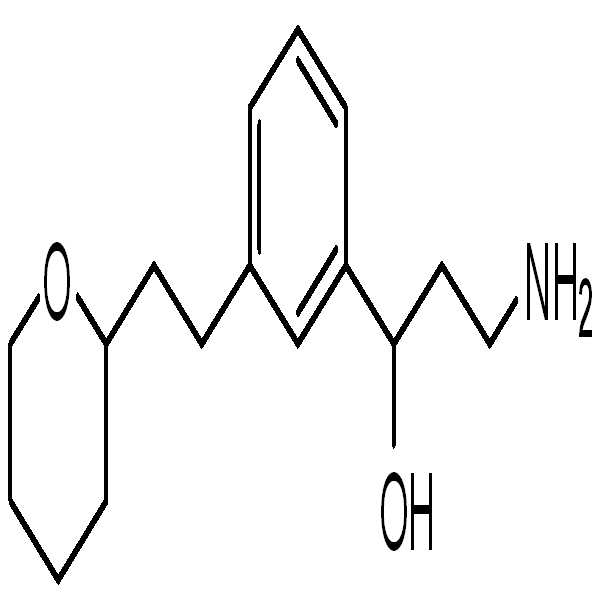
3-아미노-1-(3-(2-(테트라히드로-2H-피란-2-일)에틸)페닐)프로판-1-올을 반응식 18 에 제시되고 실시예 3, 13, 16 및 17 에서 사용된 방법에 따라 제조하였다.3-amino-1- (3- (2- (tetrahydro-2 H -pyran-2-yl) ethyl) phenyl) propan-1-ol is shown in Scheme 18 and in Examples 3 , 13 , 16 and 17 . Prepared according to the method used.
반응식 18Scheme 18

단계 1: 실시예 16 에서 사용된 방법에 따라 3-요오도벤즈알데히드 (86) 에 아세토니트릴을 첨가하여 3-히드록시-3-(3-요오도페닐)프로판니트릴 (87) 을 황색 오일로서 산출하였다. 수율 (2.58 g, 55%): 1H NMR (400 MHz, CDCl3) δ 7.82 (s, 1H), 7.70 (d, J = 8.0 Hz, 1H), 7.38 (d, J = 8.0 Hz, 1H), 7.14 (t, J = 8.0 Hz, 1H), 5.01 (m, 1H), 2.80 (d, J = 6.4, 2H), 2.40 (bs, 1H). Step 1: Acetonitrile was added to 3-iodobenzaldehyde ( 86 ) according to the method used in Example 16 to yield 3-hydroxy-3- (3-iodophenyl) propanenitrile ( 87 ) as a yellow oil. It was. Yield (2.58 g, 55%): 1 H NMR (400 MHz, CDCl 3 ) δ 7.82 (s, 1H), 7.70 (d, J = 8.0 Hz, 1H), 7.38 (d, J = 8.0 Hz, 1H) , 7.14 (t, J = 8.0 Hz, 1H), 5.01 (m, 1H), 2.80 (d, J = 6.4, 2H), 2.40 (bs, 1H).
단계 2: 실시예 17 에서 사용된 방법에 따른 87 의 니트릴 환원에 의해 3-아미노-1-(3-요오도페닐)프로판-1-올 (88) 을 담황색 오일로서 산출하였다. 수율 (2.63 g, 정량적 수율). 이 화합물을 다음 변형에 그 자체로 사용하였다. 1H NMR (400 MHz, CDCl3) δ 7.76 (s, 1H), 7.58 (d, J = 7.6, 1H), 7.33 (d, J = 7.6, 1H), 7.06 (t, J = 8.0, 1H), 4.92 (dd, J = 8.8,2.8 Hz, 1H), 3.09-3.14 (m, 1H), 2.93-2.99 (m, 1H), 1.81-1.85 (m, 1H), 1.64-1.73 (m, 1H). Step 2: 3-Amino-1- (3-iodophenyl) propan-1-ol ( 88 ) was obtained as pale yellow oil by nitrile reduction of 87 according to the method used in Example 17 . Yield (2.63 g, quantitative yield). This compound was used by itself in the next modification. 1 H NMR (400 MHz, CDCl 3 ) δ 7.76 (s, 1H), 7.58 (d, J = 7.6, 1H), 7.33 (d, J = 7.6, 1H), 7.06 (t, J = 8.0, 1H) , 4.92 (dd, J = 8.8, 2.8 Hz, 1H), 3.09-3.14 (m, 1H), 2.93-2.99 (m, 1H), 1.81-1.85 (m, 1H), 1.64-1.73 (m, 1H) .
단계 3: 실시예 17 에서와 같은 아민 88 의 BOC 보호에 의해 tert-부틸 3-히드록시-3-(3-요오도페닐)프로필카르바메이트 (89) 를 황색 오일로서 산출하였다. 수율 (1.39 g, 40%). 이 화합물을 다음 변형에 그 자체로 사용하였다. 1H NMR (400 MHz, CDCl3) δ 7.73 (s, 1H), 7.58 (d, J = 7.6, 1H), 7.33 (d, J = 7.6, 1H), 7.07 (t, J = 8.0, 1H), 4.86 (bs, 1H), 4.67 (m, 1H), 3.45-3.51 (m, 2H), 3.11-3.18 (m, 1H), 1.76-1.83 (m, 2H), 1.51 (s, 9H). Step 3: BOC protection of amine 88 as in Example 17 yielded tert -butyl 3-hydroxy-3- (3-iodophenyl) propylcarbamate ( 89 ) as a yellow oil. Yield (1.39 g, 40%). This compound was used by itself in the next modification. 1 H NMR (400 MHz, CDCl 3 ) δ 7.73 (s, 1H), 7.58 (d, J = 7.6, 1H), 7.33 (d, J = 7.6, 1H), 7.07 (t, J = 8.0, 1H) , 4.86 (bs, 1H), 4.67 (m, 1H), 3.45-3.51 (m, 2H), 3.11-3.18 (m, 1H), 1.76-1.83 (m, 2H), 1.51 (s, 9H).
단계 4: 실시예 3 에서의 방법에 따른 89 와 2-에티닐테트라히드로-2H-피란의 소노가시라 반응에 의해 tert-부틸 3-히드록시-3-(3-((테트라히드로-2H-피란-2-일)에티닐)페닐)프로필카르바메이트 (90) 을 암갈색 오일로서 산출하였다. 수율 (1.21 g, 83%): 1H NMR (400 MHz, CDCl3) δ 7.45 (s, 1H), 7.27-7.35 (m, 3H), 4.87 (bs, 1H), 4.69-4.71 (m, 1H), 4.49-4.51 (m, 1H), 4.02-4.07 (m, 1H), 3.50-3.52 (m, 1H), 3.56-3.61 (m, 1H), 3.13-3.18 (m, 1H), 1.91-1.93 (m, 2H), 1.74-1.86 (m, 4H), 1.51 (m, 2H), 1.43 (s, 9H). Step 4: tert -butyl 3-hydroxy-3- (3-((tetrahydro-2H-) by sonogashira reaction of 89 with 2-ethynyltetrahydro- 2H -pyran according to the method in Example 3 Pyran-2-yl) ethynyl) phenyl) propylcarbamate ( 90 ) was calculated as dark brown oil. Yield (1.21 g, 83%): 1 H NMR (400 MHz, CDCl 3 ) δ 7.45 (s, 1H), 7.27-7.35 (m, 3H), 4.87 (bs, 1H), 4.69-4.71 (m, 1H ), 4.49-4.51 (m, 1H), 4.02-4.07 (m, 1H), 3.50-3.52 (m, 1H), 3.56-3.61 (m, 1H), 3.13-3.18 (m, 1H), 1.91-1.93 (m, 2H), 1.74-1.86 (m, 4H), 1.51 (m, 2H), 1.43 (s, 9H).
단계 5: 실시예 13 에서 사용된 방법에 따른 tert-부틸 3-히드록시-3-(3-((테트라히드로-2H-피란-2-일)에티닐)페닐)프로필카르바메이트의 환원에 의해 tert-부틸 3-히드록시-3-(3-(2-(테트라히드로-2H-피란-2-일)에틸)페닐)프로필카르바메이트 (91) 을 황색 오일로서 산출하였다. 수율 (0.592 g, 미정제). 1H NMR (400 MHz, CDCl3) δ 7.23 (t, J = 7.2 Hz, 1H), 7.19 (s, 1H), 7.10 (d, J = 7.2 Hz, 1H), 7.02 (d, J = 7.2 Hz, 1H), 4.89 (bs, 1H), 4.64 (t, J = 7.6 Hz, 1H), 3.98-4.0 (m, 1H), 3.38-3.43 (m, 2H), 3.14-3.32 (m, 3H), 2.60-2.76 (m, 2H), 1.80-1.85 (m, 4H), 1.59-1.61 (m, 1H), 1.50-1.53 (m, 2H), 1.45 (s, 9H), 1.20-1.33 (m, 3H). Step 5: Reduction of tert -butyl 3-hydroxy-3- (3-((tetrahydro-2H-pyran-2-yl) ethynyl) phenyl) propylcarbamate according to the method used in Example 13 Tert -butyl 3-hydroxy-3- (3- (2- (tetrahydro-2H-pyran-2-yl) ethyl) phenyl) propylcarbamate ( 91 ) was calculated as yellow oil. Yield (0.592 g, crude). 1 H NMR (400 MHz, CDCl 3 ) δ 7.23 (t, J = 7.2 Hz, 1H), 7.19 (s, 1H), 7.10 (d, J = 7.2 Hz, 1H), 7.02 (d, J = 7.2 Hz , 1H), 4.89 (bs, 1H), 4.64 (t, J = 7.6 Hz, 1H), 3.98-4.0 (m, 1H), 3.38-3.43 (m, 2H), 3.14-3.32 (m, 3H), 2.60-2.76 (m, 2H), 1.80-1.85 (m, 4H), 1.59-1.61 (m, 1H), 1.50-1.53 (m, 2H), 1.45 (s, 9H), 1.20-1.33 (m, 3H ).
단계 6: 실시예 13 에서 사용된 방법에 따른 91 의 탈보호에 의해 미정제 생성물을 산출하고, 이를 플래시 크로마토그래피 (0→10% MeOH-DCM 구배) 에 의해 정제하여 실시예 110 히드로클로라이드를 회백색 고체로서 수득하였다. 수율 (0.194 g, 40%): 1H NMR (400 MHz, DMSO-d 6) δ 7.24 (t, J = 7.2 Hz, 1H), 7.14 (s, 1H), 7.10 (d, J = 7.2 Hz, 1H), 7.07 (d, J = 7.2 Hz, 1H), 4.64 (t, J = 7.6 Hz, 1H), 3.82-3.87 (m, 2H), 3.17-3.21 (m, 2H), 2.76-2.84 (m, 2H), 2.58-2.63 (m, 1H), 1.80-1.84 (m, 2H), 1.54-1.67 (m, 3H), 1.43-1.51 (m, 3H), 1.16 (m, 1H). 13C NMR (100 MHz, DMSO-d 6) δ 145.8, 142.4, 128.5, 127.3, 125.9, 123.4, 76.6, 70.1, 67.9, 38.4, 37.1, 36.8, 31.9, 31.7, 26.2, 23.5. MS: 264 [M+1]+. Step 6: The crude product was obtained by deprotection of 91 according to the method used in Example 13 , which was purified by flash chromatography (0 → 10% MeOH-DCM gradient) to yield Example 110 hydrochloride as off-white. Obtained as a solid. Yield (0.194 g, 40%): 1 H NMR (400 MHz, DMSO- d 6 ) δ 7.24 (t, J = 7.2 Hz, 1H), 7.14 (s, 1H), 7.10 (d, J = 7.2 Hz, 1H), 7.07 (d, J = 7.2 Hz, 1H), 4.64 (t, J = 7.6 Hz, 1H), 3.82-3.87 (m, 2H), 3.17-3.21 (m, 2H), 2.76-2.84 (m , 2H), 2.58-2.63 (m, 1H), 1.80-1.84 (m, 2H), 1.54-1.67 (m, 3H), 1.43-1.51 (m, 3H), 1.16 (m, 1H). 13 C NMR (100 MHz, DMSO- d 6) δ 145.8, 142.4, 128.5, 127.3, 125.9, 123.4, 76.6, 70.1, 67.9, 38.4, 37.1, 36.8, 31.9, 31.7, 26.2, 23.5. MS: 264 [M + 1] + .
실시예 111Example 111
5-(3-(3-아미노프로필)페닐)-5- (3- (3-aminopropyl) phenyl)- NN -메틸펜탄아미드의 제조Preparation of -methylpentanamide

5-(3-(3-아미노프로필)페닐)-N-메틸펜탄아미드를 실시예 76 에서 사용된 방법에 따라 제조하였다.Example 5- (3- (3-aminopropyl) phenyl) -N -methylpentanamide Prepared according to the method used at 76 .
단계 1: 브로마이드 57 과 N-메틸펜트-4-인아미드와의 소노가시라 커플링에 의해 tert-부틸 3-(3-(5-(메틸아미노)-5-옥소펜트-1-이닐)페닐)프로필 카르바메이트를 산출하였다. 수율 (1.03 g, 미정제). 1H NMR (400 MHz, CDCl3) δ 7.64-7.70 (m, 1H), 7.48 (d, J = 6.6 Hz, 1H), 7.21 (s, 1H), 7.10 (d, J = 6.4 Hz, 1H), 5.68 (bs, 1H), 4.52 (bs, 1H), 3.10-3.18 (m, 2H), 2.85 (d, J = 6.8 Hz, 3H), 2.75 (t, J = 7.2 Hz, 2H), 2.60 (t, J = 7.6 Hz, 2H), 2.47 (t, J = 7.2 Hz, 2H), 1.75-1.82 (m, 2H), 1.44 (s, 9H). Step 1: tert -butyl 3- (3- (5- (methylamino) -5-oxopent-1-ynyl) phenyl) by sonogashira coupling of bromide 57 with N -methylpent-4-inamide Propyl carbamate was calculated. Yield (1.03 g, crude). 1 H NMR (400 MHz, CDCl 3 ) δ 7.64-7.70 (m, 1H), 7.48 (d, J = 6.6 Hz, 1H), 7.21 (s, 1H), 7.10 (d, J = 6.4 Hz, 1H) , 5.68 (bs, 1H), 4.52 (bs, 1H), 3.10-3.18 (m, 2H), 2.85 (d, J = 6.8 Hz, 3H), 2.75 (t, J = 7.2 Hz, 2H), 2.60 ( t, J = 7.6 Hz, 2H), 2.47 (t, J = 7.2 Hz, 2H), 1.75-1.82 (m, 2H), 1.44 (s, 9H).
단계 2: 5-(3-(3-아미노프로필)페닐)-N-메틸펜트-4-인아미드의 환원에 의해 tert-부틸 3-(3-(5-(메틸아미노)-5-옥소펜틸)페닐)프로필카르바메이트를 황색 오일로서 산출하였다. 수율 (0.55 g, 88%): MS: 349 [M+1] +. Step 2: tert -butyl 3- (3- (5- (methylamino) -5- oxopentyl by reduction of 5- (3- (3-aminopropyl) phenyl) -N -methylpent-4-inamide ) Phenyl) propylcarbamate was calculated as a yellow oil. Yield (0.55 g, 88%): MS: 349 [M + 1] + .
단계 3: tert-부틸 3-(3-(5-(메틸아미노)-5-옥소펜틸)페닐)프로필카르바메이트의 BOC 탈보호에 의해 5-(3-(3-아미노프로필)페닐)-N-메틸펜탄아미드 히드로클로라이드를 산출하였다. 농축 암모니아를 사용해 pH 를 조정함으로써 생성물을 단리하고 DCM 으로 추출하였다. 유기층을 물로 세정하고, 무수 Na2SO4 로 건조시키고, 여과하고, 감압하에서 농축하였다. 플래시 크로마토그래피 (0-(9.5-0.5) MeOH-NH3)-DCM 구배) 에 의한 정제에 의해 실시예 111 을 갈색 오일로서 산출하였다. 수율 (0.107 g, 27%): 1H NMR (400 MHz, DMSO-d 6 ) δ 7.13-7.18 (m, 1H), 6.94-6.99 (m, 3H), 2.48-2.56 (m, 9H), 2.05 (t, J = 6.8 Hz, 2H), 1.60-1.68 (m, 2H), 1.42-1.50 (m, 4H). 13C NMR (100 MHz, DMSO-d 6 ): 172.8, 142.5, 142.4, 128.8, 128.6, 126.1, 41.2, 35.6, 34.6, 32.9, 31.2, 25.8, 25.4. MS: 249 [M+1] +. Step 3: 5- (3- (3-aminopropyl) phenyl)-by BOC deprotection of tert -butyl 3- (3- (5- (methylamino) -5-oxopentyl) phenyl) propylcarbamate N -methylpentanamide hydrochloride was calculated. The product was isolated by adjusting the pH with concentrated ammonia and extracted with DCM. The organic layer was washed with water, dried over anhydrous Na 2 SO 4 , filtered and concentrated under reduced pressure. Example 111 was calculated as brown oil by purification by flash chromatography (0- (9.5-0.5) MeOH-NH 3 ) -DCM gradient). Yield (0.107 g, 27%): 1 H NMR (400 MHz, DMSO- d 6 ) δ 7.13-7.18 (m, 1H), 6.94-6.99 (m, 3H), 2.48-2.56 (m, 9H), 2.05 (t, J = 6.8 Hz, 2H), 1.60-1.68 (m, 2H), 1.42-1.50 (m, 4H). 13 C NMR (100 MHz, DMSO- d 6 ): 172.8, 142.5, 142.4, 128.8, 128.6, 126.1, 41.2, 35.6, 34.6, 32.9, 31.2, 25.8, 25.4. MS: 249 [M + 1] + .
실시예 112Example 112
5-(3-(3-아미노프로필)페닐)펜탄아미드의 제조Preparation of 5- (3- (3-aminopropyl) phenyl) pentanamide

5-(3-(3-아미노프로필)페닐)펜탄아미드를 실시예 111 에서 사용된 방법에 따라 제조하였다.5- (3- (3-aminopropyl) phenyl) pentanamide was prepared according to the method used in Example 111 .
단계 1: 브로마이드 57 과 펜트-4-인아미드와의 소노가시라 커플링에 의해 tert-부틸 3-(3-(5-아미노-5-옥소펜트-1-이닐)페닐)프로필카르바메이트를 산출하였다. 수율 (0.967 g, 미정제). 1H NMR (400 MHz, CDCl3) δ 7.64-7.70 (m, 1H), 7.47 (d, J = 6.4 Hz, 1H), 7.18 (s, 1H), 7.10 (d, J = 6.4 Hz, 1H), 5.60-5.80 (m, 2H), 4.53 (bs, 1H), 3.10-3.18 (m, 2H), 2.75 (d, J = 7.2 Hz, 2H), 2.60 (t, J = 7.6 Hz, 2H), 2.54 (t, J = 7.2 Hz, 2H), 1.76-1.80 (m, 2H), 1.44 (s, 9H). Step 1: tert -butyl 3- (3- (5-amino-5-oxopent-1-ynyl) phenyl) propylcarbamate by sonogashira coupling of bromide 57 with pent-4-inamide It was. Yield (0.967 g, crude). 1 H NMR (400 MHz, CDCl 3 ) δ 7.64-7.70 (m, 1H), 7.47 (d, J = 6.4 Hz, 1H), 7.18 (s, 1H), 7.10 (d, J = 6.4 Hz, 1H) , 5.60-5.80 (m, 2H), 4.53 (bs, 1H), 3.10-3.18 (m, 2H), 2.75 (d, J = 7.2 Hz, 2H), 2.60 (t, J = 7.6 Hz, 2H), 2.54 (t, J = 7.2 Hz, 2H), 1.76-1.80 (m, 2H), 1.44 (s, 9H).
단계 2: 5-(3-(3-아미노프로필)페닐)펜트-4-인아미드의 환원에 의해 tert-부틸 3-(3-(5-아미노-5-옥소펜틸)페닐)프로필카르바메이트를 황색 오일로서 산출하였다. 수율 (0.310 g, 83%): MS: 335 [M+1]+. 화합물은 다음 변형에 이용하기에 충분히 순수하였다. Step 2: tert -butyl 3- (3- (5-amino-5-oxopentyl) phenyl) propylcarbamate by reduction of 5- (3- (3-aminopropyl) phenyl) pent-4-inamide Was calculated as a yellow oil. Yield (0.310 g, 83%): MS: 335 [M + 1] + . The compound was pure enough for the next modification.
단계 3: tert-부틸 3-(3-(5-아미노-5-옥소펜틸)페닐)프로필카르바메이트의 BOC 탈보호에 의해 실시예 112 를 회백색 고체로서 산출하였다. 수율 (0.08 g, 38%): 1H NMR (400 MHz, DMSO-d 6 ) δ 7.14-7.19 (m, 1H), 6.97-7.0 (m, 3H), 2.50-2.60 (m, 6H), 2.05 (t, J = 6.8 Hz, 2H), 1.60-1.70 (m, 2H), 1.43-1.55 (m, 4H). 13C NMR (100 MHz, DMSO-d 6 ): 174.2, 142.0, 141.9, 128.3, 128.1, 125.6, 40.7, 34.9, 34.0, 32.4, 30.7, 24.8. MS: 235 [M+1] +. Step 3: Example 112 was calculated as an off-white solid by BOC deprotection of tert -butyl 3- (3- (5-amino-5-oxopentyl) phenyl) propylcarbamate. Yield (0.08 g, 38%): 1 H NMR (400 MHz, DMSO- d 6 ) δ 7.14-7.19 (m, 1H), 6.97-7.0 (m, 3H), 2.50-2.60 (m, 6H), 2.05 (t, J = 6.8 Hz, 2H), 1.60-1.70 (m, 2H), 1.43-1.55 (m, 4H). 13 C NMR (100 MHz, DMSO- d 6 ): 174.2, 142.0, 141.9, 128.3, 128.1, 125.6, 40.7, 34.9, 34.0, 32.4, 30.7, 24.8. MS: 235 [M + 1] + .
실시예 113Example 113 Synthesis of
1-(3-(3-아미노-1-히드록시프로필)페닐)-3-에틸펜탄-3-올의 제조Preparation of 1- (3- (3-amino-1-hydroxypropyl) phenyl) -3-ethylpentan-3-ol

1-(3-(3-아미노-1-히드록시프로필)페닐)-3-에틸펜탄-3-올을 실시예 63 에서 사용된 방법에 따라 제조하였다.1- (3- (3-amino-1-hydroxypropyl) phenyl) -3-ethylpentan-3-ol was prepared according to the method used in Example 63 .
단계 1: 브로마이드 43 과 3-에틸펜트-1-인-3-올과의 소노가시라 커플링에 의해 N-(3-(3-(3-에틸-3-히드록시펜트-1-이닐)페닐)-3-히드록시프로필)-2,2,2-트리플루오로아세트아미드를 산출하였다. 수율 (0.825 g, 77%). 1H NMR (400 MHz, CDCl3) δ 7.41 (s, 1H), 7.28-7.39 (m, 3H), 4.83-4.87 (m, 1H), 3.66-3.73 (m, 1H), 3.37-3.44 (m, 1H), 1.90-2.02 (m, 2H), 1.70-1.81 (m, 4H), 1.10 (t, J = 7.4 Hz, 6H). Step 1: N- (3- (3- (3- (3-ethyl-3-hydroxypent-1-ynyl) phenyl by sonogashira coupling of bromide 43 with 3-ethylpent- 1- yn-3-ol ) -3-hydroxypropyl) -2,2,2-trifluoroacetamide was calculated. Yield (0.825 g, 77%). 1 H NMR (400 MHz, CDCl 3 ) δ 7.41 (s, 1H), 7.28-7.39 (m, 3H), 4.83-4.87 (m, 1H), 3.66-3.73 (m, 1H), 3.37-3.44 (m , 1H), 1.90-2.02 (m, 2H), 1.70-1.81 (m, 4H), 1.10 (t, J = 7.4 Hz, 6H).
단계 2: N-(3-(3-(3-에틸-3-히드록시펜트-1-이닐)페닐)-3-히드록시프로필)-2,2,2-트리플루오로아세트아미드의 탈보호에 의해 1-(3-(3-아미노-1-히드록시프로필)페닐)헥스-1-인-3-올을 황색 오일로서 산출하였다. 수율 (0.52 g, 91%): 1H NMR (400 MHz, DMSO-d 6 ) δ 7.36 (s, 1H), 7.29-7.33 (m, 2H), 7.26 (d, J = 6.4 Hz, 1H), 4.68 (t, J = 4.8 Hz, 1H), 2.74-2.82 (m, 2H), 1.76-1.82 (m, 2H), 1.60-1.69 (m, 4H), 0.99 (t, J = 7.4 Hz, 6H). 13C NMR (100 MHz, DMSO-d 6 ): 146.5, 130.1, 128.9, 126.0, 125.0, 123.0, 100.0, 94.0, 83.3, 75.0, 71.0, 70.2, 34.5, 9.2. ESI MS m/z 262 [M+1] +. Step 2: Deprotection of N- (3- (3- (3-ethyl-3-hydroxypent-1-ynyl) phenyl) -3-hydroxypropyl) -2,2,2-trifluoroacetamide By 1- (3- (3-amino-1-hydroxypropyl) phenyl) hex-1-yn-3-ol as yellow oil. Yield (0.52 g, 91%): 1 H NMR (400 MHz, DMSO- d 6 ) δ 7.36 (s, 1H), 7.29-7.33 (m, 2H), 7.26 (d, J = 6.4 Hz, 1H), 4.68 (t, J = 4.8 Hz, 1H), 2.74-2.82 (m, 2H), 1.76-1.82 (m, 2H), 1.60-1.69 (m, 4H), 0.99 (t, J = 7.4 Hz, 6H) . 13 C NMR (100 MHz, DMSO- d 6 ): 146.5, 130.1, 128.9, 126.0, 125.0, 123.0, 100.0, 94.0, 83.3, 75.0, 71.0, 70.2, 34.5, 9.2. ESI MS m / z 262 [M + l] + .
단계 3: 1-(3-(3-아미노-1-히드록시프로필)페닐)-3-에틸펜트-1-인-3-올의 환원에 의해 실시예 113 을 황색 오일로서 산출하였다. 수율 (0.15 g, 49%). 1H NMR (400 MHz, DMSO-d 6) δ 7.17-7.21 (m, 1H), 7.14 (s, 1H), 7.07 (d, J = 8.4 Hz, 1H), 7.02 (d, J = 7.2 Hz, 1H), 4.60-4.64 (m, 1H), 2.58 (t, J = 7.2 Hz, 2H), 2.42-2.50 (m, 2H), 1.60-1.68 (m, 2H), 1.50-1.56 (m, 2H), 1.37 (q, J = 7.6 Hz, 4H), 0.81 (t, J = 7.6 Hz, 6H). 13C NMR (100 MHz, DMSO-d 6 ): 146.5, 142.7, 127.9, 126.4, 125.4, 122.9, 72.4, 71.3, 42.0, 40.1, 38.8, 30.4, 29.6, 7.9. MS: 266 [M+1] + Step 3: Example 113 was calculated as a yellow oil by reduction of 1- (3- (3-amino-1-hydroxypropyl) phenyl) -3-ethylpent-1-yn-3-ol. Yield (0.15 g, 49%). 1 H NMR (400 MHz, DMSO- d 6 ) δ 7.17-7.21 (m, 1H), 7.14 (s, 1H), 7.07 (d, J = 8.4 Hz, 1H), 7.02 (d, J = 7.2 Hz, 1H), 4.60-4.64 (m, 1H), 2.58 (t, J = 7.2 Hz, 2H), 2.42-2.50 (m, 2H), 1.60-1.68 (m, 2H), 1.50-1.56 (m, 2H) , 1.37 (q, J = 7.6 Hz, 4H), 0.81 (t, J = 7.6 Hz, 6H). 13 C NMR (100 MHz, DMSO- d 6 ): 146.5, 142.7, 127.9, 126.4, 125.4, 122.9, 72.4, 71.3, 42.0, 40.1, 38.8, 30.4, 29.6, 7.9. MS: 266 [M + 1] +
실시예 114Example 114
2-(3-(2-(테트라히드로-2H-피란-2-일)에틸)페녹시)에탄아민의 제조Preparation of 2- (3- (2- (tetrahydro-2 H -pyran-2-yl) ethyl) phenoxy) ethanamine

2-(3-(2-테트라히드로-2H-피란-2-일)에틸)페녹시)에탄아민을 실시예 64 에서 사용된 방법에 따라 제조하였다.2- (3- (2-tetrahydro-2 H -pyran-2-yl) ethyl) phenoxy) ethanamine was prepared according to the method used in Example 64 .
단계 1: 브로마이드 19 와 2-에티닐테트라히드로-2H-피란의 소노가시라 반응에 의해 2,2,2-트리플루오로-N-(2-(3-((테트라히드로-2H-피란-2-일)에티닐)페녹시)에틸)아세트아미드를 갈색 오일로서 산출하였다. 수율 (0.753 g, 79%): 1H NMR (400 MHz, DMSO-d 6 ) δ 7.26-7.32 (m, 1H), 7.05 (d, J = 7.6 Hz, 1H), 6.95-6.98 (m, 2H), 4.50-4.53 (m, 1H), 4.11 (t, J = 5.4 Hz, 2H), 3.83-3.90 (m, 1H), 3.54-3.58 (m, 2H), 3.46-3.53 (m, 1H), 1.78-1.86 (m, 2H). 1.46-1.66 (m, 4H). Step 1: tetrahydro -2 H ethynyl bromide 19 and 2-N--by Sono of pyran gasira reaction 2,2,2-trifluoro (2- (3 - ((tetrahydro -2 H-pyran -2-yl) ethynyl) phenoxy) ethyl) acetamide was calculated as brown oil. Yield (0.753 g, 79%): 1 H NMR (400 MHz, DMSO- d 6 ) δ 7.26-7.32 (m, 1H), 7.05 (d, J = 7.6 Hz, 1H), 6.95-6.98 (m, 2H ), 4.50-4.53 (m, 1H), 4.11 (t, J = 5.4 Hz, 2H), 3.83-3.90 (m, 1H), 3.54-3.58 (m, 2H), 3.46-3.53 (m, 1H), 1.78-1.86 (m, 2 H). 1.46-1.66 (m, 4H).
단계 2: 2,2,2-트리플루오로-N-(2-(3-((테트라히드로-2H-피란-2-일)에티닐)페녹시)에틸)아세트아미드의 환원에 의해 2,2,2-트리플루오로-N-(2-(3-(2-(테트라히드로-2H-피란-2-일)에틸)페녹시)에틸)아세트아미드를 갈색 오일로서 산출하였다. 수율 (0.315 g, 77%): 1H NMR (400 MHz, DMSO-d 6 ) δ 7.15-7.20 (m, 1H), 6.72-6.78 (m, 3H), 4.07 (t, J = 5.6 Hz, 2H), 3.86-3.90 (m, 1H), 3.52-3.58 (m, 2H), 3.26-3.30 (m, 1H), 3.12-3.18 (m, 1H), 2.51-2.68 (m, 2H), 1.52-1.78 (m, 4H), 1.38-1.48 (m, 4H), Step 2: 2 by reduction of 2,2,2-trifluoro- N- (2- (3-((tetrahydro-2 H -pyran-2-yl) ethynyl) phenoxy) ethyl) acetamide , 2,2-trifluoro- N- (2- (3- (2- (tetrahydro- 2H -pyran-2-yl) ethyl) phenoxy) ethyl) acetamide was calculated as brown oil. Yield (0.315 g, 77%): 1 H NMR (400 MHz, DMSO- d 6 ) δ 7.15-7.20 (m, 1H), 6.72-6.78 (m, 3H), 4.07 (t, J = 5.6 Hz, 2H ), 3.86-3.90 (m, 1H), 3.52-3.58 (m, 2H), 3.26-3.30 (m, 1H), 3.12-3.18 (m, 1H), 2.51-2.68 (m, 2H), 1.52-1.78 (m, 4H), 1.38-1.48 (m, 4H),
단계 3: 2,2,2-트리플루오로-N-(2-(3-(2-(테트라히드로-2H-피란-2-일)에틸)페녹시)에틸)아세트아미드의 탈보호에 의해 실시예 114 를 황색 오일로서 산출하였다. 수율 (0.141 g, 63%): 1H NMR (400 MHz, DMSO-d 6 ) δ 7.19-7.23 (m, 1H), 6.77-6.82 (m, 3H), 4.10 (t, J = 5.2 Hz, 2H), 3.83-3.86 (m, 1H), 3.24-3.30 (m, 1H), 3.12-3.20 (m, 3H), 2.50-2.70 (m, 2H), 1.50-1.74 (m, 4H), 1.36-1.46 (m, 3H), 1.10-1.20 (m, 1H). 13C NMR (100 MHz, DMSO-d 6 ) δ 158.4, 144.3, 129.3, 121.6, 115.0, 112.4, 76.6, 67.9, 64.5, 38.7, 38.2, 31.9, 31.6, 26.2, 23.5. MS: 250 [M+1]+. Step 3: Deprotection of 2,2,2-trifluoro- N- (2- (3- (2- (tetrahydro-2 H -pyran-2-yl) ethyl) phenoxy) ethyl) acetamide Example 114 was computed as a yellow oil by this. Yield (0.141 g, 63%): 1 H NMR (400 MHz, DMSO- d 6 ) δ 7.19-7.23 (m, 1H), 6.77-6.82 (m, 3H), 4.10 (t, J = 5.2 Hz, 2H ), 3.83-3.86 (m, 1H), 3.24-3.30 (m, 1H), 3.12-3.20 (m, 3H), 2.50-2.70 (m, 2H), 1.50-1.74 (m, 4H), 1.36-1.46 (m, 3 H), 1.10-1.20 (m, 1 H). 13 C NMR (100 MHz, DMSO- d 6) δ 158.4, 144.3, 129.3, 121.6, 115.0, 112.4, 76.6, 67.9, 64.5, 38.7, 38.2, 31.9, 31.6, 26.2, 23.5. MS: 250 [M + l] + .
실시예 115Example 115
1-(3-(3-아미노-1-히드록시프로필)페네틸)시클로펜탄올의 제조Preparation of 1- (3- (3-amino-1-hydroxypropyl) phenethyl) cyclopentanol

1-(3-(3-아미노-1-히드록시프로필)페네틸)시클로펜탄올을 실시예 19 에서 사용된 방법에 따라 제조하였다.1- (3- (3-amino-1-hydroxypropyl) phenethyl) cyclopentanol was prepared according to the method used in Example 19 .
단계 1: 브로마이드 43 과 1-에티닐시클로펜탄올과의 소노가시라 반응에 의해 2,2,2-트리플루오로-N-(3-히드록시-3-(3-((1-히드록시시클로펜틸)에티닐)페닐)프로필)-아세트아미드를 갈색 오일로서 산출하였다. 수율 (0.55 g, 55%): 1H NMR (400 MHz, CDCl3) δ 7.41 (s, 1H), 7.28-7.35 (m, 3H), 4.85-4.87 (m, 1H), 3.66-3.70 (m, 1H), 3.38-3.44 (m, 1H), 2.41 (bs, 1H), 1.76-2.08 (m, 10H). Step 1: 2,2,2-trifluoro- N- (3-hydroxy-3- (3-((1-hydroxycyclo) by sonogashira reaction of bromide 43 with 1-ethynylcyclopentanol Pentyl) ethynyl) phenyl) propyl) -acetamide was calculated as brown oil. Yield (0.55 g, 55%): 1 H NMR (400 MHz, CDCl 3 ) δ 7.41 (s, 1H), 7.28-7.35 (m, 3H), 4.85-4.87 (m, 1H), 3.66-3.70 (m , 1H), 3.38-3.44 (m, 1H), 2.41 (bs, 1H), 1.76-2.08 (m, 10H).
단계 2: 2,2,2-트리플루오로-N-(3-히드록시-3-(3-((1-히드록시시클로펜틸)에티닐)페닐)프로필)아세트아미드의 환원에 의해 2,2,2-트리플루오로-N-(3-히드록시-3-(3-(2-(1-히드록시시클로펜틸)에틸)페닐)프로필)아세트아미드를 황색 오일로서 산출하였다. 수율 (0.248 g, 62%). 1H NMR (400 MHz, CDCl3) δ 7.27-7.31 (m, 1H), 7.20 (s, 1H), 7.14-7.18 (m, 2H), 4.86-4.90 (m, 1H), 3.68-3.73 (m, 1H), 3.38-3.46 (m, 1H), 2.76-2.80 (m, 2H), 2.25 (s, 1H), 1.96-2.02 (m, 3H), 1.80-1.90 (m, 4H), 1.60-1.72 (m, 5H). Step 2: 2, by reduction of 2,2,2-trifluoro- N- (3-hydroxy-3- (3-((1-hydroxycyclopentyl) ethynyl) phenyl) propyl) acetamide 2,2-trifluoro-N- (3-hydroxy-3- (3- (2- (1-hydroxycyclopentyl) ethyl) phenyl) propyl) acetamide was calculated as a yellow oil. Yield (0.248 g, 62%). 1 H NMR (400 MHz, CDCl 3 ) δ 7.27-7.31 (m, 1H), 7.20 (s, 1H), 7.14-7.18 (m, 2H), 4.86-4.90 (m, 1H), 3.68-3.73 (m , 1H), 3.38-3.46 (m, 1H), 2.76-2.80 (m, 2H), 2.25 (s, 1H), 1.96-2.02 (m, 3H), 1.80-1.90 (m, 4H), 1.60-1.72 (m, 5 H).
단계 3: 2,2,2-트리플루오로-N-(3-히드록시-3-(3-(2-(1-히드록시시클로펜틸)에틸)페닐)프로필)아세트아미드의 탈보호에 의해 실시예 115 를 황색 오일로서 산출하였다. 수율 (0.12 g, 68%). 1H NMR (400 MHz, CDCl3) δ 7.20-7.24 (m, 1H), 7.13 (s, 1H), 7.06-7.11 (m, 2H), 4.61 (t, J = 6.4 Hz, 1H), 2.78-2.92 (m, 2H), 2.60-2.65 (m, 2H), 1.80-1.87 (m, 2H), 1.64-1.74 (m, 4H), 1.40-1.60 (m, 6H). 13C NMR (100 MHz, DMSO-d 6 ) δ 145.9, 143.4, 128.5, 127.3, 125.8, 123.2, 80.6, 70.6, 44.1, 38.6, 37.4, 31.3, 24.0. MS: 264 [M+1]+ Step 3: by deprotection of 2,2,2-trifluoro- N- (3-hydroxy-3- (3- (2- (1-hydroxycyclopentyl) ethyl) phenyl) propyl) acetamide Example 115 was calculated as a yellow oil. Yield (0.12 g, 68%). 1 H NMR (400 MHz, CDCl 3 ) δ 7.20-7.24 (m, 1H), 7.13 (s, 1H), 7.06-7.11 (m, 2H), 4.61 (t, J = 6.4 Hz, 1H), 2.78- 2.92 (m, 2H), 2.60-2.65 (m, 2H), 1.80-1.87 (m, 2H), 1.64-1.74 (m, 4H), 1.40-1.60 (m, 6H). 13 C NMR (100 MHz, DMSO- d 6) δ 145.9, 143.4, 128.5, 127.3, 125.8, 123.2, 80.6, 70.6, 44.1, 38.6, 37.4, 31.3, 24.0. MS: 264 [M + 1] +
실시예 116Example 116
3-(3-(3-아미노프로필)페닐)-1-페닐프로판-1-올의 제조Preparation of 3- (3- (3-aminopropyl) phenyl) -1-phenylpropan-1-ol

3-(3-(3-아미노프로필)페닐)-1-페닐프로판-1-올을 실시예 103 에서 사용된 방법에 따라 제조하였다.3- (3- (3-aminopropyl) phenyl) -1-phenylpropan-1-ol was prepared according to the method used in Example 103 .
단계 1: 브로마이드 10 과 1-페닐프로프-2-인-1-올과의 소노가시라 반응에 의해 2,2,2-트리플루오로-N-(3-히드록시-3-(3-(3-히드록시-3-페닐프로프-1-이닐)페닐)프로필)아세트아미드를 갈색 오일로서 산출하였다. 수율 (0.408 g, 80%). 이 화합물을 다음 변형에 그 자체로 사용하였다. Step 1: 2,2,2-trifluoro- N- (3-hydroxy-3- (3- () by reaction of
단계 2: 2,2,2-트리플루오로-N-(3-히드록시-3-(3-(3-히드록시-3-페닐프로프-1-이닐)페닐)프로필)아세트아미드의 환원에 의해 2,2,2-트리플루오로-N-(3-히드록시-3-(3-(3-히드록시-3-페닐프로필)페닐)프로필)아세트아미드를 황색 오일로서 산출하였다. 수율 (0.365 g, 91%). 이 화합물을 다음 변형에 그 자체로 사용하였다. Step 2: reduction of 2,2,2-trifluoro- N- (3-hydroxy-3- (3- (3-hydroxy-3-phenylprop-1-ynyl) phenyl) propyl) acetamide 2,2,2-trifluoro- N- (3-hydroxy-3- (3- (3-hydroxy-3-phenylpropyl) phenyl) propyl) acetamide was calculated as yellow oil. Yield (0.365 g, 91%). This compound was used by itself in the next modification.
단계 3: 2,2,2-트리플루오로-N-(3-히드록시-3-(3-(3-히드록시-3-페닐프로필)페닐)프로필)아세트아미드의 탈보호 및 플래시 크로마토그래피 (0→10% MeOH-NH3 (9.5:0.5)-DCM 구배) 에 의한 후속 정제에 의해 실시예 116 을 담황색 오일로서 산출하였다. 수율 (0.20 g, 74%): 1H NMR (400 MHz, DMSO-d 6) δ 7.30-7.33 (m, 4H), 7.20-7.25 (m, 2H), 7.13 (s, 1H), 7.13 (d, J = 8.0 Hz, 1H), 7.08 (d, J = 8.0 Hz, 1H), 5.28 (d, J = 4.4 Hz, 1H), 4.62 (t, J = 7.2 Hz, 1H), 4.52-4.63 (m, 1H), 2.79-2.87 (m, 2H), 2.50-2.59 (m, 2H), 1.79-1.89 (m, 4H). 13C NMR (100 MHz, DMSO-d 6) δ 146.6, 145.7, 142.4, 128.6, 128.5, 127.4, 127.1, 126.2, 125.9, 123.4, 72.2, 70.3, 41.6, 37.1, 32.1. MS: 286 [M+1]+. Step 3: Deprotection and flash chromatography of 2,2,2-trifluoro- N- (3-hydroxy-3- (3- (3-hydroxy-3-phenylpropyl) phenyl) propyl) acetamide Subsequent purification with (0 → 10% MeOH-NH 3 (9.5: 0.5) -DCM gradient) gave Example 116 as pale yellow oil. Yield (0.20 g, 74%): 1 H NMR (400 MHz, DMSO- d 6 ) δ 7.30-7.33 (m, 4H), 7.20-7.25 (m, 2H), 7.13 (s, 1H), 7.13 (d , J = 8.0 Hz, 1H), 7.08 (d, J = 8.0 Hz, 1H), 5.28 (d, J = 4.4 Hz, 1H), 4.62 (t, J = 7.2 Hz, 1H), 4.52-4.63 (m , 1H), 2.79-2.87 (m, 2H), 2.50-2.59 (m, 2H), 1.79-1.89 (m, 4H). 13 C NMR (100 MHz, DMSO- d 6) δ 146.6, 145.7, 142.4, 128.6, 128.5, 127.4, 127.1, 126.2, 125.9, 123.4, 72.2, 70.3, 41.6, 37.1, 32.1. MS: 286 [M + 1] + .
실시예 117Example 117
3-(3-(3-아미노프로필)페닐)-2,2-디메틸프로필 아세테이트의 제조Preparation of 3- (3- (3-aminopropyl) phenyl) -2,2-dimethylpropyl acetate

3-(3-(3-아미노프로필)페닐)-2,2-디메틸프로필 아세테이트를 반응식 19 에 제시되는 방법에 따라 제조하였다.3- (3- (3-aminopropyl) phenyl) -2,2-dimethylpropyl acetate was prepared according to the method shown in Scheme 19.
반응식 19Scheme 19

단계 1: 실시예 44 (반응을 켄칭시키기 위해 물 대신 포화 수성 염화암모늄을 사용한 것을 제외하고) 에서 사용된 방법방법에 따른 에틸 이소부티레이트 (93) 로의 3-브로모벤질브로마이드 (92) 의 알킬화 후 플래시 크로마토 크로마토그래피 (0→20% EtOAc/헥산 구배) 에 의해 에스테르 94 를 연황색 오일로서 산출하였다. 수율 (2.9 g, 87%): 1H NMR (400 MHz, CDCl3) δ 7.31 - 7.35 (m, 1H), 7.27 (t, J = 2.0 Hz, 1H), 7.11 (t, J = 7.6 Hz, 1H), 7.01-7.05 (m, 1H), 4.11 (q, J = 7.2 Hz, 2H), 2.80 (s, 2H), 1.23 (t, J = 7.2 Hz, 3H), 1.67 (s, 6H). Step 1: After alkylation of 3-bromobenzylbromide 92 to ethyl isobutyrate 93 according to the method used in Example 44 (except for using saturated aqueous ammonium chloride instead of water to quench the reaction) Flash chromatography (0 → 20% EtOAc / hexanes gradient) yielded ester 94 as a pale yellow oil. Yield (2.9 g, 87%): 1 H NMR (400 MHz, CDCl 3 ) δ 7.31-7.35 (m, 1H), 7.27 (t, J = 2.0 Hz, 1H), 7.11 (t, J = 7.6 Hz, 1H), 7.01-7.05 (m, 1H), 4.11 (q, J = 7.2 Hz, 2H), 2.80 (s, 2H), 1.23 (t, J = 7.2 Hz, 3H), 1.67 (s, 6H).
단계 2: DIBALH (THF 중 1.0 M 용액으로 8.8 ㎖, 8.8 mmol) 를 아르곤하에 0℃ 에서 톨루엔 중의 에스테르 94 (2.1 g, 7.36 mmol) 의 교반 용액에 첨가하였다. 1 시간 후, DIBALH (4.2 ㎖, 4.2 mmol) 의 제 2 분취액을 첨가하였다. 밤새 교반 후, 1M HCl 로 희석된 포화 수성 염화암모늄으로 반응을 켄칭하고, 에틸 아세테이트로 추출하였다. 수합된 유기층을 1M HCl, 물, 포화 수성 중탄산나트륨 및 염수로 좀더 세정하고, 황산나트륨으로 건조시키고, 여과하고, 농축하여, 알코올 95 를 무색 오일로서 산출하였다. 수율 (1.84 g, 정량): 1H NMR (400 MHz, CDCl3) δ 7.30-7.35 (m, 2H), 7.13 (t, J = 7.6 Hz, 1H), 7.06-7.10 (m, 1H), 3.29 (d, J = 4.8 Hz, 2H), 2.54 (s, 2H), 1.38-1.40 m, 1H), 0.87 (s, 6H). Step 2: DIBALH (8.8 mL, 8.8 mmol with 1.0 M solution in THF) was added to a stirred solution of ester 94 (2.1 g, 7.36 mmol) in toluene at 0 ° C. under argon. After 1 hour, a second aliquot of DIBALH (4.2 mL, 4.2 mmol) was added. After stirring overnight, the reaction was quenched with saturated aqueous ammonium chloride diluted with 1M HCl and extracted with ethyl acetate. The combined organic layers were further washed with 1M HCl, water, saturated aqueous sodium bicarbonate and brine, dried over sodium sulfate, filtered and concentrated to give alcohol 95 as a colorless oil. Yield (1.84 g, quantitative): 1 H NMR (400 MHz, CDCl 3 ) δ 7.30-7.35 (m, 2H), 7.13 (t, J = 7.6 Hz, 1H), 7.06-7.10 (m, 1H), 3.29 (d, J = 4.8 Hz, 2H), 2.54 (s, 2H), 1.38-1.40 m, 1H), 0.87 (s, 6H).
단계 3: 트리-t-부틸 포스핀 (디옥산 중의 1M 용액으로 0.13 ㎖, 0.13 mmol) 의 용액을 무수 디옥산 (20 ㎖) 중의 비스-클로로-트리페닐포스핀 팔라듐 (49 mg, 0.07 mmol), 요오드화구리 (4.9 mg, 0.026 mmol), 디-이소프로필아민 (0.31 ㎖, 2.2 mmol), 알코올 95 (0.422 g, 1.73 mmol), 및 tert-부틸 프로프-2-이닐카르바메이트 (0.4 g, 2.6 mmol) 의 탈기 혼합물에 첨가하였다. 반응을 50℃ 로 밤새 가열하고, 여과하고, 플래시 크로마토그래피 (4→60% EtOAc/헥산 구배) 에 의해 정제하여, 알킨 96 을 황색 오일로서 산출하였다. 수율 (0.162 g, 29%): 1H NMR (400 MHz, CDCl3) δ 7.23-7.27 (m, 1H), 7.17-7.23 (m, 2H), 7.09-7.13 (m, 1H), 4.74 (brs, 1H), 4.10-4.15 (m, 2H), 3.29 (s, 2H), 2.54 (s, 2H), 1.45 (s, 10H), 0.88 (s, 6H). Step 3 : A solution of tri- t -butyl phosphine (0.13 mL with 1M solution in dioxane, 0.13 mmol) was added bis-chloro-triphenylphosphine palladium (49 mg, 0.07 mmol) in dioxane anhydrous (20 mL). , Copper iodide (4.9 mg, 0.026 mmol), di-isopropylamine (0.31 mL, 2.2 mmol), alcohol 95 (0.422 g, 1.73 mmol), and tert -butyl prop-2-ynylcarbamate (0.4 g , 2.6 mmol) was added to the degassing mixture. The reaction was heated to 50 ° C. overnight, filtered and purified by flash chromatography (4 → 60% EtOAc / hexane gradient) to yield alkyne 96 as a yellow oil. Yield (0.162 g, 29%): 1 H NMR (400 MHz, CDCl 3 ) δ 7.23-7.27 (m, 1H), 7.17-7.23 (m, 2H), 7.09-7.13 (m, 1H), 4.74 (brs , 1H), 4.10-4.15 (m, 2H), 3.29 (s, 2H), 2.54 (s, 2H), 1.45 (s, 10H), 0.88 (s, 6H).
단계 4: 용매로서 n-부탄올을 사용하는 것을 제외하고는 실시예 2 에서 사용된 방법에 따른 알킨 96 의 환원 후 플래시 크로마토 크로마토그래피 (10→60% 에틸 아세테이트/헥산 구배) 에 의해 알칸 97 을 무색 오일로서 산출하였다. 수율 (0.1 g, 63%): 1H NMR (400 MHz, CDCl3) δ 7.17 (t, J = 7.6 Hz, 1H), 6.95-7.02 (m, 3H), 4.53 (m, 1H), 3.27 (s, 2H), 3.05-3.15 (m, 2H), 2.60 (t, J = 7.2 Hz, 2H), 2.54 (s, 2H), 2.08 (s, 1H), 1.57-1.82 (m, 2H), 1.44 (s, 9H), 0.87 (s, 6H). Step 4: Colorless alkane 97 by flash chromatography (10 → 60% ethyl acetate / hexanes gradient) following reduction of alkyne 96 according to the method used in Example 2 , except using n-butanol as solvent. Calculated as an oil. Yield (0.1 g, 63%): 1 H NMR (400 MHz, CDCl 3 ) δ 7.17 (t, J = 7.6 Hz, 1H), 6.95-7.02 (m, 3H), 4.53 (m, 1H), 3.27 ( s, 2H), 3.05-3.15 (m, 2H), 2.60 (t, J = 7.2 Hz, 2H), 2.54 (s, 2H), 2.08 (s, 1H), 1.57-1.82 (m, 2H), 1.44 (s, 9 H), 0.87 (s, 6 H).
단계 5: HCl (에탄올 중의 6.95 M 용액으로 0.25 ㎖, 1.74 mmol) 을 에틸 아세테이트 (2 ㎖) 중의 알코올 97 의 용액에 첨가하였다. 반응을 밤새 교반하고, 감압하에서 농축하고, 에틸 아세테이트로 포화 수성 중탄산나트륨으로부터 잔류물을 추출하였다. 수합된 유기층을 물 및 염수로 세정하고, 황산나트륨으로 건조시키고, 여과하고, 감압하에서 농축하였다. 잔류물을 플래시 크로마토그래피 (5% (7 N 암모니아/메탄올)/ 에틸 아세테이트) 에 의해 정제하고, 실시예 117 을 무색 오일로서 산출하였다. 수율 (0.035 g, %): 1H NMR (400 MHz, CDCl3) δ 7.16 (t, J = 8.0 Hz, 1H), 6.99-7.04 (m, 1H), 6.89-6.93 (m, 2H), 3.74 (s, 2H), 2.70 (t, J = 7.2 Hz, 2H), 2.61 (t, J = 8.0 Hz, 2H), 2.54 (s, 2H), 2.09 (s, 3H), 1.69-1.78 (m, 2H), 1.27 (brs, 2H), 0.89 (s, 6H). ESI MS m/z 264.3 [m + H]+ Step 5: HCl (0.25 mL with 6.95 M solution in ethanol, 1.74 mmol) was added to a solution of alcohol 97 in ethyl acetate (2 mL). The reaction was stirred overnight, concentrated under reduced pressure and the residue extracted from saturated aqueous sodium bicarbonate with ethyl acetate. The combined organic layers were washed with water and brine, dried over sodium sulfate, filtered and concentrated under reduced pressure. The residue was purified by flash chromatography (5% (7 N ammonia / methanol) / ethyl acetate) to give Example 117 as a colorless oil. Yield (0.035 g,%): 1 H NMR (400 MHz, CDCl 3 ) δ 7.16 (t, J = 8.0 Hz, 1H), 6.99-7.04 (m, 1H), 6.89-6.93 (m, 2H), 3.74 (s, 2H), 2.70 (t, J = 7.2 Hz, 2H), 2.61 (t, J = 8.0 Hz, 2H), 2.54 (s, 2H), 2.09 (s, 3H), 1.69-1.78 (m, 2H), 1.27 (brs, 2H), 0.89 (s, 6H). ESI MS m / z 264.3 [m + H] +
실시예 118Example 118
3-(3-(3-아미노프로필)페닐)-2,2-디메틸프로판-1-올의 제조Preparation of 3- (3- (3-aminopropyl) phenyl) -2,2-dimethylpropan-1-ol

3-(3-(3-아미노프로필)페닐)-2,2-디메틸프로판-1-올을 반응식 20 에 제시되는 방법에 따라 제조하였다.3- (3- (3-aminopropyl) phenyl) -2,2-dimethylpropan-1-ol was prepared according to the method set forth in
반응식 20

단계 1: 아세토니트릴 (5 ㎖) 중의 아릴 브로마이드 98 (0.63 g, 2.6 mmol) 의 용액에 알릴 프탈이미드 (0.58 g, 3.1 mmol), 트리-o-톨릴 포스핀 (0.079 g, 0.26 mmol), 및 팔라듐 아세테이트 (0.036 g, 0.16 mmol) 를 첨가하였다. 혼합물을 배출시키고 아르곤으로 3 회 퍼지한 다음, 트리에틸아민 (0.51 ㎖, 3.65 mmol) 을 첨가하고, 배출-퍼지 과정을 3 회 반복하였다. 반응을 밤새 환류 가열한 다음, 수성 NH4OAc 로 희석하고 EtOAc 로 추출하였다. 수합된 유기층을 물, 수성 NH4OAc, 포화 수성 NaHCO3 및 염수로 세정한 다음, MgSO4 로 건조시키고, 여과 및 농축하였다. 잔류물의 플래시 크로마토그래피 (5→60% EtOAc/헥산 구배) 에 의해 알코올 99 를 백색 고체로서 산출하였다. 수율 (0.58 g, 64 %). 1H NMR (400 MHz, CDCl3) δ 7.80-7.88 (m, 2H), 7.66-7.72 (m, 2H), 7.10-7.22 (m, 3H), 7.0-7.04 (m, 1H), 6.62 (d, J = 16 Hz, 1H), 6.18-6.26 (m, 1H), 4.42 (dd, J = 1.6, 6.8 Hz, 2H), 3.27 (s, 2H), 2.52 (s, 2H), 1.59 (brs, 1H), 0.85 (s, 6H). Step 1: Allyl phthalimide (0.58 g, 3.1 mmol), tri- o -tolyl phosphine (0.079 g, 0.26 mmol) in a solution of aryl bromide 98 (0.63 g, 2.6 mmol) in acetonitrile (5 mL), And palladium acetate (0.036 g, 0.16 mmol) was added. The mixture was drained and purged three times with argon, then triethylamine (0.51 mL, 3.65 mmol) was added and the drain-purge process was repeated three times. The reaction was heated to reflux overnight, then diluted with aqueous NH 4 OAc and extracted with EtOAc. The combined organic layers were washed with water, aqueous NH 4 OAc, saturated aqueous NaHCO 3 and brine, then dried over MgSO 4 , filtered and concentrated. Flash chromatography of the residue (5 → 60% EtOAc / hexanes gradient) gave alcohol 99 as a white solid. Yield (0.58 g, 64%). 1 H NMR (400 MHz, CDCl 3 ) δ 7.80-7.88 (m, 2H), 7.66-7.72 (m, 2H), 7.10-7.22 (m, 3H), 7.0-7.04 (m, 1H), 6.62 (d , J = 16 Hz, 1H), 6.18-6.26 (m, 1H), 4.42 (dd, J = 1.6, 6.8 Hz, 2H), 3.27 (s, 2H), 2.52 (s, 2H), 1.59 (brs, 1H), 0.85 (s, 6H).
단계 2: 실시예 117 에서 사용된 방법에 따른 알켄 99 의 환원 후 플래시 크로마토 크로마토그래피 (20→50% 에틸 아세테이트/헥산 구배) 에 의해, 알칸 100 을 무색 오일로서 산출하였다. 1H NMR (400 MHz, CDCl3) δ 7.79-7.85 (m, 2H), 7.66-7.72 (m, 2H), 7.15 (t, J = 7.6 Hz, 1H), 7.0-7.05 (m, 2H), 6.92-6.96 (m, 1H), 3.72 (t, J = 7.2 Hz, 2H), 3.29 (s, 2H), 2.66 (t, J = 7.2 Hz, 2H), 2.53 (s, 2H), 1.59-2.05 (m, 2H), 1.54 (s, 1H), 0.87 (s, 6H). Step 2 :
단계 3: 실시예 9 에서 사용된 방법에 따른 알칸 100 의 탈보호 후 플래시 크로마토그래피 (0→10% (7N NH3/MeOH)/에틸 아세테이트) 구배) 에 의해, 실시예 118 을 무색 오일로서 산출하였다. 수율 (0.068 g, 33%): 7.13-7.18 (m, 1H), 6.94-7.02 (m, 3H), 3.25 (s, 2H), 2.69 (t, J = 6.8 Hz, 2H), 2.61 (t, 7.6 Hz, 2H), 2.53 (s, 2H), 1.89 (brs, 3H), 1.75 (5 중항, J = 7.2 Hz, 2H), 0.85 (s, 6H). ESI MS m/z 222.2 [m + H]+. Step 3 : Example 118 was calculated as a colorless oil by flash chromatography (0 → 10% (7N NH3 / MeOH) / ethyl acetate) gradient after deprotection of
실시예Example 119 119
2-(3-(3-아미노프로필)페닐)데칸-2-올의 제조Preparation of 2- (3- (3-aminopropyl) phenyl) decan-2-ol

2-(3-(3-아미노프로필)페닐)데칸-2-올을 반응식 21 에 제시되는 방법에 따라 제조하였다.2- (3- (3-aminopropyl) phenyl) decan-2-ol was prepared according to the method shown in Scheme 21.
반응식 21Scheme 21

단계 1: 아르곤하에 -78℃ 에서 무수 THF (10 ㎖) 중의 1-(3-브로모페닐)에타논 (101) (2.0 ㎖, 15 mmol) 의 용액에 옥틸마그네슘 브로마이드를 첨가하였다. 반응을 실온으로 가온되도록 두고 밤새 교반하였다. 반응 용액을 포화 수성 염화암모늄 내로 따르고, 20 분 동안 교반하였다. 수성층을 에틸 아세테이트로 추출하고, 수합된 유기층을 물, 포화 수성 중탄산나트륨 및 염수로 세정하고, MgSO4 로 건조시키고, 셀라이트를 통해 여과하고, 감압하에서 농축하였다. 잔류물의 플래시 크로마토그래피에 의해, 수산화벤질 102 를 무색 오일로서 산출하였다. 수율 (2.7 g, 57%): 1H NMR (400 MHz, CDCl3) δ 7.59 (t, 2.0 Hz, 1H), 7.30-7.37 (m, 2H), 7.19 (t, J = 8.0 Hz, 1H), 1.68-1.82 (m, 2H), 1.64 (brs, 1H), 1.52 (s, 3H), 1.18-1.30 (m, 11H), 1.0-1.16 (m, 1H), 0.85 (t, J = 7.2 Hz, 3H). Step 1: Octylmagnesium bromide was added to a solution of 1- (3-bromophenyl) ethanone (101) (2.0 mL, 15 mmol) in dry THF (10 mL) at -78 ° C under argon. The reaction was allowed to warm to room temperature and stirred overnight. The reaction solution was poured into saturated aqueous ammonium chloride and stirred for 20 minutes. The aqueous layer was extracted with ethyl acetate and the combined organic layers were washed with water, saturated aqueous sodium bicarbonate and brine, dried over MgSO 4 , filtered through celite, and concentrated under reduced pressure. Flash chromatography of the residue yielded benzyl hydroxide 102 as a colorless oil. Yield (2.7 g, 57%): 1 H NMR (400 MHz, CDCl 3 ) δ 7.59 (t, 2.0 Hz, 1H), 7.30-7.37 (m, 2H), 7.19 (t, J = 8.0 Hz, 1H) , 1.68-1.82 (m, 2H), 1.64 (brs, 1H), 1.52 (s, 3H), 1.18-1.30 (m, 11H), 1.0-1.16 (m, 1H), 0.85 (t, J = 7.2 Hz , 3H).
단계 2: 실시예 118 에서 사용된 방법에 따른 브로마이드 102 와 알릴 프탈이미드와의 헥 커플링 (Heck coupling) 후 크로마토그래피 (5→40% 에틸 아세테이트/헥산 구배) 에 의해, 알켄 103 을 황색 오일로서 산출하였다. 수율 (0.67 g, 84%): 1H NMR (400 MHz, CDCl3) δ 7.80-7.88 (m, 2H), 7.66-7.74 (m, 2H), 7.39-7.42 (m, 1H), 7.20-7.28 (m, 3H), 6.63-6.69 (m, 1H), 6.26 (dt, J = 6.4, 15.6 Hz, 1H), 4.44 (dd, 1.2, 6.0 Hz, 2H), 1.70-1.80 (m, 2H), 1.62 (brs, 1H), 1.51 (s, 3H), 1.30-1.60 (m, 12 H), 0.84 (t, J = 3.2 Hz, 3H). Step 2: Heck coupling of bromide 102 with allyl phthalimide according to the method used in example 118 , followed by chromatography (5 → 40% ethyl acetate / hexane gradient) to give the alkene 103 as a yellow oil. Calculated as Yield (0.67 g, 84%): 1 H NMR (400 MHz, CDCl 3 ) δ 7.80-7.88 (m, 2H), 7.66-7.74 (m, 2H), 7.39-7.42 (m, 1H), 7.20-7.28 (m, 3H), 6.63-6.69 (m, 1H), 6.26 (dt, J = 6.4, 15.6 Hz, 1H), 4.44 (dd, 1.2, 6.0 Hz, 2H), 1.70-1.80 (m, 2H), 1.62 (brs, 1H), 1.51 (s, 3H), 1.30-1.60 (m, 12H), 0.84 (t, J = 3.2 Hz, 3H).
단계 3: 실시예 117 에서 사용된 방법에 따른 알켄 103 의 환원 후 플래시 크로마토그래피 (0→40% 에틸 아세테이트/헥산 구배) 에 의해, 알칸 104 를 무색 오일로서 산출하였다. 수율 (0.43 g, 65%): 1H NMR (400 MHz, CDCl3) δ 7.79-7.85 (m, 2H), 7.68-7.72 (m, 2H), 7.16-7.28 (m, 3H), 7.04-7.07 (m, 1H), 3.73 (t, J = 7.2 Hz, 2H), 2.69 (t, J = 8.0 Hz, 2H), 1.99-2.10 (m, 2H), 1.65-1.70 (m, 3H), 1.52 (s, 3H), 1.05-1.30 (m, 12), 0.83 (t, J = 7.2 Hz, 3H). Step 3 : Flash chromatography (0 → 40% ethyl acetate / hexanes gradient) of alkene 103 according to the method used in example 117 yielded alkanes 104 as colorless oil. Yield (0.43 g, 65%): 1 H NMR (400 MHz, CDCl 3 ) δ 7.79-7.85 (m, 2H), 7.68-7.72 (m, 2H), 7.16-7.28 (m, 3H), 7.04-7.07 (m, 1H), 3.73 (t, J = 7.2 Hz, 2H), 2.69 (t, J = 8.0 Hz, 2H), 1.99-2.10 (m, 2H), 1.65-1.70 (m, 3H), 1.52 ( s, 3H), 1.05-1.30 (m, 12), 0.83 (t, J = 7.2 Hz, 3H).
단계 4: 실시예 9 에서 사용된 방법에 따른 알칸 104 의 탈보호 후 플래시 크로마토그래피 (0→10% (7N NH3/MeOH)/에틸 아세테이트) 구배에 의해, 실시예 119 를 무색 오일로서 산출하였다. 수율 (0.068 g, 25%): 1H NMR (400 MHz, CDCl3) δ 7.21-7.27 (m, 3H), 7.03-7.07 (m, 1H), 2.74 (t, J = 6.8 Hz, 2H), 2.66 (t, 8.0 Hz, 2H), 1.72-1.83 (m, 4H), 1.53 m, 6H), 1.06-1.30 (m, 12 H), 0.85 (t, J = 7.2 Hz, 3H). ESI MS m/z 292.4 [m + H]+, 274.4 [m + H - H2O]. Step 4 : Example 119 was calculated as colorless oil by flash chromatography (0 → 10% (7N NH 3 / MeOH) / ethyl acetate) gradient after deprotection of alkanes 104 according to the method used in Example 9 . Yield (0.068 g, 25%): 1 H NMR (400 MHz, CDCl 3 ) δ 7.21-7.27 (m, 3H), 7.03-7.07 (m, 1H), 2.74 (t, J = 6.8 Hz, 2H), 2.66 (t, 8.0 Hz, 2H), 1.72-1.83 (m, 4H), 1.53 m, 6H), 1.06-1.30 (m, 12H), 0.85 (t, J = 7.2 Hz, 3H). ESI MS m / z 292.4 [m + H] + , 274.4 [m + H-H 2 O].
실시예 120Example 120
2-(3-(3-아미노프로필)페닐)헥산-2-올의 제조Preparation of 2- (3- (3-aminopropyl) phenyl) hexan-2-ol
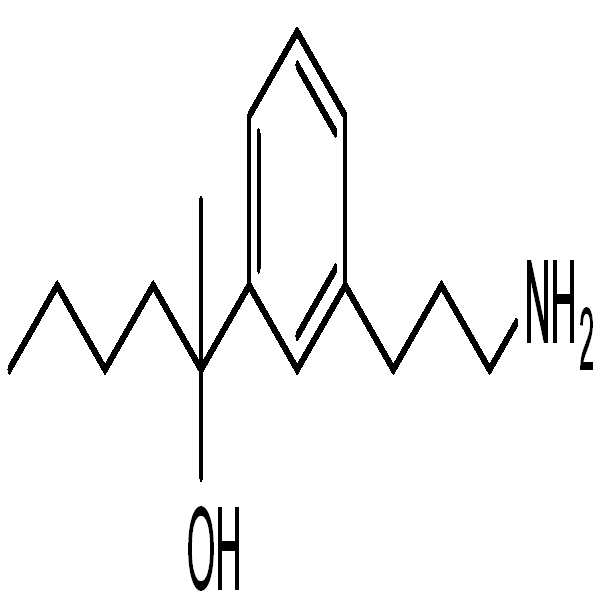
2-(3-(3-아미노프로필)페닐)헥산-2-올을 실시예 119 에서 사용된 방법에 따라 제조하였다.2- (3- (3-aminopropyl) phenyl) hexan-2-ol was prepared according to the method used in Example 119 .
단계 1: 염화부틸마그네슘과 1-(3-브로모페닐)에타논과의 그리냐르 커플링 후 플래시 크로마토그래피 (0→25% 에틸 아세테이트/헥산 구배) 에 의해, 2-(3-브로모페닐)헥산-2-올을 황색 오일로서 산출하였다. 수율 (0.99 g, 51%): 1H NMR (400 MHz, CDCl3) δ 7.59 (t, J = 2.0 Hz, 1H), 7.30-7.37 (m, 2H), 7.19 (t, J = 8.0 Hz, 1H), 1.70-1.84 (m, 2H), 1.52 (s, 3H), 1.64 (brs, 1H), 1.18 - 1.30 (m, 3H), 1.02-1.14 (m, 1H), 0.84 (t, J = 7.2 Hz, 3H). Step 1: 2- (3-bromophenyl) by flash chromatography (0 → 25% ethyl acetate / hexane gradient) after Grignard coupling of butylmagnesium chloride with 1- (3-bromophenyl) ethanone Hexane-2-ol was calculated as yellow oil. Yield (0.99 g, 51%): 1 H NMR (400 MHz, CDCl 3 ) δ 7.59 (t, J = 2.0 Hz, 1H), 7.30-7.37 (m, 2H), 7.19 (t, J = 8.0 Hz, 1H), 1.70-1.84 (m, 2H), 1.52 (s, 3H), 1.64 (brs, 1H), 1.18-1.30 (m, 3H), 1.02-1.14 (m, 1H), 0.84 (t, J = 7.2 Hz, 3H).
단계 2: 2-(3-브로모페닐)헥산-2-올과 알릴 프탈이미드와의 헥 커플링 후, 크로마토그래피 (5→30% 에틸 아세테이트/헥산 구배) 에 의해, (E)-2-(3-(3-(2-히드록시헥산-2-일)페닐)알릴)이소인돌린-1,3-디온을 무색 오일로서 산출하였다. 수율 (0.46 g, 47%): 1H NMR (400 MHz, CDCl3) δ 7.78-7.86 (m, 2H), 7.66-7.72 (m, 2H), 7.40 (s, 1H), 7.18-7.28 (m, 3H), 6.61-6.68 (m, 1H), 6.24 (dt, J = 6.4, 15.6 Hz, 1H), 4.42 (dd, J = 1.2, 6.4 Hz, 2H), 1.85 (brs, 1H), 1.54-1.56 (m, 2H), 1.50 (s, 3H), 1.15-1.30 (m, 3H), 1.00-1.10 (m, 1H), 0.75-0.85 (m, 3H). Step 2: Hex coupling of 2- (3-bromophenyl) hexan-2-ol with allyl phthalimide, followed by chromatography (5 → 30% ethyl acetate / hexane gradient), ( E ) -2 -(3- (3- (2-hydroxyhexane-2-yl) phenyl) allyl) isoindoline-1,3-dione was calculated as a colorless oil. Yield (0.46 g, 47%): 1 H NMR (400 MHz, CDCl 3 ) δ 7.78-7.86 (m, 2H), 7.66-7.72 (m, 2H), 7.40 (s, 1H), 7.18-7.28 (m , 3H), 6.61-6.68 (m, 1H), 6.24 (dt, J = 6.4, 15.6 Hz, 1H), 4.42 (dd, J = 1.2, 6.4 Hz, 2H), 1.85 (brs, 1H), 1.54- 1.56 (m, 2H), 1.50 (s, 3H), 1.15-1.30 (m, 3H), 1.00-1.10 (m, 1H), 0.75-0.85 (m, 3H).
단계 3: (E)-2-(3-(3-(2-히드록시헥산-2-일)페닐)알릴)이소인돌린-1,3-디온의 환원 후 플래시 크로마토 크로마토그래피 (0→40% 에틸 아세테이트/헥산 구배) 에 의해, 2-(3-(3-(2-히드록시헥산-2-일)페닐)프로필)이소인돌린-1,3-디온을 무색 오일로서 산출하였다. 수율 (0.43 g, 65%): 1H NMR (400 MHz, CDCl3) δ 7.80-7.84 (m, 2H), 7.68-7.72 (m, 2h), 7.27 (brs, 1H), 7.16-7.23 (m, 2H), 7.04-7.08 (m, 1H), 3.73 (t, J = 7.2 Hz, 2H), 2.69 (t, J = 8.0 Hz, 2H), 2.03 (5 중항, J = 7.6 Hz, 2H), 1.54-1.56 (m, 2H), 1.65 (brs, 1H), 1.52 (s, 3H), 1.15-1.30 (m, 3H), 1.10-1.30 (m, 1H), 0.83 (t, J = 7.2 Hz, 3H). Step 3 : ( E ) -2- (3- (3- (2-hydroxyhexane-2-yl) phenyl) allyl) isoindoline-1,3-dione followed by flash chromatography (0 → 40 % Ethyl acetate / hexanes gradient) yielded 2- (3- (3- (2-hydroxyhexane-2-yl) phenyl) propyl) isoindoline-1,3-dione as a colorless oil. Yield (0.43 g, 65%): 1 H NMR (400 MHz, CDCl 3 ) δ 7.80-7.84 (m, 2H), 7.68-7.72 (m, 2h), 7.27 (brs, 1H), 7.16-7.23 (m , 2H), 7.04-7.08 (m, 1H), 3.73 (t, J = 7.2 Hz, 2H), 2.69 (t, J = 8.0 Hz, 2H), 2.03 (5 triplets, J = 7.6 Hz, 2H), 1.54-1.56 (m, 2H), 1.65 (brs, 1H), 1.52 (s, 3H), 1.15-1.30 (m, 3H), 1.10-1.30 (m, 1H), 0.83 (t, J = 7.2 Hz, 3H).
단계 4: 2-(3-(3-(2-히드록시헥산-2-일)페닐)프로필)이소인돌린-1,3-디온의 탈보호 후 플래시 크로마토그래피 (0→10% (7N NH3/MeOH)/에틸 아세테이트 구배) 에 의해, 실시예 120 을 무색 오일로서 산출하였다. 수율 (0.157 g, 90%): 1H NMR (400 MHz, CDCl3) δ 7.20-7.27 (m, 3H), 7.03-7.07 (m, 1H), 2.73 (t, J = 7.2 Hz, 2H), 2.66 (t, J = 8.0 Hz, 2H), 1.70-1.84 (m, 4H), 1.53 (s, 3H), 1.42 (brs, 3H), 1.18-1.30 (m, 3H), 1.06-1.16 (m, 1H), 0.84 (t, J = 7.2 Hz, 3H). ESI MS m/z 236.2 [m + H]+, 218.2 [m + H - H2O]. Step 4 : Flash chromatography after deprotection of 2- (3- (3- (2-hydroxyhexane-2-yl) phenyl) propyl) isoindoline-1,3-dione (0 → 10% (7N NH3) / MeOH) / ethyl acetate gradient) yielded Example 120 as a colorless oil. Yield (0.157 g, 90%): 1 H NMR (400 MHz, CDCl 3 ) δ 7.20-7.27 (m, 3H), 7.03-7.07 (m, 1H), 2.73 (t, J = 7.2 Hz, 2H), 2.66 (t, J = 8.0 Hz, 2H), 1.70-1.84 (m, 4H), 1.53 (s, 3H), 1.42 (brs, 3H), 1.18-1.30 (m, 3H), 1.06-1.16 (m, 1H), 0.84 (t, J = 7.2 Hz, 3H). ESI MS m / z 236.2 [m + H] + , 218.2 [m + H-H 2 O].
실시예 121Example 121
1-(3-(3-아미노프로필)페닐)-2-메틸헥산-2-올의 제조Preparation of 1- (3- (3-aminopropyl) phenyl) -2-methylhexan-2-ol

1-(3-(3-아미노프로필)페닐)-2-메틸헥산-2-올을 실시예 119 에서 사용된 방법에 따라 제조하였다.1- (3- (3-aminopropyl) phenyl) -2-methylhexan-2-ol was prepared according to the method used in Example 119 .
단계 1: 염화 n-부틸마그네슘과 1-(3-브로모페닐)프로판-2-온과의 그리냐르 커플링 후 플래시 크로마토그래피 (0→25% 에틸 아세테이트/헥산 구배) 에 의해, 1-(3-브로모페닐)-2-메틸헥산-2-올을 황색 오일로서 산출하였다. 수율 (0.99 g, 51%): 1H NMR (400 MHz, CDCl3) δ 7.35-7.38 (m, 2H), 7.11-7.19 (m, 2H), 2.70 (dd, J = 13.4, 28.8 Hz, 2H), 1.24-1.48 (m, 7H), 1.13 (s, 3H), 0.91 (t, J = 7.2 Hz, 3H). Step 1: Grignard coupling of n-butylmagnesium chloride with 1- (3-bromophenyl) propan-2-one followed by flash chromatography (0 → 25% ethyl acetate / hexane gradient) to give 1- ( 3-Bromophenyl) -2-methylhexan-2-ol was calculated as yellow oil. Yield (0.99 g, 51%): 1 H NMR (400 MHz, CDCl 3 ) δ 7.35-7.38 (m, 2H), 7.11-7.19 (m, 2H), 2.70 (dd, J = 13.4, 28.8 Hz, 2H ), 1.24-1.48 (m, 7H), 1.13 (s, 3H), 0.91 (t, J = 7.2 Hz, 3H).
단계 2: 1-(3-브로모페닐)-2-메틸헥산-2-올과 알릴 프탈이미드와의 헥 커플링 후 크로마토그래피 (5→30% 에틸 아세테이트/헥산 구배) 에 의해, (E)-2-(3-(3-(2-히드록시-2-메틸헥실)페닐)알릴)이소인돌린-1,3-디온을 백색 고체로서 산출하였다. 수율 (0.55 g, 50%): 1H NMR (400 MHz, CDCl3) δ 7.80-7.88 (m, 2H), 7.68-7.74 (m, 2H), 7.16-7.26 (m, 3H), 7.04-7.08 (m, 1H), 6.60-6.66 (m, 1H), 6.24 (dt, J = 6.4, 16 Hz, 1H), 4.43 (dd, J = 1.2, 6.4 Hz, 2H), 2.69 (dd, J = 13.2, 28 Hz, 2H), 1.30-1.50 (m, 7H), 1.10 (s, 3H), 0.89 (t, J = 7.2 Hz, 3H). Step 2: Hex coupling of 1- (3-bromophenyl) -2-methylhexan-2-ol with allyl phthalimide followed by chromatography (5 → 30% ethyl acetate / hexane gradient), ( E ) -2- (3- (3- (2-hydroxy-2-methylhexyl) phenyl) allyl) isoindoline-1,3-dione was calculated as a white solid. Yield (0.55 g, 50%): 1 H NMR (400 MHz, CDCl 3 ) δ 7.80-7.88 (m, 2H), 7.68-7.74 (m, 2H), 7.16-7.26 (m, 3H), 7.04-7.08 (m, 1H), 6.60-6.66 (m, 1H), 6.24 (dt, J = 6.4, 16 Hz, 1H), 4.43 (dd, J = 1.2, 6.4 Hz, 2H), 2.69 (dd, J = 13.2 , 28 Hz, 2H), 1.30-1.50 (m, 7H), 1.10 (s, 3H), 0.89 (t, J = 7.2 Hz, 3H).
단계 3: (E)-2-(3-(3-(2-히드록시-2-메틸헥실)페닐)알릴)이소인돌린-1,3-디온의 환원 후 플래시 크로마토그래피 (0→40% 에틸 아세테이트/헥산 구배) 에 의해, 2-(3-(3-(2-히드록시-2-메틸헥실)페닐)프로필)이소인돌린-1,3-디온을 무색 오일로서 산출하였다. 수율 (0.43 g, 65%): 1H NMR (400 MHz, CDCl3) δ 7.78-7.84 (m, 2H), 7.66-7.72 (m, 2H), 7.16 (t, J = 8.0 Hz, 1H), 7.04-7.08 (m, 2H), 6.95-6.99 (m, 1H), 3.72 (t, J = 7.2 Hz, 2H), 2.62-2.76 (m, 4H), 2.03 (5 중항, J = 7.6 Hz, 2H), 1.25-1.50 (m, 7H), 1.12 (s, 3H), 0.91 (t, J = 7.2 Hz, 3H). Step 3 : ( E ) -2- (3- (3- (2-hydroxy-2-methylhexyl) phenyl) allyl) isoindoline-1,3-dione followed by flash chromatography (0 → 40% Ethyl acetate / hexane gradient) yielded 2- (3- (3- (2-hydroxy-2-methylhexyl) phenyl) propyl) isoindoline-1,3-dione as a colorless oil. Yield (0.43 g, 65%): 1 H NMR (400 MHz, CDCl 3 ) δ 7.78-7.84 (m, 2H), 7.66-7.72 (m, 2H), 7.16 (t, J = 8.0 Hz, 1H), 7.04-7.08 (m, 2H), 6.95-6.99 (m, 1H), 3.72 (t, J = 7.2 Hz, 2H), 2.62-2.76 (m, 4H), 2.03 (quintet, J = 7.6 Hz, 2H ), 1.25-1.50 (m, 7H), 1.12 (s, 3H), 0.91 (t, J = 7.2 Hz, 3H).
단계 4: 2-(3-(3-(2-히드록시-2-메틸헥실)페닐)프로필)이소인돌린-1,3-디온의 탈보호 후 플래시 크로마토그래피 (0→10% (7N NH3/MeOH)/에틸 아세테이트) 구배에 의해, 실시예 121 을 무색 오일로서 산출하였다. 수율 (0.144 g, 85%): 1H NMR (400 MHz, CDCl3) δ 7.18-7.24 (m, 1H), 7.00-7.08 (m, 3H), 2.68-2.78 (m, 4H), 2.60-2.68 (m, 2H), 1.71-1.80 (m, 2H), 1.24-1.50 (m, 9H), 1.12 (s, 3H), 0.91 (t, J = 7.2 Hz, 3H). ESI MS m/z 250.3 [m + H]+, 232.3 [m + H - H2O] Step 4 : Flash chromatography after deprotection of 2- (3- (3- (2-hydroxy-2-methylhexyl) phenyl) propyl) isoindoline-1,3-dione (0 → 10% (7N NH3) Example 121 was calculated as a colorless oil by the / MeOH) / ethyl acetate) gradient. Yield (0.144 g, 85%): 1 H NMR (400 MHz, CDCl 3 ) δ 7.18-7.24 (m, 1H), 7.00-7.08 (m, 3H), 2.68-2.78 (m, 4H), 2.60-2.68 (m, 2H), 1.71-1.80 (m, 2H), 1.24-1.50 (m, 9H), 1.12 (s, 3H), 0.91 (t, J = 7.2 Hz, 3H). ESI MS m / z 250.3 [m + H] + , 232.3 [m + H-H 2 O]
실시예Example 122 122
3-(3-(4-메톡시부틸)페닐)프로판-1-아민의 제조Preparation of 3- (3- (4-methoxybutyl) phenyl) propan-1-amine

3-(3-(4-메톡시부틸)페닐)프로판-1-아민을 실시예 76 에서 사용된 방법에 따라 제조하였다.3- (3- (4-methoxybutyl) phenyl) propan-1-amine was prepared according to the method used in Example 76 .
단계 1: 브로마이드 57 과 4-메톡시부트-1-인과의 소노가시라 반응에 의해, tert-부틸 3-(3-(4-메톡시부트-1-이닐)페닐)프로필카르바메이트를 황색 오일로서 산출하였다. 수율 (0.83 g, 77%): 1H NMR (400 MHz, CDCl3) δ 7.22-7.25 (m, 2H), 7.16-7.21 (m, 1H), 7.09 (d, J = 7.6 Hz, 1H), 4.51 (bs, 1H), 3.60 (t, J = 7.8 Hz, 2H), 3.41(s, 3H), 3.10-3.16 (m, 2H), 2.69 (t, J = 7.0 Hz, 2H), 2.59 (t, J = 7.6 Hz, 2H), 1.76-1.84 (m, 2H), 1.44 (s, 9H). Step 1: tert -butyl 3- (3- (4-methoxybut-1-ynyl) phenyl) propylcarbamate as yellow oil by the sonogashi reaction of bromide 57 with 4-methoxybut-1-yne Calculated as Yield (0.83 g, 77%): 1 H NMR (400 MHz, CDCl 3 ) δ 7.22-7.25 (m, 2H), 7.16-7.21 (m, 1H), 7.09 (d, J = 7.6 Hz, 1H), 4.51 (bs, 1H), 3.60 (t, J = 7.8 Hz, 2H), 3.41 (s, 3H), 3.10-3.16 (m, 2H), 2.69 (t, J = 7.0 Hz, 2H), 2.59 (t , J = 7.6 Hz, 2H), 1.76-1.84 (m, 2H), 1.44 (s, 9H).
단계 2: tert-부틸 3-(3-(4-메톡시부트-1-이닐)페닐)프로필 카르바메이트의 환원에 의해, tert-부틸 3-(3-(4-메톡시부틸)페닐)프로필카르바메이트를 황색 오일로서 산출하였다. 수율 (0.81 g, 83%): 1H NMR (400 MHz, CDCl3) δ 7.16-7.20 (m, 1H), 6.97-7.02 (m, 3H), 4.53 (bs, 1H), 3.39 (t, J = 6.4 Hz, 2H), 3.32 (s, 3H), 3.10-3.17 (m, 2H), 2.58-2.64 (m, 4H), 1.76-1.84 (m, 2H), 1.59-1.70 (m, 4H), 1.44 (s, 9H). Step 2: tert - butyl 3- (3- (4-methoxy-boot-1-ynyl) phenyl) propyl carbamic by reduction of the carbamate, tert - butyl 3- (3- (4-methoxybutyl) phenyl) Propylcarbamate was calculated as a yellow oil. Yield (0.81 g, 83%): 1 H NMR (400 MHz, CDCl 3 ) δ 7.16-7.20 (m, 1H), 6.97-7.02 (m, 3H), 4.53 (bs, 1H), 3.39 (t, J = 6.4 Hz, 2H), 3.32 (s, 3H), 3.10-3.17 (m, 2H), 2.58-2.64 (m, 4H), 1.76-1.84 (m, 2H), 1.59-1.70 (m, 4H), 1.44 (s, 9 H).
단계 3: tert-부틸 3-(3-(4-메톡시부틸)페닐)프로필카르바메이트의 BOC 탈보호에 의해, 실시예 122 히드로클로라이드를 회백색 고체로서 산출하였다. 수율 (0.615 g, 96%): 1H NMR (400 MHz, DMSO-d 6) δ 7.16-7.19 (m, 1H), 6.99-7.02 (m, 3H), 3.29 (t, J = 6.2 Hz, 2H), 3.18 (s, 3H), 2.76 (t, J = 7.6 Hz, 2H), 2.58 (t, J = 7.6 Hz, 2H), 2.54 (t, J = 7.4 Hz, 2H), 1.77-1.83 (m, 2H), 1.50-1.59 (m, 2H), 1.44-1.49 (m, 2H). 13C NMR (100 MHz, DMSO-d 6 ) δ 142.7, 141.3, 128.8, 128.7, 126.4, 126.1, 72.1, 58.3, 38.8, 35.3, 32.3, 29.2, 29.1, 28.1. MS: 222 [M+1] +. Step 3: Example 122 hydrochloride was calculated as an off-white solid by BOC deprotection of tert -butyl 3- (3- (4-methoxybutyl) phenyl) propylcarbamate. Yield (0.615 g, 96%): 1 H NMR (400 MHz, DMSO- d 6 ) δ 7.16-7.19 (m, 1H), 6.99-7.02 (m, 3H), 3.29 (t, J = 6.2 Hz, 2H ), 3.18 (s, 3H), 2.76 (t, J = 7.6 Hz, 2H), 2.58 (t, J = 7.6 Hz, 2H), 2.54 (t, J = 7.4 Hz, 2H), 1.77-1.83 (m , 2H), 1.50-1.59 (m, 2H), 1.44-1.49 (m, 2H). 13 C NMR (100 MHz, DMSO- d 6) δ 142.7, 141.3, 128.8, 128.7, 126.4, 126.1, 72.1, 58.3, 38.8, 35.3, 32.3, 29.2, 29.1, 28.1. MS: 222 [M + 1] + .
실시예Example 123 123
3-(3-(2-아미노에톡시)페닐)-1-페닐프로판-1-올의 제조Preparation of 3- (3- (2-aminoethoxy) phenyl) -1-phenylpropan-1-ol

3-(3-(2-아미노에톡시)페닐)-1-페닐프로판-1-올을 실시예 64 에서 사용된 방법에 따라 제조하였다.3- (3- (2-aminoethoxy) phenyl) -1-phenylpropan-1-ol was prepared according to the method used in Example 64 .
단계 1: 브로마이드 19 와 1-페닐프로프-2-인-1-올과의 소노가시라 반응에 의해, 2,2,2-트리플루오로-N-(2-(3-(3-히드록시-3-페닐프로프-1-이닐)페녹시)에틸)아세트아미드를 갈색 오일로서 산출하였다. 수율 (0.55 g, 47%): 1H NMR (400 MHz, DMSO-d 6 ) δ 7.61 (d, J = 7.2 Hz, 1H), 7.30-7.41 (m, 5H), 7.13-7.16 (m, 1H), 7.06 (s, 1H), 6.89 (dd, J = 8.4, 2.4 Hz, 1H), 5.69 (d, J = 6.0 Hz, 1H ), 4.10 (t, J = 5.2 Hz, 2H), 3.77-3.81 (m, 2H), 2.26 (d, J = 6.0 Hz, 1H). Step 1: 2,2,2-trifluoro- N- (2- (3- (3-hydroxy) by sonogashira reaction of bromide 19 with 1-phenylprop-2-yn-1-ol 3-Phenylprop-1-ynyl) phenoxy) ethyl) acetamide was calculated as brown oil. Yield (0.55 g, 47%): 1 H NMR (400 MHz, DMSO- d 6 ) δ 7.61 (d, J = 7.2 Hz, 1H), 7.30-7.41 (m, 5H), 7.13-7.16 (m, 1H ), 7.06 (s, 1H), 6.89 (dd, J = 8.4, 2.4 Hz, 1H), 5.69 (d, J = 6.0 Hz, 1H), 4.10 (t, J = 5.2 Hz, 2H), 3.77-3.81 (m, 2H), 2.26 (d, J = 6.0 Hz, 1H).
단계 2: 2,2,2-트리플루오로-N-(2-(3-(3-히드록시-3-페닐프로프-1-이닐)페녹시)에틸)아세트아미드의 환원에 의해, 2,2,2-트리플루오로-N-(2-(3-(3-히드록시-3-페닐프로필)페녹시)에틸)아세트아미드를 황색 오일로서 수득하였다. 수율 (0.45 g, 80%). MS: 366 [M-1]. Step 2: by reduction of 2,2,2-trifluoro- N- (2- (3- (3-hydroxy-3-phenylprop-1-ynyl) phenoxy) ethyl) acetamide, 2 , 2,2-trifluoro- N- (2- (3- (3-hydroxy-3-phenylpropyl) phenoxy) ethyl) acetamide was obtained as a yellow oil. Yield (0.45 g, 80%). MS: 366 [M-1].
단계 3: 2,2,2-트리플루오로-N-(2-(3-(3-히드록시-3-페닐프로필)페녹시)에틸)아세트아미드의 탈보호에 의해, 실시예 123 을 회백색 반고체로서 산출하였다. 수율 (0.233 g, 73%): 1H NMR (400 MHz, DMSO-d 6 ) δ 7.31-7.35 (m, 4H), 7.20-7.27 (m, 1H), 7.14-7.19 (m, 1H), 6.71-6.75 (m, 3H ), 5.25 (d, J = 4.4 Hz, 1H), 4.49-4.54 (m, 1H), 3.87 (t, J = 5.8 Hz, 2H), 2.84 (t, J = 5.8 Hz, 2H), 2.50-2.66 (m, 2H), 1.820-1.90 (m, 2H), 1.52-1.60 (m, 2H). 13C NMR (100 MHz, DMSO- d 6 ) δ 159.2, 146.6, 144.1, 129.7, 128.5, 127.1, 126.3, 120.9, 114.9, 112.1, 72.1, 70.4, 41.5, 41.4, 40.6, 32.1. MS: 272 [M+1]+ Step 3: Example 123 off-white by deprotection of 2,2,2-trifluoro- N- (2- (3- (3-hydroxy-3-phenylpropyl) phenoxy) ethyl) acetamide Calculated as semisolid. Yield (0.233 g, 73%): 1 H NMR (400 MHz, DMSO- d 6 ) δ 7.31-7.35 (m, 4H), 7.20-7.27 (m, 1H), 7.14-7.19 (m, 1H), 6.71 -6.75 (m, 3H), 5.25 (d, J = 4.4 Hz, 1H), 4.49-4.54 (m, 1H), 3.87 (t, J = 5.8 Hz, 2H), 2.84 (t, J = 5.8 Hz, 2H), 2.50-2.66 (m, 2H), 1.820-1.90 (m, 2H), 1.52-1.60 (m, 2H). 13 C NMR (100 MHz, DMSO- d 6) δ 159.2, 146.6, 144.1, 129.7, 128.5, 127.1, 126.3, 120.9, 114.9, 112.1, 72.1, 70.4, 41.5, 41.4, 40.6, 32.1. MS: 272 [M + 1] +
실시예 124Example 124
3-아미노-1-(3-(3-히드록시-3-페닐프로필)페닐)프로판-1-올의 제조Preparation of 3-amino-1- (3- (3-hydroxy-3-phenylpropyl) phenyl) propan-1-ol

3-아미노-1-(3-(3-히드록시-3-페닐프로필)페닐)프로판-1-올을 실시예 19 에서 사용된 방법에 따라 제조하였다.3-Amino-1- (3- (3-hydroxy-3-phenylpropyl) phenyl) propan-1-ol was prepared according to the method used in Example 19 .
단계 1: 43 과 1-페닐프로프-2-인-1-올과의 소노가시라 반응에 의해, 2,2,2-트리플루오로-N-(3-히드록시-3-(3-(3-히드록시-3-페닐프로프-1-이닐)페닐)프로필)아세트아미드를 갈색 오일로서 산출하였다. 수율 (0.408 g, 80%). 이 화합물을 다음 변형에 그 자체로 사용하였다. Step 1: 2,2,2-trifluoro- N- (3-hydroxy-3- (3- () by reaction of 43 with 1-phenylprop-2-yn-1-ol 3-hydroxy-3-phenylprop-1-ynyl) phenyl) propyl) acetamide was calculated as brown oil. Yield (0.408 g, 80%). This compound was used by itself in the next modification.
단계 2: 2,2,2-트리플루오로-N-(3-히드록시-3-(3-(3-히드록시-3-페닐프로프-1-이닐)페닐)프로필)아세트아미드의 환원에 의해, 2,2,2-트리플루오로-N-(3-히드록시-3-(3-(3-히드록시-3-페닐프로필)페닐)프로필)아세트아미드를 황색 오일로서 산출하였다. 수율 (0.365 g, 91%). 이 화합물을 다음 변형에 그 자체로 사용하였다. Step 2: reduction of 2,2,2-trifluoro- N- (3-hydroxy-3- (3- (3-hydroxy-3-phenylprop-1-ynyl) phenyl) propyl) acetamide By 2,2,2-trifluoro- N- (3-hydroxy-3- (3- (3-hydroxy-3-phenylpropyl) phenyl) propyl) acetamide was calculated as a yellow oil. Yield (0.365 g, 91%). This compound was used by itself in the next modification.
단계 3: 2,2,2-트리플루오로-N-(3-히드록시-3-(3-(3-히드록시-3-페닐프로필)페닐)프로필)아세트아미드의 탈보호 및 플래시 크로마토그래피 (0→10% MeOH-NH3 (9.5:0.5)-DCM 구배) 에 의한 후속 정제에 의해, 실시예 124 를 담황색 오일로서 산출하였다. 수율 (0.20 g, 74%): 1H NMR (400 MHz, DMSO-d 6) δ 7.30-7.33 (m, 4H), 7.20-7.25 (m, 2H), 7.13 (s, 1H), 7.13 (d, J = 8.0 Hz, 1H), 7.08 (d, J = 8.0 Hz, 1H), 5.28 (d, J = 4.4 Hz, 1H), 4.62 (t, J = 7.2 Hz, 1H), 4.52-4.63 (m, 1H), 2.79-2.87 (m, 2H), 2.50-2.59 (m, 2H), 1.79-1.89 (m, 4H). 13C NMR (100 MHz, DMSO-d 6) δ 146.6, 145.7, 142.4, 128.6, 128.5, 127.4, 127.1, 126.2, 125.9, 123.4, 72.2, 70.3, 41.6, 37.1, 32.1. MS: 286 [M+1]+. Step 3: Deprotection and flash chromatography of 2,2,2-trifluoro- N- (3-hydroxy-3- (3- (3-hydroxy-3-phenylpropyl) phenyl) propyl) acetamide Subsequent purification with (0 → 10% MeOH-NH 3 (9.5: 0.5) -DCM gradient) gave Example 124 as pale yellow oil. Yield (0.20 g, 74%): 1 H NMR (400 MHz, DMSO- d 6 ) δ 7.30-7.33 (m, 4H), 7.20-7.25 (m, 2H), 7.13 (s, 1H), 7.13 (d , J = 8.0 Hz, 1H), 7.08 (d, J = 8.0 Hz, 1H), 5.28 (d, J = 4.4 Hz, 1H), 4.62 (t, J = 7.2 Hz, 1H), 4.52-4.63 (m , 1H), 2.79-2.87 (m, 2H), 2.50-2.59 (m, 2H), 1.79-1.89 (m, 4H). 13 C NMR (100 MHz, DMSO- d 6) δ 146.6, 145.7, 142.4, 128.6, 128.5, 127.4, 127.1, 126.2, 125.9, 123.4, 72.2, 70.3, 41.6, 37.1, 32.1. MS: 286 [M + 1] + .
실시예 125Example 125
3-(3-(2-아미노에톡시)페닐)프로판-1-올의 제조Preparation of 3- (3- (2-aminoethoxy) phenyl) propan-1-ol

3-(3-(2-아미노에톡시)페닐)프로판-1-올을 실시예 64 에서 사용된 방법에 따라 제조하였다.3- (3- (2-aminoethoxy) phenyl) propan-1-ol was prepared according to the method used in Example 64 .
단계 1: 브로마이드 19 와 프로파르길 알코올과의 소노가시라 반응에 의해, 2,2,2-트리플루오로-N-(2-(3-(3-히드록시프로프-1-이닐)페녹시)에틸)아세트아미드를 갈색 오일로서 산출하였다. 수율 (1.0 g, 43%). 미정제 물질을 다음 단계에서 직접적으로 이용하였다. Step 1: 2,2,2-trifluoro- N- (2- (3- (3-hydroxyprop-1-ynyl) phenoxy by reaction of bromide 19 with propargyl alcohol Ethyl) acetamide was calculated as brown oil. Yield (1.0 g, 43%). The crude material was used directly in the next step.
단계 2: 2,2,2-트리플루오로-N-(2-(3-(3-히드록시프로프-1-이닐)페녹시)에틸)아세트아미드의 환원에 의해, 2,2,2-트리플루오로-N-(2-(3-(3-히드록시프로필) 페녹시)에틸)아세트아미드를 황색 오일로서 산출하였다. 수율 (0.563 g, 91%). MS: 290 [M-1]. Step 2: 2,2,2 by reduction of 2,2,2-trifluoro- N- (2- (3- (3-hydroxyprop-1-ynyl) phenoxy) ethyl) acetamide -Trifluoro- N- (2- (3- (3-hydroxypropyl) phenoxy) ethyl) acetamide was calculated as a yellow oil. Yield (0.563 g, 91%). MS: 290 [M-1].
단계 3: 2,2,2-트리플루오로-N-(2-(3-(3-히드록시프로필)페녹시)에틸)아세트아미드의 탈보호에 의해, 실시예 125 를 황색 오일로서 산출하였다. 수율 (0.21 g, 56%): 1H NMR (400 MHz, DMSO-d 6 ) δ 7.14-7.19 (m, 1H), 6.72-6.77 (m, 3H), 3.94 (t, J = 5.6 Hz, 2H), 3.38 (t, J = 6.4 Hz, 2H), 2.91 (t, J = 5.6 Hz, 2H), 2.55 (t, J = 7.8 Hz, 2H), 1.64-1.72 (m, 2H). 13C NMR (100 MHz, DMSO-d 6 ) δ 158.5, 143.8, 129.2, 120.7, 114.6, 111.6, 68.3, 60.1, 40.1, 34.2, 31.7. MS: 210 [M+1]+. Step 3: Example 125 was calculated as yellow oil by deprotection of 2,2,2-trifluoro- N- (2- (3- (3-hydroxypropyl) phenoxy) ethyl) acetamide. . Yield (0.21 g, 56%): 1 H NMR (400 MHz, DMSO- d 6 ) δ 7.14-7.19 (m, 1H), 6.72-6.77 (m, 3H), 3.94 (t, J = 5.6 Hz, 2H ), 3.38 (t, J = 6.4 Hz, 2H), 2.91 (t, J = 5.6 Hz, 2H), 2.55 (t, J = 7.8 Hz, 2H), 1.64-1.72 (m, 2H). 13 C NMR (100 MHz, DMSO- d 6) δ 158.5, 143.8, 129.2, 120.7, 114.6, 111.6, 68.3, 60.1, 40.1, 34.2, 31.7. MS: 210 [M + 1] + .
실시예Example 126 126
5-(3-(3-아미노프로필)페닐)-N,N-디메틸펜탄아미드의 제조Preparation of 5- (3- (3-aminopropyl) phenyl) -N , N -dimethylpentanamide

5-(3-(3-아미노프로필)페닐)-N,N-디메틸펜탄아미드를 실시예 76 에서 사용된 방법에 따라 제조하였다.5- (3- (3-aminopropyl) phenyl) -N , N -dimethylpentanamide was prepared according to the method used in Example 76 .
단계 1: 브로마이드 57 과 N,N-디메틸펜트-4-인아미드와의 소노가시라 커플링에 의해, tert-부틸 3-(3-(5-(메틸아미노)-5-옥소펜트-1-이닐)페닐)프로필 카르바메이트를 산출하였다. 수율 (1.10 g, 미정제). Step 1: tert -butyl 3- (3- (5- (methylamino) -5-oxopent-1-ynyl by bromide 57 coupling with N , N -dimethylpent-4-inamide ) Phenyl) propyl carbamate was calculated. Yield (1.10 g, crude).
단계 2: tert-부틸 3-(3-(5-(디메틸아미노)-5-옥소펜트-1-이닐)페닐)프로필카르바메이트의 환원에 의해, tert-부틸 3-(3-(5-(디메틸아미노)-5-옥소펜틸)페닐)프로필카르바메이트를 황색 오일로서 산출하였다. 수율 (0.2 g, 96%): 1H NMR (400 MHz, CDCl3) δ 7.15-7.20 (m, 1H), 6.97-7.01 (m, 3H), 4.59 (bs, 1H), 3.10-3.17 (m, 2H), 2.98 (s, 3H), 2.88 (s, 3H), 2.58-2.64 (m, 4H), 2.32 (t, J = 6.6 Hz, 2H), 1.52-1.78 (m, 6H), 1.44 (s, 9H). Step 2: tert - butyl 3- (3- (5- (dimethylamino) -5-oxo-pent-1-ynyl) phenyl) by reducing the profile of the carbamate, tert - butyl 3- (3- (5- (Dimethylamino) -5-oxopentyl) phenyl) propylcarbamate was calculated as a yellow oil. Yield (0.2 g, 96%): 1 H NMR (400 MHz, CDCl 3 ) δ 7.15-7.20 (m, 1H), 6.97-7.01 (m, 3H), 4.59 (bs, 1H), 3.10-3.17 (m , 2H), 2.98 (s, 3H), 2.88 (s, 3H), 2.58-2.64 (m, 4H), 2.32 (t, J = 6.6 Hz, 2H), 1.52-1.78 (m, 6H), 1.44 ( s, 9H).
단계 3: tert-부틸 3-(3-(5-(디메틸아미노)-5-옥소펜틸)페닐)프로필카르바메이트의 BOC 탈보호에 의해, 5-(3-(3-아미노프로필)페닐)-N,N-디메틸 펜탄아미드 히드로클로라이드를 산출하였다. 농축 암모니아로의 중화 후 플래시 크로마토그래피 ((0→10%) MeOH:DCM 구배) 에 의한 정제에 의해, 실시예 126 을 황색 오일로서 산출하였다. 수율 (0.09 g, 66%): 1H NMR (400 MHz, DMSO-d 6) δ 7.13-7.17 (m, 1H), 6.96-6.99 (m, 3H), 2.91 (s, 3H), 2.77 (s, 3H), 2.50-2.56 (m, 6H), 2.26 (t, J = 7.2 Hz, 2H), 1.60-1.66 (m, 6H), 1.43-1.59 (m, 4H). 13C NMR (100 MHz, DMSO-d 6 ) δ 172.7, 142.5, 128.7, 128.6, 126.0, 37.2, 35.4, 35.2, 33.0, 32.6, 31.1, 24.8. MS: 263 [M+1] +. Step 3: 5- (3- (3-aminopropyl) phenyl) by BOC deprotection of tert -butyl 3- (3- (5- (dimethylamino) -5-oxopentyl) phenyl) propylcarbamate -N , N -dimethyl pentanamide hydrochloride was calculated. Example 126 was calculated as a yellow oil by purification by flash chromatography ((0 → 10%) MeOH: DCM gradient) after neutralization with concentrated ammonia. Yield (0.09 g, 66%): 1 H NMR (400 MHz, DMSO- d 6 ) δ 7.13-7.17 (m, 1H), 6.96-6.99 (m, 3H), 2.91 (s, 3H), 2.77 (s , 3H), 2.50-2.56 (m, 6H), 2.26 (t, J = 7.2 Hz, 2H), 1.60-1.66 (m, 6H), 1.43-1.59 (m, 4H). 13 C NMR (100 MHz, DMSO- d 6) δ 172.7, 142.5, 128.7, 128.6, 126.0, 37.2, 35.4, 35.2, 33.0, 32.6, 31.1, 24.8. MS: 263 [M + 1] + .
실시예 127Example 127
4-(3-(4-아미노부틸)페네틸)헵탄-4-올의 제조Preparation of 4- (3- (4-aminobutyl) phenethyl) heptan-4-ol

4-(3-(4-아미노부틸)페네틸)헵탄-4-올을 반응식 22 에 제시되는 방법에 따라 제조하였다.4- (3- (4-aminobutyl) phenethyl) heptan-4-ol was prepared according to the method shown in Scheme 22.
반응식 22Scheme 22

단계 1: 반응 혼합물을 90℃ 에서 18 시간 동안 가열하는 것을 제외하고는 실시예 13 에서 사용된 방법에 따라 3-테트라히드로피라닐브로모페놀과 3-부틴-1-올의 소노가시라 커플링을 수행하였다. 플래시 크로마토그래피 정제 (30% → 100% EtOAc-헥산 구배) 에 의해, 알코올 105 를 오렌지색 오일로서 산출하였다. 수율 (2.46 g, 85%); 1H NMR (400 MHz, DMSO-d 6) δ 7.22 (t, J = 8.0 Hz, 1H), 6.93-7.01 (m, 3H), 5.45 (t, J = 3.2 Hz, 1H), 4.86 (t, J = 5.6 Hz, 1H), 3.66-3.75 (m, 1H), 3.48-3.58 (m, 3H), 2.51 (t, J = 6.4 Hz, 2H), 1.64-1.90 (m, 3H), 1.44-1.64 (m, 3H). Step 1: Sonogashira coupling of 3-tetrahydropyranylbromophenol and 3-butyn-1-ol according to the method used in Example 13 except heating the reaction mixture at 90 ° C. for 18 hours. Was performed. Flash chromatography purification (30% → 100% EtOAc-hexane gradient) yielded alcohol 105 as an orange oil. Yield (2.46 g, 85%); 1 H NMR (400 MHz, DMSO- d 6 ) δ 7.22 (t, J = 8.0 Hz, 1H), 6.93-7.01 (m, 3H), 5.45 (t, J = 3.2 Hz, 1H), 4.86 (t, J = 5.6 Hz, 1H), 3.66-3.75 (m, 1H), 3.48-3.58 (m, 3H), 2.51 (t, J = 6.4 Hz, 2H), 1.64-1.90 (m, 3H), 1.44-1.64 (m, 3 H).
단계 2: 디에틸 아조디카르복실레이트 (1.195 g, 6.86 mmol) 를 아르곤 하에서 무수 THF 중의 알코올 105 (39 g, 5.64 mmol), 프탈이미드 (0.90 g, 6.12 mmol) 및 트리페닐포스핀 (1.64 g, 6.25 mmol) 의 교반 용액에 첨가하였다. 반응 혼합물을 실온에서 20 분 동안 교반하고, 감압하에서 농축하였다. 플래시 크로마토그래피 (10% → 40% 에틸 아세테이트/헥산 구배) 에 의한 정제에 의해, 프탈이미드 106 을 무색 오일로서 산출하였다. 수율 (1.77 g, 84%); 1H NMR (400 MHz, CDCl3) δ 7.82-7.88 (m, 2H), 7.68-7.73 (m, 2H), 7.14 (t, J = 8.0 Hz, 1H), 7.02-7.04 (m, 1H), 6.92-6.97 (m, 2H), 5.36 (t, J = 3.1 Hz, 1H), 3.95 (t, J = 7.2 Hz, 2H), 3.87 (ddd, J = 3.13, 9.6, 14.5 Hz, 1H), 3.58 (dtd, J = 1.2, 4.1, 11.2 Hz, 1H), 2.80 (t, J = 7.2Hz, 2H), 1.92-2.05 (m, 1H), 1.78-1.85 (m, 2H), 1.52-1.73 (m, 3H) Step 2: Diethyl azodicarboxylate (1.195 g, 6.86 mmol) was converted to alcohol 105 (39 g, 5.64 mmol), phthalimide (0.90 g, 6.12 mmol) and triphenylphosphine (1.64) in dry THF under argon. g, 6.25 mmol) in a stirred solution. The reaction mixture was stirred at rt for 20 min and concentrated under reduced pressure. Purification by flash chromatography (10% to 40% ethyl acetate / hexanes gradient) yielded phthalimide 106 as a colorless oil. Yield (1.77 g, 84%); 1 H NMR (400 MHz, CDCl 3 ) δ 7.82-7.88 (m, 2H), 7.68-7.73 (m, 2H), 7.14 (t, J = 8.0 Hz, 1H), 7.02-7.04 (m, 1H), 6.92-6.97 (m, 2H), 5.36 (t, J = 3.1 Hz, 1H), 3.95 (t, J = 7.2 Hz, 2H), 3.87 (ddd, J = 3.13, 9.6, 14.5 Hz, 1H), 3.58 (dtd, J = 1.2, 4.1, 11.2 Hz, 1H), 2.80 (t, J = 7.2 Hz, 2H), 1.92-2.05 (m, 1H), 1.78-1.85 (m, 2H), 1.52-1.73 (m , 3H)
단계 3. EtOH (abs, 50 ㎖) 중의 부티닐프탈이미드 106 (1.00 g, 2.66 mmol) 의 용액을, 아르곤을 3 분 동안 버블링시켜 탈기시켰다. 카본 상의 팔라듐 (10%, 0.102 g) 을 반응 혼합물에 첨가하고, 이것을 아르곤을 3 초 동안 버블링시킨 다음, 진공/H2 를 3 회 적용시켜 탈기시켰다. 반응 혼합물을 수소 분위기하에서 45 분 동안 교반하고 여과하였다. 여과액을 다음 단계에 직접 사용하였다. Step 3. A solution of butynylphthalimide 106 (1.00 g, 2.66 mmol) in EtOH (abs, 50 mL) was degassed by bubbling argon for 3 minutes. Palladium on carbon (10%, 0.102 g) was added to the reaction mixture, which was bubbled with argon for 3 seconds and then degassed by applying vacuum / H 2 three times. The reaction mixture was stirred for 45 minutes under hydrogen atmosphere and filtered. The filtrate was used directly in the next step.
반응 혼합물을 +50℃에서 16 시간 동안 가열하는 것을 제외하고는 실시예 12 에서 사용된 방법에 따른 히드라진 모노히드레이트로의 탈보호에 의해, 4-(3-(테트라히드로-2H-피란-2-일옥시)페닐)부트-3-인-1-아민을 무색 오일로서 산출하였고, 이것을 정제 없이 다음 단계에 사용하였다.4- (3- (tetrahydro- 2H -pyran-) by deprotection with hydrazine monohydrate according to the method used in Example 12 except that the reaction mixture was heated at + 50 ° C. for 16 hours. 2-yloxy) phenyl) but-3-yn-1-amine was calculated as a colorless oil which was used for the next step without purification.
반응을 THF 에서 수행하는 것을 제외하고는 실시예 19 에서 사용된 방법에 따라 4-(3-(테트라히드로-2H-피란-2-일옥시)페닐)부트-3-인-1-아민을 에틸 트리플루오로아세테이트로 보호하여, 트리플루오로아세트아미드 107 을 무색 오일로서 산출하였다. 수율 (0.72 g, 3 단계 후 78%); 1H NMR (400 MHz, DMSO-d 6) δ 9.37 (br.t, 1H), 7.12-7.18 (m, 1H), 6.75-6.83 (m 3H), 5.40 (t, J = 3.2 Hz, 1H), 3.69-3.77 (m, 1H), 3.47-3.54 (m, 1H), 3.17 (q, J = 6.4 Hz, 2H), 2.52 (t, J = 7.2 Hz, 2H), 1.63 -1.90 (m, 3H), 1.40-1.62 (m, 7H).4- (3- (tetrahydro-2 H -pyran-2-yloxy) phenyl) but-3-yn-1-amine was prepared according to the method used in Example 19 except that the reaction was carried out in THF. Protection with ethyl trifluoroacetate yielded trifluoroacetamide 107 as a colorless oil. Yield (0.72 g, 78% after 3 steps); 1 H NMR (400 MHz, DMSO- d 6 ) δ 9.37 (br.t, 1H), 7.12-7.18 (m, 1H), 6.75-6.83 (m 3H), 5.40 (t, J = 3.2 Hz, 1H) , 3.69-3.77 (m, 1H), 3.47-3.54 (m, 1H), 3.17 (q, J = 6.4 Hz, 2H), 2.52 (t, J = 7.2 Hz, 2H), 1.63 -1.90 (m, 3H ), 1.40-1.62 (m, 7H).
단계 4. THF:H2O (3:1, 20 ㎖) 중의 107 (0.72 g, 2.08 mmol) 과 p-톨루엔술폰산 모노히드레이트 (0.366 g) 의 혼합물을 실온에서 3.5 시간 동안 교반하였다. 반응 혼합물에 NaHCO3-염수 수용액과 EtOAc 을 첨가하여 분액하였다. 수성층을 EtOAc 로 추출하였다. 수합된 유기층을 염수로 세정하고 감압하에서 농축하였다. 플래시 크로마토그래피 (10% → 50% EtOAc-헥산 구배) 에 의한 정제에 의해, 2,2,2-트리플루오로-N-(4-(3-히드록시페닐)부틸)아세트아미드를 무색 오일로서 산출하였다. 수율 (0.438 g, 96%). Step 4. A mixture of 107 (0.72 g, 2.08 mmol) and p -toluenesulfonic acid monohydrate (0.366 g) in THF: H 2 O (3: 1, 20 mL) was stirred at rt for 3.5 h. The reaction mixture was separated by addition of aqueous NaHCO 3 -brine solution and EtOAc. The aqueous layer was extracted with EtOAc. The combined organic layers were washed with brine and concentrated under reduced pressure. Purification by flash chromatography (10% to 50% EtOAc-hexane gradient) gave 2,2,2-trifluoro- N- (4- (3-hydroxyphenyl) butyl) acetamide as a colorless oil. Calculated. Yield (0.438 g, 96%).
트리플루오로메탄술폰산 무수물 (0.32 ㎖, 1.90 mmol) 의 용액을 무수 CH2Cl2 중의 0℃, 아르곤하에서 2,2,2-트리플루오로-N-(4-(3-히드록시페닐)부틸)아세트아미드 (0.438 g, 1.68 mmol) 와 디이소프로필에틸아민 (0.5 ㎖, 2.87 mmol) 의 교반 용액에 첨가하였다. 반응 혼합물을 0℃ 에서 15 분 동안 교반하고, 감압하에서 농축하였다. EtOAc 를 잔류물에 첨가하고, 혼합물을 염수로 세정하고, 무수 MgSO4 로 건조시키고, 여과액을 감압하에서 농축하여 미정제 트리플레이트 108 을 연갈색 오일로서 산출하였고, 이것을 부가적인 정제 없이 다음 단계에서 사용하였다. 수율 (0.683 g, 정량); 1H NMR (400 MHz, DMSO-d 6) δ 9.38 (brt, 1H), 7.45 (t, J = 8.0 Hz, 1H), 7.24-7.34 (m, 3H), 3.17 (q, 6.4 Hz, 2H), 2.64 (t, J = 7.2 Hz, 2H), 1.40-1.60 (m, 4H).A solution of trifluoromethanesulfonic anhydride (0.32 mL, 1.90 mmol) was added with 2,2,2-trifluoro- N- (4- (3-hydroxyphenyl) butyl at 0 ° C. in anhydrous CH 2 Cl 2 , under argon. To a stirred solution of acetamide (0.438 g, 1.68 mmol) and diisopropylethylamine (0.5 mL, 2.87 mmol). The reaction mixture was stirred at 0 ° C. for 15 minutes and concentrated under reduced pressure. EtOAc was added to the residue, the mixture was washed with brine, dried over anhydrous MgSO 4 , and the filtrate was concentrated under reduced pressure to yield crude triflate 108 as a light brown oil, which was used in the next step without further purification. It was. Yield (0.683 g, quantitative); 1 H NMR (400 MHz, DMSO- d 6 ) δ 9.38 (brt, 1H), 7.45 (t, J = 8.0 Hz, 1H), 7.24-7.34 (m, 3H), 3.17 (q, 6.4 Hz, 2H) , 2.64 (t, J = 7.2 Hz, 2H), 1.40-1.60 (m, 4H).
단계 5. 반응을 15 시간 동안 수행하는 것을 제외하고는 실시예 2 에서 사용된 방법에 따른 트리플레이트 108 과 4-에티닐헵탄-4-올과의 소노가시라 커플링 후 플래시 크로마토 크로마토그래피 정제 (5% → 40% EtOAc-헥산 구배) 에 의해, 알킨올 109 를 연갈색 오일로서 산출하였다. 수율 (0.327 g, 51%); 1H NMR (400 MHz, DMSO-d 6) δ 9.38 (brt, 1H), 7.20-7.34 (m, 1H), 7.13-7.18 (m, 2H), 5.10 (s, 1H), 3.17 (q, J = 6.4 Hz, 1H), 2.54 (t, J = 7.2 Hz, 2H), 1.38-1.62 (m, 12H), 0.88 (t, J = 7.6 Hz, 6H).
단계 6. 반응 혼합물을 50℃ 에서 3.5 시간 동안 교반하는 것을 제외하고 실시예 19 에서 사용된 방법에 따른 트리플루오로아세트아미드 109 의 탈보호 후 플래시 크로마토 크로마토그래피 (10% - 100% 7N NH3/MeOH/CH2Cl2 -CH2Cl2) 에 의한 정제에 의해, 아민 110 을 백색 고체로서 산출하였다. 수율 (0.175 g, 71%); 1H NMR (400 MHz, CD3OD) δ 7.12-7.24 (m, 4H), 2.46-2.66 (m, 4H), 1.42-1.73 (m, 10H), 1.43-1.42 (m, 2H), 0.97 (t, J = 7.2 Hz, 6H); 13C NMR (100 MHZ, CD3OD), δ 142.8, 131.3, 128.8, 128.3, 128.2, 123.6, 91.9, 83.9, 70.9, 44.5, 41.2, 35.2, 32.2, 28.6, 17.6, 13.6; RP-HPLC tR = 7.06 분, 92.5% (AUC); LC-MS m/z = 288.25 [M+H]+. Step 6. Flash chromatography after deprotection of trifluoroacetamide 109 according to the method used in Example 19 , except that the reaction mixture was stirred at 50 ° C. for 3.5 hours (10% -100% 7N NH 3 / MeOH / CH 2 Cl 2 - by purification by CH 2 Cl 2), it yielded the
단계 7. EtOAc (5 ㎖) 중의 알킨 110 (0.0446 g, 0.155 mmol) 의 용액을 진공/아르곤을 2x 적용하여 탈기시켰다. 그 다음 Pd/C (10%, 0.0166 g) 를 진공/H2 를 2x 적용함으로써 탈기된 반응 혼합물에 첨가하고, 반응 혼합물을 실온에서 18 시간 동안 교반하였다. 여과 후 플래시 크로마토그래피 정제 (10% → 50% 의, 20% 7N NH3/MeOH/CH2Cl2 -CH2Cl2 의 구배) 에 의해, 실시예 127 을 무색 오일로서 산출하였다. 수율 (0.0321 g, 71%); 1H NMR (400 MHz, CD3OD) δ 7.13 (t, J = 7.6 Hz, 1H), 6.95-7.01 (m, 3H), 2.52-2.67 (m, 6H), 1.58-1.69 (m, 4H), 1.41-1.53 (m, 6H), 1.30-1.40 (m, 4H), 0.93 (t, J = 7.2 Hz, 6H); RP-HPLC (방법 2) tR = 7.06 분, 87.4% (AUC) ; LC-MS m/z = 288.25 [M+H]+. Step 7. A solution of alkyne 110 (0.0446 g, 0.155 mmol) in EtOAc (5 mL) was degassed by applying 2x vacuum / argon. Pd / C (10%, 0.0166 g) was then added to the degassed reaction mixture by applying 2x vacuum / H 2 and the reaction mixture was stirred for 18 hours at room temperature. After flash chromatography purification for filtering the Example 127 by (a 10% → 50%, 20% 7N NH 3 / MeOH / CH 2 Cl 2 gradient of CH 2 Cl 2), it was calculated as a colorless oil. Yield (0.0321 g, 71%); 1 H NMR (400 MHz, CD 3 OD) δ 7.13 (t, J = 7.6 Hz, 1H), 6.95-7.01 (m, 3H), 2.52-2.67 (m, 6H), 1.58-1.69 (m, 4H) , 1.41-1.53 (m, 6H), 1.30-1.40 (m, 4H), 0.93 (t, J = 7.2 Hz, 6H); RP-HPLC (Method 2) t R = 7.06 min, 87.4% (AUC); LC-MS mlz = 288.25 [M + H] + .
실시예 128Example 128
(1S,2S)-3-아미노-1-(3-(2-(1-히드록시시클로헥실)에틸)페닐)프로판-1,2-디올의 제조(1 S, 2 S) Preparation of 3-amino-1- (3- (2- (1-hydroxycyclohexyl) ethyl) phenyl) propane-1,2-diol

(1S,2S)-3-아미노-1-(3-(2-(1-히드록시시클로헥실)에틸)페닐)프로판-1,2-디올을 반응식 23 에 제시되는 방법에 따라 제조하였다.(1 S , 2 S ) -3-amino-1- (3- (2- (1-hydroxycyclohexyl) ethyl) phenyl) propane-1,2-diol was prepared according to the method set forth in Scheme 23. .
반응식 23Scheme 23

단계 1: 무수 디클로로메탄 (100 ㎖) 중의 3-브로모벤즈알데하이드 (30) (3.9 ㎖, 33.30 mmol) 의 빙냉 용액에 (카르브에톡시메틸렌)트리페닐포스포란 (11.65 g, 33.44 mmol) 을 첨가하였다. 반응 혼합물을 0℃ 에서 5 분 동안 교반한 다음, 실온에서 30 분 이상 가온시키고 감압하에서 농축하였다. 잔류물을 5% EtOAc/헥산에 재현탁하고, 10 분 동안 실온에서 교반한 다음 여과하였다. 여과 케이크를 헥산으로 세정하고, 여과액을 감압하에서 농축하였다. 플래시 컬럼 크로마토그래피 (실리카 겔, 헥산 → 10% EtOAc/헥산 구배) 에 의한 잔류물의 정제에 의해, 알릴 에스테르 111 을 백색 고체로서 산출하였다. 수율 (7.63 g, 90%). 1H NMR (400 MHz, DMSO-d 6) δ 7.95 (t, J = 1.8 Hz, 1H), 7.70-7.72 (m, 1H), 7.59 (d, J = 16.4 Hz, 1H), 7.58 (ddd, J = 1.0, 2.0, 8.0 Hz, 1H), 7.35 (t, J = 7.8 Hz, 1H), 6.69 (d, J = 16.0 Hz, 1H), 4.17 (q, J = 7.2 Hz, 2H), 1.23 (t, J = 7.0 Hz, 3H). Step 1: To an ice-cold solution of 3-bromobenzaldehyde ( 30 ) (3.9 mL, 33.30 mmol) in anhydrous dichloromethane (100 mL) was added (carbethoxymethylene) triphenylphosphorane (11.65 g, 33.44 mmol). Added. The reaction mixture was stirred at 0 ° C. for 5 minutes, then warmed at room temperature for at least 30 minutes and concentrated under reduced pressure. The residue was resuspended in 5% EtOAc / hexanes, stirred at room temperature for 10 minutes and then filtered. The filter cake was washed with hexane and the filtrate was concentrated under reduced pressure. Purification of the residue by flash column chromatography (silica gel, hexanes to 10% EtOAc / hexanes gradient) yielded allyl ester 111 as a white solid. Yield (7.63 g, 90%). 1 H NMR (400 MHz, DMSO- d 6 ) δ 7.95 (t, J = 1.8 Hz, 1H), 7.70-7.72 (m, 1H), 7.59 (d, J = 16.4 Hz, 1H), 7.58 (ddd, J = 1.0, 2.0, 8.0 Hz, 1H), 7.35 (t, J = 7.8 Hz, 1H), 6.69 (d, J = 16.0 Hz, 1H), 4.17 (q, J = 7.2 Hz, 2H), 1.23 ( t, J = 7.0 Hz, 3H).
단계 2. 디이소부틸 알루미늄 히드라이드 (DIBAL-H, CH2Cl2 중 1.0 M 용액으로 60 ㎖, 60.0 mmol) 의 용액을 디에틸 에테르 (100 ㎖) 중의 에스테르 111 (0.63 g, 29.9 mmol) 의 빙냉 용액에 첨가하였다. 반응 혼합물을 0℃ 에서 30 분 동안 교반하고, 이 후 NaHSO4 의 수용액 (2M, 42 ㎖) 을 첨가하고, 수득된 혼합물을 실온으로 가온시키면서 1.5 시간 동안 교반하였다. 교반된 반응 혼합물에 무수 MgSO4 를 첨가하고, 30 분 후 혼합물을 여과하고, 여과 케이크를 EtOAc 로 충분히 세정하였다. 여과액을 감압하에서 농축하여 알코올 112 를 무색 오일로서 산출하였다. 수율 (6.42 g, 정량). 1H NMR (400 MHz, DMSO-d 6) δ 7.60 (t, J = 1.8 Hz, 1H), 7.40 (dt, J = 1.2, 7.6 Hz, 1H), 7.38 (ddd, J = 1.0, 2.0, 8.0 Hz, 1H), 7.25 (t, J = 7.6 Hz, 1H), 6.48-6.54 (m, 1H), 6.43 (dt, J = 4.3, 16.0 Hz, 1H), 4.88 (t, J = 5.5 Hz, 1H), 4.08-4.12 (m, 2H). Step 2. Diisobutyl aluminum hydride (DIBAL-H in CH 2 Cl 2 A solution of 60 mL, 60.0 mmol) in 1.0 M solution was added to an ice cold solution of ester 111 (0.63 g, 29.9 mmol) in diethyl ether (100 mL). The reaction mixture was stirred at 0 ° C. for 30 minutes, after which an aqueous solution of NaHSO 4 (2M, 42 mL) was added and the resulting mixture was stirred for 1.5 hours while warming to room temperature. Anhydrous MgSO 4 was added to the stirred reaction mixture, after 30 minutes the mixture was filtered and the filter cake was washed thoroughly with EtOAc. The filtrate was concentrated under reduced pressure to yield alcohol 112 as a colorless oil. Yield (6.42 g, quant.). 1 H NMR (400 MHz, DMSO- d 6 ) δ 7.60 (t, J = 1.8 Hz, 1H), 7.40 (dt, J = 1.2, 7.6 Hz, 1H), 7.38 (ddd, J = 1.0, 2.0, 8.0 Hz, 1H), 7.25 (t, J = 7.6 Hz, 1H), 6.48-6.54 (m, 1H), 6.43 (dt, J = 4.3, 16.0 Hz, 1H), 4.88 (t, J = 5.5 Hz, 1H ), 4.08-4.12 (m, 2H).
단계 3. 아세트산 무수물 (1.2 ㎖, 12.7 mmol) 을 무수 CH2Cl2 중의 알코올 112 (2.535 g, 11.90 mmol), Et3N (2.0 ㎖, 14.3 mmol) 및 DMAP (0.141 g, 1.15 mmol) 의 교반 용액에 첨가하였다. 반응 혼합물을 실온에서 30 분 동안 교반하고 감압하에서 농축하였다. 플래시 컬럼 크로마토그래피 (실리카 겔, 5% → 20% EtOAc/헥산 구배) 에 의한 정제에 의해, 아세테이트 113 을 무색 오일로서 산출하였다. 수율 (2.71 g, 89%). 1H NMR (400 MHz, DMSO-d 6) δ 7.66 (t, J = 1.8 Hz, 1H), 7.40-7.46 (m, 2H), 7.27 (t, J = 7.8 Hz, 1H), 6.58-6.65 (m, 1H), 6.42 (dt, J = 5.9, 16.0 Hz, 1H), 4.66 (dd, J = 1.4, 5.9 Hz, 1H), 2.04 (s, 3H). Step 3. Acetic acid anhydride (1.2 mL, 12.7 mmol) was stirred with alcohol 112 (2.535 g, 11.90 mmol), Et 3 N (2.0 mL, 14.3 mmol) and DMAP (0.141 g, 1.15 mmol) in anhydrous CH 2 Cl 2 . To the solution. The reaction mixture was stirred at rt for 30 min and concentrated under reduced pressure. Purification by flash column chromatography (silica gel, 5% to 20% EtOAc / hexanes gradient) yielded acetate 113 as a colorless oil. Yield (2.71 g, 89%). 1 H NMR (400 MHz, DMSO- d 6 ) δ 7.66 (t, J = 1.8 Hz, 1H), 7.40-7.46 (m, 2H), 7.27 (t, J = 7.8 Hz, 1H), 6.58-6.65 ( m, 1H), 6.42 (dt, J = 5.9, 16.0 Hz, 1H), 4.66 (dd, J = 1.4, 5.9 Hz, 1H), 2.04 (s, 3H).
단계 4. 알릴 아세테이트 113 (0.71 g, 10.6 mmol), 나트륨 아지드 (0.787 g, 12.1 mmol), 물 (20 ㎖) 및 THF (50 ㎖) 의 혼합물을, 아르곤을 3 분 동안 버블링시켜 탈기시켰다. 트리스-디벤질리덴아세토닐-비스-팔라듐-클로로포름 부가생성물 (0.158 g, 0.17 mmol) 및 디페닐포스피노페로센 (0.1773 g, 0.32 mmol) 을 반응 혼합물에 첨가하였다. 진공/아르곤을 3x 적용하여 공기를 배출시킨 다음, 반응 혼합물을 아르곤하에 60℃ 에서 4 시간 동안 가열하였다. 반응 혼합물을 감압하에서 농축하고, 물을 잔류물에 첨가하고, 생성물을 헥산으로 2 회 추출하였다. 수합된 헥산층을 포화 염수로 세정하고, 무수 MgSO4 로 건조시키고, 여과하고, 여과액을 감압하에서 농축하였다. 플래시 컬럼 크로마토그래피 (실리카 겔, 5% → 30% EtOAc/헥산 구배) 에 의한 잔류물의 정제에 의해, 알릴 아지드 114 를 무색 오일로서 산출하였다. 수율 (1.90 g, 75%). 1H NMR (400 MHz, DMSO-d 6) δ 7.69 (t, J = 1.8 Hz, 1H), 7.42-7.48 (m, 2H), 7.28 (t, J = 7.8 Hz, 1H), 6.62-6.68 (m, 1H), 6.45 (dt, J = 6.3, 15.8 Hz, 1H), 4.02 (dd, J = 1.2, 6.3 Hz, 1H). Step 4. A mixture of allyl acetate 113 (0.71 g, 10.6 mmol), sodium azide (0.787 g, 12.1 mmol), water (20 mL) and THF (50 mL) was degassed by bubbling argon for 3 minutes. . Tris -dibenzylideneacetonyl- bis -palladium-chloroform adduct (0.158 g, 0.17 mmol) and diphenylphosphinoferrocene (0.1773 g, 0.32 mmol) were added to the reaction mixture. The air was evacuated by applying 3x vacuum / argon, and then the reaction mixture was heated at 60 ° C. for 4 hours under argon. The reaction mixture was concentrated under reduced pressure, water was added to the residue and the product was extracted twice with hexane. The combined hexane layers were washed with saturated brine, dried over anhydrous MgSO 4 , filtered and the filtrate was concentrated under reduced pressure. Purification of the residue by flash column chromatography (silica gel, 5% to 30% EtOAc / hexanes gradient) yielded allyl azide 114 as a colorless oil. Yield (1.90 g, 75%). 1 H NMR (400 MHz, DMSO- d 6 ) δ 7.69 (t, J = 1.8 Hz, 1H), 7.42-7.48 (m, 2H), 7.28 (t, J = 7.8 Hz, 1H), 6.62-6.68 ( m, 1H), 6.45 (dt, J = 6.3, 15.8 Hz, 1H), 4.02 (dd, J = 1.2, 6.3 Hz, 1H).
단계 5. 100 ㎖ 둥근 바닥 플라스크에 H2O (19 ㎖) 및 tert-BuOH (19 ㎖), 이어서 AD-믹스-β (5.61 g) 를 넣었다. 혼합물을 실온에서 10 분 동안 교반하고, 이 후 MeSO2NH2 (0.36 g, 3.79 mmol) 를 첨가하였다. 반응 혼합물을 0℃ 로 냉각하고, 알릴 아지드 114 (0.90 g, 3.78 mmol) 를 첨가하고, 반응 혼합물을 0℃ 에서 24 시간 동안 교반하였다. Na2S2O3 (6.30 g) 을 첨가하고, 혼합물을 추가 1 시간 동안 교반하고, 이 후 EtOAc (50 ㎖) 및 이어서 NaCl (50 ㎖) 을 첨가하였다. 층을 분리하고, 수성층을 EtOAc (3x25 ㎖) 로 추출하였다. 수합된 유기층을 염수 (50 ㎖) 로 세정하고, 무수 MgSO4 로 건조키시고 여과하였다. 여과액을 감압하에서 농축하고, 잔류물을 플래시 컬럼 크로마토그래피 (실리카 겔, 10% → 90% EtOAc/헥산 구배) 에 의해, 정제하여 아지도 디올 115 를 걸쭉한 무색 오일로서 산출하였다. 수율 (1.02 g, 99%). 1H NMR (400 MHz, DMSO-d 6) δ 7.50 (t, J = 1.6 Hz, 1H), 7.40 (ddd, J = 1.2, 2.0, 7.6 Hz, 1H), 7.29-7.33 (m, 1H), 7.25 (t, J = 7.6 Hz, 1H), 5.52 (d, J = 5.1 Hz, 1H), 5.26 (d, J = 5.9 Hz, 1H), 4.51 (t, J = 4.7 Hz, 1H), 3.15 (dd, J = 3.3, 12.5 Hz, 1H), 3.02 (dd, J = 8.0, 12.7 Hz, 1H).
단계 6. 아지도 디올 115 (0.826 g, 3.037 mmol), 트리페닐포스핀 (0.84 g, 3.20 mmol), THF (10 ㎖), 물 (0.2 ㎖) 및 에틸 트리플루오로아세테이트 (1 ㎖) 의 혼합물을 50℃ 에서 5 시간 동안 가열한 다음, 감압하에서 농축하였다. 플래시 컬럼 크로마토그래피 (실리카 겔, 20% → 90% EtOAc/헥산 구배) 에 의한 잔류물의 정제에 의해, 트리플루오로아세트아미드 116 을 백색 고체로서 산출하였다. 수율 (0.73 g, 70%). 1H NMR (400 MHz, DMSO-d 6) δ 9.21 (t, J = 5.3 Hz, 1H), 7.52 (t, J = 1.6 Hz, 1H), 7.40 (ddd, J = 1.2, 2.0, 7.8 Hz, 1H), 7.30-7.33 (m, 1H), 7.25 (t, J = 7.6 Hz, 1H), 5.48 (d, J = 5.1 Hz, 1H), 5.00 (d, J = 5.9 Hz, 1H), 4.51 (t, J = 4.7 Hz, 1H), 3.70-3.76 (m, 1H), 3.24 (dt, J = 4.9, 13.3 Hz, 1H), 2.98 (ddd, J = 5.7, 8.8, 13.3 Hz, 1H). Step 6. Mixture of azido diol 115 (0.826 g, 3.037 mmol), triphenylphosphine (0.84 g, 3.20 mmol), THF (10 mL), water (0.2 mL) and ethyl trifluoroacetate (1 mL) Was heated at 50 ° C. for 5 h and then concentrated under reduced pressure. Purification of the residue by flash column chromatography (silica gel, 20% to 90% EtOAc / hexanes gradient) yielded trifluoroacetamide 116 as a white solid. Yield (0.73 g, 70%). 1 H NMR (400 MHz, DMSO- d 6 ) δ 9.21 (t, J = 5.3 Hz, 1H), 7.52 (t, J = 1.6 Hz, 1H), 7.40 (ddd, J = 1.2, 2.0, 7.8 Hz, 1H), 7.30-7.33 (m, 1H), 7.25 (t, J = 7.6 Hz, 1H), 5.48 (d, J = 5.1 Hz, 1H), 5.00 (d, J = 5.9 Hz, 1H), 4.51 ( t, J = 4.7 Hz, 1H), 3.70-3.76 (m, 1H), 3.24 (dt, J = 4.9, 13.3 Hz, 1H), 2.98 (ddd, J = 5.7, 8.8, 13.3 Hz, 1H).
단계 7. 알켄 116 (0.116 g, 0.922 mmol), 브로마이드 117 (0.242 g, 0.708 mmol), 테트라부틸암모늄 아세테이트 (1.19 g) 및 Pd(OAc)2 (0.029 g, 0.127 mmol) 의 혼합물을 아르곤하에 90℃ 에서 5 시간 동안 가열하였다. 물 및 염수를 반응 혼합물에 첨가하고, 이것을 EtOAc 로 3 회 추출하였다. 수합된 유기층을 염수로 세정하고, 무수 MgSO4 로 건조시키고, 감압하에서 농축하였다. 플래시 컬럼 크로마토그래피 (실리카 겔, 20% → 70% EtOAc/헥산 구배) 에 의한 정제에 의해, 알켄 118 을 백색 포말로서 산출하였다. 수율 (0.2128 g, 78%). 1H NMR (400 MHz, DMSO-d 6) δ 9.19 (t, J = 5.3 Hz, 1H), 7.35-7.37 (m, 1H), 7.20-7.26 (m, 2H), 7.13-7.18 (m, 1H), 6.51 (d, J = 16.2 Hz, 1H), 6.33 (d, J = 16.0 Hz, 1H), 5.33 (d, J = 4.9 Hz, 1H), 4.94 (d, J = 5.7 Hz, 1H), 4.46 (t, J = 4.8 Hz, 1H), 4.41 (s, 1H), 3.70-3.76 (m, 1H), 3.18 (dt, J = 4.5, 13.3 Hz, 1H), 2.99 (ddd, J = 6.1, 8.8, 14.3 Hz, 1H), 1.54-1.66 (m, 2H), 1.36-1.54 (m, 7H), 1.18-1.26 (m, 1H). Step 7. A mixture of alkene 116 (0.116 g, 0.922 mmol), bromide 117 (0.242 g, 0.708 mmol), tetrabutylammonium acetate (1.19 g) and Pd (OAc) 2 (0.029 g, 0.127 mmol) was added to 90% under argon. Heated at < RTI ID = 0.0 > Water and brine were added to the reaction mixture, which was extracted three times with EtOAc. The combined organic layers were washed with brine, dried over anhydrous MgSO 4 , and concentrated under reduced pressure. Purification by flash column chromatography (silica gel, 20% -70% EtOAc / hexanes gradient) yielded alken 118 as a white foam. Yield (0.2128 g, 78%). 1 H NMR (400 MHz, DMSO- d 6) δ 9.19 (t, J = 5.3 Hz, 1H), 7.35-7.37 (m, 1H), 7.20-7.26 (m, 2 H), 7.13-7.18 (m, 1H), 6.51 (d, J = 16.2 Hz, 1H), 6.33 (d, J = 16.0 Hz, 1H), 5.33 (d, J = 4.9 Hz, 1H), 4.94 (d, J = 5.7 Hz, 1H) , 4.46 (t, J = 4.8 Hz, 1H), 4.41 (s, 1H), 3.70-3.76 (m, 1H), 3.18 (dt, J = 4.5, 13.3 Hz, 1H), 2.99 (ddd, J = 6.1 , 8.8, 14.3 Hz, 1H), 1.54-1.66 (m, 2H), 1.36-1.54 (m, 7H), 1.18-1.26 (m, 1H).
단계 8. N-((2S,3S)-2,3-디히드록시-3-(3-((E)-2-(1-히드록시시클로헥실)비닐)페닐)프로필)-2,2,2-트리플루오로아세트아미드 (118) 을, 3 당량의 K2CO3 을 MeOH:H2O (2:1) 혼합물에 사용하고 반응 혼합물을 50℃ 에서 5 시간 동안 가열하는 것을 제외하고는 실시예 19 에서 사용된 방법에 따라 탈보호하였다. 반응 후, 반응 혼합물을 감압하에서 농축하고, EtOAc/EtOH 에 재현탁하고 EtOAc/헥산 중의 50% 7N NH3/MeOH 의 구배를 사용하는 플래시 크로마토그래피에 의해, 정제하여, 알켄 119 를 무색 오일로서 산출하였다. 수율 (0.118 g, 74%). 1H NMR (400 MHz, MeOH-d 4) δ 7.42-7.44 (m, 1H), 7.30 (dt, J = 1.6, 7.6 Hz, 1H), 7.27 (t, J = 7.4 Hz, 1H), 7.21 (dt, J = 1.6, 7.2 Hz, 1H), 6.60 (d, J = 16.0 Hz, 1H), 6.36 (d, J = 16.0 Hz, 1H), 4.50 (d, J = 5.9 Hz, 1H), 3.62-2.70 (m, 1H), 2.51-2.58 (m, 2H), 1.66-1.77 (m, 2H), 1.48-1.66 (m, 7H), 1.28-1.40 (m, 1H); 13C NMR (100 MHz, MeOH-d 4 ) δ 142.3, 137.9, 137.7, 128.3, 126.7, 125.7, 125.6, 124.6, 76.0, 75.8, 71.2, 43.6, 37.5, 25.5, 21.9, 20.9; RP-HPLC (방법 1) t R = 4.73 분, 97% (AUC); ESI MS m/z 292.3 [M+H]+. Step 8 . N - ((2 S, 3 S) -2,3- dihydroxy -3- (3 - ((E) -2- (1- hydroxycyclohexyl) vinyl) phenyl) propyl) -2,2, 2-trifluoroacetamide ( 118 ) is carried out except that 3 equivalents of K 2 CO 3 is used in the MeOH: H 2 O (2: 1) mixture and the reaction mixture is heated at 50 ° C. for 5 hours. Deprotection was followed according to the method used in Example 19 . After the reaction, the reaction mixture is concentrated under reduced pressure, resuspended in EtOAc / EtOH and purified by flash chromatography using a gradient of 50% 7N NH 3 / MeOH in EtOAc / hexanes to give alken 119 as a colorless oil. It was. Yield (0.118 g, 74%). 1 H NMR (400 MHz, MeOH- d 4 ) δ 7.42-7.44 (m, 1H), 7.30 (dt, J = 1.6, 7.6 Hz, 1H), 7.27 (t, J = 7.4 Hz, 1H), 7.21 ( dt, J = 1.6, 7.2 Hz, 1H), 6.60 (d, J = 16.0 Hz, 1H), 6.36 (d, J = 16.0 Hz, 1H), 4.50 (d, J = 5.9 Hz, 1H), 3.62- 2.70 (m, 1H), 2.51-2.58 (m, 2H), 1.66-1.77 (m, 2H), 1.48-1.66 (m, 7H), 1.28-1.40 (m, 1H); 13 C NMR (100 MHz, MeOH- d 4 ) δ 142.3, 137.9, 137.7, 128.3, 126.7, 125.7, 125.6, 124.6, 76.0, 75.8, 71.2, 43.6, 37.5, 25.5, 21.9, 20.9; RP-HPLC (Method 1) t R = 4.73 min, 97% (AUC); ESI MS m / z 292.3 [M + H] + .
단계 9. EtOH (abs, 8 ㎖) 중의 알켄 119 (0.0612 g, 0.21 mmol) 의 용액을, 진공/아르곤을 2x 적용하여 탈기시켰다. 그 다음 Pd/C (10%, 0.0139 g) 를 반응 혼합물에 첨가하고, 진공/H2 2x 를 적용하여 탈기시키고, 반응 혼합물을 실온에서 18 시간 동안 교반하였다. 반응 혼합물을 여과하고, 여과액을 감압하에서 농축하여 실시예 128 을 무색 오일로서 산출하였다. 수율 (0.0454 g, 74%); 1H NMR (400 MHz, CD3OD) δ 7.20-7.25 (m, 2H), 7.13-7.17 (m, 1H), 7.09-7.12 (m, 1H), 4.45 (d, J = 6.3 Hz, 1H), 3.64 (q, J = 6.1 Hz, 1H), 2.64-2.69 (m, 2H), 2.52 (d, J = 5.9 Hz, 2H), 1.40-1.73 (m, 12H), 1.26-1.38 (m, 2H); RP-HPLC (방법 2) t R = 5.13 분, 92.2% (AUC); ESI MS m/z = 294.46 [M+H]+. Step 9. A solution of alkene 119 (0.0612 g, 0.21 mmol) in EtOH (abs, 8 mL) was degassed by applying 2x vacuum / argon. Pd / C (10%, 0.0139 g) was then added to the reaction mixture, degassed by applying vacuum / H 2 2x and the reaction mixture was stirred for 18 hours at room temperature. The reaction mixture was filtered and the filtrate was concentrated under reduced pressure to yield Example 128 as a colorless oil. Yield (0.0454 g, 74%); 1 H NMR (400 MHz, CD 3 OD) δ 7.20-7.25 (m, 2H), 7.13-7.17 (m, 1H), 7.09-7.12 (m, 1H), 4.45 (d, J = 6.3 Hz, 1H) , 3.64 (q, J = 6.1 Hz, 1H), 2.64-2.69 (m, 2H), 2.52 (d, J = 5.9 Hz, 2H), 1.40-1.73 (m, 12H), 1.26-1.38 (m, 2H ); RP-HPLC (Method 2) t R = 5.13 min, 92.2% (AUC); ESI MS m / z = 294.46 [M + H] + .
실시예 129Example 129
(1R,2R)-3-아미노-1-(3-(2-(1-히드록시시클로헥실)에틸)페닐)프로판-1,2-디올의 제조(1 R, 2 R) -3- amino-1- (3- (2- (1-hydroxycyclohexyl) ethyl) phenyl) Preparation of 1,2-diol

(1R,2R)-3-아미노-1-(3-(2-(1-히드록시시클로헥실)에틸)페닐)프로판-1,2-디올을 실시예 128 에서 사용된 방법에 따라 제조하였다.(1 R, 2 R) -3- amino-1- (3- (2- (1-hydroxycyclohexyl) ethyl) phenyl) prepared according to the method using 1,2-diol in Example 128 It was.
단계 1. AD-믹스-α 를 사용하여 알릴 아지드 114 의 디히드록실화를 수행하여 (1R,2R)-3-아지도-1-(3-브로모페닐)프로판-1,2-디올을 산출하였다. 수율 (0.966 g, 96%). 1H NMR (400 MHz, DMSO-d 6) δ 7.50 (t, J = 1.6 Hz, 1H), 7.40 (ddd, J = 1.2, 2.0, 7.6 Hz, 1H), 7.29-7.33 (m, 1H), 7.25 (t, J = 7.6 Hz, 1H), 5.52 (d, J = 5.1 Hz, 1H), 5.26 (d, J = 5.9 Hz, 1H), 4.51 (t, J = 4.7 Hz, 1H), 3.15 (dd, J = 3.3, 12.5 Hz, 1H), 3.02 (dd, J = 8.0, 12.7 Hz, 1H).
단계 2. (1R,2R)-3-아지도-1-(3-브로모페닐)프로판-1,2-디올의 환원 및 보호에 의해, N-((2R,3R)-3-(3-브로모페닐)-2,3-디히드록시프로필)-2,2,2-트리플루오로아세트아미드를 백색 고체로서 산출하였다. 수율 (0.66 g, 69%). 1H NMR (400 MHz, DMSO-d 6) δ 9.21 (t, J = 5.3 Hz, 1H), 7.52 (t, J = 1.6 Hz, 1H), 7.40 (ddd, J = 1.2, 2.0, 7.8 Hz, 1H), 7.30-7.33 (m, 1H), 7.25 (t, J = 7.6 Hz, 1H), 5.48 (d, J = 5.1 Hz, 1H), 5.00 (d, J = 5.9 Hz, 1H), 4.51 (t, J = 4.7 Hz, 1H), 3.70-3.76 (m, 1H), 3.24 (dt, J = 4.9, 13.3 Hz, 1H), 2.98 (ddd, J = 5.7, 8.8, 13.3 Hz, 1H). Step 2. By reduction and protection of (1 R , 2 R ) -3-azido-1- (3-bromophenyl) propane-1, 2-diol, N -((2 R , 3 R )- 3- (3-bromophenyl) -2,3-dihydroxypropyl) -2,2,2-trifluoroacetamide was yielded as a white solid. Yield (0.66 g, 69%). 1 H NMR (400 MHz, DMSO- d 6 ) δ 9.21 (t, J = 5.3 Hz, 1H), 7.52 (t, J = 1.6 Hz, 1H), 7.40 (ddd, J = 1.2, 2.0, 7.8 Hz, 1H), 7.30-7.33 (m, 1H), 7.25 (t, J = 7.6 Hz, 1H), 5.48 (d, J = 5.1 Hz, 1H), 5.00 (d, J = 5.9 Hz, 1H), 4.51 ( t, J = 4.7 Hz, 1H), 3.70-3.76 (m, 1H), 3.24 (dt, J = 4.9, 13.3 Hz, 1H), 2.98 (ddd, J = 5.7, 8.8, 13.3 Hz, 1H).
단계 3. N-((2R,3R)-3-(3-브로모페닐)-2,3-디히드록시프로필)-2,2,2-트리플루오로아세트아미드와 올레핀 117 과의 커플링에 의해, N-((2R,3R)-2,3-디히드록시-3-(3-((E)-2-(1-히드록시시클로헥실)비닐)페닐)프로필)-2,2,2-트리플루오로아세트아미드를 갈색빛 포말로서 산출하였다. 수율 (0.1958 g, 82%). 1H NMR (400 MHz, DMSO-d 6) δ 9.19 (t, J = 5.3 Hz, 1H), 7.35-7.37 (m, 1H), 7.20-7.26 (m, 2H), 7.13-7.18 (m, 1H), 6.51 (d, J = 16.2 Hz, 1H), 6.33 (d, J = 16.0 Hz, 1H), 5.33 (d, J = 4.9 Hz, 1H), 4.94 (d, J = 5.7 Hz, 1H), 4.46 (t, J = 4.8 Hz, 1H), 4.41 (s, 1H), 3.70-3.76 (m, 1H), 3.18 (dt, J = 4.5, 13.3 Hz, 1H), 2.99 (ddd, J = 6.1, 8.8, 14.3 Hz, 1H), 1.54-1.66 (m, 2H), 1.36-1.54 (m, 7H), 1.18-1.26 (m, 1H). Step 3. N - ((2 R, 3 R) -3- (3- bromophenyl) -2,3-dihydroxypropyl) -2,2,2-trifluoro-acetamide with the olefin 117 by a coupling, N - ((2 R, 3 R) -2,3- dihydroxy -3- (3 - ((E) -2- (1- hydroxycyclohexyl) vinyl) phenyl) propyl) -2,2,2-trifluoroacetamide was calculated as a brown foam. Yield (0.1958 g, 82%). 1 H NMR (400 MHz, DMSO- d 6) δ 9.19 (t, J = 5.3 Hz, 1H), 7.35-7.37 (m, 1H), 7.20-7.26 (m, 2 H), 7.13-7.18 (m, 1H), 6.51 (d, J = 16.2 Hz, 1H), 6.33 (d, J = 16.0 Hz, 1H), 5.33 (d, J = 4.9 Hz, 1H), 4.94 (d, J = 5.7 Hz, 1H) , 4.46 (t, J = 4.8 Hz, 1H), 4.41 (s, 1H), 3.70-3.76 (m, 1H), 3.18 (dt, J = 4.5, 13.3 Hz, 1H), 2.99 (ddd, J = 6.1 , 8.8, 14.3 Hz, 1H), 1.54-1.66 (m, 2H), 1.36-1.54 (m, 7H), 1.18-1.26 (m, 1H).
단계 4. N-((2R,3R)-2,3-디히드록시-3-(3-((E)-2-(1-히드록시시클로헥실)비닐)페닐)프로필)-2,2,2-트리플루오로아세트아미드의 탈보호에 의해, (1R,2R)-3-아미노-1-(3-((E)-2-(1-히드록시시클로헥실)비닐)페닐)프로판-1,2-디올을 무색 오일로서 산출하였다. 수율 (0.16 g, 정량). 1H NMR (400 MHz, MeOH-d 4) δ 7.42-7.44 (m, 1H), 7.30 (dt, J = 1.6, 7.6 Hz, 1H), 7.27 (t, J = 7.4 Hz, 1H), 7.21 (dt, J = 1.6, 7.2 Hz, 1H), 6.60 (d, J = 16.0 Hz, 1H), 6.36 (d, J = 16.0 Hz, 1H), 4.50 (d, J = 5.9 Hz, 1H), 3.62-2.70 (m, 1H), 2.51-2.58 (m, 2H), 1.66-1.77 (m, 2H), 1.48-1.66 (m, 7H), 1.28-1.40 (m, 1H). 13C NMR (100 MHz, MeOH-d 4 ) δ 142.3, 137.9, 137.7, 128.3, 126.7, 125.7, 125.6, 124.6, 76.0, 75.8, 71.2, 43.6, 37.5, 25.5, 21.9, 20.9. ESI MS m/z 292.3 [M+H]+; HPLC (방법 1) 96% (AUC), t R = 4.73 분. Step 4 . N - ((2 R, 3 R) -2,3- dihydroxy -3- (3 - ((E) -2- (1- hydroxycyclohexyl) vinyl) phenyl) propyl) -2,2, by 2-trifluoromethyl deprotection acetamide, (1 R, 2 R) -3- amino -1- (3 - ((E) -2- (1- hydroxycyclohexyl) vinyl) phenyl) propane -1,2-diol was calculated as a colorless oil. Yield (0.16 g, quantitative). 1 H NMR (400 MHz, MeOH- d 4 ) δ 7.42-7.44 (m, 1H), 7.30 (dt, J = 1.6, 7.6 Hz, 1H), 7.27 (t, J = 7.4 Hz, 1H), 7.21 ( dt, J = 1.6, 7.2 Hz, 1H), 6.60 (d, J = 16.0 Hz, 1H), 6.36 (d, J = 16.0 Hz, 1H), 4.50 (d, J = 5.9 Hz, 1H), 3.62- 2.70 (m, 1H), 2.51-2.58 (m, 2H), 1.66-1.77 (m, 2H), 1.48-1.66 (m, 7H), 1.28-1.40 (m, 1H). 13 C NMR (100 MHz, MeOH- d 4 ) δ 142.3, 137.9, 137.7, 128.3, 126.7, 125.7, 125.6, 124.6, 76.0, 75.8, 71.2, 43.6, 37.5, 25.5, 21.9, 20.9. ESI MS m / z 292.3 [M + H] + ; HPLC (method 1) 96% (AUC), t R = 4.73 min.
단계 5. (1R,2R)-3-아미노-1-(3-((E)-2-(1-히드록시시클로헥실)비닐)페닐)프로판-1,2-디올의 수소화에 의해, 실시예 129 를 무색 오일로서 산출하였다. 수율 (0.0380 g, 77%); 1H NMR (400 MHz, CD3OD) δ 7.20-7.25 (m, 2H), 7.13-7.17 (m, 1H), 7.09-7.12 (m, 1H), 4.45 (d, J = 6.3 Hz, 1H), 3.64 (q, J = 6.1 Hz, 1H), 2.64-2.69 (m, 2H), 2.52 (d, J = 5.9 Hz, 2H), 1.40-1.73 (m, 12H), 1.26-1.38 (m, 2H); RP-HPLC (방법 2) t R = 5.17 분, 94.4% (AUC); ESI MS m/z = 294.46 [M+H]+.
실시예Example 130 130
(1S,2R)-3-아미노-1-(3-(2-(1-히드록시시클로헥실)에틸)페닐)프로판-1,2-디올의 제조Preparation of (1 S, 2 R) -3- amino-1- (3- (2- (1-hydroxycyclohexyl) ethyl) phenyl) propane-1,2-diol

(1S,2R)-3-아미노-1-(3-(2-(1-히드록시시클로헥실)에틸)페닐)프로판-1,2-디올을 반응식 24 에 제시되는 방법에 따라 제조하였다.The (1 S, 2 R) -3- amino-1- (3- (2- (1-hydroxycyclohexyl) ethyl) phenyl) propane-1,2-diol was prepared in accordance with the method presented in Scheme 24 .
반응식 24Scheme 24

단계 1: 비닐 마그네슘 브로마이드 (THF 중의 1.0 M 용액으로 30.0 ㎖, 30 mmol) 의 신선한 용액을 아르곤하에서 무수 디에틸 에테르 (50 ㎖) 중의 3-브로모벤즈알데하이드 (30) (3.2 ㎖, 27.3 mmol) 의 빙냉 용액에 천천히 첨가하였다. 반응 혼합물을 0℃ 에서 20 분 동안 교반하고, 이 후 NH4Cl (25%, 50 ㎖) 의 수용액을 첨가하였다. 혼합물을 실온으로 가온시키고, 층을 분리하고, 수성층을 헥산으로 추출하였다. 수합된 유기층을 염수로 세정하고, 감압하에서 농축하고, 플래시 컬럼 크로마토그래피 (실리카 겔, 5% → 300% EtOAc/헥산 구배) 에 의한 정제에 의해, 알릴 알코올 120 을 무색 오일로서 산출하였다. 수율 (4.22 g, 73%). 1H NMR (400 MHz, DMSO-d 6) δ 7.47-7.49 (m, 1H), 7.40 (dt, J = 1.8, 7.4 Hz, 1H), 7.24-7.32 (m, 2H), 5.85-5.94 (m, 1H), 5.61 (d, J = 4.5 Hz, 1H), 5.24 (dt, J = 1.8, 17.0 Hz, 1H), 5.00-5.07 (m, 2H). Step 1: A fresh solution of vinyl magnesium bromide (30.0 mL with 1.0 M solution in THF, 30 mmol) was added 3-bromobenzaldehyde ( 30 ) (3.2 mL, 27.3 mmol) in anhydrous diethyl ether (50 mL) under argon. Was slowly added to the ice-cold solution. The reaction mixture was stirred at 0 ° C. for 20 minutes, after which an aqueous solution of NH 4 Cl (25%, 50 mL) was added. The mixture was allowed to warm to room temperature, the layers separated and the aqueous layer extracted with hexanes. The combined organic layers were washed with brine, concentrated under reduced pressure, and purified by flash column chromatography (silica gel, 5% to 300% EtOAc / hexane gradient) to yield
단계 2. 무수 CH2Cl2 (110 ㎖) 중의 분말화 4Å 분자 체 (6.4g) 및 티탄 테트라이소프로폭시드 (5.5 ㎖, 18.8 mmol) 의 냉각 (-23℃) 혼합물에 비활성 분위기하에서 L-(+)-디이소프로필 타르트레이트 (DIPT, 4.7 ㎖, 22.49 mmol) 를 첨가하였다. 반응 혼합물을 -20℃ 에서 교반하고, 무수 CH2Cl2 (80 ㎖) 중의 알릴 알코올 120 (4.0 g, 18.8 mmol) 의 용액을 5 분 이상 첨가하였다. 반응 혼합물을 -20℃ 에서 30 분 동안 교반한 후, tert-부틸 히드로퍼옥시드 용액 (노난 중 5.0-6.0 M, 2 ㎖, ca 10.0 mmol) 을 첨가하였다. 반응 혼합물을 -20℃ 에서 7.5 시간 동안 교반하고, -20℃ 에서 밤새 유지하고, -20℃ 에서 추가 7 시간 동안 교반하고 -20℃ 에서 방치한 다음, -20℃ 에서 43 시간 동안 유지하였다. L-타르타르산 (10%, 110 ㎖) 의 수용액을 반응 혼합물에 첨가하고, 혼합물을 10 분 동안 실온에서 교반한 다음, Na2SO4 의 포화 수용액 (20 ㎖) 을 첨가하였다. 혼합물을 실온에서 1 시간 동안 강하게 교반하고, 층을 분리하였다. 수성층을 디에틸 에테르로, 이어서 EtOAc 로 추출하였다. 수합된 유기층을 염수로 세정하고, 무수 NaSO4 로 건조시키고, 여과하고, 여과액을 감압하에서 농축하였다. 잔류물을 플래시 컬럼 크로마토그래피 (실리카 겔, 30% → 70% EtOAc/헥산 구배) 에 의해, 정제하여 에폭시드 121, DIPT (1:1 몰 비) 및 미반응 120 의 혼합물을 무색 오일로서 산출하였다. 플래시 컬럼 크로마토그래피 (실리카 겔, 5% → 10% EtOAc/CH2Cl2 구배) 에 의한 재-정제에 의해, 에폭시드 121 및 DIPT (1:0.85 몰 비) 의 혼합물을 무색 오일로서 산출하였고, 이것을 부가적인 정제 없이 다음 단계에서 사용하였다. 수율 (3.44 g, 85.6%); 1H NMR (400 MHz, DMSO-d 6) δ 7.54 (t, J = 1.6 Hz, 1H), 7.45 (ddd, J = 1.2, 2.0, 7.8 Hz, 1H), 7.34-7.38 (m, 1H), 7.29 (t, J = 7.6 Hz, 1H), 5.68 (d, J = 4.5 Hz, 1H), 4.41 (t, J = 4.7 Hz, 1H), 2.99-3.03 (m, 1H), 2.69 (ABd, J = 5.5, 3.9 Hz, 1H), 2.63 (ABd, J = 5.3, 2.7 Hz, 1H). Step 2. A cold (-23 ° C.) mixture of powdered 4 ′ molecular sieve (6.4 g) and titanium tetraisopropoxide (5.5 mL, 18.8 mmol) in anhydrous CH 2 Cl 2 (110 mL) under L in an inert atmosphere (+)-Diisopropyl tartrate (DIPT, 4.7 mL, 22.49 mmol) was added. The reaction mixture was stirred at -20 ° C and a solution of allyl alcohol 120 (4.0 g, 18.8 mmol) in anhydrous CH 2 Cl 2 (80 mL) was added at least 5 minutes. The reaction mixture was stirred at −20 ° C. for 30 minutes, then tert -butyl hydroperoxide solution (5.0-6.0 M in nonane, 2 mL, ca 10.0 mmol) was added. The reaction mixture was stirred at −20 ° C. for 7.5 hours, kept at −20 ° C. overnight, stirred at −20 ° C. for an additional 7 hours, left at −20 ° C. and then at −20 ° C. for 43 hours. An aqueous solution of L -tartaric acid (10%, 110 mL) was added to the reaction mixture, and the mixture was stirred at room temperature for 10 minutes, followed by a saturated aqueous solution of Na 2 SO 4 (20 mL). The mixture was stirred vigorously for 1 hour at room temperature and the layers separated. The aqueous layer was extracted with diethyl ether and then with EtOAc. The combined organic layers were washed with brine, dried over anhydrous NaSO 4 , filtered and the filtrate was concentrated under reduced pressure. The residue was purified by flash column chromatography (silica gel, 30% to 70% EtOAc / hexanes gradient) to yield a mixture of epoxide 121 , DIPT (1: 1 molar ratio) and unreacted 120 as a colorless oil. . Re-purification by flash column chromatography (silica gel, 5% to 10% EtOAc / CH 2 Cl 2 gradient) yielded a mixture of epoxide 121 and DIPT (1: 0.85 molar ratio) as colorless oil, This was used in the next step without further purification. Yield (3.44 g, 85.6%); 1 H NMR (400 MHz, DMSO- d 6 ) δ 7.54 (t, J = 1.6 Hz, 1H), 7.45 (ddd, J = 1.2, 2.0, 7.8 Hz, 1H), 7.34-7.38 (m, 1H), 7.29 (t, J = 7.6 Hz, 1H), 5.68 (d, J = 4.5 Hz, 1H), 4.41 (t, J = 4.7 Hz, 1H), 2.99-3.03 (m, 1H), 2.69 (ABd, J = 5.5, 3.9 Hz, 1H), 2.63 (ABd, J = 5.3, 2.7 Hz, 1H).
단계 3. 미정제 에폭시드 121 (0.47 g, 0.803 mmol), 수산화암모늄 (25%, 5 ㎖) 및 NH3/MeOH (7N, 5 ㎖) 의 용액을 실온에서 20 시간 동안 압력병에서 교반한 다음, 감압하에서 농축하였다. 잔류물을 MTBE:MeOH (1:1, 10 ㎖) 에 용해하고, 에틸 트리플루오로아세테이트 (3.0 ㎖) 를 첨가하였다. 혼합물을 실온에서 1 시간 동안 교반하고, 감압하에서 농축하고, 잔류물을 플래시 컬럼 크로마토그래피 (실리카 겔, 30% → 60% EtOAc/헥산 구배) 에 의해, 정제하여 트리플루오로아세트아미드 122 를 무색 오일로서 산출하였다. 수율 (0.248 g, 66%); 1H NMR (400 MHz, DMSO-d 6) δ 9.17 (br. t, 1H), 7.51 (t, J = 1.8 Hz, 1H), 7.40 (ddd, J = 1.2, 2.0, 7.9 Hz, 1H), 7.30-7.33 (m, 1H), 7.25 (t, J = 7.8 Hz, 1H), 5.57 (d, J = 4.7 Hz, 1H), 4.96 (d, J = 6.06 Hz, 1H), 4.39 (t, J = 5.5 Hz, 1H), 3.62-3.69 (m, 1H), 3.38 (dt, J = 4.1, 13.7 Hz, 1H), 3.05-3.13 (m, 1H). Step 3. A solution of crude epoxide 121 (0.47 g, 0.803 mmol), ammonium hydroxide (25%, 5 mL) and NH 3 / MeOH (7N, 5 mL) was stirred in a pressure bottle for 20 hours at room temperature And concentrated under reduced pressure. The residue was dissolved in MTBE: MeOH (1: 1, 10 mL) and ethyl trifluoroacetate (3.0 mL) was added. The mixture was stirred at rt for 1 h, concentrated under reduced pressure, and the residue was purified by flash column chromatography (silica gel, 30% to 60% EtOAc / hexane gradient) to give trifluoroacetamide 122 as a colorless oil. Calculated as Yield (0.248 g, 66%); 1 H NMR (400 MHz, DMSO- d 6 ) δ 9.17 (br.t, 1H), 7.51 (t, J = 1.8 Hz, 1H), 7.40 (ddd, J = 1.2, 2.0, 7.9 Hz, 1H), 7.30-7.33 (m, 1H), 7.25 (t, J = 7.8 Hz, 1H), 5.57 (d, J = 4.7 Hz, 1H), 4.96 (d, J = 6.06 Hz, 1H), 4.39 (t, J = 5.5 Hz, 1H), 3.62-3.69 (m, 1H), 3.38 (dt, J = 4.1, 13.7 Hz, 1H), 3.05-3.13 (m, 1H).
단계 4. 무수 탈기된 DMF (1 ㎖) 를 반응 용매로서 사용하고, 반응을 90℃ 에서 3 시간 동안, 이어서 60℃ 에서 밤새 가열하는 것을 제외하고는, 실시예 128 에서 사용된 방법에 따라 브로마이드 122 와 올레핀 117 과의 커플링을 수행하였다. 물을 첨가한 후, 생성물을 EtOAc (3x) 로 추출하여 올레핀 123 을 무색 오일로서 산출하였다. 수율 (0.194 g, 70%); 1H NMR (400 MHz, DMSO-d 6) δ 9.14 (t, J = 5.7 Hz, 1H), 7.35-7.39 (m, 1H), 7.19-7.25 (m, 2H), 7.13-7.18 (m, 1H), 6.51 (d, J = 16.0 Hz, 1H), 6.34 (d, J = 16.0 Hz, 1H), 5.41 (d, J = 4.5 Hz, 1H), 4.86 (d, J = 6.3 Hz, 1H), 4.39-4.43 (m, 2H), 3.66-3.73 (m, 1H), 3.37 (ddd, J = 3.3, 4.7, 13.3 Hz, 1H), 3.08-3.16 (m, 1H), 1.55-1.67 (m, 2H), 1.37-1.54 (m, 7H), 1.18-1.25 (m, 1H). Step 4. Bromide 122 according to the method used in Example 128 , except that anhydrous degassed DMF (1 mL) was used as the reaction solvent and the reaction was heated at 90 ° C. for 3 hours and then at 60 ° C. overnight. Coupling with olefin 117 was carried out. After addition of water, the product was extracted with EtOAc (3x) to yield olefin 123 as a colorless oil. Yield (0.194 g, 70%); 1 H NMR (400 MHz, DMSO- d 6 ) δ 9.14 (t, J = 5.7 Hz, 1H), 7.35-7.39 (m, 1H), 7.19-7.25 (m, 2H), 7.13-7.18 (m, 1H ), 6.51 (d, J = 16.0 Hz, 1H), 6.34 (d, J = 16.0 Hz, 1H), 5.41 (d, J = 4.5 Hz, 1H), 4.86 (d, J = 6.3 Hz, 1H), 4.39-4.43 (m, 2H), 3.66-3.73 (m, 1H), 3.37 (ddd, J = 3.3, 4.7, 13.3 Hz, 1H), 3.08-3.16 (m, 1H), 1.55-1.67 (m, 2H ), 1.37-1.54 (m, 7 H), 1.18-1.25 (m, 1 H).
단계 5. 트리플루오로아세트아미드 123 (0.189 g, 0.488 mmol), NH3/MeOH (7N, 3.0 ㎖) 및 수산화암모늄 (10.0 ㎖) 의 혼합물을 실온에서 68 시간 동안 교반하고, 감압하에서 농축하였다. 잔류물을 EtOAc/헥산 중의 50% → 100% 7N NH3/MeOH 의 구배를 사용하는 플래시 크로마토그래피에 의해, 정제하여 미정제 아민을 무색 오일로서 산출하였다. 아민을 CH2Cl2 중의 20% 7N NH3/MeOH 를 사용하는 플래시 크로마토그래피에 의해, 재-정제하여 알켄 124 를 무색 오일로서 산출하였다. 수율 (0.065 g, 46%); 1H NMR (400 MHz, MeOH-d 4) δ 7.42-7.45 (m, 1H), 7.22-7.32 (m, 3H), 6.61 (d, J = 16.2 Hz, 1H), 6.36 (d, J = 16.0 Hz, 1H), 4.58 (d, J = 6.1 Hz, 1H), 3.71-3.76 (m, 1H), 2.92 (dd, J = 3.5, 13.1 Hz, 1H), 2.77 (dd, J = 8.0, 13.1 Hz, 1H), 1.47-1.76 (m, 9H), 1.25-1.40 (m, 1H); 13C NMR (100 MHz, MeOH-d 4 ) δ 142.7, 137.8, 137.5, 128.1, 126.9, 125.8, 125.4, 124.8, 76.1, 75.7, 71.2, 43.3, 37.5, 25.5, 21.9; RP-HPLC (방법 2) 97% (AUC), t R = 5.44 분; ESI MS m/z 292.5 [M+H]+.
단계 6. 실시예 128 에서 사용된 방법에 따른 알켄 124 의 수소화에 의해, 실시예 130 을 무색 오일로서 산출하였다. 수율 (0.0513 g, 정량); 1H NMR (400 MHz, CD3OD) δ 7.19-7.25 (m, 2H), 7.15-7.19 (m, 1H), 7.07-7.11 (m, 1H), 4.52 (d, J = 6.3 Hz, 1H), 3.65 (ddd, J = 3.3, 6.1, 9.6 Hz, 1H), 2.82 (dd, J = 3.5, 13.1 Hz, 1H), 2.63-2.70 (m, 3H), 1.42-1.74 (m, 12H), 1.26-1.37 (m, 2H); 13C NMR (100 MHz, MeOH-d 4 ) δ 143.1, 142.3, 128.0, 127.3, 126.8, 124.1, 76.2, 75.5, 70.9, 44.5, 43.2, 37.0, 29.4, 25.9, 22.1, 17.2; RP-HPLC (방법 2) t R = 5.30 분, 92.7% (AUC); ESI MS m/z = 294.46 [M+H]+ Step 6. Example 130 was calculated as colorless oil by hydrogenation of alkene 124 according to the method used in example 128 . Yield (0.0513 g, quantitative); 1 H NMR (400 MHz, CD 3 OD) δ 7.19-7.25 (m, 2H), 7.15-7.19 (m, 1H), 7.07-7.11 (m, 1H), 4.52 (d, J = 6.3 Hz, 1H) , 3.65 (ddd, J = 3.3, 6.1, 9.6 Hz, 1H), 2.82 (dd, J = 3.5, 13.1 Hz, 1H), 2.63-2.70 (m, 3H), 1.42-1.74 (m, 12H), 1.26 -1.37 (m, 2 H); 13 C NMR (100 MHz, MeOH- d 4 ) δ 143.1, 142.3, 128.0, 127.3, 126.8, 124.1, 76.2, 75.5, 70.9, 44.5, 43.2, 37.0, 29.4, 25.9, 22.1, 17.2; RP-HPLC (Method 2) t R = 5.30 min, 92.7% (AUC); ESI MS m / z = 294.46 [M + H] +
실시예Example 131 131
(1R,2S)-3-아미노-1-(3-(2-(1-히드록시시클로헥실)에틸)페닐)프로판-1,2-디올의 제조(1 R, 2 S) -3- amino-1- (3- (2- (1-hydroxycyclohexyl) ethyl) phenyl) Preparation of 1,2-diol

(1R,2S)-3-아미노-1-(3-(2-(1-히드록시시클로헥실)에틸)페닐)프로판-1,2-디올을 실시예 130 에서 사용된 방법에 따라 제조하였다.( 1R , 2S ) -3-amino-1- (3- (2- (1-hydroxycyclohexyl) ethyl) phenyl) propane-1,2-diol prepared according to the method used in Example 130 It was.
단계 1. D-(-)-디이소프로필 타르트레이트를 사용하는 알릴 알코올 120 의 에폭시화에 의해, 미정제 (R)-(3-브로모페닐)((S)-옥시란-2-일)메탄올을 무색 오일로서 산출하였다. 수율 (4.12 g, 정량); 1H NMR (400 MHz, DMSO-d 6) δ 7.54 (t, J = 1.6 Hz, 1H), 7.45 (ddd, J = 1.2, 2.0, 7.8 Hz, 1H), 7.34-7.38 (m, 1H), 7.29 (t, J = 7.6 Hz, 1H), 5.68 (d, J = 4.5 Hz, 1H), 4.41 (t, J = 4.7 Hz, 1H), 2.99-3.03 (m, 1H), 2.69 (ABd, J = 5.5, 3.9 Hz, 1H), 2.63 (ABd, J = 5.3, 2.7 Hz, 1H).
단계 3. 트리플루오로아세틸기로의 아민의 에폭시드 고리 개방 및 보호에 의해, N-((2S,3R)-3-(3-브로모페닐)-2,3-디히드록시프로필)-2,2,2-트리플루오로아세트아미드를 무색 오일로서 산출하였다. 수율 (0.322 g, 42%); 1H NMR (400 MHz, DMSO-d 6) δ 9.14 (t, J = 5.7 Hz, 1H), 7.35-7.39 (m, 1H), 7.19-7.25 (m, 2H), 7.13-7.18 (m, 1H), 6.51 (d, J = 16.0 Hz, 1H), 6.34 (d, J = 16.0 Hz, 1H), 5.41 (d, J = 4.5 Hz, 1H), 4.86 (d, J = 6.3 Hz, 1H), 4.39-4.43 (m, 2H), 3.66-3.73 (m, 1H), 3.37 (ddd, J = 3.3, 4.7, 13.3 Hz, 1H), 3.08-3.16 (m, 1H), 1.55-1.67 (m, 2H), 1.37-1.54 (m, 7H), 1.18-1.25 (m, 1H). Step 3. N -(( 2S , 3R ) -3- (3-bromophenyl) -2,3-dihydroxypropyl) by epoxide ring opening and protection of the amine to trifluoroacetyl group -2,2,2-trifluoroacetamide was calculated as a colorless oil. Yield (0.322 g, 42%); 1 H NMR (400 MHz, DMSO- d 6 ) δ 9.14 (t, J = 5.7 Hz, 1H), 7.35-7.39 (m, 1H), 7.19-7.25 (m, 2H), 7.13-7.18 (m, 1H ), 6.51 (d, J = 16.0 Hz, 1H), 6.34 (d, J = 16.0 Hz, 1H), 5.41 (d, J = 4.5 Hz, 1H), 4.86 (d, J = 6.3 Hz, 1H), 4.39-4.43 (m, 2H), 3.66-3.73 (m, 1H), 3.37 (ddd, J = 3.3, 4.7, 13.3 Hz, 1H), 3.08-3.16 (m, 1H), 1.55-1.67 (m, 2H ), 1.37-1.54 (m, 7 H), 1.18-1.25 (m, 1 H).
단계 4. N-((2S,3R)-3-(3-브로모페닐)-2,3-디히드록시프로필)-2,2,2-트리플루오로아세트아미드와 올레핀 105 와의 헥 커플링에 의해, N-((2S,3R)-2,3-디히드록시-3-(3-((E)-2-(1-히드록시시클로헥실)비닐)페닐)프로필)-2,2,2-트리플루오로아세트아미드를 무색 오일로서 산출하였다. 수율 (0.266 g, 76%); 1H NMR (400 MHz, DMSO-d 6) δ 9.14 (t, J = 5.7 Hz, 1H), 7.35-7.39 (m, 1H), 7.19-7.25 (m, 2H), 7.13-7.18 (m, 1H), 6.51 (d, J = 16.0 Hz, 1H), 6.34 (d, J = 16.0 Hz, 1H), 5.41 (d, J = 4.5 Hz, 1H), 4.86 (d, J = 6.3 Hz, 1H), 4.39-4.43 (m, 2H), 3.66-3.73 (m, 1H), 3.37 (ddd, J = 3.3, 4.7, 13.3 Hz, 1H), 3.08-3.16 (m, 1H), 1.55-1.67 (m, 2H), 1.37-1.54 (m, 7H), 1.18-1.25 (m, 1H). Step 4. Hex of N -(( 2S , 3R ) -3- (3-bromophenyl) -2,3-dihydroxypropyl) -2,2,2-trifluoroacetamide with olefin 105 By coupling, N -(( 2S , 3R ) -2,3-dihydroxy-3- (3-(( E ) -2- (1-hydroxycyclohexyl) vinyl) phenyl) propyl) -2,2,2-trifluoroacetamide was calculated as a colorless oil. Yield (0.266 g, 76%); 1 H NMR (400 MHz, DMSO- d 6 ) δ 9.14 (t, J = 5.7 Hz, 1H), 7.35-7.39 (m, 1H), 7.19-7.25 (m, 2H), 7.13-7.18 (m, 1H ), 6.51 (d, J = 16.0 Hz, 1H), 6.34 (d, J = 16.0 Hz, 1H), 5.41 (d, J = 4.5 Hz, 1H), 4.86 (d, J = 6.3 Hz, 1H), 4.39-4.43 (m, 2H), 3.66-3.73 (m, 1H), 3.37 (ddd, J = 3.3, 4.7, 13.3 Hz, 1H), 3.08-3.16 (m, 1H), 1.55-1.67 (m, 2H ), 1.37-1.54 (m, 7 H), 1.18-1.25 (m, 1 H).
단계 5. N-((2S,3R)-2,3-디히드록시-3-(3-((E)-2-(1-히드록시시클로헥실)비닐)페닐)프로필)-2,2,2-트리플루오로아세트아미드의 탈보호에 의해, (1R,2S)-3-아미노-1-(3-((E)-2-(1-히드록시시클로헥실)비닐)페닐)프로판-1,2-디올을 무색 오일로서 산출하였다. 수율 (0.104 g, 52%); 1H NMR (400 MHz, MeOH-d 4) δ 7.42-7.45 (m, 1H), 7.22-7.32 (m, 3H), 6.61 (d, J = 16.2 Hz, 1H), 6.36 (d, J = 16.0 Hz, 1H), 4.58 (d, J = 6.1 Hz, 1H), 3.71-3.76 (m, 1H), 2.92 (dd, J = 3.5, 13.1 Hz, 1H), 2.77 (dd, J = 8.0, 13.1 Hz, 1H), 1.47-1.76 (m, 9H), 1.25-1.40 (m, 1H).
단계 6. (1R,2S)-3-아미노-1-(3-((E)-2-(1-히드록시시클로헥실)비닐)페닐)프로판-1,2-디올의 수소화에 의해, 실시예 131 을 무색 오일로서 산출하였다. 수율 (0.0834 g, 96%); 1H NMR (400 MHz, CD3OD) δ 7.19-7.25 (m, 2H), 7.15-7.19 (m, 1H), 7.07-7.11 (m, 1H), 4.52 (d, J = 6.3 Hz, 1H), 3.65 (ddd, J = 3.3, 6.1, 9.6 Hz, 1H), 2.82 (dd, J = 3.5, 13.1 Hz, 1H), 2.63-2.70 (m, 3H), 1.42-1.74 (m, 12H), 1.26-1.37 (m, 2H); RP-HPLC (방법 2) t R = 5.31 분, 88.0% (AUC); ESI MS m/z = 294.48 [M+H]+ Step 6. (1 R, 2 S) -3- amino-1 - by hydrogenation of (3 ((E) -2- ( 1- hydroxycyclohexyl) vinyl) phenyl) propane-1,2-diol , Example 131 was calculated as a colorless oil. Yield (0.0834 g, 96%); 1 H NMR (400 MHz, CD 3 OD) δ 7.19-7.25 (m, 2H), 7.15-7.19 (m, 1H), 7.07-7.11 (m, 1H), 4.52 (d, J = 6.3 Hz, 1H) , 3.65 (ddd, J = 3.3, 6.1, 9.6 Hz, 1H), 2.82 (dd, J = 3.5, 13.1 Hz, 1H), 2.63-2.70 (m, 3H), 1.42-1.74 (m, 12H), 1.26 -1.37 (m, 2 H); RP-HPLC (Method 2) t R = 5.31 min, 88.0% (AUC); ESI MS m / z = 294.48 [M + H] +
실시예 132Example 132
(R)-3-(3-(3-아미노프로필)페닐)-1-페닐프로판-1-올의 제조Preparation of ( R ) -3- (3- (3-aminopropyl) phenyl) -1-phenylpropan-1-ol

(R)-3-(3-(3-아미노프로필)페닐)-1-페닐프로판-1-올을 실시예 2 에서 사용된 방법에 따라 제조하였다.( R ) -3- (3- (3-aminopropyl) phenyl) -1-phenylpropan-1-ol was prepared according to the method used in Example 2 .
단계 1: (R)-1-페닐프로프-2-인-1-올과 N-(3-(3-브로모페닐)프로필)-2,2,2-트리플루오로아세트아미드와의 소노가시라 커플링에 의해, (S)-2,2,2-트리플루오로-N-(3-(3-(3-히드록시-3-페닐프로프-1-이닐)페닐)프로필)아세트아미드를 호박색 오일로서 산출하였다. 수율 (0.73 g, 62%): 1H NMR (400 MHz, DMSO-d 6) δ 7.57-7.59 (m, 2H), 7.17-7.40 (m, 7H), 5.60 (s, 1H), 3.26-3.29 (m, 2H), 2.62 (t, J = 7.6 Hz, 2H), 1.86 (5 중항, J = 6.8 Hz, 2H) Step 1 : Sono of ( R ) -1-phenylprop-2-yn-1-ol with N- (3- (3-bromophenyl) propyl) -2,2,2-trifluoroacetamide By spina coupling, (S) -2,2,2-trifluoro- N- (3- (3- (3- (3-hydroxy-3-phenylprop-1-ynyl) phenyl) propyl) acetamide Was calculated as amber oil. Yield (0.73 g, 62%): 1 H NMR (400 MHz, DMSO- d 6 ) δ 7.57-7.59 (m, 2H), 7.17-7.40 (m, 7H), 5.60 (s, 1H), 3.26-3.29 (m, 2H), 2.62 (t, J = 7.6 Hz, 2H), 1.86 (quintet, J = 6.8 Hz, 2H)
단계 2: (S)-2,2,2-트리플루오로-N-(3-(3-(3-히드록시-3-페닐프로프-1-이닐)페닐)프로필)아세트아미드의 탈보호에 의해, (S)-3-(3-(3-아미노프로필)페닐)-1-페닐프로프-2-인-1-올을 담황색 오일로서 산출하였다. 수율 (0.239 g, 30%): 1H NMR (400 MHz, CD3OD) δ 7.56-7.59 (m, 1H), 7.16-7.39 (m, 8H), 5.60 (s, 1H), 2.58-2.62 (m, 4H), 1.69-1.77 (m, 2H). Step 2: Deprotection of (S) -2,2,2-trifluoro- N- (3- (3- (3-hydroxy-3-phenylprop-1-ynyl) phenyl) propyl) acetamide By (S) -3- (3- (3-aminopropyl) phenyl) -1-phenylprop-2-yn-1-ol was calculated as a pale yellow oil. Yield (0.239 g, 30%): 1 H NMR (400 MHz, CD 3 OD) δ 7.56-7.59 (m, 1H), 7.16-7.39 (m, 8H), 5.60 (s, 1H), 2.58-2.62 ( m, 4H), 1.69-1.77 (m, 2H).
단계 3: 실시예 2 에서 사용된 방법에 따른 (S)-3-(3-(3-아미노프로필)페닐)-1-페닐프로프-2-인-1-올의 환원 후 플래시 크로마토 크로마토그래피 (10-100% (7N NH3/MeOH)/DCM 구배) 에 의해, 실시예 132 를 무색 오일로서 산출하였다. 수율 (0.103 g, 81%). 1H NMR (400 MHz, CDCl3) δ 7.31-7.36 (m, 4H), 7.24-7.30 (m, 1H), 7.15-7.21 (m, 1H), 6.97-7.03 (m, 3H), 4.66 (dd, J = 5.2, 8.0 Hz, 1H), 2.56-2.76 (m, 6H), 1.96-2.16 (m, 2H), 1.69-1.79 (m, 2H), 1.50-1.70 (brs, 3H). ESI MS m/z 270.21 [m + H]+, 252.17 [m + H-OH]+. Step 3: Flash chromatography after reduction of (S) -3- (3- (3-aminopropyl) phenyl) -1-phenylprop-2-yn-1-ol according to the method used in Example 2 (10-100% (7N NH 3 / MeOH) / DCM gradient), Example 132 was calculated as a colorless oil. Yield (0.103 g, 81%). 1 H NMR (400 MHz, CDCl 3 ) δ 7.31-7.36 (m, 4H), 7.24-7.30 (m, 1H), 7.15-7.21 (m, 1H), 6.97-7.03 (m, 3H), 4.66 (dd , J = 5.2, 8.0 Hz, 1H), 2.56-2.76 (m, 6H), 1.96-2.16 (m, 2H), 1.69-1.79 (m, 2H), 1.50-1.70 (brs, 3H). ESI MS m / z 270.21 [m + H] + , 252.17 [m + H-OH] + .
실시예 133Example 133
3-(3-(2-시클로헵틸에틸)페닐)프로판-1-아민의 제조Preparation of 3- (3- (2-cycloheptylethyl) phenyl) propan-1-amine

3-(3-(2-시클로헵틸에틸)페닐)프로판-1-아민을 반응식 25 에 제시되는 방법에 따라 제조하였다.3- (3- (2-cycloheptylethyl) phenyl) propan-1-amine was prepared according to the method shown in
반응식 25

단계 1: 아르곤하에 5℃ 에서 LAH (1M 용액으로 180 ㎖, 176 mmol) 을 무수 THF (500 ㎖) 중의 산 125 (25 g, 176 mmol) 의 용액에 천천히 첨가하였다. 반응을 실온으로 가온시키고, 1 시간 동안 교반하고, 5℃ 로 다시 냉각시킨 다음, 포화 수성 Na2SO4 를 천천히 첨가하여 켄칭시켰다. 수득된 침전물을 여과에 의해, 제거한 다음, 여과액을 EtOAc 로 추출하고, 물 및 염수로 세정하고, Na2SO4 로 건조시키고, 여과하고 농축하여 알코올 126 을 무색 오일로서 산출하였다. 수율 (21 g, 98%). 1H NMR (400 MHz, CDCl3) δ 3.38 (d, J = 6.4 Hz, 2H), 1.38-1.80 (m, 12H), 1.10-1.20 (m, 2H). Step 1: LAH (180 mL with 1M solution, 176 mmol) at 5 ° C. under argon was slowly added to a solution of acid 125 (25 g, 176 mmol) in anhydrous THF (500 mL). The reaction was allowed to warm to room temperature, stirred for 1 hour, cooled back to 5 ° C. and then quenched by the slow addition of saturated aqueous Na 2 SO 4 . The precipitate obtained was removed by filtration, and then the filtrate was extracted with EtOAc, washed with water and brine, dried over Na 2 SO 4 , filtered and concentrated to give alcohol 126 as a colorless oil. Yield (21 g, 98%). 1 H NMR (400 MHz, CDCl 3 ) δ 3.38 (d, J = 6.4 Hz, 2H), 1.38-1.80 (m, 12H), 1.10-1.20 (m, 2H).
단계 2: 디클로로메탄 (10 ㎖) 중의 알코올 126 (4.5 g, 35 mmol) 의 용액을 디클로로메탄 (100 ㎖) 중의 피리디늄 클로로크로메이트 (9.4 g, 43.8 mmol) 및 셀라이트 (10 g) 의 교반 혼합물에 첨가하고, 반응을 16 시간 동안 교반하였다. 혼합물을 실리카 겔 패드를 통해 여과하고, 패드를 디에틸 에테르로 헹구었다. 수합된 여과액을 농축하여, 불순한 알데히드 127 을 녹색 오일로서 산출하고, 이것을 정제 없이 다음 단계로 넘겼다. 수율 (4.1 g, 93%). 1H NMR (400 MHz, CDCl3) δ 9.58 (d, J = 0.8 Hz, 1H), 2.28-2.36 (m, 1H), 1.88-1.95 (m, 2H), 1.40-1.70 (m, 10H). Step 2 : A solution of alcohol 126 (4.5 g, 35 mmol) in dichloromethane (10 mL) was stirred with a mixture of pyridinium chlorochromate (9.4 g, 43.8 mmol) and celite (10 g) in dichloromethane (100 mL). Was added and the reaction stirred for 16 h. The mixture was filtered through a pad of silica gel and the pad was rinsed with diethyl ether. The combined filtrates were concentrated to yield impure aldehyde 127 as green oil, which was passed to the next step without purification. Yield (4.1 g, 93%). 1 H NMR (400 MHz, CDCl 3 ) δ 9.58 (d, J = 0.8 Hz, 1H), 2.28-2.36 (m, 1H), 1.88-1.95 (m, 2H), 1.40-1.70 (m, 10H).
단계 3: 나트륨 트리클로로아세테이트를 10 분에 걸쳐 DMF (150 ㎖) 중의 알데히드 127 (14.9 g, 118 mmole) 및 트리클로로아세트산 (19.3 g, 177 mmol) 의 교반 용액에 3 개의 분취액으로 첨가하였다. 반응을 실온에서 2 시간 동안 교반하고, 빙수조에서 냉각시킨 다음, 켄칭하고 물로 희석하였다. 용액을 헥산으로 추출하고, 포화 수성 NH4Cl, 물, 및 염수로 세정하였다. 수합된 유기층을 Na2SO4 로 건조시키고, 여과하고, 감압하에서 농축하여, 불순한 알코올 128 을 황색 오일로서 산출하고, 이것을 정제 없이 다음 단계로 넘겼다. 수율 (23.4 g, 80%). 1H NMR (400 MHz, CDCl3) δ 3.95 (d, J = 2.0 Hz, 1H), 2.85 (br s, 1H), 2.20-2.30 (m, 1H), 1.88-2.08 (m, 1H), 1.36-1.84 (m, 11H). Step 3: DMF over 10 minutes with sodium trichloroacetate To a stirred solution of aldehyde 127 (14.9 g, 118 mmole) and trichloroacetic acid (19.3 g, 177 mmol) in (150 mL) was added in three aliquots. The reaction was stirred at rt for 2 h, cooled in an ice-water bath, then quenched and diluted with water. The solution was extracted with hexanes and washed with saturated aqueous NH 4 Cl, water, and brine. The combined organic layers were dried over Na 2 SO 4 , filtered and concentrated under reduced pressure to yield impure alcohol 128 as a yellow oil, which was passed to the next step without purification. Yield (23.4 g, 80%). 1 H NMR (400 MHz, CDCl 3 ) δ 3.95 (d, J = 2.0 Hz, 1H), 2.85 (br s, 1H), 2.20-2.30 (m, 1H), 1.88-2.08 (m, 1H), 1.36 -1.84 (m, 11 H).
단계 4: 염화 p-톨루엔술포닐 (3.34 g, 17.5 mmol) 을 40 ㎖ 디클로로메탄 중의 알코올 128 (4.3 g, 17.5 mmol), 트리에틸아민 (3.6 ㎖, 26.3 mmol), 및 디아자비시클로옥탄 (0.586 g, 5.2 mmol) 의 용액에 첨가하고, 실온에서 90 분 동안 교반하였다. 반응을 물 (40 ㎖), 및 5N HCl (40 ㎖) 로 세정하였다. 수합된 수성층을 디클로로메탄 (40 ㎖) 으로 추출하고 수합된 유기층을 2N HCl, 물, 및 염수로 추가로 세정한 다음, Na2SO4 로 건조시키고, 여과하고, 감압하에서 농축하였다. 플래시 크로마토그래피 (0→10% EtOAc/헥산 구배) 에 의한 정제에 의해, 술포네이트 129 를 담황색 결정으로서 산출하였다. 수율 (2.65 g, 38%): 1H NMR (400 MHz, CDCl3) δ 7.81 (d, J = 8.8 Hz, 2H), 7.32 (d, J = 8 Hz, 2H), 2.43 (s, 3H), 2.24-2.32 (m, 1H), 1.98-2.06 (s, 1H), 1.78-1.88 (m, 1H), 1.60-1.73 (m, 3H), 1.28-1.60 (m, 8H). Step 4: p- toluenesulfonyl chloride (3.34 g, 17.5 mmol) was added 128 alcohols (4.3 g, 17.5 mmol), triethylamine (3.6 mL, 26.3 mmol), and diazabicyclooctane (0.586) in 40 mL dichloromethane. g, 5.2 mmol), and stirred at room temperature for 90 minutes. The reaction was washed with water (40 mL), and 5N HCl (40 mL). The combined aqueous layers were extracted with dichloromethane (40 mL) and the combined organic layers were further washed with 2N HCl, water, and brine, then dried over Na 2 SO 4 , filtered and concentrated under reduced pressure. Purification by flash chromatography (0 → 10% EtOAc / hexane gradient) yielded sulfonate 129 as pale yellow crystals. Yield (2.65 g, 38%): 1 H NMR (400 MHz, CDCl 3 ) δ 7.81 (d, J = 8.8 Hz, 2H), 7.32 (d, J = 8 Hz, 2H), 2.43 (s, 3H) , 2.24-2.32 (m, 1H), 1.98-2.06 (s, 1H), 1.78-1.88 (m, 1H), 1.60-1.73 (m, 3H), 1.28-1.60 (m, 8H).
단계 5: 메틸리튬 (디에틸 에테르 중의 1.6 M 용액으로 7.0 ㎖, 11.25 mmol) 을 아르곤하 5℃ 에서 무수 THF (15 ㎖) 중의 술포네이트 129 (1 g, 2.5 mmol) 의 교반 용액에 적가하였다. 반응을 실온으로 가온시키고, 16 시간 동안 교반한 다음, 포화 수성 NH4Cl 을 천천히 첨가하여 켄칭하였다. 혼합물을 헥산으로 추출하고, 수합된 유기층을 염수로 세정하고, Na2SO4 로 건조시키고, 여과하고 감압하에서 농축하여, 에티닐시클로헵탄 (130) 을 황색 오일로서 산출하였다. 수율 (0.270 g, 88%) 1H NMR (400 MHz, CDCl3) δ 2.51 (s, 1H), 1.99 (d, J = 2.8 Hz, 1H), 1.73-1.83 (m, 2H), 1.55-1.70 (m, 4H), 1.35-1.55 (m, 6H). Step 5: Methyllithium (7.0 mL, 11.25 mmol with 1.6 M solution in diethyl ether) was added dropwise to a stirred solution of sulfonate 129 (1 g, 2.5 mmol) in dry THF (15 mL) at 5 ° C. under argon. The reaction was allowed to warm to rt, stirred for 16 h and then quenched by the slow addition of saturated aqueous NH 4 Cl. The mixture was extracted with hexane, and the combined organic layers were washed with brine, dried over Na 2 SO 4 , filtered and concentrated under reduced pressure to give ethynylcycloheptan (130) as a yellow oil. Yield (0.270 g, 88%) 1 H NMR (400 MHz, CDCl 3 ) δ 2.51 (s, 1H), 1.99 (d, J = 2.8 Hz, 1H), 1.73-1.83 (m, 2H), 1.55-1.70 (m, 4H), 1.35-1.55 (m, 6H).
단계 6: 실시예 2 에서 사용된 방법에 따른 에티닐시클로헵탄 (130) 과 N-(3-(3-브로모페닐)프로필)-2,2,2-트리플루오로아세트아미드의 소노가시라 커플링 후 플래시 크로마토그래피 (0→25% EtOAc/헥산 구배) 에 의해, 알킨 131 을 호박색 오일로서 산출하였다. 수율 (0.556 g, 59%): 1H NMR (400 MHz, CDCl3) δ 7.16-7.26 (m, 3H), 7.03-7.08 (m, 1H), 6.28 (br s, 1H), 3.36 (dt, J = 6.8, 6.8 Hz, 2H), 2.75-2.83 (m, 1H), 2.63 (t, J = 7.2 Hz, 2H), 1.85-1.95 (m, 4H), 1.69-1.80 (m, 4H), 1.48-1.65 (m, 6H). Step 6: Sonogashi couple of ethynylcycloheptane 130 with N- (3- (3-bromophenyl) propyl) -2,2,2-trifluoroacetamide according to the method used in Example 2 After ring flash chromatography (0 → 25% EtOAc / hexanes gradient) yielded Alkyne 131 as an amber oil. Yield (0.556 g, 59%): 1 H NMR (400 MHz, CDCl 3 ) δ 7.16-7.26 (m, 3H), 7.03-7.08 (m, 1H), 6.28 (br s, 1H), 3.36 (dt, J = 6.8, 6.8 Hz, 2H), 2.75-2.83 (m, 1H), 2.63 (t, J = 7.2 Hz, 2H), 1.85-1.95 (m, 4H), 1.69-1.80 (m, 4H), 1.48 -1.65 (m, 6 H).
단계 7: 실시예 2 에서 사용된 방법에 따른 알킨 131 의 탈보호 후 플래시 크로마토 크로마토그래피 (5% (7N NH3/MeOH)/디클로로메탄) 에 의해, 알킨 132 를 무색 오일로서 산출하였다. 수율 (0.226 g, 56%): 1H NMR (400 MHz, CDCl3) δ 7.13-7.25 (m, 3H), 7.03-7.08 (m, 1H), 2.74-2.82 (m, 1H), 2.69 (t, J = 7.2 Hz, 2H), 2.59 (t, J = 7.2 Hz, 2H), 1.84-1.94 (m, 2H), 1.68-1.80 (m, 6H), 1.46-1.64 (m, 6H), 1.30 (br s, 2H). Step 7: Alkyne 132 was calculated as colorless oil by flash chromatography (5% (7N NH3 / MeOH) / dichloromethane) after deprotection of alkyne 131 according to the method used in Example 2 . Yield (0.226 g, 56%): 1 H NMR (400 MHz, CDCl 3 ) δ 7.13-7.25 (m, 3H), 7.03-7.08 (m, 1H), 2.74-2.82 (m, 1H), 2.69 (t , J = 7.2 Hz, 2H), 2.59 (t, J = 7.2 Hz, 2H), 1.84-1.94 (m, 2H), 1.68-1.80 (m, 6H), 1.46-1.64 (m, 6H), 1.30 ( br s, 2H).
단계 8: 실시예 2 에서 사용된 방법에 따른 알킨 132 의 환원 후 플래시 크로마토 크로마토그래피 (10→100% (7N NH3/MeOH)/DCM 구배) 에 의해, 실시예 133 을 무색 오일로서 산출하였다. 수율 (0.081 g, 80%): 1H NMR (400 MHz, CD3OD) δ 7.13 (t, J = 7.2 Hz, 1H), 6.92-7.00 (m, 3H), 2.52-2.65 (m, 6H), 1.70-1.80 (m, 4H), 1.60-1.70 (m, 2H), 1.36-1.60 (m, 9H), 1.18-1.28 (m, 2H). ESI MS m/z 260.25 [m + H]+. Step 8: Example 133 was calculated as colorless oil by flash chromatography (10 → 100% (7N NH 3 / MeOH) / DCM gradient) after reduction of alkyne 132 according to the method used in Example 2 . Yield (0.081 g, 80%): 1 H NMR (400 MHz, CD3OD) δ 7.13 (t, J = 7.2 Hz, 1H), 6.92-7.00 (m, 3H), 2.52-2.65 (m, 6H), 1.70 -1.80 (m, 4H), 1.60-1.70 (m, 2H), 1.36-1.60 (m, 9H), 1.18-1.28 (m, 2H). ESI MS m / z 260.25 [m + H] + .
실시예Example 134 134
4-(3-(2-아미노에틸티오)페네틸)헵탄-4-올의 제조Preparation of 4- (3- (2-aminoethylthio) phenethyl) heptan-4-ol

4-(3-(2-아미노에틸티오)페네틸)헵탄-4-올을 반응식 26 에 제시되는 방법에 따라 제조하였다.4- (3- (2-aminoethylthio) phenethyl) heptan-4-ol was prepared according to the method set forth in Scheme 26.
반응식 26Scheme 26

단계 1: 3-브로모벤젠티올 (133) (3 g, 15.9 mmol), 2-브로모에탄올 (2.4 g, 19.1 mmol), 및 K2CO3 (4.4 g, 32 mmol) 을 아세톤 (20 ㎖) 중에서 수합하고 실온에서 1 시간 동안 교반하였다. 아세톤을 감압하에서 제거하고, 잔류물을 에틸 아세테이트로 물로부터 추출하였다. 에틸 아세테이트 용액을 염수로 세정하고, MgSO4 로 건조시키고, 여과하고 감압하에서 농축하여, 알코올 134 를 정제 없이 황색 오일로서 산출하였다. 수율 (3.6 g, 97%): 1H NMR (400 MHz, CDCl3) δ 7.49 (t, J = 2.0 Hz, 1H), 7.31 (ddd, J = 0.8, 1.6, 8.0 Hz, 1H), 7.27 (ddd, J = 0.8, 1.6, 8.0 Hz, 1H), 7.13 (t, J = 7.6 Hz, 1H), 3.75 (t, J = 6.4 Hz, 2H), 3.10 (t, J = 6.4 Hz, 2H), 2.18 (brs, 1H). Step 1: 3-bromobenzenethiol ( 133 ) (3 g, 15.9 mmol), 2-bromoethanol (2.4 g, 19.1 mmol), and K 2 CO 3 (4.4 g, 32 mmol) were added to acetone (20 mL). ) And stirred at room temperature for 1 hour. Acetone was removed under reduced pressure and the residue was extracted from water with ethyl acetate. The ethyl acetate solution was washed with brine, dried over MgSO 4 , filtered and concentrated under reduced pressure to yield alcohol 134 as a yellow oil without purification. Yield (3.6 g, 97%): 1 H NMR (400 MHz, CDCl 3 ) δ 7.49 (t, J = 2.0 Hz, 1H), 7.31 (ddd, J = 0.8, 1.6, 8.0 Hz, 1H), 7.27 ( ddd, J = 0.8, 1.6, 8.0 Hz, 1H), 7.13 (t, J = 7.6 Hz, 1H), 3.75 (t, J = 6.4 Hz, 2H), 3.10 (t, J = 6.4 Hz, 2H), 2.18 (brs, 1 H).
단계 2: 실시예 21 에서 사용된 방법에 따른 134 와 프탈이미드와의 미쯔노부 커플링 후 플래시 크로마토 크로마토그래피 (5→20% 에틸 아세테이트/헥산 구배) 에 의해, 브로마이드 135 를 백색 고체로서 산출하였다. 수율 (4.04 g, 72 %): 1H NMR (400 MHz, CDCl3) δ 7.77-7.84 (m, 2H), 7.66-7.72 (m, 2H), 7.50 (t, J = 2.0 Hz, 1H), 7.30 (ddd, J = 0.8, 1.6, 7.6 Hz, 1H), 7.19 (ddd, J = 0.8, 1.6, 7.6 Hz, 1H), 7.07 (t, J = 7.6Hz, 1H), 3.93 (t, J = 7.2 Hz, 2H), 3.22 (J = 7.2 Hz, 2H). Step 2: By chromatographic chromatography (5 → 20% ethyl acetate / hexanes gradient) after Mitsunobu coupling of 134 with phthalimide according to the method used in Example 21 , bromide 135 was calculated as a white solid. . Yield (4.04 g, 72%): 1 H NMR (400 MHz, CDCl 3 ) δ 7.77-7.84 (m, 2H), 7.66-7.72 (m, 2H), 7.50 (t, J = 2.0 Hz, 1H), 7.30 (ddd, J = 0.8, 1.6, 7.6 Hz, 1H), 7.19 (ddd, J = 0.8, 1.6, 7.6 Hz, 1H), 7.07 (t, J = 7.6 Hz, 1H), 3.93 (t, J = 7.2 Hz, 2H), 3.22 ( J = 7.2 Hz, 2H).
단계 3: 실시예 9 에서 사용된 방법에 따른 브로마이드 135 의 탈보호에 의해, 아민 136 을 황색 오일로서 산출하였다. 수율 (1.56 g, 98 %): 1H NMR (400 MHz, CDCl3) δ 7.44 (t, J = 2.0 Hz, 1H), 7.26 (ddd, J = 0.8, 1.6, 7.6 Hz, 1H), 7.21 (ddd, J = 0.8, 1.6, 7.6 Hz, 1H), 7.09 (t, J = 8.0 Hz, 1H), 2.87-3.0 (m, 2H), 2.82-2.86 (m, 2H), 1.7-2.4 (brs, 2H). Step 3: Deprotection of bromide 135 according to the method used in Example 9 yielded amine 136 as a yellow oil. Yield (1.56 g, 98%): 1 H NMR (400 MHz, CDCl 3 ) δ 7.44 (t, J = 2.0 Hz, 1H), 7.26 (ddd, J = 0.8, 1.6, 7.6 Hz, 1H), 7.21 ( ddd, J = 0.8, 1.6, 7.6 Hz, 1H), 7.09 (t, J = 8.0 Hz, 1H), 2.87-3.0 (m, 2H), 2.82-2.86 (m, 2H), 1.7-2.4 (brs, 2H).
단계 4: 실시예 2 에서 사용된 방법에 따른 아민 136 의 아미드화 후 플래시 크로마토 크로마토그래피 (5→20% 에틸 아세테이트/헥산 구배) 에 의해, 트리플루오로아미드 137 을 무색 오일로서 산출하였다. 수율 (1.75 g, 80%): 1H NMR (400 MHz, CDCl3) δ 7.50 (t, J = 2.0 Hz, 1H), 7.35 (ddd, J = 0.8, 1.6, 7.6 Hz, 1H), 7.29 (ddd, J = 0.8, 1.6, 7.6 Hz, 1H), 7.16 (t, J = 8.0 Hz, 1H), 6.81 (brs, 1H), 3.55 (app q, J = 6.4 Hz, 2H), 3.10 (t, J = 6.4 Hz, 2H). Step 4: After amidation of amine 136 according to the method used in example 2 , trifluoroamide 137 was calculated as colorless oil by flash chromatography (5 → 20% ethyl acetate / hexane gradient). Yield (1.75 g, 80%): 1 H NMR (400 MHz, CDCl 3 ) δ 7.50 (t, J = 2.0 Hz, 1H), 7.35 (ddd, J = 0.8, 1.6, 7.6 Hz, 1H), 7.29 (ddd, J = 0.8, 1.6, 7.6 Hz, 1H), 7.16 (t, J = 8.0 Hz, 1H), 6.81 (brs, 1H), 3.55 (app q, J = 6.4 Hz, 2H), 3.10 (t, J = 6.4 Hz, 2H).
단계 5: 실시예 2 에서 사용된 방법에 따른 4-에티닐헵탄-4-올과 N-(2-(3-브로모페닐티오)에틸)-2,2,2-트리플루오로아세트아미드 (137) 과의 소노가시라 커플링 후 플래시 크로마토 크로마토그래피 (5→50% 에틸 아세테이트/헥산 구배) 에 의해, 알킨올 138 을 색상을 띤 고체로서 산출하였다. 수율 (0.22 g, 52 %): 1H NMR (400 MHz, DMSO) δ 9.52-9.60 (m, 1H), 7.26-7.36 (m, 3H), 7.16-7.20 (m, 1H), 5.11 (s, 1H), 3.60 (ddd, J = 6.4 Hz, 2H), 3.11 (t, J = 7.2 Hz, 2H), 1.52-1.62 (m, 4H), 1.38-1.52 (m, 4H), 0.89 (t, J = 7.2 Hz, 6H). Step 5: 4-ethynylheptan-4-ol and N- (2- (3-bromophenylthio) ethyl) -2,2,2-trifluoroacetamide according to the method used in Example 2 ( 137) Alkynol 138 was calculated as a colored solid by sonographical coupling followed by flash chromatography (5 → 50% ethyl acetate / hexanes gradient). Yield (0.22 g, 52%): 1 H NMR (400 MHz, DMSO) δ 9.52-9.60 (m, 1H), 7.26-7.36 (m, 3H), 7.16-7.20 (m, 1H), 5.11 (s, 1H), 3.60 (ddd, J = 6.4 Hz, 2H), 3.11 (t, J = 7.2 Hz, 2H), 1.52-1.62 (m, 4H), 1.38-1.52 (m, 4H), 0.89 (t, J = 7.2 Hz, 6H).
단계 6: 실시예 2 에서 사용된 방법에 따른 알킨올 138 의 탈보호 후 플래시 크로마토 크로마토그래피 (0→10% (7N NH3/MeOH)/디클로로메탄 구배) 에 의해, 아민 139 를 황색 오일로서 산출하였다. 수율 (0.89 g, 68%): 1H NMR (400 MHz, MeOD) δ 7.36-7.38 (m, 1H), 7.32 (dt, J = 1.6, 7.6 Hz, 1H), 7.25 (t, J = 7.6 Hz, 1H), 7.20 (dt, J = 1.6, 7.6 Hz, 1H), 3.01 (t, J = 6.4 Hz, 2H), 2.78 (brs, 2H), 1.62-1.74 (m, 4H), 1.50-1.62 (m, 4H), 0.97 (t, J = 7.2 Hz, 6H). Step 6: Deprotection of alkinol 138 according to the method used in example 2 followed by flash chromatography (0 → 10% (7N NH 3 / MeOH) / dichloromethane gradient) to give amine 139 as a yellow oil. It was. Yield (0.89 g, 68%): 1 H NMR (400 MHz, MeOD) δ 7.36-7.38 (m, 1H), 7.32 (dt, J = 1.6, 7.6 Hz, 1H), 7.25 (t, J = 7.6 Hz , 1H), 7.20 (dt, J = 1.6, 7.6 Hz, 1H), 3.01 (t, J = 6.4 Hz, 2H), 2.78 (brs, 2H), 1.62-1.74 (m, 4H), 1.50-1.62 ( m, 4H), 0.97 (t, J = 7.2 Hz, 6H).
단계 7: 실시예 1 에서 사용된 방법에 따른 아민 139 의 환원 후 플래시 크로마토 크로마토그래피 (10→100% (7N NH3/MeOH)/DCM 구배) 에 의해, 실시예 134 를 무색 오일로서 산출하였다. 수율 (0.042 g, 75%): 1H NMR (400 MHz, CDCl3) δ 7.16-7.21 (m, 3H), 6.99-7.03 (m, 1H), 2.99 (t, J = 5.6 Hz, 2H), 2.91 (brs, 2H), 2.56-2.62 (m, 2H), 1.66-1.73 (m, 2H), 1.40-1.60 (m, 7H), 1.28-1.40 (m, 4H), 0.924 (t, J = 7.2 Hz, 6H). ESI MS m/z 296.29 [m + H]+, 278.25 [m + H-OH]+. Step 7: Reduction of Amine 139 According to the Method Used in Example 1 Then, by flash chromatography (10 → 100% (7N NH 3 / MeOH) / DCM gradient), Example 134 was calculated as a colorless oil. Yield (0.042 g, 75%): 1 H NMR (400 MHz, CDCl 3 ) δ 7.16-7.21 (m, 3H), 6.99-7.03 (m, 1H), 2.99 (t, J = 5.6 Hz, 2H), 2.91 (brs, 2H), 2.56-2.62 (m, 2H), 1.66-1.73 (m, 2H), 1.40-1.60 (m, 7H), 1.28-1.40 (m, 4H), 0.924 (t, J = 7.2 Hz, 6H). ESI MS m / z 296.29 [m + H] + , 278.25 [m + H-OH] + .
실시예Example 135 135
4-(3-(2-아미노에틸술포닐)페네틸)헵탄-4-올의 제조Preparation of 4- (3- (2-aminoethylsulfonyl) phenethyl) heptan-4-ol

4-(3-(2-아미노에틸술포닐)페네틸)헵탄-4-올을 반응식 27 에 제시되는 방법에 따라 제조하였다.4- (3- (2-aminoethylsulfonyl) phenethyl) heptan-4-ol was prepared according to the method set forth in Scheme 27.
반응식 27Scheme 27

단계 1: 실온에서 에탄올 (10 ㎖) 중의 브로마이드 137 (0.6 g, 1.83 mmol) 의 용액에 암모늄 몰리브데이트 테트라히드레이트 (0.68 g, 0.55 mmol (30%)), 및 과산화수소 (30% 수용액 1.9 ㎖, 18.3 mmol) 를 첨가하였다. 반응을 밤새 교반한 다음, 포화 수성 Na2S2O3 (4 ㎖) 으로 켄칭하였다. 에탄올을 진공하에서 제거하고, 잔류물을 에틸 아세테이트로 물로부터 추출하였다. 수합된 유기층을 염수로 세정하고, MgSO4 로 건조시키고, 여과하고, 진공하에서 농축하고 플래시 크로마토그래피 (5→50% 에틸 아세테이트/헥산 구배) 에 의해, 정제하여, 술폰 139 를 백색 왁스성 고체로서 산출하였다. 수율 (0.615 g, 93%): 1H NMR (400 MHz, CDCl3) δ 8.05 (t, J = 2.0 Hz, 1H), 7.81-7.87 (m, 2H), 7.49 (t, J = 8.0 Hz, 1H), 7.25 (brs, 1H), 3.81-3.88 (m, 2H), 3.33-3.38 (m, 2H). Step 1: Ammonium molybdate tetrahydrate (0.68 g, 0.55 mmol (30%)), and hydrogen peroxide (1.9 mL of 30% aqueous solution) in a solution of bromide 137 (0.6 g, 1.83 mmol) in ethanol (10 mL) at room temperature , 18.3 mmol) was added. The reaction was stirred overnight and then quenched with saturated aqueous Na 2 S 2 O 3 (4 mL). Ethanol was removed under vacuum and the residue was extracted from water with ethyl acetate. The combined organic layers were washed with brine, dried over MgSO 4 , filtered, concentrated in vacuo and purified by flash chromatography (5 → 50% ethyl acetate / hexane gradient) to give sulfone 139 as a white waxy solid. Calculated. Yield (0.615 g, 93%): 1 H NMR (400 MHz, CDCl 3 ) δ 8.05 (t, J = 2.0 Hz, 1H), 7.81-7.87 (m, 2H), 7.49 (t, J = 8.0 Hz, 1H), 7.25 (brs, 1H), 3.81-3.88 (m, 2H), 3.33-3.38 (m, 2H).
단계 2: 실시예 2 에서 사용된 방법에 따른 139 와 4-에티닐헵탄-4-올과의 소노가시라 커플링 후 플래시 크로마토그래피 (5→50% 에틸 아세테이트/헥산 구배) 에 의해, 알킨올 140 을 황색 오일로서 산출하였다. 수율 (0.515 g, 72 %): 1H NMR (400 MHz, DMSO) δ 7.93 (m, 1H), 7.80-7.84 (m, 1H), 7.69-7.73 (m, 1H), 7.55 (t, J = 8.0 Hz, 1H), 7.27 (brs, 1H), 3.79-3.86 (m, 2H), 3.31-3.36 (m, 2H), 1.93 (brs, 1H), 1.64-1.78 (m, 4H), 1.51-1.64 (m, 4H), 0.98 (t, J = 7.2 Hz, 6H). Step 2: Alkinol 140 by flash chromatography (5 → 50% ethyl acetate / hexanes gradient) after Sonogashira coupling of 139 with 4-ethynylheptan-4-ol according to the method used in Example 2 Was calculated as a yellow oil. Yield (0.515 g, 72%): 1 H NMR (400 MHz, DMSO) δ 7.93 (m, 1H), 7.80-7.84 (m, 1H), 7.69-7.73 (m, 1H), 7.55 (t, J = 8.0 Hz, 1H), 7.27 (brs, 1H), 3.79-3.86 (m, 2H), 3.31-3.36 (m, 2H), 1.93 (brs, 1H), 1.64-1.78 (m, 4H), 1.51-1.64 (m, 4H), 0.98 (t, J = 7.2 Hz, 6H).
단계 3: 실시예 2 에서 사용된 방법에 따른 트리플루오로아미드 140 의 탈보호 후 플래시 크로마토그래피 (0→10% (7N NH3/MeOH)/디클로로메탄 구배) 에 의해, 알킨 141 을 황색 오일로서 산출하였다. 수율 (0.21 g, 52%): 1H NMR (400 MHz, MeOD) δ 7.90-7.92 (m, 1H), 7.78-7.82 (m, 1H), 7.62-7.64 (m, 1H), 7.48 (t, J = 8.0 Hz, 1H), 3.20-3.25 (m, 2H), 3.07-3.15 (m, 2H), 1.81 (brs, 3H), 1.62-1.75 (m, 4H), 1.50-1.62 (m, 4H), 0.96 (t, J = 7.2 Hz, 6H). Step 3: Flash chromatography (0 → 10% (7N NH 3 / MeOH) / dichloromethane gradient) after deprotection of trifluoroamide 140 according to the method used in Example 2 , to make alkyne 141 as a yellow oil. Calculated. Yield (0.21 g, 52%): 1 H NMR (400 MHz, MeOD) δ 7.90-7.92 (m, 1H), 7.78-7.82 (m, 1H), 7.62-7.64 (m, 1H), 7.48 (t, J = 8.0 Hz, 1H), 3.20-3.25 (m, 2H), 3.07-3.15 (m, 2H), 1.81 (brs, 3H), 1.62-1.75 (m, 4H), 1.50-1.62 (m, 4H) , 0.96 (t, J = 7.2 Hz, 6H).
단계 4: 실시예 2 에서 사용된 방법에 따른 알킨 141 의 환원 후 플래시 크로마토그래피 (10→100% (7N NH3/MeOH)/DCM 구배) 에 의해, 실시예 135 를 무색 오일로서 산출하였다. 수율 (0.081 g, 80%): 1H NMR (400 MHz, CDCl3) δ 7.69-7.74 (m, 2H), 7.44-7.49 (m, 2H), 3.20-3.24 (m, 2H), 3.08-3.13 (m, 2H), 2.69-2.75 (m, 2H), 1.68-1.74 (m, 2H), 1.43-1.52 (m, 7H), 1.26-1.40 (m, 4H), 0.92 (t, 8.0 Hz, 6H). ESI MS m/z 328.31 [m + H]+, 310.27 [m + H-OH]+. Step 4: Example 135 was calculated as colorless oil by flash chromatography (10 → 100% (7N NH 3 / MeOH) / DCM gradient) after reduction of alkyne 141 according to the method used in Example 2 . Yield (0.081 g, 80%): 1 H NMR (400 MHz, CDCl 3 ) δ 7.69-7.74 (m, 2H), 7.44-7.49 (m, 2H), 3.20-3.24 (m, 2H), 3.08-3.13 (m, 2H), 2.69-2.75 (m, 2H), 1.68-1.74 (m, 2H), 1.43-1.52 (m, 7H), 1.26-1.40 (m, 4H), 0.92 (t, 8.0 Hz, 6H ). ESI MS m / z 328.31 [m + H] + , 310.27 [m + H-OH] + .
실시예Example 136 136
4-(3-(2-아미노에틸아미노)페네틸)헵탄-4-올의 제조Preparation of 4- (3- (2-aminoethylamino) phenethyl) heptan-4-ol

4-(3-(2-아미노에틸아미노)페네틸)헵탄-4-올을 반응식 28 에 제시되는 방법에 따라 제조하였다.4- (3- (2-aminoethylamino) phenethyl) heptan-4-ol was prepared according to the method set forth in Scheme 28.
반응식 28Scheme 28

단계 1: CH2Cl2 (1000 ㎖) 중의 2-(1,3-디옥소이소인돌린-2-일)아세트알데히드 (142, 3.0 g, 15.9 mmol) 의 교반 용액에 3-브로모아닐린 (143, 2.2 g, 13.0 mmol), 나트륨 트리아세톡시보로히드리드 (4.2 g, 20 mmol) 및 아세트산 (1.2 g, 20 mmol) 을 첨가하였다. 반응을 실온에서 밤새 교반한 다음, 포화 염화암모늄, 물, 및 염수로 세정하였다. 수합된 유기층을 MgSO4 로 건조시키고, 여과하고 진공하에서 농축하였다. 플래시 크로마토그래피 (10→40% 에틸 아세테이트/헥산 구배) 에 의한 정제에 의해, 벤질 브로마이드 144 를 황색 오일로서 산출하였다. 수율 (1.7 g, 38%). 1H NMR (400 MHz, CDCl3) δ 7.80-7.88 (m, 2H), 7.68-7.78 (m, 2H), 6.93-6.99 (m, 1H), 6.72-6.77 (m, 2H), 6.49-6.54 (m, 1H), 4.23 (brs, 1H), 3.95 (t, J = 6.0 Hz, 2H), 3.39 (t, J = 6.0 Hz, 2H). Step 1: 3-bromoaniline ( 143 ) in a stirred solution of 2- (1,3-dioxoisoindolin-2-yl) acetaldehyde ( 142, 3.0 g, 15.9 mmol) in CH 2 Cl 2 (1000 mL) , 2.2 g, 13.0 mmol), sodium triacetoxyborohydride (4.2 g, 20 mmol) and acetic acid (1.2 g, 20 mmol) were added. The reaction was stirred at rt overnight, then washed with saturated ammonium chloride, water, and brine. The combined organic layers were dried over MgSO 4 , filtered and concentrated in vacuo. Purification by flash chromatography (10 → 40% ethyl acetate / hexanes gradient) yielded benzyl bromide 144 as a yellow oil. Yield (1.7 g, 38%). 1 H NMR (400 MHz, CDCl 3 ) δ 7.80-7.88 (m, 2H), 7.68-7.78 (m, 2H), 6.93-6.99 (m, 1H), 6.72-6.77 (m, 2H), 6.49-6.54 (m, 1H), 4.23 (brs, 1H), 3.95 (t, J = 6.0 Hz, 2H), 3.39 (t, J = 6.0 Hz, 2H).
단계 2: 실시예 9 에서 사용된 방법에 따른 벤질 브로마이드 144 의 탈보호 후 플래시 크로마토그래피 (0→10% (7N NH3/MeOH)/디클로로메탄) 구배) 에 의해, 디아민 145 를 황색 오일로서 산출하였다. 수율 (0.286 g, 57%). 1H NMR (400 MHz, CDCl3) δ 6.99 (t, J = 8.0 Hz, 1H), 6.76-6.81 (m, 1H), 6.74 (t, J = 2.0 Hz, 1H), 6.49-6.54 (m, 1H), 4.19 (brs, 1H), 3.13 (t, J = 6.0 Hz, 2H), 2.92 (t, J = 6.0 Hz, 2H), 1.20 (brs, 2H). Step 2: Flash chromatography (0 → 10% (7N NH 3 / MeOH) / dichloromethane) gradient after deprotection of benzyl bromide 144 according to the method used in Example 9 yields diamine 145 as a yellow oil. It was. Yield (0.286 g, 57%). 1 H NMR (400 MHz, CDCl 3 ) δ 6.99 (t, J = 8.0 Hz, 1H), 6.76-6.81 (m, 1H), 6.74 (t, J = 2.0 Hz, 1H), 6.49-6.54 (m, 1H), 4.19 (brs, 1H), 3.13 (t, J = 6.0 Hz, 2H), 2.92 (t, J = 6.0 Hz, 2H), 1.20 (brs, 2H).
단계 3: 실시예 2 에서 사용된 방법에 따른 디아민 145 의 아미드화에 의해, 트리플루오로아미드 146 을 황색의, 왁스성 고체로서 산출하였다. 수율 (0.462 g, 정량). 1H NMR (400 MHz, CDCl3) δ 7.01 (t, J = 8.0 Hz, 1H), 6.99 (brs, 1H), 6.82-6.86 (m, 1H), 6.74 (t, J = 2.4 Hz, 1H), 6.50-6.55 (m, 1H), 4.03 (brs, 1H), 3.55 (q, J = 6.0, Hz, 2H), 3.33 (t, J = 6.0 Hz, 2H). Step 3: Amidation of diamine 145 according to the method used in example 2 gave trifluoroamide 146 as a yellow, waxy solid. Yield (0.462 g, quant.). 1 H NMR (400 MHz, CDCl 3 ) δ 7.01 (t, J = 8.0 Hz, 1H), 6.99 (brs, 1H), 6.82-6.86 (m, 1H), 6.74 (t, J = 2.4 Hz, 1H) , 6.50-6.55 (m, 1H), 4.03 (brs, 1H), 3.55 (q, J = 6.0, Hz, 2H), 3.33 (t, J = 6.0 Hz, 2H).
단계 4: 실시예 2 에서 사용된 방법에 따른 146 과 4-에티닐헵탄-4-올과의 소노가시라 커플링 후 플래시 크로마토그래피 (5→30% 에틸 아세테이트/헥산 구배) 에 의해, 알킨올 147 을 오렌지색 오일로서 산출하였다. 수율 (0.30 g, 60%). 1H NMR (400 MHz, CDCl3) δ 7.54 (brs, 1H), 7.07 (t, J = 8.0 Hz, 1H), 6.75-6.78 (m, 1H), 6.61-6.64 (m, 1H), 6.52-6.56 (m, 1H), 3.51 (q, J = 5.6 Hz, 2H), 3.32 (t, J = 6.0 Hz, 2H), 1.63-1.71 (m, 4H), 1.50-1.63 (m, 4H), 0.95 (t, J = 7.2 Hz, 6H). Step 4: 146 according to the method used in Example 2 and After sonogashira coupling with 4-ethynylheptan-4-ol Flash chromatography (5 → 30% ethyl acetate / hexanes gradient) yielded alkinol 147 as an orange oil. Yield (0.30 g, 60%). 1 H NMR (400 MHz, CDCl 3 ) δ 7.54 (brs, 1H), 7.07 (t, J = 8.0 Hz, 1H), 6.75-6.78 (m, 1H), 6.61-6.64 (m, 1H), 6.52- 6.56 (m, 1H), 3.51 (q, J = 5.6 Hz, 2H), 3.32 (t, J = 6.0 Hz, 2H), 1.63-1.71 (m, 4H), 1.50-1.63 (m, 4H), 0.95 (t, J = 7.2 Hz, 6H).
단계 5: 실시예 2 에서 사용된 방법에 따른 알킨올 147 의 탈보호 후 플래시 크로마토그래피 (0→10% (7N NH3/MeOH)/디클로로메탄) 구배) 에 의해, 아민 148 을 황색의, 왁스성 고체로서 산출하였다. 수율 (0.14 g, 63%). 1H NMR (400 MHz, DMSO) δ 6.97-7.03 (m, 1H), 6.46-6.54 (m, 3H), 5.66 (t, J = 5.2 Hz, 1H), 5.07 (s, 1H), 2.94 (q, J = 6.4 Hz, 2H), 2.66 (t, J = 6.4 Hz, 2H), 1.38-1.62 (m, 10 H), 0.88 (t, J = 7,8 Hz, 6H). Step 5: Flash chromatography (0 → 10% (7N NH 3 / MeOH) / dichloromethane) gradient after deprotection of alkinol 147 according to the method used in example 2 to give amine 148 a yellow, wax Calculated as a solid. Yield (0.14 g, 63%). 1 H NMR (400 MHz, DMSO) δ 6.97-7.03 (m, 1H), 6.46-6.54 (m, 3H), 5.66 (t, J = 5.2 Hz, 1H), 5.07 (s, 1H), 2.94 (q , J = 6.4 Hz, 2H), 2.66 (t, J = 6.4 Hz, 2H), 1.38-1.62 (m, 10H), 0.88 (t, J = 7,8 Hz, 6H).
단계 6: 실시예 2 에서 사용된 방법에 따른 아민 148 의 환원 후 플래시 크로마토그래피 (10→100% (7N NH3/MeOH)/DCM 구배) 에 의해, 실시예 136 을 무색 오일로서 산출하였다. 수율 (0.047 g, 84%): 1H NMR (400 MHz, CDCl3) δ 7.08 (t, J = 7.6 Hz, 1H), 6.53-6.57 (m, 1H), 6.44-6.49 (m, 2H), 3.18 (t, J = 6.0 Hz, 2H), 2.94 (t, J = 6.0 Hz, 2H), 2.51-2.57 (m, 2H), 1.68-1.74 (m, 2H), 1.42-1.50 (m, 6H), 1.28-1.40 (m, 6H), 0.93 (t, J = 7.2 Hz, 6H). ESI MS m/z 279.3 [m + H]+, 261.26 [m + H-OH]+. Step 6: Example 136 was calculated as colorless oil by flash chromatography (10 → 100% (7N NH 3 / MeOH) / DCM gradient) following reduction of amine 148 according to the method used in Example 2 . Yield (0.047 g, 84%): 1 H NMR (400 MHz, CDCl 3 ) δ 7.08 (t, J = 7.6 Hz, 1H), 6.53-6.57 (m, 1H), 6.44-6.49 (m, 2H), 3.18 (t, J = 6.0 Hz, 2H), 2.94 (t, J = 6.0 Hz, 2H), 2.51-2.57 (m, 2H), 1.68-1.74 (m, 2H), 1.42-1.50 (m, 6H) , 1.28-1.40 (m, 6H), 0.93 (t, J = 7.2 Hz, 6H). ESI MS m / z 279.3 [m + H] + , 261.26 [m + H-OH] + .
실시예 137Example 137
3-아미노-1-(3-(2-시클로헵틸에틸)페닐)프로판-1-올의 제조Preparation of 3-amino-1- (3- (2-cycloheptylethyl) phenyl) propan-1-ol

3-아미노-1-(3-(2-시클로헵틸에틸)페닐)프로판-1-올을 실시예 2 에서 사용된 방법에 따라 제조하였다.3-Amino-1- (3- (2-cycloheptylethyl) phenyl) propan-1-ol was prepared according to the method used in Example 2 .
단계 1: N-(3-(3-브로모페닐)-3-히드록시프로필)-2,2,2-트리플루오로아세트아미드 (43) 과 에티닐시클로헵탄과의 소노가시라 커플링 후 플래시 크로마토그래피 (5→40% EtOAc/헥산 구배) 에 의해, N-(3-(3-(시클로헵틸에티닐)페닐)-3-히드록시프로필)-2,2,2-트리플루오로아세트아미드를 호박색 오일로서 산출하였다. 수율 (0.507 g, 51%): 1H NMR (400 MHz, CDCl3) δ 7.42 (br s, 1H), 7.34-7.36 (m, 1H), 7.19-7.33 (m, 3H), 4.81 (q, J = 4.0 Hz, 1H), 3.48-3.68 (m, 1H), 3.32-3.42 (m, 1H), 2.74-2.82 (m, 1H), 2.48 (br s, 1H), 1.85-2.00 (m, 4H), 1.70-1.80 (m, 4H), 2.46-1.64 (m, 6H). Step 1: Flash after Sonogashira coupling of N- (3- (3-bromophenyl) -3-hydroxypropyl) -2,2,2-trifluoroacetamide (43) with ethynylcycloheptane Chromatography (5 → 40% EtOAc / hexanes gradient) gives N- (3- (3- (cycloheptylethynyl) phenyl) -3-hydroxypropyl) -2,2,2-trifluoroacetamide Was calculated as amber oil. Yield (0.507 g, 51%): 1 H NMR (400 MHz, CDCl 3 ) δ 7.42 (br s, 1H), 7.34-7.36 (m, 1H), 7.19-7.33 (m, 3H), 4.81 (q, J = 4.0 Hz, 1H), 3.48-3.68 (m, 1H), 3.32-3.42 (m, 1H), 2.74-2.82 (m, 1H), 2.48 (br s, 1H), 1.85-2.00 (m, 4H ), 1.70-1.80 (m, 4H), 2.46-1.64 (m, 6H).
단계 2: N-(3-(3-(시클로헵틸에티닐)페닐)-3-히드록시프로필)-2,2,2-트리플루오로아세트아미드의 탈보호 후 플래시 크로마토그래피 (5% (7N NH3/MeOH)/디클로로메탄) 에 의해, 3-아미노-1-(3-(2-시클로헵틸에티닐)페닐)프로판-1-올을 황색 오일로서 산출하였다. 수율 (0.173 g, 46%): 1H NMR (400 MHz, CDCl3) δ 7.40 (s, 1H), 7.18-7.30 (m, 3H), 4.91 (d, J = 6.8 Hz, 1H), 3.00 (br s, 5H), 2.74-2.82 (m, 1H), 1.80-1.94 (m, 3H), 1.68-1.80 (m, 5H), 1.44-1.64 (m, 6H). Step 2: Flash chromatography after deprotection of N- (3- (3- (cycloheptylethynyl) phenyl) -3-hydroxypropyl) -2,2,2-trifluoroacetamide (5% (7N NH 3 / MeOH) / dichloromethane) yielded 3-amino-1- (3- (2-cycloheptylethynyl) phenyl) propan-1-ol as a yellow oil. Yield (0.173 g, 46%): 1 H NMR (400 MHz, CDCl 3 ) δ 7.40 (s, 1H), 7.18-7.30 (m, 3H), 4.91 (d, J = 6.8 Hz, 1H), 3.00 ( br s, 5H), 2.74-2.82 (m, 1H), 1.80-1.94 (m, 3H), 1.68-1.80 (m, 5H), 1.44-1.64 (m, 6H).
단계 3: 실시예 2 에서 사용된 방법에 따른 3-아미노-1-(3-(2-시클로헵틸에티닐)페닐)프로판-1-올의 환원 후 플래시 크로마토그래피 (10→100% (7N NH3/MeOH)/DCM 구배) 에 의해, 실시예 137 을 무색 오일로서 산출하였다. 수율 (0.076 g, 69%): 1H NMR (400 MHz, CDCl3) δ 7.13-7.26 (m, 3H), 7.03-7.07 (m, 1H), 4.88-4.94 (m, 1H), 3.03-3.10 (m, 1H), 2.88-2.98 (m, 1H), 2.77 (brs, 3H), 2.55-2.63 (m, 2H), 1.80-1.90 (m, 1H), 1.68-1.80 (m, 3H), 1.58-1.68 (m, 2H), 1.34-1.58 (m, 9H), 1.16-1.27 (m, 2H). ESI MS m/z 276.29 [m + H]+, 258.25 [m + H-OH]+. Step 3: Flash chromatography (10 → 100% (7N NH) after reduction of 3-amino-1- (3- (2-cycloheptylethynyl) phenyl) propan-1-ol according to the method used in Example 2 Example / 137 was calculated as a colorless oil by 3 / MeOH) / DCM gradient). Yield (0.076 g, 69%): 1 H NMR (400 MHz, CDCl 3 ) δ 7.13-7.26 (m, 3H), 7.03-7.07 (m, 1H), 4.88-4.94 (m, 1H), 3.03-3.10 (m, 1H), 2.88-2.98 (m, 1H), 2.77 (brs, 3H), 2.55-2.63 (m, 2H), 1.80-1.90 (m, 1H), 1.68-1.80 (m, 3H), 1.58 -1.68 (m, 2H), 1.34-1.58 (m, 9H), 1.16-1.27 (m, 2H). ESI MS m / z 276.29 [m + H] + , 258.25 [m + H-OH] + .
실시예Example 138 138
(R)-3-아미노-1-(3-(4-페닐부틸)페닐)프로판-1-올의 제조Preparation of ( R ) -3-amino-1- (3- (4-phenylbutyl) phenyl) propan-1-ol

(R)-3-아미노-1-(3-(4-페닐부틸)페닐)프로판-1-올을 반응식 29 에 제시되는 방법에 따라 제조하였다.( R ) -3-amino-1- (3- (4-phenylbutyl) phenyl) propan-1-ol was prepared according to the method set forth in Scheme 29.
반응식 29Scheme 29

단계 1: 실시예 70 에서 사용된 방법에 따른 케톤 76 과 (-)-Ipc2BCl 과의 키랄 환원 후 플래시 크로마토그래피 정제 (구배) 에 의해, (R)-알코올 149 를 무색 오일로서 산출하였다. 1H NMR (400 MHz, CDCl3) δ 7.50 (t, J = 1.6 Hz, 1H), 7.43 (dt, J = 7.2, 2.0 Hz, 1H), 7.21-7.27 (m, 2H), 4.84 (dt, J = 8.8, 3.2 Hz, 1H), 3.65-3.73 (m, 1H), 3.36-3.43 (m, 1H), 2.47 (dd, J = 2.9, 1.0 Hz, 1H), 1.80-2.00 (m, 2H). Step 1: ( R ) -Alcohol 149 was calculated as colorless oil by flash chromatographic purification (gradient) of ketone 76 according to the method used in Example 70 and (-)-Ipc 2 BCl followed by chiral reduction. 1 H NMR (400 MHz, CDCl 3 ) δ 7.50 (t, J = 1.6 Hz, 1H), 7.43 (dt, J = 7.2, 2.0 Hz, 1H), 7.21-7.27 (m, 2H), 4.84 (dt, J = 8.8, 3.2 Hz, 1H), 3.65-3.73 (m, 1H), 3.36-3.43 (m, 1H), 2.47 (dd, J = 2.9, 1.0 Hz, 1H), 1.80-2.00 (m, 2H).
단계 2. 반응 혼합물을 70℃ 에서 4 시간 동안, 이어서 60℃ 에서 17 시간 동안 교반하는 것을 제외하고는 실시예 70 에서 사용된 방법에 따른 (R)-히드록시아릴 브로마이드 149 와 4-페닐부틴 사이의 소노가시라 커플링에 의해, 미정제 알킨 150 을 연황색 오일로서 산출하였고, 이것을 정제 없이 다음 단계에서 사용하였다. 수율 (0.49 g, 77 %). Step 2. Between ( R ) -hydroxyaryl bromide 149 and 4-phenylbutyne according to the method used in Example 70 except stirring the reaction mixture at 70 ° C. for 4 hours and then at 60 ° C. for 17 hours. By Sonogashira coupling, crude alkyne 150 was yielded as light yellow oil, which was used in the next step without purification. Yield (0.49 g, 77%).
단계 3. 실시예 100 에서 사용된 방법 (절대 입체화학의 측정) 에 따른 150 의 탈보호에 의해, 아민 151 을 무색 오일로서 산출하였다. 수율 (0.195 g, 60%); 1H NMR (400 MHz, CD3OD) δ 7.31-7.33 (m, 1H), 7.15-7.29 (m, 8H), 4.67 (dd, J = 8.0, 5.3Hz, 1H), 2.87 (t, J = 7.2 Hz, 2H), 2.64-2.74 (m, 4H), 1.72-1.85 (m, 2H); 13C NMR (100 MHz, CD3OD) δ 145.6, 140.9, 130.1, 128.8, 128.7, 128.4, 128.2, 126.1, 125.1, 124.1, 89.0, 81.1, 72.0, 71.9, 41.5, 38.4, 35.0, 21.2; RP-HPLC, 96.4% (AUC); LC-MS m/z = 280.2 [M+H]+. Step 3. Deprotection of 150 according to the method used in Example 100 (measurement of absolute stereochemistry) yielded amine 151 as a colorless oil. Yield (0.195 g, 60%); 1 H NMR (400 MHz, CD 3 OD) δ 7.31-7.33 (m, 1H), 7.15-7.29 (m, 8H), 4.67 (dd, J = 8.0, 5.3 Hz, 1H), 2.87 (t, J = 7.2 Hz, 2H), 2.64-2.74 (m, 4H), 1.72-1.85 (m, 2H); 13 C NMR (100 MHz, CD 3 OD) δ 145.6, 140.9, 130.1, 128.8, 128.7, 128.4, 128.2, 126.1, 125.1, 124.1, 89.0, 81.1, 72.0, 71.9, 41.5, 38.4, 35.0, 21.2; RP-HPLC, 96.4% (AUC); LC-MS mlz = 280.2 [M + H] + .
단계 4. 반응을 16 시간 동안 수행하는 것을 제외하고는 실시예 70 에서 사용된 방법에 따라 알킨 151 의 수소화를 수행하였다. 반응 혼합물을 여과하고 여과액에 HCl/EtOH (7.4 M, 1 ㎖) 를 첨가하였다. 여과액을 감압하에서 농축하고, EtOAc 에 용해하고 0℃ 로 냉각시켰다. 형성된 침전을 여과에 의해, 수합하고, 진공하에서 건조시켜 실시예 138 히드로클로라이드를 백색 고체로서 산출하였다. 수율 (0.069 g, 75%); 1H NMR (400 MHz, CD3OD) δ 7.06-7.26 (m, 9H), 4.78 (dd, J = ; 5.3, 7.4 Hz, 1H), 2.97-3.12 (m, 2H), 2.58-2.66 (m, 2H), 1.92-2.01 (m, 2H), 1.58-1.67 (m, 2H); LC-MS (ESI+) 284.42 [M+H]+; RP-HPLC (방법 2): 97.6%, t R = 7.00 분. Step 4. The hydrogenation of alkyne 151 was carried out according to the method used in Example 70 except that the reaction was carried out for 16 hours. The reaction mixture was filtered and HCl / EtOH (7.4 M, 1 mL) was added to the filtrate. The filtrate was concentrated under reduced pressure, dissolved in EtOAc and cooled to 0 ° C. The precipitate formed was collected by filtration and dried under vacuum to yield Example 138 hydrochloride as a white solid. Yield (0.069 g, 75%); 1 H NMR (400 MHz, CD 3 OD) δ 7.06-7.26 (m, 9H), 4.78 (dd, J =; 5.3, 7.4 Hz, 1H), 2.97-3.12 (m, 2H), 2.58-2.66 (m , 2H), 1.92-2.01 (m, 2H), 1.58-1.67 (m, 2H); LC-MS (ESI < + >) 284.42 [M + H] + ; RP-HPLC (Method 2): 97.6%, t R = 7.00 min.
실시예Example 139 139
(S)-4-(3-(2-아미노-1-히드록시에틸)페네틸)헵탄-4-올의 제조Preparation of ( S ) -4- (3- (2-amino-1-hydroxyethyl) phenethyl) heptan-4-ol

(S)-4-(3-(2-아미노-1-히드록시에틸)페네틸)헵탄-4-올을 반응식 30 에 따라 제조하였다.( S ) -4- (3- (2-amino-1-hydroxyethyl) phenethyl) heptan-4-ol was prepared according to Scheme 30 .
반응식 30Scheme 30

단계 1. 실시예 70 에서 사용된 방법에 따라 케톤 152 를 환원시켜 히드록시브로마이드 153 을 무색 오일로서 산출하였다. 수율 (0.818 g, 80%): 1H NMR (400 MHz, DMSO-d 6) δ 7.57 (t, J = 1.8 Hz, 1H), 7.44 (ddd, J = 1.0, 2.0, 7.8 Hz, 1H), 7.35-7.39 (m, 1H), 7.28 (t, J = 7.8 Hz, 1H), 5.90 (d, J = 4.9 Hz, 1H), 4.80 (dd, J = 4.7, 6.5 Hz, 1H), 3.66 (ABd, J = 4.5, 6.5 Hz, 1H), 3.57 (ABd, J = 4.5, 6.5 Hz, 1H). Step 1. The ketone 152 was reduced according to the method used in Example 70 to yield hydroxybromide 153 as a colorless oil. Yield (0.818 g, 80%): 1 H NMR (400 MHz, DMSO- d 6 ) δ 7.57 (t, J = 1.8 Hz, 1H), 7.44 (ddd, J = 1.0, 2.0, 7.8 Hz, 1H), 7.35-7.39 (m, 1H), 7.28 (t, J = 7.8 Hz, 1H), 5.90 (d, J = 4.9 Hz, 1H), 4.80 (dd, J = 4.7, 6.5 Hz, 1H), 3.66 (ABd , J = 4.5, 6.5 Hz, 1H), 3.57 (ABd, J = 4.5, 6.5 Hz, 1H).
단계 2. 무수 THF (10 ㎖) 중의 브로마이드 153 (0.818 g, 2.92 mmol) 의 용액에 칼륨 tert-부톡시드 (1M, 3.5 ㎖) 의 용액을 첨가하고, 반응 혼합물을 실온에서 15 분 동안 교반하고 감압하에서 농축하고, 잔류물을 물로 처리하였다. 생성물을 EtOAc 로 2 회 추출하고, 유기층을 모으고, 염수, NH4Cl 수용액으로 세정하고, 무수 MgSO4 로 건조시키고, 여과하고 여과액을 감압하에서 농축시켜 (S)-2-(3-브로모페닐)옥시란 (0.486 g) 을 산출하고, 이것을 정제 없이 다음 단계에서 사용하였다. Step 2 . To a solution of bromide 153 (0.818 g, 2.92 mmol) in anhydrous THF (10 mL) was added a solution of potassium tert -butoxide (1M, 3.5 mL), the reaction mixture was stirred at rt for 15 min and concentrated under reduced pressure The residue was treated with water. The product is extracted twice with EtOAc, the organic layers are combined, washed with brine, NH 4 Cl aqueous solution, dried over anhydrous MgSO 4 , filtered and the filtrate is concentrated under reduced pressure ( S ) -2- (3-bromo Phenyl) oxirane (0.486 g) was yielded and used in the next step without purification.
(S)-2-(3-브로모페닐)옥시란을 7N NH3/MeOH 용액 (5 ㎖) 에 용해하고 수성 NH4OH (25%, 5 ㎖) 를 반응 혼합물에 첨가하고 이것을 실온에서 18 시간 동안 교반하였다. 반응 혼합물을 감압하에서 농축하여 (S)-2-아미노-1-(3-브로모페닐)에탄올 (0.801 g) 을 산출하고, 이것을 정제 없이 다음 단계에서 사용하였다. ( S ) -2- (3-bromophenyl) oxirane was dissolved in 7N NH 3 / MeOH solution (5 mL) and aqueous NH 4 OH (25%, 5 mL) was added to the reaction mixture, which was stirred at room temperature 18 Stir for hours. The reaction mixture was concentrated under reduced pressure to afford ( S ) -2-amino-1- (3-bromophenyl) ethanol (0.801 g), which was used in the next step without purification.
(S)-2-아미노-1-(3-브로모페닐)에탄올을 무수 THF (5 ㎖) 에 용해하고 에틸 트리플루오로아세테이트 (1 ㎖) 를 첨가하였다. 반응 혼합물을 실온에서 20 분 동안 교반하고, 감압하에서 농축하고, 잔류물을 플래시 크로마토그래피에 의해, 정제하여 트리플루오로아세트아미드 154 를 무색 오일로서 산출하였다. 수율 (0.608 g, 67%, 3 단계에 대해): 1H NMR (400 MHz, DMSO-d 6) δ 9.45 (br. t, 1H), 7.46-7.49 (m, 1H), 7.40-7.45 (m, 1H), 7.25-7.30 (m, 2H), 5.73 (d, J = 4.7 Hz, 1H), 4.68 (dd, J = 6.7, 11.3 Hz, 1H), 3.47-3.52 (m, 2H). ( S ) -2-amino-1- (3-bromophenyl) ethanol was dissolved in anhydrous THF (5 mL) and ethyl trifluoroacetate (1 mL) was added. The reaction mixture was stirred at rt for 20 min, concentrated under reduced pressure, and the residue was purified by flash chromatography to yield trifluoroacetamide 154 as a colorless oil. Yield (0.608 g, 67%, for the step 3): 1 H NMR (400 MHz, DMSO- d 6) δ 9.45 (. Br t, 1H), 7.46-7.49 (m, 1H), 7.40-7.45 (m , 1H), 7.25-7.30 (m, 2H), 5.73 (d, J = 4.7 Hz, 1H), 4.68 (dd, J = 6.7, 11.3 Hz, 1H), 3.47-3.52 (m, 2H).
단계 3. P(o-tol)3 을 사용하지 않은 것을 제외하고는 실시예 70 에 제시된 방법에 따른 브로마이드 154 와 4-에티닐헵탄-4-올과의 소노가시라 커플링에 의해, 알킨올 155 를 황갈색 오일로서 산출하였다. 수율 (0.59 g, 82%): 1H NMR (400 MHz, DMSO-d 6) δ 9.44 (br t, J = 5.5 Hz, 1H), 7.22-7.32 (m, 4H), 5.65 (d, J = 4.7 Hz, 1H), 4.67 (dd, J = 11.7, 6.8 Hz, 1H), 3.25-3. 31 (m, 2H), 1.40-1.62 (m, 8H), 0.89 (t, J = 7.0 Hz, 6H). Step 3 . Alkinol 155 was obtained as a tan oil by sonogashira coupling of bromide 154 with 4-ethynylheptan-4-ol according to the method given in Example 70 , except that P ( o- tol) 3 was not used. Calculated as Yield (0.59 g, 82%): 1 H NMR (400 MHz, DMSO- d 6 ) δ 9.44 (br t, J = 5.5 Hz, 1H), 7.22-7.32 (m, 4H), 5.65 (d, J = 4.7 Hz, 1H), 4.67 (dd, J = 11.7, 6.8 Hz, 1H), 3.25-3. 31 (m, 2H), 1.40-1.62 (m, 8H), 0.89 (t, J = 7.0 Hz, 6H).
단계 4. NH3/MeOH (7N, 10 ㎖) 및 수성 NH4OH (25%, 10 ㎖) 중의 알킨올 155 (0.59 g, 1.59 mmol) 의 용액을 실온에서 70 시간 동안 교반하고, 감압하에서 농축하였다. 플래시 크로마토그래피 (0% → 100% 의, CH2Cl2 중의 10% 7N NH3/MeOH/CH2Cl2) 에 의한 정제에 의해, 아민 156 을 무색 오일로서 산출하였다. 수율 (0.35 g, 80%); 1H NMR (400 MHz, CD3OD) δ 7.39-7.41 (m, 1H), 7.26-7.32 (m, 3H), 4.58 (dd, J = 4.7, 7.6 Hz, 1H), 2.65-2.81 (m, 2H), 1.51-1.73 9m, 8H), 0.97 (t, J = 7.0 Hz, 6H); 143.7, 130.3, 128.9, 128.3, 125.8, 123.4, 92.4, 83.7, 74.5, 70.9, 49.0, 44.5, 17.6, 13.6; LC-MS: 276.38 [M+H]+; RP-HPLC tR = 6.21 분, 98% AUC. Step 4 . A solution of alkinol 155 (0.59 g, 1.59 mmol) in NH 3 / MeOH (7N, 10 mL) and aqueous NH 4 OH (25%, 10 mL) was stirred at room temperature for 70 hours and concentrated under reduced pressure. By purification by flash chromatography (0% → of 100%, CH 2 Cl 2 10 % 7N NH 3 / MeOH / CH 2 Cl 2 in) it was calculated on the amine 156 as a colorless oil. Yield (0.35 g, 80%); 1 H NMR (400 MHz, CD 3 OD) δ 7.39-7.41 (m, 1H), 7.26-7.32 (m, 3H), 4.58 (dd, J = 4.7, 7.6 Hz, 1H), 2.65-2.81 (m, 2H), 1.51-1.73 9m, 8H), 0.97 (t, J = 7.0 Hz, 6H); 143.7, 130.3, 128.9, 128.3, 125.8, 123.4, 92.4, 83.7, 74.5, 70.9, 49.0, 44.5, 17.6, 13.6; LC-MS: 276.38 [M + H] + ; RP-HPLC tR = 6.21 min, 98% AUC.
단계 5: 알킨 156 의 수소화 후 플래시 크로마토그래피 정제 (10% → 50% 의, 20% 7N NH3/MeOH/CH2Cl2 -CH2Cl2 의 구배) 에 의해, 실시예 139 를 무색 오일로서 산출하였다. 수율 (0.042 g, 57%); 1H NMR (400 MHz, CD3OD) δ 7.23 (t, J = 7.6 Hz, 1H), 7.07-7.21 (m, 3H), 4.58 (dd, J = 5.1, 7.2 Hz, 1H), 2.72-2.82 (m, 2H), 2.61 (ddd, J = 4.9, 8.6, 12.7 Hz, 2H), 1.68 (ddd, J = 4.7, 8.4, 12.5 Hz, 2H), 1.26-1.50 (m, 8H), 0.93 (t, J = 7.2 Hz, 6H); LC-MS (ESI+) 280.41 [M+H]+; RP-HPLC (방법 2): 85.1% (AUC), t R = 6.17 분. Step 5: alkyne 156 hydrogenated after flash chromatographic purification of-the Example 139 by (10% → 50% of, 20% 7N NH 3 / MeOH / CH 2 Cl 2 gradient of CH 2 Cl 2), as a colorless oil Calculated. Yield (0.042 g, 57%); 1 H NMR (400 MHz, CD 3 OD) δ 7.23 (t, J = 7.6 Hz, 1H), 7.07-7.21 (m, 3H), 4.58 (dd, J = 5.1, 7.2 Hz, 1H), 2.72-2.82 (m, 2H), 2.61 (ddd, J = 4.9, 8.6, 12.7 Hz, 2H), 1.68 (ddd, J = 4.7, 8.4, 12.5 Hz, 2H), 1.26-1.50 (m, 8H), 0.93 (t , J = 7.2 Hz, 6H); LC-MS (ESI < + >) 280.41 [M + H] + ; RP-HPLC (Method 2): 85.1% (AUC), t R = 6.17 min.
실시예 140Example 140
4-(5-(3-아미노-1-히드록시프로필)-2-플루오로페네틸)헵탄-4-올의 제조Preparation of 4- (5- (3-amino-1-hydroxypropyl) -2-fluorophenethyl) heptan-4-ol

4-(5-(3-아미노-1-히드록시프로필)-2-플루오로페네틸)헵탄-4-올을 실시예 1, 7, 9, 16 및 17 에서 사용된 방법에 따라 제조하였다.4- (5- (3-amino-1-hydroxypropyl) -2-fluorophenethyl) heptan-4-ol was prepared according to the method used in Examples 1 , 7 , 9, 16 and 17 .
단계 1: 실시예 16 에서 사용된 방법에 따라 3-브로모-4-플루오로벤즈알데하이드에 아세토니트릴을 첨가하여 3-(3-브로모-4-플루오로페닐)-3-히드록시프로판니트릴을 담황색 오일로서 산출하였다. 수율 (4.2 g, 70%): 1H NMR (400 MHz, DMSO-d 6) δ 7.71 (dd, J = 6.8, 2.0 Hz, 1H), 7.44 (ddd, J =8.4, 5.2, 2.4 Hz, 1H), 7.35 (t, J = 8.8 Hz, 1H), 6.08 (bs, 1H), 4.90 (s, 1H), 2.90 (ABd, J = 16.8, 5.2 Hz, 1H), 2.83 (ABd, J = 16.8, 6.4 Hz, 1H). Step 1: 3- (3-bromo-4-fluorophenyl) -3-hydroxypropanenitrile by adding acetonitrile to 3-bromo-4-fluorobenzaldehyde according to the method used in Example 16 Was calculated as a pale yellow oil. Yield (4.2 g, 70%): 1 H NMR (400 MHz, DMSO- d 6 ) δ 7.71 (dd, J = 6.8, 2.0 Hz, 1H), 7.44 (ddd, J = 8.4, 5.2, 2.4 Hz, 1H ), 7.35 (t, J = 8.8 Hz, 1H), 6.08 (bs, 1H), 4.90 (s, 1H), 2.90 (ABd, J = 16.8, 5.2 Hz, 1H), 2.83 (ABd, J = 16.8, 6.4 Hz, 1H).
단계 2: 실시예 17 에서 사용된 방법에 따른 BH3-THF 로의 3-(3-브로모-4-플루오로페닐)-3-히드록시프로판니트릴의 환원 후, 실시예 9 에서 사용된 방법에 따른 에틸 트리플루오로아세테이트로의 아민의 보호에 의해, N-(3-(3-브로모-4-플루오로페닐)-3-히드록시프로필)-2,2,2-트리플루오로아세트아미드를 맑은 오일로서 산출하였다. 수율 (4.3 g, 73%): 1H NMR (400 MHz, DMSO-d 6) δ 9.31 (bs, 1H), 7.62 (dd, J = 6.8, 2.0 Hz, 1H), 7.37-7.33 (m, 1H), 7.30 (t, J = 8.8 Hz, 1H), 5.48 (d, J = 4.4 Hz, 1H), 4.60-4.56 (m, 1H), 3.28-3.15 (m, 2H), 1.84-1.71 (m, 2H). Step 2: After reduction of 3- (3-bromo-4-fluorophenyl) -3-hydroxypropanenitrile with BH 3 -THF according to the method used in Example 17 , to the method used in Example 9 N- (3- (3-bromo-4-fluorophenyl) -3-hydroxypropyl) -2,2,2-trifluoroacetamide by protection of the amine with ethyl trifluoroacetate Was calculated as clear oil. Yield (4.3 g, 73%): 1 H NMR (400 MHz, DMSO- d 6 ) δ 9.31 (bs, 1H), 7.62 (dd, J = 6.8, 2.0 Hz, 1H), 7.37-7.33 (m, 1H ), 7.30 (t, J = 8.8 Hz, 1H), 5.48 (d, J = 4.4 Hz, 1H), 4.60-4.56 (m, 1H), 3.28-3.15 (m, 2H), 1.84-1.71 (m, 2H).
단계 3: N-(3-(3-브로모-4-플루오로페닐)-3-히드록시프로필)-2,2,2-트리플루오로아세트아미드를 실시예 7 에서 사용된 방법에 따라 4-에티닐헵탄-4-올과 커플링시켜 2,2,2-트리플루오로-N-(3-(4-플루오로-3-(3-히드록시-3-프로필헥스-1-이닐)페닐)-3-히드록시프로필)아세트아미드를 담황색 오일로서 산출하였다. 수율 (1.37 g, 78%): 1H NMR (400 MHz, DMSO-d 6) δ 9.31 (t, J = 5.0 Hz, 1H), 7.37 (dd, J = 6.8, 2.0 Hz, 1H), 7.34-7.30 (m, 1H), 7.18 (t, J = 9.0 Hz, 1H), 5.41 (d, J = 4.8 Hz, 1H), 5.19 (s, 1H), 4.58-4.54 (m, 1H), 3.28-3.16 (m, 2H), 1.82-1.69 (m, 2H), 1.63-1.41 (m, 8H), 0.89 (t, J = 7.2 Hz, 6H). Step 3: N- (3- (3-bromo-4-fluorophenyl) -3-hydroxypropyl) -2,2,2-trifluoroacetamide was prepared according to the method used in Example 7 . Coupling with ethynylheptan-4-ol to 2,2,2-trifluoro- N- (3- (4-fluoro-3- (3-hydroxy-3-propylhex-1-ynyl) Phenyl) -3-hydroxypropyl) acetamide was calculated as a pale yellow oil. Yield (1.37 g, 78%): 1 H NMR (400 MHz, DMSO- d 6 ) δ 9.31 (t, J = 5.0 Hz, 1H), 7.37 (dd, J = 6.8, 2.0 Hz, 1H), 7.34- 7.30 (m, 1H), 7.18 (t, J = 9.0 Hz, 1H), 5.41 (d, J = 4.8 Hz, 1H), 5.19 (s, 1H), 4.58-4.54 (m, 1H), 3.28-3.16 (m, 2H), 1.82-1.69 (m, 2H), 1.63-1.41 (m, 8H), 0.89 (t, J = 7.2 Hz, 6H).
단계 4: 2,2,2-트리플루오로-N-(3-(4-플루오로-3-(3-히드록시-3-프로필헥스-1-이닐)페닐)-3-히드록시프로필)아세트아미드를 실시예 9 에서 사용된 방법에 따라 탈보호화하여 4-((5-(3-아미노-1-히드록시프로필)-2-플루오로페닐)에티닐)헵탄-4-올을 담황색 오일로서 산출하였다. 수율 (0.85 g, 82%):1H NMR (400 MHz, DMSO-d 6) δ 7.35 (dd, J = 6.8, 2.0 Hz, 1H), 7.31-7.27 (m, 1H), 7.16 (t, J = 9.0 Hz, 1H), 5.19 (bs, 1H), 4.64 (t, J = 6.4 Hz, 1H), 2.64-2.52 (m, 2H), 1.63-1.42 (m, 10H), 0.89 (t, J = 7.2 Hz, 6H). Step 4 : 2,2,2-trifluoro- N- (3- (4-fluoro-3- (3-hydroxy-3-propylhex-1-ynyl) phenyl) -3-hydroxypropyl) Acetamide was deprotected according to the method used in Example 9 to afford 4-((5- (3-amino-1-hydroxypropyl) -2-fluorophenyl) ethynyl) heptan-4-ol as pale yellow oil. Calculated as Yield (0.85 g, 82%): 1 H NMR (400 MHz, DMSO- d 6 ) δ 7.35 (dd, J = 6.8, 2.0 Hz, 1H), 7.31-7.27 (m, 1H), 7.16 (t, J = 9.0 Hz, 1H), 5.19 (bs, 1H), 4.64 (t, J = 6.4 Hz, 1H), 2.64-2.52 (m, 2H), 1.63-1.42 (m, 10H), 0.89 (t, J = 7.2 Hz, 6H).
단계 5: 4-((5-(3-아미노-1-히드록시프로필)-2-플루오로페닐)에티닐)헵탄-4-올 (0.107 g, 0.348 mmole) 을 EtOAc (5 ㎖) 에 용해하고 아르곤 스트림으로 탈기시켰다. 10% Pd/C (10 mg) 를 첨가하고 진공을 1 분 동안 뽑아냈다. H2 기구를 첨가하고 3 시간 동안 교반하였다. 촉매의 여과 후 건조 상태로 증발시켜 실시예 140 을 담황색 오일로서 산출하였다. 수율 (0.11 g, 100%): 1H NMR (400 MHz, DMSO-d 6) δ 7.17 (dd, J = 7.6, 2.0 Hz, 1H), 7.13-7.09 (m, 1H), 7.00 (dd, J = 10.0, 8.4 Hz, 1H), 4.61 (m, 1H), 3.98 (bs, 1H), 2.63-2.56 (m, 2H), 2.54-2.50 (m, 2H), 1.63-1.58 (m, 2H), 1.53-1.49 (m, 2H), 1.35-1.20 (m, 8H), 0.84 (t, J = 7.0 Hz, 6H). Step 5: Dissolve 4-((5- (3-amino-1-hydroxypropyl) -2-fluorophenyl) ethynyl) heptan-4-ol (0.107 g, 0.348 mmole) in EtOAc (5 mL) And degassed with an argon stream. 10% Pd / C (10 mg) was added and the vacuum was drawn off for 1 minute. H 2 apparatus was added and stirred for 3 hours. Filtration of the catalyst followed by evaporation to dryness yielded Example 140 as a pale yellow oil. Yield (0.11 g, 100%): 1 H NMR (400 MHz, DMSO- d 6 ) δ 7.17 (dd, J = 7.6, 2.0 Hz, 1H), 7.13-7.09 (m, 1H), 7.00 (dd, J = 10.0, 8.4 Hz, 1H), 4.61 (m, 1H), 3.98 (bs, 1H), 2.63-2.56 (m, 2H), 2.54-2.50 (m, 2H), 1.63-1.58 (m, 2H), 1.53-1.49 (m, 2H), 1.35-1.20 (m, 8H), 0.84 (t, J = 7.0 Hz, 6H).
실시예Example 141 141
(R)-N-(3-히드록시-3-(3-(3-히드록시-3-프로필헥실)페닐)프로필)아세트아미드의 제조 (R) - N - Preparation of (3-hydroxy-3- (3- (3-hydroxy-3-propyl-hexyl) phenyl) propyl) acetamide

(R)-N-(3-히드록시-3-(3-(3-히드록시-3-프로필헥실)페닐)프로필)아세트아미드를 하기 방법에 따라 제조하였다. (R) - N - (3-hydroxy-3- (3- (3-hydroxy-3-propyl-hexyl) phenyl) propyl) was manufactured according to the following acetamide.
실시예 71 (0.35 g, 1.19 mmol) 및 아세트산 무수물 (0.13 g, 1.25 mmole) 을 CH2Cl2 중에서 밤새 실온에서 교반하였다. 반응 혼합물에 CH2Cl2 와 포화 NaHCO3 을 첨가하여 분액하였다. 유기층을 Na2SO4 로 건조시키고, 감압하에서 농축하여 실시예 141 을 맑은 오일로서 산출하였다. 수율 (0.40 g, 100%); 1H NMR (400 MHz, DMSO-d 6) δ 7.62 (t, = 5.0 Hz, 1H), 7.17 (t, J = 7.4 Hz, 1H), 7.11 (s, 1H), 7.07 (d, J = 8.0 Hz, 1H), 7.00 (d, J = 7.6 Hz, 1H). 5.14 (d, J = 4.4 Hz, 1H), 4.51-4.47 (m, 1H), 3.95 (s, 1H), 3.07-3.02 (m, 2H), 2.52-2.47 (m, 2H), 1.76 (s, 3H), 1.65 (q, J = 6.8 Hz, 2H), 1.56-1.51 (m, 2H), 1.35-1.21 (m, 8H), 0.84 (t, J = 7.0 Hz, 6H).Example 71 (0.35 g, 1.19 mmol) and acetic anhydride (0.13 g, 1.25 mmole) were stirred in CH 2 Cl 2 overnight at room temperature. CH 2 Cl 2 and saturated NaHCO 3 were added to the reaction mixture for separation. The organic layer was dried over Na 2 SO 4 and concentrated under reduced pressure to yield Example 141 as a clear oil. Yield (0.40 g, 100%); 1 H NMR (400 MHz, DMSO- d 6 ) δ 7.62 (t, = 5.0 Hz, 1H), 7.17 (t, J = 7.4 Hz, 1H), 7.11 (s, 1H), 7.07 (d, J = 8.0 Hz, 1H), 7.00 (d, J = 7.6 Hz, 1H). 5.14 (d, J = 4.4 Hz, 1H), 4.51-4.47 (m, 1H), 3.95 (s, 1H), 3.07-3.02 (m, 2H), 2.52-2.47 (m, 2H), 1.76 (s, 3H), 1.65 (q, J = 6.8 Hz, 2H), 1.56-1.51 (m, 2H), 1.35-1.21 (m, 8H), 0.84 (t, J = 7.0 Hz, 6H).
실시예Example 142 142
(R)-2,2,2-트리플루오로-N-(3-히드록시-3-(3-(3-히드록시-3-프로필헥실)페닐)프로필)아세트아미드의 제조Preparation of ( R ) -2,2,2-trifluoro- N- (3-hydroxy-3- (3- (3-hydroxy-3-propylhexyl) phenyl) propyl) acetamide

(R)-2,2,2-트리플루오로-N-(3-히드록시-3-(3-(3-히드록시-3-프로필헥실)페닐)프로필)아세트아미드를 하기 방법에 따라 제조하였다. ( R ) -2,2,2-trifluoro- N- (3-hydroxy-3- (3- (3-hydroxy-3-propylhexyl) phenyl) propyl) acetamide was prepared according to the following method It was.
CH2Cl2 중의 실시예 71 (0.29 g, 0.98 mmole) 및 CF3CO2Et (2 ㎖) 의 혼합물을 실온에서 밤새 교반하였다. 감압하에서 농축시켜 실시예 142 를 맑은 오일로서 산출하였다. 수율 (0.39 g, 100%); 1H NMR (400 MHz, DMSO-d 6) δ 9.32 (t, = 5.2 Hz, 1H), 7.18 (t, J = 7.6 Hz, 1H), 7.11 (s, 1H), 7.08 (d, J = 7.6 Hz, 1H), 7.01 (d, J = 7.6 Hz, 1H), 5.25 (bs, 1H), 4.52 (t, J = 6.4 Hz, 1H), 3.94 (bs, 1H), 3.22 (q, J = 6.8 Hz, 2H), 2.52-2.47 (m, 2H), 1.79-1.73 (m, 2H), 1.56-1.51 (m, 2H), 1.35-1.21 (m, 8H), 0.84 (t, J = 7.0 Hz, 6H).A mixture of Example 71 (0.29 g, 0.98 mmole) and CF 3 CO 2 Et (2 mL) in CH 2 Cl 2 was stirred at rt overnight. Concentration under reduced pressure yielded Example 142 as a clear oil. Yield (0.39 g, 100%); 1 H NMR (400 MHz, DMSO- d 6 ) δ 9.32 (t, = 5.2 Hz, 1H), 7.18 (t, J = 7.6 Hz, 1H), 7.11 (s, 1H), 7.08 (d, J = 7.6 Hz, 1H), 7.01 (d, J = 7.6 Hz, 1H), 5.25 (bs, 1H), 4.52 (t, J = 6.4 Hz, 1H), 3.94 (bs, 1H), 3.22 (q, J = 6.8 Hz, 2H), 2.52-2.47 (m, 2H), 1.79-1.73 (m, 2H), 1.56-1.51 (m, 2H), 1.35-1.21 (m, 8H), 0.84 (t, J = 7.0 Hz, 6H).
실시예Example 143 143
4-(3-(3-아미노-2-히드록시프로필)페네틸)헵탄-4-올의 제조Preparation of 4- (3- (3-amino-2-hydroxypropyl) phenethyl) heptan-4-ol

4-(3-(3-아미노-2-히드록시프로필)페네틸)헵탄-4-올을 반응식 31 에 제시되는 방법에 따라 제조하였다.4- (3- (3-amino-2-hydroxypropyl) phenethyl) heptan-4-ol was prepared according to the method set forth in Scheme 31.
반응식 31Scheme 31

단계 1: N2 하에서 무수 DMF (100 ㎖) 중의 1-(3-브로모페닐)-3-클로로프로판-2-올 (157) (8.49 g, 34.0 mmol) 의 용액에 NaN3 (11.05 g, 170.0 mmol) 및 NaI (촉매량, 0.75 g, 5.0 mmol) 를 첨가하였다. 혼합물을 75℃ 에서 밤새 가열하였다. 실온으로 냉각한 후, 혼합물을 에테르로 희석하고 물 및 염수로 세정하였다. 용액을 Na2SO4 로 건조시키고 감압하에서 농축하였다. 생성물을 40℃ 에서 2 시간 동안 진공 오븐에서 건조시켜 아지드 158 을 황색 오일로서 산출하고, 이것을 정제 없이 사용하였다. 수율 (8.6 g, 98% 미정제). Step 1: In a solution of 1- (3-bromophenyl) -3-chloropropan-2-ol ( 157 ) (8.49 g, 34.0 mmol) in anhydrous DMF (100 mL) under N 2 , NaN 3 (11.05 g, 170.0 mmol) and NaI (catalyst amount, 0.75 g, 5.0 mmol) were added. The mixture was heated at 75 ° C. overnight. After cooling to room temperature, the mixture was diluted with ether and washed with water and brine. The solution was dried over Na 2 S0 4 and concentrated under reduced pressure. The product was dried in a vacuum oven at 40 ° C. for 2 hours to yield azide 158 as a yellow oil, which was used without purification. Yield (8.6 g, 98% crude).
단계 2: N2 하에서 THF (60 ㎖) 중의 아지드 158 (8.59 g, 33.28 mmol) 의 용액에 PPh3 (8.73 g, 33.28 mmol) 및 물 (20 ㎖) 을 첨가하였다. 반응 혼합물을 50℃ 에서 24 시간 동안 가열하였다. 실온으로 냉각한 후, 혼합물을 염수로 희석하고 EtOAc 로 추출하였다. 유기층을 Na2SO4 로 건조시키고 감압하에서 농축하였다. 미정제 아민을 THF (20 ㎖) 및 에틸 트리플루오로아세테이트 (20 ㎖) 에 용해하고, 실온에서 밤새 교반하였다. 감압하에서의 증발 후 플래시 크로마토그래피 (5% EtOAc/CH2Cl2) 에 의한 정제에 의해, 트리플루오로아세트아미드 159 를 백색 고체로서 산출하였다. 수율 (3.72 g, 35%): 1H NMR (400 MHz, DMSO-d 6) δ 9.33 (t, J = 5.2 Hz, 1H), 7.42 (d, J = 1.2 Hz, 1H), 7.38-7.35 (m, 1H), 7.24-7.20 (m, 2H), 5.00 (d, J = 6.0 Hz, 1H), 3.83-3.75 (m, 1H), 3.21-3.07 (m, 2H), 2.70 (dd, J = 13.6 Hz, 4.8, 1H), 2.55 (dd, J = 14.0, 6.0 Hz, 1H). Step 2: To a solution of azide 158 (8.59 g, 33.28 mmol) in THF (60 mL) under N 2 was added PPh 3 (8.73 g, 33.28 mmol) and water (20 mL). The reaction mixture was heated at 50 ° C. for 24 hours. After cooling to rt, the mixture was diluted with brine and extracted with EtOAc. The organic layer was dried over Na 2 SO 4 and concentrated under reduced pressure. The crude amine was dissolved in THF (20 mL) and ethyl trifluoroacetate (20 mL) and stirred overnight at room temperature. Purification by flash chromatography (5% EtOAc / CH 2 Cl 2 ) after evaporation under reduced pressure yielded trifluoroacetamide 159 as a white solid. Yield (3.72 g, 35%): 1 H NMR (400 MHz, DMSO- d 6 ) δ 9.33 (t, J = 5.2 Hz, 1H), 7.42 (d, J = 1.2 Hz, 1H), 7.38-7.35 ( m, 1H), 7.24-7.20 (m, 2H), 5.00 (d, J = 6.0 Hz, 1H), 3.83-3.75 (m, 1H), 3.21-3.07 (m, 2H), 2.70 (dd, J = 13.6 Hz, 4.8, 1H), 2.55 (dd, J = 14.0, 6.0 Hz, 1H).
단계 3: 실시예 7 에 기재된 방법에 따라 브로마이드 159 와 4-에티닐헵탄-4-올과의 커플링에 의해, 알킨 160 을 맑은 오일로서 산출하였다. 수율 (0.455 g, 59%): 1H NMR (400 MHz, DMSO-d 6) δ 9.32 (t, J = 5.4 Hz, 1H), 7.25-7.22 (m, 2H), 7.18-7.16 (m, 2H), 5.11 (s, 1H), 4.96 (d, J = 5.6 Hz, 1H), 3.81-3.74 (m, 1H), 3.21-3.07 (m, 2H), 2.68 (dd, J = 14.0, 4.6 Hz, 1H), 2.54 (dd, J = 14.0, 7.8 Hz, 1H), 1.61- 1.40 (m, 8H), 0.89 (t, J = 7.2 Hz, 6H). Step 3: Coupling of bromide 159 with 4-ethynylheptan-4-ol according to the method described in Example 7 yielded alkyne 160 as a clear oil. Yield (0.455 g, 59%): 1 H NMR (400 MHz, DMSO- d 6 ) δ 9.32 (t, J = 5.4 Hz, 1H), 7.25-7.22 (m, 2H), 7.18-7.16 (m, 2H ), 5.11 (s, 1H), 4.96 (d, J = 5.6 Hz, 1H), 3.81-3.74 (m, 1H), 3.21-3.07 (m, 2H), 2.68 (dd, J = 14.0, 4.6 Hz, 1H), 2.54 (dd, J = 14.0, 7.8 Hz, 1H), 1.61- 1.40 (m, 8H), 0.89 (t, J = 7.2 Hz, 6H).
단계 4: 실시예 9 에 기재된 방법에 따른 트리플루오로아세트아미드 160 의 탈보호에 의해, 아민 161 을 담황색 오일로서 산출하였다. 수율 (0.273 g, 82%): 1H NMR (400 MHz, DMSO-d 6) δ 7.24-7.20 (m, 2H), 7.17-7.13 (m, 2H), 5.11 (bs, 1H), 4.55 (bs, 1H), 3.51-3.46 (m, 1H), 2.67 (dd, J = 13.6, 5.2 Hz, 1H), 2.50 (dd, J = 13.6, 7.6 Hz, 1H), 2.45 (dd, obs., 1H), 2.37 (dd, J = 12.8, 6.8 Hz, 1H), 1.61-1.40 (m, 8H), 0.89 (t, J = 7.6 Hz, 6H). Step 4: Deprotection of trifluoroacetamide 160 according to the method described in Example 9 yielded amine 161 as a pale yellow oil. Yield (0.273 g, 82%): 1 H NMR (400 MHz, DMSO- d 6 ) δ 7.24-7.20 (m, 2H), 7.17-7.13 (m, 2H), 5.11 (bs, 1H), 4.55 (bs , 1H), 3.51-3.46 (m, 1H), 2.67 (dd, J = 13.6, 5.2 Hz, 1H), 2.50 (dd, J = 13.6, 7.6 Hz, 1H), 2.45 (dd, obs., 1H) , 2.37 (dd, J = 12.8, 6.8 Hz, 1H), 1.61-1.40 (m, 8H), 0.89 (t, J = 7.6 Hz, 6H).
단계 5: 실시예 140 에서 사용된 방법에 따른 아민 161 의 수소화에 의해, 실시예 143 을 담황색 오일로서 산출하였다. 수율 (0.10 g, 100%): 1H NMR (400 MHz, DMSO-d 6) δ 7.12 (t, J = 7.4 Hz, 1H), 6.98-6.94 (m, 3H), 3.94 (bs, 1H), 3.53-3.47 (m, 1H), 2.62 (dd, J = 13.6, 5.6 Hz, 1H), 2.51 (dd, J = 13.2, 7.2 Hz, 1H), 2.49-2.45 (m, obs., 3H), 2.37 (dd, J = 12.8, 7.2 Hz, 1H), 1.55-1.51 (m, 2H), 1.35-1.21 (m, 8H), 0.84 (t, J = 7.0 Hz, 6H). Step 5: Example 143 was calculated as pale yellow oil by hydrogenation of amine 161 according to the method used in example 140 . Yield (0.10 g, 100%): 1 H NMR (400 MHz, DMSO- d 6 ) δ 7.12 (t, J = 7.4 Hz, 1H), 6.98-6.94 (m, 3H), 3.94 (bs, 1H), 3.53-3.47 (m, 1H), 2.62 (dd, J = 13.6, 5.6 Hz, 1H), 2.51 (dd, J = 13.2, 7.2 Hz, 1H), 2.49-2.45 (m, obs., 3H), 2.37 (dd, J = 12.8, 7.2 Hz, 1H), 1.55-1.51 (m, 2H), 1.35-1.21 (m, 8H), 0.84 (t, J = 7.0 Hz, 6H).
실시예 144Example 144
4-(5-(3-아미노-1-히드록시프로필)-2-메톡시페네틸)헵탄-4-올의 제조Preparation of 4- (5- (3-amino-1-hydroxypropyl) -2-methoxyphenethyl) heptan-4-ol

4-(5-(3-아미노-1-히드록시프로필)-2-메톡시페네틸)헵탄-4-올을 실시예 140 에서 사용된 방법에 따라 제조하였다.4- (5- (3-amino-1-hydroxypropyl) -2-methoxyphenethyl) heptan-4-ol was prepared according to the method used in Example 140 .
단계 1: 3-브로모-4-메톡시벤즈알데하이드에 아세토니트릴을 첨가하여 3-(3-브로모-4-메톡시페닐)-3-히드록시프로판니트릴을 옅은 오렌지색 오일로서 산출하였다. 수율 (10.32 g, 96%): 1H NMR (400 MHz, DMSO-d 6) δ 7.58 (d, J = 2.0 Hz, 1H), 7.35 (dd, J = 8.8, 2.0 Hz, 1H), 7.07 (d, J = 8.8 Hz, 1H), 5.93 (d, J = 4.4 Hz, 1H), 4.85-4.81 (m, 1H). 3.81 (s, 3H), 2.86 (ABd, J =16.4, 4.8 Hz, 1H), 2.79 (ABd, J = 16.8, 6.8 Hz, 1H). Step 1: 3- (3-bromo-4-methoxyphenyl) -3-hydroxypropanenitrile was produced as pale orange oil by addition of acetonitrile to 3-bromo-4-methoxybenzaldehyde. Yield (10.32 g, 96%): 1 H NMR (400 MHz, DMSO- d 6 ) δ 7.58 (d, J = 2.0 Hz, 1H), 7.35 (dd, J = 8.8, 2.0 Hz, 1H), 7.07 ( d, J = 8.8 Hz, 1H), 5.93 (d, J = 4.4 Hz, 1H), 4.85-4.81 (m, 1H). 3.81 (s, 3H), 2.86 (ABd, J = 16.4, 4.8 Hz, 1H), 2.79 (ABd, J = 16.8, 6.8 Hz, 1H).
단계 2: BH3-THF 로의 3-(3-브로모-4-메톡시페닐)-3-히드록시프로판니트릴의 환원 후 아민의 보호에 의해, N-(3-(3-브로모-4-메톡시페닐)-3-히드록시프로필)-2,2,2-트리플루오로아세트아미드를 오렌지색 오일로서 산출하였다. 수율 (5.76 g, 40%): 1H NMR (400 MHz, DMSO-d 6) δ 9.31 (bs, 1H), 7.49 (d, J = 2.0 Hz, 1H), 7.26 (dd, J = 8.8, 2.0 Hz, 1H), 7.03 (d, J = 8.8 Hz, 1H), 5.32 (d, J = 4.8 Hz, 1H), 4.53-4.49 (m, 1H), 3.80 (s, 3H), 3.24-3.15 (m, 2H), 1.79-1.72 (m, 2H). Step 2: N- (3- (3-bromo-4) protection by amine after reduction of 3- (3-bromo-4-methoxyphenyl) -3-hydroxypropanenitrile with BH 3 -THF -Methoxyphenyl) -3-hydroxypropyl) -2,2,2-trifluoroacetamide was calculated as orange oil. Yield (5.76 g, 40%): 1 H NMR (400 MHz, DMSO- d 6 ) δ 9.31 (bs, 1H), 7.49 (d, J = 2.0 Hz, 1H), 7.26 (dd, J = 8.8, 2.0 Hz, 1H), 7.03 (d, J = 8.8 Hz, 1H), 5.32 (d, J = 4.8 Hz, 1H), 4.53-4.49 (m, 1H), 3.80 (s, 3H), 3.24-3.15 (m , 2H), 1.79-1.72 (m, 2H).
단계 3: N-(3-(3-브로모-4-메톡시페닐)-3-히드록시프로필)-2,2,2-트리플루오로아세트아미드를 4-에티닐헵탄-4-올과 커플링시켜 2,2,2-트리플루오로-N-(3-히드록시-3-(3-(3-히드록시-3-프로필헥스-1-이닐)-4-메톡시페닐)프로필)아세트아미드를 황색 오일로서 산출하였다. 수율 (0.92 g, 55%): 1H NMR (400 MHz, DMSO-d 6) δ 9.31 (t, J = 5.0 Hz, 1H), 7.24-7.21 (m, 2H), 6.95 (d, J = 9.2 Hz, 1H), 5.25 (d, J = 4.8 Hz, 1H), 5.05 (s, 1H), 4.51-4.47 (m, 1H), 3.75 (s, 3H), 3.24-3.17 (m, 2H), 1.77-1.72 (m, 2H), 1.61-1.42 (m, 8H), 0.89 (t, J = 7.0 Hz, 6H). Step 3: N- (3- (3-bromo-4-methoxyphenyl) -3-hydroxypropyl) -2,2,2-trifluoroacetamide with 4-ethynylheptan-4-ol Coupling to 2,2,2-trifluoro- N- (3-hydroxy-3- (3- (3-hydroxy-3-propylhex-1-ynyl) -4-methoxyphenyl) propyl) Acetamide was calculated as a yellow oil. Yield (0.92 g, 55%): 1 H NMR (400 MHz, DMSO- d 6 ) δ 9.31 (t, J = 5.0 Hz, 1H), 7.24-7.21 (m, 2H), 6.95 (d, J = 9.2 Hz, 1H), 5.25 (d, J = 4.8 Hz, 1H), 5.05 (s, 1H), 4.51-4.47 (m, 1H), 3.75 (s, 3H), 3.24-3.17 (m, 2H), 1.77 -1.72 (m, 2H), 1.61-1.42 (m, 8H), 0.89 (t, J = 7.0 Hz, 6H).
단계 4: 2,2,2-트리플루오로-N-(3-히드록시-3-(3-(3-히드록시-3-프로필헥스-1-이닐)-4-메톡시페닐)프로필)아세트아미드를 탈보호화하여 4-((5-(3-아미노-1-히드록시프로필)-2-메톡시페닐)에티닐)헵탄-4-올을 담황색 오일로서 산출하였다. 수율 (0.53 g, 76%): 1H NMR (400 MHz, DMSO-d 6) δ 7.22-7.19 (m, 2H), 6.92 (d, J = 8.4 Hz, 1H), 5.06 (bs, 1H), 4.58-4.55 (m, 1H), 3.74 (s, 3H), 2.63-2.51 (m, 2H), 1.64-1.42 (m, 10H), 0.89 (t, J = 7.0 Hz, 6H). Step 4 : 2,2,2-trifluoro- N- (3-hydroxy-3- (3- (3-hydroxy-3-propylhex-1-ynyl) -4-methoxyphenyl) propyl) Acetamide was deprotected to yield 4-((5- (3-amino-1-hydroxypropyl) -2-methoxyphenyl) ethynyl) heptan-4-ol as a pale yellow oil. Yield (0.53 g, 76%): 1 H NMR (400 MHz, DMSO- d 6 ) δ 7.22-7.19 (m, 2H), 6.92 (d, J = 8.4 Hz, 1H), 5.06 (bs, 1H), 4.58-4.55 (m, 1H), 3.74 (s, 3H), 2.63-2.51 (m, 2H), 1.64-1.42 (m, 10H), 0.89 (t, J = 7.0 Hz, 6H).
단계 5. 실시예 140 에서 사용된 방법에 따른 4-((5-(3-아미노-1-히드록시프로필)-2-메톡시페닐)에티닐)헵탄-4-올의 수소화에 의해, 실시예 144 를 담황색 오일로서 산출하였다. 수율 (0.11 g, 100%): 1H NMR (400 MHz, DMSO-d 6) δ 7.05-7.02 (m, 2H), 6.81 (d, J = 8.0 Hz, 1H), 4.55-4.52 (m, 1H), 3.84 (bs, 1H), 3.71 (s, 3H), 2.64-2.61 (m, 2H), 2.47-2.43 (m, 2H), 1.65-1.53 (m, 2H), 1.50-1.45 (m, 2H), 1.39-1.21 (m, 8H), 0.85 (t, J = 6.8 Hz, 6H). Step 5. By hydrogenation of 4-((5- (3-amino-1-hydroxypropyl) -2-methoxyphenyl) ethynyl) heptan-4-ol according to the method used in example 140 , Example 144 was calculated as a pale yellow oil. Yield (0.11 g, 100%): 1 H NMR (400 MHz, DMSO- d 6 ) δ 7.05-7.02 (m, 2H), 6.81 (d, J = 8.0 Hz, 1H), 4.55-4.52 (m, 1H ), 3.84 (bs, 1H), 3.71 (s, 3H), 2.64-2.61 (m, 2H), 2.47-2.43 (m, 2H), 1.65-1.53 (m, 2H), 1.50-1.45 (m, 2H) ), 1.39-1.21 (m, 8H), 0.85 (t, J = 6.8 Hz, 6H).
실시예 145Example 145
4-(5-(3-아미노-1-히드록시프로필)-2-메틸페네틸)헵탄-4-올의 제조Preparation of 4- (5- (3-amino-1-hydroxypropyl) -2-methylphenethyl) heptan-4-ol

4-(5-(3-아미노-1-히드록시프로필)-2-메틸페네틸)헵탄-4-올을 실시예 140 에서 사용된 방법에 따라 제조하였다.4- (5- (3-amino-1-hydroxypropyl) -2-methylphenethyl) heptan-4-ol was prepared according to the method used in Example 140.
단계 1: 아세토니트릴로의 3-브로모-4-메틸벤즈알데하이드의 알킬화에 의해, 3-(3-브로모-4-메틸페닐)-3-히드록시프로판니트릴을 담황색 오일로서 산출하였다. 수율 (5.1 g, 94%): 1H NMR (400 MHz, DMSO-d 6) δ 7.59 (d, J = 1.2 Hz, 1H), 7.31 (d, J = 8.0 Hz, 1H), 7.28 (dd, J = 8.0 Hz, 1.2, 1H), 5.99 (d, J = 4.8 Hz, 1H), 4.87-4.84 (m, 1H), 2.88 ( ABd, J = 16.8, 4.8 Hz, 1H), 2.80 (ABd, J = 16.8, 6.8 Hz, 1H), 2.30 (s, 3H). Step 1: By alkylation of 3-bromo-4-methylbenzaldehyde with acetonitrile, 3- (3-bromo-4-methylphenyl) -3-hydroxypropanenitrile was calculated as a pale yellow oil. Yield (5.1 g, 94%): 1 H NMR (400 MHz, DMSO- d 6 ) δ 7.59 (d, J = 1.2 Hz, 1H), 7.31 (d, J = 8.0 Hz, 1H), 7.28 (dd, J = 8.0 Hz, 1.2, 1H), 5.99 (d, J = 4.8 Hz, 1H), 4.87-4.84 (m, 1H), 2.88 (ABd, J = 16.8, 4.8 Hz, 1H), 2.80 (ABd, J = 16.8, 6.8 Hz, 1H), 2.30 (s, 3H).
단계 2: BH3-THF 로의 3-(3-브로모-4-메틸페닐)-3-히드록시프로판니트릴의 환원 후 아민의 보호에 의해, N-(3-(3-브로모-4-메틸페닐)-3-히드록시프로필)-2,2,2-트리플루오로아세트아미드를 맑은 오일로서 산출하였다. 수율 (4.12 g, 57%): 1H NMR (400 MHz, DMSO-d 6) δ 9.31 (bs, 1H), 7.50 (d, J = 1.6 Hz, 1H), 7.27 (d, J = 8.4 Hz, 1H), 7.20 (dd, J = 8.4, 1.6 Hz, 1H), 5.38 (d, J = 4.4 Hz, 1H), 4.56-4.52 (m, 1H), 3.28-3.14 (m, 2H), 2.25 (s, 3H), 1.83-1.75 (m, 2H). Step 2: N- (3- (3-bromo-4-methylphenyl) by protection of the amine after reduction of 3- (3-bromo-4-methylphenyl) -3-hydroxypropanenitrile with BH 3 -THF ) -3-hydroxypropyl) -2,2,2-trifluoroacetamide was yielded as a clear oil. Yield (4.12 g, 57%): 1 H NMR (400 MHz, DMSO- d 6 ) δ 9.31 (bs, 1H), 7.50 (d, J = 1.6 Hz, 1H), 7.27 (d, J = 8.4 Hz, 1H), 7.20 (dd, J = 8.4, 1.6 Hz, 1H), 5.38 (d, J = 4.4 Hz, 1H), 4.56-4.52 (m, 1H), 3.28-3.14 (m, 2H), 2.25 (s , 3H), 1.83-1.75 (m, 2H).
단계 3: N-(3-(3-브로모-4-메틸페닐)-3-히드록시프로필)-2,2,2-트리플루오로아세트아미드를 4-에티닐헵탄-4-올과 커플링시켜 2,2,2-트리플루오로-N-(3-히드록시-3-(3-(3-히드록시-3-프로필헥스-1-이닐)-4-메틸페닐)프로필)아세트아미드를 황색 오일로서 산출하였다. 수율 (0.286 g, 28%): 1H NMR (400 MHz, DMSO-d 6) δ 9.31 (t, J = 5.2 Hz, 1H), 7.27 (s, 1H), 7.18 (d, J = 7.6 Hz, 1H), 7.16 (dd, J = 7.6, 1.8 Hz, 1H), 5.30 (d, J = 4.8 Hz, 1H), 5.10 (s, 1H), 4.54-4.50 (m, 1H), 3.25-3.14 (m, 2H), 2.30 (s, 3H), 1.78-1.72 (m, 2H), 1.63-1.36 (m, 8H), 0.89 (t, J = 7.2 Hz, 6H). Step 3: Coupling N- (3- (3-bromo-4-methylphenyl) -3-hydroxypropyl) -2,2,2-trifluoroacetamide with 4-ethynylheptan-4-ol To 2,2,2-trifluoro- N- (3-hydroxy-3- (3- (3-hydroxy-3-propylhex-1-ynyl) -4-methylphenyl) propyl) acetamide yellow Calculated as an oil. Yield (0.286 g, 28%): 1 H NMR (400 MHz, DMSO- d 6 ) δ 9.31 (t, J = 5.2 Hz, 1H), 7.27 (s, 1H), 7.18 (d, J = 7.6 Hz, 1H), 7.16 (dd, J = 7.6, 1.8 Hz, 1H), 5.30 (d, J = 4.8 Hz, 1H), 5.10 (s, 1H), 4.54-4.50 (m, 1H), 3.25-3.14 (m , 2H), 2.30 (s, 3H), 1.78-1.72 (m, 2H), 1.63-1.36 (m, 8H), 0.89 (t, J = 7.2 Hz, 6H).
단계 4: 2,2,2-트리플루오로-N-(3-히드록시-3-(3-(3-히드록시-3-프로필헥스-1-이닐)-4-메틸페닐)프로필)아세트아미드를 탈보호화하여 4-((5-(3-아미노-1-히드록시프로필)-2-메틸페닐)에티닐)헵탄-4-올을 담황색 오일로서 산출하였다. 수율 (0.161 g, 76%):1H NMR (400 MHz, DMSO-d 6) δ 7.25 (s, 1H), 7.17-7.12 (m, 2H), 5.11 (bs, 1H), 4.59 (t, J = 6.4 Hz, 1H), 2.64-2.52 (m, 2H), 2.30 (s, 3H), 1.73-1.42 (m, 10H), 0.89 (t, J = 7.2 Hz, 6H) Step 4 : 2,2,2-trifluoro- N- (3-hydroxy-3- (3- (3-hydroxy-3-propylhex-1-ynyl) -4-methylphenyl) propyl) acetamide Deprotection yielded 4-((5- (3-amino-1-hydroxypropyl) -2-methylphenyl) ethynyl) heptan-4-ol as a pale yellow oil. Yield (0.161 g, 76%): 1 H NMR (400 MHz, DMSO- d 6 ) δ 7.25 (s, 1H), 7.17-7.12 (m, 2H), 5.11 (bs, 1H), 4.59 (t, J = 6.4 Hz, 1H), 2.64-2.52 (m, 2H), 2.30 (s, 3H), 1.73-1.42 (m, 10H), 0.89 (t, J = 7.2 Hz, 6H)
단계 5: 4-((5-(3-아미노-1-히드록시프로필)-2-메틸페닐)에티닐)헵탄-4-올의 수소화에 의해, 실시예 145 를 담황색 오일로서 산출하였다. 수율 (0.11 g, 100%): 1H NMR (400 MHz, DMSO-d 6) δ 7.02-6.99 (m, 2H), 6.96 (dd, J = 8.0, 1.6 Hz, 1H), 4.57-4.54 (m, 1H), 3.96 (bs, 1H), 2.65-2.54 (m, 2H), 2.50-2.47 (m, obs., 2H), 2.19 (s, 3H), 1.63-1.53 (m, 2H), 1.47-1.43 (m, 2H), 1.37-1.22 (m, 8H), 0.86 (t, J = 7.2 Hz, 6H). Step 5: Example 145 was calculated as pale yellow oil by hydrogenation of 4-((5- (3-amino-1-hydroxypropyl) -2-methylphenyl) ethynyl) heptan-4-ol. Yield (0.11 g, 100%): 1 H NMR (400 MHz, DMSO- d 6 ) δ 7.02-6.99 (m, 2H), 6.96 (dd, J = 8.0, 1.6 Hz, 1H), 4.57-4.54 (m , 1H), 3.96 (bs, 1H), 2.65-2.54 (m, 2H), 2.50-2.47 (m, obs., 2H), 2.19 (s, 3H), 1.63-1.53 (m, 2H), 1.47- 1.43 (m, 2H), 1.37-1.22 (m, 8H), 0.86 (t, J = 7.2 Hz, 6H).
실시예Example 146 146
4-(3-(3-아미노-1-히드록시프로필)-5-메톡시페네틸)헵탄-4-올의 제조Preparation of 4- (3- (3-amino-1-hydroxypropyl) -5-methoxyphenethyl) heptan-4-ol

4-(3-(3-아미노-1-히드록시프로필)-5-메톡시페네틸)헵탄-4-올을 실시예 140 에서 사용된 방법에 따라 제조하였다.4- (3- (3-amino-1-hydroxypropyl) -5-methoxyphenethyl) heptan-4-ol was prepared according to the method used in Example 140 .
단계 1: 아세토니트릴로의 3-브로모-5-메톡시벤즈알데하이드의 알킬화에 의해, 3-(3-브로모-5-메톡시페닐)-3-히드록시프로판니트릴을 담황색 오일로서 산출하였다. 수율 (4.1 g, 70%): 1H NMR (400 MHz, DMSO-d 6) δ 7.16-7.15 (m, 1H), 7.04-7.03 (m, 1H), 6.97-6.96 (m, 1H), 6.04 (d, J = 4.8 Hz, 1H), 4.87-4.83 (m, 1H), 3.74 (s, 3H), 2.89 (ABd, J = 16.4, 5.2 Hz, 1H), 2.81 (ABd, J = 16.8, 6.8 Hz, 1H). Step 1: 3- (3-bromo-5-methoxyphenyl) -3-hydroxypropanenitrile was calculated as pale yellow oil by alkylation of 3-bromo-5-methoxybenzaldehyde with acetonitrile. . Yield (4.1 g, 70%): 1 H NMR (400 MHz, DMSO- d 6 ) δ 7.16-7.15 (m, 1H), 7.04-7.03 (m, 1H), 6.97-6.96 (m, 1H), 6.04 (d, J = 4.8 Hz, 1H), 4.87-4.83 (m, 1H), 3.74 (s, 3H), 2.89 (ABd, J = 16.4, 5.2 Hz, 1H), 2.81 (ABd, J = 16.8, 6.8 Hz, 1H).
단계 2: BH3-THF 로의 3-(3-브로모-5-메톡시페닐)-3-히드록시프로판니트릴의 환원 후 아민의 보호에 의해, N-(3-(3-브로모-5-메톡시페닐)-3-히드록시프로필)-2,2,2-트리플루오로아세트아미드를 맑은 오일로서 산출하였다. 수율 (3.9 g, 68%): 1H NMR (400 MHz, DMSO-d 6) δ 9.30 (bs, 1H), 7.07 (t, J = 1.2 Hz, 1H), 6.98-6.97 (m, 1H), 6.88-6.87 (m, 1H), 5.44 (d, J = 4.8 Hz, 1H), 4.56-4.51 (m, 1H), 3.74 (m, 3H), 3.27-3.15 (m, 2H), 1.96-1.70 (m,2H). Step 2: N- (3- (3-bromo-5) protection by amine after reduction of 3- (3-bromo-5-methoxyphenyl) -3-hydroxypropanenitrile with BH 3 -THF -Methoxyphenyl) -3-hydroxypropyl) -2,2,2-trifluoroacetamide was yielded as a clear oil. Yield (3.9 g, 68%): 1 H NMR (400 MHz, DMSO- d 6 ) δ 9.30 (bs, 1H), 7.07 (t, J = 1.2 Hz, 1H), 6.98-6.97 (m, 1H), 6.88-6.87 (m, 1H), 5.44 (d, J = 4.8 Hz, 1H), 4.56-4.51 (m, 1H), 3.74 (m, 3H), 3.27-3.15 (m, 2H), 1.96-1.70 ( m, 2H).
단계 3: N-(3-(3-브로모-5-메톡시페닐)-3-히드록시프로필)-2,2,2-트리플루오로아세트아미드를 알킨올 20 과 커플링시켜 2,2,2-트리플루오로-N-(3-히드록시-3-(3-(3-히드록시-3-프로필헥스-1-이닐)-5-메톡시페닐)프로필)아세트아미드를 담황색 오일로서 산출하였다. 수율 (0.96 g, 66%): 1H NMR (400 MHz, DMSO-d 6) δ 9.31 (t, J = 4.8 Hz, 1H), 6.91 (s, 1H), 6.86-6.85 (m, 1H), 6.73-6.72 (m, 1H), 5.36 (d, J = 4.8 Hz, 1H), 5.11 (s, 1H), 4.55-4.50 (m, 1H), 3.73 (s, 3H), 3.27-3.16 (m, 2H), 1.81-1.69 (m, 2H), 1.61-1.39 (m, 8H), 0.89 (t, J = 7.2 Hz, 6H). Step 3: Coupling N- (3- (3-bromo-5-methoxyphenyl) -3-hydroxypropyl) -2,2,2-trifluoroacetamide with alkynol 20 to give 2,2 , 2-trifluoro- N- (3-hydroxy-3- (3- (3-hydroxy-3-propylhex-1-ynyl) -5-methoxyphenyl) propyl) acetamide as pale yellow oil Calculated. Yield (0.96 g, 66%): 1 H NMR (400 MHz, DMSO- d 6 ) δ 9.31 (t, J = 4.8 Hz, 1H), 6.91 (s, 1H), 6.86-6.85 (m, 1H), 6.73-6.72 (m, 1H), 5.36 (d, J = 4.8 Hz, 1H), 5.11 (s, 1H), 4.55 -4.50 (m, 1H), 3.73 (s, 3H), 3.27-3.16 (m, 2H), 1.81-1.69 (m, 2H), 1.61-1.39 (m, 8H), 0.89 (t, J = 7.2 Hz , 6H).
단계 4: 2,2,2-트리플루오로-N-(3-히드록시-3-(3-(3-히드록시-3-프로필헥스-1-이닐)-5-메톡시페닐)프로필)아세트아미드를 탈보호화하여 4-((3-(3-아미노-1-히드록시프로필)-5-메톡시페닐)에티닐)헵탄-4-올을 담황색 오일로서 산출하였다. 수율 (0.63 g, 86%: 1H NMR (400 MHz, DMSO-d 6) δ 6.89 (s, 1H), 6.84-6.83 (m, 1H), 6.70-6.69 (m, 1H), 5.12 (bs, 1H), 4.60 (t, J = 6.2 Hz, 1H), 3.72 (s, 3H), 2.60-2.53 (m, 2H), 1.61-1.39 (m, 10H), 0.89 (t, J = 7.2 Hz, 6H). Step 4 : 2,2,2-trifluoro- N- (3-hydroxy-3- (3- (3-hydroxy-3-propylhex-1-ynyl) -5-methoxyphenyl) propyl) Acetamide was deprotected to yield 4-((3- (3-amino-1-hydroxypropyl) -5-methoxyphenyl) ethynyl) heptan-4-ol as a pale yellow oil. Yield (0.63 g, 86%: 1 H NMR (400 MHz, DMSO- d 6 ) δ 6.89 (s, 1H), 6.84-6.83 (m, 1H), 6.70-6.69 (m, 1H), 5.12 (bs, 1H), 4.60 (t, J = 6.2 Hz, 1H), 3.72 (s, 3H), 2.60-2.53 (m, 2H), 1.61-1.39 (m, 10H), 0.89 (t, J = 7.2 Hz, 6H ).
단계 5: 4-((5-(3-아미노-1-히드록시프로필)-2-메틸페닐)에티닐)헵탄-4-올의 수소화에 의해, 실시예 146 을 담황색 오일로서 산출하였다. 수율 (0.10 g, 100%): 1H NMR (400 MHz, DMSO-d 6) δ 6.81 (s, 1H), 6.65 (s, 1H), 6.54 (s, 1H), 4.56 (t, J = 6.4 Hz, 1H), 3.94 (bs, 1H), 3.69 (s, 3H), 2.66-2.58 (m, 2H), 2.48-2.44 (m, obs., 2H), 1.60 (q, J = 6.8 Hz, 2H), 1.55-1.51 (m, 2H), 1.34-1.22 (m, 8H), 0.84 (t, J = 7.2 Hz, 6H). Step 5: Example 146 was calculated as pale yellow oil by hydrogenation of 4-((5- (3-amino-1-hydroxypropyl) -2-methylphenyl) ethynyl) heptan-4-ol. Yield (0.10 g, 100%): 1 H NMR (400 MHz, DMSO- d 6 ) δ 6.81 (s, 1H), 6.65 (s, 1H), 6.54 (s, 1H), 4.56 (t, J = 6.4 Hz, 1H), 3.94 (bs, 1H), 3.69 (s, 3H), 2.66-2.58 (m, 2H), 2.48-2.44 (m, obs., 2H), 1.60 (q, J = 6.8 Hz, 2H ), 1.55-1.51 (m, 2H), 1.34-1.22 (m, 8H), 0.84 (t, J = 7.2 Hz, 6H).
실시예 147Example 147
4-(3-(3-아미노-1-히드록시프로필)-4-클로로페네틸)헵탄-4-올의 제조Preparation of 4- (3- (3-amino-1-hydroxypropyl) -4-chlorophenethyl) heptan-4-ol

4-(3-(3-아미노-1-히드록시프로필)-4-클로로페네틸)헵탄-4-올을 실시예 140 에서 사용된 방법에 따라 제조하였다.4- (3- (3-amino-1-hydroxypropyl) -4-chlorophenethyl) heptan-4-ol was prepared according to the method used in Example 140 .
단계 1: 아세토니트릴로의 5-브로모-2-클로로벤즈알데하이드의 알킬화에 의해, 3-(5-브로모-2-클로로페닐)-3-히드록시프로판니트릴을 담황색 액체로서 산출하였다. 수율 (4.42 g, 75%): 1H NMR (400 MHz, DMSO-d 6) δ 7.74 (d, J = 2.8 Hz, 1H), 7.53 (dd, J = 8.8, 2.8 Hz, 1H), 7.39 (d, J = 8.8 Hz, 1H), 6.30 (d, J = 4.8 Hz, 1H), 5.13-5.09 (m, 1H), 2.96 (ABd, J =16.8, 4.8 Hz, 1H), 2.83 (ABd, J = 17.0, 6.0 Hz, 1H). Step 1: By alkylation of 5-bromo-2-chlorobenzaldehyde with acetonitrile, 3- (5-bromo-2-chlorophenyl) -3-hydroxypropanenitrile was calculated as a pale yellow liquid. Yield (4.42 g, 75%): 1 H NMR (400 MHz, DMSO- d 6 ) δ 7.74 (d, J = 2.8 Hz, 1H), 7.53 (dd, J = 8.8, 2.8 Hz, 1H), 7.39 ( d, J = 8.8 Hz, 1H), 6.30 (d, J = 4.8 Hz, 1H), 5.13-5.09 (m, 1H), 2.96 (ABd, J = 16.8, 4.8 Hz, 1H), 2.83 (ABd, J = 17.0, 6.0 Hz, 1H).
단계 2: BH3-THF 로의 3-(5-브로모-2-클로로페닐)-3-히드록시프로판니트릴의 환원 후 아민의 보호에 의해, N-(3-(5-브로모-2-클로로페닐)-3-히드록시프로필)-2,2,2-트리플루오로아세트아미드를 오렌지색 오일로서 산출하였다. 수율 (2.6 g, 43%): 1H NMR (400 MHz, DMSO-d 6) δ 9.42 (bs, 1H), 7.67 (d, J = 2.4 Hz, 1H), 7.45 (dd, J = 8.8, 2.4 Hz, 1H), 7.33 (d, J = 8.8 Hz, 1H), 5.64 (d, J = 4.4 Hz, 1H), 3.33-3.29 (m, 2H), 1.96-1.80 (m, 1H), 1.68-1.59 (m, 1H). Step 2: by the protection of the amine after reduction of BH 3 3- (5- bromo-2-chloro-phenyl) -3-hydroxy-propanenitrile to -THF, N - (3- (5- bromo-2 Chlorophenyl) -3-hydroxypropyl) -2,2,2-trifluoroacetamide was calculated as orange oil. Yield (2.6 g, 43%): 1 H NMR (400 MHz, DMSO- d 6 ) δ 9.42 (bs, 1H), 7.67 (d, J = 2.4 Hz, 1H), 7.45 (dd, J = 8.8, 2.4 Hz, 1H), 7.33 (d, J = 8.8 Hz, 1H), 5.64 (d, J = 4.4 Hz, 1H), 3.33-3.29 (m, 2H), 1.96-1.80 (m, 1H), 1.68-1.59 (m, 1 H).
단계 3: N-(3-(5-브로모-2-클로로페닐)-3-히드록시프로필)-2,2,2-트리플루오로아세트아미드를 4-에티닐헵탄-4-올과 커플링시켜 N-(3-(2-클로로-5-(3-히드록시-3-프로필헥스-1-이닐)페닐)-3-히드록시프로필)-2,2,2-트리플루오로아세트아미드를 담황색 오일로서 산출하였다. 수율 (1.03 g, 68%): 1H NMR (400 MHz, DMSO-d 6) δ 9.42 (t, J = 5.6 Hz, 1H), 7.53 (d, J = 2.0 Hz, 1H), 7.34 (d, J = 8.0 Hz, 1H), 7.23 (dd, J = 8.0 Hz, 2.0, 1H), 5.57 (d, J = 4.0 Hz, 1H), 5.17 (s, 1H), 4.87-4.82 (m, 1H), 3.33-3.28 (m, 2H), 1.87-1.79 (m, 1H), 1.66-1.39 (m, 9H), 0.89 (t, J = 7.2 Hz, 6H). Step 3: Coupling N- (3- (5-bromo-2-chlorophenyl) -3-hydroxypropyl) -2,2,2-trifluoroacetamide with 4-ethynylheptan-4-ol Ring to form N- (3- (2-chloro-5- (3-hydroxy-3-propylhex-1-ynyl) phenyl) -3-hydroxypropyl) -2,2,2-trifluoroacetamide Was calculated as a pale yellow oil. Yield (1.03 g, 68%): 1 H NMR (400 MHz, DMSO- d 6 ) δ 9.42 (t, J = 5.6 Hz, 1H), 7.53 (d, J = 2.0 Hz, 1H), 7.34 (d, J = 8.0 Hz, 1H), 7.23 (dd, J = 8.0 Hz, 2.0, 1H), 5.57 (d, J = 4.0 Hz, 1H), 5.17 (s, 1H), 4.87-4.82 (m, 1H), 3.33-3.28 (m, 2H), 1.87-1.79 (m, 1H), 1.66-1.39 (m, 9H), 0.89 (t, J = 7.2 Hz, 6H).
단계 4: N-(3-(2-클로로-5-(3-히드록시-3-프로필헥스-1-이닐)페닐)-3-히드록시프로필)-2,2,2-트리플루오로아세트아미드를 탈보호화하여 4-((3-(3-아미노-1-히드록시프로필)-4-클로로페닐)에티닐)헵탄-4-올을 담황색 오일로서 산출하였다. 수율 (0.77 g, 98%): 1H NMR (400 MHz, DMSO-d 6) δ 7.53 (d, J = 2.4 Hz, 1H), 7.34 (d, J = 8.0 Hz, 1H), 7.23 (dd, J J = 8.0, 2.4 Hz, 1H), 5.17 (bs, 1H), 4.93 (dd, J = 8.8, 2.4 Hz, 1H), 2.72-2.63 (m, 2H), 1.70-1.62 (m, 1H), 1.59-1.39 (m, 9H), 0.89 (t, J = 7.2 Hz, 6H). Step 4 : N- (3- (2-chloro-5- (3-hydroxy-3-propylhex-1-ynyl) phenyl) -3-hydroxypropyl) -2,2,2-trifluoroacet Deprotection of the amide yielded 4-((3- (3-amino-1-hydroxypropyl) -4-chlorophenyl) ethynyl) heptan-4-ol as a pale yellow oil. Yield (0.77 g, 98%): 1 H NMR (400 MHz, DMSO- d 6 ) δ 7.53 (d, J = 2.4 Hz, 1H), 7.34 (d, J = 8.0 Hz, 1H), 7.23 (dd, J J = 8.0, 2.4 Hz, 1H), 5.17 (bs, 1H), 4.93 (dd, J = 8.8, 2.4 Hz, 1H), 2.72-2.63 (m, 2H), 1.70-1.62 (m, 1H), 1.59-1.39 (m, 9H), 0.89 (t, J = 7.2 Hz, 6H).
단계 5: 실시예 140 에서 사용된 방법에 따른 4-((3-(3-아미노-1-히드록시프로필)-4-클로로페닐)에티닐)헵탄-4-올의 수소화에 의해, 실시예 147 을 담황색 오일로서 산출하였다. 수율 (0.11 g, 100%): 1H NMR (400 MHz, DMSO-d 6) δ 7.37 (d, J = 2.4 Hz, 1H), 7.21 (d, J = 8.0 Hz, 1H), 7.03 (dd, J = 8.0, 2.4 Hz, 1H), 4.94-4.91 (m, 1H), 3.99 (bs, 1H), 2.72 (t, J = 7.0 Hz, 2H), 2.53-2.49 (m, 2H), 1.74-1.66 (m, 1H), 1.58-1.49 (m, 3H), 1.35-1.20 (m, 8H), 0.84 (t, J = 6.8 Hz, 6H). Step 5 : By hydrogenation of 4-((3- (3-amino-1-hydroxypropyl) -4-chlorophenyl) ethynyl) heptan-4-ol according to the method used in example 140 , 147 was calculated as a pale yellow oil. Yield (0.11 g, 100%): 1 H NMR (400 MHz, DMSO- d 6 ) δ 7.37 (d, J = 2.4 Hz, 1H), 7.21 (d, J = 8.0 Hz, 1H), 7.03 (dd, J = 8.0, 2.4 Hz, 1H), 4.94-4.91 (m, 1H), 3.99 (bs, 1H), 2.72 (t, J = 7.0 Hz, 2H), 2.53-2.49 (m, 2H), 1.74-1.66 (m, 1H), 1.58-1.49 (m, 3H), 1.35-1.20 (m, 8H), 0.84 (t, J = 6.8 Hz, 6H).
실시예 148Example 148
4-(3-(3-아미노-1-히드록시프로필)-4-메틸페네틸)헵탄-4-올의 제조Preparation of 4- (3- (3-amino-1-hydroxypropyl) -4-methylphenethyl) heptan-4-ol

4-(3-(3-아미노-1-히드록시프로필)-4-메틸페네틸)헵탄-4-올을 실시예 140 에서 사용된 방법에 따라 제조하였다.4- (3- (3-amino-1-hydroxypropyl) -4-methylphenethyl) heptan-4-ol was prepared according to the method used in Example 140 .
단계 1: 아세토니트릴에 5-브로모-2-메틸벤즈알데하이드를 첨가하여 3-(5-브로모-2-메틸페닐)-3-히드록시프로판니트릴을 담황색 오일로서 산출하였다. 수율 (3.33 g, 86%): 1H NMR (400 MHz, DMSO-d 6) δ 7.61 (d, J = 2.0 Hz, 1H), 7.35 (dd, J = 8.0, 2.0 Hz, 1H), 7.09 (d, J = 8.0 Hz, 1H), 5.96 (d, J = 4.4 Hz, 1H), 5.04-5.00 (m, 1H), 2.88 (ABd, J = 16.8, 4.4 Hz, 1H), 2.77 (ABd, J = 16.8, 6.4 Hz, 1H), 2.23 (s, 3H). Step 1: 3- (5-bromo-2-methylphenyl) -3-hydroxypropanenitrile was obtained as pale yellow oil by addition of 5-bromo-2-methylbenzaldehyde to acetonitrile. Yield (3.33 g, 86%): 1 H NMR (400 MHz, DMSO- d 6 ) δ 7.61 (d, J = 2.0 Hz, 1H), 7.35 (dd, J = 8.0, 2.0 Hz, 1H), 7.09 ( d, J = 8.0 Hz, 1H), 5.96 (d, J = 4.4 Hz, 1H), 5.04-5.00 (m, 1H), 2.88 (ABd, J = 16.8, 4.4 Hz, 1H), 2.77 (ABd, J = 16.8, 6.4 Hz, 1H), 2.23 (s, 3H).
단계 2: BH3-THF 로의 3-(3-브로모-2-메틸페닐)-3-히드록시프로판니트릴의 환원 후 아민의 보호에 의해, N-(3-(3-브로모-2-메틸페닐)-3-히드록시프로필)-2,2,2-트리플루오로아세트아미드를 담황색 오일로서 산출하였다. 수율 (3.25 g, 69%): 1H NMR (400 MHz, DMSO-d 6) δ 9.38 (bs, 1H), 7.53 (d, J = 2.4 Hz, 1H), 7.28 (dd, J = 8.0, 2.4 Hz, 1H), 7.05 (d, J = 8.0 Hz, 1H), 4.73-4.70 (m, 1H), 3.36-3.26 (m, 2H), 2.17 (s, 3H), 1.79-1.71 (m, 1H), 1.68-1.59 (m, 1H). Step 2: N- (3- (3-bromo-2-methylphenyl) by protection of the amine after reduction of 3- (3-bromo-2-methylphenyl) -3-hydroxypropanenitrile with BH 3 -THF ) -3-hydroxypropyl) -2,2,2-trifluoroacetamide was calculated as a pale yellow oil. Yield (3.25 g, 69%): 1 H NMR (400 MHz, DMSO- d 6 ) δ 9.38 (bs, 1H), 7.53 (d, J = 2.4 Hz, 1H), 7.28 (dd, J = 8.0, 2.4 Hz, 1H), 7.05 (d, J = 8.0 Hz, 1H), 4.73-4.70 (m, 1H), 3.36-3.26 (m, 2H), 2.17 (s, 3H), 1.79-1.71 (m, 1H) , 1.68-1.59 (m, 1 H).
단계 3: N-(3-(3-브로모-2-메틸페닐)-3-히드록시프로필)-2,2,2-트리플루오로아세트아미드를 4-에티닐헵탄-4-올과 커플링시켜 2,2,2-트리플루오로-N-(3-히드록시-3-(5-(3-히드록시-3-프로필헥스-1-이닐)-2-메틸페닐)프로필)아세트아미드를 황색 오일로서 산출하였다. 수율 (1.11 g, 62%): 1H NMR (400 MHz, DMSO-d 6) δ 9.38 (t, J = 5.2 Hz, 1H), 7.41 (d, J = 1.6 Hz, 1H), 7.11 (dd, J = 8.0, 1.6 Hz, 1H), 7.07 (d, J = 8.0 Hz, 1H), 5.26 (d, J = 4.4 Hz, 1H), 5.08 (s, 1H), 4.74-4.70 (m, 1H), 3.35-3.25 (m, 2H), 2.21 (s, 3H), 1.78-1.70 (m, 2H), 1.68-1.40 (m, 8H), 0.89 (t, J = 7.2 Hz, 6H). Step 3: Coupling N- (3- (3-bromo-2-methylphenyl) -3-hydroxypropyl) -2,2,2-trifluoroacetamide with 4-ethynylheptan-4-ol To 2,2,2-trifluoro- N- (3-hydroxy-3- (5- (3-hydroxy-3-propylhex-1-ynyl) -2-methylphenyl) propyl) acetamide yellow Calculated as an oil. Yield (1.11 g, 62%): 1 H NMR (400 MHz, DMSO- d 6 ) δ 9.38 (t, J = 5.2 Hz, 1H), 7.41 (d, J = 1.6 Hz, 1H), 7.11 (dd, J = 8.0, 1.6 Hz, 1H), 7.07 (d, J = 8.0 Hz, 1H), 5.26 (d, J = 4.4 Hz, 1H), 5.08 (s, 1H), 4.74-4.70 (m, 1H), 3.35-3.25 (m, 2H), 2.21 (s, 3H), 1.78-1.70 (m, 2H), 1.68-1.40 (m, 8H), 0.89 (t, J = 7.2 Hz, 6H).
단계 4: 2,2,2-트리플루오로-N-(3-히드록시-3-(5-(3-히드록시-3-프로필헥스-1-이닐)-2-메틸페닐)프로필)아세트아미드를 탈보호화하여 4-((3-(3-아미노-1-히드록시프로필)-4-메틸페닐)에티닐)헵탄-4-올을 담황색 오일로서 산출하였다. 수율 (0.71 g, 85%):1H NMR (400 MHz, DMSO-d 6) δ 7.41 (d, J = 1.6 Hz, 1H), 7.08 (dd, J = 7.6, 1.4 Hz, 1H), 7.05 (d, J = 7.6 Hz, 1H), 5.09 (bs, 1H), 4.83-4.80 (m, 1H), 2.72-2.61 (m, 2H), 2.23 (s, 3H), 1.61-1.41 (m, 10H), 0.89 (t, J = 7.0 Hz, 6H). Step 4 : 2,2,2-trifluoro- N- (3-hydroxy-3- (5- (3-hydroxy-3-propylhex-1-ynyl) -2-methylphenyl) propyl) acetamide Deprotection yielded 4-((3- (3-amino-1-hydroxypropyl) -4-methylphenyl) ethynyl) heptan-4-ol as a pale yellow oil. Yield (0.71 g, 85%): 1 H NMR (400 MHz, DMSO- d 6 ) δ 7.41 (d, J = 1.6 Hz, 1H), 7.08 (dd, J = 7.6, 1.4 Hz, 1H), 7.05 ( d, J = 7.6 Hz, 1H), 5.09 (bs, 1H), 4.83-4.80 (m, 1H), 2.72-2.61 (m, 2H), 2.23 (s, 3H), 1.61-1.41 (m, 10H) , 0.89 (t, J = 7.0 Hz, 6H).
단계 5: 실시예 140 에서 사용된 방법에 따른 4-((3-(3-아미노-1-히드록시프로필)-4-메틸페닐)에티닐)헵탄-4-올의 수소화에 의해, 실시예 148 을 담황색 오일로서 산출하였다. 수율 (0.11 g, 100%): 1H NMR (400 MHz, DMSO-d 6) δ 7.22 (d, J = 1.6 Hz, 1H), 6.94 (d, J = 7.6 Hz, 1H), 6.87 (dd, J = 7.6, 1.6 Hz, 1H), 4.82-4.78 (m, 1H), 3.94 (bs, 1H), 2.74-2.64 (m, 2H), 2.47-2.43 (m, obs., 2H), 2.18 (s, 3H), 1.59-1.49 (m, 4H), 1.34-1.22 (m, 8H), 0.84 (t, J = 7.0 Hz, 6H). Step 5: Example 148 by hydrogenation of 4-((3- (3-amino-1-hydroxypropyl) -4-methylphenyl) ethynyl) heptan-4-ol according to the method used in example 140 Was calculated as a pale yellow oil. Yield (0.11 g, 100%): 1 H NMR (400 MHz, DMSO- d 6 ) δ 7.22 (d, J = 1.6 Hz, 1H), 6.94 (d, J = 7.6 Hz, 1H), 6.87 (dd, J = 7.6, 1.6 Hz, 1H), 4.82-4.78 (m, 1H), 3.94 (bs, 1H), 2.74-2.64 (m, 2H), 2.47-2.43 (m, obs., 2H), 2.18 (s , 3H), 1.59-1.49 (m, 4H), 1.34-1.22 (m, 8H), 0.84 (t, J = 7.0 Hz, 6H).
실시예 149Example 149
1-(3-(3-아미노-2-히드록시프로필)페닐)-3-에틸펜탄-3-올의 제조Preparation of 1- (3- (3-amino-2-hydroxypropyl) phenyl) -3-ethylpentan-3-ol

1-(3-(3-아미노-2-히드록시프로필)페닐)-3-에틸펜탄-3-올을 실시예 143 에서 사용된 방법에 따라 제조하였다.1- (3- (3-amino-2-hydroxypropyl) phenyl) -3-ethylpentan-3-ol was prepared according to the method used in Example 143 .
단계 1: 브로마이드 159 와 3-에틸펜트-1-인-3-올과의 커플링에 의해, N-(3-(3-(3-에틸-3-히드록시펜트-1-이닐)페닐)-2-히드록시프로필)-2,2,2-트리플루오로아세트아미드를 맑은 오일로서 산출하였다. 수율 (0.472 g, 66%): 1H NMR (400 MHz, DMSO-d 6) δ 9.32 (t, J = 5.6 Hz, 1H), 7.26-7.22 (m, 2H), 7.20-7.16 (m, 2H), 5.11 (s, 1H), 4.96 (d, J = 5.6 Hz, 1H), 3.80-3.74 (m, 1H), 3.21-3.07 (m, 2H), 2.68 (dd, J = 14.0, 4.8 Hz, 1H), 2.53 (dd, J = 13.6, 7.6 Hz, 1H), 1.66-1.52 (m, 4H), 0.96 (t, J = 7.2 Hz, 6H). Step 1: N- (3- (3- (3- (3-ethyl-3-hydroxypent-1-ynyl) phenyl) by coupling bromide 159 with 3-ethylpent- 1- yn-3-ol -2-hydroxypropyl) -2,2,2-trifluoroacetamide was yielded as a clear oil. Yield (0.472 g, 66%): 1 H NMR (400 MHz, DMSO- d 6 ) δ 9.32 (t, J = 5.6 Hz, 1H), 7.26-7.22 (m, 2H), 7.20-7.16 (m, 2H ), 5.11 (s, 1H), 4.96 (d, J = 5.6 Hz, 1H), 3.80-3.74 (m, 1H), 3.21-3.07 (m, 2H), 2.68 (dd, J = 14.0, 4.8 Hz, 1H), 2.53 (dd, J = 13.6, 7.6 Hz, 1H), 1.66-1.52 (m, 4H), 0.96 (t, J = 7.2 Hz, 6H).
단계 2: N-(3-(3-(3-에틸-3-히드록시펜트-1-이닐)페닐)-2-히드록시프로필)-2,2,2-트리플루오로아세트아미드의 탈보호에 의해, N-(3-(3-(3-에틸-3-히드록시펜트-1-이닐)페닐)-2-히드록시프로필)-2,2,2-트리플루오로아세트아미드를 담황색 오일로서 산출하였다. 수율 (0.232 g, 69%): 1H NMR (400 MHz, DMSO-d 6) δ 7.24-7.20 (m, 2H), 7.17-7.15 (m, 2H), 5.11 (bs, 1H), 4.55 (bs, 1H), 3.51-3.45 (m, 1H), 2.67 (dd, J = 13.6, 5.2 Hz, 1H), 2.51 (dd, J = 13.6, 7.6 Hz, 1H), 2.45 (obs dm, J = 4 4 Hz, 1H), 2.37 (dd, J = 12.8, 6.8 Hz, 1H), 1.66-1.52 (m, 4H), 0.96 (t, J = 7.2 Hz, 6H). Step 2: Deprotection of N- (3- (3- (3-ethyl-3-hydroxypent-1-ynyl) phenyl) -2-hydroxypropyl) -2,2,2-trifluoroacetamide Pale yellow oil of N- (3- (3- (3-ethyl-3-hydroxypent-1-ynyl) phenyl) -2-hydroxypropyl) -2,2,2-trifluoroacetamide Calculated as Yield (0.232 g, 69%): 1 H NMR (400 MHz, DMSO- d 6 ) δ 7.24-7.20 (m, 2H), 7.17-7.15 (m, 2H), 5.11 (bs, 1H), 4.55 (bs , 1H), 3.51-3.45 (m, 1H), 2.67 (dd, J = 13.6, 5.2 Hz, 1H), 2.51 (dd, J = 13.6, 7.6 Hz, 1H), 2.45 (obs dm, J = 4 4 Hz, 1H), 2.37 (dd, J = 12.8, 6.8 Hz, 1H), 1.66-1.52 (m, 4H), 0.96 (t, J = 7.2 Hz, 6H).
단계 3: 실시예 140 에서 사용된 방법에 따른 N-(3-(3-(3-에틸-3-히드록시펜트-1-이닐)페닐)-2-히드록시프로필)-2,2,2-트리플루오로아세트아미드의 수소화에 의해, 실시예 149 를 담황색 오일로서 산출하였다. 수율 (0.83 g, 100%): 1H NMR (400 MHz, DMSO-d 6) δ 7.12 (t, J = 7.6 Hz, 1H), 6.99 (s, 1H), 6.97-6.95 (m, 2H), 3.91 (bs, 1H), 3.54-3.47 (m, 1H), 2.62 (dd, J = 13.6, 5.6 Hz, 1H), 2.53 (dd, obs., 1H), 2.48-2.45 (m, obs., 3H), 2.37 (dd, J = 12.8, 7.2 Hz, 1H), 1.54-1.50 (m, 2H), 1.37 (q, J = 7.6 Hz, 4H), 0.79 (t, J = 7.6 Hz, 6H). Step 3: N- (3- (3- (3- (3-ethyl-3-hydroxypent-1-ynyl) phenyl) -2-hydroxypropyl) -2,2,2 according to the method used in example 140 Example 149 was calculated as pale yellow oil by hydrogenation of -trifluoroacetamide. Yield (0.83 g, 100%): 1 H NMR (400 MHz, DMSO- d 6 ) δ 7.12 (t, J = 7.6 Hz, 1H), 6.99 (s, 1H), 6.97-6.95 (m, 2H), 3.91 (bs, 1H), 3.54-3.47 (m, 1H), 2.62 (dd, J = 13.6, 5.6 Hz, 1H), 2.53 (dd, obs., 1H), 2.48-2.45 (m, obs., 3H ), 2.37 (dd, J = 12.8, 7.2 Hz, 1H), 1.54-1.50 (m, 2H), 1.37 (q, J = 7.6 Hz, 4H), 0.79 (t, J = 7.6 Hz, 6H).
실시예 150Example 150
1-(3-(3-아미노-2-히드록시프로필)페네틸)시클로펜탄올의 제조Preparation of 1- (3- (3-amino-2-hydroxypropyl) phenethyl) cyclopentanol

1-(3-(3-아미노-2-히드록시프로필)페네틸)시클로펜탄올을 실시예 149 에서 사용된 방법에 따라 제조하였다.1- (3- (3-amino-2-hydroxypropyl) phenethyl) cyclopentanol was prepared according to the method used in Example 149.
단계 1: 브로마이드 159 와 1-에티닐시클로펜탄올과의 커플링에 의해, 2,2,2-트리플루오로-N-(2-히드록시-3-(3-((1-히드록시시클로펜틸)에티닐)페닐)프로필)아세트아미드를 맑은 오일로서 산출하였다. 수율 (0.441 g, 62%): 1H NMR (400 MHz, DMSO-d 6) δ 9.32 (t, J = 5.6 Hz, 1H), 7.26-7.22 (m, 2H), 7.19-7.16 (m, 2H), 5.26 (bs, 1H), 4.97 (bs, 1H), 3.78 (bs, 1H), 3.20-3.06 (m, 2H), 2.67 (dd, J = 14.0, 4.8 Hz, 1H), 2.53 (dd, J = 13.6, 7.6 Hz, 1H), 1.91-1.79 (m, 4H), 1.76-1.60 (m, 4H). Step 1: 2,2,2-trifluoro- N- (2-hydroxy-3- (3-((1-hydroxycyclo) by coupling bromide 159 with 1-ethynylcyclopentanol Pentyl) ethynyl) phenyl) propyl) acetamide was calculated as clear oil. Yield (0.441 g, 62%): 1 H NMR (400 MHz, DMSO- d 6 ) δ 9.32 (t, J = 5.6 Hz, 1H), 7.26-7.22 (m, 2H), 7.19-7.16 (m, 2H ), 5.26 (bs, 1H), 4.97 (bs, 1H), 3.78 (bs, 1H), 3.20-3.06 (m, 2H), 2.67 (dd, J = 14.0, 4.8 Hz, 1H), 2.53 (dd, J = 13.6, 7.6 Hz, 1H), 1.91-1.79 (m, 4H), 1.76-1.60 (m, 4H).
단계 2: 2,2,2-트리플루오로-N-(2-히드록시-3-(3-((1-히드록시시클로펜틸)에티닐)페닐)프로필)아세트아미드의 탈보호에 의해, 1-((3-(3-아미노-2-히드록시프로필)페닐)에티닐)시클로펜탄올을 담황색 고체로서 산출하였다. 수율 (0.217 g, 69%): 1H NMR (400 MHz, DMSO-d 6) δ 7.24-7.20 (m, 2H), 7.17-7.15 (m, 2H), 5.26 (bs, 1H), 4.55 (bs, 1H), 3.51-3.45 (m, 1H), 2.66 (dd, J = 13.6, 5.2 Hz, 1H), 2.51 (dd, J = 13.6, 8.0 Hz, 1H), 2.45 (obs dm, J = 4 4 Hz, 1H), 2.36 (dd, J = 12.8, 6.8 Hz, 1H), 1.91-1.80 (m, 4H), 1.76-1.60 (m, 4H). Step 2: by deprotection of 2,2,2-trifluoro- N- (2-hydroxy-3- (3-((1-hydroxycyclopentyl) ethynyl) phenyl) propyl) acetamide, 1-((3- (3-amino-2-hydroxypropyl) phenyl) ethynyl) cyclopentanol was calculated as a pale yellow solid. Yield (0.217 g, 69%): 1 H NMR (400 MHz, DMSO- d 6 ) δ 7.24-7.20 (m, 2H), 7.17-7.15 (m, 2H), 5.26 (bs, 1H), 4.55 (bs , 1H), 3.51-3.45 (m, 1H), 2.66 (dd, J = 13.6, 5.2 Hz, 1H), 2.51 (dd, J = 13.6, 8.0 Hz, 1H), 2.45 (obs dm, J = 4 4 Hz, 1H), 2.36 (dd, J = 12.8, 6.8 Hz, 1H), 1.91-1.80 (m, 4H), 1.76-1.60 (m, 4H).
단계 3: 1-((3-(3-아미노-2-히드록시프로필)페닐)에티닐)시클로펜탄올의 수소화에 의해, 실시예 150 을 담황색 오일로서 산출하였다. 수율 (0.11 g, 100%): 1H NMR (400 MHz, DMSO-d 6) δ 7.12 (t, J = 7.4 Hz, 1H), 7.00 (s, 1H), 6.97-6.95 (m, 2H), 4.07 (bs, 1H), 3.57-3.45 (m, 1H), 2.62-2.58 (m, 3H), 2.52 (dd, J = 13.2, 7.2 Hz, 1H), 2.49 (dd, obs., 1H), 2.36 (dd, J = 12.8, 6.8 Hz, 1H), 1.72-1.67 (m, 4H), 1.57-1.40 (m, 6H). Step 3: Example 150 was calculated as pale yellow oil by hydrogenation of 1-((3- (3-amino-2-hydroxypropyl) phenyl) ethynyl) cyclopentanol. Yield (0.11 g, 100%): 1 H NMR (400 MHz, DMSO- d 6 ) δ 7.12 (t, J = 7.4 Hz, 1H), 7.00 (s, 1H), 6.97-6.95 (m, 2H), 4.07 (bs, 1H), 3.57-3.45 (m, 1H), 2.62-2.58 (m, 3H), 2.52 (dd, J = 13.2, 7.2 Hz, 1H), 2.49 (dd, obs., 1H), 2.36 (dd, J = 12.8, 6.8 Hz, 1H), 1.72-1.67 (m, 4H), 1.57-1.40 (m, 6H).
실시예Example 151 151
1-(3-(3-아미노프로필)페닐)-2-시클로헥실에타논의 제조Preparation of 1- (3- (3-aminopropyl) phenyl) -2-cyclohexylethanone

1-(3-(3-아미노프로필)페닐)-2-시클로헥실에타논을 반응식 32 에 제시되는 방법에 따라 제조하였다.1- (3- (3-aminopropyl) phenyl) -2-cyclohexylethanone was prepared according to the method set forth in Scheme 32.
반응식 32Scheme 32

단계 1: 브로모메틸시클로헥산 (5.26 g, 29.7 mmoles) 을 아르곤하에서 I2 의 결정을 함유하는 무수 THF 중의 Mg 터닝스 (0.72 g, 29.7 mmoles) 에 첨가하였다. 혼합물을 아르곤 분위기 하에서 3 시간 동안 환류시키고, 실온으로 냉각시키고 0℃ 로 냉각된 무수 THF 중의 3-브로모벤즈알데하이드 (30) (5.0 g, 27.0 mmoles) 의 교반 용액에 주사기를 통해 첨가하였다. 반응 혼합물을 실온에서 밤새 교반하고 포화 NH4Cl 과 EtOAc 을 첨가하여 분액하였다. 유기층을 무수 Na2SO4 로 건조하고, 감압하에서 농축하였다. 플래시 크로마토그래피 (10% EtOAc/헥산) 에 의한 정제에 의해, 알코올 162 를 맑은 오일로서 산출하였다. 수율 (2.72 g, 36%): 1H NMR (400 MHz, DMSO-d 6) δ 7.47 (t, J = 1.6 Hz, 1H), 7.37 (dt, J = 7.2, 2.0 Hz, 1H), 7.28-7.21 (m, 2H), 5.17 (d, J = 5.2 Hz, 1H), 4.59- 4.54 (m, 1H), 1.76 (d, J = 12.8 Hz, 1H), 1.64-1.56 (m, 4H), 1.49-1.27 (m, 3H), 1.21-1.06 (m, 3H), 0.93-0.80 (m, 2H). Step 1: Bromomethylcyclohexane (5.26 g, 29.7 mmoles) was added under argon to Mg turnings (0.72 g, 29.7 mmoles) in anhydrous THF containing crystals of I 2 . The mixture was refluxed for 3 h under argon atmosphere, and added via syringe to a stirred solution of 3-bromobenzaldehyde ( 30 ) (5.0 g, 27.0 mmoles) in anhydrous THF cooled to rt and cooled to 0 ° C. The reaction mixture was stirred at rt overnight and partitioned between saturated NH 4 Cl and EtOAc. The organic layer was dried over anhydrous Na 2 SO 4 , and concentrated under reduced pressure. Purification by flash chromatography (10% EtOAc / hexanes) yielded alcohol 162 as a clear oil. Yield (2.72 g, 36%): 1 H NMR (400 MHz, DMSO- d 6 ) δ 7.47 (t, J = 1.6 Hz, 1H), 7.37 (dt, J = 7.2, 2.0 Hz, 1H), 7.28- 7.21 (m, 2H), 5.17 (d, J = 5.2 Hz, 1H), 4.59-4.54 (m, 1H), 1.76 (d, J = 12.8 Hz, 1H), 1.64-1.56 (m, 4H), 1.49 -1.27 (m, 3H), 1.21-1.06 (m, 3H), 0.93-0.80 (m, 2H).
단계 2: 실시예 154 에서 사용된 방법에 따른 브로마이드 162 와 tert-부틸 프로프-2-이닐카르바메이트의 헥 커플링에 의해, (E)-알켄 163 을 맑은 오일로서 산출하였다. 수율 (0.207 g, 48%): 1H NMR (400 MHz, DMSO-d 6) δ 7.29 (s, 1H), 7.24-7.19 (m, 2H), 7.14-7.12 (m, 1H), 7.14 (t, J = 5.6 Hz, 1H), 6.41 (d, J = 16.0 Hz, 1H), 6.16 (dt, J = 16.0, 5.6 Hz, 1H), 5.01 (d, J = 4.4 Hz, 1H), 4.57-4.53 ( m, 1H), 3.69 (t, J = 5.2 Hz, 2H), 1.74 (d, J = 12.8 Hz, 1H), 1.66-1.42 (m, 5H), 1.40-1.28 (m, 11H), 1.21-1.04 (m, 3H), 0.92-0.84 (m, 2H). Step 2: Hex coupling of bromide 162 with tert -butyl prop-2-ynylcarbamate according to the method used in Example 154 yielded ( E ) -alkene 163 as a clear oil. Yield (0.207 g, 48%): 1 H NMR (400 MHz, DMSO- d 6 ) δ 7.29 (s, 1H), 7.24-7.19 (m, 2H), 7.14-7.12 (m, 1H), 7.14 (t , J = 5.6 Hz, 1H), 6.41 (d, J = 16.0 Hz, 1H), 6.16 (dt, J = 16.0, 5.6 Hz, 1H), 5.01 (d, J = 4.4 Hz, 1H), 4.57-4.53 (m, 1H), 3.69 (t, J = 5.2 Hz, 2H), 1.74 (d, J = 12.8 Hz, 1H), 1.66-1.42 (m, 5H), 1.40-1.28 (m, 11H), 1.21- 1.04 (m, 3 H), 0.92-0.84 (m, 2H).
단계 3: 반응을 EtOAc 에서 수행하는 것을 제외하고는 실시예 2 에서 사용된 방법에 따른 (E)-알켄 163 의 수소화에 의해, 알칸 164 를 맑은 오일로서 산출하였다. 수율 (0.197 g, 100%): 1H NMR (400 MHz, DMSO-d 6) δ 7.17 (t, = 7.2 Hz, 1H), 7.11-7.06 (m, 2H), 6.99 (d, J = 7.6 Hz, 1H), 6.82 (t, J = 5.2 Hz, 1H), 4.96 (d, J = 4.4 Hz, 1H), 4.55-4.51 (m, 1H), 2.90 (m, 2H), 2.52-2.46 (m, obs., 2H), 1.74 (d, J = 12.4 Hz, 1H), 1.66-1.51 (m, 6H), 1.50-1.43 (m,1H), 1.40-1.27 (m, 11H), 1.21-1.06 (m, 3H), 0.91-0.82 (m, 2H). Step 3 : Hydrogenation of ( E ) -alkene 163 according to the method used in Example 2 , except that the reaction was carried out in EtOAc, yielded alkanes 164 as a clear oil. Yield (0.197 g, 100%): 1 H NMR (400 MHz, DMSO- d 6 ) δ 7.17 (t, = 7.2 Hz, 1H), 7.11-7.06 (m, 2H), 6.99 (d, J = 7.6 Hz , 1H), 6.82 (t, J = 5.2 Hz, 1H), 4.96 (d, J = 4.4 Hz, 1H), 4.55-4.51 (m, 1H), 2.90 (m, 2H), 2.52-2.46 (m, obs., 2H), 1.74 (d, J = 12.4 Hz, 1H), 1.66-1.51 (m, 6H), 1.50-1.43 (m, 1H), 1.40-1.27 (m, 11H), 1.21-1.06 (m , 3H), 0.91-0.82 (m, 2H).
단계 4: 실시예 70 에서 사용된 방법에 따른 알코올 164 의 PCC 산화에 의해, 케톤 165 를 맑은 오일로서 산출하였다. 수율 (0.134 g, 74%): 1H NMR (400 MHz, DMSO-d 6) δ 7.75-7.72 (m, 2H), 7.43 (dt, J = 8.0, 1.6 Hz, 1H), 7.39 (t, J = 7.6 Hz, 1H), 6.84 (t, J = 5.2 Hz, 1H), 2.93-2.88 (m, 2H), 2.84 (d, J = 6.4 Hz, 2H), 2.60 (t, J = 7.6 Hz, 2H), 1.86-1.77 (m, 1H), 1.70-1.56 (m, 7H), 1.35 (s, 9H), 1.24-1.07 (m, 3H), 1.00-0.91 (m, 2H). Step 4 : PCC oxidation of alcohol 164 according to the method used in Example 70 yielded ketone 165 as a clear oil. Yield (0.134 g, 74%): 1 H NMR (400 MHz, DMSO- d 6 ) δ 7.75-7.72 (m, 2H), 7.43 (dt, J = 8.0, 1.6 Hz, 1H), 7.39 (t, J = 7.6 Hz, 1H), 6.84 (t, J = 5.2 Hz, 1H), 2.93-2.88 (m, 2H), 2.84 (d, J = 6.4 Hz, 2H), 2.60 (t, J = 7.6 Hz, 2H ), 1.86-1.77 (m, 1H), 1.70-1.56 (m, 7H), 1.35 (s, 9H), 1.24-1.07 (m, 3H), 1.00-0.91 (m, 2H).
단계 5: tert-부틸 3-(3-(2-시클로헥실아세틸)페닐)프로필카르바메이트 (165) (0.124 g, 0.345 mmole) 를 EtOAc 에 용해하고 빙수조에서 냉각시켰다. HCl 기체를 용액 내에 2 분 동안 버블링시키고 0℃ 에서 2 시간 동안 교반시켰다. 백색 침전물을 여과에 의해, 수집하고, EtOAc 로 세정하고, 진공하에서 건조시켜 실시예 153 히드로클로라이드를 백색 고체로서 산출하였다. 수율 (0.7 g, 69%): 1H NMR (400 MHz, DMSO-d 6) δ 7.95 (br.s, 3H), 7.80-7.77 (m, 2H), 7.48-7.41 (m, 2H), 2.84 (d, J = 6.8 Hz, 2H), 2.77-2.68 (m, 4H), 1.89-1.77 (m, 3H), 1.66-1.56 (m, 5H), 1.25-1.05 (m, 3H), 1.01-0.91 (m, 2H). Step 5 : tert -Butyl 3- (3- (2-cyclohexylacetyl) phenyl) propylcarbamate ( 165 ) (0.124 g, 0.345 mmole) was dissolved in EtOAc and cooled in an ice water bath. HCl gas was bubbled into the solution for 2 minutes and stirred at 0 ° C. for 2 hours. A white precipitate was collected by filtration, washed with EtOAc and dried under vacuum to yield Example 153 hydrochloride as a white solid. Yield (0.7 g, 69%): 1 H NMR (400 MHz, DMSO- d 6 ) δ 7.95 (br.s, 3H), 7.80-7.77 (m, 2H), 7.48-7.41 (m, 2H), 2.84 (d, J = 6.8 Hz, 2H), 2.77-2.68 (m, 4H), 1.89-1.77 (m, 3H), 1.66-1.56 (m, 5H), 1.25-1.05 (m, 3H), 1.01-0.91 (m, 2 H).
실시예 152Example 152
1-(3-(3-아미노-2-히드록시프로필)페네틸)시클로헥산올의 제조Preparation of 1- (3- (3-amino-2-hydroxypropyl) phenethyl) cyclohexanol

1-(3-(3-아미노-2-히드록시프로필)페네틸)시클로헥산올을 실시예 149 에서 사용된 방법에 따라 제조하였다.1- (3- (3-amino-2-hydroxypropyl) phenethyl) cyclohexanol was prepared according to the method used in Example 149 .
단계 1: 브로마이드 159 와 1-에티닐시클로헥산올과의 커플링에 의해, 2,2,2-트리플루오로-N-(2-히드록시-3-(3-((1-히드록시시클로헥실)에티닐)페닐)프로필)아세트아미드를 맑은 오일로서 산출하였다. 수율 (0.48 g, 65%): 1H NMR (400 MHz, DMSO-d 6) δ 9.32 (t, J = 5.6 Hz, 1H), 7.26-7.22 (m, 2H), 7.20-7.16 (m, 2H), 5.37 (s, 1H), 4.97 (d, J = 5.6 Hz, 1H), 3.82-3.75 (m, 1H), 3.21-3.07 (m, 2H), 2.66 (dd, J = 14.0, 4.8 Hz, 1H), 2.55 (dd, J = 13.6, 7.8 Hz, 1H), 1.83-1.79 (m, 2H), 1.63-1.60 (m, 2H), 1.54-1.44 (m, 5H), 1.23-1.18 (m, 1H). Step 1: 2,2,2-trifluoro- N- (2-hydroxy-3- (3-((1-hydroxycyclo) by coupling bromide 159 with 1-ethynylcyclohexanol Hexyl) ethynyl) phenyl) propyl) acetamide was calculated as clear oil. Yield (0.48 g, 65%): 1 H NMR (400 MHz, DMSO- d 6 ) δ 9.32 (t, J = 5.6 Hz, 1H), 7.26-7.22 (m, 2H), 7.20-7.16 (m, 2H ), 5.37 (s, 1H), 4.97 (d, J = 5.6 Hz, 1H), 3.82-3.75 (m, 1H), 3.21-3.07 (m, 2H), 2.66 (dd, J = 14.0, 4.8 Hz, 1H), 2.55 (dd, J = 13.6, 7.8 Hz, 1H), 1.83-1.79 (m, 2H), 1.63-1.60 (m, 2H), 1.54-1.44 (m, 5H), 1.23-1.18 (m, 1H).
단계 2: 2,2,2-트리플루오로-N-(2-히드록시-3-(3-((1-히드록시시클로헥실)에티닐)페닐)프로필)아세트아미드의 탈보호에 의해, 1-((3-(3-아미노-2-히드록시프로필)페닐)에티닐)시클로헥산올을 담황색 고체로서 산출하였다. 수율 (0.227 g, 65%): 1H NMR (400 MHz, DMSO-d 6) δ 7.25-7.21 (m, 2H), 7.18-7.15 (m, 2H), 5.37 (bs, 1H), 4.59 (bs, 1H), 3.53-3.47 (m, 1H), 2.67 (dd, J = 13.6, 5.2 Hz, 1H), 2.51 (dd, J = 13.6, 7.6 Hz, 1H), 2.48 (obs m, 1H), 2.38 (dd, J = 12.8, 6.8 Hz, 1H), 1.83-1.77 (m, 2H), 1.63-1.60 (m, 2H), 1.54-1.45 (m, 5H), 1.23-1.18 (m, 1H). Step 2: by deprotection of 2,2,2-trifluoro- N- (2-hydroxy-3- (3-((1-hydroxycyclohexyl) ethynyl) phenyl) propyl) acetamide, 1-((3- (3-amino-2-hydroxypropyl) phenyl) ethynyl) cyclohexanol was calculated as a pale yellow solid. Yield (0.227 g, 65%): 1 H NMR (400 MHz, DMSO- d 6 ) δ 7.25-7.21 (m, 2H), 7.18-7.15 (m, 2H), 5.37 (bs, 1H), 4.59 (bs , 1H), 3.53-3.47 (m, 1H), 2.67 (dd, J = 13.6, 5.2 Hz, 1H), 2.51 (dd, J = 13.6, 7.6 Hz, 1H), 2.48 (obs m, 1H), 2.38 (dd, J = 12.8, 6.8 Hz, 1H), 1.83-1.77 (m, 2H), 1.63-1.60 (m, 2H), 1.54-1.45 (m, 5H), 1.23-1.18 (m, 1H).
단계 3: 1-((3-(3-아미노-2-히드록시프로필)페닐)에티닐)시클로헥산올의 수소화에 의해, 실시예 152 를 담황색 오일로서 산출하였다. 수율 (0.12 g, 100%): 1H NMR (400 MHz, DMSO-d 6) δ 7.12 (t, J = 7.2 Hz, 1H), 6.99-6.94 (m, 3H), 3.96 (bs, 1H), 3.53-3.47 (m, 1H), 2.61 (dd, J = 13.2, 5.6 Hz, 1H), 2.61-2.46 (m, obs., 4H), 2.37 (dd, J = 12.8, 7.2 Hz, 1H), 1.59-1.51 (m, 4H), 1.48-1.40 (m, 3H), 1.37-1.27 (m, 4H), 1.23-1.15 (m, 1H). Step 3: Example 152 was calculated as pale yellow oil by hydrogenation of 1-((3- (3-amino-2-hydroxypropyl) phenyl) ethynyl) cyclohexanol. Yield (0.12 g, 100%): 1 H NMR (400 MHz, DMSO- d 6 ) δ 7.12 (t, J = 7.2 Hz, 1H), 6.99-6.94 (m, 3H), 3.96 (bs, 1H), 3.53-3.47 (m, 1H), 2.61 (dd, J = 13.2, 5.6 Hz, 1H), 2.61-2.46 (m, obs., 4H), 2.37 (dd, J = 12.8, 7.2 Hz, 1H), 1.59 -1.51 (m, 4H), 1.48-1.40 (m, 3H), 1.37-1.27 (m, 4H), 1.23-1.15 (m, 1H).
실시예 153Example 153
2-(3-(3-아미노프로필)페닐)-1-시클로헥실에타논의 제조Preparation of 2- (3- (3-aminopropyl) phenyl) -1-cyclohexylethanone

2-(3-(3-아미노프로필)페닐)-1-시클로헥실에타논을 실시예 151 에서 사용된 방법에 따라 제조하였다.2- (3- (3-aminopropyl) phenyl) -1-cyclohexylethanone was prepared according to the method used in Example 151 .
단계 1: 시클로헥산카르브알데히드와 3-브로모벤질 마그네슘 브로마이드 (에테르 중 0.25 M) 사이의 그리냐르 반응에 의해, 2-(3-브로모페닐)-1-시클로헥실에탄올을 백색 고체로서 산출하였다. 수율 (1.62 g, 23%): 1H NMR (400 MHz, DMSO-d 6) δ 7.39 (d, J = 0.8 Hz, 1H), 7.34-7.31 (m, 1H), 7.20-7.17 (m, 2H), 4.37 (d, J = 6.0 Hz, 1H), 3.38-3.32 (m, 1H), 2.69 (dd, J = 13.6, 3.6 Hz, 1H), 2.51-2.45 (dd, obs., 1H), 1.78-1.60 (m, 5H), 1.24-0.94 (m, 6H). Step 1 : Grignard reaction between cyclohexanecarbaldehyde and 3-bromobenzyl magnesium bromide (0.25 M in ether) yields 2- (3-bromophenyl) -1-cyclohexylethanol as a white solid It was. Yield (1.62 g, 23%): 1 H NMR (400 MHz, DMSO- d 6 ) δ 7.39 (d, J = 0.8 Hz, 1H), 7.34-7.31 (m, 1H), 7.20-7.17 (m, 2H ), 4.37 (d, J = 6.0 Hz, 1H), 3.38-3.32 (m, 1H), 2.69 (dd, J = 13.6, 3.6 Hz, 1H), 2.51-2.45 (dd, obs., 1H), 1.78 -1.60 (m, 5H), 1.24-0.94 (m, 6H).
단계 2: 2-(3-브로모페닐)-1-시클로헥실에탄올과 tert-부틸 프로프-2-이닐카르바메이트와의 헥 커플링에 의해, (E)-tert-부틸 3-(3-(2-시클로헥실-2-히드록시에틸)페닐)알릴카르바메이트를 맑은 오일로서 산출하였다. 수율 (0.362 g, 45%): 1H NMR (400 MHz, DMSO-d 6) δ 7.20 (s, 1H), 7.18-7.14 (m, 2H), 7.05-7.03 (m, 2H), 6.38 (d, J = 16.0 Hz, 1H), 6.14 (dt, J = 16.0, 5.8 Hz, 1H), 4.29 (d, J = 6.0 Hz, 1H), 3.68 (t, J = 6.2 Hz, 2H), 2.67 (dd, J = 13.6, 4.4 Hz, 1H), 2.50 (dd, obs., 1H), 1.78-1.57 (m, 5H), 1.37 (s, 9H), 1.21-0.99 (m, 6H). Step 2 : ( E ) -tert -butyl 3- (3 by hex coupling of 2- (3-bromophenyl) -1-cyclohexylethanol with tert -butyl prop-2-ynylcarbamate -(2-cyclohexyl-2-hydroxyethyl) phenyl) allylcarbamate was calculated as a clear oil. Yield (0.362 g, 45%): 1 H NMR (400 MHz, DMSO- d 6 ) δ 7.20 (s, 1H), 7.18-7.14 (m, 2H), 7.05-7.03 (m, 2H), 6.38 (d , J = 16.0 Hz, 1H), 6.14 (dt, J = 16.0, 5.8 Hz, 1H), 4.29 (d, J = 6.0 Hz, 1H), 3.68 (t, J = 6.2 Hz, 2H), 2.67 (dd , J = 13.6, 4.4 Hz, 1H), 2.50 (dd, obs., 1H), 1.78-1.57 (m, 5H), 1.37 (s, 9H), 1.21-0.99 (m, 6H).
단계 3: (E)-tert-부틸 3-(3-(2-시클로헥실-2-히드록시에틸)페닐)알릴카르바메이트의 수소화에 의해, tert-부틸 3-(3-(2-시클로헥실-2-히드록시에틸)페닐)프로필카르바메이트를 맑은 오일로서 산출하였다. 수율 (0.356 g, 100%): 1H NMR (400 MHz, DMSO-d 6) δ 7.12 (t, J = 7.4, 1H), 6.99-6.94 (m, 3H), 6.82 (t, J = 5.2 Hz, 1H), 4.26 (d, J = 5.6 Hz, 1H), 3.40-3.34 (m, 1H), 2.89 (q, J = 6.6 Hz, 2H), 2.64 (dd, J = 13.6, 4.4 Hz, 1H), 2.50 (m, obs., 3H), 1.78-1.58 (m, 7H), 1.35 (s, 9H), 1.19-0.96 (m, 6H). Step 3: (E) - tert - butyl 3- (3- (2-cyclohexyl-2-hydroxyethyl) phenyl) by hydrogenation of the allyl carbamate, tert - butyl 3- (3- (2-cyclopropyl Hexyl-2-hydroxyethyl) phenyl) propylcarbamate was calculated as a clear oil. Yield (0.356 g, 100%): 1 H NMR (400 MHz, DMSO- d 6 ) δ 7.12 (t, J = 7.4, 1H), 6.99-6.94 (m, 3H), 6.82 (t, J = 5.2 Hz , 1H), 4.26 (d, J = 5.6 Hz, 1H), 3.40-3.34 (m, 1H), 2.89 (q, J = 6.6 Hz, 2H), 2.64 (dd, J = 13.6, 4.4 Hz, 1H) , 2.50 (m, obs., 3H), 1.78-1.58 (m, 7H), 1.35 (s, 9H), 1.19-0.96 (m, 6H).
단계 4: tert-부틸 3-(3-(2-시클로헥실-2-히드록시에틸)페닐)프로필카르바메이트의 PCC 산화에 의해, tert-부틸 3-(3-(2-시클로헥실-2-옥소에틸)페닐)프로필카르바메이트를 맑은 오일로서 산출하였다. 수율 (0.254 g, 73%): 1H NMR (400 MHz, DMSO-d 6) δ 7.17 (t, J = 7.6 Hz, 1H), 7.02 (d, J = 8.0 Hz, 1H), 6.93-6.93 (m, 2H), 6.82 (t, J = 5.2 Hz, 1H), 3.73 (s, 2H), 2.89 (q, J = 6.4 Hz, 2H), 2.51-2.42 (m, obs., 3H), 1.77-1.74 (m, 2H), 1.67-1.56 (m, 5H), 1.35 (s, 9H), 1.20-1.08 (m, 5H). Step 4: tert - butyl 3- (3- (2-cyclohexyl-2-hydroxyethyl) phenyl) by the PCC oxidation of propyl carbamate, tert - butyl 3- (3- (2-cyclohexyl -2 Oxoethyl) phenyl) propylcarbamate was calculated as a clear oil. Yield (0.254 g, 73%): 1 H NMR (400 MHz, DMSO- d 6 ) δ 7.17 (t, J = 7.6 Hz, 1H), 7.02 (d, J = 8.0 Hz, 1H), 6.93-6.93 ( m, 2H), 6.82 (t, J = 5.2 Hz, 1H), 3.73 (s, 2H), 2.89 (q, J = 6.4 Hz, 2H), 2.51-2.42 (m, obs., 3H), 1.77- 1.74 (m, 2H), 1.67-1.56 (m, 5H), 1.35 (s, 9H), 1.20-1.08 (m, 5H).
단계 5: tert-부틸 3-(3-(2-시클로헥실-2-옥소에틸)페닐)프로필카르바메이트의 탈보호에 의해, 실시예 153 히드로클로라이드를 회백색 고체로서 산출하였다. 수율 (0.162 g, 80%): 1H NMR (400 MHz, DMSO-d 6) δ 8.04 (br.s, 3H), 7.20 (t, J = 7.6 Hz, 1H), 7.05 (d, J = 8.0 Hz, 1H), 6.98-6.96 (m, 2H), 3.75 (s, 2H), 2.76-2.69 (m, 2H), 2.59 (t, J = 7.8 Hz, 2H), 2.49-2.43 (m, obs, 1H), 1.85-1.75 (m, 4H), 1.69-1.65 (m, 2H), 1.59-1.56 (m, 1H), 1.27-1.08 (m, 5H). Step 5 : By deprotection of tert -butyl 3- (3- (2-cyclohexyl-2-oxoethyl) phenyl) propylcarbamate, Example 153 hydrochloride was calculated as off-white solid. Yield (0.162 g, 80%): 1 H NMR (400 MHz, DMSO- d 6 ) δ 8.04 (br.s, 3H), 7.20 (t, J = 7.6 Hz, 1H), 7.05 (d, J = 8.0 Hz, 1H), 6.98-6.96 (m, 2H), 3.75 (s, 2H), 2.76-2.69 (m, 2H), 2.59 (t, J = 7.8 Hz, 2H), 2.49-2.43 (m, obs, 1H), 1.85-1.75 (m, 4H), 1.69-1.65 (m, 2H), 1.59-1.56 (m, 1H), 1.27-1.08 (m, 5H).
실시예 154Example 154
1-(3-(3-아미노-1-히드록시프로필)-5-플루오로페네틸)시클로헥산올의 제조Preparation of 1- (3- (3-amino-1-hydroxypropyl) -5-fluorophenethyl) cyclohexanol

1-(3-(3-아미노-1-히드록시프로필)-5-플루오로페네틸)시클로헥산올을 실시예 2, 16, 17, 19 및 118 에서 사용된 방법에 따라 제조하였다.1- (3- (3-amino-1-hydroxypropyl) -5-fluorophenethyl) cyclohexanol was prepared according to the method used in Examples 2 , 16, 17, 19 and 118 .
단계 1: 실시예 16 에 기재된 방법에 따른 3-브로모-5-플루오로벤즈알데하이드와 아세토니트릴과의 반응에 의해, 3-브로모-5-플루오로벤즈알데하이드를 담황색 오일로서 산출하였다. 수율 (2.5 g, 86%): 1H NMR (400 MHz, CDCl3) δ 7.34 (t, J = 1.6 Hz, 1H), 7.23 (dt, J = 8.0, 1.6 Hz, 1H), 7.08-7.11 (m, 1H), 5.03 (t, J = 6.4 Hz, 1H), 2.75 (d, J = 6.0 Hz, 2H). Step 1: 3-Bromo-5-fluorobenzaldehyde was produced as pale yellow oil by reaction of 3-bromo-5-fluorobenzaldehyde with acetonitrile according to the method described in Example 16 . Yield (2.5 g, 86%): 1 H NMR (400 MHz, CDCl 3 ) δ 7.34 (t, J = 1.6 Hz, 1H), 7.23 (dt, J = 8.0, 1.6 Hz, 1H), 7.08-7.11 ( m, 1H), 5.03 (t, J = 6.4 Hz, 1H), 2.75 (d, J = 6.0 Hz, 2H).
단계 2: 실시예 17 에 기재된 방법에 따른 보란-디메틸 술피드 착물을 사용하는 3-브로모-5-플루오로벤즈알데하이드의 환원 후 실시예 19 에 기재된 방법에 따른 에틸 트리플루오로아세테이트로의 보호에 의해, N-(3-(3-브로모-5-플루오로페닐)-3-히드록시프로필)-2,2,2-트리플루오로아세트아미드를 연황색 오일로서 산출하였다. 수율 (1.0 g, 30%): 1H NMR (400 MHz, DMSO-d 6) δ 9.30 (t, J = 5.6 Hz, 1H), 7.34-7.38 (m, 2H), 7.17 (dt, J = 9.6, 1.6 Hz, 1H), 5.57 (d, J = 4.4 Hz, 1H), 4.57-4.62 (m, 1H), 3.14-3.30 (m, 2H), 1.70-1.86 (m, 2H). Step 2: protection with ethyl trifluoroacetate according to the method described in Example 19 after reduction of 3-bromo-5-fluorobenzaldehyde using borane-dimethyl sulfide complex according to the method described in Example 17 This yielded N- (3- (3-bromo-5-fluorophenyl) -3-hydroxypropyl) -2,2,2-trifluoroacetamide as pale yellow oil. Yield (1.0 g, 30%): 1 H NMR (400 MHz, DMSO- d 6 ) δ 9.30 (t, J = 5.6 Hz, 1H), 7.34-7.38 (m, 2H), 7.17 (dt, J = 9.6 , 1.6 Hz, 1H), 5.57 (d, J = 4.4 Hz, 1H), 4.57-4.62 (m, 1H), 3.14-3.30 (m, 2H), 1.70-1.86 (m, 2H).
단계 3: 테트라부틸 암모늄 아세테이트 (1.0 g) 및 DMF (1 ㎖) 중의 N-(3-(3-브로모-5-플루오로페닐)-3-히드록시프로필)-2,2,2-트리플루오로아세트아미드 (0.58 g, 1.57 mmol), 1-비닐시클로헥산올 (0.3 g, 2.38 mmol) 및 팔라듐 아세테이트 (0.03 g, 0.12 mmol) 의 혼합물을 90℃ 에서 1 시간 동안 가열하였다. 실온으로 냉각한 후, 반응 혼합물에 물 (40 ㎖) 과 에틸 아세테이트 (60 ㎖) 를 첨가하여 분액하였다. 에틸 아세테이트 분획을 Na2SO4 로 건조시켰다. 크로마토그래피 (40 → 60% EtOAc-헥산 구배) 에 의한 정제에 의해, (E)-2,2,2-트리플루오로-N-(3-(3-플루오로-5-(2-(1-히드록시시클로헥실)비닐)페닐)-3-히드록시프로필)아세트아미드를 무색 오일로서 산출하였다. 수율 (0.25 g, 54%): H NMR (400 MHz, DMSO-d 6) δ 9.32 (t, J = 5.6 Hz, 1H), 6.94-7.18 (m, 3H), 6.41-6.53 (m, 2H), 5.42 (d, J = 4.4 Hz, 1H), 4.54-4.60 (m, 1H), 3.18-3.26 (m, 2H), 1.72-1.86 (m, 2H), 1.38-1.66 (m, 10H). Step 3: N- (3- (3-bromo-5-fluorophenyl) -3-hydroxypropyl) -2,2,2-tri in tetrabutyl ammonium acetate (1.0 g) and DMF (1 mL) A mixture of fluoroacetamide (0.58 g, 1.57 mmol), 1-vinylcyclohexanol (0.3 g, 2.38 mmol) and palladium acetate (0.03 g, 0.12 mmol) was heated at 90 ° C. for 1 hour. After cooling to room temperature, water (40 mL) and ethyl acetate (60 mL) were added to the reaction mixture for separation. The ethyl acetate fractions were dried over Na 2 S0 4 . By purification by chromatography (40 → 60% EtOAc-hexane gradient), (E) -2,2,2-trifluoro- N- (3- (3-fluoro-5- (2- (1 -Hydroxycyclohexyl) vinyl) phenyl) -3-hydroxypropyl) acetamide was calculated as a colorless oil. Yield (0.25 g, 54%): H NMR (400 MHz, DMSO- d 6 ) δ 9.32 (t, J = 5.6 Hz, 1H), 6.94-7.18 (m, 3H), 6.41-6.53 (m, 2H) , 5.42 (d, J = 4.4 Hz, 1H), 4.54-4.60 (m, 1H), 3.18-3.26 (m, 2H), 1.72-1.86 (m, 2H), 1.38-1.66 (m, 10H).
단계 4: 실시예 2 에 기재된 방법에 따른 (E)-2,2,2-트리플루오로-N-(3-(3-플루오로-5-(2-(1-히드록시시클로헥실)비닐)페닐)-3-히드록시프로필)아세트아미드의 탈보호에 의해, (E)-1-(3-(3-아미노-1-히드록시프로필)-5-플루오로스티릴)시클로헥산올을 무색 오일로서 산출하였다. 수율 (0.065 g, 43%): 1H NMR (400 MHz, MeOD) δ 7.19 (s, 1H), 7.00 (dt, J = 9.6, 2.0 Hz, 1H), 6.94 (dt, J = 9.6, 1.6 Hz, 1H), 6.58 (d, J = 16.4 Hz, 1H), 6.39 (d, J = 16.4 Hz, 1H), 4.72 (t, J = 6.0 Hz, 1H), 2.70-2.80 (m, 2H), 1.50-1.88 (m, 10H). Step 4: ( E ) -2,2,2-trifluoro- N- (3- (3-fluoro-5- (2- (1-hydroxycyclohexyl) vinyl) vinyl according to the method described in Example 2 (E) -1- (3- (3-amino-1-hydroxypropyl) -5-fluorostyryl) cyclohexanol by deprotection of ( phenyl) -3-hydroxypropyl) acetamide Calculated as a colorless oil. Yield (0.065 g, 43%): 1 H NMR (400 MHz, MeOD) δ 7.19 (s, 1 H), 7.00 (dt, J = 9.6, 2.0 Hz, 1H), 6.94 (dt, J = 9.6, 1.6 Hz , 1H), 6.58 (d, J = 16.4 Hz, 1H), 6.39 (d, J = 16.4 Hz, 1H), 4.72 (t, J = 6.0 Hz, 1H), 2.70-2.80 (m, 2H), 1.50 -1.88 (m, 10 H).
단계 5: 실시예 2 에 기재된 방법에 따른 (E)-1-(3-(3-아미노-1-히드록시프로필)-5-플루오로스티릴)시클로헥산올의 수소화에 의해, 실시예 154 를 담황색 오일로서 산출하였고, 이것을 MeOH 에 용해하고 HCl/EtOH 로 처리하였다. 혼합물을 감압하에서 농축하고, 잔류물을 EtOAc 에 재현탁하고, 고체를 여과에 의해, 수집하여 실시예 154 히드로클로라이드를 백색 고체로서 산출하였다. 수율 (0.05 g, 90%): 1H NMR (400 MHz, DMSO-d 6) δ 7.88 (bs, 3H), 6.98 (s, 1H), 6.86-6.93 (m, 2H), 5.60 (d, J = 4.0 Hz, 1H), 4.66 (t, J = 4.0 Hz, 1H), 2.74-2.84 (m, 2H), 2.58-2.62 (m, 2H), 1.72-1.90 (m, 2H), 1.10-1.58 (m, 13H). Step 5: Example 154 by hydrogenation of (E) -1- (3- (3-amino-1-hydroxypropyl) -5-fluorostyryl) cyclohexanol according to the method described in Example 2 Was calculated as a pale yellow oil, which was dissolved in MeOH and treated with HCl / EtOH. The mixture was concentrated under reduced pressure, the residue was resuspended in EtOAc, and the solids were collected by filtration to give Example 154 hydrochloride as a white solid. Yield (0.05 g, 90%): 1 H NMR (400 MHz, DMSO- d 6 ) δ 7.88 (bs, 3H), 6.98 (s, 1H), 6.86-6.93 (m, 2H), 5.60 (d, J = 4.0 Hz, 1H), 4.66 (t, J = 4.0 Hz, 1H), 2.74-2.84 (m, 2H), 2.58-2.62 (m, 2H), 1.72-1.90 (m, 2H), 1.10-1.58 ( m, 13 H).
실시예 155Example 155
1-(3-(3-아미노-1-히드록시프로필)-2-플루오로페네틸)시클로헥산올의 제조Preparation of 1- (3- (3-amino-1-hydroxypropyl) -2-fluorophenethyl) cyclohexanol

1-(3-(3-아미노-1-히드록시프로필)-2-플루오로페네틸)시클로헥산올을 실시예 154 에서 사용된 방법에 따라 제조하였다.1- (3- (3-amino-1-hydroxypropyl) -2-fluorophenethyl) cyclohexanol was prepared according to the method used in Example 154 .
단계 1: 3-브로모-2-플루오로벤즈알데하이드와 아세토니트릴과의 반응에 의해, 3-(3-브로모-2-플루오로페닐)-3-히드록시프로판니트릴을 연황색 오일로서 산출하였다. 1H NMR (400 MHz, CDCl3) δ 7.54 (t, J = 7.2 Hz, 2H), 7.11 (td, J = 7.6, 0.4 Hz, 1H), 5.37 (dd, J = 6.8, 4.4 Hz, 1H), 2.73-2.91 (m, 2H). Step 1: Yielding 3- (3-bromo-2-fluorophenyl) -3-hydroxypropanenitrile as light yellow oil by reaction of 3-bromo-2-fluorobenzaldehyde with acetonitrile It was. 1 H NMR (400 MHz, CDCl 3 ) δ 7.54 (t, J = 7.2 Hz, 2H), 7.11 (td, J = 7.6, 0.4 Hz, 1H), 5.37 (dd, J = 6.8, 4.4 Hz, 1H) , 2.73-2.91 (m, 2 H).
단계 2: 보란-디메틸술피드 착물을 사용하는 3-(3-브로모-2-플루오로페닐)-3-히드록시프로판니트릴의 환원에 의해, N-(3-(3-브로모-2-플루오로페닐)-3-히드록시프로필)-2,2,2-트리플루오로아세트아미드를 연황색 오일로서 산출하였다. 수율 (0.3 g, 44%): 1H NMR (400 MHz, DMSO-d 6) δ 7.54-7.58 (m, 1H), 7.45-7.49 (m, 1H), 7.12-7.17 (m, 1H), 4.86 (dd, J = 6.8, 4.4 Hz, 1H), 3.27 (t, J = 7.2 Hz, 2H), 1.73-1.86 (m, 2H). Step 2: N- (3- (3-bromo-2) by reduction of 3- (3-bromo-2-fluorophenyl) -3-hydroxypropanenitrile using borane-dimethylsulfide complex -Fluorophenyl) -3-hydroxypropyl) -2,2,2-trifluoroacetamide was calculated as pale yellow oil. Yield (0.3 g, 44%): 1 H NMR (400 MHz, DMSO- d 6 ) δ 7.54-7.58 (m, 1H), 7.45-7.49 (m, 1H), 7.12-7.17 (m, 1H), 4.86 (dd, J = 6.8, 4.4 Hz, 1H), 3.27 (t, J = 7.2 Hz, 2H), 1.73-1.86 (m, 2H).
단계 3: N-(3-(3-브로모-2-플루오로페닐)-3-히드록시프로필)-2,2,2-트리플루오로아세트아미드와 1-비닐시클로헥산올과의 커플링에 의해, (E)-2,2,2-트리플루오로-N-(3-(2-플루오로-3-(2-(1-히드록시시클로헥실)비닐)페닐)-3-히드록시프로필)아세트아미드를 무색 오일로서 산출하였다. 수율 (0.13 g, 54%): 1H NMR (400 MHz, CD3OD) δ 7.42 (td, J = 7.6, 1.2 Hz, 1H), 7.36 (td, J = 7.2, 1.2 Hz, 1H), 7.11 (t, J = 8.0 Hz, 1H), 6.76 (d, J = 16 Hz, 1H), 6.42 (d, J = 16 Hz, 1H), 5.02 (dd, J = 6.8, 4.4 Hz, 1H), 3.41 (t, J = 7.2 Hz, 2H), 1.73-2.00 (m, 2H), 1.50-1.78 (m, 9H), 1.30-1.40 (m, 1H). Step 3: Coupling of N- (3- (3-bromo-2-fluorophenyl) -3-hydroxypropyl) -2,2,2-trifluoroacetamide with 1-vinylcyclohexanol By (E) -2,2,2-trifluoro- N- (3- (2-fluoro-3- (2- (1-hydroxycyclohexyl) vinyl) phenyl) -3-hydroxy Propyl) acetamide was calculated as a colorless oil. Yield (0.13 g, 54%): 1 H NMR (400 MHz, CD 3 OD) δ 7.42 (td, J = 7.6, 1.2 Hz, 1H), 7.36 (td, J = 7.2, 1.2 Hz, 1H), 7.11 (t, J = 8.0 Hz, 1H), 6.76 (d, J = 16 Hz, 1H), 6.42 (d, J = 16 Hz, 1H), 5.02 (dd, J = 6.8, 4.4 Hz, 1H), 3.41 (t, J = 7.2 Hz, 2H), 1.73-2.00 (m, 2H), 1.50-1.78 (m, 9H), 1.30-1.40 (m, 1H).
단계 4: (E)-2,2,2-트리플루오로-N-(3-(2-플루오로-3-(2-(1-히드록시시클로헥실)비닐)페닐)-3-히드록시프로필)아세트아미드의 탈보호에 의해, (E)-1-(3-(3-아미노-1-히드록시프로필)-2-플루오로스티릴)시클로헥산올을 무색 오일로서 산출하였다. 수율 (0.05 g, 56%). 1H NMR (400 MHz, DMSO-d 6) δ 7.39 (t, J = 6.8 Hz, 1H), 7.29 (t, J = 6.4 Hz, 1H), 7.09 (t, J = 7.6 Hz, 1H), 6.62 (d, J = 16 Hz, 1H), 6.42 (d, J = 16 Hz, 1H), 4.88 (t, J = 6.0 Hz, 1H), 2.57 (t, J = 7.2 Hz, 2H), 1.10-1.68 (m, 12H). Step 4: (E) -2,2,2-trifluoro- N- (3- (2-fluoro-3- (2- (1-hydroxycyclohexyl) vinyl) phenyl) -3-hydroxy By deprotection of propyl) acetamide, (E) -1- (3- (3-amino-1-hydroxypropyl) -2-fluorostyryl) cyclohexanol was calculated as a colorless oil. Yield (0.05 g, 56%). 1 H NMR (400 MHz, DMSO- d 6 ) δ 7.39 (t, J = 6.8 Hz, 1H), 7.29 (t, J = 6.4 Hz, 1H), 7.09 (t, J = 7.6 Hz, 1H), 6.62 (d, J = 16 Hz, 1H), 6.42 (d, J = 16 Hz, 1H), 4.88 (t, J = 6.0 Hz, 1H), 2.57 (t, J = 7.2 Hz, 2H), 1.10-1.68 (m, 12 H).
단계 5: (E)-1-(3-(3-아미노-1-히드록시프로필)-2-플루오로스티릴)시클로헥산올의 수소화에 의해, 실시예 155 히드로클로라이드를 백색 고체로서 산출하였다. 수율 (0.045 g, 85%): 1H NMR (400 MHz, DMSO-d 6) δ 7.88 (br.s, 3H), 7.06-7.30 (m, 3H), 5.5 (br.s, 1H), 4.89-4.92 (m, 2H), 2.78-2.88 (m, 2H), 2.59-2.63 (m, 2H), 1.76-1.96 (m, 2H), 1.12-1.62 (m, 13H). Step 5: Example 155 hydrochloride was obtained as a white solid by hydrogenation of (E) -1- (3- (3-amino-1-hydroxypropyl) -2-fluorostyryl) cyclohexanol. . Yield (0.045 g, 85%): 1 H NMR (400 MHz, DMSO- d 6 ) δ 7.88 (br.s, 3H), 7.06-7.30 (m, 3H), 5.5 (br.s, 1H), 4.89 -4.92 (m, 2H), 2.78-2.88 (m, 2H), 2.59-2.63 (m, 2H), 1.76-1.96 (m, 2H), 1.12-1.62 (m, 13H).
실시예 156Example 156
3-(3-(시클로헥실티오메틸)페닐)프로프-2-인-1-아민의 제조Preparation of 3- (3- (cyclohexylthiomethyl) phenyl) prop-2-yn-1-amine

3-(3-(시클로헥실티오메틸)페닐)프로프-2-인-1-아민을 하기 방법에 따라 제조하였다.3- (3- (cyclohexylthiomethyl) phenyl) prop-2-yn-1-amine was prepared according to the following method.
단계 1. 아세톤 중의 시클로헥실메르캅탄 (1.09 ㎖, 8.89 mmol), 3-브로모벤질 브로마이드 (2.22 g, 8.882 mmol) 및 K2CO3 (2.54 g, 18.38 mmol) 의 혼합물을 아르곤하에 실온에서 4 시간 동안 교반한 다음 여과하였다. 여과액을 감압하에서 농축하였다. 플래시 크로마토그래피 (0% → 20% EtOAc-헥산 구배) 에 의한 정제에 의해, (3-브로모벤질)(시클로헥실)술판을 무색 오일로서 산출하였다. 수율 (2.02 g, 80%); 1H NMR (400 MHz, CDCl3) δ 7.48 (t, J = 1.8 Hz, 1H), 7.33-7.37 (m, 1H), 7.22-7.26 (m, 1H), 7.16 (t, J = 7.8 Hz, 1H), 3.68 (s, 2H), tt, J = 3.33, 10.0 Hz, 1H), 1.87-1.96 (m, 2H), 1.69-1.77 (m, 2H), 1.53-1.61 (m, 1H), 1.18-1.38 (m, 5H).
단계 2. 실시예 139 에서 사용된 방법에 따른 (3-브로모벤질)(시클로헥실)술판과 2,2,2-트리플루오로-N-(프로프-2-이닐)아세트아미드 사이의 소노가시라 커플링에 의해, N-(3-(3-(시클로헥실티오메틸)페닐)프로프-2-이닐)-2,2,2-트리플루오로아세트아미드를 황색 오일로서 산출하였다. 수율 (0.70 g, 35%); 1H NMR (400 MHz, DMSO-d 6) δ 10.0 (br t, 1H), 7.24-7.37 (m, 4H), 4.25 (d, J = 5.5 Hz, 2H), 3.72 (s, 2H), 2.48-2.53 (m, 1H), 1.79-1.87 (m, 2H), 1.58-1.65 (m, 2H), 1.45-1.52 (m, 1H), 1.12-1.27 (m, 5H). Step 2. Sono between (3-bromobenzyl) (cyclohexyl) sulfane and 2,2,2-trifluoro- N- (prop-2-ynyl) acetamide according to the method used in example 139 By visual coupling, N- (3- (3- (cyclohexylthiomethyl) phenyl) prop-2-ynyl) -2,2,2-trifluoroacetamide was calculated as a yellow oil. Yield (0.70 g, 35%); 1 H NMR (400 MHz, DMSO- d 6 ) δ 10.0 (br t, 1H), 7.24-7.37 (m, 4H), 4.25 (d, J = 5.5 Hz, 2H), 3.72 (s, 2H), 2.48 -2.53 (m, 1H), 1.79-1.87 (m, 2H), 1.58-1.65 (m, 2H), 1.45-1.52 (m, 1H), 1.12-1.27 (m, 5H).
단계 3. 실시예 138 에서 사용된 방법에 따른 N-(3-(3-(시클로헥실티오메틸)페닐)프로프-2-이닐)-2,2,2-트리플루오로아세트아미드의 탈보호 후 플래시 크로마토그래피 정제 (50% → 100% 의, 10% 7N NH3/MeOH/CH2Cl2 -CH2Cl2 구배) 에 의해, 실시예 156 을 연황색 오일로서 산출하였다. 수율 (0.157 g, 85%); 1H NMR (400 MHz, CD3OD) δ 7.35-7.37 (m, 1H), 7.20-7.29 (m, 3H), 3.70 (s, 2H), 3.58 (s, 2H), 2.46-2.54 (m, 1H), 1.86-1.92 (m, 2H), 1.67-1.75 (m, 2H), 1.53-1.60 (m, 1H), 1.20-1.34 (m, 5H); RP-HPLC (방법 2): 94.7% (AUC), t R = 7.08 분. Step 3. Deprotection of N- (3- (3- (cyclohexylthiomethyl) phenyl) prop-2-ynyl) -2,2,2-trifluoroacetamide according to the method used in Example 138 after flash chromatography purification were calculated for example 156, open as a yellow oil, by (50% → of 100%, 10% 7N NH 3 / MeOH / CH 2 Cl 2 CH 2 Cl 2 gradient). Yield (0.157 g, 85%); 1 H NMR (400 MHz, CD 3 OD) δ 7.35-7.37 (m, 1H), 7.20-7.29 (m, 3H), 3.70 (s, 2H), 3.58 (s, 2H), 2.46-2.54 (m, 1H), 1.86-1.92 (m, 2H), 1.67-1.75 (m, 2H), 1.53-1.60 (m, 1H), 1.20-1.34 (m, 5H); RP-HPLC (Method 2): 94.7% (AUC), t R = 7.08 min.
실시예 157Example 157
3-(3-(시클로헥실술포닐메틸)페닐)프로프-2-인-1-아민의 제조Preparation of 3- (3- (cyclohexylsulfonylmethyl) phenyl) prop-2-yn-1-amine

3-(3-(시클로헥실술포닐메틸)페닐)프로프-2-인-1-아민을 실시예 135 에서 사용된 방법에 따라 제조하였다.3- (3- (cyclohexylsulfonylmethyl) phenyl) prop-2-yn-1-amine was prepared according to the method used in Example 135 .
단계 1. 실시예 135 에서 사용된 방법에 따른 N-(3-(3-(시클로헥실티오메틸)페닐)프로프-2-이닐)-2,2,2-트리플루오로아세트아미드의 산화 후 플래시 크로마토그래피 정제 (20% → 70% EtOAc-헥산 구배) 에 의해, N-(3-(3-(시클로헥실술포닐메틸)페닐)프로프-2-이닐)-2,2,2-트리플루오로아세트아미드를 백색 고체로서 산출하였다. 수율 (0.256 g, 86%); 1H NMR (400 MHz, DMSO-d 6) δ 10.06 (br. t, J = 5.1 Hz, 1H), 7.35-7.45 (m, 4H), 4.42 (s, 2H), 4.26 (d, J = 5.5 Hz, 2H), 2.94 (tt, J = 3.3, 15.3 Hz, 1H), 2.02-2.08 (m, 2H), 1.74-1.82 (m, 2H), 1.56-1.63 (m, 1H), 1.30-1.42 (m, 2H), 1.07-1.30 (m, 3H).
단계 2. 실시예 138 에서 사용된 방법에 따른 N-(3-(3-(시클로헥실술포닐메틸)페닐)프로프-2-이닐)-2,2,2-트리플루오로아세트아미드의 탈보호 후 플래시 크로마토그래피 정제 (10% → 100% 의, 10% 7N NH3/MeOH/CH2Cl2 -CH2Cl2 구배) 에 의해, 실시예 157 을 백색 고체로서 산출하였다. 수율 (0.166 g, 91%); 1H NMR (400 MHz, CD3OD) δ 7.45-7.48 (m, 1H), 7.40 (dt, J = 1.8, 7.2 Hz, 1H), 7.37 (dt, J = 1.8, 7.6 Hz, 1H), 7.33 (t, J = 7.4 Hz, 1H), 4.33 (s, 2H), 3.59 (s, 2H), 2.93 (tt, J = 3.3, 11.9 Hz, 1H), 2.10-2.20 (m, 2H), 1.85-1.93 (m, 2H), 1.66-1.73 (m, 1H), 1.45-1.57 (m, 2H), 1.16-1.37 (m, 3H); RP-HPLC (방법 2): 99.7% (AUC), t R = 5.56 분. Step 2. Removal of N- (3- (3- (cyclohexylsulfonylmethyl) phenyl) prop-2-ynyl) -2,2,2-trifluoroacetamide according to the method used in Example 138 protection after flash chromatography purification-by (10% → 100% of, 10% 7N NH 3 / MeOH / CH 2 Cl 2 CH 2 Cl 2 , gradient) yielded example 157 as a white solid. Yield (0.166 g, 91%); 1 H NMR (400 MHz, CD 3 OD) δ 7.45-7.48 (m, 1H), 7.40 (dt, J = 1.8, 7.2 Hz, 1H), 7.37 (dt, J = 1.8, 7.6 Hz, 1H), 7.33 (t, J = 7.4 Hz, 1H), 4.33 (s, 2H), 3.59 (s, 2H), 2.93 (tt, J = 3.3, 11.9 Hz, 1H), 2.10-2.20 (m, 2H), 1.85- 1.93 (m, 2H), 1.66-1.73 (m, 1H), 1.45-1.57 (m, 2H), 1.16-1.37 (m, 3H); RP-HPLC (Method 2): 99.7% (AUC), t R = 5.56 min.
실시예Example 158 158
3-(3-(시클로헥실티오메틸)페닐)프로판-1-아민의 제조Preparation of 3- (3- (cyclohexylthiomethyl) phenyl) propan-1-amine

3-(3-(시클로헥실티오메틸)페닐)프로판-1-아민을 실시예 135 에서 사용된 방법에 따라 제조하였다.3- (3- (cyclohexylthiomethyl) phenyl) propan-1-amine was prepared according to the method used in Example 135 .
단계 1. 실시예 2 에서 사용된 방법에 따른 실시예 157 의 수소화 후 플래시 크로마토그래피 정제 (10% → 100% 의, 10% 7N NH3/MeOH/CH2Cl2 -CH2Cl2 구배) 에 의해, 실시예 158 을 무색 오일로서 산출하였다. 수율 (0.0844 g, 91%); 1H NMR (400 MHz, CD3OD) δ 7.14-7.20 (m, 2H), 7.09-7.13 (m, 1H), 7.01-7.07 (m, 1H), 3.70 (s, 2H), 2.58-2.66 (m, 4H), 2.45-2.57 (m, 1H), 1.86-1.94 (m, 2H), 1.67-1.80 (m, 4H), 1.54-1.60 (m, 1H), 1.20-1.33 (m, 5H); RP-HPLC (방법 2): 92.8% (AUC), t R = 7.09 분; LC-MS (ESI+) 264.221 [M+H]+.The - (CH 2 Cl 2, gradient of 10% → 100%, 10% 7N NH 3 / MeOH / CH 2 Cl 2)
실시예Example 159 159
3-(3-(시클로헥실술포닐메틸)페닐)프로판-1-아민의 제조Preparation of 3- (3- (cyclohexylsulfonylmethyl) phenyl) propan-1-amine

3-(3-(시클로헥실술포닐메틸)페닐)프로판-1-아민을 하기 방법에 따라 제조하였다.3- (3- (cyclohexylsulfonylmethyl) phenyl) propan-1-amine was prepared according to the following method.
단계 1. 실시예 2 에서 사용된 방법에 따른 N-(3-(3-(시클로헥실티오메틸)페닐)프로프-2-이닐)-2,2,2-트리플루오로아세트아미드의 수소화 후 플래시 크로마토그래피 정제 (5% → 20% EtOAc-헥산 구배) 에 의해, N-(3-(3-(시클로헥실티오메틸)페닐)프로필)-2,2,2-트리플루오로아세트아미드를 무색 오일로서 산출하였다. 수율 (0.121 g, 72%); 1H NMR (400 MHz, CDCl3) δ 7.20-7.26 (m, 1H), 7.12-7.17 (m, 2H), 7.01-7.06 (m, 1H), 6.17 (br.s, 1H), 3.71 (s, 2H), 3.38 (q, J = 6.9 Hz, 2H), 2.66 (t, J = 7.4 Hz, 2H), 2.56 (tt, J = 3.5, 10.4 Hz, 1H), 1.87-1.97 (m, 4H), 1.68-1.77 (m, 2H), 1.54-1.61 (m, 1H), 1.19-1.38 (m, 5H). Step 1.After hydrogenation of N- (3- (3- (cyclohexylthiomethyl) phenyl) prop-2-ynyl) -2,2,2-trifluoroacetamide according to the method used in Example 2 Colorless N- (3- (3- (cyclohexylthiomethyl) phenyl) propyl) -2,2,2-trifluoroacetamide by flash chromatography purification (5% to 20% EtOAc-hexane gradient). Calculated as an oil. Yield (0.121 g, 72%); 1 H NMR (400 MHz, CDCl 3 ) δ 7.20-7.26 (m, 1H), 7.12-7.17 (m, 2H), 7.01-7.06 (m, 1H), 6.17 (br.s, 1H), 3.71 (s , 2H), 3.38 (q, J = 6.9 Hz, 2H), 2.66 (t, J = 7.4 Hz, 2H), 2.56 (tt, J = 3.5, 10.4 Hz, 1H), 1.87-1.97 (m, 4H) , 1.68-1.77 (m, 2H), 1.54-1.61 (m, 1H), 1.19-1.38 (m, 5H).
단계 2. 실시예 135 에서 사용된 방법에 따른 N-(3-(3-(시클로헥실티오메틸)페닐)프로필)-2,2,2-트리플루오로아세트아미드의 산화 후 플래시 크로마토그래피 정제 (10% → 40% EtOAc-헥산 구배) 에 의해, N-(3-(3-(시클로헥실술포닐메틸)페닐)프로필)-2,2,2-트리플루오로아세트아미드를 무색 오일로서 산출하였고, 이것을 백색 고체로 고화시켰다. 수율 (0.112 g, 85%); 1H NMR (400 MHz, CDCl3) δ 7.32 (t, J = 7.4 Hz, 1H), 7.17-7.26 (m, 3H), 6.37 (br.s, 1H), 4.15 (s, 2H), 3.33 (q, J = 6.7 Hz, 2H), 2.76 (tt, J = 3.5, 12.1 Hz, 1H), 2.69 (t, J = 7.6 Hz, 2H), 2.10-2.18 (m, 2H), 1.87-1.97 (m, 4H), 1.66-1.73 (m, 1H), 1.51-1.63 (m, 2H), 1.18-1.30 (m, 3H). Step 2. Flash chromatography purification after oxidation of N- (3- (3- (cyclohexylthiomethyl) phenyl) propyl) -2,2,2-trifluoroacetamide according to the method used in Example 135 ( N- (3- (3- (cyclohexylsulfonylmethyl) phenyl) propyl) -2,2,2-trifluoroacetamide was calculated as a colorless oil by 10% → 40% EtOAc-hexane gradient). This solidified to a white solid. Yield (0.112 g, 85%); 1 H NMR (400 MHz, CDCl 3 ) δ 7.32 (t, J = 7.4 Hz, 1H), 7.17-7.26 (m, 3H), 6.37 (br.s, 1H), 4.15 (s, 2H), 3.33 ( q, J = 6.7 Hz, 2H), 2.76 (tt, J = 3.5, 12.1 Hz, 1H), 2.69 (t, J = 7.6 Hz, 2H), 2.10-2.18 (m, 2H), 1.87-1.97 (m , 4H), 1.66-1.73 (m, 1H), 1.51-1.63 (m, 2H), 1.18-1.30 (m, 3H).
실시예 138 에서 사용된 방법에 따른 N-(3-(3-(시클로헥실술포닐메틸)페닐)프로필)-2,2,2-트리플루오로아세트아미드의 탈보호 후 플래시 크로마토그래피 정제 (10% → 100% 의, 10% 7N NH3/MeOH/CH2Cl2-CH2Cl2 구배) 에 의해, 실시예 159 를 백색 고체로서 산출하였다. 수율 (0.062 g, 73%); 1H NMR (400 MHz, CD3OD) δ 7.21-7.318 (m, 4H), 4.31 (s, 2H), 2.91 (tt, J = 3.5, 11.9 Hz, 1H), 2.61-2.69 (m, 4H), 2.10-2.18 (m, 2H), 1.85-1.93 (m, 2H), 1.73-1.81 (m, 2H), 1.66-1.73 (m, 1H), 1.44-1.56 (m, 2H), 1.17-1.36 (m, 3H); 13C NMR (100 MHz, CD3OD) δ 142.8, 131.1, 128.65, 128.54, 128.50, 128.08, 59.8, 55.5, 40.8, 34.3, 32.8, 25.2, 25.0, 24.9; RP-HPLC (방법 2): 96.8% (AUC), t R = 5.60 분; LC-MS (ESI+) 296.55 [M+H]+.Flash chromatography purification after deprotection of N- (3- (3- (cyclohexylsulfonylmethyl) phenyl) propyl) -2,2,2-trifluoroacetamide according to the method used in Example 138 (10 the% → 100% of, 10% 7N NH 3 / MeOH / CH 2 Cl 2- CH 2 Cl example 159, by the second gradient) yielded a white solid. Yield (0.062 g, 73%); 1 H NMR (400 MHz, CD 3 OD) δ 7.21-7.318 (m, 4H), 4.31 (s, 2H), 2.91 (tt, J = 3.5, 11.9 Hz, 1H), 2.61-2.69 (m, 4H) , 2.10-2.18 (m, 2H), 1.85-1.93 (m, 2H), 1.73-1.81 (m, 2H), 1.66-1.73 (m, 1H), 1.44-1.56 (m, 2H), 1.17-1.36 ( m, 3H); 13 C NMR (100 MHz, CD 3 OD) δ 142.8, 131.1, 128.65, 128.54, 128.50, 128.08, 59.8, 55.5, 40.8, 34.3, 32.8, 25.2, 25.0, 24.9; RP-HPLC (Method 2): 96.8% (AUC), t R = 5.60 min; LC-MS (ESI < + >) 296.55 [M + H] + .
실시예 160Example 160
(E)-3-(3-(시클로헥실옥시메틸)페닐)프로프-2-엔-1-아민의 제조Preparation of ( E ) -3- (3- (cyclohexyloxymethyl) phenyl) prop-2-en-1-amine

(E)-3-(3-(시클로헥실옥시메틸)페닐)프로프-2-엔-1-아민을 실시예 2, 9 및 118 에서 사용된 방법에 따라 제조하였다.( E ) -3- (3- (cyclohexyloxymethyl) phenyl) prop-2-en-1-amine was prepared according to the method used in Examples 2 , 9 and 118 .
단계 1: 90℃ 에서 18 시간 동안, 그리고 탄산세슘을 염기로서 사용하는 것을 제외하고는 실시예 9 에 기재된 방법에 따른 1-브로모-3-(브로모메틸)벤젠과 시클로헥실아민과의 반응에 의해, N-(3-브로모벤질)시클로헥실아민을 백색 고체로서 산출하였다. 수율 (0.70 g, 65%): 1H NMR (400 MHz, CD3OD) δ 7.53 (t, J = 1.6 Hz, 1H), 7.38-7.41 (m, 1H), 7.29 (d, J = 7.6 Hz, 1H), 7.23 (t, J = 8.0 Hz, 1H), 3.73 (s, 2H), 2.38-2.46 (m, 1H), 1.92-1.95 (m, 2H), 1.70-1.78 (m, 2H), 1.58-1.66 (m, 1H), 1.06-1.30 (m, 5H). Step 1: Reaction of 1-bromo-3- (bromomethyl) benzene with cyclohexylamine according to the method described in Example 9 for 18 hours at 90 ° C., except using cesium carbonate as the base This yielded N- (3-bromobenzyl) cyclohexylamine as a white solid. Yield (0.70 g, 65%): 1 H NMR (400 MHz, CD 3 OD) δ 7.53 (t, J = 1.6 Hz, 1H), 7.38-7.41 (m, 1H), 7.29 (d, J = 7.6 Hz) , 1H), 7.23 (t, J = 8.0 Hz, 1H), 3.73 (s, 2H), 2.38-2.46 (m, 1H), 1.92-1.95 (m, 2H), 1.70-1.78 (m, 2H), 1.58-1.66 (m, 1 H), 1.06-1.30 (m, 5H).
단계 2: 실시예 118 에 기재된 방법에 따른 N-(3-브로모벤질)시클로헥산아민과 N-알릴-2,2,2-트리플루오로아세트아미드와의 헥 커플링에 의해, (E)-N-(3-(3-((시클로헥실아미노)메틸)페닐)알릴)-2,2,2-트리플루오로아세트아미드를 무색 오일로서 산출하였다. 수율 (0.20 g, 22%): 1H NMR (400 MHz, CD3OD) δ 7.55 (s, 1H), 7.48-7.50 (m, 1H), 7.42 (t, J = 7.6 Hz, 1H), 7.35-7.37 (m, 1H), 6.61 (d, J = 16.0 Hz, 1H), 6.32 (dt, J = 16.0, 6.4 Hz, 1H), 4.19 (s, 2H), 4.05 (d, J = 6.4 Hz, 2H), 3.07-3.16 (m, 1H), 2.14-2.22 (m, 2H), 1.66-1.82 (m, 2H), 1.68-1.76 (m, 1H), 1.16-1.50 (m, 5H). Step 2: by hex coupling of N- (3-bromobenzyl) cyclohexanamine with N -allyl-2,2,2-trifluoroacetamide according to the method described in Example 118 , (E) N- (3- (3-((cyclohexylamino) methyl) phenyl) allyl) -2,2,2-trifluoroacetamide was calculated as colorless oil. Yield (0.20 g, 22%): 1 H NMR (400 MHz, CD 3 OD) δ 7.55 (s, 1H), 7.48-7.50 (m, 1H), 7.42 (t, J = 7.6 Hz, 1H), 7.35 -7.37 (m, 1H), 6.61 (d, J = 16.0 Hz, 1H), 6.32 (dt, J = 16.0, 6.4 Hz, 1H), 4.19 (s, 2H), 4.05 (d, J = 6.4 Hz, 2H), 3.07-3.16 (m, 1H), 2.14-2.22 (m, 2H), 1.66-1.82 (m, 2H), 1.68-1.76 (m, 1H), 1.16-1.50 (m, 5H).
단계 3: 실시예 2 에 기재된 방법에 따른 (E)-N-(3-(3-((시클로헥실아미노)메틸)페닐)알릴)-2,2,2-트리플루오로아세트아미드의 탈보호에 의해, 실시예 160 을 백색 고체로서 산출하였다. 수율 (0.04 g, 23%): 1H NMR (400 MHz, CD3OD) δ 7.69 (s, 1H), 7.53-7.56 (m, 1H), 7.42-7.48 (m, 2H), 6.84 (d, J = 16.0 Hz, 1H), 6.40 (dt, J = 16.0, 6.8 Hz, 1H), 4.23 (s, 2H), 4.73 (d, J = 6.4 Hz, 2H), 3.08-3.16 (m, 1H), 2.16-2.24 (m, 2H), 1.86-1.94 (m, 2H), 1.68-1.76 (m, 1H), 1.30-1.50 (m, 5H). Step 3: Deprotection of (E) -N- (3- (3-((cyclohexylamino) methyl) phenyl) allyl) -2,2,2-trifluoroacetamide according to the method described in Example 2 By this, Example 160 was calculated as a white solid. Yield (0.04 g, 23%): 1 H NMR (400 MHz, CD 3 OD) δ 7.69 (s, 1H), 7.53-7.56 (m, 1H), 7.42-7.48 (m, 2H), 6.84 (d, J = 16.0 Hz, 1H), 6.40 (dt, J = 16.0, 6.8 Hz, 1H), 4.23 (s, 2H), 4.73 (d, J = 6.4 Hz, 2H), 3.08-3.16 (m, 1H), 2.16-2.24 (m, 2H), 1.86-1.94 (m, 2H), 1.68-1.76 (m, 1H), 1.30-1.50 (m, 5H).
실시예 161Example 161
4-(3-(아미노메틸)페네틸)헵탄-4-올의 제조Preparation of 4- (3- (aminomethyl) phenethyl) heptan-4-ol

4-(3-(아미노메틸)페네틸)헵탄-4-올을 하기 방법에 따라 제조하였다.4- (3- (aminomethyl) phenethyl) heptan-4-ol was prepared according to the following method.
단계 1: 실시예 140 에 기재된 방법에 따라 N-(3-브로모벤질)-2,2,2-트리플루오로아세트아미드를 4-에티닐헵탄-4-올과 커플링시켜 2,2,2-트리플루오로-N-(3-(3-히드록시-3-프로필헥스-1-이닐)벤질)아세트아미드를 황색 오일로서 산출하였다. 수율 (0.462 g, 38%): 1H NMR (400 MHz, DMSO-d 6) δ 9.97 (t, J = 5.6 Hz, 1H), 7.32 (t, J = 7.8 Hz, 1H), 7.27-7.22 (m, 3H), 5.15 (bs, 1H), 4.35 (d, J = 6.0 Hz, 2H), 1.60-1.41 (m, 8H), 0.89 (t, J = 7.2 Hz, 6H). Step 1: The N- (3-bromobenzyl) -2,2,2-trifluoroacetamide was coupled with 4-ethynylheptan-4-ol according to the method described in Example 140 to give 2,2, 2-trifluoro- N- (3- (3-hydroxy-3-propylhex-1-ynyl) benzyl) acetamide was yielded as a yellow oil. Yield (0.462 g, 38%): 1 H NMR (400 MHz, DMSO- d 6 ) δ 9.97 (t, J = 5.6 Hz, 1H), 7.32 (t, J = 7.8 Hz, 1H), 7.27-7.22 ( m, 3H), 5.15 (bs, 1H), 4.35 (d, J = 6.0 Hz, 2H), 1.60-1.41 (m, 8H), 0.89 (t, J = 7.2 Hz, 6H).
단계 2: 2,2,2-트리플루오로-N-(3-(3-히드록시-3-프로필헥스-1-이닐)벤질)아세트아미드를 실시예 140 의 절차에 따라 탈보호화시켜 4-((3-(아미노메틸)페닐)에티닐)헵탄-4-올을 담황색 오일로서 산출하였다. 수율 (0.254 g, 78%): 1H NMR (400 MHz, DMSO-d 6) δ 7.33 (s, 1H), 7.27-7.22 (m, 2H), 7.18-7.16 (m, 1H), 5.11 (bs, 1H), 3.66 (s, 2H), 1.97 (bs, 2H), 1.60-1.42 (m, 8H), 0.89 (t, J = 7.0 Hz, 6H). Step 2 : 2,2,2-trifluoro- N- (3- (3-hydroxy-3-propylhex-1-ynyl) benzyl) acetamide was deprotected according to the procedure of Example 140 to give 4- ((3- (aminomethyl) phenyl) ethynyl) heptan-4-ol was calculated as a pale yellow oil. Yield (0.254 g, 78%): 1 H NMR (400 MHz, DMSO- d 6 ) δ 7.33 (s, 1H), 7.27-7.22 (m, 2H), 7.18-7.16 (m, 1H), 5.11 (bs , 1H), 3.66 (s, 2H), 1.97 (bs, 2H), 1.60-1.42 (m, 8H), 0.89 (t, J = 7.0 Hz, 6H).
단계 3. 4-((3-(아미노메틸)페닐)에티닐)헵탄-4-올의 수소화에 의해, 실시예 161 을 담황색 오일로서 산출하였다. 수율 (0.10 g, 100%): 1H NMR (400 MHz, DMSO-d 6) δ 7.15 (t, J = 7.6 Hz, 1H), 7.11 (s, 1H), 7.07 (d, J = 8.0 Hz, 1H), 6.97 (d, J = 7.2 Hz, 1H), 3.94 (bs, 1H), 3.64 (s, 2H), 2.51-2.47 (m, obs., 2H), 1.92 (bs, 2H), 1.35-1.21 (m, 8H), 0.85 (t, J = 7.0 Hz, 6H). Step 3. Example 161 was calculated as pale yellow oil by hydrogenation of 4-((3- (aminomethyl) phenyl) ethynyl) heptan-4-ol. Yield (0.10 g, 100%): 1 H NMR (400 MHz, DMSO- d 6 ) δ 7.15 (t, J = 7.6 Hz, 1H), 7.11 (s, 1H), 7.07 (d, J = 8.0 Hz, 1H), 6.97 (d, J = 7.2 Hz, 1H), 3.94 (bs, 1H), 3.64 (s, 2H), 2.51-2.47 (m, obs., 2H), 1.92 (bs, 2H), 1.35- 1.21 (m, 8 H), 0.85 (t, J = 7.0 Hz, 6 H).
실시예 162Example 162
4-(3-(2-아미노에틸)페네틸)헵탄-4-올의 제조Preparation of 4- (3- (2-aminoethyl) phenethyl) heptan-4-ol

4-(3-(2-아미노에틸)페네틸)헵탄-4-올을 실시예 161 에서 사용된 방법에 따라 제조하였다.4- (3- (2-aminoethyl) phenethyl) heptan-4-ol was prepared according to the method used in Example 161 .
단계 1. N-(3-브로모페네틸)-2,2,2-트리플루오로아세트아미드와 4-에티닐헵탄-4-올과의 커플링에 의해, 2,2,2-트리플루오로-N-(3-(3-히드록시-3-프로필헥스-1-이닐)페네틸)아세트아미드를 황색 오일로서 산출하였다. 수율 (0.902 g, 65%): 1H NMR (400 MHz, DMSO-d 6) δ 9.43 (t, J = 5.2 Hz, 1H), 7.25 (t, J = 7.8 Hz, 1H), 7.20-7.15 (m, 3H), 5.11 (s, 1H), 3.41-3.36 (m, 2H), 2.76 (t, J = 7.0 Hz, 2H), 1.61-1.40 (m, 8H), 0.89 (t, J = 7.2 Hz, 6H).
단계 2. 2,2,2-트리플루오로-N-(3-(3-히드록시-3-프로필헥스-1-이닐)페네틸)아세트아미드를 탈보호화하여 4-((3-(2-아미노에틸)페닐)에티닐)헵탄-4-올을 담황색 오일로서 산출하였다. 수율 (0.504 g, 78%): 1H NMR (400 MHz, DMSO-d 6) δ 7.25-7.21 (m, 1H), 7.17-7.14 (m, 3H), 5.12 (bs, 1H), 2.74-2.70 (m, 2H), 2.58 (t, J = 7.2 Hz, 2H), 1.60-1.41 (m, 8H), 1.34 (bs, 2H), 0.89 (t, J = 7.2 Hz, 6H). Step 2. Deprotection of 2,2,2-trifluoro- N- (3- (3-hydroxy-3-propylhex-1-ynyl) phenethyl) acetamide to 4-((3- (2 -Aminoethyl) phenyl) ethynyl) heptan-4-ol was calculated as a pale yellow oil. Yield (0.504 g, 78%): 1 H NMR (400 MHz, DMSO- d 6 ) δ 7.25-7.21 (m, 1H), 7.17-7.14 (m, 3H), 5.12 (bs, 1H), 2.74-2.70 (m, 2H), 2.58 (t, J = 7.2 Hz, 2H), 1.60-1.41 (m, 8H), 1.34 (bs, 2H), 0.89 (t, J = 7.2 Hz, 6H).
단계 3. 4-((3-(2-아미노에틸)페닐)에티닐)헵탄-4-올의 수소화에 의해, 실시예 162 를 담황색 오일로서 산출하였다. 수율 (0.11 g, 100%): 1H NMR (400 MHz, DMSO-d 6) δ 7.13 (t, J = 7.6 Hz, 1H), 6.96-6.94 (m, 3H), 3.93 (bs, 1H), 2.73-2.69 (m, 2H), 2.56 (t, J = 7.4 Hz, 2H), 2.50-2.46 (m, obs., 2H), 1.55-1.51 (m, 2H), 1.34-1.20 (m, 8H), 0.84 (t, J = 7.0 Hz, 6H). Step 3. Example 162 was calculated as pale yellow oil by hydrogenation of 4-((3- (2-aminoethyl) phenyl) ethynyl) heptan-4-ol. Yield (0.11 g, 100%): 1 H NMR (400 MHz, DMSO- d 6 ) δ 7.13 (t, J = 7.6 Hz, 1H), 6.96-6.94 (m, 3H), 3.93 (bs, 1H), 2.73-2.69 (m, 2H), 2.56 (t, J = 7.4 Hz, 2H), 2.50-2.46 (m, obs., 2H), 1.55-1.51 (m, 2H), 1.34-1.20 (m, 8H) , 0.84 (t, J = 7.0 Hz, 6H).
실시예 163Example 163
3-(3-아미노프로필)-o-시클로헥실벤즈아미드의 제조Preparation of 3- (3-aminopropyl) -o -cyclohexylbenzamide

3-(3-아미노프로필)-o-시클로헥실벤즈아미드를 실시예 2, 19 및 118 에서 사용된 방법에 따라 제조하였다.3- (3-aminopropyl) -o -cyclohexylbenzamide was prepared according to the method used in Examples 2 , 19 and 118 .
단계 1: CH2Cl2 중의 염화 3-브로모벤조일 (2.0 g, 9.1 mmol) 의 용액을 CH2Cl2 중의 용액 트리에틸아민 (1.9 ㎖, 13.7 mmol) 및 시클로헥실아민 (1.15 ㎖, 10.0 mmol) 에, 실온에서 교반하면서 첨가하였다. 2 시간 후, 혼합물을 HCl (4N), 염수로 세정하고, Na2SO4 로 건조시키고, 감압하에서 농축하여 3-브로모-N-시클로헥실벤즈아미드를 백색 고체로서 산출하였다. 수율 (2.43 g, 95%): 1H NMR (400 MHz, CD3OD) δ 8.29 (br s, 1H), 7.95 (t, J = 2.0 Hz, 1H), 7.42-7.77 (m, 1H), 7.64-7.67 (m, 1H), 7.36(t, J = 8.0 Hz, 1H), 3.78-3.84 (m, 1H), 1.92-1.94 (m, 2H), 1.78-1.81 (m, 2H), 1.65-1.69 (m, 1H), 1.16-1.46 (m, 5H). Step 1: CH 2 Cl 2 a solution of 3-bromobenzoyl chloride (2.0 g, 9.1 mmol) CH 2 was added triethylamine of Cl 2 (1.9 ㎖, 13.7 mmol ) and cyclohexylamine (1.15 ㎖, 10.0 mmol ) Was added with stirring at room temperature. After 2 hours, the mixture was washed with HCl (4N), brine, dried over Na 2 SO 4 and concentrated under reduced pressure to yield 3-bromo- N -cyclohexylbenzamide as a white solid. Yield (2.43 g, 95%): 1 H NMR (400 MHz, CD 3 OD) δ 8.29 (br s, 1 H), 7.95 (t, J = 2.0 Hz, 1 H), 7.42-7.77 (m, 1 H), 7.64-7.67 (m, 1H), 7.36 (t, J = 8.0 Hz, 1H), 3.78-3.84 (m, 1H), 1.92-1.94 (m, 2H), 1.78-1.81 (m, 2H), 1.65- 1.69 (m, 1 H), 1.16-1.46 (m, 5 H).
단계 2: 실시예 118 에 기재된 방법에 따른 3-브로모-N-시클로헥실벤즈아미드와 N-알릴-2,2,2-트리플루오로아세트아미드와의 헥 커플링에 의해, (E)-N-시클로헥실-3-(3-(2,2,2-트리플루오로아세타미도)프로프-1-에닐)벤즈아미드를 연황색 고체로서 산출하였다. 수율 (0.50 g, 71%): 1H NMR (400 MHz, CD3OD) δ 8.18-8.26 (m, 1H), 7.83 (t, J = 1.6 Hz, 1H), 7.65-7.68 (m, 1H), 7.54-7.56 (m, 1H), 7.39(t, J = 7.6 Hz, 1H), 6.62 (d, J = 16.0 Hz, 1H), 6.32 (dt, J = 16.0, 6.4 Hz, 1H), 4.06 (d, J = 5.6 Hz, 2H), 3.80-3.90 (m, 1H), 1.93-1.95 (m, 2H), 1.79-1.82 (m, 2H), 1.66-1.70 (m, 1H), 1.18-1.48 (m, 5H). Step 2: By hex coupling of 3-bromo- N -cyclohexylbenzamide and N -allyl-2,2,2-trifluoroacetamide according to the method described in Example 118 , (E)- N -cyclohexyl-3- (3- (2,2,2-trifluoroacetamido) prop-1-enyl) benzamide was calculated as a light yellow solid. Yield (0.50 g, 71%): 1 H NMR (400 MHz, CD 3 OD) δ 8.18-8.26 (m, 1H), 7.83 (t, J = 1.6 Hz, 1H), 7.65-7.68 (m, 1H) , 7.54-7.56 (m, 1H), 7.39 (t, J = 7.6 Hz, 1H), 6.62 (d, J = 16.0 Hz, 1H), 6.32 (dt, J = 16.0, 6.4 Hz, 1H), 4.06 ( d, J = 5.6 Hz, 2H), 3.80-3.90 (m, 1H), 1.93-1.95 (m, 2H), 1.79-1.82 (m, 2H), 1.66-1.70 (m, 1H), 1.18-1.48 ( m, 5H).
단계 3: 실시예 154 에 기재된 방법에 따른 (E)-N-시클로헥실-3-(3-(2,2,2-트리플루오로아세타미도)프로프-1-에닐)벤즈아미드의 수소화에 의해, N-시클로헥실-3-(3-(2,2,2-트리플루오로아세타미도)프로필)벤즈아미드를 백색 고체로서 산출하였다. 수율 (0.35 g, 87%). 1H NMR (400 MHz, CD3OD) δ 8.08-8.14 (m, 1H), 7.58-7.64 (m, 2H), 7.34-7.38 (m, 2H), 7.39 (t, J = 7 .6Hz, 1H), 3.80-3.90 (m, 1H), 2.70 (t, J = 8.0 Hz, 2H), 1.86-1.95 (m, 4H), 1.79-1.82 (m, 2H), 1.66-1.70 (m, 1H), 1.16-1.42 (m, 5H). Step 3: Hydrogenation of (E) -N -cyclohexyl-3- (3- (2,2,2-trifluoroacetamido) prop-1-enyl) benzamide according to the method described in Example 154 This yielded N -cyclohexyl-3- (3- (2,2,2-trifluoroacetamido) propyl) benzamide as a white solid. Yield (0.35 g, 87%). 1 H NMR (400 MHz, CD 3 OD) δ 8.08-8.14 (m, 1H), 7.58-7.64 (m, 2H), 7.34-7.38 (m, 2H), 7.39 (t, J = 7.8 Hz, 1H ), 3.80-3.90 (m, 1H), 2.70 (t, J = 8.0 Hz, 2H), 1.86-1.95 (m, 4H), 1.79-1.82 (m, 2H), 1.66-1.70 (m, 1H), 1.16-1.42 (m, 5 H).
단계 4: 실시예 154 에 기재된 방법에 따른 N-시클로헥실-3-(3-(2,2,2-트리플루오로아세타미도)프로필)벤즈아미드의 탈보호에 의해, 실시예 163 히드로클로라이드를 백색 고체로서 산출하였다. 수율 (0.07 g, 25%): 1H NMR (400 MHz, CD3OD) δ 7.58-7.66 (m, 2H), 7.30-7.38 (m, 2H), 3.78-3.88 (m, 1H), 2.65-2.80 (m, 4H), 1.75-1.95 (m, 6H), 1.66-1.69 (m, 1H), 1.15-1.45 (m, 5H). Step 4: Example 163 hydrochloride by deprotection of N -cyclohexyl-3- (3- (2,2,2-trifluoroacetamido) propyl) benzamide according to the method described in Example 154 Was calculated as a white solid. Yield (0.07 g, 25%): 1 H NMR (400 MHz, CD 3 OD) δ 7.58-7.66 (m, 2H), 7.30-7.38 (m, 2H), 3.78-3.88 (m, 1H), 2.65- 2.80 (m, 4H), 1.75-1.95 (m, 6H), 1.66-1.69 (m, 1H), 1.15-1.45 (m, 5H).
실시예 164Example 164
3-(2-아미노에톡시)-N-시클로헥실벤즈아미드의 제조Preparation of 3- (2-aminoethoxy) -N -cyclohexylbenzamide

3-(2-아미노에톡시)-N-시클로헥실벤즈아미드를 실시예 9 및 13 에서 사용된 방법에 따라 제조하였다.3- (2-aminoethoxy) -N -cyclohexylbenzamide was prepared according to the method used in Examples 9 and 13 .
단계 1: 실시예 9 에서 사용된 방법에 따른 메틸 3-히드록시벤조에이트와 2-(tert-부톡시카르보닐아미노)에틸 메탄술포네이트와의 커플링에 의해, 메틸 3-(2-(tert-부톡시카르보닐아미노)에톡시)벤조에이트를 연황색 오일로서 산출하였다. 수율 (0.65 g, 84%): 1H NMR (400 MHz, CD3OD) δ 7.36 (t, J = 8.0 Hz, 1H), 7.26 (t, J = 8.0 Hz, 1H), 7.16 (ddd, J = 8.4, 2.4, 0.8 Hz, 1H), 6.99 (ddd, J = 8.0, 2.4, 0.8 Hz, 1H), 4.03 (t, J = 5.6 Hz, 2H), 3.78 (s, 3H), 1.43 (s, 9H). Step 1: By coupling methyl 3-hydroxybenzoate and 2- ( tert -butoxycarbonylamino) ethyl methanesulfonate according to the method used in Example 9 , methyl 3- (2- ( tert -Butoxycarbonylamino) ethoxy) benzoate was calculated as a pale yellow oil. Yield (0.65 g, 84%): 1 H NMR (400 MHz, CD 3 OD) δ 7.36 (t, J = 8.0 Hz, 1H), 7.26 (t, J = 8.0 Hz, 1H), 7.16 (ddd, J = 8.4, 2.4, 0.8 Hz, 1H), 6.99 (ddd, J = 8.0, 2.4, 0.8 Hz, 1H), 4.03 (t, J = 5.6 Hz, 2H), 3.78 (s, 3H), 1.43 (s, 9H).
단계 2: LiOH 및 THF 를 K2CO3 및 MeOH 대신 사용하는 것을 제외하고는 실시예 9 에서 사용된 방법에 따른 메틸 3-(2-(tert-부톡시카르보닐아미노)에톡시)벤조에이트의 가수분해에 의해, 3-(2-(tert-부톡시카르보닐아미노)에톡시)벤조산을 산출하였고, 이것을 추가 정제 없이 다음 반응에 직접 사용하였다. Step 2: of methyl 3- (2- ( tert -butoxycarbonylamino) ethoxy) benzoate according to the method used in Example 9 except that LiOH and THF are used instead of K 2 CO 3 and MeOH Hydrolysis gave 3- (2- ( tert -butoxycarbonylamino) ethoxy) benzoic acid, which was used directly in the next reaction without further purification.
단계 3: DMF 중의 3-(2-(tert-부톡시카르보닐아미노)에톡시)벤조산 (0.73 g, 2.98 mmol), 시클로헥실아민 (0.34 ㎖, 2.98 mmol), EDCI (0.7 g, 3.58 mmol) 및 HOBT (0.49 g, 3.58 mmol) 의 용액에 DIPEA (1.0 ㎖, 5.57 mmol) 를 첨가하였다. 수득되는 혼합물을 실온에서 18 시간 동안 교반하고, 농축하고, 에틸 아세테이트와 물 사이를 첨가하여 분액하였다. 유기층을 Na2SO4 로 건조시키고, 감압하에서 농축하였다. 플래시 크로마토그래피 (30 → 65% EtOAc-헥산 구배) 에 의한 정제에 의해, tert-부틸 2-(3-(시클로헥실카르바모일)페녹시)에틸카르바메이트를 오렌지색 오일로서 산출하였다. 수율 (0.20 g, 20%): 1H NMR (400 MHz, CD3OD) δ 7.31-7.38 (m, 3H), 7.06-7.09 (m, 1H), 4.04 (t, J = 5.6 Hz, 2H), 3.78-3.87 (m, 1H), 3.41-3.45 (m, 2H), 1.90-1.98 (m, 2H), 1.78-1.84 (m, 2H), 1.63-1.71 (m, 1H), 1.43 (s, 9H), 1.18-1.38 (m, 5H). Step 3: 3- (2- ( tert -butoxycarbonylamino) ethoxy) benzoic acid (0.73 g, 2.98 mmol), cyclohexylamine (0.34 mL, 2.98 mmol), EDCI (0.7 g, 3.58 mmol) in DMF And DIPEA (1.0 mL, 5.57 mmol) was added to a solution of HOBT (0.49 g, 3.58 mmol). The resulting mixture was stirred at rt for 18 h, concentrated and partitioned between ethyl acetate and water. The organic layer was dried over Na 2 S0 4 and concentrated under reduced pressure. Purification by flash chromatography (30 → 65% EtOAc-hexane gradient) yielded tert -butyl 2- (3- (cyclohexylcarbamoyl) phenoxy) ethylcarbamate as orange oil. Yield (0.20 g, 20%): 1 H NMR (400 MHz, CD 3 OD) δ 7.31-7.38 (m, 3H), 7.06-7.09 (m, 1H), 4.04 (t, J = 5.6 Hz, 2H) , 3.78-3.87 (m, 1H), 3.41-3.45 (m, 2H), 1.90-1.98 (m, 2H), 1.78-1.84 (m, 2H), 1.63-1.71 (m, 1H), 1.43 (s, 9H), 1.18-1.38 (m, 5H).
단계 4: 실시예 151 에 기재된 방법에 따른 tert-부틸 2-(3-(시클로헥실카르바모일)페녹시)에틸카르바메이트의 탈보호에 의해, 실시예 164 히드로클로라이드를 백색 고체로서 산출하였다. 수율 (0.11 g, 60%): 1H NMR (400 MHz, CD3OD) δ 7.36-7.44 (m, 3H), 7.14-7.17 (m, 1H), 4.27 (t, J = 5.2 Hz, 2H), 3.80-3.90 (m, 1H), 3.37 (t, J = 5.2 Hz, 2H), 1.92-1.98 (m, 2H), 1.78-1.86 (m, 2H), 1.65-1.72 (m, 1H), 1.15-1.48 (m, 5H). Step 4: Example 164 hydrochloride was obtained as a white solid by deprotection of tert -butyl 2- (3- (cyclohexylcarbamoyl) phenoxy) ethylcarbamate according to the method described in Example 151 . . Yield (0.11 g, 60%): 1 H NMR (400 MHz, CD 3 OD) δ 7.36-7.44 (m, 3H), 7.14-7.17 (m, 1H), 4.27 (t, J = 5.2 Hz, 2H) , 3.80-3.90 (m, 1H), 3.37 (t, J = 5.2 Hz, 2H), 1.92-1.98 (m, 2H), 1.78-1.86 (m, 2H), 1.65-1.72 (m, 1H), 1.15 -1.48 (m, 5 H).
실시예 165Example 165
3-(3-아미노프로필)-N-(헵탄-4-일)벤즈아미드의 제조3- (3-aminopropyl) - N - (heptan-4-yl) benzamide Preparation of

3-(3-아미노프로필)-N-(헵탄-4-일)벤즈아미드를 실시예 163 에서 사용된 방법에 따라 제조하였다.3- (3-aminopropyl) - N - a (heptan-4-yl) benzamide was prepared according to the method used in Example 163.
단계 1: 염화 3-브로모벤조일과 헵탄-4-아민과의 반응에 의해, 3-브로모-N-(헵탄-4-일)벤즈아미드를 백색 고체로서 산출하였고, 이것을 부가적인 정제 없이 다음 단계에서 사용하였다. 수율 (2.43 g, 90%). Step 1: By reaction of 3-bromobenzoyl chloride with heptane-4-amine, 3-bromo- N- (heptan-4-yl) benzamide was yielded as a white solid, which was then added without further purification. Used in step. Yield (2.43 g, 90%).
단계 2: 3-브로모-N-(헵탄-4-일)벤즈아미드와 N-알릴-2,2,2-트리플루오로아세트아미드와의 커플링에 의해, (E)-N-(헵탄-4-일)-3-(3-(2,2,2-트리플루오로아세타미도)프로프-1-에닐)벤즈아미드를 연황색 고체로서 산출하였다. 수율 (0.65 g, 80%): 1H NMR (400 MHz, CD3OD) δ 8.09-8.11 (m, 1H), 7.81-7.84 (m, 1H), 7.65-7.68 (m, 1H), 7.54-7.56 (m, 1H), 7.40 (t, J = 1.6 Hz, 1H), 6.63 (d, J = 16.0 Hz, 1H), 6.33 (dt, J = 16.0, 6.4 Hz, 1H), 4.06 (d, J = 6.0 Hz, 2H), 1.50-1.56 (m, 4H), 1.32-1.46 (m, 5H), 0.93 (t, J = 7.2 Hz, 6H). Step 2: (E) -N- (heptane by coupling of 3-bromo- N- (heptan-4-yl) benzamide with N -allyl-2,2,2-trifluoroacetamide -4-yl) -3- (3- (2,2,2-trifluoroacetamido) prop-1-enyl) benzamide was calculated as a light yellow solid. Yield (0.65 g, 80%): 1 H NMR (400 MHz, CD 3 OD) δ 8.09-8.11 (m, 1H), 7.81-7.84 (m, 1H), 7.65-7.68 (m, 1H), 7.54- 7.56 (m, 1H), 7.40 (t, J = 1.6 Hz, 1H), 6.63 (d, J = 16.0 Hz, 1H), 6.33 (dt, J = 16.0, 6.4 Hz, 1H), 4.06 (d, J = 6.0 Hz, 2H), 1.50-1.56 (m, 4H), 1.32-1.46 (m, 5H), 0.93 (t, J = 7.2 Hz, 6H).
단계 3: (E)-N-(헵탄-4-일)-3-(3-(2,2,2-트리플루오로아세타미도)프로프-1-에닐)벤즈아미드의 수소화에 의해, N-(헵탄-4-일)-3-(3-(2,2,2-트리플루오로아세타미도)프로필)벤즈아미드를 백색 고체로서 산출하였다. 수율 (0.30 g, 99%): 1H NMR (400 MHz, DMSO-d 6) δ 9.43 (t, J = 5.6 Hz, 1H), 7.92 (d, J = 8.80 Hz, 1H), 7.60-7.66 (m, 2H), 7.30-7.36 (m, 2H), 3.90-4.0 (m, 1H), 3.16-3.22 (m, 2H), 2.61 (t, J = 8.4 Hz, 2H), 1.76-1.83 (m, 1H), 1.20-1.48 (m, 8H), 0.84 (t, J = 7.2 Hz, 6H). Step 3: by hydrogenation of (E) -N- (heptan-4-yl) -3- (3- (2,2,2-trifluoroacetamido) prop-1-enyl) benzamide, N- (heptan-4-yl) -3- (3- (2,2,2-trifluoroacetamido) propyl) benzamide was yielded as a white solid. Yield (0.30 g, 99%): 1 H NMR (400 MHz, DMSO- d 6 ) δ 9.43 (t, J = 5.6 Hz, 1H), 7.92 (d, J = 8.80 Hz, 1H), 7.60-7.66 ( m, 2H), 7.30-7.36 (m, 2H), 3.90-4.0 (m, 1H), 3.16-3.22 (m, 2H), 2.61 (t, J = 8.4 Hz, 2H), 1.76-1.83 (m, 1H), 1.20-1.48 (m, 8H), 0.84 (t, J = 7.2 Hz, 6H).
단계 4: N-(헵탄-4-일)-3-(3-(2,2,2-트리플루오로아세타미도)프로필)벤즈아미드의 탈보호에 의해, 실시예 165 히드로클로라이드를 백색 고체로서 산출하였다. 수율 (0.18 g, 67%): 1H NMR (400 MHz, CD3OD) δ 7.62-7.68 (m, 2H), 7.30-7.40 (m, 2H), 4.05-4.12 (m, 1H), 2.93 (t, J = 8.0 Hz, 2H), 2.78 (t, J = 7.6 Hz, 2H), 1.95-2.05 (m, 2H), 1.50-1.56 (m, 4H), 1.30-1.46 (m, 4H), 0.93 (t, J = 7.6 Hz, 6H). Step 4: Example 165 hydrochloride as a white solid by deprotection of N- (heptan-4-yl) -3- (3- (2,2,2-trifluoroacetamido) propyl) benzamide Calculated as Yield (0.18 g, 67%): 1 H NMR (400 MHz, CD 3 OD) δ 7.62-7.68 (m, 2H), 7.30-7.40 (m, 2H), 4.05-4.12 (m, 1H), 2.93 ( t, J = 8.0 Hz, 2H), 2.78 (t, J = 7.6 Hz, 2H), 1.95-2.05 (m, 2H), 1.50-1.56 (m, 4H), 1.30-1.46 (m, 4H), 0.93 (t, J = 7.6 Hz, 6H).
실시예 166Example 166
3-(3-아미노프로필)-N-(2,6-디메틸페닐)벤즈아미드의 제조3- (3-aminopropyl) - N - Preparation of (2,6-dimethylphenyl) benzamide

3-(3-아미노프로필)-N-(2,6-디메틸페닐)벤즈아미드를 반응식 33 에 제시되는 방법에 따라 제조하였다.It was prepared according to the method presented (2,6-dimethylphenyl) benzamide in Scheme 33 - 3- (3-aminopropyl) - N.
반응식 33Scheme 33

단계 1: 무수 피리딘 중의 2,6-디메틸 아닐린 (0.5 ㎖, 4.0 mmol) 및 3-요오도벤조산 (1.0 g, 4.0 mmol) 의 용액에 BOP-Cl (2.05 g, 8 mmol) 을 첨가하였다. 반응 혼합물을 실온에서 2 시간 동안 교반한 다음, 에틸 아세테이트로 1 N HCl 로부터 추출하였다. 수합된 유기층을 HCl (1N), 물, 및 염수로 세정하고, Na2SO4 로 건조시키고, 여과하고, 감소된 진공하에서 농축하였다. 플래시 크로마토그래피 (10 → 20% 에틸 아세테이트/헥산 구배) 에 의한 정제에 의해, 아미드 166 을 백색 고체로서 산출하였다. 수율 (0.35 g, 25%): 1H NMR (400 MHz, DMSO-d6) δ 8.3 (s, 1H), 7.87-7.92 (m, 2H), 7.10-7.29 (m, 5H), 2.30 (s, 6H). Step 1: BOP-Cl (2.05 g, 8 mmol) was added to a solution of 2,6-dimethyl aniline (0.5 mL, 4.0 mmol) and 3-iodobenzoic acid (1.0 g, 4.0 mmol) in anhydrous pyridine. The reaction mixture was stirred at rt for 2 h and then extracted from 1 N HCl with ethyl acetate. The combined organic layers were washed with HCl (1N), water, and brine, dried over Na 2 S0 4 , filtered and concentrated under reduced vacuum. Purification by flash chromatography (10 → 20% ethyl acetate / hexanes gradient) yielded amide 166 as a white solid. Yield (0.35 g, 25%): 1 H NMR (400 MHz, DMSO- d 6) δ 8.3 (s, 1H), 7.87-7.92 (m, 2H), 7.10-7.29 (m, 5H), 2.30 (s , 6H).
단계 2: 트리페닐포스핀을 트리-톨릴-o-포스핀 대신 사용하는 것을 제외하고는 실시예 2 에서 사용된 방법에 따른 요오다이드 166 과 tert-부틸 프로프-2-이닐카르바메이트와의 소노가시라 커플링 후 플래시 크로마토그래피 (15-40% 에틸 아세테이트/헥산 구배) 에 의해, 알킨 167 을 연황색 고체로서 산출하였다. 수율 (0.321 g, 83%): 1H NMR (400 MHz, DMSO-d 6) δ 7.96-7.99 (m, 1H), 7.88-7.92 (m, 1H), 7.60-7.65 (m, 1H), 7.48 (t, J = 8.0 Hz, 1H), 7.33 (brs, 1H), 7.13-7.21 (m, 3H), 4.58 (brs, 1H), 4.10-4.30 (m, 2H), 2.31 (s, 6H), 1.50 (s, 9H). Step 2: with iodide 166 and tert -butyl prop-2-ynylcarbamate according to the method used in Example 2 , except that triphenylphosphine is used instead of tri-tolyl- o -phosphine Flash chromatography (15-40% ethyl acetate / hexanes gradient) after sonogashira coupling of yielded alkyne 167 as a light yellow solid. Yield (0.321 g, 83%): 1 H NMR (400 MHz, DMSO- d 6 ) δ 7.96-7.99 (m, 1H), 7.88-7.92 (m, 1H), 7.60-7.65 (m, 1H), 7.48 (t, J = 8.0 Hz, 1H), 7.33 (brs, 1H), 7.13-7.21 (m, 3H), 4.58 (brs, 1H), 4.10-4.30 (m, 2H), 2.31 (s, 6H), 1.50 (s, 9 H).
단계 3: 실시예 2 에서 사용된 방법에 따른 알킨 167 의 수소화 후 플래시 크로마토그래피 (10→35% EtOAc/헥산 구배) 에 의해, 알칸 168 을 무색 오일로서 산출하였다. 수율 (0.083 g, 69%): 1H NMR (400 MHz, DMSO-d6) δ 8.01 (br.s, 1H), 7.78-7.86 (m, 2H), 7.37-7.47 (m, 2H), 7.10-7.28 (m, 3H), 4.65 (brs, 1H), 3.16-3.23 (m, 2H), 2.76 (t, J = 8.0 Hz, 2H), 2.31 (s, 6H), 1.87 (5 중항, J = 8.0 Hz, 2H), 1.38 (s, 9H). Step 3 : Alkaline 168 was calculated as colorless oil by flash chromatography (10 → 35% EtOAc / hexanes gradient) after hydrogenation of alkyne 167 according to the method used in Example 2 . Yield (0.083 g, 69%): 1 H NMR (400 MHz, DMSO- d 6) δ 8.01 (br.s, 1H), 7.78-7.86 (m, 2H), 7.37-7.47 (m, 2H), 7.10 -7.28 (m, 3H), 4.65 (brs, 1H), 3.16-3.23 (m, 2H), 2.76 (t, J = 8.0 Hz, 2H), 2.31 (s, 6H), 1.87 (5 triplets, J = 8.0 Hz, 2H), 1.38 (s, 9H).
단계 4: 실시예 34 에서 사용된 방법에 따른 카르바메이트 168 의 탈보호에 의해, 실시예 166 히드로클로라이드를 연한 황갈색 고체로서 산출하였다. 수율 (0.018 g, 43%): 1H NMR (400 MHz, DMSO-d6) δ 9.80 (s, 1H), 7.85-8.0 (m, 5H), 7.42-7.50 (m, 2H), 7.13 (s, 3H), 2.78-2.87 (m, 2H), 2.75 (t, J = 8.0 Hz, 2H), 2.19 (s, 6H), 1.91 (5 중항, J = 8.0 Hz, 2H). ESI MS m/z 283.3 [m + H]+ Step 4: Deprotection of carbamate 168 according to the method used in Example 34 yielded Example 166 hydrochloride as a pale tan solid. Yield (0.018 g, 43%): 1 H NMR (400 MHz, DMSO- d 6) δ 9.80 (s, 1H), 7.85-8.0 (m, 5H), 7.42-7.50 (m, 2H), 7.13 (s , 3H), 2.78-2.87 (m, 2H), 2.75 (t, J = 8.0 Hz, 2H), 2.19 (s, 6H), 1.91 (5 triplets, J = 8.0 Hz, 2H). ESI MS m / z 283.3 [m + H] +
실시예 167Example 167
4-(3-(1-히드록시-3-(메틸아미노)프로필)페네틸)헵탄-4-올의 제조Preparation of 4- (3- (1-hydroxy-3- (methylamino) propyl) phenethyl) heptan-4-ol

4-(3-(1-히드록시-3-(메틸아미노)프로필)페네틸)헵탄-4-올을 실시예 17 및 반응식 34 에 사용되는 방법에 따라 제조하였다.4- (3- (1-hydroxy-3- (methylamino) propyl) phenethyl) heptan-4-ol was prepared according to the method used in Example 17 and Scheme 34.
반응식 34Scheme 34

단계 1: 실시예 17 에 기재된 방법에 따른 (Boc)2O 를 사용하는 4-(3-(3-아미노-1-히드록시프로필)페네틸)헵탄-4-올의 보호에 의해, tert -부틸 3-히드록시-3-(3-(3-히드록시-3-프로필헥실)페닐)프로필카르바메이트를 산출하였다. Step 1: by protection of 4- (3- (3-amino-1-hydroxypropyl) phenethyl) heptan-4-ol using (Boc) 2 O according to the method described in Example 17 , tert − Butyl 3-hydroxy-3- (3- (3-hydroxy-3-propylhexyl) phenyl) propylcarbamate was calculated.
단계 2: BH3-THF 를 사용하는 tert-부틸 3-히드록시-3-(3-(3-히드록시-3-프로필헥실)페닐)프로필카르바메이트의 환원에 의해, 실시예 167 을 산출하였다. Step 2: Example 167 was calculated by reduction of tert- butyl 3-hydroxy-3- (3- (3-hydroxy-3-propylhexyl) phenyl) propylcarbamate using BH 3 -THF. It was.
실시예Example 168 168
1-(3-(3-히드록시-3-프로필헥실)벤질)구아니딘의 제조Preparation of 1- (3- (3-hydroxy-3-propylhexyl) benzyl) guanidine

1-(3-(3-히드록시-3-프로필헥실)벤질)구아니딘을 반응식 35 에 기재되는 방법에 따라 제조하였다.1- (3- (3-hydroxy-3-propylhexyl) benzyl) guanidine was prepared according to the method described in
반응식 35

단계 1: 실시예 12 에 기재된 방법에 따른 4-에티닐헵탄-4-올과 3-브로모벤조니트릴과의 커플링에 의해, 3-(3-히드록시-3-프로필헥스-1-이닐)벤조니트릴을 산출하였다. Step 1: 3- (3-hydroxy-3-propylhex-1-ynyl by coupling 4-ethynylheptan-4-ol and 3-bromobenzonitrile according to the method described in Example 12 ) Benzonitrile was calculated.
단계 2: 실시예 12 에 기재된 방법에 따른 3-(3-히드록시-3-프로필헥스-1-이닐)벤조니트릴의 수소화에 의해, 3-(3-히드록시-3-프로필헥실)벤조니트릴을 산출하였다. Step 2: 3- (3-hydroxy-3-propylhexyl) benzonitrile by hydrogenation of 3- (3-hydroxy-3-propylhex-1-ynyl) benzonitrile according to the method described in Example 12 Was calculated.
단계 3: 실시예 15 에 기재된 방법에 따른 3-(3-히드록시-3-프로필헥실)벤조니트릴의 환원에 의해, 4-(3-(아미노메틸)페네틸)헵탄-4-올을 산출하였다. Step 3: Reduction of 3- (3-hydroxy-3-propylhexyl) benzonitrile according to the method described in Example 15 yielding 4- (3- (aminomethyl) phenethyl) heptan-4-ol It was.
단계 4: CH3CN 중의 4-(3-(아미노메틸)페네틸)헵탄-4-올과 tert-부틸 (1H-피라졸-1-일)메틸렌디카르바메이트의 반응에 의해, tert-부틸 (tert-부톡시카르보닐아미노)(3-(3-히드록시-3-프로필헥실)벤질아미노)메틸렌카르바메이트를 산출하였다. Step 4: CH 3 CN solution of 4 (3- (aminomethyl) phenethyl) heptan-4-ol and tert - butyl (1 H - pyrazol-1-yl) by reaction of a dicarboxylic methylene Yerba mate, tert - Butyl (tert-butoxycarbonylamino) (3- (3-hydroxy-3-propylhexyl) benzylamino) methylenecarbamate was calculated.
단계 5: 실시예 13 에서 사용된 방법에 따른 tert-부틸 (tert-부톡시카르보닐아미노)(3-(3-히드록시-3-프로필헥실)벤질아미노)메틸렌카르바메이트의 탈보호에 의해, 실시예 168 을 산출하였다. Step 5: By deprotection of tert -butyl (tert-butoxycarbonylamino) (3- (3-hydroxy-3-propylhexyl) benzylamino) methylenecarbamate according to the method used in Example 13 , 168 was calculated.
실시예Example 169 169
1-(3-(3-(3-히드록시-3-프로필헥실)페닐)프로필)구아니딘의 제조Preparation of 1- (3- (3- (3-hydroxy-3-propylhexyl) phenyl) propyl) guanidine

1-(3-(3-(3-히드록시-3-프로필헥실)페닐)프로필)구아니딘을 실시예 12, 118 및 168 및 반응식 35 에 사용되는 방법에 따라 제조하였다.1- (3- (3- (3-hydroxy-3-propylhexyl) phenyl) propyl) guanidine was prepared according to the method used in Examples 12 , 118 and 168 and
반응식 35

단계 1: 실시예 12 에 기재된 방법에 따른 (E)-4-(3-(3-아미노프로프-1-에닐)페네틸)헵탄-4-올의 수소화에 의해, 4-(3-(3-아미노프로필)페네틸)헵탄-4-올을 산출하였다. Step 1: By hydrogenation of ( E ) -4- (3- (3-aminoprop-1-enyl) phenethyl) heptan-4-ol according to the method described in Example 12 , 4- (3- ( 3-aminopropyl) phenethyl) heptan-4-ol was calculated.
단계 2: 실시예 168 에 기재된 방법에 따른 4-(3-(3-아미노프로필)페네틸)헵탄-4-올과 tert-부틸 (1H-피라졸-1-일)메틸렌디카르바메이트와의 반응에 의해, tert-부틸 (tert-부톡시카르보닐아미노)(3-(3-(3-히드록시-3-프로필헥실)페닐)프로필아미노)메틸렌카르바메이트를 산출하였다. Step 2: 4- (3- (3-aminopropyl) phenethyl) heptan-4-ol and tert-butyl (1 H -pyrazol-1-yl) methylenedicarbamate according to the method described in Example 168 The reaction of tert -butyl (tert-butoxycarbonylamino) (3- (3- (3-hydroxy-3-propylhexyl) phenyl) propylamino) methylenecarbamate was calculated.
단계 3: 실시예 13 에서 사용된 방법에 따른 tert-부틸 (tert-부톡시카르보닐아미노)(3-(3-(3-히드록시-3-프로필헥실)페닐)프로필아미노)메틸렌카르바메이트의 탈보호에 의해, 실시예 169 를 산출하였다. Step 3: tert -Butyl (tert-butoxycarbonylamino) (3- (3- (3-hydroxy-3-propylhexyl) phenyl) propylamino) methylenecarbamate according to the method used in Example 13 By deprotection of, Example 169 was calculated.
실시예 170Example 170
3-히드록시-3-(3-(3-히드록시-3-프로필헥실)페닐)프로판이미드아미드의 제조Preparation of 3-hydroxy-3- (3- (3-hydroxy-3-propylhexyl) phenyl) propaneimideamide

3-히드록시-3-(3-(3-히드록시-3-프로필헥실)페닐)프로판이미드아미드를 반응식 36 에 기재되는 방법에 따라 제조하였다.3-hydroxy-3- (3- (3-hydroxy-3-propylhexyl) phenyl) propaneimideamide was prepared according to the method described in Scheme 36.
반응식 36Scheme 36

단계 1: 실시예 12 에 기재된 방법에 따른 4-에티닐헵탄-4-올과 3-(3-브로모페닐)-3-히드록시프로판니트릴과의 커플링에 의해, 3-히드록시-3-(3-(3-히드록시-3-프로필헥스-1-이닐)페닐)프로판니트릴을 연황색 오일로서 산출하였다. Step 1: 3-hydroxy-3 by coupling 4-ethynylheptan-4-ol and 3- (3-bromophenyl) -3-hydroxypropanenitrile according to the method described in Example 12 . -(3- (3-hydroxy-3-propylhex-1-ynyl) phenyl) propanenitrile was calculated as light yellow oil.
단계 2: 실시예 12 에 기재된 방법에 따른 3-히드록시-3-(3-(3-히드록시-3-프로필헥스-1-이닐)페닐)프로판니트릴의 수소화에 의해, 3-히드록시-3-(3-(3-히드록시-3-프로필헥실)페닐)프로판니트릴을 산출하였다. Step 2: 3-hydroxy- by hydrogenation of 3-hydroxy-3- (3- (3-hydroxy-3-propylhex-1-ynyl) phenyl) propanenitrile according to the method described in Example 12 3- (3- (3-hydroxy-3-propylhexyl) phenyl) propanenitrile was calculated.
단계 3: 순 EtOH 중의 3-히드록시-3-(3-(3-히드록시-3-프로필헥스-1-이닐)페닐) 의 빙냉 용액 내에 HCl 기체를 4 내지 5 분 동안 버블링시켰다. 상기 혼합물을 실온으로 가온시키고 교반하였다. 용매를 감압하에서 제거하였다. 빙수조에서 냉각시키면서 잔류물에 순 EtOH 를 첨가하고, NH3 기체를 용액 내에 2 내지 3 분 동안 버블링시켰다. 혼합물을 실온으로 가온시키고 4 시간 동안 교반하였다. 혼합물을 감압하에서 농축하였다. 빙수조에서 냉각시키면서 잔류물에 순 EtOH 를 첨가하였다. HCl 기체를 용액 내에 1 분 동안 버블링시키고, 혼합물을 감압하에서 농축하였다. 잔류물을 H2O 에 용해하고, EtOAc 로 추출하였다. 수성층을 건조 상태로 증발시키고, 고진공하에서 밤새 건조시켜 실시예 170 을 산출하였다. Step 3: HCl gas was bubbled in an ice cold solution of 3-hydroxy-3- (3- (3-hydroxy-3-propylhex-1-ynyl) phenyl) in pure EtOH for 4-5 minutes. The mixture was warmed to room temperature and stirred. The solvent was removed under reduced pressure. Pure EtOH was added to the residue while cooling in an ice water bath, and NH 3 gas was bubbled into the solution for 2-3 minutes. The mixture was allowed to warm to rt and stirred for 4 h. The mixture was concentrated under reduced pressure. Pure EtOH was added to the residue while cooling in an ice water bath. HCl gas was bubbled into the solution for 1 minute and the mixture was concentrated under reduced pressure. The residue was dissolved in H 2 O and extracted with EtOAc. The aqueous layer was evaporated to dryness and dried under high vacuum overnight to yield Example 170 .
실시예 171Example 171
1-아미노-3-(3-(3-히드록시-3-프로필헥실)페닐)프로판-2-온의 제조Preparation of 1-amino-3- (3- (3-hydroxy-3-propylhexyl) phenyl) propan-2-one

1-아미노-3-(3-(3-히드록시-3-프로필헥실)페닐)프로판-2-온을 실시예 19 에서 사용된 방법에 따라 제조하였다.1-amino-3- (3- (3-hydroxy-3-propylhexyl) phenyl) propan-2-one was prepared according to the method used in Example 19 .
단계 1: 실시예 17 에 기재된 방법에 따른 (Boc)2O 을 사용하는 4-(3-(3-아미노-2-히드록시프로필)페네틸)헵탄-4-올 (실시예 143) 의 보호에 의해, tert-부틸 2-히드록시-3-(3-(3-히드록시-3-프로필헥실)페닐)프로필카르바메이트를 산출하였다. Step 1: Protection of 4- (3- (3-amino-2-hydroxypropyl) phenethyl) heptan-4-ol (Example 143 ) using (Boc) 2 O according to the method described in Example 17 By tert-butyl 2-hydroxy-3- (3- (3-hydroxy-3-propylhexyl) phenyl) propylcarbamate was calculated.
단계 2: 실시예 151 에서 사용된 방법에 따른 tert-부틸 2-히드록시-3-(3-(3-히드록시-3-프로필헥실)페닐)프로필카르바메이트의 산화에 의해, tert -부틸 3-(3-(3-히드록시-3-프로필헥실)페닐)-2-옥소프로필카르바메이트를 산출하였다. Step 2: according to the method used in Example 151 tert - butyl-2-hydroxy-3- (3- (3-hydroxy-3-propyl-hexyl) phenyl) by oxidation of propyl carbamate, tert - butyl 3- (3- (3-hydroxy-3 -Propylhexyl) phenyl) -2-oxopropylcarbamate was calculated.
단계 3: 실시예 13 에서 사용된 방법에 따른 tert-부틸 3-(3-(3-히드록시-3-프로필헥실)페닐)-2-옥소프로필카르바메이트의 탈보호에 의해, 실시예 171 히드로클로라이드 염을 산출하였다. Step 3: Example 171 , by deprotection of tert- butyl 3- (3- (3-hydroxy-3-propylhexyl) phenyl) -2-oxopropylcarbamate according to the method used in Example 13 Calculation of the hydrochloride salt.
실시예 172Example 172
4-(3-(3-아미노-2-플루오로프로필)페네틸)헵탄-4-올의 제조Preparation of 4- (3- (3-amino-2-fluoropropyl) phenethyl) heptan-4-ol

4-(3-(3-아미노-2-플루오로프로필)페네틸)헵탄-4-올을 실시예 143 을 알코올 39 대신 사용하는 것을 제외하고는 실시예 174 에서 사용된 방법에 따라 제조하였다.4- (3- (3-amino-2-fluoropropyl) phenethyl) heptan-4-ol was prepared according to the method used in Example 174 except for using Example 143 instead of Alcohol 39 .
실시예 173Example 173
3-아미노-1-(3-(3-히드록시-3-프로필헥실)페닐)프로판-1-온의 제조Preparation of 3-amino-1- (3- (3-hydroxy-3-propylhexyl) phenyl) propan-1-one
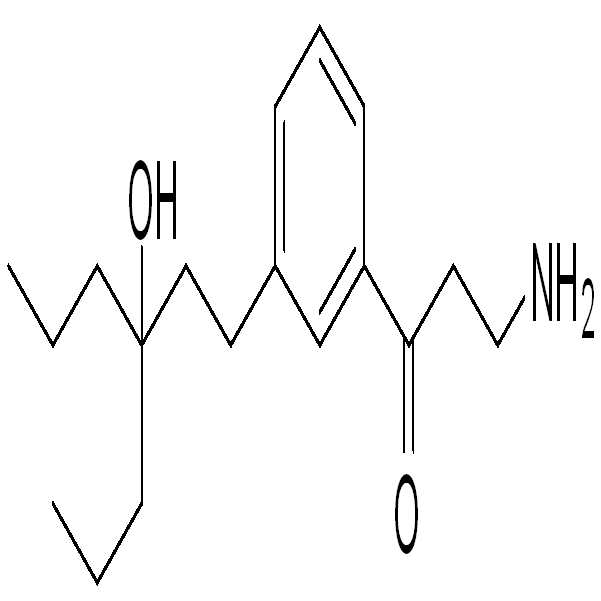
3-아미노-1-(3-(3-히드록시-3-프로필헥실)페닐)프로판-1-온을 실시예 19 에서 사용된 방법에 따라 제조하였다.3-Amino-1- (3- (3-hydroxy-3-propylhexyl) phenyl) propan-1-one was prepared according to the method used in Example 19 .
단계 1: 실시예 17 에 기재된 방법에 따른 (Boc)2O 를 사용하는 4-(3-(3-아미노-1-히드록시프로필)페네틸)헵탄-4-올의 보호에 의해, tert-부틸 3-히드록시-3-(3-(3-히드록시-3-프로필헥실)페닐)프로필카르바메이트를 산출하였다. Step 1: by protection of 4- (3- (3-amino-1-hydroxypropyl) phenethyl) heptan-4-ol using (Boc) 2 O according to the method described in Example 17 , tert − Butyl 3-hydroxy-3- (3- (3-hydroxy-3-propylhexyl) phenyl) propylcarbamate was calculated.
단계 2: 실시예 151 에서 사용된 방법에 따른 tert-부틸 3-히드록시-3-(3-(3-히드록시-3-프로필헥실)페닐)프로필카르바메이트의 산화에 의해, tert-부틸 3-히드록시-3-(3-(3-히드록시-3-프로필헥실)페닐)프로필카르바메이트를 산출하였다. Step 2: Example 151 according to the method used in the tert - butyl-3-hydroxy-3- (3- (3-hydroxy-3-propyl-hexyl) phenyl) by oxidation of propyl carbamate, tert - butyl 3-hydroxy-3- (3- (3-hydroxy-3-propylhexyl) phenyl) propylcarbamate was calculated.
단계 3: 실시예 13 에서 사용된 방법에 따른 tert-부틸 3-히드록시-3-(3-(3-히드록시-3-프로필헥실)페닐)프로필카르바메이트의 탈보호에 의해, 실시예 173 히드로클로라이드 염을 산출하였다. Step 3: By deprotection of tert -butyl 3-hydroxy-3- (3- (3-hydroxy-3-propylhexyl) phenyl) propylcarbamate according to the method used in Example 13 , 173 hydrochloride salt was yielded.
실시예 174Example 174
4-(3-(3-아미노-1-플루오로프로필)페네틸)헵탄-4-올의 제조Preparation of 4- (3- (3-amino-1-fluoropropyl) phenethyl) heptan-4-ol

4-(3-(3-아미노-1-플루오로프로필)페네틸)헵탄-4-올을 하기 방법에 따라 제조하였다.4- (3- (3-amino-1-fluoropropyl) phenethyl) heptan-4-ol was prepared according to the following method.
단계 1: 디에틸아미노황 트리플루오라이드 (DAST) 를 비활성 분위기하에서 알코올 39 의 냉각 (-78℃) 용액에 첨가하였다. TLC 에 의해, 출발 물질이 보이지 않을 때까지 반응 혼합물을 -78℃ 에서 교반하였다. 반응 혼합물에 물과 EtOAc 을 첨가하여 분액하고, 수성층을 EtOAc 로 추출하였다. 수합된 유기층을 염수로 세정하고, 무수 MgSO4 로 건조시켰다. 플래시 크로마토그래피에 의한 정제에 의해, tert-부틸 3-(3-브로모페닐)-3-플루오로프로필카르바메이트를 산출하였다. Step 1: Diethylaminosulfur trifluoride (DAST) was added to a cold (-78 ° C) solution of alcohol 39 under inert atmosphere. By TLC, the reaction mixture was stirred at -78 ° C until no starting material was visible. Water and EtOAc were added to the reaction mixture for separation, and the aqueous layer was extracted with EtOAc. The combined organic layers were washed with brine and dried over anhydrous MgSO 4 . Purification by flash chromatography yielded tert -butyl 3- (3-bromophenyl) -3-fluoropropylcarbamate.
단계 2: 실시예 12 에 기재된 방법에 따른 tert-부틸 3-(3-브로모페닐)-3-플루오로프로필카르바메이트와 4-에티닐헵탄-4-올과의 소노가시라 커플링에 의해, tert-부틸 3-플루오로-3-(3-(3-히드록시-3-프로필헥스-1-이닐)페닐)프로필카르바메이트를 산출하였다. Step 2: by sonogasira coupling of tert -butyl 3- (3-bromophenyl) -3-fluoropropylcarbamate with 4-ethynylheptan-4-ol according to the method described in Example 12 . tert -butyl 3-fluoro-3- (3- (3-hydroxy-3-propylhex-1-ynyl) phenyl) propylcarbamate.
단계 3: 실시예 12 에서 사용된 방법에 따른 tert-부틸 3-플루오로-3-(3-(3-히드록시-3-프로필헥스-1-이닐)페닐)프로필카르바메이트의 수소화에 의해, tert-부틸 3-플루오로-3-(3-(3-히드록시-3-프로필헥실)페닐)프로필카르바메이트를 산출하였다. Step 3: by hydrogenation of tert -butyl 3-fluoro-3- (3- (3-hydroxy-3-propylhex-1-ynyl) phenyl) propylcarbamate according to the method used in example 12 tert -butyl 3-fluoro-3- (3- (3-hydroxy-3-propylhexyl) phenyl) propylcarbamate.
단계 4. 실시예 13 에서 사용된 방법에 따른 tert-부틸 3-플루오로-3-(3-(3-히드록시-3-프로필헥실)페닐)프로필카르바메이트의 탈보호에 의해, 실시예 174 를 산출하였다. Step 4. By deprotection of tert -butyl 3-fluoro-3- (3- (3-hydroxy-3-propylhexyl) phenyl) propylcarbamate according to the method used in example 13 , 174 was calculated.
실시예 175Example 175
4-(3-(4-아미노부탄-2-일)페네틸)헵탄-4-올의 제조Preparation of 4- (3- (4-aminobutan-2-yl) phenethyl) heptan-4-ol

4-(3-(4-아미노부탄-2-일)페네틸)헵탄-4-올을 반응식 37 에 사용되는 방법에 따라 제조하였다.4- (3- (4-aminobutan-2-yl) phenethyl) heptan-4-ol was prepared according to the method used in Scheme 37.
반응식 37Scheme 37

단계 1: THF 중의 메틸트리페닐포스포늄 브로마이드의 현탁액에 KOBu-t (THF 중 1 M, 6.1 mmol) 를 실온에서 첨가하였다. 30 분 동안 교반한 후, tert-부틸 3-(3-(3-히드록시-3-프로필헥실)페닐)-3-옥소프로필카르바메이트를 첨가하였다. 수득되는 혼합물을 실온에서 18 시간 동안 교반하였다. AcOH 를 첨가하여 반응을 켄칭하였다. 혼합물을 여과하고 감압하에서 농축하였다. 플래시 크로마토그래피 (15 → 50% EtOAc-헥산 구배) 에 의한 정제에 의해, tert-부틸 3-(3-(3-히드록시-3-프로필헥실)페닐)부트-3-에닐카르바메이트를 산출하였다. Step 1: KOBu- t (1 M in THF, 6.1 mmol) was added to a suspension of methyltriphenylphosphonium bromide in THF at room temperature. After stirring for 30 minutes, tert-butyl 3- (3- (3-hydroxy-3-propylhexyl) phenyl) -3-oxopropylcarbamate was added. The resulting mixture was stirred at rt for 18 h. AcOH was added to quench the reaction. The mixture was filtered and concentrated under reduced pressure. Purification by flash chromatography (15 → 50% EtOAc-hexane gradient) yields tert -butyl 3- (3- (3-hydroxy-3-propylhexyl) phenyl) but-3-enylcarbamate It was.
단계 2: 실시예 12 에 기재된 방법에 따른 tert-부틸 3-(3-(3-히드록시-3-프로필헥실)페닐)부트-3-에닐카르바메이트의 수소화에 의해, tert-부틸 3-(3-(3-히드록시-3-프로필헥실)페닐)부틸카르바메이트를 산출하였다. Step 2: Example 12 according to the method described in tert - butyl 3- (3- (3-hydroxy-3-propyl-hexyl) phenyl) by the boot-enyl-3-carboxylic hydrogenation of carbamate, tert - butyl 3 (3- (3-hydroxy-3-propylhexyl) phenyl) butylcarbamate was calculated.
단계 3: 실시예 13 에서 사용된 방법에 따른 tert-부틸 3-(3-(3-히드록시-3-프로필헥실)페닐)부틸카르바메이트의 탈보호에 의해, 실시예 175 히드로클로라이드 염을 산출하였다. Step 3: Example 175 hydrochloride salt by deprotection of tert -butyl 3- (3- (3-hydroxy-3-propylhexyl) phenyl) butylcarbamate according to the method used in Example 13 Calculated.
실시예 176Example 176
4-(3-(3-아미노-1-히드록시프로필)-5-클로로페네틸)헵탄-4-올의 제조Preparation of 4- (3- (3-amino-1-hydroxypropyl) -5-chlorophenethyl) heptan-4-ol

4-(3-(3-아미노-1-히드록시프로필)-5-클로로페네틸)헵탄-4-올을 3-브로모-5-클로로벤즈알데하이드를 3-브로모벤즈알데하이드 대신 사용하는 것을 제외하고는 실시예 16, 17 및 19 에서 사용된 방법에 따라 제조하였다.Using 4- (3- (3-amino-1-hydroxypropyl) -5-chlorophenethyl) heptan-4-ol in place of 3-bromo-5-chlorobenzaldehyde instead of 3-bromobenzaldehyde Except according to the method used in Examples 16 , 17 and 19 .
실시예 177Example 177
(R)-3-(3-아미노-1-히드록시프로필)-N-(헵탄-4-일)벤즈아미드의 제조 (R) -3- (3- amino-1-hydroxypropyl) - N - (heptan-4-yl) benzamide Preparation of

출발 물질로서 3-포르밀벤조산을 사용하는 실시예 71 및 163 에서 사용된 방법에 따라 (R)-3-(3-아미노-1-히드록시프로필)-N-(헵탄-4-일)벤즈아미드를 제조하였다.Carried out using a 3-formyl-benzoic acid as the starting material in Example 71, and according to the process used in the 163 (R) -3- (3-amino-1-hydroxypropyl) - N - (heptan-4-yl) benzamide Amide was prepared.
실시예 178Example 178
4-(3-(3-아미노부틸)페네틸)헵탄-4-올의 제조Preparation of 4- (3- (3-aminobutyl) phenethyl) heptan-4-ol

알릴 트리플루오로아세트아미드 대신 비닐 메틸 케톤을 사용하는 실시예 12 및 180 에서 사용된 방법에 따라 4-(3-(3-아미노부틸)페네틸)헵탄-4-올을 제조하였다.4- (3- (3-aminobutyl) phenethyl) heptan-4-ol was prepared following the method used in Examples 12 and 180 using vinyl methyl ketone instead of allyl trifluoroacetamide.
실시예Example 179 179
(R)-3-(3-아미노-1-히드록시프로필)-N-시클로헥실-N-메틸벤즈아미드의 제조Preparation of ( R ) -3- (3-amino-1-hydroxypropyl) -N -cyclohexyl- N -methylbenzamide

실시예 177 에서 사용된 방법에 따라 (R)-3-(3-아미노-1-히드록시프로필)-N-시클로헥실-N-메틸벤즈아미드를 제조하였다.( R ) -3- (3-amino-1-hydroxypropyl) -N -cyclohexyl- N -methylbenzamide was prepared according to the method used in example 177 .
실시예Example 180 180
1-(3-((1R,2R)-3-아미노-1-히드록시-2-메틸프로필)페네틸)시클로펜탄올의 제조 1- (3 - ((1 R , 2 R) -3- amino-1-hydroxy-2-methylpropyl) phenethyl) cyclopentanol Preparation of

1-(3-((1R,2R)-3-아미노-1-히드록시-2-메틸프로필)페네틸)시클로펜탄올을 반응식 38 에 제시되는 방법에 따라 제조하였다. 1- (3 - ((1 R , 2 R) -3- amino-1-hydroxy-2-methylpropyl) phenethyl) was prepared according to the method presented in Scheme 38 cyclopentanol.
반응식 38Scheme 38

단계 1: EtOAc 중의 (S)-4-벤질-3-프로피오닐옥사졸리딘-2-온, 무수 MgCl2 (0.104 g, 1.09 mmol) 및 3-브로모벤즈알데하이드의 혼합물에 Et3N, 이어서 클로로트리메틸실란을 첨가하였다. 반응 혼합물을 아르곤하에 실온에서 24 시간 동안 교반한 다음, 실리카 겔 층을 통해 여과하고, EtOAc 로 세정하였다. 수합된 여과액을 감압하에서 농축하고 잔류물을 플래시 크로마토그래피 (1 → 30% EtOAc/헥산 구배) 에 의해, 정제하여 (S)-4-벤질-3-((2R,3S)-3-(3-브로모페닐)-2-메틸-3-(트리메틸실릴옥시)프로파노일)옥사졸리딘-2-온을 산출하였다. Step 1: Et 3 N, followed by a mixture of ( S ) -4-benzyl-3-propionyloxazolidin-2-one, anhydrous MgCl 2 (0.104 g, 1.09 mmol) and 3-bromobenzaldehyde in EtOAc, then Chlorotrimethylsilane was added. The reaction mixture was stirred for 24 h at room temperature under argon, then filtered through a silica gel layer and washed with EtOAc. The combined filtrates were concentrated under reduced pressure and the residue was purified by flash chromatography (1 → 30% EtOAc / hexane gradient) to give (S) -4-benzyl-3-((2R, 3S) -3- ( 3-bromophenyl) -2-methyl-3- (trimethylsilyloxy) propanoyl) oxazolidin-2-one was calculated.
단계 2: 무수 THF 중의 (S)-4-벤질-3-((2R,3S)-3-(3-브로모페닐)-2-메틸-3-(트리메틸실릴옥시)프로파노일)옥사졸리딘-2-온의 용액에 THF 중의 LiBH4 의 용액을 아르곤하에서 첨가하였다. 반응 혼합물을 18 시간 동안 실온에서 교반하고, NH4Cl 의 포화 수용액을, 이어서 MTBE 를 천천히 첨가하였다. 혼합물을 15 분 동안 교반하고, 층을 분리하고, 유기층을 염수로 세정하고, 무수 MgSO4 로 건조시키고, 여과하고 감압하에서 농축하였다. 잔류물을 플래시 크로마토그래피 (5 → 40% EtOAc/헥산 구배) 에 의해, 정제하여 (2S,3S)-3-(3-브로모페닐)-2-메틸-3-(트리메틸실릴옥시)프로판-1-올을 산출하였다. Step 2: (S) -4-benzyl-3-((2R, 3S) -3- (3-bromophenyl) -2-methyl-3- (trimethylsilyloxy) propanoyl) oxazoli in dry THF To a solution of din-2-one was added a solution of LiBH 4 in THF under argon. The reaction mixture was stirred for 18 hours at room temperature and a saturated aqueous solution of NH 4 Cl was added slowly followed by MTBE. The mixture was stirred for 15 minutes, the layers were separated and the organic layer was washed with brine, dried over anhydrous MgSO 4 , filtered and concentrated under reduced pressure. The residue was purified by flash chromatography (5 → 40% EtOAc / hexane gradient) to give (2 S , 3 S ) -3- (3-bromophenyl) -2-methyl-3- (trimethylsilyloxy) Propan-1-ol was calculated.
단계 3: 무수 THF 중의 (2S,3S)-3-(3-브로모페닐)-2-메틸-3-(트리메틸실릴옥시)프로판-1-올, 프탈이미드 및 Ph3P 의 냉각 (0℃) 용액에, 아르곤하에서 무수 THF 중의 디에틸 아조디카르복실레이트의 용액을 첨가하였다. 반응 혼합물을 실온으로 가온시키면서 1 시간 동안 아르곤하에서 교반한 다음 용매를 진공에서 제거하고, 잔류물을 디클로로메탄/헥산에 용해하고, 플래시 크로마토그래피 (5 → 30% EtOAc/헥산 구배) 에 의해, 2-((2S,3S)-3-(3-브로모페닐)-2-메틸-3-(트리메틸실릴옥시)프로필)이소인돌린-1,3-디온으로 정제하였다. Step 3: in dry THF (2 S, 3 S) -3- (3- bromo-phenyl) -2-methyl-3- (trimethylsilyloxy) propan-1-ol, phthalimide and cooling of the mid-Ph 3 P To the (0 ° C.) solution was added a solution of diethyl azodicarboxylate in dry THF under argon. The reaction mixture was stirred under argon for 1 hour while warming to room temperature, then the solvent was removed in vacuo, the residue was dissolved in dichloromethane / hexanes and flash chromatography (5 → 30% EtOAc / hexanes gradient) gave 2 Purified by-(( 2S , 3S ) -3- (3-bromophenyl) -2-methyl-3- (trimethylsilyloxy) propyl) isoindolin-1,3-dione.
단계 4: 실시예 12 에서의 방법에 따른 2-((2S,3S)-3-(3-브로모페닐)-2-메틸-3-(트리메틸실릴옥시)프로필)이소인돌린-1,3-디온과 4-에티닐헵탄-4-올와의 커플링에 의해, 2-((2S,3S)-3-(3-(3-히드록시-3-프로필헥스-1-이닐)페닐)-2-메틸-3-(트리메틸실릴옥시)프로필)이소인돌린-1,3-디온을 산출하였다. Step 4: 2-(( 2S , 3S ) -3- (3-bromophenyl) -2-methyl-3- (trimethylsilyloxy) propyl) isoindolin-1 according to the method in Example 12 , by coupling with heptan-4-ol 3-ethynyl-dione and 4-, 2 - ((2 S , 3 S) -3- (3- (3- hydroxy-3-propyl-hex-1-ynyl ) Phenyl) -2-methyl-3- (trimethylsilyloxy) propyl) isoindoline-1,3-dione was calculated.
단계 5: 실시예 12 에서 사용된 방법에 따른 2-((2S,3S)-3-(3-(3-히드록시-3-프로필헥스-1-이닐)페닐)-2-메틸-3-(트리메틸실릴옥시)프로필)이소인돌린-1,3-디온의 수소화에 의해, 2-((2S,3S)-3-(3-(3-히드록시-3-프로필헥실)페닐)-2-메틸-3-(트리메틸실릴옥시)프로필)이소인돌린-1,3-디온을 산출하였다. Step 5: Example 12 according to the method used in the 2 - ((2 S, 3 S) -3- (3- (3- hydroxy-3-propyl-hex-1-ynyl) phenyl) -2-methyl- 3- (trimethylsilyloxy) propyl) isoindoline by hydrogenation of 1, 3-dione, 2 - ((2 S, 3 S) -3- (3- (3- hydroxy-3-propyl-hexyl) Phenyl) -2-methyl-3- (trimethylsilyloxy) propyl) isoindolin-1,3-dione was calculated.
단계 6: EtOH 중의 2-((2S,3S)-3-(3-(3-히드록시-3-프로필헥실)페닐)-2-메틸-3-(트리메틸실릴옥시)프로필)이소인돌린-1,3-디온의 용액에 트리플루오로아세트산을 첨가하였다. 반응 혼합물을 실온에서 교반한 다음 감압하에서 농축하고, EtOAc, 이어서 헥산으로 재증발시켜 2-((2S,3S)-3-히드록시-3-(3-(3-히드록시-3-프로필헥실)페닐)-2-메틸프로필)이소인돌린-1,3-디온을 산출하였다. Step 6: EtOH in the 2-in ((2 S, 3 S) -3- (3- (3- hydroxy-3-propyl-hexyl) phenyl) -2-methyl-3- (trimethylsilyloxy) propyl) iso Trifluoroacetic acid was added to a solution of doline-1,3-dione. The reaction mixture was concentrated under reduced pressure, and then stirred at room temperature, EtOAc, followed by re-evaporation with hexane, 2 - ((2 S, 3 S) -3- hydroxy-3- (3- (3-hydroxy-3 Propylhexyl) phenyl) -2-methylpropyl) isoindoline-1,3-dione was calculated.
단계 7: 2-((2S,3S)-3-히드록시-3-(3-(3-히드록시-3-프로필헥실)페닐)-2-메틸프로필)이소인돌린-1,3-디온의 프탈이미드 분해를 실시예 9 에서 기재된 방법에 따라 수행하여 실시예 180 을 산출하였다. Step 7: 2 - ((2 S , 3 S) -3- hydroxy-3- (3- (3-hydroxy-3-propyl-hexyl) phenyl) -2-methyl-propyl) isoindoline-l, 3 Phthalimide decomposition of dione was carried out according to the method described in Example 9 to yield Example 180 .
실시예 181Example 181
1-(3-(3-아미노프로필)-5-메틸페네틸)시클로헥산올의 제조Preparation of 1- (3- (3-aminopropyl) -5-methylphenethyl) cyclohexanol

1-(3-(3-아미노프로필)-5-메틸페네틸)시클로헥산올을 반응식 39 에 제시되는 방법에 따라 제조하였다.1- (3- (3-aminopropyl) -5-methylphenethyl) cyclohexanol was prepared according to the method set forth in Scheme 39.
반응식 39Scheme 39

단계 1 내지 4: (E)-1-(3-(3-아미노프로프-1-에닐)-5-메틸페네틸)시클로헥산올의 합성 절차는, 1-브로모-3-요오도-5-메틸벤젠 및 1-에티닐시클로헥산올을 1-브로모-3-요오도벤젠 및 4-에티닐헵탄-4-올 대신에 사용하는 것을 제외하고는 실시예 183 의 합성 방법과 동일하다.
단계 5: 실시예 12 에 기재된 방법에 따른 (E)-1-(3-(3-아미노프로프-1-에닐)-5-메틸페네틸)시클로헥산올의 수소화에 의해, 실시예 181 을 산출하였다. Step 5: Example 181 by hydrogenation of ( E ) -1- (3- (3-aminoprop-1-enyl) -5-methylphenethyl) cyclohexanol according to the method described in Example 12 Calculated.
실시예 182Example 182
1-(3-(3-아미노프로필)-4-플루오로페네틸)시클로헥산올의 제조Preparation of 1- (3- (3-aminopropyl) -4-fluorophenethyl) cyclohexanol

1-(3-(3-아미노프로필)-4-플루오로페네틸)시클로헥산올을 실시예 181 에서 사용된 방법에 따라 제조하였다.1- (3- (3-aminopropyl) -4-fluorophenethyl) cyclohexanol was prepared according to the method used in Example 181 .
단계 1 내지 4: (E)-1-(3-(3-아미노프로프-1-에닐)-4-플루오로페네틸)시클로헥산올의 합성 절차는, 2-브로모-1-플루오로-4-요오도벤젠을 1-브로모-3-요오도벤젠 대신에 사용하는 것을 제외하고는 실시예 183 의 합성 방법과 동일하다.
단계 5: 실시예 12 에 기재된 방법에 따른 ((E)-1-(3-(3-아미노프로프-1-에닐)-4-플루오로페네틸)시클로헥산올의 수소화에 의해, 실시예 182 를 산출하였다. Step 5: Example by hydrogenation of (( E ) -1- (3- (3-aminoprop-1-enyl) -4-fluorophenethyl) cyclohexanol according to the method described in Example 12 182 was calculated.
실시예 183Example 183
(E)-1-(3-(3-아미노프로프-1-에닐)페네틸)시클로헥산올의 제조Preparation of ( E ) -1- (3- (3-aminoprop-1-enyl) phenethyl) cyclohexanol

(E)-1-(3-(3-아미노프로프-1-에닐)페네틸)시클로헥산올을 반응식 40 에 제시되는 방법에 따라 제조하였다.( E ) -1- (3- (3-aminoprop-1-enyl) phenethyl) cyclohexanol was prepared according to the method set forth in
반응식 40

단계 1: 실시예 12 에 기재된 방법에 따른 시클로헥실메탄올과 1-브로모-3-요오도벤젠과의 커플링에 의해, 1-((3-브로모페닐)에티닐)시클로헥산올을 연황색 오일로서 산출하였다. Step 1: Opening 1-((3-bromophenyl) ethynyl) cyclohexanol by coupling cyclohexylmethanol and 1-bromo-3-iodobenzene according to the method described in Example 12 . Calculated as a yellow oil.
단계 2: 실시예 12 에 기재된 방법에 따른 1-((3-브로모페닐)에티닐)시클로헥산올의 수소화에 의해, 1-(3-브로모페네틸)시클로헥산올을 산출하였다. Step 2: Hydrogenation of 1-((3-bromophenyl) ethynyl) cyclohexanol according to the method described in Example 12 yielded 1- (3-bromophenethyl) cyclohexanol.
단계 3: 실시예 118 에 기재된 방법에 따른 1-(3-브로모페네틸)시클로헥산올과 N-알릴-2,2,2-트리플루오로아세트아미드와의 커플링에 의해, (E)-2,2,2-트리플루오로-N-(3-(3-(2-(1-히드록시시클로헥실)에틸)페닐)알릴)아세트아미드를 산출하였다. Step 3: By coupling of 1- (3-bromophenethyl) cyclohexanol and N -allyl-2,2,2-trifluoroacetamide according to the method described in Example 118 , ( E )- 2,2,2-trifluoro- N- (3- (3- (2- (1-hydroxycyclohexyl) ethyl) phenyl) allyl) acetamide was calculated.
단계 4: 실시예 2 에 기재된 방법에 따른 (E)-2,2,2-트리플루오로-N-(3-(3-(2-(1-히드록시시클로헥실)에틸)페닐)알릴)아세트아미드의 탈보호에 의해, 실시예 183 을 산출하였다. Step 4: ( E ) -2,2,2-trifluoro- N- (3- (3- (2- (1-hydroxycyclohexyl) ethyl) phenyl) allyl) according to the method described in Example 2 Example 183 was calculated by deprotection of acetamide.
실시예Example 184 184
1-(3-(3-아미노프로프-1-이닐)페네틸)시클로헥산올의 제조Preparation of 1- (3- (3-aminoprop-1-ynyl) phenethyl) cyclohexanol

1-(3-(3-아미노프로프-1-이닐)페네틸)시클로헥산올을 실시예 12 에서 사용된 방법에 따라 제조하였다.1- (3- (3-aminoprop-1-ynyl) phenethyl) cyclohexanol was prepared according to the method used in Example 12 .
단계 1: 실시예 12 에 기재된 방법에 따른 1-(3-브로모페네틸)시클로헥산올과 2-(프로프-2-이닐)이소인돌린-1,3-디온과의 커플링에 의해, 2-(3-(3-(2-(1-히드록시시클로헥실)에틸)페닐)프로프-2-이닐)이소인돌린-1,3-디온을 산출하였다. Step 1: By coupling of 1- (3-bromophenethyl) cyclohexanol and 2- (prop-2-ynyl) isoindolin-1,3-dione according to the method described in Example 12 , 2- (3- (3- (2- (1-hydroxycyclohexyl) ethyl) phenyl) prop-2-ynyl) isoindoline-1,3-dione was calculated.
단계 2: 실시예 12 에 기재된 방법에 따른 2-(3-(3-(2-(1-히드록시시클로헥실)에틸)페닐)프로프-2-이닐)이소인돌린-1,3-디온의 탈보호에 의해, 실시예 184 를 산출하였다. Step 2: 2- (3- (3- (3- (2- (1-hydroxycyclohexyl) ethyl) phenyl) prop-2-ynyl) isoindolin-1,3-dione according to the method described in Example 12 By deprotection of, Example 184 was calculated.
실시예 185Example 185
4-(3-(3-아미노프로폭시)페네틸)헵탄-4-올의 제조Preparation of 4- (3- (3-aminopropoxy) phenethyl) heptan-4-ol

4-(3-(3-아미노프로폭시)페네틸)헵탄-4-올을 실시예 9 에서 사용된 방법에 따라 제조하였다.4- (3- (3-aminopropoxy) phenethyl) heptan-4-ol was prepared according to the method used in Example 9 .
실시예Example 186 186
4-(3-((2-아미노에톡시)메틸)페네틸)헵탄-4-올의 제조Preparation of 4- (3-((2-aminoethoxy) methyl) phenethyl) heptan-4-ol

4-(3-((2-아미노에톡시)메틸)페네틸)헵탄-4-올을 반응식 41 에 제시되는 방법에 따라 제조하였다.4- (3-((2-aminoethoxy) methyl) phenethyl) heptan-4-ol was prepared according to the method set forth in Scheme 41.
반응식 41Scheme 41

단계 1: 헵탄 중의 DIBAL-H 의 용액을 비활성 분위기하에서 헥산 중의 2-(3-브로모페닐)-1,3-디옥솔란의 냉각 (-78℃) 용액에 첨가하였다. TLC 에 의해, 출발 물질이 보이지 않을 때까지 반응 혼합물을 교반하였다. 수성 HCl (1N) 을 실온으로 가온시키면서 반응 혼합물에 첨가하였다. 생성물을 EtOAc 로 추출하였다. 수합된 유기층을 무수 MgSO4 로 건조시키고, 감압하에서 농축하여 2-(3-브로모벤질옥시)에탄올을 산출하였다. Step 1: A solution of DIBAL-H in heptane was added to a cooled (-78 ° C.) solution of 2- (3-bromophenyl) -1,3-dioxolane in hexane under inert atmosphere. By TLC, the reaction mixture was stirred until no starting material was visible. Aqueous HCl (1N) was added to the reaction mixture while warming to room temperature. The product was extracted with EtOAc. The combined organic layers were dried over anhydrous MgSO 4 and concentrated under reduced pressure to yield 2- (3-bromobenzyloxy) ethanol.
단계 2: 실시예 134 에서 사용된 방법에 따른 2-(3-브로모벤질옥시)에탄올과 프탈이미드와의 미쯔노부 반응에 의해, 2-(2-(3-브로모벤질옥시)에틸)이소인돌린-1,3-디온을 산출하였다. Step 2: 2- (2- (3-bromobenzyloxy) ethyl) by Mitsunobu reaction of 2- (3-bromobenzyloxy) ethanol and phthalimide according to the method used in Example 134 Isoindolin-1,3-dione was calculated.
단계 3: 실시예 12 에 기재된 방법에 따른 2-(2-(3-브로모벤질옥시)에틸)이소인돌린-1,3-디온과 4-에티닐헵탄-4-올과의 소노가시라 커플링에 의해, 2-(2-(3-(3-히드록시-3-프로필헥스-1-이닐)벤질옥시)에틸)이소인돌린-1,3-디온을 산출하였다. Step 3: Sonogashi couple of 2- (2- (3-bromobenzyloxy) ethyl) isoindolin-1,3-dione with 4-ethynylheptan-4-ol according to the method described in Example 12 By ring, 2- (2- (3- (3-hydroxy-3-propylhex-1-ynyl) benzyloxy) ethyl) isoindolin-1,3-dione was calculated.
단계 4: 실시예 12 에서 사용된 방법에 따른 2-(2-(3-(3-히드록시-3-프로필헥스-1-이닐)벤질옥시)에틸)이소인돌린-1,3-디온의 수소화에 의해, 2-(2-(3-(3-히드록시-3-프로필헥실)벤질옥시)에틸)이소인돌린-1,3-디온을 산출하였다. Step 4: of 2- (2- (3- (3-hydroxy-3-propylhex-1-ynyl) benzyloxy) ethyl) isoindolin-1,3-dione according to the method used in Example 12 By hydrogenation, 2- (2- (3- (3-hydroxy-3-propylhexyl) benzyloxy) ethyl) isoindolin-1,3-dione was calculated.
단계 5: 실시예 21 에서 사용된 방법에 따른 2-(2-(3-(3-히드록시-3-프로필헥실)벤질옥시)에틸)이소인돌린-1,3-디온의 탈보호에 의해, 실시예 186 을 산출하였다. Step 5: by deprotection of 2- (2- (3- (3-hydroxy-3-propylhexyl) benzyloxy) ethyl) isoindoline-1,3-dione according to the method used in example 21 And Example 186 were calculated.
실시예 187Example 187
2-(3-(3-아미노프로필)페네틸)시클로헥산올의 제조Preparation of 2- (3- (3-aminopropyl) phenethyl) cyclohexanol

2-(3-(3-아미노프로필)페네틸)시클로헥산올을 실시예 2 에서 사용된 방법에 따라 제조하였다.2- (3- (3-aminopropyl) phenethyl) cyclohexanol was prepared according to the method used in Example 2.
단계 1: 브로마이드 (10) 과 2-에티닐시클로헥산올과의 소노가시라 커플링 후 플래시 크로마토그래피 (5→50% EtOAc/헥산 구배) 에 의해, 2,2,2-트리플루오로-N-(3-(3-((2-히드록시시클로헥실)에티닐)페닐)프로필)아세트아미드를 황색 오일로서 산출하였다. 수율 (1.2 g, 43%): 1H NMR (400 MHz, CDCl3) δ 7.18-7.28 (m, 3H), 7.06-7.11 (m, 1H), 6.33 (brs, 1H), 3.48-3.57 (m, 1H), 3.36 (ddd, J = 6.8 Hz, 2H), 2.63 (t, J = 7.2 Hz, 2H), 2.38-2.46 (m, 1H), 2.32 (brs, 1H), 2.02-2.10 (m, 2H), 1.91 (dddd, J = 7.2 Hz, 2H), 1.74-1.82 (m, 1H), 1.66-1.74 (m, 1H), 1.40-1.52 (m, 1H), 1.16-1.40 (m, 3H). Step 1: 2,2,2-trifluoro-N- by flash chromatography (5 → 50% EtOAc / hexane gradient) after sonogashira coupling of bromide ( 10 ) with 2-ethynylcyclohexanol (3- (3-((2-hydroxycyclohexyl) ethynyl) phenyl) propyl) acetamide was calculated as a yellow oil. Yield (1.2 g, 43%): 1 H NMR (400 MHz, CDCl 3 ) δ 7.18-7.28 (m, 3H), 7.06-7.11 (m, 1H), 6.33 (brs, 1H), 3.48-3.57 (m , 1H), 3.36 (ddd, J = 6.8 Hz, 2H), 2.63 (t, J = 7.2 Hz, 2H), 2.38-2.46 (m, 1H), 2.32 (brs, 1H), 2.02-2.10 (m, 2H), 1.91 (dddd, J = 7.2 Hz, 2H), 1.74-1.82 (m, 1H), 1.66-1.74 (m, 1H), 1.40-1.52 (m, 1H), 1.16-1.40 (m, 3H) .
단계 2: 2,2,2-트리플루오로-N-(3-(3-((2-히드록시시클로헥실)에티닐)페닐)프로필)아세트아미드의 탈보호 후 플래시 크로마토그래피 (10% (7N NH3/MeOH)/디클로로메탄) 에 의해, 2-((3-(3-아미노프로필)페닐)에티닐)시클로헥산올을 오렌지색 오일로서 산출하였다. 수율 (0.606 g, 69%): 1H NMR (400 MHz, CDCl3) δ 7.16-7.26 (m, 3H), 7.08-7.12 (m, 1H), 3.48-3.56 (m, 1H), 2.71 (t, J = 7.2 Hz, 2H), 2.61 (t, J = 7.2 Hz, 2H), 2.38-2.46 (m, 1H), 2.01-2.10 (m, 2H), 1.64-1.82 (m, 7H), 1.40-1.52 (m, 1H), 1.16-1.40 (m, 3H). Step 2: Flash chromatography after deprotection of 2,2,2-trifluoro-N- (3- (3-((2-hydroxycyclohexyl) ethynyl) phenyl) propyl) acetamide (10% ( 7N NH 3 / MeOH) / dichloromethane) yielded 2-((3- (3-aminopropyl) phenyl) ethynyl) cyclohexanol as an orange oil. Yield (0.606 g, 69%): 1 H NMR (400 MHz, CDCl 3 ) δ 7.16-7.26 (m, 3H), 7.08-7.12 (m, 1H), 3.48-3.56 (m, 1H), 2.71 (t , J = 7.2 Hz, 2H), 2.61 (t, J = 7.2 Hz, 2H), 2.38-2.46 (m, 1H), 2.01-2.10 (m, 2H), 1.64-1.82 (m, 7H), 1.40- 1.52 (m, 1 H), 1.16-1.40 (m, 3 H).
단계 3: 2-((3-(3-아미노프로필)페닐)에티닐)시클로헥산올의 수소화 후 플래시 크로마토그래피 (10% (7N NH3/MeOH)/디클로로메탄) 에 의해, 실시예 187 을 담황색 고체로서 산출하였다. 수율 (0.265 g, 69%): 1H NMR (400 MHz, CDCl3) δ 7.17 (t J = 7.6 Hz, 1H), 6.96-7.04 (m, 3H), 3.18 (m, 1H), 2.66-2.76 (m, 3H), 2.62 (t, J = 7.8 Hz, 2H), 2.46-2.56 (m, 1H), 2.05-2.15 (m, 1H), 1.88-1.98 (m, 2H), 1.69-1.80 (m, 3H), 1.61-1.69 (m, 1H), 1.34-1.46 (m, 4H), 1.10-1.34 (m, 4H), 0.91-1.03 (m, 1H). Step 3: After hydrogenation of 2-((3- (3-aminopropyl) phenyl) ethynyl) cyclohexanol by flash chromatography (10% (7N NH 3 / MeOH) / dichloromethane), Example 187 was prepared. Calculated as a pale yellow solid. Yield (0.265 g, 69%): 1 H NMR (400 MHz, CDCl 3 ) δ 7.17 (t J = 7.6 Hz, 1H), 6.96-7.04 (m, 3H), 3.18 (m, 1H), 2.66-2.76 (m, 3H), 2.62 (t, J = 7.8 Hz, 2H), 2.46-2.56 (m, 1H), 2.05-2.15 (m, 1H), 1.88-1.98 (m, 2H), 1.69-1.80 (m , 3H), 1.61-1.69 (m, 1H), 1.34-1.46 (m, 4H), 1.10-1.34 (m, 4H), 0.91-1.03 (m, 1H).
실시예 188Example 188
시험관내 이성화효소 억제 검정In vitro Isomerase Inhibition Assay
아민 유도체 화합물의, 시각 주기 이성화효소 활성 억제 능력을 측정하였다.The ability of the amine derivative compound to inhibit visual cycle isomerase activity was measured.
이성화효소 억제 반응은 본질적으로 [Stecher 등, J. Biol. Chem. 274:8577-85 (1999); 또한 Golczak 등, Proc. Natl. Acad. Sci. USA 102:8162-67 (2005) 참조] 에 기술된 바에 따라 수행하였다. 소 망막 색소 상피 (RPE) 마이크로좀 멤브레인이 시각 주기 이성화효소의 공급원이었다.Isomerase inhibition reactions are essentially described in Techer et al., J. Biol. Chem. 274: 8577-85 (1999); See also Golczak et al., Proc. Natl. Acad. Sci. USA 102: 8162-67 (2005). Bovine retinal pigment epithelium (RPE) microsome membranes were a source of visual cycle isomerase.
RPE 마이크로좀 멤브레인 제조RPE Microsome Membrane Manufacturing
소 RPE 마이크로좀 멤브레인 추출물을 (Golczak 등, Proc. Natl. Acad. Sci. USA 102:8162-67 (2005)) 에 기술된 방법에 따라 제조하고, -80℃ 에서 저장하였다. 미정제 RPE 마이크로좀 추출물을 37℃ 수조에서 해동시킨 후, 즉시 얼음 상에 두었다. 50 ㎖ 미정제 RPE 마이크로좀을 얼음 상의 50 ㎖ 테플론-유리 균질화기 (Fisher Scientific, 카탈로그 번호 0841416M) 에 두고, 손으로 들 수 있는 데와르트 드릴 (DeWalt drill) 로 동력을 공급하고, 얼음 상에서 최대 속도로 위 아래로 10회 균질화시켰다. 미정제 RPE 마이크로좀 용액이 균질화될 때까지 이 과정을 반복하였다. 이후, 호모제네이트를 15 분 동안 4℃ 에서 원심분리시켰다 (50.2 Ti 로터 (Beckman, Fullerton, CA), 13,000 RPM; 15360 Rcf). 상청액을 수집하고, 1 시간 동안 4℃ 에서 42,000 RPM (160,000 Rcf; 50.2 Ti 로터) 으로 원심분리시켰다. 상청액을 제거하고, 펠릿을 12 ㎖ (최종 부피) 의 차가운 10 mM MOPS 완충액, pH 7.0 에 현탁시켰다. 5 ㎖ 분취액 중의 재현탁된 RPE 멤브레인을 유리-대-유리 균질화기 (Fisher Scientific, 카탈로그 번호 K885500-0021) 에서 높은 균질도로 균질화시켰다. 제조자의 프로토콜 (Pierce, Rockford, IL) 에 따라 BCA 단백질 검정을 이용하여 단백질 농도를 정량화하였다. 균질화된 RPE 제제를 -80℃ 에서 저장하였다.Bovine RPE microsome membrane extracts were prepared according to the method described in Golczak et al., Proc. Natl. Acad. Sci. USA 102: 8162-67 (2005) and stored at -80 ° C. The crude RPE microsome extract was thawed in a 37 ° C. water bath and immediately placed on ice. The 50 ml crude RPE microsomes are placed in a 50 ml Teflon-glass homogenizer (Fisher Scientific, catalog # 0841416M) on ice, powered by a hand-held DeWalt drill and driven up to ice
인간 Apo 세포성 레틴알데히드-결합 단백질 (CRALBP) 의 단리Isolation of Human Apo Cellular Retinaldehyde-Binding Protein (CRALBP)
재조합 인간 apo 세포성 레틴알데히드-결합 단백질 (CRALBP) 을 클로닝하고, 표준 분자 생물학 방법에 따라 발현시켰다 (Crabb 등, Protein Science 7:746-57 (1998); Crabb 등, J. Biol. Chem. 263:18688-92 (1988) 참조). 간단히 말하면, 총 RNA 를 융합성 ARPE19 세포 (American Type Culture Collection, Manassas, VA) 로부터 제조하였고, cDNA를 올리고(dT)12-18 프라이머를 사용하여 합성한 후, DNA 인코딩 CRALBP 를 일련의 두 폴리머라아제 연쇄 반응으로 증폭시켰다 (Crabb 등, J. Biol. Chem. 263:18688-92 (1988); Intres, 등, J. Biol. Chem. 269:25411-18 (1994); GenBank 기탁 번호 L34219.1 참조). PCR 생성물을 제조자의 프로토콜 (Invitrogen Inc., Carlsbad, CA; 카탈로그 번호 K4400-01) 에 따라 pTrcHis2-TOPO TA 벡터로 서브-클로닝한 후, 서열을 표준 뉴클레오타이드 서열화 기술에 따라 확인하였다. 재조합 6xHis-태깅된 인간 CRALBP 를 원 샷 탑 10 (One Shot TOP 10) 화학적 반응성 (chemically competent) E. coli 세포 (Invitrogen) 에서 발현시키고, 재조합 폴리펩티드를 HPLC용 니켈 (Ni) 세파로오스 XK16-20 컬럼 (Amersham Bioscience, Pittsburgh, PA; 카탈로그 번호 17-5268-02) 을 사용하여 니켈 친화성 크로마토그래피에 의해 E. coli 세포 용해질로부터 단리시켰다. 정제된 6xHis-태깅된 인간 CRALBP를 10 mM 비스-트리스-프로판 (BTP) 에 대하여 투석하고, SDS-PAGE 로 분석하였다. 재조합 인간 CRALBP의 분자량은 약 39 kDal 이었다.Recombinant human apo cellular retinaldehyde-binding protein (CRALBP) was cloned and expressed according to standard molecular biology methods (Crabb et al., Protein Science 7: 746-57 (1998); Crabb et al., J. Biol. Chem. 263). : 18688-92 (1988). In short, total RNA was prepared from fused ARPE19 cells (American Type Culture Collection, Manassas, VA), and cDNA was synthesized using oligo (dT) 12-18 primers, followed by DNA encoding CRALBP as a series of two polymers. Amplified by an Aze chain reaction (Crabb et al., J. Biol. Chem. 263: 18688-92 (1988); Intres, et al., J. Biol. Chem. 269: 25411-18 (1994); GenBank Accession No. L34219.1 Reference). PCR products were sub-cloned into the pTrcHis2-TOPO TA vector according to the manufacturer's protocol (Invitrogen Inc., Carlsbad, CA; Cat. No. K4400-01), and the sequences were identified according to standard nucleotide sequencing techniques. Recombinant 6xHis-tagged human CRALBP is expressed in One
이성화효소 검정Isomerase Assay
아민 유도체 화합물 및 대조군 화합물을 에탄올 중에서 0.1 M 로 재구성시켰다. 이성화효소 검정에서의 분석을 위해 각각의 화합물의 에탄올 중 10 배 연속 희석물 (10-2, 10-3, 10-4, 10-5, 10-6 M) 을 제조하였다.The amine derivative compound and the control compound were reconstituted to 0.1 M in ethanol. Ten-fold serial dilutions of each compound in ethanol (10 −2 , 10 −3 , 10 −4 , 10 −5 , 10 −6 M) were prepared for analysis in the isomerase assay.
이성화효소 검정을 10 mM 비스-트리스-프로판 (BTP) 완충액, pH 7.5, 0.5% BSA (BTP 완충액에 희석됨), 1 mM 나트륨 피로포스페이트, 20 μM 모든-트랜스 레티놀 (에탄올 중), 및 6 μM 아포-CRALBP 내에서 수행하였다. 시험 화합물 (2 ㎕) (연속 희석 저장액의 최종 1/15 희석)을 상기 반응 혼합물에 첨가하고, 여기에 RPE 마이크로좀을 첨가하였다. 동일한 부피의 에탄올을 대조군 반응 (시험 화합물이 부재함)에 첨가하였다. 이후, 소 RPE 마이크로좀 (9 ㎕) (상기 참조)을 첨가하고, 혼합물을 37℃ 로 전이시켜, 반응을 개시하였다 (총 부피 = 150 ㎕). 30분 후, 메탄올 (300 ㎕) 을 첨가하여 반응을 정지시켰다. 헵탄을 첨가하고 (300 ㎕), 피펫팅으로 반응 혼합물 내로 혼합하였다. 반응 혼합물을 휘저은 후, 마이크로원심분리기에서 원심분리시켜, 레티노이드를 추출하였다. 상부 유기상을 HPLC 바이알로 옮긴 후, 정상상 컬럼:SILICA 를 갖는 Agilent 1100 HPLC 시스템을 이용하여 (Agilent Technologies, dp 5μ, 4.6 mmX, 25 CM; 실행 방법은 1.5 ㎖/분의 유속을 가짐; 주입 부피 100 ㎕) 을 이용하여 HPLC 로 분석하였다. 용매 성분은 20% 의, EtOAc 중 2% 이소프로판올 및 80% 의, 100% 헥산이었다.Isomerase assay was performed with 10 mM bis-tris-propane (BTP) buffer, pH 7.5, 0.5% BSA (diluted in BTP buffer), 1 mM sodium pyrophosphate, 20 μM all-trans retinol (in ethanol), and 6 μM It was performed in Apo-CRALBP. Test compound (2 μL) (final 1/15 dilution of serial dilution stock) was added to the reaction mixture, to which RPE microsomes were added. An equal volume of ethanol was added to the control reaction (test compound absent). Bovine RPE microsomes (9 μl) (see above) were then added and the mixture was transferred to 37 ° C. to initiate the reaction (total volume = 150 μl). After 30 minutes, methanol (300 µl) was added to stop the reaction. Heptane was added (300 l) and mixed into the reaction mixture by pipetting. The reaction mixture was stirred and centrifuged in a microcentrifuge to extract the retinoid. The top organic phase was transferred to an HPLC vial and then eluted using an Agilent 1100 HPLC system (Agilent Technologies, dp 5μ, 4.6 mmX, 25 CM with a normal phase column: SILICA; the running method had a flow rate of 1.5 ml / min; 100 [mu] l). The solvent component was 20%, 2% isopropanol in EtOAc and 80%, 100% hexane.
A318 nm 곡선 하 영역은 11-시스 레티놀 피크를 나타내었고, 이를 Agilent Chemstation 소프트웨어로 계산하였고 수동으로 기록하였다. IC50 값 (시험관내에서 11-시스 레티놀 형성의 50% 억제를 제공하는 화합물의 농도) 을 GraphPad Prism® 4 소프트웨어 (Irvine, CA) 를 사용하여 계산하였다. 각 실험은 2 회 반복하여 수행하였다.The area under the A 318 nm curve showed an 11-system retinol peak, which was calculated with the Agilent Chemstation software and manually recorded. IC 50 values (concentration of compounds that provide 50% inhibition of 11-ss retinol formation in vitro) were calculated using GraphPad Prism ® 4 software (Irvine, Calif.). Each experiment was performed twice.
레티놀 이성질체화 반응에 대한 본원에 개시된 화합물의 농도 의존 효과를 또한 재조합 인간 효소 시스템으로 분석할 수 있다. 특히, 인간 시험관내 이성화효소 검정은 본질적으로 [Golczak 등 2005, PNAS 102: 8162-8167, ref. 3] 에서와 같이 수행하였다. 재조합 인간 RPE65 및 LRAT 를 발현하는 HEK293 세포 클론의 호모제네이트는 시각 효소의 공급원이었고, 외인성 모든-트랜스-레티놀 (약 20 μM)을 기질로서 사용하였다. 재조합 인간 CRALBP (약 80 ug/㎖) 를 첨가하여, 11-시스-레티날의 형성을 증강시켰다. 200 ㎕ 비스-트리스 포스페이트 완충액 (10 mM, pH 7.2) 기재 반응 혼합물은 또한 0.5% BSA 및 1 mM NaPPi 를 함유하였다. 이 검정에서는, 반응을 37℃ 에서 2회 반복으로 1 시간 동안 수행하였고, 300 ㎕ 메탄올을 첨가하여 종료시켰다. 반응 생성물, 11-시스-레티놀의 양은 반응 혼합물의 헵탄 추출 후 HPLC 분석으로 측정되었다. HPLC 크로마토그램에서 11-시스-레티놀에 상응하는 피크 영역 단위 (PAU) 를 기록하였고, 농도 의존 곡선을 IC50 값에 대해 GraphPad Prism 으로 분석하였다. 본 발명의 많은 화합물의, 이성질체화 반응 억제 능력을 정량화하였고, 각각의 IC50 값을 측정하였다. 하기 표는 상기 두 방법 중 어느 하나에 의해 측정된 본 발명의 다양한 화합물의 IC50 값을 요약한다. 인간 및 소에 대한 IC50 시험관내 데이터는 하기 표 6A 및 6B 에 제시되어 있다. The concentration dependent effects of the compounds disclosed herein on the retinol isomerization reaction can also be analyzed by recombinant human enzyme systems. In particular, human in vitro isomerase assays are essentially described in Golczak et al. 2005, PNAS 102: 8162-8167, ref. 3] as in. Homogenate of HEK293 cell clones expressing recombinant human RPE65 and LRAT was a source of visual enzyme and exogenous all-trans-retinol (about 20 μM) was used as substrate. Recombinant human CRALBP (about 80 ug / ml) was added to enhance the formation of 11-cis-retinal. The reaction mixture based on 200 μl bis-tris phosphate buffer (10 mM, pH 7.2) also contained 0.5% BSA and 1 mM NaPPi. In this assay, the reaction was performed for 2 hours at 37 ° C. in two iterations and terminated by addition of 300 μl methanol. The amount of reaction product, 11-cis-retinol, was determined by HPLC analysis after heptane extraction of the reaction mixture. Peak area units (PAU) corresponding to 11-cis-retinol were recorded in HPLC chromatograms and concentration dependent curves were analyzed by GraphPad Prism against IC 50 values. Many compounds of the invention were quantified for their ability to inhibit isomerization reactions and the respective IC 50 values were measured. The table below summarizes the IC 50 values of the various compounds of the present invention as measured by either of the two methods. IC 50 in vitro data for humans and cattle are presented in Tables 6A and 6B below.
표 6A 인간 시험관내 억제 데이터Table 6A Human In Vitro Inhibition Data
표 6B 소 시험관내 억제 데이터Table 6B Bovine In Vitro Inhibition Data

실시예 189Example 189
생체내 생쥐 이성화효소 검정In vivo Mouse Isomerase Assay
아민 유도체 화합물의 이성화효소 억제 능력을 생체내 생쥐 이성화효소 검정에 의해 측정하였다. 안구를 강한 빛에 잠시 노출시키는 것 (시색소의 "광표백" 또는 단순히 "표백") 은 망막에서 거의 모든 11-시스-레티날을 광-이성질체화시키는 것으로 알려져 있다. 표백 이후 11-시스-레티날을 회수하여, 이성화효소의 생체내 활성 평가에 사용할 수 있다. 낮은 11-시스-레티날 옥심 수준에 의해 나타나는 바와 같이, 지연된 회복은 이성질체화 반응의 억제를 나타낸다. 절차는 본질적으로 [Golczak 등, Proc. Natl. Acad. Sci. USA 102:8162-67 (2005)] 에 기술된 바와 같이 수행하였다. 또한 [Deigner 등, Science, 244: 968-71 (1989); Gollapalli 등, Biochim Biophys Acta. 1651: 93-101 (2003); Parish, 등, Proc. Natl. Acad. Sci. USA, 14609-13 (1998); Radu, 등, Proc Natl Acad Sci USA 101: 5928-33 (2004)] 를 참조한다. The isomerase inhibitory ability of the amine derivative compound was measured by the mouse isomerase assay in vivo. Temporary exposure of the eye to strong light (“photobleaching” or simply “bleaching” of the dye) is known to photo-isomerize almost all 11-cis-retinal in the retina. After bleaching, 11-cis-retinal can be recovered and used for in vivo activity evaluation of isomerase. As indicated by the low 11-cis-retinal oxime levels, delayed recovery indicates inhibition of the isomerization reaction. The procedure is essentially [Golczak et al., Proc. Natl. Acad. Sci. USA 102: 8162-67 (2005). See also, Deigner et al., Science, 244: 968-71 (1989); Gollapalli et al., Biochim Biophys Acta. 1651: 93-101 (2003); Parish, et al., Proc. Natl. Acad. Sci. USA, 14609-13 (1998); Radu, et al., Proc Natl Acad Sci USA 101: 5928-33 (2004).
6주령 암순응 CD-1 (알비노) 수컷 마우스에 10% 에탄올을 포함하는 100 ㎕ 옥수수유 중에 용해시킨 화합물 (0.03 ~ 3 mg/kg) 을 경구 섭식시켰다 (군 당 5 ~ 8 마리의 동물). 마우스를 본원에 기재된 여러 아민 유도체 화합물로 섭식시켰다. 암실에서 1 ~ 48 시간 후, 마우스를 10 분 동안 5,000 럭스의 백색광의 광표백에 노출시켰다. 마우스를 암실에서 2 시간 동안 회복시켰다. 이후 동물을 이산화탄소 흡입에 의해 희생시켰다. 레티노이드를 안구로부터 추출하고, 11-시스-레티날의 재생을 다양한 시간 간격에서 평가하였다.Six-week-old dark acclimatized CD-1 (albino) male mice were orally fed (0.03-3 mg / kg) dissolved in 100 μl corn oil containing 10% ethanol (5-8 animals per group). Mice were fed with various amine derivative compounds described herein. After 1-48 hours in the dark, mice were exposed to photobleaching of 5,000 lux of white light for 10 minutes. Mice were recovered for 2 hours in the dark. Animals were then sacrificed by inhalation of carbon dioxide. Retinoids were extracted from the eyes and the regeneration of 11-cis-retinal was evaluated at various time intervals.
안구 레티노이드 추출Ocular Retinoid Extraction
모든 단계를 최소의 적색광 조명 (저 광 (low light) 암실등 및 필요에 따라 스팟 조명을 위한 적색여과된 플래시광) 으로 어두움 속에서 수행하였다 (예를 들어, Maeda 등, J. Neurochem 85:944-956, 2003; Van Hooser 등, J Biol Chem 277:19173-82, 2002 참조). 마우스를 희생시킨 후, 안구를 즉시 제거하고 저장을 위해 액체 질소에 두었다.All steps were performed in the dark with minimal red light illumination (low light dark room light and red filtered flash light for spot lighting as needed) (eg, Maeda et al., J. Neurochem 85: 944 -956, 2003; Van Hooser et al., J Biol Chem 277: 19173-82, 2002). After sacrificing the mice, the eyeballs were immediately removed and placed in liquid nitrogen for storage.
안구를 500 ㎕의 비스-트리스 프로판 완충액 (10 mM, pH 약 7.3) 및 20 ㎕의 0.8M 히드록실아민 (pH 약 7.3) 에 두었다. 안구를 작은 안과 가위 (iris scissors) 로 작은 조각으로 자른 후, 눈에 보이는 조직이 남아있지 않을 때까지 튜브 중에서 기계적 균질화기 (Polytron PT 1300 D)를 사용하여 30000 rpm 에서 완전히 균질화시켰다. 500 ㎕ 의 메탄올 및 500 ㎕ 의 헵탄을 각각의 튜브에 첨가하였다. 튜브를 볼텍서에 부착시켜 내용물이 실온에서 15분 동안 완전히 혼합되게 하였다. 13K rpm, 4℃ 에서 10 분 동안 원심분리하여 유기상을 수성상으로부터 분리시켰다. 상층 (유기상) 으로부터의 240 ㎕의 용액을 제거하고, 유리 피펫을 사용하여 HPLC 바이알에서의 깨끗한 300 ㎕ 유리 삽입구에 옮기고, 바이알을 구부려 단단히 닫았다.The eye was placed in 500 μl bis-tris propane buffer (10 mM, pH about 7.3) and 20 μl 0.8M hydroxylamine (pH about 7.3). The eye was cut into small pieces with small iris scissors and then completely homogenized at 30000 rpm using a mechanical homogenizer (Polytron PT 1300 D) in a tube until no visible tissue remained. 500 μl of methanol and 500 μl of heptane were added to each tube. The tube was attached to the vortexer to allow the contents to mix thoroughly for 15 minutes at room temperature. The organic phase was separated from the aqueous phase by centrifugation at 13K rpm, 4 ° C. for 10 minutes. 240 [mu] l of the solution from the upper layer (organic phase) was removed and transferred to a clean 300 [mu] l glass insert in an HPLC vial using a glass pipette, and the vial was bent to close tightly.
정상상 컬럼을 갖는 Agilent 1100 HPLC 시스템 상에서 샘플을 분석하였다: SILICA (Beckman Coutlier, dp 5 μm, 4.6 mM x 250 mM). 실행 방법은 1.5 ㎖/분의 유속을 가졌고; 용매 성분은 15% 용매 1 (에틸 아세테이트 중 1% 이소프로판올), 및 85% 용매 2 (100% 헥산) 였다. 각각의 샘플에 대한 로딩 부피는 100 ㎕ 이었고; 검출 파장은 360 nm 였다. Agilent Chemstation 소프트웨어로 11-시스 레티날 옥심에 대한 곡선하 영역을 계산하였고, 수동으로 기록하였다. Prizm 소프트웨어를 사용하여 데이터 처리를 수행하였다. Samples were analyzed on an Agilent 1100 HPLC system with a normal phase column: SILICA (Beckman Coutlier,
완전히 암순응된 양성 대조군 마우스 (화합물 비투여) 를 희생시키고, 안구 레티노이드를 분석하였다. 광 (표백된) 대조군 마우스 (화합물 비투여) 를 희생시키고, 레티노이드를 단리하고, 광 처리 직후 분석하였다. 예를 들어, 실시예 3 의 화합물 (화합물 3) 의 이성화효소 억제 활성을 도 1 에 나타내었다. 동물에게 1 mg/kg 화합물을 경구 섭식시킨 다음, 투여 후 4, 24 및 48 시간에 "광표백" (10분 동안의 5000 럭스 백색광) 시키고, 안구의 11-시스-레티날 함량이 회복되도록 암환경으로 복귀시켰다. 표백 2 시간 후 마우스를 희생시켜, 안구를 적출하고, HPLC로 레티노이드 함량을 분석하였다. 결과를 도 1에 나타내었다.Completely darkened positive control mice (no compound administration) were sacrificed and the ocular retinoids were analyzed. Light (bleached) control mice (no compound administration) were sacrificed, retinoids isolated, and analyzed immediately after light treatment. For example, the isomerase inhibitory activity of the compound of Example 3 (Compound 3) is shown in FIG. 1. Animals are fed orally with 1 mg / kg of compound and then "photobleached" (5000 lux white light for 10 minutes) at 4, 24 and 48 hours after administration and the dark environment to restore the 11-cis-retinal content of the eye. Returned to. Two hours after bleaching, the mice were sacrificed, the eyeballs were harvested and retinoid content was analyzed by HPLC. The results are shown in Fig.
본원에 기재된 여러 가지 아민 유도체 화합물로 생체내 용량 반응 이성화효소 억제 연구를 수행하였다. 6주령 암순응 CD-1 (알비노) 수컷 마우스에 용액으로서 멸균수 중 0.03, 0.1, 0.3, 1 및 3 mg/kg 화합물을 경구 투여하고, 투여 후 4시간에 광표백시켰다. 마우스를 어두운 곳에서 2시간 동안 회복시켰다. 이후 동물을 이산화탄소 흡입에 의해 희생시켰다. 레티노이드를 안구로부터 추출하고, 11-시스-레티날의 재생을 다양한 시간 간격에서 평가하였다. 레티노이드 분석을 상기 기재된 바와 같이 수행하였다. 암 대조군 마우스에게 비히클만을 처리하고, 광 처리 없이 완전히 암순응시켜 희생시키고, 분석하였다. 예를 들어, 실시예 19 의 화합물 (화합물 19) 의 투여 후 4 시간에 11-시스 레티날 (옥심) 의 회복의 용량-의존적 억제를 도 2에 나타내었다. 도 2A 는 용량-의존적 이성화효소 활성 억제를 보여주고, 도 2B 는 용량 반응 (로그 용량, mg/kg) 을 보여주며, 이때 데이터는 이성화효소 활성 억제% 에 대해 표준화된다. 각각의 처리군에 4 마리의 동물을 포함시켰다. 오차 범위는 표준 오차에 상응한다. In vivo dose-response isomerase inhibition studies were performed with the various amine derivative compounds described herein. Six-week-old dark acclimatized CD-1 (albino) male mice were orally administered 0.03, 0.1, 0.3, 1 and 3 mg / kg compounds in sterile water as solutions and photobleached 4 hours post administration. Mice were recovered for 2 hours in the dark. Animals were then sacrificed by inhalation of carbon dioxide. Retinoids were extracted from the eyes and the regeneration of 11-cis-retinal was evaluated at various time intervals. Retinoid analysis was performed as described above. Cancer control mice were treated with vehicle only and sacrificed for complete dark acclimatization without light treatment and analyzed. For example, dose-dependent inhibition of recovery of 11-cis retinal (oxime) 4 hours after administration of the compound of Example 19 (Compound 19) is shown in FIG. 2. 2A shows dose-dependent isomerase inhibition, and FIG. 2B shows dose response (log dose, mg / kg), with data normalized to% isomerase inhibition. Four animals were included in each treatment group. The error range corresponds to standard error.
회복 억제는 0.651 mg/kg 에서 추정된 ED50 (11-시스 레티날 (옥심) 회복을 50%로 억제시키는 화합물의 용량)으로 용량과 연관되었다. 실시예 3, 29, 15 및 19 의 화합물 (화합물 3, 29, 15 및 19) 의 추정 ED50 을 표 7A 에 나타내었다. Recovery inhibition was associated with the dose at an estimated ED 50 (dose of the compound that inhibits 11-cis retinal (oxime) recovery to 50%) at 0.651 mg / kg. Estimated ED 50 of compounds of Examples 3, 29, 15 and 19 (
표 7ATable 7A

본원에 기재된 여러 가지 화합물의, 1 mg/kg, 그리고 일부 경우에서 또한 5 mg/kg 경구 투여에서, 투여 후 4 및 24 시간에 광표백으로의 단일 용량 연구를 수행하였다. 또한 실험을 CD1 수컷 마우스에서 수행하였다. 결과를 HPLC 에 의해 분석하였다. 억제 % 결과를 표 7B 에 나타내었다. Single dose studies with photobleaching were performed at 4 and 24 hours post-dose, at 1 mg / kg, and in some cases also at 5 mg / kg oral administration of the various compounds described herein. Experiments were also performed in CD1 male mice. The results were analyzed by HPLC. The% inhibition results are shown in Table 7B.
표 7BTable 7B

실시예 190Example 190
망막 뉴런 세포 배양 시스템의 제조Preparation of Retinal Neuronal Cell Culture System
상기 실시예는 망막 뉴런 세포의 장기간 배양액의 제조를 위한 방법을 기술한다. 모든 화합물 및 시약은 Sigma Aldrich Chemical Corporation (St. Louis, MO) 또는 기타 적합한 판매자로부터 입수할 수 있다.This example describes a method for the preparation of long term culture of retinal neuronal cells. All compounds and reagents are available from Sigma Aldrich Chemical Corporation (St. Louis, Mo.) or other suitable vendors.
망막 뉴런 세포 배양Cell culture of retinal neurons
돼지 안구를 Kapowsin Meats, Inc. (Graham, WA) 로부터 입수하였다. 안구를 적출하고, 근육 및 조직을 눈확으로부터 세정해내었다. 당업계에 공지된 표준 방법에 따라, 완충된 식염수 용액에서 안구를 이의 적도를 따라 반으로 절단하고, 신경 망막을 안구의 앞쪽 부분으로부터 절제하였다. 간단히, 망막, 섬모체, 및 유리체를 안구의 앞쪽 반구로부터 하나의 조각으로 절제하였고, 망막을 맑은 유리체로부터 부드럽게 떼어냈다. 각 망막을 파파인 (Worthington Biochemical Corporation, Lakewood, NJ) 으로 해리시킨 후, 소태아 혈청 (FBS) 으로 비활성화시키고, 134 쿠니츠 (Kunitz) 단위/㎖ 의 DNaseI 를 첨가하였다. 효소적으로 해리된 세포를 분쇄하고, 원심 분리로 수집하고, 약 25 ㎍/㎖ 의 인슐린, 약 100 ㎍/㎖ 의 트랜스페린, 약 60 μM 퓨트레신, 약 30 nM 셀레늄, 약 20 nM 프로게스테론, 약 100 U/㎖ 의 페니실린, 약 100 ㎍/㎖ 의 스트렙토마이신, 약 0.05 M 헤페스 및 약 10% FBS 를 함유하는 둘베코 개질된 이글 배지 (DMEM)/F12 배지 (Gibco BRL, Invitrogen Life Technologies, Carlsbad, CA) 에 재현탁시켰다. 해리된 1차 망막 세포를 24-웰 조직 배양 플레이트 (Falcon Tissue Culture Plates, Fisher Scientific, Pittsburgh, PA) 에 위치한 폴리-D-라이신- (Poly-D-lysine-) 및 매트리젤- (Matrigel-) (BD, Franklin Lakes, NJ) 코팅된 유리 커버슬립에 플레이팅하였다. 세포를 37℃ 및 5% CO2 에서 0.5 ㎖ 의 배지 (상기와 같음, 단, 오직 1% FBS 사용) 중에서 5일 내지 1개월 동안 배양 중에 유지시켰다.Kapowsin Meats, Inc. About enterprise | (Graham, WA). The eyeballs were removed and the muscles and tissues were cleaned from the eyes. According to standard methods known in the art, the eye was cut in half in equilibrium in the buffered saline solution and the neural retina was excised from the anterior portion of the eye. Briefly, the retina, the sphincter, and the vitreous were excised from the anterior hemisphere of the eye into a single piece, and the retina was gently removed from the clear vitreous. Each retina was dissociated with papain (Worthington Biochemical Corporation, Lakewood, NJ), inactivated with fetal bovine serum (FBS), and DNase I at 134 Kunitz units / ml was added. Enzymatically dissociated cells were crushed and collected by centrifugation, about 25 μg / ml insulin, about 100 μg / ml transferrin, about 60 μM putrescine, about 30 nM selenium, about 20 nM progesterone, about Dulbecco's modified Eagle's medium (DMEM) / F12 medium containing 100 U / ml penicillin, about 100 μg / ml streptomycin, about 0.05 M hepes and about 10% FBS (Gibco BRL, Invitrogen Life Technologies, Carlsbad , CA). Dissociated primary retinal cells were resuspended in poly-D-lysine- and Matrigel- located on 24-well tissue culture plates (Falcon Tissue Culture Plates, Fisher Scientific, Pittsburgh, PA) (BD, Franklin Lakes, NJ) coated glass cover slip. Cells were maintained in culture for 5 days to 1 month in 0.5 ml of medium (as above, but with only 1% FBS) at 37 ° C. and 5% CO 2 .
면역세포화학 분석Immunocytochemical analysis
망막 뉴런 세포를 1, 3, 6 및 8주 동안 배양하고, 세포를 각 시점에서 면역조직화학법에 의해 분석하였다. 면역세포화학 분석은 당업계의 표준 기술에 따라 수행하였다. 막대 광수용체는 로돕신-특이적 항체 (마우스 단클론, 약 1:500 희석; Chemicon, Temecula, CA)로 표지함으로써 확인하였다. 중간 (mid)-중량 신경미세섬유에 대한 항체 (NFM 래빗 다클론, 약 1:10,000 희석, Chemicon)를 신경절 세포의 확인에 사용하였고; β3-튜불린에 대한 항체 (G7121 마우스 단클론, 약 1:1000 희석, Promega, Madison, WI)를 중간뉴런 및 신경절 세포의 확인에 일반적으로 사용하였고, 칼빈딘에 대한 항체 (AB1778 래빗 다클론, 약 1:250 희석, Chemicon) 및 칼레티닌 (AB5054 래빗 다클론, 약 1:5000 희석, Chemicon)를 내부 핵층 내 칼빈딘- 및 칼레티닌-발현 중간뉴런의 부분모집단 확인에 사용하였다. 간단히, 망막 세포 배양액을 4% 파라포름알데히드 (Polysciences, Inc, Warrington, PA) 및/또는 에탄올로 고정시키고, 둘베코 포스페이트 완충 식염수 (DPBS) 내에서 헹구고, 1차 항체로 약 1시간 동안 37℃에서 인큐베이션시켰다. 이후, 세포를 DPBS로 헹구고, 2차 항체 (Alexa 488- 또는 Alexa 568-컨쥬게이션된 2차 항체 (Molecular Probes, Eugene, OR))로 인큐베이션시키고, DPBS로 헹구었다. 핵을 4',6-디아미디노-2-페닐인돌 (DAPI, Molecular Probes)로 염색하고, 배양액을 DPBS로 헹군 후, 유리 커버슬립을 제거하고, 이를 관찰 및 분석을 위해 플루오로마운트-G (Fluoromount-G) (Southern Biotech, Birmingham, AL)로 유리 슬라이드 상에 표본화시켰다.Retinal neurons were cultured for 1, 3, 6, and 8 weeks, and cells were analyzed by immunohistochemistry at each time point. Immunocytochemical assays were performed according to standard techniques in the art. Rod photoreceptors were identified by labeling with rhodopsin-specific antibodies (mouse monoclonal, dilution about 1: 500; Chemicon, Temecula, CA). An antibody (NFM rabbit polyclone, approximately 1: 10,000 dilution, Chemicon) to the mid-weight neural fibers was used for identification of ganglion cells; Antibodies to β3-tubulin (G7121 mouse monoclonal, approximately 1: 1000 dilution, Promega, Madison, Wis.) were routinely used for identification of intermediate neurons and ganglion cells and antibodies against calvidin (AB1778 rabbit clone, (1: 250 dilution, Chemicon) and calretinin (AB5054 rabbit clone, approximately 1: 5000 dilution, Chemicon) were used to identify subpopulations of calvidin- and calretinin-expressing intermediate neurons in the inner nuclear layer. Briefly, retinal cell culture was fixed with 4% paraformaldehyde (Polysciences, Inc, Warrington, PA) and / or ethanol, rinsed in dulbecco phosphate buffered saline (DPBS) ≪ / RTI > Cells were then rinsed with DPBS and incubated with secondary antibody (Alexa 488- or Alexa 568-conjugated secondary antibody (Molecular Probes, Eugene, OR)) and rinsed with DPBS. The nuclei were stained with 4 ', 6-diamidino-2-phenylindole (DAPI, Molecular Probes), and the culture liquid was rinsed with DPBS, and then the glass cover slip was removed. (Fluoromount-G) (Southern Biotech, Birmingham, AL).
배양 시간을 변화시킨 후 성숙 망막 뉴런의 생존이 조직화학 분석에 의해 표시되었다. 광수용체 세포는 로돕신 항체를 사용하여 확인되었고; 신경절 세포는 NFM 항체를 사용하여 확인되었고; 무축삭 및 수평 세포는 칼레티닌에 대해 특이적인 항체를 사용한 염색에 의해 확인되었다.Survival of mature retinal neurons after varying incubation time was indicated by histochemical analysis. Photoreceptor cells were identified using rhodopsin antibody; Ganglion cells were identified using NFM antibodies; Axons and horizontal cells were identified by staining with antibodies specific for calretinin.
배양액은 Olympus IX81 또는 CZX41 현미경 (Olympus, Tokyo, Japan)을 사용하여 로돕신-표지된 광수용체 및 NFM-표지된 신경절 세포를 계수함으로써 분석되었다. 20x 대물 렌즈로 커버슬립 당 20군데의 시야를 계수하였다. 각 실험에서 각 조건에 대해 상기 방법으로 5 개 이상의 커버슬립을 분석하였다. 임의의 스트레스인자에 노출되지 않은 세포를 계수하고, 스트레스인자에 노출된 세포를 대조군 내 세포수에 대해 표준화하였다. 본 개시물에 제시된 화합물이 성숙 망막 뉴런의 용량-의존적 및 시간-의존적 생존을 촉진하는 것으로 예상된다. Cultures were analyzed by counting rhodopsin-labeled photoreceptors and NFM-labeled ganglion cells using Olympus IX81 or CZX41 microscopy (Olympus, Tokyo, Japan). Twenty observations per cover slip were counted with a 20x objective lens. Five or more coverslips were analyzed by the above method for each condition in each experiment. Cells not exposed to any stressor were counted and cells exposed to stressor were normalized to the number of cells in the control group. The compounds presented in this disclosure are expected to promote dose-dependent and time-dependent survival of mature retinal neurons.
실시예 191Example 191
망막 세포 생존에 대한 아민 유도체 화합물의 효과Effect of Amine Derivative Compounds on Retinal Cell Survival
본 실시예는 망막 세포의 생존성에 대한 아민 유도체 화합물의 효과를 측정하기 위한, 세포 스트레스인자를 포함하는 성숙 망막 세포 배양 시스템의 용도를 기술한다.This example describes the use of a mature retinal cell culture system comprising cellular stressors for measuring the effect of amine derivative compounds on the viability of retinal cells.
망막 세포 배양액은 실시예 190 에 기술된 바와 같이 제조하였다. A2E 가 망막 세포 스트레스인자로서 첨가되었다. 약 1 주일 동안의 세포 배양 후, 화학적 스트레스, A2E 를 적용하였다. A2E 를 에탄올에 희석시키고, 약 0, 10 μM, 20 μM 및 40 μM 의 농도로 망막 세포 배양액에 첨가하였다. 배양액을 약 24 시간 및 48 시간 동안 처리하였다. A2E 는 Koji Nakanishi 박사 (Columbia University, New York City, NY) 로부터 입수하거나, 또는 Parish 등 (Proc. Natl. Acad. Sci. USA 95:14602-13 (1998)) 의 방법에 따라 합성하였다. 이후, 아민 유도체 화합물을 배양액에 첨가하였다. 기타 망막 세포 배양액에, 아민 유도체 화합물을 첨가한 후 스트레스인자를 적용하거나, 또는 A2E 의 망막 세포 배양액으로의 첨가와 동시에 화합물을 첨가하였다. 배양액을 스트레스 기간 동안 조직 배양 인큐베이터 내에서 37℃ 및 5% CO2 에서 유지시켰다. 이후, 실시예 190 에 기술된 바와 같이 면역세포화학에 의해 세포를 분석하였다.Retinal cell cultures were prepared as described in Example 190. A2E was added as a retinal cell stress factor. After about one week of cell culture, chemical stress, A2E was applied. A2E was diluted in ethanol and added to the retinal cell culture at a concentration of approximately 0, 10 μM, 20 μM and 40 μM. The cultures were treated for about 24 hours and 48 hours. A2E was obtained from Koji Nakanishi (Columbia University, New York City, NY) or synthesized according to the method of Parish et al. (Proc. Natl. Acad Sci. USA 95: 14602-13 (1998)). Thereafter, the amine derivative compound was added to the culture. To the other retinal cell culture, the stress factor was added after adding the amine derivative compound, or the compound was added simultaneously with the addition of A2E to the retinal cell culture. The cultures were maintained at 37 < 0 > C and 5% CO 2 in tissue culture incubators during stress periods. The cells were then analyzed by immunocytochemistry as described in Example 190.
세포자멸사Apoptosis 분석 analysis
망막 세포 배양액을 실시예 190 에 기술된 바와 같이 제조하고, 약 2주 동안 배양한 후, 약 6000 럭스에서의 백색광 스트레스에 약 24 시간 동안 노출시킨 후, 약 13 시간의 휴식 기간을 주었다. 24 웰 플레이트의 특정 웰에 특정 파장의 빛을 균일하게 전달하도록 장치를 만들었다. 장치는 AC 전원공급기로 배선된 형광등 (GE P/N FC12T9/CW) 을 포함하였다. 전구를 표준 조직 배양 인큐베이터의 내부에 탑재시켰다. 형광등 바로 아래에 세포의 플레이트를 둠으로써 백색광 스트레스를 가하였다. CO2 수준을 약 5% 로 유지하였고, 세포 플레이트에서의 온도를 37℃로 유지하였다. 얇은 열전쌍을 사용하여 온도를 모니터링하였다. Extech Instruments Corporation (P/N 401025; Waltham, MA) 사의 광도계를 사용하여 모든 장치의 빛 세기를 측정하고 조정하였다. 세포를 백색광에 노출시키기 전 임의의 아민 유도체 화합물을 배양 플레이트의 웰에 첨가하였고, 백색광에 노출시킨 후 배양액의 다른 웰에 첨가하였다. 세포자멸사를 평가하기 위해, 본원에 기술된 바와 같이 TUNEL 을 수행하였다.Retinal cell cultures were prepared as described in Example 190, incubated for about two weeks, and then exposed to white light stress at about 6000 lux for about 24 hours followed by a rest period of about 13 hours. A device was made to deliver light of a specific wavelength uniformly to a specific well of a 24 well plate. The device included a fluorescent lamp (GE P / N FC12T9 / CW) wired to an AC power supply. The bulb was mounted inside a standard tissue culture incubator. White light stress was applied by placing a plate of cells just below the fluorescent lamp. CO 2 levels were maintained at about 5%, and the temperature at the cell plate was maintained at 37 ° C. The temperature was monitored using a thin thermocouple. The light intensity of all devices was measured and adjusted using a photometer from Extech Instruments Corporation (P / N 401025; Waltham, Mass.). Any amine derivative compound was added to the wells of the culture plate prior to exposing the cells to white light, and then to other wells of the culture after exposure to white light. To assess apoptosis, TUNEL was performed as described herein.
또한, 세포자멸사 분석을 망막 세포를 청색광에 노출시킨 후 수행하였다. 망막 세포 배양액을 실시예 190 에 기술된 바와 같이 배양하였다. 약 1 주 동안 세포를 배양한 후, 청색광 스트레스를 적용시켰다. 청색광을 주문 제작 광원 (각각의 LED가 24 웰 일회용 플레이트의 단일 웰에 대해 맞도록 설계된, 두 정렬의 24 (4X6) 청색광 방출 다이오드 (Sunbrite LED P/N SSP-01TWB7UWB12) 로 구성됨)에 의해 전달시켰다. 첫 번째 정렬을 세포로 채워진 24웰 플레이트의 상부에 위치시킨 반면, 두 번째 정렬을 세포의 플레이트 바로 밑에 위치시켜 두 정렬이 세포의 플레이트에 광 스트레스를 동시에 제공하도록 하였다. 전체 장치를 표준 조직 배양 인큐베이터 내에 두었다. CO2 수준은 약 5% 로 유지시키고, 세포 플레이트에서의 온도는 약 37℃ 로 유지시켰다. 얇은 열전쌍으로 온도를 모니터링하였다. 분리된 전위차계로 각각의 LED 에 대한 전류를 개별적으로 제어하여, 모든 LED에 대해 균일하게 광 출력이 가해지도록 하였다. 세포 플레이트를 약 2000 럭스의 청색광에 약 2 시간 또는 48 시간 노출시킨 후, 약 14 시간 휴지 기간을 두었다. 세포를 청색광에 노출시키기 전에, 아민 유도체 화합물을 배양 플레이트의 웰에 첨가하고, 청색광에 노출시킨 후 배양액의 다른 웰에 첨가하였다. 세포자멸사를 평가하기 위해, 본원에 기술된 바와 같이 TUNEL 을 수행하였다.Apoptosis analysis was also performed after retinal cells were exposed to blue light. Retinal cell cultures were cultured as described in Example 190. After incubating the cells for about 1 week, blue light stress was applied. Blue light was delivered by a custom light source (consisting of two alignments of 24 (4X6) blue light emitting diodes (Sunbrite LED P / N SSP-01TWB7UWB12), each designed to fit against a single well of a 24-well disposable plate). . The first alignment was placed on top of the 24 well plate filled with cells, while the second alignment was placed directly below the plate of cells so that both alignments simultaneously provide optical stress to the plate of cells. The entire apparatus was placed in a standard tissue culture incubator. The CO 2 level was maintained at about 5% and the temperature at the cell plate was maintained at about 37 ° C. The temperature was monitored by a thin thermocouple. The current for each LED is individually controlled by a separate potentiometer, so that the light output is uniformly applied to all the LEDs. The cell plate was exposed to about 2000 lux blue light for about 2 hours or 48 hours and then left for about 14 hours rest. Before exposing the cells to blue light, the amine derivative compound was added to the wells of the culture plate, exposed to blue light and then to other wells of the culture. To assess apoptosis, TUNEL was performed as described herein.
세포자멸사를 평가하기 위해, 당업계에서 수행되는 표준 기술 및 제조자의 지시에 따라 TUNEL 을 수행하였다. 간단히, 망막 세포 배양액을 먼저 4% 파라포름알데히드 및 이후 에탄올로 고정시킨 후, DPBS 로 헹구었다. 고정된 세포를 Chroma-Tide Alexa568-5-dUTP (0.1 μM 최종 농도) (Molecular Probes) 와 조합된 반응 완충액 (Fermentas, Hanover, MD) 내에서 TdT 효소 (0.2 단위/㎕ 최종 농도)와 함께 약 1 시간 동안 37℃ 에서 인큐베이션시켰다. 배양액을 DPBS로 헹구고, 1 차 항체와 4℃ 에서 하룻밤 동안 또는 37℃ 에서 약 1 시간 동안 인큐베이션시켰다. 이후, 세포를 DPBS 로 헹구고, Alexa 488-컨쥬게이션된 2 차 항체와 인큐베이션시키고, DPBS 로 헹구었다. 핵을 DAPI 로 염색하고, 배양액을 DPBS 로 헹군 후, 유리 커버슬립을 제거하고, 이를 관찰 및 분석을 위해 플루오로마운트-G 로 유리 슬라이드 상에 표본화시켰다.To assess apoptosis, TUNEL was performed according to standard techniques and manufacturer's instructions performed in the art. Briefly, the retinal cell culture was first fixed with 4% paraformaldehyde and then ethanol, and then rinsed with DPBS. The fixed cells were incubated with TdT enzyme (0.2 units / 최종 final concentration) in reaction buffer (Fermentas, Hanover, MD) in combination with Chroma-Tide Alexa568-5-dUTP (0.1 μM final concentration) (Molecular Probes) Lt; RTI ID = 0.0 > 37 C. < / RTI > The cultures were rinsed with DPBS and incubated with the primary antibody overnight at 4 ° C. or at 37 ° C. for about 1 hour. The cells were then rinsed with DPBS, incubated with Alexa 488-conjugated secondary antibody, and rinsed with DPBS. The nuclei were stained with DAPI, the medium was rinsed with DPBS, the glass cover slip was removed and it was sampled on a glass slide with Fluoromate-G for observation and analysis.
Olympus IX81 또는 CZX41 현미경 (Olympus, Tokyo, Japan) 을 사용하여, TUNEL-표지된 핵을 계수함으로써 배양액을 분석하였다. 20x 대물 렌즈로 커버슬립 당 20군데의 시야를 계수하였다. 각 조건에 대해 상기 방법으로 6개의 커버슬립을 분석하였다. 아민 유도체 화합물에 노출되지 않은 세포를 계수하고, 항체에 노출된 세포를 대조군 내 세포수에 대해 표준화하였다. 데이타는 쌍을 이루지 않는 스튜던트 t-검정 (unpaired Student's t test) 을 사용하여 분석하였다. 아민 유도체 화합물이 용량-의존적 및 시간-의존적 방식으로 망막 세포 배양액 중 A2E-유도된 세포자멸사 및 세포 사멸을 감소시키는 것으로 예상된다. The cultures were analyzed by counting TUNEL-labeled nuclei using an Olympus IX81 or CZX41 microscope (Olympus, Tokyo, Japan). Twenty observations per cover slip were counted with a 20x objective lens. Six cover slips were analyzed for each condition in the above manner. Cells not exposed to amine derivative compounds were counted and cells exposed to antibodies were normalized to the number of cells in the control. Data were analyzed using unpaired Student's t test. Amine derivative compounds are expected to reduce A2E-induced apoptosis and cell death in retinal cell culture in a dose-dependent and time-dependent manner.
실시예Example 192 192
생체내 광 (light) 마우스 모델In vivo light mouse model
본 실시예는 생체내 광 손상 마우스 모델에서의 아민 유도체 화합물의 효과를 기술한다.This example describes the effect of amine derivative compounds in an in vivo light damaged mouse model.
강한 백색광에 대한 안구의 노출은 망막에 광-손상을 야기할 수 있다. 광 처리 후 손상의 정도는 안구 내 세포질 히스톤-결합-DNA-절편 (모노- 및 올리고뉴클레오좀) 함량을 측정함으로써 평가될 수 있다 (예를 들어, Wenzel 등, Prog. Retin. Eye Res. 24:275-306 (2005) 참조).Exposure of the eye to strong white light can cause photo-damage to the retina. The extent of damage after light treatment can be assessed by measuring the cytoplasmic histone-binding-DNA-fragment (mono- and oligonucleosomes) content in the eye (eg, Wenzel et al . , Prog. Retin.Eye Res. 24 : 275-306 (2005)).
암순응된 마우스 (예를 들어, 수컷 Balb/c (알비노, 군 당 10 마리) 를 다양한 용량 (약 0.01-25 mg/kg)의 본 개시물의 아민 유도체 화합물로 섭식시키거나 또는 오직 비히클만 투여하였다. 투여 약 6시간 후, 동물을 광 처리하였다 (약 1시간 동안 약 8,000 럭스 백색광). 암환경으로의 회복 약 40시간 후 마우스를 희생시키고, 망막을 해부하였다. 제조자의 사용 설명서 (Roche Applied Science, 세포 사멸 검출 ELISA 플러스 키트 (Cell Death Detection ELISA plus Kit)) 에 따라 세포 사멸 검출 ELISA 검정을 수행하였다. 망막 내 절편화된 DNA의 함량을 측정하여 화합물의 망막-보호 활성을 추정하였다. 본 개시물의 화합물은 망막의 광-손상을 완화 또는 억제시키는 것으로 예상되었다.Darkly acclimatized mice (eg, male Balb / c (albino, 10 per group) were fed with various doses (about 0.01-25 mg / kg) of the amine derivative compound of the present disclosure or only vehicle administered. About 6 hours after dosing, the animals were light treated (about 8,000 lux white light for about 1 hour) Restoration to the dark environment After about 40 hours the mice were sacrificed and the retinas dissected The manufacturer's instructions (Roche Applied Science, The cell death detection ELISA assay was performed according to the Cell Death Detection ELISA plus Kit The content of fragmented DNA in the retina was measured to estimate the retinal-protective activity of the compound. The compound was expected to mitigate or inhibit photo-damage of the retina.
실시예 193Example 193
망막전위도 (ERG) 연구Retinal potential (ERG) studies
본 실시예에, 동물에게 화합물을 경구 투여한 후 마우스의 눈에서 ERG 반응의 광도에 대한 시각 주기 조절제인 아민 유도체 화합물의 효과를 측정하는 것을 기재하였다. 눈에서의 ERG 반응 수준은 동물에게 화합물을 투여한 후 (예를 들어 투여 후 약 18 및 66 시간에) 측정한다.In this example, it was described to measure the effect of amine derivative compounds, which are visual cycle regulators, on the luminosity of the ERG response in the eyes of mice after oral administration of the compounds to animals. ERG response levels in the eye are measured after the compound is administered to the animal (eg, about 18 and 66 hours after administration).
모든 성별의, 약 9 주령 마우스 (약 19-25 그램) 3 그룹 (균주 C5 7BL/6, Charles River Laboratories, Wilmington, MA) 을 실온, 72 + 4℉, 및 대략 25% 의 상대습도에서 생육시켰다. 12 시간의 명/암 주기 환경에서 동물을 생육시키고, 먹이와 식수에 자유롭게 접근하도록 하였으며, 사용전 및 시험동안 일반적인 건강 상태와 생활만족도 (well-being) 에 대해 검사하였다. 투여 시작 전에 마우스의 각 샘플에 대해 체중을 측정하였다. 상기 샘플링으로부터 측정된 평균 중량을 실험시 모든 마우스에 대한 용량을 확립하기 위해 사용하였다.Groups of about 9 weeks old mice (about 19-25 grams) (strain C5 7BL / 6, Charles River Laboratories, Wilmington, MA) of all sexes were grown at room temperature, 72 + 4F, and about 25% relative humidity . Animals were grown in a 12-hour light / dark cycle environment and allowed free access to food and water, and general health status and well-being were examined before and during the study. Body weight was measured for each sample of the mice prior to initiation of administration. The average weight measured from the sampling was used to establish dose for all mice in the experiment.
각각의 시험 화합물을 대조 용매 (EtOH) 에 용해하고, 적합한 오일 (예를 들어 옥수수유 (Crisco Pure Corn Oil, J.M. Smucker Company, Orrville, OH)) 내에 약 1:10 (90 ㎖/900 ㎖) 으로, 바람직한 부피 (약 0.1 ㎖/동물) 중의 바람직한 용량 (mg/kg) 이 되도록 희석하였다. 대조 비히클은 에탄올:오일 (약 1:10 (0.9 ㎖/9 ㎖)) 이다. 처리 명칭 및 동물 배분의 예는 표 8 에 기재되어 있다.Each test compound is dissolved in a control solvent (EtOH) and ca. 1:10 (90 mL / 900 mL) in a suitable oil (e.g., Corn Oil (Crisco Pure Corn Oil, JM Smucker Company, Orrville, OH)) Dilute to the desired volume (mg / kg) in the desired volume (about 0.1 mL / animal). The control vehicle is ethanol: oil (about 1:10 (0.9 ml / 9 ml)). Examples of treatment names and animal allocation are listed in Table 8.
표 8Table 8

동물에게 광 주기 동안 비히클 대조군 또는 시험 화합물 (광 주기 시작 후 약 30분 내지 약 3 시간 30분) 을 배분하여, 1 회 경구 섭식 투여하였다. 투여된 용량 부피는 통상적으로 약 10 ㎖/kg 을 초과하지 않았다.Animals were dosed with vehicle control or test compounds (about 30 minutes to about 3 hours and 30 minutes after the start of the light cycle) during the light cycle and administered once orally. The dose volume administered typically did not exceed about 10 ml / kg.
암순응 및, 이어서 (동일한 실험 과정 동안), 명순응 상태에서 ERG 기록을 하였다. 암순응 반응을 위해, 광주기 시작 후 약 30 분 이상을 두도록 기록 약 1 시간 전 동안 동물을 암순응 환경에서 생육시킨다. And then followed by ERG recording (in the same experimental procedure), in the acclimatized state. For dark adaptation, animals are grown in a dark environment for approximately one hour prior to recording, so that they remain at least 30 minutes after the start of the photoperiod.
투여 후 약 18 및 약 66 시간에, 마우스를 케타민 (Ketamine) 및 자일라진 (Xylazine) (각각 100 mg/kg 및 20 mg/kg) 의 혼합물로 마취시키고, 실험 과정 동안 일정한 중심 체온을 유지시키기 위해 가열 패드 상에 두었다. 기록된 눈에 산동액 (트로픽아미드 0.5%) 약 5 마이크로리터 점안액을 떨어뜨려 눈동자를 확장시켰다. 마우스 각막 단극자극 (monopolar) 콘택트 렌즈 전극 (Mayo Corporation, Inazawa, Aichi, Japan) 을 각막에 위치시키고, 피하 참조 저 프로파일 바늘 12 mm 전극 (Grass Telefactor, W Warwick, RI) 을 눈의 내측에 위치시켰다. 지면 바늘 전극을 꼬리 내에 위치시켰다. Color Dome Ganzfeld 자극기가 있는 Espion E2 (Diagnosys LLC, Littleton, MA) ERG 기록 시스템을 사용하여 데이터 수집을 수득하였다. 완전한 암순응 강도-반응 함수를 약 0.0001 cd.s/m2 내지 약 333 cd.s/m2 범위의 약 14 강도의 짧은 백색 섬광 자극 후 측정하였다. 이어서, 완전한 명순응 강도-반응 함수를 약 0.33 cd.s/m2 내지 약 333 cd.s/m2 범위의 약 9 강도의 짧은 백색 섬광 자극 후 측정하였다. 수득된 반응의 분석은 오프라인으로 수행하였다. 강도-반응 함수 측정은 데이터에 시그모이드 함수를 적합화시킴으로써 수행하였다 (Naka KI, Rushton WA, 1966; Naka KI, Rushton WA, 1967). 본 발명의 아민 유도체 화합물이 대조 화합물과 비교하였을 때 광, 명순응 Vmax 값에 대한 영향을 최소화하면서 암순응 ERG 반응을 하락 또는 억제시킬 것으로 (약 0.01 cd.s/m2 에서 측정됨) 예상된다.At about 18 and about 66 hours after dosing, mice are anesthetized with a mixture of Ketamine and Xylazine (100 mg / kg and 20 mg / kg, respectively) to maintain a constant central body temperature during the course of the experiment. Placed on a heating pad. Eyes were dilated by dropping about 5 microliters of eye fluid (tropicamide 0.5%) into the recorded eye. Mouse corneal monopolar contact lens electrodes (Mayo Corporation, Inazawa, Aichi, Japan) were placed in the cornea and subcutaneous reference low profile needle 12 mm electrodes (Grass Telefactor, W Warwick, RI) . The ground needle electrode was placed in the tail. Data collection was obtained using an Espion E 2 (Diagnosys LLC, Littleton, MA) ERG recording system with a Color Dome Ganzfeld stimulator. The complete dark adaptation intensity-response function was measured after a short white flash stimulus of about 14 intensities ranging from about 0.0001 cd.s / m 2 to about 333 cd.s / m 2 . The complete bright intensity-response function was then measured after a short white flash stimulus of about 9 intensity ranging from about 0.33 cd.s / m 2 to about 333 cd.s / m 2 . Analysis of the obtained reaction was performed off-line. Strength-response function measurements were performed by fitting the sigmoid function to the data (Naka KI, Rushton WA, 1966; Naka KI, Rushton WA, 1967). It is expected that the amine derivative compounds of the present invention will reduce or inhibit the dark compliant ERG response (measured at about 0.01 cd.s / m 2 ) with minimal effect on the light, bright compliant V max values when compared to the control compound.
실시예Example 194 194
리포푸신 플루오로포어의 감소에 대한 아민 유도체 화합물의 효과Effect of Amine Derivative Compounds on the Reduction of Lipofuscin Fluoropores
본 실시예는 마우스의 망막에 존재하는 비스-레티노이드인 N-레티닐리덴-N-레티닐에탄올아민 (A2E) 및 리포푸신 플루오로포어의 수준을 감소시킬 뿐 아니라 A2E 및 리포푸신 플루오로포어의 형성을 방지하는 아민 유도체 화합물의 능력을 시험하는 것을 기술한다. A2E 는 눈 조직 내의 독성 리포푸신의 주요 플루오로포어이다.This example not only reduces the levels of N-retinylidene-N-retinylethanolamine (A2E) and lipofucin fluoropores, which are bis-retinoids present in the retina of the mouse, but also reduces the levels of A2E and lipofucin fluorophores. Testing the ability of amine derivative compounds to prevent formation is described. A2E is the major fluorophore of toxic lipofucin in eye tissue.
abca4-null (abca4 -/-) 돌연변이 마우스 (예를 들어, Weng 등, Cell 98:13-23 (1999) 참조) 의 눈에는 리포푸신 플루오로포어, 예컨대 A2E 의 축적이 증가되어 있다 (예를 들어, Karan 등, Proc. Natl. Acad. Sci. USA 102:4164-69 (2005) 참조). 화합물 (약 1 mg/kg) 또는 비히클을 약 3개월 동안 매일 경구 섭식으로 약 2 개월령인 abca4-/- 마우스에 투여하였다. 처리 약 3개월 후 마우스를 희생시켰다. A2E 분석을 위해 망막 및 RPE 를 추출하였다.Abca4-null (abca4-/-) mutant mice (see, eg, Weng et al., Cell 98: 13-23 (1999)) have increased accumulation of lipofucin fluoropores such as A2E (eg See Karan et al . , Proc. Natl. Acad. Sci. USA 102: 4164-69 (2005)). Compounds (about 1 mg / kg) or vehicle were administered to abca4 − / − mice, about 2 months of age, by oral feeding daily for about 3 months. Mice were sacrificed approximately 3 months after treatment. The retina and RPE were extracted for A2E analysis.
노령의 balb/c 마우스 (약 10 개월령)를 사용하여 유사한 실험을 수행하였다. 시험 마우스를 약 3 개월 동안 1 일당 약 1 mg/kg 의 화합물로 처리하고, 대조군 마우스를 비히클로 처리하였다. Similar experiments were performed using aged balb / c mice (about 10 months old). Test mice were treated with about 1 mg / kg of compound per day for about 3 months and control mice were treated with vehicle.
간략하게는, 어두운 적색광하에서, 각 쌍의 안구를 수확하고, PBS 완충액 및 메탄올의 혼합물 내에 균질화하고 A2E 를 클로로포름으로 추출하였다. 샘플의 물기를 제거하고, HPLC 분석을 위해 물/아세토니트릴 믹스 내에서 재구성하였다. 존재하는 A2E 의 양을 440 nm 에서 측정된 A2E 참조 표준에 대한 A2E 농도/AUC 곡선과 샘플 중의 A2E 피크의 곡선하 면적 (AUC) 을 비교하여 측정한다.Briefly, under dark red light, each pair of eyes was harvested, homogenized in a mixture of PBS buffer and methanol and A2E was extracted with chloroform. The sample was drained and reconstituted in a water / acetonitrile mix for HPLC analysis. The amount of A2E present is determined by comparing the A2E concentration / AUC curve against the A2E reference standard measured at 440 nm to the area under the curve (AUC) of the A2E peak in the sample.
본원에 기재된 하나 이상의 아민 유도체 화합물을 처리하였을 때 A2E의 수준이 감소되는 것으로 예상된다.It is expected that the level of A2E will be reduced upon treatment of one or more amine derivative compounds described herein.
실시예 195Example 195
레티노이드 핵 수용체 활성에 대한 아민 유도체 화합물의 효과Effect of Amine Derivative Compounds on Retinoid Nuclear Receptor Activity
레티노이드 핵 수용체 활성은, 조직 및 기관 성장, 발생, 분화 및 항상성에 영향을 주는 비-시각 생리적, 약리학적 및 독물학적 레티노이드 신호의 변환과 연관된다.Retinoid nuclear receptor activity is associated with the transformation of non-visual physiological, pharmacological and toxicological retinoid signals that affect tissue and organ growth, development, differentiation and homeostasis.
본원에 기재된 하나 이상의 아민 유도체 화합물의 효과 및 레티노산 수용체 (RAR) 아고니스트 (E-4-[2-(5,6,7,8-테트라히드로-5,5,8,8-테트라메틸-2-나프틸레닐)-1-프로페닐]벤조산) (TTNPB)의 효과, 및 모든-트랜스-레티노산 (at-RA) (이는 RAR 및 레티노이드 X 수용체 (RXR) 아고니스트임)의 효과를, [Achkar 등 (Proc. Natl. Acad . Sci . USA 93:4879-84 (1996))] 에 의해 기술된 바와 같이 본질적으로 RAR 및 RXR 수용체에 대해 연구하였다. 시험된 본 발명의 예상되는 여러 가지 화합물 (실시예 7, 12, 20, 및 16 의 화합물) 은 레티노이드 핵 수용체 (RAR 및 RXR) 에 대해 어떠한 유의한 효과도 보여주지 않았다. 반대로, TTNPB 및 at-RA는 예측한 바와 같이 RXRα, RARα, RARβ 및 RARγ 수용체를 활성화시켰다 (표 9). 데이터는 Graph Pad Prism Software 에 계산되는 바와 같은 7 개 지점 용량-반응 곡선으로부터 계산된 EC50 값 (nM) ± 95% 신뢰 구간 CI (접두사 약어) 를 나타낸다. 각 데이터 지점은 3 중으로 측정되었다.Effects of one or more amine derivative compounds described herein and retinoic acid receptor (RAR) agonists ( E -4- [2- (5,6,7,8-tetrahydro-5,5,8,8-tetramethyl- Effect of 2-naphthylenyl) -1-propenyl] benzoic acid) (TTNPB), and the effect of all-trans-retinoic acid (at-RA), which is RAR and retinoid X receptor (RXR) agonist) The RAR and RXR receptors were studied essentially as described by Achkar et al. ( Proc. Natl. Acad . Sci . USA 93: 4879-84 (1996)). The expected various compounds of the invention tested (compounds of Examples 7, 12, 20, and 16) showed no significant effect on the retinoid nuclear receptors (RAR and RXR). Conversely, TTNPB and at-RA predict RXR alpha , RAR alpha , RAR beta and < RTI ID = 0.0 & RAR γ receptor was activated (Table 9). The data represent EC50 values (nM) ± 95% confidence interval CI (prefix abbreviation) calculated from 7 point dose-response curves as calculated in Graph Pad Prism Software. Each data point was measured in triplicates.
표 9Table 9

본원에서 물리적 성질, 예컨대 분자량 또는 화학적 성질, 예컨대 화학적 화학식에 대하여 범위가 사용되는 경우, 범위의 모든 조합 및 하위조합 및 이의 특정 구현예가 포함되는 것으로 의도된다.Where ranges are used herein for physical properties such as molecular weight or chemical properties such as chemical formulas, it is intended to include all combinations and subcombinations of the ranges and specific embodiments thereof.
본원에 기술된 다양한 구현예가 조합되어 추가의 구현예를 제공할 수 있다. 본 명세서에 언급되고/되거나 적용 데이터 시트에 열거된 모든 미국 특허, 미국 특허 출원 공보, 미국 특허 출원, 외국 특허, 외국 특허 출원 및 비-특허 간행물은 그 전문이 본원에 참고문헌으로 포함된다.The various embodiments described herein can be combined to provide further embodiments. All US patents, US patent application publications, US patent applications, foreign patents, foreign patent applications, and non-patent publications mentioned herein and / or listed in the application data sheets are hereby incorporated by reference in their entirety.
예시의 목적을 위해 구체적인 구현예가 본원에 기술되었지만, 다양한 변경이 만들어질 수 있음이 상기된 바로부터 이해될 것이다. 당업자는, 더 이상의 통례적 실험을 사용하지 않아도, 본원에 기술된 특정 구현예에 대한 많은 동등물을 인지하거나 또는 확인할 수 있다. 이러한 동등물은 하기 청구항에 포함되는 것으로 의도된다. 일반적으로, 하기 청구항에서, 사용되는 용어는 명세서 및 청구항에 개시된 특정 구현예에 대한 청구를 제한하는 것으로 해석되어서는 안되며, 이러한 청구항에 권리가 부여되는 전체 범주의 동등물과 함께 모든 가능한 구현예를 포함한다고 해석되어야 한다. 따라서, 청구항은 본 개시물에 의해 제한되지 않는다.While specific embodiments have been described herein for purposes of illustration, it will be understood from the foregoing that various changes may be made. One skilled in the art can recognize or identify many equivalents to the specific embodiments described herein without further routine experimentation. Such equivalents are intended to be included in the following claims. In general, in the following claims, the terms used should not be construed as limiting the claim to a particular implementation described in the specification and claims, and all possible implementations, together with the full scope of equivalents to which such claims are entitled, Should be interpreted as including. Accordingly, the claims are not limited by this disclosure.
본 발명의 바람직한 구현예가 본원에 나타내어지고 기술되었지만, 그러한 구현예는 단지 예로서 제공된 것임이 당업자에게 자명할 것이다. 당업자는 이제 본 발명에서 벗어나지 않는 수많은 변형, 변경 및 대체를 만들 수 있다. 여기에 기술된 본 발명의 구현예에 대한 다양한 대안이 본 발명의 실시에서 이용될 수 있음이 이해되어야 한다. 하기 청구항은 본 발명의 범주를 정의하며, 이를 통해 이들 청구항 및 이의 동등물의 범주 내의 방법 및 구조가 포함되는 것으로 의도된다.
While preferred embodiments of the invention have been shown and described herein, it will be apparent to those skilled in the art that such embodiments are provided by way of example only. Those skilled in the art can now make numerous variations, modifications, and substitutions without departing from the invention. It should be understood that various alternatives to the embodiments of the invention described herein may be used in the practice of the invention. The following claims define the scope of the invention, through which the methods and structures within the scope of these claims and their equivalents are intended to be included.
Claims (114)

[식 중,
R1 및 R2 는 각각 독립적으로 수소, 할로겐, C1-C5 알킬, 또는 -OR6 로부터 선택되거나; R1 및 R2 는 함께 옥소를 형성하고;
R3 및 R4 는 수소이고;
R9 및 R10 은 각각 독립적으로 수소, 할로겐, C1-C5 알킬, 플루오로알킬, 또는 -OR19 로부터 선택되거나; R9 및 R10 은 함께 옥소를 형성하고;
R11 및 R12 는 수소이고;
R6, 및 R19 는 각각 독립적으로 수소 또는 C1-C5 알킬이며;
R16 및 R17 은 각각 독립적으로 수소 또는 C1-C5 알킬로부터 선택되거나; R16 및 R17 은 이들에 부착된 탄소 원자와 함께 C3-C8 카르보시클릴 또는 C5 헤테로사이클을 형성하고;
R18 은 수소, C1-C5 알킬, C1-C5 알콕시, 또는 히드록시로부터 선택되고;
각 R33 은 독립적으로 할로겐 또는 C1-C5 알킬로부터 선택되며; n 은 0, 또는 1 이고; 단, (R16)(R17)(R18)C(CH2)(CH2)- 는 비치환 노르말 알킬이 아니고, 화학식 (D) 의 화합물은 하기의 것이 아니다]:

[Wherein,
R 1 and R 2 are each independently selected from hydrogen, halogen, C 1 -C 5 alkyl, or —OR 6 ; R 1 and R 2 together form an oxo;
R 3 and R 4 are hydrogen;
R 9 and R 10 are each independently selected from hydrogen, halogen, C 1 -C 5 alkyl, fluoroalkyl, or —OR 19 ; R 9 and R 10 together form oxo;
R 11 and R 12 are hydrogen;
R 6 , and R 19 are each independently hydrogen or C 1 -C 5 alkyl;
R 16 and R 17 are each independently selected from hydrogen or C 1 -C 5 alkyl; R 16 and R 17 together with the carbon atoms attached thereto form a C 3 -C 8 carbocyclyl or C 5 heterocycle;
R 18 is selected from hydrogen, C 1 -C 5 alkyl, C 1 -C 5 alkoxy, or hydroxy;
Each R 33 is independently selected from halogen or C 1 -C 5 alkyl; n is 0, or 1; Provided that (R 16 ) (R 17 ) (R 18 ) C (CH 2 ) (CH 2 ) — is not unsubstituted normal alkyl and the compound of formula (D) is not
n 이 0 인 화합물.The method of claim 9,
n is 0.
R16 및 R17 은 이들에 부착된 탄소 원자와 함께 C3-C8 카르보시클릴 또는 C5 헤테로사이클을 형성하며;
R18 은 수소, C1-C5 알콕시 또는 히드록시로부터 선택되는 화합물.11. The method of claim 10,
R 16 and R 17 together with the carbon atoms attached thereto form a C 3 -C 8 carbocyclyl or C 5 heterocycle;
R 18 is selected from hydrogen, C 1 -C 5 alkoxy or hydroxy.
R16 및 R17 은 이들에 부착된 탄소 원자와 함께 시클로프로필, 시클로부틸, 시클로펜틸, 시클로헥실, 시클로헵틸, 또는 시클로옥틸을 형성하며;
R18 은 수소 또는 히드록시인 화합물.13. The method of claim 12,
R 16 and R 17 together with the carbon atom attached thereto form cyclopropyl, cyclobutyl, cyclopentyl, cyclohexyl, cycloheptyl, or cyclooctyl;
R 18 is hydrogen or hydroxy.
R16 및 R17 은 각각 독립적으로 C1-C5 알킬로부터 선택되며;
R18 은 수소, 히드록시 또는 C1-C5 알콕시인 화합물.11. The method of claim 10,
R 16 and R 17 are each independently selected from C 1 -C 5 alkyl;
R 18 is hydrogen, hydroxy or C 1 -C 5 alkoxy.


[식 중,
R31 및 R32 는 각각 독립적으로 수소, 또는 C1-C5 알킬로부터 선택되고;
R3 및 R4 는 수소이며;
R11 및 R12 는 수소이고;
R16 및 R17 은 각각 독립적으로 수소 또는 C1-C5 알킬로부터 선택되거나; R16 및 R17 은 이들에 부착된 탄소 원자와 함께 C3-C8 카르보시클릴 또는 C5 헤테로사이클을 형성하며;
R18 은 수소, C1-C5 알콕시, 또는 히드록시로부터 선택되고;
R34 는 수소 또는 알킬이며;
각 R33 은 독립적으로 할로겐, OR34, 알킬, 또는 플루오로알킬로부터 선택되고; n 은 0 임].A compound having the structure of formula (E), or a pharmaceutically acceptable salt thereof, or an N -oxide:
[Wherein,
R 31 and R 32 are each independently selected from hydrogen or C 1 -C 5 alkyl;
R 3 and R 4 are hydrogen;
R 11 and R 12 are hydrogen;
R 16 and R 17 are each independently selected from hydrogen or C 1 -C 5 alkyl; R 16 and R 17 together with the carbon atoms attached thereto form a C 3 -C 8 carbocyclyl or C 5 heterocycle;
R 18 is selected from hydrogen, C 1 -C 5 alkoxy, or hydroxy;
R 34 is hydrogen or alkyl;
Each R 33 is independently selected from halogen, OR 34 , alkyl, or fluoroalkyl; n is 0].
R16 및 R17 은 이들에 부착된 탄소 원자와 함께 C3-C8 카르보시클릴을 형성하며;
R18 은 수소, 히드록시, 또는 C1-C5 알콕시로부터 선택되는 화합물.57. The method of claim 56,
R 16 and R 17 together with the carbon atoms attached to them form C 3 -C 8 carbocyclyl;
R 18 is selected from hydrogen, hydroxy, or C 1 -C 5 alkoxy.
R16 및 R17 은 이들에 부착된 탄소 원자와 함께 시클로프로필, 시클로부틸, 시클로펜틸, 시클로헥실, 시클로헵틸, 또는 시클로옥틸을 형성하며;
R18 은 수소 또는 히드록시인 화합물.60. The method of claim 59,
R 16 and R 17 together with the carbon atom attached thereto form cyclopropyl, cyclobutyl, cyclopentyl, cyclohexyl, cycloheptyl, or cyclooctyl;
R 18 is hydrogen or hydroxy.
R16 및 R17 은 독립적으로 C1-C5 알킬로부터 선택되고;
R18 은 수소, 히드록시, 또는 C1-C5 알콕시인 화합물.57. The method of claim 56,
R 16 and R 17 are independently selected from C 1 -C 5 alkyl;
R 18 is hydrogen, hydroxy, or C 1 -C 5 alkoxy.


Applications Claiming Priority (2)
| Application Number | Priority Date | Filing Date | Title |
|---|---|---|---|
| US98466707P | 2007-11-01 | 2007-11-01 | |
| US60/984,667 | 2007-11-01 |
Related Child Applications (1)
| Application Number | Title | Priority Date | Filing Date |
|---|---|---|---|
| KR1020127034304A Division KR20130012969A (en) | 2007-11-01 | 2008-10-22 | Amine derivative compounds for treating ophthalmic diseases and disorders |
Publications (2)
| Publication Number | Publication Date |
|---|---|
| KR20100100844A KR20100100844A (en) | 2010-09-15 |
| KR101270122B1 true KR101270122B1 (en) | 2013-05-31 |
Family
ID=40097866
Family Applications (2)
| Application Number | Title | Priority Date | Filing Date |
|---|---|---|---|
| KR1020107012034A Expired - Fee Related KR101270122B1 (en) | 2007-11-01 | 2008-10-22 | Amine derivative compounds for treating ophthalmic diseases and disorders |
| KR1020127034304A Ceased KR20130012969A (en) | 2007-11-01 | 2008-10-22 | Amine derivative compounds for treating ophthalmic diseases and disorders |
Family Applications After (1)
| Application Number | Title | Priority Date | Filing Date |
|---|---|---|---|
| KR1020127034304A Ceased KR20130012969A (en) | 2007-11-01 | 2008-10-22 | Amine derivative compounds for treating ophthalmic diseases and disorders |
Country Status (21)
| Country | Link |
|---|---|
| US (5) | US8076516B2 (en) |
| EP (1) | EP2111223A4 (en) |
| JP (3) | JP5592265B2 (en) |
| KR (2) | KR101270122B1 (en) |
| CN (1) | CN101917980B (en) |
| AR (1) | AR070950A1 (en) |
| AU (1) | AU2008319397B2 (en) |
| BR (1) | BRPI0819241A2 (en) |
| CA (1) | CA2704199C (en) |
| CL (1) | CL2008003120A1 (en) |
| CO (1) | CO6501155A2 (en) |
| EC (1) | ECSP10010226A (en) |
| GB (1) | GB2455176A (en) |
| IL (1) | IL205112A0 (en) |
| MX (1) | MX2010004718A (en) |
| MY (2) | MY156662A (en) |
| PH (2) | PH12015501207A1 (en) |
| RU (1) | RU2536040C2 (en) |
| SG (1) | SG185939A1 (en) |
| TW (1) | TWI446904B (en) |
| WO (1) | WO2009058216A1 (en) |
Families Citing this family (31)
| Publication number | Priority date | Publication date | Assignee | Title |
|---|---|---|---|---|
| NZ601866A (en) | 2007-06-29 | 2013-12-20 | Acucela Inc | Alkynyl phenyl derivative compounds for treating ophthalmic diseases and disorders |
| KR101270122B1 (en) | 2007-11-01 | 2013-05-31 | 어큐셀라 인코포레이티드 | Amine derivative compounds for treating ophthalmic diseases and disorders |
| MX2011002448A (en) * | 2008-09-05 | 2011-05-25 | Acucela Inc | Sulfur-linked compounds for treating opthalmic diseases and disorders. |
| IN2012DN00352A (en) * | 2009-06-16 | 2015-08-21 | Bikam Pharmaceuticals Inc | |
| JP5786713B2 (en) * | 2009-09-09 | 2015-09-30 | 三菱瓦斯化学株式会社 | CYCLIC COMPOUND, PROCESS FOR PRODUCING THE SAME, RADIATION-SENSITIVE COMPOSITION AND METHOD FOR FORMING RESIST PATTERN |
| CN103347517B (en) | 2010-08-11 | 2018-10-02 | 德雷克塞尔大学 | D3 dopamine receptor agonists for the treatment of dyskinesias in Parkinson's disease |
| US8835472B2 (en) * | 2010-09-02 | 2014-09-16 | Boehringer Ingelheim International Gmbh | Compounds, pharmaceutical compositions and uses thereof |
| EA032666B1 (en) * | 2011-06-14 | 2019-06-28 | Бикам Фармасьютикалз, Инк. | Opsin-binding ligands and methods of use thereof |
| CA2856703A1 (en) | 2011-10-19 | 2013-04-25 | Bikam Pharmaceuticals, Inc. | Opsin-binding ligands, compositions and methods of use |
| AU2012346214B2 (en) | 2011-11-30 | 2017-09-14 | Bikam Pharmaceuticals, Inc. | Opsin-binding ligands, compositions and methods of use |
| JP6322142B2 (en) | 2011-12-01 | 2018-05-09 | ビカム ファーマスーティカルス,インコーポレイテッド | Opsin binding ligands, compositions and methods of use |
| HK1210969A1 (en) | 2012-01-20 | 2016-05-13 | 奥克塞拉有限公司 | Substituted heterocyclic compounds for disease treatment |
| GB201201138D0 (en) * | 2012-01-20 | 2012-03-07 | Ist Superiore Sanita | Neurological therapies |
| TW201406707A (en) | 2012-05-04 | 2014-02-16 | Acucela Inc | Method for treating diabetic retinopathy and other eye diseases |
| WO2014086751A1 (en) | 2012-12-05 | 2014-06-12 | Bayer Cropscience Ag | Use of substituted 1-(aryl ethynyl)-, 1-(heteroaryl ethynyl)-, 1-(heterocyclyl ethynyl)- and 1-(cyloalkenyl ethynyl)-cyclohexanols as active agents against abiotic plant stress |
| EP2740356A1 (en) | 2012-12-05 | 2014-06-11 | Bayer CropScience AG | Substituted (2Z)-5(1-Hydroxycyclohexyl)pent-2-en-4-inic acid derivatives |
| EP2740720A1 (en) | 2012-12-05 | 2014-06-11 | Bayer CropScience AG | Substituted bicyclic and tricyclic pent-2-en-4-inic acid derivatives and their use for enhancing the stress tolerance in plants |
| EP3406607A1 (en) | 2012-12-21 | 2018-11-28 | Epizyme, Inc. | Prmt5 inhibitors containing a dihydro- or tetrahydroisoquinoline and uses thereof |
| US9611257B2 (en) | 2012-12-21 | 2017-04-04 | Epizyme, Inc. | PRMT5 inhibitors and uses thereof |
| UA118548C2 (en) | 2012-12-21 | 2019-02-11 | Епізайм, Інк. | Teatrahydro- and dihydro-isoquinoline prmt5 inhibitors and uses thereof |
| CA2894157A1 (en) | 2012-12-21 | 2014-06-26 | Epizyme, Inc. | Prmt5 inhibitors and uses thereof |
| JP2016505000A (en) | 2012-12-21 | 2016-02-18 | エピザイム,インコーポレイティド | PRMT5 inhibitors and uses thereof |
| EP2970099A4 (en) | 2013-03-12 | 2016-12-21 | Acucela Inc | SUBSTITUTED 3-PHENYLPROPYLAMINE DERIVATIVES FOR THE TREATMENT OF OPHTHALMIC DISEASES AND DISORDERS |
| US20160151410A1 (en) * | 2013-07-02 | 2016-06-02 | The Trustees Of Columbia University In The City Of New York | Clearance of bioactive lipids from membrane structures by cyclodextrins |
| CN105745206B (en) | 2013-09-20 | 2019-08-13 | 生物马林药物股份有限公司 | Glucosylceramide synthase inhibitors for the treatment of diseases |
| WO2015066019A1 (en) | 2013-10-28 | 2015-05-07 | Drexel University | Novel treatments for attention and cognitive disorders, and for dementia associated with a neurodegenerative disorder |
| EP3177288A4 (en) | 2014-08-04 | 2018-04-04 | Epizyme, Inc. | Prmt5 inhibitors and uses thereof |
| AU2018223810B2 (en) * | 2017-02-27 | 2022-04-21 | Case Western Reserve University | Visual cycle modulators |
| CN115073273B (en) * | 2021-03-15 | 2024-09-17 | 中国医学科学院药物研究所 | Diphenylalkane compounds and preparation methods, pharmaceutical compositions and uses thereof |
| US20250034094A1 (en) * | 2021-11-22 | 2025-01-30 | Purdue Research Foundation | A fast and efficient process for the preparation of n-retinylidene-n-retinylethanolamine (a2e) |
| KR20230091052A (en) * | 2021-12-14 | 2023-06-22 | (주)프레이저테라퓨틱스 | Novel compounds for the degradaton of targeted proteins or polypeptides by polyubiquitination |
Family Cites Families (106)
| Publication number | Priority date | Publication date | Assignee | Title |
|---|---|---|---|---|
| US2750416A (en) * | 1950-12-21 | 1956-06-12 | Rohm & Haas | Aminomethylphenols and method for their preparation |
| CH396941A (en) | 1959-08-10 | 1965-08-15 | Ciba Geigy | Process for the preparation of new secondary amines |
| GB884663A (en) | 1958-11-06 | 1961-12-13 | Ciba Ltd | New amines and processes for their manufacture |
| US3911151A (en) * | 1973-10-10 | 1975-10-07 | Us Agriculture | Method for coloring fruits and vegetables |
| US4013633A (en) * | 1975-06-27 | 1977-03-22 | Eastman Kodak Company | Yellow azopyrazoline dye releasing redox compounds for photographic color transfer |
| JPS5313597A (en) | 1976-07-22 | 1978-02-07 | Grumman Aerospace Corp | Supply water control system for fire extinguishing hose |
| DE2710997C3 (en) | 1977-03-14 | 1980-08-14 | Dr. Karl Thomae Gmbh, 7950 Biberach | 4-Alkoxy carbonylamino-phenylethanolamines, their production and their use as pharmaceuticals |
| US4118584A (en) * | 1977-04-11 | 1978-10-03 | The Upjohn Company | 9-Deoxy-9-methylene-16-phenyl-PGF compounds |
| IE46886B1 (en) * | 1977-05-17 | 1983-10-19 | Allen & Hanburys Ltd | Aminoalkyl-benzene derivatives |
| DD150456A5 (en) * | 1979-03-01 | 1981-09-02 | Ciba Geigy Ag | PROCESS FOR THE PREPARATION OF DERIVATIVES OF 3-AMINO-1,2-PROPANDIOL |
| EP0041476B1 (en) | 1980-05-31 | 1985-07-24 | Ciba-Geigy Ag | Aryl-phenyl-acetylene compounds |
| JPS60130561A (en) * | 1983-12-16 | 1985-07-12 | Torii Yakuhin Kk | Amidine derivative and cardiotonic agent containing the same |
| JO1410B1 (en) * | 1984-11-03 | 1986-11-30 | سميث كلاين اند فرينش لابوراتوريز ليمتد | Vehicles |
| GB8503425D0 (en) * | 1985-02-11 | 1985-03-13 | Ici Plc | Alkanolamine derivatives |
| JPS625969A (en) * | 1985-07-03 | 1987-01-12 | Hokuriku Seiyaku Co Ltd | Quinazoline derivative |
| ATE45724T1 (en) | 1985-12-24 | 1989-09-15 | Merck & Co Inc | OCULOSELECTIVE BETA BLOCKERS. |
| IT1197348B (en) * | 1986-09-30 | 1988-11-30 | Boehringer Biochemia Srl | CINNAMILAMINE, PROCESS FOR THEIR PREPARATION AND PHARMACEUTICAL COMPOSITIONS CONTAINING THEM |
| US5217999A (en) | 1987-12-24 | 1993-06-08 | Yissum Research Development Company Of The Hebrew University Of Jerusalem | Styryl compounds which inhibit EGF receptor protein tyrosine kinase |
| JPH0228112A (en) | 1988-04-21 | 1990-01-30 | Kaken Pharmaceut Co Ltd | Intraocular pressure regulator for eye drops |
| US5227372A (en) | 1990-03-07 | 1993-07-13 | Children's Medical Center Corporation | Method for retaining ophthalmological agents in ocular tissues |
| DE4041780A1 (en) * | 1990-12-24 | 1992-06-25 | Boehringer Mannheim Gmbh | NEW AMINES, METHOD FOR THE PRODUCTION THEREOF AND MEDICINAL PRODUCTS CONTAINING THESE COMPOUNDS |
| EP0525360B1 (en) | 1991-07-30 | 1998-03-25 | Korea Research Institute Of Chemical Technology | Novel phenylacetamide derivatives and processes for the preparation thereof |
| JPH05222073A (en) * | 1992-02-13 | 1993-08-31 | Sumitomo Pharmaceut Co Ltd | Bone selective estrogen |
| US5604229A (en) * | 1992-10-21 | 1997-02-18 | Yoshitomi Pharmaceutical Industries, Ltd. | 2-amino-1,3-propanediol compound and immunosuppressant |
| US6071970A (en) * | 1993-02-08 | 2000-06-06 | Nps Pharmaceuticals, Inc. | Compounds active at a novel site on receptor-operated calcium channels useful for treatment of neurological disorders and diseases |
| GB2276161A (en) * | 1993-03-17 | 1994-09-21 | Glaxo Group Ltd | Aniline and benzanilide derivatives |
| GB2276165A (en) * | 1993-03-17 | 1994-09-21 | Glaxo Group Ltd | Aniline and benzanilide compounds. |
| GB2276163A (en) * | 1993-03-17 | 1994-09-21 | Glaxo Group Ltd | Pyridine compounds. |
| GB2276164A (en) * | 1993-03-17 | 1994-09-21 | Glaxo Group Ltd | Aniline and benzanilide derivatives |
| US5523302A (en) * | 1993-11-24 | 1996-06-04 | The Du Pont Merck Pharmaceutical Company | Aromatic compounds containing basic and acidic termini useful as fibrinogen receptor antagonists |
| AU1441195A (en) * | 1993-12-30 | 1995-07-17 | Smithkline Beecham Corporation | Phenylmethyl hexanamides, and the use thereof |
| KR970700646A (en) | 1994-01-19 | 1997-02-12 | 헤르베르트 루프·울리히 볼프 | Benzylamine Derivatives Including Nitrooxy Groups, And Their Uses For The Treatment Of Cardiovascular Diseases And Intraocular Pressure Elevation |
| JPH07247274A (en) * | 1994-03-10 | 1995-09-26 | Wakamoto Pharmaceut Co Ltd | Pivalic acid tetrazolyl phenyl ester derivative, elastase inhibitor containing them as an active ingredient, and therapeutic agent for lung disorder |
| DE69524962D1 (en) | 1994-08-22 | 2002-02-14 | Welfide Corp | BENZENE DERIVATIVES AND THEIR MEDICAL USE |
| CA2189355A1 (en) * | 1995-03-01 | 1996-09-06 | Yasuo Onoda | Imidazoquinazoline derivatives |
| US5631280A (en) * | 1995-03-29 | 1997-05-20 | Merck & Co., Inc. | Inhibitors of farnesyl-protein transferase |
| GB9519077D0 (en) | 1995-09-18 | 1995-11-15 | Fujisawa Pharmaceutical Co | New heterocyclic compounds |
| AU1794697A (en) * | 1996-03-06 | 1997-09-22 | Novartis Ag | 7-alkyl-pyrrolo{2,3-d}pyrimidines |
| DE19609827A1 (en) * | 1996-03-13 | 1997-09-18 | Hoechst Ag | Aminoalkyl and acylaminoalkyl ethers, processes for their preparation and their use as bradykinin receptor antagonists |
| JP3663732B2 (en) * | 1996-04-19 | 2005-06-22 | コニカミノルタホールディングス株式会社 | Silver halide color photographic light-sensitive material |
| RU2188819C2 (en) | 1996-08-12 | 2002-09-10 | Селджин Корпорейшн | Novel immunotherapeutic compounds, pharmaceutical composition containing thereof and method of decrease of levels of phde, tnf alpha and nfkb |
| DE19643592A1 (en) | 1996-10-22 | 1998-04-23 | Bayer Ag | Process for the preparation of alpha-alkoxy-alpha-trifluoromethyl-arylacetic acid esters and -arylacetic acids |
| TW542822B (en) * | 1997-01-17 | 2003-07-21 | Ajinomoto Kk | Benzamidine derivatives |
| CN1246845A (en) * | 1997-02-04 | 2000-03-08 | 纳幕尔杜邦公司 | Fungicidal carboxamides |
| AU6422098A (en) * | 1997-03-24 | 1998-10-20 | Kyowa Hakko Kogyo Co. Ltd. | Benzene derivatives |
| TW593331B (en) | 1997-07-25 | 2004-06-21 | Inspire Pharmaceuticals Inc | Method for large-scale production of di(uridine 5')-tetraphosphate and salts thereof |
| US6051605A (en) | 1997-08-08 | 2000-04-18 | Warner-Lambert Company | Method of treating psychosis and schizophrenia |
| US6171837B1 (en) | 1997-09-29 | 2001-01-09 | The Trustees Of Columbia University In The City Of New York | Mouse and human 9-cis-retinol dehydrogenase |
| GB9725883D0 (en) * | 1997-12-05 | 1998-02-04 | Ciba Geigy Ag | Organic compounds |
| EP0957073A1 (en) * | 1998-05-12 | 1999-11-17 | Schwarz Pharma Ag | Novel derivatives of 3,3-diphenylpropylamines |
| US6331537B1 (en) | 1998-06-03 | 2001-12-18 | Gpi Nil Holdings, Inc. | Carboxylic acids and carboxylic acid isosteres of N-heterocyclic compounds |
| CN1269484C (en) | 1998-09-18 | 2006-08-16 | 艾尔科实验室公司 | Serotonergic 5HT2 agonists for treating glaucoma |
| FR2783518B1 (en) * | 1998-09-21 | 2001-08-03 | Bioprojet Soc Civ | LTA4 HYDROLASE INHIBITORS |
| US6372463B1 (en) | 1999-05-06 | 2002-04-16 | The President & Fellows Of Harvard College | Mutations in nucleic acid molecules encoding 11-CIS retinol dehydrogenase, the mutated proteins, and uses thereof |
| SE9904044D0 (en) * | 1999-11-09 | 1999-11-09 | Astra Ab | Compounds |
| CA2393466C (en) | 1999-12-21 | 2010-01-19 | Gpi Nil Holdings, Inc. | Hydantoin derivative compounds, pharmaceutical compositions, and methods of using same |
| WO2001058487A1 (en) * | 2000-02-09 | 2001-08-16 | Mitsubishi Pharma Corporation | Therapeutic and/or preventive agents for optic nerve diseases and retinal diseases |
| FR2805815B1 (en) * | 2000-03-01 | 2002-05-17 | Sanofi Synthelabo | POLYFLUOROALKYLIMIDAZOLE DERIVATIVES, THEIR PREPARATION AND THEIR THERAPEUTIC APPLICATION |
| AU2001248365A1 (en) * | 2000-03-23 | 2001-10-03 | Mitsubishi Pharma Corporation | 2-(arylalkylamino)pyrimidone derivatives and 2-(heteroarylalkylamino)pyrimidone derivatives |
| US20030032078A1 (en) | 2001-01-23 | 2003-02-13 | Board Of Regents, The University Of Texas System | Methods and compositions for the treatment of macular and retinal degenerations |
| JP2002322054A (en) * | 2001-04-26 | 2002-11-08 | Dai Ichi Seiyaku Co Ltd | Drug discharging pump inhibitor |
| PA8557501A1 (en) | 2001-11-12 | 2003-06-30 | Pfizer Prod Inc | BENZAMIDA, HETEROARILAMIDA AND INVESTED AMIDAS |
| KR20030042401A (en) | 2001-11-22 | 2003-05-28 | 주식회사 어드밴스파워 | battery charger |
| AU2002364260A1 (en) * | 2001-12-31 | 2003-07-30 | Bayer Pharmaceuticals Corporation | Avb3 and avb5 integrin antagonists and methods of treating diseases or conditions associated with avb3 and avb5 integrins |
| RS52392B (en) * | 2002-02-14 | 2013-02-28 | Pharmacia Corporation | SUBSTITUTED PYRIDINONES AS P38 MAP KINASE MODULATORS |
| CN1309703C (en) | 2002-06-19 | 2007-04-11 | 纽若泰克有限公司 | Tetrafluorobenzyl derivatives and pharmaceutical compositions containing components thereof for treating and preventing acute and chronic neurodegenerative diseases of the central nervous system |
| US20060004010A1 (en) * | 2002-07-10 | 2006-01-05 | Hiromu Habashita | Ccr4 antagonist and medical use thereof |
| DE10235312A1 (en) | 2002-08-01 | 2004-02-12 | Basf Ag | Process for the preparation of aminoalkoxybenzylamines and aminoalkoxybenzonitriles as intermediates |
| CA2494695C (en) * | 2002-08-02 | 2011-04-05 | Ab Science | 2-(3-aminoaryl)amino-4-aryl-thiazoles and their use as c-kit inhibitors |
| US7612238B2 (en) | 2002-09-13 | 2009-11-03 | Novartis Ag | Amino-propanol derivatives |
| AU2003258662A1 (en) * | 2002-10-02 | 2004-04-23 | Merck Patent Gmbh | Use of 4-amino-quinazolines as anti cancer agents |
| US20040242704A1 (en) | 2003-03-14 | 2004-12-02 | University Of Washington, Techtransfer - Invention Licensing | Stabilized mutant opsin proteins |
| WO2004096751A1 (en) * | 2003-04-25 | 2004-11-11 | Pharmacia & Upjohn Company Llc | Halogen substituted 3,3-diphenylpropylamines (tolterodine) having antimuscarinic activity |
| WO2004101505A1 (en) | 2003-05-14 | 2004-11-25 | Novo Nordisk A/S | Novel compounds for treatment of obesity |
| CA2547430A1 (en) * | 2003-11-26 | 2005-06-09 | Takeda Pharmaceutical Company Limited | Receptor function regulating agent |
| US7566808B2 (en) * | 2004-02-17 | 2009-07-28 | President And Fellows Of Harvard College | Management of ophthalmologic disorders, including macular degeneration |
| JP2007525496A (en) * | 2004-02-17 | 2007-09-06 | プレジデント・アンド・フェロウズ・オブ・ハーバード・カレッジ | Management of ophthalmic diseases including macular degeneration |
| TWI372624B (en) * | 2004-03-30 | 2012-09-21 | Vertex Pharma | Azaindoles useful as inhibitors of jak and other protein kinases |
| BRPI0510305A (en) * | 2004-04-30 | 2007-10-02 | Takeda Pharmaceutical | compound or a salt thereof, prodrug or a salt thereof, pharmaceutical agent, method of producing the compound or a salt thereof, matrix metalloproteinase inhibitor or a salt thereof or a prodrug thereof, method of inhibiting a metalloproteinase matrix, and use of a compound or salt thereof or a prodrug thereof |
| WO2006037117A1 (en) * | 2004-09-27 | 2006-04-06 | Amgen Inc. | Substituted heterocyclic compounds and methods of use |
| WO2006044497A2 (en) * | 2004-10-13 | 2006-04-27 | Merck & Co., Inc. | Spiropiperidine compounds useful as beta-secretase inhibitors for the treatment of alzhermer’s disease |
| DE102004057595A1 (en) | 2004-11-29 | 2006-06-08 | Boehringer Ingelheim Pharma Gmbh & Co. Kg | Substituted pteridines for the treatment of inflammatory diseases |
| CA2638753A1 (en) * | 2004-12-08 | 2006-06-15 | Sirion Therapeutics, Inc. | Methods, assays and compositions for treating retinol-related diseases |
| JP2006176443A (en) * | 2004-12-22 | 2006-07-06 | Shionogi & Co Ltd | Melanin-concentrating hormone receptor antagonist |
| US20080306041A1 (en) | 2005-01-21 | 2008-12-11 | Garvey David S | Cardiovascular Compounds Comprising Heterocyclic Nitric Oxide Donor Groups, Compositions and Methods of Use |
| US20060252107A1 (en) * | 2005-02-22 | 2006-11-09 | Acucela, Inc. | Compositions and methods for diagnosing and treating retinal diseases |
| JP2008542198A (en) * | 2005-05-06 | 2008-11-27 | ファイザー・リミテッド | β-amino acid derivatives |
| TW200744567A (en) * | 2005-09-23 | 2007-12-16 | Alcon Inc | Phenylethylamine analogs and their use for treating glaucoma |
| BRPI0617548A2 (en) * | 2005-10-13 | 2017-10-03 | Devgen Nv | KINASE INHIBITORS |
| JP5201817B2 (en) * | 2005-10-28 | 2013-06-05 | 大塚製薬株式会社 | Pharmaceutical composition |
| US20070149480A1 (en) | 2005-12-23 | 2007-06-28 | Alcon, Inc. | PHARMACEUTICAL COMPOSITION FOR DELIVERY OF RECEPTOR TYROSINE KINASE INHIBITING (RTKi) COMPOUNDS TO THE EYE |
| WO2007079593A1 (en) | 2006-01-13 | 2007-07-19 | Mcgill University | Novel melatonin ligands having antidepressant activity as well as sleep inducing properties |
| WO2008005794A2 (en) | 2006-06-30 | 2008-01-10 | Symbol Technologies, Inc. | Techniques for peer wireless switch discovery within a mobility domain |
| EP2035406A4 (en) * | 2006-07-05 | 2009-08-05 | Korea Res Inst Chem Tech | NOVEL SUBSTITUTED 1H-QUINAZOLINE-2,4-DIONE DERIVATIVES, PREPARATION METHOD THEREOF, AND PHARMACEUTICAL COMPOSITION CONTAINING THE SAME |
| KR100817538B1 (en) * | 2006-07-05 | 2008-03-27 | 한국화학연구원 | Newly substituted 1H-quinazolin-2,4-dione derivatives, preparation method thereof and pharmaceutical composition containing the same |
| EP2044061A2 (en) * | 2006-07-20 | 2009-04-08 | Mehmet Kahraman | Benzothiophene inhibitors of rho kinase |
| PE20080906A1 (en) | 2006-08-17 | 2008-07-05 | Kemia Inc | HETEROARYL DERIVATIVES AS CYTOKINE INHIBITORS |
| TW200821276A (en) * | 2006-08-18 | 2008-05-16 | Leo Pharma As | Substituted acetylenic compounds useful for the treatment of diseases |
| JP5470653B2 (en) * | 2006-10-26 | 2014-04-16 | アムジエン・インコーポレーテツド | Calcium receptor modulator |
| WO2008061108A2 (en) * | 2006-11-15 | 2008-05-22 | Forest Laboratories Holdings Limited | Phthalazine derivatives |
| TW200831485A (en) * | 2006-12-11 | 2008-08-01 | Boehringer Ingelheim Int | New pyridazine derivatives with MCH antagonistic activity and medicaments comprising these compounds |
| US8071779B2 (en) * | 2006-12-18 | 2011-12-06 | Inspire Pharmaceuticals, Inc. | Cytoskeletal active rho kinase inhibitor compounds, composition and use |
| BRPI0810063A2 (en) | 2007-04-20 | 2014-10-14 | Acucela Inc | COMPOUND, PHARMACEUTICAL COMPOSITION, AND METHODS FOR MODULATING CHROMOPHORUS FLOW IN A RETINOID CYCLE, TREATING A DISEASE OR DISHALM IN AN INDIVIDUAL TO INHIBIT DARK ADAPTATION TO THE FAST RAPIDINA CELL REGULINA RETINAL BOD POTORECEPTOR CELL, TO REDUCE ISCHEMIA IN AN EYE OF AN INDIVIDUAL, INHIBIT NEOVASCULARIZATION IN AN EYE OF AN INDIVIDUAL, AND INHIBIT DEGENERATION OF A RETINAL CELL |
| NZ601866A (en) | 2007-06-29 | 2013-12-20 | Acucela Inc | Alkynyl phenyl derivative compounds for treating ophthalmic diseases and disorders |
| CN102172330B (en) | 2007-07-10 | 2013-03-27 | 株式会社东芝 | X-ray imaging apparatus and image processing display apparatus |
| KR101270122B1 (en) | 2007-11-01 | 2013-05-31 | 어큐셀라 인코포레이티드 | Amine derivative compounds for treating ophthalmic diseases and disorders |
-
2008
- 2008-10-22 KR KR1020107012034A patent/KR101270122B1/en not_active Expired - Fee Related
- 2008-10-22 AR ARP080104610A patent/AR070950A1/en not_active Application Discontinuation
- 2008-10-22 EP EP08832783A patent/EP2111223A4/en not_active Withdrawn
- 2008-10-22 RU RU2010122261/04A patent/RU2536040C2/en not_active IP Right Cessation
- 2008-10-22 TW TW097140564A patent/TWI446904B/en not_active IP Right Cessation
- 2008-10-22 BR BRPI0819241-3A patent/BRPI0819241A2/en not_active IP Right Cessation
- 2008-10-22 JP JP2010532020A patent/JP5592265B2/en not_active Expired - Fee Related
- 2008-10-22 AU AU2008319397A patent/AU2008319397B2/en not_active Ceased
- 2008-10-22 MX MX2010004718A patent/MX2010004718A/en active IP Right Grant
- 2008-10-22 US US12/256,415 patent/US8076516B2/en not_active Expired - Fee Related
- 2008-10-22 MY MYPI2010001934A patent/MY156662A/en unknown
- 2008-10-22 CL CL2008003120A patent/CL2008003120A1/en unknown
- 2008-10-22 CA CA2704199A patent/CA2704199C/en not_active Expired - Fee Related
- 2008-10-22 GB GB0819399A patent/GB2455176A/en not_active Withdrawn
- 2008-10-22 KR KR1020127034304A patent/KR20130012969A/en not_active Ceased
- 2008-10-22 SG SG2012080727A patent/SG185939A1/en unknown
- 2008-10-22 CN CN2008801237801A patent/CN101917980B/en not_active Expired - Fee Related
- 2008-10-22 WO PCT/US2008/012060 patent/WO2009058216A1/en not_active Ceased
- 2008-10-22 MY MYPI2014003070A patent/MY167602A/en unknown
-
2010
- 2010-04-15 IL IL205112A patent/IL205112A0/en unknown
- 2010-05-05 CO CO10053441A patent/CO6501155A2/en not_active Application Discontinuation
- 2010-06-01 EC EC2010010226A patent/ECSP10010226A/en unknown
-
2011
- 2011-10-21 US US13/278,925 patent/US8716529B2/en not_active Expired - Fee Related
- 2011-10-21 US US13/278,909 patent/US8450527B2/en not_active Expired - Fee Related
-
2013
- 2013-06-07 JP JP2013120506A patent/JP5676687B2/en not_active Expired - Fee Related
-
2014
- 2014-03-26 US US14/226,665 patent/US9056849B2/en not_active Expired - Fee Related
- 2014-12-25 JP JP2014261934A patent/JP2015091842A/en active Pending
-
2015
- 2015-05-22 US US14/720,705 patent/US9452153B2/en not_active Expired - Fee Related
- 2015-05-29 PH PH12015501207A patent/PH12015501207A1/en unknown
- 2015-05-29 PH PH12015501208A patent/PH12015501208A1/en unknown
Non-Patent Citations (1)
| Title |
|---|
| J. Med. Chem., Vol. 44, pp. 3283~3291 (2001.).* |
Also Published As
Similar Documents
| Publication | Publication Date | Title |
|---|---|---|
| KR101270122B1 (en) | Amine derivative compounds for treating ophthalmic diseases and disorders | |
| KR101196680B1 (en) | Alkynyl phenyl derivative compounds for treating ophthalmic diseases and disorders | |
| HK1151736B (en) | Amine derivative compounds for treating ophthalmic diseases and disorders |
Legal Events
| Date | Code | Title | Description |
|---|---|---|---|
| PA0105 | International application |
St.27 status event code: A-0-1-A10-A15-nap-PA0105 |
|
| A201 | Request for examination | ||
| AMND | Amendment | ||
| E13-X000 | Pre-grant limitation requested |
St.27 status event code: A-2-3-E10-E13-lim-X000 |
|
| P11-X000 | Amendment of application requested |
St.27 status event code: A-2-2-P10-P11-nap-X000 |
|
| P13-X000 | Application amended |
St.27 status event code: A-2-2-P10-P13-nap-X000 |
|
| PA0201 | Request for examination |
St.27 status event code: A-1-2-D10-D11-exm-PA0201 |
|
| PG1501 | Laying open of application |
St.27 status event code: A-1-1-Q10-Q12-nap-PG1501 |
|
| E902 | Notification of reason for refusal | ||
| PE0902 | Notice of grounds for rejection |
St.27 status event code: A-1-2-D10-D21-exm-PE0902 |
|
| AMND | Amendment | ||
| P11-X000 | Amendment of application requested |
St.27 status event code: A-2-2-P10-P11-nap-X000 |
|
| P13-X000 | Application amended |
St.27 status event code: A-2-2-P10-P13-nap-X000 |
|
| E601 | Decision to refuse application | ||
| PE0601 | Decision on rejection of patent |
St.27 status event code: N-2-6-B10-B15-exm-PE0601 |
|
| T11-X000 | Administrative time limit extension requested |
St.27 status event code: U-3-3-T10-T11-oth-X000 |
|
| A107 | Divisional application of patent | ||
| AMND | Amendment | ||
| E13-X000 | Pre-grant limitation requested |
St.27 status event code: A-2-3-E10-E13-lim-X000 |
|
| J201 | Request for trial against refusal decision | ||
| P11-X000 | Amendment of application requested |
St.27 status event code: A-2-2-P10-P11-nap-X000 |
|
| P13-X000 | Application amended |
St.27 status event code: A-2-2-P10-P13-nap-X000 |
|
| PA0104 | Divisional application for international application |
St.27 status event code: A-0-1-A10-A18-div-PA0104 St.27 status event code: A-0-1-A10-A16-div-PA0104 |
|
| PJ0201 | Trial against decision of rejection |
St.27 status event code: A-3-3-V10-V11-apl-PJ0201 |
|
| PB0901 | Examination by re-examination before a trial |
St.27 status event code: A-6-3-E10-E12-rex-PB0901 |
|
| B701 | Decision to grant | ||
| PB0701 | Decision of registration after re-examination before a trial |
St.27 status event code: A-3-4-F10-F13-rex-PB0701 |
|
| GRNT | Written decision to grant | ||
| PR0701 | Registration of establishment |
St.27 status event code: A-2-4-F10-F11-exm-PR0701 |
|
| PR1002 | Payment of registration fee |
St.27 status event code: A-2-2-U10-U12-oth-PR1002 Fee payment year number: 1 |
|
| PG1601 | Publication of registration |
St.27 status event code: A-4-4-Q10-Q13-nap-PG1601 |
|
| R18-X000 | Changes to party contact information recorded |
St.27 status event code: A-5-5-R10-R18-oth-X000 |
|
| FPAY | Annual fee payment |
Payment date: 20160512 Year of fee payment: 4 |
|
| PR1001 | Payment of annual fee |
St.27 status event code: A-4-4-U10-U11-oth-PR1001 Fee payment year number: 4 |
|
| LAPS | Lapse due to unpaid annual fee | ||
| PC1903 | Unpaid annual fee |
St.27 status event code: A-4-4-U10-U13-oth-PC1903 Not in force date: 20170528 Payment event data comment text: Termination Category : DEFAULT_OF_REGISTRATION_FEE |
|
| PC1903 | Unpaid annual fee |
St.27 status event code: N-4-6-H10-H13-oth-PC1903 Ip right cessation event data comment text: Termination Category : DEFAULT_OF_REGISTRATION_FEE Not in force date: 20170528 |
|
| R18-X000 | Changes to party contact information recorded |
St.27 status event code: A-5-5-R10-R18-oth-X000 |