KR100763207B1 - Method, apparatus, and transmission frame structure for transmitting and receiving uncompressed AV data - Google Patents
Method, apparatus, and transmission frame structure for transmitting and receiving uncompressed AV data Download PDFInfo
- Publication number
- KR100763207B1 KR100763207B1 KR1020060088280A KR20060088280A KR100763207B1 KR 100763207 B1 KR100763207 B1 KR 100763207B1 KR 1020060088280 A KR1020060088280 A KR 1020060088280A KR 20060088280 A KR20060088280 A KR 20060088280A KR 100763207 B1 KR100763207 B1 KR 100763207B1
- Authority
- KR
- South Korea
- Prior art keywords
- data
- uncompressed
- mode
- uep
- bits
- Prior art date
- Legal status (The legal status is an assumption and is not a legal conclusion. Google has not performed a legal analysis and makes no representation as to the accuracy of the status listed.)
- Expired - Fee Related
Links
Images



Classifications
-
- H—ELECTRICITY
- H04—ELECTRIC COMMUNICATION TECHNIQUE
- H04L—TRANSMISSION OF DIGITAL INFORMATION, e.g. TELEGRAPHIC COMMUNICATION
- H04L1/00—Arrangements for detecting or preventing errors in the information received
- H04L1/004—Arrangements for detecting or preventing errors in the information received by using forward error control
- H04L1/0056—Systems characterized by the type of code used
- H04L1/007—Unequal error protection
-
- H—ELECTRICITY
- H04—ELECTRIC COMMUNICATION TECHNIQUE
- H04L—TRANSMISSION OF DIGITAL INFORMATION, e.g. TELEGRAPHIC COMMUNICATION
- H04L1/00—Arrangements for detecting or preventing errors in the information received
-
- H—ELECTRICITY
- H04—ELECTRIC COMMUNICATION TECHNIQUE
- H04L—TRANSMISSION OF DIGITAL INFORMATION, e.g. TELEGRAPHIC COMMUNICATION
- H04L1/00—Arrangements for detecting or preventing errors in the information received
- H04L1/0001—Systems modifying transmission characteristics according to link quality, e.g. power backoff
- H04L1/0009—Systems modifying transmission characteristics according to link quality, e.g. power backoff by adapting the channel coding
-
- H—ELECTRICITY
- H04—ELECTRIC COMMUNICATION TECHNIQUE
- H04L—TRANSMISSION OF DIGITAL INFORMATION, e.g. TELEGRAPHIC COMMUNICATION
- H04L1/00—Arrangements for detecting or preventing errors in the information received
- H04L1/0001—Systems modifying transmission characteristics according to link quality, e.g. power backoff
- H04L1/0002—Systems modifying transmission characteristics according to link quality, e.g. power backoff by adapting the transmission rate
- H04L1/0003—Systems modifying transmission characteristics according to link quality, e.g. power backoff by adapting the transmission rate by switching between different modulation schemes
-
- H—ELECTRICITY
- H04—ELECTRIC COMMUNICATION TECHNIQUE
- H04L—TRANSMISSION OF DIGITAL INFORMATION, e.g. TELEGRAPHIC COMMUNICATION
- H04L1/00—Arrangements for detecting or preventing errors in the information received
- H04L1/0001—Systems modifying transmission characteristics according to link quality, e.g. power backoff
- H04L1/0023—Systems modifying transmission characteristics according to link quality, e.g. power backoff characterised by the signalling
- H04L1/0025—Transmission of mode-switching indication
-
- H—ELECTRICITY
- H04—ELECTRIC COMMUNICATION TECHNIQUE
- H04L—TRANSMISSION OF DIGITAL INFORMATION, e.g. TELEGRAPHIC COMMUNICATION
- H04L1/00—Arrangements for detecting or preventing errors in the information received
- H04L1/12—Arrangements for detecting or preventing errors in the information received by using return channel
- H04L1/16—Arrangements for detecting or preventing errors in the information received by using return channel in which the return channel carries supervisory signals, e.g. repetition request signals
- H04L1/18—Automatic repetition systems, e.g. Van Duuren systems
- H04L1/1812—Hybrid protocols; Hybrid automatic repeat request [HARQ]
- H04L1/1819—Hybrid protocols; Hybrid automatic repeat request [HARQ] with retransmission of additional or different redundancy
-
- H—ELECTRICITY
- H04—ELECTRIC COMMUNICATION TECHNIQUE
- H04L—TRANSMISSION OF DIGITAL INFORMATION, e.g. TELEGRAPHIC COMMUNICATION
- H04L65/00—Network arrangements, protocols or services for supporting real-time applications in data packet communication
-
- H—ELECTRICITY
- H04—ELECTRIC COMMUNICATION TECHNIQUE
- H04L—TRANSMISSION OF DIGITAL INFORMATION, e.g. TELEGRAPHIC COMMUNICATION
- H04L1/00—Arrangements for detecting or preventing errors in the information received
- H04L1/0078—Avoidance of errors by organising the transmitted data in a format specifically designed to deal with errors, e.g. location
- H04L1/0086—Unequal error protection
-
- H—ELECTRICITY
- H04—ELECTRIC COMMUNICATION TECHNIQUE
- H04L—TRANSMISSION OF DIGITAL INFORMATION, e.g. TELEGRAPHIC COMMUNICATION
- H04L1/00—Arrangements for detecting or preventing errors in the information received
- H04L2001/0098—Unequal error protection
Landscapes
- Engineering & Computer Science (AREA)
- Computer Networks & Wireless Communication (AREA)
- Signal Processing (AREA)
- Quality & Reliability (AREA)
- Multimedia (AREA)
- Detection And Prevention Of Errors In Transmission (AREA)
- Communication Control (AREA)
Abstract
본 발명은 고주파 무선 통신에서의 차등 오류 정정 부호화를 이용하여 비압축 AV 데이터를 효율적으로 송수신하기 위한 송수신 방법 및 장치, 그리고 차등 오류 정정 부호화가 적용되기 위한 전송 프레임 구조에 관한 발명이다.The present invention relates to a transmission and reception method and apparatus for efficiently transmitting and receiving uncompressed AV data using differential error correction encoding in high frequency wireless communication, and a transmission frame structure to which differential error correction encoding is applied.
본 발명의 일 실시예에 따른 비압축 AV 데이터를 송신하는 방법은, 비압축 AV 데이터를 전송하는 도중에 상기 비압축 AV 데이터의 전송 효율이 소정 기준 이하로 저하되는지 여부를 판단하는 단계; 상기 판단 결과 상기 전송 효율이 상기 기준 이하로 저하되는 경우에는, 상기 전송되는 비압축 AV 데이터를 구성하는 비트들을 중요 비트와 미중요 비트로 분할하는 방식을 표현하는 차등 오류 정정 (UEP) 모드의 사용 여부를 결정하는 단계; 및 상기 결정에 따라 상기 차등 오류 정정 모드를 사용하여 상기 비압축 AV 데이터를 재전송하는 단계를 포함한다.According to an embodiment of the present invention, a method of transmitting uncompressed AV data includes: determining whether a transmission efficiency of the uncompressed AV data is lowered below a predetermined reference while transmitting uncompressed AV data; If the transmission efficiency is lower than the criterion as a result of the determination, whether to use the differential error correction (UEP) mode that represents a method for dividing the bits constituting the transmitted uncompressed AV data into significant bits and non-significant bits Determining; And retransmitting the uncompressed AV data using the differential error correction mode in accordance with the determination.
Description
도 1은 IEEE 802.11 계열의 표준과 밀리미터 파(mmWave) 간에 주파수 대역을 비교하는 도면이다. 1 is a diagram comparing frequency bands between the IEEE 802.11 standard and millimeter wave (mmWave).
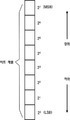
도 2는 하나의 화소 성분을 복수의 비트 레벨로 표시한 도면이다. 2 is a diagram illustrating one pixel component at a plurality of bit levels.
도 3은 IEEE 802.11a 규격의 PPDU의 구조를 나타낸 도면이다. 3 is a diagram illustrating a structure of a PPDU of the IEEE 802.11a standard.
도 4a는 본 발명의 일 실시예에 따른 전송 프레임의 구조를 예시한 도면이다.4A is a diagram illustrating a structure of a transmission frame according to an embodiment of the present invention.
도 4b는 본 발명의 일 실시예에 따른 PHY 헤더의 구조를 도시하는 도면이다. 4B is a diagram illustrating the structure of a PHY header according to an embodiment of the present invention.
도 5는 본 발명의 일 실시예에 따른 HRP 모드 인덱스 테이블을 예시하는 도면이다. 5 is a diagram illustrating an HRP mode index table according to an embodiment of the present invention.
도 6은 비트 블럭의 다양한 분할 비율을 예시하는 도면이다. 6 is a diagram illustrating various division ratios of bit blocks.
도 7은 본 발명의 일 실시예에 따른 UEP 모드 적용을 위한 송수신측 프레임의 구조를 나타내는 도면이다. 7 is a diagram illustrating a structure of a transmission / reception side frame for UEP mode application according to an embodiment of the present invention.
도 8은 본 발명의 일 실시예에 따른 비압축 AV 데이터를 송신하는 장치의 전체 구성도이다. 8 is an overall configuration diagram of an apparatus for transmitting uncompressed AV data according to an embodiment of the present invention.
도 9는 본 발명의 일 실시예에 따른 비압축 AV 데이터를 수신하는 장치의 전체 구성도이다. 9 is an overall configuration diagram of an apparatus for receiving uncompressed AV data according to an embodiment of the present invention.
도 10은 본 발명의 일 실시예에 따른 비압축 AV 데이터를 송신하는 방법의 전체 흐름도이다. 10 is an overall flowchart of a method of transmitting uncompressed AV data according to an embodiment of the present invention.
도 11는 본 발명의 일 실시예에 따른 비압축 AV 데이터를 수신하는 방법의 전체 흐름도이다. 11 is an overall flowchart of a method of receiving uncompressed AV data according to an embodiment of the present invention.
(도면의 주요부분에 대한 부호 설명)(Symbol description of main part of drawing)
100: 송신 장치 110: 저장부100: transmitting device 110: storage unit
120: 비트 분리부 130: 다중화부120: bit separator 130: multiplexer
140, 240: 버퍼 150: 채널 코딩부140 and 240: buffer 150: channel coding unit
160: 헤더 생성부 170, 210: RF 부160:
180: 전송 효율 판단부 190: UEP 모드 결정부180: transmission efficiency determination unit 190: UEP mode determination unit
195: 전송 모드 테이블 200: 수신 장치195: transmission mode table 200: receiving device
220: 헤더 판독부 230: 채널 디코딩부220: header reading unit 230: channel decoding unit
250: 역다중화부 260: 비트 조합부250: demultiplexer 260: bit combination
270: 재생부 280: 수신 효율 판단부270: playback unit 280: reception efficiency determination unit
290: 재전송 요청부 700: 송신 프레임 구조 290: retransmission request unit 700: transmission frame structure
710: 프리앰블 720: PHY 헤더710: preamble 720: PHY header
730: MAC 헤더 731: UMR 필드730: MAC header 731: UMR field
732: UMRI 필드 740: HCS 필드732: UMRI field 740: HCS field
750: MPDU 760: Beam Tracking 필드750: MPDU 760: Beam Tracking field
770: PLCP 헤더 800: 수신 프레임 구조 770: PLCP Header 800: Receive Frame Structure
820: PHY 헤더 830: MAC 헤더820: PHY header 830: MAC header
833: RUM 필드 834: RUMI 필드833: RUM field 834: RUMI field
본 발명은 무선 통신 기술에 관한 것으로, 보다 상세하게는, 고주파 무선 통신에서의 차등 오류 정정 부호화를 이용하여 비압축 AV 데이터를 효율적으로 송수신하기 위한 송수신 방법 및 장치, 그리고 차등 오류 정정 부호화가 적용되기 위한 전송 프레임 구조에 관한 발명이다. The present invention relates to a wireless communication technology, and more particularly, a transmission and reception method and apparatus for efficiently transmitting and receiving uncompressed AV data using differential error correction encoding in high frequency wireless communication, and differential error correction encoding are applied. The present invention relates to a transport frame structure.
네트워크가 무선화 되어가고 있고 대용량의 멀티미디어 데이터 전송 요구의 증대로 인하여, 무선 네트워크 환경에서의 효과적인 전송법에 대한 연구가 요구되고 있다. 더욱이, DVD(Digital Video Disk) 영상, HDTV(High Definition Television) 영상 등 고품질 비디오를 다양한 홈 디바이스 간에 무선으로 전송할 필요성이 높아지는 추세에 있다.Due to the increase in the demand for the transmission of large-capacity multimedia data, networks have been researched for effective transmission methods in wireless network environments. In addition, there is a growing need to wirelessly transfer high-quality video such as digital video disk (DVD) video and high definition television (HDTV) video between various home devices.
현재 IEEE 802.15.3c의 한 태스크 그룹(task group)에서는 무선 홈 네트워크에서 대용량의 데이터를 전송하기 위한 기술 표준을 추진 중에 있다. 소위, mmWave(Millimeter Wave)라고 불리는 이 표준은, 대용량 데이터 전송을 위하여 물리적인 파장의 길이가 밀리미터인 전파(즉, 30GHz 내지 300GHz의 주파수를 갖는 전 파)를 이용한다. 종래에는 이러한 주파수대는 무허가 밴드(unlicensed band)로서 통신 사업자용이나 전파 천문용, 또는 차량 충돌방지 등의 제한적 용도로 사용되어 왔다.Currently, a task group of IEEE 802.15.3c is pushing a technical standard for transmitting a large amount of data in a wireless home network. This standard, called mmWave (Millimeter Wave), uses radio waves (ie, waves with frequencies from 30 GHz to 300 GHz) of millimeters in physical wavelengths for large data transmissions. In the past, such a band has been used as a licensed band (unlicensed band) for a limited use, such as for telecommunications operators, radio astronomy, or vehicle collision prevention.
도 1은 IEEE 802.11 계열의 표준과 밀리미터 파(mmWave) 간에 주파수 대역을 비교하는 도면이다. IEEE 802.11b나 IEEE 802.11g는 반송파 주파수가 2.4GHz이며, 채널 대역폭은 20MHz 정도이다. 또한, IEEE 802.11a나 IEEE 802.11n은 반송파 주파수가 5GHz이며, 채널 대역폭은 마찬가지로 20MHz 정도이다. 이에 반하여, mmWave는 60GHz의 반송파 주파수를 사용하며, 대략 0.5 내지 2.5GHz의 채널 대역폭을 갖는다. 따라서, mmWave는 기존의 IEEE 802.11 계열의 표준에 비하여 훨씬 큰 반송파 주파수 및 채널 대역폭을 가짐을 알 수 있다. 이와 같이, 밀리미터 단위의 파장을 갖는 고주파 신호(밀리미터 웨이브)를 이용하면, 수 기가 비트 단위(Gbps)의 매우 높은 전송률을 나타낼 수 있고, 안테나 크기를 1.5mm이하로 할 수 있어 안테나를 포함한 단일 칩을 구현할 수 있다. 또한, 공기 중 감쇄율(attenuation ratio)이 매우 높기 때문에 기기간에 간섭을 감소시킬 수 있는 장점도 있다. 1 is a diagram comparing frequency bands between the IEEE 802.11 standard and millimeter wave (mmWave). IEEE 802.11b and IEEE 802.11g have a carrier frequency of 2.4 GHz and a channel bandwidth of about 20 MHz. In addition, IEEE 802.11a and IEEE 802.11n have a carrier frequency of 5 GHz and a channel bandwidth of about 20 MHz. In contrast, mmWave uses a carrier frequency of 60 GHz and has a channel bandwidth of approximately 0.5 to 2.5 GHz. Therefore, mmWave has a much larger carrier frequency and channel bandwidth than the existing IEEE 802.11 standard. As such, when using a high frequency signal (millimeter wave) having a wavelength in millimeters, several gigabytes can exhibit a very high bit rate (Gbps), and an antenna size of 1.5 mm or less can be achieved. Can be implemented. In addition, the attenuation ratio in the air (attenuation ratio) is very high, there is an advantage that can reduce the interference between devices.
특히, 최근에는 밀리미터 웨이브가 갖는 고 대역폭을 이용하여 무선 기기간에 비압축 오디오 또는 비디오 데이터(이하, 비압축 AV 데이터라고 함)를 전송하기 위한 연구가 이루어지고 있다. 압축 AV 데이터가 모션 보상, DCT 변환, 양자화, 가변길이 부호화 등의 과정을 통하여, 인간의 시각, 청각에 덜 민감한 부분을 제거하는 방식으로 손실 압축되는데 반해, 비압축 AV 데이터는 화소 성분을 나타내는 디지털 값(예를 들어, R, G, B 성분)을 그대로 포함한다.In particular, recent researches have been conducted to transmit uncompressed audio or video data (hereinafter, referred to as uncompressed AV data) between wireless devices using the high bandwidth of the millimeter wave. While compressed AV data is lossy compressed in such a manner as to remove parts less sensitive to human vision and hearing through processes such as motion compensation, DCT conversion, quantization, and variable length coding, uncompressed AV data is a digital representation of a pixel component. The value (for example, R, G, and B components) is included as it is.
따라서, 압축 AV 데이터에 포함되는 비트들은 중요도에 대한 우열이 없지만, 비압축 AV 데이터에 포함되는 비트들은 우열이 존재한다. 예를 들어, 도 2에 도시된 바와 같이, 8비트 영상의 경우 하나의 화소 성분은 8개의 비트로 표현되는데, 이 중에서 가장 높은 차수를 표현하는 비트(최상위 레벨의 비트)가 가장 중요한 비트(Most Significant Bit; MSB)이고, 가장 낮은 차수를 표현하는 비트(최하위 레벨의 비트)가 가장 덜 중요한 비트(Least Significant Bit; LSB)이다. 즉, 8비트로 구성된 1바이트 데이터 중 각각의 비트는 영상 신호나 음성 신호를 복원하는데 차지하는 중요도가 서로 다르다. 전송 중 중요도가 높은 비트에서 에러가 발생한다면 그렇지 않은 비트에서 에러가 발생했을 때 보다 쉽게 오류 발생이 감지될 수 있다. 따라서 중요도가 높은 비트 데이터들은 중요도가 낮은 비트 데이터들에 비하여, 무선 전송시 오류가 발생하지 않도록 보호해야 할 필요가 크다. 그러나, IEEE 802.11 계열의 종래 전송 방식에서는, 전송될 모든 비트에 대하여 동일한 부호화율을 갖는 오류 정정 방식 및 재전송 방식을 사용하고 있다. Therefore, the bits included in the compressed AV data do not have a superiority for importance, but the bits included in the uncompressed AV data have a superiority. For example, as illustrated in FIG. 2, in the case of an 8-bit image, one pixel component is represented by 8 bits, among which the bit representing the highest order (the highest level bit) is the most significant bit (Most Significant). Bit (MSB), and the bit representing the lowest order (lowest level bit) is the least significant bit (Least Significant Bit (LSB)). In other words, each bit of 8-byte 1-byte data has a different importance in recovering a video signal or an audio signal. If an error occurs in a bit of high importance during transmission, an error can be detected more easily when an error occurs in a bit that is not important. Accordingly, bit data having high importance needs to be protected from errors in wireless transmission as compared to bit data having low importance. However, in the IEEE 802.11 series transmission scheme, an error correction scheme and a retransmission scheme having the same coding rate for all bits to be transmitted are used.
도 3은 IEEE 802.11a 규격의 물리층 전송 프레임(PHY Protocol Data Unit; PPDU)의 구조를 나타낸 도면이다. PPDU(30)는 프리앰블(preamble)과, 시그널 필드, 및 데이터 필드로 구성된다. 상기 프리앰블은 PHY 계층의 동기화 및 채널 추정을 위한 신호로서, 복수개의 짧은 훈련신호(training signal)와 긴 훈련신호로 이루어져 있다. 시그널 필드(signal field)는 전송률을 나타내는 RATE 필드, PPDU의 길이를 나타내는 LENGTH 필드 등을 포함한다. 통상 시그널 필드는 하나의 심볼(symbol)에 의하여 부호화된다. 데이터 필드는 PSDU, 테일 비트 및 패드 비트로 이루어져 있는데, 실제 전송하고자 하는 데이터는 PSDU 부분에 포함된다.FIG. 3 is a diagram illustrating a structure of a PHY Protocol Data Unit (PPDU) according to the IEEE 802.11a standard. The PPDU 30 is composed of a preamble, a signal field, and a data field. The preamble is a signal for synchronization and channel estimation of the PHY layer, and consists of a plurality of short training signals and a long training signal. The signal field includes a RATE field indicating a transmission rate, a LENGTH field indicating a length of the PPDU, and the like. In general, a signal field is encoded by one symbol. The data field is composed of PSDU, tail bits, and pad bits. The data to be transmitted is included in the PSDU portion.
PSDU에 기록되는 데이터는 컨볼루션 인코더(convolutional encoder)나 RS 인코더를 이용하여 부호화된 코드들로 이루어져 있는데, 이러한 데이터는 중요도 면에서 차이가 없으며, 동일한 오류정정 부호화를 통하여 부호화되기 때문에 데이터의 각 부분은 동일한 에러 정정 능력을 갖는다. 또한 수신 측에서 오류를 발견하고 송신 측에 재전송을 요청할 때(ACK 등을 통하여), 송신측에서는 해당되는 데이터 전체를 모두 재전송한다. 이와 같은 종래의 방법은 일반적인 데이터 전송시에는 별론으로 하고, 전송하고자 하는 데이터의 중요도에서 차이가 나게 되므로 채널의 전송 상태가 불량해진다는 문제가 있다. The data recorded in the PSDU is composed of codes encoded using a convolutional encoder or an RS encoder. Since the data are not different in importance and are encoded through the same error correction coding, each part of the data Has the same error correction capability. In addition, when the receiver detects an error and requests the sender to retransmit (via ACK, etc.), the sender retransmits all of the corresponding data. This conventional method is a separate method for general data transmission, and there is a problem in that the transmission state of the channel becomes poor because the difference in the importance of the data to be transmitted.
본 발명은 상기와 같은 문제점을 해결하기 위해 고안된 것으로서, 본 발명이 이루고자 하는 기술적 과제는, 고주파를 이용하는 무선 장치의 데이터 송수신 상태가 나빠지는 경우 MAC 레이어에서 기초 레이어의 차등 오류 정정 부호화를 지원할 수 있는, 비압축 AV 데이터를 송수신하는 방법 및 장치를 제공하는 것이다. SUMMARY OF THE INVENTION The present invention has been devised to solve the above problems. The present invention has been made in an effort to provide a differential error correction encoding of a base layer in a MAC layer when a data transmission / reception state of a wireless device using high frequency is deteriorated. A method and apparatus for transmitting and receiving uncompressed AV data is provided.
또한, 본 발명이 이루고자 하는 기술적 과제는, 수 Gbps의 대역을 통하여 대용량의 비압축 오디오/비디오 데이터(이하, AV 데이터라 함)를 차등 오류 정정 부호화 기법을 이용하여 전송하기에 적합한 전송 프레임의 구조를 제공하는 것이다. In addition, a technical problem of the present invention is to provide a structure of a transmission frame suitable for transmitting a large amount of uncompressed audio / video data (hereinafter referred to as AV data) using a differential error correction coding technique over a band of several Gbps. To provide.
본 발명의 기술적 과제들은 이상에서 언급한 기술적 과제로 제한되지 않으며, 언급되지 않은 또 다른 기술적 과제들은 아래의 기재로부터 당업자에게 명확하게 이해될 수 있을 것이다.Technical problems of the present invention are not limited to the technical problems mentioned above, and other technical problems not mentioned will be clearly understood by those skilled in the art from the following description.
상기한 기술적 과제를 달성하기 위한 본 발명의 일 실시예에 따른 비압축 AV 데이터를 송신하는 방법은, 비압축 AV 데이터를 전송하는 도중에 상기 비압축 AV 데이터의 전송 효율이 소정 기준 이하로 저하되는지 여부를 판단하는 단계; 상기 판단 결과 상기 전송 효율이 상기 기준 이하로 저하되는 경우에는, 상기 전송되는 비압축 AV 데이터를 구성하는 비트들을 중요 비트와 미중요 비트로 분할하는 방식을 표현하는 차등 오류 정정 (UEP) 모드의 사용 여부를 결정하는 단계; 및 상기 결정에 따라 상기 차등 오류 정정 모드를 사용하여 상기 비압축 AV 데이터를 재전송하는 단계를 포함한다. The method for transmitting uncompressed AV data according to an embodiment of the present invention for achieving the above technical problem, whether the transmission efficiency of the uncompressed AV data is lowered below a predetermined criterion while transmitting the uncompressed AV data. Determining; If the transmission efficiency is lower than the criterion as a result of the determination, whether to use the differential error correction (UEP) mode that represents a method for dividing the bits constituting the transmitted uncompressed AV data into significant bits and non-significant bits Determining; And retransmitting the uncompressed AV data using the differential error correction mode in accordance with the determination.
상기한 기술적 과제를 달성하기 위한 본 발명의 또 다른 일 실시예에 따른 비압축 AV 데이터를 수신하는 방법은, 비압축 AV 데이터를 수신하는 도중에 상기 비압축 AV 데이터의 수신 효율이 소정 기준 이하로 저하되는지 여부를 판단하는 단계; 상기 판단 결과 상기 수신 효율이 상기 기준 이하로 저하되는 경우에는, 상기 수신한 비압축 AV 데이터를 구성하는 비트들을 중요 비트와 미중요 비트로 분할하는 방식을 표현하는 차등 오류 정정 (UEP) 모드의 사용 여부를 확인하는 단계; 및 상기 확인 결과 상기 차등 오류 정정 모드가 사용되는 경우에는, 상기 차등 오류 정정 모드가 사용된 비압축 AV 데이터의 재전송을 요청하는 단계를 포함한다. According to another aspect of the present invention, there is provided a method of receiving uncompressed AV data, wherein the receiving efficiency of the uncompressed AV data decreases below a predetermined reference while receiving uncompressed AV data. Determining whether or not it is; When the reception efficiency is lowered below the reference, the determination result indicates whether to use a differential error correction (UEP) mode that represents a method of dividing the bits constituting the received uncompressed AV data into significant bits and non-significant bits. Confirming; And requesting retransmission of uncompressed AV data in which the differential error correction mode is used when the differential error correction mode is used as a result of the checking.
상기한 기술적 과제를 달성하기 위한 본 발명의 또 다른 일 실시예에 따른 비압축 AV 데이터를 송신하는 장치는, 비압축 AV 데이터를 전송하는 도중에 상기 비압축 AV 데이터의 전송 효율이 소정 기준 이하로 저하되는지 여부를 판단하는 전 송 효율 판단부; 상기 판단 결과 상기 전송 효율이 상기 기준 이하로 저하되는 경우에는, 상기 전송되는 비압축 AV 데이터를 구성하는 비트들을 중요 비트와 미중요 비트로 분할하는 방식을 표현하는 차등 오류 정정 (UEP) 모드의 사용 여부를 결정하는 UEP 모드 결정부; 상기 결정에 따라 상기 차등 오류 정정 모드를 사용하여 상기 비압축 AV 데이터의 부호화를 수행하는 채널 코딩부; 및 상기 부호화된 데이터들을 재전송하는 RF부를 포함한다. According to another aspect of the present invention, there is provided an apparatus for transmitting uncompressed AV data, wherein transmission efficiency of the uncompressed AV data decreases below a predetermined standard during transmission of uncompressed AV data. A transmission efficiency determination unit to determine whether or not it is; If the transmission efficiency is lower than the criterion as a result of the determination, whether to use the differential error correction (UEP) mode that represents a method for dividing the bits constituting the transmitted uncompressed AV data into significant bits and non-significant bits UEP mode determination unit for determining; A channel coding unit for encoding the uncompressed AV data using the differential error correction mode according to the determination; And an RF unit for retransmitting the encoded data.
상기한 기술적 과제를 달성하기 위한 본 발명의 또 다른 일 실시예에 따른 비압축 AV 데이터를 수신하는 장치는, 비압축 AV 데이터를 수신하는 도중에 상기 비압축 AV 데이터의 수신 효율이 소정 기준 이하로 저하되는지 여부를 판단하는 수신 효율 판단부; 상기 판단 결과 상기 수신 효율이 상기 기준 이하로 저하되는 경우에는, 상기 수신한 비압축 AV 데이터를 구성하는 비트들을 중요 비트와 미중요 비트로 분할하는 방식을 표현하는 차등 오류 정정 (UEP) 모드의 사용 여부를 확인하여 상기 비압축 AV 데이터를 디코딩하는 채널 디코딩부; 및 상기 확인 결과 상기 차등 오류 정정 모드가 사용되지 않은 경우에는, 상기 차등 오류 정정 모드가 사용된 비압축 AV 데이터의 재전송을 요청하는 재전송 요청부를 포함한다. According to another aspect of the present invention, there is provided an apparatus for receiving uncompressed AV data, wherein the receiving efficiency of the uncompressed AV data decreases below a predetermined criterion while receiving uncompressed AV data. A reception efficiency determination unit for determining whether or not When the reception efficiency is lowered below the reference, the determination result indicates whether to use a differential error correction (UEP) mode that represents a method of dividing the bits constituting the received uncompressed AV data into significant bits and non-significant bits. A channel decoding unit to check and decode the uncompressed AV data; And a retransmission request unit for requesting retransmission of uncompressed AV data using the differential error correction mode when the differential error correction mode is not used.
상기한 기술적 과제를 달성하기 위한 본 발명의 또 다른 일 실시예에 따른 비압축 AV 데이터의 전송 프레임의 구조는, 상기 비압축 AV 데이터를 구성하는 비트들의 중요도에 따라 분류되며, 소정의 부호화율로 오류 정정 부호화된 복수의 전송 데이터 유닛으로 구성되는 페이로드; 상기 페이로드에 부가되며, 상기 비압축 AV 데이터를 구성하는 비트들을 중요 비트와 미중요 비트로 분할하는 방식을 표현 하는 차등 오류 정정 (UEP) 모드를 사용하여 상기 비압축 AV 데이터를 부호화하기 위한 링크 적응 필드(LAF)가 설정된 MAC 헤더; 상기 MAC 헤더에 부가되며, 상기 차등 오류 정정 (UEP) 모드의 사용 여부에 관한 정보를 포함하는 PHY 헤더를 포함하며, 상기 MAC 헤더는 현재 전송 효율에 적응적인 소정 UEP 모드를 추천해 줄 것을 수신 장치에게 요청(Request)하는 UMR 필드 및 상기 UMR 필드의 아이디가 부여되는 UMRI 필드를 포함한다. A structure of a transmission frame of uncompressed AV data according to another embodiment of the present invention for achieving the above technical problem is classified according to the importance of bits constituting the uncompressed AV data, and at a predetermined coding rate. A payload comprising a plurality of transmission data units which are error corrected encoded; Link adaptation for encoding the uncompressed AV data using a differential error correction (UEP) mode added to the payload and expressing a manner of dividing bits constituting the uncompressed AV data into significant bits and non-significant bits. A MAC header in which a field LAF is set; And a PHY header added to the MAC header and including information on whether the differential error correction (UEP) mode is used, wherein the MAC header recommends a predetermined UEP mode that is adaptive to current transmission efficiency. It includes a UMR field requesting to and a UMRI field to which the ID of the UMR field is assigned.
본 발명의 이점 및 특징, 그리고 그것들을 달성하는 방법은 첨부되는 도면과 함께 상세하게 후술되어 있는 실시예들을 참조하면 명확해질 것이다. 그러나 본 발명은 이하에서 개시되는 실시예들에 한정되는 것이 아니라 서로 다른 다양한 형태로 구현될 것이며, 단지 본 실시예들은 본 발명의 개시가 완전하도록 하며, 본 발명이 속하는 기술분야에서 통상의 지식을 가진 자에게 발명의 범주를 완전하게 알려주기 위해 제공되는 것이며, 본 발명은 청구항의 범주에 의해 정의될 뿐이다. 명세서 전체에 걸쳐 동일 참조 부호는 동일 구성 요소를 지칭한다. Advantages and features of the present invention and methods for achieving them will be apparent with reference to the embodiments described below in detail with the accompanying drawings. However, the present invention is not limited to the embodiments disclosed below, but will be implemented in various forms, and only the present embodiments are intended to complete the disclosure of the present invention, and the general knowledge in the art to which the present invention pertains. It is provided to fully convey the scope of the invention to those skilled in the art, and the present invention is defined only by the scope of the claims. Like reference numerals refer to like elements throughout.
이하, 본 발명의 바람직한 실시예들에 의하여 미리 정의된, 비압축 AV 데이터를 송수신하는 방법, 장치, 및 전송 프레임 구조를 설명하기 위한 블럭도 또는 흐름도들을 참조하여 보다 상세히 설명한다. Hereinafter, a method, an apparatus for transmitting and receiving uncompressed AV data, and a block diagram or flowchart for explaining a transmission frame structure, which are predefined by preferred embodiments of the present invention, will be described in more detail.
먼저, RGB 각 8비트씩 비디오 신호가 전송되는 경우에서 R, G, B 각 비디오 신호를 이루는 8 비트 데이터 중 R 신호만을 예로 들면, R[7], R[6], R[5], R[4], R[3], R[2], R[1], 및 R[0]가 된다. (이때 R[7]이 MSB(Most Significant Bit)가 되고, R[0]가 LSB(Least Significant Bit)가 된다.) 이 경우 R[7] 비트에 오류가 생겼을 때 오류를 인간이 인식할 수 있는 정도와 R[0] 비트에 오류가 생겼을 때 인간이 오류를 인식할 수 있는 정도는 크게 다르다. 따라서 인간의 인식 정도를 고려하여, 그 중요도가 큰 R[7] 비트를 좀더 강한 오류정정 부호방법을 이용하여 오류에 강하도록 할 필요가 있다. 이러한 오류 정정에 사용되는 기법으로서, 고주파 무선 통신의 MAC 레이어에서 지원하는 차등 오류 정정 부호화 (Unequal Error Protection; 이하, UEP 라 함) 기법이 있다. 상기 UEP 는 BB 레이어에서 수행되는데, 전송율을 일정하게 유지하면서 각 비트에 따라서 차등적으로 오류 정정을 수행하는 방법으로, BCH, RS 코딩, 컨벌루션 코딩, 터보(Turbo) 코딩, LDPC 등 여러 가지 알고리즘이 이용될 수 있으며, 중요 비트와 미중요 비트 사이의 분할 비율을 조절함으로써, 인간의 인식 범위 내에서 느낄 수 있는 오류 발생 정도를 줄일 수 있다. First, in the case where 8-bit RGB video signals are transmitted, R [7], R [6], R [5], and R are only examples of 8-bit data constituting each of the R, G, and B video signals. [4], R [3], R [2], R [1], and R [0]. (R [7] becomes the Most Significant Bit (MSB), and R [0] becomes the Least Significant Bit (LSB).) In this case, an error cannot be recognized by a human when an error occurs in the R [7] bit. The degree to which the error is recognized by the human being when the R [0] bit fails. Therefore, in consideration of the degree of human recognition, it is necessary to make the R [7] bit, which is of high importance, resistant to errors by using a stronger error correction coding method. As a technique used for such error correction, there is a differential error correction encoding (hereinafter referred to as UEP) technique supported by the MAC layer of high frequency wireless communication. The UEP is performed in the BB layer, and a method of performing error correction differentially according to each bit while maintaining a constant bit rate, and various algorithms such as BCH, RS coding, convolutional coding, turbo coding, and LDPC are implemented. It can be used, and by adjusting the division ratio between significant bits and critical bits, it is possible to reduce the degree of error that can be felt within the human recognition range.
그러므로, 오류 발생 정도를 줄이기 위한 차등 오류 정정 부호화가 적용될 수 있는 전송 프레임의 구조를 도 4a를 참조하여 설명하기로 한다. Therefore, a structure of a transmission frame to which differential error correction coding may be applied to reduce an error occurrence degree will be described with reference to FIG. 4A.
상기 도 4a를 참조하면, 전송 프레임(700)은 PLCP(Physical Layer Convergence Protocol) 헤더(770), MPDU 필드(750), 및 빔 트래킹(Beam Tracking) 필드(760)를 포함한다. PLCP 헤더(770)는 다시 프리앰블(710), PHY 헤더(720), MAC 헤더(730), 및 HCS 필드(740)로 구성될 수 있다. Referring to FIG. 4A, the
프리앰블(710)은 PHY 계층의 동기화 및 채널 추정을 위한 신호로서, 통상 복수개의 짧은 훈련신호(training signal)와 긴 훈련신호로 이루어진다. PHY 헤더(720)는 PHY 계층에서 사용되는 정보를 토대로 생성되는 영역이고, MAC 헤 더(730)는 MAC 계층에서 사용되는 정보를 토대로 생성되는 영역으로서, 매체 접근 제어를 위한 정보가 기록된다. IEEE 802.11 계열 표준이나 IEEE 802.3 표준에서와 마찬가지로 MAC 미디어 접근 제어를 위하여 사용된다. 그리고, HCS(Header Check Sequence) 필드(740)는 PLCP 헤더(770)에 오류가 발생하였는지 여부를 체크하는데 사용되는 영역이다. The
MPDU(MAC Protocol Data Unit) 필드(750)는 실제 전송하고자 하는 복수의 전송 데이터 유닛(Transmission Data Unit; 이하 TDU라 함), 즉 소정의 부호화율로 오류 정정 부호화된 비압축 AV 데이터가 기록되는 영역이다. 오류 정정 부호화시, 동일한 번호의 TDU에는 같은 부호화율이 적용된다. 이러한 TDU는 높은 중요도를 갖는 것부터 낮은 중요도를 갖는 것 순으로, 또는 그 반대로 배열될 수 있다.The MAC Protocol Data Unit (MPDU)
빔 트래킹(Beam Tracking) 필드(760)는 빔 스티어링(Beam steering)을 위한 부가 정보가 기록되는 영역이다. 빔 스티어링은 방향성을 가지는 무선 신호의 수신 방향에 적합하도록 안테나의 방향성을 설정하는 것을 의미한다. The
도 4b는 본 발명의 일 실시예에 따른 PHY 헤더(720)의 구조를 도시하는 도면이다. 상기 도 4b와 같이, PHY 헤더(720)는 HRP mode index 필드(720a), MPDU length 필드(720b), Beam tracking 필드(720c), Error protection 필드(720d), UEP offset 필드(720e) 및 Reserved 필드(720f)를 포함한다.4B is a diagram illustrating the structure of a
본 발명에서는 비압축 AV 데이터를 전송하기 위하여 3Gbps 이상의 전송률을 사용하기 때문에, PHY 헤더(720)는 도 3에 도시된 PHY 헤더와는 다소 달라질 필요가 있다. 이러한 의미에서 도 4b에서의 PHY 헤더(720)는 HRP(High Rate PHY) 헤더 라고 정의된다.Since the present invention uses a data rate of 3Gbps or more for transmitting uncompressed AV data, the
HRP mode index 필드(720a)는 MPDU(750)에 포함되는 그룹의 수, 각 그룹에 적용되는 부호화율 및 변조 방식 등의 정보를 포함하고 있다. 본 발명의 일 실시예에 있어서 상기 모드 인덱스(mode index)는 도 5의 테이블에서와 같이, 0에서 6까지의 값을 가질 수 있는 것으로 정의된다. 물론, 그루핑(grouping) 정보(하나의 그룹이 포함하는 비트 레벨의 수), 부호화율, 변조 방식 등의 항목을 표시하는 필드를 각각 배치할 수도 있지만, 상기 모드 인덱스를 이용하면 하나의 인덱스로 복수의 항목 조합을 나타낼 수 있는 장점이 있다. 상기 모드 인덱스에 대응하는 상기 도 5의 전송 모드 테이블은 송신 장치와 수신 장치 간에 미리 약속되거나, 송신 장치로부터 수신 장치로 전송되어야 할 것이다. The HRP
상기 도 5의 테이블을 참조하면, HRP mode index가 0 내지 2인 경우에는 EEP(Equal Error Protection)가 적용되고, 3 내지 4인 경우에는 2개로 분할된 그룹들에 UEP(Unequal Error Protection)가 적용됨을 알 수 있다. 이 중에서 제 1그룹은 상위 4개의 비트 레벨([7], [6], [5], [4])을 포함하고, 제2그룹은 하위 4개의 비트 레벨([3], [2], [1], [0])을 포함한다. 상기 테이블에서는 UEP가 적용되는 경우에 분할된 그룹의 수는 2인 것으로 하였지만, 상기 분할된 그룹의 수 및 해당 그룹에 속하는 비트 레벨의 수는 얼마든지 다르게 설정할 수 있다. 8비트 데이터의 경우 상기 분할된 그룹의 수는 최대 8까지 가능할 것이다. Referring to the table of FIG. 5, when the HRP mode index is 0 to 2, EEP (Equal Error Protection) is applied, and when 3 to 4, UEP (Unequal Error Protection) is applied to two divided groups. It can be seen. Of these, the first group includes the top four bit levels [7], [6], [5], and [4], and the second group includes the lower four bit levels ([3], [2], [1], [0]). In the above table, when the UEP is applied, the number of divided groups is 2, but the number of divided groups and the number of bit levels belonging to the group may be differently set. In the case of 8-bit data, the number of divided groups may be up to eight.
재전송시에는 상대적으로 중요도가 높은 제1그룹만을 1/3의 부호화율로 재전송하고, 상대적으로 중요도가 낮은 제2그룹은 전송하지 않는다(부호화율이 infinite임)는 것을 알 수 있다. 비압축 AV 데이터는 압축 AV 데이터와는 달리 데이터를 구성하는 각각의 비트 마다 중요도가 상이하여, 보다 중요도가 높은 상위 레벨의 비트들의 전송에 있어 오류가 발생하지 않도록 보호할 필요가 있기 때문이다. In retransmission, it can be seen that only the first group having a relatively high importance is retransmitted at a coding rate of 1/3, and the second group having a relatively low importance is not transmitted (the encoding rate is infinite). This is because uncompressed AV data has a different importance for each bit constituting the data, unlike compressed AV data, and it is necessary to protect an error from occurring in transmission of higher-level bits of higher importance.
한편, 상기 부호화율에 표시된 분수값에서, 분자는 입력되는 비트수를 나타내고, 분모는 변환되는 부호어(codeword)의 비트수를 나타낸다. 그러므로, 부호화율이 낮아질수록(즉, 분모가 커질수록) 입력 비트에 비하여 큰 비트의 부호어로 부호화되기 때문에 오류 정정의 확률이 보다 커지게 된다. 상기 테이블의 HRP mode index가 3 내지 6인 경우(UEP 모드와 재전송 모드), 상위 그룹인 제1그룹이 하위 그룹인 제2그룹보다 부호화율이 낮게 설정되어 있음을 알 수 있다. On the other hand, in the fractional value indicated in the coding rate, the numerator represents the number of bits to be input, and the denominator represents the number of bits of the codeword to be converted. Therefore, the lower the coding rate (i.e., the larger the denominator), the greater the probability of error correction because it is coded with a larger bit of codeword than the input bit. When the HRP mode index of the table is 3 to 6 (UEP mode and retransmission mode), it can be seen that the coding rate is set lower than that of the second group, which is the first group, which is the upper group.
도 6은 비트 블럭의 다양한 분할 비율을 예시하는 도면이다. 8 비트를 예로 들면, 8 개의 비트들 중 중요 비트와 미중요 비트를 분리하는 방식은 다양할 수 있다. 먼저, 610에서는 [0] 내지 [3] 비트는 LSB로, [4] 내지 [7] 비트는 MSB로 분할한 후, LSB에 대하여는 4/5의 부호화율로 MSB에 대하여는 1/2의 부호화율로 부호화하였다. 620에서는 [0] 내지 [4] 비트는 LSB로, [5] 내지 [7] 비트는 MSB로 분할한 후, LSB에 대하여는 5/6의 부호화율로 MSB에 대하여는 1/2의 부호화율로 부호화하였다. 630에서는 [0] 내지 [3] 비트는 LSB로, [4] 내지 [5] 비트는 중간 영역의 비트로, [6] 내지 [7] 비트는 MSB로 분할한 후, LSB에 대하여는 4/5의 부호화율로, 중간 영역의 비트에 대해서는 2/3의 부호화율로, MSB에 대하여는 1/2의 부호화율로 부호화하였다. 6 is a diagram illustrating various division ratios of bit blocks. Taking 8 bits as an example, a method of separating the significant bits and the important bits among the 8 bits may vary. First, in 610, bits [0] to [3] are divided into LSBs, and bits [4] to [7] are divided into MSBs, and then a coding rate of 4/5 for the LSB and 1/2 for the MSB is used. Encoded by In 620, bits [0] to [4] are divided into LSBs, and [5] to [7] bits are divided into MSBs, and then coded at a coding rate of 5/6 for the LSB and 1/2 for a MSB. It was. In 630, bits [0] through [3] are divided into LSBs, bits [4] through [5] into bits in the middle region, and bits [6] through [7] into MSBs. The code rate was coded at a code rate of 2/3 for bits in the middle region and at a code rate of 1/2 for MSB.
상기와 같이 MSB와 LSB의 분할 비율을 달리 설정하고 각 분할 비율마다 부호화율을 다르게 설정함으로써, 본 발명의 일 실시예에서는 현재의 전송 효율에 적응적인 분할 비율을 선택할 수 있게 된다. By setting the split ratio of the MSB and the LSB differently as described above, and setting the coding rate differently for each split ratio, in one embodiment of the present invention, a split ratio adaptive to the current transmission efficiency can be selected.
다시 상기 도 4b를 참조하면, MPDU length 필드(720b)는 MPDU(750)의 크기를 옥텟(octet) 단위로 나타낸다. 이 필드(720b)는 가변적인 크기를 갖는 MPDU(750)를 정확하게 판독하기 위하여 필요하다. 일 예로서, MPDU length 필드(720b)는 20비트로 구성될 수 있다.Referring back to FIG. 4B, the
Beam tracking 필드(720c)는 1비트 필드이며, 빔 스티어링을 위한 부가 정보가 전송 패킷에 포함된 경우 1로 표시되고, 그렇지 않은 경우 0으로 표시된다. 즉, 도 4a에서 Beam Tracking 필드(760)가 MPDU(750)에 부가되어 있으면 본 필드(720c)는 1로 표시되고, 그렇지 않으면 0으로 표시된다.The
Error protection 필드(720d)는 MPDU(750)에 포함된 비트들에 UEP가 적용되는지 여부가 표시된다. 본 필드(720d)에는 여러 가지 UEP 모드 중 어떠한 모드가 사용되는지 표시될 수 있다. 이는 후술할 도 7에서 'UEP 필드'로 표현된다. The
UEP offset 필드(720e)는 MAC 헤더(730) 이후 첫 번째 심볼로부터 카운트 할 때, UEP 코딩이 시작되는 심볼의 번호를 나타낸다. 구체적으로는 10비트로 표시될 수 있다. The UEP offset
마지막으로, Reserved 필드(720f)는 추후 특정 용도로 사용하기 위하여 예비된 필드이다. Finally, the
상술한 전송 프레임의 구조 중 PHY 헤더와 MAC 헤더가 본 발명의 실시예에서 담당하는 역할을 도 7을 참조하여 좀 더 상세히 살펴보기로 한다. 도 7은 본 발명의 일 실시예에 따른 UEP 모드 적용을 위한 송수신측 프레임의 구조를 나타내는 도면이다. 상기 도 7에서는, 설명의 편의를 위해 상기 도 4a와 달리 PHY 헤더, MAC 헤더, 및 페이로드만으로 구성된 프레임으로 도시하였다. A role of the PHY header and the MAC header in the above-described structure of the transport frame will be described in more detail with reference to FIG. 7. 7 is a diagram illustrating a structure of a transmission / reception side frame for UEP mode application according to an embodiment of the present invention. In FIG. 7, for convenience of description, unlike FIG. 4A, a frame including only a PHY header, a MAC header, and a payload is illustrated.
상기 페이로드는 비압축 AV 데이터를 구성하는 비트들의 중요도에 따라 분류되며, 소정의 부호화율로 오류 정정 부호화된 복수의 전송 데이터 유닛으로 구성되는 영역으로서, 상기 도 4a에서의 MPDU 필드(750)에 해당된다. The payload is classified according to the importance of bits constituting the uncompressed AV data, and is composed of a plurality of transmission data units that are error corrected and encoded at a predetermined coding rate. The payload is included in the
PHY 헤더(720, 820)는 후술할 MAC 헤더(730, 830)에 부가되며, 상기 비압축 AV 데이터를 구성하는 비트들을 중요 비트와 미중요 비트로 분할하는 방식을 표현하는 차등 오류 정정 (UEP) 모드의 사용 여부에 관한 정보를 포함하고 있다. 또한, PHY 헤더(720, 820)에는 전송 데이터 유닛에 포함되는 비트 레벨의 수에 관한 정보, 변조 방식에 관한 정보, 상기 비트 레벨의 수에 관한 정보와 상기 변조 방식에 관한 정보의 조합을 나타내는 모드 인덱스에 관한 정보가 더 포함될 수 있는 바, 이러한 정보들로 구성되는 테이블은 상기 도 5의 설명 부분에서 전술하였다. The
MAC 헤더(730, 830)는 상기 페이로드에 부가되며, 상기 UEP 모드를 사용하여 상기 비압축 AV 데이터를 부호화하기 위한 링크 적응 필드(Link Adaptaiton Field; 이하, LAF라 함)가 설정되어 있다. 상기 MAC 헤더(730, 830)의 하부 필드는 4 개의 필드를 포함한다.
송신측의 프레임(700)에서의 UMR 필드(731)는 현재의 전송 효율이 저하되어 전송 품질이 나쁜 경우에 전송 효율을 향상시킬 수 있도록 현재 전송 효율에 적응 적인 소정의 UEP 모드를 추천해 줄 것을 수신 장치에게 요청(Request)한다. 이러한 요청을 할 때에는 1로 설정되며, 요청하지 않을 때에는 0으로 설정된다. 그리고, 상기 UMR 필드의 아이디가 부여되는 UMRI 필드(732)가 상기 UMR 필드(731)에 부가되어 있다. The
수신측의 프레임(800)에서는 UMR 필드와 UMRI 필드가 비워져 있는 대신에, RUM 필드(833) 및 RUMI 필드(834)에 정보가 기록되어 있다. RUM 필드(833)는 수신한 프레임의 UMR 필드가 1로 설정될 경우, 현재의 데이터 수신율에 적합한 UEP 모드를 상기 도 5의 테이블의 HRP mode index로부터 추천하게 된다. 그리고, 상기 RUM 필드(833)의 아이디가 부여되는 RUMI 필드(834)가 RUM 필드(833)에 부가되어 있다. 만약, 수신 효율이 소정 기준 이하로 저하되는 경우에는 RUM 필드(833)에서 다시 변경된 UEP 모드를 상기 도 5의 테이블(HRP mode index)로부터 추천하게 된다.In the
한편, 고주파 무선 통신에서는 채널 상태의 변화가 매우 유동적이므로 데이터를 전송하기 시작할 때와 약간의 시간 경과후에는 채널의 상태가 상당히 달라질 수 있다. 따라서, 전송 시작 전에 설정된 채널 상태가 나빠질 경우에 BB 레이어에서 수행되는 차등 오류 정정 부호화의 모드를 재설정할 필요가 있다. 즉, PHY 헤더(720)에서 UEP의 사용여부를 결정하고 MAC 헤더(730)에서는 링크 적응 필드(Link Adaptation Field)를 지정하여 UEP 모드를 새롭게 설정하게 된다. 링크 적응 필드는 UMR 필드(731)를 1로 설정하여 적합한 UEP 모드를 요청(Request)함을 알리고, UMR의 아이디(UMRI)를 UMRI 필드(732)에 부여하여 수신측으로 ACK를 전송한다. 상 기 ACK을 수신한 수신측에서는 현재의 전송 효율에 적응적인 UEP 모드를 상기 도 5와 같은 참조 테이블로부터 선택함으로써 추천된 UEP 모드(Recommanded UEP Mode; RUM)를 지정하여 RUM의 아이디(RUMI)와 함께 송신측으로 회신한다. 상기 송신측은 새롭게 설정된 UEP 모드를 적용하여 데이터를 수신측으로 전송함으로써, 변화된 채널 상태를 반영할 수 있는 것이다. On the other hand, in the high frequency wireless communication, the state of the channel is very flexible, and thus, the state of the channel may vary considerably at the beginning of data transmission and after some time. Therefore, it is necessary to reset the mode of the differential error correction coding performed in the BB layer when the channel state set before the start of transmission becomes bad. That is, the
도 8은 본 발명의 일 실시예에 따른 비압축 AV 데이터를 송신하는 장치(100)의 전체 구성도이다. 상기 송신 장치(100)는 저장부(110), 비트 분리부(120), 다중화부(130), 버퍼(140), 채널 코딩부(150), 헤더 생성부(160), RF(Radio Frequency) 부(170), 전송 효율 판단부(180), UEP 모드 결정부(190), 및 UEP 모드 테이블(195)을 포함하여 구성될 수 있다. 8 is an overall configuration diagram of an apparatus 100 for transmitting uncompressed AV data according to an embodiment of the present invention. The transmitter 100 may include a
저장부(110)는 비압축 AV 데이터를 저장하는 것으로서, 상기 AV 데이터가 비디오 데이터인 경우 각 화소에 대한 부화소 값이 저장된다. 상기 부화소 값은 사용되는 색공간(예: RGB 색공간, YCbCr 색공간 등)에 따라서 다양한 값으로 저장될 수 있지만, 본 발명에서 각 화소는 RGB 색공간에 따라 R(Red), G(Green), B(Blue) 세 개의 부화소로 이루어지는 것으로 하여 설명한다. 물론, 비디오 데이터가 그레이 영상인 경우에는 부화소 성분은 하나만 존재하므로, 하나의 부화소가 그대로 화소를 이룰 수 있으며, 2개 또는 4개의 부화소 성분이 하나의 화소를 이룰 수도 있다.The
비트 분리부(120)는 저장부(110)에서 제공된 부화소 값을 최상위 비트 레벨부터 최하위 비트 레벨까지 분리한다. 예를 들어, 8비트 비디오 데이터의 경우, 차 수가 27 에서 20까지 존재하므로 총 8개의 비트로 분리될 수 있다. 여기서, m은 화소의 비트수를 나타내고, Bitm -1은 m-1 차수의 비트를 나타내는데, 이와 같은 비트 분리 과정은 각각의 부화소에 대하여 독립적으로 수행된다.The
상기 분리된 비트를 중요도 별로 분류하기 위하여, 다중화부(130)는 상기 분리된 비트를 레벨 별로 스캔하여 다중화(multiplexing)한다. 이와 같은 다중화를 통하여 복수의 TDU를 구성할 수 있다. 버퍼(140)는 다중화부(130)에 의하여 생성된 복수의 TDU를 일시적으로 저장한다. In order to classify the separated bits by importance, the
채널 코딩부(150)는 버퍼(140)에 저장된 TDU 별로 결정되는 부호화율로 오류 정정 부호화를 수행하여 페이로드를 생성한다. TDU에 관한 정보(TDU에 포함되는 비트 레벨의 수) 및 각 TDU 별 부호화율은 UEP 모드 결정부(190)로부터 제공된다. 도 4a에서의 MPDU(750)에서 동일한 종류의 TDU은 동일한 부호화율을 갖는다.The
오류 정정 부호화에는 크게 블록 부호화, 컨볼루션 부호화 등이 있는데 블록 부호화(예: 리드-솔로몬 부호화)는 데이터를 일정 블록 단위로 부호화와 복호화를 수행하는 것이며, 컨볼루션 부호화는 일정 길이의 메모리를 이용해 이전 데이터와 현재 데이터를 비교해 부호화를 수행하는 기술이다. 근본적으로 블록 부호화는 군집 오류(burst error)에 강하고, 컨볼루션 부호화는 불규칙 오류(random error)에 강하다고 알려져 있다. 상기 오류 정정 부호화 결과를 모으면, 페이로드 즉 MPDU(750)가 형성된다. Error correction coding includes block coding and convolutional coding. In block coding (eg, Reed-Solomon coding), data is encoded and decoded by a predetermined block unit. A technique that performs encoding by comparing data with current data. Fundamentally, block coding is known to be robust against burst errors, and convolutional coding is known to be resistant to random errors. When the error correction encoding result is collected, a payload, that is, an
헤더 생성부(160)는 부호화된 복수의 TDU로 이루어지는 MPDU(750)에 프리앰 블(preamble)(710), PHY 헤더(720) 및 MAC 헤더(730)를 생성하여 부가하여 상기 도 4a와 같은 전송 프레임을 생성한다.The
이 때, PHY 헤더(720)의 HRP mode index 필드(720a)에는 모드 인덱스가 기록된다. 상기 모드 인덱스는 그루핑 정보(TDU의 그루핑 방식), 부호화율, 변조 방식 등의 조합을 나타낸다. 상기 모드 인덱스는 UEP 모드 결정부(190)에 의하여 제공된다. 또한, 헤더 생성부(160)는 상기 필드(720a) 이외에도 도 4b의 다양한 필드들(720b, 720c, 720d, 720e, 720f)을 생성한다.At this time, the mode index is recorded in the HRP
RF 부(170)는 UEP 모드 결정부(190)로부터 제공되는 변조 방식으로 전송 패킷을 변조하고 안테나를 통하여 전송한다.The
전송 효율 판단부(180)는 비압축 AV 데이터를 전송하는 도중에 상기 비압축 AV 데이터의 전송 효율이 소정 기준 이하로 저하되는지 여부를 판단하게 된다. 상기 기준 이하로 저하되는지 여부는 송신 장치가 수신 장치로부터 오류 응답을 수신함으로써 판단될 수 있다. The transmission efficiency determination unit 180 determines whether the transmission efficiency of the uncompressed AV data is lowered below a predetermined reference during the transmission of the uncompressed AV data. Whether to fall below the criterion may be determined by the transmitting apparatus receiving an error response from the receiving apparatus.
상기 판단 결과 상기 전송 효율이 상기 기준 이하로 저하되는 경우에는, UEP 모드 결정부(190)는 상기 MAC 헤더(730)에 포함되는 UMR 필드(731)를 1로 설정함으로써 현재 전송 효율에 적응적인 UEP 모드를 추천해 줄 것을 수신 장치에게 요청(Request)하고, 상기 요청에 근거하여 특정 UEP 모드를 수신 장치가 선택하여 추천할 경우, 상기 추천된 UEP 모드에 가장 적합한 모드를 상기 도 5의 테이블의 예와 같은 테이블(195)에서 선택하게 된다. 상기 모드 인덱스는 그루핑 정보, 부호화율 및 변조 방식의 일 조합을 가리킴은 전술한 바와 같다. UEP 모드 결정부(190)는 상기 모드 인덱스에 따른 그루핑 정보 및 부호화율은 채널 코딩부(150)에 제공하고, 상기 모드 인덱스에 따른 변조 방식은 RF 부(170)에 제공한다. 따라서, 상기 선택된 UEP 모드에 따라 채널 코딩부(150)가 비압축 AV 데이터를 부호화하여 RF부(170)가 수신 장치로 전송하게 된다. As a result of the determination, when the transmission efficiency is lower than the reference, the UEP
한편, 채널 코딩부(150)는 상기 전송 효율이 다시 상기 기준 이하로 저하되는 경우에는, 상기 차등 오류 정정 (UEP) 모드를 변경하여 부호화를 수행한다. On the other hand, when the transmission efficiency is lowered below the reference again, the
도 9는 본 발명의 일 실시예에 따른 비압축 AV 데이터를 수신하는 장치(200)의 전체 구성도이다. 수신 장치(200)는 RF 부(210), 헤더 판독부(220), 채널 디코딩부(230), 버퍼(240), 역 다중화부(250), 비트 조합부(260), 재생부(270), 수신 효율 판단부(280), 및 재전송 요청부(290)를 포함하여 구성될 수 있다.9 is an overall configuration diagram of an apparatus 200 for receiving uncompressed AV data according to an embodiment of the present invention. The reception device 200 includes an
RF 부(210)는 수신된 무선 신호를 복조하여 전송 패킷을 복원한다. 헤더 판독부(220)는 상기 도 8의 헤더 생성부(160)에서 부가된 PHY 헤더 및 MAC 헤더를 판독하고, 상기 헤더들이 제거된 MPDU 즉, 페이로드를 채널 디코딩부(230)에 제공한다. 이때, 헤더 판독부(220)는 PHY 헤더(720)의 HRP mode index 필드(720a)에 기록된 모드 인덱스를 판독하며, 또한 도 4b의 다양한 필드들(720b, 720c, 720d, 720e, 720f)을 판독한다. The
수신 효율 판단부(280)는 비압축 AV 데이터를 수신하는 도중에 상기 비압축 AV 데이터의 수신 효율이 소정 기준 이하로 저하되는지 여부를 판단한다. 상기 판단 결과 상기 수신 효율이 상기 기준 이하로 저하되는 경우에는, 채널 디코딩부(230)는 UEP 모드의 사용 여부를 확인하여 상기 비압축 AV 데이터를 디코딩하게 된다. 이러한 디코딩 과정은 채널 코딩부(150)에서의 오류 정정 부호화의 역의 과정으로서, 부호어(codeword)로부터 원 데이터를 복원하는 과정으로 이루어진다. 이러한 오류 정정 복호화 방법으로 대표적인 것은 비터비 디코딩(Viterbi decoding)이다. The reception efficiency determination unit 280 determines whether the reception efficiency of the uncompressed AV data falls below a predetermined criterion while receiving the uncompressed AV data. As a result of the determination, when the reception efficiency drops below the reference, the channel decoding unit 230 determines whether to use the UEP mode and decodes the uncompressed AV data. This decoding process is an inverse process of error correction coding in the
재전송 요청부(290)는 수신한 데이터의 MAC 헤더에 포함되는 UMR 필드가 1로 설정되어 있는지 여부를 확인하고, 상기 UMR 필드가 1로 설정되어 있지 않는 경우에는, 현재의 데이터 수신율에 적응적인 UEP 모드가 적용되는 비압축 AV 데이터의 재전송을 송신 장치(100)에게 요청하게 된다. The retransmission request unit 290 checks whether the UMR field included in the MAC header of the received data is set to 1, and if the UMR field is not set to 1, the UEP adaptive to the current data reception rate. The transmission apparatus 100 requests retransmission of the uncompressed AV data to which the mode is applied.
버퍼(240)에는 상기 오류 정정 복호화를 거쳐 복원된 TDU들이 일시 저장되었다가 역다중화부(250)에 제공하게 된다. 역다중화부(250)는 상기 복원된 TDU 들을 역 다중화하여 복수 비트 레벨의 비트들로 분리한다. 상기 비트들은 최상위 레벨의 비트들(Bitm -1)로부터 최하위 레벨의 비트들(Bit0)까지 순차적으로 분리된다. 비디오 데이터의 화소가 복수의 부화소 성분으로 이루어지는 경우, 상기 분리된 비트들도 각 부화소 성분 별로 존재할 수 있다. 이러한 역 다중화 과정은 상기 도 8의 다중화부(130)에서 수행되는 다중화 과정의 역으로 수행된다.In the
비트 조합부(bit assembler; 260)는 상기 분리된 복수 비트 레벨(최상위 레벨부터 최하위 레벨까지)의 비트들을 조합하여 비압축 AV 데이터(즉, 각각의 부화소 성분)를 복원한다. 비트 조합부(260)에 의하여 복원된 각각의 부화소 성분(예: R, G, B 성분)은 재생부(270)로 제공된다. 재생부(270)는 각각의 부화소 성분, 즉 화소 데이터를 모아서 하나의 비디오 프레임이 완성되면, 상기 비디오 프레임을 재생 동기 신호에 맞추어 CRT(Cathode Ray Tube), LCD(Liquid Crystal Display), PDP(Plasma Display Panel) 등의 디스플레이 장치(미도시)에 표시한다.A
이상에서는 비압축 AV 데이터로서, 비디오 데이터를 예로 들었으나, wave 파일 등 비압축 오디오 데이터에 대해서도 전술한 방법과 마찬가지 방법을 적용할 수 있음은 당업자라면 충분히 이해할 수 있을 것이다. In the above, video data is taken as an example of uncompressed AV data. However, it will be understood by those skilled in the art that the same method as described above may be applied to uncompressed audio data such as a wave file.
도 8 내지 도 9의 각 구성요소들은 메모리 상의 소정 영역에서 수행되는 태스크, 클래스, 서브 루틴, 프로세스, 오브젝트, 실행 쓰레드, 프로그램과 같은 소프트웨어(software)나, FPGA(field-programmable gate array)나 ASIC(application-specific integrated circuit)과 같은 하드웨어(hardware)로 구현될 수 있으며, 또한 상기 소프트웨어 및 하드웨어의 조합으로 이루어질 수도 있다. 상기 구성요소들은 컴퓨터로 판독 가능한 저장 매체에 포함되어 있을 수도 있고, 복수의 컴퓨터에 그 일부가 분산되어 분포될 수도 있다. Each component of FIGS. 8 to 9 may be software such as a task, a class, a subroutine, a process, an object, an execution thread, a program, or a field-programmable gate array (ASIC) or an ASIC that is performed in a predetermined area on a memory. It may be implemented in hardware such as an application-specific integrated circuit, or may be a combination of software and hardware. The components may be included in a computer readable storage medium or a part of the components may be distributed and distributed among a plurality of computers.
도 10은 본 발명의 일 실시예에 따른 비압축 AV 데이터를 송신하는 방법의 전체 흐름도이다. 10 is an overall flowchart of a method of transmitting uncompressed AV data according to an embodiment of the present invention.
먼저, 비압축 AV 데이터를 전송(S102)하는 도중에, 상기 비압축 AV 데이터의 전송 효율이 소정 기준 이하로 저하되는지 여부를 판단한다(S104). 상기 판단 결과, 상기 전송 효율이 상기 기준 이하로 저하되는 경우에는, UEP 모드의 사용 여부를 결정하고(S106), MAC 헤더(730)에 포함되는 UMR 필드(731)를 1로 설정함으로써 소정 UEP 모드를 추천해 줄 것을 수신 장치에게 요청(Request)한다(S108). 상기 요 청에 근거하여 상기 수신 장치(200)가 현재 전송 효율에 적응적인 UEP 모드를 선택하여 추천하고(S110), 상기 추천된 UEP 모드를 송신 장치(100)로 보내면, 송신 장치(100)는 이를 수신한다(S112). 송신 장치(100)는 상기 수신된 UEP 모드에 따라 상기 비압축 AV 데이터를 재전송하게 된다(S114). First, during the transmission of the uncompressed AV data (S102), it is determined whether or not the transmission efficiency of the uncompressed AV data is lowered below a predetermined reference (S104). As a result of the determination, when the transmission efficiency is lower than the reference, it is determined whether to use the UEP mode (S106), and by setting the
도 11는 본 발명의 일 실시예에 따른 비압축 AV 데이터를 수신하는 방법의 전체 흐름도이다. 11 is an overall flowchart of a method of receiving uncompressed AV data according to an embodiment of the present invention.
먼저, 비압축 AV 데이터를 수신(S202)하는 도중에 상기 비압축 AV 데이터의 수신 효율이 소정 기준 이하로 저하되는지 여부를 판단한다(S204). 상기 판단 결과 상기 수신 효율이 상기 기준 이하로 저하되는 경우에는, UEP 모드의 사용 여부를 확인하고(S206), 상기 UEP 모드가 사용되는 경우에는, 현재의 데이터 수신율에 적응적인 UEP 모드를 추천해 줄 것을 송신 장치(100)로부터 요청(Request)받는다(S208). 상기 요청에 근거하여 상기 적응적인 UEP 모드를 선택하여 추천하고(S210), 상기 추천한 UEP 모드에 따른 비압축 AV 데이터의 재전송을 상기 송신 장치(100)에게 요청한다(S212). First, it is determined whether or not the reception efficiency of the uncompressed AV data is lowered below a predetermined reference while receiving uncompressed AV data (S204). As a result of the determination, when the reception efficiency falls below the reference, it is determined whether the UEP mode is used (S206), and when the UEP mode is used, the UEP mode that is adaptive to the current data reception rate is recommended. Receive a request from the transmitting device 100 (S208). The adaptive UEP mode is selected and recommended based on the request (S210), and the transmission apparatus 100 is requested to retransmit uncompressed AV data according to the recommended UEP mode (S212).
이상 첨부된 도면을 참조하여 본 발명의 실시예를 설명하였지만, 본 발명이 속하는 기술분야에서 통상의 지식을 가진 자는 본 발명의 기술적 사상이나 필수적인 특징을 벗어나지 않는 범위 내에서 여러 가지로 치환, 변형 및 변경이 가능하므로 다른 구체적인 형태로 실시될 수 있다는 것을 이해할 수 있을 것이다. 그러므로 이상에서 기술한 실시예들은 모든 면에서 예시적인 것이며 한정적이 아닌 것으로 이해해야만 한다. 본 발명의 범위는 상기 상세한 설명보다는 후술하는 특허청 구의 범위에 의하여 나타내어지며, 특허청구의 범위의 의미 및 범위 그리고 그 균등 개념으로부터 도출되는 모든 변경 또는 변형된 형태가 본 발명의 범위에 포함되는 것으로 해석되어야 한다.Although embodiments of the present invention have been described above with reference to the accompanying drawings, those skilled in the art to which the present invention pertains have various permutations, modifications, and modifications without departing from the spirit or essential features of the present invention. It is to be understood that modifications may be made and other embodiments may be embodied. Therefore, it should be understood that the embodiments described above are exemplary in all respects and not restrictive. The scope of the present invention is shown by the scope of the following claims rather than the detailed description, and all changes or modifications derived from the meaning and scope of the claims and the equivalent concept are included in the scope of the present invention. Should be.
본 발명의 일 실시예에 따르면, 수십 Gbps 대역의 고주파 무선 통신에서의 비압축 AV 데이터 전송 도중 채널 상태가 나빠졌을 경우, MAC 레이어의 프레임 구조를 이용하여 BB 레이어에서 현재의 전송 효율에 적응적인 UEP 모드로 변경하여 전송함으로써 전송 효율을 향상시킬 수 있다. According to an embodiment of the present invention, when the channel state worsens during uncompressed AV data transmission in high frequency wireless communication of several tens of Gbps bands, the UEP is adaptive to the current transmission efficiency in the BB layer using the frame structure of the MAC layer. Transmission efficiency can be improved by changing to the mode.
또한, 대용량의 비압축 AV 데이터를 차등 오류 정정 부호화 기법을 이용하여 전송하기에 적합한 전송 프레임의 구조를 제공함으로써, 상기 비압축 AV 데이터를 구성하는 비트들의 중요도를 고려한 차등 오류정정 부호화를 효과적으로 수행할 수 있다. In addition, by providing a structure of a transmission frame suitable for transmitting a large amount of uncompressed AV data using a differential error correction coding technique, it is possible to effectively perform differential error correction coding considering the importance of bits constituting the uncompressed AV data. Can be.
본 발명의 효과들은 이상에서 언급한 효과들로 제한되지 않으며, 언급되지 않은 또 다른 효과들은 청구범위의 기재로부터 당업자에게 명확하게 이해될 수 있을 것이다. The effects of the present invention are not limited to the above-mentioned effects, and other effects not mentioned will be clearly understood by those skilled in the art from the description of the claims.
Claims (32)
Priority Applications (7)
| Application Number | Priority Date | Filing Date | Title |
|---|---|---|---|
| US11/715,926 US8422549B2 (en) | 2006-05-03 | 2007-03-09 | Method and apparatus for transmitting and receiving uncompressed audio/video data and transmission frame structure |
| EP07746266.1A EP2014001B1 (en) | 2006-05-03 | 2007-04-30 | Method and apparatus for transmitting and receiving uncompressed audio/video data and transmission frame structure |
| CN2007800154243A CN101433006B (en) | 2006-05-03 | 2007-04-30 | Method and apparatus for transmitting and receiving uncompressed audio/video data and transmission frame structure |
| JP2009509408A JP5038404B2 (en) | 2006-05-03 | 2007-04-30 | Method and apparatus for transmitting / receiving uncompressed AV data |
| PCT/KR2007/002109 WO2007126279A1 (en) | 2006-05-03 | 2007-04-30 | Method and apparatus for transmitting and receiving uncompressed audio/video data and transmission frame structure |
| MX2008013841A MX2008013841A (en) | 2006-05-03 | 2007-04-30 | Method and apparatus for transmitting and receiving uncompressed audio/video data and transmission frame structure. |
| TW096115693A TW200743388A (en) | 2006-05-03 | 2007-05-03 | Method and apparatus for transmitting and receiving uncompressed audio/video data and transmission frame structure |
Applications Claiming Priority (2)
| Application Number | Priority Date | Filing Date | Title |
|---|---|---|---|
| US79689006P | 2006-05-03 | 2006-05-03 | |
| US60/796,890 | 2006-05-03 |
Publications (1)
| Publication Number | Publication Date |
|---|---|
| KR100763207B1 true KR100763207B1 (en) | 2007-10-04 |
Family
ID=39419047
Family Applications (1)
| Application Number | Title | Priority Date | Filing Date |
|---|---|---|---|
| KR1020060088280A Expired - Fee Related KR100763207B1 (en) | 2006-05-03 | 2006-09-12 | Method, apparatus, and transmission frame structure for transmitting and receiving uncompressed AV data |
Country Status (8)
| Country | Link |
|---|---|
| US (1) | US8422549B2 (en) |
| EP (1) | EP2014001B1 (en) |
| JP (1) | JP5038404B2 (en) |
| KR (1) | KR100763207B1 (en) |
| CN (1) | CN101433006B (en) |
| MX (1) | MX2008013841A (en) |
| TW (1) | TW200743388A (en) |
| WO (1) | WO2007126279A1 (en) |
Cited By (6)
| Publication number | Priority date | Publication date | Assignee | Title |
|---|---|---|---|---|
| KR100940210B1 (en) | 2007-10-30 | 2010-02-10 | 삼성전자주식회사 | Method and apparatus for generating an acknowledgment frame |
| US8341466B2 (en) | 2007-10-30 | 2012-12-25 | Samsung Electronics Co., Ltd. | Method and apparatus for generating acknowledgement frame |
| KR101233438B1 (en) | 2008-03-19 | 2013-02-14 | 한국전자통신연구원 | Method and Apparatus for Unequal Error Protection in transmitting video over wideband high frequency wireless system |
| US8520726B2 (en) | 2008-03-18 | 2013-08-27 | Electronics And Telecommunications Research Institute | Method and apparatus for unequal error protection in transmitting uncompressed video with various type over wideband high frequency wireless system |
| US8681755B2 (en) | 2007-10-30 | 2014-03-25 | Samsung Electronics Co., Ltd. | Method and apparatus for generating data frame in wireless personal area network |
| KR101509257B1 (en) | 2008-03-18 | 2015-04-08 | 한국전자통신연구원 | Method and Appratus for Unequal Error Protection in transmitting uncompressed video with various type over wideband high frequency wireless system |
Families Citing this family (6)
| Publication number | Priority date | Publication date | Assignee | Title |
|---|---|---|---|---|
| KR100824173B1 (en) * | 2006-08-16 | 2008-04-21 | 엘지이노텍 주식회사 | Digital / Analog Converter |
| JP5271532B2 (en) * | 2007-12-07 | 2013-08-21 | 株式会社日立製作所 | Video transmission system |
| CN106851357A (en) * | 2013-09-30 | 2017-06-13 | 华为终端有限公司 | Media data transmission method and equipment |
| JPWO2015083598A1 (en) * | 2013-12-06 | 2017-03-16 | 京セラ株式会社 | Communication method and communication apparatus |
| CN111106908B (en) * | 2018-10-26 | 2022-02-25 | 华为技术有限公司 | A data transmission method and device |
| WO2020164751A1 (en) | 2019-02-13 | 2020-08-20 | Fraunhofer-Gesellschaft zur Förderung der angewandten Forschung e.V. | Decoder and decoding method for lc3 concealment including full frame loss concealment and partial frame loss concealment |
Citations (1)
| Publication number | Priority date | Publication date | Assignee | Title |
|---|---|---|---|---|
| KR20000031029A (en) * | 1998-11-02 | 2000-06-05 | 윤종용 | Apparatus and method for transmitting and receiving video data |
Family Cites Families (29)
| Publication number | Priority date | Publication date | Assignee | Title |
|---|---|---|---|---|
| JPH04260237A (en) | 1991-02-15 | 1992-09-16 | Sharp Corp | Display device |
| FI92125C (en) * | 1992-10-30 | 1994-09-26 | Nokia Mobile Phones Ltd | radiotelephone |
| JPH0774733A (en) | 1993-08-31 | 1995-03-17 | Matsushita Electric Ind Co Ltd | Digital wireless telephone device |
| US5761223A (en) | 1994-07-21 | 1998-06-02 | Matsushita Electric Industrial Co., Ltd. | Error correcting device |
| JPH08116313A (en) | 1994-10-17 | 1996-05-07 | Fujitsu Ltd | Wireless transmission system |
| US6040879A (en) * | 1997-04-21 | 2000-03-21 | Samsung Electronics Co., Ltd. | Method for decoding video data corrupted by channel noise |
| US6529528B1 (en) * | 1997-06-27 | 2003-03-04 | Samsung Electronics Co., Ltd. | Multimedia multiplexing method |
| EP1130839B1 (en) * | 2000-03-02 | 2005-06-08 | Matsushita Electric Industrial Co., Ltd. | Method and apparatus for retransmitting video data frames with priority levels |
| US7260826B2 (en) | 2000-05-31 | 2007-08-21 | Microsoft Corporation | Resource allocation in multi-stream IP network for optimized quality of service |
| CN1218493C (en) * | 2000-07-17 | 2005-09-07 | 皇家菲利浦电子有限公司 | Transmitter and method of transmitting encoded data stream and receiver and method of receiving |
| US20020146074A1 (en) | 2001-02-20 | 2002-10-10 | Cute Ltd. | Unequal error protection of variable-length data packets based on recursive systematic convolutional coding |
| US20020157058A1 (en) * | 2001-02-20 | 2002-10-24 | Cute Ltd. | System and method for feedback-based unequal error protection coding |
| US7117423B2 (en) * | 2002-04-24 | 2006-10-03 | Georgia Tech Research Corp. | Methods and systems for multiple substream unequal error protection and error concealment |
| US20040083417A1 (en) | 2002-10-29 | 2004-04-29 | Lane Richard D. | Multimedia transmission using variable error coding rate based on data importance |
| US8503577B2 (en) * | 2003-07-17 | 2013-08-06 | Agere Systems Llc | Signal quality estimation in a wireless communication system |
| JP4220365B2 (en) | 2003-12-08 | 2009-02-04 | 株式会社ケンウッド | Transmitting apparatus, receiving apparatus, data transmitting method, and data receiving method |
| GB2412038B (en) * | 2004-03-10 | 2006-04-19 | Toshiba Res Europ Ltd | Packet format |
| KR100589680B1 (en) | 2004-07-26 | 2006-06-19 | 한국전자통신연구원 | Signal transmission method and apparatus therefor, and reception method and apparatus therefor in mobile communication system |
| US7474676B2 (en) * | 2004-09-10 | 2009-01-06 | Mitsubishi Electric Research Laboratories, Inc. | Frame aggregation in wireless communications networks |
| US7548675B2 (en) * | 2004-09-29 | 2009-06-16 | Finisar Corporation | Optical cables for consumer electronics |
| US8050203B2 (en) * | 2004-12-22 | 2011-11-01 | Eleven Engineering Inc. | Multi-channel digital wireless audio system |
| CN101128999A (en) * | 2005-02-22 | 2008-02-20 | 松下电器产业株式会社 | Wireless communication method, relay station device, and wireless receiving device |
| US7729618B2 (en) * | 2005-08-30 | 2010-06-01 | Finisar Corporation | Optical networks for consumer electronics |
| US8006168B2 (en) * | 2005-12-19 | 2011-08-23 | Amimon Ltd | Apparatus and method for applying unequal error protection during wireless video transmission |
| US7694204B2 (en) * | 2006-03-09 | 2010-04-06 | Silicon Image, Inc. | Error detection in physical interfaces for point-to-point communications between integrated circuits |
| US7386641B2 (en) * | 2006-04-18 | 2008-06-10 | Owlink Technology, Inc. | Protocol for uncompressed multimedia data transmission |
| US20070292135A1 (en) * | 2006-06-09 | 2007-12-20 | Yong Guo | Integrated remote control signaling |
| US20080049707A1 (en) * | 2006-07-12 | 2008-02-28 | Samsung Electronics Co., Ltd. | Transmission packet for wireless transmission in a high frequency band, and method and apparatus for transmission/receiving using the same |
| US8924714B2 (en) * | 2008-06-27 | 2014-12-30 | Microsoft Corporation | Authentication with an untrusted root |
-
2006
- 2006-09-12 KR KR1020060088280A patent/KR100763207B1/en not_active Expired - Fee Related
-
2007
- 2007-03-09 US US11/715,926 patent/US8422549B2/en not_active Expired - Fee Related
- 2007-04-30 WO PCT/KR2007/002109 patent/WO2007126279A1/en not_active Ceased
- 2007-04-30 EP EP07746266.1A patent/EP2014001B1/en not_active Ceased
- 2007-04-30 JP JP2009509408A patent/JP5038404B2/en not_active Expired - Fee Related
- 2007-04-30 MX MX2008013841A patent/MX2008013841A/en not_active Application Discontinuation
- 2007-04-30 CN CN2007800154243A patent/CN101433006B/en not_active Expired - Fee Related
- 2007-05-03 TW TW096115693A patent/TW200743388A/en unknown
Patent Citations (1)
| Publication number | Priority date | Publication date | Assignee | Title |
|---|---|---|---|---|
| KR20000031029A (en) * | 1998-11-02 | 2000-06-05 | 윤종용 | Apparatus and method for transmitting and receiving video data |
Cited By (7)
| Publication number | Priority date | Publication date | Assignee | Title |
|---|---|---|---|---|
| KR100940210B1 (en) | 2007-10-30 | 2010-02-10 | 삼성전자주식회사 | Method and apparatus for generating an acknowledgment frame |
| US8341466B2 (en) | 2007-10-30 | 2012-12-25 | Samsung Electronics Co., Ltd. | Method and apparatus for generating acknowledgement frame |
| US8681755B2 (en) | 2007-10-30 | 2014-03-25 | Samsung Electronics Co., Ltd. | Method and apparatus for generating data frame in wireless personal area network |
| US8520726B2 (en) | 2008-03-18 | 2013-08-27 | Electronics And Telecommunications Research Institute | Method and apparatus for unequal error protection in transmitting uncompressed video with various type over wideband high frequency wireless system |
| KR101509257B1 (en) | 2008-03-18 | 2015-04-08 | 한국전자통신연구원 | Method and Appratus for Unequal Error Protection in transmitting uncompressed video with various type over wideband high frequency wireless system |
| US9398295B2 (en) | 2008-03-18 | 2016-07-19 | Electronics And Telecommunications Research Institute | Method and apparatus for unequal error protection in transmitting uncompressed video with various type over wideband high frequency wireless system |
| KR101233438B1 (en) | 2008-03-19 | 2013-02-14 | 한국전자통신연구원 | Method and Apparatus for Unequal Error Protection in transmitting video over wideband high frequency wireless system |
Also Published As
| Publication number | Publication date |
|---|---|
| JP2009535965A (en) | 2009-10-01 |
| US8422549B2 (en) | 2013-04-16 |
| TW200743388A (en) | 2007-11-16 |
| MX2008013841A (en) | 2008-11-10 |
| EP2014001B1 (en) | 2016-11-09 |
| JP5038404B2 (en) | 2012-10-03 |
| EP2014001A4 (en) | 2013-03-06 |
| CN101433006B (en) | 2012-01-25 |
| EP2014001A1 (en) | 2009-01-14 |
| WO2007126279A1 (en) | 2007-11-08 |
| US20070258651A1 (en) | 2007-11-08 |
| CN101433006A (en) | 2009-05-13 |
Similar Documents
| Publication | Publication Date | Title |
|---|---|---|
| JP5038404B2 (en) | Method and apparatus for transmitting / receiving uncompressed AV data | |
| JP5695827B2 (en) | Transmission packet structure for transmitting uncompressed AV data and transmission / reception apparatus using the same | |
| JP5118133B2 (en) | Transmission packet, transmission device, reception device, and transmission / reception method used for link optimization mechanism | |
| US20080049707A1 (en) | Transmission packet for wireless transmission in a high frequency band, and method and apparatus for transmission/receiving using the same | |
| US20070268972A1 (en) | Method and apparatus for transmitting/receiving uncompressed AV data | |
| US8238416B2 (en) | Apparatuses and methods for transmitting and receiving uncompressed AV data | |
| US20070270103A1 (en) | Method and apparatus for transmitting/receiving uncompressed audio/video data | |
| KR101375659B1 (en) | Apparatus and method for transmitting data | |
| US20070263584A1 (en) | Method and apparatus for transmitting/receiving uncompressed audio/video data | |
| KR20070109760A (en) | Uncompressed AV data transmission and reception method and apparatus | |
| KR101330632B1 (en) | Transmission packet in new link adaptation mechanism and apparatus and method for transmitting/receiving using the same | |
| KR20070111295A (en) | Method and apparatus for transmitting and receiving uncompressed AF data | |
| KR20070111296A (en) | Method and apparatus for transmitting and receiving uncompressed AV data | |
| HK1128123A (en) | Method and apparatus for transmitting and receiving uncompressed audio/video data and transmission frame structure | |
| KR100940208B1 (en) | Data Error Detection Device and Method | |
| HK1130977A (en) | Transmission packet structure for transmitting uncompressed a/v data and transceiver using the same |
Legal Events
| Date | Code | Title | Description |
|---|---|---|---|
| A201 | Request for examination | ||
| PA0109 | Patent application |
St.27 status event code: A-0-1-A10-A12-nap-PA0109 |
|
| PA0201 | Request for examination |
St.27 status event code: A-1-2-D10-D11-exm-PA0201 |
|
| D13-X000 | Search requested |
St.27 status event code: A-1-2-D10-D13-srh-X000 |
|
| R17-X000 | Change to representative recorded |
St.27 status event code: A-3-3-R10-R17-oth-X000 |
|
| D14-X000 | Search report completed |
St.27 status event code: A-1-2-D10-D14-srh-X000 |
|
| E701 | Decision to grant or registration of patent right | ||
| PE0701 | Decision of registration |
St.27 status event code: A-1-2-D10-D22-exm-PE0701 |
|
| GRNT | Written decision to grant | ||
| PR0701 | Registration of establishment |
St.27 status event code: A-2-4-F10-F11-exm-PR0701 |
|
| PR1002 | Payment of registration fee |
St.27 status event code: A-2-2-U10-U11-oth-PR1002 Fee payment year number: 1 |
|
| PG1601 | Publication of registration |
St.27 status event code: A-4-4-Q10-Q13-nap-PG1601 |
|
| PR1001 | Payment of annual fee |
St.27 status event code: A-4-4-U10-U11-oth-PR1001 Fee payment year number: 4 |
|
| PR1001 | Payment of annual fee |
St.27 status event code: A-4-4-U10-U11-oth-PR1001 Fee payment year number: 5 |
|
| R18-X000 | Changes to party contact information recorded |
St.27 status event code: A-5-5-R10-R18-oth-X000 |
|
| FPAY | Annual fee payment |
Payment date: 20120830 Year of fee payment: 6 |
|
| PR1001 | Payment of annual fee |
St.27 status event code: A-4-4-U10-U11-oth-PR1001 Fee payment year number: 6 |
|
| FPAY | Annual fee payment |
Payment date: 20130829 Year of fee payment: 7 |
|
| PR1001 | Payment of annual fee |
St.27 status event code: A-4-4-U10-U11-oth-PR1001 Fee payment year number: 7 |
|
| FPAY | Annual fee payment |
Payment date: 20140828 Year of fee payment: 8 |
|
| PR1001 | Payment of annual fee |
St.27 status event code: A-4-4-U10-U11-oth-PR1001 Fee payment year number: 8 |
|
| FPAY | Annual fee payment |
Payment date: 20150828 Year of fee payment: 9 |
|
| PR1001 | Payment of annual fee |
St.27 status event code: A-4-4-U10-U11-oth-PR1001 Fee payment year number: 9 |
|
| FPAY | Annual fee payment |
Payment date: 20160830 Year of fee payment: 10 |
|
| PR1001 | Payment of annual fee |
St.27 status event code: A-4-4-U10-U11-oth-PR1001 Fee payment year number: 10 |
|
| FPAY | Annual fee payment |
Payment date: 20170830 Year of fee payment: 11 |
|
| PR1001 | Payment of annual fee |
St.27 status event code: A-4-4-U10-U11-oth-PR1001 Fee payment year number: 11 |
|
| FPAY | Annual fee payment |
Payment date: 20180830 Year of fee payment: 12 |
|
| PR1001 | Payment of annual fee |
St.27 status event code: A-4-4-U10-U11-oth-PR1001 Fee payment year number: 12 |
|
| FPAY | Annual fee payment |
Payment date: 20190829 Year of fee payment: 13 |
|
| PR1001 | Payment of annual fee |
St.27 status event code: A-4-4-U10-U11-oth-PR1001 Fee payment year number: 13 |
|
| PC1903 | Unpaid annual fee |
St.27 status event code: A-4-4-U10-U13-oth-PC1903 Not in force date: 20200928 Payment event data comment text: Termination Category : DEFAULT_OF_REGISTRATION_FEE |
|
| PC1903 | Unpaid annual fee |
St.27 status event code: N-4-6-H10-H13-oth-PC1903 Ip right cessation event data comment text: Termination Category : DEFAULT_OF_REGISTRATION_FEE Not in force date: 20200928 |