JPWO2017061149A1 - Information processing apparatus, information processing method, and program - Google Patents
Information processing apparatus, information processing method, and program Download PDFInfo
- Publication number
- JPWO2017061149A1 JPWO2017061149A1 JP2017514725A JP2017514725A JPWO2017061149A1 JP WO2017061149 A1 JPWO2017061149 A1 JP WO2017061149A1 JP 2017514725 A JP2017514725 A JP 2017514725A JP 2017514725 A JP2017514725 A JP 2017514725A JP WO2017061149 A1 JPWO2017061149 A1 JP WO2017061149A1
- Authority
- JP
- Japan
- Prior art keywords
- information
- user
- display mode
- sound
- information processing
- Prior art date
- Legal status (The legal status is an assumption and is not a legal conclusion. Google has not performed a legal analysis and makes no representation as to the accuracy of the status listed.)
- Granted
Links
Images




Classifications
-
- G—PHYSICS
- G06—COMPUTING OR CALCULATING; COUNTING
- G06F—ELECTRIC DIGITAL DATA PROCESSING
- G06F3/00—Input arrangements for transferring data to be processed into a form capable of being handled by the computer; Output arrangements for transferring data from processing unit to output unit, e.g. interface arrangements
- G06F3/16—Sound input; Sound output
- G06F3/165—Management of the audio stream, e.g. setting of volume, audio stream path
-
- G—PHYSICS
- G10—MUSICAL INSTRUMENTS; ACOUSTICS
- G10L—SPEECH ANALYSIS TECHNIQUES OR SPEECH SYNTHESIS; SPEECH RECOGNITION; SPEECH OR VOICE PROCESSING TECHNIQUES; SPEECH OR AUDIO CODING OR DECODING
- G10L15/00—Speech recognition
- G10L15/22—Procedures used during a speech recognition process, e.g. man-machine dialogue
-
- G—PHYSICS
- G10—MUSICAL INSTRUMENTS; ACOUSTICS
- G10L—SPEECH ANALYSIS TECHNIQUES OR SPEECH SYNTHESIS; SPEECH RECOGNITION; SPEECH OR VOICE PROCESSING TECHNIQUES; SPEECH OR AUDIO CODING OR DECODING
- G10L15/00—Speech recognition
- G10L15/28—Constructional details of speech recognition systems
-
- G—PHYSICS
- G10—MUSICAL INSTRUMENTS; ACOUSTICS
- G10L—SPEECH ANALYSIS TECHNIQUES OR SPEECH SYNTHESIS; SPEECH RECOGNITION; SPEECH OR VOICE PROCESSING TECHNIQUES; SPEECH OR AUDIO CODING OR DECODING
- G10L15/00—Speech recognition
- G10L15/22—Procedures used during a speech recognition process, e.g. man-machine dialogue
- G10L2015/226—Procedures used during a speech recognition process, e.g. man-machine dialogue using non-speech characteristics
- G10L2015/228—Procedures used during a speech recognition process, e.g. man-machine dialogue using non-speech characteristics of application context
Landscapes
- Engineering & Computer Science (AREA)
- Physics & Mathematics (AREA)
- Health & Medical Sciences (AREA)
- Audiology, Speech & Language Pathology (AREA)
- Human Computer Interaction (AREA)
- Multimedia (AREA)
- Theoretical Computer Science (AREA)
- Computational Linguistics (AREA)
- Acoustics & Sound (AREA)
- General Health & Medical Sciences (AREA)
- General Engineering & Computer Science (AREA)
- General Physics & Mathematics (AREA)
- User Interface Of Digital Computer (AREA)
Abstract
【課題】音声認識処理が行われた状況をユーザに直感的に把握させることが可能な技術が提供されることが望まれる。【解決手段】集音に基づく音情報に対する音声認識処理に関するパラメータを取得する情報取得部と、前記音情報に対する音声認識処理結果を前記パラメータに応じて特定された表示態様により表示するための表示情報を出力する出力部と、を備える、情報処理装置が提供される。【選択図】図1It is desirable to provide a technology that allows a user to intuitively grasp the situation in which voice recognition processing has been performed. An information acquisition unit for acquiring a parameter relating to speech recognition processing for sound information based on sound collection; and display information for displaying a speech recognition processing result for the sound information in a display mode specified according to the parameter. And an output unit that outputs the information processing apparatus. [Selection] Figure 1
Description
本開示は、情報処理装置、情報処理方法およびプログラムに関する。 The present disclosure relates to an information processing apparatus, an information processing method, and a program.
近年、マイクによって集音された音情報に対して音声認識処理を行うことによって音情報から音声認識処理結果を得る技術が存在する(例えば、特許文献1参照)。例えば、音声認識処理によって得られた音声認識処理結果は、所定の表示態様によって表示装置によって表示される。 In recent years, there is a technique for obtaining a speech recognition processing result from sound information by performing speech recognition processing on sound information collected by a microphone (see, for example, Patent Document 1). For example, the speech recognition processing result obtained by the speech recognition processing is displayed by the display device in a predetermined display mode.
しかし、ユーザは音声認識処理結果を視認するだけでは、音声認識処理がどのような状況で行われたかを直感的に把握するのが困難である。そこで、音声認識処理が行われた状況をユーザに直感的に把握させることが可能な技術が提供されることが望まれる。 However, it is difficult for the user to intuitively grasp the situation in which the voice recognition process was performed only by visually recognizing the voice recognition process result. Therefore, it is desired to provide a technique that allows the user to intuitively grasp the situation in which the voice recognition processing has been performed.
本開示によれば、集音に基づく音情報に対する音声認識処理に関するパラメータを取得する情報取得部と、前記音情報に対する音声認識処理結果を前記パラメータに応じて特定された表示態様により表示するための表示情報を出力する出力部と、を備える、情報処理装置が提供される。 According to the present disclosure, an information acquisition unit that acquires a parameter related to voice recognition processing for sound information based on sound collection, and a voice recognition processing result for the sound information displayed in a display mode specified according to the parameter And an output unit that outputs display information.
本開示によれば、集音に基づく音情報に対する音声認識処理に関するパラメータを取得することと、プロセッサにより、前記音情報に対する音声認識処理結果を前記パラメータに応じて特定された表示態様により表示するための表示情報を出力することと、を含む、情報処理方法が提供される。 According to the present disclosure, a parameter related to speech recognition processing for sound information based on sound collection is acquired, and a speech recognition processing result for the sound information is displayed by a processor in a display mode specified according to the parameter. And outputting the display information. An information processing method is provided.
本開示によれば、コンピュータを、コンピュータを、集音に基づく音情報に対する音声認識処理に関するパラメータを取得する情報取得部と、前記音情報に対する音声認識処理結果を前記パラメータに応じて特定された表示態様により表示するための表示情報を出力する出力部と、を備える情報処理装置として機能させるためのプログラムが提供される。 According to the present disclosure, the computer includes an information acquisition unit that acquires a parameter related to speech recognition processing for sound information based on sound collection, and a display in which the result of speech recognition processing for the sound information is specified according to the parameter There is provided a program for causing an information processing apparatus to include an output unit that outputs display information for display according to an aspect.
以上説明したように本開示によれば、音声認識処理が行われた状況をユーザに直感的に把握させることが可能な技術が提供される。なお、上記の効果は必ずしも限定的なものではなく、上記の効果とともに、または上記の効果に代えて、本明細書に示されたいずれかの効果、または本明細書から把握され得る他の効果が奏されてもよい。 As described above, according to the present disclosure, a technique is provided that allows the user to intuitively grasp the situation in which the voice recognition processing has been performed. Note that the above effects are not necessarily limited, and any of the effects shown in the present specification, or other effects that can be grasped from the present specification, together with or in place of the above effects. May be played.
以下に添付図面を参照しながら、本開示の好適な実施の形態について詳細に説明する。なお、本明細書及び図面において、実質的に同一の機能構成を有する構成要素については、同一の符号を付することにより重複説明を省略する。 Hereinafter, preferred embodiments of the present disclosure will be described in detail with reference to the accompanying drawings. In addition, in this specification and drawing, about the component which has the substantially same function structure, duplication description is abbreviate | omitted by attaching | subjecting the same code | symbol.
また、本明細書および図面において、実質的に同一の機能構成を有する複数の構成要素を、同一の符号の後に異なる数字を付して区別する場合もある。ただし、実質的に同一の機能構成を有する複数の構成要素の各々を特に区別する必要がない場合、同一符号のみを付する。 In the present specification and drawings, a plurality of components having substantially the same functional configuration may be distinguished by adding different numerals after the same reference numerals. However, when it is not necessary to particularly distinguish each of a plurality of constituent elements having substantially the same functional configuration, only the same reference numerals are given.
なお、説明は以下の順序で行うものとする。
1.本開示の実施形態
1.1.システム構成例
1.2.機能構成例
1.3.情報処理システムの機能詳細
1.4.種々の変形例
1.5.ハードウェア構成例
2.むすびThe description will be made in the following order.
1. Embodiment of the present disclosure 1.1. System configuration example 1.2. Functional configuration example 1.3. Functional details of information processing system 1.4. Various modifications 1.5. 1. Hardware configuration example Conclusion
<1.本開示の一実施形態>
[1.1.システム構成例]
まず、図面を参照しながら本開示の一実施形態に係る通信システムの構成例について説明する。図1は、本開示の一実施形態に係る通信システムの構成例を示す図である。図1に示したように、本実施形態に係る通信システムは、情報処理システム10−1および情報処理システム10−2を備える。情報処理システム10−1および情報処理システム10−2それぞれは、画像入力部110、操作入力部115、生体情報入力部118、集音部120、表示部130、音出力部135および情報処理装置(以下、「制御部」とも言う。)140を有している。<1. One Embodiment of the Present Disclosure>
[1.1. System configuration example]
First, a configuration example of a communication system according to an embodiment of the present disclosure will be described with reference to the drawings. FIG. 1 is a diagram illustrating a configuration example of a communication system according to an embodiment of the present disclosure. As shown in FIG. 1, the communication system according to the present embodiment includes an information processing system 10-1 and an information processing system 10-2. Each of the information processing system 10-1 and the information processing system 10-2 includes an
情報処理システム10−1における情報処理装置140と情報処理システム10−2における情報処理装置140とは、ネットワーク931を介して通信を行うことが可能である。また、情報処理システム10において、画像入力部110、集音部120および音出力部135は、表示部130の枠に設けられているが、画像入力部110、集音部120および音出力部135が設けられる位置は限定されない。画像入力部110、集音部120および音出力部135は、表示部130の枠以外に設けられていてもよいし、表示部130とは異なる位置(例えば、操作入力部115など)に設けられており、集音部120によって集音された音情報が情報処理装置140に送信されてもよい。
The
なお、図1に示した例では、情報処理装置140は、ゲーム機であるが、情報処理装置140の形態はゲーム機に限定されない。例えば、情報処理装置140は、スマートフォンであってもよいし、携帯電話であってもよいし、タブレット端末であってもよいし、PC(Personal Computer)であってもよい。なお、以下の説明において、音声(voiceまたはspeech)と音(sound)とは区別して用いられる。
In the example shown in FIG. 1, the
以上、本実施形態に係る通信システムの構成例について説明した。 The configuration example of the communication system according to the present embodiment has been described above.
[1.2.機能構成例]
続いて、本実施形態に係る情報処理システム10の機能構成例について説明する。図2は、本実施形態に係る情報処理システム10の機能構成例を示すブロック図である。図2に示したように、情報処理システム10は、画像入力部110と、操作入力部115と、生体情報入力部118と、集音部120と、通信部125と、表示部130と、音出力部135と、制御部140とを備える。[1.2. Functional configuration example]
Subsequently, a functional configuration example of the
画像入力部110は、画像を入力する機能を有する。例えば、画像入力部110はカメラを含んでおり、カメラによって撮像された画像を入力する。画像入力部110に含まれるカメラの数は1以上であれば特に限定されない。そして、画像入力部110に含まれる1以上のカメラそれぞれが設けられる位置も特に限定されない。また、1以上のカメラには、単眼カメラが含まれてもよいし、ステレオカメラが含まれてもよい。
The
操作入力部115は、ユーザの操作を入力する機能を有する。例えば、操作入力部115は、ゲーム機のコントローラを含んでよい。また、操作入力部115はユーザの操作を入力する機能を有していればよいため、タッチパネルを含んでもよい。タッチパネルが採用する方式は特に限定されず、静電容量方式であってもよいし、抵抗膜方式であってもよいし、赤外線方式であってもよいし、超音波方式であってもよい。また、操作入力部115は、カメラを含んでもよい。
The
生体情報入力部118は、ユーザの生体情報を入力する機能を有する。例えば、生体情報入力部118は、圧力センサを含んでいれば、圧力センサによってユーザによるコントローラの把持圧力を生体情報として入力することが可能である。また、生体情報入力部118は、心拍センサを含んでいれば、心拍センサによってユーザの心拍を生体情報として入力することが可能である。また、生体情報入力部118は、発汗センサを含んでいれば、発汗センサによってユーザの発汗を生体情報として入力することが可能である。なお、本実施形態では、生体情報入力部118がゲーム機のコントローラに設けられている場合を主に説明するが、生体情報入力部118は、ウェアラブルデバイスに設けられていてもよい。
The biometric
集音部120は、集音によって音情報を得る機能を有する。集音部120は、図1を参照しながら説明したように、表示部130の枠に設けられていてよいが、表示部130の枠以外に設けられていてもよいし、表示部130とは異なる位置(例えば、操作入力部115など)に設けられていてもよい。集音部120に含まれるマイクロフォンの数は1以上であれば特に限定されない。また、集音部120に含まれる1以上のマイクロフォンそれぞれが設けられる位置も特に限定されない。
The
ただし、集音部120が、複数のマイクロフォンを含んでいれば、複数のマイクロフォンそれぞれによる集音によって得られた音情報に基づいて音の到来方向が推定され得る。あるいは、集音部120が指向性を有するマイクロフォンを含んでいれば、指向性を有するマイクロフォンによる集音によって得られた音情報に基づいて音の到来方向が推定され得る。
However, if the
制御部140は、情報処理システム10の各部の制御を実行する。図2に示したように、制御部140は、情報取得部141と、音声認識部142と、表示態様特定部143と、出力部144とを備える。これらの各機能ブロックについての詳細は、後に説明する。なお、制御部140は、例えば、CPU(Central Processing Unit;中央演算処理装置)などで構成されていてよい。情報処理装置140がCPUなどといった処理装置によって構成される場合、かかる処理装置は、電子回路によって構成されてよい。
The
通信部125は、他の情報処理システム10との間で通信を行う機能を有する。例えば、通信部125は、通信インターフェースにより構成される。例えば、通信部125は、ネットワーク931を介して、他の情報処理システム10との間で通信を行うことが可能である。
The
表示部130は、画面を表示する機能を有する。例えば、表示部180は、液晶ディスプレイであってもよいし、有機EL(Electro−Luminescence)ディスプレイであってもよいし、HMD(Head Mount Display)であってもよい。しかし、表示部180は、画面を表示する機能を有すれば、他の形態のディスプレイであってもよい。
The
音出力部135は、音情報を出力する機能を有する。例えば、音出力部135は、スピーカであってもよいし、ヘッドホンであってもよいし、イヤホンであってもよい。しかし、音出力部135は、音情報を出力する機能を有すれば、他の形態の音出力装置であってもよい。
The
以上、本実施形態に係る情報処理システム10の機能構成例について説明した。
Heretofore, the functional configuration example of the
[1.3.情報処理システムの機能詳細]
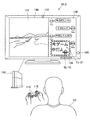
続いて、情報処理システム10の機能詳細について説明する。図3は、情報処理システム10の概要を説明するための図である。図3を参照すると、制御部140によって再生された映像が表示される映像表示画面131が表示部130に存在する。ここでは、制御部140がゲーム機である場合を想定しているため、映像表示画面131に表示される映像は、ゲームアプリケーションに含まれる映像であってよい。[1.3. Function details of information processing system]
Next, details of functions of the
また、図3を参照すると、情報処理システム10−1のユーザU1が情報処理システム10−2のユーザとの間でチャットを行うためのチャットアプリケーションが制御部140によって実行され、表示部130によってその実行画面がチャット画面134として表示されている。図3を参照すると、情報処理システム10−2のユーザ「John」の発話を含む音情報に対する音声認識処理結果「Hello」が、情報処理システム10−1のチャット画面134に表示されている。音声認識処理結果は、音情報に対して音声認識処理が施されることによって得られる1文字データまたは複数の文字が並べられた文字列データであってよい。以下では、音声認識処理結果の例として「テキスト」を利用して説明する。
Further, referring to FIG. 3, a chat application for the user U1 of the information processing system 10-1 to chat with the user of the information processing system 10-2 is executed by the
一方、情報処理システム10−1の集音部120によって集音された音情報に対する音声認識処理結果の例として、テキストが表示される発話画面133も表示部130に存在している。発話画面133には、音声認識処理を開始するための音声認識処理開始ボタン132が表示されている。また、発話画面133には、情報処理システム10−1の集音部120によって集音された音情報に対する音声認識処理結果の例として、テキストTx−10「Hello」が表示されている。
On the other hand, as an example of the speech recognition processing result for the sound information collected by the
例えば、テキストTx−10は、チャット画面134に追加されてよい。また、テキストTx−10は、情報処理システム10−2における制御部140に送信され、情報処理システム10−2におけるチャット画面に表示されてよい。ここで、ユーザU1はテキストTx−10を視認するだけでは、音声認識処理がどのような状況で行われたかを直感的に把握するのは困難である。そこで、音声認識処理が行われた状況をユーザU1に直感的に把握させることが可能な技術が提供されることが望まれる。
For example, the text Tx-10 may be added to the
具体的には、本開示の実施形態においては、ユーザU1が音声認識処理開始ボタン132を選択するための操作(以下、「認識開始操作」とも言う。)を行うと、認識開始操作が操作入力部115によって入力され、ユーザU1は発話を開始する。そして、集音部120によって音情報が集音されると、情報取得部141は、集音部120によって集音された音情報を取得する。なお、本実施形態においては、集音部120によって集音された信号を音情報と言うが、音情報は、集音部120によって集音された信号に対して何らかの信号処理が施されて得られた信号であってもよい。
Specifically, in the embodiment of the present disclosure, when the user U1 performs an operation for selecting the voice recognition process start button 132 (hereinafter also referred to as “recognition start operation”), the recognition start operation is an operation input. Input by the
そして、音声認識部142によって音声認識処理が実行されることによってテキストTx−10が得られると、表示態様特定部143は、音情報に対する音声認識処理に関するパラメータに応じてテキストTx−10の表示態様を特定する。かかるパラメータの詳細については後に説明する。出力部144は、特定された表示態様によりテキストTx−10を表示するための表示情報を出力する。表示情報は、テキストと表示態様を示す表示態様情報とを含んでよい。また、表示情報の出力先は限定されないが、表示情報が表示部130に出力されると、表示部130は、表示情報に基づいて、かかる表示態様によりテキストTx−10を発話画面133に表示することが可能となる。
Then, when the text Tx-10 is obtained by executing the voice recognition processing by the
このようにして、本開示の実施形態においては、音声認識処理に関するパラメータに応じてテキストTx−10の表示態様が特定され、かかる表示態様によりテキストTx−10を表示するための表示情報が出力される。かかる構成によれば、テキストTx−10の表示態様によって、音声認識処理が行われた状況をユーザU1に直感的に把握させることが可能となる。以下では、表示態様の特定が単語ごとにされる場合を例として説明するが、表示態様の特定の単位は、特に限定されない。例えば、表示態様の特定は、句ごとにされてもよいし、文ごとにされてもよい。 As described above, in the embodiment of the present disclosure, the display mode of the text Tx-10 is specified according to the parameters related to the speech recognition processing, and display information for displaying the text Tx-10 is output by the display mode. The According to such a configuration, it is possible to cause the user U1 to intuitively grasp the situation in which the voice recognition process has been performed by the display mode of the text Tx-10. Hereinafter, a case where the display mode is specified for each word will be described as an example, but the specific unit of the display mode is not particularly limited. For example, the display mode may be specified for each phrase or for each sentence.
また、音声認識処理に関するパラメータは特に限定されないが、例えば、集音部120によって集音された音情報に含まれるユーザU1の発話情報を含んでよい。さらに、パラメータに応じて特定される表示態様も特に限定されないが、テキストTx−10のサイズ、形状、彩度、フォント、かすれ度合い、ひび割れ度合い、テキストTx−10に付加されるアニメーションの種類、テキストTx−10に付加されるオブジェクトの種類の少なくともいずれか一つを含んでよい。
Moreover, although the parameter regarding speech recognition processing is not specifically limited, For example, you may include the speech information of the user U1 contained in the sound information collected by the
以下、かかるパラメータの例およびパラメータに応じて特定される表示態様の例について説明する。図4は、音情報に含まれるユーザ(図3に示したユーザU1)の発話音量が音声認識処理に関するパラメータとして利用される場合、かつ、テキスト(図3に示したテキストTx−10)のサイズがパラメータに応じて特定される表示態様として利用される場合を説明するための図である。図4を参照すると、ユーザの発話音量とその発話音量に応じて特定されるテキスト「Hello」のサイズとが横軸に沿って示されている。 Hereinafter, examples of such parameters and examples of display modes specified according to the parameters will be described. FIG. 4 shows the size of the text (text Tx-10 shown in FIG. 3) when the utterance volume of the user (user U1 shown in FIG. 3) included in the sound information is used as a parameter related to the speech recognition process. It is a figure for demonstrating the case where is utilized as a display mode specified according to a parameter. Referring to FIG. 4, the utterance volume of the user and the size of the text “Hello” specified according to the utterance volume are shown along the horizontal axis.
図4に示すように、表示態様特定部143は、発話音量が所定の下限音量から所定の上限音量までの範囲においては、発話音量が大きくなるに従ってテキスト「Hello」のサイズを大きくしてよい。そうすれば、音声認識処理が行われた状況の例として発話音量をユーザに直感的に把握させることが可能となる。一方、表示態様特定部143は、発話音量が所定の下限音量を下回る場合には、テキスト「Hello」のサイズを固定値にしてよい。また、表示態様特定部143は、発話音量が所定の上限音量を上回る場合には、テキスト「Hello」のサイズを固定値にしてよい。
As shown in FIG. 4, the display
また、パラメータは、集音部120によって集音された音情報に含まれるユーザの発話に対応するノイズに関する情報を含んでもよい。ノイズに関する情報は特に限定されないが、ノイズの種類、ノイズの音量(以下、「ノイズ量」とも言う。)、および、ノイズの音源から集音部120への方向(以下、「ノイズ方向」とも言う。)のうち少なくともいずれか一つを含んでもよい。図5は、音情報に含まれるノイズ量がパラメータとして利用される場合、かつ、テキスト(図3に示したテキストTx−10)のひび割れ度合いがパラメータに応じて特定される表示態様として利用される場合を説明するための図である。
The parameter may include information regarding noise corresponding to the user's utterance included in the sound information collected by the
図5を参照すると、ノイズ量とそのノイズ量に応じて特定されるテキスト「Hello」のひび割れ度合いとが横軸に沿って示されている。図5に示すように、表示態様特定部143は、ノイズ量が大きくなるに従ってテキスト「Hello」のひび割れ度合いを強くしてよい。そうすれば、音声認識処理が行われた状況の例としてノイズ量をユーザに直感的に把握させることが可能となる。
Referring to FIG. 5, the amount of noise and the degree of cracking of the text “Hello” specified according to the amount of noise are shown along the horizontal axis. As illustrated in FIG. 5, the display
図6は、音情報に含まれるノイズ量が図7パラメータとして利用される場合、かつ、テキスト(図3に示したテキストTx−10)のかすれ度合いがパラメータに応じて特定される表示態様として利用される場合を説明するための図である。図6を参照すると、ノイズ量とそのノイズ量に応じて特定されるテキスト「Hello」のかすれ度合いとが横軸に沿って示されている。図6に示すように、表示態様特定部143は、ノイズ量が大きくなるに従ってテキスト「Hello」のかすれ度合いを強くしてよい。そうすれば、音声認識処理が行われた状況の例としてノイズ量をユーザに直感的に把握させることが可能となる。
6 is used when the amount of noise included in the sound information is used as a parameter in FIG. 7 and as a display mode in which the blurring degree of text (text Tx-10 shown in FIG. 3) is specified according to the parameter. It is a figure for demonstrating the case where it is performed. Referring to FIG. 6, the amount of noise and the degree of blurring of the text “Hello” specified according to the amount of noise are shown along the horizontal axis. As illustrated in FIG. 6, the display
図7は、音情報に含まれるノイズ量がパラメータとして利用される場合、かつ、テキスト(図3に示したテキストTx−10)に付加されるオブジェクトの種類がパラメータに応じて特定される表示態様として利用される場合を説明するための図である。図7を参照すると、ノイズ量とそのノイズ量に応じて特定されるオブジェクトの種類Bjとが横軸に沿って示されている。 FIG. 7 shows a display mode in which the amount of noise included in sound information is used as a parameter, and the type of object added to the text (text Tx-10 shown in FIG. 3) is specified according to the parameter. It is a figure for demonstrating the case where it is utilized as. Referring to FIG. 7, the noise amount and the object type Bj specified according to the noise amount are shown along the horizontal axis.
図7に示すように、表示態様特定部143は、ノイズ量が所定の上限ノイズ量から所定の下限ノイズ量までの範囲内である場合には、テキスト「Hello」に付加されるオブジェクトとしてオブジェクトBj−22を特定してよい。また、表示態様特定部143は、ノイズ量が所定の上限ノイズ量を上回る場合には、テキスト「Hello」に付加されるオブジェクトとしてオブジェクトBj−21を特定してよい。また、表示態様特定部143は、ノイズ量が所定の下限ノイズ量を下回る場合には、テキスト「Hello」に付加されるオブジェクトとしてオブジェクトBj−23を特定してよい。そうすれば、音声認識処理が行われた状況の例としてノイズ量をユーザに直感的に把握させることが可能となる。
As illustrated in FIG. 7, when the noise amount is within the range from the predetermined upper limit noise amount to the predetermined lower limit noise amount, the display
なお、図7には、テキスト「Hello」の末尾にオブジェクトBj−21〜Bj−23が付加される例が示されているが、オブジェクトBj−21〜Bj−23が付加される位置は、テキスト「Hello」の末尾に限定されない。例えば、オブジェクトBj−21〜Bj−23は、テキスト「Hello」の先頭に付加されてもよい。また、ここでは、オブジェクトBj−21〜Bj−23が静止画である場合を想定するが、オブジェクトBj−21〜Bj−23はどのようなデータであってもよい。例えば、オブジェクトBj−21〜Bj−23は、動画であってもよいし、テキストデータであってもよい。 FIG. 7 shows an example in which the objects Bj-21 to Bj-23 are added to the end of the text “Hello”, but the positions where the objects Bj-21 to Bj-23 are added are the text. It is not limited to the end of “Hello”. For example, the objects Bj-21 to Bj-23 may be added to the head of the text “Hello”. Here, it is assumed that the objects Bj-21 to Bj-23 are still images, but the objects Bj-21 to Bj-23 may be any data. For example, the objects Bj-21 to Bj-23 may be moving images or text data.
図8Aおよび図8Bは、ノイズ方向がパラメータとして利用される場合、かつ、テキスト(図3に示したテキストTx−10)のかすれ度合いがパラメータに応じて特定される表示態様として利用される場合を説明するための図である。図8Aおよび図8Bを参照すると、ノイズ方向とノイズ方向に応じて特定されるテキスト「Hello」のかすれ度合いとが示されている。 8A and 8B show a case where the noise direction is used as a parameter, and a case where the blurring degree of text (text Tx-10 shown in FIG. 3) is used as a display mode specified according to the parameter. It is a figure for demonstrating. Referring to FIGS. 8A and 8B, the noise direction and the degree of blurring of the text “Hello” specified according to the noise direction are shown.
図8Aに示すように、表示態様特定部143は、ノイズ方向が画面の左から右である場合、テキスト「Hello」の右側よりも左側のかすれ度合いを強くしてよい。あるいは、図8Bに示すように、表示態様特定部143は、ノイズ方向が画面の上から下である場合、テキスト「Hello」の下側よりも上側のかすれ度合いを強くしてよい。そうすれば、音声認識処理が行われた状況の例としてノイズ方向をユーザに直感的に把握させることが可能となる。
As illustrated in FIG. 8A, when the noise direction is from the left to the right of the screen, the display
図9A、図9Bおよび図9Cは、音情報に含まれるノイズの種類がパラメータとして利用される場合、かつ、テキスト(図3に示したテキストTx−10)に付加されるオブジェクトの種類がパラメータに応じて特定される表示態様として利用される場合を説明するための図である。図9A〜図9Cを参照すると、ノイズ量に応じて特定されたオブジェクトBj−21がテキスト「Hello」付加されているが、ノイズ量に応じて特定されたオブジェクトBj−21は付加されなくてもよい。 9A, 9B, and 9C show the case where the type of noise included in the sound information is used as a parameter, and the type of object added to the text (text Tx-10 shown in FIG. 3) is the parameter. It is a figure for demonstrating the case where it utilizes as a display mode specified according to it. Referring to FIGS. 9A to 9C, the text “Hello” is added to the object Bj-21 specified according to the amount of noise, but the object Bj-21 specified according to the amount of noise is not added. Good.
図9Aに示すように、表示態様特定部143は、ノイズの種類が電車の発するノイズである場合には、テキスト「Hello」に付加されるオブジェクトとしてオブジェクトBj−31を特定してよい。また、表示態様特定部143は、ノイズの種類がテレビジョン装置の発するノイズである場合には、テキスト「Hello」に付加されるオブジェクトとしてオブジェクトBj−32を特定してよい。また、表示態様特定部143は、ノイズの種類が人の話し声である場合には、テキスト「Hello」に付加されるオブジェクトとしてオブジェクトBj−33を特定してよい。そうすれば、音声認識処理が行われた状況の例としてノイズの種類をユーザに直感的に把握させることが可能となる。
As illustrated in FIG. 9A, the display
なお、図9A、図9Bおよび図9Cには、テキスト「Hello」の末尾にオブジェクトBj−31〜Bj−33が付加される例が示されているが、オブジェクトBj−31〜Bj−33が付加される位置は、テキスト「Hello」の末尾に限定されない。例えば、オブジェクトBj−31〜Bj−33は、テキスト「Hello」の先頭に付加されてもよい。また、ここでは、オブジェクトBj−31〜Bj−33が静止画である場合を想定するが、オブジェクトBj−31〜Bj−33はどのようなデータであってもよい。例えば、オブジェクトBj−31〜Bj−33は、動画であってもよいし、テキストデータであってもよい。 9A, 9B, and 9C show examples in which objects Bj-31 to Bj-33 are added to the end of the text “Hello”, but objects Bj-31 to Bj-33 are added. The position to be performed is not limited to the end of the text “Hello”. For example, the objects Bj-31 to Bj-33 may be added to the head of the text “Hello”. Here, it is assumed that the objects Bj-31 to Bj-33 are still images, but the objects Bj-31 to Bj-33 may be any data. For example, the objects Bj-31 to Bj-33 may be moving images or text data.
以上、パラメータの例およびパラメータに応じて特定される表示態様の例について幾つか具体的に説明したが、パラメータの例およびパラメータに応じて特定される表示態様は、以上に説明した例に限定されない。例えば、パラメータ(ユーザU1の発話情報)は、音情報に含まれるユーザU1の発話音量、音情報の音声らしさ、音情報の周波数、音情報に含まれる音声の発話速度、音情報に含まれる音声の語尾に関する情報、および、テキストの信頼度のうち少なくともいずれか一つを含んでもよい。 As described above, several examples of parameters and examples of display modes specified according to the parameters have been specifically described. However, examples of parameters and display modes specified according to the parameters are not limited to the examples described above. . For example, the parameters (speech information of the user U1) include the speech volume of the user U1 included in the sound information, the soundness of the sound information, the frequency of the sound information, the speech rate included in the sound information, and the sound included in the sound information. May include at least one of information regarding the ending of the text and the reliability of the text.
また、表示態様は、ユーザU1に関する情報にさらに基づいて特定されてもよい。ここで、ユーザU1に関する情報は特に限定されないが、ユーザU1の生体情報および感情情報のうち少なくともいずれか一つを含んでよい。生体情報は、生体情報入力部118によって入力されてよい。ユーザU1の生体情報は特に限定されず、ユーザU1によるコントローラの把持圧力、ユーザU1の発汗およびユーザU1の心拍のうち少なくともいずれか一つを含んでよい。
Further, the display mode may be specified based on information related to the user U1. Here, the information regarding the user U1 is not particularly limited, but may include at least one of the biological information and emotion information of the user U1. The biological information may be input by the biological
ユーザU1の感情情報はどのようにして得られてもよい。一例として、ユーザU1の感情情報は、表示態様特定部143によって音情報または入力画像が解析されることによって得られてよい。また、ユーザU1の感情情報は特に限定されず、ユーザU1の喜び、驚き、怒りのうち少なくともいずれか一つを含んでよい。あるいは、ユーザU1の感情情報は、他の感情を含んでもよい。
The emotion information of the user U1 may be obtained in any way. As an example, emotion information of the user U1 may be obtained by analyzing sound information or an input image by the display
また、ユーザU1に関する情報は、ユーザU1の性別および年代のうち少なくともいずれか一つを含んでもよい。ユーザU1の性別および年代はどのようにして得られてもよい。一例として、ユーザU1の性別および年代は、表示態様特定部143によって入力画像が解析されることによって得られてよい。年代は、年齢を所定の単位で示すデータであってよく、例えば、年齢を10年単位で示すデータであってよい。
Moreover, the information regarding the user U1 may include at least one of the sex and age of the user U1. The sex and age of user U1 may be obtained in any way. As an example, the gender and age of the user U1 may be obtained by analyzing the input image by the display
図10は、集音部120によって集音された音情報に基づく所定のデータをパラメータとして利用した場合に特定されるテキスト(図3に示したテキストTx−10)の表示態様の例を示す図である。例えば、図10に示すように、表示態様特定部143は、集音部120によって集音された音情報に含まれるユーザU1の発話音量に基づいて、テキストのサイズを制御してもよい。
FIG. 10 is a diagram showing an example of a display mode of text (text Tx-10 shown in FIG. 3) specified when predetermined data based on sound information collected by the
また、表示態様特定部143は、集音部120によって集音された音情報の音声らしさ(音声の音量/ノイズの音量)に基づいて、テキストのかすれ度合いを制御してもよいし、テキストのひび割れ度合いを制御してもよいし、テキストに付加されるオブジェクトの種類を制御してもよい。また、表示態様特定部143は、集音部120によって集音された音情報に含まれるノイズ量に基づいて、テキストのかすれ度合いを制御してもよいし、テキストのひび割れ度合いを制御してもよいし、テキストに付加されるオブジェクトの種類を制御してもよい。
Further, the display
また、表示態様特定部143は、集音部120によって集音された音情報に含まれるノイズ方向に基づいて、テキストのかすれ箇所を制御してもよい。また、表示態様特定部143は、集音部120によって集音された音情報の周波数分布(音の高低)に基づいて、テキストの彩度を制御してもよい。
In addition, the display
また、表示態様特定部143は、集音部120によって集音された音情報に含まれる音声の発話速度に基づいて、テキストに付加されるアニメーションを特定してもよい。例えば、表示態様特定部143は、集音部120によって集音された音情報に含まれる音声の発話速度が所定の上限速度を上回る場合には、テキストに付加されるアニメーションとして点滅アニメーションを特定してもよい。また、例えば、表示態様特定部143は、集音部120によって集音された音情報に含まれる音声の発話速度が所定の下限速度を下回る場合には、テキストに付加されるアニメーションとして3Dアニメーションを特定してもよい。
Further, the display
また、表示態様特定部143は、集音部120によって集音された音情報に含まれる音声に対する音声認識処理のConfidential Level(テキストの信頼度)に基づいて、テキストの透過度を制御してもよい。例えば、表示態様特定部143は、Confidential Levelが小さくなるに従ってテキスト「Hello」の透過度を大きくしてよい。そうすれば、音声認識処理が行われた状況の例として音声認識処理のConfidential Levelをユーザに直感的に把握させることが可能となる。
Further, the display
また、表示態様特定部143は、集音部120によって集音された音情報に含まれる音声の語尾に関する情報に基づいて、テキストに付加されるアニメーションを特定してもよい。例えば、表示態様特定部143は、集音部120によって集音された音情報に含まれる音声の語尾の伸びた時間が所定の時間を上回る場合には、テキストに付加されるアニメーションとして左右方向への移動アニメーションを特定してもよい。
Further, the display
また、表示態様特定部143は、音情報に対する解析により得られた感情情報が喜びを示す場合には、テキストの末尾に所定のオブジェクトを付加するように表示態様を制御してもよい。また、表示態様特定部143は、音情報に対する解析により得られた感情情報が驚きを示す場合には、テキストの末尾に所定の記号(例えば、「!」)と所定のオブジェクトとを付加するように表示態様を制御してもよい。また、表示態様特定部143は、音情報に対する解析により得られた感情情報が怒りを示す場合には、テキストの色を所定の色(例えば、赤色)に変更し、テキストの末尾に所定のオブジェクトを付加するように表示態様を制御してもよい。
Moreover, when the emotion information obtained by analyzing the sound information indicates pleasure, the display
図11は、画像入力部110によって入力された入力画像に対する解析により得られた結果をパラメータとして利用した場合に特定されるテキスト(図3に示したテキストTx−10)の表示態様の例を示す図である。図11に示すように、表示態様特定部143は、入力画像に対する解析により得られた感情情報が喜びを示す場合には、テキストの末尾に所定のオブジェクトを付加するように表示態様を制御してもよい。
FIG. 11 shows an example of the display mode of the text (text Tx-10 shown in FIG. 3) specified when the result obtained by analyzing the input image input by the
また、表示態様特定部143は、入力画像に対する解析により得られた感情情報が驚きを示す場合には、テキストの末尾に所定の記号(例えば、「!」)と所定のオブジェクトとを付加するように表示態様を制御してもよい。また、表示態様特定部143は、入力画像に対する解析により得られた感情情報が怒りを示す場合には、テキストの色を所定の色(例えば、赤色)に変更し、テキストの末尾に所定のオブジェクトを付加するように表示態様を制御してもよい。
Further, when the emotion information obtained by analyzing the input image indicates surprise, the display
また、表示態様特定部143は、入力画像に対する解析により得られた性別に応じてテキストのフォント(例えば、字体など)を制御してもよい。また、表示態様特定部143は、入力画像に対する解析により得られた年代に応じてテキストの色を制御してもよい。また、表示態様特定部143は、入力画像に対する解析により得られたユーザU1の集中度(または興奮度)に応じてテキストの色を制御してもよいし、テキストのサイズを制御してもよいし、テキストの末尾に付加されるオブジェクトを制御してもよい。
Further, the display
図12は、生体情報入力部118によって入力された生体情報に対する解析により得られた結果をパラメータとして利用した場合に特定されるテキスト(図3に示したテキストTx−10)の表示態様の例を示す図である。図12に示すように、表示態様特定部143は、生体情報に対する解析により得られたユーザU1の集中度(または興奮度)に応じてテキストの色を制御してもよいし、テキストのサイズを制御してもよいし、テキストの末尾に付加されるオブジェクトを制御してもよい。
FIG. 12 shows an example of the display mode of the text (text Tx-10 shown in FIG. 3) specified when the result obtained by analyzing the biometric information input by the biometric
集中度は、様々な生体情報によって変化し得ることが想定される。そのため、集中度を算出するために使用される生体情報は、ユーザU1の体温、発汗量、脈拍数、呼吸回数、瞬目回数、眼球運動、凝視時間、瞳孔径の大きさ、血圧、脳波、体動、体位、皮膚温度、皮膚電気抵抗、MV(マイクロバイブレーション)、筋電位およびSPO2(血中酸素飽和度)のうち少なくともいずれか一つを含んでもよい。It is assumed that the degree of concentration can change depending on various biological information. Therefore, the biometric information used to calculate the degree of concentration includes the user's U1 body temperature, sweat volume, pulse rate, number of breaths, number of blinks, eye movement, gaze time, pupil diameter, blood pressure, brain wave, It may include at least one of body movement, body position, skin temperature, skin electrical resistance, MV (microvibration), myoelectric potential, and SPO 2 (blood oxygen saturation).
また、表示態様特定部143は、コントローラの把持圧力に基づいてテキストのサイズを制御してもよい。例えば、表示態様特定部143は、コントローラの把持圧力が所定の圧力よりも大きい場合には、所定の圧力よりも小さい場合に比較して、テキストのサイズを大きくしてもよい。また、表示態様特定部143は、ユーザU1の発汗量が所定の上限発汗量を上回る場合に、テキストの末尾に所定のオブジェクトを付加するように表示態様を制御してもよい。
Further, the display
また、表示態様特定部143は、ユーザU1の心拍数に応じた動きアニメーションをテキストに付加するように表示態様を制御してもよい。例えば、表示態様特定部143は、ユーザU1の心拍数が大きくなるほど大きな動きを示すアニメーションをテキストに付加するように表示態様を制御してもよい
Further, the display
以上、パラメータの例およびパラメータに応じて特定される表示態様の例について説明した。このようにして特定された表示態様は、ユーザU1によって変更不可能であってもよいが、ユーザU1の利便性を考慮し、ユーザU1による所定の変更操作に基づいて変更可能であるのがよい。変更操作は特に限定されないが、表示態様に対応するボタンを押下する操作であってよい。 The example of the parameter and the example of the display mode specified according to the parameter have been described above. The display mode specified in this manner may not be changed by the user U1, but may be changed based on a predetermined change operation by the user U1 in consideration of the convenience of the user U1. . The change operation is not particularly limited, but may be an operation of pressing a button corresponding to the display mode.
図13は、ユーザU1による変更操作に基づいて表示態様が変更される例を示す図である。図13を参照すると、発話画面133−1には、ユーザU1による発話に対する音声認識処理結果の例として、テキストTx−21「ゲーム中だよ」が大きめのサイズにて表示されている。また、発話画面133−1には、パラメータに応じて特定されたテキストの表示態様として、「赤色」「サイズ大」「スライドイン」「3D」が表示されている。 FIG. 13 is a diagram illustrating an example in which the display mode is changed based on a change operation by the user U1. Referring to FIG. 13, the text Tx-21 “I am in game” is displayed in a larger size on the utterance screen 133-1 as an example of the speech recognition processing result for the utterance by the user U1. In addition, “red”, “large size”, “slide-in”, and “3D” are displayed on the utterance screen 133-1 as display modes of the text specified according to the parameters.
ここで、ユーザU1がテキストTx−21「ゲーム中だよ」を小さくしたいと考えた場合を想定する。このとき、ユーザU1は、表示態様の一例である「サイズ大」を押下すればよい。すると、操作入力部115によって「サイズ大」を押下する操作が入力され、表示態様特定部143は、テキストTx−21「ゲーム中だよ」の表示態様である「サイズ大」をキャンセルする。その結果、発話画面133−2には、小さめのサイズにてテキストTx−22「ゲーム中だよ」が表示される。
Here, it is assumed that the user U1 wants to reduce the text Tx-21 “In game”. At this time, the user U1 may press “large size” which is an example of the display mode. Then, an operation of pressing “large size” is input by the
続いて、情報処理システム10−1の動作例について説明する。図14は、情報処理システム10−1の動作例を示すフローチャートである。図14に示したフローチャートは、情報処理システム10−1の動作の一例を示したに過ぎない。そのため、情報処理システム10−1の動作は、かかる例に限定されない。まず、ユーザU1が認識開始操作を行うと、認識開始操作が操作入力部115によって入力され、ユーザU1は発話を開始する。そして、集音部120によって音情報が集音されると、情報取得部141は、集音部120によって集音された音情報を取得する。
Next, an operation example of the information processing system 10-1 will be described. FIG. 14 is a flowchart illustrating an operation example of the information processing system 10-1. The flowchart shown in FIG. 14 only shows an example of the operation of the information processing system 10-1. Therefore, the operation of the information processing system 10-1 is not limited to this example. First, when the user U1 performs a recognition start operation, the recognition start operation is input by the
そして、音声認識部142によって音情報に対する音声認識処理が実行されることによってテキストが取得されると(ステップS11)、ステップS19に動作が移行される。一方、表示態様特定部143は、画像入力部110によって入力された入力画像に対する画像解析により画像解析結果を取得し(ステップS12)、画像解析結果に対応する表示態様情報を取得する(ステップS13)。画像解析結果に対応する表示態様情報を取得されると、ステップS19に動作が移行される。
When the
また、表示態様特定部143は、集音部120によって集音された音情報に対する音解析により音解析結果を取得し(ステップS14)、音解析結果に対応する表示態様情報を取得する(ステップS15)。音解析結果に対応する表示態様情報を取得されると、ステップS19に動作が移行される。また、表示態様特定部143は、生体情報入力部118によって入力された生体情報に対する解析によりユーザ状態を推定し(ステップS17)、ユーザ状態に対応する表示態様情報を取得する(ステップS18)。ユーザ状態に対応する表示態様情報を取得されると、ステップS19に動作が移行される。
Further, the display
続いて、表示態様特定部143は、取得されたこれらの表示態様情報によって音声認識処理によって得られたテキストを制御する(ステップS19)。表示態様特定部143によって制御されたテキストは、アプリケーション(例えば、チャットアプリケーション)に通知され(ステップS20)、アプリケーションにおいて利用される。テキストがチャットアプリケーションにおいて利用される場合には、このようにして表示態様特定部143によって制御されたテキスト(すなわち、テキストおよび表示態様情報を含む表示情報)が、ユーザU2の情報処理システム10−2に送信されてよい。
Subsequently, the display
以上においては、ユーザU1の情報処理システム10−1における動作について主に説明した。しかし、上記したように、チャットアプリケーションが起動されている場合などには、情報処理システム10−1における表示態様特定部143によって制御されたテキスト(すなわち、テキストおよび表示態様情報を含む表示情報)が、ユーザU2の情報処理システム10−2に送信される。そこで、以下の説明においては、情報処理システム10−1と情報処理システム10−2との連携について主に説明する。
In the above, operation | movement in the information processing system 10-1 of the user U1 was mainly demonstrated. However, as described above, when the chat application is activated, the text controlled by the display
図15は、表示情報を送信する情報処理システム10−1が有する機能を説明するための図である。図15を参照すると、図3に示した例と同様に、表示部130が映像表示画面131を有しているが、ユーザU1がゲームを楽しんでいるため、映像表示画面131には、ゲームアプリケーションに含まれる映像が表示されている。
FIG. 15 is a diagram for explaining a function of the information processing system 10-1 that transmits display information. Referring to FIG. 15, similarly to the example shown in FIG. 3, the
また、発話画面133には、情報処理システム10−1の集音部120によって集音された音情報に対する音声認識処理結果の例として、テキストTx−21「今ゲーム中だよ」が音情報の音量に応じたサイズによって表示され、ユーザU1の集中度に応じたオブジェクトBj−10がテキストTx−21に付加されている。このようにして表示されているテキストTx−21および表示態様情報(例えば、サイズおよびオブジェクトBj−10)が、表示情報として情報処理システム10−2に送信される。
In the
図16は、表示情報を受信する情報処理システム10−2が有する機能を説明するための図である。図16を参照すると、ユーザU2が操作入力部115を操作している。図16に示すように、情報処理システム10−2においては、情報処理システム10−1から表示情報として、テキストTx−21および表示態様情報(例えば、サイズおよびオブジェクトBj−10)を受信すると、オブジェクトBj−10が付加されたテキストTx−21がチャット画面134に表示される。このように、情報処理システム10−1における出力部144は、表示態様特定部143によって特定された表示態様によるテキストがユーザU2によって視認されるように表示情報を出力可能であってよい。
FIG. 16 is a diagram for explaining a function of the information processing system 10-2 that receives display information. Referring to FIG. 16, the user U2 operates the
ここでは、情報処理システム10−1における出力部144が、表示態様特定部143によって特定された表示態様によるテキストTx−21がユーザU2によって視認されるように表示情報を出力する例を示した。しかし、情報処理システム10−1における出力部144は、表示態様特定部143によって特定された表示態様によるテキストがユーザU2によって視認されるように表示情報を出力するか否かを切り替え可能であってもよい。例えば、情報処理システム10−1における出力部144は、ユーザU2の状態に基づいて、表示態様特定部143によって特定された表示態様によるテキストがユーザU2によって視認されるように表示情報を出力するか否かを切り替えてもよい。
Here, an example in which the
例えば、情報処理システム10−1における出力部144は、ユーザU2の状態が所定の状態である場合には、表示態様特定部143によって特定された表示態様とは異なる他の表示態様によりテキストがユーザU2によって視認されるように表示情報を出力してもよい。図17は、ユーザU2の集中度が閾値を上回る場合に送信される表示情報の例を示す図である。図17に示す例では、ユーザU2が映像表示画面131に表示されている映像に集中しているため、ユーザU2の集中度が閾値を上回っている場合を想定している。
For example, when the state of the user U2 is a predetermined state, the
かかる場合には、情報処理システム10−1における出力部144は、表示態様特定部143によって特定された表示態様以外に所定のアニメーションを追加した上で、テキストTx−21および表示態様情報(例えば、所定のアニメーション、サイズおよびオブジェクトBj−10)を送信するとよい。そうすれば、図17に示すように、情報処理システム10−2において、テキストTx−21に所定のアニメーション(図17に示した例では、点滅アニメーション)が付加されて表示されることにより、ユーザU2がテキストTx−21に気付きやすくなる。
In such a case, the
図18は、ユーザU2がチャット画面134を視認していない場合に送信される表示情報の例を示す図である。図18に示す例では、ユーザU2がチャット画面134を視認していない場合を想定している。かかる場合には、情報処理システム10−1における出力部144は、表示態様特定部143によって特定された表示態様以外に所定の音を送信するとよい。そうすれば、図18に示すように、情報処理システム10−2において、受信された音(図18に示した例では、テキストTx−21「今ゲーム中だよ」の読み上げ結果によって得られる音声)が音出力部135によって出力されることにより、ユーザU2がテキストTx−21に気付きやすくなる。
FIG. 18 is a diagram illustrating an example of display information transmitted when the user U2 is not viewing the
なお、ユーザU2がチャット画面134を視認しているか否かは、情報処理システム10−2における画像入力部110によって入力された入力画像の解析により得られてよい。入力画像の解析は、情報処理システム10−1においてなされてもよいし、情報処理システム10−2においてなされてもよい。
Whether or not the user U2 is viewing the
また、情報処理システム10−1における出力部144は、ユーザU1と情報処理システム10−2のユーザとの関係性に基づいて、表示態様特定部143によって特定された表示態様によるテキストが情報処理システム10−2のユーザによって視認されるように表示情報を出力するか否かを切り替えてもよい。図19は、情報処理システム10−2をユーザU3が利用する場合に送信される表示情報の例を示す図である。図19に示す例では、ユーザU3が情報処理システム10−2を利用している場合を想定している。例えば、ユーザU1と家族という関係にあるユーザU3が情報処理システム10−2を利用する場合を想定する。
Further, the
かかる場合には、情報処理システム10−1における出力部144は、表示態様特定部143によって特定された表示態様から所定の表示態様(例えば、サイズ)を除外した上で、テキストTx−21および表示態様情報(例えば、オブジェクトBj−10)を送信するとよい。そうすれば、図19に示すように、情報処理システム10−2において、テキストTx−21から所定の表示態様(図19に示した例では、サイズ)による制御がなされないテキスト(標準サイズでオブジェクトBj−10が付加されたテキスト)が表示される。一方、ユーザU1と親友という関係にあるユーザU2が情報処理システム10−2を利用する場合には、図16に示したように、情報処理システム10−1における出力部144は、テキストTx−21および表示態様情報すべて(例えば、サイズ、オブジェクトBj−10)を送信するとよい。そうすれば、図16に示すように、情報処理システム10−2において、テキストTx−21から表示態様(図16に示した例では、サイズ、オブジェクトBj−10)による制御がなされたテキスト(標準サイズより大きなサイズでオブジェクトBj−10が付加されたテキスト)が表示される。このようにして、ユーザU2とユーザU3との間で視認させるテキストの表示態様を異ならせることが可能である。
In such a case, the
なお、送信すべき表示態様情報は、ユーザまたはユーザが所属するグループ(例えば、友達、上司、親友、家族など)ごとにあらかじめ登録されており、このようにしてあらかじめ登録されている表示態様情報に基づいて決められてもよい。あるいは、送信すべき表示態様情報は、ユーザU1によって指定可能とされており、ユーザU1によって指定された表示態様情報に基づいて決定されてもよい。送信すべき表示態様情報の決定は、情報処理システム10−1における表示態様特定部143によって実行されてよい。
The display mode information to be transmitted is registered in advance for each user or a group to which the user belongs (for example, friend, boss, best friend, family, etc.), and thus the display mode information registered in advance in this way. It may be decided on the basis. Alternatively, the display mode information to be transmitted can be specified by the user U1, and may be determined based on the display mode information specified by the user U1. The determination of the display mode information to be transmitted may be executed by the display
以上、情報処理システム10−1と情報処理システム10−2との連携について説明した。 The cooperation between the information processing system 10-1 and the information processing system 10-2 has been described above.
[1.4.種々の変形例]
上記したように、表示態様は、ユーザU1に関する情報にさらに基づいて特定されてもよい。ここで、上記したように、ユーザU1に関する情報は特に限定されない。例えば、ユーザU1に関する情報は、ユーザU1の行動情報、ユーザU1が操作するデバイス種類、および、ユーザU1の周囲の環境情報のうち少なくともいずれか一つを含んでもよい。行動情報はどのようして得られてもよいが、ユーザU1が所持するデバイスの位置情報を解析することにより得られてもよい。また、環境情報もどのようにして得られてもよいが、ユーザU1の近隣において集音された音情報を解析することによって得られてよい。[1.4. Various modifications]
As described above, the display mode may be specified based on information related to the user U1. Here, as described above, information regarding the user U1 is not particularly limited. For example, the information related to the user U1 may include at least one of behavior information of the user U1, a device type operated by the user U1, and environmental information around the user U1. The behavior information may be obtained in any way, but may be obtained by analyzing position information of a device possessed by the user U1. Moreover, although environmental information may be obtained in any way, it may be obtained by analyzing sound information collected in the vicinity of the user U1.
図20Aは、ユーザU1の行動情報が走っていることを示す場合にテキストに付加されるオブジェクトの例を示す図である。図20Aに示すように、ユーザU1が走っていることを示す行動情報が得られた場合には、テキストTx31に対応するオブジェクトBj−41が付加されてよい。 FIG. 20A is a diagram illustrating an example of an object added to the text when the behavior information of the user U1 indicates that the user U1 is running. As illustrated in FIG. 20A, when action information indicating that the user U1 is running is obtained, an object Bj-41 corresponding to the text Tx31 may be added.
図20Bは、ユーザU1の環境情報が周囲に人がいることを示す場合にテキストに付加されるオブジェクトの例を示す図である。図20Bに示すように、ユーザU1の周囲に人がいることを示す環境情報が得られた場合には、テキストTx32に対応するオブジェクトBj−42が付加されてよい。 FIG. 20B is a diagram illustrating an example of an object added to the text when the environment information of the user U1 indicates that there are people around. As illustrated in FIG. 20B, when environment information indicating that there is a person around the user U1, object Bj-42 corresponding to the text Tx32 may be added.
図20Cは、ユーザU1の行動情報が自動車運転中であることを示す場合にテキストに付加されるオブジェクトの例を示す図である。図20Cに示すように、ユーザU1が自動者運転中であることを示す行動情報が得られた場合には、テキストTx33に対応するオブジェクトBj−43が付加されてよい。 FIG. 20C is a diagram illustrating an example of an object added to the text when the action information of the user U1 indicates that the vehicle is driving. As shown in FIG. 20C, when the behavior information indicating that the user U1 is driving automatically is obtained, an object Bj-43 corresponding to the text Tx33 may be added.
[1.5.ハードウェア構成例]
次に、図21を参照して、本開示の実施形態に係る情報処理システム10のハードウェア構成について説明する。図21は、本開示の実施形態に係る情報処理システム10のハードウェア構成例を示すブロック図である。[1.5. Hardware configuration example]
Next, a hardware configuration of the
図21に示すように、情報処理システム10は、CPU(Central Processing unit)901、ROM(Read Only Memory)903、およびRAM(Random Access Memory)905を含む。また、情報処理システム10は、ホストバス907、ブリッジ909、外部バス911、インターフェース913、入力装置915、出力装置917、ストレージ装置919、ドライブ921、接続ポート923、通信装置925を含んでもよい。さらに、情報処理システム10は、必要に応じて、撮像装置933、およびセンサ935を含んでもよい。情報処理システム10は、CPU901に代えて、またはこれとともに、DSP(Digital Signal Processor)またはASIC(Application Specific Integrated Circuit)と呼ばれるような処理回路を有してもよい。
As shown in FIG. 21, the
CPU901は、演算処理装置および制御装置として機能し、ROM903、RAM905、ストレージ装置919、またはリムーバブル記録媒体927に記録された各種プログラムに従って、情報処理システム10内の動作全般またはその一部を制御する。ROM903は、CPU901が使用するプログラムや演算パラメータなどを記憶する。RAM905は、CPU901の実行において使用するプログラムや、その実行において適宜変化するパラメータなどを一時的に記憶する。CPU901、ROM903、およびRAM905は、CPUバスなどの内部バスにより構成されるホストバス907により相互に接続されている。さらに、ホストバス907は、ブリッジ909を介して、PCI(Peripheral Component Interconnect/Interface)バスなどの外部バス911に接続されている。
The
入力装置915は、例えば、マウス、キーボード、タッチパネル、ボタン、スイッチおよびレバーなど、ユーザによって操作される装置である。入力装置915は、ユーザの音声を検出するマイクロフォンを含んでもよい。入力装置915は、例えば、赤外線やその他の電波を利用したリモートコントロール装置であってもよいし、情報処理システム10の操作に対応した携帯電話などの外部接続機器929であってもよい。入力装置915は、ユーザが入力した情報に基づいて入力信号を生成してCPU901に出力する入力制御回路を含む。ユーザは、この入力装置915を操作することによって、情報処理システム10に対して各種のデータを入力したり処理動作を指示したりする。また、後述する撮像装置933も、ユーザの手の動き、ユーザの指などを撮像することによって、入力装置として機能し得る。このとき、手の動きや指の向きに応じてポインティング位置が決定されてよい。
The
出力装置917は、取得した情報をユーザに対して視覚的または聴覚的に通知することが可能な装置で構成される。出力装置917は、例えば、LCD(Liquid Crystal Display)、PDP(Plasma Display Panel)、有機EL(Electro−Luminescence)ディスプレイ、プロジェクタなどの表示装置、ホログラムの表示装置、スピーカおよびヘッドホンなどの音声出力装置、ならびにプリンタ装置などであり得る。出力装置917は、情報処理システム10の処理により得られた結果を、テキストまたは画像などの映像として出力したり、音声または音響などの音声として出力したりする。また、出力装置917は、周囲を明るくするためライトなどを含んでもよい。
The
ストレージ装置919は、情報処理システム10の記憶部の一例として構成されたデータ格納用の装置である。ストレージ装置919は、例えば、HDD(Hard Disk Drive)などの磁気記憶部デバイス、半導体記憶デバイス、光記憶デバイス、または光磁気記憶デバイスなどにより構成される。このストレージ装置919は、CPU901が実行するプログラムや各種データ、および外部から取得した各種のデータなどを格納する。
The
ドライブ921は、磁気ディスク、光ディスク、光磁気ディスク、または半導体メモリなどのリムーバブル記録媒体927のためのリーダライタであり、情報処理システム10に内蔵、あるいは外付けされる。ドライブ921は、装着されているリムーバブル記録媒体927に記録されている情報を読み出して、RAM905に出力する。また、ドライブ921は、装着されているリムーバブル記録媒体927に記録を書き込む。
The
接続ポート923は、機器を情報処理システム10に直接接続するためのポートである。接続ポート923は、例えば、USB(Universal Serial Bus)ポート、IEEE1394ポート、SCSI(Small Computer System Interface)ポートなどであり得る。また、接続ポート923は、RS−232Cポート、光オーディオ端子、HDMI(登録商標)(High−Definition Multimedia Interface)ポートなどであってもよい。接続ポート923に外部接続機器929を接続することで、情報処理システム10と外部接続機器929との間で各種のデータが交換され得る。
The
通信装置925は、例えば、通信ネットワーク931に接続するための通信デバイスなどで構成された通信インターフェースである。通信装置925は、例えば、有線または無線LAN(Local Area Network)、Bluetooth(登録商標)、またはWUSB(Wireless USB)用の通信カードなどであり得る。また、通信装置925は、光通信用のルータ、ADSL(Asymmetric Digital Subscriber Line)用のルータ、または、各種通信用のモデムなどであってもよい。通信装置925は、例えば、インターネットや他の通信機器との間で、TCP/IPなどの所定のプロトコルを用いて信号などを送受信する。また、通信装置925に接続される通信ネットワーク931は、有線または無線によって接続されたネットワークであり、例えば、インターネット、家庭内LAN、赤外線通信、ラジオ波通信または衛星通信などである。
The
撮像装置933は、例えば、CCD(Charge Coupled Device)またはCMOS(Complementary Metal Oxide Semiconductor)などの撮像素子、および撮像素子への被写体像の結像を制御するためのレンズなどの各種の部材を用いて実空間を撮像し、撮像画像を生成する装置である。撮像装置933は、静止画を撮像するものであってもよいし、また動画を撮像するものであってもよい。
The
センサ935は、例えば、加速度センサ、ジャイロセンサ、地磁気センサ、光センサ、音センサなどの各種のセンサである。センサ935は、例えば情報処理システム10の筐体の姿勢など、情報処理システム10自体の状態に関する情報や、情報処理システム10の周辺の明るさや騒音など、情報処理システム10の周辺環境に関する情報を取得する。また、センサ935は、GPS(Global Positioning System)信号を受信して装置の緯度、経度および高度を測定するGPSセンサを含んでもよい。
The
以上、情報処理システム10のハードウェア構成の一例を示した。上記の各構成要素は、汎用的な部材を用いて構成されていてもよいし、各構成要素の機能に特化したハードウェアにより構成されていてもよい。かかる構成は、実施する時々の技術レベルに応じて適宜変更され得る。
Heretofore, an example of the hardware configuration of the
<2.むすび>
以上説明したように、本開示の実施形態によれば、集音部120によって集音された音情報に対する音声認識処理に関するパラメータを取得する情報取得部141と、音情報に対する音声認識処理結果をパラメータに応じて特定された表示態様により表示するための表示情報を出力する出力部144と、を備える、情報処理装置140が提供される。かかる構成によれば、音声認識処理結果の表示態様によって、音声認識処理が行われた状況をユーザに直感的に把握させることが可能となる。<2. Conclusion>
As described above, according to the embodiment of the present disclosure, the
特に、本開示の実施形態によれば、所望の音声認識処理結果が得られていない場合に、音声認識処理に関するパラメータに応じて特定された音声認識処理結果を視認することによって、所望の音声認識処理結果が得られていない理由を直感的に把握することが可能となる。そして、把握した理由を次回の発話に反映させることによって、次回に所望の音声認識処理結果が得られる可能性を高めることが可能となる。 In particular, according to the embodiment of the present disclosure, when a desired speech recognition processing result is not obtained, desired speech recognition is performed by visually recognizing the speech recognition processing result specified according to the parameters related to the speech recognition processing. It is possible to intuitively understand the reason why the processing result is not obtained. Then, by reflecting the grasped reason on the next utterance, it is possible to increase the possibility of obtaining a desired speech recognition processing result next time.
また、本開示の実施形態によれば、音声認識処理結果の表示態様の変更を発話と同時に行うことが可能となる。そのため、本開示の実施形態によれば、音声認識処理結果の表示態様の変更を、発話とは別途の手動によって行う場合と比較して、簡易な手法により行うことが可能となる。 Further, according to the embodiment of the present disclosure, it is possible to change the display mode of the speech recognition processing result simultaneously with the utterance. Therefore, according to the embodiment of the present disclosure, it is possible to change the display mode of the speech recognition processing result by a simple method as compared with the case where it is manually performed separately from the utterance.
以上、添付図面を参照しながら本開示の好適な実施形態について詳細に説明したが、本開示の技術的範囲はかかる例に限定されない。本開示の技術分野における通常の知識を有する者であれば、請求の範囲に記載された技術的思想の範疇内において、各種の変更例または修正例に想到し得ることは明らかであり、これらについても、当然に本開示の技術的範囲に属するものと了解される。 The preferred embodiments of the present disclosure have been described in detail above with reference to the accompanying drawings, but the technical scope of the present disclosure is not limited to such examples. It is obvious that a person having ordinary knowledge in the technical field of the present disclosure can come up with various changes or modifications within the scope of the technical idea described in the claims. Of course, it is understood that it belongs to the technical scope of the present disclosure.
また、コンピュータに内蔵されるCPU、ROMおよびRAMなどのハードウェアを、上記した制御部140が有する機能と同等の機能を発揮させるためのプログラムも作成可能である。また、該プログラムを記録した、コンピュータに読み取り可能な記録媒体も提供され得る。
In addition, it is possible to create a program for causing hardware such as a CPU, ROM, and RAM incorporated in a computer to exhibit functions equivalent to the functions of the
なお、上述した情報処理システム10の動作が実現されれば、各構成の位置は特に限定されない。具体的な一例として、画像入力部110、操作入力部115、生体情報入力部118、集音部120、通信部125、表示部130および音出力部135と制御部140とは、ネットワークを介して接続された互いに異なる装置に設けられてもよい。この場合には、制御部140が、例えば、ウェブサーバやクラウドサーバのようなサーバに相当し、画像入力部110、操作入力部115、生体情報入力部118、集音部120、通信部125、表示部130および音出力部135が当該サーバにネットワークを介して接続されたクライアントに相当し得る。
Note that the position of each component is not particularly limited as long as the operation of the
また、制御部140が有するすべての構成要素が同一の装置に収まっていなくてもよい。例えば、情報取得部141と、音声認識部142と、表示態様特定部143および出力部144のうち、一部は制御部140とは異なる装置に存在していてもよい。例えば、音声認識部142および表示態様特定部143は、情報取得部141と出力部144とを備える制御部140とは異なるサーバに存在していてもよい。
Moreover, all the components which the
また、本明細書に記載された効果は、あくまで説明的または例示的なものであって限定的ではない。つまり、本開示に係る技術は、上記の効果とともに、または上記の効果に代えて、本明細書の記載から当業者には明らかな他の効果を奏し得る。 Further, the effects described in the present specification are merely illustrative or exemplary and are not limited. That is, the technology according to the present disclosure can exhibit other effects that are apparent to those skilled in the art from the description of the present specification in addition to or instead of the above effects.
なお、以下のような構成も本開示の技術的範囲に属する。
(1)
集音に基づく音情報に対する音声認識処理に関するパラメータを取得する情報取得部と、
前記音情報に対する音声認識処理結果を前記パラメータに応じて特定された表示態様により表示するための表示情報を出力する出力部と、
を備える、情報処理装置。
(2)
前記パラメータは、前記音情報に含まれるユーザの発話情報を含む、
前記(1)に記載の情報処理装置。
(3)
前記パラメータは、前記音情報に含まれるユーザの発話に対応するノイズに関する情報を含む、
前記(1)に記載の情報処理装置。
(4)
前記ノイズに関する情報は、前記ノイズの種類、前記ノイズの音量、および、前記ノイズの音源から集音部への方向のうち少なくともいずれか一つを含む、
前記(3)に記載の情報処理装置。
(5)
前記ユーザの発話情報は、前記音情報に含まれる前記ユーザの発話音量、前記音情報の音声らしさ、前記音情報の周波数、前記音情報に含まれる音声の発話速度、前記音情報に含まれる音声の語尾に関する情報、および、前記音声認識処理結果の信頼度のうち少なくともいずれか一つを含む、
前記(2)に記載の情報処理装置。
(6)
前記表示態様は、前記音声認識処理結果のサイズ、形状、彩度、フォント、かすれ度合い、ひび割れ度合い、前記音声認識処理結果に付加されるアニメーションの種類、前記音声認識処理結果に付加されるオブジェクトの種類の少なくともいずれか一つを含む、
前記(1)〜(5)のいずれか一項に記載の情報処理装置。
(7)
前記表示態様は、第1のユーザに関する情報にさらに基づいて特定される、
前記(1)〜(6)のいずれか一項に記載の情報処理装置。
(8)
前記第1のユーザに関する情報は、前記第1のユーザの生体情報および感情情報のうち少なくともいずれか一つを含む、
前記(7)に記載の情報処理装置。
(9)
前記第1のユーザに関する情報は、前記第1のユーザの性別および年代のうち少なくともいずれか一つを含む、
前記(7)に記載の情報処理装置。
(10)
前記第1のユーザに関する情報は、前記第1のユーザの行動情報、前記第1のユーザが操作するデバイス種類、および、前記第1のユーザの周囲の環境情報のうち少なくともいずれか一つを含む、
前記(7)に記載の情報処理装置。
(11)
前記出力部は、前記表示態様による前記音声認識処理結果が前記第1のユーザとは異なる第2のユーザによって視認されるように前記表示情報を出力可能である、
前記(7)〜(10)のいずれか一項に記載の情報処理装置。
(12)
前記出力部は、前記表示態様による前記音声認識処理結果が前記第2のユーザによって視認されるように前記表示情報を出力するか否かを切り替え可能である、
前記(11)に記載の情報処理装置。
(13)
前記出力部は、前記第2のユーザの状態に基づいて、前記表示態様による前記音声認識処理結果が前記第2のユーザによって視認されるように前記表示情報を出力するか否かを切り替える、
前記(12)に記載の情報処理装置。
(14)
前記出力部は、前記第2のユーザの状態が所定の状態である場合には、前記表示態様とは異なる他の表示態様により音声認識処理結果が前記第2のユーザによって視認されるように前記表示情報を出力する、
前記(13)に記載の情報処理装置。
(15)
前記出力部は、前記第1のユーザと前記第2のユーザとの関係性に基づいて、前記表示態様による前記音声認識処理結果が前記第2のユーザによって視認されるように前記表示情報を出力するか否かを切り替える、
前記(12)〜(14)のいずれか一項に記載の情報処理装置。
(16)
前記出力部は、前記第1のユーザと前記第2のユーザとの関係性が所定の関係性を示す場合には、前記表示態様とは異なる他の表示態様により前記音声認識処理結果が前記第2のユーザによって視認されるように前記表示情報を出力する、
前記(15)に記載の情報処理装置。
(17)
前記表示態様は、前記第1のユーザによる所定の変更操作に基づいて変更可能である、
前記(7)〜(16)のいずれか一項に記載の情報処理装置。
(18)
前記情報処理装置は、
前記パラメータに応じて前記表示態様を特定する表示態様特定部を備える、
前記(1)〜(17)のいずれか一項に記載の情報処理装置。
(19)
集音部によって集音された音情報に対する音声認識処理に関するパラメータを取得することと、
プロセッサにより、前記音情報に対する音声認識処理結果を前記パラメータに応じて特定された表示態様により表示するための表示情報を出力することと、
を含む、情報処理方法。
(20)
コンピュータを、
集音部によって集音された音情報に対する音声認識処理に関するパラメータを取得する情報取得部と、
前記音情報に対する音声認識処理結果を前記パラメータに応じて特定された表示態様により表示するための表示情報を出力する出力部と、
を備える情報処理装置として機能させるためのプログラム。The following configurations also belong to the technical scope of the present disclosure.
(1)
An information acquisition unit for acquiring parameters related to speech recognition processing for sound information based on sound collection;
An output unit for outputting display information for displaying a speech recognition processing result for the sound information in a display mode specified according to the parameter;
An information processing apparatus comprising:
(2)
The parameter includes user utterance information included in the sound information.
The information processing apparatus according to (1).
(3)
The parameter includes information on noise corresponding to the user's utterance included in the sound information.
The information processing apparatus according to (1).
(4)
The information on the noise includes at least one of the type of noise, the volume of the noise, and the direction from the noise source to the sound collection unit,
The information processing apparatus according to (3).
(5)
The utterance information of the user includes the utterance volume of the user included in the sound information, the soundness of the sound information, the frequency of the sound information, the speech rate of the sound included in the sound information, and the sound included in the sound information. Including at least one of the information related to the ending and the reliability of the speech recognition processing result,
The information processing apparatus according to (2).
(6)
The display mode includes the size, shape, saturation, font, blurring degree, cracking degree, type of animation added to the voice recognition process result, and object added to the voice recognition process result. Including at least one of the types,
The information processing apparatus according to any one of (1) to (5).
(7)
The display mode is specified further based on information about the first user.
The information processing apparatus according to any one of (1) to (6).
(8)
The information about the first user includes at least one of the biological information and emotion information of the first user.
The information processing apparatus according to (7).
(9)
The information about the first user includes at least one of the sex and age of the first user.
The information processing apparatus according to (7).
(10)
The information related to the first user includes at least one of behavior information of the first user, a device type operated by the first user, and environmental information around the first user. ,
The information processing apparatus according to (7).
(11)
The output unit can output the display information so that the voice recognition processing result according to the display mode is visually recognized by a second user different from the first user.
The information processing apparatus according to any one of (7) to (10).
(12)
The output unit is capable of switching whether to output the display information so that the voice recognition processing result according to the display mode is visually recognized by the second user.
The information processing apparatus according to (11).
(13)
The output unit switches whether to output the display information based on the state of the second user so that the voice recognition processing result according to the display mode is visually recognized by the second user.
The information processing apparatus according to (12).
(14)
When the state of the second user is a predetermined state, the output unit is configured so that a voice recognition processing result is visually recognized by the second user in another display mode different from the display mode. Output display information,
The information processing apparatus according to (13).
(15)
The output unit outputs the display information based on the relationship between the first user and the second user so that the voice recognition processing result according to the display mode is visually recognized by the second user. Switch whether or not to
The information processing apparatus according to any one of (12) to (14).
(16)
When the relationship between the first user and the second user indicates a predetermined relationship, the output unit outputs the voice recognition processing result according to another display mode different from the display mode. Outputting the display information so as to be viewed by two users;
The information processing apparatus according to (15).
(17)
The display mode can be changed based on a predetermined change operation by the first user.
The information processing apparatus according to any one of (7) to (16).
(18)
The information processing apparatus includes:
A display mode specifying unit for specifying the display mode according to the parameter;
The information processing apparatus according to any one of (1) to (17).
(19)
Obtaining parameters relating to speech recognition processing for sound information collected by the sound collection unit;
Outputting display information for displaying a speech recognition processing result for the sound information in a display mode specified according to the parameter by the processor;
Including an information processing method.
(20)
Computer
An information acquisition unit for acquiring parameters relating to voice recognition processing for sound information collected by the sound collection unit;
An output unit for outputting display information for displaying a speech recognition processing result for the sound information in a display mode specified according to the parameter;
A program for causing an information processing apparatus to function.
10 情報処理システム
110 画像入力部
115 操作入力部
118 生体情報入力部
120 集音部
125 通信部
130 表示部
135 音出力部
140 制御部(情報処理装置)
141 情報取得部
142 音声認識部
143 表示態様特定部
144 出力部
180 表示部DESCRIPTION OF
141
Claims (20)
前記音情報に対する音声認識処理結果を前記パラメータに応じて特定された表示態様により表示するための表示情報を出力する出力部と、
を備える、情報処理装置。An information acquisition unit for acquiring parameters related to speech recognition processing for sound information based on sound collection;
An output unit for outputting display information for displaying a speech recognition processing result for the sound information in a display mode specified according to the parameter;
An information processing apparatus comprising:
請求項1に記載の情報処理装置。The parameter includes user utterance information included in the sound information.
The information processing apparatus according to claim 1.
請求項1に記載の情報処理装置。The parameter includes information on noise corresponding to the user's utterance included in the sound information.
The information processing apparatus according to claim 1.
請求項3に記載の情報処理装置。The information on the noise includes at least one of the type of noise, the volume of the noise, and the direction from the noise source to the sound collection unit,
The information processing apparatus according to claim 3.
請求項2に記載の情報処理装置。The utterance information of the user includes the utterance volume of the user included in the sound information, the soundness of the sound information, the frequency of the sound information, the speech rate of the sound included in the sound information, and the sound included in the sound information. Including at least one of the information related to the ending and the reliability of the speech recognition processing result,
The information processing apparatus according to claim 2.
請求項1に記載の情報処理装置。The display mode includes the size, shape, saturation, font, blurring degree, cracking degree, type of animation added to the voice recognition process result, and object added to the voice recognition process result. Including at least one of the types,
The information processing apparatus according to claim 1.
請求項1に記載の情報処理装置。The display mode is specified further based on information about the first user.
The information processing apparatus according to claim 1.
請求項7に記載の情報処理装置。The information about the first user includes at least one of the biological information and emotion information of the first user.
The information processing apparatus according to claim 7.
請求項7に記載の情報処理装置。The information about the first user includes at least one of the sex and age of the first user.
The information processing apparatus according to claim 7.
請求項7に記載の情報処理装置。The information related to the first user includes at least one of behavior information of the first user, a device type operated by the first user, and environmental information around the first user. ,
The information processing apparatus according to claim 7.
請求項7に記載の情報処理装置。The output unit can output the display information so that the voice recognition processing result according to the display mode is visually recognized by a second user different from the first user.
The information processing apparatus according to claim 7.
請求項11に記載の情報処理装置。The output unit is capable of switching whether to output the display information so that the voice recognition processing result according to the display mode is visually recognized by the second user.
The information processing apparatus according to claim 11.
請求項12に記載の情報処理装置。The output unit switches whether to output the display information based on the state of the second user so that the voice recognition processing result according to the display mode is visually recognized by the second user.
The information processing apparatus according to claim 12.
請求項13に記載の情報処理装置。When the state of the second user is a predetermined state, the output unit is configured so that a voice recognition processing result is visually recognized by the second user in another display mode different from the display mode. Output display information,
The information processing apparatus according to claim 13.
請求項12に記載の情報処理装置。The output unit outputs the display information based on the relationship between the first user and the second user so that the voice recognition processing result according to the display mode is visually recognized by the second user. Switch whether or not to
The information processing apparatus according to claim 12.
請求項15に記載の情報処理装置。When the relationship between the first user and the second user indicates a predetermined relationship, the output unit outputs the voice recognition processing result according to another display mode different from the display mode. Outputting the display information so as to be viewed by two users;
The information processing apparatus according to claim 15.
請求項7に記載の情報処理装置。The display mode can be changed based on a predetermined change operation by the first user.
The information processing apparatus according to claim 7.
前記パラメータに応じて前記表示態様を特定する表示態様特定部を備える、
請求項1に記載の情報処理装置。The information processing apparatus includes:
A display mode specifying unit for specifying the display mode according to the parameter;
The information processing apparatus according to claim 1.
プロセッサにより、前記音情報に対する音声認識処理結果を前記パラメータに応じて特定された表示態様により表示するための表示情報を出力することと、
を含む、情報処理方法。Obtaining parameters related to speech recognition processing for sound information based on sound collection;
Outputting display information for displaying a speech recognition processing result for the sound information in a display mode specified according to the parameter by the processor;
Including an information processing method.
集音に基づく音情報に対する音声認識処理に関するパラメータを取得する情報取得部と、
前記音情報に対する音声認識処理結果を前記パラメータに応じて特定された表示態様により表示するための表示情報を出力する出力部と、
を備える情報処理装置として機能させるためのプログラム。Computer
An information acquisition unit for acquiring parameters related to speech recognition processing for sound information based on sound collection;
An output unit for outputting display information for displaying a speech recognition processing result for the sound information in a display mode specified according to the parameter;
A program for causing an information processing apparatus to function.
Applications Claiming Priority (3)
| Application Number | Priority Date | Filing Date | Title |
|---|---|---|---|
| JP2015200288 | 2015-10-08 | ||
| JP2015200288 | 2015-10-08 | ||
| PCT/JP2016/069356 WO2017061149A1 (en) | 2015-10-08 | 2016-06-29 | Information processing device, information processing method and program |
Publications (2)
| Publication Number | Publication Date |
|---|---|
| JPWO2017061149A1 true JPWO2017061149A1 (en) | 2018-08-02 |
| JP6760271B2 JP6760271B2 (en) | 2020-09-23 |
Family
ID=58487461
Family Applications (1)
| Application Number | Title | Priority Date | Filing Date |
|---|---|---|---|
| JP2017514725A Expired - Fee Related JP6760271B2 (en) | 2015-10-08 | 2016-06-29 | Information processing equipment, information processing methods and programs |
Country Status (4)
| Country | Link |
|---|---|
| US (1) | US10162594B2 (en) |
| JP (1) | JP6760271B2 (en) |
| CN (1) | CN107004414B (en) |
| WO (1) | WO2017061149A1 (en) |
Families Citing this family (14)
| Publication number | Priority date | Publication date | Assignee | Title |
|---|---|---|---|---|
| US10503357B2 (en) | 2014-04-03 | 2019-12-10 | Oath Inc. | Systems and methods for delivering task-oriented content using a desktop widget |
| US9558180B2 (en) | 2014-01-03 | 2017-01-31 | Yahoo! Inc. | Systems and methods for quote extraction |
| US9971756B2 (en) * | 2014-01-03 | 2018-05-15 | Oath Inc. | Systems and methods for delivering task-oriented content |
| US20170236318A1 (en) * | 2016-02-15 | 2017-08-17 | Microsoft Technology Licensing, Llc | Animated Digital Ink |
| CN108521519A (en) * | 2018-04-16 | 2018-09-11 | 单正建 | A method of conveniently using a smartphone outdoors |
| JP2020065656A (en) * | 2018-10-23 | 2020-04-30 | 株式会社コロプラ | Program, method, and information processing device |
| CN109545187A (en) * | 2018-11-21 | 2019-03-29 | 维沃移动通信有限公司 | A kind of display control method and terminal |
| JP7392259B2 (en) * | 2018-12-04 | 2023-12-06 | 日本電気株式会社 | Learning support devices, learning support methods and programs |
| US11936718B2 (en) * | 2019-02-25 | 2024-03-19 | Sony Group Corporation | Information processing device and information processing method |
| JP7316971B2 (en) * | 2020-03-30 | 2023-07-28 | 本田技研工業株式会社 | CONFERENCE SUPPORT SYSTEM, CONFERENCE SUPPORT METHOD, AND PROGRAM |
| US12136433B2 (en) * | 2020-05-28 | 2024-11-05 | Snap Inc. | Eyewear including diarization |
| US11478704B2 (en) * | 2020-11-04 | 2022-10-25 | Sony Interactive Entertainment Inc. | In-game visualization of spectator feedback |
| US12063514B2 (en) | 2022-01-14 | 2024-08-13 | Qualcomm Incorporated | Methods for reconfigurable intelligent surface (RIS) aided cooperative directional security |
| US20230368282A1 (en) * | 2022-05-13 | 2023-11-16 | Ebay Inc. | Auctions in Extended Reality Environments |
Citations (9)
| Publication number | Priority date | Publication date | Assignee | Title |
|---|---|---|---|---|
| JP2000338952A (en) * | 1999-05-25 | 2000-12-08 | Fujitsu Ltd | Character animation editing device and character animation playback display device |
| JP2001029649A (en) * | 1999-07-21 | 2001-02-06 | Taito Corp | Game machine executing speech visual display by speech recognition |
| JP2001142487A (en) * | 1999-11-11 | 2001-05-25 | Sony Corp | Voice data input system |
| JP2006227499A (en) * | 2005-02-21 | 2006-08-31 | Toyota Motor Corp | Voice recognition device |
| JP2009015148A (en) * | 2007-07-06 | 2009-01-22 | Panasonic Corp | Speech recognition apparatus, speech recognition method, and speech recognition program |
| JP2010035908A (en) * | 2008-08-07 | 2010-02-18 | Namco Bandai Games Inc | Program, information storage medium, and game device |
| JP2013008031A (en) * | 2011-06-24 | 2013-01-10 | Honda Motor Co Ltd | Information processor, information processing system, information processing method and information processing program |
| WO2014002128A1 (en) * | 2012-06-25 | 2014-01-03 | 三菱電機株式会社 | On-board information device |
| WO2014097748A1 (en) * | 2012-12-18 | 2014-06-26 | インターナショナル・ビジネス・マシーンズ・コーポレーション | Method for processing voice of specified speaker, as well as electronic device system and electronic device program therefor |
Family Cites Families (10)
| Publication number | Priority date | Publication date | Assignee | Title |
|---|---|---|---|---|
| US5860064A (en) * | 1993-05-13 | 1999-01-12 | Apple Computer, Inc. | Method and apparatus for automatic generation of vocal emotion in a synthetic text-to-speech system |
| JP3501488B2 (en) * | 1993-12-29 | 2004-03-02 | キヤノン株式会社 | Speech recognition device and method |
| US7785197B2 (en) * | 2004-07-29 | 2010-08-31 | Nintendo Co., Ltd. | Voice-to-text chat conversion for remote video game play |
| US8510109B2 (en) * | 2007-08-22 | 2013-08-13 | Canyon Ip Holdings Llc | Continuous speech transcription performance indication |
| US8386260B2 (en) * | 2007-12-31 | 2013-02-26 | Motorola Mobility Llc | Methods and apparatus for implementing distributed multi-modal applications |
| US8412531B2 (en) * | 2009-06-10 | 2013-04-02 | Microsoft Corporation | Touch anywhere to speak |
| US8995698B2 (en) * | 2012-07-27 | 2015-03-31 | Starkey Laboratories, Inc. | Visual speech mapping |
| US9443271B2 (en) * | 2012-08-15 | 2016-09-13 | Imvu, Inc. | System and method for increasing clarity and expressiveness in network communications |
| US9607612B2 (en) * | 2013-05-20 | 2017-03-28 | Intel Corporation | Natural human-computer interaction for virtual personal assistant systems |
| US9525776B2 (en) * | 2015-01-06 | 2016-12-20 | Avaya Inc. | System and method for managing enterprise communications |
-
2016
- 2016-06-29 US US15/521,448 patent/US10162594B2/en active Active
- 2016-06-29 CN CN201680003880.5A patent/CN107004414B/en not_active Expired - Fee Related
- 2016-06-29 JP JP2017514725A patent/JP6760271B2/en not_active Expired - Fee Related
- 2016-06-29 WO PCT/JP2016/069356 patent/WO2017061149A1/en not_active Ceased
Patent Citations (9)
| Publication number | Priority date | Publication date | Assignee | Title |
|---|---|---|---|---|
| JP2000338952A (en) * | 1999-05-25 | 2000-12-08 | Fujitsu Ltd | Character animation editing device and character animation playback display device |
| JP2001029649A (en) * | 1999-07-21 | 2001-02-06 | Taito Corp | Game machine executing speech visual display by speech recognition |
| JP2001142487A (en) * | 1999-11-11 | 2001-05-25 | Sony Corp | Voice data input system |
| JP2006227499A (en) * | 2005-02-21 | 2006-08-31 | Toyota Motor Corp | Voice recognition device |
| JP2009015148A (en) * | 2007-07-06 | 2009-01-22 | Panasonic Corp | Speech recognition apparatus, speech recognition method, and speech recognition program |
| JP2010035908A (en) * | 2008-08-07 | 2010-02-18 | Namco Bandai Games Inc | Program, information storage medium, and game device |
| JP2013008031A (en) * | 2011-06-24 | 2013-01-10 | Honda Motor Co Ltd | Information processor, information processing system, information processing method and information processing program |
| WO2014002128A1 (en) * | 2012-06-25 | 2014-01-03 | 三菱電機株式会社 | On-board information device |
| WO2014097748A1 (en) * | 2012-12-18 | 2014-06-26 | インターナショナル・ビジネス・マシーンズ・コーポレーション | Method for processing voice of specified speaker, as well as electronic device system and electronic device program therefor |
Also Published As
| Publication number | Publication date |
|---|---|
| JP6760271B2 (en) | 2020-09-23 |
| US20170337034A1 (en) | 2017-11-23 |
| US10162594B2 (en) | 2018-12-25 |
| WO2017061149A1 (en) | 2017-04-13 |
| CN107004414B (en) | 2020-11-13 |
| CN107004414A (en) | 2017-08-01 |
Similar Documents
| Publication | Publication Date | Title |
|---|---|---|
| JP6760271B2 (en) | Information processing equipment, information processing methods and programs | |
| JPWO2017130486A1 (en) | Information processing apparatus, information processing method, and program | |
| JP6361649B2 (en) | Information processing apparatus, notification state control method, and program | |
| US11328187B2 (en) | Information processing apparatus and information processing method | |
| JP6218427B2 (en) | Recognition and feedback of facial expressions and voice emotions | |
| CN111669515A (en) | A video generation method and related device | |
| WO2014156389A1 (en) | Information processing device, presentation state control method, and program | |
| US11368664B2 (en) | Information processing apparatus, information processing method, and program | |
| US20180027090A1 (en) | Information processing device, information processing method, and program | |
| WO2016157993A1 (en) | Information processing device, information processing method, and program | |
| WO2018211798A1 (en) | Information processing device, information processing method, and program | |
| JP7078036B2 (en) | Information processing equipment, information processing methods and programs | |
| US10643636B2 (en) | Information processing apparatus, information processing method, and program | |
| US11403289B2 (en) | Systems and methods to facilitate bi-directional artificial intelligence communications | |
| WO2018198447A1 (en) | Information processing device and information processing method | |
| WO2016143415A1 (en) | Information processing apparatus, information processing method, and program | |
| JP2026022336A (en) | system | |
| JP2026022343A (en) | system | |
| WO2017169499A1 (en) | Control device, control method and computer program |
Legal Events
| Date | Code | Title | Description |
|---|---|---|---|
| A524 | Written submission of copy of amendment under article 19 pct |
Free format text: JAPANESE INTERMEDIATE CODE: A527 Effective date: 20170315 |
|
| RD04 | Notification of resignation of power of attorney |
Free format text: JAPANESE INTERMEDIATE CODE: A7424 Effective date: 20190208 |
|
| RD03 | Notification of appointment of power of attorney |
Free format text: JAPANESE INTERMEDIATE CODE: A7423 Effective date: 20190214 |
|
| RD04 | Notification of resignation of power of attorney |
Free format text: JAPANESE INTERMEDIATE CODE: A7424 Effective date: 20190222 |
|
| RD02 | Notification of acceptance of power of attorney |
Free format text: JAPANESE INTERMEDIATE CODE: A7422 Effective date: 20190515 |
|
| RD04 | Notification of resignation of power of attorney |
Free format text: JAPANESE INTERMEDIATE CODE: A7424 Effective date: 20190522 |
|
| A521 | Request for written amendment filed |
Free format text: JAPANESE INTERMEDIATE CODE: A523 Effective date: 20190604 |
|
| A621 | Written request for application examination |
Free format text: JAPANESE INTERMEDIATE CODE: A621 Effective date: 20190604 |
|
| A131 | Notification of reasons for refusal |
Free format text: JAPANESE INTERMEDIATE CODE: A131 Effective date: 20200526 |
|
| A521 | Request for written amendment filed |
Free format text: JAPANESE INTERMEDIATE CODE: A523 Effective date: 20200716 |
|
| TRDD | Decision of grant or rejection written | ||
| A01 | Written decision to grant a patent or to grant a registration (utility model) |
Free format text: JAPANESE INTERMEDIATE CODE: A01 Effective date: 20200804 |
|
| A61 | First payment of annual fees (during grant procedure) |
Free format text: JAPANESE INTERMEDIATE CODE: A61 Effective date: 20200817 |
|
| R151 | Written notification of patent or utility model registration |
Ref document number: 6760271 Country of ref document: JP Free format text: JAPANESE INTERMEDIATE CODE: R151 |
|
| LAPS | Cancellation because of no payment of annual fees |