JPWO2004076663A1 - Induction of methylation to CpG sequences by dsRNA in mammalian cells - Google Patents
Induction of methylation to CpG sequences by dsRNA in mammalian cells Download PDFInfo
- Publication number
- JPWO2004076663A1 JPWO2004076663A1 JP2005502972A JP2005502972A JPWO2004076663A1 JP WO2004076663 A1 JPWO2004076663 A1 JP WO2004076663A1 JP 2005502972 A JP2005502972 A JP 2005502972A JP 2005502972 A JP2005502972 A JP 2005502972A JP WO2004076663 A1 JPWO2004076663 A1 JP WO2004076663A1
- Authority
- JP
- Japan
- Prior art keywords
- promoter
- dsrna
- gene
- dna
- gene expression
- Prior art date
- Legal status (The legal status is an assumption and is not a legal conclusion. Google has not performed a legal analysis and makes no representation as to the accuracy of the status listed.)
- Pending
Links
Images



Classifications
-
- C—CHEMISTRY; METALLURGY
- C12—BIOCHEMISTRY; BEER; SPIRITS; WINE; VINEGAR; MICROBIOLOGY; ENZYMOLOGY; MUTATION OR GENETIC ENGINEERING
- C12N—MICROORGANISMS OR ENZYMES; COMPOSITIONS THEREOF; PROPAGATING, PRESERVING, OR MAINTAINING MICROORGANISMS; MUTATION OR GENETIC ENGINEERING; CULTURE MEDIA
- C12N15/00—Mutation or genetic engineering; DNA or RNA concerning genetic engineering, vectors, e.g. plasmids, or their isolation, preparation or purification; Use of hosts therefor
- C12N15/09—Recombinant DNA-technology
- C12N15/63—Introduction of foreign genetic material using vectors; Vectors; Use of hosts therefor; Regulation of expression
- C12N15/79—Vectors or expression systems specially adapted for eukaryotic hosts
- C12N15/85—Vectors or expression systems specially adapted for eukaryotic hosts for animal cells
-
- C—CHEMISTRY; METALLURGY
- C12—BIOCHEMISTRY; BEER; SPIRITS; WINE; VINEGAR; MICROBIOLOGY; ENZYMOLOGY; MUTATION OR GENETIC ENGINEERING
- C12N—MICROORGANISMS OR ENZYMES; COMPOSITIONS THEREOF; PROPAGATING, PRESERVING, OR MAINTAINING MICROORGANISMS; MUTATION OR GENETIC ENGINEERING; CULTURE MEDIA
- C12N15/00—Mutation or genetic engineering; DNA or RNA concerning genetic engineering, vectors, e.g. plasmids, or their isolation, preparation or purification; Use of hosts therefor
- C12N15/09—Recombinant DNA-technology
- C12N15/11—DNA or RNA fragments; Modified forms thereof; Non-coding nucleic acids having a biological activity
- C12N15/117—Nucleic acids having immunomodulatory properties, e.g. containing CpG-motifs
-
- A—HUMAN NECESSITIES
- A61—MEDICAL OR VETERINARY SCIENCE; HYGIENE
- A61K—PREPARATIONS FOR MEDICAL, DENTAL OR TOILETRY PURPOSES
- A61K31/00—Medicinal preparations containing organic active ingredients
- A61K31/70—Carbohydrates; Sugars; Derivatives thereof
- A61K31/7088—Compounds having three or more nucleosides or nucleotides
-
- A—HUMAN NECESSITIES
- A61—MEDICAL OR VETERINARY SCIENCE; HYGIENE
- A61P—SPECIFIC THERAPEUTIC ACTIVITY OF CHEMICAL COMPOUNDS OR MEDICINAL PREPARATIONS
- A61P35/00—Antineoplastic agents
-
- A—HUMAN NECESSITIES
- A61—MEDICAL OR VETERINARY SCIENCE; HYGIENE
- A61P—SPECIFIC THERAPEUTIC ACTIVITY OF CHEMICAL COMPOUNDS OR MEDICINAL PREPARATIONS
- A61P43/00—Drugs for specific purposes, not provided for in groups A61P1/00-A61P41/00
-
- C—CHEMISTRY; METALLURGY
- C12—BIOCHEMISTRY; BEER; SPIRITS; WINE; VINEGAR; MICROBIOLOGY; ENZYMOLOGY; MUTATION OR GENETIC ENGINEERING
- C12N—MICROORGANISMS OR ENZYMES; COMPOSITIONS THEREOF; PROPAGATING, PRESERVING, OR MAINTAINING MICROORGANISMS; MUTATION OR GENETIC ENGINEERING; CULTURE MEDIA
- C12N15/00—Mutation or genetic engineering; DNA or RNA concerning genetic engineering, vectors, e.g. plasmids, or their isolation, preparation or purification; Use of hosts therefor
- C12N15/09—Recombinant DNA-technology
- C12N15/11—DNA or RNA fragments; Modified forms thereof; Non-coding nucleic acids having a biological activity
- C12N15/111—General methods applicable to biologically active non-coding nucleic acids
-
- C—CHEMISTRY; METALLURGY
- C12—BIOCHEMISTRY; BEER; SPIRITS; WINE; VINEGAR; MICROBIOLOGY; ENZYMOLOGY; MUTATION OR GENETIC ENGINEERING
- C12N—MICROORGANISMS OR ENZYMES; COMPOSITIONS THEREOF; PROPAGATING, PRESERVING, OR MAINTAINING MICROORGANISMS; MUTATION OR GENETIC ENGINEERING; CULTURE MEDIA
- C12N15/00—Mutation or genetic engineering; DNA or RNA concerning genetic engineering, vectors, e.g. plasmids, or their isolation, preparation or purification; Use of hosts therefor
- C12N15/09—Recombinant DNA-technology
- C12N15/63—Introduction of foreign genetic material using vectors; Vectors; Use of hosts therefor; Regulation of expression
- C12N15/79—Vectors or expression systems specially adapted for eukaryotic hosts
- C12N15/85—Vectors or expression systems specially adapted for eukaryotic hosts for animal cells
- C12N15/8509—Vectors or expression systems specially adapted for eukaryotic hosts for animal cells for producing genetically modified animals, e.g. transgenic
-
- C—CHEMISTRY; METALLURGY
- C12—BIOCHEMISTRY; BEER; SPIRITS; WINE; VINEGAR; MICROBIOLOGY; ENZYMOLOGY; MUTATION OR GENETIC ENGINEERING
- C12N—MICROORGANISMS OR ENZYMES; COMPOSITIONS THEREOF; PROPAGATING, PRESERVING, OR MAINTAINING MICROORGANISMS; MUTATION OR GENETIC ENGINEERING; CULTURE MEDIA
- C12N5/00—Undifferentiated human, animal or plant cells, e.g. cell lines; Tissues; Cultivation or maintenance thereof; Culture media therefor
- C12N5/10—Cells modified by introduction of foreign genetic material
-
- A—HUMAN NECESSITIES
- A01—AGRICULTURE; FORESTRY; ANIMAL HUSBANDRY; HUNTING; TRAPPING; FISHING
- A01K—ANIMAL HUSBANDRY; AVICULTURE; APICULTURE; PISCICULTURE; FISHING; REARING OR BREEDING ANIMALS, NOT OTHERWISE PROVIDED FOR; NEW BREEDS OF ANIMALS
- A01K2217/00—Genetically modified animals
- A01K2217/05—Animals comprising random inserted nucleic acids (transgenic)
-
- A—HUMAN NECESSITIES
- A01—AGRICULTURE; FORESTRY; ANIMAL HUSBANDRY; HUNTING; TRAPPING; FISHING
- A01K—ANIMAL HUSBANDRY; AVICULTURE; APICULTURE; PISCICULTURE; FISHING; REARING OR BREEDING ANIMALS, NOT OTHERWISE PROVIDED FOR; NEW BREEDS OF ANIMALS
- A01K2267/00—Animals characterised by purpose
- A01K2267/03—Animal model, e.g. for test or diseases
- A01K2267/035—Animal model for multifactorial diseases
- A01K2267/0381—Animal model for diseases of the hematopoietic system
-
- C—CHEMISTRY; METALLURGY
- C12—BIOCHEMISTRY; BEER; SPIRITS; WINE; VINEGAR; MICROBIOLOGY; ENZYMOLOGY; MUTATION OR GENETIC ENGINEERING
- C12N—MICROORGANISMS OR ENZYMES; COMPOSITIONS THEREOF; PROPAGATING, PRESERVING, OR MAINTAINING MICROORGANISMS; MUTATION OR GENETIC ENGINEERING; CULTURE MEDIA
- C12N2310/00—Structure or type of the nucleic acid
- C12N2310/10—Type of nucleic acid
- C12N2310/11—Antisense
- C12N2310/111—Antisense spanning the whole gene, or a large part of it
-
- C—CHEMISTRY; METALLURGY
- C12—BIOCHEMISTRY; BEER; SPIRITS; WINE; VINEGAR; MICROBIOLOGY; ENZYMOLOGY; MUTATION OR GENETIC ENGINEERING
- C12N—MICROORGANISMS OR ENZYMES; COMPOSITIONS THEREOF; PROPAGATING, PRESERVING, OR MAINTAINING MICROORGANISMS; MUTATION OR GENETIC ENGINEERING; CULTURE MEDIA
- C12N2310/00—Structure or type of the nucleic acid
- C12N2310/10—Type of nucleic acid
- C12N2310/14—Type of nucleic acid interfering nucleic acids [NA]
-
- C—CHEMISTRY; METALLURGY
- C12—BIOCHEMISTRY; BEER; SPIRITS; WINE; VINEGAR; MICROBIOLOGY; ENZYMOLOGY; MUTATION OR GENETIC ENGINEERING
- C12N—MICROORGANISMS OR ENZYMES; COMPOSITIONS THEREOF; PROPAGATING, PRESERVING, OR MAINTAINING MICROORGANISMS; MUTATION OR GENETIC ENGINEERING; CULTURE MEDIA
- C12N2310/00—Structure or type of the nucleic acid
- C12N2310/30—Chemical structure
- C12N2310/35—Nature of the modification
- C12N2310/351—Conjugate
- C12N2310/3519—Fusion with another nucleic acid
-
- C—CHEMISTRY; METALLURGY
- C12—BIOCHEMISTRY; BEER; SPIRITS; WINE; VINEGAR; MICROBIOLOGY; ENZYMOLOGY; MUTATION OR GENETIC ENGINEERING
- C12N—MICROORGANISMS OR ENZYMES; COMPOSITIONS THEREOF; PROPAGATING, PRESERVING, OR MAINTAINING MICROORGANISMS; MUTATION OR GENETIC ENGINEERING; CULTURE MEDIA
- C12N2310/00—Structure or type of the nucleic acid
- C12N2310/50—Physical structure
- C12N2310/53—Physical structure partially self-complementary or closed
-
- C—CHEMISTRY; METALLURGY
- C12—BIOCHEMISTRY; BEER; SPIRITS; WINE; VINEGAR; MICROBIOLOGY; ENZYMOLOGY; MUTATION OR GENETIC ENGINEERING
- C12N—MICROORGANISMS OR ENZYMES; COMPOSITIONS THEREOF; PROPAGATING, PRESERVING, OR MAINTAINING MICROORGANISMS; MUTATION OR GENETIC ENGINEERING; CULTURE MEDIA
- C12N2330/00—Production
- C12N2330/30—Production chemically synthesised
-
- C—CHEMISTRY; METALLURGY
- C12—BIOCHEMISTRY; BEER; SPIRITS; WINE; VINEGAR; MICROBIOLOGY; ENZYMOLOGY; MUTATION OR GENETIC ENGINEERING
- C12N—MICROORGANISMS OR ENZYMES; COMPOSITIONS THEREOF; PROPAGATING, PRESERVING, OR MAINTAINING MICROORGANISMS; MUTATION OR GENETIC ENGINEERING; CULTURE MEDIA
- C12N2830/00—Vector systems having a special element relevant for transcription
- C12N2830/008—Vector systems having a special element relevant for transcription cell type or tissue specific enhancer/promoter combination
-
- C—CHEMISTRY; METALLURGY
- C12—BIOCHEMISTRY; BEER; SPIRITS; WINE; VINEGAR; MICROBIOLOGY; ENZYMOLOGY; MUTATION OR GENETIC ENGINEERING
- C12N—MICROORGANISMS OR ENZYMES; COMPOSITIONS THEREOF; PROPAGATING, PRESERVING, OR MAINTAINING MICROORGANISMS; MUTATION OR GENETIC ENGINEERING; CULTURE MEDIA
- C12N2830/00—Vector systems having a special element relevant for transcription
- C12N2830/42—Vector systems having a special element relevant for transcription being an intron or intervening sequence for splicing and/or stability of RNA
-
- C—CHEMISTRY; METALLURGY
- C12—BIOCHEMISTRY; BEER; SPIRITS; WINE; VINEGAR; MICROBIOLOGY; ENZYMOLOGY; MUTATION OR GENETIC ENGINEERING
- C12N—MICROORGANISMS OR ENZYMES; COMPOSITIONS THEREOF; PROPAGATING, PRESERVING, OR MAINTAINING MICROORGANISMS; MUTATION OR GENETIC ENGINEERING; CULTURE MEDIA
- C12N2830/00—Vector systems having a special element relevant for transcription
- C12N2830/46—Vector systems having a special element relevant for transcription elements influencing chromatin structure, e.g. scaffold/matrix attachment region, methylation free island
Landscapes
- Health & Medical Sciences (AREA)
- Life Sciences & Earth Sciences (AREA)
- Genetics & Genomics (AREA)
- Engineering & Computer Science (AREA)
- Biomedical Technology (AREA)
- Chemical & Material Sciences (AREA)
- Organic Chemistry (AREA)
- Bioinformatics & Cheminformatics (AREA)
- Biotechnology (AREA)
- Zoology (AREA)
- Wood Science & Technology (AREA)
- General Engineering & Computer Science (AREA)
- General Health & Medical Sciences (AREA)
- Molecular Biology (AREA)
- Biochemistry (AREA)
- Microbiology (AREA)
- Plant Pathology (AREA)
- Biophysics (AREA)
- Physics & Mathematics (AREA)
- Veterinary Medicine (AREA)
- Animal Behavior & Ethology (AREA)
- Medicinal Chemistry (AREA)
- Public Health (AREA)
- Pharmacology & Pharmacy (AREA)
- Chemical Kinetics & Catalysis (AREA)
- Nuclear Medicine, Radiotherapy & Molecular Imaging (AREA)
- General Chemical & Material Sciences (AREA)
- Epidemiology (AREA)
- Immunology (AREA)
- Cell Biology (AREA)
- Medicines That Contain Protein Lipid Enzymes And Other Medicines (AREA)
- Pharmaceuticals Containing Other Organic And Inorganic Compounds (AREA)
- Micro-Organisms Or Cultivation Processes Thereof (AREA)
Abstract
本発明者らは、遺伝子プロモーター上のCpGアイランドを含む領域を標的とした合成短鎖干渉RNA(siRNA)がヒト細胞において標的とする領域内あるいはその近傍のCpGを特異的にメチル化を誘導することを明らかにした。プロモーターのメチル化はその下流にコードされる遺伝子の発現を転写レベルで抑制する。本発明はsiRNAを用いたDNAメチル化誘導方法およびsiRNAによるプロモーターのメチル化を介して遺伝子発現を抑制する方法を提供する。また、このsiRNAまたはsiRNAもしくはdsRNAを発現するベクターを含むDNAメチル化誘導剤または遺伝子発現抑制剤を提供する。The present inventors specifically induce methylation of CpG in or near a target region in a human cell by a synthetic short interfering RNA (siRNA) targeting a region containing a CpG island on a gene promoter. It revealed that. Promoter methylation represses the expression of genes encoded downstream thereof at the transcriptional level. The present invention provides a method for inducing DNA methylation using siRNA and a method for suppressing gene expression through promoter methylation by siRNA. Moreover, the DNA methylation inducer or gene expression inhibitor containing this siRNA or the vector which expresses siRNA or dsRNA is provided.
Description
本発明はdsRNAを利用してDNA上のCpG配列をメチル化する方法、およびdsRNAを含むメチル化誘導剤に関する。さらに本発明はdsRNAを利用してプロモーター領域のCpG配列のメチル化誘導を介して遺伝子発現を抑制する方法およびdsRNAを含む遺伝子発現抑制剤に関する。 The present invention relates to a method for methylating a CpG sequence on DNA using dsRNA, and a methylation-inducing agent containing dsRNA. Furthermore, the present invention relates to a method for suppressing gene expression through induction of methylation of the CpG sequence in the promoter region using dsRNA and a gene expression inhibitor containing dsRNA.
二本鎖RNA(dsRNA)は、動物および植物においてRNA干渉(RNAi)を介した転写後遺伝子サイレンシングを誘導する(Fire A.et al.Nature 391,806−811(1998):Hammond,S.M.et al.Nature Rev.Genet.2,110−119(2001):Hutvagner,G.,& Zamore,P.D.Curr.Opin.Genet.Dev.12,225−232(2002))。この系では、RNアーゼIII Dicerによって短い干渉RNA(siRNA)が生じ、RNAiにより誘導されたサイレンシング複合体(RISC)に組み入れられる(Tuschl,T.et al.Genes Dev.,13,3191−3197(1999):Hammond,S.M.et al.Nature,404,293−296(2000):Zamore,P.et al.Cell 101,25−33(2000):Bernstein,E.et al.Nature 409,363−366(2001):Elbashir,S.M.et al.Genes Dev.15,188−200(2001))。このsiRNA−RISC複合体は細胞の細胞質におけるmRNAの分解を促進する(Tuschl,T.et al.Genes Dev.,13,3191−3197(1999):Hammond,S.M.et al.Nature,404,293−296(2000):Elbashir,S.M.et al.Nature,411,494−498(2001):Hutvagner,G.,& Zamore,P.D.Science 297,2056−2060(2002):Zeng,Y.,& Cullen,B.R.RNA,8,855−860(2002):Kawasaki,H.,& Taira,K.Nucleic Acids Res.31,700−707(2003))。dsRNAが植物において配列特異的なDNAメチル化を誘導しうること、および遺伝子発現を転写レベルで調節しうることも知られている(Pelissier,T.,& Wassenegger,M.RNA 6,55−65(2000):Mette,M.F.et al.EMBO J.19,5194−201(2000):Vaucheret,H.,& Fagard,M.Trends Genet.17,29−35(2001):Jones,L.et al.Curr.Biol.11,747−757(2001):Aufsatz,W.et al.Proc.Natl.Acad.Sci.USA 99,16499−16506(2002):Hamilton,A.et al.EMBO J.21,4671−4769(2002):Aufsatz,W.et al.EMBO J.21,6832−6841(2002))。つまり、植物では、長いdsRNAおよび短いdsRNAが配列特異的なDNAメチル化、すなわちRNA依存性DNAメチル化(RdDM)を誘導しうる。さらに、導入遺伝子も配列特異的DNAメチル化を誘導しうる(Vaucheret,H.,& Fagard,M.Trends Genet.17,29−35(2001):Morel,J.B.et al.Curr.Biol.10,1591−1594(2000):Beclin,C.et al.Curr.Biol.12,684−688(2002))。これらの系の役割はRNAウイルスおよびDNAウイルスに対する防御系であると考えられている。しかし、このような機構が哺乳動物細胞にも存在するか否かについては疑問があった。また、これと関連したRMDMまたは導入遺伝子を介した防御系がヒト細胞に存在するか否かについてはまだ検討の必要がある。
遺伝子プロモーターにおけるDNAメチル化は、特定の遺伝子の発現を調節し、これにより腫瘍の生成および発生を誘導するといった重要な機能を果たしている(Li,E.Nature Rev.Genet.3,662−673(2002):Esteller,M.Oncogene 21,5427−5440(2002))。DNAメチル化に関与するMeCP2、MBDおよびDMNTファミリーなどの多くのタンパク質がヒト細胞で同定され、その特徴が詳細に分析されているが、腫瘍の生成または発生時において、それらが特定の遺伝子の特定の標的CpG部位にいかにして、あるいは何によって導かれるか、さらにDNAメチル化がいかにして誘導されるかは不明なままである。合成siRNAおよびtRNAベクターベースのsiRNAは基本的には細胞質中に局在し、siRNAを介したmRNA分解は細胞質中で起こる。可能性の一つとして、siRNA−タンパク質集団のわずかな割合が核へと輸送されることが考えられる。また、細胞分裂時には核膜が消失するため、siRNAが細胞分裂時にゲノムDNAに到達するという可能性も考えられる。Double-stranded RNA (dsRNA) induces post-transcriptional gene silencing via RNA interference (RNAi) in animals and plants (Fire A. et al. Nature 391, 806-811 (1998): Hammond, S., et al. M. et al. Nature Rev. Genet. 2, 110-119 (2001): Hutvagner, G., & Zamore, PD Curr. Opin. Genet. Dev. 12, 225-232 (2002)). In this system, a short interfering RNA (siRNA) is generated by RNase III Dicer and incorporated into an RNAi-induced silencing complex (RISC) (Tuschl, T. et al. Genes Dev., 13, 3191-3197). (1999): Hammond, SM et al. Nature, 404, 293-296 (2000): Zamore, P. et al. Cell 101, 25-33 (2000): Bernstein, E. et al. Nature 409. 363-366 (2001): Elbashir, SM et al. Genes Dev. 15, 188-200 (2001)). This siRNA-RISC complex promotes degradation of mRNA in the cytoplasm of the cell (Tuschl, T. et al. Genes Dev., 13, 3191-3197 (1999): Hammond, SM et al. Nature, 404. 293-296 (2000): Elbashir, SM et al. Nature, 411, 494-498 (2001): Hutvagner, G., & Zamore, PD Science 297, 2056-2060 (2002): Zeng, Y., & Cullen, BR RNA, 8, 855-860 (2002): Kawasaki, H., & Taira, K. Nucleic Acids Res. 31, 700-707 (2003)). It is also known that dsRNA can induce sequence-specific DNA methylation in plants and can regulate gene expression at the transcriptional level (Pelisier, T., & Wassegger, M.
DNA methylation in gene promoters plays an important role in regulating the expression of specific genes and thereby inducing tumor generation and development (Li, E. Nature Rev. Genet. 3, 662-673 ( 2002): Esteller, M. Oncogene 21, 5427-5440 (2002)). Many proteins, such as the MeCP2, MBD, and DMNT families involved in DNA methylation have been identified and characterized in detail in human cells, but they identify specific genes during tumor development or development It remains unclear how or by which the target CpG site is derived and how DNA methylation is induced. Synthetic siRNA and tRNA vector-based siRNA are basically localized in the cytoplasm, and siRNA-mediated mRNA degradation occurs in the cytoplasm. One possibility is that a small percentage of the siRNA-protein population is transported to the nucleus. Further, since the nuclear membrane disappears during cell division, the possibility that siRNA reaches genomic DNA during cell division is also considered.
本発明者らは、合成性の短鎖干渉RNA(siRNA)とベクターベースのsiRNAの両方がヒト細胞において配列特異的DNAメチル化を誘導することを示した。E−カドヘリンプロモーターのCpGアイランドを標的とする合成siRNA(E−カドヘリン−siRNA)は、MCF−7細胞において顕著にDNAメチル化を誘導した。その結果、これらのsiRNAはE−カドヘリン遺伝子の発現を転写レベルで抑制した。さらに、特異的siRNAによるDNMT1の破壊により、E−カドヘリン−siRNAを介したDNAメチル化は消失した。さらに、erbB2プロモーター領域を標的とするベクターベースのsiRNAも、MCF−7細胞におけるDNAメチル化および転写性遺伝子サイレンシングを誘導した。すなわち、目的遺伝子のプロモーターのCpGアイランドを標的とするsiRNAは、ヒト細胞においてDNMT1依存的なDNAメチル化を介した転写レベルでの遺伝子サイレンシングを誘導することができ、新たなタイプの遺伝子治療薬等とな得る。すなわち、本発明はこれら知見に基づくものであり、具体的には、以下の通りである。
〔1〕 哺乳動物細胞内のDNA上のCpGまたはCpNG(Nは、A,T,C,Gのいずれか)を含む部位を標的としたdsRNAを含むDNAメチル化誘導剤。
〔2〕 哺乳動物細胞内のDNA上のCpGまたはCpNG(Nは、A,T,C,Gのいずれか)を含む部位を標的としたdsRNAをコードしたDNAを備えた発現ベクターを含むDNAメチル化誘導剤。
〔3〕 dsRNAが30塩基以下である、上記〔1〕または〔2〕記載のDNAメチル化誘導剤。
〔4〕 dsRNAが30塩基以上5千塩基である、上記〔1〕または〔2〕記載のDNAメチル化誘導剤。
〔5〕 dsRNAがヘアピン構造を有する、上記〔1〕〜〔4〕のいずれか記載のDNAメチル化誘導剤。
〔6〕 ベクターにはさらにDicerがコードされている、上記〔2〕記載のDNAメチル化誘導剤。
〔7〕 プロモーターの下流に機能的に連結されたエクソン−イントロン−エクソンカセットが備えられ、dsRNAをコードしたDNAがイントロン内に挿入されている、上記〔2〕記載のDNAメチル化誘導剤。
〔8〕 エクソン−イントロン−エクソンカセットが免疫グロブリン遺伝子由来である、上記〔7〕記載のDNAメチル化誘導剤。
〔9〕 発現ベクターにおいて、sRNAをコードしたDNAがpolII系またはpolI系のプロモーターに機能的に連結されている、上記〔2〕〜〔7〕のいずれかに記載のDNAメチル化誘導剤。
〔10〕 PolIII系プロモーターがtRNAプロモーター、U6プロモーター、H1プロモーターのいずれかである、上記〔9〕記載のDNAメチル化誘導剤。
〔11〕 PolII系プロモーターがSV40プロモーター、CMVプロモーター、SR・プロモーターのいずれかである、上記〔10〕記載のDNAメチル化誘導剤。
〔12〕 発現ベクターがウイルス発現ベクターである、上記〔2〕〜〔11〕のいずれかに記載のDNAメチル化誘導剤。
〔13〕 ウイルス発現ベクターがレトロウイルス、アデノウイルス、レンチウイルスのいずれかである、上記〔2〕〜〔12〕のずれかに記載のDNAメチル化誘導剤。
〔14〕 発現ベクターにおいて、dsRNAをコードしたDNAがTetO(テトラサイクリンオペレーター配列)を有するプロモーターに機能的に連結された、上記〔2〕〜〔13〕のずれかに記載のDNAメチル化誘導剤。
〔15〕 上記〔1〕〜〔14〕のいずれか記載のメチル化誘導剤を哺乳動物細胞内に導入する工程を含む、DNAメチル化方法。
〔16〕 哺乳動物がヒトである、上記〔15〕記載のDNAメチル化方法。
〔17〕 哺乳動物細胞内の遺伝子プロモーターのCpGまたはCpNG(Nは、A,T,C,Gのいずれか)を含む部位を標的としたdsRNAを含む、遺伝子発現抑制剤。
〔18〕 哺乳動物細胞内の遺伝子プロモーターのCpGまたはCpNG(Nは、A,T,C,Gのいずれか)を含む部位を標的としたdsRNAをコードした発現ベクターを含む、遺伝子発現抑制剤。
〔19〕 dsRNAが複数種であり、各種類のdsRNAがCpGまたはCpNG(Nは、A,T,C,Gのいずれか)を含む異なる部位を標的とする、上記〔17〕または〔18〕記載の遺伝子発現抑制剤。
〔20〕 dsRNAが30塩基以下である、上記〔17〕〜〔19〕のいずれか記載の遺伝子発現抑制剤。
〔21〕 dsRNAが30塩基以上5千塩基である、上記〔17〕〜〔19〕のいずれか記載の遺伝子発現抑制剤。
〔22〕 dsRNAがヘアピン構造を有する、上記〔17〕〜〔21〕のいずれか記載の遺伝子発現抑制剤。
〔23〕 ベクターにはさらにDicerがコードされている、上記〔18〕記載の遺伝子発現抑制剤。
〔24〕 プロモーターの下流に機能的に連結されたエクソン−イントロン−エクソンカセットが備えられ、dsRNAをコードしたDNAがイントロン内に挿入されている、上記〔18〕記載の遺伝子発現抑制剤。
〔25〕 エクソン−イントロン−エクソンカセットが免疫グロブリン遺伝子由来である、上記〔18〕記載の遺伝子発現抑制剤。
〔26〕 発現ベクターにおいて、dsRNAをコードしたDNAがpolII系またはpolI系のプロモーターに機能的に連結されている、上記〔18〕〜〔25〕のいずれかに記載の遺伝子発現抑制剤。
〔27〕 PolIII系プロモーターがtRNAプロモーター、U6プロモーター、H1プロモーターのいずれかである、上記〔26〕記載の遺伝子発現抑制剤。
〔28〕 PolII系プロモーターがSV40プロモーター、CMVプロモーター、SR・プロモーターのいずれかである、上記〔26〕記載の遺伝子発現抑制剤。
〔29〕 発現ベクターがウイルス発現ベクターである、上記〔18〕〜〔28〕のいずれかに記載の遺伝子発現抑制剤。
〔30〕 ウイルス発現ベクターがレトロウイルス、アデノウイルス、レンチウイルスのいずれかである、上記〔29〕記載の遺伝子発現抑制剤。
〔31〕 発現ベクターにおいて、dsRNAをコードしたDNAがTetO(テトラサイクリンオペレーター配列)を有するプロモーターに機能的に連結された、上記〔18〕〜〔30〕のいずれかに記載の遺伝子発現抑制剤。
〔32〕 遺伝子はその発現が疾患に関連する疾患関連遺伝子である、上記〔17〕〜〔31〕記載の遺伝子発現抑制剤。
〔33〕 疾患が腫瘍である、上記〔32〕記載の遺伝子発現抑制剤。
〔34〕 遺伝子がerbB2である、上記〔33〕記載の遺伝子発現抑制剤。
〔35〕 上記〔34〕記載の遺伝子発現抑制剤を有効成分とする、細胞増殖抑制剤。
〔36〕 上記〔18〕〜〔34〕のいずれか記載の遺伝子発現抑制剤を細胞に導入する工程を含む、遺伝子発現抑制方法。
〔37〕 さらに遺伝子のコーディング領域を標的とするdsRNAを細胞に導入する工程を含む、上記〔36〕記載の遺伝子発現抑制方法。
〔38〕 哺乳動物細胞が、ヒトである、上記〔36〕または〔37〕記載の遺伝子発現抑制方法。
本発明の第一の実施形態により、哺乳動物細胞内においてdsRNAを用いて配列特異的にCpGまたはCpNG配列をメチル化するメチル化誘導剤が提供される。本発明のメチル化誘導剤は、哺乳動物細胞内のDNA上のCpGまたはCpNG配列を含む部位を標的としたdsRNAまたはこれをコードするベクターが含まれる。
本発明の「DNA上のCpGまたはCpNG」としては、メチル化を誘導したいDNA上のCpGまたはCpNG配列を任意に選択することができる。メチル化は生体内の種々の生物活性を調節する機能を有する。一例とすれば、プロモーター領域のCpGなどがメチル化されると、その下流の遺伝子発現が抑制される。したがって、本発明では、哺乳動物遺伝子のプロモータ領域のCpGまたはCpNG配列を好適に選択することができる。なお、CpNGにおけるNは、A,G,C,またはTのいずれかである。
本発明の「部位」には、CpGまたはCpNGが少なくとも一つ含まれていればよく、好ましくは複数のCpGが含まれたCpGアイランドなどを選択することができる。複数のCpGが含まれる部位を標的とすることにより、複数のメチル基を部位内に誘導することができ、その結果、メチル化による生物的な効果を一層高めることができる。
「標的としたdsRNA」とは、上記CpGまたはCpNGを含む部位の二本鎖DNAと互いに相補するdsRNAを意味する。より具体的には、二本鎖DNAは互いに相補する+鎖と−鎖から構成されるが、上記CpGを含む部位の+鎖、−鎖にそれぞれ相補する一本鎖RNAが互いに対合して構成された二本鎖RNAを意味する。また、「標的とした」とは、好ましくは、メチル基を導入したいCpGまたはCpNG配列を有する部位のニ本鎖DNAにそれぞれ相補したRNA鎖が対合して構成されるdsRNAである。しかし、本実施例で示したとおり、メチル基の導入はdsRNAが対応している部位の近傍のCpGまたはCpNG配列にも生じることから、「標的としたdsRNA」には、上記「DNA上のCpGまたはCpNG配列を含む部位」と直接対応しているdsRNAのみならず、メチル基を導入したい部位とはずれた位置のDNA配列に相補したdsRNAも含めることができる。このメチル基を導入したい部位DNA配列と、dsRNAとの位置ずれは、例えば、50〜60塩基程度とすることができる。つまり、メチル基を導入したいCpGまたはCpNGを含む部位から50〜60塩基程度離れた位置に相補し得るdsRNAを用いても、ターゲットとなるCpGまたはCpNGをメチル化することができる。なお、後に詳述するが、標的となるDNA配列とRNA配列との間の対応関係(相補性)は完全である必要なく、dsRNAのいずれか一方の鎖または双方鎖それぞれに相補しない塩基があってもよい。
本発明における「dsRNA(二重鎖RNA)」としては、RNAi(RNA interferaence、RNA干渉)用として使用し得るdsRNAの構成を用いることができる。本願発明者らは、近年、広く用いられるようなったRNAi用のdsRNAが哺乳動物細胞のDNAメチル化を誘導することを見出し、これを哺乳動物のDNAメチル化剤として開発したためである。したがって、現在、哺乳動物細胞におけるRNAi用のdsRNAとしては、人工的合成されたdsRNAそのもの、あるいは発現ベクターにより哺乳動物細胞内に発現させたdsRNAの双方が用いられているが、本発明におけるメチル化誘導剤も、これら双方を用いることができる。
dsRNAを人工的に合成し、哺乳動物細胞に導入する場合には、長鎖dsRNAによる哺乳動物細胞への細胞毒性を考慮する必要がある。そのため、人工的に合成したdsRNA(以下「合成dsRNA」という)を用いる場合には、dsRNAは短鎖とすることがよい。短鎖dsRNAの長さとしては、例えば、15〜49塩基対、好適には15〜35塩基対、さらに好適には21〜30塩基対とすることができる。
また、発現ベクターから生成させるdsRNA(以下「ベクターベースのdsRNA」等として表現する場合がある)も、細胞毒性を考慮して、短鎖とすることがよいが、発現の段階では長鎖であっても、その後直ちに切断されて短鎖を生成し得る構成とすることにより、長鎖を発現させることもできる。また、細胞毒性は長鎖のdsRNAが細胞質内に侵入した際にそれを排除するために働く酵素による作用である。したがって、直接dsRNAをゲノムDNAが存在する核内で発現させる場合には、必ずしも、短鎖である必要はなく、長鎖のdsRNAを用いることができる。したがって、ベクターベースのdsRNAの場合には、その長さは、例えば、15−5万塩基対、好ましくは、21−1万塩基対、より好ましくは、30塩基対から5千塩基対とすることができる。上記短鎖dsRNAは、特定のCpGまたはCpNGをターゲットとしてメチル化する目的に好適であり、一方、長鎖dsRNAは、広範囲なDNA上のCpGまたはCpNGをメチル化する目的に好適となる。
発現ベクターから長鎖のdsRNAを発現させ、その後直ちに切断されて短鎖を生成し得る構成例としては、長鎖dsRNAと同時に長鎖dsRNAを短鎖に切断し得る酵素、例えば、Dicerを発現させる構成を挙げることができる。すなわち、発現ベクターに長鎖dsRNAをコードするDNAとDicer遺伝子とを搭載させる。そして、これらを細胞内で共に発現させ、長鎖dsRNAが発現すると直ちに、Dicerにより切断され、短鎖dsRNAを生成させることができる。より具体的な構成については、実施例を参照して構築することができる。
また、発現ベクターを用いて直接dsRNAをゲノムDNAが存在する核内で発現させる構成としては、エクソン−イントロン−エクソンを備えた発現カセット中のイントロン内にdsRNAをコードしたDNAを挿入させる例を挙げることができる。真核生物においてイントロンは、核内でRNA先駆体からプロセッシングにより切りだされる。したがって、上記エクソン−イントロン−エクソンを備えた発現カセットが哺乳動物細胞において発現すると、核内でRNA先駆体からイントロン部分は切り出され、イントロン部分に挿入されたdsRNAは、細胞質の酵素などを活性化することなく、ゲノムDNA上の標的部位のメチル化を誘導する。実際に、後述する実施例にて、エクソン−イントロン−エクソンを備えた発現カセットを用いることにより、長鎖dsRNAを発現させても細胞毒性を誘発せず、DNAのメチル化が誘導されることを確認している。
エクソン−イントロン−エクソンを備えた発現カセットは、その発現により細胞に負の影響を与えず、また本発明の目的であるDNAメチル化の障害とならないものであれば、いかなる遺伝子由来であってもよい。本発明において使用し得る「エクソン−イントロン−エクソン」ユニットの例をあげれば、Cdkインヒビターp16遺伝子、Bc12遺伝子などが挙げられ、好適な例としては、免疫グロブリン由来のエクソン−イントロン−エクソンユニットである。また、エクソン−イントロン−エクソンユニットは、エクソン間に挟まれるイントロンを一つ備えていればよく、例えば、エクソン−(イントロン−エクソン−イントロン)n−エクソン(ここで、nは1以上の整数)というように、複数のイントロンを備えたものを用いることもできる。そして、イントロン毎に異なるDNA部位を標的としたdsRNAをコードさせ、異なる部位のメチル化ともに誘導することもできる。
dsRNAの構造は、人工合成dsRNA、ベクターより発現させたdsRNAのいずれも、両端に断端を備えた構造であっても、一端にループを備えたヘアピン構造(または別の言葉として、「ステムループ構造」と表現する場合がある)を有するものであってもよい。
両端に断端を備えたdsRNAの末端構造は、平滑末端あるいは粘着(突出)末端のいずれでもよい。また、粘着(突出)末端構造は、siRNAとして報告されたような3’末端側が突出している構造だけでなく(Elbashir,S.M et al.Duplexes of 21−nucleotide RNAs mediate RNA interference in cultured mammalian cells.Nature 411,494−498(2001)、Caplen,N.J.et al.Specific inhibition of gene expression by small double−stranded RNAs in invertebrate and vertebrate systems.Proc Natl Acad Sci U S A 98,9742−9747(2001))、DNAのメチル化を誘導し得る限り5’末端側が突出している構造も含めることができる。また、突出する塩基数は、上記報告がある2,3塩基に限定されず、RNAi効果を誘導し得る塩基数とすることができる。例えば、この塩基数としては、1〜8塩基、好適には、2〜4塩基とすることができる。
ヘアピン構造を備えたdsRNAとは、二重鎖RNAの一方の端部がリンカーRNAなどにより接続されたステムスープ構造を備えたdsRNAをいう。なお、ヘアピン型dsRNAの場合におけるdsRNAの鎖長は、二重鎖RNA部分(ステム部分)を基準とする。したがって、上述したように二重鎖RNA部分(ステム部分)長さとして、合成dsRNAであれば、例えば、15〜49塩基対、好適には15〜35塩基対、さらに好適には21〜30塩基対とすることができ、ベクターベースのdsRNAの場合には、その長さは、例えば、15−5万塩基対、好ましくは、21−1万塩基対、より好ましくは、30塩基対から5千塩基対とすることができる。
また、リンカーの長さはステム部分の対合に支障のない長さであれば特に限定はない。例えば、ステムの対合の安定化およびステム部分をコードしているDNA間での組換えを抑制するために、リンカー部分にクロバーリーフtRNA構造を用いてもよい。また、リンカーの長さがステムの対合に支障を与える長さであっても、例えば、リンカー部分にイントロンを包含させ、前駆RNAから成熟RNAにプロセッシングされる際にイントロンが切り出されて、ステム部分が対合するような構成をとってもよい。
dsRNAにおけるRNA同士が対合した二重鎖RNAの部分は、完全に対合しているものに限らず、ミスマッチ(対応する塩基が相補的でない)、バルジ(一方の鎖に対応する塩基がない)などにより不対合部分をセンスRNA鎖に備えたものであってもよい。不対合部分はdsRNA形成に支障がない範囲およびメチル化誘導に障害とならない範囲で設けることができる。
なお上記「バルジ」は、好ましくは1乃至2塩基の不対合塩基からなり、バルジの数はdsRNAの長さに応じて異なる。例えば、30塩基程度のdsRNAであれば、二重鎖RNA領域中のセンスRNA鎖に例えば1乃至7個、好ましくは1乃至5個程度とする。また、上記「ミスマッチ」の数もまた、dsRNAの長さに応じて異なる。例えば、30塩基程度のdsRNAであれば二重鎖RNA領域中のセンスRNA鎖に、例えば1乃至7個、好ましくは1乃至5個程度とする。また、dsRNAに、バルジおよびミスマッチの両方が含まれていてもよく、双方含まれる場合には、例えば、合わせて1乃至7個、好ましくは合わせて1乃至5個程度とする。
上述したようにベクターベースのdsRNAの構造は、両端に断端を備えた構造、ヘアピン形のいずれであってもよい。両端に断端を備えたdsRNAをベクターから発現させる場合には、ベクターにおいて、dsRNAのそれぞれの鎖(なお、本書では一方の鎖を「センスRNA鎖」と他方の鎖を「アンチセンスRNA鎖」という)をコードした各DNAをタンデムに配置し、これらの上流にそれぞれプロモーターを設け、さらに下流にターミネーターを配置する。このような構成を備えたベクターを細胞に導入することにより、それぞれのRNA鎖が細胞内で発現され、これらがアニーリングしてdsRNAが生成される。
一方、ヘアピン型dsRNAを発現するベクターでは、アンチセンス鎖をコードしたDNAとセンス鎖をコードしたDNAとを逆向きに配置し、さらにこれらDNAをリンカーRNAをコードしたDNA(リンカーDNA)により接続したユニットを構築する。その際、センスRNA鎖−ループ−アンチセンスRNA鎖の配列順が好ましい。そして、このユニットの一端にプロモーターを連結することにより、ヘアピン型dsRNA発現ベクターを構築することができる。なお、ヘアピン型dsRNA発現ベクターにおいて、リンカーDNAの長さ、配列には特に限定はないが、siRNAの生成を阻害するようなターミネーション配列などでなく、および上述したように成熟RNAまで生成された際にステム部分の対合に支障のないリンカーの長さ、配列であればよい。一例としては、上述したtRNAをコードしたDNAなどをリンカーDNAなどに用いることができる。
これらdsRNAを発現させるためのプロモーターとして、polII系、polIII系を好適に用いることができる。このpolIII系のプロモーターとしては、例えば、U6プロモーター、tRNAプロモーター、アデノウイルスVA1プロモーター、5SrRNAプロモーター、7SK RNAプロモーター、7SL RNAプロモーター、H1 RNAプロモーターなどを挙げることができる。なお、上記U6プロモーターはRNAの3‘末端に4塩基のウリジン塩基を付加するが、この3’末端の突出はアンチセンスコードDNAおよびセンスコードDNAの先頭配列としてAを0、1、2、3または4塩基備えることにより、最終的に生成されるsiRNA3’末端の突出を自在に4、3、2、1,0塩基にすることができる。なお、他のプロモーターを用いた場合にも、同様に末端の突出塩基数を自在に変更することは可能である。
また、polIII系のプロモーターを用いた場合には、短いRNAのみを発現させ適切に転写を終結させるために、さらにセンスコードDNA、アンチセンスコードDNAの3’末端にターミネーターを備えることが好ましい。ターミネーターは、プロモーターの転写を終結し得る配列であれば、特に限定はなく、例えば、T(チミン)塩基またはA(アデニン)塩基が4つ以上連続した配列、パリンドローム構造を形成し得る配列などを用いることができるが、特にT(チミン)塩基が4つ以上連続した配列が好まれる。
polII系プロモーターとしては、レトロウイルス性LTRプロモーター、サイトメガロウイルスプロモーター、T7プロモーター、T3プロモーター、SP6プロモーター、RSVプロモーター、EF−1αプロモーター、β−アクチンプロモーター、γ−グロブリンプロモーター、SRαプロモーターなどを挙げることができる。これら、polII系は、ある程度長さを有するdsRNA発現に好適である。また、polII系を用いて短いdsRNAを生成させる場合には、例えばリボザイムなどのRNAをセルフプロセッシングにより切断し得る手段をさらに用いることがよい。このようにRNAをセルフプロセッシングにより切断し得る手段を併用することにより、polII系プロモーターから発現されたある程度長さを備えたRNA鎖を短めて、目的のアンチセンスRNAまたはセンスRNAを生成させることができる。PolII系プロモーターの直後にステムループ配列を挿入し、その後ろにpolyA付加シグナルをいれて、ステムループRNAを生成させることもできる。このようなリボザイムを用いてアンチセンスRNAまたはセンスRNAを生成するためのユニットの構築は、例えば、WO03/046186を参照して実施することができる。なお、セルフプロセッシング機能を有するリボザイムとしては、ハンマーヘッド型リボザイム、ヘアピン型リボザイム、HDVリボザイム、テトラヒメナ由来のリボザイムなどを挙げることができる(Biochem.Biophys.Res.Commu n.,Vol.186,pp.1271−1279(1992);Proc.Natl.Aca d.Sci.USA,Vol.90,pp.11302−11306(1993)、BIO medica,Vol.7,pp.89−94(1992)、Gene,Vol.122,pp.85−90(1992))。
また、上記プロモーターとして、誘導可能なプロモーターを用いることにより、所望のタイミングでsiRNAを発現させることも可能となる。このような誘導可能なプロモーターとしては、TetO(テトラサイクリンオペレーター配列)を付加しテトラサイクリンで誘導可能なtRNAプロモーターやU6プロモーター(Ohkawa,J.& Taira,K.Control of the functional activity of an antisense RNA by a tetracycline−responsive derivative of the human U6 snRNA promoter.Hum Gene Ther.11,577−585(2000)、図12)等が挙げられる。また、組織特異性のあるプロモーター、あるいはCre−LoxPシステムのようなDNA組み換えのシステムを用いて、組織特異的にdsRNAの発現を誘導し、組織特異的にその組織内のDNAのメチル化を誘導してもよい。Cre−LoxPシステムのようなDNA組み換えのシステムを用いたdsRNA発現システムの構築は、上述したWO03/046186を参照して実施することができる。
本発明における「ベクター」は、導入したい細胞などにより任意に選択することができる。例えば、哺乳動物細胞では、例えば、レトロウイルスベクター、アデノウイルスベクター、アデノ関連ウイルスベクター、ワクシニアウイルスベクター、レンチウイルスベクター、ヘルペスウイルスベクター、アルファウイルスベクター、EBウイルスベクター、パピローマウイルスベクター、フォーミーウイルスベクターなどのウイルスベクターやカチオニックリポソーム、リガンドDNA複合体、ジーンガンなどの非ウイルスベクターなどが挙げられるが(Y.Niitsuら,Molecular Medicine 35:1385−1395(1998))、これらに限定されるものではない。また、ウイルスベクターではなく、ダンベル型DNA(Zanta M.A.et al.,Gene delivery:a single nuclear localization signal peptide is sufficient to carry DNA to the cell nucleus.Proc Natl Acad Sci U S A.1999 Jan 5;96(1):91−6)、ヌクレアーゼ耐性を持つような修飾DNA、またはnaked plasmidもまた好適に用いることができる(Liu F,Huang L.Improving plasmid DNA−mediated liver gene transfer by prolonging its retention in the hepatic vasculature.J.Gene Med.2001 Nov−Dec;3(6):569−76)。
また、ベクターベースのdsRNAは、それぞれのRNA鎖が同一のベクター上から発現される必要はなく、異なるベクターからそれぞれアンチセンスRNA、センスRNAを発現し得るように構成してもよい。
本発明の第二の実施形態として、DNAメチル化方法が提供される。本発明のメチル化方法は、上述したDNAメチル化誘導剤であるdsRNAまたはdsRNAを発現するベクターを哺乳動物細胞に導入する工程が含まれる。
哺乳動物細胞は、ヒト、サル、イヌ、マウス、ラット、ウサギなど特に限定はない。こうした哺乳動物細胞へのdsRNAの導入方法、ベクターの導入方法もまた特に限定はない。例えば、リン酸カルシウム法(Virology,Vol.52,p.456(1973))、エレクトロポーレーション法(Nucleic Acids Res.,Vol.15,p.1311(1987))、リポフェクション法(J.Clin.Biochem.Nutr.,Vol.7,p.175(1989))、ウィルスにより感染導入方法(Sci.Am.,p.34,March(19 94))、ジーンガンなどから選択することができ、植物細胞への導入では、エレクトロポレーション法(Nature,Vol.319,p.791(1986))、ポリエチレングリコール法(EMBO J.,Vol.3,p.2717(1984))、パーティクルガン法(Proc.Natl.Acad.Sci.USA,Vo l.85,p.8502(1988))、アグロバクテリュウムを介した方法(Nucleic.Acids Res.,Vol.12,p.8711(1984))等を用いることができる。また簡便には、実施例に示した市販のキットを用いてdsRNAまたはベクターを導入してもよい。
また、メチル化されたか否かの確認試験は、実施例に示すメチル化特異的PCR解析法や、bisulfiteシークエンシング解析法により実施することができる。これら解析方法の具体的な操作は実施例に記載されている。長鎖dsRNAを用いた場合、細胞毒性があるか否かは実施例に、詳細に示したようにelfα活性を基に測定することができる。
上記DNAメチル化誘導剤が導入された細胞では、配列特異的にDNAがメチル化される。ここで配列特異的とは、dsRNAが標的とした部位のCpGまたはCpNGをメチル化することを意味する。このdsRNAによるDNAメチル化には、ヒストンH3のメチル化およびDNAメチルトランスフェラーゼ1が関与することが実施例より示唆されている。
DNAメチル化は種々の生物活性をコントロールする一機構である。したがって、上記DNAメチル化誘導剤およびDNAメチル化誘導方法は、メチル化により調節が行われている生物内の機構解明に役立ち得る。
本発明の第三の実施形態として、遺伝子発現抑制剤およびこれを用いた遺伝子発現方法が提供される。
DNAメチル化は遺伝子の発現を調節する一機構である。すなわち、遺伝子のプロモーター領域のCpGアイランドがメチル化されると、DNAの構造が変化して遺伝子の発現が抑制される。したがって、上記メチル化誘導剤を応用して、遺伝子のプロモーター領域のCpGアイランドをメチル化することにより、遺伝子発現を抑制することができる。ここで、本発明の遺伝子発現抑制剤による遺伝子抑制は、siRNAのようなmRNAからタンパク質への翻訳を抑制するものではなく、DNAからmRNAへの転写を抑制する。したがって、本発明の遺伝子抑制剤は転写レベルのサイレンシング(または、転写段階での遺伝子ノックダウン)を誘導することができる。
上記メチル化誘導剤を遺伝子発現抑制剤として応用する場合には、哺乳動物細胞内の遺伝子プロモーターのCpGまたはCpNG(Nは、A,T,C,Gのいずれか)を含む部位を標的としたdsRNAを構築、またはこれをコードしたベクターを構築する。さらに、遺伝子抑制剤の場合には、メチル化の程度が高いほど、効果的に遺伝子の発現を抑制することができる。したがって、標的とする部位は、一箇所ではなく、複数箇所とすることが好ましい。複数箇所を標的とする場合には、上述したメチル化誘導剤のなかでも、上述したベクターベースの長鎖dsRNA(例えば、長鎖dsRNAとDicerを共に発現させるシステムやエキソン−イントロン−エキソンのイントロンにdsRNAをコードしたDNAが挿入されたシステムによるdsRNA)や、短鎖dsRNAであっても異なる部位を標的とした複数のdsRNAを混合して用いることが好ましい。
上述したように、本発明の遺伝子抑制剤は転写段階の発現を抑制する。したがって、遺伝子発現をより強力に抑制する場合には、本発明の遺伝子抑制剤に加えて、RNAi用dsRNAを併用してもよい。すなわち、遺伝子プロモーターのCpGアイランドを標的としたdsRNAと、コーディング領域を標的としたdsRNA(siRNA)とを組合せて、遺伝子発現抑制剤を作製してもよい。このように本発明の遺伝子発現抑制剤にsiRNAを組合せることにより、本発明の遺伝子発現抑制剤により、転写レベルの遺伝子発現が抑制され、仮に転写されたmRNAあったとしても、これをsiRNAによって翻訳されることを抑制することができる。したがって、本発明の遺伝子発現抑制剤に同じターゲット遺伝子に対するsiRNAを組み合わせることより、強力な遺伝子ノックダウン剤を作製することができる。
本発明により抑制させる遺伝子は特に限定はなく、プロモーター領域にCpGまたはCpNGを備えたものであれば、選択し得る。ここで発現抑制の標的となる「遺伝子」として、特定の表現型おいてその発現が亢進している遺伝子を選択した場合には、上記遺伝子抑制剤により、当該遺伝子プロモーターのメチル化を介して、その発現が抑制される。したがって、遺伝子として特定表現型に関連した遺伝子を選択することにより、本発明の遺伝子抑制剤は当該特定の表現型の解析用の試薬、ノックダウン動物を作製するツールとして生化学の研究分野において大いに有益となる。
また、上記「遺伝子」として、疾患においてその発現が亢進している遺伝子を選択した場合には、上記遺伝子抑制剤により、その疾患に関連した遺伝子プロモーターのメチル化を介して、その発現が抑制される。実際に、遺伝子として、腫瘍形成に関連する遺伝子、一例としてerbBを選択し、このerbBプロモーター上のCpGアイランドを標的としたdsRNAをがん細胞に導入した結果、erbBの発現の抑制を介してがん細胞の増殖を抑制することができた。したがって、標的遺伝子が癌関連遺伝子である遺伝子抑制剤は、癌などの疾患の研究試薬あるいは医療分野では癌治療薬として利用し得る。We have shown that both synthetic short interfering RNA (siRNA) and vector-based siRNA induce sequence-specific DNA methylation in human cells. Synthetic siRNA targeting the CpG island of the E-cadherin promoter (E-cadherin-siRNA) significantly induced DNA methylation in MCF-7 cells. As a result, these siRNAs suppressed the expression of the E-cadherin gene at the transcription level. Furthermore, DNA methylation via E-cadherin-siRNA disappeared due to the destruction of DNMT1 by specific siRNA. Furthermore, vector-based siRNA targeting the erbB2 promoter region also induced DNA methylation and transcriptional gene silencing in MCF-7 cells. That is, siRNA targeting the CpG island of the promoter of the target gene can induce gene silencing at the transcriptional level through DNMT1-dependent DNA methylation in human cells, and a new type of gene therapy drug And so on. That is, the present invention is based on these findings, and is specifically as follows.
[1] A DNA methylation-inducing agent containing dsRNA targeting a site containing CpG or CpNG (N is any one of A, T, C, and G) on DNA in mammalian cells.
[2] DNA methyl comprising an expression vector comprising DNA encoding dsRNA targeting a site containing CpG or CpNG (N is any of A, T, C, G) on DNA in mammalian cells Chemical inducer.
[3] The DNA methylation inducer according to the above [1] or [2], wherein the dsRNA has 30 bases or less.
[4] The DNA methylation-inducing agent according to [1] or [2] above, wherein the dsRNA has 30 bases or more and 5,000 bases.
[5] The DNA methylation-inducing agent according to any one of [1] to [4], wherein the dsRNA has a hairpin structure.
[6] The DNA methylation-inducing agent according to [2] above, wherein the vector further encodes Dicer.
[7] The DNA methylation-inducing agent according to [2] above, wherein an exon-intron-exon cassette operably linked downstream of the promoter is provided, and a DNA encoding dsRNA is inserted into the intron.
[8] The DNA methylation inducer according to [7] above, wherein the exon-intron-exon cassette is derived from an immunoglobulin gene.
[9] The DNA methylation-inducing agent according to any one of [2] to [7], wherein in the expression vector, DNA encoding sRNA is operably linked to a pol II or pol I promoter.
[10] The DNA methylation-inducing agent according to [9], wherein the PolIII promoter is any one of a tRNA promoter, a U6 promoter, and an H1 promoter.
[11] The DNA methylation-inducing agent according to [10] above, wherein the Pol II promoter is any of SV40 promoter, CMV promoter, and SR promoter.
[12] The DNA methylation inducer according to any one of [2] to [11] above, wherein the expression vector is a viral expression vector.
[13] The DNA methylation inducer according to any one of the above [2] to [12], wherein the virus expression vector is any one of retrovirus, adenovirus, and lentivirus.
[14] The DNA methylation-inducing agent according to any one of [2] to [13] above, wherein in the expression vector, DNA encoding dsRNA is operably linked to a promoter having TetO (tetracycline operator sequence).
[15] A DNA methylation method comprising a step of introducing the methylation-inducing agent according to any one of [1] to [14] into a mammalian cell.
[16] The DNA methylation method according to [15] above, wherein the mammal is a human.
[17] A gene expression inhibitor comprising dsRNA targeting a site containing a gene promoter CpG or CpNG (N is any one of A, T, C, and G) in a mammalian cell.
[18] A gene expression inhibitor comprising an expression vector encoding a dsRNA targeting a site containing a gene promoter CpG or CpNG (N is any one of A, T, C, and G) in a mammalian cell.
[19] The above [17] or [18], wherein there are plural types of dsRNA, and each type of dsRNA targets different sites containing CpG or CpNG (N is any one of A, T, C, and G). The gene expression inhibitor as described.
[20] The gene expression inhibitor according to any one of the above [17] to [19], wherein the dsRNA has 30 bases or less.
[21] The gene expression inhibitor according to any one of [17] to [19], wherein the dsRNA has 30 bases or more and 5,000 bases.
[22] The gene expression inhibitor according to any one of [17] to [21], wherein the dsRNA has a hairpin structure.
[23] The gene expression inhibitor according to [18], wherein the vector further encodes Dicer.
[24] The gene expression inhibitor according to [18] above, wherein an exon-intron-exon cassette functionally linked downstream of the promoter is provided, and a DNA encoding dsRNA is inserted into the intron.
[25] The gene expression inhibitor according to [18] above, wherein the exon-intron-exon cassette is derived from an immunoglobulin gene.
[26] The gene expression inhibitor according to any one of [18] to [25] above, wherein in the expression vector, a DNA encoding dsRNA is operably linked to a polII or polI promoter.
[27] The gene expression inhibitor according to [26] above, wherein the PolIII promoter is any one of a tRNA promoter, a U6 promoter, and an H1 promoter.
[28] The gene expression inhibitor according to [26] above, wherein the Pol II promoter is any of SV40 promoter, CMV promoter, and SR promoter.
[29] The gene expression inhibitor according to any one of [18] to [28], wherein the expression vector is a viral expression vector.
[30] The gene expression inhibitor according to [29] above, wherein the virus expression vector is any one of retrovirus, adenovirus, and lentivirus.
[31] The gene expression inhibitor according to any one of [18] to [30] above, wherein in the expression vector, DNA encoding dsRNA is operably linked to a promoter having TetO (tetracycline operator sequence).
[32] The gene expression inhibitor according to [17] to [31] above, wherein the gene is a disease-related gene whose expression is related to a disease.
[33] The gene expression inhibitor according to [32], wherein the disease is a tumor.
[34] The gene expression inhibitor according to [33], wherein the gene is erbB2.
[35] A cell growth inhibitor comprising the gene expression inhibitor of [34] above as an active ingredient.
[36] A gene expression suppression method comprising a step of introducing the gene expression inhibitor according to any one of [18] to [34] into a cell.
[37] The method for suppressing gene expression according to [36] above, further comprising a step of introducing dsRNA targeting the coding region of the gene into a cell.
[38] The method for suppressing gene expression according to [36] or [37] above, wherein the mammalian cell is human.
The first embodiment of the present invention provides a methylation-inducing agent that methylates a CpG or CpNG sequence in a sequence-specific manner using dsRNA in a mammalian cell. Examples of the methylation-inducing agent of the present invention include dsRNA targeting a site containing a CpG or CpNG sequence on DNA in a mammalian cell or a vector encoding the same.
As the “CpG or CpNG on DNA” of the present invention, a CpG or CpNG sequence on DNA on which methylation is to be induced can be arbitrarily selected. Methylation has a function of regulating various biological activities in the living body. As an example, when CpG or the like in the promoter region is methylated, gene expression downstream thereof is suppressed. Therefore, in the present invention, the CpG or CpNG sequence of the promoter region of a mammalian gene can be suitably selected. Note that N in CpNG is either A, G, C, or T.
The “site” of the present invention only needs to contain at least one CpG or CpNG, and preferably a CpG island containing a plurality of CpGs can be selected. By targeting a site containing a plurality of CpGs, a plurality of methyl groups can be induced in the site, and as a result, the biological effect of methylation can be further enhanced.
The “targeted dsRNA” means a dsRNA complementary to the double-stranded DNA at the site containing the CpG or CpNG. More specifically, double-stranded DNA is composed of + and − strands complementary to each other, but single-stranded RNAs complementary to + and − strands of the CpG-containing site are paired with each other. It means a constructed double-stranded RNA. The “target” is preferably a dsRNA configured by pairing RNA strands complementary to the double-stranded DNA at the site having a CpG or CpNG sequence into which a methyl group is to be introduced. However, as shown in this Example, since the introduction of the methyl group also occurs in the CpG or CpNG sequence near the site corresponding to the dsRNA, the “target dsRNA” includes the above “CpG on DNA”. In addition to dsRNA directly corresponding to the “site containing the CpNG sequence”, dsRNA complementary to the DNA sequence at a position different from the site where the methyl group is to be introduced can also be included. The positional deviation between the site DNA sequence into which the methyl group is to be introduced and dsRNA can be, for example, about 50 to 60 bases. That is, the target CpG or CpNG can be methylated using dsRNA that can be complemented at a position about 50 to 60 bases away from the site containing CpG or CpNG to which a methyl group is to be introduced. As will be described in detail later, the correspondence (complementarity) between the target DNA sequence and the RNA sequence does not need to be perfect, and there is a base that is not complementary to either one or both strands of dsRNA. May be.
As the “dsRNA (double-stranded RNA)” in the present invention, a configuration of dsRNA that can be used for RNAi (RNA interference, RNA interference) can be used. The present inventors have found that dsRNA for RNAi, which has been widely used in recent years, induces DNA methylation of mammalian cells and has developed it as a mammalian DNA methylating agent. Therefore, at present, as dsRNA for RNAi in mammalian cells, both artificially synthesized dsRNA itself or dsRNA expressed in mammalian cells using an expression vector are used. Both of these inducers can be used.
When dsRNA is artificially synthesized and introduced into a mammalian cell, it is necessary to consider the cytotoxicity of the long dsRNA to the mammalian cell. Therefore, when using artificially synthesized dsRNA (hereinafter referred to as “synthetic dsRNA”), the dsRNA is preferably short. The length of the short dsRNA can be, for example, 15 to 49 base pairs, preferably 15 to 35 base pairs, and more preferably 21 to 30 base pairs.
In addition, dsRNA generated from an expression vector (hereinafter sometimes referred to as “vector-based dsRNA” or the like) may be short in consideration of cytotoxicity, but it is long at the stage of expression. However, long chains can also be expressed by adopting a configuration in which short chains can be generated immediately after cleavage. Cytotoxicity is an action of an enzyme that works to eliminate long dsRNA when it enters the cytoplasm. Therefore, in the case where dsRNA is directly expressed in the nucleus where genomic DNA exists, it is not always necessary to use a short chain, and a long dsRNA can be used. Therefore, in the case of vector-based dsRNA, the length should be, for example, 150,000 to 50,000 base pairs, preferably 21 to 10,000 base pairs, more preferably 30 to 5,000 base pairs. Can do. The short dsRNA is suitable for the purpose of methylating specific CpG or CpNG as a target, while the long dsRNA is suitable for the purpose of methylating CpG or CpNG on a wide range of DNA.
An example of a structure in which a long dsRNA can be expressed from an expression vector and then immediately cleaved to generate a short chain is expressed simultaneously with the long dsRNA, an enzyme capable of cleaving the long dsRNA into a short chain, for example, Dicer is expressed. A configuration can be mentioned. That is, a DNA encoding a long dsRNA and a Dicer gene are mounted on an expression vector. These are expressed together in the cell, and as soon as the long dsRNA is expressed, it can be cleaved by Dicer to produce a short dsRNA. A more specific configuration can be constructed with reference to the embodiment.
In addition, as a configuration in which dsRNA is directly expressed in a nucleus where genomic DNA is present using an expression vector, an example in which DNA encoding dsRNA is inserted into an intron in an expression cassette provided with exon-intron-exon is given. be able to. In eukaryotes, introns are excised by processing from RNA precursors in the nucleus. Therefore, when an expression cassette comprising the above exon-intron-exon is expressed in mammalian cells, the intron part is excised from the RNA precursor in the nucleus, and the dsRNA inserted into the intron part activates cytoplasmic enzymes and the like. Without inducing methylation of the target site on the genomic DNA. In fact, in Examples described later, by using an expression cassette provided with exon-intron-exon, expression of long dsRNA does not induce cytotoxicity, but induces DNA methylation. I have confirmed.
An expression cassette provided with exon-intron-exon may be derived from any gene as long as it does not negatively affect cells by its expression and does not interfere with DNA methylation, which is the object of the present invention. Good. Examples of the “exon-intron-exon” unit that can be used in the present invention include Cdk inhibitor p16 gene, Bc12 gene, and the like, and a suitable example is an exon-intron-exon unit derived from immunoglobulin. . The exon-intron-exon unit only needs to have one intron sandwiched between exons, for example, exon- (intron-exon-intron) n-exon (where n is an integer of 1 or more). As described above, one having a plurality of introns can also be used. It is also possible to encode dsRNA targeting different DNA sites for each intron and induce methylation at different sites.
The structure of dsRNA is either a synthetic dsRNA or a dsRNA expressed from a vector, even if it has a structure with a stump at both ends, or a hairpin structure with a loop at one end (or in other words, “stem loop It may be expressed as “structure”).
The terminal structure of dsRNA provided with ends at both ends may be either a blunt end or a sticky (protruding) end. In addition, the sticky (protruding) terminal structure is not limited to the structure in which the 3 ′ terminal side protrudes as reported for siRNA (Elbashir, SM et al. Duplexes of 21-nucleated RNAs mediate RNA interference in cultured mammals). Nature 411, 494-498 (2001), Caplen, N.J. et al.Specific inhibition of gene expression by small-double-stranded RNAs in inverted. 2001)), DNA methyl It may also include structures as long as 5 'end that can induce protrudes a. Further, the number of protruding bases is not limited to the few bases reported above, and may be the number of bases that can induce the RNAi effect. For example, the number of bases can be 1 to 8 bases, preferably 2 to 4 bases.
The dsRNA having a hairpin structure refers to a dsRNA having a stem soup structure in which one end of a double-stranded RNA is connected by a linker RNA or the like. In addition, the dsRNA chain length in the case of hairpin dsRNA is based on the double-stranded RNA portion (stem portion). Therefore, as described above, if the double-stranded RNA portion (stem portion) length is a synthetic dsRNA, for example, 15 to 49 base pairs, preferably 15 to 35 base pairs, more preferably 21 to 30 bases In the case of vector-based dsRNA, the length is, for example, 150,000-50,000 base pairs, preferably 21-10,000 base pairs, more preferably 30 base pairs to 5,000. It can be a base pair.
The length of the linker is not particularly limited as long as it does not interfere with the pairing of the stem portions. For example, a cloverleaf tRNA structure may be used in the linker portion in order to stabilize stem pairing and suppress recombination between DNAs encoding the stem portion. In addition, even if the length of the linker is a length that hinders stem pairing, for example, the intron is included in the linker portion and the intron is cut out when the precursor RNA is processed into the mature RNA, and the stem You may take the structure which a part pairs.
The part of the double-stranded RNA in which the RNAs in the dsRNA are paired is not limited to a perfect pair, but is mismatched (the corresponding base is not complementary) or bulge (there is no base corresponding to one strand) ) Or the like, the sense RNA strand may be provided with an unpaired portion. The unpaired portion can be provided in a range that does not hinder dsRNA formation and a range that does not hinder methylation induction.
The “bulge” is preferably composed of 1 to 2 unpaired bases, and the number of bulges varies depending on the length of the dsRNA. For example, in the case of dsRNA having about 30 bases, the number of sense RNA strands in the double-stranded RNA region is, for example, 1 to 7, preferably about 1 to 5. The number of “mismatches” also varies depending on the length of the dsRNA. For example, if the dsRNA has about 30 bases, the number of the sense RNA strands in the double-stranded RNA region is, for example, 1 to 7, preferably about 1 to 5. Further, the dsRNA may contain both bulges and mismatches. When both are contained, for example, the total number is 1 to 7, preferably 1 to 5.
As described above, the structure of the vector-based dsRNA may be either a structure with stumps at both ends or a hairpin shape. When a dsRNA having both ends is expressed from a vector, each dsRNA strand (in this document, one strand is referred to as a “sense RNA strand” and the other strand is referred to as an “antisense RNA strand”. Each of which is encoded in tandem, a promoter is provided upstream thereof, and a terminator is further arranged downstream. By introducing a vector having such a configuration into a cell, each RNA strand is expressed in the cell, and these are annealed to generate dsRNA.
On the other hand, in a vector that expresses a hairpin dsRNA, the DNA that encodes the antisense strand and the DNA that encodes the sense strand are arranged in opposite directions, and these DNAs are further connected by DNA encoding the linker RNA (linker DNA). Build a unit. In that case, the sequence order of sense RNA strand-loop-antisense RNA strand is preferred. A hairpin type dsRNA expression vector can be constructed by linking a promoter to one end of this unit. In the hairpin-type dsRNA expression vector, the length and sequence of the linker DNA are not particularly limited, but it is not a termination sequence that inhibits the generation of siRNA, and when mature RNA is generated as described above. Any linker length or sequence that does not interfere with the pairing of the stem portions may be used. As an example, DNA encoding the above-described tRNA can be used as linker DNA.
As a promoter for expressing these dsRNAs, a pol II system and a pol III system can be suitably used. Examples of the pol III promoter include U6 promoter, tRNA promoter, adenovirus VA1 promoter, 5S rRNA promoter, 7SK RNA promoter, 7SL RNA promoter, H1 RNA promoter, and the like. The U6 promoter adds 4 uridine bases to the 3 ′ end of RNA. The overhang at the 3 ′ end is A, 0, 1, 2, 3 as the leading sequence of antisense code DNA and sense code DNA. Alternatively, by providing four bases, the finally generated
When a pol III promoter is used, it is preferable to provide a terminator at the 3 ′ end of the sense code DNA and the antisense code DNA in order to express only short RNA and appropriately terminate transcription. The terminator is not particularly limited as long as it can terminate the transcription of the promoter, for example, a sequence in which four or more T (thymine) bases or A (adenine) bases are continuous, a sequence that can form a palindromic structure, etc. However, a sequence having 4 or more consecutive T (thymine) bases is particularly preferred.
Examples of the pol II promoter include retroviral LTR promoter, cytomegalovirus promoter, T7 promoter, T3 promoter, SP6 promoter, RSV promoter, EF-1α promoter, β-actin promoter, γ-globulin promoter, SRα promoter and the like. Can do. These pol II systems are suitable for dsRNA expression having a certain length. In addition, when a short dsRNA is generated using the pol II system, it is preferable to further use means capable of cleaving RNA such as a ribozyme by self-processing. In this way, by using a means capable of cleaving RNA by self-processing, an RNA strand having a certain length expressed from a pol II promoter can be shortened to generate the desired antisense RNA or sense RNA. it can. A stem loop RNA can also be generated by inserting a stem loop sequence immediately after the Pol II promoter and inserting a polyA addition signal behind it. Construction of a unit for producing antisense RNA or sense RNA using such a ribozyme can be performed with reference to, for example, WO03 / 046186. Examples of ribozymes having a self-processing function include hammerhead ribozymes, hairpin ribozymes, HDV ribozymes, and ribozymes derived from Tetrahymena (Biochem. Biophys. Res. Commun., Vol. 186, pp. 186). 1271-1279 (1992); Proc. Natl. Aca d. Sci. USA, Vol. 90, pp. 11302-11306 (1993), BIO medicine, Vol. 7, pp. 89-94 (1992), Gene, Vol. 122, pp. 85-90 (1992)).
In addition, by using an inducible promoter as the promoter, siRNA can be expressed at a desired timing. Examples of such inducible promoters include tRNA promoters that can be induced with tetracycline by adding TetO (tetracycline operator sequence) and U6 promoters (Ohkawa, J. & Taira, K. Control of the functional of antisense RNA by RNA). tetracycline-responsive derivative of the human U6 snRNA promoter. Hum Gene Ther. 11, 577-585 (2000), FIG. 12) and the like. In addition, using tissue-specific promoters or DNA recombination systems such as the Cre-LoxP system, tissue-specific expression of dsRNA is induced, and tissue-specific DNA methylation is induced. May be. Construction of a dsRNA expression system using a DNA recombination system such as the Cre-LoxP system can be performed with reference to the above-mentioned WO03 / 046186.
The “vector” in the present invention can be arbitrarily selected depending on the cells to be introduced. For example, in mammalian cells, for example, retrovirus vectors, adenovirus vectors, adeno-associated virus vectors, vaccinia virus vectors, lentivirus vectors, herpes virus vectors, alphavirus vectors, EB virus vectors, papilloma virus vectors, foamy virus vectors, etc. Non-viral vectors such as viral vectors, cationic liposomes, ligand DNA complexes, and gene guns (Y. Niitsu et al., Molecular Medicine 35: 1385-1395 (1998)), but are not limited thereto. . In addition to viral vectors, dumbbell DNA (Zanta MA et al., Gene delivery: a single nucleotide localization is sensitive to the DNA to the nucleic acid to the nucleic acid to the cell. 96 (1): 91-6), modified DNAs with nuclease resistance, or naked plasmids can also be used suitably (Liu F, Huang L. Improving plasmid DNA-mediated live gene transfer by billions of it. in the hepatic vasc lature.J.Gene Med.2001 Nov-Dec; 3 (6): 569-76).
Further, the vector-based dsRNA does not have to be expressed from the same vector on each RNA strand, and may be configured so that antisense RNA and sense RNA can be expressed from different vectors, respectively.
As a second embodiment of the present invention, a DNA methylation method is provided. The methylation method of the present invention includes a step of introducing dsRNA that is the above-described DNA methylation inducer or a vector that expresses dsRNA into mammalian cells.
The mammalian cells are not particularly limited, such as humans, monkeys, dogs, mice, rats, rabbits and the like. There are no particular limitations on the method for introducing dsRNA and the method for introducing a vector into such mammalian cells. For example, calcium phosphate method (Virology, Vol. 52, p. 456 (1973)), electroporation method (Nucleic Acids Res., Vol. 15, p. 1311 (1987)), lipofection method (J. Clin. Biochem. Nutr., Vol. 7, p. 175 (1989)), infection introduction method by virus (Sci. Am., P. 34, March (1994)), gene gun, etc. In the introduction, the electroporation method (Nature, Vol. 319, p. 791 (1986)), the polyethylene glycol method (EMBO J., Vol. 3, p. 2717 (1984)), the particle gun method (Proc. Natl. Acad.Sci.USA, Vo .85, p.8502 (1988)), a method via Agrobacterium Liu arm (Nucleic.Acids Res., Vol.12, p.8711 (1984) can be used), and the like. For convenience, dsRNA or a vector may be introduced using a commercially available kit shown in the Examples.
Moreover, the confirmation test of whether it was methylated can be implemented by the methylation specific PCR analysis method shown in the Example or the bisulfite sequencing analysis method. Specific operations of these analysis methods are described in the examples. When long dsRNA is used, whether or not there is cytotoxicity can be measured based on elfα activity as detailed in the Examples.
In cells into which the DNA methylation inducer has been introduced, DNA is methylated in a sequence-specific manner. Here, sequence-specific means that CpG or CpNG at a site targeted by dsRNA is methylated. The examples suggest that this methylation by dsRNA involves the methylation of histone H3 and
DNA methylation is a mechanism for controlling various biological activities. Therefore, the DNA methylation-inducing agent and the DNA methylation-inducing method can be useful for elucidating mechanisms in organisms that are regulated by methylation.
As a third embodiment of the present invention, a gene expression inhibitor and a gene expression method using the same are provided.
DNA methylation is one mechanism that regulates gene expression. That is, when the CpG island in the promoter region of a gene is methylated, the DNA structure is changed and gene expression is suppressed. Therefore, gene expression can be suppressed by applying the methylation inducer and methylating the CpG island in the promoter region of the gene. Here, gene suppression by the gene expression inhibitor of the present invention does not suppress translation from mRNA to protein such as siRNA, but suppresses transcription from DNA to mRNA. Therefore, the gene inhibitor of the present invention can induce transcription level silencing (or gene knockdown at the transcriptional stage).
When the methylation inducer is applied as a gene expression inhibitor, a site containing a gene promoter CpG or CpNG (N is one of A, T, C, G) in a mammalian cell is targeted. A dsRNA is constructed or a vector encoding the same is constructed. Furthermore, in the case of a gene inhibitor, the higher the degree of methylation, the more effectively gene expression can be suppressed. Therefore, it is preferable that the target site is not a single location but a plurality of locations. When targeting multiple sites, among the above-mentioned methylation-inducing agents, the above-described vector-based long dsRNA (for example, a system that expresses both long dsRNA and Dicer, or an intron of exon-intron-exon) It is preferable to use a mixture of a plurality of dsRNAs targeting different sites even in the case of a short dsRNA or a dsRNA based on a system in which a DNA encoding dsRNA is inserted.
As described above, the gene inhibitor of the present invention suppresses the expression at the transcriptional stage. Therefore, when gene expression is more strongly suppressed, dsRNA for RNAi may be used in combination with the gene inhibitor of the present invention. That is, a gene expression inhibitor may be prepared by combining dsRNA targeting the CpG island of the gene promoter and dsRNA (siRNA) targeting the coding region. Thus, by combining siRNA with the gene expression inhibitor of the present invention, gene expression at the transcription level is suppressed by the gene expression inhibitor of the present invention. It can suppress being translated. Therefore, a powerful gene knockdown agent can be prepared by combining the gene expression inhibitor of the present invention with siRNA for the same target gene.
The gene to be suppressed according to the present invention is not particularly limited, and any gene can be selected as long as it has CpG or CpNG in the promoter region. Here, when a gene whose expression is enhanced in a specific phenotype is selected as a “gene” that is a target of expression suppression, the gene inhibitor causes the gene promoter to undergo methylation, Its expression is suppressed. Therefore, by selecting a gene related to a specific phenotype as a gene, the gene inhibitor of the present invention is greatly used in the biochemical research field as a reagent for analyzing the specific phenotype and a tool for producing a knockdown animal. It will be beneficial.
In addition, when a gene whose expression is enhanced in a disease is selected as the “gene”, the gene suppressor suppresses the expression through methylation of a gene promoter associated with the disease. The In fact, as a gene, a gene related to tumorigenesis, erbB as an example, was selected, and dsRNA targeting the CpG island on this erbB promoter was introduced into cancer cells. As a result, through suppression of erbB expression, Was able to suppress the proliferation of cancer cells. Therefore, a gene inhibitor whose target gene is a cancer-related gene can be used as a research reagent for diseases such as cancer or a cancer therapeutic agent in the medical field.
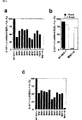
図1は、siRNAによるE−カドヘリンプロモーターのDNAメチル化を示す図および写真である。a、E−カドヘリンプロモーター上のsiRNAの標的部位を示す図である。各部位(1〜10)はCpG配列を1つまたは2つ含む。HpaI、AciI、AccIまたはHhaIは、CpGメチル化感受性制限酵素である。b、PCRに基づくメチル化アッセイを用いたsiRNAによるE−カドヘリンプロモーターのDNAメチル化の検出結果を示す写真である。CpG部位を標的とするsiRNAはいずれもプロモーターのDNAメチル化を誘導した。GAPDHはHpaI、AciI、AccI、HhaIで消化されない対照遺伝子である。GAPDH遺伝子断片の増幅レベルは各試料ともほぼ同一であり、実験誤差の限界範囲内に収まることは明らかである。c、メチル化阻害剤である5−aza存在下または非存在下でのE−カドヘリンプロモーターのDNAメチル化の相対レベルを示す図である。siRNAによるE−カドヘリンプロモーターのDNAメチル化はPCRに基づくメチル化アッセイによって検出した。バンド強度はNIH Image Analysisプログラムを用いた濃度測定によって分析した。
図2は、E−カドヘリンプロモーターのCpG部位を標的とするE−カドヘリン−siRNAの効果を示す図である。a、E−カドヘリン−siRNAを含む細胞におけるE−カドヘリンmRNAの相対レベルを示す。各細胞のトータルRNAをRT−PCR分析により分析した。E−カドヘリンmRNAのレベルをGAPDH mRNAレベルに対して標準化した。b、5−azaの存在下または非存在下でのE−カドヘリン−siRNAを含む細胞におけるE−カドヘリンmRNAの相対レベルを示す。各細胞のトータルRNAをRT−PCR分析により分析した。c、E−カドヘリン−siRNAを含む細胞におけるE−カドヘリンの相対レベルを示す。各細胞内のE−カドヘリンは特異抗体を用いたウエスタンブロット分析によって検出した。各細胞におけるE−カドヘリンの相対レベルはNIH Image Analysisプログラムを用いた濃度測定によって分析した。
図3は、DNMT1ノックダウン細胞における、E−カドヘリンプロモーターを標的とするE−カドヘリン−siRNAの効果を示す図および写真である。a、DNMT−1−siRNAまたは変異型DNMT−1−siRNAの配列を示す図である。下線を付した文字はDNMT−1−siRNAにおけるヌクレオチドの変異を表す。b、MCF−7細胞におけるDNMT1−siRNA存在下または非存在下でのDNMT−1 mRNAレベルを示す写真である。DNMT−1 mRNAレベルはRT−PCR分析により検出した。c、MCF−7細胞における、E−カドヘリン−siRNAおよびDNMT−1−siRNA存在下または非存在下でのE−カドヘリンプロモーターのDNAメチル化のレベルを示す図である。siRNAによるE−カドヘリンプロモーターのDNAメチル化はPCRに基づくメチル化アッセイによって検出した。バンド強度はNIH Image Analysisプログラムを用いた濃度測定によって分析した。d、MCF−7細胞における、E−カドヘリン−siRNAおよびDNMT−1−siRNA存在下または非存在下でのE−カドヘリンmRNAレベルを示す図である。各細胞のトータルRNAを特異的プライマーによるRT−PCR分析によって分析した。
図4は、tRNA−shRNAによるerbB2プロモーターのDNAメチル化を示す図および写真である。a、erbB2プロモーターを標的とするtRNA−shRNAベクターの構成を示す図である。erbB2プロモーター上のtRNA−shRNAの5種類の標的CpG部位を選択した。b、ノーザンブロット分析によるtRNA−shRNAから発現されたsiRNAの検出結果を示す写真である。erbB2プロモーター上のtRNA−shRNAを発現する細胞においてすべてのsiRNAが検出された。c、tRNA−shRNAによりerbB2プロモーターのDNAメチル化が誘導された結果を示す写真である。siRNAによるerbB2プロモーターのDNAメチル化はPCRに基づくメチル化アッセイにより検出した。バンド強度はNIH Image Analysisプログラムを用いた濃度測定によって分析した。d、erbB2プロモーター(部位1−5)を標的とするtRNA−shRNAを発現した細胞におけるerbB2 mRNAの相対レベルおよび、コーディング領域(部位6)を標的とするtRNA−shRNAを加えた際のerbB2 mRNAの相対レベルを示す図である。各細胞のトータルRNAを特異的プライマーによるRT−PCR分析によって分析した。e、tRNA−dsRNAを発現した細胞の増殖速度を示す図である。増殖速度は方法の項に記載した通りに決定した。
図5は、erbB2プロモーターを標的とする若干長いshRNA(ステム長として29〜100nt)単独又は共にDicerを発現するtRNA−shRNAを導入したMCF−7細胞でのerbB2mRNAの相対レベルを示すグラフである。各細胞のトータルRNAを特異的プライマーによるRT−PCR分析によって分析した。
図6は、長鎖hRNAまたは長鎖hRNAとともにDicerを発現し得るtRNA−shRNAベクター等をMCF−7細胞に導入した際におけるPKR活性化の有無をelF2αのリン酸化レベルに基づき解析した結果を示すグラフである。
図7はMCF−7細胞にE−カドヘリンプロモーターを標的とするsiRNAを導入した際の配列特異的なメチル化を検出した結果を示す図である。部位1または部位3に対するsiRNAを導入した場合(+)、導入していない場合(−)において、部位1または3内でメチル化された配列をボックスを斜線で塗りつぶして示した。メチル化のターゲット配列はCpG配列だけでなく、CpNG配列も含まれていた。部位3siRNAの有無においても同様の傾向が見られた。配列特異的なメチル化の検出は、bisulfiteシークエンシング解析により行った。
図8はsiRNAによるメチル化は正常なヒト乳腺細胞でも誘導されることを検出した結果を示す図である。配列特異的なメチル化の検出は、bisulfiteシークエンシング解析により行った。
図9は、MCF−7細胞にE−カドヘリンプロモーターを標的とするsiRNAを導入した際のメチル化される範囲を検出した結果を示し、標的とする領域の周囲のCpGもメチル化することが検出されたことを示す図である。部位3に対するsiRNAは部位2の領域もメチル化した。配列特異的なメチル化の検出は、上記と同様にbisulfiteシークエンシング解析により行った。
図10は、erbB2プロモーターを標的とするshRNAを発現するベクター(tRNA−shRNAおよびU6−shRNA)を用いて配列特異的なメチル化を誘導した結果を示す図である。
図11は、DNMT1またはHMTのメチルトランスフェラーゼをsiRNAで発現抑制した場合における、E−カドヘンリンプロモーターを標的としたsiRNAによるメチル化誘導への影響を解析した結果を示す図である。A、DNMT1プロモーターを標的としたsiRNA存在下または非存在下におけるE−カドヘンリンプロモーターを標的としたsiRNAによる配列特異的メチル化の違いを解析した結果を示す。B、HMTプロモーターを標的としたsiRNA存在下または非存在下におけるE−カドヘンリンプロモーターを標的としたsiRNAによる配列特異的メチル化の違いを解析した結果を示す。配列特異的なメチル化の検出は、上記と同様にbisulfiteシークエンシング解析により行った。
図12は、核内に長鎖のdsRNAを局在させることを目的として構築されたdsRNA発現ベクター(pSV−BGI)の構成を示す図である。このベクターはPol IIプロモーターを備え、このプロモーターから発現するベータグロブリンのイントロン部位に長鎖のdsRNAをコードする遺伝子が挿入されている。イントロンは核内でプロセシングされるため、イントロンに挿入された長鎖のdsRNAは核内に放出される。
図13は、tRNAプロモーター若しくはU6プロモーターを備えた長鎖dsRNA発現ベクターまたは核内長鎖dsRNA発現用pSV−BGIベクターにより、erbB2プロモーターにおけるメチル化誘導を行った結果を示す図である。
図14は、tRNAプロモーター若しくはU6プロモーターを備えた長鎖dsRNA発現ベクターまたは核内長鎖dsRNA発現用pSV−BGIベクターが導入されたMCF−7細胞におけるerbB2発現をタンパク質レベルで比較した結果を示すグラフである。
図15は、各長鎖dsRNAを発現するベクターにおける細胞毒性を検討した結果を示す。細胞毒性として、各ベクターが細胞に導入された後のPKR活性化の有無をelF2αのリン酸化レベルに基づき解析した。FIG. 1 is a diagram and a photograph showing DNA methylation of the E-cadherin promoter by siRNA. It is a figure which shows the target site of siRNA on a, E-cadherin promoter. Each site (1-10) contains one or two CpG sequences. HpaI, AciI, AccI or HhaI is a CpG methylation sensitive restriction enzyme. b, Photographs showing detection results of DNA methylation of E-cadherin promoter by siRNA using PCR-based methylation assay. All siRNAs targeting the CpG site induced promoter DNA methylation. GAPDH is a control gene that is not digested with HpaI, AciI, AccI, and HhaI. It is clear that the amplification level of the GAPDH gene fragment is almost the same in each sample and falls within the limit range of experimental error. c, shows the relative level of DNA methylation of the E-cadherin promoter in the presence or absence of the methylation inhibitor 5-aza. DNA methylation of the E-cadherin promoter by siRNA was detected by PCR-based methylation assay. Band intensities were analyzed by densitometry using the NIH Image Analysis program.
FIG. 2 is a diagram showing the effect of E-cadherin-siRNA targeting the CpG site of the E-cadherin promoter. a, Relative levels of E-cadherin mRNA in cells containing E-cadherin-siRNA. Total RNA of each cell was analyzed by RT-PCR analysis. E-cadherin mRNA levels were normalized to GAPDH mRNA levels. b, Relative levels of E-cadherin mRNA in cells containing E-cadherin-siRNA in the presence or absence of 5-aza. Total RNA of each cell was analyzed by RT-PCR analysis. c, shows the relative level of E-cadherin in cells containing E-cadherin-siRNA. E-cadherin in each cell was detected by Western blot analysis using a specific antibody. The relative level of E-cadherin in each cell was analyzed by densitometry using the NIH Image Analysis program.
FIG. 3 is a diagram and a photograph showing the effect of E-cadherin-siRNA targeting the E-cadherin promoter in DNMT1 knockdown cells. It is a figure which shows the arrangement | sequence of a, DNMT-1-siRNA, or mutant | variant DNMT-1-siRNA. Underlined letters represent nucleotide mutations in DNMT-1-siRNA. b, Photograph showing DNMT-1 mRNA levels in the presence or absence of DNMT1-siRNA in MCF-7 cells. DNMT-1 mRNA levels were detected by RT-PCR analysis. c, shows the level of DNA methylation of the E-cadherin promoter in the presence or absence of E-cadherin-siRNA and DNMT-1-siRNA in MCF-7 cells. DNA methylation of the E-cadherin promoter by siRNA was detected by PCR-based methylation assay. Band intensities were analyzed by densitometry using the NIH Image Analysis program. d, E-cadherin mRNA levels in the presence or absence of E-cadherin-siRNA and DNMT-1-siRNA in MCF-7 cells. Total RNA of each cell was analyzed by RT-PCR analysis with specific primers.
FIG. 4 is a diagram and a photograph showing DNA methylation of the erbB2 promoter by tRNA-shRNA. It is a figure which shows the structure of the tRNA-shRNA vector which targets a and erbB2 promoter. Five target CpG sites of tRNA-shRNA on erbB2 promoter were selected. b, Photograph showing the detection result of siRNA expressed from tRNA-shRNA by Northern blot analysis. All siRNAs were detected in cells expressing tRNA-shRNA on the erbB2 promoter. c, Photograph showing the results of induction of DNA methylation of the erbB2 promoter by tRNA-shRNA. DNA methylation of the erbB2 promoter by siRNA was detected by PCR-based methylation assay. Band intensities were analyzed by densitometry using the NIH Image Analysis program. d, relative levels of erbB2 mRNA in cells expressing tRNA-shRNA targeting the erbB2 promoter (site 1-5) and erbB2 mRNA when tRNA-shRNA targeting the coding region (site 6) was added. It is a figure which shows a relative level. Total RNA of each cell was analyzed by RT-PCR analysis with specific primers. e, It is a figure which shows the proliferation rate of the cell which expressed tRNA-dsRNA. Growth rates were determined as described in the method section.
FIG. 5 is a graph showing the relative level of erbB2 mRNA in MCF-7 cells into which tRNA-shRNA expressing Dicer alone or together with a slightly long shRNA targeting the erbB2 promoter (29 to 100 nt as a stem length) was introduced. Total RNA of each cell was analyzed by RT-PCR analysis with specific primers.
FIG. 6 shows the results of analysis of the presence or absence of PKR activation when MCF-7 cells were introduced with long hRNA or a tRNA-shRNA vector that can express Dicer together with long hRNA based on the phosphorylation level of elF2α. It is a graph.
FIG. 7 is a diagram showing the results of detection of sequence-specific methylation when siRNA targeting the E-cadherin promoter was introduced into MCF-7 cells. When siRNA for
FIG. 8 shows the results of detecting that methylation by siRNA is also induced in normal human breast cells. Detection of sequence specific methylation was performed by bisulfite sequencing analysis.
FIG. 9 shows the result of detecting the methylated range when siRNA targeting the E-cadherin promoter is introduced into MCF-7 cells, and it is detected that CpG around the target region is also methylated. It is a figure which shows having been done. The siRNA for
FIG. 10 is a diagram showing the result of inducing sequence-specific methylation using vectors (tRNA-shRNA and U6-shRNA) that express shRNA targeting the erbB2 promoter.
FIG. 11 is a diagram showing the results of analyzing the influence of siRNA targeting the E-cadhenline promoter on methylation induction when DNMT1 or HMT methyltransferase is suppressed by siRNA. A shows the results of analysis of differences in sequence-specific methylation by siRNA targeting the E-cadhenrin promoter in the presence or absence of siRNA targeting the DNMT1 promoter. B, shows the results of analyzing the difference in sequence-specific methylation by siRNA targeting the E-cadhenlin promoter in the presence or absence of siRNA targeting the HMT promoter. Detection of sequence-specific methylation was performed by bisulfite sequencing analysis as described above.
FIG. 12 is a diagram showing the structure of a dsRNA expression vector (pSV-BGI) constructed for the purpose of localizing a long dsRNA in the nucleus. This vector has a Pol II promoter, and a gene encoding a long dsRNA is inserted into an intron site of a beta globulin expressed from this promoter. Since introns are processed in the nucleus, the long dsRNA inserted into the intron is released into the nucleus.
FIG. 13 shows the results of methylation induction in the erbB2 promoter using a long dsRNA expression vector provided with a tRNA promoter or U6 promoter or a pSV-BGI vector for expressing a nuclear long chain dsRNA.
FIG. 14 is a graph showing the results of protein level comparison of erbB2 expression in MCF-7 cells into which a long dsRNA expression vector having a tRNA promoter or a U6 promoter or a pSV-BGI vector for expressing a nuclear long dsRNA was introduced. It is.
FIG. 15 shows the results of examination of cytotoxicity in a vector expressing each long dsRNA. As cytotoxicity, the presence or absence of PKR activation after each vector was introduced into the cells was analyzed based on the phosphorylation level of elF2α.
以下、本発明を実施例に基づきより詳細に説明するが、本発明をこれら実施例により限定するものではない。
なお、以下に説明する各実施例において、「siRNA」とは単に短いdsRNAを指し、RNA干渉用として使用されているような短いdsRNAをDNAのメチル化誘導に用いた。よって、特に断りがないかぎり、本明細書においてsiRNAはDNAメチル化誘導用の短鎖dsRNAを意味する。
実施例1: 合成siRNAによる哺乳動物細胞におけるDNAメチル化
合成siRNAが哺乳動物細胞におけるDNAメチル化を誘導しうるか否かを検証するために、本発明者らはE−カドヘリンプロモーターのCpGアイランドを標的とするsiRNA(E−カドヘリン−siRNA)を合成した。
複数の腫瘍細胞系でE−カドヘリンがそのプロモーターの異常なメチル化によってサイレンシングされることが報告されている(Herman,J.G.et al.Proc.Natl.Acad.Sci.USA.93,9821−9826(1996):Graff,J.R.et al.J.Biol.Chem.272,22322−22329(1997):Corn,P.G.et al.Clin.Cancer Res.6,4243−4248(2000))。MCF−7細胞ではE−カドヘリンプロモーター内のCpG部位がメチル化されていないため、本発明者らはMCF−7細胞を本研究に用いた。対照には、E−カドヘリンプロモーター内のCpG部位がメチル化されているHL−60細胞を用いた(Corn,P.G.et al.Clin.Cancer Res.6,4243−4248(2000))。E−カドヘリンプロモーター内の10個のCpG部位(部位1〜10)をsiRNAの標的として用いた(図1a)。
E−カドヘリンプロモーターを標的とするsiRNA(E−カドヘリン−siRNA)およびDMNT1 mRNAを標的とするsiRNA(DMNT1−siRNA)は、日本バイオサービス(JBioS)社(埼玉、日本)にて合成された。E−カドヘリン−siRNAの標的配列は、以下の通りである:

MCF−7細胞は、10%ウシ胎仔血清(FBS)を添加したダルベッコ変法イーグル培地(DMEM)中で培養した。このMCF−7細胞に上記各E−カドヘリン−siRNA(200nM)をOligofectamine(商標)(Invitrogen,CA,USA)を用いて、製造者のプロトコールに従って導入した。siRNA導入後の細胞を培養し、96時間後に全DNAを回収し、ゲノムDNAを単離した。
続いて、PCRを用いたメチル化解析を行った。具体的には、上記回収したゲノムDNAをメチル化感受性酵素(HpaI、AciI、AccIおよびHhaI;図1a)を用い製造者のプロトコールに従った条件下で消化した。酵素による消化の後に、50ngのDNAを以下のプロモーターを用いたPCRによってE−カドヘリンプロモーターの領域を増幅した:E−カドヘリン順方向((配列番号:29)5’−TCT AGA AAA ATT TTT TAA AA−3’)および逆方向((配列番号:30)5’−AGA GGG GGT GCG TGG CTG CA−3’)プライマー、またはerbB2順方向((配列番号:31)5’−CCC GGG GGT CCT GGA AGC CA−3’)および逆方向((配列番号:32)5’−CCC GGG GGG GCT CCC TGG TTT−3’)プライマー。
この解析の原理は、プロモーターのCpGアイランドがメチル化されていない場合には、上記メチル化感受性酵素はその部位を消化し、DNAの増幅は起こらないと考えられる(Qian,X.et al.Am.J.Pathol.153,1475−1482(1998))。この原理に基づき、本解析では増幅産物の検出に基づいて、プロモーターのCpGアイランドメチル化が検出されることになる。
なお、対照実験として、E−カドヘリンプロモーターの完全なゲノムDNAを、E−カドヘリンプロモーターを切断しうるPstI、ならびにこれらのプロモーターを切断できないHindIIIによって消化処理した。不完全消化の可能性を除外するために、すべての試料を各酵素により2回の独立した実験で消化処理した。2回ずつの消化物のそれぞれからのPCR増幅を少なくとも2回繰り返した。PCR反応時のオーバーサイクルを防止するために、未消化テンプレートおよびPstI制限酵素で消化したテンプレート(何らシグナルを生じない)を用いてcycle curve number法を行うことにより、各プライマーセットに対するサイクル数を決定した。
E−カドヘリンに対する特異的プライマーは以下の通りである。
図1bに示した通り、個別のE−カドヘリン−siRNA(部位1〜10)およびすべてのE−カドヘリン−siRNAの混合物を含むMCF−7細胞系でメチル化DNAが観察された。さらに、DNAメチル化阻害薬である5−アザ−2’−デオキシシチジン(5−aza)の存在下では、すべてのE−カドヘリン−siRNAの混合物を含むMCF−7細胞におけるメチル化DNAレベルは低下した(図1c)。これらの結果は、E−カドヘリンプロモーター内のCpG部位を標的とするsiRNAが配列特異的なDNAメチル化を誘導し得ることを示唆する。
実施例2:E−カドヘリン−siRNAによるDNAメチル化とE−カドヘリン遺伝子の発現との相関
次に、E−カドヘリン−siRNAによるDNAメチル化がE−カドヘリン遺伝子の発現と相関するかを検討するために、本発明者らはE−カドヘリンプロモーターに対する特異的プライマーを用いてRT−PCR分析を行った。
ISOGEN(商標)(ニッポンジーン、富山、日本)を用い、製造者のプロトコールに従って全RNAをMGF−7細胞から単離した。RT−PCRは、RNA PCR Kit ver.2(タカラ)を用い、以下のプライマーを用いて行った:
E−カドヘリン順方向((配列番号:21)5’−ATG GGC CCT TGG AGC CGC AGC CTC−3’)および下流((配列番号:22)5’−GAG CAA TTC TGC TTG GAT TCC AGA−3’)プライマー、
対照のGAPDH順方向((配列番号:27)5’−ATG GGG AAG GTG AAG GTC GGA GTC−3’)および逆方向((配列番号:28)5’−TGG AAT TTG CCA TGG GTG GA−3’)プライマー。
上記プライマーを用いて増幅したPCR産物を2%アガロースゲル上での電気泳動によって分析した。
図2aに示した通り、個別のE−カドヘリン−siRNAを含むMCF−7細胞系におけるE−カドヘリンmRNAレベルは、野生型(WT)MCF−7細胞におけるレベルよりも約30%から約70%までに低下した。
これに対して、すべてのE−カドヘリン−siRNAの混合物を含むMCF−7細胞におけるE−カドヘリンmRNAレベルは、個々のsiRNAをトランスフェクトしたMCF−7細胞よりも有意に低く、このことから相加効果が明らかに示された(図中「site1−10」のカラム)。重要なことに、5−アザ−2’−dCによる処理は、E−カドヘリン−siRNAの作用をほぼ完全に消失させた(図2b)。
E−カドヘリンに対する特異抗体を用いたウエスタンブロット分析を用いてE−カドヘリンタンパク質のレベルを確認した。
ウエスタンブロット分析については既に報告している方法に従って行った(Kawasaki,H.et al.Nature,393,284−289(1998):Kawasaki,H.et al.Nature 405,195−200(2000))。E−カドヘリンプロモーターを標的とする種々のE−カドヘリン−siRNAを標的とする種々のtRNA−shRNAの有無別にMCF−7細胞を回収した。全タンパク質(各20μg)をSDS−PAGE(10%ポリアクリルアミドゲル)により分離し、ポリビニレンジフルオリド(PVDF)膜(フナコシ、東京、日本)にエレクトロブロッティングにより転写した。免疫複合体は、E−カドヘリン(Santa Cruz,CA,USA)およびアクチン(UBI,CA,USA)に対する特異的ポリクローナル抗体を用いて、ECLキット(Amersham Co.,Buckinghamshire,UK)により可視化した。E−カドヘリンの相対レベルをアクチンレベルを基に標準化した。
図2cに示すように、上記E−カドヘリンに対する特異抗体を用いたウエスタンブロット分析により、E−カドヘリンmRNAと同様のタンパク質レベルの低下が確認された。これら結果より、明らかにE−カドヘリンプロモーターを標的とするsiRNAは転写レベルでの遺伝子サイレンサーとして作用した。その上、E−カドヘリン遺伝子のプロモーター内のsiRNAによるDNAメチル化は、相加的な様式で遺伝子発現レベルと逆相関することが明らかになった。
実施例3:ヒト細胞におけるsiRNAを介したDNAメチル化におけるDNMTの関与
一般に、哺乳動物細胞におけるDNAメチル化はDNAメチルトランスフェラーゼ(DNMT)によって起こることが知られている(Bestor,T.H.Human Mol.Genet.9,2395−2402(2000))。このため、DNMTがヒト細胞におけるsiRNAを介したDNAメチル化に関与するか否かを確かめるために、本発明者らはDMNT mRNAを標的とするsiRNAを用いてDNMT遺伝子の発現を抑制することを試みた。DNMT1はヒト細胞における主要なDNAメチルトランスフェラーゼの一つとして作用するため(Rhee,I.et al.Nature 416,552−556(2002):Robert,M.F.et al.Nature Genet.33,61−65(2003))、本発明者らはDNMT1 mRNA(Robert,M.F.et al.Nature Genet.33,61−65(2003))を標的とするsiRNAを合成した(図3a)。対照として、センス鎖およびアンチセンス鎖の両方に4つの点変異を有する変異型DNMT1−siRNAを用いた。
DMNT1−siRNAおよび変異型DMNT1−siRNAの配列は図3aに示した(配列番号:65−68)。これらsiRNAを作製するために、それぞれの合成センスRNA鎖と合成アンチセンスRNA鎖を標準的な方法(Elbashir,S.M.et al.Genes Dev.15,188−200(2001))によってアニーリングさせた。
上記DNMT1−siRNAまたは変異型DNMT1−siRNA(各200nM)を実施例2と同様にOligofectamine(商標)を用いてMCF−7細胞に導入した。導入96時間後にISOGEN(商標)(ニッポンジーン、富山、日本)を用いてトータルRNAを回収し、DNMT1 mRNAレベルをRT−PCR分析を用いて調べた。
RT−PCRは、RNA PCR Kit ver.2(タカラ)を用い、以下のプライマーを用いて行った: DNMT1順方向((配列番号:25)5’−ATG GCT CGC GCC AAA ACA GTC ATG A−3’)および逆方向((配列番号:26)5’−CTC GGG ACT GGG ATC CAT GAG AAT−3’)プライマー。または対照実験はGAPDH順方向((配列番号:27)5’−ATG GGG AAG GTG AAG GTC GGA GTC−3’)および逆方向((配列番号:28)5’−TGG AAT TTG CCA TGG GTG GA−3’)プライマーを用いて同様の操作を行った。PCR産物は2%アガロースゲルを用いた電気泳動により解析した。
図3bに示した通り、DNMT1−siRNAを含むMCF−7細胞におけるDNMT1 mRNAレベルはWT−MCF−7細胞と比べて有意に低かったが、変異型DNMT1−siRNAを含むMCF−7細胞では野生型MCF−7細胞と同程度のDNMT1 mRNAが検出された。
DNMT1−siRNAを導入したMCF−7細胞におけるDNMT−1のタンパク質レベルについても、DNMT1に対する特異抗体を用いたウエスタンブロット分析により確認した。ここでは結果を図として示さないが、DNMT1−siRNAの導入によりDNMT−1のタンパク質レベルもmRNAと同様の低下が確認された。
次に、DNMT−1遺伝子発現の低下が、siRNAを介したDNAメチル化に影響を与えるか否かを検討するために、上記E−カドヘリン−siRNA(部位1〜10)の混合物を、DNMT1−siRNAを含むMCF−7細胞に導入した。siRNAの導入はOligofectamine(商標)を用いて行い、導入96時間経過後に全DNAを回収し、ゲノムDNAを単離した。単離したゲンムDNAを用いて実施例1に示したPCRを用いたメチル化解析方法により、E−カドヘリンプロモーター領域のメチル化レベルを解析した。
図3cに示した通り、DNMT1−siRNAを含むMCF−7細胞におけるE−カドヘリン−siRNAによるDNAメチル化のレベルは、WT MCF−7細胞または変異型DNMT1−siRNAを含むMCF−7細胞のいずれよりも有意に低かった。したがって、明らかに、DNMT1はヒト細胞におけるsiRNAを介したDNAメチル化のために必要である。
さらに、DNMT1−siRNAを含むMCF−7細胞において、E−カドヘリン発現に対するE−カドヘリン−siRNAの影響についても検討した。具体的には、DNMT1−siRNA(またはその変異型DNMT1−siRNA)が導入されたMCF−7細胞にさらに、E−カドヘリン−siRNAを導入した。これらsi−RNAの導入方法は上記実施例1等と同様にキットを用いて行った。E−カドヘリン−siRNA導入96時間後にMCF−7細胞よりトータルRNAを回収し、RT−PCRによりE−カドヘリンmRNAレベルを測定した。RT−PCR法は、実施例2に記載の方法に従って行った。
図3dに示した通り、E−カドヘリン−プロモーターを標的とするsiRNAは、DNMT1 mRNAを標的とするsiRNA(DNMT1−siRNA)を含むMCF−7細胞におけるE−カドヘリン遺伝子発現を変化させなかった。これに対して、E−カドヘリン−siRNAは、変異型DNMT1−siRNAを含むMCF−7細胞におけるE−カドヘリン遺伝子の発現を低下させた。これらの結果は、DNMT1−siRNAによるDNAメチル化の阻害が、E−カドヘリン−siRNAによる転写レベルでの遺伝子サイレンシングに影響を及ぼすことを示している。
実施例4:ヘアピン型RNA(shRNA)発現ベクターを用いたerbB2遺伝子発現抑制
erbB2遺伝子はMCF−7細胞などのいくつかの腫瘍細胞系で過剰発現される上、メチル化されていないことが知られている。一方、erbB2遺伝子は、種々の正常細胞系でプロモーターのメチル化によってサイレンス化される(Hattori,M.et al.Cancer Lett.169,155−164(2001))。そこで、siRNAによりDNAメチル化を制御することによる将来の遺伝子治療を念頭に置いて、本発明者らは上記erbB2プロモーターを標的とする短いヘアピンRNA(shRNA)発現ベクターを構築した。
本発明者らはすでに、tRNAvalにより生じたshRNAが、ヒト細胞においてsiRNAを介した遺伝子サイレンシングを誘導することを示している(Kawasaki,H.,& Taira,K.Nucleic Acids Res.31,700−707(2003))。そのためerbB2プロモーターを標的とするtRNA−shRNA発現ベクターの構築には、pPUR(Clontech,CA,USA)を骨格としEcoRI部位とBamHI部位との間にtRNAval用のヒト遺伝子の化学合成プロモーターを備えたpPUR−tRNAプラスミドを用いた(Kawasaki,H.,& Taira,K.Nucleic Acids Res.31,700−707(2003))。また、erbB2プロモーターを標的とするtRNA−shRNAの標的配列としては、erbB2プロモーター内部の5種類のCpUアイランド(部位1〜5)を選択した。標的配列(部位1〜5)は以下の通りである:
続いて、MCF−7細胞内において、これらのshRNA発現プラスミドから目的とするshRNAが生成されるかの確認実験を行った。shRNA発現プラスミドを実施例1の方法と同様にMCF−7細胞に一時的に導入した。導入72時間後にトータルRNAを回収し、ノーザンブロット分析を行った。その結果、tRNA−shRNAを発現する細胞ではshRNAを生成する適切なプロセシングが起こったことを確認した(図4b)。発現ベクターを用いてshRNAが細胞内で生成されることが確認されたことから、続いて、これら発現ベクターを用いて、erbB2プロモーターへのメチル化誘導を行った。
上記各発現ベクターを用いて生成されるshRNAによってerbB2プロモーター内部のDNAメチル化レベルが変化するか解析した。この解析には、実施例2に示したPCRに基づくメチル化解析方法を用いた。具体的には、各pPUR−tRNA−shRNA発現ベクターをEffectin(商標)試薬(QIAGEN,Hiddeln,Germany)を用い、添付の製造者のプロトコールに従ってMCF−7細胞に導入した。導入96時間後に細胞よりゲノムDNAを回収し、erbB2プロモーター上のメチル化レベルを解析した。
ゲノムDNA(500ng)をメチル化感受性酵素、HpaIおよびHhaIで消化した(図4a)。消化の後に、50ngのDNAを以下のプロモーターを用いるPCRによって増幅した:erbB2順方向((配列番号:31)5’−CCC GGG GGT CCT GGA AGC CA−3’)および逆方向((配列番号:32)5’−CCC GGG GGG GCT CCC TGG TTT−3’)プライマー。対照実験として、erbB2プロモーターの完全なゲノムDNAを、erbB2プロモーターを切断しうるPstI、ならびにこれらのプロモーターを切断できないHindIIIによって消化処理した。
実施例1と同様に不完全消化の可能性を除外するために、すべての試料を各酵素により2回の独立した実験で消化処理した。2回ずつの消化物のそれぞれからのPCR増幅を少なくとも2回繰り返した。PCR反応時のオーバーサイクルを防止するために、未消化テンプレートおよびPstI制限酵素で消化したテンプレート(何らシグナルを生じない)を用いてcycle curve number法を行うことにより、各プライマーセットに対するサイクル数を決定した。earbB2プロモーターに対する特異的プライマーは以下の通りである。
図4cに示した通り、tRNA−shRNAまたはすべてのtRNA−shRNAの混合物(部位1〜5)を発現したMCF−7細胞において、erbB2プロモーター内部のDNAメチル化が例外なく観察された。U6プロモーターにより生じさせたshRNAの場合も同様の結果が得られ(非提示データ)、このことから、ベクターベースのsiRNAがヒト細胞においても配列特異的なDNAメチル化を誘導しうることが示された。
次に、ベクターベースのsiRNAがerbB2遺伝子の発現を抑制したか否かについて検討するために、本発明者らはerbB2 mRNAレベルをRT−PCR分析によって調べた。RT−PCRは、erbB2順方向((配列番号:23)5’−ATG GAG CTG GCG GCC TTG TGC CGC−3’)および逆方向((配列番号:24)5’−TTG TTC TTG TGG AAG ATG TCC TTC C−3’)プライマーを用いたことを除いて、実施例2と同様に実施した。
図4dに示した通り、個別のtRNA−shRNAを発現した各細胞におけるerbB2 mRNAレベルはWT MCF−7細胞におけるレベルよりも部分的に低下した。以前に観察された通り(図2a)、すべてのtRNA−shRNA(部位1〜5)を発現した細胞におけるerbB2 mRNAレベルは、WT MCF−7細胞またはいずれかの個々のtRNA−shRNAを発現する細胞におけるレベルと比較して有意に低く、このことはベクターベースのshRNAによる転写レベルでの抑制による相加性を示している。このため、哺乳動物細胞におけるsiRNAによるプロモーターのメチル化による転写調節は、本研究の2つの例によって本発明者が示したように、一般的な機構である可能性が示唆された。
上記すべてのtRNA−shRNA(部位1〜5)に加えて、erbB2遺伝子コード領域を標的としたtRNA−shRNA(部位6)を加えて、同様にMCF−7細胞へのトランスフェクションおよびRT−PCRを行った。その結果、図4dに示すように、さらに効率よく標的遺伝子の発現が抑制された。
さらに、erbB2遺伝子プロモーターを標的としたtRNA−shRNAを発現する細胞の表現型を検討するために、本発明者らはさまざまな細胞系の増殖速度を分析した。各細胞系の増殖速度は、Cell Proliferation Kit II(Roche Ltd.,Switzerland)を用い、製造者の指示に従って測定した(Kawasaki,H.,& Taira,K.Nucleic Acids Res.31,700−707(2003))。
図4eに示した通り、すべてのtRNA−shRNA(部位1〜5)を発現したMCF−7細胞は、野生型MCF−7細胞よりも有意に増殖が緩徐であった。これらの結果から、すべてのtRNA−shRNA(部位1〜5)を発現するMCF−7細胞の増殖速度の低下は、この細胞におけるerbB2 mRNAレベルの低下と相関することが示された。このため、erbB2遺伝子プロモーターを標的とする本発明者らのtRNA−shRNAには細胞増殖抑制剤、とりわけ癌などの新生物を抑制するための治療薬としての有用性が示唆された。
なお、本実施例で示したヘアピン(ステムループ)型RNA分子を発現する発現ベクターを構築する際には、完成したベクターの配列を確認するために、シークエンスが行われるが、ステムループ形が固い構造を形成しているためにシークエンスが読み難いという問題がある。そのため、ステム配列のセンス鎖に1 ̄10箇所のミスマッチ配列やバルジを導入したステムループRNA分子のようなシークエンスし易い構造に改変しても、DNAのメチル化やRNAiを介した標的遺伝子の発現抑制効果は完全相補型のステムループ形RNA分子と比較して同等の活性が見られる(データ図示せず)。
実施例5:長鎖hRNAおよびDicer遺伝子の同時発現システム
動物細胞では、長鎖(30塩基以上)ヘアピン(あるいはステムループ)形RNA分子(「長鎖hRNA」)を発現させるとPKRが活性化され、非特異的な翻訳抑制がおこる。そのため、hRNAを用いてRNAi効果を誘導するためには30塩基以下のステムループ形RNA分子を作製しなければならない。一方、RNAi効果は標的遺伝子の配列に依存するために、効果的な標的配列を決定するために多くのshRNAを作製しなければならない。
そこで、長鎖hRNA(25〜500塩基)とDicer遺伝子を同時発現するシステムを考案した。具体的には、PolIIプロモーターの下流にDicer遺伝子を接続したDicer発現カセットと、polIIIプロモーターの下流に短いステムループ型RNA分子をコードしたDNAを接続したhRNA発現カセットとをベクター上に搭載して、これを細胞に導入した。先ずはerbB2遺伝子コーディング領域を標的とした長鎖hRNAとDicer遺伝子を同時に発現させると、従来のhRNAに比べて発現抑制効果の上昇が確認された(図5)。
また、この系でPKRの活性化が生じるか否かをPKR活性化の指標となるelF2αのリン酸化に基づき解析した。具体的には、リン酸化型eIF2アルファを特異的に認識する抗体を用いてウエスタンブロッティングを行い、内在性コントロールのβアクチンに対するリン酸化型eIF2アルファの相対量をNIHimageプログラムにより解析した。
その結果、elF2αのリン酸化はほとんど見られなかったことから(図6)、この系ではPKR活性化はほとんど誘導されないことが確認された。
本システムでは、細胞内でDicerが発現され、同時に発現した長鎖ステムループ形RNAが速やかにsiRNAにプロセッシングされることが示唆された。また、ステム配列のセンス鎖に1〜100箇所にミスマッチ配列(G−Tペアなど)やバルジ(2−10塩基)を導入することで、より効果的にPKRの活性化を回避し得る。
実施例6:siRNAによる配列特異的なメチル化の確認
上記実施例までに合成siRNAやsiRNA発現ベクターから発現するsiRNAが、配列特異的にターゲットとなる遺伝子プロモーター領域をメチル化することをメチル化特異的PCRによって解析した。本実施例では、siRNAによって引き起こされたメチル化を配列レベルで確認することができるbisulfiteシークエンシング解析により解析した。本解析に用いるbisulfite試薬はメチル化されていないシトシン塩基をウラシル塩基に変換するが、一方のメチル化されたシトシン塩基はウラシルに変換することができない。したがって、siRNA等が導入された細胞から回収されたDNAをbisulfite試薬で反応させた後、配列をシークエンスし、ウラシル塩基への置換の有無を確認することによりシトシンがメチル化されているか否かを確認することができる。Bisulfite試薬による操作は、具体的には、CpGenome DNA−modification kit(Intergen社,USA)を用いて行った。
具体的には、E−Cadherinプロモーターを標的とした合成siRNA(site1−10の各siRNA)を実施例1と同様にそれぞれヒト乳ガン細胞(MCF−7細胞)にOligofectamine(Invitrogen社、USA)を用いて導入し、導入96時間後にゲノムDNAを回収した。CpGenome DNA−modification kit(Intergen社,USA)を用いて、このゲノムDNAにbisulfite試薬を作用させた。その後、プロモーターDNAをbisulfite試薬で反応させた後にPCRにて増幅した。増幅したプロモーターDNAをTAクローニングキット(Invitrogen社、USA)によってプラスミドベクターに組み込んだ。組み込んだプラスミドベクターを大腸菌に導入してクローニングを行った。クローン化した個々のプラスミドをシークエンスすることでメチル化状態の頻度をモニターした。
結果の一部を図7に示す(メチル化状態を調べる際に大腸菌クローンを10個適当にピックアップしてプラスミドのシークエンスを行い、メチル化されたものを斜線で示している)。E−Cadherinプロモーターを標的とした合成siRNA(各site1−10)、これら各部位は個別に導入した)は配列特異的にCpG配列をメチル化することが示された。またCpG配列以外に若干ではあるがCpNG配列(NはA,T,C,G)もメチル化されることもわかった。このsiRNAによるメチル化はMCF−7細胞のようなガン細胞だけでなく、正常乳腺細胞を用いた同様の実験でも観察された(図8)。さらにこれらのsiRNAは、siRNAの配列が結合する領域だけをメチル化するのではなく、その近傍にも影響(メチル化)することが明らかになった(図9)。
以上のことから、bisulfiteシークエンシングアッセイを用いた実験によりE−Cadherinプロモーターを標的とした合成siRNAが配列特異的にメチル化を誘導することが確認された。
また、tRNAプロモーターを用いたsiRNA発現ベクターによるerbB2プロモーターのDNAメチル化についてもbisulfiteシークエンシングアッセイを用いて部位特異的であるかを検討した。 なお、発現ベクターの導入およびゲノムDNAの回収については、上記実施例に示した通り行った。
bisulfiteシークエンシングアッセイを行った結果、合成siRNA同様にtRNAプロモーターから発現されるsiRNAも配列特異的にメチル化誘導を引き起こすことが示された(図10A)。同様の結果は、U6プロモーターから発現するsiRNAも配列特異的にメチル化誘導を引き起こすことがわかった(図10B)。
実施例7:siRNAによるメチル化誘導の機構の検討
植物や分裂酵母においてsiRNAは、ヒストンH3のLys9のメチル化を引き起こすことが知られている(Zilberman D,Cao X,Jacobsen SE.ARGONAUTE4 control of locus−specific siRNA accumulation and DNA and histone methylation.Science.2003 Jan 31;299(5607):716−9、Volpe TA,Kidner C,Hall IM,Teng G,Grewal SI,Martienssen RA.Regulation of heterochromatic silencing and histone H3 lysine−9 methylation by RNAi.Science.2002 Sep 13;297(5588):1833−7)
そこで、動物細胞においても上記のE−CadherinやerbB2プロモーターを標的としたsiRNAがヒストンH3のLys9のメチル化を誘導するかを検討した。
E−Cadherinプロモーターの標的部位1から10に対するsiRNAをミクスチャーでMCF−7細胞に導入して、96時間後に細胞を回収後、1%ホルムアルデヒドで処理したのちにLysis Bufferで溶解してメチル化ヒストンH3 Lys9の抗体で8時間緩やかに混和した。その混合物にプロテインセファロースAを作用させ、PULL DOWNを行った。200μl of 1% SDS,0.1M NaHCO3の溶液で溶出後、ホルムアルデヒドでクロスリンクさせた。E−Cadherinプロモーターに特異的なプライマーを用いてPCRさせ電気泳動後バンドをエチジウムブロマイド染色で検出した。
上記メチル化ヒストンH3 Lys9の抗体を用いたクロマチン免疫沈降法(ChIP)の実験から配列特異的にヒストンH3のLys9のメチル化を誘導することが明らかになった(図11)。またヒストンメチルトランスフェラーゼ(Histone methyltransferase:HMT)をsiRNA(センス:tatggaatattatcttgtaaa(配列番号:69)、アンチセンス:tttacaagataatattccata(配列番号:70))により発現抑制した場合、ヒストンH3のLys9のメチル化やCpG配列のメチル化レベルの顕著な低下が見られた(図11)。一方、DNAメチルトランスフェラーゼ(DNMT1)をsiRNAにより発現抑制した場合ではCpG配列のメチル化レベルの顕著な低下は見られたが、ヒストンH3のLys9のメチル化は正常に引き起こされることがわかった(図11)。これらの結果は、siRNAがヒストンH3におけるLys9をしてE−カドヘリンプロモーター領域のCpG配列のメチル化を引き起こすことを示唆している。
実施例8:動物細胞における長鎖dsRNAによるRNA干渉
本実験から合成siRNAおよびtRNAプロモーターやU6プロモーターから発現するsiRNAが、配列特異的にCpG配列やCpNG配列のメチル化誘導を介して、転写レベルで標的遺伝子の発現を抑制することがわかった。しかしながら、今回用いたsiRNAの長さは21塩基から30塩基であり、この場合は部分的なメチル化誘導しか期待できず、その結果として転写レベルでの標的遺伝子発現も部分的にしか抑制できない。一般に遺伝子のプロモーター領域に存在するCpGアイランドは約1kbp程度の長さから数kbpの長さを有しており、効率よく転写レベルでの標的遺伝子発現を抑制するには、この領域をカバーする多種類のsiRNAが必要とされる。しかし多種類の合成siRNAやsiRNA発現ベクターを構築することは、効率が良いとはいえない。
一方、長鎖のdsRNAは、一般的にインターフェロンのシグナル経路を活性化して非特異的な遺伝子発現抑制を促進してしまう。しかしながら核内に局在させる長鎖のdsRNAは、このインターフェロンシグナル経路を活性化しないことが報告された。
そこで、我々は核内に長鎖のdsRNAを局在させる方法としてPol IIプロモーターから発現するベータグロブリンのイントロン部位に長鎖のdsRNAをコードする遺伝子を挿入することを考案した(図12)。このベクターから発現する転写産物は、イントロンが核内でプロセシングされることで長鎖のdsRNAが放出される。このdsRNAは、内在性のDicer様のリボヌクレアーゼIIIによって21−25塩基の短いRNAにプロセシングされる。
実際に、erbB2プロモーターを標的とした500塩基のdsRNAをコードする遺伝子を、Pol IIプロモーターから発現するベータグロブリンのイントロン部位に挿入したベクター(pSV−BGI)、またtRNAプロモーター発現ベクターやU6プロモーター発現ベクターの下流に挿入したベクターを構築した。それぞれのベクターをMCF−7細胞に導入し、導入96時間後にゲノムDNAを回収し、ゲノムDNA上のerbB2プロモーター領域のメチル化を実施例4の方法に従って解析した。
その結果、tRNAプロモーターやU6プロモーターと比べてpSV−BGIは効率よくかつ広範囲をメチル化誘導した(図13)。
また、erbB2タンパク質を特異的に認識する抗体を用いてウエスタンブロッティングを行い、内在性コントロールのβアクチンに対するリン酸化型eIF2アルファの相対量をNIHimageプログラムにより解析した。その結果、上記メチル化の結果に伴って、erbB2遺伝子の発現も顕著に抑制された(図14)。
一方、それぞれのベクターを導入したことによる細胞毒性を検討した。dsRNAの細胞毒性は、dsRNA−dependent protein kinase(PKR)によるeIF2アルファのリン酸化のレベルで評価することができる。そのため、リン酸化型eIF2アルファを特異的に認識する抗体を用いてウエスタンブロッティングを行い、内在性コントロールのβアクチンに対するリン酸化型eIF2アルファの相対量をNIHimageプログラムにより解析した。
その結果、tRNAプロモーター発現ベクターやU6プロモーター発現ベクターは細胞毒性を示したのに対して、pSV−BGIは細胞毒性を示さなかった(図15)。以上からPol IIプロモーターから発現するベータグロブリンのイントロン部位に長鎖のdsRNAを挿入したベクター(pSV−BGI)は、効率よくかつ広範囲にメチル化を誘導して、転写レベルで遺伝子サイレンシングを引き起こすことが明らかになった。EXAMPLES Hereinafter, although this invention is demonstrated in detail based on an Example, this invention is not limited by these Examples.
In each Example described below, “siRNA” simply refers to a short dsRNA, and a short dsRNA used for RNA interference was used for DNA methylation induction. Therefore, unless otherwise specified, in this specification, siRNA means a short dsRNA for inducing DNA methylation.
Example 1: DNA methylation in mammalian cells with synthetic siRNA
To verify whether synthetic siRNA can induce DNA methylation in mammalian cells, we synthesized siRNA targeting the CpG island of the E-cadherin promoter (E-cadherin-siRNA).
In several tumor cell lines, E-cadherin has been reported to be silenced by aberrant methylation of its promoter (Herman, JG et al. Proc. Natl. Acad. Sci. USA. 93, 9821-9826 (1996): Graff, JR et al. J. Biol. Chem. 272, 22322-22329 (1997): Corn, PG et al. Clin. Cancer Res. (2000)). Since the CpG site in the E-cadherin promoter is not methylated in MCF-7 cells, the present inventors used MCF-7 cells for this study. As a control, HL-60 cells in which the CpG site in the E-cadherin promoter was methylated were used (Corn, PG et al. Clin. Cancer Res. 6, 4243-4248 (2000)). Ten CpG sites (sites 1-10) within the E-cadherin promoter were used as siRNA targets (FIG. 1a).
SiRNA targeting the E-cadherin promoter (E-cadherin-siRNA) and siRNA targeting DMNT1 mRNA (DMNT1-siRNA) were synthesized by Japan Bioservices (JBioS) (Saitama, Japan). The target sequence of E-cadherin-siRNA is as follows:
MCF-7 cells were cultured in Dulbecco's Modified Eagle Medium (DMEM) supplemented with 10% fetal bovine serum (FBS). Each E-cadherin-siRNA (200 nM) was introduced into MCF-7 cells using Oligofectamine ™ (Invitrogen, CA, USA) according to the manufacturer's protocol. Cells after introduction of siRNA were cultured, and after 96 hours, total DNA was recovered and genomic DNA was isolated.
Subsequently, methylation analysis using PCR was performed. Specifically, the recovered genomic DNA was digested with methylation sensitive enzymes (HpaI, AciI, AccI, and HhaI; FIG. 1a) under conditions according to the manufacturer's protocol. After enzymatic digestion, 50 ng of DNA was amplified in the region of the E-cadherin promoter by PCR using the following promoter: E-cadherin forward ((SEQ ID NO: 29) 5′-TCT AGA AAA ATT TTT TAA AA -3 ') and reverse ((SEQ ID NO: 30) 5'-AGA GGG GGT GCG TGG CTG CA-3') primer, or erbB2 forward ((SEQ ID NO: 31) 5'-CCC GGG GGT CCT GGA AGC CA-3 ′) and reverse ((SEQ ID NO: 32) 5′-CCC GGG GGG GCT CCC TGG TTT-3 ′) primers.
The principle of this analysis is that when the CpG island of the promoter is not methylated, the methylation-sensitive enzyme digests the site and DNA amplification does not occur (Qian, X. et al. Am). J. Pathol.153, 1475-1482 (1998)). Based on this principle, in this analysis, CpG island methylation of the promoter is detected based on detection of the amplification product.
As a control experiment, the complete genomic DNA of the E-cadherin promoter was digested with PstI that can cleave the E-cadherin promoter and HindIII that cannot cleave these promoters. In order to rule out the possibility of incomplete digestion, all samples were digested in two independent experiments with each enzyme. PCR amplification from each of the two digests was repeated at least twice. Determine the number of cycles for each primer set by performing the cycle curve number method using undigested template and template digested with PstI restriction enzyme (no signal generated) to prevent over-cycle during PCR reaction did.
Specific primers for E-cadherin are as follows.
As shown in FIG. 1b, methylated DNA was observed in the MCF-7 cell line containing individual E-cadherin-siRNA (sites 1-10) and a mixture of all E-cadherin-siRNA. Furthermore, in the presence of the DNA methylation inhibitor 5-aza-2′-deoxycytidine (5-aza), methylated DNA levels in MCF-7 cells containing a mixture of all E-cadherin-siRNA are reduced. (FIG. 1c). These results suggest that siRNA targeting the CpG site within the E-cadherin promoter can induce sequence-specific DNA methylation.
Example 2: Correlation between DNA methylation by E-cadherin-siRNA and expression of E-cadherin gene
Next, in order to examine whether DNA methylation by E-cadherin-siRNA correlates with the expression of E-cadherin gene, the present inventors performed RT-PCR analysis using specific primers for the E-cadherin promoter. went.
Total RNA was isolated from MGF-7 cells using ISOGEN ™ (Nippon Gene, Toyama, Japan) according to the manufacturer's protocol. RT-PCR is performed using RNA PCR Kit ver. 2 (Takara) was used with the following primers:
E-cadherin forward ((SEQ ID NO: 21) 5'-ATG GGC CCT TGG AGC CGC AGC CTC-3 ') and downstream ((SEQ ID NO: 22) 5'-GAG CAA TTC TGC TTG GAT TCC AGA-3' )Primer,
Control GAPDH forward ((SEQ ID NO: 27) 5'-ATG GGG AAG GTG AAG GTC GGA GTC-3 ') and reverse ((SEQ ID NO: 28) 5'-TGG AAT TTG CCA TGG GTG GA-3' )Primer.
PCR products amplified using the above primers were analyzed by electrophoresis on a 2% agarose gel.
As shown in FIG. 2a, E-cadherin mRNA levels in MCF-7 cell lines containing individual E-cadherin-siRNA are about 30% to about 70% higher than levels in wild type (WT) MCF-7 cells. Declined.
In contrast, E-cadherin mRNA levels in MCF-7 cells containing a mixture of all E-cadherin-siRNAs were significantly lower than MCF-7 cells transfected with individual siRNAs, and this is additive The effect was clearly shown (column “site 1-10” in the figure). Importantly, treatment with 5-aza-2′-dC almost completely abolished the effects of E-cadherin-siRNA (FIG. 2b).
Western blot analysis using a specific antibody against E-cadherin was used to confirm the level of E-cadherin protein.
Western blot analysis was performed according to the method already reported (Kawasaki, H. et al. Nature, 393, 284-289 (1998): Kawasaki, H. et al. Nature 405, 195-200 (2000)). . MCF-7 cells were collected according to the presence or absence of various tRNA-shRNAs targeting various E-cadherin-siRNAs targeting the E-cadherin promoter. All proteins (20 μg each) were separated by SDS-PAGE (10% polyacrylamide gel) and transferred to a polyvinylidene fluoride (PVDF) membrane (Funakoshi, Tokyo, Japan) by electroblotting. Immune complexes were visualized by ECL kit (Amersham Co., Buckinghamshire, UK) using specific polyclonal antibodies against E-cadherin (Santa Cruz, CA, USA) and actin (UBI, CA, USA). The relative level of E-cadherin was normalized based on actin levels.
As shown in FIG. 2c, a Western blot analysis using a specific antibody against E-cadherin confirmed a decrease in protein level similar to that of E-cadherin mRNA. From these results, siRNA clearly targeting the E-cadherin promoter acted as a gene silencer at the transcriptional level. Moreover, DNA methylation by siRNA within the promoter of the E-cadherin gene has been shown to inversely correlate with gene expression levels in an additive manner.
Example 3: DNMT involvement in siRNA-mediated DNA methylation in human cells
In general, it is known that DNA methylation in mammalian cells is caused by DNA methyltransferase (DNMT) (Bestor, TH Human Mol. Genet. 9, 2395-2402 (2000)). Therefore, in order to confirm whether DNMT is involved in siRNA-mediated DNA methylation in human cells, the present inventors have suppressed the expression of the DNMT gene using siRNA targeting DMNT mRNA. Tried. DNMT1 acts as one of the major DNA methyltransferases in human cells (Rhee, I. et al. Nature 416, 552-556 (2002): Robert, MF et al. Nature Genet. 33, 61 -65 (2003)), the present inventors synthesized an siRNA targeting DNMT1 mRNA (Robert, MF et al. Nature Genet. 33, 61-65 (2003)) (FIG. 3a). As a control, a mutant DNMT1-siRNA having four point mutations in both the sense strand and the antisense strand was used.
The sequences of DMNT1-siRNA and mutant DMNT1-siRNA are shown in FIG. 3a (SEQ ID NOs: 65-68). In order to produce these siRNAs, each synthetic sense RNA strand and synthetic antisense RNA strand is annealed by standard methods (Elbashir, SM et al. Genes Dev. 15, 188-200 (2001)). It was.
The DNMT1-siRNA or mutant DNMT1-siRNA (200 nM each) was introduced into MCF-7 cells using Oligofectamine (trademark) in the same manner as in Example 2. 96 hours after introduction, total RNA was collected using ISOGEN ™ (Nippon Gene, Toyama, Japan), and DNMT1 mRNA levels were examined using RT-PCR analysis.
RT-PCR is performed using RNA PCR Kit ver. 2 (Takara) was used with the following primers: DNMT1 forward ((SEQ ID NO: 25) 5′-ATG GCT CGC GCC AAA ACA GTC ATG A-3 ′) and reverse ((SEQ ID NO: 26) 5'-CTC GGG ACT GGG ATC CAT GAG AAT-3 ') primer. Alternatively, control experiments were performed in the GAPDH forward direction ((SEQ ID NO: 27) 5'-ATG GGG AAG GTG AAG GTC GGA GTC-3 ') and reverse direction ((SEQ ID NO: 28) 5'-TGG AAT TTG CCA TGG GTG GA- 3 ′) The same operation was performed using primers. PCR products were analyzed by electrophoresis using a 2% agarose gel.
As shown in FIG. 3b, DNMT1 mRNA levels in MCF-7 cells containing DNMT1-siRNA were significantly lower than in WT-MCF-7 cells, but wild-type in MCF-7 cells containing mutant DNMT1-siRNA. DNMT1 mRNA comparable to that of MCF-7 cells was detected.
The protein level of DNMT-1 in MCF-7 cells introduced with DNMT1-siRNA was also confirmed by Western blot analysis using a specific antibody against DNMT1. Although the results are not shown here as a diagram, the introduction of DNMT1-siRNA confirmed that the protein level of DNMT-1 also decreased in the same manner as mRNA.
Next, in order to examine whether a decrease in DNMT-1 gene expression affects siRNA-mediated DNA methylation, the above E-cadherin-siRNA (
As shown in FIG. 3c, the level of DNA methylation by E-cadherin-siRNA in MCF-7 cells containing DNMT1-siRNA was greater than either WT MCF-7 cells or MCF-7 cells containing mutant DNMT1-siRNA. Was also significantly lower. Clearly, therefore, DNMT1 is required for siRNA-mediated DNA methylation in human cells.
Furthermore, the influence of E-cadherin-siRNA on E-cadherin expression was also examined in MCF-7 cells containing DNMT1-siRNA. Specifically, E-cadherin-siRNA was further introduced into MCF-7 cells into which DNMT1-siRNA (or its mutant DNMT1-siRNA) was introduced. These si-RNAs were introduced using a kit in the same manner as in Example 1 above. Total RNA was recovered from MCF-7 cells 96 hours after introduction of E-cadherin-siRNA, and E-cadherin mRNA level was measured by RT-PCR. The RT-PCR method was performed according to the method described in Example 2.
As shown in FIG. 3d, siRNA targeting the E-cadherin-promoter did not alter E-cadherin gene expression in MCF-7 cells containing siRNA targeting DNMT1 mRNA (DNMT1-siRNA). In contrast, E-cadherin-siRNA reduced the expression of the E-cadherin gene in MCF-7 cells containing mutant DNMT1-siRNA. These results indicate that inhibition of DNA methylation by DNMT1-siRNA affects gene silencing at the transcriptional level by E-cadherin-siRNA.
Example 4: Suppression of erbB2 gene expression using a hairpin RNA (shRNA) expression vector
The erbB2 gene is known to be overexpressed in several tumor cell lines such as MCF-7 cells and not methylated. On the other hand, the erbB2 gene is silenced by promoter methylation in various normal cell lines (Hattori, M. et al. Cancer Lett. 169, 155-164 (2001)). In view of the future gene therapy by controlling DNA methylation by siRNA, the present inventors constructed a short hairpin RNA (shRNA) expression vector targeting the erbB2 promoter.
We already have tRNA. val Has been shown to induce siRNA-mediated gene silencing in human cells (Kawasaki, H., & Taira, K. Nucleic Acids Res. 31, 700-707 (2003)). Therefore, for the construction of a tRNA-shRNA expression vector targeting the erbB2 promoter, the pRNA (Clontech, CA, USA) is used as the backbone and the tRNA is between the EcoRI site and the BamHI site. val The pPUR-tRNA plasmid provided with a human gene chemically synthesized promoter was used (Kawasaki, H., & Taira, K. Nucleic Acids Res. 31, 700-707 (2003)). Moreover, five types of CpU islands (
Subsequently, a confirmation experiment was carried out to confirm whether the target shRNA was produced from these shRNA expression plasmids in MCF-7 cells. The shRNA expression plasmid was temporarily introduced into MCF-7 cells in the same manner as in Example 1. Total RNA was collected 72 hours after introduction, and Northern blot analysis was performed. As a result, it was confirmed that appropriate processing for producing shRNA occurred in cells expressing tRNA-shRNA (FIG. 4b). Since it was confirmed that shRNA was produced in cells using expression vectors, methylation to the erbB2 promoter was subsequently performed using these expression vectors.
It was analyzed whether the DNA methylation level inside the erbB2 promoter was changed by shRNA produced using each of the expression vectors. For this analysis, the methylation analysis method based on PCR shown in Example 2 was used. Specifically, each pPUR-tRNA-shRNA expression vector was introduced into MCF-7 cells using Effectin ™ reagent (QIAGEN, Hiddeln, Germany) according to the manufacturer's protocol attached. 96 hours after introduction, genomic DNA was collected from the cells, and the methylation level on the erbB2 promoter was analyzed.
Genomic DNA (500 ng) was digested with methylation sensitive enzymes, HpaI and HhaI (FIG. 4a). After digestion, 50 ng of DNA was amplified by PCR using the following promoter: erbB2 forward ((SEQ ID NO: 31) 5′-CCC GGG GGT CCT GGA AGC CA-3 ′) and reverse ((SEQ ID NO: 32) 5'-CCC GGG GGG GCT CCC TGG TTT-3 ') primer. As a control experiment, the complete genomic DNA of the erbB2 promoter was digested with PstI, which can cut the erbB2 promoter, and HindIII, which cannot cut these promoters.
As in Example 1, all samples were digested in two independent experiments with each enzyme to exclude the possibility of incomplete digestion. PCR amplification from each of the two digests was repeated at least twice. Determine the number of cycles for each primer set by performing the cycle curve number method using undigested template and template digested with PstI restriction enzyme (no signal generated) to prevent over-cycle during PCR reaction did. Specific primers for the earbB2 promoter are as follows.
As shown in FIG. 4c, DNA methylation within the erbB2 promoter was observed without exception in MCF-7 cells expressing tRNA-shRNA or a mixture of all tRNA-shRNA (sites 1-5). Similar results were obtained with shRNA generated by the U6 promoter (data not shown), indicating that vector-based siRNA can induce sequence-specific DNA methylation in human cells. It was.
Next, to examine whether vector-based siRNA suppressed erbB2 gene expression, we examined erbB2 mRNA levels by RT-PCR analysis. RT-PCR was performed using erbB2 forward ((SEQ ID NO: 23) 5′-ATG GAG CTG GCG GCC TTG TGC CGC-3 ′) and reverse ((SEQ ID NO: 24) 5′-TTG TTC TTG TGG AAG ATG TCC The same procedure as in Example 2 was performed except that the TTC C-3 ′) primer was used.
As shown in FIG. 4d, erbB2 mRNA levels in each cell expressing individual tRNA-shRNA were partially lower than those in WT MCF-7 cells. As previously observed (FIG. 2a), erbB2 mRNA levels in cells expressing all tRNA-shRNA (sites 1-5) were WT MCF-7 cells or cells expressing any individual tRNA-shRNA. Significantly lower compared to the level in, indicating the additive nature of repression at the transcriptional level by vector-based shRNA. This suggests that transcriptional regulation by promoter methylation by siRNA in mammalian cells may be a general mechanism as shown by the present inventors in two examples of this study.
In addition to all the tRNA-shRNAs (
Furthermore, in order to investigate the phenotype of cells expressing tRNA-shRNA targeting the erbB2 gene promoter, we analyzed the growth rate of various cell lines. The growth rate of each cell line was measured using Cell Proliferation Kit II (Roche Ltd., Switzerland) according to the manufacturer's instructions (Kawasaki, H., & Taira, K. Nucleic Acids Res. 31, 700-707). 2003)).
As shown in FIG. 4e, MCF-7 cells that expressed all tRNA-shRNA (sites 1-5) grew significantly more slowly than wild-type MCF-7 cells. These results indicated that a decrease in the growth rate of MCF-7 cells expressing all tRNA-shRNA (sites 1-5) correlates with a decrease in erbB2 mRNA levels in these cells. Therefore, the present inventors' tRNA-shRNA targeting the erbB2 gene promoter was suggested to be useful as a cell growth inhibitor, particularly a therapeutic agent for suppressing neoplasms such as cancer.
In addition, when constructing an expression vector that expresses a hairpin (stem loop) type RNA molecule shown in this example, a sequence is performed to confirm the sequence of the completed vector, but the stem loop shape is hard. There is a problem that the sequence is difficult to read because the structure is formed. Therefore, even if it is modified to a structure that can be easily sequenced, such as a stem loop RNA molecule in which 1-10 mismatches or bulges are introduced into the sense strand of the stem sequence, expression of the target gene via DNA methylation or RNAi The inhibitory effect is equivalent to that of a completely complementary stem-loop RNA molecule (data not shown).
Example 5: Simultaneous expression system of long hRNA and Dicer gene
In animal cells, when a long chain (30 bases or more) hairpin (or stem loop) RNA molecule (“long chain hRNA”) is expressed, PKR is activated and nonspecific translational suppression occurs. Therefore, in order to induce an RNAi effect using hRNA, a stem-loop RNA molecule having 30 bases or less must be prepared. On the other hand, since the RNAi effect depends on the sequence of the target gene, many shRNAs must be prepared in order to determine an effective target sequence.
Therefore, a system for co-expressing long hRNA (25 to 500 bases) and Dicer gene was devised. Specifically, a Dicer expression cassette in which a Dicer gene is connected downstream of the Pol II promoter, and an hRNA expression cassette in which a DNA encoding a short stem-loop RNA molecule is connected downstream of the pol III promoter are mounted on a vector. This was introduced into the cells. First, when a long hRNA targeting the erbB2 gene coding region and a Dicer gene were expressed at the same time, an increase in the expression suppression effect was confirmed as compared with the conventional hRNA (FIG. 5).
In addition, whether or not PKR activation occurs in this system was analyzed based on phosphorylation of elF2α, which is an indicator of PKR activation. Specifically, Western blotting was performed using an antibody that specifically recognizes phosphorylated eIF2alpha, and the relative amount of phosphorylated eIF2alpha relative to endogenous control β-actin was analyzed by the NIHimage program.
As a result, almost no phosphorylation of elF2α was observed (FIG. 6), and it was confirmed that PKR activation was hardly induced in this system.
In this system, it was suggested that Dicer is expressed in the cell, and the long stem-loop RNA simultaneously expressed is rapidly processed into siRNA. In addition, activation of PKR can be avoided more effectively by introducing mismatch sequences (such as GT pairs) and bulges (2-10 bases) at 1 to 100 positions in the sense strand of the stem sequence.
Example 6: Confirmation of sequence-specific methylation by siRNA
Up to the above examples, it was analyzed by methylation-specific PCR that siRNA expressed from a synthetic siRNA or siRNA expression vector methylates a target gene promoter region in a sequence-specific manner. In this example, methylation caused by siRNA was analyzed by bisulfite sequencing analysis that can be confirmed at the sequence level. The bisulfite reagent used in this analysis converts an unmethylated cytosine base to a uracil base, but one methylated cytosine base cannot be converted to uracil. Therefore, after reacting DNA recovered from cells into which siRNA or the like has been introduced with a bisulfite reagent, the sequence is sequenced and whether or not cytosine is methylated is confirmed by confirming the presence or absence of substitution with a uracil base. Can be confirmed. Specifically, the operation with the Bisulfite reagent was performed using a CpGenome DNA-modification kit (Intergen, USA).
Specifically, synthetic siRNA targeting each E-cadherin promoter (each siRNA of site 1-10) was used for human breast cancer cells (MCF-7 cells) in the same manner as in Example 1, using Oligofectamine (Invitrogen, USA). The genomic DNA was recovered 96 hours after the introduction. Bisulfite reagent was allowed to act on this genomic DNA using CpGenome DNA-modification kit (Intergen, USA). Thereafter, the promoter DNA was reacted with a bisulfite reagent and then amplified by PCR. The amplified promoter DNA was incorporated into a plasmid vector using a TA cloning kit (Invitrogen, USA). The incorporated plasmid vector was introduced into E. coli for cloning. The frequency of methylation status was monitored by sequencing individual cloned plasmids.
A part of the results is shown in FIG. 7 (when examining the methylation state, 10 E. coli clones were appropriately picked up and the plasmid was sequenced, and the methylated ones are indicated by diagonal lines). Synthetic siRNA targeting each E-Cadherin promoter (each site 1-10, each of which was introduced individually) was shown to methylate the CpG sequence in a sequence-specific manner. In addition to the CpG sequence, it was also found that the CpNG sequence (N is A, T, C, G) is also methylated to some extent. This methylation by siRNA was observed not only in cancer cells such as MCF-7 cells but also in similar experiments using normal breast cells (FIG. 8). Furthermore, it became clear that these siRNAs do not only methylate the region to which the siRNA sequence binds, but also affect (methylate) the vicinity thereof (FIG. 9).
From the above, it was confirmed by an experiment using a bisulfite sequencing assay that a synthetic siRNA targeting the E-cadherin promoter induces methylation in a sequence-specific manner.
Moreover, it was investigated whether the DNA methylation of the erbB2 promoter by the siRNA expression vector using the tRNA promoter was site-specific using a bisulfite sequencing assay. The introduction of the expression vector and the collection of the genomic DNA were performed as shown in the above examples.
Bisulfite sequencing assay showed that siRNA expressed from the tRNA promoter as well as synthetic siRNA caused sequence-specific methylation induction (FIG. 10A). Similar results showed that siRNA expressed from the U6 promoter also caused methylation induction in a sequence-specific manner (FIG. 10B).
Example 7: Examination of the mechanism of methylation induction by siRNA
In plants and fission yeasts, siRNA is known to cause Lys9 methylation of histone H3 (Zilberman D, Cao X, Jacobsen SE. ARGONAUTE4 control of locus-specific siRNA accumulation and DNA nec. Jan 31; 299 (5607): 716-9, Volpe TA, Kidner C, Hall IM, Teng G, Grewal SI, Martinsen RA. Regulation of heterosilencing and histone H3 lysine H3 lysine. 2002
Thus, it was examined whether siRNA targeting the above-mentioned E-cadherin and erbB2 promoters also induces the methylation of Lys9 of histone H3 in animal cells.
The siRNA for the
From the experiment of chromatin immunoprecipitation (ChIP) using the above methylated histone H3 Lys9 antibody, it was revealed that Lys9 methylation of histone H3 was induced in a sequence-specific manner (FIG. 11). In addition, when the expression of histone methyltransferase (HMT) is suppressed by siRNA (sense: tatggaatattattctttgataa (SEQ ID NO: 69), antisense: tttacagataatattattccata (SEQ ID NO: 70)), the histidine H3 L A marked decrease in the methylation level was observed (FIG. 11). On the other hand, when the expression of DNA methyltransferase (DNMT1) was suppressed by siRNA, the methylation level of the CpG sequence was significantly reduced, but it was found that methylation of Lys9 of histone H3 was normally caused (Fig. 11). These results suggest that siRNA causes Lys9 in histone H3 to cause methylation of the CpG sequence in the E-cadherin promoter region.
Example 8: RNA interference by long dsRNA in animal cells
From this experiment, it was found that synthetic siRNA and siRNA expressed from tRNA promoter or U6 promoter suppress target gene expression at the transcriptional level through induction of methylation of CpG sequence or CpNG sequence in a sequence-specific manner. However, the length of the siRNA used this time is 21 to 30 bases. In this case, only partial methylation induction can be expected, and as a result, expression of the target gene at the transcription level can be suppressed only partially. In general, CpG islands existing in the promoter region of a gene have a length of about 1 kbp to several kbp, and in order to efficiently suppress target gene expression at the transcription level, many CpG islands are covered. A type of siRNA is required. However, it cannot be said that it is efficient to construct many kinds of synthetic siRNAs and siRNA expression vectors.
On the other hand, long dsRNA generally activates the interferon signal pathway and promotes nonspecific suppression of gene expression. However, it has been reported that long dsRNA localized in the nucleus does not activate this interferon signaling pathway.
Therefore, we devised inserting a gene encoding long dsRNA into the intron site of beta globulin expressed from Pol II promoter as a method of localizing long dsRNA in the nucleus (FIG. 12). The transcript expressed from this vector releases long dsRNA by intron processing in the nucleus. This dsRNA is processed into a short RNA of 21-25 bases by endogenous Dicer-like ribonuclease III.
Actually, a vector (pSV-BGI) in which a gene encoding a 500-base dsRNA targeting the erbB2 promoter is inserted into an intron site of a beta globulin expressed from the Pol II promoter, a tRNA promoter expression vector, or a U6 promoter expression vector A vector inserted downstream of was constructed. Each vector was introduced into MCF-7 cells, and genomic DNA was collected 96 hours after introduction, and methylation of the erbB2 promoter region on the genomic DNA was analyzed according to the method of Example 4.
As a result, pSV-BGI efficiently and broadly induced methylation compared to the tRNA promoter and U6 promoter (FIG. 13).
Western blotting was performed using an antibody that specifically recognizes erbB2 protein, and the relative amount of phosphorylated eIF2alpha relative to endogenous control β-actin was analyzed by the NIHimage program. As a result, the erbB2 gene expression was significantly suppressed along with the methylation result (FIG. 14).
On the other hand, the cytotoxicity by introducing each vector was examined. The cytotoxicity of dsRNA can be evaluated by the level of phosphorylation of eIF2alpha by dsRNA-dependent protein kinase (PKR). Therefore, Western blotting was performed using an antibody that specifically recognizes phosphorylated eIF2alpha, and the relative amount of phosphorylated eIF2alpha relative to endogenous control β-actin was analyzed by the NIHimage program.
As a result, the tRNA promoter expression vector and the U6 promoter expression vector showed cytotoxicity, whereas pSV-BGI did not show cytotoxicity (FIG. 15). From the above, the vector (pSV-BGI) in which a long dsRNA is inserted into the intron site of beta globulin expressed from the Pol II promoter efficiently induces methylation over a wide range and causes gene silencing at the transcription level. Became clear.
本発明者らは合成siRNAおよびベクターベースのsiRNAがヒト細胞において配列特異的かつDNMT1依存的なRMDMを誘導しうることを初めて示した。その結果として、これらのsiRNAは配列特異的な遺伝子サイレンシングを転写レベルで制御することができる。
本発明により、コグネイトmRNAの破壊のみによるのではなく、転写レベルでも哺乳動物細胞における特定の遺伝子の発現レベルをsiRNAによって制御することが可能であり、本発明者らのtRNA−shRNAは治療薬として有用な可能性があると考えられる。We have shown for the first time that synthetic and vector-based siRNAs can induce sequence-specific and DNMT1-dependent RMDM in human cells. As a result, these siRNAs can control sequence-specific gene silencing at the transcriptional level.
According to the present invention, it is possible to control the expression level of a specific gene in a mammalian cell not only by destruction of cognate mRNA but also at the transcription level by siRNA. Our tRNA-shRNA is used as a therapeutic agent. It may be useful.
【配列表】
Claims (38)
Applications Claiming Priority (3)
| Application Number | Priority Date | Filing Date | Title |
|---|---|---|---|
| US44986003P | 2003-02-27 | 2003-02-27 | |
| US60/449,860 | 2003-02-27 | ||
| PCT/JP2004/002448 WO2004076663A1 (en) | 2003-02-27 | 2004-02-27 | INDUCTION OF METHYLATION OF CpG SEQUENCE BY dsRNA IN MAMMALIAN CELL |
Publications (1)
| Publication Number | Publication Date |
|---|---|
| JPWO2004076663A1 true JPWO2004076663A1 (en) | 2006-06-08 |
Family
ID=32927580
Family Applications (1)
| Application Number | Title | Priority Date | Filing Date |
|---|---|---|---|
| JP2005502972A Pending JPWO2004076663A1 (en) | 2003-02-27 | 2004-02-27 | Induction of methylation to CpG sequences by dsRNA in mammalian cells |
Country Status (8)
| Country | Link |
|---|---|
| US (1) | US20060045873A1 (en) |
| EP (1) | EP1605043A1 (en) |
| JP (1) | JPWO2004076663A1 (en) |
| KR (1) | KR20050103305A (en) |
| CN (1) | CN1780913A (en) |
| AU (1) | AU2004215081A1 (en) |
| CA (1) | CA2517259A1 (en) |
| WO (1) | WO2004076663A1 (en) |
Families Citing this family (7)
| Publication number | Priority date | Publication date | Assignee | Title |
|---|---|---|---|---|
| US20050112763A1 (en) * | 2003-08-21 | 2005-05-26 | Cold Spring Harbor Laboratory | RNAI-based modification of heterochromatin |
| KR100952659B1 (en) | 2007-08-23 | 2010-04-13 | 한양대학교 산학협력단 | Lentivirus vectors capable of simultaneously inducing gene overexpression and decreased expression by the tetracycline-regulating system |
| US20090137024A1 (en) * | 2007-11-28 | 2009-05-28 | Canon U.S. Life Sciences, Inc. | Method of Separating Target DNA from Mixed DNA |
| EP2877580B1 (en) | 2012-07-27 | 2019-01-30 | City of Hope | An mva vaccine for delivery of a ul128 complex and preventing cmv infection |
| CN103255172A (en) * | 2013-04-03 | 2013-08-21 | 傅开屏 | Inducible shRNA (short hairpin ribonucleic acid) lentiviral expression vector and construction method and application thereof |
| EP3347045A4 (en) | 2015-09-10 | 2019-08-28 | City of Hope | ANTIBODIES GENERATED BY MVA-GH / GL-PC VACCINE NEUTRALIZING THE INFECTIOUS POWER OF HUMAN CYTOMEGALOVIRUS AND ASSOCIATED METHODS |
| CN113265402B (en) * | 2021-04-29 | 2022-11-29 | 华南农业大学 | Method for regulating and controlling transcriptional activity of RSPO2 gene |
Family Cites Families (1)
| Publication number | Priority date | Publication date | Assignee | Title |
|---|---|---|---|---|
| DE60130583T3 (en) * | 2000-12-01 | 2018-03-22 | Europäisches Laboratorium für Molekularbiologie | SMALL RNA MOLECULES TRANSFERRING RNA INTERFERENCE |
-
2004
- 2004-02-27 JP JP2005502972A patent/JPWO2004076663A1/en active Pending
- 2004-02-27 EP EP04715511A patent/EP1605043A1/en not_active Withdrawn
- 2004-02-27 AU AU2004215081A patent/AU2004215081A1/en not_active Abandoned
- 2004-02-27 KR KR1020057015663A patent/KR20050103305A/en not_active Ceased
- 2004-02-27 WO PCT/JP2004/002448 patent/WO2004076663A1/en not_active Ceased
- 2004-02-27 CA CA002517259A patent/CA2517259A1/en not_active Abandoned
- 2004-02-27 CN CNA2004800113201A patent/CN1780913A/en active Pending
-
2005
- 2005-08-23 US US11/209,044 patent/US20060045873A1/en not_active Abandoned
Also Published As
| Publication number | Publication date |
|---|---|
| WO2004076663A1 (en) | 2004-09-10 |
| CN1780913A (en) | 2006-05-31 |
| AU2004215081A1 (en) | 2004-09-10 |
| EP1605043A1 (en) | 2005-12-14 |
| KR20050103305A (en) | 2005-10-28 |
| US20060045873A1 (en) | 2006-03-02 |
| CA2517259A1 (en) | 2004-09-10 |
Similar Documents
| Publication | Publication Date | Title |
|---|---|---|
| EP1462525B1 (en) | siRNA EXPRESSION SYSTEM AND PROCESS FOR PRODUCING FUNCTIONAL GENE KNOCKDOWN CELL OR THE LIKE USING THE SAME | |
| CN100500854C (en) | SiRNA expression system and process for producing functional gene knockdown cell | |
| US8927519B2 (en) | Methods for producing interfering RNA molecules in mammalian cells and therapeutic uses for such molecules | |
| AU2003283976B2 (en) | Cell-based RNA interference and related methods and compositions | |
| ZA200505898B (en) | Small interference RNA gene theraphy | |
| JPWO2004076663A1 (en) | Induction of methylation to CpG sequences by dsRNA in mammalian cells | |
| JP4753130B2 (en) | Long interfering double-stranded RNA with reduced interferon response | |
| WO2006091112A1 (en) | Compositions for the delivery of rna interference molecules and methods for their use | |
| US20050260163A1 (en) | Triplex hairpin ribozyme | |
| WO2024138011A1 (en) | miRNA SWITCHES FOR RNA-TRIGGERED CONTROL OF RNA INTERFERENCE | |
| AU2007203335B2 (en) | Use of post-transcriptional gene silencing for identifying nucleic acid sequences that modulate the function of a cell | |
| HK1078105B (en) | Sirna expression system and process for producing a cell which functional gene has been knocked down or the like using the same | |
| Mao et al. | 11 Viral delivery of shRNA | |
| JP2005046003A (en) | Stem loop RNA molecule expression system having RNAi effect |
Legal Events
| Date | Code | Title | Description |
|---|---|---|---|
| A621 | Written request for application examination |
Free format text: JAPANESE INTERMEDIATE CODE: A621 Effective date: 20051004 |
|
| A131 | Notification of reasons for refusal |
Free format text: JAPANESE INTERMEDIATE CODE: A131 Effective date: 20080723 |
|
| A02 | Decision of refusal |
Free format text: JAPANESE INTERMEDIATE CODE: A02 Effective date: 20081117 |