JP7656001B2 - Operating System for Blockchain IoT Devices - Google Patents
Operating System for Blockchain IoT Devices Download PDFInfo
- Publication number
- JP7656001B2 JP7656001B2 JP2023173391A JP2023173391A JP7656001B2 JP 7656001 B2 JP7656001 B2 JP 7656001B2 JP 2023173391 A JP2023173391 A JP 2023173391A JP 2023173391 A JP2023173391 A JP 2023173391A JP 7656001 B2 JP7656001 B2 JP 7656001B2
- Authority
- JP
- Japan
- Prior art keywords
- node
- blockchain
- control component
- transaction
- control
- Prior art date
- Legal status (The legal status is an assumption and is not a legal conclusion. Google has not performed a legal analysis and makes no representation as to the accuracy of the status listed.)
- Active
Links
Images




Classifications
-
- G—PHYSICS
- G06—COMPUTING OR CALCULATING; COUNTING
- G06Q—INFORMATION AND COMMUNICATION TECHNOLOGY [ICT] SPECIALLY ADAPTED FOR ADMINISTRATIVE, COMMERCIAL, FINANCIAL, MANAGERIAL OR SUPERVISORY PURPOSES; SYSTEMS OR METHODS SPECIALLY ADAPTED FOR ADMINISTRATIVE, COMMERCIAL, FINANCIAL, MANAGERIAL OR SUPERVISORY PURPOSES, NOT OTHERWISE PROVIDED FOR
- G06Q20/00—Payment architectures, schemes or protocols
- G06Q20/30—Payment architectures, schemes or protocols characterised by the use of specific devices or networks
- G06Q20/308—Payment architectures, schemes or protocols characterised by the use of specific devices or networks using the Internet of Things
-
- A—HUMAN NECESSITIES
- A01—AGRICULTURE; FORESTRY; ANIMAL HUSBANDRY; HUNTING; TRAPPING; FISHING
- A01K—ANIMAL HUSBANDRY; AVICULTURE; APICULTURE; PISCICULTURE; FISHING; REARING OR BREEDING ANIMALS, NOT OTHERWISE PROVIDED FOR; NEW BREEDS OF ANIMALS
- A01K5/00—Feeding devices for stock or game ; Feeding wagons; Feeding stacks
- A01K5/02—Automatic devices
-
- G—PHYSICS
- G06—COMPUTING OR CALCULATING; COUNTING
- G06F—ELECTRIC DIGITAL DATA PROCESSING
- G06F21/00—Security arrangements for protecting computers, components thereof, programs or data against unauthorised activity
- G06F21/30—Authentication, i.e. establishing the identity or authorisation of security principals
- G06F21/305—Authentication, i.e. establishing the identity or authorisation of security principals by remotely controlling device operation
-
- G—PHYSICS
- G06—COMPUTING OR CALCULATING; COUNTING
- G06F—ELECTRIC DIGITAL DATA PROCESSING
- G06F21/00—Security arrangements for protecting computers, components thereof, programs or data against unauthorised activity
- G06F21/60—Protecting data
- G06F21/602—Providing cryptographic facilities or services
-
- G—PHYSICS
- G06—COMPUTING OR CALCULATING; COUNTING
- G06F—ELECTRIC DIGITAL DATA PROCESSING
- G06F21/00—Security arrangements for protecting computers, components thereof, programs or data against unauthorised activity
- G06F21/70—Protecting specific internal or peripheral components, in which the protection of a component leads to protection of the entire computer
- G06F21/71—Protecting specific internal or peripheral components, in which the protection of a component leads to protection of the entire computer to assure secure computing or processing of information
- G06F21/74—Protecting specific internal or peripheral components, in which the protection of a component leads to protection of the entire computer to assure secure computing or processing of information operating in dual or compartmented mode, i.e. at least one secure mode
-
- G—PHYSICS
- G06—COMPUTING OR CALCULATING; COUNTING
- G06Q—INFORMATION AND COMMUNICATION TECHNOLOGY [ICT] SPECIALLY ADAPTED FOR ADMINISTRATIVE, COMMERCIAL, FINANCIAL, MANAGERIAL OR SUPERVISORY PURPOSES; SYSTEMS OR METHODS SPECIALLY ADAPTED FOR ADMINISTRATIVE, COMMERCIAL, FINANCIAL, MANAGERIAL OR SUPERVISORY PURPOSES, NOT OTHERWISE PROVIDED FOR
- G06Q10/00—Administration; Management
- G06Q10/06—Resources, workflows, human or project management; Enterprise or organisation planning; Enterprise or organisation modelling
-
- G—PHYSICS
- G06—COMPUTING OR CALCULATING; COUNTING
- G06Q—INFORMATION AND COMMUNICATION TECHNOLOGY [ICT] SPECIALLY ADAPTED FOR ADMINISTRATIVE, COMMERCIAL, FINANCIAL, MANAGERIAL OR SUPERVISORY PURPOSES; SYSTEMS OR METHODS SPECIALLY ADAPTED FOR ADMINISTRATIVE, COMMERCIAL, FINANCIAL, MANAGERIAL OR SUPERVISORY PURPOSES, NOT OTHERWISE PROVIDED FOR
- G06Q20/00—Payment architectures, schemes or protocols
- G06Q20/04—Payment circuits
- G06Q20/06—Private payment circuits, e.g. involving electronic currency used among participants of a common payment scheme
- G06Q20/065—Private payment circuits, e.g. involving electronic currency used among participants of a common payment scheme using e-cash
-
- G—PHYSICS
- G06—COMPUTING OR CALCULATING; COUNTING
- G06Q—INFORMATION AND COMMUNICATION TECHNOLOGY [ICT] SPECIALLY ADAPTED FOR ADMINISTRATIVE, COMMERCIAL, FINANCIAL, MANAGERIAL OR SUPERVISORY PURPOSES; SYSTEMS OR METHODS SPECIALLY ADAPTED FOR ADMINISTRATIVE, COMMERCIAL, FINANCIAL, MANAGERIAL OR SUPERVISORY PURPOSES, NOT OTHERWISE PROVIDED FOR
- G06Q20/00—Payment architectures, schemes or protocols
- G06Q20/30—Payment architectures, schemes or protocols characterised by the use of specific devices or networks
- G06Q20/36—Payment architectures, schemes or protocols characterised by the use of specific devices or networks using electronic wallets or electronic money safes
- G06Q20/367—Payment architectures, schemes or protocols characterised by the use of specific devices or networks using electronic wallets or electronic money safes involving electronic purses or money safes
- G06Q20/3678—Payment architectures, schemes or protocols characterised by the use of specific devices or networks using electronic wallets or electronic money safes involving electronic purses or money safes e-cash details, e.g. blinded, divisible or detecting double spending
-
- G—PHYSICS
- G06—COMPUTING OR CALCULATING; COUNTING
- G06Q—INFORMATION AND COMMUNICATION TECHNOLOGY [ICT] SPECIALLY ADAPTED FOR ADMINISTRATIVE, COMMERCIAL, FINANCIAL, MANAGERIAL OR SUPERVISORY PURPOSES; SYSTEMS OR METHODS SPECIALLY ADAPTED FOR ADMINISTRATIVE, COMMERCIAL, FINANCIAL, MANAGERIAL OR SUPERVISORY PURPOSES, NOT OTHERWISE PROVIDED FOR
- G06Q20/00—Payment architectures, schemes or protocols
- G06Q20/38—Payment protocols; Details thereof
- G06Q20/382—Payment protocols; Details thereof insuring higher security of transaction
- G06Q20/3821—Electronic credentials
-
- G—PHYSICS
- G06—COMPUTING OR CALCULATING; COUNTING
- G06Q—INFORMATION AND COMMUNICATION TECHNOLOGY [ICT] SPECIALLY ADAPTED FOR ADMINISTRATIVE, COMMERCIAL, FINANCIAL, MANAGERIAL OR SUPERVISORY PURPOSES; SYSTEMS OR METHODS SPECIALLY ADAPTED FOR ADMINISTRATIVE, COMMERCIAL, FINANCIAL, MANAGERIAL OR SUPERVISORY PURPOSES, NOT OTHERWISE PROVIDED FOR
- G06Q20/00—Payment architectures, schemes or protocols
- G06Q20/38—Payment protocols; Details thereof
- G06Q20/382—Payment protocols; Details thereof insuring higher security of transaction
- G06Q20/3827—Use of message hashing
-
- G—PHYSICS
- G06—COMPUTING OR CALCULATING; COUNTING
- G06Q—INFORMATION AND COMMUNICATION TECHNOLOGY [ICT] SPECIALLY ADAPTED FOR ADMINISTRATIVE, COMMERCIAL, FINANCIAL, MANAGERIAL OR SUPERVISORY PURPOSES; SYSTEMS OR METHODS SPECIALLY ADAPTED FOR ADMINISTRATIVE, COMMERCIAL, FINANCIAL, MANAGERIAL OR SUPERVISORY PURPOSES, NOT OTHERWISE PROVIDED FOR
- G06Q20/00—Payment architectures, schemes or protocols
- G06Q20/38—Payment protocols; Details thereof
- G06Q20/382—Payment protocols; Details thereof insuring higher security of transaction
- G06Q20/3829—Payment protocols; Details thereof insuring higher security of transaction involving key management
-
- G—PHYSICS
- G06—COMPUTING OR CALCULATING; COUNTING
- G06Q—INFORMATION AND COMMUNICATION TECHNOLOGY [ICT] SPECIALLY ADAPTED FOR ADMINISTRATIVE, COMMERCIAL, FINANCIAL, MANAGERIAL OR SUPERVISORY PURPOSES; SYSTEMS OR METHODS SPECIALLY ADAPTED FOR ADMINISTRATIVE, COMMERCIAL, FINANCIAL, MANAGERIAL OR SUPERVISORY PURPOSES, NOT OTHERWISE PROVIDED FOR
- G06Q20/00—Payment architectures, schemes or protocols
- G06Q20/38—Payment protocols; Details thereof
- G06Q20/40—Authorisation, e.g. identification of payer or payee, verification of customer or shop credentials; Review and approval of payers, e.g. check credit lines or negative lists
- G06Q20/401—Transaction verification
-
- H—ELECTRICITY
- H04—ELECTRIC COMMUNICATION TECHNIQUE
- H04L—TRANSMISSION OF DIGITAL INFORMATION, e.g. TELEGRAPHIC COMMUNICATION
- H04L63/00—Network architectures or network communication protocols for network security
- H04L63/04—Network architectures or network communication protocols for network security for providing a confidential data exchange among entities communicating through data packet networks
- H04L63/0428—Network architectures or network communication protocols for network security for providing a confidential data exchange among entities communicating through data packet networks wherein the data content is protected, e.g. by encrypting or encapsulating the payload
- H04L63/0442—Network architectures or network communication protocols for network security for providing a confidential data exchange among entities communicating through data packet networks wherein the data content is protected, e.g. by encrypting or encapsulating the payload wherein the sending and receiving network entities apply asymmetric encryption, i.e. different keys for encryption and decryption
-
- H—ELECTRICITY
- H04—ELECTRIC COMMUNICATION TECHNIQUE
- H04L—TRANSMISSION OF DIGITAL INFORMATION, e.g. TELEGRAPHIC COMMUNICATION
- H04L63/00—Network architectures or network communication protocols for network security
- H04L63/08—Network architectures or network communication protocols for network security for authentication of entities
- H04L63/0823—Network architectures or network communication protocols for network security for authentication of entities using certificates
-
- H—ELECTRICITY
- H04—ELECTRIC COMMUNICATION TECHNIQUE
- H04L—TRANSMISSION OF DIGITAL INFORMATION, e.g. TELEGRAPHIC COMMUNICATION
- H04L9/00—Cryptographic mechanisms or cryptographic arrangements for secret or secure communications; Network security protocols
- H04L9/06—Cryptographic mechanisms or cryptographic arrangements for secret or secure communications; Network security protocols the encryption apparatus using shift registers or memories for block-wise or stream coding, e.g. DES systems or RC4; Hash functions; Pseudorandom sequence generators
- H04L9/0643—Hash functions, e.g. MD5, SHA, HMAC or f9 MAC
-
- H—ELECTRICITY
- H04—ELECTRIC COMMUNICATION TECHNIQUE
- H04L—TRANSMISSION OF DIGITAL INFORMATION, e.g. TELEGRAPHIC COMMUNICATION
- H04L9/00—Cryptographic mechanisms or cryptographic arrangements for secret or secure communications; Network security protocols
- H04L9/08—Key distribution or management, e.g. generation, sharing or updating, of cryptographic keys or passwords
- H04L9/0816—Key establishment, i.e. cryptographic processes or cryptographic protocols whereby a shared secret becomes available to two or more parties, for subsequent use
- H04L9/085—Secret sharing or secret splitting, e.g. threshold schemes
-
- H—ELECTRICITY
- H04—ELECTRIC COMMUNICATION TECHNIQUE
- H04W—WIRELESS COMMUNICATION NETWORKS
- H04W12/00—Security arrangements; Authentication; Protecting privacy or anonymity
- H04W12/03—Protecting confidentiality, e.g. by encryption
-
- H—ELECTRICITY
- H04—ELECTRIC COMMUNICATION TECHNIQUE
- H04W—WIRELESS COMMUNICATION NETWORKS
- H04W4/00—Services specially adapted for wireless communication networks; Facilities therefor
- H04W4/70—Services for machine-to-machine communication [M2M] or machine type communication [MTC]
-
- G—PHYSICS
- G06—COMPUTING OR CALCULATING; COUNTING
- G06Q—INFORMATION AND COMMUNICATION TECHNOLOGY [ICT] SPECIALLY ADAPTED FOR ADMINISTRATIVE, COMMERCIAL, FINANCIAL, MANAGERIAL OR SUPERVISORY PURPOSES; SYSTEMS OR METHODS SPECIALLY ADAPTED FOR ADMINISTRATIVE, COMMERCIAL, FINANCIAL, MANAGERIAL OR SUPERVISORY PURPOSES, NOT OTHERWISE PROVIDED FOR
- G06Q20/00—Payment architectures, schemes or protocols
- G06Q20/38—Payment protocols; Details thereof
- G06Q20/389—Keeping log of transactions for guaranteeing non-repudiation of a transaction
-
- G—PHYSICS
- G06—COMPUTING OR CALCULATING; COUNTING
- G06Q—INFORMATION AND COMMUNICATION TECHNOLOGY [ICT] SPECIALLY ADAPTED FOR ADMINISTRATIVE, COMMERCIAL, FINANCIAL, MANAGERIAL OR SUPERVISORY PURPOSES; SYSTEMS OR METHODS SPECIALLY ADAPTED FOR ADMINISTRATIVE, COMMERCIAL, FINANCIAL, MANAGERIAL OR SUPERVISORY PURPOSES, NOT OTHERWISE PROVIDED FOR
- G06Q2220/00—Business processing using cryptography
-
- G—PHYSICS
- G16—INFORMATION AND COMMUNICATION TECHNOLOGY [ICT] SPECIALLY ADAPTED FOR SPECIFIC APPLICATION FIELDS
- G16Y—INFORMATION AND COMMUNICATION TECHNOLOGY SPECIALLY ADAPTED FOR THE INTERNET OF THINGS [IoT]
- G16Y10/00—Economic sectors
- G16Y10/35—Utilities, e.g. electricity, gas or water
-
- H—ELECTRICITY
- H04—ELECTRIC COMMUNICATION TECHNIQUE
- H04L—TRANSMISSION OF DIGITAL INFORMATION, e.g. TELEGRAPHIC COMMUNICATION
- H04L2209/00—Additional information or applications relating to cryptographic mechanisms or cryptographic arrangements for secret or secure communication H04L9/00
- H04L2209/56—Financial cryptography, e.g. electronic payment or e-cash
-
- H—ELECTRICITY
- H04—ELECTRIC COMMUNICATION TECHNIQUE
- H04L—TRANSMISSION OF DIGITAL INFORMATION, e.g. TELEGRAPHIC COMMUNICATION
- H04L2209/00—Additional information or applications relating to cryptographic mechanisms or cryptographic arrangements for secret or secure communication H04L9/00
- H04L2209/80—Wireless
- H04L2209/805—Lightweight hardware, e.g. radio-frequency identification [RFID] or sensor
-
- H—ELECTRICITY
- H04—ELECTRIC COMMUNICATION TECHNIQUE
- H04L—TRANSMISSION OF DIGITAL INFORMATION, e.g. TELEGRAPHIC COMMUNICATION
- H04L67/00—Network arrangements or protocols for supporting network services or applications
- H04L67/01—Protocols
- H04L67/12—Protocols specially adapted for proprietary or special-purpose networking environments, e.g. medical networks, sensor networks, networks in vehicles or remote metering networks
-
- H—ELECTRICITY
- H04—ELECTRIC COMMUNICATION TECHNIQUE
- H04L—TRANSMISSION OF DIGITAL INFORMATION, e.g. TELEGRAPHIC COMMUNICATION
- H04L9/00—Cryptographic mechanisms or cryptographic arrangements for secret or secure communications; Network security protocols
- H04L9/50—Cryptographic mechanisms or cryptographic arrangements for secret or secure communications; Network security protocols using hash chains, e.g. blockchains or hash trees
Landscapes
- Engineering & Computer Science (AREA)
- Business, Economics & Management (AREA)
- Theoretical Computer Science (AREA)
- Accounting & Taxation (AREA)
- Computer Security & Cryptography (AREA)
- Physics & Mathematics (AREA)
- General Physics & Mathematics (AREA)
- Strategic Management (AREA)
- Finance (AREA)
- General Business, Economics & Management (AREA)
- Computer Hardware Design (AREA)
- Computer Networks & Wireless Communication (AREA)
- General Engineering & Computer Science (AREA)
- Signal Processing (AREA)
- Software Systems (AREA)
- Computing Systems (AREA)
- Economics (AREA)
- Entrepreneurship & Innovation (AREA)
- Human Resources & Organizations (AREA)
- Development Economics (AREA)
- General Health & Medical Sciences (AREA)
- Health & Medical Sciences (AREA)
- Educational Administration (AREA)
- Quality & Reliability (AREA)
- Operations Research (AREA)
- Marketing (AREA)
- Game Theory and Decision Science (AREA)
- Tourism & Hospitality (AREA)
- Bioethics (AREA)
- Mathematical Physics (AREA)
- Life Sciences & Earth Sciences (AREA)
- Power Engineering (AREA)
- Environmental Sciences (AREA)
- Biodiversity & Conservation Biology (AREA)
- Animal Husbandry (AREA)
- Birds (AREA)
- Medical Informatics (AREA)
- Financial Or Insurance-Related Operations Such As Payment And Settlement (AREA)
- Mobile Radio Communication Systems (AREA)
- Telephonic Communication Services (AREA)
Description
本発明は、概して、分散台帳(ブロックチェーン)技術に関する。本発明は、(限定ではないが)ビットコインブロックチェーンを含む任意のブロックチェーン関連技術であり得る。本発明の態様は、IoT(Internet of Things)にも関連する。本発明は、IoT装置を制御するのに適し得る。 The present invention generally relates to distributed ledger (blockchain) technology. The present invention may be any blockchain related technology, including (but not limited to) the Bitcoin blockchain. Aspects of the present invention also relate to the Internet of Things (IoT). The present invention may be suitable for controlling IoT devices.
本願明細書で、用語「ブロックチェーン」は、あらゆる形式の電子的な、コンピュータに基づく、分散台帳を含むよう使用される。これらは、総意に基づくブロックチェーン及びトランザクションチェーン技術、許可及び未許可台帳、共有台帳、サイドチェーン及びアルトチェーン、及びそれらの変形を含む。最も広く知られているブロックチェーン技術の用途はビットコイン台帳であるが、他のブロックチェーンの実装が提案され開発されている。ビットコインは便宜上及び説明を目的として本願明細書において言及されるが、本発明はビットコインのブロックチェーンと共に使用することに限定されず、代替のブロックチェーンの実装及びプロトコルが本発明の範囲に含まれることに留意すべきである。用語「ユーザ」は、人間又はコンピュータに基づくリソースを表すことがある。 The term "blockchain" is used herein to include all forms of electronic, computer-based, distributed ledgers. These include consensus-based blockchain and transaction chain technologies, permissioned and unpermissioned ledgers, shared ledgers, sidechains and altchains, and variations thereof. The most widely known application of blockchain technology is the Bitcoin ledger, although other blockchain implementations have been proposed and developed. Although Bitcoin is referred to herein for convenience and illustrative purposes, it should be noted that the invention is not limited to use with the Bitcoin blockchain, and alternative blockchain implementations and protocols are within the scope of the invention. The term "user" may refer to a human or computer-based resource.
ブロックチェーンは、ブロックにより構成される、コンピュータに基づく非集中型の分散型システムとして実装されるピアツーピア電子台帳である。また、ブロックはトランザクションにより構成される。各トランザクションは、ブロックチェーンシステム内で参加者間のデジタル資産の制御の転送を符号化するデータ構造であり、少なくとも1つのインプット及び少なくとも1つのアウトプットを含む。各ブロックは前のブロックのハッシュを含み、ブロックは共にチェーンになって、その発端からブロックチェーンに書き込まれている全てのトランザクションの永久的な変更不可能なレコードを生成する。トランザクションは、そのインプット及びアウトプットに埋め込まれたスクリプトとして知られる小さなプログラムを含む。スクリプトは、トランザクションのアウトプットがどのように及び誰によりアクセス可能かを指定する。ビットコインプラットフォーム上で、これらのスクリプトは、スタックに基づくスクリプト言語を用いて記述される。 The blockchain is a peer-to-peer electronic ledger implemented as a computer-based decentralized distributed system composed of blocks. Blocks are in turn composed of transactions. Each transaction is a data structure that encodes the transfer of control of digital assets between participants in the blockchain system and contains at least one input and at least one output. Each block contains a hash of the previous block, and blocks are chained together to create a permanent, immutable record of all transactions written to the blockchain since its inception. Transactions contain small programs, known as scripts, embedded in their inputs and outputs. The scripts specify how and by whom the transaction's outputs can be accessed. On the Bitcoin platform, these scripts are written using a scripting language based on the stack.
トランザクションがブロックチェーンに書き込まれるために、「検証され」なければならない。ネットワークノード(マイナー)は、各トランザクションが有効であることを保証するために作業を実行し、無効なトランザクションはネットワークにより拒否される。ノードにインストールされたソフトウェアクライアントは、自身のロック及びアンロックスクリプトを実行することにより、この検証作業を未使用トランザクション(UTXO)に対して実行する。ロック及びアンロックスクリプトの実行が真と評価するならば、トランザクションは有効である。スクリプト言語の多くのコマンドは、ブール値(例えば、OP-EQUAL)を返す。これは、ブロックチェーントランザクション内に条件付けを構築することを可能にする。 In order for a transaction to be written to the blockchain, it must be "verified". Network nodes (miners) perform work to ensure that each transaction is valid, and invalid transactions are rejected by the network. Software clients installed on nodes perform this validation work on unspent transactions (UTXOs) by running their own lock and unlock scripts. If the execution of the lock and unlock scripts evaluates to true, the transaction is valid. Many commands in the scripting language return a Boolean value (e.g., OP-EQUAL). This allows for building conditionals into blockchain transactions.
ブロックチェーン技術は、暗号通貨実装の使用のために最も広く知られている。しかしながら、更に近年は、デジタル起業家が、新しいシステムを実装するために、ビットコインの基づく暗号通貨セキュリティシステムの使用、及びブロックチェーンに格納可能なデータの両者を探索し始めている。本発明は、ブロックチェーン技術の1つのこのような新しい新規な使用に関する。 Blockchain technology is most widely known for its use in implementing cryptocurrencies. However, more recently, digital entrepreneurs have begun to explore the use of both the cryptocurrency security system on which Bitcoin is based, and the data that can be stored on the blockchain, to implement new systems. The present invention relates to one such new and novel use of blockchain technology.
特に、本発明は、広範な且つ様々な範囲のコンピュータにより実装されるシステムを生成するための簡易だが効率的且つ強力なメカニズムを実装するための、ブロックチェーンの使用に関する。このようなシステムは、処理を自動化し及び制御する及び/又は装置の動作を指示する制御ユニット及び制御システムを含み得る。 In particular, the present invention relates to the use of blockchain to implement a simple yet efficient and powerful mechanism for generating a wide and diverse range of computer-implemented systems. Such systems may include control units and control systems that automate and control processes and/or direct the operation of equipment.
このような装置は、IoT装置を含み得る。IoT装置は、電子回路、ソフトウェア、センサ、及びネットワーク接続能力、等を搭載されて、それらが他の装置及びシステムと多くの場合には無線手段を介して通信すること、及び所望のタスクを実行することを可能にする。幾つかの例では、IoT装置は、極めて小さく、限られた処理及び記憶能力しか含まない場合がある。これは、装置のタスクのために必要なソフトウェアが大きく複雑である場合に、問題を呈する。さらに、IoT接続性及び知性を提供するために必要なソフトウェア及びハードウェアが装置自体において又はその中でのみ提供されるので、そのインストール、維持、及び更新、等が一層困難且つ高価になる。さらに、IoTの可能性に関する近年の興奮は、セキュリティに関する関心により緩和されている。 Such devices may include IoT devices. IoT devices are equipped with electronic circuitry, software, sensors, network connectivity capabilities, etc., enabling them to communicate with other devices and systems, often via wireless means, and to perform desired tasks. In some instances, IoT devices may be quite small and contain only limited processing and storage capabilities. This presents a problem when the software required for the device's tasks is large and complex. Furthermore, the software and hardware required to provide IoT connectivity and intelligence is provided only at or within the device itself, making it more difficult and expensive to install, maintain, update, etc. Furthermore, recent excitement about the promise of IoT has been tempered by security concerns.
従来の開示である2015年1月の「ADEPT:An IoT Practitioner Perspective」は、ブロックチェーン技術をIoT装置に統合する手法を開示する。出願時、これは[https://ia902601.us.archive.org/4/items/pdfy-esMcC00dKmdo53-/IBM%20ADEPT%20Practictioner%20Perspective%20-%20Pre%20Publication%20Draft%20-%207%20Jan%202015.pdf]から検索された。この開示(以後「ADEPT」)は、洗濯機であって、コントラクトにより管理され、「洗剤の残量不足」の条件を満たすと、ブロックチェーンを介して、補給品を購入するために小売店と通信する、洗濯機を記載する。 A prior disclosure, "ADEPT: An IoT Practitioner Perspective" from January 2015, discloses techniques for integrating blockchain technology into IoT devices. At the time of filing, it was retrieved from [https://ia902601.us.archive.org/4/items/pdfy-esMcC00dKmdo53-/IBM%20ADEPT%20Practictioner%20Perspective%20-%20Pre%20Publication%20Draft%20-%207%20Jan%202015.pdf]. This disclosure (hereinafter "ADEPT") describes a washing machine that is contract-managed and communicates with a retailer via the blockchain to purchase refills when a "low detergent" condition is met.
しかしながら、ADEPTは、IoTシステムがブロックチェーンに対してどのように動作するかを開示しているが、このようなシステムがブロックチェーンを用いてどのように配置され、構成され、技術的に影響されるかという問題を解決しない。言い換えると、ADEPTは、IoT上のソフトウェアがブロックチェーンと自立的に相互作用する方法を説明するが、最初に装置上にソフトウェアを得る方法を、さらには、次に使用/動作/展開中に装置の動作を変更する方法を、議論又は開示していない。 However, while ADEPT discloses how IoT systems operate relative to blockchain, it does not address the issue of how such systems are deployed, configured, or technically influenced with blockchain. In other words, ADEPT describes how software on the IoT interacts autonomously with blockchain, but does not discuss or disclose how to get the software on a device in the first place, or even how to secondarily change the operation of the device during use/operation/deployment.
したがって、強力なサイバーセキュリティを保持しながら、汎用であるが(つまり、装置固有ではない)、任意の装置にロードするのに十分に小型であるオペレーティングシステムを有することは有利である。望ましくは、このようなオペレーティングシステムは、固定的機能ではなく、装置の動的機能を提供し得る。言い換えると、簡易な効率的且つ動的な方法で、装置の構成、設定及び機能を変更できれば、有意に技術的に有利である。このような技術的ソリューションは、ADEPTのような従来技術では解決されない。既知の従来技術に優る更なる利点は、装置により提供されるサービスに対する支払を処理する可能性を含む、簡易、セキュア、且つロバストな制御機能を可能にする能力である。本発明は、IoTを、例えばビットコインプロトコルのようなブロックチェーンプロトコルとインタフェースすることにより、これらの目的及び他の目的を解決する。 It would therefore be advantageous to have an operating system that is generic (i.e., not device specific) but small enough to be loaded onto any device while retaining strong cybersecurity. Desirably, such an operating system would provide dynamic functionality of the device rather than fixed functionality. In other words, it would be a significant technical advantage to be able to change the configuration, settings and functionality of the device in an easy, efficient and dynamic manner. Such a technical solution is not solved by prior art such as ADEPT. A further advantage over known prior art is the ability to enable easy, secure and robust control functions, including the possibility to process payments for services provided by the device. The present invention solves these and other objectives by interfacing IoT with a blockchain protocol such as the Bitcoin protocol.
したがって、本発明によると、添付の請求の範囲に定められるようなシステム及び方法が提供される。 Therefore, in accordance with the present invention there is provided a system and method as defined in the accompanying claims.
本発明は、コンピュータにより実装されるシステム及び方法を提供し得る。本発明は、1又は複数の装置の活動を制御し、指示し、及び/又は影響を与えるので、制御方法として記載され得る。本発明は、オペレーティングシステムとして記載され得る。本発明は、ソフトウェアにより実装されて良い。 The present invention may provide computer-implemented systems and methods. The present invention may be described as a control method since it controls, directs, and/or influences the activity of one or more devices. The present invention may be described as an operating system. The present invention may be implemented in software.
本発明は、少なくとも1つの装置の活動を調整し、制御し、及び/又は影響を与えるオペレーティングシステムを有し得る。オペレーティングシステムは、それが制御する装置と独立であるという意味で、汎用であって良い。 The present invention may include an operating system that coordinates, controls, and/or influences the activity of at least one device. The operating system may be general purpose, in the sense that it is independent of the device it controls.
本発明は、オペレーティングシステム(「制御コンポーネント」)が相互作用するよう構成されるブロックチェーンプラットフォームを用いて実施されて良い。ブロックチェーンは、ビットコインブロックチェーンであって良い。好適な実施形態では、装置はIoT(Internet of Things)装置である。 The invention may be implemented using a blockchain platform with which an operating system ("control component") is configured to interact. The blockchain may be the Bitcoin blockchain. In a preferred embodiment, the device is an Internet of Things (IoT) device.
本発明は、装置を制御する、コンピュータにより実装される制御システムを提供し得る。システムは、装置であって、ネットワークと無線通信するよう構成され、該装置に関連付けられたIPアドレス及び公開鍵-秘密鍵暗号鍵ペアを有する装置と、ブロックチェーンネットワークの状態を監視し及び/又はブロックチェーンネットワークへブロックチェーントランザクションを送信するよう構成されるソフトウェアにより実装される制御コンポーネントと、及び/又は、装置の機能を制御するために制御コンポーネントによる実行のために構成される命令セットと、を有する。 The present invention may provide a computer-implemented control system for controlling a device. The system includes a device configured for wireless communication with a network and having an IP address and a public-private cryptographic key pair associated with the device, a software-implemented control component configured to monitor a state of a blockchain network and/or transmit blockchain transactions to the blockchain network, and/or a set of instructions configured for execution by the control component to control the functionality of the device.
制御コンポーネントは、装置と別個の、つまり「装置外の」、記憶場所からの命令セットにアクセスするよう構成され得る。 The control component may be configured to access the instruction set from a memory location that is separate from the device, i.e., "ex-device."
制御コンポーネントは、入力ソースから入力信号を受信するよう構成されて良い。入力ソースは、更なる装置、及び/又は、コンピュータに基づくリソース若しくはエージェント、であって良い。コンピュータに基づくエージェント又はリソースは、実質的に後述される通りであって良い。 The control component may be configured to receive an input signal from an input source. The input source may be a further device and/or a computer-based resource or agent. The computer-based agent or resource may be substantially as described below.
命令セットは、分散ハッシュテーブル(DHT)に格納され、DHTから制御コンポーネントによりダウンロード及びインストールのためにアクセスされて良い。この利点は、命令(及び、したがって装置の機能)を変更する能力を提供することである。 The instruction set may be stored in a distributed hash table (DHT) and accessed for download and installation by the control component from the DHT. The advantage of this is that it provides the ability to change the instructions (and therefore the functionality of the device).
DHTの場所は、ブロックチェーントランザクションの中で提供されるメタデータを用いて示され又は提供されて良い。この利点は、命令の場所がブロックチェーンの中に不変に記録されることである。したがって、永久的及び耐タンパー性記録が提供され、場所はブロックチェーンへのアクセスを有する任意のパーティにより検証可能である。したがって、セキュリティ及び検証が向上される。 The location of the DHT may be indicated or provided using metadata provided in the blockchain transaction. The advantage of this is that the location of the instruction is immutably recorded in the blockchain, thus providing a permanent and tamper-resistant record, and the location is verifiable by any party with access to the blockchain, thus improving security and verification.
命令セットは、暗号鍵ペアに関連するルックアップキーを用いて、制御コンポーネントによりアクセスされて良い。 The instruction set may be accessed by the control component using a lookup key associated with the cryptographic key pair.
制御コンポーネントは、装置上に又はその中に設けられて良い。制御コンポーネントは、装置外の場所に設けられ、装置と無線通信するよう構成されて良い。 The control component may be located on or within the device. The control component may be located at a location external to the device and configured to communicate wirelessly with the device.
制御コンポーネントは、暗号計算を実行し、自身の関連する秘密/公開鍵ペアにアクセスし、関連付けられたビットコイン又は他のブロックチェーンに関連するアドレスを有し、APIを介して装置を作動させ、シークレット共有プロトコル演算を実行する、よう構成されて良い。これは、実質的に後述されるようなシークレット共有プロトコルに従って良い。 The control component may be configured to perform cryptographic calculations, access its associated private/public key pair, have an associated Bitcoin or other blockchain related address, operate the device via an API, and perform secret sharing protocol operations, which may substantially follow the secret sharing protocol as described below.
制御コンポーネントは、有効ブロックチェーントランザクションの検出に基づき、装置の活動に影響を与える又は制御するよう構成されて良い。 The control component may be configured to affect or control activity of the device based on detection of a valid blockchain transaction.
本発明は、実質的に後述するようなシステム及び/又は方法を提供して良い。 The present invention may provide a system and/or method substantially as described below.
本発明は、装置又は複数の装置を制御するよう構成される、コンピュータにより実施される制御方法を提供し得る。方法は、装置であって、ネットワークと(無線)通信するよう構成され、該装置に関連付けられたIPアドレス及び公開鍵-秘密鍵暗号鍵ペアを有する装置を提供するステップと、ブロックチェーンネットワークの状態を監視し及び/又はブロックチェーンネットワークへブロックチェーントランザクションを送信するよう構成されるソフトウェアにより実装される制御コンポーネントを提供するステップと、装置の機能を制御するために制御コンポーネントによる実行のために構成される命令セットを提供するステップと、を有して良い。 The invention may provide a computer-implemented control method configured to control a device or devices. The method may include providing a device configured to (wirelessly) communicate with a network and having an IP address and a public-private cryptographic key pair associated with the device, providing a software-implemented control component configured to monitor a state of a blockchain network and/or send blockchain transactions to the blockchain network, and providing an instruction set configured for execution by the control component to control the functionality of the device.
制御コンポーネントは、装置と別個の記憶場所からの命令セットにアクセスするよう構成されて良い。制御コンポーネントは、入力ソースから入力信号を受信するよう構成されて良く、入力ソースは、更なる装置、及び/又は、コンピュータに基づくリソース若しくはエージェント、であって良い。 The control component may be configured to access the instruction set from a memory location separate from the device. The control component may be configured to receive an input signal from an input source, which may be a further device and/or a computer-based resource or agent.
命令セットは、分散ハッシュテーブル(DHT)に格納され、DHTから制御コンポーネントによりダウンロード及びインストールのためにアクセスされて良い。 The instruction set may be stored in a distributed hash table (DHT) from which it may be accessed for download and installation by the control component.
DHTの場所は、ブロックチェーントランザクションの中で提供されるメタデータを用いて示され又は提供されて良い。命令セットは、暗号鍵ペアに関連するルックアップキーを用いて、制御コンポーネントによりアクセスされて良い。 The location of the DHT may be indicated or provided using metadata provided in a blockchain transaction. The instruction set may be accessed by the control component using a lookup key associated with a cryptographic key pair.
制御コンポーネントは、装置上に又はその中に設けられて良い。制御コンポーネントは、装置外の場所に設けられ、装置と無線通信するよう構成されて良い。 The control component may be located on or within the device. The control component may be located at a location external to the device and configured to communicate wirelessly with the device.
制御コンポーネントは、暗号計算を実行し、自身の関連する秘密/公開鍵ペアにアクセスし、関連付けられたビットコイン又は他のブロックチェーンに関連するアドレスを有し、APIを介して装置を作動させ、シークレット共有プロトコル演算を実行する、よう構成されて良い。 The control component may be configured to perform cryptographic calculations, access its associated private/public key pair, have an associated Bitcoin or other blockchain related address, operate the device via an API, and perform secret sharing protocol operations.
制御コンポーネントは、有効ブロックチェーントランザクションの検出に基づき、装置の活動に影響を与える又は制御するよう構成されて良い。 The control component may be configured to affect or control activity of the device based on detection of a valid blockchain transaction.
本発明の一実施形態又は態様に関して説明された任意の機能は、本発明の任意の他の特徴又は実施形態に適用されても良い。例えば、システムに関連して言及された任意の特徴は方法に適用されて良く、逆も同様である。 Any feature described with respect to one embodiment or aspect of the present invention may be applied to any other feature or embodiment of the present invention. For example, any feature mentioned with respect to a system may be applied to a method and vice versa.
本発明の上述の及び他の態様は、本願明細書に記載される実施形態から明らかであり、それらの実施形態を参照して教示される。本発明の実施形態は、単なる例として添付の図面を参照して以下に説明される。 These and other aspects of the invention will be apparent from and will be taught with reference to the embodiments described herein. Embodiments of the invention are described below, by way of example only, with reference to the accompanying drawings, in which:
本発明は、特に下の利点を提供する:
・本発明は、意図的に「薄い(thin)」(メモリ及び/又は処理要件に関して小型である)、したがって任意のIoT装置に実装可能な、オペレーティングシステムを提供する。
・装置固有機能が装置内でハードコードされないので、分散ハッシュテーブル(Distributed Hash Table:DHT)のようなセキュアレポジトリからロードするのではなく、容易に「アップグレード」できる。これは、動的構成を実現しない従来技術に優る有意な技術的改良点である。
・自立コンピューティングエージェント(或いは、IoT装置又はその外部に存在するソフトウェア)により制御及び管理可能である。
・ブロックチェーン、例えばビットコインプラットフォームとインタフェースするとき、支払処理機能の統合を可能にする。
・ビットコインECCのようなブロックチェーン暗号法に基づき、ロバストなセキュリティを提供する。
The present invention offers the following advantages in particular:
- The present invention provides an operating system that is intentionally "thin" (small in terms of memory and/or processing requirements) and therefore can be implemented in any IoT device.
Because device-specific functionality is not hard-coded within the device, rather than loaded from a secure repository such as a Distributed Hash Table (DHT), it can be easily "upgraded." This is a significant technical improvement over prior art that does not provide for dynamic configuration.
- It can be controlled and managed by an autonomous computing agent (or software residing in the IoT device or outside it).
When interfacing with the blockchain, for example the Bitcoin platform, it allows for the integration of payment processing functions.
- Provides robust security based on blockchain cryptography, similar to Bitcoin ECC.
ブロックチェーンIoT装置(Blockchain IOT Device:BIT)は、BID外に安全に格納され暗号鍵によりアクセスされる所定の命令を実行するよう設定されるコンピューティングエージェントである。「BID外(off-BID)」は、命令がBID自体の中で提供されないが、他の場所に格納され必要に応じて及び必要なときにアクセスされることを意味する。これらの命令は、選択されたタスク又は複数のタスクを実行するために選択され及び構成される。実行されると、命令は、IoT装置の動作を制御し及び影響を与え得る。好適な実施形態では、BIDは、IoT自体に存在し、これはBIDがIoT装置内に又はIoT装置上に設けられたメモリにインストールされることを意味する。しかしながら、他の実施形態では、BIDは、装置外にあり、装置へのインターネット接続を有して良い。 A Blockchain IOT Device (BIT) is a computing agent configured to execute predefined instructions that are securely stored off-BID and accessed by cryptographic keys. "Off-BID" means that the instructions are not provided within the BID itself, but are stored elsewhere and accessed as and when needed. These instructions are selected and configured to perform a selected task or tasks. When executed, the instructions may control and affect the operation of the IoT device. In a preferred embodiment, the BID resides in the IoT itself, meaning that the BID is installed in memory located within or on the IoT device. However, in other embodiments, the BID may be off-BID and have an Internet connection to the device.
IoT装置は、自身の暗号鍵(及びIPアドレス)を有し、したがって、他の装置又はDHT等と安全に通信し及び相互作用できる。その「オペレーティングシステム」は簡易な汎用システムであり、以下のための(少なくとも限定ではない)幾つかの埋め込まれた機能を備える。
・暗号計算、
・(DHTのような)外部ソースからの命令の読み出し、
・トグルスイッチのような(つまり、物理的IoT装置上にあるような)単純動作の実行。
An IoT device has its own cryptographic keys (and IP address) and can therefore securely communicate and interact with other devices or DHTs etc. Its "operating system" is a simple general purpose system, with some built-in functionality for (at least but not limited to) the following:
- Cryptographic calculations,
- Reading instructions from an external source (such as a DHT),
- Performing simple actions like a toggle switch (i.e. as on a physical IoT device).
したがって、IoT装置又はその関連付けられたBIDは、それら自身の内蔵命令を含まず、自身が何を行うか、又はそれをどのように行うかを「知らない」。BIDは、他の場所から命令を安全に読み出すメカニズムを含むだけである。BIDは、単純動作セットを実行できるだけである(以下は、単なる説明のためであり、限定ではない):
・自身のマスタ秘密鍵及び公開鍵ペアへのアクセス。自身の(導出可能な)BTCアドレスも有する。
・IPアドレスへデータを送信する、及びIPアドレスからデータを受信する、能力。
・シークレット共有プロトコル計算(後述する)。好適な実施形態では、これらは機械コードで実装されて良い。
・ブロックチェーンイベントの検索及び解釈。
・(基本的に単なるスイッチセットである標準APIによる)取り付けられる物理的装置の作動及び制御。
Thus, IoT devices or their associated BIDs do not contain their own built-in instructions and do not "know" what they do or how to do it. BIDs only contain mechanisms to securely retrieve instructions from elsewhere. BIDs can only perform a simple set of operations (the following are for illustration only and not limitation):
Access to their own master private and public key pair. They also have their own (derivable) BTC address.
- The ability to send data to and receive data from an IP address.
Secret sharing protocol computations (described below): In a preferred embodiment, these may be implemented in machine code.
- Searching and interpreting blockchain events.
- Actuation and control of the attached physical device (through a standard API which is basically just a set of switches).
BIDの入って来る及び出て行く通信は、後述するようなセキュリティメカニズムを用いて暗号化される。これは、鍵が共有シークレットを用いて生成されることを可能にする。これは、以下を可能にする:
(i)「ハッキング」からの大きなセキュリティ。
(ii)簡易な汎用ソフトウェアアップグレードプロトコル。
(iii)装置不可知主義。
Incoming and outgoing communications of the BID are encrypted using a security mechanism as described below. This allows keys to be generated using a shared secret. This allows:
(i) Greater security from "hacking".
(ii) A simple universal software upgrade protocol.
(iii) Apparatus agnosticism.
本発明は、したがって、任意のIoT装置において使用可能な汎用オペレーティングシステムを提供する。装置自体はプログラミングされず、全てのプログラムは、別個に格納され、設定時に(或いは、幾つかの実施形態では実行時に)装置にロードされる。 The present invention therefore provides a general purpose operating system that can be used in any IoT device. The device itself is not programmed, all programs are stored separately and loaded onto the device at configuration time (or, in some embodiments, at run time).
<本発明の使用例>
以下の説明のための例は、オートフィーダIoT装置の制御のための、本発明の一実施形態の使用に関する。これは、本発明の一実装がどのように使用され得るかの一例として、説明目的でのみ適用される。
<Examples of use of the present invention>
The following illustrative example relates to the use of an embodiment of the present invention for the control of an auto-feeder IoT device. This is provided for illustrative purposes only, as an example of how an implementation of the present invention can be used.
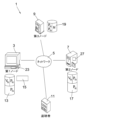
図1を参照すると、システム100は、それぞれ102a及び102bとして数字を付された第1及び第2クライアント装置、第1クライアント装置102a及び第2クライアント装置102bから入力を受信し並びに第1クライアント装置102a及び第2クライアント装置102bへ情報を送信するよう動作するBID制御システム104、を有する。この例示的な使用例では、第1及び第2クライアント装置102a、102bは、BID制御システム104により検出可能な無線周波数認識装置(radio frequency identification device:RFID)である。制御システム104は、ブロックチェーンを使用するよう動作し、及びブロックチェーンへ出力を送信するよう動作する。
Referring to FIG. 1, the
制御システム104がどのように動作するかを、アルキメデス(A、Archimedes)及びバートランド(B、Bertrand)という名のキャロル(Carol)の2匹の犬の例を用いて、説明する。2匹の犬は、一日中、裏庭に放っておかれ、彼らが同時に食べなければ2匹とも互いに仲が良い。同時の食事は何らかの理由で彼らを攻撃的にさせ互いに闘わせる。A及びBは、2匹とも、IoT(Internet Of Things)装置101により検出可能な、識別できるRFID首輪、つまり第1RFID首輪102a及び第2RFID首輪102bを有する。このIoT装置は、1匹の犬により消費される餌の指定量を分配するオートフィーダである。つまり、BID制御システム104は、IoT給餌装置の動作を制御する。
How the
本例では、BID104は、IoTオートフィーダ上で提供されるソフトウェアリソース又はコンポーネントであり、フィーダの機能を制御するためにフィーダとインタフェースする。
In this example,
BIDは、DHTから自身の命令をダウンロードしインストールすることにより、自身の寿命を開始する。これらの命令が変更されるまで、再びこれを行う必要はない。これは、例えば、BIDがアップグレードされる必要があるとき、又はBIDの動作が完全に変更されるべきとき、例えばBIDの命令セットが3以上のRFID信号を検出するよう変更され得るとき、であって良い。 The BID starts its life by downloading and installing its instructions from the DHT. It does not need to do this again until these instructions are changed. This may be, for example, when the BID needs to be upgraded, or when the operation of the BID should be completely changed, for example when the BID's instruction set can be changed to detect more than two RFID signals.
制御エージェントは、BIDにより送信された値を用いて、ブロックチェーントランザクションを生成し、更に後述するように、各反復の後にBIDと新しいシークレットを共有する。 The control agent uses the values sent by the BID to generate blockchain transactions and shares a new secret with the BID after each iteration, as described further below.
BID制御システム104の機能は、以下のロックスクリプトを用いてロックされるブロックチェーントランザクションを用いて実装される。
The functionality of the
OP_HASH160<unlockingscripthash>OP_EQUAL
トランザクションは、IoTオートフィーダ装置を制御するための命令セットを(分散ハッシュテーブル(distributed hash table:DHT)にリンクするメタデータを介して)提供するために生成され、後述する内容に従い確立された計算リソースへの命令を含んで良い。トランザクション自体の中に命令を格納するのではなく、メタデータは、命令がアクセスされ得る場所へのポインタ又は参照を含み得る。したがって、命令は、「ブロック外(off-block)」に保持されて良い。
OP_HASH160<unlockingscripthash>OP_EQUAL
Transactions are generated to provide an instruction set (via metadata that links to a distributed hash table (DHT)) for controlling IoT auto-feeder devices, and may include instructions to established computational resources as described below. Rather than storing the instructions within the transaction itself, the metadata may include pointers or references to where the instructions can be accessed. Thus, the instructions may be kept "off-block".
ブロックチェーンは、活動を制御するメカニズムを提供するだけでなく、行われたイベントに関する情報も記録する。例えば、ブロックチェーンは、給餌回数、何時に給餌が生じたか、どの犬が食べたか、最大餌割り当てが分配されたか、等を計数する能力を提供する。ブロックチェーンは、暗号セキュリティも提供する。 The blockchain not only provides a mechanism for controlling activity, but also records information about events that have taken place. For example, the blockchain provides the ability to count the number of feedings, what time the feedings occurred, which dogs ate, if the maximum food allocation was distributed, etc. The blockchain also provides cryptographic security.
トランザクションの重要な機能は、一度に1匹の犬がフィーダに存在する場合にのみ、餌が分配されることを保証することである。したがって、何らかの条件が、トランザクションのスクリプト内に構築される必要がある。これは、図2に示される真理値表により、及び図9~11を参照して、XOR関数により達成される。
・AもBもフィーダに存在しない場合、餌を分配しない。
・Aがフィーダに存在するがBが存在しない場合、餌を分配する。
・Bがフィーダに存在するがAが存在しない場合、餌を分配する。
・A及びBの両方がフィーダに存在する場合、餌を分配しない。
An important function of the transaction is to ensure that food is dispensed only if one dog is present at the feeder at a time. Therefore, some condition needs to be built into the transaction's script. This is achieved by the truth table shown in Figure 2, and with reference to Figures 9-11, by an XOR function.
- If neither A nor B is present in the feeder, no food is distributed.
If A is present in the feeder but B is not, distribute food.
If B is present at the feeder but A is not, distribute food.
If both A and B are present in the feeder, do not dispense food.
A又はBがフィーダに存在するとき、RFID信号が、それぞれのクライアント装置、つまり第1RFID首輪102a又は第2RFID首輪102bから、オートフィーダの制御システム104へ送信されて、当該犬のセキュアな現在のパズル解(puzzle solution)(これは、各反復の後に新しいパズル解によりセキュアに置換される)をアンロックする。代わりに、A又はBがフィーダに存在しない場合、それぞれのRFID首輪からフィーダへ、乱数が送信される。言い換えると、犬が「フィーダに存在する」ことは、自身のRFID首輪がフィーダの検出可能範囲内にあることを意味する。この場合、送信のために関連パズルがアンロックされる。存在しない場合、規定値は乱数である。
When A or B is present at the feeder, an RFID signal is sent from the respective client device, i.e. the
従来知られているように、パズル解は、ハッシュされると、(ビットコイン)スクリプト内の格納された値と比べたときに一致する値を結果として生じるデータである。つまり、処理は次の通りである:シークレット値(「解」)がハッシュされ、後に比較するためにロックスクリプト内に格納される。ロックスクリプトをアンロックするために、シークレットがアンロック(Redeem)によりスクリプトに提示される。提示された値はハッシュされ、次に格納されたハッシュと比較される。比較が、それらが等しいことを決定した場合、比較の結果は「真」である。実際には、格納された値は、シークレットのダブルハッシュ(DOUBLE-hash)であり、提示された値は、シークレットのシングルハッシュ(SINGLE-hash)である。これは、任意の長さのシークレットが、スクリプトへの入力として標準的な管理可能なサイズ(つまり、常に160ビットの長さ)まで短縮されることを可能にする。 As is known in the art, a puzzle solution is data that, when hashed, results in a value that matches when compared to a stored value in a (Bitcoin) script. Briefly, the process is as follows: A secret value (the "solution") is hashed and stored in the lock script for later comparison. To unlock the lock script, the secret is presented to the script by the unlocker (Redeem). The presented value is hashed and then compared to the stored hash. If the comparison determines that they are equal, the result of the comparison is "true". In effect, the stored value is a DOUBLE-hash of the secret, and the presented value is a SINGLE-hash of the secret. This allows secrets of any length to be shortened to a standard, manageable size (i.e. always 160 bits long) as input to the script.
オートフィーダBIDは、BIDのキー/ペアに関連するルックアップキーを用いてDHTから読み出された自身の命令を実行する。制御エージェントは、BIDへ/からのデータフローを管理する(つまり、RFID信号に関連するがBIDの命令セットに関連しないデータ)。したがって、オートフィーダBIDは自身の状態を監視する。オートフィーダBIDは、別個の制御エージェント103から受信した2つのシークレット値(S1及びS2)を格納する。制御エージェント103は、給餌処理を監督するよう構成された適切にプログラムされた計算リソースであり得る。シークレット値S1及びS2は、犬のRFID首輪が範囲内で検出されるとき、条件付きで使用される。適切なDHTから読み出された自身の命令に基づき、範囲内でRFIDを検出すると(1日のうちの時間、前の給餌回数、他の制限、等に関連する他の条件と一緒に)、自身の制御エージェント(後述する)として作用する汎用エージェントへ信号を送信する。信号は以下を含む:
・アルキメデスのRFIDが検出された場合、S1(=パズルA解);その他の場合、乱数。
・バートランドのRFIDが検出された場合、S2(=パズルB解);その他の場合、乱数。
The Auto Feeder BID executes its instructions retrieved from the DHT using a lookup key associated with the BID's key/pair. The Control Agent manages the data flow to/from the BID (i.e. data related to the RFID signal but not related to the BID's instruction set). Thus, the Auto Feeder BID monitors its status. The Auto Feeder BID stores two secret values (S1 and S2) received from a separate Control Agent 103, which may be a suitably programmed computational resource configured to oversee the feeding process. The secret values S1 and S2 are used conditionally when a dog's RFID collar is detected within range. Based on its instructions retrieved from the appropriate DHT, upon detecting an RFID within range (along with other conditions related to time of day, number of previous feedings, other restrictions, etc.), it sends a signal to the General Agent, which acts as its Control Agent (described below). The signal includes:
If Archimedes' RFID is detected, then S1 (=Puzzle A solution); otherwise, a random number.
If Bertrand's RFID is detected, then S2 (=Puzzle B solution); otherwise, a random number.
オートフィーダBIDは次に、以下を行う:
・オートフィーダは、ネットワーク上の有効なトランザクションについてチェックする(ブロック上に発行されていて良く又は未発行であって良いが、有効なトランザクションでなければならない)。このトランザクションは、制御エージェントにより生成されブロードキャストされる。このトランザクションは、埋め込まれたXORテストに合格した場合、有効である。合格しない場合、このトランザクションは、無効であり、ネットワーク上の第1ホップを超えて伝搬されない。したがって、このトランザクションは、BIDにより検出されない。あるいは、BIDが第1ホップであり、したがってトランザクションが検出される場合、(任意の他のノードに関する)BIDの関数の部分がトランザクションを検証する。したがって、結果として生じる措置を取る前に、トランザクションが有効かどうかを検出できる。有効なトランザクションは、必要な、つまり給餌イベントに関する情報がブロックチェーンに格納され及び記録されていることも保証する。
・上述の答えが真である場合、BIDは、自身の条件付き命令を実行する。本例では、BIDは幾らかの餌を分配する。
・制御エージェント103から送信を受信し、2つのシークレット(後述のようにS1及びS2)を共有することを可能にし、次の反復に備えてこれらのシークレット値を内部で更新する。
The Auto Feeder BID then does the following:
The autofeeder checks for a valid transaction on the network (which may or may not have been published on a block, but must be a valid transaction). This transaction is generated and broadcast by the control agent. If the transaction passes the embedded XOR test, it is valid. If it does not, it is invalid and will not be propagated beyond the first hop on the network. Thus, it will not be detected by the BID. Alternatively, if the BID is the first hop and thus the transaction is detected, then part of the BID's function (with respect to any other node) will validate the transaction. Thus, it can detect if the transaction is valid before taking any resulting action. A valid transaction also ensures that the necessary, i.e. information about the feeding event, is stored and recorded in the blockchain.
If the answer above is true, the BID executes its conditional instruction. In this example, the BID dispenses some food.
- It receives a transmission from the control agent 103, allowing it to share two secrets (S1 and S2 as described below) and updates these secret values internally in preparation for the next iteration.
ビットコイントランザクションのためのロックスクリプトは、以下により与えられる:
OP_HASH160<Puzzle-A>OP_EQUALOP_SWAP
OP_HASH160<Puzzle-B>OP_EQUAL
OP_NUMEQUALOP_NOTOP_VERIFY
OP_1metadata1PubK-CarolOP_2OP_CHECKMULTSIG
ここで、次の通りである。
パズルAは、OP_HASH160の等価な結果である(パズルA解)。
パズルBは、OP_HASH160の等価な結果である(パズルB解)。
metadata1は、DHTに格納された符号化された命令への参照を含む。
PubK-Carolはキャロルの公開鍵である。
The locking script for a Bitcoin transaction is given by:
OP_HASH160<Puzzle-A>OP_EQUALOP_SWAP
OP_HASH160<Puzzle-B>OP_EQUAL
OP_NUMEQUALOP_NOTOP_VERIFY
OP_1metadata1PubK-CarolOP_2OP_CHECKMULTSIG
Here,
Puzzle A is the equivalent result of OP_HASH 160 (Puzzle A solution).
Puzzle B is the equivalent result of OP_HASH 160 (Puzzle B solution).
Metadata1 contains a reference to the encoded instructions stored in the DHT.
PubK-Carol is Carol's public key.
エージェントのプログラミングはハードコードされて良く、又はDHTから自身の命令を読み出しても良いことに留意する。 Note that the agent's programming may be hard-coded or it may read its instructions from the DHT.
符号化された命令は、メタデータを用いるブロックチェーントランザクションからの取引を参照する後述の手順に従い格納され及びアクセスされて良い。 The encoded instructions may be stored and accessed according to the procedures described below that reference the transaction from the blockchain transaction using metadata.
キャロルの公開鍵は、後述する処理を用いてセキュアに保持され又は再生成可能であって良い。 Carol's public key may be kept secure or regenerated using the processes described below.
上述の説明のためのブロックチェーントランザクションをアンロックするために、以下のスクリプトが必要である:
Sig-CarolPuzzle-B-solutionPuzzle-A-Solution<unlockingscript>
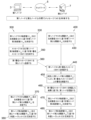
以下のステップの説明のために図3を参照する。
To unlock the blockchain transactions for the above explanation, the following script is needed:
Sig-CarolPuzzle-B-solutionPuzzle-A-Solution<unlockingscript>
Please refer to FIG. 3 for an explanation of the following steps.
ステップS300で、制御システム104は、提示されたパズルA解をハッシュし、それを、記憶装置から読み出されたパズルAの格納されたバージョン(このバージョンは解のハッシュである)と比較するよう動作する。パズルAの格納されたバージョンは、制御システム104のローカルにある記憶装置に、又は任意の他の適切な記憶媒体に格納されて良い。それらが等しい場合、スタックの最上位=1である。それらが異なる場合、スタックの最上位=0である。
In step S300, the
ステップS302で、スタックの最上位は、次に、パズルB解であるスタックの2番目のアイテムによりスワップされる。これは、ハッシュされ、記憶装置から読み出されたパズルBの格納されたバージョンと比較され、ここでも、S300からの結果と同様に、スタックの最上位に1又は0をプッシュする。パズルBの格納されたバージョンは、制御システム104のローカルにある記憶装置に、又は任意の他の適切な記憶媒体に格納されて良い。
In step S302, the top of the stack is then swapped with the second item in the stack, which is the puzzle B solution. This is hashed and compared to the stored version of puzzle B read from storage, again pushing a 1 or 0 to the top of the stack, similar to the result from S300. The stored version of puzzle B may be stored in storage local to the
ここで、上位2つのスタックアイテムは、それぞれ0又は1である。ステップS304で、OP_NUMEQUALは、数値が等しい場合に1を返し、その他の場合に0を返す。これは、XOR真理値表の正反対である。 Here, the top two stack items are either 0 or 1. In step S304, OP_NUMEQUAL returns 1 if the numbers are equal, and 0 otherwise. This is the exact opposite of the XOR truth table.
ステップS306で、OP_NOTは、必要なXOR結果を生成するために、スタック上の最上位アイテムをフリップする。 In step S306, OP_NOT flips the top item on the stack to produce the required XOR result.
ステップS308で、OP_VERIFYは、スタックの最上位にあるアイテムが1であるかどうかを調べ、否である場合、つまり、XOR演算が失敗した場合、第1及び第2クライアント装置からの1つより多くの入力が一致するパズル解を返しているので、トランザクションは直ちに無効としてマークされる。この結果、1より多くの犬がIoT分配器に居るので、IoT分配器から餌が分配されない。つまり、制御システム104の出力は、基礎にあるビットコイントランザクションの実行により制御される。
In step S308, OP_VERIFY checks whether the top item of the stack is 1, and if not, i.e., if the XOR operation fails, the transaction is immediately marked as invalid because more than one input from the first and second client devices returned a matching puzzle solution. As a result, no food is dispensed from the IoT dispenser because there is more than one dog in the IoT dispenser. In other words, the output of the
OP_VERIFYが1を返す場合、制御システム104におる処理は、スクリプトのマルチシグへ戻り、ステップS310でキャロルの署名の存在が調べられる。
If OP_VERIFY returns 1, processing in the
アンロックスクリプトを分析する際に制御システム104により実行されるスタック演算は、以下に示される。先ず、制御システム104は、OP_EQUALを用いてハッシュをアンロックスクリプトのハッシュと比較するために、アンロックスクリプトをハッシュする。この後に、アンロックスクリプトが実行される。
The stack operations performed by the


キーは、セキュアに保持され又は再生成されて良い。特に、公開鍵を導出するために使用され得る秘密鍵の場合には、秘密鍵は分解して格納されて良い。
Keys may be kept securely or regenerated, and in the case of private keys that may be used to derive public keys, the private keys may be stored in fragments.
ユーザ、つまりアリス又はボブは彼らの秘密鍵の一部を保持して良く、サービスプロバイダが第2の部分を保持して良く、第3の部分はリモートセキュアサイトに保持されて良い。秘密鍵は、3つの部分のうちの任意の2つを用いて再構成されて良い。あるいは、より一般的には、秘密鍵が、n個の部分のうちの任意のm個を用いて再構成されて良い。 The user, Alice or Bob, may hold one part of their private key, the service provider may hold a second part, and the third part may be held at a remote secure site. The private key may be reconstructed using any two of the three parts. Or, more generally, the private key may be reconstructed using any m of the n parts.
秘密鍵は、再構成可能な場合、使用点において公開鍵を再生成するために使用でき、秘密鍵及び公開鍵は使用後に再び廃棄できる。 If the private key is reconfigurable, it can be used to regenerate the public key at the point of use, and the private and public keys can be discarded again after use.
秘密鍵の分離は、シャミアの秘密分散法(Shamir’s Secret Sharing Scheme)を用いて達成されて良い。秘密鍵-公開鍵ペアは、以下の方法を用いてマスタ鍵から確定的に導出できる。この方法は、シークレット値がそれらを送信することなく参加者により共有されることを可能にする。 Separation of the private keys may be achieved using Shamir's Secret Sharing Scheme. A private-public key pair can be deterministically derived from a master key using the following method. This method allows secret values to be shared by participants without transmitting them.
システムは、以下に記載するサブキー生成の方法を用いて参加者の公開鍵を生成して良い。 The system may generate participants' public keys using the subkey generation method described below.
図4は、通信ネットワーク5を介して第2ノード7と通信する第1ノード3を含むシステム1を示す。第1ノード3は関連する第1処理装置23を有し、及び第2ノード5は関連する第2処理装置27を有する。第1及び第2ノード3、7は、コンピュータ、電話機、タブレットコンピュータ、モバイル通信装置、コンピュータサーバ、等のような電子装置を含んで良い。一例では、第1ノード3はクライアント(ユーザ)装置であって良く、第2ノード7はサーバであって良い。サーバは、デジタルウォレットプロバイダのサーバであって良い。
Figure 4 shows a
第1ノード3は、第1ノードマスタ秘密鍵(V1C)及び第1ノードマスタ公開鍵(P1C)を有する第1非対称暗号対に関連付けられる。第2ノード(7)は、第2ノードマスタ秘密鍵(V1S)及び第2ノードマスタ公開鍵(P1S)を有する第2非対称暗号対に関連付けられる。言い換えると、第1及び第2ノードは、それぞれ、個々の公開鍵-秘密鍵ペアを保有する。
The
個々の第1及び第2ノード3、7の第1及び第2非対称暗号対は、ウォレットの登録のような登録処理中に生成されて良い。各ノードの公開鍵は、通信ネットワーク5に渡るように、公に共有されて良い。
The first and second asymmetric cryptographic pairs of each of the first and
第1ノード3及び第2ノード7の両者において共通シークレット(common secret:SC)を決定するために、ノード3、7は、通信ネットワーク5を介して秘密鍵を通信することなく、それぞれ方法300、400のステップを実行する。
To determine a common secret (SC) at both the
第1ノード3により実行される方法300は、少なくとも第1ノードマスタ秘密鍵(V1C)及び生成器値(Generator Value:GV)に基づき、第1ノード第2秘密鍵(V2C)を決定するステップ330を含む。生成器値は、第1ノードと第2ノードとの間で共有されるメッセージ(M)に基づいて良い。これは、以下に詳述するように、通信ネットワーク5を介してメッセージを共有するステップを含んで良い。方法300は、少なくとも第2ノードマスタ公開鍵(P1S)及び生成器値(Generator Value:GV)に基づき、第2ノード第2公開鍵(P2S)を決定するステップ370を更に含む。方法300は、第1ノード第2秘密鍵(V2C)及び第2ノード第2公開鍵(P2S)に基づき、共通シークレット(common secret:CS)を決定するステップ380を含む。
The
重要なことに、同じ共通シークレット(CS)が、方法400により第2ノード7においても決定できる。方法400は、第1ノードマスタ公開鍵(P1C)及び生成器値(Generator Value:GV)に基づき、第1ノード第2公開鍵(P2C)を決定するステップ430を含む。方法400は、第2ノードマスタ秘密鍵(V1S)及び生成器値(Generator Value:GV)に基づき、第2ノード第2秘密鍵(V2S)を決定するステップ470を更に含む。方法400は、第2ノード第2秘密鍵(V2S)及び第1ノード第2公開鍵(P2C)に基づき、共通シークレット(common secret:CS)を決定するステップ480を含む。
Importantly, the same common secret (CS) can also be determined at the
通信ネットワーク5は、ローカルエリアネットワーク、ワイドエリアネットワーク、セルラネットワーク、無線通信ネットワーク、インターネット、等を含んで良い。これらのネットワークでは、データは電気線、光ファイバ、又は無線のような通信媒体を介して送信されて良く、盗聴者11による様な盗聴を受けやすい場合がある。方法300、400は、通信ネットワーク5を介して共通シークレットを送信することなく、第1ノード3及び第2ノード7が共通シークレットを両方とも独立して決定できるようにする。
The
したがって、1つの利点は、安全でない可能性のある通信ネットワーク5を介して秘密鍵を送信する必要を有しないで、共通シークレット(CS)が安全に且つ各ノードにより独立して決定できることである。また、共通シークレットは、秘密鍵として(又は秘密鍵の基礎として)使用されて良い。
Thus, one advantage is that the common secret (CS) can be determined securely and independently by each node, without the need to transmit the private key over a potentially
方法300、400は、追加ステップを含んで良い。図8を参照する。方法300は、第1ノード3において、メッセージ(M)及び第1ノード第2秘密鍵(V2C)に基づき、署名メッセージ(SM1)を生成するステップを含んで良い。方法300は、第1署名メッセージ(SM1)を通信ネットワークを介して第2ノード7へ送信するステップ360を更に含む。一方、第2ノード7は、第1署名メッセージ(SM1)を受信するステップ440を実行して良い。方法400は、第1署名メッセージ(SM2)を第1ノード第2公開鍵(P2C)により検証するステップ450、及び第1署名メッセージ(SM1)を検証するステップの結果に基づき第1ノード3を認証するステップ460を更に含む。有利なことに、これは、第2ノード7が、(第1署名メッセージが生成された場所である)意図された第1ノードが第1ノード3であることを認証することを可能にする。これは、第1ノード3だけが、第1ノードマスタ秘密鍵(V1C)へのアクセスを有する、したがって、第1ノード3だけが、第1署名メッセージ(SM1)を生成するための第1ノード第2秘密鍵(V2C)を決定できるという仮定に基づく。理解されるべきことに、同様に、第2署名メッセージ(SM2)は、第2ノード7において生成され、第1ノード3へ送信され得る。したがって、ピアツーピアシナリオにおけるように、第1ノード3は、第2ノード7を認証できる。
The
第1ノードと第2ノードの間のメッセージ(M)の共有は、様々な方法で達成されて良い。一例では、メッセージは、第1ノード3において生成されて良く、次に通信ネットワーク5を介して第2ノード7へ送信される。代替として、メッセージは、第2ノード7において生成されて良く、次に通信ネットワーク5を介して第1ノード3へ送信される。幾つかの例では、メッセージ(M)は公開されて良く、したがってセキュアでないネットワーク5を介して送信されて良い。1又は複数のメッセージ(M)は、データストア13、17、19に格納されて良い。当業者は、メッセージの共有が様々な方法で達成できることを理解する。
The sharing of a message (M) between the first node and the second node may be accomplished in various ways. In one example, the message may be generated at the
有利なことに、共通シークレット(CS)の再生成を可能にするレコードは、そのレコード自体が秘密に格納され又はセキュアに送信される必要がなく、保持され得る。 Advantageously, a record that allows for recreation of the common secret (CS) can be maintained without the record itself having to be secretly stored or securely transmitted.
<登録の方法100、200>
登録の方法100、200の一例は、図6を参照して記載される。図6では、方法100は第1ノード3により実行され、方法200は第2ノード7により実行される。これは、それぞれ第1ノード3及び第2ノード7のために第1及び第2非対称暗号対を確立するステップを含む。
<
An example of a
非対称暗号対は、公開鍵暗号化で使用されるような、関連付けられた秘密鍵及び公開鍵を含む。本例では、非対称暗号対は、楕円曲線暗号システム(Elliptic Curve Cryptography:ECC)及び楕円曲線演算の特性を用いて生成される。 An asymmetric crypto pair includes an associated private key and a public key, such as those used in public key cryptography. In this example, the asymmetric crypto pair is generated using Elliptic Curve Cryptography (ECC) and the properties of elliptic curve arithmetic.
方法100、200では、これは、共通ECCシステムに合意している110、210、且つ基点(G)を用いる、第1ノード及び第2ノードを含む(注:基点は、共通生成器として参照され得るが、用語「基点」は、生成器値GVとの混同を避けるために使用される)。一例では、共通ECCシステムは、ビットコインにより使用されるECCシステムであるsecp256K1に基づいて良い。基点(G)は、選択され、ランダムに生成され、又は割り当てられて良い。
In the
ここで第1ノード3について考えると、方法100は、共通ECCシステム及び基点(G)を解決するステップ110を含む。これは、第2ノード7又は第3ノード9から、共通ECCシステム及び基点を受信するステップを含んで良い。代替として、ユーザインタフェース15は、第1ノード3に関連付けられる。これにより、ユーザは、共通ECCシステム及び/又は基点(G)を選択的に提供できる。更に別の代替案では、共通ECCシステム及び/又は基点(G)の一方又は両方が、第1ノード3によりランダムに選択されて良い。第1ノード3は、通信ネットワーク5を介して、基点(G)と共に共通ECCシステムを使用することを示す通知を、第2ノード7へ送信して良い。また、第2ノード7は、共通ECCシステム及び基点(G)の使用に対する肯定応答を示す通知を送信することにより、解決して良い210。
Now considering the
方法100は、第1ノード3が、第1ノードマスタ秘密鍵(V1C)及び第1ノードマスタ公開鍵(P1C)を有する第1非対称暗号対を生成するステップ120を更に含む。これは、共通ECCシステムの中で指定された許容範囲の中のランダム整数に少なくとも部分的に基づき、第1マスタ秘密鍵(V1C)を生成するステップを含む。これは、次式に従い第1ノードマスタ秘密鍵(V1C)及び基点(G)の楕円曲線点乗算に基づき、第1ノードマスタ公開鍵(P1C)を決定するステップを更に含む。
P1C=V1C×G(式1)
したがって、第1非対称暗号対は、以下を含む:
V1C:第1ノードにより秘密に保持される第1ノードマスタ秘密鍵。
P1C:公に知らされる第1ノードマスタ公開鍵。
The
P 1C = V 1C ×G (Formula 1)
Thus, the first asymmetric crypto pair includes:
V 1C : The first node master private key, held secretly by the first node.
P 1C : Publicly known first node master public key.
第1ノード3は、第1ノードマスタ秘密鍵(V1C)及び第1ノードマスタ公開鍵(P1C)を、第1ノード3に関連付けられた第1データストア13に格納して良い。セキュリティのために、第1ノードマスタ秘密鍵(V1C)は、鍵が秘密のままであることを保証するために、第1データストア13のセキュアな部分に格納されて良い。
The
方法100は、図6に示すように、第1ノードマスタ公開鍵(P1C)を通信ネットワーク5を介して第2ノード7へ送信するステップ130を更に含む。第2ノード7は、第1ノードマスタ公開鍵(P1C)を受信すると220、第1ノードマスタ公開鍵(P1C)を第2ノード7に関連付けられた第2データストア17に格納して良い230。
6, the
第1ノード3と同様に、第2ノード7の方法200は、第2ノードマスタ秘密鍵(V1S)及び第2ノードマスタ公開鍵(P1S)を有する第2非対称暗号対を生成するステップ240を含む。第2ノードマスタ秘密鍵(V1S)も、許容範囲内のランダム整数である。また、第2ノードマスタ公開鍵(P1S)は、次式により決定される。
P1S=V1S×G(式2)
したがって、第2非対称暗号対は、以下を含む:
V1S:第2ノードにより秘密に保持される第2ノードマスタ秘密鍵。
P1S:公に知らされる第2ノードマスタ公開鍵。
Similar to the
P 1S = V 1S ×G (Formula 2)
Thus, the second asymmetric cryptopair comprises:
V 1S : The second node master private key, held secretly by the second node.
P 1S : Second node master public key that is publicly announced.
第2ノード7は、第2非対称暗号対を第2データストア17に格納して良い。方法200は、第2ノードマスタ公開鍵(P1S)を第1ノード3へ送信するステップ250を更に含む。また、第1ノード3は、第2ノードマスタ公開鍵(P1S)を受信し140、格納して良い150。
The
理解されるべきことに、幾つかの代案では、それぞれの公開マスタ鍵は、受信され、(信頼できる第三者のような)第3ノード9に関連付けられた第3データストア19に格納されて良い。これは、認証機関のような、公開ディレクトリとして動作する第三者を含んで良い。したがって、幾つかの例では、第1ノードマスタ公開鍵(P1C)は、共通シークレット(CS)が要求されるときだけ、第2ノード7により要求され受信されて良い(逆も同様である)。
It should be appreciated that in some alternatives, each public master key may be received and stored in a
登録ステップは、初期設定として1度生じるだけで良い。 The registration step only needs to occur once as an initial setup.
<セッション開始及び第1ノード3による共通シークレットの決定>
共通シークレット(CS)を決定する一例は、図7を参照してここに記載される。共通シークレット(CS)は、第1ノード3と第2ノード7との間の特定のセッション、時間、トランザクション、又は他の目的のために使用されて良く、同じ共通シークレット(CS)を使用することが望ましい又はセキュアでなくて良い。したがって、共通シークレット(CS)は、異なるセッション、時間、トランザクション、等の間で変更されて良い。
<Session initiation and determination of a common secret by the
One example of determining the common secret (CS) is now described with reference to Figure 7. The common secret (CS) may be used for a particular session, time, transaction, or other purpose between the
以下は、上述したセキュアな送信技術の説明のために提供される。 The following is provided to illustrate the secure transmission techniques described above.
[メッセージ(M)を生成する310]
本例では、第1ノード3により実行される方法300は、メッセージ(M)を生成するステップ310を含む。メッセージ(M)は、ランダム、疑似ランダム、又はユーザ定義であって良い。一例では、メッセージ(M)は、Unix時間又はノンス(及び任意の値)に基づく。例えば、メッセージ(M)は次のように与えられ得る。
メッセージ(M)=Unix時間+ノンス(式3)
幾つかの例では、メッセージ(M)は任意である。しかしながら、理解されるべきことに、メッセージ(M)は、幾つかのアプリケーションで有用であり得る(Unix時間、等のような)選択的値を有して良い。
[Create message (M) 310]
In this example, the
Message (M) = Unix time + nonce (Equation 3)
In some examples, the message (M) is arbitrary, however, it should be understood that the message (M) may have optional values (such as Unix time, etc.) that may be useful in some applications.
方法300は、メッセージ(M)を通信ネットワーク3を介して第2ノード7へ送信するステップ315を含む。メッセージ(M)は秘密鍵についての情報を含まないので、メッセージ(M)は、セキュアでないネットワークを介して送信されて良い。
The
[生成器値(GV)を決定する320]
方法300は、メッセージ(M)に基づき生成器値(Generator Value:GV)を決定するステップ320を更に含む。本例では、これは、メッセージの暗号ハッシュを決定するステップを含む。暗号ハッシュアルゴリズムの一例は、256ビット発生器値(GV)を生成するためにSHA-256を含む。つまり、
GV=SHA-256(M)(式4)
理解されるべきことに、他のハッシュアルゴリズムが使用されて良い。これは、セキュアなハッシュアルゴリズム(Secure Hash Algorithm:SHA)ファミリの中の他のハッシュアルゴリズムを含んで良い。幾つかの特定の例は、SHA3-224、SHA3-256、SHA3-384、SHA3-512、SHAKE128、SHAKE256を含むSHA-3サブセットの中のインスタンスを含む。他のハッシュアルゴリズムは、RIPEMD(RACE Integrity Primitives Evaluation Message Digest)ファミリの中のアルゴリズムを含んで良い。特定の例は、RIPEMD-160を含んで良い。他のハッシュ関数は、Zemor-Tillichハッシュ関数及びナップサック・ハッシュ関数に基づくファミリを含んで良い。
[Determine Generator Value (GV) 320]
The
GV = SHA - 256 (M) (Equation 4)
It should be understood that other hash algorithms may be used. This may include other hash algorithms in the Secure Hash Algorithm (SHA) family. Some specific examples include instances in the SHA-3 subset, including SHA3-224, SHA3-256, SHA3-384, SHA3-512, SHAKE128, and SHAKE256. Other hash algorithms may include algorithms in the RACE Integrity Primitives Evaluation Message Digest (RIPEMD) family. A specific example may include RIPEMD-160. Other hash functions may include families based on the Zemor-Tillich hash function and the Knapsack hash function.
[第1ノード第2秘密鍵を決定する330]
方法300は、次に、第2ノードマスタ秘密鍵(V1C)及び生成器値(GV)に基づき、第1ノード第2秘密鍵(V2C)を決定するステップ330を含む。これは、次式に従い第1ノードマスタ秘密鍵(V1C)及び生成器値(GV)のスカラ加算に基づき得る。
V2C=V1C+GV(式5)
したがって、第1ノード第2秘密鍵(V2C)は、ランダム値ではないが、代わりに第1ノードマスタ秘密鍵から確定的に導出される。暗号対の中の対応する公開鍵、つまり第1ノード第2公開鍵(P2C)は、以下の関係を有する。
P2C=V2C×G(式6)
式5から式6にV2Cを代入すると、次式を得る。
P2C=(V1C+GV)×G(式7)
ここで、「+」演算子は楕円曲線点加算を表す。楕円曲線暗号代数は、分配的であり、式7は次式のように表すことができる。
P2C=V1C×G+GV×G(式8)
最後に、(式1)は(式7)に代入され、次式を得る。
P2C=P1C+GV×G(式9.1)
P2C=P1C+SHA-256(M)×G(式9.2)
したがって、対応する第1ノード第2公開鍵(P2C)は、第1ノードマスタ公開鍵(P1C)及びメッセージ(M)の導出可能な所与の知識であり得る。方法400に関して以下に更に詳述するように、第2ノード7は、第1ノード第2公開鍵(P2C)を独立に決定するために、このような知識を有して良い。
[Determine 1st Node Second Private Key 330]
The
V 2C = V 1C + GV (Formula 5)
Thus, the first node second private key (V 2C ) is not a random value, but instead is deterministically derived from the first node master private key. The corresponding public keys in the cryptographic pair, i.e., the first node second public key (P 2C ), have the following relationship:
P 2C = V 2C ×G (Formula 6)
Substituting V2C into
P 2C = (V 1C +GV) x G (Formula 7)
Here, the “+” operator represents elliptic curve point addition. Elliptic curve cryptography algebra is distributive, and
P 2C = V 1C ×G + GV × G (Formula 8)
Finally, (Equation 1) is substituted into (Equation 7) to obtain the following equation:
P 2C = P 1C +GV×G (Formula 9.1)
P 2C = P 1C +SHA-256(M)×G (Formula 9.2)
Thus, the corresponding first node second public key (P 2C ) may be derivable given knowledge of the first node master public key (P 1C ) and the message (M). As described in further detail below with respect to
[メッセージ及び第1ノード第2秘密鍵に基づき、第1署名メッセージ(SM1)を生成する350]
方法300は、メッセージ(M)及び決定した第1ノード第2秘密鍵(V2C)に基づき、第1署名メッセージ(SM1)を生成するステップ350を更に含む。署名メッセージを生成するステップは、メッセージ(M)にデジタル方式で署名するために、デジタル署名アルゴリズムを適用するステップを含む。一例では、これは、第1署名メッセージ(SM1)を得るために、楕円曲線デジタル署名アルゴリズム(Elliptic Curve Digital Signature Algorithm:ECDSA)の中でメッセージに第1ノード第2秘密鍵(V2C)を適用するステップを含む。ECDSAの例は、secp256k1、secp256r1、secp384r1、se3cp521r1を有するECCシステムに基づくものを含む。
[Generate 350 a first signed message (SM1) based on the message and the first node second private key]
The
第1署名メッセージ(SM1)は、第2ノード7において対応する第1ノード第2公開鍵(P2C)により検証できる。第1署名メッセージ(SM1)のこの検証は、第1ノード3を認証するために第2ノード7により使用されて良い。これは、方法400において以下に議論される。
The first signed message (SM1) can be verified at the
[第2ノード第2公開鍵を決定する370’]
第1ノード3は、次に、第2ノード第2公開鍵(P2S)を決定して良い370。上述のように、第2ノード第2公開鍵(P2S)は、少なくとも第2ノードマスタ公開鍵(P1S)及び生成器値(GV)に基づいて良い。本例では、公開鍵は、基点(G)との楕円曲線点乗算により秘密鍵として決定されるので370’、第2ノード第2公開鍵(P2S)は、式6と同様に次のように表すことができる。
P2S=V2S×G(式10.1)
P2S=P1S+GV×G(式10.2)
式10.2の数学的証明は、第1ノード第2公開鍵(P2C)について式9.1を導出するために上述したものと同じである。理解されるべきことに、第1ノード3は、第2ノード7と独立に第2ノード第2公開鍵を決定できる370。
[Determine 2nd node 2nd public key 370']
The
P 2S = V 2S ×G (Formula 10.1)
P 2S = P 1S +GV×G (Formula 10.2)
The mathematical proof of Equation 10.2 is the same as that described above to derive Equation 9.1 for the first node second public key (P 2C ). It should be understood that the
[第1ノード3において共通シークレットを決定する380]
第1ノード3は、次に、第1ノード第2秘密鍵(V2C)及び決定した第2ノード第2公開鍵(P2S)に基づき、共通シークレット(CS)を決定して良い380。共通シークレット(CS)は、第1ノード3により次式により決定されて良い。
S=V2C×P2S(式11)
<第2ノード7において実行される方法400>
第2ノード7において実行される対応する方法400が、ここで説明される。理解されるべきことに、これらのステップのうちの幾つかは、第1ノード3により実行された上述のステップと同様である。
[Determine common secret at
The
S=V 2C ×P 2S (Formula 11)
A
方法400は、メッセージ(M)を通信ネットワーク5を介して第1ノード3から受信するステップ410を含む。これは、ステップ315において第1ノード3により送信されたメッセージ(M)を含んで良い。第2ノード7は、次に、メッセージ(M)に基づき生成器値(GV)を決定する420。第2ノード7により生成器値(GV)を決定するステップ420は、上述の第1ノードにより実行されるステップ320と同様である。本例では、第2ノード7は、第1ノード3と独立の、この決定するステップ420を実行する。
The
次のステップは、第1ノードマスタ公開鍵(P1C)及び生成器値(GV)に基づき、第1ノード第2公開鍵(P2C)を決定するステップ430を含む。本例では、公開鍵は、基点(G)との楕円曲線点乗算により秘密鍵として決定されるので430’、第1ノード第2公開鍵(P2C)は、式9と同様に次のように表すことができる。
P2C=V2C×G(式12.1)
P2C=P1C+GV×G(式12.2)
式12.1及び12.2の数学的証明は、式10.1及び10.2について上述したものと同じである。
The next step involves determining 430 the first node second public key (P 2C ) based on the first node master public key (P 1C ) and the generator value (GV). In this example, the public key is determined 430′ as a private key by elliptic curve point multiplication with the base point (G), so that the first node second public key (P 2C ) can be expressed similarly to
P 2C = V 2C ×G (Equation 12.1)
P 2C = P 1C +GV×G (Formula 12.2)
The mathematical proofs of Equations 12.1 and 12.2 are the same as those given above for Equations 10.1 and 10.2.
[第2ノード7が第1ノード3を認証する]
方法400は、未確認第1ノード3が第1ノード3であることを認証するために、第2ノード7により実行されるステップを含んで良い。上述のように、これは、第1ノード3から第1署名メッセージ(SM1)を受信するステップ440を含む。第2ノード7は、次に、ステップ430で決定された第1ノード第2公開鍵(P2C)により第1署名メッセージ(SM1)の署名を検証して良い450。
[
The
デジタル署名の検証は、上述の楕円曲線デジタル署名アルゴリズム(Elliptic Curve Digital Signature Algorithm:ECDSA)に従い行われて良い。重要なことに、第1ノード第2秘密鍵(V2C)により署名された第1署名メッセージ(SM1)は、V2C及びP2Cが暗号対を形成するので、対応する第1ノード第2公開鍵(P2C)によってのみ正しく検証されるべきである。これらの鍵は、第1ノード3の登録で生成された第1ノードマスタ秘密鍵(V1C)及び第1ノードマスタ公開鍵(P1C)において確定するので、第1署名メッセージ(SM1)の検証は、第1署名メッセージ(SM1)を送信する未確認第1ノードが登録中と同じ第1ノード3であることを認証する基礎として使用できる。したがって、第2ノード7は、第1署名メッセージを検証するステップ(450)の結果に基づき、第1ノード3を認証するステップ(460)を更に実行して良い。
The verification of the digital signature may be performed according to the Elliptic Curve Digital Signature Algorithm (ECDSA) described above. Importantly, the first signed message (SM1) signed by the first node second private key ( V2C ) should be correctly verified only by the corresponding first node second public key ( P2C ) since V2C and P2C form a cryptographic pair. Since these keys are established in the first node master private key ( V1C ) and the first node master public key ( P1C ) generated in the registration of the
[第2ノード7が共通シークレットを決定する]
方法400は、第2ノード7が、第2ノードマスタ秘密鍵(V1S)及び生成器値(GV)に基づき、第2ノード第2秘密鍵(V2S)を決定するステップ470を更に含んで良い。第1ノード3により実行されるステップ330と同様に、第2ノード第2秘密鍵(V2S)は、次式に従い、第2ノードマスタ秘密鍵(V1S)及び生成器値(GV)のスカラ加算に基づき得る。
V2S=V1S+GV(式13.1)
V2S=V1S+SHA-256(M)(式13.2)
第2ノード7は、次に、第1ノード3と独立して、次式に基づき、第2ノード第2秘密鍵(V2S)及び第1ノード第2公開鍵(P2C)に基づき、共通シークレット(CS)を決定して良い480。
S=V2S×P2C(式14)
[第1ノード3及び第2ノード7により決定された共通シークレット(CS)の証明]
第1ノード3により決定された共通シークレット(CS)は、第2ノード7において決定された共通シークレット(CS)と同じである。式11及び式14が同じ共通シークレット(CS)を提供することの数学的証明が、ここで記載される。
[
The
V 2S = V 1S + GV (Formula 13.1)
V 2S = V 1S +SHA-256(M) (Formula 13.2)
The
S=V 2S ×P 2C (Formula 14)
Proof of the Common Secret (CS) Determined by the
The common secret (CS) determined by the
第1ノード3により決定された共通シークレット(CS)を考えると、次のように式10.1は式11に代入できる。
S=V2C×P2S(式11)
S=V2C×(V2S×G)
S=(V2C×V2S)×G(式15)
第2ノード7により決定された共通シークレット(CS)を考えると、次のように式12.1は式14に代入できる。
S=V2S×P2C(式14)
S=V2S×(V2C×G)
S=(V2S×V2C)×G(式16)
ECC代数学は可換性なので、次の通り式15及び式16は等価である。
S=(V2C×V2S)×G=(V2S×V2C)×G(式17)
[共通シークレット(CS)及び秘密鍵]
共通シークレット(CS)は、ここで、第1ノード3と第2ノード7との間のセキュアな通信のために、対称鍵アルゴリズムにおいて、秘密鍵として又は秘密鍵の基礎として、使用できる。
Given the common secret (CS) determined by the
S=V 2C ×P 2S (Formula 11)
S= V2C ×( V2S ×G)
S=(V 2C ×V 2S )×G (Formula 15)
Given the common secret (CS) determined by the
S=V 2S ×P 2C (Formula 14)
S= V2S ×( V2C ×G)
S=(V 2S ×V 2C )×G (Formula 16)
Since ECC algebra is commutative,
S=(V 2C ×V 2S )×G=(V 2S ×V 2C )×G (Formula 17)
[Common Secret (CS) and Private Key]
The common secret (CS) can now be used as a private key or as the basis for a private key in a symmetric key algorithm for secure communication between the
共通シークレット(CS)は、楕円曲線点(xS,yS)の形式であって良い。これは、ノード3、7により合意された標準的な公に知られた演算を用いて、標準的な鍵フォーマットに変換されて良い。例えば、xS値は、AES256暗号鍵として使用され得る256ビットの整数であって良い。これは、更に、160ビットの長さの鍵を必要とする任意のアプリケーションのために、RIPEMD160を用いて160ビットの整数に変換され得る。
The common secret (CS) may be in the form of an elliptic curve point ( xS , yS ). This may be converted to a standard key format using standard publicly known operations agreed upon by the
共通シークレット(CS)は、必要に応じて決定されて良い。重要なことに、共通シークレット(CS)はメッセージ(M)に基づき再決定できるので、第1ノード3は共通シークレット(CS)を格納する必要がない。幾つかの例では、使用されるメッセージ(M)は、マスタ秘密鍵のために要求されるのと同レベルのセキュリティを有しないデータストア13、17、19(又は他のデータストア)に格納されて良い。幾つかの例では、メッセージ(M)は公に利用可能であって良い。
The common secret (CS) may be determined as needed. Importantly, the
しかしながら、幾つかのアプリケーションに依存して、共通シークレット(CS)が第1ノードマスタ秘密鍵(V1C)と同じくらいセキュアに保たれるならば、共通シークレット(CS)は、第1ノードに関連付けられた第1データストア(X)に格納され得る。 However, depending on some applications, if the common secret (CS) is kept as secure as the first node master private key (V 1C ), the common secret (CS) may be stored in a first data store (X) associated with the first node.
有利なことに、この技術は、単一のマスタキー暗号対に基づき、複数のセキュアな秘密鍵に対応し得る複数の共通シークレットを決定するために使用できる。 Advantageously, this technique can be used to determine multiple shared secrets based on a single master key cryptopair, which may correspond to multiple secure private keys.
<生成器値(鍵)の階層構造>
例えば、一連の連続する生成器値(GV)が決定されて良い。ここで、各連続GVは、前の生成器値(GV)に基づき決定されて良い。例えば、連続する専用鍵を生成するためにステップ310~370、410~470を繰り返す代わりに、ノード間の事前合意により、生成器値の階層構造を確立するために、前に使用された生成器値(GV)が両方のパーティにより繰り返し再ハッシュされ得る。実際に、メッセージ(M)のハッシュに基づく生成器値は、次世代生成器値(GV)のための次世代メッセージ(M鋳)になり得る。これを行うことは、計算されるべき共有シークレットの連続生成を可能にし、更なるプロトコルにより確立される送信、特に共通シークレットを生成する毎に複数のメッセージの送信の必要がない。次世代共通シークレット(CS’)は、以下のように計算できる。
<Hierarchical structure of generator values (keys)>
For example, a series of successive generator values (GV) may be determined, where each successive GV may be determined based on the previous generator value (GV). For example, instead of repeating steps 310-370, 410-470 to generate successive private keys, previously used generator values (GV) may be repeatedly rehashed by both parties to establish a hierarchy of generator values, by prior agreement between the nodes. In fact, a generator value based on a hash of a message (M) may become a next generation message (M) for a next generation generator value (GV). Doing this allows for the successive generation of shared secrets to be calculated, without the need for further protocol-established transmissions, in particular the transmission of multiple messages each time a common secret is generated. The next generation common secret (CS') may be calculated as follows:
先ず、第1ノード3及び第2ノード7の両者が、次世代生成器値(GV’)を独立して決定する。これは、ステップ320及び420と同様であるが、次式により適応される。
M’=SHA-256(M)(式18)
GV’=SHA-256(M’)(式19.1)
GV’=SHA-256(SHA-256(M))(式19.2)
第1ノード3は、次に、次世代の第2ノード第2公開鍵(P2S’)及び第1ノード第2秘密鍵(V2C’)を上述のステップ370及び330と同様であるが次式により適応され、決定して良い。
P2S’=P1S+GV’×G(式20.1)
V2C’=V1C+GV’(式20.2)
第2ノード7は、次に、次世代の第1ノード第2公開鍵(P2C’)及び第2ノード第2秘密鍵(V2S’)を上述のステップ430及び470と同様であるが次式により適応され、決定して良い。
P2C’=P1C+GV’×G(式21.1)
V2S’=V1S+GV’(式21.2)
第1ノード3及び第2ノード7は、次に、それぞれ、次世代共通シークレット(CS’)を決定して良い。特に、第1ノード3は、次式により次世代共通シークレット(CS’)を決定する。
CS’=V2C’×P2S’(式22)
第2ノード7は、次式により次世代共通シークレット(CS’)を決定する。
CS’=V2S’×P2C’(式23)
更なる世代(CS’’、CS’’’、等)は、チェーン階層構造を生成するために同じ方法で計算できる。この技術は、第1ノード3及び第2ノード7の両者が元のメッセージ(M)又は最初に計算された生成器値(GV)、及びそれがどのノードに関連するか、を見失わないことを要求する。これは公に知られた情報なので、この情報の保有に関してセキュリティ問題は存在しない。したがって、この情報は、(ハッシュ値を公開鍵にリンクする)「ハッシュテーブル」に保持され、(例えばTorrentを用いて)ネットワーク5に渡り自由に配布されて良い。さらに、階層構造内の任意の個々の共通シークレット(CS)が今までに解決されていない場合、これは、秘密鍵V1C、V1Sがセキュアなままであるならば、階層構造の中の任意の他の共通シークレットのセキュリティに影響しない。
First, both the
M′=SHA-256(M) (Equation 18)
GV'=SHA-256(M') (Equation 19.1)
GV'=SHA-256(SHA-256(M)) (Equation 19.2)
The
P 2S '=P 1S +GV'×G (Formula 20.1)
V 2C '=V 1C +GV' (Formula 20.2)
The
P 2C ′=P 1C +GV′×G (Formula 21.1)
V 2S '=V 1S +GV' (Formula 21.2)
The
CS'= V2C '× P2S ' (Formula 22)
The
CS'= V2S '× P2C ' (Formula 23)
Further generations (CS'', CS''', etc.) can be calculated in the same way to generate the chain hierarchy. This technique requires that both the
<鍵の木構造>
上述のようなチェーン(線形)階層構造と同様に、木構造の形式の階層構造が生成できる。木構造によると、認証鍵、暗号鍵、署名鍵、支払鍵、等のような異なる目的の様々な鍵が決定されて良い。それにより、これらの鍵は、全て単一のセキュアに維持されるマスタキーにリンクされる。これは、種々の異なる鍵を有する木構造901を示す図12に図示される。これらの各々は、別のパーティと共有されるシークレットを生成するために使用できる。枝分かれする木は、幾つかの方法で達成でき、それらのうちの3つが以下に記載される。
<Key tree structure>
Similar to the chain (linear) hierarchical structure described above, hierarchical structures in the form of trees can be created. According to the tree structure, various keys for different purposes such as authentication keys, encryption keys, signature keys, payment keys, etc. can be determined. These keys are then all linked to a single securely maintained master key. This is illustrated in FIG. 12, which shows a tree structure 901 with various different keys. Each of these can be used to generate secrets that are shared with another party. Branching trees can be achieved in several ways, three of which are described below.
(i)マスタキー・スポーニング
チェーン階層構造では、乗算した再ハッシュしたメッセージを元のマスタキーに加算することにより、各々の新しい「リンク」(公開/秘密鍵ペア)が生成される。例えば(明確性のため、第1ノード3の秘密鍵のみを示す)、
V2C=V1C+SHA-256(M)(式24)
V2C’=V1C+SHA-256(SHA-256(M))(式25)
V2C’’=V1C+SHA-256(SHA-256(SHA-256(M)))(式26)
等である。
(i) Master Key Spawning In the chain hierarchy, each new "link" (public/private key pair) is created by adding the multiplied rehashed message to the original master key. For example (for clarity, only the private key of the
V 2C = V 1C +SHA-256(M) (Formula 24)
V 2C ′=V 1C +SHA-256(SHA-256(M)) (Equation 25)
V 2C ″=V 1C +SHA-256(SHA-256(SHA-256(M))) (Equation 26)
etc.
枝を生成するために、任意の鍵がサブマスタキーとして使用できる。例えば、V2C’は、正規のマスタキーに対して行われるように、ハッシュを加算することにより、サブマスタキー(V3C)として使用できる。 Any key can be used as a sub-master key to generate a branch, for example V 2C ' can be used as a sub-master key (V 3C ) by adding a hash, as is done for the regular master key.
V3C=V2C’+SHA-256(M)(式27)
サブマスタキー(V3C)は、それ自体が、次世代鍵(V3C’)を有して良い。例えば次式の通りである。
V 3C = V 2C '+SHA-256(M) (Formula 27)
The sub-master key (V 3C ) may itself have a next generation key (V 3C ′), for example as follows:
V3C’=V2C’+SHA-256(SHA-256(M))(式28)
これは、図13に示すマスタキー・スポーニング(spawning)方法を用いて、木構造903を提供する。
V 3C ′=V 2C ′+SHA-256 (SHA-256(M)) (Formula 28)
It uses the master key spawning method shown in FIG.
(ii)論理的関連付け
この方法では、木の中の全てのノード(公開/秘密鍵ペア)は、チェーンとして(又は任意の他の方法で)生成され、木の中のノード間の論理的関係は、ポインタを用いて木の中の各ノードが木の中の自身の親ノードに単純に関連付けられるテーブルにより維持される。したがって、ポインタは、セッションの共通シークレットキー(CS)を決定するために、関連する公開/秘密鍵ペアを決定するために使用できる。
(ii) Logical Association: In this method, all the nodes (public/private key pairs) in the tree are generated as a chain (or in any other way) and the logical relationship between the nodes in the tree is maintained by a table where each node in the tree is simply associated with its parent node in the tree using a pointer. The pointer can then be used to determine the associated public/private key pair in order to determine the common secret key (CS) for the session.
(iii)メッセージ多様性
新しい公開/秘密鍵ペアは、チェーン又は木の任意のポイントに新しいメッセージを導入することにより、生成できる。メッセージ自体は、任意であって良く、又は何らかの意味若しくは関数を伝達して良い(例えば、それは、「現実の」銀行口座番号に関連して良い、等である)。新しい公開/秘密鍵ペアを形成するためのこのような新しいメッセージがセキュアに保持されることが望ましい場合がある。
(iii) Message Diversity: A new public/private key pair can be generated by introducing a new message at any point in the chain or tree. The message itself may be arbitrary, or may convey some meaning or function (e.g., it may relate to a "real" bank account number, etc.). It may be desirable for such new message for forming the new public/private key pair to be kept secure.
<コード化スキーム>
トランザクションのメタデータは、ブロック外の文書に格納された命令にアクセスするために使用されて良い。この文書は、「取引(コントラクト、contract)」と呼ばれることがある。取引を参照するために使用されるメタデータは、様々な方法でフォーマット化できる。しかしながら、適切なコード化スキームがここに記載される。
Coding scheme
The metadata of a transaction may be used to access instructions stored in a document outside the block. This document is sometimes called a "contract." The metadata used to reference a transaction can be formatted in a variety of ways; however, a suitable encoding scheme is described here.
取引の定める権利が取引の保持者又は所有者に贈与される場合、取引は転送可能である。非転送可能取引の一例は、参加者が指名される取引である。つまり、権利が、取引の保持者ではなく特定の指名されたエンティティに贈与される。転送可能取引だけが、このコード化スキームで議論される。 A transaction is transferable if the rights it defines are granted to the holder or owner of the transaction. An example of a non-transferable transaction is a participant-named transaction, i.e., the rights are granted to a specific named entity rather than to the holder of the transaction. Only transferable transactions are discussed in this coding scheme.
トークンは、取引により贈与される権利を詳述する又は定める特定取引を表す。本発明に従い、トークンは、ビットコイントランザクションの形式の取引の表現である。 A token represents a particular transaction that details or defines the rights conferred by the transaction. In accordance with the present invention, a token is a representation of a transaction in the form of a Bitcoin transaction.
このコード化方法は、3つのパラメータ又はデータアイテムを有するメタデータを使用する。このデータは、以下を示し得る:
i)取引の下で利用可能な持分(share、株)の量(これは、本願明細書で「NumShares」と呼ばれることがある)、
ii)送り手から少なくとも1つの受け手へ転送されるべき転送単位の量(これは、「ShareVal」と呼ばれることがある)、
iii)転送単位の量の値を計算するための因子(これは、「ペギングレート(pegging rate)」と呼ばれることがある)。
This coding method uses metadata having three parameters or data items. This data can indicate:
i) the amount of shares available under the transaction (which may be referred to herein as "NumShares");
ii) the amount of transfer units to be transferred from the sender to at least one recipient (this is sometimes called "ShareVal");
iii) A factor for calculating the value of the amount of transfer units (this is sometimes called the "pegging rate").
このコード化スキームの利点は、上述の3つのパラメータだけを用いて、ブロックチェーン上のトークンとして取引をカプセル化又は表現するために使用できることである。実際に、取引は、これらの3つのデータアイテムのうちの最小限を用いて指定できる。このコード化スキームは任意の種類の転送可能取引のために使用可能なので、共通アルゴリズムが考案され適用され得る。これらのメタデータアイテムの更なる詳細は、以下に提供される。 The advantage of this encoding scheme is that it can be used to encapsulate or represent a transaction as a token on the blockchain using only the three parameters mentioned above. In fact, a transaction can be specified using a minimum of these three data items. Since this encoding scheme can be used for any kind of transferable transaction, a common algorithm can be devised and applied. Further details of these metadata items are provided below.
分割可能トークンは、トランザクションアウトプット上の値が、複数のトークンに渡り(つまり、複数のトランザクションに渡り)割り当てられるより小さな量に細分化され得るものである。典型は、トークン化されたフィアット通貨である。分割可能取引は、非ゼロペギングレート(Pegging Rate)を指定する取引として定められる。分割可能取引では、トランザクションアウトプットの中で転送されるトークン化された値は、ペギングレートにより基礎ビットコイン(bitcoin:BTC)値に結び付けられる。つまり、取引は、ペギングレートの観点で、保持者の権利を指定する。非分割可能トークンでは、ペギングレートが存在せず、取引は、固定値の観点で、保持者の権利を指定する(例えば、「この取引は、正確に$1000で換金できる」という無記名債券、又は「この取引は1ヘアカットと交換可能である」という商品引換券のように)。非分割可能取引では、基礎トランザクションBTC値は取引値と無関係である。 Divisible tokens are those where the value on a transaction output can be divided into smaller amounts that are allocated across multiple tokens (i.e. across multiple transactions). A typical example is a tokenized fiat currency. Divisible transactions are defined as transactions that specify a non-zero pegging rate. In a divisible transaction, the tokenized value transferred in the transaction output is tied to the underlying bitcoin (BTC) value by a pegging rate. That is, the transaction specifies the holder's rights in terms of a pegging rate. In a non-divisible token, there is no pegging rate and the transaction specifies the holder's rights in terms of a fixed value (e.g., a bearer bond that says "this transaction can be redeemed for exactly $1000" or a voucher that says "this transaction is redeemable for 1 haircut"). In a non-divisible transaction, the underlying transaction BTC value is unrelated to the transaction value.
表現「基礎BTC値」は、トランザクションアウトプットに付加されるビットコイン額(BTC)を表す。ビットコインプロトコルでは、各トランザクションアウトプットは、有効と考えられる非ゼロBTC額を有しなければならない。実際には、BTC額は、記述時に現在546サトシに設定される設定最小値(「ダスト(dust)」)より大きくなければならい。1ビットコインは、100百万サトシに等しいと定められる。ビットコイントランザクションは本願明細書では所有権の交換を助ける手段としてのみ使用されるので、実際の基礎BTC額は任意である。真の値は、取引仕様の中にある。理論上、全てのトークンは、ダストにより伝達され得る。 The expression "underlying BTC value" refers to the amount of Bitcoin (BTC) that is added to a transaction output. In the Bitcoin protocol, each transaction output must have a non-zero BTC amount to be considered valid. In practice, the BTC amount must be greater than a set minimum value ("dust"), currently set at 546 satoshis at the time of writing. One Bitcoin is defined to be equal to 100 million satoshis. Since Bitcoin transactions are used herein only as a means to facilitate the exchange of ownership, the actual underlying BTC amount is arbitrary. The true value is in the transaction specifications. In theory, all tokens can be conveyed by dust.
本発明のコード化スキームに従い、具体的に、分割可能トークンでは、基礎BTC値は次の意味:ペギングレートにより取引値との関係を運ぶ、を有する。ペギングレートは、それ自体任意であり、基礎BTC額を小さく保つために選択される。単にダストを有する基礎となる各トークントランザクションではなく、ペギングレートを使用する理由は、本発明のプロトコルが可視性を実現するからである。トークンが幾つかの小さな額のトランザクションアウトプットに分けられるとき、元の取引を調整する必要がない。むしろ、各細分化トークンの取引値は、単に、ペギングレート及び基礎BTC値の細分化された額に基づき計算される。 In accordance with the coding scheme of the present invention, specifically for divisible tokens, the underlying BTC value has the following meaning: it carries a relationship to the transaction value through the pegging rate. The pegging rate is itself arbitrary and is chosen to keep the underlying BTC amount small. The reason for using a pegging rate rather than simply each underlying token transaction with dust is that the protocol of the present invention provides visibility. When a token is split into several smaller transaction outputs, there is no need to adjust the original transaction. Rather, the transaction value of each fractional token is simply calculated based on the pegging rate and the fractionalized amount of the underlying BTC value.
限定トークンは、NumSharesと呼ばれる量により定められる固定非ゼロの株数により合計発行値が固定された(又は「限定された」)トークンである。したがって、限定取引の下では更なる株は発行されない。例えば、競走馬の共同所有権のための取引は、競走馬の100%に限定される(例えば、それぞれ1%で100個の株、又はそれぞれ10%で10個の株、等)。非限定取引は、例えば要求額のフィアット通貨を彼らの引当金(Reserve Account)に追加することにより、発行人が株の更なる発行を引き受け可能であることを意味する。NumSharesは、全ての取引に明示的に記載されなければならない。限定取引は、NumShares>0を有しなければならない。非限定取引は、NumShares=0を設定することにより示される。 Limited tokens are tokens whose total issuance is fixed (or "limited") by a fixed non-zero number of shares defined by a quantity called NumShares. Thus, no further shares can be issued under limited transactions. For example, a transaction for co-ownership of a racehorse is limited to 100% of the racehorse (e.g., 100 shares at 1% each, or 10 shares at 10% each, etc.). An unlimited transaction means that the issuer can undertake further issuance of shares, for example by adding the required amount of fiat currency to their Reserve Account. NumShares must be explicitly stated in all transactions. Limited transactions must have NumShares>0. An unlimited transaction is indicated by setting NumShares=0.
典型的な例は、準備預金口座に保持される合計値が存在する約束手形(つまり未償還トークン)の合計値に一致するようにする、通貨準備(金準備と類似する)である。この概念は、通貨準備を超えて、在庫ストックにまで拡大する。例えば、認可印刷Tシャツトークンの発行人は、10,000枚のTシャツの在庫で開始して良く、これらの10,000枚のTシャツを表す分割可能トークンを発行して良い(ここで、各株=1枚のTシャツを表す)。元のトークンは細分化でき、各細分化トークンは、ペギングレートにより定められるトランザクションアウトプットの基礎BTC値に従い、Tシャツの枚数に償還可能である。しかしながら、需要が増大する場合、発行人は更なる株を発行することを決定して良い(つまり、更に10,000枚だけ流通株数を増大する)。このような場合には、更なる発行を引き受けるために、発行人の準備講座(つまり、在庫倉庫)に更に10,000枚のTシャツを預けることが、発行人の義務である。したがって、在庫にあるTシャツの合計枚数は、常に、合計未償還株数である(ここで、在庫は「準備口座」として作用する)。 A typical example is a monetary reserve (similar to a gold reserve) where the total value held in the reserve account matches the total value of the promissory notes (i.e., outstanding tokens) in existence. This concept extends beyond monetary reserves to inventory stocks. For example, an issuer of licensed printed t-shirt tokens may start with a stock of 10,000 t-shirts and issue divisible tokens representing these 10,000 t-shirts (where each share = 1 t-shirt). The original token can be subdivided, and each subdivided token is redeemable for a number of t-shirts according to the underlying BTC value of the transaction output, as determined by the pegging rate. However, if demand increases, the issuer may decide to issue more shares (i.e., increase the number of shares in circulation by another 10,000). In such a case, it is the issuer's obligation to deposit another 10,000 t-shirts in the issuer's reserve account (i.e., inventory warehouse) to undertake further issuances. Therefore, the total number of t-shirts in inventory at any one time is the total number of unredeemed shares (where inventory acts as a "reserve account").
ペギングレートは、分割可能取引にのみ適用される。ここで、(ShareValと呼ばれる量により表される)株の値は、基礎BTC額に固定される。例えば、取引は、発行人が基礎1BTC毎に$10,000のレートでトークンを償還することを約束すると指定して良い。これは、(例えば)15,400サトシのトークン化された基礎アウトプット値を有するトランザクションが$1.54で償還可能であることを意味し得る。ペギングレートについて0の値は、取引が非分割可能であることを示す(つまり、無記名債権のように、全体のみが転送可能である)。ペギングレートが0に設定されると(非分割可能トークンを意味する)、基礎BTC値は、取引値と無関係であり、任意の額に設定可能である。通常、この場合には、運用コストを最小化するために、基礎BTC額を可能な限り小さく保つ(つまり、ダストに設定する)ことが望ましい。 The pegged rate only applies to divisible transactions, where the value of the shares (represented by a quantity called ShareVal) is fixed to the underlying BTC amount. For example, a transaction may specify that the issuer promises to redeem tokens at a rate of $10,000 per 1 underlying BTC. This may mean that a transaction with a tokenized underlying output value of (for example) 15,400 satoshis is redeemable for $1.54. A value of 0 for the pegged rate indicates that the transaction is non-divisible (i.e., only the whole can be transferred, like a bearer bond). When the pegged rate is set to 0 (implying a non-divisible token), the underlying BTC value is unrelated to the transaction value and can be set to any amount. Typically, in this case, it is desirable to keep the underlying BTC amount as small as possible (i.e., set it to dust) to minimize operational costs.
NumSharesは、(限定)取引の下で利用可能な合計(固定)株数である。限定取引では、NumSharesは、ゼロより大きい全体数でなければならない。非限定取引では、いつでも(引き受けられるならば)より多くの株が発行可能なので、NumSharesは固定されない。これは、値を0に設定することにより示される。 NumShares is the total (fixed) number of shares available under the (limited) deal. In limited deals, NumShares must be a whole number greater than zero. In non-limited deals, NumShares is not fixed since more shares can be issued at any time (if they can be subscribed). This is indicated by setting the value to 0.
株は、転送単位として定められ、ShareValはその単位の値である。例えば、フィアット通貨では、転送単位は1セントに設定されて良い。あるいは、例えば、転送単位は50セントに設定されて良く、この場合には、転送は50セントの「ロット」でのみ実行できる。ShareValは、パーセンテージとしても表現できる。例えば、ブリーダが競走馬を10個の等しい株で売りたいと望む場合、ShareVal=0を設定10%である。ShareValは0より大きくなければならず、且つ取引において定められなければならない。 A share is defined as the transfer unit and ShareVal is the value of that unit. For example, in fiat currency, the transfer unit may be set to 1 cent. Or, for example, the transfer unit may be set to 50 cents, in which case transfers can only be performed in 50 cent "lots". ShareVal can also be expressed as a percentage. For example, if a breeder wants to sell a racehorse for 10 equal shares, set ShareVal = 0, which is 10%. ShareVal must be greater than 0 and must be defined in the transaction.
TotalIssuanceは、発行された株の合計値を表す。この値は限定取引にのみ関連する。非限定取引については、発行は固定されず、より多くの株が発行されて良い。株がパーセンテージとして表現される場合、定義によりTotalIssuance=0を設定100%である。 TotalIssuance represents the total value of shares issued. This value is only relevant for capped deals. For uncapped deals, the issue is not fixed and more shares may be issued. When shares are expressed as a percentage, by definition, set TotalIssuance = 0 to 100%.
限定取引では、NumShares、ShareVal、及びTotalIssuanceは、以下のように関連する。
NumShares×ShareVal=TotalIssuance
TotalIssuanceの0の値は、非限定取引であることを意味する。非限定取引の一例は、フィアット通貨である(したがって、TotalIssuanceは0に設定される)。限定取引の例は、(i)限定版記念硬貨(1000個鋳造され、1株=1硬貨である)、TotalIssuance=1000×1=1000個の硬貨、(ii)入場券のある会場の席、TotalIssuance=利用可能な合計席数、である。
In a limited transaction, NumShares, ShareVal, and TotalIssuance are related as follows:
NumShares×ShareVal=TotalIssuance
A value of 0 for TotalIssue means that it is an unlimited transaction. An example of an unlimited transaction is a fiat currency (so TotalIssue is set to 0). Examples of unlimited transactions are (i) a limited edition commemorative coin (1000 are minted, 1 share = 1 coin), TotalIssue = 1000 x 1 = 1000 coins, (ii) ticketed seats at a venue, TotalIssue = total number of seats available.
流通は、未使用トークンの合計値として定められる(つまり、UTXO(未使用トランザクションアウトプット)の中のトランザクションにより決定される)。全部の未使用トランザクションの完全な集合は、全てのビットコインノードに利用可能なリストの中に保持される。例えば、発行人が最初に$10,000をフィアット通貨型のトークンとして発行し、時間を経て$5500の価値のトークンが償還された場合、流通=$4500である(未償還トークンの値である)。この値は、関連する準備口座の差引残高に調整されるべきである。 Circulation is defined as the total value of unspent tokens (i.e., determined by transactions in UTXOs (unspent transaction outputs)). The complete set of all unspent transactions is kept in a list available to all Bitcoin nodes. For example, if an issuer initially issues $10,000 in fiat currency tokens and over time redeems $5500 worth of tokens, then circulation = $4500 (the value of unredeemed tokens). This value should be adjusted to the balance of the relevant reserve account.
<本発明の実施形態と共に使用するのに適する計算リソース(「エージェント」)の説明のための例>
本発明は、所望の処理の自動化された態様を実行するために、適切に構成された計算リソース(ここでは「エージェント」)を利用できる。適切且つ好適なエージェントの一例が以下に提供されるが、他の実装が使用されて良い。
Illustrative Examples of Computational Resources ("Agents") Suitable for Use with Embodiments of the Present Invention
The present invention can utilize appropriately configured computational resources (herein "agents") to perform automated aspects of the desired processing. An example of a suitable and preferred agent is provided below, although other implementations may be used.
エージェントは、チューリング(Turing)機械の実装において非消去可能テープとしてブロックチェーンを使用して、ブロックチェーンと連携して動作して良い。このエージェントは、ブロックチェーンネットワークと並列に実行し、(ループ)処理の実行を監督し及び扱う。ループ処理は、例えば装置又はシステムの処理又は制御の自動化のような所与のタスクを実行するよう設計される。この並列リソースは、ブロックチェーンの状態を監視し、トランザクションをブロックチェーンに書き込ませることができる。ある意味で、これは、ブロックチェーンをチューリング機械の非消去可能テープとして利用し、以下の定義及び特徴を有する。
1.ブロックチェーンは、チューリング機械のテープとして作用する。ブロックチェーンの中の各トランザクションは、テープ上のセルを表す。このセルは、有限なアルファベットからの記号を含み得る。
2.テープヘッドは、ブロックチェーン上に既に書き込まれているブロックから情報を読み出すことができる。
3.テープヘッドは、多くのトランザクションを含む新しいブロックを、ブロックチェーンの終わりに書き込むことができる。しかしながら、それらは、既に存在するブロックに書き込むことができない、このように、ブロックチェーンテープは非消去可能である。
4.各トランザクションのマルチシグネチャのP2SH(pay-to-script-hash)トランザクションの部分として格納され得る。
An agent may work in conjunction with the blockchain, using the blockchain as a non-erasable tape in a Turing machine implementation. This agent runs in parallel with the blockchain network and oversees and handles the execution of (loop) processes. The loop processes are designed to perform a given task, such as automating the processing or control of a device or system. This parallel resource can monitor the state of the blockchain and cause transactions to be written to the blockchain. In a sense, this utilizes the blockchain as a non-erasable tape of a Turing machine, with the following definition and characteristics:
1. The blockchain acts as the tape of a Turing machine. Each transaction in the blockchain represents a cell on the tape, which can contain symbols from a finite alphabet.
2. The tape head can read information from blocks that have already been written on the blockchain.
3. Tape heads can write new blocks containing many transactions to the end of the blockchain, however they cannot write to blocks that already exist, thus the blockchain tape is non-erasable.
4. It can be stored as part of each transaction's multi-signature pay-to-script-hash (P2SH) transaction.
エージェントに重要な機能は、ブロックチェーンの現在状態を監視する自動エンティティとして作用することである。これは更に、任意のオフブロックソースから、信号又は入力を受信できる。ブロックチェーン状態及び/又は受信した入力に依存して、エージェントは特定動作を実行して良い。エージェントは、どの動作が実行されるべきかを決定する。これらは、「現実世界」(つまり、オフブロック)の中の作用、及び/又(新しいトランザクションを生成する及びブロードキャストするような)はブロックチェーンに対する作用を含んで良く又は含まなくて良い。エージェントが取る作用は、ブロックチェーン状態によりトリガされて良い。エージェントは、更に、ビットコインネットワークにブロードキャストされるべき次のトランザクションセットについて決定し、後にブロックチェーンに書き込んで良い。 An important function of an agent is to act as an automated entity that monitors the current state of the blockchain. It can further receive signals or inputs from any off-block source. Depending on the blockchain state and/or the inputs received, the agent may perform certain actions. The agent decides which actions should be performed. These may or may not include actions in the "real world" (i.e. off-block) and/or actions on the blockchain (such as generating and broadcasting new transactions). The actions taken by the agent may be triggered by the blockchain state. The agent may further decide on the next set of transactions to be broadcast to the Bitcoin network and later written to the blockchain.
エージェントの作用は、並列に且つ同時にブロックチェーン(例えば、ビットコイン)ネットワークに対して実行する。ある意味で、これは、ブロックチェーン(例えば、ビットコイン)スクリプトの機能を格納する。この連続監視は、結合されたエージェント及びブロックチェーンシステムチューリング完全(Turing Complete)を作成する「ループ」制御フロー構成を実施する。 The actions of the agents execute in parallel and simultaneously against the blockchain (e.g., Bitcoin) network. In a sense, this stores the functionality of the blockchain (e.g., Bitcoin) script. This continuous monitoring enforces a "loop" control flow construct that makes the combined agent and blockchain system Turing Complete.
チューリング機械は、以下の2つのスタックを含む。
・データスタック:これは、上述のようにブロックチェーンにより表される。
・制御スタック:これは、エージェント機能により表される。これは、繰り返し制御フロー機能に関連する情報を格納する。
A Turing machine contains two stacks:
Data Stack: This is represented by the blockchain as described above.
Control Stack: This is represented by an agent function. It stores information related to repeated control flow functions.
制御スタックのデータスタックからの分離は、無限ループがビットコイン中核で生じることを防ぎ、サービス拒否攻撃を軽減するという利点を提供する。 Separating the control stack from the data stack provides the advantage of preventing infinite loops from occurring in Bitcoin core and mitigating denial of service attacks.
エージェントは、任意の種類のループ構成(例えば、FOR-NEXT、REPEATUNTIL、等)によりループ可能なサブルーチンを管理し及び実行する。本願明細書に記載の説明のための実施形態は、「繰り返し(repeat)」構成の一例を用いる処理を含む。ユーザは、インデックス(i)及び限界(J)を指定して良い。これらはそれぞれ、現在の反復番号(標準的に0から開始してカウントされる)、及び繰り返しループの合計反復数、を表す。 The agent manages and executes subroutines that can be looped using any type of loop construct (e.g., FOR-NEXT, REPEATUNTIL, etc.). The illustrative embodiment described herein includes processing using an example of a "repeat" construct. The user may specify an index (i) and a limit (J), which represent the current iteration number (typically counted starting at 0) and the total number of iterations of the repeat loop, respectively.
各反復について、
1.インデックスが1だけ増大する。終了条件については、インデックスが限界に達すると、反復は停止する。
2.「if condition then action([条件]ならば[動作]する)」(ICTA)文を含むコードブロックが実行される。動作は、ブロックチェーン上の又は外の任意の動作であって良い。
3.このサブルーチンの暗号ハッシュが計算される。これは、トランザクションの部分としてブロックチェーンに格納できる。ハッシュは各コードにユニークなので、どのコードが使用されているかの検証を可能にする。
For each iteration,
1. The index is increased by 1. As for the termination condition, when the index reaches the limit, the iteration stops.
2. A block of code containing an "if condition then action" (ICTA) statement is executed. The action can be any action on or off the blockchain.
3. A cryptographic hash of this subroutine is calculated, which can be stored as part of the transaction on the blockchain. The hash is unique for each code, allowing for verification of which code was used.
ループ本体は、コードブロックを含む。各コードブロックは、「if condition then action([条件]ならば[動作]する)」(ICTA)文を含む。これは、以下に一致するトランザクションについて、ブロックチェーンの現在状態を監視する。
・開始又はトリガ条件(例えば、特定日に達したとき)、
・繰り返し条件(つまり、前の反復に関連付けられたメタデータ又はハッシュ)、
・停止条件(つまり、ループの最後の反復)。
The loop body contains code blocks, each of which contains an "if condition then action" (ICTA) statement that monitors the current state of the blockchain for transactions that match:
- start or trigger conditions (e.g. when a particular date is reached),
- iteration condition (i.e. metadata or hash associated with the previous iteration),
- The stopping condition (i.e. the last iteration of the loop).
ICTA文は、エージェントが、ブロックチェーンの現在状態に基づき、次のトランザクションについて決定することを可能にする。次のトランザクションを生成することは、トランザクションをビットコインネットワークにブロードキャストすること、及び新しいトランザクションをブロックチェーンに書き込むことを含む。これは、この反復が実行されたことの記録として作用する。トランザクションがブロックチェーンに書き込まれると、マネジャは、続いて、前の反復が実行されブロックチェーンに書き込まれたことを知り、次の反復を実行するだろう。後者は、インデックス(i)がコードブロックの中で指定された限度(J)に達するとき、繰り返しループが存在するまで継続する。 The ICTA statement allows the agent to decide about the next transaction based on the current state of the blockchain. Generating the next transaction involves broadcasting the transaction to the Bitcoin network and writing the new transaction to the blockchain, which acts as a record that this iteration has been executed. Once the transaction has been written to the blockchain, the manager will then know that the previous iteration has been executed and written to the blockchain, and will execute the next iteration. The latter continues until an iteration loop exists, when the index (i) reaches a limit (J) specified in the code block.
各トランザクションは、再利用可能な方法で、ブロックチェーンに保存される。ビットコイン実装では、トランザクションの中の各署名は、SIGHASHフラグを付加される。このフラグは、異なる値を取ることができる。これらの値の各々は、この署名の所有者の関与無しに、トランザクションの他の部分が変更され得るか否かを示す。再利用可能トランザクションは、トランザクションインプットのうちの1つの中にSIGHASHフラグ「SigHash_AnyoneCanPay」を有する。これは、誰もがトランザクションのインプットに貢献することを許容する。このパラメータは、エージェントのICTA関数が、複数回、異なるインプットで、実行され且つ繰り返されることを可能にする。この関数の使用は、例えば再利用トランザクションの複製により、認可パーティに制限できる。 Each transaction is stored in the blockchain in a reusable way. In the Bitcoin implementation, each signature in a transaction is tagged with a SIGHASH flag. This flag can take different values. Each of these values indicates whether other parts of the transaction can be changed without the involvement of the owner of this signature. Reusable transactions have the SIGHASH flag "SigHash_AnyoneCanPay" in one of the transaction inputs. This allows anyone to contribute to the inputs of the transaction. This parameter allows the agent's ICTA function to be executed and repeated multiple times with different inputs. The use of this function can be restricted to authorized parties, for example by cloning the reuse transaction.
ICTAコードブロックの「If condition」部分は、任意の種類の条件を監視できる。これは、他のプログラミング言語(例えば、C、C++、Jave)と同様であり、ブロックチェーンに格納された情報に限定されない。例えば、これは、日付及び時間(つまり、特定の日時に達したとき)を監視し、又は天気(つまり、気温が10℃より低く且つ雨が降っているとき)を監視し、取引又は信用の条件(つまり、企業Aが企業Bを買うとき)を監視し得る。 The "If condition" portion of the ICTA code block can monitor any kind of condition. This is similar to other programming languages (e.g., C, C++, Java) and is not limited to information stored on the blockchain. For example, it could monitor the date and time (i.e., when a certain date and time is reached), or the weather (i.e., when the temperature is below 10°C and it is raining), or the conditions of a transaction or credit (i.e., when company A buys company B).
ICTAコードブロックの「Then action」部分は、多数の動作を実行できる。本発明は、取り得る動作の数又は種類に関して限定されない。動作は、ブロックチェーン上のトランザクションに限定されないが、動作に関連するメタデータを含むトランザクションは、ブロックチェーンに書き込まれて良い。 Then action portion of an ICTA code block can perform a number of actions. The invention is not limited with respect to the number or type of actions possible. Actions are not limited to transactions on the blockchain, but transactions including metadata related to the action may be written to the blockchain.
メタデータは、任意の形式であり得る。しかしながら、一実施形態では、メタデータは、動作に関連するより多くのデータ又は指示を含むファイルへのハイパーリンクを格納して良い。メタデータは、動作に関連するより多くのデータ又は指示を含むハッシュテーブルへのハイパーリンク、及びハッシュテーブルに対する検索キーとして作用する動作のハッシュの両方を格納して良い。 The metadata can be in any form. However, in one embodiment, the metadata may store a hyperlink to a file that contains more data or instructions related to the action. The metadata may store both a hyperlink to a hash table that contains more data or instructions related to the action, and a hash of the action that acts as a lookup key for the hash table.
エージェントの制御スタックは、各ユーザの必要に特化した多数の方法で実装できる。例えば、制御スタックの繰り返しループは、任意のチューリング完全言語に基づき得る。言語の1つの可能な選択は、Forth型スタックに基づく言語である。この言語を使用する利点は、制御スタックを、既知であり且つ広く使用されているビットコインスクリプトとプログラミング型において一貫性を保つことである。 The control stack of an agent can be implemented in a number of ways, specialized for each user's needs. For example, the iteration loop of the control stack can be based on any Turing-complete language. One possible choice of language is a Forth-style stack-based language. The advantage of using this language is that it keeps the control stack consistent in programming style with the well-known and widely used Bitcoin script.
<ビットコインスクリプトの交互形式スタック(Alternate Stack)をデータ記憶空間として使用する>
ビットコインスクリプトは、コマンド、更に呼び出されるオペコード、を含む。これらは、ユーザが、データを「altstack」として知られる交互形式スタックに移動させることを可能にする。
Using the Bitcoin Script Alternate Stack as a Data Storage Space
Bitcoin scripts contain commands, also called opcodes, that allow the user to move data into an alternate-style stack known as an "altstack."
オペコードは、次の通りである。
・OP_TOALTSTACK。これは、データを主スタックの最上部からaltstackの最上部に移動させる。
・OP_FROMALTSTACK。これは、データをaltstackの最上部から主スタックの最上部に移動させる。
The opcodes are as follows:
OP_TOALTSTUCK, which moves data from the top of the main stack to the top of the altstack.
OP_FROMALTSTACK, which moves data from the top of the altstack to the top of the main stack.
これは、計算機にデータを格納させる「記憶(memory)」機能と同様に、中間計算ステップからのデータをaltstackに格納させる。一実施形態では、altstackは、小さな計算タスクを解決するようビットコインスクリプトを構成するために、及び結果を計算に返すために、使用される。 This allows data from intermediate computation steps to be stored in the altstack, similar to the "memory" function that allows a calculator to store data. In one embodiment, the altstack is used to configure Bitcoin scripts to solve small computational tasks and return results to the calculator.
<エージェントを管理するためにコードレジスタを使用する>
エージェントは、また、自身の所有し且つ実行する全てのコードのレジストリを管理する。このレジストリは、特定キーを特定値にマッピングするルックアップテーブル又は辞書のように構造化される。キー及び値ペアは、それぞれ、コードブロックのハッシュ(H1)及びコードが格納された場所のIPv6アドレスにより表される。キーH1を用いてコードブロックを読み出すために、ルックアップテーブルが使用されて、関連する値(これは、コードの格納されている場所である)を読み出し、及びそれに応じてソースコードを読み出す。コードレジストリの実装は変化し得る。
<Using a code register to manage agents>
The agent also manages a registry of all the code it owns and executes. This registry is structured like a lookup table or dictionary that maps specific keys to specific values. The key and value pair is represented by the hash ( H1 ) of the code block and the IPv6 address where the code is stored, respectively. To retrieve a code block with key H1 , the lookup table is used to retrieve the associated value (which is the location where the code is stored) and retrieve the source code accordingly. The implementation of the code registry may vary.
<エージェントのコードのトランザクションメタデータ、及びループの再スポーニング>
特定の反復でエージェントのループを再スポーニングするために必要な情報は、ブロックチェーンに記録されたトランザクションの中にメタデータとして格納される。
Agent code transaction metadata and respawn loops
The information needed to respawn a loop of agents for a particular iteration is stored as metadata in a transaction recorded on the blockchain.
このように、ブロックチェーン上のトランザクションは、エージェント上で実行されているループの所与の反復に関する情報を格納し、又はそれへのアクセスを提供する。この情報は、ループに関連付けられた任意の変数の値、例えばインデックスi、及び任意の他の必要な情報、例えばコードブロック内で使用されるパラメータの値又は更に要求される情報がアクセス可能な場所の位置関連データ、を含み得る。 Thus, a transaction on the blockchain stores or provides access to information about a given iteration of a loop running on an agent. This information may include the values of any variables associated with the loop, e.g., the index i, and any other required information, e.g., values of parameters used within a code block or location related data where further required information can be accessed.
メタデータ自体は、トランザクションの中のマルチシグネチャのP2SH(pay-to-script-hash)スクリプトの部分として格納される。トランザクションと共に記録されたメタデータは、コードが過去にどのように実行されたかのオーディットトレイルを記録する能力も与える。 The metadata itself is stored as part of a multi-signature pay-to-script-hash (P2SH) script within the transaction. The metadata recorded with the transaction also gives the ability to record an audit trail of how the code has been executed in the past.
エージェントが各反復で繰り返しループコードブロックを再スポーニングできる幾つかの方法が存在する。コードブロックは、エージェント自体にハードコードされて良く、又は秘密に若しくは公に利用可能なファイルに格納でき、又は、秘密若しくは公開ハッシュテーブルファイル上のエントリとして格納され得る、又はこれらの組み合わせである。コードブロックは、ハードコードされた変数に固定され、又は固定であるが、移植可能なパラメータを含み得る。パラメータは、任意のデータフォーマットの単一値であって良く、又は小さなコードチャンクであって良く、又はそれらの組み合わせであって良い。パラメータは、トランザクション(例えば、ビットコイントランザクション)の中のメタデータから、又は内部データベース又は秘密/公開ファイル又はハッシュテーブル又はこれらの任意の組み合わせのような外部ソースから、直接に該パラメータを読み出すことにより移植され得る。パラメータ値の外部ソースへのポインタは、トランザクションの中のメタデータに格納されて良い。 There are several ways that an agent can repeatedly respawn a loop code block on each iteration. The code block may be hard-coded into the agent itself, or it may be stored in a private or publicly available file, or it may be stored as an entry on a private or public hash table file, or a combination of these. The code block may be fixed to a hard-coded variable, or it may contain fixed but portable parameters. The parameters may be single values in any data format, or they may be small chunks of code, or they may be a combination of both. The parameters may be populated by reading them directly from metadata in the transaction (e.g., a Bitcoin transaction), or from an external source such as an internal database, or a private/public file, or a hash table, or any combination of these. A pointer to the external source of the parameter value may be stored in the metadata in the transaction.
以下のステップは、エージェントがi番目の反復で繰り返しループコードブロックをどのように再スポーニングできるかの一例を提供する。本例では、コードレジストリは、ハッシュテーブルである。これにより、ハッシュ値がテーブルの検索キーとして作用し、トランザクション上のメタデータに格納される。
1.エージェントは、コードレジストリ内のエントリに一致するコードブロックのハッシュを含むトランザクションについて、ブロックチェーンを監視する。
2.エージェントは、対応するハッシュ(H1)を含むトランザクションを見付ける。
3.エージェントは、「メタデータ-CodeHash」を読み出し、H1を得るためにCodeHashフィールドを得て、H1を用いてコード(C1)を読み出す。RIPEMD-160(SHA256(C1))がH1に等しい場合、コードは変化しておらず、安全に次のステップに進める。
4.エージェントは、インデックスIを格納する「メタデータ-CodeHash」を読み出し、i番目の反復でコードを再スポーニングする。言い換えると、ループが、適切な反復で「リロード」される。
5.メタデータの発生元を検証するために、ユーザの署名がP2SHコマンドに含まれる。
6.これらのデータがループのこの反復のために必要な場合、エージェントは、「メタデータ-OutputHash」及び「メタデータ-OutputPointer」を読み出し、前のステップのアウトプットを検索する。
The following steps provide an example of how an agent can respawn a repeating loop code block on the i-th iteration. In this example, the code registry is a hash table, whereby the hash value acts as a lookup key for the table and is stored in metadata on the transaction.
1. An agent monitors the blockchain for transactions that contain hashes of code blocks that match entries in the code registry.
2. The agent finds the transaction that contains the corresponding hash (H 1 ).
3. The Agent reads "Metadata-CodeHash", gets the CodeHash field to get H 1 , and uses H 1 to read the code (C 1 ). If RIPEMD-160(SHA256(C 1 )) equals H 1 , the code has not changed and it is safe to proceed to the next step.
4. The Agent reads the Metadata-CodeHash, which stores the index I, and respawns the code at the i-th iteration. In other words, the loop is "reloaded" at the appropriate iteration.
5. The user's signature is included in the P2SH command to verify the origin of the metadata.
6. The Agent reads "Metadata--OutputHash" and "Metadata--OutputPointer" to retrieve the output of the previous step, if these data are needed for this iteration of the loop.
留意すべきことに、上述の実施形態は、本発明を限定するのではなく、当業者は添付の請求項により定められる本発明の範囲から逸脱することなく多数の代替の実施形態を考案できる。請求項中、括弧内に記載された如何なる参照符号も、請求項を制限すると見なされるべきではない。用語「有する(comprising又はcomprises)」等は、全体としていかなる請求項中に及び明細書に列挙された以外の要素又はステップの存在を排除するものではない。本願明細書において、「有する(comprises)」は「含む(includes)又は構成される(consists of)」を意味し、「有する(comprising)」は「含む(including)又は構成される(including of)」を意味する。要素の単数の参照は、該要素の複数の存在を排除するものではなく、逆も同様である。本発明は、複数の別個の要素を有するハードウェアにより又は適切にプログラムされたコンピュータにより、実施され得る。複数の手段を列挙している装置の請求項では、これらの複数の手段は、1つの同一のハードウェア要素により実装することができる。特定の量が相互に異なる従属請求項に記載されるという事実は、これらの量の組合せが有利に用いることが出来ないことを示すものではない。 It should be noted that the above-described embodiments do not limit the present invention, and that those skilled in the art can devise numerous alternative embodiments without departing from the scope of the present invention, which is defined by the appended claims. Any reference signs placed between parentheses in the claims should not be considered as limiting the claims. The terms "comprising" and "comprises" and the like do not exclude the presence of elements or steps other than those listed in any claim and in the specification as a whole. In this specification, "comprises" means "includes" or "consists of", and "comprising" means "including" or "including of". The singular reference of an element does not exclude the presence of a plurality of such elements, and vice versa. The invention can be implemented by means of hardware comprising a number of distinct elements, or by means of a suitably programmed computer. In a device claim enumerating several means, these several means can be implemented by one and the same hardware element. The fact that certain quantities are recited in mutually different dependent claims does not indicate that a combination of these quantities cannot be used to advantage.
101 オートフィーダIoT装置
102 クライアント
103 制御エージェント
104 BID制御システム
101 Auto Feeder IoT Device 102 Client 103
Claims (15)
ネットワークと通信するために構成された第1装置であって、前記第1装置は、前記第1装置に関連付けられたIPアドレスと公開-秘密鍵暗号鍵ペアを有する、第1装置と、
ブロックチェーンネットワークの状態を監視し、及び/又は前記ブロックチェーンネットワークへブロックチェーントランザクションを送信するよう構成されるソフトウェアにより実装される制御コンポーネントと、
前記制御コンポーネントに入力信号を送信するよう構成される1つ以上のクライアント装置であって、前記入力信号は、前記第1装置の制御に影響を与えるよう構成される、1つ以上のクライアント装置と、
前記第1装置の機能を制御するために前記制御コンポーネントによる実行のために構成された命令セットであって、前記命令セットは、前記第1装置と別個の場所に格納されたレポジトリに格納され、前記命令セットは、前記制御コンポーネントによる前記レポジトリからのダウンロード及びインストールのためにアクセスされ、前記レポジトリの場所は、ブロックチェーントランザクションの中で提供されるメタデータを用いて指示され又は提供される、命令セットと、
を含むシステム。 1. A computer implemented control system, comprising:
a first device configured for communication with a network, the first device having an IP address and a public-private cryptographic key pair associated with the first device;
a software implemented control component configured to monitor a state of a blockchain network and/or transmit blockchain transactions to the blockchain network;
one or more client devices configured to send input signals to the control component, the input signals configured to affect control of the first device;
a set of instructions configured for execution by the control component to control functionality of the first device, the set of instructions being stored in a repository stored in a location separate from the first device, the set of instructions being accessed for download and installation from the repository by the control component, the location of the repository being indicated or provided using metadata provided in a blockchain transaction; and
A system including:
ii)前記命令セットは、前記第1装置の動作を調整する、制御する、及び/又は影響を与えるために読み出される、及び/又は、
iii)前記第1装置はIoT装置である、請求項1~3のいずれかに記載のシステム。 i) the repository is a distributed hash table (DHT);
ii) the instruction set is read to regulate, control and/or affect operation of the first device; and/or
The system of any one of claims 1 to 3, wherein iii) the first device is an IoT device.
前記制御コンポーネントは、前記制御コンポーネントに関連付けられた前記公開-秘密鍵暗号鍵ペアに関連するルックアップキーを用いて、前記レポジトリからの前記命令セットにアクセスするよう構成される、請求項1~4のいずれかに記載のシステム。 the software implemented control component having a public-private cryptographic key pair associated with the associated blockchain associated address;
The system of any preceding claim, wherein the control component is configured to access the set of instructions from the repository using a look-up key related to the public-private cryptographic key pair associated with the control component.
ネットワークと通信するために構成された第1装置を提供するステップであって、前記第1装置は、前記第1装置に関連付けられたIPアドレスと公開-秘密鍵暗号鍵ペアを有する、ステップと、
ブロックチェーンネットワークの状態を監視し、及び/又は前記ブロックチェーンネットワークへブロックチェーントランザクションを送信するよう構成されるソフトウェアにより実装される制御コンポーネントを提供するステップと、
前記制御コンポーネントに入力信号を送信するよう構成される1つ以上のクライアント装置を提供するステップであって、前記入力信号は、前記第1装置の制御に影響を与えるよう構成される、ステップと、
前記第1装置の機能を制御するために前記制御コンポーネントによる実行のために構成された命令セットを提供するステップと、
を含み、
i)前記制御コンポーネントは、前記第1装置と別個の場所に格納されたレポジトリからの前記命令セットにアクセスするよう構成され、
ii)前記命令セットは、前記レポジトリに格納され、前記制御コンポーネントによる前記レポジトリからのダウンロード及びインストールのためにアクセスされ、
iii)前記レポジトリの場所は、ブロックチェーントランザクションの中で提供されるメタデータを用いて指示され又は提供される、方法。 1. A computer-implemented control method, comprising:
providing a first device configured for communication with a network, the first device having an IP address and a public-private cryptographic key pair associated with the first device;
providing a software implemented control component configured to monitor a state of a blockchain network and/or to transmit blockchain transactions to said blockchain network;
providing one or more client devices configured to send input signals to the control component, the input signals configured to affect control of the first device;
providing a set of instructions configured for execution by the control component to control functionality of the first device;
Including,
i) the control component is configured to access the set of instructions from a repository stored in a location separate from the first device;
ii) the instruction set is stored in the repository and is accessible for download and installation from the repository by the control component;
iii) the location of the repository is indicated or provided using metadata provided in a blockchain transaction.
ii)前記命令セットは、前記第1装置の動作を調整する、制御する、及び/又は影響を与えるために読み出される、及び/又は、
iii)前記第1装置はIoT装置である、請求項8~10のいずれかに記載の方法。 i) the repository is a distributed hash table (DHT);
ii) the instruction set is read to regulate, control and/or affect operation of the first device; and/or
The method according to any of claims 8 to 10, wherein iii) the first device is an IoT device.
前記制御コンポーネントは、前記制御コンポーネントに関連付けられた前記公開-秘密鍵暗号鍵ペアに関連するルックアップキーを用いて、前記レポジトリからの前記命令セットにアクセスするよう構成される、請求項9に記載の方法。 the software implemented control component having a public-private cryptographic key pair associated with the associated blockchain associated address;
10. The method of claim 9, wherein the control component is configured to access the instruction set from the repository using a lookup key associated with the public-private cryptographic key pair associated with the control component.
暗号計算を実行し、
自身の関連付けられた秘密/公開鍵ペアにアクセスし、
関連付けられたBitcoin又は他のブロックチェーンに関連するアドレスを有し、
APIを介して前記第1装置に作用し、
シークレット共有プロトコル動作を実行する、
請求項8~12のいずれかに記載の方法。 The control component
Perform cryptographic calculations;
Access to your associated private/public key pair,
Have an associated Bitcoin or other blockchain related address;
Interacting with the first device via an API;
performing secret sharing protocol operations;
The method according to any one of claims 8 to 12.
Applications Claiming Priority (5)
| Application Number | Priority Date | Filing Date | Title |
|---|---|---|---|
| GBGB1607476.7A GB201607476D0 (en) | 2016-04-29 | 2016-04-29 | Operating system for blockchain IOT devices |
| GB1607476.7 | 2016-04-29 | ||
| PCT/IB2017/052465 WO2017187397A1 (en) | 2016-04-29 | 2017-04-28 | Operating system for blockchain iot devices |
| JP2018552719A JP7048511B2 (en) | 2016-04-29 | 2017-04-28 | Operating system for blockchain IoT appliances |
| JP2022048598A JP7364724B2 (en) | 2016-04-29 | 2022-03-24 | Operating system for blockchain IoT devices |
Related Parent Applications (1)
| Application Number | Title | Priority Date | Filing Date |
|---|---|---|---|
| JP2022048598A Division JP7364724B2 (en) | 2016-04-29 | 2022-03-24 | Operating system for blockchain IoT devices |
Publications (2)
| Publication Number | Publication Date |
|---|---|
| JP2023175927A JP2023175927A (en) | 2023-12-12 |
| JP7656001B2 true JP7656001B2 (en) | 2025-04-02 |
Family
ID=56234103
Family Applications (3)
| Application Number | Title | Priority Date | Filing Date |
|---|---|---|---|
| JP2018552719A Active JP7048511B2 (en) | 2016-04-29 | 2017-04-28 | Operating system for blockchain IoT appliances |
| JP2022048598A Active JP7364724B2 (en) | 2016-04-29 | 2022-03-24 | Operating system for blockchain IoT devices |
| JP2023173391A Active JP7656001B2 (en) | 2016-04-29 | 2023-10-05 | Operating System for Blockchain IoT Devices |
Family Applications Before (2)
| Application Number | Title | Priority Date | Filing Date |
|---|---|---|---|
| JP2018552719A Active JP7048511B2 (en) | 2016-04-29 | 2017-04-28 | Operating system for blockchain IoT appliances |
| JP2022048598A Active JP7364724B2 (en) | 2016-04-29 | 2022-03-24 | Operating system for blockchain IoT devices |
Country Status (12)
| Country | Link |
|---|---|
| US (2) | US11128607B2 (en) |
| EP (2) | EP4184410B1 (en) |
| JP (3) | JP7048511B2 (en) |
| KR (1) | KR102373685B1 (en) |
| CN (2) | CN109089427A (en) |
| AU (1) | AU2017257449B2 (en) |
| BR (1) | BR112018071802A2 (en) |
| EA (1) | EA201892133A1 (en) |
| GB (2) | GB201607476D0 (en) |
| SG (2) | SG10202010719PA (en) |
| WO (1) | WO2017187397A1 (en) |
| ZA (1) | ZA201807090B (en) |
Families Citing this family (111)
| Publication number | Priority date | Publication date | Assignee | Title |
|---|---|---|---|---|
| WO2017145016A1 (en) | 2016-02-23 | 2017-08-31 | nChain Holdings Limited | Determining a common secret for the secure exchange of information and hierarchical, deterministic cryptographic keys |
| AU2017222468B2 (en) | 2016-02-23 | 2023-01-12 | nChain Holdings Limited | Agent-based turing complete transactions integrating feedback within a blockchain system |
| EP3420507A1 (en) | 2016-02-23 | 2019-01-02 | Nchain Holdings Limited | Tokenisation method and system for implementing exchanges on a blockchain |
| SG11201806711QA (en) | 2016-02-23 | 2018-09-27 | Nchain Holdings Ltd | Method and system for efficient transfer of cryptocurrency associated with a payroll on a blockchain that leads to An Automated payroll method and system based on smart contracts |
| EA201891832A1 (en) | 2016-02-23 | 2019-02-28 | Нчейн Холдингс Лимитед | UNIVERSAL TOKENIZATION SYSTEM FOR CREATING CRYPTOLOGY BASED ON BLOCKCHAIN |
| EP3860037A1 (en) | 2016-02-23 | 2021-08-04 | Nchain Holdings Limited | Cryptographic method and system for secure extraction of data from a blockchain |
| EP3420518B1 (en) | 2016-02-23 | 2023-08-23 | nChain Licensing AG | Methods and systems for efficient transfer of entities on a peer-to-peer distributed ledger using the blockchain |
| AU2017222421B2 (en) | 2016-02-23 | 2022-09-01 | nChain Holdings Limited | Personal device security using elliptic curve cryptography for secret sharing |
| SG11201806704TA (en) | 2016-02-23 | 2018-09-27 | Nchain Holdings Ltd | Blockchain-based exchange with tokenisation |
| CN114282928B (en) * | 2016-02-23 | 2026-02-17 | 恩链控股有限公司 | Encryption key storage and transfer based on blockchain system combined with wallet management system |
| SG11201806784UA (en) | 2016-02-23 | 2018-09-27 | Nchain Holdings Ltd | System and method for controlling asset-related actions via a blockchain |
| EP3855677B1 (en) | 2016-02-23 | 2025-11-12 | nChain Licensing AG | Blockchain-implemented method for control and distribution of digital content |
| EP4369273B1 (en) | 2016-02-23 | 2025-11-05 | nChain Licensing AG | A method and system for securing computer software using a distributed hash table and a blockchain |
| CN109074580B (en) | 2016-02-23 | 2022-09-30 | 区块链控股有限公司 | Method and system for secure transfer of entities over a blockchain |
| CN109417465B (en) | 2016-02-23 | 2021-01-15 | 区块链控股有限公司 | Registration and automatic management method of intelligent contracts executed by block chains |
| JP6533771B2 (en) * | 2016-11-15 | 2019-06-19 | 富士通株式会社 | Communication method, apparatus and program |
| CN106980649B (en) | 2017-02-28 | 2020-07-10 | 创新先进技术有限公司 | Method and device for writing blockchain business data and method for determining business subsets |
| GB201705621D0 (en) * | 2017-04-07 | 2017-05-24 | Nchain Holdings Ltd | Computer-implemented system and method |
| GB201707788D0 (en) * | 2017-05-15 | 2017-06-28 | Nchain Holdings Ltd | Computer-implemented system and method |
| US10140392B1 (en) | 2017-06-29 | 2018-11-27 | Best Apps, Llc | Computer aided systems and methods for creating custom products |
| US10819696B2 (en) * | 2017-07-13 | 2020-10-27 | Microsoft Technology Licensing, Llc | Key attestation statement generation providing device anonymity |
| US20170357678A1 (en) * | 2017-07-31 | 2017-12-14 | Qiang Wang | Internet Map Macro Marker Management Theory and Control System |
| US11256799B2 (en) * | 2017-08-29 | 2022-02-22 | Seagate Technology Llc | Device lifecycle distributed ledger |
| US10878248B2 (en) | 2017-10-26 | 2020-12-29 | Seagate Technology Llc | Media authentication using distributed ledger |
| EP3704607A1 (en) | 2017-11-02 | 2020-09-09 | Nchain Holdings Limited | Computer-implemented systems and methods for linking a blockchain to a digital twin |
| US10567168B2 (en) | 2017-11-16 | 2020-02-18 | International Business Machines Corporation | Blockchain transaction privacy enhancement through broadcast encryption |
| CN111149127B (en) * | 2017-12-04 | 2024-07-05 | 索尼公司 | Information processing device, information processing method, and program |
| WO2019143852A1 (en) * | 2018-01-17 | 2019-07-25 | Medici Ventrues, Inc. | Multi-approval system using m of n keys to perform an action at a customer device |
| CN111602372B (en) * | 2018-01-22 | 2022-12-09 | 西门子股份公司 | Method and control system for controlling and/or monitoring a device |
| CN110086755B (en) | 2018-01-26 | 2022-06-21 | 巍乾全球技术有限责任公司 | Method for realizing service of Internet of things, application server, Internet of things equipment and medium |
| WO2019148248A1 (en) * | 2018-02-02 | 2019-08-08 | Varughese Ian Arvind | Personal record repository arrangement and method for incentivised data analytics |
| EP3528112B1 (en) | 2018-02-19 | 2020-05-13 | Deutsche Telekom AG | Management ecosystem of superdistributed hashes |
| BR112020017132A2 (en) * | 2018-02-23 | 2020-12-22 | Land Layby Technologies Limited | ASSET TRANSACTION SYSTEM AND METHOD |
| US11263641B2 (en) | 2018-03-08 | 2022-03-01 | International Business Machines Corporation | Cognitive operational vehicle blockchain for privileges, licensing, evaluation, authorization, and training |
| US10693637B2 (en) * | 2018-03-23 | 2020-06-23 | Belavadi Nagarajaswamy Ramesh | System and method for composite-key based blockchain device control |
| WO2019180589A1 (en) * | 2018-03-23 | 2019-09-26 | nChain Holdings Limited | Computer-implemented system and method for trustless zero-knowledge contingent payment |
| CN110546629A (en) * | 2018-03-29 | 2019-12-06 | 安纳科技有限公司 | System and method for operating a blockchain network |
| ES2914510T3 (en) | 2018-04-16 | 2022-06-13 | Bc Dev Labs Gmbh | Trustless Stateless Incentivized Remote Node Network Using Minimal Verification Clients |
| US11544782B2 (en) | 2018-05-06 | 2023-01-03 | Strong Force TX Portfolio 2018, LLC | System and method of a smart contract and distributed ledger platform with blockchain custody service |
| US11669914B2 (en) | 2018-05-06 | 2023-06-06 | Strong Force TX Portfolio 2018, LLC | Adaptive intelligence and shared infrastructure lending transaction enablement platform responsive to crowd sourced information |
| US12412120B2 (en) | 2018-05-06 | 2025-09-09 | Strong Force TX Portfolio 2018, LLC | Systems and methods for controlling rights related to digital knowledge |
| JP7834277B2 (en) | 2018-05-06 | 2026-03-24 | ストロング フォース ティエクス ポートフォリオ 2018,エルエルシー | Methods and systems for improving machines and systems that automate the execution of distributed ledger and other transactions in spot and futures markets for energy, computers, storage, and other resources. |
| US11550299B2 (en) | 2020-02-03 | 2023-01-10 | Strong Force TX Portfolio 2018, LLC | Automated robotic process selection and configuration |
| WO2019213700A1 (en) * | 2018-05-07 | 2019-11-14 | Dream Channel Pty. Ltd. | Films on a blockchain |
| CN108377272B (en) * | 2018-05-09 | 2021-02-02 | 深圳市有方科技股份有限公司 | A method and system for managing IoT terminals |
| MY197067A (en) * | 2018-05-24 | 2023-05-24 | Soft Space Sdn Bhd | Method for processing a secure financial transaction using a commercial off-the-shelf or an internet of things device |
| US10693716B2 (en) | 2018-05-29 | 2020-06-23 | At&T Mobility Ii Llc | Blockchain based device management |
| US11475398B2 (en) | 2018-05-30 | 2022-10-18 | Ncr Corporation | Product traceability processing |
| WO2019236482A1 (en) | 2018-06-04 | 2019-12-12 | Rafalko Noah | Telecommunication system and method for settling session transactions |
| US10972463B2 (en) | 2018-06-06 | 2021-04-06 | Cisco Technology, Inc. | Blockchain-based NB-IoT devices |
| US10505718B1 (en) | 2018-06-08 | 2019-12-10 | Cisco Technology, Inc. | Systems, devices, and techniques for registering user equipment (UE) in wireless networks using a native blockchain platform |
| US10673618B2 (en) | 2018-06-08 | 2020-06-02 | Cisco Technology, Inc. | Provisioning network resources in a wireless network using a native blockchain platform |
| US10754847B2 (en) * | 2018-06-19 | 2020-08-25 | Cannagri Blockchain, Inc. | Method, apparatus and system for production management |
| US10887082B2 (en) | 2018-07-24 | 2021-01-05 | Vmware, Inc. | Internet of things blockchain auditing |
| US10826762B2 (en) * | 2018-08-06 | 2020-11-03 | Cisco Technology, Inc. | Configuring resource-constrained devices in a network |
| US11410174B2 (en) | 2018-08-07 | 2022-08-09 | International Business Machines Corporation | Custom blockchain for IoT devices |
| US10868876B2 (en) | 2018-08-10 | 2020-12-15 | Cisco Technology, Inc. | Authenticated service discovery using a secure ledger |
| JP7206698B2 (en) * | 2018-08-28 | 2023-01-18 | セイコーエプソン株式会社 | Providing device, processing system and communication method |
| US11750395B2 (en) * | 2018-09-03 | 2023-09-05 | Icncast Co., Ltd | System and method for blockchain-based multi-factor security authentication between mobile terminal and IoT device |
| US11044104B2 (en) | 2018-09-05 | 2021-06-22 | International Business Machines Corporation | Data certification as a service powered by permissioned blockchain network |
| CN109598504B (en) * | 2018-10-25 | 2020-09-01 | 阿里巴巴集团控股有限公司 | Blockchain-based transaction processing method and device, and electronic equipment |
| US11308194B2 (en) | 2018-10-31 | 2022-04-19 | Seagate Technology Llc | Monitoring device components using distributed ledger |
| EP3654578B1 (en) | 2018-11-16 | 2022-04-06 | SafeTech BV | Methods and systems for cryptographic private key management for secure multiparty storage and transfer of information |
| US10867081B2 (en) | 2018-11-21 | 2020-12-15 | Best Apps, Llc | Computer aided systems and methods for creating custom products |
| US10922449B2 (en) | 2018-11-21 | 2021-02-16 | Best Apps, Llc | Computer aided systems and methods for creating custom products |
| KR101997673B1 (en) * | 2018-12-06 | 2019-07-08 | 주식회사 푸시풀시스템 | Digital electronic device based on dual block chain comprising virtual blockchain |
| US11133983B2 (en) * | 2018-12-14 | 2021-09-28 | T-Mobile Usa, Inc. | Provisioning edge devices in a mobile carrier network as compute nodes in a blockchain network |
| CN109302431B (en) * | 2018-12-14 | 2021-03-09 | 广州大学 | An Internet of Things massive resource and data security and trusted management system |
| US11068316B2 (en) | 2018-12-24 | 2021-07-20 | LiquidApps Ltd | Systems and method for managing memory resources used by smart contracts of a blockchain |
| KR102177794B1 (en) * | 2018-12-26 | 2020-11-12 | 서강대학교 산학협력단 | Distributed device authentication protocol in internet of things blockchain environment |
| US10402823B1 (en) * | 2018-12-30 | 2019-09-03 | Alexander Vladimirovich Vlasov | System for exchanging private keys for mutual settlements between users of a cryptocurrency outside blockchains |
| TWI701618B (en) * | 2019-01-09 | 2020-08-11 | 台灣海耶克股份有限公司 | Method of allocating resources by task hierarchy |
| CN110011823B (en) * | 2019-01-18 | 2020-10-30 | 创新先进技术有限公司 | Implementation method and device for remote management of Internet of Things equipment |
| US11411739B2 (en) * | 2019-02-07 | 2022-08-09 | Internatiional Business Machines Corporation | Smart device to impose trust at the edge of a blockchain |
| US11038857B1 (en) * | 2019-02-14 | 2021-06-15 | Sprint Communications Company L.P. | Data messaging service with distributed ledger control |
| KR102519186B1 (en) * | 2019-02-18 | 2023-04-06 | 아주대학교산학협력단 | Blockchain Network Node and Method for Processing Transaction |
| CN113678398A (en) * | 2019-02-21 | 2021-11-19 | 联邦科学技术研究组织 | Feature-Powered Blockchain with Energy |
| KR20200106605A (en) | 2019-03-05 | 2020-09-15 | 정상국 | Double cross consensus method in block chain based consensus algorithm |
| CN110011972B (en) * | 2019-03-05 | 2023-03-31 | 未鲲(上海)科技服务有限公司 | Block chain-based dynamic password request and response method and device |
| KR20200106603A (en) | 2019-03-05 | 2020-09-15 | 정상국 | Block chain based distributed storage method |
| KR20200106604A (en) | 2019-03-05 | 2020-09-15 | 정상국 | Representative selection method in block chain based consensus algorithm |
| US11228443B2 (en) * | 2019-03-25 | 2022-01-18 | Micron Technology, Inc. | Using memory as a block in a block chain |
| EP3942501A4 (en) * | 2019-05-02 | 2022-11-02 | Singapore Airlines Limited | METHOD, TRANSACTION MANAGEMENT DEVICE AND COMPUTER READABLE MATERIALS FOR FACILITATING CONCURRENT TRANSACTIONS |
| US11228446B2 (en) | 2019-05-10 | 2022-01-18 | Advanced New Technologies Co., Ltd. | Blockchain-based reconciliation method and apparatus and electronic device |
| US11423016B2 (en) * | 2019-06-26 | 2022-08-23 | Indian Institute Of Technology Bombay | Method for scaling computation in blockchain by delaying transaction execution |
| US20210051019A1 (en) * | 2019-08-13 | 2021-02-18 | Realtime Applications, Inc. | Blockchain communication architecture |
| KR102152537B1 (en) * | 2019-10-10 | 2020-09-07 | (주) 모로보기 | Blockchain network for internet of things device |
| US11489676B2 (en) | 2019-10-24 | 2022-11-01 | Hewlett Packard Enterprise Development Lp | Blockchain internet-of-things system and related method |
| GB2588659A (en) * | 2019-10-31 | 2021-05-05 | Nchain Holdings Ltd | Communication protocol using blockchain transactions |
| GB2588660A (en) | 2019-10-31 | 2021-05-05 | Nchain Holdings Ltd | Request and response protocol using blockchain transactions |
| EP3769235B1 (en) * | 2019-11-13 | 2022-07-06 | Alipay (Hangzhou) Information Technology Co., Ltd. | Dynamic blockchain data storage based on error correction code |
| US11288052B2 (en) | 2019-11-21 | 2022-03-29 | General Electric Company | Devices, systems, and methods for providing on-demand engine software using a distributed ledger |
| CN110990896B (en) * | 2019-12-03 | 2023-01-06 | 成都卫士通信息产业股份有限公司 | Digital signature device, method, storage medium and equipment based on SM2 white box |
| US11982993B2 (en) | 2020-02-03 | 2024-05-14 | Strong Force TX Portfolio 2018, LLC | AI solution selection for an automated robotic process |
| US11770257B1 (en) * | 2020-02-07 | 2023-09-26 | Research Blocks Technologies, Inc. | Blockchain incorporated system for verifying ingredients in agricultural products and byproducts |
| US11263371B2 (en) | 2020-03-03 | 2022-03-01 | Best Apps, Llc | Computer aided systems and methods for creating custom products |
| US11514203B2 (en) | 2020-05-18 | 2022-11-29 | Best Apps, Llc | Computer aided systems and methods for creating custom products |
| CN111552215B (en) * | 2020-05-22 | 2022-02-11 | 中国联合网络通信集团有限公司 | IoT device security protection method and system |
| CN111628998B (en) * | 2020-05-26 | 2022-03-01 | 中国联合网络通信集团有限公司 | A dust attack prevention method |
| CN112118124B (en) * | 2020-08-03 | 2022-05-03 | 西安电子科技大学 | Block chain construction method, system, storage medium, computer equipment and application |
| EP3958507A1 (en) * | 2020-08-17 | 2022-02-23 | Nokia Solutions and Networks Oy | Blockchain-based network device management methods and devices |
| JP6935662B1 (en) * | 2020-08-19 | 2021-09-15 | 株式会社chaintope | A system that proves that the record has not changed |
| EP3968188A1 (en) * | 2020-09-10 | 2022-03-16 | Siemens Mobility AG | Method for reliably switching a system on or off |
| CN112689016B (en) * | 2020-12-25 | 2022-06-28 | 杭州复杂美科技有限公司 | Intelligent device control method, device and storage medium |
| CN112819467B (en) * | 2021-02-23 | 2024-09-06 | 中国信息通信研究院 | A privacy transaction method, device and system |
| KR20220141493A (en) | 2021-04-13 | 2022-10-20 | 주식회사 노틸러스 | Apparatus of processing linked data |
| GB2611325A (en) * | 2021-09-30 | 2023-04-05 | Nchain Licensing Ag | Propagating locking scripts |
| US11463130B1 (en) | 2021-10-13 | 2022-10-04 | Roku, Inc. | Proving physical possession of internet-of-things (IoT) devices |
| CN119968808A (en) * | 2022-09-30 | 2025-05-09 | 万事达卡国际公司 | Method and system for blockchain application sanctions |
| US11924351B1 (en) | 2023-02-09 | 2024-03-05 | Hong Kong Applied Science and Technology Research Institute Company Limited | Optimizing data transactions and verification on a blockchain network |
| GB2636428A (en) | 2023-12-14 | 2025-06-18 | Ibm | A tracking device with multiple radio frequency identification tags and associated methods |
Citations (3)
| Publication number | Priority date | Publication date | Assignee | Title |
|---|---|---|---|---|
| US20150379510A1 (en) | 2012-07-10 | 2015-12-31 | Stanley Benjamin Smith | Method and system to use a block chain infrastructure and Smart Contracts to monetize data transactions involving changes to data included into a data supply chain. |
| US20160098723A1 (en) | 2014-10-01 | 2016-04-07 | The Filing Cabinet, LLC | System and method for block-chain verification of goods |
| US20160162897A1 (en) | 2014-12-03 | 2016-06-09 | The Filing Cabinet, LLC | System and method for user authentication using crypto-currency transactions as access tokens |
Family Cites Families (23)
| Publication number | Priority date | Publication date | Assignee | Title |
|---|---|---|---|---|
| JP4153653B2 (en) | 2000-10-31 | 2008-09-24 | 株式会社東芝 | Microprocessor and data protection method |
| CA2473122A1 (en) | 2001-11-12 | 2003-03-20 | Network Research Lab Limited | Method and device for protecting information against unauthorised use |
| US6868804B1 (en) | 2003-11-20 | 2005-03-22 | Growsafe Systems Ltd. | Animal management system |
| US20060069800A1 (en) * | 2004-09-03 | 2006-03-30 | Microsoft Corporation | System and method for erasure coding of streaming media |
| WO2007136006A1 (en) * | 2006-05-18 | 2007-11-29 | Panasonic Corporation | Electronic device, content reproduction control method, program, storage medium, and integrated circuit |
| CN101490687B (en) * | 2006-07-07 | 2012-04-18 | 桑迪士克股份有限公司 | Control system and method using identity objects |
| KR100875931B1 (en) * | 2006-12-05 | 2008-12-26 | 한국전자통신연구원 | Integrated IP packet support security device and method |
| US10621809B2 (en) | 2012-01-19 | 2020-04-14 | Christopher M. Smolen | Digital currency enabled vending machine |
| KR101451280B1 (en) * | 2012-10-16 | 2014-10-16 | 케이티하이텔 주식회사 | Distributed database management system and method |
| US9596305B2 (en) * | 2013-04-06 | 2017-03-14 | Citrix Systems, Inc. | Systems and methods for distributed hash table contract renewal |
| US9595034B2 (en) | 2013-10-25 | 2017-03-14 | Stellenbosch University | System and method for monitoring third party access to a restricted item |
| CN103795785B (en) | 2014-01-16 | 2019-01-08 | 加一联创电子科技有限公司 | Internet of Things network control method and terminal |
| CN104869129B (en) | 2014-02-20 | 2018-12-07 | 中国移动通信集团公司 | A kind of application management method, equipment and system |
| JP6488691B2 (en) | 2014-03-03 | 2019-03-27 | 株式会社バッファロー | Wireless relay device, control system and computer program |
| US11195154B2 (en) * | 2014-03-27 | 2021-12-07 | Nokia Technologies Oy | Method and apparatus for automatic inter-device authorisation |
| US20160335628A1 (en) * | 2014-05-15 | 2016-11-17 | Adam Mark Weigold | System and method for digital currency storage, payment and credit |
| US9967333B2 (en) | 2015-03-02 | 2018-05-08 | Dell Products Lp | Deferred configuration or instruction execution using a secure distributed transaction ledger |
| US10158480B1 (en) * | 2015-03-16 | 2018-12-18 | Winklevoss Ip, Llc | Autonomous devices |
| GB2531828A (en) | 2015-03-24 | 2016-05-04 | Intelligent Energy Ltd | An energy resource network |
| US20160299918A1 (en) | 2015-04-07 | 2016-10-13 | Dell Software, Inc. | Device Control Using a Secure Decentralized Transactional Ledger |
| US9735958B2 (en) | 2015-05-19 | 2017-08-15 | Coinbase, Inc. | Key ceremony of a security system forming part of a host computer for cryptographic transactions |
| US20170178127A1 (en) * | 2015-12-18 | 2017-06-22 | International Business Machines Corporation | Proxy system mediated legacy transactions using multi-tenant transaction database |
| US10520670B2 (en) * | 2017-11-28 | 2019-12-31 | Sterlite Technologies Limited | Few mode optical fiber |
-
2016
- 2016-04-29 GB GBGB1607476.7A patent/GB201607476D0/en not_active Ceased
-
2017
- 2017-04-28 EP EP22206759.7A patent/EP4184410B1/en active Active
- 2017-04-28 WO PCT/IB2017/052465 patent/WO2017187397A1/en not_active Ceased
- 2017-04-28 BR BR112018071802-5A patent/BR112018071802A2/en not_active IP Right Cessation
- 2017-04-28 CN CN201780022289.9A patent/CN109089427A/en active Pending
- 2017-04-28 SG SG10202010719PA patent/SG10202010719PA/en unknown
- 2017-04-28 US US16/097,497 patent/US11128607B2/en active Active
- 2017-04-28 AU AU2017257449A patent/AU2017257449B2/en not_active Ceased
- 2017-04-28 EP EP17721470.7A patent/EP3449449A1/en not_active Ceased
- 2017-04-28 SG SG11201809117QA patent/SG11201809117QA/en unknown
- 2017-04-28 EA EA201892133A patent/EA201892133A1/en unknown
- 2017-04-28 JP JP2018552719A patent/JP7048511B2/en active Active
- 2017-04-28 KR KR1020187034205A patent/KR102373685B1/en active Active
- 2017-04-28 GB GB1806518.5A patent/GB2564199B/en active Active
- 2017-04-28 CN CN202410177661.5A patent/CN118041632A/en active Pending
-
2018
- 2018-10-24 ZA ZA2018/07090A patent/ZA201807090B/en unknown
-
2021
- 2021-07-21 US US17/381,880 patent/US12278806B2/en active Active
-
2022
- 2022-03-24 JP JP2022048598A patent/JP7364724B2/en active Active
-
2023
- 2023-10-05 JP JP2023173391A patent/JP7656001B2/en active Active
Patent Citations (3)
| Publication number | Priority date | Publication date | Assignee | Title |
|---|---|---|---|---|
| US20150379510A1 (en) | 2012-07-10 | 2015-12-31 | Stanley Benjamin Smith | Method and system to use a block chain infrastructure and Smart Contracts to monetize data transactions involving changes to data included into a data supply chain. |
| US20160098723A1 (en) | 2014-10-01 | 2016-04-07 | The Filing Cabinet, LLC | System and method for block-chain verification of goods |
| US20160162897A1 (en) | 2014-12-03 | 2016-06-09 | The Filing Cabinet, LLC | System and method for user authentication using crypto-currency transactions as access tokens |
Also Published As
| Publication number | Publication date |
|---|---|
| JP2022075949A (en) | 2022-05-18 |
| JP7048511B2 (en) | 2022-04-05 |
| SG11201809117QA (en) | 2018-11-29 |
| EP4184410A1 (en) | 2023-05-24 |
| GB2564199A (en) | 2019-01-09 |
| KR102373685B1 (en) | 2022-03-14 |
| US11128607B2 (en) | 2021-09-21 |
| EP4184410B1 (en) | 2026-03-04 |
| KR20190004309A (en) | 2019-01-11 |
| JP2023175927A (en) | 2023-12-12 |
| EP3449449A1 (en) | 2019-03-06 |
| ZA201807090B (en) | 2022-10-26 |
| CN118041632A (en) | 2024-05-14 |
| CN109089427A (en) | 2018-12-25 |
| JP7364724B2 (en) | 2023-10-18 |
| CA3019276A1 (en) | 2017-11-02 |
| US12278806B2 (en) | 2025-04-15 |
| AU2017257449A1 (en) | 2018-11-01 |
| SG10202010719PA (en) | 2020-11-27 |
| GB201806518D0 (en) | 2018-06-06 |
| US20190158470A1 (en) | 2019-05-23 |
| AU2017257449B2 (en) | 2023-01-19 |
| GB2564199B (en) | 2022-02-23 |
| BR112018071802A2 (en) | 2019-02-19 |
| JP2019515373A (en) | 2019-06-06 |
| EA201892133A1 (en) | 2019-04-30 |
| US20220021662A1 (en) | 2022-01-20 |
| WO2017187397A1 (en) | 2017-11-02 |
| GB201607476D0 (en) | 2016-06-15 |
Similar Documents
| Publication | Publication Date | Title |
|---|---|---|
| JP7656001B2 (en) | Operating System for Blockchain IoT Devices | |
| JP2024073535A (en) | Implementation of logic gate functions using blockchain | |
| JP7128111B2 (en) | Systems and methods for controlling asset-related activities via blockchain | |
| CA3019276C (en) | Operating system for blockchain iot devices | |
| HK40086045A (en) | Operating system for blockchain iot devices | |
| HK40077645A (en) | Implementing logic gate functionality using a blockchain | |
| JP2026511759A (en) | Outsourcing of calculations using blockchain | |
| HK40082991A (en) | Data processing method, device, computer equipment and storage medium |
Legal Events
| Date | Code | Title | Description |
|---|---|---|---|
| A621 | Written request for application examination |
Free format text: JAPANESE INTERMEDIATE CODE: A621 Effective date: 20231005 |
|
| A977 | Report on retrieval |
Free format text: JAPANESE INTERMEDIATE CODE: A971007 Effective date: 20240802 |
|
| A131 | Notification of reasons for refusal |
Free format text: JAPANESE INTERMEDIATE CODE: A131 Effective date: 20241001 |
|
| A521 | Request for written amendment filed |
Free format text: JAPANESE INTERMEDIATE CODE: A523 Effective date: 20241213 |
|
| TRDD | Decision of grant or rejection written | ||
| A01 | Written decision to grant a patent or to grant a registration (utility model) |
Free format text: JAPANESE INTERMEDIATE CODE: A01 Effective date: 20250121 |
|
| A601 | Written request for extension of time |
Free format text: JAPANESE INTERMEDIATE CODE: A601 Effective date: 20250219 |
|
| A61 | First payment of annual fees (during grant procedure) |
Free format text: JAPANESE INTERMEDIATE CODE: A61 Effective date: 20250321 |
|
| R150 | Certificate of patent or registration of utility model |
Ref document number: 7656001 Country of ref document: JP Free format text: JAPANESE INTERMEDIATE CODE: R150 |