JP7524018B2 - Thermoplastic resin expanded beads, thermoplastic resin expanded bead molded product, expanded resin composite, method for producing thermoplastic resin expanded beads, and method for producing thermoplastic resin expanded bead molded product - Google Patents
Thermoplastic resin expanded beads, thermoplastic resin expanded bead molded product, expanded resin composite, method for producing thermoplastic resin expanded beads, and method for producing thermoplastic resin expanded bead molded product Download PDFInfo
- Publication number
- JP7524018B2 JP7524018B2 JP2020165746A JP2020165746A JP7524018B2 JP 7524018 B2 JP7524018 B2 JP 7524018B2 JP 2020165746 A JP2020165746 A JP 2020165746A JP 2020165746 A JP2020165746 A JP 2020165746A JP 7524018 B2 JP7524018 B2 JP 7524018B2
- Authority
- JP
- Japan
- Prior art keywords
- thermoplastic resin
- resin
- expanded
- foamed
- beads
- Prior art date
- Legal status (The legal status is an assumption and is not a legal conclusion. Google has not performed a legal analysis and makes no representation as to the accuracy of the status listed.)
- Active
Links
Images


Landscapes
- Manufacture Of Porous Articles, And Recovery And Treatment Of Waste Products (AREA)
Description
本発明は、熱可塑性樹脂発泡粒子、熱可塑性樹脂発泡粒子成形体、発泡樹脂複合体、熱可塑性樹脂発泡粒子の製造方法及び熱可塑性樹脂発泡粒子成形体の製造方法に関する。 The present invention relates to thermoplastic resin foamed beads, a thermoplastic resin foamed bead molded product, a foamed resin composite, a method for producing thermoplastic resin foamed beads, and a method for producing a thermoplastic resin foamed bead molded product.
熱可塑性樹脂を含む発泡粒子(熱可塑性樹脂発泡粒子)の成形体(熱可塑性樹脂発泡粒子成形体)は、軽量で、断熱性、緩衝性及び機械的強度に優れている。このため、熱可塑性樹脂発泡粒子成形体(単に「発泡粒子成形体」ということがある)は、自動車、航空機、鉄道車両等への適用が検討されている。
熱可塑性樹脂の中でも、ポリエチレンテレフタレート(PET)等のポリエステル系樹脂は、剛性及び耐熱性に優れた発泡粒子成形体となり得るため、ポリエスエル系樹脂を用いた発泡粒子成形体の検討が進められている。
Molded articles (expanded thermoplastic resin bead molded articles) made of expanded beads containing a thermoplastic resin (expanded thermoplastic resin beads) are lightweight and have excellent heat insulating properties, shock absorbing properties, and mechanical strength. For this reason, applications of expanded thermoplastic resin bead molded articles (sometimes simply referred to as "expanded thermoplastic resin bead molded articles") to automobiles, aircraft, railway vehicles, etc. have been considered.
Among thermoplastic resins, polyester-based resins such as polyethylene terephthalate (PET) can be used to produce expanded bead moldings having excellent rigidity and heat resistance, and therefore, studies on expanded bead moldings using polyester-based resins are being conducted.
発泡粒子成形体の製造方法として、型内発泡成形が挙げられる。型内発泡成形について、説明する。熱可塑性樹脂発泡粒子(単に、「発泡粒子」ということがある)を金型のキャビティ内に充填する。キャビティ内の発泡粒子を熱水や水蒸気等の加熱媒体によって加熱して発泡させて二次発泡粒子としつつ、発泡粒子の発泡圧によって二次発泡粒子同士を熱融着一体化させて、所望形状の発泡粒子成形体を得る。 One method for producing expanded bead moldings is in-mold foam molding. Here, we will explain in-mold foam molding. Thermoplastic resin expanded beads (sometimes simply called "expanded beads") are filled into the cavity of a mold. The expanded beads in the cavity are heated and expanded with a heating medium such as hot water or steam to form secondary expanded beads, while the expansion pressure of the expanded beads causes the secondary expanded beads to be thermally fused together to obtain an expanded bead molding of the desired shape.
例えば、特許文献1では、低結晶化度のポリエチレンテレフタレート(PET)の予備発泡粒子を金型内に充填し、金型表面の温度をPETのガラス転移温度Tgよりも高い温度に加熱して型内発泡成形を行い、次いで所定の時間をかけて金型の表面温度がガラス転移温度Tgよりも低くならないように冷却する発泡粒子成形体の製造方法が開示されている。特許文献1の発明によれば、型内発泡成形のための加熱終了後に、その成形体を金型から取り出さずに金型の表面温度がTgよりも低くならないように冷却することで、発泡粒子成形体の結晶化を促進して、加熱寸法安定性の向上を図っている。しかし、特許文献1の発明は、結晶化を促進するための冷却工程を要するため、成形時間が長くなるといった問題を有している。なお、「加熱寸法安定性」とは、発泡粒子成形体の温度が高められた際に、伸長又は収縮を生じにくい性質を意味する。
For example,
こうした問題に対して、特許文献2には、結晶性ポリエステル系樹脂と、特定のガラス転移温度Tgの非晶性ポリエステル系樹脂とを特定の割合で含有する発泡粒子の製造方法が提案されている。特許文献2の発明によれば、結晶性ポリエステル系樹脂よりも高いガラス転移温度Tgを有する非晶性熱可塑性ポリエステル系樹脂を含有していることから、この熱可塑性ポリエステル系樹脂発泡粒子を用いて型内発泡成形して得られる発泡粒子成形体は、結晶化度を上昇させるための工程を要することなく優れた加熱寸法安定性を有する。
In response to these problems,
しかしながら、特許文献2の発明は、加熱寸法安定に優れるものの、加熱されると軟弱になる(耐熱強度が低い)。このため、温度が上昇すると、剛性が低下するおそれがある。
そこで、本発明は、耐熱強度に優れる熱可塑性樹脂発泡粒子を提供することを目的とする。
However, although the invention of
Therefore, an object of the present invention is to provide expanded thermoplastic resin beads having excellent heat resistant strength.
本発明者らが鋭意検討した結果、結晶性ポリエステル系樹脂と非晶性ポリエステル系樹脂との混合物は充分に相溶していないため、2種のポリエステル系樹脂の内の低い方のガラス転移温度に達すると、軟化して変形を生じるとの知見を得た。この知見を基に、相溶性の高い2種の樹脂を含ませることで、耐熱強度を高められることを見出し、本発明を完成するに至った。 As a result of intensive research, the inventors discovered that a mixture of crystalline polyester resin and amorphous polyester resin is not sufficiently compatible with each other, and therefore softens and deforms when it reaches the glass transition temperature of the lower of the two polyester resins. Based on this knowledge, they discovered that the heat resistance can be increased by incorporating two highly compatible resins, and thus completed the present invention.
即ち、本発明は、以下の態様を有する。
<1>
熱可塑性樹脂を含み、
前記熱可塑性樹脂は、ポリエステル系樹脂とポリイミド系樹脂とを含み、
ガラス転移温度Tgが単一である、熱可塑性樹脂発泡粒子。
<2>
前記ガラス転移温度Tgは、80~130℃である、<1>に記載の熱可塑性樹脂発泡粒子。
<3>
加熱速度10℃/分における熱流束示差走査熱量測定によって求められる吸熱量と発熱量との差の絶対値が3~35J/gである、<1>又は<2>に記載の熱可塑性樹脂発泡粒子。
<4>
前記熱可塑性樹脂の総質量に対する前記ポリエステル系樹脂の含有割合は、40~95質量%であり、
前記熱可塑性樹脂の総質量に対する前記ポリイミド系樹脂の含有割合は、5~60質量%である、
<1>~<3>のいずれかに記載の熱可塑性樹脂発泡粒子。
<5>
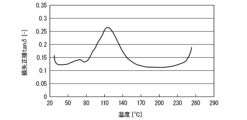
加熱速度5℃/分、周波数1Hzでの固体粘弾性測定における損失正接tanδが最大となる温度は、120~230℃である、<1>~<4>のいずれかに記載の熱可塑性樹脂発泡粒子。
<6>
前記ポリイミド系樹脂がポリエーテルイミド系樹脂である、<1>~<5>のいずれかに記載の熱可塑性樹脂発泡粒子。
<7>
前記ポリエステル系樹脂が、植物由来のポリエステル系樹脂を含む、<1>~<6>のいずれかに記載の熱可塑性樹脂発泡粒子。
<8>
前記熱可塑性樹脂が、リサイクル原料を含む、<1>~<7>のいずれかに記載の熱可塑性樹脂発泡粒子。
That is, the present invention has the following aspects.
<1>
Contains a thermoplastic resin,
The thermoplastic resin includes a polyester resin and a polyimide resin,
The thermoplastic resin foam particles have a single glass transition temperature Tg.
<2>
The thermoplastic resin expanded particles according to <1>, wherein the glass transition temperature Tg is 80 to 130° C.
<3>
The thermoplastic resin expanded beads according to <1> or <2>, wherein the absolute value of the difference between the endothermic amount and the exothermic amount determined by heat flux differential scanning calorimetry at a heating rate of 10° C./min is 3 to 35 J/g.
<4>
The content ratio of the polyester resin to the total mass of the thermoplastic resin is 40 to 95 mass %,
The content ratio of the polyimide resin to the total mass of the thermoplastic resin is 5 to 60 mass%.
<1> to <3>,
<5>
The expanded thermoplastic resin particles according to any one of <1> to <4>, wherein the temperature at which the loss tangent tan δ is maximized in solid viscoelasticity measurement at a heating rate of 5° C./min and a frequency of 1 Hz is 120 to 230° C.
<6>
The expanded thermoplastic resin particles according to any one of <1> to <5>, wherein the polyimide-based resin is a polyetherimide-based resin.
<7>
The thermoplastic resin expanded particles according to any one of <1> to <6>, wherein the polyester-based resin contains a plant-derived polyester-based resin.
<8>
The thermoplastic resin expanded particles according to any one of <1> to <7>, wherein the thermoplastic resin contains recycled materials.
<9>
前記熱可塑性樹脂と発泡剤とを含む熱可塑性樹脂組成物を押し出し、発泡して、熱可塑性樹脂発泡粒子を得る工程を有する、<1>~<8>のいずれかに記載の熱可塑性樹脂発泡粒子の製造方法。
<10>
前記熱可塑性樹脂組成物は、架橋剤をさらに含む、<9>に記載の熱可塑性樹脂発泡粒子の製造方法。
<9>
The method for producing expanded thermoplastic resin particles according to any one of <1> to <8>, further comprising a step of extruding a thermoplastic resin composition containing the thermoplastic resin and a foaming agent, and foaming the composition to obtain expanded thermoplastic resin particles.
<10>
The method for producing expanded thermoplastic resin particles according to <9>, wherein the thermoplastic resin composition further contains a crosslinking agent.
<11>
熱可塑性樹脂を含み、
前記熱可塑性樹脂は、ポリエステル系樹脂とポリイミド系樹脂とを含み、
ガラス転移温度Tgが単一である、熱可塑性樹脂発泡粒子成形体。
<12>
前記ガラス転移温度Tgは、80~130℃以下である、<11>に記載の熱可塑性樹脂発泡粒子成形体。
<13>
加熱速度10℃/分における熱流束示差走査熱量測定によって求められる吸熱量と発熱量との差の絶対値は、3~35J/gである、<11>又は<12>に記載の熱可塑性樹脂発泡粒子成形体。
<14>
前記熱可塑性樹脂の総質量に対する前記ポリエステル系樹脂の含有割合は、40~95質量%であり、
前記熱可塑性樹脂の総質量に対する前記ポリイミド系樹脂の含有割合は、5~60質量%である、
<11>~<13>のいずれかに記載の熱可塑性樹脂発泡粒子成形体。
<15>
加熱速度5℃/分、周波数1Hzでの固体粘弾性測定における損失正接tanδが最大となる温度は、120~230℃である、<11>~<14>のいずれかに記載の熱可塑性樹脂発泡粒子成形体。
<16>
前記ポリイミド系樹脂がポリエーテルイミド系樹脂である、<11>~<15>のいずれかに記載の熱可塑性樹脂発泡粒子成形体。
<17>
前記ポリエステル系樹脂が、植物由来のポリエステル系樹脂を含む、<11>~<16>のいずれかに記載の熱可塑性樹脂発泡粒子成形体。
<18>
前記熱可塑性樹脂が、リサイクル原料を含む、<11>~<17>のいずれかに記載の熱可塑性樹脂発泡粒子成形体。
<11>
Contains a thermoplastic resin,
The thermoplastic resin includes a polyester resin and a polyimide resin,
A foamed thermoplastic resin bead molding having a single glass transition temperature Tg.
<12>
The thermoplastic resin foamed bead molding according to <11>, wherein the glass transition temperature Tg is 80 to 130° C. or less.
<13>
The absolute value of the difference between the endothermic amount and the exothermic amount measured by heat flux differential scanning calorimetry at a heating rate of 10 ° C. / min is 3 to 35 J / g.
<14>
The content ratio of the polyester resin to the total mass of the thermoplastic resin is 40 to 95 mass %,
The content ratio of the polyimide resin to the total mass of the thermoplastic resin is 5 to 60 mass%.
<11> to <13>,
<15>
<11> to <14>, wherein the temperature at which the loss tangent tan δ is maximized in solid viscoelasticity measurement at a heating rate of 5° C./min and a frequency of 1 Hz is 120 to 230° C. The expanded thermoplastic resin bead molding according to any one of <11> to <14>.
<16>
The expanded thermoplastic resin bead molding according to any one of <11> to <15>, wherein the polyimide-based resin is a polyetherimide-based resin.
<17>
The thermoplastic resin foamed bead molding according to any one of <11> to <16>, wherein the polyester-based resin contains a plant-derived polyester-based resin.
<18>
The thermoplastic resin foamed bead molding according to any one of <11> to <17>, wherein the thermoplastic resin contains recycled materials.
<19>
請求項9又は10に記載の熱可塑性樹脂発泡粒子の製造方法により前記熱可塑性樹脂発泡粒子を得、得られた熱可塑性樹脂発泡粒子を金型のキャビティ内に充填し、前記キャビティ内の前記熱可塑性樹脂発泡粒子を加熱して二次発泡粒子とし、前記二次発泡粒子同士を熱融着させて熱可塑性樹脂発泡粒子成形体を得る、熱可塑性樹脂発泡粒子成形体の製造方法。
<19>
11. A method for producing a thermoplastic resin foamed bead molding, comprising the steps of: obtaining the thermoplastic resin foamed beads by the method for producing thermoplastic resin foamed beads according to
<20>
<11>~<18>のいずれかに記載の熱可塑性樹脂発泡粒子成形体と、前記熱可塑性樹脂発泡粒子成形体の表面の少なくとも一部に設けられた繊維強化樹脂層とを有する、発泡樹脂複合体。
<20>
<11> to <18>. A foamed resin composite comprising: an expanded thermoplastic resin bead molding according to any one of <11> to <18>; and a fiber-reinforced resin layer provided on at least a part of a surface of the expanded thermoplastic resin bead molding.
本発明の熱可塑性樹脂発泡粒子によれば、耐熱強度の向上を図れる。 The thermoplastic resin foam particles of the present invention can improve heat resistance.
本稿において、「~」はその両端の値を下限値及び上限値として含む範囲を表す。 In this document, "~" indicates a range that includes both ends as the lower and upper limits.
(熱可塑性樹脂発泡粒子)
本発明の熱可塑性樹脂発泡粒子(発泡粒子)は、熱可塑性樹脂を含む。発泡粒子は、熱可塑性樹脂と発泡剤とを含む熱可塑性樹脂組成物(以下、単に「樹脂組成物」ということがある)を造粒し、発泡してなる粒子である。
発泡粒子は、粒子状の発泡体である。発泡粒子は、いわゆる型内発泡成形で成形される熱可塑性樹脂発泡粒子成形体(発泡粒子成形体)の原料に用いられる。
(Thermoplastic resin expanded particles)
The expanded thermoplastic resin particles (expanded particles) of the present invention contain a thermoplastic resin. The expanded particles are particles obtained by granulating and expanding a thermoplastic resin composition (hereinafter, sometimes simply referred to as a "resin composition") containing a thermoplastic resin and a blowing agent.
The expanded beads are particulate foams. The expanded beads are used as a raw material for thermoplastic resin expanded bead moldings (expanded bead moldings) that are molded by so-called in-mold foam molding.
<熱可塑性樹脂>
発泡粒子の熱可塑性樹脂は、ポリエステル系樹脂とポリイミド系樹脂とを含む。本発明の発泡粒子は、ポリエステル系樹脂とポリイミド系樹脂との双方を含むことで、発泡粒子成形体の耐熱強度を高められる。
<Thermoplastic resin>
The thermoplastic resin of the expanded beads contains a polyester resin and a polyimide resin. The expanded beads of the present invention contain both a polyester resin and a polyimide resin, and thus the heat resistance strength of the expanded beads molding can be increased.
≪ポリエステル系樹脂≫
ポリエステル系樹脂としては、ポリエチレンテレフタレート樹脂(PET)、ポリブチレンテレフタレート樹脂(PBT)、ポリエチレンナフタレート樹脂(PEN)、ポリエチレンフラノエート樹脂(PEF)、ポリブチレンナフタレート樹脂(PBN)、ポリトリメチレンテレフタレート樹脂(PTT)、テレフタル酸とエチレングリコールとシクロヘキサンジメタノールの共重合体及びこれらの混合物等が挙げられる。ポリエステル系樹脂としては、ポリエチレンテレフタレート樹脂が好ましく、結晶性ポリエチレンテレフタレート樹脂(C-PET)がより好ましい。C-PETは、酸成分がテレフタル酸であり、グリコール成分がエチレングリコールであるポリエステル系樹脂である。
ポリエステル系樹脂は、石油化学品由来のポリエステル系樹脂でもよいし、いわゆるバイオPET等の植物由来のポリエステル系樹脂でもよいし、これらの混合物でもよい。
植物由来のポリエステル系樹脂としては、ポリエチレンテレフタレート樹脂、植物由来のポリエチレンフラノエート樹脂、植物由来のポリトリメチレンテレフタレート樹脂等が挙げられる。
また、ポリエステル系樹脂は、リサイクル原料でもよい。
これらのポリエステル系樹脂は、1種単独で用いられてもよいし、2種以上が組み合わされて用いられてもよい。
<Polyester resin>
Examples of polyester-based resins include polyethylene terephthalate resin (PET), polybutylene terephthalate resin (PBT), polyethylene naphthalate resin (PEN), polyethylene furanoate resin (PEF), polybutylene naphthalate resin (PBN), polytrimethylene terephthalate resin (PTT), a copolymer of terephthalic acid, ethylene glycol, and cyclohexane dimethanol, and mixtures thereof. As the polyester-based resin, polyethylene terephthalate resin is preferred, and crystalline polyethylene terephthalate resin (C-PET) is more preferred. C-PET is a polyester-based resin in which the acid component is terephthalic acid and the glycol component is ethylene glycol.
The polyester resin may be a polyester resin derived from a petrochemical product, a plant-derived polyester resin such as so-called bio-PET, or a mixture of these.
Examples of plant-derived polyester resins include polyethylene terephthalate resins, plant-derived polyethylene furanoate resins, and plant-derived polytrimethylene terephthalate resins.
The polyester resin may be made from recycled materials.
These polyester resins may be used alone or in combination of two or more.
以下、植物由来のポリエステル系樹脂について説明する。
植物由来のポリエステル系樹脂は、サトウキビ、トウモロコシ等の植物原料を由来とするポリマーである。「植物原料を由来とする」とは、植物原料から合成され又は抽出されたポリマーが挙げられる。また、例えば、「植物原料を由来とする」とは、植物原料から合成され又は抽出されたモノマーが重合されたポリマーが挙げられる。「植物原料から合成され又は抽出されたモノマー」には、植物原料から合成され又は抽出された化合物を原料とし合成されたモノマーが含まれる。植物由来のポリエステル系樹脂は、モノマーの一部が「植物原料を由来とする」ものを含む。
Hereinafter, the plant-derived polyester resin will be described.
Plant-derived polyester resins are polymers derived from plant materials such as sugar cane and corn. "Derived from plant materials" includes polymers synthesized or extracted from plant materials. For example, "derived from plant materials" includes polymers obtained by polymerizing monomers synthesized or extracted from plant materials. "Monomers synthesized or extracted from plant materials" includes monomers synthesized using compounds synthesized or extracted from plant materials as raw materials. Plant-derived polyester resins include those in which some of the monomers are "derived from plant materials".
植物由来のポリエステル系樹脂について、PET、PEFを例にして説明する。 We will explain plant-derived polyester resins using PET and PEF as examples.
PETの合成反応を(1)式に示す。nモルのエチレングリコールとnモルのテレフタル酸(Benzen-1,4-dicarboxylic Acid)との脱水反応によって、PETが合成される。この合成反応における化学量論上の質量比は、エチレングリコール:テレフタル酸=30:70(質量比)である。 The synthesis reaction of PET is shown in formula (1). PET is synthesized by the dehydration reaction of n moles of ethylene glycol and n moles of terephthalic acid (Benzen-1,4-dicarboxylic acid). The stoichiometric mass ratio in this synthesis reaction is ethylene glycol:terephthalic acid = 30:70 (mass ratio).

[(1)式中、nは化学量論係数(重合度)であり、250~1100の数である。] [In formula (1), n is the stoichiometric coefficient (degree of polymerization) and is a number between 250 and 1100.]
エチレングリコールは、エチレンを酸化し、水和することで、工業的に製造される。また、テレフタル酸は、パラキシレンを酸化することで、工業的に製造される。
ここで、図1に示すように、植物由来のエタノール(バイオエタノール)の脱水反応によりエチレンを得、このエチレンから合成されたエチレングリコール(バイオエタノール由来のエチレングリコール)と、石油化学品由来のテレフタル酸からPETを合成する場合、製造されるPETは、植物由来30質量%のPETである。
また、図2に示すように、植物由来のイソブタノール(バイオイソブタノール)の脱水反応によりパラキシレンを得、このパラキシレンから合成したテレフタル酸と、バイオエタノール由来のエチレングリコールとからPETを合成する場合、製造されるPETは、植物由来100質量%のPETである。
Ethylene glycol is produced industrially by oxidizing ethylene and hydrating it, and terephthalic acid is produced industrially by oxidizing paraxylene.
As shown in FIG. 1, when ethylene is obtained by a dehydration reaction of plant-derived ethanol (bioethanol), and PET is synthesized from ethylene glycol (bioethanol-derived ethylene glycol) and terephthalic acid derived from a petrochemical product, the PET produced is 30% by mass plant-derived PET.
Furthermore, as shown in FIG. 2, when paraxylene is obtained by a dehydration reaction of plant-derived isobutanol (bioisobutanol) and PET is synthesized from terephthalic acid synthesized from this paraxylene and ethylene glycol derived from bioethanol, the PET produced is 100% plant-derived PET by mass.
PEFの合成反応を(2)式に示す。nモルのエチレングリコールと、nモルのフランジカルボン酸(2,5-Furandicarboxylic Acid)との脱水反応によって、PEFが合成される。 The synthesis reaction of PEF is shown in formula (2). PEF is synthesized by the dehydration reaction of n moles of ethylene glycol and n moles of 2,5-furandicarboxylic acid.

[(2)式中、nは化学量論係数(重合度)であり、250~1100の数である。] [In formula (2), n is the stoichiometric coefficient (degree of polymerization) and is a number between 250 and 1100.]
フランジカルボン酸(FDCA)は、例えば、植物由来のフルクトースやグルコースの脱水反応によってヒドロキシメチルフルフラール(HMF)を得、HMFを酸化して得られる。
図3に示すように、FDCA及びエチレングリコールの双方が植物由来の場合、製造されるPEFは、植物由来100質量%のPEFである。
Furandicarboxylic acid (FDCA) can be obtained, for example, by dehydrating plant-derived fructose or glucose to obtain hydroxymethylfurfural (HMF), and then oxidizing the HMF.
As shown in FIG. 3, when both FDCA and ethylene glycol are plant-derived, the produced PEF is 100% by mass plant-derived PEF.
ポリエステル系樹脂のガラス転移温度Tgは、50~100℃が好ましく、60~90℃がより好ましく、70~85℃がさらに好ましい。Tgが上記下限値以上であれば、耐熱強度、加熱寸法安定性をより高められる。Tgが上記上限値以下であれば、成形サイクルを短くして生産性を高め、成形性を高められる。なお、「成形性」は、例えば、発泡粒子を金型のキャビティに充填し、これを加熱して二次発泡させた際に、所望の形状に近づけられることであり、所望の形状に近づくほど、成形性は「良好」である。 The glass transition temperature Tg of the polyester resin is preferably 50 to 100°C, more preferably 60 to 90°C, and even more preferably 70 to 85°C. If Tg is equal to or higher than the lower limit, the heat resistance and dimensional stability upon heating can be improved. If Tg is equal to or lower than the upper limit, the molding cycle can be shortened to increase productivity and moldability. Note that "moldability" refers to the ability to approximate a desired shape when, for example, foamed particles are filled into a mold cavity and heated to cause secondary foaming; the closer to the desired shape, the "better" the moldability.
ポリエステル系樹脂の融点は、230~270℃が好ましく、240~260℃がより好ましく、245~255℃がさらに好ましい。融点が上記下限値以上であれば、耐熱強度、加熱寸法安定性をより高められる。融点が上記上限値以下であれば、成形サイクルを短くして生産性を高め、成形性を高められる。 The melting point of the polyester resin is preferably 230 to 270°C, more preferably 240 to 260°C, and even more preferably 245 to 255°C. If the melting point is equal to or higher than the lower limit, the heat resistance and dimensional stability under heat can be improved. If the melting point is equal to or lower than the upper limit, the molding cycle can be shortened to increase productivity and moldability.
ポリエステル系樹脂の固有粘度(IV値)は、0.5~1.5が好ましく、0.6~1.3がより好ましく、0.7~1.2がさらに好ましい。IV値が上記下限値以上であれば、発泡時の破泡が抑制され、連続気泡率をより低められる。IV値が上記上限値以下であれば、密度をより低くし、表面をより平滑にして、外観の美麗さを高められる。
IV値は、JIS K7367-5(2000)の方法で測定できる。
The intrinsic viscosity (IV value) of the polyester resin is preferably 0.5 to 1.5, more preferably 0.6 to 1.3, and even more preferably 0.7 to 1.2. When the IV value is equal to or greater than the lower limit, cell breakage during foaming is suppressed, and the open cell ratio can be further reduced. When the IV value is equal to or less than the upper limit, the density can be further reduced, the surface can be made smoother, and the beauty of the appearance can be improved.
The IV value can be measured by the method of JIS K7367-5 (2000).
ポリエステル系樹脂の数平均分子量Mnは、9,000~45,000であり、15,000~43,000が好ましく、20,000~40,000がより好ましい。
Mnが上記下限値以上であれば、耐寒性(即ち、低温での機械的強度)をさらに高められる。Mnが上記上限値以下であれば、耐熱性をさらに高められる。
The number average molecular weight Mn of the polyester resin is from 9,000 to 45,000, preferably from 15,000 to 43,000, and more preferably from 20,000 to 40,000.
When Mn is equal to or greater than the lower limit, the cold resistance (i.e., mechanical strength at low temperatures) can be further improved. When Mn is equal to or less than the upper limit, the heat resistance can be further improved.
ポリエステル系樹脂のZ平均分子量Mzは、50,000~500,000であり、180,000~450,000が好ましく、100,000~400,000がより好ましい。
Mzが上記範囲内であれば、耐寒性(即ち、低温での機械的強度)をさらに高められる。
The Z-average molecular weight Mz of the polyester resin is from 50,000 to 500,000, preferably from 180,000 to 450,000, and more preferably from 100,000 to 400,000.
If Mz is within the above range, the cold resistance (i.e., mechanical strength at low temperatures) can be further improved.
Mn及びMzは、以下の方法で測定できる。
[ポリエステル系樹脂の分子量]
測定対象から試料5mgを取り、これにヘキサフルオロイソプロパノール(HFIP)0.5mL、クロロホルム0.5mLの順に追加して軽く手動で振とうする。これを浸漬時間24±1.0hrで放置する。試料が完全に溶解したことを確認後に、クロロホルムで10mLに希釈して軽く手動で振とうして、混合する。その後、ジーエルサイエンス(株)製の非水系0.45μmのクロマトディスク、又は(株)島津ジーエルシー製の非水系0.45μmシリンジフィルターにて濾過して、測定試料とする。測定試料を次の測定条件にて、クロマトグラフで測定し、予め作成しておいた標準ポリスチレン検量線から試料の数平均分子量Mn及びZ平均分子量Mzを求める。
Mn and Mz can be measured by the following method.
[Molecular weight of polyester resin]
Take 5 mg of sample from the measurement object, add 0.5 mL of hexafluoroisopropanol (HFIP) and 0.5 mL of chloroform in this order, and shake gently by hand. Leave it for 24 ± 1.0 hr. After confirming that the sample is completely dissolved, dilute it to 10 mL with chloroform, shake gently by hand, and mix. Then, filter it with a non-aqueous 0.45 μm chromato disk manufactured by GL Science Co., Ltd. or a non-aqueous 0.45 μm syringe filter manufactured by Shimadzu GLC Co., Ltd. to obtain a measurement sample. Measure the measurement sample with a chromatograph under the following measurement conditions, and obtain the number average molecular weight Mn and Z average molecular weight Mz of the sample from the standard polystyrene calibration curve prepared in advance.
〔測定装置〕
・測定装置=東ソー(株)製、「HLC-8320GPC EcoSEC」、ゲル浸透クロマトグラフ(RI検出器・UV検出器内蔵)。
〔GPC測定条件〕
・カラム
〈サンプル側〉
ガードカラム=東ソー(株)製 TSK guardcolumn HXL-H(6.0mm×4.0cm)×1本。
測定カラム=東ソー(株)製 TSKgel GMHXL(7.8mmI.D.×30cm)×2本直列。
〈リファレンス側〉
抵抗管(内径0.1mm×2m)×2本直列。
カラム温度=40℃。
移動相=クロロホルム。
〈動相流量〉
サンプル側ポンプ=1.0mL/分。
リファレンス側ポンプ=0.5mL/分。
検出器=UV検出器(254nm)。
注入量=15μL。
測定時間=26分。
サンプリングピッチ=500m秒。
〔measuring device〕
Measurement device: "HLC-8320GPC EcoSEC" gel permeation chromatograph (with built-in RI detector and UV detector) manufactured by Tosoh Corporation.
[GPC measurement conditions]
・Column (sample side)
Guard column = 1 TSK guard column HXL-H (6.0 mm x 4.0 cm) manufactured by Tosoh Corporation.
Measurement column: TSKgel GMHXL (7.8 mm I.D. x 30 cm) x 2 columns in series, manufactured by Tosoh Corporation.
<Reference side>
Two resistance tubes (inner diameter 0.1 mm x 2 m) in series.
Column temperature = 40°C.
Mobile phase = chloroform.
<Dynamic phase flow rate>
Sample side pump = 1.0 mL/min.
Reference pump = 0.5 mL/min.
Detector = UV detector (254 nm).
Injection volume = 15 μL.
Measurement time = 26 minutes.
Sampling pitch = 500 ms.
〔検量線用標準ポリスチレン試料〕
検量線用標準ポリスチレン試料は、昭和電工(株)製の製品名「STANDARD SM-105」及び「STANDARD SH-75」から、質量平均分子量Mwが5,620,000、3,120,000、1,250,000、442,000、131,000、54,000、20,000、7,590、3,450、1,320のものを用いる。
上記検量線用標準ポリスチレンをA(5,620,000、1,250,000、131,000、20,000、3,450)及びB(3,120,000、442,000、54,000、7,590、1,320)にグループ分けする。Aを秤量(2mg、3mg、4mg、4mg、4mg)した後、クロロホルム30mLに溶解する。Bを秤量(3mg、4mg、4mg、4mg、4mg)した後、クロロホルム30mLに溶解する。
標準ポリスチレン検量線は、作成した各A及びB溶解液を50μL注入して測定後に得られた保持時間から較正曲線(三次式)を作成することにより得る。その検量線を用いて数平均分子量Mn及びZ平均分子量Mzを算出する。
[Standard polystyrene sample for calibration curve]
The standard polystyrene samples for the calibration curve are those having mass average molecular weights Mw of 5,620,000, 3,120,000, 1,250,000, 442,000, 131,000, 54,000, 20,000, 7,590, 3,450, and 1,320 and are selected from the product names "STANDARD SM-105" and "STANDARD SH-75" manufactured by Showa Denko K.K.
The above calibration curve standard polystyrene is grouped into A (5,620,000, 1,250,000, 131,000, 20,000, 3,450) and B (3,120,000, 442,000, 54,000, 7,590, 1,320). A is weighed (2 mg, 3 mg, 4 mg, 4 mg, 4 mg) and then dissolved in 30 mL of chloroform. B is weighed (3 mg, 4 mg, 4 mg, 4 mg, 4 mg) and then dissolved in 30 mL of chloroform.
The standard polystyrene calibration curve is obtained by preparing a calibration curve (cubic equation) from the retention times obtained after injecting 50 μL of each of the prepared solutions A and B. The number average molecular weight Mn and Z average molecular weight Mz are calculated using the calibration curve.
発泡粒子に含まれる熱可塑性樹脂の総質量に対するポリエステル系樹脂の含有割合は、40~95質量%が好ましく、45~90質量%がより好ましく、50~80質量%がさらに好ましく、50~70質量%が特に好ましい。ポリエステル系樹脂の含有割合が上記下限値以上であれば、成形性を高められる。ポリエステル系樹脂の含有割合が上記上限値以下であれば、耐熱強度をより高められる。 The content ratio of polyester-based resin to the total mass of thermoplastic resin contained in the expanded beads is preferably 40 to 95 mass%, more preferably 45 to 90 mass%, even more preferably 50 to 80 mass%, and particularly preferably 50 to 70 mass%. If the content ratio of polyester-based resin is equal to or higher than the above lower limit, moldability can be improved. If the content ratio of polyester-based resin is equal to or lower than the above upper limit, heat resistance strength can be further improved.
≪ポリイミド系樹脂≫
ポリイミド系樹脂としては、特に限定されないが、環状イミド基を繰り返し単位として含有するポリマーであることが好ましく、溶融成形性を有するポリマーであることが好ましい。
ポリイミド系樹脂としては、例えば、米国特許第4141927号明細書、特許第2622678号公報、特許第2606912号公報、特許第2606914号公報、特許第2596565号公報、特許第2596566号公報、特許第2598478号公報などに記載されるポリエーテルイミド、特許第2598536号公報、特許第2599171号公報、特開平9-48852号公報、特許第2565556号公報、特許第2564636号公報、特許第2564637号公報、特許第2563548号公報、特許第2563547号公報、特許第2558341号公報、特許第2558339号公報、特許第2834580号公報に記載のポリマー等が挙げられる。本発明の効果が損なわれない範囲であれば、ポリイミド系樹脂の主鎖に環状イミド以外の構造単位が含まれていてもよい。環状イミド以外の構造単位としては、例えば、芳香族、脂肪族、脂環族、脂環族エステル単位、オキシカルボニル単位等が挙げられる。
また、ポリイミド系樹脂は、リサイクル原料でもよい。
これらのポリイミド系樹脂は、1種単独でもよいし、2種以上の組み合わせでもよい。
<Polyimide resin>
The polyimide resin is not particularly limited, but is preferably a polymer containing a cyclic imide group as a repeating unit, and is preferably a polymer having melt moldability.
Examples of polyimide-based resins include polyetherimides described in U.S. Pat. No. 4,141,927, Japanese Patent No. 2,622,678, Japanese Patent No. 2,606,912, Japanese Patent No. 2,606,914, Japanese Patent No. 2,596,565, Japanese Patent No. 2,596,566, and Japanese Patent No. 2,598,478, and the like; Examples of the polymers include those described in Japanese Patent Publication No. 2599171, Japanese Patent Publication No. 9-48852, Japanese Patent No. 2565556, Japanese Patent No. 2564636, Japanese Patent No. 2564637, Japanese Patent No. 2563548, Japanese Patent No. 2563547, Japanese Patent No. 2558341, Japanese Patent No. 2558339, and Japanese Patent No. 2834580. The main chain of the polyimide resin may contain structural units other than cyclic imide as long as the effects of the present invention are not impaired. Examples of structural units other than cyclic imide include aromatic, aliphatic, alicyclic, alicyclic ester units, and oxycarbonyl units.
The polyimide resin may be made from recycled materials.
These polyimide resins may be used alone or in combination of two or more.
ポリイミド系樹脂は、例えば、下記(3)式で表される化合物が好ましい。 The polyimide resin is preferably a compound represented by the following formula (3):

[(3)式中、Rは、炭素数6~42の炭素原子の有する芳香族基であり、R’は、炭素数6~30の2価の芳香族基、炭素数2~30の脂肪族基及び炭素数4~30の脂環族基からなる群から選ばれた少なくとも1種の2価の有機基である。pは繰り返し単位を表す数である。] [In formula (3), R is an aromatic group having 6 to 42 carbon atoms, and R' is at least one divalent organic group selected from the group consisting of divalent aromatic groups having 6 to 30 carbon atoms, aliphatic groups having 2 to 30 carbon atoms, and alicyclic groups having 4 to 30 carbon atoms. p is a number representing the repeating unit.]
ポリイミド系樹脂としては、ポリエステル系樹脂との相溶性を高める観点から、エーテル結合を有する構造単位を有するポリエーテルイミド系樹脂が好ましい。 As the polyimide resin, a polyetherimide resin having a structural unit with an ether bond is preferred from the viewpoint of increasing compatibility with polyester resins.
ポリイミド系樹脂は、従来公知の製造方法により調製できる。例えば、(3)式中のRを誘導することができる原料であるテトラカルボン酸並びにその酸無水物のいずれかもしくは双方と、(3)式中のR’を誘導することができる原料である脂肪族一級ジアミン並びに芳香族一級ジアミンよりなる群から選ばれる一種もしくは二種以上の化合物を脱水縮合することにより得られる。ポリイミド系樹脂の製造方法として具体的には、ポリアミド酸を得て、次いで、加熱閉環する方法を例示することができる。または、酸無水物とピリジン、カルボジイミド等の化学閉環剤を用いて化学閉環する方法、上記テトラカルボン酸無水物と上記R’を誘導することのできるジイソシアネートとを加熱して脱炭酸を行って重合する方法等を例示できる。 Polyimide resins can be prepared by conventionally known manufacturing methods. For example, they can be obtained by dehydrating and condensing either or both of tetracarboxylic acid and its acid anhydride, which are raw materials from which R in formula (3) can be derived, and one or more compounds selected from the group consisting of aliphatic primary diamines and aromatic primary diamines, which are raw materials from which R' in formula (3) can be derived. Specific examples of methods for producing polyimide resins include a method in which polyamic acid is obtained and then subjected to heat ring closure. Alternatively, examples include a method in which chemical ring closure is performed using an acid anhydride and a chemical ring closure agent such as pyridine or carbodiimide, and a method in which the above tetracarboxylic anhydride and the above diisocyanate from which R' can be derived are heated to decarboxylate and polymerize.
テトラカルボン酸としては、例えば、ピロメリット酸、1,2,3,4-ベンゼンテトラカルボン酸、3,3’,4,4’-ビフェニルテトラカルボン酸、2,2’,3,3’-ビフェニルテトラカルボン酸、3,3’,4,4’-ベンゾフェノンテトラカルボン酸、2,2’,3,3’-ベンゾフェノンテトラカルボン酸、ビス(2,3-ジカルボキシフェニル)メタン、ビス(3,4-ジカルボキシフェニル)メタン、1,1’-ビス(2,3-ジカルボキシフェニル)エタン、2,2’-ビス(3,4-ジカルボキシフェニル)プロパン、2,2’-ビス(2,3-ジカルボキシフェニル)プロパン、ビス(3,4-ジカルボキシフェニル)エーテル、ビス(2,3-ジカルボキシフェニル)エーテル、ビス(3,4-ジカルボキシフェニル)スルホン、ビス(2,3-ジカルボキシフェニル)スルホン、2,3,6,7-ナフタレンテトラカルボン酸、1,4,5,8-ナフタレンテトラカルボン酸、1,2,5,6-ナフタレンテトラカルボン酸、2,2’-ビス[(2,3-ジカルボキシフェノキシ)フェニル]プロパン及びその酸無水物等が挙げられる。 Examples of tetracarboxylic acids include pyromellitic acid, 1,2,3,4-benzenetetracarboxylic acid, 3,3',4,4'-biphenyltetracarboxylic acid, 2,2',3,3'-biphenyltetracarboxylic acid, 3,3',4,4'-benzophenonetetracarboxylic acid, 2,2',3,3'-benzophenonetetracarboxylic acid, bis(2,3-dicarboxyphenyl)methane, bis(3,4-dicarboxyphenyl)methane, 1,1'-bis(2,3-dicarboxyphenyl)ethane, and 2,2'-bis(3,4-dicarboxyphenyl)propane. propane, 2,2'-bis(2,3-dicarboxyphenyl)propane, bis(3,4-dicarboxyphenyl)ether, bis(2,3-dicarboxyphenyl)ether, bis(3,4-dicarboxyphenyl)sulfone, bis(2,3-dicarboxyphenyl)sulfone, 2,3,6,7-naphthalenetetracarboxylic acid, 1,4,5,8-naphthalenetetracarboxylic acid, 1,2,5,6-naphthalenetetracarboxylic acid, 2,2'-bis[(2,3-dicarboxyphenoxy)phenyl]propane and its acid anhydride, etc.
ジアミンとしては、例えば、ベンジジン、ジアミノジフェニルメタン、ジアミノジフェニルエタン、ジアミノジフェニルプロパン、ジアミノジフェニルブタン、ジアミノジフェニルエーテル、ジアミノジフェニルスルホン、ジアミノジフェニルベンゾフェノン、o,m,p-フェニレンジアミン、トリレンジアミン、キシレンジアミン等及びこれらの芳香族一級ジアミンの炭化水素基を構造単位に有する芳香族一級ジアミン、エチレンジアミン、1,2-プロパンジアミン、1,3-プロパンジアミン、2,2-ジメチル-1,3-プロパンジアミン、1,6-ヘキサメチレンジアミン、1,8-オクタメチレンジアミン、1,9-ノナメチレンジアミン、1,10-デカメチレンジアミン、1,11-ウンデカメチレンジアミン、1,12-ドデカメチレンジアミン、2,2,4-トリメチルヘキサメチレンジアミン、2,4,4-トリメチルヘキサメチレンジアミン、1,3-シクロヘキサンジアミン、1,4-シクロヘキサンジアミン、1,4-シクロヘキサンジメチルアミン、2-メチル-1,3-シクロヘキサンジアミン、イソホロンジアミン等及びこれらの脂肪族、並びに脂環族一級ジアミンの炭化水素基を構造単位に有する脂肪族及び脂環族一級ジアミン等を例示できる。 Examples of diamines include benzidine, diaminodiphenylmethane, diaminodiphenylethane, diaminodiphenylpropane, diaminodiphenylbutane, diaminodiphenylether, diaminodiphenylsulfone, diaminodiphenylbenzophenone, o, m, p-phenylenediamine, tolylenediamine, xylylenediamine, and aromatic primary diamines having the hydrocarbon group of these aromatic primary diamines as a structural unit, ethylenediamine, 1,2-propanediamine, 1,3-propanediamine, 2,2-dimethyl-1,3-propanediamine, 1,6-hexamethylenediamine, 1,8 -octamethylenediamine, 1,9-nonamethylenediamine, 1,10-decamethylenediamine, 1,11-undecamethylenediamine, 1,12-dodecamethylenediamine, 2,2,4-trimethylhexamethylenediamine, 2,4,4-trimethylhexamethylenediamine, 1,3-cyclohexanediamine, 1,4-cyclohexanediamine, 1,4-cyclohexanedimethylamine, 2-methyl-1,3-cyclohexanediamine, isophoronediamine, and the like, as well as aliphatic and alicyclic primary diamines having a hydrocarbon group as a structural unit of these aliphatic and alicyclic primary diamines, and the like.
ポリイミド系樹脂のガラス転移温度Tgは、190~240℃が好ましく、200~230℃がより好ましく、210~220℃がさらに好ましい。Tgが上記下限値以上であれば、耐熱強度、加熱寸法安定性をより高められる。Tgが上記上限値以下であれば、成形サイクルを短くして生産性を高め、成形性を高められる。 The glass transition temperature Tg of the polyimide resin is preferably 190 to 240°C, more preferably 200 to 230°C, and even more preferably 210 to 220°C. If Tg is equal to or higher than the lower limit, the heat resistance and dimensional stability upon heating can be improved. If Tg is equal to or lower than the upper limit, the molding cycle can be shortened to increase productivity and improve moldability.
ポリイミド系樹脂のメルトフローレイト(MFR)は、3~30g/10分が好ましく、5~25g/10分がより好ましく、7~20g/10分がさらに好ましい。MFRが上記下限値以上であれば、成形サイクルを短くして生産性を高め、成形性を高められる。MFRが上記上限値以下であれば、耐熱強度、加熱寸法安定性をより高められる。 The melt flow rate (MFR) of the polyimide resin is preferably 3 to 30 g/10 min, more preferably 5 to 25 g/10 min, and even more preferably 7 to 20 g/10 min. If the MFR is equal to or higher than the lower limit, the molding cycle can be shortened to increase productivity and moldability. If the MFR is equal to or lower than the upper limit, heat resistance and dimensional stability under heat can be further improved.
ポリイミド系樹脂の数平均分子量は、5,000~50,000が好ましく、6,000~39,000がより好ましく、7,000~27,000がさらに好ましい。ポリイミド系樹脂の数平均分子量が上記下限値以上であれば耐衝撃性をより高められる。ポリイミド系樹脂の数平均分子量が上記上限値以下であれば成形性をより高められる。 The number average molecular weight of the polyimide resin is preferably 5,000 to 50,000, more preferably 6,000 to 39,000, and even more preferably 7,000 to 27,000. If the number average molecular weight of the polyimide resin is equal to or greater than the lower limit, the impact resistance can be further improved. If the number average molecular weight of the polyimide resin is equal to or less than the upper limit, the moldability can be further improved.
発泡粒子に含まれる熱可塑性樹脂の総質量に対するポリイミド系樹脂の含有割合は、5~60質量%が好ましく、10~55質量%がより好ましく、20~50質量%がさらに好ましく、30~50質量%が特に好ましい。ポリイミド系樹脂の含有割合が上記下限値以上であれば、耐熱強度をより高められる。ポリイミド系樹脂の含有割合が上記上限値以下であれば、成形性をより高められる。 The content of polyimide resin relative to the total mass of thermoplastic resin contained in the expanded beads is preferably 5 to 60 mass%, more preferably 10 to 55 mass%, even more preferably 20 to 50 mass%, and particularly preferably 30 to 50 mass%. If the content of polyimide resin is equal to or greater than the lower limit, the heat resistance strength can be further improved. If the content of polyimide resin is equal to or less than the upper limit, the moldability can be further improved.
発泡粒子に含まれる熱可塑性樹脂は、リサイクル原料を含んでいてもよい。ポリエステル系樹脂とポリイミド系樹脂の何れか一方にリサイクル原料を含んでいてもよく、ポリエステル系樹脂とポリイミド系樹脂の両方にリサイクル原料を含んでいてもよい。ポリエステル系樹脂の一部又は全部がポリエステル系樹脂のリサイクル原料であってもよく、ポリイミド系樹脂の一部又は全部がポリイミド系樹脂のリサイクル原料であってもよい。
リサイクル原料は、例えば、次の原料等が挙げられる。
1)発泡粒子又は発泡粒子成形体等の発泡体を粉砕して得られるフレーク状の樹脂を押出機で再溶融させ、ノズル金型よりストランド状に押出し、これを冷却した後ペレタイズした回収ペレット。
2)PETボトルを粉砕して得られるフレーク状の樹脂を押出機で再溶融させ、ノズル金型よりストランド状に押出し、これを冷却した後ペレタイズした再生PET。
The thermoplastic resin contained in the expanded particles may contain recycled raw materials. Either the polyester-based resin or the polyimide-based resin may contain recycled raw materials, or both the polyester-based resin and the polyimide-based resin may contain recycled raw materials. A part or all of the polyester-based resin may be recycled raw materials for polyester-based resins, and a part or all of the polyimide-based resin may be recycled raw materials for polyimide-based resins.
Examples of recycled raw materials include the following raw materials:
1) Foamed beads or foamed bead molded bodies or other foamed bodies are pulverized to obtain flake-like resin, which is then remelted in an extruder, extruded in the form of strands from a nozzle die, cooled, and pelletized to produce recovered pellets.
2) Recycled PET made by crushing PET bottles to obtain flake-like resin, which is remelted in an extruder and extruded into strands through a nozzle die, which are then cooled and pelletized.
≪その他の樹脂≫
発泡粒子は、熱硬化性樹脂を実質的に含まない。「実質的に含まない」とは、全く含まないか、発泡粒子の品質に影響しない程度に含むことをいう。発泡粒子に含まれる熱硬化性樹脂の含有量は、熱可塑性樹脂100質量部に対して、5質量%以下が好ましく、2質量%以下がより好ましく、1質量%以下がさらに好ましく、0質量%が最も好ましい。
Other resins
The expanded beads are substantially free of thermosetting resin. "Substantially free" means that the expanded beads are completely free of thermosetting resin or are free of thermosetting resin to such an extent that the quality of the expanded beads is not affected. The content of the thermosetting resin in the expanded beads is preferably 5% by mass or less, more preferably 2% by mass or less, even more preferably 1% by mass or less, and most preferably 0% by mass, based on 100 parts by mass of the thermoplastic resin.
熱可塑性樹脂は、ポリエステル系樹脂及びポリイミド系樹脂以外の熱可塑性樹脂(他の熱可塑性樹脂)を含んでもよい。他の熱可塑性樹脂としては、例えば、ポリエチレン、ポリプロピレン等のポリオレフィン系樹脂、ポリスチレン系樹脂、ポリフェニレンエーテル系樹脂、ポリアミド系樹脂、ポリカーボネート系樹脂、ポリアリレート系樹脂、ポリフェニルスルホン系樹脂、ポリスルホン系樹脂、ポリエーテルスルホン系樹脂等が挙げられる。 The thermoplastic resin may include a thermoplastic resin (other thermoplastic resin) other than the polyester resin and the polyimide resin. Examples of the other thermoplastic resin include polyolefin resins such as polyethylene and polypropylene, polystyrene resins, polyphenylene ether resins, polyamide resins, polycarbonate resins, polyarylate resins, polyphenylsulfone resins, polysulfone resins, and polyethersulfone resins.
熱可塑性樹脂の総質量に対して、ポリエステル系樹脂及びポリイミド系樹脂の合計割合は、90質量%以上が好ましく、95質量%以上がより好ましく、98質量%以上がさらに好ましく、100質量%が最も好ましい。ポリエステル系樹脂及びポリイミド系樹脂の合計割合が上記下限値以上であれば、発泡粒子の耐熱強度をより高められる。 The combined proportion of polyester-based resin and polyimide-based resin relative to the total mass of thermoplastic resin is preferably 90% by mass or more, more preferably 95% by mass or more, even more preferably 98% by mass or more, and most preferably 100% by mass. If the combined proportion of polyester-based resin and polyimide-based resin is equal to or more than the above lower limit, the heat resistance of the expanded particles can be further increased.
≪物性≫
発泡粒子は、単一のガラス転移温度Tgを示す。ポリエステル系樹脂とポリイミド系樹脂とが相溶することで、単一のガラス転移温度Tgとなる。発泡粒子のガラス転移温度Tgが単一であることで、ポリエステル系樹脂のガラス転移温度Tgよりも高いガラス転移温度Tgとなり、発泡粒子成形体の耐熱強度が高まる。
なお、「ガラス転移温度が単一」であるとは、加熱速度10℃/分における熱流束示差走査熱量測定チャート(DSC曲線)において、2回目昇温過程にみられる結晶化ピークよりも低温側におけるガラス転移温度Tgが単一であると認識できることをいう。但し、2回目昇温過程において結晶化ピークが観測されない場合は、2回目昇温過程の温度範囲(30~300℃)におけるガラス転移温度Tgが単一であると認識できることをいう。
発泡粒子におけるガラス転移温度Tgは、例えば、80~130℃が好ましく、85~125℃がより好ましく、90~120℃がさらに好ましい。Tgが上記下限値以上であれば、発泡粒子成形体の耐熱強度及び加熱寸法安定性をより高められる。Tgが上記上限値以下であれば、成形サイクルを短くして生産性を高め、成形性を高められる。
発泡粒子におけるガラス転移温度Tgは、加熱速度10℃/分における熱流束示差走査熱量測定で求められる。
なお、発泡粒子におけるガラス転移温度Tgは、発泡粒子を構成する熱可塑性樹脂のガラス転移温度Tgと同一視できる。
<Physical Properties>
The expanded beads have a single glass transition temperature Tg. The polyester resin and the polyimide resin are compatible with each other, resulting in a single glass transition temperature Tg. Since the expanded beads have a single glass transition temperature Tg, the glass transition temperature Tg is higher than the glass transition temperature Tg of the polyester resin, and the heat resistance of the expanded bead molding is increased.
The term "single glass transition temperature" means that the glass transition temperature Tg can be recognized as a single temperature on the lower side than the crystallization peak observed in the second heating process in a heat flux differential scanning calorimetry chart (DSC curve) at a heating rate of 10° C./min. However, if no crystallization peak is observed in the second heating process, it means that the glass transition temperature Tg can be recognized as a single temperature range (30 to 300° C.) in the second heating process.
The glass transition temperature Tg of the expanded beads is, for example, preferably 80 to 130° C., more preferably 85 to 125° C., and even more preferably 90 to 120° C. When Tg is equal to or higher than the lower limit, the heat resistance and dimensional stability upon heating of the expanded beads molded article can be further improved. When Tg is equal to or lower than the upper limit, the molding cycle can be shortened to increase productivity and moldability.
The glass transition temperature Tg of the expanded beads is determined by heat flux differential scanning calorimetry at a heating rate of 10° C./min.
The glass transition temperature Tg of the expanded beads can be regarded as the same as the glass transition temperature Tg of the thermoplastic resin constituting the expanded beads.
発泡粒子における吸熱量と発熱量との差の絶対値(吸熱発熱差)は、3~35J/gが好ましく、5~25J/gがより好ましく、7~15J/gがさらに好ましい。吸熱発熱差が上記下限値以上であれば、結晶化度が高まり、発泡粒子成形体の耐熱強度及び加熱寸法安定性をより高められる。吸熱発熱差が上記上限値以下であれば、結晶化度が高まりすぎず、優れた二次発泡性や熱融着性を発揮し、成形性や機械強度を高められる。
吸熱発熱差は、加熱速度10℃/分における熱流束示差走査熱量測定によって求められ吸熱量と発熱量との差である。
なお、発泡粒子における吸熱発熱差は、発泡粒子を構成する熱可塑性樹脂の吸熱発熱差と同一視できる。
The absolute value of the difference between the amount of heat absorbed and the amount of heat generated in the expanded beads (endothermic heat generation difference) is preferably 3 to 35 J/g, more preferably 5 to 25 J/g, and even more preferably 7 to 15 J/g. When the endothermic heat generation difference is equal to or greater than the lower limit, the degree of crystallization is increased, and the heat resistance strength and dimensional stability upon heating of the expanded bead molded article can be further improved. When the endothermic heat generation difference is equal to or less than the upper limit, the degree of crystallization is not too high, and excellent secondary foaming properties and heat fusion properties are exhibited, and moldability and mechanical strength can be improved.
The endothermic heat release difference is the difference between the amount of heat absorbed and the amount of heat released, as determined by heat flux differential scanning calorimetry at a heating rate of 10° C./min.
The endothermic heat generation difference in the expanded beads can be regarded as the same as the endothermic heat generation difference of the thermoplastic resin constituting the expanded beads.
発泡粒子において、加熱速度5℃/分、周波数1Hzでの固体粘弾性測定における損失正接tanδが最大となる温度は、120~230℃が好ましく、130~225℃がより好ましく、150~220℃がさらに好ましい。損失正接tanδが最大となる温度が上記下限値以上であれば、発泡粒子成形体が軟化する温度が高くなり、発泡粒子成形体の耐熱強度をより高められる。損失正接tanδが最大となる温度が上記上限値以下であれば、発泡粒子成形体が軟化する温度が過度に高くなりすぎず、成形性をより高められる。
発泡粒子の損失正接tanδが最大となる温度は、発泡粒子成形体を成形し、この発泡粒子成形体の固体粘弾性を測定することにより求められる。
In the expanded beads, the temperature at which the loss tangent tan δ is maximized in solid viscoelasticity measurement at a heating rate of 5° C./min and a frequency of 1 Hz is preferably 120 to 230° C., more preferably 130 to 225° C., and even more preferably 150 to 220° C. If the temperature at which the loss tangent tan δ is maximized is equal to or higher than the lower limit, the temperature at which the expanded bead molding softens is higher, and the heat resistance of the expanded bead molding can be further improved. If the temperature at which the loss tangent tan δ is maximized is equal to or lower than the upper limit, the temperature at which the expanded bead molding softens is not excessively high, and the moldability can be further improved.
The temperature at which the loss tangent tan δ of the expanded beads is maximized can be determined by molding an expanded bead molding and measuring the solid viscoelasticity of the expanded bead molding.
<発泡剤>
発泡剤としては、例えば、プロパン、ノルマルブタン、イソブタン、ノルマルペンタン、イソペンタン、ヘキサン等の飽和脂肪族炭化水素、ジメチルエーテル等のエーテル類、塩化メチル、1,1,1,2-テトラフルオロエタン、1,1-ジフルオロエタン、モノクロロジフルオロメタン等のフロン、二酸化炭素、窒素等が挙げられ、ジメチルエーテル、プロパン、ノルマルブタン、イソブタン、二酸化炭素、窒素が好ましい。これらの発泡剤は、1種単独で用いられてもよいし、2種以上が組み合わされて用いられてもよい。
<Foaming Agent>
Examples of the blowing agent include saturated aliphatic hydrocarbons such as propane, normal butane, isobutane, normal pentane, isopentane, and hexane, ethers such as dimethyl ether, fluorocarbons such as methyl chloride, 1,1,1,2-tetrafluoroethane, 1,1-difluoroethane, and monochlorodifluoromethane, carbon dioxide, and nitrogen, with dimethyl ether, propane, normal butane, isobutane, carbon dioxide, and nitrogen being preferred. These blowing agents may be used alone or in combination of two or more.
発泡剤の含有量は、特に限定されないが、樹脂100質量部に対して、例えば、0.1~12質量部が好ましい。 The amount of foaming agent contained is not particularly limited, but is preferably, for example, 0.1 to 12 parts by mass per 100 parts by mass of resin.
<任意成分>
本実施形態の発泡粒子は、熱可塑性樹脂及び発泡剤以外のその他成分(任意成分)を含有してもよい。
任意成分としては、気泡調整剤、安定剤、紫外線吸収剤、着色剤、酸化防止剤、結晶化促進剤、滑剤、架橋剤、界面活性剤、収縮防止剤、難燃剤、劣化防止剤等が挙げられる。
<Optional ingredients>
The expanded beads of the present embodiment may contain other components (optional components) in addition to the thermoplastic resin and the foaming agent.
Optional components include cell regulators, stabilizers, UV absorbers, colorants, antioxidants, crystallization accelerators, lubricants, crosslinking agents, surfactants, shrinkage inhibitors, flame retardants, and deterioration inhibitors.
架橋剤としては、例えば、無水ピロメリット酸等の酸二無水物、多官能エポキシ化合物、オキサゾリン化合物、オキサジン化合物等が挙げられる。樹脂組成物に架橋剤を配合することで、発泡時の破泡が抑制され、連続気泡率をより低められる。
架橋剤の含有量は、樹脂100質量部に対して、例えば、0.08~0.8質量部が好ましい。
Examples of the crosslinking agent include acid dianhydrides such as pyromellitic anhydride, polyfunctional epoxy compounds, oxazoline compounds, oxazine compounds, etc. By blending a crosslinking agent in the resin composition, cell breakage during foaming is suppressed, and the open cell ratio can be further reduced.
The content of the crosslinking agent is preferably, for example, 0.08 to 0.8 parts by mass with respect to 100 parts by mass of the resin.
気泡調整剤は、例えば、タルク、シリカ等の無機粉末等の混合物等である。これらの気泡調整剤は、発泡粒子の独立気泡率を高め、発泡粒子を形成しやすい。
気泡調整剤の含有量は樹脂100質量部に対して、例えば、0.2~5質量部が好ましい。
The cell regulator is, for example, a mixture of inorganic powder such as talc, silica, etc. These cell regulators increase the closed cell ratio of the expanded beads, making it easier to form the expanded beads.
The content of the cell regulator is preferably, for example, 0.2 to 5 parts by mass with respect to 100 parts by mass of the resin.
安定剤は、例えば、カルシウム亜鉛系熱安定剤、スズ系熱安定剤、鉛系熱安定剤等である。
安定剤の含有量は、樹脂100質量部に対して、例えば、1質量部以下が好ましい。
Examples of the stabilizer include calcium zinc-based heat stabilizers, tin-based heat stabilizers, and lead-based heat stabilizers.
The content of the stabilizer is preferably, for example, 1 part by mass or less with respect to 100 parts by mass of the resin.
紫外線吸収剤は、例えば、酸化セシウム系紫外線吸収剤、酸化チタン系紫外線吸収剤等である。
紫外線吸収剤の含有量は、樹脂100質量部に対して、例えば、1質量部以下が好ましい。
Examples of the ultraviolet absorbing agent include a cesium oxide-based ultraviolet absorbing agent and a titanium oxide-based ultraviolet absorbing agent.
The content of the ultraviolet absorbing agent is preferably, for example, 1 part by mass or less with respect to 100 parts by mass of the resin.
酸化防止剤は、例えば、酸化セリウム、酸化セリウム/ジルコニア固溶体、水酸化セリウム、カーボン、カーボンナノチューブ、酸化チタン、及びフラーレン等である。
酸化防止剤の含有量は、樹脂100質量部に対して、例えば、1質量部以下が好ましい。
Examples of the antioxidant include cerium oxide, cerium oxide/zirconia solid solution, cerium hydroxide, carbon, carbon nanotubes, titanium oxide, and fullerene.
The content of the antioxidant is preferably, for example, 1 part by mass or less with respect to 100 parts by mass of the resin.
着色剤は、例えば、酸化チタン、カーボンブラック、チタンイエロー、酸化鉄、群青、コバルトブルー、焼成顔料、メタリック顔料、マイカ、パール顔料、酸化亜鉛、沈降性シリカ、カドミウム赤等である。
本実施形態の発泡粒子を食品用の容器に用いる場合には、上記の着色剤の中から衛生協議会登録品を選択することが好ましい。
着色剤の含有量は、樹脂100質量部に対して、例えば、2質量部以下が好ましい。
Examples of colorants include titanium oxide, carbon black, titanium yellow, iron oxide, ultramarine blue, cobalt blue, calcined pigments, metallic pigments, mica, pearl pigments, zinc oxide, precipitated silica, and cadmium red.
When the expanded beads of this embodiment are used for food containers, it is preferable to select from the above colorants a product registered with the Hygienic Council.
The content of the colorant is, for example, preferably 2 parts by mass or less with respect to 100 parts by mass of the resin.
結晶化促進剤は、例えば、ケイ酸塩、炭素、金属酸化物等である。ケイ酸塩としては、例えば、含水ケイ酸マグネシウムであるタルクが挙げられる。炭素としては、例えば、カーボンブラック、カーボンナノファイバー、カーボンナノチューブ、カーボンナノホーン、活性炭、グラファイト、グラフェン、コークス、メソポーラスカーボン、ガラス状炭素、ハードカーボン、ソフトカーボン等が挙げられ、カーボンブラックとしては、ファーネスブラック、アセチレンブラック、ケッチェンブラック、サーマルブラックが挙げられる。金属酸化物としては、例えば、酸化亜鉛、酸化チタン等が挙げられる。
結晶化促進剤の含有量は、樹脂100質量部に対して、例えば、3質量部以下が好ましい。
Examples of the crystallization promoter include silicates, carbon, metal oxides, etc. Examples of silicates include talc, which is hydrated magnesium silicate. Examples of carbon include carbon black, carbon nanofiber, carbon nanotubes, carbon nanohorns, activated carbon, graphite, graphene, coke, mesoporous carbon, glassy carbon, hard carbon, soft carbon, etc., and examples of carbon black include furnace black, acetylene black, ketjen black, and thermal black. Examples of metal oxides include zinc oxide and titanium oxide.
The content of the crystallization accelerator is, for example, preferably 3 parts by mass or less with respect to 100 parts by mass of the resin.
上述の任意成分は、それぞれ1種単独でもよいし、2種以上の組み合わせでもよい。
発泡粒子に含まれる任意成分の総量は、発泡粒子の総質量に対して、0.1~5質量部が好ましく、0.5~3質量部がより好ましい。
The above-mentioned optional components may each be used alone or in combination of two or more.
The total amount of the optional components contained in the expanded beads is preferably 0.1 to 5 parts by mass, more preferably 0.5 to 3 parts by mass, based on the total mass of the expanded beads.
<物性>
発泡粒子の大きさは、用途に応じて適宜選択され、発泡粒子の群の平均粒子径は、例えば、0.5~5mmとされる。
発泡粒子の群の平均粒子径はD50で表現される値である。
具体的には、ロータップ型篩振とう機(飯田製作所社製)を用いて、篩目開き26.5mm、22.4mm、19.0mm、16.0mm、13.2mm、11.20mm、9.50mm、8.80mm、6.70mm、5.66mm、4.76mm、4.00mm、3.35mm、2.80mm、2.36mm、2.00mm、1.70mm、1.40mm、1.18mm、1.00mm、0.85mm、0.71mm、0.60mm、0.50mm、0.425mm、0.355mm、0.300mm、0.250mm、0.212mm及び0.180mmのJIS標準篩(JIS Z8801-1:2006)で試料約25gを10分間分級し、篩網上の試料重量を測定した。得られた結果から累積重量分布曲線を作成し、累積重量が50%となる粒子径(メディアン径)を平均粒子径とする。
<Physical Properties>
The size of the expanded beads is appropriately selected depending on the application, and the average particle diameter of the expanded beads is, for example, 0.5 to 5 mm.
The average particle size of the expanded particle group is a value expressed as D50.
Specifically, a low tap type sieve shaker (manufactured by Iida Manufacturing Co., Ltd.) was used to shake the powder using JIS standard sieves (JIS Approximately 25 g of the sample was classified for 10 minutes using a sieve sizer (Z8801-1:2006), and the weight of the sample on the sieve was measured. A cumulative weight distribution curve was created from the results obtained, and the particle size (median size) at which the cumulative weight was 50% was taken as the average particle size.
発泡粒子の連続気泡率は、20%以下が好ましく、18%以下がより好ましく、16%以下がさらに好ましい。発泡粒子の連続気泡率が上記上限値以下であると、発泡粒子の二次発泡性をより高め、成形性や機械強度をより高められる。発泡粒子の連続気泡率は、JIS K7138:2006「硬質発泡プラスチック-連続気泡率及び独立気泡率の求め方」に記載の方法により求められる。 The open cell ratio of the expanded beads is preferably 20% or less, more preferably 18% or less, and even more preferably 16% or less. When the open cell ratio of the expanded beads is equal to or less than the above upper limit, the secondary expandability of the expanded beads can be improved, and the moldability and mechanical strength can be improved. The open cell ratio of the expanded beads can be determined by the method described in JIS K7138:2006 "Rigid foamed plastics - Determination of open cell ratio and closed cell ratio".
発泡粒子の見掛け密度は、例えば、0.027~0.675g/cm3が好ましく、0.045~0.45g/cm3がより好ましく、0.0675~0.27g/cm3がさらに好ましい。見掛け密度が上記下限値以上であれば、発泡粒子成形体の緩衝力を高められる。見掛け密度が上記上限値以下であると、発泡粒子成形体の機械的強度を高められる。 The apparent density of the expanded beads is, for example, preferably 0.027 to 0.675 g/cm 3 , more preferably 0.045 to 0.45 g/cm 3 , and even more preferably 0.0675 to 0.27 g/cm 3. When the apparent density is equal to or higher than the lower limit, the cushioning force of the expanded beads molding can be increased. When the apparent density is equal to or lower than the upper limit, the mechanical strength of the expanded beads molding can be increased.
発泡粒子の嵩発泡倍率は、例えば、2~50倍が好ましく、3~30倍がより好ましく、5~20倍がさらに好ましい。嵩発泡倍率が上記下限値以上であれば、緩衝力を高められる。嵩発泡倍率が上記上限値以下であると、機械的強度を高められる。 The bulk expansion ratio of the expanded particles is, for example, preferably 2 to 50 times, more preferably 3 to 30 times, and even more preferably 5 to 20 times. If the bulk expansion ratio is equal to or greater than the lower limit, the cushioning force can be increased. If the bulk expansion ratio is equal to or less than the upper limit, the mechanical strength can be increased.
発泡粒子の平均気泡径は、例えば、5~500μmが好ましく、10~400μmがより好ましく、20~300μmがさらに好ましい。平均気泡径が上記下限値以上であれば、緩衝力を高められる。平均気泡径が上記上限値以下であると、機械的強度を高められる。
平均気泡径は、ASTM D3576-77の試験方法に準拠して測定できる。
The average bubble diameter of the expanded beads is, for example, preferably 5 to 500 μm, more preferably 10 to 400 μm, and even more preferably 20 to 300 μm. If the average bubble diameter is equal to or greater than the lower limit, the cushioning power can be increased. If the average bubble diameter is equal to or less than the upper limit, the mechanical strength can be increased.
The average cell diameter can be measured in accordance with the test method of ASTM D3576-77.
<製造方法>
本発明の発泡粒子の製造方法としては、熱可塑性樹脂と発泡剤とを含む樹脂組成物を押し出し、発泡して、発泡粒子を得る方法、熱可塑性樹脂を押し出して樹脂粒子を得、得られた樹脂粒子に発泡剤を含侵して発泡粒子とする方法が挙げられる。
より具体的な発泡粒子の製造方法としては、例えば、次の方法等が挙げられる。
1)熱可塑性樹脂と発泡剤とを押出機に供給して溶融混錬し、溶融状態の樹脂組成物を押出機先端に設けたダイの孔から空中に押し出して発泡させ、押し出して発泡させると同時に切断し、切断された発泡した球状の粒子を水中に投じて冷却して、発泡粒子を得る方法。
2)熱可塑性樹脂と発泡剤とを押出機に供給して溶融混錬し、溶融状態の樹脂組成物を押出機先端に設けたダイの孔から水中に押し出して発泡させて冷却し、押し出して発泡させて冷却すると同時に切断し、切断された発泡した球状の発泡粒子を得る方法。
3)熱可塑性樹脂と発泡剤とを押出機に供給して溶融混錬し、溶融状態の樹脂組成物を押出機先端に設けたダイの孔から水中に押し出して冷却し、押し出して冷却すると同時に切断し、切断された球状の発泡性粒子を得て、発泡性粒子を加熱して発泡粒子を得る方法。
4)熱可塑性樹脂を押出機に供給して溶融混錬し、溶融状態の熱可塑性樹脂を押出機先端に設けたダイの孔から空中に押し出して、押し出すと同時に切断し、切断された球状の樹脂粒子を水中に投じて冷却して樹脂粒子を得て、樹脂粒子に発泡剤を含浸させて発泡性粒子を得て、発泡性粒子を加熱して発泡粒子を得る方法。
5)熱可塑性樹脂を押出機に供給して溶融混錬し、溶融状態の熱可塑性樹脂を押出機先端に設けたダイの孔から水中に押し出して冷却し、押し出して冷却すると同時に切断し、切断された球状の樹脂粒子を得て、樹脂粒子に発泡剤を含浸させて発泡性粒子を得て、発泡性粒子を加熱して発泡粒子を得る方法。
6)熱可塑性樹脂を押出機に供給して溶融混錬し、溶融状態の熱可塑性樹脂を押出機先端に設けたダイの孔からストランド状に押し出し、押し出した後に水中に導き冷却し、冷却した後に所定の長さ毎に切断して柱状の樹脂粒子を得て、樹脂粒子に発泡剤を含浸させて発泡性粒子を得て、発泡性粒子を加熱して発泡粒子を得る方法。
<Production Method>
Examples of the method for producing the expanded beads of the present invention include a method in which a resin composition containing a thermoplastic resin and a foaming agent is extruded and foamed to obtain expanded beads, and a method in which a thermoplastic resin is extruded to obtain resin particles, and the obtained resin particles are impregnated with a foaming agent to obtain expanded beads.
More specifically, the method for producing the expanded beads may be, for example, the following method.
1) A method in which a thermoplastic resin and a foaming agent are fed into an extruder and melt-kneaded, and the molten resin composition is extruded into the air through holes in a die provided at the tip of the extruder to cause foaming, and while being extruded and foamed, the composition is cut into spherical particles, which are then dropped into water and cooled to obtain foamed particles.
2) A method in which a thermoplastic resin and a foaming agent are fed into an extruder and melt-kneaded, and the molten resin composition is extruded into water through holes in a die provided at the tip of the extruder to foam and cool, and the extruded, foamed, cooled and simultaneously cut to obtain cut, expanded spherical particles.
3) A method in which a thermoplastic resin and a foaming agent are fed into an extruder and melt-kneaded, the molten resin composition is extruded into water through holes in a die provided at the tip of the extruder and cooled, and is cut at the same time as being extruded and cooled to obtain cut spherical expandable particles, and the expandable particles are heated to obtain expanded particles.
4) A method in which a thermoplastic resin is fed into an extruder and melt-kneaded, the molten thermoplastic resin is extruded into the air through holes in a die provided at the tip of the extruder, cut as it is extruded, the cut spherical resin particles are dropped into water and cooled to obtain resin particles, the resin particles are impregnated with a blowing agent to obtain expandable particles, and the expandable particles are heated to obtain expandable particles.
5) A method in which a thermoplastic resin is fed into an extruder and melt-kneaded, the molten thermoplastic resin is extruded into water through holes in a die provided at the tip of the extruder and cooled, the resin is extruded and cooled and simultaneously cut to obtain spherical resin particles, the resin particles are impregnated with a blowing agent to obtain expandable particles, and the expandable particles are heated to obtain expandable particles.
6) A method in which a thermoplastic resin is fed into an extruder and melt-kneaded, the molten thermoplastic resin is extruded in the form of strands from holes in a die provided at the tip of the extruder, and after extrusion, the resin is guided into water to cool, and after cooling, the resin is cut to a specified length to obtain cylindrical resin particles, the resin particles are impregnated with a blowing agent to obtain expandable particles, and the expandable particles are heated to obtain expandable particles.
以下、樹脂組成物を空中に押し出して発泡させ、これを切断して球状の粒子を水中に投じて冷却する方法について、より詳細に説明する。 Below, we will explain in more detail the method of extruding the resin composition into the air to foam it, then cutting it into spherical particles that are then dropped into water to cool.
本発明の発泡粒子の製造に用いられる押出機を説明する。
図4の発泡粒子製造装置10は、押出機(不図示)と、押出機の先端に設けられたノズル金型1とを有する。ノズル金型1の先端には、回転軸2が接続されている。回転軸2は、後述する冷却部材4を構成する冷却ドラム41の前部41aを貫通してモータ等の駆動部材3に連結されている。
ノズル金型1の前端面1aには、ノズルの出口部11が複数個、回転軸2を中心とした同一仮想円A上に等間隔に形成されている(図5参照)。
The extruder used for producing the expanded beads of the present invention will be described.
The expanded
A plurality of
ノズル金型1のノズルの数(即ち、出口部11の数)は、2~80個が好ましい。ノズル数が1個の場合、発泡粒子の製造効率が低下することがある。80個より多い場合、互いに隣接するノズルから押出発泡される押出発泡体同士が接触して合着することがある。また、押出発泡体を切断して得られる発泡粒子同士が合着することがある。ノズルの数は、5~60個がより好ましく、8~50個が特に好ましい。
ノズル金型1におけるノズルの出口部11の直径(開口径)は、0.2~2mmが好ましい。出口部11の開口径が0.2mm未満の場合、押出圧力が高くなりすぎて押出発泡が困難となることがある。出口部11の開口径が2mmより大きい場合、発泡粒子の径が大きくなって金型への充填効率が低下することがある。出口部11の開口径は、0.3~1.6mmがより好ましく、0.4~1.2mmが特に好ましい。
ノズル金型1のランド部の長さは、ノズル金型1のノズルにおける出口部11の開口径の4~30倍が好ましい。長さが4倍未満の場合、フラクチャーが発生して安定的に押出発泡できないことがある。30倍より大きい場合、ノズル金型1に大きな圧力が加わり過ぎて押出発泡できない場合がある。ランド部の長さは、5~20倍がより好ましい。
The number of nozzles in the nozzle die 1 (i.e., the number of outlets 11) is preferably 2 to 80. If the number of nozzles is one, the production efficiency of expanded beads may decrease. If the number of nozzles is more than 80, extruded foams extruded and foamed from adjacent nozzles may come into contact with each other and coalesce. In addition, expanded beads obtained by cutting the extruded foam may coalesce with each other. The number of nozzles is more preferably 5 to 60, and particularly preferably 8 to 50.
The diameter (opening diameter) of the
The length of the land portion of the nozzle die 1 is preferably 4 to 30 times the opening diameter of the
ノズル金型1の前端面1aにおけるノズルの出口部11で囲まれた部分には、回転軸2が前方に向かって突出した状態に配設されている。
回転軸2の後端部の外周面には一枚又は複数枚の回転刃5が一体的に設けられており、全ての回転刃5は、その回転時には、前端面1aに常時、接触した状態となる。なお、回転軸2に複数枚の回転刃5が一体的に設けられている場合には、複数枚の回転刃5は回転軸2の周方向に等間隔毎に配列されている。また、図5では、一例として、四個の回転刃5を回転軸2の外周面に一体的に設けた場合を示している。
回転軸2が回転することによって回転刃5は、前端面1aに常時、接触しながら、ノズルの出口部11が形成されている仮想円A上を移動し、ノズルの出口部11から押出された押出発泡体を順次、連続的に切断可能に構成されている。
発泡粒子製造装置10は、ノズル金型1の少なくとも前端面1aと、回転軸2とを包囲する冷却部材4が配設されている。冷却部材4は、ノズル金型1よりも大径な正面円形状の前部41aと、この前部41aの外周縁から後方に向かって延設された円筒状の周壁部41bとを有する有底円筒状の冷却ドラム41とを備えている。
A
One or more
As the
The expanded
周壁部41bにおけるノズル金型1の外面に対向する領域には、冷却液42を供給するための供給口41cが形成されている。供給口41cは、周壁部41bを貫通している。周壁部41bの外面で、供給口41cには、冷却液42を冷却ドラム41内に供給するための供給管41dが接続されている。
冷却液42は、供給管41dを通じて、冷却ドラム41の周壁部41bの内周面に沿って斜め前方に向かって供給されるように構成されている。
A
The cooling
周壁部41bの前端部下面には、排出口41eが形成されている。排出口41eは、周壁部41bを貫通している。周壁部41bの外面で、排出口41eには、排出管41fが接続されている。
押出機としては、従来から汎用されている押出機であれば、特に限定されず、例えば、単軸押出機、二軸押出機、複数の押出機を連結させたタンデム型の押出機が挙げられる。
An
The extruder is not particularly limited as long as it is a conventionally used extruder, and examples thereof include a single screw extruder, a twin screw extruder, and a tandem type extruder in which a plurality of extruders are connected together.
発泡粒子製造装置10を用いた発泡粒子の製造方法を説明する。
供給口41cを介して、冷却液42を供給管41dから冷却ドラム41内に供給する。供給された冷却液42は、供給される際の流速に伴う遠心力によって、周壁部41bの内周面に沿って螺旋状を描くように前方(前部41a方向)に向かって進む。冷却液42は、周壁部41bの内周面に沿って進行中に、徐々に進行方向に直交する方向(即ち、周壁部41bの周方向)に広がる。周壁部41bの周方向に広がった冷却液42は、供給口41cより前方の周壁部41bの内周面を全面的に被覆する。
A method for producing expanded beads using the expanded
The cooling
冷却液42としては、発泡粒子を冷却できれば、特に限定されず、例えば、水、アルコール等が挙げられるが、使用後の処理を考慮すると、水が好ましい。
冷却液42の温度は、10~40℃が好ましい。冷却液の温度が10℃以上であれば、冷却ドラム41の近傍に位置するノズル金型1が過度に冷却されることなく、樹脂組成物をより円滑に出口部11から押し出せる。冷却液の温度が40℃以下であれば、粒子状切断物の冷却をより速やかに行える。
The cooling
The temperature of the cooling
回転刃5を回転させつつ、樹脂組成物をノズルの出口部11から押し出す。
樹脂組成物に配合されるポリエステル系樹脂(原料ポリエステル系樹脂)のガラス転移温度Tgは、50~100℃が好ましく、60~90℃がより好ましく、70~85℃がさらに好ましい。Tgが上記下限値以上であれば、耐熱強度、加熱寸法安定性をより高められる。Tgが上記上限値以下であれば、成形サイクルを短くして生産性を高め、成形性を高められる。なお、「成形性」は、例えば、発泡粒子を金型のキャビティに充填し、これを加熱して二次発泡させた際に、所望の形状に近づけられることであり、所望の形状に近づくほど、成形性は「良好」である。
While rotating the
The glass transition temperature Tg of the polyester resin (raw polyester resin) blended in the resin composition is preferably 50 to 100°C, more preferably 60 to 90°C, and even more preferably 70 to 85°C. If Tg is equal to or higher than the lower limit, the heat resistance and dimensional stability upon heating can be further improved. If Tg is equal to or lower than the upper limit, the molding cycle can be shortened to increase productivity and improve moldability. Note that "moldability" refers to, for example, the ability to approximate a desired shape when the foamed particles are filled into a cavity of a mold and heated to cause secondary foaming, and the closer to the desired shape, the "better" the moldability.
原料ポリエステル系樹脂の融点は、230~270℃が好ましく、240~260℃がより好ましく、245~255℃がさらに好ましい。融点が上記下限値以上であれば、耐熱強度、加熱寸法安定性をより高められる。融点が上記上限値以下であれば、成形サイクルを短くして生産性を高め、成形性を高められる。 The melting point of the raw polyester resin is preferably 230 to 270°C, more preferably 240 to 260°C, and even more preferably 245 to 255°C. If the melting point is equal to or higher than the lower limit, the heat resistance and dimensional stability under heat can be improved. If the melting point is equal to or lower than the upper limit, the molding cycle can be shortened to increase productivity and moldability.
原料ポリエステル系樹脂の固有粘度(IV値)は、0.5~1.5が好ましく、0.6~1.3がより好ましく、0.7~1.2がさらに好ましい。IV値が上記下限値以上であれば、発泡時の破泡が抑制されて連続気泡率をより低められる。IV値が上記上限値以下であれば、密度をより低くし、発泡粒子成形体の表面をより平滑にして、外観の美麗さを高められる。
IV値は、JIS K7367-5(2000)の方法で測定できる。
The intrinsic viscosity (IV value) of the raw material polyester resin is preferably 0.5 to 1.5, more preferably 0.6 to 1.3, and even more preferably 0.7 to 1.2. When the IV value is equal to or higher than the lower limit, cell breakage during foaming can be suppressed, and the open cell ratio can be further reduced. When the IV value is equal to or lower than the upper limit, the density can be further reduced, and the surface of the foamed bead molding can be made smoother, improving the beauty of the appearance.
The IV value can be measured by the method of JIS K7367-5 (2000).
原料ポリエステル系樹脂の数平均分子量Mnは、9,000~45,000であり、15,000~43,000が好ましく、20,000~40,000がより好ましい。
Mnが上記下限値以上であれば、発泡粒子成形体の耐寒性(即ち、低温での機械的強度)をさらに高められる。Mnが上記上限値以下であれば、発泡粒子成形体の耐熱性をさらに高められる。
The number average molecular weight Mn of the raw material polyester resin is from 9,000 to 45,000, preferably from 15,000 to 43,000, and more preferably from 20,000 to 40,000.
When Mn is equal to or greater than the lower limit, the cold resistance (i.e., mechanical strength at low temperatures) of the expanded bead molding can be further improved. When Mn is equal to or less than the upper limit, the heat resistance of the expanded bead molding can be further improved.
原料ポリエステル系樹脂のZ平均分子量Mzは、50,000~500,000であり、80,000~450,000が好ましく、100,000~400,000がより好ましい。
Mzが上記範囲内であれば、発泡粒子成形体の耐寒性をさらに高められる。
The Z-average molecular weight Mz of the raw material polyester resin is from 50,000 to 500,000, preferably from 80,000 to 450,000, and more preferably from 100,000 to 400,000.
When Mz is within the above range, the cold resistance of the foamed bead molding can be further improved.
樹脂組成物は、ノズル金型1から押出発泡された押出発泡体となり、かつ回転刃5で切断されて、粒子状切断物となる。全ての回転刃5は前端面1aに常時、接触しながら回転しており、ノズル金型1から押出発泡された押出発泡体は、回転刃5と、ノズルの出口部11端縁との間に生じる剪断応力によって、一定の時間間隔で大気中において切断されて粒子状切断物となる。この時、押出発泡体の冷却が過度とならない範囲内において、押出発泡体に水を霧状に吹き付けてもよい。
The resin composition is extruded from the nozzle die 1 to become an extruded foam, which is then cut by the
ノズル金型1のノズル内においては、樹脂組成物が発泡しないようにしている。樹脂組成物は、ノズルの出口部11から吐出された直後は、未だに発泡しておらず、吐出されてから僅かな時間が経過した後に発泡を始める。従って、押出発泡体は、ノズルの出口部11から吐出された直後の未発泡部と、この未発泡部に連続し、未発泡部に先んじて押出された発泡途上の発泡部とからなる。
ノズルの出口部11から吐出されてから発泡を開始するまでの間、未発泡部はその状態を維持する。この未発泡部が維持される時間は、ノズルの出口部11における樹脂圧力や、発泡剤量等によって調整できる。ノズルの出口部11における樹脂圧力が高いと、樹脂組成物は、ノズル金型1から押出されてから直ぐに発泡することはなく、未発泡の状態を維持する。ノズルの出口部11における熱可塑性樹脂の吐出圧力の調整は、ノズルの出口部11の開口径、押出量、樹脂組成物の溶融粘度及び溶融張力によって調整できる。加えて、発泡剤量を適正な量に調整することによって、ノズル金型1の内部において熱可塑性樹脂脂組成物が発泡することを防止し、未発泡部を確実に形成できる。
全ての回転刃5は前端面1aに常時、接触した状態で押出発泡体を切断していることから、押出発泡体は、ノズルの出口部11から吐出された直後の未発泡部において切断された粒子状切断物となる。
The resin composition is prevented from foaming in the nozzle of the
The unfoamed portion maintains its state from the time it is discharged from the
Since all of the
回転刃5の回転数は2000~10000rpmが好ましく、2000~9000rpmがより好ましく、2000~8000rpmが特に好ましい。回転数が上記下限値以上であれば、押出発泡体を回転刃5によってより確実に切断して、合着を防止し、発泡粒子をより均一な形状にできる。回転数が上記上限値以下であれば、後述する冷却液42に達するまでの時間が充分に確保されて嵩発泡倍率をより高められる。
The rotation speed of the
図6に示すように、回転刃5によって切断された粒子状切断物Pは、回転刃5による切断応力によって切断と同時に冷却ドラム41の内壁に向かって飛散され、周壁部41bの内周面を被覆する冷却液42に衝突する。粒子状切断物は、冷却液42に衝突するまでの間も発泡をし続け、粒子状切断物は発泡によって略球状に成長する。このため、得られる発泡粒子は略球状である。この際、粒子状切断物Pは、冷却液42の表面に対して斜交し、かつ冷却液42の流れ方向Xの上流から下流に向かって、冷却液42に衝突することが好ましい(図6参照)。粒子状切断物を冷却液42に衝突させるときに、粒子状切断物Pを冷却液42の流れを追う方向から冷却液42に衝突することで、粒子状切断物Pは冷却液42の表面に弾かれることなく、粒子状切断物Pは、冷却液42内に円滑に、かつ確実に進入して、冷却液42によって冷却されて、発泡粒子となる。
As shown in FIG. 6, the particulate cut material P cut by the
本実施形態によれば、押出発泡体を回転刃5によって切断した後に、粒子状切断物を直ちに冷却液42によって冷却していることから、粒子状切断物が過度に発泡するのを防止して、所望する嵩発泡倍率の発泡粒子を得られる。
加えて、粒子状切断物は、押出発泡体の切断後に直ちに冷却されるため、発泡粒子の結晶化度の上昇が抑制されている。このため、発泡粒子は、優れた二次発泡性や熱融着性を発揮し、得られる発泡粒子成形体は優れた機械強度を有している。さらに、型内発泡成形時にポリエステル系樹脂の発泡粒子成形体の結晶化度を上昇させることで、加熱寸法安定性をより高められる。
According to this embodiment, after the extruded foam is cut by the
In addition, since the particulate cut pieces are cooled immediately after cutting the extruded foam, the increase in the crystallinity of the expanded beads is suppressed. Therefore, the expanded beads exhibit excellent secondary foaming properties and heat fusion properties, and the resulting expanded bead molding has excellent mechanical strength. Furthermore, by increasing the crystallinity of the expanded bead molding of the polyester resin during in-mold foaming, the heating dimensional stability can be further improved.
冷却液42で冷却された発泡粒子は、冷却液42と共に、排出口41eを介して排出管41fに流入し、冷却ドラム41外に排出される。排出された発泡粒子は、冷却液42から分離され、必要に応じて乾燥される。発泡粒子と冷却液42との分離方法としては、例えば、篩を通す等、従来公知の固液分離方法が挙げられる。
The expanded particles cooled by the cooling
(熱可塑性樹脂発泡粒子成形体)
本実施形態の熱可塑性樹脂発泡粒子成形体(発泡粒子成形体)は、発泡粒子を発泡し、互いに融着させたものである。発泡粒子成形体としては、自動車、航空機、鉄道車両又は船舶等の輸送機器の部品、電気製品の緩衝材や筐体等が挙げられる。自動車の部品としては、例えば、エンジン付近に用いられる部材、外装材、断熱材等が挙げられる。また、例えば、発泡粒子成形体としては、魚箱、野菜箱等の食品包装容器、電気製品に用いる緩衝材、梱包材、構造部材、断熱材等が挙げられる。
(Thermoplastic resin expanded particle molding)
The thermoplastic resin expanded bead molding (expanded bead molding) of the present embodiment is obtained by expanding and fusing expanded beads together. Examples of the expanded bead molding include parts of transportation equipment such as automobiles, aircraft, railroad cars, and ships, and cushioning materials and housings of electrical products. Examples of automotive parts include members used near the engine, exterior materials, and heat insulating materials. Examples of the expanded bead molding include food packaging containers such as fish boxes and vegetable boxes, and cushioning materials, packaging materials, structural members, and heat insulating materials used in electrical products.
発泡粒子成形体の大きさは、特に限定されず、用途を勘案して適宜決定される。 The size of the foamed bead molding is not particularly limited and is determined appropriately taking into account the intended use.
発泡粒子成形体は、単一のガラス転移温度Tgを示す。ポリエステル系樹脂とポリイミド系樹脂とが相溶することで、単一のガラス転移温度Tgとなる。発泡粒子成形体のガラス転移温度Tgが単一であることで、ポリエステル系樹脂のガラス転移温度Tgよりも高いガラス転移温度Tgとなり、発泡粒子成形体の耐熱強度が高まる。
発泡粒子成形体のガラス転移温度Tgは、例えば、80~130℃が好ましく、85~125℃がより好ましく、90~120℃がさらに好ましい。Tgが上記下限値以上であれば、発泡粒子成形体の耐熱強度、加熱寸法安定性をより高められる。Tgが上記上限値以下であれば、成形性が向上し、外観が美麗に仕上がる。
The expanded bead molding exhibits a single glass transition temperature Tg. The polyester resin and the polyimide resin are compatible with each other, resulting in a single glass transition temperature Tg. The expanded bead molding has a single glass transition temperature Tg, which is higher than the glass transition temperature Tg of the polyester resin, thereby increasing the heat resistance of the expanded bead molding.
The glass transition temperature Tg of the expanded bead molding is, for example, preferably 80 to 130° C., more preferably 85 to 125° C., and even more preferably 90 to 120° C. If Tg is equal to or higher than the lower limit, the heat resistance and dimensional stability under heating of the expanded bead molding can be further improved. If Tg is equal to or lower than the upper limit, the moldability is improved and the appearance is beautifully finished.
発泡粒子成形体の吸熱発熱差は、3~35J/gが好ましく、10~30J/gがより好ましく、15~28J/gがさらに好ましい。吸熱発熱差が上記下限値以上であれば、結晶化度が高まり、発泡粒子成形体の加熱寸法安定性を高められる。吸熱発熱差が上記上限値以下であれば、結晶化度が高まりすぎず、発泡粒子成形体の耐衝撃性を高められる。
吸熱発熱差は、加熱速度10℃/分における熱流束示差走査熱量測定によって求められ吸熱量と発熱量との差である。
The endothermic heat generation difference of the expanded bead molding is preferably 3 to 35 J/g, more preferably 10 to 30 J/g, and even more preferably 15 to 28 J/g. When the endothermic heat generation difference is equal to or greater than the lower limit, the crystallinity is increased and the heat dimensional stability of the expanded bead molding can be improved. When the endothermic heat generation difference is equal to or less than the upper limit, the crystallinity is not too high and the impact resistance of the expanded bead molding can be improved.
The endothermic heat release difference is the difference between the amount of heat absorbed and the amount of heat released, as determined by heat flux differential scanning calorimetry at a heating rate of 10° C./min.
発泡粒子成形体において、加熱速度5℃/分、周波数1Hzでの固体粘弾性測定における損失正接tanδが最大となる温度は、120~230℃が好ましく、130~225℃がより好ましく、150~220℃がさらに好ましい。損失正接tanδが最大となる温度が上記下限値以上であれば、発泡粒子成形体が軟化する温度が高くなり、発泡粒子成形体の耐熱強度をより高められる。損失正接tanδが最大となる温度が上記上限値以下であれば、発泡粒子成形体が軟化する温度が過度に高くなりすぎず、成形性をより高められる。 In the expanded bead molding, the temperature at which the loss tangent tan δ is maximized in solid viscoelasticity measurement at a heating rate of 5°C/min and a frequency of 1 Hz is preferably 120 to 230°C, more preferably 130 to 225°C, and even more preferably 150 to 220°C. If the temperature at which the loss tangent tan δ is maximized is equal to or greater than the lower limit above, the temperature at which the expanded bead molding softens is higher, and the heat resistance of the expanded bead molding can be further improved. If the temperature at which the loss tangent tan δ is maximized is equal to or less than the upper limit above, the temperature at which the expanded bead molding softens does not become excessively high, and moldability can be further improved.
発泡粒子成形体の連続気泡率は、例えば、20%以下が好ましく、18%以下がより好ましく、16%以下がさらに好ましい。発泡粒子成形体の連続気泡率が上記上限値以下であると、発泡粒子成形体の耐衝撃性をより高められる。発泡粒子成形体の連続気泡率は、JIS K7138:2006「硬質発泡プラスチック-連続気泡率及び独立気泡率の求め方」に記載の方法により求められる。 The open cell ratio of the expanded bead molding is, for example, preferably 20% or less, more preferably 18% or less, and even more preferably 16% or less. When the open cell ratio of the expanded bead molding is equal to or less than the above upper limit, the impact resistance of the expanded bead molding can be further improved. The open cell ratio of the expanded bead molding can be determined by the method described in JIS K7138:2006 "Rigid foamed plastics - Determination of open cell ratio and closed cell ratio".
発泡粒子成形体の見掛け密度は、例えば、0.027~0.675g/cm3が好ましく、0.045~0.45g/cm3がより好ましく、0.0675~0.27g/cm3がさらに好ましい。発泡粒子成形体の見掛け密度が上記下限値以上であると、発泡粒子成形体の耐衝撃性をより高められる。発泡粒子成形体の見掛け密度が上記上限値以下であると、発泡粒子成形体をより軽量にできる。 The apparent density of the expanded bead molding is, for example, preferably 0.027 to 0.675 g/ cm3 , more preferably 0.045 to 0.45 g/ cm3 , and even more preferably 0.0675 to 0.27 g/ cm3 . When the apparent density of the expanded bead molding is equal to or higher than the above lower limit, the impact resistance of the expanded bead molding can be further improved. When the apparent density of the expanded bead molding is equal to or lower than the above upper limit, the expanded bead molding can be made lighter.
発泡粒子成形体の発泡倍率は、例えば、2~50倍が好ましく、3~30倍がより好ましく、5~20倍がさらに好ましい。発泡粒子成形体の発泡倍率が上記下限値以上であると、発泡粒子成形体の耐衝撃性をより高められる。発泡粒子成形体の発泡倍率が上記上限値以下であると、発泡粒子成形体の機械的強度をより高められる。 The expansion ratio of the expanded bead molding is, for example, preferably 2 to 50 times, more preferably 3 to 30 times, and even more preferably 5 to 20 times. If the expansion ratio of the expanded bead molding is equal to or greater than the above lower limit, the impact resistance of the expanded bead molding can be further improved. If the expansion ratio of the expanded bead molding is equal to or less than the above upper limit, the mechanical strength of the expanded bead molding can be further improved.
発泡粒子成形体の平均気泡径は、例えば、5~500μmが好ましく、10~400μmがより好ましく、20~300μmがさらに好ましい。発泡粒子成形体の平均気泡径が上記下限値以上であると、発泡粒子成形体の耐衝撃性をより高められる。発泡粒子成形体の平均気泡径が上記上限値以下であると、発泡粒子成形体の表面平滑性をより高められる。
発泡粒子成形体の平均気泡径は、ASTM D2842-69に記載の方法に準拠して測定できる。
The average bubble diameter of the expanded bead molding is, for example, preferably 5 to 500 μm, more preferably 10 to 400 μm, and even more preferably 20 to 300 μm. When the average bubble diameter of the expanded bead molding is equal to or greater than the lower limit, the impact resistance of the expanded bead molding can be further improved. When the average bubble diameter of the expanded bead molding is equal to or less than the upper limit, the surface smoothness of the expanded bead molding can be further improved.
The average cell diameter of the expanded bead molding can be measured in accordance with the method described in ASTM D2842-69.
<製造方法>
発泡粒子を用いた発泡粒子成形体は、従来公知の製造方法で製造できる。
発泡粒子成形体の製造方法としては、例えば、次の方法等が挙げられる。
1)発泡粒子(嵩発泡倍率:2~50倍)を成形型内に充填し、これを加熱して、発泡粒子を二次発泡させて二次発泡粒子としつつ融着して、型内発泡成形により、発泡粒子成形体(発泡倍率:2~50倍)とする(加熱成形工程)方法。
2)発泡粒子を加熱して任意の嵩発泡倍率に発泡させた予備発泡粒子(嵩発泡倍率:2~50倍)とし(予備発泡工程)、予備発泡粒子を成形型内に充填し、これを加熱して、予備発泡粒子を二次発泡させて二次発泡粒子としつつ融着して、型内発泡成形により発泡粒子成形体(発泡倍率:2~50倍)とする(加熱成形工程)方法。
<Production Method>
The expanded bead molding using the expanded beads can be produced by a conventionally known production method.
Examples of the method for producing the expanded bead molding include the following method.
1) A method in which expanded beads (bulk expansion ratio: 2 to 50 times) are filled into a mold, which is then heated to cause secondary expansion of the expanded beads to form secondary expanded beads while fusing them together, and then an expanded bead molding (expansion ratio: 2 to 50 times) is produced by in-mold expansion molding (heat molding step).
2) A method in which expanded beads are heated to an arbitrary bulk expansion ratio to form pre-expanded beads (bulk expansion ratio: 2 to 50 times) (pre-expanding step), the pre-expanded beads are filled into a molding die, which is heated to cause secondary expansion of the pre-expanded beads to form secondary expanded beads while fusing them, and an expanded bead molding (expansion ratio: 2 to 50 times) is formed by in-mold expansion molding (heat molding step).
二次発泡させる方法としては、例えば、金型のキャビティ内を水蒸気で加熱する方法が挙げられる。
二次発泡させる温度は、例えば、100~180℃が好ましい。
二次発泡させる時間(即ち、金型に蒸気を供給する時間)は、5~120秒間が好ましい。
なお、二次発泡においては、雌型側からキャビティ内に水蒸気を供給してもよいし、雄型側からキャビティ内に水蒸気を供給してもよいし、これらを交互に行ってもよい。
さらに、発泡粒子に不活性ガス又は空気(以下、不活性ガス等と称する)を含浸させて、発泡粒子の二次発泡力を向上させてもよい(内圧付与工程)。なお、不活性ガスとしては、例えば、二酸化炭素、窒素、ヘリウム、アルゴン等が挙げられる。
発泡粒子に不活性ガス等を含浸させる方法としては、例えば、常圧以上の圧力を有する不活性ガス等雰囲気下に発泡粒子を置くことによって、発泡粒子中に不活性ガス等を含浸させる方法が挙げられる。発泡粒子は、金型内に充填する前に不活性ガス等が含浸されてもよいが、発泡粒子を金型内に充填した後に金型ごと不活性ガス等雰囲気下に置くことで含浸されてもよい。なお、不活性ガスが窒素である場合、ゲージ圧(大気圧基準)0.1~2MPaの窒素雰囲気中に発泡粒子を20分~24時間に亘って放置してもよい。
An example of a method for secondary foaming is to heat the inside of a mold cavity with water vapor.
The secondary foaming temperature is preferably, for example, 100 to 180°C.
The time for secondary expansion (that is, the time for supplying steam to the mold) is preferably 5 to 120 seconds.
In the secondary foaming, water vapor may be supplied into the cavity from the female mold side, or water vapor may be supplied into the cavity from the male mold side, or these may be alternately performed.
Furthermore, the expanded beads may be impregnated with an inert gas or air (hereinafter referred to as an inert gas or the like) to improve the secondary expansion power of the expanded beads (internal pressure application step). Examples of the inert gas include carbon dioxide, nitrogen, helium, and argon.
As a method for impregnating the expanded beads with an inert gas or the like, for example, there is a method in which the expanded beads are placed in an atmosphere of an inert gas or the like having a pressure equal to or higher than normal pressure, thereby impregnating the expanded beads with the inert gas or the like. The expanded beads may be impregnated with the inert gas or the like before being filled into a mold, or the expanded beads may be impregnated by filling the expanded beads into a mold and then placing the mold together with the expanded beads in an atmosphere of an inert gas or the like. When the inert gas is nitrogen, the expanded beads may be left in a nitrogen atmosphere having a gauge pressure (based on atmospheric pressure) of 0.1 to 2 MPa for 20 minutes to 24 hours.
加熱成形工程に次いで、金型内の発泡粒子成形体をさらに加熱することで、熱可塑性樹脂の結晶化度を高めてもよい(保熱工程)。 Following the heat molding process, the foamed bead molded body in the mold may be further heated to increase the crystallinity of the thermoplastic resin (heat retention process).
(発泡樹脂複合体)
発泡樹脂複合体は、本発明の発泡粒子成形体と、発泡粒子成形体の表面の少なくとも一部に設けられた繊維強化樹脂層(表皮材)とを有する。
発泡樹脂複合体は、耐熱性及び機械強度に優れており、輸送機器構成用部材として広範囲に用いることができる。加えて、発泡樹脂複合体は、建築資材、風車翼、ロボットアーム、電気製品の筐体、ヘルメット用緩衝材、農産箱、保温保冷容器等の輸送容器、産業用ヘリコプターのローターブレード、部品梱包材としても好適に用いることができる。
輸送機器構成部材としては、自動車、航空機、鉄道車両又は船舶等の輸送機器の本体を構成する構造部材が挙げられる。自動車の本体を構成する構造部材としては、例えば、ドアパネル、ドアインナー、バンパー、フェンダー、フェンダーサポート、エンジンカバー、ルーフパネル、トランクリッド、フロアパネル、センタートンネル、クラッシュボックス、カウル等が挙げられる。例えば、従来、鋼板で作製されていたドアパネルに樹脂複合体を用いると、鋼板製ドアパネルと略同一の剛性を有し、かつ大幅に軽量化できるため、自動車の軽量化を図れる。
(Foamed resin composite)
The foamed resin composite body has the foamed bead molding of the present invention and a fiber-reinforced resin layer (skin material) provided on at least a part of the surface of the foamed bead molding.
The foamed resin composite has excellent heat resistance and mechanical strength and can be used in a wide range of applications as a component for transport equipment. In addition, the foamed resin composite can also be suitably used as a building material, a windmill blade, a robot arm, a housing for an electrical appliance, a cushioning material for a helmet, a transport container such as an agricultural box or a thermal insulation container, a rotor blade for an industrial helicopter, or a packaging material for parts.
Examples of transport equipment components include structural members that constitute the main body of transport equipment such as automobiles, aircraft, railroad cars, ships, etc. Examples of structural members that constitute the main body of an automobile include door panels, door inners, bumpers, fenders, fender supports, engine covers, roof panels, trunk lids, floor panels, center tunnels, crash boxes, cowls, etc. For example, when a resin composite is used for a door panel that has conventionally been made of steel plate, it has substantially the same rigidity as a steel plate door panel and can be significantly lighter, thereby reducing the weight of the automobile.
例えば、図7の発泡樹脂複合体100は、平板状の発泡粒子成形体(発泡層)102と、発泡粒子成形体102の両面に設けられた繊維強化樹脂層104とを有する。
For example, the foamed
発泡層102は、上述した本発明の発泡粒子成形体である。
繊維強化樹脂層104を構成している繊維としては、特に限定されず、例えば、炭素繊維、ガラス繊維、アラミド繊維、ボロン繊維、金属繊維等が挙げられる。この内、優れた機械強度及び耐熱性を有していることから、炭素繊維、ガラス繊維、アラミド繊維が好ましく、炭素繊維がより好ましい。
繊維の形態としては、特に限定されず、例えば、織物、編物、不織布、繊維を一方向に引き揃えた繊維束(ストランド)をポリアミド樹脂、ポリエステル樹脂等の合成樹脂糸又はガラス繊維糸等のステッチ糸で結束(縫合)してなる面材等が挙げられる。織物の織り方としては、平織、綾織、朱子織等が挙げられる。
繊維は、(1)織物、編物若しくは不織布同士又はこれらを任意の組み合わせで複数枚、積層してなる多層面材、(2)繊維を一方向に引き揃えた繊維束(ストランド)をポリアミド樹脂、ポリエステル樹脂等の合成樹脂糸又はガラス繊維糸等のステッチ糸で結束(縫合)してなる複数枚の面材を繊維束の繊維方向が互いに相違した方向を指向するように重ね合わせ、重ね合わせた面材どうしをポリアミド樹脂、ポリエステル樹脂等の合成樹脂糸又はガラス繊維糸等のステッチ糸で一体化(縫合)してなる多層面材であってもよい。
The
The fibers constituting the fiber-reinforced
The form of the fiber is not particularly limited, and examples thereof include woven fabrics, knitted fabrics, nonwoven fabrics, and face materials formed by bundling (sewing) fiber bundles (strands) of fibers aligned in one direction with synthetic resin threads such as polyamide resin, polyester resin, etc., or stitch threads such as glass fiber threads, etc. Examples of the weaving method of the fabric include plain weave, twill weave, satin weave, etc.
The fibers may be (1) a multilayer face material formed by laminating multiple sheets of woven fabric, knitted fabric, or nonwoven fabric together or in any combination thereof, or (2) a multilayer face material formed by bundling (stitching) multiple face materials formed by bundling (stitching) fiber bundles (strands) in which the fibers are aligned in one direction with a stitch thread such as a synthetic resin thread such as polyamide resin or polyester resin or a glass fiber thread, and overlapping the multiple face materials so that the fiber directions of the fiber bundles are oriented in different directions, and integrating (stitching) the overlapped face materials together with a stitch thread such as a synthetic resin thread such as polyamide resin or polyester resin or a glass fiber thread.
繊維強化樹脂層104に含まれる樹脂としては、未硬化の熱硬化性樹脂、熱可塑性樹脂が挙げられる。熱硬化性樹脂としては、特に限定されず、例えば、エポキシ樹脂、不飽和ポリエステル樹脂、フェノール樹脂、メラミン樹脂、ポリウレタン樹脂、シリコン樹脂、マレイミド樹脂、ビニルエステル樹脂、シアン酸エステル樹脂、マレイミド樹脂とシアン酸エステル樹脂を予備重合した樹脂等が挙げられる。耐熱性、弾性率及び耐薬品性に優れていることから、エポキシ樹脂、ビニルエステル樹脂が好ましい。熱硬化性樹脂には、硬化剤、硬化促進剤等の添加剤が含有されていてもよい。なお、熱硬化性樹脂は、単独で用いられても二種以上が併用されてもよい。
熱可塑性樹脂としては、特に限定されず、例えば、ポリエチレン系樹脂、ポリプロピレン系樹脂等のポリオレフィン系樹脂、アクリル系樹脂、ポリエステル系樹脂、ポリアミド系樹脂、ポリカーボネート系樹脂等が挙げられる。
繊維強化樹脂層104の樹脂の含有量は、繊維強化樹脂層104の総質量に対して、20~70質量%が好ましく、30~60質量%がより好ましい。樹脂の含有量が上記下限値以上であれば、繊維同士の結合がより高まり、得られる発泡樹脂複合体の機械強度がより高まる。樹脂の含有量が上記上限値以下であれば、繊維間に存在する樹脂の量が多くなりすぎず、繊維強化樹脂層104の機械強度がより高まり、得られる発泡樹脂複合体の機械強度がより高まる。
Examples of the resin contained in the fiber reinforced
The thermoplastic resin is not particularly limited, and examples thereof include polyolefin resins such as polyethylene resins and polypropylene resins, acrylic resins, polyester resins, polyamide resins, and polycarbonate resins.
The resin content of the fiber reinforced
繊維に樹脂を含浸させる方法としては、特に限定されず、例えば、(1)繊維を樹脂中に浸漬する方法、(2)繊維に樹脂を塗布する方法等が挙げられる。 The method of impregnating the fibers with the resin is not particularly limited, and examples include (1) immersing the fibers in the resin, and (2) applying the resin to the fibers.
本実施形態において、発泡粒子成形体の両面に位置する繊維強化樹脂層の素材は、互いに同じでもよいし、異なってもよい。 In this embodiment, the materials of the fiber-reinforced resin layers located on both sides of the foamed bead molding may be the same or different.
繊維強化樹脂層104の厚さは、例えば、0.1~5mmが好ましく、0.3~3mmがより好ましい。繊維強化樹脂層104の厚さが上記下限値以上であれば、発泡樹脂複合体100の機械強度をより高められる。繊維強化樹脂層104の厚さが上記上限値以下であれば、発泡樹脂複合体100のさらなる軽量化を図れる。
本実施形態において、発泡粒子成形体102の両面に位置する繊維強化樹脂層104の厚さは、互いに同じでもよいし、異なってもよい。
The thickness of the fiber reinforced
In this embodiment, the thicknesses of the fiber-reinforced
<製造方法>
発泡粒子成形体102の表面に繊維強化樹脂層104を設ける方法としては、特に限定されず、例えば、(1)発泡粒子成形体102の表面に接着剤を介して繊維強化樹脂層104を積層し、接合する方法、(2)発泡粒子成形体102の表面に、熱可塑性樹脂が含浸された繊維強化樹脂層104を積層し、熱可塑性樹脂をバインダーとして、発泡粒子成形体102の表面に繊維強化樹脂層104を接合する方法、(3)発泡粒子成形体102の表面に、未硬化の熱硬化性樹脂が含浸された繊維強化樹脂層104を積層し、熱硬化性樹脂の硬化物をバインダーとして発泡粒子成形体102に繊維強化樹脂層104を接合する方法、(4)発泡粒子成形体102の表面に、加熱されて軟化状態の繊維強化樹脂層104を積層し、発泡粒子成形体102の表面に繊維強化樹脂層104を押圧することによって、発泡粒子成形体102に繊維強化樹脂層104を接合する方法等が挙げられる。方法(4)では、繊維強化樹脂層104を発泡粒子成形体102の表面に沿って変形させることも可能である。ここで、本発明の発泡粒子成形体102は高温環境下における耐荷重性に優れていることから、方法(4)も好適に用いることができる。
これら方法により、発泡粒子成形体102の表面に繊維強化樹脂層104を一体的に設けられる。
発泡粒子成形体102の表面に繊維強化樹脂層104を接合する方法としては、例えば、オートクレーブ法、ハンドレイアップ法、スプレーアップ法、PCM(Prepreg Compression Molding)法、RTM(Resin Transfer Molding)法、VaRTM(Vacuum assisted Resin Transfer Molding)法等が挙げられる。
<Production Method>
The method for providing the fiber-reinforced
By these methods, the fiber-reinforced
Examples of a method for joining the fiber reinforced
上述の実施形態の発泡樹脂複合体は、平板状の発泡粒子成形体を有するが、本発明はこれに限定されず、発泡粒子成形体の形状は用途に応じて適宜決定できる。即ち、発泡樹脂複合体の形状は、用途に応じて適宜決定できる。
上述の実施形態では、発泡粒子成形体の両面に繊維強化樹脂層が設けられているが、本発明はこれに限定されず、発泡粒子成形体の片面にのみ繊維強化樹脂層が設けられていてもよいし、発泡粒子成形体の表面の一部にのみ繊維強化樹脂層が設けられていてもよい。
The foamed resin composite of the above embodiment has a flat-shaped foamed bead molding, but the present invention is not limited thereto, and the shape of the foamed bead molding can be appropriately determined depending on the application. That is, the shape of the foamed resin composite can be appropriately determined depending on the application.
In the above-described embodiment, a fiber-reinforced resin layer is provided on both sides of the expanded bead molding, but the present invention is not limited to this. A fiber-reinforced resin layer may be provided on only one side of the expanded bead molding, or a fiber-reinforced resin layer may be provided on only a portion of the surface of the expanded bead molding.
本実施形態の発泡粒子は、ポリエステル系樹脂とポリイミド系樹脂とが相溶しており、熱可塑性樹脂のガラス転移温度が単一であるため、ポリエステル系樹脂のガラス転移温度Tgよりも高いガラス転移温度Tgとなり、耐熱強度を高められる。このため、発泡粒子を加熱成形して得られる発泡粒子成形体は、耐熱強度に優れる。
加えて、本実施形態の発泡粒子は、保熱工程を要することなく、優れた耐熱強度を発揮するため、発泡粒子成形体の生産性を高められる。本実施形態の発泡粒子成形体は、結晶化度が20%未満でも、優れた耐熱強度を発揮する。
さらに、本実施形態の発泡粒子成形体は、保熱工程を経て製造されることで、結晶化度が高まり、加熱寸法安定性がより高まる。
In the expanded beads of this embodiment, the polyester resin and the polyimide resin are compatible with each other, and the thermoplastic resin has a single glass transition temperature, so that the glass transition temperature Tg is higher than the glass transition temperature Tg of the polyester resin, and the heat resistance strength is improved. Therefore, the expanded bead molded article obtained by hot molding the expanded beads has excellent heat resistance strength.
In addition, the expanded beads of the present embodiment exhibit excellent heat resistance without requiring a heat retention step, and therefore the productivity of the expanded bead molding can be improved. The expanded bead molding of the present embodiment exhibits excellent heat resistance even when the crystallinity is less than 20%.
Furthermore, the expanded bead molding of this embodiment is produced through a heat retention step, so that the crystallinity is increased and the dimensional stability upon heating is further improved.
以下、本発明について実施例を示して説明するが、本発明はこれらにより限定されることはない。 The present invention will be described below with reference to examples, but the present invention is not limited to these.
(使用原料)
<ポリエステル系樹脂>
・PET(A):遠東新世紀社製、商品名「CH-611」、ガラス転移温度Tg:78℃、融点:251℃、IV値:1.02、バイオマス度:0%。
・PET(B):INDRAMA社製、商品名「RAMAPET N1B」、ガラス転移温度Tg:78℃、融点:247℃、IV値:0.80、バイオマス度:30%。
・PET(C):遠東新世紀社製、商品名「CH-653」、ガラス転移温度Tg:79℃、融点:248℃、IV値:1.01、バイオマス度:27~30%。
・PET(D):遠東石塚グリーンペット社製、商品名「CB-603RJ」、ガラス転移温度Tg:79℃、融点:248℃、IV値:0.80、バイオマス度:0%、PETボトルをリサイクルした再生PET。
(Raw materials used)
<Polyester Resin>
PET (A): manufactured by Far East New Century Co., Ltd., product name "CH-611", glass transition temperature Tg: 78 ° C., melting point: 251 ° C., IV value: 1.02, biomass degree: 0%.
PET (B): manufactured by INDRAMA, product name "RAMAPET N1B", glass transition temperature Tg: 78°C, melting point: 247°C, IV value: 0.80, biomass degree: 30%.
PET (C): manufactured by Far East New Century Co., Ltd., product name "CH-653", glass transition temperature Tg: 79 ° C., melting point: 248 ° C., IV value: 1.01, biomass degree: 27 to 30%.
PET (D): manufactured by Far East Ishizuka Green Pet Co., Ltd., product name "CB-603RJ", glass transition temperature Tg: 79 ° C., melting point: 248 ° C., IV value: 0.80, biomass degree: 0%, recycled PET from recycled PET bottles.
<ポリイミド系樹脂>
・PEI(A):ポリエーテルイミド、SABIC Innovative Plastics社製、商品名「Ultem1000」、ガラス転移温度Tg:217℃、MFR:9g/10分。
・PEI(B):ポリエーテルイミド、SABIC Innovative Plastics社製、商品名「Ultem1010」、ガラス転移温度Tg:217℃、MFR:17.8g/10分。
<Polyimide resin>
PEI (A): Polyetherimide, manufactured by SABIC Innovative Plastics, trade name "Ultem 1000", glass transition temperature Tg: 217°C, MFR: 9g/10min.
PEI (B): Polyetherimide, manufactured by SABIC Innovative Plastics, trade name "Ultem 1010", glass transition temperature Tg: 217°C, MFR: 17.8 g/10 min.
<非晶性ポリエステル系樹脂>
・PCT(G):イーストマンケミカル製、商品名「Traitan TX-1001」、芳香族ジカルボン酸成分=テレフタル酸、ジオール成分=1,4-シクロヘキサンジメタノール及び2,2,4,4-テトラメチル-1,3-シクロブタンジオール、ガラス転移温度Tg:107℃、IV値:0.72。
<Amorphous polyester resin>
PCT(G): Eastman Chemical Company, trade name "Traitan TX-1001", aromatic dicarboxylic acid component = terephthalic acid, diol component = 1,4-cyclohexanedimethanol and 2,2,4,4-tetramethyl-1,3-cyclobutanediol, glass transition temperature Tg: 107°C, IV value: 0.72.
<タルクマスターバッチ>
・タルクMB:PET=72質量%、タルク=28質量%からなるマスターバッチ。
<Talc masterbatch>
Talc MB: A master batch consisting of PET = 72% by mass and talc = 28% by mass.
<架橋剤>
・PMDA:無水ピロメリット酸。
<Crosslinking Agent>
- PMDA: Pyromellitic anhydride.
(発泡粒子の評価方法)
<嵩密度>
発泡粒子の嵩密度は、JIS K6911:1995「熱硬化性プラスチック一般試験方法」に準拠して測定した。JIS K6911に準拠した見掛け密度測定器を用いて測定を行い、下記(s1)式に基づいて、発泡粒子の嵩密度を求めた。
発泡粒子の嵩密度(kg/m3)=[発泡粒子を入れたメスシリンダーの質量(kg)-メスシリンダーの質量(kg)]/[メスシリンダーの容量(m3)]・・・(s1)
(Evaluation method of expanded beads)
<Bulk density>
The bulk density of the expanded beads was measured in accordance with JIS K6911:1995 "General testing method for thermosetting plastics". Measurement was performed using an apparent density measuring device in accordance with JIS K6911, and the bulk density of the expanded beads was calculated based on the following formula (s1).
Bulk density of expanded beads (kg/m 3 )=[mass of measuring cylinder containing expanded beads (kg)−mass of measuring cylinder (kg)]/[volume of measuring cylinder (m 3 )] (s1)
<嵩発泡倍率>
発泡粒子の嵩発泡倍率は、各例の配合割合から熱可塑性樹脂の密度を求め、熱可塑性樹脂の密度を得られた発泡粒子の嵩密度で除した値とした。なお、各樹脂の密度は以下の値を用いた。
・PET:1.35g/cm3。
・PEI:1.28g/cm3。
・PCT:1.18g/cm3。
<Bulk expansion ratio>
The bulk expansion ratio of the expanded beads was determined by dividing the density of the thermoplastic resin obtained from the blending ratio of each example by the bulk density of the expanded beads. The following values were used for the density of each resin.
-PET: 1.35g/cm 3 .
- PEI: 1.28g/cm 3 .
-PCT: 1.18g/cm 3 .
<連続気泡率>
発泡粒子の連続気泡率を下記の方法で測定した。まず、体積測定空気比較式比重計の試料カップを用意し、この試料カップの80%程度を満たす量の発泡粒子の全質量A(g)を測定した。次に、発泡粒子全体の体積B(cm3)を、比重計を用いて1-1/2-1気圧法により測定した。なお、測定には、東京サイエンス社の「体積測定空気比較式比重計1000型」を使用した。
金網製の容器を用意し、この金網製の容器を水中に浸漬し、この水中に浸漬した状態における金網製の容器の質量C(g)を測定した。この金網製の容器内に、全ての発泡粒子を入れ、この金網製の容器を水中に浸漬し、水中に浸漬した状態における金網製の容器とこの金網製容器に入れた発泡粒子の全量とを併せた質量D(g)を測定した。なお、発泡粒子及び金網製容器の質量測定には、大和製衡社製「電子天びんHB3000」(最小目盛り0.01g)を使用した。
そして、下記式に基づいて発泡粒子の見掛け体積E(cm3)を算出し、この見掛け体積Eと発泡粒子全体の体積B(cm3)に基づいて下記(s2)式により発泡粒子の連続気泡率を算出した。なお、水1gの体積を1cm3とした。また、本測定において発泡粒子は、予め、JISK7100-1999 記号23/50、2級の環境下で16時間保管した後、同環境下において測定を実施した。
連続気泡率(%)=100×(E-B)/E・・・(s2)
(E=A+(C-D))
<Open cell ratio>
The open cell ratio of the expanded beads was measured by the following method. First, a sample cup for a volumetric air comparison type pycnometer was prepared, and the total mass A (g) of the expanded beads was measured so as to fill about 80% of the sample cup. Next, the total volume B (cm 3 ) of the expanded beads was measured by the 1-1/2-1 atmospheric pressure method using a pycnometer. For the measurement, a Tokyo Science "Volumetric Air Comparison Type pycnometer Model 1000" was used.
A wire mesh container was prepared, and the wire mesh container was immersed in water to measure the mass C (g) of the wire mesh container when immersed in water. All the expanded beads were placed in the wire mesh container, and the wire mesh container was immersed in water to measure the mass D (g) of the wire mesh container when immersed in water and the total amount of expanded beads placed in the wire mesh container. The masses of the expanded beads and the wire mesh container were measured using Yamato Scale's "Electronic Balance HB3000" (minimum scale 0.01 g).
The apparent volume E (cm 3 ) of the expanded beads was calculated based on the apparent volume E and the total volume B (cm 3 ) of the expanded beads, and the open cell ratio of the expanded beads was calculated based on the apparent volume E and the total volume B (cm 3 ) of the expanded beads using the following formula (s2). The volume of 1 g of water was taken as 1 cm 3 . In this measurement, the expanded beads were stored in advance for 16 hours in an environment of JIS K7100-1999, symbol 23/50,
Open cell ratio (%) = 100 × (E - B) / E ... (s2)
(E=A+(CD))
<融点、結晶化温度、ガラス転移温度Tg>
融点、結晶化温度及びガラス転移温度Tgは、JIS K7121:1987、JIS K7121:2012に記載されている方法で測定した。但し、サンプリング方法及び温度条件に関しては以下の通りとした。
発泡粒子又は発泡粒子成形体から切り出した試料をアルミニウム製測定容器の底に、すきまのないように5.5±0.5mg充填後、アルミニウム製の蓋をした。次いで(株)日立ハイテクサイエンス製「DSC7000X、AS-3」示差走査熱量計を用い、示差走査熱量分析を実施した。窒素ガス流量20mL/分のもと、以下のステップ1~4で試料の加熱と冷却とを施して、DSC曲線を得た。
(ステップ1)30℃で2分間保持。
(ステップ2)10℃/分の速度で30℃から300℃まで昇温し(1回目昇温過程)、10分間保持。
(ステップ3)試料を速やかに取出し、25±10℃の環境下にて放冷。
(ステップ4)10℃/分の速度で30℃から300℃まで昇温(2回目昇温過程)。
なお、基準物質としてアルミナを用いた。装置付属の解析ソフトを用いて、図8(実施例3の測定結果)に示すように2回目昇温過程にみられる融解ピーク及び結晶化ピークのトップの温度を読みとって融点及び結晶化温度とした。ガラス転移温度Tgは2回目昇温過程にみられるDSC曲線より、装置付属の解析ソフトを用いて、中間点ガラス転移温度を算出した。この中間点ガラス転移温度は該規格(9.3)より求めた。
なお、ガラス転移温度Tgは、加熱速度10℃/分における熱流束示差走査熱量測定チャート(DSC曲線)において、2回目昇温過程にみられる結晶化ピークよりも低温側におけるガラス転移温度Tgを採用した。但し、2回目昇温過程において結晶化ピークが観測されない場合は、2回目昇温過程の温度範囲(30~300℃)におけるガラス転移温度Tgを採用した。
<Melting point, crystallization temperature, glass transition temperature Tg>
The melting point, crystallization temperature and glass transition temperature Tg were measured by the methods described in JIS K7121: 1987 and JIS K7121: 2012. However, the sampling method and temperature conditions were as follows.
A sample cut out from the expanded beads or the expanded bead molded product was packed into the bottom of an aluminum measurement container at 5.5±0.5 mg without leaving any gaps, and then the container was covered with an aluminum lid. Differential scanning calorimetry was then carried out using a Hitachi High-Tech Science DSC7000X, AS-3 differential scanning calorimeter. The sample was heated and cooled in the following
(Step 1) Hold at 30°C for 2 minutes.
(Step 2) The temperature was increased from 30° C. to 300° C. at a rate of 10° C./min (first temperature increase process) and held for 10 minutes.
(Step 3) The sample is quickly removed and allowed to cool in an environment of 25±10°C.
(Step 4) Heat the mixture from 30° C. to 300° C. at a rate of 10° C./min (second heating process).
Alumina was used as the reference material. Using the analysis software attached to the device, the top temperatures of the melting peak and the crystallization peak observed during the second heating process were read as shown in Figure 8 (measurement results of Example 3), and were taken as the melting point and the crystallization temperature. The glass transition temperature Tg was calculated as the midpoint glass transition temperature from the DSC curve observed during the second heating process using the analysis software attached to the device. This midpoint glass transition temperature was obtained from the standard (9.3).
The glass transition temperature Tg was determined as the glass transition temperature Tg on the lower side of the crystallization peak observed in the second heating process in a heat flux differential scanning calorimetry chart (DSC curve) at a heating rate of 10° C./min. However, when no crystallization peak was observed in the second heating process, the glass transition temperature Tg in the temperature range (30 to 300° C.) in the second heating process was used.
<吸熱量(a)、発熱量(b)、結晶化度>
吸熱量(a)(融解熱量)及び発熱量(b)(結晶化熱量)はJIS K7121:1987、JIS K7121:2012に記載されている方法で測定した。但し、サンプリング方法及び温度条件に関しては以下の通りとした。
発泡粒子又は発泡粒子成形体から切り出した試料をアルミニウム製測定容器の底に、すきまのないように5.5±0.5mg充填後、アルミニウム製の蓋をした。次いで(株)日立ハイテクサイエンス製「DSC7000X、AS-3」示差走査熱量計を用い、示差走査熱量分析を実施した。窒素ガス流量20mL/分のもと、以下のステップ1~2で試料の加熱及び冷却を施して、DSC曲線を得た。
(ステップ1)30℃で2分間保持。
(ステップ2)速度10℃/分で30℃から300℃まで昇温(1回目昇温過程)。
この時の基準物質にはアルミナを用いた。吸熱量(a)及び発熱量(b)は、装置付属の解析ソフトを用いて算出した。具体的には、図4に示すように、吸熱量(a)は低温側のベースラインからDSC曲線が離れる点と、そのDSC曲線が再び高温側のベースラインへ戻る点とを結ぶ直線と、DSC曲線に囲まれる部分の面積から算出した。発熱量(b)は低温側のベースラインからDSC曲線が離れる点と、そのDSC曲線が再び高温側へ戻る点とを結ぶ直線と、DSC曲線に囲まれる部分の面積から算出した。
結晶化度は、下記方法で求められる。まず、前記吸熱量(a)と前記発熱量(b)の差を求める。この差をポリエチレンテレフタレート完全結晶の理論融解熱量140.1J/gで除して求められる割合を結晶化度とする。
つまり、結晶化度は下記(s3)式より求める。
結晶化度(%)=(吸熱量(a)(J/g)-発熱量(b)(J/g))/140.1(J/g)×100・・・(s3)
<Endothermic Amount (a), Heat Amount (b), Crystallinity>
The endothermic amount (a) (amount of heat of fusion) and the exothermic amount (b) (amount of heat of crystallization) were measured by the methods described in JIS K7121: 1987 and JIS K7121: 2012. However, the sampling method and temperature conditions were as follows.
A sample cut out from the expanded beads or the expanded bead molded product was packed into the bottom of an aluminum measurement container at 5.5±0.5 mg without leaving any gaps, and then the container was covered with an aluminum lid. Differential scanning calorimetry was then carried out using a Hitachi High-Tech Science DSC7000X, AS-3 differential scanning calorimeter. The sample was heated and cooled under a nitrogen gas flow rate of 20 mL/min in the following
(Step 1) Hold at 30°C for 2 minutes.
(Step 2) Heat the temperature from 30° C. to 300° C. at a rate of 10° C./min (first heating process).
Alumina was used as the reference material. The endothermic heat (a) and the calorific heat (b) were calculated using analysis software attached to the device. Specifically, as shown in FIG. 4, the endothermic heat (a) was calculated from the area enclosed by the line connecting the point where the DSC curve leaves the low-temperature baseline and the point where the DSC curve returns to the high-temperature baseline, and the DSC curve. The calorific heat (b) was calculated from the area enclosed by the line connecting the point where the DSC curve leaves the low-temperature baseline and the point where the DSC curve returns to the high-temperature baseline, and the DSC curve.
The degree of crystallinity is determined by the following method. First, the difference between the endothermic amount (a) and the exothermic amount (b) is determined. The difference is divided by the theoretical heat of fusion of a completely crystalline polyethylene terephthalate, 140.1 J/g, to determine the degree of crystallinity.
That is, the crystallinity is calculated from the following formula (s3).
Crystallinity (%)=(endothermic amount (a) (J/g)−heat generation amount (b) (J/g))/140.1 (J/g)×100 (s3)
(発泡粒子成形体の評価方法)
<密度>
発泡粒子成形体の密度は、JIS K7222:1999「発泡プラスチック及びゴム-見掛け密度の測定」に記載される方法により測定した。100cm3以上の発泡粒子成形体を材料の元のセル構造を変えない様に切断し、その質量を測定した。密度を下記(s4)式により算出した。
密度(g/cm3)=発泡粒子成形体の質量(g)/発泡粒子成形体の体積(cm3)・・・(s4)
(Method of evaluating expanded bead moldings)
<Density>
The density of the expanded bead molding was measured by the method described in JIS K7222:1999 "Foamed plastics and rubber - Measurement of apparent density". Expanded bead moldings of 100 cm3 or more were cut without changing the original cell structure of the material, and the mass was measured. The density was calculated by the following formula (s4).
Density (g/cm 3 )=mass (g) of expanded bead molding/volume (cm 3 ) of expanded bead molding (s4)
<発泡倍率>
発泡粒子成形体の嵩発泡倍率は、各例の配合割合から熱可塑性樹脂の密度を求め、熱可塑性樹脂の密度を得られた発泡粒子成形体の密度で除した値とした。なお、各樹脂の密度は以下の値を用いた。
・PET:1.35g/cm3。
・PEI:1.28g/cm3。
・PCT:1.18g/cm3。
<Expansion ratio>
The bulk expansion ratio of the expanded bead molding was determined by calculating the density of the thermoplastic resin from the blending ratio of each example, and dividing the density of the thermoplastic resin by the density of the expanded bead molding obtained. The following values were used for the density of each resin.
-PET: 1.35g/cm 3 .
- PEI: 1.28g/cm 3 .
-PCT: 1.18g/cm 3 .
<固体粘弾性測定>
固体粘弾性測定は、エスアイアイ・ナノテクノロジー(株)製「EXSTRAR DMS6100」粘弾性スペクトロメータを用いた。発泡粒子成形体から、表面スキン層を取り除き、直径約10mm、厚み約2mmの円柱状の試料を切り出した。条件は次の通りとした。
・モード:圧縮制御モード。
・雰囲気:窒素雰囲気。
・周波数:1Hz。
・昇温速度:5℃/分。
・測定温度:30℃~300℃。
・歪振幅:5μm。
・最小圧縮力:100mN。
・張力ゲイン:1.5。
・力振幅初期値:100mN。
解析は装置付属の解析ソフトを用いた。損失正接tanδが最大となる温度は、50~240℃の温度範囲における損失正接tanδの測定値において最大となる温度として読み取った値である。
試験片の寸法測定には、Mitutoyo Corporation製「DIGIMATIC」CD-15タイプを用いた。
<Solid viscoelasticity measurement>
The solid viscoelasticity was measured using an "EXSTRAR DMS6100" viscoelasticity spectrometer manufactured by SII Nano Technology Co., Ltd. The surface skin layer was removed from the foamed bead molding, and a cylindrical sample with a diameter of about 10 mm and a thickness of about 2 mm was cut out. The conditions were as follows.
Mode: Compression control mode.
Atmosphere: Nitrogen atmosphere.
- Frequency: 1Hz.
Heating rate: 5°C/min.
・Measurement temperature: 30°C to 300°C.
Strain amplitude: 5 μm.
-Minimum compression force: 100mN.
Tension gain: 1.5.
Initial force amplitude: 100 mN.
The analysis was performed using analysis software provided with the device. The temperature at which the loss tangent tan δ is maximum is the temperature at which the loss tangent tan δ is maximum in the measured values in the temperature range of 50 to 240°C.
The dimensions of the test pieces were measured using a "DIGIMATIC" CD-15 type manufactured by Mitutoyo Corporation.
<加熱寸法変化率(加熱寸法安定性の評価)>
発泡粒子成形体の加熱寸法変化率はJIS K6767:1999「発泡プラスチック-ポリエチレン-試験方法」に記載のB法にて測定した。発泡粒子成形体から、平面形状が一辺150mmの正方形であり、かつ厚みが発泡粒子成形体の厚みである試験片を切り出した。上記試験片の中央部の縦方向及び横方向に、それぞれ互いに平行な3本の100mmの直線を50mm間隔に記入した。縦方向及び横方向についてそれぞれ3本の直線の長さを測定し、それらの相加平均値L0を初めの寸法とした。その後、試験片を100℃及び120℃にそれぞれ設定した熱風循環式乾燥機の中に168時間に放置して、加熱試験を行った。加熱試験後に試験片を取り出し、試験片を25℃にて1時間放置した。次に、試験片の表面に記入した縦方向及び横方向のそれぞれ3本の直線の長さを測定し、それらの相加平均値L1を加熱後の寸法とした。下記(s5)式に基づいて加熱寸法変化率を算出した。
加熱寸法変化率(%)=100×|(L1-L0)|/L0・・・(s5)
各設定温度における発泡粒子成形体の加熱寸法変化率測定の結果から以下の判定基準で評価した。
<Dimensional change rate upon heating (evaluation of dimensional stability upon heating)>
The thermal dimensional change rate of the expanded bead molding was measured by the method B described in JIS K6767:1999 "Foamed plastics - Polyethylene - Test method". A test piece having a planar shape of a square with a side of 150 mm and a thickness of the expanded bead molding was cut out from the expanded bead molding. Three parallel 100 mm straight lines were drawn at 50 mm intervals in the vertical and horizontal directions of the center of the test piece. The lengths of the three straight lines were measured in the vertical and horizontal directions, and their arithmetic mean value L0 was taken as the initial dimension. Thereafter, the test piece was left in a hot air circulation dryer set at 100 ° C. and 120 ° C. for 168 hours to perform a heating test. After the heating test, the test piece was taken out and left at 25 ° C. for 1 hour. Next, the lengths of the three straight lines drawn on the surface of the test piece in the vertical and horizontal directions were measured, and their arithmetic mean value L1 was taken as the dimension after heating. The thermal dimensional change rate was calculated based on the following formula (s5).
Heat dimensional change rate (%) = 100 × | (L1 - L0) | / L0 ... (s5)
The results of the measurement of the rate of dimensional change of the expanded bead moldings at each set temperature were evaluated according to the following criteria.
≪判定基準≫
◎:加熱寸法変化率が1.0%未満である。
○:加熱寸法変化率が1.0%以上1.5%未満である。
△:加熱寸法変化率が1.5以上2.0未満である。
×:加熱寸法変化率が2.0以上である。
<Evaluation Criteria>
⊚: The rate of dimensional change upon heating is less than 1.0%.
◯: The rate of dimensional change upon heating is 1.0% or more and less than 1.5%.
Δ: The rate of dimensional change upon heating is 1.5 or more and less than 2.0.
×: The rate of dimensional change upon heating is 2.0 or more.
<曲げ弾性率(耐熱強度)>
曲げ試験における曲げ弾性率は、JIS K7221-1:2006記載の方法に準拠し測定した。曲げ弾性率は(株)島津製作所製「オートグラフAG-X plus 100kN」万能試験機、(株)島津製作所製「TRAPEZIUM X」万能試験機データ処理を用いて測定した。試験片は発泡粒子成形体から幅25mm×長さ130mm×厚さ20mmのサイズにて切り出した。試験速度は10mm/minとした。加圧くさび及び支持台の先端部の半径は5Rとした。支点間距離は100mmとした。試験片はJIS K7100:1999の記号「23/50」、2級の標準雰囲気下で16時間かけて状態調節した後、測定に用いた。
測定は標準雰囲気下及び80℃にて実施した。80℃においては、80℃に設定した恒温槽で24時間状態調節後、恒温槽から試験片を取出し、直ちに(株)島津製作所製「TCR2A型」付帯恒温槽内に設置した冶具に試験片を置き、3分間保持した後に測定した。前記雰囲気温度における試験片の数はそれぞれ5個とした。
曲げ弾性率は、荷重-ひずみの関係が直線となる部分の傾きが最大となる荷重領域を設定し、前記万能試験機データ処理にて算出した。各試験片における曲げ弾性率測定値の相加平均を曲げ弾性率の値とした。
80℃における曲げ弾性率(E80)と標準雰囲気下(23℃)における曲げ弾性率(E23)を用いて、下記(s6)式に基づいて保持率を算出した。
保持率(%)=(E80)/(E23)×100・・・(s6)
発泡粒子成形体の曲げ弾性率の保持率の結果から以下の判定基準で評価した。
<Flexural modulus (heat resistance)>
The flexural modulus in the bending test was measured according to the method described in JIS K7221-1:2006. The flexural modulus was measured using a Shimadzu Corporation "Autograph AG-X plus 100kN" universal testing machine and a Shimadzu Corporation "TRAPEZIUM X" universal testing machine data processing machine. Test pieces were cut out from the foamed bead moldings to a size of 25 mm wide x 130 mm long x 20 mm thick. The test speed was 10 mm/min. The radius of the tip of the pressure wedge and the support stand was 5R. The distance between the supports was 100 mm. The test pieces were conditioned for 16 hours under a standard atmosphere of JIS K7100:1999 symbol "23/50",
The measurements were carried out under standard atmosphere and at 80° C. At 80° C., the specimens were conditioned for 24 hours in a thermostatic chamber set at 80° C., then removed from the thermostatic chamber, and immediately placed on a jig installed in a thermostatic chamber attached to a Shimadzu Corporation "TCR2A type" thermostatic chamber, and held for 3 minutes before measurement. The number of specimens at each of the above atmospheric temperatures was 5.
The flexural modulus was calculated by setting the load region where the slope of the linear part of the load-strain relationship was maximum, and processing the data from the universal testing machine. The arithmetic mean of the flexural modulus measurements for each test piece was taken as the flexural modulus value.
The retention rate was calculated based on the following formula (s6) using the flexural modulus at 80° C. (E80) and the flexural modulus under standard atmosphere (23° C.) (E23).
Retention rate (%)=(E80)/(E23)×100...(s6)
The results of the retention of the flexural modulus of the expanded bead moldings were evaluated according to the following criteria.
≪判定基準≫
◎:保持率が80%以上である。
○:保持率が75%以上80%未満である。
△:保持率が70%以上75%未満である。
×:保持率が70%未満である。
<Evaluation Criteria>
A: Retention rate is 80% or more.
A: The retention rate is 75% or more and less than 80%.
Δ: The retention rate is 70% or more and less than 75%.
×: The retention rate is less than 70%.
<外観>
発泡粒子成形体の表面を目視にて確認し、以下の判定基準で評価した。
≪判定基準≫
◎:発泡粒子間の間隙が無く、成形体表面が非常に平滑で成形体外観が非常によい。
○:発泡粒子間の間隙が非常に少なく、成形体表面がほぼ平滑で成形体外観が良好である。
△:発泡粒子間の間隙が少なく、成形体表面に小さな凹凸があり、成形体外観がやや劣る。
×:発泡粒子間の間隙が多数あり、成形体表面に大きな凹凸があり、成形体外観が大きく劣る。
<Appearance>
The surface of the expanded bead molding was visually inspected and evaluated according to the following criteria.
<Evaluation Criteria>
⊚: There are no gaps between the foamed particles, the surface of the molded article is very smooth, and the appearance of the molded article is very good.
◯: The gaps between the expanded particles are very small, the surface of the molded article is almost smooth, and the appearance of the molded article is good.
Δ: The gaps between the foamed particles are small, there are small irregularities on the surface of the molded article, and the appearance of the molded article is somewhat poor.
x: There are many gaps between the expanded particles, the surface of the molded article is significantly uneven, and the appearance of the molded article is significantly poor.
<総合評価>
加熱寸法変化率、曲げ弾性率及び外観の評価結果を下記評価基準によって分類した。
<Overall evaluation>
The evaluation results of the thermal dimensional change rate, flexural modulus and appearance were classified according to the following evaluation criteria.
≪評価基準≫
◎:全ての項目の評価が「◎」であった。
〇:全ての項目の評価が「◎」か「〇」であり、1つ以上が「〇」であった。
△:全ての項目の評価で「×」がなく、かついずれかの項目の評価で「△」が1つ以上であった。
×:いずれかの項目の評価が「×」であった。
Evaluation Criteria
: All items were rated as 'A'.
◯: All items were rated as either "◎" or "◯", with at least one being "◯".
Δ: There were no "x" marks in the evaluation of any item, and at least one "Δ" mark was given in the evaluation of any item.
×: Any of the items was rated as “×”.
(実施例1)
図3~5に示した発泡粒子製造装置10と同様の製造装置を用いて、以下の手順で発泡粒子を作製した。
まず、表中の配合に従い、ポリエステル系樹脂、ポリイミド系樹脂、タルクマスターバッチ及び架橋剤を、シリンダー口径Dが65mmでかつL(シリンダー長さ)/D(シリンダー口径)比が34の単軸押出機に供給し、これらを290℃にて溶融混練した。続いて、押出機の途中から、発泡剤としてブタン(イソブタン:ノルマルブタン=35:65(質量比))を表中の量となるように、溶融状態の溶融混練物に圧入し、溶融混練物中に均一に分散させて、樹脂組成物とした。その後、押出機の前端部において、溶融状態の樹脂組成物を300℃にした後、押出機の前端に取り付けたマルチノズル式のノズル金型1の各ノズルから樹脂組成物を押出発泡させた。樹脂組成物の押出量を30kg/hとした。
なお、ノズル金型1は、出口部11の直径が1mmのノズルを20個有しており、全ての出口部11は、直径139.5mmの仮想円A上に等間隔毎に位置していた。そして、回転軸2の後端部外周面には、2枚の回転刃5が回転軸2の周方向に180°の位相差でもって一体的に設けられており、各回転刃5はノズル金型1の前端面1aに常時、接触した状態で仮想円A上を移動するように構成されていた。
Example 1
Expanded beads were produced by the following procedure using a production apparatus similar to the expanded
First, according to the formulation in the table, the polyester resin, the polyimide resin, the talc master batch and the crosslinking agent were fed to a single-screw extruder having a cylinder diameter D of 65 mm and an L (cylinder length) / D (cylinder diameter) ratio of 34, and were melt-kneaded at 290 ° C. Then, from the middle of the extruder, butane (isobutane: normal butane = 35: 65 (mass ratio)) was pressed into the molten melt-kneaded product in the amount shown in the table, and uniformly dispersed in the molten kneaded product to obtain a resin composition. After that, the molten resin composition was heated to 300 ° C. at the front end of the extruder, and the resin composition was extruded and foamed from each nozzle of the multi-nozzle
The nozzle die 1 had 20 nozzles with an
冷却部材4は、正面円形状の前部41aと、この前部41aの外周縁から後方に向かって延設され、かつ内径が320mmの円筒状の周壁部41bとからなる冷却ドラム41を備えていた。そして、供給管41d及び冷却ドラム41の供給口41cを通じて、冷却ドラム41内に20℃の冷却液42を供給した。冷却ドラム41内の容積は17684cm3であった。
冷却液42は、供給管41dから冷却ドラム41の周壁部41bの内周面に供給される際の流速に伴う遠心力によって、冷却ドラム41の周壁部41b内周面に沿って螺旋状を描くように前方に向かって進んでいた。冷却液42は、周壁部41bの内周面に沿って進行中に、徐々に進行方向に直交する方向に広がり、冷却ドラム41の供給口41cより前方の周壁部41bの内周面を全面的に被覆していた。
The cooling
The cooling liquid 42 advances forward in a spiral shape along the inner peripheral surface of the
前端面1aに配設した回転刃5を3400rpmの回転数で回転させてあり、ノズル金型1の各ノズルの出口部11から押出発泡された押出発泡体を回転刃5によって切断して略球状の粒子状切断物を製造した。押出発泡体は、ノズル金型1のノズルから押出された直後の未発泡部と、この未発泡部に連続する発泡途上の発泡部とからなっていた。そして、押出発泡体は、ノズルの出口部11の開口端において切断されており、押出発泡体の切断は未発泡部において行われていた。
なお、上述の発泡粒子の製造にあたっては、まず、ノズル金型1に回転軸2を取り付けず、かつ冷却部材4をノズル金型1から退避させておいた。この状態で、押出機から樹脂組成物を押出発泡して押出発泡体とし、ノズル金型1のノズルから押出された直後の未発泡部と、この未発泡部に連続する発泡途上の発泡部とからなることを確認した。次に、ノズル金型1に回転軸2を取り付け且つ冷却部材4を所定位置に配設した後、回転軸2を回転させ、押出発泡体をノズルの出口部11の開口端において回転刃5で切断して粒子状切断物を製造した。
The
In the production of the expanded beads, first, the
この粒子状切断物は、回転刃5による切断応力によって外方又は前方に向かって飛ばされ、冷却部材4の冷却ドラム41の内面に沿って流れている冷却液42にこの冷却液42の流れの上流側から下流側に向かって冷却液42を追うように冷却液42の表面に対して斜交する方向から衝突し、粒子状切断物は冷却液42中に進入して直ちに冷却され、発泡粒子が製造された。
得られた発泡粒子は、冷却ドラム41の排出口41eを通じて冷却液42と共に排出された後、脱水機にて冷却液42と分離された。
The particulate cut pieces are thrown outward or forward by the cutting stress of the
The obtained foamed beads were discharged together with the cooling
金型(雄金型と雌金型)を備えた型内発泡成形機を用意した。雄金型と雌金型とを型締めした状態において、雌雄金型間には内法寸法が縦300mm×横400mm×高さ30mmである直方体形状のキャビティが形成されていた。
そして、金型クラッキングを3mm取った状態で金型内に発泡粒子を充填後、雌型からキャビティ内が0.08MPa(ゲージ圧)となるように水蒸気を30秒間導入し(一方加熱)、次いで、雄型からキャビティ内が0.08MPa(ゲージ圧)となるように水蒸気を30秒間導入し(逆一方加熱)、次いで、雄雌両型からキャビティ内が0.12MPa(ゲージ圧)となるように30秒間水蒸気を供給し(両面加熱)、発泡粒子を加熱、二次発泡させて二次発泡粒子どうしを熱融着一体化させた。その後、キャビティ内へ水蒸気の導入を止めた状態で300秒間保持した後(保熱工程)、最後に、キャビティ内に冷却液を供給して金型内の発泡粒子成形体を冷却した上でキャビティを開いて発泡粒子成形体を取り出した。
このとき、金型内に発泡粒子を充填する工程から発泡粒子成形体を得るためにかかった時間(成形サイクル時間)は600秒であった。
An in-mold foaming molding machine equipped with molds (male and female molds) was prepared. When the male and female molds were clamped together, a rectangular parallelepiped cavity with inside dimensions of 300 mm length × 400 mm width × 30 mm height was formed between the male and female molds.
Then, after filling the mold with the foamed particles in a state where the mold cracking is removed by 3 mm, steam was introduced from the female mold for 30 seconds so that the inside of the cavity was 0.08 MPa (gauge pressure) (one-sided heating), then steam was introduced from the male mold for 30 seconds so that the inside of the cavity was 0.08 MPa (gauge pressure) (reverse one-sided heating), then steam was supplied from both the male and female molds for 30 seconds so that the inside of the cavity was 0.12 MPa (gauge pressure) (double-sided heating), the foamed particles were heated and secondary foamed, and the secondary foamed particles were heat-fused and integrated with each other. After that, the introduction of steam into the cavity was stopped and the state was maintained for 300 seconds (heat retention process), and finally, a cooling liquid was supplied into the cavity to cool the foamed particle molding in the mold, and the cavity was opened to take out the foamed particle molding.
At this time, the time required from the step of filling the mold with the expanded beads to obtaining an expanded bead molded article (molding cycle time) was 600 seconds.
(実施例2~3、6、8~9、11~13、比較例1、3~4)
ポリエステル系樹脂、ポリイミド系樹脂、タルクマスターバッチ、架橋剤及び発泡剤を表中の配合とし、表中に示した成形条件としたこと以外は、実施例1と同様にして発泡粒子と発泡粒子成形体を作製した。
図9に、実施例3の損失正接tanδの測定結果を示し、図10に、比較例1の損失正接tanδの測定結果を示す。
(Examples 2-3, 6, 8-9, 11-13, Comparative Examples 1, 3-4)
The polyester resin, polyimide resin, talc master batch, crosslinking agent and foaming agent were blended as shown in the table, and the molding conditions were as shown in the table. Except for this, the procedure of Example 1 was repeated to prepare expanded beads and expanded bead moldings.
FIG. 9 shows the measurement results of the loss tangent tan δ of Example 3, and FIG. 10 shows the measurement results of the loss tangent tan δ of Comparative Example 1.
(実施例4)
実施例3と同じ発泡粒子を用いて、表中の成形条件としたこと以外は実施例1と同様にして発泡粒子成形体を作製した。
Example 4
The same expanded beads as in Example 3 were used to prepare an expanded bead molding in the same manner as in Example 1, except that the molding conditions shown in the table were used.
(実施例5)
ポリエステル系樹脂、ポリイミド系樹脂、タルクマスターバッチ、架橋剤及び発泡剤を表中の配合としたこと以外は、実施例1と同様にして発泡粒子と作製した。作製した発泡粒子を150℃の恒温槽内で1時間静置させて発泡粒子を発泡させ予備発泡粒子を得た。得られた予備発泡粒子の物性を表中に示す。
前記予備発泡粒子を1日間室温(23℃)に放置した後、圧力容器中に密閉し、圧力容器内を窒素ガスで置換した後、窒素ガスを含浸圧(ゲージ圧)含浸圧0.5MPaまで圧入し、20℃の環境下に静置し、加圧養生を8時間実施した。(内圧付与工程)その後、予備発泡粒子を圧力容器から取り出した。
内圧付与工程を実施した前記予備発泡粒子を0.30MPa(ゲージ圧)の水蒸気で30秒間加熱することで二次発泡させたところ、実施例3で得られた発泡粒子とほぼ同じ二次発泡性を確認した。
内圧付与工程を実施した前記予備発泡粒子を用いて、表中に示した成形条件としたこと以外は、実施例1と同様にして発泡粒子成形体を作製した。
Example 5
The expanded beads were prepared in the same manner as in Example 1, except that the polyester resin, polyimide resin, talc master batch, crosslinking agent, and foaming agent were mixed as shown in the table. The expanded beads thus prepared were allowed to stand in a thermostatic chamber at 150° C. for 1 hour to expand the expanded beads, thereby obtaining pre-expanded beads. The physical properties of the obtained pre-expanded beads are shown in the table.
The pre-expanded particles were left at room temperature (23° C.) for 1 day, then sealed in a pressure vessel, and the inside of the pressure vessel was replaced with nitrogen gas, after which nitrogen gas was injected until the impregnation pressure (gauge pressure) reached 0.5 MPa, and the particles were allowed to stand in an environment of 20° C., and pressure curing was carried out for 8 hours (internal pressure application step).
The pre-expanded beads subjected to the internal pressure application step were heated with steam at 0.30 MPa (gauge pressure) for 30 seconds to cause secondary expansion, and the secondary expandability was confirmed to be almost the same as that of the expanded beads obtained in Example 3.
Using the pre-expanded beads subjected to the internal pressure imparting step, an expanded bead molding was produced in the same manner as in Example 1, except that the molding conditions shown in the table were used.
(実施例7)
実施例6と同じ発泡粒子を用いて、表中に示した成形条件としたこと以外は実施例1と同様にして発泡粒子成形体を作製した。
(Example 7)
The same expanded beads as in Example 6 were used to prepare expanded bead moldings in the same manner as in Example 1, except that the molding conditions shown in the table were used.
(実施例10)
実施例3と同じ発泡粒子を二軸押出機で再溶融させ、ノズル金型よりストランド状に押出し、これを冷却した後ペレタイズした回収ペレットを作製した。表中の配合及び成形条件に従った以外は、実施例1と同様にして発泡粒子と発泡粒子成形体を作製した。
Example 10
The same expanded beads as in Example 3 were remelted in a twin-screw extruder, extruded into strands from a nozzle die, cooled, and pelletized to prepare recovered pellets. Except for following the blending and molding conditions in the table, the same procedure as in Example 1 was followed to prepare expanded beads and expanded bead molded articles.
(比較例2)
比較例1と同じ発泡粒子を用いて、表中に示した成形条件としたこと以外は実施例1と同様にして発泡粒子成形体を作製した。
(Comparative Example 2)
The same expanded beads as those in Comparative Example 1 were used to produce expanded bead moldings in the same manner as in Example 1, except that the molding conditions shown in the table were used.
(比較例5)
比較例4と同じ発泡粒子を用いて、表中に示した成形条件としたこと以外は実施例1と同様にして発泡粒子成形体を作製した。
(Comparative Example 5)
The same expanded beads as in Comparative Example 4 were used to prepare expanded bead moldings in the same manner as in Example 1, except that the molding conditions shown in the table were used.


本発明を適用した実施例1~13は、耐熱強度(曲げ弾性率)の評価が「△」~「◎」であり、総合評価が「△」~「◎」であった。
PEIを含まない比較例1~2、ガラス転移温度が単一でない比較例3~5は、耐熱強度(曲げ弾性率)の評価が「×」であり、総合評価が「×」であった。
以上の結果から、本発明を適用することで、熱可塑性樹脂発泡粒子成形体の耐熱強度を高められることが、確認された。
In Examples 1 to 13 in which the present invention was applied, the heat resistance strength (flexural modulus) was evaluated as "△" to "◎", and the overall evaluation was evaluated as "△" to "◎".
Comparative Examples 1 and 2, which did not contain PEI, and Comparative Examples 3 to 5, which did not have a single glass transition temperature, were rated "x" for heat resistance strength (flexural modulus) and the overall rating was "x".
From the above results, it was confirmed that the application of the present invention can improve the heat resistance strength of the expanded thermoplastic resin bead molding.
(実施例14)
<発泡樹脂複合体の作製>
炭素繊維からなる綾織の織物から形成された繊維強化基材に、熱硬化性樹脂として未硬化のエポキシ樹脂を40質量%含有させた厚みが0.22mmの繊維強化樹脂層形成材(CFRP、三菱レイヨン社製「パイロフィルプリプレグ TR3523 381GMX」、目付:200g/m2)を用意した。実施例3にて得られた発泡粒子成形体の両面に2層ずつ繊維強化樹脂層形成材を乗せて積層体とし、オートクレーブ法にて発泡粒子成形体の表面に繊維強化樹脂層形成材を接合した。具体的には、0.3MPaのゲージ圧力に加圧して積層体に押圧力を加えると共に、130℃で60分間に亘って積層体を加熱して、繊維強化樹脂層形成材中の熱硬化性樹脂を硬化させると共に、繊維強化樹脂層形成材を硬化した熱硬化性樹脂によって発泡粒子成形体の両面に接合した。
得られた発泡樹脂複合体の外観を目視観察して、表皮材表面に凹凸部が無く、外観が美麗な発泡樹脂複合体が得られたことを確認した。
(Example 14)
<Preparation of foamed resin composite>
A fiber-reinforced resin layer-forming material (CFRP, "Pyrofil Prepreg TR3523 381GMX" manufactured by Mitsubishi Rayon Co., Ltd., basis weight: 200 g/m 2 ) having a thickness of 0.22 mm was prepared, which was made by adding 40 mass% of uncured epoxy resin as a thermosetting resin to a fiber-reinforced substrate formed from a twill weave of carbon fiber. Two layers of the fiber-reinforced resin layer-forming material were placed on both sides of the foamed bead molding obtained in Example 3 to form a laminate, and the fiber-reinforced resin layer-forming material was bonded to the surface of the foamed bead molding by an autoclave method. Specifically, a pressure of 0.3 MPa was applied to the laminate, and the laminate was heated at 130°C for 60 minutes to cure the thermosetting resin in the fiber-reinforced resin layer-forming material, and the fiber-reinforced resin layer-forming material was bonded to both sides of the foamed bead molding by the cured thermosetting resin.
The appearance of the resulting foamed resin composite was visually observed, and it was confirmed that the surface of the skin material was free of irregularities and that the foamed resin composite had a beautiful appearance.
100 発泡樹脂複合体
102 発泡粒子成形体
104 繊維強化樹脂層
100: foamed resin composite body 102: foamed bead molding 104: fiber-reinforced resin layer
Claims (18)
前記熱可塑性樹脂は、ポリエステル系樹脂とポリイミド系樹脂とを含み、
前記ポリイミド系樹脂は、ポリエーテルイミド系樹脂であり、
ガラス転移温度Tgが単一である、熱可塑性樹脂発泡粒子。 Contains a thermoplastic resin,
The thermoplastic resin includes a polyester resin and a polyimide resin,
The polyimide resin is a polyetherimide resin,
The thermoplastic resin foam particles have a single glass transition temperature Tg.
前記熱可塑性樹脂の総質量に対する前記ポリイミド系樹脂の含有割合は、5~60質量%である、
請求項1~3のいずれか一項に記載の熱可塑性樹脂発泡粒子。 The content ratio of the polyester resin to the total mass of the thermoplastic resin is 40 to 95 mass %,
The content ratio of the polyimide resin to the total mass of the thermoplastic resin is 5 to 60 mass%.
The expanded thermoplastic resin particles according to any one of claims 1 to 3.
前記熱可塑性樹脂は、ポリエステル系樹脂とポリイミド系樹脂とを含み、
前記ポリイミド系樹脂は、ポリエーテルイミド系樹脂であり、
ガラス転移温度Tgが単一である、熱可塑性樹脂発泡粒子成形体。 Contains a thermoplastic resin,
The thermoplastic resin includes a polyester resin and a polyimide resin,
The polyimide resin is a polyetherimide resin,
A foamed thermoplastic resin bead molding having a single glass transition temperature Tg.
前記熱可塑性樹脂の総質量に対する前記ポリイミド系樹脂の含有割合は、5~60質量%である、
請求項10~12のいずれか一項に記載の熱可塑性樹脂発泡粒子成形体。 The content ratio of the polyester resin to the total mass of the thermoplastic resin is 40 to 95 mass %,
The content ratio of the polyimide resin to the total mass of the thermoplastic resin is 5 to 60 mass%.
The expanded thermoplastic resin bead molding according to any one of claims 10 to 12 .
Priority Applications (4)
| Application Number | Priority Date | Filing Date | Title |
|---|---|---|---|
| JP2020165746A JP7524018B2 (en) | 2020-09-30 | 2020-09-30 | Thermoplastic resin expanded beads, thermoplastic resin expanded bead molded product, expanded resin composite, method for producing thermoplastic resin expanded beads, and method for producing thermoplastic resin expanded bead molded product |
| US18/018,678 US12590208B2 (en) | 2020-07-31 | 2021-07-30 | Thermoplastic resin foam, thermoplastic resin foam sheet, fiber-reinforced resin composite, method for manufacturing thermoplastic resin foam, thermoplastic resin foam molded article, method for manufacturing thermoplastic resin foam molded article, and foamed resin composite |
| EP21851301.8A EP4190533B1 (en) | 2020-07-31 | 2021-07-30 | Thermoplastic resin foam, thermoplastic resin foam sheet, fiber-reinforced resin composite, method for manufacturing thermoplastic resin foam, thermoplastic resin foam molded article, method for manufacturing thermoplastic resin foam molded article, and foamed resin composite |
| PCT/JP2021/028416 WO2022025274A1 (en) | 2020-07-31 | 2021-07-30 | Thermoplastic resin foam, thermoplastic resin foam sheet, fiber-reinforced resin composite, method for manufacturing thermoplastic resin foam, thermoplastic resin foam molded article, method for manufacturing thermoplastic resin foam molded article, and foamed resin composite |
Applications Claiming Priority (1)
| Application Number | Priority Date | Filing Date | Title |
|---|---|---|---|
| JP2020165746A JP7524018B2 (en) | 2020-09-30 | 2020-09-30 | Thermoplastic resin expanded beads, thermoplastic resin expanded bead molded product, expanded resin composite, method for producing thermoplastic resin expanded beads, and method for producing thermoplastic resin expanded bead molded product |
Publications (2)
| Publication Number | Publication Date |
|---|---|
| JP2022057468A JP2022057468A (en) | 2022-04-11 |
| JP7524018B2 true JP7524018B2 (en) | 2024-07-29 |
Family
ID=81110313
Family Applications (1)
| Application Number | Title | Priority Date | Filing Date |
|---|---|---|---|
| JP2020165746A Active JP7524018B2 (en) | 2020-07-31 | 2020-09-30 | Thermoplastic resin expanded beads, thermoplastic resin expanded bead molded product, expanded resin composite, method for producing thermoplastic resin expanded beads, and method for producing thermoplastic resin expanded bead molded product |
Country Status (1)
| Country | Link |
|---|---|
| JP (1) | JP7524018B2 (en) |
Families Citing this family (1)
| Publication number | Priority date | Publication date | Assignee | Title |
|---|---|---|---|---|
| WO2023238958A1 (en) | 2022-06-10 | 2023-12-14 | 積水化成品工業株式会社 | Foamed thermoplastic resin particles, molded body of foamed thermoplastic resin particles, foamed resin composite, method for producing foamed thermoplastic resin particles, and method for producing molded body of foamed thermoplastic resin particles |
Citations (5)
| Publication number | Priority date | Publication date | Assignee | Title |
|---|---|---|---|---|
| JP2004182938A (en) | 2002-12-05 | 2004-07-02 | Nippon Polyester Co Ltd | Foam and foam particle formed from polyester/polycarbonate resin composition |
| JP2009056621A (en) | 2007-08-30 | 2009-03-19 | Toray Ind Inc | Laminated polyester film |
| JP2009521548A (en) | 2005-12-22 | 2009-06-04 | ゼネラル・エレクトリック・カンパニイ | Foamed and foamable high glass transition temperature polymers |
| JP2018076427A (en) | 2016-11-09 | 2018-05-17 | 三菱ケミカル株式会社 | Polyester resin composition |
| WO2019187947A1 (en) | 2018-03-27 | 2019-10-03 | 積水化成品工業株式会社 | Foam particle, foam molded body, preparation method thereof and resin complex |
Family Cites Families (1)
| Publication number | Priority date | Publication date | Assignee | Title |
|---|---|---|---|---|
| JP6864775B1 (en) * | 2020-07-31 | 2021-04-28 | 積水化成品工業株式会社 | Thermoplastic resin foam sheet, thermoplastic resin foam sheet molded product and manufacturing method thereof |
-
2020
- 2020-09-30 JP JP2020165746A patent/JP7524018B2/en active Active
Patent Citations (5)
| Publication number | Priority date | Publication date | Assignee | Title |
|---|---|---|---|---|
| JP2004182938A (en) | 2002-12-05 | 2004-07-02 | Nippon Polyester Co Ltd | Foam and foam particle formed from polyester/polycarbonate resin composition |
| JP2009521548A (en) | 2005-12-22 | 2009-06-04 | ゼネラル・エレクトリック・カンパニイ | Foamed and foamable high glass transition temperature polymers |
| JP2009056621A (en) | 2007-08-30 | 2009-03-19 | Toray Ind Inc | Laminated polyester film |
| JP2018076427A (en) | 2016-11-09 | 2018-05-17 | 三菱ケミカル株式会社 | Polyester resin composition |
| WO2019187947A1 (en) | 2018-03-27 | 2019-10-03 | 積水化成品工業株式会社 | Foam particle, foam molded body, preparation method thereof and resin complex |
Also Published As
| Publication number | Publication date |
|---|---|
| JP2022057468A (en) | 2022-04-11 |
Similar Documents
| Publication | Publication Date | Title |
|---|---|---|
| TWI700306B (en) | Foamed particle, foam molded body, method for manufacturing them and resin composite | |
| KR102318499B1 (en) | Ester-based elastomer expanded molded article, its use, and ester-based elastomer expanded particles | |
| CN102407633B (en) | Compound stack body | |
| JP7524018B2 (en) | Thermoplastic resin expanded beads, thermoplastic resin expanded bead molded product, expanded resin composite, method for producing thermoplastic resin expanded beads, and method for producing thermoplastic resin expanded bead molded product | |
| JP7609635B2 (en) | Fiber-reinforced resin composite and thermoplastic resin foam sheet for fiber-reinforced resin composite | |
| JP7609634B2 (en) | Thermoplastic resin foam and method for producing thermoplastic resin foam | |
| JP6131232B2 (en) | Thermoplastic polyester resin foamed particles and method for producing the same, foam molded article and method for producing the same, and composite foam | |
| EP4190533B1 (en) | Thermoplastic resin foam, thermoplastic resin foam sheet, fiber-reinforced resin composite, method for manufacturing thermoplastic resin foam, thermoplastic resin foam molded article, method for manufacturing thermoplastic resin foam molded article, and foamed resin composite | |
| JP5907847B2 (en) | Method for producing foamed thermoplastic polyester resin particles, foamed thermoplastic polyester resin particles, method for producing foamed molding using thermoplastic polyester resin foamed particles, foamed molded product and composite foam | |
| CN112739755A (en) | Expanded particles and expanded molded article | |
| JP6668433B1 (en) | Expanded particles, expanded molded article, method for producing the same, and fiber-reinforced composite | |
| JP6140064B2 (en) | Manufacturing method of fiber reinforced composite, fiber reinforced composite, and transportation equipment component | |
| JP2014043528A (en) | Thermoplastic polyester resin foamed particles, method for producing the same, foam-molded product, and composite molded product | |
| JP2023111039A (en) | Expanded thermoplastic resin particles, expanded thermoplastic resin bead molded article, expanded resin composite, method for producing expanded thermoplastic resin particles, and method for producing expanded thermoplastic resin bead article | |
| TWI856698B (en) | Thermoplastic resin foamed particle, thermoplastic resin foamed particle molded article, foamed resin composite, method for producing thermoplastic resin foamed particle, and method for producing thermoplastic resin foamed particle molded article | |
| JP6404197B2 (en) | FIBER-REINFORCED FOAM, PROCESS FOR PRODUCING THE SAME, AND FIBER-REINFORCED COMPOSITE USING FIBER-REINFORCED FOAM | |
| TWI915396B (en) | Thermoplastic resin foam, thermoplastic resin foam sheet, thermoplastic resin laminate foam shee, method for producing thermoplastic resin foam, method for producing thermoplastic resin laminate foam sheet, thermoplastic resin foam molded product, thermoplastic resin laminate foam sheet molded product, food packaging container, method for producing thermoplastic resin foam molded product, and method for producing thermoplastic resin laminate foam sheet molded product | |
| JP7554667B2 (en) | Thermoplastic resin laminated foam sheet, thermoplastic resin laminated foam sheet molded product, and their manufacturing methods | |
| US20250109268A1 (en) | Aromatic polyester-based resin foam particle and method for producing same, foam molded article, composite structural member, and vehicle member | |
| JP7203198B2 (en) | Resin composition for manufacturing expanded beads, expanded beads, expanded moldings and composite structural members | |
| JP7277308B2 (en) | foam molding | |
| JP2022129943A (en) | Foam particle, foam molding and composite structure member | |
| TW202216898A (en) | Thermoplastic resin foam, thermoplastic resin foam sheet, thermoplastic resin laminate foam sheet, method for producing thermoplastic resin foam, method for producing thermoplastic resin laminate foam sheet, thermoplastic resin foam molded product, thermoplastic resin laminate foam sheet molded product, food packaging container, method for producing thermoplastic resin foam molded product, and method for producing thermoplastic resin laminate foam sheet molded product | |
| JP2022143540A (en) | Aromatic polyester-based resin foam particle and method for producing the same, foam molding, and member for automobile |
Legal Events
| Date | Code | Title | Description |
|---|---|---|---|
| A621 | Written request for application examination |
Free format text: JAPANESE INTERMEDIATE CODE: A621 Effective date: 20230106 |
|
| A131 | Notification of reasons for refusal |
Free format text: JAPANESE INTERMEDIATE CODE: A131 Effective date: 20240227 |
|
| A521 | Request for written amendment filed |
Free format text: JAPANESE INTERMEDIATE CODE: A523 Effective date: 20240404 |
|
| TRDD | Decision of grant or rejection written | ||
| A01 | Written decision to grant a patent or to grant a registration (utility model) |
Free format text: JAPANESE INTERMEDIATE CODE: A01 Effective date: 20240709 |
|
| A61 | First payment of annual fees (during grant procedure) |
Free format text: JAPANESE INTERMEDIATE CODE: A61 Effective date: 20240717 |
|
| R150 | Certificate of patent or registration of utility model |
Ref document number: 7524018 Country of ref document: JP Free format text: JAPANESE INTERMEDIATE CODE: R150 |