JP7514036B2 - 2-(3-(2-methyl-6-(p-tolyl)pyridin-3-yl)ureido)benzenesulfonamide and its derivatives as carbonic anhydrase IX inhibitors for the treatment of cancer - Patents.com - Google Patents
2-(3-(2-methyl-6-(p-tolyl)pyridin-3-yl)ureido)benzenesulfonamide and its derivatives as carbonic anhydrase IX inhibitors for the treatment of cancer - Patents.com Download PDFInfo
- Publication number
- JP7514036B2 JP7514036B2 JP2022574320A JP2022574320A JP7514036B2 JP 7514036 B2 JP7514036 B2 JP 7514036B2 JP 2022574320 A JP2022574320 A JP 2022574320A JP 2022574320 A JP2022574320 A JP 2022574320A JP 7514036 B2 JP7514036 B2 JP 7514036B2
- Authority
- JP
- Japan
- Prior art keywords
- cancer
- carbonic anhydrase
- formula
- cells
- treatment
- Prior art date
- Legal status (The legal status is an assumption and is not a legal conclusion. Google has not performed a legal analysis and makes no representation as to the accuracy of the status listed.)
- Active
Links
Classifications
-
- C—CHEMISTRY; METALLURGY
- C07—ORGANIC CHEMISTRY
- C07D—HETEROCYCLIC COMPOUNDS
- C07D213/00—Heterocyclic compounds containing six-membered rings, not condensed with other rings, with one nitrogen atom as the only ring hetero atom and three or more double bonds between ring members or between ring members and non-ring members
- C07D213/02—Heterocyclic compounds containing six-membered rings, not condensed with other rings, with one nitrogen atom as the only ring hetero atom and three or more double bonds between ring members or between ring members and non-ring members having three double bonds between ring members or between ring members and non-ring members
- C07D213/04—Heterocyclic compounds containing six-membered rings, not condensed with other rings, with one nitrogen atom as the only ring hetero atom and three or more double bonds between ring members or between ring members and non-ring members having three double bonds between ring members or between ring members and non-ring members having no bond between the ring nitrogen atom and a non-ring member or having only hydrogen or carbon atoms directly attached to the ring nitrogen atom
- C07D213/60—Heterocyclic compounds containing six-membered rings, not condensed with other rings, with one nitrogen atom as the only ring hetero atom and three or more double bonds between ring members or between ring members and non-ring members having three double bonds between ring members or between ring members and non-ring members having no bond between the ring nitrogen atom and a non-ring member or having only hydrogen or carbon atoms directly attached to the ring nitrogen atom with hetero atoms or with carbon atoms having three bonds to hetero atoms with at the most one bond to halogen, e.g. ester or nitrile radicals, directly attached to ring carbon atoms
- C07D213/72—Nitrogen atoms
- C07D213/75—Amino or imino radicals, acylated by carboxylic or carbonic acids, or by sulfur or nitrogen analogues thereof, e.g. carbamates
-
- A—HUMAN NECESSITIES
- A61—MEDICAL OR VETERINARY SCIENCE; HYGIENE
- A61P—SPECIFIC THERAPEUTIC ACTIVITY OF CHEMICAL COMPOUNDS OR MEDICINAL PREPARATIONS
- A61P35/00—Antineoplastic agents
Landscapes
- Chemical & Material Sciences (AREA)
- Organic Chemistry (AREA)
- Health & Medical Sciences (AREA)
- General Chemical & Material Sciences (AREA)
- Medicinal Chemistry (AREA)
- Nuclear Medicine, Radiotherapy & Molecular Imaging (AREA)
- Chemical Kinetics & Catalysis (AREA)
- Pharmacology & Pharmacy (AREA)
- Life Sciences & Earth Sciences (AREA)
- Animal Behavior & Ethology (AREA)
- General Health & Medical Sciences (AREA)
- Public Health (AREA)
- Veterinary Medicine (AREA)
- Pharmaceuticals Containing Other Organic And Inorganic Compounds (AREA)
- Pyridine Compounds (AREA)
Description
本発明は、癌組織で過剰発現するタンパク質である炭酸脱水酵素IX(CA IX)の酵素阻害剤としての新規なピリジンベースのスルホンアミド誘導体小分子として、2-(3-(2-メチル-6-(p-トリル)ピリジン-3-イル)ウレイド)ベンゼンスルホンアミド(式I)を開示し、特許請求する。本発明は、式Iの合成手法も含む。本発明によるヒト炭酸脱水酵素IXの阻害剤は、癌治療に使用される医薬品の活性成分として使用することができる。式Iを含む医薬組成物、および式(I)の製造方法も開示および特許請求される。 The present invention discloses and claims 2-(3-(2-methyl-6-(p-tolyl)pyridin-3-yl)ureido)benzenesulfonamide (Formula I) as a novel pyridine-based sulfonamide derivative small molecule as an enzyme inhibitor of carbonic anhydrase IX (CA IX), a protein overexpressed in cancer tissues. The present invention also includes methods for the synthesis of Formula I. Inhibitors of human carbonic anhydrase IX according to the present invention can be used as active ingredients in pharmaceuticals used to treat cancer. Pharmaceutical compositions comprising Formula I, and methods for the preparation of Formula (I) are also disclosed and claimed.
現在の医療の時代において、スルホンアミドベースの小分子は、効果的なアポトーシス促進活性を有する新規な抗癌剤の開発にとって魅力的で有望なクラスとして注目されている。さまざまなピリジンベースの誘導体が癌治療剤として承認されており、数例が挙げられる:Regorafenib(Stivarga(商標))、Crizotinib(Xalkori(商標))およびSorafenib(Nexavar(商標))[1-3]。レゴラフェニブ(Regorafenib)は、VEGFR-1/3、PDGFRb、FGFR1、およびTie-2などのいくつかの血管新生キナーゼを阻害する、ピリジン含有ビアリール尿素誘導体である[4]。レゴラフェニブは、2012年9月に、転移性結腸直腸癌(mCRC)の治療薬として承認された[5]。レゴラフェニブの抗腫瘍活性は、その抗血管新生および抗増殖作用に加えて、アポトーシスの誘導を介して媒介されることが報告されている[6、7]。 In the current medical era, sulfonamide-based small molecules have emerged as an attractive and promising class for the development of novel anticancer drugs with effective pro-apoptotic activity. A variety of pyridine-based derivatives have been approved for cancer treatment, including Regorafenib (Stivarga™), Crizotinib (Xalkori™), and Sorafenib (Nexavar™) [1-3]. Regorafenib is a pyridine-containing biaryl urea derivative that inhibits several angiogenic kinases, such as VEGFR-1/3, PDGFRb, FGFR1, and Tie-2 [4]. Regorafenib was approved in September 2012 for the treatment of metastatic colorectal cancer (mCRC) [5]. The antitumor activity of regorafenib has been reported to be mediated through the induction of apoptosis in addition to its antiangiogenic and antiproliferative effects [6, 7].
クリゾチニブ(Crizotinib)(Xalkori(商標))は、(ALK)、(HGFR、c-Met)、および(RON)として、経口で活性な複数の受容体のチロシンキナーゼ阻害剤である[8]。FDAは、治療歴のあるALK陽性の進行性非小細胞肺癌の成人の治療にクリゾチニブを承認した[9]。クリゾチニブは、アポトーシスやその他のメカニズムを通して抗癌活性を発揮すると考えられている[10]。 Crizotinib (Xalkori™) is an orally active multi-receptor tyrosine kinase inhibitor of ALK, HGFR, c-Met, and RON [8]. The FDA has approved crizotinib for the treatment of adults with previously treated ALK-positive advanced non-small cell lung cancer [9]. Crizotinib is believed to exert its anticancer activity through apoptosis and other mechanisms [10].
さらに、ジアリール尿素は、小分子抗癌剤の開発にとって重要なフラグメント/ファーマコフォアである。尿素官能基は、リニファニブ、ソラフェニブ、およびレゴラフェニブなどのさまざまな抗癌治療剤における主要なファーマコフォアの特徴を表している[11]。 Furthermore, diaryl ureas are important fragments/pharmacophores for the development of small molecule anticancer drugs. The urea functional group represents a key pharmacophore feature in various anticancer therapeutics such as linifanib, sorafenib, and regorafenib [11].
炭酸脱水酵素(CA)は、二酸化炭素と水から重炭酸塩とプロトンへの相互変換を触媒する重要な役割を果たす亜鉛金属酵素である[11]。現在までに、7つの異なるCAファミリー(α-CA、β-CA、γ-CA、δ-CA、ζ-CA、η-CA、およびθ-CA)が知られている[11]。それらは、ヒト(h)で分離された15の異なるα-CAアイソフォームで存在し、特徴は、いくつかは細胞質(CA I、CA II、CA III、CA VII、およびCA XIII)であり、その他は膜結合(CA IV、CA IX、CA XII、CA XIV、およびCA XV)であり、2つはミトコンドリア(CA VAおよびCA VB)であり、1つのアイソザイムは唾液中に分泌される(CA VI)[12]。hCA IXの過剰発現は、通常、乳癌、神経膠腫、結腸癌などのさまざまな種類の固形腫瘍において低酸素症によって引き起こされる[13-15]。そのため、hCA IXの阻害は、hCA IXをさまざまな腫瘍の治療の有効な標的にする、原発腫瘍の段階の増殖および転移の顕著な抑制と強く関連している[15]。したがって、hCA IXの選択的阻害剤の開発は、アイソフォームhCA IおよびII阻害に起因する従来からの副作用を排除した効率的な癌治療を生み出すための重要なステップとして注目される。 Carbonic anhydrase (CA) is a zinc metalloenzyme that plays a key role in catalyzing the interconversion of carbon dioxide and water to bicarbonate and protons [11]. To date, seven distinct CA families (α-CA, β-CA, γ-CA, δ-CA, ζ-CA, η-CA, and θ-CA) are known [11]. They exist in 15 different α-CA isoforms isolated in humans (h), characterized by some being cytoplasmic (CA I, CA II, CA III, CA VII, and CA XIII), others being membrane-bound (CA IV, CA IX, CA XII, CA XIV, and CA XV), two being mitochondrial (CA VA and CA VB), and one isozyme secreted into saliva (CA VI) [12]. Overexpression of hCA IX is usually caused by hypoxia in various types of solid tumors, such as breast cancer, glioma, and colon cancer [13-15]. Therefore, inhibition of hCA IX is strongly associated with a significant suppression of primary tumor stage growth and metastasis, making hCA IX an effective target for the treatment of various tumors [15]. Therefore, the development of selective inhibitors of hCA IX is seen as an important step to generate efficient cancer treatments that eliminate the traditional side effects caused by inhibition of isoforms hCA I and II.
SLC-0111は、ジアリール尿素ベースのスルホンアミド誘導体で、転移を伴う進行した低酸素性腫瘍の治療を目的とした第I/II相臨床試験が進行中である。SLC-0111は、膜透過型腫瘍関連アイソフォームhCA IXおよびXIIの阻害に対して(細胞質アイソフォームhCA IおよびIIよりも)優れた選択性を有している[16-18]。 SLC-0111 is a diaryl urea-based sulfonamide derivative currently in Phase I/II clinical trials for the treatment of advanced hypoxic tumors with metastasis. SLC-0111 has superior selectivity for the inhibition of the transmembrane tumor-associated isoforms hCA IX and XII (over the cytoplasmic isoforms hCA I and II) [16-18].
結腸直腸癌(大腸癌)は、世界で3番目に死亡率の高いがんであり、死亡原因の第4位であると考えられている。これは、すべての癌発生率の9%以上である[19]。現在、西側諸国では、癌関連死亡率の約10%を占めており[20]、オーストラリア、ニュージーランド、カナダ、米国、およびヨーロッパの一部で、発生率が最も高い[19]。そらに、2019年のアメリカの癌の統計によると、米国では結腸直腸癌は、男性と女性の両方で診断される3番目に多い癌として分類されており、米国では約101,420件の新しい結腸癌の症例と44,180件の新しい直腸癌の症例があり、2019年中に約51,020人が死亡すると予想されている[21]。 Colorectal cancer (colon cancer) is considered to be the third most lethal cancer and the fourth leading cause of death in the world. It is more than 9% of all cancer incidence [19]. Currently, it accounts for about 10% of cancer-related mortality in Western countries [20], with the highest incidence rates in Australia, New Zealand, Canada, the United States, and parts of Europe [19]. Moreover, according to the 2019 American Cancer Statistics, colorectal cancer is classified as the third most common cancer diagnosed in both men and women in the United States, and it is expected that there will be approximately 101,420 new cases of colon cancer and 44,180 new cases of rectal cancer in the United States, resulting in approximately 51,020 deaths during 2019 [21].
結腸直腸癌は、ポリープとして知られる直腸または結腸の内層で増殖する腫瘍として始まり、最終的に癌を引き起こす、ゆっくりと進行する癌として知られている。このポリープは、直腸または結腸の壁に腫瘍を形成し、血液循環またはリンパ管に入り、他の身体構造学的部位に広がって転移をもたらす可能性がある。結腸直腸癌の大部分(95%以上)は、腺癌に分類される。これらは、結腸および直腸の内側にある粘液分泌腺において始まる[22]。 Colorectal cancer is known as a slow-growing cancer that begins as a tumor growing in the lining of the rectum or colon, known as a polyp, and eventually leads to cancer. The polyp may form a tumor in the wall of the rectum or colon, enter the blood circulation or lymphatic vessels, and spread to other anatomical sites of the body resulting in metastasis. The majority of colorectal cancers (more than 95%) are classified as adenocarcinomas. They begin in the mucus-secreting glands that line the inside of the colon and rectum [22].
国際特許文献WO2008071421A1において、炭酸脱水酵素阻害剤のニトロ誘導体剤は、アイソフォームIXおよびXIIを含むいくつかの炭酸脱水酵素アイソフォームの潜在的な阻害剤として記載されている。しかしながら、これらの化合物は、いずれもピリジンまたはスルホンアミド誘導体ではなく、CA IXおよび/またはCA XIIに対して高い選択性を有していない。 In the international patent document WO2008071421A1, nitro derivatives of carbonic anhydrase inhibitors are described as potential inhibitors of several carbonic anhydrase isoforms, including isoforms IX and XII. However, none of these compounds are pyridine or sulfonamide derivatives and do not have high selectivity for CA IX and/or CA XII.
国際特許文献WO2012087115A1において、化学療法および放射線療法のための炭酸脱水酵素IX阻害剤として、多くの芳香族スルホンアミドが提示されている。国際特許文献WO2012175654A1において、CA IおよびIIよりもCA IXおよびXIIに対して選択的な阻害剤としてテトラリンスルホンアミド誘導体が記載されている。 In the international patent document WO2012087115A1, a number of aromatic sulfonamides are presented as carbonic anhydrase IX inhibitors for chemotherapy and radiotherapy. In the international patent document WO2012175654A1, tetralin sulfonamide derivatives are described as selective inhibitors of CA IX and XII over CA I and II.
原発性および転移性の結腸直腸癌に対するさまざまな高度な外科的および医学的治療法、例えば、原発性疾患に対する腹腔鏡手術;転移性疾患の切除;直腸癌の放射線療法;および緩和化学療法など、が存在するにもかかわらず、治癒率と長期生存率は、過去数十年よりもわずかな割合しか変化していない[20]。炭酸脱水酵素について多数の異なる酵素阻害剤が開発または発見されたにもかかわらず、主要な問題は、それらが非特異的でありおよび非選択的であることである。人体に存在するすべてのヒト炭酸脱水酵素形態が非特異的阻害である結果として、臨床研究で使用される阻害剤には、毒性を含む多くの副作用がある。さらに、これらの治療剤は、患者の生活の質に影響を与える深刻な副作用を引き起こす。したがって、ヒト炭酸脱水酵素の特定のアイソフォームに特異的な阻害剤の開発は、依然として現在の重要な課題として残っている。これらの必要性および他の必要性が、本発明によって満たされる。 Despite the existence of various advanced surgical and medical treatments for primary and metastatic colorectal cancer, such as laparoscopic surgery for primary disease; resection for metastatic disease; radiation therapy for rectal cancer; and palliative chemotherapy, cure rates and long-term survival rates have changed by only a small percentage compared to the past decades [20]. Although many different enzyme inhibitors for carbonic anhydrase have been developed or discovered, the major problem is that they are non-specific and non-selective. As a result of the non-specific inhibition of all human carbonic anhydrase forms present in the human body, the inhibitors used in clinical studies have many side effects, including toxicity. Furthermore, these therapeutic agents cause serious side effects that affect the quality of life of patients. Therefore, the development of inhibitors specific for specific isoforms of human carbonic anhydrase remains a current and important challenge. These and other needs are met by the present invention.
本発明の第1の態様によれば、新規な式Iの炭酸脱水酵素阻害剤またはその薬学的に許容される塩が提供される。さらに、この新規な小分子(式I)は、ピリジンベースのスルホンアミド誘導体であり、腫瘍関連の特異的な炭酸脱水酵素阻害剤であり、この阻害剤はアイソフォームIXに特異的である。 According to a first aspect of the present invention, there is provided a novel carbonic anhydrase inhibitor of formula I or a pharma- ceutically acceptable salt thereof. Moreover, the novel small molecule (formula I) is a pyridine-based sulfonamide derivative and is a tumor-associated specific carbonic anhydrase inhibitor, which is specific for isoform IX.
本発明の他の態様は、炭酸脱水酵素IXに対する高い選択性を有し、原発腫瘍段階の増殖および転移を顕著に抑制し、癌細胞の50%のアポトーシスを誘導するのに使用する薬物の濃度が健康なヒト細胞に影響を与えないような、毒性が非常にわずかであることを特徴とする、炭酸脱水酵素阻害剤を提供することである。 Another aspect of the present invention is to provide carbonic anhydrase inhibitors that are highly selective for carbonic anhydrase IX, that significantly inhibit the growth and metastasis of primary tumor stages, and that are characterized by very little toxicity, such that the drug concentration used to induce apoptosis in 50% of cancer cells has no effect on healthy human cells.
本発明の別の態様は、式Iの非毒性の炭酸脱水酵素IX阻害剤またはその薬学的に許容される塩を提供することである。これらの化合物は、有害で望ましくない作用をもたらささない。 Another aspect of the present invention is to provide non-toxic carbonic anhydrase IX inhibitors of formula I or pharma- ceutically acceptable salts thereof. These compounds do not produce adverse or undesirable effects.
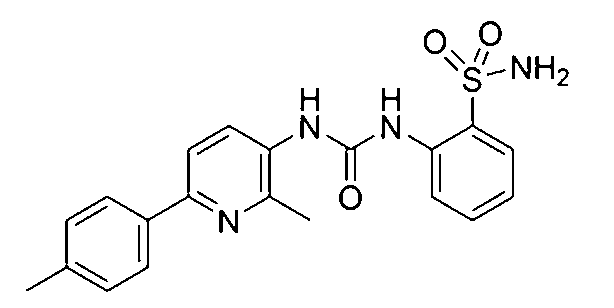
したがって、本発明の広範な実施形態は、新規な式I:

本発明の他の態様は、癌など、好ましくは、乳癌、子宮頸部癌、卵巣癌、腎臓癌、肺癌、食道癌、結腸直腸癌、膀胱癌、前立腺癌、脳腫瘍からなる群から選択される癌、より好ましくは結腸直腸癌などの、増殖性障害を治療および/または予防するための特定の炭酸脱水酵素阻害剤であって、化合物が炭酸脱水酵素IXを標的とすることを特徴とする、炭酸脱水酵素阻害剤を提供することである。 Another aspect of the present invention is to provide a specific carbonic anhydrase inhibitor for the treatment and/or prevention of a proliferative disorder such as cancer, preferably a cancer selected from the group consisting of breast cancer, cervical cancer, ovarian cancer, kidney cancer, lung cancer, esophageal cancer, colorectal cancer, bladder cancer, prostate cancer, brain cancer, more preferably colorectal cancer, characterized in that the compound targets carbonic anhydrase IX.
本発明の別の態様は、式Iの製造のための有機合成方法を提供することである。 Another aspect of the present invention is to provide an organic synthesis method for the preparation of formula I.
本発明は、炭酸脱水酵素IX過剰発現の阻害による障害の治療および/または予防に有用な医薬の製造に使用することができる。 The present invention can be used to manufacture a medicament useful for treating and/or preventing disorders caused by inhibition of carbonic anhydrase IX overexpression.
本発明のさらに別の態様は、薬学的担体、および、治療有効量の式Iの化合物またはその薬学的に許容される塩を含む、医薬組成物を提供することである。 Yet another aspect of the present invention is to provide a pharmaceutical composition comprising a pharmaceutical carrier and a therapeutically effective amount of a compound of formula I or a pharma- ceutical acceptable salt thereof.
本発明のさらなる態様は、癌、好ましくは結腸直腸癌などの増殖性疾患の診断および/またはモニタリングのための式Iの非治療的な使用に関する。 A further aspect of the invention relates to the non-therapeutic use of formula I for the diagnosis and/or monitoring of a proliferative disease such as cancer, preferably colorectal cancer.
本発明の本目的および他の目的は、以下の本発明の詳細な説明から明らかになる。 This and other objects of the present invention will become apparent from the detailed description of the present invention below.
本発明は、添付の図面により説明される。
図1は、式1で処理したHCT116細胞の生存率の図であり、(a)24時間後(P<0.0001)、(b)48時間後(P<0.0001)、(c)72時間後(P<0.0001)である。
図2は、式Iで72時間処理したHUVEC細胞の生存率の図である(有意差なし)。
図3は、アネキシンVアポトーシスアッセイの図であり、(a)および(b)は、式Iで24時間処理したHCT116細胞(P>0.001)、(c)および(d)は、式Iで48時間処理したHCT116細胞(P>0.0001)、(e)および(f)は、式Iで72時間処理したHCT116細胞(P>0.0001)である。
図4は、細胞周期アッセイの図であり、(a)式Iで48時間処理したHCT116細胞(P<0.05)、(b)式Iで72時間処理したHCT116細胞(P<0.0001)である。
図5は、TUNELアッセイによるアポトーシス細胞を示す図である。細胞は、TUNEL染色およびDAPI染色で標識され、アポトーシス細胞は緑色であった。(a)未処理の陰性対照細胞、および(b)式Iで処理した細胞(スケールバーは20μmを表す)である。
The invention is illustrated by the accompanying drawings.
FIG. 1 shows the viability of HCT116 cells treated with Formula 1 after (a) 24 hours (P<0.0001), (b) 48 hours (P<0.0001), and (c) 72 hours (P<0.0001).
FIG. 2 is a graph of the viability of HUVEC cells treated with Formula I for 72 hours (not significant).
FIG. 3 shows Annexin V apoptosis assays: (a) and (b) HCT116 cells treated with Formula I for 24 hours (P>0.001); (c) and (d) HCT116 cells treated with Formula I for 48 hours (P>0.0001); (e) and (f) HCT116 cells treated with Formula I for 72 hours (P>0.0001).
FIG. 4 shows cell cycle assays: (a) HCT116 cells treated with formula I for 48 hours (P<0.05); (b) HCT116 cells treated with formula I for 72 hours (P<0.0001).
Figure 5 shows apoptotic cells by TUNEL assay. Cells were labeled with TUNEL and DAPI staining, and apoptotic cells were green: (a) untreated negative control cells, and (b) Formula I-treated cells (scale bar represents 20 μm).
本発明は、新規なピリジンベースのスルホンアミド誘導体、および癌組織で過剰発現する酵素である炭酸脱水酵素IXに対してのその特異的阻害効果を開示する。本発明は、合成手法も含む。 The present invention discloses novel pyridine-based sulfonamide derivatives and their specific inhibitory effect on carbonic anhydrase IX, an enzyme overexpressed in cancer tissues. The present invention also includes synthetic methods.
本発明は、炭酸脱水酵素阻害剤(式I)に関する。 The present invention relates to a carbonic anhydrase inhibitor (Formula I).
特に断りのない限り、用語「式I」または「化合物」または「小分子」または「阻害剤」は、式Iの化合物、そのプロドラッグ、その化合物および/またはプロドラッグの塩、その化合物の水和物または溶媒和物、立体異性体、互変異性体、同位体標識化合物、多形、および式Iの誘導体、を意味する。 Unless otherwise indicated, the term "Formula I" or "compound" or "small molecule" or "inhibitor" refers to compounds of Formula I, prodrugs thereof, salts of the compounds and/or prodrugs, hydrates or solvates of the compounds, stereoisomers, tautomers, isotopically labeled compounds, polymorphs, and derivatives of Formula I.
本発明の目的は、炭酸脱水酵素IXの活性および/または過剰発現の阻害剤として、化学名が2-(3-(2-メチル-6-(p-トリル)ピリジン-3-イル)ウレイド)ベンゼンスルホンアミドである、特定の炭酸脱水酵素阻害剤化合物を提供することである。 The object of the present invention is to provide a specific carbonic anhydrase inhibitor compound having the chemical name 2-(3-(2-methyl-6-(p-tolyl)pyridin-3-yl)ureido)benzenesulfonamide as an inhibitor of carbonic anhydrase IX activity and/or overexpression.
本発明の目的に従って、具体化され、本明細書に広く記載されるように、本発明は、炭酸脱水酵素IXの活性および/または過剰発現を阻害することができる、特定の炭酸脱水酵素阻害化合物に関する。これに関して、本発明は、次の式I:

本発明の2-(3-(2-メチル-6-(p-トリル)ピリジン-3-イル)ウレイド)ベンゼンスルホンアミド(式I)は、一般合成スキームA~Dに従って得ることができる。このスキームは、本発明の式Iの合成においてなされる一般的手法を示す。
A)合成は、エステル1を、エチルアルコール中でヒドラジン水和物と反応させることによりヒドラジン分解させることによって開始され、2-メチル-6-(p-トリル)ニコチノヒドラジド2を得た。((i);エタノール、NH2NH2・H2O、還流3時間)。
B)ニコチノヒドラジド2を、亜硝酸ナトリウムで、冷塩酸中で処理して、ニコチノイルアジド3を得た。((ii);NaNO2、HCl、撹拌2時間)。
C)次いで、ニコチノイルアジド3を、還流乾燥キシレン中で撹拌しながらクルチウス転位に供して、対応するイソシアネート誘導体4を生成した。((iii);キシレン、還流1時間)。
D)最後に、イソシアネート4を、2-アミノベンゼンスルホンアミド5と還流キシレン中で反応させて、目的の式Iのスルホンアミドを、収率83%で得た。((iv);キシレン、還流7時間)

A) The synthesis began with hydrazinolysis of ester 1 by reaction with hydrazine hydrate in ethyl alcohol to give 2-methyl-6-(p-tolyl)nicotinohydrazide 2. ((i); ethanol, NH2NH2.H2O, reflux 3 h).
B) Nicotinohydrazide 2 was treated with sodium nitrite in cold hydrochloric acid to give nicotinoyl azide 3. ((ii); NaNO2, HCl, stirring 2 h).
C) The nicotinoyl azide 3 was then subjected to Curtius rearrangement with stirring in refluxing dry xylene to give the corresponding isocyanate derivative 4. ((iii); xylene, reflux 1 h).
D) Finally, the isocyanate 4 was reacted with 2-aminobenzenesulfonamide 5 in refluxing xylene to give the desired sulfonamide of formula I in 83% yield. ((iv); xylene, reflux 7 hours).
本明細書に記載の化合物の塩は、従来の化学的方法によって、親化合物から合成することができる。 The salts of the compounds described herein can be synthesized from the parent compounds by conventional chemical methods.
炭酸脱水酵素アイソフォーム(I、II、IVおよびIX)に対する式Iの阻害定数の測定は、この化合物が、前記の腫瘍関連酵素アイソフォームである炭酸脱水酵素IXに対して特異的であることを示した(表1)。 Measurement of the inhibition constants of Formula I against carbonic anhydrase isoforms (I, II, IV and IX) demonstrated that the compound is specific for the tumor-associated enzyme isoform, carbonic anhydrase IX (Table 1).
式Iの炭酸脱水酵素阻害活性は、生理学的に関連するhCAアイソフォーム、hCA I、II(サイトゾル)、およびhCA IXおよびXII(膜透過型、腫瘍関連アイソフォーム)に対して、CA触媒によるCO2水和活性をアッセイするためのApplied Photophysicsのストップトフロー機器を用いて、評価された[24]。それらの阻害活性は、SLC-0111、および臨床的に使用される標準的な炭酸脱水酵素阻害剤アセタゾラミド(AAZ)と比較した。表1に阻害データを示す。 The carbonic anhydrase inhibitory activity of formula I was evaluated against physiologically relevant hCA isoforms, hCA I and II (cytosolic), and hCA IX and XII (membrane-permeable, tumor-associated isoforms), using an Applied Photophysics stopped-flow instrument to assay CA-catalyzed CO2 hydration activity [24]. Their inhibitory activity was compared to that of SLC-0111 and the clinically used standard carbonic anhydrase inhibitor acetazolamide (AAZ). The inhibition data are shown in Table 1.
表1.参照薬物としてSLC-0111およびアセタゾラミド(AAZ)を用いた、ストップトフローCO2ヒドラーゼアッセイによって決定された、式1のヒトCAアイソフォームhCA I、II、IV、およびIXの阻害データ

表から、腫瘍細胞の増殖と腫瘍を増強するhCA IXに対するこの特異的阻害剤(式I)の阻害定数(KI;nM)[26]は、55.9nMであり、hCA I、hCA II、および/またはhCA IVに対する阻害定数(KI;nM)よりも著しく低いことがわかる。さらに、hCA IXに対するこの特異的阻害剤(式I)の阻害定数(KI=55.9nM)は、hCA IXに対する参照薬物(SLC-001およびAAZ)の阻害定数(それぞれ、KI=45nM、および25.8nM)にかなり近い。表のデータによると、特異的阻害剤(式I)は、hCA IXに対して高い親和性を示す。 From the table, it can be seen that the inhibition constant (K I ; nM) [26] of this specific inhibitor (Formula I) against hCA IX, which enhances tumor cell proliferation and tumors, is 55.9 nM, which is significantly lower than the inhibition constants (K I ; nM) against hCA I, hCA II, and/or hCA IV. Moreover, the inhibition constant (K I =55.9 nM) of this specific inhibitor (Formula I) against hCA IX is quite close to the inhibition constants (K I =45 nM and 25.8 nM, respectively) of the reference drugs (SLC-001 and AAZ) against hCA IX. According to the data in the table, the specific inhibitor (Formula I) shows high affinity for hCA IX.
本発明によれば、式Iがヒト結腸直腸癌細胞系(HCT116)に対して抗増殖活性を示すことが見出された。これらの知見は、実施例に示される細胞生存率アッセイと一致している。 In accordance with the present invention, it has been found that Formula I exhibits antiproliferative activity against a human colorectal cancer cell line (HCT116). These findings are consistent with the cell viability assays shown in the Examples.
本明細書に記載のスルホンアミド誘導体化合物は、抗腫瘍および抗癌活性を有し、対象における増殖性疾患の治療、診断および/または予後において有用であることが見出された。 The sulfonamide derivative compounds described herein have been found to have antitumor and anticancer activity and are useful in the treatment, diagnosis and/or prognosis of proliferative disorders in a subject.
本発明によれば、式Iが、特定の癌のタイプ、特にヒト結腸直腸癌に対して、抗増殖およびアポトーシス作用を有することが見出された。 In accordance with the present invention, it has been found that formula I has anti-proliferative and apoptotic effects against certain cancer types, particularly human colorectal cancer.
さらに、この阻害の結果、炭酸脱水酵素IXの発現が式Iによって調節され、その機能が抑制されることが見出された。式Iは、アポトーシスの誘導を介して媒介される抗増殖剤として機能する。 Furthermore, it was found that this inhibition resulted in the regulation of carbonic anhydrase IX expression and suppression of its function by Formula I. Formula I functions as an antiproliferative agent mediated through the induction of apoptosis.
さらなる態様において、本発明は、炭酸脱水酵素IXタンパク質を阻害し、その活性をネガティブに調節する化合物(式I)に関する。 In a further aspect, the present invention relates to compounds (formula I) that inhibit carbonic anhydrase IX protein and negatively regulate its activity.
本発明の一実施形態において、開示された化合物は、炭酸脱水酵素タンパク質に対して選択性および高い親和性を示す。したがって、阻害は強力である。 In one embodiment of the present invention, the disclosed compounds exhibit selectivity and high affinity for carbonic anhydrase proteins. Thus, inhibition is potent.
文献によると、炭酸脱水酵素IXに化合物WES-1を結合させることにより、腫瘍細胞の増殖と腫瘍の進行に関与する炭酸脱水酵素IXを阻害すると、腫瘍細胞の増殖と遊走が抑制される。 According to the literature, binding the compound WES-1 to carbonic anhydrase IX inhibits the proliferation and migration of tumor cells, which is involved in tumor cell proliferation and tumor progression.
本明細書において、「阻害」、「阻害する」または「阻害すること」との用語は、所与の状態、症状、または障害、または疾患の低減または抑制、または、炭酸脱水酵素などの生物学的な活性またはプロセスのベースライン活性においての有意な減少を意味する。 As used herein, the terms "inhibit," "inhibit," or "inhibiting" refer to the reduction or suppression of a given condition, symptom, or disorder, or disease, or a significant decrease in the baseline activity of a biological activity or process, such as carbonic anhydrase.
本発明の化合物の「治療有効量」との用語は、対象の生物学的または医学的な応答、例えば、タンパク質の活性の阻害、または症状を改善する、状態を緩和する、病気の進行を緩やかにするまたは遅らせる、または疾患や障害を予防することなど、を誘発する、本発明の化合物の非毒性で十分な量を意味する。 The term "therapeutically effective amount" of a compound of the invention means a non-toxic, sufficient amount of a compound of the invention to elicit a biological or medical response in a subject, such as inhibiting the activity of a protein, or ameliorating a symptom, alleviating a condition, slowing or slowing the progression of a disease, or preventing a disease or disorder.
本明細書に開示される本発明の様々な実施形態はすべて、本明細書に記載される様々な疾患および障害を治療および/または予防する方法に関する。本明細書で述べられるように、本発明の方法で使用される化合物は、炭酸脱水酵素IXの酵素活性を阻害することが可能である。 All of the various embodiments of the invention disclosed herein relate to methods of treating and/or preventing the various diseases and disorders described herein. As described herein, the compounds used in the methods of the invention are capable of inhibiting the enzymatic activity of carbonic anhydrase IX.
本発明は、増殖性疾患の治療または予防のための方法をさらに提供する。本発明において、「増殖性疾患」との用語には、新生物および癌、異形成、前悪性または前癌病変、異常細胞増殖、良性腫瘍、悪性腫瘍、または転移が含まれ、好ましくは癌を意味する。 The present invention further provides a method for the treatment or prevention of a proliferative disease. In the present invention, the term "proliferative disease" includes neoplasms and cancers, dysplasias, premalignant or precancerous lesions, abnormal cell proliferation, benign tumors, malignant tumors, or metastases, and preferably means cancer.
さらに、本発明は、上記の化合物を含む医薬組成物、および、炭酸脱水酵素IXの酵素の過剰発現に関連する障害の治療および/または予防における上記の化合物の使用および使用方法に関する。本発明の他の実施形態において、上記の化合物を含む医薬組成物は、炭酸脱水酵素IXの活性の阻害により増殖障害の治療および/または予防に有用である。 Furthermore, the present invention relates to pharmaceutical compositions comprising the above compounds, and to the use and methods of use of the above compounds in the treatment and/or prevention of disorders associated with overexpression of the enzyme carbonic anhydrase IX. In another embodiment of the present invention, the pharmaceutical compositions comprising the above compounds are useful for the treatment and/or prevention of proliferative disorders by inhibition of the activity of carbonic anhydrase IX.
本発明は、薬学的担体、および、治療有効量の式Iの化合物またはその薬学的に許容される塩、を含む、医薬組成物に関する。 The present invention relates to a pharmaceutical composition comprising a pharmaceutical carrier and a therapeutically effective amount of a compound of formula I or a pharma- ceutical acceptable salt thereof.
一態様において、本開示は、治療有効量の開示の化合物を薬学的に許容される担体または希釈剤と組み合わせることを含む、哺乳動物において炭酸脱水酵素IXの活性および/または過剰発現を阻害するための医薬の製造方法に関する。 In one aspect, the disclosure relates to a method for producing a medicament for inhibiting activity and/or overexpression of carbonic anhydrase IX in a mammal, comprising combining a therapeutically effective amount of a disclosed compound with a pharma- ceutical acceptable carrier or diluent.
これらの例は、本発明の特定の実施形態を代表することを意図しており、本発明の範囲を限定することを意図するものではない。 These examples are intended to represent specific embodiments of the invention and are not intended to limit the scope of the invention.
特定の実施形態
これらの実施形態において、有機合成の手法を適用して、炭酸脱水酵素IXタンパク質を特異的に阻害する、式Iの小分子を生成した。スキームA~Dに示される合成方法によって候補分子を得た後、実験的研究により、炭酸脱水酵素IXに特異的に結合する化合物(式I)が決定される。さらに、式Iの阻害活性の特徴付けをインビトロで研究した。
Specific Embodiments In these embodiments, organic synthesis techniques were applied to generate small molecules of formula I that specifically inhibit carbonic anhydrase IX protein. After obtaining candidate molecules by the synthetic methods shown in Schemes AD, experimental studies were performed to determine compounds (formula I) that specifically bind to carbonic anhydrase IX. Furthermore, characterization of the inhibitory activity of formula I was studied in vitro.
実施例1:本発明の化合物の合成
化学の部
融点は、Stuart融点装置で測定し、補正しなかった。赤外(IR)スペクトルは、Schimadzu FT-IR 8400S分光光度計を使用し、KBrディスクとして記録した。1H-NMRおよび13C-NMRの実験は、Bruker NMR分光計(400/100MHz)を使用して実施した。化学シフト(δH)は、内部標準としてのTMSと比較して報告する。すべてのカップリング定数(J)の値は、ヘルツで示される。化学シフト(δC)は、s、シングレット;d、ダブレット;m、マルチプレットのように報告した。すべての試薬および溶媒は、標準的な技術により乾燥および精製した。化合物1および2[23]は、以前に製造されている。
Example 1: Synthetic Chemistry of Compounds of the Invention Melting points were determined on a Stuart melting point apparatus and are uncorrected. Infrared (IR) spectra were recorded as KBr disks using a Schimadzu FT-IR 8400S spectrophotometer. 1H-NMR and 13C-NMR experiments were performed using a Bruker NMR spectrometer (400/100 MHz). Chemical shifts (δH) are reported relative to TMS as the internal standard. All coupling constant (J) values are given in Hertz. Chemical shifts (δC) were reported as s, singlet; d, doublet; m, multiplet. All reagents and solvents were dried and purified by standard techniques. Compounds 1 and 2 [23] have been previously prepared.
目的の式Iのスルホンアミドの製造のための一般的手順
2-メチル-6-(p-トリル)ニコチノヒドラジド2(1.2g、5mmol)および亜硝酸ナトリウム(0.5g、7mmol)の塩酸溶液を、氷浴中で1時間撹拌し、次いで、室温でさらに1時間、撹拌を続け、砕いた氷の上に注いだ。得られた固体を濾過し、風乾して、2-メチル-6-(p-トリル)ニコチノイルアジド3を得て、これをさらに精製することなく次のステップで使用した。2-メチル-6-(p-トリル)ニコチノイルアジド3を、乾燥キシレン中で1時間還流加熱し、次いで、2-アミノベンゼンスルホンアミド5(0.86g、5mmol)をこの溶液に加えた。次いで、反応混合物を還流温度で7時間加熱した。得られた固体を室温に冷却した後、濾別し、ジエチルエーテルで洗浄し、ジオキサンから再結晶して、目的の式Iのスルホンアミドを得た。
General procedure for the preparation of the desired sulfonamides of formula I. A solution of 2-methyl-6-(p-tolyl)nicotinohydrazide 2 (1.2 g, 5 mmol) and sodium nitrite (0.5 g, 7 mmol) in hydrochloric acid was stirred in an ice bath for 1 h, then stirring was continued at room temperature for an additional 1 h and poured onto crushed ice. The resulting solid was filtered and air-dried to give 2-methyl-6-(p-tolyl)nicotinoyl azide 3, which was used in the next step without further purification. 2-Methyl-6-(p-tolyl)nicotinoyl azide 3 was heated at reflux in dry xylene for 1 h, and then 2-aminobenzenesulfonamide 5 (0.86 g, 5 mmol) was added to the solution. The reaction mixture was then heated at reflux for 7 h. The resulting solid was cooled to room temperature, then filtered off, washed with diethyl ether and recrystallized from dioxane to give the desired sulfonamides of formula I.
2-(3-(2-メチル-6-(p-トリル)ピリジン-3-イル)ウレイド)ベンゼンスルホンアミド(式I)
白色結晶(収率83%)、m.p.213-215℃;IR(KBr,ν cm-1):3207(NH2),1713(C=O)および1342,1161(SO2);1H NMR(DMSO-d6,400MHz)δ ppm:2.33(s,3H,CH3),2.53(s,3H,CH3),7.15(dt,1H,2-(H2NO2S)-C6H4のH-4,J=8.4,1.2Hz),7.24(d,2H,4-(H3C)-C6H4のH-3およびH-5,J=8.0Hz),7.49(dt,1H,2-(H2NO2S)-C6H4のH-5,J=8.4,1.2Hz),7.71(d,1H,H-5ピリジン,J=8.4Hz),7.79(dd,1H,2-(H2NO2S)-C6H4のH-3,J=8.0,1.2Hz),7.92(d,2H,4-(H3C)-C6H4のH-2およびH-6,J=8.0Hz),7.96(d,1H,2-(H2NO2S)-C6H4のH-6,J=8.4Hz),8.03(d,1H,H-4ピリジン,J=8.4Hz),8.24(s,1H,NH,D2O交換可能),8.27(s,1H,NH,D2O交換可能);13C NMR(DMSO-d6,100MHz)δ ppm:21.25(CH3),22.03(CH3),117.70,122.88,124.29,126.41(2C),127.81,129.68(2C),131.13,132.65,132.71,132.90,136.22,136.59,138.18,149.91,150.47,153.26(C=O).
2-(3-(2-methyl-6-(p-tolyl)pyridin-3-yl)ureido)benzenesulfonamide (Formula I)
White crystals (yield 83%), m.p. 213-215°C; IR (KBr, ν cm-1): 3207 (NH2), 1713 (C=O) and 1342, 1161 (SO2); 1H NMR (DMSO-d6, 400 MHz) δ ppm: 2.33 (s, 3H, CH3), 2.53 (s, 3H, CH3), 7.15 (dt, 1H, H-4 of 2-(H2NO2S)-C6H4, J = 8.4, 1.2 Hz), 7.24 (d, 2H, H-3 and H-5 of 4-(H3C)-C6H4, J = 8.0 Hz), 7.49 (dt, 1H, H-5 of 2-(H2NO2S)-C6H4, J = 8.4, 1.2 Hz), 7.71 (d, 1H, H-5 pyridine, J = 8.4 Hz), 7.79 (dd, 1H, H-3 of 2-(H2NO2S)-C6H4, J = 8.0, 1.2 Hz), 7.92 (d, 2H, H-2 and H-6 of 4-(H3C)-C6H4, J = 8.0 Hz), 7.96 (d, 1H, H-6 of 2-(H2NO2S)-C6H4, J = 8.4 Hz), 8.03 (d, 1H, H-4 pyridine, J = 8.4 Hz), 8.24 (s, 1H, NH, DO exchangeable), 8.27 (s, 1H, NH, DO exchangeable); NMR (DMSO-d6, 100 MHz) δ ppm: 21.25 (CH3), 22.03 (CH3), 117.70, 122.88, 124.29, 126.41 (2C), 127.81, 129.68 (2C), 131.13, 132.65, 132.71, 132.90, 136.22, 136.59, 138.18, 149.91, 150.47, 153.26 (C=O).
実施例2:炭酸脱水酵素IXに対する式Iの特異的阻害効果
CA阻害アッセイ
Applied Photophysicsのストップトフロー装置を使用して、CA触媒によるCO2水和活性を分析した。フェノールレッド(濃度0.2mM)を指示薬として使用し、最大吸光度557nmとし、バッファーとして20mMのHepes(pH7.5)、および20mMのNa2SO4(イオン強度を一定に維持するため)を使用し、続いて、10~100秒間のCA触媒CO2水和反応の初期速度とした。CO2濃度は、動力学的パラメーターと阻害定数の決定のために、1.7~17mMの範囲とした。各阻害剤について、初期速度を決定するために、反応の最初の5~10%の少なくとも6つのトレースが使用される。非触媒の速度を同じ方法で決定し、観察された総速度から差し引いた。阻害剤のストック溶液(0.1mM)を蒸留脱イオン水で調製し、アッセイバッファーで0.01nMまで希釈した。E-I複合体の形成を可能にするために、アッセイ前に、阻害剤および酵素溶液を一緒に室温で15分間、プレインキュベートした。阻害定数は、PRISM3およびCheng-Prusoff式を使用した非線形最小二乗法によって得られ、少なくとも3つの異なる測定値の平均を表した。
Example 2: Specific inhibitory effect of Formula I on Carbonic Anhydrase IX CA Inhibition Assay CA-catalyzed CO2 hydration activity was analyzed using an Applied Photophysics stopped-flow apparatus. Phenol red (concentration 0.2 mM) was used as indicator, with an absorbance maximum at 557 nm, 20 mM Hepes (pH 7.5) as buffer, and 20 mM Na2SO4 (to maintain constant ionic strength), followed by the initial rate of CA-catalyzed CO2 hydration reaction for 10-100 seconds. CO2 concentrations ranged from 1.7-17 mM for the determination of kinetic parameters and inhibition constants. For each inhibitor, at least six traces of the first 5-10% of the reaction are used to determine the initial rate. The uncatalyzed rate was determined in the same way and subtracted from the total rate observed. Stock solutions of inhibitors (0.1 mM) were prepared in distilled deionized water and diluted to 0.01 nM in assay buffer. Inhibitor and enzyme solutions were preincubated together for 15 min at room temperature prior to the assay to allow for the formation of the E-I complex. Inhibition constants were obtained by nonlinear least-squares fitting using PRISM3 and the Cheng-Prusoff equation and represent the average of at least three different measurements.
実施例3:生物学的評価
細胞培養
HCT116、ヒト結腸直腸癌細胞株、およびヒト臍帯静脈内皮細胞(HUVEC)は、米国のATCCから入手し、10%熱不活化ウシ胎児血清1%ペニシリン/ストレプトマイシン/アムホテリシン(Life TechnologiesTM、米国)を含む高グルコースDMEM培地(Invitrogen)で増殖させた。
Example 3: Biological Evaluation Cell Culture HCT116, a human colorectal cancer cell line, and human umbilical vein endothelial cells (HUVEC) were obtained from ATCC, USA, and grown in high glucose DMEM medium (Invitrogen) containing 10% heat-inactivated fetal bovine serum, 1% penicillin/streptomycin/amphotericin (Life Technologies ™ , USA).
細胞生存率アッセイ
異なる濃度の式I(50μM、25μM、12.5μM、6.25μM、3.125μM、1μM)で、24、48、および72時間処理した後の、および、通常の細胞培養条件である温度37℃、相対湿度80%、5%CO2でのインキュベーション後の、生存している結腸直腸癌細胞(HCT116細胞)、およびヒト臍帯静脈内皮細胞(HUVEC)のパーセンテージは、3-(4,5-ジメチルチアゾール-2-イル)-5-(3-カルボキシメトキシフェニル)-2-(4-スルホフェニル)-2H-テトラゾリウム(MTS)還元アッセイ(Cell titer96(登録商標)水性MTS試薬粉末、Promega(登録商標))によって決定した。さらに、HCT116細胞の50%の細胞死を引き起こす用量である式Iの薬剤のIC50は、GraphPadソフトウェアを使用して決定した。
Cell Viability Assay The percentage of surviving colorectal cancer cells (HCT116 cells) and human umbilical vein endothelial cells (HUVECs) after treatment with different concentrations of Formula I (50 μM, 25 μM, 12.5 μM, 6.25 μM, 3.125 μM, 1 μM) for 24, 48, and 72 hours and after incubation at normal cell culture conditions of 37° C., 80% relative humidity, and 5% CO2 was determined by 3-(4,5-dimethylthiazol-2-yl)-5-(3-carboxymethoxyphenyl)-2-(4-sulfophenyl)-2H-tetrazolium (MTS) reduction assay (Cell titer96® aqueous MTS reagent powder, Promega®). Additionally, the IC50 of agents of formula I, the dose that causes cell death in 50% of HCT116 cells, was determined using GraphPad software.
HUVEC細胞(健康な細胞)をさまざまな濃度の式Iの薬剤でそれぞれ、24時間、48時間(データは示していない)、および72時間(図2)、インキュベートした後、50μMの濃度の式Iで処理した場合の平均生存率は、80.53%であったが、濃度(25μM、12.5μM、6.25μM、3.125μM、1μM)で処理した場合、平均生存率の範囲は、92.07%~96.89%であった。一方、濃度(50μM、25μM、12.5μM、6.25μM、3.125μM、1μM)の式Iで、24時間処理したHCT116細胞(ヒト結腸直腸癌細胞株)の平均生存率の範囲は、69.28%~97.31%(図1a)であり、48時間の処理後は、57.60%~99.96%(図1b)の範囲であり、さらに、72時間処理後の生存率は、38.15%~97.82%(図1c)の範囲であった。上記のHCT116細胞の生存率の結果から、GraphPadソフトウェアでIC50を計算すると、約24μMであった。 HUVEC cells (healthy cells) were incubated with various concentrations of the drug of formula I for 24, 48 (data not shown), and 72 hours (Figure 2), respectively, and the average viability was 80.53% when treated with formula I at a concentration of 50 μM, whereas the average viability ranged from 92.07% to 96.89% when treated with concentrations (25 μM, 12.5 μM, 6.25 μM, 3.125 μM, 1 μM). Meanwhile, the average viability of HCT116 cells (human colorectal cancer cell line) treated with Formula I at concentrations (50 μM, 25 μM, 12.5 μM, 6.25 μM, 3.125 μM, 1 μM) for 24 hours ranged from 69.28% to 97.31% (Figure 1a), after 48 hours of treatment it ranged from 57.60% to 99.96% (Figure 1b), and after 72 hours of treatment it ranged from 38.15% to 97.82% (Figure 1c). From the above HCT116 cell viability results, the IC50 was calculated to be about 24 μM using GraphPad software.
アネキシンV-FITCアポトーシス検出アッセイ
HCT116細胞を、式IのIC50でそれぞれ、24、48、および72時間処理し、温度37℃、相対湿度80%、および5%CO2で、インキュベートした。アポトーシス細胞は、製造業者のプロトコルに従って、ApoDETECTTMアネキシンV-FITCキット(Life TechnologiesTM、米国)を使用したフローサイトメトリー(Beckmanフローサイトメーター)によって、検出した。
Annexin V-FITC Apoptosis Detection Assay HCT116 cells were treated with the IC50 of Formula I for 24, 48, and 72 hours, respectively, and incubated at 37°C, 80% relative humidity, and 5% CO2. Apoptotic cells were detected by flow cytometry (Beckman flow cytometer) using ApoDETECT ™ Annexin V-FITC kit (Life Technologies ™ , USA) according to the manufacturer's protocol.
HCT116細胞を、式Iで24時間処理すると、初期アポトーシス細胞の割合は約30%増加したが(図3a~図3b)、48時間インキュベーションすると、初期アポトーシスを受けた細胞の割合は、約33%になった(図3c~図3d)。さらに、HCT116細胞を、式Iで72時間処理すると、初期段階のアポトーシスの細胞の割合が25%になり、後期段階のアポトーシスの細胞の割合が約16.5%になることが分かった(図3e~3f)。これらの所見は、式Iの薬剤がヒト結腸直腸癌(HCT116)細胞株に対して抗増殖活性を示すことを示した細胞生存率アッセイと一致する。 Treatment of HCT116 cells with formula I for 24 hours increased the percentage of early apoptotic cells by approximately 30% (Fig. 3a-b), whereas incubation for 48 hours resulted in approximately 33% of cells undergoing early apoptosis (Fig. 3c-d). Furthermore, treatment of HCT116 cells with formula I for 72 hours resulted in 25% of cells undergoing early stage apoptosis and approximately 16.5% of cells undergoing late stage apoptosis (Fig. 3e-f). These findings are consistent with cell viability assays that showed that formula I agents exhibit antiproliferative activity against human colorectal carcinoma (HCT116) cell lines.
フローサイトメトリーによる細胞周期分析
HCT116細胞を、式IのIC50でそれぞれ、48時間および72時間処理し、温度37℃、相対湿度80%、および5%CO2で、インキュベートした。細胞周期を、ヨウ化プロピジウム染色によるDNA含有量の定量化によって分析し、細胞周期の進行に対する式Iの効果を決定した。
Cell cycle analysis by flow cytometry HCT116 cells were treated with the IC50 of Formula I for 48 and 72 hours, respectively, and incubated at 37° C., 80% relative humidity, and 5% CO2. Cell cycle was analyzed by quantification of DNA content by propidium iodide staining to determine the effect of Formula I on cell cycle progression.
HCT116細胞を、式Iでそれぞれ、48時間および72時間処理すると(図4a~図4b)、G1期の細胞の割合が減少し、S期の細胞の割合が増加したことが分かった。これらの所見は、細胞がS期で停止し、S期の細胞の蓄積が、アポトーシスの誘導を生じさせるDNA複製の遮断をもたらすことを示した[25]。 When HCT116 cells were treated with Formula I for 48 and 72 hours, respectively (Figures 4a-b), it was found that the percentage of cells in G1 phase decreased and the percentage of cells in S phase increased. These findings indicated that cells were arrested in S phase and that the accumulation of cells in S phase led to a blockade of DNA replication resulting in the induction of apoptosis [25].
TUNEL(DNA断片化)アッセイ
アポトーシスを、アポトーシスの後期段階の特徴であるDNA断片化を検出するTUNELアッセイによって確認した。HCT116細胞をカバースリップ上に播種し、式IのIC50で処理し、温度37℃、相対湿度80%、および5%CO2で、72時間インキュベートした。処理後、Alexa FluorTM488色素(緑色)を用いたClick-iTTM Plus TUNELアッセイ(invitrogenTM)を使用して、断片化したDNAを検出し、細胞をDAPIで対比染色した。染色された細胞を共焦点顕微鏡で分析した。
TUNEL (DNA Fragmentation) Assay Apoptosis was confirmed by TUNEL assay, which detects DNA fragmentation, a characteristic of the late stage of apoptosis. HCT116 cells were seeded on cover slips, treated with IC50 of Formula I, and incubated for 72 hours at 37° C., 80% relative humidity, and 5% CO2. After treatment, fragmented DNA was detected using Click-iT ™ Plus TUNEL assay (Invitrogen ™ ) with Alexa Fluor ™ 488 dye (green), and cells were counterstained with DAPI. Stained cells were analyzed by confocal microscopy.
図5bに示すように、式Iで72時間処理したHCT116細胞は、陰性対照細胞(図5a)と比較して、TUNEL陽性(緑色蛍光)のDNA鎖切断を示した。これらの所見により、HCT116細胞に対する式Iのアポトーシス効果が確認された。 As shown in Figure 5b, HCT116 cells treated with Formula I for 72 hours showed TUNEL-positive (green fluorescence) DNA strand breaks compared to the negative control cells (Figure 5a). These findings confirmed the apoptotic effect of Formula I on HCT116 cells.
インビトロ生細胞イメージング
HCT116細胞を、6ウェルプレートに播種し、IC50の式Iの薬剤で処理し、温度37℃、相対湿度80%、および5%CO2で、72時間インキュベートし、細胞の挙動を72時間、オリンパスの顕微鏡を用いた動画で追跡してモニタリングした。
In Vitro Live Cell Imaging HCT116 cells were seeded in 6-well plates, treated with the drugs of formula I at IC50, and incubated at 37°C, 80% relative humidity, and 5% CO2 for 72 hours, and the behavior of the cells was monitored by video tracking using an Olympus microscope for 72 hours.
結論
以上の知見から、炭酸脱水酵素アッセイによると、新たに合成した式IのhCA IX阻害剤は、腫瘍細胞の増殖と腫瘍の進行を誘導するhCA IX酵素に対して高い親和性を示すことが分かった。さらに、HCT116癌細胞を式Iで処理した際のアポトーシスアッセイの結果に基づくと、HUVEC(健康なヒト臍帯静脈内皮細胞)の処理では軽度の毒性を示す94%を超える生存率を示す一方で、式1が細胞のアポトーシスを誘導することが分かった。最終的に、新しく合成した新規化合物(2-(3-(2-メチル-6-(p-トリル)ピリジン-3-イル)ウレイド)ベンゼンスルホンアミド)(式I)は、健康なヒト臍帯静脈内皮細胞(HUVEC)の細胞に対して非常にわずかな毒性であり、ヒト結腸直腸癌細胞株HCT116に対して、抗増殖性およびアポトーシス性の効果を有すると結論付けることができる。
Conclusion From the above findings, the newly synthesized hCA IX inhibitor of formula I shows high affinity to hCA IX enzyme, which induces tumor cell proliferation and tumor progression, according to carbonic anhydrase assay. Furthermore, based on the results of apoptosis assay when HCT116 cancer cells are treated with formula I, formula I induces cell apoptosis, while the treatment of HUVEC (healthy human umbilical vein endothelial cells) shows a viability rate of over 94% with mild toxicity. Finally, it can be concluded that the newly synthesized novel compound (2-(3-(2-methyl-6-(p-tolyl)pyridin-3-yl)ureido)benzenesulfonamide) (formula I) has very little toxicity to healthy human umbilical vein endothelial cells (HUVEC) cells and has anti-proliferative and apoptotic effects on human colorectal cancer cell line HCT116.
参考文献
1. U.S. FOOD & DRUG ADMINISTRATION. FDA expands approved use of Stivarga to treat liver cancer. 2017, April 27; Available from https://www.fda.gov/news-events/press-announcements/fda-expands-approved-use-stivarga-treat-liver-cancer.
2. Cui, J.J., et al., Structure-based drug design of crizotinib (PF-02341066), a potent and selective dual inhibitor of mesenchymal-epithelial transition factor (c-MET) kinase and anaplastic lymphoma kinase (ALK). J Med Chem, 2011. 54(18): p. 6342-63.
3. Wilhelm, S., et al., Discovery and development of sorafenib: a multikinase inhibitor for treating cancer. Nat Rev Drug Discov, 2006. 5(10): p. 835-44.
4. Wilhelm; Scott; (Orange, C.D.J.B., CT) ; Ladouceur; Gaetan; (Guilford, CT) ; Lynch; Mark; (Madison, CT) ; Scott; William J.; (Guilford, CT), Diaryl ureas with kinase inhibiting activity 2007, January 25: U.S.
5. Roed Skarderud, M., et al., Efficacy and safety of regorafenib in the treatment of metastatic colorectal cancer: A systematic review. Cancer Treat Rev, 2018. 62: p. 61-73.
6. Zhang, L. and J. Yu, Role of apoptosis in colon cancer biology, therapy, and prevention. Curr Colorectal Cancer Rep, 2013. 9(4): p. 013-0188.
7. Chen, D. et al., Regorafenib inhibits colorectal tumor growth through PUMA-mediated apoptosis. Clinical cancer research : an official journal of the American Association for Cancer Research, 2014. 20(13): p. 3472-3484.
8. Sahu, A., et al., Crizotinib: A comprehensive review. South Asian J Cancer, 2013. 2(2): p. 91-7.
9. Frampton, J.E., Crizotinib: a review of its use in the treatment of anaplastic lymphoma kinase-positive, advanced non-small cell lung cancer. Drugs, 2013. 73(18): p. 2031-51.
10. Dai, X. et al., (S)-crizotinib induces apoptosis in human non-small cell lung cancer cells by activating ROS independent of MTH1. J Exp Clin Cancer Res, 2017. 36(1): p. 017-0584.
11. Supuran, C.T., Carbonic anhydrases: novel therapeutic applications for inhibitors and activators. Nat Rev Drug Discov, 2008. 7(2): p. 168-81.
12. Ozensoy Guler, O., C. Capasso, and C.T. Supuran, A magnificent enzyme superfamily: carbonic anhydrases, their purification and characterization. J Enzyme Inhib Med Chem, 2016. 31(5): p. 689-94.
13. Supuran, C.T., Carbonic Anhydrase Inhibition and the Management of Hypoxic Tumors. Metabolites, 2017. 7(3).
14. De Simone, G. and C.T. Supuran, Carbonic anhydrase IX: Biochemical and crystallographic characterization of a novel antitumor target. Biochim Biophys Acta, 2010. 2: p. 404-9.
15. Pastorek, J. and S. Pastorekova, Hypoxia-induced carbonic anhydrase IX as a target for cancer therapy: from biology to clinical use. Semin Cancer Biol, 2015. 31: p. 52-64.
16. Lou, Y., et al., Targeting tumor hypoxia: suppression of breast tumor growth and metastasis by novel carbonic anhydrase IX inhibitors. Cancer Res, 2011. 71(9): p. 3364-76.
17. Pacchiano, F. et al., Selective hydrophobic pocket binding observed within the carbonic anhydrase II active site accommodate different 4-substituted-ureido-benzenesulfonamides and correlate to inhibitor potency. Chem Commun, 2010. 46(44): p. 8371-3.
18. Pacchiano, F., et al., Ureido-substituted benzenesulfonamides potently inhibit carbonic anhydrase IX and show antimetastatic activity in a model of breast cancer metastasis. J Med Chem, 2011. 54(6): p. 1896-902.
19. Haggar, F.A. and R.P. Boushey, Colorectal cancer epidemiology: incidence, mortality, survival, and risk factors. Clinics in colon and rectal surgery, 2009. 22(4): p. 191-197.
20. Kuipers, E.J., et al., Colorectal cancer. Nature reviews. Disease primers, 2015. 1: p. 15065-15065.
21. American Cancer Society. Key statistics for colorectal cancer. 2019; Available from https://www.cancer.org/cancer/colon-rectal-cancer/about/key-statistics.html.
22. Marley, A.R. and H. Nan, Epidemiology of colorectal cancer. International journal of molecular epidemiology and genetics, 2016. 7(3): p. 105-114.
23. Eldehna, W.M., et al., Design, synthesis and QSAR study of certain isatin-pyridine hybrids as potential anti-proliferative agents. Eur J Med Chem, 2015. 90: p. 684-94.
24. Khalifah, R.G., The carbon dioxide hydration activity of carbonic anhydrase. I. Stop-flow kinetic studies on the native human isoenzymes B and C. J Biol Chem, 1971. 246(8): p. 2561-73.
25. Xu, X., et al., Inhibition of DNA replication and induction of S phase cell cycle arrest by G-rich oligonucleotides. J Biol Chem, 2001. 276(46): p. 43221-30.
26. Okuno, K., et al., Carbonic anhydrase IX enhances tumor cell proliferation and tumor progression in osteosarcoma. Onco Targets Ther, 2018. 11: p. 6879-6886.
References
1. US FOOD & DRUG ADMINISTRATION. FDA expands approved use of Stivarga to treat liver cancer. 2017, April 27; Available from https://www.fda.gov/news-events/press-announcements/fda-expands-approved-use-stivarga-treat-liver-cancer.
2. Cui, JJ, et al., Structure-based drug design of crizotinib (PF-02341066), a potent and selective dual inhibitor of mesenchymal-epithelial transition factor (c-MET) kinase and anaplastic lymphoma kinase (ALK). J Med Chem, 2011. 54(18): p. 6342-63.
3. Wilhelm, S., et al., Discovery and development of sorafenib: a multikinase inhibitor for treating cancer. Nat Rev Drug Discov, 2006. 5(10): p. 835-44.
4. Wilhelm, Scott; (Orange, CDJB, CT); Ladouceur, Gaetan; (Guilford, CT); Lynch, Mark; (Madison, CT); Scott, William J.; (Guilford, CT), Diaryl ureas with kinase inhibiting activity 2007, January 25: US
5. Roed Skarderud, M., et al., Efficacy and safety of regorafenib in the treatment of metastatic colorectal cancer: A systematic review. Cancer Treat Rev, 2018. 62: p. 61-73.
6. Zhang, L. and J. Yu, Role of apoptosis in colon cancer biology, therapy, and prevention. Curr Colorectal Cancer Rep, 2013. 9(4): p. 013-0188.
7. Chen, D. et al., Regorafenib inhibits colorectal tumor growth through PUMA-mediated apoptosis. Clinical cancer research: an official journal of the American Association for Cancer Research, 2014. 20(13): p. 3472-3484.
8. Sahu, A., et al., Crizotinib: A comprehensive review. South Asian J Cancer, 2013. 2(2): p. 91-7.
9. Frampton, J.E. Crizotinib: a review of its use in the treatment of anaplastic lymphoma kinase-positive, advanced non-small cell lung cancer. Drugs, 2013. 73(18): p. 2031-51.
10. Dai, X. et al., (S)-crizotinib induces apoptosis in human non-small cell lung cancer cells by activating ROS independent of MTH1. J Exp Clin Cancer Res, 2017. 36(1): p. 017-0584.
11. Supuran, C. T., Carbonic anhydrases: novel therapeutic applications for inhibitors and activators. Nat Rev Drug Discov, 2008. 7(2): p. 168-81.
12. Ozensoy Guler, O., C. Capasso, and C. T. Supuran, A magnificent enzyme superfamily: carbonic anhydrases, their purification and characterization. J Enzyme Inhib Med Chem, 2016. 31(5): p. 689-94.
13. Supuran, C. T., Carbonic Anhydrase Inhibition and the Management of Hypoxic Tumors. Metabolites, 2017. 7(3).
14. De Simone, G. and C. T. Supuran, Carbonic anhydrase IX: Biochemical and crystallographic characterization of a novel antitumor target. Biochim Biophys Acta, 2010. 2: p. 404-9.
15. Pastorek, J. and S. Pastorekova. Hypoxia-induced carbonic anhydrase IX as a target for cancer therapy: from biology to clinical use. Semin Cancer Biol. 2015. 31: p. 52-64.
16. Lou, Y., et al., Targeting tumor hypoxia: suppression of breast tumor growth and metastasis by novel carbonic anhydrase IX inhibitors. Cancer Res, 2011. 71(9): p. 3364-76.
17. Pacchiano, F. et al., Selective hydrophobic pocket binding observed within the carbonic anhydrase II active site accommodates different 4-substituted-ureido-benzenesulfonamides and correlates to inhibitor potency. Chem Commun, 2010. 46(44): p. 8371-3.
18. Pacchiano, F., et al., Ureido-substituted benzenesulfonamides potently inhibit carbonic anhydrase IX and show antimetastatic activity in a model of breast cancer metastasis. J Med Chem, 2011. 54(6): p. 1896-902.
19. Haggar, FA and RP Boushey. Colorectal cancer epidemiology: incidence, mortality, survival, and risk factors. Clinics in colon and rectal surgery, 2009. 22(4): p. 191-197.
20. Kuipers, EJ, et al., Colorectal cancer. Nature reviews. Disease primers, 2015. 1: p. 15065-15065.
21. American Cancer Society. Key statistics for colorectal cancer. 2019; Available from https://www.cancer.org/cancer/colon-rectal-cancer/about/key-statistics.html.
22. Marley, A. R. and H. Nan, Epidemiology of colorectal cancer. International journal of molecular epidemiology and genetics, 2016. 7(3): p. 105-114.
23. Eldehna, WM, et al., Design, synthesis and QSAR study of certain isatin-pyridine hybrids as potential anti-proliferative agents. Eur J Med Chem, 2015. 90: p. 684-94.
24. Khalifah, RG. The carbon dioxide hydration activity of carbonic anhydrase. I. Stop-flow kinetic studies on the native human isoenzymes B and C. J Biol Chem, 1971. 246(8): p. 2561-73.
25. Xu, X., et al., Inhibition of DNA replication and induction of S phase cell cycle arrest by G-rich oligonucleotides. J Biol Chem, 2001. 276(46): p. 43221-30.
26. Okuno, K., et al., Carbonic anhydrase IX enhances tumor cell proliferation and tumor progression in osteosarcoma. Onco Targets Ther, 2018. 11: p. 6879-6886.
Claims (8)
Applications Claiming Priority (1)
| Application Number | Priority Date | Filing Date | Title |
|---|---|---|---|
| PCT/TR2020/050477 WO2021246974A1 (en) | 2020-06-02 | 2020-06-02 | 2-(3-(2-methyl-6-(p-tolyl) pyridine-3-yl) ureido) benzenesulfonamide and derivatives as inhibitor of carbonic anhydrase ix for the treatment of cancer |
Publications (2)
| Publication Number | Publication Date |
|---|---|
| JP2023536388A JP2023536388A (en) | 2023-08-25 |
| JP7514036B2 true JP7514036B2 (en) | 2024-07-10 |
Family
ID=78831369
Family Applications (1)
| Application Number | Title | Priority Date | Filing Date |
|---|---|---|---|
| JP2022574320A Active JP7514036B2 (en) | 2020-06-02 | 2020-06-02 | 2-(3-(2-methyl-6-(p-tolyl)pyridin-3-yl)ureido)benzenesulfonamide and its derivatives as carbonic anhydrase IX inhibitors for the treatment of cancer - Patents.com |
Country Status (7)
| Country | Link |
|---|---|
| US (1) | US12522566B2 (en) |
| EP (1) | EP4161910B1 (en) |
| JP (1) | JP7514036B2 (en) |
| CN (1) | CN115697981B (en) |
| CA (1) | CA3178176A1 (en) |
| ES (1) | ES3014428T3 (en) |
| WO (1) | WO2021246974A1 (en) |
Citations (2)
| Publication number | Priority date | Publication date | Assignee | Title |
|---|---|---|---|---|
| JP2010500336A (en) | 2006-08-09 | 2010-01-07 | ファイザー・プロダクツ・インク | Heterocycles useful as carbonic anhydrase inhibitors |
| JP2018519332A (en) | 2015-07-01 | 2018-07-19 | シグナルケム・ライフサイエンシーズ・コーポレイションSignalchem Lifesciences Corporation | Arylsulfonamide compounds and their therapeutic use as carbonic anhydrase inhibitors |
Family Cites Families (3)
| Publication number | Priority date | Publication date | Assignee | Title |
|---|---|---|---|---|
| WO2008071421A1 (en) | 2006-12-15 | 2008-06-19 | Nicox S.A. | Nitrate esters of carbonic anhydrase inhibitors |
| NL1038473C2 (en) * | 2010-12-24 | 2012-06-27 | Centre Nat Rech Scient | Cancer targeting using carbonic anhydrase isoform ix inhibitors. |
| WO2012175654A1 (en) | 2011-06-23 | 2012-12-27 | Facultes Universitaires Notre-Dame De La Paix | Tetraline sulfonamide derivatives for use in the treatment of proliferative disorders |
-
2020
- 2020-06-02 JP JP2022574320A patent/JP7514036B2/en active Active
- 2020-06-02 CA CA3178176A patent/CA3178176A1/en active Pending
- 2020-06-02 WO PCT/TR2020/050477 patent/WO2021246974A1/en not_active Ceased
- 2020-06-02 US US18/007,749 patent/US12522566B2/en active Active
- 2020-06-02 CN CN202080101662.1A patent/CN115697981B/en active Active
- 2020-06-02 EP EP20939077.2A patent/EP4161910B1/en active Active
- 2020-06-02 ES ES20939077T patent/ES3014428T3/en active Active
Patent Citations (2)
| Publication number | Priority date | Publication date | Assignee | Title |
|---|---|---|---|---|
| JP2010500336A (en) | 2006-08-09 | 2010-01-07 | ファイザー・プロダクツ・インク | Heterocycles useful as carbonic anhydrase inhibitors |
| JP2018519332A (en) | 2015-07-01 | 2018-07-19 | シグナルケム・ライフサイエンシーズ・コーポレイションSignalchem Lifesciences Corporation | Arylsulfonamide compounds and their therapeutic use as carbonic anhydrase inhibitors |
Non-Patent Citations (2)
| Title |
|---|
| Bioorganic Chemistry,2018年,Vol. 77,pp.411-419,DOI:10.1016/j.bioorg.2018.01.021 |
| Medicinal Research Reviews,2003年,Vol. 23, No. 2,pp.146-189,DOI:10.1002/med.10025 |
Also Published As
| Publication number | Publication date |
|---|---|
| CA3178176A1 (en) | 2021-12-09 |
| JP2023536388A (en) | 2023-08-25 |
| CN115697981A (en) | 2023-02-03 |
| US20230234926A1 (en) | 2023-07-27 |
| US12522566B2 (en) | 2026-01-13 |
| WO2021246974A1 (en) | 2021-12-09 |
| ES3014428T3 (en) | 2025-04-22 |
| EP4161910A1 (en) | 2023-04-12 |
| CN115697981B (en) | 2024-10-18 |
| EP4161910A4 (en) | 2023-08-30 |
| EP4161910B1 (en) | 2025-01-08 |
| EP4161910C0 (en) | 2025-01-08 |
Similar Documents
| Publication | Publication Date | Title |
|---|---|---|
| TWI837478B (en) | Compounds for the treatment of braf-associated diseases and disorders | |
| EP2970221B1 (en) | Cdc7 inhibitors | |
| US20100063066A1 (en) | Raf inhibitor compounds and methods of use thereof | |
| TW202136252A (en) | Compounds and uses thereof | |
| TWI755426B (en) | Novel 5 or 8-substituted imidazo[1,5-a]pyridines as selective inhibitors of indoleamine and/or tryptophane 2,3-dioxygenases | |
| EA024809B1 (en) | Substituted pyridazine carboxamide compounds | |
| Soliman et al. | Design, synthesis, and docking studies of novel pyrazole-based scaffolds and their evaluation as VEGFR2 inhibitors in the treatment of prostate cancer | |
| CN103396417B (en) | Novel hydroxamic acid derivative and medical application thereof | |
| JP7441214B2 (en) | Combination therapy for the treatment of prostate cancer | |
| JP7514036B2 (en) | 2-(3-(2-methyl-6-(p-tolyl)pyridin-3-yl)ureido)benzenesulfonamide and its derivatives as carbonic anhydrase IX inhibitors for the treatment of cancer - Patents.com | |
| JP6462868B2 (en) | Arylamine-substituted quinoxalines as anticancer drugs | |
| RU2815012C1 (en) | 2-(3-(2-methyl-6-(p-tolyl)pyridin-3-yl)ureido)benzenesulfonamide and derivatives as carbonic anhydrase inhibitors for treating cancer | |
| AU2024257603A1 (en) | Treatment of cancer with a met kinase inhibitor | |
| TWI695000B (en) | Adam9 inhibitor compound and pharmaceutical composition thereof and use thereof | |
| Brzozowski et al. | Carbonic anhydrase inhibitors. Regioselective synthesis of novel series 1-substituted 1, 4-dihydro-4-oxo-3-pyridinesulfonamides and their inhibition of the human cytosolic isozymes I and II and transmembrane cancer-associated isozymes IX and XII | |
| WO2025059609A1 (en) | Eya2 inhibitors and methods for using and producing the same | |
| WO2026072155A1 (en) | Dual function compounds for nadph oxidase inhibition and histone deacetylase inhibition | |
| EA046758B1 (en) | 4-OXO-3,4-DIHYDROQUINAZOLINONE COMPOUNDS FOR THE TREATMENT OF BRAF-ASSOCIATED DISEASES AND DISORDERS | |
| CA3162280A1 (en) | 4,5-dihydro-1h-pyrazolyl compounds as repication protein a (rpa)-dna interaction inhibitors | |
| HK1212696B (en) | Cdc7 inhibitors |
Legal Events
| Date | Code | Title | Description |
|---|---|---|---|
| A521 | Request for written amendment filed |
Free format text: JAPANESE INTERMEDIATE CODE: A523 Effective date: 20230601 |
|
| A621 | Written request for application examination |
Free format text: JAPANESE INTERMEDIATE CODE: A621 Effective date: 20230601 |
|
| TRDD | Decision of grant or rejection written | ||
| A01 | Written decision to grant a patent or to grant a registration (utility model) |
Free format text: JAPANESE INTERMEDIATE CODE: A01 Effective date: 20240528 |
|
| A61 | First payment of annual fees (during grant procedure) |
Free format text: JAPANESE INTERMEDIATE CODE: A61 Effective date: 20240621 |
|
| R150 | Certificate of patent or registration of utility model |
Ref document number: 7514036 Country of ref document: JP Free format text: JAPANESE INTERMEDIATE CODE: R150 |